Partial Reprogramming for Tissue Regeneration: Protocols, Mechanisms, and Clinical Translation
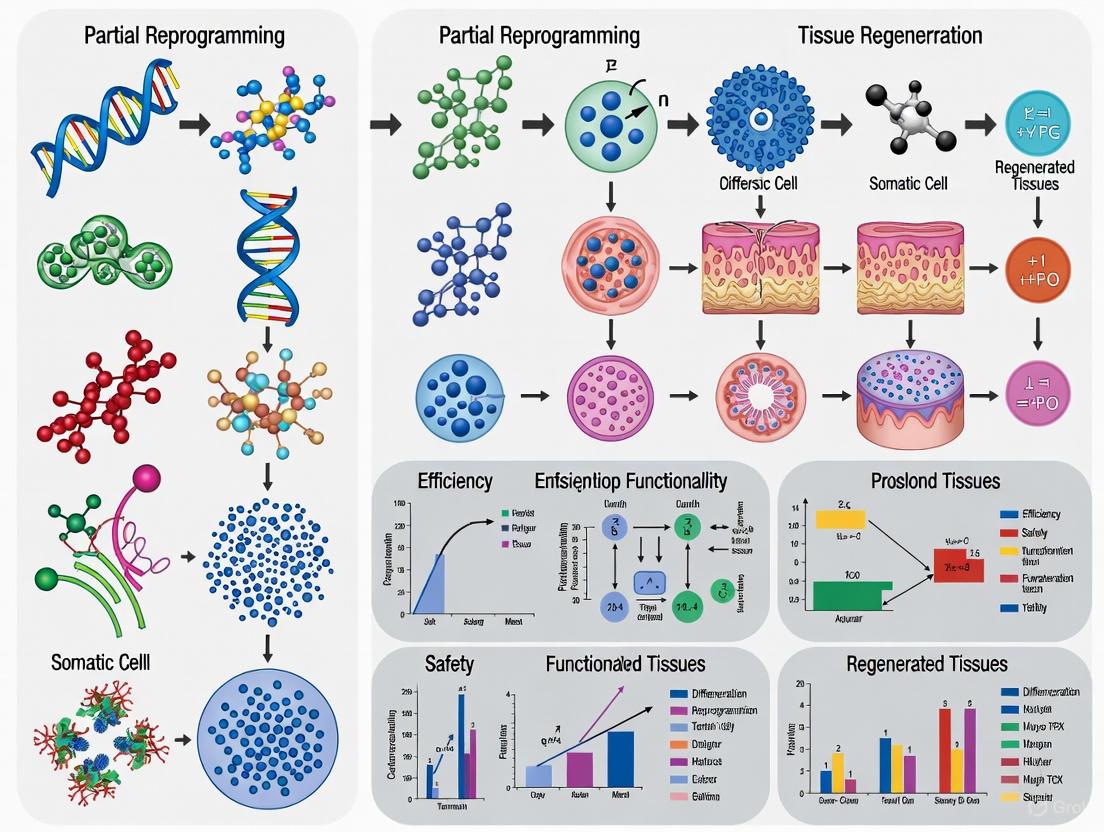
This article provides a comprehensive analysis of partial cellular reprogramming as a transformative strategy for tissue regeneration.
Partial Reprogramming for Tissue Regeneration: Protocols, Mechanisms, and Clinical Translation
Abstract
This article provides a comprehensive analysis of partial cellular reprogramming as a transformative strategy for tissue regeneration. Tailored for researchers, scientists, and drug development professionals, it explores the foundational science of epigenetic rejuvenation, detailing the latest methodological advances in both genetic (OSK/M) and chemical reprogramming protocols. The scope extends to critical troubleshooting of safety and optimization challenges, including tumorigenicity and delivery systems. Finally, it offers a rigorous framework for validating efficacy through multi-omic aging clocks, functional assays, and comparative analysis of emerging platforms, positioning partial reprogramming at the forefront of next-generation regenerative medicine.
The Science of Epigenetic Rejuvenation: How Partial Reprogramming Resets Cellular Aging
Cellular reprogramming is a transformative technology in regenerative medicine that enables the conversion of one cell type into another by manipulating cellular identity. This field emerged from seminal discoveries by John Gurdon, who demonstrated nuclear reprogramming via somatic cell nuclear transfer (SCNT), and Shinya Yamanaka, who identified four transcription factors (OCT4, SOX2, KLF4, and c-MYC, collectively known as OSKM) capable of reprogramming somatic cells into induced pluripotent stem cells (iPSCs) [1]. These breakthroughs revealed that cell identity and age-associated molecular features are not fixed but can be reversed, opening new avenues for treating age-related diseases and generating cells for therapeutic applications [1] [2].
Within this field, two distinct approaches have emerged: full reprogramming, which completely resets cellular identity to pluripotency, and partial reprogramming, which aims to reverse age-related deterioration while maintaining cellular identity. This distinction is crucial for therapeutic applications, as partial reprogramming offers the potential to rejuvenate aged tissues without the risks associated with complete dedifferentiation [1] [2]. The following sections provide a comprehensive examination of these approaches, their molecular mechanisms, and their applications in tissue regeneration research.
Defining Partial and Full Reprogramming
Core Concepts and Distinctions
Full reprogramming describes the complete conversion of somatic cells into induced pluripotent stem cells (iPSCs) through sustained expression of reprogramming factors. This process erases the original cellular identity and epigenetic aging signatures, resulting in cells with unlimited self-renewal capacity and the potential to differentiate into any cell type [1] [3]. However, full reprogramming poses significant clinical risks, including teratoma formation, dysplastic cell proliferation, and unintended persistence of pluripotent cells [1] [4].
Partial reprogramming represents a refined approach that applies reprogramming factors transiently or cyclically, sufficient to reverse age-related molecular changes without erasing cellular identity. This strategy aims to restore a more youthful epigenetic landscape, transcript profile, and functional capacity while maintaining the cell's differentiated state and function [1] [2]. By carefully controlling the duration and intensity of reprogramming factor exposure, researchers can achieve "rejuvenation" without complete dedifferentiation.
Table 1: Fundamental Distinctions Between Partial and Full Reprogramming
| Feature | Partial Reprogramming | Full Reprogramming |
|---|---|---|
| Reprogramming Factor Exposure | Transient, cyclic (days) | Sustained (weeks) |
| Cellular Identity | Maintained | Erased, replaced with pluripotency |
| Epigenetic State | Youthful patterns restored, lineage-specific marks maintained | Complete epigenetic reset to embryonic ground state |
| Final Cell State | Original cell type with improved function | Induced pluripotent stem cells (iPSCs) |
| Telomere Dynamics | May improve maintenance without full elongation | Complete elongation to embryonic lengths |
| Tumorigenic Risk | Lower (with careful control) | Significant (teratoma formation) |
| Therapeutic Applications | Rejuvenation of aged tissues, treatment of age-related diseases | Disease modeling, cell replacement therapies |
Conceptual Framework of Reprogramming Continuum
The relationship between partial and full reprogramming can be understood as a continuum, where the extent of reprogramming is determined by the duration and intensity of reprogramming factor exposure. The following diagram illustrates this conceptual framework and the critical transition points:
This conceptual framework highlights the critical importance of precise control in partial reprogramming protocols. The transition from rejuvenation to complete dedifferentiation represents a crucial threshold beyond which cellular identity is lost and tumorigenic risk increases substantially [5] [1].
Molecular Mechanisms and Hallmarks of Aging
Epigenetic Alterations
Aging is characterized by progressive epigenetic alterations, including changes in DNA methylation patterns, histone modifications, and chromatin organization [1]. Partial reprogramming specifically targets these age-related epigenetic changes by transiently activating DNA demethylases and chromatin remodeling complexes. Research has demonstrated that partial reprogramming can restore youthful DNA methylation patterns and reset epigenetic clocks without erasing cell identity, suggesting that epigenetic information can be recovered while maintaining cellular function [2] [6].
The process involves active DNA demethylation facilitated by TET enzymes, which progressively reverse age-associated hypermethylation [2]. Notably, studies have shown that the epigenetic rejuvenation during partial reprogramming occurs without the global erasure of DNA methylation characteristic of full reprogramming, preserving lineage-specific epigenetic markers that maintain cellular identity [1] [2].
Additional Hallmarks of Aging Affected by Partial Reprogramming
Beyond epigenetic alterations, partial reprogramming impacts multiple hallmarks of aging:
Mitochondrial Dysfunction: Partial reprogramming restores mitochondrial membrane potential and enhances oxidative phosphorylation capacity. Multi-omics analyses have revealed that chemical reprogramming cocktails significantly upregulate mitochondrial oxidative phosphorylation complexes, leading to improved cellular respiration [6].
Cellular Senescence: Short-term reprogramming reduces markers of cellular senescence, including senescence-associated secretory phenotype (SASP) factors and β-galactosidase activity [7] [2].
Genomic Instability: Treatment with reprogramming cocktails decreases DNA damage markers such as γH2AX foci in aged human fibroblasts, indicating improved genomic maintenance [7].
Loss of Proteostasis: Partial reprogramming enhances protein quality control mechanisms, although the specific pathways involved require further characterization [1].
Altered Intercellular Communication: By reducing inflammatory signaling and SASP factors, partial reprogramming improves tissue microenvironment and cell-cell communication [1].
Table 2: Quantitative Effects of Partial Reprogramming on Aging Hallmarks
| Aging Hallmark | Measurement Approach | Effect of Partial Reprogramming | Magnitude of Change |
|---|---|---|---|
| Epigenetic Alterations | DNA methylation clocks | Reversal of age-related methylation patterns | ~40-60% reduction in epigenetic age [6] |
| Mitochondrial Dysfunction | Oxygen consumption rate (Seahorse) | Increased oxidative phosphorylation | 1.5-2.5 fold increase in spare respiratory capacity [6] |
| Cellular Senescence | β-galactosidase staining, SASP factors | Reduced senescent cell burden | 30-50% reduction in senescence markers [7] |
| Genomic Instability | γH2AX foci quantification | Decreased DNA damage accumulation | 40-60% reduction in γH2AX foci [7] |
| Transcriptomic Alterations | RNA sequencing, aging clocks | Reversion to youthful expression patterns | 50-70% reduction in transcriptomic age [2] |
Experimental Protocols and Methodologies
Genetic Reprogramming Protocols
In Vivo Partial Reprogramming Protocol Using Doxycycline-Inducible OSKM
This protocol describes the establishment of a cyclic, transient reprogramming regimen in mice that achieves tissue rejuvenation without tumor formation [1]:
Animal Model Preparation: Utilize transgenic mice containing a doxycycline-inducible OSKM cassette (often Rosa26-M2rtTA;Col1a1-TetO-OSKM).
Reprogramming Induction:
- Administer doxycycline-containing chow (2 g/kg) or water (2 mg/mL with 5% sucrose) to induce OSKM expression.
- Implement cyclic induction patterns (e.g., 2 days on/5 days off or 3-4 consecutive days per week).
Duration and Monitoring:
- Continue cyclic treatment for 4-12 weeks depending on desired outcomes.
- Monitor for signs of distress, weight loss, or teratoma formation weekly.
- Include control groups receiving continuous doxycycline to validate partial vs. full reprogramming effects.
Tissue Analysis:
- Harvest tissues after completion of cycling for molecular and functional analyses.
- Assess epigenetic clocks using established methylation arrays (e.g., Illumina Mouse Methylation BeadChip).
- Evaluate tissue function through regeneration assays (wound healing, muscle repair) and histology.
This protocol has demonstrated successful rejuvenation in multiple tissues including skin, muscle, liver, and spleen, with improved regeneration capacity and reduced fibrosis [1].
Chemical Reprogramming Protocols
Chemical-Induced Partial Reprogramming of Human Fibroblasts
Chemical reprogramming offers a non-genetic alternative for cellular rejuvenation, potentially overcoming safety concerns associated with genetic approaches [7] [2]:
Cell Culture Preparation:
- Plate aged human dermal fibroblasts (HDFs) from donors >60 years or progeria patients at 10,000 cells/cm² in fibroblast medium.
- Allow attachment for 24 hours in standard conditions (37°C, 5% CO₂).
Chemical Cocktail Formulation:
- Prepare complete 7-compound (7c) cocktail: CHIR99021 (GSK-3β inhibitor, 3µM), DZNep (EZH2 inhibitor, 0.5µM), Forskolin (adenylyl cyclase activator, 10µM), TTNPB (RAR agonist, 0.5µM), Valproic acid (HDAC inhibitor, 1mM), Repsox (TGF-β inhibitor, 5µM), and Tranylcypromine (LSD1 inhibitor, 10µM).
- Prepare reduced 2-compound (2c) cocktail: Repsox (5µM) and Tranylcypromine (10µM) for simplified treatment.
Treatment Protocol:
- Replace culture medium with treatment medium containing chemical cocktails.
- Maintain treatment for 6 days with daily medium changes to ensure compound stability.
- Include vehicle controls (DMSO) and positive controls (OSKM mRNA transfection).
Assessment of Rejuvenation:
- Analyze DNA damage response via γH2AX immunostaining.
- Evaluate senescence through SA-β-galactosidase staining and p21 expression.
- Measure epigenetic age using established clocks (e.g., Horvath clock).
- Assess mitochondrial function via Seahorse Analyzer and membrane potential dyes.
This chemical reprogramming approach has demonstrated significant reduction in multiple aging hallmarks in human fibroblasts and extends healthspan in C. elegans models [7].
Delivery System Technologies
Tissue Nanotransfection (TNT) for In Situ Reprogramming
Tissue nanotransfection represents a cutting-edge physical delivery system for reprogramming factors that enables highly localized, efficient reprogramming in living tissues [4] [8]:
Device Setup:
- Utilize a TNT device consisting of a hollow-needle silicon chip mounted beneath a cargo reservoir.
- Connect the cargo reservoir to the negative terminal of an external pulse generator.
- Position a dermal electrode connected to the tissue as the positive terminal.
Cargo Preparation:
- Prepare plasmid DNA (highly supercoiled, circular), mRNA, or CRISPR/Cas9 components in nuclease-free buffer.
- Optimize concentration (typically 0.1-1 µg/µL for plasmids) for target cell type.
Transfection Protocol:
- Place the TNT device directly on the target tissue (skin or exposed organ).
- Apply optimized electrical pulses (typically 100-250 V/cm for 10-100 ms pulses).
- The nanochannels create transient pores (resolving in milliseconds) for cargo entry.
Post-Transfection Analysis:
- Monitor expression of reprogramming factors 24-48 hours post-transfection.
- Assess cellular identity maintenance through lineage tracing and marker expression.
- Evaluate functional improvements in tissue regeneration models.
TNT has demonstrated success in direct in vivo reprogramming of fibroblasts to neuronal and endothelial cells, promoting tissue repair without tumorigenesis [4] [8].
Research Reagent Solutions Toolkit
Table 3: Essential Research Reagents for Partial Reprogramming Studies
| Reagent Category | Specific Examples | Function in Reprogramming | Considerations for Use |
|---|---|---|---|
| Genetic Factors | OSKM lentivirus, doxycycline-inducible plasmids, modified mRNA | Ectopic expression of reprogramming transcription factors | mRNA avoids genomic integration; inducible systems enable temporal control [9] |
| Chemical Cocktails | 7c cocktail (CHIR99021, VPA, Repsox, etc.), 2c cocktail (Repsox, Tranylcypromine) | Small molecule induction of rejuvenation without genetic manipulation | Reduced tumorigenic risk compared to genetic methods [7] |
| Delivery Systems | Tissue Nanotransfection (TNT) devices, electroporation systems, lipid nanoparticles | Physical delivery of reprogramming factors to target cells | TNT enables localized, in vivo reprogramming with minimal toxicity [4] [8] |
| Aging Assays | Epigenetic clock analysis (DNA methylation arrays), RNA sequencing, senescence-associated β-galactosidase | Quantification of rejuvenation effects at molecular and cellular levels | Multi-omics approaches provide comprehensive assessment of aging reversal [6] |
| Cell Culture Materials | Defined extracellular matrix substrates, low-serum media formulations, metabolic modifiers | Recreation of youthful microenvironment to support reprogrammed cells | Biomaterial scaffolds can enhance reprogramming efficiency and stability [3] |
Applications in Tissue Regeneration Research
Partial reprogramming strategies have demonstrated significant potential across multiple tissue regeneration contexts:
Musculoskeletal Regeneration: Cyclic OSKM expression in aged mice enhances muscle regeneration capacity with improved satellite cell function and reduced fibrosis following injury. Similar approaches have shown promise in intervertebral disc regeneration, restoring matrix production and cellular function [1].
Neural Tissue Repair: Partial reprogramming of retinal ganglion cells restores youthful DNA methylation patterns and reverses vision loss in aged and glaucomatous mouse models. In the brain, transient OSK expression improves cognitive function in neurodegenerative models without tumor formation [2].
Cutaneous Wound Healing: Localized partial reprogramming accelerates wound closure in aged skin through enhanced fibroblast function and improved extracellular matrix remodeling. Tissue nanotransfection delivery of reprogramming factors directly to wound sites promotes healing without scar formation [4] [8].
Cardiovascular Repair: Following myocardial injury, transient reprogramming factors improve cardiac function through enhanced cardiomyocyte proliferation, reduced fibrosis, and improved vascularization [1].
The application of partial reprogramming in these diverse tissue contexts demonstrates its broad potential for regenerative medicine while highlighting the importance of tissue-specific optimization to maximize therapeutic benefits while minimizing risks.
Partial reprogramming represents a paradigm shift in regenerative medicine, offering the potential to reverse age-related functional decline without erasing cellular identity. The distinction between partial and full reprogramming is fundamental—where full reprogramming completely resets cellular identity to pluripotency with associated tumorigenic risks, partial reprogramming aims to restore youthful function while maintaining cellular specialization. As research in this field advances, the development of increasingly precise temporal controls, tissue-specific approaches, and non-integrative delivery systems will be essential for clinical translation. The protocols and methodologies outlined herein provide a foundation for researchers exploring partial reprogramming as a strategy for tissue regeneration and age-related disease intervention.
Aging is a complex biological process characterized by a progressive decline in physiological integrity, leading to impaired function and increased vulnerability to death. This deterioration is a primary risk factor for major human pathologies, including cancer, diabetes, neurodegenerative disorders, and cardiovascular diseases. At the molecular level, aging is driven by interconnected hallmarks, among which epigenetic drift, cellular senescence, and mitochondrial dysfunction play central roles. Understanding these processes is crucial for developing interventions aimed at extending healthspan—the period of life free from age-related disease and disability.
Recent research has focused on partial cellular reprogramming as a promising strategy to counteract these hallmarks of aging. Unlike full reprogramming to pluripotency, partial reprogramming applies reprogramming factors transiently to reverse age-related molecular changes without erasing cellular identity, offering potential for therapeutic application in age-related diseases and tissue regeneration.
Epigenetic Drift in Aging
Mechanisms and Consequences
Epigenetic drift refers to the progressive alteration of epigenetic marks throughout the genome during aging. These changes include predictable shifts in DNA methylation patterns, histone modifications, and chromatin remodeling. The most extensively studied alteration is DNA methylation drift, characterized by:
- Global hypomethylation: A progressive loss of DNA methylation across the genome, particularly in heterochromatic regions and repetitive elements [10].
- CpG island hypermethylation: Focal gains of DNA methylation at specific regulatory regions, particularly at promoter-associated CpG islands [10] [11].
- Increased methylation variability: Age-associated variably methylated positions (aVMPs) show increased stochastic methylation changes between individuals with age [11].
These changes result from the imperfect maintenance of epigenetic marks by DNA methyltransferases (DNMT1, DNMT3A, DNMT3B) and ten-eleven translocation (TET) enzymes, creating epigenetic mosaicism in aging stem cells that can restrict their plasticity and contribute to age-related functional decline [10].
Table 1: DNA Methylation Changes in Aging Mammalian Tissues
| Methylation Type | Genomic Location | Aging Change | Functional Consequences |
|---|---|---|---|
| Global methylation | Repetitive elements, heterochromatin | Decreased | Genomic instability, reactivation of transposable elements |
| CpG island methylation | Gene promoters | Increased | Silencing of tumor suppressors, developmental genes |
| Gene body methylation | Gene bodies | Variable | Alternative splicing alterations |
| aVMPs | Various | Increased variability | Tissue-specific functional decline |
Assessment and Measurement
The epigenetic clock represents a highly accurate biomarker of biological age based on DNA methylation patterns at specific CpG sites. Several epigenetic clocks have been developed with increasing precision:
- Horvath's clock: Multi-tissue predictor using 353 CpG sites [11].
- Hannum's clock: Blood-based predictor using 71 CpG sites [11].
- DNAm PhenoAge: Incorporates clinical parameters to predict mortality risk [11].
These clocks demonstrate that epigenetic age can be decoupled from chronological age and accelerated in association with various diseases and environmental exposures.
Experimental Protocol: Assessing Epigenetic Age
Protocol 1: DNA Methylation Analysis Using Illumina EPIC Array
Materials:
- Bisulfite conversion kit (e.g., EZ DNA Methylation Kit)
- Illumina Infinium HD Assay Methylation Kit
- Illumina iScan System
- Genomic DNA (500 ng) from target tissue
Procedure:
- Bisulfite Conversion: Treat genomic DNA with bisulfite using manufacturer's protocol, converting unmethylated cytosines to uracils while leaving methylated cytosines unchanged.
- Whole-Genome Amplification: Amplify bisulfite-converted DNA followed by enzymatic fragmentation.
- Array Hybridization: Hybridize samples to Illumina EPIC array containing >850,000 methylation sites.
- Single-Base Extension: Add fluorescently labeled nucleotides to probe-DNA hybrids.
- Array Scanning: Detect fluorescence signals using iScan system.
- Data Analysis: Process intensity data to calculate β-values (methylation levels) using minfi or similar packages in R.
- Age Calculation: Apply published epigenetic clock algorithms to estimate biological age.
Quality Control:
- Include technical replicates to assess reproducibility
- Monitor bisulfite conversion efficiency
- Exclude probes with detection p-value > 0.01
- Normalize data using standard preprocessing pipelines
Cellular Senescence in Aging
Pathways and Biomarkers
Cellular senescence is defined as irreversible cell cycle arrest in response to various stressors, including telomere shortening (replicative senescence), DNA damage, oxidative stress, and oncogene activation. Senescent cells accumulate in tissues with age and contribute to aging through multiple mechanisms [12].
The two major senescence-associated pathways are:
- p53/p21 pathway: Triggered primarily by DNA damage response (DDR), leading to initial cell cycle arrest.
- p16INK4A/pRB pathway: Maintains senescence in established senescent cells [12].
Senescent cells exhibit characteristic features, including:
- Morphological changes: Enlarged, flattened cell shape.
- Senescence-associated β-galactosidase (SA-β-gal) activity: Detectable at pH 6.0 due to increased lysosomal mass.
- Senescence-associated secretory phenotype (SASP): Secretion of pro-inflammatory cytokines, chemokines, growth factors, and proteases.
- Resistance to apoptosis: Upregulation of anti-apoptotic pathways (SCAP) [12].
Table 2: Key Biomarkers for Detecting Cellular Senescence
| Senescent Feature | Biomarker | Detection Method | Specificity |
|---|---|---|---|
| Cell cycle arrest | p16INK4A, p21 | IHC, WB, IF | High for established senescence |
| Lysosomal activity | SA-β-gal | Enzymatic staining (pH 6.0) | General but sensitive |
| DNA damage | γH2AX, 53BP1 | IF, IHC | Damage-induced senescence |
| Secretory phenotype | IL-6, IL-8, MMPs | ELISA, WB | SASP-positive senescence |
| Chromatin changes | SAHFs, H3K9me3 | DAPI/Hoechst, IF | Heterochromatin formation |
| Nuclear membrane | Lamin B1 loss | WB, IF, qPCR | General senescence |
Experimental Protocol: Senescence Detection and Validation
Protocol 2: Comprehensive Senescence Assessment
Materials:
- SA-β-gal staining kit (e.g., Cell Signaling Technology #9860)
- Primary antibodies: anti-p16INK4A, anti-p21, anti-γH2AX, anti-Lamin B1
- Secondary antibodies with fluorescent conjugates
- Cell culture reagents
- Propidium iodide or DAPI for nuclear staining
Procedure: Part A: SA-β-gal Staining
- Wash cells with PBS and fix with 2% formaldehyde/0.2% glutaraldehyde for 5 minutes.
- Wash cells and incubate with SA-β-gal staining solution (1 mg/mL X-gal, 5 mM potassium ferrocyanide, 5 mM potassium ferricyanide, 150 mM NaCl, 2 mM MgCl2 in 40 mM citric acid/sodium phosphate, pH 6.0) at 37°C without CO2 for 12-16 hours.
- Examine under brightfield microscopy for blue staining.
Part B: Immunofluorescence for Senescence Markers
- Culture cells on chamber slides, fix with 4% PFA for 15 minutes, permeabilize with 0.2% Triton X-100 for 10 minutes.
- Block with 5% BSA for 1 hour, incubate with primary antibodies (1:200-1:500) overnight at 4°C.
- Incubate with fluorescent secondary antibodies (1:1000) for 1 hour at room temperature, counterstain with DAPI.
- Image using fluorescence or confocal microscopy.
Part C: SASP Analysis
- Collect conditioned media from cells, concentrate using 3kDa centrifugal filters.
- Analyze SASP factors using multiplex ELISA or proteomic approaches.
- Quantify IL-6, IL-8, MMP-3 using commercial ELISA kits according to manufacturer's instructions.
Interpretation:
- Senescent cells show SA-β-gal positivity, increased p16/p21 expression, γH2AX foci, reduced Lamin B1, and SASP secretion.
- Use at least three complementary markers to confirm senescence, as no single marker is definitive.
Mitochondrial Dysfunction in Aging
Mechanisms and Consequences
Mitochondrial dysfunction is a central hallmark of aging characterized by:
- Declining ATP production: Reduced oxidative phosphorylation efficiency.
- Increased ROS production: Elevated reactive oxygen species leading to oxidative damage.
- Mitochondrial DNA mutations: Accumulation of mtDNA deletions and point mutations.
- Altered mitochondrial dynamics: Imbalanced fission and fusion.
- Diminished mitophagy: Impaired clearance of damaged mitochondria [13] [14].
Aging mitochondria exhibit structural changes, including swollen morphology, disrupted cristae, and decreased membrane potential. The mitochondrial theory of aging posits that accumulated mitochondrial damage and resultant energy deficit drive functional decline in aged tissues [14].
The interaction between mitochondrial dysfunction and other aging hallmarks creates vicious cycles that accelerate aging. For example:
- Mitochondrial ROS causes nuclear DNA damage and epigenetic changes.
- mtDNA mutations impair OXPHOS, increasing ROS production.
- Metabolic alterations from mitochondrial dysfunction influence nutrient-sensing pathways and epigenetic regulation [13].
Assessment and Measurement
Table 3: Key Parameters for Assessing Mitochondrial Function in Aging
| Parameter | Assessment Method | Age-Related Change | Significance |
|---|---|---|---|
| Membrane potential | JC-1, TMRM staining | Decreased | Reduced ATP production capacity |
| ROS production | DCFDA, MitoSOX | Increased | Oxidative damage to macromolecules |
| Oxygen consumption | Seahorse Analyzer | Decreased | Impaired OXPHOS efficiency |
| mtDNA copy number | qPCR | Variable tissue-specific changes | Mitochondrial biogenesis |
| mtDNA mutations | Sequencing, long-range PCR | Increased | Impaired ETC function |
| ATP levels | Luciferase assay | Decreased | Bioenergetic deficit |
| Mitophagy | Mt-Keima, LC3-II/p62 | Impaired | Accumulation of damaged mitochondria |
Experimental Protocol: Comprehensive Mitochondrial Assessment
Protocol 3: Mitochondrial Functional Analysis
Materials:
- Seahorse XF Analyzer and XF Cell Mito Stress Test Kit
- MitoSOX Red mitochondrial superoxide indicator
- TMRE mitochondrial membrane potential dye
- ATP determination kit
- Mitochondrial isolation kit
- DNA extraction and qPCR reagents
Procedure: Part A: Mitochondrial Respiration (Seahorse Analyzer)
- Seed cells in XF microplates at optimal density (typically 20,000-40,000 cells/well).
- Hydrate sensor cartridge in XF calibrant at 37°C in non-CO2 incubator overnight.
- Replace medium with Seahorse XF Base Medium supplemented with 1 mM pyruvate, 2 mM glutamine, and 10 mM glucose.
- Load compounds for Mito Stress Test: oligomycin (1.5 μM), FCCP (1-2 μM), rotenone/antimycin A (0.5 μM).
- Run Mito Stress Test protocol on Seahorse XF Analyzer.
- Calculate key parameters: basal respiration, ATP production, proton leak, maximal respiration, spare respiratory capacity.
Part B: Mitochondrial ROS Production
- Incubate cells with 5 μM MitoSOX Red in PBS for 30 minutes at 37°C.
- Wash with PBS, analyze by flow cytometry or fluorescence microscopy.
- Quantify fluorescence intensity normalized to cell number.
Part C: Mitochondrial Membrane Potential
- Incubate cells with 50-100 nM TMRE for 30 minutes at 37°C.
- Wash with PBS, analyze by flow cytometry or plate reader.
- Include control with FCCP (uncoupler) to confirm specificity.
Part D: mtDNA Analysis
- Isolate total DNA using standard protocols.
- Perform qPCR with primers for mitochondrial genes (e.g., ND1, CYTB) and nuclear gene (e.g., B2M, 18S rRNA) as reference.
- Calculate mtDNA copy number as ratio of mitochondrial to nuclear DNA.
- For mutation analysis, perform long-range PCR of mtDNA followed by sequencing.
Data Interpretation:
- Aged tissues typically show reduced basal and maximal respiration, decreased spare capacity, increased proton leak, and elevated ROS production.
- Combine multiple assays for comprehensive assessment of mitochondrial health.
Partial Reprogramming for Reversal of Aging Hallmarks
Principles and Mechanisms
Partial cellular reprogramming represents a novel approach to reverse age-related changes without inducing pluripotency. This technique utilizes transient expression of Yamanaka factors (Oct4, Sox2, Klf4, c-Myc; OSKM) to reset epigenetic age and restore youthful function while maintaining cellular identity [1] [15].
The mechanisms underlying partial reprogramming include:
- Epigenetic resetting: Reversal of age-related DNA methylation patterns and histone modifications.
- Mitochondrial rejuvenation: Restoration of mitochondrial function and reduction of ROS.
- Senescence clearance: Reduction of senescent cell burden through various mechanisms.
- Proteostasis restoration: Improvement in protein homeostasis and aggregation clearance [1].
Key studies demonstrate that:
- Transient OSKM expression for 5-15 days reduces epigenetic age in human fibroblasts by up to 30 years [15].
- In vivo partial reprogramming (IVPR) improves tissue function and extends healthspan in mouse models [1] [15].
- A "critical window" of reprogramming exists (approximately days 3-13) where age reprogramming occurs with minimal loss of cellular identity [15].
Experimental Protocol: In Vitro Partial Reprogramming
Protocol 4: Transient Reprogramming for Cellular Rejuvenation
Materials:
- Doxycycline-inducible OSKM lentiviral vectors (Addgene)
- Polybrene (8 μg/mL)
- Doxycycline (2 μg/mL)
- Fibroblast culture medium with appropriate growth factors
- Senescence and mitochondrial assessment reagents (as in Protocols 2 & 3)
Procedure:
- Cell Preparation: Plate early passage or aged fibroblasts at 30-50% confluence.
- Viral Transduction:
- Add polybrene to lentiviral OSKM particles (MOI 5-10) in culture medium.
- Incubate cells with virus-containing medium for 24 hours.
- Replace with fresh medium for 24 hours recovery.
- Reprogramming Induction:
- Add doxycycline (2 μg/mL) to culture medium to induce OSKM expression.
- Culture cells for optimal duration (typically 7-13 days, titrate for specific cell type).
- Change medium with doxycycline every 2 days.
- Reprogramming Withdrawal:
- Remove doxycycline and culture in standard medium for 7-14 days to allow stabilization.
- Monitor for retention of cell identity using lineage-specific markers.
- Rejuvenation Assessment:
- Evaluate epigenetic age using DNA methylation clocks (Protocol 1).
- Assess senescence markers (Protocol 2).
- Analyze mitochondrial function (Protocol 3).
- Perform transcriptomic analysis to confirm youthful gene expression patterns.
Critical Considerations:
- Optimization of reprogramming duration is essential—too short may be ineffective, too long may induce pluripotency or transformation.
- Include controls: non-transduced cells, doxycycline-treated non-transduced cells, and fully reprogrammed iPSCs.
- Rigorously validate retention of cellular identity using functional assays and marker expression.
Integrated Intervention Strategies
The Scientist's Toolkit: Research Reagent Solutions
Table 4: Essential Reagents for Aging Hallmark Research
| Research Area | Key Reagents | Function/Specificity | Example Applications |
|---|---|---|---|
| Epigenetic Analysis | Illumina EPIC Array | Genome-wide methylation profiling | Epigenetic clock analysis |
| Bisulfite Conversion Kits | DNA treatment for methylation analysis | Targeted methylation studies | |
| Anti-5-methylcytosine | Detection of methylated DNA | Immunofluorescence, Dot blot | |
| Senescence Detection | SA-β-gal Staining Kit | Detection of lysosomal β-gal at pH 6 | Primary senescence screening |
| Anti-p16INK4A antibody | Specific senescence marker | IHC, WB confirmation | |
| SASP Array | Multiplex cytokine detection | SASP characterization | |
| Mitochondrial Assessment | Seahorse XF Kits | Metabolic phenotype analysis | OXPHOS function |
| MitoTracker dyes | Mitochondrial mass and membrane potential | Imaging and flow cytometry | |
| MitoSOX Red | Mitochondrial superoxide detection | Oxidative stress measurement | |
| Partial Reprogramming | Doxycycline-inducible OSKM | Inducible reprogramming factor expression | In vitro rejuvenation |
| Sendai viral vectors | Non-integrating reprogramming | Clinical applications | |
| Pluripotency antibodies | Confirmation of incomplete reprogramming | Quality control |
Integrated Diagram of Aging Hallmarks and Intervention
Diagram 1: Interconnections between aging hallmarks and intervention strategies. Arrows indicate direction of influence, with colored lines showing specific targeting of interventions.
Experimental Workflow for Comprehensive Assessment
Diagram 2: Comprehensive experimental workflow for assessing aging interventions. This integrated approach enables rigorous evaluation of interventions across multiple aging hallmarks.
The molecular hallmarks of aging—epigenetic drift, cellular senescence, and mitochondrial dysfunction—represent interconnected processes that collectively drive functional decline and age-related disease. Targeting these hallmarks through interventions such as partial reprogramming offers promising avenues for extending healthspan and improving tissue regeneration capacity.
The protocols and methodologies outlined here provide researchers with comprehensive tools to quantitatively assess these aging hallmarks and evaluate potential interventions. As the field advances, key challenges remain, including optimizing partial reprogramming protocols for specific tissues, minimizing potential risks such as tumorigenicity, and developing delivery systems for clinical translation.
Future research should focus on:
- Identifying minimal factor combinations for effective rejuvenation.
- Developing tissue-specific reprogramming approaches.
- Understanding the molecular mechanisms that separate rejuvenation from dedifferentiation.
- Exploring synergistic combinations of reprogramming with other anti-aging interventions.
By systematically targeting the fundamental mechanisms of aging, we move closer to the goal of not just extending lifespan, but significantly expanding healthspan—the period of life spent in good health—with profound implications for medicine and society.
The discovery that somatic cell fate could be reversed through the ectopic expression of specific transcription factors represents a paradigm shift in regenerative medicine and aging research. In 2006, Takahashi and Yamanaka demonstrated that overexpression of just four transcription factors—Octamer-binding transcription factor 3/4 (Oct3/4), Sex-determining region Y-box 2 (Sox2), Krüppel-like factor 4 (Klf4), and cellular Myc (c-Myc), collectively known as the Yamanaka factors or OSKM—could reprogram terminally differentiated fibroblasts into induced pluripotent stem cells (iPSCs) [16] [17]. This groundbreaking discovery, awarded the Nobel Prize in Physiology or Medicine in 2012, demonstrated that cellular identity is not fixed and can be reprogrammed, challenging the long-standing "Weismann barrier" theory that cellular differentiation was a one-way path [16] [17]. Subsequent research has revealed that transient, non-integrating application of these factors can achieve partial reprogramming, reversing age-associated cellular hallmarks without completely erasing cellular identity, thus opening revolutionary avenues for tissue regeneration and rejuvenation research [18] [19] [20].
Molecular Mechanisms of Action
The reprogramming of somatic cells to a pluripotent state via OSKM is a complex, multi-stage process involving profound epigenetic remodeling, transcriptional changes, and metabolic shifts. The mechanism can be understood through several models and the distinct roles of each factor.
Models of Reprogramming
The process of OSKM-induced reprogramming is not uniform across all cells and can be explained by different mechanistic models:
- The Stochastic Model: This theory posits that OSKM expression initiates a probabilistic process in a broad population of somatic cells. The transition through successive, distinct states occurs with varying latencies, and only a small fraction of cells successfully navigate the entire sequence to reach pluripotency. The process involves stages such as the downregulation of somatic genes, a mesenchymal-to-epithelial transition (MET), metabolic reprogramming from oxidative phosphorylation to glycolysis, and finally, the activation of the pluripotency network. Failure at any point causes the reprogramming process to abort [17].
- The Seesaw Model (Stoichiometry Model): This model emphasizes the critical balance in the expression levels of the different factors. Specifically, an
OCT3/4highSOX2lowstoichiometry appears favorable for efficient reprogramming. In the early phases, OCT3/4 and SOX2 can have opposing effects on lineage-specific genes, creating a "seesaw" that must be balanced to guide cells toward a pluripotent state rather than an alternative lineage. Imbalanced expression can lead to aberrant reprogramming or differentiation [17].
Individual Factor Functions
Each Yamanaka factor plays a unique and synergistic role in orchestrating the reprogramming process.
Table 1: Core Functions of the Yamanaka Factors in Reprogramming
| Factor | Primary Function in Reprogramming | Key Molecular Interactions |
|---|---|---|
| Oct3/4 | Master regulator of pluripotency; essential for establishing and maintaining the pluripotent network. Directs epigenetic remodeling. | Recruits the BAF chromatin remodeling complex; binds enhancers of Polycomb-repressed genes; forms autoregulatory loops with other pluripotency factors; upregulates histone demethylases KDM3A/KDM4C [19]. |
| Sox2 | Partners with Oct3/4 as a pioneering factor to open chromatin and activate pluripotency genes. Critical for neural development. | Heterodimerizes with Oct3/4; engages chromatin first to prime binding sites for Oct3/4; co-occupies enhancers and promoters to drive pluripotency [19]. |
| Klf4 | Initiates the first wave of transcriptional activation; possesses dual activator/repressor functions. | Binding is enhanced by Oct3/4-Sox2 complexes; activates Nanog; involved in the MET and cell cycle progression [19]. |
| c-Myc | Potent amplifier of reprogramming; drives widespread transcriptional activation and promotes proliferation. Does not act as a pioneer factor. | Binds to a methylated region of chromatin; increases global OSK binding; heterodimerizes with Max; upregulates metabolic and biosynthetic genes [19]. |
The following diagram illustrates the synergistic interaction of these factors in initiating the reprogramming process, from somatic cell state towards pluripotency.
Quantitative Data in Reprogramming and Rejuvenation
The efficiency and outcomes of OSKM-mediated reprogramming vary significantly based on the cell type, factor combination, and delivery method. The tables below summarize key quantitative data from the literature.
Table 2: Reprogramming Efficiency Across Different Cell Types and Factor Cocktails
| Original Cell Type | Reprogramming Factors | Reported Efficiency | Key Contextual Notes |
|---|---|---|---|
| Fibroblasts [16] | OSKM | < 1% | Original Yamanaka protocol; efficiency is often below 1% [16]. |
| Keratinocytes [16] | OSKM | Up to 1% | Slightly higher efficiency than fibroblasts. |
| CD133+ Stem Cells (Cord Blood) [16] | Oct3/4, Sox2 | Successful reprogramming | Endogenous expression of some factors allows for a reduced cocktail. |
| Fetal Neural Stem Cells [16] | Oct3/4 | Successful reprogramming | High endogenous Sox2 levels enable reprogramming with a single factor. |
| Postmitotic Neurons [16] | OKSM + p53 shRNA | Successful reprogramming | p53 knockdown is indispensable for reprogramming this cell type. |
| Human Dermal Fibroblasts [18] | OSK (c-Myc excluded) | Successful in vivo rejuvenation | AAV9 delivery; extended lifespan by 109% in old mice without teratomas [18]. |
Table 3: In Vivo Rejuvenation Outcomes from Partial OSKM Reprogramming
| Model System | Intervention | Key Rejuvenation Outcomes | Safety Observations |
|---|---|---|---|
| Progeria Mouse Model (HGPS) [20] | Cyclic OSKM (2-days ON, 5-days OFF) | 33% lifespan extension; improved skin integrity, cardiovascular function, and spine curvature; restored H3K9me3 levels. | No teratoma formation. |
| Wild-Type Mice [18] | Cyclic OSKM (Long-term: 7-10 months) | Transcriptome, lipidome, metabolome reverted to younger state; increased skin regeneration. | No teratoma formation reported. |
| Wild-Type Mice (124-week-old) [18] | Cyclic OSK via AAV9 gene therapy (1-day ON, 6-days OFF) | 109% extension of remaining lifespan; improved frailty index score. | Exclusion of c-Myc to reduce tumorigenic risk. |
| Human Dermal Fibroblasts In Vitro [18] | Partial Reprogramming | Reversal of epigenetic age (DNA methylation clocks); reduction of transcriptional aging signatures. | Cell identity maintained. |
Application Notes & Experimental Protocols
This section provides detailed methodologies for implementing OSKM-based reprogramming and rejuvenation protocols in a research setting, framed within the context of partial reprogramming for tissue regeneration.
Protocol: In Vitro Partial Reprogramming of Human Dermal Fibroblasts for Rejuvenation
Objective: To transiently reset age-associated epigenetic and transcriptional marks in human dermal fibroblasts without inducing pluripotency, for the purpose of generating rejuvenated cell populations for tissue engineering and in vitro disease modeling.
Materials & Reagents:
- Primary Cells: Human dermal fibroblasts (HDFs) from young and aged donors.
- Reprogramming Factors: Non-integrating mRNA cocktails for OCT4, SOX2, KLF4, and c-MYC (e.g., commercial mRNA kits).
- Delivery Reagent: mRNA transfection reagent compatible with primary cells.
- Culture Vessels: 6-well plates coated with appropriate ECM (e.g., Fibronectin).
- Media: Fibroblast growth medium, serum-free mRNA transfection medium.
- Supplements: Immune suppressants (e.g., B18R interferon inhibitor) to counter mRNA-induced innate immune response.
Procedure:
- Cell Seeding: Seed early-passage HDFs at a density of 1.5 x 10^5 cells per well in a 6-well plate in complete fibroblast growth medium. Incubate at 37°C, 5% CO2 for 24 hours to achieve ~80% confluency at time of transfection.
- mRNA Transfection:
- Prepare mRNA-lipid complexes according to the manufacturer's instructions. For a partial reprogramming cocktail, use equal masses of OSKM mRNAs. A typical starting concentration is 50-100 ng of each mRNA per well.
- Replace cell culture medium with fresh, pre-warmed serum-free transfection medium.
- Add the mRNA-lipid complex dropwise to the cells. Gently swirl the plate to ensure even distribution.
- Incubate cells for 4-6 hours, then replace the transfection medium with standard fibroblast growth medium supplemented with B18R (e.g., 100 ng/mL).
- Cyclic Induction (Critical for Partial Reprogramming):
- Repeat the transfection procedure (Step 2) every 24 hours for a defined short course. A common protocol for partial rejuvenation is 4-6 cycles over 4-6 days [18] [18]. Optimization is required: The number of cycles is the critical variable determining whether the outcome is rejuvenation, full reprogramming, or no effect.
- Recovery and Analysis:
- After the final cycle, allow cells to recover in standard growth medium for 48-72 hours.
- Passage cells and assess outcomes using the following analytical methods:
- Senescence-Associated β-Galactosidase (SA-β-Gal) Staining: Quantify the reduction in senescent cells.
- DNA Methylation Clocks: Perform targeted bisulfite sequencing (e.g., using the Horvath or Skin&Blood clock panels) to quantify epigenetic age reversal [18] [19].
- Transcriptomic Analysis: RNA-seq to confirm upregulation of youthful gene expression patterns and downregulation of senescence-associated secretory phenotype (SASP) factors, while verifying maintenance of key fibroblast identity markers (e.g., VIM, COL1A1).
- Functional Assays: Conduct collagen contraction or migration assays to confirm enhanced fibroblast functionality.
Protocol: In Vivo Tissue Rejuvenation via Cyclic OSKM Induction
Objective: To ameliorate age-related functional decline and promote tissue regeneration in a mouse model using a doxycycline-inducible OSKM system, while minimizing the risk of teratoma formation.
Materials & Reagents:
- Animal Model: Transgenic mice harboring a doxycycline-inducible polycistronic OSKM cassette (e.g., Col1a1-targeted "4Fj" or "4Fk" mice) [20].
- Inducing Agent: Doxycycline hyclate (Dox) in drinking water or administered via diet.
- Control: Age-matched transgenic mice not exposed to Dox.
- Analytical Tools: Epigenetic clock analysis for mouse tissues, histology reagents, RNA/DNA extraction kits.
Procedure:
- Experimental Groups: Establish cohorts of aged mice (e.g., 18-24 months) and, if relevant, progeria models. Include both Dox-treated transgenic mice and untreated transgenic controls.
- Cyclic Induction Regimen:
- Administer Dox (e.g., 2 mg/mL in drinking water supplemented with 1% sucrose) for a defined "ON" period. A widely cited safe and effective regimen is a 2-day ON, 5-day OFF cycle, repeated weekly for several months [20].
- Protect the Dox-water from light and change it twice weekly.
- Closely monitor mice for signs of distress, weight loss, or tumor formation throughout the study.
- Tissue Analysis:
- At predetermined endpoints (e.g., after 8-10 weeks of cycling), euthanize mice and harvest target tissues (e.g., skin, liver, kidney, muscle).
- Histopathological Analysis: Process tissues for H&E staining to assess tissue architecture, fibrosis, and screen for dysplasia or teratomas.
- Molecular Analysis:
- Functional Tests: Perform tissue-specific functional tests relevant to the tissue of interest (e.g., wound healing assays in skin, grip strength tests for muscle, or metabolic tests for liver).
The Scientist's Toolkit: Research Reagent Solutions
Successful and safe research into OSKM-mediated reprogramming and rejuvenation relies on a suite of critical reagents and tools. The following table details essential solutions for designing experiments.
Table 4: Essential Research Reagents for OSKM-Based Reprogramming and Rejuvenation Studies
| Reagent Category | Specific Examples | Function & Application Note |
|---|---|---|
| Factor Delivery Systems | ||
| Non-Integrating Viral | Sendai Virus (SeV), Adenoviruses, IDLV | High-efficiency delivery; transient expression; SeV is cytoplasmic and does not enter the nucleus, making it a popular choice for footprint-free reprogramming [16]. |
| Non-Viral / mRNA | OSKM mRNA Kit | Commercially available; high efficiency for in vitro work; enables precise temporal control over protein expression; requires careful handling to minimize innate immune response [16]. |
| Non-Viral / Physical | Tissue Nanotransfection (TNT) | A novel nanoelectroporation platform for highly localized, non-viral in vivo gene delivery of plasmids or mRNA; minimizes off-target effects [4]. |
| Inducible Systems | Doxycycline-inducible OKSM Cassette (e.g., in Col1a1 locus) | The gold standard for in vivo partial reprogramming studies in mice; allows precise temporal control via oral Dox administration, enabling the critical cyclic induction protocols [20]. |
| Small Molecule Enhancers | ||
| Senolytics | Dasatinib + Quercetin | Can be used prior to or in conjunction with reprogramming to clear senescent cells, which can act as a barrier to efficient reprogramming and tissue rejuvenation. |
| Metabolic Modulators | Sodium Butyrate (HDAC inhibitor) | Improves reprogramming efficiency by modulating the epigenetic landscape. |
| Validation Tools | ||
| Pluripotency Markers | Antibodies for NANOG, SSEA-4, TRA-1-60 | Used to confirm full reprogramming to iPSCs. Their absence is a key indicator of successful partial reprogramming where pluripotency is avoided. |
| Aging Biomarkers | DNA Methylation Clock Panels (e.g., HorvathClock) | Quintessential tools for quantifying biological age and demonstrating epigenetic rejuvenation in both in vitro and in vivo samples [18] [19]. |
| Cell Identity Markers | Antibodies for cell-type specific proteins (e.g., Vimentin for fibroblasts) | Critical for confirming that partial reprogramming has not abolished the target cell identity, a key safety check. |
Signaling Pathways and Workflow Visualization
The transition from a fully differentiated somatic cell to a rejuvenated state or a pluripotent stem cell involves a defined sequence of molecular events. The following diagram maps this core reprogramming workflow and the key pathway interactions.
Concluding Remarks and Future Directions
The application of the Yamanaka factors has evolved far beyond the generation of iPSCs, emerging as a powerful, though delicate, tool for cellular rejuvenation and tissue regeneration. The critical challenge and primary focus of current research lie in achieving a perfectly calibrated "partial reset"—reversing the deleterious epigenetic and functional marks of aging without triggering dedifferentiation to a pluripotent state, which carries the risk of teratoma formation [18] [20]. Future directions will focus on several key areas: 1) the development of safer, non-genetic delivery methods such as tissue nanotransfection (TNT) and chemical reprogramming cocktails [4]; 2) the identification of novel, single-gene targets that can decouple rejuvenation from pluripotency induction, as exemplified by the discovery of SB000 [21]; and 3) the refinement of cyclic, tissue-specific induction protocols for in vivo human therapies. As the molecular mechanisms underlying OSKM-mediated rejuvenation become clearer, the prospect of developing effective therapies for age-related diseases and injuries moves closer to reality, heralding a new era in regenerative medicine.
Mesenchymal drift (MD) has been identified as a pervasive transcriptomic signature of aging, characterized by the progressive acquisition of mesenchymal traits by epithelial and endothelial cells, leading to eroded lineage identity and compromised tissue function [22]. Analysis of gene expression data from over 40 human tissues revealed that mesenchymal programs consistently intensify with age, with correlation coefficients exceeding 0.3 across nearly all tissues after controlling for confounders [22]. This drift represents a maladaptive transition that disrupts organ integrity across multiple systems including lung, liver, kidney, heart, and brain [22]. Importantly, recent research demonstrates that partial cellular reprogramming using Yamanaka factors can effectively reverse mesenchymal drift, offering a promising therapeutic strategy for age-related tissue dysfunction [23] [24].
Quantitative Evidence of Mesenchymal Drift in Aging and Disease
Association with Mortality and Morbidity
Table 1: Mesenchymal Drift as a Predictor of Clinical Outcomes
| Condition | Measurement | Effect Size | Significance |
|---|---|---|---|
| Idiopathic Pulmonary Fibrosis | Median Survival (High vs Low MD) | 59 vs 2,498 days | Direct correlation with mortality [22] |
| Multiple Age-Related Diseases | MD Signature Enrichment | Consistent upregulation in affected tissues | Association with disease severity [24] |
| UK Biobank Cohort | Mortality-Associated Plasma Proteins | Strong EMT pathway enrichment | Association with systemic aging [22] |
Tissue-Specific Manifestations
Table 2: Mesenchymal Drift Across Physiological Systems
| Tissue/Organ System | Key Molecular Markers | Functional Consequences |
|---|---|---|
| Lung (IPF) | VIM, FN1, COL1A1/3A1, SNAI/ZEB families | Progressive fibrosis, respiratory failure [22] |
| Liver (MASLD spectrum) | Hepatocyte and stellate cell activation | Steatosis to cirrhosis progression [22] |
| Kidney (CKD) | Tubular and podocyte mesenchymal features | Impaired filtration, fibrosis [22] |
| Heart (Failure) | Distinct MD signatures | Myocardial dysfunction [22] |
| Skin (Aged) | Loss of epithelial markers, gain of mesenchymal markers | Impaired barrier function, reduced regeneration [24] |
Experimental Protocols for Mesenchymal Drift Reversal
Genetic Partial Reprogramming Protocol
Objective: To reverse mesenchymal drift using inducible Yamanaka factors while maintaining cellular identity.
Materials:
- Doxycycline-inducible OSKM or OSK cassette (AAV9 or lentiviral delivery systems)
- Wild-type or progeroid mouse models (aged 12-24 months)
- Doxycycline chow or drinking water (1-2 mg/mL)
Methodology:
- Factor Delivery: Administer OSKM/OSK via AAV9 systemic injection or use transgenic models with tetracycline-responsive elements [18].
- Cyclic Induction: Implement pulsed regimen (2-day ON/5-day OFF for OSKM; 1-day ON/6-day OFF for OSK) to prevent full dedifferentiation [18].
- Duration: Continue treatment for 2-4 weeks for short-term studies or 7-10 months for long-term rejuvenation assessment [18] [24].
- Monitoring: Track teratoma formation via histological analysis and measure MD markers every 2 weeks [18].
Key Considerations:
- Exclusion of c-MYC reduces tumorigenic risk while maintaining efficacy [18]
- Intermediate timepoints (3-7 days) capture maximal MD suppression before pluripotency activation [23]
- Cell-type specific responses necessitate optimization for different tissues [24]
Chemical Reprogramming Protocol
Objective: To achieve MD reversal using non-genetic chemical approaches.
Materials:
- Six chemical cocktails identified through NCC screening [25] [2]
- Replicatively senescent human fibroblasts (40+ passages)
- Low serum conditions (0.5% FBS) to suppress cell division
Methodology:
- Senescence Induction: Culture fibroblasts through serial passaging (1:3-1:5 dilution) until complete growth arrest for 2 weeks [25].
- NCC Assay Validation: Confirm senescence using nucleocytoplasmic compartmentalization reporter (mCherry-NLS, eGFP-NES) with Pearson correlation >0.7 indicating senescence [25] [2].
- Chemical Treatment: Apply rejuvenation cocktails for ≤7 days in low serum conditions [25].
- Assessment: Measure transcriptomic age reversal via aging clocks and MD gene expression (VIM, FN1, COL1A1 reduction; EPCAM, CDH1 increase) [25] [2].
Key Considerations:
- Chemical approach avoids genomic integration risks [25]
- 7c cocktail operates through p53-upregulation pathway, distinct from OSKM mechanism [18]
- Treatment duration critical to avoid dedifferentiation [25]
Signaling Pathways and Molecular Mechanisms
Figure 1: Molecular Pathways of Mesenchymal Drift and Intervention Points. MD is driven by TGF-β/SMAD signaling, YAP/TAZ activation, and chronic inflammation, culminating in ZEB1/SNAI upregulation. Partial reprogramming and chemical interventions target multiple points in this pathway to restore epithelial identity.
Experimental Workflow for MD Reversal Studies
Figure 2: Experimental Workflow for MD Reversal Studies. The stepwise protocol emphasizes baseline characterization, intervention optimization, efficacy assessment, and safety validation to ensure meaningful results.
Research Reagent Solutions
Table 3: Essential Research Tools for Mesenchymal Drift and Reprogramming Studies
| Reagent/Category | Specific Examples | Function/Application |
|---|---|---|
| Reprogramming Factors | OSKM (OCT4, SOX2, KLF4, c-MYC); OSK (excluding c-MYC) | Induction of partial reprogramming; MD reversal [1] [18] |
| Delivery Systems | AAV9 vectors; Doxycycline-inducible systems; Tissue Nanotransfection (TNT) | Efficient, controlled factor delivery with minimal integration risk [18] [4] |
| MD Assessment Tools | Mesenchymal gene panels (VIM, FN1, COL1A1); Epithelial markers (EPCAM, CDH1) | Quantification of drift magnitude and reversal efficacy [22] [24] |
| Senescence Assays | NCC reporter system; β-galactosidase staining; p21 expression analysis | Validation of aging phenotype pre-intervention [25] [2] |
| Chemical Cocktails | Six identified mixtures; 7c cocktail; TGF-β inhibitors (RepSox) | Non-genetic rejuvenation; MD pathway inhibition [25] [22] [2] |
| Epigenetic Clocks | Horvath clock; PhenoAge; Transcriptomic aging signatures | Biological age assessment pre- and post-intervention [18] [24] |
Mesenchymal drift represents a mechanistically grounded, pervasive signature of aging that is functionally reversible through partial reprogramming approaches. The experimental protocols outlined provide a framework for researchers to quantitatively assess and therapeutically target MD across tissue types. The convergence of genetic and chemical rejuvenation strategies on MD suppression underscores its fundamental role in aging biology and highlights promising translational avenues for addressing multiple age-related pathologies through a unified mechanistic framework.
Resetting Epigenetic Clocks and Restoring Youthful Gene Expression Profiles
Epigenetic reprogramming represents a frontier in regenerative medicine, aiming to reverse age-associated functional decline and restore tissue homeostasis. Central to this process is the resetting of epigenetic clocks, biomarkers of biological age based on DNA methylation patterns, and the restoration of youthful gene expression profiles without altering cellular identity [26]. This application note details the core principles, key quantitative outcomes, and practical protocols for achieving epigenetic rejuvenation through partial reprogramming, providing a structured resource for researchers and drug development professionals in the field of tissue regeneration.
Key Concepts and Mechanisms
The foundational principle of epigenetic rejuvenation is the Information Theory of Aging, which posits that aging is driven by a loss of epigenetic information leading to disordered gene expression [27] [2]. During aging, mammalian cells experience epigenetic drift, characterized by cumulative changes in DNA methylation patterns and histone modifications, which disrupts gene expression and cellular function [26]. Evidence suggests that despite this drift, mammalian cells retain a faithful, accessible copy of youthful epigenetic information, which can be reactivated to restore function [27].
Partial reprogramming describes the transient application of reprogramming factors, such as the Yamanaka factors (OCT4, SOX2, KLF4, c-MYC, or OSKM), or chemical alternatives. Unlike full reprogramming to pluripotency, this brief exposure aims to remodel the epigenome towards a more youthful state while maintaining the cell's differentiated identity, thereby avoiding the risks of teratoma formation [2] [5]. The process is thought to work by promoting a controlled, rejuvenation-associated epigenetic restructuring, which can involve active DNA demethylation mediated by enzymes like TET1 and TET2 [27] [2].
Quantitative Outcomes of Epigenetic Rejuvenation
The efficacy of rejuvenation strategies is quantified using epigenetic clocks and functional metrics. The table below summarizes key results from recent, influential studies.
Table 1: Key Quantitative Outcomes from Epigenetic Rejuvenation Studies
| Intervention / Study Model | Key Metric of Age Reversal | Reported Outcome | Reference |
|---|---|---|---|
| OSK (OCT4, SOX2, KLF4) In Vivo Expression (Mouse retinal ganglion cells) | Vision loss reversal in aged mice & glaucoma model | Restored vision; promoted axon regeneration after injury | [27] |
| TRIIM Trial (Thymus Regeneration, Immunorestoration, and Insulin Mitigation) in humans (9 volunteers) | Epigenetic age (GrimAge clock) | Mean epigenetic age decreased by ~1.5 years after one year of treatment (2.5-year change vs. controls) | [28] |
| Chemical-Induced Partial Reprogramming (7-compound cocktail in aged human fibroblasts) | DNA damage (γH2AX levels) | Significant decrease in DNA damage marker | [7] |
| Chemical-Induced Partial Reprogramming (2-compound cocktail in C. elegans) | Median Lifespan | Extension of median lifespan by over 42% | [7] |
| Vigorous Physical Activity (Professional soccer players) | Epigenetic age (DNAmGrimAge2, DNAmFitAge) | Significant decreases observed immediately after games | [28] |
| Semaglutide (Phase IIb trial in adults with HIV-associated lipohypertrophy) | 11 organ-system epigenetic clocks | Concordant decreases, most prominent in inflammation, brain, and heart clocks | [28] |
Detailed Experimental Protocols
In Vivo Partial Reprogramming using OSK for Optic Nerve Regeneration
This protocol, derived from a seminal study, details the use of AAV-delivered OSK to reverse vision loss in aged mice and mouse models of glaucoma [27].
Key Research Reagent Solutions: Table 2: Essential Reagents for OSK In Vivo Reprogramming
| Reagent / Material | Function / Rationale |
|---|---|
| AAV2 with Tetracycline Response Element (TRE) promoter | Safe, efficient gene delivery vehicle with tight, inducible control over transgene expression in retinal cells. |
| Polycistronic OSK Construct | Ensures coordinated, stoichiometric expression of Oct4, Sox2, and Klf4 within the same cell, which is critical for efficacy. |
| Tet-Off System (tTA) | Allows transgene induction in the absence of doxycycline (Dox), providing precise temporal control. |
| Doxycycline (Dox) | Used to suppress the system and verify that observed effects are dependent on OSK expression. |
Workflow:
- Virus Preparation: Generate high-titer AAV2 vectors containing a polycistronic OSK sequence under the control of a TRE promoter, and a separate AAV2 vector expressing the tTA transactivator.
- In Vivo Delivery: Anesthetize mice and perform intravitreal injection of the AAV2-TRE-OSK and AAV2-tTA viruses into the eye.
- Incubation: Allow a minimum of two weeks for robust viral transduction and transgene expression in retinal ganglion cells (RGCs) before inducing injury or assessing outcomes.
- Optic Nerve Crush (Injury Model): Perform optic nerve crush surgery to induce axon damage. OSK expression is already active due to the Tet-Off system.
- Assessment: After 2-5 weeks, assess axon regeneration by injecting an anterograde axonal tracer (e.g., Alexa Fluor 555-conjugated CTB) into the vitreous and quantifying axon regrowth. Assess RGC survival via immunohistochemistry.
- Validation of Mechanism: To confirm the necessity of DNA demethylation, repeat experiments in conjunction with knockdown or inhibition of TET1/TET2 demethylases.
The following diagram illustrates the core logical relationship and workflow of the AAV-OSK system used in this protocol.
Chemical-Induced Partial Reprogramming in Aged Human Cells
This protocol outlines a chemical approach to reverse cellular aging, offering a potential alternative to genetic manipulation [7] [2].
Key Research Reagent Solutions: Table 3: Essential Reagents for Chemical Reprogramming
| Reagent / Material | Function / Rationale |
|---|---|
| Seven-Compound (7c) Cocktail (CHIR99021, DZNep, Forskolin, TTNPB, VPA, Repsox, TCP) | A combination of epigenetic, signaling, and metabolic modulators identified for their ability to induce pluripotency and reverse aging hallmarks. |
| Reduced Two-Compound (2c) Cocktail | An optimized combination (specific compounds not fully detailed in results) sufficient to ameliorate senescence, heterochromatin loss, and genomic instability. |
| Aged Primary Human Dermal Fibroblasts | A clinically relevant, human cell model for studying aging. |
| Assays for Aging Hallmarks | γH2AX immunofluorescence (DNA damage), SA-β-Gal staining (senescence), and ROS detection assays. |
Workflow:
- Cell Culture: Establish cultures of primary human dermal fibroblasts from aged donors.
- Chemical Treatment: Treat cells with either the full 7c cocktail or the optimized 2c cocktail for a period of 6 days. Include a DMSO vehicle control.
- Media Refreshment: Refresh the culture medium containing the compounds daily to ensure consistent exposure.
- Post-Treatment Analysis: After the 6-day treatment, harvest cells and perform multi-parametric analysis to assess rejuvenation:
- Genomic Instability: Quantify DNA damage foci via immunofluorescence staining for γH2AX.
- Cellular Senescence: Assess the percentage of senescent cells using Senescence-associated β-galactosidase (SA-β-Gal) staining.
- Epigenetic Alterations: Analyze changes in heterochromatin marks (e.g., H3K9me3) via immunostaining or western blot.
- Transcriptomic Age: Extract RNA and perform RNA-seq to analyze genome-wide transcript profiles and calculate transcriptomic aging clocks.
- In Vivo Validation: For promising cocktails (e.g., the 2c cocktail), proceed to in vivo testing in model organisms like C. elegans to assess lifespan and healthspan extension.
The diagram below summarizes the experimental workflow and the key aging hallmarks targeted for assessment.
Signaling Pathways in Epigenetic Reprogramming
Understanding the signaling pathways is critical for optimizing reprogramming protocols. The BMP signaling pathway has been identified as a key driver of epigenetic reprogramming and differentiation in human primordial germ cell-like cells (hPGCLCs) [29]. Furthermore, the efficacy of OSK-induced reprogramming is dependent on downstream DNA demethylation pathways [27].
The following diagram illustrates the core signaling pathway involved in this form of epigenetic reprogramming.
The protocols and data outlined herein demonstrate that resetting epigenetic clocks and restoring youthful gene expression profiles is an achievable, though complex, objective. The convergence of genetic (OSK) and chemical reprogramming strategies provides a versatile toolkit for researchers. The field is progressing towards greater precision, with ongoing efforts focused on achieving spatiotemporal control to maximize therapeutic benefits—such as enhanced tissue regeneration and extended healthspan—while minimizing risks like tumorigenesis and loss of cellular identity [28] [5]. The translation of these promising preclinical results into safe and effective clinical interventions represents the next major challenge in the field of regenerative medicine.
Protocols and Delivery Systems: Implementing Genetic and Chemical Reprogramming In Vivo
The foundational paradigm of cellular reprogramming was established with the discovery that somatic cells can be reprogrammed to pluripotency using defined transcription factors. The core combination of Oct4, Sox2, Klf4, and c-Myc (OSKM) has become the benchmark for induced pluripotent stem cell (iPSC) generation [30]. These factors initiate a complex rewiring of the cellular transcriptional and epigenetic landscape, driving cells toward a pluripotent state. A critical variation involves using only Oct4, Sox2, and Klf4 (OSK), omitting the proto-oncogene c-Myc, which represents a key comparative point in reprogramming protocol optimization, particularly for its implications in therapeutic safety and efficiency [30].
Comparative studies between human and mouse systems reveal that while both OSK and OSKM can achieve reprogramming, their dynamics and efficiency differ significantly. Mouse cells can be reprogrammed with OSK alone, whereas ectopic c-Myc expression appears more critical for efficient reprogramming in human cells [30]. The binding patterns of these factors also show species-specific variations; while the primary binding motifs and combinatorial patterns are largely conserved, a limited number of binding events occur in syntenic regions between human and mouse, suggesting detailed regulatory networks have diverged [30].
Table 1: Core Reprogramming Factor Combinations and Properties
| Factor Combination | Key Functions | Efficiency | Species-Specific Considerations | Primary Binding Pattern |
|---|---|---|---|---|
| OSKM (Oct4, Sox2, Klf4, c-Myc) | Initiates pluripotency network; promotes proliferation | Higher efficiency; faster reprogramming | c-Myc more critical in human systems | Targets both proximal and distal regions; M binds distally in human, proximally in mouse |
| OSK (Oct4, Sox2, Klf4) | Core pluripotency circuitry; epigenetic remodeling | Lower efficiency; slower reprogramming | Sufficient for mouse reprogramming | Predominantly binds regions distal to transcriptional start sites (TSS) |
Inducible Genetic Reprogramming Systems
Inducible systems represent a significant advancement in reprogramming technology, enabling precise temporal control over factor expression. These systems circumvent the limitations of viral delivery, particularly the risk of insertional mutagenesis and variable factor expression. A prominent example is the doxycycline-inducible system used to express hair cell reprogramming factors (SIX1, ATOH1, POU4F3, and GFI1, collectively termed SAPG) in a stable human induced pluripotent stem cell line [31].
This virus-free approach utilizes a single polycistronic construct targeted to the CLYBL safe harbor locus via CRISPR/Cas9-mediated knock-in, ensuring consistent expression of all factors from a single transcript through 2A self-cleaving peptide sequences [31]. The inducible system demonstrates substantial improvements over traditional methods, achieving a 19-fold greater conversion efficiency to the target cell fate in half the time required by retroviral methods [31]. This enhanced efficiency stems from consistent expression of all reprogramming factors in every cell, avoiding the heterogeneity of infection efficiency and viral silencing that plagues multi-viral approaches.
Table 2: Comparison of Reprogramming Delivery Systems
| Delivery Method | Key Features | Reprogramming Efficiency | Time to Conversion | Safety Considerations | Applications |
|---|---|---|---|---|---|
| Retroviral/Lentiviral | Multiple viruses; random integration | Variable; only subset infected by all viruses | ~4 weeks (human fibroblasts) | Insertional mutagenesis risk | Basic research; mouse models |
| Inducible System | Single polycistronic cassette; targeted integration | ~19x higher than viral methods | ~2 weeks (half the time) | Avoids permanent integration; precise temporal control | Therapeutic screening; human iPSC reprogramming |
| Chemical Reprogramming | Small molecule cocktails; non-genetic | Varies by cocktail (2c vs 7c) | Several days to weeks | Minimal safety concerns; reversible | Rejuvenation studies; age reversal |
Cyclic and Partial Reprogramming Regimens
Partial reprogramming through cyclic, short-term expression of reprogramming factors offers a promising strategy for reversing age-related cellular attributes without completely erasing cellular identity. This approach aims to achieve cellular rejuvenation – shifting cells to younger states – while avoiding the risk of teratoma formation associated with full reprogramming [6].
Chemical reprogramming represents a particularly advanced cyclic regimen. Studies utilizing cocktails of small-molecule compounds (such as the 7c cocktail containing repsox, trans-2-phenylcyclopropylamine, DZNep, TTNPB, CHIR99021, forskolin, and valproic acid) have demonstrated the ability to ameliorate hallmarks of aging in human fibroblasts while preserving cellular identity [6]. Multi-omics characterization of partial chemical reprogramming in fibroblasts from young and aged mice revealed evidence of reduced biological age according to both epigenetic and transcriptomic clocks, with the most notable signature being upregulation of mitochondrial oxidative phosphorylation [6].
Functional assessments demonstrate that partial chemical reprogramming with the 7c cocktail significantly increases spare respiratory capacity and basal mitochondrial membrane potential, indicating improved mitochondrial function – a key aspect of cellular rejuvenation [6]. These changes occur without the dramatic morphological changes associated with full pluripotency reprogramming, positioning cyclic partial reprogramming as a viable strategy for combating age-related degeneration in therapeutic contexts.
Experimental Protocols and Workflows
Protocol: Establishing an Inducible Reprogramming Cell Line
This protocol outlines the creation of a stable, inducible reprogramming cell line for direct lineage conversion, adapted from successful generation of hair cell-like cells [31].
Materials:
- Reprogramming Factors cDNA: SIX1, ATOH1, POU4F3, GFI1 (or OSKM/OSK for pluripotency)
- Tet-On Inducible Vector: Containing TRE3G or similar inducible promoter
- CRISPR/Cas9 Components: Cas9 nuclease, gRNA targeting CLYBL safe harbor locus
- Host Cell Line: Human induced pluripotent stem cells (iPSCs)
- Selection Antibiotics: Appropriate for the selection marker in the vector (e.g., puromycin)
Method:
- Vector Construction: Clone the reprogramming factors into the Tet-On inducible vector, separating them with 2A self-cleaving peptide sequences (e.g., P2A, T2A) to ensure equivalent expression from a single transcript.
- gRNA Design: Design and validate guide RNAs targeting the CLYBL safe harbor locus to ensure minimal disruption of endogenous genes post-integration.
- Cell Transfection: Co-transfect the inducible vector and CRISPR/Cas9 components into human iPSCs using an appropriate method (e.g., electroporation).
- Selection and Expansion: Select successfully transfected cells with antibiotics for 7-14 days, then expand individual clones.
- Validation: Validate integration site and inducible expression by treating clones with doxycycline (1-2 μg/mL) and assessing factor expression via RT-qPCR and immunostaining after 24-48 hours.
Protocol: Partial Chemical Reprogramming with 7c Cocktail
This protocol describes the application of chemical reprogramming cocktails for partial cellular rejuvenation, based on multi-omics characterization studies [6].
Materials:
- 7c Chemical Cocktail: repsox (TGF-β inhibitor), trans-2-phenylcyclopropylamine (LSD1 inhibitor), DZNep (EZH2 inhibitor), TTNPB (retinoic acid receptor agonist), CHIR99021 (GSK-3 inhibitor), forskolin (adenylyl cyclase activator), valproic acid (HDAC inhibitor)
- Control Cocktail: 2c cocktail (repsox and trans-2-phenylcyclopropylamine) for comparison
- Fibroblast Culture: Young (4-month) and aged (20-month) mouse dermal fibroblasts
- Assessment Reagents: TMRM for mitochondrial membrane potential, Seahorse XFp Analyzer reagents for mitochondrial stress test
Method:
- Cell Preparation: Plate fibroblasts at appropriate density (e.g., 10,000 cells/cm²) and culture until 70-80% confluent.
- Treatment: Treat cells with 7c or 2c cocktail for 6 days, refreshing media and compounds every 48 hours.
- Functional Assessment:
- Mitochondrial Membrane Potential: Measure TMRM fluorescence via flow cytometry after treatment.
- Metabolic Analysis: Perform Seahorse Mito Stress Test to assess oxygen consumption rates (OCR), specifically basal respiration, proton leak, and spare respiratory capacity.
- Molecular Analysis: Harvest cells for multi-omics analysis – transcriptomics (RNA-seq), epigenomics (ATAC-seq, ChIP-seq), proteomics, and metabolomics – to evaluate rejuvenation signatures.
Signaling Pathways and Molecular Mechanisms
The reprogramming process initiates complex signaling cascades that differ between OSKM and alternative factor combinations. During early reprogramming, OSKM factors target a significant number of closed chromatin sites, with distinct patterns between human and mouse systems [30]. The binding distribution varies by factor, with O, S, and K predominantly binding regions distal to transcriptional start sites in both species, while M shows species-specific binding preferences – distal in human, proximal in mouse [30].
Diagram: Reprogramming Factor Signaling Relationships. OSKM and OSK initiate chromatin remodeling and pluripotency network activation. The presence of Myc specifically drives metabolic shift, which enhances mitochondrial OXPHOS - a key outcome of partial reprogramming.
Gene ontology analyses of shared OSKM target genes reveal enrichment in fundamental biological processes including regulation of macromolecular metabolic processes, transcription, in utero embryonic development, and regulation of Wnt signaling pathway [30]. The Wnt pathway modulation is particularly significant as it has been shown to impact reprogramming efficiency when altered during early stages.
Comparative multi-omics analysis of cells undergoing reprogramming to pluripotent versus trophectoderm states reveals that each reprogramming system exhibits specific trajectories from the onset, following a 'V'-shaped model where cells acquire mutually exclusive chromatin and transcriptional programs early in the process [32]. This contrasts with early embryonic development which follows a 'T'-shaped model where cells undergo similar changes before segregating into distinct lineages.
The Scientist's Toolkit: Research Reagent Solutions
Table 3: Essential Research Reagents for Genetic Reprogramming Studies
| Reagent Category | Specific Examples | Function/Application | Key Considerations |
|---|---|---|---|
| Core Reprogramming Factors | Oct4, Sox2, Klf4, c-Myc (OSKM); Six1, Atoh1, Pou4f3, Gfi1 (SAPG) | Initiate transcriptional reprogramming | Species-specific differences in factor requirement |
| Inducible System Components | Tet-On 3G system; doxycycline; 2A self-cleaving peptides; CLYBL target vector | Controlled, transient expression of factors | Enables synchronous, homogeneous factor expression |
| Chemical Cocktails | 7c (repsox, trans-2-PCPA, DZNep, TTNPB, CHIR99021, forskolin, VPA); 2c (repsox, trans-2-PCPA) | Non-integrative, partial reprogramming | 7c shows stronger rejuvenation effects than 2c |
| Delivery Tools | Lentiviral vectors; CRISPR/Cas9 components; electroporation systems | Introduction of genetic material | Safety harbor targeting (e.g., CLYBL) reduces mutagenesis risk |
| Assessment Tools | Seahorse XF Analyzer; TMRM dye; epigenetic clocks; RNA-seq | Functional and molecular validation | Multi-omics approaches provide comprehensive evaluation |
The comparative analysis of OSK versus OSKM reprogramming factor combinations, coupled with advanced inducible delivery systems and cyclic dosing regimens, provides a sophisticated toolkit for manipulating cellular identity and age. The development of virus-free, inducible systems represents a significant advancement toward clinical applications, offering improved safety profiles and more precise temporal control. Future directions will likely focus on refining partial reprogramming protocols to maximize rejuvenation effects while completely avoiding teratoma risk, potentially through cyclic, low-dose chemical treatments that can be translated to in vivo applications. The integration of multi-omics characterization will be essential for validating the efficacy and safety of these approaches as they move toward therapeutic implementation.
The pursuit of tissue regeneration strategies has identified cellular reprogramming as a promising approach to reverse age-associated molecular hallmarks and restore cellular function. While transcription factor-based reprogramming has demonstrated efficacy, its translational application is limited by significant safety concerns, including tumorigenesis risk and low delivery efficiency [7] [18]. Chemical reprogramming via defined small-molecule cocktails presents a promising alternative, offering a non-genetic method for inducing rejuvenation with potentially greater clinical viability [7]. This Application Note details the progression from an initial seven-compound (7c) cocktail to an optimized two-compound (2c) formulation, providing detailed protocols and analytical frameworks for researchers investigating partial reprogramming for tissue regeneration.
Table 1: Composition and Efficacy of Chemical Reprogramming Cocktails
| Parameter | 7-Compound Cocktail (7c) | 2-Compound Cocktail (2c) |
|---|---|---|
| Full Composition | CHIR99021, DZNep, Forskolin, TTNPB, Valproic Acid (VPA), Repsox, Tranylcypromine (TCP) [7] | Optimized combination of two molecules (specific compounds not explicitly named in search results) [7] |
| Treatment Duration (in vitro) | 6 days of continuous treatment [7] | Protocol matching 7c duration (inferred) |
| Key Effects on Aging Hallmarks | Significant reduction in DNA damage (γH2AX); Reversal of epigenetic age; Improvement of mitochondrial function [7] | Amelioration of senescence, heterochromatin loss, genomic instability, and oxidative stress [7] |
| In Vivo Model Efficacy | Not tested in the cited study | C. elegans: Median lifespan extension of 42.1%; Improved stress resistance, thermotolerance, and healthspan markers [7] |
| Major Advantage | Multiparametric rejuvenation across key aging hallmarks [7] | Simplified, potent formulation suitable for in vivo application with significant lifespan and healthspan extension [7] |
Table 2: Rejuvenation Effects on Cellular Hallmarks of Aging
| Cellular Hallmark | Effect of 7c Cocktail | Effect of 2c Cocktail |
|---|---|---|
| Genomic Instability | Significantly decreased γH2AX levels (DNA damage marker) [7] | Genomic instability ameliorated [7] |
| Epigenetic Alterations | Reversal of epigenomic clock; Restoration of age-related marks (e.g., H3K9me3, H3K27me3) [7] [18] | Heterochromatin loss ameliorated [7] |
| Cellular Senescence | Not the primary focus for 7c | Significant reduction [7] |
| Oxidative Stress | Not the primary focus for 7c | Decreased reactive oxygen species (ROS) [7] |
| Mitochondrial Function | Improvement in mitochondrial oxidative phosphorylation [18] | Data not specified |
Experimental Protocols
Protocol: Chemical Reprogramming of Aged Human Dermal Fibroblasts
Objective: To ameliorate key drivers of cellular aging in primary aged human dermal fibroblasts via short-term chemical reprogramming.
Materials:
- Cell Line: Primary human dermal fibroblasts isolated from aged donors.
- Small Molecule Cocktails: Prepare stock solutions for either the 7c or 2c cocktail in appropriate solvents (e.g., DMSO).
- Culture Medium: Standard fibroblast growth medium.
Methodology:
- Cell Seeding: Plate aged human dermal fibroblasts at an appropriate density and allow them to adhere overnight in standard culture conditions.
- Treatment Administration: Replace the culture medium with fresh medium containing the desired chemical cocktail.
- Incubation: Maintain the cells under standard culture conditions (37°C, 5% CO₂) for a continuous period of 6 days [7]. Refresh the medium and compounds every 48 hours to ensure stability and activity.
- Post-Treatment Analysis: Following the 6-day treatment, harvest cells for analysis of aging hallmarks.
- Genomic Instability: Perform immunostaining or Western blot for γH2AX.
- Cellular Senescence: Conduct Senescence-Associated Beta-Galactosidase (SA-β-Gal) staining.
- Epigenetic Marks: Analyze heterochromatin markers like H3K9me3 via immunofluorescence.
- Oxidative Stress: Measure intracellular ROS levels using fluorescent probes.
Protocol: In Vivo Lifespan and Healthspan Analysis inC. elegans
Objective: To evaluate the effects of the 2c reprogramming cocktail on overall lifespan, stress resistance, and healthspan in a live organism model.
Materials:
- Organism: Wild-type C. elegans (e.g., N2 strain).
- Chemical Cocktail: Aqueous solution of the 2c compound combination.
- Standard Nematode Growth Medium (NGM).
Methodology:
- Synchronization: Obtain a synchronized population of C. elegans larvae (L1 stage) using standard bleaching protocols.
- Treatment Exposure: Transfer synchronized worms to NGM plates seeded with E. coli OP50, where the 2c cocktail has been incorporated into the agar or bacterial lawn. Use untreated plates as a control.
- Lifespan Assay: Maintain worms at 20°C. Transfer animals to fresh treatment or control plates daily during the reproductive period to prevent progeny crowding and ensure continuous exposure. Score animals as dead or alive every 1-2 days. An animal is considered dead if it does not respond to a gentle touch with a platinum wire.
- Healthspan and Stress Assays:
- Stress Resistance: Expose young adult worms from treatment and control groups to thermal stress (e.g., 35°C) and monitor survival over time.
- Motility: Assess thrashing rate in liquid or crawling movement on solid media as a measure of physiological fitness.
- Data Analysis: Plot survival curves and calculate median lifespan. Compare stress resistance and motility metrics between treated and control groups.
Signaling Pathways and Workflows
Figure 1: In Vitro Chemical Reprogramming Workflow. This diagram illustrates the experimental workflow for treating aged human fibroblasts with either the 7c or 2c cocktail and the subsequent analysis of key aging hallmarks.
Figure 2: In Vivo Rejuvenation in C. elegans. This diagram outlines the protocol for evaluating the 2c cocktail's effects on lifespan and healthspan in C. elegans.
The Scientist's Toolkit: Research Reagent Solutions
Table 3: Essential Research Reagents for Chemical Reprogramming
| Reagent / Material | Function / Application |
|---|---|
| CHIR99021 | A selective GSK-3 inhibitor that activates Wnt signaling, a key pathway in reprogramming and cell fate regulation [7]. |
| Valproic Acid (VPA) | A broad-spectrum histone deacetylase (HDAC) inhibitor that modifies the epigenome to facilitate a more plastic, reprogrammable state [7]. |
| Tranylcypromine (TCP) | An LSD1 inhibitor that demethylates histone H3, contributing to the epigenetic remodeling necessary for reprogramming [7]. |
| RepSox | A selective inhibitor of the TGF-β pathway, which helps to overcome a major barrier to reprogramming and promotes a mesenchymal-to-epithelial transition [7]. |
| DZNep | An S-adenosylhomocysteine hydrolase inhibitor that depletes polycomb repressive complex 2 (PRC2) components, facilitating the activation of pluripotency genes [7]. |
| Forskolin | An activator of the cAMP signaling pathway, often used to enhance reprogramming efficiency and modulate cell metabolism [7]. |
| TTNPB | A synthetic retinoic acid receptor agonist that modulates differentiation and growth signaling pathways during the reprogramming process [7]. |
| Aged Human Dermal Fibroblasts | A primary cell model representing human somatic tissue, used for in vitro assessment of rejuvenation effects on key aging hallmarks [7]. |
| C. elegans Model | A whole-organism in vivo model for rapid, high-throughput testing of the lifespan and healthspan extension potential of reprogramming cocktails [7]. |
The field of regenerative medicine is increasingly focused on partial reprogramming protocols to reverse aging-associated damage and restore tissue function without completely altering cellular identity. The success of these strategies is critically dependent on advanced delivery platforms that can safely and efficiently deliver reprogramming factors in vivo. This application note details three key delivery technologies—AAV9 vectors, Tissue Nanotransfection (TNT), and other non-viral methods—providing structured protocols and comparative data to guide researchers in selecting appropriate platforms for tissue regeneration research.
Table 1: Quantitative Comparison of Advanced Delivery Platforms for Reprogramming
| Platform Feature | AAV9 Vectors | Tissue Nanotransfection (TNT) | Chemical Reprogramming |
|---|---|---|---|
| Primary Mechanism | Viral transduction [33] | Nanoelectroporation [4] | Small molecule exposure [18] |
| Max Cargo Capacity | ~4.7 kb [33] | Virtually unlimited (plasmid, mRNA) [4] | N/A (Small molecules) |
| Reprogramming Factor Delivery | OSK genes [18] | Plasmid DNA, mRNA, CRISPR/Cas9 [4] | Chemical cocktails (e.g., 7c) [18] |
| Typical Transfection Efficiency | High in cardiac tissue [34] | High specificity, localized [35] | Lower than OSKM [18] |
| Genomic Integration Risk | Low (primarily episomal) [33] | None (non-integrative) [4] | None |
| Ideal Application Scope | Systemic or broad tissue targeting [36] | Localized, topical delivery to skin [35] | Systemic delivery, in vitro applications [18] |
AAV9 Vector Platform
Platform Profile
Adeno-associated virus serotype 9 (AAV9) is a leading viral vector for in vivo gene therapy due to its broad tissue tropism, including efficient transduction of the central nervous system, heart, and skeletal muscles [36] [33]. Its ability to cross the vascular endothelial barrier makes it particularly suitable for systemic administration to achieve widespread transgene expression [36]. AAV9 vectors are replication-incompetent and predominantly persist as episomal circular monomers or concatemers, resulting in sustained long-term transgene expression with a low risk of genomic integration [33].
Application Notes for Partial Reprogramming
AAV9 is a powerful vehicle for delivering partial reprogramming factors in vivo. Studies have demonstrated its efficacy in delivering a cocktail of OSK (Oct4, Sox2, Klf4) factors, excluding the oncogene c-Myc, to mitigate tumorigenesis risk [18]. This approach has shown promise in extending lifespan and reducing frailty in aged mouse models. A key advantage is the ability to use tissue-specific promoters within the AAV construct to restrict reprogramming factor expression to target cell types, thereby enhancing safety and specificity [33]. A recent preclinical study using AAV9 to deliver the human SMN1 gene demonstrated 100% survival and robust transgene expression in key tissues over a 24-week period with no significant adverse effects, underscoring its therapeutic potential [36].
Detailed Protocol: AAV9 Production andIn VivoDelivery
Table 2: Key Research Reagents for AAV9-Based Reprogramming
| Reagent / Material | Function / Specification | Notes for Partial Reprogramming |
|---|---|---|
| Plasmid System | Contains ITRs, rep/cap genes, Ad helper genes [37] | Use serotype-specific cap plasmid for AAV9. |
| HEK293 Cells | Production cell line; provides Ad E1 function [37] | Adapt to suspension culture for scalable manufacturing. |
| Purification Resins | Affinity (e.g., AVB) or Ion Exchange Chromatography [37] | Critical for removing empty capsids and impurities. |
| Transgene Cassette | OSK genes, tissue-specific promoter, polyA signal [18] | Exclude c-Myc to reduce tumorigenic risk. Use inducible system if possible. |
| Animal Model | e.g., Neonatal mice, wild-type or progeric models [36] [18] | Pre-screen for AAV9 NAbs. Dose: e.g., 5x10^11 vg/mouse (IV) [36]. |
Protocol Steps:
- Vector Production (Triple Transfection in HEK293 Cells)
- Culture HEK293 cells in a bioreactor or hyperflask to ~80% confluency.
- Co-transfect with three plasmids:
- pAAV-Transgene Plasmid: Contains the AAV2 inverted terminal repeats (ITRs) flanking the therapeutic transgene expression cassette (e.g., inducible OSK factors under a tissue-specific promoter).
- pAAV-Rep/Cap9 Plasmid: Provides the AAV replication (Rep) and serotype 9 capsid (Cap) genes.
- pHelper Plasmid: Supplies essential adenoviral helper functions (E1, E2a, E4, and VA RNA).
- Harvest cells and lysate 48-72 hours post-transfection [37].
Vector Purification and Quality Control
- Purify viral vectors from the cell lysate using affinity chromatography (e.g., AVB Sepharose) or ion exchange chromatography to isolate filled capsids [37].
- Perform buffer exchange into a physiologically compatible formulation like phosphate-buffered saline (PBS).
- Determine critical quality attributes:
- Genome Titer (vg/mL): Quantify using quantitative PCR (qPCR) with primers against the transgene.
- Capsid Titer (cp/mL): Determine by ELISA against intact capsids.
- Full/Empty Ratio: Calculate by comparing genome and capsid titers; aim for >20% full capsids [37].
- Potency (IU/mL): Assess via in vitro transduction assays on permissive cell lines.
In Vivo Administration and Induction
- Adminstitute the AAV9 vector via the intended route (e.g., intravenous injection for systemic delivery or direct intramyocardial injection for cardiac-specific targeting [34]).
- For inducible systems (e.g., tetracycline-inducible), administer doxycycline in the animal's diet or drinking water. A common regimen for partial reprogramming is a cyclic induction: 1-day pulse followed by a 6-day chase, repeated for multiple weeks [18].
- Monitor animals for transgene expression (e.g., via bioluminescence), phenotypic changes, and potential adverse effects.
Diagram 1: AAV9 vector production and in vivo application workflow for partial reprogramming.
Tissue Nanotransfection (TNT) Platform
Platform Profile
Tissue Nanotransfection is a non-viral, nanotechnology-driven platform that enables direct in vivo cellular reprogramming via localized nanoelectroporation [4]. The technology utilizes a hollow-needle silicon chip placed directly on the skin or target tissue. When connected to a pulse generator, the nanochannels concentrate an electric field, creating transient, resealable nanopores in the plasma membranes of underlying cells, which allows for the efficient delivery of genetic cargo directly into the tissue [4] [35]. Its non-integrative nature and minimal cytotoxicity make it a compelling tool for safe, localized regenerative applications [4].
Application Notes for Partial Reprogramming
TNT excels in topical, cell-specific gene editing and reprogramming for cutaneous wound healing and local tissue regeneration. It has been successfully used to deliver gene-editing machinery to rescue wound healing by demethylating and reactivating key genes like P53, which are often silenced in chronic wounds [35]. Beyond gene editing, TNT can deliver reprogramming factors to convert skin fibroblasts into vasculogenic or neurogenic lineages, effectively using the skin as a "bioreactor" to generate therapeutic cell types for rescuing ischemic tissue or repairing nerve damage [38]. This platform is particularly advantageous for its minimal invasiveness and potential for deployment in diverse clinical settings.
Detailed Protocol: TNT-Mediated Gene Delivery
Table 3: Key Research Reagents for TNT-Based Reprogramming
| Reagent / Material | Function / Specification | Notes for Partial Reprogramming |
|---|---|---|
| TNT Silicon Chip | Nanochannel array for electroporation [4] | Ensure sterile (e.g., ethylene oxide) [4]. |
| Genetic Cargo | Plasmid DNA, mRNA, or CRISPR/Cas9 components [4] | Supercoiled plasmid DNA recommended for stability [4]. |
| Pulse Generator | Programmable electrical pulse device [4] | Optimize voltage, duration, intervals [4]. |
| Conductive Gel | Medical-grade hydrogel | Ensures efficient electrical contact with tissue. |
| Target Tissue Model | e.g., Murine skin, chronic wound model [35] | Prepare site by cleaning and hair removal. |
Protocol Steps:
- Preparation of Genetic Cargo and TNT Device
- Prepare a high-purity, endotoxin-free solution of the genetic cargo (e.g., plasmid DNA encoding reprogramming factors or CRISPR/dCas9 epigenomic editors) in a suitable buffer [4].
- Load the genetic solution into the cargo reservoir of the sterile TNT device, ensuring it is in contact with the nanochannels.
- Apply a small amount of sterile conductive gel to the base of the TNT chip to ensure optimal electrical contact with the tissue.
Topical Application and Electroporation
- Place the TNT device directly onto the surface of the target tissue (e.g., the skin surrounding a wound).
- Connect the device to the pulse generator, with a grounding electrode placed elsewhere on the subject.
- Apply a series of optimized, harmless electrical pulses. Typical parameters might include a voltage of 100-250 V, pulse duration of 10-100 milliseconds, and multiple pulses with short intervals, though these must be empirically determined for the specific tissue and cargo [4].
- Remove the device after pulsing. The nanoelectroporation event is transient, and membrane pores reseal within milliseconds to seconds [4].
Post-Treatment Analysis
Diagram 2: TNT device operation and cellular reprogramming mechanism.
Non-Viral Methods: Chemical Reprogramming
Platform Profile
Chemical reprogramming represents a promising non-genetic approach to induce cellular rejuvenation using defined cocktails of small molecules [18]. This method avoids the potential safety concerns associated with viral vectors and exogenous genetic material, such as insertional mutagenesis and immunogenicity. It leverages small molecules to modulate key signaling pathways and epigenetic states, promoting a reversal of aging-associated features. A significant advantage is the relative ease of delivering small molecules systemically, facilitating whole-organism approaches to rejuvenation [18].
Application Notes for Partial Reprogramming
Chemical cocktails, such as the "7c" cocktail, have been shown to rejuvenate aged cells by resetting epigenetic clocks, ameliorating mitochondrial function, and restoring youthful transcriptomic and metabolomic profiles [18]. Notably, the mechanisms of chemical reprogramming can differ from OSKM-based approaches; for instance, the 7c cocktail upregulates the p53 pathway, which may present a different safety profile compared to OSKM-mediated reprogramming where p53 is typically downregulated [18]. This approach has demonstrated efficacy in extending lifespan in model organisms and rejuvenating human cells in vitro, highlighting its broad therapeutic potential.
Detailed Protocol: Chemical ReprogrammingIn Vivo
Protocol Steps:
- Cocktail Preparation: Prepare a fresh solution of the chemical reprogramming cocktail (e.g., the 7c cocktail) in a suitable vehicle for in vivo administration, such as dimethyl sulfoxide (DMSO) followed by dilution in saline [18].
- In Vivo Administration: Administer the cocktail to the animal model via intraperitoneal (IP) or intravenous (IV) injection. Dosing regimens (concentration, frequency, and duration) must be optimized for the specific cocktail and animal model. Treatment may involve cyclic regimens similar to those used with inducible AAV systems.
- Monitoring and Validation: Monitor animals for improvements in physiological function and healthspan metrics. Analyze target tissues using multi-omics approaches (e.g., transcriptomics, epigenomics) to confirm rejuvenation, including assessment of DNA methylation clocks, mitochondrial oxidative phosphorylation capacity, and reduction in senescence-associated markers [18].
Regenerative medicine is increasingly focused on tissue-specific strategies to repair and restore function in damaged organs. Moving beyond a one-size-fits-all approach, advanced techniques—including cell therapy, in vivo reprogramming, and exosome-based treatments—are being tailored to the unique physiological and structural demands of different tissues. This article provides detailed Application Notes and Protocols for regenerative approaches in cardiac, neural, and cutaneous systems, framed within the broader research context of partial reprogramming protocols. The content is designed to support the work of researchers, scientists, and drug development professionals by providing actionable methodologies and quantitative data summaries.
Cardiac Tissue Regeneration
The adult human heart has limited innate regenerative capacity, losing approximately 1 billion cardiomyocytes after an acute myocardial infarction (MI). Current pharmacological and device-based treatments manage symptoms but do not address this fundamental loss of contractile cells [39]. Regenerative strategies aim to replenish this lost tissue.
Application Note: Cell Therapy and Extracellular Vesicles for Ischemic Myocardium
Background: Cell-based therapies using skeletal myoblasts, mesenchymal stem cells (MSCs), and human induced pluripotent stem cell-derived cardiomyocytes (hiPSC-CMs) have been extensively investigated. However, clinical trials often show marginal functional improvement, coupled with challenges such as arrhythmias and poor long-term graft survival [39] [40]. Consequently, the field is shifting toward cell-free approaches, particularly stem cell-derived extracellular vesicles (Stem-EVs). These nano-sized vesicles carry cardioprotective cargo—such as microRNAs, proteins, and growth factors—and demonstrate benefits including reduced inflammation, smaller infarct size, and improved cardiac function in animal MI models [39].
Key Quantitative Outcomes: Table: Efficacy Outcomes of Cardiac Regeneration Therapies in Preclinical and Clinical Studies
| Therapy / Intervention | Key Efficacy Outcomes | Challenges & Limitations |
|---|---|---|
| Skeletal Myoblasts | Prevents left ventricle (LV) remodelling; preserves LV pressure and ejection fraction; improves contractility and compliance [40]. | Limited electrical integration; does not fully differentiate into cardiomyocytes; risk of arrhythmia [40]. |
| hiPSC-Cardiomyocytes | Potential to repopulate infarcted myocardium [39]. | Resemble neonatal CMs structurally/functionally; poor in vivo retention; risk of arrythmias [39]. |
| Stem Cell-Derived Extracellular Vesicles (Stem-EVs) | Reduced inflammation, apoptosis, and infarct size; improved cardiac functionality in animal MI models [39]. | Requires optimization of cardiac targeting, circulation time, and recombinant therapeutic cargos [39]. |
| Allogeneic Wharton's Jelly MSCs | (In a Phase 3 trial, NCT05043610) Primary endpoint: Incidence of Heart Failure at 3 years [41]. | Efficacy outcomes from recent large-scale trials not yet fully published [41]. |
Protocol: In Vivo Direct Reprogramming of Cardiac Fibroblasts
This protocol describes the direct conversion of endogenous cardiac fibroblasts into induced cardiomyocyte-like cells (iCMs) in a murine MI model, bypassing the pluripotent state to avoid tumorigenic risks [39] [4].
Objective: To express reprogramming factors directly in cardiac fibroblasts post-MI to induce transdifferentiation into functional iCMs.
Materials:
- Reprogramming Factor Cocktail: Plasmid DNA or mRNA encoding GMT (GATA4, Mef2C, Tbx5) or GHMT (GATA4, Hand2, Mef2C, Tbx5) transcription factors [39].
- Delivery System: Tissue Nanotransfection (TNT) device or AAV9 viral vector for in vivo delivery [4] [18].
- Animal Model: Adult mice (e.g., C57BL/6) with induced MI via coronary artery ligation.
- Reagents: Anesthetics (e.g., isoflurane), analgesics (e.g., buprenorphine), sterile saline.
Procedure:
- Myocardial Infarction Induction: Anesthetize the mouse and perform a left thoracotomy to expose the heart. Permanently ligate the left anterior descending (LAD) coronary artery to induce MI.
- Factor Delivery: Immediately following MI induction, deliver the reprogramming factor cocktail.
- For TNT Delivery: Place the TNT device, loaded with the genetic cargo, directly onto the epicardial surface in the peri-infarct region. Apply brief, focused electrical pulses (e.g., 100-200 V, 10-50 ms pulse duration) to facilitate nanoelectroporation and cargo uptake [4].
- For AAV9 Delivery: Inject the AAV9 vectors encoding the reprogramming factors directly into the ventricular wall in the border zone of the infarct.
- Post-operative Care: Monitor animals until fully recovered from anesthesia. Provide analgesia and monitor for signs of distress.
- Validation and Analysis: Sacrifice animals at predetermined timepoints (e.g., 2, 4, 8 weeks post-treatment).
- Histology: Stain heart sections for iCM markers (e.g., cTnT, α-actinin) and a fibroblast lineage tracer (e.g., TCF21). Co-staining indicates successful reprogramming.
- Functional Assessment: Perform echocardiography to assess LV ejection fraction and end-systolic volume. Use electrocardiography to monitor for arrhythmias.
Cutaneous Tissue Regeneration
The skin's complex structure and constant exposure to injury and aging drive the need for effective regenerative solutions. Current approaches leverage stem cells, biomaterials, and exosomes to promote healing and rejuvenation.
Application Note: Exosome-Based Therapy for Skin Rejuvenation
Background: Conventional treatments for age-related skin conditions like enlarged pores, rosacea, and melasma often provide only temporary relief. Exosomes, which are nanoscale extracellular vesicles, offer a regenerative strategy by delivering bioactive molecules that modulate inflammation, stimulate extracellular matrix production, and support cellular turnover [42]. A recent case study demonstrated that topical application of exosomes following superficial microneedling induced lasting dermal remodeling and pigmentation normalization with just two treatment sessions [42].
Key Quantitative Outcomes: Table: Efficacy Outcomes of Exosome Therapy for Skin Rejuvenation in a Single-Subject Case Study [42]
| Clinical Parameter | Baseline | 5.5 Months Post-Treatment | 21 Months Post-Treatment | Assessment Method |
|---|---|---|---|---|
| Pore Size | Grade 3 (QPGS) | Reduction of up to 41% | Effects largely sustained | AI-assisted 3D imaging |
| Erythema (Redness) | Not specified | Reduction of 42% | Effects largely sustained | Clinician’s Erythema Assessment (CEA) |
| Melanin Deposition | MASI Score: 10 | Reduction of 31% | Effects largely sustained | Melasma Area & Severity Index (MASI) |
| Overall Improvement | - | - | Sustained | Global Aesthetic Improvement Scale (GAIS) |
Protocol: Topical Exosome Application with Microneedling for Facial Rejuvenation
This protocol details the clinical procedure for applying topical exosomes in conjunction with superficial microneedling to improve signs of skin aging, as described in a recent case report [42].
Objective: To safely deliver topical exosomes into the superficial dermis to promote lasting skin rejuvenation.
Materials:
- Exosome Solution: 5 mL of purified exosomes derived from salmon tissue (e.g., E-50 Skin Booster, PrimaCure Co., Ltd.) per session [42].
- Microneedling Device: An automated microneedling device (e.g., Auto-DN Smart) with a sterile 42-pin needle cartridge.
- Configuration: Depth set to 0.3 mm to optimize delivery while minimizing dermal injury [42].
- Other Materials: 5 cc Luer lock syringe, 23-gauge needle, facial cleanser.
Procedure:
- Patient Preparation: Cleanse the patient's face thoroughly with a gentle cleanser to remove makeup, oil, and debris.
- Microneedling: Use the microneedling device to treat the entire facial area (forehead, cheeks, nose, chin). Ensure even coverage with mild erythema as an endpoint.
- Exosome Application: Draw 5 mL of the exosome solution into the syringe. Gently drop the solution onto the treated facial skin, section by section.
- Product Delivery: Use the microneedling device at a low speed/penetration setting (or manually) to work the exosome solution into the microchannels. Do not apply excessive pressure.
- Post-Treatment Care: Allow the residual product to absorb naturally into the skin. Instruct the patient not to wash or apply any additional topical products for at least 6 hours.
- Treatment Schedule: Perform a second identical treatment session 21 days after the initial session.
Neural Tissue Regeneration
The central nervous system (CNS) has a very limited capacity for self-repair following injury or degeneration. Regenerative strategies must overcome the challenge of creating a permissive environment for axonal growth and neuronal replacement.
Application Note: Biomaterial Scaffolds for Neural Tissue Engineering
Background: Substantial clinical needs remain unmet as current therapies for neurological disorders often only alleviate symptoms without generating new tissue. While stem cell therapies hold promise, they face hurdles like graft rejection and ethical concerns [43]. Polymeric biomaterials, particularly hydrogels, are emerging as a promising platform to bridge this gap. These scaffolds mimic the extracellular matrix, providing structural support that can stimulate cell proliferation and enhance biological function [43]. They can be engineered to deliver growth factors or support the transplantation of stem cells, creating a conducive microenvironment for nerve regeneration.
Key Outcomes:
- Polymeric Scaffolds: Composed of natural (e.g., collagen) or synthetic polymers, these scaffolds can simulate the brain's environment, promoting cell proliferation and guiding tissue repair [43].
- 3D Cell Culture Systems: Offer a more realistic environment than 2D cultures for replicating the complex cell interactions of neural tissue in vivo [40].
- Challenges: The delivery of therapeutics across the blood-brain barrier and the functional integration of new neurons into existing neural circuits remain significant obstacles [43].
Protocol: Fabrication of a Hydrogel Scaffold for Neural Progenitor Cell Support
This protocol outlines the creation of a collagen-based hydrogel scaffold to support neural progenitor cells for potential application in brain tissue repair.
Objective: To fabricate a biocompatible, 3D hydrogel scaffold that supports the survival and differentiation of neural progenitor cells.
Materials:
- Polymer Solution: High-purity, sterile Type I collagen solution.
- Neural Progenitor Cells (NPCs): Derived from human induced pluripotent stem cells (hiPSCs).
- Crosslinking Agent: e.g., EDAC (1-Ethyl-3-(3-dimethylaminopropyl)carbodiimide).
- Cell Culture Medium: Neural basal medium supplemented with B27, EGF, and FGF.
- Equipment: Sterile multi-well plates, pipettes, biosafety cabinet, 37°C incubator.
Procedure:
- Hydrogel Preparation: Neutralize the acidic collagen solution according to the manufacturer's instructions using sterile NaOH and a concentrated buffer. Gently mix to avoid introducing air bubbles.
- Cell Encapsulation: Resuspend the harvested NPCs in the neutralized collagen solution at a density of 5-10 x 10^6 cells/mL.
- Scaffold Polymerization: Pipette the cell-polymer mixture into the wells of a multi-well plate. Incubate the plate at 37°C for 30-60 minutes to allow for complete gelation.
- Culture Maintenance: After polymerization, carefully overlay the hydrogel constructs with pre-warmed neural culture medium. Culture the 3D constructs in a 37°C, 5% CO2 incubator.
- Medium Change: Change the culture medium every 2-3 days.
- Analysis: After 7-28 days in culture, assess the constructs.
- Viability: Use a Live/Dead assay kit.
- Differentiation: Fix the constructs and immunostain for neuronal (e.g., β-III-tubulin), astrocytic (e.g., GFAP), and oligodendrocyte (e.g., O4) markers.
The Scientist's Toolkit: Research Reagent Solutions
Table: Essential Reagents for Tissue Regeneration Research
| Research Reagent / Material | Function in Regeneration Research | Example Applications |
|---|---|---|
| Yamanaka Factors (OSKM) | Induction of pluripotency or partial reprogramming for cellular rejuvenation [18]. | In vivo reprogramming studies; reversal of age-related changes [18]. |
| Tissue Nanotransfection (TNT) Device | Non-viral, nanoelectroporation platform for highly localized in vivo gene delivery [4]. | Direct cellular reprogramming in skin, nerve, and vascular tissues [4]. |
| Stem Cell-Derived Exosomes | Cell-free nanocarriers for therapeutic cargo (miRNAs, growth factors); mediate intercellular communication [39] [42]. | Cardiac repair post-MI; skin rejuvenation; modulation of inflammation [39] [42]. |
| Hydrogels (Collagen-based) | Biocompatible, 3D scaffolds that mimic the native extracellular matrix to support cell growth and tissue formation [40] [43]. | Neural tissue engineering; cardiac patch fabrication; 3D cell culture models [40] [43]. |
| AAV9 Viral Vector | Highly efficient gene delivery vehicle with broad tissue tropism, including heart and CNS [41] [18]. | Delivery of reprogramming factors (e.g., OSK) in vivo for cardiac and neural applications [41] [18]. |
Signaling Pathways and Workflow Diagrams
Diagram: Regeneration Workflow and Pathways
This diagram illustrates the logical flow of an in vivo direct reprogramming experiment, from injury to functional recovery. It highlights how the process bypasses key endogenous signaling pathways (Hippo, p38 MAPK, p53) that normally inhibit cardiomyocyte proliferation and regeneration in adult mammals [39] [18]. Targeting these pathways is a central strategy in regenerative research.
Diagram: Exosome Skin Regeneration Mechanism
This diagram outlines the proposed mechanism of action for exosome-based skin regeneration. Following delivery via microneedling, exosomes are taken up by skin cells, triggering multiple regenerative mechanisms that lead to measurable clinical improvements, as documented in case studies [42].
The field of regenerative medicine is increasingly focused on non-genetic strategies to modulate cellular aging and promote tissue repair, aiming to overcome the significant safety concerns associated with permanent genetic manipulations. Two particularly promising approaches have emerged: single-gene interventions, which leverage master regulators of rejuvenation, and small molecule screens, which identify compounds that can safely stimulate regenerative pathways. These approaches are central to advancing partial reprogramming protocols, which seek to reverse age-related cellular deterioration without fully resetting cell identity, thus avoiding the risk of tumorigenesis. This document provides detailed application notes and experimental protocols to support research and drug development in these cutting-edge areas.
Single-Gene Interventions for Cellular Rejuvenation
Single-gene interventions represent a paradigm shift, offering a simplified and potentially safer alternative to the use of multiple reprogramming factors like OSKM (OCT4, SOX2, KLF4, MYC).
SB000: A Novel Single-Gene Target
SB000 is a recently identified single-gene target that demonstrates efficacy in reversing cellular aging markers without activating pluripotency pathways, a significant risk associated with the Yamanaka factors [21] [44].
- Mechanism of Action: While the precise molecular identity of SB000 is proprietary, its functional profile is well-characterized. It induces rejuvenation at the methylome and transcriptome levels, effectively reversing DNA methylation age—a key biomarker of biological aging—across multiple human cell types [44].
- Key Advantage over OSKM: Crucially, SB000 expression does not lead to loss of cellular identity or evidence of teratoma formation. Research indicates it achieves comparable, and in some cases superior, methylome rejuvenation compared to OSKM, with approximately twice the magnitude of effect in some assays, while completely avoiding the activation of pluripotency networks [44].
Table 1: Quantitative Comparison of SB000 and Yamanaka Factors (OSKM)
| Feature | SB000 | OSKM | Implications for Therapy |
|---|---|---|---|
| Number of Factors | Single gene | Four genes | Simplified manufacturing and delivery [44] |
| Methylome Rejuvenation | Comparable to OSKM; ~2x magnitude in some data | Strong effect | Potentially greater efficacy in reversing biological age [44] |
| Pluripotency Induction | No evidence | Yes, a defining feature | Dramatically improved safety profile; lower tumorigenic risk [21] [44] |
| Cellular Identity | Maintained | Lost upon full reprogramming | Functional tissue integrity is preserved [44] |
Experimental Protocol: In Vitro Assessment of Single-Gene Rejuvenation
This protocol outlines the methodology for evaluating the rejuvenative effects of a single-gene candidate like SB000 in mammalian cell cultures.
Objective: To quantify the rejuvenation potential of SB000 by measuring its effects on DNA methylation clocks and transcriptomic profiles in primary human fibroblasts, without inducing pluripotency.
Materials:
- Cells: Primary human dermal fibroblasts (HDFs), adult donor source.
- Reagents:
- Lentiviral vector encoding SB000 (VSV-G pseudotyped).
- Control vectors: Empty vector, OSKM polycistronic vector.
- Cell culture media (DMEM, FBS, Pen/Strep).
- Polybrene (8 µg/mL).
- Puromycin for selection.
- DNA & RNA extraction kits.
- Illumina Infinium MethylationEPIC BeadChip kit.
- RNA-Seq library prep kit.
Procedure:
- Cell Culture: Maintain HDFs in standard culture conditions (37°C, 5% CO₂). Passage cells at 70-80% confluence.
- Viral Transduction:
- Seed HDFs at 50,000 cells/well in a 12-well plate.
- After 24 hours, replace medium with fresh medium containing 8 µg/mL Polybrene.
- Add SB000, OSKM, or empty vector lentivirus at a pre-optimized MOI (Multiplicity of Infection) of 10.
- Spinfect at 1000 × g for 60 minutes at 32°C.
- After 24 hours, replace with fresh complete medium.
- Selection and Expansion:
- 48 hours post-transduction, begin puromycin selection (e.g., 1-2 µg/mL) for 5-7 days to generate stable polyclonal populations.
- Expand the polyclonal populations for analysis.
- Molecular Analysis (Day 14 post-selection):
- DNA Methylation Clock Analysis: Extract genomic DNA from triplicate samples. Perform genome-wide DNA methylation profiling using the Illumina BeadChip. Input raw data into established epigenetic clock algorithms (e.g., Horvath's clock, PhenoAge) to calculate biological age.
- Transcriptomic Analysis: Extract total RNA. Prepare RNA-Seq libraries and perform sequencing. Analyze differential gene expression and pathway enrichment (e.g., GO, KEGG). Specifically, screen for the absence of pluripotency marker gene activation (e.g., NANOG, endogenous OCT4).
- Pluripotency Check: Perform immunocytochemistry for pluripotency markers (OCT4, SOX2, NANOG) and assess morphology for any signs of dedifferentiation.
Expected Outcomes: Successful SB000 intervention should show a significant reduction in calculated DNA methylation age compared to empty vector controls, and a transcriptomic shift towards a younger signature, without the upregulation of core pluripotency factors.
Diagram 1: In vitro single-gene intervention workflow.
Small Molecule Screens for Regenerative Applications
Small molecules (<1000 Da) are advantageous for therapeutic applications due to their low immunogenicity, stability, and cost-effectiveness compared to protein-based growth factors [45] [46]. They are powerful tools for modulating signaling pathways critical for tissue regeneration.
Key Signaling Pathways and Bioactive Molecules
Small molecules can stimulate regeneration by targeting specific pathways involved in bone formation, muscle repair, and overall rejuvenation.
Table 2: Key Small Molecules for Musculoskeletal Regeneration and Rejuvenation
| Small Molecule | Target/Pathway | Biological Effect | Application Context |
|---|---|---|---|
| SVAK-12 [46] | BMP signaling (inhibits Smurf1) | Potentiates BMP-2 activity; enhances ectopic bone formation and fracture healing. | Bone Regeneration |
| Phenamil [46] | BMP/Smad signaling (induces Trb3) | Induces osteoblast differentiation in progenitor cells. | Bone Regeneration |
| FK-506 (Tacrolimus) [46] | BMP signaling / Immunophilin | Promotes Smad phosphorylation and osteoblastic differentiation. | Bone Regeneration |
| THI [46] | Sphingosine-1-phosphate (S1P) pathway | Increases muscle progenitor cells (myf5+); promotes muscle fiber growth. | Muscle Regeneration |
| 7C Chemical Cocktail [18] | Partially defined (distinct from OSKM) | Rejuvenates fibroblasts; reverses transcriptomic & epigenomic clocks without increased proliferation. | Partial Reprogramming / Rejuvenation |
Diagram 2: Small molecule modulation of BMP signaling for bone regeneration.
Experimental Protocol: High-Throughput Screen for Osteogenic Small Molecules
This protocol describes a cell-based high-throughput screen to identify small molecules that promote osteogenic differentiation, a key process in bone regenerative engineering.
Objective: To screen a library of small molecules for compounds that activate the BMP signaling pathway and induce osteogenic differentiation in mouse mesenchymal stem cells (MSCs).
Materials:
- Cells: Mouse embryonic fibroblasts (MEFs) or C2C12 cells stably transfected with a BMP-responsive luciferase reporter (BRE-Luc).
- Reagents:
- Library of ~5,000 pharmacologically active small molecules.
- White, tissue-culture treated 384-well assay plates.
- Luciferase assay reagent.
- Osteogenic differentiation medium (ODM): DMEM, 10% FBS, β-glycerophosphate, ascorbic acid.
- Alizarin Red S stain.
- High-content imaging system or plate reader.
Procedure:
- Cell Seeding:
- Harvest BRE-Luc reporter cells and resuspend in assay medium.
- Dispense 50 µL of cell suspension (2,000 cells) into each well of a 384-well plate using an automated liquid handler.
- Incubate for 24 hours (37°C, 5% CO₂).
- Compound Library Addition:
- Using a pin tool or acoustic dispenser, transfer small molecules from the library stock plates to the assay plates to achieve a final concentration of 1-10 µM.
- Include controls on each plate: DMSO-only (negative control), and BMP-2 (50 ng/mL, positive control).
- Incubate plates for 24-48 hours.
- Primary Luminescence Screen:
- Add luciferase assay reagent to each well according to manufacturer's instructions.
- Measure luminescence intensity using a plate reader.
- Identify "hits" as compounds that induce luminescence >3 standard deviations above the DMSO control mean.
- Secondary Validation:
- Re-test hits in dose-response format to confirm activity and determine EC₅₀.
- Seed C2C12 or MC3T3-E1 cells in ODM with or without the hit compound.
- After 14-21 days, fix cells and stain with Alizarin Red S to visualize and quantify calcium deposition, a marker of mature osteogenesis.
Data Analysis: Normalize luminescence data to positive and negative controls. Calculate Z'-factors for each plate to confirm assay robustness. In secondary assays, quantify mineralization by eluting Alizarin Red S stain and measuring absorbance.
The Scientist's Toolkit: Research Reagent Solutions
Table 3: Essential Research Reagents for Non-Genetic Reprogramming Studies
| Reagent / Material | Function / Application | Examples / Notes |
|---|---|---|
| Lentiviral Vectors | Stable delivery of single-gene interventions (e.g., SB000). | Use inducible systems (doxycycline) for controlled expression; VSV-G pseudotyping for broad tropism. |
| Small Molecule Libraries | Source of compounds for high-throughput screening. | Commercially available libraries (e.g., Tocris, Selleckchem); focus on bioactive collections. |
| Epigenetic Clock Algorithms | Quantitative assessment of biological age reversal. | Horvath's Pan-Tissue Clock, PhenoAge; require DNA methylation array data as input. |
| BMP-Responsive Reporter Cell Lines | Functional screening for osteogenic compounds. | BRE-Luc (BMP Response Element driving Luciferase) in C2C12 or MEF backgrounds. |
| Decellularized ECM Scaffolds | Provide a biomimetic 3D environment for in vivo testing. | Preserves native tissue structure and components; low antigenicity [47]. |
| AAV9 Vectors | In vivo gene delivery for proof-of-concept studies. | Broad tissue tropism; suitable for delivering genetic interventions in animal models [18]. |
The emergence of single-gene interventions like SB000 and the refined application of small molecule screens are paving the way for a new generation of safer, more controllable regenerative therapies. These non-genetic approaches effectively separate the powerful rejuvenating benefits of cellular reprogramming from the dangerous risk of tumorigenesis associated with pluripotency. The protocols outlined herein—for the in vitro validation of single-gene targets and the high-throughput discovery of osteogenic compounds—provide a foundational framework for researchers to contribute to this rapidly evolving field. As dataset-driven discovery and AI-powered design continue to mature, the systematic identification of novel targets and molecules will undoubtedly accelerate, bringing the promise of controlled tissue regeneration and reversal of age-associated decline closer to clinical reality.
Navigating Challenges: Safety, Efficacy, and Protocol Optimization for Clinical Translation
The transcription factor c-Myc stands as a pivotal regulator in cellular reprogramming and regenerative medicine, functioning as both a powerful facilitator of cellular rejuvenation and a potent oncogene. As one of the original Yamanaka factors (OSKM), c-Myc drives the transcriptional programs necessary for reprogramming somatic cells into induced pluripotent stem cells (iPSCs) [48] [49]. However, its constitutive activation is a hallmark of numerous cancers, presenting a significant challenge for therapeutic applications [49]. In the context of partial reprogramming protocols for tissue regeneration, the primary challenge lies in harnessing c-Myc's capacity to promote proliferative growth and reverse age-associated epigenetic changes while rigorously avoiding complete dedifferentiation to pluripotency and tumorigenic transformation [18]. This Application Note delineates evidence-based strategies to mitigate the tumorigenic risks associated with c-Myc during reprogramming-induced rejuvenation, providing structured protocols and resources to guide research in this emerging field.
c-Myc Molecular Networks and Oncogenic Mechanisms
Fundamental Structure and Function
c-Myc is a 62 kDa protein of 439 residues belonging to the basic-helix-loop-helix-leucine zipper (bHLHZip) family of transcription factors [49]. Its molecular architecture consists of:
- N-terminal region: Contains a transactivation domain (TAD) and conserved MYC boxes (MB0, MBI, MBII) crucial for transcriptional regulation, protein degradation, and apoptosis [49].
- Central region: Features a PEST domain, nuclear localization sequence (NLS), and additional MYC boxes (MBIIIa, MBIIIb, MBIV) implicated in transforming activity [49].
- C-terminal region: Comprises the bHLHZip domain responsible for DNA binding and dimerization with its obligate partner, Max [49].
c-Myc regulates approximately 15% of all genes through binding to Enhancer-box (E-box) sequences (CACGTG), functioning as a master regulator of cell growth, proliferation, metabolism, and apoptosis [48] [49]. The c-Myc/Max heterodimer activates transcription by recruiting histone acetyltransferase complexes, including TIP60 and GCN5, which open chromatin structure and facilitate RNA polymerase II access to target gene promoters [49].
Oncogenic Activation in Disease
c-Myc becomes tumorigenic through multiple mechanisms, including genomic amplification, chromosomal translocations, and somatic mutations that lead to protein stabilization [50]. In prostate cancer, MYC overexpression disrupts the androgen receptor (AR) transcriptional program by increasing RNA polymerase II promoter-proximal pausing at AR-dependent genes, driving progression toward metastatic, castration-resistant disease [51]. In small cell lung cancer (SCLC), C-Myc protein expression independently correlates with worse survival outcomes (20 vs. 44 months), confirming its role as an independent prognosticator of impaired survival [52].
Table 1: Consequences of c-Myc Dysregulation in Human Cancers
| Cancer Type | Dysregulation Mechanism | Functional Consequence | Clinical Correlation |
|---|---|---|---|
| Prostate Cancer | Overexpression without altered AR expression | Disrupted transcriptional pause release at AR targets | Accelerated progression to castration-resistant disease [51] |
| Small Cell Lung Cancer | Protein overexpression in 48% of specimens | Uncontrolled proliferation and subtype switching | Significantly worse overall survival (20 vs. 44 months) [52] |
| Neuroblastoma | Genomic amplification and enhancer hijacking | High-risk disease progression | Poor response to conventional therapies [50] |
| Bladder Cancer | Heterogeneous overexpression | Increased intratumor heterogeneity | Correlation with aggressive basal/squamous subtype [53] |
| B-cell Lymphomas | Chromosomal translocations | Constitutive pro-proliferative signaling | Burkitt's lymphoma pathogenesis; inferior outcomes in DLBCL [48] |
Strategic Framework for Mitigating c-Myc Tumorigenicity
Partial vs. Full Reprogramming Approaches
Complete reprogramming using sustained expression of OSKM factors induces pluripotency but carries significant tumorigenic risks through persistent c-Myc activation. In contrast, partial reprogramming through transient expression of Yamanaka factors demonstrates rejuvenation benefits without complete dedifferentiation [18]. Key comparative insights include:
- Cyclic induction (2-day pulse, 5-day chase) of OSKM in progeric mice extended median lifespan by 33% without teratoma formation [18].
- OSK factors without c-Myc delivered via AAV9 to wild-type mice extended remaining lifespan by 109% and reduced frailty index scores, demonstrating that c-Myc exclusion reduces tumorigenic risk [18].
- Chemical reprogramming using the 7c cocktail achieved multi-omics rejuvenation in mouse fibroblasts while upregulating the p53 pathway—a natural barrier to oncogenesis—unlike OSKM-mediated approaches that downregulate this pathway [18].
Molecular Strategies for c-Myc Control
Isoform-Specific Modulation
The human c-Myc locus produces multiple protein isoforms through alternative promoter usage and splicing, including p64 (c-Myc2), p67 (c-Myc1), and the truncated p55 (c-Myc S) [54]. These isoforms display distinct functional properties, with certain isoforms preferentially driving proliferative programs while others may facilitate growth arrest and apoptosis. Targeting specific isoforms rather than pan-Myc inhibition represents a promising precision strategy to direct c-Myc activity toward therapeutic rejuvenation without tumorigenic consequences [54].
Targeted Degradation Pathways
c-Myc is regulated by SUMOylation-dependent proteasomal degradation, orchestrated by the E3 ligase PIAS1, the protease SENP7, and the SUMO-targeted ubiquitin ligase RNF4 [55]. Enhancing this natural degradation pathway presents a mechanism to control c-Myc protein levels without affecting its genomic locus. Research demonstrates that c-Myc is targeted to the proteasome following SUMOylation at multiple acceptor lysines (K52, K148, K157, K317, K323, K326, K389, K392, K398, and K430), providing specific targets for pharmacological intervention [55].
Synthetic Gene Circuits
For therapeutic applications, synthetic biology approaches offer innovative solutions. A c-MYC-based sensing circuit (cMSC) activates exclusively by aberrant c-MYC levels, paired with a cell-to-cell (CtC) communication system that augments intercellular signaling to address tumor heterogeneity [53]. This system utilizes:
- Synthetic c-MYC-activated promoter (PaMYC): Drives expression of genes of interest only when c-MYC exceeds a specific threshold.
- Synthetic c-MYC-repressed promoter (PrMYC): Provides inhibitory control to eliminate background expression in cells with normal c-MYC levels.
- Exosome-based delivery: Enables communication between high and low c-MYC-expressing cells to ensure uniform therapeutic response [53].
The diagram below illustrates the molecular network of c-Myc and strategic control points.
Experimental Protocols for Safe c-Myc Modulation
Protocol: Cyclic Induction of Reprogramming Factors
This protocol establishes a safe framework for partial reprogramming in vivo, based on demonstrated success in murine models [18].
Materials:
- Doxycycline-inducible OSK or OSKM expression system (AAV delivery preferred)
- Wild-type or progeria model mice (12-24 months for aging studies)
- Doxycycline chow or injection solution (commercially available)
Procedure:
- System Preparation: Package OSK (Oct4, Sox2, Klf4) factors in AAV9 capsids for broad tissue distribution. Exclude c-Myc to reduce tumorigenic potential.
- Administration: Deliver AAV9-OSK via intravenous injection at titer of 1×10^12 vg/mouse.
- Cyclic Induction:
- Initiate doxycycline administration (1 mg/mL in drinking water or 2 mg/kg via IP injection) for a 1-2 day pulse.
- Withhold doxycycline for 5-7 days to allow factor clearance.
- Repeat cycle for 10-35 weeks depending on experimental goals.
- Monitoring:
- Assess frailty index biweekly (composite of 30 clinical parameters).
- Monitor for teratoma formation via monthly MRI.
- Collect tissue samples at endpoints for transcriptomic and epigenomic analysis.
Validation Metrics:
- Epigenetic clock reversal using multi-omics aging clocks
- Transcriptomic reversion to younger patterns without pluripotency markers (Nanog, Rex1)
- Physiological improvement in regeneration capacity (wound healing, organ function)
Protocol: Chemical Partial Reprogramming
As an alternative to genetic approaches, chemical reprogramming reduces tumorigenicity risks while achieving rejuvenation [18].
Materials:
- 7c chemical cocktail (commercially available components)
- Primary human or mouse fibroblasts
- Standard cell culture reagents and equipment
Procedure:
- Cell Preparation: Plate early passage fibroblasts at 5×10^3 cells/cm² in standard growth medium.
- Chemical Treatment:
- Replace medium with formulation containing 7c cocktail at Stage 1 concentration.
- Maintain treatment for 7-10 days with daily medium changes.
- Recovery Phase:
- Return cells to standard culture medium.
- Culture for additional 7 days to assess stable phenotype.
- Analysis:
- Assess mitochondrial oxidative phosphorylation via Seahorse Analyzer.
- Quantify aging-associated metabolites through LC-MS.
- Measure transcriptomic and epigenomic aging clocks via RNA-seq and DNA methylation arrays.
Validation Metrics:
- Increased mitochondrial function (20-40% enhancement in ATP production)
- Reduction in aging-associated metabolites (40-60% decrease in methylmalonic acid)
- Reversal of epigenetic age (10-20% reduction by epigenetic clock algorithms)
Protocol: Monitoring c-Myc Activity and Cellular Identity
This protocol provides essential quality control measures to ensure c-Myc modulation remains within safe parameters.
Materials:
- c-Myc activity reporter constructs (E-box driven fluorescent proteins)
- Pluripotency marker antibodies (Nanog, Oct4, Sox2)
- Differentiation capacity assessment materials
Procedure:
- c-Myc Activity Monitoring:
- Transduce cells with E-box-GFP reporter construct.
- Measure fluorescence intensity daily during reprogramming protocol.
- Establish threshold for acceptable c-Myc activity (≤2x baseline).
- Pluripotency Marker Screening:
- Perform immunostaining for Nanog, Oct4, Sox2 at protocol midpoint and endpoint.
- Quantify percentage of positive cells (should be <1% in partial reprogramming).
- Differentiation Capacity Verification:
- Challenge reprogrammed cells with multi-lineage differentiation media.
- Assess markers of target tissues (neural, mesenchymal, epithelial).
- Confirm inability to form teratomas in immunocompromised mice.
Acceptance Criteria:
- c-Myc activity transiently elevated but returns to baseline after pulse
- No persistent pluripotency marker expression
- Multi-lineage differentiation capacity without teratoma formation
Table 2: Research Reagent Solutions for c-Myc Modulation Studies
| Reagent/Category | Specific Examples | Function/Application | Safety/Tumorigenicity Considerations |
|---|---|---|---|
| Genetic Tools | AAV9-OSK vectors | In vivo partial reprogramming | Reduced tumorigenicity vs. OSKM; broad tissue tropism [18] |
| Doxycycline-inducible systems | Temporal control of factor expression | Enables pulsed administration; reversible activation [18] | |
| Chemical Reagents | 7c chemical cocktail | Non-genetic partial reprogramming | Upregulates p53 pathway; reduced tumor risk [18] |
| BET inhibitors (JQ1) | Indirect c-Myc inhibition | Disrupts BRD4-MYC interaction; preclinical validation [49] | |
| Monitoring Tools | E-box reporter constructs | Real-time c-Myc activity monitoring | Enables dose optimization and safety threshold establishment [49] |
| Epigenetic clocks | Biological age assessment | Multi-tissue age prediction; rejuvenation quantification [18] | |
| Control Systems | cMSC gene circuit | c-MYC level-specific activation | Targets only aberrant c-MYC; address tumor heterogeneity [53] |
| Exosome CtC system | Intercellular communication | Ensures uniform response across cell populations [53] |
Diagram: Strategic Workflow for Tumorigenicity Mitigation
The following workflow outlines a comprehensive strategy for implementing safe partial reprogramming protocols with built-in safeguards against tumorigenicity.
Concluding Remarks and Future Directions
The strategic modulation of c-Myc represents a promising frontier in regenerative medicine, offering potential pathways for tissue rejuvenation while demanding careful attention to tumorigenic risks. The protocols and frameworks presented herein provide a foundation for implementing partial reprogramming approaches that maintain cellular identity and avoid pluripotency. As this field advances, several key areas warrant continued investigation:
- Isoform-specific therapeutics that selectively modulate c-Myc functions toward beneficial outcomes
- Improved synthetic gene circuits with enhanced specificity for pathological c-Myc expression
- Novel delivery systems that enable tissue-specific targeting of reprogramming factors
- Refined biomarkers for distinguishing rejuvenation from dedifferentiation in human tissues
Through the rigorous application of these principles and protocols, researchers can advance the therapeutic potential of partial reprogramming while effectively mitigating the inherent risks of working with powerful oncogenic regulators like c-Myc.
Partial cellular reprogramming, using Yamanaka factors (OCT4, SOX2, KLF4, c-MYC, or OSKM) or chemical cocktails, represents a promising strategy for reversing cellular aging and enhancing tissue regeneration without completely altering cell identity [1] [18]. However, a significant challenge in translating these approaches into reliable therapies lies in the inherent variability of reprogramming efficiency across different cell types and organs—a phenomenon known as tissue heterogeneity. This variability can lead to inconsistent rejuvenation outcomes, with some cell lineages responding effectively while others exhibit resistance or aberrant differentiation [56]. Understanding and addressing this tissue-specific response is crucial for developing safe and effective partial reprogramming protocols for clinical applications in tissue regeneration research.
Quantitative Evidence of Variable Reprogramming Efficiency
Cell Type-Specific Success Rates in Epidermal Reprogramming
Single-cell RNA sequencing studies of nuclear transfer embryos have revealed striking differences in how various epidermal cell types reprogram. The table below summarizes the variable success rates observed across different cell lineages during reprogramming from endoderm to epidermal cell fates [56].
Table 1: Differential Reprogramming Success Across Epidermal Cell Types
| Cell Type | Reprogramming Success | Key Observations | Functional Outcome |
|---|---|---|---|
| Goblet Cells | High | Properly formed with correct identity and morphology | Normal function established |
| Cement Gland Cells | High | Correctly specified and differentiated | Normal function established |
| Basal Stem Cells (BSCs) | Low | Significant differentiation defects; reduced proportion in reprogrammed tissue | Failed to establish proper stem cell population |
| Multiciliated Cell Progenitors | Intermediate | Shifted differentiation dynamics; emerged as terminal state | Altered tissue composition and potential function |
| Endoderm-like Cells | Aberrant | Presence of ectopic, reprogramming-resistant cells expressing endoderm markers | Disrupted normal body patterning |
Organ-Level Responses to In Vivo Partial Reprogramming
At the organismal level, different organs show varying responsiveness to partial reprogramming protocols, as evidenced by multiple in vivo studies in mouse models.
Table 2: Tissue-Specific Responses to In Vivo Partial Reprogramming
| Organ/Tissue | Reprogramming Response | Experimental Model | Key Findings |
|---|---|---|---|
| Liver | High plasticity | Mouse injury models | Enhanced regeneration via dedifferentiation and progenitor cell expansion [57] |
| Skeletal Muscle | Positive response | Progeric and wild-type mice | Improved regeneration capacity; amelioration of aging hallmarks [1] |
| Skin | Favorable | Wild-type mice | Increased regeneration capacity; transcriptome rejuvenation [18] |
| Cardiovascular Tissue | Functional improvement | Progeric mouse models | Amelioration of age-related dysfunction; extended healthspan [1] [58] |
| Intervertebral Disc | Variable | Mouse models | Moderate improvement reported with specific protocols [1] |
Mechanisms Underlying Tissue-Specific Reprogramming Variability
Transcriptional Memory as a Primary Barrier
The persistence of gene expression patterns from the original cell type—termed transcriptional memory—represents a significant barrier to uniform reprogramming. Studies in Xenopus nuclear transfer embryos have identified two types of problematic memory phenomena:
- ON-memory genes: Genes highly expressed in the donor cell that persist at abnormally high levels in reprogrammed embryos [56]
- OFF-memory genes: Essential developmental genes that fail to activate properly in reprogrammed embryos [56]
Reducing expression of ON-memory genes specific to the cell type of origin has been shown to significantly improve reprogramming efficiency and differentiation trajectories, confirming transcriptional memory as a key determinant of tissue-specific reprogramming variability [56].
Epigenetic Landscape Differences
The baseline epigenetic state of different cell types creates varying degrees of resistance to reprogramming. Chromatin organization, DNA methylation patterns, and histone modification profiles all contribute to this variability. Notably:
- Chromatin marks associated with reprogramming-resistant genes differ across cell types [56]
- Heterochromatin organization and mobility vary with cell identity and age [1]
- Access to pluripotency gene networks is differentially restricted across tissues
Experimental Workflow for Assessing Cell Type-Specific Reprogramming
The following diagram illustrates a comprehensive experimental approach for evaluating cell type-specific reprogramming efficiency, integrating single-cell transcriptomics with functional validation:
Research Reagent Solutions for Partial Reprogramming
Core Reprogramming Factor Delivery Systems
Table 3: Essential Research Reagents for Partial Reprogramming Studies
| Reagent Category | Specific Examples | Function/Application | Considerations |
|---|---|---|---|
| Genetic Reprogramming Factors | OSKM (OCT4, SOX2, KLF4, c-MYC); OSK (without c-MYC) | Induction of pluripotency; partial reprogramming | Excluding c-MYC reduces teratoma risk [18] |
| Chemical Reprogramming Cocktails | 7c (repsox, trans-2-PCPA, DZNep, TTNPB, CHIR99021, forskolin, VPA); 2c (repsox, trans-2-PCPA) | Non-genetic reprogramming; reduced tumorigenicity | 7c upregulates mitochondrial OXPHOS; 2c increases pluripotency markers [6] |
| Inducible Expression Systems | Doxycycline-inducible cassettes; Tet-On/Off systems | Temporal control of reprogramming factor expression | Enables cyclic, short-term induction protocols [1] [18] |
| Delivery Vectors | AAV9 capsid; piggyBac transposon; retroviral/lentiviral vectors | In vivo delivery of reprogramming factors | AAV9 provides broad tissue distribution [18] |
| Reprogramming Enhancers | Lin28; small molecule inhibitors | Improve reprogramming efficiency | Context-dependent effects on different cell types |
Standardized Protocols for Assessing Tissue-Specific Reprogramming
In Vivo Partial Reprogramming (IVPR) Protocol
The following diagram outlines the established cyclic induction protocol for in vivo partial reprogramming that has demonstrated efficacy across multiple tissues while minimizing teratoma risk:
Detailed Protocol Steps:
Animal Model Preparation:
- Utilize transgenic mice with doxycycline-inducible OSKM cassette (e.g., LAKI model) or administer AAV9-OSK vectors via appropriate route
- Include appropriate controls (no doxycycline, wild-type mice)
Cyclic Induction Regimen:
- Administer doxycycline (dox) in drinking water or food for 1-2 days (pulse phase)
- Withdraw doxycycline for 5-7 days (chase phase) to allow expression cessation
- Repeat cycle as needed (up to 35 cycles demonstrated in studies)
Tissue-Specific Assessment:
- Collect target tissues at predetermined endpoints
- Process for transcriptomic, epigenomic, and functional analyses
- Specifically evaluate for teratoma formation in all organs
Cell Type-Specific Reprogramming Efficiency Assay
Objective: Quantify reprogramming success across different cell types within a mixed population or tissue.
Materials:
- Single-cell suspension from reprogrammed tissue
- 10x Genomics Chromium platform or equivalent scRNA-seq system
- Cell type-specific antibodies for validation
- Bioinformatics pipeline for cluster analysis
Procedure:
Single-Cell Sequencing:
- Prepare single-cell suspensions from reprogrammed and control tissues
- Process using 10x Genomics platform according to manufacturer protocols
- Sequence to appropriate depth (recommended: >20,000 reads/cell)
Bioinformatic Analysis:
- Perform quality control filtering (mitochondrial content, unique feature counts)
- Conduct unsupervised clustering (Louvain algorithm)
- Annotate cell types using established marker genes
- Compare cell type proportions between reprogrammed and control samples
Differential Reprogramming Assessment:
- Calculate cell type-specific reprogramming efficiency metrics
- Analyze differentiation trajectories using CellRank or similar algorithms
- Identify transcriptional memory signatures in resistant cell populations
Addressing tissue heterogeneity in partial reprogramming requires standardized protocols that account for cell type-specific responses. The experimental frameworks and reagents outlined here provide a foundation for systematic evaluation of reprogramming efficiency across different tissues. Future efforts should focus on developing combinatorial approaches that simultaneously target multiple barriers to reprogramming—including transcriptional memory, epigenetic barriers, and tissue-specific signaling environments—to achieve more uniform rejuvenation across all cell types. Additionally, advancing chemical reprogramming approaches may offer more controllable and tissue-specific modulation of cellular age without genetic integration, potentially mitigating the variable responses observed with factor-based reprogramming. As these technologies mature, careful assessment of tissue-specific outcomes will be essential for safe translation to regenerative medicine applications.
Partial cellular reprogramming via the Yamanaka factors (OCT4, SOX2, KLF4, c-MYC, or OSKM) represents a transformative strategy for combating age-related cellular decline and promoting tissue regeneration. This approach aims to reverse age-associated epigenetic and functional alterations without completely erasing cellular identity, thereby avoiding the significant risks of teratoma formation and dysplasia linked to full pluripotency induction [1] [18]. The central challenge in translating this technology into a viable therapeutic intervention lies in precisely calibrating the reprogramming induction protocol. The objective is to find a balance where rejuvenation efficacy is maximized—evidenced by epigenetic age reversal and functional restoration—while rigorously maintaining safety by preventing dedifferentiation and malignant transformation [18] [19]. This Application Note provides a detailed framework of optimized, short-term, and cyclic induction protocols, complete with supporting quantitative data and standardized methodologies, to guide researchers in the systematic evaluation of partial reprogramming for tissue regeneration.
Quantitative Analysis of Induction Protocols
The efficacy and safety of partial reprogramming are highly dependent on the specific parameters of factor induction. The data from key in vivo studies are summarized in the table below to facilitate comparison.
Table 1: Comparative Analysis of In Vivo Partial Reprogramming Protocols
| Study Model | Reprogramming Factors | Induction Protocol (Cycle) | Key Efficacy Outcomes | Reported Safety Observations |
|---|---|---|---|---|
| Progeric LAKI Mice [1] | Dox-inducible OSKM | 2-day ON / 5-day OFF (cyclic) | 33% increase in median lifespan; Reduction of mitochondrial ROS; Restoration of H3K9me levels [1]. | No weight loss or mortality after 35 cycles; No teratoma formation reported [1]. |
| Wild-Type Mice [1] | Dox-inducible OSKM | Long-term (7-10 months) & short-term (1 month) | Rejuvenation of transcriptome, lipidome, metabolome; Enhanced skin regeneration capacity [1]. | No teratoma formation upon histological analysis [1]. |
| Aged Wild-Type Mice (124-week-old) [18] | AAV9-delivered OSK (c-MYC excluded) | 1-day ON / 6-day OFF (cyclic) | 109% extension of remaining lifespan; Improved frailty index score (6 vs. 7.5 in controls) [18]. | Exclusion of c-Myc to reduce oncogenic risk; No teratomas reported [18]. |
| Human Fibroblasts (In Vitro) [1] | OSKM or OSKMLin28 | Transient induction (e.g., up to 20 days) | Reversal of epigenetic age (DNA methylation clock); Restoration of heterochromatin architecture [1]. | Cell identity maintained with shorter durations (e.g., 9 days) [1]. |
Detailed Experimental Protocols
Protocol 1: Cyclic Induction in Murine Models
This protocol is adapted from studies using transgenic mice with a doxycycline-inducible OSKM cassette [1].
Objective: To achieve systemic partial reprogramming for organismal rejuvenation while preventing teratoma formation. Key Materials:
- Genetically engineered mouse model (e.g., LAKI mouse) with a tetracycline-responsive OSKM transgene.
- Doxycycline hyclate (or equivalent) in chow or drinking water.
- Standard equipment for animal monitoring (weight scale, blood collection kits).
Methodology:
- Animal Preparation: House mice under standard conditions. For induction via drinking water, prepare a fresh doxycycline solution (e.g., 2 mg/mL with 1% sucrose) protected from light. Provide plain water during off-cycles.
- Cyclic Induction Regimen: Subject the mice to repeated cycles of induction. A widely cited and effective cycle consists of:
- Pulse Phase: 2 days of continuous doxycycline administration to activate OSKM expression.
- Chase Phase: 5 days without doxycycline to allow for factor clearance and cellular stabilization [1].
- Monitoring and Analysis:
- Health Monitoring: Weigh animals weekly and monitor for signs of distress or neoplasia.
- Endpoint Assessment: After a predetermined number of cycles (e.g., 15-35), euthanize animals and collect tissues for analysis.
- Efficacy Readouts:
- Molecular: DNA methylation clock analysis (e.g., via whole-genome bisulfite sequencing), RNA-Seq for transcriptomic age, metabolomic/lipidomic profiling.
- Cellular/Hallmark: Assessment of mitochondrial function, SA-β-Gal activity for senescence, and histone modification marks (e.g., H3K9me3).
- Functional: In vivo tissue regeneration assays (e.g., skin wound healing), measurement of healthspan parameters (frailty index) [1] [19].
Protocol 2: AAV9-Mediated Delivery and Induction
This protocol outlines a gene therapy approach for partial reprogramming, which avoids the need for genetically modified animals [18].
Objective: To deliver reprogramming factors via a non-integrating vector for transient, safe rejuvenation in aged wild-type models. Key Materials:
- Recombinant AAV9 vectors encoding OSK (or OSKM) and rtTA.
- Aged wild-type mice (e.g., >100 weeks old).
- Doxycycline.
Methodology:
- Vector Delivery: Systemically administer a mixture of AAV9-rtTA and AAV9-TRE-OSK vectors to aged mice via intravenous injection (typical dose: ~10¹¹ - 10¹² vg per mouse) [18].
- Induction Protocol: After allowing 2-4 weeks for vector expression, initiate cyclic doxycycline administration. An optimized cycle for this system is:
- Pulse Phase: 1 day of doxycycline administration.
- Chase Phase: 6 days without doxycycline [18].
- Monitoring and Analysis:
- Monitor for off-target effects and immune responses to AAV.
- Assess outcomes using lifespan and healthspan metrics (e.g., frailty index, motor function tests), alongside molecular and histological analyses of collected tissues [18].
Protocol 3: In Vitro Rejuvenation of Human Fibroblasts
This protocol is used for rejuvenating primary human cells in culture, serving as a platform for screening factors and conditions [1].
Objective: To reverse epigenetic and cellular age in human dermal fibroblasts without loss of identity. Key Materials:
- Primary human dermal fibroblasts from young and old donors.
- Lentiviral or sendai viral vectors expressing OSKM, or mRNA for transient expression.
- Cell culture reagents and equipment.
Methodology:
- Factor Delivery: Transduce fibroblasts with reprogramming factor vectors at a low MOI to avoid overwhelming the cells. Non-integrating mRNA transfection is preferred for maximum safety and transience.
- Induction Duration: The dose of reprogramming is critical. Studies show that:
- ~9 days of induction can restore youthful mobility of heterochromatin protein 1 (HP1) and other markers without loss of fibroblast identity [1].
- ~13-20 days of induction can lead to a more significant reversal of the epigenetic clock, but requires careful monitoring to prevent dedifferentiation [1].
- Validation and Analysis:
The Scientist's Toolkit: Key Research Reagent Solutions
Successful implementation of partial reprogramming protocols relies on specific reagents and tools, as cataloged below.
Table 2: Essential Research Reagents for Partial Reprogramming Studies
| Reagent / Tool Category | Specific Examples | Function & Rationale |
|---|---|---|
| Factor Delivery Systems | Dox-inducible transgenic models, AAV9 vectors, non-integrating mRNA, Tissue Nanotransfection (TNT) | To achieve controlled, transient expression of reprogramming factors. AAV9 and mRNA offer clinical relevance, while TNT enables localized, non-viral delivery [18] [4]. |
| Reprogramming Factors | OSKM (Oct4, Sox2, Klf4, c-Myc); OSK (Omission of c-Myc) | Core transcription factors for epigenetic resetting. Omitting c-Myc (a potent oncogene) is a common safety strategy that retains significant efficacy [18] [19]. |
| Induction Agent | Doxycycline (Dox) | A tetracycline analog that binds to the rtTA protein in inducible systems, initiating transcription of the reprogramming transgene [1] [18]. |
| Model Systems | Progeric mice (e.g., LAKI), Aged wild-type mice, Primary human cells (e.g., fibroblasts) | Progeria models accelerate aging research, while aged wild-type models and human cells provide physiologically and translationally relevant contexts [1] [18]. |
| Age & Rejuvenation Biomarkers | DNA methylation clocks, Transcriptomic clocks, Histone modifications (H3K9me3), Mitochondrial function assays, Senescence assays (SA-β-Gal) | Quantitative tools to measure biological age pre- and post-intervention, providing critical data on efficacy [18] [19]. |
Signaling Pathways and Safety Considerations
The molecular pathway of partial reprogramming involves a tightly coordinated series of events initiated by the Yamanaka factors. The following diagram and accompanying text outline this workflow and its critical safety control points.
Pathway Workflow and Logic: The process begins with the Controlled Induction of Yamanaka factors (OSKM) into an aged or damaged cell [1] [19]. This induction triggers Chromatin Remodeling, where factors like OCT4 and SOX2 act as pioneers to open closed chromatin regions, facilitating access to previously silenced genetic loci [19]. This remodeling leads to a Transcriptomic Reset, shifting the gene expression profile from an aged to a more youthful pattern, which is a hallmark of rejuvenation studies in mice and human cells [1] [18]. Consequently, this resets Epigenetic Age biomarkers, such as DNA methylation clocks, and ultimately results in Functional Rejuvenation, including improved mitochondrial function, enhanced tissue regeneration, and reduced cellular senescence [1] [18] [19].
Integrated Safety Checkpoints: Two critical safety controls are integrated into this workflow. First, Factor Withdrawal is mandated by the short-term or cyclic protocol. This cessation is crucial to halt the reprogramming process before the cell crosses the threshold into a pluripotent state, thereby preventing dedifferentiation and teratoma risk [1]. Second, continuous Identity Monitoring via assays for lineage-specific markers ensures that the cell retains its original identity throughout the process, validating that rejuvenation has occurred without a loss of function [18].
The strategic application of short-term, cyclic induction protocols is paramount to unlocking the therapeutic potential of partial reprogramming. The data and methodologies detailed herein provide a robust foundation for researchers to design and validate their own interventions. The consistent finding across studies is that the timing and dosage of reprogramming factor expression are the primary determinants of the delicate balance between achieving significant rejuvenation and ensuring absolute safety. Future work must focus on refining these protocols, developing more sensitive real-time biosensors for cellular identity and age, and translating these approaches from model systems to human therapies. By standardizing and optimizing these treatment windows, the field can move closer to clinical applications that ameliorate age-related decline and enhance tissue regeneration.
The therapeutic potential of partial cellular reprogramming for tissue regeneration is immense, offering strategies to reverse age-related cellular phenotypes and restore tissue function. This process, often mediated by the transient expression of reprogramming factors like Oct4, Sox2, Klf4, and c-Myc (OSKM), can ameliorate hallmarks of aging—such as epigenetic alterations, cellular senescence, and mitochondrial dysfunction—without altering the cell's fundamental identity [1] [59]. However, the clinical translation of these therapies is critically dependent on overcoming three major delivery hurdles: achieving specific tropism to target cells, minimizing immunogenic responses, and ensuring efficient and controlled transfection in vivo. This document outlines current strategies and detailed protocols to address these challenges, providing a framework for advancing partial reprogramming applications in regenerative medicine.
Strategic Approaches to Delivery Challenges
Vector Engineering for Improved Tropism and Reduced Immunogenicity
The choice of delivery vector is paramount. Both viral and non-viral platforms can be engineered to enhance their performance for partial reprogramming applications.
Viral Vector Engineering: Adeno-associated viruses (AAVs) are prominent in clinical gene therapy due to their broad tissue tropism and sustained transgene expression [33] [60].
- Capsid Modification: Naturally occurring AAV serotypes (e.g., AAV1, AAV2, AAV8, AAV9) possess inherent tropism for different tissues. Directed evolution of capsids in vitro can identify variants with enhanced specificity for target tissues. Rational design, including the insertion of targeting peptides into surface loops of the viral capsid, can redirect viral tropism to specific cell surface receptors [33] [60].
- Promoter Selection: The use of tissue-specific promoters (e.g., the muscle-specific MHCK7 promoter) restricts transgene expression to the cell type of interest, minimizing off-target effects even if the vector enters non-target cells [60].
- Immunogenicity Mitigation: Pre-existing neutralizing antibodies (NAbs) against AAVs in a significant portion of the population can inactivate the vector. Strategies to overcome this include the development of engineered capsids that evade NAbs or the use of rare serotypes with lower seroprevalence [33] [61]. Transient immunosuppression regimens are also commonly employed in clinical settings to manage immune responses.
Non-Viral Vector Engineering: Non-viral systems offer advantages including larger cargo capacity, reduced immunogenicity, and scalable production [62] [4].
- Lipid Nanoparticles (LNPs): LNPs are highly effective for delivering mRNA and have demonstrated excellent in vivo performance. Their composition can be tuned to improve stability, promote endosomal escape, and reduce cytotoxicity. Surface functionalization with targeting ligands (e.g., antibodies, peptides) can enhance cell-specific delivery [63] [64].
- Exosome-Based Delivery: Exosomes, which are natural extracellular vesicles, possess innate stability, low immunogenicity, and excellent tissue penetration capacity. They can be engineered as delivery vehicles by loading them with reprogramming factors and modifying their surface with proteins like Cavin2 to enhance uptake by target cells, such as senescent nucleus pulposus cells [65].
- Physical Delivery Methods: Tissue Nanotransfection (TNT) is a non-viral platform that uses a localized nanoelectroporation device to deliver genetic material directly into tissues in situ. This method concentrates an electric field through hollow microneedles to temporarily porate cell membranes, allowing for highly specific and efficient transfection with minimal off-target effects and cytotoxicity [4].
Ensuring Controlled Transfection for Partial Reprogramming
A key safety concern in partial reprogramming is the risk of teratoma formation if cells undergo full pluripotency induction. Delivery strategies must therefore enable precise temporal control.
- Transient Expression Systems: The use of mRNA or plasmid DNA (as opposed to integrating viral vectors) results in a finite duration of reprogramming factor expression. This transient activity is often sufficient to achieve epigenetic rejuvenation without pushing cells into a pluripotent state [65] [4].
- Cyclic Induction Protocols: In vivo studies have demonstrated that short-term, cyclic induction of OSKM expression (e.g., using a doxycycline-inducible system) is sufficient to reverse cellular aging markers and improve tissue function in mice, while avoiding the tumorigenic risks associated with continuous expression [1] [59].
Table 1: Quantitative Profile of Gene Delivery Vectors for Partial Reprogramming
| Vector Type | Packaging Capacity | Tropism Control | Immunogenicity | Expression Duration | Key Advantages |
|---|---|---|---|---|---|
| Adeno-Associated Virus (AAV) | ~4.7 kb [33] | High (via capsid/promoter engineering) [33] [60] | Moderate (pre-existing immunity) [33] | Long-term (months-years) [33] | Efficient in vivo transduction, well-characterized tropism [33] [60] |
| Lipid Nanoparticle (LNP) | Large (mRNA, plasmids) [63] | Moderate (via ligand conjugation) [63] [64] | Low [63] [64] | Transient (days-weeks) [63] | Scalable production, suitable for mRNA delivery [63] |
| Exosome | Variable (proteins, nucleic acids) [65] | High (via surface engineering) [65] | Very Low [65] | Transient [65] | Innate biocompatibility and tissue penetration [65] |
| Tissue Nanotransfection (TNT) | Limited by plasmid/mRNA size [4] | Very High (spatially localized) [4] | Very Low [4] | Transient [4] | Precise in vivo delivery, no vector-related immunogenicity [4] |
Detailed Protocols
Protocol: In Vitro Transfection of mRNA-LNPs for Reprogramming Factor Delivery
This protocol is adapted from methods designed to overcome the poor performance of mRNA-LNPs in serum-starved conditions in vitro, ensuring high transfection efficiency across multiple cell lines for mechanistic studies [63].
Application: Delivery of mRNA encoding OKSM factors to target cells (e.g., senescent mesenchymal stem cells) for partial reprogramming studies.
Workflow Overview:
Materials:
- Cell Lines: Primary human mesenchymal stem cells (MSCs) or other target cells.
- Growth Medium: DMEM/F12 supplemented with 10% FBS and 1% penicillin-streptomycin.
- mRNA-LNPs: LNPs encapsulating mRNA encoding EGFP (for efficiency testing) or OKSM reprogramming factors.
- Reagents: Trypsin-EDTA, DPBS.
- Equipment: Cell culture incubator (37°C, 5% CO₂), flow cytometer or fluorescence microscope.
Procedure:
- Cell Culture Preparation:
- Culture cells in T-25 flasks or appropriate well plates using complete growth medium. Do not use serum-free medium.
- At ~70-80% confluence, wash cells twice with sterile DPBS.
- Detach cells using trypsin-EDTA and seed them into new culture plates at a density optimal for your cell line (e.g., 0.5-2.0 x 10⁶ cells per 100-mm dish). Allow cells to adhere overnight under standard culture conditions.
mRNA-LNP Treatment:
- Dilute the mRNA-LNP stock in complete growth medium to the desired working concentration. Gently mix by pipetting. Critical: Do not vortex, as this may damage the LNPs.
- Remove the culture medium from the cells and replace it with the mRNA-LNP-containing complete medium.
- Incubate the cells for 4-24 hours (optimize for your application).
- After incubation, you may replace the transfection medium with fresh complete medium to reduce potential cytotoxicity.
Quantification of Transfection Efficiency:
- Harvest cells 24-48 hours post-transfection.
- For EGFP mRNA, analyze the percentage of fluorescent cells using flow cytometry or fluorescence microscopy.
- For OKSM mRNA, quantify the expression levels of the reprogramming factors and downstream senescence markers (e.g., p16, p21) using qRT-PCR or Western blotting.
Troubleshooting:
- Low Efficiency: Ensure cells are healthy and not over-confluent. Titrate the mRNA-LNP dose and optimize the transfection duration.
- High Cytotoxicity: Reduce the mRNA-LNP concentration or the duration of exposure.
Protocol: In Vivo Gene Delivery via Tissue Nanotransfection (TNT)
This protocol describes the use of a TNT device for the localized, non-viral delivery of reprogramming plasmids directly into target tissue in a live animal, facilitating in situ partial reprogramming [4].
Application: Targeted delivery of OKS plasmid to a specific tissue site (e.g., skin wound, intervertebral disc) for in vivo regeneration studies.
Workflow Overview:
Materials:
- TNT Device: Consisting of a hollow-needle silicon chip and a pulse generator.
- Genetic Cargo: Purified plasmid DNA encoding OKS factors, suspended in sterile buffer.
- Animal Model: e.g., Mouse or rat model of disease/aging.
- Anesthesia Equipment and Reagents.
- Sterilization Supplies: Ethylene oxide gas or gamma irradiation for device sterilization.
Procedure:
- Device and Cargo Preparation:
- Sterilize the TNT device using ethylene oxide gas, which preserves the nanochannel architecture.
- Load the reservoir of the TNT device with the plasmid DNA solution (~10-50 µL, concentration ~0.1-1 µg/µL).
Animal Preparation and TNT Setup:
- Anesthetize the animal according to approved institutional animal care protocols.
- Shave and clean the target area of skin/tissue to ensure good contact.
- Place the TNT device firmly on the target tissue, ensuring the microneedles contact the surface.
- Connect a grounding electrode to the animal, typically at a site distant from the TNT application area.
Application of Electrical Pulses:
- Apply a series of controlled electrical pulses using the pulse generator. Typical parameters are:
- Voltage: 80-150 V
- Pulse Duration: 10-100 milliseconds
- Number of Pulses: 5-20
- The electric field will transiently porate cell membranes in the immediate vicinity of the microneedles, enabling plasmid entry.
- Apply a series of controlled electrical pulses using the pulse generator. Typical parameters are:
Post-Procedure Monitoring:
- Gently remove the TNT device from the tissue.
- Monitor the animal until it recovers from anesthesia.
- Assess therapeutic outcomes (e.g., tissue regeneration, reduction in senescence markers) over days to weeks using histological, molecular, and functional analyses.
Troubleshooting:
- Inefficient Delivery: Optimize pulse parameters (voltage, duration) for the specific tissue type. Ensure the plasmid solution is of high purity and concentration.
- Tissue Damage: Use the minimum voltage and pulse number required for effective delivery to maintain cell viability.
The Scientist's Toolkit: Research Reagent Solutions
Table 2: Essential Research Reagents for Partial Reprogramming and Delivery Studies
| Reagent / Material | Function | Example Use Case |
|---|---|---|
| Sendai Virus Vectors | Non-integrating viral vector for transient expression of transgenes. | Delivery of OSKM factors to senescent human MSCs for rejuvenation [59]. |
| DMEM/F12 Medium | Standard cell culture medium for maintaining various cell types. | Culture of mesenchymal stem cells (MSCs) during reprogramming assays [59]. |
| Polyethylenimine (PEI) | Cationic polymer used for transient transfection of plasmid DNA. | Production of recombinant AAV vectors in HEK293 cells [61]. |
| Doxycycline-Inducible System | Allows precise temporal control of gene expression via an antibiotic. | Cyclic induction of OSKM factors in transgenic mouse models for in vivo partial reprogramming [1]. |
| Cavin2-Modified Exosomes | Engineered exosomes for enhanced cellular uptake of cargo. | Delivery of OKS plasmid to senescent nucleus pulposus cells to mitigate disc degeneration [65]. |
| Anti-CD3 / Anti-CD8 Antibodies | Targeting moieties for directing vectors to specific immune cells. | Retargeting of lentiviral vectors to T lymphocytes for in vivo CAR-T cell generation [64]. |
| Trypsin-EDTA | Proteolytic enzyme solution for detaching adherent cells from culture surfaces. | Subculturing of HEK293 producer cells and target cells like MSCs [63] [61]. |
| Scepter Handheld Cell Counter | Automated instrument for accurate cell counting and viability analysis. | Monitoring cell density and proliferation rates in senescent vs. rejuvenated MSC cultures [59]. |
Advancing partial reprogramming from a laboratory phenomenon to a viable therapeutic strategy hinges on the development of sophisticated delivery systems. By leveraging engineered viral vectors for targeted transduction, innovative non-viral platforms like LNPs and TNT for transient and localized delivery, and exosome-based systems for biocompatible cargo transport, researchers can begin to overcome the critical hurdles of tropism, immunogenicity, and controlled transfection. The protocols and resources detailed herein provide a foundational toolkit for designing robust experiments aimed at harnessing the power of partial reprogramming for tissue regeneration and the treatment of age-related diseases. Future progress will depend on continued refinement of these delivery technologies to ensure safety, efficacy, and clinical feasibility.
The emergence of partial cellular reprogramming has redefined the landscape of regenerative medicine, offering a promising strategy to reverse age-related decline without completely erasing cellular identity. This technique, primarily utilizing the Yamanaka factors (OCT4, SOX2, KLF4, c-MYC, collectively OSKM), demonstrates significant potential in reversing epigenetic aging and restoring cellular function in vivo [1] [18]. However, the transition from acute intervention to durable therapy necessitates a critical focus on the long-term stability of the rejuvenated state and the prevention of phenotypic reversion. This Application Note provides a detailed framework for assessing the durability of rejuvenation outcomes and protocols for monitoring long-term stability, specifically designed for researchers and drug development professionals working on partial reprogramming protocols for tissue regeneration.
Core Concepts and Quantitative Biomarkers of Rejuvenation
A systematic assessment of durability begins with the precise quantification of rejuvenation. Key biomarkers provide a multi-dimensional readout of the youthful state, against which stability can be measured over time.
Table 1: Key Biomarkers for Quantifying Rejuvenation and Assessing Stability
| Biomarker Category | Specific Marker / Assay | Measurement Output | Association with Rejuvenation |
|---|---|---|---|
| Epigenetic Clocks | DNA Methylation Age (e.g., Horvath clock) | Epigenetic Age (vs. Chronological Age) | Reversal of epigenetic age is a hallmark of reprogramming-induced rejuvenation (RIR) [18]. |
| Transcriptomic Signatures | RNA-seq / Senescence-Associated Genes (p16, p21) | Gene Expression Profiles / Senescence Score | Restoration of youthful gene expression; reduction in senescence markers [66] [1]. |
| Functional Metabolomics | LC-MS / GC-MS for Metabolites & Lipids | Metabolomic/Lipidomic Profile | Reversion to a younger metabolic state in multiple tissues [1] [18]. |
| Cellular & Histological | SA-β-Gal Staining / Histology (H&E, Tissue Architecture) | Senescent Cell Burden / Tissue Morphology | Reduction in senescent cell load; restoration of youthful tissue architecture [67]. |
| Organismal Physiology | Frailty Index / Grip Strength / Cognitive Tests | Composite Healthspan Score | Improvement in physical and cognitive function; extended healthspan [1] [68]. |
The stability of these biomarkers post-intervention is the primary indicator of durable rejuvenation. For instance, a durable outcome would be evidenced by a sustained reduction in epigenetic age and a persistently low senescent cell burden over the long term, rather than a transient change [18].
Protocols for Durability Assessment and Monitoring
Protocol 1: Longitudinal Tracking of Epigenetic and Transcriptomic Stability
This protocol outlines the procedure for monitoring the stability of key molecular biomarkers in a murine model following a cycle of partial reprogramming.
Objective: To assess the long-term stability of epigenetic and transcriptomic rejuvenation over a 12-month period post-treatment. Primary Materials: Young (3-mo) and aged (20-mo) wild-type mice; Doxycycline-inducible OSKM system (transgenic or AAV-delivered); Tissue collection equipment (for liver, skin, muscle); DNA/RNA extraction kits; Bisulfite conversion kit; Microarray or NSEQ platform for DNA methylation analysis; RNA-seq library prep kit and sequencer.
Procedure:
- Treatment Phase: Subject aged mice to a established partial reprogramming protocol (e.g., cyclic doxycycline administration: 2-day ON, 5-day OFF for 4-6 weeks) [1] [18].
- Baseline Sampling: Collect tissue samples from a subset of aged mice (T=0) and a young control cohort.
- Longitudinal Sampling: At predetermined time points post-treatment cessation (e.g., 1, 3, 6, and 12 months), euthanize a cohort of treated aged mice and collect tissues.
- Molecular Analysis:
- DNA Methylation: Extract genomic DNA from tissues, perform bisulfite conversion, and analyze using a targeted or genome-wide platform (e.g., Illumina EPIC array). Calculate epigenetic age using established clocks [66] [18].
- Transcriptomics: Extract total RNA, prepare sequencing libraries, and perform RNA-seq. Analyze differential expression of senescence-associated genes (e.g., Cdkn2a/p16, Cdkn1a/p21) and established aging signatures [66].
- Data Interpretation: Compare the epigenetic age and senescence gene expression profiles of treated mice across time points to young and untreated old controls. Stability is indicated by the maintenance of a youthful molecular signature throughout the 12-month period.
Protocol 2: Functional and Physiological Durability Assay
This protocol assesses the persistence of functional improvements, which are the ultimate measure of a successful and durable rejuvenation therapy.
Objective: To determine if improvements in healthspan and tissue function are maintained long-term after partial reprogramming. Primary Materials: Equipment for behavioral tests (e.g., rotarod, open field); Grip strength meter; Non-invasive imaging (e.g., MRI for organ structure); Equipment for metabolic cage studies.
Procedure:
- Pre-treatment Baseline: Perform functional assessments on all animal cohorts (young, aged, and aged-to-be-treated) prior to intervention.
- Cohort Establishment: Divide aged mice into two groups: one receiving the partial reprogramming protocol and the other serving as an untreated aged control.
- Post-treatment Monitoring:
- Monthly Functional Tests: Conduct a battery of tests, including:
- Neuromuscular Function: Rotarod performance, grip strength.
- Cognitive Function: Novel object recognition, contextual fear conditioning (as in [69]).
- Spontaneous Activity: Monitoring in home cages or open field.
- Quarterly Physiological Assessment: Use non-invasive imaging to monitor tissue structure (e.g., muscle volume, organ integrity). Collect and analyze blood for age-related inflammatory markers (e.g., IL-6, TNF-α) [68].
- Monthly Functional Tests: Conduct a battery of tests, including:
- Endpoint Analysis: At the 12-month time point, perform histological analyses on tissues to correlate sustained functional benefits with cellular and architectural improvements (e.g., reduced fibrosis, improved muscle fiber size) [67].
- Data Interpretation: Durable rejuvenation is demonstrated by the treated aged cohort maintaining functional and physiological metrics that are significantly closer to the young cohort than the untreated aged cohort throughout the study duration.
The Scientist's Toolkit: Key Research Reagent Solutions
Table 2: Essential Reagents for Partial Reprogramming and Durability Research
| Reagent / Tool | Function in Research | Example Application |
|---|---|---|
| Doxycycline-Inducible OSKM System | Enables precise, transient expression of Yamanaka factors in vivo. | Cyclic induction of OSKM in transgenic mouse models (e.g., "LAKI" mice) for partial reprogramming [1] [18]. |
| AAV Vectors (e.g., AAV9) | Non-integrating gene delivery vehicle for OSK(M) factors. | Enables partial reprogramming in wild-type mice without transgenesis; allows for tissue-specific targeting [18]. |
| Chemical Reprogramming Cocktails (e.g., 7c) | Non-genetic alternative to induce cellular rejuvenation. | Partial reprogramming of mouse fibroblasts; avoids risks associated with genetic manipulation [18]. |
| Senescence Assay Kits (SA-β-Gal) | Histochemical detection of senescent cells in tissues. | Quantifying the burden of senescent cells before and after rejuvenation protocols [66]. |
| DNA Methylation Clock Algorithms | Computational tool to estimate biological age from DNAm data. | Quantifying the extent of epigenetic rejuvenation and tracking its stability over time [66] [18]. |
Signaling Pathways and Workflow for Durability Assessment
The following diagram illustrates the core signaling pathways involved in partial reprogramming and the key barriers that must be managed to ensure a durable, stable outcome.
The experimental workflow for a comprehensive durability study, from intervention to final analysis, is outlined below.
Discussion and Future Perspectives
Ensuring the long-term stability of a rejuvenated phenotype is a complex challenge. Key strategies to prevent phenotypic reversion include optimizing intervention protocols—such as using cyclic, short-term induction of Yamanaka factors and excluding the oncogene c-Myc from the cocktail—to minimize the risk of teratoma formation and genomic instability [1] [18]. Furthermore, addressing the tissue microenvironment is critical; a youthful systemic environment, as demonstrated in heterochronic parabiosis studies, may be essential for maintaining the rejuvenated state of cells [67]. Combining partial reprogramming with senolytics to clear residual senescent cells, or with metabolic interventions like caloric restriction, could create a more supportive milieu for durable rejuvenation [68].
Future research must prioritize the development of more sophisticated, multi-omic aging clocks and real-time biosensors that can dynamically report on cellular age. The discovery that whole-body regeneration in model organisms like planarians leads to global tissue rejuvenation provides a powerful natural system to study the mechanisms that can lock in a youthful state [67]. Translating these insights to mammalian systems will be key to achieving the ultimate goal of regenerative medicine: sustained reversal of age-related decline.
Assessing Efficacy: Biomarkers, Functional Assays, and Comparative Analysis of Reprogramming Platforms
Validating Rejuvenation: Multi-Omic Biomarkers Including Epigenetic Clocks and Transcriptomic Signatures represents a critical framework for assessing the efficacy of emerging regenerative therapies. Within the broader thesis on partial reprogramming protocols for tissue regeneration research, this application note establishes standardized methodologies for quantifying biological age reversal. The progressive deterioration of cellular and organismal function with time presents the primary risk factor for numerous chronic diseases [70]. Recent advances demonstrate that specific interventions—including partial reprogramming, chemical treatments, and physiological procedures—can reverse measurable aspects of aging [71] [6] [72]. This document provides researchers, scientists, and drug development professionals with comprehensive protocols for validating rejuvenation through integrated multi-omic biomarkers, with particular emphasis on epigenetic clocks and transcriptomic signatures as core quantitative metrics.
Multi-Omic Biomarkers of Aging and Rejuvenation
Aging manifests through progressive alterations across multiple molecular layers, which collectively enable accurate quantification of biological age and rejuvenation effects.
Epigenetic Clocks
DNA methylation clocks utilize age-associated patterns in cytosine methylation at specific CpG sites to predict chronological and biological age with remarkable precision [70] [72]. The Horvath clock (multi-tissue) and SkinBlood clock offer particularly robust applications in regeneration research [72]. Second-generation clocks like GrimAge are trained on phenotypic measures and mortality, providing enhanced prediction of healthspan and lifespan [6]. Recent innovations include cell-type-specific aging clocks built from single-cell transcriptomics, enabling resolution of aging trajectories across distinct cellular populations within tissues [70].
Transcriptomic Signatures
Transcriptomic aging clocks leverage age-dependent changes in gene expression patterns to quantify biological age [6] [72]. These signatures capture functional decline in essential processes including mitochondrial oxidative phosphorylation, inflammatory responses, and metabolic pathways [6]. The recently developed single-cell transcriptomic aging clocks for neurogenic regions demonstrate the precision achievable through cell-type-specific analysis [70].
Proteomic, Metabolomic, and Other Clocks
Additional biomarkers include proteomic clocks based on plasma protein profiles [71] [70], metabolomic clocks tracking age-accumulated metabolites [6], and glycomic clocks analyzing protein glycosylation patterns [71]. The iAge inflammatory aging clock incorporates cytokine and immune markers [71].
Table 1: Multi-Omic Biomarkers for Rejuvenation Validation
| Biomarker Category | Specific Assays | Measurement Output | Rejuvenation Evidence |
|---|---|---|---|
| Epigenetic Clocks | Horvath multi-tissue clock, SkinBlood clock, GrimAge, PhenoAge | DNA methylation age in years | Reduction of 2.6 years with TPE-IVIG [71], ~30 years with MPTR [72] |
| Transcriptomic Signatures | Bulk RNA-seq, single-cell RNA-seq, Gene set enrichment analysis | Biological age prediction, pathway regulation | Upregulation of mitochondrial OXPHOS, reversal of age-related dysregulation [6] [72] |
| Proteomic/ Metabolomic Clocks | Mass spectrometry, LC-MS/MS, GC-MS | Protein abundance, metabolite levels | Reduction of aging-related metabolites [6], improved inflammatory profiles [71] |
| Functional Cellular Assays | Senescence-associated β-galactosidase, Mitochondrial membrane potential, Respiration assays | SA-β-gal activity, TMRM fluorescence, OCR | Decreased SA-β-gal in reprogrammed MSCs [59], increased spare respiratory capacity [6] |
Experimental Protocols for Rejuvenation Validation
Sample Processing and Multi-Omic Data Generation
Fibroblast Isolation and Culture
- Primary cell isolation: Obtain dermal fibroblasts from young (3-4 month) and aged (20-29 month) mice via ear or tail biopsy [6]. For human studies, use dermal fibroblasts from middle-aged donors (38-53 years) [72] or mesenchymal stem cells from endometrial tissue [59].
- Culture conditions: Maintain cells in DMEM/F12 complete growth medium with standard fetal bovine serum supplementation. Limit passaging (≤4 passages) to preserve physiologically relevant age phenotypes [6].
- Senescence induction: For replicative senescence models, culture mesenchymal stem cells through 35-40 passages until senescence markers appear [59].
Multi-Omic Profiling
- Epigenome: Perform whole-genome bisulfite sequencing or Illumina methylation arrays targeting ~850,000 CpG sites. Calculate epigenetic age using established algorithms [72].
- Transcriptome: Conduct bulk or single-cell RNA sequencing. For single-cell analysis, utilize multiplexing approaches (MULTI-seq) with lipid-modified oligonucleotides to process multiple samples [70].
- Proteome and Phosphoproteome: Implement data-independent acquisition proteomics and phosphoproteomics via liquid chromatography-tandem mass spectrometry [6].
- Metabolome: Analyze metabolites using gas chromatography-mass spectrometry or LC-MS platforms [6].
Rejuvenation Intervention Protocols
Partial Chemical Reprogramming
- Cocktail formulation: Prepare 7c chemical cocktail containing repsox, trans-2-phenylcyclopropylamine, DZNep, TTNPB, CHIR99021, forskolin, and valproic acid [6]. For simplified approach, use 2c cocktail (repsox, trans-2-phenylcyclopropylamine) [6].
- Treatment protocol: Apply chemical cocktails to fibroblasts for 4-6 days with daily medium changes [6]. Include vehicle controls and mitochondrial uncouplers (CCCP) as negative controls for functional assays.
- Functional assessment: Measure mitochondrial membrane potential using TMRM fluorescence. Analyze cellular respiration via Seahorse Mito Stress Test with normalization to cell count [6].
Maturation Phase Transient Reprogramming (MPTR)
- Reprogramming cassette: Generate doxycycline-inducible polycistronic lentivirus encoding Oct4, Sox2, Klf4, c-Myc, and GFP [72].
- Cell transduction: Transduce fibroblasts followed by GFP sorting to select successfully transduced cells [72].
- Reprogramming induction: Treat with 2 µg/ml doxycycline for 10-17 days to reach maturation phase [72].
- Cell sorting and recovery: Isect SSEA4+/CD13- transient reprogramming intermediates via flow sorting. Culture in doxycycline-free medium for 4-5 weeks to allow identity reacquisition [72].
Sendai Virus-Mediated Partial Reprogramming
- Viral transduction: Apply CytoTune-iPS 2.0 Sendai Reprogramming Kit containing Oct3/4, Sox2, Klf4, and c-Myc to senescent MSCs [59].
- Short-term expression: Maintain reprogramming conditions for 5 days in standard growth medium with daily changes [59].
- Characterization timeline: Assess senescence markers at day 5 post-transduction [59].
Validation and Functional Assays
Senescence Markers
- SA-β-galactosidase staining: Fix cells and incubate with X-gal solution at pH 6.0. Quantify positive cells via brightfield imaging and ImageJ analysis [59].
- DNA damage assessment: Perform immunofluorescence for γH2AX foci. Count cells with >5 distinct nuclear foci as DNA damage-positive [59].
- Cell cycle analysis: Use flow cytometry with propidium iodide staining to determine S-phase fraction [59].
Mitochondrial Function
- Membrane potential: Measure TMRM fluorescence with and without CCCP control [6].
- Respiration assays: Conduct Seahorse Mito Stress Test with sequential oligomycin, FCCP, and rotenone/antimycin A injections. Calculate spare respiratory capacity as (uncoupled respiration - basal respiration) [6].
Multi-Omic Integration
- Data integration: Employ computational pipelines to cross-reference epigenetic, transcriptomic, proteomic, and metabolomic datasets.
- Pathway analysis: Perform gene set enrichment analysis for mitochondrial OXPHOS, inflammation, and DNA repair pathways [6].
- Biological age calculation: Apply trained models to intervention samples and compare to pre-intervention baselines.
Diagram 1: Experimental Workflow for Rejuvenation Validation. This diagram illustrates the comprehensive pipeline from sample collection through functional validation of rejuvenation interventions.
The Scientist's Toolkit: Research Reagent Solutions
Table 2: Essential Research Reagents for Rejuvenation Validation
| Reagent Category | Specific Products | Application Purpose | Key Considerations |
|---|---|---|---|
| Reprogramming Factors | CytoTune-iPS 2.0 Sendai Reprogramming Kit, Doxycycline-inducible lentiviral cassettes | Induce partial reprogramming | Sendai virus is non-integrating; inducible systems enable temporal control [59] [72] |
| Chemical Cocktails | 7c cocktail (repsox, trans-2-PCPA, DZNep, TTNPB, CHIR99021, forskolin, VPA); 2c cocktail (repsox, trans-2-PCPA) | Chemical reprogramming without genetic manipulation | 7c shows stronger biological age reduction; 2c increases pluripotency markers [6] |
| Senescence Assays | SA-β-galactosidase staining kit, γH2AX antibodies, Propidium iodide | Quantify senescence reversal | SA-β-gal at pH 6.0 specific to senescent cells; γH2AX indicates DNA damage [59] |
| Mitochondrial Probes | TMRM, MitoStress Test Kit (Seahorse), CCCP | Assess mitochondrial function | TMRM measures membrane potential; CCCP serves as uncoupler control [6] |
| Cell Sorting Markers | SSEA4 antibodies, CD13 antibodies, GFP | Isect reprogramming intermediates | SSEA4+ indicates progression to maturation phase; CD13+ marks failed reprogramming [72] |
Data Interpretation and Reporting Standards
Quantitative Assessment of Rejuvenation
Multi-Omic Age Calculation: Report both absolute age reduction (in years) and percentage rejuvenation relative to starting biological age. For example, MPTR demonstrates approximately 30-year reduction in transcriptomic age in middle-aged fibroblasts [72]. Therapeutic plasma exchange with IVIG shows 2.6-year epigenetic age reduction in clinical trials [71].
Consistency Across Clocks: Validate findings across multiple epigenetic clocks (Horvath, Hannum, GrimAge) and molecular layers (epigenomic, transcriptomic, proteomic) [71] [72]. Note that different clocks may rejuvenate at varying rates during interventions [72].
Statistical Thresholds: Establish significance at FDR < 0.05 for epigenetic clock analyses [71]. Report effect sizes with confidence intervals for all primary endpoints.
Functional Correlation
Molecular-Functional Integration: Correlate epigenetic age reduction with functional improvements including mitochondrial respiration capacity [6], migration restoration [72], and senescence marker reduction [59].
Cell Identity Verification: Confirm that rejuvenated cells maintain or reacquire original cell identity through:
- Surface marker profiling (CD90, CD105, CD73 for MSCs) [59]
- Morphological analysis (roundness index calculation) [72]
- Lineage-specific gene expression patterns
Diagram 2: Multi-Omic Biomarkers Correlate with Functional Rejuvenation. This diagram illustrates the relationship between molecular biomarkers and functional outcomes in validation studies.
The validation of rejuvenation through multi-omic biomarkers represents a paradigm shift in regenerative medicine research. The protocols outlined herein provide a standardized framework for quantifying biological age reversal across epigenetic, transcriptomic, and functional dimensions. As partial reprogramming approaches advance toward clinical applications, these rigorous validation standards will ensure accurate assessment of therapeutic efficacy and safety. Future developments will likely refine single-cell multi-omic technologies and establish tissue-specific aging clocks with enhanced sensitivity to detect rejuvenation across diverse cell types and physiological contexts.
Application Note: Frailty Index as a Functional Outcome in Aging and Regeneration Research
Background and Rationale
The frailty index (FI) has emerged as a robust quantitative tool for assessing biological age and healthspan in both clinical and research settings. As a multidimensional measure of cumulative health deficits, it provides a more comprehensive assessment of physiological resilience than single-parameter biomarkers [73] [74]. In the context of partial reprogramming and tissue regeneration research, FI serves as a crucial functional outcome measure that reflects system-wide improvements in physiological resilience following intervention.
Frailty represents a state of decreased physiological reserve and increased vulnerability to stressors, characterized by multisystem physiological dysregulation [75] [74]. The geroscience hypothesis posits that core biological aging processes drive chronic diseases and functional decline, making frailty assessment particularly relevant for evaluating interventions targeting fundamental aging mechanisms [74].
Quantitative Frailty Assessment Parameters
Table 1: Comparative Analysis of Rodent Frailty Index Methodologies
| Parameter Category | Physical Performance FI (8-item) | Clinical Phenotype FI (23-34 item) | Hybrid Approach |
|---|---|---|---|
| Number of Items | 8 parameters | 23-34 clinical observations | Combined physical & clinical |
| Common Parameters | Grip strength, open field behavior, weight, velocity, movement duration | Coat condition, vision loss, dermatitis, distended abdomen, gait disorders | Selection from both categories |
| Cut-off Points | Comparison to young reference values (±1SD=0.25, ±2SD=0.5, ±3SD=0.75, >3SD=1) | Binary or graded clinical assessment | Scaled scoring system |
| Assessment Frequency | Pre-intervention and regular intervals (e.g., monthly) | Same across methodologies | Same across methodologies |
| Equipment Needs | Grip strength meter, open field apparatus, tracking software | Clinical examination tools | Combined equipment sets |
| Reference Standards | 3-4 month old young mice | Established clinical criteria | Young reference + clinical standards |
Table 2: Clinical Frailty Indices and Their Predictive Value for Surgical Outcomes
| Frailty Index | Components | Prediction Strength | Clinical Utility |
|---|---|---|---|
| Modified Frailty Index-5 (mFI-5) | 5 comorbidities | Strongest predictor of complications, reoperations, and rehospitalizations (p<0.001) | High for surgical risk stratification |
| Edmonton Frail Scale (EFS) | Multiple domains including cognition and social support | Associated with reoperation risk (p=0.018) | Moderate for specific outcomes |
| Clinical Frailty Scale (CFS) | Global clinical assessment | Not significantly correlated with outcomes in proximal humerus fracture study | Limited in orthogeriatric context |
| Trauma-Specific Frailty Index (TSFI) | Trauma-focused parameters | Not significantly correlated with outcomes | Limited evidence in current study |
Protocol: Rodent Frailty Index Assessment for Regeneration Studies
Equipment and Materials
- Grip Strength Meter (e.g., Ugo Basile 47200)
- Open-field apparatus (50×50cm)
- Video tracking system (e.g., Noldus Ethovision XT)
- Digital balance for weight measurement
- Clean cage for temporary housing
- 70% ethanol for arena cleaning
- Data collection sheets or electronic database
Step-by-Step Procedure
Phase 1: Reference Establishment
- Establish baseline values using young (3-4 month old) C57BL/6 mice (n≥5-7 per group)
- Conduct all assessments under consistent environmental conditions (light cycle, noise control)
- Perform grip strength testing: Hold mouse by mid-base of tail, allow front paws to grip bar, pull back steadily maintaining horizontal position
- Record four measurements per session, remove weakest, calculate average of remaining three
- Normalize grip strength to body weight to account for size variations
Phase 2: Open Field Testing
- Place individual mouse in bottom left corner of open field arena
- Record behavior for 10 minutes using overhead cameras
- Clean arena with 70% ethanol between trials, allow 10-minute evaporation period
- Analyze video tracks for: total distance moved, maximum distance between consecutive points, total movement duration, proportion of time moving, meander (directional change per cm), average velocity, rearing frequency
Phase 3: Frailty Scoring
- Compare each parameter to young reference values
- Apply frailty scores based on standard deviation from reference:
- <1SD: Score 0
- ±1SD: Score 0.25
- ±2SD: Score 0.5
- ±3SD: Score 0.75
- >3SD: Score 1
- Sum scores across all parameters (n=8)
- Divide total by number of parameters to generate FI (range 0-1)
Data Analysis and Interpretation
- Use two-way ANOVA for comparing multiple age groups and interventions
- Consider p≤0.05 statistically significant with appropriate post-hoc testing
- Graph data using scientific graphing software (e.g., GraphPad Prism)
- Correlate FI changes with other regeneration outcome measures
Application Note: Assessing Tissue Regeneration Capacity in Partial Reprogramming
Principles of Regeneration Assessment
Tissue regeneration capacity represents the ability of cells, tissues, and organs to replace or restore normal function following damage or age-related decline. Partial cellular reprogramming using Yamanaka factors (OSKM: Oct4, Sox2, Klf4, c-Myc) has emerged as a powerful strategy for enhancing regenerative capacity without complete dedifferentiation [1] [18]. This approach leverages conserved biological processes that modulate epigenetic age and restore cellular function.
The regenerative process follows staged principles: initial stabilization of tissue structure, introduction or activation of regenerative cells, and ongoing maintenance of regenerated tissue [76]. Successful regeneration requires achieving a critical threshold of viable cells and supportive microenvironment to enable functional recovery.
Experimental Platform: In Vivo Partial Reprogramming (IVPR)
Research Reagent Solutions
Table 3: Essential Research Reagents for Partial Reprogramming Studies
| Reagent Category | Specific Examples | Function | Application Notes |
|---|---|---|---|
| Reprogramming Factors | Doxycycline-inducible OSKM cassette, AAV9-OSK vectors | Induce partial reprogramming, reverse epigenetic age | Cyclic induction prevents teratoma formation |
| Delivery Systems | Doxycycline administration, AAV9 capsid, piggybac transposase | Controlled factor expression, tissue-specific targeting | AAV9 provides broad tissue distribution |
| Chemical Alternatives | 7c chemical cocktail | Non-genetic reprogramming approach | Different pathway from OSKM (p53 upregulation) |
| Stem Cell Therapies | Allogeneic MSCs (Laromestrocel), ADSCs, iPSCs | Cell replacement, paracrine signaling, immunomodulation | Multiple mechanisms of action |
| Scaffold Materials | Natural polymers (collagen, hyaluronic acid), synthetic polymers (PLA, PGA) | Structural support, cell adhesion, tissue guidance | Biocompatibility and degradation rate critical |
| Bioactive Molecules | VEGF, PDGF, TGF-β, growth factors | Enhance regenerative capacity, angiogenesis | Can be incorporated into tissue-engineered constructs |
Protocol: Cyclic In Vivo Partial Reprogramming
Materials:
- Transgenic mice with doxycycline-inducible OSKM/OSK cassette (e.g., LAKI mice)
- Doxycycline hydate (prepare fresh in drinking water or for injection)
- AAV9-OSK vectors (for non-transgenic approaches)
- Control vectors (empty or reporter only)
- Animal monitoring equipment (weight scales, activity monitors)
Procedure:
- Experimental Groups:
- Group 1: Wild-type controls (no treatment)
- Group 2: Transgenic controls (no doxycycline)
- Group 3: Short-term cyclic IVPR (1-month protocol)
- Group 4: Long-term cyclic IVPR (7-10 month protocol)
Cyclic Induction Protocol:
- Administer doxycycline (2 mg/mL in drinking water or 2 mg/kg via injection)
- Follow pulse-chase cycle: 2-day doxycycline pulse, 5-day chase period
- Continue cycles for intervention duration (1-10 months based on experimental design)
- Monitor for teratoma formation weekly (weight loss, palpable masses)
Tissue-Specific Application:
- For neurological applications: Focus on blood-brain barrier penetrating AAV serotypes
- For musculoskeletal regeneration: Consider local injection approaches
- For systemic effects: Utilize AAV9 with broad tropism
Endpoint Analysis:
- Assess frailty index changes compared to baseline
- Perform tissue-specific functional testing (e.g., grip strength, rotarod)
- Analyze epigenetic clocks (DNA methylation patterns)
- Evaluate histological markers of regeneration and cellular senescence
Application Note: Organ-Specific Functional Recovery Metrics
Integrated Assessment Framework
Organ-specific functional recovery represents the ultimate validation of regenerative interventions, connecting cellular and molecular changes to physiologically relevant outcomes. The integration of regenerative rehabilitation principles—combining regenerative medicine with targeted rehabilitation—enhances functional recovery by guiding tissue remodeling toward specific functional goals [77].
Organ-Specific Functional Assessment Protocols
Musculoskeletal System Recovery
Grip Strength Test Protocol:
- Use Grip Strength Meter (Ugo Basile 47200) with flat bar attachment
- Hold mouse by mid-base of tail, allow front paws to grip bar
- Pull back steadily maintaining horizontal position until release
- Record four measurements per session, remove weakest, average remaining three
- Normalize to body weight: Normalized Strength = Absolute Strength (kgf) / Body Weight (g)
- Perform weekly assessments throughout intervention period
Open Field Mobility Analysis:
- Utilize open field apparatus (50×50cm) with overhead cameras
- Record 10-minute sessions under consistent lighting and noise conditions
- Analyze using Ethovision XT or similar tracking software
- Key parameters: total distance moved, velocity, meander (directional changes), rearing frequency, center-periphery distribution
- Compare to age-matched and young reference populations
Cardiovascular Function Assessment
Echocardiography Protocol:
- Use high-frequency ultrasound system (e.g., Vevo 3100)
- Anesthetize mouse with 1.5% isoflurane, maintain body temperature at 37°C
- Acquire parasternal long-axis and short-axis views
- Measure left ventricular dimensions, ejection fraction, fractional shortening
- Perform Doppler analysis for valvular function and flow velocities
- Conduct biweekly assessments for longitudinal studies
Neurological Function Recovery
Rotarod Performance Test:
- Use accelerating rotarod apparatus (4-40 rpm over 5 minutes)
- Train mice for 3 consecutive days pre-baseline (2 trials/day)
- Record latency to fall during acceleration protocol
- Perform weekly testing with 3 trials per session, calculate average latency
- Compare performance to age-matched controls and young references
Morris Water Maze for Cognitive Function:
- Use circular pool (120cm diameter) with hidden platform
- Conduct 4 trials daily for 5-7 days during acquisition phase
- Record latency to find platform, path length, swimming speed
- Perform probe trial (platform removed) 24 hours after last acquisition trial
- Measure time in target quadrant and platform crossings
Multi-Omic Integration for Comprehensive Assessment
Epigenetic Clock Analysis:
- Collect target tissues at sacrifice (liver, muscle, blood)
- Extract DNA using standardized kits
- Perform bisulfite conversion and genome-wide methylation analysis
- Apply established epigenetic clocks (e.g., Horvath mammalian clock)
- Calculate epigenetic age acceleration compared to chronological age
Transcriptomic and Metabolomic Profiling:
- Snap-freeze tissues in liquid nitrogen, store at -80°C
- Extract RNA for RNA-seq analysis, focus on age-associated gene signatures
- Prepare tissue extracts for LC-MS metabolomic profiling
- Analyze lipidome, oxidative stress markers, mitochondrial metabolites
- Integrate multi-omic data using bioinformatic approaches
Table 4: Integrated Functional Recovery Assessment Timeline
| Assessment Type | Baseline | 4 Weeks | 8 Weeks | 12 Weeks | Endpoint |
|---|---|---|---|---|---|
| Frailty Index | ✓ | ✓ | ✓ | ✓ | ✓ |
| Grip Strength | ✓ | Weekly | Weekly | Weekly | ✓ |
| Open Field | ✓ | ✓ | ✓ | ✓ | ✓ |
| Rotarod | ✓ | ✓ | ✓ | ✓ | ✓ |
| Echocardiography | ✓ | - | ✓ | - | ✓ |
| Metabolomics | ✓ | - | - | - | ✓ |
| Epigenetic Clock | - | - | - | - | ✓ |
| Histology | - | - | - | - | ✓ |
Implementation Framework for Regeneration Research
Quality Control and Standardization
- Establish standardized operating procedures for all functional assessments
- Train multiple researchers to ensure inter-rater reliability
- Implement blinding protocols during data collection and analysis
- Use reference standards and positive controls in each assay batch
- Maintain detailed equipment calibration records
Data Management and Analysis
- Utilize electronic data capture systems with audit trails
- Implement version control for analytical code and protocols
- Apply appropriate statistical methods for longitudinal data
- Correlate functional outcomes with molecular and cellular markers
- Use multivariate analysis to identify predictor variables
Translational Considerations
The integration of frailty indices, tissue regeneration capacity assessment, and organ-specific functional recovery metrics provides a comprehensive framework for evaluating partial reprogramming interventions. This multi-dimensional approach enables researchers to connect molecular rejuvenation with physiologically relevant functional improvements, accelerating the translation of basic discoveries toward clinical applications in age-related diseases and regenerative medicine.
The progressive decline in organ and tissue function that characterizes aging is driven by underlying molecular changes, with epigenetic dysregulation being a primary contributor [78] [19]. Partial reprogramming has emerged as a transformative strategy to reverse these age-related changes by resetting epigenetic markers without erasing cellular identity [25] [79]. This approach targets the loss of epigenetic information, a hallmark of aging that triggers cascading dysfunction across cellular systems [25] [19]. Currently, three prominent technological platforms compete to achieve safe and effective rejuvenation: genetic approaches utilizing Yamanaka factors (OSK/OSKM), chemical reprogramming using small molecule cocktails, and novel gene-based interventions employing advanced editing and delivery technologies [25] [80] [6]. Each platform offers distinct mechanisms, advantages, and challenges for research and therapeutic development, creating a complex landscape for researchers investigating tissue regeneration protocols.
Table 1: Core Characteristics of Rejuvenation Platforms
| Platform | Key Components | Primary Mechanism | Major Advantages | Major Challenges |
|---|---|---|---|---|
| Genetic (OSK/OSKM) | OCT4, SOX2, KLF4, with/without c-MYC [79] [19] | Ectopic expression of transcription factors that remodel chromatin and reset epigenetic age [25] [19] | Potent, well-characterized efficacy; proven in vivo lifespan extension [79] [18] | Oncogenic risk (especially c-MYC); requires genetic modification [79] [18] |
| Chemical Reprogramming | 7c cocktail (repsox, trans-2-PCPA, DZNep, TTNPB, CHIR99021, forskolin, valproic acid) [6] | Small molecules targeting epigenetic modifiers and signaling pathways to reverse transcriptomic age [25] [6] | Non-genetic; scalable delivery; preserves cellular identity [25] [2] | Complex optimization; variable efficacy across cell types [25] [6] |
| Novel Gene-Based Interventions | CRISPR-based editors (CRISPRa, base/prime editing), AAV/LNP delivery [80] | Precise epigenetic editing without permanent DNA changes; targeted gene regulation [80] | High specificity; tunable and reversible expression; diverse targeting options [80] | Delivery efficiency limitations; immunogenicity concerns; off-target effects [80] |
Platform Mechanisms and Workflows
Genetic Reprogramming with Yamanaka Factors
The genetic reprogramming platform centers on the Yamanaka factors (OCT4, SOX2, KLF4, and c-MYC), which function as master regulators of cellular identity and epigenetic state [79] [19]. These factors operate through a coordinated mechanism where SOX2 initially engages chromatin and primes target sites for subsequent OCT4 binding, forming a heterodimer that recognizes specific DNA sequences [19]. This OCT4-SOX2 partnership then recruits chromatin remodeling complexes, notably the BAF complex, to create a more open chromatin configuration that facilitates further binding of reprogramming factors [19]. KLF4 contributes to transcriptional activation during the early waves of reprogramming, while c-MYC primarily amplifies the process by enhancing global transcriptional activity and promoting proliferation [19].
The critical distinction between full and partial reprogramming lies in the duration and control of factor expression. Full reprogramming leads to induced pluripotent stem cells (iPSCs) with erased cellular identity, whereas partial reprogramming utilizes transient expression to reset epigenetic age while maintaining differentiation status [25] [79]. Researchers have developed refined protocols excluding the oncogenic c-MYC factor (using only OSK) or implementing pulsed expression systems to enhance safety profiles while retaining rejuvenation efficacy [25] [18]. The molecular pathways involved include activation of DNA demethylation processes requiring TET enzymes, restoration of youthful DNA methylation patterns, and resolution of age-related nucleocytoplasmic compartmentalization defects [25] [2].
Chemical Reprogramming Approach
Chemical reprogramming utilizes defined small molecule cocktails to achieve rejuvenation without genetic manipulation [25] [6]. The most characterized formulation, the 7c cocktail, comprises seven compounds: repsox (a TGF-β inhibitor), trans-2-phenylcyclopropylamine (an LSD1 inhibitor), DZNep (an EZH2 inhibitor), TTNPB (a retinoic acid receptor agonist), CHIR99021 (a GSK3β inhibitor), forskolin (a cAMP activator), and valproic acid (a HDAC inhibitor) [6]. This combination targets multiple epigenetic regulatory pathways simultaneously, creating a coordinated effect that mimics the epigenetic reset triggered by OSK expression [25] [6].
The mechanism of chemical reprogramming involves upregulation of mitochondrial oxidative phosphorylation (OXPHOS), restoration of mitochondrial membrane potential, and reduction in the accumulation of aging-related metabolites [6]. Unlike OSK-mediated reprogramming, which typically downregulates the p53 pathway, chemical reprogramming with the 7c cocktail upregulates p53 activity while still achieving epigenetic rejuvenation [18]. This suggests that chemical and genetic reprogramming may operate through distinct molecular pathways despite converging on similar rejuvenation outcomes. Chemical reprogramming does not require increased cell proliferation for epigenetic remodeling, potentially offering another safety advantage over genetic approaches [18].
Novel Gene-Based Intervention Strategies
Novel gene-based interventions leverage advanced gene editing and regulatory technologies to achieve precise epigenetic modifications without permanent genomic changes [80]. This platform encompasses four primary strategies: (1) transcriptional regulation using dCas9 fused to epigenetic modifiers (CRISPRa/i), (2) gene replacement and overexpression of longevity-associated factors, (3) gene silencing through RNA interference technologies, and (4) precise gene editing using base or prime editing systems [80]. These approaches utilize optimized delivery systems including adeno-associated viruses (AAVs) with tissue-specific tropisms, lipid nanoparticles (LNPs) for RNA delivery, and lentiviral vectors for ex vivo applications [80].
The transcriptional regulation approach is particularly relevant for rejuvenation applications, as it enables reversible and tunable control of gene expression without altering DNA sequence [80]. For example, dCas9 can be fused to catalytic domains of DNA methyltransferases (DNMT3A) or demethylases (TET1) to directly reset age-associated methylation patterns, or to transcriptional activation domains (VP64, p65) to enhance expression of youth-associated genes [80]. These systems provide unprecedented specificity in targeting individual epigenetic loci compared to the broad genome-wide effects of OSK factors, potentially enabling more controlled rejuvenation with reduced risk of tumorigenesis [80].
Quantitative Comparison of Efficacy and Safety
Table 2: Quantitative Assessment of Rejuvenation Efficacy
| Platform | Epigenetic Age Reversal | Transcriptomic Reset | Functional Improvement | Tumorigenic Risk | Cellular Identity Preservation |
|---|---|---|---|---|---|
| Genetic (OSK/OSKM) | Yes (DNA methylation clocks) [25] [18] | Yes (genome-wide profile) [25] | Vision, muscle, brain in mice [25] [79] [18] | Moderate (c-MYC dependent) [79] [18] | Yes with precise dosing [25] [79] |
| Chemical Reprogramming | Yes (transcriptomic clocks) [25] [6] | Yes (similar extent to OSK) [25] | Increased respiration, membrane potential [6] | Low (non-genetic) [25] | Yes (no identity loss) [25] [6] |
| Novel Gene-Based Interventions | Demonstrated for specific loci [80] | Targeted approaches [80] | Preclinical validation ongoing [80] | Variable (depends on target) [80] | High (precision editing) [80] |
Table 3: Delivery and Practical Implementation Considerations
| Parameter | Genetic (OSK/OSKM) | Chemical Reprogramming | Novel Gene-Based Interventions |
|---|---|---|---|
| Primary Delivery Methods | Doxycycline-inducible systems; AAV vectors [25] [18] | Direct small molecule application [25] [6] | AAV, LNP, lentiviral vectors [80] |
| Treatment Duration | Cyclic (1-2 day pulses with 5-7 day chases) [18] | 4-7 days continuous [25] [6] | Varies by approach (single dose to cyclic) [80] |
| Tissue Specificity | Moderate (depends on promoter and delivery method) [18] | Low (systemic exposure) [25] | High (with tissue-specific promoters) [80] |
| Regulatory Pathway | Complex (gene therapy) [80] | Standard pharmaceutical [25] | Complex (gene therapy) [80] |
| Manufacturing Complexity | High [80] | Moderate [25] | High [80] |
Detailed Experimental Protocols
In Vivo Partial Reprogramming Protocol Using OSK
This protocol describes the implementation of cyclic OSK expression in mouse models to achieve tissue rejuvenation without tumorigenesis, based on established methodologies [25] [18].
Materials Required:
- TRE-OSK and rtTA vectors packaged in AAV9 (for maximal tissue distribution)
- Doxycycline hydate (prepare 2 mg/mL stock in DMSO)
- Wild-type mice (124-week-old for aging studies)
- Control vectors (empty or reporter-only)
Procedure:
- Vector Administration: Systemically administer 1×10^11 viral genomes of both TRE-OSK and rtTA vectors via tail vein injection to 124-week-old mice.
- Induction Cycles: Implement cyclic doxycycline administration beginning one week post-vector delivery:
- Prepare doxycycline in drinking water (2 mg/mL with 1% sucrose) or administer via intraperitoneal injection (1 mg/day)
- Apply 1-day induction pulses followed by 6-day chase periods without doxycycline
- Continue cycles for the duration of the study (typically 8-12 weeks for lifespan extension studies)
- Monitoring: Assess frailty index biweekly using established metrics including body weight, motor function, and activity levels.
- Tissue Analysis: Harvest tissues at experimental endpoints for:
- DNA methylation analysis using epigenetic clocks
- RNA sequencing for transcriptomic age assessment
- Histological examination for teratoma formation
- Tissue-specific functional assays (e.g., visual acuity tests for retinal studies)
Critical Parameters:
- Exclude c-MYC from the factor combination to minimize oncogenic risk [18]
- Maintain precise control of doxycycline concentration and treatment duration
- Include appropriate controls (untreated aged mice, young mice, and empty vector-treated mice)
- Monitor body weight weekly as an indicator of systemic toxicity
Chemical Reprogramming Protocol for Fibroblast Rejuvenation
This protocol describes the application of chemical cocktails to rejuvenate aged fibroblasts in vitro, based on established methodology [25] [6].
Materials Required:
- 7c chemical cocktail:
- Repsox (TGF-β inhibitor): 10 μM
- trans-2-PCPA (LSD1 inhibitor): 10 μM
- DZNep (EZH2 inhibitor): 0.5 μM
- TTNPB (RAR agonist): 1 μM
- CHIR99021 (GSK3β inhibitor): 3 μM
- Forskolin (cAMP activator): 10 μM
- Valproic acid (HDAC inhibitor): 500 μM
- Young (4-month) and aged (20-month) mouse fibroblasts
- Fibroblast culture media (DMEM with 10% FBS and 1% penicillin-streptomycin)
- Alkaline phosphatase staining kit
- TMRM dye for mitochondrial membrane potential assessment
- Seahorse XF Analyzer reagents for mitochondrial stress tests
Procedure:
- Cell Preparation: Plate young and aged fibroblasts at 5×10^3 cells/cm² in standard culture conditions 24 hours before treatment.
- Treatment Application:
- Replace medium with fresh medium containing the complete 7c cocktail
- Maintain treatment for 6 days with medium change every 48 hours
- Include vehicle-only controls for both age groups
- Assessment of Rejuvenation Markers:
- Alkaline Phosphatase Activity: Fix and stain cells using AP staining kit according to manufacturer instructions after 4 days of treatment
- Mitochondrial Function: Load cells with 20 nM TMRM for 30 minutes at 37°C and measure fluorescence intensity (Ex/Em 548/573 nm)
- Metabolic Analysis: Perform Seahorse Mito Stress Test according to manufacturer protocol, normalizing oxygen consumption rates to cell count
- Molecular Profiling: Harvest cells for RNA sequencing, DNA methylation analysis, and metabolomic profiling
- Data Analysis:
- Calculate transcriptomic age using established clocks
- Assess differential expression of age-related genes
- Quantify changes in mitochondrial spare respiratory capacity
Troubleshooting:
- If cytotoxicity is observed, reduce DZNep concentration to 0.25 μM
- If rejuvenation effects are weak, extend treatment duration to 7-8 days
- Verify preservation of fibroblast identity markers (vimentin, collagen production)
The Scientist's Toolkit: Essential Research Reagents
Table 4: Key Research Reagents for Partial Reprogramming Studies
| Reagent Category | Specific Examples | Research Application | Key Considerations |
|---|---|---|---|
| Inducible Systems | Doxycycline-inducible OSK/OSKM constructs; rtTA vectors [25] [18] | Controlled temporal expression of reprogramming factors | Enable precise pulse-chase protocols; critical for avoiding full reprogramming |
| Chemical Cocktails | 7c cocktail (repsox, trans-2-PCPA, DZNep, TTNPB, CHIR99021, forskolin, valproic acid) [25] [6] | Non-genetic rejuvenation studies; screening approaches | Multiple suppliers; requires validation of batch-to-batch consistency |
| Delivery Vectors | AAV9 (broad tropism); AAV-BI30 (CNS targeting); tissue-specific promoters [80] | In vivo delivery of genetic cargo | Serotype selection critical for tissue specificity; immunogenicity considerations |
| Aging Assays | NCC reporter system; epigenetic clocks; transcriptomic clocks; mitochondrial stress tests [25] [2] [6] | Quantification of rejuvenation effects | Multimodal assessment recommended; functional assays complement molecular clocks |
| Senescence Markers | p21/CDKN1A expression; SA-β-galactosidase; SASP factor measurement [25] | Assessment of senescence reversal | Essential for evaluating off-target effects and therapeutic efficacy |
The comparison of genetic, chemical, and novel gene-based intervention platforms reveals a dynamic landscape in rejuvenation research, with each approach offering complementary strengths. The genetic OSK platform provides the most established evidence for organism-level rejuvenation but faces challenges in clinical translation due to oncogenic concerns [79] [18]. The chemical reprogramming approach offers a potentially safer, non-genetic alternative with demonstrated efficacy at the cellular level, though in vivo validation remains limited [25] [6]. Emerging gene-based interventions provide unprecedented precision through targeted epigenetic editing but require further development to achieve broad rejuvenation effects [80].
Future research directions should focus on hybrid approaches that combine the precision of genetic interventions with the safety of chemical methods, potentially through chemically-controlled gene expression systems or small molecule enhancers of endogenous rejuvenation pathways [18] [19]. The development of more accurate aging biomarkers and real-time rejuvenation reporters will be essential for optimizing treatment protocols and dosing regimens [18] [6]. Additionally, tissue-specific delivery systems and combinatorial strategies that address multiple hallmarks of aging simultaneously represent promising avenues for achieving robust, safe rejuvenation with translational potential for age-related diseases and tissue regeneration applications [78] [80] [19].
Quantitative Efficacy of Anti-Aging Interventions in Mouse Models
The following tables summarize key quantitative data from studies investigating the efficacy of various therapeutic interventions for extending lifespan and healthspan in both progeric and wild-type mouse models.
Table 1: Lifespan and Healthspan Extension in Progeric Mouse Models
| Intervention / Model | Median Lifespan Extension | Key Healthspan Improvements | Reference |
|---|---|---|---|
| Cyclic OSKM (Progeric LAKI mice) | 33% increase vs. controls [18] | Reduced mitochondrial ROS, restored H3K9me levels, no weight loss or mortality after 35 cycles [18] | Ocampo et al. |
| Senolytic (D+Q) (Ercc1−/∆ mice) | Data not specified | Extended healthspan, improved function in accelerated aging model [81] | Zhu et al. |
| Young Plasma Parabiosis (Zmpste24−/− mice) | Data not specified | Improvement in some aging phenotypes [81] | Huard et al. |
Table 2: Lifespan and Healthspan Extension in Wild-Type Mouse Models
| Intervention / Model | Lifespan Extension | Key Healthspan Improvements | Reference |
|---|---|---|---|
| OSK via AAV9 (124-week-old mice) | 109% extension of remaining lifespan [18] | Reduced frailty index score (6.0 vs. 7.5 in controls) [18] | |
| Cyclic OSKM (Wild-type mice) | Data not specified | Transcriptome, lipidome, and metabolome reverted to younger state in multiple tissues; increased skin regeneration capacity [18] | |
| Senolytic (D+Q) (Naturally aged mice) | Data not specified | Improved heart function and metabolism, particularly on high-fat diet [81] | Roos et al. |
| Rapamycin (HET mice) | Significant extension reported | Data not specified [81] [82] | Harrison et al. |
Detailed Experimental Protocols
Protocol: Cyclic Partial Reprogramming in Progeric Mice
This protocol is adapted from studies demonstrating the reversal of age-related markers and lifespan extension in progeroid mice through cyclic induction of Yamanaka factors [18].
- Objective: To ameliorate aging phenotypes and extend healthspan in a progeric mouse model (e.g., LAKI mice with a Tet-inducible polycistronic OSKM cassette) via partial reprogramming.
- Materials:
- Transgenic progeric mice (e.g., LAKI strain).
- Doxycycline hydate (dox) formulated in drinking water or chow.
- Standard animal housing and monitoring equipment.
- Procedure:
- Animal Induction: Administer dox to the experimental mice to induce OSKM expression. A typical cycle consists of a 2-day pulse of dox administration [18].
- Recovery Period: Withdraw dox for a 5-day chase period to allow cellular identity to be re-established [18].
- Cycle Repetition: Repeat this 7-day (2-day on, 5-day off) cycle for multiple rounds. Studies have successfully applied this paradigm for 35 cycles without reporting weight loss or mortality [18].
- Monitoring: Regularly monitor mice for general health, body weight, and signs of teratoma formation. Histological analysis should be performed post-mortem to confirm absence of teratomas [18].
- Endpoint Analysis: Assess key hallmarks of aging, including mitochondrial ROS, histone methylation marks (e.g., H3K9me), and tissue-specific functional improvements.
Protocol: Lifespan Extension via OSK Gene Therapy in Aged Wild-Type Mice
This protocol describes a gene therapy approach for partial reprogramming in aged wild-type mice, excluding the oncogene c-Myc for enhanced safety [18].
- Objective: To extend the remaining lifespan and healthspan of very old (124-week-old) wild-type mice using a non-integrating gene delivery system.
- Materials:
- Aged wild-type mice (e.g., C57BL/6).
- AAV9 vectors carrying OSK genes and rtTA under a TRE promoter.
- Doxycycline hydate.
- Equipment for intravenous injection.
- Procedure:
- Vector Delivery: Systemically administer AAV9-TRE-OSK and AAV9-rtTA vectors via intravenous injection to ensure broad tissue distribution [18].
- Cyclic Induction: After allowing time for vector expression, initiate cyclic OSK induction. A representative cycle involves a 1-day pulse of dox, followed by a 6-day chase period without dox [18].
- Long-term Monitoring: Continue the cyclic regimen and monitor animals for lifespan. Assess healthspan using metrics like the frailty index, which scores deficits across multiple domains (e.g., musculoskeletal, vestibular, ocular) [18].
- Post-mortem Analysis: Conduct multi-omics analyses (transcriptomics, lipidomics, metabolomics) on tissues to confirm a reversal to a younger molecular state [18].
Protocol: Healthspan Assessment via Senolytic Administration
This protocol outlines the in vivo use of senolytic compounds to clear senescent cells and improve healthspan in naturally aged mice [81].
- Objective: To reduce senescent cell burden and improve physiological function in aged wild-type mice.
- Materials:
- Aged wild-type mice (e.g., 24+ months old).
- Dasatinib (D).
- Quercetin (Q).
- Vehicle solution for injections.
- Procedure:
- Dosing Regimen: Administer a combination of Dasatinib (D) and Quercetin (Q) intraperitoneally. A common regimen is a single dose, but frequency may be optimized (e.g., weekly or bi-weekly) [81].
- Control Groups: Include vehicle-injected age-matched controls.
- Functional Assessment: After treatment, assess organ-specific functions. Key tests include:
- Tissue Analysis: Harvest tissues post-mortem to quantify the reduction of senescent cells (e.g., via SA-β-Gal staining or p16INK4a immunohistochemistry) and assess tissue histology [81].
The Scientist's Toolkit: Research Reagent Solutions
Table 3: Essential Reagents for Partial Reprogramming and Aging Research
| Reagent / Tool | Function & Application in Research |
|---|---|
| Doxycycline (dox) | A tetracycline analog used to induce gene expression in Tet-On systems for controlled OSKM expression in transgenic mice [18]. |
| AAV9 Vectors | Adeno-associated virus serotype 9, known for broad tissue tropism; used for in vivo delivery of reprogramming factors (e.g., OSK) in gene therapy approaches [18]. |
| Senolytics (D+Q) | A combination of Dasatinib (a tyrosine kinase inhibitor) and Quercetin (a flavonoid); used to selectively clear senescent cells in aged tissues [81]. |
| p16-INK-ATTAC / p16-3MR Mice | Transgenic mouse models that allow for the genetic clearance of p16-positive senescent cells, used to study the causal role of senescent cells in aging [81]. |
| Chemical Cocktails (7c/2c) | Defined mixtures of small molecules (e.g., epigenetic modulators, signaling pathway inhibitors) that can induce partial or full reprogramming, offering a non-genetic alternative [7]. |
| Heterogeneous (HET) Mice | Genetically diverse mouse models developed by the NIA Interventions Testing Program (ITP), considered a gold standard for evaluating lifespan-extending interventions [82]. |
Signaling Pathways and Experimental Workflows
The following diagrams illustrate the logical workflow for a key in vivo protocol and the core signaling pathways targeted by the interventions discussed.
In Vivo OSKM Reprogramming Workflow
Pathways in Aging and Rejuvenation
The convergence of single-cell multi-omics and artificial intelligence is redefining preclinical validation in regenerative medicine. This Application Note details the implementation of the SINGULAR cell rejuvenation atlas as a computational framework for cross-platform validation of partial reprogramming protocols. We provide explicit methodologies for leveraging single-cell foundation models and data integration tools to quantitatively assess the efficacy, specificity, and safety of reprogramming interventions across biological systems. Designed for researchers and drug development professionals, these protocols establish standardized workflows for distinguishing genuine rejuvenation from dedifferentiation across 73 cell types, enabling robust comparison of therapeutic strategies.
Partial reprogramming using Yamanaka factors (OSKM/OSK) or chemical cocktails has emerged as a transformative approach for cellular rejuvenation, demonstrating potential to reverse age-associated functional decline at the organismal level [18]. However, translating these findings into safe, effective therapies requires overcoming significant validation challenges, including distinguishing true epigenetic rejuvenation from incomplete reprogramming, assessing cell-type-specific effects, and comparing outcomes across diverse experimental platforms [18] [83].
The SINGULAR cell rejuvenation atlas addresses these challenges by serving as a unified reference framework that compiles single-cell data across multiple rejuvenation strategies and cell types [83]. This computational infrastructure enables researchers to map intracellular signaling networks, cell-cell communication patterns, and transcriptional control mechanisms across interventions, providing a standardized basis for comparing therapeutic efficacy and safety profiles. When integrated with AI-driven analytical tools, this platform moves beyond bulk tissue averages to detect subtle, cell-type-specific responses that may predict clinical success or failure.
Experimental Protocols for Atlas-Based Validation
Sample Processing and Single-Cell Library Preparation
Principle: Generate high-quality single-cell multi-omics data from reprogrammed tissues for integration with the SINGULAR atlas reference. The protocol below outlines a standardized workflow for processing tissue samples following reprogramming interventions.
Table 1: Key Research Reagent Solutions for Single-Cell Library Preparation
| Reagent/Catalog Number | Function | Application Notes |
|---|---|---|
| Chromium Next GEM Chip K (10x Genomics, 1000127) | Partitioning cells into nanoliter-scale droplets with barcoded beads | Enables co-encapsulation of single cells with gel beads for 3' or 5' gene expression |
| Chromium Single Cell Multiome ATAC + Gene Expression (10x Genomics, 1000285) | Simultaneous profiling of gene expression and chromatin accessibility from same cell | Critical for linking transcriptional changes to epigenetic alterations during reprogramming |
| CellPlex Kit (10x Genomics, 1000262) | Sample multiplexing with lipid-tagged barcodes | Enables pooling of up to 3 samples, reducing batch effects and reagent costs |
| Feature Barcoding technology (10x Genomics) | Surface protein quantification alongside transcriptome | Validates cell identity and functional state during reprogramming |
| DNase I (RNase-free, Qiagen 79254) | DNA digestion for RNA integrity preservation | Essential for obtaining high-quality RNA for accurate transcriptome quantification |
| PBS without Ca2+/Mg2+ (Gibco 10010023) | Cell washing and suspension | Prevents cell clumping and maintains viability during processing |
Protocol Steps:
Tissue Dissociation:
- For solid tissues (liver, kidney, skin), mince approximately 50-100 mg of tissue into 1-2 mm³ fragments using sterile surgical blades.
- Digest tissue using appropriate enzyme cocktails (e.g., Collagenase IV [1.5 mg/mL] + Dispase II [1.0 mg/mL] in PBS) for 30-45 minutes at 37°C with gentle agitation.
- Pass digested tissue through 40 μm strainers to obtain single-cell suspensions.
Cell Quality Control and Viability Assessment:
- Centrifuge cell suspensions at 300 × g for 5 minutes and resuspend in 1× PBS containing 0.04% BSA.
- Determine cell concentration and viability using Trypan Blue exclusion on an automated cell counter or hemocytometer.
- CRITICAL: Proceed only if viability exceeds 80% to ensure high-quality data. For tissues with inherent fragility (e.g., aged samples), consider using viability-enhancing buffers.
Library Preparation and Multiplexing:
- Adjust cell concentration to 800-1,200 cells/μL for optimal target cell recovery of 10,000 cells per sample.
- For sample multiplexing, label cells with CellPlex tags according to manufacturer's protocol, then pool samples before loading onto chip.
- Proceed with library construction using the Chromium Single Cell Multiome ATAC + Gene Expression kit according to manufacturer's specifications.
- PAUSE POINT: Completed libraries can be stored at -20°C for up to 7 days before sequencing.
Sequencing Parameters:
- For Gene Expression libraries: Target 50,000 read pairs per cell on Illumina NovaSeq 6000 (SP 100 cycle kit).
- For Chromatin Accessibility libraries: Target 25,000 read pairs per cell on same flow cell.
Computational Integration with SINGULAR Atlas
Principle: Map experimental data to the SINGULAR reference framework to enable cross-platform comparison of reprogramming outcomes. This protocol utilizes the GIANT (gene-based data integration and analysis technique) algorithm, which constructs unified gene-embedding spaces across tissues and modalities by converting data sets into gene graphs and recursively embedding genes without additional alignment [84].
Table 2: Benchmarking Data Integration Performance for Reprogramming Studies
| Method | Optimal Application | Batch Effect Removal (ASW) | Biological Conservation (NMI) | Cross-Species Ability |
|---|---|---|---|---|
| GIANT | Gene-centric analysis across modalities | 0.016 (excellent integration) | High functional grouping | Not specified |
| Scanorama | Complex integration tasks | High | High | Limited |
| scVI | Large-scale atlas integration | High | High | Limited |
| Harmony | Simple tasks, scATAC-seq | Moderate | Moderate | Limited |
| Seurat v3 | Simple integration tasks | Moderate | Moderate | Limited |
| LIGER | scATAC-seq integration | Moderate | Moderate | Limited |
| scANVI | When cell annotations available | High | High | Limited |
| SingleCellNet | Classification across platforms | Not primary function | Maintains cell identity | Yes |
Protocol Steps:
Data Preprocessing and Quality Control:
- Process raw sequencing data through Cell Ranger ARC pipeline (10x Genomics) to generate feature-barcode matrices.
- Filter low-quality cells using these thresholds: < 500 detected genes/cell, > 15% mitochondrial reads, < 1,000 UMI counts/cell.
- Normalize gene expression using SCTransform to remove technical variation while preserving biological heterogeneity.
Reference Mapping and Annotation Transfer:
- Download the SINGULAR atlas reference data (73 cell types across multiple rejuvenation strategies) from the designated portal.
- Utilize SingleCellNet or a similar cross-platform classification tool to project experimental data onto the reference space and assign cell identity labels [85].
- Validate annotation confidence by examining the distribution of prediction scores (accept >0.7 for high-confidence assignments).
Multi-Omic Data Integration:
- Apply the GIANT algorithm to construct a unified gene-embedding space that integrates transcriptomic and epigenomic data from the experiment with the SINGULAR reference [84].
- CRITICAL: GIANT's gene-based approach enables identification of functional gene modules active across multiple cell types, overcoming limitations of cell-based integration methods that can remove genuine biological variation [84].
- Validate integration quality using silhouette coefficients (target <0.05 for modality integration) and visual inspection of UMAP embeddings.
AI-Driven Analytical Framework
Single-Cell Foundation Models for Reprogramming Assessment
Principle: Leverage transformer-based architectures pretrained on massive single-cell corpora to detect subtle, reprogramming-induced changes that may escape conventional analytical approaches. Models such as scGPT and scBERT treat cells as "sentences" and genes as "words," enabling them to learn fundamental principles of cellular organization that transfer to reprogramming analysis [86].
Protocol Steps:
Model Selection and Setup:
- Access pretrained scGPT or scBERT models from public repositories (e.g., GitHub repositories associated with original publications).
- Ensure computational environment meets requirements (recommended: 16+ GB RAM, GPU with 8+ GB VRAME for fine-tuning).
Data Tokenization and Encoding:
- Convert normalized gene expression matrices into token sequences using the model's prescribed tokenization strategy (typically ranking genes by expression levels within each cell).
- Incorporate modality tokens and batch information as special tokens to enable cross-platform inference.
- Generate latent embeddings for each cell that capture high-level representations of cellular state.
Cross-Modality Query and Analysis:
- Use the attention mechanisms within the transformer architecture to identify genes with the highest influence on cell state predictions during reprogramming.
- Query the model to predict cellular responses to specific reprogramming factors across different tissue contexts.
- Generate in-silico perturbations to identify optimal reprogramming cocktail compositions for specific cell types.
Quantitative Assessment of Rejuvenation Signatures
Principle: Implement a multi-modal scoring system to distinguish true rejuvenation from partial dedifferentiation, using the SINGULAR atlas as a reference framework. This protocol quantifies reprogramming efficacy while monitoring for safety concerns.
Table 3: Multi-Omic Metrics for Rejuvenation Assessment
| Assessment Category | Specific Metrics | Target Profile for Optimal Rejuvenation |
|---|---|---|
| Epigenetic Age | DNAm PhenoAge, DamAge clock | >20% reduction in epigenetic age acceleration |
| Transcriptomic Age | RNA-based aging clocks | Shift toward younger reference profile |
| Cell Identity | Cell-type-specific marker expression | Preservation of lineage-specific markers |
| Pathway Activation | mTOR, AMPK, SIRT pathways | Youthful activation patterns (tissue-dependent) |
| Senescence | p16INK4a, SASP factor expression | >50% reduction in senescence signatures |
| Mitochondrial Function | OxPhos genes, ROS pathways | Enhanced oxidative phosphorylation |
| Genomic Stability | DNA damage response genes | No significant elevation |
Protocol Steps:
Reference-Based Cellular Age Calculation:
- Apply epigenetic clock algorithms (e.g., PhenoAge, DamAge) to single-cell methylation data derived from multiome sequencing.
- Calculate transcriptomic age using pre-trained predictors on the gene expression data.
- Compare values to age-matched reference cells in the SINGULAR atlas to derive delta age values.
Cell Identity Preservation Scoring:
- Compute cell-type specificity scores based on the expression of lineage-defining transcription factors.
- Compare experimental cells to both negative controls (fully reprogrammed iPSCs) and positive controls (untreated aged cells) in the reference atlas.
- CRITICAL: Flag samples showing significant deviation from expected lineage markers (z-score > 2) as potential dedifferentiation events.
Master Regulator Analysis:
- Identify transcription factors with statistically significant changes in regulatory activity using network inference methods.
- Cross-reference identified factors with the SINGULAR atlas database of "reprogramming master regulators" to determine if observed patterns align with safe, effective rejuvenation profiles [83].
- Generate a composite safety-efficacy score based on the concordance between observed regulator activity and optimal reference profiles.
Application to Partial Reprogramming Protocols
Cross-Platform Validation of Genetic vs. Chemical Reprogramming
Principle: The SINGULAR atlas enables direct comparison of different reprogramming modalities by providing a common analytical framework and reference data. This protocol outlines systematic assessment of genetic (AAV9-OSK) versus chemical reprogramming approaches using standardized metrics.
Protocol Steps:
Experimental Design and Sample Collection:
- Treat age-matched animal cohorts with either AAV9-OSK gene therapy (using established dosing protocols) or leading chemical reprogramming cocktails (e.g., 7c cocktail).
- Include appropriate controls: untreated aged controls, young controls, and vehicle-only treated groups.
- Collect target tissues (liver, kidney, skin, muscle) at multiple timepoints (e.g., 2, 4, 8 weeks post-treatment) for single-cell multi-omics analysis.
Atlas Integration and Comparative Analysis:
- Process all samples through the computational integration protocol (Section 2.2) to map them to the SINGULAR reference space.
- Calculate composite rejuvenation scores (Section 3.2) for each treatment condition across all cell types.
- Perform differential analysis to identify treatment-specific effects versus conserved rejuvenation signatures.
Safety and Efficacy Profiling:
- Quantify tumorigenicity risk by analyzing expression of oncogenes (e.g., c-Myc), DNA damage response pathways, and proliferation markers.
- Assess cell identity stability by examining lineage marker expression consistency across biological replicates.
- Determine treatment durability by analyzing time-course data for persistence of rejuvenation signatures.
Target Engagement Validation for Novel Reprogramming Compounds
Principle: Use the SINGULAR atlas to verify that novel chemical reprogramming compounds engage intended targets and produce desired molecular effects across relevant cell types.
Protocol Steps:
Mechanistic Profiling:
- Treat primary cell cultures with candidate compounds and process for single-cell multi-omics analysis.
- Map treatment responses to the SINGULAR atlas reference of established reprogramming modalities.
- Compute similarity scores to determine which known reprogramming mechanism the novel compound most closely resembles.
Cell-Type-Specific Activity Assessment:
- Analyze compound effects across the 73 cell types in the SINGULAR atlas to identify cell-type-specific responses.
- Flag compounds with undesirable activity patterns (e.g., excessive proliferation in specific lineages, loss of identity markers in critical cell types).
- Prioritize compounds with consistent, moderate rejuvenation effects across multiple cell types over those with strong but variable effects.
Troubleshooting and Quality Assurance
Common Technical Challenges:
- Poor Integration Quality: If silhouette coefficients exceed 0.1, revisit preprocessing parameters and consider alternative integration algorithms from the benchmarking table (Section 2.2).
- Low Cell-Type Annotation Confidence: If SingleCellNet prediction scores are consistently below 0.7, check for batch effects and consider augmenting the reference with additional cell types.
- Inconsistent Rejuvenation Signatures: If epigenetic and transcriptomic clocks show discordant results, verify assay quality and consider implementing additional functional assays to resolve ambiguity.
Quality Control Metrics:
- Require minimum sequencing saturation >60% for gene expression libraries.
- Maintain cell doublet rate below 5% in all samples.
- Verify expected cell-type composition through independent validation (e.g., flow cytometry).
- Confirm replication of established rejuvenation signatures in positive control samples.
The SINGULAR atlas represents a paradigm shift in how we validate and compare rejuvenation interventions, moving beyond simplistic biomarkers to multi-dimensional assessment across cell types, modalities, and platforms. By implementing the protocols outlined in this Application Note, researchers can objectively quantify reprogramming efficacy, identify optimal intervention strategies for specific therapeutic contexts, and accelerate the development of safe, effective regenerative therapies. The integration of single-cell foundation models with curated reference atlases creates a powerful framework for cross-platform validation that will be essential for translating partial reprogramming from preclinical discovery to clinical application.
Conclusion
Partial reprogramming has unequivocally emerged as a powerful, evidence-based modality for tissue regeneration, capable of reversing core hallmarks of aging at the molecular and functional level. The convergence of genetic, chemical, and physical delivery protocols offers a diverse toolkit for intervention, yet the path to clinical translation hinges on successfully decoupling potent rejuvenation from the risks of tumorigenicity and loss of cellular identity. Future progress will be driven by the development of more precise, tissue-targeted delivery systems, the refinement of causality-enriched biomarkers for efficacy tracking, and the integration of AI-powered discovery platforms to identify safer, more effective reprogramming factors. For the field to mature, the next critical phase requires standardized validation frameworks and a concerted move toward human trials for age-related pathologies, ultimately positioning partial reprogramming as a cornerstone of regenerative medicine.
References
- 1. Partial cellular reprogramming: A deep dive into an emerging ... [https://pmc.ncbi.nlm.nih.gov/articles/PMC10861195/]
- 2. Chemically induced reprogramming to reverse cellular aging [https://www.aging-us.com/article/204896/text]
- 3. Regulation of cell reprogramming by engineered ... [https://www.sciencedirect.com/science/article/abs/pii/S0010854525008793]
- 4. Tissue nanotransfection and cellular reprogramming in ... [https://www.frontiersin.org/journals/bioengineering-and-biotechnology/articles/10.3389/fbioe.2025.1558735/full]
- 5. A Review of the Present State of Epigenetic ... [https://www.fightaging.org/archives/2025/10/a-review-of-the-present-state-of-epigenetic-reprogramming-to-treat-aging/]
- 6. Multi-omics characterization of partial chemical ... [https://elifesciences.org/articles/90579]
- 7. Chemical reprogramming ameliorates cellular hallmarks of ... [https://pmc.ncbi.nlm.nih.gov/articles/PMC12340157/]
- 8. Tissue nanotransfection and cellular reprogramming in ... [https://pmc.ncbi.nlm.nih.gov/articles/PMC12213499/]
- 9. HSCI researchers achieve major breakthrough in cell ... [https://www.hsci.harvard.edu/hsci-researchers-achieve-major-breakthrough-cell-reprogramming]
- 10. Aging and epigenetic drift: a vicious cycle - PMC [https://pmc.ncbi.nlm.nih.gov/articles/PMC3871228/]
- 11. Epigenetic regulation of aging: implications for ... [https://www.nature.com/articles/s41392-022-01211-8]
- 12. Cellular Senescence: Molecular Targets, Biomarkers, and ... [https://pmc.ncbi.nlm.nih.gov/articles/PMC9028163/]
- 13. Mitochondrial dysfunction in the regulation of aging and aging ... [https://biosignaling.biomedcentral.com/articles/10.1186/s12964-025-02308-7]
- 14. Mitochondrial dysfunction and its association with age- ... [https://www.frontiersin.org/journals/physiology/articles/10.3389/fphys.2024.1384966/full]
- 15. Age reprogramming: cell rejuvenation by partial ... [https://pmc.ncbi.nlm.nih.gov/articles/PMC9845736/]
- 16. Molecular mechanisms of induced pluripotency - PMC [https://pmc.ncbi.nlm.nih.gov/articles/PMC4322534/]
- 17. The occurrence and development of induced pluripotent ... [https://www.frontiersin.org/journals/genetics/articles/10.3389/fgene.2024.1389558/full]
- 18. The long and winding road of reprogramming-induced ... [https://www.nature.com/articles/s41467-024-46020-5]
- 19. Mechanisms, pathways and strategies for rejuvenation ... [https://pmc.ncbi.nlm.nih.gov/articles/PMC11058000/]
- 20. Organ‐Specific Dedifferentiation and Epigenetic Remodeling ... [https://pmc.ncbi.nlm.nih.gov/articles/PMC12610414/]
- 21. SB000: a safer path to anti-aging therapies [https://www.drugtargetreview.com/news/165239/sb000-a-safer-path-to-anti-aging-therapies/]
- 22. Inhibition of mesenchymal drift as a strategy for rejuvenation [https://www.frontiersin.org/journals/pharmacology/articles/10.3389/fphar.2025.1715559/full]
- 23. Prevalent mesenchymal drift in aging and disease is ... [https://pubmed.ncbi.nlm.nih.gov/40816266/]
- 24. Partial Reprogramming Rejuvenates Aged Cells and Tissues [https://www.lifespan.io/news/partial-reprogramming-rejuvenates-aged-cells-and-tissues/]
- 25. Chemically induced reprogramming to reverse cellular aging [https://pmc.ncbi.nlm.nih.gov/articles/PMC10373966/]
- 26. Epigenetic Regulation of Aging and its Rejuvenation - PMC [https://pmc.ncbi.nlm.nih.gov/articles/PMC12402629/]
- 27. Reprogramming to recover youthful epigenetic information ... [https://pmc.ncbi.nlm.nih.gov/articles/PMC7752134/]
- 28. Turning back the epigenetic clock: Can we reverse ageing? [https://www.ddw-online.com/turning-back-the-epigenetic-clock-can-we-reverse-ageing-38601-202511/]
- 29. In vitro reconstitution of epigenetic reprogramming in the ... [https://www.nature.com/articles/s41586-024-07526-6]
- 30. Comparison of reprogramming factor targets reveals both ... [https://pmc.ncbi.nlm.nih.gov/articles/PMC6303873/]
- 31. Inducible, virus-free direct lineage reprogramming ... [https://elifesciences.org/reviewed-preprints/106550]
- 32. Comparative parallel multi-omics analysis during the ... [https://www.nature.com/articles/s41467-022-31131-8]
- 33. Adeno-associated virus as a delivery vector for gene ... [https://www.nature.com/articles/s41392-024-01780-w]
- 34. AAV6 vectors provide superior gene transfer compared to ... [https://www.sciencedirect.com/science/article/pii/S2329050125001275]
- 35. Tissue nanotransfection useful in non-viral topical gene ... [https://medicine.iu.edu/news/2022/07/tissue-nanotransfection-gene-editing]
- 36. Long-Term Safety and Efficacy of AAV9 Vectors Expressing ... [https://pubmed.ncbi.nlm.nih.gov/40522061/]
- 37. A clinician's guide to AAV production – How manufacturing ... [https://www.degruyterbrill.com/document/doi/10.1515/medgen-2025-2024/html?lang=en&srsltid=AfmBOoo49qDQA_roS4lnphqnPjsRC9Q3da4n9c3OCKQgYEBTdMcpDCiJ]
- 38. MIRM Partnerships Drive Regenerative Medicine [https://www.bioprocessintl.com/emerging-therapeutics-manufacturing/together-we-innovate-driving-regenerative-medicine-through-collaboration]
- 39. Cardiac repair and regeneration: cell therapy, in vivo ... [https://www.nature.com/articles/s12276-025-01549-3]
- 40. Hydrogels for Cardiac Tissue Regeneration: Current and ... [https://pmc.ncbi.nlm.nih.gov/articles/PMC11900105/]
- 41. Cardiac Regeneration Innovation in the Clinical Trial Pipeline [https://www.cardiologyresearchjournal.com/articles/cardiac-regeneration-innovation-in-the-clinical-trial-pipeline.html]
- 42. Regenerative Skin Remodeling through Exosome-Based ... [https://pmc.ncbi.nlm.nih.gov/articles/PMC12454781/]
- 43. Biomaterials and tissue engineering strategies for ... [https://www.sciencedirect.com/science/article/pii/S2590093525000207]
- 44. Shift Bioscience identifies novel single-gene target for safer ... [https://shiftbioscience.com/shift-bioscience-identifies-novel-single-gene-target-for-safer-cellular-rejuvenation-therapeutics/]
- 45. The Use of Small-Molecule Compounds for Cell Adhesion ... [https://pmc.ncbi.nlm.nih.gov/articles/PMC10525671/]
- 46. Small Molecule based Musculoskeletal Regenerative ... [https://pmc.ncbi.nlm.nih.gov/articles/PMC3992320/]
- 47. Editorial: Tissue engineering and regenerative medicine [https://pmc.ncbi.nlm.nih.gov/articles/PMC11949865/]
- 48. Myc [https://en.wikipedia.org/wiki/Myc]
- 49. Taking the Myc out of cancer: toward therapeutic strategies to directly... [https://molecular-cancer.biomedcentral.com/articles/10.1186/s12943-020-01291-6]
- 50. Conditional Activation of c-MYC in Distinct ... [https://pmc.ncbi.nlm.nih.gov/articles/PMC11786959/]
- 51. drives aggressive prostate cancer by... | Nature Communications MYC [https://www.nature.com/articles/s41467-022-30257-z?error=cookies_not_supported]
- 52. C-Myc protein expression indicates unfavorable clinical ... [https://pmc.ncbi.nlm.nih.gov/articles/PMC10875875/]
- 53. Reprogramming the tumor microenvironment with c-MYC ... [https://pmc.ncbi.nlm.nih.gov/articles/PMC12381121/]
- 54. Isoform-Directed Control of c-Myc Functions [https://www.mdpi.com/1422-0067/24/24/17524]
- 55. - c is targeted to the proteasome for degradation in... Myc [https://pubmed.ncbi.nlm.nih.gov/25895136/]
- 56. Differentiation success of reprogrammed cells is ... [https://pmc.ncbi.nlm.nih.gov/articles/PMC12069884/]
- 57. In vivo partial cellular reprogramming enhances liver ... [https://www.sciencedirect.com/science/article/pii/S2211124722004910]
- 58. Current advances and future prospects of cell ... [https://www.frontiersin.org/journals/cell-and-developmental-biology/articles/10.3389/fcell.2025.1546423/full]
- 59. Partial Reprogramming Exerts a Rejuvenating Effect on ... [https://www.mdpi.com/1422-0067/25/23/12533]
- 60. Engineering Targeted Gene Delivery Systems for Primary ... [https://www.mdpi.com/2227-9059/13/8/1994]
- 61. Heterogeneity in an adeno-associated virus transfection ... [https://www.nature.com/articles/s41598-025-26261-0]
- 62. Overcoming gene delivery hurdles: physiological ... [https://pmc.ncbi.nlm.nih.gov/articles/PMC5800990/]
- 63. Protocol for in vitro transfection of mRNA-encapsulated ... [https://pmc.ncbi.nlm.nih.gov/articles/PMC12597280/]
- 64. In vivo CAR cell therapy: from bench to bedside [https://jhoonline.biomedcentral.com/articles/10.1186/s13045-025-01759-2]
- 65. Reprogramming to restore youthful epigenetics of ... [https://www.nature.com/articles/s41413-025-00416-1]
- 66. Cellular rejuvenation: molecular mechanisms and potential ... [https://pmc.ncbi.nlm.nih.gov/articles/PMC10015098/]
- 67. Regeneration leads to global tissue rejuvenation in aging ... [https://www.nature.com/articles/s43587-025-00847-9]
- 68. Rejuvenation Roundup July 2025 [https://www.lifespan.io/news/rejuvenation-roundup-july-2025/]
- 69. Targeted partial reprogramming as a novel therapeutic ... [https://www.sciencedirect.com/science/article/abs/pii/S1568163725000777]
- 70. Cell-type-specific aging clocks to quantify ... [https://www.nature.com/articles/s43587-022-00335-4]
- 71. Multi‐Omics Analysis Reveals Biomarkers That Contribute to ... [https://pmc.ncbi.nlm.nih.gov/articles/PMC12341816/]
- 72. Multi-omic rejuvenation of human cells by maturation ... [https://elifesciences.org/articles/71624]
- 73. Analysis of the current state of frailty indexes and their ... [https://pmc.ncbi.nlm.nih.gov/articles/PMC12517216/]
- 74. From frailty to resilience: exploring adaptive capacity and ... [https://www.frontiersin.org/journals/aging/articles/10.3389/fragi.2025.1520842/full]
- 75. News Details [https://investors.longeveron.com/news/News/news-details/2025/Longeveron-Granted-U-S--Patent-for-Method-of-Treating-Aging-related-Frailty-in-Patients-with-Inflammaging-Using-its-Proprietary-Stem-Cell-Therapy/default.aspx]
- 76. Regenerative Medicine requires a Paradigm Shift in ... [https://www.genesispub.org/regenerative-medicine-requires-a-paradigm-shift-in-outcome-measures]
- 77. Regenerative rehabilitation: Mechanisms, clinical ... [https://www.sciencedirect.com/science/article/pii/S2950575525000395]
- 78. Review Gene therapy strategies for aging intervention [https://www.sciencedirect.com/science/article/pii/S2772892725000288]
- 79. Resetting the Biological Clock: OKSM and the Reversal of ... [https://www.pharmasalmanac.com/articles/resetting-the-biological-clock-oksm-and-the-reversal-of-aging]
- 80. Gene therapy strategies for aging intervention - PMC [https://pmc.ncbi.nlm.nih.gov/articles/PMC12268065/]
- 81. Advances in Therapeutic Approaches to Extend Healthspan [https://pmc.ncbi.nlm.nih.gov/articles/PMC5506446/]
- 82. Experimental Models for Aging and their Potential for Novel ... [https://pmc.ncbi.nlm.nih.gov/articles/PMC6295931/]
- 83. Longevity science 2025: decoding partial reprogramming ... [https://thezenportal.com/longevity-science-2025-decoding-partial-reprogramming-gains/]
- 84. A unified analysis of atlas single-cell data - PMC [https://pmc.ncbi.nlm.nih.gov/articles/PMC12047537/]
- 85. SingleCellNet: A Computational Tool to Classify Single ... [https://www.sciencedirect.com/science/article/pii/S2405471219301991]
- 86. Single-cell foundation models: bringing artificial ... [https://www.nature.com/articles/s12276-025-01547-5]