A Comprehensive Guide to MSC-Derived Exosome Isolation: Mastering Ultracentrifugation Protocols for Research and Therapeutics
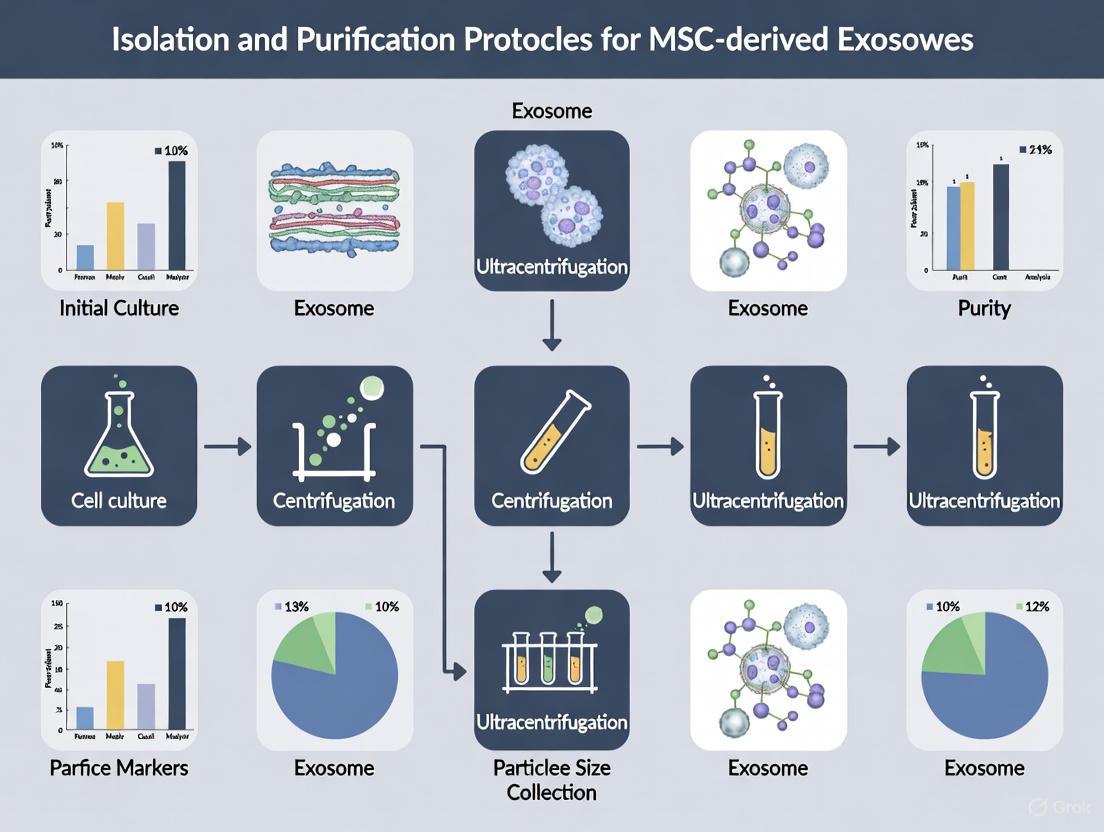
This article provides a detailed examination of ultracentrifugation for the isolation and purification of mesenchymal stem cell (MSC)-derived exosomes, a critical process in regenerative medicine and drug development.
A Comprehensive Guide to MSC-Derived Exosome Isolation: Mastering Ultracentrifugation Protocols for Research and Therapeutics
Abstract
This article provides a detailed examination of ultracentrifugation for the isolation and purification of mesenchymal stem cell (MSC)-derived exosomes, a critical process in regenerative medicine and drug development. It covers the foundational principles of exosome biogenesis, delivers a step-by-step methodological protocol for ultracentrifugation, addresses common troubleshooting and optimization challenges, and offers a comparative analysis with emerging isolation techniques. Aimed at researchers and scientists, this guide synthesizes current best practices to enhance yield, purity, and biological activity of exosomes, facilitating their translational application.
Understanding MSC-Derived Exosomes: Biogenesis, Significance, and the Role of Ultracentrifugation
Exosomes are small extracellular vesicles that play a critical role in intercellular communication through their specific cargo of proteins, nucleic acids, and lipids. This application note provides a comprehensive definition of exosomes based on their physical characteristics, biological composition, and functional properties, with specific emphasis on mesenchymal stem cell (MSC)-derived exosomes. We detail standardized protocols for the isolation and purification of MSC-derived exosomes using ultracentrifugation methodology, along with characterization techniques and key reagent solutions essential for researchers in drug development and regenerative medicine. The structured data presentation and experimental workflows support reproducible research in this rapidly advancing field.
Exosomes are defined as small, lipid-bound extracellular vesicles (EVs) typically ranging from 30-150 nm in diameter that are secreted by all cell types into the extracellular space [1] [2]. They originate from the endosomal pathway through the formation of intraluminal vesicles (ILVs) within multivesicular bodies (MVBs), which subsequently fuse with the plasma membrane to release their contents into the extracellular environment [3] [4]. Once considered merely cellular waste disposal mechanisms, exosomes are now recognized as crucial mediators of intercellular communication, facilitating the transfer of functional proteins, nucleic acids, and lipids between cells [4] [5].
The biomedical interest in exosomes, particularly those derived from mesenchymal stem cells (MSCs), has grown substantially due to their therapeutic potential in immunomodulation, tissue repair, and regenerative medicine [6] [7]. MSC-derived exosomes have demonstrated protective effects in disease progression by contributing to immunomodulation and inflammatory responses, showing anti-inflammatory, anti-apoptotic, and pro-angiogenic functions [6]. Their application in clinical practice offers safety advantages over whole-cell therapies, including reduced risk of rejection, greater gene stability, and elimination of viral transfer potential [6].
Defining Characteristics of Exosomes
Physical and Molecular Properties
Exosomes possess distinct physical and molecular characteristics that differentiate them from other extracellular vesicles. The table below summarizes the key defining properties of exosomes based on current scientific consensus:
Table 1: Defining Characteristics of Exosomes
| Parameter | Specification | Additional Details |
|---|---|---|
| Size Range | 30-150 nm in diameter [1] [2] [4] | Typically 30-200 nm per some classifications [4] [7] |
| Buoyant Density | 1.13-1.19 g·mL⁻¹ [2] | |
| Origin | Endosomal pathway; Multivesicular Bodies (MVBs) [1] [3] | Formed as intraluminal vesicles (ILVs) within MVBs [3] |
| Shape | Spheroid in solution; cup-shaped when dried [4] | Artifactual shape change occurs during electron microscopy preparation |
| Lipid Composition | Cholesterol, sphingomyelin, ceramides, phosphatidylserine [3] [4] | Lipid bilayer membrane similar to parental cell profile [2] |
| Marker Proteins | Tetraspanins (CD63, CD81, CD9), ESCRT proteins (ALIX, TSG101), HSP70, HSP90 [1] [3] [4] | Commonly used for identification and characterization |
Exosome Biogenesis Pathway
The biogenesis of exosomes occurs through a well-defined pathway involving multiple intracellular compartments and molecular regulators. The following diagram illustrates the key stages of exosome formation, cargo sorting, and release:
Pathway Title: Exosome Biogenesis and Regulatory Mechanisms
The biogenesis process begins with the formation of early endosomes through inward budding of the plasma membrane, a process regulated by Rab5 GTPase [5]. These early endosomes mature into late endosomes, regulated by Rab7 GTPase, which develop into multivesicular bodies (MVBs) containing numerous intraluminal vesicles (ILVs) [3] [5]. During ILV formation, cargo molecules are selectively sorted through multiple mechanisms, including: (1) ESCRT-dependent pathways involving complexes (ESCRT-0, -I, -II, -III) and accessory proteins (ALIX, VPS4) that recognize ubiquitinated cargoes [3] [4]; (2) ESCRT-independent pathways regulated by neutral sphingomyelinase 2 (nSMase2) and lipids [1] [5]; (3) Tetraspanin-organized microdomains that recruit specific client proteins [1] [3]; and (4) Lipid-mediated sorting mechanisms [3] [4]. MVBs then face a fate decision - either fusion with lysosomes for degradation or trafficking to and fusion with the plasma membrane mediated by SNARE proteins to release exosomes into the extracellular space [1] [5].
Exosome Cargo Composition
Exosomes carry a diverse array of biomolecules that reflect their cell of origin and mediate their biological functions. The cargo includes proteins, nucleic acids, lipids, and metabolites that can be transferred to recipient cells to influence their phenotype and function [3] [4].
Table 2: Composition of Exosomal Cargo
| Cargo Type | Specific Components | Functional Significance |
|---|---|---|
| Proteins | Tetraspanins (CD63, CD81, CD9), ESCRT components (ALIX, TSG101), Heat shock proteins (HSP70, HSP90), Antigen presentation molecules (MHC I/II), Integrins, Cytoskeletal proteins (actin, tubulin) [1] [3] [4] | Membrane transport/fusion, biogenesis, cellular targeting, immune recognition, structural integrity |
| Nucleic Acids | mRNA, miRNA, rRNA, lncRNA, tRNA, snRNA, snoRNA, piRNA, genomic DNA, mitochondrial DNA [3] [4] | Genetic reprogramming, epigenetic regulation, horizontal gene transfer, intercellular communication |
| Lipids | Cholesterol, sphingomyelin, ceramides, phosphatidylserine, phosphatidylcholine, prostaglandins [3] [4] | Membrane structure, curvature, signaling, trafficking |
| Metabolites | Small molecules, signaling metabolites [3] | Metabolic regulation, signaling |
According to the Exocarta database (Version 5), exosomes from different cell types have been found to contain 41,860 proteins, 3,408 mRNAs, and 2,838 miRNAs, demonstrating their remarkable molecular complexity [2]. The composition of MSC-derived exosomes is particularly relevant for therapeutic applications, as they contain immunomodulatory factors, growth factors, and regulatory RNAs that contribute to tissue repair and regeneration [6] [7].
Protocol: Isolation and Purification of MSC-Derived Exosomes Using Ultracentrifugation
Ultracentrifugation remains the most commonly used method for exosome isolation due to its applicability for processing large volumes and good reproducibility [6]. The following protocol details the step-by-step procedure for isolating exosomes from MSC-conditioned medium.
Materials and Reagents
Table 3: Essential Research Reagent Solutions for Exosome Isolation
| Item | Specification/Supplier | Function/Application |
|---|---|---|
| Cell Culture Medium | Alpha MEM (Lonza Bioscience, catalog number: BE02-002F) [6] | MSC culture and expansion |
| Fetal Bovine Serum (FBS) | EV-depleted FBS (EuroClone, catalog number: ECS0180L) [6] | Cell growth supplement (must be ultracentrifuged to remove bovine EVs) |
| Centrifuge Tubes | Open-Top Thinwall Ultra-Clear Tube, 38.5 ml (Beckman Coulter, catalog number: 344058) [6] | Ultracentrifugation |
| PBS Buffer | Dulbecco's phosphate buffered saline (PBS) 10x, Without Ca++ and Mg++ (Cultek, catalog number: BE17-517Q) [6] | Washing and resuspension |
| Ultracentrifuge | Preparative ultracentrifuge (Beckman Coulter, model: Optima L100XP) [6] | High-force separation of exosomes |
| Rotor | SW32 Ti Swinging-Bucket Rotor (Beckman Coulter, catalog number: 369694) [6] | Exosome pelleting |
| Filtration Filters | 0.22 μm and 0.1 μm sterile syringe filters [6] | Sterilization and debris removal |
Experimental Workflow
The following diagram outlines the complete workflow for MSC-derived exosome isolation and characterization:
Workflow Title: MSC Exosome Isolation and Characterization
Detailed Procedure
MSC Culture and Conditioned Medium Collection
- Culture MSCs in complete alpha-MEM medium supplemented with 10% EV-depleted FBS in 150 cm² tissue culture flasks [6].
- At 70-80% confluence, replace medium with serum-free medium or medium containing EV-depleted FBS.
- Collect conditioned medium after 48-72 hours of culture.
Pre-Clearing Steps
- Transfer conditioned medium to 50 ml conical tubes and centrifuge at 2,000 × g for 30 minutes at 4°C to remove cells and large debris [6].
- Filter the supernatant through a 0.22 μm sterile syringe filter to remove remaining particulate matter.
Ultracentrifugation
- Transfer the filtered supernatant to ultracentrifuge tubes appropriate for the SW32 Ti rotor.
- Centrifuge at 100,000 × g for 70 minutes at 4°C to pellet exosomes [6].
- Carefully discard the supernatant without disturbing the pellet.
Washing and Final Isolation
- Resuspend the pellet in a large volume of PBS (approximately 35 ml per tube).
- Centrifuge again at 100,000 × g for 70 minutes at 4°C to wash the exosomes [6].
- Carefully discard the supernatant and resuspend the final exosome pellet in 100-200 μl of PBS.
Storage
- Aliquot the exosome suspension and store at -80°C for long-term preservation.
Characterization and Quality Control
Proper characterization of isolated exosomes is essential for validating isolation success and ensuring sample quality:
Nanoparticle Tracking Analysis (NTA): Determine exosome size distribution and concentration using instruments such as NanoSight LM10 [6]. MSC-derived exosomes should show a peak size distribution between 50-150 nm.
Transmission Electron Microscopy (TEM): Visualize exosome morphology using cryo-electron microscopy [6]. Exosomes typically appear as cup-shaped structures when chemically fixed and negatively stained.
Western Blot Analysis: Confirm the presence of exosomal marker proteins including CD63, CD81, CD9, TSG101, and ALIX [1] [6]. Absence of negative markers such as calnexin (endoplasmic reticulum marker) confirms purity.
Flow Cytometry: Analyze surface markers using instruments like FACS Canto II [6]. Fluorescently labeled antibodies against tetraspanins can confirm exosome identity.
Applications in Research and Therapeutics
Exosomes, particularly those derived from MSCs, have promising applications across multiple domains:
- Biomarkers: Exosomes in biofluids can reflect pathological states, making them valuable for liquid biopsy applications in cancer, neurodegenerative disorders, and cardiovascular diseases [1] [7].
- Drug Delivery: Their natural biocompatibility, low immunogenicity, and ability to cross biological barriers make exosomes ideal vehicles for therapeutic delivery of drugs, proteins, and nucleic acids [1] [3].
- Immunomodulation: MSC-derived exosomes show therapeutic potential in transplant recipients and autoimmune diseases through their anti-inflammatory and immunomodulatory properties [6] [5].
- Tissue Repair: Exosomes contribute to tissue regeneration and repair processes in neurological, cardiovascular, and musculoskeletal contexts [1] [7].
This application note provides comprehensive definition and isolation protocols for exosomes, with specific emphasis on MSC-derived vesicles. The ultracentrifugation method detailed herein offers a reproducible approach for obtaining high-quality exosome preparations suitable for downstream research and therapeutic development. Proper characterization using multiple complementary techniques is essential for validating exosome identity and quality. As the field advances, standardization of isolation and characterization methods will be crucial for translating exosome-based therapies into clinical applications.
The Therapeutic Promise of MSC-Derived Exosomes in Regenerative Medicine and Drug Delivery
Mesenchymal stem cell-derived exosomes (MSC-Exos) are small, membrane-bound extracellular vesicles ranging from 30 to 150 nanometers in diameter that are actively secreted by MSCs under both physiological and pathological conditions [8]. These vesicles originate from the endosomal system, forming within multivesicular bodies (MVBs) that subsequently fuse with the plasma membrane to release their contents into the extracellular environment [8]. MSC-Exos serve as crucial mediators of intercellular communication by transferring bioactive molecules including proteins, lipids, and nucleic acids to recipient cells, thereby influencing numerous biological processes and disease mechanisms [8] [9].
The transition from whole MSC therapy to MSC-derived exosomes represents a paradigm shift in regenerative medicine [8]. While MSCs themselves have remarkable immunomodulatory and regenerative capabilities, their direct use raises concerns regarding immunogenicity, tumorigenicity, and embolism risk [8]. In contrast, MSC-Exos mimic the therapeutic effects of their parent cells while exhibiting lower immunogenicity due to the absence of major histocompatibility complex (MHC) molecules, reduced tumorigenic potential, and enhanced stability [8] [10]. Their nanoscale size, ease of storage, and ability to cross biological barriers such as the blood-brain barrier further enhance their therapeutic profile, positioning them as a promising cell-free alternative to traditional MSC-based therapies [8] [11].
Biogenesis and Molecular Composition
Biogenesis Pathways
The formation of MSC-derived exosomes is a complex, tightly regulated process rooted in the endosomal pathway. The biogenesis begins with the inward budding of the plasma membrane to form early endosomes, which serve as the first vesicular compartments in exosome production [8]. Through further inward budding of the endosomal membrane, these early endosomes develop into late endosomes, also known as multivesicular bodies (MVBs) [8]. During this transformation, the limiting membrane of the MVB invaginates to form intraluminal vesicles (ILVs) within the organelle's lumen [8].
The formation of MVBs and the sorting of cargo into ILVs are regulated by two primary mechanisms: ESCRT-dependent and ESCRT-independent pathways [9]. The Endosomal Sorting Complexes Required for Transport (ESCRT) machinery consists of five core complexes (ESCRT-0, -I, -II, -III, and Vps4-Vta1) that work sequentially to recruit ubiquitinated proteins and facilitate membrane budding and scission [9]. ESCRT-independent pathways involve tetraspanins, lipids, and other protein complexes that also contribute to exosome formation and cargo sorting [9]. Once formed, MVBs face one of two fates: degradation through fusion with lysosomes or release of ILVs as exosomes upon fusion with the plasma membrane [9].
Molecular Cargo
MSC-derived exosomes carry a diverse array of biological molecules that reflect their parent cells' functional state and mediate their therapeutic effects. Proteomic analyses have revealed that MSC-Exos contain over 850 proteins associated with biological processes such as intercellular communication, cellular movement, and inflammation [9]. These vesicles are enriched with characteristic marker proteins including tetraspanins (CD9, CD63, CD81), heat shock proteins (HSP70, HSP90), and endosomal sorting complexes (TSG101, Alix) [9].
In addition to proteins, MSC-Exos carry substantial genetic material, including microRNAs (miRNAs), mRNAs, and long non-coding RNAs [8] [9]. These nucleic acids can be transferred to recipient cells where they modulate gene expression and cellular functions. The specific composition of MSC-Exos varies depending on the tissue source of the parent MSCs and the conditions to which they are exposed, allowing for dynamic adaptation to physiological needs and pathological challenges [10].
Table 1: Key Molecular Components of MSC-Derived Exosomes
| Component Category | Specific Examples | Functional Significance |
|---|---|---|
| Surface Markers | CD9, CD63, CD81, CD81 | Exosome identification and cellular uptake |
| ESCRT Components | TSG101, Alix | Involved in exosome biogenesis |
| Heat Shock Proteins | HSP70, HSP90 | Cellular stress response, neuroprotection |
| Lipids | Cholesterol, sphingolipids, phosphatidylserine | Membrane structure, signaling functions |
| Nucleic Acids | miRNAs, mRNAs, lncRNAs | Epigenetic reprogramming of recipient cells |
| MSC-Specific Markers | CD29, CD73, CD90, CD105 | Reflect parental MSC origin |
Isolation and Purification Methods
Ultracentrifugation-Based Techniques
Differential Ultracentrifugation
Differential ultracentrifugation remains the gold standard method for MSC exosome isolation, despite the emergence of various alternative techniques [12] [10]. This protocol involves sequential centrifugation steps with progressively increasing centrifugal forces to separate exosomes based on their size, density, and sedimentation coefficients [10]. The standard workflow begins with low-speed centrifugation at 300 × g to remove intact cells, followed by 2,000 × g to eliminate dead cells and large debris. Subsequent centrifugation at 10,000 × g pellets larger extracellular vesicles and organelles, while the final ultracentrifugation step at ≥100,000 × g pellets the exosomes [10].
The key advantage of differential ultracentrifugation is its ability to produce relatively high-purity exosome preparations without requiring specialized reagents or columns [10]. However, limitations include the requirement for expensive ultracentrifuge equipment, potential for exosome damage due to high shear forces, and significant time investment [10] [13]. Additionally, the method may co-precipitate non-exosomal components such as protein aggregates and lipoproteins, potentially affecting downstream analyses and applications [12].
Density Gradient Centrifugation
Density gradient centrifugation represents an refinement of traditional differential ultracentrifugation that separates particles based on their buoyant density differences [10]. This technique utilizes continuous or discontinuous gradients made from sucrose, iodixanol, or cesium chloride, through which exosome-containing samples are layered and centrifuged. During centrifugation, particles migrate to equilibrium positions matching their densities, with exosomes typically banding at densities between 1.13 and 1.19 g/mL [10].
The primary advantage of density gradient centrifugation is its superior resolution and purity compared to differential ultracentrifugation alone, as it effectively separates exosomes from contaminating proteins and other non-vesicular particles [10]. This method also minimizes structural damage to exosomes by reducing the number of high-speed centrifugation steps [10]. However, the technique is technically demanding, time-consuming, and yields relatively low quantities of exosomes, making it less suitable for large-scale production needs [10].
Alternative Isolation Methods
Various alternative methods have been developed to address limitations of ultracentrifugation-based approaches. Size-exclusion chromatography (SEC) separates exosomes based on hydrodynamic volume using porous stationary phases, allowing larger vesicles to elute before smaller molecules and proteins [10] [13]. Ultrafiltration employs membranes with specific molecular weight cut-offs to concentrate and purify exosomes based on size [10]. Precipitation-based methods use hydrophilic polymers to reduce exosome solubility and facilitate pelleting at low centrifugal forces [12] [13]. More advanced techniques include anion exchange chromatography, which exploits the inherent negative surface charge of exosomes, and immunoaffinity capture, which utilizes antibodies against exosome surface markers for highly specific isolation [10].
Table 2: Comparison of MSC Exosome Isolation Methods
| Method | Principle | Purity | Yield | Time | Equipment Needs | Key Limitations |
|---|---|---|---|---|---|---|
| Differential Ultracentrifugation | Size/density based sequential sedimentation | Moderate | Moderate | Long (4-12h) | Ultracentrifuge | High equipment cost, potential vesicle damage |
| Density Gradient Centrifugation | Buoyant density separation | High | Low | Long (12-24h) | Ultracentrifuge | Technically demanding, low throughput |
| Size-Exclusion Chromatography | Hydrodynamic size separation | Moderate | Moderate | Short (1-2h) | Chromatography system | Sample dilution, limited resolution |
| Ultrafiltration | Size-based membrane filtration | Low-Moderate | High | Short (<2h) | Centrifuge | Membrane clogging, shear stress |
| Polymer Precipitation | Solubility reduction | Low | High | Short (1-4h) | Benchtop centrifuge | Co-precipitation of contaminants |
| Immunoaffinity Capture | Antibody-antigen interaction | High | Low | Moderate (2-4h) | Specialized columns | High cost, antigen specificity |
Isolation Method Evaluation Workflow
Detailed Ultracentrifugation Protocol for MSC Exosomes
Pre-analytic Sample Processing
Proper sample preparation is critical for obtaining high-quality MSC exosomes. For MSC culture supernatants, begin by collecting conditioned media after 48-72 hours of culture under serum-free conditions to avoid contamination with bovine exosomes [12]. Remove cells and large debris through centrifugation at 300 × g for 10 minutes at 4°C, followed by a second centrifugation at 2,000 × g for 20 minutes to eliminate apoptotic bodies and larger vesicles [12] [10]. Filter the supernatant through a 0.22 μm membrane to remove remaining particulates while retaining exosomes. The clarified supernatant can be used immediately or stored at -80°C for future processing, though fresh processing is generally recommended to preserve exosome integrity [12].
Ultracentrifugation Procedure
The core ultracentrifugation protocol involves several standardized steps designed to optimally pellet exosomes while maintaining their structural and functional integrity:
Transfer the clarified supernatant to ultracentrifugation tubes appropriate for the rotor type (e.g., polyallomer conical tubes for SW60 rotor). Carefully balance tubes with precision to within 0.01 g to ensure safe operation at high speeds [12].
Perform ultracentrifugation at 100,000 × g for 70-90 minutes at 4°C using a pre-cooled ultracentrifuge. The exact time may require optimization based on rotor type, exosome source, and solution viscosity [12] [10].
Carefully decant the supernatant after ultracentrifugation, leaving approximately 100-200 μL of fluid in the tube to avoid disturbing the often invisible exosome pellet [12].
Resuspend the exosome pellet in a suitable buffer such as phosphate-buffered saline (PBS) or TRIS buffer, using a volume appropriate for downstream applications. Gentle pipetting with wide-bore tips is recommended to minimize shear stress [12] [10].
Optional washing step: For higher purity, repeat the ultracentrifugation process with fresh buffer to remove soluble proteins and other contaminants [10].
Characterize and quantify the isolated exosomes using nanoparticle tracking analysis, electron microscopy, and protein quantification before proceeding to experimental applications or storage at -80°C [12] [13].
Exosome Ultracentrifugation Workflow
Quality Control and Characterization
Rigorous characterization of isolated MSC exosomes is essential for ensuring experimental reproducibility and reliability. The International Society for Extracellular Vesicles (ISEV) recommends implementing multiple complementary techniques to verify exosome identity, quantity, and purity [13] [11]. Nanoparticle tracking analysis (NTA) determines exosome size distribution and concentration by measuring the Brownian motion of individual particles [12] [13]. Transmission electron microscopy (TEM) provides ultrastructural confirmation of exosome morphology, typically revealing cup-shaped or spherical vesicles with diameters between 30-150 nm [13]. Western blot analysis confirms the presence of exosome marker proteins (CD9, CD63, CD81, TSG101, Alix) and the absence of negative markers such as GM130 or calnexin [13]. Additional quality metrics include the particle-to-protein ratio, which should be high for pure exosome preparations, and assessment of residual contaminants such as apolipoproteins when working with biofluids [12] [13].
The Scientist's Toolkit: Essential Research Reagents and Materials
Successful isolation and application of MSC-derived exosomes requires specific laboratory reagents and equipment. The following table details essential materials for exosome research, with particular emphasis on ultracentrifugation-based approaches.
Table 3: Essential Research Reagents and Materials for MSC Exosome Isolation
| Category | Specific Item | Function/Application | Examples/Specifications |
|---|---|---|---|
| Cell Culture | Mesenchymal Stem Cells | Source of exosomes | Bone marrow, adipose tissue, umbilical cord-derived |
| Serum-free Media | Cell culture without bovine exosome contamination | DMEM/F12, XFOTM media | |
| Separation | Ultracentrifuge | High-speed centrifugation | Beckman Coulter Optima series |
| Fixed-Angle Rotors | High-volume processing | Type 70.1, Type 45 Ti | |
| Swing-Bucket Rotors | Higher purity for small volumes | SW 60, SW 32 Ti | |
| Ultracentrifuge Tubes | Sample containment during UC | Polyallomer, polycarbonate | |
| Characterization | Nanoparticle Tracker | Size and concentration analysis | Malvern Nanosight, Particle Metrix |
| Electron Microscope | Morphological validation | Transmission Electron Microscope | |
| Western Blot Equipment | Protein marker confirmation | SDS-PAGE system, CD9/CD63/TSG101 antibodies | |
| Buffers & Reagents | Phosphate-Buffered Saline | Washing and resuspension | Calcium- and magnesium-free |
| Protease Inhibitors | Prevent protein degradation | PMSF, complete protease inhibitor cocktails | |
| Density Gradient Media | Density-based separation | Iodixanol, sucrose solutions |
Therapeutic Applications in Regenerative Medicine
Neurological Disorders
MSC-derived exosomes demonstrate remarkable potential for treating neurological conditions, largely due to their ability to cross the blood-brain barrier and deliver therapeutic cargo to the central nervous system [10] [11]. In preclinical models of ischemic stroke, MSC-Exos have been shown to reduce infarct volume, decrease neuroinflammation, and promote functional recovery by transferring miRNAs and proteins that modulate apoptotic pathways and enhance neuroregeneration [9] [11]. Similarly, in neurodegenerative conditions such as Alzheimer's and Parkinson's diseases, MSC-Exos exhibit neuroprotective effects by reducing oxidative stress, clearing pathological protein aggregates, and supporting neuronal survival through the delivery of catalase, synapsin I, and various neurotrophic factors [8] [11].
The therapeutic efficacy of MSC-Exos in neurological applications stems from their multi-faceted mechanisms of action, including modulation of microglial activation, promotion of angiogenesis, stimulation of neurogenesis, and enhancement of synaptic plasticity [10] [11]. Companies like Aruna Bio are leveraging the innate tropism of neural-derived exosomes to develop targeted therapies for conditions such as amyotrophic lateral sclerosis (ALS) and multiple sclerosis (MS), with lead candidate AB126 showing promise in preclinical stroke models [14].
Cardiovascular Repair
In cardiovascular medicine, MSC-derived exosomes have demonstrated significant cardioprotective and regenerative properties. Studies in myocardial infarction models show that MSC-Exos can reduce infarct size, inhibit apoptosis of cardiomyocytes, and promote angiogenesis through the transfer of specific miRNAs such as miR-19a, miR-21, and miR-146a [8] [9]. These vesicles modulate the immune response by polarizing macrophages toward the regenerative M2 phenotype and regulating T-cell function, thereby reducing excessive inflammation and fibrotic remodeling [8] [11].
Capricor Therapeutics has developed cardiosphere-derived cell exosomes (CAP-2003) that exhibit potent anti-inflammatory and anti-fibrotic activities in models of myocardial injury and Duchenne muscular dystrophy [14]. These exosomes are rich in regulatory RNAs and proteins that modulate key signaling pathways involved in tissue repair, including Wnt/β-catenin, TGF-β, and NF-κB [9] [14]. The stability, low immunogenicity, and innate targeting capabilities of MSC-Exos make them particularly attractive for delivering therapeutic cargo to damaged cardiac tissue following ischemic injury.
Orthopedic and Musculoskeletal Applications
MSC-derived exosomes promote musculoskeletal regeneration through multiple mechanisms, including stimulation of angiogenesis, modulation of inflammatory responses, and direct enhancement of tissue-specific cell proliferation and differentiation [8] [11]. In bone repair, MSC-Exos have been shown to promote osteogenic differentiation of progenitor cells and enhance angiogenesis through the transfer of BMP-2, miR-196a, and other osteoinductive factors [8]. For cartilage regeneration, exosomes from MSCs exposed to inflammatory cytokines carry elevated levels of TGF-β and COX2 that enhance chondrocyte migration and extracellular matrix production while suppressing catabolic processes [11].
The company Kimera Labs has developed XoGlo, a clinical-grade MSC exosome product being investigated for orthopedic applications including osteoarthritis and soft tissue repair [14]. Their research demonstrates that MSC-Exos can accelerate healing processes by coordinating multiple aspects of tissue regeneration, including stem cell recruitment, immune modulation, matrix deposition, and remodeling [14].
Therapeutic Mechanisms of MSC Exosomes
Emerging Role as Drug Delivery Vehicles
Engineering Strategies for Therapeutic Loading
The inherent biological properties of MSC-derived exosomes make them ideal candidates for engineered drug delivery systems. Multiple loading strategies have been developed to encapsulate therapeutic cargo within exosomes, including pre-loading (engineering parent MSCs to produce exosomes with desired cargo), post-loading (incorporating therapeutics into pre-isolated exosomes), and hybrid approaches [15] [9]. Pre-loading methods involve transducing MSCs with viral vectors encoding therapeutic genes or incubating them with small molecules that become packaged into secreted exosomes [9]. Post-loading techniques include electroporation, sonication, extrusion, freeze-thaw cycles, and saponin permeabilization, each with distinct advantages and limitations for cargo type and loading efficiency [15] [9].
Engineering exosomes for enhanced targeting typically involves modifying surface proteins to display targeting ligands such as peptides, antibodies, or receptor ligands that improve specificity for particular tissues or cell types [15] [11]. For instance, RVG (rabies viral glycoprotein)-tagged exosomes show enhanced delivery to neurons, while RGD (arginine-glycine-aspartic acid) peptide-modified exosomes preferentially target angiogenic vasculature [9] [11]. These targeting strategies are particularly valuable for improving therapeutic index while minimizing off-target effects in complex diseases such as cancer and neurological disorders.
Clinical Translation and Regulatory Landscape
The clinical translation of MSC-derived exosomes as drug delivery vehicles is advancing rapidly, with several companies progressing toward clinical trials. Evox Therapeutics has developed the DeliverEX platform for engineering exosomes to deliver RNA, gene-editing tools, and proteins across biological barriers, with partnerships with Eli Lilly for CNS and rare disease applications [14]. Their lead program focuses on argininosuccinic aciduria, utilizing exosomes to deliver functional ASL enzyme to liver cells [14]. Similarly, Capricor Therapeutics is exploring the use of cardiosphere-derived exosomes for delivering RNA therapeutics in Duchenne muscular dystrophy and other rare diseases [14].
Despite this progress, significant challenges remain in the clinical development pathway. Manufacturing scalability represents a major hurdle, with current production methods struggling to meet potential clinical demand while maintaining batch-to-batch consistency [8] [11]. Standardization of quality control metrics is equally challenging, as exosome-based products require comprehensive characterization of identity, potency, purity, and stability [11]. The regulatory framework for exosome-based therapeutics remains undefined, with no specific technical guidelines issued by major regulatory agencies to date [11]. Addressing these challenges will require interdisciplinary collaboration between researchers, manufacturers, and regulators to establish scientifically rigorous standards that ensure product safety and efficacy while facilitating innovation in this promising therapeutic modality.
The Critical Role of Purity and Integrity in MSC-Exosome Research
The therapeutic application of mesenchymal stem cell-derived exosomes (MSC-Exos) represents a paradigm shift in regenerative medicine and drug delivery. These nanoscale vesicles (30-150 nm in diameter) possess unique advantages including low immunogenicity, the ability to cross biological barriers like the blood-brain barrier, and a high biosafety profile with no risk of tumorigenesis [16] [17]. However, their translational potential is critically dependent on two fundamental parameters: purity and integrity.
The isolation process directly dictates the biological relevance and therapeutic consistency of exosome preparations. Physical damage or surface alterations during isolation can compromise the sensitivity of exosome-based diagnostics and limit their therapeutic applications [18]. Furthermore, the presence of co-isolated contaminants such as lipoproteins, protein aggregates, or non-exosomal vesicles can lead to misinterpretation of experimental results and inconsistent therapeutic outcomes [17] [18]. The lack of standardized protocols has resulted in significant variations in exosome characterization, dose units, and outcome measures across clinical trials, underscoring an urgent need for harmonized reporting standards [16].
Quantitative Analysis of Isolation Challenges
The challenges in achieving pure and intact exosomes manifest across multiple dimensions of the isolation workflow. The following table summarizes the core challenges and their direct impacts on research and therapeutic development.
Table 1: Core Challenges in MSC-Exosome Isolation and Their Consequences
| Challenge Category | Specific Challenge | Impact on Purity/Integrity | Downstream Consequence |
|---|---|---|---|
| Protocol Standardization | Lack of unified isolation/purification protocols [16] | High variability in vesicle composition and function between batches | Hindered clinical translation and reproducibility |
| Technical Limitations | Co-precipitation of contaminants (e.g., lipoproteins) [17] | Reduced sample purity | Misattribution of biological effects to exosomes |
| Shear forces and multiple centrifugation steps [17] [18] | Damage to vesicle structure and surface proteins | Compromised therapeutic efficacy and diagnostic potential | |
| Characterization & Dosing | Large variations in dose units and characterization [16] | Inability to compare studies or establish dose-response | Underappreciated dose-effect relationships in clinical research |
| Scalability | Difficulty in large-scale production of undamaged exosomes [18] | Inconsistent quality and integrity at industrial scale | Barrier to widespread clinical adoption |
The impact of these challenges is quantifiable. For instance, the repeated resuspension and centrifugation steps in some protocols can reduce exosome recovery rates to as low as 30% [18]. Furthermore, a comprehensive review of clinical trials registered between 2014 and 2024 revealed significant variations in MSC-EV characterization and dose units, making it difficult to compare results and establish effective dosing windows [16].
Detailed Experimental Protocols for Ultracentrifugation
Ultracentrifugation remains the most widely used method for exosome isolation. Below are detailed protocols for the two primary ultracentrifugation-based approaches.
Protocol: Differential Ultracentrifugation
Differential ultracentrifugation separates particles based on size and density through a series of increasing centrifugal forces [17] [18].
Methodology:
Pre-clearing Steps:
- Centrifuge the cell culture conditioned medium at 300 × g for 10 minutes at 4°C to pellet and remove intact cells.
- Transfer supernatant to a new tube and centrifuge at 2,000 × g for 20 minutes at 4°C to remove dead cells and large debris.
- Transfer the resulting supernatant and centrifuge at 10,000 × g for 30 minutes at 4°C to remove larger vesicles and organelles.
Exosome Pelletting:
- Transfer the supernatant to ultracentrifuge tubes (ensure proper balancing).
- Ultracentrifuge at ≥100,000 × g for 70 minutes at 4°C to pellet the exosomes.
- Carefully discard the supernatant.
Washing (Optional):
- Resuspend the pellet in a large volume of sterile, cold phosphate-buffered saline (PBS).
- Repeat the ultracentrifugation step (≥100,000 × g for 70 minutes).
- Discard the supernatant and resuspend the final, purified exosome pellet in a small volume of PBS or desired buffer.
Critical Notes: While this method is considered a "gold standard" and is economical with good reproducibility, the high centrifugal forces and multiple steps can cause damage to exosome structure and integrity [17] [18].
Protocol: Density Gradient Centrifugation
This method improves upon differential ultracentrifugation by separating particles based on buoyant density differences, typically using sucrose or iodixanol gradients, resulting in higher purity [17].
Methodology:
Gradient Preparation:
- Prepare a discontinuous density gradient in an ultracentrifuge tube. For example, layer sucrose or iodixanol solutions of decreasing density (e.g., from 40% to 5%) on top of one another.
Sample Loading and Centrifugation:
- Carefully layer the pre-cleared sample (after 10,000 × g centrifugation) on top of the prepared density gradient.
- Ultracentrifuge at ≥100,000 × g for 70 minutes to overnight at 4°C. Particles will migrate to equilibrium positions matching their own buoyant densities.
Fraction Collection:
- After centrifugation, carefully collect fractions from the top of the tube. Exosomes typically band at densities between 1.13 and 1.19 g/mL.
- The collected exosome-rich fraction often requires further washing via ultracentrifugation with PBS to remove the density gradient medium.
Critical Notes: This method yields higher purity by better separating exosomes from contaminants with similar sizes but different densities. However, it is more time-consuming, has a lower yield due to the additional washing step, and requires a high level of technical skill [17].
The following workflow diagram illustrates the key decision points and steps in these core ultracentrifugation protocols.
The Scientist's Toolkit: Essential Research Reagents and Materials
Successful isolation of MSC-Exosomes with high purity and integrity requires carefully selected reagents and equipment. The following table details key components of the research toolkit.
Table 2: Essential Research Reagent Solutions for MSC-Exosome Isolation
| Item Name | Function/Application | Critical Specifications |
|---|---|---|
| Ultracentrifuge | Generates high g-forces to pellet nanoscale exosomes [17] | Fixed-angle or swinging-bucket rotor capable of ≥100,000 × g; Refrigerated (4°C) |
| Density Gradient Medium | Forms density barrier for high-purity separation (e.g., Sucrose, Iodixanol) [17] | Ultra-pure grade; Pre-formulated gradients or materials for self-prep |
| Polycarbonate Bottles/Thinwall Tubes | Contain samples during ultracentrifugation [18] | Compatible with ultracentrifuge rotors; Chemically resistant; Pre-sterilized |
| Sterile PBS (pH 7.4) | Washing pelleted exosomes to remove contaminants; Final resuspension [19] | Calcium- and Magnesium-free; Particle-free filtered (0.1 µm) |
| Serum-Free Medium | For cell culture during exosome production to prevent bovine EV contamination [19] | Chemically defined; May be supplemented with human platelet lysate (hPL) [20] |
| Nanoparticle Tracking Analysis (NTA) | Measures particle concentration and size distribution [20] [19] | System laser wavelength 532 nm; Software for video capture and analysis |
| Antibody Panels (CD9, CD63, CD81) | Confirmation of exosome identity via Western Blot or Flow Cytometry [20] | Validated for exosome detection; Host species compatible with detection system |
Comparative Analysis of Ultracentrifugation and Emerging Techniques
While ultracentrifugation is foundational, emerging technologies aim to address its limitations in scalability, purity, and preserving integrity. The following table provides a comparative analysis.
Table 3: Comparison of Exosome Isolation Techniques
| Isolation Method | Principle | Relative Purity | Relative Yield | Impact on Integrity | Scalability |
|---|---|---|---|---|---|
| Differential Ultracentrifugation | Sequential centrifugation based on size/density [18] | Moderate | Moderate | High shear force can cause damage [18] | Low |
| Density Gradient Centrifugation | Separation by buoyant density in a medium [17] | High | Low to Moderate | Better preservation by reducing co-pelleting [17] | Low |
| Tangential Flow Filtration (TFF) | Size-based separation using parallel flow [18] [20] | Moderate | High | Gentle process, lower shear stress [20] | High |
| Size-Exclusion Chromatography (SEC) | Separation by hydrodynamic volume [18] | High | Moderate | Gentle, preserves structure and function [18] | Moderate |
| Microfluidics/Lab-on-a-Chip | Automated separation using flow patterns & specific interactions [21] [18] | High | Varies | Minimizes contamination and damage [21] | Developing |
A 2025 study directly comparing Ultracentrifugation (UC) and Tangential Flow Filtration (TFF) for isolating small EVs from bone marrow MSCs found that TFF provided statistically higher particle yields than UC. The isolated vesicles were biologically active and demonstrated therapeutic effects in a retinal pigment epithelium damage model, validating the functional integrity of EVs isolated via TFF [20]. This highlights the critical link between isolation choice and therapeutic outcome.
Ultracentrifugation is an advanced laboratory technique that employs extremely high rotational speeds to separate small particles in a mixture based on their physical properties, including size, shape, and density [22] [23]. By generating centrifugal forces of up to 1,000,000 x g, it enables the isolation of subcellular biomolecules, viruses, and organelles that are impossible to separate with traditional centrifuges [22] [24]. This method has established itself as the historical gold standard for the isolation and purification of extracellular vesicles, such as exosomes derived from Mesenchymal Stem Cells (MSCs), playing a fundamental role in molecular biology, biochemistry, and translational medicine [25] [26].
The technique's foundational principle is sedimentation, where particles in a solution experience a centrifugal force proportional to their molecular weight, the rotor's radius, and the square of the angular velocity [22] [23]. During operation, denser particles migrate outward more rapidly, while less dense particles remain suspended or float, resulting in their effective separation [22]. The process was profoundly advanced by the work of Swedish chemist Theodor Svedberg, who was awarded the Nobel Prize for his pioneering studies and invented the sedimentation coefficient (Svedberg Unit) to measure particle size based on sedimentation velocity [22].
Table: Key Characteristics of Ultracentrifugation
| Feature | Description |
|---|---|
| Operating Speed | 60,000 - 150,000 RPM [23] |
| Centrifugal Force | Up to 1,000,000 x g [26] |
| Separable Particles | Proteins, nucleic acids, organelles, viruses, exosomes [22] |
| Principle | Sedimentation under high centrifugal force [22] [23] |
| Historical Significance | Nobel Prize-winning work by Theodor Svedberg [22] |
Principles and Instrumentation of Ultracentrifugation
Core Principles of Sedimentation
The operational principle of ultracentrifugation hinges on subjecting particles in a solution to a powerful centrifugal force [22]. This force, which acts perpendicular to the axis of rotation, causes particles to migrate radially outward at rates determined by their physical characteristics. The sedimentation rate is governed by a balance of forces: the centrifugal force propelling particles outward is counteracted by the buoyant force of the liquid medium and the frictional resistance the particles encounter [22]. The resulting motion allows for the precise separation of biological macromolecules. The mathematical expression for the centrifugal force (F) is:
F = mrω²
where m is the mass of the particle, r is the radius of rotation, and ω is the angular velocity [18]. In practical laboratory terms, the Relative Centrifugal Force (RCF), expressed in multiples of gravitational force (x g), is more commonly used and is calculated as:
RCF = (1.118 × 10⁻⁵) × (RPM)² × r [18]
This equation highlights how the force increases with the square of the rotational speed (RPM), enabling the ultracentrifuge to generate the immense forces required to sediment very small, low-density particles like exosomes [18].
Types of Ultracentrifuges and Rotors
Ultracentrifuges are broadly categorized into two types, each designed for a distinct primary purpose [22] [23] [24].
- Analytical Ultracentrifuge (AUC): AUC is equipped with optical detection systems (e.g., absorbance, interference, fluorescence) that allow researchers to monitor the sedimentation process in real-time [22] [23]. This capability is not for purification but for analyzing macromolecular properties, such as molecular weight, shape, conformation, and interaction states [22] [24]. It operates in two main modes: sedimentation velocity for determining size and shape, and sedimentation equilibrium for calculating molar masses and equilibrium constants [22].
- Preparative Ultracentrifuge: This is the workhorse for isolating and purifying biological particles like MSC-derived exosomes [23]. Unlike AUC, it does not have real-time detection and is designed to process larger sample volumes to obtain purified fractions for downstream analysis and applications [22] [24].
The rotor, which holds the sample tubes, is a critical component. The choice of rotor significantly impacts the efficiency and outcome of the separation [22]:
- Fixed-Angle Rotors: Tubes are held at a fixed angle (14-40°) to the vertical axis. Ideal for rapid pelleting of particles [22].
- Swinging-Bucket Rotors: Buckets holding the tubes swing out to a horizontal position during rotation. This is the ideal choice for density gradient centrifugation as it facilitates the formation of well-defined bands [22].
- Vertical Rotors: Tubes are held parallel to the axis of rotation. They support higher speeds and enable rapid separation, particularly useful for isopycnic centrifugation [22].
Essential Instrumentation Components
Modern ultracentrifuges incorporate several key systems to ensure optimal performance and sample integrity [22]:
- Vacuum System: The chamber housing the rotor is placed under a vacuum to minimize air friction. This prevents excessive heat generation and mechanical wear, allowing the instrument to safely achieve and maintain its extreme operational speeds [22].
- Refrigeration System: Temperature control is vital. Spinning at high speeds can generate significant heat, which may denature temperature-sensitive biomolecules like proteins and nucleic acids. An integrated refrigeration system maintains the sample at a desired, often low, temperature throughout the run [22] [23].
- Density Gradient Forming Device: For density-based separations, this device is used to prepare stable gradients of media like sucrose or iodixanol, which are crucial for high-resolution purification [23].
Ultracentrifugation Techniques for Exosome Isolation
Preparative ultracentrifugation, the category most relevant for purifying MSC-derived exosomes, is implemented through several core techniques, each with specific protocols and applications.
Differential Ultracentrifugation
Differential Ultracentrifugation (DUC) is the most frequently employed method for isolating extracellular vesicles and is widely regarded as the "gold standard" in the field [27] [25] [26]. This technique involves a series of sequential centrifugation steps at progressively higher speeds and centrifugal forces to pellet different components based on their size and density [18] [26].
Detailed Protocol for DUC: The following steps outline a standard DUC protocol for isolating exosomes from MSC culture supernatant [25] [28] [26]:
Sample Pre-Clearing:
- Centrifuge the cell culture supernatant at 300–500 × g for 10 minutes at 4°C to pellet and remove detached cells [25] [28].
- Transfer the supernatant to a new tube and centrifuge at 2,000–10,000 × g for 10–30 minutes at 4°C to remove larger debris, microvesicles, and apoptotic bodies [25] [26].
- Carefully collect the supernatant and filter it through a 0.22 µm sterile filter to remove any remaining large particles [28] [26].
Exosome Pelletting:
- Transfer the clarified supernatant to ultracentrifuge tubes. Balance the tubes precisely.
- Pellet the exosomes by ultracentrifugation at 100,000–120,000 × g for 60–120 minutes at 4°C [25] [26].
- After the run, carefully decant the supernatant. The exosomes form a translucent or invisible pellet at the bottom of the tube.
Washing (Optional but Recommended):
- Gently resuspend the crude exosome pellet in a large volume of sterile, cold phosphate-buffered saline (PBS) to wash away contaminating proteins.
- Perform a second ultracentrifugation step under the same conditions (100,000–120,000 × g, 60–90 minutes, 4°C) to re-pellet the washed exosomes [25] [29] [26].
- Finally, resuspend the purified exosome pellet in a small volume (e.g., 50–200 µL) of PBS or a suitable storage buffer [28].
Justification and Limitations: DUC is considered the gold standard due to its wide applicability, cost-effectiveness over time (despite the initial instrument investment), and its foundation in well-established physical principles [26]. It can be scaled to process large sample volumes, making it feasible for clinical purposes [26]. However, its major drawbacks include being laborious and time-consuming, and the final preparation is often of medium purity as it can co-isolate other particles with similar sedimentation properties, such as serum lipoproteins and protein aggregates [27] [26]. Furthermore, the high g-forces can potentially cause mechanical damage to some exosomes, and the recovery yield can be low (around 30%) especially if washing steps are included [27] [18].
Density Gradient Ultracentrifugation
Density Gradient Ultracentrifugation (DGUC) is a technique designed to achieve higher purity exosome preparations [26]. Instead of pelleting, it separates particles based on their intrinsic buoyant density by centrifuging them through a pre-formed density gradient medium [22] [18].
Detailed Protocol for DGUC: This protocol often follows an initial DUC pre-clearing step to remove large contaminants [29].
Gradient Preparation:
- Prepare a discontinuous density gradient in an ultracentrifuge tube. Commonly used media include sucrose, iodixanol (e.g., OptiPrep), or cesium chloride [29] [26].
- A typical gradient is layered carefully from the bottom up with solutions of decreasing density (e.g., 40%, 20%, 10%, and 5% w/v iodixanol) [29].
Sample Loading and Centrifugation:
- Gently overlay the pre-cleared sample containing exosomes on top of the prepared density gradient.
- Centrifuge the gradient at a high force (e.g., 100,000 × g for 16–18 hours at 4°C) [29]. During this extended run, particles migrate until they reach the position in the gradient where their density matches that of the surrounding medium (isopycnic point).
Fraction Collection:
- After centrifugation, carefully collect the contents of the tube in sequential fractions (e.g., 1 mL each) from the top [29].
- Exosomes, which typically have a buoyant density between 1.10–1.18 g/mL, will be found in specific middle fractions [26]. The exact fractions can be identified by measuring particle concentration using techniques like tunable resistive pulse sensing (TRPS) or nanoparticle tracking analysis (NTA) [29].
- The positive fractions are diluted in a large volume of PBS and ultracentrifuged again (e.g., 100,000 × g for 2 hours) to pellet the exosomes and remove the density gradient medium. The final pellet is resuspended in a suitable buffer [29].
Justification and Limitations: DGUC is justified for applications requiring high-purity exosomes, as it effectively separates exosomes from common contaminants like non-vesicular proteins and protein aggregates [29] [26]. This makes it ideal for sensitive downstream analyses such as proteomics or functional studies. The primary trade-offs are that it is even more time-consuming than DUC and requires greater technical expertise to prepare and handle the gradients [18] [26].
Table: Comparison of Ultracentrifugation Techniques for MSC-Exosome Isolation
| Parameter | Differential (DUC) | Density Gradient (DGUC) |
|---|---|---|
| Principle | Sequential pelleting by size/density | Separation by buoyant density at equilibrium |
| Purity | Medium [27] | High [27] [26] |
| Yield/Recovery | Low to Intermediate (can be as low as 30%) [27] [18] | Low [27] |
| Complexity & Time | Laborious and time-consuming [26] | Very time-consuming and technically demanding [18] [26] |
| Risk of Damage | Higher (due to pelleting) [27] | Lower (particles are banded, not pelleted) |
| Primary Application | Standard isolation, large sample volumes [26] | High-purity isolation for sensitive downstream analysis [29] [26] |
The Scientist's Toolkit: Key Reagents and Materials
Successful isolation of MSC-derived exosomes via ultracentrifugation requires specific reagents and materials. The table below details essential components for the protocol.
Table: Essential Research Reagent Solutions for UC-based Exosome Isolation
| Reagent/Material | Function/Description | Example/Specification |
|---|---|---|
| Cell Culture Medium | Supports MSC growth and exosome production. Must use EV-depleted FBS to avoid contamination by bovine exosomes. | DMEM/α-MEM with 10% EV-depleted FBS [28] [30] |
| Ultracentrifuge | Instrument to generate extreme centrifugal forces for pelleting nanoscale vesicles. | Beckman Coulter Optima series; capable of ≥100,000 × g [29] [28] |
| Fixed-Angle Rotor | Rotor type for high-speed pelleting of exosomes. | Type 50.2 Ti or P45AT rotors [28] |
| Density Gradient Medium | Medium to create a density gradient for high-purity separation based on buoyant density. | Iodixanol (OptiPrep) or Sucrose [29] [26] |
| Ultracentrifuge Tubes | Tubes designed to withstand extreme centrifugal forces without deformation. | Polypropylene or polycarbonate tubes; e.g., 70PC bottles [28] |
| PBS (Phosphate Buffered Saline) | Isotonic buffer for resuspending and washing the exosome pellet. | Sterile, cold, and 0.22 µm filtered [25] [28] |
| Protease Inhibitors | Added to samples to prevent proteolytic degradation of exosomal proteins. | Commercial cocktail tablets or solutions [26] |
Justification as the Historical Gold Standard and Comparative Analysis
Ultracentrifugation's status as the historical gold standard for exosome isolation is justified by several interconnected factors, even as newer methods emerge.
Foundational and Benchmark Status
Ultracentrifugation, particularly Differential Ultracentrifugation, is the most frequently utilized method in research, accounting for approximately 56% of all exosome isolation techniques [26]. Its long history has resulted in a vast body of published data, making it the benchmark against which all newer methods are validated [27] [30]. When a novel isolation technique is developed, its yield, purity, and the functionality of the isolated exosomes are typically compared to those obtained by the standard UC protocol [30]. This extensive track record provides a level of validation and comparability that is unmatched by newer, less-established techniques.
Balance of Practical Advantages
The continued preference for UC is rooted in a balance of practical scientific advantages:
- Established Reproducibility: The technique is based on well-understood physical principles (sedimentation), which, when followed meticulously, leads to highly reproducible results across different laboratories [18]. This reproducibility is paramount for scientific rigor.
- Scalability and Volume Handling: UC protocols can be adapted to process a wide range of sample volumes, from small research-scale samples to large volumes necessary for clinical-grade production [26].
- Minimal Sample Pre-Treatment: Unlike methods relying on specific antibodies or chemical polymers, UC requires little sample pre-treatment beyond basic clearing steps, reducing the introduction of exogenous contaminants or the need for extensive optimization [26].
- Cost-Effectiveness (Consumables): While the initial capital investment for an ultracentrifuge is high, the cost of consumables (tubes, buffers) per isolation is relatively low, especially when compared to commercial kit-based methods that require proprietary reagents [26].
Performance in Comparison to Emerging Methods
Comparative studies consistently highlight the position of UC relative to other common isolation techniques. For instance, a 2024 study comparing UC and polymer-based precipitation found that while precipitation offered higher yield and simplicity, UC resulted in exosomes with a higher specific protein concentration (meaning less co-isolation of contaminating proteins) and caused less aggregation [30]. Another study noted that precipitation methods co-isolate a significant amount of non-exosomal contaminants like lipoproteins, whereas density gradient UC provides superior purity [29]. Furthermore, when compared to size-exclusion chromatography (SEC), UC was found to be a robust method, though SEC or a combination of UC and SEC can sometimes achieve higher purity [27] [29].
Table: Ultracentrifugation vs. Other Common Exosome Isolation Methods
| Method | Mechanism | Advantages | Disadvantages |
|---|---|---|---|
| Ultracentrifugation (DUC) | Size/Density via centrifugal force [18] | Gold standard, reproducible, scalable, low consumable cost [18] [26] | Time-consuming, medium purity, requires expensive equipment, potential for mechanical damage [27] [18] |
| Polymer-Based Precipitation | Alter solubility & hydration [30] | Simple, fast, high yield, low technical barrier [30] | Low purity, co-isolation of contaminants, polymers may interfere with downstream analysis [27] [30] |
| Size-Exclusion Chromatography (SEC) | Size-based separation through a column [27] | Good purity, preserves biological activity, fast [27] | Lower resolution for similar-sized particles, sample dilution, specialized columns [27] |
| Immunoaffinity Capture | Antibody-antigen binding [27] | High purity, isolates specific exosome subpopulations [27] | Expensive, low yield, may alter exosome surface, dependent on specific markers [27] |
A Step-by-Step Ultracentrifugation Protocol for Isoming MSC-Derived Exosomes
The study of mesenchymal stem cell (MSC)-derived exosomes represents a rapidly advancing frontier in regenerative medicine and drug delivery. These nanoscale extracellular vesicles (EVs) mediate the therapeutic effects of MSCs through their cargo of proteins, lipids, and nucleic acids, offering benefits including low immunogenicity, high stability, and the ability to cross biological barriers like the blood-brain barrier [17]. However, a significant challenge in this field is the standardization of isolation protocols to ensure consistent and contaminant-free exosome preparations. The use of conventional fetal bovine serum (FBS) in cell culture introduces exogenous bovine exosomes that can confound experimental results and compromise the integrity of downstream analyses [31]. This application note provides detailed methodologies for preparing cell culture systems using exosome-depleted FBS and collecting conditioned medium, framed within the context of MSC-derived exosome research using ultracentrifugation-based purification.
The Critical Role of Exosome-Depleted FBS
Rationale for Using Exosome-Depleted FBS
Fetal bovine serum is a common supplement in cell culture media, providing essential growth factors and nutrients. However, standard FBS contains significant quantities of bovine exosomes and other extracellular vesicles, which can be co-isolated with MSC-derived exosomes and alter experimental outcomes [31]. Studies have demonstrated that FBS-derived exosomes can actively influence cultured cell behavior; for instance, they can induce a migratory phenotype in lung cancer epithelial cell lines (A549 cells) [31]. Furthermore, FBS-derived exosomes contain RNA that is protected from enzymatic degradation, posing a substantial risk for contamination in transcriptomic analyses of MSC-exosome cargo [31]. Therefore, employing exosome-depleted FBS is not merely an optimization step but a fundamental requirement for ensuring the purity and accurate interpretation of results in exosome research.
Product Specifications and Performance
Exosome-depleted FBS is specially processed to remove endogenous bovine exosomes. According to manufacturer specifications, this product contains ≤10% of the exosomes present in the starting material FBS, a level of depletion confirmed for every lot via a proprietary fluorescence assay [32]. This product has been validated in the culture of various cell lines, including Jurkat, MCF-7, HeLa, PC3, HEK293, and A549 cells, with performance tested for at least a single passage of 48 hours (and up to 96 hours for HeLa, MCF-7, and HEK293 cells) [32]. It undergoes full sterility testing and is compatible with standard cell culture handling, as it has been verified that thawing, aliquoting, and refreezing does not result in loss of product performance [32].
Table 1: Characterization and Usage of Exosome-Depleted FBS
| Parameter | Specification | Validation/Notes |
|---|---|---|
| Exosome Depletion | ≤10% of exosomes in starting FBS [32] | Verified via in-house fluorescence assay per lot |
| Recommended Concentration | 5-10% [32] | Start at 10% and adjust based on cell line requirements |
| Cell Line Performance | Validated for Jurkat, MCF-7, HeLa, PC3, HEK293, A549 [32] | HeLa cells showed the greatest sensitivity |
| Culture Duration | Single passage for 48-96 hours [32] | Tested up to 96 hours for HeLa, MCF-7, HEK293 |
| Freeze-Thaw Stability | No loss of performance after thawing and refreezing [32] | Suitable for aliquoting and storage |
Preparation of Conditioned Medium from MSC Cultures
MSC Culture and Expansion
The first step in obtaining MSC-derived exosomes is the isolation and expansion of high-quality mesenchymal stem cells. The umbilical cord, particularly the Wharton's jelly matrix, is a rich and ethically non-controversial source of primitive MSCs with high proliferative rates, low senescence, and enhanced production of trophic factors [33]. An optimized protocol for isolating Wharton's jelly-derived MSCs (WJ-MSCs) involves collecting umbilical cords after full-term births with informed consent, cutting them into small segments of about 1 cm, sectioning them longitudinally to expose the Wharton's jelly, and placing them directly onto uncoated culture plates [33]. The explants are cultured in a complete growth medium, such as Dulbecco's Modified Eagle's medium (DMEM) low-glucose, supplemented with non-essential amino acids, L-glutamine, penicillin/streptomycin, and a growth supplement [33]. A critical advancement for clinical translation is the replacement of FBS with human platelet lysate (hPL), typically at a concentration of 5%, which eliminates exposure to xenogeneic proteins and enhances MSC recovery and propagation while reducing variability, especially when pooled from multiple donors [33]. The medium is changed every 2-3 days until MSC outgrowth is observed, after which the explants are removed [33].
Conditioning Phase and Medium Collection
Once MSCs are expanded and have reached an appropriate confluence (typically 50-80%), the process of conditioning the medium begins. To ensure that the collected exosomes are of human MSC origin and not contaminated by vesicles from the culture supplement, a starvation phase is implemented. The complete growth medium is replaced with a basal medium without hPL or exosome-depleted FBS for 24 hours prior to collection [19]. This step deprives the cells of growth factors, stimulating maximum EV release from the MSCs, and ensures that the subsequent conditioned medium is free from vesicles derived from the culture supplement [19]. Following starvation, the medium is replaced with a fresh batch of basal medium or medium containing exosome-depleted FBS, and the cells are cultured for a defined conditioning period, often 24-48 hours. The spent medium, now termed conditioned medium (CM), is collected and subjected to immediate processing or stored at 2–8°C for up to seven days before exosome isolation [34]. For large-scale production, one study reported obtaining approximately 120 L of conditioned medium from a single umbilical cord using a standardized system [33].
Table 2: Protocol for Collecting Conditioned Medium from MSCs
| Step | Key Parameters | Purpose & Rationale |
|---|---|---|
| Pre-Conditioning (Starvation) | Replace medium with basal, supplement-free medium for 24 hours [19] | Stimulates MSC EV release; eliminates contaminating vesicles from culture supplements (hPL/FBS) |
| Conditioning | Use basal medium or medium with exosome-depleted FBS; culture for 24-48 hours [34] | Allows for accumulation of MSC-derived exosomes and factors in the medium |
| Collection | Collect spent medium; centrifuge at 500 x g for 15 min to remove cells and debris [34] | Initial clarification to eliminate intact cells and large apoptotic bodies |
| Short-Term Storage | Store supernatant at 2-8°C for up to 7 days [34] | Preserves exosome integrity for short periods prior to isolation |
The following workflow diagram illustrates the complete process from MSC culture to the production of purified exosomes.
The Scientist's Toolkit: Essential Research Reagents
Table 3: Essential Materials and Reagents for MSC Exosome Research
| Reagent/Material | Function & Application | Specifications & Notes |
|---|---|---|
| Exosome-Depleted FBS [32] | Provides essential nutrients and growth factors for cell culture without introducing contaminating bovine exosomes. | Confirm depletion to ≤10% of exosomes in starting material; test concentration (5-10%) for specific MSC lines. |
| Human Platelet Lysate (hPL) [33] | A xeno-free, clinically suitable alternative to FBS for MSC expansion, enhancing cell recovery and propagation. | Use pooled lysate from multiple donors (e.g., 100 donors) to reduce batch-to-batch variability; typical concentration of 5%. |
| Dulbecco’s Modified Eagle Medium (DMEM) [33] | A basal nutrient medium used for culturing MSCs and as a base during the conditioning phase. | Low-glucose formulations are often used; supplement with L-glutamine and non-essential amino acids. |
| Ultracentrifuge [31] [17] | Essential equipment for the isolation and concentration of exosomes from conditioned medium via high g-forces. | Requires forces ≥100,000 × g; use fixed-angle or swinging-bucket rotors. |
| Polycarbonate Bottles/ Tubes | Specially designed centrifuge ware that can withstand the extreme forces of ultracentrifugation without cracking. | Must be compatible with the specific rotor and ultracentrifuge model being used. |
| Phosphate Buffered Saline (PBS) [31] | An isotonic buffer used for washing cell cultures and for resuspending and washing exosome pellets. | Must be filtered (0.1 µm) and sterile to avoid contamination with particulates or microbes. |
The integrity of research on MSC-derived exosomes is fundamentally dependent on the initial steps of cell culture preparation. The meticulous use of exosome-depleted FBS and the standardized collection of conditioned medium are critical for generating pure, uncontaminated exosome preparations. The protocols outlined herein, including the use of human platelet lysate for MSC expansion and a starvation phase to eliminate supplement-derived vesicles, provide a robust framework for researchers. Adherence to these detailed methodologies ensures the reliability and reproducibility of downstream isolation processes, such as ultracentrifugation, thereby solidifying the foundation for high-quality research in the rapidly evolving field of exosome biology and therapeutics.
Within the comprehensive framework of isolating and purifying mesenchymal stem cell (MSC)-derived exosomes via ultracentrifugation, the initial clarification of the conditioned medium is a foundational step. This stage is critical for removing non-exosomal particles—including cells, large cell debris, and apoptotic bodies—that can compromise the purity, yield, and downstream analytical results of the final exosome preparation [35] [36]. Effective clarification ensures that subsequent ultracentrifugation steps target the intended population of small extracellular vesicles (sEVs) or exosomes (typically 30-200 nm in diameter), thereby enhancing the reliability of experimental and therapeutic outcomes [20].
This application note details standardized protocols for low-speed centrifugation and 0.22 µm filtration, providing researchers with a robust methodology to initiate MSC-exosome purification.
Experimental Protocols
Pre-clarification Handling of MSC Conditioned Medium
Prior to clarification, proper collection and initial processing of the conditioned medium from MSC cultures are essential.
- Mass Production of MSC-Conditioned Medium: To generate sufficient material, culture MSCs in a medium supplemented with exosome-depleted Fetal Bovine Serum (FBS) [36]. Using standard FBS introduces a high background of bovine exosomes, significantly contaminating the final isolate. Depletion can be achieved by ultracentrifuging the FBS at 100,000 × g for 18 hours or using ultrafiltration methods [36].
- Collection: Collect the conditioned medium after a suitable incubation period (e.g., 48 hours) [36]. For large-scale production, the medium can be collected multiple times from the same culture [36].
- Initial Cooling: Keep the collected medium at 4°C throughout the clarification process to preserve exosome integrity and inhibit protease activity.
Detailed Protocol: Low-Speed Centrifugation
The primary objective of this step is to remove intact cells and large cellular debris.
- Step 1: Transfer the conditioned medium to appropriate centrifuge tubes.
- Step 2: Centrifuge at 300 × g for 10 minutes at 4°C to pellet intact cells [37] [20].
- Step 3: Carefully transfer the supernatant to new tubes without disturbing the soft pellet.
- Step 4: Centrifuge the supernatant at a higher force of 2,000 × g for 10 minutes at 4°C to remove dead cells and larger debris [37].
- Step 5: For a more stringent clearance of platelets and residual small debris, a further centrifugation at 10,000 × g for 30-45 minutes may be incorporated [37] [36]. This step is crucial when working with complex biofluids like plasma or serum [12].
Detailed Protocol: 0.22 µm Filtration
This step removes smaller particles and some microvesicles larger than 220 nm, ensuring that the final exosome preparation is not contaminated by larger vesicles.
- Step 1: Following low-speed centrifugation, carefully aspirate the supernatant.
- Step 2: Pass the supernatant through a 0.22 µm pore-size vacuum filter or syringe filter [36] [20]. This step efficiently removes larger microvesicles and any remaining particulate matter.
- Step 3: The resulting filtrate, now cleared of cells, debris, and large vesicles, contains the exosomes and soluble proteins. This filtrate is the starting material for subsequent exosome isolation via ultracentrifugation or other concentration methods.
The following workflow diagram illustrates the sequential steps of the initial clarification process:
The table below summarizes the key parameters for the sequential clarification steps.
Table 1: Summary of Initial Clarification Steps for MSC-Derived Exosomes
| Step | Purpose | Typical Parameters | Key Considerations |
|---|---|---|---|
| First Centrifugation | Pellet intact cells | 300 × g for 10 min at 4°C [37] [20] | Prevents excessive cell death and debris in the supernatant. |
| Second Centrifugation | Remove dead cells and large debris | 2,000 × g for 10 min at 4°C [37] | Clears the medium of larger apoptotic bodies and big fragments. |
| Third Centrifugation (Optional) | Remove smaller debris and platelets | 10,000 × g for 30-45 min at 4°C [37] [36] | Highly recommended for serum/plasma; improves final purity. |
| Filtration | Remove particles > 220 nm (microvesicles) | 0.22 µm pore-size membrane [36] [20] | Provides a "sterile" exosome-containing filtrate free of larger vesicles. |
The Scientist's Toolkit: Essential Research Reagent Solutions
The following table lists key materials and reagents required to execute the initial clarification protocol effectively.
Table 2: Essential Research Reagents and Materials for Clarification
| Item | Function/Description | Example |
|---|---|---|
| Exosome-Depleted FBS | Serum supplement for MSC culture that minimizes contaminating bovine exosomes. | Prepared by ultracentrifugation (100,000 × g, 18h) or commercially available [36]. |
| Centrifuge | Equipment for pelleting cells and debris at low speeds. | Refrigerated benchtop centrifuges (e.g., Eppendorf 5417R, Sorvall Legend Micro 21) [12]. |
| Centrifuge Tubes | Containers for holding samples during centrifugation. | Conical tubes (e.g., 15 mL, 50 mL) compatible with applied g-forces. |
| 0.22 µm Filters | Membrane filters for removing microvesicles and ensuring sterility of the exosome prep. | Sterile vacuum filtration systems or syringe filters (e.g., Corning, Cat. No. 431097) [36]. |
| PBS (Phosphate Buffered Saline) | Buffer for resuspending pellets or diluting samples during processing. | 1X PBS, pH 7.4 (e.g., Thermo-Fisher, ref 14190144) [12]. |
Technical Considerations and Troubleshooting
- Pressure-Induced Damage: While generally gentle, the pressure applied during 0.22 µm filtration can potentially cause mechanical stress or rupture of some larger vesicles. If this is a concern, Tangential Flow Filtration (TFF) is a superior alternative, as it minimizes membrane fouling and shear stress, leading to higher yields of intact exosomes [35] [36] [20].
- Yield vs. Purity Trade-off: The clarification process inevitably results in some loss of exosomes. However, this is a necessary compromise to achieve a high-purity isolate. Skipping or shortening these steps will lead to significant contamination, affecting all downstream applications and analyses [38] [37].
- Process Validation: The efficiency of the clarification steps can be validated using Nanoparticle Tracking Analysis (NTA) to compare the particle size distribution and concentration before and after filtration, confirming the removal of larger particles [38] [36].
Within the framework of Isolation and purification protocols for MSC derived exosomes using ultracentrifugation research, differential ultracentrifugation (DUC) remains the most frequently employed method, accounting for approximately 56% of all techniques used by researchers for extracellular vesicle (EV) isolation [25] [26]. For mesenchymal stem cell (MSC)-derived exosomes, which typically range from 30-150 nm in diameter, ultracentrifugation exploits the physical properties of size, shape, and density to separate these nanoscale vesicles from other components in the conditioned media [25] [39]. The process involves applying extremely high centrifugal forces—up to 100,000 × g to 120,000 × g—to pellet exosomes while leaving soluble proteins and smaller contaminants in the supernatant [25] [12]. This protocol outlines the optimized ultracentrifugation process for obtaining high-purity MSC-derived exosomes, detailing critical parameters that ensure maximum yield and viability for downstream applications in drug development and regenerative medicine.
Experimental Protocol and Workflow
Pre-Analytic MSC Culture and Sample Preparation
Materials:
- MSC culture medium supplemented with 10% exosome-depleted FBS [40]
- Phosphate Buffered Saline (PBS), ice-cold
- Protease inhibitors [25]
- Ultra-Clear tubes (Beckman Coulter, ref 355603) or polyallomer conical tubes (Beckman Coulter, ref 335650) [12]
- Fixed-angle or swinging-bucket rotors (Type 70.1 or SW60/SW41, Beckman Coulter) [12] [40]
Procedure:
- Culture MSCs in media supplemented with 10% exosome-depleted FBS to eliminate bovine exosome contamination. Deplete bovine exosomes from FBS by ultracentrifugation at 100,000 × g for 70 min prior to use [40].
- Collect conditioned media from MSCs after 24-hour culture [40].
- Perform initial centrifugation at 2,000 × g for 20 min at 4°C to remove cells and large debris [40].
- Transfer supernatant to fresh tubes and centrifuge at 10,000 × g for 30-45 min at 4°C to pellet larger vesicles and apoptotic bodies [25].
- Carefully collect the supernatant, which contains the exosomes, and proceed to ultracentrifugation.
Core Ultracentrifugation Process
The following workflow diagram illustrates the complete ultracentrifugation process for isolating MSC-derived exosomes:
Critical Ultracentrifugation Parameters:
- Transfer the supernatant from the 10,000 × g spin to ultracentrifuge tubes. Balance tubes precisely using PBS.
- Ultracentrifuge at 100,000 × g for 70-120 min at 4°C [25] [40]. Note that increasing the duration to 4 hours may increase yield but can cause physical damage to exosomes [26].
- Carefully decant the supernatant. To avoid losing the exosome pellet, leave approximately 2 mm of supernatant in the tube [41].
- Resuspend the pellet in a large volume of PBS (e.g., 4 mL for initial 250 μL plasma) [41] [12].
- Repeat ultracentrifugation at 100,000 × g for 70 min at 4°C for a wash step to improve purity [41] [40].
- Resuspend the final exosome pellet in an appropriate buffer (PBS or storage buffer) for downstream applications.
Table 1: Key Ultracentrifugation Parameters for MSC-Derived Exosomes
| Parameter | Optimal Range | Purpose | Considerations |
|---|---|---|---|
| G-Force | 100,000 - 120,000 × g | Pellet exosomes | Higher forces may damage exosomes |
| Duration | 70 - 120 minutes | Complete sedimentation | Extended time (>4h) may cause damage [26] |
| Temperature | 4°C | Maintain exosome integrity | Prevents degradation |
| Rotor Type | Fixed-angle or Swing-out | Maximize yield | Swing-out rotors may provide better separation |
| Sample Viscosity | Diluted with PBS | Improve separation | Dilution reduces viscosity [41] |
| Wash Steps | 1-2 cycles | Improve purity | Each cycle causes some yield loss |
Advanced Purification: Density Gradient Ultracentrifugation
For applications requiring higher purity, density gradient ultracentrifugation (DGUC) is recommended to separate exosomes from soluble proteins and non-exosomal contaminants [26].
Procedure:
- Resuspend the initial exosome pellet in 2.5 M sucrose in 25 mM HEPES buffer (pH 7.4) [40].
- Load the suspension into the bottom of an SW41 ultracentrifuge tube.
- Carefully layer HEPES buffer containing 2 M sucrose on top of the exosome suspension.
- Top with HEPES buffer containing 0.25 M sucrose to create a discontinuous gradient.
- Ultracentrifuge overnight at 100,000 × g in an SW41 swing rotor [40].
- Collect 1 mL fractions and centrifuge each at 100,000 × g for 1 h.
- Resuspend pellets in PBS for downstream analysis.
Quality Assessment and Troubleshooting
Quantification and Characterization
Nanoparticle Tracking Analysis (NTA): Determines particle size distribution and concentration [12]. Dilute samples in PBS to achieve 20-100 particles per frame.
Transmission Electron Microscopy (TEM): Visualizes exosome morphology and size [41]. Fix samples with glutaraldehyde and stain with uranyl acetate.
Protein Quantification: Use bicinchoninic acid (BCA) assay to measure total protein content [40].
Table 2: Comparison of Exosome Isolation Methods for MSC Research
| Method | Purity | Yield | Time | Cost | Scalability | Best For |
|---|---|---|---|---|---|---|
| Differential UC | High [42] | Medium [42] | >4 h [43] | Low [25] | Medium [42] | Large sample volumes [25] |
| Density Gradient UC | High [43] | Low [43] | >16 h [43] | Medium | Low | High purity requirements |
| Size-Exclusion Chromatography | Medium-High [42] | Medium [42] | ~0.3 h [43] | Medium | High [42] | Maintaining biological function [43] |
| Precipitation | Low [42] | High [42] | 0.3-12 h [43] | Low | High [42] | Quick processing |
| Immunoaffinity Capture | Very High [42] | Low [42] | 4-20 h [43] | High | Low [42] | Specific exosome subpopulations |
Research Reagent Solutions
Table 3: Essential Materials for MSC-Derived Exosome Isolation
| Reagent/Equipment | Function | Example Products |
|---|---|---|
| Exosome-Depleted FBS | Eliminates bovine exosome contamination | Gibco [40] |
| Protease Inhibitors | Prevents degradation of exosomal proteins | Various manufacturers [25] |
| Ultra-Clear Tubes | Specialized tubes for ultracentrifugation | Beckman Coulter, ref 355603 [12] |
| Swinging Bucket Rotors | Enables high-resolution separation | SW60, SW41 (Beckman Coulter) [12] [40] |
| Sucrose Gradient Solutions | Forms density gradient for purification | 0.25-2.5 M sucrose in HEPES [40] |
| PBS Buffer | Washing and resuspension medium | Thermo-Fisher, ref 14190144 [12] |
Troubleshooting Common Issues
Low Yield:
- Ensure MSC cultures are 70-80% confluent when collecting conditioned media
- Concentrate conditioned media using tangential flow filtration for large volumes
- Check rotor calibration and k-factor for efficient pelleting
Protein Contamination:
- Increase wash cycles (2-3 ultracentrifugation steps)
- Implement density gradient ultracentrifugation
- Ensure complete removal of supernatant after each spin
Exosome Damage:
- Avoid excessive ultracentrifugation times (>4 hours)
- Use proper resuspension techniques (avoid vortexing)
- Maintain consistent cold temperature throughout the process
The core ultracentrifugation process at 100,000 × g remains the gold standard for isolating MSC-derived exosomes, providing a balance of purity, yield, and reliability for research and therapeutic development. By adhering to the optimized parameters outlined in this protocol—including proper sample preparation, precise centrifugation conditions, and appropriate quality assessment—researchers can obtain high-quality exosome preparations suitable for downstream applications in drug development and regenerative medicine. The scalability of ultracentrifugation makes it particularly valuable for translational research aimed at clinical applications of MSC-derived exosomes.
The Critical Role of Post-Isolation Handling in Exosome Research
The therapeutic potential of mesenchymal stem cell-derived exosomes is increasingly recognized in regenerative medicine, with their preserved biological functionality being paramount for successful research and clinical translation [26]. Post-isolation handling—comprising washing, resuspension, and storage—represents a critical phase where exosome integrity, surface marker functionality, and molecular cargo can be compromised. Proper handling protocols are essential to maintain these characteristics for accurate downstream analyses and therapeutic applications.
Traditional protocols often recommend using phosphate-buffered saline (PBS) for exosome resuspension and washing, with storage at -80°C considered optimal [44]. However, emerging evidence indicates that storage in plain PBS leads to significant and rapid particle loss, even at -80°C, starting within days of storage [44]. This degradation affects concentration, diameter, surface protein profile, and nucleic acid content, potentially invalidating experimental results and compromising therapeutic efficacy. This application note details optimized, evidence-based protocols to overcome these limitations and ensure exosome stability during handling and storage.
Optimized Washing and Resuspension Protocols
Limitations of Standard PBS and Improved Buffer Formulations
Using PBS as a diluent or resuspension buffer results in severely reduced extracellular vesicle recovery rates, an effect observed within minutes of exposure [44]. This poses a significant problem for workflows requiring sample dilution prior to analysis. To address this, researchers have developed enhanced buffer formulations that dramatically improve exosome stability.
The table below compares the composition and function of key components in the optimized PBS-HAT buffer versus traditional PBS.
Table 1: Key Components of Optimized Exosome Storage Buffers
| Component | Traditional PBS | PBS-HAT Buffer | Function in Preservation |
|---|---|---|---|
| Human Albumin | Absent | Present (e.g., 5%) | Acts as a blocking agent, reduces vesicle aggregation and adhesion to tube walls [44] |
| Trehalose | Absent | Present (e.g., 5-10%) | Non-reducing disaccharide that acts as a cryoprotectant, stabilizes lipid bilayers [44] |
| Inorganic Salts | NaCl, Phosphate | NaCl, Phosphate | Maintains physiological osmolarity and pH |
| Primary Limitation | Promotes particle loss and aggregation | Requires sourcing of high-purity components | - |
Step-by-Step Resuspension and Washing Protocol
The following protocol is adapted for exosomes isolated from MSC-conditioned medium via ultracentrifugation [6] [26].
Materials & Reagents:
- Ultracentrifugation-purified MSC exosome pellet
- Ice-cold PBS-HAT buffer or alternative optimized buffer
- Ultracentrifuge and fixed-angle rotor (e.g., Type 70 Ti)
- Polyallomer ultracentrifuge tubes
- Micro-pipettes and sterile, low-protein-binding tips
Procedure:
- Initial Resuspension: Following the final ultracentrifugation step, carefully decant the supernatant. Gently resuspend the visible exosome pellet in a small volume (e.g., 200-500 µL) of ice-cold PBS-HAT buffer using a pipette with a wide-bore tip to minimize shear stress.
- Washing Centrifugation: Transfer the resuspended exosomes to an ultracentrifuge tube. Top up the tube with additional cold PBS-HAT to the recommended fill volume. Centrifuge at 100,000 - 120,000 x g for 60-90 minutes at 4°C to pellet the exosomes again [26] [12].
- Final Resuspension: After the wash step, carefully decant the supernatant. Resuspend the final, purified exosome pellet in a defined volume of PBS-HAT buffer suitable for aliquoting.
- Quality Check: Perform a quick quality assessment via Nanoparticle Tracking Analysis (NTA) to determine concentration and size distribution before proceeding to storage.
Graphviz diagram illustrating the workflow:
Strategic Storage at -80°C
Comparative Analysis of Storage Conditions
Long-term storage stability is a prerequisite for bio-banking clinical samples and producing consistent exosome batches for therapeutic use [44]. The following table synthesizes quantitative data on how different storage buffers and conditions affect exosome recovery and stability.
Table 2: Impact of Storage Buffer and Temperature on Exosome Stability
| Storage Condition | Storage Duration | Key Findings on Exosome Recovery & Stability | Reference |
|---|---|---|---|
| PBS at -80°C | Up to 2 years | Drastically reduced recovery, especially in pure EV samples; particle fusion and degradation | [44] |
| PBS-HAT at -80°C | Up to 2 years | Clearly improved short-term and long-term preservation; stability across freeze-thaw cycles | [44] |
| PBS at 4°C or -20°C | Short-term (days) | Significant and rapid particle loss; not recommended for any storage duration | [44] |
| Trehalose-based Buffer | Short-term (days) | Cryoprotective effect; reduces fusion and aggregation compared to PBS | [44] |
Recommended Protocol for Storage at -80°C
Materials & Reagents:
- Resuspended exosomes in PBS-HAT buffer
- Low-protein-binding, sterile cryovials (e.g., PCR tubes or similar)
- Freezer box or rack for organization
- -80°C freezer with continuous temperature monitoring
Procedure:
- Aliquotting: Distribute the final exosome preparation into single-use aliquots in sterile, low-protein-binding cryovials. Volume should be minimal to avoid repeated freeze-thaw cycles but sufficient for planned experiments.
- Rapid Freezing: Place the aliquots directly into a -80°C freezer. While not always necessary for all exosome types, flash-freezing in liquid nitrogen can be considered for maximum preservation of labile cargo.
- Documentation and Inventory: Clearly label all vials with exosome type, isolation date, buffer, concentration, and passage number. Maintain a detailed electronic inventory.
- Thawing for Use: When needed, thaw a single aliquot rapidly by placing it in a 37°C water bath or on wet ice. Gently mix by flicking or low-speed vortexing before use. Avoid repeated freeze-thaw cycles.
The Scientist's Toolkit: Essential Reagents and Materials
Table 3: Key Research Reagent Solutions for Exosome Handling
| Item/Category | Specific Example | Function/Benefit |
|---|---|---|
| Ultracentrifuge & Rotors | Beckman Coulter Optima series with Type 70 Ti or SW32 Ti rotors | Essential for high-g force pelleting and washing of exosomes [6] [12] |
| Storage Buffer | PBS supplemented with Human Albumin and Trehalose (PBS-HAT) | Significantly improves vesicle recovery and stability during storage at -80°C [44] |
| Low-Protein-Binding Tubes | Polyallomer ultracentrifuge tubes; low-binding microtubes (e.g., PCR tubes) | Minimizes adhesion of exosomes to plastic surfaces, increasing yield [44] |
| Characterization Instrument | NanoSight NTA (e.g., Malvern Panalytical LM10) | Analyzes particle concentration and size distribution pre- and post-storage [45] [6] |
Concluding Recommendations
Adherence to these optimized protocols for washing, resuspending, and storing MSC-derived exosomes is critical for generating reliable and reproducible data. The replacement of plain PBS with a specialized buffer like PBS-HAT for resuspension and as a diluent, combined with consistent storage at -80°C in single-use aliquots, will markedly enhance the preservation of exosome quantity, integrity, and biological activity. These practices form a solid foundation for downstream therapeutic development and analytical applications.
Optimizing Yield and Purity: Troubleshooting Common Ultracentrifugation Challenges
The isolation of mesenchymal stem cell (MSC)-derived exosomes via ultracentrifugation (UC) remains the most widely adopted method in research settings, accounting for approximately 56% of all exosome isolation techniques used [46] [26]. Despite its widespread application, conventional UC protocols face significant challenges in yield efficiency, particularly when scaling up for therapeutic applications or extensive omics analyses. The sequential centrifugation steps, while effective for separating exosomes based on density and size, often result in substantial particle loss, with recovery rates potentially as low as 30% due to exosome damage during repeated processing and resuspension steps [18] [26]. The fundamental limitation of UC lies in its inability to completely avoid co-precipitation of non-vesicular contaminants alongside exosomes, necessitating trade-offs between purity and yield [47] [36]. For researchers focused on MSC-derived exosomes, these yield limitations directly impact downstream applications, from functional studies to potential therapeutic development. This protocol details evidence-based strategies to maximize recovery while maintaining exosome integrity, specifically tailored for UC-based isolation from MSC conditioned media.
Quantitative Comparison of Exosome Isolation Methods
The pursuit of higher exosome yield must be balanced against critical purity requirements, particularly for therapeutic development. The table below summarizes the performance of various isolation methods, providing a benchmark for evaluating UC optimization strategies.
Table 1: Performance Comparison of Exosome Isolation Methods from MSC Conditioned Media
| Isolation Method | Reported Yield (Particles/mL) | Purity Assessment | Processing Time | Key Limitations | Best Use Case |
|---|---|---|---|---|---|
| Ultracentrifugation (Standard) | 1.3E+09 [47] | Moderate (protein aggregates) [36] [46] | 4-6 hours [26] | Low yield, potential vesicle damage [18] | Research benchmarking |
| Tangential Flow Filtration (TFF) | 92.5x UC yield [36] | High (when combined with purification) | ~2 hours [36] | Requires specialized equipment | Large-scale production |
| PEG Precipitation (CP) | 1.46E+10 [47] | Low (high non-vesicular content) | ~1 hour [47] | Co-precipitation of contaminants | Rapid diagnostics |
| PEG + Ultrafiltration (CPF) | Intermediate [47] | Moderate | ~2 hours [47] | Requires optimization | General research |
| Size Exclusion Chromatography (SEC) | Lower than CP [47] | High (particle-to-protein) [47] | ~1 hour | Sample dilution, fraction variation [47] | High-purity applications |
| Phosphatidyl Serine Affinity | High [48] | High (specific marker expression) | Variable | Cost, specificity | Targeted isolation |
Pre-Isolation Strategy: Cell Culture Optimization
Maximizing exosome yield begins long before centrifugation, with critical optimization of MSC culture conditions.
Culture Media Preparation and FBS Derivation
The presence of bovine exosomes in fetal bovine serum (FBS) represents a major contaminant that significantly compromises the purity and accurate quantification of MSC-derived exosomes [36] [48]. Implementing rigorous FBS derivation protocols is therefore essential.
Table 2: Fetal Bovine Serum Derivation Methods for MSC Culture
| Method | Protocol | Derivation Efficiency | Impact on Cell Viability | Residual LDL-c Contamination |
|---|---|---|---|---|
| Ultracentrifugation (UC-dFBS) | 18h at 100,000×g, 4°C [36] | High (exosome removal) | Minimal impact [36] | Negligible detection [36] |
| Ultrafiltration (UF-dFBS) | 55min at 3,000×g using Amicon Ultra-15 [36] | Moderate | Minimal impact [36] | Low |
| Commercial Exosome-Depleted FBS | Following manufacturer's instructions | Variable between suppliers | Requires validation | Manufacturer-dependent |
Experimental Protocol: MSC Culture for Maximized Exosome Production
Materials:
- Human umbilical cord MSCs (or adipose/bone marrow-derived)
- Phenol red-free DMEM or alpha-MEM
- UC-dFBS or UF-dFBS (prepared as in Table 2)
- Antibiotic-antimycotic mixture
- T175 culture flasks
- Humidified CO₂ incubator (5% CO₂, 37°C)
Procedure:
- Culture MSCs to approximately 50-60% confluence in growth medium containing 10% derived FBS [36].
- Replace medium with exosome production medium (phenol red-free DMEM containing 1% antibiotic-antimycotic and 10% UC-dFBS or UF-dFBS).
- Harvest conditioned media after 48 hours of culture [36]. Note: Extending collection time to 72 hours may increase yield but requires viability assessment.
- For large-scale production, collect media sequentially every 12 hours for up to 4 collection cycles [36].
- Centrifuge collected media at 300×g for 10 minutes to remove cells.
- Filter through 0.22 µm vacuum filtration system to remove large debris, microvesicles, and apoptotic bodies [36] [26].
- Process immediately or store at -80°C for later isolation (avoid repeated freeze-thaw cycles).
Enhanced Ultracentrifugation Protocols
Workflow: Advanced UC Strategy for Maximizing Yield
The following diagram illustrates the optimized ultracentrifugation workflow integrating yield-enhancing modifications:
Density Gradient Ultracentrifugation for Enhanced Purity
For applications requiring high purity without compromising yield, density gradient ultracentrifugation (DGUC) provides superior separation of exosomes from protein aggregates and other contaminants [26].
Materials:
- Sucrose or iodoxinol density gradient solutions (ranging from 2.5 M to 0.25 M)
- Ultra-clear centrifuge tubes
- Ultracentrifuge with swinging bucket rotor
- Fraction collection system
Procedure:
- Prepare a discontinuous density gradient by carefully layering decreasing concentrations of sucrose or iodoxinol (e.g., 2.5 M, 2.0 M, 1.5 M, 1.0 M, 0.5 M, 0.25 M) in an ultra-clear centrifuge tube.
- Gently layer the pre-cleared conditioned media (prepared per Section 4.1) on top of the gradient.
- Centrifuge at 100,000×g for 16-18 hours at 4°C [26].
- Collect fractions systematically from the top of the gradient. Note: MSC-derived exosomes typically band at densities between 1.13-1.19 g/mL [26].
- Dilute exosome-containing fractions with PBS and recover exosomes by a final ultracentrifugation step at 100,000×g for 70 minutes.
- Resuspend the final pellet in an appropriate buffer for downstream applications.
Hybrid Methods: Integrating UC with Complementary Technologies
Tangential Flow Filtration for Scale-Up
Tangential flow filtration (TFF) enables gentle concentration of large-volume MSC conditioned media while maintaining exosome integrity, making it particularly suitable for scaling up production [36] [18].
Materials:
- TFF system with 300-500 kDa molecular weight cut-off filters [36]
- Peristaltic pump and reservoir
- Pressure gauges
- pH and conductivity meters
Procedure:
- Pre-circulate PBS through the TFF system to condition the filters.
- Load pre-cleared conditioned media (0.22 µm filtered) into the reservoir.
- Circulate through the TFF system with a cross-flow rate maintaining appropriate transmembrane pressure.
- Continuously concentrate until desired volume reduction is achieved (typically 10-20×).
- Diafilter with 3-5 volumes of PBS to remove residual contaminants.
- Recover the concentrated exosome solution for further purification or direct application.
- For highest purity, combine TFF concentration with a subsequent UC step (100,000×g, 70 minutes).
Chemical Precipitation with Ultrafiltration (CPF)
The CPF method integrates polyethylene glycol (PEG)-based precipitation with ultrafiltration, offering a balanced approach for researchers seeking higher yields without specialized equipment [47].
Materials:
- PEG solution (commercial kits or 8-16% PEG6000-8000)
- Ultrafiltration devices (100 kDa MWCO)
- Phosphate-buffered saline (PBS)
Procedure:
- Mix pre-cleared conditioned media with PEG solution at a predetermined ratio (typically 1:2 to 1:5 volume ratio).
- Incubate overnight at 4°C to allow exosome precipitation.
- Centrifuge at 10,000×g for 60 minutes to collect the precipitated exosomes.
- Resuspend the pellet in PBS and filter through a 0.22 µm syringe filter.
- Apply to a 100 kDa MWCO ultrafiltration device and centrifuge at 4,000×g until concentrated.
- Wash with PBS and repeat concentration to remove residual PEG.
- Recover the purified exosome concentrate for downstream applications.
The Scientist's Toolkit: Essential Research Reagent Solutions
Table 3: Key Reagents for Optimized MSC Exosome Isolation
| Reagent/Kit | Manufacturer Examples | Function in Protocol | Critical Notes for Yield Optimization |
|---|---|---|---|
| Amicon Ultra-15 Centrifugal Filters | Millipore | FBS derivation and sample concentration | 100 kDa MWCO optimal for exosome retention [36] |
| ExoQuick-TC | System Biosciences | Polymer-based precipitation | Higher yield but lower purity; good for RNA isolation [48] |
| MagCapture Exosome Isolation Kit | Fujifilm Wako | Phosphatidyl serine affinity | High purity from small sample volumes [48] |
| qEV Size Exclusion Columns | IZON Sciences | Size-based separation | Preserves vesicle integrity; fraction collection critical [47] |
| Protease Inhibitor Cocktails | Various | Protease inhibition during processing | Essential for preserving protein markers in functional studies |
| CD63/CD81/CD9 Antibodies | Multiple suppliers | Exosome characterization by Western blot | Confirmation of exosome identity and assessment of isolation efficiency |
Quality Assessment and Downstream Application
Rigorous characterization is essential to validate both the yield and functionality of isolated MSC-derived exosomes. Nanoparticle tracking analysis (NTA) provides quantitative assessment of particle concentration and size distribution (typically 30-150 nm for MSC exosomes) [47] [36]. Transmission electron microscopy (TEM) confirms characteristic cup-shaped morphology and membrane integrity [47] [26]. Western blot analysis for tetraspanin markers (CD63, CD81, CD9) and MSC-specific markers (CD73) validates exosomal identity and origin [47] [36]. For therapeutic applications, functional assays such as endothelial cell tube formation (angiogenesis) and fibroblast migration (wound healing) demonstrate biological potency, with highly purified MSC exosomes showing approximately 23.1% improvement in wound healing and 71.4% enhancement in angiogenic effects compared to less pure preparations [36].
Maximizing yield in MSC-derived exosome isolation requires a multifaceted approach that begins with optimized cell culture conditions and continues through carefully calibrated isolation protocols. While ultracentrifugation remains the benchmark method, researchers must select techniques based on their specific application requirements, balancing the need for high yield against purity considerations. For therapeutic development, hybrid approaches like TFF with subsequent UC offer superior scalability and consistency. For diagnostic applications, CPF methods may provide sufficient yield with minimal equipment requirements. By implementing the strategies outlined in this protocol, researchers can significantly improve exosome recovery while maintaining the biological integrity essential for meaningful research outcomes and therapeutic development.
Mitigating Protein Contamination and Co-precipitation of Non-Exosomal Particles
The isolation of pure mesenchymal stem cell (MSC)-derived exosomes via ultracentrifugation (UC) remains challenging due to persistent issues with co-precipitating proteins and non-exosomal particles [35] [49]. These contaminants compromise downstream applications by obscuring accurate exosome characterization, reducing therapeutic efficacy, and leading to erroneous experimental results [49] [50]. Protein contaminants, particularly albumin and uromodulin (in urine samples), non-specifically pellet under high centrifugal forces, while lipoproteins and microvesicles often co-sediment due to overlapping physical properties with exosomes [51] [13]. This application note provides detailed, evidence-based protocols to enhance exosome purity by addressing these key contamination sources in UC-based workflows.
Quantitative Comparison of Isolation Methods
The following table summarizes the performance of ultracentrifugation and other relevant methods in mitigating contamination, based on recent comparative studies:
Table 1: Performance Comparison of Exosome Isolation Methods in Mitigating Contaminants
| Method | Protein Contamination | Particle Dispersion | Key Advantages | Major Limitations |
|---|---|---|---|---|
| Differential Ultracentrifugation | High [49] | Poor (aggregation common) [35] | Gold standard, cost-effective for consumables [35] | Co-precipitation of proteins and non-exosomal vesicles [35] |
| Density Gradient Ultracentrifugation | Low [35] | Good (separates by density) [35] | Superior separation efficiency and purity [35] | Time-consuming, cumbersome preparation [35] |
| Ion-Exchange Chromatography (IEC) | Very Low [49] | Excellent [49] | Lower protein contamination, better particle dispersion [49] | Requires specialized equipment, optimization needed |
| Size Exclusion Chromatography (SEC) | Moderate [13] | Variable (heterogeneous populations) [13] | Good particle-to-protein ratio [13] | Less effective with complex biological fluids [13] |
| Filtration + Ultracentrifugation (F+UC) | Low (for specific proteins like uromodulin) [51] | Good [51] | Efficiently removes fibrous proteins and large particles [51] | Potential exosome loss due to membrane binding [35] |
Table 2: Particle-to-Protein Ratio as Purity Indicator Across Methods
| Isolation Method | Typical Particle-to-Protein Ratio | Purity Assessment |
|---|---|---|
| Ultracentrifugation (UC) | High [13] | High |
| Size Exclusion Chromatography (SEC) | High [13] | High |
| PEG Precipitation + Ultrafiltration (CPF) | Moderate [13] | Moderate |
| PEG Precipitation (CP only) | Low [13] | Low |
Integrated Experimental Protocols
Protocol 1: Filtration-Ultracentrifugation Combination for Enhanced Purification
This protocol integrates filtration before ultracentrifugation to efficiently remove contaminating proteins and large vesicles [51].
Reagents and Equipment:
- MSC culture supernatant
- 0.22 µm PES membrane filters
- Ultracentrifuge with fixed-angle rotor
- Polycarbonate ultracentrifuge bottles/tubes
- Phosphate-buffered saline (PBS), pH 7.4
Procedure:
- Pre-clearing Step: Centrifuge MSC-conditioned medium at 2,000 ×g for 20 minutes at 4°C to remove cells and large debris [49].
- Membrane Filtration: Pass the supernatant through a 0.22 µm pore size polyethersulfone (PES) membrane filter under low pressure [51]. This step efficiently removes uromodulin fibers and other particulate contaminants.
- Ultracentrifugation: Transfer the filtered supernatant to polycarbonate tubes and centrifuge at 100,000 ×g for 90 minutes at 4°C [49].
- Wash Step: Resuspend the pellet in PBS and perform a second ultracentrifugation at 100,000 ×g for 90 minutes to remove soluble proteins [49].
- Final Resuspension: Resuspend the final exosome pellet in PBS and aliquot for storage at -80°C [49].
Validation: Assess removal of contaminating proteins via protein quantification (BCA assay) and Western blotting for common contaminants like albumin [13].
Protocol 2: Density Gradient Ultracentrifugation for High-Purity Isolation
This method separates exosomes based on buoyant density, effectively partitioning them from protein contaminants [35].
Reagents and Equipment:
- Sucrose or iodixanol density gradient solutions
- Ultracentrifuge with swinging-bucket rotor
- Gradient former or commercial pre-formed gradients
Procedure:
- Pre-clearing: Perform initial centrifugation at 2,000 ×g for 20 minutes to remove cells and debris [49].
- Exosome Precipitation: Concentrate exosomes from supernatant by ultracentrifugation at 100,000 ×g for 90 minutes [35].
- Gradient Loading: Resuspend the pellet in PBS and layer onto a pre-formed density gradient (e.g., 0.25-2.5 M sucrose or equivalent iodixanol gradient) [35].
- Equilibrium Centrifugation: Centrifuge at 100,000 ×g for 16-18 hours to allow particles to migrate to their equilibrium densities [35].
- Fraction Collection: Collect exosome-containing fractions (typically at densities of 1.13-1.19 g/mL) using a fraction collector or careful pipetting [35].
- Dilution and Washing: Dilute fractions with PBS and recover exosomes by ultracentrifugation at 100,000 ×g for 90 minutes [35].
Validation: Assess purity through nanoparticle tracking analysis (NTA) for size distribution and Western blotting for exosomal markers (CD63, CD9, TSG101) while checking for absence of apolipoproteins [13].
Protocol 3: Ion-Exchange Chromatography as a Complementary Technique
For large-scale preparations, IEC leverages negative surface charges on exosomes for high-purity separation [49].
Reagents and Equipment:
- Source-30Q or similar anion-exchange column
- FPLC or liquid chromatography system
- Binding buffer: 100 mM Tris-HCl, 10 mM EDTA, 0.4 M NaCl, pH 7.5
- Elution buffer: 100 mM Tris-HCl, 10 mM EDTA, 1 M NaCl, pH 7.5
Procedure:
- Sample Preparation: Clarify MSC culture supernatant by centrifugation at 2,000 ×g for 10 minutes, followed by 0.45 µm filtration [49].
- Column Equilibration: Equilibrate the ion-exchange column with binding buffer until UV baseline stabilizes [49].
- Sample Loading: Load the clarified supernatant at a flow rate of 30 mL/min [49].
- Washing: Wash with 1.5 column volumes of binding buffer to remove unbound proteins [49].
- Elution: Elute bound exosomes with elution buffer and collect 280 nm-positive fractions [49].
- Concentration: If needed, concentrate exosomes using ultrafiltration [49].
Table 3: Research Reagent Solutions for Contamination Mitigation
| Reagent/Equipment | Function in Protocol | Key Characteristics |
|---|---|---|
| 0.22 µm PES Membrane Filter | Removes fibrous proteins and large vesicles [51] | Low protein binding, precise pore size |
| Sucrose Density Gradient | Separates particles by buoyant density [35] | Pre-formed or discontinuous gradients |
| Source-30Q Anion Exchange Resin | Binds exosomes via surface charges [49] | High capacity, suitable for large-scale |
| Polycarbonate Centrifuge Tubes | Withstands high g-forces during UC [35] | Chemically inert, minimal exosome adhesion |
| Anti-CD63/CD9/TSG101 Antibodies | Validates exosome presence and purity [13] | Specific for exosomal markers |
Workflow Integration and Strategic Planning
The following workflow diagram illustrates how these methods can be integrated into a comprehensive strategy for obtaining high-purity exosomes:
Effective mitigation of protein contamination and co-precipitation in MSC-derived exosome isolation requires strategic method selection based on specific application requirements. While standard ultracentrifugation serves as a foundational technique, integrating filtration steps, implementing density gradient separation, or adopting chromatography-based approaches significantly enhances purity. The protocols provided herein offer researchers a toolkit for obtaining high-quality exosomes suitable for demanding downstream applications in therapeutics and diagnostics. As the field advances, combining these physical separation methods with emerging technologies like microfluidics may further improve separation efficiency and scalability while maintaining exosome integrity and function.
The therapeutic application of mesenchymal stem cell-derived exosomes (MSC-Exos) is rapidly advancing in regenerative medicine and drug delivery. These nanoscale vesicles (30-150 nm) inherit the paracrine signaling functions of their parent cells, demonstrating capabilities in immunomodulation, tissue repair, and angiogenesis [16] [17]. However, the isolation and purification processes—particularly ultracentrifugation, the current gold standard—introduce significant challenges to preserving exosome integrity. Shear forces during high-speed centrifugation and aggregation during storage can compromise vesicle structure, reduce yield, and diminish biological activity [52] [18]. This Application Note provides detailed protocols to minimize these risks, ensuring the isolation of functionally intact MSC-Exos for research and therapeutic development.
The Impact of Processing on Exosome Integrity
Shear Force Damage During Ultracentrifugation
Ultracentrifugation subjects exosomes to substantial mechanical stress. The relative centrifugal force (RCF), calculated as F = mrω² (where m is mass, r is radius, and ω is angular velocity), can damage vesicle membranes and surface proteins when improperly controlled [18]. Multiple ultracentrifugation cycles, often used to enhance purity, particularly exacerbate this damage, leading to reduced recovery rates (as low as 30% in some protocols) and disruption of functionally critical surface markers [17] [18].
Cold-Induced Aggregation
A significant yet often overlooked challenge is exosome aggregation during frozen storage. Research demonstrates that storage of purified exosomes at -70°C for just three hours induces significant aggregation, markedly reducing the effective concentration of monodisperse vesicles and impairing cellular uptake efficiency [52]. This aggregation directly limits therapeutic potential by decreasing bioavailable exosome units.
Table 1: Quantitative Impact of Freeze-Thaw Cycles on Exosome Integrity
| Storage Condition | Total Particle Concentration | Particles >400nm (Aggregates) | Cellular Uptake Efficiency |
|---|---|---|---|
| Fresh (4°C) | Baseline | Baseline | Baseline |
| Frozen (-70°C) | Significantly decreased [52] | Significantly increased [52] | Substantially reduced [52] |
| Frozen + Sonication | Restored to near-baseline [52] | Significantly reduced [52] | Effectively restored [52] |
Protocols for Maintaining Exosome Integrity
Optimized Ultracentrifugation Protocol
This protocol minimizes shear damage during MSC-Exo isolation:
Materials:
- Refrigerated ultracentrifuge with swinging-bucket rotor
- Polypropylene centrifugation bottles/tubes (avoid polycarbonate)
- Dulbecco's Phosphate-Buffered Saline (DPBS), sterile-filtered (0.1 µm)
- MSC-conditioned media, pre-cleared
Method:
- Pre-clearing centrifugation: Centrifuge conditioned media at 300 × g for 10 minutes at 4°C to remove cells.
- Debris removal: Transfer supernatant and centrifuge at 2,000 × g for 20 minutes at 4°C to eliminate dead cells and large debris.
- Intermediate clearance: Centrifuge at 10,000 × g for 30 minutes at 4°C to remove larger extracellular vesicles and organelles.
- Ultracentrifugation: Transfer supernatant to polypropylene ultracentrifuge bottles. Balance precisely and centrifuge at 100,000 × g for 70 minutes at 4°C.
- Wash step: Carefully discard supernatant, resuspend pellet in filtered DPBS, and centrifuge again at 100,000 × g for 70 minutes at 4°C.
- Final resuspension: Discard supernatant and resuspend final exosome pellet in an appropriate buffer for downstream applications.
Critical Notes:
- Maintain consistent 4°C temperature throughout the procedure
- Avoid over-tightening bottle caps to prevent deformation
- Use gentle pipetting with wide-bore tips for resuspension
- Limit ultracentrifugation cycles to the essential minimum [17] [18]
Post-Isolation Aggregate Management Protocol
For restoring aggregated exosomes after thawing:
Materials:
- Water-bath sonicator (40 kHz frequency, 100 W power)
- PKH26/DiR dyes for labeling (for uptake studies)
- DPBS or other appropriate physiological buffer
Method:
- Thaw frozen exosomes quickly in a 37°C water bath until just defrosted.
- Immediately transfer to a water-bath sonicator pre-equilibrated to room temperature.
- Sonicate at power level 3 (40 kHz, 100 W) for 15 minutes.
- Use immediately after sonication for downstream applications.
- Avoid pipetting after sonication, as this can promote re-aggregation [52].
Validation:
- Confirm dispersion efficiency using Nanoparticle Tracking Analysis (NTA)
- Verify functional recovery through cellular uptake assays
- Monitor particle size distribution to ensure restoration of monodisperse population [52]
The Scientist's Toolkit: Research Reagent Solutions
Table 2: Essential Materials for Exosome Integrity Preservation
| Reagent/Equipment | Function | Specific Recommendation |
|---|---|---|
| Polypropylene Ultracentrifuge Bottles | Withstand high g-forces without deformation | Thermo Scientific Polypropylene Bottles |
| Sterile-Filtered DPBS | Provides physiological washing buffer | DPBS, 0.1 µm filtered |
| Water-Bath Sonicator | Disperses exosome aggregates | 40 kHz, 100 W capacity |
| Wide-Bore Pipette Tips | Gentle resuspension minimizing shear | Wide-bore, low-retention tips |
| Nanoparticle Tracking Analyzer | Quantifies size distribution and aggregation | Malvern NanoSight NS300 |
| Cryopreservation Vials | Low-protein-binding storage | Cryogenic vials with silicone gaskets |
Workflow Integration and Best Practices
The following diagram illustrates the complete optimized workflow for obtaining functional, monodisperse exosomes, integrating both isolation and integrity preservation steps:
Quality Control and Validation
Regular quality assessment is essential for verifying exosome integrity:
Size and Concentration: Use Nanoparticle Tracking Analysis (NTA) to confirm size distribution (30-150 nm) and quantify particle concentration. Monitor the percentage of particles >400nm as an aggregation index [52].
Surface Markers: Confirm presence of exosomal markers (CD63, CD81, CD9) and MSC-specific markers (CD73, CD90, CD105) via flow cytometry or Western blot [53] [54].
Functionality Assessment: Evaluate biological activity through:
- Cellular uptake assays using PKH26-labeled exosomes [52] [53]
- Angiogenesis assays for regenerative potential validation
- Immune modulation tests for immunosuppressive function [17]
Maintaining MSC-Exo integrity during isolation and storage is paramount for realizing their full therapeutic potential. By implementing these optimized protocols—minimizing ultracentrifugation cycles, employing gentle resuspension techniques, and applying targeted sonication for aggregate dispersion—researchers can significantly improve exosome yield, functionality, and experimental reproducibility. These approaches provide a critical foundation for advancing MSC-Exos toward reliable clinical application.
The isolation of pure and functionally intact exosomes from Mesenchymal Stem Cells (MSCs) is a critical step in leveraging their therapeutic potential for drug development and regenerative medicine [11]. Among the various isolation techniques, differential ultracentrifugation remains the most widely adopted "gold standard" in research settings due to its cost-effectiveness and established protocols [42] [35] [18]. However, the lack of standardized parameters for g-force, duration, and temperature often leads to inconsistent results, compromising exosome yield, purity, and biological activity [16] [55]. This application note provides a detailed, evidence-based framework for optimizing ultracentrifugation protocols to ensure the reproducible isolation of high-quality MSC-derived exosomes.
The Critical Role of Ultracentrifugation in MSC Exosome Isolation
Ultracentrifugation separates particles based on their size, density, and sedimentation coefficient by applying high centrifugal forces [35] [18]. The fundamental principle is described by the relative centrifugal force (RCF) equation, which guides the adjustment of operational parameters [35] [18]:
RCF = (1.118 × 10^-5) * (RPM)^2 * r
Where RPM is revolutions per minute and r is the rotor radius in millimeters. For MSC exosomes, which typically range from 30-150 nm in diameter, the goal is to apply sufficient g-force to pellet these nanovesicles while minimizing the co-precipitation of contaminants like protein aggregates and lipoproteins [42] [56]. The inherent heterogeneity of MSC-EVs and the variable composition of different biological starting materials make optimized and consistent parameters crucial for data comparability across studies [16] [55].
Optimization Parameters: g-Force, Duration, and Temperature
Optimizing these three interlinked parameters is essential for balancing exosome yield and purity.
g-Force and Duration
The g-force and duration are the primary determinants of which particles sediment. A step-wise approach is necessary to remove larger contaminants before isolating exosomes.
Table 1: Optimized Ultracentrifugation Parameters for MSC Exosome Isolation
| Step | Purpose | Recommended g-Force | Recommended Duration | Temperature Control |
|---|---|---|---|---|
| Low-Speed Centrifugation | Remove cells and cellular debris | 300 - 2,000 g | 10 - 20 minutes | 4°C |
| High-Speed Centrifugation | Remove larger vesicles and organelles | ~10,000 g | 30 - 45 minutes | 4°C |
| Ultracentrifugation (Final Pellet) | Pellet exosomes | 100,000 - 120,000 g | 70 - 120 minutes | 4°C |
| Wash Step (Optional) | Improve purity by re-suspending and re-pelleting | 100,000 - 120,000 g | 70 minutes | 4°C |
The final ultracentrifugation step is most critical. While forces up to 150,000 g are sometimes used, a standard protocol recommends ~100,000 g for 70 minutes to pellet exosomes effectively [55]. It is important to note that the rotor type (fixed-angle vs. swinging-bucket) influences the sedimentation path length and efficiency, requiring individual adjustment of standard protocols [55].
Temperature
Maintaining a consistent temperature of 4°C throughout the centrifugation process is universally recommended [55]. This is vital for preserving the structural integrity and biological activity of exosomes by inhibiting protease and nuclease activity, thereby preventing cargo degradation.
Integrated Experimental Workflow
The following diagram illustrates the complete optimized workflow for the isolation and subsequent storage of MSC-derived exosomes, from cell culture to long-term preservation.
Post-Isolation Handling: Storage and Stability
Post-isolation handling is critical for maintaining exosome quality. To preserve structural and functional integrity, isolated exosomes should be aliquoted to avoid repeated freeze-thaw cycles and stored long-term at -80°C [57]. The addition of cryoprotectants like trehalose can help stabilize the vesicles, and storage in native biofluids or specific buffers is preferable to pure PBS for improved stability [57]. Multiple freeze-thaw cycles must be avoided as they lead to decreased particle concentrations, RNA content loss, impaired bioactivity, and aggregation [57].
The Scientist's Toolkit: Essential Research Reagents and Materials
Table 2: Key Reagents and Materials for Ultracentrifugation Protocol
| Item | Function/Application | Notes |
|---|---|---|
| Ultracentrifuge | Equipment to achieve high g-forces | Essential for final pelleting step. Requires precise RPM/g-force control. |
| Fixed-Angle or Swinging-Bucket Rotor | Holds samples during centrifugation | Rotor type affects sedimentation efficiency and protocol timing [55]. |
| Polycarbonate Bottles or Tubes | Contain sample during ultracentrifugation | Must be compatible with high g-forces and sterile if needed. |
| Phosphate-Buffered Saline (PBS) | Washing and resuspension buffer | Used for diluting samples and resuspending the final exosome pellet. |
| Protease Inhibitor Cocktails | Added to samples and buffers | Prevents proteolytic degradation of exosomal cargo during isolation. |
| Trehalose | Cryoprotectant for storage | Helps maintain exosome integrity during freezing at -80°C [57]. |
Troubleshooting and Validation
Common challenges in ultracentrifugation include low yield, poor purity, and exosome damage. To mitigate these:
- Low Yield: Ensure the rotor is properly calibrated and that the final ultracentrifugation step uses sufficient g-force and time. Avoid over-ambitious scaling from small starting volumes.
- Protein Contamination: Incorporate a wash step with PBS and consider using density gradient ultracentrifugation for higher purity, though this may reduce yield [55] [35].
- Exosome Damage: Strictly maintain 4°C throughout the process and avoid excessively high g-forces or prolonged centrifugation times.
Validation of the isolated exosomes is mandatory. This should include:
- Nanoparticle Tracking Analysis (NTA): To determine particle size distribution and concentration [42] [16].
- Western Blotting: To detect exosomal markers (e.g., CD63, CD81, CD9, TSG101) and absence of negative markers (e.g., calnexin) [42].
- Electron Microscopy: To confirm vesicle morphology and size [16] [55]. Adherence to the MISEV (Minimal Information for Studies of Extracellular Vesicles) guidelines is strongly recommended for reporting results [42].
The reproducibility of MSC-derived exosome research hinges on standardized and optimized isolation protocols. By carefully controlling g-force, duration, and temperature during ultracentrifugation, as outlined in this application note, researchers can significantly improve the yield, purity, and functional quality of their exosome preparations. This rigorous approach provides a solid foundation for advancing the development of reliable exosome-based therapeutics and diagnostics.
Beyond Ultracentrifugation: Validating Exosomes and Comparing Isolation Techniques
The isolation and purification of mesenchymal stem cell (MSC)-derived exosomes via ultracentrifugation represent a cornerstone of extracellular vesicle (EV) research. However, isolation is only the first step; comprehensive characterization is paramount to confirm the identity, purity, and structural integrity of the isolated vesicles. Without rigorous characterization, downstream experiments and conclusions are compromised. For MSC-derived exosomes, which are being explored for their remarkable potential in regenerative medicine and cell-free therapy, establishing robust and reproducible characterization protocols is an imperative step [58]. This document outlines a standardized analytical workflow employing three essential orthogonal techniques: Nanoparticle Tracking Analysis (NTA) for determining particle size and concentration, Transmission Electron Microscopy (TEM) for assessing morphology, and Western Blotting for detecting characteristic protein markers. Together, these methods provide a foundational profile that ensures the isolated nanovesicles are indeed exosomes and not other contaminants or products of cellular fragmentation [59].
Experimental Workflow for Exosome Characterization
The following diagram illustrates the integrated workflow from MSC culture to the key characterization techniques discussed in this document.
Core Characterization Techniques: Protocols and Data Interpretation
Nanoparticle Tracking Analysis (NTA) for Size and Concentration
Principle: NTA determines the size distribution and concentration of particles in a liquid suspension by tracking the Brownian motion of individual particles using a laser microscope. The velocity of this motion is related to the particle size via the Stokes-Einstein equation [42] [58].
Detailed Protocol:
- Sample Preparation: Dilute the isolated exosome sample 1:10 to 1:100 in sterile, particle-free 1x phosphate-buffered saline (PBS) to achieve an ideal concentration for particle counting (approximately 10^8 particles/mL) [58]. Filter the PBS through a 0.1 µm filter to minimize background noise.
- Instrument Calibration: Calibrate the NanoSight instrument (e.g., LM20 or NS300) using monodisperse silica microspheres of known size (e.g., 100 nm) according to the manufacturer's instructions.
- Sample Loading: Using a sterile syringe, inject the diluted exosome sample into the sample chamber carefully to avoid introducing air bubbles.
- Video Capture and Analysis: Capture multiple 30- to 60-second videos (e.g., 3-5 videos) of the particle movement from different spots in the chamber. Ensure the camera level and detection threshold are optimized to capture all particles without background noise. Process the captured videos using the NTA software (e.g., NTA 3.2 software) to calculate particle size distribution and concentration.
Expected Results and Data Interpretation: For MSC-derived exosomes isolated via ultracentrifugation or a one-step sucrose cushion method, expect a predominant peak in the size range of 30-150 nm [58]. The following table summarizes typical quantitative data from NTA analysis:
Table 1: Representative NTA Data for MSC-Derived Exosomes
| Sample Type | Mean Particle Size (nm) | Mode Particle Size (nm) | Particle Concentration (particles/mL) | Key Observation |
|---|---|---|---|---|
| Direct Ultracentrifugation (UC) | 120 ± 15 | 95 ± 10 | (2.5 ± 0.3) x 10^10 | Broader size distribution [58] |
| Sucrose Cushion UC (SUC) | 110 ± 10 | 100 ± 5 | (3.8 ± 0.4) x 10^10 | More homogenous population, higher yield [58] |
Transmission Electron Microscopy (TEM) for Morphology
Principle: TEM uses a beam of electrons to transmit through an ultra-thin sample, providing high-resolution, nanoscale images of exosomes to confirm their classic cup-shaped morphology and membrane integrity [58].
Detailed Protocol:
- Sample Preparation: Apply 5-10 µL of undiluted or lightly diluted (1:1000 in PBS) exosome suspension onto a Formvar-carbon-coated copper grid. Allow it to adsorb for 5-10 minutes in a dry environment [58].
- Washing: Gently wick away the excess liquid using filter paper. Wash the grid by applying a drop of 1x PBS for a few seconds, then wick it away.
- Negative Staining: Apply a drop of 2% phosphotungstic acid (PTA) solution (pH 7.0) to the grid for 1 minute to negatively stain the sample. Wick away the excess stain and allow the grid to air-dry completely [58].
- Imaging: Observe the grid under a transmission electron microscope (e.g., Tecnai, FEI) at accelerating voltages between 80-120 kV. Capture images at various magnifications (e.g., 20,000x to 100,000x) to visualize the morphology of multiple vesicles.
Expected Results and Data Interpretation: Properly isolated MSC-derived exosomes should appear as round, membrane-enclosed vesicles. Due to the dehydration and chemical fixation process during sample preparation, they often exhibit the characteristic cup-shaped morphology [58]. The image should show a relatively homogeneous population of vesicles within the expected size range and an absence of large protein aggregates or cellular debris, indicating good sample purity.
Western Blot for Protein Marker Detection
Principle: Western blotting (immunoblotting) is used to detect the presence of specific protein markers in the exosome sample, confirming their identity as exosomes. Tetraspanins (CD9, CD63, CD81) are ubiquitous exosome surface proteins, while Alix is a canonical cargo protein associated with the endosomal sorting pathway [59].
Detailed Protocol:
- Sample Lysis: Lyse exosomes in RIPA buffer supplemented with 1 mM PMSF and protease inhibitors. Incubate on ice for 30 minutes. Determine the protein concentration using a BCA protein assay kit [58].
- Sample Preparation: Mix 15-30 µg of exosomal protein with 4X Laemmli Sample Buffer. Critical Note: For detecting tetraspanins (CD9, CD63, CD81), do not add a reducing agent (e.g., β-mercaptoethanol or DTT) to the sample buffer, as it may denature the disulfide-bond dependent epitopes recognized by the antibodies [59]. For other markers like Alix, use reducing conditions.
- Electrophoresis and Transfer: Load the samples onto a 10% SDS-polyacrylamide gel. Run the gel at 200 V for 30-45 minutes. Transfer the proteins onto a PVDF membrane using a wet or semi-dry transfer system [59].
- Immunoblotting: Block the membrane with 5% BSA in PBS-Tween for 1 hour. Incubate with primary antibodies (prepared in Blocking Buffer) against CD9, CD63, CD81, and Alix overnight at 4°C with gentle rocking. The following day, wash the membrane and incubate with the appropriate HRP-conjugated secondary antibody for 1 hour at room temperature [59]. Detect the signals using a chemiluminescence substrate and image the blot.
Expected Results and Data Interpretation: A positive characterization is confirmed by the clear detection of bands for the tetraspanin markers (CD9, CD63, CD81) and the cytosolic protein Alix. The absence of a strong band for common contaminants like Calnexin (an endoplasmic reticulum protein) or Apolipoprotein B (a major lipoprotein component) further confirms sample purity.
Table 2: Key Antibodies and Conditions for Western Blot Characterization of Exosomes
| Target Marker | Antibody Clone (Example) | Recommended Concentration (µg/mL) | Sample Buffer Condition | Expected Band Size (kDa) |
|---|---|---|---|---|
| CD9 | HI9a | 0.5 - 1.0 | Non-reducing | 22-27 |
| CD63 | H5C6 | 1.0 - 2.0 | Non-reducing | 50-60 |
| CD81 | 5A6 | 0.5 - 1.0 | Non-reducing | 22-26 |
| Alix | - | As per datasheet | Reducing | 95-100 |
| GAPDH | - | As per datasheet | Reducing | 36-38 |
Research Reagent Solutions
The following table compiles essential materials and reagents required for the successful characterization of MSC-derived exosomes.
Table 3: Essential Research Reagents and Materials for Exosome Characterization
| Item | Function / Application | Example Product / Specification |
|---|---|---|
| NanoSight Instrument | Particle size and concentration analysis | NanoSight LM20/NS300 (Malvern Panalytical) [58] |
| Transmission Electron Microscope | High-resolution morphological analysis | Tecnai (FEI) [58] |
| Formvar-Carbon Grids | Sample support for TEM imaging | Formvar-carbon-coated copper grids [58] |
| Phosphotungstic Acid | Negative stain for TEM contrast | 2% PTA solution, pH 7.0 [58] |
| Anti-CD9 Antibody | Detection of tetraspanin marker | Clone HI9a, unconjugated [59] |
| Anti-CD63 Antibody | Detection of tetraspanin marker | Clone H5C6, unconjugated [59] |
| Anti-CD81 Antibody | Detection of tetraspanin marker | Clone 5A6, unconjugated [59] |
| Anti-Alix Antibody | Detection of ESCRT-related marker | - [58] |
| PVDF Membrane | Protein immobilization for Western Blot | - [58] [59] |
| Chemiluminescence Substrate | Signal detection in Western Blot | Clarity Western ECL Substrate (Bio-Rad) [59] |
The triad of NTA, TEM, and Western blotting forms an indispensable toolkit for the rigorous characterization of MSC-derived exosomes. By systematically implementing these protocols, researchers can confidently validate their ultracentrifugation-based isolation outcomes, ensuring that the vesicles under study are morphologically intact, correctly sized, and bear the definitive protein signature of exosomes. This foundational validation is a critical prerequisite for all subsequent functional studies, diagnostic applications, and therapeutic development, ultimately advancing the field of MSC-derived exosome research with reliability and reproducibility.
The isolation of pure mesenchymal stem cell-derived exosomes (MSC-Exos) is a fundamental prerequisite for reliable downstream research and therapeutic development. While positive markers like tetraspanins (CD9, CD63, CD81) confirm the presence of exosomes, negative markers are critical for assessing isolation purity and detecting contamination from intracellular compartments. Calnexin, an endoplasmic reticulum (ER) chaperone protein, serves as a key negative control marker; its absence in exosome preparations indicates successful separation from ER-derived contaminants and validates sample purity [60] [61]. This application note details the role of calnexin in purity assessment within the context of MSC-derived exosome isolation via ultracentrifugation, providing standardized protocols for researchers.
The Critical Role of Calnexin in Exosome Purity Assessment
Calnexin as an Endoplasmic Reticulum Marker
Calnexin is a type I transmembrane chaperone protein located predominantly in the endoplasmic reticulum membrane, where it plays a crucial role in the folding and assembly of newly synthesized glycoproteins [60]. Due to its specific subcellular localization, calnexin should not be present in properly isolated exosomes. Its detection in exosome preparations therefore indicates contamination with ER-derived microsomes or other membrane fragments from parent cells, compromising sample integrity [61].
Experimental Evidence from Research Studies
Multiple studies have validated calnexin's utility as a negative marker. Research comparing whole cell lysates to purified exosomes consistently demonstrates that calnexin is readily detectable in parent cells but should be absent from purified exosome fractions [60]. Western blot analysis of U-87 MG glioblastoma cell line lysates versus purified exosomes clearly shows calnexin presence in cell lysates but not in exosome samples, confirming successful separation of exosomes from ER contaminants [60].
Similar findings were reported in a study investigating the therapeutic potential of MSC-derived extracellular vesicles in a tumor mouse model, where calnexin was not detected in purified EVs, confirming the absence of endoplasmic reticulum contamination [61]. The consistent application of this negative marker control across studies underscores its importance in validating exosome isolation protocols.
Comprehensive Protocol: Assessing Exosome Purity via Western Blot
Sample Preparation and Ultracentrifugation
Materials Required:
- MSC-conditioned media (serum-free, exosome-depleted)
- Ultracentrifuge with fixed-angle or swinging-bucket rotors
- Polycarbonate ultracentrifuge bottles/tubes
- Phosphate-buffered saline (PBS)
- Lysis buffer (RIPA buffer with protease inhibitors)
- Bicinchoninic acid (BCA) Protein Assay Kit
Procedure:
- Cell Culture and Conditioning: Culture MSCs in complete media until 70-80% confluency. Replace with exosome-depleted, serum-free media for 48 hours. Collect conditioned media and remove cells and debris by centrifugation at 2,000 × g for 30 minutes [61].
- Ultracentrifugation: Transfer supernatant to ultracentrifuge tubes. Pellet exosomes at 100,000 × g for 70 minutes at 4°C [17]. Carefully discard supernatant.
- Washing: Resuspend pellet in a large volume of PBS (typically 30-40 mL). Recentrifuge at 100,000 × g for 70 minutes to remove contaminating proteins [62].
- Final Resuspension: Resuspend final exosome pellet in 50-100 μL PBS for downstream applications.
- Parallel Preparation: Simultaneously, prepare a lysate from the parent MSCs using lysis buffer for comparative analysis.
Western Blot Analysis for Calnexin Detection
Materials Required:
- Anti-calnexin antibody (e.g., ACS-009) [60]
- Horseradish peroxidase (HRP)-conjugated secondary antibody
- Polyvinylidene fluoride (PVDF) membrane
- Enhanced chemiluminescence (ECL) substrate
- Gel electrophoresis system
- Transfer apparatus
Procedure:
- Protein Quantification: Determine protein concentration of exosome and cell lysate samples using BCA assay. Normalize samples to equal protein concentrations (typically 10-20 μg per lane).
- Gel Electrophoresis: Separate proteins by SDS-PAGE (10-12% gel) at 100-120 V for 1-2 hours.
- Protein Transfer: Transfer proteins to PVDF membrane at 100 V for 1 hour or 30 V overnight at 4°C.
- Blocking: Block membrane with 5% non-fat dry milk in TBST for 1 hour at room temperature.
- Primary Antibody Incubation: Incubate with anti-calnexin antibody at manufacturer's recommended dilution (typically 1:400-1:600) [60] overnight at 4°C with gentle agitation.
- Secondary Antibody Incubation: Incubate with appropriate HRP-conjugated secondary antibody for 1 hour at room temperature.
- Detection: Develop blot using ECL substrate and image with appropriate detection system.
Interpretation of Results
- Acceptable Purity: Calnexin signal should be strongly detected in whole cell lysate but absent in the exosome sample.
- Contamination Indicated: Presence of calnexin band in exosome lane suggests ER contamination, requiring protocol optimization.
- Positive Controls: Always include known positive markers (e.g., CD63, TSG101, Alix) in both cell lysate and exosome samples to confirm exosome presence [61].
Table 1: Expected Western Blot Results for Purity Assessment
| Sample Type | Calnexin Signal | Tetraspanin Signal (CD63/CD9) | Interpretation |
|---|---|---|---|
| Whole Cell Lysate | Strong Positive | Strong Positive | Appropriate control |
| Pure Exosomes | Absent | Strong Positive | Successful isolation |
| Contaminated Exosomes | Present | Variable | Protocol failure |
Advanced Purity Assessment Techniques
Complementary Negative Markers
While calnexin serves as the primary ER marker, additional organelle-specific proteins can provide comprehensive purity assessment:
- GM-130: Golgi apparatus marker; should be absent in pure exosomes [61]
- Histones: Nuclear markers; absence indicates lack of nuclear contamination
- Cytochrome C: Mitochondrial marker; should not be detected
The combination of multiple negative markers provides a more rigorous assessment of exosome preparation purity, ensuring minimal cross-contamination from various intracellular compartments.
Quantitative Purity Assessment
Beyond qualitative detection, semi-quantitative approaches enhance purity assessment:
Table 2: Quantitative Purity Standards for MSC-Derived Exosomes
| Parameter | High Purity Standard | Acceptable Range | Method of Assessment |
|---|---|---|---|
| Calnexin Detection | Non-detectable | Faint band (<10% cell lysate signal) | Western blot densitometry |
| Particle-to-Protein Ratio | >3×10^9 particles/μg | 1×10^9 - 3×10^9 particles/μg | NTA + BCA assay [63] |
| Positive Marker Enrichment | >10-fold vs. cell lysate | >5-fold vs. cell lysate | Western blot densitometry |
Troubleshooting Common Issues
Calnexin Detection in Exosome Samples
- Cause: Incomplete purification during ultracentrifugation
- Solutions:
- Increase washing steps with PBS
- Implement density gradient centrifugation as a secondary purification step [17]
- Optimize ultracentrifugation speed and duration
- Filter conditioned media through 0.22 μm filters before ultracentrifugation
Weak or Absent Positive Marker Signals
- Cause: Insufficient exosome yield or protein degradation
- Solutions:
- Concentrate sample using ultrafiltration devices
- Verify protease inhibitor inclusion in all buffers
- Increase starting cell number or conditioned media volume
- Confirm antibody specificity and concentrations
Research Reagent Solutions
Table 3: Essential Reagents for Exosome Purity Assessment
| Reagent/Material | Function/Application | Example Product/Specification |
|---|---|---|
| Anti-Calnexin Antibody | Detection of ER contamination in Western blot | ACS-009 (Alomone Labs) [60] |
| Tetraspanin Antibodies (CD63, CD9) | Positive exosome marker detection | Multiple commercial sources available |
| HRP-conjugated Secondary Antibodies | Signal detection in Western blot | Species-specific IgG-HRP conjugates |
| PVDF Membrane | Protein immobilization for immunodetection | 0.45 μm pore size for most applications |
| ECL Substrate | Chemiluminescent detection of target proteins | Enhanced, high-sensitivity formulations |
| Protease Inhibitor Cocktail | Prevention of protein degradation during processing | Broad-spectrum, EDTA-free formulations |
| BCA Protein Assay Kit | Protein quantification for sample normalization | Compatible with detergent-containing buffers |
Workflow Diagram for Purity Assessment
Rigorous assessment of exosome purity using negative markers like calnexin is essential for methodological validity in MSC-derived exosome research. The integration of calnexin detection into standard ultracentrifugation protocols provides a critical quality control measure, ensuring that observed biological effects genuinely originate from exosomes rather than co-isolated contaminants. As the field advances toward clinical applications, establishing standardized purity criteria will be paramount for developing reproducible, safe, and effective exosome-based therapeutics.
The isolation of high-purity exosomes from mesenchymal stem cell (MSC) cultures represents a critical challenge in translational research and therapeutic development. Among the various isolation techniques available, ultracentrifugation and density gradient centrifugation have emerged as two foundational approaches that present researchers with a significant trade-off between exosome yield and purity [64] [65]. This application note systematically compares these methods within the specific context of MSC-derived exosome research, providing detailed protocols and analytical frameworks to guide researchers in selecting the optimal approach for their experimental and therapeutic objectives.
MSC-derived exosomes have garnered significant scientific interest for their regenerative, immunomodulatory, and anti-fibrotic properties, positioning them as promising acellular therapeutic agents [35]. These nanoscale vesicles (typically 30-200 nm in diameter) transport functional proteins, lipids, and nucleic acids between cells, mediating complex intercellular communication networks [35] [65]. However, the fundamental challenge lies in isolating these biologically intact vesicles from complex MSC-conditioned media while minimizing co-isolation of non-exosomal contaminants, including protein aggregates, lipoproteins, and other extracellular vesicles [66]. The choice between ultracentrifugation and density gradient centrifugation fundamentally influences multiple downstream parameters, including exosome integrity, biomarker detection reliability, and ultimately, experimental reproducibility and therapeutic efficacy.
Fundamental Principles and Comparative Analysis
Technical Mechanisms and Separation Principles
Differential Ultracentrifugation operates on the principle of sequential separation based on particle size and mass through applied centrifugal forces [64] [67]. The process begins with low-speed centrifugation steps (typically 300-500 × g) to eliminate whole cells and apoptotic bodies, followed by intermediate-speed spins (10,000-20,000 × g) to remove larger microvesicles and cellular debris [12]. The final critical step involves high-speed ultracentrifugation (100,000-120,000 × g for 70-90 minutes) that pellets exosomes through sustained high gravitational force [64] [12]. This approach leverages the fact that exosomes, with their specific size and density, will eventually sediment when subjected to sufficient centrifugal force over time [35].
Density Gradient Centrifugation utilizes the principle of buoyant density separation rather than relying solely on sedimentation rates [64] [68]. In this technique, samples are layered atop a pre-formed density gradient medium—typically sucrose or iodixanol—with densities ranging from 1.08 to 1.18 g/mL [64]. During extended ultracentrifugation (typically 16-20 hours at 100,000-210,000 × g), particles migrate through the gradient until they reach their isodensity position, where the density of the medium matches their own buoyant density [64] [69]. Exosomes, with a characteristic density of 1.10-1.18 g/mL, band sharply at this interface, physically separating them from both less dense (proteins, lipoproteins) and more dense (protein aggregates) contaminants [64] [69].
Quantitative Method Comparison
Table 1: Comprehensive Comparison of Ultracentrifugation and Density Gradient Centrifugation
| Parameter | Differential Ultracentrifugation | Density Gradient Centrifugation |
|---|---|---|
| Basic Principle | Sequential separation by size/mass [64] | Separation by buoyant density [68] |
| Exosome Purity | Low to moderate; significant contamination [64] | High; effective contaminant removal [64] |
| Exosome Yield | High initial yield, but particle aggregation [64] | Lower yield due to fractionation [64] |
| Processing Time | ~3-4 hours (including pre-clearing steps) [12] | ~18-24 hours (including gradient preparation) [64] |
| Technical Complexity | Moderate; requires ultracentrifuge [64] | High; gradient preparation skills needed [35] |
| Equipment Requirements | Ultracentrifuge, fixed-angle/ swinging-bucket rotors [67] | Ultracentrifuge, gradient formation apparatus [67] |
| Sample Volume Capacity | High (up to hundreds of milliliters) [67] | Limited by gradient tube capacity [64] |
| Exosome Integrity | Potential deformation/aggregation [64] | Better preservation of structure [64] |
| Cost Considerations | Lower consumable costs [35] | Higher; specialized gradient media required [35] |
| Reproducibility | Moderate; operator-dependent [64] | High when gradients are consistent [64] |
| Downstream Applications | Proteomics, RNA analysis (with contaminants) [64] | High-purity biomarkers, functional studies [64] |
Table 2: Yield and Purity Metrics from Comparative Studies
| Isolation Method | Particle Yield (Particles/mL) | Protein Contamination | Lipoprotein Contamination | Intact Exosomes |
|---|---|---|---|---|
| Differential Ultracentrifugation | ~2.5×10¹⁰ to ~5.5×10¹¹ [66] [69] | High (albumin, globulins) [66] | Significant APOB/APOE presence [66] | Clumped, some damage [64] |
| Density Gradient Centrifugation | ~1-2×10¹⁰ (recovered fraction) [69] | Minimal [66] | Effectively removes lipoproteins [69] | Structurally intact [64] |
| Combined SEC-DGUC | ~3.5×10¹⁰ (high purity) [69] | Very low [69] | Minimal detection [69] | High structural integrity [69] |
Detailed Experimental Protocols
Protocol 1: Differential Ultracentrifugation for MSC-Derived Exosomes
Principle: This protocol employs sequential centrifugation steps to separate exosomes from MSC-conditioned media based on their size and sedimentation velocity [64] [12].
Materials:
- MSC-conditioned media: Collected from 48-72 hour cultures of MSCs at 80-90% confluence
- Ultracentrifuge and appropriate rotor (e.g., Fixed-angle Type 70.1 or swinging-bucket SW60) [12]
- Polycarbonate bottles or polyallomer tubes compatible with ultracentrifugation [12]
- Phosphate-buffered saline (PBS), ice-cold
- Microcentrifuge for preliminary steps
Procedure:
- Pre-clearing steps:
- Centrifuge MSC-conditioned media at 300 × g for 10 minutes at 4°C to remove living cells.
- Transfer supernatant to new tubes and centrifuge at 2,000 × g for 20 minutes at 4°C to eliminate dead cells and large debris.
- Transfer supernatant again and centrifuge at 10,000 × g for 30 minutes at 4°C to pellet larger microvesicles and organelles. [64] [12]
Ultracentrifugation:
Washing step (optional but recommended):
- Resuspend the exosome pellet in a large volume (e.g., 10-35 mL) of ice-cold PBS.
- Repeat ultracentrifugation at 100,000-120,000 × g for 70 minutes at 4°C. [12]
- Discard supernatant and resuspend the final exosome pellet in an appropriate buffer (e.g., PBS) for downstream applications.
Storage:
- Aliquot purified exosomes and store at -80°C for long-term preservation. [12]
Critical Considerations:
- Maintain samples at 4°C throughout the procedure to preserve exosome integrity.
- Avoid overloading tubes with conditioned media to ensure efficient pelleting.
- Be aware that the final pellet may contain non-exosomal contaminants, including protein aggregates and lipoprotein particles. [64] [66]
Protocol 2: Density Gradient Ultracentrifugation for High-Purity Exosomes
Principle: This technique separates exosomes from contaminants based on their inherent buoyant density using a pre-formed density gradient, typically composed of iodixanol or sucrose. [64] [69]
Materials:
- Pre-cleared MSC-conditioned media (prepared following Protocol 1, steps 1-2)
- Iodixanol or sucrose gradient solutions
- Ultracentrifuge and swinging-bucket rotor
- Ultracentrifuge tubes for gradient formation
- Fraction recovery system (optional but helpful)
Procedure:
- Gradient Preparation:
- Prepare discontinuous iodixanol density gradients in ultracentrifuge tubes by carefully layering solutions of decreasing density (e.g., 40%, 20%, 10%, and 5% iodixanol). [69]
- Alternatively, create continuous gradients using specialized equipment for more precise separation.
- For MSC-derived exosomes, ensure the gradient covers the density range of 1.08-1.18 g/mL. [64]
Sample Loading and Centrifugation:
Fraction Collection:
- Following centrifugation, carefully collect sequential fractions from the top of the gradient.
- Exosomes typically band in the density range of 1.10-1.18 g/mL. [64]
- Identify exosome-rich fractions through nanoparticle tracking analysis, protein quantification, or Western blotting for exosomal markers (CD9, CD63, CD81).
Post-Isolation Processing:
- Dilute exosome-containing fractions with PBS to reduce density.
- Pellet exosomes by ultracentrifugation at 100,000-120,000 × g for 70 minutes at 4°C to remove gradient medium. [69]
- Resuspend the final high-purity exosome pellet in PBS or appropriate storage buffer.
Critical Considerations:
- Gradient preparation requires precision; commercial pre-formed gradients can enhance reproducibility.
- The extended centrifugation time may affect labile exosome components.
- This method typically yields higher purity but lower overall recovery compared to differential ultracentrifugation. [64]
Experimental Workflow and Method Selection
Diagram: Method Selection Based on Research Objectives
The Scientist's Toolkit: Essential Research Reagents
Table 3: Essential Reagents and Equipment for Exosome Isolation
| Reagent/Equipment | Function/Purpose | Specific Examples/Notes |
|---|---|---|
| Ultracentrifuge | Generates high g-forces for exosome pelleting | Beckman Coulter Optima series, Thermo Scientific Sorvall WX+ [12] [67] |
| Fixed-Angle Rotors | High-capacity exosome pelleting | Type 70.1, 90Ti; higher efficiency for differential UC [12] |
| Swinging-Bucket Rotors | Density gradient separation | SW 60 Ti, SW 41 Ti; essential for DGC [12] |
| Iodixanol | Density gradient medium | OptiPrep; forms iso-osmotic solutions, preserves vesicle integrity [64] [69] |
| Sucrose | Traditional density gradient medium | Lower cost; requires careful osmolarity control [64] |
| Polycarbonate Bottles | Sample containers for UC | Compatible with high g-forces, reusable [12] |
| Protease Inhibitors | Preserve exosomal proteins | Add to MSC-conditioned media before processing [38] |
| PBS (phosphate-buffered saline) | Washing and resuspension buffer | Ice-cold, particle-free for final resuspension [12] |
The strategic selection between differential ultracentrifugation and density gradient centrifugation fundamentally shapes the outcome and interpretability of MSC-derived exosome research. For discovery-phase studies requiring maximal exosome yield for preliminary screening or proteomic analysis, differential ultracentrifugation offers a practical balance of efficiency and technical accessibility [64] [12]. Conversely, for validation studies, therapeutic development, or functional analyses where contaminating proteins or lipoproteins could confound results, density gradient centrifugation provides the requisite purity despite its more substantial time investment and technical demands [64] [69].
Emerging methodologies suggest that combined approaches may ultimately offer superior solutions to the yield-purity paradigm. Recent evidence indicates that sequential application of size exclusion chromatography followed by density gradient ultracentrifugation (SEC-DGUC) can achieve exceptional purity while maintaining reasonable yields from small sample volumes [69]. As the field advances toward clinical applications, standardization and rigorous methodological reporting will be paramount in translating MSC-derived exosome research into reproducible therapeutic breakthroughs.
Within the broader context of developing robust isolation and purification protocols for mesenchymal stem cell (MSC)-derived exosomes, this application note provides a detailed comparative analysis of two emerging chromatographic techniques: size-exclusion chromatography (SEC) and ion-exchange chromatography (IEC). While ultracentrifugation has been widely considered the gold standard for exosome isolation, these chromatography-based methods offer significant advantages in scalability, reproducibility, and preservation of exosome integrity, making them particularly suitable for therapeutic applications and large-scale research studies [70] [71] [72]. The selection of an appropriate isolation method directly impacts the yield, purity, and biological functionality of isolated exosomes, thereby influencing subsequent experimental outcomes and therapeutic efficacy [13] [73].
This document provides researchers, scientists, and drug development professionals with detailed protocols and quantitative comparisons to facilitate method selection and implementation. The focus remains on practical application for MSC-derived exosomes, with an emphasis on maintaining exosomal functionality while achieving high purity and yield suitable for downstream analyses and therapeutic development.
Methodological Principles and Mechanisms
Size-Exclusion Chromatography (SEC)
SEC separates particles based on their hydrodynamic diameter or molecular size using a stationary phase composed of porous polymer beads [70] [74]. When a sample mixture passes through the column, smaller molecules (such as proteins and contaminants) enter the pores of the beads and are delayed, while larger particles (such as exosomes with sizes typically ranging from 30-200 nm) are excluded from the pores and elute first in the void volume [74] [75]. This technique exploits the fundamental physical property of size without relying on chemical interactions, making it particularly gentle for preserving exosome structure and function [72].
The separation mechanism results in a characteristic elution profile where exosomes emerge in early fractions (typically fractions 7-10 for commercial SEC columns), followed by soluble proteins and other smaller contaminants in later fractions [70] [74]. This temporal separation allows for selective collection of exosome-rich fractions while leaving behind the majority of contaminating proteins, resulting in high-purity preparations [73] [72]. The gentle nature of this size-based separation maintains exosome integrity and biological activity, which is crucial for functional studies and therapeutic applications [72].
Ion-Exchange Chromatography (IEC)
IEC separates particles based on their surface charge properties using a stationary phase functionalized with charged groups [71]. For exosome isolation, anion-exchange chromatography is typically employed because exosomes exhibit a net negative surface charge (zeta potential) under physiological conditions [71]. The stationary phase contains positively charged functional groups (such as quaternary ammonium in Q Sepharose) that electrostatically bind negatively charged exosomes as the sample passes through the column.
Exosomes are subsequently eluted by increasing the ionic strength of the mobile phase, typically using a salt gradient (e.g., 500 mM NaCl), which competes with the exosomes for binding sites on the stationary phase [71]. This charge-based separation allows for excellent concentration of exosomes into a small elution volume, with most exosomes typically eluting in a single peak fraction [71]. The method capitalizes on the inherent surface charge characteristics of exosomes without requiring additional binding agents or chemical modifications that might compromise their natural state.
Table 1: Fundamental Principles of SEC and IEC for Exosome Isolation
| Parameter | Size-Exclusion Chromatography (SEC) | Ion-Exchange Chromatography (IEC) |
|---|---|---|
| Separation Mechanism | Hydrodynamic size/shape | Surface charge (zeta potential) |
| Stationary Phase | Porous polymer beads (e.g., Sepharose) | Charged resin (e.g., Q Sepharose) |
| Elution Principle | Smaller particles retarded in pores; exosomes elute first | Increasing ionic strength disrupts electrostatic interactions |
| Key Separation Force | Passive diffusion into pores | Electrostatic attraction/repulsion |
| Typical Elution Condition | Isocratic - constant buffer composition | Gradient - increasing salt concentration |
Comparative Performance Analysis
Quantitative Comparison of Isolation Efficiency
Multiple studies have systematically compared the performance of SEC and IEC with traditional methods like ultracentrifugation for exosome isolation. The table below summarizes key performance metrics derived from recent research publications:
Table 2: Performance Comparison of Exosome Isolation Methods
| Method | Purity (Particle-to-Protein Ratio) | Yield (Particles/mL) | Exosome Size (nm) | Functionality Preservation | Processing Time |
|---|---|---|---|---|---|
| SEC | High [73] [72] | 1.9E+10 [73] | 116.4 ± 7.7 [73] | Excellent [72] | ~15 minutes [74] [72] |
| IEC | High (concentrated in single fraction) [71] | Peaks in fraction 4 [71] | <150 nm [71] | Maintains biological activity [71] | Fast and scalable [71] |
| Ultracentrifugation | Moderate [13] [73] | 1.3E+09 (media) [13] | 88.13 ± 5.1 (media) [13] | Moderate (potential degradation) [72] | >4 hours (including washes) [76] |
| Sucrose Cushion UC | High [76] | Higher than UC [76] | 30-120 nm [76] | Good [76] | ~90 minutes centrifugation [76] |
Qualitative Advantages and Limitations
SEC Advantages and Applications: SEC isolates exosomes with minimal structural alteration, maintaining their native morphology and biological functionality [73] [72]. The method effectively removes contaminating proteins and provides excellent reproducibility when standardized columns are used [72]. SEC-isolated exosomes show superior performance in downstream applications including RNA sequencing, functional studies, and in vivo experiments [72]. The technique is particularly suitable for biomarker discovery studies where high purity is essential and for therapeutic applications where maintaining exosome integrity is critical.
SEC Limitations: The main limitation of SEC is sample dilution, as exosomes are distributed across multiple fractions, potentially requiring an additional concentration step [74]. There is also some overlap with similarly sized particles such as lipoproteins, particularly when isolating from plasma [72]. Additionally, the sample loading volume is limited (~0.5-1 mL per run for most commercial columns) to maintain separation efficiency [74].
IEC Advantages and Applications: IEC effectively concentrates exosomes into a small elution volume, facilitating downstream applications without requiring additional concentration steps [71]. The method is highly scalable, allowing processing of large volumes of conditioned media (60-200 mL in published protocols), making it ideal for therapeutic-grade exosome production [71]. IEC demonstrates excellent reproducibility between preparations and maintains the biological activity of isolated exosomes, as confirmed by functional assays [71].
IEC Limitations: The salt concentration used for elution (typically 500 mM NaCl) may interfere with certain downstream applications, potentially requiring desalting steps [71]. The method may also select for specific subpopulations of exosomes based on surface charge characteristics, which might not represent the total exosome population [71]. Additionally, the requirement for buffer exchange and potential resin regeneration adds steps to the workflow.
Detailed Experimental Protocols
Size-Exclusion Chromatography Protocol for MSC-Derived Exosomes
Materials and Equipment:
- SEC columns (commercial options include qEV, Exo-spin, or Immunostep columns)
- Running buffer (e.g., PBS, 0.9% NaCl, filtered through 0.22 μm)
- MSC-conditioned media (serum-free, pre-cleared by centrifugation)
- Fraction collection tubes
- Automatic Fraction Collector (optional, for enhanced reproducibility)
Procedure:
- Column Equilibration: Rinse the SEC column with 21 mL of running buffer. Ensure the column does not run dry and the top filter remains wet throughout the process. Use only freshly filtered (0.22 μm) buffer to avoid particulate contamination [74].
- Sample Preparation: Pre-clear MSC-conditioned media by centrifugation at 300 × g for 10 minutes to remove cells, followed by 10,000 × g for 30 minutes to remove cell debris and microvesicles [76]. For best results, concentrate large volumes of conditioned media using ultrafiltration (100 kDa cutoff) before SEC separation.
- Sample Loading: Carefully load 0.5-1 mL of pre-cleared sample onto the column. Avoid disturbing the resin bed. For larger sample volumes, consider multiple runs or use larger format SEC columns.
- Fraction Collection: Add running buffer and collect sequential fractions of 500 μL. Exosomes typically elute in fractions 7-10 for plasma samples and 5-7 for cell culture media [70] [74]. The exact fractions should be determined empirically for each sample type and column lot.
- Column Cleaning and Storage: After collection, rinse the column with 21 mL of running buffer to remove residual proteins. For storage, rinse with 10 mL of bacteriostatic agent (e.g., 0.05% sodium azide) and store at 4°C according to manufacturer's instructions [74].
- Fraction Analysis: Analyze fractions for exosome content using nanoparticle tracking analysis, protein quantification, and Western blotting for exosomal markers (CD9, CD63, CD81). Pool exosome-rich fractions for downstream applications.
Ion-Exchange Chromatography Protocol for MSC-Derived Exosomes
Materials and Equipment:
- Anion exchange resin (e.g., Q Sepharose)
- Binding Buffer (20 mM Tris-HCl, pH 7.4)
- Elution Buffer (20 mM Tris-HCl, 500 mM NaCl, pH 7.4)
- Chromatography column or ready-to-use IEC columns
- MSC-conditioned media
Procedure:
- Resin Preparation: Pack the anion exchange resin into a suitable column and equilibrate with at least 10 column volumes of Binding Buffer until the pH stabilizes.
- Sample Preparation: Pre-clear MSC-conditioned media (60-200 mL) by centrifugation at 300 × g for 10 minutes followed by 10,000 × g for 30 minutes. Adjust the sample to match the binding buffer composition using dialysis or buffer exchange [71].
- Sample Loading: Load the pre-cleared conditioned media onto the equilibrated column at a flow rate of 1 mL/min. Collect the flow-through for analysis if desired.
- Column Washing: Wash the column with 5-10 column volumes of Binding Buffer to remove unbound proteins and contaminants.
- Exosome Elution: Elute bound exosomes using a step gradient of Elution Buffer (500 mM NaCl in 20 mM Tris-HCl, pH 7.4). Collect 1 mL fractions (typically 8 fractions total) [71].
- Fraction Analysis: Monitor protein content using BCA assay, lipid concentration, and CD63 expression by ELISA. Exosomes typically elute as a single peak in fraction 4 [71]. Characterize fractions for exosome content using nanoparticle tracking analysis, transmission electron microscopy, and Western blotting for tetraspanins (CD9, CD63, CD81) and TSG101.
- Desalting (if needed): For downstream applications sensitive to high salt, perform buffer exchange using desalting columns or dialysis against PBS or appropriate buffer.
The Scientist's Toolkit: Essential Research Reagents and Materials
Table 3: Essential Research Reagents and Materials for Chromatographic Exosome Isolation
| Item | Function/Application | Examples/Specifications |
|---|---|---|
| SEC Columns | Size-based separation of exosomes from contaminants | qEV columns (Izon), Exo-spin (CellGS), Immunostep SEC columns [74] [75] [72] |
| IEC Resin | Charge-based separation using anion exchange | Q Sepharose Fast Flow, DEAE Sepharose [71] |
| Chromatography Buffers | Maintain pH and ionic strength for separation | PBS, Tris-HCl, NaCl solutions (0.22 μm filtered) [71] [74] |
| Ultrafiltration Devices | Sample concentration and buffer exchange | 100 kDa molecular weight cutoff filters (e.g., Amicon) [74] |
| Fraction Collector | Automated fraction collection for reproducibility | Automatic Fraction Collector (AFC) for precise volume collection [72] |
| Characterization Tools | Validation of exosome identity and purity | Nanoparticle Tracking Analysis (NTA), Western blot reagents for CD9/CD63/CD81/TSG101, TEM supplies [71] [13] [76] |
Method Selection Guidance
Application-Based Recommendations
Choosing between SEC and IEC depends on specific research goals, sample characteristics, and downstream applications:
Select SEC when:
- Highest purity and minimal structural alteration are priorities [73] [72]
- Working with limited sample volumes (<20 mL) [74]
- Downstream applications are sensitive to high salt concentrations
- Studying exosome heterogeneity across different subpopulations
- Performing biomarker discovery where contaminating proteins must be minimized [73]
Select IEC when:
- Processing large volumes of conditioned media (>50 mL) for therapeutic applications [71]
- Concentration of exosomes into a small volume is desirable
- Scalability and clinical compatibility are key considerations [71]
- Salt elution conditions are compatible with downstream applications
- Specific subpopulations with distinct surface charge characteristics are of interest
Consider combined approaches when:
- Maximum purity is required from complex biofluids like plasma [72]
- Both high yield and high purity are essential
- Isolating exosomes from lipoprotein-rich sources
Integration with Ultracentrifugation-Based Workflows
For researchers transitioning from ultracentrifugation-based methods, both SEC and IEC can be effectively integrated into existing workflows:
- Replacement strategy: Directly substitute ultracentrifugation with either SEC or IEC for standard exosome isolation needs, following the detailed protocols above.
- Complementary strategy: Use SEC or IEC as a polishing step after ultracentrifugation to enhance purity, particularly for complex samples or therapeutic applications [72].
- Validation strategy: Implement parallel isolation using ultracentrifugation and chromatographic methods to compare yields and functionality during method transition.
The evolution from ultracentrifugation to chromatographic methods represents a significant advancement in exosome research methodology, offering improved reproducibility, scalability, and preservation of exosome function [71] [72]. By adopting these chromatographic techniques, researchers can enhance the quality and translational potential of their MSC-derived exosome studies.
Conclusion
Ultracentrifugation remains a cornerstone technique for isolating MSC-derived exosomes, valued for its direct protocol and widespread use. However, researchers must be cognizant of its limitations, including potential for particle damage and co-isolation of contaminants. The future of exosome isolation lies in hybrid strategies that combine the robustness of ultracentrifugation with the high purity of newer methods like chromatography or tangential flow filtration to meet the stringent demands of clinical-grade production. Standardizing isolation and characterization protocols will be paramount in unlocking the full therapeutic potential of MSC-derived exosomes in biomedical research and clinical translation.
References
- 1. Overview of Extracellular Vesicles, Their Origin, Composition ... [https://pmc.ncbi.nlm.nih.gov/articles/PMC6678302/]
- 2. Exosomes, Their Biogenesis and Role in Inter-Cellular ... [https://pmc.ncbi.nlm.nih.gov/articles/PMC6313856/]
- 3. Regulation of cargo selection in exosome biogenesis and ... [https://www.nature.com/articles/s12276-024-01209-y]
- 4. The exosome journey: from biogenesis to uptake and ... [https://biosignaling.biomedcentral.com/articles/10.1186/s12964-021-00730-1]
- 5. The role of exosomes in immunopathology and potential ... [https://www.nature.com/articles/s41423-025-01323-5]
- 6. Isolation of Extracellular Vesicles Derived from ... [https://pmc.ncbi.nlm.nih.gov/articles/PMC8032486/]
- 7. Exosomal Composition, Biogenesis and Profiling Using ... [https://www.frontiersin.org/journals/cell-and-developmental-biology/articles/10.3389/fcell.2022.853451/full]
- 8. Mesenchymal stem cell-derived exosomes: A paradigm ... [https://www.sciencedirect.com/science/article/abs/pii/S0014482725002125]
- 9. Mesenchymal Stem Cell-Derived Exosomes as Drug ... [https://www.mdpi.com/1422-0067/25/14/7715]
- 10. Mesenchymal stem cell-derived extracellular vesicles [https://pmc.ncbi.nlm.nih.gov/articles/PMC12399395/]
- 11. Extracellular vesicle-based drug overview [https://www.nature.com/articles/s41392-025-02312-w]
- 12. Exosome Isolation by Ultracentrifugation and Precipitation [https://pmc.ncbi.nlm.nih.gov/articles/PMC8088761/]
- 13. A simplified and efficient method for isolating small ... [https://www.nature.com/articles/s41598-025-99822-y]
- 14. Five Exosome Biotechs to Watch: July 2025 [https://www.pharmasalmanac.com/articles/five-exosome-biotechs-to-watch-july-2025]
- 15. Current trends in exosomes as therapeutic drug delivery ... [https://pubmed.ncbi.nlm.nih.gov/41143953/]
- 16. Trends in mesenchymal stem cell-derived extracellular ... [https://pmc.ncbi.nlm.nih.gov/articles/PMC12488731/]
- 17. Mesenchymal stem cell-derived extracellular vesicles [https://www.frontiersin.org/journals/cell-and-developmental-biology/articles/10.3389/fcell.2025.1626996/full]
- 18. Efficient methods of isolation and purification of extracellular ... [https://nanoconvergencejournal.springeropen.com/articles/10.1186/s40580-025-00509-x]
- 19. Extracellular vesicles isolated from adipose tissue-derived ... [https://stemcellres.biomedcentral.com/articles/10.1186/s13287-025-04435-x]
- 20. Comparison of production methods for mesenchymal stem ... [https://www.nature.com/articles/s41598-025-21218-9]
- 21. Optimising exosome isolation techniques for advanced ... [https://immunostep.com/2025/01/28/optimising-exosome-isolation-techniques-for-advanced-therapeutic-applications-whats-working-in-2025/]
- 22. Ultracentrifugation: Types, Techniques & Applications [https://lifesciences.danaher.com/us/en/library/ultracentrifugation.html]
- 23. Ultracentrifuge: Principle, Types, Parts, Procedure, Uses [https://microbenotes.com/ultracentrifuge/]
- 24. Understanding Ultracentrifugation: An Introductory Guide [https://daiscientific.com/ultracentrifugation-introductory-guide/?srsltid=AfmBOopFOCArbz3bBtW7ppqdU62FPwa2Vn2mIN3S9q1BZ2f_fY2V07t7]
- 25. Mesenchymal stem cell derived-exosomes - PubMed Central [https://pmc.ncbi.nlm.nih.gov/articles/PMC7691969/]
- 26. Mesenchymal stem cell derived-exosomes: a modern ... [https://translational-medicine.biomedcentral.com/articles/10.1186/s12967-020-02622-3]
- 27. Recent developments in isolating methods for exosomes - PMC [https://pmc.ncbi.nlm.nih.gov/articles/PMC9879965/]
- 28. Protocol for isolating and characterizing extracellular ... [https://pmc.ncbi.nlm.nih.gov/articles/PMC12478242/]
- 29. Optimized exosome isolation protocol for cell culture ... [https://pmc.ncbi.nlm.nih.gov/articles/PMC4507751/]
- 30. Comparison of morphology, protein concentration, and size ... [https://www.sciencedirect.com/science/article/abs/pii/S0040816624001289]
- 31. Importance of exosome depletion protocols to eliminate ... [https://pmc.ncbi.nlm.nih.gov/articles/PMC4185091/]
- 32. Fetal Bovine Serum, exosome-depleted - FAQs [https://www.thermofisher.com/store/v3/products/faqs/A25904DG]
- 33. An optimized procedure for preparation of conditioned ... [https://pmc.ncbi.nlm.nih.gov/articles/PMC10580810/]
- 34. 2.2. Preparation of conditioned medium and ... [https://bio-protocol.org/exchange/minidetail?id=3366884&type=30]
- 35. Efficient methods of isolation and purification of extracellular ... [https://pmc.ncbi.nlm.nih.gov/articles/PMC12463815/]
- 36. Defined MSC exosome with high yield and purity to ... [https://pmc.ncbi.nlm.nih.gov/articles/PMC8060739/]
- 37. Comparison of isolation methods of exosomes and ... [https://pmc.ncbi.nlm.nih.gov/articles/PMC5548045/]
- 38. Improved isolation strategies to increase the yield and ... [https://www.nature.com/articles/s41598-018-22142-x]
- 39. Clinical applications of stem cell-derived exosomes [https://www.nature.com/articles/s41392-023-01704-0]
- 40. Exosome isolation and purification [https://bio-protocol.org/exchange/minidetail?id=6641117&type=30]
- 41. Comparison of an Optimized Ultracentrifugation Method ... [https://pmc.ncbi.nlm.nih.gov/articles/PMC6292670/]
- 42. Exosome Isolation Protocols and Quantification Guidelines [https://www.sepscience.com/exosome-isolation-protocols-and-quantification-guidelines-12144]
- 43. Review on Strategies and Technologies for Exosome Isolation ... [https://pmc.ncbi.nlm.nih.gov/articles/PMC8766409/]
- 44. Identification of storage conditions stabilizing extracellular vesicles preparations - PMC [https://pmc.ncbi.nlm.nih.gov/articles/PMC9206228/]
- 45. Exploring Purification Methods of Exosomes from Different Biological Samples - PMC [https://pmc.ncbi.nlm.nih.gov/articles/PMC10132896/]
- 46. Progress in Exosome Isolation Techniques - PMC [https://pmc.ncbi.nlm.nih.gov/articles/PMC5327650/]
- 47. A simplified and efficient method for isolating small ... [https://pmc.ncbi.nlm.nih.gov/articles/PMC12066714/]
- 48. Comparative study of commercial protocols for high ... [https://www.sciencedirect.com/science/article/abs/pii/S1549963421000393]
- 49. Large-scale separation and purification of exosomes using ... [https://bmrat.biomedpress.org/index.php/BMRAT/article/view/881]
- 50. Methods and Challenges in Purifying Drug‐Loaded ... [https://pmc.ncbi.nlm.nih.gov/articles/PMC12173533/]
- 51. Optimization and assessment of an integrated workflow for ... [https://www.sciencedirect.com/science/article/pii/S2773041725000125]
- 52. Efficient dispersion of aggregated extracellular vesicles [https://www.nature.com/articles/s41598-025-10050-w]
- 53. Strategies for labelling of exogenous and endogenous ... [https://pmc.ncbi.nlm.nih.gov/articles/PMC10924393/]
- 54. Bio fluid exosomes: promises, challenges, and future ... [https://translational-medicine.biomedcentral.com/articles/10.1186/s12967-025-06886-5]
- 55. Principles and Problems of Exosome Isolation from ... [https://pmc.ncbi.nlm.nih.gov/articles/PMC9202659/]
- 56. preconditioning strategies for MSC-derived extracellular ... [https://www.frontiersin.org/journals/pharmacology/articles/10.3389/fphar.2025.1509418/full]
- 57. Different storage and freezing protocols for extracellular vesicles [https://stemcellres.biomedcentral.com/articles/10.1186/s13287-024-04005-7]
- 58. An improvised one-step sucrose cushion ultracentrifugation method... [https://pmc.ncbi.nlm.nih.gov/articles/PMC6033286/]
- 59. EV Characterization by Western Blot [https://www.stemcell.com/how-to-characterize-extracellular-vesicles-by-western-blotting.html]
- 60. Anti-Calnexin Antibody | ACS-009 [https://www.alomone.com/p/anti-calnexin/ACS-009?srsltid=AfmBOoqt6rOZeTEGNuJ77AjRQSTQh5efBHewGEpaoEKBBaMiZuv2XBxk]
- 61. In Vivo therapeutic potential of mesenchymal stem cell ... [https://www.nature.com/articles/srep30418]
- 62. Comparison of Four Purification Methods on Serum ... [https://pmc.ncbi.nlm.nih.gov/articles/PMC10443378/]
- 63. Continuous collection of human mesenchymal-stromal-cell ... [https://stemcellres.biomedcentral.com/articles/10.1186/s13287-025-04341-2]
- 64. A Comparison of Traditional and Novel Methods for ... [https://pmc.ncbi.nlm.nih.gov/articles/PMC6083592/]
- 65. A comprehensive review on recent advances in exosome ... [https://www.sciencedirect.com/science/article/pii/S1936523324002481]
- 66. A comparison of methods for the isolation and separation ... [https://www.nature.com/articles/s41598-020-57497-7]
- 67. Unveiling Exosome Isolation and Purification Protocols [https://www.thermofisher.com/blog/life-in-the-lab/a-deep-dive-into-ultracentrifugation-techniques/]
- 68. Density Gradient Centrifugation - an overview [https://www.sciencedirect.com/topics/medicine-and-dentistry/density-gradient-centrifugation]
- 69. Isolating Small Extracellular Vesicles from Small Volumes ... [https://elifesciences.org/reviewed-preprints/92796]
- 70. A Review of Exosomal Isolation Methods: Is Size Exclusion ... [https://pmc.ncbi.nlm.nih.gov/articles/PMC7556044/]
- 71. Ion exchange chromatography as a simple and scalable ... [https://pmc.ncbi.nlm.nih.gov/articles/PMC10503763/]
- 72. Extracellular Vesicle Isolation: Why Size Exclusion ... [https://www.izon.com/news/extracellular-vesicle-isolation-why-size-exclusion-chromatography-is-on-the-rise]
- 73. Size-Exclusion Chromatography-based isolation minimally ... [https://www.nature.com/articles/srep33641]
- 74. Size exclusion chromatography for exosome isolation [https://immunostep.com/2022/09/29/size-exclusion-chromatography-for-exosome-isolation/]
- 75. A compelling method for isolating exosomes > SEC [https://www.cellgs.com/blog/a-compelling-method-for-isolating-exosomes---sec.html]
- 76. An improvised one-step sucrose cushion ultracentrifugation ... [https://stemcellres.biomedcentral.com/articles/10.1186/s13287-018-0923-0]