A Daily mRNA Transfection Protocol for Cell Reprogramming: From Foundational Principles to Clinical Translation
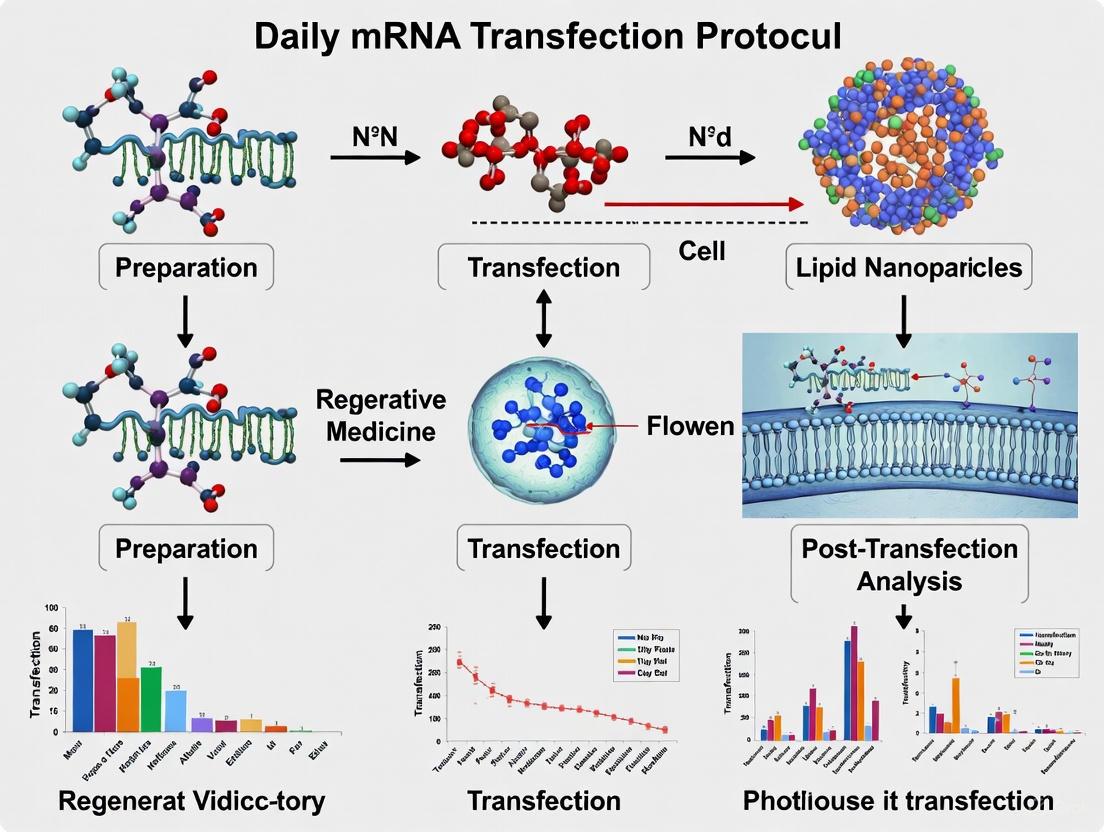
This article provides a comprehensive guide for researchers and drug development professionals on implementing a daily mRNA transfection protocol for cell reprogramming, such as the generation of induced pluripotent stem...
A Daily mRNA Transfection Protocol for Cell Reprogramming: From Foundational Principles to Clinical Translation
Abstract
This article provides a comprehensive guide for researchers and drug development professionals on implementing a daily mRNA transfection protocol for cell reprogramming, such as the generation of induced pluripotent stem (iPS) cells. It covers the foundational principles of mRNA transfection, a detailed step-by-step daily protocol optimized for hard-to-transfect primary cells, and advanced strategies for troubleshooting and validating reprogramming outcomes. By synthesizing current methodologies and optimization data, this resource aims to enhance reproducibility, efficiency, and the clinical applicability of non-integrating reprogramming techniques.
mRNA Transfection for Reprogramming: Principles, Advantages, and Core Components
mRNA transfection is a powerful technique for introducing messenger RNA (mRNA) into eukaryotic cells to direct the transient expression of a protein of interest. Unlike DNA transfection, which requires the delivered genetic material to enter the nucleus for transcription, mRNA is translated directly in the cytoplasm. This fundamental difference simplifies the process, making it faster, more efficient in hard-to-transfect cells, and eliminates the risk of genomic integration [1] [2]. In the context of cell reprogramming research, this transient nature is highly desirable for controlling the timing and level of protein expression, such as in the delivery of reprogramming factors like transcription factors or the components of gene-editing systems like CRISPR-Cas9.
The core workflow involves the careful preparation of in vitro transcribed (IVT) mRNA, its complexation with a delivery vehicle—most commonly a transfection reagent or lipid nanoparticle (LNP)—to facilitate cellular uptake, and finally, the translation of the mRNA into functional protein by the host cell's machinery [1] [3]. This application note provides a detailed protocol and critical considerations for implementing a robust mRNA transfection workflow for cell reprogramming applications.
Key Advantages and Considerations
The choice between mRNA and DNA transfection is strategic and depends on the experimental goals. The table below summarizes the core differences to guide this decision [2].
Table 1: Key Differences Between mRNA and DNA Transfection
| Parameter | mRNA Transfection | DNA Transfection |
|---|---|---|
| Cell Cycle Dependence | Works in both dividing and non-dividing cells [2] | Requires nuclear entry; best in dividing cells [2] |
| Onset of Expression | Rapid (2–6 hours) [2] | Delayed (12–24 hours) [2] |
| Duration of Expression | Transient (hours to a few days) [1] [2] | Days to weeks; can be stable [2] |
| Nuclear Entry | Not required [1] | Required [2] |
| Risk of Genomic Integration | None [1] [2] | Possible [2] |
| Titratability | Direct (via mRNA dose) [2] | Indirect (via promoter strength) [2] |
| Handling & Stability | RNase-sensitive; requires careful handling and storage at –80°C [1] [2] | Stable and easy to propagate [2] |
For cell reprogramming, the speed of protein expression is a major advantage of mRNA, allowing for rapid initiation of the reprogramming cascade. Furthermore, the transient presence of the mRNA molecule limits the activity of reprogramming factors, reducing the risk of over-expression and potential tumorigenesis. The ability to efficiently transfert non-dividing cells, such as primary somatic cells used as starting material for reprogramming, is another critical benefit [2] [4].
A primary consideration is the inherent instability of mRNA. Its single-stranded structure is susceptible to degradation by ribonucleases (RNases), necessitating strict RNase-free techniques throughout the workflow [1] [5]. This includes using gloves, RNase-free reagents, tubes, and barrier pipette tips. mRNA should be stored in single-use aliquots at –80°C and kept on ice during experiments to maintain integrity [1] [5].
mRNA Transfection Workflow
The following diagram illustrates the complete mRNA transfection workflow, from cell preparation to analysis.
Diagram 1: Complete mRNA Transfection Workflow.
Mechanism of mRNA Transfection and Expression
The molecular journey of mRNA from delivery to protein expression involves several key cellular processes, as shown below.
Diagram 2: Cellular Mechanism of mRNA Transfection.
Detailed Experimental Protocol
Materials and Reagents
Table 2: Essential Research Reagent Solutions
| Item | Function/Description | Example Products / Notes |
|---|---|---|
| mRNA of Interest | Encodes the protein for expression (e.g., reprogramming factor). | Should include a 5' cap, poly(A) tail, and modified bases (e.g., pseudouridine) for enhanced stability and translation [1] [2]. |
| mRNA-Specific Transfection Reagent | Forms complexes with mRNA to protect it and facilitate cell entry. | Lipofectamine MessengerMAX [1], jetMESSENGER [4], ViaScript mRNA Transfection Reagent [2]. |
| Positive Control mRNA | Validates transfection efficiency. | EGFP-encoding mRNA (for microscopy/flow cytometry) or firefly luciferase-encoding mRNA (for bioluminescence) [3]. |
| Negative Control siRNA/mRNA | Non-targeting sequence to account for off-target effects. | Scrambled siRNA or non-functional mRNA [5]. |
| Cell Culture Medium | Supports cell health during transfection. | Use complete media (with serum); serum-starvation reduces mRNA-LNP efficiency in vitro [3]. |
| RNase-Decontamination Solution | Eliminates environmental RNases. | RNaseZap [5]. |
Step-by-Step Procedure
Day 1: Cell Seeding
- Seed cells in an appropriate multi-well plate to reach 60-80% confluency at the time of transfection (typically 18-24 hours later). The optimal seeding density is cell line-dependent (see Table 3). Use complete growth medium supplemented with serum [3].
Day 2: Transfection
- Prepare mRNA Complexes:
- A. Thaw mRNA and transfection reagent on ice. Gently vortex the reagent before use.
- B. Dilute the required amount of mRNA in a sterile, reduced-serum or serum-free medium (e.g., Opti-MEM). Do not vortex; mix gently by pipetting [3].
- C. Add the appropriate amount of transfection reagent directly to the diluted mRNA solution. Mix immediately by gentle pipetting or flicking the tube.
- D. Incubate the complex at room temperature for 5-15 minutes (follow manufacturer's instructions) to allow complexes to form.
- Transfect Cells:
- Add the mRNA-transfection complex drop-wise onto the cells. Gently swirl the plate to ensure even distribution.
- Critical: Maintain the culture in complete medium; do not switch to serum-free conditions, as this drastically reduces the transfection efficiency of mRNA-LNPs in vitro [3].
- Incubate cells under standard culture conditions (37°C, 5% CO₂).
Day 2/3: Post-Transfection and Analysis
- Protein expression can typically be detected as early as 2-6 hours post-transfection [2].
- Analysis: Analyze protein expression 24-48 hours post-transfection using your chosen method (e.g., flow cytometry for fluorescent reporters, Western blot for specific proteins, or functional assays).
Optimization and Troubleshooting
Successful transfection often requires optimization of key parameters. The table below provides a starting point for titration.
Table 3: Key Parameters for Optimization
| Parameter | Guideline | Optimization Recommendation |
|---|---|---|
| Cell Density | 60-80% confluency at transfection. | Titrate seeding density. Too high density can lead to contact inhibition and low siRNA uptake per cell; too low can cause culture instability [5]. |
| mRNA Concentration | Varies by cell type and mRNA. | Start with a range of 10-100 nM for lipid-mediated reverse transfections and titrate to find the lowest effective dose to minimize potential off-target effects [5]. |
| Transfection Reagent Volume | Manufacturer's protocol. | Titrate the reagent over a broad range. Use the most dilute concentration that still gives good gene expression to minimize cytotoxicity [5]. |
| Complex Exposure Time | Varies. | For sensitive cells, remove the transfection mixture and replenish with fresh growth medium after 8-24 hours to mitigate cytotoxicity [5]. |
The mRNA transfection workflow offers a rapid, efficient, and safe method for transient protein expression, making it exceptionally well-suited for dynamic fields like cell reprogramming research. Its key advantage lies in the direct cytoplasmic delivery and translation of the genetic instructions, bypassing the rate-limiting and inefficient nuclear entry step required by DNA. By adhering to the detailed protocol outlined in this application note—particularly the critical use of complete media and stringent RNase-free techniques—researchers can achieve highly efficient and reproducible transfection across a wide range of cell types, including hard-to-transfect primary and stem cells. This robust method provides a powerful tool for controlling protein expression in studies aimed at understanding and directing cell fate.
In the field of cell reprogramming research, the choice of nucleic acid delivery platform significantly influences experimental outcomes, safety profiles, and therapeutic potential. While plasmid DNA (pDNA) has been traditionally utilized, messenger RNA (mRNA) transfection presents distinct mechanistic advantages that align with the demands of daily laboratory protocols for cellular reprogramming. mRNA-based approaches are revolutionizing regenerative medicine by enabling transient, high-efficiency protein expression without the risks associated with genomic integration [6]. The fundamental biological differences between these molecules dictate their cellular processing: pDNA must overcome multiple barriers to reach the nucleus for transcription, whereas mRNA requires only cytoplasmic delivery for immediate translation by ribosomes [6] [7]. This article examines the key advantages of mRNA transfection through the lens of practical application in reprogramming research, supported by quantitative data and detailed protocols.
Key Advantages of mRNA Transfection
Cytoplasmic Activity Eliminates Nuclear Entry Requirement
The absence of a nuclear entry requirement constitutes a primary advantage of mRNA over DNA transfection. Plasmid DNA transfection necessitates nuclear import for gene expression, presenting a significant biological barrier that reduces efficiency, particularly in non-dividing cells [6] [7]. In contrast, mRNA transfection allows for direct protein translation in the cytoplasm immediately upon delivery, bypassing the nuclear membrane entirely [7]. This fundamental difference simplifies the intracellular trafficking pathway and accelerates protein expression onset.
Table 1: Comparative Processing of mRNA and DNA Transfection
| Processing Stage | mRNA Transfection | DNA Transfection |
|---|---|---|
| Cellular Entry | Cytoplasmic delivery via LNPs or electroporation | Cytoplasmic delivery via LNPs or electroporation |
| Intracellular Trafficking | Remains in cytoplasm | Requires nuclear import |
| Primary Action Location | Cytoplasm (ribosomes) | Nucleus (RNA polymerase) |
| Time to Protein Expression | Rapid (hours) | Delayed (hours to days) |
| Dependence on Cell Division | No | Yes for non-viral methods |
The following diagram illustrates the simplified intracellular pathway for mRNA compared to DNA:
Enhanced Transfection Efficiency
mRNA transfection demonstrates superior efficiency metrics compared to DNA approaches, particularly in hard-to-transfect primary cells relevant to reprogramming research. Quantitative evaluations of lipid-based transfection in human whole blood models revealed that CD14+ monocytes were efficiently transfected by cationic lipids with low toxicity [8]. The lipopeptide-based lipid nanoparticle platform R5H5C-DOPE exhibited exceptional broad-spectrum delivery, achieving 74.8% and 92.1% transfection efficiency for mRNA and pDNA, respectively, while maintaining >99% cell viability [9]. Commercial transfection reagents like Lipofectamine 3000 demonstrate 10-fold higher efficiency in difficult-to-transfect cells compared to previous generations, with significantly reduced cytotoxicity [10].
Table 2: Quantitative Efficiency Comparison of Transfection Systems
| Transfection System | Nucleic Acid | Efficiency Metric | Cell Viability | Application Context |
|---|---|---|---|---|
| R5H5C-DOPE LNP [9] | mRNA | 74.8% transfection | >99% | In vitro broad-spectrum delivery |
| R5H5C-DOPE LNP [9] | pDNA | 92.1% transfection | >99% | In vitro broad-spectrum delivery |
| Lipofectamine 3000 [10] | pDNA | 10-fold increase vs. Lipofectamine 2000 | Improved | Hard-to-transfect cell lines |
| LNP-M (Moderna formulation) [11] | DNA | High expression, low toxicity | High | DNA-encoded biologics delivery |
| Ex vivo whole blood transfection [8] | siRNA/miRNA | CD14+ monocyte transfection | Low toxicity | Physiologically relevant model |
Elimination of Genomic Integration Risks
The transient nature of mRNA expression eliminates the risk of insertional mutagenesis, a critical safety consideration in therapeutic reprogramming applications. Unlike DNA-based approaches that may integrate into the host genome and potentially disrupt tumor suppressor genes or activate oncogenes, mRNA remains episomal and degrades naturally through physiological pathways [6] [7]. This non-integrative profile is particularly valuable for cellular reprogramming protocols where permanent genetic alteration is undesirable. Research prioritizes plasmid DNA and mRNA for tissue nanotransfection (TNT) applications specifically due to "their transient expression profiles, which minimize genomic integration risks like permanent alterations to the genome" [7]. This safety advantage enables repeated transfections in daily protocols without accumulating genetic alterations in the reprogrammed cell population.
Experimental Protocols for mRNA Transfection
Lipid Nanoparticle-Mediated mRNA Transfection
The following protocol utilizes cationic lipid-based nanoparticles for highly efficient mRNA delivery in reprogramming research, adapted from commercially validated systems with modifications for research-scale applications [12] [10].
Materials:
- Lipofectamine 3000 Transfection Reagent (or similar cationic lipid formulation)
- Opti-MEM I Reduced Serum Medium
- mRNA of interest (therapeutic or reprogramming factor)
- Cell culture plates/wells
- Appropriate cell culture medium
Procedure:
- Day 1: Cell Plating
- Plate cells in growth medium without antibiotics to reach 70-90% confluency at the time of transfection. For difficult-to-transfect primary cells, optimize density empirically.
Complex Formation (15-20 minutes before transfection)
- Dilute mRNA in Opti-MEM I Medium (e.g., 0.5-2 µg mRNA in 50 µl for 24-well format).
- Mix Lipofectamine reagent gently before use, then dilute in Opti-MEM I Medium (e.g., 1-3 µl reagent in 50 µl medium).
- Incubate diluted reagent for 5 minutes at room temperature.
- Combine diluted mRNA with diluted Lipofectamine reagent.
- Mix gently and incubate for 15-20 minutes at room temperature until complexes form.
Transfection
- Add mRNA-lipid complexes dropwise to cells in culture medium.
- Mix gently by rocking the plate back and forth.
- Incubate cells at 37°C in a CO2 incubator for 24-96 hours before analysis.
Post-Transfection Processing
- Medium may be changed after 4-6 hours to reduce cytotoxicity.
- Assay for protein expression or functional effects 24-96 hours post-transfection.
Troubleshooting Notes:
- For hard-to-transfect cells, optimize mRNA and lipid concentrations empirically.
- Avoid antibiotic use during transfection as this increases cytotoxicity.
- Serum-free media compatibility should be verified as some formulations inhibit cationic lipid-mediated transfection.
Electroporation-Based mRNA Delivery
Electroporation provides a physical method for mRNA delivery that is particularly effective in hard-to-transfect cells relevant to reprogramming research. Tissue Nanotransfection (TNT) represents an advanced in vivo electroporation platform that enables highly efficient mRNA delivery for cellular reprogramming applications [6] [7].
Materials:
- Electroporation device or TNT system
- mRNA of interest (reprogramming factors)
- Electroporation buffer or physiological saline
- Target cells or tissue
Procedure:
- Sample Preparation
- Harvest cells and resuspend in appropriate electroporation buffer.
- Combine cells with mRNA (typically 1-10 µg mRNA per 100 µl cell suspension).
Electroporation Parameters
- Transfer cell-mRNA mixture to electroporation cuvette or TNT device.
- Apply optimized electrical pulses (typical parameters: 100-500V, 1-10ms pulse duration).
- For TNT devices, optimized electrical pulse parameters—including voltage amplitude, pulse duration, and inter-pulse intervals—are critical for maximizing delivery efficiency while preserving cellular viability [7].
Post-Electroporation Processing
- Immediately transfer electroporated cells to pre-warmed culture medium.
- Plate cells in appropriate culture vessels.
- Assay for protein expression or functional changes after 6-24 hours.
Technical Considerations:
- Pulse parameters must be optimized for each cell type to balance efficiency with viability.
- mRNA integrity should be verified after electroporation.
- TNT employs a highly localized and transient electroporation stimulus through nanochannel interfaces designed to create reversible nanopores in the plasma membrane [7].
The Scientist's Toolkit: Essential Research Reagents
Table 3: Key Reagents for mRNA Transfection in Reprogramming Research
| Reagent/Category | Specific Examples | Function & Application | Research Context |
|---|---|---|---|
| Cationic Lipid Reagents | Lipofectamine 3000, RNAiMAX, FuGENE SI | Form complexes with mRNA, facilitate cellular uptake and endosomal escape | High-efficiency mRNA delivery with low toxicity in hard-to-transfect cells [12] [10] |
| Lipopeptide Nanoparticles | RmHnC-DOPE variants (R3H7C, R4H6C, R5H5C) | Ionizable lipopeptides for tissue-selective delivery with high biocompatibility | Payload-specific and tissue-selective delivery of nucleic acids [9] |
| LNP Formulations | Moderna LNP-M (SM-102), Pfizer LNP-B (ALC-0315) | Multi-component nanoparticles for stable mRNA encapsulation and delivery | Clinical-grade delivery systems adaptable to research applications [11] |
| Electroporation Systems | Tissue Nanotransfection (TNT), commercial electroporators | Physical delivery via temporary membrane pores for direct cytoplasmic access | In vivo and in vitro delivery, especially effective for hard-to-transfect primary cells [6] [7] |
| Specialized Media | Opti-MEM I Reduced Serum Medium | Serum-free medium for complex formation during lipid-based transfection | Enhances complex stability and transfection efficiency [12] |
The strategic advantages of mRNA transfection—elimination of nuclear entry requirements, enhanced transfection efficiency, and avoidance of genomic integration risks—establish it as a superior platform for cell reprogramming research and therapeutic development. The experimental protocols and reagent systems detailed herein provide researchers with practical tools for implementing mRNA-based approaches in daily laboratory workflows. As the field advances, continued optimization of delivery platforms like LNPs and electroporation technologies will further enhance the precision and efficacy of mRNA-mediated cellular reprogramming, accelerating progress in regenerative medicine and therapeutic development.
The successful implementation of daily mRNA transfection protocols for cell reprogramming research is fundamentally dependent on the meticulous engineering of the messenger RNA (mRNA) construct. The transient nature of mRNA transfection is particularly advantageous for reprogramming, as it eliminates the risk of genomic integration and allows for precise control over the expression of reprogramming factors. The critical determinants of mRNA stability, translational efficiency, and immunogenicity reside in three key structural components: the 5' cap, the poly(A) tail, and the incorporation of modified nucleosides. This Application Note details the role of these components and provides optimized protocols for their use in generating induced pluripotent stem cells (iPSCs), framing the methodology within the context of a broader thesis on daily mRNA transfection.
The Scientist's Toolkit: Key Research Reagent Solutions
The following table catalogues essential reagents and their specific functions in mRNA-based cell reprogramming workflows.
Table 1: Essential Research Reagents for mRNA Reprogramming
| Reagent / Technology | Function / Application in Reprogramming |
|---|---|
| CleanCap AG [13] [14] | A trinucleotide cap analogue used in co-transcriptional capping to produce Cap 1 structures. It enhances translation initiation and reduces immunogenicity. |
| Cap 2 Modifications [15] | An advanced capping service adding an extra 2'-O-methyl group to the second nucleotide, further increasing translation efficiency and enabling immune evasion. |
| N1-Methylpseudouridine (m1Ψ) [14] [16] | A common modified nucleoside used in mRNA synthesis to suppress the innate immune response and increase translational efficiency. |
| Antioxidant Ionizable Lipid C-a16 [16] | A novel lipid for Lipid Nanoparticles (LNPs) that reduces immunogenicity by mitigating reactive oxygen species (ROS), prolonging protein expression from delivered mRNA. |
| CPEB Proteins [17] | Cytoplasmic Polyadenylation Element-Binding Proteins that regulate poly(A) tail length post-transcriptionally, offering a potential mechanism to control the stability and translation of reprogramming factor mRNAs. |
| Chemically Modified tRNAs [18] | Synthetic tRNAs with site-specific modifications (e.g., in the anticodon-loop) that enhance the translation capacity of mRNA by improving decoding efficacy and stability. |
| Tissue Nanotransfection (TNT) [6] | A non-viral, nanoelectroporation-based platform for the highly localized and efficient in vivo delivery of reprogramming mRNAs. |
Essential mRNA Components: Functions and Quantitative Benchmarks
The functional performance of an mRNA transcript in reprogramming is quantifiably driven by its core components. The data below summarize key structural and functional relationships.
Table 2: Functional Roles and Performance Metrics of mRNA Components
| Component | Key Functions | Impact on Performance |
|---|---|---|
| 5' Cap Structure [15] [14] [19] | - Prevents exonuclease degradation.- Recruits translation initiation factors.- Facilitates nuclear export. | - Cap 0 (m7GPPPN): Basic functionality, some immune activation.- Cap 1 (m7GPPPNm): Standard for therapeutics; reduces immunogenicity.- Cap 2 (m7GPPPNmNm): Present in 10-15% of eukaryotic cells; offers enhanced translation and immune evasion [15]. |
| Poly(A) Tail [15] [17] | - Protects against 3' to 5' degradation.- Synergizes with 5' cap to enhance translation.- Serves as a platform for PABP binding. | - Tail length is dynamically regulated in the cytoplasm.- Longer tails generally correlate with increased stability and translation. Cytoplasmic polyadenylation can rapidly reprogram gene expression [17]. |
| Modified Nucleosides [14] [19] [16] | - Decreases recognition by innate immune sensors (e.g., TLRs, RIG-I).- Reduces production of interferons and TNF.- Can enhance translational efficiency. | - Inverse correlation between degree of nucleoside modification and inflammatory response [14].- modRNA with N1-Methylpseudouridine shows minimal immunogenicity, enabling clinical applications. |
Experimental Protocols for mRNA Transfection in Cell Reprogramming
Protocol: Daily mRNA Transfection for iPSC Generation
This protocol is optimized for the daily transfection of somatic cells (e.g., fibroblasts) with mRNA encoding reprogramming factors (OCT4, SOX2, KLF4, c-MYC/L-MYC) to generate iPSCs.
Key Materials:
- mRNA Constructs: Synthesized with Cap 1 (e.g., via CleanCap), ~120-150 nt poly(A) tail, and nucleoside modifications (e.g., N1-Methylpseudouridine) [14] [20].
- Lipid Nanoparticles (LNPs): Prepared with antioxidant ionizable lipid C-a16 to reduce immunogenicity and prolong expression [16].
- Cells: Human dermal fibroblasts (HDFs) in culture.
- Basal Medium: DMEM/F12 [21].
Procedure:
- Cell Seeding (Day 0): Seed HDFs at an appropriate density (e.g., 5x10^4 cells/cm²) in a culture plate.
- mRNA-LNP Complex Formation (Daily, Days 1-14+): a. Dilute 1-5 µg of each reprogramming factor mRNA in a serum-free medium. b. Mix the mRNA solution with C-a16 LNP formulation at a predetermined optimal ratio (e.g., 1:5 mRNA:LNP weight ratio). c. Incubate the mixture for 10-15 minutes at room temperature to form mRNA-LNP complexes.
- Transfection: a. Aspirate the culture medium from the cells. b. Add the mRNA-LNP complex solution dropwise to the cells. c. Incubate the cells at 37°C, 5% CO₂ for 4-6 hours.
- Post-Transfection and Medium Change: a. After incubation, carefully aspirate the transfection mixture. b. Replace with fresh, pre-warmed fibroblast medium or reprogramming induction medium.
- Daily Repetition and Monitoring: Repeat Steps 2-4 daily for a minimum of 14 days. Monitor cells daily for morphological changes indicative of reprogramming, such as the emergence of compact, colony-like structures with a high nucleus-to-cytoplasm ratio.
- iPSC Colony Picking: Once well-defined, compact colonies appear (typically after 2-3 weeks), manually pick and transfer them to feeder-free conditions for expansion and characterization.
Protocol: Co-delivery of mRNA and tRNA to Enhance Translation
This supplemental protocol describes the co-delivery of reprogramming mRNA with engineered tRNAs to boost protein expression, a strategy termed "tRNA-plus" [18].
Procedure:
- tRNA Selection: Select cognate tRNAs for codons with high stability scores in your target mRNA sequence. For example, tRNAPheGAA-3-1 and tRNALeuCAG-1-1 can boost protein output by 3.5 to 4.7-fold [18].
- Complex Formation: a. Mix the reprogramming factor mRNA with the selected, chemically modified tRNAs at a 1:4 mass ratio (mRNA:tRNA) [18]. b. Co-encapsulate the mRNA and tRNA mixture into C-a16 LNPs as described in Protocol 4.1.
- Transfection and Analysis: Transfert cells following the daily schedule in Protocol 4.1. Analyze the protein expression of reprogramming factors via Western blot or immunofluorescence 24 hours post-transfection to confirm enhancement.
Workflow and Pathway Visualizations
Functional Roles of mRNA Components in Reprogramming
The following diagram illustrates how the essential mRNA components work synergistically to ensure high-quality mRNA, leading to efficient protein translation and successful cell reprogramming.
Cytoplasmic Regulation of mRNA Stability and Translation
This diagram outlines the key cytoplasmic processes that determine the fate of transfected mRNA, highlighting the central role of the poly(A) tail.
Lipid Nanoparticles (LNPs) and Other Delivery Vehicles for Efficient mRNA Uptake
Efficient intracellular delivery of messenger RNA (mRNA) is a fundamental requirement for advancing applications in cell reprogramming, regenerative medicine, and therapeutic protein expression. The inherent challenges of mRNA delivery—including enzymatic degradation, limited cellular uptake, and inefficient endosomal escape—have driven the development of sophisticated delivery vehicles. Lipid nanoparticles (LNPs) have emerged as the most clinically successful non-viral delivery system, demonstrating exceptional efficacy in protecting mRNA and facilitating its intracellular delivery [22]. Recent innovations have further enhanced their capabilities through improved lipid compositions, targeted delivery mechanisms, and increased mRNA loading capacity.
Beyond conventional LNPs, alternative delivery platforms including polymer-based nanoparticles, engineered virus-like particles (eVLPs), and electroporation-based systems offer complementary advantages for specific research and clinical applications [23] [6]. The selection of an appropriate delivery system depends critically on the target cell type, desired duration of protein expression, specific application (in vitro versus in vivo), and safety considerations. This application note provides a comprehensive technical resource for researchers implementing mRNA delivery protocols for cell reprogramming studies, with detailed methodologies, performance comparisons, and practical implementation guidance.
Quantitative Comparison of mRNA Delivery Platforms
Table 1: Performance Characteristics of Major mRNA Delivery Systems
| Delivery System | mRNA Loading Capacity | Transfection Efficiency | Key Advantages | Primary Limitations |
|---|---|---|---|---|
| Conventional LNPs | ~4-5% of total weight [24] | Variable in vitro; High in vivo [3] | Clinical validation, scalability, biocompatibility [22] | Liver tropism, anti-PEG immunity, cytotoxicity at high doses [23] |
| L@Mn-mRNA LNPs | ~10% of total weight (2x conventional) [24] | 2x cellular uptake vs. conventional [24] | High mRNA density core, reduced anti-PEG antibodies [24] | Novel platform requiring further validation [24] |
| Polymer NPs | Varies with polymer type | Moderate to high | Room temperature stability, DNA/RNA co-delivery [23] | Cytotoxicity (PEI), batch-to-batch variability [22] |
| Electroporation (TNT) | N/A (direct delivery) | Highly efficient in situ [6] | Direct in vivo reprogramming, high specificity [6] | Specialized equipment required, potential cell membrane damage [6] |
| Engineered VLPs | Packaged ribonucleoproteins | High editing efficiency [23] | Modular design, inherent liver avoidance [23] | Complex cell-based manufacturing [23] |
Table 2: In Vitro Transfection Efficiency of mRNA-LNPs Across Cell Lines (Using Complete Media Protocol)
| Cell Line | Cell Type | Recommended Seeding Density (per 100-mm dish) | Transfection Efficiency* | Culture Medium |
|---|---|---|---|---|
| HEK293 | Human embryonic kidney | 1.0-2.0 × 10⁶ [3] | High [3] | DMEM + 10% FBS [3] |
| Huh-7 | Hepatocellular carcinoma | 4.0-7.0 × 10⁵ [3] | Very high [3] | RPMI-1640 + 10% FBS [3] |
| HeLa | Cervical adenocarcinoma | 0.7-1.4 × 10⁶ [3] | Moderate to high [3] | DMEM + 10% FBS [3] |
| HepG2 | Hepatocellular carcinoma | 2.0-3.0 × 10⁶ [3] | High [3] | DMEM + 10% FBS [3] |
| MCF-7 | Breast adenocarcinoma | 0.7-1.5 × 10⁶ [3] | Moderate [3] | RPMI-1640 + 10% FBS [3] |
| U-87 MG | Glioblastoma | 3.0-6.0 × 10⁵ [3] | Moderate [3] | DMEM + 10% FBS [3] |
| HT22 | Hippocampal neuronal | 0.5-1.0 × 10⁵ [3] | Moderate [3] | DMEM + 10% FBS [3] |
| Raw264.7 | Macrophage | 2.0-3.0 × 10⁶ [3] | Low to moderate [3] | DMEM + 10% FBS [3] |
| SH-SY5Y | Neuroblastoma | 1.5-2.0 × 10⁶ [3] | Moderate [3] | DMEM + 10% FBS [3] |
*Relative efficiency compared across cell lines using the complete media protocol [3]
Advanced LNP Formulations and Engineering Strategies
Manganese-Ion Mediated mRNA Enrichment Platform
A recent breakthrough in LNP engineering addresses the fundamental limitation of low mRNA loading capacity in conventional systems. The L@Mn-mRNA platform utilizes manganese ions (Mn²⁺) to efficiently form a high-density mRNA core before lipid coating [24]. This innovative approach achieves nearly twice the mRNA loading capacity compared to conventional mRNA vaccine formulations (increasing from <5% to approximately 10% of total weight) [24].
The mechanism involves Mn²⁺ coordination with mRNA bases at optimized molar ratios (Mn²⁺ to mRNA bases between 8:1 to 2:1), followed by a brief heating step (65°C for 5 minutes) that enables rearrangement into regular nanostructures without compromising mRNA integrity [24]. The resulting Mn-mRNA nanoparticles are subsequently coated with lipids to form the final L@Mn-mRNA formulation. Beyond improved loading capacity, this system demonstrates a 2-fold increase in cellular uptake efficiency attributed to the enhanced stiffness provided by the Mn-mRNA core, ultimately leading to significantly enhanced antigen-specific immune responses [24].
Targeted LNP Systems for Extrahepatic Delivery
While conventional LNPs predominantly accumulate in the liver, recent advances have enabled cell-specific targeted delivery to extrahepatic tissues. This approach leverages specific internalizing receptors highly expressed on target cell types, similar to the GalNAc-ASGPR system used for hepatocyte targeting [23]. By identifying optimal receptor-ligand pairs for particular tissues, researchers can decorate LNP surfaces with targeting moieties that promote specific cellular uptake.
This strategy has demonstrated successful in vivo delivery to at least seven different tissues and addresses key limitations of conventional LNPs, including liver toxicity concerns and limited biodistribution outside the hepatic system [23]. The receptor-based mechanism provides more predictable delivery profiles across translation from rodent models to humans, offering significant advantages for cell reprogramming applications requiring precise targeting of specific cell populations.
Experimental Protocols
Protocol: High-Efficiency In Vitro Transfection of mRNA-LNPs Using Complete Media
Background: Traditional in vitro transfection protocols utilizing serum-starved conditions dramatically reduce mRNA-LNP transfection efficiency. This optimized protocol demonstrates 4- to 26-fold higher transfection efficiency across multiple cell lines by maintaining complete media throughout the transfection process [3].
Application Note: For daily mRNA transfection in cell reprogramming research, this protocol ensures consistent, high-level protein expression critical for driving cellular reprogramming events.
Procedure:
Cell Culture Preparation
- Maintain cells in appropriate complete media (see Table 2 for cell line-specific recommendations) supplemented with 10% FBS and 1% penicillin-streptomycin [3].
- Culture cells under standard conditions (37°C, 5% CO₂) until 70-90% confluent.
- For transfection, seed cells at optimized densities (refer to Table 2) in multi-well plates or dishes and incubate for 24 hours prior to transfection.
mRNA-LNP Preparation (Small-Scale)
- Prepare lipid stock solutions in methanol-chloroform (1:1, v/v) at precise molar ratios (typically ionizable lipid:DSPC:cholesterol:DMG-PEG2000 = 50:10:38.5:1.5) [3].
- Combine lipid components in a glass vial and evaporate solvents using a rotary evaporator at 40°C for approximately 5 minutes to form a thin lipid film [3].
- Redissolve the lipid film in 55 μL of ethanol, ensuring complete dissolution [3].
- Dilute mRNA stock in citrate buffer (pH 4.0) to 153 μL [3].
- Add 50 μL of lipid solution to an Eppendorf tube placed on a thermo-shaker at 25°C, 1400 rpm [3].
- Quickly add 152 μL of mRNA solution and shake for 15 seconds to form mRNA-LNPs [3].
- Perform solvent exchange using Amicon Ultra Centrifugal Filters with DPBS, centrifuging at 14,000 × g for 10 minutes [3].
Transfection Procedure
- Do not replace complete media with serum-free media prior to transfection [3].
- Add prepared mRNA-LNPs directly to cells in complete media.
- Incubate cells under standard conditions (37°C, 5% CO₂) for the desired duration (typically 24-48 hours).
- For reprogramming applications, replace media 24 hours post-transfection if performing daily transfections.
Analysis of Transfection Efficiency
- For EGFP-encoding mRNA: Analyze transfection efficiency using flow cytometry or fluorescence microscopy [3].
- For luciferase-encoding mRNA: Measure bioluminescence using a microplate reader [3].
- For reprogramming efficiency: Assess using immunocytochemistry for cell-type specific markers relevant to the target lineage.
Critical Considerations for Reprogramming Research:
- For repeated transfections (daily mRNA transfection), monitor cell health closely as some LNP components may have cumulative effects.
- Optimize mRNA dose for each reprogramming factor to balance expression level and cellular toxicity.
- Include appropriate controls (non-transfected cells, irrelevant mRNA transfection) to establish baseline reprogramming rates.
Protocol: Tissue Nanotransfection (TNT) for In Vivo Cellular Reprogramming
Background: Tissue nanotransfection (TNT) is a novel, non-viral nanotechnology platform that enables in vivo gene delivery and direct cellular reprogramming through localized nanoelectroporation [6]. This approach is particularly valuable for direct lineage conversion in regenerative medicine applications.
Procedure:
Genetic Cargo Preparation
- Prepare plasmid DNA, mRNA, or CRISPR/Cas9 components in sterile buffer [6].
- For direct reprogramming, use synthetic mRNA encoding transcription factors specific to the target cell lineage.
- Purify genetic material to ensure high quality and concentration.
TNT Device Setup
- Load genetic cargo into the reservoir of the TNT device [6].
- Position the nanotransfection chip (containing hollow-needle silicon structures) directly on the target tissue [6].
- Connect the cargo reservoir to the negative terminal of a pulse generator, with a dermal electrode serving as the positive terminal [6].
Nanoelectroporation Process
- Apply optimized electrical pulse parameters (voltage, pulse duration, inter-pulse intervals) to temporarily porate cell membranes [6].
- The hollow needles concentrate the electric field at their tips, enabling targeted delivery of genetic material into the tissue [6].
- The nanopores typically reseal within milliseconds to seconds after pulse cessation, maintaining cell viability [6].
Reprogramming Assessment
- Monitor expression of reprogramming factors and emergence of target cell markers over subsequent days to weeks.
- Assess functional integration of reprogrammed cells through tissue-specific functional assays.
- Evaluate the stability of the reprogrammed phenotype through longitudinal tracking.
Visualization of Experimental Workflows
L@Mn-mRNA Nanoparticle Synthesis Workflow
L@Mn-mRNA Nanoparticle Synthesis
In Vitro mRNA-LNP Transfection Workflow
In Vitro mRNA-LNP Transfection
The Scientist's Toolkit: Essential Research Reagents
Table 3: Essential Research Reagents for mRNA Delivery and Cell Reprogramming
| Reagent/Material | Function/Application | Key Considerations |
|---|---|---|
| Ionizable Lipids (e.g., SM-102) | Primary cationic lipid for LNP self-assembly [3] | Critical for mRNA encapsulation and endosomal escape; determines N/P ratio [3] |
| Helper Lipids (DSPC, Cholesterol) | LNP structural integrity and stability [3] | DSPC enhances bilayer structure; cholesterol improves stability and fusion [22] |
| PEGylated Lipids (e.g., DMG-PEG2000) | LNP stability, reduces aggregation [3] | Impacts circulation time; potential anti-PEG immune response with repeated administration [24] |
| Manganese Chloride (MnCl₂) | Mn-mRNA core formation in novel LNP platforms [24] | Optimal Mn²⁺ to mRNA base ratio of 5:1; enables high-density mRNA loading [24] |
| Nucleoside-Modified mRNA | Enhances stability and reduces immunogenicity [22] | N1-methylpseudouridine substitution minimizes innate immune recognition [22] |
| Electroporation Buffer Systems | Ionic environment for tissue nanotransfection [6] | Optimized conductivity enhances delivery efficiency during electrical pulsing [6] |
| Complete Cell Culture Media | Maintains cell health during in vitro transfection [3] | Critical for high efficiency; serum components enhance LNP uptake and cell viability [3] |
The evolving landscape of mRNA delivery systems offers researchers multiple sophisticated options for cell reprogramming applications. For daily mRNA transfection protocols in reprogramming research, the complete media LNP transfection method provides significantly enhanced efficiency over traditional serum-free approaches [3]. The emerging L@Mn-mRNA platform represents a promising advancement for achieving higher mRNA payload delivery with reduced lipid-related toxicity [24], while tissue nanotransfection enables precise in vivo reprogramming without viral vector limitations [6].
When establishing mRNA delivery protocols for reprogramming research, careful consideration of target cell type, required expression duration, and translational goals will guide optimal platform selection. The protocols and quantitative data provided herein offer a foundation for implementing these technologies with appropriate optimization for specific research applications in the rapidly advancing field of mRNA-based cell reprogramming.
The advent of induced pluripotent stem cell (iPSC) technology has revolutionized regenerative medicine and cellular research, enabling the reprogramming of somatic cells into pluripotent states using defined factors [21]. While fibroblast reprogramming established the foundation for this field, recent advances have significantly expanded the application spectrum to include more accessible cell sources like peripheral blood mononuclear cells (PBMCs) and utilize safer, non-integrating methods such as daily mRNA transfection [25]. This application note details optimized protocols for iPSC generation using mRNA-based reprogramming, building upon the original Yamanaka factors (OCT4, SOX2, KLF4, c-Myc) while incorporating recent innovations that enhance efficiency and safety [21] [25]. The transient nature of mRNA transfection makes it particularly suitable for cellular reprogramming research, eliminating genomic integration risks while allowing precise control over reprogramming factor expression kinetics. We present detailed methodologies for generating iPSCs from both traditional fibroblast and emerging PBMC sources, along with essential quality control measures and differentiation potential assessment, providing researchers with a comprehensive framework for implementing these techniques in drug discovery and regenerative medicine applications.
Technical Specifications and Comparative Analysis
Reprogramming Factor Combinations and Delivery Systems
The core reprogramming process utilizes the OSKM factors (OCT4, SOX2, KLF4, c-Myc), though recent research has identified various alternatives and efficiency enhancers [21]. Modifications to the original factors include substituting c-Myc with L-Myc to reduce tumorigenic risk, using NANOG and LIN28 as alternatives to the OSKM combination, and employing small molecules like RepSox to replace Sox2 [21]. Additional enhancements involve p53 suppression through MDM4 expression, epigenetic modulators like valproic acid, and miRNAs such as miR-302/367 [21] [25].
Table 1: Comparison of Genetic Material Delivery Systems for Cell Reprogramming
| Delivery System | Mechanism | Reprogramming Efficiency | Genomic Integration | Safety Concerns | Primary Applications |
|---|---|---|---|---|---|
| Synthetic mRNA | Daily transfection; cytoplasmic protein translation | Moderate to High (Enhanced with MDM4) | None | Immune activation; requires multiple transfections | Research; clinical applications |
| Viral Vectors | Viral transduction; stable gene expression | High | Yes (Retrovirus/Lentivirus); No (Sendai) | Insertional mutagenesis; immunogenicity | Research |
| Tissue Nanotransfection | Nanoelectroporation; direct delivery | Moderate | None | Minimal cytotoxicity; device sterilization | In vivo reprogramming; tissue regeneration |
Multiple delivery platforms have been developed for introducing reprogramming factors into target cells, each with distinct advantages and limitations [21] [6] [7]. Synthetic mRNA delivery offers a non-integrating approach with transient expression, making it suitable for clinical applications despite requiring multiple transfections [25]. Viral vectors, including retroviruses, lentiviruses, and Sendai virus, provide high reprogramming efficiency but raise safety concerns regarding genomic integration and immunogenicity [21] [6]. Emerging technologies like tissue nanotransfection utilize nanoelectroporation for direct in vivo reprogramming with minimal cytotoxicity [6] [7].
Table 2: Quantitative Assessment of Reprogramming Efficiency Across Cell Types and Methods
| Cell Source | Reprogramming Method | Time to Colony Emergence | Reprogramming Efficiency | Key Efficiency Enhancers |
|---|---|---|---|---|
| Human Dermal Fibroblasts | Synthetic mRNA (4 transfections) | 9 days | Baseline (Reference) | p53 R175H dominant-negative mutant |
| Human Dermal Fibroblasts | Synthetic mRNA (2 transfections) | 9 days | Reduced compared to 4 transfections | p53 R175H dominant-negative mutant |
| PBMCs | Synthetic mRNA + MDM4 | 14 days | Significantly enhanced | MDM4 (particularly S367A mutant) |
| Various Somatic Cells | Chemical Reprogramming | Varies by cell type | Lower than viral methods | Valproic acid; 8-Br-cAMP |
The Researcher's Toolkit: Essential Reagents and Materials
Diagram 1: Essential Components for mRNA-based Cell Reprogramming
Table 3: Research Reagent Solutions for mRNA-based Reprogramming
| Reagent/Material | Function | Example Products | Application Notes |
|---|---|---|---|
| Reprogramming mRNA Cocktail | Expresses OSKM transcription factors | StemRNA 3rd Gen Reprogramming Kit | Includes modified nucleotides to reduce immunogenicity |
| Transfection Reagent | Facilitates mRNA cellular uptake | Various commercial lipid-based reagents | Must be optimized for specific cell type |
| Culture Medium | Supports reprogramming and iPSC growth | StemFit AK03N (without bFGF during initial phase) | Medium composition varies by cell source |
| Culture Substrate | Provides adhesion surface for cells | iMatrix-511 | Feeder-free system enhances consistency |
| Efficiency Enhancers | Increases reprogramming success | MDM4 mRNA, p53 suppressors, valproic acid | Cell-type dependent effects (MDM4 particularly effective for PBMCs) |
Detailed Experimental Protocols
mRNA Transfection Protocol for Fibroblast Reprogramming
Day 0: Preparation
- Plate human dermal fibroblasts (HDFs) at appropriate density (e.g., 10,000-20,000 cells/cm²) in fibroblast growth medium.
- Ensure cells are 70-80% confluent at time of transfection.
- Prepare required materials: Synthetic RNA reprogramming kit, transfection reagent, culture vessels coated with iMatrix-511, and StemFit AK03N medium without bFGF.
Day 1-7: Reprogramming Phase
- For first transfection: Harvest HDFs using appropriate dissociation reagent.
- Prepare transfection complex: Dilute synthetic RNA (including OSKM factors) in appropriate dilution buffer, then combine with transfection reagent at optimized ratio.
- Incubate RNA-transfection reagent complex at room temperature for 5-15 minutes.
- Combine transfected cell suspension with iMatrix-511 coating solution and plate onto culture vessels.
- Add StemFit AK03N medium without bFGF.
- Repeat transfections daily for 2-4 days based on experimental design (4 transfections yield highest efficiency).
- Maintain cultures at 37°C, 5% CO₂ with daily medium changes.
Day 8-21: Colony Selection and Expansion
- Transition to complete StemFit AK03N medium with bFGF after final transfection.
- Monitor emerging iPSC colonies daily.
- First TRA-1-60 positive colonies typically appear by day 9.
- Manually pick and expand well-defined colonies with characteristic iPSC morphology between days 18-21.
PBMC Reprogramming Using Synthetic RNA and MDM4 Enhancement
Day 0: PBMC Isolation and Preparation
- Isolate PBMCs from fresh human blood using Ficoll density gradient centrifugation.
- Resuspend PBMCs in optimized PBMC culture medium.
- Plate cells at appropriate density for transfection.
Day 1-14: Reprogramming with Enhanced Efficiency
- Prepare transfection mixture containing:
- Standard reprogramming RNA factors (OSKM)
- MDM4 mRNA (wild-type or S367A mutant for enhanced stability)
- Transfection reagent
- Combine PBMCs with transfection mixture and iMatrix-511.
- Seed cells onto culture plates.
- Culture in PBMC-optimized medium.
- Perform daily transfections for 4-7 days.
- iPSC-like colonies should emerge by approximately day 14.
- MDM4 supplementation significantly enhances PBMC reprogramming efficiency compared to OSKM factors alone.
Quality Control and Characterization
Morphological Assessment
- Monitor daily for emergence of colonies with characteristic iPSC morphology: high nuclear-to-cytoplasmic ratio, prominent nucleoli, and tight colony borders.
Immunocytochemical Analysis
- Fix and stain emerging colonies on day 9 (HDF) or day 14 (PBMC) for pluripotency markers.
- Primary antibodies: TRA-1-60, SSEA-4, OCT4, NANOG.
- Quantify TRA-1-60-positive colonies using image analysis software (e.g., ImageJ) to calculate reprogramming efficiency.
Karyotype Analysis
- Perform G-banding karyotyping on established iPSC lines to confirm genomic integrity.
Differentiation Potential Assessment
- Demonstrate pluripotency through in vitro differentiation into three germ layers.
- For PBMC-derived iPSCs, consider lineage-specific differentiation such as corneal epithelial differentiation using the SEAM protocol [25].
Technical Considerations and Troubleshooting
Optimization Strategies
Diagram 2: Troubleshooting Common Reprogramming Challenges
Cell Source-Specific Optimization
- For HDF reprogramming: Utilize p53 R175H dominant-negative mutant to enhance efficiency [25].
- For PBMC reprogramming: Implement MDM4 supplementation, with the S367A mutant providing potentially superior results due to enhanced stability [25].
- Adjust culture medium composition specifically for each cell type (e.g., PBMC-optimized medium versus standard iPSC medium).
mRNA Transfection Optimization
- Utilize modified nucleotides in synthetic mRNA to reduce immunogenicity and enhance stability [26].
- Optimize transfection timing and frequency - typically 2-4 consecutive daily transfections yield best results.
- Titrate RNA concentration to balance expression efficiency and cellular toxicity.
Cell Culture Conditions
- Ensure consistent quality of culture substrates (e.g., iMatrix-511 coating).
- Monitor pH and osmolality of culture media.
- Maintain optimal cell density throughout reprogramming process.
Advanced Applications and Modifications
Direct Lineage Conversion
- Adapt mRNA transfection protocol for direct reprogramming (transdifferentiation) by replacing OSKM factors with lineage-specific transcription factors.
- Utilize CRISPR/dCas9 systems for targeted epigenetic remodeling with modified mRNA protocols [6] [7].
Partial Reprogramming for Cellular Rejuvenation
- Implement transient mRNA transfection (3-5 days) with OSKM factors to reverse aging-associated markers without complete dedifferentiation.
- Monitor specific rejuvenation markers such as telomere length, mitochondrial function, and DNA methylation patterns [6] [7].
Scale-Up Considerations
- For large-scale iPSC generation, transition to bioreactor systems after protocol optimization in culture plates.
- Implement automated liquid handling systems for consistent daily transfections in high-throughput applications.
The protocols detailed in this application note provide a robust framework for implementing daily mRNA transfection for cell reprogramming research. The key advantages of this approach include the non-integrating nature of mRNA, precise control over reprogramming factor expression, and the ability to generate clinical-grade iPSCs from multiple cell sources. The incorporation of efficiency enhancers such as MDM4 for PBMC reprogramming represents a significant advancement in the field. These methodologies support diverse applications in disease modeling, drug discovery, and regenerative medicine, providing researchers with powerful tools to harness the potential of iPSC technology.
A Step-by-Step Daily mRNA Transfection Protocol for Cell Reprogramming
The success of mRNA transfection in cell reprogramming research is critically dependent on the preparatory steps taken before the actual transfection day. Seeding cells at an appropriate density to achieve optimal confluency (70–90%) on the day of transfection is a fundamental prerequisite for high efficiency [27] [28]. This "Day -1" protocol provides detailed methodologies for cell preparation and seeding, establishing the foundation for reliable and reproducible mRNA delivery, a key technique in generating induced pluripotent stem cells (iPSCs) and other reprogramming applications [6] [29].
Achieving the target confluency ensures that cells are healthy, in a log phase of growth, and have sufficient cell-to-cell contact for optimal transfection, while avoiding contact inhibition that occurs at full confluency [28] [30]. This guide outlines a standardized workflow, complete with quantitative data tables and reagent solutions, to ensure researchers can consistently prepare cells for successful mRNA-based reprogramming experiments.
Experimental Workflow and Signaling Pathways
The process from cell preparation to transfection follows a logical sequence where each step directly influences the outcome of the next. The diagram below illustrates the key decision points and their impact on the final transfection efficiency.
Key Research Reagent Solutions
The following table details essential materials and their specific functions in the cell preparation and seeding process.
Table 1: Essential Materials and Reagents for Cell Preparation
| Item | Function/Application in Cell Preparation |
|---|---|
| HEK293 Cells | A widely used, highly transferable mammalian cell line for protocol optimization and reprogramming research [27] [31]. |
| Complete Growth Medium | Typically DMEM or RPMI-1640, supplemented with 10% FBS; provides essential nutrients for cell recovery and proliferation after seeding [27] [28]. |
| Serum-Free Medium (e.g., Opti-MEM) | Used for diluting transfection complexes; recommended to be serum-free to avoid interference with complex formation [27] [28]. |
| Cell Culture Vessels | Multi-well plates (e.g., 6-well, 24-well, 96-well), T-flasks, or dishes compatible with the scale of the experiment [27] [31]. |
| Phosphate Buffered Saline (PBS) | Used for rinsing cells to remove residual serum, which can inhibit trypsin [28]. |
| Trypsin-EDTA Solution | A digestive enzyme solution used to dissociate adherent cells from the culture surface for passaging and seeding [30]. |
Detailed Experimental Protocol
Pre-seeding: Cell Assessment and Culture
- Cell Health Check: Prior to seeding, ensure cells are healthy, with viability exceeding 90% [28]. Avoid using cells that appear contaminated, stressed, or have been passaged excessively.
- Passage Number Control: Use cells within a low passage number range (generally below passage 30 after thawing) to maintain genetic stability and ensure high transfection competency [28] [30]. Thaw a fresh vial and allow at least 3-4 passages for recovery before use in critical experiments.
- Culture Maintenance: Grow cells in their recommended complete growth medium (e.g., DMEM with 10% FBS for HEK293 cells) under standard conditions (37°C, 5% CO₂) [27] [31]. Passage cells regularly to prevent over-confluence, which can lead to contact inhibition and reduced transfection efficiency.
Cell Seeding Protocol for Standard Plate Formats
This protocol uses a 6-well plate as a primary example, with scaling provided for other common formats. The volumes and cell numbers below are starting points and may require optimization for specific cell lines.
Table 2: Cell Seeding Guide for Various Culture Formats
| Culture Vessel | Seeding Surface Area | Recommended Seeding Density | Recommended Medium Volume | Approximate Cell Number* |
|---|---|---|---|---|
| 96-well plate | ~0.3 cm² | 70–90% confluency at transfection | 100 μL | 1.0–2.0 x 10⁴ |
| 24-well plate | ~2.0 cm² | 70–90% confluency at transfection | 500 μL | 0.5–1.0 x 10⁵ |
| 12-well plate | ~4.0 cm² | 70–90% confluency at transfection | 1 mL | 1.0–2.0 x 10⁵ |
| 6-well plate | ~10 cm² | 70–90% confluency at transfection | 2 mL | 2.0–5.0 x 10⁵ |
| T25 flask | ~25 cm² | 70–90% confluency at transfection | 5 mL | 0.5–1.0 x 10⁶ |
| T75 flask | ~75 cm² | 70–90% confluency at transfection | 15 mL | 1.5–3.0 x 10⁶ |
*Note: The exact cell number is highly cell-line dependent. The values provided are estimates for common adherent lines like HEK293.
Procedure:
- Harvest Cells: Wash the culture flask with PBS, then add an appropriate volume of trypsin-EDTA to dissociate the adherent cells. Incubate at 37°C until cells detach. Neutralize the trypsin with complete growth medium containing serum.
- Count and Dilute: Count the cells using a hemocytometer or automated cell counter. Prepare a cell suspension in complete growth medium at the calculated density based on Table 2.
- Seed the Plate: Gently and evenly pipette the appropriate volume of cell suspension into each well of the culture plate.
- Incubate: Place the seeded plate in a 37°C, 5% CO₂ incubator and allow cells to adhere and grow for approximately 18-24 hours, or until they reach the target confluency of 70–90% for transfection [27] [28].
Quality Control and Troubleshooting
- Verification of Confluency: On the day of transfection, visually inspect cells under a microscope to confirm confluency is between 70% and 90% [27] [31]. Cells should be evenly distributed as a monolayer and appear healthy.
- Troubleshooting Common Issues:
- Confluency Too Low (<70%): If cells are too sparse on the day of transfection, the transfection efficiency will likely be suboptimal [28]. Re-seed cells at a higher density and readjust the incubation time.
- Confluency Too High (>90%): Over-confluent cells can suffer from contact inhibition, leading to poor nucleic acid uptake and increased cytotoxicity [28] [30]. Re-seed cells at a lower density.
- Poor Cell Viability: Ensure cells are in the log phase of growth and not over-passaged. Avoid using antibiotics during the transfection step itself, as this can increase cytotoxicity when combined with transfection reagents [28].
Application in mRNA Reprogramming Workflow
Proper cell seeding is the critical first step in a multi-day mRNA transfection protocol for cellular reprogramming. In this context, achieving the correct cell density is not merely about transfection efficiency but is also crucial for the subsequent cell fate conversion processes, such as the generation of induced pluripotent stem cells (iPSCs) [6] [29]. mRNA transfection is particularly suited for reprogramming due to its high efficiency, rapid protein expression, and non-integrating, "footprint-free" nature, which eliminates the risk of genomic integration [4] [29]. The healthy, optimally confluent monolayer established on Day -1 ensures that reprogramming factors encoded by the mRNA are efficiently translated and can effectively initiate the complex transcriptional and epigenetic remodeling required for changing cell identity [6].
This application note details a standardized daily workflow for the formation of messenger RNA-loaded lipid nanoparticles (mRNA-LNPs) for cell reprogramming research. While mRNA-LNPs show excellent in vivo performance, a significant challenge in vitro is the markedly reduced transfection efficiency under serum-starved conditions, which limits reproducibility and efficacy for mechanistic studies and cellular engineering [3]. The protocol outlined herein addresses this limitation through optimized formulation steps and the use of complete media during transfection, providing a robust framework for researchers aiming to achieve consistent, high-efficiency mRNA delivery for reprogramming applications such as induced pluripotency, direct lineage conversion, and partial cellular rejuvenation [6] [7].
The advent of mRNA-based therapeutics has revolutionized regenerative medicine, offering a versatile platform for cellular reprogramming. A pivotal innovation in this field is Tissue Nanotransfection (TNT), a non-viral platform that enables in vivo gene delivery and direct cellular reprogramming through localized nanoelectroporation [6] [7]. The core of such technologies relies on the efficient delivery of genetic cargo, such as mRNA or CRISPR/Cas9 components, into target cells.
Lipid Nanoparticles (LNPs) represent the most advanced delivery system for mRNA, protecting it from degradation and facilitating cellular uptake. However, a common pitfall in daily laboratory practice is the use of serum-starved conditions during in vitro transfection, which can drastically reduce transfection efficiency by 4- to 26-fold compared to protocols using complete media [3]. This application note provides a detailed, optimized protocol for mRNA-LNP complex formation designed to be integrated into a daily workflow for reprogramming research, ensuring high efficiency and reproducibility.
Material and Reagent Preparation
Research Reagent Solutions
The following table lists the essential materials and their functions for the mRNA-LNP formulation workflow.
Table 1: Essential Reagents for mRNA-LNP Formulation
| Reagent Category | Specific Examples | Function in Protocol |
|---|---|---|
| Ionizable Cationic Lipid | SM-102, ALC-0315, proprietary nAcx-Cm lipids [3] [32] | Core structural component of LNP; enables mRNA encapsulation and endosomal escape. |
| Helper Phospholipid | DSPC, DOPE [3] [33] | Stabilizes LNP structure; DOPE can enhance fusogenicity and endosomal escape. |
| Sterol | Cholesterol, β-sitosterol [3] [33] | Modulates membrane fluidity and stability of LNP. β-sitosterol can improve transfection post-lyophilization. |
| PEG-lipid | DMG-PEG2000 [3] [32] | Shields LNP surface, improves colloidal stability, and reduces nonspecific interactions. |
| Acidic Buffer | Citrate Buffer (25 mM, pH 4.0) [3] [33] | Creates optimal environment for mRNA-lipid complexation during LNP formation. |
| mRNA | EGFP-encoding mRNA, Luciferase-encoding mRNA [3] | Genetic cargo for transfection; used to assess efficiency and for reprogramming applications. |
| Lyoprotectant | Sucrose, Mannitol [33] | Protects LNP integrity during freeze-drying (lyophilization) for long-term storage. |
Laboratory Setup and Safety
- Perform all procedures under standard biosafety level 1 (BSL-1) conditions with appropriate personal protective equipment (PPE) [3].
- Maintain an RNase-free work environment. Decontaminate surfaces with 70% ethanol or a commercial RNase decontamination solution (e.g., RNaseZap). Use RNase-free tubes, pipette tips, and reagents [5] [34].
- Handle organic solvents (e.g., methanol, chloroform, ethanol) according to institutional safety guidelines.
Experimental Protocol
The following diagram illustrates the complete experimental workflow for mRNA-LNP formation and analysis.
Daily Step-by-Step Procedures
Cell Culture Preparation (Day 1)
- Cell Seeding: Seed the desired cell line (e.g., HEK293, Huh-7, HeLa) at an appropriate density in a multi-well plate. Refer to Table 2 for cell-line-specific seeding densities.
- Incubation: Incubate cells overnight under standard conditions (37°C, 5% CO₂) to achieve 70-80% confluency at the time of transfection.
mRNA-LNP Formulation (Day 2)
This section details the critical process of forming mRNA-LNPs, from lipid preparation to buffer exchange.
Step 1: Calculation of Lipid Components Calculate the required amounts for the lipid mixture based on the desired mRNA mass and N/P ratio (typically 6.5 for commercial benchmarks) [3].
- Calculate the moles of phosphates (P) in the mRNA: P (nmoles) = mRNA mass (ng) / 337.45 (g/mol).
- Calculate the moles of ionizable lipid nitrogens (N) required: N (nmoles) = P (nmoles) × N/P ratio.
- Calculate the moles of other lipids (DSPC, Cholesterol, DMG-PEG2000) based on the standard molar ratio (50:10:38.5:1.5) [3].
Step 2: Lipid Stock Solution and Film Formation
- Weigh Lipids: Accurately weigh SM-102, DSPC, Cholesterol, and DMG-PEG2000 into a glass vial. Use a pipette for viscous liquids like SM-102. Prepare at least 1.1x the calculated amount to account for pipetting loss [3].
- Dissolve Lipids: Dissolve the lipid mixture in a methanol-chloroform mixed solvent (1:1, v/v) and vortex thoroughly. CRITICAL: Do not store this solution long-term; prepare it fresh for use.
- Form Lipid Film: Evaporate the organic solvent using a rotary evaporator at approximately 40°C for about 5 minutes until a thin, dry lipid film forms on the walls of the vial. The film can be stored sealed at -20°C if not used immediately.
Step 3: LNP Formation via Rapid Mixing
- Re-dissolve Lipid Film: Re-dissolve the lipid film in anhydrous ethanol to a final volume of 55 µL. Ensure the film is fully dissolved; brief sonication may be applied if necessary.
- Prepare mRNA Solution: Dilute the mRNA stock in citrate buffer (25 mM, pH 4.0) to a final volume of 153 µL. Gently mix by pipetting. CRITICAL: Do not vortex the mRNA solution, as this can cause degradation. Use freshly thawed mRNA in an RNase-free environment.
- Rapid Mixing:
- Place 50 µL of the lipid solution in a clean Eppendorf tube on a thermo-shaker set to 25°C and 1400 rpm.
- Quickly add 152 µL of the mRNA solution to the lipid solution.
- Shake the mixture for 15 seconds to ensure instantaneous and homogeneous nanoparticle formation. Note: For rapid dispensing, depress the micropipette only to the first resistance point.
Step 4: Solvent Exchange and Buffer Formulation
- Buffer Exchange: Use an Amicon Ultra Centrifugal Filter (e.g., 100 kDa MWCO) pre-washed with DPBS.
- Transfer and Dilute: Transfer the mRNA-LNP solution into the centrifugal filter and add DPBS to the fill line.
- Concentrate: Centrifuge at 14,000 × g for 10 minutes at room temperature to remove the ethanol and exchange the buffer into DPBS.
- Recover LNPs: Recover the concentrated mRNA-LNPs from the filter device. The final formulation is now ready for in vitro transfection.
In Vitro Transfection and Analysis
- Transfection: Apply the formulated mRNA-LNPs directly to cells in complete media (containing serum). CRITICAL: Avoid serum-starved conditions, as they significantly reduce transfection efficiency [3].
- Incubation: Incubate cells for 24-48 hours under standard conditions (37°C, 5% CO₂).
- Quantification: Quantify mRNA expression levels using appropriate methods:
- Flow Cytometry or Fluorescence Microscopy: For EGFP-encoding mRNA.
- Bioluminescence Assay: For luciferase-encoding mRNA using a microplate reader.
Data Presentation and Optimization
Quantitative Formulation Data
The table below summarizes key parameters and their optimized values for successful mRNA-LNP formation.
Table 2: Key Parameters for mRNA-LNP Formulation and Transfection
| Parameter | Optimized Condition or Value | Notes & Rationale |
|---|---|---|
| N/P Ratio | 6.5 | Standard for commercial LNPs; balances efficiency and cytotoxicity [3]. |
| Lipid Molar Ratio | 50:10:38.5:1.5 (SM-102:DSPC:Cholesterol:DMG-PEG2000) | Clinically relevant benchmark formulation [3]. |
| Mixing Method | Thermo-shaker, 1400 rpm, 15s | Ensures rapid and homogeneous mixing for uniform particle size [3]. |
| Transfection Media | Complete Media (with serum) | Critical for high efficiency; serum-starvation reduces efficiency 4-26 fold [3]. |
| Cell Density (Ex. HEK293) | 1.0–2.0 × 10⁶ cells per 100-mm dish | Varies by cell line; optimal density ensures high transfection and cell health [3]. |
| Lyophilization Stability | ≥ 2 months at 4°C | Achieved by incorporating lyoprotectants (sucrose/mannitol) and optimized lipids (β-sitosterol, DOPE) [33]. |
Mechanism of Action and Experimental Design
The following diagram outlines the journey of mRNA-LNPs from cellular uptake to protein expression, which is fundamental for designing reprogramming experiments.
Discussion
Critical Factors for Success
- Serum Conditions: The most critical factor for in vitro success is using complete media during transfection. Serum components are essential for maintaining cell health and facilitating the transfection process, a finding that resolves the historical disparity between in vitro and in vivo LNP performance [3].
- Lipid Composition: The choice of lipids directly impacts stability, cellular uptake, and endosomal escape. Recent advances show that substituting traditional components (e.g., cholesterol removal, using β-sitosterol or DOPE) can enhance transfection and enable organ-specific targeting [33] [32].
- mRNA Handling: The integrity of the mRNA cargo is paramount. Strict RNase-free techniques and avoiding repeated freeze-thaw cycles are non-negotiable for reproducible results [5] [34].
Application in Cell Reprogramming
This optimized mRNA-LNP delivery protocol is highly suitable for various cellular reprogramming strategies. The transient nature of mRNA expression makes it ideal for direct reprogramming (transdifferentiation) and partial reprogramming, as it minimizes the risks of genomic integration and permanent genetic alterations associated with viral vectors [6] [7]. The high efficiency achieved with this protocol ensures sufficient delivery of reprogramming factors (e.g., transcription factors like Oct4, Sox2, Klf4, c-Myc) to initiate cell fate conversion.
Troubleshooting
- Low Transfection Efficiency: Verify that complete media is used during transfection. Re-optimize the lipid-to-mRNA ratio (N/P ratio) and cell seeding density for your specific cell line.
- High Cytotoxicity: This may result from excessive transfection reagent or over-concentration of siRNA/mRNA. Titrate the amounts used and consider reducing the exposure time to the transfection complexes [5].
- Particle Aggregation: Ensure the lipid film is fully dissolved before mixing. After solvent exchange, check the particle size and Polydispersity Index (PDI) using dynamic light scattering to confirm monodisperse nanoparticle formation.
Messenger RNA (mRNA) transfection is a cornerstone technique for cell reprogramming research, enabling precise modulation of cellular function without genomic integration. The efficiency of this process is highly dependent on several critical parameters, including mRNA dose, the ratio of transfection reagent to mRNA, and the incubation time allowed for the formation of mRNA-reagent complexes. Optimizing these factors is essential for achieving high protein expression while maintaining cell viability, which is particularly crucial for sensitive applications like the generation of induced pluripotent stem cells (iPSCs) or direct cell transdifferentiation. This application note provides a detailed, evidence-based protocol to standardize daily mRNA transfection for reprogramming experiments, ensuring reproducible and high-efficiency outcomes for researchers and drug development professionals.
The Scientist's Toolkit: Essential Reagents and Materials
The following table catalogs the key reagents and materials required for successful mRNA transfection, as referenced in the accompanying protocols. [27]
Table 1: Essential Research Reagent Solutions for mRNA Transfection
| Item | Function/Description | Example Product(s) |
|---|---|---|
| mRNA | The transgene of interest; high purity is critical for efficiency. | EGFP mRNA (for optimization); reprogramming factor mRNAs (e.g., OCT4, SOX2, KLF4, c-MYC). |
| Transfection Reagent | A chemical carrier that complexes with mRNA to facilitate cellular uptake. | Hieff Trans Booster DNA&RNA Transfection Reagent; other lipid-based or polymer-based reagents. |
| Serum-Free Medium | Used for diluting mRNA and transfection reagent to prevent serum interference with complex formation. | Opti-MEM Reduced Serum Medium. |
| Cell Culture Vessels | Plates for cell seeding and transfection. | 6-well, 24-well, or 96-well plates, depending on experimental scale. |
| Complete Cell Culture Medium | Growth medium containing serum, used for routine cell culture before and after transfection. | DMEM or RPMI supplemented with FBS. |
Critical Parameter Optimization
Systematic optimization of key variables is fundamental to achieving maximal mRNA transfection efficiency. The following data, synthesized from recent studies, provides a guideline for researchers.
Table 2: Optimization of Critical Transfection Parameters [35] [36] [27]
| Parameter | Recommended Range | Key Considerations & Impact on Efficiency |
|---|---|---|
| Cell Confluency | 70–90% | Healthier cells at optimal density ensure high uptake and protein expression. Lower densities can lead to culture instability, while higher densities may reduce uptake. |
| mRNA Dose | 2–3 µg (6-well plate)500–800 ng (24-well plate)100–200 ng (96-well plate) | Dose must be optimized for each cell type and mRNA construct. Too little mRNA yields low protein expression; too much can trigger cytotoxic effects or innate immune responses. |
| Transfection Reagent : mRNA Ratio (v/w) | 1:3 to 1:5 (e.g., 5 µL reagent : 2.5 µg mRNA) | The optimal ratio is cell-type and reagent-dependent. A suboptimal ratio can lead to insufficient complex formation (ratio too low) or increased cytotoxicity (ratio too high). |
| Complex Incubation Time | 10–15 minutes (at room temperature) | This allows for stable nanoparticle formation. Shorter times may yield incomplete complexes; longer times can lead to aggregation and reduced efficiency. |
| Post-Transfection Expression Peak | 6–48 hours | Protein expression is typically transient. The peak varies by cell type and the protein being expressed. Early observation (e.g., 6-12h for EGFP) and extended monitoring (up to 48h) are recommended. |
Supporting Evidence from Recent Research
- Reagent and Cell-Type Dependence: A systematic 2025 evaluation confirmed that transfection efficiency and cytotoxicity vary widely between reagent formulations and cell types, necessitating empirical optimization for specific research applications. [35]
- Self-Amplifying mRNA (SAM) Considerations: Recent work on SAM highlights that while SAM and non-replicating mRNA (NRM) share similar transfection preferences, their efficiencies differ. Optimized protocols for SAM must be established separately, focusing on dose and incubation time to leverage its self-replicating potential. [36]
Detailed mRNA Transfection Protocol
This step-by-step protocol for a 6-well plate format is adapted from established guidelines and can be scaled for other plate formats. [27]
Experimental Workflow
The following diagram outlines the logical flow and timeline of the mRNA transfection procedure.
Step-by-Step Procedure
Materials:
- HEK 293 cells (or your target cell line for reprogramming)
- High-purity mRNA (e.g., EGFP mRNA for testing; ≥ 100 ng/µL, A260/A280 ~2.0)
- Hieff Trans Booster DNA&RNA Transfection Reagent (or equivalent)
- Serum-free Opti-MEM
- Complete DMEM (with 10% FBS)
- 6-well tissue culture plate
Protocol:
- Preparation (One Day Before Transfection):
- Seed HEK293 cells (or your target cell line) in a 6-well plate. The cell density should be such that it reaches 70–90% confluency on the day of transfection.
- Use 2 mL of complete DMEM (with 10% FBS) per well.
- Incubate the plate overnight at 37°C in a 5% CO₂ incubator.
Prepare mRNA–Reagent Complex (Per Well):
- Dilute mRNA: Dilute 2.5 µg of EGFP mRNA (or your reprogramming mRNA) in 100 µL of Opti-MEM serum-free medium.
- Dilute Transfection Reagent: In a separate tube, dilute 5 µL of transfection reagent in 100 µL of Opti-MEM.
- Form Complex: Combine the two solutions, mix gently by pipetting or inverting the tube. Do not vortex.
- Incubate: Allow the mixture to incubate at room temperature for 10–15 minutes to form stable transfection complexes.
Cell Transfection:
- Remove the old culture medium from the well and replace it with 1.8 mL of fresh, pre-warmed complete DMEM.
- Add the 200 µL of mRNA-reagent complex dropwise to the well, distributing the drops evenly over the cell surface.
- Gently rock the plate back and forth to ensure even distribution of the complexes.
Post-Transfection Handling:
- Return the plate to the 37°C, 5% CO₂ incubator.
- No medium change is typically required unless cytotoxicity is observed (e.g., excessive cell death in sensitive primary cells).
- Protein expression can typically be observed as early as 6-12 hours post-transfection, with peak expression occurring between 24-48 hours.
Troubleshooting Common Issues
Even with a standardized protocol, challenges can arise. The table below addresses common problems and their solutions.
Table 3: Troubleshooting Guide for mRNA Transfection
| Problem | Potential Cause | Recommended Solution |
|---|---|---|
| Low Transfection Efficiency | Poor mRNA quality (degradation, missing cap/poly-A tail). | Confirm mRNA integrity (A260/A280 ~2.0), ensure proper capping and polyadenylation. [27] |
| Suboptimal reagent:mRNA ratio. | Titrate the reagent-to-mRNA ratio between 1:3 and 1:5 (v/w). [27] | |
| Incorrect cell confluency. | Ensure cells are between 70-90% confluency at the time of transfection. [27] | |
| High Cytotoxicity | Excessive amount of transfection reagent. | Titrate the reagent to the most dilute concentration that still provides good knockdown/expression. [5] |
| Too much mRNA. | Reduce the mRNA dose to the minimum required for effective expression. | |
| Over-exposure to complexes. | For sensitive cells, remove the transfection mixture and replenish with fresh growth medium after 8-24 hours. [5] | |
| Variable Results Between Wells | Inconsistent complex formation or addition. | Ensure complexes are mixed thoroughly and added dropwise and evenly across the well. |
| Uneven cell seeding. | Ensure cells are seeded homogenously and are at the same confluency across wells. |
Within the precise field of cell reprogramming research, the transition of cells to a new fate hinges on the efficient delivery of genetic instructions. While much focus is placed on the design of mRNA reprogramming factors, the technical execution of their delivery is equally critical. This application note addresses two pivotal yet often underestimated aspects of the mRNA transfection workflow: the drop-wise addition of transfection complexes and subsequent post-transfection media handling. Proper execution of these steps is not merely a procedural formality but a fundamental determinant of experimental success, directly impacting transfection efficiency, cell health, and the consistency of reprogramming outcomes. This protocol provides detailed methodologies and standardized practices to optimize these key technical actions for researchers in mRNA-based cell reprogramming.
The Scientist's Toolkit: Essential Reagents and Materials
The following table catalogues the essential materials required for executing a successful mRNA transfection, as referenced in the protocols and guidelines within this document [37] [38] [27].
Table 1: Key Research Reagent Solutions for mRNA Transfection
| Item | Function/Application in Transfection |
|---|---|
| Hieff Trans Booster DNA&RNA Transfection Reagent | A polymer-based reagent designed for high-efficiency delivery of both DNA and RNA, including mRNA, into a wide range of cell types [27]. |
| Lipofectamine MessengerMAX | A lipid-based transfection reagent specifically optimized for mRNA delivery, noted for high efficiency in difficult-to-transfect cells like primary and stem cells [39]. |
| Opti-MEM Reduced Serum Medium | A serum-free medium used for the dilution of mRNA and transfection reagent, and for the formation of the mRNA-reagent complexes. Its low serum content prevents interference with complex formation [38] [27]. |
| Complete Growth Medium (e.g., DMEM + 10% FBS) | Standard cell culture medium, typically supplemented with serum, used for routine cell culture and for replacing the complex-containing medium post-transfection [37] [3]. |
| EGFP mRNA (Positive Control) | A reporter mRNA encoding Enhanced Green Fluorescent Protein. It is used as a positive control to visually assess and optimize transfection efficiency and timing via fluorescence microscopy [27] [40]. |
| Silencer Select Negative Control siRNAs | Non-targeting, scrambled sequence RNAi molecules used as negative controls in knockdown experiments to establish a baseline for comparison and rule out non-specific effects [38]. |
Core Protocol: Drop-wise Addition and Media Handling
This section provides a detailed, step-by-step protocol for the critical phases of transfection execution.
Workflow for Transfection and Media Handling
The diagram below illustrates the key decision points in the post-transfection media handling workflow.
Detailed Methodology
Part A: Formation and Drop-wise Addition of mRNA-Transfection Complexes
This procedure is adapted for a 6-well plate format and can be scaled accordingly [27].
Complex Formation:
- Dilute mRNA: Dilute 2.5 µg of mRNA in 100 µL of Opti-MEM serum-free medium. Ensure mRNA concentration is ≥ 100 ng/µL for pipetting accuracy.
- Dilute Transfection Reagent: In a separate tube, dilute 5 µL of transfection reagent (e.g., Hieff Trans Booster) in 100 µL of Opti-MEM.
- Combine Solutions: Gently combine the two solutions (total volume 200 µL). Mix by gentle pipetting or flicking the tube. Do not vortex.
- Incubate: Incubate the mixture at room temperature for 10–15 minutes to allow stable complex formation [27].
Drop-wise Addition to Cells:
- Prepare Cell Plate: For cells that are sensitive to cytotoxicity, remove the old culture medium and replace it with 1.8 mL of fresh, pre-warmed complete growth medium. For robust cell lines, the complexes can be added directly to the existing medium, making the total volume 2 mL [27] [39].
- Add Complexes: Take the 200 µL of mRNA-transfection complex and add it dropwise over the surface of the cell culture medium.
- Technique: While adding the complexes, gently flick or rock the plate to ensure even distribution across the well. The goal is to avoid concentrating the complexes in one area, which can lead to localized toxicity and uneven transfection [37].
- Incubate: Place the culture plate in a 37°C, 5% CO₂ incubator.
Part B: Post-Transfection Media Handling Protocol
The decision to change media post-transfection depends on cell health and reagent compatibility.
- Monitor Cell Health: Approximately 4-8 hours after transfection, observe cells under a microscope for signs of significant cytotoxicity (e.g., excessive cell rounding, detachment, or vacuolation) [38].
- Decision Point:
- If cytotoxicity is observed: Carefully aspirate the transfection mixture and replace it with 2 mL of fresh, pre-warmed complete growth medium [38].
- If cells appear healthy: The transfection mixture can be left on the cells for the duration of the experiment without a medium change [27] [39]. Note that some protocols for DNA transfection involve a media change at 18 hours post-transfection [37].
- Harvest or Assay: Protein expression from transfected mRNA can often be detected within 6-12 hours, with peak expression typically occurring between 18-48 hours post-transfection [27] [39]. Harvest cells or perform assays within this optimal window.
Quantitative Data and Optimization
Table 2: mRNA Transfection Parameters for Multi-Well Plate Formats This table provides scaled-down volumes for transfecting in smaller well formats, based on manufacturer protocols [27].
| Plate Format | mRNA Amount per Well | Transfection Reagent Volume | Total Complex Volume (in Opti-MEM) |
|---|---|---|---|
| 6-well plate | 2–3 µg | 4–6 µL | 200 µL |
| 24-well plate | 500–800 ng | 1.5–2 µL | 50 µL |
| 96-well plate | 100–200 ng | 0.3–0.5 µL | 20 µL |
Technical Notes and Troubleshooting
- Minimizing Cytotoxicity: If toxicity is a persistent issue, ensure the mRNA is of high purity (A260/A280 ~2.0) and contains proper 5' cap and 3' poly(A) tail structures [39]. Optimizing the mRNA-to-reagent ratio and ensuring cells are at 70–90% confluency at the time of transfection can also greatly improve cell health [27] [39].
- Ensuring Even Transfection: The drop-wise addition technique is critical. Adding complexes too quickly or in a single spot leads to uneven distribution and poor reproducibility. Consistently gentle rocking during addition is key.
- Serum Compatibility: While complex formation must occur in serum-free medium, many modern polymer-based transfection reagents are compatible with serum-containing media during the actual transfection incubation, simplifying the protocol [27]. Always verify the compatibility of your specific reagent.
- Positive Controls: Always include a positive control (e.g., EGFP mRNA) in your experiments, especially when working with new cell lines or reagents, to accurately gauge transfection efficiency and timing [38] [40].
Maintaining Sterility and RNase-Free Conditions Throughout the Process
Maintaining sterility and RNase-free conditions is a critical prerequisite for successful mRNA transfection in cell reprogramming research. Messenger RNA is highly susceptible to degradation by ubiquitous ribonucleases (RNases), which can compromise transfection efficiency and the reliability of experimental outcomes in sensitive applications like generating induced pluripotent stem cells (iPSCs) [41]. Furthermore, aseptic technique is essential to prevent microbial contamination that can undermine cell health and confound results. This application note provides a detailed framework for integrating these principles into a daily mRNA transfection protocol, ensuring the integrity of both the genetic cargo and the cellular system throughout the reprogramming workflow.
Fundamental Principles for a Contamination-Free Environment
Understanding the Enemy: RNases and Microbial Contaminants
RNases are robust, ubiquitous enzymes that require no cofactors to function and can rapidly degrade mRNA, leading to reduced protein expression [41]. Similarly, microbial contaminants like bacteria, fungi, and mycoplasma can outcompete cells for nutrients, induce unintended cellular responses, and ultimately cause culture failure.
Foundational Preventive Practices
- Personal Protective Equipment (PPE): Always wear clean gloves and a lab coat. Gloves should be changed frequently, especially after touching surfaces like refrigerator handles, doorknobs, or laboratory equipment [41].
- Dedicated Workspace: Before starting work, clean the work area thoroughly with an RNase decontamination reagent. Use a dedicated RNase-free bench space if possible [41].
- RNase-Free Consumables: Use certified RNase-free pipette tips, microcentrifuge tubes, and plasticware. Glassware should be baked at 300°C for four hours to inactivate RNases [41].
- RNase-Free Reagents: Use high-purity, nuclease-free water and reagents. Solutions can be treated with 0.05–0.1% diethylpyrocarbonate (DEPC) followed by autoclaving to inactivate RNases. Note: DEPC is a suspected carcinogen and must be handled under a fume hood. It reacts with amines, so Tris-based buffers should be prepared with DEPC-treated water instead of direct DEPC treatment [41].
The Scientist's Toolkit: Essential Reagents and Materials
Table 1: Key Research Reagent Solutions for mRNA Transfection and RNase Control
| Item | Function | Application Notes |
|---|---|---|
| RNase Decontamination Solution | Inactivates RNases on surfaces, glassware, and equipment [41]. | Apply by spraying or wiping; rinse treated labware twice with distilled water before use. |
| DEPC-Treated Water | RNase-free water for preparing solutions and resuspending RNA [41]. | Used when nuclease-free water is not commercially available. |
| DNase I (RNase-free) | Digests and removes contaminating genomic DNA from RNA preparations [42]. | Critical for pre-transfection RNA quality control. |
| RNase Inhibitor | Protects RNA from degradation by non-specific RNases during enzymatic reactions [42]. | Add to DNase treatment and reverse transcription reactions. |
| Lipid-Based Transfection Reagent | Forms complexes with mRNA to facilitate its delivery into cells [27]. | Serum-compatible; use serum-free medium (e.g., Opti-MEM) for complex formation. |
| Opti-MEM / Serum-Free Medium | Used for diluting mRNA and transfection reagent to form complexes without interference from serum components [27]. | |
| RNA Stabilization Reagents | Preserve RNA integrity during sample storage [41]. | For long-term storage of RNA samples. |
Integrated Workflow for Sterile and RNase-Free mRNA Transfection
The following diagram outlines the core workflow for mRNA transfection, highlighting the critical control points for maintaining RNase-free and sterile conditions.
Pre-Experiment Setup and RNA Handling
Objective: To establish a controlled environment and handle mRNA without introducing contaminants or degradation.
Protocol:
- Workspace Preparation: Wipe down the entire work surface, pipettors (paying special attention to the tip ejector mechanism), and tube racks with an RNase decontamination solution [41].
- Reagent Preparation: Thaw mRNA stocks on ice. Briefly spin down all tubes to collect contents at the bottom. Ensure all buffers and media are confirmed RNase-free. Pre-warm complete cell culture medium to 37°C before use.
- mRNA Quality Assessment: Before transfection, verify RNA quality and concentration. For high-quality mRNA, the absorbance ratio (A260/A280) should be approximately 2.0 [27]. Avoid repeated freeze-thaw cycles of mRNA stocks to prevent degradation.
Cell Preparation and Transfection
Objective: To maintain healthy, contaminant-free cell cultures and efficiently deliver mRNA.
Protocol:
Cell Seeding (Day Before Transfection):
- Using aseptic technique, trypsinize and count cells.
- Seed cells into a tissue culture plate (e.g., a 6-well plate) at a density that will reach 70–90% confluency at the time of transfection. Use 2 mL of complete growth medium (e.g., DMEM with 10% FBS) per well [27].
- Incubate overnight at 37°C in a 5% CO₂ incubator.
Preparation of mRNA-Transfection Complex:
- For one well of a 6-well plate, dilute 2–3 μg of mRNA in 100 μL of room temperature, serum-free Opti-MEM [27].
- In a separate tube, dilute 4–6 μL of lipid-based transfection reagent in 100 μL of Opti-MEM.
- Combine the two solutions (mRNA and transfection reagent). Mix gently by pipetting or inverting the tube. Do not vortex.
- Incubate the complex at room temperature for 10–15 minutes to allow formation [27].
Transfection:
- Remove the old culture medium from the cells and replace it with 1.8 mL of fresh, pre-warmed complete medium.
- Add the 200 μL mRNA-transfection complex dropwise to the well, distributing it evenly across the surface.
- Gently rock the plate back and forth to ensure uniform distribution [27].
Post-Transfection Incubation and Analysis
Objective: To allow for protein expression and assess transfection outcomes without introducing contamination.
Protocol:
- Incubation: Return the plate to the 37°C, 5% CO₂ incubator.
- Expression Analysis: Protein expression from transfected mRNA can typically be observed as early as 6–12 hours post-transfection, with peak expression often occurring between 24–48 hours [27].
- Monitoring: Use fluorescence microscopy (if using a reporter like EGFP) or other functional assays to evaluate transfection efficiency and cellular reprogramming markers. A media change is usually not required unless cytotoxicity is observed.
Troubleshooting Common Issues
Table 2: Troubleshooting Guide for Sterility and RNA Integrity
| Problem | Potential Cause | Solution |
|---|---|---|
| Low Transfection Efficiency | mRNA degradation by RNases | Check mRNA integrity (A260/A280). Use fresh RNase-free reagents and improve technique [27] [41]. |
| Low Transfection Efficiency | Unhealthy cells or incorrect confluency | Ensure cells are >90% viable and seeded at 70-90% confluency [27]. |
| Microbial Contamination | Compromised aseptic technique | Strictly follow sterile procedures. Use antibiotics in culture media (if appropriate for the cell line). |
| Low Protein Yield | mRNA lacking 5' cap or poly(A) tail | Use high-quality mRNA synthesized with a 5' cap and a 3' poly(A) tail for stability and efficient translation [27]. |
Adapting the Protocol for Multi-well Plates and High-Throughput Screening
The development of efficient and reproducible mRNA transfection protocols is crucial for advancing cell reprogramming research and therapeutic applications. While lipid nanoparticle (LNP) platforms have demonstrated remarkable efficacy for mRNA delivery in vivo, their application in vitro has been hampered by significantly reduced transfection efficiency under traditional serum-starved conditions [3]. This limitation becomes particularly problematic in high-throughput screening (HTS) environments where consistency and predictability are paramount. The disconnect between in vitro and in vivo performance has compromised the reliability of LNP screening and mechanistic studies, creating an urgent need for standardized protocols that ensure greater consistency and better in vitro-in vivo relevance in mRNA-LNP assessment [3].
Recent advancements have revealed that using complete media instead of serum-starved conditions can dramatically improve in vitro transfection efficiency, demonstrating 4- to 26-fold higher transfection efficiency across multiple cell types [3]. This protocol incorporates these findings alongside systematic optimization for multi-well plate formats, enabling researchers to leverage the benefits of high-throughput technologies for targeted mRNA delivery [43]. By standardizing procedures across multiple cell lines and providing clear guidance on critical parameters, this application note establishes a robust foundation for mRNA-based cell reprogramming studies in drug development and basic research.
Materials and Reagent Solutions
Essential Research Reagents and Their Functions
Table 1: Key Research Reagent Solutions for mRNA Transfection
| Reagent/Category | Function/Purpose | Examples/Specifications |
|---|---|---|
| mRNA Construct | Encodes the protein of interest for expression in target cells | EGFP-encoding mRNA (for efficiency evaluation), firefly luciferase-encoding mRNA (for bioluminescence assessment) [3] |
| Lipid Nanoparticles (LNPs) | Primary delivery vehicle for protecting and delivering mRNA | SM-102, DSPC, Cholesterol, DMG-PEG2000 (typical ratio 50:10:38.5:1.5) [3] |
| Transfection Reagent | Facilitates cellular uptake of nucleic acids | Hieff Trans Booster DNA&RNA Transfection Reagent, Lipofectamine 2000 [44] [27] |
| Cell Culture Media | Supports cell health during transfection process | Complete DMEM, RPMI-1640 (supplemented with 10% FBS and 1% penicillin-streptomycin) [3] |
| Serum-Free Medium | Facilitates complex formation in transfection | Opti-MEM Reduced Serum Medium [27] |
| Positive Controls | Verifies transfection system functionality | Silencer Select GAPDH Positive Control siRNAs, BLOCK-iT Fluorescent Oligo (efficiency monitoring) [5] |
| Negative Controls | Distinguishes specific from non-specific effects | Silencer Select Negative Control siRNAs (non-targeting controls) [5] |
Specialized Equipment for High-Throughput Applications
Table 2: Equipment Essentials for High-Throughput Screening
| Equipment Type | Specification/Application | High-Throughput Consideration |
|---|---|---|
| Multi-well Plates | 96-well, 384-well, 1536-well formats | 384-well plates optimal for microscopy-based screens; higher densities require specialized handling [44] |
| Liquid Handling Systems | Automated pipetting robots | Essential for genome-scale screens to reduce time, cost, and variability [44] |
| Analysis Instruments | Fluorescence microscope, flow cytometer, microplate reader | Compatibility with multi-well formats crucial for efficient data collection [3] [27] |
| Cell Culture Incubators | Standard conditions (37°C, 5% CO₂) | Uniformity across all wells critical for reproducible results [3] |
Protocol Adaptation for Multi-Well Plate Formats
Quantitative Parameters for Plate Scaling
Table 3: mRNA Transfection Parameters Scaled for Multi-Well Formats [27]
| Plate Format | Recommended Seeding Density | mRNA Amount per Well | Transfection Reagent Volume | Total Complex Volume | Final Medium Volume |
|---|---|---|---|---|---|
| 96-well | 10,000-30,000 cells/well | 100-200 ng | 0.3-0.5 μL | 20 μL | 100-200 μL |
| 24-well | 50,000-80,000 cells/well | 500-800 ng | 1.5-2 μL | 50 μL | 500-600 μL |
| 12-well | 100,000-150,000 cells/well | 1-1.5 μg | 2.5-3.5 μL | 100 μL | 1-1.5 mL |
| 6-well | 200,000-400,000 cells/well | 2-3 μg | 4-6 μL | 200 μL | 2 mL |
Cell Preparation and Seeding
Proper cell preparation is fundamental to successful transfection outcomes. Cells should be maintained according to standardized culture conditions specific to each cell line, with regular subculturing to ensure optimal health and transfection competence [3].
Day 1: Cell Seeding
- Harvest exponentially growing cells using appropriate detachment methods (e.g., trypsin-EDTA)
- Prepare a homogeneous cell suspension and count using a hemocytometer or automated cell counter
- Dilute cells to appropriate density in complete growth medium (see Table 3 for guidance)
- Seed cells into multi-well plates, gently rocking to ensure even distribution
- Incubate plates overnight at standard conditions (37°C, 5% CO₂) until they reach 70-90% confluency at the time of transfection [27]
Critical Considerations:
- Cell density optimization is essential as it significantly impacts transfection efficiency and cell health [5]
- For reverse transfection approaches (adding transfection complexes to newly seeded cells), cell density requires less optimization [5]
- Edge effects from evaporation can be problematic in multi-well plates; consider using perimeter wells for controls or utilize specialized plates that minimize evaporation [44]
mRNA-LNP Complex Preparation
The formation of stable, efficient mRNA-LNP complexes requires precise execution and attention to potential degradation pathways.
mRNA Preparation:
- Thaw mRNA stock solutions on ice and gently mix before use
- Dilute mRNA in serum-free medium (e.g., Opti-MEM) to the working concentrations specified in Table 3
- Maintain mRNA integrity by using RNase-free techniques throughout: wear gloves, use RNase-free tubes and barrier pipette tips, and decontaminate work surfaces with solutions like RNaseZap [5]
Complex Formation:
- In a separate tube, dilute transfection reagent in the same serum-free medium
- Combine the diluted mRNA and transfection reagent solutions
- Mix gently by pipetting or flicking the tube—do not vortex as this may damage complexes
- Incubate the mixture for 10-15 minutes at room temperature to allow complex formation [27]
LNP-Specific Considerations: For lipid nanoparticle formulations, the N/P ratio (moles of positively charged nitrogens in ionizable lipids/moles of negatively charged phosphates in mRNA) is a critical parameter. Commercial mRNA-LNPs typically use an N/P ratio of 6.5 [3]. When preparing LNPs:
- Calculate the required mRNA amount based on experimental needs
- Determine the P value by converting mRNA mass using the average molecular weight of ribonucleotides (337.45 g/mol)
- Calculate the N value based on the desired N/P ratio (e.g., P × 6 = N for N/P ratio of 6)
- Prepare lipid stock solutions in appropriate solvents (methanol-chloroform for most lipids, ethanol for DMG-PEG2000) [3]
Transfection Execution and Incubation
The method of adding complexes to cells can significantly impact transfection uniformity, particularly in high-density plate formats.
Procedure:
- For traditional forward transfection, replace old medium with fresh complete growth medium immediately before transfection
- Add the mRNA-transfection reagent complexes dropwise across the well surface
- Gently rock the plate back and forth and side-to-side to ensure even distribution
- Return plates to the incubator and maintain under standard conditions (37°C, 5% CO₂) [27]
Serum Compatibility: While complex formation should occur in serum-free conditions, the actual transfection step can proceed in complete media with serum. This represents a significant departure from older protocols that required serum starvation and has been shown to dramatically improve transfection efficiency [3]. Most modern polymer-based transfection reagents are serum-compatible, though manufacturer specifications should always be verified [27].
Incubation Duration: The optimal incubation period depends on the specific application:
- Initial protein expression can typically be detected 6-12 hours post-transfection
- Peak expression generally occurs between 18-24 hours [27]
- For gene editing or reprogramming applications, longer incubation (24-48 hours) may be necessary to observe functional effects
Critical Optimization Parameters for High-Throughput Applications
Systematic Optimization of Transfection Conditions
Table 4: Key Optimization Variables for High-Throughput mRNA Transfection
| Parameter | Optimization Range | Impact on Transfection | HTS Consideration |
|---|---|---|---|
| Cell Density | 70-90% confluency at transfection | Critical for traditional transfection; less critical for reverse transfection | Uniformity across plate essential; edge effects problematic [44] [5] |
| mRNA Quantity | 1-30 nM (lipid-mediated reverse transfection) | Too little: insufficient knockdown; too much: off-target/cytotoxic effects | Lower concentrations (10 nM) often sufficient, reducing costs [5] |
| Transfection Reagent Volume | Titrate over broad dilution range | Too little: limits transfection; too much: cytotoxic | Optimal concentration is most dilute that gives good knockdown [5] |
| Complexation Time | 10-15 minutes at room temperature | Shorter: incomplete complexes; longer: aggregation & cytotoxicity | Standardization critical for plate-to-plate consistency [27] |
| Exposure Duration | 8-24 hours (varies by cell sensitivity) | Extended exposure increases cytotoxicity in sensitive cells | Remove/replace medium after 8-24h if cytotoxicity observed [5] |
Controls and Quality Assessment
Robust experimental design requires comprehensive controls to ensure data interpretation reflects biological reality rather than technical artifacts.
Essential Controls:
- Transfection efficiency controls: Fluorescent oligos (e.g., BLOCK-iT Fluorescent Oligo) to verify uptake in ≥80% of cells [5]
- Positive controls: siRNAs/mRNAs known to elicit reproducible, measurable responses (e.g., GAPDH-targeting siRNAs) [5]
- Negative controls: Non-targeting scrambled sequences at the same concentration as experimental RNAs
- Untransfected controls: Cells-only treatments to assess baseline gene expression and transfection effects on viability [5]
mRNA Quality Assessment:
- Ensure high purity (DNase-treated, A260/A280 ≈ 2.0)
- Verify integrity by gel electrophoresis if degradation suspected—smearing indicates degradation [5]
- Use aliquots to avoid repeated freeze-thaw cycles
- Confirm presence of both 5' cap and 3' poly(A) tail for optimal expression [27]
Workflow Integration and Experimental Design
The experimental workflow for high-throughput mRNA transfection involves multiple interconnected stages, each requiring standardization for reproducible results.
Diagram 1: High-throughput mRNA transfection workflow integrating critical quality control checkpoints at each experimental phase.
Troubleshooting and Technical Considerations
Common Challenges and Solutions
Low Transfection Efficiency:
- Verify cell health and appropriate confluency (70-90%)
- Confirm mRNA quality (intact 5' cap and 3' poly(A) tail, no degradation)
- Optimize mRNA-to-reagent ratio between 1:3 and 1:5 (w/v)
- Ensure complexation time is 10-15 minutes—shorter times may yield incomplete complexes, longer times may cause aggregation [27]
- Extend detection time—peak expression may vary by cell type (6-48 hours)
Excessive Cytotoxicity:
- Reduce transfection reagent volume
- Shorten exposure time to complexes (remove/replace medium after 8-24 hours)
- Titrate mRNA concentration to minimum effective level
- Ensure complexes are evenly distributed and not accumulating in specific areas [5]
High Well-to-Well Variability:
- Standardize cell seeding procedures using automated liquid handlers
- Account for edge effects by using perimeter wells for controls
- Ensure consistent complex formation timing across entire plate
- Verify incubator conditions are uniform across all plate locations [44]
Platform Selection: Multi-well Plates vs. Cell Arrays
The choice between multi-well plates and cell arrays depends on specific experimental requirements and constraints.
Table 5: Platform Comparison for High-Throughput Screening [44]
| Feature | Multi-Well Plates | Cell Arrays |
|---|---|---|
| Throughput Capacity | Medium (up to 384-well standard) | High (up to several thousand spots) |
| Sample Separation | Physical well isolation | No physical separation between spots |
| Liquid Handling | Requires robotics for HTS | Minimal robotic requirements |
| Edge Effects | Significant evaporation issues | Nearly abolished evaporation concerns |
| Cell Number Requirements | Higher cell numbers needed | Suitable for limited cell availability |
| Reagent Consumption | Higher volumes required | Minimal reagent requirements |
| Assay Compatibility | Chemical & genetic screens | Primarily genetic screens |
| Risk of Cross-Contamination | Low (physical separation) | Higher (requires special coatings) |
Multi-well plates remain the preferred format for most high-throughput applications due to their physical separation of samples, compatibility with both chemical and genetic screens, and established infrastructure support. Cell arrays offer advantages in specific scenarios where reagent conservation, maximum throughput, or limited cell availability are primary concerns [44].
The adaptation of mRNA transfection protocols for multi-well plates and high-throughput screening represents a critical advancement for cell reprogramming research and therapeutic development. The key innovation of utilizing complete media rather than serum-starved conditions has demonstrated dramatic improvements in transfection efficiency across multiple cell types [3]. By standardizing procedures, implementing rigorous controls, and systematically optimizing critical parameters, researchers can achieve reproducible, high-quality data that effectively bridges the gap between in vitro and in vivo performance.
Future developments in high-throughput screening technologies will likely focus on further miniaturization, increased automation, and enhanced data integration capabilities. The emerging application of high-throughput screening techniques for optimizing mRNA delivery systems promises to accelerate the development of targeted mRNA therapies for extrahepatic tissues [43]. As these technologies evolve, the standardized protocols outlined in this application note will provide a solid foundation for implementing robust, efficient mRNA transfection workflows that support the advancing field of cell reprogramming and therapeutic development.
Troubleshooting Low Efficiency and Optimizing Your Reprogramming Protocol
In the field of cell reprogramming research, achieving high efficiency in mRNA transfection is paramount for successful cellular conversion, whether for generating induced pluripotent stem cells (iPSCs) or directing lineage-specific transdifferentiation. However, daily mRNA transfection protocols frequently encounter two persistent challenges: low transfection efficiency and high cell toxicity. These issues are particularly pronounced when working with sensitive primary cells and stem cells commonly used in reprogramming studies, where maintaining cell viability and pluripotency is crucial. Low efficiency can lead to insufficient reprogramming factor expression, while high toxicity can compromise experimental results and cell functionality. This application note provides a systematic framework for diagnosing and resolving these common transfection problems within the specific context of mRNA-based cell reprogramming protocols, offering structured methodologies to enhance experimental outcomes for researchers and drug development professionals.
Understanding Transfection in Reprogramming Context
Key Challenges for Reprogramming Cells
Cells frequently used in reprogramming research, such as primary cells, stem cells (including embryonic stem cells and induced pluripotent stem cells), and various suspension cell lines, present unique biological barriers that complicate transfection. Their inherent properties form multiple obstacles to efficient nucleic acid delivery. Primary cells have limited proliferative capacity in vitro, severely restricting the effectiveness of transfection methods that rely on cell division. They are also exquisitely sensitive to in vitro culture conditions, where physical or chemical stimuli during transfection can easily trigger stress responses or apoptosis. Furthermore, their dense, stable membrane structures often discourage effective attachment and internalization of transfection complexes [45].
Stem cells pose different challenges due to the precise regulatory networks that maintain their undifferentiated state and pluripotency. Their compact nucleoplasmic ratio and highly condensed chromatin structure significantly limit opportunities for exogenous nucleic acids to access the genome. Critically, any transfection operation that interferes with core pluripotency factors (OCT4, SOX2, NANOG) can compromise subsequent differentiation capacity or induce undesired differentiation, fundamentally undermining reprogramming experiments [45]. For mRNA reprogramming approaches, which typically require repeated transfections over several days, these challenges are amplified, making efficiency and low toxicity paramount.
Advantages of mRNA Transfection for Reprogramming
mRNA transfection offers distinct advantages for cellular reprogramming applications. Unlike DNA-based approaches, mRNA only needs to reach the cytoplasm for direct protein translation, bypassing the nuclear envelope barrier [46] [6]. This enables faster expression onset (typically within 1-4 hours) and eliminates the risk of genomic integration, a significant safety concern for therapeutic applications [46] [47]. The transient nature of mRNA expression (typically lasting 1-4 days) allows for precise control over the timing and dosage of reprogramming factor expression, facilitating the fine-tuned, sequential signaling often required for successful cell fate conversion [46] [20].
Recent advances in synthetic mRNA technology, including modified nucleotides and optimized untranslated regions (UTRs), have significantly reduced immunogenicity and enhanced translational efficiency [6] [47]. For reprogramming protocols, this means more sustained expression of reprogramming factors with reduced activation of cellular defense mechanisms that could impair cell viability or reprogramming efficiency.
Diagnostic Framework: Causes and Solutions
Systematic Troubleshooting Approach
Diagnosing transfection problems requires a methodical investigation of potential failure points. The diagram below outlines a structured diagnostic workflow for identifying the root causes of low efficiency and high toxicity in mRNA transfection for reprogramming applications.
Quantitative Analysis of Common Issues and Solutions
The table below summarizes the most frequent causes of low transfection efficiency and high cytotoxicity, along with evidence-based solutions specifically tailored for mRNA transfection in reprogramming research.
Table 1: Troubleshooting Guide for mRNA Transfection in Reprogramming Research
| Problem Category | Potential Cause | Recommended Solution | Expected Outcome |
|---|---|---|---|
| Cell Health & Status | Poor cell viability before transfection [46] | Use freshly passaged, actively dividing cells; avoid overconfluency or senescence [46] | Improved cell health post-transfection; increased efficiency |
| Incorrect cell confluency [46] [48] | Optimize confluency (typically 70-90% for many cell types; requires validation) [46] [48] | Better complex uptake; reduced toxicity | |
| High passage number [48] | Use cells between passages 5-20; thaw new vial if efficiency declines [48] | More consistent transfection performance | |
| Reagent & mRNA Quality | Suboptimal lipid:mRNA ratio [46] [45] | Titrate reagent:mRNA ratio (e.g., 1:1 to 3:1); use manufacturer guidelines [46] | Improved complex formation; enhanced uptake |
| Degraded or poor-quality mRNA [48] | Ensure mRNA A260/A280 ratio is 1.8-2.1; check integrity on gel [48] | Increased protein expression; reduced immune activation | |
| Improper reagent storage [48] | Store reagents at 4°C; avoid freezing or excessive room temperature exposure [48] | Maintained reagent efficacy | |
| Protocol Execution | Serum incompatibility [48] [45] | Use serum-compatible formulations or validate serum-free conditions [45] | Reduced cytotoxicity; maintained cell health |
| Antibiotics present [48] | Avoid penicillin, streptomycin, etc., during transfection [48] | Reduced cell death | |
| Excessive complex exposure time [46] [45] | Shorten exposure (1-4 hours for sensitive cells) [45] | Improved viability with maintained efficiency | |
| Technical Factors | Inefficient endosomal escape [45] | Use reagents with enhanced endosomal release components [45] | Increased cytoplasmic mRNA delivery |
| Low intracellular mRNA delivery [45] | Consider electroporation for hard-to-transfect cells [45] | Significantly improved efficiency in challenging cells |
Advanced Optimization Strategies
For particularly challenging reprogramming cell types, standard optimization may prove insufficient. The following advanced strategies can help overcome persistent barriers:
Endosomal Escape Enhancers: Incorporate additives like chloroquine or select transfection reagents containing novel ionizable lipids (e.g., DLin-MC3-DMA) that undergo proton sponge effects in acidic endosomal environments, facilitating mRNA release into the cytoplasm [45].
Electroporation-Based Approaches: For primary cells, stem cells, and other difficult-to-transfect cell types used in reprogramming, electroporation can achieve higher efficiency than chemical methods by creating transient membrane pores via electrical pulses [6] [45]. Modern electroporation systems offer optimized programs for specific cell types, though parameter optimization is crucial for balancing efficiency and viability.
Serum-Compatible Formulations: Utilize specifically designed transfection reagents that maintain stability and performance in standard serum-containing media (typically 10%), eliminating the need for serum-free conditions that can stress sensitive reprogramming cells [45].
Experimental Protocols for Optimization
Protocol 1: Lipid-Based mRNA Transfection Optimization
This protocol provides a systematic approach for optimizing lipid-based mRNA transfection in reprogramming-sensitive cells, with specific adjustments to mitigate toxicity while maintaining efficiency.
Materials Required:
- High-quality mRNA (A260/A280 = 1.8-2.1, integrity confirmed)
- Serum-compatible transfection reagent (e.g., Lipofectamine MessengerMAX)
- Opti-MEM or similar serum-free medium
- Complete cell culture medium
- Healthy, low-passage cells (70-90% confluent)
- 24-well or 12-well cell culture plates
Procedure:
- Cell Preparation: Plate cells 18-24 hours before transfection to achieve 70-90% confluency at time of transfection. Use freshly passaged cells (passage number 5-20 recommended) [48] [45].
Complex Formation Optimization:
- Prepare multiple reagent:mRNA ratios (e.g., 1:1, 2:1, 3:1) in separate tubes using serum-free medium.
- Incubate complexes for 10-15 minutes at room temperature.
- Add complexes dropwise to cells in complete medium containing serum.
Exposure Time Titration:
- Test different exposure times (2, 4, 6 hours) before replacing with fresh complete medium.
- For sensitive cells, shorter exposure (2-4 hours) often reduces toxicity with minimal efficiency loss [45].
Analysis:
- Assess transfection efficiency 12-24 hours post-transfection using appropriate methods (e.g., fluorescent reporter quantification).
- Evaluate cell viability 24-48 hours post-transfection using metabolic assays or direct cell counting.
Protocol 2: Electroporation for Challenging Cells
For cell types resistant to lipid-based transfection, electroporation provides an effective alternative, though it requires careful parameter optimization to maintain viability.
Materials Required:
- Electroporator with cell-type-specific programs
- Electroporation cuvettes or specialized plates
- Electroporation buffer (optimized for cell type)
- High-quality mRNA (1-5 µg per sample)
- Cell suspension in logarithmic growth phase
Procedure:
- Cell Preparation: Harvest cells and resuspend in appropriate electroporation buffer at 1-5×10^6 cells/mL [45].
mRNA Addition: Add mRNA to cell suspension and transfer to electroporation cuvette.
Parameter Optimization:
- Test multiple voltage/pulse combinations using manufacturer recommendations as starting point.
- For sensitive primary cells, lower voltages with multiple pulses may improve viability.
- Include a negative control (cells without mRNA) to assess non-specific cell death.
Post-Electroporation Handling:
- Immediately transfer cells to pre-warmed complete medium after pulsing.
- Allow 24-48 hours recovery before assessment to avoid measuring transient stress responses.
Analysis:
- Evaluate efficiency and viability as in Protocol 1, comparing to lipid-based methods.
The Scientist's Toolkit: Essential Reagents and Materials
Table 2: Key Research Reagent Solutions for mRNA Transfection
| Reagent/Material | Function | Application Notes |
|---|---|---|
| Serum-Compatible Transfection Reagents | Form stable complexes with mRNA in serum-containing media [45] | Essential for sensitive cells; maintains cell health during transfection |
| Endosomal Escape Enhancers | Promote release of mRNA from endosomes to cytoplasm [45] | Critical for improving functional mRNA delivery; reduces degradation |
| Specialized Electroporation Buffers | Maintain cell viability during electrical pulse delivery [45] | Cell-type-specific formulations significantly impact efficiency/viability balance |
| High-Quality mRNA Preparations | Ensure translational competence and reduced immune activation [48] | Purity (A260/A280 1.8-2.1), integrity, and proper 5'/3' UTRs critical |
| Viability Assessment Tools | Quantify cytotoxicity post-transfection [46] | Metabolic assays, LDH release tests, or apoptosis markers |
| Efficiency Reporter Systems | Visualize and quantify transfection success [46] [48] | Fluorescent proteins (GFP, RFP) or surface markers |
Successful mRNA transfection for cell reprogramming research requires careful attention to multiple interdependent factors, from cell health and reagent quality to protocol specifics. The systematic diagnostic approach and optimization strategies presented in this application note provide researchers with a structured framework for addressing the common challenges of low efficiency and high toxicity. By implementing these evidence-based troubleshooting methods and utilizing appropriate reagents from the Scientist's Toolkit, researchers can significantly enhance their daily mRNA transfection outcomes, leading to more reliable and reproducible reprogramming results. The continuous evolution of transfection technologies, particularly in non-viral mRNA delivery systems, promises further improvements in both efficiency and biocompatibility for next-generation reprogramming applications.
Lipid nanoparticle (LNP) platforms represent a promising technology for mRNA therapeutics, demonstrating highly effective performance in vivo. However, a significant translational challenge exists: commercial mRNA-LNPs show drastically reduced transfection efficiency in vitro under serum-starved conditions, limiting mechanistic studies and cell engineering applications [3]. This discrepancy compromises the reliability of LNP screening and reduces correlation between in vitro and in vivo data. This application note presents a standardized protocol that addresses this critical issue by implementing transfection in complete media, establishing a new standard for in vitro mRNA-LNP transfection that ensures greater consistency and better in vitro–in vivo relevance in mRNA-LNP assessment for cell reprogramming research [3].
Key Experimental Findings: Complete Media Enhance Transfection Efficiency
The implementation of complete media—culture media supplemented with serum and other growth factors—during mRNA-LNP transfection represents a simple yet transformative innovation. Compared with traditional serum-starved methods, this approach demonstrates 4- to 26-fold higher transfection efficiency across multiple cell types [3]. The consistent use of complete media maintains cellular homeostasis and physiological conditions, thereby preserving the native mechanisms for LNP uptake and processing that are active in vivo. This protocol eliminates the need for serum-starvation and simplifies the workflow, enhancing both efficiency and reproducibility for researchers in gene editing and cellular reprogramming.
Table 1: Cell Culture Conditions for Representative Cell Lines
Table adapted from protocol data showcasing optimized conditions for various cell lines [3].
| Cell Line | Seeding Density per 100-mm Dish (Cells) | Subculture Interval (Days) | Growth Medium | Passage Number Ranges |
|---|---|---|---|---|
| HEK293 | 1.0–2.0 × 10⁶ | 4–5 | DMEM + 10% FBS + 1% P/S | <50 |
| Huh-7 | 4.0–7.0 × 10⁵ | 4–5 | RPMI-1640 + 10% FBS + 1% P/S | <50 |
| HeLa | 0.7–1.4 × 10⁶ | 3-4 | DMEM + 10% FBS + 1% P/S | 20–40 |
| HepG2 | 2.0–3.0 × 10⁶ | 3-4 | DMEM + 10% FBS + 1% P/S | 20–40 |
| SH-SY5Y | 1.5–2.0 × 10⁶ | 3-4 | DMEM + 10% FBS + 1% P/S | 10–25 |
Table 2: Lipid Composition of Standard mRNA-LNP Formulation
Table detailing the standard lipid components and their molar ratios for preparing mRNA-LNPs [3].
| Lipid Component | Function | Molar Ratio (%) |
|---|---|---|
| SM-102 | Ionizable lipid | 50 |
| DSPC | Structural phospholipid | 10 |
| Cholesterol | Stability and fluidity modulator | 38.5 |
| DMG-PEG2000 | PEG-lipid for steric stabilization | 1.5 |
Detailed Experimental Protocol
Cell Culture Preparation
Timing: 1–2 weeks
Thawing and Initial Culture:
- Warm one cryovial of frozen cells in a 37°C water bath until just thawed.
- Centrifuge the thawed cell suspension at 1,000 rpm (170 × g) for 2 minutes at room temperature.
- Gently aspirate and discard the supernatant.
- Resuspend the cell pellet in fresh, pre-warmed complete medium.
- Transfer the cell suspension to a 100-mm cell culture dish and incubate at 37°C with 5% CO₂ for 2–3 days [3].
Cell Subculture:
- Upon reaching 70-90% confluence, gently aspirate the culture medium.
- Wash the cells twice with 5 mL of sterile 1x DPBS.
- Add 2 mL of trypsin-EDTA to cover the cell layer and incubate at 37°C for 2 minutes.
- Observe under a microscope to confirm complete cell detachment. CRITICAL: For certain lines like HepG2, incubation may extend to 5 minutes due to poor detachment.
- Neutralize trypsin with complete medium and seed detached cells into a new 100-mm dish at the recommended density (see Table 1). Adjust the total volume to 10 mL with complete medium and return to the incubator [3].
mRNA-LNP Preparation
Timing: 1 day
Calculation of Lipid Components:
- Calculate the required mRNA amount (ng).
- Convert the mRNA mass to moles of phosphate (P) using the average molecular weight of a ribonucleotide (337.45 g/mol). Formula: P (nmoles) = mRNA mass (ng) / 337.45 (g/mol).
- Calculate the moles of ionizable lipid nitrogen (N) based on the desired N/P ratio (typically 6.5 for commercial LNPs). Formula: N = P × N/P ratio.
- Calculate the required moles for each lipid component based on the moles of ionizable lipid and the standard molar ratios (see Table 2) [3].
LNP Formation via Thermo-shaker:
- Prepare a lipid film by dissolving calculated amounts of lipids in a methanol-chloroform (1:1, v/v) solvent, then evaporate the solvent using a rotary evaporator at 40°C for ~5 minutes.
- Redissolve the dried lipid film in 55 μL of pure ethanol. CRITICAL: Ensure full redissolution. Sonication may be used if necessary.
- Prepare the mRNA solution by diluting the mRNA stock in 153 μL of citrate buffer (pH 4.0). Gently mix with a pipette. NOTE: Handle mRNA in an RNase-free environment and avoid repeated freeze-thaw cycles.
- Add 50 μL of the lipid solution to a clean Eppendorf tube and place it on a thermo-shaker at 25°C, 1400 rpm.
- Quickly add 152 μL of the mRNA solution to the lipid solution and shake for 15 seconds. NOTE: Do not depress the micropipette fully to expel the final drop. Dispense quickly up to the first resistance point. [3].
Solvent Exchange and Buffer Preparation:
- Perform a solvent exchange using an Amicon Ultra Centrifugal Filter pre-washed with DPBS.
- Transfer the mRNA-LNP solution into the centrifugal filter, fill with DPBS to the maximum volume, and centrifuge at 12,190 rpm (14,000 × g) for 10 minutes to remove the ethanol and exchange the buffer [3].
mRNA-LNP Transfection in Complete Media
- Cell Seeding: Seed cells into an appropriate multi-well plate in complete growth medium to reach 60-80% confluence at the time of transfection.
- Transfection Complex Formation: Dilute the prepared mRNA-LNPs in complete medium (not serum-free medium) to the desired working concentration. Gently mix by pipetting.
- Treatment: Carefully add the mRNA-LNP/complete medium mixture directly to the cells. Gently swirl the plate to ensure even distribution.
- Incubation: Return the plate to the 37°C, 5% CO₂ incubator for the duration of the experiment (e.g., 24-48 hours). Do not replace the medium unless required by a specific experimental timeline [3].
Transfection Efficiency Quantification
- Flow Cytometry: For EGFP-encoding mRNA, harvest cells and analyze the percentage of EGFP-positive cells and mean fluorescence intensity using a flow cytometer.
- Bioluminescence Assay: For firefly luciferase-encoding mRNAs, lyse cells and measure luciferase activity using a microplate reader with a luciferase assay substrate [3].
- Fluorescence Microscopy: Image cells transfected with EGFP mRNA using a fluorescence microscope to visually confirm transfection success and protein expression localization [3].
Visual Experimental Workflow
The Scientist's Toolkit: Essential Research Reagents
Table 3: Key Research Reagent Solutions
| Item | Function/Application in Protocol |
|---|---|
| Complete Growth Medium | Culture medium supplemented with 10% FBS and 1% penicillin-streptomycin. Crucial for maintaining cell health and achieving high LNP transfection efficiency. |
| Ionizable Lipid (e.g., SM-102) | Key component of LNPs that enables mRNA encapsulation and facilitates endosomal escape post-cellular uptake. |
| DSPC | A structural phospholipid that contributes to the stability and bilayer structure of the LNP. |
| DMG-PEG2000 | A PEG-lipid that shields the LNP surface, improving colloidal stability and reducing non-specific interactions. |
| Citrate Buffer (pH 4.0) | Acidic buffer used to dissolve mRNA during LNP formation, promoting electrostatic interactions with ionizable lipids. |
| Amicon Ultra Centrifugal Filters | Devices used for buffer exchange and concentration of the final mRNA-LNP preparation, removing organic solvents. |
Application in Cell Reprogramming Research
The enhanced in vitro transfection efficiency achieved with this protocol is particularly valuable for cell reprogramming research, which aims to convert somatic cells into new cell types using genetic factors [6] [7]. High-efficiency, non-viral delivery of reprogramming mRNAs (e.g., encoding transcription factors like OSKM) is essential for successful direct lineage conversion or partial cellular rejuvenation [6] [7]. Tissue Nanotransfection (TNT), a non-viral electroporation platform, similarly highlights the importance of efficient in vivo gene delivery for regenerative medicine, using plasmid DNA, mRNA, or CRISPR/Cas9 components for direct cellular reprogramming in live tissue [6] [7]. The LNP protocol detailed herein provides a robust, reproducible method for in vitro screening and optimization of such reprogramming mRNA constructs, establishing a reliable foundation before progressing to more complex in vivo models.
For cell reprogramming research, achieving high transfection efficiency while maintaining cell viability is a central challenge, particularly when working with sensitive primary cells or valuable induced pluripotent stem cells (iPSCs). The transient, non-integrating nature of mRNA transfection makes it exceptionally suitable for reprogramming applications, as it eliminates the risk of genomic integration and allows for precise control over reprogramming factor expression [49]. However, its success is critically dependent on the careful titration of both mRNA and transfection reagent amounts. Imbalanced ratios can lead to insufficient protein expression or, conversely, excessive cytotoxicity triggered by the innate immune response to exogenous RNA [26]. This application note provides a detailed, evidence-based framework for optimizing these parameters within the context of daily mRNA transfection protocols for reprogramming.
A Systematic Approach to Optimization
Optimization is an iterative process that balances transfection efficiency with cell health. The core of this strategy involves systematically varying the amounts of mRNA and transfection reagent in a series of pilot experiments.
Foundational Principles and Quantitative Benchmarks
The table below outlines the typical starting ranges for key parameters when transfecting sensitive cells in common culture formats. These should be used as a baseline for optimization.
Table 1: Foundational Titration Parameters for mRNA Transfection
| Culture Format | Recommended mRNA Amount | Recommended Transfection Reagent Volume | Total Complex Volume (in serum-free medium) | Optimal Cell Confluency |
|---|---|---|---|---|
| 96-well plate | 100–200 ng | 0.3–0.5 μL | 20 μL | 70%–90% |
| 24-well plate | 500–800 ng | 1.5–2 μL | 50 μL | 70%–90% |
| 6-well plate | 2–3 μg | 4–6 μL | 200 μL | 70%–90% |
Key considerations for optimization include:
- mRNA-to-Reagent Ratio: A ratio of mRNA to transfection reagent between 1:2 and 1:3 (mass:volume) is often effective, but should be empirically tested [27]. For lipid nanoparticles (LNPs), a 1:0.75 to 1:1 RNA-to-LNP volume ratio has been shown to yield high protein expression [50].
- mRNA Concentration and Quality: The stock mRNA concentration should be at least 100 ng/μL, though ≥ 500 ng/μL is preferred to minimize pipetting error [27]. mRNA must be of high purity, with an A260/A280 ratio ~2.0, and contain a 5' cap and 3' poly(A) tail for efficient translation [27].
- Cell Health and Confluency: Cells should be healthy and at 70–90% confluency at the time of transfection to ensure optimal uptake and recovery [27].
Workflow for Systematic Titration
The following diagram illustrates the logical workflow for designing and executing a titration experiment to determine the optimal transfection conditions.
Detailed Experimental Protocol
This protocol is adapted for a 6-well plate format, which is common for establishing reprogramming experiments. Adjust volumes proportionally for other plate formats as indicated in Table 1.
Materials and Equipment
Table 2: The Scientist's Toolkit: Essential Research Reagent Solutions
| Item | Function/Description | Example/Note |
|---|---|---|
| Synthetic mRNA | Encodes the reprogramming factors (e.g., Oct4, Sox2, Klf4, c-Myc). | Must be highly pure, with 5' cap and 3' poly(A) tail [51]. |
| Transfection Reagent | Forms complexes with mRNA to facilitate cellular uptake. | e.g., polymer-based reagents or lipid nanoparticles (LNPs) [27] [50]. |
| Opti-MEM / Serum-free Medium | Used for diluting mRNA and reagent; reduces complexity during complex formation. | Essential for forming stable transfection complexes [27]. |
| Complete Cell Culture Medium | Standard growth medium containing serum, antibiotics, etc. | Used for cell maintenance before/after transfection. |
| Sensitive Cell Line | The target cell for reprogramming (e.g., fibroblast). | Should be healthy and in log-growth phase. |
Step-by-Step Procedure
Day 0: Cell Seeding
- Seed cells into a 6-well plate in 2 mL of complete growth medium per well. The seeding density should be calculated so that cells reach 70–90% confluency at the time of transfection (approximately 18-24 hours later) [27].
- Incubate the plate overnight at 37°C, 5% CO₂.
Day 1: Transfection Complex Preparation and Transfection
- Dilute mRNA: In a sterile 1.5 mL microcentrifuge tube, dilute 2.5 μg of mRNA in 100 μL of Opti-MEM (or other serum-free medium). Mix gently by pipetting. Note: Avoid vortexing, as harsh mixing can degrade mRNA and compromise complex formation [50].
- Dilute Transfection Reagent: In a separate tube, dilute 5 μL of transfection reagent in 100 μL of Opti-MEM. Mix gently.
- Form mRNA-Reagent Complex: Combine the diluted mRNA with the diluted transfection reagent (total volume ~200 μL). Mix gently by flicking the tube or slow pipetting.
- Incubate the complex at room temperature for 10–15 minutes to allow stable nanoparticles to form [27].
- Add Complex to Cells: While the complex is incubating, carefully replace the old medium in the well with 1.8 mL of fresh, pre-warmed complete medium.
- After incubation, add the 200 μL mRNA-reagent complex dropwise to the well, distributing it evenly across the surface.
- Gently rock the plate back and forth to ensure even distribution.
- Return the plate to the incubator (37°C, 5% CO₂).
Post-Transfection Handling
- Incubate cells for the desired duration. For reprogramming, this often involves repeated transfections over several days [51].
- Monitor Expression: For a reporter like EGFP, expression can often be detected as early as 6–12 hours post-transfection, with peak expression typically occurring between 24–48 hours [27].
- Do not change the medium unless signs of cytotoxicity are observed, which may necessitate a medium change after 4-6 hours.
Advanced Considerations for Reprogramming Workflows
In cell reprogramming, a single transfection is rarely sufficient. Standard protocols require multiple, sustained transfections over days to effectively remodel the cell's gene expression profile toward pluripotency [49] [51]. The following workflow diagram outlines a typical multi-day mRNA transfection protocol for generating induced pluripotent stem cells (iPSCs).
A critical advanced strategy is escalating mRNA doses during sequential transfections. Research indicates that performing transfections at least twice, where "the amount of one or more synthetic RNA molecules transfected in one or more later transfections is greater than the amount transfected in one or more earlier transfections," can significantly enhance reprogramming outcomes [51]. This approach helps overcome progressive silencing of the exogenous mRNA and sustains the necessary level of reprogramming factor expression.
Troubleshooting and Quality Control
- Low Transfection Efficiency: Confirm mRNA integrity and purity. Ensure the A260/A280 ratio is ~2.0. Optimize the mRNA-to-reagent ratio within the 1:2 to 1:3 range. Verify that cells are healthy and at the correct confluency (70-90%) [27].
- Low Cell Viability: This often indicates cytotoxicity from the transfection reagent. Titrate down the amount of transfection reagent while keeping the mRNA amount constant. Ensure complexes are prepared in serum-free medium and added to cells in complete medium to mitigate toxicity [27]. Consider using specialized reagents designed for sensitive cells.
- High Background Immune Response: The use of base-modified mRNAs (e.g., N1-methylpseudouridine) is strongly recommended to reduce innate immune recognition and improve translation fidelity, which is crucial for successful reprogramming [26] [22].
In cell reprogramming research, the success of daily mRNA transfection protocols is fundamentally dependent on the quality of the mRNA input. Messenger RNA (mRNA) integrity and purity are critical parameters that directly influence protein expression efficiency and can trigger undesirable innate immune responses if not properly controlled [52]. Immunostimulatory impurities, such as double-stranded RNA (dsRNA), can activate pattern recognition receptors, leading to the production of type I interferons and pro-inflammatory cytokines, which may alter cellular phenotypes, reduce reprogramming efficiency, and confound experimental results [52]. This application note provides detailed methodologies and analytical strategies for comprehensive mRNA quality assessment, enabling researchers to ensure reproducible and reliable outcomes in reprogramming experiments.
Key Quality Attributes and Analytical Techniques
The critical quality attributes (CQAs) for therapeutic mRNA include integrity, identity, purity, and functionality, all of which are equally vital for research-grade mRNA used in reprogramming protocols [52]. Table 1 summarizes the primary analytical techniques for evaluating these attributes, their applications, and key considerations for implementation.
Table 1: Analytical Techniques for mRNA Quality Control
| Quality Attribute | Analytical Technique | Application in mRNA QC | Key Performance Metrics |
|---|---|---|---|
| Integrity/Purity | Capillary Gel Electrophoresis with Laser-Induced Fluorescence (CGE-LIF) [52] [53] | Assess mRNA size, distribution, and identify truncated fragments. High-resolution separation of full-length mRNA from degradation products. | Purity/Integrity (% full-length mRNA), Size Heterogeneity |
| Agarose Gel Electrophoresis (AGE) [52] | Semi-quantitative assessment of mRNA integrity and presence of dsRNA impurities. | Visual detection of dsRNA smears above main band | |
| Identity | Reverse Transcription PCR (RT-PCR) - Sanger Sequencing [52] | Confirm the correct sequence of the open reading frame (ORF). | Sequence confirmation |
| Liquid Chromatography-Tandem Mass Spectrometry (LC-MS/MS) [52] | Detailed characterization of sequence and chemical modifications (e.g., N1-methylpseudouridine). | Oligonucleotide mapping, modification identification | |
| Direct RNA Sequencing [52] | Full-length sequence verification without reverse transcription. | Sequence confirmation | |
| Purity (dsRNA) | Enzyme-Linked Immunosorbent Assay (ELISA) [52] | Specific and sensitive quantification of dsRNA impurities. | dsRNA concentration (ng/µg mRNA) |
| Capping Efficiency | High-Performance Liquid Chromatography (HPLC) with UV or MS detection [52] | Quantify the percentage of mRNA molecules with a functional 5' cap. | Capping Efficiency (%) |
| Poly(A) Tail Length | HPLC with UV or MS detection [52] | Determine the length distribution of the 3' poly(A) tail, crucial for stability. | Average tail length, Distribution |
| Functionality | In Vitro Translation Assay [52] | Confirm the mRNA's ability to be efficiently translated into the full functional protein. | Protein yield, translation efficiency |
| Western Blotting [52] | Identity and semi-quantitative analysis of the translated protein. | Correct protein product, relative amount |
Detailed Experimental Protocols
Protocol 1: Assessing mRNA Integrity via CGE-LIF with Optimized Sample Preparation
This protocol provides a robust method for analyzing mRNA integrity for both drug substance (DS) and lipid nanoparticle-formulated drug product (DP), adapted for research use [53]. The optimized, heat-free preparation is critical to prevent artificial degradation.
Principle: CGE-LIF separates mRNA molecules by their size-to-charge ratio in a capillary filled with a sieving polymer matrix. LIF detection provides high sensitivity for quantifying the proportion of full-length mRNA versus shorter degradation fragments [53].
Materials and Reagents:
- BioPhase 8800 system or equivalent CE system with LIF detector (excitation: 488 nm, emission: 520 nm) [53]
- RNA 9000 Purity & Integrity Kit (includes gel matrix, stain, ladder, and capillaries) [53]
- Nuclease-free water (NFW)
- Formamide, CE grade
- Surfact-Amps Triton X-100 (10% solution)
- Firefly luciferase (FLuc) mRNA or your target mRNA of interest
Procedure:
- Sample Preparation for mRNA DS (Unformulated mRNA):
- Dilute 10 µL of mRNA sample with 40 µL of CE-grade water.
- Add 50 µL of formamide (for a 50% final concentration).
- Mix thoroughly and incubate at room temperature for 10 minutes [53].
- Sample Preparation for mRNA-LNP DP:
- Mix 10 µL of the mRNA-LNP sample with 15 µL of Triton X-100 (1.2% final concentration).
- Shake the mixture at 800 rpm at room temperature for 10 minutes to disrupt the LNPs without heat.
- Add 25 µL of CE-grade water and mix thoroughly.
- Add 50 µL of formamide (50% final concentration) and incubate at room temperature for 10 minutes [53].
- Instrumental Analysis:
- Use pressure injection for sample introduction, particularly for samples with low concentration or high salt content [53].
- Follow the manufacturer's separation method for the RNA 9000 kit.
- Include an ssRNA ladder in each run for system suitability and migration time calibration.
- Sample Preparation for mRNA DS (Unformulated mRNA):
Data Analysis:
- The main peak corresponds to the full-length mRNA. The area percentage of this peak relative to the total peak area from the electropherogram is reported as % Purity/Integrity [53].
- Multiple peaks or a broad peak shoulder indicate the presence of truncated or degraded mRNA species.
Protocol 2: Detection of dsRNA Impurities via ELISA
Principle: This immunoassay uses antibodies specific to dsRNA to capture and detect dsRNA impurities, which are common byproducts of in vitro transcription that potently activate immune pathways like TLR3, MDA5, and PKR [52].
Materials and Reagents:
- Commercial dsRNA ELISA Kit (e.g., J2 antibody-based)
- Microplate reader capable of measuring 450 nm absorbance
- Purified mRNA samples
Procedure:
- Follow the manufacturer's protocol for the specific dsRNA ELISA kit.
- Briefly, dilute mRNA samples and standards in the provided assay buffer.
- Add samples and standards to the antibody-coated microplate and incubate.
- After washing, add the detection antibody and incubate.
- Add the enzyme substrate solution and incubate for color development.
- Stop the reaction and measure the absorbance at 450 nm.
Data Analysis:
- Generate a standard curve from the dsRNA standards.
- Interpolate the concentration of dsRNA in the mRNA samples from the standard curve.
- Report results as ng of dsRNA per µg of total mRNA.
Protocol 3: Functional Assessment viaIn VitroTranslation
Principle: This cell-free assay directly tests the functional capacity of the mRNA to be translated into a protein, confirming the combined effect of integrity, capping, and poly(A) tail functionality [52].
Materials and Reagents:
- Rabbit Reticulocyte Lysate or Wheat Germ Extract translation system
- Amino acid mixture (minus methionine or cysteine)
- ³⁵S-methionine or ³⁵S-cysteine
- Nuclease-free water
- mRNA sample
Procedure:
- Assemble the translation reaction according to the kit instructions, typically containing lysate, energy mix, amino acids, and nuclease-free water.
- Add a known quantity (e.g., 1 µg) of the mRNA sample to the reaction tube. Include a no-mRNA control.
- Add the radioactive label.
- Incubate the reaction at 30°C for 60-90 minutes.
- Stop the reaction as per kit protocol.
Analysis:
- Analyze the translation products by SDS-PAGE followed by autoradiography or phosphorimaging.
- A single band of the expected molecular weight indicates successful translation of intact mRNA.
- The intensity of the band, quantified by densitometry, can be used to compare translational efficiency between different mRNA batches.
The Scientist's Toolkit: Essential Research Reagents
Table 2: Key Reagents for mRNA Quality Control Analysis
| Research Reagent / Solution | Function in QC Protocol |
|---|---|
| Triton X-100 [53] | A non-ionic surfactant used to gently disrupt Lipid Nanoparticles (LNPs) in the CGE-LIF sample prep protocol, enabling mRNA release without heat-induced degradation. |
| Formamide [53] | A denaturing agent used in CGE-LIF sample preparation to keep mRNA strands unfolded, ensuring accurate size separation based on nucleotide length. |
| SYBR Green II RNA Gel Stain [53] | A fluorescent dye that intercalates with RNA, used for high-sensitivity detection of RNA fragments during capillary electrophoresis. |
| ssRNA Ladder [53] | A mixture of single-stranded RNA molecules of known lengths; essential for calibrating migration time and confirming the size of the target mRNA in CGE. |
| J2 anti-dsRNA Antibody [52] | The core component of dsRNA-specific ELISAs; it selectively binds to double-stranded RNA regions, allowing for the quantification of this critical impurity. |
| Rabbit Reticulocyte Lysate [52] | A cell-free system containing all the necessary translational machinery (ribosomes, tRNAs, factors) used in in vitro translation assays to test mRNA functionality. |
Experimental Workflow and Signaling Pathways
The following diagrams outline the core experimental workflow for mRNA quality control and the signaling pathways activated by mRNA impurities, which researchers aim to prevent.
Diagram 1: mRNA Quality Control Workflow. This workflow integrates key analytical techniques to comprehensively assess mRNA critical quality attributes before use in transfection.
Diagram 2: Immune Activation by dsRNA Impurities. The presence of double-stranded RNA (dsRNA) impurities in mRNA preparations activates multiple innate immune pathways, leading to detrimental effects on cell reprogramming experiments.
The remarkable success of CRISPR-Cas technology fundamentally transformed biological research by providing a systematic, high-throughput framework for interrogating gene function. This paradigm extends beyond simple gene editing to offer a robust methodological blueprint for optimizing complex biological processes, including messenger RNA (mRNA) transfection for cell reprogramming. In mRNA-based cellular reprogramming, researchers face challenges akin to those initially encountered in CRISPR, including variable efficiency, cell-type specific responses, and unpredictable off-target effects. High-throughput screening (HTS) methodologies, refined through CRISPR research, provide a powerful solution for simultaneously testing numerous experimental parameters to identify optimal conditions.
This protocol details the implementation of a multi-parameter optimization strategy for daily mRNA transfection protocols, specifically adapted for cell reprogramming research. By adopting and adapting the rigorous, data-driven approaches that propelled CRISPR technology forward, researchers can systematically overcome the critical barriers in mRNA reprogramming, including transfection efficiency, cytotoxicity, and reproducibility. The integration of experimental designs that efficiently probe multiple variables—including mRNA chemistry, delivery vehicles, and cell culture conditions—enables the rapid identification of optimal protocols tailored to specific cell types and research objectives, ultimately accelerating the development of robust and clinically relevant reprogramming methodologies.
High-Throughput Screening Protocol for mRNA Transfection Optimization
This section provides a detailed, step-by-step methodology for implementing a high-throughput screen to identify chemical enhancers and optimal conditions for mRNA transfection in cell reprogramming. The protocol is adapted from established CRISPR-based HTS workflows [54] and tailored specifically for mRNA delivery.
- Objective: To systematically identify small molecules and optimize parameters that enhance mRNA transfection efficiency and reprogramming outcomes in a high-throughput 96-well format.
- Primary Cell System: Human peripheral blood mononuclear cells (PBMCs) or fibroblasts for reprogramming studies [25].
- Key Readouts: Transfection efficiency (e.g., using fluorescent reporter mRNA), cell viability, and expression of early pluripotency markers (e.g., TRA-1-60).
Before You Begin:
- Preparation of Coated Plates: Coat 96-well plates with 50 µL/well of 1× poly-D-lysine (PDL) solution (0.1 mg/mL) to enhance cell adhesion. Incubate for at least 1 hour in a biosafety cabinet or 37°C CO2 incubator. Remove the PDL solution thoroughly before use. Coated plates can be used immediately or stored sterilely for the following day [54].
- Cell Culture Medium Preparation: Supplement DMEM with 10% Fetal Bovine Serum and 1% antibiotic-antimycotic solution (e.g., Zell Shield or Penicillin-Streptomycin). Warm complete medium to 37°C before use [54].
- mRNA Preparation: Prepare and purify synthetic mRNA, such as a reprogramming cocktail (e.g., StemRNA 3rd Gen Reprogramming Kit) [25] or fluorescent reporter mRNA (e.g., mCherry mRNA [25]) for efficiency tracking. For reprogramming, consider including mRNA for p53 pathway modulators like MDM4, which has been shown to significantly enhance reprogramming efficiency in PBMCs [25].
Step-by-Step HTS Execution
Day 1: Cell Seeding and Transfection Setup
- Harvest and Count Cells: Trypsinize and resuspend adherent cells (e.g., fibroblasts) or prepare freshly isolated PBMCs [25]. Count cells using an automated counter or hemocytometer.
- Seed Cells in 96-Well Plates: Seed cells at an optimized density (e.g., 1-5 x 10^4 cells/well for HEK293T [54] or similar densities for primary cells) in 100 µL of complete medium per well. For PBMC reprogramming, seed cells directly in reprogramming medium optimized for blood cells [25].
- Prepare Transfection Complexes: In a separate U-bottom 96-well plate, prepare transfection mixtures. Combine synthetic mRNA (e.g., 50-100 ng/well of reprogramming mRNA with or without 25 ng/well of MDM4 mRNA [25]) with different transfection reagents (e.g., lipid nanoparticles, cationic polymers) according to manufacturer recommendations.
- Add Chemical Library: Add candidate enhancing compounds from a chemical library (e.g., small molecule inhibitors, pathway agonists/antagonists) to appropriate wells. Include positive and negative controls (e.g., wells with transfection reagent only and non-transfected cells).
- Initiate Transfection: Add transfection mixtures to seeded cells. For PBMC reprogramming, a common approach is to mix cells, mRNA, transfection reagent, and coating substrate (e.g., iMatrix-511) simultaneously before seeding [25].
- Incubate: Place plates in a 37°C, 5% CO2 incubator.
Days 2-7: Daily mRNA Transfection and Monitoring
- Perform Daily Transfection: For reprogramming protocols, replace medium with fresh reprogramming medium (e.g., StemFit AK03N without bFGF [25]) and repeat mRNA transfection daily for 4-7 days [25].
- Monitor Cell Viability: Assess cell viability daily using automated bright-field microscopy or include viability dyes in a subset of wells.
- Assess Transfection Efficiency: For screens using reporter mRNA, measure fluorescence intensity daily using a plate reader.
Day 7-9: Endpoint Analysis
- Fix and Stain Cells: On day 7-9, fix cells and perform immunocytochemistry for pluripotency markers (e.g., TRA-1-60) following standard protocols [25].
- Image and Quantify: Automatically image all wells using a high-content imager. Quantify the number and size of TRA-1-60-positive colonies using image analysis software (e.g., ImageJ [25]).
- Calculate Reprogramming Efficiency: Calculate reprogramming efficiency as the number of TRA-1-60-positive colonies per number of cells seeded on day 0 [25].
Data Analysis and Hit Identification
- Normalize Data: Normalize transfection efficiency and reprogramming metrics to viability controls to account for compound toxicity.
- Statistical Analysis: Perform Z-score analysis or strictly standardized mean difference (SSMD) to identify significant enhancers. Compounds with Z-score > 2 or SSMD > 3 are considered primary hits.
- Dose-Response Validation: Confirm primary hits in a secondary screen with dose-response curves (e.g., 8-point dilution series) to determine optimal concentrations.
Quantitative Analysis of mRNA Reprogramming Parameters
The tables below summarize key quantitative parameters and outcomes from mRNA reprogramming studies, providing a reference for expected outcomes and optimization targets.
Table 1: Key Parameters in mRNA Reprogramming from Published Studies
| Parameter | Value | Cell Type | Impact on Efficiency | Source |
|---|---|---|---|---|
| Number of mRNA Transfections | 2-4 transfections | Human Dermal Fibroblasts (HDF) | Essential for colony formation; 1 transfusion insufficient | [25] |
| MDM4 mRNA Enhancement | Significant increase | PBMCs | Critical for PBMC reprogramming; minimal effect on HDFs | [25] |
| p53 Inhibition (R175H mutant) | Increased efficiency | HDFs | Enhances reprogramming | [25] |
| Reprogramming Timeline | 14 days | PBMCs | iPS cell-like colonies emerge by day 14 | [25] |
| Homology Arm Length | 300 bp - 1 kb | CRISPR/HDR context | Longer arms increase HDR efficiency | [54] |
Table 2: High-Throughput Screening Parameters for Optimization
| Screening Parameter | Range/Options | Measurement Method | Optimal Value |
|---|---|---|---|
| Cell Density at Seeding | 1-10 x 10^4 cells/well | Bright-field microscopy | Cell-type dependent |
| mRNA Concentration | 50-500 ng/well | Fluorescence intensity (reporter) | Balance of efficiency and toxicity |
| Transfection Reagent | LNPs, cationic polymers, electroporation | Multiple (efficiency + viability) | Cell-type dependent |
| Chemical Enhancers | Library of small molecules | TRA-1-60 positive colonies | Z-score > 2 |
| Viability Threshold | >70% relative to control | MTT, AlamarBlue, ATP assays | Minimum for valid data |
Workflow Visualization and Experimental Design
The following diagrams illustrate the core workflows and conceptual frameworks for implementing multi-parameter optimization in mRNA transfection protocols, adapted from CRISPR screening methodologies.
Diagram 1: High-throughput optimization workflow for mRNA transfection. This workflow demonstrates the iterative process of screening multiple parameters simultaneously, drawing inspiration from CRISPR screening methodologies [55] [54]. The integration of AI/ML analysis enables pattern recognition across complex datasets to predict optimal transfection conditions.
Diagram 2: Methodological transfer from CRISPR to mRNA optimization. The internal control strategy of CRISPR-StAR [56] can be adapted to mRNA transfection optimization to control for biological heterogeneity and bottleneck effects that commonly confound screening results in complex cellular models.
The Scientist's Toolkit: Essential Research Reagents and Materials
Table 3: Essential Research Reagents for mRNA Reprogramming Optimization
| Reagent/Material | Function | Example Products/Formats | Key Considerations |
|---|---|---|---|
| Synthetic mRNA | Expression of reprogramming factors; reporter genes | StemRNA 3rd Gen Reprogramming Kit; modified mRNAs | Purity, modification level, stability [25] |
| Transfection Reagents | Nucleic acid delivery; membrane penetration | Lipid nanoparticles (LNPs); cationic polymers; electroporation systems | Efficiency, cytotoxicity, cell-type specificity [47] |
| Chemical Enhancers | Modulate signaling pathways; enhance efficiency | MDM4 mRNA; p53 inhibitors; small molecule cocktails | Concentration optimization; toxicity profile [25] |
| Cell Culture Matrix | Surface coating; support cell growth and reprogramming | iMatrix-511; Matrigel; poly-D-lysine | Compatibility with high-throughput formats [54] [25] |
| Reprogramming Media | Support dedifferentiation; maintain pluripotency | StemFit AK03N; custom formulations | Nutrient composition; growth factor content [25] |
| Detection Reagents | Assess efficiency and outcomes | TRA-1-60 antibodies; viability dyes; reporter assays | Compatibility with automation; sensitivity [25] |
This comprehensive toolkit provides the essential components for implementing the high-throughput optimization protocol described above. When selecting reagents, consider compatibility with automated liquid handling systems for screening applications and batch-to-batch consistency for reproducible results across multiple screens.
The adoption of multi-parameter, high-throughput optimization strategies, inspired by the rigorous methodologies developed for CRISPR technology, represents a transformative approach for advancing mRNA-based cell reprogramming. The protocol outlined herein provides a systematic framework for simultaneously probing multiple variables—including mRNA constructs, delivery methods, and chemical enhancers—to rapidly identify optimal conditions for specific experimental needs. By implementing these HTS strategies, researchers can overcome the critical barriers of variable efficiency, cytotoxicity, and reproducibility that have historically hampered mRNA reprogramming applications. Furthermore, the integration of AI-driven data analysis approaches, proven successful in optimizing CRISPR systems [55], enables the extraction of meaningful patterns from complex multidimensional datasets, facilitating the development of predictive models for reprogramming outcomes. As these optimized protocols are implemented and refined, they will accelerate the development of robust, clinically applicable reprogramming methodologies, ultimately advancing the field of regenerative medicine and personalized cell therapies.
Validating Reprogramming Success and Comparative Analysis of Delivery Platforms
In mRNA transfection for cell reprogramming research, accurately assessing transfection efficiency is paramount for experimental success and reproducibility. Fluorescent reporters serve as powerful, quantifiable tools that enable researchers to monitor gene delivery outcomes in real-time without compromising cell viability. This application note details the key metrics, methodologies, and reagent solutions essential for robust evaluation of transfection efficiency, with particular emphasis on applications within mRNA-based cellular reprogramming protocols. The transient nature of mRNA transfection—which offers rapid protein expression without genomic integration—makes the timing and quantification of reporter expression especially critical for monitoring the initiation of reprogramming events [6] [7].
The following sections provide a comprehensive framework for implementing fluorescent reporter systems, from selecting appropriate constructs to performing quantitative analysis, ensuring researchers can reliably determine transfection efficiency and optimize their reprogramming protocols.
Key Quantitative Metrics and Their Significance
Successful assessment of transfection efficiency relies on multiple quantitative parameters that collectively provide a comprehensive picture of experimental outcomes. The table below summarizes the core metrics essential for evaluation.
Table 1: Key Quantitative Metrics for Assessing Transfection Efficiency with Fluorescent Reporters
| Metric | Definition | Optimal Range | Measurement Tool | Significance in Reprogramming |
|---|---|---|---|---|
| Transfection Efficiency | Percentage of cells expressing the fluorescent reporter | 70-95% [6] | Flow cytometry, High-content imaging | Determines proportion of cells receiving reprogramming factors |
| Signal-to-Background Ratio | Ratio of reporter signal to autofluorescence | >100:1 (optimal reporters) [57] | Plate reader, Fluorescence microscopy | Ensures clear detection of positive cells; critical for weak signals |
| Mean Fluorescence Intensity (MFI) | Average fluorescence intensity per cell | Varies by reporter and application | Flow cytometry, High-content imaging | Indicates relative expression level of delivered genetic cargo |
| Cell Viability Post-Transfection | Percentage of living cells after transfection | >80% [6] | Vital dyes (e.g., trypan blue), Automated counters | Confirms transfection method isn't overly cytotoxic |
| Temporal Detection Window | Timeframe when reporter expression is detectable | mRNA: 4-48 hours; DNA: 24-72 hours [6] | Time-course imaging | Critical for mRNA with transient expression windows |
These metrics should be evaluated collectively rather than in isolation. For instance, high transfection efficiency with compromised cell viability may yield insufficient cells for downstream reprogramming assays. Similarly, a strong signal-to-background ratio enables more accurate quantification of transfection efficiency, particularly when using sensitive reporters like NPY-sfCherry3c, which demonstrates significantly improved performance over earlier fluorescent proteins [57].
Experimental Protocol: A Standardized Workflow
This section outlines a standardized protocol for assessing transfection efficiency using fluorescent reporters in mRNA-based reprogramming experiments. The workflow incorporates best practices for obtaining reliable, quantifiable results.
Pre-Transfection Preparation
Cell Seeding and Culture:
- Seed cells at an optimized density in appropriate microplates 24 hours before transfection. The optimal density is cell type-dependent but typically ranges from 50-80% confluency at transfection time [58].
- Maintain identical culture conditions (temperature, humidity, CO₂) across all experimental replicates to minimize variability.
- Include control wells: non-transfected cells (background autofluorescence), mock-transfected cells (transfection reagent only), and positive control (cells with known transfection efficiency).
mRNA-Reporter Complex Preparation:
- Use in vitro transcribed mRNA encoding optimized fluorescent reporters such as NPY-sfCherry3c, which offers enhanced folding and brightness compared to conventional fluorescent proteins [57].
- For dual-reporter systems, consider dFLASH design principles, which employ a TF-responsive fluorescent protein with a constitutively expressed second fluorescent protein for normalization [59].
- Complex the mRNA with appropriate delivery vehicles according to manufacturer protocols. For electroporation-based methods like tissue nanotransfection (TNT), optimize electrical parameters including voltage amplitude, pulse duration, and inter-pulse intervals to maximize delivery while preserving viability [6] [7].
Transfection and Incubation
Transfection Execution:
- Apply mRNA-reporter complexes to cells using consistent dispensing methods.
- For electroporation-based methods, ensure consistent contact between electrodes and cell monolayer or tissue surface.
- Incubate cells under standard culture conditions. For mRNA transfections, note that protein expression typically begins within 2-4 hours post-transfection.
Incubation Duration:
- The optimal expression window for mRNA transfection is typically 4-48 hours post-transfection, with peak expression often occurring between 12-24 hours [6].
- For temporal studies, perform measurements at multiple time points to capture expression kinetics.
Post-Transfection Analysis
Sample Processing for Detection:
- At the predetermined endpoint, carefully remove culture media and replace with appropriate imaging buffer or fresh media.
- For intracellular reporters, include a wash step with PBS to remove extracellular fluorescent compounds that could contribute to background signal [58].
- For fixed-cell analysis, use paraformaldehyde fixation followed by nuclear staining (e.g., Hoechst) for normalized quantification.
Image Acquisition and Analysis:
- Acquire images using consistent imaging parameters across all experimental conditions (same imager, filters, objective lenses, and exposure times) [58].
- For high-content analysis, use nuclear segmentation to identify individual cells when using nuclear-localized reporters.
- Acquire sufficient fields of view to ensure statistical robustness (typically 5-15 fields per well depending on cell density).
- For flow cytometry analysis, record a minimum of 10,000 events per sample to ensure statistical significance.
Table 2: Troubleshooting Common Issues in Fluorescence-Based Efficiency Assessment
| Problem | Potential Causes | Solutions |
|---|---|---|
| High Background Fluorescence | Autofluorescence, inadequate washing, contaminated media | Include unstained controls, optimize wash steps, use red-shifted reporters [57] |
| Low Signal-to-Noise Ratio | Weak reporter expression, suboptimal reporter choice | Use bright reporters (e.g., sfCherry3c), optimize promoter elements [57] [59] |
| High Cell Death | Cytotoxic transfection method, excessive electrical pulses | Optimize transfection reagent: mRNA ratio, decrease pulse duration in electroporation [6] |
| Heterogeneous Expression | Inconsistent delivery, mixed cell populations | Ensure homogeneous cell seeding, use validated delivery parameters |
Essential Research Reagent Solutions
The table below catalogues essential materials and their functions for implementing fluorescent reporter assays in transfection efficiency assessment.
Table 3: Essential Research Reagent Solutions for Fluorescence-Based Transfection Assessment
| Reagent Category | Specific Examples | Function in Assay |
|---|---|---|
| Fluorescent Reporters | NPY-sfCherry3c, NPY-GFP, ANF-emdGFP [57] | Serve as quantifiable markers of successful transfection and cargo expression |
| Dual-Reporter Systems | dFLASH design (TF-responsive Tomato + constitutive d2EGFP) [59] | Enable normalized reporting with internal control for chromosomal effects |
| Delivery Vectors | Cationic lipids, Electroporation systems, Tissue nanotransfection (TNT) [6] [7] | Facilitate intracellular delivery of nucleic acid cargo |
| Staining & Viability Reagents | Hoechst, DAPI, Propidium iodide, Acridine orange [58] | Nuclear counterstaining and viability assessment |
| Detection Instruments | Plate readers, Flow cytometers, High-content imaging systems [57] [59] | Enable quantification and visualization of reporter expression |
Visualization of Workflows and Systems
The following diagrams illustrate key experimental workflows and system architectures relevant to transfection efficiency assessment.
Figure 1: Experimental Workflow for Efficiency Assessment. This diagram outlines the standardized protocol from cell preparation through final quantification of transfection efficiency.
Figure 2: Dual Fluorescent Reporter System Architecture. This diagram illustrates the design principle of systems like dFLASH, where a responsive element drives the experimental reporter while a constitutive promoter expresses a normalization control [59].
Accurate assessment of transfection efficiency using fluorescent reporters requires careful attention to multiple quantitative metrics, standardized protocols, and appropriate reagent selection. By implementing the methodologies outlined in this application note, researchers can reliably optimize mRNA transfection conditions for cell reprogramming applications, ultimately enhancing the reproducibility and success of their experiments. The integration of robust reporter systems with normalized quantification approaches provides a solid foundation for advancing reprogramming protocols and regenerative medicine research.
Within cell reprogramming research, the functional validation of induced pluripotent stem cells (iPSCs) is a critical step, confirming that somatic cells have successfully acquired a pluripotent state. This validation rests on two pillars: the quantification of markers associated with the undifferentiated state and the rigorous demonstration of multilineage differentiation potential [60]. For research employing daily mRNA transfection protocols, consistent and accurate assessment is paramount to confirm reprogramming success and ensure the quality of subsequent experiments. This Application Note provides detailed protocols and a standardized framework for this essential characterization process, enabling researchers to reliably quantify pluripotency.
Assessing the Undifferentiated State: Marker Expression Analysis
A bona fide iPSC line exhibits high, homogeneous expression of specific markers associated with the undifferentiated state. It is crucial to note that while these markers indicate an undifferentiated condition, their expression alone does not demonstrate pluripotency; this must be functionally confirmed through differentiation assays [60]. The following table summarizes the key markers and their applications.
Table 1: Key Markers for Assessing the Undifferentiated State of Human iPSCs
| Marker Type | Examples | Detection Method | Notes and Utility |
|---|---|---|---|
| Transcription Factors | OCT4 (POU5F1), NANOG, SOX2 [61] [62] | Immunocytochemistry, Flow Cytometry (intracellular) | Core regulators of pluripotency. High, homogeneous expression is a positive indicator [63]. |
| Cell Surface Antigens | SSEA-4, TRA-1-60 [62] [60] | Flow Cytometry, Immunocytochemistry | Useful for live-cell sorting and quantitative analysis of homogeneous populations [63]. |
| Enzymatic Activity | Alkaline Phosphatase (AP) [64] [62] | Colorimetric or Fluorescent staining | Rapid, inexpensive assay for initial screening; activated early in reprogramming [64]. |
Optimized Protocol: Flow Cytometry for Pluripotency Markers
Flow cytometry provides a quantitative and high-throughput method for assessing the homogeneity of marker expression in an iPSC population [63] [62]. The following protocol is adapted from optimized procedures for evaluating undifferentiated stem cell markers.
Basic Protocol: Staining and Acquisition for Extracellular and Intracellular Markers [63]
Research Reagent Solutions
- iPSC Culture Medium: Essential 8 medium or StemFit AK03N [65].
- Dissociation Reagent: TrypLE Select Enzyme or similar.
- Flow Cytometry Staining Buffer: Phosphate-buffered saline (PBS) supplemented with 0.5-2% fetal bovine serum (FBS) or bovine serum albumin (BSA).
- Fixation Buffer: 4% paraformaldehyde (PFA) in PBS.
- Permeabilization Buffer: PBS with 0.1-0.5% Triton X-100.
- Antibodies: Fluorochrome-conjugated antibodies against targets (e.g., SSEA-4, TRA-1-60, OCT4, NANOG). Titrate antibodies for optimal signal-to-noise ratio [63].
- Viability Stain: e.g., 7-AAD or DAPI, to exclude dead cells.
Methodology
- iPSC Culture and Collection: Culture iPSCs on an appropriate substrate until they reach 70-80% confluence. Dissociate cells into a single-cell suspension using a gentle enzyme. Quench the enzyme with culture medium and collect the cells by centrifugation.
- Cell Staining:
- Viability Staining (Optional): Resuspend the cell pellet in flow cytometry buffer containing a viability stain. Incubate for 5-15 minutes on ice, protected from light.
- Surface Marker Staining: Divide cells into aliquots for experimental and control (unstained, isotype control) tubes. Resuspend cells in buffer containing pre-titrated antibodies against surface markers (e.g., SSEA-4). Incubate for 30 minutes on ice, protected from light. Wash cells with buffer to remove unbound antibody.
- Fixation and Permeabilization: Fix cells with 4% PFA for 15-20 minutes at room temperature. Centrifuge and resuspend in ice-cold permeabilization buffer for 15 minutes.
- Intracellular Marker Staining: Centrifuge and resuspend the fixed and permeabilized cells in buffer containing antibodies against intracellular targets (e.g., OCT4, NANOG). Incubate for 30-60 minutes on ice, protected from light. Wash cells thoroughly to remove unbound antibody.
- Flow Cytometry Acquisition: Resuspend the final cell pellet in an adequate volume of flow cytometry buffer. Acquire data on a flow cytometer equipped with appropriate lasers and filters. Collect a sufficient number of events (e.g., 10,000-50,000) for robust analysis.
- Data Analysis: Use flow cytometry analysis software. Gate cells based on forward and side scatter to exclude debris, then on viability to exclude dead cells. Analyze fluorescence intensity in relevant channels compared to isotype controls. High-quality iPSC lines should show a homogeneous population with high levels of marker expression [63].
Evaluating Functional Pluripotency: Differentiation Potential
The definitive proof of pluripotency is a functional demonstration that the iPSCs can differentiate into derivatives of all three primary germ layers: ectoderm, mesoderm, and endoderm [60]. Multiple assay formats exist, each with advantages and limitations.
Table 2: Comparison of Methods for Assessing Differentiation Potential
| Method | Key Principle | Advantages | Disadvantages/Limitations |
|---|---|---|---|
| Directed Trilineage Differentiation | Uses defined media and morphogens to direct differentiation toward specific germ layers [61] [62]. | Highly controllable, potential for standardization, avoids animal use [61]. | May not represent the full spectrum of differentiation capacity [62]. |
| Embryoid Body (EB) Formation | Spontaneous differentiation of iPSC aggregates upon removal of pluripotency maintenance factors [65] [62]. | Accessible, inexpensive, mimics some aspects of early development [62]. | Stochastic, immature structures, variable ratios of germ layers, hypoxic core [61] [62]. |
| Teratoma Assay | Injection of iPSCs into immunocompromised mice leads to benign tumor formation [62]. | Considered rigorous; can generate complex, morphologically recognizable tissues [62]. | Time, cost, ethical concerns, animal use, protocol variability, qualitative analysis [62] [60]. The ISSCR notes it is not required if in vitro assays provide adequate evidence [60]. |
Optimized Protocol: Directed Trilineage Differentiation with qPCR Analysis
Directed differentiation, combined with quantitative PCR (qPCR), offers a standardized, quantitative in vitro alternative for assessing differentiation capacity [61].
Research Reagent Solutions
- Trilineage Differentiation Kits: Commercially available kits with defined media for endoderm, mesoderm, and ectoderm induction.
- qPCR Reagents: SYBR Green or TaqMan master mix, primers for germ layer-specific markers, and housekeeping genes.
- RNA Extraction Kit: For total RNA isolation.
- cDNA Synthesis Kit: Reverse transcription kit.
Methodology
- Directed Differentiation: For each germ layer, initiate differentiation from a confluent well of undifferentiated iPSCs. Follow a validated, published protocol or manufacturer's instructions for a commercial trilineage differentiation kit. Typically, this involves changing the standard culture medium to specific differentiation media for a defined period (e.g., 4-7 days) [61].
- RNA Extraction and cDNA Synthesis: At the endpoint of differentiation, lyse cells and extract total RNA. Quantify RNA concentration and ensure purity. Reverse transcribe an equal amount of RNA (e.g., 1 µg) from each sample into cDNA.
- Quantitative PCR (qPCR): Design or acquire primers for validated germ layer-specific markers. The following table includes both classic and newly reassessed markers identified via long-read sequencing for superior specificity [61].
Table 3: Validated Marker Genes for Assessing Trilineage Differentiation [61]
| Germ Layer | High-Fidelity Marker Genes | Classic Markers (with noted limitations [61]) |
|---|---|---|
| Pluripotency/Undifferentiated | CNMD, NANOG, SPP1 | OCT3/4, GDF3 (can overlap with endoderm) |
| Endoderm | CER1, EOMES, GATA6 | SOX17, CXCR4 |
| Mesoderm | APLNR, HAND1, HOXB7 | T/BRACHYURY, CD140b |
| Ectoderm | HES5, PAMR1, PAX6 | SOX2 (can overlap with undifferentiated state), OTX2 (can overlap with endoderm) |
- Prepare qPCR reactions with master mix, primers, and cDNA template. Run samples in technical replicates on a real-time PCR machine.
- Calculate the relative gene expression using the ΔΔCt method, normalizing to housekeeping genes and comparing to undifferentiated iPSC controls. Successful differentiation is indicated by the strong upregulation of germ layer-specific markers and concomitant downregulation of pluripotency markers like OCT4 [61] [60].
Advanced Tools and Standardized Scoring
The hiPSCore Scoring System
To overcome the challenges of marker overlap and subjective interpretation, a machine learning-based scoring system called "hiPSCore" has been developed. This system utilizes the expression of 12 validated genes (see Table 3) to accurately classify the differentiation state of a sample [61].
- Application: hiPSCore is trained on data from multiple iPSC lines and can predict whether a sample is undifferentiated or belongs to a specific germ layer based on its qPCR profile.
- Utility: It provides an objective, standardized score, enhancing the accuracy and efficiency of iPSC characterization and predicting the potential of cells to form specialized 2D cells and 3D organoids [61].
Experimental Workflow for Pluripotency Validation
The following diagram illustrates the integrated workflow for the functional validation of iPSCs, from initial culture to final assessment.
Diagram Title: Workflow for iPSC Pluripotency Validation
The Scientist's Toolkit: Essential Research Reagents
Table 4: Key Research Reagent Solutions for Pluripotency Validation
| Reagent / Solution | Function / Application | Example |
|---|---|---|
| Defined Culture Medium | Maintains iPSCs in a proliferative, undifferentiated state. | Essential 8 Medium, StemFit AK03N [65] |
| Trilineage Differentiation Kit | Provides standardized, defined media to direct differentiation into the three germ layers. | Commercially available kits (e.g., from Thermo Fisher, STEMCELL Technologies) [61] |
| Fluorochrome-Conjugated Antibodies | Enable detection of surface and intracellular markers via flow cytometry or immunocytochemistry. | Antibodies against OCT4, NANOG, SSEA-4, TRA-1-60 [63] [62] |
| Validated qPCR Assays | Quantitative measurement of marker gene expression for undifferentiated and differentiated states. | Primer/probe sets for NANOG, CNMD, CER1, APLNR, HES5, etc. [61] |
| hiPSCore Classifier | Machine learning-based tool for standardized scoring of pluripotency and differentiation states from qPCR data. | Computational model as described in Nature Communications (2024) [61] |
The advancement of cell reprogramming research hinges on the precise and efficient delivery of genetic material. Selecting the appropriate gene delivery method is a critical decision that directly impacts the success, safety, and efficacy of experimental outcomes. This application note provides a comparative analysis of three cornerstone technologies: mRNA transfection, DNA transfection, and viral transduction. Framed within the context of daily cell reprogramming protocols, this document equips researchers with the data and methodologies necessary to select the optimal strategy for their specific applications in regenerative medicine and drug development.
The fundamental difference between these methods lies in their mechanism of delivery and the nature of the genetic cargo. Transfection is a non-viral process that introduces nucleic acids into cells, and can be further categorized into DNA and mRNA approaches [66] [67]. In contrast, transduction utilizes viral vectors to deliver genetic material into cells, offering high efficiency but raising specific safety considerations [66] [68].
Quantitative Comparison of Key Methodologies
The following tables summarize the critical attributes of each gene delivery method to facilitate an initial selection process.
Table 1: Comparative Analysis of Gene Delivery Method Attributes
| Attribute | mRNA Transfection | DNA Transfection | Viral Transduction |
|---|---|---|---|
| Mechanism | Cytoplasmic translation; no nuclear entry required [69] | Nuclear import required for transcription [69] | Viral vector-mediated gene delivery [66] |
| Onset of Expression | 2–6 hours [69] | 12–24 hours [69] | Variable (hours to days, depends on vector) |
| Duration of Expression | Hours to a few days (Transient) [69] | Days to weeks (Transient) [66] | Stable (integrating) or Transient (non-integrating) [66] [68] |
| Risk of Genomic Integration | None [69] | Low (possible) [69] | High with retroviruses/lentiviruses [66] |
| Ideal for Non-Dividing Cells | Yes [69] | Limited [69] | Yes (e.g., Lentivirus, AAV) [68] |
| Immunogenicity | Lower (non-viral) [66] | Lower (non-viral) [66] | Higher (can trigger immune responses) [66] [68] |
| Cargo Capacity | High (suitable for large mRNAs) | High (suitable for large plasmids) | Limited (depends on viral system) [66] |
| Primary Cell Efficiency | Moderate to High (with optimization) [69] | Variable, often lower [70] | High [68] |
Table 2: Common Viral Vectors in Cell Therapy Manufacturing
| Vector Type | Integration | Primary Immune Cell Targets | Key Considerations |
|---|---|---|---|
| Lentivirus (LV) | Integrating (stable) [68] | T cells, NK cells, Dendritic Cells [68] | Broad tropism (with VSV-G pseudotyping); used in FDA-approved CAR-T therapies [68] |
| Gamma-Retrovirus (γRV) | Integrating (stable) [68] | T cells [68] | Requires active cell division; higher historical risk of insertional mutagenesis [68] |
| Adenovirus (AV) | Non-integrating (transient) [68] | Dendritic Cells [68] | High immunogenicity; limited payload capacity (~8 kb) [68] |
| Adeno-Associated Virus (AAV) | Non-integrating (transient) [68] | Dendritic Cells [68] | Favorable safety profile; very limited payload capacity (~4.7 kb) [68] |
Technology Selection Workflow
The following diagram outlines a logical decision pathway for selecting the most appropriate gene delivery method based on key experimental parameters.
Application in Cell Reprogramming
Cell reprogramming, a cornerstone of regenerative medicine, aims to convert one somatic cell type into another, often using transcription factors. The choice of delivery method is paramount for achieving efficient reprogramming while maintaining cell viability and minimizing oncogenic risk [6].
- mRNA Transfection: Ideal for direct reprogramming (transdifferentiation) due to its transient, high-level expression of reprogramming factors without genomic integration, thus reducing the risk of tumorigenesis. Its rapid onset enables quick initiation of the reprogramming cascade [6] [69].
- DNA Transfection: Can be used for creating induced pluripotent stem cells (iPSCs) but carries a higher risk of genomic integration and insertional mutagenesis. Its prolonged expression can be desirable but may also lead to unstable differentiation and tumorigenicity [6].
- Viral Transduction: Historically used for stable iPSC generation but is associated with significant safety concerns, including immunogenicity and the risk of unintended gene activation from integrated vectors [6].
Detailed Experimental Protocols
Protocol 1: Daily mRNA Transfection for Cell Reprogramming
This protocol is optimized for the daily, sequential transfection of reprogramming factor mRNAs (e.g., OSKM factors) into primary human fibroblasts.
Materials & Reagents:
- Mammalian Fibroblasts: Primary human dermal fibroblasts (HDFs)
- MRNA Cargo: Modified mRNA (e.g., OCT4, SOX2, KLF4, c-MYC) with 5' cap and poly-A tail
- Transfection Reagent: ViaFect Transfection Reagent (Cat.# E4981) [67] or ViaScript mRNA Transfection Reagent [69]
- Base Medium: DMEM/F-12
- Supplements: B-27 Supplement, L-ascorbic acid, recombinant human FGF2
Procedure:
- Day 0: Cell Plating
- Plate HDFs at a density of 5 x 10^4 cells per well in a 24-well plate in complete fibroblast medium. Incubate overnight at 37°C, 5% CO₂.
- Day 1-7: Daily mRNA Transfection
- For each well, prepare Transfection Complex A: Dilute 0.5 µg of each reprogramming factor mRNA in 50 µL of serum-free DMEM/F-12.
- Prepare Transfection Complex B: Dilute 3 µL of ViaFect reagent in 50 µL of serum-free DMEM/F-12.
- Combine Complex A and B, mix gently, and incubate for 15-20 minutes at room temperature.
- While complexes form, replace the cell culture medium with 0.5 mL of fresh, pre-warmed complete medium.
- Add the 100 µL transfection complex dropwise to the cells. Gently swirl the plate.
- Incubate cells for 4-6 hours at 37°C, then replace the medium with fresh reprogramming medium (e.g., DMEM/F-12 supplemented with B-27, L-ascorbic acid, and FGF2).
- Repeat this transfection process daily for 7-14 days, monitoring for the emergence of compact, ES-like colonies.
Protocol 2: Lentiviral Transduction of Primary Human T Cells
This protocol outlines the activation and transduction of T cells for chimeric antigen receptor (CAR) expression, a key process in cell therapy manufacturing [68] [71].
Materials & Reagents:
- Cells: Primary human T cells isolated from PBMCs.
- Viral Vector: Lentiviral vector carrying the transgene of interest (e.g., CAR), pseudotyped with VSV-G.
- Activation Reagent: Anti-CD3/CD28 magnetic beads.
- Cytokines: Recombinant human IL-2.
Procedure:
- T Cell Activation:
- Isolate T cells from PBMCs using standard Ficoll density gradient centrifugation.
- Activate T cells by culturing with anti-CD3/CD28 beads (bead-to-cell ratio of 1:1) in RPMI-1640 medium supplemented with 10% FBS and 100 IU/mL IL-2.
- Incubate for 24-48 hours at 37°C, 5% CO₂.
- Lentiviral Transduction:
- Post-activation, harvest cells and resuspend in fresh medium with IL-2 at a density of 1 x 10^6 cells/mL.
- Add the lentiviral supernatant at the pre-optimized Multiplicity of Infection (MOI). Note: MOI is highly variable and must be determined empirically; a range of 5-20 is a common starting point [68].
- To enhance transduction efficiency, add a transduction enhancer like Polybrene (final concentration 4-8 µg/mL) or perform spinoculation (centrifugation at 800-2000 x g for 30-120 minutes at 32°C) [68].
- Incubate for 24 hours.
- After incubation, remove the viral supernatant, wash the cells, and resuspend in fresh medium with IL-2.
- Expand cells for 7-14 days, monitoring transgene expression via flow cytometry and Vector Copy Number (VCN) by ddPCR to ensure it remains within safe limits (typically <5 copies/cell) [68].
Experimental Workflow for mRNA Reprogramming
The typical workflow for a direct reprogramming experiment using mRNA transfection is visualized below.
The Scientist's Toolkit: Essential Reagents and Materials
Table 3: Key Research Reagent Solutions for Gene Delivery
| Item | Function/Description | Example Product/Catalog |
|---|---|---|
| ViaFect Transfection Reagent | Cationic lipid-based reagent for DNA transfection; low toxicity [67] | Promega (Cat.# E4981) [67] |
| ViaScript mRNA Transfection Reagent | Reagent specifically optimized for high-efficiency mRNA delivery [69] | Promega [69] |
| FuGENE HD Transfection Reagent | Non-liposomal reagent for difficult-to-transfect cell types [67] | Promega (Cat.# E2311) [67] |
| Lentiviral Concentrator | Reagent for quick and easy concentration of lentiviral particles | N/A (Commonly used, e.g., PEG-it) |
| Transduction Enhancers | Chemicals that improve viral vector infection (e.g., by neutralizing charge repulsion) | Polybrene, Vectofusin-1 [68] |
| Modified mRNA | Chemically modified mRNA (e.g., with pseudouridine) for enhanced stability and reduced immunogenicity [69] | Trillion RNA, Synthego |
| Anti-CD3/CD28 Beads | For activation of primary T cells prior to transduction [68] [71] | Gibco Dynabeads |
The selection of a gene delivery method is a strategic decision that balances efficiency, safety, and experimental requirements. For daily cell reprogramming protocols, mRNA transfection offers a compelling profile of speed, safety, and high efficiency in primary cells, making it ideal for direct reprogramming applications. DNA transfection remains a versatile and cost-effective tool for simpler cell lines and longer-term expression needs. Viral transduction, particularly with lentiviral vectors, is unmatched for achieving stable, long-term gene expression in challenging primary cells like T cells, a necessity for cell therapy manufacturing, albeit with greater regulatory and safety overhead. By understanding the strengths and limitations of each platform, researchers can robustly and reproducibly advance their cell reprogramming research.
Evaluating Different Transfection Reagents and Lipid Formulations for Primary Cells
Within cell reprogramming research, the daily delivery of reprogramming mRNA into primary cells is a foundational technique. The transfection reagent, a critical vector for this genetic cargo, directly dictates the efficiency, viability, and ultimate success of the reprogramming protocol. The transient nature of mRNA expression is ideal for the precise, controlled modulation of cell fate, but its application demands reagents that are both highly effective and minimally cytotoxic, especially for sensitive primary cells. This application note provides a systematic evaluation of transfection reagents and detailed protocols to support robust and reproducible mRNA transfection in primary cell reprogramming workflows.
Comparative Analysis of Transfection Reagents
Selecting an appropriate transfection reagent requires balancing efficiency with cell health. The following table synthesizes performance data across various reagent types, highlighting their suitability for different experimental scenarios in primary cell work [72] [35] [73].
Table 1: Comparison of Transfection Reagent Performance and Characteristics
| Reagent / Formulation | Nucleic Acid Type | Reported Transfection Efficiency | Cytotoxicity | Key Applications & Cell Type Suitability |
|---|---|---|---|---|
| Lipofectamine MessengerMAX [1] | mRNA | High | Low to Moderate [35] | High-efficiency mRNA delivery; suitable for a wide range of cells, including hard-to-transfect types. |
| FuGENE HD [35] [73] | DNA, mRNA | High (e.g., >80% in HeLa, COS7) [73] | Low (e.g., >80% viability in multiple lines) [73] | Low-cytotoxicity option with high efficiency; ideal for maintaining primary cell health. |
| Linear PEI (25-40 kDa) [35] | DNA, mRNA | High for DNA, Cell-dependent for mRNA [35] | Moderate to High [35] | Cost-effective in-house alternative; efficiency and toxicity are highly dependent on polymer size and cell line. |
| Cationic Lipids (e.g., DOTAP/DOTMA:DOPE) [35] | DNA, mRNA | High mRNA transfection efficiency with low cytotoxicity in optimized formulations [35] | Low (in optimized ratios) [35] | Customizable, cost-effective option; performance is highly dependent on lipid-to-nucleic acid ratio and helper lipids. |
| ViaFect Reagent [73] | DNA | High (e.g., maximum RLUs in C2C12, H9C2) [73] | Low (e.g., >90% viability in multiple lines) [73] | Optimized for DNA; provides high efficiency and low toxicity across many cell lines. |
The data indicates that no single reagent is universally superior. Lipofectamine MessengerMAX is specifically engineered for mRNA and demonstrates high efficiency, while FuGENE HD is renowned for its excellent balance of high transfection and low cytotoxicity [73]. For labs considering cost-effective in-house options, cationic lipid formulations like DOTAP:DOPE can achieve high mRNA transfection efficiency with low cytotoxicity, though they require extensive optimization for stability and performance [35].
Experimental Protocols for mRNA Transfection
Standard Protocol for mRNA Transfection in Complete Media
Serum-starvation can drastically reduce the transfection efficiency of mRNA-LNPs in vitro. The following protocol, adapted from a 2025 study, uses complete media to achieve high efficiency and reproducibility across multiple cell lines, making it highly suitable for primary cell applications [3].
Workflow: Standard mRNA Transfection
1. Cell Culture Preparation (Day Before Transfection)
- Seed primary cells or other target cells (e.g., HEK293, Huh-7) at a density that will reach 70–90% confluency at the time of transfection [3] [27].
- Use complete growth medium supplemented with 10% FBS and 1% penicillin-streptomycin. Avoid serum-starvation, as it significantly reduces mRNA-LNP transfection efficiency [3].
- Incubate cells overnight at 37°C in a 5% CO₂ humidified incubator.
2. Preparation of mRNA-Transfection Reagent Complex (Per well of a 6-well plate)
- Dilute mRNA: Dilute 2–3 µg of high-purity, cap-and-tail mRNA (e.g., EGFP mRNA) in 100 µL of serum-free Opti-MEM or similar medium. Ensure mRNA concentration is ≥ 0.1 µg/µL for pipetting accuracy [27].
- Dilute Transfection Reagent: In a separate tube, dilute 4–6 µL of transfection reagent (e.g., Hieff Trans Booster) in 100 µL of serum-free Opti-MEM [27].
- Form Complex: Combine the diluted mRNA with the diluted transfection reagent. Mix gently by pipetting or inverting. Do not vortex.
- Incubate: Allow the complex to form at room temperature for 10–15 minutes [27].
3. Transfection
- For complete media protocol: Do not remove the old medium. Simply add the 200 µL mRNA-reagent complex dropwise directly to the well containing the cells and complete medium [3].
- Gently rock the plate to ensure even distribution.
4. Post-Transfection Incubation and Analysis
- Incubate cells at 37°C, 5% CO₂ for 18–24 hours. No medium change is typically needed unless cytotoxicity is observed [27].
- Quantify mRNA expression at 24 hours post-transfection using flow cytometry, fluorescence microscopy (for reporter genes like EGFP), or other relevant assays [3].
Protocol for In-House LNP Formulation for mRNA
For researchers requiring custom formulations, this protocol details the preparation of mRNA-encapsulated Lipid Nanoparticles (LNPs) using a thermo-shaker method [3].
1. Preparation of Lipid Stock Solutions
- Weigh and combine lipid components in a glass vial. A common molar ratio for LNP formulation is 50:10:38.5:1.5 (Ionizable lipid, e.g., SM-102 : DSPC : Cholesterol : DMG-PEG2000) [3].
- Dissolve the lipid mixture in a methanol-chloroform mixed solvent (1:1, v/v) and vortex thoroughly. For DMG-PEG2000, ethanol can be used as a solvent [3].
- Evaporate the organic solvent using a rotary evaporator at 40°C for approximately 5 minutes to form a thin lipid film. The film can be stored sealed at -20°C if not used immediately.
2. LNP Formation
- Re-dissolve the lipid film in 55 µL of ethanol to create the lipid solution. Ensure complete dissolution [3].
- Prepare the mRNA solution by diluting mRNA stock in citrate buffer (pH 4.0) to a volume of 153 µL. Handle mRNA in an RNase-free environment and avoid vortexing [3].
- Place 50 µL of the lipid solution in a clean Eppendorf tube on a thermo-shaker set to 25°C and 1400 rpm.
- Quickly add 152 µL of the mRNA solution to the lipid solution and shake for 15 seconds to mix. This rapid mixing is critical for forming uniform particles [3].
3. Solvent Exchange and Purification
- Transfer the crude LNP solution to an Amicon Ultra Centrifugal Filter device pre-washed with DPBS.
- Add DPBS to fill the device and centrifuge at 14,000 × g for 10 minutes to remove the ethanol and exchange the buffer into a biologically compatible solution like DPBS [3].
- The resulting purified LNPs are ready for in vitro transfection following the standard protocol above.
The Scientist's Toolkit: Essential Research Reagent Solutions
Table 2: Key Reagents and Materials for mRNA Transfection Workflows
| Item | Function / Application | Example Product / Composition |
|---|---|---|
| Ionizable Cationic Lipids | Core component of LNPs; binds mRNA and facilitates endosomal escape. | SM-102 [3], DLin-MC3-DMA, proprietary ionizable lipids (Lipofectamine MessengerMAX) [1]. |
| Helper Lipids | Enhance membrane fusion and stabilize the LNP structure. | DOPE (dioleoylphosphatidylethanolamine) [35], DSPC (1,2-distearoyl-sn-glycero-3-phosphocholine) [3]. |
| PEGylated Lipids | Shield LNPs, reduce aggregation, and modulate pharmacokinetics. | DMG-PEG2000 [3], DSPE-PEG2000. |
| Polymer-Based Transfection Reagents | Form polyplexes with nucleic acids; often offer low cytotoxicity. | Linear PEI (25kDa, 40kDa) [35], FuGENE HD [35] [73]. |
| Cationic Lipid Reagents | Form lipoplexes with nucleic acids; widely used for high efficiency. | Lipofectamine 2000 [35] [73], DOTAP, DOTMA [35]. |
| Specialized mRNA Transfection Reagents | Formulations optimized specifically for mRNA delivery. | Hieff Trans Booster [27], Lipofectamine MessengerMAX [1]. |
Advanced Formulation: A High-Efficiency LNP Platform
Emerging technologies focus on improving the mRNA loading capacity of LNPs to reduce the required lipid dose and associated toxicity. A 2025 study introduced a metal ion-mediated mRNA enrichment strategy to create a high-density mRNA core [24].
Workflow: High-Loading LNP Formulation
Mechanism and Workflow:
- Mn-mRNA Core Formation: mRNA is mixed with manganese ions (Mn²⁺) and heated at 65°C for 5 minutes. This process enriches mRNA into compact nanoparticles (Mn-mRNA) with nearly 95.6% mRNA content by weight, nearly double the loading of conventional LNPs [24].
- Lipid Coating: The Mn-mRNA core is subsequently coated with a standard lipid bilayer to form the final nanoparticle, termed L@Mn-mRNA [24].
- Performance: The stiff, high-density core of L@Mn-mRNA promotes a 2-fold increase in cellular uptake compared to conventional LNP-mRNA. The combined effect of higher loading and superior uptake leads to significantly enhanced protein expression and immune responses in vaccine models, making it a promising platform for efficient reprogramming with lower reagent exposure [24].
Optimization and Troubleshooting
Achieving optimal transfection in primary cells requires careful optimization and problem-solving.
- Optimizing Reagent: mRNA Ratio: Systematically test a range of reagent to mRNA ratios (e.g., from 1:1 to 6:1) while keeping the mRNA amount constant to find the optimal balance between efficiency and cytotoxicity [73].
- If Transfection Efficiency is Low:
- Confirm Cell Health and Confluency: Ensure cells are healthy and at 70–90% confluency at the time of transfection [27].
- Verify mRNA Quality: Use high-purity mRNA (A260/A280 ~2.0) with intact 5' cap and 3' poly(A) tail. Avoid repeated freeze-thaw cycles [27].
- Test Complete Media: Switch from serum-free to complete media during transfection, as this can improve efficiency 4- to 26-fold for mRNA-LNPs [3].
- If Cytotoxicity is High:
- Reduce Reagent Amount: Titrate down the amount of transfection reagent.
- Shorten Complex Exposure Time: Try a shorter incubation time of the complex with cells before a medium change.
- Switch Reagents: Consider low-toxicity reagents like FuGENE HD or optimize in-house cationic lipid formulations [35] [73].
Application Note & Protocol
Within cell reprogramming research, the transition from somatic cell to induced pluripotent stem cell (iPSC) is a dynamic process. Successful reprogramming via daily mRNA transfection hinges on the precise coordination of protein expression kinetics and the subsequent emergence of stable iPSC colonies. This application note provides a detailed framework for monitoring these critical parameters, offering standardized protocols and quantitative benchmarks to ensure the rigorous assessment of long-term stability in iPSC generation. This is essential for producing high-quality iPSCs for downstream applications in disease modeling and regenerative medicine [74] [75].
Experimental Workflow for mRNA Reprogramming and Monitoring
The following diagram outlines the core workflow for a daily mRNA transfection protocol and the parallel monitoring of protein expression and colony formation.
Key Research Reagent Solutions
The table below lists essential reagents and their functions critical for implementing the mRNA reprogramming protocol.
Table 1: Essential Reagents for mRNA Reprogramming and Characterization
| Item | Function | Example/Note |
|---|---|---|
| mRNA-LNP Reprogramming Cocktail | Delivers reprogramming factors (e.g., OSKM). Ready-to-use, non-integrating, and highly efficient [76]. | uBriGene iPSC Reprogramming Cocktail; Contains RNAs for five factors [76]. |
| Reprogramming Media | Supports the survival and reprogramming of somatic cells. Often requires supplements. | ReproTeSR medium, supplemented with B18R to enhance mRNA transfection efficiency [76]. |
| Extracellular Matrix (ECM) | Provides a substrate that supports cell adhesion, survival, and colony formation. | BioLaminin 521 or Matrigel are recommended for coating culture plates [76] [77]. |
| Enhancer B | Improves reprogramming efficiency, particularly for challenging cell types like PBMCs or cells from aged donors [76]. | Used with the PBMC-specific reprogramming kit [76]. |
| Validation Antibodies | Confirms the expression of pluripotency markers in resulting iPSC colonies. | Antibodies against SSEA4, TRA-1-81, SOX2, and NANOG [76] [77]. |
Protocol: Daily mRNA Transfection for iPSC Reprogramming
This section details a step-by-step protocol for generating iPSCs using a daily mRNA transfection approach, based on commercial kit specifications and established practices [76].
3.1. Pre-Programming Setup
- Cell Source: Human skin fibroblasts or Peripheral Blood Mononuclear Cells (PBMCs).
- Coating: Pre-coat culture plates with an appropriate ECM (e.g., BioLaminin 521 for fibroblasts) at least 2 hours before cell seeding.
- Seeding: Seed fibroblasts at an appropriate density in fibroblast culture medium. For PBMCs, culture in a non-tissue-culture-treated plate with PBMC-specific medium [76].
3.2. Daily Transfection Phase (Days 1-8)
- Day 1-8 Treatment: Aspirate the medium from the cells. Add the mRNA-LNP Reprogramming Cocktail directly to the cells in ReproTeSR medium supplemented with B18R [76].
- Medium Change: Change the medium daily, adding a fresh dose of the mRNA-LNP cocktail each time for a total of 8 consecutive treatments [76].
- Observation: Begin observing changes in cell morphology around day 4. By day 6, an increase in deformable cells should be visible, with cell aggregates appearing by day 8 [76].
3.3. Post-Transfection & Colony Expansion (Days 9-20)
- Medium Transition: After the final transfection (Day 8), switch to ReproTeSR medium without B18R.
- Monitoring: Continue daily medium changes. Monitor for the emergence of compact, iPSC-like colonies, which typically appear between days 11 and 13 [76].
- Colony Picking: Between days 16 and 20, manually pick well-defined, dome-shaped colonies and transfer them to new ECM-coated plates for expansion [76].
Protocol: Monitoring Protein Expression and Colony Formation
Long-term stability is assessed by quantitatively tracking the outcomes of reprogramming.
4.1. Monitoring Protein Expression Kinetics
- Method: Perform daily sampling of cells from the onset of transfection until colony pickup.
- Analysis: Use techniques like Western Blot or Immunocytochemistry to detect and quantify the expression of key reprogramming factors (e.g., OCT4, SOX2, KLF4) and endogenous pluripotency markers (NANOG) [74] [75]. The critical period for the activation of the endogenous pluripotency network is typically between days 6 and 10.
4.2. Quantitative Assessment of iPS Colony Formation The table below summarizes key metrics and methods for evaluating the success and quality of the reprogramming process.
Table 2: Quantitative Metrics for iPSC Colony Characterization
| Metric | Method | Typical Timeline & Benchmark |
|---|---|---|
| Reprogramming Efficiency | Alkaline Phosphatase (AP) staining of fixed colonies. | Day 18: Efficiency can reach ≥10% for fibroblasts [76]. |
| Colony Emergence & Morphology | Daily brightfield microscopy imaging. Track colony number, diameter, and circularity. | Day 11: iPSC-like cells emerge. Day 13: Typical colonies form. Day 15: Colonies are large enough for picking [76]. |
| Pluripotency Marker Expression | Immunofluorescence staining for markers like SSEA4, TRA-1-81, SOX2, NANOG [76]. | After colony expansion: High, uniform expression confirms pluripotent state. |
| Colony Cross-Sectional Shape | Scanning Acoustic Microscopy (SAM); non-invasive 3D profiling [78]. | Established colonies (>300µm): Stable dome shape indicates healthy colony with balanced cell migration and proliferation [78]. |
The following diagram illustrates the logical relationship between the reprogramming process and the key characteristics of a stable, high-quality iPSC colony.
Concluding Remarks
This integrated set of protocols provides a robust roadmap for researchers employing daily mRNA transfection for cellular reprogramming. By systematically monitoring both the kinetic progression of protein expression and the physical maturation of iPSC colonies, scientists can critically assess the long-term stability and quality of their cell lines. Adherence to these detailed methodologies ensures the generation of reliable, clinically relevant iPSCs, thereby advancing their application in drug discovery and regenerative therapies.
Conclusion
A robust, daily mRNA transfection protocol is a powerful tool for reliable and clinically relevant cell reprogramming. By integrating foundational knowledge with a meticulously optimized methodology, researchers can overcome traditional hurdles associated with hard-to-transfect cells. The successful application of this non-integrating approach paves the way for generating high-quality, patient-specific iPS cells for disease modeling, drug screening, and future regenerative therapies. Future directions will focus on further refining lipid nanoparticle formulations for specific cell types and standardizing protocols to ensure consistency and reproducibility across laboratories, ultimately accelerating the transition of mRNA-based reprogramming from bench to bedside.
References
- 1. mRNA Delivery Technology | Thermo Fisher Scientific - US [https://www.thermofisher.com/us/en/home/references/gibco-cell-culture-basics/transfection-basics/applications/mrna-delivery.html]
- 2. Why mRNA Transfection Is Transforming Transient ... [https://www.promegaconnections.com/why-mrna-transfection-is-transforming-transient-expression-workflows/]
- 3. Protocol for in vitro transfection of mRNA-encapsulated ... [https://pmc.ncbi.nlm.nih.gov/articles/PMC12597280/]
- 4. How to end transfection difficulties when you can use mRNA [https://westburg.eu/knowledge/cell_culture/fix_transfection_difficulties]
- 5. Guidelines for RNA Transfection [https://www.thermofisher.com/us/en/home/references/gibco-cell-culture-basics/transfection-basics/guidelines-for-rna-transfection.html]
- 6. Tissue nanotransfection and cellular reprogramming in ... [https://www.frontiersin.org/journals/bioengineering-and-biotechnology/articles/10.3389/fbioe.2025.1558735/full]
- 7. Tissue nanotransfection and cellular reprogramming in ... [https://pmc.ncbi.nlm.nih.gov/articles/PMC12213499/]
- 8. Evaluation of Lipid-Based Transfection in Primary ... [https://pmc.ncbi.nlm.nih.gov/articles/PMC11939838/]
- 9. A naturally derived lipopeptide lipid nanoparticle platform ... [https://pmc.ncbi.nlm.nih.gov/articles/PMC12628137/]
- 10. Lipofectamine 3000 Transfection Reagent [https://www.thermofisher.com/us/en/home/life-science/cell-culture/transfection/transfection-reagents/lipofectamine-3000-reagent.html]
- 11. Lipid nanoparticles deliver DNA-encoded biologics and ... [https://molecular-cancer.biomedcentral.com/articles/10.1186/s12943-024-02211-8]
- 12. Lipofectamine 2000 | Thermo Fisher Scientific - US [https://www.thermofisher.com/us/en/home/references/protocols/cell-culture/transfection-protocol/lipofectamine-2000.html]
- 13. Enhancing cap-independent translation of linear mRNA [https://www.nature.com/articles/s41467-025-64257-6]
- 14. Using modified mRNA for cardiomyocyte proliferation and ... [https://pmc.ncbi.nlm.nih.gov/articles/PMC12599260/]
- 15. mRNA Capping Service [https://rna.bocsci.com/products-services/mrna-capping.html]
- 16. Researchers Develop New LNP to Enhance The Efficacy of ... [https://www.creative-biogene.com/blog/researchers-develop-new-lnp-to-enhance-the-efficacy-of-mrna-therapy]
- 17. Cytoplasmic regulation of the poly(A) tail length as ... [https://pubmed.ncbi.nlm.nih.gov/39805658/]
- 18. Chemically modified tRNA enhances the translation ... [https://www.nature.com/articles/s41467-025-62981-7]
- 19. RNA epigenetic modifications as dynamic biomarkers in cancer [https://pmc.ncbi.nlm.nih.gov/articles/PMC12145623/]
- 20. Why mRNA Reprogramming Is the Key to Safer and Faster ... [https://www.reprocell.com/blog/why-mrna-reprogramming-is-the-key-to-safer-and-faster-ipsc-generation]
- 21. Advances in Induced Pluripotent Stem Cell Reprogramming ... [https://pmc.ncbi.nlm.nih.gov/articles/PMC12577567/]
- 22. Design Strategies for Novel Lipid Nanoparticle for mRNA ... [https://pmc.ncbi.nlm.nih.gov/articles/PMC12497691/]
- 23. Beyond LNPs 4 Non-Viral Delivery Vehicles Expanding ... [https://www.advancingrna.com/doc/beyond-lnps-non-viral-delivery-vehicles-expanding-the-possibilities-of-mrna-therapeutics-0001]
- 24. Engineering of mRNA vaccine platform with reduced lipids ... [https://www.nature.com/articles/s41467-025-63965-3]
- 25. MDM4 enables efficient human iPS cell generation from ... [https://www.nature.com/articles/s41598-025-16446-y]
- 26. The Strategies and Advances of mRNA Translation Booster [https://www.sciencedirect.com/science/article/pii/S1818087625000741]
- 27. Protocol for Transfection of mRNA into Cells - Yeasen [https://www.yeasenbio.com/blogs/cell/protocol-for-transfection-of-mrna-into-cells]
- 28. Factors Influencing Transfection Efficiency [https://www.thermofisher.com/us/en/home/references/gibco-cell-culture-basics/transfection-basics/factors-influencing-transfection-efficiency.html]
- 29. Review mRNA-Based Genetic Reprogramming [https://www.sciencedirect.com/science/article/pii/S1525001618305938]
- 30. Transfection Optimization for Improved Efficiency and ... [https://cellculturedish.com/transfection-optimization-improved-efficiency-performance/]
- 31. HEK293 Cell Line: A Guide to Transfection Conditions, ... [https://affigen.com/en-us/blogs/news/hek293-cell-line-a-guide-to-transfection-conditions-applications-and-culture-setup]
- 32. Reformulating lipid nanoparticles for organ-targeted mRNA ... [https://www.nature.com/articles/s41467-024-50093-7]
- 33. Design, optimization, and evaluation of lyophilized lipid ... [https://pmc.ncbi.nlm.nih.gov/articles/PMC12139020/]
- 34. Guidelines for transfection of RNA [https://www.qiagen.com/us/knowledge-and-support/knowledge-hub/bench-guide/transfection/guidelines-for-transfection/guidelines-for-transfection-of-rna]
- 35. A systematic comparison of in-house prepared transfection ... [https://pmc.ncbi.nlm.nih.gov/articles/PMC12603952/]
- 36. Investigation of in vitro delivery conditions for self ... [https://pubmed.ncbi.nlm.nih.gov/40762708/]
- 37. General Transfection [https://www.addgene.org/protocols/transfection/]
- 38. Guidelines for RNA Transfection [https://www.thermofisher.com/sa/en/home/references/gibco-cell-culture-basics/transfection-basics/guidelines-for-rna-transfection.html]
- 39. Got mRNA? Solve DNA transfection issues with ... [https://cellculturedish.com/got-mrna-solve-dna-transfection-issues-with-mrna-transfection/]
- 40. Transfection Efficiency [https://www.mirusbio.com/transfection-efficiency/?srsltid=AfmBOoqAILkAvO8daqTCH8OI66Ok43f2b2YXta5wxRGeVF-3NqLKsCwv]
- 41. RNA Basics: Working with RNA [https://www.thermofisher.com/th/en/home/references/ambion-tech-support/nuclease-enzymes/general-articles/working-with-rna.html]
- 42. RNA isolation and reverse transcription [https://www.abcam.com/en-us/technical-resources/protocols/rna-isolation-and-reverse-transcription]
- 43. Leveraging high-throughput screening technologies in ... [https://pubmed.ncbi.nlm.nih.gov/38883419/]
- 44. Comparison of Cell Arrays and Multi-Well Plates in ... [https://pmc.ncbi.nlm.nih.gov/articles/PMC6023461/]
- 45. Improve Transfection in Difficult Cell Lines [https://www.bocsci.com/resources/proven-strategies-to-improve-transfection-efficiency-in-difficult-cell-lines.html?srsltid=AfmBOoq3gOtmX0xe-dX0N8D_RAJTpJUFDkJXEp_gSU84GWTI3UgzjiOy]
- 46. Troubleshooting Transfection: Common Problems and Solutions [https://www.yeasenbio.com/blogs/cell/troubleshooting-transfection-common-problems-and-solutions]
- 47. Transfection Technologies for Next-Generation Therapies [https://www.mdpi.com/2077-0383/14/15/5515]
- 48. Lipid-Based Transfection—Troubleshooting [https://www.thermofisher.com/us/en/home/technical-resources/technical-reference-library/transfection-support-center/lipid-transfection-support/lipid-transfection-support-troubleshooting.html]
- 49. mRNA-Based Genetic Reprogramming - PMC [https://pmc.ncbi.nlm.nih.gov/articles/PMC6453511/]
- 50. Enhancing RNA Delivery: Practical insights into NeoLNP ... [https://www.sciencedirect.com/science/article/pii/S104620232500129X]
- 51. mRNA Cell Reprogramming [https://factor.bio/technologies/high-eficiency-mrna-cell-reprogramming-technology/]
- 52. Current Analytical Strategies for mRNA-Based Therapeutics [https://pmc.ncbi.nlm.nih.gov/articles/PMC11990077/]
- 53. Comprehensive characterization of mRNA-LNP samples ... [https://sciex.com/tech-notes/biopharma/comprehensive-characterization-of-mrna-lnp-samples-using-optimized-mrna-release-method-cge-lif-technology]
- 54. Protocol to screen chemicals to enhance homology ... [https://pmc.ncbi.nlm.nih.gov/articles/PMC12491152/]
- 55. Revolutionizing CRISPR technology with artificial intelligence [https://www.nature.com/articles/s12276-025-01462-9]
- 56. CRISPR-StAR enables high-resolution genetic screening ... [https://www.nature.com/articles/s41587-024-02512-9]
- 57. An optimized fluorescent reporter enables rapid and cost ... [https://pmc.ncbi.nlm.nih.gov/articles/PMC12400516/]
- 58. Table 1. [Generic protocol for fluorescence compound...]. [https://www.ncbi.nlm.nih.gov/books/NBK615088/table/Intandart.T.generic_protocol_for_fluores/?report=objectonly]
- 59. dFLASH; dual FLuorescent transcription factor activity ... [https://www.nature.com/articles/s41467-025-58488-w]
- 60. Section 2: Pluripotency and the Undifferentiated State [https://www.isscr.org/basic-research-standards/pluripotency]
- 61. Reassessment of marker genes in human induced ... [https://www.nature.com/articles/s41467-024-52922-1]
- 62. Evaluating Strategies to Assess the Differentiation Potential of ... [https://pmc.ncbi.nlm.nih.gov/articles/PMC11762643/]
- 63. Optimized, Efficient Measurement of the Expression ... [https://pubmed.ncbi.nlm.nih.gov/40028708/]
- 64. Sequential expression of pluripotency markers during direct ... [https://pmc.ncbi.nlm.nih.gov/articles/PMC2276627/]
- 65. Effect of iPS cell culture medium on the differentiation ... [https://www.nature.com/articles/s41598-025-13259-x]
- 66. Transduction vs Transfection: Understanding Gene ... [https://www.assaygenie.com/blog/transduction-vs-transfection?srsltid=AfmBOopo0Cb8TBkxXDwg9Ef07UFasQdVWxYMUd9K3lTcD71QuQdpX3cm]
- 67. Overview of Transfection Methods [https://www.promega.com/resources/guides/cell-biology/transfection/]
- 68. Optimizing viral transduction in immune cell therapy ... [https://translational-medicine.biomedcentral.com/articles/10.1186/s12967-025-06524-0]
- 69. mRNA vs DNA transient transfection [https://bitesizebio.com/86132/mrna-vs-dna-transient-transfection/]
- 70. Transfection Technologies for Next-Generation Therapies - PMC [https://pmc.ncbi.nlm.nih.gov/articles/PMC12347970/]
- 71. Protocol for the simultaneous activation and lentiviral ... [https://www.sciencedirect.com/science/article/pii/S2666166725000917]
- 72. Top Transfection Reagents Companies & How to Compare ... [https://www.linkedin.com/pulse/top-transfection-reagents-companies-how-compare-them-9u3qe]
- 73. Choosing the Right Transfection Reagent for Optimal ... [https://www.promega.com/resources/pubhub/tpub-205-choosing-the-right-transfection-reagent-for-optimal-efficiency/]
- 74. A comprehensive analysis of induced pluripotent stem cell ... [https://www.frontiersin.org/journals/cell-and-developmental-biology/articles/10.3389/fcell.2025.1593207/full]
- 75. Clinical translation of human iPSC technologies: advances ... [https://www.frontiersin.org/journals/cell-and-developmental-biology/articles/10.3389/fcell.2025.1627149/full]
- 76. iPSC Reprogramming Cocktail [https://www.ubrigene.com/ipsc-products/ipsc-reprogramming-cocktail/]
- 77. The Optimization of a Protocol for the Directed ... [https://pmc.ncbi.nlm.nih.gov/articles/PMC12189164/]
- 78. Time course observation of cross-sectional shape of iPS ... [https://www.nature.com/articles/s44341-024-00004-0]