Bridging Resolution and Context: Validating scRNA-seq Stem Cell Localizations with Spatial Transcriptomics
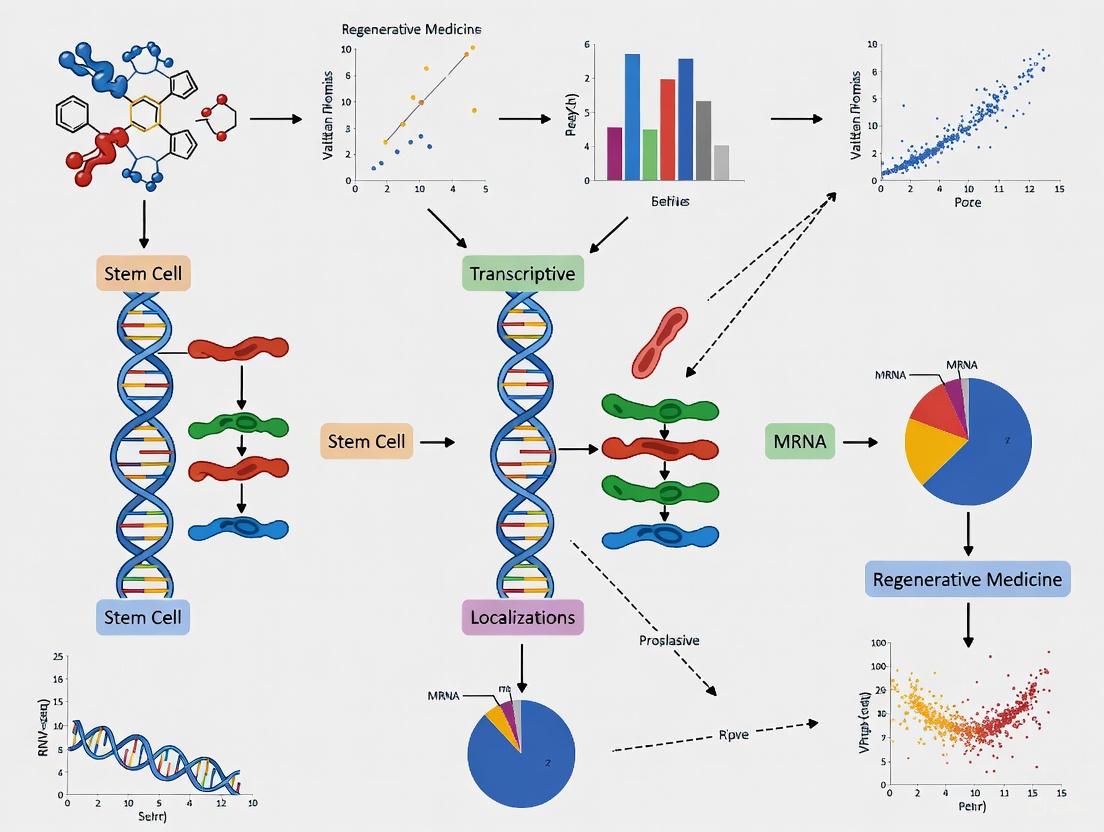
This article explores the critical integration of single-cell RNA sequencing (scRNA-seq) and Spatial Transcriptomics (ST) for validating stem cell localizations and identities within complex tissues.
Bridging Resolution and Context: Validating scRNA-seq Stem Cell Localizations with Spatial Transcriptomics
Abstract
This article explores the critical integration of single-cell RNA sequencing (scRNA-seq) and Spatial Transcriptomics (ST) for validating stem cell localizations and identities within complex tissues. While scRNA-seq excels at revealing cellular heterogeneity, it loses native spatial context, a gap filled by ST which maps gene expression within intact tissue architecture. We cover foundational principles, current methodologies for data integration and cell-cell communication inference, and address key challenges in resolution and scalability. The content provides a comparative analysis of validation strategies, highlighting how this synergistic approach is transforming our understanding of stem cell niches in development, disease, and regenerative medicine, offering robust frameworks for researchers and drug development professionals.
The Spatial Revolution: Why Location Matters for Stem Cell Biology
Single-cell RNA sequencing (scRNA-seq) has fundamentally transformed our understanding of cellular biology by enabling the profiling of gene expression at the resolution of individual cells. Unlike traditional bulk RNA sequencing, which averages expression across thousands of cells, scRNA-seq exposes the profound heterogeneity within seemingly uniform cell populations, allowing researchers to identify rare cell subtypes, trace developmental lineages, and characterize probabilistic gene expression patterns [1] [2]. This capability is particularly valuable in stem cell research, where identifying and characterizing rare stem and progenitor cell populations is crucial for understanding tissue regeneration and disease pathogenesis.
However, this revolutionary technology comes with a significant trade-off. The very process that enables single-cell analysis—tissue dissociation—irreversibly severs the spatial connections between cells [3] [4]. Consequently, while researchers gain exquisite detail about cellular transcriptomes, they lose all information about the original tissue architecture and the physical positioning of cells relative to one another. This spatial context is not merely anatomical detail; it creates the microenvironmental niches that govern cell fate decisions, direct differentiation trajectories, and mediate intercellular communication through juxtacrine and paracrine signaling [3] [5]. In stem cell biology, this fundamental gap means that while we can identify a stem cell transcriptomically, we cannot natively determine its precise location within its niche or its spatial relationship to neighboring cells that provide critical maintenance signals.
The Spatial Transcriptomics Revolution: Bridging the Context Gap
Spatial transcriptomics (ST) has emerged as a complementary set of technologies designed to preserve and quantify this essential spatial information. These methods can be broadly categorized into two groups: sequencing-based (sST) and imaging-based (iST) approaches [6] [5].
- Sequencing-based spatial transcriptomics, such as 10X Visium, Slide-seq, and Stereo-seq, operate by placing tissue sections onto surfaces patterned with spatially barcoded oligos. These barcodes capture location information during cDNA synthesis, allowing transcriptomic data to be mapped back to specific coordinates on the tissue [7] [3].
- Imaging-based spatial transcriptomics, including platforms like MERFISH, seqFISH, and commercial systems (Xenium, MERSCOPE, CosMx), utilize in situ hybridization or in situ sequencing to detect and localize hundreds to thousands of RNA molecules directly within intact tissue sections, often achieving subcellular resolution [3] [6] [8].
A key distinction between these approaches lies in their coverage and resolution. Sequencing-based methods typically offer whole-transcriptome coverage but have traditionally operated at multi-cellular resolution (spots containing 1-10 cells), though newer platforms are approaching single-cell resolution [7] [4]. Conversely, imaging-based methods provide excellent spatial resolution but are generally limited to targeted gene panels, requiring prior knowledge to select informative genes [9] [3]. The integration of scRNA-seq with both sST and iST data is therefore critical for comprehensive spatial characterization of cell types and states identified through single-cell analysis.
Comparative Analysis: Technical Specifications and Performance
The selection of an appropriate spatial transcriptomics platform depends heavily on the specific research questions, required resolution, and tissue type. The table below summarizes key performance metrics across major platforms, particularly highlighting their applicability to stem cell research where detecting rare populations and precise localization is critical.
Table 1: Performance Comparison of Spatial Transcriptomics Platforms
| Platform | Technology Type | Resolution | Genes Captured | Tissue Compatibility | Key Strengths for Stem Cell Research |
|---|---|---|---|---|---|
| 10X Visium [7] [4] | sST (microarray) | 55 μm spots (multi-cell) | Whole transcriptome | Fresh-frozen, FFPE (newer kits) | Unbiased discovery; well-established analytical pipelines |
| Slide-seq/V2 [7] [3] | sST (bead-based) | 10 μm (near single-cell) | Whole transcriptome | Fresh-frozen | Higher resolution for precise cellular mapping |
| Stereo-seq [7] | sST (nanoball) | <10 μm center distance (single-cell) | Whole transcriptome | Fresh-frozen | Extremely high sensitivity and spatial resolution |
| MERFISH [3] [6] | iST (FISH-based) | Subcellular | Hundreds to 1,000+ | FFPE, fresh-frozen | Single-molecule quantification; high detection efficiency |
| seqFISH+ [3] | iST (FISH-based) | Subcellular | 1,000-10,000 | FFPE, fresh-frozen | Large gene panels with subcellular resolution |
| 10X Xenium [8] | iST (in situ) | Subcellular | 100-5,000+ | FFPE, fresh-frozen | High transcript counts; optimized for clinical samples |
| CosMx [8] | iST (in situ) | Subcellular | 1,000-6,000 | FFPE, fresh-frozen | High-plex panels; whole cell segmentation |
Recent systematic benchmarking studies provide crucial quantitative data for platform selection. In comprehensive evaluations of sequencing-based methods, Stereo-seq demonstrated the highest capture capability, while Slide-seq V2 showed higher sensitivity per unit sequencing depth in certain tissue regions [7]. For imaging-based platforms in FFPE tissues (critical for clinical samples), Xenium consistently generated higher transcript counts per gene without sacrificing specificity, and both Xenium and CosMx showed strong concordance with orthogonal single-cell transcriptomics data [8].
Table 2: Quantitative Benchmarking Data from Recent Studies
| Performance Metric | Stereo-seq [7] | Slide-seq V2 [7] | 10X Visium [7] | 10X Xenium [8] | Nanostring CosMx [8] |
|---|---|---|---|---|---|
| Sensitivity (UMIs/spot) | Highest total counts | High sensitivity post-downsampling | Moderate, probe-based higher | High transcripts/cell | High transcripts/cell |
| Effective Resolution | <10 μm | 10 μm | 55 μm | Subcellular | Subcellular |
| Transcripts/Cell | N/A | N/A | N/A | ~70-100 | ~70-100 |
| Tissue Compatibility | Fresh-frozen | Fresh-frozen | Fresh-frozen, FFPE | FFPE, fresh-frozen | FFPE, fresh-frozen |
| Cell Type Clusters | N/A | N/A | N/A | High | High |
Experimental Approaches for Spatial Validation
Integrated ScRNA-seq and ST Workflow for Stem Cell Niche Validation
The power of spatial transcriptomics in stem cell research is fully realized when integrated with scRNA-seq data. The following workflow outlines a standardized experimental approach for validating scRNA-seq-identified stem cell localizations:
Initial scRNA-seq Profiling: Perform comprehensive scRNA-seq on dissociated tissue to identify transcriptionally distinct cell populations, including rare stem/progenitor cells and their potential differentiated progeny [4] [5].
Spatial Transcriptomics Validation: Apply appropriate spatial transcriptomics to intact tissue sections from the same or matched samples. Platform selection should be guided by required resolution and sample type (e.g., FFPE vs. fresh-frozen) [6] [8].
Computational Data Integration:
- Deconvolution Approaches: Use methods like Cell2location, RCTD, or SpatialDWLS to estimate cell-type proportions within each spatial spot based on scRNA-seq-derived reference profiles [9] [4].
- Mapping Approaches: Employ tools like Tangram, CytoSPACE, or SpatialScope to map individual cells from scRNA-seq data onto spatial coordinates, effectively reconstructing single-cell resolution spatial maps [9] [5].
Spatial Niche Characterization: Analyze the spatial distribution patterns of stem cells relative to other cell types to identify putative niche components, cellular neighbors, and potential signaling interactions [3] [5].
Detailed Methodologies for Key Experimental Protocols
Sample Preparation for Integrated Analysis [7] [4] [8]:
- For scRNA-seq: Prepare single-cell suspensions using standard dissociation protocols with viability >80%. Use appropriate cell capture platforms (10X Chromium, Drop-seq, etc.) targeting 5,000-10,000 cells per population of interest.
- For spatial transcriptomics: Prepare cryosections (5-10 μm thickness) or FFPE sections (4-5 μm) mounted on appropriate slides. Maintain RNA integrity (RIN >7 for fresh-frozen, DV200 >60% for FFPE). Include histological stains (H&E) for morphological correlation.
Spatial Library Preparation and Sequencing [7] [6]:
- For sequencing-based ST: Follow manufacturer protocols for tissue permeabilization, spatial barcode reverse transcription, and library construction. Optimize permeabilization time for specific tissue types.
- For imaging-based ST: Perform target probe hybridization, signal amplification, and multi-round imaging as required. Include control genes for quality assessment.
- Sequence at appropriate depth: 50,000-200,000 reads per spot for sST; ensure sufficient imaging cycles for iST to minimize dropouts.
Computational Integration Pipeline [9] [4] [5]:
- Preprocess scRNA-seq data (quality control, normalization, batch correction) and perform clustering to identify cell populations.
- Preprocess ST data (spot alignment, background correction, normalization).
- Apply integration method (e.g., SpatialScope using deep generative models, Cell2location using Bayesian inference) to decompose spot-level expressions or map single cells.
- Validate integration using hold-out genes or orthogonal methods like FISH.
Essential Research Reagent Solutions
The successful implementation of integrated scRNA-seq and spatial transcriptomics workflows requires specific reagents and platforms. The following table details key solutions for researchers designing such studies.
Table 3: Essential Research Reagent Solutions for Integrated Analysis
| Reagent/Platform | Function | Key Features | Considerations for Stem Cell Research |
|---|---|---|---|
| 10X Visium [7] [4] | Spatial gene expression | Whole transcriptome, 55 μm resolution, FFPE compatible | Ideal for initial discovery phase in stem cell niches |
| 10X Xenium [8] | In situ analysis | Subcellular resolution, FFPE optimized, custom panels | Excellent for archival samples and precise localization |
| Cell2location [9] [3] | Computational deconvolution | Bayesian framework, cell type mapping | Precisely locates rare stem cell populations in spatial data |
| SpatialScope [9] | Deep generative model integration | Single-cell resolution from spot data, transcriptome-wide imputation | Generates pseudo-cell expressions to recover single-cell resolution |
| Tangram [9] [3] | Single-cell spatial mapping | Deep learning-based alignment | Maps scRNA-seq cells to spatial coordinates accurately |
| Seurat [4] [5] | Single-cell and spatial analysis | Reference mapping, integration tools | Standard pipeline for preprocessing and initial integration |
The fundamental gap between scRNA-seq's ability to reveal cellular heterogeneity and its inherent loss of spatial context is no longer an insurmountable barrier. Spatial transcriptomics technologies provide the crucial bridge that enables researchers to validate computational predictions of stem cell localizations and characterize the niche microenvironments that regulate their behavior. The integration of these complementary approaches represents a new paradigm in stem cell biology, transforming our ability to connect transcriptional identity with spatial position.
As spatial technologies continue to advance—achieving higher resolution, greater sensitivity, and broader transcriptome coverage—their application to stem cell research will yield increasingly precise insights into the spatial organization of stem cell niches, the dynamics of stem cell differentiation along spatial gradients, and the alterations in stem cell positioning that occur in disease states. This spatially-resolved understanding will ultimately inform the development of more effective regenerative therapies and advance the field of precision medicine.
Spatial transcriptomics has emerged as a revolutionary set of technologies that bridge the critical gap between single-cell molecular profiling and tissue-level spatial organization. Unlike traditional single-cell RNA sequencing (scRNA-seq) which requires tissue dissociation and consequently loses all spatial information, spatial transcriptomics enables researchers to map gene expression patterns within the intact architectural context of tissues [1]. This capability is particularly valuable for validating scRNA-seq-predicted stem cell localizations, as it allows direct visualization of putative stem cell niches and their molecular signatures within native tissue environments.
The field has rapidly evolved from early in-situ hybridization techniques that could probe only a handful of genes to current high-plex methods capable of profiling thousands of genes simultaneously [10]. These technological advances are driving significant market growth, with the spatial transcriptomics market projected to expand from $469.36 million in 2025 to approximately $1,569.03 million by 2034, reflecting a compound annual growth rate of 14.35% [11]. This growth is fueled by increasing adoption in drug discovery, cancer research, and developmental biology – all areas where understanding cellular spatial relationships is critical.
Technological Approaches: Imaging-Based vs. Sequencing-Based Platforms
Spatial transcriptomics technologies can be broadly categorized into two complementary approaches: imaging-based and sequencing-based methods. Each offers distinct advantages and limitations, making them suitable for different research applications and questions.
Imaging-Based Spatial Transcriptomics (iST)
Imaging-based platforms utilize variations of fluorescence in situ hybridization (FISH) where mRNA molecules are tagged with hybridization probes that are detected through multiple rounds of staining with fluorescent reporters, imaging, and destaining [8]. The computational reconstruction of these imaging cycles yields detailed maps of transcript identity with single-molecule resolution.
Key imaging-based platforms include:
- 10X Genomics Xenium: Uses padlock probes with rolling circle amplification
- Vizgen MERSCOPE: Employes direct probe hybridization with transcript tiling
- NanoString CosMx: Utilizes a low number of probes amplified with branch chain hybridization [8]
These platforms are targeted approaches, relying on pre-defined gene panels, but offer superior spatial resolution at the single-cell level. Recent advancements have significantly expanded their gene detection capabilities, with CosMx 6K and Xenium 5K now profiling 6,175 and 5,001 genes respectively [12].
Sequencing-Based Spatial Transcriptomics (sST)
Sequencing-based methods capture poly(A)-tailed transcripts with poly(dT) oligos on spatially barcoded arrays, enabling unbiased whole-transcriptome analysis without the need for pre-defined gene panels [12]. These approaches tag transcripts with oligonucleotide addresses indicating spatial location, with tissue slices typically placed on barcoded substrates before isolated mRNA undergoes next-generation sequencing.
Prominent sequencing-based platforms include:
- 10X Visium HD: Captures transcripts at 2μm resolution targeting 18,085 genes
- Stereo-seq v1.3: Employs poly(dT) oligos at 0.5μm resolution
- Slide-seqV2: Uses DNA-barcoded beads for high-resolution spatial mapping [12]
These platforms excel at discovery-based research where the goal is comprehensive transcriptome characterization without prior knowledge of relevant genes.
Table 1: Comparison of Major Spatial Transcriptomics Platforms
| Platform | Technology Type | Spatial Resolution | Gene Coverage | Key Strengths |
|---|---|---|---|---|
| 10X Xenium | Imaging-based (iST) | Single-cell | 5001 genes (Xenium 5K) | High sensitivity, FFPE compatibility |
| CosMx | Imaging-based (iST) | Single-cell | 6175 genes (CosMx 6K) | High multiplexing capability |
| MERSCOPE | Imaging-based (iST) | Single-cell | ~1000 genes (standard panels) | Error-robust encoding |
| Visium HD | Sequencing-based (sST) | 2μm | 18,085 genes | Whole-transcriptome, discovery focus |
| Stereo-seq v1.3 | Sequencing-based (sST) | 0.5μm | Whole-transcriptome | Highest resolution sST platform |
Performance Benchmarking: Experimental Data and Platform Comparisons
Recent systematic benchmarking studies directly comparing commercial spatial transcriptomics platforms provide critical performance data to guide platform selection. These evaluations have assessed platforms across multiple metrics including sensitivity, specificity, concordance with orthogonal methods, and performance with clinically relevant FFPE samples.
Sensitivity and Specificity Across Platforms
A comprehensive 2025 benchmarking study evaluated three commercial iST platforms (10X Xenium, Vizgen MERSCOPE, and Nanostring CosMx) on formalin-fixed paraffin-embedded (FFPE) tissues from 17 tumor and 16 normal tissue types [8]. The study found that Xenium consistently generated higher transcript counts per gene without sacrificing specificity, and both Xenium and CosMx demonstrated strong concordance with orthogonal single-cell transcriptomics data [8].
A separate 2025 benchmarking of four high-throughput platforms (Stereo-seq v1.3, Visium HD FFPE, CosMx 6K, and Xenium 5K) revealed important differences in detection sensitivity. Within shared tissue regions, Xenium 5K consistently demonstrated superior sensitivity for multiple marker genes compared to other platforms [12]. Interestingly, while CosMx 6K detected a higher total number of transcripts than Xenium 5K, its gene-wise transcript counts showed substantial deviation from matched scRNA-seq references [12].
Cell Segmentation and Typing Capabilities
For validation of stem cell localizations predicted by scRNA-seq, accurate cell segmentation and typing is paramount. Benchmarking studies reveal significant differences in these capabilities across platforms. All three major iST platforms can perform spatially resolved cell typing, but with varying sub-clustering capabilities – Xenium and CosMx identified slightly more clusters than MERSCOPE, though with different false discovery rates and cell segmentation error frequencies [8].
Cell segmentation represents a particular challenge in spatial transcriptomics, as accurate boundary detection is essential for assigning transcripts to correct cells. The development of standardized analysis tools like PIPEFISH, which incorporates neural-network-based CellPose segmentation, aims to address these challenges and improve reproducibility across platforms and laboratories [13].
Table 2: Quantitative Performance Metrics from Benchmarking Studies
| Performance Metric | Xenium | CosMx | MERSCOPE | Visium HD | Stereo-seq |
|---|---|---|---|---|---|
| Transcripts per Cell | High | Highest | Moderate | Variable | Variable |
| Concordance with scRNA-seq | Strong | Strong | Moderate | Strong | Strong |
| Cell Segmentation Accuracy | High (with membrane stain) | High | Moderate | NA | NA |
| FFPE Performance | Excellent | Excellent | Good (requires DV200>60%) | Good | Limited |
| Cluster Detection | High | High | Moderate | High | High |
Experimental Design and Methodologies
Sample Preparation Considerations
Sample preparation represents a critical variable in spatial transcriptomics experiments, particularly for validation studies where sample quality directly impacts result reliability. The choice between fresh frozen and formalin-fixed paraffin-embedded (FFPE) tissues involves important trade-offs:
Fresh Frozen Tissues: Dominate current applications (44% market share in 2024) due to superior preservation of RNA integrity and better permeabilization for reagents [11]. These are ideal when RNA quality is the highest priority.
FFPE Tissues: Represent the fastest-growing segment due to widespread availability in pathology archives and excellent preservation of tissue morphology [11]. Recent commercial platform advancements have significantly improved FFPE compatibility, enabling retrospective studies of valuable clinical cohorts [8].
For stem cell localization studies, careful consideration of fixation methods is essential, as stem cell markers may be particularly sensitive to processing conditions. Benchmarking studies recommend following manufacturer guidelines for sample preparation while implementing rigorous quality control measures, such as H&E screening or RNA integrity assessment (DV200 > 60% for MERSCOPE) [8].
Workflow Integration for scRNA-seq Validation
A typical experimental workflow for validating scRNA-seq-predicted stem cell localizations involves multiple integrated steps:
Spatial Transcriptomics Validation Workflow
This workflow begins with target gene panel selection based on scRNA-seq findings, prioritizing markers that define putative stem cell populations. For imaging-based platforms, custom panels can be designed around these targets, while sequencing-based approaches offer the advantage of unbiased whole-transcriptome coverage.
Following tissue preparation using optimized protocols, spatial transcriptomics processing is performed according to platform-specific guidelines. The 2025 benchmarking study by provides detailed methodologies for each major commercial platform, including specific baking times, hybridization conditions, and imaging parameters [8].
Data integration represents the final critical step, where spatial localization patterns are compared with scRNA-seq predictions. This typically involves computational alignment of transcriptional profiles and spatial mapping of cell types identified in scRNA-seq clusters.
Essential Research Reagents and Tools
Successful spatial transcriptomics experiments require careful selection of reagents and computational tools. The following table outlines key solutions for researchers designing spatial validation studies:
Table 3: Essential Research Reagents and Computational Tools
| Category | Specific Solutions | Function/Application |
|---|---|---|
| Sample Preparation | FFPE tissue sections | Preserves tissue morphology for archival samples |
| Fresh frozen OCT blocks | Maintains RNA integrity for sensitive applications | |
| Membrane staining reagents | Enables improved cell segmentation (e.g., Xenium) | |
| Gene Detection | Customizable gene panels (Xenium, MERSCOPE) | Targeted validation of stem cell markers |
| Whole-transcriptome panels (Visium HD) | Unbiased discovery alongside validation | |
| Data Processing | PIPEFISH pipeline | Standardized analysis for FISH-based data |
| CellPose segmentation | Neural network-based cell boundary detection | |
| SpatialData framework | Multimodal spatial data integration | |
| Validation Tools | CODEX protein profiling | Orthogonal protein-level validation |
| scRNA-seq reference atlas | Computational integration and mapping |
Applications in Stem Cell Research and Drug Development
The integration of spatial transcriptomics with scRNA-seq data is transforming stem cell research and therapeutic development. By preserving spatial context, these technologies enable direct validation of hypothesized stem cell niches and their molecular microenvironments.
Advancing Therapeutic Discovery
Spatial biology is increasingly rewriting the rules of oncology drug discovery by revealing how tumor microenvironments influence therapeutic response [14]. For stem cell-related applications, researchers are applying these technologies to:
- Validate stem cell niche organizations predicted by scRNA-seq in various tissues
- Characterize tumor-initiating cells within their spatial context to identify new therapeutic targets
- Map differentiation trajectories while preserving spatial relationships to microenvironmental cues
Notably, researchers at the Francis Crick Institute have utilized spatial transcriptomics to understand why immunotherapy only works for certain patients with bowel cancer, identifying spatial patterns of CD74 expression that correlate with treatment response [14]. Similarly, Mount Sinai researchers discovered how ovarian cancer cells create a protective microenvironment through IL-4 signaling, revealing a druggable mechanism of immunotherapy resistance [14].
Integration with Functional Screening
Emerging approaches combine spatial transcriptomics with functional screening to directly link spatial localization to biological mechanisms. The RAEFISH platform, for example, enables direct spatial readout of guide RNAs in image-based, high-content CRISPR screens, allowing researchers to simultaneously perturb genes and observe spatial consequences [15]. This integration is particularly powerful for stem cell research, where niche-specific factors maintain stemness or drive differentiation.
Companies like Noetik are building on these approaches, pairing "human multimodal spatial omics data purpose-built for machine learning with a multiplexed in vivo CRISPR perturbation platform to power discovery efforts" in cancer immunotherapy [14].
As spatial transcriptomics continues to evolve, several trends are shaping its application for validating and expanding scRNA-seq findings:
Technology Development Trends
The field is moving toward increasingly comprehensive molecular profiling while maintaining high spatial resolution. Methods like RAEFISH now enable "genome-scale spatial transcriptome imaging" covering over 22,000 genes while preserving single-molecule resolution [15]. This eliminates the compromise between targeted validation and discovery-based approaches.
Similarly, the expansion of multimodal integration allows researchers to simultaneously profile transcripts and proteins or incorporate genetic perturbations. The 2025 benchmarking study by highlights the value of combining spatial transcriptomics with CODEX protein profiling to establish comprehensive ground truth datasets [12].
Computational and Analytical Advancements
The growing complexity of spatial transcriptomics data is driving innovation in computational methods. Artificial intelligence is playing an increasingly important role in "enabling more efficient data analysis, improving spatial resolution, and facilitating integrated analysis of multi-omics datasets" [11]. Tools like the SpatialData framework developed by the Stegle Group enable unified representation of diverse spatial omics technologies, addressing critical challenges in data integration [14].
Standardization of analytical pipelines remains a priority, with efforts like PIPEFISH providing "semi-automated and generalizable pipeline that performs transcript annotation for fluorescence in situ hybridization (FISH)-based spatial transcriptomics" [13]. Such standardization is essential for reproducible validation of scRNA-seq findings across different laboratories and platforms.
Spatial transcriptomics technologies have matured to offer robust solutions for validating scRNA-seq-predicted stem cell localizations. The comprehensive benchmarking of commercial platforms now provides clear guidance on performance trade-offs, enabling researchers to select optimal approaches based on their specific validation goals. As these technologies continue to evolve toward higher-plex capabilities, improved resolution, and enhanced analytical frameworks, their power to illuminate the spatial architecture of stem cell niches will undoubtedly transform our understanding of tissue homeostasis, regeneration, and disease.
The hierarchical organization of tissues fundamentally depends on a small number of stem cells capable of self-renewal and producing all differentiated cells found within specialized tissues. The undifferentiated, multipotent state of these normal stem cells is co-determined by the constituents of a specific anatomical space known as the 'stem cell niche' [16]. This niche does not merely provide physical lodging but delivers essential signals that maintain stem cell fate, integrating soluble factors, cell-bound receptor ligands, and adhesion molecules to fine-tune stem cell decisions. Key developmental signaling pathways like Notch, Wnt, and Hedgehog are involved in this regulatory network, which becomes particularly crucial during tissue repair following injury [16].
Understanding the stem cell niche has profound implications for both basic biology and therapeutic development. In the context of radiation therapy, for instance, the niche itself is a target: radiation interferes not only with the stem cell population but also with the niche components, thereby modulating a complex regulatory network that controls tissue regeneration [16]. Furthermore, the concept extends to oncology, as evidence mounts that many solid cancers are organized hierarchically, with cancer stem cells (CSCs) occupying specialized niches that support their maintenance and function [16].
Until recently, the study of stem cells and their niches has been hampered by technological limitations. Single-cell RNA-sequencing (scRNA-seq) has revolutionized our ability to profile cellular heterogeneity, but it requires tissue dissociation, which destroys the spatial context essential for understanding niche interactions [17]. The emergence of spatial transcriptomics now enables researchers to measure all gene activity in a tissue sample while preserving the spatial location of each data point, creating unprecedented opportunities to map stem cells within their native microenvironments [18] [17]. This guide compares the leading computational methods that integrate scRNA-seq with spatial transcriptomics data to validate stem cell localizations, providing researchers with the tools to definitively link cell identity to tissue location.
Comparative Analysis of scRNA-seq and Spatial Transcriptomics
To appreciate the challenge of locating stem cells in their niche, one must first understand the complementary strengths and weaknesses of modern transcriptomic technologies. The table below provides a structured comparison of scRNA-seq and spatial transcriptomics, highlighting how their integration is essential for niche characterization.
Table 1: Comparison of scRNA-seq and Spatial Transcriptomics Technologies
| Feature | Single-Cell RNA Sequencing (scRNA-seq) | Spatial Transcriptomics |
|---|---|---|
| Spatial Context | Lost during tissue dissociation [17] | Preserved in intact tissue sections [17] |
| Resolution | Single-cell level | Single-cell to multi-cellular spots (depending on platform) [19] [17] |
| Primary Output | High-throughput transcriptomic profiles of individual cells [20] | Genome-wide gene expression mapped to spatial coordinates |
| Key Advantage | Unbiased characterization of cellular heterogeneity [20] | Retains architectural information and spatial relationships |
| Best Suited For | Identifying rare cell types, inferring lineages, discovering novel states [20] | Mapping expression gradients, revealing tissue domains, validating cell localization hypotheses |
| Stem Cell Niche Application | Hypothesizing stem cell populations and their states from dissociated tissue | Validating the precise in situ location of stem cells and mapping their niche signaling environment |
Spatial transcriptomics technologies generally fall into two main categories. The first includes fluorescence in situ hybridization (FISH)-based methods (e.g., MERFISH, seqFISH), where transcripts are directly labeled in tissue sections to be visualized [18]. The second category builds on scRNA-seq and uses oligonucleotide arrays (e.g., 10x Genomics Visium) to capture RNA transcripts across a tissue section, followed by next-generation sequencing [18] [17]. The array-based methods can profile the entire transcriptome but have historically faced resolution limitations, as each spot on the array may capture mRNA from multiple cells—a fundamental challenge that computational mapping methods aim to overcome [19].
Computational Mapping Methods: Bridging the Resolution Gap
A central problem in stem cell niche biology is that high-resolution scRNA-seq data lacks spatial information, while high-throughput spatial transcriptomics data often lacks single-cell resolution. Computational integration methods have been developed to address this gap by transferring spatial information from ST data to scRNA-seq data, thereby predicting the in situ location of individual cells, including rare stem cells [19]. The following table objectively compares the performance and characteristics of several leading methods based on semi-simulation experiments conducted on a spatial mouse embryo atlas dataset [19].
Table 2: Performance Comparison of scRNA-seq to Spatial Transcriptomics Mapping Methods
| Method | Underlying Principle | Reported Performance on Embryo Data | Key Advantage |
|---|---|---|---|
| STEM | Deep transfer learning to create a unified, spatially-aware embedding space for both data types [19] | Accurately reconstructed original topology of all single cells; outperformed other methods in preserving spatial topologies [19] | Simultaneously optimizes for spatial information preservation and elimination of technical biases [19] |
| CellTrek | Multivariate random forest model to map cells to spatial locations [19] | Predicted a similar shape to the original but only for ~38% of single cells, with the rest discarded [19] | Directly predicts spatial coordinates |
| scSpace | Uses a multi-layer perceptron (MLP) to predict absolute spatial coordinates from gene expression [19] | Did not preserve the original topology structure of all single cells as effectively as STEM [19] | -- |
| Seurat | Constructs integrated graphs for transferring spatial coordinates [19] | Not designed specifically for this task; did not preserve the original topology structure of all single cells as effectively as STEM [19] | Widely adopted for general data integration |
| Spaotsc | Uses optimal transport theory with spatial constraints [19] | Did not preserve the original topology structure of all single cells as effectively as STEM [19] | Explicitly incorporates spatial constraints in its model |
| Tangram | Learns a mapping matrix by minimizing the similarity between converted SC and ground truth ST data [19] | Did not preserve the original topology structure of all single cells as effectively as STEM [19] | -- |
The semi-simulation experiments, which treated a single-cell resolution spatial transcriptomics dataset as a ground truth, demonstrated that STEM (SpaTially aware EMbedding) was the only method that successfully preserved the original topological structure of all single cells [19]. This accurate spatial mapping at both the cellular and tissue levels is critical for defining the stem cell niche, as it ensures that predicted locations of stem cells relative to their neighbors and supporting cells are reliable.
Workflow of the STEM Method
The following diagram illustrates the deep transfer learning architecture of the STEM method, which enables it to create a unified embedding space for both single-cell and spatial data.
Diagram 1: STEM model for spatially-aware embedding.
STEM's architecture features a shared encoder that processes both SC and ST data, projecting them into a unified embedding space [19]. Two predictor modules then simultaneously optimize these embeddings during training. The spatial-information extracting module encourages the ST embeddings to preserve spatial information, while the domain alignment module works to eliminate technical biases between the SC and ST datasets by minimizing the Maximum Mean Discrepancy (MMD) [19]. The model is trained to reconstruct the spatial adjacency of spots in the ST data, which is calculated from their known coordinates via a Gaussian kernel. The final output includes an SC-ST mapping matrix that describes the relative spatial proximity of each single cell to all spots, and an SC-SC spatial adjacency matrix that predicts spatial neighbors among the single cells [19].
Experimental Protocols for Validation
To ensure the accuracy of computational predictions, robust experimental validation is required. The following section details a standard workflow for generating and validating spatial localizations of stem cells, from tissue preparation to data integration and analysis.
Detailed Protocol: Integrating scRNA-seq and ST Data with STEM
Objective: To map a putative intestinal stem cell population, identified by scRNA-seq, to its precise location within the crypt base niche using spatial transcriptomics data.
Sample Preparation and Data Generation:
- Tissue Collection and Processing: Collect intestinal tissue samples. Split each sample into two portions. One portion is dissociated into a single-cell suspension for scRNA-seq using a platform like 10x Genomics Chromium [18] [20]. The other portion is fresh-frozen in Optimal Cutting Temperature (OCT) compound and cryosectioned for spatial transcriptomics using the 10x Genomics Visium platform [17].
- scRNA-seq Library Preparation: Follow the standard protocol for the chosen platform. This typically involves:
- Cell lysis and mRNA capture with barcoded beads.
- Reverse transcription to create cDNA libraries with Cell Barcodes (CBs) and Unique Molecular Identifiers (UMIs) to tag each mRNA molecule from each cell [20].
- cDNA amplification and sequencing.
- Spatial Transcriptomics Library Preparation: Follow the Visium spatial gene expression protocol:
- Mount tissue sections onto the Visium gene expression slide, which contains ~5,000 barcoded spots under a capture area.
- Perform tissue permeabilization to release mRNA, which then binds to spatially barcoded oligonucleotides on the slide.
- Synthesize cDNA and prepare libraries for sequencing [17].
Computational Mapping and Analysis with STEM:
- Data Pre-processing: Independently pre-process the scRNA-seq and ST data using standard tools (e.g., Seurat, Scanpy). This includes quality control, normalization, and log-transformation of gene expression counts.
- Stem Cell Population Identification: Perform clustering and differential expression analysis on the scRNA-seq data to identify cell populations. A cluster expressing high levels of known stem cell markers (e.g.,
Lgr5for intestinal stem cells) is defined as the putative stem cell population [16]. - Run STEM:
- Input the pre-processed scRNA-seq and ST data matrices.
- The model will train its encoder and predictors, as detailed in Diagram 1.
- The key outputs are the
SC_ST_mapping_matrixand theSC_SC_adjacency_matrix.
- Validation of Spatial Predictions:
- Spatial Mapping: Use the
SC_ST_mapping_matrixto project theLgr5+stem cell population from the scRNA-seq data onto the spatial coordinates of the Visium slide. Successful mapping should show a strong signal at the crypt base, the known location of the intestinal stem cell niche [16]. - Spatial Co-localization: Validate the prediction by checking for known niche signals in the same spatial location. For example, in the case of
Lgr5+cells, the model's predicted location should also be enriched for expression ofDll1andDll4(Notch ligands) from Paneth cells, which constitute the supporting niche [16]. This can be directly observed from the raw ST data. - Gene Attribution Analysis: A powerful feature of STEM is its interpretability. Using integrated gradient techniques, it is possible to identify the genes in the single-cell data that most strongly contributed to the predicted spatial location of the
Lgr5+cells [19]. This can reveal novel genes associated with niche occupancy.
- Spatial Mapping: Use the
The Scientist's Toolkit: Key Reagents and Materials
Table 3: Essential Research Reagents and Solutions for Spatial Transcriptomics Validation
| Item | Function/Application |
|---|---|
| 10x Genomics Visium Slide | Array-based capture surface with spatially barcoded oligos for transcriptome-wide spatial profiling [17]. |
| Single-Cell Suspension Buffer | Enzymatic or mechanical digestion buffer to dissociate tissue into viable single cells for scRNA-seq [18]. |
| Cryostat | Instrument for generating thin tissue sections (typically 5-20 µm) for placement on spatial transcriptomics slides. |
| Tissue Permeabilization Enzyme | Enzyme (e.g., proteinase K) that permeabilizes tissue sections to release RNA for capture on the spatial array. |
| UMI and Cell Barcode Reagents | Oligonucleotides containing Unique Molecular Identifiers (UMIs) and Cell Barcodes (CBs) to tag mRNA molecules during scRNA-seq library prep, enabling digital counting and multiplexing [20]. |
| STEM Software Package | The computational tool that performs the deep transfer learning integration of scRNA-seq and ST data to predict single-cell spatial locations [19]. |
Signaling in the Stem Cell Niche: A Visual Guide
The regulatory signals within the niche are paramount for stem cell maintenance. The diagram below synthesizes key signaling pathways active in well-characterized mammalian stem cell niches, as revealed by spatial transcriptomics and other methods.
Diagram 2: Stem cell niche signaling pathways.
Spatial context transforms our understanding of these pathways. For example, in the intestine, Notch signaling from Paneth cells (the niche) to Lgr5+ intestinal stem cells is a contact-dependent interaction that can be directly inferred when stem cells are correctly mapped to the crypt base [16]. In the bone marrow, Wnt signaling from nestin+ mesenchymal stem cells helps maintain hematopoietic stem cells (HSCs) in a specialized, hypoxic niche [16]. Furthermore, spatial transcriptomics can reveal how these pathways are modulated by external pressures. For instance, in response to ionizing radiation, components of the Notch and Wnt pathways are activated as part of a tissue damage response, triggering repair and regeneration programs within the niche [16].
The precise localization of stem cells within their tissue microenvironment is not an academic exercise but a fundamental requirement for understanding tissue homeostasis, regeneration, and disease. The integration of single-cell RNA sequencing with spatial transcriptomics, powered by advanced computational methods like STEM, provides an unprecedented ability to map this niche and decode the complex signaling networks that define it. As these technologies continue to evolve, becoming more accessible and higher in resolution, they will undoubtedly unlock new insights into stem cell biology, accelerate the development of regenerative therapies, and improve our strategies for targeting the cancer stem cell niche in oncology.
Spatial transcriptomics (ST) has emerged as a pivotal technology in biomedical research, enabling the mapping of gene expression within intact tissues while preserving crucial spatial context. This technological revolution addresses a fundamental limitation of single-cell RNA sequencing (scRNA-seq), which requires tissue dissociation and consequently loses the native spatial organization of cells. The functional identity and behavior of a cell are profoundly influenced by its physical location and neighborhood interactions, particularly in complex biological systems like stem cell niches, tumor microenvironments, and developing tissues. As Nature Methods recognized when selecting spatial transcriptomics as its Method of the Year 2020, these technologies provide unprecedented insights into cellular organization, interactions, and functions in their native environments [21] [17].
The field has largely coalesced around two complementary technological approaches: sequencing-based (barcode-based) and imaging-based methods. While both aim to resolve spatial patterns of gene expression, they differ fundamentally in their underlying principles, capabilities, and optimal applications. Understanding these core principles is essential for researchers validating scRNA-seq-derived stem cell localizations, as each platform offers distinct advantages in resolution, sensitivity, and transcriptome coverage. This guide provides a detailed comparison of these technologies, focusing on their operating principles, performance characteristics, and experimental considerations for translational research [22] [23].
Imaging-Based Spatial Transcriptomics
Imaging-based technologies utilize single-molecule fluorescence in situ hybridization (smFISH) as their backbone, employing cyclic, highly multiplexed probe hybridization and imaging to determine the spatial location and expression levels of individual RNA transcripts within tissues. These platforms differ primarily in their probe design, signal amplification strategies, and gene decoding methods [22] [23].
- Core Principle: These technologies use fluorescently labeled probes that bind specifically to target RNA molecules. Through multiple rounds of hybridization, imaging, and probe removal, they generate unique optical signatures for each gene, enabling precise subcellular localization [22].
- Resolution Advantage: Imaging-based methods naturally achieve single-cell to subcellular resolution, as detection occurs directly within the tissue morphology without the need for computational inference [21] [23].
Xenium (10x Genomics)
Xenium employs a hybrid approach combining in situ sequencing (ISS) and in situ hybridization (ISH). An average of eight padlock probes, each containing a gene-specific barcode, hybridize to the target RNA transcript. These probes undergo highly specific ligation to form circular DNA constructs, which are then enzymatically amplified through rolling circle amplification (RCA). Fluorescently labeled oligonucleotide probes then bind to the gene-specific barcodes, with successive rounds of hybridization using different fluorophores generating a unique optical signature for each target gene. This padlock probe design with amplification enables accurate, sensitive, and specific detection of gene activity [22] [23].
MERSCOPE (Vizgen)
MERSCOPE utilizes a binary barcode strategy for gene identification. Each gene is assigned a unique binary barcode consisting of a series of "0"s and "1"s. Thirty to fifty gene-specific primary probes hybridize to different regions of the target gene. Fluorescently labeled secondary probes then bind to these primary probes through multiple rounds of imaging. During each round, fluorescence detection is decoded as "1" and its absence as "0". A typical MERSCOPE barcode contains four "1"s in a predetermined order, meaning fluorescent signal for any given gene is detected only four times across imaging rounds. This binary barcoding strategy reduces optical crowding and supports error correction [22] [23].
CosMx (NanoString)
CosMx employs a hybridization method similar to MERSCOPE but incorporates an additional positional dimension for gene identification. The process begins with a pool of five gene-specific probes containing target-binding domains and readout domains with 16 sub-domains. Each secondary probe includes a binding domain linked to a branched, fluorescently labeled readout domain through a UV-cleavable linker. The branched readout allows multiple fluorophores to enhance signal intensity. After imaging, UV light cleaves the fluorescent domain, enabling 16 hybridization cycles. The combination of four fluorescent colors and 16 sub-domains generates a unique color and position signature for each target gene, enabling high-plex detection [22] [23].
Sequencing-Based (Barcode-Based) Spatial Transcriptomics
Sequencing-based technologies integrate spatially barcoded arrays with next-generation sequencing to determine transcript locations and expression levels within tissues. Unlike imaging approaches, these methods capture mRNA released from tissues onto arrays containing positional barcodes [22].
- Core Principle: These technologies use slides or chips patterned with spatially barcoded oligos that capture messenger RNA from tissue sections placed on them. After capture, the location of each transcript is inferred from its associated spatial barcode during sequencing [22] [23].
- Throughput Advantage: Sequencing-based methods typically offer whole-transcriptome coverage, making them ideal for discovery-phase studies where the genes of interest aren't fully known [17].
10X Visium and Visium HD
The core technology relies on spatially barcoded RNA-binding probes attached to the Visium slide. These probes contain a spatial barcode for location decoding, a unique molecular identifier (UMI) for transcript quantification, and an oligo-dT sequence for mRNA binding. Visium offers two workflows: V1 for fresh frozen tissue where released mRNA binds directly to poly(dT) capture probes, and V2 (requiring the CytAssist instrument) for both fresh frozen and FFPE tissues using probe hybridization optimized for degraded RNA. Visium HD uses the same technology as Visium V2 but features a significantly smaller spot size of 2μm compared to the standard 55μm, substantially enhancing spatial resolution [22] [23].
Stereo-seq
Stereo-seq utilizes DNA nanoball (DNB) technology for in situ RNA capture. Synthesized oligo probes containing barcoded sequences, coordinate identity (CID), molecular identifiers (MID), and poly(dT) are circularized and amplified via rolling circle amplification to generate DNBs. These DNBs are loaded onto a grid-patterned array to create capture slides. With a diameter of approximately 0.2μm and center-to-center distance of 0.5μm, the DNBs are significantly smaller than the 2μm spots in Visium HD, enabling high-resolution spatial mapping [22].
GeoMx Digital Spatial Profiler
GeoMx employs a different strategy, using UV-cleavable barcoded probes and region-of-interest (ROI) selection. Rather than comprehensive spatial mapping, this technology allows researchers to select specific tissue regions based on morphology for transcriptomic analysis. Upon UV exposure, oligonucleotides from selected regions are released and collected for sequencing, providing spatial information at the ROI level rather than single-cell resolution [22] [17].
Figure 1: Workflow comparison between imaging-based and sequencing-based spatial transcriptomics technologies. Imaging methods use cyclic hybridization and fluorescence detection, while sequencing methods rely on spatial barcodes and NGS.
Performance Comparison: Quantitative Data Analysis
The selection of an appropriate spatial transcriptomics platform depends heavily on project-specific requirements for resolution, sensitivity, and transcriptome coverage. Systematic benchmarking studies using controlled samples provide the most reliable performance comparisons.
Table 1: Technical Specifications of Major Spatial Transcriptomics Platforms
| Platform | Technology Type | Spatial Resolution | Genes Detected | Tissue Compatibility | Throughput |
|---|---|---|---|---|---|
| 10X Visium | Sequencing-based | 55μm spots | Whole transcriptome (∼18,000 genes) | FF, FFPE | High (6.5x6.5mm area) |
| Visium HD | Sequencing-based | 2μm bins | Whole transcriptome (∼18,000 genes) | FF, FFPE | High (6.5x6.5mm area) |
| Stereo-seq | Sequencing-based | 0.5μm (DNB), 0.5μm center-to-center | Whole transcriptome | FF, FFPE | Very high (up to 10cm²) |
| Xenium | Imaging-based | Single-cell/subcellular | 500-5,000-plex (targeted) | FF, FFPE | Medium (∼2-4cm²) |
| MERSCOPE | Imaging-based | Single-cell/subcellular | 500-1,000-plex (targeted) | FF, FFPE | Medium (∼2-4cm²) |
| CosMx | Imaging-based | Single-cell/subcellular | 1,000-6,000-plex (targeted) | FF, FFPE | Medium (FOV-based) |
| GeoMx DSP | Sequencing-based | ROI-based (5-50μm) | Whole transcriptome (∼18,000 genes) | FF, FFPE | Flexible (user-defined ROI) |
Data compiled from benchmarking studies [22] [21] [12]
A comprehensive 2025 benchmarking study systematically evaluated four high-throughput platforms with subcellular resolution using serial sections from colon adenocarcinoma, hepatocellular carcinoma, and ovarian cancer samples. The study established ground truth datasets through CODEX protein profiling and scRNA-seq on adjacent sections, enabling robust cross-platform comparisons [12].
Table 2: Performance Metrics from Systematic Benchmarking (2025 Study)
| Platform | Transcripts per Cell | Genes per Cell | Correlation with scRNA-seq | Cell Segmentation Accuracy | Specificity (vs. Negative Controls) |
|---|---|---|---|---|---|
| Stereo-seq v1.3 | Medium | Medium | High (r=0.89) | Good (nuclear segmentation) | High |
| Visium HD FFPE | Medium-High | Medium-High | High (r=0.90) | Good (nuclear segmentation) | High |
| CosMx 6K | High | High | Medium (r=0.75) | Excellent (membrane staining) | Variable (target-dependent) |
| Xenium 5K | High | High | High (r=0.91) | Excellent (multimodal) | High |
Adapted from systematic benchmarking of subcellular resolution platforms [12]
Key findings from this benchmarking include:
- Xenium 5K demonstrated superior sensitivity for multiple marker genes and strong concordance with scRNA-seq references [12].
- CosMx 6K detected a high number of transcripts but showed substantial deviation from matched scRNA-seq profiles, even after stringent quality filtering [12].
- All platforms successfully identified major cell types, but segmentation approaches significantly influenced cell-type assignment, especially in dense tissue regions [21] [12].
- Tissue age impacted performance, with recently constructed TMAs yielding higher transcript counts across platforms compared to older archival samples [21].
Experimental Design: Protocols and Best Practices
Sample Preparation Considerations
The choice between formalin-fixed paraffin-embedded (FFPE) and fresh frozen (FF) tissue represents a critical early decision in spatial transcriptomics experimental design. FFPE tissues benefit from superior morphology preservation and compatibility with clinical archives but contain fragmented RNA requiring specialized protocols. Fresh frozen tissues yield higher RNA quality but present challenges in morphology preservation [21] [23].
For stem cell localization studies, where rare cell populations must be identified within complex niches, optimal sample preparation is essential. A 2025 study comparing platforms using FFPE tumor samples noted that "the more recently constructed MESO TMAs had higher numbers of transcripts and uniquely expressed genes per cell with CosMx and MERFISH than Xenium," highlighting the impact of tissue preservation and age on data quality [21].
Validation Workflow for scRNA-seq-Derived Localizations
Figure 2: Recommended workflow for validating scRNA-seq-derived stem cell localizations using spatial transcriptomics technologies.
Integration with scRNA-seq Data
Computational integration of scRNA-seq and spatial transcriptomics data has become a critical component of spatial validation pipelines. Methods like STEM (SpaTially aware EMbedding) use deep transfer learning to encode both data types into a unified spatially aware embedding space. This approach enables inference of SC-ST mapping and prediction of pseudo-spatial adjacency between cells in scRNA-seq data, effectively transferring spatial information to single-cell data [19].
In semi-simulation experiments based on the Spatial Mouse Atlas dataset, STEM demonstrated accurate spatial mapping at both cell and tissue levels, outperforming other methods including CellTrek, scSpace, Seurat, Spaotsc, and Tangram in preserving original tissue topology [19].
Research Toolkit: Essential Reagents and Materials
Table 3: Essential Research Reagents for Spatial Transcriptomics Experiments
| Reagent/Material | Function | Platform Examples | Considerations for Stem Cell Studies |
|---|---|---|---|
| Spatial Slide/Chip | Provides spatially barcoded substrate for mRNA capture | Visium slide, Stereo-seq chip | Check compatibility with tissue size and required resolution |
| Gene Expression Panels | Target-specific probes for imaging-based platforms | Xenium panels, CosMx panels | Must include stem cell markers specific to tissue of interest |
| Tissue Permeabilization Reagents | Enable mRNA release from tissue while preserving morphology | Proteases, detergents | Optimization critical for balancing signal and morphology |
| Fluorescent Reporters | Signal generation for imaging-based platforms | Fluorophore-labeled probes | Multiplexing capacity limits gene panel size |
| Nucleases | Remove background RNA signal | RNase inhibitors, DNase | Particularly important for FFPE tissues with RNA degradation |
| Morphology Stains | Visualize tissue architecture for ROI selection | H&E, DAPI | Essential for correlating gene expression with tissue context |
| Antibody Panels | Protein co-detection for multimodal analysis | Multiplexed immunofluorescence | Enables validation at protein level for key stem cell markers |
| Library Prep Kits | Prepare sequencing libraries for barcode-based platforms | 10x Visium library kit | Determine sequencing depth and quality requirements |
Based on experimental requirements detailed in benchmarking studies [21] [23] [12]
The complementary strengths of barcode-based and imaging-based spatial transcriptomics technologies provide researchers with powerful tools for validating scRNA-seq-derived stem cell localizations. Sequencing-based approaches offer unbiased whole-transcriptome coverage ideal for discovery applications, while imaging-based platforms deliver single-cell resolution essential for precise mapping of rare stem cell populations within their native niches.
Future developments in spatial transcriptomics are focusing on several key areas:
- Multi-omics integration combining transcriptomics with proteomics and epigenetics in the same tissue section [12] [24]
- Temporal-spatial analyses capturing dynamic processes in developing and regenerating tissues [24]
- Computational advancements improving cell segmentation, spatial inference, and multi-modal data integration [19]
- Workflow simplification making spatial technologies more accessible and reproducible across research laboratories [22] [23]
For researchers validating stem cell localizations, a combined approach leveraging both technologies' strengths—using sequencing-based methods for comprehensive discovery and imaging-based platforms for high-resolution validation—represents the most powerful strategy. As spatial technologies continue to evolve, they will undoubtedly uncover new insights into stem cell biology, tissue regeneration, and disease mechanisms that were previously obscured by the limitations of single-cell approaches alone.
A fundamental challenge in stem cell research is the accurate annotation of in vitro-derived cell types—the process of identifying precisely which in vivo counterpart a stem cell model corresponds to. Single-cell RNA sequencing (scRNA-seq) has been instrumental in characterizing cellular heterogeneity, but a crucial limitation persists: the dissociation of tissues for analysis destroys the native spatial context of cells [17]. This spatial context is not merely structural; it defines the microenvironment, including gradients of signaling molecules and direct cell-cell contacts, which govern cell fate and function [17]. The emergence of spatial transcriptomics (ST) offers a powerful solution, providing a spatially resolved map of gene expression against which in vitro models can be rigorously validated. This guide objectively compares the leading computational methods designed to tackle this annotation challenge by integrating scRNA-seq and ST data, providing researchers with the experimental and analytical frameworks necessary for robust validation.
Core Methodologies for Spatial Validation
The integration of scRNA-seq and ST data is a rapidly advancing field, with new computational methods frequently emerging. The following experimental and computational protocols are central to validating stem cell annotations.
Experimental Protocols for Data Generation
The validity of any computational integration hinges on the quality of the underlying data. The principal experimental methods generate complementary data types:
Single-Cell RNA Sequencing (scRNA-seq) Protocol: This is the foundational method for creating reference atlases of cell identities [25]. The typical workflow for droplet-based methods (e.g., 10x Chromium) involves: (1) Tissue Dissociation: Mechanical or enzymatic dissociation of tissue into a single-cell suspension, a step that inherently loses spatial information [17] [25]. (2) Single-Cell Isolation and Barcoding: Individual cells are encapsulated in droplets with uniquely barcoded beads. Each bead contains oligonucleotides with a cell barcode, a unique molecular identifier (UMI), and a poly(dT) sequence to capture mRNA [25]. (3) Reverse Transcription and Library Preparation: Within each droplet, mRNA is reverse-transcribed into cDNA, which incorporates the cell barcode and UMI. The cDNA is then amplified and prepared into a sequencing library [25]. (4) Sequencing and Analysis: High-throughput sequencing is performed, and bioinformatic pipelines are used to demultiplex the data, aligning reads to a genome and generating a gene expression matrix where each row is a cell and each column is a gene.
Spatial Transcriptomics (ST) Protocols: These techniques preserve spatial localization and can be broadly categorized [17]:
- Sequencing-Based ST (e.g., 10x Visium): Tissue sections are placed on a surface covered with spatially barcoded oligonucleotides. After tissue permeabilization, mRNA binds to these barcoded probes, is reverse-transcribed, and sequenced. The output is gene expression data mapped to specific, pre-determined spatial spots, each potentially containing multiple cells [17] [9].
- Image-Based ST (e.g., MERFISH, seqFISH): This approach uses sequential fluorescence in situ hybridization (FISH) to detect hundreds to thousands of RNA species directly in intact tissue. The precise x, y coordinates of each transcript molecule are recorded, providing subcellular resolution [17] [26]. A limitation is that it typically profiles a pre-defined panel of genes rather than the whole transcriptome.
Computational Workflow for Stem Cell Annotation Validation
The core analytical challenge is to integrate the rich cell type information from scRNA-seq with the spatial context of ST data. The following workflow, implemented in tools like SpatialScope, is central to this process.
Spatial Validation Workflow
Comparative Analysis of Computational Tools
A range of computational methods has been developed to integrate scRNA-seq and ST data. The table below summarizes the core functionalities and technological approaches of key tools.
Table 1: Comparison of scRNA-seq and ST Integration Methods
| Method | Core Functionality | Technological Approach | Key Output for Validation |
|---|---|---|---|
| SpatialScope [9] | Unified integration for seq-based and image-based ST. | Deep generative models; Langevin dynamics for spot decomposition. | Single-cell resolution maps from seq-based ST; transcriptome-wide imputation for image-based ST. |
| Cell2location [9] | Cell type deconvolution for seq-based ST. | Bayesian modeling to estimate cell type abundance. | Spatial mapping of cell type densities. |
| CARD [9] | Cell type deconvolution for seq-based ST. | Statistical model with spatial correlation. | Cell type proportion maps with smoothed spatial patterns. |
| Tangram [9] | Alignment of scRNA-seq data to spatial coordinates. | Deep learning for optimal scRNA-seq-to-spot alignment. | Probabilistic mapping of single cells onto spatial architecture. |
| CellSP [26] | Analysis of subcellular spatial patterns. | Biclustering to identify "gene-cell modules". | Modules of genes with coordinated subcellular distribution. |
Performance benchmarks are critical for selecting the appropriate tool. The following table summarizes quantitative performance data as reported in the literature, particularly from large-scale evaluations.
Table 2: Performance Benchmarking of Integration Methods
| Method | Deconvolution Accuracy (Spot-based Data) | Imputation Accuracy (Image-based Data) | Resolution Output | Scalability (to Millions of Cells) |
|---|---|---|---|---|
| SpatialScope [9] | High (accurately decomposes spots to single cells) | High (accurately infers transcriptome-wide expression) | Single-cell | High |
| Cell2location [9] | High (precise cell type abundance) | Not Designed For | Spot-level (cell type proportions) | High |
| CARD [26] | High (with spatial smoothing) | Not Designed For | Spot-level (cell type proportions) | Medium |
| Tangram [27] | Medium (aligns cells to spatial context) | Not Designed For | Single-cell (by alignment) | Medium |
| gimVI [28] | Not Reported | Lower (struggles with sparse data) | Single-cell | Medium |
Successful spatial validation requires a combination of wet-lab and computational resources.
Table 3: Research Reagent Solutions for Spatial Validation
| Item | Function in Validation | Example Products/Platforms |
|---|---|---|
| Spatial Transcriptomics Kits | Generate spatially barcoded gene expression data from tissue sections. | 10x Genomics Visium, Nanostring GeoMx/CosMx |
| Image-Based ST Panel | Pre-defined gene panel for high-resolution, multiplexed FISH imaging. | Nanostring CosMx, Bruker MERFISH, Vizgen MERSCOPE |
| Single-Cell RNA-seq Kits | Create a high-quality reference atlas from in vitro models or dissociated tissues. | 10x Genomics Chromium, Parse Biosciences Evercode |
| Cell Type Annotation Databases | Provide canonical markers and gene sets for consistent cell type labeling. | CellMarker, PanglaoDB, Human Protein Atlas |
| Computational Tools | Perform the core integration, deconvolution, and analysis tasks. | SpatialScope, Cell2location, CellSP (See Table 1) |
Advanced Applications and Downstream Analysis
Validated spatial annotation unlocks powerful downstream analyses that are critical for assessing the functional maturity of stem cell models.
Elucidating Cell-Cell Communication
With cell types accurately localized, tools like CellChat or NicheNet can be applied to infer ligand-receptor interactions between neighboring cell types. For example, SpatialScope has been used to detect ligand-receptor pairs essential for vascular proliferation and differentiation in the human heart, a finding that would be impossible without single-cell resolution spatial data [9]. This analysis directly tests whether an in vitro model recapitulates the signaling interactions of its in vivo niche.
Identifying Spatially-Defined Gene Modules
Tools like CellSP move beyond cell identity to analyze the subcellular spatial distribution of mRNA [26]. It identifies "gene-cell modules"—sets of genes that show coordinated subcellular localization patterns (e.g., peripheral, radial, punctate) in a specific set of cells. The discovery of such modules in mouse brain tissues related to myelination, axonogenesis, and synapse formation provides a new, spatially-informed dimension for comparing in vitro models to their in vivo counterparts [26].
The following diagram illustrates the core computational process used by CellSP to discover these functionally relevant subcellular patterns.
Subcellular Pattern Discovery
The journey from in vitro stem cell models to clinically relevant therapies is fraught with challenges, chief among them being the precise annotation of cell identity. As this guide demonstrates, spatial transcriptomics provides an indispensable benchmark for this task. The objective comparison of computational methods like SpatialScope, Cell2location, and CellSP reveals a maturing toolkit capable of deconvolving spatial spots to single-cell resolution, imputing missing transcriptomic data, and even decoding the subcellular localization of mRNA. For researchers and drug developers, the rigorous application of these spatial validation frameworks is no longer optional but a critical step in ensuring that stem cell models truly mirror the complexity of their *in vivo) counterparts, thereby de-risking the path toward successful clinical translation.
From Data to Discovery: Methods for Integrating scRNA-seq and Spatial Transcriptomics
The integration of single-cell RNA sequencing (scRNA-seq) with spatial transcriptomics (ST) has emerged as a pivotal methodology for validating stem cell localizations and understanding complex tissue microenvironments. While scRNA-seq excels at resolving cellular heterogeneity, it inherently sacrifices spatial information during tissue dissociation [5]. Conversely, spatial transcriptomics techniques preserve anatomical context but often lack true single-cell resolution, instead capturing gene expression from spots containing multiple cells [29] [30]. This complementary relationship has driven the development of computational integration strategies—deconvolution, mapping, and Multimodal Intersection Analysis (MIA)—to bridge cellular identity with spatial localization, particularly crucial for identifying stem cell niches and their regulatory mechanisms [5].
Computationally, these integration approaches can be categorized based on their stage of data integration: early, intermediate, and late integration [31]. Early integration concatenates multiple omics data types into a single matrix before analysis, while late integration performs separate analyses on each omics layer before consolidating results. Intermediate integration, which includes most deconvolution and mapping methods, analyzes multiple omics layers together through joint dimension reduction or statistical modeling [31]. The strategic selection of appropriate computational methods has become essential for researchers seeking to accurately map stem cell distributions within their spatial context and uncover novel biological insights into cellular communication networks driving tissue regeneration and cancer progression [5] [32].
Deconvolution Methods: Resolving Cellular Heterogeneity
Fundamental Principles and Applications
Cellular deconvolution addresses a fundamental limitation of many spatial transcriptomics technologies: their low-resolution spots containing multiple cells with several blended cell types [29]. This cellular mixing can conceal genuine transcriptional patterns and lead to biological misunderstandings of tissue organization [29]. Deconvolution methods computationally disentangle these spatial mixtures into discrete cell types, quantifying the proportion of each cell type within every captured spot [30]. This process is crucial for recovering the fine-grained panorama of heterogeneous tissues like those containing stem cell niches [29].
Most deconvolution approaches require a reference scRNA-seq dataset from the same tissue, which provides cell-type annotations and cell-type-specific gene expression profiles to optimize the proportion estimates within spatial data [29] [33]. These methods can be broadly classified by their computational techniques: probabilistic-based models (e.g., cell2location, RCTD, DestVI) fit spatial gene expression to statistical distributions; regression-based models (e.g., SPOTlight, spatialDWLS) assume spot profiles are linear combinations of cell-type-specific expressions; deep learning approaches (e.g., DSTG, Tangram) learn complex patterns through neural networks; and non-negative matrix factorization (NMF)-based methods (e.g., CARD, NMFreg) decompose expression matrices into interpretable components [29] [30].
Performance Benchmarking and Selection Guidelines
Comprehensive benchmarking studies have evaluated deconvolution methods across multiple metrics, including root-mean-square error (RMSE), Pearson correlation coefficient (PCC), and Jensen-Shannon divergence (JSD) to measure accuracy against known cell type compositions [29] [30]. These evaluations reveal that method performance varies significantly based on data characteristics and experimental conditions.
Table 1: Performance Comparison of Leading Deconvolution Methods
| Method | Computational Approach | Key Strengths | Performance Metrics | Best-Suited Applications |
|---|---|---|---|---|
| CARD | NMF-based | High accuracy with low spot numbers; incorporates spatial correlation | Low JSD/RMSE on seqFISH+ [29] | Tissues with complex spatial organization |
| cell2location | Probabilistic model | Robust to sequencing depth variation; handles large tissue views | High accuracy across multiple technologies [29] [30] | Large, heterogeneous tissue sections |
| Tangram | Deep learning | Aligns single-cell data to spatial patterns; captures complex relationships | High PCC with marker genes [29] | Mapping specific cell states and subtypes |
| DestVI | Probabilistic model | Excellent performance on simulated data; models continuous cell states | High accuracy on MERFISH and seqFISH+ [29] | Differentiating closely related cell populations |
| RCTD | Probabilistic model | Accurate cell type proportion estimation; robust statistical framework | Consistent performance across datasets [30] | Standard resolution spatial transcriptomics |
| SpatialDWLS | Regression-based | Performs well with limited spots; computational efficiency | High accuracy on seqFISH+ but variable on real data [29] [30] | Preliminary analyses and resource-limited settings |
Decision-tree-style guidelines recommend method selection based on specific experimental considerations [29]. For datasets with a low number of spots but high gene counts (e.g., seqFISH+ with 71 spots and 10,000 genes), CARD, DestVI, and SpatialDWLS demonstrate superior performance. When working with large tissue views containing numerous spots (e.g., MERFISH with 3,067 spots or Slide-seqV2), Cell2location, SpatialDecon, and Tangram are optimal choices. For scenarios requiring computational efficiency with reasonable accuracy, SpatialDWLS and SPOTlight provide practical solutions, while projects demanding highest possible accuracy regardless of computational resources should prioritize Cell2location, CARD, or DestVI [29] [30].
Experimental Protocol for Deconvolution Analysis
Implementing deconvolution methods requires careful experimental design and data processing. The following protocol outlines key steps for robust deconvolution analysis:
Reference Data Preparation: Process scRNA-seq data to identify cell populations and marker genes. For stem cell research, ensure adequate representation of rare populations through potential oversampling or enrichment strategies [33].
Data Preprocessing: Normalize both scRNA-seq and ST data using appropriate methods. Remove genes with zero counts across cells/spots and filter genes expressed in fewer than 5% of cells or spots [30].
Marker Gene Selection: Identify robust cell-type-specific marker genes. The Mean Ratio method, which identifies genes expressed in target cell types with minimal expression in non-target types, has shown particular utility for complex tissues [33].
Method Implementation: Apply selected deconvolution algorithms using standardized parameters. For stem cell applications, consider using ensemble approaches like EnDecon that integrate multiple methods for more accurate predictions [30].
Validation: Assess results using orthogonal methods when possible. For stem cell localization, validate predictions using known marker genes or complementary techniques like RNAscope or immunofluorescence [33].
Critical considerations include sequencing depth, spot size, and normalization choices, all of which significantly impact deconvolution accuracy [30]. Studies show that cell2location and spatialDWLS maintain robust performance across varying sequencing depths, while RCTD shows greater sensitivity to this parameter. Notably, as spot size decreases—approaching single-cell resolution—the accuracy of most deconvolution methods tends to decrease, highlighting the importance of matching method selection to technological specifications [30].
Mapping Approaches: Precise Cellular Localization
From Spot-Level to Single-Cell Resolution
While deconvolution estimates cell type proportions within spots, mapping approaches aim to assign individual cells to specific spatial locations, effectively bridging the resolution gap between scRNA-seq and ST data [34]. These methods are particularly valuable for stem cell research, where precise localization within specialized niches is crucial for understanding regulation and function [32]. Mapping algorithms typically employ sophisticated optimization strategies to position cells in spatial context while preserving both transcriptional similarity and spatial patterning [34].
Recent advances in mapping methodologies include CellTrek, which trains multivariate random forests to predict spatial embeddings before establishing cell-spot correspondences; CytoSPACE, that leverages deconvolution results to estimate cell-type proportions then optimizes cell-to-spot assignments; and CMAP (Cellular Mapping of Attributes with Position), a newer method implementing a divide-and-conquer strategy through sequential domain division, optimal spot alignment, and precise location determination [34]. This multi-level approach allows CMAP to achieve refined (x, y) coordinates exceeding mere spot-level resolution, effectively bridging gaps between adjacent spots [34].
Performance Comparison of Mapping Algorithms
Benchmarking studies using simulated data with known cell distributions enable quantitative evaluation of mapping accuracy. In assessments using simulated mouse olfactory bulb data with predefined spatial domains, CMAP demonstrated a 99% cell usage ratio (2,215 of 2,242 cells mapped) with 74% of cells correctly mapped to corresponding spots, significantly outperforming CellTrek (999 unique cells mapped, 55% loss ratio) and CytoSPACE (1,164 unique cells mapped, 48% loss ratio) [34]. This high cell retention rate is particularly important for stem cell research where rare populations are of central interest.
Table 2: Performance Metrics of Spatial Mapping Methods
| Method | Underlying Principle | Spatial Resolution | Accuracy (Simulated MOB) | Cell Retention | Computational Efficiency |
|---|---|---|---|---|---|
| CMAP | Divide-and-conquer with three-level mapping | Sub-spot coordinates | 73% weighted accuracy | 99% (2215/2242 cells) | Moderate (domain division reduces search space) |
| CellTrek | Multivariate random forests + mutual nearest neighbors | Spot-level with random distribution | Lower than CMAP | 45% loss rate (1243/2242 unmapped) | Variable depending on cell numbers |
| CytoSPACE | Optimization-based using deconvolution results | Spot-level with random distribution | Lower than CMAP | 48% loss rate (1078/2242 unmapped) | Requires prior deconvolution |
| Tangram | Deep learning alignment | Spot-level | High deconvolution accuracy | N/A (deconvolution method) | GPU acceleration possible |
Beyond accuracy metrics, mapping methods show differential performance in preserving spatial relationships and tissue architecture. Methods like CMAP that employ image-based metrics such as Structural Similarity Index (SSIM) demonstrate enhanced capability for capturing spatial dependencies and contrast characteristics of expression patterns, crucial for identifying spatially organized stem cell niches [34].
Implementation Workflow for Spatial Mapping
The CMAP workflow exemplifies a sophisticated approach to spatial mapping, implementable in three main stages [34]:
CMAP-DomainDivision (Level 1):
- Identify spatially variable genes and cluster spatial domains using hidden Markov random field (HMRF)
- Determine optimal domain number using Silhouette scores
- Train a classification model (e.g., SVM) to assign cells to spatial domains
- Apply probability threshold to remove unmatched cells
CMAP-OptimalSpot (Level 2):
- Identify spatially variable genes within each domain
- Generate random alignment matrix between cells and spots
- Construct cost function comparing actual and aggregated expression
- Apply deep learning-based optimization for optimal mapping matrix
CMAP-PreciseLocation (Level 3):
- Build nearest neighbor graph representing spot relationships
- Calculate associations between cells and neighboring optimal spots
- Employ Spring Steady-State Model to assign exact coordinates
This structured approach enables CMAP to handle scenarios where discrepancies exist between scRNA-seq and ST data, a common challenge in stem cell research where reference data may come from different specimens or conditions [34]. The method's adaptability across diverse technology platforms—including seqFISH, 10X Genomics Xenium, Slide-seq, and Visium—makes it particularly valuable for integrating data from multiple sources [34].
Multimodal Intersection Analysis (MIA): Integrating Data Modalities
Conceptual Framework and Applications
Multimodal Intersection Analysis (MIA) represents a distinct computational strategy that integrates scRNA-seq and ST data to map spatial associations and cell-type relationships within tissue contexts [5]. Originally introduced in 2020 to study pancreatic ductal adenocarcinoma, MIA identifies colocalization patterns between different cell types and correlates these spatial relationships with functional signatures derived from single-cell data [5]. This approach has proven particularly powerful for uncovering spatially organized cellular crosstalk, such as revealing that stress-associated cancer cells colocalize with inflammatory fibroblasts identified as major producers of interleukin-6 (IL-6) [5].
In stem cell research, MIA enables researchers to connect stem cell transcriptional states with their spatial positioning and neighborhood context. By analyzing which cell types consistently colocalize with stem cells across tissue regions, researchers can infer potential cellular niches and interaction networks that maintain stemness or direct differentiation [5] [32]. For example, applications in skeletal muscle regeneration have leveraged MIA approaches to understand how muscle stem cells (MuSCs) interact with inflammatory cells, fibroblasts, and neural cells in distinct spatial compartments during repair processes [32].
Analytical Approach for MIA
The computational framework for Multimodal Intersection Analysis typically involves:
Cell Type Identification: Process scRNA-seq data to define distinct cell populations, including stem cell states and putative niche cells.
Spatial Colocalization Analysis: Map cell type abundances across spatial coordinates and identify statistically significant colocalization patterns between different cell types.
Functional Correlation: Intersect spatial colocalization data with transcriptional programs from single-cell data to infer functional interactions.
Network Construction: Build spatially-informed cell-cell interaction networks highlighting potential signaling pathways between colocalized cells.
Unlike deconvolution and mapping approaches, MIA focuses less on precise proportional estimation or single-cell positioning and more on revealing systematic relationships between cell types across the spatial landscape. This makes it particularly valuable for generating hypotheses about cellular crosstalk and microenvironmental regulation of stem cell behavior [5].
Integrated Workflows and Experimental Design
Complementary Method Integration
For comprehensive spatial validation of scRNA-seq-derived stem cell localizations, integrated workflows combining deconvolution, mapping, and MIA offer the most powerful approach [34] [5]. These methods are complementary rather than mutually exclusive, each providing unique insights into tissue organization. A typical integrated workflow might apply deconvolution for initial cell type proportion estimation, followed by mapping for precise single-cell localization, and concluding with MIA to identify significant spatial relationships and interaction networks.
Studies of neural invasion in pancreatic ductal adenocarcinoma exemplify this integrated approach, where researchers performed scRNA-seq and spatial transcriptomics on 62 samples from 25 patients, combining deconvolution methods to characterize cellular composition with mapping approaches to localize specific cell states like TGFBI+ Schwann cells at the leading edge of neural invasion [35]. This multi-faceted computational integration revealed previously unappreciated cancer-immune-neural interactions driving disease progression [35].
Research Reagent Solutions
Table 3: Essential Research Reagents and Platforms for Spatial Validation
| Category | Specific Examples | Function in Integration Studies |
|---|---|---|
| Spatial Transcriptomics Platforms | 10X Visium, Slide-seqV2, MERFISH, seqFISH, Xenium | Generate spatial gene expression data with varying resolution and gene coverage |
| Single-Cell Technologies | 10X Chromium, Smart-seq2 | Provide high-resolution reference data for cell type identification |
| Orthogonal Validation Technologies | RNAscope/IF, smFISH, Immunofluorescence | Generate ground truth data for benchmarking computational predictions |
| Reference Datasets | Human Cell Atlas, Tabula Sapiens, tissue-specific atlases | Provide complementary data for annotation and method development |
The selection of appropriate technological platforms fundamentally shapes computational strategy. Sequencing-based spatial transcriptomics technologies (e.g., 10X Visium, Slide-seqV2) profile whole transcriptomes but with spot sizes containing multiple cells, making deconvolution essential [29]. Image-based technologies (e.g., MERFISH, seqFISH, Xenium) offer higher spatial resolution, often at single-cell level, but typically measure predefined gene panels, making integration with scRNA-seq valuable for imputing missing genes [32]. Emerging methods like LIST-Lock-n-Roll (LIST-LnR) further expand options for analyzing both fresh frozen and FFPE specimens, increasing flexibility for stem cell research across different specimen types [32].
Visualization of Computational Integration Workflow
The following diagram illustrates the logical relationships and workflow between different computational integration strategies:
Computational Integration Workflow for Spatial Validation
This workflow illustrates how different computational strategies extract complementary information from integrated single-cell and spatial data, ultimately converging to provide comprehensive biological insights into stem cell localization and niche organization.
Computational integration strategies for deconvolution, mapping, and Multimodal Intersection Analysis have transformed our ability to validate scRNA-seq-derived stem cell localizations within spatial contexts. Benchmarking studies consistently identify CARD, cell2location, and Tangram as top-performing deconvolution methods, while newer mapping approaches like CMAP offer improved accuracy for determining precise cellular coordinates [29] [34]. The selection of appropriate methods depends critically on specific research questions, data characteristics, and analytical priorities.
Future methodological development will likely focus on improving accuracy for rare cell populations like stem cells, better handling of technological discrepancies between reference and spatial data, and integrating additional data modalities such as chromatin accessibility and protein expression [31] [33]. As these computational strategies mature, they will increasingly enable researchers to move beyond static cell type mapping toward dynamic models of stem cell behavior within niche environments, ultimately advancing both basic stem cell biology and therapeutic applications in regenerative medicine.
The inference of cell-cell communication (CCC) through ligand-receptor (L-R) interactions has become a fundamental component of single-cell RNA sequencing (scRNA-seq) analysis, particularly in stem cell research where understanding niche interactions is paramount [3] [36]. While scRNA-seq excels at characterizing cellular heterogeneity, it fundamentally lacks spatial context due to the required tissue dissociation process, making validation of predicted cellular crosstalk challenging [3] [17]. Spatial transcriptomics (ST) technologies have emerged as powerful validation tools that preserve the anatomical organization of tissues, enabling researchers to confirm whether cells expressing ligands and their corresponding receptors are actually positioned within interacting distances (typically 0-200 μm for juxtacrine and paracrine signaling) [3]. This comparative guide examines the available L-R databases and computational methods for CCC inference, with a specific focus on their integration with spatial transcriptomics for validating stem cell localization and interaction patterns.
The synergy between scRNA-seq and spatial transcriptomics is particularly valuable for stem cell research, where the spatial distribution of stem cells and their proximity to supporting cell populations defines functional niches [3] [37]. For example, in skeletal muscle regeneration, spatial localization is a key factor as stem cell progression is driven by complex interactions between resident and recruited cell populations [37]. Understanding these spatial dynamics is therefore critical for characterizing the fundamental mechanisms of tissue repair and identifying aberrant signaling pathways in disease states [37].
Resource Diversity and Coverage
Table 1: Key Characteristics of Major Ligand-Receptor Interaction Databases
| Resource | Unique Interactions | Complex Subunits | Pathway Coverage | Special Features |
|---|---|---|---|---|
| OmniPath | Comprehensive (~60% of other resources) | Yes | Broad, overrepresents T-cell receptor pathway | Integrates multiple resources with localization filters |
| CellChatDB | ~40-50% overlap with others | Yes | Underrepresents T-cell receptor pathway | Pathway-centric organization |
| CellPhoneDB | ~40-50% overlap with others | Yes | Underrepresents WNT pathway | Includes protein complexes with subunit specificity |
| Ramilowski (FANTOM5) | High similarity to ConnectomeDB, iTALK | No | Broad coverage | Manually curated |
| Cellinker | 39.3% unique interactions | No | Overrepresents T-cell receptor pathway | High proportion of unique interactions |
| ConnectomeDB | >80% Ramilowski overlap | No | Similar to Ramilowski | Web-based interface |
| ICELLNET | Most dissimilar from others | No | Underrepresents WNT and T-cell receptor pathways | Focused resource |
The selection of an appropriate L-R resource significantly impacts CCC predictions due to substantial variations in database composition, coverage, and biases [36]. Systematic comparisons of 16 CCC resources reveal limited uniqueness across resources (mean of 10.4% unique interactions), with Cellinker being a notable exception with 39.3% unique interactions [36]. Despite limited uniqueness, pairwise overlap between resources varies considerably, with some showing high similarity (e.g., CellTalkDB, ConnectomeDB, iTALK, LRdb, and Ramilowski) while others remain distinct (CellPhoneDB, CellChatDB, and EMBRACE) [36].
Resources also demonstrate significant biases in pathway coverage. The Receptor tyrosine kinase (RTK), JAK/STAT, TGF, WNT, and Notch pathways typically cover the largest proportions of interactions, but specific pathways show uneven representation across resources [36]. For instance, the T-cell receptor pathway is significantly underrepresented in many resources including Guide to Pharmacology, ICELLNET, CellPhoneDB, and CellChatDB, while being overrepresented in OmniPath and Cellinker [36]. Similarly, the WNT pathway is underrepresented in Guide to Pharmacology, ICELLNET, CellPhoneDB, HMPR, and Kirouac2010, while being overrepresented in CellCall [36].
Experimental Protocols for Database Selection and Application
When selecting L-R resources for stem cell research, consider these methodological approaches:
Multi-resource aggregation: Utilize frameworks like LIANA that provide integrated access to multiple resources, enabling comprehensive interaction coverage [36].
Pathway-specific selection: Choose resources based on pathway relevance to your biological system. For stem cell studies focusing WNT or Notch signaling, select resources with appropriate coverage of these pathways [36].
Complex-aware resources: For interactions involving multi-subunit complexes, prioritize resources like CellPhoneDB and CellChatDB that account for protein complex stoichiometry [36].
Spatial validation prioritization: When planning spatial transcriptomics validation, focus on resources with well-annotated interactions and known spatial constraints.
Computational Methods for Inferring Cell-Cell Communication
Method Comparison and Performance Metrics
Table 2: Computational Methods for Ligand-Receptor Interaction Inference
| Method | Underlying Principle | Output Type | Spatial Integration | Consensus Performance |
|---|---|---|---|---|
| LIANA framework | Resource aggregation + multiple methods | Ligand-receptor scores | Via separate spatial validation | High agreement with spatial co-localization |
| CellChat | Pattern recognition + network analysis | Communication probabilities | Can incorporate spatial coordinates | Good agreement with cytokine activities |
| SingleCellSignalR | Network analysis + regularized scores | LRscore | Independent spatial validation required | Moderate performance |
| CellPhoneDB | Permutation testing + statistical modeling | p-values + means | Independent spatial validation required | Good agreement with protein abundance |
| Connectome | Pearson correlation + scaling | Scaled interaction scores | Independent spatial validation required | Variable across datasets |
| NATMI | Edge counting + specificity weighting | Specificity weights | Independent spatial validation required | Moderate performance |
| ICELLNET | Pearson correlation + reference scaling | Scaled scores | Independent spatial validation required | Specialized for specific cell types |
Computational methods for CCC inference employ diverse algorithms to estimate interaction likelihoods, including permutation of cluster labels, regularizations, scaling approaches, and network analysis [36]. The LIANA framework serves as a valuable interface that enables simultaneous application of multiple methods and resources to the same dataset, facilitating robust comparison and consensus prediction [36].
When evaluated against complementary data modalities, CCC predictions generally show coherence with spatial co-localization, cytokine activities, and receptor protein abundance, though performance varies by method and resource combination [36]. Methods that incorporate spatial constraints directly during inference, such as those integrating spatial transcriptomics data, typically demonstrate improved accuracy in predicting biologically plausible interactions [3].
Experimental Protocols for Method Implementation
Multi-method consensus: Apply multiple inference methods to the same dataset and prioritize consistently predicted interactions across methods [36].
Contextual filtering: Use cell-type-specific expression thresholds and biological context to filter implausible interactions.
Spatial coherence assessment: Compare predictions with spatial co-localization data when available, giving higher confidence to interactions between cell types known to be spatially proximal [36].
Downstream validation planning: Design spatial transcriptomics experiments to test top-ranked interactions, particularly those involving key stem cell niche factors.
Spatial Transcriptomics Technologies for Validation
Spatial transcriptomics technologies fall into two main categories: sequencing-based approaches (e.g., 10x Visium, Slide-seq) that provide transcriptome-wide coverage but at multi-cellular resolution, and imaging-based approaches (e.g., MERFISH, seqFISH) that offer single-cell resolution for targeted gene panels [3] [9] [17]. The selection of appropriate spatial validation technology depends on resolution requirements, transcriptome coverage needs, and tissue compatibility.
Table 3: Spatial Transcriptomics Platforms for Validation Studies
| Platform | Technology Type | Resolution | Genes Captured | Best Use Cases |
|---|---|---|---|---|
| 10x Visium | Sequencing-based | 55 μm (3-30 cells) | Transcriptome-wide | Discovery screening, large tissue areas |
| Slide-seqV2 | Sequencing-based | 10 μm | Transcriptome-wide | Higher resolution mapping |
| MERFISH | Imaging-based | Single-cell | Hundreds to thousands | Targeted validation, subcellular localization |
| seqFISH+ | Imaging-based | Single-cell | Hundreds to thousands | Targeted validation, 3D tissues |
| STARmap | Imaging-based | Single-cell | Hundreds | 3D tissues, intact organizations |
| In situ sequencing | Imaging-based | Single-cell | Tens to hundreds | Cost-effective targeted validation |
Experimental Protocols for Spatial Validation
Technology selection: Choose sequencing-based approaches for discovery-based validation of unexpected interactions, and imaging-based approaches for hypothesis-driven validation of specific L-R pairs [9] [17].
Integration methods: Employ computational integration tools like SpatialScope, STEM, or Tangram to map scRNA-seq-derived cell states onto spatial coordinates [19] [9].
Spatial proximity assessment: Determine if ligand-expressing and receptor-expressing cell populations are located within interacting distances (<200 μm) [3].
Niche identification: Identify tissue neighborhoods enriched for both ligand and receptor expression, particularly around stem cell populations [3] [37].
Integrated Workflows for scRNA-seq and Spatial Validation
Computational Integration Strategies
Diagram 1: Integrated workflow for inferring and validating cellular crosstalk illustrating the pipeline from scRNA-seq data to spatially validated ligand-receptor interactions.
Advanced computational methods have been developed specifically to integrate scRNA-seq and spatial transcriptomics data for enhanced CCC inference. These include:
STEM (SpaTially aware EMbedding): Uses deep transfer learning to encode both ST and scRNA-seq data into a unified spatially aware embedding space, then uses these embeddings to infer single cell-ST mapping and predict pseudo-spatial adjacency between cells in scRNA-seq data [19].
SpatialScope: Leverages deep generative models to enhance sequencing-based ST data to single-cell resolution and accurately infer transcriptome-wide expression levels for image-based ST data [9].
Tangram: Learns a mapping matrix to align scRNA-seq data to spatial coordinates by minimizing the cosine similarity between the converted and ground truth ST gene expression profiles [19].
Research Reagent Solutions
Table 4: Essential Research Reagents and Computational Tools
| Resource Type | Specific Tools/Frameworks | Function | Application Context |
|---|---|---|---|
| L-R Databases | OmniPath, CellPhoneDB, CellChatDB | Prior knowledge of interactions | Constraining plausible interactions |
| CCC Inference | LIANA, CellChat, SingleCellSignalR | Predicting interactions from expression | Initial hypothesis generation |
| Spatial Mapping | STEM, SpatialScope, Tangram | Integrating scRNA-seq with spatial data | Mapping cell states to tissue location |
| Spatial Technologies | 10x Visium, MERFISH, seqFISH | Spatial gene expression profiling | Experimental validation |
| Analysis Frameworks | Seurat, Scanpy, Giotto | General single-cell analysis | Data processing and visualization |
The integration of ligand-receptor databases, computational inference methods, and spatial transcriptomics validation represents a powerful framework for elucidating cellular crosstalk in stem cell niches. Method selection should be guided by biological context, with resource and method combinations specifically chosen based on pathway relevance and validation capabilities. As spatial technologies continue to evolve toward higher resolution and transcriptome-wide coverage, validation of predicted interactions will become increasingly straightforward, further accelerating discoveries in stem cell biology and therapeutic development.
Future methodological developments will likely focus on more sophisticated integration of multi-omic data, improved accounting for protein complex stoichiometry, and dynamic modeling of communication networks. For now, the combined approach of comprehensive L-R resource selection, multi-method consensus prediction, and spatial validation provides a robust strategy for mapping the complex communication networks that govern stem cell fate and function.
Spatial transcriptomics has emerged as a revolutionary technology that enables researchers to profile gene expression within the native spatial context of tissues, providing unprecedented insights into cellular identities, interactions, and tissue architecture [38]. For stem cell research, this technology offers the unique potential to visualize stem cell localizations, their niche interactions, and differentiation trajectories within complex tissue environments. However, existing spatial transcriptomics technologies have faced a fundamental trade-off: methods based on high-throughput sequencing offer broad transcriptome coverage but lack single-cell resolution, while image-based approaches provide single-molecule resolution but are restricted to pre-selected gene panels [39] [40]. This limitation has particularly impacted stem cell research, where the ability to perform unbiased, genome-wide discovery is essential for identifying novel stem cell markers and understanding complex differentiation processes.
The recent development of RAEFISH (Reverse-padlock Amplicon Encoding Fluorescence In Situ Hybridization) represents a significant breakthrough that addresses this "fish and bear paw" dilemma [38] [39]. This technology achieves both whole-genome coverage and single-molecule resolution, enabling researchers to simultaneously visualize the spatial distribution of all ~23,000 human genes while precisely locating individual RNA molecules within cells and tissues [40]. For stem cell scientists, this capability opens new possibilities for validating single-cell RNA sequencing (scRNA-seq) predictions of stem cell localizations, mapping niche interactions at unprecedented resolution, and discovering novel regulatory programs governing stem cell fate decisions.
Technology Comparison: RAEFISH Versus Alternative Spatial Profiling Platforms
Performance Benchmarking of Major Spatial Transcriptomics Technologies
The table below provides a comprehensive comparison of RAEFISH against other leading spatial transcriptomics technologies, highlighting key performance metrics relevant to stem cell research applications.
Table 1: Performance Comparison of Spatial Transcriptomics Technologies
| Technology | Spatial Resolution | Transcriptomic Coverage | Key Strengths | Key Limitations | Stem Cell Research Applications |
|---|---|---|---|---|---|
| RAEFISH | Single-molecule [39] | Whole genome (23,000 human genes) [40] | Combines whole-genome coverage with single-molecule resolution; cost-effective probe synthesis [38] [40] | Requires specialized probe design and sequential imaging | Ideal for unbiased discovery of novel stem cell markers and niche interactions |
| 10X Visium | Multi-cellular (55 μm spots) [38] | Whole transcriptome [38] | Standardized commercial workflow; compatible with standard RNA-seq libraries | Limited spatial resolution cannot resolve individual cells | Suitable for mapping broad regional patterns in heterogeneous stem cell cultures |
| MERFISH/seqFISH+ | Single-molecule [38] | Targeted panels (100-10,000 genes) [38] [40] | High multiplexing capability; excellent single-cell resolution | Requires pre-selection of target genes; may miss novel targets | Validating known stem cell markers with high spatial precision |
| STEM | Computational integration | Combines scRNA-seq with spatial data [19] | Predicts spatial information for existing scRNA-seq datasets; no wet-lab required | Computational prediction rather than direct measurement | Extending existing scRNA-seq stem cell datasets with predicted spatial contexts |
Technical Specifications and Experimental Requirements
Table 2: Technical Specifications and Experimental Requirements
| Parameter | RAEFISH | 10X Visium | MERFISH | STEM |
|---|---|---|---|---|
| Sample Type | Cell cultures, intact tissues [40] | Fresh frozen tissue sections [38] | Cultured cells, thin tissue sections [38] | Pre-existing scRNA-seq and ST datasets [19] |
| Hands-on Time | 3-5 days (including probe hybridization) [40] | 1-2 days | 3-4 days | Computational only |
| Sequencing Required | No [39] | Yes [38] | No | No |
| Instrumentation | Fluorescence microscope with sequential imaging [40] | Standard sequencer + specialized slide scanner | Specialized microscopy + fluidics system | Standard computing resources |
| Data Output | Spatial coordinates + digital gene counts for all genes [40] | Spot-based gene expression with spatial barcodes [38] | Spatial coordinates for pre-selected genes | Predicted spatial coordinates for scRNA-seq data |
RAEFISH Technology: Core Methodology and Workflow
Experimental Protocol and Workflow
The RAEFISH methodology employs an innovative reverse padlock probe design that enables cost-effective whole-genome coverage while maintaining single-molecule resolution [40]. The detailed experimental workflow consists of the following key steps:
Probe Design and Library Preparation: Researchers design a probe library targeting all protein-coding genes and long non-coding RNAs (23,312 human genes). The library uses "reverse" padlock probes with invariant ends, allowing cost-efficient synthesis through oligo pool amplification technology. This approach reduces costs significantly compared to individually synthesized probes - a full genome-scale probe library costs approximately $5,132 but can support over 2,000 experiments, bringing the per-experiment cost to about $158 [40].
Sample Preparation and Hybridization: Tissue sections or stem cell cultures are fixed and permeabilized using standard protocols compatible with intact tissue preservation. The probe library is hybridized to the sample, with padlock probes specifically binding to their target RNA sequences [40].
Signal Amplification: A splint oligo facilitates ligation of padlock probes, followed by splint removal using a toehold oligo. Rolling circle amplification (RCA) then generates multiple copies of the target sequence, creating amplifiable "molecular beacons" for each detected RNA molecule [40].
Encoding and Sequential Detection: Encoding probes with unique overhang sequences are hybridized to the RCA products. A sequential fluorescence in situ hybridization (FISH) process with 94 readout probes over 47 imaging rounds detects these encoding sequences. The "94-choose-4" coding scheme ensures that only approximately 4% of transcripts are imaged in each round, minimizing signal overlap and enabling accurate whole-transcriptome imaging [38] [40].
Image Processing and Data Analysis: Computational pipelines decode the sequential fluorescence signals into digital barcodes, identifying the gene identity of each RNA molecule while precisely mapping its spatial coordinates within the tissue architecture [40].
Research Reagent Solutions for RAEFISH Implementation
Table 3: Essential Research Reagents for RAEFISH Experiments
| Reagent Category | Specific Examples | Function in Workflow | Technical Considerations |
|---|---|---|---|
| Probe Libraries | Reverse padlock probes, Encoding probes, Readout probes [40] | Target recognition, signal encoding, and detection | Whole-genome libraries require careful design and quality control; can be amplified from oligo pools |
| Enzymes | DNA ligase, DNA polymerase (for RCA) [40] | Probe ligation and signal amplification | Enzyme quality critical for efficient RCA and minimal background |
| Imaging Reagents | Fluorescently-labeled readout probes [40] | Sequential detection of encoded signals | 94 distinct readout probes required with minimal cross-reactivity |
| Buffer Systems | Hybridization buffers, washing buffers, ligation buffers [40] | Maintain optimal reaction conditions | Stringency control crucial for specific probe binding |
| Analysis Tools | Barcode decoding algorithms, spatial mapping software [40] | Data processing and visualization | Custom computational pipelines needed for handling whole-genome data |
Application to Stem Cell Research: Experimental Designs and Validation
Validating scRNA-seq Predicted Stem Cell Localizations
A primary application of RAEFISH in stem cell research is the validation of stem cell localizations predicted by scRNA-seq data. The following experimental approach enables direct spatial validation:
Correlative Experimental Design: Researchers first perform scRNA-seq on dissociated stem cell cultures or tissue samples containing stem cell populations. Computational analysis identifies distinct stem cell clusters and predicts their spatial relationships using trajectory inference and cell-cell communication algorithms.
Spatial Validation with RAEFISH: Adjacent or biologically replicated samples are processed using RAEFISH to map the spatial distribution of all transcripts. The comprehensive coverage enables detection of both known and novel stem cell markers without pre-selection bias.
Integration and Validation: Computational integration methods, such as the STEM algorithm [19], can then map scRNA-seq clusters to RAEFISH spatial coordinates, validating predicted spatial relationships and identifying potential niche interactions.
This approach was demonstrated in a study integrating STEM with spatial transcriptomics data, where the method "uses deep transfer learning to encode both ST and SC data into a unified spatially aware embedding space, and then uses the embeddings to infer SC-ST mapping and predict pseudo-spatial adjacency between cells in SC data" [19]. When applied to stem cell systems, this validation paradigm significantly enhances the reliability of spatial localization predictions.
Mapping Stem Cell Niche Interactions at Single-Cell Resolution
The single-molecule resolution of RAEFISH enables detailed mapping of stem cell niche interactions through the following protocol:
Multi-lineage Profiling: Simultaneous spatial profiling of stem cells and their neighboring niche cells (endothelial cells, mesenchymal cells, immune cells) using whole-genome coverage to capture complete molecular signatures.
Cell-Cell Communication Analysis: Identification of ligand-receptor pairs and signaling pathways active in specific spatial contexts, revealing how positional information influences stem cell fate decisions.
Spatial Zonation Mapping: Analysis of "cell-type-specific and cell-type-invariant tissue zonation dependent transcriptome" [40], which can reveal how stem cell phenotypes vary across spatial gradients within their niche.
This application is particularly powerful for studying complex stem cell environments such as intestinal crypts, hematopoietic niches, or neural stem cell regions, where spatial positioning strongly influences cellular behavior.
Comparative Performance Assessment in Stem Cell Applications
Technical Validation in Model Systems
To evaluate the performance of RAEFISH specifically for stem cell research applications, we can examine its capabilities across key experimental parameters:
Table 4: Performance Metrics for Stem Cell Research Applications
| Performance Metric | RAEFISH Performance | Alternative Technologies | Implications for Stem Cell Research |
|---|---|---|---|
| Detection Sensitivity | 3,749 RNA molecules per cell on average [40] | Varies by technology: ~1,000-5,000 molecules per cell | Enables comprehensive profiling of heterogeneous stem cell populations |
| Spatial Accuracy | Single-molecule precision [39] | Single-cell to multi-cellular resolution | Precise mapping of stem cells within niche microenvironments |
| Multiplexing Capacity | 23,000 genes simultaneously [40] | 100-10,000 genes for targeted approaches | Unbiased discovery of novel stem cell markers and states |
| Sample Compatibility | Cell cultures and intact tissues [40] | Varies from cultured cells to specific tissue types | Flexible experimental designs across different stem cell model systems |
Integration with Functional Perturbation Screens
A particularly powerful application of RAEFISH for stem cell research is its compatibility with functional genomics approaches. The technology has been extended for "direct spatial readout of gRNA spacer sequences on individual gRNA molecules in pooled CRISPR screens" [40], enabling researchers to:
Spatially Map Genetic Perturbations: Conduct pooled CRISPR screens in complex stem cell cultures and precisely map the spatial location of each genetic perturbation alongside resulting transcriptional changes.
Analyze Niche-Specific Genetic Effects: Identify how specific genetic perturbations differentially affect stem cell behavior depending on their spatial context within a tissue or organoid.
Discover Spatial Synthetic Lethalities: Uncover genetic interactions that specifically affect stem cells in particular spatial positions, revealing niche-dependent genetic vulnerabilities.
This integration represents a significant advancement over previous technologies that could not directly link genetic perturbations to their spatial transcriptomic consequences in intact stem cell systems.
Future Directions and Implementation Considerations
The application of genome-scale spatial technologies like RAEFISH to stem cell research is still in its early stages but holds tremendous potential. As these technologies mature, several key developments will further enhance their utility:
Dynamic Profiling Capabilities: Future iterations may enable temporal tracking of stem cell fate decisions through integration with sequential labeling approaches or live-cell compatible probes.
Multi-omic Integration: Combining spatial transcriptomics with spatial proteomics and epigenomics will provide a more comprehensive view of stem cell regulation within their native contexts.
Computational Method Development: Advanced algorithms for integrating scRNA-seq with spatial data, such as the STEM method which "uses deep transfer learning to encode both ST and SC data into a unified spatially aware embedding space" [19], will become increasingly important for leveraging existing single-cell datasets.
For research groups considering implementing RAEFISH technology, key considerations include the need for specialized expertise in probe design, access to high-quality microscopy systems capable of sequential imaging, and computational infrastructure for handling the substantial data generated by whole-genome spatial profiling. However, the significant cost advantages of RAEFISH compared to other genome-scale approaches - with per-experiment costs approximately 123-fold lower than alternative methods [40] - make it increasingly accessible for stem cell research applications.
As these technologies continue to evolve, they will undoubtedly transform our understanding of stem cell biology by enabling researchers to move beyond dissociated cellular analyses to study stem cells in their native spatial contexts, ultimately accelerating discoveries in regenerative medicine and therapeutic development.
The tumor microenvironment (TME) represents a complex and organized ecosystem comprising cancer cells, immune cells, and stromal components that collectively influence tumor progression, therapeutic response, and patient outcomes [41]. Within this ecosystem, stromal-immune interactions form critical regulatory networks that can either suppress or promote tumor growth. The development of advanced spatial technologies has revolutionized our understanding of these interactions, moving beyond bulk sequencing to reveal the precise geographical context of cellular relationships. Spatial transcriptomics has emerged as a pivotal validation tool, confirming cellular localizations predicted by single-cell RNA sequencing (scRNA-seq) and providing unprecedented insight into the functional architecture of stem cell niches and immune regulatory hubs within tumor tissues [42] [43]. This case study examines how these technologies are mapping the intricate relationships between stromal and immune cells, with particular focus on their implications for cancer stem cell niches and therapeutic development.
Comparative Analysis of Spatial Technologies for TME Mapping
Platform Capabilities and Research Applications
The integration of single-cell and spatial omics technologies has enabled researchers to deconstruct the complex architecture of the TME with unprecedented resolution. Each technological platform offers distinct advantages for specific research applications, creating a complementary toolkit for comprehensive TME analysis.
Table 1: Spatial Transcriptomics Platforms for TME Analysis
| Technology Platform | Spatial Resolution | Biomolecule Target | Coverage | Tissue Compatibility | Primary Research Applications |
|---|---|---|---|---|---|
| 10X Visium [43] | 55 μm | RNA | Full transcriptome (>10,000 genes) | FFPE, FF | Tumor subclone identification, immune-stromal spatial relationships |
| Slide-seqV2 [43] | 10 μm | RNA | Full transcriptome (>10,000 genes) | FF | High-resolution cellular neighborhood mapping |
| MERFISH [43] | Sub-cellular | RNA | Targeted (>10,000 genes) | FF | High-plex RNA imaging, stem cell niche characterization |
| Seq-Scope [43] | ~0.6 μm | RNA | Full transcriptome (>10,000 genes) | FF | Single-cell and subcellular spatial transcriptomics |
| CosMx SMI [42] | Single-molecule | RNA, Protein | Targeted (panels) | FFPE | Subclone-specific autocrine loops, cell-to-cell communication |
| DBiT-seq [43] | 10 μm | RNA, Proteins | Full transcriptome + proteins | FF | Multi-omic integration of transcriptome and proteome |
Key Research Findings from Spatial TME Studies
Recent applications of these spatial technologies have yielded transformative insights into the organization of various tumor types, revealing conserved principles of TME organization while highlighting cancer-specific variations.
Table 2: Key Findings from Spatial Analyses of Tumor Microenvironments
| Tumor Type | Stromal Cell Types Identified | Key Spatial Findings | Clinical/ Therapeutic Implications |
|---|---|---|---|
| High-Grade Serous Ovarian Cancer (HGSOC) [42] | Cancer-associated fibroblasts (CAFs), endothelial cells, myofibroblasts | Discrete tumor subclones with unique CNAs associate differentially with specific stromal and immune populations; subclone-specific autocrine loops | Chemotherapy resistance linked to specific stromal interactions; potential for subclone-specific targeting |
| Cervical Cancer (CC) [44] | 6 distinct CAF subtypes (including C0 MYH11⁺ fibroblasts) | C0 MYH11⁺ CAFs localized in normal-adjacent zones; MDK-SDC1 signaling axis mediates tumor-fibroblast crosstalk | SDC1 as potential therapeutic target; CAF subtypes predict patient survival |
| Gastric Cancer (GC) [45] | Cancer-associated fibroblasts, endothelial cells, mesenchymal stromal cells | High stromal score correlates with TGF-β signaling, EMT, and T-cell suppression | Stromal score predicts response to PD-1/PD-L1 immunotherapy; identifies resistant patient subsets |
| Colon Adenocarcinoma (COAD) [46] | Endothelial cells, fibroblasts | High immune score correlates with better prognosis; high stromal score associated with shorter survival | ESTIMATE algorithm scores serve as prognostic biomarkers; guides immunotherapy decisions |
| Myelodysplastic Syndromes (MDS) [47] | Inflammatory mesenchymal stromal cells (iMSCs), CXCL12⁺ adipogenic stromal cells | iMSCs expand in CHIP and MDS; interact with IFN-responsive T cells to create inflammatory niche | iMSCs as potential therapeutic targets for intercepting pre-malignant progression |
Experimental Protocols for Spatial Mapping of Stromal-Immune Niches
Integrated Workflow for scRNA-seq and Spatial Validation
The following Dot language script diagrams the comprehensive workflow for mapping stromal-immune interactions through integrated single-cell and spatial analysis:
Detailed Methodologies for Key Analytical Steps
Cell Type Decomposition and Spatial Mapping
The robust cell type decomposition (RCTD) method enables precise mapping of scRNA-seq-defined cell types onto spatial transcriptomics data [42]. This approach begins with reference scRNA-seq data generated from matched tissues, typically identifying 12-20 distinct cell populations including tumor cells, various immune subsets (T cells, B cells, macrophages), and stromal components (fibroblasts, endothelial cells, mesenchymal stromal cells). The algorithm calculates cell type weights for each spatial spot, revealing co-localization patterns through correlation analysis. For example, in ovarian cancer studies, this method has demonstrated strong anti-correlation between tumor cell weights and B cell/fibroblast/macrophage infiltration, suggesting exclusionary spatial relationships [42]. Validation through histopathological assessment confirms that high-confidence malignant clusters from CNA analysis correspond to regions pathologically classified as malignant, while low tumor cell score areas align with stromal regions.
Copy Number Alteration Inference for Subclone Identification
The inferCNV package enables identification of tumor subclones with distinct genotypes through copy number alteration (CNA) inference [42]. This method analyzes relative expression levels across a sliding window of 101 genes positioned along chromosomal coordinates. Normal reference profiles are established using spots with low tumor cell weights (<0.15) or pathologist-annotated normal regions. The algorithm employs Hidden Markov and Bayesian latent mixture modeling to identify high-confidence CNAs, which are then clustered to define genetically distinct subclones. In HGSOC, this approach has revealed multiple subclones within individual tumor sections (<6.5mm²) with unique amplifications (chromosomes 8, 12, 20) and deletions (chromosomes 6, 17, 19) that differentially associate with specific stromal and immune populations [42]. Validation through microdissection and ultra-low-pass whole genome sequencing of spatial regions confirms the subclone-specific CNA patterns.
Cell-Cell Communication Analysis
The CellChat software package enables systematic inference of cell-cell communication networks from scRNA-seq data using a comprehensive database of ligand-receptor interactions [44]. The method employs network analysis and pattern recognition approaches to identify significant communication probabilities between different cell types, accounting for gene expression levels of ligands and receptors. In cervical cancer studies, this approach has revealed specialized fibroblast-tumor signaling axes, particularly the MDK-SDC1 pathway, where myeloid-derived kinase (MDK) from C0 MYH11⁺ fibroblasts interacts with syndecan-1 (SDC1) on tumor cells to promote proliferation and invasion [44]. These predictions are validated through spatial co-localization analysis and functional experiments including knockdown studies.
Signaling Pathways in Stromal-Immune and Stem Cell Niches
Conserved Signaling Axis in Stromal-Immune Crosstalk
The following Dot language script illustrates the key signaling pathways mediating stromal-immune and stromal-tumor interactions across multiple cancer types:
Pathway-Specific Mechanisms and Functional Outcomes
The signaling pathways illustrated above represent conserved mechanisms of stromal-immune and stromal-tumor communication across multiple cancer types. In cervical cancer, MDK-SDC1 signaling from C0 MYH11⁺ fibroblasts to tumor cells promotes proliferation, migration, and invasion while inhibiting apoptosis [44]. Functional validation through SDC1 knockdown significantly reduces these malignant phenotypes, highlighting the therapeutic potential of targeting this axis. In intestinal and hematopoietic systems, CXCL12-CXCR4 signaling from stromal cells regulates immune cell recruitment and localization, creating specialized microenvironments that support either immune activation or suppression depending on context [47] [48].
The Wnt-BMP signaling gradient established by intestinal mesenchymal stromal cells creates a biochemical microenvironment that regulates stem cell differentiation along the crypt-villus axis [48]. Telocytes located in the basal membrane adjacent to intestinal epithelium produce canonical and non-canonical Wnt ligands and BMPs, while trophocytes in the submucosa provide R-spondin and BMP antagonists, collectively forming a niche that maintains intestinal stem cells and guides their differentiation [48]. Similarly, in the bone marrow, IL-7/TSLP signaling from lymphatic endothelial cells supports precursor B cell differentiation, demonstrating conserved stromal mechanisms for supporting lineage-specific stem cell niches across organs [49].
Inflammatory mediators including IL-6, LIF, and PGE2 create feed-forward loops that reinforce the stromal activation state. In pancreatic cancer, inflammatory CAFs (iCAFs) produce IL-6 and LIF that act on both tumor cells and immune cells, promoting tumor progression and modulating immune function [41]. Similarly, in myelodysplastic syndromes, inflammatory mesenchymal stromal cells (iMSCs) emerge in clonal hematopoiesis and expand further in established disease, where they interact with IFN-responsive T cells to reinforce an inflammatory niche that supports malignant hematopoiesis [47].
The Scientist's Toolkit: Essential Research Reagents and Platforms
Critical Reagents and Computational Tools for TME Mapping
Table 3: Essential Research Reagents and Platforms for Stromal-Immune Niche Mapping
| Category | Specific Tool/Reagent | Research Application | Key Features |
|---|---|---|---|
| Wet Lab Reagents | 10X Visium Spatial Gene Expression Slide & Reagent Kit | Spatial transcriptomics capturing | Unbiased whole transcriptome, 55 μm resolution, FFPE/FF compatibility |
| NanoString CosMx SMI Reagents | Single-molecule spatial imaging | High-plex RNA (1,000+ targets) and protein detection, subcellular resolution | |
| Antibody: anti-MYH11 (for CAF subtyping) [44] | Identification of C0 MYH11⁺ CAF subset | Marks specific CAF subtype with tumor-suppressive properties in normal-adjacent zones | |
| Antibody: anti-SDC1 (for signaling validation) [44] | MDK-SDC1 pathway inhibition studies | Therapeutic target on tumor cells for fibroblast-mediated signaling | |
| Computational Tools | ESTIMATE Algorithm [50] [46] [45] | Stromal/immune scoring from bulk RNA-seq | Infers stromal and immune content, prognostic stratification |
| InferCNV [42] [44] | Tumor subclone identification from scRNA-seq | Detects copy number variations, distinguishes malignant from non-malignant cells | |
| CellChat [44] | Cell-cell communication inference | Database of ligand-receptor interactions, network analysis capabilities | |
| Monocle2/Slingshot [44] | Pseudotime trajectory analysis | Reconstructs cellular differentiation trajectories from scRNA-seq data | |
| Robust Cell Type Decomposition (RCTD) [42] | Spatial mapping of scRNA-seq cell types | Deconvolves spatial spots into constituent cell types |
The integration of single-cell and spatial transcriptomic technologies has fundamentally advanced our understanding of stromal-immune interactions and stem cell niches within tumor microenvironments. These approaches have revealed conserved signaling mechanisms across cancer types while highlighting tissue-specific specializations that dictate disease progression and therapeutic response. The mapping of C0 MYH11⁺ fibroblasts in cervical cancer [44], inflammatory MSCs in myelodysplastic syndromes [47], and subclone-specific stromal interactions in ovarian cancer [42] demonstrates the power of these technologies to identify novel therapeutic targets within the stromal compartment.
The emerging paradigm recognizes stromal cells not as passive bystanders but as active organizers of immune function and stem cell fate. The development of stromal-targeted therapies represents a promising frontier in oncology, particularly for tumors resistant to conventional immune checkpoint inhibition. Future research directions should focus on dynamic imaging of niche reorganization during therapy, functional validation of candidate targets in sophisticated organoid and in vivo models, and the development of stromal-focused clinical biomarkers to guide patient selection for microenvironment-modulating therapies. As spatial technologies continue to evolve toward higher resolution and multi-omic capacity, they will undoubtedly uncover further complexity within stromal-immune interactions, providing new opportunities for therapeutic intervention in cancer and other diseases characterized by microenvironment dysregulation.
The integration of CRISPR-based functional genomics with stem cell technology has created unprecedented opportunities to systematically examine gene function in human cell types relevant to development and disease. Traditionally, CRISPR screens in stem cell-derived models have relied on dissociated cell readouts, which irrevocably lose the spatial context critical for understanding cellular interactions and tissue organization [51]. The emerging integration of spatial transcriptomics (ST) as a readout for CRISPR screens represents a transformative approach that preserves this architectural information, enabling researchers to not only identify genetic determinants of cell-intrinsic processes but also to understand how gene perturbations influence cellular organization, neighborhood effects, and tissue-scale phenotypes [52]. This guide compares the leading methodologies enabling spatial mapping of engineered cells in stem cell derivatives, providing experimental data and protocols to inform researchers' experimental design.
Comparative Analysis of Spatial CRISPR Screening Platforms
Table 1: Platform Comparison for Spatial Mapping of CRISPR-Perturbed Stem Cell Derivatives
| Platform/Method | Spatial Resolution | CRISPR Multiplexing Capacity | Key Readouts | Compatible Stem Cell Models | Technical Considerations |
|---|---|---|---|---|---|
| Perturb-map [52] | Single-cell | Dozens of genes in parallel | Tumor growth, histopathology, immune composition, molecular state | Cancer stem cell models, organoids | Requires protein barcode system (Pro-Codes); compatible with multiplex imaging and ST |
| STEM [19] | Single-cell (computational) | Not specified (post-hoc analysis) | SC-ST mapping, pseudo-spatial adjacency, spatial gene expression variation | Hepatic lobules, human squamous cell carcinoma | Computational integration of existing SCRB-seq and ST data; no specialized barcoding required |
| CRISPRi/a + ST Integration [53] [51] | Varies by ST method | 262+ genes screened | Lineage-specific essentiality, differentiation efficiency, morphological changes | hiPSCs, neural/ cardiac derivatives | Flexible coupling of perturbation with various downstream ST platforms |
Table 2: Performance Metrics Across Spatial Screening Applications
| Application Context | Screening Outcome | Validation Method | Key Spatial Findings | Reference |
|---|---|---|---|---|
| Mouse lung cancer model (Perturb-map) | 35 genes knocked out in parallel | Multiplex imaging (MICSSS/MIBI), spatial transcriptomics | Tgfbr2 KO caused fibro-mucinous TME and T-cell exclusion; effects spatially confined to KO lesions | [52] |
| Human iPSC-derived neural/ cardiac cells (CRISPRi) | 200/262 genes essential in hiPSCs | Immunoblot, RT-qPCR, mass spectrometry | mRNA translation machinery essentiality varies by cell type; ZNF598 critical in stem cells | [53] |
| Hepatic lobule mapping (STEM) | Spatial gene expression variation | Semi-simulation experiments | Identified zonation patterns and cell-type-specific expression along spatial axis | [19] |
Experimental Protocols for Spatial CRISPR Screening
Perturb-Map Workflow for Spatial Functional Genomics
The Perturb-map platform enables in situ detection of CRISPR perturbations within intact tissue architecture through a protein-based barcoding system [52]. The protocol involves:
Library Design and Delivery:
- Design sgRNAs targeting genes of interest and clone into Pro-Code lentiviral vectors
- The Pro-Code system utilizes triplet combinations of linear epitopes (FLAG, HA, etc.) fused to a scaffold protein (dNGFR or nuclear mCherry) to create unique barcodes
- Transduce stem cell-derived models (e.g., cerebral organoids, tumor spheroids) at low MOI to ensure single perturbations
In Vivo/In Situ Development:
- Implant engineered cells into appropriate host environments (e.g., mouse brain for neural progenitors)
- Allow tissue development and perturbation effects to manifest (typically 2-8 weeks depending on model)
Spatial Analysis:
- Collect and cryopreserve tissue specimens
- Perform multiplex immunohistochemistry consecutive staining on a single slide (MICSSS) or multiplex ion beam imaging (MIBI) for Pro-Code detection
- Optional: Perform spatial transcriptomics on same tissue sections
- Align perturbation barcodes with spatial phenotypic data
Figure 1: Perturb-Map Workflow for Spatial CRISPR Screening
Computational Integration of CRISPR Screens with ST Data Using STEM
For researchers with existing SCRB-seq and ST data, the STEM (SpaTially aware EMbedding) method enables computational integration without specialized barcoding systems [19]:
Data Preprocessing:
- Process SCRB-seq data from CRISPR-perturbed cells to obtain single-cell transcriptomes with perturbation annotations
- Process paired ST data from similar tissue context
Model Training:
- Train STEM model using a shared encoder for both SCRB-seq and ST data
- Optimize embeddings to predict spatial adjacency matrices through:
- Spatial-information extracting module (reconstructs ST-ST spatial relationships)
- Domain alignment module (minimizes maximum mean discrepancy between SCRB-seq and ST embeddings)
Spatial Mapping and Analysis:
- Use optimized SC-ST mapping matrix to predict spatial locations of CRISPR-perturbed cells
- Identify spatially variable gene expression patterns associated with specific perturbations
- Interpret model to identify genes driving spatial localization
Table 3: Key Research Reagent Solutions for Spatial CRISPR Screening
| Reagent/Resource | Function | Example Application | Considerations |
|---|---|---|---|
| Pro-Code System [52] | Protein-based cellular barcoding for multiplexed perturbation tracking | Perturb-map platform for in situ detection of >120 distinct perturbations | Available in membrane-bound (dNGFR) and nuclear (mCherry-NLS) variants |
| CRISPRi/a-v2 Library [53] [51] | Genome-wide sgRNA collection for knockdown/activation screens | Essentiality mapping in hiPSC-derived neural and cardiac cells | Lower cellular toxicity than CRISPRn; enables partial knockdown phenotypes |
| STEM Algorithm [19] | Computational integration of SCRB-seq and ST data | Mapping spatial localization of cell types in hepatic lobules, tumor microenvironments | Open-source; requires paired SCRB-seq and ST datasets |
| Multiplex Imaging Platforms (MICSSS/MIBI) [52] | High-dimensional protein detection in tissue sections | Spatial phenotyping of perturbation effects on tumor microenvironment | Enables correlation of protein expression, cell identity, and location |
| Inducible CRISPRi Systems [53] | Doxycycline-controlled KRAB-dCas9 for temporal perturbation control | Developmental stage-specific essentiality screens | Prevents confounding adaptation effects; crucial for developmental studies |
Technical Considerations for Experimental Design
Platform Selection Guidelines
Choosing the appropriate spatial mapping approach depends on multiple research parameters:
- For hypothesis-driven studies of specific gene sets: Perturb-map offers targeted, high-resolution spatial phenotyping of defined genetic perturbations [52]
- For discovery-based screening: CRISPRi/a screens coupled with computational integration provide unbiased assessment of gene function across cell types [53]
- When working with precious clinical samples: Computational integration approaches (STEM) enable spatial mapping without specialized engineering [19]
- For analyzing cell-cell interactions: Methods preserving native tissue architecture (Perturb-map) reveal neighborhood effects and community behaviors [52]
Optimization Strategies for Stem Cell Models
Successful implementation requires special consideration of stem cell-specific challenges:
- Differentiation Efficiency: Use inducible CRISPR systems to avoid confounding differentiation defects with survival phenotypes [53]
- Cell Type-Specific Essentiality: Account for baseline differences in gene essentiality across lineages (e.g., ZNF598 shows stem-cell specific essentiality) [53]
- Spatial Organization in Organoids: Optimize organoid culture conditions to ensure reproducible spatial architectures for meaningful ST readouts [51]
- Perturbation Efficiency: Validate knockdown/knockout efficiency in each stem cell-derived lineage, as dilution effects vary between proliferating and post-mitotic cells [53]
Figure 2: Decision Framework for Spatial CRISPR Screening Platform Selection
The integration of spatial transcriptomics with CRISPR screening in stem cell derivatives represents a cutting-edge methodology that transcends traditional functional genomics by preserving architectural context. Each platform offers distinct advantages: Perturb-map provides high-plex perturbation tracking within native tissue contexts, CRISPRi/a screening with ST readouts enables essentiality mapping across developmental lineages, and computational integration methods like STEM allow spatial mapping of existing screens without specialized engineering.
As these technologies mature, we anticipate increased multiplexing capacity, improved spatial resolution approaching single-cell fidelity, and more sophisticated computational methods for extracting biological insights from complex spatial datasets. For researchers embarking on spatial CRISPR screening in stem cell models, the key success factors will include careful matching of platform capabilities to biological questions, rigorous validation of perturbations across relevant lineages, and thoughtful experimental design that accounts for the unique properties of stem cell-derived models.
Navigating Technical Challenges: Optimizing Resolution, Scalability, and Data Fidelity
Spatial transcriptomics has emerged as a revolutionary technology that bridges the critical gap between single-cell RNA sequencing (scRNA-seq) and tissue architecture by preserving spatial information while measuring gene expression. While scRNA-seq identifies cell subpopulations within tissue, it fundamentally destroys spatial localization information during the tissue dissociation process, making it impossible to understand local networks of intercellular communication acting in situ [3]. This limitation is particularly critical in stem cell research, where the stem cell niche and precise spatial positioning are deeply intertwined with cellular function, fate determination, and therapeutic potential. Current spatial transcriptomics platforms face a fundamental trade-off: spatial barcoding technologies offer broader transcriptome coverage but often lack single-cell resolution, while high-plex RNA imaging methods provide exquisite spatial precision but cover more limited gene panels [3]. This article systematically compares strategies and technologies designed to overcome these resolution limits, enabling researchers to validate scRNA-seq-predicted stem cell localizations within their native tissue contexts.
Systematic Benchmarking of High-Resolution Spatial Transcriptomics Platforms
Platform Performance and Technological Comparisons
Recent advancements in spatial transcriptomics have significantly enhanced both resolution and throughput, creating a need for systematic benchmarking under unified experimental conditions. A comprehensive 2025 study evaluated four high-throughput platforms with subcellular resolution using uniformly processed human tumor samples from colon adenocarcinoma, hepatocellular carcinoma, and ovarian cancer [54]. This benchmark established rigorous ground truth datasets using CODEX for protein profiling on adjacent tissue sections and scRNA-seq on the same samples, enabling robust cross-platform evaluation [54].
Table 1: Technical Specifications of High-Resolution Spatial Transcriptomics Platforms
| Platform | Technology Type | Resolution | Target Genes | Key Strengths |
|---|---|---|---|---|
| Stereo-seq v1.3 | Sequencing-based (sST) | 0.5 μm | Poly(A)-tailed RNA (unbiased) | Highest spatial resolution, unbiased whole-transcriptome analysis [54] |
| Visium HD FFPE | Sequencing-based (sST) | 2 μm | 18,085 genes | Commercial accessibility, high-plex gene panel [54] |
| CosMx 6K | Imaging-based (iST) | Subcellular | 6,175 genes | Single-molecule precision, high-plex targeted panel [54] |
| Xenium 5K | Imaging-based (iST) | Subcellular | 5,001 genes | Superior sensitivity for marker genes, single-molecule precision [54] |
The benchmarking results revealed critical performance differences. Xenium 5K demonstrated superior sensitivity for multiple marker genes including the epithelial cell marker EPCAM, with patterns consistent with H&E staining and Pan-Cytokeratin immunostaining on adjacent sections [54]. When examining total transcript count correlations with matched scRNA-seq profiles, Stereo-seq v1.3, Visium HD FFPE, and Xenium 5K all showed high correlations, while CosMx 6K showed substantial deviation despite detecting a higher total number of transcripts [54]. These findings highlight the importance of platform selection based on specific research goals, whether prioritizing sensitivity, whole-transcriptome coverage, or targeted analysis.
Experimental Design for Rigorous Platform Validation
The benchmark study established a robust methodological framework for spatial technology validation [54]. Researchers collected treatment-naïve tumor samples and processed them into multiple formats (FFPE blocks, fresh-frozen OCT-embedded blocks, single-cell suspensions) to accommodate different platform requirements [54]. The experimental workflow included:
- Serial tissue sectioning for parallel profiling across platforms
- Multi-omics ground truth establishment with CODEX protein profiling and scRNA-seq on adjacent sections
- Manual nuclear segmentation and detailed annotations for precise assessment
- Cross-modal comparison using shared regions of interest to reduce bias
This comprehensive approach allowed systematic assessment of each platform's performance across multiple metrics: capture sensitivity, specificity, diffusion control, cell segmentation, cell annotation, spatial clustering, and concordance with adjacent protein profiling [54]. The resulting uniformly generated dataset, comprising 8.13 million cells, serves as a valuable resource for computational method development and biological discovery [54].
Figure 1: Experimental workflow for systematic benchmarking of spatial transcriptomics platforms, incorporating multi-omics ground truth data for rigorous validation [54].
Computational Strategies for Enhancing Spatial Resolution
Integrative Methods for Single-Cell Spatial Mapping
While technological advances push resolution boundaries, computational methods provide powerful complementary approaches to overcome resolution limits. Several innovative algorithms have been developed to integrate scRNA-seq with spatial transcriptomics data, enabling the reconstruction of single-cell resolution spatial maps from spot-based data.
STEM (SpaTially Aware EMbedding) uses deep transfer learning to encode both ST and scRNA-seq data into a unified spatially aware embedding space [19]. The method employs a shared encoder for both data types with two predictor modules that simultaneously optimize embeddings during training: a spatial-information extracting module that builds predicted spatial adjacency matrices, and a domain alignment module that minimizes the maximum mean discrepancy (MMD) between scRNA-seq and ST embeddings [19]. This approach preserves spatial information while eliminating technical biases, enabling accurate inference of SC-ST mapping and pseudo-spatial adjacency between cells in scRNA-seq data [19].
SWOT (Spatially Weighted Optimal Transport) addresses limitations in conventional deconvolution methods by employing a spatially weighted strategy within an optimal transport framework to learn a cell-to-spot mapping [55]. This approach incorporates an unbalanced term to relax mass conservation constraints addressing systematic variations, and a structured term defined by Gromov-Wasserstein distance to preserve intrinsic relationships among cells and spots [55]. The spatially weighted strategy integrates gene expression from pre-clustered spots with spatial neighborhood information to maintain spatial relationships while assigning different weights to neighbors with varying similarities [55].
Table 2: Computational Methods for Single-Cell Spatial Mapping
| Method | Core Algorithm | Spatial Information Utilization | Key Outputs | Advantages |
|---|---|---|---|---|
| STEM | Deep transfer learning | Normalized spatial adjacency matrix | Unified embeddings, SC-ST mapping, pseudo-spatial adjacency | Preserves spatial topology, eliminates technical biases [19] |
| SWOT | Spatially weighted optimal transport | Spatially weighted distance among spots | Cell-to-spot mapping, cell-type proportions, single-cell coordinates | Addresses spatial autocorrelation, estimates cell numbers per spot [55] |
| CellTrek | Multivariate random forest | Spatial coordinates from ST data | Direct spatial mapping of single cells | No requirement for pre-estimating cell-type composition [55] |
| Tangram | Cosine similarity optimization | Spatial coordinates from ST data | Mapping matrix converting SC to ST | Learns probabilistic relationships between cells and spots [19] |
Performance Validation of Computational Methods
Rigorous benchmarking of these computational approaches has demonstrated their capabilities in reconstructing spatial information. In semi-simulation experiments using the Spatial Mouse Atlas dataset, STEM was the only method that accurately preserved the original topological structure of all single cells when reconstructing absolute spatial locations [19]. Similarly, SWOT demonstrated advantages in estimating cell-type proportions, cell numbers per spot, and spatial coordinates per cell across multiple simulated datasets with varying spot numbers (300 to 10,000 spots) [55].
These computational methods enable researchers to transform abundant spot-resolution spatial transcriptomics data into single-cell resolution, facilitating cell-level discoveries within tissues. Specifically for stem cell research, they allow validation of scRNA-seq-predicted stem cell localizations by mapping these cells to their precise spatial niches, enabling deeper investigation of stem cell microenvironments and neighborhood relationships [55].
Figure 2: Computational workflow for enhancing spatial resolution through integration of scRNA-seq and spatial transcriptomics data, showing main method categories and their outputs [19] [55].
Integrated Experimental-Computational Workflows for Stem Cell Research
Validation Framework for Stem Cell Localization
The integration of high-resolution spatial technologies with advanced computational methods creates a powerful framework for validating scRNA-seq-predicted stem cell localizations. This integrated approach combines the strengths of both methodological domains: spatial technologies provide the physical ground truth, while computational methods enable extrapolation and prediction across larger tissue areas and cell populations.
A robust validation workflow begins with comprehensive tissue characterization using scRNA-seq to identify stem cell populations and their transcriptional signatures [3]. Subsequent spatial validation can proceed through two complementary pathways: (1) direct profiling using high-resolution spatial platforms like Xenium 5K or CosMx 6K that can resolve individual cells and detect stem cell markers, or (2) computational mapping using spot-resolution data (e.g., Visium HD) integrated with scRNA-seq via methods like SWOT or STEM to infer single-cell positions [54] [19] [55]. The resulting spatial maps should be validated against histological ground truths and protein expression patterns from modalities like CODEX to confirm accurate localization [54].
Analysis of Stem Cell Niches and Microenvironments
Once stem cells are accurately localized within tissues, researchers can leverage spatial data to characterize the stem cell niche - the specific microenvironment that regulates stem cell behavior. This includes analysis of:
- Cellular neighborhood composition surrounding stem cells
- Ligand-receptor interactions between stem cells and neighboring cells
- Spatial expression patterns of niche factors and signaling molecules
- Structural organization of stem cells within tissue architectures
Spatial transcriptomics enables the identification of spatially restricted genes and patterns that correlate with stem cell positioning [56]. In Seurat, for example, methods like FindMarkers can identify genes differentially expressed in spatially defined regions, while Moran's I statistic can identify genes with significant spatial autocorrelation patterns [56]. These analyses help uncover the molecular mechanisms that maintain stem cell identity and position within tissues.
Essential Research Tools and Reagents
Successful implementation of spatial transcriptomics for stem cell validation requires careful selection of research reagents and computational tools. The following table summarizes key resources for designing robust spatial validation experiments.
Table 3: Research Reagent Solutions for Spatial Transcriptomics Validation
| Reagent/Tool | Function | Application Notes |
|---|---|---|
| 10x Visium HD Gene Expression | Spatial barcoding with 2μm resolution | Ideal for whole-transcriptome spatial analysis of FFPE tissues; requires tissue optimization [54] |
| Xenium 5K Gene Panel | Targeted in-situ analysis with subcellular resolution | Superior sensitivity for marker genes; optimal for validating specific stem cell signatures [54] |
| CODEX Multiplexed Protein Profiling | High-plex protein detection on adjacent sections | Provides protein-level validation of transcriptomic findings; establishes ground truth [54] |
| Seurat Spatial Analysis Toolkit | Integrated analysis of spatial and single-cell data | Enables normalization, dimensional reduction, clustering, and integration of multiple data types [56] |
| STEM R/Python Package | Deep transfer learning for SC-ST integration | Effectively preserves spatial topology while eliminating technical biases between datasets [19] |
| SWOT Algorithm | Spatially weighted optimal transport for deconvolution | Accurately estimates cell-type proportions and infers single-cell spatial maps [55] |
Overcoming resolution limits in spatial transcriptomics requires a multifaceted approach combining cutting-edge experimental platforms with sophisticated computational methods. Technological advances in both sequencing-based and imaging-based spatial transcriptomics now provide subcellular resolution, while computational integration methods enable the reconstruction of single-cell maps from spot-based data. For stem cell researchers, these strategies offer powerful approaches to validate scRNA-seq-predicted localizations and characterize stem cell niches within native tissue contexts. As these technologies continue to evolve, they will increasingly enable comprehensive mapping of stem cell populations, their microenvironments, and the spatial regulation of stem cell fate decisions - ultimately advancing both basic stem cell biology and therapeutic applications.
Spatial transcriptomics (ST) has revolutionized biological research by enabling the profiling of gene expression while preserving the crucial spatial context of tissues. However, a significant bottleneck has hindered its application to large, clinically relevant tissue specimens: the physical capture area of commercial ST platforms is substantially smaller than many standard human tissue sections. Sequencing-based platforms like Visium offer a standard capture area of just 6.5 mm × 6.5 mm, while even the extended version reaches only 11 mm × 11 mm [57]. Although imaging-based platforms such as Xenium, MERSCOPE, and CosMx can handle moderately larger tissues, they face limitations in gene coverage, with extensive image scanning times that can span several days for large areas [57] [8]. These constraints make conventional ST platforms impractical for large-scale investigations, particularly when studying sizable human tissues, which is common in both research and clinical pathology settings [57] [58].
The computational framework iSCALE (inferring Spatially resolved Cellular Architectures in Large-sized tissue Environments) has been developed specifically to overcome these limitations [57]. By integrating machine learning with histology and sparse ST measurements, iSCALE enables researchers to reconstruct super-resolution gene expression maps across entire large tissue sections, effectively bypassing the physical constraints of current experimental platforms. This advancement establishes a new frontier for spatial biology, particularly in validating single-cell RNA sequencing (scRNA-seq) predicted stem cell localizations within complex tissue architectures [59].
Methodological Comparison: iSCALE Versus Alternative Approaches
The iSCALE Framework Architecture
The iSCALE workflow employs a novel strategy that integrates information from multiple small ST captures to predict gene expression across large tissue areas [57] [58]. The process begins with a large-sized H&E-stained tissue section, termed the "mother image," which can be as large as 25 mm × 75 mm - far exceeding the capture area of all conventional ST platforms [57]. From the same tissue block, researchers select multiple regions fitting standard ST platform capture areas (typically 3.2 mm × 3.2 mm) to generate "daughter captures" [57].
iSCALE then implements spatial clustering analysis on the daughter ST data to guide their alignment onto the mother image through a human-in-the-loop, semiautomatic process [57]. After alignment, iSCALE harmoniously integrates gene expression and spatial information across all daughter captures. A feedforward neural network learns the relationship between histological image features and gene expression patterns transferred from the aligned daughter captures [57]. The trained model subsequently predicts gene expression for each 8-μm × 8-μm superpixel (approximately single-cell size) across the entire mother image, enabling comprehensive tissue annotation and characterization at cellular resolution [57] [58].
Performance Benchmarking Against Computational Alternatives
Comprehensive benchmarking experiments have evaluated iSCALE's performance against other computational methods, particularly iStar and RedeHist, which also aim to enhance spatial transcriptomics analysis [57] [58]. In a controlled experiment using a gastric cancer tissue section profiled with 10x Xenium as ground truth, iSCALE demonstrated superior performance across multiple metrics.
Table 1: Performance Comparison of Spatial Transcriptomics Enhancement Methods
| Method | Training Data Requirements | Key Advantages | Tissue Structure Identification | Boundary Detection Accuracy |
|---|---|---|---|---|
| iSCALE | Multiple daughter ST captures | Integrates information from multiple captures; handles large tissues | Accurately identifies tumor, stroma, mucosa, TLS | High alignment with pathologist annotation |
| iStar | Single ST capture | Simple implementation | Variable across training captures; struggles with tumor-mucosa distinction | Fails to detect critical boundaries |
| RedeHist | Single ST capture + scRNA-seq reference | Uses reference scRNA-seq data | Poor performance; fails to identify tissue structures | Low detection accuracy |
In benchmark evaluations, iSCALE's tissue segmentation closely resembled pathologist manual annotations and successfully identified key tissue structures including tumor, tumor-infiltrated stroma, mucosa, submucosa, muscle, and tertiary lymphoid structures (TLS) [57]. In contrast, both iStar and RedeHist exhibited noticeable variations in segmentation performance depending on which daughter capture was used for training, with iStar struggling to distinguish between tumor and mucosa and RedeHist failing to identify tissue structures regardless of the training data [57].
A critical test involved detecting fine-grained tissue structures like signet ring cells in gastric cancer, which are associated with aggressive disease and poor prognosis [57]. iSCALE accurately identified the boundary between the poorly cohesive carcinoma region with signet ring cells and adjacent gastric mucosa, closely aligning with pathologist manual annotation [57]. Both iStar and RedeHist failed to detect this boundary even when using a daughter capture that covered it for model training [57]. Similarly, for tertiary lymphoid structures (TLS) - crucial indicators of the tumor microenvironment's immune dynamics - iSCALE's cluster 11 closely aligned with manually annotated TLSs, while iStar tended to detect false positives and RedeHist exhibited substantially lower detection accuracy [57].
Table 2: Quantitative Gene Expression Prediction Accuracy (Top 100 Highly Variable Genes)
| Method | RMSE | SSIM | Pearson Correlation | Spatial Resolution |
|---|---|---|---|---|
| iSCALE-Img (Xenium data) | Low | High | Varies with resolution | 8-μm × 8-μm to 32-μm × 32-μm |
| iSCALE-Seq (Visium data) | Lower than iStar | Higher than iStar | Better than iStar | 8-μm × 8-μm to 32-μm × 32-μm |
| iStar | Higher than iSCALE | Lower than iSCALE | Lower than iSCALE | Spot-level |
Quantitative evaluation of gene expression prediction accuracy focused on the top 100 highly variable genes using metrics including root mean squared error (RMSE), structural similarity index measure (SSIM), and Pearson correlation [57]. iSCALE-Seq (trained on pseudo-Visium data) outperformed iStar across all evaluation metrics, achieving performance similar to iSCALE-Img (trained on Xenium data), despite using lower-resolution spot-level ST data for training [57]. Although Pearson correlation coefficients for iSCALE-Img and iSCALE-Seq were generally low at the superpixel level (8 μm × 8 μm), correlations improved as the superpixel size increased, with approximately 50% of genes achieving correlation coefficients greater than 0.45 at a spatial resolution of 32 μm × 32 μm [57].
Comparison with Imaging-Based Spatial Transcriptomics Platforms
Imaging-based spatial transcriptomics (iST) platforms represent the primary experimental alternative for spatial profiling, with recent benchmarking studies evaluating three commercial FFPE-compatible platforms: 10X Xenium, Vizgen MERSCOPE, and Nanostring CosMx [8]. These platforms differ significantly in their underlying chemistries, probe designs, signal amplification strategies, and computational processing methods, leading to variations in sensitivity and downstream results [8].
Table 3: Performance Comparison of Commercial iST Platforms on FFPE Tissues
| Platform | Signal Amplification | Transcript Counts | Cell Segmentation | Cluster Identification |
|---|---|---|---|---|
| 10X Xenium | Padlock probes with rolling circle amplification | High | Improved with membrane staining | Slightly more clusters than MERSCOPE |
| Nanostring CosMx | Branch chain hybridization | High (highest in 2024 data) | Standard | Slightly more clusters than MERSCOPE |
| Vizgen MERSCOPE | Direct hybridization with tiled probes | Lower than Xenium and CosMx | Standard | Fewer clusters than Xenium and CosMx |
In systematic benchmarking across 33 different tumor and normal FFPE tissue types, Xenium consistently generated higher transcript counts per gene without sacrificing specificity [8]. Both Xenium and CosMx measured RNA transcripts in concordance with orthogonal single-cell transcriptomics data, and all three platforms performed spatially resolved cell typing with varying degrees of sub-clustering capabilities [8]. Xenium and CosMx found slightly more clusters than MERSCOPE, though with different false discovery rates and cell segmentation error frequencies [8].
Experimental Protocols for Method Validation
iSCALE Benchmarking Protocol
The validation of iSCALE employed a comprehensive benchmarking experiment using a ground truth single-cell gene expression dataset from a gastric cancer tissue section profiled with 10x Xenium [57]. This section contained 377 genes and spanned the full Xenium slide (12 mm × 24 mm), making it ideal for benchmarking [57]. The experimental protocol simulated a scenario where gene expression data were available only from a set of daughter captures, each measuring 3.2 mm × 3.2 mm, mimicking conditions typically observed in real large tissue studies [57]. Within each daughter capture, researchers simulated pseudo-Visium data following the spot size and layout of the Visium platform [57].
The iSCALE model was trained using integrated gene expression data from five daughter captures, assuming their true alignment on the mother image [57]. For comparison, predictions were also generated using iStar and RedeHist applied to each daughter capture individually [57]. The availability of ground truth single-cell gene expression data enabled quantitative evaluation of prediction accuracy using RMSE, SSIM, and Pearson correlation metrics for the top 100 highly variable genes [57].
iST Platform Benchmarking Protocol
The benchmarking study for iST platforms utilized three previously generated multi-tissue tissue microarrays (TMAs) from various clinical discarded tissues [8]. These included tumor TMAs with cores from multiple cancer types and a normal tissue TMA spanning sixteen normal tissue types [8]. TMAs were sliced into serial sections for processing by 10x Xenium, Vizgen MERSCOPE, and NanoString CosMx, following manufacturer instructions [8].
Panel design aimed to maximize comparability, with MERSCOPE panels designed to match pre-made Xenium breast and lung panels, resulting in six panels with each overlapping the others on >65 genes [8]. Data acquisition occurred in multiple rounds with efforts to ensure head-to-head comparisons at similar time points for each platform pair [8]. All datasets were processed according to standard base-calling and segmentation pipelines provided by each manufacturer, with resulting count matrices and detected transcripts subsampled and aggregated to individual TMA cores for cross-platform comparison [8].
Research Reagent Solutions for Spatial Transcriptomics
The implementation of spatial transcriptomics technologies, both computational and experimental, requires specific research reagents and platforms. The following table details key solutions essential for conducting these analyses.
Table 4: Essential Research Reagents and Platforms for Spatial Transcriptomics
| Reagent/Platform | Type | Primary Function | Key Specifications |
|---|---|---|---|
| 10x Visium | Sequencing-based ST platform | Whole transcriptome spatial profiling | 6.5 mm × 6.5 mm capture area; spot-level resolution |
| 10x Xenium | Imaging-based ST platform | Targeted in-situ analysis | FFPE-compatible; rolling circle amplification; custom panels |
| Vizgen MERSCOPE | Imaging-based ST platform | Targeted in-situ analysis | FFPE-compatible; direct hybridization with tiled probes |
| Nanostring CosMx | Imaging-based ST platform | Targeted in-situ analysis | FFPE-compatible; branch chain hybridization; 1K panel |
| H&E Stained Sections | Histological preparation | Tissue morphology reference | Large size (up to 25 mm × 75 mm); cost-effective |
| Reference scRNA-seq Data | Computational reference | Cell type annotation | Required for methods like RedeHist and deconvolution |
Workflow Visualization: iSCALE Framework
The following diagram illustrates the core iSCALE workflow for predicting gene expression across large tissues by integrating information from multiple smaller ST captures.
Implications for Stem Cell Research and Drug Development
The advancement of large-tissue spatial transcriptomics through frameworks like iSCALE holds significant implications for validating scRNA-seq-predicted stem cell localizations, particularly in complex tissues and disease contexts. In stem cell research, understanding the precise spatial distribution of stem cells within their niche is crucial for unraveling mechanisms of self-renewal, differentiation, and tissue regeneration [60]. The ability to map stem cell distributions across large tissue areas enables researchers to validate computational predictions from scRNA-seq data within intact tissue architecture, providing unprecedented insights into cellular heterogeneity and microenvironmental interactions [60] [1].
In multiple sclerosis human brain samples, iSCALE demonstrated its utility by uncovering lesion-associated cellular characteristics that were undetectable by conventional ST experiments or routine histopathological assessment [57] [59]. This application highlights how iSCALE can reveal spatial patterns of cell types and gene expression not evident through conventional approaches, potentially accelerating drug discovery by identifying novel therapeutic targets and biomarkers [59] [61]. For drug development professionals, the technology offers a powerful tool for assessing treatment response and understanding disease mechanisms across complete tissue specimens, rather than being limited to small sampled regions [59].
The integration of iSCALE with stem cell research is particularly promising for investigating dynamic processes such as cellular differentiation, lineage tracing, and developmental trajectories [1]. By providing spatially resolved validation of stem cell identities and states predicted from scRNA-seq data, iSCALE bridges a critical gap in single-cell analytics, enabling more accurate characterization of stem cell behaviors in development, regeneration, and disease [60] [1]. This capability is especially valuable for quality control in cell-based therapies, where distinguishing between mesenchymal stromal cells and stem cells remains challenging with current markers [60].
The development of computational frameworks like iSCALE represents a significant advancement in spatial transcriptomics, effectively addressing the critical challenge of analyzing large human tissue specimens that exceed the physical limitations of conventional ST platforms. Through comprehensive benchmarking, iSCALE has demonstrated superior performance compared to alternative computational methods, accurately identifying fine-grained tissue structures and predicting gene expression at near-cellular resolution across extensive tissue areas.
For researchers and drug development professionals focused on stem cell biology, iSCALE offers a powerful approach to validate scRNA-seq-predicted stem cell localizations within intact tissue architecture, providing unprecedented insights into stem cell niches, heterogeneity, and microenvironmental interactions. As spatial technologies continue to evolve, the integration of computational and experimental methods will be essential for unlocking the full potential of spatial biology in both basic research and clinical applications.
Spatial transcriptomics has revolutionized our understanding of cellular heterogeneity and tissue organization, providing unprecedented insights into gene expression patterns within their native morphological context. However, the application of this powerful technology to plant systems presents unique and significant challenges that distinguish it from animal-based studies. Plant cells possess rigid structural components, produce diverse specialized metabolites, and present physical barriers that impede standard molecular probing techniques. This guide objectively compares the performance of various experimental approaches and technological adaptations designed to overcome these plant-specific hurdles, providing researchers with validated methodologies for spatial transcriptomics validation of single-cell RNA sequencing (scRNA-seq) stem cell localizations.
The Structural Barrier: Plant Cell Walls
The plant cell wall represents the first major obstacle for spatial transcriptomics, creating a physical barrier that hinders probe penetration and tissue processing.
Composition and Technical Challenges
Plant cell walls are complex, multi-layered structures that vary significantly between cell types and species. The primary structural components include cellulose microfibrils embedded in a gel-like matrix of hemicelluloses, pectin, proteins, and various hydrophobic compounds [62] [63]. In many specialized cells, this structure is further reinforced by a secondary cell wall containing lignin, which provides considerable strength and makes the wall less vulnerable to degradation [63]. From a technical perspective, these structural characteristics present multiple challenges:
- Physical barrier to probe penetration and tissue dissociation
- Interference with enzymatic reactions used in library preparation
- Dilution of intracellular content due to expansive vacuoles
- Difficulty in clean cryosectioning for spatial analysis [10]
Comparative Performance of Cell Wall Disruption Methods
Table 1: Efficiency of Cell Wall Disruption Methods for Spatial Transcriptomics
| Method | Mechanism | Optimal Tissue Types | Preservation of Spatial Context | RNA Integrity Impact | Limitations |
|---|---|---|---|---|---|
| Enzymatic Digestion | Degrades pectin & cellulose | Leaf mesophyll, root tips | High | Moderate | Variable efficiency across species |
| Mechanical Grinding | Physical disruption | Callus cultures, soft tissues | Low | Severe | Destroys spatial information |
| Laser Microdissection | Precision cutting | Any tissue type | High | Minimal | Low-throughput, specialized equipment |
| Cryosectioning | Physical slicing at low temperature | Most tissues with support | High | Moderate | Challenged by lignified tissues |
Specialized Metabolites: Chemical Interference and Solutions
Plants produce an estimated 200,000 to 1,000,000 specialized metabolites (historically called secondary metabolites) that play crucial roles in defense and environmental interactions [64] [65]. These compounds represent a significant chemical hurdle for spatial transcriptomics workflows.
Major Metabolite Classes and Technical Impacts
- Terpenoids: The largest and most diverse group, including compounds like gibberellins and carotenoids, classified by the number of isoprene units [65].
- Phenolics: The most abundant group featuring aromatic rings with hydroxyl groups, including tannins and flavonoids [66] [65].
- Alkaloids: Nitrogen-containing compounds such as nicotine and caffeine [65].
- Impact: These metabolites can inhibit enzymatic reactions, quench fluorescent signals, and cause oxidative degradation of RNA during tissue processing [10].
Experimental Approaches for Metabolite Interference Mitigation
Table 2: Strategies for Overcoming Metabolite Interference in Plant Spatial Transcriptomics
| Interference Type | Solution | Experimental Protocol | Effectiveness | Compatibility with Visium |
|---|---|---|---|---|
| Polyphenol Oxidation | Antioxidant buffers | 2% PVPP, 10mM ascorbate in fixation | High | Moderate |
| Enzyme Inhibition | Metabolite removal | Acetone washes, resin embedding | Variable | Low |
| Fluorescence Quenching | Metabolite masking | Borohydride treatment, specialized mounting media | High | High for imaging-based methods |
| Non-specific Binding | Blocking agents | BSA, denatured salmon sperm DNA | High | High |
Diagram 1: Metabolite interference and solutions workflow
Probe Penetration Challenges and Biomechanical Solutions
The physical penetration of molecular probes through plant tissues represents a fundamental challenge for spatial transcriptomics, particularly for in situ sequencing and multiplexed error-robust fluorescence in situ hybridization (MERFISH) approaches.
Biomechanics of Plant Tissue Penetration
Research into plant root penetration provides valuable insights into the mechanical principles relevant to probe design. Plant roots exert an estimated maximum pressure of up to 1 MPa to penetrate soil, with growth arrest occurring when penetration resistance exceeds this threshold [67]. This mechanical impedance directly influences growth rates and morphology, with roots adapting by decreasing elongation rates and increasing apex diameter when encountering higher resistance [68]. These principles are directly relevant to designing effective penetration strategies for spatial transcriptomics.
Engineering-Inspired Penetration Solutions
- Additive tip-based penetration: Inspired by plant root growth, this approach deposits material at the tip to produce motive force while minimizing peripheral friction, reducing energy consumption by up to 70% compared to base-driven penetration [68].
- Root-like growing robots: These devices mimic the plant root's "elongation from the tip" (EFT) mechanism, creating hollow tubular structures that extend to the soil surface while strongly anchoring to the surrounding medium [68].
- Friction reduction strategies: Plant roots naturally produce mucus at their apex to reduce friction during soil penetration [68], a principle that can be adapted through lubricated tip designs for mechanical penetration systems.
Integrated Experimental Framework for Plant Spatial Transcriptomics
Successful spatial transcriptomics in plant systems requires an integrated approach that addresses multiple challenges simultaneously. The following workflow represents a validated experimental framework for overcoming plant-specific hurdles.
Comprehensive Workflow for Plant Tissue Spatial Transcriptomics
Diagram 2: Integrated workflow for plant spatial transcriptomics
Computational Integration for Validating Stem Cell Localizations
The integration of scRNA-seq data with spatial transcriptomics is essential for validating stem cell localizations, particularly given the technical limitations of current spatial technologies in plant systems.
Performance Comparison of Integration Methods
Table 3: Computational Methods for Integrating scRNA-seq and Spatial Transcriptomics Data
| Method | Underlying Principle | Spatial Resolution Output | Accuracy in Plant Datasets | Handling Technical Noise | Advantages |
|---|---|---|---|---|---|
| STEM | Deep transfer learning with spatial adjacency | Single-cell level spatial embeddings | High (validated in embryo atlas) | Excellent via domain alignment | Preserves spatial topology, eliminates technical biases |
| Tangram | Mapping matrix optimization | Cell-type probabilities per spot | Moderate | Moderate | Fast, interpretable mapping |
| CellTrek | Multivariate random forest | Direct spatial coordinates prediction | Variable | Moderate | Predicts absolute coordinates |
| Spaotsc | Optimal transport theory | Probabilistic mapping | Moderate with spatial constraints | Good | Explicit spatial constraints |
| Seurat | Integrated graph construction | Relative spatial positioning | Limited in plants | Moderate | User-friendly, widely adopted |
Experimental Validation of Computational Integration
Semi-simulation experiments based on spatial mouse atlas data have demonstrated that STEM (SpaTially aware EMbedding) outperforms other methods in preserving original topology structures of all single cells, achieving accurate spatial mapping at both cell and tissue levels [19]. The method uses a deep transfer learning approach to encode both single-cell and spatial transcriptomics data into a unified embedding space, effectively eliminating technical biases while preserving spatial information [19]. This approach has been successfully applied to identify rare cell types in human squamous cell carcinoma and reveal cell-type-specific gene expression variations along spatial axes [19].
The Scientist's Toolkit: Essential Research Reagent Solutions
Table 4: Key Research Reagents for Plant Spatial Transcriptomics
| Reagent/Category | Specific Examples | Function | Optimal Application | Performance Notes |
|---|---|---|---|---|
| Cell Wall Digestion Enzymes | Cellulase, Pectinase, Macerozyme | Cell wall disruption for protoplasting | scRNA-seq sample preparation | Variable activity across species; requires optimization |
| Antioxidant Additives | PVPP, Ascorbic Acid, Thiourea | Prevent phenolic oxidation | Tissue fixation and storage | Critical for metabolically active tissues |
| Permeabilization Reagents | SDS, Triton X-100, Saponin | Enhance probe accessibility | In situ sequencing, MERFISH | Concentration must be optimized to preserve RNA integrity |
| Crosslinking Fixatives | Formaldehyde, EDC, DSP | Tissue structure preservation | All spatial transcriptomics methods | Impacts RNA accessibility; requires balance |
| Blocking Agents | BSA, Denatured Salmon Sperm DNA | Reduce non-specific binding | Probe-based methods | Essential for reducing background noise |
| Spatial Barcoding Kits | 10x Genomics Visium, Slide-seq | Spatial transcriptome capture | Whole transcriptome spatial analysis | Resolution limits (55μm for Visium = multiple plant cells) |
| Integration Algorithms | STEM, Tangram, CellTrek | scRNA-seq and spatial data integration | Stem cell localization validation | STEM shows superior topology preservation |
The successful application of spatial transcriptomics to plant systems requires a multidisciplinary approach that addresses the unique structural, chemical, and physical barriers presented by plant tissues. Through comparative analysis of current methodologies, it is evident that integrated solutions combining optimized tissue processing, computational integration, and innovative probe delivery systems provide the most promising path forward. As spatial technologies continue to evolve, with improvements in resolution and sensitivity specifically adapted for plant applications, researchers will gain unprecedented insights into stem cell niches and developmental processes in plant systems. The experimental frameworks and comparative data presented here provide a foundation for robust spatial validation of scRNA-seq data in plant research, enabling more accurate characterization of cellular heterogeneity and tissue organization in these complex organisms.
Cell-cell communication (CCC) mediated by ligand-receptor interactions (LRIs) represents a fundamental biological process governing development, tissue homeostasis, and disease progression. The emergence of single-cell RNA sequencing (scRNA-seq) has enabled the computational inference of CCC at unprecedented resolution, while spatial transcriptomics (ST) technologies now provide essential validation by preserving the spatial context of cellular interactions [17]. The growing availability of scRNA-seq data has motivated the development of dozens of computational tools and curated databases to predict LR-based CCIs, making informed tool selection critical for generating biologically meaningful results [69] [36].
The integration of scRNA-seq with spatial transcriptomics data creates a powerful framework for validating computationally predicted cellular localizations and interactions [9] [17]. Spatial transcriptomics technologies address a fundamental limitation of scRNA-seq by preserving the spatial organization of cells within tissues, allowing researchers to confirm whether cells predicted to communicate through LRI analysis are indeed spatially proximal [17]. Recent advancements in deep generative models, such as SpatialScope, further enhance this integration by combining scRNA-seq reference data with ST data to achieve transcriptome-wide characterization at single-cell resolution, facilitating more accurate downstream analysis of cellular communication through ligand-receptor interactions [9].
This guide provides a systematic comparison of LRI databases and CCC inference methods, with particular emphasis on their application in spatial transcriptomics validation of scRNA-seq-predicted stem cell localizations.
Ligand-Receptor Interaction Databases: A Comparative Analysis
LRI databases provide the essential prior knowledge that computational tools use to infer potential cell-cell communication events. These resources vary significantly in size, origin, and biological focus, making database selection a critical first step in any CCC analysis pipeline.
Table 1: Comparison of Major Ligand-Receptor Interaction Databases
| Database Name | Number of LR Pairs | Key Features | Unique Characteristics | Primary Applications |
|---|---|---|---|---|
| CellPhoneDB [69] [36] | 1,396 | Includes protein complexes; manually curated | Heteromeric complexes; subunit information | General CCC inference; tissue architecture |
| CellChatDB [36] | 2,021 | Pathway-oriented classification | Signalling pathway annotation | Communication pattern analysis |
| ICELLNET [69] | 752 | Focused, high-confidence interactions | Limited but curated pairs | Specific, validated interactions |
| iTALK [69] | 2,648 | Categorizes by function | Classifies into cytokine, checkpoint, etc. | Tumor microenvironment studies |
| ConnectomeDB [36] | 2,293 | Comprehensive coverage | High overlap with other resources | General CCC inference |
| NicheNet [69] | 12,652 | Includes intracellular signaling | Ligand-to-target signaling paths | Predicting downstream effects |
| OmniPath [36] | Extensive | Integrates multiple resources | Filtered by localization quality | Comprehensive CCC studies |
| Cellinker [36] | Not specified | Recently developed | 39.3% unique interactions | Novel interaction discovery |
Recent systematic comparisons reveal substantial differences in database composition, with important implications for research outcomes. An analysis of 16 CCC resources found limited uniqueness across databases, with mean percentages of just 6.4% unique receivers, 5.7% unique transmitters, and 10.4% unique interactions [36]. Cellinker represents a notable exception, with 39.3% of its interactions not present in any other resource [36]. The pairwise overlap between resources varies considerably, with high similarity observed between CellTalkDB, ConnectomeDB, iTALK, LRdb, and Ramilowski databases, while Baccin, CellPhoneDB, CellChatDB, and EMBRACE show more limited similarity to other resources [36].
Perhaps more importantly, CCC resources demonstrate significant bias in their coverage of specific biological pathways. Analyses reveal uneven representation across resources for key signaling pathways including Receptor Tyrosine Kinase (RTK), JAK/STAT, TGF, WNT, and Notch pathways [36]. The T-cell receptor pathway, for instance, shows significant underrepresentation in many resources but overrepresentation in OmniPath and Cellinker [36]. These biases necessarily constrain the types of CCC events that can be detected, making database selection a critical parameter in experimental design.
Computational Tools for CCC Inference: Methodologies and Applications
Computational tools for CCC inference combine LRI databases with algorithmic approaches to predict communication events from scRNA-seq data. These tools can be broadly categorized into rule-based and data-driven approaches, each with distinct strengths and applications [70].
Table 2: Comparison of Ligand-Receptor Interaction Inference Tools
| Tool Name | Programming Language | Required Input | CCC Inference Approach | Key Advantages | Spatial Validation Compatibility |
|---|---|---|---|---|---|
| CellPhoneDB [69] [36] | Python | Normalized data; predefined cell types | Statistical significance of LRIs | Protein complexes; empirical P-values | High with spatial colocalization [36] |
| CellChat [69] [36] | R | Normalized data | Law of mass action | Pattern recognition; multiple visualizations | High with spatial colocalization [36] |
| NicheNet [69] | R | Raw data | Ligand-to-target signaling influence | Predicts downstream gene regulation | Moderate (infers signaling activities) |
| ICELLNET [69] | R | Raw data | Mean expression profiles | Focused on high-confidence interactions | Moderate |
| NATMI [69] [36] | Python | Raw data; predefined cell types | LR summation with multiple metrics | Extensive visualization options | High with spatial colocalization [36] |
| SingleCellSignalR [69] | R | Normalized data | Nonlinear function of LR product | User-friendly; rapid analysis | Moderate |
| iTALK [69] | R | Raw data; predefined cell types | Differential LR identification | Simple visualization; focused categories | Limited |
| scMLnet [69] | R | Raw data; predefined cell types | Multilayer network reconstruction | Includes TF-target gene links | Limited |
| PyMINEr [69] | Python | Normalized data; predefined cell types | Pathway analysis integration | Autocrine/paracrine signaling | Limited |
The fundamental difference between these tools lies in their methodological approaches. Rule-based tools (e.g., CellPhoneDB, CellChat) incorporate established biological assumptions or prior knowledge about CCI behavior, modeling interactions using principles associated with ligand and receptor quantity [70]. These tools typically generate consistent results due to their reliance on gene-expression-based formulas. In contrast, data-driven tools (e.g., NicheNet) primarily employ statistical tests or machine learning to interpret gene expression, potentially revealing unexpected correlations and hidden patterns within large datasets, even when underlying mechanisms are poorly understood [70].
Next-generation computational tools are evolving to address several key aspects of CCC complexity. Modern algorithms are becoming finer (gaining insights at full single-cell resolution rather than pseudo-bulk aggregation), more localized (incorporating spatial context), deeper (expanding ligand types and evaluating intracellular events), and broader (scaling analyses to multiple biological conditions) [70]. Tools like NICHES and Scriabin now leverage methods applied by core tools to compute LRIs directly from single-cell pairs in a label-free manner, enabling true single-cell resolution analysis [70].
For spatial validation of scRNA-seq predictions, tools that explicitly incorporate spatial information are particularly valuable. Methods like SpatialScope use deep generative models to integrate scRNA-seq reference data with ST data, enhancing seq-based ST data to single-cell resolution and accurately inferring transcriptome-wide expression for image-based ST data [9]. Similarly, connectome-constrained approaches like CLRIA (Connectome-constrained Ligand-Receptor Interaction Analysis) incorporate structural connectivity information to model LRI-mediated communication networks, particularly in specialized tissues like the brain [71].
Experimental Protocols for Tool Evaluation and Validation
Robust evaluation of CCC inference tools requires systematic assessment using well-defined experimental protocols. The following methodologies represent best practices for benchmarking tool performance and validating predictions.
Protocol for Comparative Tool Assessment
Dataset Curation: Collect 15 well-studied scRNA-seq samples corresponding to approximately 100,000 single cells under different experimental conditions [69]. Ensure datasets represent diverse tissue types and biological contexts relevant to stem cell research.
Data Preprocessing: Apply consistent quality control metrics across all datasets, including filtering of low-quality cells and genes, normalization, and batch effect correction where necessary.
Cell Type Annotation: Utilize established marker genes and reference-based annotation methods to assign cell identities consistently across all tools requiring predefined cell types.
Tool Execution: Run each CCC inference tool according to developer specifications, using default parameters unless otherwise justified. For tools requiring specific input formats (raw vs. normalized data), adhere to these requirements.
Result Aggregation: Collect predicted LR pairs and communication scores for each tool, noting the specific LRI database utilized by each method.
Performance Evaluation: Assess tools based on (a) recovery of known interactions from literature, (b) coherence with spatial co-localization data where available [36], (c) agreement with protein abundance measurements [36], and (d) robustness to subsampling [36].
Protocol for Spatial Validation of CCC Predictions
Spatial Transcriptomics Data Acquisition: Generate or acquire ST data from matched tissue samples using either sequencing-based (e.g., 10x Visium) or imaging-based (e.g., MERFISH) platforms [17].
Data Integration: Employ integration methods such as SpatialScope to map scRNA-seq-derived cell types and predicted CCC events onto spatial coordinates [9].
Spatial Co-localization Analysis: Test the hypothesis that cell types predicted to communicate through LRIs show spatial proximity in ST data. Calculate empirical p-values using spatial permutation tests.
Ligand-Receptor Co-expression Analysis: Assess whether predicted LR pairs show correlated expression patterns in spatially adjacent cells, using methods that account for spatial autocorrelation.
Comparison with Null Models: Compare observed spatial patterns with appropriate null distributions to establish statistical significance of spatial co-localization.
Spatial Validation Workflow: Diagram illustrating the integration of scRNA-seq predictions with spatial transcriptomics data for validation of cell-cell communication events.
Benchmarking Results and Performance Metrics
Systematic comparisons of CCC inference tools reveal substantial differences in their outputs and performance characteristics. When evaluating tools based on their agreement with spatial co-localization data, methods such as CellPhoneDB, CellChat, and NATMI generally show higher coherence with spatial proximity information [36]. The consensus between multiple methods' predictions often provides more reliable results than any single method alone [36].
A critical finding across benchmarking studies is that both the choice of resource (LRI database) and method (inference algorithm) strongly influence predicted intercellular interactions [36]. This emphasizes the importance of thoughtful tool selection based on specific research questions and experimental contexts. Tools also vary significantly in their computational requirements, with some methods scaling more efficiently to large datasets than others.
Recent evaluations of deep learning approaches in spatial transcriptomics analysis demonstrate their potential for enhancing CCC inference. Methods like SpatialScope show particular promise for integrating scRNA-seq and ST data through deep generative models, enabling more accurate characterization of spatial patterns at single-cell resolution [9] [25]. These approaches can help bridge the gap between computational predictions and biological validation by providing higher-resolution spatial context.
Successful CCC analysis requires careful selection of both computational tools and experimental resources. The following table outlines essential components of the cell-cell communication researcher's toolkit.
Table 3: Essential Research Reagent Solutions for CCC Studies
| Resource Category | Specific Examples | Function in CCC Analysis | Key Considerations |
|---|---|---|---|
| LRI Databases | CellPhoneDB, CellChatDB, OmniPath | Provide prior knowledge of known interactions | Size, curation quality, pathway coverage |
| CCC Inference Tools | CellChat, NicheNet, CellPhoneDB | Predict communication from expression data | Input requirements, scalability, output interpretability |
| Spatial Transcriptomics Platforms | 10x Visium, MERFISH, Slide-seq | Validate spatial context of predictions | Resolution, throughput, gene coverage |
| Data Integration Methods | SpatialScope, Tangram | Align scRNA-seq with spatial data | Accuracy, resolution enhancement capabilities |
| Visualization Packages | CellChat, NATMI, iTALK | Communicate results effectively | Plot types, customization options |
| Benchmarking Frameworks | LIANA | Compare multiple tools consistently | Standardized metrics, interoperability |
The field of cell-cell communication inference is rapidly evolving, with next-generation computational tools addressing increasingly complex aspects of cellular signaling. Selection of appropriate LRI databases and inference methods should be guided by specific research questions, available data types, and validation strategies. For spatial validation of scRNA-seq-predicted stem cell localizations, tools that explicitly incorporate spatial information and show high agreement with spatial co-localization metrics are particularly valuable.
Future developments in CCC analysis will likely focus on improved integration of multi-omics data, incorporation of single-cell resolution spatial technologies, and more sophisticated modeling of intracellular signaling cascades triggered by LRIs [70]. As single-cell and spatial technologies continue to advance, computational methods for inferring and validating cell-cell communication will play an increasingly central role in unraveling the complex signaling networks that govern stem cell behavior in development, homeostasis, and disease.
Spatial transcriptomics (ST) has emerged as a groundbreaking technology that transforms our understanding of cellular interactions by preserving anatomical information within intact tissue sections [32]. This capability is particularly valuable for validating single-cell RNA sequencing (scRNA-seq) predictions of stem cell localizations, enabling direct investigation of spatially defined cellular interactions in their native microenvironment. However, the transition from scRNA-seq to spatial data introduces unique challenges in data quality, resolution limitations, and analytical variability that necessitate robust quality control frameworks.
The essential challenge in spatial data analysis lies in accurately mapping cell types to their spatial contexts, particularly when dealing with technologies that have varying resolutions, gene detection capabilities, and segmentation methodologies [21]. As spatial technologies evolve, researchers must navigate a complex landscape of computational methods and experimental platforms, each with distinct strengths and limitations for specific biological contexts. This comparison guide provides an objective assessment of current methodologies, supported by experimental data, to inform researchers and drug development professionals about optimal approaches for ensuring accurate cell type annotation and localization.
Performance Comparison of Computational Annotation Methods
Benchmarking Cell Type Annotation Accuracy
Computational methods for cell type annotation leverage well-annotated scRNA-seq datasets as references to transfer cell type labels to spatial data. The performance of these methods varies significantly based on their underlying algorithms and their ability to handle technology-specific effects. Recent large-scale benchmarking efforts involving 81 single-cell ST datasets comprised of 344 slices from eight technologies and five tissues provide comprehensive performance comparisons [72].
Table 1: Performance Comparison of Cell Type Annotation Methods
| Method | Underlying Algorithm | Accuracy (Median) | Macro F1 Score | Performance with <200 Genes | Key Strengths |
|---|---|---|---|---|---|
| STAMapper | Heterogeneous graph neural network with graph attention classifier | Highest on 75/81 datasets [72] | Significantly higher than competitors (p = 5.8e-16 vs. scANVI) [72] | Superior (51.6% vs. 34.4% for scANVI at 0.2 down-sampling) [72] | Accurate at cluster boundaries, unknown cell-type detection, precise subtype annotations [72] |
| scANVI | Variational autoencoder | Second best overall [72] | Lower than STAMapper | Moderate (34.4% at 0.2 down-sampling) [72] | Learns latent space of cellular states for both scRNA-seq and scST data [72] |
| RCTD | Regression framework with platform effect normalization | Lower than STAMapper and scANVI [72] | Lower than STAMapper (p = 7.8e-29) [72] | Better for >200 genes (25/34 datasets better than scANVI) [72] | Accounts for platform effects, handles gene-level overdispersion [27] |
| Tangram | Spatial mapping via cosine similarity maximization | Lower than other methods [72] | Lowest among competitors (p = 1.5e-40) [72] | Not specified | Maps scRNA-seq profiles onto ST data by maximizing cosine similarity [21] |
STAMapper demonstrates particular advantages in challenging scenarios, including datasets with fewer than 200 genes, where it maintains significantly higher accuracy (median 51.6%) compared to scANVI (34.4%) at a down-sampling rate of 0.2, simulating poor sequencing quality [72]. This robustness makes it particularly valuable for technologies with limited gene panels or lower sequencing quality.
Deconvolution Methods for Spot-Based Spatial Data
For sequencing-based spatial technologies that lack single-cell resolution (e.g., 10x Visium), deconvolution methods infer cell-type composition within each spot. These methods employ distinct computational principles, from probabilistic modeling to optimal transport theory [73].
Table 2: Performance Comparison of Deconvolution Methods for Spot-Based Data
| Method | Computational Approach | Spatial Information Incorporation | Reference Requirement | Key Features |
|---|---|---|---|---|
| SWOT | Spatially weighted optimal transport | Yes (spatially weighted strategy) [74] | Yes (scRNA-seq) [74] | Infers cell-type composition and single-cell spatial maps; estimates cell numbers and coordinates [74] |
| Cell2location | Probabilistic modeling | Yes (shared-location modeling) [73] | Yes (scRNA-seq) [73] | High-resolution mapping; estimates relative and absolute abundances; multi-dataset analysis [73] |
| RCTD | Probabilistic cell mixture model | No [73] | Yes (scRNA-seq) [73] | Platform effect normalization; gene-level overdispersion handling [73] |
| CARD | Probabilistic modeling | Yes (spatially aware deconvolution) [73] | Optional [73] | Spatially aware deconvolution; high-resolution imputation; reference-free capability [73] |
| SPOTlight | Non-negative matrix factorization (NMF) | No [73] | Yes (scRNA-seq) [73] | Seeded NMF; NNLS-based proportions [73] |
| STRIDE | Probabilistic topic modeling | No [73] | Yes (scRNA-seq) [73] | Topic modeling-based deconvolution; high-resolution spatial analysis; 3D tissue reconstruction [73] |
SWOT exemplifies advancement in deconvolution by employing a spatially weighted optimal transport framework to learn a cell-to-spot mapping, enabling estimation of cell-type proportions, cell numbers per spot, and spatial coordinates for individual cells [74]. This approach addresses the limitation of most deconvolution methods that only estimate cell-type proportions without identifying exact cells needed to reconstruct single-cell spatial maps.
Figure 1: Computational Workflows for Cell Type Annotation. STAMapper uses a heterogeneous graph neural network, while SWOT employs spatially weighted optimal transport. RCTD uses probabilistic modeling, and scANVI utilizes a variational autoencoder architecture.
Experimental Platform Comparisons
Technical Performance Across Commercial Platforms
The performance of cell type annotation is fundamentally constrained by the capabilities of spatial transcriptomics platforms. A recent comprehensive study compared three commercially available imaging-based ST platforms—CosMx (NanoString), MERFISH (Vizgen), and Xenium (10x Genomics)—using serial sections of formalin-fixed paraffin-embedded (FFPE) surgically resected lung adenocarcinoma and pleural mesothelioma samples in tissue microarrays [21].
Table 3: Performance Metrics of Imaging-Based Spatial Transcriptomics Platforms
| Platform | Panel Size | Transcripts per Cell | Unique Genes per Cell | Whole Tissue Coverage | Negative Control Performance |
|---|---|---|---|---|---|
| CosMx | 1,000-plex Human Universal Cell Characterization Panel [21] | Highest among platforms (p < 2.2e−16) [21] | Highest among platforms (p < 2.2e−16) [21] | Limited (requires region selection with 545 μm × 545 μm FOV) [21] | Multiple target gene probes expressed same as negative controls (up to 31.9% in MESO2) [21] |
| MERFISH | 500-plex Immuno-Oncology Panel [21] | Lower in older TMAs, higher in newer MESO2 TMA (p < 2.2e−16) [21] | Lower in older TMAs, higher in newer MESO2 TMA (p < 2.2e−16) [21] | Complete whole tissue coverage [21] | Lack of negative control probes in panel [21] |
| Xenium (Unimodal) | 289-plex human lung panel + 50 custom genes [21] | Lower than CosMx and MERFISH in newer TMAs [21] | Lower than CosMx and MERFISH in newer TMAs [21] | Complete whole tissue coverage [21] | No target gene probes expressed similarly to negative controls [21] |
| Xenium (Multimodal) | 289-plex human lung panel + 50 custom genes [21] | Lower than unimodal (p < 2.2e−16) [21] | Lower than unimodal (p < 2.2e−16) [21] | Complete whole tissue coverage [21] | Few target gene probes expressed similarly to negative controls (0.6%) [21] |
The study revealed significant differences in transcript detection efficiency, with CosMx detecting the highest transcript counts and uniquely expressed gene counts per cell, while Xenium exhibited fewer target gene probes that expressed similarly to negative controls, indicating potentially better specificity [21]. Tissue age also notably impacted performance, with more recently constructed TMAs (MESO2, 2020-2022) showing higher transcript and gene counts than older TMAs (ICON2, 2016-2018) across platforms.
Methodological Considerations for Platform Selection
The selection of appropriate spatial transcriptomics platforms involves balancing multiple technical considerations. Imaging-based methods (MERFISH, seqFISH, STARmap) provide single-cell or subcellular resolution but typically focus on predefined gene sets, making them more suitable for hypothesis-driven studies [32]. In contrast, next-generation sequencing-based approaches (10x Visium, Slide-seq, Stereo-seq) offer whole transcriptome coverage but often have lower spatial resolution, requiring computational deconvolution to infer cell-type composition [73].
Each technological approach presents distinct trade-offs in resolution, gene coverage, scalability, and tissue compatibility. Imaging-based techniques generally provide higher spatial resolution but lower multiplexing capability, while sequencing-based methods offer broader transcriptome coverage at the cost of resolution. Platform selection must align with specific research goals, whether focused on discovering novel cell types or validating existing hypotheses about cellular organization.
Quality Control Workflows and Experimental Protocols
Integrated Framework for Validation of scRNA-seq Predictions
The validation of scRNA-seq-predicted stem cell localizations using spatial transcriptomics requires a systematic quality control workflow. This integrated framework combines computational annotation verification with experimental validation through orthogonal methods.
Figure 2: Quality Control Workflow for Validating scRNA-seq Stem Cell Predictions. The framework integrates computational annotation with orthogonal validation to ensure accurate spatial localization.
Experimental Protocol for Cross-Platform Validation
For rigorous validation of scRNA-seq-predicted stem cell localizations, we recommend the following experimental protocol based on recent benchmarking studies:
Tissue Preparation and Sectioning
Multimodal Data Generation
Computational Analysis Pipeline
Orthogonal Validation
This protocol emphasizes multimodal integration and cross-validation to address the limitations of individual technologies and computational methods, providing a robust framework for verifying scRNA-seq-predicted stem cell localizations.
Essential Research Reagents and Materials
The implementation of rigorous quality control in spatial transcriptomics requires specific research reagents and computational resources. The following table details essential materials for conducting validation experiments.
Table 4: Essential Research Reagents for Spatial Transcriptomics Validation
| Category | Specific Reagents/Resources | Function | Considerations |
|---|---|---|---|
| Spatial Transcriptomics Platforms | CosMx Human Universal Cell Characterization Panel (1,000-plex), MERFISH Immuno-Oncology Panel (500-plex), Xenium gene panels [21] | Gene expression profiling with spatial context | Panel size, tissue compatibility, resolution requirements [21] |
| Reference Datasets | Well-annotated scRNA-seq data from matched tissues [72] | Cell type reference for annotation | Tissue matching, cell type completeness, quality metrics [72] |
| Validation Reagents | RNA-scope probes, smFISH reagents, multiplex immunofluorescence antibodies [32] [21] | Orthogonal validation of cell type identities | Specificity, sensitivity, multiplexing capability [32] |
| Computational Tools | STAMapper, SWOT, RCTD, CARD, Cell2location [72] [74] [73] | Cell type annotation and deconvolution | Reference requirements, spatial information incorporation, resolution [73] |
| Quality Control Metrics | Negative control probes, blank probes, housekeeping genes [21] | Assessment of data quality and specificity | Platform-specific availability, expression thresholds [21] |
Quality control in spatial transcriptomics requires a multifaceted approach that combines appropriate platform selection, computational method benchmarking, and orthogonal validation. The performance comparisons presented in this guide demonstrate that method selection significantly impacts annotation accuracy, with graph-based approaches like STAMapper and optimal transport methods like SWOT showing particular promise for different applications.
For researchers validating scRNA-seq-predicted stem cell localizations, we recommend a tiered approach: (1) begin with STAMapper for accurate cell type mapping, especially when working with technologies measuring fewer than 200 genes; (2) employ SWOT for spot-based data requiring reconstruction of single-cell spatial maps; and (3) implement cross-platform validation using at least two complementary spatial technologies with orthogonal confirmation through immunohistochemistry or in situ hybridization.
As spatial technologies continue to evolve, maintaining rigorous quality control standards will be essential for generating biologically meaningful insights into stem cell localization and function within tissue contexts. The frameworks and comparisons provided here offer a foundation for designing robust validation pipelines that ensure accurate cell type annotation and localization in spatial transcriptomics research.
Benchmarking Truth: Validating scRNA-seq Predictions with Spatial Ground Truths
Spatial transcriptomics (ST) has emerged as a pivotal technology that bridges the critical gap between single-cell RNA sequencing (scRNA-seq) and tissue morphology by preserving the spatial context of gene expression. As researchers increasingly employ scRNA-seq to identify stem cell populations and other rare cell types, validating the precise in situ localization of these cells within complex tissues has become a fundamental challenge in biomedical research [5] [1]. The integration of scRNA-seq and ST provides a powerful strategy for deciphering the spatial and functional complexity of the tumor microenvironment and developmental systems, but requires robust validation frameworks to ensure biological fidelity [5].
This comparison guide objectively evaluates the key validation metrics—correlation with reference data, spatial clustering accuracy, and cellular co-localization quantification—across leading spatial transcriptomics platforms and analytical methods. Each metric addresses a distinct aspect of validation: correlation ensures transcriptomic fidelity, spatial clustering defines tissue architecture, and co-localization reveals cellular interaction networks. Based on comprehensive benchmarking studies, we provide experimental protocols and performance data to guide researchers in selecting optimal validation approaches for stem cell localization studies and related spatial transcriptomics applications.
Correlation Metrics with Reference Data
Correlation with orthogonal validation methods serves as the foundational metric for assessing transcriptomic fidelity in spatial technologies. This validation ensures that spatially resolved gene expression measurements accurately reflect biological reality rather than technical artifacts.
Experimental Protocols for Correlation Assessment
The standard protocol for correlation validation involves parallel processing of serial sections from the same biological sample across multiple technological platforms. A recommended methodology includes:
Sample Preparation: Collect matched tissue samples and process them into both formalin-fixed paraffin-embedded (FFPE) blocks and fresh-frozen OCT-embedded blocks to accommodate different platform requirements [12].
Reference Data Generation:
Platform Comparison: Process serial sections from the same tissue blocks across multiple ST platforms (e.g., CosMx, Xenium, MERFISH, Stereo-seq) using standardized conditions [21] [12].
Data Analysis:
Performance Comparison Across Platforms
Table 1: Correlation Performance of Spatial Transcriptomics Platforms
| Platform | Technology Type | Correlation with scRNA-seq | Key Strengths | Key Limitations |
|---|---|---|---|---|
| Xenium 5K | Imaging-based | High correlation [12] | Superior sensitivity for multiple marker genes [12] | Lower transcript counts in older FFPE samples [21] |
| Stereo-seq v1.3 | Sequencing-based | High correlation [12] | Unbiased whole-transcriptome coverage [12] | Resolution limitations for single-cell analysis [5] |
| Visium HD FFPE | Sequencing-based | High correlation [12] | Profiles 18,085 genes at 2μm resolution [12] | Potential underestimation of transcript counts [12] |
| CosMx 6K | Imaging-based | Substantial deviation from scRNA-seq [12] | High transcript detection per cell [21] | Panel-specific biases affecting correlation [12] |
| MERFISH | Imaging-based | Variable by tissue age [21] | Low false-positive rates [21] | Limited panel size (typically 500 genes) [21] |
Critical considerations for correlation validation include tissue preservation method and sample age. Studies demonstrate that transcript counts and unique gene detections per cell vary significantly across platforms when using older FFPE samples (2016-2018 vs. 2020-2022), with CosMx and MERFISH showing better performance in newer specimens while Xenium maintains more consistent performance across sample ages [21].
Spatial Clustering Validation
Spatial clustering algorithms define architecturally relevant tissue regions by grouping cells with similar transcriptomic profiles and spatial proximity. Validating these clusters ensures accurate representation of biological domains rather than technical groupings.
Experimental Protocols for Spatial Clustering Validation
A robust protocol for spatial clustering validation incorporates both computational and histological assessments:
Data Preprocessing:
- Apply quality control filters appropriate to each platform (e.g., ≥30 transcripts/cell for CosMx, ≥10 transcripts/cell for MERFISH and Xenium) [21].
- Normalize counts using standard approaches (e.g., log-normalization) across all platforms.
Benchmarking Framework:
Validation Metrics:
Advanced Clustering Algorithms
Table 2: Performance of Spatial Clustering Algorithms
| Algorithm | Method Type | Key Features | Optimal Use Cases |
|---|---|---|---|
| BayesSpace | Statistical | Uses t-distributed error model and MCMC for parameter estimation [75] | Spot-level clustering with complex distributions |
| SpaGCN | Graph-based deep learning | Incorporates histology image pixel values in adjacency matrix [75] | Integration of morphological and transcriptomic data |
| STAGATE | Graph-based deep learning | Learns embeddings using graph attention auto-encoder [75] | Identifying spatially coherent domains |
| GraphST | Graph-based deep learning | Uses contrastive learning on normal and corrupted graphs [75] | Large-scale data integration |
| MIRO | Graph neural network | Enhances conventional clustering via point cloud transformation [76] | Complex biological structures with irregular shapes |
For stem cell applications, MIRO represents a particularly promising approach as it employs recurrent graph neural networks (rGNNs) to transform point clouds, improving cluster identification in complex structures like neural stem cell niches or tumor stem cell microenvironments [76]. This algorithm uses a few-shot learning framework that can adapt to irregular cluster shapes common in stem cell populations.
Diagram 1: MIRO clustering workflow for complex cellular structures. The process begins with single-molecule localization microscopy (SMLM) data, transforms point clouds through graph neural networks, and enables enhanced density-based clustering [76].
Cellular Co-localization Frameworks
Cellular co-localization analysis moves beyond simple proximity measurements to provide quantitative assessment of cell-cell interaction patterns within tissues. For stem cell research, this reveals how niche components spatially organize to regulate fate decisions.
Experimental Protocols for Co-localization Validation
A comprehensive protocol for co-localization analysis includes:
Cell Type Identification:
- Use semi-supervised tools (e.g., CELESTA) that leverage prior knowledge of cell expression profiles without requiring manual gating or clustering [77].
- Apply iterative threshold optimization to identify cell states and subpopulations.
Spatial Metric Calculation:
Colocatome Framework:
Analytical Frameworks for Interaction Networks
The colocatome framework enables quantitative comparison of spatial features across diverse biological systems, facilitating direct correlation between experimental models and human tissues. This approach has demonstrated that tumor-stroma assembloids can recapitulate human lung adenocarcinoma spatial organization, validating their use for studying stem cell niche interactions [77].
For analyzing communication networks, tools like scSeqCommDiff provide a computational framework for inferring differential cellular crosstalk across experimental conditions. This method employs statistical and network-based approaches to characterize altered intercellular signaling and intracellular responses in a memory-efficient manner, crucial for large-scale stem cell studies [78].
Diagram 2: Colocatome analysis workflow for quantitative spatial comparison. The framework enables direct comparison of cell-cell colocalization patterns between in vitro models and clinical specimens through normalized, statistically validated metrics [77].
The Scientist's Toolkit
Research Reagent Solutions
Table 3: Essential Research Reagents for Spatial Transcriptomics Validation
| Reagent/Category | Function | Application Notes |
|---|---|---|
| Formalin-Fixed Paraffin-Embedded (FFPE) Tissue | Preserves tissue architecture for spatial analysis [21] [12] | Standard for pathology archives; performance varies by tissue age across platforms [21] |
| Optimal Cutting Temperature (OCT) Compound | Embedding medium for fresh-frozen samples [12] | Preserves RNA quality better than FFPE for some applications [12] |
| CODEX Multiplexed Immunofluorescence | Protein-level validation of transcriptomic findings [12] | Provides orthogonal protein expression data on adjacent sections [12] |
| CELESTA Algorithm | Cell type identification without clustering [77] | Uses prior knowledge of marker expression; enables automated cell typing [77] |
| scSeqCommDiff Framework | Differential cell-cell communication analysis [78] | Identifies altered ligand-receptor interactions across conditions [78] |
The validation of stem cell localizations using spatial transcriptomics requires a multi-faceted approach combining correlation analysis, spatial clustering, and co-localization metrics. Based on comprehensive benchmarking studies, Xenium and Stereo-seq demonstrate superior correlation with reference data, while graph-based clustering algorithms like STAGATE and MIRO provide robust spatial domain identification for complex stem cell niches. The colocatome framework offers a standardized approach for quantifying cell-cell co-localization patterns across experimental systems.
As spatial technologies continue evolving toward higher-plex and subcellular resolution, these validation metrics will become increasingly crucial for distinguishing biological signals from technical artifacts. Researchers should implement the experimental protocols outlined here as minimum standards for validating stem cell localization patterns, particularly when integrating scRNA-seq findings with spatial context. The optimal validation workflow combines multiple complementary metrics rather than relying on any single approach, ensuring biologically meaningful interpretations of complex stem cell microenvironments.
Spatial transcriptomics (ST) has emerged as a transformative technology that bridges the critical gap between single-cell RNA sequencing (scRNA-seq) and tissue context by providing gene expression data within its native spatial architecture. For researchers validating scRNA-seq-derived stem cell localizations, understanding the performance characteristics of different ST platforms and computational methods is paramount. This comparison guide provides an objective assessment of current technologies and analytical approaches, supported by experimental benchmarking data, to inform platform selection and analytical strategy for stem cell research and drug development applications.
The fundamental limitation of scRNA-seq is its inability to preserve spatial information about the RNA transcriptome due to the required tissue dissociation and cell isolation process [1]. Spatial transcriptomics addresses this limitation by facilitating the identification of RNA molecules in their original spatial context within tissue sections, offering a substantial advantage for localizing rare cell populations such as stem cells and understanding their niche microenvironments [3] [1].
Spatial transcriptomics technologies can be broadly categorized into two classes: imaging-based (iST) and sequencing-based (sST) platforms. Each category offers distinct advantages and limitations for different research applications, particularly in the context of stem cell localization validation.
Imaging-based spatial transcriptomics (iST) platforms utilize variations of fluorescence in situ hybridization (FISH) where mRNA molecules are tagged with hybridization probes detected over multiple rounds of staining with fluorescent reporters, imaging, and de-staining [8]. Computational reconstruction then yields maps of transcript identity with single-molecule resolution. These platforms provide high spatial resolution at the single-cell or subcellular level but are targeted to predefined gene panels due to their reliance on pre-defined probes [8] [79].
Sequencing-based spatial transcriptomics (sST) platforms tag transcripts with an oligonucleotide address indicating spatial location, most commonly by placing tissue slices on a barcoded substrate, isolating tagged mRNA for next-generation sequencing, and computationally mapping transcript identities to locations [8]. These methods enable unbiased whole-transcriptome analysis but traditionally have lower spatial resolution, with each spot potentially containing multiple cells [79].
Table 1: Fundamental Differences Between Imaging-Based and Sequencing-Based ST Platforms
| Feature | Imaging-Based (iST) | Sequencing-Based (sST) |
|---|---|---|
| Spatial Resolution | Single-cell or subcellular | Multi-cell (typically 10-100 μm spots) |
| Transcriptome Coverage | Targeted (hundreds to thousands of genes) | Unbiased (whole transcriptome) |
| Sensitivity | High for targeted genes | Variable across platforms |
| Tissue Compatibility | FFPE, fresh-frozen | FFPE, fresh-frozen |
| Key Applications | Precise cell typing, subcellular localization | Discovery, differential expression |
| Stem Cell Relevance | High resolution for rare cell detection | Unbiased marker identification |
Performance Benchmarking of Commercial ST Platforms
Benchmarking Studies Design
Recent systematic benchmarking studies have evaluated commercial ST platforms using standardized samples and analytical approaches. One comprehensive study compared three commercial iST platforms—10X Xenium, Vizgen MERSCOPE, and Nanostring CosMx—on serial sections from tissue microarrays (TMAs) containing 17 tumor and 16 normal tissue types [8]. The study utilized formalin-fixed paraffin-embedded (FFPE) tissues, the standard format for clinical sample preservation, to assess platform performance under conditions relevant to most clinical and research applications.
A separate 2025 benchmarking study expanded this evaluation to include four high-throughput platforms with subcellular resolution: Stereo-seq v1.3, Visium HD FFPE, CosMx 6K, and Xenium 5K [54]. This study collected clinical samples from three cancer types (colon adenocarcinoma, hepatocellular carcinoma, and ovarian cancer) and generated serial tissue sections for parallel profiling. To establish ground truth datasets, the researchers profiled proteins on tissue sections adjacent to all platforms using CODEX and performed single-cell RNA sequencing on the same samples, enabling robust cross-platform comparisons [54].
Platform Performance Metrics
Table 2: Performance Comparison of High-Throughput Spatial Transcriptomics Platforms
| Platform | Technology Type | Spatial Resolution | Gene Panel Size | Sensitivity | Specificity | Key Strengths |
|---|---|---|---|---|---|---|
| 10X Xenium | Imaging-based | Subcellular | 500-5,000 genes | High | High | High transcript counts without sacrificing specificity [8] |
| Nanostring CosMx | Imaging-based | Subcellular | 1,000-6,000 genes | High | High | High total transcript recovery [8] [54] |
| Vizgen MERSCOPE | Imaging-based | Subcellular | 500-1,000 genes | Moderate | High | Direct probe hybridization with transcript tiling [8] |
| 10X Visium HD | Sequencing-based | 2 μm (binning) | Whole transcriptome | High | High | Unbiased capture with high resolution [54] |
| Stereo-seq v1.3 | Sequencing-based | 0.5 μm | Whole transcriptome | Moderate | High | Highest nominal resolution for sequencing-based methods [54] |
Sensitivity assessments across platforms reveal important differences in transcript detection capabilities. In comparative analyses of matched samples, Xenium consistently generated higher transcript counts per gene without sacrificing specificity [8]. When evaluating molecular capture efficiency across entire gene panels, Stereo-seq v1.3, Visium HD FFPE, and Xenium 5K showed high correlations with matched scRNA-seq profiles, while CosMx 6K detected a higher total number of transcripts but showed substantial deviation from scRNA-seq reference data [54].
For stem cell research applications, sensitivity at the single-cell level is particularly important for identifying rare cell populations. All three major iST platforms (Xenium, CosMx, and MERSCOPE) can perform spatially resolved cell typing with varying degrees of sub-clustering capabilities, with Xenium and CosMx finding slightly more clusters than MERSCOPE, albeit with different false discovery rates and cell segmentation error frequencies [8].
Figure 1: Decision Framework for Selecting ST Platforms in Stem Cell Research
Computational Methods for ST Data Analysis
Integration of scRNA-seq and ST Data
The integration of scRNA-seq and spatial transcriptomics data is essential for validating stem cell localizations identified through single-cell approaches. Several computational methods have been developed to address this challenge, each with different strengths and applications.
STEM (SpaTially aware EMbedding) uses deep transfer learning to encode both ST and SC data into a unified spatially aware embedding space, then uses these embeddings to infer SC-ST mapping and predict pseudo-spatial adjacency between cells in SC data [19]. This approach preserves spatial information and eliminates technical biases between SC and ST data, enabling the identification of cell-type-specific gene expression variation along spatial axes [19].
CellTrek employs a multivariate random forest model to map cells to spatial locations, while Tangram learns a mapping matrix to convert SC to ST by minimizing the cosine similarity between the converted and ground truth ST gene expression profiles [19]. Spaotsc uses optimal transport theory with spatial constraints to learn the SC-ST mapping matrix [19].
Detection of Spatially Variable Genes
Identifying spatially variable genes (SVGs) is a crucial early step in ST data analysis, particularly for detecting gene expression patterns specific to stem cell niches. A comprehensive review categorized 34 computational methods for SVG detection into three classes: overall SVGs, cell-type-specific SVGs, and spatial-domain-marker SVGs [79].
Overall SVGs screen informative genes for downstream analyses, including identifying spatial domains and functional gene modules. Cell-type-specific SVGs reveal spatial variation within a cell type and help identify distinct cell subpopulations or states within cell types. Spatial-domain-marker SVGs serve as marker genes to annotate and interpret already-detected spatial domains [79]. The relationship among these categories depends on the detection methods and their underlying hypothesis tests.
Deconvolution Methods for Low-Resolution Data
For sequencing-based ST platforms with limited spatial resolution, computational deconvolution methods are essential for inferring cellular composition within each spot. Recent reviews have analyzed twenty such algorithms, categorizing them by methodological approach: probabilistic models, non-negative matrix factorization (NMF), graph-based methods, deep learning frameworks, and optimal transport theory [73].
Table 3: Computational Methods for Spatial Transcriptomics Data Analysis
| Method Category | Representative Tools | Primary Function | Stem Cell Application |
|---|---|---|---|
| SC-ST Integration | STEM, CellTrek, Tangram, Spaotsc | Map scRNA-seq cells to spatial locations | Validate stem cell localization hypotheses |
| SVG Detection | 34 methods categorized [79] | Identify genes with spatial patterns | Find niche-specific stem cell markers |
| Spatial Deconvolution | Cell2location, STRIDE, SpatialDecon, RCTD | Infer cell type proportions in spots | Quantify stem cell abundance in niches |
| Spatial Domain Detection | SpaGCN, BayesSpace, StLearn | Identify tissue regions with similar expression | Define stem cell niche boundaries |
| Cell-Cell Communication | CellChat, NICHE, SpaOTsc | Infer signaling networks | Study stem cell-microenvironment interactions |
Performance benchmarking of these methods reveals that method selection should be guided by specific experimental factors. Probabilistic models like Cell2location and STRIDE generally perform well when high-quality scRNA-seq reference data is available, while reference-free methods like STdeconvolve are valuable when comprehensive reference data is lacking [73].
Experimental Protocols for ST Validation
Sample Preparation and Processing
Standardized sample preparation is critical for reliable ST data generation, particularly for FFPE tissues commonly used in clinical research. The benchmarking studies reviewed here employed tissue microarrays (TMAs) containing multiple tumor and normal tissue types or serial sections from specific cancer types [8] [54].
For FFPE tissues, standard processing protocols include:
- Tissue fixation in 10% neutral buffered formalin
- Dehydration through graded ethanol series
- Clearing in xylene or substitutes
- Paraffin embedding and block formation
- Sectioning at 4-5 μm thickness
- Mounting on appropriate slides for each platform
Between 2023 and 2024, CosMx updated its detection algorithms and Xenium improved its segmentation capabilities by adding additional membrane staining [8]. These rapid technological improvements highlight the importance of using current protocols and considering the temporal context of published benchmarking data.
Quality Control Metrics
Rigorous quality control is essential for generating reliable ST data. Key QC metrics include:
- Transcript counts per cell: Varies by platform but should show reasonable distribution
- Genes detected per cell: Platform-dependent but indicates capture efficiency
- Cell segmentation accuracy: Particularly important for iST platforms
- Background signal levels: Impacts specificity and false positive rates
- Spatial autocorrelation: Validates preservation of spatial patterns
In benchmarking studies, intentional deviations from manufacturer instructions were sometimes employed to enable head-to-head comparisons. For example, one study used matched baking times after slicing for all platforms to ensure equally prepared tissue slices [8].
Figure 2: Comprehensive Workflow for Spatial Transcriptomics Validation of Stem Cell Localizations
The Scientist's Toolkit: Essential Research Reagents and Materials
Table 4: Essential Research Reagents and Solutions for ST Experiments
| Reagent/Solution | Function | Platform Relevance | Considerations for Stem Cell Research |
|---|---|---|---|
| FFPE Tissue Blocks | Tissue preservation | All major platforms | Archival samples enable retrospective studies of stem cell dynamics |
| Membrane Staining Dyes | Cell segmentation | Xenium, CosMx, MERSCOPE | Critical for accurate identification of rare stem cells |
| Nucleic Acid Probes | Transcript detection | iST platforms | Panel design must include validated stem cell markers |
| Poly(dT) Capture Oligos | mRNA capture | sST platforms | Enables whole transcriptome analysis for novel marker discovery |
| Permeabilization Buffers | Tissue processing | All platforms | Optimization required for different tissue types |
| Fluorescent Reporters | Signal detection | iST platforms | Multiple rounds require stable fluorescence |
| DNA/RNA Protection Buffers | Sample integrity | All platforms | Particularly important for rare samples |
| Reference scRNA-seq Data | Computational integration | Analysis pipelines | Essential for validating stem cell identities |
The comparative analysis of spatial transcriptomics platforms reveals a rapidly evolving technological landscape with multiple high-performance options for validating scRNA-seq-derived stem cell localizations. Imaging-based platforms such as Xenium and CosMx offer high sensitivity and single-cell resolution ideal for precise localization of rare stem cell populations, while sequencing-based platforms like Visium HD provide unbiased whole-transcriptome coverage valuable for discovering novel stem cell markers.
Computational methods for integrating scRNA-seq and ST data have matured significantly, with tools like STEM, CellTrek, and Tangram enabling robust mapping of cell types to spatial locations. The selection of analytical approaches should be guided by specific research questions, available reference data, and platform characteristics.
For researchers focused on stem cell biology, the combination of targeted iST platforms with advanced computational integration methods provides the most direct path for validating scRNA-seq findings and characterizing niche microenvironments. As spatial technologies continue to advance in resolution and sensitivity, and computational methods become more sophisticated, our ability to precisely localize and characterize stem cells within their native tissue context will continue to improve, accelerating both basic research and therapeutic development.
The integration of single-cell RNA sequencing (scRNA-seq) and spatial transcriptomics (ST) has revolutionized our ability to dissect the cellular heterogeneity and spatial architecture of complex tissues, particularly in stem cell research. However, a significant challenge persists: the validation of computationally-predicted cell-type localizations requires robust ground-truthing methods to ensure biological fidelity and clinical reliability. Histological correlation, employing Immunohistochemistry (IHC) and expert pathologist annotation, serves as the critical bridge between computational predictions and biological truth. This guide objectively compares the performance of IHC-based validation against emerging computational mapping alternatives, providing researchers with experimental data and methodologies to strengthen their spatial validation frameworks.
Immunohistochemistry provides a protein-level benchmark for validating transcriptomic findings, confirming whether predicted mRNA expressions correspond to actual protein distributions within tissue architectures. The College of American Pathologists (CAP) has established rigorous validation principles for IHC assays, harmonizing requirements for predictive markers to ensure accuracy and reduce laboratory variation [80]. Similarly, pathologist annotation brings essential morphological context, enabling the interpretation of spatial patterns within histological structures. Together, these methods form an indispensable validation toolkit for spatial transcriptomics research seeking clinical translation.
Methodological Frameworks: Experimental Protocols for Histological Validation
IHC-Based Ground-Truthing Workflows
The foundational protocol for IHC-based validation involves sequential staining and image co-registration to establish reliable cellular ground truth. A robust methodology from recent literature involves performing multiplexed immunofluorescence (mIF) staining followed by H&E staining on the same tissue section, enabling direct transfer of protein-based cell type labels to histological images [81]. The critical steps include:
- Serial Staining: Conduct mIF imaging for cell lineage protein markers (e.g., pan-CK, CD3, CD20, CD66b, CD68) on formalin-fixed paraffin-embedded (FFPE) tissue sections, followed by H&E staining of the identical section [81].
- Image Co-registration: Implement a multi-stage alignment process beginning with rigid transformation using keypoint detection and matching algorithms, followed by non-rigid registration methods using gradient-based optimization to correct local deformations at multiple pyramid levels [81].
- Cell-Type Definition: Apply unsupervised clustering algorithms (e.g., Leiden clustering) to protein marker intensity values and nuclear morphology to objectively define cell populations without arbitrary manual gating [81].
- Validation Metrics: Quantify registration accuracy by measuring distances between cell centroids in H&E and mIF images, with successful alignment achieving average cell-cell distances below average nucleus size (e.g., 3.1 microns versus 7.6 microns) [81].
Pathologist Annotation Protocols
Manual annotation by qualified pathologists remains essential for establishing morphological context and validating automated approaches. Standardized protocols include:
- Multi-Rater Validation: Engage multiple pathologists in blinded annotation sessions with pre-established concordance thresholds (e.g., ≥90% agreement for clinical-grade validation) [80].
- Structured Annotation Frameworks: Utilize digital annotation platforms (e.g., VGG Image Annotator) that enable pathologists to review, correct, and verify automated annotations on whole-slide images [82].
- Annotation Transfer Validation: Implement rigorous pathologist review of labels transferred from IHC to H&E images, with expert correction of misaligned annotations before model training [82].
Computational Mapping Alternatives
Emerging computational methods offer alternative approaches for spatial mapping without additional wet-lab experimentation:
- Integration Algorithms: Tools like CMAP (Cellular Mapping of Attributes with Position) employ a three-tiered strategy: (1) DomainDivision partitions cells into spatial domains using hidden Markov random field models; (2) OptimalSpot aligns cells to spatial locations through deep learning-based optimization; (3) PreciseLocation assigns exact coordinates using a spring steady-state model [34].
- Module Discovery Approaches: Methods like CellSP identify "gene-cell modules" - sets of genes with coordinated subcellular distributions - through biclustering of spatial pattern annotations, providing insights into spatially-organized biological processes [83].
Table 1: Comparison of Ground-Truthing Methodologies
| Method | Core Principle | Spatial Resolution | Throughput | Specialized Requirements |
|---|---|---|---|---|
| IHC Co-registration | Protein-to-morphology alignment via serial staining | Single-cell (3-5μm) | Moderate (requires wet-lab) | Multiplexed IF, Advanced image registration |
| Pathologist Annotation | Expert morphological classification | Single-cell | Low (labor-intensive) | Digital pathology platform, Multiple raters |
| Computational Mapping (CMAP) | Algorithmic integration of scRNA-seq and ST data | Near-single-cell (~200μm) | High (computational) | Reference datasets, Significant processing power |
| Module Discovery (CellSP) | Biclustering of spatial patterns across cells | Subcellular | High | Single-molecule resolution ST data |
Performance Comparison: Quantitative Validation Metrics
Accuracy Benchmarks Across Methods
Rigorous validation studies provide quantitative performance metrics for evaluating different ground-truthing approaches:
Table 2: Performance Metrics of Validation Methodologies
| Method | Cell Type Classification Accuracy | Spatial Concordance | Clinical Concordance | Technical Limitations |
|---|---|---|---|---|
| IHC with H&E Co-registration | 86-89% overall accuracy for 4 cell types [81] | Single-cell level (3.1μm distance) [81] | Linked to patient survival and therapy response [81] | Requires specialized staining protocols |
| Pathologist IHC Validation | 83-91% accuracy for AI-IHC vs conventional IHC [82] | 70-100% consistency across biomarkers [82] | 86% T-stage consistency [82] | Inter-observer variability, Time-intensive |
| Computational Mapping (CMAP) | 73% weighted mapping accuracy [34] | 74% correct spot assignment [34] | Enables spatial biomarker discovery | 48-55% cell loss rate in mapping [34] |
| Deep Learning Prediction | AUC 0.90-0.96 for IHC biomarkers [82] | N/A | Ki-67 index variability 17.35%±16.2% [82] | Requires large training datasets |
Method-Specific Advantages and Limitations
Each validation approach exhibits distinct strengths and constraints researchers must consider:
IHC-Based Methods provide the highest biological validity through direct protein detection but require significant laboratory resources. The automated cell annotation approach achieves 86-89% accuracy in classifying four major cell types (tumor cells, lymphocytes, neutrophils, and macrophages) in H&E images, demonstrating strong correlation with clinical outcomes including survival and response to immunotherapy [81]. However, this method depends on high-quality antibody panels and sophisticated image registration pipelines.
Pathologist Annotation delivers essential morphological context but shows variable inter-observer concordance. Multi-reader studies demonstrate pathologist consistency rates ranging from 70-100% across different IHC biomarkers, with particularly strong agreement for structural markers like Desmin, Pan-CK, and P40 (96.67-100%) and moderate agreement for pattern-based markers like P53 (70.00%) [82].
Computational Mapping offers scalability but faces resolution and accuracy trade-offs. The CMAP method achieves 73% weighted accuracy in cell-to-spot mapping but experiences significant cell loss (48-55%), limiting its completeness for comprehensive tissue characterization [34]. These approaches also struggle with estimating cell numbers per spot due to poor correlation between RNA counts and actual cell counts (r=0.38) [34].
Experimental Design: Implementing Validation Studies
Sample Preparation and Technical Considerations
Robust validation requires careful experimental design with attention to technical variables:
- Tissue Processing: Consistent fixation protocols are critical, with separate validation required for specimens fixed in alternative fixatives (minimum 10 positive and 10 negative cases) [80].
- Marker Selection: Prioritize lineage-specific protein markers with established cellular localization patterns (e.g., pan-CK for epithelial cells, CD3 for T-cells) to maximize discriminatory power [81].
- Sectioning Schemes: For IHC co-registration, sequential sectioning within optimal thickness ranges (typically 4-5μm) maximizes tissue similarity while accounting for section-to-section variation [82].
Validation Study Designs
Appropriate statistical frameworks ensure validation rigor:
- MRMC Studies: Multi-reader, multi-case designs with washout periods (e.g., 2-week minimum) between modality evaluations (AI-IHC vs conventional IHC) control for recall bias [82].
- Concordance Thresholds: Establish pre-defined agreement thresholds (e.g., ≥90% for clinical-grade assays) with appropriate statistical power [80].
- Comparator Hierarchies: Implement validation comparators ordered by stringency, from protein calibrators to architectural expectations [80].
The Scientist's Toolkit: Essential Research Reagents and Solutions
Table 3: Essential Research Reagents for Spatial Validation Studies
| Reagent Category | Specific Examples | Research Function | Technical Considerations |
|---|---|---|---|
| Cell Lineage Markers | pan-CK, CD3, CD20, CD66b, CD68 [81] | Defines major cell populations in TME | Multiplexed panels increase information density |
| Stem Cell Markers | SOX2, OCT4, NANOG (pluripotency), GFAP (neural) | Identifies stem/progenitor populations | Validation requires known positive controls |
| IHC Validation Tools | HEMnet, VGG Image Annotator [82] | Aligns IHC and H&E images | Requires pathologist verification |
| Spatial Barcoding | 10X Visium, Slide-seq, MERFISH [34] [83] | Captures transcriptome with spatial coordinates | Resolution varies by platform (spot vs. single-cell) |
| Image Analysis | SPRAWL, InSTAnT, CellSP [83] | Identifies subcellular distribution patterns | Optimized for single-molecule resolution data |
Ground-truthing with IHC and pathologist annotation remains indispensable for validating spatial transcriptomics predictions, particularly for stem cell localization studies with clinical translational goals. The experimental data presented enables researchers to make evidence-based decisions about validation strategies based on their specific resolution requirements, technical capabilities, and intended applications. IHC co-registration provides the highest biological fidelity for protein-level validation, while computational mapping offers scalable alternatives for large-scale atlas projects. Pathologist annotation continues to deliver essential morphological context that cannot be fully automated. A strategic combination of these approaches, implemented with rigorous validation protocols and quantitative performance benchmarks, will advance the field of spatial transcriptomics toward robust clinical application and biologically meaningful discovery.
Inference of cell-cell communication (CCC) from single-cell RNA sequencing (scRNA-seq) data represents a powerful computational approach for hypothesizing signaling interactions between different cell types within a tissue [84] [85]. These methods typically leverage curated ligand-receptor databases and gene expression patterns to predict potential interactions, with popular tools including CellPhoneDB, CellChat, and NicheNet employing distinct statistical, network-based, or downstream signaling inference approaches [86] [87]. However, a fundamental limitation persists: scRNA-seq data lacks inherent spatial context, while most signaling events are spatially constrained, occurring only between cells in proximity through juxtacrine, paracrine, or autocrine mechanisms [88] [87]. This discrepancy necessitates rigorous validation of computational predictions, a challenge particularly relevant in stem cell research where precise localization and interaction patterns determine fate decisions [89].
The emergence of spatial transcriptomics (ST) technologies has provided an unprecedented opportunity to address this validation challenge [54] [32]. By preserving the anatomical context of gene expression, ST data enables researchers to test whether computationally predicted interactions align with spatial proximity patterns observed in actual tissue architectures [87]. This article compares leading computational methods for CCC inference and details how spatial transcriptomics can serve as a crucial validation framework, with specific application to verifying stem cell localization and interaction patterns predicted from scRNA-seq data.
Comparing Computational CCC Inference Methods
Computational methods for inferring CCC from scRNA-seq data have proliferated, with over 100 tools available by 2024 [86]. These tools can be broadly categorized by their underlying methodologies, with significant implications for their predictions and validation requirements.
Table 1: Key Computational Methods for Cell-Cell Communication Inference
| Method Name | Category | Key Features | Spatial Capabilities | Ligand-Receptor Database |
|---|---|---|---|---|
| CellPhoneDB | Statistical-based | Considers multi-subunit architecture of protein complexes | CellPhoneDB v3 restricts to spatial microenvironments | Author-curated with subunit details |
| CellChat | Statistical-based | Models signaling probabilities & integrates prior knowledge | Can incorporate spatial information | CellChatDB with signaling categories |
| NicheNet | Network-based | Incorporates intracellular signaling & downstream targets | Primarily for non-spatial data | Integrates ligand-to-target regulatory networks |
| ICELLNET | Network-based | Uses a curated network of ligand/receptor interactions | Compatible with bulk, scRNA-seq, and ST data | Focused, highly curated network |
| COMMOT | Spatial-based | Uses optimal transport theory with spatial constraints | Specifically designed for ST data | Multiple database compatibility |
| Giotto | Spatial-based | Builds spatial proximity graphs for interactions | Specifically designed for ST data | Multiple database compatibility |
Methodological Differences and Implications
Statistical-based methods like CellPhoneDB and CellChat employ permutation tests to determine significant co-expression of ligands and receptors across cell populations [84] [87]. These methods typically operate at the cluster level rather than between individual cells, though newer tools like NICHES are addressing this limitation by enabling single-cell resolution analysis [85]. Network-based approaches like NicheNet incorporate additional layers of information, including intracellular signaling cascades and downstream target gene regulation, to prioritize interactions that manifest functional consequences [85]. This approach helps reduce false positives but may miss interactions with unexpected downstream effects.
Spatially-aware methods represent a distinct category. COMMOT (COMMunication analysis by Optimal Transport) applies collective optimal transport theory to account for spatial constraints and competition between different ligand and receptor species [88]. This method simultaneously considers multiple ligand-receptor pairs and enforces spatial limits based on the known diffusion characteristics of signaling molecules [88]. Alternative spatial approaches like Giotto and stLearn build spatial proximity graphs to restrict interaction inferences to physically proximate cells [88] [87].
Spatial Transcriptomics as a Validation Framework
Defining Spatial Ground Truth
The fundamental principle underlying spatial validation of CCC predictions is that different signaling modalities operate within characteristic spatial ranges [87]. Juxtacrine signaling (e.g., through membrane-bound ligands and receptors) requires direct cell-cell contact, while paracrine signaling operates over limited diffusion distances [88]. By leveraging ST data, researchers can establish "ground truth" spatial relationships between cell types that express predicted ligand-receptor pairs.
A robust benchmarking study published in Genome Biology proposed categorizing interactions into short-range and long-range based on their spatial distributions [87]. This classification uses the Wasserstein distance to measure spatial distribution differences between ligand and receptor expression patterns:
- Short-range interactions exhibit closely aligned spatial distributions for ligands and receptors, consistent with juxtacrine signaling or immediate paracrine signaling.
- Long-range interactions show discordant spatial distributions, where ligands and receptors are expressed in different tissue regions, consistent with endocrine signaling or broader paracrine gradients.
This classification system enables quantitative evaluation of whether computationally predicted interactions align with expected spatial patterns [87].
Experimental Design for Spatial Validation
Table 2: Spatial Transcriptomics Platforms for Validation Studies
| Platform | Technology Type | Resolution | Gene Coverage | Key Applications in Validation |
|---|---|---|---|---|
| 10X Visium HD | Sequencing-based | 2 μm | Whole transcriptome (18,085 genes) | Comprehensive tissue domain mapping |
| Xenium 5K | Imaging-based | Subcellular | 5001-plex targeted panel | High-resolution cell-type localization |
| CosMx 6K | Imaging-based | Subcellular | 6175-plex targeted panel | Single-cell interaction analysis |
| Stereo-seq | Sequencing-based | 0.5 μm | Whole transcriptome | High-resolution spatial mapping |
| MERFISH | Imaging-based | Subcellular | 1000-plex targeted panel | Targeted pathway validation |
A systematic benchmarking of high-throughput subcellular spatial transcriptomics platforms provides crucial performance data for validation experimental design [54]. This study evaluated platforms including Stereo-seq, Visium HD, CosMx, and Xenium across multiple human tumors, establishing reference datasets for method selection.
For validating stem cell localization predictions, the experimental workflow typically involves:
- Paired scRNA-seq and ST profiling of the same tissue sample or closely matched biological replicates.
- Cell type annotation transfer from scRNA-seq to ST data using integration methods.
- Spatial mapping of ligand and receptor expression patterns within tissue architecture.
- Distance analysis between cell types expressing predicted ligand-receptor pairs.
- Comparison of observed spatial relationships with expected interaction ranges.
Figure 1: Experimental Workflow for Spatial Validation of CCC Predictions
Benchmarking Performance of CCC Methods Against Spatial Data
The comprehensive benchmarking of 16 CCC inference methods against spatial data revealed critical insights into method performance and selection strategies [87]. This evaluation used both simulated and real datasets, including human pancreatic ductal adenocarcinoma, squamous cell carcinoma, mouse cortex, and human heart and intestinal datasets.
Table 3: Performance Ranking of Select CCC Methods Based on Spatial Consistency
| Method | Category | Spatial Consistency Score | Strengths | Limitations |
|---|---|---|---|---|
| CellChat | Statistical-based | High | Robust predictions, good documentation | Cluster-level resolution |
| CellPhoneDB | Statistical-based | High | Considers protein complexes | Computationally intensive for large datasets |
| NicheNet | Network-based | Medium-High | Prioritizes functionally active interactions | Complex setup and interpretation |
| ICELLNET | Network-based | Medium-High | Curated network, reduced false positives | Limited to specific interactions |
| COMMOT | Spatial-based | Varies by dataset | Explicit spatial constraints | Requires high-resolution ST data |
| Giotto | Spatial-based | Varies by dataset | Spatial graph integration | Dependent on spatial neighborhood definition |
Key Findings from Method Evaluation
The benchmarking study yielded several important conclusions for researchers validating stem cell interactions:
Statistical-based methods (CellChat, CellPhoneDB) generally showed superior performance in predicting interactions consistent with spatial constraints [87].
High variability was observed across methods, with different tools often predicting non-overlapping sets of interactions [87].
Consensus approaches significantly improve reliability. Using at least two different methods and focusing on interactions identified by multiple tools increases confidence in predictions [87].
Spatial methods like COMMOT and Giotto provide valuable spatial constraints but their performance depends on data resolution and quality [88] [87].
Special Considerations for Stem Cell Research
Validating stem cell localization predictions presents unique challenges and opportunities. Stem cell niches often involve precise spatial arrangements and complex signaling gradients that maintain stemness or direct differentiation [89]. The integration of scRNA-seq with spatial validation is particularly valuable for authenticating stem cell-based embryo models against in vivo references [89].
A comprehensive human embryo reference tool integrating six published scRNA-seq datasets from zygote to gastrula stages demonstrates the power of spatial validation frameworks [89]. This resource enables benchmarking of stem cell models against in vivo spatiotemporal development patterns, highlighting risks of misannotation when relevant spatial references are not utilized.
Application to Stem Cell Niches
In stem cell systems, specific signaling pathways operate within tightly controlled spatial domains:
Figure 2: Spatially Resolved Signaling in a Stem Cell Niche
For stem cell research, spatial validation should focus on:
Short-range signaling pathways (Notch, Eph-Ephrin) that require direct cell-cell contact and should show immediate spatial proximity between ligand and receptor expression.
Morphogen gradients (WNT, BMP, FGF) that should demonstrate appropriate spatial expression patterns consistent with known diffusion characteristics.
Stromal-stem cell interactions that should align with spatial co-localization of supportive niche cells with stem cell populations.
Successful validation of cell-cell communication predictions requires both computational tools and experimental resources. The following table details key reagents and databases essential for spatial validation studies.
Table 4: Essential Research Resources for CCC Validation
| Resource Category | Specific Examples | Function in Validation | Key Features |
|---|---|---|---|
| Ligand-Receptor Databases | CellPhoneDB, CellChatDB, OmniPath | Provide curated interaction knowledge base | Include subunit architecture, experimental evidence |
| Spatial Transcriptomics Platforms | 10X Visium HD, Xenium, CosMx | Generate spatial validation data | Varying resolution and gene coverage |
| Reference Datasets | Human Embryo Atlas [89], Tumor Microenvironment Atlas | Benchmark against established spatial patterns | Cell type signatures with spatial contexts |
| Computational Frameworks | COMMOT [88], Giotto, Squidpy | Implement spatial analysis algorithms | Specialized for ST data analysis |
| Benchmarking Pipelines | CCI Evaluation Workflow [87] | Standardized method evaluation | Spatial consistency metrics |
Validation of computationally predicted cell-cell interactions using spatial transcriptomics represents a critical advancement in computational biology. This approach moves beyond hypothetical interaction networks toward spatially-grounded signaling maps that reflect biological reality. For stem cell research specifically, this validation framework provides essential authentication of localization patterns and niche interactions that ultimately determine cellular fate decisions.
The rapidly evolving landscape of spatial technologies promises even more powerful validation capabilities in the near future. Advances in subcellular resolution spatial transcriptomics [54] and multiplexed protein imaging will enable direct visualization of ligand-receptor co-localization. Integration of computational predictions with spatial validation creates a virtuous cycle where each informs and refines the other, ultimately leading to more accurate models of cellular interactions in development, homeostasis, and disease.
Single-cell RNA sequencing (scRNA-seq) has revolutionized biomedical research by enabling the characterization of gene expression profiles at the level of individual cells, thereby revealing cellular heterogeneity that would otherwise be obscured in bulk sequencing approaches [1]. However, a fundamental limitation of scRNA-seq technologies remains their inability to preserve the spatial information of RNA transcripts within intact tissue architecture, as the process requires tissue dissociation and cell isolation [6] [17]. This loss of spatial context is particularly problematic when studying lesion-associated cellular features, as the positional relationships between cells and their microenvironment often hold critical clues to understanding disease mechanisms [17].
Spatial transcriptomics has emerged as a pivotal advancement that facilitates the identification of RNA molecules in their original spatial context within tissue sections, providing a substantial advantage over traditional single-cell sequencing techniques [1]. This case study examines how the integration of scRNA-seq with spatial transcriptomics enables researchers to uncover lesion-associated cellular features that would remain undetectable using scRNA-seq alone, with particular focus on applications in autoimmune disease and osteoarthritis research.
Comparative Analysis of scRNA-seq and Spatial Transcriptomics
Table 1: Fundamental technical comparisons between scRNA-seq and spatial transcriptomics
| Feature | scRNA-seq | Spatial Transcriptomics |
|---|---|---|
| Spatial Information | Lost during tissue dissociation | Preserved in original tissue context |
| Resolution | Single-cell level | Varies (single-cell to multi-cell spots) |
| Tissue Processing | Requires cell dissociation | Uses intact tissue sections |
| Key Advantage | Reveals cellular heterogeneity | Retains architectural context |
| Primary Limitation | Loss of spatial relationships | Resolution and sensitivity challenges |
| Ideal Application | Cell type identification, taxonomy | Tissue niches, cellular neighborhoods |
The technological divergence between these approaches stems from their fundamental methodologies. scRNA-seq analyzes gene expression profiles of individual cells from both homogeneous and heterogeneous populations by isolating single cells, typically through encapsulation or flow cytometry, followed by amplification and sequencing of RNA transcripts from each cell independently [1]. In contrast, spatial transcriptomics techniques can be broadly classified into four main categories: microdissection-based approaches (e.g., LCM, tomo-seq), in situ hybridization (e.g., MERFISH, seqFISH), in situ sequencing, and spatial barcoding (e.g., 10X Visium) [6].
Case Study 1: Pancreatic Tertiary Lymphoid Structures in Autoimmune Pancreatitis
Experimental Protocol and Methodology
Researchers employed an integrated multi-omics approach to characterize the local immune features of the pancreas in autoimmune pancreatitis (AIP) patients. The experimental workflow comprised several sophisticated technologies applied to biopsy samples from lesion tissues [90]:
- Single-cell RNA sequencing (scRNA-seq): Performed on pancreatic tissues from 10 AIP patients and 8 control patients with pancreatic cystic lesions
- Immune receptor repertoire sequencing (scTCR/BCR-seq): Conducted simultaneously to track T-cell and B-cell receptor sequences
- Spatial transcriptome sequencing: Applied to map gene expression patterns within intact tissue architecture
- Validation techniques: Flow cytometry, multicolour immunofluorescence, and functional assays were performed to confirm bioinformatics findings
All biopsies and surgeries occurred before a definitive diagnosis was established, ensuring all participants were treatment-naive at the time of sampling. Tissue processing began within 30 minutes of acquisition, with tissues washed with ice-cold PBS, cut into 2-mm pieces, and enzymatically digested using a solution of trypsin inhibitor, dispase, collagenase VIII, and DNase I [90].
Key Findings Undetectable by scRNA-seq Alone
The spatial transcriptomics analysis revealed critical lesion-associated cellular features that would have remained invisible with scRNA-seq alone [90]:
- Expansion of age-associated B cells (ABCs): A significantly increased presence of IgD− age-associated B cells was discovered specifically in the pancreatic lesions of AIP patients, but not in chronic pancreatitis controls
- Tertiary lymphoid structures (TLS): Both ABCs and T follicular helper cells (Tfhs) were spatially organized at the periphery of pancreatic tertiary lymphoid structures, forming organized immune niches
- CXCL9+ macrophage recruitment: CXCL9+ macrophages were found to recruit IgD− ABCs via the CXCL9-CXCR3 axis, establishing a chemotactic gradient
- Tfh-B cell interactions: Elevated T follicular helper cells interacted with IgD− ABCs through IL-21 secretion, promoting B-cell differentiation
Table 2: Key cellular interactions revealed by spatial transcriptomics in autoimmune pancreatitis
| Cell Type | Spatial Localization | Key Interactions | Functional Significance |
|---|---|---|---|
| IgD− ABCs | Periphery of TLS | Differentiate into IgG-secreting plasma cells | Antibody production in lesions |
| CXCL9+ Macrophages | Proximal to vasculature | Recruit ABCs via CXCL9-CXCR3 axis | Immune cell recruitment to pancreas |
| T Follicular Helper Cells | Periphery of TLS | IL-21 secretion to ABCs | B-cell help and differentiation |
| Plasma Cells | Within TLS structures | IgG secretion | Local antibody production |
These findings highlight significant alterations in the pancreatic immune microenvironment in AIP and propose a potential pathogenic model involving ABCs, Tfhs, and macrophages that provides valuable insights for developing targeted therapeutic strategies [90].
Spatially Resolved Cellular Crosstalk in AIP: This diagram illustrates the key cellular interactions within pancreatic tertiary lymphoid structures in autoimmune pancreatitis, revealing the CXCL9-CXCR3 axis for macrophage-mediated ABC recruitment and Tfh-B cell interactions via IL-21 signaling.
Case Study 2: Bone Marrow Lesion - Cartilage Crosstalk in Osteoarthritis
Experimental Design and Technical Approach
A separate investigation into osteoarthritis (OA) pathogenesis employed scRNA-seq analysis on bone marrow (BM) samples from non-BML and BML areas obtained from donors who underwent unicompartmental knee replacement, alongside articular cartilage from intact and damaged areas [91]. The comprehensive experimental design included:
- scRNA-seq profiling: 43,432 cells from BM samples (23,657 from non-BMLs, 19,775 from BMLs) and 54,412 cells from cartilage samples (23,617 from intact cartilage, 30,796 from damaged cartilage)
- Cell type annotation: Automated annotation using Celltypist with reference to previously published studies
- Pathway analysis: Inflammation and OA-associated gene set assessment to evaluate the pro-inflammatory contribution of BM clusters
- Cellular communication analysis: Cell-cell interaction (CCI) patterns within the BM and between BM and cartilage compartments
Spatially Resolved Molecular Insights
The integrated analysis revealed critical aspects of OA pathogenesis that would have remained obscured with scRNA-seq alone [91]:
- Non-classical monocyte senescence: Non-classical monocytes exhibited high inflammation, OA gene signatures, and senescence scores, identifying them as primary clusters promoting OA progression
- Prefibro chondrocyte (PreFC) exhaustion: Histological signs of OA related to the cellular landscape in damaged cartilage were identified, including PreFC exhaustion
- BM-cartilage crosstalk: Spatial analysis revealed TNF signaling transmitted by non-classical monocytes as critical cell-cell interactions in BML-induced cartilage damage, with PreFC as primary receivers
- Shared senescence regulator: Transcription factor 7 like 2 (TCF7L2) was identified as a shared transcription factor in the senescence of monocytes and chondrocytes, facilitating the development of the senescence-associated secretory phenotype (SASP)
Table 3: Osteoarthritis lesion-associated cellular features revealed by spatial transcriptomics
| Cell Population | Location | Functional Alterations in Disease | Therapeutic Implications |
|---|---|---|---|
| Non-classical Monocytes | Bone marrow lesions | Elevated senescence, SASP, TNF signaling | Potential senolytic target |
| Prefibro Chondrocytes | Damaged cartilage | Exhaustion, reduced reparative capacity | Regenerative therapy target |
| Classical Monocytes | Bone marrow lesions | Upregulated IL-17 and TNF signaling pathways | Immunomodulatory target |
| Fibrocartilage-2 (FC-2) | Damaged cartilage | Increased senescence | Senotherapy target |
These findings demonstrate that senescent non-classical monocytes promote BMLs and inflammation and senescence of chondrocytes by modulating BML–cartilage crosstalk in OA, with TCF7L2 serving as a key regulator [91].
Integrated Data Analysis Strategies
Computational Integration Methods
The power of combining scRNA-seq with spatial transcriptomics lies in computational integration strategies that leverage the strengths of both technologies. Several sophisticated algorithms have been developed for this purpose:
- STEM (SpaTially aware EMbedding): Uses deep transfer learning to encode both ST and SC data into a unified spatially aware embedding space, then uses these embeddings to infer SC-ST mapping and predict pseudo-spatial adjacency between cells in SC data [19]
- RNA-Magnet: Developed to infer the 3-dimensional organization of tissues from single-cell gene expression data, successfully applied to map bone marrow niches [92]
- Tangram: Learns a mapping matrix to convert single-cell data to spatial data by minimizing cosine similarity between converted and ground truth spatial gene expression profiles [19]
- CellTrek: Uses a multivariate random forest model to map cells to spatial locations [19]
- Seurat: While not specifically designed for spatial mapping, can construct integrated graphs for transferring spatial coordinates from ST to SC data [19]
These computational approaches help bridge the gap between high-resolution cell type identification (scRNA-seq) and architectural context (spatial transcriptomics), enabling researchers to build comprehensive atlases of tissue organization in health and disease.
Technical Considerations and Limitations
While spatial transcriptomics provides invaluable contextual information, several technical considerations must be acknowledged:
- Resolution limitations: Most commercial spatial transcriptomics platforms (e.g., 10X Visium) aggregate multiple cells into one spot, providing gene expression data at a resolution lower than the single-cell level [19]
- Sensitivity challenges: Spatial transcriptomics data typically requires considerably more sequencing reads for optimal performance compared to scRNA-seq [7]
- Molecular diffusion: Variable molecular diffusion across different methods and tissues significantly affects effective resolutions [7]
- Tissue compatibility: Some spatial transcriptomics methods require specialized tissue preparation or are incompatible with certain tissue types [6]
Despite these limitations, ongoing technological advancements continue to improve resolution, sensitivity, and compatibility of spatial transcriptomics platforms.
The Scientist's Toolkit: Essential Research Reagents and Solutions
Table 4: Key research reagents and solutions for integrated scRNA-seq and spatial transcriptomics studies
| Reagent/Solution | Function | Application Examples |
|---|---|---|
| Enzymatic Digestion Cocktail | Tissue dissociation for scRNA-seq | Trypsin inhibitor, dispase, collagenase VIII, DNase I [90] |
| Spatial Barcoding Beads | Capturing location-specific transcriptomes | 10X Visium slides, HDST beads [7] |
| Fluorescent Antibody Panels | Cell surface and intracellular protein detection | Flow cytometry validation of scRNA-seq findings [90] |
| Multiplexed FISH Probes | High-plex spatial RNA detection | MERFISH, seqFISH applications [6] |
| Live/Dead Staining Dyes | Cell viability assessment | BV510-conjugated dyes for flow cytometry [90] |
| Single-Cell Barcoding Reagents | Cell-specific mRNA labeling | 10X Chromium barcodes, Drop-seq beads [1] |
| Spatial Array Platforms | Positional transcriptome capture | Microarray-based spatial transcriptomics [18] |
Integrated Transcriptomics Workflow: This diagram outlines the complementary relationship between scRNA-seq and spatial transcriptomics approaches, highlighting how computational integration generates novel biological insights that neither method could provide alone.
The case studies presented demonstrate unequivocally that spatial transcriptomics enables the discovery of lesion-associated cellular features that remain undetectable by scRNA-seq alone. In autoimmune pancreatitis, the spatial organization of age-associated B cells and T follicular helper cells within tertiary lymphoid structures, along with their recruitment via CXCL9+ macrophages, provides a pathogenic model that explains disease-specific immune responses [90]. Similarly, in osteoarthritis, the spatial resolution of bone marrow lesion-cartilage crosstalk has identified non-classical monocytes as key drivers of disease progression through senescence-associated mechanisms [91].
These findings underscore a fundamental principle in tissue biology: context matters. The positional relationships between cells, their neighbors, and the surrounding extracellular matrix create functional niches that govern cellular behavior in health and disease. While scRNA-seq provides an indispensable tool for cataloging cellular diversity, only through preservation of spatial context can researchers fully understand the organizational principles that underlie tissue function and dysfunction.
Future advancements in spatial transcriptomics will likely focus on improving resolution to true single-cell level, enhancing sensitivity for detecting low-abundance transcripts, developing multi-omic approaches that simultaneously capture transcriptomic and proteomic information, and creating more sophisticated computational tools for data integration and analysis. As these technologies become more accessible and comprehensive, they will undoubtedly uncover further lesion-associated cellular features across a wide spectrum of diseases, providing new insights for therapeutic intervention.
Conclusion
The integration of scRNA-seq and spatial transcriptomics moves beyond a simple technical combination to form a powerful synergistic framework for stem cell research. It transforms scRNA-seq predictions from a list of potential cell identities into a spatially resolved map of cellular organization and interaction. This validation is paramount for accurately defining stem cell niches, understanding their functional roles in development and disease, and safely translating stem cell-based therapies into the clinic. Future progress hinges on closing the gap between analytical innovation and clinical implementation. This will involve developing more scalable and accessible spatial technologies, standardized computational pipelines, and robust validation workflows. By embracing this integrated approach, researchers can unlock the full potential of regenerative medicine, leading to precise diagnostic tools and effective, spatially-informed therapeutic strategies.
References
- 1. Advancements in single-cell RNA sequencing and spatial ... [https://www.frontierspartnerships.org/journals/acta-biochimica-polonica/articles/10.3389/abp.2025.13922/full]
- 2. Advancements in single-cell RNA sequencing and spatial ... [https://pmc.ncbi.nlm.nih.gov/articles/PMC11835515/]
- 3. Integrating single-cell and spatial transcriptomics to elucidate ... [https://pmc.ncbi.nlm.nih.gov/articles/PMC9888017/]
- 4. Single-cell and spatial sequencing application in pathology [https://pmc.ncbi.nlm.nih.gov/articles/PMC9846004/]
- 5. Single-cell and spatial transcriptomics integration [https://www.frontiersin.org/journals/immunology/articles/10.3389/fimmu.2025.1649468/full]
- 6. Advances in spatial transcriptomics and related data analysis ... [https://translational-medicine.biomedcentral.com/articles/10.1186/s12967-023-04150-2]
- 7. Systematic comparison of sequencing-based spatial ... [https://www.nature.com/articles/s41592-024-02325-3]
- 8. Systematic benchmarking of imaging spatial ... [https://www.nature.com/articles/s41467-025-64990-y]
- 9. Integrating spatial and single-cell transcriptomics data ... [https://www.nature.com/articles/s41467-023-43629-w]
- 10. Opportunities and challenges in the application of ... [https://pmc.ncbi.nlm.nih.gov/articles/PMC12568615/]
- 11. Spatial Transcriptomics Market Size 2025 to 2034 [https://www.precedenceresearch.com/spatial-transcriptomics-market]
- 12. Systematic benchmarking of high-throughput subcellular ... [https://pmc.ncbi.nlm.nih.gov/articles/PMC12534522/]
- 13. A unified pipeline for FISH spatial transcriptomics - PMC [https://pmc.ncbi.nlm.nih.gov/articles/PMC10504669/]
- 14. How is spatial biology rewriting the rules of oncology drug ... [https://www.ddw-online.com/how-is-spatial-biology-rewriting-the-rules-of-oncology-drug-discovery-38454-202511/]
- 15. Sequencing-free whole-genome spatial transcriptomics at ... [https://www.sciencedirect.com/science/article/pii/S0092867425010372]
- 16. Characterization of The Stem Cell Niche and Importance in ... [https://pmc.ncbi.nlm.nih.gov/articles/PMC3768002/]
- 17. An introduction to spatial transcriptomics for biomedical research [https://genomemedicine.biomedcentral.com/articles/10.1186/s13073-022-01075-1]
- 18. An overview of single-cell RNA sequencing and spatial ... [https://frontlinegenomics.com/an-overview-of-single-cell-rna-sequencing-and-spatial-transcriptomics/]
- 19. STEM enables mapping of single-cell and spatial ... [https://www.nature.com/articles/s42003-023-05640-1]
- 20. Dissecting Cellular Heterogeneity Using Single-Cell RNA ... [https://pmc.ncbi.nlm.nih.gov/articles/PMC6449718/]
- 21. Comparison of imaging based single-cell resolution spatial ... [https://www.nature.com/articles/s41467-025-63414-1]
- 22. A practical guide for choosing an optimal spatial transcriptomics technology from seven major commercially available options | BMC Genomics | Full Text [https://bmcgenomics.biomedcentral.com/articles/10.1186/s12864-025-11235-3]
- 23. Spatial transcriptomics: Technologies, applications and experimental considerations - PMC [https://pmc.ncbi.nlm.nih.gov/articles/PMC10571167/]
- 24. Spatial transcriptomics: recent developments and insights in ... [https://pmc.ncbi.nlm.nih.gov/articles/PMC10433685/]
- 25. Deep learning in single-cell and spatial transcriptomics data ... [https://pmc.ncbi.nlm.nih.gov/articles/PMC11970898/]
- 26. CellSP enables module discovery and visualization for ... [https://www.nature.com/articles/s42003-025-08891-2]
- 27. Google New Color Palette [https://www.color-hex.com/color-palette/51381]
- 28. Artificial intelligence and systems biology analysis in stem cell ... [https://pmc.ncbi.nlm.nih.gov/articles/PMC12476622/]
- 29. A comprehensive benchmarking with practical guidelines ... [https://www.nature.com/articles/s41467-023-37168-7]
- 30. Benchmarking and integration of methods for ... [https://pmc.ncbi.nlm.nih.gov/articles/PMC9825747/]
- 31. Computational strategies for single-cell multi-omics ... [https://pmc.ncbi.nlm.nih.gov/articles/PMC8114078/]
- 32. Across the space: applications of spatial transcriptomic ... [https://pmc.ncbi.nlm.nih.gov/articles/PMC12583089/]
- 33. Benchmark of cellular deconvolution methods using a multi ... [https://genomebiology.biomedcentral.com/articles/10.1186/s13059-025-03552-3]
- 34. High-resolution mapping of single cells in spatial context [https://www.nature.com/articles/s41467-025-61667-4]
- 35. Integrated single-cell and spatial transcriptomics uncover ... [https://www.sciencedirect.com/science/article/pii/S1535610825002703]
- 36. Comparison of methods and resources for cell ... [https://www.nature.com/articles/s41467-022-30755-0]
- 37. applications of spatial transcriptomic technology in healthy ... [https://pubmed.ncbi.nlm.nih.gov/41195339/]
- 38. 空间组学终极方案?RAEFISH实现单分子与全基因组的“鱼与 ... [https://news.bioon.com/article/72a8900649c9.html]
- 39. Cell:“鱼与熊掌兼得”!王思远团队开发单分子分辨率、覆盖全 ... [https://news.bioon.com/article/730d900556b2.html]
- 40. Sequencing-free whole genome spatial transcriptomics at ... [https://pmc.ncbi.nlm.nih.gov/articles/PMC11952344/]
- 41. Stromal cells in the tumor microenvironment [https://www.nature.com/articles/s41419-023-06110-6]
- 42. Spatial transcriptomics reveals discrete tumour ... [https://www.nature.com/articles/s41467-024-47271-y]
- 43. Spatial multi-omics analyses of the tumor immune ... [https://pmc.ncbi.nlm.nih.gov/articles/PMC9661775/]
- 44. Deciphering the tumor immune microenvironment: single-cell ... [https://jeccr.biomedcentral.com/articles/10.1186/s13046-025-03432-5]
- 45. Identification and validation of stromal-tumor ... [https://cancerci.biomedcentral.com/articles/10.1186/s12935-020-01173-3]
- 46. Identification and Validation of Immune-Related Prognostic ... [https://www.frontiersin.org/journals/genetics/articles/10.3389/fgene.2021.778153/full]
- 47. Inflammatory stromal and T cells mediate human bone ... [https://www.nature.com/articles/s41467-025-65803-y]
- 48. Immune niches orchestrated by intestinal mesenchymal ... [https://www.frontiersin.org/journals/immunology/articles/10.3389/fimmu.2022.1057932/full]
- 49. Conserved interactions with stromal and immune cells ... [https://pubmed.ncbi.nlm.nih.gov/40892464/]
- 50. Identification and Validation of a Tumor Microenvironment ... [https://pmc.ncbi.nlm.nih.gov/articles/PMC8028741/]
- 51. CRISPR-based functional genomics screening in human- ... [https://pmc.ncbi.nlm.nih.gov/articles/PMC10203043/]
- 52. Spatial CRISPR genomics identifies regulators of the tumor ... [https://pmc.ncbi.nlm.nih.gov/articles/PMC8992964/]
- 53. Comparative CRISPRi screens reveal a human stem cell ... [https://www.nature.com/articles/s41594-025-01616-3]
- 54. Systematic benchmarking of high-throughput subcellular ... [https://www.nature.com/articles/s41467-025-64292-3]
- 55. Inference of cell-type composition and single-cell spatial maps ... [https://pmc.ncbi.nlm.nih.gov/articles/PMC12630763/]
- 56. Analysis, visualization, and integration of spatial datasets ... [https://satijalab.org/seurat/articles/spatial_vignette.html]
- 57. Scaling up spatial transcriptomics for large-sized tissues [https://www.nature.com/articles/s41592-025-02770-8]
- 58. Scaling up spatial transcriptomics for large-sized tissues [https://pmc.ncbi.nlm.nih.gov/articles/PMC11888418/]
- 59. iSCALE Unlocks Molecular Maps of Large Human Tissues [https://dbei.med.upenn.edu/publication/iscale-unlocks-molecular-maps-of-large-human-tissues/]
- 60. Unveiling distinctions between mesenchymal stromal cells ... [https://pmc.ncbi.nlm.nih.gov/articles/PMC11872483/]
- 61. Luciano Martelotto's Post [https://www.linkedin.com/posts/luciano-martelotto-0511b225_scaling-up-spatial-transcriptomics-for-large-sized-activity-7380028831354703872-XYxh]
- 62. Plant Cell Wall: Structure, Functions, Diagram [https://microbenotes.com/plant-cell-wall/]
- 63. Plant Cell Wall Structure - Molecular Expressions [https://micro.magnet.fsu.edu/cells/plants/cellwall.html]
- 64. Primer Plant specialized metabolism [https://www.sciencedirect.com/science/article/pii/S096098222300091X]
- 65. Secondary Metabolites: Definition, Classes, and Functions ... [https://plantcelltechnology.com/blogs/blog/blog-secondary-metabolites-definition-classes-and-functions-part1?srsltid=AfmBOoo2zL0LbTmlYggMCpFJPMvVFU_NDzw4FZCL6kZEt1h5LwlSuZ8s]
- 66. A Review of Secondary Metabolite Biosynthetic Pathways ... [https://pmc.ncbi.nlm.nih.gov/articles/PMC10456650/]
- 67. Plant root penetration and growth as a mechanical ... [https://www.sciencedirect.com/science/article/abs/pii/S0020746219304378]
- 68. A Novel Growing Device Inspired by Plant Root Soil ... [https://pmc.ncbi.nlm.nih.gov/articles/PMC3934970/]
- 69. A systematic evaluation of the computational tools for ligand ... [https://pmc.ncbi.nlm.nih.gov/articles/PMC9479691/]
- 70. The diversification of methods for studying cell–cell ... [https://pmc.ncbi.nlm.nih.gov/articles/PMC11139546/]
- 71. Connectome-constrained ligand-receptor interaction ... [https://www.nature.com/articles/s41467-025-63204-9]
- 72. High-precision cell-type mapping and annotation of single-cell ... [https://genomebiology.biomedcentral.com/articles/10.1186/s13059-025-03773-6]
- 73. From pixels to cell types - PubMed Central - NIH [https://pmc.ncbi.nlm.nih.gov/articles/PMC12577344/]
- 74. Inference of cell-type composition and single-cell spatial ... [https://www.nature.com/articles/s42003-025-09001-y]
- 75. Benchmarking clustering, alignment, and integration methods ... [https://genomebiology.biomedcentral.com/articles/10.1186/s13059-024-03361-0]
- 76. Enhanced spatial clustering of single-molecule ... [https://www.nature.com/articles/s41467-025-65557-7]
- 77. A quantitative spatial cell-cell colocalizations framework ... [https://www.nature.com/articles/s41467-024-55129-6]
- 78. Differential cellular communication inference framework for ... [https://pmc.ncbi.nlm.nih.gov/articles/PMC12204404/]
- 79. Categorization of 34 computational methods to detect ... [https://www.nature.com/articles/s41467-025-56080-w]
- 80. Principles of Analytic Validation of Immunohistochemical ... [https://www.cap.org/protocols-and-guidelines/cap-guidelines/current-cap-guidelines/principles-of-analytic-validation-of-immunohistochemical-assays]
- 81. Automated cell annotation and classification on ... [https://www.nature.com/articles/s41467-025-61349-1]
- 82. Development and clinical validation of deep learning ... [https://pmc.ncbi.nlm.nih.gov/articles/PMC12211442/]
- 83. CellSP enables module discovery and visualization for ... [https://pmc.ncbi.nlm.nih.gov/articles/PMC12589652/]
- 84. Mapping and Validation of scRNA-Seq-Derived Cell-Cell ... [https://pmc.ncbi.nlm.nih.gov/articles/PMC9096838/]
- 85. Methods to study cell-cell communication from single- ... [https://frontlinegenomics.com/methods-to-study-cell-cell-communication/]
- 86. Advances and challenges in cell–cell communication inference [https://pmc.ncbi.nlm.nih.gov/articles/PMC12204611/]
- 87. Evaluation of cell-cell interaction methods by integrating ... [https://genomebiology.biomedcentral.com/articles/10.1186/s13059-022-02783-y]
- 88. Screening cell–cell communication in spatial ... [https://www.nature.com/articles/s41592-022-01728-4]
- 89. A comprehensive human embryo reference tool using ... [https://www.nature.com/articles/s41592-024-02493-2]
- 90. Single-cell multi-omics analysis revealed the expansion of age-associated B cells in the pancreas of type 1 autoimmune pancreatitis patients | Genome Medicine | Full Text [https://genomemedicine.biomedcentral.com/articles/10.1186/s13073-025-01567-w]
- 91. Single-cell sequencing reveals a senescent immune landscape in bone marrow lesions inducing articular cartilage damage in osteoarthritis | Bone Research [https://www.nature.com/articles/s41413-025-00467-4]
- 92. Combined single-cell and spatial transcriptomics reveals the ... [https://pmc.ncbi.nlm.nih.gov/articles/PMC7610809/]