Decoding Hematopoietic Stem Cell Heterogeneity: A Single-Cell Transcriptomics Revolution
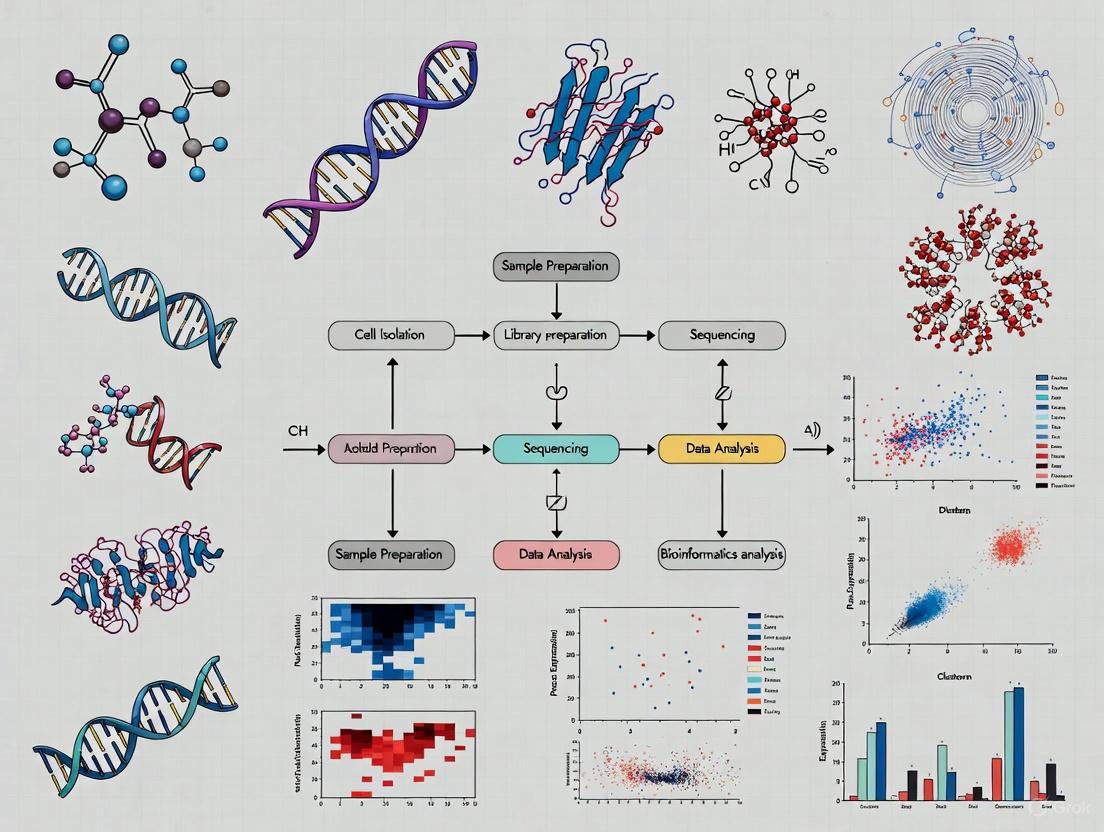
Single-cell transcriptomics has fundamentally reshaped our understanding of hematopoietic stem cell (HSC) biology, moving beyond the classical model to reveal a complex landscape of cellular heterogeneity.
Decoding Hematopoietic Stem Cell Heterogeneity: A Single-Cell Transcriptomics Revolution
Abstract
Single-cell transcriptomics has fundamentally reshaped our understanding of hematopoietic stem cell (HSC) biology, moving beyond the classical model to reveal a complex landscape of cellular heterogeneity. This article synthesizes foundational discoveries, cutting-edge methodological applications, and analytical frameworks for researchers and drug development professionals. We explore how scRNA-seq uncovers novel HSC subtypes, delineates differentiation trajectories, and identifies key regulatory networks under homeostasis and stress. The content further addresses critical challenges in data analysis and model systems, while highlighting validation strategies that bridge molecular signatures with in vivo function. By integrating the latest research, this review provides a comprehensive roadmap for leveraging single-cell technologies to advance fundamental knowledge and develop precise therapeutic interventions for hematologic disorders.
Unraveling HSC Complexity: From Homogeneous Pools to Heterogeneous Subtypes
Deconstructing the Classical Hematopoietic Hierarchy Model
For decades, the classical tree-like hierarchy of hematopoiesis has served as the foundational model for understanding blood cell development. This paradigm places hematopoietic stem cells (HSCs) at the apex of a stepwise differentiation pathway, progressively giving rise to all blood lineages through distinct progenitor stages. However, the advent of single-cell transcriptomics and other high-resolution technologies has fundamentally challenged this rigid hierarchy. This whitepaper deconstructs the classical model by synthesizing recent evidence revealing extensive heterogeneity, lineage bias, and alternative differentiation pathways within the hematopoietic stem and progenitor compartment. We present a revised framework for hematopoiesis, contextualized within modern single-cell research, that acknowledges a more complex and dynamic developmental landscape with significant implications for both basic research and drug development.
The Classical Hierarchy: A Foundational but Incomplete Model
The classical model of hematopoiesis was established through pioneering transplantation assays and immunophenotyping studies. It posits a strictly hierarchical organization where long-term HSCs (LT-HSCs) with full self-renewal capacity reside at the top, giving rise to short-term HSCs (ST-HSCs) and subsequently to multipotent progenitors (MPPs) [1]. The first major lineage bifurcation occurs at the MPP stage, producing common myeloid progenitors (CMPs) and common lymphoid progenitors (CLPs), which then further differentiate into unipotent progenitors and finally mature blood cells [1]. This model provided an invaluable framework for decades of hematopoietic research and clinical application.
The gold-standard assay for defining HSCs within this paradigm has been the transplantation of donor cells into lethally irradiated recipients, demonstrating the essential properties of self-renewal and multipotent differentiation capable of producing all blood lineages [1]. Isolation of HSCs became possible through fluorescence-activated cell sorting (FACS) using surface markers such as CD34, Sca-1, c-Kit, and SLAM family members, with similar approaches used to identify multi- and unipotent progenitors [1].
Table 1: Key Cellular Components of the Classical Hematopoietic Hierarchy
| Cell Population | Immunophenotype (Mouse) | Functional Properties | Reconstitution Capacity |
|---|---|---|---|
| LT-HSC | CD34−, Flk2−, LSK, SLAM+ | Self-renewal, multipotent | Long-term (>3-4 months) |
| ST-HSC | CD34+, Flk2−, LSK | Limited self-renewal, multipotent | Short-term (<1 month) |
| MPP | CD34+, Flk2+, LSK | No self-renewal, multipotent | No detectable |
| CMP | Lin−, Sca-1−, c-Kit+, CD34+, FCγRII/IIIlo | Myeloid, erythroid, megakaryocyte potential | Transient |
| CLP | Lin−, Sca-1lo, c-Kitlo, IL-7R+ | Lymphoid potential (T, B, NK cells) | Transient |
| GMP | Lin−, Sca-1−, c-Kit+, CD34+, FCγRII/IIIhi | Granulocyte, macrophage potential | Transient |
| MEP | Lin−, Sca-1−, c-Kit+, CD34−, FCγRII/IIIlo | Megakaryocyte, erythrocyte potential | Transient |
Technological Drivers of Paradigm Shift
The limitations of the classical model became apparent as new technologies enabled investigation at single-cell resolution. Bulk cell analysis assumed that cells with identical surface phenotypes possessed identical functions, an oversimplification that masked underlying heterogeneity [1]. Several key technological advances have been instrumental in deconstructing the classical hierarchy:
Single-Cell Omics and Functional Assays
Single-cell RNA sequencing (scRNA-seq) and single-cell assay for transposase-accessible chromatin using sequencing (scATAC-seq) have revealed unprecedented heterogeneity within phenotypically defined HSC and progenitor populations [1] [2]. These technologies have enabled researchers to identify novel subpopulations and transitional states that were previously obscured in bulk analyses.
Complementing these molecular approaches, single-cell transplantation assays have provided functional validation of heterogeneity. By transplanting single HSCs into conditioned recipients, researchers demonstrated that individual HSCs exhibit distinct lineage output biases and self-renewal capacities, challenging the notion of a uniform HSC population [1].
Lineage Tracing and Barcoding
Genetic lineage tracing and viral barcoding approaches have allowed for the fate mapping of individual HSCs and their progeny in vivo. Lu et al. tracked single HSCs using viral genetic barcoding combined with high-throughput sequencing, revealing that HSCs do not equally contribute to progeny and that distinct differentiation patterns coexist within the same animal [1]. These studies have provided direct evidence for the existence of oligo-, bi- and unipotent cells within phenotypically defined HSC populations [1].
Table 2: Key Experimental Methods for Deconstructing Hematopoietic Hierarchy
| Method | Technical Approach | Key Insights Generated |
|---|---|---|
| Single-cell RNA sequencing | Isolation and transcriptome profiling of individual cells | Cellular heterogeneity, novel subpopulations, lineage priming |
| Single-cell transplantation | Functional reconstitution assay using one donor cell per recipient | Heterogeneity in self-renewal and lineage output potential |
| Viral genetic barcoding | Labeling HSCs with unique genetic barcodes for lineage tracing | Clonal dynamics, contribution heterogeneity, differentiation routes |
| Flow cytometry with advanced markers | Using CD150, CD229, CD69, CLL1 for refined isolation | Functional subpopulations with distinct lineage biases |
| iFAST3D imaging | Whole-mount immunostaining of intact bone marrow | Spatial organization of HSCs in distinct niche locations |
Key Evidence Challenging the Classical Model
Functional Heterogeneity and Lineage Bias
Single-cell technologies have revealed that the HSC compartment is not uniform but consists of functionally distinct subpopulations with inherent lineage biases. Through limiting-dilution analysis and single-cell transplantation, researchers have defined myeloid-biased (My-Bi), balanced (Ba), and lymphoid-biased (Ly-Bi) HSCs based on their ratio of myeloid to lymphoid cell outputs [1].
This functional heterogeneity is reflected in molecular signatures. SLAM family markers CD150 and CD229 can segregate HSCs into fractions with distinct differentiation potentials. CD150hi HSCs display higher self-renewal potential with myeloid-biased differentiation, while CD229+ HSCs appear to have less self-renewal capacity with lymphoid-biased potential [1]. Recent human studies have further identified distinct MPP subpopulations within Lin−CD34+CD38dim/lo adult bone marrow, including CD69+ MPPs with long-term engraftment potential, CLL1+ myeloid-biased MPPs, and CLL1−CD69− erythroid-biased MPPs [3].
Revised Differentiation Pathways
Perhaps the most significant challenge to the classical model concerns the origin of megakaryocytes. While the classical hierarchy places megakaryocyte development exclusively within the myeloid branch through MEPs, recent evidence suggests more direct pathways. Yamamoto et al. observed that self-renewing lineage-restricted progenitors exist within phenotypically defined HSCs, including megakaryocyte repopulating progenitors (MkRPs) and megakaryocyte-erythrocyte repopulating progenitors (MERPs) [1]. Furthermore, the Jacobsen group identified that 25% of LT-HSCs express von Willebrand factor (vWF), and these vWF+ HSCs are primed for platelet-specific gene expression with enhanced propensity for long-term reconstitution of platelets [1]. This platelet-primed population appears to sit at the very top of the hematopoietic hierarchy and can give rise to vWF− lymphoid-biased HSCs.
The lymphoid branch has also been reconsidered with the identification of lymphoid-primed MPPs (LMPPs) that were initially thought to give rise to granulocyte/macrophage and lymphoid lineages but not megakaryocyte/erythrocyte lineage, though this view has been challenged by lineage tracing studies [1].
Diagram 1: Classical vs. Revised Hematopoietic Hierarchy. The revised model incorporates lineage-biased HSCs and direct differentiation pathways revealed by single-cell technologies.
Spatial and Temporal Dimensions
Single-cell analyses have also revealed that HSC heterogeneity has spatial and temporal dimensions. HSCs reside in distinct bone marrow niches—endosteal niches rich in arterioles and central niches associated with sinusoids and megakaryocytes—that influence their function [4]. In young mice, smaller HSCs, which are more myeloid-biased, are preferentially located in central BM niches, while larger HSCs with B-lymphoid bias are found in endosteal niches [4]. This spatial organization becomes disrupted with aging, accompanied by a decoupling of cell size and functional potential [4].
During embryonic development, single-cell multi-omics has revealed the complex process of HSC generation through endothelial-to-hematopoietic transition (EHT) in the aorta-gonad-mesonephros (AGM) region, with newly identified intermediate stages and regulatory networks [2]. Hematopoietic development occurs in three sequential waves—primitive, pro-definitive, and definitive—each with distinct anatomical sites and functional characteristics [2].
Experimental Framework for Single-Cell Hematopoiesis Research
Single-Cell Multi-Omics Workflow
Comprehensive investigation of hematopoietic heterogeneity requires integrated experimental approaches. The following workflow represents a state-of-the-art framework for deconstructing hematopoietic hierarchy at single-cell resolution:
Diagram 2: Single-Cell Multi-Omics Workflow. Integrated experimental approach for deconstructing hematopoietic hierarchy.
Essential Research Reagent Solutions
Table 3: Key Research Reagent Solutions for Hematopoietic Heterogeneity Studies
| Reagent/Category | Specific Examples | Function/Application |
|---|---|---|
| Surface Markers for HSC Isolation | CD150, CD48, CD244, CD34, Sca-1, c-Kit, CD135 | Prospective isolation of HSC subpopulations with distinct functional properties |
| Genetic Reporter Models | CD150-tdTomato, vWF-GFP | Visualizing and tracking specific HSC subpopulations in situ |
| Cytokines & Growth Factors | SCF, TPO, Flt3L, IL-3, IL-6, IL-11 | Maintaining HSCs in culture, supporting differentiation |
| Single-Cell Analysis Platforms | 10X Genomics, Fluidigm C1 | High-throughput single-cell RNA sequencing and ATAC sequencing |
| Cell Culture Matrices | Fibronectin, Laminin, Collagen | Mimicking bone marrow extracellular matrix for ex vivo studies |
| Small Molecule Inhibitors/Agonists | AhR antagonists (SR1, UM171), Notch signaling modulators | Ex vivo expansion and manipulation of HSC fate |
Implications for Research and Therapeutic Development
The deconstruction of the classical hematopoietic hierarchy has profound implications for both basic research and clinical applications. For drug development, understanding lineage-biased HSCs opens new avenues for targeted therapies. Myeloid-biased HSCs become more prevalent with aging and are associated with increased risk of myeloid malignancies—targeting these subpopulations could potentially prevent or treat age-related hematopoietic disorders [1] [4].
In stem cell transplantation, the identification of CD69+ MPPs with long-term engraftment potential in human bone marrow suggests new strategies for improving transplant outcomes [3]. Similarly, the recognition that platelet-biased HSCs sit at the top of the hierarchy informs efforts to generate platelets ex vivo for transfusion medicine [1].
For researchers, these findings necessitate more refined experimental designs that account for HSC heterogeneity. Rather than treating HSCs as a uniform population, studies should consider subpopulation-specific behaviors, potentially using the updated marker combinations outlined in this review. The integration of single-cell multi-omics with spatial information and functional assays will be crucial for further elucidating the complexity of hematopoietic development.
The classical tree-like hierarchy of hematopoiesis has been fundamentally deconstructed by single-cell technologies, revealing a vastly more complex landscape of hematopoietic development. Rather than a rigid, stepwise differentiation process, we now understand hematopoiesis to involve heterogeneous stem cell populations with inherent lineage biases, direct differentiation pathways that bypass traditional progenitor stages, and dynamic regulation by specialized niche microenvironments. This revised framework not only enhances our fundamental understanding of blood formation but also opens new therapeutic opportunities for targeting specific hematopoietic subpopulations in disease. As single-cell technologies continue to evolve, further refinement of this model is inevitable, promising continued insights into the elegant complexity of hematopoietic stem cell biology.
The hierarchical organization of the hematopoietic system is maintained by a series of functionally distinct stem and progenitor cells, with long-term hematopoietic stem cells (LT-HSCs), short-term hematopoietic stem cells (ST-HSCs), and multipotent progenitors (MPPs) residing at its apex. Historically, these populations were defined by functional transplantation assays and surface marker expression. However, the advent of single-cell transcriptomics has revolutionized our understanding of this hierarchy, revealing unprecedented heterogeneity and continuous transitional states that challenge the classical stepwise model of differentiation [5] [6]. This technical guide synthesizes current single-cell RNA sequencing (scRNA-seq) approaches to identify, characterize, and functionally validate these fundamental populations, providing a framework for decoding hematopoietic stem cell heterogeneity.
Molecular Signatures and Marker Profiles
Single-cell transcriptomics enables the discrimination of HSC subpopulations based on their global gene expression profiles, moving beyond the limitations of a few surface markers.
Transcriptomic Definitions
The table below summarizes the key transcriptional and surface markers that define LT-HSCs, ST-HSCs, and MPPs in mice, as identified by scRNA-seq and functional validation.
Table 1: Key Defining Features of HSC and Progenitor Subpopulations
| Subpopulation | Core Transcriptional Markers | Key Surface Phenotype (Mouse) | Functional Identity |
|---|---|---|---|
| LT-HSC | Hlf, Procr, Mycn, Mllt3, Cdkn1c [7] |
LIN⁻ Sca-1⁺ c-Kit⁺ CD34⁻ CD135⁻ [8] | Long-term self-renewal, multipotent |
| ST-HSC/MPP1 | - | LIN⁻ Sca-1⁺ c-Kit⁺ CD34⁺ CD135⁻ [8] | Short-term self-renewal, multipotent |
| MPP | Varies by subtype (see 1.2) | LIN⁻ Sca-1⁺ c-Kit⁺ CD34⁺ CD135⁺ [8] | Limited or no self-renewal, multipotent |
LT-HSCs are characterized by a "low-output" transcriptional signature enriched in pathways associated with "HSC homeostasis" and "regulation of hematopoiesis" [7]. This signature includes genes such as Hlf, Procr, and Cdkn1c. Under stress conditions, such as ionizing radiation, this homeostatic signature is transiently maintained but is accompanied by the upregulation of specific modules, including a megakaryocytic signature (Pf4, Vwf) and genes involved in stress response like Bmpr2 [7].
Resolving MPP Heterogeneity
The MPP compartment is not a uniform population but consists of several subtypes with distinct lineage biases. Single-cell analyses have been instrumental in deconvoluting this heterogeneity.
Table 2: Functionally Distinct Multipotent Progenitor (MPP) Subpopulations
| MPP Subset | Reported Surface Markers (Human) | Reported Surface Markers (Mouse) | Lineage Bias/Potential |
|---|---|---|---|
| MPP2 | - | CD150⁺ CD48⁺ [6] | - |
| MPP3 | - | CD150⁻ CD48⁺ [6] | - |
| MPP4 | - | CD150⁻ CD48⁺ [6] | - |
| LMPP | CD90⁻ CD45RA⁺ [9] | Flt3⁺ [5] | Lympho-myeloid primed |
| Myeloid-biased MPP | CD69⁻ CLL1⁺ [3] | - | Myeloid |
| Erythroid-biased MPP | CD69⁻ CLL1⁻ [3] | - | Erythroid |
In humans, multi-omic single-cell analyses have prospectively isolated functionally distinct MPPs within the Lin⁻CD34⁺CD38^(dim/lo) bone marrow compartment using markers like CD69 and CLL1. These include a CD69⁺ MPP with robust engraftment potential, a CLL1⁺ myeloid-biased MPP, and a CLL1⁻CD69⁻ erythroid-biased MPP [3]. Trajectory inference from scRNA-seq data typically reveals three branched differentiation paths originating from LT-HSCs and ending in MEPs, GMPs, and CLPs, passing through MPP2, MPP3, and MPP4, respectively [7].
Experimental Protocols for Single-Cell Resolution
Single-Cell RNA Sequencing Workflow
A standard workflow for profiling HSCs and MPPs via scRNA-seq involves several critical steps [6] [8]:
- Cell Sorting and Isolation: Hematopoietic stem and progenitor cells (HSPCs) are first enriched from bone marrow (e.g., from femur and tibia) using a lineage depletion kit to remove mature cells. Subsequently, populations of interest are purified via Fluorescence-Activated Cell Sorting (FACS) using established surface marker panels.
- Mouse LT-HSC: LIN⁻ Sca-1⁺ c-Kit⁺ CD34⁻ CD135⁻
- Mouse ST-HSC: LIN⁻ Sca-1⁺ c-Kit⁺ CD34⁺ CD135⁻
- Mouse MPP: LIN⁻ Sca-1⁺ c-Kit⁺ CD34⁺ CD135⁺ [8]
- Single-Cell Library Preparation: Sorted individual cells are captured and lysed in separate reaction vessels. cDNA libraries are generated using full-length transcript amplification protocols, such as Smart-seq2 [8]. For higher throughput, droplet-based technologies (e.g., 10X Genomics) that capture the 3' ends of transcripts are widely employed [6].
- Sequencing: The cDNA libraries are sequenced on platforms such as the Illumina HiSeq X Ten for short-read sequencing, which is standard for gene expression quantification [8].
- Computational Data Analysis:
- Quality Control & Preprocessing: Filtering out poor-quality cells based on low feature counts, high mitochondrial transcript percentage, or doublet detection using tools like
DoubletFinder[8]. - Normalization and Scaling: Correcting for varying sequencing depths between cells.
- Feature Selection: Identifying Highly Variable Genes (HVGs) for downstream analysis.
- Dimensionality Reduction and Clustering: Using Principal Component Analysis (PCA) followed by graph-based clustering in tools like Seurat or Scanpy. Cells are visualized in two dimensions using t-distributed Stochastic Neighbor Embedding (t-SNE) or Uniform Manifold Approximation and Projection (UMAP) [6].
- Differential Expression and Annotation: Identifying marker genes for each cluster and annotating cell types based on canonical gene signatures.
- Trajectory Inference: Using algorithms (e.g., Monocle, PAGA) to order cells along a pseudo-temporal continuum to model differentiation paths [5].
- Quality Control & Preprocessing: Filtering out poor-quality cells based on low feature counts, high mitochondrial transcript percentage, or doublet detection using tools like
Integrating Proteomic and Genomic Data
To bridge the gap between transcriptional identity and protein-based FACS isolation, single-cell proteo-genomic methods are used. This approach quantitatively links surface marker expression to cellular identities defined by scRNA-seq [10].
- Cell Staining: Bone marrow mononuclear cells are labeled with large panels (e.g., 97-197) of oligo-tagged antibodies against surface markers.
- Single-Cell Capture and Library Prep: Stained cells are processed on a platform like the BD Rhapsody for simultaneous targeted or whole transcriptome scRNA-seq and sequencing of the antibody-derived tags (Abseq).
- Data Integration and Analysis: Combined RNA and surface protein expression data are integrated to create a high-resolution reference map. This enables the unbiased evaluation of existing FACS gating schemes and the data-driven design of optimized panels for the precise isolation of molecularly defined cell states [10].
Signaling Pathways Governing Function and Heterogeneity
Single-cell transcriptomics has identified key signaling pathways that regulate the functional identity and stress responses of HSC subpopulations.
The BMP4-BMPR2-Nrf2 Axis in Stress Response
A 2025 study using scRNA-seq of irradiated murine bone marrow revealed that BMP4 signaling through its receptor BMPR2 confers radiation resistance to a specific subset of HSCs [7].
- Radiation-Resistant HSCs: A subpopulation of BMPR2⁺ HSCs was identified as highly radioresistant, sustaining strong self-renewal capacity after injury.
- Epigenetic Regulation: These BMPR2⁺ HSCs maintain their function primarily by reducing the repressive H3K27me3 modification on the
Nrf2gene, a master regulator of antioxidant response. - Functional Validation: In vivo, a single administration of BMP4 rescued mice from radiation-induced mortality. Furthermore,
Nrf2knockout mice demonstrated that Nrf2 is a critical downstream effector gene for the BMP4-BMPR2 pathway in mitigating radiation damage [7].
Aging-Associated Signaling Alterations
scRNA-seq of HSCs from young and aged mice reveals age-related shifts in transcriptional programs.
- Myeloid Bias: A conserved age-associated change is a shift in lineage bias towards myeloid differentiation at the expense of lymphoid potential. This is reflected in the transcriptome of aged HSCs, which show aberrant regulation of genes involved in myeloid and lymphoid differentiation [6].
- Identification of Aged Subpopulations: Unsupervised clustering of aged HSCs identifies specific subpopulations that expand with age. One such cluster is characterized by a gene signature associated with inflammatory response [11].
- Novel Markers of Aging: scRNA-seq identified
Clusterin (Clu)as a gene dramatically upregulated in a subset of aged HSCs. Functional assays using Clu reporter mice confirmed that Clu-positive HSCs are myeloid-biased and expand with aging, establishing Clu as a novel marker for tracking HSC heterogeneity during aging [11].
The Scientist's Toolkit: Essential Reagents and Technologies
Table 3: Key Research Reagent Solutions for HSC Single-Cell Studies
| Reagent/Technology | Function/Application | Example Use Case |
|---|---|---|
| Fluorescence-Activated Cell Sorter (FACS) | High-purity prospective isolation of live HSC/MPP subsets based on surface markers. | Isolation of LT-HSCs (Lin⁻Sca-1⁺c-Kit⁺CD34⁻CD135⁻) for downstream scRNA-seq [8]. |
| 10X Genomics Chromium | High-throughput, droplet-based single-cell RNA sequencing platform. | Profiling tens of thousands of HSPCs to map heterogeneity and differentiation trajectories [6]. |
| Smart-seq2 | Plate-based, full-length scRNA-seq protocol offering high sensitivity and coverage. | Deep sequencing of a smaller number of FACS-isolated LT-HSCs and ST-HSCs [8]. |
| Oligo-tagged Antibody Panels (e.g., Abseq, CITE-seq) | Simultaneous quantification of surface protein abundance and transcriptome in single cells. | Creating proteo-genomic reference maps to link surface marker expression to transcriptional cell states [10]. |
| Seurat / Scanpy | Open-source computational toolkits for comprehensive analysis and integration of scRNA-seq data. | Performing quality control, dimensionality reduction, clustering, and differential expression analysis [6]. |
| Reference Atlas of Human Hematopoiesis | Curated collection of scRNA-seq profiles from normal bone marrow cells across multiple donors. | Mapping and classifying cells from patient samples (e.g., AML) onto a normal differentiation landscape to identify aberrations [9]. |
Single-cell transcriptomics has fundamentally refined our understanding of the functional hierarchy within the HSC compartment. It has moved the field beyond simplistic, discrete models to a dynamic continuum of cell states. The integration of transcriptomic data with surface proteomics and functional assays is paramount for translating molecular definitions into practical isolation strategies. This powerful combination continues to uncover the molecular intricacies of HSC heterogeneity in development, aging, and disease, paving the way for novel therapeutic interventions in hematological disorders.
Single-Cell Atlas of Steady-State and Stress-Induced Hematopoiesis
The hematopoietic system represents one of the most extensively characterized hierarchical stem cell systems in mammalian biology, yet its complexity has been fully appreciated only with the advent of single-cell transcriptomic technologies. Hematopoietic stem cells (HSCs) reside at the apex of this system, possessing the dual capacities of self-renewal and multilineage differentiation into all blood cell types throughout an organism's lifespan [2] [5]. Traditional models of hematopoiesis, built primarily through fluorescence-activated cell sorting with defined surface markers, portrayed a structured hierarchy with stepwise lineage commitment. However, this conventional view has been challenged by emerging evidence of substantial heterogeneity within phenotypically defined populations and the existence of alternative differentiation pathways [12] [13].
Single-cell RNA sequencing (scRNA-seq) has revolutionized our understanding of hematopoietic stem cell biology by enabling researchers to dissect cellular heterogeneity, reconstruct developmental trajectories, and identify novel cell states at unprecedented resolution. These technologies have revealed that the hematopoietic system exhibits a complex transcriptional landscape comprising continuous transitional states and branchpoint decisions that were previously obscured in bulk population analyses [12] [13] [5]. The construction of comprehensive single-cell atlases has provided foundational resources for distinguishing normal differentiation processes from pathological perturbations in hematological malignancies.
This technical guide synthesizes recent advances in single-cell transcriptomic mapping of both steady-state hematopoiesis and stress-induced adaptations, with particular emphasis on experimental methodologies, key signaling pathways, and computational tools that empower researchers to decode the molecular intricacies of hematopoietic heterogeneity.
Single-Cell Transcriptomic Atlas of Steady-State Hematopoiesis
Developmental Hierarchy and Lineage Commitment
The landscape of steady-state hematopoiesis has been meticulously characterized through several large-scale single-cell initiatives. A comprehensive transcriptional atlas of human hematopoiesis was recently constructed from 263,159 single-cell transcriptomes spanning 55 distinct cellular states, establishing a high-resolution reference map for the research community [14] [15]. This atlas reveals a hierarchically structured differentiation process with clearly defined branchpoints, rather than a continuum of low-primed undifferentiated cells emerging as unilineage-restricted populations [13].
Analysis of bone marrow lineage-negative (Lin-) progenitors has identified a critical early fate separation between erythroid-megakaryocyte progenitors and lymphoid-myeloid progenitors (LMPs), which subsequently diverge further into lymphoid, dendritic cell, and granulocytic lineages [13]. This hierarchical organization is supported by both transcriptional trajectory inference and population balance analysis, confirming structured progression rather than stochastic transition. Notably, extending analysis beyond CD34+ cells to include CD34low and CD34− populations has revealed missing branches, particularly for basophils, eosinophils, mast cells, and monocyte progenitors, indicating that previous immunomagnetic selection approaches inadvertently excluded important transitional states [13].
Table 1: Key Cellular Populations in Hematopoietic Single-Cell Atlas
| Cell Population | Identifying Markers | Differentiation Potential | Reference |
|---|---|---|---|
| Long-term HSCs (LT-HSCs) | AVP, Hlf, Procr | Self-renewal, multilineage | [7] [16] |
| Short-term HSCs (ST-HSCs/MPP1) | CD34, CD38 | Multilineage with limited self-renewal | [7] |
| Erythroid-Megakaryocyte Progenitors | CD164, PF4 | Erythrocytes, Megakaryocytes | [13] [16] |
| Lymphoid-Myeloid Progenitors (LMPs) | CD34, CD45RA | Lymphoid, Myeloid lineages | [13] |
| Granulocyte-Macrophage Progenitors (GMPs) | Cebpe, Mt1 | Granulocytes, Macrophages | [7] |
| Common Lymphoid Progenitors (CLPs) | CD127, IL7R | T cells, B cells, NK cells | [16] |
Technical Advances in Single-Cell Multimodal Profiling
Recent technological innovations have enabled coupled surface protein and transcriptome profiling through cellular indexing of transcriptomes and epitopes by sequencing (CITE-seq). A systematically optimized CITE-seq platform for primary human bone marrow cells employed 266 antibody titrations and machine learning to develop a panel of 132 antibodies that resolve >80 stem, progenitor, immune, stromal, and transitional cell states defined by distinctive surface markers and transcriptomes [16]. This multimodal approach facilitates direct correlation between immunophenotypic markers and underlying transcriptional states, bridging the gap between conventional flow cytometry and transcriptomic classification.
The experimental workflow for comprehensive hematopoietic atlas construction typically involves:
- Sample Preparation: Isolation of bone marrow Lin- cells, often with enrichment for CD34+ populations via magnetic-activated cell sorting or fluorescence-activated cell sorting [13] [16]
- Single-Cell Partitioning: Utilization of microfluidic platforms (10X Genomics Chromium, Fluidigm C1) or droplet-based systems for high-throughput single-cell capture [12] [17]
- Library Preparation: Reverse transcription, cDNA amplification, and library construction with incorporation of unique molecular identifiers (UMIs) to correct for amplification biases [12] [17]
- Sequencing: High-throughput sequencing on Illumina platforms, typically targeting 20,000-50,000 reads per cell for sufficient transcript coverage [12]
- Multimodal Integration: For CITE-seq, simultaneous capture of antibody-derived tags (ADTs) alongside cDNA enables correlated protein and gene expression analysis [16]
Table 2: Single-Cell Sequencing Technologies in Hematopoiesis Research
| Method | Amplification Strategy | Transcript Coverage | Throughput | Applications | |
|---|---|---|---|---|---|
| Smart-seq2 | Template switching | Full-length mRNA | Hundreds of cells | Alternative splicing, mutation detection | [12] [17] |
| CEL-seq/MARS-seq | In vitro transcription | 3' end of mRNA | Thousands of cells | High-throughput profiling, population studies | [12] |
| 10X Genomics | Template switching | 3' end of mRNA | Thousands of cells | Large atlas projects, rare cell identification | [17] |
| CITE-seq | Template switching with antibody-derived tags | 3' end of mRNA with surface protein data | Thousands of cells | Multimodal analysis, immunophenotype-transcriptome correlation | [16] |
Figure 1: Experimental Workflow for Single-Cell Atlas Construction
Stress-Induced Hematopoiesis: Radiation Response and Regenerative Adaptation
Dynamic Remodeling of Hematopoietic Hierarchy Following Injury
The hematopoietic system demonstrates remarkable plasticity when confronted with stress stimuli such as ionizing radiation (IR), chemotherapy, or inflammatory challenges. Single-cell transcriptomic analysis of bone marrow during IR-induced regeneration has revealed profound temporal dynamics in hematopoietic stem and progenitor cell (HSPC) composition and differentiation trajectories [7]. Following radiation exposure, researchers observed a substantial increase in LT-HSCs within the HSPC compartment at day 1 post-irradiation, indicating their relatively higher radioresistance compared to multipotent progenitors (MPPs) [7].
This initial expansion is followed by a rapid exhaustion of the stem cell pool from day 3 to day 21 post-irradiation, accompanied by a pronounced skewing toward granulocyte-macrophage progenitor (GMP) differentiation. This skewed differentiation trajectory is characterized by upregulated expression of GMP signature genes (Cebpe, Mt1) and proliferation markers (Mki67, Ccnb2) in ST-HSCs and MPP3 populations [7]. Concurrently, LT-HSCs exhibit reduced lymphoid differentiation signatures under IR-induced regeneration stress, reflecting a preferential commitment to myeloid lineages that may facilitate rapid reconstitution of innate immune defenses following injury [7].
Temporal analysis of gene expression patterns in LT-HSCs during regeneration has identified distinct sub-modules with characteristic response kinetics. A megakaryocyte-biased sub-module (containing Pf4, Thbs1, Vwf, Gp9) displays sharp upregulation at day 1 before returning to baseline, suggesting an early emergency megakaryopoietic response [7]. Another sub-module enriched with Bmpr2, Hes1, and Smad7 shows sustained elevation at days 1 and 3, implicating BMP signaling in the stress-adapted hematopoietic response.
BMP4-BMPR2 Signaling in Radioresistant HSCs
A pivotal discovery in stress hematopoiesis has been the identification of a BMPR2+ HSC subpopulation with enhanced radioresistance and self-renewal capacity [7]. Single-cell transcriptomics revealed that these BMPR2+ HSCs sustain robust self-renewal primarily by reducing H3K27me3 modification on the Nrf2 gene in response to radiation stress, thereby enhancing antioxidant defense mechanisms [7]. The functional significance of this pathway was confirmed through Nrf2 knockout experiments, which demonstrated that Nrf2 serves as a critical downstream effector of BMP4-BMPR2 signaling in radioprotection.
Therapeutic targeting of this pathway has shown promising results, with a single administration of BMP4 or SB4 (a BMP4 surrogate) sufficient to rescue mice from IR-induced mortality [7]. This protective effect is mediated through epigenetic reprogramming that maintains a permissive chromatin state at the Nrf2 locus, enabling enhanced expression of cytoprotective genes in response to oxidative stress. These findings position the BMP4-BMPR2-Nrf2 axis as a promising target for developing innovative radioprotective strategies.
Figure 2: BMP4-BMPR2 Signaling in Radiation Resistance
Table 3: Dynamic Changes in HSPC Subpopulations Following Radiation Injury
| Cell Population | Day 1 Post-IR | Day 3 Post-IR | Day 7-21 Post-IR | Functional Significance | |
|---|---|---|---|---|---|
| LT-HSCs | Substantial increase | Sharp decrease | Continued depletion | Radioresistant but subsequently exhausted | [7] |
| ST-HSCs/MPP1 | Moderate decrease | Further decrease | Low proportions | Limited self-renewal capacity under stress | [7] |
| GMPs | Moderate increase | Dramatic increase | Sustained elevation | Emergency granulopoiesis for host defense | [7] |
| MEPs | Transient increase | Return to baseline | Stable proportions | Early megakaryocytic response | [7] |
| BMPR2+ HSCs | Relative expansion | Maintained population | Functional persistence | Radioresistant subset with enhanced self-renewal | [7] |
The Scientist's Toolkit: Research Reagent Solutions
Table 4: Essential Research Reagents for Single-Cell Hematopoiesis Studies
| Reagent/Category | Specific Examples | Function/Application | Technical Notes |
|---|---|---|---|
| Surface Markers for Cell Isolation | CD34, CD38, CD45, CD90, CD45RA | Identification and isolation of HSPC subpopulations | Optimized titrations required for CITE-seq [16] |
| Lineage Depletion Cocktail | CD2, CD3, CD14, CD16, CD19, CD56 | Removal of mature hematopoietic cells | Essential for progenitor enrichment [13] |
| CITE-seq Antibody Panels | 132-plex optimized panel (CD34, CD38, CD90, CD45, etc.) | Simultaneous protein and gene expression profiling | Machine learning-optimized concentrations [16] |
| Cell Hashing Antibodies | TotalSeq Hashtag antibodies | Sample multiplexing and batch effect correction | Enables pooling of multiple samples [16] |
| Single-Cell Platform | 10X Genomics Chromium, Fluidigm C1 | High-throughput single-cell partitioning | Choice depends on throughput needs [12] [17] |
| Bioinformatic Tools | SCENIC, CellHarmony, scTriangulate | Regulatory network inference, cluster annotation | Essential for data interpretation [18] [16] |
Computational Methods for Data Analysis and Integration
The interpretation of single-cell transcriptomic data requires sophisticated computational approaches to extract biological insights from complex high-dimensional datasets. Network inference algorithms such as SCENIC (Single-Cell Regulatory Network Inference and Clustering) enable reconstruction of gene regulatory networks from scRNA-seq data by identifying transcription factor activities and their target genes [18]. This approach has revealed enhanced activity of proliferation-associated transcription factors (Ybx1, Tfdp1, E2f1, E2f4) in MPP3 populations following radiation stress [7].
Multi-omics integration tools have become increasingly important for reconciling data from different single-cell platforms and modalities. The scTriangulate algorithm employs game theory principles to assess the relative importance and stability of cell population definitions across multiple clustering methods and reference atlases [16]. This approach has demonstrated particular utility for resolving controversial cell state annotations in bone marrow datasets, where different reference atlases may show notable discordance [16].
Trajectory inference methods such as Population Balance Analysis (PBA) and diffusion maps enable reconstruction of differentiation paths from snapshots of single-cell transcriptomes [13]. These algorithms can order cells along putative developmental trajectories based on transcriptomic similarity, revealing the sequence of molecular events during lineage commitment. Application of these methods to human bone marrow Lin- cells has confirmed a hierarchical branching structure with erythroid-megakaryocyte separation from lymphoid-myeloid lineages at the earliest branchpoint [13].
Machine learning approaches are increasingly being applied to single-cell hematopoiesis data for predictive modeling and biomarker discovery. Gradient boosting methods (XGBoost) have been used to rank antibody-derived tags in CITE-seq data based on their ability to distinguish transcriptomically-defined cell states [16]. Similarly, supervised learning models trained on reference atlases can automatically annotate cell types in new datasets, facilitating rapid analysis and comparison across studies [18] [16].
The construction of comprehensive single-cell atlases for both steady-state and stress-induced hematopoiesis represents a transformative advancement in our understanding of blood formation and regeneration. These resources have revealed previously unappreciated cellular heterogeneity, identified novel regulatory mechanisms, and provided insights into the molecular basis of hematopoietic resilience. The integration of multi-omic technologies, particularly coupled transcriptome and surface protein profiling, has bridged historical gaps between immunophenotypic and molecular definitions of cell identity.
The application of single-cell reference atlases to malignant hematopoiesis has already demonstrated considerable utility, enabling identification of 12 recurrent patterns of aberrant differentiation in acute myeloid leukemia and revealing unexpected AML cell states resembling lymphoid and erythroid progenitors [14] [15]. These findings highlight how genetic drivers interact with cellular context to shape disease phenotypes, providing a framework for refined classification of hematological malignancies based on both genetic and differentiation features.
Future directions in the field will likely include increased temporal resolution of stress responses through time-series single-cell analysis, enhanced spatial context through spatial transcriptomics, and more sophisticated multi-omic integration that simultaneously captures transcriptomic, epigenetic, and proteomic information from individual cells. These technological advances, combined with the computational tools to interpret increasingly complex datasets, promise to further decode the intricacies of hematopoietic stem cell heterogeneity and its implications for both normal physiology and disease.
Lineage Priming and Early Commitment Signatures in Multipotent Progenitors
Single-cell transcriptomics has fundamentally reshaped our understanding of hematopoietic stem and progenitor cell (HSPC) heterogeneity, moving beyond rigid hierarchical models to reveal a dynamic continuum of low-primed states. This whitepaper synthesizes current research on lineage priming and early commitment signatures within multipotent progenitors (MPPs), providing a technical guide for researchers and drug development professionals. We detail the molecular hallmarks of lineage bias, explore experimental and computational methodologies for their identification, and present a curated toolkit of reagents and protocols. By framing these findings within the broader context of decoding hematopoietic heterogeneity, this resource aims to equip scientists with the knowledge to interrogate early fate decisions, with implications for understanding hematopoietic malignancies and developing targeted therapies.
The classical model of hematopoiesis posits a step-wise hierarchy where hematopoietic stem cells (HSCs) sequentially lose lineage potential through discrete oligo-potent and bi-potent progenitor stages. However, recent advances in single-cell transcriptomics have challenged this dogma, revealing substantial heterogeneity and lineage priming within phenotypically defined homogeneous populations. Lineage priming—the co-expression of lineage-affiliated transcription factors in multipotent cells—and early commitment signatures represent critical molecular preludes to fate restriction. Understanding these processes is essential for decoding the fundamental principles of blood cell production, the cellular origins of hematopoietic diseases, and for guiding the in vitro generation of specific blood lineages for therapeutic purposes.
Theoretical Frameworks: From a Structured Hierarchy to a Continuous Cloud
Single-cell RNA sequencing (scRNA-seq) studies have yielded two predominant, non-mutually exclusive models for early lineage commitment.
The CLOUD-HSPC Model
Analysis of the primitive Lin⁻CD34⁺CD38⁻ compartment shows an absence of stable transcriptional clusters. Instead, cells form a highly interconnected, continuous entity termed the "Continuum of LOw-primed UnDifferentiated HSPCs" (CLOUD-HSPCs) [19]. Within this continuum, individual HSCs gradually acquire lineage biases along multiple directions without passing through discrete, hierarchically organized progenitor populations. Unilineage-restricted cells then emerge directly from this continuum, with discrete immunophenotypic populations only becoming apparent upon upregulation of CD38 [19]. This model suggests that commitment is a continuous process rather than a series of binary fate decisions.
The Structured Hierarchy Model
In contrast, other transcriptional landscapes of human hematopoietic progenitors support a hierarchically structured, tree-like continuum of states [13]. This model identifies distinct, early branchpoints:
- The earliest fate split separates erythroid-megakaryocyte progenitors from lymphoid-myeloid progenitors (LMPs).
- Subsequent branching of the LMPs gives rise to lymphoid, dendritic cell, and granulocytic progenitors [13].
This view maintains a recognizable hierarchy but acknowledges greater complexity and heterogeneity within defined progenitor gates than previously appreciated.
Table 1: Key Models of Early Hematopoietic Cell Fate Decisions
| Model | Core Principle | Key Supporting Evidence | Implied Mechanism of Commitment |
|---|---|---|---|
| CLOUD-HSPC [19] | A continuum of low-primed cells without discrete intermediate stages. | Absence of stable clusters in Lin⁻CD34⁺CD38⁻ cells; gradual lineage bias acquisition. | Direct emergence of unilineage cells from a continuum. |
| Structured Hierarchy [13] | A tree-like structure with defined early branchpoints. | scRNA-seq graphs show clear branching trajectories from multipotent to lineage-restricted states. | Sequential, hierarchical loss of lineage potential. |
| Independent Ontogeny [20] | Early MPPs and HSCs arise independently from distinct hemogenic endothelial precursors. | Clonal assays in mouse embryo; HSC-competent hemogenic endothelium is marked by CXCR4. | Fate is predetermined at the level of the hemogenic endothelium. |
The following diagram illustrates the fundamental differences between the classical and contemporary models of hematopoiesis, highlighting the CLOUD-HSPC and structured hierarchy concepts.
Molecular Signatures of Lineage Priming and Commitment
Lineage priming is governed by the combinatorial activity of transcription factors and post-transcriptional regulators that create a biased, yet still flexible, molecular landscape.
Transcription Factor Networks
A core regulatory network of transcription factors operates in a combinatorial manner to control stemness and early lineage priming [19]. The balance between competing factors helps establish lineage bias:
- Erythroid-Megakaryocytic Bias: Priming towards erythroid and megakaryocyte fates is associated with expression of
GATA1,GATA2, andTAL1[19] [13]. - Myeloid Bias: Commitment to the myeloid lineage is strongly associated with
PU.1(encoded by SPI1) [21]. - Lymphoid Bias: The transcription factor
Bcl11ais identified as a critical regulator for lymphoid competence in HSCs.Bcl11a-deficient HSCs are myeloerythroid-restricted, indicating its role in establishing or maintaining lymphoid potential [22].
The model of a "myeloid-based" hematopoiesis is supported by the role of BACH1 and BACH2 factors. These factors repress the myeloid program in progenitors, thereby permitting erythroid and lymphoid differentiation. Their repression under inflammatory or infectious conditions leads to a "de-repression" of the myeloid default, explaining the rapid shift towards myelopoiesis during emergency hematopoiesis [21].
Surface Markers for Prospectively Isolating Biased MPPs
Functional MPP subpopulations with distinct lineage biases can be prospectively isolated using combinations of surface markers beyond the classical immunophenotypes, as shown in the table below.
Table 2: Functionally Distinct Human MPP Subpopulations and Their Signatures
| Progenitor Population | Key Defining Surface Markers | Lineage Bias and Functional Properties | Key Molecular Features |
|---|---|---|---|
| MPP with Long-Term Engraftment | Lin⁻CD34⁺CD38dim/lo CD69⁺ [3] | Long-term engraftment & multilineage differentiation. | Not specified in results. |
| Myeloid-Biased MPP | Lin⁻CD34⁺CD38dim/lo CLL1⁺ [3] | Primarily myeloid lineage output. | Not specified in results. |
| Erythroid-Biased MPP | Lin⁻CD34⁺CD38dim/lo CLL1⁻CD69⁻ [3] | Primarily erythroid lineage output. | Not specified in results. |
| Neutrophil-Primed Progenitors | Lin⁻CD34⁺CD38⁺CD135⁺CD45RA⁺ [19] | Neutrophil lineage commitment; includes distinct maturation stages (N0-N3). | Progressive upregulation of CD135 and CD45RA. |
| Erythroid-Committed Progenitors | Lin⁻CD34⁺CD38⁺; identified by CD71 (TRFC) and KEL [19] | Erythroid fate. | High GATA1 expression; haemoglobin genes. |
| HSC-Competent Hemogenic Endothelium | CXCR4⁺ (Murine embryo) [20] | Precursors to definitive HSCs. | Enriched arterial programs (e.g., Dll4) and HSC self-renewal genes. |
Experimental and Computational Methodologies
Deciphering lineage priming requires a sophisticated integration of cutting-edge wet-lab and computational techniques.
Key Experimental Protocols
A. Single-Cell Multi-omic Analysis and Functional Validation
This protocol is designed for the integrated analysis of cell surface phenotype, transcriptome, and functional potential from the same single cell [3] [19].
- Sample Preparation: Isolate primary human bone marrow cells and stain with a comprehensive panel of fluorescently labeled antibodies against HSPC surface markers (e.g., Lin, CD34, CD38, CD45RA, CD90, CD69, CLL1, CD2).
- Index Sorting: Use a fluorescence-activated cell sorter (FACS) to deposit single cells (e.g., from the Lin⁻CD34⁺ gate) individually into plate wells. Critically, record the fluorescence intensity of all markers for each deposited cell.
- Parallel Processing:
- Single-Cell RNA-Seq: For transcriptomic analysis, lyse cells and prepare sequencing libraries using a platform like SMART-Seq2. Sequence to an appropriate depth.
- Single-Cell Functional Assay: For functional analysis, culture index-sorted cells in methylcellulose media or in stromal co-culture systems (e.g., OP9 or OP9-DLL4) supportive of multilineage differentiation. After a defined period, score colonies for myeloid, erythroid, and megakaryocytic potential, or use flow cytometry to assess B- and T-lymphoid potential.
- Data Integration: Correlate the initial surface marker expression (from index sorting) with the transcriptional profile or functional output of each individual cell using regression models. This allows for the direct linkage of immunophenotype, molecular state, and fate potential.
B. Single-Cell Metabolomic Profiling
Metabolic state is increasingly recognized as a regulator of cell fate. This protocol enables the profiling of metabolites from single cells [23].
- Single-Cell Isolation: FACS-sort single HSCs/MPPs into collection plates.
- Metabolite Extraction: Use a nanoliter-scale system to lyse cells and extract metabolites.
- Metabolite Analysis and Identification:
- Matrix-Assisted Laser Desorption/Ionization Mass Spectrometry (MALDI-MS): Combine the sample with a matrix and analyze with MALDI-MS to detect metabolite mass-to-charge ratios.
- Ion Mobility Separation: Couple with ion mobility separation to enhance resolution of metabolite isomers.
- Tandem Mass Spectrometry (MS/MS): Perform MS/MS on selected ions to elucidate metabolite structures for confident identification.
- Data Integration: Overlay metabolomic data with transcriptomic data from parallel single cells to build a multi-omic view of cell state.
Computational and Analytical Tools
A. Splicing Heterogeneity Analysis with SCSES
Alternative splicing contributes significantly to transcriptomic diversity. SCSES (Single-Cell Splicing EStimation) is a computational framework designed to accurately estimate percent spliced-in (PSI) values from sparse scRNA-seq data [24].
- Principle: It uses a data diffusion technique to impute missing splicing information by sharing data across similar cells and similar splicing events.
- Workflow:
- Reference Construction: Merge all aligned reads to create a pseudo-bulk sample and identify splicing events (e.g., SE, A3SS, A5SS, RI).
- Raw Matrix Building: Count inclusion/exclusion junction reads for each event in each cell to create a raw PSI matrix.
- Data Imputation: Construct cell and event similarity networks (using gene expression of RNA-binding proteins or PSI values) and perform network diffusion to impute missing data and reduce noise.
- Application: Enables discovery of cell subgroups with exclusive splicing patterns not detectable by gene expression analysis alone [24].
B. Trajectory Inference and Population Balance Analysis
These algorithms are used to reconstruct continuous differentiation paths from snapshot scRNA-seq data.
- Trajectory Inference: Methods like Diffusion Maps can order cells along a pseudo-temporal continuum of development, allowing researchers to visualize the path from stem to differentiated cells and identify genes that change dynamically along that path [13].
- Population Balance Analysis (PBA): This is a graph-based algorithm that formalizes the tree-like structure of hematopoiesis. It can be used to identify branchpoints and the hierarchy of lineage decisions within a scRNA-seq dataset [13].
The following diagram illustrates a typical integrated workflow, from single-cell isolation to computational analysis, as discussed in the protocols above.
The Scientist's Toolkit: Research Reagent Solutions
The following table details key reagents and tools essential for studying lineage priming and commitment in multipotent progenitors.
Table 3: Essential Research Reagents and Resources
| Reagent / Resource | Function / Specificity | Example Application in Research |
|---|---|---|
| Anti-human CD34 Antibody | Identifies and isolates human hematopoietic stem and progenitor cells. | Magnetic bead or fluorescent-activated cell sorting of HSPCs from bone marrow [13]. |
| Anti-human CD38 Antibody | Distinguishes primitive (CD38⁻/lo) from more differentiated (CD38⁺) progenitors. | Used in combination with CD34 to gate on the most primitive HSPC compartment [19]. |
| Anti-human CD69, CLL1, CD2 | Surface markers for prospectively isolating functionally distinct MPP subsets. | Fractionation of Lin⁻CD34⁺CD38dim/lo cells into long-term engrafting, myeloid-biased, and erythroid-biased MPPs [3]. |
| Anti-human CD71 (TRFC) & KEL | Markers for identifying erythroid-committed progenitors. | Isolating erythroid progenitors from heterogeneous progenitor pools (e.g., MEP gate) for functional studies [19]. |
| Anti-mouse CXCR4 Antibody | Marks HSC-competent hemogenic endothelium in the murine embryo. | Isolating CXCR4⁺ hemogenic endothelium from E9–E10 P-Sp/AGM for clonal culture and transplantation assays [20]. |
| OP9 & OP9-DLL4 Stromal Cells | Stromal co-culture systems for in vitro differentiation of hematopoietic progenitors. | Supporting B-cell (OP9) and T-cell (OP9-DLL4) differentiation from single index-sorted HSPCs [19] [20]. |
| SCSES Computational Tool | Accurately estimates percent spliced-in (PSI) values from scRNA-seq data. | Deciphering splicing heterogeneity and its contribution to lineage fate decisions in HSPCs [24]. |
| Bcl11a KO Mouse Model | Genetic model for studying the role of Bcl11a in lymphoid development. | Investigating the role of Bcl11a in maintaining lymphoid potential within the HSC compartment [22]. |
The application of single-cell technologies has definitively shown that multipotent progenitors are not a homogeneous pool of cells waiting for instructional cues, but a mosaic of molecularly and functionally distinct entities with pre-established biases. The signatures of lineage priming—whether transcriptional, surface-based, or metabolic—provide a roadmap of a cell's potential fate. The ongoing refinement of models, from continua to structured hierarchies, reflects the increasing resolution of our analytical tools.
Future research will focus on integrating multiple layers of single-cell data (transcriptome, epigenome, proteome, metabolome) to build predictive models of fate choice. Understanding how these molecular signatures are perturbed in aging—where a skewing towards myeloid output is often observed—and in hematopoietic malignancies, where differentiation is blocked, will be of paramount clinical importance. Furthermore, the ability to prospectively isolate lineage-biased progenitors opens new avenues for cell therapy, allowing for the production of specific blood cell types with high purity and efficiency. The continued decoding of hematopoietic heterogeneity promises not only to answer fundamental biological questions but also to revolutionize the treatment of blood disorders.
Hematopoietic stem cells (HSCs) reside at the apex of the hematopoietic hierarchy, possessing the defining capacities for self-renewal and multilineage differentiation into all blood cell types [2]. The HSC pool is not homogeneous but comprises distinct subpopulations, primarily categorized according to their long-term reconstituting capacity as long-term HSCs (LT-HSCs) and short-term HSCs (ST-HSCs) [25]. A critical aspect of this functional heterogeneity is the dynamic equilibrium between quiescence, self-renewal, and differentiation bias. Under steady-state conditions, most HSCs remain in a state of quiescence, a reversible cell cycle arrest characterized by comparatively smaller cell size, lower transcriptional activity, and reduced metabolic activity [25]. This quiescence is not passive but is actively enforced by a complex regulatory network, serving to protect HSCs from functional exhaustion, genetic damage, and malignant transformation, thereby preserving the stem cell pool over an organism's lifetime [25] [26].
The balance between quiescence and proliferation is tightly controlled by both HSC-intrinsic and extrinsic mechanisms [26]. When emergencies such as tissue injury, inflammation, or blood loss occur, HSCs can be rapidly activated to exit quiescence, enter the cell cycle, and initiate self-renewal and differentiation programs to restore homeostasis [25]. The molecular drivers governing these fate decisions—whether an HSC remains dormant, self-renews, or commits to a specific differentiation pathway—represent a central focus in stem cell biology. Understanding this functional heterogeneity is not only fundamental to deciphering normal hematopoiesis but also to understanding the pathophysiological origins of hematological disorders. Dysregulation of these processes can lead to hematopoietic failure or malignancies [25]. The advent of single-cell transcriptomics has revolutionized our capacity to dissect this complexity, revealing cellular heterogeneity and molecular networks at unprecedented resolution [2] [27] [28]. This technical guide synthesizes current knowledge and methodologies for investigating the molecular drivers of HSC functional heterogeneity, providing a framework for researchers aiming to decode the principles of stem cell fate decisions.
Biological Foundations of HSC Heterogeneity
Developmental Ontogeny and Functional Waves
The functional heterogeneity observed in adult HSCs has its origins in embryonic development. Hematopoiesis occurs in three sequential, partially overlapping waves, each generating distinct progenitor types with different functional capacities and biases [2] [29].
Table 1: Waves of Embryonic Hematopoiesis in the Mouse
| Wave | Primary Site | Timing (Embryonic Day) | Key Progenitors Produced | Functional Characteristics |
|---|---|---|---|---|
| Primitive | Yolk Sac (YS) | E7.5 | Primitive Erythrocytes, Macrophages, Megakaryocytes | RUNX1-independent; produces short-lived embryonic blood cells [2] |
| Pro-definitive | Yolk Sac, Placenta, Umbilical Artery | E8.25 | Erythro-Myeloid Progenitors (EMPs), Lymphomyeloid Progenitors (LMPs) | RUNX1-dependent; generates tissue-resident macrophages and adult-like red blood cells transiently; lacks long-term reconstitution capacity [2] |
| Definitive | Aorta-Gonad-Mesonephros (AGM) Region | E10.5 | Definitive HSCs, Hematopoietic Stem and Progenitor Cells (HSPCs) | Emerges via endothelial-to-hematopoietic transition (EHT); gives rise to HSCs with full, long-term multilineage reconstitution potential [2] [29] |
The definitive HSCs, which support life-long hematopoiesis, originate de novo within the vertebrate aorta-gonad-mesonephros (AGM) region via a process called endothelial-to-hematopoietic transition (EHT), where hemogenic endothelial cells (HECs) transition into hematopoietic cells [2]. Recent single-cell studies have revealed that this process is not uniform. Integration of transcriptomic data from extra-embryonic (yolk sac) and intra-embryonic (AGM) sites has revealed three distinct EHT trajectories, each originating from a distinct HEC subset: erythromyeloid progenitor-primed HE in the YS plexus, lymphomyeloid progenitor-primed HE in large YS arteries, and hematopoietic stem and progenitor cell-primed HE in the AGM [29]. This demonstrates that functional heterogeneity and differentiation bias are established at the earliest stages of HSC specification.
Key Molecular Regulators of HSC State
The distinct functional states of HSCs are governed by a complex interplay of intrinsic transcription factors and extrinsic signaling pathways.
Table 2: Key Molecular Regulators of HSC Functional States
| Molecular Regulator | Category | Primary Role in HSC Biology | Effect on Functional State |
|---|---|---|---|
| RUNX1 [2] [29] | Transcription Factor | Master regulator of EHT; essential for definitive hematopoiesis | Suppresses endothelial gene expression and activates hematopoietic programs; different isoforms in AGM vs. YS may influence stemness [29] |
| GATA2 [2] | Transcription Factor | Hematopoietic transcription factor | Critical for HEC specification and the EHT process [2] |
| GFI1/GFI1B [2] [29] | Transcription Factor | Transcriptional repressor | Facilitates fate transition from endothelial to hematopoietic cells; marker of HE identity [29] |
| Notch Signaling [2] [29] | Signaling Pathway | Cell-cell communication pathway | Essential for HSC development in the AGM but not for EMP generation in the YS [29] |
| mTOR Signaling [25] | Signaling Pathway | Serine/threonine kinase pathway | Integrates environmental and intracellular signals; central regulator of HSC quiescence, self-renewal, and differentiation [25] |
The mTOR pathway is a particularly potent regulator of HSC state. It functions as two distinct complexes, mTORC1 and mTORC2. mTORC1 is sensitive to rapamycin and regulates mRNA translation, cell growth, and protein synthesis, while mTORC2 is rapamycin-insensitive and correlates with cytoskeleton organization and cell survival [25]. Activation of the mTOR pathway, often signaled by nutrient availability and sensed through glucose transporter GLUT1, promotes HSC metabolic activity and drives the exit from quiescence into self-renewal and differentiation cycles [25].
Figure 1: The mTOR Signaling Pathway Regulates HSC Quiescence and Activation. This diagram illustrates how extrinsic signals are integrated via the mTOR pathway to control the metabolic state and fate decisions of HSCs [25].
Single-Cell Transcriptomic Methodologies
Experimental Workflow for scRNA-seq in HSC Research
The application of single-cell RNA sequencing (scRNA-seq) has been pivotal in uncovering the cellular heterogeneity and molecular dynamics of HSC biology. A standardized, rigorous workflow is essential for generating high-quality data.
Figure 2: Core scRNA-seq Experimental Workflow. Key steps from tissue collection to data generation for studying HSC heterogeneity [27].
For HSC research, specific challenges arise at each stage. Tissues like the AGM or bone marrow contain rare and transient cell populations (e.g., HECs, pre-HSCs) that require specialized strategies for enrichment [2]. Tissue dissociation is a critical step; the dense collagenous structure of bone marrow and tendon tissues (a common model) can lead to low cell yield and the induction of stress-response genes that bias transcriptomic data if not optimized [27]. The choice of single-cell capture platform (e.g., droplet-based for high-throughput, or full-length Smart-seq2 for deeper sequencing of rare HSCs) depends on the research question [29]. Following sequencing, bioinformatic processing involves quality control, normalization, clustering, and the inference of cellular trajectories and dynamics.
Advanced Analytical Frameworks: Trajectory Alignment
Beyond standard clustering, advanced computational methods are required to model dynamic processes like the EHT or the transition from quiescence to activation. Pseudotime trajectory inference orders cells along a hypothetical timeline of a dynamic process based on transcriptomic similarity [28]. A key challenge is comparing trajectories, for example, from different anatomical sites (AGM vs. Yolk Sac) or conditions (healthy vs. diseased).
The Genes2Genes (G2G) framework is a Bayesian information-theoretic dynamic programming tool designed for aligning single-cell trajectories [28]. Unlike traditional Dynamic Time Warping (DTW) algorithms that assume every time point in a reference matches one in a query, G2G can identify both matches (including warps where transitions are faster/slower) and mismatches (indels, indicating differential or unobserved cell states). This is crucial for identifying genes with divergent expression dynamics, such as those that may be involved in differentiation bias [28].
- Input: Log1p-normalized scRNA-seq matrices and pseudotime estimates for reference and query systems.
- Core Algorithm: A dynamic programming algorithm that extends Gotoh's three-state algorithm to handle five states: Matches (M), Compression Warps (W), Expansion Warps (V), Insertions (I), and Deletions (D).
- Output: Gene-level alignments described as five-state strings, which can be clustered to reveal patterns of divergence and convergence between biological systems [28].
This method has been applied, for instance, to align in vitro and in vivo T cell development, revealing the absence of TNF signaling genes in the in vitro system—a critical insight for optimizing cell differentiation protocols [28].
Table 3: Key Research Reagent Solutions for HSC Single-Cell Studies
| Reagent / Resource | Function / Application | Example & Notes |
|---|---|---|
| Reporter Mouse Models | Enables FACS-based isolation of rare HSC precursors based on specific gene expression. | Runx1bRFP/Gfi1GFP mice [29]. Critical for isolating hemogenic endothelial cells (HECs) for functional assays and scRNA-seq. |
| Cell Culture Systems | Provides a supportive stromal niche to maintain HSCs ex vivo or study differentiation. | OP9 stromal cell co-culture [29]. Used to support EHT and hematopoietic expansion from single sorted endothelial cells. |
| Fluorescence-Activated Cell Sorting (FACS) Antibodies | Identifies and isolates specific cell populations from complex tissues. | Antibodies against CD31, CD41, CD45, KIT, CD24, Vwf, LYVE1 [29]. Used to define HSCs (Lin⁻CD41⁻CD45⁻KIT⁺) and subpopulations of endothelial cells. |
| Single-Cell RNA-seq Kits | Captures and barcodes transcriptomes of thousands of individual cells. | Commercial droplet-based kits (e.g., 10x Genomics) or plate-based full-length protocols (e.g., Smart-seq2 [29]). Smart-seq2 offers deeper sequencing, ideal for rare cell populations. |
| Bioinformatic Tools | Processes raw sequencing data, performs clustering, trajectory inference, and alignment. | Genes2Genes (G2G) for trajectory alignment [28], Seurat/Scanpy for standard clustering, Monocle/PAGA for trajectory inference. |
Integrated Analysis of HSC Functional States
Resolving Quiescence and Activation Networks
Single-cell multi-omics has been instrumental in dissecting the molecular networks that maintain HSCs in a quiescent state and drive their activation. Transcriptomic profiling of LT-HSCs (highly quiescent) versus ST-HSCs (more proliferative) reveals distinct gene expression signatures. Quiescent HSCs exhibit lower expression of cell cycle-related genes and genes involved in protein synthesis, aligning with their low metabolic state [25]. The mTOR pathway is a central hub in this regulation. Inhibition of mTORC1 promotes quiescence, whereas its activation, driven by signals like glucose influx through GLUT1, pushes HSCs toward self-renewal and differentiation [25]. Single-cell analysis can resolve the heterogeneity within the supposedly "quiescent" pool, potentially revealing subpopulations primed for myeloid versus lymphoid differentiation, or those more susceptible to activation.
Mapping Endothelial-to-Hematopoietic Transition
The EHT is a fundamental process in developmental hematopoiesis and a powerful model for studying cell fate decisions. By applying scRNA-seq to the AGM and yolk sac regions, researchers have mapped the continuum of cellular states from hemogenic endothelium to pre-HSCs to definitive HSCs [2] [29]. This has revealed:
- Cellular Heterogeneity: The EHT trajectory is not linear but consists of multiple, transient intermediate stages with distinct molecular signatures [2].
- Novel Regulators: Single-cell studies have identified new components of the hematopoietic regulatory network, including chromatin modifiers and spliceosome components that are enriched in AGM HE compared to yolk sac HE [29].
- Isoform Complexity: Full-length scRNA-seq has uncovered that AGM HE possesses a higher transcriptomic isoform complexity than yolk sac HE. Genes critical for stemness, like Runx1, express distinct isoforms in the AGM, suggesting a previously unappreciated layer of regulation in HSC specification [29].
Identifying Differentiation Bias at Single-Cell Resolution
Differentiation bias—the predisposition of an HSC or multipotent progenitor toward a specific lineage—is a key aspect of functional heterogeneity. Single-cell technologies enable the tracking of this commitment in real-time. By combining scRNA-seq with cellular barcoding, it is possible to clonally track the progeny of individual HSCs, directly linking their molecular signature to their functional output [27]. Analysis of the AGM and yolk sac EHT trajectories has shown that differentiation bias is programmed early, with distinct HEC populations being primed for erythromyeloid, lymphomyeloid, or multipotent stem/progenitor fates [29]. The molecular basis for this bias lies in the differential activity of key transcription factors and signaling pathways (e.g., Notch, Ezh2) between these HEC populations [29].
Future Perspectives and Clinical Translation
The insights gained from single-cell transcriptomics of HSC heterogeneity have profound clinical implications. Understanding the molecular drivers of quiescence and self-renewal is crucial for improving ex vivo expansion of HSCs for transplantation [2] [25]. Furthermore, identifying the precise molecular lesions that disrupt normal HSC fate decisions in pre-leukemic clones could lead to earlier diagnostics and novel therapeutic strategies. Future research will likely focus on integrating single-cell transcriptomics with other modalities, such as spatial transcriptomics to preserve architectural context, proteomics, and epigenomics, to build a more comprehensive and multi-layered understanding of the regulatory networks that govern HSC fate. This integrated approach will be key to fully decoding the principles of hematopoietic stem cell heterogeneity, from quiescence to differentiation bias.
The scRNA-Seq Toolkit: From Experimental Capture to Computational Deconvolution
Single-cell RNA sequencing (scRNA-seq) has revolutionized biological research by enabling the characterization of transcriptomes at the individual cell level, revealing cellular heterogeneity that is completely masked in traditional bulk RNA-seq analysis [30]. This technological advancement is particularly transformative for decoding hematopoietic stem cell (HSC) heterogeneity, as the hematopoietic system comprises numerous rare cell populations and continuously transitioning intermediate stages during development [2]. HSCs reside at the apex of the hematopoietic hierarchy with capacities for self-renewal and multilineage differentiation into all blood cell types. Their emergence during embryonic development involves precise progression through distinct cellular states, yielding rare and transient intermediates including hemogenic endothelial cells (HECs) and pre-HSCs [2]. The application of scRNA-seq technologies has significantly deepened our knowledge about hematopoietic development by identifying new components of hematopoietic regulatory networks, resolving cellular heterogeneity during HSC generation, and enabling innovative strategies for enriching rare cell subpopulations [2].
The complex nature of hematopoietic systems demands sophisticated single-cell analysis platforms that can capture this diversity with high sensitivity and accuracy. High-throughput scRNA-seq platforms such as Fluidigm C1, Drop-seq, inDrop, and 10X Genomics have emerged as powerful tools to dissect this complexity, each with distinct methodological approaches and performance characteristics. Understanding the technical capabilities, limitations, and appropriate applications of each platform is essential for researchers investigating HSC biology, from basic developmental mechanisms to clinical applications in transplantation and disease treatment. This technical guide provides an in-depth comparison of these four prominent scRNA-seq platforms, with specific consideration for their use in decoding hematopoietic stem cell heterogeneity.
Core Technologies and Methodologies
Fluidigm C1 employs an automated microfluidic system that utilizes integrated fluidic circuits (IFCs) to capture individual cells in microscopic chambers for processing. This platform automatically processes up to 800 individual cells per run, performing cell capture, staining, lysis, and reverse transcription in a highly controlled environment [31] [32]. The system provides high-quality data from each cell with minimal technical noise, making it particularly suitable for detailed characterization of transcriptional heterogeneity. The C1 system supports not only mRNA sequencing but also targeted gene expression, miRNA profiling, whole genome sequencing, and whole exome sequencing at single-cell resolution [32].
Drop-seq represents a low-cost, high-throughput droplet-based method that profiles thousands of cells by co-encapsulating them with uniquely barcoded mRNA capture beads into individual droplets using a microfluidic device [33] [34]. Each primer-covered bead contains a 30 bp oligo(dT) sequence to bind mRNAs, an 8 bp molecular index to uniquely identify each mRNA strand, a 12 bp barcode unique to each cell, and a universal sequence identical across all beads [33]. After compartmentalization, cells in the droplets are lysed and their released mRNA hybridizes to the oligo(dT) tract of the primer beads. The droplets are subsequently broken, and the beads are isolated for reverse transcription with template switching, generating cDNA strands with PCR primer sequences.
inDrop utilizes a similar droplet-based approach but employs hydrogel microspheres to introduce oligonucleotides for cell-specific barcoding [35]. Single cells from a suspension are isolated into droplets containing lysis buffer, after which these cell droplets are fused with hydrogel microsphere droplets containing cell-specific barcodes and additional droplets with enzymes for reverse transcription [35]. The barcodes anneal to poly(A)+ mRNAs and serve as primers for reverse transcriptase. Once all mRNA strands have cell-specific barcodes, the droplets are pooled and broken, and the cDNA is purified for subsequent library preparation. Notably, inDrop does not require a fragmentation step in its workflow [35].
10X Genomics Chromium leverages microfluidic partitioning technology to capture single cells and prepare barcoded, next-generation sequencing (NGS) cDNA libraries through the formation of Gel Beads-in-emulsion (GEMs) [30]. The system combines single cells, reverse transcription reagents, and Gel Beads containing barcoded oligonucleotides on a microfluidic chip to form reaction vesicles. Each functional GEM contains a single cell, a single Gel Bead, and RT reagents. Within each GEM, the cell is lysed, the Gel Bead dissolves to release identically barcoded RT oligonucleotides, and reverse transcription of polyadenylated mRNA occurs [30]. The latest GEM-X technology generates twice as many GEMs at smaller volumes, reducing multiplet rates two-fold and increasing throughput capabilities up to 960K cells per kit in a single run [30].
Comprehensive Technical Specification Comparison
Table 1: Technical Specifications of High-Throughput scRNA-seq Platforms
| Platform | Throughput (Cells) | Cell Capture Method | Barcoding Strategy | Key Applications in HSC Research |
|---|---|---|---|---|
| Fluidigm C1 | Up to 800 cells per run | Microfluidic IFC chambers | Plate-based with predefined wells | Rare population analysis, deep transcriptional characterization of HSC subpopulations |
| Drop-seq | ~10,000 cells per day | Droplet microfluidics | Bead-based with cell barcodes | Large-scale profiling of heterogeneous hematopoietic tissues, immune cell atlas construction |
| inDrop | Highly scalable to large cell quantities | Droplet microfluidics with hydrogel spheres | Hydrogel microsphere barcoding | Developmental hematopoiesis time courses, embryonic HSC emergence studies |
| 10X Genomics | 80K to 960K cells per kit (GEM-X) | Microfluidic GEM formation | Gel Bead barcoding (GEM-X technology) | Comprehensive immune cell profiling, tumor microenvironment analysis, developmental trajectories |
Table 2: Performance Metrics and Practical Considerations
| Platform | mRNA Capture Efficiency | Cost per Cell | Hands-on Time | Sample Compatibility |
|---|---|---|---|---|
| Fluidigm C1 | High (deep coverage) | Higher cost | Moderate (automated but limited scale) | Fresh cells, high-quality samples |
| Drop-seq | Moderate | $0.07 per cell | Low once operational | Fresh cells, cell lines |
| inDrop | ~7% (low) [35] | Low for high throughput | Low after setup | Fresh cells primarily |
| 10X Genomics | High (with GEM-X technology) | Varies by scale | Low with streamlined workflow | Fresh, frozen, fixed samples (including FFPE with Flex assay) [30] |
Experimental Protocols and Workflows
Fluidigm C1 Workflow for HSC Characterization
The Fluidigm C1 protocol for scRNA-seq analysis of 3'-end enriched cDNA libraries begins with the preparation of a high-quality single-cell suspension from hematopoietic tissues [31]. The system automatically loads cells into an integrated fluidic circuit (IFC) where they are captured, imaged, and processed. Upon capture, cells are lysed, and mRNA is reverse-transcribed using primers containing cell-specific barcodes and unique molecular identifiers (UMIs). The protocol includes cDNA synthesis and preamplification steps within each reaction chamber. Following amplification, cDNA quality is assessed, and sequencing libraries are prepared using standard NGS library construction methods. For HSC research, this workflow enables the detection of differential gene expression across rare populations such as hemogenic endothelial cells, pre-HSCs, and mature HSCs, providing insights into the transcriptional programs governing endothelial-to-hematopoietic transition (EHT) [31] [2]. Validation of differentially expressed genes can be performed using qRT-PCR on the same platform, allowing confirmation of key regulators in HSC emergence such as GATA2, RUNX1, and GFI1/GFI1B [31].
Drop-seq Protocol for Large-Scale Hematopoietic Profiling
The Drop-seq methodology involves several key steps starting with the preparation of a single-cell suspension from hematopoietic tissues such as bone marrow, fetal liver, or AGM regions [33] [34]. A microfluidic device co-encapsulates single cells with barcoded magnetic beads into nanoliter-scale droplets. Within each droplet, cell lysis occurs, and released mRNA molecules bind to the barcoded oligo(dT) primers on the beads. After droplet breakage, the beads are collected, and reverse transcription is performed, followed by exonuclease I treatment to remove unused primers. The cDNA is then amplified via PCR, and sequencing adapters are added using the Nextera XT Library Preparation Kit [33]. This approach is particularly valuable for creating comprehensive cellular atlases of hematopoietic tissues, capturing the full diversity of mature blood cell types alongside rare stem and progenitor populations. The high throughput and low cost enable researchers to profile sufficient numbers of rare HSCs to perform meaningful statistical analyses.
inDrop Methodology for Hematopoietic Development Studies
The inDrop protocol begins with packaging hydrogel microspheres containing barcoded primers into droplets, which are then fused with droplets containing single cells and lysis buffer [35]. Following cell lysis, mRNA molecules hybridize to the barcoded primers on the microspheres. All droplets are subsequently pooled and broken, releasing the microspheres with bound mRNA. Reverse transcription is performed using the barcoded primers to generate cDNA tagged with cell-specific barcodes. The 3' ends of cDNA strands are ligated to adapters, amplified, and further processed with indexed primers before sequencing [35]. While the mRNA capture efficiency is relatively low at approximately 7%, the platform's high scalability makes it suitable for time-course studies of hematopoietic development, where capturing the temporal dynamics of HSC emergence requires profiling large cell numbers across multiple timepoints.
10X Genomics Workflow for Comprehensive Hematopoietic Analysis
The 10X Genomics Chromium workflow begins with preparing a single-cell suspension from hematopoietic tissues, with specific protocols available for challenging samples such as dissociated neural tissue or precious clinical samples [30]. The single cell suspension is loaded onto a Chromium chip along with gel beads and partitioning oil. The instrument generates GEMs where cell lysis, barcode release, and reverse transcription occur simultaneously. The barcoded cDNA is then cleaned up, amplified, and enzymatically fragmented before library construction. For HSC research, the Flex assay enables profiling of fixed samples, including FFPE tissues and fixed whole blood, providing exceptional flexibility for working with precious clinical samples or longitudinal studies [30]. This platform's high cell throughput and sensitivity make it ideal for comprehensively characterizing heterogeneous hematopoietic populations, from rare HSCs to diverse differentiated blood cells, while capturing transitional states during differentiation processes.
Platform Selection for Hematopoietic Stem Cell Research
Performance Considerations in Complex Tissues
Platform selection for HSC research requires careful consideration of performance characteristics in complex tissues. A systematic comparison of high-throughput scRNA-seq platforms revealed that BD Rhapsody and 10X Chromium have similar gene sensitivity, while BD Rhapsody demonstrated higher mitochondrial content [36] [37]. Importantly, different platforms show cell type detection biases; BD Rhapsody captured lower proportions of endothelial and myofibroblast cells, while 10X Chromium showed lower gene sensitivity in granulocytes [37]. These biases are particularly relevant for HSC research, where accurate representation of rare cell populations like hemogenic endothelial cells is crucial for understanding developmental processes. Additionally, the source of ambient RNA contamination differs between plate-based and droplet-based platforms, potentially affecting data quality from rare HSC populations [37].
Matching Platform Capabilities to Research Objectives
The choice of scRNA-seq platform should align with specific research goals in HSC biology. For deep transcriptional characterization of specific HSC subpopulations with high sensitivity, the Fluidigm C1 system provides superior per-cell data quality, albeit at lower throughput [31] [32]. When constructing comprehensive cellular atlases of hematopoietic tissues containing both rare stem cells and diverse differentiated progeny, high-throughput platforms like 10X Genomics or Drop-seq offer the necessary scale and cost-effectiveness [33] [30]. For studies focusing on the dynamic process of HSC emergence during development, where capturing transitional states is essential, the inDrop platform or 10X Genomics Flex assay provide the required flexibility and temporal resolution [35] [30]. Research requiring analysis of fixed or archived samples, such as retrospective studies of patient-derived HSCs, would benefit from the 10X Genomics Flex platform's compatibility with FFPE tissues and fixed whole blood [30].
Essential Research Reagent Solutions
Table 3: Key Research Reagent Solutions for scRNA-seq in HSC Research
| Reagent/Material | Function | Platform Compatibility |
|---|---|---|
| Integrated Fluidic Circuits (IFCs) | Microfluidic chips for cell capture and processing | Fluidigm C1 exclusively |
| Barcoded Gel Beads | Polyacrylamide beads with oligonucleotide barcodes for cell labeling | 10X Genomics Chromium |
| mRNA Capture Microparticles | Magnetic beads with barcoded oligo(dT) primers for mRNA capture | Drop-seq |
| Hydrogel Microspheres | Barcoded hydrogel particles for cell-specific labeling | inDrop |
| Nextera XT Library Preparation Kit | Library preparation for next-generation sequencing | Drop-seq and other platforms |
| Maxpar Metal-Conjugated Antibodies | Antibodies for single-cell protein analysis via mass cytometry | Compatible with multiple platforms (proteomics) |
| Cell Ranger Pipeline | Software for processing sequencing data and transcript counting | 10X Genomics (other platforms have analogous tools) |
| Loupe Browser Software | Visualization tool for exploring single-cell expression data | 10X Genomics (other platforms have analogous tools) |
Workflow Visualization
Diagram 1: scRNA-seq Platform Workflow Comparison. This diagram illustrates the shared and divergent steps across the four major scRNA-seq platforms, highlighting their common workflow structure from sample preparation through sequencing, with platform-specific capture methodologies.
The selection of an appropriate scRNA-seq platform is pivotal for successful investigation of hematopoietic stem cell heterogeneity. Each platform offers distinct advantages: Fluidigm C1 provides high sensitivity for deep characterization of rare populations; Drop-seq offers cost-effective high-throughput profiling; inDrop enables scalable analysis of developmental processes; and 10X Genomics delivers flexible, high-performance solution for diverse sample types. Understanding the technical specifications, performance characteristics, and methodological approaches of these platforms enables researchers to make informed decisions that align with their specific research objectives in HSC biology. As single-cell technologies continue to evolve, they will undoubtedly provide even deeper insights into the complex regulatory networks and cellular heterogeneity that define hematopoietic stem cell ontogeny and function, ultimately advancing both basic science and clinical applications in hematopoiesis.
Single-cell RNA sequencing (scRNA-seq) has revolutionized the study of hematopoietic stem cell (HSC) heterogeneity by enabling researchers to characterize transcriptomic variation at unprecedented resolution. The application of scRNA-seq to HSC biology has revealed previously unappreciated levels of cellular diversity within the stem and progenitor compartment, challenging traditional hierarchical models of hematopoiesis [5]. However, the high-dimensional, sparse, and noisy nature of scRNA-seq data presents significant computational challenges that must be addressed through rigorous bioinformatic processing. This technical guide outlines the core computational workflow for scRNA-seq analysis, with specific emphasis on quality control, normalization, and dimensionality reduction, framed within the context of HSC heterogeneity research. Proper implementation of these foundational steps is crucial for accurate identification of HSC subpopulations, trajectory inference, and understanding molecular mechanisms underlying HSC aging and differentiation [6].
The computational workflow transforms raw sequencing data into biologically meaningful insights by systematically addressing technical artifacts while preserving true biological variation. In HSC research, this is particularly important given the subtle transcriptomic differences between stem cell subpopulations and the dynamic nature of hematopoietic differentiation. As scRNA-seq studies increasingly investigate HSC heterogeneity across developmental stages, physiological conditions, and malignant states, a robust and standardized computational approach ensures reliable, reproducible results that can illuminate novel aspects of HSC biology [5].
Quality Control: Ensuring Data Integrity for HSC Analysis
Technical Challenges in HSC scRNA-seq
Quality control (QC) represents the essential first step in scRNA-seq analysis, aimed at distinguishing low-quality cells from biologically relevant HSC subpopulations. Single-cell transcriptomic data from hematopoietic tissues presents unique QC challenges due to the intrinsic biological properties of HSCs, including their relatively low RNA content and quiescent nature [6]. Furthermore, chemical exposures or pathological conditions can alter cellular properties, potentially confounding QC metrics. For instance, chemical exposure can result in cell death and release of mRNA molecules into the solution, increasing the likelihood of capturing cell-free (ambient) mRNA in droplet-based scRNA-seq experiments [38].
Standard QC Metrics and Filtering Strategies
QC protocols typically filter cells based on three primary metrics: the number of detected genes per cell, total molecular counts per cell, and the percentage of mitochondrial reads. Standard filtering thresholds exclude cells expressing fewer than 200 or more than 2,500 genes, or cells having more than 5-20% counts originating from mitochondrial genes [38]. Cells with an exceptionally high number of detected genes may represent doublets (multiple cells captured as one), while those with high mitochondrial percentages often indicate compromised cell viability.
Table 1: Standard Quality Control Metrics and Thresholds for HSC scRNA-seq Data
| QC Metric | Interpretation | Typical Threshold | HSC-Specific Considerations |
|---|---|---|---|
| Genes per cell | Cellular complexity | 200-2,500 genes | HSCs may have lower RNA content |
| UMI counts per cell | Sequencing depth | Varies by protocol | Quiescent HSCs may have lower counts |
| Mitochondrial % | Cell viability | 5-20% | May vary with HSC activation state |
| Ribosomal % | Translational activity | Varies by cell type | May reflect HSC metabolic state |
| Doublet score | Multiple cells captured | Method-dependent | Crucial for rare HSC identification |
In HSC research, specialized algorithms like DoubletFinder may be employed for enhanced doublet detection, particularly important when seeking to identify rare stem cell subpopulations [38]. Additionally, tools like SoupX can correct for ambient RNA contamination, which is especially relevant when working with primary hematopoietic tissues where cell integrity may vary [38].
Normalization: Addressing Technical Variation in HSC Profiling
The Normalization Challenge in Hematopoietic Data
Normalization transforms raw molecular counts to minimize technical cell-to-cell variation while preserving biological heterogeneity. This step is crucial in HSC research where subtle transcriptomic differences may distinguish functionally distinct stem cell subsets. The primary goal is to remove the influence of technical effects such as varying sequencing depth, capture efficiency, and other protocol-specific variables [39]. Effective normalization should ensure that normalized expression levels are not correlated with cellular sequencing depth and that gene variance primarily reflects biological heterogeneity rather than technical artifacts [39].
Normalization Methods for HSC scRNA-seq Data
Multiple normalization approaches have been developed, each with distinct theoretical foundations and performance characteristics. The most appropriate method depends on the specific research question, experimental design, and properties of the HSC dataset.
Table 2: Comparison of scRNA-seq Normalization Methods for HSC Research
| Method | Underlying Principle | Advantages | Limitations | HSC Application Context |
|---|---|---|---|---|
| Log-Normalize | Size factors + log transformation | Simple, interpretable, widely used | Ineffectively normalizes high-abundance genes | Suitable for initial HSC clustering |
| sctransform | Regularized negative binomial regression | Removes technical influence, preserves heterogeneity | Computational intensity for large datasets | Ideal for identifying subtle HSC subtypes |
| Scran | Pooling-based size factors | Effective for data with many zero counts | Performance depends on pooling strategy | Useful for heterogeneous HSPC populations |
| SCnorm | Quantile regression | Gene-specific normalization | Requires sufficient cells per condition | Appropriate for HSC differentiation studies |
| BASiCS | Bayesian hierarchical model | Separates technical and biological variation | Requires spike-ins or technical replicates | Precise HSC heterogeneity quantification |
For UMI-based scRNA-seq data, which includes most contemporary HSC studies, the regularized negative binomial regression approach implemented in sctransform has demonstrated particularly strong performance. This method models each gene with cellular sequencing depth as a covariate in a generalized linear model, then regularizes parameters by pooling information across genes with similar abundances to avoid overfitting [39]. The resulting Pearson residuals represent effectively normalized values that are independent of technical characteristics while preserving biological heterogeneity [40].
The standard log-normalization approach, which involves dividing counts by total cellular sequencing depth (often scaled to 10,000), adding a pseudocount, and log-transforming, remains widely used but has documented limitations. Specifically, this method fails to effectively normalize high-abundance genes and can result in disproportionately higher variance for these genes in cells with low UMI counts [39] [40].
Dimensionality Reduction: Visualizing and Analyzing HSC Heterogeneity
The Curse of Dimensionality in HSC Data
Dimensionality reduction addresses the "curse of dimensionality" inherent in scRNA-seq data, where each cell is measured across thousands of genes, but the intrinsic biological structure occupies a much lower-dimensional space [41] [42]. This is particularly relevant for HSC research, where biological processes such as differentiation, aging, and metabolic regulation affect coordinated groups of genes rather than individual loci in isolation. Dimensionality reduction serves multiple purposes: reducing computational complexity for downstream analyses, denoising data by averaging across correlated genes, and enabling effective visualization of cellular relationships [42].
Principal Component Analysis (PCA)
Principal Component Analysis (PCA) represents the most widely used linear dimensionality reduction technique. PCA identifies orthogonal axes (principal components) that capture the maximum variance in the data, with earlier components typically representing biological signal and later components dominated by random noise [42]. In HSC research, PCA is typically performed on log-normalized expression values of highly variable genes (HVGs) to focus on biologically relevant variation. The top principal components serve as compact representations of the data for downstream analyses like clustering and trajectory inference [6].
The number of principal components to retain represents a critical analytical decision. While no universal standard exists, most HSC studies use between 10-50 PCs, sufficient to capture major axes of heterogeneity without excessive noise inclusion [42]. Data-driven approaches for determining the optimal number of PCs include examining the proportion of variance explained by successive components and identifying an "elbow point" where additional PCs contribute minimally to cumulative variance.
Non-linear Dimensionality Reduction for Visualization
While effective for data compaction, PCA often fails to capture complex non-linear relationships in HSC biology. Thus, non-linear methods are typically employed for visualization and exploration of HSC heterogeneity.
t-Distributed Stochastic Neighbor Embedding (t-SNE) excels at revealing local structure by converting high-dimensional distances between cells into probabilities and optimizing a low-dimensional representation that preserves these probabilities [43] [42]. t-SNE effectively separates distinct HSC subpopulations but has limitations including computational intensity, stochasticity requiring multiple runs, and sensitivity to parameters like perplexity [41].
Uniform Manifold Approximation and Projection (UMAP) has emerged as a powerful alternative that better preserves global data structure while maintaining local relationships [41]. Benchmark studies have demonstrated UMAP's high stability and ability to faithfully represent the original cohesion and separation of cell populations [43]. For HSC research, UMAP is particularly valuable for visualizing developmental trajectories and continuous transitions between cellular states.
Table 3: Comparison of Dimensionality Reduction Methods for HSC Visualization
| Method | Strengths | Weaknesses | Key Parameters | Recommended HSC Applications |
|---|---|---|---|---|
| PCA | Fast, interpretable, deterministic | Limited to linear structures | Number of PCs, HVG selection | Initial data compaction, downstream analysis |
| t-SNE | Excellent local structure preservation | Computationally intensive, stochastic | Perplexity, learning rate | Identifying discrete HSC subpopulations |
| UMAP | Preserves global and local structure | Parameter sensitivity | Number of neighbors, min distance | Visualizing HSC differentiation trajectories |
Integrated Computational Workflow for HSC Research
End-to-End Pipeline
A robust computational workflow for HSC scRNA-seq analysis integrates quality control, normalization, and dimensionality reduction into a cohesive pipeline. This begins with raw count data and progresses through successive transformations to generate biologically interpretable representations of HSC heterogeneity.
Batch Effect Correction in Multi-sample HSC Studies
As scRNA-seq studies of HSCs increase in scale, integrating data across multiple batches, laboratories, or experimental conditions becomes essential but introduces technical artifacts known as batch effects. These systematic non-biological variations can compromise data reliability and obscure true biological differences [44]. For HSC research investigating aging, disease progression, or multiple donors, effective batch correction is crucial for meaningful comparative analysis.
Multiple computational approaches exist for batch effect correction, with performance varying by context. A recent benchmark evaluation recommended Harmony as an initial approach due to its computational efficiency, with scVI and Scanorama as alternatives for complex integration tasks [45]. The recently developed scDML method shows particular promise for HSC research as it preserves subtle cell types that might be lost by other methods, potentially enabling identification of rare HSC subpopulations [45].
The selection of batch covariates requires careful consideration, as it is possible to inadvertently remove biological signal along with technical variation. Methods like scANVI can leverage established reference datasets in a semi-supervised manner, potentially beneficial for HSC studies building upon well-characterized hematopoietic hierarchies [38].
Successful implementation of the computational workflow for HSC research requires both biological expertise and appropriate computational tools. The following table outlines essential resources for conducting scRNA-seq analysis of hematopoietic stem cells.
Table 4: Essential Computational Tools for HSC scRNA-seq Analysis
| Tool Category | Specific Tools | Primary Function | Application in HSC Research |
|---|---|---|---|
| Comprehensive Platforms | Seurat, Scanpy | End-to-end analysis | General HSC heterogeneity studies |
| Normalization | sctransform, Scran | Technical variation removal | Precise HSC subpopulation identification |
| Batch Correction | Harmony, scVI, scDML | Multi-dataset integration | Cross-study HSC comparisons |
| Dimensionality Reduction | UMAP, t-SNE | Visualization | HSC differentiation trajectory mapping |
| Quality Control | SoupX, DoubletFinder | Artifact identification and removal | Rare HSC population preservation |
| Programming Environments | R/Bioconductor, Python | Computational framework | Flexible, reproducible analysis |
The computational workflow for quality control, normalization, and dimensionality reduction represents the essential foundation for rigorous single-cell transcriptomic analysis of HSC heterogeneity. As technologies advance and datasets grow in scale and complexity, continued refinement of these computational approaches will further enhance our ability to decipher the molecular mechanisms underlying HSC biology in health, aging, and disease. Proper implementation of these foundational steps ensures that subsequent analyses—including clustering, differential expression, and trajectory inference—rest on a solid computational basis, enabling biologically meaningful insights into the complex architecture of the hematopoietic system.
Pseudotemporal Ordering and Lineage Trajectory Reconstruction with Monocle and PAGA
Hematopoietic stem cells (HSCs) maintain lifelong production of mature blood cells and regenerate the hematopoietic system after injury through a complex differentiation process that gives rise to erythroid, lymphoid, and myeloid lineages [46]. The classical model of a homogeneous HSC pool has been challenged by evidence demonstrating significant molecular and functional heterogeneity within HSC populations, where individual stem cells differ in their self-renewal capacity, repopulating potential, and lineage biases [46] [47]. Single-cell RNA sequencing (scRNA-seq) has revolutionized our ability to dissect this heterogeneity at unprecedented resolution, enabling researchers to move beyond static snapshots to dynamic reconstructions of developmental trajectories.
Pseudotemporal ordering computational techniques have emerged as powerful tools to reconstruct cellular dynamics from static scRNA-seq snapshots. These methods order individual cells based on transcriptional similarity, effectively creating a virtual timeline of development known as "pseudotime" that represents each cell's progression through a biological process [48] [49]. Within the field of trajectory inference, Monocle and PAGA (Partition-based Graph Abstraction) represent two distinct algorithmic approaches that have been widely applied to study hematopoietic development and other differentiation systems. This technical guide examines the core principles, methodologies, and applications of these two frameworks specifically within the context of decoding hematopoietic stem cell heterogeneity.
Core Principles and Algorithmic Approaches
Monocle: Unsupervised Trajectory Inference
Monocle introduced a novel unsupervised algorithm for ordering cells by progress through differentiation. The algorithm employs a four-step process that begins by representing each cell's expression profile as a point in high-dimensional Euclidean space. It then reduces dimensionality using Independent Component Analysis (ICA) and constructs a minimum spanning tree (MST) to connect transcriptionally similar cells [50]. The algorithm identifies the longest path of similar cells through the MST, corresponding to the longest sequence of transcriptional change, and uses this sequence to produce a trajectory of cellular progress measured in "pseudotime" [50]. A key innovation of Monocle is its ability to reconstruct branched processes representing multiple cell fates originating from a single progenitor population, making it particularly suitable for modeling hematopoietic differentiation where stem cells give rise to multiple lineages.
Partition-based graph abstraction (PAGA) provides an interpretable graph-like map of the data manifold based on estimating connectivity of manifold partitions. Unlike Monocle's MST approach, PAGA generates a statistical model for the connectivity of groups of cells, typically determined through graph-partitioning, clustering, or experimental annotation [51]. This produces a simplified PAGA graph whose nodes correspond to cell groups and whose edge weights quantify the connectivity between groups. The connection strength can be interpreted as confidence in the presence of an actual connection, allowing the discarding of spurious, noise-related connections [51]. PAGA maps preserve the global topology of data, allow analysis at different resolutions, and enable robust reconstruction of branching gene expression changes across different datasets. For hematopoietic studies, this approach has demonstrated consistent topology across datasets with vastly different cell numbers and experimental protocols [51].
Table 1: Core Algorithmic Differences Between Monocle and PAGA
| Feature | Monocle | PAGA |
|---|---|---|
| Core Approach | Minimum spanning tree on reduced dimensions | Graph abstraction of partitioned data |
| Topology Modeling | Tree structure | General graph structure |
| Resolution | Single-cell level | Groups of cells (multiple resolutions) |
| Statistical Foundation | Geometric and graph theory | Statistical connectivity model |
| Key Output | Continuous pseudotime ordering | Abstracted graph with confidence estimates |
Methodological Workflows and Experimental Protocols
Data Preprocessing and Quality Control
The foundation of robust trajectory inference begins with rigorous data preprocessing. For both Monocle and PAGA applications, standard scRNA-seq preprocessing includes filtering genes expressed in only a minimal number of cells (e.g., at least 20 cells), normalizing cell library sizes, and applying log1p transformation to reduce the impact of outliers [48]. Identification of highly variable genes followed by dimensionality reduction using principal component analysis (PCA) typically precedes trajectory inference. A critical quality control consideration for hematopoietic studies is accounting for the effects of cellular dissociation on native cell states, particularly for tightly connected tissues, which may require specialized protocols to minimize artifacts [49].
Monocle Implementation Protocol
The Monocle workflow for hematopoietic analysis involves several defined stages. After preprocessing, cells are embedded in a reduced-dimensional space using reversed graph embedding or ICA. The MST construction then connects transcriptionally similar cells, with the longest path through this tree defining the primary pseudotemporal trajectory [50]. For branched trajectories representing lineage decisions, Monocle examines cells not along the main path to identify alternative trajectories that connect to the primary path. Cells are subsequently annotated with both trajectory assignment and pseudotime values. The differentiation hierarchy in bone marrow is particularly amenable to this approach, with hematopoietic stem cells typically positioned early in pseudotime and differentiated lineages positioned later [48].
PAGA Implementation Protocol
Implementing PAGA begins with neighborhood graph construction from single cells, typically using k-nearest-neighbor graphs. Graph-partitioning, often employing the Leiden algorithm, groups cells into partitions representing distinct states [51] [48]. PAGA then computes connectivity statistics between partitions, estimating whether the number of inter-edges exceeds expectations under a random model. The resulting abstracted graph can be used to initialize manifold learning algorithms like UMAP, producing topology-preserving single-cell embeddings [51]. For hematopoietic applications, this approach has demonstrated robust performance across datasets ranging from hundreds to tens of thousands of cells, effectively capturing known features of hematopoiesis such as the proximity of megakaryocyte and erythroid progenitors [51].
Diagram 1: Comparative workflow for Monocle and PAGA
Applications in Hematopoietic Stem Cell Research
Resolving Hematopoietic Lineage Relationships
PAGA has demonstrated remarkable efficacy in reconstructing hematopoietic development across multiple datasets. When applied to three experimental datasets of hematopoiesis with different protocols and cell numbers, PAGA graphs consistently captured known features of hematopoiesis while also revealing ambiguities in developmental origins, such as the debated origin of basophils [51]. The method robustly reconstructed erythroid maturity marker progression and neutrophil/monocyte marker activation along respective trajectories. Monocle has similarly been applied to resolve myogenic differentiation, revealing switch-like changes in key regulatory factors and sequentially organized waves of gene regulation [50]. These applications demonstrate how pseudotemporal ordering can decompose coarse kinetic trends into distinct, sequential waves of transcriptional reconfiguration.
Connecting Embryonic Origins to Adult Heterogeneity
Recent research has revealed that HSPC heterogeneity observed in adult organisms may be inherited from embryonic development. Single-cell analyses have shown that embryonic hemogenic endothelial cells in the aorta-gonad-mesonephros region give rise to heterogeneous HSPC clones with distinct lineage biases [47]. MicroRNA regulation, particularly through miR-128, has been identified as a key modulator of this process, promoting Wnt and Notch signaling that results in replicative and erythroid-biased HSPCs versus G2/M and lymphoid-biased HSPCs [47]. Trajectory inference methods like Monocle and PAGA provide the computational framework necessary to connect these embryonic origins to adult functional heterogeneity, offering insights into how intrinsic differences in HSPCs are acquired during development.
Table 2: Key Research Reagents and Computational Tools for Hematopoietic Trajectory Analysis
| Resource | Type | Application in Hematopoietic Research |
|---|---|---|
| SC3 | Computational Tool | Consensus clustering for identifying stable cell populations [52] |
| CALISTA | Computational Tool | End-to-end analysis from clustering to lineage inference using likelihood-based approach [52] |
| miR-128 inhibitors | Research Reagent | Probing HSPC heterogeneity mechanisms in zebrafish models [47] |
| Wnt/Notch pathway modulators | Research Reagent | Experimental manipulation of lineage bias in HSPCs [47] |
| Fluidigm C1 system | Platform | Single-cell capture for transcriptomic profiling [50] |
| 10x Genomics | Platform | High-throughput single-cell RNA sequencing [51] |
Comparative Analysis and Integration Frameworks
Methodological Strengths and Limitations
Monocle excels at reconstructing clear lineage branching points and ordering cells along continuous differentiation trajectories. Its MST approach provides intuitive visualization of progressive differentiation, making it particularly suitable for well-defined hierarchical processes like hematopoiesis. However, Monocle can be sensitive to noise and may produce less stable results with sparse data. PAGA's strength lies in its robustness to noise and its ability to preserve global topology while analyzing data at multiple resolutions. The graph abstraction approach effectively distinguishes between connected and disconnected regions, providing confidence estimates for connections [51]. However, PAGA's partition-based approach may obscure continuous transitions within partitions.
Multi-Sample Analysis with Lamian
A significant advancement in trajectory inference is the development of multi-sample analysis frameworks like Lamian, which addresses the critical challenge of comparing pseudotemporal patterns across multiple samples or experimental conditions [53]. Lamian provides a comprehensive statistical framework for identifying three types of changes in pseudotemporal trajectories: topological differences (e.g., addition or loss of lineages), changes in cell density along trajectories, and changes in gene expression dynamics [53]. This approach properly accounts for sample-to-sample variation, reducing false discoveries that are not generalizable to new samples. For hematopoietic studies comparing healthy and diseased states across multiple patients, such multi-sample frameworks represent a crucial methodological advancement.
Diagram 2: Hematopoietic lineage relationships with PAGA connectivity
Future Directions and Computational Advances
The field of trajectory inference continues to evolve with several promising directions. Integration with RNA velocity concepts allows researchers to move beyond static snapshots to predictive models of future cell states [48]. Methods like TIGON (Trajectory Inference with Growth via Optimal transport and Neural network) represent emerging approaches that simultaneously reconstruct dynamic trajectories and population growth using dynamic, unbalanced optimal transport algorithms [54]. These approaches incorporate both gene expression velocity for individual cells and cell population changes over time, providing more comprehensive models of hematopoietic dynamics.
For hematopoietic stem cell research specifically, future applications may focus on resolving the molecular mechanisms underlying functional heterogeneity and lineage bias. Computational methods that can integrate single-cell transcriptomic data with spatial context, epigenetic information, and lineage tracing data will provide unprecedented insights into the fundamental principles governing blood development. As these tools mature, they will increasingly enable the identification of novel therapeutic targets for manipulating hematopoietic differentiation in clinical contexts, from bone marrow transplantation to leukemia treatment.
Gene Regulatory Network Inference using SCENIC and GENIE3
Decoding the heterogeneity of hematopoietic stem cells (HSCs) is fundamental to understanding both normal blood cell production and the onset of age-related hematologic diseases. Single-cell RNA sequencing (scRNA-seq) has revealed an incredible diversity within the HSC compartment, showing that phenotypically identical HSCs differ in their self-renewal capacity and lineage differentiation potential [6] [46]. While transcriptomic clustering can identify distinct cellular states, it often fails to reveal the underlying regulatory mechanisms driving this heterogeneity. Gene Regulatory Network (GRN) inference addresses this gap by mathematically modeling the interactions between transcription factors (TFs) and their target genes, providing mechanistic insights into the control of cell identity and state transitions [55].
The Single-Cell rEgulatory Network Inference and Clustering (SCENIC) method, which builds upon the GENIE3 algorithm, has emerged as a powerful computational approach for simultaneously reconstructing GRNs and identifying stable cell states from scRNA-seq data [56] [57]. By exploiting the genomic regulatory code, SCENIC moves beyond mere correlation to infer causal relationships, offering critical biological insights into the mechanisms driving cellular heterogeneity in complex systems, including hematopoiesis [56]. This whitepaper provides an in-depth technical guide to applying SCENIC and GENIE3 within the context of HSC research, enabling scientists to uncover the master regulators and regulatory programs that govern HSC fate decisions.
The SCENIC Workflow: Core Components and Theory
The SCENIC workflow is a multi-step process that transforms single-cell gene expression data into biologically meaningful regulons and cellular states. A regulon is defined as a transcription factor together with its set of bona fide target genes, representing a functional unit of regulation [56]. The method is robust against technical noise and drop-outs common in single-cell data, as it scores regulons as a whole rather than relying on individual genes [56].
The following diagram illustrates the core SCENIC workflow, from gene expression matrix to regulatory analysis:
Key Computational Components
Table 1: Core Components of the SCENIC Workflow
| Component | Algorithm | Primary Function | Key Output |
|---|---|---|---|
| Co-expression Network Inference | GENIE3 / GRNBoost2 | Identify potential TF-target relationships based on co-expression patterns | Initial TF modules containing direct and indirect targets |
| Regulon Refinement | RcisTarget (cisTarget) | Filter modules via cis-regulatory motif analysis to retain only direct targets | Pruned regulons (TF + direct targets with motif support) |
| Cellular Activity Scoring | AUCell | Quantify regulon activity in individual cells by analyzing gene ranking | Regulon activity matrix (continuous & binarized) |
Technical Implementation and Protocols
Detailed Methodological Steps
Step 1: Co-expression Network Inference with GENIE3/GRNBoost2
The initial step involves inferring gene co-expression modules where transcription factors are linked to potential target genes. GENIE3 (GEne Network Inference with Ensemble of trees) operates on the principle that the expression of each gene can be predicted from the expression of other genes, particularly transcription factors, using tree-based ensemble methods [56] [55]. The algorithm decomposes the network inference problem into separate regression problems for each gene, where Random Forests or Gradient Boosting models (in GRNBoost2) are used to identify the most important transcriptional regulators [56].
Technical Protocol:
- Input: Normalized single-cell expression matrix (genes × cells)
- Preprocessing: Filter genes based on expression (e.g., keep genes detected in at least 1% of cells)
- Algorithm: Run GENIE3 or GRNBoost2 to identify potential TF-target relationships
- Output: Co-expression modules for each transcription factor, containing both direct and indirect targets
For large datasets (>10,000 cells), GRNBoost2 is recommended as it uses gradient boosting and is implemented in Apache Spark for distributed computing, drastically reducing computation time [56].
Step 2: Regulatory Network Refinement with RcisTarget
The initial co-expression modules contain many false positives and indirect targets. The second step applies cis-regulatory motif analysis to identify which modules have significant enrichment of the correct upstream regulator's binding motif [56] [58].
Technical Protocol:
- Input: Co-expression modules from Step 1
- Motif Databases: Use species-specific motif databases (human, mouse, or fly)
- Analysis: For each TF module, scan promoter regions (e.g., up to 10kb upstream) of target genes for enriched TF binding motifs
- Pruning: Remove indirect target genes without motif support
- Output: Refined "regulons" - TF with direct target genes supported by motif evidence
SCENIC uses a comprehensive motif collection of over 30,000 position weight matrices collected from various databases, with motifs linked to TFs through orthology when necessary [59] [58].
Step 3: Cellular Network Activity Scoring with AUCell
The final step quantifies the activity of each regulon in individual cells using AUCell (Area Under the Curve recovery). AUCell calculates the enrichment of the regulon's target genes as a ranked list based on expression in each cell [56] [57].
Technical Protocol:
- Input: Expression matrix and refined regulons from Step 2
- Scoring: For each cell, rank genes by expression and calculate recovery curve for each regulon
- Binarization: Determine active/inactive regulons per cell using AUC thresholds
- Output: Regulon activity matrix (cells × regulons), both continuous and binarized
The binarized activity matrix serves as a biological dimensionality reduction that can be used for clustering cells based on shared regulatory programs rather than overall gene expression [56].
Implementation Platforms and Versions
Table 2: SCENIC Implementation Options
| Platform | Language | Key Features | Best Use Cases |
|---|---|---|---|
| SCENIC | R | Original implementation, full functionality | Users comfortable with R, small to medium datasets |
| pySCENIC | Python | Faster implementation, better scalability | Large datasets, integration with Python workflows |
| SCENICprotocol | Python/Jupyter | Interactive notebooks with best practices | Learning, exploratory analysis, reproducible research |
| VSN-Pipelines | Nextflow DSL2 | Automated workflow, HPC compatibility | Batch processing, very large datasets, production runs |
SCENIC in Hematopoietic Stem Cell Research
Applications to HSC Heterogeneity and Aging
SCENIC has proven particularly valuable for deciphering the complex regulatory landscape of hematopoietic stem cells. In aging research, SCENIC analysis of young and aged mouse HSCs has revealed concomitant delays in differentiation and cell cycle progression, providing mechanistic insights into age-related functional decline [60]. The method has successfully identified transcription factors driving rare HSC subpopulations that accumulate with aging, including regulators of inflammatory responses and growth factor signaling [60].
In developmental studies, SCENIC has been used to characterize gene regulatory networks underlying key properties in human hematopoietic stem cell ontogeny across different developmental stages (yolk sac, AGM, fetal liver, cord blood, and adult peripheral blood) [61]. This approach revealed stage-specific regulators controlling properties such as lymphoid potentiality, self-renewal capacity, and metabolic programming, providing critical insights into the molecular basis of HSC functional maturation [61].
Key Research Findings in Hematopoiesis
- Cell State Identification: SCENIC outperforms standard clustering methods in identifying biologically meaningful HSC subpopulations, with higher specificity (0.99) and sensitivity (0.88) in cell-type identification [56]
- Cross-Species Conservation: SCENIC analysis has revealed conserved regulatory networks between human and mouse HSCs, such as the DLX1/2 network in interneurons, demonstrating the method's ability to identify evolutionarily conserved regulatory programs [56]
- Lineage Bias Regulation: The method has identified transcription factors responsible for myeloid-lymphoid lineage biases in aged HSCs, including regulators of inflammatory responses and metabolic pathways [60] [6]
- Developmental Transitions: SCENIC has uncovered stage-specific master regulators during HSC ontogeny, including TFs controlling the transition from primitive to definitive hematopoiesis [61]
Advanced Extensions: SCENIC+ for Multi-Omics Integration
From SCENIC to SCENIC+
While SCENIC uses scRNA-seq data alone, SCENIC+ extends the framework to incorporate simultaneous single-cell chromatin accessibility data (e.g., from scATAC-seq), enabling the direct identification of enhancer regions and their linkage to target genes [59]. This multi-omics approach provides higher precision in identifying direct TF-target relationships and reveals the specific cis-regulatory elements through which TFs exert their effects.
The following diagram illustrates the enhanced SCENIC+ workflow for multi-omics data integration:
Benchmarking and Performance
SCENIC+ demonstrates superior performance compared to other multi-omics GRN inference tools:
Table 3: Performance Comparison of GRN Inference Methods on ENCODE Data
| Method | TFs Identified | Precision | Recall | Cell Type Separation | Target Region Quality |
|---|---|---|---|---|---|
| SCENIC+ | 178 | High | High | Excellent (separates all cell lines) | Highest enhancer activity |
| SCENIC | 108 | Medium | Medium | Good (mixes some cell lines) | Medium |
| CellOracle | 235 | Low | Medium | Poor (mixes multiple lines) | Low-Medium |
| GRaNIE | 39 | Medium-High | Low | Fair | High |
| Pando | 157 | Medium | Medium | Fair | Medium |
SCENIC+ achieves the best recovery of both highly differentially expressed TFs and TFs with many direct ChIP-seq peaks, demonstrating its biological relevance [59]. The enhancer regions predicted by SCENIC+ show the highest activity in STARR-seq assays, confirming their functional relevance [59].
The Scientist's Toolkit: Essential Research Reagents
Table 4: Key Research Reagents and Computational Resources for SCENIC Analysis
| Resource Type | Specific Resource | Function/Purpose | Application in HSC Research |
|---|---|---|---|
| Motif Databases | cisTarget databases (human, mouse, fly) | TF binding motif reference for regulon refinement | Species-specific analysis of HSC regulators |
| Software Packages | SCENIC (R), pySCENIC (Python) | Core GRN inference algorithms | Flexible implementation based on user preference |
| Visualization Tools | SCope (scope.aertslab.org) | Interactive exploration of SCENIC results | Visualization of HSC subpopulations and regulators |
| Workflow Managers | VSN-Pipelines (Nextflow) | Automated, scalable SCENIC execution | Processing large HSC datasets (10,000+ cells) |
| Reference Datasets | ENCODE ChIP-seq data | Validation of predicted TF-binding events | Benchmarking HSC regulatory predictions |
| Multi-omics Platforms | SCENIC+ (Python package) | Enhancer-driven GRN inference from multi-omics | Linking chromatin accessibility to HSC gene regulation |
SCENIC and its multi-omics extension SCENIC+ represent powerful computational frameworks for inferring gene regulatory networks from single-cell data, providing critical biological insights into the mechanisms driving cellular heterogeneity in hematopoietic stem cells. By moving beyond correlation to infer causal regulatory relationships, these methods enable researchers to identify master transcription factors, characterize regulatory programs underlying distinct cell states, and understand how these networks are perturbed in aging and disease.
The method's robustness to technical noise, ability to automatically correct for batch effects, and capacity to identify biologically meaningful regulons make it particularly valuable for studying complex systems like hematopoiesis, where cellular heterogeneity is fundamental to function. As single-cell multi-omics technologies continue to advance, SCENIC+ provides a framework for integrative analysis that will further enhance our understanding of the regulatory principles governing HSC identity, differentiation, and aging.
The emergence of single-cell multi-omics technologies has revolutionized our ability to decipher cellular heterogeneity by providing paired measurements of different biological modalities within individual cells. This technical guide explores the integration of single-cell transcriptome and epigenome through scATAC-seq, focusing on applications in hematopoietic stem cell (HSC) research. We provide a comprehensive framework for experimental design, computational analysis, and biological interpretation of multi-omics data, enabling researchers to uncover novel regulatory mechanisms driving stem cell fate decisions, lineage commitment, and functional diversity within seemingly homogeneous cell populations.
Single-cell technologies have transformed our understanding of cellular heterogeneity, particularly in complex systems like hematopoiesis where cells exist in diverse transitional states. While single-cell RNA sequencing (scRNA-seq) reveals transcriptional heterogeneity, it cannot fully capture the epigenetic regulatory mechanisms underlying these patterns. Single-cell Assay for Transposase-Accessible Chromatin using sequencing (scATAC-seq) complements transcriptomic approaches by mapping accessible chromatin regions at single-cell resolution, enabling the identification of active regulatory elements including promoters, enhancers, and transcription factor binding sites.
The integration of these modalities creates a powerful framework for linking epigenetic states to transcriptional outputs, providing unprecedented insights into gene regulatory networks that govern cellular identity and function. In the context of HSC biology, multi-omics approaches can reveal how chromatin landscape alterations drive lineage commitment, cellular aging, and malignant transformation [6] [5].
Technical Foundations of scATAC-seq
Principles of Chromatin Accessibility Profiling
Chromatin accessibility refers to the physical accessibility of genomic DNA to regulatory proteins such as transcription factors and polymerases. In eukaryotic cells, DNA is wrapped around histone proteins to form nucleosomes, which can exist in either open (euchromatin) or closed (heterochromatin) configurations. Open chromatin regions correspond to active or primed regulatory elements that can be identified through their susceptibility to transposase enzyme integration [62].
The fundamental principle underlying scATAC-seq involves using a hyperactive Tn5 transposase that simultaneously fragments accessible DNA and inserts sequencing adapters. This "tagmentation" process preferentially targets nucleosome-free regions, generating a genome-wide accessibility profile for each individual cell [63] [62].
scATAC-seq Workflow: From Cells to Data
The standard scATAC-seq protocol involves multiple critical steps:
- Nuclei Isolation: scATAC-seq requires high-quality nucleus suspensions as starting material, compatible with fresh or cryopreserved cells and frozen tissues. Proper isolation is crucial to maintain nuclear integrity while ensuring removal of cytoplasmic contaminants that could inhibit tagmentation [63].
- Tagmentation: Isolated nuclei are incubated with Tn5 transposase pre-loaded with sequencing adapters. The enzyme enters intact nuclei and fragments accessible chromatin regions, simultaneously inserting adapter sequences. This step occurs in bulk before single-cell partitioning [63] [62].
- Single-Cell Barcoding: Tagmented nuclei are partitioned into nanoliter-scale droplets using microfluidic devices (e.g., 10x Genomics Chromium). Each droplet contains a single nucleus and a barcoded gel bead, enabling all fragments from an individual cell to share the same barcode [63].
- Library Preparation and Sequencing: Barcoded fragments are amplified via PCR and sequenced using high-throughput platforms (e.g., Illumina NovaSeq). The resulting reads contain cellular barcodes to assign fragments to their cell of origin [63].
The following diagram illustrates the core scATAC-seq workflow:
Key Research Reagents and Platforms
Table 1: Essential Research Reagents and Platforms for scATAC-seq
| Component | Function | Examples/Specifications |
|---|---|---|
| Tn5 Transposase | Fragments accessible DNA and inserts adapters | Hyperactive mutant; pre-loaded with sequencing adapters [62] |
| Microfluidic Platform | Partitions single nuclei into droplets | 10x Genomics Chromium X; Bio-Rad SureCell [63] [62] |
| Barcoded Beads | Provides cell-specific barcodes | Gel Bead-In-EMulsion (GEM) technology [63] |
| Sequencing Platform | High-throughput reading of barcoded fragments | Illumina NovaSeq X Plus, NovaSeq 2000 [63] |
| Nuclei Isolation Kits | Prepares high-quality nucleus suspensions | Various commercial kits; protocol-dependent [63] |
Computational Approaches for Multi-Omics Integration
Preprocessing and Quality Control
scATAC-seq data analysis begins with several preprocessing steps to ensure data quality. The initial computational workflow includes:
- Read Alignment: Sequencing reads are aligned to a reference genome using specialized aligners that account for Tn5 insertion characteristics (e.g., offset in coordinate positioning).
- Barcode Processing: Cellular barcodes are extracted from reads to assign fragments to individual cells. Empty droplets and low-quality cells are filtered based on fragment counts and enrichment metrics.
- Peak Calling: Regions of significantly enriched accessibility (peaks) are identified using algorithms like MACS2 or CellRanger ATAC. These represent candidate regulatory elements [63] [64].
- Quality Metrics: Key quality indicators include total fragments per cell, transcription start site (TSS) enrichment, fragment size distribution (showing nucleosomal patterning), and mitochondrial read percentage [64].
The SnapATAC package provides a specialized format (.snap files) for storing single-nucleus accessibility profiles along with associated quality metrics, facilitating downstream analysis [64].
Integration Methods for Transcriptome and Epigenome
Several computational strategies have been developed to integrate scATAC-seq with scRNA-seq data:
- Label Transfer: Cell identities from annotated scRNA-seq datasets can be transferred to scATAC-seq cells based on similarity in gene activity scores derived from chromatin accessibility patterns [65] [64].
- Common Embedding Space: Methods like scPairing use deep learning approaches inspired by contrastive learning to embed different modalities from the same single cells onto a common latent space, enabling direct comparison and integration [66].
- Multi-Omic Co-assay: Emerging technologies such as ScISOr-ATAC enable simultaneous profiling of gene expression and chromatin accessibility within the same cell, eliminating the need for computational integration [67].
The following diagram illustrates the computational integration workflow:
Advanced Analytical Frameworks
SnapATAC represents a comprehensive computational framework that addresses several analytical challenges in scATAC-seq data [64]:
- Dimensionality Reduction: SnapATAC uses a binary matrix of genome-wide accessibility bins and computes a Jaccard similarity matrix between cells, followed by eigenvector decomposition for dimensionality reduction.
- Scalability: Through the Nyström method, SnapATAC can process datasets containing up to one million cells, making it suitable for large-scale atlas projects.
- Multi-omics Integration: The package incorporates functionality to integrate scATAC-seq with matched scRNA-seq datasets, enabling joint analysis of chromatin accessibility and gene expression.
Other tools like ChromVAR assess variability in transcription factor motif accessibility across cells, while Cicero predicts enhancer-promoter interactions based on co-accessibility patterns [64].
Applications in Hematopoietic Stem Cell Research
Resolving HSC Heterogeneity
The hematopoietic system exemplifies cellular heterogeneity, with HSCs giving rise to diverse blood lineages through progressive differentiation. Single-cell transcriptomics has revealed previously unappreciated heterogeneity within the HSC compartment, identifying distinct functional subtypes and transitional states [6] [5].
Multi-omics approaches enhance this resolution by linking transcriptional states to their underlying epigenetic determinants. For example, integrated analysis can identify:
- Transcription factors driving lineage commitment through their accessible binding motifs
- Epigenetic primed states in multipotent progenitors
- Regulatory programs activated during aging or stress responses [6]
Mapping Differentiation Trajectories
Combining scATAC-seq with scRNA-seq enables more robust reconstruction of differentiation trajectories than either modality alone. The epigenetic landscape often reveals lineage biases before they become transcriptionally apparent, providing earlier predictors of cell fate decisions.
In hematopoiesis, this approach has been used to:
- Trace the endothelial-to-hematopoietic transition during embryonic development
- Map the emergence of lineage-restricted progenitors from multipotent precursors
- Identify bifurcation points in differentiation pathways where epigenetic priming precedes transcriptional commitment [5]
Studying Hematopoietic Aging and Disease
Age-related changes in HSC function represent a key application for multi-omics approaches. Hematopoietic aging is characterized by reduced regenerative capacity, skewed differentiation potential, and increased clonal expansion [6].
Integrated transcriptome-epigenome analysis has revealed:
- Epigenetic drift in aged HSCs, including generally more open chromatin states
- Altered accessibility at transcription factor binding sites associated with myeloid bias
- Regulatory changes in inflammatory response pathways
- Clonal evolution patterns in age-related clonal hematopoiesis (ARCH) [6]
In malignant hematopoiesis, multi-omics can identify epigenetic drivers of transformation and regulatory programs underlying therapy resistance.
Experimental Design and Protocol Considerations
Sample Preparation Guidelines
Successful scATAC-seq experiments require careful sample preparation:
- Cell Source: scATAC-seq is compatible with fresh or cryopreserved cells, or nuclei isolated from fresh/frozen tissues. Nuclear integrity is paramount for quality data.
- Nuclei Isolation: Specific protocols may be needed for challenging tissues (e.g., brain). Optimization may be required for complex sample types [63].
- Quality Assessment: Nuclear integrity should be confirmed microscopically before tagmentation. Over-fixation or mechanical damage drastically reduces data quality.
- Cell Number: Input of 10,000-50,000 nuclei is typically recommended, though methods like combinatorial indexing can process higher inputs [62].
Multi-Omic Assay Selection
Researchers can choose from several experimental strategies for generating paired transcriptome and epigenome data:
Table 2: Comparison of Multi-Omics Integration Approaches
| Approach | Description | Advantages | Limitations |
|---|---|---|---|
| Computational Integration | Separate scRNA-seq and scATAC-seq experiments on matched samples | Higher coverage per modality; established protocols | Cannot directly link modalities in same cell |
| Bridge Integration | Uses existing multi-omics data as bridge to link unimodal datasets | Cost-effective; leverages public datasets | Dependent on quality of reference data [66] |
| Co-assay Technologies | Simultaneous profiling of RNA and chromatin in same cell | Direct molecular pairing; no inference needed | Lower coverage per modality; more complex protocols [67] |
Quality Control Metrics
Rigorous quality control is essential for interpreting multi-omics data:
- scATAC-seq QC: Fragment count per cell (>1,000 fragments/cell), TSS enrichment score (>3-5), nucleosomal banding pattern, fraction of reads in peaks (>15-30%), and low mitochondrial read percentage [64].
- Multi-omics QC: Correlation between chromatin accessibility and gene expression at marker genes, consistency of cell type identification across modalities, and biological validity of identified regulatory relationships.
Interpretation and Biological Insights
From Peaks to Regulatory Networks
The fundamental output of scATAC-seq is a set of accessible chromatin regions (peaks) across individual cells. Biological interpretation involves:
- Annotation: Assigning peaks to genomic features (promoters, enhancers, insulators) based on proximity to genes and epigenetic signatures.
- Motif Analysis: Identifying enriched transcription factor binding motifs in cell-type-specific accessible regions using tools like HOMER or MEME-ChIP.
- Regulatory Network Inference: Connecting transcription factors with their target genes based on co-accessibility and expression patterns to reconstruct gene regulatory networks.
- Trajectory Analysis: Mapping changes in chromatin accessibility along differentiation paths to identify regulatory drivers of cell fate decisions [64].
Linking Accessibility to Expression
A key challenge in multi-omics analysis is establishing causal relationships between chromatin accessibility and gene expression. Several patterns can be observed:
- Coupled: Accessible chromatin associated with active gene expression (e.g., open promoters with high mRNA levels)
- Primed: Accessible chromatin with minimal expression (e.g., enhancers primed for future activation)
- Decoupled: Active transcription with closed chromatin (e.g., delayed chromatin remodeling after transcriptional activation)
- Silenced: Closed chromatin with no expression [67]
The ScISOr-ATAC study defined four "cell states" based on chromatin-transcriptome relationships: priming, coupled-on, decoupled, and coupled-off states [67]. Applying this framework revealed that splicing patterns can differ between these states within the same cell type, highlighting the complexity of gene regulation.
Validation Approaches
Multi-omics findings should be validated through orthogonal methods:
- Functional Validation: CRISPR-based perturbation of regulatory elements to test their impact on target gene expression and cellular phenotypes.
- Spatial Validation: Spatial transcriptomics or multiplexed FISH to confirm predicted expression patterns in tissue context.
- Mechanistic Validation: Direct binding assays (ChIP-seq, CUT&RUN) for transcription factors predicted to regulate identified networks.
The integration of scATAC-seq with transcriptomic profiling represents a transformative approach for deciphering the regulatory logic of cellular systems. In hematopoiesis research, these methods are illuminating the epigenetic underpinnings of stem cell identity, lineage commitment, and age-related functional decline.
Future developments will likely focus on:
- Higher Throughput: Technologies enabling millions of cells to be profiled simultaneously
- Spatial Multi-omics: Methods preserving spatial context while measuring multiple modalities
- Dynamic Perturbations: Combining multi-omics profiling with CRISPR screening to test regulatory hypotheses
- Computational Prediction: Improved algorithms for predicting gene expression from chromatin landscapes and vice versa
As these technologies mature, multi-omics integration will become increasingly central to understanding hematopoietic development, function, and dysfunction—ultimately enabling more precise therapeutic interventions for blood disorders and age-related hematopoietic decline.
For researchers embarking on multi-omics studies, the synergistic combination of scATAC-seq and scRNA-seq provides a powerful toolkit for unraveling the complex relationship between epigenetic regulation and transcriptional output in hematopoietic and other biological systems.
Navigating Analytical Pitfalls and Advancing Model Systems
In the quest to decode hematopoietic stem cell (HSC) heterogeneity, single-cell transcriptomics has emerged as a revolutionary tool, shifting the paradigm from a discrete model of hematopoiesis to a continuous one of cellular states [68]. However, this unprecedented view is obscured by substantial technical noise that can skew biological interpretation. Standard single-cell RNA sequencing (scRNA-seq) suffers from high sampling noise that particularly distorts the distribution of lowly expressed genes, such as transcription factors critical for HSC fate determination [68]. This sparsity issue precludes the identification of rare transcripts that define cell identity and demarcate cell fate biases. Furthermore, technical artifacts introduced through batch effects create additional challenges for distinguishing true biological signals from experimental variability. Within the context of HSC research, where understanding subtle transcriptional differences is key to unraveling lineage commitment and functional heterogeneity, addressing these technical challenges becomes paramount. This technical guide provides a comprehensive framework for identifying, quantifying, and mitigating these sources of noise to enable more accurate decoding of HSC heterogeneity.
Sparsity and Dropouts: The Challenge of Lowly Expressed Genes
The fundamental limitation of scRNA-seq technology lies in its limited mRNA capture efficiency, with most methods capturing only 10-20% of a cell's transcripts [69]. This inefficient capture, combined with the stochastic nature of gene expression at single-cell resolution, results in a high number of zero counts in the resulting data matrices. These zeros consist of both true biological absence (a gene not expressed in a cell) and technical dropouts (a gene expressed but not detected) [68] [70]. This distinction is particularly problematic when studying HSC populations, where critical fate-determining transcription factors like Gata1, Cebpa, Runx1, and Meis1 are often lowly expressed and significantly impacted by dropout events [68].
The sequencing depth per cell is the primary determinant of dropout rates, directly influencing the number of unique transcripts detected [68]. Insufficient depth exacerbates sampling noise, making it difficult to distinguish between technical artifacts and genuine biological heterogeneity. For HSC research, this is especially consequential as it can lead to misidentification of functionally distinct subpopulations or failure to detect rare HSC subtypes with unique differentiation potentials.
Batch Effects: Technical Variability Across Experiments
Batch effects represent systematic technical variations introduced due to differences in sample preparation, sequencing runs, reagents, instruments, or personnel [71]. In scRNA-seq data, these effects manifest as shifts in gene expression profiles that can obscure true biological signals. For longitudinal studies of HSC aging or differentiation, where samples may be processed at different times or locations, batch effects can create artificial clusters or mask genuine temporal patterns [71].
Additionally, what is often termed "unwanted biological variation" can functionally act like batch effects. In HSC studies combining samples from multiple donors with differing sex, genetic background, or environmental exposures, these biological differences can overshadow the signals of interest if not properly accounted for in the experimental design and computational correction [71].
Biological Noise: Intrinsic Stochasticity in Gene Expression
Beyond technical artifacts, genuine biological noise arising from stochastic transcriptional bursting contributes to the observed variability in scRNA-seq data [68] [72]. In HSCs, this intrinsic noise is not merely artifact but may represent a biological feature with functional significance. Studies using single-molecule RNA FISH have shown that stochastic transcriptional bursting in HSPCs often results in co-expression of antagonistic transcription factors like Pu.1 and Gata1/2 [68]. This stochasticity potentially facilitates the transcriptional plasticity required for balancing differentiation and self-renewal decisions in stem cells [68].
Table 1: Primary Sources of Technical Noise in scRNA-seq Studies of Hematopoiesis
| Noise Type | Primary Causes | Impact on HSC Research |
|---|---|---|
| Sparsity & Dropouts | Limited mRNA capture efficiency; Low sequencing depth; Stochastic sampling | Under-detection of critical low-abundance transcription factors; Skewed distribution of fate determinants |
| Batch Effects | Different sample preparation protocols; Sequencing runs; Reagent lots; Personnel | Artificial clustering obscuring true HSC subtypes; Masked differentiation trajectories |
| Biological Noise | Stochastic transcriptional bursting; Extrinsic signaling variations | Difficulty distinguishing technical from functional heterogeneity in fate decisions |
Computational Strategies for Noise Management
Quality Control and Normalization: Foundational Data Cleaning
Robust quality control (QC) metrics are essential first steps to eliminate poor-quality cells from downstream analysis. Common QC parameters include thresholds for the number of transcripts per cell, the percentage of mitochondrial gene transcripts, and detection of doublets [70]. For HSC studies, setting appropriate thresholds requires particular care as these primitive cells may have fundamentally different RNA content than their differentiated progeny. Overly stringent filtering might eliminate rare HSC subtypes with unique transcriptional properties.
Normalization addresses cell-specific technical biases such as differences in sequencing depth and RNA capture efficiency. Multiple methods have been developed, each with distinct strengths and limitations for HSC applications:
Table 2: Comparison of scRNA-seq Normalization Methods
| Method | Underlying Principle | Advantages | Limitations |
|---|---|---|---|
| Log Normalization | Counts divided by total counts per cell, scaled, and log-transformed | Simple, fast, widely implemented [71] | Assumes constant RNA content across cells; Poor handling of zero inflation [71] |
| Scran Pooling-Based | Uses deconvolution to estimate size factors by pooling cells [71] | Effective for heterogeneous datasets; Stabilizes variance estimates [71] | Computationally intensive for very large datasets [71] |
| SCTransform | Regularized negative binomial regression modeling sequencing depth and covariates [71] | Simultaneous normalization and variance stabilization; Handles technical covariates well [71] | Computationally demanding; Relies on distribution assumptions [71] |
For HSC studies analyzing heterogeneous populations containing both primitive stem cells and differentiated progenitors, Scran's pooling-based approach or SCTransform often provide superior performance by better accounting for the diverse transcriptional landscapes across these cell types.
Advanced Batch Effect Correction Tools
After normalization, specialized tools can address batch effects. The selection of an appropriate method depends on dataset size, complexity, and the specific biological question. For HSC studies aiming to identify subtle differences between subpopulations, methods that preserve biological heterogeneity while removing technical artifacts are essential.
Table 3: Batch Effect Correction Methods for scRNA-seq Data
| Tool | Algorithmic Approach | Strengths | Limitations |
|---|---|---|---|
| Harmony | Iterative clustering and correction in low-dimensional space [71] | Fast, scalable to millions of cells; Preserves biological variation [71] | Limited native visualization tools [71] |
| Seurat Integration | Canonical correlation analysis (CCA) and mutual nearest neighbors (MNN) [71] | High biological fidelity; Comprehensive integrated workflow [71] | Computationally intensive for large datasets [71] |
| BBKNN | Batch Balanced K-Nearest Neighbors graph correction [71] | Fast, lightweight; Seamless Scanpy integration [71] | Less effective for complex non-linear batch effects [71] |
| scANVI | Deep generative modeling extending variational autoencoders [71] | Handles complex non-linear batch effects; Incorporates cell label information [71] | Requires GPU acceleration; Deep learning expertise needed [71] |
Quantifying and Leveraging Biological Noise
Emerging methods like VarID2 enable quantification of genuine biological noise at single-cell resolution by modeling defined sources of technical noise in local cell state neighborhoods [72]. This approach has revealed that transcriptome variability is minimal in murine HSCs and increases during differentiation and aging [72]. In aged HSCs, VarID2 identified Dlk1 as the top noisy gene, enabling discrimination of two functionally distinct HSC subpopulations with differences in quiescence, self-renewal capacity, and myeloid bias that were otherwise transcriptionally indistinguishable [72]. This demonstrates how noise analysis itself can become a tool for discovering functionally relevant heterogeneity in HSC populations.
Figure 1: A comprehensive computational workflow for managing technical noise in scRNA-seq data, progressing from raw data to biologically meaningful analysis through sequential cleaning steps.
Experimental Design and Protocol Considerations
Proactive Experimental Design to Minimize Batch Effects
While computational correction is powerful, proactive experimental design significantly reduces batch effects before data generation. Key strategies include:
- Sample Randomization: Process cases and controls together across multiple batches rather than processing all controls first followed by all experimental samples.
- Reference Standards: Include reference control samples (e.g., pooled cells from multiple conditions) in each batch to monitor technical variability.
- Protocol Standardization: Use consistent reagents, equipment, and personnel across the entire experiment when possible.
- Balanced Multiplexing: When using multiplexing technologies (e.g., Cell Hashing [73]), ensure each batch contains proportionally represented conditions.
For HSC studies involving rare primary samples, these considerations are particularly important as limited cell numbers may preclude extensive optimization or replication.
Method Selection for Hematopoietic Stem Cell Applications
The choice of scRNA-seq platform significantly impacts data quality. For HSC studies focusing on lowly expressed transcription factors, platforms with higher sensitivity should be prioritized. Full-length transcript methods (e.g., SMART-seq2) provide better coverage of transcript isoforms, while high-throughput droplet methods (e.g., 10X Genomics) enable profiling of more cells, potentially capturing rare HSC subtypes [70] [30].
A recent innovation for HSC research is the integration of single-cell lineage tracing with transcriptomic profiling. By barcoding murine hematopoietic progenitors using heritable lentiviral constructs and tracking clonal outcomes, researchers have identified fate-biased subpopulations that were obscured by technical noise in standard scRNA-seq [68]. This functional validation is crucial for distinguishing biologically meaningful heterogeneity from technical artifacts.
Functional Validation: Bridging Transcriptomic Data and Biology
Given the limitations of scRNA-seq, especially for lowly expressed genes, functional validation is essential to confirm that observed transcriptional heterogeneity reflects biologically meaningful differences in HSC function. For candidate HSC subpopulations identified through scRNA-seq, prospective isolation using surface markers followed by transplantation assays provides the definitive test of stem cell function [68]. Additionally, single-molecule RNA FISH validates expression patterns of key regulators with higher sensitivity and spatial context than scRNA-seq [68].
Figure 2: An integrated experimental workflow for identifying and validating functionally distinct HSC subpopulations, combining transcriptomic profiling with functional assays.
Table 4: Research Reagent Solutions for scRNA-seq Studies of Hematopoiesis
| Reagent/Resource | Function | Application in HSC Research |
|---|---|---|
| Chromium Single Cell 3' Reagent Kits (10X Genomics) | Microfluidic partitioning and barcoding for 3' scRNA-seq [30] | High-throughput profiling of heterogeneous HSPC populations |
| Cell Hashing Antibodies (TotalSeq) | Sample multiplexing using antibody-oligonucleotide conjugates [73] | Pooling multiple HSC samples in one run to reduce batch effects |
| Parse Biosciences Evercode Kit | Combinatorial barcoding for fixed RNA profiling [74] | Large-scale studies requiring profiling of millions of HSCs |
| Feature Barcoding Oligos | Capturing cell surface protein data alongside transcriptome [30] | Integrating protein and RNA expression for better HSC classification |
| Cell Ranger Pipeline | Processing barcoded sequencing data into gene expression matrices [30] | Standardized analysis of 10X Genomics HSC data |
| VarID2 Algorithm | Quantifying biological noise in scRNA-seq data [72] | Identifying functionally distinct HSC subpopulations through noise analysis |
Technical noise in single-cell RNA sequencing presents significant challenges but also opportunities for advancing our understanding of hematopoietic stem cell biology. By implementing robust computational corrections, thoughtful experimental design, and appropriate functional validation, researchers can transcend these limitations to uncover genuine biological heterogeneity. The continuous nature of hematopoiesis, with its complex regulatory networks and fate decisions, requires particularly careful attention to technical artifacts that might obscure subtle but biologically critical transcriptional differences. As methods continue to evolve—with improved sensitivity for lowly expressed genes, better batch correction algorithms, and more sophisticated integration of multimodal data—our ability to decode the fundamental principles governing HSC heterogeneity will correspondingly advance, with profound implications for both basic biology and therapeutic development.
Benchmarking Clustering Algorithms and Dimensionality for Accurate Cell Type Identification
Decoding the heterogeneity of hematopoietic stem and progenitor cells (HSPCs) represents a fundamental challenge in single-cell transcriptomics research. The accurate identification of distinct cell populations within seemingly homogeneous HSPC compartments is crucial for understanding lineage commitment, developmental trajectories, and regulatory mechanisms governing hematopoiesis. Recent studies employing single-cell proteo-transcriptomic sequencing of human bone marrow HSPCs have revealed an exceptionally complex hierarchical organization, with early branching points into megakaryocyte-erythroid progenitors and other lineages [75]. Resolving this complexity requires sophisticated computational approaches that can accurately determine the number of distinct cell types and states present within the data.
The computational workflow for single-cell RNA sequencing (scRNA-seq) analysis typically involves multiple critical steps, from quality control and normalization to dimensionality reduction and clustering. A key task in this pipeline is to accurately detect the number of cell types in a sample, which directly impacts downstream biological interpretations [76]. This process is particularly challenging in HSPC research due to the continuous nature of differentiation, the presence of rare transitional states, and the subtle transcriptomic differences between closely related progenitor populations. While numerous clustering algorithms have been specifically developed to automatically estimate the number of cell types by optimizing the number of clusters in a dataset, the lack of comprehensive benchmark studies has complicated method selection for researchers [76] [77].
This technical guide provides a systematic framework for benchmarking clustering algorithms and dimensionality reduction techniques specifically applied to hematopoietic stem cell single-cell transcriptomics. We synthesize evidence from recent large-scale benchmarking studies and methodological advances to establish best practices for the field, with particular emphasis on quantitative performance metrics, experimental protocols, and computational tools that enable accurate resolution of HSPC heterogeneity.
Comprehensive Benchmarking of Clustering Algorithms
Performance Metrics and Evaluation Framework
The evaluation of clustering algorithms for single-cell data requires multiple complementary metrics to assess different aspects of performance. The most widely adopted metrics include:
- Adjusted Rand Index (ARI): Measures the similarity between the predicted clustering and ground truth labels, with values ranging from -1 to 1 (where 1 indicates perfect agreement) [78].
- Normalized Mutual Information (NMI): Quantifies the mutual information between clustering results and true labels, normalized to a [0,1] scale [78].
- Deviation from True Number of Clusters: Calculates the difference between the estimated number of cell types and the known biological truth [76].
- Clustering Concordance: Assesses how well cells are grouped according to predefined cell type annotations [76].
- Computational Efficiency: Measures running time and peak memory usage, particularly important for large-scale datasets [76] [78].
A robust benchmarking framework must evaluate these metrics across datasets with varying characteristics, including different numbers of cell types, varying cell numbers per population, and different cell type proportions [76]. This is especially relevant for HSPC research, where populations can exhibit significant size disparities, with rare stem cell subsets representing only a small fraction of the total cellular compartment.
Quantitative Performance Comparison of Clustering Methods
Recent large-scale benchmarking studies have evaluated numerous clustering algorithms across multiple datasets, providing critical insights for method selection. The following table summarizes the performance of top-performing methods based on a comprehensive assessment of 28 clustering algorithms applied to 10 paired transcriptomic and proteomic datasets:
Table 1: Performance Ranking of Top Clustering Algorithms for Single-Cell Transcriptomic Data
| Method | Overall Ranking | ARI Performance | NMI Performance | Computational Efficiency | Key Strengths |
|---|---|---|---|---|---|
| scDCC | 1 | High | High | Memory efficient | Excellent generalization across omics |
| scAIDE | 2 | High | High | Moderate | Top performance for proteomic data |
| FlowSOM | 3 | High | High | Fast execution | Excellent robustness |
| CarDEC | 4 | High | Moderate | Moderate | Specialized for transcriptomics |
| PARC | 5 | High | Moderate | Fast execution | Community detection-based |
A separate benchmark focusing specifically on estimating the number of cell types evaluated 14 clustering algorithms, revealing distinct patterns of over-estimation and under-estimation tendencies across methods [76]. Monocle3, scLCA, and scCCESS-SIMLR demonstrated the smallest median deviation from the true number of cell types, while methods like Spectrum, SINCERA, and RaceID showed high instability in their estimates [76]. These findings highlight the importance of selecting algorithms based on specific research goals and data characteristics.
Algorithm Selection Guidelines for HSPC Research
For hematopoietic stem cell research specifically, several considerations should guide algorithm selection:
- Handling of Continuous Differentiation Trajectories: HSPC datasets often contain continuous gradients rather than discrete clusters. Methods that can capture these transitions, such as Monocle3 [76] or TSCAN [78], may be particularly valuable.
- Sensitivity to Rare Populations: Identifying rare stem cell subsets requires algorithms with high sensitivity to small cell populations. Stability-based approaches like scCCESS [76] and deep learning methods like scDCC [78] have demonstrated strength in this area.
- Integration of Multi-Omic Data: With the growing availability of single-cell proteo-transcriptomic data for HSPCs [75], methods that can effectively integrate multiple data modalities, such as scAIDE [78], provide significant advantages.
- Computational Scalability: Large-scale HSPC datasets spanning multiple donors and conditions require efficient algorithms. FlowSOM and community detection-based methods offer favorable computational profiles [78].
Dimensionality Reduction for Single-Cell Data
The Role of Dimensionality Reduction in scRNA-seq Analysis
Dimensionality reduction is an essential step in single-cell RNA-seq analysis that facilitates the exploration of cellular heterogeneity by providing low-dimensional representations of high-dimensional gene expression data [42]. These representations are critical for downstream analyses, including clustering, trajectory inference, and visualization. The fundamental premise of dimensionality reduction in this context is that biological processes affect multiple genes in a coordinated manner, enabling compression of correlated features into single dimensions that capture shared biological variation [42].
Principal components analysis (PCA) represents the most widely used linear dimensionality reduction technique, discovering axes in high-dimensional space that capture the largest amount of variation [42]. The top principal components (PCs) theoretically capture dominant factors of heterogeneity, with biological processes typically represented in earlier PCs and random technical noise concentrated in later components [42]. For HSPC analysis, PCA is typically performed on log-normalized expression values using the top 2000-5000 highly variable genes to reduce computational workload and high-dimensional random noise [42].
Nonlinear Techniques and Visualization Methods
While PCA provides an optimal linear approximation of the data, nonlinear techniques often better capture the complex structure of single-cell data. The t-distributed stochastic neighbor embedding (t-SNE) method has become the de facto standard for visualization of scRNA-seq data, attempting to find low-dimensional representations that preserve distances between each point and its neighbors in high-dimensional space [42]. Unlike PCA, t-SNE is not restricted to linear transformations, enabling it to separate many distinct clusters in complex populations [42].
Uniform Manifold Approximation and Projection (UMAP) has emerged as a popular alternative to t-SNE, often producing more condensed visual clusters [79]. Benchmarking studies have revealed that UMAP tends to compress small, local distances to a greater extent than t-SNE, while both methods maintain relative global structure [79]. This compression characteristic of UMAP causes greater information loss but can produce visually more interpretable cluster separations [79].
Quantitative Evaluation of Dimensionality Reduction Performance
A rigorous framework for evaluating dimensionality reduction techniques should assess both global and local structure preservation. Key metrics include:
- Distance Correlation: Pearson correlation between cell-cell distances in native high-dimensional space and low-dimensional embedding [79].
- Earth-Mover's Distance (EMD): Quantifies structural alteration of the cell distance distribution following dimension reduction [79].
- K-Nearest Neighbor Preservation: Percentage of conserved nearest-neighbor relationships before and after embedding [79].
Performance varies significantly depending on input data distribution, with methods performing differently on discrete versus continuous cell distributions [79]. For the continuous differentiation trajectories characteristic of HSPC data, methods that better preserve neighborhood relationships are particularly important.
Table 2: Performance of Dimensionality Reduction Methods on Different Data Types
| Method | Discrete Data Performance | Continuous Data Performance | Local Structure Preservation | Global Structure Preservation | Computational Efficiency |
|---|---|---|---|---|---|
| PCA | Moderate | High | Moderate | High | Very High |
| t-SNE | High | Moderate | High | Moderate | Moderate |
| UMAP | High | Moderate | Moderate | Moderate | Moderate |
| SIMLR | High | Moderate | High | Moderate | Low |
| PHATE | Moderate | High | High | Moderate | Moderate |
Experimental Protocols and Workflows
Standardized Benchmarking Workflow
To ensure reproducible evaluation of clustering algorithms and dimensionality reduction techniques, we propose the following standardized workflow:
Data Preprocessing and Quality Control
Dimensionality Reduction
Clustering and Cell Type Identification
- Apply multiple clustering algorithms with default parameters
- Estimate the number of clusters using method-specific approaches
- Evaluate results against ground truth annotations when available
Performance Assessment
- Calculate ARI, NMI, and other relevant metrics
- Compare estimated versus true number of cell types
- Assess computational efficiency (runtime and memory usage)
Specialized Protocol for HSPC Analysis
For hematopoietic stem cell research specifically, additional considerations include:
- Targeted Gene Panels: Incorporating rationally selected genes known to be differentially expressed in immature HSPCs and committed progenitors [75]. A recent study utilized a panel of 596 genes for deep-targeted transcriptomic analysis of HSPCs, including genes expressed in leukemia stem cells, hematopoietic surface markers, immune-modulatory receptors, and cell cycle reporters [75].
- Multi-Omic Integration: Simultaneous analysis of transcriptomic and proteomic data using technologies like AbSeq [75]. This approach enables validation of population identities through protein expression of known HSPC surface markers (CD90, CD34, CD45RA, CD38) [75].
- Pseudotime Analysis: Reconstruction of differentiation trajectories using tools like Monocle3 [76] to resolve continuous transitions within the HSPC compartment.
Visualization of Computational Workflows
Single-Cell Clustering Benchmarking Workflow
The following diagram illustrates the comprehensive workflow for benchmarking clustering algorithms in single-cell RNA-seq data analysis:
Dimensionality Reduction Evaluation Framework
This diagram illustrates the quantitative framework for evaluating dimensionality reduction techniques:
Research Reagent Solutions for HSPC Single-Cell Analysis
Table 3: Essential Research Reagents and Computational Tools for HSPC Single-Cell Analysis
| Resource Type | Specific Solution | Function/Application | Key Features |
|---|---|---|---|
| Sequencing Technology | 10x Genomics Chromium Platform | Single-cell RNA sequencing | Targeted gene expression profiling [80] |
| Antibody Panel | Oligo-conjugated Antibodies (AbSeq) | Surface protein quantification | Simultaneous transcriptomic and proteomic measurement [75] |
| Gene Panel | Custom 596-gene panel | Targeted transcriptomics | Focused on HSPC-relevant genes [75] |
| Clustering Algorithm | scDCC | Cell type identification | Top-performing method for transcriptomic data [78] |
| Dimensionality Reduction | UMAP | Data visualization | Preserves continuous trajectories [79] |
| Cell Type Annotation | ScType | Automated cell labeling | Database-driven marker identification [81] |
| Multi-Omic Integration | sciPENN | Data integration | Joint analysis of transcriptome and proteome [78] |
| Trajectory Inference | Monocle3 | Pseudotime analysis | Reconstruction of differentiation paths [76] |
Accurate cell type identification in hematopoietic stem cell research requires careful selection and application of computational methods tailored to the specific characteristics of HSPC datasets. Based on comprehensive benchmarking studies, scDCC, scAIDE, and FlowSOM currently represent the top-performing clustering algorithms for single-cell transcriptomic data, each offering distinct advantages in accuracy, robustness, and computational efficiency [78]. For dimensionality reduction, a combination of PCA for noise reduction and UMAP or t-SNE for visualization provides the most practical approach, with method selection dependent on whether priority is given to local or global structure preservation [79].
Future methodological development should focus on better integration of multi-omic data, improved handling of continuous differentiation trajectories, and enhanced sensitivity for rare cell population detection. As single-cell technologies continue to evolve, maintaining rigorous benchmarking frameworks will be essential for validating new computational approaches and ensuring biological insights accurately reflect underlying cellular heterogeneity in hematopoietic stem cell systems.
The study of hematopoietic stem cells (HSCs) has long relied on mouse models, yet significant species-specific differences have limited their translational potential. This whitepaper examines the evolution from traditional murine systems to advanced human bone marrow (BM) organoids within the context of single-cell transcriptomic research. We detail how these innovative models, combined with high-resolution molecular profiling, are overcoming interspecies barriers to provide unprecedented insights into human hematopoietic heterogeneity, stem cell niche biology, and disease mechanisms. The integration of these technologies represents a paradigm shift in preclinical hematopoiesis research and therapeutic development.
The decoding of hematopoietic stem cell heterogeneity represents one of the most significant challenges in modern biology, with profound implications for understanding development, homeostasis, and disease. For decades, mouse models have served as the cornerstone of hematopoiesis research, providing fundamental insights into stem cell biology. However, critical species-specific differences in physiology, immunity, and hematopoietic regulation have consistently hampered the translation of findings from murine systems to human applications [82] [83].
The emergence of sophisticated single-cell transcriptomics has simultaneously revealed the extraordinary complexity of hematopoietic systems and exposed the limitations of traditional models. These technologies have illuminated fundamental differences between murine and human hematopoiesis, particularly in the bone marrow microenvironment where precise cellular crosstalk governs stem cell fate decisions [7] [2]. This recognition has catalyzed the development of more physiologically relevant human model systems, notably advanced humanized mice and three-dimensional bone marrow organoids.
This technical guide examines the evolution of these model systems, focusing on their capacity to overcome species-specific limitations while providing detailed methodologies and analytical frameworks for researchers pursuing human hematopoietic studies within the context of single-cell research programs.
The Evolution and Limitations of Humanized Mouse Models
Historical Development of Humanized Systems
Humanized mouse models have undergone significant technological evolution to better approximate human immunity and hematopoiesis. The progression of immunodeficient mouse strains has been marked by several key breakthroughs:
Table 1: Evolution of Immunodeficient Mouse Strains for Humanization
| Mouse Strain | Genetic Modifications | Key Advantages | Major Limitations |
|---|---|---|---|
| C.B17-SCID | Prkdcscid | First model supporting human cell engraftment | High NK cell activity; low engraftment levels |
| NOD/SCID | Prkdcscid on NOD background | Reduced NK cell function; lack of complement | Radiosensitive; T/B cell leakiness; short lifespan |
| NSG/NOG | Prkdcscid Il2rgnull on NOD background | Deficient NK cells; improved HSC engraftment | Poor lymphoid organization; limited human innate immunity |
| NRG/W41 | Rag2null Il2rgnull with Kit mutations | No irradiation required; improved BM niche access | Still limited human myeloid and RBC reconstitution |
| THX | KitW-41J with estrogen conditioning | Diverse human B/T cell repertoires; class-switched antibodies | Complex generation protocol [84] |
The most advanced models, such as the recently developed THX mouse, demonstrate substantially improved human immune system function. These mice mount mature T cell-dependent antibody responses featuring somatic hypermutation, class-switch recombination, and generate neutralizing antibodies following vaccination, representing a significant advancement over previous systems [84].
Persistent Challenges in Humanized Models
Despite these improvements, significant limitations remain across even the most advanced humanized mouse models:
- Deficient Human Innate Immunity: Most models show poor reconstitution of human myeloid cells, neutrophils, and antigen-presenting cells, limiting their utility for studying innate immunity [85] [82].
- Limited Erythroid Reconstitution: Robust rejection of human red blood cells (huRBCs) by mouse macrophages continues to inhibit effective erythropoiesis modeling, critical for studying RBC disorders [82].
- Incomplete Lymphoid Organization: Although advanced models develop better lymphoid structures, they still lack fully organized lymph nodes and germinal centers, affecting immune response maturation [85] [84].
- Species-Specific Microenvironment: The mouse bone marrow niche cannot fully recapitulate human hematopoietic regulation due to differential cytokine signaling and stromal interactions [83].
These limitations are particularly problematic for studying human-specific hematological diseases, infectious agents, and therapeutic responses, driving the need for more authentic human model systems.
Single-Cell Transcriptomics: Revealing Complexity and Difference
Technological Advances in Single-Cell Genomics
Single-cell RNA sequencing (scRNA-seq) has transformed our ability to dissect cellular heterogeneity within hematopoietic systems. Key methodological advances have been critical for studying rare stem cell populations:
- Cellular Barcoding: The integration of short cell barcodes into cDNA during reverse transcription enables multiplexing of thousands of cells, significantly reducing costs and technical variability [86].
- Unique Molecular Identifiers (UMIs): Random oligonucleotides in RT primers label individual mRNA molecules, eliminating amplification bias and enabling accurate transcript quantification [86].
- Increased Sensitivity and Throughput: Microfluidic and nanoliter reaction volumes have improved mRNA capture efficiency, while droplet-based platforms now profile tens of thousands of cells in single experiments [86].
- Multi-Omics Integration: Emerging methods simultaneously profile genomic, epigenomic, and transcriptomic information from the same cell, revealing how different regulatory layers coordinate hematopoietic fate decisions [86] [2].
These technical improvements have been essential for characterizing the rare and transient intermediate populations that comprise the hematopoietic hierarchy, particularly during developmental transitions and stress responses.
Revealing Species-Specific Hematopoietic Regulation
Applications of scRNA-seq have revealed fundamental differences between murine and human hematopoietic systems. A recent study examining radiation response identified that BMP4-BMPR2 signaling promotes radiation resistance in murine HSCs by sustaining self-renewal capacity through epigenetic regulation of Nrf2 [7]. While this pathway may be conserved, the precise cellular responses and microenvironmental crosstalk often differ significantly between species.
Single-cell analyses of human embryonic hematopoiesis have revealed distinct transcriptional programs operating during the endothelial-to-hematopoietic transition (EHT) in the aorta-gonad-mesonephros (AGM) region [2]. These human-specific regulatory networks pose challenges for extrapolating from murine developmental studies and highlight the need for human model systems.
Table 2: Single-Cell Analysis of Radiation Response in Murine Hematopoietic Stem and Progenitor Cells
| Cell Population | Transcriptomic Changes Post-Irradiation | Functional Consequences |
|---|---|---|
| LT-HSCs | Increased BMPR2 expression; reduced H3K27me3 on Nrf2 | Enhanced radioresistance; strong self-renewal capacity |
| ST-HSCs/MPP1 | Upregulated GMP signature genes (Cebpe, Mt1) | Skewed differentiation toward granulocyte-macrophage lineage |
| MPP3 | Elevated proliferation genes (Mki67, Ccnb2); increased TF activity (Ybx1, E2f1) | Enhanced cell cycling and expansion along GMP trajectory |
| BMPR2+ HSCs | Distinct epigenetic landscape; reduced lymphoid differentiation signature | Maintenance of primitive megakaryocyte-biased program |
The analytical framework for such investigations continues to evolve with methods like multi-resolution variational inference (MrVI), which enables detection of sample-level heterogeneity across complex experimental designs without predefined cell states [87]. This is particularly valuable for comparing molecular responses across different model systems and identifying human-specific disease signatures.
Human Bone Marrow Organoids: A Paradigm Shift
Development of Complex 3D BM Organoids
Three-dimensional human bone marrow organoids represent the cutting edge in modeling the hematopoietic niche. Unlike traditional 2D cultures that require supra-physiological cytokine concentrations and suffer from oversimplification of cellular interactions, 3D organoids recapitulate the structural and functional complexity of native BM [83] [88].
A recently established protocol generates complex BM-like organoids (BMOs) from human induced pluripotent stem cells (iPSCs) through a stepwise differentiation approach:
Schematic of BMO Generation Protocol
This feeder- and serum-free protocol generates organoids containing hematopoietic, mesenchymal, and endothelial cells that self-organize into spatially defined structures mimicking the native bone marrow microenvironment [88].
Critical Quality Attributes of BM Organoids
Advanced BM organoids replicate essential features of the human hematopoietic niche:
- Heterogeneous Cell Niches: BMOs contain hematopoietic, immune, and non-hematopoietic cells with diverse extracellular matrix components that create niche-specific gradients [83].
- Spatial Architecture: Organoids develop vessel-like networks of CD31+ endothelial cells covered by PDGFRβ+ pericytes, resembling Type-H vessels found in human bone marrow [88].
- Stromal Components: The presence of CXCL12-abundant reticular (CAR) cells and Nestin+ stromal cells in spatial relationship to vascular structures provides key niche elements for HSC maintenance [88].
- Self-Sustainability: BMOs exhibit autocrine and paracrine production of physiological cytokines, reducing the requirement for exogenous additives [83] [88].
These systems support long-term cultures (up to 60 days) with tissue-like cell densities and maintain a relative composition of approximately 39% hematopoietic cells, 41% mesenchymal cells, and 6% endothelial cells, closely approximating native tissue ratios [88].
Functional Validation of Organoid Models
Comprehensive characterization of BMOs demonstrates their physiological relevance:
- Multilineage Hematopoietic Capacity: Organoids contain HSPCs expressing fetal HSC genes and demonstrate both myeloid and lymphoid potential, with a subset showing transient engraftment capacity upon xenotransplantation [88].
- Responsive Niches: BMOs respond to inflammatory stimuli and support neutrophil differentiation, indicating functional immune cell interactions [88].
- Disease Modeling: These systems successfully model human hematopoietic disorders, as demonstrated by recapitulating hallmarks of VPS45 deficiency, an inborn error of hematopoiesis [88].
The development of these sophisticated organoid systems marks a critical advancement toward physiologically relevant human hematopoietic models that circumvent the limitations of both traditional 2D cultures and animal models.
The Scientist's Toolkit: Essential Research Reagents and Methodologies
Key Research Reagent Solutions
Table 3: Essential Research Reagents for Advanced Hematopoietic Studies
| Reagent/Category | Specific Examples | Function/Application |
|---|---|---|
| Cytokines & Growth Factors | BMP4, VEGF, bFGF, SCF | Direct differentiation; maintain stemness; support vascular development |
| Small Molecule Inhibitors/Activators | CHIR99021 (Wnt agonist), SB431542 (TGF-β inhibitor) | Modulate signaling pathways; guide lineage specification |
| Extracellular Matrix | Collagen I, Matrigel | Provide 3D structural support; enable self-organization |
| Cell Surface Markers | CD34, CD45, CD31, CD271, CD90, CD105 | Identify and isolate specific cell populations |
| Single-Cell Technologies | Cellular barcodes, UMIs, Feature Barcoding | Enable high-throughput transcriptomic profiling; detect multiple modalities |
Experimental Protocols for Critical Applications
Radiation Response Studies in Murine Models
Based on the BMP4-BMPR2 signaling investigation [7]:
- Irradiation: Expose mice to high-dose ionizing radiation (e.g., 8-10 Gy)
- BMP4 Administration: Administer single dose of BMP4 or SB4 post-irradiation
- Tissue Collection: Harvest bone marrow at multiple timepoints (D1, D3, D7, D14, D21)
- Cell Isolation: Enrich for Lin– population using magnetic separation
- scRNA-seq Library Preparation: Use droplet-based platform (10x Genomics) with UMIs
- Computational Analysis: Apply trajectory inference, gene module analysis, and TF activity prediction
Human BM Organoid Generation
The established protocol for iPSC-derived BMOs [88]:
- iPSC Maintenance: Culture in feeder-free conditions with essential supplements
- Mesodermal Induction: Treat with CHIR99021 (Wnt agonist), BMP4, and VEGF for 2 days
- Hemogenic Endothelium Patterning: Apply SB431542, bFGF, SCF, and VEGF for additional 2 days
- 3D Matrix Embedding: Transfer to collagen I/Matrigel mixture to promote self-organization
- Vascular Enhancement: Add low-dose VEGF from day 8 to promote vascular network formation
- Organoid Maturation: Transfer to ultra-low attachment plates for spontaneous 3D structure formation
- Functional Validation: Assess via flow cytometry, immunohistochemistry, and transplantation assays
Integrated Analytical Framework for Cross-Model Validation
The true power of these advanced models emerges when they are combined with sophisticated analytical approaches. Multi-resolution variational inference (MrVI) provides a framework for identifying sample-level heterogeneity without predefined cell states, enabling detection of clinically relevant stratifications that manifest in specific cellular subsets [87].
Integrated Analytical Framework with MrVI
This approach enables researchers to:
- Identify human-specific hematopoietic responses that may not be present in murine models
- Validate findings across different model systems (mouse, humanized mouse, organoid)
- Detect subtle disease-associated perturbations within specific cellular subpopulations
- Prioritize molecular pathways for therapeutic targeting based on human relevance
The field of hematopoiesis research is undergoing a transformative shift from species-limited models to human-based systems that faithfully recapitulate the complexity of the bone marrow microenvironment. While advanced humanized mouse models like the THX system offer improved human immune function, three-dimensional human bone marrow organoids represent the most promising platform for species-specific investigation.
The integration of these physiological models with single-cell multi-omics technologies provides an unprecedented opportunity to decode hematopoietic heterogeneity in human-relevant systems. This powerful combination enables researchers to overcome the limitations that have historically hampered translation from murine studies to human applications, accelerating the development of novel therapies for hematological disorders.
As these technologies continue to mature, they will undoubtedly yield deeper insights into human hematopoietic stem cell biology, disease mechanisms, and regenerative applications, firmly establishing a new paradigm for preclinical hematopoiesis research.
Engineering Defined Niches to Probe HSC-Microenvironment Interactions
The hematopoietic stem cell (HSC) niche represents a specialized microenvironment that plays an indispensable role in regulating stem cell fate decisions, including self-renewal, quiescence, and differentiation. Within the context of single-cell transcriptomics research, the niche is no longer viewed as a static entity but rather as a dynamic ecosystem that contributes significantly to functional heterogeneity observed within HSC populations. Traditional models suggested that HSC numbers were predominantly determined by available niche space, but recent research challenges this perspective, demonstrating that HSC numbers are constrained by both systemic and local mechanisms beyond simple physical niche availability [89]. This paradigm shift underscores the necessity of engineering defined niches to deconstruct the complex signaling networks that govern HSC behavior.
Advances in single-cell technologies have revolutionized our understanding of HSC biology by revealing unprecedented cellular heterogeneity. Single-cell RNA sequencing (scRNA-seq) has identified distinct HSC subpopulations with varying reconstitution capacities, including rare "Super"-class HSCs that exhibit exceptional transplantability and sustained multilineage potential [90]. These findings highlight the critical need for engineered systems that can replicate specific niche components to probe how microenvironmental cues influence these diverse HSC states. The integration of computational biology with experimental niche engineering now provides powerful tools to decipher the complex regulatory networks governing HSC-niche interactions [91].
Current Research: Redefining Niche-HSC Relationships
Fundamental Principles of HSC Niche Regulation
The classical model of HSC niche regulation, proposing that HSCs expand until they occupy all available niche spaces, has been recently reevaluated through innovative experimental systems. A critical femur transplantation model enabling the addition of new niches in adult mice demonstrated that increasing available niches does not alter total body HSC numbers, suggesting the presence of a systemic regulatory mechanism that limits HSC proliferation independent of physical niche space [89]. This finding fundamentally challenges the long-standing niche hypothesis and indicates dual restrictions at both systemic and local levels.
Further experiments revealed that thrombopoietin (TPO) plays a pivotal role in determining the total number of HSCs in the body, even when niche availability increases [89]. This systemic regulation operates alongside local niche factors, creating a complex hierarchical control system for HSC numbers. The bone transplantation model demonstrated that grafted bones become vascularized and contain functional niche components, including mesenchymal stem cells (MSCs) and endothelial cells (ECs) that express canonical niche factors like CXCL12 and SCF at levels comparable to endogenous femurs [89]. Despite this, HSC numbers in grafts remained lower than in host femurs, reinforcing the concept of additional regulatory layers beyond simple niche availability.
Single-Cell Resolution of HSC Heterogeneity and Niche Interactions
Single-cell transcriptomics has revealed remarkable heterogeneity in how HSCs respond to microenvironmental signals, particularly under stress conditions. Following ionizing radiation, a rare subpopulation of BMPR2+ HSCs demonstrates robust radioresistance and self-renewal capacity, sustained through distinct epigenetic landscapes that reduce H3K27me3 modification on the Nrf2 gene [7]. This specialized HSC subset leverages BMP4-BMPR2 signaling to maintain functionality under stress, highlighting how specific niche signaling pathways can select for or maintain specialized HSC subpopulations.
Further complexity emerges from the identification of functionally distinct HSC clones through large-scale single-cell transplantation and transcriptomic profiling. Researchers have identified a rare "Super-cluster" of HSCs (approximately 4% of the total population) that exhibits exceptional transplantability with balanced myeloid/lymphoid differentiation potential across serial transplant generations [90]. These superior HSCs display a unique molecular signature characterized by enriched expression of self-renewal regulators (Socs2), organophosphate biosynthesis genes (Prps1, Cept1), and PI3K negative regulatory genes (Eng), while showing significantly reduced expression of CD27, which serves as a key surface marker for identifying this high-potency population [90].
Table 1: Functionally Distinct HSC Subpopulations Identified via Single-Cell Approaches
| HSC Subpopulation | Frequency | Key Identifying Markers | Functional Properties | Transcriptional Features |
|---|---|---|---|---|
| Super-class HSCs | ~4% | CD27⁻ | Sustained multilineage reconstitution across serial transplants, balanced myeloid/lymphoid output | Enriched in Socs2, Prps1, Cept1, Eng |
| BMPR2+ HSCs | Rare subset | BMPR2+ | Radiation resistance, strong self-renewal under stress | Reduced H3K27me3 on Nrf2 gene |
| Flash-cluster HSCs | Not specified | CD27⁺ | High initial multilineage potential with biased differentiation in subsequent generations | Inflammatory response and leukocyte migration genes |
| Trickle-cluster HSCs | Not specified | CD27⁺ | Limited reconstitution capacity | Nucleic acid metabolism and mitochondrial function |
Engineering Defined Niches: Key Strategies and Components
Recapitulating Native Microenvironmental Signaling
Engineering defined niches requires the systematic incorporation of key signaling pathways identified through single-cell analyses of native HSC microenvironments. The BMP4-BMPR2 signaling axis represents a critical pathway for promoting HSC resistance to injury and maintaining regenerative capacity [7]. Administration of BMP4 or its mimetic SB4 can rescue mice from radiation-induced mortality, highlighting the therapeutic potential of incorporating this pathway into engineered niches. The mechanism involves epigenetic regulation through reduced H3K27me3 modification on the Nrf2 gene, enabling enhanced stress resistance in the BMPR2+ HSC subpopulation [7].
Additional signaling pathways essential for HSC development and maintenance include Notch, Wnt/β-catenin, and factors produced by specialized niche cells such as C-X-C motif chemokine ligand 12 (CXCL12) and stem cell factor (SCF) [2] [89]. These signals collectively regulate the balance between HSC quiescence, self-renewal, and differentiation. When engineering defined niches, precise control of the spatial presentation and temporal dynamics of these signals is crucial for replicating native microenvironmental regulation. Thrombopoietin has been identified as particularly important for determining total HSC numbers systemically, even in contexts of increased niche availability [89].
Biomaterial Platforms for Niche Engineering
Defined niches can be constructed using various biomaterial systems that allow precise control over biochemical and biophysical cues. These platforms range from simple 2D coatings to complex 3D hydrogels and polymeric scaffolds that mimic the bone marrow extracellular matrix. Key design parameters include:
- Mechanical properties: Stiffness and viscoelasticity that approximate the native bone marrow environment (~0.3-1 kPa)
- Ligand presentation: Controlled density and spatial organization of adhesion molecules (e.g., fibronectin, laminin) and signaling factors
- Topographical features: Micro- and nano-scale architectures that influence HSC morphology and behavior
- Degradation kinetics: Dynamic remodeling capabilities to support HSC niche evolution
These engineered systems enable systematic dissection of how individual niche components influence HSC fate decisions, overcoming the limitations of in vivo models where specific signals cannot be easily isolated.
Experimental Protocols for Niche Engineering and Validation
Femur Transplantation for Niche Availability Studies
The femur transplantation model provides a robust method for investigating how niche availability influences HSC numbers and function [89]. This protocol enables the addition of functional HSC niches in adult mice without concurrently adding HSCs, allowing direct testing of niche limitation hypotheses.
Table 2: Key Research Reagent Solutions for HSC Niche Research
| Reagent/Cell Type | Specific Identifier | Function/Application | Experimental Use |
|---|---|---|---|
| Mesenchymal Stem Cells (MSCs) | CD45⁻TER-119⁻CD31⁻CD51⁺CD140α⁺ | HSC niche component producing CXCL12, SCF, other factors | Niche reconstitution, coculture systems |
| Endothelial Cells (ECs) | CD45⁻TER-119⁻CD31⁺SCA-1highCD62Elow (AECs); SCA-1lowCD62Ehigh (SECs) | Vascular niche component, HSC maintenance | Vascularized niche models, HSC support cultures |
| BMP4 Protein | Recombinant BMP4 | Activates BMPR2 signaling, promotes radioresistance | In vitro HSC expansion, radiation protection studies |
| CD27 Antibody | Anti-CD27 | Identifies HSC subpopulations with different potencies | FACS isolation of Super-class HSCs (CD27⁻) |
| G-CSF | Recombinant G-CSF | Mobilizes HSCs from BM to periphery | HSC mobilization post-transplantation |
| Thrombopoietin | Recombinant TPO | Key systemic regulator of HSC numbers | In vitro maintenance, systemic HSC regulation studies |
Procedure:
- Isolate intact femoral bones from donor mice (wild-type or transgenic reporters such as nestin-GFP for MSC tracking)
- Surgically implant femurs subcutaneously into non-conditioned host mice
- Allow 1-5 months for vascularization and cellular recovery in grafts
- Administer G-CSF to mobilize HSCs if enhanced engraftment is required
- Analyze cellular composition of grafts versus host femurs using flow cytometry and imaging
Key Analyses:
- Track origin of MSCs, ECs, and hematopoietic cells using congenic markers (CD45.1/CD45.2) or transgenic reporters
- Quantify HSC numbers in grafts, host femurs, and non-skeletal sites
- Assess functionality of graft-derived HSCs through transplantation assays
- Measure niche factor expression (CXCL12, Kitl, Vcam1, Angpt1, Spp1) in MSCs from grafts versus host femurs
Single-Cell RNA Sequencing for HSC-Niche Analysis
scRNA-seq provides unprecedented resolution for characterizing HSC heterogeneity and niche-induced transcriptional states [7] [91]. This protocol enables identification of novel HSC subpopulations and their response to microenvironmental cues.
Workflow:
- Cell Isolation: Sort HSCs and niche cells (MSCs, ECs) from bone marrow using FACS (Lin⁻SCA-1⁺KIT⁺CD150⁺CD48⁻CD34⁻ for HSCs; CD45⁻TER-119⁻CD31⁻CD51⁺CD140α⁺ for MSCs)
- Library Preparation: Use droplet-based single-cell RNA sequencing (10X Genomics)
- Sequencing: Aim for >50,000 reads per cell with >1,000 cells per population
- Computational Analysis:
- Quality control using FastQC and cell filtering with Seurat/SCANPY
- Normalization and batch effect correction using scran or ZINB-WaVE
- Clustering and cell type identification using Seurat
- Trajectory inference and pseudotime analysis with Monocle
- Gene regulatory network reconstruction with SCENIC
- Differential expression analysis using DESeq2 or edgeR
Key Applications:
- Identify novel HSC subpopulations (e.g., BMPR2+ radioresistant HSCs, Super-class HSCs)
- Characterize niche cell heterogeneity and corresponding signaling signatures
- Track HSC transcriptional dynamics in response to niche-derived signals
- Reconstruct differentiation trajectories under different microenvironmental conditions
scRNA-seq Workflow for HSC-Niche Analysis: This diagram outlines the integrated experimental-computational pipeline for analyzing HSC-microenvironment interactions at single-cell resolution, from sample preparation through functional validation.
Identification and Validation of High-Potency HSC Subpopulations
This protocol enables the isolation and functional characterization of rare HSC subpopulations with enhanced regenerative capacity, such as the "Super"-class HSCs [90].
Procedure:
- HSC Isolation and Sorting:
- Harvest bone marrow from donor mice
- Enrich for HSCs using fluorescence-activated cell sorting (FACS) with the immunophenotype Lin⁻SCA-1⁺KIT⁺CD150⁺CD48⁻CD34⁻
- Further separate based on CD27 expression into CD27⁻ and CD27⁺ fractions
Single-HSC Transplantation:
- Transplant individual HSCs into lethally irradiated recipient mice
- Monitor hematopoietic reconstitution in peripheral blood monthly for 4+ months
- Assess multilineage differentiation (myeloid, B-cell, T-cell contributions)
Serial Transplantation:
- Isolate HSCs from primary recipients and transplant into secondary recipients
- Repeat for tertiary transplants to assess self-renewal capacity
Bayesian Dynamic Modeling:
- Analyze reconstitution kinetics using Bayesian models
- Classify HSCs into "Super", "Flash", and "Trickle" clusters based on temporal patterns
Transcriptomic Analysis:
- Perform scRNA-seq on each HSC subpopulation
- Identify differentially expressed genes and regulatory networks
Validation:
- Confirm sustained multilineage potential of "Super"-class HSCs across serial transplants
- Verify the functional superiority of CD27⁻ HSCs in competitive transplantation assays
- Validate key regulatory genes (Socs2, Prps1, Cept1, Eng) through genetic perturbation studies
Signaling Pathways in HSC-Niche Interactions
The BMP4-BMPR2 signaling pathway represents a critical niche-derived signal that enhances HSC resistance to injury and promotes regenerative capacity [7]. Engineering niches to recapitulate this pathway requires precise control of its activation dynamics and integration with other regulatory signals.
BMP4-BMPR2 Signaling in HSC Stress Response: This pathway illustrates how niche-derived BMP4 signaling promotes HSC radioresistance through epigenetic regulation of Nrf2, a key finding for engineering protective microenvironments.
Computational Integration and Data Analysis
The integration of single-cell multi-omics data with computational modeling approaches is essential for deciphering the complexity of HSC-niche interactions [2] [91]. Advanced computational tools enable the reconstruction of gene regulatory networks and prediction of key niche factors that influence HSC fate decisions.
Key Computational Approaches:
- Network Inference Algorithms: Tools such as ARACNE (mutual information-based) and WGCNA (correlation-based module detection) identify regulatory interactions among transcription factors and their target genes in HSCs and niche cells [91]
- Trajectory Analysis: Pseudotemporal ordering algorithms (Monocle, SCANPY) reconstruct differentiation trajectories and identify branching points where niche signals influence lineage decisions
- Multi-omics Integration: Methods for combining scRNA-seq with chromatin accessibility (scATAC-seq) and epigenetic data (ChIP-seq) reveal how niche signals alter chromatin landscapes to regulate HSC function
- Machine Learning Applications: Predictive models (Scikit-Learn, DeepCpG, ChromNet) identify novel enhancers, transcription factors, and therapeutic targets from high-dimensional niche interaction data [91]
These computational approaches have identified pivotal regulators of HSC-niche interactions, including transcription factors such as PU.1, GATA2, LMO2, and MYB, which form core regulatory networks that respond to microenvironmental signals [91].
Engineering defined niches to probe HSC-microenvironment interactions represents a powerful approach for deciphering the complex regulation of stem cell fate. The integration of single-cell transcriptomics with engineered microenvironments has revealed unprecedented heterogeneity within HSC populations and identified rare subpopulations with enhanced regenerative potential. Critical findings include the identification of CD27 as a surface marker for discriminating HSCs with superior transplantability and the role of BMP4-BMPR2 signaling in conferring radiation resistance [7] [90].
Future research directions should focus on creating increasingly sophisticated engineered niches that incorporate multiple stromal cell types in spatially controlled configurations, better mimicking the architecture of native bone marrow. The development of dynamic niche systems with tunable signaling presentation will enable real-time manipulation of HSC fate decisions. Additionally, translating findings from murine models to human HSC biology remains essential, particularly for validating markers like CD27 in human umbilical cord blood, bone marrow, and mobilized peripheral blood HSCs [90].
The synergy between single-cell technologies, computational biology, and niche engineering promises to accelerate the development of improved HSC expansion systems and targeted therapies for hematological disorders. By systematically deconstructing HSC-niche interactions through defined engineering approaches, researchers can overcome current limitations in hematopoietic stem cell transplantation and move toward precision medicine applications in hematology.
Machine Learning Approaches for Feature Selection and Predictive Modeling
In the field of hematopoietic stem cell (HSC) research, single-cell transcriptomics has revolutionized our understanding of cellular heterogeneity, revealing complex cellular states and molecular mechanisms that govern stem cell fate decisions. The analysis of this high-dimensional data presents both unprecedented opportunities and significant computational challenges. Machine learning (ML) has emerged as an indispensable toolkit for extracting biological insights from these datasets, enabling researchers to identify key features, predict cellular behaviors, and reconstruct developmental trajectories. This technical guide provides a comprehensive overview of machine learning approaches for feature selection and predictive modeling specifically within the context of decoding HSC heterogeneity using single-cell transcriptomics data, with practical methodologies and resources for researchers and drug development professionals.
Computational Frameworks for HSC Heterogeneity Analysis
Single-Cell RNA Sequencing Data Processing Pipeline
The analysis of HSC heterogeneity begins with rigorous processing of single-cell RNA sequencing (scRNA-seq) data. This foundational step transforms raw sequencing data into a structured gene expression matrix suitable for machine learning applications. The standard workflow encompasses multiple quality control stages to ensure data integrity before downstream analysis.
Table 1: Essential Computational Tools for scRNA-seq Data Analysis
| Analytical Step | Tools | Primary Functions | Applications in HSC Research |
|---|---|---|---|
| Quality Control & Preprocessing | FastQC, RSeQC, Cell Ranger | Sequence quality assessment, read alignment, UMI counting | Cell quality control for HSC populations [92] [91] |
| Read Alignment | STAR, HISAT | Mapping sequences to reference genome | Alignment of HSC transcriptomic data [92] [91] |
| Gene Expression Quantification | HTSeq, featureCounts | Gene-level read counting | Quantifying expression in HSC subpopulations [91] |
| Quality Filtering | Seurat, SCANPY | Filtering low-quality cells and genes | Identifying high-quality HSCs for analysis [92] [91] |
| Normalization | DESeq2, scran | Sequencing depth normalization, handling technical noise | Normalizing HSC gene expression data [92] [91] |
| Dimensionality Reduction | PCA, t-SNE, UMAP | Visualizing high-dimensional data in 2D/3D | Visualizing HSC heterogeneity and subpopulations [92] [91] |
Experimental protocols for scRNA-seq analysis begin with quality assessment using FastQC to evaluate sequence quality [91]. Following quality control, reads are aligned to a reference genome using STAR (Spliced Transcripts Alignment to a Reference), which has been optimized for transcriptomic data [92] [91]. Unique Molecular Identifiers (UMIs) are then counted using tools like Cell Ranger to accurately quantify gene expression while mitigating amplification biases [91]. The resulting count matrix undergoes rigorous filtering to remove low-quality cells (those with high mitochondrial gene percentage or low unique gene counts) and genes expressed in few cells, using Seurat or SCANPY packages [92] [91]. Normalization is performed using DESeq2 or scran to account for varying sequencing depths between cells [91]. Finally, dimensionality reduction techniques such as PCA (Principal Component Analysis) and UMAP (Uniform Manifold Approximation and Projection) are applied to visualize cellular heterogeneity within HSC populations [92] [91].
Machine Learning Approaches for Feature Selection
Feature selection is critical for identifying biologically relevant genes from the thousands measured in scRNA-seq experiments. Several machine learning approaches have been specifically adapted or developed for this purpose in HSC research.
Network Inference Algorithms reconstruct gene regulatory networks (GRNs) by identifying interactions among transcription factors and their target genes. Tools such as ARACNE (mutual information-based) and WGCNA (correlation-based module detection) can pinpoint pivotal HSC regulators including PU.1, GATA2, LMO2, and MYB [92] [91]. These methods use high-throughput expression data to infer regulatory interactions, applying mutual information metrics or correlation coefficients to identify statistically significant gene-gene relationships.
Regularized Regression Models, including Lasso (L1 regularization) and Elastic Net (combining L1 and L2 regularization), automatically perform feature selection while fitting predictive models. These methods are particularly effective for identifying minimal gene sets that predict HSC functional states or differentiation potential.
Tree-Based Feature Importance methods, such as Random Forest and XGBoost, provide native feature importance scores based on how much each feature decreases impurity across all trees in the model. These approaches have been successfully applied to identify genes associated with stemness in HSC populations [93].
The experimental protocol for feature selection typically begins with preprocessing to remove low-variance genes, followed by normalization. For network inference approaches, expression matrices are input to algorithms like ARACNE, which calculates mutual information between all gene pairs and applies data processing inequality to remove indirect interactions [92]. For regularized regression, k-fold cross-validation is used to determine the optimal regularization parameter before fitting the final model. For tree-based methods, models are trained with a sufficient number of estimators (typically 100-1000) and feature importance is calculated from the trained model.
Predictive Modeling of HSC States and Behaviors
Developmental Potential and Potency Prediction
Predicting the developmental potential and potency states of individual HSCs represents a significant challenge and opportunity in stem cell research. CytoTRACE 2 is an interpretable deep learning framework specifically designed to predict absolute developmental potential from scRNA-seq data [94]. This approach uses a novel architecture called a Gene Set Binary Network (GSBN) that assigns binary weights (0 or 1) to genes, identifying highly discriminative gene sets that define each potency category [94].
Table 2: Performance Comparison of Potency Prediction Methods
| Method | Architecture | Interpretability | Cross-Dataset Compatibility | Key Applications in HSC Biology |
|---|---|---|---|---|
| CytoTRACE 2 | Gene Set Binary Network (GSBN) | High (binary gene weights) | Excellent (absolute scale 0-1) | Predicting HSC developmental hierarchy, identifying potency-specific factors [94] |
| Random Forest | Ensemble decision trees | Moderate (feature importance) | Limited (dataset-specific) | Stemness scoring, survival prediction in AML [93] |
| Support Vector Machine (SVM) | Maximum margin classifier | Low (kernel-dependent) | Limited (dataset-specific) | Cell type classification, stemness assessment [93] |
| One-Class Logistic Regression (OCLR) | Distance-based outlier detection | Moderate | Limited (dataset-specific) | Identifying stemness profiles in HSC populations [93] |
The experimental protocol for developmental potential prediction begins with curating a reference atlas of cells with known potency levels. CytoTRACE 2 was trained on an extensive atlas of human and mouse scRNA-seq datasets with experimentally validated potency levels, spanning 33 datasets, nine platforms, 406,058 cells and 125 standardized cell phenotypes [94]. For model training, potency categories are defined (totipotent, pluripotent, multipotent, oligopotent, unipotent, and differentiated) and further subdivided into granular levels based on expected developmental order from lineage tracing and functional assays [94]. The GSBN architecture is then trained to identify discriminative gene sets for each potency category. The model outputs both a potency category with maximum likelihood and a continuous 'potency score' calibrated from 1 (totipotent) to 0 (differentiated) [94]. Model performance is evaluated using weighted Kendall correlation to assess agreement between known and predicted developmental orderings.
Diagram 1: Developmental Potential Prediction Workflow using CytoTRACE 2
Drug Response Prediction in Hematopoietic Malignancies
Predicting drug responses at single-cell resolution represents a powerful application of machine learning in HSC research, particularly for hematopoietic malignancies such as acute myeloid leukemia (AML). The ATSDP-NET framework exemplifies this approach, combining transfer learning and attention mechanisms to predict drug responses in single-cell tumor data [95]. This model utilizes pre-training on bulk gene expression data before fine-tuning on single-cell data, incorporating a multi-head attention mechanism to identify gene expression patterns linked to drug reactions [95].
Deep transfer learning approaches like scDEAL provide another powerful framework for predicting cancer drug responses by integrating bulk and single-cell RNA-seq data [96]. These models establish bridges among drug sensitivity, gene features in single cells, and gene features in bulk samples, transferring trustworthy gene-drug relations from the bulk level to the single-cell level [96].
The experimental protocol for drug response prediction begins with data collection from publicly available resources such as the Cancer Cell Line Encyclopedia (CCLE) and the Genomics of Drug Sensitivity in Cancer (GDSC) database [95] [96]. For single-cell data, scRNA-seq is performed on cancer cells before drug treatment, capturing pre-treatment transcriptomic states [95]. After drug treatment, each cell is assigned a binary response label (0 = resistant, 1 = sensitive) based on post-treatment viability assays [95]. The model architecture typically involves two denoising autoencoders (DAEs) trained to extract low-dimensional gene features from bulk and scRNA-seq data separately [96]. A fully connected predictor is attached to the bulk feature extractor for predicting bulk-level drug responses. The transfer learning model then updates both autoencoders and the predictor simultaneously, minimizing the differences between gene features from the two extractors while also minimizing the difference between prediction results and database-provided drug responses [96].
Diagram 2: Transfer Learning for Single-Cell Drug Response Prediction
Stemness Assessment and Clinical Prognostication
Machine learning models can quantify stemness characteristics in HSC populations, with significant implications for understanding both normal hematopoiesis and hematopoietic malignancies. Several ML algorithms have been applied to this task, including One-Class Logistic Regression (OCLR), Random Forest, and linear-kernel Support Vector Machine (SVM) [93].
In comparative studies, all models achieved comparable performance in metrics such as AUC and accuracy, but Random Forest showed higher Area Under Precision Recall Curve (AUPRC) in external validation and statistically outperformed SVM (p = 0.0380, Nemenyi post-test) [93]. More importantly, survival analysis revealed that the Random Forest model was significantly associated with overall survival in AML patients [93]. Patients in the high-stemness group (z-score > 1.96) had a hazard ratio (HR) of 1.73 (95% CI: 1.03-2.89, Logrank p value = 0.0344) compared to the low-stemness group, with median survival of 0.75 years for the high group and 1.59 years for the low group [93].
The experimental protocol for stemness assessment begins with training machine learning models on public bone marrow scRNA-seq datasets to identify cells with a stemness profile [93]. The models are then applied using Spearman correlation on normalized and scaled raw counts from transcriptomic data of patient cohorts such as the TCGA AML cohort (n = 151) and healthy samples (n = 101) [93]. A z-score is calculated as: z = sample score - mean (healthy) / SD (healthy), with scores above 1.96 considered indicative of high stemness [93]. Hazard ratios are calculated using Cox proportional hazards models to assess clinical relevance [93].
Table 3: Research Reagent Solutions for HSC scRNA-seq Analysis
| Resource Type | Specific Tools/Platforms | Function | Application Context |
|---|---|---|---|
| Sequencing Platforms | SMART-seq2, Drop-seq, 10X Genomics | Single-cell RNA sequencing | Generating transcriptomic profiles of HSC populations [97] |
| Quality Control Tools | FastQC, RSeQC | Sequence quality assessment | Ensuring data quality for HSC scRNA-seq data [91] |
| Alignment Algorithms | STAR, HISAT, Bowtie2 | Read alignment to reference genome | Mapping HSC sequencing reads to reference genomes [92] [91] |
| Analysis Environments | Seurat, SCANPY | Single-cell analysis pipelines | Comprehensive analysis of HSC heterogeneity [92] [91] |
| Network Inference Tools | ARACNE, WGCNA, GeneNet | Gene regulatory network reconstruction | Identifying key regulators in HSC fate decisions [92] [91] |
| Machine Learning Frameworks | Scikit-learn, TensorFlow, PyTorch | Implementing ML algorithms | Building predictive models for HSC behavior [92] |
| Visualization Tools | Cytoscape, UMAP, t-SNE | Visualizing high-dimensional data | Exploring HSC heterogeneity and relationships [92] [91] |
Machine learning approaches for feature selection and predictive modeling have dramatically advanced our ability to decode hematopoietic stem cell heterogeneity from single-cell transcriptomics data. These methods enable identification of key regulatory genes, prediction of developmental potential, assessment of drug responses, and quantification of stemness characteristics with clinical relevance. As single-cell technologies continue to evolve and computational methods become increasingly sophisticated, the integration of machine learning into HSC research promises to yield deeper insights into the fundamental principles governing stem cell biology while accelerating the development of novel therapeutic strategies for hematopoietic disorders. The frameworks and methodologies outlined in this technical guide provide researchers with practical resources to leverage these powerful approaches in their investigations of hematopoietic stem cell systems.
From Molecular Signatures to Clinical Translation: Validating Functional Potential
Linking Transcriptational Profiles to In Vivo Transplantation Outcomes
The ability to link single-cell transcriptional profiles to functional transplantation outcomes represents a paradigm shift in hematopoietic stem cell (HSC) biology and regenerative medicine. While single-cell RNA sequencing (scRNA-seq) can comprehensively characterize cellular heterogeneity, its true power emerges when correlated with in vivo functional capacity through transplantation assays. This integration has revealed that functionally distinct HSC subpopulations possess unique molecular signatures that predict their engraftment potential, lineage bias, and self-renewal capacity. The convergence of single-cell multi-omics with sophisticated lineage tracing and transplantation methodologies is now decoding the molecular logic underlying hematopoietic stem cell heterogeneity, providing critical insights for improving clinical transplantation outcomes and developing novel therapeutic strategies [98] [99].
Within the context of hematopoietic stem cell transplantation, understanding how transcriptional states correspond to in vivo behavior is crucial for optimizing therapeutic applications. Recent advances have demonstrated that transplantation outcomes are influenced not only by intrinsic transcriptional programs of HSCs but also by extrinsic factors including the underlying disease pathology, age, and conditioning regimens [100]. This technical guide synthesizes current methodologies and insights into correlating transcriptional profiles with transplantation outcomes, providing researchers with both theoretical frameworks and practical experimental approaches to advance the field toward precision medicine applications.
Technical Approaches for Correlating Transcriptional States with Functional Potential
Integrated Single-Cell Technologies for Fate Mapping
Multiple sophisticated technologies now enable the direct correlation of transcriptional profiles with transplantation outcomes. These approaches generally involve combining single-cell transcriptomic analysis with complementary techniques that provide clonal lineage information or functional validation.
Table 1: Core Methodologies for Linking Transcriptional Profiles to Transplantation Outcomes
| Methodology | Core Principle | Functional Readout | Key Advantages | Technical Limitations |
|---|---|---|---|---|
| Genetic Barcoding | Introducing unique DNA barcode sequences via viral vectors | Tracking barcode abundance across lineages post-transplantation | High scalability (thousands of clones); Compatible with scRNA-seq | Requires ex vivo manipulation; Potential insertional mutagenesis |
| Viral Integration Site Analysis | Tracking semi-random viral integration sites as clonal markers | Monitoring clonal composition and lineage output over time | Applicable in clinical gene therapy settings; Long-term tracking | Preference for actively cycling cells; Underrepresents quiescent HSCs |
| Index Sorting + Transplantation | Index sorting single cells into separate wells followed by scRNA-seq and transplantation | Direct correlation of transcriptional profile with individual cell engraftment potential | Gold standard for functional validation; Direct phenotype-function correlation | Extremely low throughput; Technically demanding |
| In Situ Barcoding (Polylox) | Cre-mediated recombination generating diverse barcodes in native setting | Tracking clonal output without transplantation artifact | No ex vivo manipulation; Captures native hematopoiesis | Limited to genetically engineered mouse models |
Experimental Workflow for Integrated Analysis
A robust experimental pipeline for correlating transcriptional profiles with transplantation outcomes involves multiple coordinated steps:
Cell Sorting and Partitioning: Hematopoietic stem and progenitor cells (HSPCs) are isolated using fluorescence-activated cell sorting (FACS) with well-established immunophenotypic markers (e.g., EPCR, SCA1, CD150 for murine fetal liver HSCs) [101]. Cells can be index-sorted into individual wells for clonal analysis or processed in bulk for population-level assessments.
Molecular Tagging: For clonal tracking approaches, cells are tagged with unique identifiers prior to transplantation. This can involve lentiviral barcoding libraries, transposon tagging, or utilization of endogenous barcoding systems like Polylox [98].
Transplantation and Time-Series Sampling: Tagged cells are transplanted into conditioned recipients (typically lethally irradiated or immunodeficient mice). Peripheral blood and bone marrow samples are collected at multiple timepoints post-transplantation to assess short-term and long-term engraftment dynamics.
Single-Cell Multi-omics Processing: At selected timepoints, cells are harvested for single-cell analysis. The most informative approaches combine transcriptomic analysis with additional modalities:
- CITE-seq: Simultaneously measures transcriptome and cell surface protein expression
- scTCR/BCR-seq: Captures both transcriptome and immune receptor clonality
- scATAC-seq: Assesses chromatin accessibility alongside gene expression [99]
Integrated Computational Analysis: Sophisticated bioinformatic pipelines reconcile clonal tracking data with transcriptional profiles to identify gene expression signatures correlated with specific functional behaviors such as long-term engraftment, lineage bias, or self-renewal capacity.
Figure 1: Experimental workflow for linking transcriptional profiles to transplantation outcomes through integrated single-cell analysis and functional validation.
Key Findings: Molecular Signatures Predicting Transplantation Outcomes
Transcriptional Programs of Serially Transplantable HSCs
Studies integrating index sorting with transplantation have revealed distinct transcriptional signatures associated with serially engraftable fetal liver HSCs. These functionally superior HSCs demonstrate:
- Differentiation latency programs: Serially transplantable HSCs from fetal liver express genes that delay their active participation in hematopoiesis, maintaining them in a more primitive state [101].
- Symmetric division bias: Molecular pathways promoting symmetric self-renewal divisions are enriched in HSCs with robust engraftment potential.
- Biosynthetic dormancy signatures: Unlike their more differentiated counterparts, serially engraftable HSCs show reduced expression of genes involved in rapid proliferation and protein synthesis [101].
- Stress response activation: Radioresistant HSCs upregulate BMP4-BMPR2 signaling and downstream Nrf2-mediated antioxidant pathways, enhancing their survival post-transplantation [7].
Disease-Specific Lineage Commitment Signatures
Comprehensive analysis of hematopoietic reconstitution in gene therapy patients has revealed that the underlying disease context significantly influences HSC lineage commitment patterns. Integration site analysis in 53 patients across three different diseases revealed striking disease-specific lineage biases:
Table 2: Disease-Specific Lineage Commitment Patterns in Gene Therapy Patients
| Disease Context | Preferred Lineage Output | Molecular Drivers | Clinical Implications |
|---|---|---|---|
| Metachromatic Leukodystrophy (MLD) | Myeloid lineage | Notch signaling pathways; CEBP family transcription factors | Enhanced CNS delivery of therapeutic enzyme via myeloid cells |
| Wiskott-Aldrich Syndrome (WAS) | Lymphoid lineage | WASP-dependent cytoskeletal reorganization; IL-7R signaling | Correction of immunological defects through T and B cell reconstitution |
| β-Thalassemia | Erythroid lineage | GATA1-mediated erythropoiesis; hemoglobin switching pathways | Increased red blood cell production with therapeutic hemoglobin |
These findings demonstrate that HSCs dynamically adapt their output based on the pathological condition, suggesting that transcriptional programs are modulated by both cell-intrinsic and microenvironmental factors [100].
Radiation Resistance Signatures in HSPCs
Single-cell transcriptomic analysis of bone marrow during radiation-induced regeneration has identified a rare subpopulation of HSCs with enhanced radioresistance characterized by:
- BMPR2 expression: BMPR2+ HSCs display distinct epigenetic landscapes from BMPR2- HSCs under radiation stress, maintaining self-renewal capacity through reduced H3K27me3 modification on the Nrf2 gene [7].
- Activated Nrf2 signaling: The transcription factor Nrf2 regulates antioxidant response elements, protecting HSCs from reactive oxygen species generated by radiation.
- Metabolic adaptations: Radioresistant HSCs shift toward glycolysis and reduce mitochondrial respiration, minimizing oxidative damage.
- Enhanced DNA repair capacity: Upregulation of DNA damage response genes including those involved in non-homologous end joining and homologous recombination [7].
Administration of BMP4 or its mimetic SB4 was shown to rescue mice from radiation-induced mortality, highlighting the therapeutic potential of targeting this pathway [7].
Figure 2: BMP4-BMPR2 signaling pathway promoting radiation resistance in HSCs through epigenetic regulation of Nrf2.
The Scientist's Toolkit: Essential Research Reagents and Solutions
Table 3: Essential Research Reagents for Transplantation-Transcriptomics Integration Studies
| Reagent Category | Specific Examples | Application Note | Functional Assessment |
|---|---|---|---|
| Cell Surface Markers (Mouse) | EPCR, SCA1, CD150, CD48, CD34, KIT | EPCR and SCA1 enrich for fetal liver HSCs; CD150 expression specific post-E14.5 | Serial transplantation gold standard for functional HSCs |
| Cell Surface Markers (Human) | CD34, CD38, CD45RA, CD90, CD49f | Combination markers improve HSC enrichment | NSG mouse repopulation assays |
| Viral Barcoding Systems | Lentiviral barcode libraries, Retroviral vectors | Low multiplicity of infection critical for clonal resolution | Tracking clonal abundance over time in peripheral blood |
| Cytokines for Ex Vivo Maintenance | SCF, TPO, FGF2, IL-3, IL-6 | SCF and TPO sufficient for HSC maintenance in serum-free conditions | Cobblestone area-forming cell assays |
| Genetic Fate Mapping Systems | Polylox, Cre-lox, Sleeping Beauty transposon | Enables in situ labeling without transplantation artifact | Native hematopoiesis tracking |
| Niche Modeling Systems | FL-AKT-ECs (fetal liver endothelial cells) | Supports HSC expansion while maintaining stemness | Limiting dilution competitive repopulation assays |
Detailed Methodological Protocols
Clonal HSC Amplification and Assessment Protocol
The fetal liver endothelial coculture system provides a robust platform for correlating single-cell transcriptional profiles with functional potential:
Isolation of FL-HSCs: Dissect E13.5-E16.5 fetal livers from timed pregnancies and generate single-cell suspensions. Sort SEhi (SCA1highEPCRhigh) population using FACS with DAPI exclusion of dead cells [101].
Endothelial Niche Preparation: Isolate FL-ECs and transduce with constitutively active AKT1 lentivirus to generate FL-AKT-ECs. Plate in serum-free media (StemSpan) 24 hours before HSC addition.
Index Sorting and Clonal Culture: Single SEhi cells are index-sorted into 96-well plates containing FL-AKT-ECs with SCF (100ng/mL) and TPO (100ng/mL). Culture for 12-15 days, monitoring colony formation.
Phenotypic and Functional Analysis: At harvest, split each colony for:
- Flow cytometric analysis (SCA1/EPCR expression)
- Transplantation into conditioned recipients (minimum 10,000 cells per recipient)
- scRNA-seq processing (10x Genomics platform)
Correlation Analysis: Colonies are categorized as:
- HSC-like: >80% SCA1+EPCR+ cells, capable of serial transplantation
- Differentiated: Mixed populations with limited engraftment potential
- Compare transcriptional profiles between functional categories [101]
Integration Site Analysis for Clinical Tracking
For tracking clonal outcomes in human gene therapy patients:
Sample Collection: Collect peripheral blood and bone marrow at multiple timepoints (1, 3, 6, 9, 12 months post-treatment, then annually). Isolve lineage-specific populations (CD13+/CD14+/CD15+ for myeloid, CD19+ for B cells, CD3+/CD4+/CD8+ for T cells, GpA+ for erythroid) using magnetic bead separation [100].
Integration Site Retrieval: Extract genomic DNA and perform ligation-mediated PCR (LAM-PCR) or linear amplification-mediated PCR (LM-PCR) to amplify vector-genome junctions [98] [100].
High-Throughput Sequencing: Sequence amplified fragments on Illumina platforms. Map integration sites to reference genome using specialized bioinformatic pipelines (e.g., ISAnalytics).
Clonal Dynamics Analysis: Calculate:
- Shannon diversity index to assess clonal heterogeneity
- Clone size distribution across lineages and timepoints
- Lineage bias scores based on uneven distribution across cell types
- Estimate active HSC population size using capture-recapture models [100]
The integration of single-cell transcriptional profiling with functional transplantation outcomes has fundamentally advanced our understanding of hematopoietic stem cell biology. The approaches outlined in this technical guide provide a roadmap for researchers seeking to correlate molecular signatures with functional potential, revealing that transplantation outcomes are determined by complex interactions between intrinsic transcriptional programs, extrinsic signals, and disease-specific adaptations.
Future developments in this field will likely focus on increasing the scalability and resolution of these correlated analyses, particularly through improved in situ barcoding methods and multi-omic technologies. Additionally, the translation of these findings to clinical applications represents a promising frontier, where transcriptional signatures could be used to predict patient-specific transplantation outcomes or optimize graft composition for specific therapeutic needs. As these technologies mature, they will undoubtedly uncover deeper layers of complexity in hematopoietic stem cell biology while simultaneously providing practical tools for enhancing regenerative medicine applications.
The comprehensive dissection of hematopoietic stem cell (HSC) heterogeneity represents a fundamental challenge in stem cell biology, with profound implications for regenerative medicine and hematopoietic stem cell transplantation (HSCT). Traditional immunophenotypic definitions of HSCs have provided crucial but incomplete insights into the functional diversity within this compartment. The emergence of single-cell transcriptomics has revolutionized our capacity to resolve this heterogeneity, revealing previously unappreciated cellular subtypes and molecular programs. Within this context, CD27, a member of the tumor necrosis factor receptor superfamily, has recently been identified as a key surface marker distinguishing a rare subset of HSCs with exceptional functional properties—termed 'Super'-class HSCs [90].
This technical guide provides an in-depth examination of the functional validation strategies employed to establish CD27 as a negative selection marker for HSCs with superior transplantability and balanced multilineage potential. We detail the integrated methodological pipeline combining single-cell transcriptomics, in vivo functional assays, and computational approaches that enabled this discovery. Furthermore, we situate these findings within the broader framework of HSC biology and discuss their potential translational applications for improving HSCT outcomes.
Biological and Technical Background
The Evolving Understanding of HSC Heterogeneity
Hematopoietic stem cells have traditionally been conceptualized as a homogeneous population capable of self-renewal and multilineage differentiation. However, cumulative evidence from clonal tracking studies and single-cell analyses has revealed remarkable functional heterogeneity within the HSC compartment [102]. This heterogeneity manifests in differential self-renewal capacity, lineage bias, cell cycle status, and engraftment potential following transplantation. Understanding the molecular basis of this functional diversity is critical for advancing HSCT, where the quality and composition of the graft significantly impact patient outcomes.
CD27 in Hematopoietic and Immune Contexts
CD27 is a well-characterized costimulatory molecule expressed on various lymphocyte subsets, including T cells, B cells, and natural killer (NK) cells [103]. Its interaction with CD70, the natural ligand, promotes T cell proliferation and B cell differentiation into plasma cells. In pathological contexts, CD27 is aberrantly expressed in multiple myeloma, where it facilitates tumor-immune cell interactions and immune evasion [103]. However, until recently, its role in HSC biology remained unexplored. Interestingly, CD27 has also been identified as a diagnostic biomarker in autoimmune conditions such as Hashimoto's thyroiditis, where its upregulation correlates with disease status and immune activation [104].
Single-Cell Technologies in Resolving HSC Heterogeneity
Single-cell RNA sequencing (scRNA-seq) technologies have provided unprecedented resolution in characterizing cellular heterogeneity, enabling the identification of rare cell populations and transitional states that are obscured in bulk analyses [102]. In HSC research, scRNA-seq has been instrumental in:
- Mapping developmental trajectories from hemogenic endothelium to mature HSCs
- Identifying novel molecular signatures associated with functional HSC subtypes
- Revealing the transcriptional dynamics of HSCs across different developmental stages and physiological conditions
The application of iterative single-cell approaches has been particularly powerful in capturing rare HSC populations, such as those emerging during embryonic development [105] or those with superior functional properties in transplantation settings [106].
Experimental Validation of CD27 in 'Super'-Class HSCs
Identification of Functional HSC Subpopulations
The foundational study by Dong et al. employed large-scale single-cell transplantation combined with serial transplantation assays to systematically characterize HSC functional heterogeneity [106] [90]. Through tracking the hematopoietic reconstitution trajectories of 288 single HSC-derived clones over multiple months post-transplantation, they identified three distinct functional clusters:
Table 1: Functional HSC Subpopulations Identified Through Single-Cell Transplantation
| Cluster Name | Frequency | Reconstitution Kinetics | Lineage Output | Serial Transplant Capacity |
|---|---|---|---|---|
| 'Super' cluster | 4% of HSCs | Sustained, balanced | Balanced myeloid/lymphoid | Maintained across generations |
| 'Flash' cluster | ~30% of HSCs | Rapid initial reconstitution | Biased differentiation | Limited serial capacity |
| 'Trickle' cluster | ~66% of HSCs | Slow, limited reconstitution | Variable lineage output | Poor serial transplant ability |
The 'Super' cluster, though rare, demonstrated exceptional functional properties, including sustained multilineage reconstitution capacity across serial transplant generations—a defining characteristic of robust stem cell activity [90].
Transcriptomic Profiling of Functional HSC Subsets
Single-cell transcriptomic analysis of these functionally defined HSC subpopulations revealed distinct molecular signatures associated with each functional cluster [90]. Comparative analysis identified four differentially expressed gene (DEG) signatures:
- 'Super' signature: Enriched in self-renewal pathways and genes regulating hematopoietic potency
- 'Flash' signature: Enriched in inflammatory response and leukocyte migration genes
- 'Non-Super' signature: Associated with hematopoiesis regulation, myeloid differentiation, and cell cycle
- 'Non-Flash' signature: Enriched in nucleic acid metabolism and mitochondrial function genes
Notably, CD27 expression showed the most significant difference between these clusters, with substantially lower expression in the 'Super' cluster compared to both 'Flash' and 'Trickle' clusters [90].
Functional Validation of CD27 as a Negative Selection Marker
Based on the transcriptomic findings, researchers performed critical validation experiments to test the functional significance of CD27 expression in HSCs. Using flow cytometry, they separated HSCs into CD27⁻ and CD27⁺ fractions and compared their transplantation potential [90]. The results demonstrated that:
- CD27⁻ HSCs exhibited significantly superior reconstitution capacity compared to CD27⁺ HSCs in primary and secondary transplants
- CD27 expression served as a robust negative selection marker for identifying HSCs with high "transplantability"
- The CD27⁻ HSC population maintained balanced myeloid/lymphoid output across serial transplantations
These functional assays provided direct experimental evidence supporting CD27 as a key surface marker for discriminating 'Super'-class HSCs from the broader HSC pool.
Table 2: Key Experimental Findings Supporting CD27 as a Marker for 'Super'-Class HSCs
| Experimental Approach | Key Finding | Functional Significance |
|---|---|---|
| Single-cell transcriptomics | CD27 most significantly differentially expressed gene between functional clusters | Identified CD27 as candidate marker for HSC subpopulations |
| Flow cytometry sorting | CD27⁻ HSCs showed superior engraftment | Validated CD27 as negative selection marker for high-potency HSCs |
| Serial transplantation | CD27⁻ HSCs maintained multilineage capacity across generations | Confirmed sustained functionality of CD27⁻ HSCs |
| Bayesian dynamic modeling | CD27 expression inversely correlated with "transplantability" metric | Provided quantitative framework for HSC quality assessment |
Detailed Methodological Protocols
Single-Cell Transplantation and Tracking Protocol
The functional validation of CD27 relied on a sophisticated single-cell transplantation approach with meticulous tracking of donor-derived reconstitution [106]:
HSC Isolation: Single immunophenotype-defined HSCs (iHSCs) were isolated using the ESLAMLSK marker combination (CD201⁺CD150⁺CD48⁻Lin⁻c-Kit⁺Sca-1⁺) from transgenic GFP⁺ mice.
Transplantation: Individual iHSCs were transplanted into lethally irradiated Ly5.2 recipient mice via retro-orbital injection, with 5×10⁵ wild-type bone marrow competitor cells.
Reconstitution Monitoring: Peripheral blood was collected at 1, 2, 3, and 4 months post-transplantation for analysis of donor-derived (GFP⁺) engraftment across myeloid, B-cell, and T-cell lineages.
Serial Transplantation: For assessment of long-term self-renewal capacity, bone marrow from primary recipients was transplanted into secondary and tertiary recipients.
Clonal Tracking: Individual donor-derived clones were tracked across generations to assess their functional stability and lineage output patterns.
This protocol enabled the direct correlation of individual HSC immunophenotype with functional outcomes in vivo, providing the foundation for identifying CD27 as a key discriminatory marker.
Single-Cell RNA Sequencing and Analysis Workflow
The transcriptomic characterization of functional HSC subsets followed a comprehensive scRNA-seq workflow [102]:
Cell Processing: Single cells were captured using the 10X Genomics platform, with cDNA libraries prepared according to manufacturer protocols.
Sequencing: Libraries were sequenced on Illumina platforms to a target depth of 50,000 reads per cell.
Quality Control: Cells with low unique molecular identifier (UMI) counts, high mitochondrial gene percentage, or doublet signatures were filtered out.
Clustering Analysis: Unsupervised clustering was performed using Seurat, with cell clusters visualized via UMAP.
Differential Expression: The FindAllMarkers function in Seurat was used to identify genes differentially expressed between functionally defined HSC clusters.
Pathway Analysis: Gene set enrichment analysis (GSEA) and Gene Ontology (GO) enrichment analyses were performed to identify biological processes associated with each HSC cluster.
This workflow enabled the identification of CD27 as the most significantly differentially expressed gene between the functionally distinct HSC clusters.
Diagram Title: Experimental Workflow for CD27 Validation in 'Super'-Class HSCs
Bayesian Dynamic Modeling of HSC Transplantability
A key innovation in the validation of CD27 was the development of a hierarchical Bayesian model to quantitatively assess "transplantability" [106] [90]:
Model Framework: The model incorporated parameters for HSC self-renewal probability, differentiation rate, and lineage bias.
Temporal Dynamics: The model accounted for the temporal evolution of clonal contributions to hematopoiesis across multiple timepoints.
Parameter Estimation: Markov Chain Monte Carlo (MCMC) methods were used to estimate posterior distributions for transplantability parameters for each HSC clone.
Correlation with CD27: The modeled transplantability metric was directly correlated with CD27 expression levels across HSC clones.
This modeling approach provided a quantitative framework for assessing HSC quality that transcended traditional surface marker definitions and enabled the statistical validation of CD27 as a predictive marker for transplantability.
Table 3: Key Research Reagent Solutions for CD27 and HSC Studies
| Reagent/Resource | Specifications | Application | Experimental Function |
|---|---|---|---|
| ESLAMLSK Markers | CD201, CD150, CD48, Lineage, c-Kit, Sca-1 | HSC isolation | Defines immunophenotypic HSC population for initial sorting |
| Anti-CD27 Antibody | Clone: LG.3A10, Fluorochrome: FITC | Flow cytometry | Detection and sorting of CD27-expressing HSC subsets |
| Gata2Venus Mouse Model | Gata2IRESVenus knock-in | In vivo studies | Reports Gata2 expression without affecting hematopoiesis |
| 10X Genomics Platform | Single Cell 3' Reagent Kits | scRNA-seq | Single-cell transcriptome profiling of HSC subpopulations |
| CIBERSORT Algorithm | R package, leukocyte signature matrix | Bioinformatics | Deconvolution of immune cell populations from expression data |
CD27 in Developmental and Pathological Contexts
CD27 in Embryonic HSC Emergence
The significance of CD27 in HSC biology extends to the earliest stages of hematopoietic development. Studies of embryonic hematopoiesis in the aorta-gonad-mesonephros (AGM) region have revealed that CD31, cKit, and CD27 collectively define all functional HSCs within intra-aortic hematopoietic clusters (IAHCs) [105]. Iterative single-cell approaches demonstrated that the first cells achieving functional HSC identity during endothelial-to-hematopoietic transition (EHT) localize to aortic clusters containing just 1-2 cells and express specific levels of these surface markers [105]. This developmental expression pattern suggests that CD27 may play a role in the fundamental establishment of HSC identity, not just in the functional regulation of adult HSCs.
CD27 in Immune Function and Hematological Malignancies
The functional implications of CD27 expression extend beyond HSC biology to immune regulation and hematological pathologies. In multiple myeloma, elevated CD27 expression on T cells within the bone marrow microenvironment serves as a negative prognostic marker, with higher expression correlating with poorer patient survival [103]. Mechanistic studies indicate that CD27 in multiple myeloma influences the PERK-ATF4 signaling pathway and modulates the immunosuppressive microenvironment by increasing myeloid-derived suppressor cells (MDSCs) and macrophages [103]. This pathological context provides important insights into the potential functional consequences of CD27 expression in different cellular compartments.
Diagram Title: CD27 Functional Relationships in Hematopoiesis and Disease
Implications and Future Directions
Advancing HSC Transplantation Protocols
The identification of CD27 as a negative selection marker for 'Super'-class HSCs has immediate implications for improving HSCT outcomes. Current transplantation protocols primarily rely on CD34⁺ cell counts, which often correlate poorly with long-term engraftment and immune reconstitution [106]. Incorporating CD27 negativity as a selection criterion could enable the enrichment of HSCs with superior transplantability, potentially leading to:
- More rapid and stable engraftment
- Improved balanced multilineage reconstitution
- Reduced incidence of graft failure
- Enhanced immune reconstitution post-transplantation
Unresolved Questions and Research Opportunities
Despite these advances, several important questions remain unanswered:
Mechanistic Role: What is the precise molecular mechanism through which CD27 expression influences HSC function? Does it actively regulate HSC potency or simply serve as a correlative marker?
Developmental Regulation: How is CD27 expression regulated during HSC development and maturation?
Human Translation: Can CD27 serve as a similar marker for high-potency HSCs in human contexts, including umbilical cord blood, bone marrow, and mobilized peripheral blood?
Therapeutic Targeting: Could modulation of CD27 signaling be exploited to enhance HSC function for therapeutic applications?
Future research addressing these questions will be essential for fully leveraging CD27 as a tool for improving stem cell-based therapies.
The functional validation of CD27 as a marker for 'Super'-class HSCs exemplifies the power of integrated single-cell approaches to resolve cellular heterogeneity and identify functionally relevant subpopulations. This case study demonstrates a comprehensive validation pipeline combining single-cell transplantation, transcriptomic profiling, computational modeling, and experimental verification. The finding that CD27 serves as a negative selection marker for HSCs with superior transplantability and balanced multilineage capacity has significant implications for advancing hematopoietic stem cell transplantation and understanding the fundamental mechanisms regulating HSC function. As single-cell technologies continue to evolve, similar approaches will undoubtedly uncover additional markers and molecular programs that define functional HSC heterogeneity, ultimately enabling more precise manipulation of stem cells for therapeutic benefit.
The heterogeneous response of hematopoietic stem and progenitor cells (HSPCs) to radiation stress represents a critical biological puzzle with profound implications for both radiation injury mitigation and oncology. This technical guide synthesizes recent breakthroughs from single-cell transcriptomic studies that have decoded the molecular intricacies of radiation resistance. We explore the central role of the BMP4-BMPR2 signaling axis in conferring radioprotection to a specific HSC subpopulation, detailing the underlying epigenetic mechanisms and downstream effectors. The findings presented herein offer a framework for developing targeted interventions against radiation-induced hematopoietic injury and provide insights into fundamental stem cell stress response paradigms.
Hematopoietic stem cells (HSCs) reside at the apex of the blood cell hierarchy, possessing the dual capacities of self-renewal and multilineage differentiation to maintain the entire blood system throughout life. The bone marrow (BM) niche provides a specialized microenvironment that balances these competing fates under homeostatic conditions. However, this delicate balance is profoundly disrupted by cytotoxic stressors such as ionizing radiation (IR).
Ionizing radiation inflicts severe damage to the hematopoietic system through multiple mechanisms: direct DNA damage, oxidative stress, cell apoptosis, senescence, and destruction of the BM niche microenvironment [7]. The bystander effects of IR, including inflammatory reactions and increased reactive oxidative species (ROS), further impair HSPC functionality [7]. Despite significant progress in understanding radiation-induced hematopoietic injury, the processes governing how HSPCs respond to IR and regenerate the hematopoietic system remain incompletely characterized.
A crucial aspect of this response is the functional heterogeneity of HSCs. Emerging evidence indicates that specific subsets of stem cells with radiotolerant properties exist in diverse tissues, including intestine and muscle [7]. It is plausible that a similar radioresistant HSC subpopulation exists within the bone marrow, as very few HSCs survive and successfully reconstitute all blood cell lineages after exposure to lethal IR doses [7]. Single-cell transcriptomic technologies have now provided the resolution necessary to dissect this heterogeneity and identify the molecular signatures underlying differential radiation responses.
Single-Cell Transcriptomic Landscape of Radiation-Induced Hematopoietic Injury
Dynamic Reorganization of the Hematopoietic Hierarchy
A comprehensive single-cell RNA sequencing (scRNA-seq) analysis of BM lineage-negative cells from irradiated mice at multiple time points (days 1, 3, 7, 14, and 21 post-IR) versus non-irradiated controls has revealed profound temporal dynamics in hematopoietic composition and differentiation trajectories [7].
Table 1: Temporal Dynamics of Hematopoietic Populations Following Radiation
| Cell Population | D1 Post-IR | D3 Post-IR | D7 Post-IR | D14 Post-IR | D21 Post-IR |
|---|---|---|---|---|---|
| LT-HSCs | Substantial increase | Sharp decrease | Decreased | Decreased | Decreased |
| ST-HSCs/MPP1 | Not significant | Not significant | Not significant | Not significant | Not significant |
| GMPs | Not significant | Dramatic increase | Elevated | Elevated | Elevated |
| MEPs | Not significant | Not significant | Not significant | Not significant | Not significant |
| CLPs | Not significant | Not significant | Not significant | Not significant | Not significant |
The data reveal a substantial but transient increase in the proportion of long-term HSCs (LT-HSCs) within the HSPC compartment at day 1 post-IR, indicating their relatively higher radioresistance compared to multipotent progenitors (MPPs) [7]. However, this LT-HSC pool experiences rapid exhaustion from day 3 to day 21 post-irradiation, suggesting extensive activation and differentiation under regenerative stress. Concurrently, granulocyte-macrophage progenitors (GMPs) demonstrate a dramatic expansion beginning at day 3 and maintaining elevated levels through day 21, indicating enhanced granulocyte-macrophage lineage commitment as part of the stress response program [7].
Lineage Skewing and Altered Differentiation Trajectories
Trajectory inference analyses have identified three branched differentiation paths originating from LT-HSCs and terminating in megakaryocyte-erythroid progenitors (MEPs), GMPs, and common lymphoid progenitors (CLPs), respectively, passing through distinct MPP subsets (MPP2, MPP3, MPP4) [7]. Under radiation stress, LT-HSCs exhibit significant skewing toward the MEP differentiation path at day 1 post-IR [7]. This early megakaryocytic bias represents an immediate stress response mechanism, potentially to replenish platelet precursors critical for hemostasis and tissue repair.
The subsequent sustained expansion of the GMP lineage is supported by upregulated expression of GMP signature genes (Cebpe, Mt1) and proliferation markers (Mki67, Ccnb2) along the GMP trajectory [7]. Transcription factor activity analysis using SCENIC has further demonstrated that factors associated with cell proliferation (Ybx1, Tfdp1, E2f1, E2f4) and GMP specification (Cebpz) are significantly upregulated in MPP3 at day 3 post-irradiation compared to homeostasis [7]. This coordinated transcriptional reprogramming drives the robust myeloid-biased regeneration observed following radiation injury.
Molecular Signatures of Radiation Response in LT-HSCs
Weighted gene co-expression network analysis of HSC/MPP subsets has revealed six distinct gene modules with dynamic expression patterns during radiation response [7]. Module 2, which exhibits the strongest association with LT-HSCs, is enriched with "low-output," "megakaryocyte-biased," and "HSC" signatures, including genes such as Hlf, Mycn, Procr, Mllt3, Hoxb8, and Cdkn1c [7]. Functional enrichment analysis shows that both Module 2 and the "low-output" signature are associated with pathways regulating "HSC homeostasis" and "regulation of hematopoiesis" [7].
Unsupervised clustering of Module 2 genes has identified four sub-modules with distinct temporal expression patterns:
- Sub-module 1: Shows sharp upregulation at day 1, returning to baseline by day 3; enriched for megakaryocytic genes (Pf4, Thbs1, Vwf, Gp9) and defense response pathways.
- Sub-module 2: Elevated at days 1 and 3; contains Bmpr2, Hes1, and Smad7; associated with protein kinase B signaling involved in neutrophil and monocyte fate commitment.
- Sub-module 3: Specifically upregulated at day 3; includes Tnf and Sulf2; enriched for leukocyte differentiation and hematopoiesis regulation.
These temporally resolved gene expression programs reveal the sophisticated molecular adaptation of LT-HSCs to radiation challenge and highlight potential regulatory nodes for therapeutic intervention.
BMP4-BMPR2 Signaling: A Master Regulator of Radiation Resistance
Identification of a Radioresistant HSC Subpopulation
Single-cell transcriptomic profiling has identified BMPR2+ HSCs as a distinct radiotolerant subpopulation that displays remarkable self-renewal capacity and survival advantage under radiation stress [7]. These BMPR2+ HSCs exhibit a unique epigenetic landscape compared to their BMPR2- counterparts, characterized by reduced repressive H3K27me3 modification on the Nrf2 gene locus [7]. This specific epigenetic state enables sustained expression of Nrf2, a master regulator of antioxidant response, thereby conferring enhanced resistance to radiation-induced oxidative damage.
The functional significance of this pathway has been rigorously validated through knockout studies. In Nrf2-deficient mice, the radioprotective effect of BMP4-BMPR2 signaling is completely abrogated, demonstrating that Nrf2 serves as the critical downstream effector for this pathway in mitigating IR-induced hematopoietic injury [7].
Structural Basis of BMP Receptor Signaling
The molecular machinery underlying BMP signaling involves complex receptor interactions. Structural studies using hydrogen deuterium exchange mass spectrometry (HDX-MS), small angle X-ray scattering (SAXS), and molecular dynamics (MD) simulations have revealed that the kinase domains of the type I receptor ALK2 and type II receptor BMPR2 form a heterodimeric complex via their C-terminal lobes [107]. This heterodimerization is essential for ligand-induced receptor signaling and represents the structural scaffold for assembly of active tetrameric receptor complexes.
Table 2: BMP Receptor Complex Components and Functions
| Receptor Component | Type | Key Features | Role in Signaling |
|---|---|---|---|
| ALK2 (ACVR1) | Type I | Contains GS domain; autoinhibited in basal state | Phosphorylates R-SMADs upon activation |
| BMPR2 | Type II | Binds BMP/GDF ligands; constitutive kinase activity | Phosphorylates GS domain of type I receptor |
| ACVR2a/ACVR2b | Type II | Binds activins/BMPs; promiscuous | Alternative type II receptors with broader ligand specificity |
| Kinase Domain Heterodimer | Complex | C-lobe mediated interaction | Scaffold for tetrameric complex assembly |
This oligomeric model explains how two copies of each kinase type assemble into an active signaling complex. In the autoinhibited state, the N-terminal GS domain of ALK2 is positioned away from the BMPR2 active site, preventing spurious activation. Upon ligand binding and tetramer formation, the GS domain becomes accessible to BMPR2 for phosphorylation, triggering activation of the type I kinase and subsequent SMAD phosphorylation [107].
Therapeutic Targeting of the BMP4-BMPR2 Pathway
The functional significance of BMP4-BMPR2 signaling in radioprotection has been demonstrated through interventional studies. A single administration of either BMP4 or its functional mimetic SB4 can rescue mice from IR-induced mortality, highlighting the therapeutic potential of this pathway [7]. This remarkable protective effect positions BMP4-BMPR2 signaling as a promising target for developing innovative countermeasures against radiation-induced hematopoietic injury.
The therapeutic efficacy of BMP4 administration likely stems from its ability to amplify the intrinsic radioresistance program of the BMPR2+ HSC subset, thereby enhancing the regenerative capacity of the hematopoietic system following cytotoxic insult. The identification of SB4 as an effective agonist further expands the pharmacologic toolbox for modulating this pathway in clinical scenarios.
Parallels in Solid Tumors: BMP Signaling in Cancer Radioresistance
While the radioprotective role of BMP4-BMPR2 signaling has been clearly established in normal hematopoiesis, analogous mechanisms operate in malignant contexts. Single-cell transcriptomic analyses of radioresistant cancers have revealed that alterations in BMP pathway components contribute to therapy resistance in oncological settings.
In recurrent nasopharyngeal carcinoma (rNPC), specific MCAM+ cancer-associated fibroblasts are significantly enriched and promote tumor radioresistance through the collagen IV–ITGA2–FAK–AKT axis [108]. This pathway functionally converges with BMP signaling in fostering a treatment-resistant niche. Furthermore, spatial transcriptomics has revealed that collagen IV produced by these fibroblasts simultaneously suppresses T-cell infiltration, creating an immunosuppressive microenvironment that complements intrinsic radioresistance mechanisms [108].
Studies in non-small cell lung cancer (NSCLC) have identified a subpopulation of "radiation-induced stemness-responsive cancer cells" that emerge during fractionated irradiation [109]. These cells undergo stemness response, energy metabolism reprogramming, and progressively differentiate into more diverse and malignant phenotypes to attenuate the killing effect of radiation [109]. This dynamic evolution of cellular subpopulations during radiotherapy mirrors the adaptive responses observed in normal HSPCs and underscores the conservation of stemness-based resistance mechanisms across normal and malignant contexts.
The EGFR-Hippo signaling pathway axis has been identified as a key driver of this radiation-induced stemness response in NSCLC [109]. This finding demonstrates how extrinsic signaling cues can activate core stemness programs that confer treatment resistance, analogous to BMP4-BMPR2 signaling in HSCs.
Experimental Approaches and Methodologies
Single-Cell RNA Sequencing Workflow for Hematopoietic Stress Response
The identification of BMPR2+ HSCs as a radioresistant subpopulation relied on a comprehensive scRNA-seq approach with the following key methodological components:
- Cell Isolation and Preparation: BM Lin- cells were isolated from irradiated mice at multiple time points (D1, D3, D7, D14, D21) and non-irradiated controls [7].
- Cell Capture and Library Preparation: Single-cell suspensions were processed using droplet-based scRNA-seq platforms (10X Genomics) to capture transcriptomes of individual cells.
- Bioinformatic Analysis:
- Quality control and filtering to remove low-quality cells and doublets
- Normalization and integration of multiple time points
- Unsupervised clustering using graph-based methods (Seurat, Scanpy)
- Cluster annotation based on canonical marker genes
- Pseudotemporal ordering and trajectory inference (Monocle, PAGA)
- Differential expression analysis across conditions
- Transcription factor activity inference (SCENIC)
- Gene module identification through co-expression network analysis
Figure 1: Experimental Workflow for Single-Cell Analysis of Radiation Response
Functional Validation Strategies
The mechanistic insights gained from scRNA-seq analyses were validated through a multi-faceted experimental approach:
- In Vivo Radiation Models: Mice were subjected to lethal or sublethal irradiation followed by assessment of hematopoietic recovery and survival [7].
- BMP4/SB4 Administration: Recombinant BMP4 or the mimetic compound SB4 was administered to evaluate radioprotective efficacy [7].
- Genetic Knockout Models: Nrf2-deficient mice were used to establish the functional requirement of this transcription factor in BMP4-BMPR2-mediated radioprotection [7].
- Epigenetic Analysis: Chromatin immunoprecipitation followed by sequencing (ChIP-seq) for H3K27me3 and other histone modifications in BMPR2+ versus BMPR2- HSCs [7].
- Colony Forming Assays: Functional assessment of HSC self-renewal and differentiation capacity under radiation stress [7].
The Scientist's Toolkit: Essential Research Reagents
Table 3: Key Research Reagents for Investigating BMP4-BMPR2 Signaling
| Reagent/Category | Specific Examples | Function/Application |
|---|---|---|
| Animal Models | C57BL/6 mice, Nrf2-/- mice, BMPR2 reporter mice | In vivo radiation studies, genetic requirement tests |
| Recombinant Proteins | BMP4, BMP2 | Ligand stimulation, rescue experiments |
| Small Molecule Agonists | SB4 | BMP signaling activation, therapeutic testing |
| Antibodies | Anti-BMPR2, anti-phospho-SMAD1/5/9, anti-H3K27me3 | Protein detection, signaling activation assessment |
| scRNA-seq Platform | 10X Genomics Chromium | Single-cell transcriptome profiling |
| Bioinformatics Tools | Seurat, Scanpy, Monocle, SCENIC | Data analysis, trajectory inference, regulatory network mapping |
| Radiation Source | X-ray irradiator | Controlled radiation exposure |
| Cell Isolation Kits | BM Lineage Cell Depletion Kit | HSPC enrichment for sequencing |
The integration of single-cell transcriptomics with functional validation has unequivocally established BMP4-BMPR2 signaling as a critical regulator of radiation resistance in hematopoietic stem cells. The identification of a distinct BMPR2+ HSC subpopulation with enhanced radiotolerance represents a significant advance in our understanding of hematopoietic stress responses. The elucidated mechanism, involving epigenetic regulation of Nrf2 through H3K27me3 modification, provides a molecular framework for how this pathway confers protection against radiation-induced oxidative damage and preserves self-renewal capacity.
These findings have compelling translational implications. The demonstrated efficacy of BMP4 and SB4 in rescuing mice from radiation-induced mortality suggests promising therapeutic avenues for mitigating hematopoietic acute radiation syndrome in clinical scenarios. Furthermore, the conservation of similar stemness-based resistance mechanisms in cancer cells highlights the fundamental nature of these protective programs across biological contexts.
Future research directions should include:
- Delineating the upstream regulators that specify the BMPR2+ HSC fate
- Developing more specific and potent BMP4 pathway agonists with optimal pharmacokinetic properties
- Investigating potential interactions between BMP4-BMPR2 signaling and other radioprotective pathways
- Exploring the role of this axis in radiation resistance of cancer stem cells across different malignancies
- Assessing the long-term consequences of BMP4 pathway modulation on hematopoietic function and malignant transformation
The continuing refinement of single-cell multi-omics technologies, including integrated transcriptomic-epigenomic approaches and spatial transcriptomics, will further illuminate the complexity of hematopoietic stress responses and identify additional therapeutic nodes for intervention.
Aging precipitates a functional decline of the hematopoietic system, characterized by a diminished capacity for regeneration and an increased incidence of hematologic disorders. At the apex of this hierarchy, hematopoietic stem cells (HSCs) undergo profound changes with age, including myeloid-biased differentiation and reduced self-renewal capacity. The recent application of single-cell transcriptomics has begun to decode the intrinsic heterogeneity of HSCs and reveal distinct cellular states within the aged pool. This review synthesizes current research to compare young and aged HSCs, identifying key molecular drivers of dysfunction. We provide a detailed analysis of the transcriptional, functional, and niche-associated alterations that define HSC aging, supported by structured data and experimental workflows to guide future research and therapeutic development.
Molecular and Functional Heterogeneity of Aged HSCs
Transcriptional Diversity Revealed by Single-Cell RNA Sequencing
Single-cell RNA sequencing (scRNA-seq) has been instrumental in uncovering the increased heterogeneity of the aged HSC compartment. While quiescent young HSCs are largely transcriptionally uniform, scRNA-seq reveals that quiescent old HSCs can be segregated into multiple distinct clusters.
- Cluster Identification: In aged mice, quiescent HSCs separate into three clusters (q1–q3), whereas young HSCs form a single, uniform cluster [110].
- Aging Marker Expression: Known HSC aging marker genes (e.g.,
Clu,Selp,Mt1,Ramp2) are highly expressed in aged clusters q1 and q2, but are notably absent in the q3 cluster [110]. - Youthful Transcriptome in Aged HSCs: The q3 cluster from old mice shares a highly similar gene expression profile with young HSCs, including the enrichment of cell proliferation-related pathways, and exhibits a lower "aging score" calculated from HSC aging marker genes [110].
Table 1: Key Transcriptional Changes in Aging HSCs
| Feature | Young HSCs | Aged HSCs (Pooled) | Aged CD150low HSCs | Aged CD150high HSCs |
|---|---|---|---|---|
| Transcriptional Heterogeneity | Low (uniform) | High (multiple clusters) | Lower, similar to young | Higher [110] |
Expression of Aging Markers (e.g., Clu, Selp) |
Low | High in q1/q2 clusters | Low | High [110] |
| Myeloid/Lymphoid Bias | Balanced | Myeloid-skewed | Less skewed, more balanced | Strongly myeloid-skewed [110] [111] [112] |
| Engraftment & Reconstitution Capacity | High | Low (on average) | Relatively high | Low [110] |
Functional Heterogeneity and Surface Marker Identification
The transcriptional heterogeneity of aged HSCs translates directly into functional differences. Research has identified surface markers that can prospectively isolate these functionally distinct subpopulations.
- CD150 as a Heterogeneity Marker: The surface molecule CD150 (SLAMF1) can distinguish functionally distinct subsets within the aged HSC pool. Aged CD150low HSCs exhibit a "younger" molecular profile and possess a superior capacity to differentiate into downstream lineage cells compared to aged CD150high HSCs [110].
- Functional Consequences: Transplantation of old CD150low HSCs into elderly mice attenuates aging phenotypes and extends lifespan, whereas transplantation of old CD150high HSCs does not. This demonstrates that the CD150low subset is functionally superior [110].
- Depletion Strategy: Crucially, reducing the number of functionally defective CD150high HSCs in old mice alleviates systemic aging phenotypes, highlighting this subset as a key driver of dysfunction and a potential therapeutic target [110].
Systemic Consequences and Niche Interactions
Local and Systemic Functional Decline
The functional alterations in aged HSCs have profound consequences, not only for the blood system but for organismal health.
- Transplantation Studies: Transplanting young HSCs into old mice mitigates aging phenotypes, resulting in a more youthful blood cell composition, improved immune function (evidenced by more naïve T cells), a younger epigenetic age as measured by DNA methylation clocks, and enhanced physical functions like muscle strength and cognition [110].
- Systemic Impact: Aged HSCs are a driver of systemic "inflammaging." Their skewed differentiation produces pro-inflammatory immune cells (e.g., aged neutrophils, monocytes) and cytokines (e.g., IL-1β, TNFα) that circulate and disrupt distant tissue stem cell niches, such as those in the brain and muscle, thereby impairing systemic tissue regeneration [111].
- Clonal Hematopoiesis: The aged bone marrow microenvironment provides a selective pressure that can favor the expansion of HSCs with driver mutations, leading to Clonal Hematopoiesis of Indeterminate Potential (CHIP), which is linked to increased cancer and cardiovascular disease risk [112].
The Aged Bone Marrow Niche
The functional decline of HSCs during aging is not solely cell-intrinsic; it is significantly influenced by the aging bone marrow microenvironment, or niche.
- Altered Supportive Capacity: Heterochronic transplantation experiments show that an aged recipient niche reduces the engraftment of young donor HSCs, while a young recipient niche can rejuvenate aged donor HSCs, proving the niche's powerful influence [112].
- Altered Spatial Distribution and Signaling: The spatial distribution of HSCs within the niche changes with age. There is an expansion of pro-inflammatory cytokines like CCL5 in the aged niche, which can instructively induce myeloid bias in young HSCs [112].
- Megakaryocyte Expansion: Megakaryocytes, a key niche component, expand in aged bone marrow. Their spatial relationship with HSCs may be altered, potentially contributing to the loss of HSC quiescence, though findings on this specific point are not yet conclusive [112].
Table 2: Functional and Niche-Associated Changes in Aging HSCs
| Parameter | Young HSC / Niche | Aged HSC / Niche | Functional Consequence |
|---|---|---|---|
| In Vivo Repopulation Capacity | High | Declines [110] | Reduced regenerative potential |
| Lineage Output | Balanced | Myeloid-skewed [110] [111] [112] | Impaired adaptive immunity |
| Niche Rejuvenation Capacity | N/A | Can rejuvenate aged HSCs [112] | Proof of niche's powerful role |
| Systemic Inflammation | Low | High ("Inflammaging") [111] [112] | Disruption of distal tissue niches |
| Clonal Hematopoiesis Risk | Low | Increased, driven by niche [112] | Higher risk of hematologic cancer |
Experimental Protocols for HSC Aging Research
Isolation and Phenotyping of Functionally Distinct HSC Subsets
Objective: To prospectively isolate and functionally characterize heterogeneous HSC subsets from aged mice based on CD150 expression.
Detailed Methodology:
- Bone Marrow Cell Harvesting: Euthanize aged C57BL/6 mice (e.g., >20 months old). Isolate long bones (femurs, tibiae) and flush the bone marrow using a sterile buffer like PBS supplemented with 2% fetal bovine serum (FBS).
- Lineage Depletion: Enrich for hematopoietic stem and progenitor cells using a lineage depletion kit (e.g., Miltenyi Biotec Lineage Cell Depletion Kit) to remove mature blood cells.
- Antibody Staining for FACS: Stain the lineage-depleted cells with a panel of fluorescently conjugated antibodies for surface markers:
- Lineage Cocktail (e.g., CD3, CD11b, B220, etc.)
- c-Kit (CD117)
- Sca-1
- CD48
- CD34
- CD150
- Fluorescence-Activated Cell Sorting (FACS): Sort the populations of interest using a high-speed sorter (e.g., BD FACSAria). The key populations are:
- LT-HSCs: Lin−c-Kit+Sca-1+CD48−CD34−CD150+ (total pool)
- Aged CD150low HSCs: Gated from the LT-HSC population based on low CD150 fluorescence intensity.
- Aged CD150high HSCs: Gated from the LT-HSC population based on high CD150 fluorescence intensity [110].
- Functional Validation - Transplantation:
- Primary Transplant: Mix sorted HSC populations (e.g., 100-200 cells) with a radioprotective dose of competitor bone marrow cells. Transplant the mixture via tail vein injection into lethally irradiated young or middle-aged recipient mice.
- Peripheral Blood Analysis: Monitor engraftment by collecting peripheral blood at regular intervals (e.g., 4, 8, 12, 16 weeks) post-transplant. Use flow cytometry to analyze the contribution of donor-derived cells to myeloid (e.g., Gr-1+, Mac-1+), B-lymphoid (B220+), and T-lymphoid (CD3+) lineages [110].
- Secondary Transplant: Harvest bone marrow from primary recipients and transplant into a second set of lethally irradiated mice to assess the self-renewal capacity of the original HSCs.
Single-Cell RNA Sequencing Workflow
Objective: To profile the transcriptional heterogeneity of young and aged HSCs at single-cell resolution.
Detailed Methodology:
- Single-Cell Suspension Preparation: FACS-sort LT-HSCs (Lin−c-Kit+Sca-1+CD48−CD34−) from young and aged mice into a cell culture medium with high viability.
- Library Preparation: Use a commercial single-cell RNA-seq platform (e.g., 10x Genomics Chromium) according to the manufacturer's instructions. This involves:
- Partitioning single cells into nanoliter-scale droplets containing barcoded beads.
- Reverse transcription inside the droplets to generate barcoded cDNA.
- Library construction and amplification, adding platform-specific adapters for sequencing.
- Sequencing: Perform sequencing on an Illumina platform to a sufficient depth (e.g, >50,000 reads per cell).
- Bioinformatic Analysis:
- Quality Control & Filtering: Use tools like
Cell Ranger(10x Genomics) andSeurat(R package) to filter out low-quality cells based on metrics like number of genes detected, total UMI counts, and mitochondrial gene percentage. - Dimensionality Reduction and Clustering: Normalize the data, identify highly variable genes, and perform principal component analysis (PCA). Use graph-based clustering on the PCA results and project the cells into two dimensions using UMAP (Uniform Manifold Approximation and Projection).
- Differential Expression & Pathway Analysis: Identify marker genes for each cluster. Perform Gene Ontology (GO) and pathway enrichment analysis on the marker genes to understand biological functions [110] [75].
- Quality Control & Filtering: Use tools like
Diagram 1: Integrated workflow for analyzing HSC aging, combining functional transplantation assays with single-cell transcriptomic profiling.
Signaling Pathways and Molecular Mechanisms
BMP4-BMPR2 Signaling in Stress Response
A recent study identified the BMP4-BMPR2 signaling axis as a critical pathway conferring radiation resistance to a specific subset of HSCs.
- Key Findings: scRNA-seq of HSPCs after radiation injury revealed a rare subpopulation of BMPR2+ HSCs that exhibited robust radioresistance and self-renewal capacity [7].
- Mechanism of Action: BMP4 signaling through its receptor BMPR2 sustains HSC self-renewal under radiation stress primarily by reducing the H3K27me3 repressive histone modification on the
Nrf2gene. Nrf2 is a master regulator of the antioxidant response, and its activation helps HSCs resist radiation-induced oxidative damage [7]. - Therapeutic Potential: A single administration of BMP4 or its agonist SB4 was sufficient to rescue mice from radiation-induced mortality, highlighting this pathway as a promising target for mitigating hematopoietic injury [7].
Diagram 2: BMP4-BMPR2 signaling axis promotes HSC stress resistance via epigenetic regulation of Nrf2.
The Scientist's Toolkit: Key Research Reagents
Table 3: Essential Research Reagents for HSC Aging Studies
| Reagent / Tool | Function / Target | Application in HSC Aging Research |
|---|---|---|
| Anti-CD150 Antibody | Surface marker SLAMF1 | FACS-based isolation of functionally distinct HSC subsets (CD150low vs CD150high) in aged mice [110]. |
| BMP4 Protein / SB4 Agonist | BMP4-BMPR2 signaling pathway | To activate radioresistance pathways in HSCs; tested as a potential intervention to mitigate hematopoietic injury [7]. |
| Cdc42 Inhibitor (e.g., CASIN) | Small Rho GTPase Cdc42 | Pharmacological inhibition to reverse loss of polarity and rejuvenate functional capacity in aged HSCs [112]. |
| Oligo-conjugated Antibodies (AbSeq) | 46+ surface proteins | Simultaneous protein and mRNA measurement at single-cell level for deep immunophenotyping of HSPC heterogeneity [75]. |
| Reference Size Beads | N/A | Calibration of flow cytometry forward scatter (FSC) for precise, quantitative analysis of HSC size changes with age [113]. |
| iFAST3D Staining Protocol | N/A | High-resolution 3D imaging of HSCs within intact bone marrow to study size, polarity, and spatial niche localization [113]. |
Discussion and Future Perspectives
The comparative analysis of aging HSCs, powered by single-cell technologies, has moved the field beyond a uniform view of HSC decline. The identification of a functionally deficient CD150high HSC subpopulation that acts as a key driver of systemic aging, alongside a more resilient CD150low subpopulation, redefines our understanding of hematopoietic aging. This heterogeneity presents a new paradigm: therapeutic strategies could aim to selectively delete or inhibit the dysfunctional subset rather than attempting to rejuvenate the entire HSC pool.
Future research must deepen the molecular characterization of these subsets, exploring their epigenetic regulation, proteostatic mechanisms, and metabolic states. Furthermore, the dynamic and reciprocal relationship between HSCs and their niche is a critical area for intervention. Strategies targeting niche-derived inflammatory signals like CCL5 or promoting supportive factors like BMP4 hold significant promise. Finally, translating these findings from murine models to human hematopoiesis is paramount. The framework for identifying human MPP subpopulations and their age-specific changes provides a foundation for this work [3] [75]. The ultimate goal is to develop targeted therapies that alleviate the burden of hematopoietic aging, restore balanced immunity, and prevent aging-associated blood disorders.
Clonal hematopoiesis (CH) represents an age-associated condition in which a hematopoietic stem cell (HSC) acquires a fitness-enhancing mutation, leading to its clonal expansion and disproportionate contribution to blood cell production [114]. While initially benign, this process establishes a precursor state for hematological malignancies, with specific mutational patterns correlating with progression risk [115]. The integration of single-cell transcriptomics has revolutionized our understanding of HSC heterogeneity, revealing distinct subpopulations with unique lineage biases and molecular profiles that underlie leukemogenesis [5] [116]. This technical guide decodes the pathological insights into CH by framing them within the context of single-cell research on hematopoietic stem cell heterogeneity, providing researchers and drug development professionals with advanced experimental frameworks and analytical approaches.
The fundamental shift in understanding hematopoiesis from a rigid hierarchy to a more flexible ecosystem has been driven by single-cell technologies. Rather than a simple linear differentiation pathway, contemporary models reveal a complex landscape where multipotent progenitors often coexist with HSCs in contributing to steady-state blood production [114] [5]. This revised framework is essential for accurately interpreting the clonal dynamics that drive leukemogenesis, particularly how somatic evolution shapes the hematopoietic system throughout an organism's lifespan and how different mutational processes create distinct selection pressures across this heterogeneous cellular environment.
Molecular Mechanisms and Mutational Processes
Somatic Mutation Accumulation and Signature Analysis
The mutational landscape of HSCs is shaped by both cell-intrinsic and extrinsic factors operating throughout an organism's lifespan. Recent whole-genome sequencing of single-cell-derived colonies from murine HSCs and multipotent progenitors (MPPs) has quantified the somatic mutation rate at approximately 45 single-base substitutions (SBSs) per year, occurring roughly every 8-9 days [114]. This rate is approximately threefold greater than that observed in human HSCs, a difference that cannot be explained by replication errors alone, as the number of mutations per cell division is not significantly different between species (approximately 1.80 in mice versus 1.84 in humans) [114].
Mutational signature analysis has identified three principal processes driving somatic evolution in hematopoiesis:
- SBS1: Reflecting spontaneous deamination of methylated cytosines, demonstrating clock-like behavior with linear accumulation over time.
- SBS5: Attributed to cell-intrinsic damage and repair mechanisms, also increasing in a clock-like manner with aging.
- SBS18: Characterized by C>A transversions potentially linked to oxidative damage, preferentially appearing early in life and reminiscent of mutational processes observed in human fetal HSCs and placenta [114].
The higher relative somatic mutation accumulation rate in murine HSCs appears underlaid by these context-specific mutational processes, particularly SBS18, combined with a higher rate of endogenous DNA damage and/or reduced repair efficiency compared to humans [114].
Clonal Architecture and Phylogenetic Relationships
Phylogenetic reconstruction of HSC and MPP colonies reveals fundamental insights into the clonal architecture of hematopoiesis. Contrary to classical models that posit MPPs as direct descendants of HSCs, phylogenetic patterns demonstrate that stem and multipotent progenitor cell pools are established during embryogenesis, after which they independently self-renew in parallel throughout life, both contributing evenly to differentiated progenitors and peripheral blood [114]. This parallel maintenance creates a complex ecosystem where selective pressures can operate independently on different cellular compartments.
The visualization below illustrates the phylogenetic relationships and mutational processes in clonal hematopoiesis:
Figure 1: Phylogenetic Relationships in Hematopoiesis. HSCs and MPPs establish during embryogenesis and maintain parallel self-renewal pathways. Mutational processes (SBS1, SBS5, SBS18) continuously shape the genomic landscape of these compartments.
Transcriptional Heterogeneity and Lineage Priming
Single-cell RNA sequencing has revealed previously unappreciated heterogeneity within phenotypically defined HSC populations. In aged mice, scRNA-seq analysis identifies six distinct clusters within the HSC compartment, with specific clusters demonstrating either myeloid-biased or lymphoid-biased transcriptional signatures [116]. With aging, the frequency of these clusters shifts significantly – Cluster 3 (characterized by inflammatory response signatures) increases, while Clusters 1 and 2 slightly decrease [116].
This transcriptional heterogeneity extends to early progenitor populations. Studies of B220+CD117intCD19−NK1.1− uncommitted hematopoietic progenitors have identified at least four subpopulations with distinct lineage developmental potentials, demonstrating that apparent multipotency often results from underlying heterogeneity at the single-cell level rather than true bipotency of individual cells [117]. The bifurcation of lymphoid and myeloid molecular priming appears to occur earlier than previously recognized in the hematopoietic hierarchy.
Quantitative Profiling of Clonal Dynamics
Table 1: Somatic Mutation Accumulation in Hematopoietic Stem Cells
| Parameter | Mouse (C57BL/6J) | Human | Measurement Technique |
|---|---|---|---|
| Annual Mutation Rate | 45.3 SBSs/year (CI 42.2-48.4) | 14-17 SBSs/year | Whole-genome sequencing of single-cell-derived colonies [114] |
| Mutation Rate per Cell Division | 1.80 (CI 1.46-2.19) | 1.84 | Inference from phylogenetic polytomies [114] |
| Aged Mutation Burden | ~150 SBSs by 30 months | >1,500 SBSs in older adults | Whole-genome sequencing at single-cell resolution [114] |
| Principal Mutational Signatures | SBS1, SBS5, SBS18 | SBS1, SBS5 | Trinucleotide context analysis [114] |
Table 2: Clinical Correlates of Clonal Hematopoiesis from Population Studies
| Parameter | Macrocytosis (MCV >100 fL) | High RDW (≥16%) | Clinical Implications |
|---|---|---|---|
| CH Prevalence | 43.2% (vs 37.8% in controls, p=0.17) | Significantly increased | Targeted sequencing of 269 macrocytosis and 242 high-RDW cases [115] |
| Malignancy Risk | HR 5.11 (CI 2.75-9.49, p<0.001) | HR 6.49 (CI 3.57-11.81, p<0.001) | Association with incident hematological malignancies [115] |
| Mutational Spectrum | No significant difference; trend toward SF3B1 enrichment | Increased number of mutated genes, larger clone sizes | Error-corrected targeted NGS of 27 genes [115] |
| Survival Impact | Reduced overall survival regardless of CH status | Excess death from CH-associated causes | Competing risk regression analysis [115] |
Experimental Approaches and Methodologies
Single-Cell Resolution Techniques
Advanced single-cell technologies have enabled unprecedented resolution in mapping clonal architecture and transcriptional states. The following experimental workflow outlines a comprehensive approach for decoding clonal hematopoiesis:
Figure 2: Experimental Workflow for Clonal Analysis. Integrated approach combining single-cell whole-genome sequencing with transcriptomic profiling to resolve hematopoietic heterogeneity and clonal dynamics.
Whole-Genome Sequencing of Single-Cell-Derived Colonies
Protocol Overview: This methodology involves purification of HSCs and MPPs from bone marrow using fluorescence-activated cell sorting (FACS) with established surface marker combinations, followed by in vitro colony formation from single cells and whole-genome sequencing of derived colonies [114].
Key Technical Details:
- Cell Sorting: HSCs and MPPs are distinguished using cell-surface markers (e.g., Lin−Sca-1+c-Kit+CD150+CD48− for HSCs; Lin−Sca-1+c-Kit+CD150−CD48− for MPPs) [114] [117].
- Colony Formation: Single cells are deposited into methylcellulose-based semisolid media containing cytokine combinations supporting hematopoietic progenitor growth (SCF, TPO, EPO, IL-3, IL-6, GM-CSF) [114].
- Whole-Genome Sequencing: Libraries are prepared from colony-derived DNA and sequenced to an average depth of 14× using Illumina platforms [114].
- Variant Calling: Somatic mutations are identified using specialized pipelines that account for amplification artifacts and sequencing errors, with validation through duplex sequencing approaches [114].
Single-Cell RNA Sequencing for Lineage Trajectory Reconstruction
Protocol Overview: scRNA-seq enables transcriptional profiling of individual HSCs/MPPs and reconstruction of developmental trajectories through computational approaches, revealing lineage priming and heterogeneity [5] [117].
Key Technical Details:
- Cell Preparation: Single-cell suspensions are loaded onto microfluidic devices or droplet-based systems (10X Genomics, Drop-seq) [5] [116].
- Library Preparation: Utilizing template-switching reverse transcription with unique molecular identifiers (UMIs) to control for amplification bias [5].
- Sequencing: High-throughput sequencing on Illumina platforms to achieve sufficient depth for transcript quantification [5].
- Bioinformatic Analysis: Cell clustering using graph-based methods (Seurat, Scanpy) and trajectory inference with pseudotime algorithms (Monocle, PAGA) to reconstruct developmental pathways [5] [117].
The Scientist's Toolkit: Essential Research Reagents
Table 3: Key Research Reagents for Hematopoietic Clonal Analysis
| Reagent/Category | Specific Examples | Function/Application |
|---|---|---|
| Cell Surface Markers | Lin, Sca-1, c-Kit, CD150, CD48, CD34, CD135, B220 | FACS purification of HSCs and progenitor subpopulations [114] [117] |
| Cytokine Cocktails | SCF, TPO, EPO, IL-3, IL-6, GM-CSF, FLT3-L | Support colony formation from single HSCs/MPPs in methylcellulose assays [114] |
| Sequencing Platforms | Illumina NovaSeq 6000, 10X Genomics Chromium | Whole-genome sequencing and single-cell RNA sequencing [114] [115] |
| Bioinformatic Tools | Seurat, Scanpy, Monocle, UpSetR, UCSC Xena | Clustering, trajectory inference, and mutation signature analysis [5] [118] |
| Specialized Assays | Molecular Inversion Probes (smMIP), duplex sequencing | Error-corrected targeted sequencing for low-VAF variant detection [115] |
Clinical Translation and Therapeutic Implications
Stress-Induced Clonal Evolution
Exogenous stressors significantly impact the genomic integrity and clonal dynamics of normal hematopoiesis. Recent research on patients undergoing autologous stem cell transplantation for multiple myeloma reveals that chemotherapy exposure, particularly melphalan treatment, dramatically increases mutational burden and produces a distinctive mutation signature [119]. The clonal architecture of post-treatment hematopoietic stem and progenitor cells (HSPCs) resembles that observed in normal elderly individuals, suggesting that chemotherapy accelerates clonal aging processes [119].
Integrated phylogenetic analysis of matched therapy-related myeloid neoplasm samples indicates their clonal origin typically traces to a single HSPC clone among multiple competing clones, supporting a model of oligoclonal to monoclonal transformation under selective pressure [119]. These findings highlight the need for systematic research on the long-term hematological consequences of cancer chemotherapy and the potential for preventive interventions in high-risk patients.
Morphological Correlates and Early Detection Strategies
Peripheral blood morphological alterations provide accessible biomarkers for identifying individuals with high-risk CH. Population-based studies demonstrate that elevated red cell distribution width (RDW ≥16%) associates with increased CH prevalence, larger clone sizes, and distinctive mutational patterns [115]. Interestingly, specific mutational profiles correlate with particular morphological changes – SF3B1 mutations associate with elevated mean corpuscular volume (MCV), while combinations of TET2 and SRSF2 mutations show marked disturbances in platelet morphology [115].
These cytometric parameters may serve as early indicators of dysplastic changes in otherwise asymptomatic individuals, creating opportunities for early intervention. The integration of routine blood parameters with mutational analysis offers a practical approach to risk stratification in clinical practice, potentially identifying individuals who would benefit from more intensive monitoring or preventive strategies.
Future Directions and Integrative Technologies
The field of clonal hematopoiesis research is rapidly evolving with emerging technologies that promise to enhance resolution and clinical applicability. Artificial intelligence approaches applied to digital pathology images demonstrate remarkable capability in classifying pathological findings and predicting cancer subtypes [120] [121]. Foundation models like BEPH (BEiT-based model Pre-training on Histopathological image), trained on millions of unlabeled histopathological images, show exceptional performance in patch-level cancer diagnosis, WSI-level classification, and survival prediction for multiple cancer subtypes [121].
The integration of multi-modal single-cell technologies (simultaneously measuring transcriptome, epigenome, and surface protein expression) with spatial context will further refine understanding of the hematopoietic ecosystem. Additionally, the development of more sophisticated computational models for predicting clonal trajectory based on early mutational and transcriptional patterns represents a critical frontier for preemptive therapeutic intervention. As these technologies mature, they will enable increasingly precise decoding of the pathological insights underlying clonal hematopoiesis and leukemogenesis, ultimately transforming patient risk stratification and clinical management.
Conclusion
Single-cell transcriptomics has unequivocally demonstrated that the hematopoietic stem cell compartment is not a uniform entity but a spectrum of functionally distinct subtypes, each with unique molecular programs and fate potentials. The integration of sophisticated computational tools with advanced model systems, including engineered niches and human organoids, is crucial for accurately decoding this complexity. Future research must focus on longitudinal tracking of HSC fate, further integration of multi-omic datasets, and the development of robust in silico models to predict HSC behavior. The ongoing identification and validation of molecular signatures, such as those defining highly potent 'Super'-class HSCs or radiation-resistant subsets, pave the way for 'precision transplantation' strategies, improved ex vivo HSC expansion, and novel therapies for blood disorders and cancers. The translation of these findings from murine models to human clinical applications remains the paramount challenge and opportunity for the field.
References
- 1. New paradigms on hematopoietic stem cell differentiation - PMC [https://pmc.ncbi.nlm.nih.gov/articles/PMC6949320/]
- 2. Unraveling hematopoietic stem cell ontogeny through ... [https://www.frontiersin.org/journals/cell-and-developmental-biology/articles/10.3389/fcell.2025.1704887/full]
- 3. A single-cell framework identifies functionally and ... [https://www.sciencedirect.com/science/article/pii/S2211124725010071]
- 4. Hematopoietic stem cell size heterogeneity is not linked to ... [https://www.frontiersin.org/journals/aging/articles/10.3389/fragi.2025.1596565/full]
- 5. Single-cell RNA sequencing to track novel perspectives in ... [https://stemcellres.biomedcentral.com/articles/10.1186/s13287-022-02718-1]
- 6. Single Cell Transcriptomics to Understand HSC Heterogeneity ... [https://pmc.ncbi.nlm.nih.gov/articles/PMC9563410/]
- 7. Single-cell transcriptomics reveals BMP4-BMPR2 signaling ... [https://www.nature.com/articles/s41467-025-60557-z]
- 8. Short-read and long-read RNA sequencing of mouse ... [https://www.nature.com/articles/s41597-021-01078-4]
- 9. Single-cell Transcriptional Atlas of Human Hematopoiesis ... [https://pmc.ncbi.nlm.nih.gov/articles/PMC12209776/]
- 10. Single-cell proteo-genomic reference maps of the ... [https://www.nature.com/articles/s41590-021-01059-0]
- 11. Unraveling Heterogeneity of Aged Hematopoietic Stem ... [https://www.sciencedirect.com/science/article/pii/S000649712106211X]
- 12. Studying hematopoiesis using single-cell technologies - PMC [https://pmc.ncbi.nlm.nih.gov/articles/PMC5251333/]
- 13. A comprehensive single cell transcriptional landscape of ... [https://www.nature.com/articles/s41467-019-10291-0]
- 14. Single-cell Transcriptional Atlas of Human Hematopoiesis ... [https://pubmed.ncbi.nlm.nih.gov/40294241/]
- 15. New single-cell reference atlas of hematopoiesis [https://www.biotechniques.com/cancer-research/new-single-cell-reference-atlas-of-hematopoiesis/]
- 16. An immunophenotype-coupled transcriptomic atlas of ... [https://www.nature.com/articles/s41590-024-01782-4]
- 17. Emerging technologies of single-cell multi-omics [https://haematologica.org/article/view/11928]
- 18. Unlocking hematopoietic stem cell potential [https://pubmed.ncbi.nlm.nih.gov/40970097/]
- 19. Human haematopoietic stem cell lineage commitment is a ... [https://pmc.ncbi.nlm.nih.gov/articles/PMC5496982/]
- 20. Multipotent progenitors and hematopoietic stem cells arise ... [https://pmc.ncbi.nlm.nih.gov/articles/PMC8478150/]
- 21. To be red or white: lineage commitment and maintenance ... [https://haematologica.org/article/view/9076]
- 22. Single-cell transcriptomic reconstruction reveals cell cycle and ... [https://genomebiology.biomedcentral.com/articles/10.1186/s13059-015-0739-5]
- 23. Deciphering the metabolic heterogeneity of hematopoietic ... [https://www.sciencedirect.com/science/article/pii/S1550413123004564]
- 24. Deciphering splicing heterogeneity at single-cell resolution ... [https://www.nature.com/articles/s41467-025-64517-5]
- 25. Regulation of hematopoietic stem cells differentiation, self ... [https://pmc.ncbi.nlm.nih.gov/articles/PMC10203478/]
- 26. Review Quiescence regulators for hematopoietic stem cell [https://www.sciencedirect.com/science/article/pii/S0301472X11000178]
- 27. Single-cell sequencing reveals cellular heterogeneity and ... [https://pmc.ncbi.nlm.nih.gov/articles/PMC12605242/]
- 28. Gene-level alignment of single-cell trajectories [https://www.nature.com/articles/s41592-024-02378-4]
- 29. Single-cell profiling reveals three endothelial-to- ... [https://www.nature.com/articles/s44161-025-00740-z]
- 30. Single cell RNA-seq: An introductory overview and tools for ... [https://www.10xgenomics.com/blog/single-cell-rna-seq-an-introductory-overview-and-tools-for-getting-started]
- 31. Single-Cell RNA Sequencing Analysis Using Fluidigm C1 ... [https://pubmed.ncbi.nlm.nih.gov/35737246/]
- 32. Single-Cell Analysis with Microfluidics [https://www.standardbio.com/area-of-interest/single-cell-analysis/single-cell-analysis-with-microfluidics]
- 33. Drop-Seq [https://www.illumina.com/science/sequencing-method-explorer/kits-and-arrays/drop-seq.html]
- 34. Single-Cell RNA Sequencing with Drop-Seq - PubMed - NIH [https://pubmed.ncbi.nlm.nih.gov/31028633/]
- 35. inDrop [https://www.illumina.com/science/sequencing-method-explorer/kits-and-arrays/indrop.html]
- 36. Performance comparison of high throughput single-cell ... [https://www.sciencedirect.com/science/article/pii/S2405844024132161]
- 37. Performance comparison of high throughput single-cell ... [https://pubmed.ncbi.nlm.nih.gov/39296129]
- 38. Unique challenges and best practices for single cell ... [https://pmc.ncbi.nlm.nih.gov/articles/PMC11027889/]
- 39. and variance stabilization of Normalization - single -seq data... cell RNA [https://genomebiology.biomedcentral.com/articles/10.1186/s13059-019-1874-1]
- 40. - Single -seq Data cell | 10x Genomics RNA Normalization [https://www.10xgenomics.com/analysis-guides/single-cell-rna-seq-data-normalization]
- 41. 9. Dimensionality Reduction [https://www.sc-best-practices.org/preprocessing_visualization/dimensionality_reduction.html]
- 42. Chapter 4 Dimensionality reduction | Basics of Single-Cell ... [https://bioconductor.org/books/3.13/OSCA.basic/dimensionality-reduction.html]
- 43. A Comparison for Dimensionality Reduction Methods of ... [https://www.frontiersin.org/journals/genetics/articles/10.3389/fgene.2021.646936/full]
- 44. Highly effective batch effect correction method for RNA-seq ... [https://www.sciencedirect.com/science/article/pii/S200103702400432X]
- 45. Batch alignment of single-cell transcriptomics data using ... [https://www.nature.com/articles/s41467-023-36635-5]
- 46. Hematopoietic Stem Cell Heterogeneity - PubMed - NIH [https://pubmed.ncbi.nlm.nih.gov/31487025/]
- 47. Haematopoietic stem and progenitor cell heterogeneity is ... [https://www.nature.com/articles/s41556-023-01187-9]
- 48. 13. Pseudotemporal ordering [https://www.sc-best-practices.org/trajectories/pseudotemporal.html]
- 49. Single-Cell Computational Strategies for Lineage ... [https://pmc.ncbi.nlm.nih.gov/articles/PMC5924749/]
- 50. Pseudo-temporal ordering of individual cells reveals dynamics ... [https://pmc.ncbi.nlm.nih.gov/articles/PMC4122333/]
- 51. PAGA: graph abstraction reconciles clustering with trajectory ... [https://genomebiology.biomedcentral.com/articles/10.1186/s13059-019-1663-x]
- 52. CALISTA: Clustering and LINEAGE Inference in Single- ... [https://www.frontiersin.org/journals/bioengineering-and-biotechnology/articles/10.3389/fbioe.2020.00018/full]
- 53. A statistical framework for differential pseudotime analysis ... [https://www.nature.com/articles/s41467-023-42841-y]
- 54. Reconstructing growth and dynamic trajectories from single ... [https://www.nature.com/articles/s42256-023-00763-w]
- 55. How-to: Infer Gene Regulatory Networks from Omics Data [https://frontlinegenomics.com/how-to-infer-grns/]
- 56. SCENIC: Single-cell regulatory network inference and clustering [https://pmc.ncbi.nlm.nih.gov/articles/PMC5937676/]
- 57. SCENIC: single-cell regulatory network inference and ... [https://www.nature.com/articles/nmeth.4463]
- 58. SCENIC [https://scenic.aertslab.org/]
- 59. SCENIC+: single-cell multiomic inference of enhancers ... [https://www.nature.com/articles/s41592-023-01938-4]
- 60. Single-cell RNA-seq reveals a concomitant delay in ... [https://bmcbiol.biomedcentral.com/articles/10.1186/s12915-021-00955-z]
- 61. Characterization of gene regulatory networks underlying key ... [https://cellregeneration.springeropen.com/articles/10.1186/s13619-024-00192-z]
- 62. Profiling Chromatin Accessibility at Single-cell Resolution - PMC [https://pmc.ncbi.nlm.nih.gov/articles/PMC8602754/]
- 63. How scATAC-seq works [https://www.scdiscoveries.com/blog/knowledge/how-scatac-seq-works/]
- 64. Comprehensive analysis of single cell ATAC-seq data with ... [https://www.nature.com/articles/s41467-021-21583-9]
- 65. Single cell transcriptional and chromatin accessibility ... [https://www.nature.com/articles/s41467-021-22368-w]
- 66. Single-cell multiomics data integration and generation with ... [https://www.sciencedirect.com/science/article/pii/S2667237525002474]
- 67. Combined single-cell profiling of chromatin–transcriptome ... [https://www.nature.com/articles/s41587-025-02734-5]
- 68. Deciphering transcriptional and functional heterogeneity in ... [https://pmc.ncbi.nlm.nih.gov/articles/PMC8169609/]
- 69. Applications of single-cell RNA sequencing in drug discovery ... [https://pmc.ncbi.nlm.nih.gov/articles/PMC10141847/]
- 70. An Introduction to the Analysis of Single-Cell RNA ... [https://pmc.ncbi.nlm.nih.gov/articles/PMC6072887/]
- 71. Batch effect correction and normalization of scRNA-Seq data [https://www.nygen.io/resources/blog/batch-effect-normalization-techniques-scrna-seq]
- 72. VarID2 quantifies gene expression noise dynamics and ... [https://genomebiology.biomedcentral.com/articles/10.1186/s13059-023-02974-1]
- 73. A multiplex single-cell RNA-Seq pharmacotranscriptomics ... [https://www.nature.com/articles/s41589-024-01761-8]
- 74. Single Cell Sequencing and The Future of Drug Discovery [https://www.parsebiosciences.com/blog/single-cell-sequencing-and-the-future-of-drug-discovery/]
- 75. Continuous map of early hematopoietic stem cell ... [https://pmc.ncbi.nlm.nih.gov/articles/PMC11889232/]
- 76. Benchmarking clustering algorithms on estimating the number ... [https://genomebiology.biomedcentral.com/articles/10.1186/s13059-022-02622-0]
- 77. Benchmarking clustering algorithms on estimating the ... [https://pubmed.ncbi.nlm.nih.gov/35135612/]
- 78. Comparative benchmarking of single-cell clustering ... [https://genomebiology.biomedcentral.com/articles/10.1186/s13059-025-03719-y]
- 79. A Quantitative Framework for Evaluating Single-Cell Data ... [https://pmc.ncbi.nlm.nih.gov/articles/PMC7305633/]
- 80. Best Practices for Analysis of 10x Genomics Single Cell ... [https://www.10xgenomics.com/analysis-guides/best-practices-analysis-10x-single-cell-rnaseq-data]
- 81. Fully-automated and ultra-fast cell-type identification using ... [https://www.nature.com/articles/s41467-022-28803-w]
- 82. Benefits and limitations of humanized mouse models for ... [https://www.frontiersin.org/journals/hematology/articles/10.3389/frhem.2022.1062705/full]
- 83. Three-dimensional human bone marrow organoids for the ... [https://pmc.ncbi.nlm.nih.gov/articles/PMC7614371/]
- 84. A humanized mouse that mounts mature class-switched ... [https://www.nature.com/articles/s41590-024-01880-3]
- 85. Overcoming Current Limitations in Humanized Mouse ... [https://pmc.ncbi.nlm.nih.gov/articles/PMC3807974/]
- 86. Dissecting Cellular Heterogeneity Using Single-Cell RNA ... [https://pmc.ncbi.nlm.nih.gov/articles/PMC6449718/]
- 87. Deep generative modeling of sample-level heterogeneity ... [https://www.nature.com/articles/s41592-025-02808-x]
- 88. Generation of complex bone marrow organoids from ... [https://www.nature.com/articles/s41592-024-02172-2]
- 89. Haematopoietic stem cell number is not solely defined by ... [https://www.nature.com/articles/s41586-025-09462-5]
- 90. Deciphering hematopoietic stem cell heterogeneity [https://pmc.ncbi.nlm.nih.gov/articles/PMC12178293/]
- 91. Unlocking hematopoietic stem cell potential - PubMed Central [https://pmc.ncbi.nlm.nih.gov/articles/PMC12440966/]
- 92. Unlocking hematopoietic stem cell potential: integrative ... [https://www.frontiersin.org/journals/cell-and-developmental-biology/articles/10.3389/fcell.2025.1589823/full]
- 93. 2557 integration of single-cell rna sequencing and ... [https://www.sciencedirect.com/science/article/pii/S2531137925008247]
- 94. Improved reconstruction of single-cell developmental ... [https://www.nature.com/articles/s41592-025-02857-2]
- 95. A drug response prediction method for single-cell tumors ... [https://pmc.ncbi.nlm.nih.gov/articles/PMC12408664/]
- 96. Deep transfer learning of cancer drug responses by ... [https://www.nature.com/articles/s41467-022-34277-7]
- 97. Single-cell technology for drug discovery and development [https://www.frontiersin.org/journals/drug-discovery/articles/10.3389/fddsv.2024.1459962/full]
- 98. Mapping Hematopoietic Fate after Transplantation - PMC [https://pmc.ncbi.nlm.nih.gov/articles/PMC12504396/]
- 99. The single-cell revolution in transplantation: high-resolution ... [https://pmc.ncbi.nlm.nih.gov/articles/PMC12605364/]
- 100. Long-term lineage commitment in haematopoietic stem cell ... [https://www.nature.com/articles/s41586-024-08250-x]
- 101. Differentiation latency and dormancy signatures define ... [https://pmc.ncbi.nlm.nih.gov/articles/PMC12587490/]
- 102. Single-cell RNA sequencing to track novel perspectives in ... [https://pmc.ncbi.nlm.nih.gov/articles/PMC8800338/]
- 103. Prognostic marker CD27 and its micro-environmental in ... [https://bmccancer.biomedcentral.com/articles/10.1186/s12885-024-11945-z]
- 104. CD27 as a Diagnostic Biomarker and Its Role in Immune ... [https://pmc.ncbi.nlm.nih.gov/articles/PMC11664005/]
- 105. Iterative Single-Cell Analyses Define the Transcriptome of the ... [https://pmc.ncbi.nlm.nih.gov/articles/PMC7225750/]
- 106. Heterogeneity of high-potency multilineage hematopoietic ... [https://www.sciencedirect.com/science/article/pii/S0006497125009760]
- 107. Structural basis for ALK2/BMPR2 receptor complex ... [https://www.nature.com/articles/s41467-021-25248-5]
- 108. Single-cell and spatial transcriptomics reveal mechanisms ... [https://www.nature.com/articles/s41588-025-02253-8]
- 109. Single-Cell Sequencing Reveals the Role of Radiation ... [https://pmc.ncbi.nlm.nih.gov/articles/PMC11855645/]
- 110. Reducing functionally defective old HSCs alleviates aging- ... [https://www.nature.com/articles/s41422-024-01057-5]
- 111. The systemic costs of hematopoietic stem cell aging - PMC [https://pmc.ncbi.nlm.nih.gov/articles/PMC12633789/]
- 112. The aging hematopoietic stem cell niche: a mini review [https://www.frontiersin.org/journals/hematology/articles/10.3389/frhem.2025.1525132/full]
- 113. Hematopoietic stem cell size heterogeneity is not linked to ... [https://pmc.ncbi.nlm.nih.gov/articles/PMC12129979/]
- 114. Clonal dynamics and somatic evolution of haematopoiesis ... [https://www.nature.com/articles/s41586-025-08625-8]
- 115. Clonal haematopoiesis associates with distinct cytometric ... [https://pmc.ncbi.nlm.nih.gov/articles/PMC12436208/]
- 116. SINGLE-CELL RNA-SEQ REVEALS ALTERATIONS IN ... [https://www.sciencedirect.com/science/article/pii/S0301472X2100758X]
- 117. Single‐cell RNA sequencing reveals developmental ... [https://pmc.ncbi.nlm.nih.gov/articles/PMC5730887/]
- 118. Visualizing Data - NCI [https://www.cancer.gov/about-nci/organization/cbiit/training/learn/visualize]
- 119. Clonal evolution of hematopoietic stem cells after autologous ... [https://pubmed.ncbi.nlm.nih.gov/40596442/]
- 120. Pathological Insights: Enhanced Vision Transformers for ... [https://pmc.ncbi.nlm.nih.gov/articles/PMC11010958/]
- 121. A foundation model for generalizable cancer diagnosis and ... [https://www.nature.com/articles/s41467-025-57587-y]