Designing GMP Cleanrooms for Stem Cell Biomanufacturing: A Guide from Foundational Principles to Advanced Validation
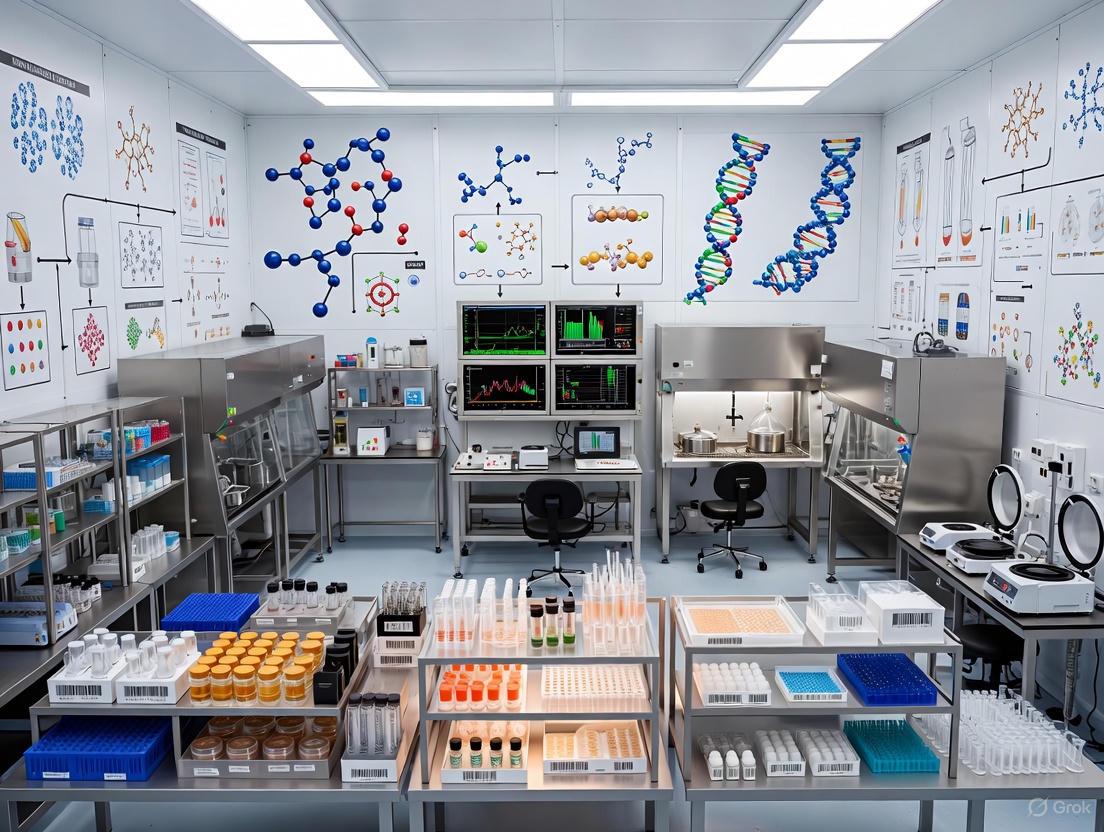
This article provides a comprehensive guide for researchers, scientists, and drug development professionals on designing Good Manufacturing Practice (GMP) cleanrooms for stem cell biomanufacturing.
Designing GMP Cleanrooms for Stem Cell Biomanufacturing: A Guide from Foundational Principles to Advanced Validation
Abstract
This article provides a comprehensive guide for researchers, scientists, and drug development professionals on designing Good Manufacturing Practice (GMP) cleanrooms for stem cell biomanufacturing. It covers the journey from foundational principles—explaining GMP grades (A, B, C, D) and regulatory landscapes—to methodological applications in facility layout and process design. The guide further delves into troubleshooting common challenges and optimizing for scalability and cost, concluding with essential protocols for process validation and facility qualification to ensure compliance and product safety for Advanced Therapy Medicinal Products (ATMPs).
GMP Cleanroom Fundamentals: Laying the Groundwork for Stem Cell Therapy
In the highly regulated field of stem cell biomanufacturing, cleanrooms are not merely rooms with filtered air; they are precisely controlled environments where parameters such as airborne particles, temperature, humidity, and pressure are rigorously regulated to minimize contamination. For researchers and scientists developing advanced therapeutic products, understanding Good Manufacturing Practice (GMP) cleanroom classifications is fundamental to ensuring product safety, purity, and efficacy. The GMP framework, enforced by regulatory bodies like the FDA and outlined in documents such as EU GMP Annex 1, establishes a risk-based classification system of four grades—A, B, C, and D. These grades correlate with the international ISO 14644-1 standards, creating a harmonized language for contamination control that is critical for processes like hematopoietic stem cell gene therapy, where even microscopic contaminants can compromise a life-saving product [1] [2]. This guide provides an in-depth technical breakdown of these classifications, contextualized specifically for the needs of stem cell biomanufacturing facility design.
GMP Cleanroom Grades and ISO Equivalents: A Detailed Breakdown
GMP cleanrooms are categorized into four grades—A, B, C, and D—based on the criticality of the operations performed. Unlike the ISO system, which classifies a room based solely on airborne particle concentration, the GMP system introduces crucial operational concepts such as "at rest" and "in operation" states, and includes mandatory microbial monitoring limits [1] [3].
Grade A: The Aseptic Core
Grade A represents the zone of highest air cleanliness, dedicated to the most high-risk operations.
- ISO Equivalent: ISO Class 5, both "at rest" and "in operation" [1] [4].
- Particle Limits: The maximum permitted number of particles ≥ 0.5 µm is 3,520 per cubic meter [4].
- Airflow Requirement: Unidirectional (laminar) airflow at a velocity of 0.36-0.54 m/s (70-100 ft/min) is mandatory. This airflow sweeps particles away from the critical zone [5].
- Typical Applications in Stem Cell Biomanufacturing: Aseptic assembly of filling equipment, aseptic compounding and mixing, staging of sterile primary packaging components, and opening of sterile containers prior to filling [4]. In a stem cell context, this is where products are exposed during final filling or during open handling steps.
Grade B: The Background for Grade A
Grade B is the immediate background environment in which the Grade A zone is situated. It acts as a buffer to support the aseptic core.
- ISO Equivalent: ISO Class 5 "at rest" and ISO Class 7 "in operation" [1] [4].
- Particle Limits:
- At rest: ≤ 3,520 particles ≥ 0.5 µm/m³
- In operation: ≤ 352,000 particles ≥ 0.5 µm/m³ [4]
- Typical Applications: This area is used for aseptic preparation and filling support. It often houses the gowning room for personnel entering the Grade A zone and is used for the protected transfer of equipment, components, and ancillary items into the Grade A core [1] [4].
Grade C and D: Less Critical Support Areas
These grades are for less critical stages in the manufacturing process but still require a controlled environment.
- Grade C:
- ISO Equivalent: ISO Class 7 "at rest" and ISO Class 8 "in operation" [1] [4].
- Particle Limits: At rest: ≤ 352,000 particles ≥ 0.5 µm/m³; In operation: ≤ 3,520,000 particles ≥ 0.5 µm/m³ [4].
- Applications: Preparation of solutions to be filtered, including weighing, and the filling of products that will later undergo terminal sterilization [1] [4].
- Grade D:
- ISO Equivalent: ISO Class 8 "at rest." The "in operation" state is not predefined and must be established by the manufacturer via risk assessment [1] [4].
- Particle Limits: At rest: ≤ 3,520,000 particles ≥ 0.5 µm/m³ [4].
- Applications: Handling of components after washing, cleaning of equipment, and assembly of components before sterilization [4].
The following table summarizes the key particle limits for both operational states as per GMP guidelines:
Table 1: GMP Cleanroom Particle Concentration Limits (at rest & in operation)
| GMP Grade | ISO Class (at rest) | ISO Class (in operation) | Particle Limit ≥ 0.5 µm (at rest) / m³ | Particle Limit ≥ 0.5 µm (in operation) / m³ | Particle Limit ≥ 5.0 µm (in operation) / m³ |
|---|---|---|---|---|---|
| A | ISO 5 | ISO 5 | 3,520 | 3,520 | Not specified (a) |
| B | ISO 5 | ISO 7 | 3,520 | 352,000 | 2,930 |
| C | ISO 7 | ISO 8 | 352,000 | 3,520,000 | 29,300 |
| D | ISO 8 | Not defined | 3,520,000 | Not predetermined (b) | Not predetermined (b) |
(a) Classification including 5µm particles may be considered where indicated by the Contamination Control Strategy (CCS) or historical trends [1]. (b) For Grade D, in-operation limits are not predetermined; the manufacturer must establish them based on a risk assessment [1].
Microbial Contamination Control: The GMP Imperative
A defining feature of GMP cleanrooms, particularly in biological manufacturing, is the strict control of viable (microbial) contamination. While ISO standards focus on non-viable particles, GMP guidelines set explicit limits for microbial counts [1].
Table 2: Microbial Contamination Limits in GMP Cleanrooms
| GMP Grade | Air Sample (CFU/m³) | Settle Plates (Ø 90mm, CFU/4 hours) | Contact Plates (Ø 55mm, CFU/plate) | Glove Print (5 fingers) (CFU/glove) |
|---|---|---|---|---|
| A | <1 | <1 | <1 | <1 |
| B | 10 | 5 | 5 | 5 |
| C | 100 | 50 | 25 | - |
| D | 200 | 100 | 50 | - |
Source: Adapted from EU GMP Annex 1 [1].
Experimental Monitoring Protocols
Maintaining compliance requires a rigorous environmental monitoring program using validated methodologies:
- Active Air Sampling: A defined volume of air is drawn into a microbiological air sampler and impacted onto a nutrient agar surface. The results are expressed in Colony Forming Units per cubic meter (CFU/m³). This is required in Grades A and B [1].
- Passive Air Sampling (Settle Plates): Petri dishes containing nutrient media are exposed to the environment for a specified period (e.g., 2-4 hours) to capture microorganisms that settle out of the air by gravity. Results are expressed in CFU per plate over time [1].
- Surface Monitoring:
- Contact Plates: Contain solid culture media with a convex surface that is rolled onto flat surfaces (e.g., equipment, floors, walls) to detect microbial residues.
- Swabs: Used for sampling irregular surfaces or hard-to-reach areas. The swab is transferred to a neutralizing broth for analysis [1].
- Personnel Monitoring: Finger dabs (using contact plates) and gown sampling (e.g., on sleeves and chest) are performed to assess the aseptic technique and the risk introduced by operators [1].
Cleanroom Design and Operational Parameters
Achieving and maintaining the required cleanliness grade is a function of integrated design and controlled operations.
Air Changes Per Hour (ACH)
The cleanliness of a room is maintained by constantly replacing the air with HEPA-filtered air. The number of air changes per hour (ACH) is a critical design parameter.
Table 3: Typical Air Change Rates for Cleanroom Classification
| ISO Class | GMP Grade Equivalent | Typical Air Changes Per Hour (ACH) |
|---|---|---|
| ISO 5 | A | 240 - 360 (with unidirectional airflow) [5] |
| ISO 6 | - | 90 - 180 [5] |
| ISO 7 | B (in operation), C (at rest) | 30 - 60 [5] [6] |
| ISO 8 | C (in operation), D (at rest) | 10 - 25 [5] [7] [6] |
Note: These are typical ranges; the final ACH must be computed by an HVAC expert based on room size, personnel count, equipment heat load, and process activities [5].
Airlock Design and Material Flow
A fundamental principle in cleanroom design is not to skip more than one cleanliness class when moving towards a cleaner area [5]. The following diagram illustrates a standard logistical flow for personnel and materials in a multi-grade facility, which is essential for contamination control.
Diagram 1: Personnel and Material Flow in a GMP Facility
The Scientist's Toolkit: Essential Reagents for Environmental Monitoring
A robust Environmental Monitoring (EM) program relies on specific reagents and materials to detect microbial contamination.
Table 4: Key Reagents for Cleanroom Viable Monitoring
| Research Reagent / Material | Function & Explanation |
|---|---|
| Tryptic Soy Agar (TSA) | A general-purpose growth medium for the detection and enumeration of aerobic bacteria and fungi. Used in active air sampling, settle plates, and contact plates. |
| Sabouraud Dextrose Agar (SDA) | A selective medium optimized for isolating and cultivating fungi and yeasts. Often used in parallel with TSA to provide a comprehensive microbial profile. |
| Neutralizing Broth | Used to dilute swab samples. Contains agents (e.g., lecithin, polysorbate) to inactivate residual disinfectants, ensuring any captured microorganisms can grow during incubation. |
| Viable Particle Air Sampler | A mechanical device that draws a calibrated volume of air and impacts any airborne microorganisms directly onto the surface of a TSA agar plate for incubation and counting. |
| Contact Plates (55mm) | Petri dishes filled with a convex surface of solid culture medium (e.g., TSA). Applied directly to flat surfaces to sample for microbial residues. |
Application in Stem Cell Biomanufacturing Facility Design
The design of a GMP facility for stem cell biomanufacturing must align process flows with the required cleanroom grades. A project focused on induced pluripotent stem cell (iPSC) biomanufacturing or hematopoietic stem cell gene therapy would implement the grades as follows [8] [6]:
- Grade A (ISO 5): Used inside a Biological Safety Cabinet (BSC) or laminar flow hood within a Grade B room for critical open processes, such as the final formulation of the gene therapy product, aseptic dispensing into final containers, or any other manipulation where the sterile product is exposed to the environment [6].
- Grade B (ISO 5 at rest/ISO 7 in operation): Serves as the background room for the Grade A biosafety cabinets. This is the aseptic processing core where closed-system transduction of stem cells might occur, and where personnel perform aseptic gowning before entering [6].
- Grade C (ISO 7/8): Suitable for less critical open activities, such as the preparation of culture media and buffers that will be sterilized by filtration, or the staging of closed bags and biocontainers [4].
- Grade D (ISO 8): Used for activities with the lowest risk of contamination, such as equipment washing and sterilization areas, and gowning rooms for entry into higher-grade areas [4] [6].
For drug development professionals and scientists in the field of stem cell research, a nuanced understanding of GMP cleanroom grades is non-negotiable. The journey from Grade D to Grade A is a journey of increasing control, where each grade serves a distinct purpose in the overarching contamination control strategy. Facility design must be a deliberate reflection of the product's process flow, integrating rigorous architectural design, HVAC engineering, and disciplined operational protocols. By adhering to these structured classifications and monitoring regimes, manufacturers can build a foundation of quality and compliance, ultimately ensuring the safety and efficacy of groundbreaking stem cell therapies.
The field of stem cell biomanufacturing represents a frontier in modern medicine, offering promising treatments for a range of conditions from genetic disorders to degenerative diseases. However, the complexity of these living products necessitates equally sophisticated regulatory frameworks to ensure patient safety and product efficacy. Two of the most influential regulatory systems governing this field are administered by the U.S. Food and Drug Administration (FDA) and the European Medicines Agency (EMA). The FDA regulates Human Cells, Tissues, and Cellular and Tissue-Based Products (HCT/Ps) under a dual framework outlined primarily in 21 CFR Part 1271 (for products regulated solely under Section 361 of the PHS Act) and 21 CFR Part 211 (Current Good Manufacturing Practice for Finished Pharmaceuticals) for products regulated as drugs, devices, or biological products [9] [10] [11]. Simultaneously, the European Union regulates these advanced therapies under the Advanced Therapy Medicinal Products (ATMP) framework, which includes gene therapy medicines, somatic-cell therapy medicines, and tissue-engineered medicines [12].
The strategic design of GMP cleanrooms is paramount for compliance with these regulatory frameworks. These controlled environments prevent contamination, maintain cellular viability and potency, and ultimately ensure that the final stem cell product is safe for human use. Regulatory bodies mandate strict adherence to these standards throughout the manufacturing process—from donor screening and cell processing to final packaging and storage [9] [10] [13]. This guide provides a detailed technical analysis of these regulations and their practical implications for the design and operation of stem cell biomanufacturing facilities.
FDA Regulatory Framework: 21 CFR Parts 1271 and 211
21 CFR Part 1271: Human Cells, Tissues, and Cellular and Tissue-Based Products (HCT/Ps)
§ 1271.1 Purpose and Scope: This regulation creates an electronic registration and listing system for establishments that manufacture HCT/Ps and establishes donor-eligibility, current good tissue practice (GTP), and other procedures to prevent the introduction, transmission, and spread of communicable diseases [9]. The scope is bifurcated: establishments manufacturing HCT/Ps regulated solely under Section 361 of the PHS Act must register and list their products and comply with all requirements in Part 1271. Conversely, establishments manufacturing HCT/Ps regulated as drugs, devices, and/or biological products under Section 351 of the PHS Act must follow the registration and listing procedures in other applicable parts (e.g., Part 207 for drugs) but must also comply with the donor-eligibility and GTP procedures in Subparts C and D of Part 1271 [9].
Key Definitions in § 1271.3: Understanding the precise terminology is critical for proper classification and regulatory application.
- Autologous use: The implantation, transplantation, infusion, or transfer of human cells or tissue back into the individual from whom they were recovered [9].
- Homologous use: The repair, reconstruction, replacement, or supplementation of a recipient's cells or tissues with an HCT/P that performs the same basic function(s) in the recipient as in the donor [9].
- Minimal manipulation: For structural tissue, processing that does not alter the original relevant characteristics of the tissue relating to its utility for reconstruction, repair, or replacement. For cells or nonstructural tissues, processing that does not alter the relevant biological characteristics [9].
- Manufacture: Encompasses all steps in the recovery, processing, storage, labeling, packaging, or distribution of any human cell or tissue, and the screening or testing of the cell or tissue donor [9].
Donor Eligibility and Good Tissue Practice: Subparts C and D of Part 1271 detail critical operational requirements. Donor eligibility determinations, based on donor screening and testing for relevant communicable diseases, are mandatory to prevent disease transmission [9]. Furthermore, Subpart D outlines Current Good Tissue Practice (GTP), which governs the methods, facilities, and controls used in the manufacture of HCT/Ps. This includes stringent requirements for facility design, environmental control, equipment, and supply management to ensure product quality and safety [9].
21 CFR Part 211: Current Good Manufacturing Practice for Finished Pharmaceuticals
While Part 1271 provides a foundational framework, many stem cell-based products, by virtue of their higher risk profile or intended use, are regulated as biological products or drugs. In such cases, the more comprehensive Current Good Manufacturing Practice (CGMP) regulations in 21 CFR Part 211 apply [10] [11]. The CGMP regulations contain the minimum requirements for the methods, facilities, and controls used in the manufacturing, processing, and packing of a drug product, ensuring it is safe for use and has the identity, strength, quality, and purity it claims to possess [11].
Key CGMP Requirements for Facility Design and Operation:
- Organization and Personnel (§ 211.22-28): Requires a quality control unit with responsibility and authority to approve or reject all components, drug product containers, closures, in-process materials, and drug products. Personnel must have adequate education, training, and experience, and must wear appropriate clean clothing to protect products from contamination [10].
- Buildings and Facilities (§ 211.42-58): Buildings must be of suitable size, construction, and location to facilitate cleaning, maintenance, and proper operations. They must have adequate space for the orderly placement of equipment and materials to prevent mix-ups and contamination. Separate or defined areas are required for various operations to prevent contamination [10]. This includes specific controls for air filtration, temperature, humidity, and cleanroom sanitation [10].
The relationship between Parts 1271 and 211 is explicitly outlined in § 1271.1(b)(2) and § 211.1(b). For an HCT/P that does not meet the criteria for regulation solely under Section 361 of the PHS Act, the manufacturer must comply with donor eligibility procedures (Subpart C of Part 1271), current good tissue practice (Subpart D of Part 1271), and all other applicable regulations, including the CGMP requirements in Part 211 [9] [10]. This layered regulatory approach ensures a comprehensive control strategy for higher-risk products.
EU Advanced Therapy Medicinal Products (ATMP) Regulation
In the European Union, advanced therapies are regulated as Advanced Therapy Medicinal Products (ATMPs) under Regulation (EC) No 1394/2007 [12]. The Committee for Advanced Therapies (CAT) is responsible for the scientific assessment of ATMPs at the EMA. All ATMPs are authorized centrally via the EMA, benefiting from a single evaluation and authorization procedure [12].
Classification of ATMPs: ATMPs are classified into three main types, with a fourth category for combination products:
- Gene Therapy Medicinal Products: These contain genes that lead to a therapeutic, prophylactic, or diagnostic effect. They work by inserting 'recombinant' genes into the body [12].
- Somatic-Cell Therapy Medicinal Products: These contain cells or tissues that have been manipulated to change their biological characteristics, or cells or tissues not intended to be used for the same essential functions in the body. They can be used to cure, diagnose, or prevent diseases [12].
- Tissue-Engineered Medicines: These contain cells or tissues that have been modified so they can be used to repair, regenerate, or replace human tissue [12].
- Combined ATMPs: Some ATMPs may contain one or more medical devices as an integral part of the medicine, such as cells embedded in a biodegradable matrix or scaffold [12].
Stem cell-based products are categorized as ATMPs when the cells undergo "substantial manipulation" or are used for a different essential function. They can be classified as either somatic-cell therapy products or tissue-engineered products [12]. The EMA has published extensive scientific guidelines to support ATMP development, including a specific reflection paper on stem cell-based medicinal products, which advises developers to pay close attention to manufacturing to ensure the final medicine is consistent and reproducible [12]. The regulatory framework emphasizes thorough pre-clinical and clinical testing to address unique risks such as tumor development and immune rejection [12].
Comparative Analysis: FDA vs. EU Regulatory Requirements
The following table summarizes the key regulatory parameters for stem cell biomanufacturing facilities under the FDA and EU frameworks, highlighting both commonalities and distinctions.
Table 1: Comparative Analysis of FDA and EU Regulatory Requirements for Stem Cell Biomanufacturing
| Regulatory Parameter | FDA (21 CFR Parts 1271 & 211) | EU (ATMP Regulation) |
|---|---|---|
| Governing Regulation | 21 CFR Part 1271 (GTP), 21 CFR Part 211 (CGMP) [9] [10] | EudraLex, Volume 4, Part IV: ATMPs [12] |
| Core Quality Guidelines | CGMP principles per § 211.22, Quality Control Unit responsibility [10] | ICH Q9 (Quality Risk Management), ICH Q10 (Pharmaceutical Quality System) [14] |
| Facility/Environmental Control | § 211.42: Separate/defined areas to prevent contamination/mix-ups; § 211.46: Air filtration systems [10] | EU GMP Annex 1: Sterile Medicinal Products; adherence to ISO 14644 cleanroom standards [13] |
| Personnel Requirements | § 211.25: Qualified personnel with adequate training; § 211.28: Clean clothing and hygiene [10] | EU GMP Chapter 2: Sufficient qualified personnel with defined responsibilities [12] |
| Cell-Specific Guidance | Donor Eligibility (Subpart C, Part 1271); Minimal Manipulation and Homologous Use definitions [9] | Reflection Paper on stem cell-based medicinal products; Guideline on human cell-based medicinal products [14] |
| Validation & Monitoring | Cleanroom validation required; ongoing environmental monitoring [13] [15] | Periodic revalidation; continuous environmental monitoring (EMS) per EU GMP Annex 1 [13] |
Regulatory Pathways and Decision Flows
Navigating the regulatory classification for a new stem cell product is a critical first step. The following diagram illustrates the key decision points in both the FDA and EU systems.
Diagram 1: Regulatory Pathway Decision Flow for FDA and EU. This chart outlines the key classification questions that determine the applicable regulatory framework for a new stem cell product.
GMP Cleanroom Design and Validation for Stem Cell Biomanufacturing
Core Principles of Cleanroom Validation
A GMP-compliant cleanroom is a controlled environment where environmental factors such as airborne particulates, microbes, temperature, relative humidity, differential pressure, and airflow are kept within strict limits [15]. Cleanroom validation is the formal process of verifying that the cleanroom performs as designed and meets defined regulatory requirements, thus protecting product integrity and patient safety [13]. The validation lifecycle is a structured sequence of stages aligning with international standards and GMP guidelines [13] [15].
Table 2: Stages of the Cleanroom Validation Lifecycle
| Validation Stage | Core Objective | Key Activities & Deliverables |
|---|---|---|
| Design Qualification (DQ) | Confirm design meets specifications and process requirements [13] [15]. | Review URS, design docs, layout drawings; Output: DQ report & document list [15]. |
| Installation Qualification (IQ) | Verify all components are installed per approved design [13] [15]. | HVAC calibration, HEPA filter data review, SATs; Output: IQ report & document list [15]. |
| Operational Qualification (OQ) | Show systems perform to spec under defined conditions [13] [15]. | Test HVAC, alarms, airflow, pressure; Output: OQ report [15]. |
| Performance Qualification (PQ) | Demonstrate consistent performance under actual use [13] [15]. | Monitor particles, microbes, temp, humidity; Output: PQ report [13]. |
| Monitoring & Revalidation | Ensure ongoing compliance and performance [13]. | Continuous EMS, periodic revalidation (annual/biannual) [13]. |
Critical Parameters and Testing Protocols
The following experimental workflows and parameters are essential for qualifying and monitoring a stem cell biomanufacturing cleanroom.
Diagram 2: Performance Qualification (PQ) Testing Workflow. PQ tests critical parameters under actual operating conditions to ensure the cleanroom consistently maintains its classified state during production activities [13] [15].
Table 3: Essential Materials and Reagents for Cleanroom Environmental Monitoring
| Research Reagent / Material | Primary Function in Cleanroom Validation & Monitoring |
|---|---|
| HEPA/ULPA Filters | High-efficiency particulate air/Ultra-low penetration air filters are the primary barrier for removing airborne particulates and microorganisms [13] [15]. |
| Aerosol Challenge Agent (PAO/DOP) | Polyalphaolefin or Diocyl Phthalate aerosols are used for filter integrity testing to detect leaks in HEPA/ULPA filter housings [13]. |
| Particle Counter | Instrument used to measure and count airborne particulate concentration to verify ISO classification compliance [13] [15]. |
| Microbiological Growth Media | Contact plates and settle plates containing agar (e.g., TSA, SDA) are used to detect and quantify viable microbial contaminants [13]. |
| Anemometer | Measures air velocity at multiple grid points to confirm uniform air distribution and calculate air changes per hour (ACPH) [13]. |
| Smoke Emitter | Generates a visible smoke trail for airflow visualization studies to confirm unidirectional flow and identify turbulence or dead zones [13] [15]. |
Navigating the regulatory landscapes of the FDA and EMA is a foundational requirement for the successful development and commercialization of stem cell-based therapies. The FDA's 21 CFR Parts 1271 and 211 and the EU's ATMP regulations, while distinct in structure, converge on core principles: rigorous quality management, controlled manufacturing environments, and a thorough, risk-based approach to ensuring product safety and efficacy. The strategic design and rigorous validation of GMP cleanrooms, following the DQ, IQ, OQ, PQ lifecycle, is a critical operational manifestation of these principles.
The global stem cell manufacturing market, projected to grow significantly, underscores the importance of these frameworks [16] [17]. Future trends, including the rise of autologous cell therapies, process intensification, and the adoption of single-use technologies, will continue to challenge and evolve regulatory thinking [16]. Furthermore, regulatory agencies are actively promoting innovation through support initiatives, such as the EMA's ATMP pilot for academia and non-profit organizations, which provides dedicated regulatory assistance [12]. For researchers, scientists, and drug development professionals, a deep, proactive understanding of these regulations is not merely a compliance exercise but a crucial enabler for bringing transformative stem cell therapies from the laboratory to the patients in need.
The fundamental distinction between autologous and allogeneic stem cell therapies dictates every aspect of biomanufacturing facility design. Autologous therapies involve a patient's own cells, cultivated and expanded in a highly personalized process before being reinfused. In contrast, allogeneic therapies use cells from a single donor to create an "off-the-shelf" product that can treat many patients [18] [19]. This core difference drives divergent requirements for manufacturing scalability, quality control, supply chain logistics, and ultimately, the physical facility layout and cleanroom operations. Aligning facility scope with the specific needs of the chosen therapeutic approach is not merely advantageous—it is a critical determinant of regulatory compliance, operational efficiency, and commercial viability. This technical guide examines the key facility design considerations for both modalities within the framework of GMP cleanroom design research.
Core Technical Differences: Manufacturing Processes and Business Models
The manufacturing processes for autologous and allogeneic therapies, while sharing some basic principles of cell culture, differ significantly in structure and execution, leading to distinct business models.
Autologous Therapy Manufacturing Process: This process follows a patient-specific, circular supply chain model. It begins with cell collection (apheresis) from a single patient at a clinical site. The cell sample is then transported under strict cold chain conditions to the manufacturing facility. Within the GMP cleanroom, the cells undergo processing, culture expansion, and potentially genetic modification over several weeks. The final drug product undergoes rigorous release testing specific to that patient before being transported back to the treatment center for reinfusion [18] [19]. Each patient's product constitutes a single, unique batch.
Allogeneic Therapy Manufacturing Process: This process is characterized by a more linear, batch-production supply chain. It starts with the screening and selection of a single, healthy donor. Cells from this donor are used to create a Master Cell Bank (MCB), which serves as a renewable source for manufacturing over many years [18]. Cells from the bank are thawed and culture-expanded in large-scale bioreactors to produce a single, large batch. This batch is then aliquoted into hundreds or thousands of individual patient doses. These "off-the-shelf" doses can be stored cryogenically and distributed to treatment centers as needed [19].
The table below summarizes the quantitative and qualitative differences in the manufacturing costs and business models for these two approaches.
Table 1: Cost and Business Model Analysis: Autologous vs. Allogeneic Therapies
| Parameter | Autologous Therapy | Allogeneic Therapy |
|---|---|---|
| Manufacturing Cost per Dose | £2,260 - £3,040 (US $3,630 - $4,890) [18] | £930 - £1,140 (US $1,490 - $1,830) [18] |
| Donor Screening & Testing Cost | £990 - £1,320 per patient [18] | £10 - £20 per dose (amortized from bank creation) [18] |
| Release Testing Cost | £300 - £500 per batch (1 batch/patient) [18] | £3 - £5 per dose (1 batch = ~100 doses) [18] |
| Primary Business Model | Patient-specific, "bespoke" therapy [18] | "Off-the-shelf," scalable product [18] |
| Scalability Approach | Scale-out: Multiple, parallel, small-scale production lines [19] | Scale-up: Single, large-scale bioreactors to produce large batches [19] |
| Supply Chain Model | Complex, circular logistics with precise timing ("vein-to-vein" time critical) [19] | More linear, traditional biopharmaceutical logistics [19] |
The following workflow diagrams illustrate the distinct operational pathways for each therapy type, highlighting the critical differences in process flow and facility demands.
Diagram 1: Autologous Therapy Workflow: A patient-specific, circular process.
Diagram 2: Allogeneic Therapy Workflow: A batch-based, linear process.
Facility Design Implications: Translating Process to Physical Space
The divergent manufacturing models directly translate into specific and distinct facility design requirements. The core challenge lies in accommodating either multiple, simultaneous, small-scale patient-specific lots (autologous) or fewer, large-scale, single-product batches (allogeneic).
Cleanroom Suite Layout and Configuration
- Autologous Facility Design: This requires a scale-out strategy. The facility must comprise multiple, identical, and functionally independent cleanroom suites or isolators [19]. This modular design allows for the parallel processing of numerous individual patient batches without risk of cross-contamination. Each suite is essentially a self-contained manufacturing unit capable of handling one patient's cells at a time. The layout must support a high volume of material movement in and out of the cleanrooms, corresponding to the individual patient batches.
- Allogeneic Facility Design: This employs a scale-up strategy. The facility is designed around larger, centralized processing areas equipped with large-scale bioreactors and downstream processing equipment [19]. The cleanroom layout resembles a traditional biopharmaceutical facility, with a flow-through design for unit operations (e.g., inoculation, expansion, harvesting, formulation, and filling). The focus is on the efficient movement of a single, large batch through successive processing areas.
GMP Cleanroom Standards and Contamination Control
Regardless of the modality, adherence to Good Manufacturing Practice (GMP) cleanroom standards is non-negotiable for ensuring product safety and quality.
- Critical cGMP Features: Cleanrooms must be built to meet all cGMP requirements for aseptic biomanufacturing. This includes robust, easily cleanable wall, floor, and ceiling panels with flush finishes to prevent contaminant accumulation [6]. Pass-throughs and doors must be equipped with interlock systems to prevent air contamination from simultaneous opening [6]. The facility must be served by an Air Handling Unit (AHU) providing a high number of Air Changes per Hour (ACH)—typically 60 ACH for an ISO 7 (Grade B) area and 40 ACH for an ISO 8 (Grade C) gowning room to be cGMP compliant [6].
- Computational Fluid Dynamics (CFD) for Validation: Modern facility design leverages Computational Fluid Dynamics (CFD) to simulate and optimize cleanroom airflow before construction [20]. CFD models predict airflow patterns, velocity, and particle dispersion to ensure unidirectional laminar flow in critical Grade A zones (e.g., over fill lines and open processing equipment) [20]. This virtual validation helps identify and eliminate "dead spots" (areas with low air change), turbulence, and recirculation zones that could compromise sterility, thereby de-risking the capital investment and ensuring regulatory compliance [20].
Table 2: Facility Design and Operational Requirements
| Design Factor | Autologous Facility | Allogeneic Facility |
|---|---|---|
| Production Strategy | Scale-out: Multiple parallel lines [19] | Scale-up: Large batch production [19] |
| Cleanroom Layout | Modular, self-contained suites or isolators [19] | Open, centralized processing bays [19] |
| Primary Contamination Risk | Cross-contamination between patient batches [19] | Batch failure due to microbial contamination [18] |
| Automation Focus | Closed, automated systems to minimize operator handling and protect individual batches [18] [19] | Large-scale, automated bioreactors and filling lines for batch consistency [18] [19] |
| Logistics & Cold Chain | Highly complex, just-in-time shipping for each patient sample [19] | Bulk shipping and long-term cryogenic storage [19] |
Quality Control and Regulatory Compliance
Quality control (QC) and release testing present another area of significant divergence, directly impacting laboratory space and operational workflows within the facility.
- Release Testing Regimen: While the tests for safety, identity, purity, and potency are similar for both modalities, the scale and logistics differ profoundly. For autologous therapies, each patient's product is a unique batch, requiring a full and separate release testing regimen, costing £300-500 per patient [18]. For allogeneic therapies, release testing is performed on the large batch, with the cost amortized across all doses derived from that batch, amounting to £3-5 per dose [18].
- Donor Testing: Autologous therapies require extensive donor (patient) screening and testing for each individual to exclude latent infections or cell abnormalities that could be amplified during culture, costing £990-1320 per patient [18]. For allogeneic therapies, this rigorous screening is performed once on a limited number of donors to establish the qualified cell bank, reducing the cost to £10-20 per dose [18].
The following diagram summarizes the key drivers that define facility scope for each therapy type, illustrating the logical relationship from therapeutic paradigm to final facility design.
Diagram 3: Logic Flow from Therapeutic Paradigm to Facility Design
The Scientist's Toolkit: Essential Reagents and Materials
The following table details key reagents and materials essential for the stem cell biomanufacturing process, highlighting their critical functions in ensuring a successful and compliant production workflow.
Table 3: Key Research Reagent Solutions for Stem Cell Biomanufacturing
| Reagent/Material | Function in Manufacturing |
|---|---|
| Cell Culture Media & Growth Factors | Provides the essential nutrients, hormones, and growth factors for the ex vivo expansion and maintenance of stem cells. Controlling the cost of these components is critical as they account for a significant portion of manufacturing expenses [18]. |
| Master Cell Bank (MCB) | (Allogeneic) A cryopreserved stock of cells derived from a single donor, serving as the defined and characterized source for all manufacturing batches. Its creation is a pivotal, one-time event requiring extensive donor screening [18]. |
| Closed, Automated Bioreactors | Systems for the scalable expansion of cells. Used at a small scale for autologous therapies and a large scale for allogeneic batches. Automation is key to achieving commercial scale, consistency, and reducing contamination risk [18] [19]. |
| Cryopreservation Solutions | Specialized media containing cryoprotectants (e.g., DMSO) that allow for the freezing and long-term storage of cell therapy products. Critical for creating allogeneic "off-the-shelf" inventories and stabilizing autologous products during transport [19]. |
| Quality Control (QC) Assay Kits | Standardized kits for performing release tests, including assays for sterility (mycoplasma, endotoxin), potency, identity (flow cytometry), and viability. The volume and turnaround time of QC testing are key logistical considerations [19]. |
The decision to develop an autologous or allogeneic stem cell therapy is foundational and irrevocably shapes the entire scope of the biomanufacturing facility. Autologous therapies demand a facility designed for high-variability, patient-specific production, with a focus on modularity, parallel processing, and a complex, circular supply chain. Allogeneic therapies require a facility optimized for traditional, large-scale batch production, emphasizing scale-up, consistency, and "off-the-shelf" distribution. Factors such as the target medical condition, the acuity of treatment (emergency vs. elective), and the commercial business model must inform the initial choice of modality [18]. Ultimately, a deep understanding of these distinct pathways is essential for designing a GMP-compliant facility that is not only scientifically sound but also operationally efficient and commercially viable. Strategic alignment between therapeutic technology and facility design from the outset lays the groundwork for successfully delivering these advanced treatments to patients.
In stem cell biomanufacturing, where products are often patient-specific and cannot be terminally sterilized, the cleanroom transforms from a controlled environment into a critical component of the production process itself. This technical guide details the three pillars of contamination control—HEPA filtration, laminar flow, and airlock systems—within the context of current Good Manufacturing Practice (cGMP) for advanced therapy medicinal products (ATMPs). We dissect the principles, specifications, and validation protocols that ensure these engineering controls meet the stringent requirements of regulatory bodies like the FDA and EMA, safeguarding product purity, patient safety, and regulatory compliance.
HEPA Filtration: The Primary Barrier
High-Efficiency Particulate Air (HEPA) filtration is the non-negotiable foundation of a pharmaceutical cleanroom, serving as the final barrier against particulate and microbial contamination.
Principles and Specifications
HEPA filters are designed to remove at least 99.97% of particles of 0.3 micrometers (µm) in diameter from the airstream [21]. For contexts requiring even higher purity, Ultra-Low Penetration Air (ULPA) filters are used, which capture 99.999% of particles down to 0.12 µm [22]. This efficiency is critical for controlling airborne microbes, as bacteria (approx. 0.5-5 µm) and viruses (approx. 0.02-0.3 µm) can be carried on larger dust particles or droplet nuclei [23].
The selection of HEPA or ULPA filtration is directly tied to the cleanroom's ISO classification and GMP grade, which dictate the maximum permissible particle concentration [24].
Table 1: Cleanroom Classifications and Particle Limits
| Classification | Maximum Permitted Particles (≥ 0.5 µm) per m³ | Typical Applications in Stem Cell Biomanuf. |
|---|---|---|
| ISO 5 / Grade A | 3,520 [4] | Critical aseptic operations (e.g., cell filling, open manipulation) [4] |
| ISO 7 / Grade C | 352,000 (at rest) [4] | Background for Grade A isolator, preparation of solutions [4] |
| ISO 8 / Grade D | 3,520,000 (at rest) [4] | Less critical steps (e.g., equipment cleaning, assembly) [4] |
Experimental Protocol: HEPA Filter Integrity Testing (DOP/PAO Testing)
A leak-free filter installation is as critical as the filter's inherent efficiency. Integrity testing is a mandatory validation and routine requalification activity.
Methodology:
- Aerosol Generation: A polyalphaolefin (PAO) or dioctyl phthalate (DOP) aerosol challenge is introduced into the airstream upstream of the HEPA filter. This aerosol consists of particles with a mean diameter of 0.3-0.7 µm [24].
- Scanning: A photometer probe is used to systematically scan the entire surface of the filter, including the seal between the filter and its housing, at a distance of 1-2 inches.
- Measurement: The photometer measures the downstream aerosol concentration. Any leak is indicated by a concentration exceeding 0.01% of the upstream challenge [24].
- Documentation: The test results, including any leaks and corrective actions, are formally documented for regulatory review.
Laminar Flow: Directed Contamination Control
Laminar flow is the engineered, unidirectional movement of HEPA-filtered air at a uniform velocity, which sweeps contaminants away from the critical processing zone.
Principles and System Configurations
The core principle is to minimize turbulence and eddy currents, which can introduce contaminants from adjacent areas into the sterile field. The required air change per hour (ACH) increases with cleanliness: an ISO 5/Grade A environment typically requires 240-360 ACH, while an ISO 8 room may only need 10-20 ACH [23]. This is often achieved with 60-100% HEPA filter ceiling coverage [23].
There are two primary configurations for delivering laminar flow, each with distinct pros and cons for biomanufacturing workflows.
Table 2: Laminar Flow Cabinet Configurations
| Feature | Vertical Laminar Flow Cabinet | Horizontal Laminar Flow Cabinet |
|---|---|---|
| Airflow Direction | Top to bottom [21] | Back to front [21] |
| Operator Protection | Better; downward airflow protects user from hazardous materials [21] | Limited; airflow can carry aerosols towards the operator [21] |
| Product Protection | Good, but potential for turbulence from cabinet components [21] | Excellent; unobstructed airflow provides a clean zone for the product [21] |
| Common Applications | Handling of potent compounds, cell cultures requiring operator safety [21] | Aseptic assembly, material preparation, staging of sterile components [21] |
For the highest-risk operations in stem cell production, such as the open manipulation of cell therapies, Grade A laminar flow is required. This can be provided by a laminar flow cabinet situated within a Grade B background room [4] or, increasingly, by advanced closed systems like isolators and automated filling platforms that integrate laminar flow principles with robotic automation to eliminate human intervention [25] [26].
Diagram 1: Laminar airflow creation and configurations.
Experimental Protocol: Airflow Visualization Smoke Study
This test visually demonstrates the unidirectional nature and integrity of the laminar flow, identifying any turbulent areas.
Methodology:
- Setup: The study is performed in the "as-built" or "at-rest" state, with all equipment in place but no personnel activity.
- Visualization: A smoke generator producing a dense, non-toxic, neutrally buoyant vapor (e.g., glycerin-based) is used. Short bursts of smoke are released at various points, particularly at the boundary between the critical zone (e.g., above an open vial) and the surrounding environment.
- Observation & Recording: The smoke pattern is observed and videographically recorded. In a perfect laminar flow system, the smoke should move in a smooth, parallel, single-directional stream without eddies or backflow into the critical zone.
- Acceptance Criteria: The airflow must demonstrate unidirectionality and must not flow from a less clean area into a more clean area, thereby proving it protects the critical site from contamination [24].
Airlock Systems: The Contamination Lock
Airlocks are essential interstitial chambers that separate cleanrooms of different classifications, serving as transitional zones to control the movement of people and materials.
Principles and Pressure Cascade
Airlocks function by using a controlled pressure differential to prevent contaminated air from entering a cleaner space. The pressure cascade is maintained at 10–15 Pascals (Pa) between adjacent rooms [24]. A typical cascade in a stem cell facility would be: Grade A (Highest Pressure) → Grade B → Airlock → Grade C/Corridor (Lower Pressure) [23].
Airlock Types and Design
The type of airlock used depends on its specific function and the level of protection required.
- Personnel Airlocks (PALs): Designed for the gowning process. An operator might enter from an ISO 8 corridor into a PAL, degown, and then proceed into a higher-grade gowning area before entering the core manufacturing suite [24].
- Material Airlocks (MALs): Used for transferring raw materials, components, and equipment. They often include features like interlocked doors and UV passthroughs to decontaminate items surfaces [27] [24].
- Cascading vs. Bubble vs. Sink Airlocks: The pressure relationship defines the airlock's purpose. A cascading airlock has higher pressure in the airlock than in the less clean area, sweeping particles away from the cleaner room. A bubble airlock is maintained at a higher pressure than both adjacent rooms, protecting the critical area from both sides. A sink airlock is maintained at a lower pressure, sucking air in from both sides to contain hazardous materials [24].
Diagram 2: Personnel and material flow through pressure cascade.
The Scientist's Toolkit: Critical Research Reagents and Materials
The efficacy of cleanroom protocols is dependent on the quality and proper use of specialized materials and monitoring tools.
Table 3: Essential Cleanroom Materials and Monitoring Tools
| Item | Function & cGMP Requirement |
|---|---|
| Sterile Gowning Kit | Includes bouffant, beard cover, goggles, face mask, coverall, gloves, and boot covers. Constructed from low-shedding, synthetic materials to contain human-generated particles [23]. |
| HEPA/ULPA Filters | The core filtration medium. Must be integrity tested and certified upon installation and at least every 6-12 months thereafter, per EU Annex 1 and USP <797> [24] [21]. |
| Viable Environmental Monitoring (EM) | Settle plates, contact plates, and active air samplers are used to quantify microbial contamination. Plates contain tryptic soy agar (TSA) for bacteria and sabouraud dextrose agar (SDA) for fungi and molds [24]. |
| Non-Viable Particle Counter | A laser-based instrument that draws a known air volume to count and size airborne particles in real-time, providing data for ISO classification [22] [24]. |
| Surface Disinfectants | A rotating sporicidal (e.g., hydrogen peroxide-based) and bactericidal (e.g., quaternary ammonium-based) regimen is used. Efficacy must be validated, and residues must be minimal and non-damaging to surfaces [24]. |
| Material Transfer Equipment | Pass-through hatches with interlocked doors and dunk tanks filled with a validated sporicidal solution are used to safely introduce items into higher-grade zones without breaching the pressure cascade [27] [24]. |
In the high-stakes field of stem cell biomanufacturing, the cleanroom is an active, engineered system integral to product quality. HEPA filtration, laminar flow, and airlock systems are not standalone components but a deeply integrated contamination control strategy. Their design, validation, and operational control, guided by rigorous protocols and real-time monitoring, are what enable compliance with cGMP and the production of safe and effective advanced therapies. As the field evolves towards greater automation and closed processing, the fundamental principles of these critical components will remain the bedrock of aseptic assurance.
From Blueprint to Bioreactor: Implementing Your GMP Cleanroom Design
In the field of stem cell biomanufacturing, the strategic selection between open and closed processing systems is a fundamental decision that directly impacts product safety, operational efficiency, and facility design. These living cellular products cannot be terminally sterilized, requiring strict aseptic processing from start to finish to prevent contamination that could compromise both patient safety and product efficacy [28]. The classification of a system as open or closed dictates the stringency of environmental controls needed, with open processes exposing the product to the surrounding environment and closed systems providing complete isolation through physical barriers [29] [30].
This technical guide examines the implications of these processing approaches within the context of Good Manufacturing Practice (GMP) cleanroom design for stem cell facilities. We explore how the transition toward closed processes and innovative barrier technologies can optimize contamination control while significantly reducing facility footprints and operational costs—critical considerations for the commercial viability of advanced stem cell therapies [28] [31].
Defining Open and Closed Processing Systems
Fundamental Definitions and Characteristics
In biopharmaceutical manufacturing, "open" and "closed" describe the degree of isolation between the production process and the external environment.
Closed System: A process that is entirely shielded from outside exposure, either by design or through validated sanitization methods [29]. In a closed system, the product has no direct interaction with the manufacturing environment, effectively preventing contamination from airborne particles, microbes, or other environmental factors [29] [30]. A "functionally closed" system may be routinely opened for specific operations but is returned to a closed state through a validated sanitization or sterilization process before use [30].
Open System: A process that involves some level of exposure to the surrounding environment, typically during component addition, sampling, or product transfer between containers [29]. In these systems, the product is directly exposed to the manufacturing environment, necessitating stringent environmental controls to mitigate contamination risks [29] [32].
Impact on Contamination Control Strategy
The distinction between open and closed processing fundamentally shapes the contamination control strategy:
Closed Processes: By design, shield products from environmental contamination, often allowing operation in less-stringent environments such as Controlled Non-Classified (CNC) spaces [29] [30]. This approach significantly reduces dependency on complex cleanroom classifications while enhancing product protection [31].
Open Processes: Expose products directly to the surrounding environment, consequently requiring rigorously controlled environments typically within cleanrooms [29]. These processes demand comprehensive contamination control measures including advanced gowning protocols, environmental monitoring, and frequent sterilization cycles [29] [33].
Table 1: Comparison of Open vs. Closed System Characteristics
| Characteristic | Open System | Closed System |
|---|---|---|
| Product Isolation | Directly exposed to environment | Fully isolated from environment |
| Contamination Risk | Higher | Significantly lower |
| Typical Processing Environment | Cleanroom (Grade A/B) | Controlled Non-Classified (CNC) space |
| Facility Footprint | Larger (multiple classified areas) | Smaller (reduced classification needs) |
| Operator Dependency | High (manual operations) | Reduced (automation compatible) |
| Environmental Monitoring | Extensive required | Minimal required |
Facility Design Implications
Environmental Classification Requirements
The selection between open and closed processing directly influences facility design parameters, particularly environmental classification and HVAC requirements.
Open Processes: Require higher-grade environments with more stringent air quality standards. For stem cell products, which cannot be sterilized post-production, open processing typically necessitates at minimum a Grade A air supply (ISO 5) within a Grade B background environment [28]. These environments demand higher air change rates (typically 25-60 ACH), strict temperature and humidity control, and extensive monitoring for particulate and microbial contamination [33].
Closed Processes: Can be implemented in CNC spaces with significantly reduced environmental controls [29] [30] [31]. These spaces maintain basic cleanliness through filtered ventilation but operate with far lower air change rates (as low as 4-10 ACH), reduced pressure differentials, and less stringent monitoring requirements [30].
Footprint and Operational Efficiency
The facility footprint implications of open versus closed processing are substantial, affecting both capital and operational expenditures:
Spatial Efficiency: Closed processes enable more compact "ballroom" style facility layouts where multiple unit operations can share common CNC spaces without physical separation [31]. This contrasts with traditional cleanroom designs that require a series of progressively classified rooms with airlocks and pass-throughs [33].
HVAC System Optimization: HVAC is the single greatest contributor to energy consumption in biopharmaceutical manufacturing facilities [31]. Transitioning from classified cleanrooms to CNC spaces for closed processes can reduce energy consumption by 50% (±25%) according to industry assessments [30]. These savings result from reduced air change rates, decreased outside air conditioning, and elimination of HEPA filtration for non-classified areas.
Gowning and Personnel Flow: Open processes in classified environments require complex gowning procedures with multiple airlocks, while closed processes in CNC spaces can operate with simplified gowning regimens, improving operational efficiency and reducing associated costs [33] [31].
Table 2: Quantitative Comparison of Facility Requirements
| Parameter | Grade B Cleanroom | CNC Space |
|---|---|---|
| Air Changes Per Hour | 25-60 | 4-10 |
| Room Pressure Differential | 10-15 Pa | 5-8 Pa |
| HEPA Filtration | Required at supply | Not required |
| Gowning Requirements | Full aseptic gowning | Basic lab attire |
| Environmental Monitoring | Continuous particulate and microbial | Basic particulate only |
| Estimated Energy Cost/ft²/yr | ~$50 | ~$25 (50% reduction) |
| Construction Cost/ft² | ~$100 more than CNC | Baseline |
Advanced Contamination Control Technologies
Barrier Systems for Aseptic Processing
For processes that cannot be fully closed, advanced barrier technologies provide intermediate solutions with varying levels of environmental separation:
Cleanrooms: Traditional cleanrooms provide area-based classification without physical barriers between operators and product, requiring strict gowning and behavioral controls [33]. While offering flexibility, they represent the highest risk for human-borne contamination and have significant operational costs [33].
RABS (Restricted Access Barrier Systems): RABS provide a solid physical barrier (typically glass or polymer) between operators and critical processing areas while maintaining ISO 5 air classification within the enclosure [33]. Access is primarily through sealed glove ports, reducing direct intervention opportunities. RABS typically require an ISO 7 background environment and allow for some limited intervention when necessary [33].
Isolators: Isolators offer complete physical separation through fully enclosed systems with dedicated air handling and integrated decontamination capabilities (typically using vaporized hydrogen peroxide) [34] [33]. These systems can maintain ISO 5 environments independently of the background, which can be as low as ISO 8 [33]. Isolators are particularly valuable for stem cell manufacturing as they provide the highest level of protection for products that cannot be terminally sterilized [34].
Implementation in Stem Cell Biomanufacturing
For stem cell therapies, isolator-based systems are particularly advantageous for point-of-care manufacturing models where products are manufactured in clinical settings without full GMP infrastructure [34]. These modular systems can maintain aseptic processing conditions in non-classified hospital environments, enabling decentralized manufacturing while maintaining product quality and safety [34].
The integration of single-use technologies with closed systems has further advanced stem cell manufacturing capabilities. Pre-sterilized, closed assemblies eliminate cleaning validation requirements and reduce cross-contamination risks, particularly in multi-product facilities [32].
Risk Assessment and Regulatory Considerations
Facility Risk Profiles
Different facility types present distinct risk profiles that influence the selection between open and closed processing approaches:
Single-Product Facilities: Present relatively lower risk, allowing for potential consolidation of multiple closed functions into single rooms with bidirectional flows when proper airlock design is implemented [28].
Multi-Product Facilities: Have increased cross-contamination potential, requiring either physical segregation, campaign-based manufacturing, or comprehensive sanitization procedures between product runs [28].
Contract Manufacturing Organizations (CMOs): Face magnified multiproduct risks, often necessitating compartmentalized suite approaches with strict physical separation between different client processes [28].
Regulatory Framework and Compliance
Stem cell manufacturing facilities must navigate a complex regulatory landscape that includes:
United States Regulations: 21 CFR Part 1271 (Human Cells, Tissues, and Cellular and Tissue-Based Products), 21 CFR Parts 210/211 (cGMP for Pharmaceuticals), and FDA Guidance documents including "Sterile Drug Products Produced by Aseptic Processing" [28].
European Regulations: Regulation (EC) No 1394/2007 on Advanced Therapy Medicinal Products, EudraLex Volume 4 GMP guidelines specific to Advanced Therapy Medicinal Products, and Annex 1 covering manufacture of sterile medicinal products [28].
The regulatory framework increasingly emphasizes risk-based approaches to contamination control, formally requiring a Contamination Control Strategy (CCS) that comprehensively addresses all aspects of manufacturing operations [35]. This systematic approach to contamination prevention aligns with the adoption of closed processing technologies that provide more robust contamination control compared to procedural controls alone [35] [31].
Closure Analysis Risk Assessment (CLARA)
The Closure Analysis Risk Assessment (CLARA) has emerged as a best practice methodology for justifying environmental classifications based on process closure [31]. This focused risk assessment:
- Evaluates each process step to determine if appropriate controls are in place to achieve closure
- Identifies where process closure may not be achieved and contamination potential exists
- Recommends adjustments to close processes or appropriate housing for open steps
- Provides documentation to justify facility design decisions to regulatory agencies [31]
The CLARA should be completed early in facility design and repeated whenever process changes occur, forming a critical component of the quality-by-design approach to facility planning [31].
The Scientist's Toolkit: Research Reagent Solutions
Successful implementation of closed processing requires specialized materials and equipment. The following table details essential components for establishing closed-system manufacturing:
Table 3: Research Reagent Solutions for Closed-System Manufacturing
| Component | Function | Application Example |
|---|---|---|
| Aseptic Connectors | Enable sterile connections between closed system components without biosafety cabinet | Corning AseptiQuik connectors for tubing assemblies [32] |
| Single-Use Bioreactors | Pre-sterilized, closed culture systems for cell expansion | Fixed-bed reactors for stem cell propagation [32] |
| Closed System Conversion Kits | Adapt open systems to closed configurations | Conversion caps for CellSTACK to closed system [32] |
| Manifold Systems | Enable simultaneous connections to multiple vessels | Manifolds with multiple AseptiQuik connectors [32] |
| Vaporized Hydrogen Peroxide Generators | Provide isolator decontamination | Sporicidal decontamination of isolator interiors [34] |
| Rapid Transfer Ports | Allow material transfer into closed systems | Introduction of reagents into isolators [34] |
| Single-Use Assemblies | Pre-sterilized, closed pathway for fluid transfer | Gamma-irradiated tubing sets [31] |
Experimental Protocol: Validation of System Closure
Methodology for Closure Verification
Validating that a process system is truly closed requires a structured experimental approach:
System Boundary Definition: Map all product contact surfaces and potential intervention points throughout the manufacturing process [30] [31].
Challenge Testing: Introduce appropriate microbial indicators (e.g., Bacillus subtilis spores) or particle counters at potential breach points while monitoring product contact areas for ingress [30].
Pressure Hold Testing: Verify system integrity by applying and maintaining positive pressure (typically ≥ 0.05 in H₂O for isolators) while monitoring for decay indicating leaks [33].
Process Simulation: Perform media fills that mimic all process operations, including worst-case interventions, followed by incubation to detect microbial growth [35].
Ongoing Monitoring: Establish periodic revalidation schedules and continuous monitoring of critical parameters (pressure differentials, particle counts) to ensure continued closure [35].
The strategic selection between open and closed processing systems represents a critical decision point in stem cell biomanufacturing facility design with far-reaching implications for contamination control, operational efficiency, and sustainability. While open processes offer flexibility in research and development settings, closed systems provide superior contamination control and enable significant reductions in facility footprint and operational costs through reduced environmental classification requirements [29] [31].
The industry trend is moving decisively toward closed processing and barrier technologies, driven by both quality considerations and sustainability goals [34] [31]. For stem cell therapies specifically, which cannot undergo terminal sterilization, closed systems provide the most robust approach to maintaining aseptic conditions throughout manufacturing [28]. Implementation of structured risk assessment approaches like CLARA provides a scientifically sound methodology for justifying environmental classifications based on demonstrated process closure [31].
As stem cell biomanufacturing continues to evolve toward commercial scalability, the integration of closed processing technologies with single-use systems and advanced barrier devices will be essential for developing efficient, sustainable, and regulatory-compliant manufacturing facilities capable of producing safe and effective therapies for patients.
In stem cell biomanufacturing, the facility layout is a critical determinant of product quality, patient safety, and regulatory success. Good Manufacturing Practice (GMP) cleanrooms provide the controlled environment essential for the aseptic production of sensitive biological products like induced pluripotent stem cells (iPSCs) [6]. Unlike traditional laboratories, these facilities are engineered to minimize contamination risks through precise zoning and airflow control, ensuring the consistent and safe manufacture of stem cell therapies [36]. This guide details the core principles of optimizing facility adjacencies and workflows to meet the stringent demands of advanced therapeutic manufacturing.
Core GMP Cleanroom Design Requirements
Adherence to GMP requirements is the foundation of any stem cell biomanufacturing facility. These rules dictate specific design features that directly impact the layout and workflow.
Essential Architectural Features
- Flush Design and Finish: All surfaces, including walls, ceilings, windows, and doors, must be smooth, impervious, and unbroken to minimize the shedding or accumulation of particles or microorganisms. Flush-finish designs, which eliminate edges and corners, are mandatory for easy cleaning and contamination control [37].
- Coving: Coving is required at the intersections of two walls, or between walls and ceilings/floors. This eliminates difficult-to-clean corners, significantly reducing the risk of contaminant accumulation [37].
- Interlocking Systems: For entries, personnel airlocks (PALs), material airlocks (MALs), and pass-throughs, an interlocking system is required to prevent the opening of more than one door at a time. This prevents the creation of a "wind corridor" that could introduce contaminants into the cleaner side of the cleanroom [6] [37].
Environmental Control and Monitoring
Routine environmental and microbiological monitoring is stricter under GMP guidelines than general ISO standards. A comprehensive monitoring system is mandatory for sterile drug manufacturing, tracking air pressure, humidity, airborne particles, and microbial bioburden [37]. The table below outlines the microbial contamination limits for different GMP grades.
Table 1: GMP Microbial Contamination Limits [37]
| Grade | Air Sample (cfu/m³) | Settle Plates (diam. 90mm, cfu/4 hours) | Contact Plates (diam. 55mm, cfu/plate) | Glove Print (5 fingers, cfu/glove) |
|---|---|---|---|---|
| A | < 1 | < 1 | < 1 | < 1 |
| B | 10 | 5 | 5 | 5 |
| C | 100 | 50 | 25 | – |
| D | 200 | 100 | 50 | – |
Operational Zoning and Cleanroom Classifications
Biotech facilities are divided into specialized operational zones based on process flow and cleanliness requirements. This zoning is key to maintaining unidirectional flow and compliance with cGMP standards [36].
Key Manufacturing Zones
- Upstream Processing (USP): This area includes cell culture and fermentation suites where stem cells are grown and expanded. These zones are often classified as ISO 7 or ISO 8, depending on whether open or closed systems are used, and require precise control over temperature, gas exchange, and contamination risks [36].
- Downstream Processing (DSP): Following harvest, the cell product is purified and concentrated through various filtration and separation steps. DSP areas typically demand a higher cleanliness level (e.g., ISO 7) due to increased product exposure and the need to minimize cross-contamination [36].
- Formulation and Fill-Finish: This is the most critical zone from a sterility standpoint. Final formulation and aseptic filling operations occur in ISO 5 environments, such as within laminar airflow hoods or isolators, surrounded by an ISO 7 background zone [36].
- Support and Ancillary Areas: Gowning rooms, buffer preparation areas, autoclave stations, and equipment staging are vital for maintaining cleanroom integrity. These are generally ISO 8 or controlled non-classified (CNC) areas and must be laid out to support seamless movement [36].
Cleanroom Classifications and Air Changes
Cleanroom classification follows ISO 14644-1 standards, with further requirements from global cGMP frameworks. The classification determines the permissible number of airborne particles and guides HVAC design [36]. GMP guidelines also define two operational states: "At Rest" (equipment in place, no personnel) and "In Operation" (personnel working, processes underway) [37].
Table 2: Cleanroom Classifications and Particle Limits
| Grade | Particles ≥ 0.5 μm/m³ (At Rest) | Particles ≥ 0.5 μm/m³ (In Operation) | ISO Class (At Rest/In Operation) | Typical Min. Air Changes Per Hour (ACH) |
|---|---|---|---|---|
| Grade A | 3,520 | 3,520 | ISO 5 / ISO 5 | 240-300 [36] |
| Grade B | 3,520 | 352,000 | ISO 5 / ISO 7 | 30 (for ISO 7) [36] |
| Grade C | 352,000 | 3,520,000 | ISO 7 / ISO 8 | 30 (for ISO 7) [36] |
| Grade D | 3,520,000 | Not defined (CNC) | ISO 8 / – | 20 [37] |
The following diagram illustrates the logical relationship and unidirectional flow between these different zones, and their corresponding cleanroom classifications.
Diagram 1: Cleanroom Zoning and Unidirectional Flow Logic
Optimizing Material and Personnel Flow
An optimized material flow is crucial for reducing production costs, shortening lead times, and improving product quality in a GMP environment [38].
A Methodology for Flow Optimization
A systematic, five-step approach can be applied to optimize material flow:
- Holistic Analysis: Analyze and document all stations where material is moved, involving all relevant employees and departments. Process models or workflow diagrams are used for this analysis [38].
- Identify Bottlenecks: Identify bottlenecks in terms of time and resources. Value stream mapping is a useful technique to visualize the entire flow and pinpoint areas causing delays [38].
- Develop Solutions: Develop practical solutions to improve material flow. These can include redesigning the factory layout, using material flow systems (e.g., conveyors, flow racks), introducing lean methods (e.g., Kanban), or automating processes with mobile robots (AMRs) [38].
- Implementation: Carefully plan and execute the implementation of chosen solutions, ensuring all involved departments and employees are engaged [38].
- Monitoring and Continuous Improvement (CIP): Continuously monitor the performance of the new material flow using data analytics and Key Performance Indicators (KPIs). The system should be adjusted as needed to identify further improvements [38].
Layout Strategies for Efficient Flow
The physical layout of the facility directly influences operational performance [39]. Several layout features are particularly beneficial:
- U-Shaped Layout: Places receiving and shipping docks in close proximity, with storage and processing arranged in a "U" around them. This minimizes travel time for goods with a quick turnaround [40].
- Dedicated Traffic Lanes and Cross Tunnels: Implementing standardized traffic patterns and dedicated lanes minimizes bottlenecks. Cross tunnels that run perpendicular to main aisles allow equipment to move between areas without traveling to the end of long rows, drastically reducing travel time [39].
- Centralized Services and Docks: Positioning staff welfare areas, control rooms, and docks centrally to work zones cuts down on unnecessary travel and improves workflow efficiency [39].
- Airlocks and Pass-Throughs: Personnel Air Locks (PALs) and Material Air Locks (MALs) are essential for controlling contamination during ingress and egress. Pass-through cabinets provide a smaller, integrated airlock in walls for safe material transfer between adjacent spaces [37].
The Scientist's Toolkit: Key Reagents and Materials
The following table details essential materials used in stem cell biomanufacturing processes within the GMP cleanroom environment.
Table 3: Research Reagent Solutions for Stem Cell Biomanufacturing
| Item / Reagent | Function in Biomanufacturing |
|---|---|
| Culture Media | Provides essential nutrients for the growth and expansion of stem cells in upstream processing [41]. |
| Viral Vectors (e.g., Lentivirus) | Engineered to carry and deliver therapeutic genes into a patient's cells during genetic modification steps [41]. |
| Non-Viral Transfection Reagents | Lipid nanoparticles or electroporation systems used to introduce genetic material into cells without using viruses [41]. |
| CRISPR-Cas9 System | A precise gene-editing tool used to "cut" faulty genes or insert new, functional genes into stem cells [41]. |
| Single-Use Bioreactors | Disposable culture vessels used in upstream processing to ensure sterility and reduce cross-contamination risk between batches. |
| Chromatography Resins | Used in downstream processing for the purification and separation of the stem cell product from impurities [36]. |
| Cell Dissociation Enzymes | Used to detach adherent stem cells from culture surfaces for sub-culturing or harvest. |
The design of biomanufacturing facilities for stem cell therapies presents a complex engineering challenge, balancing regulatory compliance, production efficiency, and contamination control. Within the context of stem cell biomanufacturing facility GMP cleanroom design, the fundamental strategic decision revolves around implementing either a single-product or multiproduct approach. This technical guide examines these parallel design philosophies through the critical lens of risk-based assessment, focusing specifically on the implementation of campaigning strategies and physical segregation to mitigate cross-contamination.
As of late 2023, the global pipeline included 803 cell therapies in development, creating unprecedented demand for flexible manufacturing solutions [28]. This guide synthesizes current regulatory expectations, quantitative contamination control data, and practical facility design methodologies to provide a structured framework for researchers, scientists, and drug development professionals navigating stem cell facility design decisions.
Core Design Philosophies: Single-Product vs. Multiproduct Facilities
Single-Product Facility Design
Single-product facilities represent the most conservative risk profile, dedicating all manufacturing infrastructure to a single therapeutic product. This approach minimizes intrinsic risks of cross-contamination and simplifies material and personnel flows.
Risk Profile: Focuses primarily on aseptic operation, batch segregation, and worker safety [28]. The simplified risk assessment allows for more flexible facility designs, potentially consolidating multiple closed functions into single rooms and permitting bidirectional flows with proper airlock design [28].
Operational Advantages: Enables continuous operational readiness without changeover procedures, making it particularly suitable for autologous therapies with unpredictable starting material arrival [42]. This model provides maximum flexibility and control for processes characterized by open aseptic manipulation and short expiry starting materials [42].
Multiproduct Facility Design
Multiproduct facilities maximize infrastructure utilization and operational flexibility but introduce significant complexity in contamination control. The potential for cross-contamination increases substantially, requiring both design and operational controls [28].
Risk Mitigation Strategies: Requires comprehensive quality risk management (QRM) aligned with ICH Q9 guidelines [43]. Effective strategies include:
- Physical segregation of product contact surfaces and areas
- Campaign-based manufacturing with defined sequences
- Validated cleaning and inactivation processes between campaigns
- Unidirectional workflow design to prevent mix-ups
- Single-use technologies to eliminate cleaning validation [43]
Contract Manufacturing Organizations (CMOs): Represent a specialized multiproduct case with amplified risks due to multiple clients, processes, and quality systems under one roof [28]. This often drives a compartmentalized suite approach for clinical trial through commercial manufacturing [28].
Table 1: Single-Product vs. Multiproduct Facility Design Comparison
| Design Characteristic | Single-Product Facility | Multiproduct Facility |
|---|---|---|
| Cross-Contamination Risk | Low | High |
| Capital Efficiency | Lower | Higher |
| Operational Flexibility | Low | High |
| Changeover Requirements | None | Extensive validation needed |
| Regulatory Complexity | Simplified | Complex, requires robust QRM |
| Ideal Product Profile | High-volume, established products | Multiple low-volume products, clinical-stage assets |
Risk Assessment Methodologies for Facility Design
Preliminary Risk Assessment Framework
Before facility layout development, a set of preliminary risk assessments should be performed relating to business, quality, and safety functions [28]. Specific assessments should address:
- Product contamination risk from microbial, viral, or particulate sources
- Process reliability and potential for product loss
- Cross-contamination risk (product-to-product, batch-to-batch)
- Environmental, health, and safety (EHS) risks [28]
Zoning and transition diagrams serve as essential tools for understanding potential adjacencies of different manufacturing operations and facilitate comprehensive risk assessment [28].
Quality Risk Management (QRM) Implementation
For multiproduct facilities, QRM provides a systematic approach for identifying and controlling cross-contamination risks. The FDA expects manufacturers to evaluate scientific data and implement appropriate control levels to prevent potential cross-contamination, with risk-management plans evaluated during GMP inspections [43].
Common cross-contamination causes include:
- Mix-ups or operator errors
- Product or material retention
- Carry-over from one campaign to another
- Mechanical or physical interactions
- Airborne transmission of compounds or contaminants [43]
Risk mitigation may include unidirectional workflow, segregated functions in closed systems, single-use systems, robust changeover procedures, validated cleaning processes, and thoroughly trained personnel with redundant controls [43].
Figure 1: Quality Risk Management (QRM) Workflow for Facility Design. This diagram outlines a systematic approach to identifying, analyzing, evaluating, and controlling risks in GMP facility design, emphasizing continuous improvement [43].
Campaign Strategy Design and Implementation
Campaign Operational Models
Campaign-based manufacturing represents a balanced approach between dedicated single-product facilities and concurrent multiproduct operations. Campaigns provide exclusive access to manufacturing space for defined periods, leveraging economies of scale while maintaining segregation [42].
Campaign Model Advantages: Enables efficient scheduling, reduced changeover complexity, and cost containment through repurposing of suites, equipment, and personnel between campaigns [42].
Constant Operational Model: Alternative approach where facilities maintain 24/7 readiness, requiring adequate staffing and higher operational costs but providing maximum flexibility for unpredictable starting material arrival [42].
Campaign Changeover Protocols
Effective campaign changeover requires rigorous procedures validated to demonstrate elimination of product carryover. Key elements include:
Cleaning Validation: Scientific demonstration that cleaning procedures consistently reduce product residue to acceptable levels based on health-based exposure limits [43].
Visual Inspection: Verification of cleanliness with documented acceptance criteria.
Analytical Testing: Specific and sensitive methods to detect residues of previous products, including proteins, nucleic acids, and detergents.
Documentation: Complete batch records documenting successful changeover before initiating new campaign.
Table 2: Campaign Changeover Validation Requirements
| Validation Element | Methodology | Acceptance Criteria |
|---|---|---|
| Product Residue Removal | Swab sampling of product contact surfaces with HPLC/ELISA analysis | ≤10 ppm or health-based limit |
| Detergent Residue Removal | Rinse water sampling with conductivity/TOC analysis | ≤1/1000 of no-effect level |
| Bioburden Reduction | Surface sampling with microbial culture | No recovery of objectionable organisms |
| Documentation | Complete changeover batch record review | 100% compliance with procedures |
Segregation Strategies: Engineering and Architectural Controls
Facility Zoning and Transition Design
Proper facility zoning establishes a foundation for contamination control through defined pressure cascades and material flows. Personnel Air Locks (PAL) and Material Air Locks (MAL) provide critical barriers between cleanroom grades, restricting direct airflow between compartments during ingress and egress [37].
Interlocking door systems prevent simultaneous opening of multiple doors, minimizing pressure losses and preventing contamination ingress [37]. Where interlocks are not implemented, visual and/or audible alarms must signal improper door operation [37].
Cleanroom Design Specifications
GMP cleanrooms require specific design features to maintain aseptic conditions for stem cell products, which cannot be terminally sterilized [28].
Flush Design and Finish: Surfaces must be smooth and impervious with unbroken surfaces to minimize particle shedding or accumulation [37]. Fully flush windows and lighting fixtures prevent particle accumulation, while coving eliminates corners at wall-to-wall, wall-to-ceiling, and wall-to-floor junctions [37].
HVAC System Requirements: FDA GMP guidelines specify a minimum of 20 air changes per hour (ACH) for ISO 8 (Grade C in operation, Grade D at rest) areas [37]. Optimal ACH rates should be determined through risk assessment considering manufacturing process characteristics [37].
Table 3: GMP Cleanroom Classification and Monitoring Requirements
| Grade | Maximum Particles ≥0.5μm/m³ (At Rest) | Maximum Particles ≥0.5μm/m³ (In Operation) | Microbial Action Limits (Air Sample CFU/m³) | Settle Plates (CFU/4 hours) |
|---|---|---|---|---|
| A | 3,520 | 3,520 | <1 | <1 |
| B | 3,520 | 352,000 | 10 | 5 |
| C | 352,000 | 3,520,000 | 100 | 50 |
| D | 3,520,000 | Not defined | 200 | 100 |
Single-Use Technologies as Segregation Enablers
Single-use technologies (SUTs) transform contamination control strategies by eliminating cleaning validation between product campaigns and reducing cross-contamination risks [44] [45]. The global single-use bioprocessing market is projected to grow from $8.2 billion in 2021 to $20.8 billion by 2026, reflecting rapid adoption [44].
Contamination Control Advantages: SUTs eliminate the need for cleaning and cleaning validation, dramatically minimizing cross-contamination risk [44]. This makes them particularly valuable for multiproduct facilities frequently switching between products [44].
Facility Design Impact: Single-use systems can enable downgrades in HVAC requirements when implemented as part of closed systems, though product-quality standards must be maintained [43]. Single-use bioreactors up to 6,000L are now available, with most manufacturers utilizing systems of 2,000L and smaller [44] [45].
Figure 2: Facility Zoning and Material/Personnel Flow Diagram. This diagram illustrates proper cleanroom zoning with pressure cascades and unidirectional flows to prevent cross-contamination [37].
The Scientist's Toolkit: Essential Research Reagent Solutions
Table 4: Critical Reagents and Materials for Stem Cell Manufacturing Quality Control
| Reagent/Material | Function | Application in Stem Cell Manufacturing |
|---|---|---|
| LentiBOOST | Transduction enhancer | Improves lentiviral transduction efficiency in hematopoietic stem cell gene therapy manufacturing, reducing vector quantity requirements [46] |
| Protamine Sulfate | Transduction enhancer | Works synergistically with LentiBOOST to improve lentiviral transduction efficiency by 3-fold or more without adverse toxicity [46] |
| Flt3-Ligand, SCF, TPO, IL-3 | Cell culture cytokines | Critical cocktail for ex vivo expansion of hematopoietic stem cells in serum-free media formulations [46] |
| CliniMACS Plus System | Cell separation platform | Magnetic bead-based separation for isolation of CD34+ cells from leukapheresis products using GMP-compliant instrumentation [46] |
| X-VIVO 15 Medium | Serum-free cell culture medium | Defined, serum-free basal medium for human cell culture supporting hematopoietic progenitor cells [46] |
| Human Albumin Solution | Medium supplement | Provides carrier proteins and stabilizes cell membranes in serum-free culture systems [46] |
| GMP-grade Lentiviral Vector | Gene delivery vehicle | Engineered viral vector for stable gene integration in hematopoietic stem cell gene therapy applications [46] |
Regulatory Framework and Compliance Strategy
United States Regulatory Requirements
Stem cell manufacturing facilities must comply with multiple overlapping regulatory frameworks:
Good Manufacturing Practices (GMP): 21 CFR Part 1271 (Human Cells, Tissues, and Cellular and Tissue-Based Products), 21 CFR Parts 210/211 (Finished Pharmaceuticals), and 21 CFR Parts 600/610 (Biological Products) [28].
GMP Guidelines: FDA's "Sterile Drug Products Produced by Aseptic Processing - Current Good Manufacturing Practice" (September 2004) provides specific guidance for aseptic processing [28].
Safety Regulations: 42 CFR Part 73 (Select Agents and Toxins) and OSHA regulation 29 CFR 1910.1030 (Bloodborne Pathogens) [28].
European Union Regulatory Requirements
EU regulations for Advanced Therapy Medicinal Products (ATMPs) include:
- Regulation (EC) No 1394/2007 on Advanced Therapy Medicinal Products [28]
- EudraLex, Volume 4 "Guidelines on Good Manufacturing Practice Specific to Advanced Therapy Medicinal Products" [28]
- Directive 2009/41/EC on the Contained Use of Genetically Modified Microorganisms [28]
Risk-Based Regulatory Interactions
Developers should engage regulators early through:
- INTERACT Meetings (FDA): Early, informal discussions with CBER on product development strategy [47]
- Scientific Advice (EMA): Procedure to obtain regulatory feedback on development plans [47]
- PRIME/RMAT Designations: Expedited pathways for promising therapies addressing unmet needs [47]
Experimental Protocols: Critical Validation Methodologies
Cleaning Validation Protocol
Objective: To verify and document that cleaning procedures effectively remove product residues, cleaning agents, and microbial contaminants to predetermined acceptance levels.
Materials:
- Sterile swabs (template method) or rinse water collection apparatus
- Appropriate solvents for residue extraction
- HPLC system with UV/VIS detector or equivalent analytical instrumentation
- TOC analyzer for cleaning agent validation
- Microbial culture media and incubation equipment
Methodology:
- Sample Site Selection: Identify worst-case locations representing最难清洁区域 (e.g., corners, seals, difficult-to-access areas)
- Positive Control Preparation: Spike representative surfaces with known quantities of product and cleaning agents
- Sample Collection:
- For swab sampling: Use standardized pressure and pattern over defined surface area (typically 10x10 cm)
- For rinse sampling: Collect final rinse water from equipment surfaces
- Sample Extraction: Extract swabs in appropriate solvent for analysis
- Analytical Testing:
- Product-specific HPLC/ELISA analysis for product residues
- TOC analysis for organic residues
- Conductivity testing for ionic residues
- Microbial bioburden assessment through membrane filtration
- Data Analysis: Compare results to predetermined acceptance criteria based on health-based limits or fraction of dose calculations
Acceptance Criteria: Residue limits should be established based on a health-based exposure limit (e.g., ≤1/1000 of the lowest clinical dose) or analytical capability (e.g., 10 ppm), whichever is lower [43].
Environmental Monitoring Protocol
Objective: To demonstrate continuous control of particulate and microbiological conditions in the cleanroom environment during operational states.
Materials:
- Airborne particle counter with size discrimination capability
- Microbial air samplers (active and passive)
- Surface contact plates (55 mm)
- Settle plates (90 mm)
- Glove fingertip sampling plates
- Incubators (20-25°C and 30-35°C)
Methodology:
- Sampling Plan Development: Establish sampling locations based on risk assessment of product exposure points
- Particle Monitoring: Continuous monitoring with alarms for excursions in Grade A and B areas [37]
- Microbial Air Monitoring:
- Active sampling: Quantitative air samplers with defined volume collection
- Passive sampling: Settle plates exposed for defined periods (typically 4 hours)
- Surface Monitoring:
- Contact plates for flat surfaces
- Swabs for irregular surfaces
- Personnel Monitoring:
- Glove prints after critical operations
- Gowning validation at exit of changing rooms
- Incubation and Enumeration:
- Bacteria: 30-35°C for 48-72 hours
- Fungi: 20-25°C for 5-7 days
- Data Management: Document all results with investigation and corrective actions for excursions
Acceptance Criteria: Based on EU GMP Grade limits as shown in Table 3, with alert and action limits established based on historical data [37].
The strategic decision between single-product and multiproduct facility design represents a fundamental risk-management choice with significant implications for capital investment, operational flexibility, and regulatory strategy. For stem cell biomanufacturing, where products are living cells that cannot be terminally sterilized, the facility itself becomes an integral component of product quality and patient safety.
Through implementation of comprehensive risk assessment, strategic campaigning approaches, and layered segregation controls, manufacturers can design facilities that balance efficiency with rigorous contamination control. The increasing adoption of single-use technologies further enables flexible multiproduct operations while maintaining segregation between products.
As regulatory expectations continue to evolve and the stem cell therapy pipeline expands, the principles outlined in this technical guide provide a framework for designing facilities capable of manufacturing safe, effective, and consistent therapies for patients. Early and ongoing engagement with regulatory authorities through INTERACT meetings, Scientific Advice procedures, and expedited designation programs remains critical to successful facility design and regulatory approval.
The development of advanced stem cell therapies hinges on a seamlessly integrated biomanufacturing process, where each unit operation is critically linked within a Good Manufacturing Practice (GMP) compliant environment. This holistic approach ensures the production of safe, potent, and high-quality cell-based products. From the initial isolation of cells to their final cryopreserved state, every step must be meticulously controlled and monitored to maintain product integrity. The cleanroom is not merely a background facility but an active engineering control integral to product quality, designed to maintain stringent aseptic conditions and prevent contamination at every stage. This guide details the core technical protocols and design considerations for integrating these unit operations, providing a framework for researchers and drug development professionals to navigate the complexities of stem cell biomanufacturing within a GMP context. The ability to "pause" the process through cryopreservation introduces vital flexibility, allowing for quality testing and aligning production with facility scheduling [48].
Core Unit Operations: Methodologies and Protocols
Cell Selection and Isolation
The manufacturing process begins with the selection and isolation of the starting cell population, a step that defines the therapeutic product's identity and potential.
Experimental Protocol for Cell Selection: The standard methodology involves collecting a source tissue, such as peripheral blood, bone marrow, or adipose tissue, from a patient (autologous) or donor (allogeneic). This is followed by density gradient centrifugation to isolate mononuclear cells. The target cell population, for instance, hematopoietic stem cells (HSCs) or mesenchymal stem cells (MSCs), is then enriched using specific surface markers and fluorescence-activated cell sorting (FACS) or magnetic-activated cell sorting (MACS). For example, CD34 and CD133 are common markers for HSCs. The isolated cells must undergo viability assessment (e.g., via trypan blue exclusion) and purity analysis (flow cytometry) before proceeding to expansion [49] [41].
GMP and Cleanroom Considerations: Cell collection must occur in a controlled, sterile environment to prevent contamination of the starting material [41]. All reagents and materials used, including collection bags and sorting antibodies, must be GMP-grade and qualified. The cleanroom area designated for cell selection should meet at least ISO 14644 Class 7 (ISO 7) standards, with personnel trained in aseptic techniques to maintain a sterile field during open manipulations [6].
Cell Expansion and Culture
This unit operation aims to generate a therapeutically relevant cell number while maintaining the cells' undifferentiated state and functional potency.
Experimental Protocol for Cell Expansion: Isolated cells are cultured in GMP-grade culture media supplemented with specific growth factors and cytokines essential for proliferation. For example, basic fibroblast growth factor (bFGF) is critical for maintaining human embryonic stem cell (hESC) and induced pluripotent stem cell (iPSC) pluripotency. Cells are typically cultured on defined substrates like recombinant laminin or vitronectin in a humidified incubator at 37°C with 5% CO₂. The culture process requires regular monitoring, with medium changes every 24-48 hours. Cells are passaged using enzymatic (e.g., TrypLE) or non-enzymatic methods when they reach 70-80% confluence to prevent spontaneous differentiation. Critical quality attributes (CQAs) like population doublings, morphology, and ploidy are monitored throughout [49].
GMP and Cleanroom Considerations: Cell expansion is a high-risk operation for contamination and requires the highest level of environmental control. The cleanroom for cell culture should be a ISO 7 environment, with critical open processes like media changes performed within a Class II biological safety cabinet (BSC) that provides an ISO 5 unidirectional airflow [6]. The cleanroom must be equipped with a Heating, Ventilation, and Air Conditioning (HVAC) system capable of providing 60 air changes per hour (ACH) and maintaining positive pressure to exclude contaminants. All surfaces, including walls, floors, and ceilings, must be constructed from robust, non-shedding, and easily cleanable materials with smooth, flush finishes to prevent particle accumulation [6] [50].
Formulation and Cryopreservation
Cryopreservation is a critical "pause" point that enables product testing, logistics management, and shelf-life extension.
Experimental Protocol for Cryopreservation: The process involves four key steps [48]:
- Mixing with Cryoprotective Agent (CPA): The cell harvest is concentrated and mixed with a CPA, such as dimethyl sulfoxide (DMSO), to prevent lethal intracellular ice crystal formation during freezing. The choice and concentration of CPA are cell-type specific; for sensitive iPSCs, lower toxicity CPAs may be necessary [48].
- Controlled-Rate Freezing: The cell-CPA suspension is transferred to cryogenic vials or bags and frozen using a controlled-rate freezer. A standard protocol cools at a rate of -1°C per minute to -40°C, followed by a rapid cool to -80°C or below. Alternatively, vitrification (flash-freezing in liquid nitrogen) can be used for certain cell types like embryonic stem cells [48] [49].
- Long-Term Storage: Samples are transferred to long-term storage in the vapor or liquid phase of liquid nitrogen, at temperatures below -130°C, where all biological activity is halted [48].
- Thawing and CPA Removal: For use, samples are rapidly thawed in a 37°C water bath. The CPA is then diluted and removed, often using a stepwise dilution process, to avoid osmotic shock and ensure optimal cell recovery [48].
GMP and Cleanroom Considerations: The formulation of the final product must occur in an asectic environment. The cryopreservation area must be designed to handle the logistics of moving products in and out of storage without compromising the cold chain or cleanroom integrity. Pass-through chambers with interlocking doors are essential for transferring materials into and out of the cleanroom without breaching the controlled environment [6].
Table 1: Key Parameters for cGMP Cleanroom Zones in Stem Cell Biomanufacturing
| Cleanroom Zone / Process | ISO Classification | Minimum Air Changes Per Hour (ACH) | Critical Environmental Controls |
|---|---|---|---|
| Cell Expansion / Open Manipulations | ISO 5 (within BSC) / ISO 7 (room) | 60 ACH (room) | HEPA filtration, positive pressure, continuous particle monitoring [6] [50] |
| Gowning Room | ISO 8 | 40 ACH | Positive pressure anteroom for controlled personnel entry [6] |
| Formulation & Cryopreservation | ISO 7 | 60 ACH | Temperature control, pass-through chambers with interlock systems [6] |
| Cell Selection / Isolation | ISO 7 | 60 ACH | Aseptic processing controls, material transfer airlocks [6] |
The Scientist's Toolkit: Essential Reagents and Materials
The following table details key reagents and materials essential for the successful execution of the integrated stem cell manufacturing workflow.
Table 2: Research Reagent Solutions for Stem Cell Biomanufacturing
| Item | Function & Role in the Workflow | Technical Considerations |
|---|---|---|
| Cryoprotective Agents (CPAs) | Protect cells from cryoinjury during freezing and thawing by minimizing ice crystal formation [48]. | DMSO is common but can be cytotoxic. Alternatives include ethylene glycol and glycerol. The choice is cell-type specific (e.g., DMSO may not be suitable for all iPSCs) [48]. |
| GMP-Grade Culture Media | Provides nutrients, growth factors, and hormones necessary for cell survival, proliferation, and maintenance of pluripotency [49]. | Must be xeno-free and chemically defined to ensure batch-to-batch consistency and reduce the risk of adventitious agent contamination. |
| Defined Substrates | Provides a surface for cell attachment and growth, replacing animal-derived feeders like mouse embryonic fibroblasts (MEFs) [49]. | Recombinant human proteins (e.g., laminin-521, vitronectin) are used to create a defined, GMP-compliant culture system. |
| Cell Sorting Reagents | Enables isolation of a pure population of target cells from a heterogeneous starting mixture [49]. | Antibodies against specific surface markers (e.g., CD34, CD133) are conjugated to magnetic beads (for MACS) or fluorophores (for FACS). Must be clinical-grade. |
| Controlled-Rate Freezer | Provides a reproducible, controlled cooling profile to maximize post-thaw cell viability and functionality [48]. | Essential for moving from a research "freeze box" to a validated GMP process. Prevents the damaging effects of uncontrolled cooling. |
Visualizing the Integrated Workflow and Facility Design
The following diagrams, created using DOT language, illustrate the logical flow of the manufacturing process and the corresponding cleanroom environment, adhering to the specified color and contrast rules.
Diagram 1: Integrated Cell Manufacturing Workflow
Diagram 2: cGMP Cleanroom Zoning and Material Flow
Robust Quality Assurance (QA) and Quality Control (QC) systems are the backbone of integrated GMP manufacturing. This involves traceability through meticulous documentation of every material and process step, validation of all equipment and unit operations to ensure consistent output, and rigorous QC testing for identity, purity, potency, and viability at multiple stages [50] [41]. Furthermore, comprehensive sterility controls, including environmental monitoring via air and surface sampling, are mandatory to ensure the aseptic processing of the cell therapy product [41].
In conclusion, the successful integration of unit operations from cell selection to cryopreservation is a complex but achievable goal. It requires a deep understanding of the technical protocols for each step, coupled with a facility designed from the ground up to support GMP compliance. By viewing the cleanroom not as a shell but as an integral part of the manufacturing process, and by leveraging cryopreservation as a strategic tool for flexibility and quality control, developers can create robust, scalable, and reliable production systems for the next generation of stem cell therapies.
Overcoming Design and Operational Hurdles in Stem Cell Cleanrooms
In stem cell biomanufacturing, a pervasive myth asserts that full Current Good Manufacturing Practice (cGMP) compliance is an unconditional requirement for all research stages. This whitepaper debunks this notion by examining the regulatory frameworks and practical applications of cGMP. Through an analysis of facility classifications, phase-dependent requirements, and alternative quality systems, we demonstrate that the necessity for a full cGMP facility is contingent on the research phase and translational intent. This guide provides researchers and drug development professionals with a strategic framework for aligning infrastructure investment with regulatory obligations and research objectives, ensuring resource-efficient progression from discovery to clinical application.
The journey of a stem cell therapy from a laboratory concept to a clinical product is governed by a stringent regulatory pathway designed to ensure patient safety and product efficacy. Central to this pathway is the cGMP facility, a production environment for pharmaceutical or cellular products that adheres to the Current Good Manufacturing Practice regulations enforced by the U.S. Food and Drug Administration (FDA) and other international regulatory bodies [51] [52]. The "C" in cGMP underscores a critical principle: the requirement to employ modern and up-to-date technologies, systems, and practices to achieve quality standards, moving beyond the foundational principles of Good Manufacturing Practice (GMP) [53] [52].
The core mission of a cGMP facility in stem cell biomanufacturing is to provide a controlled and validated environment where every aspect of production—from raw materials and personnel to equipment and processes—is meticulously managed and documented. This is paramount for Advanced Therapy Medicinal Products (ATMPs), which include cell and gene therapies, as they often involve living, dynamic biological materials [51]. The quality system in a cGMP facility is built on several pillars: adherence to precisely followed Standard Operating Procedures (SOPs), strict Quality Control (QC) and Quality Assurance (QA), rigorous personnel training, and meticulous documentation to ensure full traceability and readiness for audits [54].
However, the application of these stringent standards is not universally required across all research activities. The misconception that a full cGMP facility is a prerequisite for any stem cell research can lead to prohibitive operational costs, unnecessary infrastructure burdens, and a stifling of early-stage innovation. This whitepaper aims to dissect this myth, providing a clear, phase-dependent framework for understanding when and to what extent cGMP environments are necessary for research and development in stem cell biomanufacturing.
Understanding cGMP Facilities and Cleanroom Classifications
cGMP vs. GMP: A Critical Distinction
A fundamental understanding begins with differentiating GMP from cGMP. While both aim to ensure product safety and efficacy, cGMP emphasizes the dynamic and evolving nature of quality standards.
- GMP (Good Manufacturing Practice): Establishes the foundational requirements for methods, facilities, and controls in manufacturing. It is a quality-focused system to minimize contamination, mix-ups, and errors [52]. The focus is on proven, established practices.
- cGMP (Current Good Manufacturing Practice): Requires manufacturers to employ technologies and systems that are up-to-date and comply with the latest interpretations of GMP regulations. This flexibility allows for continuous improvement and the adoption of innovative approaches to achieve higher quality [53] [52]. The emphasis is on current best practices, which can sometimes involve more expensive, cutting-edge technology and significantly more testing [52].
cGMP Cleanroom Standards and Classifications
The heart of a cGMP facility for stem cell production is the cleanroom. These are classified environments where airborne particulate and microbial contamination is controlled to specified limits. The design and operation of these rooms are critical to preventing contamination, which is a paramount concern for living cell products that cannot undergo terminal sterilization [51].
Cleanrooms are classified into different grades (A, B, C, D) based on air purity, measured by the number of particles of specific sizes (e.g., ≥ 0.5 μm and ≥ 5 μm) per cubic meter [51] [55]. Key features of cGMP cleanrooms include [54] [51] [53]:
- HEPA Filtration: To prevent airborne cross-contamination.
- Environmental Monitoring: Continuous or frequent monitoring of particles, temperature, humidity, and pressure.
- Unidirectional Material and Staff Flows: To minimize cross-contamination.
- Specialized Infrastructure: Such as airlocks, gowning rooms, and pass-throughs.
cTable 1: Core cGMP Facility and Cleanroom Requirements for Stem Cell Biomanufacturing
| Facility Aspect | Core cGMP Requirement | Purpose in Stem Cell Biomanufacturing |
|---|---|---|
| Quality System | Formal Quality Management System (QMS) with SOPs, QC, QA, and document control [55] | Ensures process consistency, product quality, safety, and traceability from donor to patient. |
| Environmental Control | Cleanrooms with classified air purity (Grade A/B/C/D) and continuous monitoring [51] [55] | Prevents microbiological and particulate contamination of the cell product. |
| Personnel | Rigorous training, proficiency testing, and adherence to hygiene protocols [54] [51] | Mitigates risk of human-introduced contamination or errors. |
| Process & Validation | Validated manufacturing processes, equipment, and aseptic techniques [51] [53] | Ensures the manufacturing process reliably produces a safe and effective product. |
| Materials & Supplies | Controlled, tested, and qualified raw materials and reagents [51] | Ensures the quality and safety of all inputs, as they can affect the final cell product. |
The Myth Debunked: Analyzing the Necessity of Full cGMP
The belief that a full cGMP facility is mandatory for all stem cell research is inaccurate. The requirement is intrinsically linked to the stage of product development and the regulatory status of the work being performed.
When a Full cGMP Facility is Absolutely Necessary
A full cGMP facility is non-negotiable in specific contexts, primarily when the output is intended for human use.
- Clinical Trial Material Production: The manufacture of stem cell products for use in human clinical trials must occur in a cGMP facility that is accredited by the relevant national regulatory body [51] [55]. This is to ensure the identity, strength, quality, and purity of the investigational product [11].
- Commercial Product Manufacturing: Any stem cell product that is to be marketed and sold as a licensed biologic requires cGMP-compliant manufacturing [56]. To date, the FDA has not approved any stem cell products for general use, highlighting the high bar for cGMP in this space [56].
- Key Manufacturing Steps: Even in early development, specific high-risk processes, such as the creation of Master and Working Cell Banks intended for future clinical use, should be performed under cGMP conditions to establish a qualified and traceable starting material [51].
When a Full cGMP Facility is Not Required
Conversely, there are several research scenarios where a full cGMP facility is not a prerequisite.
- Basic and Discovery Research: Early-stage research focused on understanding stem cell biology, mechanism of action, and in vitro proof-of-concept does not require a cGMP environment. The focus is on scientific discovery, not clinical-grade production.
- Non-Clinical Studies: Research utilizing animal models for pharmacology or toxicology studies typically uses research-grade cells. The objective is to gather preliminary data on safety and efficacy to justify future cGMP manufacturing for clinical trials [51].
- Process Development Work: Activities aimed at optimizing culture conditions, differentiation protocols, or analytical methods can often be conducted in a Good Laboratory Practice (GLP) or controlled, but not full cGMP, environment. The goal is to develop and define the process that will later be validated under cGMP.
The regulatory landscape also shows nuance. For example, a new Florida law (CS/CS/SB 1768) allows physicians to administer non-FDA-approved stem cell therapies for specific conditions, provided the cells are obtained from FDA-registered facilities adhering to cGMPs [57]. This highlights that while the source materials may need cGMP compliance, the point-of-care administration may operate under different rules, though such state laws are in direct conflict with the federal FDCA [57].
A Strategic Framework for cGMP Implementation
A risk-based, phased approach is the most efficient strategy for integrating cGMP principles into the research and development pipeline. This aligns infrastructure investment with regulatory requirements and mitigates the financial risks of premature cGMP implementation.
Phase-Dependent cGMP Requirements
The level of cGMP control should escalate as a product moves closer to the clinic. The following diagram illustrates this phased implementation strategy.
cTable 2: Phase-Dependent Application of cGMP Principles in Stem Cell R&D
| Research & Development Phase | cGMP Necessity Level | Recommended Practices & Infrastructure |
|---|---|---|
| Basic Research & Discovery | Not Required | Research-grade labs; focus on proof-of-concept and protocol development. |
| Process & Analytical Development | Low (GLP recommended) | Implement core quality elements (e.g., notebook rigor, reagent QC); use controlled environments to prototype manufacturing steps. |
| Preclinical Proof-of-Concept & Toxicology | Medium | Use research-grade cells but under more controlled conditions; data generated should support an Investigational New Drug (IND) application. |
| Manufacture of Clinical Trial Material | High (Full cGMP required) | Production must occur in an accredited cGMP facility with a full QMS, validated processes, and QC testing for product release [51] [55]. |
| Commercial-Scale Production | High (Full cGMP required) | cGMP facility operating under an approved Biologics License Application (BLA); continuous process verification and monitoring. |
Practical Alternatives to Full cGMP Facility Investment
For academic researchers and small biotechs, building a full cGMP facility is often impractical. Several strategic alternatives exist:
- Utilize Core or Shared Facilities: Many academic institutions, such as UC Davis, have established core cGMP facilities that provide researchers with access to state-of-the-art cleanrooms and expertise at reasonable hourly rates [54]. This model democratizes access to cGMP infrastructure.
- Partner with a CDMO (Contract Development and Manufacturing Organization): Contract Manufacturing Organizations specialize in cGMP-compliant manufacturing and can be engaged to produce clinical trial material. This avoids massive capital expenditure and leverages specialized expertise [58].
- Adopt a "cGMP-in-Mind" Approach: During early research, develop processes using reagents and methods that are traceable and can be later scaled under cGMP. This facilitates a smoother technology transfer to a cGMP environment later.
The Scientist's Toolkit: Essential Reagents and Materials
Whether working in a research or cGMP environment, the quality of reagents and materials is fundamental. The table below details critical components for stem cell biomanufacturing workflows.
cTable 3: Key Research Reagent Solutions for Stem Cell Biomanufacturing
| Reagent/Material | Function | cGMP-Grade vs. Research-Grade Considerations |
|---|---|---|
| Cell Culture Media | Provides nutrients and growth factors for cell proliferation and maintenance. | Research-grade is sufficient for early work. cGMP-grade requires full traceability, testing for adventitious agents, and use of defined, non-animal components where possible [51] [55]. |
| Growth Factors/Cytokines | Directs stem cell differentiation and maintains pluripotency. | For cGMP, these are critical reagents. They must be highly characterized, purified, and produced under cGMP to ensure consistency, potency, and absence of contaminants. |
| Dissociation Enzymes | Passages and harvests adherent cell cultures. | cGMP-grade enzymes are purified and tested to avoid introducing impurities or variability into the process. |
| Cell Separation Reagents | Isolates or purifies specific cell populations (e.g., FACS sorters). | Equipment like a GMP-grade Fluorescence-Activated Cell Sorter (FACS) is used in cGMP facilities to ensure the integrity and purity of the final cell product [54]. |
| Scaffolds/Matrices | Provides a 3D structure for tissue engineering applications. | cGMP requires biocompatibility testing and strict control over physical, mechanical, and chemical properties [51]. |
| Quality Control Assays | Tests for identity, potency, purity, viability, and sterility. | cGMP batch release requires validated assays per pharmacopoeial standards (e.g., USP, EurPh) [51]. Research can use research-use-only (RUO) kits. |
The assertion that a full cGMP facility is a universal necessity for all stem cell research is a misconception that can impede scientific progress. The reality is that cGMP requirements are context-dependent, scaling with a product's progression through the development pipeline. Basic discovery and preclinical research can and should be conducted under more flexible, research-grade conditions, while clinical application demands full cGMP compliance.
The most effective strategy for researchers and drug development professionals is to adopt a risk-based, phased approach. By understanding the regulatory landscape, implementing cGMP principles progressively, and leveraging shared resources like core facilities and CDMOs, the field can foster innovation while rigorously upholding the standards of quality and safety required to bring transformative stem cell therapies to patients. Debunking this myth is essential for the efficient and responsible advancement of regenerative medicine.
The design and operation of a Good Manufacturing Practice (GMP) cleanroom for stem cell biomanufacturing represent a significant financial undertaking. These facilities are critical for producing clinical-grade cellular products that meet stringent regulatory requirements for safety, purity, and efficacy. Effective cost management in this context requires a holistic understanding of both capital expenditure (CapEx) and operational expenditure (OpEx). The unique challenges of stem cell biomanufacturing—including the need for aseptic processing, precise environmental control, and often, patient-specific (autologous) production models—create distinct cost drivers that must be carefully balanced. This guide provides a comprehensive framework for implementing cost-control strategies that align with both technical requirements and financial sustainability, enabling researchers and drug development professionals to optimize their facility investments without compromising quality or compliance.
Comprehensive Cost Analysis: Upfront vs. Operational Expenses
Upfront Investment Components
The initial capital outlay for a GMP cleanroom encompasses numerous interrelated components, each contributing to the facility's foundational capability to maintain controlled environments.
Table 1: Upfront Investment Components for a GMP Cleanroom
| Component Category | Specific Elements | Cost Influence Factors |
|---|---|---|
| Design & Planning | Architectural drawings, flow diagrams (personnel/material), regulatory compliance planning | Cleanroom classification, facility size, industry sector (pharma vs. food) |
| Construction & Materials | Wall/ceiling panels, vinyl flooring, cleanroom lighting, airlocks, pass boxes | Material quality (imported vs. local), panel system type (modular vs. fixed), surface finishes |
| Technical Systems | HVAC systems, air filtration (HEPA/ULPA), building management system (BMS), interlocks | Cleanliness class (ISO 5, 7, 8), required air change rates, pressure control, monitoring level |
| Auxiliary Equipment | Pass boxes, air showers, stainless steel work tables, storage cabinets, differential pressure gauges | Automation level, equipment material quality, number of workstations |
| Qualification & Validation | Performance testing, cleanliness certification, HVAC verification, equipment qualification | Regulatory standard (EU-GMP vs. WHO-GMP), depth of documentation, number of test points |
The HVAC system typically constitutes the largest single expense, often accounting for 3-5 million VND/m² (approximately 40-50% of total cost) due to the need for precise temperature, humidity, and particulate control [59]. The required cleanliness class (ISO 5, 7, or 8) dramatically impacts this cost; lower ISO classes (higher cleanliness) require more advanced filtration, higher airflow rates, and sophisticated control systems. Industry application also significantly influences cost structure; pharmaceutical cleanrooms typically cost 1.5-2 times more than food or cosmetic grade facilities due to stricter requirements for microbial control and more complex validation procedures [59].
Ongoing Operational Expenses
Operational costs accumulate throughout the cleanroom's lifecycle and can often exceed initial investments when considered over a 10-year period.
Table 2: Ongoing Operational Expenses for a GMP Cleanroom
| Expense Category | Specific Elements | Management Strategies |
|---|---|---|
| Energy Consumption | HVAC operation (continuous), lighting, equipment power | Variable frequency drives, energy-efficient motors, LED lighting with sensors |
| Labor & Personnel | Trained operators, maintenance staff, quality control, compliance management | Cross-training, optimized staffing models, strategic outsourcing |
| Maintenance & Calibration | Filter replacements, equipment servicing, system recalibration | Preventive maintenance schedules, service contracts, calibration tracking |
| Consumables | Cleaning supplies, gowning materials, single-use equipment, culture media | Bulk purchasing, supplier contracts, reusable alternatives where valid |
| Quality & Compliance | Regular testing, audits, recertification, documentation maintenance | Integrated quality systems, electronic documentation, internal audit programs |
Energy consumption represents the most substantial operational cost, with HVAC systems typically operating 24/7 to maintain environmental conditions [60]. Cleanrooms require significantly more airflow than conventional spaces, with energy usage increasing exponentially for higher cleanliness classifications. Labor costs are particularly significant in stem cell biomanufacturing, where specialized technical staff is required for both cleanroom operations and quality functions. Manufacturing autologous cell therapies is especially labor-intensive, requiring 9-11 staff to produce 2500 units annually compared to 6-9 staff for allogeneic therapies [61]. Filter replacement represents another substantial recurring cost, with HEPA and ULPA filters requiring regular replacement to maintain air quality standards [60].
Quantitative Cost Analysis
Table 3: Minimum Investment Cost Breakdown for GMP Cleanroom (per m²)
| Cost Category | Estimated Minimum Cost (VND/m²) | Percentage of Total | Notes |
|---|---|---|---|
| Cleanroom Design | 150,000 - 300,000 | 2-3% | Includes layout, flow diagrams, HVAC planning |
| Construction Materials | 2 - 3 million | 25-35% | ISO 8 level or higher; costs rise with imported materials |
| HVAC System | 3 - 5 million | 40-50% | Largest cost component; includes AHUs, chillers, ducting |
| Auxiliary Equipment | 1 - 2 million | 15-20% | Pass boxes, FFUs, pressure gauges, cleanroom lights |
| Installation & Commissioning | 500,000 - 1 million | 5-10% | Labor, adjustment, initial performance checks |
| Total Minimum Investment | 7 - 10 million VND/m² | 100% | For areas ≥100 m² with basic ISO 8/WHO-GMP requirements |
For stem cell manufacturing specifically, the cost to set up a facility capable of producing 2500 doses annually ranges from £3.5-5.5 million ($5.6-8.8 million), with autologous therapy facilities costing approximately 25% more than allogeneic facilities due to increased complexity and testing requirements [61]. The manufacturing cost per dose for stem cell therapies is exceptionally high, with current manual processes exceeding $100,000 per patient, necessitating careful cost-driver analysis [62].
Cost Structure Relationship Diagram: This visualization illustrates the hierarchical relationship between major upfront investment and ongoing operational expense categories in GMP cleanroom design and operation for stem cell biomanufacturing facilities.
Strategic Methodologies for Cost Optimization
Design-Phase Cost Control Strategies
Strategic planning during the design phase offers the most significant opportunities for lifecycle cost reduction, as approximately 80% of a facility's total cost is determined by early design decisions.
Modular Design Implementation: Modular cleanroom systems constructed from prefabricated panels offer substantial cost advantages over traditional fixed construction. These systems typically cost 30-50% less than fixed construction and can be reconfigured as operational needs evolve, extending the facility's functional lifespan [59]. For small-scale or pilot facilities, Cleanbooths (independent cleanroom units) paired with ceiling-mounted FFUs can achieve ISO 7-8 classification without full HVAC system investment, providing a cost-effective solution for R&D activities or initial GMP certification efforts [59].
HVAC System Optimization: The HVAC system presents the greatest opportunity for both upfront and operational savings. Implementing variable frequency drives (VFDs) on motors and fans can reduce energy consumption by 20-30% by adjusting output based on real-time conditions rather than running at constant maximum capacity [60]. Energy recovery systems that capture waste heat or cooling from exhaust air streams can further reduce HVAC energy demands. Right-sizing equipment to match actual operational requirements rather than applying excessive safety margins also prevents capital overspending.
Efficient Facility Layout: Optimizing personnel and material flows through strategic facility design reduces contamination risk while minimizing required square footage. Implementing unidirectional flow patterns and clearly segregating clean and dirty processes allows for smaller, more efficient cleanroom layouts. Placing supporting equipment outside the classified space wherever possible reduces both construction costs and ongoing energy consumption for environmental control.
Operational Excellence and Automation
Achieving operational efficiency requires both technological solutions and optimized processes that maintain quality while reducing resource consumption.
Process Automation Integration: Automated cell culture systems significantly impact manufacturing economics by reducing labor requirements and improving consistency. In autologous dendritic cell therapy production, implementing partial automation reduces batch failure rates from 10% to 3%, directly lowering cost per dose [62]. Automated systems also reduce the cleanroom classification requirement for certain operations; closed automated systems can operate in Grade C backgrounds rather than requiring Grade B environments with open manipulations, reducing both energy and gowning costs [62].
Table 4: Research Reagent Solutions for Stem Cell Biomanufacturing
| Reagent Category | Specific Examples | Function in Biomanufacturing | Cost Considerations |
|---|---|---|---|
| Cell Culture Media | Serum-free media, xeno-free formulations, specialized differentiation media | Supports cell growth, expansion, and directed differentiation | Account for 30-40% of consumable costs; consider concentrated formulations |
| Growth Factors & Cytokines | GM-CSF, IL-4, TNFα, FGF, SCF | Directs stem cell proliferation, maturation, and functional specification | Bulk purchasing for large batches; evaluate stability & reconstitution requirements |
| Cell Separation Reagents | Magnetic-activated cell sorting (MACS) kits, density gradient media | Isolates target cell populations from heterogeneous mixtures | Compare closed-system alternatives to reduce contamination risk |
| Cryopreservation Media | DMSO-containing solutions, serum-free cryomedias | Preserves cell products for storage and transport | Qualification required for GMP use; consider ready-to-use formulations |
| Quality Control Reagents | Flow cytometry antibodies, sterility testing kits, endotoxin detection | Ensures product safety, purity, potency, and identity | Standardize panels across multiple products to reduce validation burden |
Energy Management Systems: Implementing comprehensive energy management systems (EMS) with real-time monitoring capabilities identifies energy consumption patterns and inefficiencies. These systems enable data-driven adjustments to operational parameters such as temperature setpoints, airflow rates, and lighting schedules. One effective strategy involves implementing demand-response programs where facilities reduce energy consumption during peak utility periods in exchange for financial incentives [60].
Lean Manufacturing Principles: Applying lean methodologies to cleanroom operations eliminates non-value-added activities and reduces waste streams. Strategies include optimizing staff movements to minimize air disturbance, right-sizing cleaning and gowning protocols to actual risk levels, and implementing just-in-time inventory management for consumables to reduce storage requirements and material expiration.
Lifecycle Cost Management Framework
Effective cost control extends beyond initial implementation to encompass the entire facility lifecycle through strategic planning and continuous improvement.
Preventive Maintenance Optimization: A robust preventive maintenance program represents a critical investment in operational reliability and cost control. Regular maintenance extends equipment lifespan, prevents unexpected downtime, and maintains consistent environmental conditions. For HVAC systems, scheduled filter changes and coil cleaning maintain energy efficiency, while calibrated monitoring instruments ensure accurate environmental control [60]. Maintenance should be prioritized based on criticality analysis, with highest attention given to systems directly impacting product quality.
Strategic Procurement and Supplier Management: Consolidating purchasing of consumables and reagents through strategic supplier partnerships typically yields 15-25% cost savings through volume pricing and reduced administrative overhead [59]. Sourcing certified local equipment instead of imports can reduce costs by 30-50% while simplifying maintenance and part replacement [59]. However, quality should never be sacrificed for cost savings; all suppliers must provide appropriate documentation and certifications for GMP compliance.
Lifecycle Replacement Planning: Equipment and systems should be replaced based on total cost of ownership rather than just initial price. Developing a long-term capital plan that anticipates major system replacements (typically HVAC systems every 15-20 years, critical processing equipment every 7-10 years) prevents unexpected financial burdens and enables technology refresh planning. When replacing equipment, energy-efficient models often justify higher upfront costs through operational savings.
Cost Control Strategy Diagram: This comprehensive visualization maps the hierarchical relationship between major cost control strategies and their specific implementations across design, operational, and lifecycle management phases in GMP cleanroom facilities for stem cell biomanufacturing.
Achieving cost-effectiveness in GMP cleanroom operations for stem cell biomanufacturing requires a balanced, integrated approach that addresses both upfront investments and ongoing operational expenses. The most successful facilities implement strategic design decisions that optimize lifecycle costs, leverage automation to enhance efficiency and consistency, and maintain vigilant management of energy and consumable expenses. As the stem cell biomanufacturing market continues its robust growth—projected to reach $41.67 billion by 2034 with a CAGR of 11.35%—the implementation of these cost-control strategies becomes increasingly critical for ensuring the economic viability and accessibility of these transformative therapies [63]. By applying the methodologies outlined in this guide, researchers, scientists, and drug development professionals can create facilities that not only meet stringent regulatory requirements but also establish a sustainable foundation for advancing regenerative medicine.
The transition from manual, research-scale stem cell culture to automated, large-scale commercial production represents one of the most significant challenges in regenerative medicine. While stem cells offer unprecedented potential for treating a wide range of medical conditions, their inherent complexity and sensitivity to environmental conditions create substantial manufacturing hurdles [64]. Scalability and automation have emerged as critical enablers for overcoming these challenges, ensuring consistent product quality, reducing production costs, and meeting regulatory requirements for clinical applications [65].
This technical guide examines the integrated systems required for successful scale-up, focusing on the synergy between advanced bioprocessing technologies, automation platforms, and GMP-compliant cleanroom design. Within modern biomanufacturing facilities, the cleanroom is not merely a controlled environment but an integral component of the production system itself, where architectural specifications directly influence process efficiency and product quality [66]. We explore a systematic framework for transitioning from laboratory protocols to industrial-scale production while maintaining the critical quality attributes (CQAs) essential for therapeutic efficacy [64].
Scaling Technologies: From Microcarriers to Microfluidics
Scaling Up Stem Cell Cultures
Stem cell expansion requires careful selection of culture platforms based on target production scales. The choice between 2D and 3D systems involves trade-offs between scalability, control, and technological complexity [67].
Table 1: Scale-Up Platform Comparison for hPSC Expansion
| Scale-Up Method | Production Scale | Key Advantages | Technical Considerations |
|---|---|---|---|
| 2D Monolayer (Cell Stacks) | 10 million to 3 billion cells | • Familiar workflow• Lower technical barrier• Gradual scale-up path | • Limited ultimate yield• Surface area constraints• Manual handling requirements |
| 3D Suspension (Bioreactors) | 80 million to 160 billion cells | • High volumetric yield• Closed-system potential• Automated monitoring/control | • Higher technical complexity• Shear stress sensitivity• Specialized media requirements |
| Microcarrier-Based Systems | Intermediate to large scale | • High surface-to-volume ratio• Adaptation from adherent culture | • Cell harvesting complexity• Microcarrier separation requirements |
Microcarrier-based systems in stirred-tank bioreactors provide an effective transition from 2D adherent cultures to 3D suspension environments, offering high surface-to-volume ratios for anchorage-dependent cells [68]. However, these systems introduce challenges in cell harvesting and separation from the microcarriers [68].
Microfluidic Technologies for Process Intensification
Microfluidic technology enables precise manipulation of small fluid volumes in micron-scale channels, offering transformative potential for specific unit operations in stem cell biomanufacturing [68] [69]. These systems provide high customizability, precise fluid control, low reagent consumption, and cost-effective production, making them ideal for various applications [68].
Table 2: Microfluidic Applications in Stem Cell Bioprocessing
| Application Area | Technology Approach | Benefits Over Conventional Methods |
|---|---|---|
| Cell Separation & Purification | Inertial focusing, affinity-based capture, dielectrophoresis | Higher purity and viability, minimal marker expression impact |
| Single-Cell Analysis | Droplet-based encapsulation, microwell arrays | Understanding heterogeneity, identifying optimal subpopulations |
| Process Monitoring | Integrated sensors, impedance flow cytometry | Real-time quality attribute monitoring, non-destructive analysis |
| Cryopreservation | Controlled-rate freezing in microchannels | Improved post-thaw viability, controlled ice nucleation |
| Microcarrier Production | Droplet generators | Uniform size distribution, customizable composition |
For downstream processing, microfluidic cell separation and purification technologies can replace traditional methods like fluorescence-activated cell sorting (FACS) and magnetic-activated cell sorting (MACS), offering gentler handling that preserves cell viability and function [68] [69]. These systems achieve separation based on physical properties (size, deformability, electrical properties) or biological characteristics through affinity-based capture, enabling high-purity population isolation without the need for large, expensive instrumentation [68].
Diagram 1: Microfluidic Process Integration for Stem Cell Manufacturing. Microfluidic technologies enable multiple unit operations in stem cell bioprocessing, from cell separation to real-time quality monitoring.
Automation and Digital Integration
Automation Architectures for Stem Cell Biomanufacturing
Modern biomanufacturing facilities implement automation at multiple levels, from individual equipment to facility-wide control systems. The implementation spectrum ranges from partially automated operations to fully autonomous facilities [65].
Equipment-Level Automation includes self-contained systems such as automated bioreactors, liquid handlers, and cell culture platforms. These systems typically incorporate programmable logic controllers (PLCs) and supervisory control and data acquisition (SCADA) systems to maintain critical process parameters (CPPs) including pH, dissolved oxygen, and temperature [65]. For example, fixed-bed bioreactors enable automated, continuous expansion of induced mesenchymal stem cells (iMSCs) with integrated downstream harvesting, achieving production of approximately 1.2 × 10¹³ extracellular vesicle particles per day [70].
Process-Level Automation connects individual units into coordinated workflows. Cellino's autonomous cell culture platform exemplifies this approach, integrating automated optical bioprocessing with AI-driven image analysis and laser-based cell manipulation within a closed system [71]. This system enables automated daily image capture and analysis to derive insights about cell colonies over time, followed by precise removal of undesired cells to isolate high-quality patient-derived iPSCs with optimized phenotypes [71].
Facility-Level Integration employs manufacturing execution systems (MES) and distributed control systems (DCS) to orchestrate all operations. The Figurate automation platform exemplifies this approach, providing libraries for cell culture and purification steps with standardized control strategies that ease scale-up from laboratory to production [65].
Data Management and AI-Driven Quality Control
Effective automation requires robust data infrastructure to ensure traceability, provenance, and integration across systems. Structured data, stored in queryable formats, provides the foundation for AI and machine learning applications [71].
AI-driven quality monitoring systems leverage convolutional neural networks (CNNs) and predictive modeling to dynamically track critical quality attributes (CQAs), including cell morphology, proliferation rate, differentiation potential, and genetic integrity [64]. These systems analyze high-resolution imaging and multi-sensor data to enable automated anomaly detection and adaptive culture optimization, significantly enhancing process robustness compared to traditional endpoint assays [64].
Digital twin technology creates virtual replicas of bioprocesses, enabling in-silico optimization and reducing the need for physical experiments. Computational fluid dynamics (CFD) models allow characterization of bioreactor environments, predicting how changes in operating conditions affect cell growth and product quality [65]. Companies implementing digital twins for bioreactor scaling have reported up to 50% reduction in characterization time and up to 5% yield improvements [65].
Diagram 2: Automation and Data Integration Architecture. Modern biomanufacturing integrates equipment control with AI/ML models and digital twins for adaptive process optimization.
GMP Cleanroom Design for Automated Stem Cell Production
Cleanroom Classification and Zonal Control
GMP-compliant cleanroom design establishes the foundational infrastructure for scalable stem cell production, with classification levels dictating air change rates, filtration levels, and personnel gowning protocols [66].
Table 3: Cleanroom Classification Standards and Applications
| ISO Class | Equivalent GMP Grade | Maximum Particles/m³ (≥0.5µm) | Typical Stem Cell Applications |
|---|---|---|---|
| ISO 5 | Grade A/B | 3,520 | Aseptic processing, filling operations, critical open manipulations |
| ISO 7 | Grade C | 352,000 | Bulk compounding, preparation activities, primary production operations |
| ISO 8 | Grade D | 3,520,000 | Background environment for ISO 7 areas, less critical activities, personnel movement |
Zonal control implements strict separation of activities through unidirectional flow patterns for personnel, materials, and waste. Proper pressure cascades maintain 10-15 Pascal differentials between adjacent classifications, preventing uncontrolled airflow from less clean to cleaner areas [66]. This approach requires sequential gowning airlocks, segregated material pass-through chambers with interlocking doors, and physical separation between "dirty" and "cleaned" components [66].
Emerging Trends in Cleanroom Design
Modular and prefabricated cleanrooms offer 30-40% cost savings over traditional constructions while enabling faster deployment and reconfigurability [72] [73]. These systems facilitate scalability and adaptability, crucial for rapidly evolving stem cell manufacturing requirements [72].
Advanced HVAC systems with energy recovery, variable speed drives, and HEPA filtration maintain classification standards while reducing operational costs. Smart monitoring systems incorporating IoT sensors enable real-time environmental control and predictive maintenance [72] [73].
Robotics integration minimizes human intervention in critical areas, reducing contamination risks. Automated material handling systems transport components without direct human contact, while automated airlocks and UV-C disinfection systems provide additional contamination control [72].
Hybrid cleanroom models combine different classification zones within a single facility, allowing manufacturers to house multiple processes under one roof while reducing both capital and operational expenditures [72]. For example, ISO Class 5 areas for critical aseptic operations can be integrated with ISO Class 8 zones for less sensitive activities.
Implementation Framework and Quality Considerations
Systematic Scale-Up Methodology
Successful transition from R&D to commercial production requires a structured approach:
Process Characterization: Establish the design space by determining critical process parameters (CPPs) and their impact on critical quality attributes (CQAs). Utilize design of experiments (DoE) and multivariate analysis to understand parameter interactions [65].
Technology Transfer: Implement automation platforms that apply industry standards (ISA-101, ISA-88) early in development to ensure seamless transition to GMP manufacturing without costly retraining or system re-architecting [65].
Process Analytical Technology (PAT): Deploy inline and online monitoring systems to enable real-time quality assessment. Raman spectroscopy, chromatography, and mass spectrometry provide critical data for maintaining process control [65].
Closed Processing Systems: Implement closed or functionally closed systems to reduce contamination risk and minimize manual interventions. Single-use technologies (SUTs) further support this approach by eliminating cleaning validation requirements and enabling faster product changeovers [65].
The Scientist's Toolkit: Essential Research Reagent Solutions
Table 4: Key Reagents and Materials for Scalable Stem Cell Production
| Reagent/Material | Function | Scale-Up Considerations |
|---|---|---|
| Chemically Defined Media | Cell nutrition and expansion | Xeno-free formulation, scalability from 2D to 3D culture, fed-batch capabilities |
| Microcarriers | Surface for adherent cell growth in 3D | Material composition, size distribution, cell attachment efficiency, degradation profile |
| Dissociation Enzymes | Cell passaging and harvesting | Specificity, activity consistency, removal requirements, regulatory compliance |
| Extracellular Matrices | Surface coating for adherent culture | Consistency, scalability, regulatory acceptance, compatibility with automation |
| Cryopreservation Media | Cell banking and storage | Formulation complexity, controlled-rate freezing compatibility, post-thaw viability |
| Quality Control Assays | Safety and potency assessment | Automation compatibility, scalability, precision, regulatory validation |
Media optimization represents a particularly critical consideration, as formulations designed for 2D adherent culture often result in lower volumetric productivity when applied to 3D suspension systems [67]. Specialized media systems with fed-batch feeding strategies can reduce labor requirements while maintaining nutrient levels, eliminating the need for complete medium exchanges on non-passaging days [67].
The successful transition from manual R&D to automated commercial-scale stem cell production requires integrated implementation of advanced bioprocessing technologies, comprehensive automation strategies, and purpose-built GMP facilities. This holistic approach enables manufacturers to achieve the scalability, quality, and economic viability necessary for clinical and commercial success.
Future advancements will likely focus on increasing system autonomy through AI-driven closed-loop control, enhanced real-time monitoring capabilities, and more adaptable facility designs. The integration of digital twins with physical processes will enable predictive biomanufacturing, while advances in microfluidic technologies will continue to improve the efficiency of specific unit operations. By adopting a systematic framework that aligns process development with automation infrastructure and facility design, organizations can overcome the traditional challenges of stem cell biomanufacturing and fully realize the therapeutic potential of regenerative medicine.
In the highly controlled environment of a stem cell biomanufacturing facility, Ancillary Materials (AMs) are components, reagents, and materials used during the manufacturing process of a cell therapy product but are not intended to be part of the final product [74]. Despite not being present in the final product, AMs can profoundly affect its safety, efficacy, and consistency [74] [75]. These materials include cell isolation reagents, culture and cryopreservation media, small molecules, proteins, and disposables such as plasticware and bioprocessing bags [74] [76]. The term "ancillary material" is not globally recognized; in Europe, these are often referred to as "raw materials" [74].
The qualification of AMs presents a significant challenge for cell therapy manufacturers. Definitive regulations for AMs have not yet been fully developed, leading to regulatory ambiguity for both cell therapy manufacturers and AM suppliers [74]. Furthermore, there is no single "ancillary material-grade" manufacturing standard, adding to the complexity of selection and qualification [74]. This whitepaper outlines a systematic, risk-based framework for qualifying AMs, integrating this critical process within the broader context of GMP cleanroom design for stem cell biomanufacturing facilities.
Regulatory Framework and Classification of AMs
Global Regulatory Guidelines
While specific and definitive regulations for AMs are still evolving, a global framework of guidelines provides direction. Key among these is United States Pharmacopeia (USP) Chapter <1043>, "Ancillary Materials for Cell, Gene and Tissue-Engineered Products," which offers a foundational guideline for developing appropriate AM qualification programs [74] [77]. This framework is complemented by other international documents:
- International Pharmaceutical Regulators Programme (IPRP) "General Considerations for Raw Materials..." emphasizes the need for a strict quality management system, transparency of origin, and microbial safety, given that many Cell and Gene Therapy (CGT) products do not undergo terminal sterilization [77].
- European Pharmacopeia 5.2.12 "Raw Materials for the Production of Cell-Based and Gene Therapy Medicinal Products" outlines stringent requirements for raw materials of biological origin, mandating production within a suitable quality management system and facility, often under aseptic conditions [77].
- ISO 20399:2022(E) "Biotechnology — Ancillary materials present during the production of cellular therapeutic products and gene therapy products" provides a detailed framework outlining the roles of both AM suppliers and users [77].
A common misunderstanding is that a particular "grade" of AM is mandated for use in cell therapy manufacturing in the United States. However, no specific grade is required. Nonetheless, sourcing AMs manufactured under robust quality management systems, such as current Good Manufacturing Practice (cGMP), reduces the qualification burden for the cell therapy manufacturer [74].
Risk-Based Tier Classification System (USP <1043>)
USP <1043> provides a pragmatic framework for classifying AMs into four distinct tiers based on risk, which dictates the level of qualification effort required [74] [77]. The classification is influenced by the AM's nature, its contact with the product, and whether it is removed or remains in the final product.
Table 1: USP <1043> Ancillary Material Risk Classification Tiers
| Tier | Risk Level | Description | Qualification Activities |
|---|---|---|---|
| 1 | Low-risk, highly qualified | Materials with extensive characterization and established safety profiles (e.g., salts, sugars, buffers). | Cross-reference DMF; obtain CoAs; assess removal from final product and lot-to-lot variability; conduct stability studies [74]. |
| 2 | Medium-risk | Materials with some qualification data but requiring further testing for specific applications (e.g., cytokines, growth factors). | All Tier 1 activities, plus confirming critical CoA results, adventitious agent testing, and potentially upgrading the AM manufacturing process to cGMP standards [74] [77]. |
| 3 | High-risk | Materials with limited qualification data or those of biological origin. | More extensive qualification, often requiring full characterization and validation of manufacturing processes [74]. |
| 4 | High-risk, minimally qualified | Novel materials or those with significant safety concerns. | Most rigorous qualification, requiring all activities for lower tiers plus extensive safety and functional testing [74]. |
This risk-based approach ensures that resources are allocated efficiently, focusing the most stringent controls on the materials that pose the greatest potential risk to product quality and patient safety.
The AM Qualification Process: A Step-by-Step Strategy
Qualification is the process of establishing the source, identity, purity, biological safety, and general suitability of a given AM for its intended use [74]. The following workflow outlines the core stages of this process.
Diagram 1: AM Qualification Workflow
Phase 1: Supplier Qualification and Documentation
The foundation of AM qualification is a strong partnership with a reliable supplier. Cell therapy manufacturers should qualify their suppliers through audits and establish clear quality agreements [74]. Key documentation to obtain includes:
- Certificate of Analysis (CoA): Provides results of testing for specifications like identity, purity, and potency [74].
- Drug Master File (DMF): A confidential, detailed document submitted to the FDA that provides information about the AM's chemistry, manufacturing, and controls. Manufacturers can reference a DMF in their regulatory submissions to support the quality of the AM [74] [77].
- TSE/BSE Certificate: Certifies that materials of animal origin are free from Transmissible Spongiform Encephalopathy and Bovine Spongiform Encephalopathy agents [76].
- Certificate of Origin (CoO): Facilitates traceability and identification of the material or component origin [77].
Phase 2: Analytical Testing and Characterization
Depending on the risk tier, manufacturers must confirm the supplier's data and conduct additional testing. This phase focuses on the chemical and biological characteristics of the AM itself.
Table 2: Key Analytical Tests for Ancillary Materials
| Test Category | Specific Assays | Purpose & Relevance |
|---|---|---|
| Identity | HPLC, Mass Spectrometry, FTIR, Functional Assays | Confirms the AM is what it claims to be and is critical for patient safety and product consistency [74] [76]. |
| Purity & Impurities | Related Substances, Residual Solvents, Host Cell Proteins/DNA | Determines the presence and quantity of contaminants that could affect cell product safety or function [77]. |
| Safety (Biological) | Endotoxin, Bioburden, Sterility, Mycoplasma, Adventitious Virus | Ensures the AM is free from microbial contamination, crucial as CGT products often cannot be terminally sterilized [76] [77]. |
| Physical Characteristics | Osmolality, pH, Particulate Matter | Ensures the AM's physical properties are suitable for contact with sensitive cell products. |
Experimental Protocols for Key Tests
Endotoxin Testing (Kinetic Chromogenic LAL Assay)
Principle: This test detects and quantifies bacterial endotoxins using Limulus Amebocyte Lysate (LAL), which clots in the presence of endotoxins. A chromogenic substrate allows for photometric quantification [76] [77].
Methodology:
- Sample Preparation: Reconstitute or dilute the AM in endotoxin-free water.
- Preparation of Standards: Create a dilution series of a known endotoxin standard.
- Reaction: Mix samples and standards with LAL reagent and chromogenic substrate in a pyrogen-free microplate.
- Incubation and Measurement: Incubate the plate and measure the absorbance kinetically. The time taken for the absorbance to reach a threshold is inversely proportional to the endotoxin concentration.
- Calculation: Generate a standard curve from the standards and calculate the endotoxin concentration in the sample, ensuring it falls below the specified limit for the application.
Bioburden Testing (Membrane Filtration Method)
Principle: This test determines the total viable microbial count in a sample by filtering the AM through a membrane that retains microorganisms, which are then cultured to allow colony formation [76] [77].
Methodology:
- Filtration: Aseptically filter a specified volume of the AM through a sterile membrane filter (pore size 0.45µm).
- Rinsing: Rinse the filter with a sterile buffer to remove any inhibitory substances.
- Culture: Transfer the membrane to two agar plates: Soybean-Casein Digest Agar (for bacteria) and Sabouraud Dextrose Agar (for fungi and molds).
- Incubation: Incubate the plates at appropriate temperatures (e.g., 30-35°C for bacteria, 20-25°C for fungi) for 5-7 days.
- Enumeration: Count the colony-forming units (CFUs) on each plate and calculate the bioburden per unit of AM.
Phase 3: In-Process and Final Product Impact Assessment
The most critical phase of qualification evaluates the AM's performance within the specific manufacturing process and its impact on the final cell product.
- Performance Testing: The AM must be tested in the intended application to ensure it performs its function consistently (e.g., supporting stem cell growth or differentiation without causing unintended effects) [74].
- Assessment of Lot-to-Lot Variability: Multiple lots of the AM should be evaluated to ensure consistent performance and to establish acceptable ranges for critical quality attributes of the final cell product [74].
- Residuals Assessment: The presence and quantity of the AM (or its impurities) in the final cell product must be assessed. If residuals are present, their impact on product safety, including potential cytotoxicity, must be evaluated [74].
- Stability Studies: The stability of the AM under specified storage conditions must be established to ensure it remains within quality specifications throughout its shelf life [74].
Integration with GMP Cleanroom Design and Operation
The qualification of AMs does not occur in isolation but is intrinsically linked to the design and operation of the GMP cleanroom where stem cell biomanufacturing occurs.
Cleanroom Classifications for AM Handling
Cleanrooms are classified based on the allowed concentration of airborne particles. The ISO 14644 standard and the EU GMP A-D grading system are most relevant [24] [78].
Table 3: Cleanroom Classifications and Corresponding Applications
| ISO Class | EU GMP Grade | Max Particles ≥0.5µm/m³ | Typical Applications in Stem Cell Biomanufacturing |
|---|---|---|---|
| 5 | A | 3,520 | Critical aseptic operations (e.g., cell manipulation, filling). High-risk open product handling under unidirectional laminar airflow [24] [78]. |
| 7 | B | 352,000 | Background environment for a Grade A zone. Aseptic preparation and filling [24] [78]. |
| 7 | C | 352,000 | Preparation of solutions to be filtered. Handling of closed equipment. Lower risk aseptic operations [24]. |
| 8 | D | 3,520,000 | Handling of closed equipment and components. Support areas and less critical stages of AM preparation [24] [78]. |
The preparation and handling of sterile liquid AMs, such as media and reagents, should ideally occur in an ISO 7 (Grade C) or higher environment to minimize the risk of microbial and particulate contamination, especially if the AM is used in an open system [76]. The use of closed systems can sometimes allow for handling in a lower grade environment, based on a justified risk assessment.
Cleanroom Validation for AM Assurance
To ensure the cleanroom itself provides the necessary environmental control, a rigorous validation process is required. This process, essential for regulatory compliance, consists of several phases [78] [79]:
- Design Qualification (DQ): Confirms the cleanroom design is suitable for its intended purpose and complies with regulatory standards [79].
- Installation Qualification (IQ): Verifies that the cleanroom and all its components (e.g., HEPA filters, HVAC) are installed correctly according to design specifications [78] [79].
- Operational Qualification (OQ): Tests the cleanroom under "at-rest" conditions (equipment in place but no personnel) to ensure it meets all performance criteria, including airflow velocity, HEPA filter integrity, pressure differentials, and particle counts [78] [79].
- Performance Qualification (PQ): Demonstrates that the cleanroom consistently maintains the required environmental conditions during normal operation ("in-use") with personnel present and procedures being performed [78] [79].
This validated environment is fundamental to maintaining the sterility and quality of AMs during storage and use, thereby protecting the integrity of the stem cell product.
Diagram 2: Cleanroom Zoning and Material Flow
The Scientist's Toolkit: Essential Reagents and Solutions
Table 4: Key Research Reagent Solutions for AM Qualification
| Item | Function in AM Qualification |
|---|---|
| Limulus Amebocyte Lysate (LAL) Reagents | Detection and quantification of bacterial endotoxins, a critical safety test for any AM coming into contact with cells [76] [77]. |
| Culture Media for Bioburden (e.g., Soybean-Casein Digest Agar, Sabouraud Dextrose Agar) | Used for the enumeration of viable aerobic microorganisms and fungi/molds in AMs [77]. |
| Reference Standards & Controls (Endotoxin, Mycoplasma, etc.) | Qualified standards used as positive and negative controls in analytical assays to ensure test validity and accuracy [77]. |
| Chromatography Systems & Columns (HPLC, UPLC) | Used for identity confirmation, purity analysis, and related substance profiling of small molecule AMs and some biologics [76]. |
| GMP/Ancillary Material Grade Small Molecules | Synthetically produced reagents (e.g., CHIR99021, Y-27632) with high purity, low endotoxin, and extensive documentation, intended for use in manufacturing clinical-grade cell therapies [76]. |
The successful management and qualification of ancillary materials are paramount for the safety and efficacy of stem cell therapies produced in GMP cleanrooms. There is no one-size-fits-all approach; instead, manufacturers must adopt a risk-based strategy guided by USP <1043> and other international regulations. This process extends from rigorous supplier qualification and analytical testing to a comprehensive assessment of the AM's impact on the final cell product. By integrating a robust AM qualification program with a meticulously designed and validated cleanroom facility, manufacturers can mitigate risks, ensure regulatory compliance, and build a solid foundation for delivering safe and effective advanced therapies to patients.
Ensuring Compliance and Product Quality Through Rigorous Validation
In the field of stem cell biomanufacturing, cleanrooms are not merely clean spaces but are highly engineered environments that serve as the first line of defense against contamination. These controlled environments are fundamental to producing stem cell-based medicinal products (SCMPs) that are safe, efficacious, and compliant with global regulatory standards. Unlike conventional pharmaceuticals, living stem cell therapies cannot be sterilized by terminal filtration, heat, or radiation methods, making aseptic processing throughout manufacturing essential [80] [81]. Consequently, a robust cleanroom validation and environmental monitoring program transitions from a regulatory formality to a critical component of product quality and patient safety.
The unique nature of Advanced Therapy Medicinal Products (ATMPs), including stem cell therapies, introduces specific challenges. These products are derived from living biological materials that are sensitive to environmental stressors and possess limited shelf lives [80]. Contamination, whether microbial or particulate, can compromise an entire batch, leading to significant patient risks and therapeutic losses. Therefore, maintaining a validated state of control through rigorous environmental monitoring is a cornerstone of Good Manufacturing Practice (GMP) for stem cell biomanufacturing facilities, ensuring that these groundbreaking therapies can be delivered reliably and safely [41] [81].
Foundational Standards and Regulatory Framework
Cleanroom design and operation for stem cell biomanufacturing are governed by a framework of international standards and regional regulatory guidelines. The ISO 14644 series serves as the foundational technical standard for cleanrooms, defining classifications based on airborne particulate concentration [13] [82]. This classification system ranges from ISO Class 1 (cleanest) to ISO Class 9 (least clean), with most aseptic processing operations for stem cells requiring environments between ISO Class 5 and ISO Class 8 [83].
Regional regulations provide the legal and quality framework. In the United States, the FDA's requirements are detailed in 21 CFR Parts 210, 211, and 1271, alongside guidance documents such as the "Guidance for Industry: Sterile Drug Products Produced by Aseptic Processing" [84] [81]. The European Union's requirements are compiled in EudraLex Volume 4, which contains the EU's GMP guidelines, with Annex 1 specifically addressing the "Manufacture of Sterile Medicinal Products" [81]. Other key regulatory bodies and organizations include the World Health Organization (WHO), Pharmaceutical Inspection Co-operation Scheme (PIC/S), and the International Council for Harmonisation (ICH), all of which contribute to a comprehensive set of expectations for cleanroom environmental quality [81].
Cleanroom Classifications and Grading
Two primary systems are used to define cleanroom cleanliness: the ISO classification and the EU GMP grading system. The ISO classification is based solely on the concentration of airborne particles of specified sizes [83]. The EU GMP grading system (A, B, C, D), used extensively in pharmaceutical manufacturing, incorporates both particulate and microbial limits and defines operational states [83].
Table 1: ISO 14644-1 Cleanroom Classification Standards (Maximum Particle Count per m³)
| ISO Class | ≥0.5 μm | ≥1 μm | ≥5 μm | FED STD 209E Equivalent |
|---|---|---|---|---|
| ISO 5 | 3,520 | 83 | 29 | Class 100 |
| ISO 6 | 35,200 | 832 | 293 | Class 1,000 |
| ISO 7 | 352,000 | 8,320 | 2,930 | Class 10,000 |
| ISO 8 | 3,520,000 | 83,200 | 29,300 | Class 100,000 |
Table 2: EU GMP Grade Equivalencies and Operational Requirements
| EU GMP Grade | Equivalent ISO Class (at rest) | Operational State | Typical Applications |
|---|---|---|---|
| A | ISO 5 | The zone must maintain ISO 5 conditions both at rest and in operation. | High-risk operations (e.g., fill-finish, open manipulations) with a Grade B background. |
| B | ISO 5 (at rest) | Background environment for a Grade A zone. | |
| C | ISO 7 (at rest) | ISO 8 during operational activity. | Preparation of less critical solutions, cleanroom support areas. |
| D | ISO 8 (at rest) | Particle classification not defined in operation. | Packing or support applications. |
For stem cell manufacturing, open processes must be performed in a Grade A air supply, typically within a Biosafety Cabinet (BSC) located in a Grade B background room. Closed processes, which are strongly recommended to reduce contamination risk, may allow for operations in a lower grade environment (e.g., Grade C) [28].
The Cleanroom Validation Lifecycle
Cleanroom validation is a formal, multi-stage process that verifies the cleanroom is designed, installed, and performs to its specified requirements. It is not a one-time event but a lifecycle that begins with design and continues throughout the cleanroom's operational life with periodic revalidation [13].
Figure 1: The Cleanroom Validation Lifecycle
Key Validation Stages
The validation process is structured into four key qualification stages, each with a distinct objective [13] [83]:
Design Qualification (DQ): This initial stage confirms that the proposed cleanroom design meets user requirements, process needs, and all relevant regulatory guidelines. It involves a thorough review of design documents, layout drawings, and equipment specifications to ensure the design will achieve the target ISO classification, airflow patterns, and pressure differentials [13].
Installation Qualification (IQ): IQ verifies that all cleanroom components—including walls, ceilings, HVAC systems, HEPA filters, sensors, and monitoring devices—are correctly installed according to the approved design and manufacturer specifications. Documentation such as calibration certificates, equipment manuals, and installation checklists are compiled to ensure everything is traceable and ready for operational testing [13].
Operational Qualification (OQ): During OQ, the cleanroom's critical systems are tested under static (as-built) conditions, meaning no personnel or operational equipment is present. Testing confirms that the room can consistently achieve its target environmental parameters, including [13] [83]:
- Airflow velocity and air changes per hour (ACPH)
- HEPA filter integrity
- Pressure differentials between adjacent zones
- Temperature and humidity uniformity
- Particle counts (to verify ISO classification)
Performance Qualification (PQ): PQ validates that the cleanroom performs under dynamic (operational) conditions, simulating normal production activities with equipment running and personnel present. This phase demonstrates that the facility maintains contamination control, proper airflow patterns, and recovery times during realistic operating conditions, proving it is suitable for its intended use [13] [83].
Critical Validation Tests and Methodologies
Each qualification stage involves a series of physical and microbiological tests. The following protocols detail the key methodologies essential for certifying a cleanroom for stem cell biomanufacturing.
Table 3: Summary of Key Cleanroom Validation Tests
| Test Parameter | Objective | Standard Method/Instrument | Acceptance Criteria |
|---|---|---|---|
| Airborne Particle Count | To verify the airborne particulate cleanliness classification. | Discrete airborne particle counter; multiple sampling locations as per ISO 14644-1. | Particle concentration must be at or below the limits for the target ISO class (see Table 1) [83] [82]. |
| HEPA Filter Integrity Test | To detect leaks in the HEPA filter media and its seals. | Aerosol challenge (e.g., PAO, DOP) introduced upstream; photometer scan downstream. | Leakage shall not exceed 0.01% of the upstream challenge concentration [13] [82]. |
| Airflow Velocity & Volume | To ensure sufficient airflow for contamination control. | Anemometer or hood for measuring air velocity at HEPA filter face. | Velocity typically 0.45 m/s ±20% for unidirectional flow; ACPH as per design (e.g., 60-90 for ISO 7) [13]. |
| Pressure Differential | To confirm air flows from clean to less clean areas, preventing cross-contamination. | Magnetohelic gauge or electronic pressure transducer. | Typically 7.5 Pa to 15 Pa between successive zones [83] [82]. |
| Recovery Test | To determine the time taken to recover from a contamination event. | Particle generator used to elevate particle count; time to return to specified level is measured. | The shorter the recovery time, the more robust the cleanroom design [13] [83]. |
| Airflow Visualization (Smoke Study) | To visually demonstrate airflow patterns and confirm unidirectional flow. | Smoke generator and video recording. | Smoke must show a uniform, unidirectional flow with no turbulence or backflow in critical zones [13]. |
HEPA Filter Integrity Leak Test Protocol
Objective: To verify the integrity of the HEPA filter installation, ensuring there are no leaks that could allow contaminated air to bypass the filtration system [13] [82].
Materials:
- Aerosol generator (e.g., Laskin nozzle) producing Poly-Alpha-Olefin (PAO) or Di-Octyl-Phthalate (DOP) particles.
- Aerosol photometer.
- Scanning probe.
Methodology:
- Introduce the aerosol challenge upstream of the HEPA filter at a consistent concentration.
- Using the photometer with a defined sampling probe, scan the entire downstream face of the filter, including the perimeter seal and the gasket frame.
- Move the probe approximately 1-2 inches from the filter face at a linear speed of no more than 2 inches per second.
- Record any localized points where the downstream reading exceeds 0.01% of the upstream challenge concentration.
Acceptance Criteria: No point leak shall exceed 0.01% of the upstream challenge concentration. Any leak exceeding this value must be documented, and the filter media or seal must be repaired and re-tested [82].
The Environmental Monitoring Program
Once validated, the cleanroom must be continuously monitored to ensure it remains in a state of control. An Environmental Monitoring Program (EMP) is a living, data-driven system designed to routinely assess the microbiological and particulate quality of the manufacturing environment [81]. For stem cell products, which are living and cannot be terminally sterilized, the EMP is a critical quality tool.
Key Components of an EMP
A comprehensive EMP monitors both viable (living microorganisms) and non-viable particles, along with physical parameters [84] [81].
Figure 2: Components of an Environmental Monitoring Program
Viable Monitoring Protocols
1. Active Air Sampling
- Objective: To quantitatively assess the number of viable (culturable) microorganisms in the air of critical zones.
- Protocol: Use a calibrated volumetric air sampler. Expose sterile nutrient agar plates (e.g., Tryptic Soy Agar for bacteria, Sabouraud Dextrose Agar for fungi) for a specified volume of air (e.g., 1 m³). Incubate plates at appropriate temperatures (e.g., 20-25°C for fungi and 30-35°C for bacteria) for the prescribed time (e.g., 5-7 days) [81].
- Frequency: Each production shift or session in Grade A/B areas; less frequently in supporting areas.
2. Surface Monitoring
- Objective: To detect viable microorganisms on surfaces (equipment, floors, walls).
- Protocol:
- Contact Plates: Use RODAC (Replicate Organism Detection And Counting) plates filled with appropriate culture media. Gently roll the dome-shaped agar surface onto the flat test surface. Incubate and count colony-forming units (CFUs).
- Swabbing: For irregular surfaces, use a sterile swab moistened with a neutralizer. Swab a defined area (e.g., 25 cm²), then inoculate onto agar plates or into broth [84] [81].
- Frequency: After critical operations but before cleaning, and also after cleaning to validate sanitization efficacy.
3. Personnel Monitoring
- Objective: To assess the aseptic technique and gowning competency of operators.
- Protocol: At the end of a critical operation, personnel press their fingertips onto contact plates. Gloves and gown sleeves may also be sampled [84].
- Frequency: After each exit from the Grade A/B core.
Non-Viable and Physical Monitoring
- Non-Viable Particle Counting: Conducted in real-time using remote particle counters that provide continuous data on particulate levels, triggering alerts if levels exceed predefined limits for the ISO class [50].
- Pressure Differentials: Monitored continuously with alarms to signal any reversal that could lead to cross-contamination [84].
- Temperature and Humidity: Monitored continuously to ensure compliance with specified ranges (e.g., 18-22°C and 30-65% RH), which are critical for process control and personnel comfort [82].
The Scientist's Toolkit: Essential Reagents and Materials for Environmental Monitoring
Table 4: Key Research Reagent Solutions for Environmental Monitoring
| Item | Function/Application | Key Considerations |
|---|---|---|
| Volumetric Air Sampler | Actively draws a calibrated volume of air onto a culture plate for quantitative microbial assessment. | Must be calibrated; selection of intake volume and sampler head design is critical for representative sampling [81]. |
| Contact Plates (RODAC) | Used for surface monitoring of flat, impervious surfaces. Provides a semi-quantitative measure of surface microbial contamination. | Agar must be suitable for recovery of environmental isolates; contain neutralizers if surface disinfectant residues are present [81]. |
| Culture Media (TSA, SDA) | Tryptic Soy Agar (TSA) for bacteria; Sabouraud Dextrose Agar (SDA) for yeast and mold. Supports the growth of viable microorganisms. | Must be sterilized and qualified for growth promotion; incubation conditions (time, temperature) are critical [81]. |
| Particle Counter | Measures and counts airborne non-viable particles by size. Essential for verifying ISO classification and continuous monitoring. | Must be calibrated; remote sensors are preferred for continuous monitoring in critical areas to avoid interference [13]. |
| Aerosol Challenge (PAO/DOP) | Used for HEPA filter integrity testing. Generates a known concentration of particles of a specific size to challenge the filter. | PAO is often preferred over DOP for safety reasons. The aerosol must be generated at a consistent concentration [13] [82]. |
Integrating Monitoring Data and Triggering Action
Data from the EMP is meaningless without interpretation and action. Establishing Alert and Action Levels is crucial. Alert levels indicate a potential drift from normal operating conditions, while Action levels signify a deviation requiring immediate corrective action [81]. Exceeding an action level should trigger a formal investigation per a Corrective and Preventive Action (CAPA) system to determine the root cause—which could be inadequate cleaning, improper gowning, or HVAC system failure—and implement corrective measures [13] [84].
For stem cell biomanufacturing, a scientifically sound and rigorously managed cleanroom environment is non-negotiable. The journey from initial cleanroom validation to daily environmental monitoring forms the bedrock of product quality and regulatory compliance. By adhering to the structured lifecycle of validation—DQ, IQ, OQ, PQ—and implementing a dynamic, data-driven environmental monitoring program, manufacturers can create a robust state of control. This proactive approach not only safeguards the integrity of these complex and promising therapies but also builds a foundation of quality and safety essential for bringing transformative stem cell treatments from the laboratory to the patient.
The manufacturing of hematopoietic stem cell (HSC) gene therapies represents a frontier in treating genetic disorders, requiring meticulous validation processes to ensure product safety, identity, purity, and potency. Current Good Manufacturing Practice (cGMP) compliance is not merely a regulatory hurdle but a fundamental component of product quality and patient safety [85]. The validation process provides the documented evidence that a specific process will consistently produce a product meeting its predetermined specifications and quality attributes. Within the context of stem cell biomanufacturing facility design, cleanrooms and controlled environments are critical for preventing contamination and ensuring process consistency, forming the physical infrastructure upon which validated processes depend. This case study examines the technical and regulatory framework for validating a GMP manufacturing process for HSC gene therapy, providing a model for robust cleanroom-compliant operations.
The Food and Drug Administration (FDA) and other international regulatory bodies have established comprehensive guidance for cellular and gene therapy products. Recent draft guidances, including "Expedited Programs for Regenerative Medicine Therapies for Serious Conditions" (September 2025) and "Potency Assurance for Cellular and Gene Therapy Products" (December 2023), underscore the evolving nature of this regulatory landscape [85]. Furthermore, the International Society for Stem Cell Research (ISSCR) emphasizes that the application of stem cell-based interventions outside formal research settings should occur only after products have been regulatorily authorized and proven safe and efficacious, with similar standards of product quality expected for early clinical use [86].
Regulatory Framework and Quality by Design
Foundational Regulatory Documents
Adherence to regulatory guidance is the cornerstone of process validation. The following table summarizes key FDA guidance documents relevant to HSC gene therapy manufacturing and validation.
Table 1: Key FDA Guidance Documents for Cell and Gene Therapy Development
| Guidance Document Title | Date | Relevance to Process Validation |
|---|---|---|
| Expedited Programs for Regenerative Medicine Therapies for Serious Conditions | 09/2025 | Defines pathways for accelerated development, influencing validation strategy scope [85]. |
| Postapproval Methods to Capture Safety and Efficacy Data | 09/2025 | Informs design of long-term process monitoring plans post-validation [85]. |
| Innovative Designs for Clinical Trials in Small Populations | 09/2025 | Impacts link between clinical trial material production and commercial process validation [85]. |
| Potency Assurance for Cellular and Gene Therapy Products | 12/2023 | Critical for validating potency assay consistency and process control [85]. |
| Manufacturing Changes and Comparability | 07/2023 | Provides framework for validating process changes post-initial approval [85]. |
| Chemistry, Manufacturing, and Control (CMC) Information for Human Gene Therapy INDs | 01/2020 | Outlines expectations for manufacturing information supporting early-phase trials [85]. |
| Long Term Follow-up After Administration of Human Gene Therapy Products | 01/2020 | Guides validation of patient monitoring and data capture systems [85]. |
Quality by Design (QbD) Principles
Implementing a Quality by Design approach is essential for modern biomanufacturing processes. QbD involves a systematic process that begins with predefined objectives and emphasizes product and process understanding and control based on sound science and quality risk management. For HSC gene therapies, this means:
- Defining Target Product Profile (TPP): A summary of the therapy's quality characteristics, including dose form, delivery method, cell viability, purity, potency, and storage conditions.
- Identifying Critical Quality Attributes (CQAs): These are physical, chemical, biological, or microbiological properties or characteristics that should be within an appropriate limit, range, or distribution to ensure the desired product quality. CQAs for HSC gene therapy typically include vector copy number, cell viability, CD34+ cell purity, bacterial sterility, mycoplasma absence, and endotoxin levels.
- Linking CQAs to Process Parameters: Through risk assessment and DOE studies, process parameters are classified as critical or non-critical based on their impact on CQAs.
Process Characterization and Risk Assessment
The typical HSC gene therapy manufacturing process involves a series of interconnected unit operations, each requiring strict environmental control within a GMP cleanroom suite. Process Flow Diagrams (PFDs) are critical tools for visualizing and documenting these steps, ensuring compliance, optimizing production, and safeguarding product quality [87]. A simplified workflow is illustrated below, highlighting major unit operations and material flows.
Risk Assessment and Identification of CPPs
A formal risk assessment, using tools like Failure Mode and Effects Analysis (FMEA), is conducted to link process parameters to CQAs. This assessment prioritizes parameters for subsequent characterization studies.
Table 2: Risk Assessment of Key Process Parameters for HSC Transduction
| Unit Operation | Process Parameter | Impact on CQAs (e.g., VCN, Viability) | Criticality |
|---|---|---|---|
| Cell Selection | CD34+ Purity | Impacts transduction efficiency and final product composition | High |
| Cell Activation | Cytokine Cocktail Composition | Affects cell fitness and susceptibility to transduction | High |
| Cell Activation | Activation Duration | Can lead to differentiation, reducing engraftment potential | High |
| Transduction | Multiplicity of Infection (MOI) | Directly influences Vector Copy Number (VCN) | High |
| Transduction | Transduction Enhancer Concentration | Can increase VCN but may impact cell viability | Medium |
| Transduction | Spinoculation Speed/Time | Affects vector-cell contact and transduction efficiency | Medium |
| Cell Expansion | Media Formulation & Feed Strategy | Impacts cell growth, viability, and potency | High |
| Cell Expansion | Dissolved Oxygen (DO) Level | Affects cell metabolism and stress response | Medium |
| All Aseptic Steps | Environmental Controls (ISO Class) | Critical for sterility assurance [87] | High |
Design of Experiments (DOE) for Process Characterization
A structured DOE approach is employed to understand the relationship between Critical Process Parameters (CPPs) and CQAs. This moves away from inefficient one-factor-at-a-time studies. A hypothetical DOE for the critical transduction unit operation is presented below.
Table 3: Example DOE Matrix for Transduction Process Characterization
| Experiment Run | Cell Density (cells/mL) | MOI | Transduction Enhancer (μg/mL) | Measured VCN | Measured Viability (%) | Transduction Efficiency (%) |
|---|---|---|---|---|---|---|
| 1 | 1.0 x 10^6 | 10 | 5 | 2.1 | 95.2 | 78 |
| 2 | 1.0 x 10^6 | 50 | 5 | 4.5 | 88.5 | 85 |
| 3 | 1.0 x 10^6 | 10 | 10 | 3.8 | 90.1 | 82 |
| 4 | 1.0 x 10^6 | 50 | 10 | 5.2 | 82.3 | 88 |
| 5 | 2.0 x 10^6 | 10 | 5 | 1.5 | 92.8 | 65 |
| 6 | 2.0 x 10^6 | 50 | 5 | 3.2 | 85.6 | 80 |
| 7 | 2.0 x 10^6 | 10 | 10 | 2.9 | 87.2 | 76 |
| 8 | 2.0 x 10^6 | 50 | 10 | 4.1 | 79.5 | 84 |
| 9 (Center) | 1.5 x 10^6 | 30 | 7.5 | 3.6 | 86.5 | 81 |
| 10 (Center) | 1.5 x 10^6 | 30 | 7.5 | 3.5 | 87.1 | 80 |
Experimental Protocol: Small-Scale Transduction Modeling
This protocol is adapted from methods used in GMP-compliant MSC priming studies [88] and tailored for HSC transduction.
Objective: To model the effects of cell density, MOI, and transduction enhancer concentration on key CQAs (VCN and viability) to define the operable range for the GMP process.
Materials:
- HSC Source: Mobilized leukapheresis product, CD34+ selected.
- Culture Vessels: 24-well tissue culture-treated plates.
- Media: Serum-free expansion media supplemented with cytokines (SCF, TPO, FLT3-L).
- Viral Vector: GMP-grade lentiviral vector containing the therapeutic transgene, pre-titered.
- Transduction Enhancer: GMP-grade Poloxamer or similar reagent.
- Analytical Instruments: Flow cytometer, qPCR machine, cell counter.
Methodology:
- Cell Preparation: Thaw and rest CD34+ cells overnight in cytokine-supplemented media. Determine cell viability and count.
- Experimental Setup: Seed cells into 24-well plates at the densities defined in the DOE matrix (Table 3).
- Transduction: Prepare transduction cocktails containing the specified MOI and transduction enhancer concentration in a minimal volume. Add cocktails to respective wells.
- Spinoculation: Centrifuge plates at 2000 x g for 90 minutes at 32°C.
- Incubation: Transfer plates to a 37°C, 5% CO2 incubator for 6-24 hours.
- Post-Transduction: Carefully remove transduction cocktails, wash cells once, and resuspend in fresh cytokine-supplemented media.
- Culture: Continue culture for 96-120 hours to allow for transgene expression.
- Harvest and Analysis:
- Viability: Assess using flow cytometry with 7-AAD or similar dye.
- Transduction Efficiency: Determine by flow cytometry for a surface or intracellular marker expressed by the transgene.
- Vector Copy Number (VCN): Harvest cells for genomic DNA extraction. Perform qPCR/dPCR to quantify vector sequences normalized to a single-copy human gene.
Process Performance Qualification (PPQ)
The PPQ represents the final stage of process validation, confirming that the design is capable of reproducible commercial manufacturing.
PPQ Protocol and Acceptance Criteria
A minimum of three consecutive, successful PPQ batches are typically required to demonstrate process reproducibility. These batches must be manufactured at the commercial scale, using the full GMP suite and the finalized process.
Table 4: Example PPQ Acceptance Criteria for HSC Gene Therapy Product
| Critical Quality Attribute (CQA) | Analytical Method | Acceptance Criteria |
|---|---|---|
| Identity | Flow Cytometry | ≥ 90% CD34+ cells |
| Vector Copy Number (VCN) | qPCR/dPCR | 0.5 - 5.0 (product-specific) |
| Cell Viability | Flow Cytometry (7-AAD) | ≥ 80% |
| Potency | In vitro CFU assay | ≥ 50% colony formation vs. untransduced control |
| Sterility | BacT/ALERT | No growth (14 days) |
| Mycoplasma | PCR/Culture | Not detected |
| Endotoxin | LAL | ≤ 5.0 EU/kg |
| Residual Vector | p24 ELISA or HEK293 Assay | ≤ specified limit |
Analytical Method Validation
Reliable product testing depends on validated analytical methods. The FDA's "Potency Assurance for Cellular and Gene Therapy Products" guidance emphasizes the need for validated, stability-indicating assays [85]. Key method performance characteristics are summarized below.
Table 5: Summary of Analytical Method Validation Requirements
| Validation Characteristic | VCN (qPCR) | Cell Viability (Flow) | Potency (CFU) |
|---|---|---|---|
| Accuracy (%) | 80-120% | N/A (Comparative) | 70-130% vs. reference |
| Precision (%RSD) | ≤ 15% (Inter/Intra-assay) | ≤ 10% (Inter/Intra-assay) | ≤ 20% (Inter-assay) |
| Specificity | No interference from host gDNA | Distinguishes live/dead populations | Specific colony morphology |
| Linearity (R^2) | ≥ 0.98 | N/A | ≥ 0.95 |
| Range | LLOQ to ULOQ | 50-95% Viability | 10-100% activity |
The Scientist's Toolkit: Essential Research Reagents
The successful development and validation of a GSC gene therapy process rely on a suite of critical reagents and materials. Their quality and consistency are paramount.
Table 6: Key Research Reagent Solutions for HSC Gene Therapy Manufacturing
| Reagent/Material | Function | GMP-Grade Considerations |
|---|---|---|
| Cell Separation Kits | Immunomagnetic selection of CD34+ hematopoietic stem cells from apheresis product. | Must be closed-system, sterile, and include certificate of analysis (CoA) for residual contaminants. |
| Serum-Free Media & Cytokines | Supports cell viability, activation, and expansion without using animal sera. | Formulation must be consistent, with defined components and endotoxin controls. Cytokines (SCF, TPO, FLT3-L) require GMP sourcing. |
| Viral Vector | Delivers the therapeutic transgene into the HSC genome. | The critical starting material. Must be produced under GMP, with full CoA including titer, sterility, mycoplasma, and identity. |
| Transduction Enhancers | Increases contact between vector and cell, improving transduction efficiency. | Poloxamers or other agents must be GMP-grade, with tested purity and low endotoxin. |
| Cryopreservation Media | Protects cell viability and product integrity during frozen storage and transport. | Formulated with DMSO and human serum albumin (HSA); must be sterile and controlled for osmolality. |
| QC Assay Kits | Tests for critical quality attributes (sterility, mycoplasma, endotoxin, VCN). | Must be validated/qualified for use with cell therapy products. Kits should be FDA-cleared where possible (e.g., LAL, sterility). |
Validating a GMP manufacturing process for hematopoietic stem cell gene therapy is a multifaceted endeavor integrating rigorous science, quality by design, and strict regulatory adherence. The journey from process characterization through PPQ establishes a foundation of confidence that the process is well-understood, controlled, and capable of consistently producing a safe and efficacious therapy for patients. The principles and methods outlined in this case study, from risk assessment and DOE to analytical validation, provide a template for ensuring that advanced therapies can be reliably scaled and delivered from a GMP biomanufacturing facility, ultimately bridging the gap between laboratory innovation and clinical reality.
Quality by Design (QbD) is a systematic, risk-based framework for pharmaceutical development that emphasizes building quality into products from the outset, rather than relying solely on end-product testing [89]. In the context of stem cell biomanufacturing within Good Manufacturing Practice (GMP) cleanroom environments, QbD provides a structured approach to ensure that Advanced Therapy Medicinal Products (ATMPs) such as mesenchymal stem/stromal cells (MSCs) consistently meet their predefined quality characteristics, ensuring patient safety and therapeutic efficacy [90]. This approach is particularly critical for cell therapies due to their inherent complexity, biological variability, and sensitivity to manufacturing process conditions [91] [92].
The International Council for Harmonisation (ICH) guidelines Q8(R2) (Pharmaceutical Development), Q9 (Quality Risk Management), and Q10 (Pharmaceutical Quality System) form the regulatory foundation for QbD implementation [93] [94] [89]. For stem cell biomanufacturing, this translates to a comprehensive understanding of how critical process parameters (CPPs) in a controlled cleanroom environment influence the critical quality attributes (CQAs) of the final cellular product, thereby ensuring consistent production of safe and effective therapies [66] [50].
Foundational Principles and Regulatory Framework
Core QbD Elements and Definitions
The QbD framework is built upon several interconnected elements that guide the development and manufacturing process:
- Quality Target Product Profile (QTPP): A prospective summary of the quality characteristics of a drug product that ideally will be achieved to ensure the desired quality, taking into account safety and efficacy [89]. For an MSC-based therapy, this includes dosage form (e.g., injectable suspension), route of administration, dosage strength (cell number and viability), container closure system, therapeutic mode of action, and stability profile [90].
- Critical Quality Attributes (CQAs): Physical, chemical, biological, or microbiological properties or characteristics that must be within an appropriate limit, range, or distribution to ensure the desired product quality [89]. CQAs are primarily based on the severity of harm to the patient and are linked to the QTPP [93] [95].
- Critical Process Parameters (CPPs): Process parameters whose variability has an impact on a CQA and therefore should be monitored or controlled to ensure the process produces the desired quality [95]. The criticality of a process parameter is linked to its effect on any CQA and is based on probability of occurrence and detectability [93].
- Critical Material Attributes (CMAs): Physical, chemical, biological, or microbiological properties or characteristics of an input material that should be within an appropriate limit, range, or distribution to ensure the desired quality of the output material [94] [89].
- Design Space: The multidimensional combination and interaction of input variables (e.g., material attributes) and process parameters that have been demonstrated to provide assurance of quality [94]. Operating within the design space is not considered a change, while movement out of the design space is considered a change and would normally initiate a regulatory post-approval change process [94].
- Control Strategy: A planned set of controls, derived from current product and process understanding that ensures process performance and product quality [93]. These controls can include parameters and attributes related to drug substance and drug product materials and components, facility and equipment operating conditions, in-process controls, finished product specifications, and the associated methods and frequency of monitoring and control [93] [94].
The Criticality Continuum in Risk Assessment
A fundamental concept in QbD implementation is that criticality exists on a continuum rather than as a binary state [95]. This perspective allows for more nuanced risk-based decision-making throughout the product lifecycle. The level of criticality drives the appropriate control strategies, qualification protocols, and continued process verification activities [95].
For CQAs, the criticality continuum is based primarily on the severity of harm to the patient, which is unlikely to change as process understanding increases. For CPPs, criticality is determined by the parameter's impact on CQAs, which can be refined as knowledge is gained throughout the product lifecycle [93] [95]. This approach recognizes that not all CQAs have equal impact on safety and effectiveness, and not all process parameters have the same level of impact on CQAs [95].
Table 1: Risk Levels in the Criticality Continuum for CQAs and CPPs
| Risk Level | CQA Examples | Basis for Classification | CPP Impact Level | Control Strategy Implication |
|---|---|---|---|---|
| High | Sterility, potency, identity, impurities | Direct impact on patient safety or product efficacy | Substantial impact on CQAs | Rigorous control and monitoring, often with narrow operating ranges |
| Medium | Appearance, particulates, cell morphology | Indirect impact on safety/efficacy or affecting product performance | Moderate impact on CQAs | Standard controls with defined ranges |
| Low | Yield, process duration, non-functional visual defects | Minimal to no impact on patient safety or product efficacy | Minor or no impact on CQAs | General controls with wider ranges |
Practical Implementation: From QTPP to Control Strategy
Defining the Quality Target Product Profile (QTPP) for MSC Therapies
The first step in implementing QbD for stem cell biomanufacturing is to define a comprehensive QTPP specific to the cellular product and its intended clinical use. For MSC-based therapies targeting conditions such as knee osteoarthritis, the QTPP should include [90]:
- Intended Use and Clinical Context: Administration route (e.g., intra-articular injection), target patient population, and disease indication.
- Dosage Form and Strength: Final formulation (e.g., cryopreserved suspension), cell dose (e.g., 50 million viable cells), and recommended dosing regimen.
- Container Closure System: Type of vials, cryopreservation medium composition, and storage conditions.
- Quality and Purity Criteria: Sterility, purity from non-cellular particles, endotoxin levels, and genetic stability.
- Therapeutic Performance Attributes: Viability post-thaw (>70%), identity (surface marker expression), potency (immunosuppressive capacity), and differentiation potential.
- Stability Profile: Shelf-life for fresh products or stability through freeze-thaw cycles for cryopreserved products.
The QTPP serves as the foundation for identifying which quality attributes are truly critical and establishes the target for process design and development.
Identifying Critical Quality Attributes (CQAs) for MSC Products
Based on the QTPP, CQAs are identified through a rigorous risk assessment process that evaluates the potential impact of each attribute on product safety and efficacy. For MSC products, CQAs typically fall into four main categories [90]:
- Basic Biological Attributes: Cell quantity (dosage), viability, and identity (morphology, surface marker expression).
- Microbiological Safety: Sterility, mycoplasma absence, and endotoxin levels.
- Biological Safety: Genetic stability, tumorigenicity potential, and adventitious agent safety.
- Biological Efficacy/Potency: Immunosuppressive capacity, secretory profile, differentiation potential, and in vivo functional activity.
Recent analysis of MSC bioreactor expansion processes highlights the most frequently monitored quality attributes, as shown in Table 2 [91].
Table 2: Key Quality Attributes in MSC Bioreactor Expansion [91]
| Quality Attribute Category | Specific Attributes Measured | Frequency of Measurement | Link to QTPP/Typical Limits |
|---|---|---|---|
| Cell Growth and Viability | Total cell number, viability, population doubling time, metabolic activity | Ubiquitous (100% of studies) | Defines dosage; typically >70% viability, minimum cell number |
| Identity/Immunophenotype | Expression of CD105, CD73, CD90; lack of CD45, CD34, CD14, CD11b, CD79α, CD19, HLA-DR | High (>80% of studies) | Confirms MSC identity per ISCT criteria; >95% positive for markers |
| Differentiation Potential | Osteogenic, adipogenic, and chondrogenic differentiation capacity | Medium-High (~70% of studies) | Demonstrates functional potency; qualitative assessment of differentiation |
| Secretory Profile | Cytokine secretion (e.g., VEGF, HGF, PGE2), extracellular vesicle production | Emerging (~40% of studies) | Correlates with mechanism of action; quantitative thresholds TBD |
| Genetic Stability | Karyotype, telomere length, genetic mutations | Medium (~50% of studies) | Ensures safety; normal karyotype, no significant abnormalities |
Determining Critical Process Parameters (CPPs) in Bioreactor-Based Expansion
The transition from traditional 2D flask culture to 3D bioreactor systems for MSC expansion introduces numerous process parameters that must be evaluated for criticality. Through risk assessment and experimental studies, key CPPs have been identified that significantly impact the CQAs of MSC products [91].
Table 3: Critical Process Parameters in MSC Bioreactor Expansion [91]
| Process Category | Process Parameters | Impacted CQAs | Typical Control Ranges | Rationale |
|---|---|---|---|---|
| Bioreactor System | Bioreactor type (stirred-tank, wave), impeller type, microcarrier type and concentration | Cell yield, viability, metabolic state | Microcarrier concentration: 1-5 g/L; agitation system dependent | Affects cell attachment, nutrient distribution, and shear stress |
| Physicochemical Environment | Dissolved oxygen (DO), pH, temperature, dissolved CO2 | Growth rate, viability, differentiation potential, metabolic profile | DO: 20-50%; pH: 7.2-7.4; Temperature: 37°C | Direct impact on cellular metabolism and phenotype |
| Process Control | Agitation rate, feeding strategy, harvest timing, inoculation density | Cell yield, viability, population doubling time | Agitation: 30-60 rpm (stirred-tank); Feeding: 50-80% medium exchange | Controls nutrient availability, waste removal, and shear forces |
| Media Composition | Basal medium formulation, growth supplement concentration, cytokine/additive levels | Growth kinetics, differentiation potential, surface marker expression | FBS: 2-10%; specific cytokines in ng/mL range | Provides essential nutrients and signaling molecules |
The relationship between the QTPP, CQAs, and CPPs forms the core of the QbD framework, as illustrated in the following workflow:
Experimental Design for Establishing Parameter-Attribute Relationships
Risk Assessment and Initial Screening
The identification of CPPs begins with a systematic risk assessment using tools such as Failure Mode and Effects Analysis (FMEA) or Ishikawa (fishbone) diagrams [94]. This initial assessment prioritizes parameters for experimental investigation based on their potential impact on CQAs. A risk assessment matrix evaluating severity, occurrence, and detectability helps categorize parameters as high, medium, or low risk [95].
Design of Experiments (DoE) for Process Characterization
Once key variables are identified through risk assessment, Design of Experiments (DoE) is employed to systematically understand how these factors and their interactions influence CQAs [94]. For MSC bioreactor processes, common experimental approaches include:
- Screening Designs: Fractional factorial or Plackett-Burman designs to identify the most influential factors from a large set of potential parameters.
- Response Surface Methodology: Central composite or Box-Behnken designs to model nonlinear relationships and identify optimal parameter settings.
- Full Factorial Designs: For processes with a limited number of critical factors, enabling complete characterization of main effects and interactions.
A typical DoE for MSC bioreactor parameter optimization would investigate factors such as agitation rate, dissolved oxygen, pH, and feeding strategy, while monitoring responses including cell yield, viability, metabolic consumption/production rates, and surface marker expression [91].
Model Development and Design Space Establishment
The data generated from DoE studies are used to create statistical or mechanistic models that predict how different combinations of CMAs and CPPs will affect CQAs [94]. These models form the basis for establishing the design space - the proven acceptable ranges within which process parameters can be varied while still ensuring product quality [94].
For MSC processes, multivariate models might correlate agitation rates and dissolved oxygen levels with critical quality attributes like cell viability and potency markers. The design space provides operational flexibility while maintaining quality, as movement within the design space does not constitute a regulatory change [94].
Integration with GMP Cleanroom Design and Environmental Controls
Contamination Control Strategies Aligned with Product CQAs
The implementation of QbD in stem cell biomanufacturing extends beyond process parameters to include the design and operation of GMP cleanroom facilities. The contamination control strategy must be aligned with product CQAs, particularly those related to sterility and purity [66] [50]. Key considerations include:
- Cleanroom Classification: Selection of appropriate ISO classifications (e.g., ISO 5 for aseptic processing, ISO 7 for preparation areas) based on process requirements and product vulnerability [66].
- Material and Personnel Flow: Implementation of unidirectional flow patterns to prevent cross-contamination, with strict segregation between "clean" and "dirty" material pathways [66].
- Environmental Monitoring: Comprehensive program for monitoring particulate matter, viable microorganisms, pressure differentials, temperature, and humidity [50].
- Surface Materials: Selection of non-shedding, cleanable materials with coved corners to facilitate effective sanitation and minimize particulate generation [66].
HVAC and Pressure Cascade as Critical Infrastructure
The Heating, Ventilation, and Air Conditioning (HVAC) system represents a critical infrastructure component that directly impacts product CQAs. Proper design includes [66]:
- HEPA Filtration: High-Efficiency Particulate Air (HEPA) filters capable of removing 99.97% of airborne particles ≥0.3 µm [66].
- Air Change Rates: Appropriate air changes per hour (ACH) based on cleanroom classification (e.g., hundreds of ACH for Grade A/ISO 5 areas) [66].
- Pressure Differentials: Maintenance of proper pressure cascades (typically 10-15 Pascals between adjacent areas) to prevent inflow of contaminated air [66].
- Monitoring and Control: Continuous monitoring with automated adjustments to maintain environmental conditions within specified parameters [50].
The Scientist's Toolkit: Essential Reagents and Analytical Methods
Successful implementation of QbD requires specific reagents, equipment, and analytical methods to monitor and control the process. The following table details key research solutions essential for QbD in stem cell biomanufacturing:
Table 4: Essential Reagents and Analytical Methods for QbD Implementation
| Tool Category | Specific Tools/Reagents | Function in QbD | Application Example |
|---|---|---|---|
| Process Analytics | Cedex Bio Analyzers, Bio HT Analyzers | Real-time monitoring of metabolites (glucose, glutamine, lactate, ammonia) and enzymes (LDH) | Maintaining tight control of culture conditions through frequent monitoring (e.g., every 12 hours) to maintain glucose at >3g/L [92] |
| Cell Characterization | Flow cytometry antibodies (CD105, CD73, CD90, etc.), differentiation induction kits | Identity confirmation (immunophenotype) and potency assessment (trilineage differentiation) | Verification of MSC identity per ISCT criteria and batch-to-batch consistency [91] [90] |
| Culture Components | Defined culture media, microcarriers, recombinant trypsin/Liberase | Consistent raw materials with controlled CMAs | Reduction of batch-to-batch variability through use of defined components with specified attributes [91] [92] |
| Bioreactor Systems | Stirred-tank bioreactors, wave bioreactors, controller systems | Scalable, controlled expansion platforms with monitoring and control capabilities | 3D expansion of MSCs with controlled parameters (DO, pH, agitation) [91] |
Control Strategy and Lifecycle Management
Developing an Integrated Control Strategy
The knowledge gained through QbD implementation culminates in a comprehensive control strategy that ensures consistent product quality throughout the product lifecycle. This strategy typically includes [93] [94]:
- Input Material Controls: Specifications and testing for critical raw materials, cell banks, and reagents based on understood CMAs.
- Process Controls and Monitoring: In-process tests, operational ranges for CPPs, and process analytical technology (PAT) for real-time monitoring.
- Product Controls: Specifications and testing methods for drug substance and drug product CQAs.
- Facility and Equipment Controls: Environmental monitoring, cleaning validation, and preventive maintenance programs.
For MSC products, the control strategy should be refined as knowledge increases throughout the product lifecycle, with particular attention to the evolving understanding of potency assays and their relationship to clinical efficacy [90].
Continued Process Verification and Knowledge Management
The QbD approach extends through commercial manufacturing with continued process verification and knowledge management [93]. This includes:
- Process Monitoring: Ongoing monitoring of CPPs and CQAs to ensure the process remains in a state of control.
- Periodic Assessment: Regular review of process performance and product quality data to identify trends or drifts.
- Continuous Improvement: Use of accumulated knowledge to make process improvements within the approved design space.
- Change Management: Structured approach to managing changes while maintaining product quality and regulatory compliance.
The following diagram illustrates the integrated nature of the QbD lifecycle and its connection to cleanroom environmental controls:
The implementation of Quality by Design principles in stem cell biomanufacturing represents a paradigm shift from quality-by-testing to quality-by-design. By systematically establishing the relationships between Critical Process Parameters and Critical Quality Attributes within controlled GMP cleanroom environments, manufacturers can ensure consistent production of safe and effective cell therapies. The QbD approach provides a science-based framework for managing the inherent complexity and variability of biological systems, while offering operational flexibility through design space understanding. As the field of cell therapy continues to evolve, the application of QbD principles will be essential for scaling manufacturing processes, maintaining regulatory compliance, and ultimately delivering reliable therapies to patients.
In the highly regulated field of stem cell biomanufacturing, preparing for regulatory audits extends beyond mere facility readiness—it demonstrates a fundamental commitment to product quality and patient safety. A robust documentation system, centered on comprehensive Standard Operating Procedures (SOPs) and meticulous record keeping, forms the backbone of Good Manufacturing Practice (GMP) compliance in cleanroom environments. These documented processes provide regulatory bodies with tangible evidence of controlled, consistent, and reproducible manufacturing operations [96] [41]. For researchers and scientists developing advanced therapies, mastering this documentation framework is not an administrative burden but a critical scientific discipline that ensures the integrity of every batch of therapeutic product.
The stakes for documentation accuracy are exceptionally high in stem cell and gene therapy manufacturing. Unlike conventional pharmaceuticals, these advanced therapeutic medicinal products (ATMPs) often involve patient-specific autologous cells with limited batch sizes and no possibility of re-testing the final product. This places immense importance on documentary evidence that every step—from cell collection and genetic modification to final product infusion—was performed under controlled, validated, and reproducible conditions [41] [46]. The documentation system must provide complete traceability from starting materials to final product, enabling thorough investigation of any deviations and ensuring that corrective and preventive actions (CAPA) are effectively implemented [96].
Foundational Documentation Framework for GMP Compliance
The Core Documentation Ecosystem
A GMP-compliant documentation framework for a stem cell biomanufacturing facility consists of interconnected elements that collectively demonstrate control over all processes and systems. Each document type serves a specific purpose in the quality system, providing both procedural guidance and objective evidence of compliance [96].
Table: Essential GMP Documentation Types and Their Functions
| Document Type | Primary Function | Key Characteristics |
|---|---|---|
| Standard Operating Procedures (SOPs) | Provide step-by-step instructions for performing operational tasks [97] | Controlled format, version-controlled, regularly reviewed |
| Batch Manufacturing Records | Document the complete history of each product batch [96] | Follows Good Documentation Practices (GDP), includes all processing data |
| Quality Control Records | Provide evidence of testing and release criteria [96] | Includes raw data, calculations, and reviewer signatures |
| Validation Protocols & Reports | Demonstrate processes and equipment are fit for intended use [96] | Include Installation/Operational/Performance Qualification (IQ/OQ/PQ) |
| Deviation & CAPA Records | Document and address non-conformances [96] [97] | Include root cause analysis and effectiveness checks |
| Training Records | Verify personnel competency [96] | Document initial and ongoing GMP training |
Document Control and Lifecycle Management
Effective document control ensures that only current, approved versions of documents are in use throughout the facility. This system must include:
- Version Control: Each document must have a unique version number, effective date, and review cycle to prevent use of obsolete procedures [97].
- Change Control: A formal process for requesting, reviewing, approving, and implementing document changes, assessing potential impacts on product quality [96].
- Controlled Distribution: Ensuring that only authorized personnel have access to current documents in their work areas, with obsolete documents promptly removed [96].
- Archiving and Retention: Maintaining documents for at least one year after the product's expiry date, with some regulations requiring longer retention periods [98].
Standard Operating Procedures (SOPs): The Backbone of Quality Assurance
Essential SOPs for Stem Cell Biomanufacturing Facilities
SOPs translate GMP principles into actionable instructions for daily operations. In stem cell biomanufacturing, certain SOP categories require particular attention due to the unique characteristics of cellular products.
Table: Critical SOP Categories for Stem Cell Biomanufacturing
| SOP Category | Specific Examples | GMP Rationale |
|---|---|---|
| Facility & Environmental Control | Cleanroom gowning, environmental monitoring, cleaning and disinfection [96] [24] | Prevents microbial and particulate contamination of aseptic processes |
| Personnel Practices | Staff training, hygiene, aseptic techniques, personnel flow [96] [99] | Human intervention is a major contamination risk factor |
| Material Management | Raw material qualification, inventory control, reagent preparation [96] [98] | Ensures starting materials meet quality specifications |
| Equipment & Process | Equipment calibration, maintenance, cell collection, genetic modification [96] [41] | Ensures process consistency and equipment reliability |
| Quality Systems | Deviation management, change control, internal audits, batch release [96] [97] | Provides framework for detecting and addressing quality issues |
SOP Checklist for GMP Compliance
An SOP checklist serves as a powerful validation tool to confirm procedures follow GMP standards and ensure nothing is missed during execution [97]. The checklist should verify:
- Document Control: Correct version number, approvals, and effective date [97]
- Training Confirmation: All relevant personnel have completed SOP-specific training [96] [97]
- Procedure Steps: All execution steps match the approved SOP [97]
- Recordkeeping: Required forms, logs, and batch documentation are properly completed [96]
- Reference Documentation: Related SOPs and regulatory guidelines are properly referenced [97]
- Deviation Handling: Any deviations from the SOP are documented and investigated [96] [97]
SOP Lifecycle Management Workflow
Environmental Monitoring and Facility Validation Documentation
Cleanroom Classification and Monitoring Data
Stem cell biomanufacturing requires stringent environmental controls, typically necessitating ISO Class 5 or cleaner environments, which must be rigorously documented [100] [101]. The monitoring program must generate comprehensive data demonstrating continuous environmental control.
Table: Essential Environmental Monitoring Parameters and Requirements
| Parameter | Standard Frequency | Acceptance Criteria | Documentation Required |
|---|---|---|---|
| Particulate Monitoring | Continuous or at each operational shift | ISO 5: ≤3,520 particles (≥0.5μm)/m³ [24] [100] | Trend reports, deviation investigations |
| Viable Airborne Monitoring | Daily and during operations | Grade A: <1 CFU/m³ [24] | Microbial identification records |
| Surface Monitoring | Weekly and after cleaning | Based on room grade and surface type [24] | Contact plates and swab results |
| Pressure Differentials | Continuous monitoring | 10-15 Pa between adjacent rooms [24] | Alarm records, deviation logs |
| Temperature and Humidity | Continuous monitoring | Typically 20-25°C, 30-60% RH [24] | Trend analysis reports |
Validation Protocols for Critical Systems
Documented evidence that critical systems consistently perform as intended is fundamental to GMP compliance. The validation approach should follow the sequential qualification stages:
- Design Qualification (DQ): Documented verification that the proposed design of the facilities, systems, and equipment is suitable for the intended purpose [96].
- Installation Qualification (IQ): Documented verification that the equipment or system is installed according to approved specifications and manufacturer recommendations [96].
- Operational Qualification (OQ): Documented verification that the installed equipment or system operates as intended throughout all anticipated operating ranges [96].
- Performance Qualification (PQ): Documented verification that the equipment or system consistently performs according to predefined specifications in its actual operating environment [96].
For stem cell manufacturing, particular attention should be paid to validating aseptic processing operations through media fills, which simulate the entire manufacturing process using a microbial growth medium instead of the actual product [98].
Experimental Protocols: Case Study in Stem Cell Manufacturing
Hematopoietic Stem Cell Gene Therapy Manufacturing Protocol
Recent research demonstrates the application of GMP principles in developing a stem cell manufacturing process for clinical trials. The following protocol, adapted from a study on hematopoietic stem cell gene therapy for Mucopolysaccharidosis type II (Hunter syndrome), illustrates the detailed documentation required for a GMP-compliant process [46].
Objective: To establish a validated, GMP-compliant process for lentiviral transduction of human CD34+ hematopoietic stem cells for clinical application [46].
Materials and Equipment:
- GMP-grade lentiviral vector encoding the therapeutic transgene [46]
- Cryopreserved human CD34+ cells from leukapheresis [46]
- Serum-free culture medium (X-VIVO-15) supplemented with cytokines [46]
- Transduction enhancers: LentiBOOST and protamine sulfate [46]
- CliniMACS Plus instrument for cell separation [46]
- Class A biological safety cabinet within ISO 7 cleanroom [46]
Methodology:
- Cell Thaw and Pre-stimulation:
- Thaw cryopreserved CD34+ cells in a 37°C water bath
- Wash cells to remove cryopreservant and resuspend in pre-warmed serum-free medium
- Culture cells at 1×10^6 cells/mL in medium supplemented with recombinant cytokines (Flt3-L, SCF, TPO, IL-3) for 24 hours [46]
Lentiviral Transduction:
- Aliquot pre-stimulated cells into culture vessels
- Add GMP-grade lentiviral vector at predetermined multiplicity of infection (MOI)
- Add transduction enhancers (LentiBOOST and protamine sulfate at optimized concentrations)
- Incubate cells for 16-24 hours at 37°C, 5% CO₂ [46]
Post-transduction Processing:
- Wash cells to remove excess vector and enhancers
- Resuspend in final formulation buffer or culture medium for further processing
- Sample for quality control testing [46]
Quality Control Testing:
- Vector Copy Number (VCN): Determine using digital PCR on transduced cells
- Cell Viability: Assess using trypan blue exclusion or flow cytometry
- Transduction Efficiency: Measure by flow cytometry for transgene expression
- Sterility Testing: Perform bacterial and fungal culture tests
- Endotoxin Testing: Use Limulus Amebocyte Lysate (LAL) assay [46]
Documentation Requirements:
- Complete batch record documenting all processing parameters
- Certificate of Analysis for all raw materials including viral vector
- Environmental monitoring data during all processing steps
- Equipment printouts and calibration records
- All quality control testing results with reviewer signatures [46]
Validation of Transduction Efficiency
The referenced study demonstrated that inclusion of transduction enhancers significantly improved transduction efficiency by at least 3-fold while reducing the required vector quantity [46]. This optimization process required extensive documentation including:
- Comparison of multiple MOI values (12.5, 25, 50, 100) with and without enhancers
- Colony-forming unit (CFU) assays to evaluate hematopoietic lineage development
- Vector copy number analysis in pooled CFU colonies
- Intracellular enzymatic activity assays to confirm functional transgene expression [46]
Stem Cell Gene Therapy Manufacturing Workflow
The Scientist's Toolkit: Essential Research Reagent Solutions
Selecting appropriately qualified materials is critical for GMP manufacturing of stem cell therapies. The concept of "cell therapy grade" reagents has emerged to address the specific requirements of therapeutic manufacturing [98].
Table: Essential Reagent Categories for Stem Cell Biomanufacturing
| Reagent Category | Key Functions | GMP Considerations |
|---|---|---|
| Cell Therapy Grade Cytokines & Growth Factors | Direct stem cell proliferation, differentiation, and maintenance [98] | Animal origin-free, extensive testing for identity, purity, sterility, endotoxin [98] |
| GMP-grade Lentiviral Vectors | Delivery of therapeutic genes to target cells [46] | Produced under GMP conditions, full characterization and safety testing [46] |
| Serum-free Culture Media | Support cell growth while eliminating serum variability [46] [98] | Chemically defined, animal component-free, lot-to-lot consistency [98] |
| Transduction Enhancers | Improve efficiency of gene delivery (e.g., LentiBOOST, protamine sulfate) [46] | GMP-grade, toxicity profiling, removal during manufacturing process [46] |
| Cell Separation Reagents | Isolation of target cell populations (e.g., CD34+ selection) [46] | Closed-system processing, GMP-compliant manufacturing [46] |
Audit Preparation: Practical Strategies for Success
Pre-Audit Readiness Activities
Systematic preparation is essential for successful regulatory audits. The following activities should be conducted regularly, not just when audits are imminent:
- Internal Audit Program: Conduct scheduled internal audits against current GMP standards and previous inspection observations [96].
- Documentation Gap Analysis: Regularly review documentation systems for compliance with updated regulations, particularly focusing on evolving standards such as EU Annex 1 [24].
- Mock Inspections: Simulate regulatory inspections with cross-functional teams to practice response strategies and identify potential weaknesses [96].
- Personnel Training and Readiness: Ensure all staff receive regular GMP training and are prepared for potential questioning during audits [96] [97].
Managing the Audit Process
During the audit itself, specific strategies can facilitate a smooth process:
- Document Retrieval System: Establish a efficient system for locating and providing requested documents within reasonable timeframes [96].
- Subject Matter Experts: Designate knowledgeable staff for each area who can answer technical questions accurately and concisely [96].
- Daily Debriefs: Conduct internal meetings each evening during the audit to assess progress, address findings, and prepare for subsequent days [96].
- Deviation Response Protocol: Implement a standardized approach for responding to auditor observations, focusing on factual, evidence-based responses [96] [97].
For researchers and scientists in stem cell biomanufacturing, comprehensive documentation is not merely a regulatory requirement but a fundamental scientific discipline that ensures product quality and patient safety. A robust system of SOPs, batch records, and quality management documentation provides the evidence base demonstrating that manufacturing processes are controlled, consistent, and reproducible. By integrating these documentation practices into daily operations—from basic research through clinical manufacturing—facilities can establish a true culture of quality that stands up to regulatory scrutiny while advancing the field of regenerative medicine.
The implementation of thorough documentation systems, supported by structured audit preparation activities, enables stem cell biomanufacturing facilities to navigate the complex regulatory landscape while maintaining scientific innovation. As the field continues to evolve, maintaining this focus on documentation excellence will be crucial for translating promising research into transformative therapies for patients.
Conclusion
The successful design of a GMP cleanroom for stem cell biomanufacturing hinges on a holistic strategy that integrates rigorous foundational standards, practical and scalable layout methodologies, proactive troubleshooting, and uncompromising validation protocols. As the field advances towards more complex allogeneic therapies and larger-scale production, facility design must increasingly prioritize closed, automated systems to enhance reproducibility, control costs, and ensure patient safety. Adherence to these principles is not merely a regulatory hurdle but a fundamental enabler that will accelerate the transition of transformative stem cell therapies from the laboratory to the clinic, ultimately fulfilling their potential in regenerative medicine.
References
- 1. GMP Cleanroom Classifications: Grade A, B, C And D [https://gmpinsiders.com/gmp-cleanroom-classifications/]
- 2. What Are GMP Standards for Cleanrooms? [https://angstromtechnology.com/what-are-gmp-standards-for-cleanrooms/]
- 3. Understanding Clean Room Grades and GMP Classification [https://www.meridian-medical.com/understanding-clean-room-grades-and-gmp-classification/]
- 4. GMP Facility: Understanding Grade A, Grade B, Grade C ... [https://www.mecart-cleanrooms.com/learning-center/gmp-facility-understanding-grade-a-grade-b-grade-c-and-d/]
- 5. Clean Room Classifications (ISO 8, ISO 7, ISO 6, ISO 5) [https://www.mecart-cleanrooms.com/learning-center/cleanroom-classifications-iso-8-iso-7-iso-6-iso-5/]
- 6. cGMP and Biotech Cleanroom for Stem Cell Manufacturing [https://www.mecart-cleanrooms.com/projects/case-studies/cgmp-and-biotech-cleanroom-for-stem-cell-manufacturing-theranostics/]
- 7. What Is An ISO-8 Cleanroom Classification? [https://www.americancleanrooms.com/what-is-iso-8-cleanroom-classification/]
- 8. Design and validation of a GMP stem cell manufacturing ... [https://www.sciencedirect.com/science/article/pii/S2329050124000871]
- 9. 21 CFR Part 1271 -- Human Cells, Tissues, and Cellular ... [https://www.ecfr.gov/current/title-21/chapter-I/subchapter-L/part-1271]
- 10. 21 CFR Part 211 -- Current Good Manufacturing Practice ... [https://www.ecfr.gov/current/title-21/chapter-I/subchapter-C/part-211]
- 11. Current Good Manufacturing Practice (CGMP) Regulations [https://www.fda.gov/drugs/pharmaceutical-quality-resources/current-good-manufacturing-practice-cgmp-regulations]
- 12. Advanced therapy medicinal products: Overview [https://www.ema.europa.eu/en/human-regulatory-overview/advanced-therapy-medicinal-products-overview]
- 13. What Is Cleanroom Validation? Process, Protocols & ... [https://www.gconbio.com/what-is-cleanroom-validation/]
- 14. Guidelines relevant for advanced therapy medicinal products [https://www.ema.europa.eu/en/human-regulatory-overview/advanced-therapy-medicinal-products-overview/guidelines-relevant-advanced-therapy-medicinal-products]
- 15. Principles of Cleanroom Validation [https://www.cleanroom-industries.com/index.php/resources/principles-of-cleanroom-validation/399]
- 16. Stem Cell Biomanufacturing 2025-2033 Trends [https://www.archivemarketresearch.com/reports/stem-cell-biomanufacturing-137066]
- 17. Stem Cell Manufacturing Market Size to Exceed USD 34.54 ... [https://www.coherentmarketinsights.com/press-release/stem-cell-manufacturing-market-4681]
- 18. Allogeneic Versus Autologous Stem-Cell Therapy [https://www.biopharminternational.com/view/allogeneic-versus-autologous-stem-cell-therapy]
- 19. Differences Between Autologous and Allogeneic Cell ... [https://www.patheon.com/us/en/insights-resources/blog/differences-between-autologous-and-allogeneic-cell-therapies.html]
- 20. Simulated cleanroom airflow visualizations ahead of ... [https://www.crbgroup.com/insights/simulated-cleanroom-airflow-visualizations]
- 21. Laminar Flow Cabinets In GMP Facilities: Types & ... [https://gmpinsiders.com/laminar-flow-cabinets-gmp/]
- 22. Cleanroom Technology Trends in 2024 - Airkey [https://www.airkeyx.com/about/detail/cleanroom-technology-trends-in-2024]
- 23. Airflow, HEPA Filters & Contamination Control Explained [https://mepacademy.com/how-cleanrooms-really-work-airflow-hepa-filters-contamination-control-explained/]
- 24. Pharmaceutical Cleanroom Standards: Complete 2025 ... [https://pharmanow.live/editors-choice/pharmaceutical-cleanroom-standards-guide]
- 25. cGMP Class A Sterility Test Isolators: 2025 Guide - QUALIA [https://qualia-bio.com/blog/cgmp-class-a-sterility-test-isolators-2025-guide/]
- 26. Evolving Aseptic Filling in Biomanufacturing [https://www.susupport.com/blogs/knowledge/evolving-aseptic-filling-in-biomanufacturing]
- 27. What Is CGMP In Construction? | Cleanroom Compliance & ... [https://www.gconbio.com/cgmp-in-construction/]
- 28. Design Considerations for Large-Scale Stem Cell ... [https://ispe.org/pharmaceutical-engineering/november-december-2023/design-considerations-large-scale-stem-cell]
- 29. Open vs. Closed Processing in Biopharmaceuticals [https://www.cpduk.co.uk/news/open-vs-closed-processing-in-biopharmaceuticals-a-guide-to-effective-contamination-control]
- 30. Challenging the Cleanroom Paradigm for ... [https://www.biopharminternational.com/view/challenging-cleanroom-paradigm-biopharmaceutical-manufacturing-bulk-drug-substances]
- 31. Closed Processing: Biopharma's Secret Weapon for ... [https://www.americanpharmaceuticalreview.com/Featured-Articles/612540-Closed-Processing-Biopharma-s-Secret-Weapon-for-Sustainability/]
- 32. Upstream Manufacturing: Is an Open or Closed System ... [https://www.corning.com/worldwide/en/products/life-sciences/resources/stories/at-the-bench/upstream-manufacturing-is-an-open-or-closed-system-better.html]
- 33. Contamination Control Strategies: Comparing Cleanrooms ... [https://www.aftonscientific.com/outsourced-pharma-capacity-update-october-2025-fill-finish/]
- 34. Isolator-based point-of-care manufacturing - PubMed Central [https://pmc.ncbi.nlm.nih.gov/articles/PMC12440961/]
- 35. The Evolving Role of a Contamination Control Strategy ... [https://www.ecolab.com/articles/2021/01/the-evolving-role-of-a-contamination-control-strategy-in-annex-1]
- 36. Biotech Cleanroom Facility Design Guide [https://www.gconbio.com/biotech-cleanroom/]
- 37. Building a GMP Facility: 8 GMP Cleanroom Requirements [https://www.mecart-cleanrooms.com/learning-center/building-a-gmp-facility-8-gmp-cleanroom-requirements/]
- 38. Optimize your material flow in 5 steps - Material flow planning [https://www.beewatec.com/en/blog/optimize-your-material-flow-in-5-steps]
- 39. Warehouse Layouts to Maximize Optimization [https://www.mhequipment.com/blog/warehouse-layouts-to-maximize-optimization/]
- 40. Warehouse Layout Optimization: Step-by-Step [https://www.autostoresystem.com/insights/warehouse-layout-optimization-step-by-step]
- 41. Cleanroom Design for Cell and Gene Therapy Manufacturing [https://www.gxpcellators.com/cleanroom-design-for-cell-and-gene-therapy-manufacturing/]
- 42. Considerations for Manufacturing Cell and Gene-Modified ... [https://www.darkhorseconsultinggroup.com/post/considerations-for-manufacturing-cell-and-gene-modified-cell-therapies]
- 43. Multiproduct Facility Design and Control for Biologics [https://www.bioprocessintl.com/monoclonal-antibodies/multiproduct-facility-design-and-control-for-biologics]
- 44. Evaluating Single-Use Technologies for Biomanufacturing [https://www.thatsnice.com/thought-leadership/evaluating-single-use-technologies-for-biomanufacturing/]
- 45. Single-Use Technology: Transforming Biomanufacturing ... [https://www.biopharminternational.com/view/single-use-technology-transforming-biomanufacturing-today-and-tomorrow]
- 46. Design and validation of a GMP stem cell manufacturing ... [https://pmc.ncbi.nlm.nih.gov/articles/PMC11214401/]
- 47. A Regulatory Risk-Based Approach to ATMP/CGT ... [https://www.frontiersin.org/journals/medicine/articles/10.3389/fmed.2022.855100/full]
- 48. Stem Cell Cryopreservation [https://www.corning.com/worldwide/en/products/life-sciences/resources/stories/the-cutting-edge/cryopreservation-in-stem-cell-therapy.html]
- 49. Cryopreservation of Human Stem Cells for Clinical ... [https://pmc.ncbi.nlm.nih.gov/articles/PMC3088734/]
- 50. Understanding GMP Cleanroom Standards For Optimal ... [https://www.gconbio.com/understanding-gmp-cleanroom-standards-for-optimal-compliance/]
- 51. Cell therapy: cGMP facilities and manufacturing - PMC [https://pmc.ncbi.nlm.nih.gov/articles/PMC3666518/]
- 52. cGMP vs GMP in Cleanrooms- What's the difference? [https://www.advancetecllc.com/post/cgmp-vs-gmp-in-cleanrooms-whats-the-difference]
- 53. GMP vs cGMP in Cleanrooms: What's the Difference? [https://www.americancleanrooms.com/gmp-vs-cgmp-in-cleanrooms-whats-the-difference/]
- 54. UC Davis Good Manufacturing Practice Laboratory [https://health.ucdavis.edu/stemcellresearch/gmp/]
- 55. Current Good Manufacturing Practice (cGMP) Facility and Production of Stem Cell | SpringerLink [https://link.springer.com/chapter/10.1007/978-981-16-7589-8_3]
- 56. Stem Cell Clinics in the United States: Explained (2025) [https://www.dvcstem.com/post/stem-cells-usa]
- 57. New Florida Law Attempts to Provide Leeway for Certain ... [https://www.hklaw.com/en/insights/publications/2025/08/new-florida-law-attempts-to-provide-leeway-for-certain-stem-cell]
- 58. Current Landscape of FDA Stem Cell Approvals and Trials ... [https://www.reprocell.com/blog/current-landscape-of-fda-stem-cell-approvals-and-trials-2023-2025]
- 59. What is the minimum cost of investing in a GMP clean room? [https://vietnamcleanroom.com/en/post/what-is-the-minimum-cost-of-investing-in-a-gmp-clean-room-1707.htm]
- 60. A comprehensive guide to cost management in cleanrooms [https://cleanroomtechnology.com/a-comprehensive-guide-to-cost-management-in-cleanrooms]
- 61. Supplementary Material for Allogeneic Versus Autologous ... [https://www.biopharminternational.com/view/supplementary-material-allogeneic-versus-autologous-stem-cell-therapy-manufacturing-costs-and-commer]
- 62. Cost Analysis of Cell Therapy Manufacture: Autologous ... [https://www.bioprocessintl.com/cell-therapies/cost-analysis-of-cell-therapy-manufacture-autologous-cell-therapies-part-1]
- 63. Stem Cell Manufacturing Market Surges 11.35% CAGR ... [https://www.towardshealthcare.com/insights/stem-cell-manufacturing-market-sizing]
- 64. AI‐Driven Quality Monitoring and Control in Stem Cultures... Cell [https://pmc.ncbi.nlm.nih.gov/articles/PMC12336434/]
- 65. Progressing Toward Full Automation in Biomanufacturing [https://www.biopharminternational.com/view/progressing-toward-full-automation-in-biomanufacturing]
- 66. Cleanroom and GMP-Ready Designs [https://www.labmanager.com/cleanroom-and-gmp-ready-designs-34498]
- 67. Tips to Optimize Your hPSC Scale-Up Workflows [https://www.isctglobal.org/telegrafthub/blogs/lauren-reville/2023/10/12/tips-to-optimize-your-hpsc-scale-up-workflows]
- 68. Scaling up stem cell production: harnessing the potential of ... [https://www.sciencedirect.com/science/article/abs/pii/S0734975023001787]
- 69. Scaling up stem cell production: harnessing the potential of ... [https://pubmed.ncbi.nlm.nih.gov/37844769/]
- 70. A scalable platform for EPSC-Induced MSC extracellular vesicles with... [https://stemcellres.biomedcentral.com/articles/10.1186/s13287-025-04507-y]
- 71. Lessons from Cellino: How to achieve end-to-end lab automation [https://www.benchling.com/blog/cellino-how-to-achieve-lab-automation]
- 72. Cleanroom construction trends to watch in 2025 and beyond [https://cleanroomtechnology.com/cleanroom-construction-trends-to-watch-in-2025-and]
- 73. Clean Room Design Market Outlook 2025-2032 [https://www.intelmarketresearch.com/clean-room-design-2025-2032-495-4407]
- 74. Qualifying Ancillary/Raw Materials for Cell Therapy [https://www.stemcell.com/ancillary-material-qualification.html]
- 75. Current perspectives on the use of ancillary materials for ... [https://www.sciencedirect.com/science/article/pii/S1465324915010671]
- 76. GMP & Ancillary Material Grade Small Molecules [https://www.tocris.com/product-type/gmp-ancillary-material-grade-small-molecules]
- 77. GMP Standards for Ancillary Materials in CGT Manufacturing [https://www.news-medical.net/whitepaper/20240222/What-are-the-US-and-EU-Compliance-Requirements-for-GMP-ancillary-materials-in-CGT-Manufacturing.aspx]
- 78. Cleanroom Validations Process Explained [https://www.pristinecleanbags.com/cleanroom-validation/?srsltid=AfmBOoq_CRIb9kGxj-owNgfa0_2_Y76gSXhF9j9iwVlxo6qWymt3mevS]
- 79. Cleanroom Validation: The Ultimate Guide to ... [https://www.incepbio.com/cleanroom-validation-ultimate-guide/]
- 80. Current challenges and future directions of ATMPs in ... [https://pmc.ncbi.nlm.nih.gov/articles/PMC12274769/]
- 81. Mesenchymal Stem Cells as Therapeutics Agents [https://pmc.ncbi.nlm.nih.gov/articles/PMC5143779/]
- 82. Clean Room Validation According to ISO 14644 Guidelines [https://pharmadocx.com/clean-room-validation-according-to-iso-14644-guidelines/]
- 83. Cleanroom Validations Process Explained [https://www.pristinecleanbags.com/cleanroom-validation/?srsltid=AfmBOopiz03y8L2xbKAZcjCeZsgBXrwquqLD0vyhFUcfThTQW0850TI4]
- 84. Cleanroom compliance for Biotech Manufacturing [https://biomanufacturingsolutions.com/cleanroom-compliance-for-biotech-manufacturing/]
- 85. Cellular & Gene Therapy Guidances [https://www.fda.gov/vaccines-blood-biologics/biologics-guidances/cellular-gene-therapy-guidances]
- 86. Guidelines — International Society for Stem Cell Research [https://www.isscr.org/guidelines]
- 87. Process Flow Diagrams (PFDs) [https://zamann-pharma.com/glossary/process-flow-diagrams/]
- 88. Metabolic Reprogramming of GMP Grade Cord Tissue ... [https://www.frontiersin.org/journals/immunology/articles/10.3389/fimmu.2021.631353/full]
- 89. Understanding Pharmaceutical Quality by Design - PMC [https://pmc.ncbi.nlm.nih.gov/articles/PMC4070262/]
- 90. Quality by design strategy of human mesenchymal stem/ ... [https://pmc.ncbi.nlm.nih.gov/articles/PMC12149796/]
- 91. Identification of critical process parameters and quality ... [https://www.frontiersin.org/journals/bioengineering-and-biotechnology/articles/10.3389/fbioe.2025.1608194/full]
- 92. A Critical Component for Quality by Design in Cell Therapy [https://cellculturedish.com/cell-culture-monitoring-a-critical-component-for-quality-by-design-in-cell-therapy/]
- 93. Q8, Q9, & Q10 Questions and Answers -- Appendix [https://www.fda.gov/regulatory-information/search-fda-guidance-documents/q8-q9-q10-questions-and-answers-appendix-qas-training-sessions-q8-q9-q10-points-consider]
- 94. Quality By Design (QbD) In Pharmaceutical Development [https://gmpinsiders.com/quality-by-design-qbd/]
- 95. Determining Criticality-Process Parameters and Quality ... [https://www.biopharminternational.com/view/determining-criticality-process-parameters-and-quality-attributes-part-i-criticality-continuum]
- 96. Biomanufacturing Facility Compliance and GMP Standards [https://umbrex.com/resources/industry-analyses/how-to-analyze-a-biotechnology-company/biomanufacturing-facility-compliance-and-gmp-standards/]
- 97. SOP Checklist to Guarantee GMP Compliance Every Time - [https://pharmuni.com/2025/04/25/sop-checklist-to-guarantee-gmp-compliance-every-time/]
- 98. What is cell therapy grade? [https://qkine.com/2025/10/08/what-is-cell-therapy-grade/]
- 99. Optimized personnel flow with minimal contamination [https://pmc.ncbi.nlm.nih.gov/articles/PMC12481113/]
- 100. Understanding Biotech Cleanrooms [https://www.achengineering.com/what-is-a-biotech-cleanroom/]
- 101. Biotechnology Cleanroom Considerations [https://techsafety.com/blog/biotechnology-cleanroom-considerations]