DMSO vs. DMSO-Free Cryopreservation Media: A Performance and Safety Analysis for Advanced Cell Therapy and Research
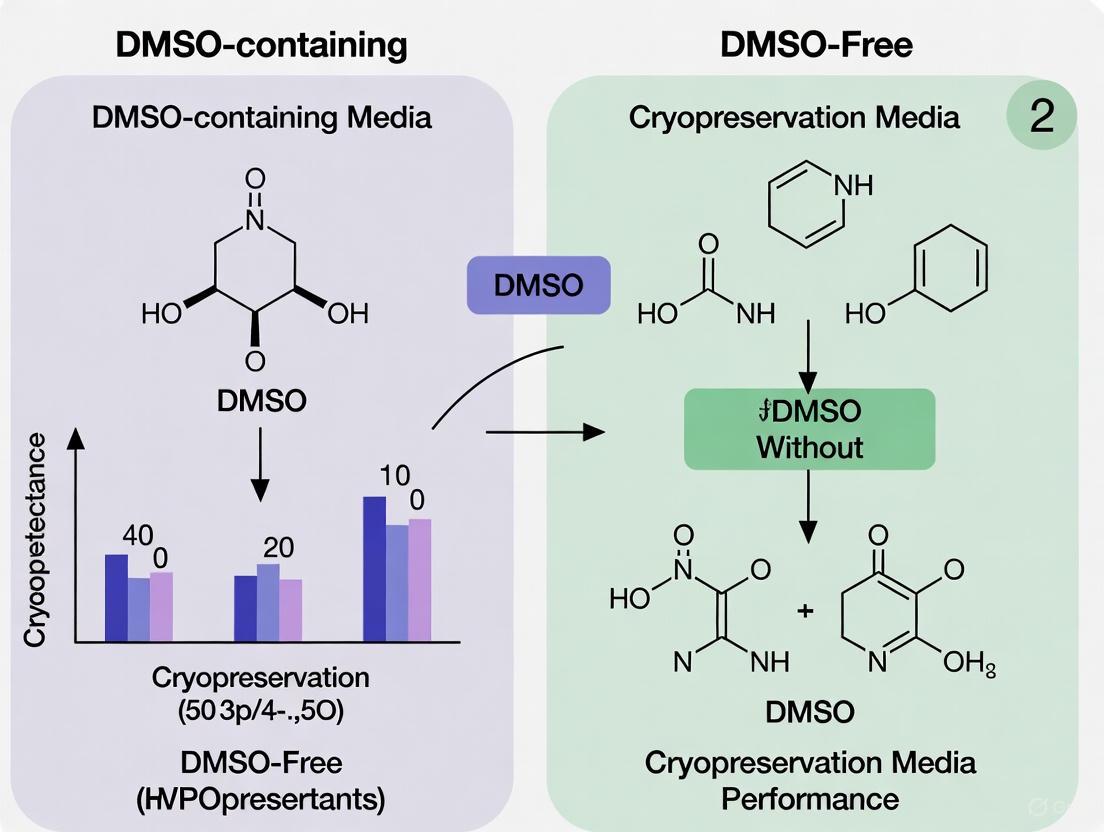
This article provides a comprehensive analysis for researchers and drug development professionals on the critical choice between traditional DMSO-containing and emerging DMSO-free cryopreservation media.
DMSO vs. DMSO-Free Cryopreservation Media: A Performance and Safety Analysis for Advanced Cell Therapy and Research
Abstract
This article provides a comprehensive analysis for researchers and drug development professionals on the critical choice between traditional DMSO-containing and emerging DMSO-free cryopreservation media. It examines the foundational science of cryoprotection, practical application protocols, and strategies for optimizing post-thaw cell viability and functionality. By synthesizing current market trends, clinical safety data, and comparative performance metrics, this review serves as an essential guide for selecting the appropriate cryopreservation strategy to enhance the safety and efficacy of biobanking, regenerative medicine, and cell-based therapies.
The Science of Cryoprotection: Understanding DMSO's Legacy and the Drive for Safer Alternatives
Dimethyl sulfoxide (DMSO) remains the gold standard cryoprotectant in numerous biopreservation applications, despite increasing research into DMSO-free alternatives. Its established role hinges on a unique combination of mechanisms that efficiently prevent lethal intracellular ice crystallization during freeze-thaw cycles. This guide provides an objective comparison of the performance of DMSO-containing and DMSO-free cryopreservation media, detailing the fundamental action of DMSO, presenting supporting experimental data, and outlining key methodological protocols for assessing cryoprotectant efficacy. The analysis is framed within the critical context of DMSO's known cytotoxic and epigenetic effects, which drive the ongoing search for safer substitutes.
Cryopreservation allows for the long-term storage of cells and tissues at ultra-low temperatures, a process vital for cell-based therapies, biobanking, and biomedical research. The primary challenge of freezing living cells is overcoming the lethal formation of intracellular ice crystals, which can mechanically disrupt cellular membranes and organelles [1]. Unprotected cooling and thawing of cells is a process incompatible with life, necessitating the use of cryoprotective agents (CPAs) [1].
Cryoprotectants are broadly categorized as permeating agents (PAs) or non-permeating agents (NPAs). PAs, such as DMSO and glycerol, are characterized by their small size (typically less than 100 daltons) and amphiphilic nature, which allows them to cross cell membranes easily [1]. In contrast, NPAs, including sugars like trehalose and sucrose or polymers like polyethylene glycol (PEG), exert their protective effects extracellularly [1]. DMSO stands as the most prevalent permeating CPA, and its mechanism offers a benchmark against which emerging alternatives are measured.
The Multifaceted Mechanism of DMSO Action
DMSO’s efficacy is not attributable to a single mechanism but rather a combination of interrelated biophysical and chemical actions that protect cells throughout the freezing process.
Intracellular Penetration and Ice Inhibition
As a small, amphiphilic molecule, DMSO rapidly penetrates the phospholipid bilayers of cell membranes [1]. Once inside the cell, it achieves several critical functions:
- Freezing Point Depression: DMSO lowers the freezing point of the intracellular solution, delaying the onset of ice formation [2].
- Reduction of Intracellular Ice: By increasing the intracellular solute concentration, DMSO reduces the amount of water available to form ice, thereby diminishing the volume of intracellular ice that can form during cooling [1] [2].
- "Solution Effects" Mitigation: As water freezes, solutes are excluded from the growing ice lattice, leading to a dangerous concentration of electrolytes in the remaining liquid phase. DMSO mitigates this damage by diluting these harmful solutes [2].
Vitrification and Glass-State Formation
At sufficiently low temperatures, DMSO enables the intracellular and extracellular solutions to undergo vitrification rather than crystallization. Vitrification is the transition of a liquid into an amorphous, glass-like solid without forming ice crystals. DMSO, with its strong hydrogen-bonding capacity with water molecules, promotes this state by interrupting the self-association of water molecules needed to form a critical nucleation site for ice crystals [1] [2]. This glassy state is non-destructive and maintains cellular structures in a state of suspended animation.
Membrane Interaction and Permeability Modulation
DMSO interacts directly with cell membranes in a concentration-dependent manner. At low concentrations (around 5%), it decreases membrane thickness and increases membrane permeability, facilitating the efflux of water during freezing [1]. At the standard cryopreservation concentration of 10%, it can induce the formation of water pores, further aiding the replacement of intracellular water with the cryoprotectant [1]. However, at high concentrations (e.g., 40%), it can cause disintegration of lipid bilayers, highlighting its cytotoxic potential [1].
Diagram: The multi-step mechanism of DMSO in cryopreservation.
Comparative Performance Data: DMSO vs. Alternatives
While DMSO is highly effective, its performance must be balanced against its toxicity. The following tables summarize key experimental data comparing DMSO to other CPAs across different cell types.
Table 1: Comparison of Post-Thaw Viability Using Different Cryoprotectants in Various Cell Types
| Cell Type | CPA Formulation | Post-Thaw Viability/Recovery | Key Findings | Citation |
|---|---|---|---|---|
| hiPSC-Derived Cardiomyocytes | 10% DMSO | 69.4% ± 6.4% | Baseline for comparison; lower recovery than optimized DMSO-free media. | [3] |
| Optimized DMSO-free (Trehalose, Glycerol, Isoleucine) | > 90% | Significantly higher recovery than DMSO; preserved morphology and function. | [3] | |
| Mesenchymal Stromal Cells (MSCs) | 10% DMSO | High (Gold Standard) | Long-standing preferred method; high recovery but carries toxicity concerns. | [4] |
| 300 mM Trehalose + 10% Glycerol + 0.001% Ectoine | 92% Viability, 88% Recovery | Example of a performant, non-toxic DMSO-free alternative for MSCs. | [4] | |
| T-cells (Jurkat) | 2.5-5% DMSO in Plasma-Lyte A | Viability dependent on nucleation temperature | Optimal ice nucleation at -6°C reduced intracellular ice formation. | [5] |
Table 2: Advantages and Disadvantages of DMSO vs. Emerging CPA Strategies
| Parameter | DMSO-based Media | DMSO-free Alternatives |
|---|---|---|
| Mechanism of Action | Well-understood; permeating agent promoting vitrification. | Varied: often combine non-permeating osmolytes (sugars) with less toxic permeating agents (e.g., glycerol). |
| Efficacy & Generality | High and broad-spectrum; effective for many cell types. | Cell-type specific; often requires extensive optimization for each cell type [3]. |
| Post-Thaw Function | Generally good, but some reports of reduced function (e.g., in cardiomyocytes) [3]. | Can be superior, with studies showing preserved contractility and calcium transients in cardiomyocytes [3]. |
| Toxicity & Safety | Known cytotoxicity and epigenetic effects [6]; causes patient side effects upon infusion [4]. | Safer profile; designed to eliminate DMSO-related toxicity and side effects. |
| Regulatory & Clinical Use | FDA class 3 solvent; accepted but with growing concerns, driving removal steps. | Increasingly favored to streamline therapeutic product development and avoid DMSO complications. |
Detailed Experimental Protocols for Evaluation
To objectively compare cryopreservation media, standardized protocols are essential. Below is a detailed methodology for a controlled-rate freezing experiment, a common technique for evaluating CPA performance.
Controlled-Rate Freezing with Viability Assessment
This protocol is adapted from studies on hiPSC-CMs and T-cells [5] [3].
Objective: To determine the post-thaw viability and recovery of cells cryopreserved with different CPA formulations.
Workflow: Diagram: Experimental workflow for CPA comparison.
Materials and Reagents:
- Cell Suspension: (e.g., hiPSC-CMs, T-cells) at a standardized concentration.
- CPA Formulations: Test formulations (e.g., 10% DMSO, DMSO-free cocktails) and a control.
- Cryovials: Sterile, internal thread cryogenic vials.
- Controlled-Rate Freezer: Equipment to precisely control cooling rate.
- Water Bath: Set at 37°C for rapid thawing.
- Viability Stain: Such as Trypan Blue or fluorescent dyes for flow cytometry.
- Cell Counter or Flow Cytometer.
Step-by-Step Procedure:
- Cell Preparation: Harvest and count cells. Create a single-cell suspension at a high concentration (e.g., 5-10 x 10^6 cells/mL) in culture medium.
- CPA Addition: Gently mix the cell suspension with an equal volume of pre-chilled 2x CPA solution to achieve the final desired concentration (e.g., 1x DMSO solution). This should be done on ice or at 4°C to minimize CPA toxicity.
- Aliquoting and Freezing: Dispense the cell-CPA mixture into cryovials. Place vials in a controlled-rate freezer. A standard freezing protocol might involve [5]:
- Cooling from 4°C to -6°C at a rate of 1-5°C/min.
- Inducing nucleation (seeding) at -6°C to -8°C to trigger controlled extracellular ice formation.
- Further cooling to -40°C or -80°C at a controlled rate (e.g., 1-5°C/min), before final transfer to liquid nitrogen for storage.
- Thawing: After storage (at least 24 hours), rapidly thaw a vial by gently agitating it in a 37°C water bath until only a small ice crystal remains.
- CPA Removal and Washing: Gently transfer the thawed cell suspension to a tube containing pre-warmed culture medium. Gently mix and centrifuge to pellet the cells. Carefully remove the supernatant containing the CPA. Resuspend the cell pellet in fresh culture medium.
- Viability and Recovery Assessment:
- Viability: Mix a cell sample with Trypan Blue stain and count live (unstained) and dead (blue) cells using a hemocytometer. Alternatively, use flow cytometry with Annexin V/PI staining for a more accurate assessment.
- Recovery: Calculate the percentage of total live cells recovered post-thaw compared to the number of live cells initially loaded into the cryovial.
Assessing Post-Thaw Functionality
For a comprehensive comparison, viability alone is insufficient. Functional assays are critical.
- For Cardiomyocytes (hiPSC-CMs): Perform calcium transient imaging to assess electrophysiological function and contractility [3]. Immunocytochemistry for cardiac markers (e.g., cTnT, α-actinin) confirms structural integrity.
- For Immune Cells (T-cells): Perform proliferation assays (e.g., CFSE dilution) and cytokine release assays upon stimulation to validate immunocompetence post-thaw.
The Scientist's Toolkit: Essential Research Reagents
Successful cryopreservation requires a suite of specialized reagents and equipment. The following table details key solutions and their functions in a typical cryopreservation workflow.
Table 3: Essential Reagents and Equipment for Cryopreservation Research
| Item | Function/Description | Example Use Case |
|---|---|---|
| Permeating CPAs | Small molecules that enter cells, preventing intracellular ice. | DMSO: The gold standard. Glycerol/Ethylene Glycol: Often used for sensitive cells like gametes. |
| Non-Permeating CPAs | Large molecules that work outside the cell, stabilizing membranes and inducing osmotic dehydration. | Trehalose/Sucrose: Common sugars used in DMSO-free cocktails [3]. HES (Hydroxyethyl starch): Used in cord blood banking. |
| Serum-Free Freezing Media | Chemically defined formulations without animal serum, reducing batch variability and contamination risk. | Essential for GMP-compliant manufacturing of cell therapies [7] [8]. |
| Controlled-Rate Freezer | Equipment that precisely controls cooling rate during freezing, critical for protocol reproducibility. | Enables optimization of parameters like cooling rate and nucleation temperature [5]. |
| Rock Inhibitor (Y27632) | A small molecule that inhibits Rho-associated kinase, reducing apoptosis in dissociated cells. | Added to recovery media after thawing to improve survival of sensitive cells like hiPSCs [3]. |
DMSO's status as the gold standard cryoprotectant is firmly rooted in its potent, multi-mechanistic action against intracellular ice crystallization. Its ability to permeate cells, depress freezing points, and promote protective vitrification has made it indispensable for decades. However, a comprehensive analysis of experimental data reveals that its superior efficacy in some contexts is counterbalanced by significant drawbacks, including dose-dependent cytotoxicity, epigenetic alterations, and adverse effects in clinical applications.
The growing field of DMSO-free cryopreservation, leveraging combinations of naturally occurring osmolytes like trehalose, glycerol, and amino acids, demonstrates that it is possible to not only match but exceed the post-thaw recovery and functional preservation achieved with DMSO for specific cell types, such as hiPSC-derived cardiomyocytes [3]. The future of cryopreservation lies not in the universal replacement of DMSO, but in the careful, cell-specific optimization of CPA cocktails and freezing protocols. This tailored approach, driven by a deeper understanding of biophysical principles and a commitment to clinical safety, is paving the way for a new generation of high-performance, DMSO-free cryopreservation media.
Dimethyl sulfoxide (DMSO) has served as the cornerstone cryoprotectant agent (CPA) for cell preservation for decades, enabling the frozen storage of diverse cell types from stem cells to therapeutic immune cells. Its unique properties as an amphipathic molecule allow it to readily cross cell membranes, prevent intracellular ice crystal formation, and facilitate long-term biobanking. However, a substantial body of emerging evidence now challenges the long-standing presumption of DMSO biological inertness, particularly at concentrations previously considered safe for sensitive cell types and clinical applications. This comprehensive analysis documents the specific toxicological profiles of DMSO across experimental and clinical settings, providing researchers and drug development professionals with critical data to inform cryopreservation protocol decisions. The compelling evidence of DMSO-induced alterations at cellular, epigenetic, and functional levels, coupled with well-documented clinical infusion reactions, represents a catalyst for change in the field—accelerating the transition toward safer, DMSO-free cryopreservation media that maintain cell viability and function without introducing confounding variables or patient risks.
Documented Cellular Toxicity: Beyond Basic Viability Metrics
Disruption of Fundamental Cellular Processes
Recent high-throughput omics technologies have revealed that DMSO exposure induces extensive molecular-level alterations that transcend basic viability metrics. A comprehensive in vitro study exposing 3D cardiac and hepatic microtissues to 0.1% DMSO (a concentration commonly used in cell assays) demonstrated surprisingly extensive disruptions. Transcriptome analysis detected 2,051 differentially expressed genes (DEGs) in cardiac microtissues and 2,711 DEGs in hepatic microtissues after DMSO exposure, with approximately 60% being downregulated in both tissue types [6]. Pathway analysis of these DEGs revealed substantial overlap in affected biological processes, indicating consistent cross-organ actions of DMSO. The most significantly affected pathways included "Metabolism" (specifically citric acid cycle, respiratory electron transport, and glucose metabolism) and "Vesicle-mediated transport" (particularly ER-to-Golgi anterograde transport and protein secretion) [6].
Perhaps more concerning were the drastic alterations observed in the epigenetic landscape. Genome-wide methylation profiling of cardiac microtissues suggested disruption of DNA methylation mechanisms leading to genome-wide changes, while microRNA sequencing revealed large-scale deregulations—massive effects in cardiac microtissues and smaller though still substantial effects in hepatic microtissues [6]. These findings challenge the presumption that low-dose DMSO is biologically inert and suggest potential long-term functional consequences even after DMSO removal.
Functional Impairment in Immune Cells
Beyond transcriptional and epigenetic changes, DMSO directly impairs critical immune cell functions essential for therapeutic efficacy. Investigating DMSO's effect on lymphocyte activation parameters, researchers exposed peripheral blood mononuclear cells (PBMCs) from healthy donors to varying DMSO concentrations (0.5%-10% v/v) for 120 hours [9]. The results demonstrated significant antiproliferative effects, with 1% and 2% DMSO reducing the lymphocyte proliferation index by 55% and 90%, respectively, compared to PHA-stimulated positive controls [9].
Furthermore, DMSO exposure dramatically suppressed cytokine production in a dose-dependent manner. At concentrations of 5% and 10% DMSO, production of IL-2, TNF-α, and IFN-γ was significantly reduced across total lymphocyte populations and CD4+/CD8+ T cell subsets [9]. Even at 2.5% DMSO, IL-2 production was substantially diminished—decreasing by 38% for total lymphocytes, 40% for CD4+ cells, and 50% for CD8+ T cells [9]. This immunosuppressive effect compromises critical immune functions and raises concerns about using DMSO-preserved cells for adoptive immune therapies where robust proliferative capacity and cytokine production are essential for therapeutic success.
Table 1: Documented Cellular-Level Toxicity of DMSO
| Toxicity Endpoint | Experimental Model | DMSO Concentration | Key Findings | Primary Reference |
|---|---|---|---|---|
| Transcriptomic Alterations | 3D Cardiac Microtissues | 0.1% | 2,051 differentially expressed genes | [6] |
| Transcriptomic Alterations | 3D Hepatic Microtissues | 0.1% | 2,711 differentially expressed genes | [6] |
| Epigenetic Disruption | 3D Cardiac Microtissues | 0.1% | Genome-wide methylation changes | [6] |
| microRNA Deregulation | 3D Cardiac Microtissues | 0.1% | Large-scale microRNA alterations | [6] |
| Lymphocyte Proliferation | Human PBMCs | 1% | 55% reduction in proliferation index | [9] |
| Lymphocyte Proliferation | Human PBMCs | 2% | 90% reduction in proliferation index | [9] |
| Cytokine Production (IL-2) | CD4+ T Cells | 2.5% | 40% reduction in IL-2 production | [9] |
| Cytokine Production (IFN-γ) | CD8+ T Cells | 5% | 61% reduction in IFN-γ production | [9] |
Clinical Infusion Reactions: From Mild Symptoms to Severe Neurological Events
Spectrum and Incidence of Adverse Reactions
The translation of DMSO-cryopreserved cellular products from bench to bedside has revealed a concerning profile of clinical adverse reactions ranging from mild, transient symptoms to severe, life-threatening events. A systematic review of 109 studies analyzing adverse reactions to DMSO in humans found that gastrointestinal and skin reactions were the most commonly reported adverse events [10]. The analysis demonstrated a clear relationship between the dose of DMSO administered and the occurrence of adverse reactions, with most reactions being transient and not requiring intervention [10].
Specific analysis of gastrointestinal adverse events across multiple studies revealed that nausea occurred in approximately 12% of patients (range 2-41%), while vomiting affected approximately 7% of patients (range 0-64%) [10]. The administration route significantly influenced adverse event incidence, with intravenous administration associated with higher rates of nausea (17%) compared to transdermal application (5%) [10]. When reported collectively, nausea and vomiting occurred in approximately 13% of patients across studies (range 0-46%) [10].
Serious Neurological and Cardiovascular Toxicity
Beyond generally transient gastrointestinal symptoms, more serious neurological and cardiovascular adverse events have been documented. A clinical resource cataloging hypersensitivity reactions to DMSO lists serious adverse events including encephalopathy, cardiac arrest, respiratory depression, fatal cardiac arrhythmia, leukoencephalopathy, cerebral infarction, and epileptic seizure [11]. The majority of cardiac side effects are self-limiting, though concerning cases of significant neurotoxicity have been reported [11].
One documented case involved a 30-year-old male patient receiving DMSO-cryopreserved autologous peripheral blood stem cells following BEAM chemotherapy for relapsing Hodgkin's lymphoma [12]. During the infusion, the patient developed headache, chest tightness, hyperventilation, and subsequently transient global amnesia (TGA)—manifested as disorientation, anterograde amnesia, and repetitive questioning [12]. Magnetic resonance imaging (MRI) performed 24 hours post-infusion revealed abnormal high signal on diffusion-weighted sequences in the right hippocampus, confirming neurological damage [12]. The episode lasted approximately four hours, with the patient experiencing complete amnesia of events during and preceding the infusion [12]. This case underscores the potential for serious neurotoxicity even at standard DMSO dosing protocols.
Table 2: Documented Clinical Adverse Reactions to DMSO
| Reaction Category | Specific Adverse Events | Reported Incidence | Severity Level | Primary Reference |
|---|---|---|---|---|
| Gastrointestinal | Nausea | 12% (range 2-41%) | Mild to Moderate | [10] |
| Gastrointestinal | Vomiting | 7% (range 0-64%) | Mild to Moderate | [10] |
| Gastrointestinal | Abdominal Cramps | 5% (range 1-52%) | Mild to Moderate | [10] |
| Neurological | Transient Global Amnesia | Case Reports | Severe | [12] |
| Neurological | Encephalopathy | Literature Reports | Severe | [11] |
| Neurological | Seizures | Literature Reports | Severe | [11] |
| Cardiovascular | Bradycardia | Not Specified | Mild to Severe | [11] |
| Cardiovascular | Cardiac Arrest | Literature Reports | Life-Threatening | [11] |
| Respiratory | Respiratory Depression | Literature Reports | Severe | [11] |
Experimental Protocols: Assessing DMSO Toxicity and Evaluating Alternatives
Protocol for Evaluating DMSO Effects on Lymphocyte Function
The experimental methodology for quantifying DMSO effects on immune cell function involves precise culture conditions and activation assays [9]:
- Cell Isolation: Isolate PBMCs from healthy donors using density gradient centrifugation (e.g., Ficoll-Paque).
- Culture Conditions: Culture PBMCs in RPMI 1640 medium supplemented with 10% fetal bovine serum, 2 mM L-glutamine, and 1% penicillin-streptomycin.
- DMSO Exposure: Add DMSO at varying concentrations (0.5%, 1%, 2%, 2.5%, 5%, and 10% v/v) to cultures. Include positive controls (PHA-stimulated without DMSO) and negative controls (unstimulated).
- Proliferation Assay: After 120 hours of culture, assess proliferation using CFSE dilution or similar method by flow cytometry. Calculate relative proliferation index compared to PHA-stimulated control.
- Cytokine Production Analysis: Stimulate cells with PMA/ionomycin for the final 4-6 hours of culture, with brefeldin A added for the final 2-4 hours. Perform intracellular staining for IL-2, TNF-α, and IFN-γ, followed by flow cytometric analysis of CD4+ and CD8+ T cell subsets.
- Viability Assessment: Evaluate cell viability at 24 and 120 hours using trypan blue exclusion or similar method.
Protocol for Optimizing DMSO-Free Cryopreservation of T Cells
Developing effective DMSO-free cryopreservation protocols requires systematic formulation testing across multiple cell quality parameters [13]:
- Treg Manufacture: Isolate CD4+CD25+ cells from PBMCs using MACS technology. Culture cells in X-Vivo 15 medium supplemented with 10% FBS, IL-2 (500 IU/ml), and rapamycin (100 nM) for 21 days with repetitive anti-CD3/CD28 bead stimulation.
- Freezing Media Formulation: Prepare test freezing media with the following components:
- Baseline DMSO-free Formulation: Serum-free freezing medium supplemented with 10% human serum albumin (HSA).
- Experimental DMSO-free Formulations: Incorporate alternative cryoprotectants such as polyethylene glycol (PEG) at varying concentrations (1%, 3%, 5%).
- Control Formulations: Include standard DMSO-containing media (5% and 10% DMSO) for comparison.
- Cryopreservation and Thawing: Cryopreserve cells using controlled-rate freezing, then store in liquid nitrogen vapor phase. Thaw rapidly at 37°C for 2 minutes.
- Post-Thaw Assessment: Evaluate the following parameters:
- Cell Recovery: Calculate post-thaw recovery rate using cell counting.
- Viability: Assess via flow cytometry using 7-AAD or similar viability dye.
- Phenotype: Analyze characteristic surface markers (CD4, CD25, Foxp3) by flow cytometry.
- Function: Evaluate suppressive capacity in co-culture assays with responder T cells.
- Cytokine Secretion: Measure cytokine production after stimulation.
Diagram 1: DMSO Toxicity Pathways in Sensitive Cell Types
DMSO-Free Cryopreservation Media: Performance Comparison with Experimental Data
Direct Performance Comparison in Treg Cryopreservation
The transition to DMSO-free cryopreservation media requires rigorous comparison with traditional DMSO-containing formulations. A systematic evaluation of regulatory T cell (Treg) cryopreservation compared freezing media containing 5% DMSO, 10% DMSO, and a DMSO-free synthetic cryoprotectant (Cryostem) [13]. The results demonstrated that freezing medium with 5% DMSO facilitated improved Treg recovery and functionality compared to both 10% DMSO and the DMSO-free alternative [13]. This suggests that simply reducing DMSO concentration may offer a partial solution, though complete elimination remains the ultimate goal for toxicity mitigation.
Further optimization experiments incorporated extracellular cryoprotectants like polyethylene glycol (PEG) into 5% DMSO formulations, testing PEG concentrations of 1%, 3%, and 5% [13]. While the DMSO-free synthetic cryoprotectant alone did not yield satisfactory results for clinical-grade Tregs, the systematic approach to formulation optimization highlights the promising strategy of combining multiple cryoprotective mechanisms to eventually achieve DMSO-free preservation without compromising cell quality.
Emerging DMSO-Free Formulations Show Promising Performance
Innovative DMSO-free cryopreservation media are demonstrating comparable performance to traditional DMSO-containing formulations across multiple cell types. Nucleus Biologics developed NB-KUL DF, a DMSO-free, chemically defined cryopreservation medium designed to maintain cell viability and functionality after thawing without DMSO-related toxic effects [14]. Testing across multiple human cell types commonly used in cell and gene therapies demonstrated that NB-KUL DF showed performance comparable to traditional cryoprotectants like CryoStor CS5 for mesenchymal stem cells (MSCs), peripheral blood mononuclear cells (PBMCs), and T cells [14]. While slightly less effective for natural killer (NK) cells, NB-KUL DF still demonstrated superior results compared to CryoStor CSB, underscoring the importance of selecting tailored cryopreservation solutions for different cell types [14].
The growing market for DMSO-free alternatives reflects increasing recognition of their importance in clinical applications. The global market for DMSO-free freezing culture media is projected to grow at a compound annual growth rate (CAGR) of approximately 7.5%, reaching nearly USD 1.7 billion by 2033, driven by escalating demand from pharmaceutical and biotechnology companies developing cell-based therapies [15]. This market expansion is accelerating innovation in cryoprotectant formulations specifically designed to address the unique sensitivity profiles of therapeutic cell types.
Table 3: Performance Comparison of DMSO vs. DMSO-Free Cryopreservation Media
| Cell Type | Preservation Format | Viability/Recovery | Functional Assessment | Reference |
|---|---|---|---|---|
| Treg Cells | 5% DMSO + 10% HSA | Improved recovery & functionality | Maintained suppressive capacity | [13] |
| Treg Cells | 10% DMSO + 10% HSA | Standard recovery | Baseline function | [13] |
| Treg Cells | DMSO-free Synthetic CPA | Reduced recovery | Suboptimal function | [13] |
| MSCs | NB-KUL DF (DMSO-free) | Comparable to CryoStor CS5 | Maintained differentiation potential | [14] |
| PBMCs | NB-KUL DF (DMSO-free) | Comparable to CryoStor CS5 | Preserved immune function | [14] |
| T Cells | NB-KUL DF (DMSO-free) | Comparable to CryoStor CS5 | Retained activation capacity | [14] |
| NK Cells | NB-KUL DF (DMSO-free) | Slightly reduced vs. CS5 but superior to CSB | Functional but potentially compromised | [14] |
The Scientist's Toolkit: Essential Research Reagents for DMSO-Free Transition
Successfully implementing DMSO-free cryopreservation protocols requires specific reagents and materials to ensure optimal cell viability and function post-thaw:
- Serum-Free Freezing Media Base: Chemically defined basal media that provides essential nutrients and buffers without introducing variability associated with serum components. Serves as the foundation for customized DMSO-free formulations [15].
- Human Serum Albumin (HSA): Provides extracellular cryoprotection, helps maintain osmotic balance, and stabilizes cell membranes during freezing and thawing processes. Used at 10% concentration in optimized freezing media [13].
- Polyethylene Glycol (PEG): High molecular weight extracellular cryoprotectant that reduces ice formation outside the cell by breaking hydrogen bonds between water molecules through spatial separation. Tested at 1%, 3%, and 5% concentrations in formulation optimization [13].
- Synthetic Cryoprotectants: Proprietary compounds (e.g., Cryostem) designed to mimic DMSO's cryoprotective properties without associated toxicity. Provide intracellular protection through membrane stabilization and ice crystal inhibition [13] [16].
- Cryopreservation Containers: Controlled-rate freezing containers and cryovials specifically validated for DMSO-free formulations, as some alternative cryoprotectants may require different thermal transfer properties during freezing.
- Viability Assay Kits: Multiparameter flow cytometry kits including 7-AAD/propidium iodide for viability, CFSE for proliferation, and intracellular cytokine staining reagents for functional assessment post-thaw [9].
- GMP-Compliant Formulation Components: Regulatory-grade raw materials that meet quality standards for clinical applications, essential for translational research progressing toward therapeutic use [14].
Diagram 2: Experimental Workflow for DMSO-Free Media Evaluation
The comprehensive evidence presented herein demonstrates that DMSO induces significant toxicity across multiple biological domains—from molecular alterations in cellular processes to clinically relevant infusion reactions. Transcriptomic and epigenetic studies reveal that even low DMSO concentrations (0.1%) disrupt critical metabolic pathways and gene expression networks, while functional assays demonstrate substantial impairment of immune cell proliferation and cytokine production at concentrations as low as 1-2.5%. Clinical data further substantiate these concerns, documenting adverse events ranging from generally mild gastrointestinal symptoms to severe neurological complications such as transient global amnesia with radiologically confirmed hippocampal abnormalities.
The documented toxicity profile of DMSO, particularly for sensitive cell types and clinical applications, necessitates a paradigm shift in cryopreservation practices. While reduced DMSO concentrations (5% versus 10%) represent an interim improvement, the emerging generation of DMSO-free cryopreservation media demonstrates increasingly comparable performance across multiple cell types relevant to cell therapy and regenerative medicine. The successful implementation of these alternatives requires cell-type-specific optimization and comprehensive post-thaw functional validation, but offers the significant advantage of eliminating DMSO-associated toxicity concerns altogether. For researchers and drug development professionals, the evidence now clearly supports the strategic transition to DMSO-free cryopreservation media as a critical step toward enhancing both the safety profile and functional integrity of cellular products destined for clinical application.
The cryopreservation media market is undergoing a significant transformation, moving away from traditional dimethyl sulfoxide (DMSO)-based formulations toward safer, more advanced DMSO-free alternatives. This shift is driven by growing recognition of DMSO's cytotoxicity and the increasing demands of cell-based therapies and advanced research applications. The global market for DMSO-free freezing culture media is experiencing robust growth, projected to reach approximately USD 1.7 billion by 2033, with a compound annual growth rate (CAGR) of around 7.5% from its 2025 valuation of approximately USD 950 million [15]. This expansion reflects a fundamental change in preservation technologies, emphasizing enhanced cell viability, reduced toxicity, and improved functional outcomes across diverse biological applications.
The limitations of conventional cryopreservation methods have become increasingly apparent as cellular therapies and sophisticated research models advance. DMSO, while effective as a cryoprotectant, exhibits demonstrated cytotoxicity at room temperature, potential to induce oxidative stress, alter cellular metabolism, and cause DNA damage [15]. Furthermore, clinical administration of DMSO-preserved cells has been associated with various adverse effects, including allergic, gastrointestinal, neurological, and cardiac side effects in patients [3]. These concerns are particularly problematic for sensitive cell types like stem cells and immune cells, where preserving phenotypic and functional integrity is paramount. The market evolution toward DMSO-free solutions represents a concerted effort to address these limitations while meeting the rigorous requirements of modern biotechnology and regenerative medicine.
Market Analysis and Growth Projections
Comprehensive Market Outlook
The DMSO-free cryopreservation media market demonstrates strong growth trajectories across multiple independent analyses, though specific valuations vary due to differing segment definitions, geographic scopes, and methodologies. The consistent theme across all reports is significant expansion driven by evolving industry needs.
Table 1: Comparative Market Size Projections for DMSO-Free Cryopreservation Media
| Report Reference | 2024/2025 Base Value | 2033 Projection | Projected CAGR | Key Market Drivers |
|---|---|---|---|---|
| Data Insights Market [15] | ~USD 950M (2025) | ~USD 1.7B | ~7.5% | Cell therapy advances, regenerative medicine, DMSO toxicity concerns |
| Archive Market Research [17] | USD 500M (2025) | USD 1.5B | 12.0% | Chronic disease prevalence, safety regulations, technological advancements |
| Wise Guy Reports [18] | USD 1.1B (2025) | USD 2.5B (2035) | 8.3% | Biopreservation demand, automated freezing systems, regenerative medicine investments |
| Verified Market Reports [19] | USD 150M (2024) | USD 250M | 6.5% | Stem cell research, personalized medicine, GMP-grade production standards |
Regional analysis reveals that North America currently dominates the market, accounting for approximately 40% of global revenue, attributed to robust biotechnology infrastructure, substantial investments in cell therapy R&D (exceeding $15 billion annually), and stringent FDA regulations [19]. However, the Asia-Pacific region is anticipated to exhibit the fastest growth rate during the forecast period, driven by increasing research activities, growing healthcare expenditures, and expanding biopharmaceutical sectors in countries like China, Japan, and India [15] [18].
The market segmentation shows that pharmaceutical and biotechnology companies represent the largest end-user segment, leveraging DMSO-free media for advanced cell preservation in therapeutic development and biomanufacturing [19]. The stem cell research segment is experiencing particularly rapid adoption, with DMSO-free solutions proving less damaging to stem cell integrity and function [20]. Additionally, the serum-free, xeno-free formulation segment represents the largest product category, preferred for reduced cytotoxicity and regulatory advantages [19].
Comparative Performance Analysis: DMSO vs. DMSO-Free Media
Experimental Evidence from Peer-Reviewed Studies
PBMC Cryopreservation Study
A comprehensive 2025 study published in Frontiers in Immunology systematically evaluated the viability and functionality of human peripheral blood mononuclear cells (PBMCs) cryopreserved for up to 2 years in various freezing media [21]. This research provides critical longitudinal data comparing traditional FBS/DMSO media with commercial serum-free alternatives.
Experimental Protocol:
- Cell Source: PBMCs from 11 healthy volunteers collected via standard blood bags
- Media Tested: Reference medium (90% FBS + 10% DMSO) compared against nine commercial alternatives including CryoStor CS10, NutriFreez D10, Bambanker D10 (all with 10% DMSO), and DMSO-free options (Stem-Cellbanker D0, Bambanker D0)
- Freezing Method: Cells suspended at 12 × 10⁶ cells/mL, transferred to CoolCell containers, frozen at -80°C for 1-7 days, then transferred to vapor-phase liquid nitrogen
- Assessment Timepoints: 3 weeks (M0), 3 months (M3), 6 months (M6), 1 year (M12), and 2 years (M24) post-freezing
- Evaluation Parameters: Cell viability, yield, phenotype (flow cytometry), and functionality (cytokine secretion, T and B cell FluoroSpot, intracellular cytokine staining)
Key Findings: The study revealed that PBMCs cryopreserved in CryoStor CS10 and NutriFreez D10 maintained high viability and functionality comparable to the FBS+DMSO reference medium across all timepoints [21]. Media with DMSO concentrations below 7.5% showed significant viability loss and were eliminated after initial assessments. Importantly, serum-free media with 10% DMSO effectively preserved PBMC immune response, while DMSO-free options generally underperformed in long-term preservation.
Table 2: Performance Comparison of Cryopreservation Media for PBMCs [21]
| Cryopreservation Medium | DMSO Concentration | 2-Year Viability | T-cell Functionality | B-cell Functionality | Overall Performance |
|---|---|---|---|---|---|
| FBS + 10% DMSO (Reference) | 10% | High | High | High | Reference Standard |
| CryoStor CS10 | 10% | High | High | High | Equivalent to Reference |
| NutriFreez D10 | 10% | High | High | High | Equivalent to Reference |
| Bambanker D10 | 10% | High | Moderate (divergent) | Moderate | Viability OK, Functional Concerns |
| CryoStor CS7.5 | 7.5% | Moderate | N/A (eliminated) | N/A | Promising but Eliminated |
| Media with <7.5% DMSO | <7.5% | Low | N/A (eliminated) | N/A | Significant Viability Loss |
hiPSC-Derived Cardiomyocyte Cryopreservation
A 2025 study in Stem Cell Research & Therapy addressed DMSO-free cryopreservation of human-induced pluripotent stem cell-derived cardiomyocytes (hiPSC-CMs), a clinically relevant cell type with particular sensitivity to cryopreservation-induced damage [3].
Experimental Protocol:
- Cell Culture: hiPSC-CMs generated by Wnt pathway inhibition followed by sodium L-lactate purification
- CPA Optimization: Differential evolution algorithm used to determine optimal composition of sugar, sugar alcohol, and amino acid mixtures
- Freezing Parameters: Testing of cooling rates (1°C/min to 20°C/min) and nucleation temperatures (-2°C to -20°C)
- Assessment Methods: Post-thaw recovery, low-temperature Raman spectroscopy, immunocytochemistry, calcium transient studies
- Key Formulations: Comparison of optimized DMSO-free cocktail (trehalose, glycerol, isoleucine) vs. traditional 10% DMSO
Key Findings: The best-performing DMSO-free solutions enabled post-thaw recoveries over 90%, significantly greater than DMSO (69.4 ± 6.4%) [3]. Rapid cooling rate (5°C/min) and low nucleation temperature (-8°C) were optimal for hiPSC-CMs. Crucially, post-thaw function was preserved when hiPSC-CMs were frozen with the best-performing DMSO-free CPA, with cells displaying similar cardiac markers and calcium handling properties pre-freeze and post-thaw.
Platelet Cryopreservation with Deep Eutectic Solvents
A 2025 study in the International Journal of Molecular Sciences explored DMSO-free cryopreservation of platelets using deep eutectic solvents (DES) as alternative cryoprotectants [22].
Experimental Protocol:
- Platelet Preparation: Double-dose buffy coat platelet units divided into test (DES-treated) and control (NaCl-only) groups
- DES Formulation: 10% choline chloride-glycerol deep eutectic solvent
- Freezing Method: Controlled-rate freezing at -80°C with storage over 90 days
- Assessment Parameters: Post-thaw recovery, mitochondrial membrane potential, lactate dehydrogenase release, surface receptor expression (CD62P, CD63, PAC-1), microparticle analysis
Key Findings: Platelets cryopreserved with the DES-based, DMSO-free method showed recovery of 88.2 ± 0.1%, comparable to the control protocol (86.9 ± 0.1%) [22]. No significant differences were observed in mitochondrial membrane potential, activation markers, or surface receptor expression between groups. The study demonstrated the feasibility of CPA-free controlled-rate freezing for platelet cryopreservation while maintaining functional integrity.
Technical and Experimental Protocols
Key Methodologies for DMSO-Free Cryopreservation
PBMC Cryopreservation Workflow
Critical Protocol Details:
- Cell Concentration: 12 × 10⁶ cells/mL in freezing media
- Aliquoting: Seven 1mL aliquots per donor per medium for multiple timepoint analysis
- Freezing Container: CoolCell or equivalent controlled-rate freezing device
- Freezing Rate: Standardized -1°C/minute to -80°C
- Storage: Vapor-phase liquid nitrogen for long-term preservation
- Thawing: Rapid thaw at 37°C with immediate dilution in pre-warmed culture media
Advanced DMSO-Free Formulation Strategy
The search for effective DMSO-free cryoprotectants has led to several innovative approaches utilizing naturally occurring osmolytes and advanced delivery mechanisms:
Table 3: DMSO-Free Cryoprotectant Strategies and Formulations
| Strategy | Key Components | Cell Types Tested | Reported Efficacy | Mechanism of Action |
|---|---|---|---|---|
| Sugar-Based Formulations [17] [3] | Trehalose, Sucrose, Raffinose | MSCs, hiPSC-CMs, Lymphocytes | Post-thaw recovery >90% for hiPSC-CMs | Membrane stabilization, glass formation |
| Amino Acid Additives [4] [3] | Proline, Isoleucine, Glycine | MSCs, hiPSC-CMs | Enhanced viability vs. DMSO alone | Osmotic regulation, protein stabilization |
| Deep Eutectic Solvents [22] | Choline chloride-Glycerol | Platelets | 88.2% recovery, equivalent to control | Hydrogen bonding, membrane protection |
| Polymer-Based CPAs [4] | PVP, Carboxylated poly-l-lysine | MSCs, Umbilical Cord | 63-90% viability depending on formulation | Macromolecular crowding, membrane shielding |
| Intracellular Delivery [4] | Trehalose + Electroporation | Adipose Tissue, Umbilical Cord | ~83% recovery | Facilitated intracellular CPA uptake |
The Scientist's Toolkit: Essential Research Reagents
Table 4: Key Reagents for DMSO-Free Cryopreservation Research
| Reagent Category | Specific Examples | Function & Application | Commercial Sources |
|---|---|---|---|
| Serum-Free Media Bases | CryoStor BASAL, Normosol-R | Isotonic foundation for CPA formulations | STEMCELL Technologies, [21] [3] |
| Natural Osmolytes | Trehalose, Sucrose, Glycerol | Primary cryoprotectants replacing DMSO | Sigma-Aldrich, [3] |
| Amino Acid Additives | L-Isoleucine, L-Proline, Glycine | Enhance membrane stability, reduce osmotic stress | Sigma-Aldrich, [4] [3] |
| Controlled-Rate Freezers | CoolCell, Planer Kryo 560 | Standardized freezing protocols for reproducibility | BioCision, [21] |
| Viability Assays | Flow cytometry with Annexin V/Pl, LDH release | Quantification of post-thaw cell integrity | Multiple vendors, [21] [22] |
| Functional Assays | Calcium transient imaging, FluoroSpot | Assessment of post-thaw cellular function | Multiple vendors, [21] [3] |
Discussion: Implications for Research and Therapeutic Applications
Technical and Commercial Considerations
The transition to DMSO-free cryopreservation media presents both opportunities and challenges for researchers and therapeutic developers. While the benefits of reduced cytotoxicity are clear, implementation requires careful consideration of several factors:
Formulation Optimization: Unlike the one-size-fits-all nature of DMSO, effective DMSO-free cryopreservation often requires cell-type-specific optimization [3]. The hiPSC-CM study demonstrated that specific combinations and concentrations of natural osmolytes yielded superior results compared to DMSO, but these optimal formulations varied between cell types [3]. This necessitates comprehensive empirical testing for each new application, potentially increasing development time and resource requirements.
Regulatory and Manufacturing Implications: The shift toward DMSO-free formulations aligns with regulatory priorities for safer therapeutic products. Regulatory agencies are increasingly emphasizing the importance of non-toxic cryopreservation solutions, particularly for cell therapies destined for clinical use [19] [20]. Additionally, the move toward serum-free, xeno-free, and chemically defined formulations supports manufacturing consistency and reduces batch-to-batch variability, critical considerations for Good Manufacturing Practice (GMP) compliance [15] [19].
Economic Considerations: While DMSO-free media may entail higher initial costs compared to traditional formulations, the total cost of ownership must account for improved cell viability, reduced loss of valuable cellular products, and simplified post-thaw processing [19]. For therapeutic applications, the elimination of DMSO wash steps before administration represents a significant process simplification with potential clinical benefits [4].
Market Transition Logic Flow
Future Directions and Research Needs
The DMSO-free cryopreservation market continues to evolve, with several emerging trends and unmet needs shaping future development:
Next-Generation Cryoprotectants: Research into novel cryoprotective agents continues to advance, with deep eutectic solvents [22], ice-binding proteins, and advanced polymer systems showing promise for further improving post-thaw outcomes. These next-generation solutions aim to provide enhanced membrane stabilization while maintaining excellent biocompatibility profiles.
Process Standardization and Automation: As DMSO-free formulations become more established, the development of standardized freezing protocols and integrated automated systems will be crucial for widespread adoption, particularly in clinical and GMP environments [18]. Several market reports highlight the growing integration of DMSO-free media with automated, high-throughput cryopreservation platforms [19].
Functional Preservation Validation: While viability metrics remain important, the field is increasingly focusing on functional preservation as the ultimate measure of cryopreservation success. Future research should continue to validate DMSO-free media using sophisticated functional assays relevant to specific research and clinical applications, particularly for sensitive cell types like stem cells and immune effector cells [21] [3].
The DMSO-free cryopreservation media market represents a dynamic and rapidly evolving segment of the biotechnology landscape, projected to reach USD 1.7 billion by 2033 [15]. This growth is underpinned by compelling experimental evidence demonstrating that advanced DMSO-free formulations can not only match but in some cases exceed the performance of traditional DMSO-based media across critical parameters including cell viability, recovery, and functional preservation [21] [3].
The transition from DMSO-containing to DMSO-free cryopreservation media reflects broader trends in biotechnology toward safer, more defined, and more reproducible research and therapeutic tools. While challenges remain in formulation optimization and protocol standardization, the continued innovation in this space promises to address longstanding limitations in cell preservation, ultimately supporting advances in regenerative medicine, cell-based therapies, and fundamental biological research. As the market matures and additional comparative data emerges, DMSO-free media are positioned to become the new standard for critical cryopreservation applications where cell quality and patient safety are paramount.
Table 1: Overview of Major DMSO-Free Cryoprotectant Classes
| Cryoprotectant Class | Specific Examples | Primary Mechanism of Action | Key Advantages | Common Applications |
|---|---|---|---|---|
| Saccharides [23] | Sucrose, Trehalose | Non-penetrating; increases extracellular osmolality, promoting cell dehydration [23]. | Biocompatible, reduces immunogenicity [23]. | Stem cells, cell therapies [23]. |
| Synthetic Polymers [23] | Polyvinyl alcohols, Polyampholytes | Non-penetrating; inhibits ice recrystallization, increases solution viscosity [23]. | High molecular weight, prevents intracellular ice formation [23]. | Mesenchymal stem cells (MSCs), induced pluripotent stem cells (iPSCs) [23]. |
| Proteins [23] [24] | Antifreeze Proteins (AFPs) | Non-penetrating; binds to ice crystals to inhibit growth and recrystallization [23]. | Mimics natural organisms, high potency [24]. | R&D for advanced therapies and organ preservation [24]. |
| Deep Eutectic Solvents (DES) [25] | Choline chloride-glycerol | Penetrating and/or non-penetrating; disrupts ice formation through hydrogen bonding [23]. | Low toxicity, customizable formulations [23] [25]. | Platelet cryopreservation [25]. |
| Other Non-Toxic Agents [26] | Isotonic Saline (NaCl) | Non-penetrating; reduces intracellular water via osmotic pressure, minimizing ice crystallization [26]. | Completely non-toxic, simple formulation [26]. | Platelet cryopreservation [26]. |
Cryopreservation is a cornerstone of modern biotechnology, enabling the long-term storage and stability of cells essential for cell-based therapies, regenerative medicine, and biopharmaceutical research [7] [27]. For decades, dimethyl sulfoxide (DMSO) has been the predominant cryoprotectant agent (CPA). However, growing clinical and research evidence highlights its drawbacks, including cytotoxic effects, induction of unwanted cell differentiation, and patient side effects such as allergic reactions and respiratory complications [23] [26] [14]. These concerns are particularly critical for cell and gene therapies, where the cryopreserved product is directly administered to patients [14] [28].
The push for DMSO-free formulations is driven by the need for safer, more biocompatible preservation methods that maintain high cell viability and function without the risks associated with DMSO. This overview explores the landscape of alternative cryoprotectants—including sugars, polymers, and amino acids—and objectively compares their performance to traditional DMSO-containing media within the broader thesis of cryopreservation research.
Mechanisms of Action: How Alternative Cryoprotectants Work
Alternative cryoprotectants are broadly categorized as either penetrating or non-penetrating, protecting cells through distinct mechanisms during the freezing and thawing process [23].
Non-Penetrating Agents (NPAs): This class includes saccharides (e.g., sucrose, trehalose) and large polymers. They operate primarily by increasing the osmolality of the extracellular solution. This draws water out of the cell, thereby reducing intracellular ice formation—a major source of cryoinjury. These agents also slow down the influx of water during thawing, preventing osmotic shock and cell lysis [23]. Some synthetic polymers, like polyampholytes, also function by inhibiting ice recrystallization and strongly interacting with the cell membrane [23].
Penetrating Agents (PAs): These are typically small, non-ionic molecules that can cross the cell membrane. While DMSO is a penetrating agent, alternatives in this category, such as certain deep eutectic solvents, work by similar principles, colligatively reducing ice formation inside the cell. However, penetrating agents are generally associated with higher toxicity compared to non-penetrating ones [23].
Diagram 1: Cryoprotectant Mechanisms of Action. Alternative agents protect cells from freezing damage via targeted pathways.
Performance Comparison: Experimental Data and Outcomes
Commercially Available DMSO-Free Formulations
Table 2: Performance of Commercial DMSO-Free Media vs. DMSO-Based Controls
| Product / Solution | Cell Type Tested | Post-Thaw Viability / Recovery | Key Functional Outcomes | Reference |
|---|---|---|---|---|
| CaseCryo NON-DMSO [29] | Human Pluripotent Stem Cells (hPSCs), HEK293 | Superior recovery & genomic integrity | Maintains long-term cell function and viability; synergistic with specific dissociation media [29]. | [29] |
| NB-KUL DF [14] [28] | MSCs, PBMCs, T cells | Comparable to DMSO-based media (CryoStor CS5) | Supports high cell expansion; eliminates post-thaw wash steps, streamlining workflow [14] [28]. | [14] [28] |
| Saline (NaCl) [26] | Platelets | Recovery: ~87% (DMSO-free) vs. ~70% (DMSO) | Maintained hemostatic function (clot formation), though viability requires optimized freezing [26]. | [26] |
| DES (Choline Chloride-Glycerol) [25] | Platelets | Post-thaw recovery >85% | No significant improvement over NaCl control; all functional markers (CD62P, CD42b) and clot integrity maintained [25]. | [25] |
Experimental and Natural Cryoprotective Agents
Table 3: Performance of Experimental and Natural Cryoprotectants
| Cryoprotectant | Cell Type Tested | Key Outcomes & Mechanisms | Considerations |
|---|---|---|---|
| Trehalose [23] | Various Cell Types | Effective non-penetrating CPA; requires delivery into cell via specific techniques for maximum efficacy. | Mechanism well-understood; often used in combination [23]. |
| Antifreeze Proteins (AFPs) [23] [24] | Various Cell Types | Mimics proteins in arctic species; inhibits ice recrystallization at low concentrations. | High cost; complexity of production [24]. |
| Melatonin [23] | Gametes, Ovarian Tissue, SSCs | Acts as cytoprotectant; potent antioxidant that reduces oxidative stress during cryopreservation. | Does not function as a primary cryoprotectant [23]. |
Experimental Protocols: Key Methodologies for DMSO-Free Cryopreservation
This protocol demonstrates that platelets can be cryopreserved without traditional cryoprotectants.
- 1. Preparation: Double-dose buffy coat platelet units are divided. The test unit is prepared with a NaCl solution (9 mg/mL) as the cryopreservation medium.
- 2. Freezing: Units are frozen at -80 °C. The study highlights that controlled-rate freezing (CRF) is required to optimize platelet quality when using this DMSO-free approach [26].
- 3. Storage: Cryopreserved units are stored for extended periods (e.g., over 90 days) [25].
- 4. Thawing and Reconstitution: Upon analysis, bags are thawed and reconstituted in fresh plasma. Post-thaw testing includes cell counts, metabolic assays, and functional hemostatic tests like thromboelastometry [26].
This generalized protocol is used for DMSO-free media like CaseCryo NON-DMSO and NB-KUL DF.
- 1. Cell Harvesting: Cells (e.g., hPSCs, MSCs, T cells) are harvested using standard methods. Some formulations work synergistically with specific dissociation media [29].
- 2. Suspension in Cryomedium: The cell pellet is resuspended in the DMSO-free cryopreservation medium. A key advantage is the elimination of the washing step typically needed to remove DMSO post-thaw [28].
- 3. Controlled-Rate Freezing: Cells are cooled using a controlled-rate freezer to -80 °C or lower, then transferred to liquid nitrogen for long-term storage.
- 4. Post-Thaw Analysis: Cells are rapidly thawed and directly placed into culture. Analysis includes viability (e.g., trypan blue exclusion), recovery rate, and functional assays like cell expansion and lineage-specific differentiation [29] [14] [28].
Diagram 2: DMSO-Free Cryopreservation Workflow. The process is streamlined by eliminating post-thaw wash steps.
The Scientist's Toolkit: Essential Reagents and Solutions
Table 4: Key Reagents for DMSO-Free Cryopreservation Research
| Reagent / Solution | Function | Example Use Case |
|---|---|---|
| DMSO-Free Cryomedium [29] [14] [28] | Protects cells from freezing damage without DMSO toxicity. | Primary medium for cryopreserving therapeutic cells (T cells, MSCs, hPSCs). |
| CaseBase Dissociation Medium [29] | Gently dissociates adherent cells before cryopreservation. | Used synergistically with CaseCryo NON-DMSO to improve cell survival. |
| Deep Eutectic Solvents (DES) [25] | Acts as a cryoprotective additive. | Evaluated as an additive to saline for platelet cryopreservation. |
| Isotonic Saline (NaCl 0.9%) [26] | Serves as a non-toxic, CPA-free cryopreservation medium. | Cryopreservation of platelets; reduces intracellular ice formation via osmosis. |
| Antioxidant Supplements (e.g., Melatonin) [23] | Reduces oxidative stress incurred during freeze-thaw cycles. | Added to cryomedia for gametes or somatic cells to improve genomic stability. |
The transition to DMSO-free cryopreservation media is a critical advancement for the clinical application of cell-based therapies. Evidence demonstrates that alternatives—ranging from sugars and synthetic polymers to simple saline—can provide comparable, and in some cases superior, post-thaw recovery and functionality while eliminating the toxicity concerns of DMSO [29] [26] [14]. The optimal DMSO-free formulation is often cell-type dependent, underscoring the importance of tailored solutions and robust, standardized freezing protocols. As research continues to refine these alternatives and elucidate their mechanisms, DMSO-free formulations are poised to become the new standard for safe and effective biopreservation.
From Protocol to Practice: Implementing DMSO and DMSO-Free Media in Research and Clinical Workflows
In the fields of biological research and cell-based therapies, cryopreservation is a vital process for maintaining cell viability and function over extended periods. For decades, dimethyl sulfoxide (DMSO) has served as the predominant cryoprotectant agent (CPA) for this purpose. The standardized protocols employing DMSO at concentrations of 5-10%, combined with controlled-rate freezing, have become the cornerstone of reliable cell preservation [4] [30]. This guide objectively examines the performance of these established DMSO-based methods, detailing the experimental data that underpins their efficacy and contrasting them with the emerging landscape of DMSO-free alternatives. While DMSO-free cryomedium is gaining traction driven by toxicity concerns, DMSO-based cryopreservation remains the benchmark against which new technologies are measured, supported by extensive historical data and well-characterized protocols [31] [32].
Experimental Data: Quantifying DMSO-Based Cryopreservation Performance
Comparative Analysis of Cryopreservation Outcomes
Extensive research has documented the performance of DMSO across various cell types. The following table synthesizes quantitative post-thaw outcomes from standardized protocols using 5-10% DMSO.
Table 1: Post-Thaw Cell Recovery and Viability with DMSO-Based Cryopreservation
| Cell Type | DMSO Concentration | Freezing Method | Post-Thaw Viability | Cell Recovery | Reference |
|---|---|---|---|---|---|
| Hematopoietic Stem Cells (HSC) | 10% | Controlled-rate freezer | >80% (Culture colony assay) | High | [33] |
| Hematopoietic Stem Cells (HSC) | 10% | Box-in-Box device (-1°C/min to -3.5°C/min) | No significant difference from controlled-rate freezer | High (CD34+ progenitor recovery) | [33] |
| Mesenchymal Stromal Cells (MSCs) | 10% | Standard slow cooling | High | High | [4] |
| General Mammalian Cells | 5-10% | Mr. Frosty at -1°C/min | >90% (for healthy, log-phase cells) | High (with optimal cell concentration) | [34] [35] |
Clinical Safety Data for DMSO
The safety of DMSO-containing cell therapy products has been evaluated in clinical settings. A review of 1173 patients receiving intravenous infusions of DMSO-preserved Mesenchymal Stromal Cells (MSCs) found that the delivered DMSO doses were 2.5–30 times lower than the typically accepted dose of 1 g/kg in hematopoietic stem cell transplantation [4]. With adequate premedication, this analysis reported only isolated infusion-related reactions, if any [4]. This data is critical for evaluating the risk-benefit profile of DMSO in therapeutic applications.
Standardized Experimental Protocols for DMSO-Based Cryopreservation
The reliability of DMSO-based cryopreservation hinges on the strict adherence to standardized protocols. The following methodology is widely recommended by leading resource providers [34] [35].
Pre-Freezing Preparations
- Cell Health and Quality Control: Cells should be harvested during the logarithmic growth phase at greater than 80% confluency. It is crucial to ensure cells are free from microbial contamination (e.g., mycoplasma) prior to freezing [34].
- Cryopreservation Medium Preparation: The standard medium consists of a complete growth medium (e.g., basal medium with serum or serum-free supplements) supplemented with 5-10% DMSO [35]. Commercially available, ready-to-use media like CryoStor CS10 are also commonly used [34]. The medium should be chilled (2°C to 8°C) before use to minimize DMSO exposure time at elevated temperatures.
Cell Harvesting and Freezing Medium Resuspension
- Harvesting: For adherent cells, gently detach using a dissociation reagent like trypsin. Inactivate the enzyme with complete growth medium [35].
- Centrifugation and Counting: Centrifuge the cell suspension (typically at 100–400 × g for 5-10 minutes). Aspirate the supernatant and resuspend the pellet in a small volume of growth medium. Perform a viable cell count using Trypan Blue exclusion or an automated cell counter [35].
- Resuspension in Freezing Medium: Centrifuge again, aspirate the supernatant, and resuspend the cell pellet in the pre-chilled freezing medium at a specific, optimal concentration. For most cell types, the general range is 1x10^6 to 1x10^7 cells/mL [34] [35]. Gently mix to ensure a homogeneous suspension.
Aliquoting and Controlled-Rate Freezing
- Aliquoting: Dispense the cell suspension into sterile cryogenic vials. It is recommended to fill the vials half-full to account for expansion during freezing [30].
- Controlled-Rate Freezing: The key to success is a slow, controlled cooling rate of approximately -1°C per minute until the temperature reaches at least -80°C [34] [35] [33]. This can be achieved using:
Long-Term Storage
After the cells are frozen, they should be promptly transferred to long-term storage in the vapor phase of liquid nitrogen (below -135°C) [34] [35]. Storage at -80°C is acceptable only for short periods (less than one month).
Diagram 1: DMSO-based cryopreservation workflow.
The Scientist's Toolkit: Essential Reagents and Equipment
Table 2: Key Reagents and Equipment for Standardized Cryopreservation
| Item | Function/Description | Example Products/Brands |
|---|---|---|
| Cryoprotectant | Penetrates cells, prevents ice crystal formation. The core component of freezing media. | Laboratory-grade DMSO (e.g., Gibco) [35] |
| Complete Freezing Medium | Ready-to-use solution providing a protective environment for cells during freeze-thaw. | CryoStor CS10 [34], Synth-a-Freeze [35] |
| Controlled-Rate Freezing Device | Ensures a consistent, optimal cooling rate of ~-1°C/min, maximizing cell viability. | Programmable freezer (e.g., CryoMed); Isopropanol chamber (e.g., Nalgene Mr. Frosty, Corning CoolCell) [34] [35] [33] |
| Cryogenic Vials | Sterile, leak-proof containers designed for ultra-low temperature storage. | Corning Cryogenic Vials [34] |
| Liquid Nitrogen Storage System | Provides long-term storage at temperatures below -135°C to suspend cellular metabolism. | Various manufacturers (e.g., Taylor-Wharton, Chart) [34] [35] |
DMSO in Context: Performance Versus DMSO-Free Alternatives
Framing DMSO-based protocols within the broader research thesis requires a direct comparison with DMSO-free alternatives.
- Efficacy and Reliability: DMSO-based protocols, particularly using 10% concentration, remain the most proven and reliable method for a wide array of cell types, including sensitive MSCs and HSCs [4] [33]. While some DMSO-free media claim equivalent performance for specific cell types, a universal, equally effective alternative has not yet been established [4] [31].
- Toxicity and Workflow: The primary drivers for DMSO-free media are DMSO's cytotoxicity at high concentrations and its potential to cause adverse reactions in patients [31] [32] [36]. DMSO can also alter cell differentiation and epigenetic profiles [31]. Furthermore, DMSO-free media offer a significant workflow advantage by eliminating post-thaw washing steps, thereby reducing cell loss, processing time, and variability [32] [36].
- Regulatory and Market Position: DMSO is already approved for use in clinical applications, providing a clear regulatory path [32]. However, the DMSO-free cryopreservation medium market is projected to grow significantly, from an estimated $500 million in 2025 to approximately $1.5 billion by 2033, reflecting strong industry interest and investment in alternatives [17].
Standardized protocols using 5-10% DMSO with controlled-rate freezing at -1°C/min continue to be a robust and effective method for cell cryopreservation. The extensive experimental data and long history of successful use affirm its position as a benchmark in the field. The choice between DMSO-containing and DMSO-free media is not a simple substitution but a strategic decision. Researchers and therapy developers must weigh the proven reliability and broad efficacy of DMSO against the potential toxicity and workflow complexities that have motivated the development of DMSO-free solutions. The optimal cryopreservation strategy will depend on the specific cell type, application (research vs. clinical), and regulatory requirements.
Cryopreservation is a critical process in cell biology research, bioprocessing, and cell-based therapies, with its efficacy largely dependent on the cryoprotective agents (CPAs) used [32]. For decades, dimethyl sulfoxide (DMSO) has been the gold standard CPA, preventing intracellular ice formation through its membrane-penetrating properties [13]. However, growing evidence of DMSO's cytotoxicity, epigenetic effects, and clinical side effects has driven the field toward safer, more targeted alternatives [32] [37] [3]. The paradigm is shifting from a one-size-fits-all approach to application-specific formulation design, recognizing that different cell types have distinct biophysical and functional requirements during freeze-thaw cycles.
This evolution reflects broader trends in precision medicine and manufacturing standards for Advanced Therapy Medicinal Products (ATMPs) [13]. DMSO-free cryosolutions are no longer merely theoretical alternatives but are demonstrating superior performance for sensitive cell types including stem cells, immune effector cells, and primary cells [32] [3]. This comparison guide examines current experimental data and protocols to inform evidence-based media selection for specific research and therapeutic applications.
Performance Comparison Across Cell Types
Immune Cells: T-Cells and PBMCs
Table 1: Cryopreservation Media Performance for Immune Cells
| Cell Type | Media Formulation | Post-Thaw Viability | Recovery/Functionality Metrics | Key Findings |
|---|---|---|---|---|
| Treg Cells | 5% DMSO + 10% HSA [13] | Improved recovery & viability [13] | Maintained phenotype, cytokine production, & suppressive capacity [13] | Facilitates reduced DMSO concentration in clinical protocols [13] |
| T Cells | Pentaisomaltose + 2% DMSO (PIM2) [38] | Superior to 10% DMSO [38] | Highest migratory potential; comparable to CS10 [38] | Improves cryoprotection while reducing DMSO content [38] |
| PBMCs (2-year storage) | CryoStor CS10 (10% DMSO, serum-free) [39] | High viability maintained [39] | Preserved immune response & functionality [39] | Viable FBS-free alternative for long-term biobanking [39] |
| PBMCs (2-year storage) | NutriFreez D10 (10% DMSO, serum-free) [39] | High viability maintained [39] | Comparable to FBS-based media [39] | Effective animal-protein-free option [39] |
Experimental Protocols for Immune Cell Cryopreservation:
Treg Cell Clinical Manufacturing: CD4+CD25+Foxp3+ Tregs are isolated via MACS technology and expanded over 21 days with repetitive anti-CD3/CD28 bead stimulation in X-Vivo 15 medium supplemented with interleukin-2 and rapamycin [13]. For cryopreservation, cells are resuspended in serum-free freezing medium with 10% human serum albumin and 5% DMSO, then controlled-rate frozen [13]. Post-thaw assessment includes recovery rate, viability, characteristic surface markers (CD4/CD25/Foxp3), cytokine secretion after stimulation, and in vivo survival in immunodeficient mice [13].
PBMC Long-Term Storage Evaluation: PBMCs from healthy donors are isolated via Lymphoprep density gradient centrifugation and cryopreserved in multiple media formulations at 12 × 10⁶ cells/mL [39]. Vials are transferred to CoolCell containers for freezing at -80°C before long-term storage in vapor-phase liquid nitrogen [39]. Standardized thawing uses a 37°C water bath with addition of FBS and DNase. Assessments at 3 weeks, 3, 6, 12, and 24 months include viability, yield, phenotype (flow cytometry), and functionality (T/B cell FluoroSpot, intracellular cytokine staining) [39].
Stem Cells and Differentiated Progeny
Table 2: Cryopreservation Media Performance for Stem Cells and Derivatives
| Cell Type | Media Formulation | Post-Thaw Viability/Recovery | Key Findings |
|---|---|---|---|
| hiPSC-Derived Cardiomyocytes | DMSO-free osmolyte cocktail (trehalose, glycerol, isoleucine) [3] | >90% recovery [3] | Significantly superior to 10% DMSO (69.4%); preserved morphology, calcium handling & cardiac markers [3] |
| Hematopoietic Stem Cells (HSCs) | XT-Thrive (DMSO-/serum-free, biomimetic) [37] | Similar survival & proliferation to 10% DMSO [37] | Comparable stem cell frequency & bone marrow engraftment in mice; chemically defined & stable [37] |
| Sensitive Cells (Primary, Stem Cells) | Bambanker DMSO-Free (serum-free) [32] | High viability & integrity [32] | Eliminates cytotoxicity risks & variability; valuable for regenerative medicine & clinical-grade research [32] |
Experimental Protocols for Stem Cell Cryopreservation:
hiPSC-Derived Cardiomyocyte Optimization: hiPSC-CMs are generated via Wnt pathway modulation and purified with sodium L-lactate [3]. Biophysical characterization determines osmotically inactive volume. A differential evolution algorithm optimizes DMSO-free CPA compositions of trehalose, glycerol, and isoleucine in Normosol R basal buffer [3]. Controlled-rate freezing tests cooling rates (1-20°C/min) and nucleation temperatures. Post-thaw assessment includes recovery, viability, osmotic behavior, immunocytochemistry (cardiac troponin T, α-actinin), and calcium transient studies to confirm functional preservation [3].
HSC Biomimetic Formulation Screening: Bone marrow cells are cryopreserved in novel biomimetic, protein-free candidates (XT-Thrive A and B) and compared to 10% DMSO in serum [37]. Cells are frozen at 10 × 10⁶/vial using CoolCell containers, stored in liquid nitrogen, then thawed and washed. In vitro assessments include post-thaw survival, short-term proliferation, and flow cytometry. In vivo functionality is tested via extreme limiting dilution analysis in immunodeficient mice, measuring bone marrow engraftment of human cells (myeloid, erythroid, B-lymphoid lineages) 12 weeks post-transplant [37].
Media Formulation Technologies
DMSO-Containing Media Evolution
Traditional DMSO-based media are evolving to address toxicity concerns while maintaining efficacy. Key strategies include:
DMSO Concentration Reduction: Studies demonstrate that lowering DMSO from 10% to 5% in serum-free formulations containing human serum albumin maintains Treg recovery and functionality, addressing clinical safety concerns [13]. For T-cells, combining 1-2% DMSO with pentaisomaltose achieves viability comparable to 10% DMSO formulations while improving migratory capacity [38].
Serum Elimination: Serum-free, xeno-free formulations like CryoStor CS10 and NutriFreez D10 eliminate batch-to-batch variability, ethical concerns, and potential pathogen transmission associated with fetal bovine serum, while maintaining PBMC viability and functionality equivalent to FBS-containing media over 2-year storage [39].
cGMP-Compliant Formulations: Commercially available, regulatory-compliant media like CryoStor provide standardized, defined formulations for cell therapy manufacturing, ensuring consistency and safety [37].
DMSO-Free Alternative Technologies
Table 3: DMSO-Free Cryopreservation Technologies
| Technology Approach | Example Components | Mechanism of Action | Target Cell Types |
|---|---|---|---|
| Biomimetic Ice Interactants [37] | Synthetic ice-interactive polymers [37] | Mimics natural antifreeze proteins; controls ice crystal formation [37] | HSCs, PBMCs, cell lines [37] |
| Natural Osmolyte Cocktails [3] | Trehalose, glycerol, isoleucine [3] | Stabilizes membranes & proteins; modulates osmotic stress [3] | hiPSC-CMs, T-cells, MSCs [3] |
| Polymer-Based Solutions [32] | Proprietary polymers [32] | Extracellular protection; reduces ice formation [32] | Stem cells, primary cells, sensitive cells [32] |
| Sugar Alcohol Combinations [38] | Pentaisomaltose [38] | Reduces freezing point; stabilizes cell membranes [38] | T-cells [38] |
The Scientist's Toolkit: Essential Research Reagents
Table 4: Key Reagents for Cryopreservation Research
| Reagent / Material | Function | Example Application |
|---|---|---|
| Lymphoprep [39] | Density gradient medium for PBMC isolation from whole blood [39] | Isolation of peripheral blood mononuclear cells for cryopreservation studies [39] |
| MACS Cell Separation Products [13] | Magnetic-activated cell sorting for specific cell population isolation (e.g., CD4+CD25+ Tregs) [13] | Preparation of specific immune cell subsets for application-specific testing [13] |
| CoolCell Freezing Container [39] [37] | Provides controlled, reproducible -1°C/minute cooling rate for cryopreservation without requiring programmable freezer [39] [37] | Standardized freezing protocol across experimental conditions; essential for reproducibility [39] [37] |
| ROCK Inhibitor (Y27632) [3] | Enhances cell survival after thawing and single-cell dissociation [3] | Improved recovery of hiPSCs and hiPSC-derived cardiomyocytes post-thaw [3] |
| Serum-Free Expansion Media (e.g., X-Vivo 15 [13]) | Defined culture medium for cell expansion without serum [13] | Maintenance of cell phenotype and function during pre-cryopreservation culture [13] |
| Human Serum Albumin (HSA) [13] | Protein supplement for serum-free freezing media; provides cytoprotection [13] | Replacement for FBS in clinical-grade Treg cryopreservation formulations [13] |
Experimental Workflows and Optimization Strategies
Treg Cell Cryopreservation Optimization
Figure 1: Treg cell cryopreservation optimization workflow. This protocol identified 5% DMSO with 10% HSA as optimal for clinical manufacturing, balancing recovery with reduced toxicity [13].
hiPSC-Cardiomyocyte Biophysical Optimization
Figure 2: hiPSC-cardiomyocyte DMSO-free protocol development. This systematic approach combining biophysical characterization and computational optimization achieved >90% recovery, significantly outperforming traditional DMSO [3].
The experimental data demonstrates that optimal cryopreservation media selection depends critically on the specific cell type and application requirements. Strategic media selection should consider:
Clinical vs. Research Applications: For clinical cell therapies, regulatory-compliant, serum-free formulations with reduced DMSO (5%) or DMSO-free alternatives are increasingly preferred to minimize patient side effects [13] [4]. For research biobanking, traditional 10% DMSO serum-free media may remain suitable for certain cell types like PBMCs [39].
Cell Sensitivity Profiles: Highly sensitive cells like hiPSC-CMs benefit significantly from customized DMSO-free osmolyte cocktails that address their specific biophysical properties and functional requirements [3].
Functional Preservation Requirements: Beyond viability, assessment must include cell-specific functionality - suppressive capacity for Tregs, calcium handling for cardiomyocytes, engraftment for HSCs - which may be differentially affected by cryoprotectant choices [13] [37] [3].
The future of cryopreservation lies in increasingly customized, application-specific formulations that address the unique biological and biophysical characteristics of each cell type, moving beyond the one-size-fits-all paradigm of traditional DMSO-based approaches.
The adoption of dimethyl sulfoxide (DMSO)-free cryopreservation media represents a significant advancement in cell therapy and biomanufacturing, primarily by eliminating the need for complex post-thaw washing procedures. This guide objectively compares the performance of DMSO-free media against traditional DMSO-based alternatives, examining quantitative data on cell viability, recovery, and functionality. Within the broader research context of cryopreservation media performance, the analysis demonstrates that DMSO-free formulations not only streamline workflows but also maintain or enhance critical cell quality attributes, supporting their integration into standardized protocols for research and therapeutic applications.
Cryopreservation is indispensable in modern cell biology, biobanking, and the rapidly advancing field of cell and gene therapy (CGT). For decades, dimethyl sulfoxide (DMSO) has been the cornerstone cryoprotectant due to its efficacy in preventing lethal ice crystal formation. However, its utility is counterbalanced by a critical drawback: concentration-dependent cytotoxicity. DMSO can compromise cell viability, impair cellular function, and, upon administration to patients, cause adverse reactions ranging from mild symptoms like nausea to severe complications such as arrhythmias [32] [36].
Consequently, when DMSO-cryopreserved cells are destined for clinical applications, rigorous post-thaw washing is mandated to reduce the DMSO concentration to acceptable levels. This washing process typically involves serial steps of dilution, centrifugation, and resuspension. These steps are labor-intensive, time-consuming, and introduce significant risks, including cell loss or damage from osmotic and mechanical stresses [40] [36]. In contrast, DMSO-free cryopreservation media are engineered to be non-cytotoxic. Their defining advantage is the ability to be administered to cells or patients immediately after thawing, without the need for washing, thereby simplifying the workflow, reducing processing time, and minimizing the risks associated with post-thaw manipulation [32].
This guide provides an objective, data-driven comparison of these two approaches, focusing on how the elimination of washing steps through DMSO-free media impacts both laboratory efficiency and critical quality metrics of preserved cells.
Comparative Experimental Data: DMSO-Free vs. DMSO-Based Media
Quantitative Performance Metrics
Independent studies and vendor-provided data consistently demonstrate that DMSO-free media can achieve performance metrics equivalent or superior to traditional DMSO-based media across key cell types. The data below, derived from published product performance sheets, illustrate this comparative performance.
Table 1: Post-Thaw Viability and Recovery of Immune Cells in Different Cryomedia
| Cell Type | Cryopreservation Media | Viability (%) | Recovery (%) | Source/Model |
|---|---|---|---|---|
| PBMCs | NB-KUL DF (DMSO-Free) | Equivalent to CS5 | Not Specified | [41] |
| CryoStor CS5 (DMSO-Based) | Benchmark | Not Specified | [41] | |
| Cell-Vive CD (DMSO-Free) | Lower than NB-KUL DF | Not Specified | [41] | |
| T Cells | NB-KUL DF (DMSO-Free) | Comparable | Superior to CS5 & CSB | [41] |
| CryoStor CS5 (DMSO-Based) | Benchmark | Benchmark | [41] | |
| CryoStor CSB (DMSO-Based) | Benchmark | Lower than NB-KUL DF | [41] |
Table 2: Performance of MSCs and Other Cell Types in Different Cryomedia
| Cell Type | Cryopreservation Media | Expansion/Proliferation | Key Findings |
|---|---|---|---|
| MSCs | NB-KUL DF (DMSO-Free) | Significantly better than CSB; Equivalent to CS5 | Maintained viability and health without DMSO [41] |
| CryoStor CS5 (DMSO-Based) | Benchmark | Benchmark for performance [41] | |
| CryoStor CSB (DMSO-Based) | Lower than NB-KUL DF | Used as a baseline comparison [41] | |
| HSCs, T-cells | Various DMSO-Free Commercial Media* | Comparable to DMSO | Conserved short- and long-term cellular activity [31] |
*Includes Pentaisomaltose, CryoScarless, CryoNovo P24, CryoProtectPureSTEM.
The Direct Impact of DMSO Removal on Cell Recovery
The inherent risk of post-thaw washing is starkly highlighted in clinical studies. A 2025 retrospective analysis of hematopoietic progenitor cells (HPCs) for autologous transplantation in amyloidosis patients revealed significant cell loss during the DMSO reduction process. While viable nucleated and mononuclear cell recovery was high, the process resulted in a median loss of nearly 50% (51.49% recovery) of viable CD34+ cells compared to pre-freeze levels [40]. This finding underscores a critical trade-off: while washing mitigates DMSO toxicity, it can directly compromise the dose of therapeutically critical cells.
Experimental Protocols for Performance Validation
To ensure the reliability and reproducibility of data when comparing cryopreservation media, adherence to standardized experimental protocols is essential. The following methodologies are commonly employed in the field.
Protocol 1: Standard Freeze-Thaw and Analysis Workflow
This protocol outlines the general process for evaluating a cryopreservation medium, from cell preparation to post-thaw assessment [41].
Title: Cryomedia Performance Evaluation Workflow
Detailed Steps:
- Cell Preparation: Harvest and count the target cells (e.g., MSCs, T cells) according to standard culture protocols.
- Cryomixing: Centrifuge the cell suspension, remove the supernatant, and resuspend the cell pellet in the test cryopreservation media (e.g., DMSO-based, DMSO-free) at the recommended cell concentration.
- Freezing: Dispense the cell suspension into cryovials. Use a controlled-rate freezer, following a standard freezing ramp (e.g., -1°C/min to -40°C, then -5-10°C/min to -100°C), before transferring to long-term storage in liquid nitrogen.
- Thawing: After a defined storage period (e.g., 1 week), rapidly thaw the cryovials in a 37°C water bath with gentle agitation.
- Post-Thaw Analysis (DMSO-Free): For DMSO-free media, immediately mix a sample of the thawed suspension with a viability stain (like Trypan Blue) and analyze using an automated cell counter or flow cytometer. The cells are now ready for direct functional assays.
- Post-Thaw Analysis (DMSO-Based - Washed): For DMSO-based media, a washing step is required before analysis. This involves diluting the thawed suspension with a buffer (e.g., PBS+Albumin), centrifuging to pellet cells, carefully removing the DMSO-containing supernatant, and resuspending the pellet in fresh media before proceeding with viability and functional assays [36] [41].
- Calculations:
- Viability (%): (Number of viable cells / Total number of cells) × 100.
- Cell Recovery (%): (Number of viable cells post-thaw / Number of viable cells pre-freeze) × 100.
Protocol 2: Functional Potency Assays
Beyond viability, assessing cellular function is crucial. The Colony-Forming Unit (CFU) assay is a gold standard for evaluating the clonogenic potential and repopulation capacity of progenitor and stem cells [40].
Title: Functional Potency Assay Workflow
Detailed Steps:
- Thaw and Prepare Cells: Thaw cryopreserved cells as described in Protocol 1. For DMSO-based media, cells must be washed to remove the cytotoxic agent before plating.
- Plating: Plate a defined number of viable cells (determined post-thaw/post-wash) into specialized semi-solid culture media that supports progenitor growth and colony formation.
- Incubation: Inculture the plates for a duration specific to the cell type (e.g., 10-14 days for HPCs) under standard culture conditions.
- Analysis: Score the number and types of colonies (e.g., CFU-Granulocyte, Macrophage) under a microscope. A higher CFU count indicates better preservation of functional potency by the cryopreservation medium [40].
The Scientist's Toolkit: Essential Reagents and Equipment
Successful cryopreservation and analysis require specific reagents, equipment, and consumables. The table below details key solutions for this field.
Table 3: Essential Research Reagent Solutions for Cryopreservation Studies
| Category | Specific Examples | Function & Importance |
|---|---|---|
| DMSO-Free Cryomedia | NB-KUL DF [41], StemCell Keep [31], Bambanker DMSO-Free [32] | Core Test Article: Serum-free, chemically-defined formulations designed to preserve cells without cytotoxic DMSO, enabling direct post-thaw use. |
| DMSO-Based Cryomedia | CryoStor CS5/CS10 [41] | Benchmark Control: Industry-standard, DMSO-containing media for performance comparison. Require post-thaw washing. |
| Washing & Dilution Solutions | Normosol-R, Plasma-Lyte 148, 0.9% NaCl with Dextran-40 or Human Serum Albumin [40] | Process Reagents: Used in centrifugation-based washing protocols to remove DMSO while minimizing osmotic shock to cells. |
| Viability Assay Kits | Trypan Blue, Flow Cytometry kits with Annexin V/Propidium Iodide [41] | Analysis Tools: Critical for quantifying the percentage of live/dead cells post-thaw. |
| Functional Assay Kits | MethoCult for CFU assays, Cell Proliferation & Differentiation kits [40] [41] | Potency Tools: Assess the preservation of critical biological functions beyond simple membrane integrity. |
| Specialized Equipment | Controlled-Rate Freezer (e.g., Planer) [40], Automated Cell Counter, COBE 2991 Cell Processor [40] | Infrastructure: Enable reproducible freezing protocols, accurate cell counting, and standardized, large-volume washing. |
The body of evidence confirms that DMSO-free cryopreservation media are a robust and reliable alternative to DMSO-based formulations. The primary and most impactful advantage of DMSO-free media is the elimination of post-thaw washing steps. This directly translates to streamlined workflows, reduced labor and material costs, lower risk of cell loss and damage, and ultimately, a more efficient path from the freezer to the experiment or patient.
While DMSO remains a effective cryoprotectant, its associated cytotoxicity necessitates complex and risky handling procedures. DMSO-free media overcome this fundamental limitation, offering comparable, and in some cases superior, performance in preserving cell viability, recovery, and functional potency. As the cell and gene therapy field continues to advance toward more standardized and scalable manufacturing, the adoption of DMSO-free cryopreservation media represents a critical step forward in enhancing both product quality and operational efficiency.
The global shift toward DMSO-free cryopreservation media represents a critical evolution in biobanking technology, driven by both safety concerns and the practical demands of automated, high-throughput systems. The market for DMSO-free freezing media is projected to grow significantly, with estimates ranging from $500 million to $1,100 million in 2025 and expected to reach $1,500-2,500 million by 2033-2035, reflecting a compound annual growth rate (CAGR) of 7.5%-12% [17] [18] [15]. This growth is largely fueled by the expanding fields of cell therapy and regenerative medicine, which require standardized, reproducible, and safe cell preservation protocols compatible with industrial-scale operations. The transition from traditional DMSO-based cryopreservation to DMSO-free alternatives is not merely a substitution of ingredients but necessitates a comprehensive re-evaluation of integration parameters with automated biobanking platforms, including viscosity, cooling rate optimization, and post-thaw processing workflows.
Performance Comparison: DMSO-Free vs. DMSO-Based Media
Table 1: Quantitative Performance Comparison of Cryopreservation Media
| Performance Parameter | DMSO-Based Media | DMSO-Free Media | Experimental Context |
|---|---|---|---|
| Typical Post-Thaw Viability | ~69.4% (±6.4%) [3] | >90% (hiPSC-CMs) [3] | hiPSC-derived cardiomyocytes (hiPSC-CMs) |
| Cryoprotectant Toxicity | Higher; associated with allergic, gastrointestinal, and cardiac side effects [3] | Reduced; minimal adverse effects [42] [3] | Clinical infusion & in-vitro culture |
| Regulatory & Process Complexity | Often requires post-thaw washing to remove DMSO, adding steps and cell loss [4] [3] | Simplified workflow; often no washing step required [43] | Cell therapy manufacturing |
| Compatibility with Automation | Can be high, but washing steps complicate automation [7] | Potentially higher; streamlined "freeze-thaw-use" workflow [43] | High-throughput biobanking |
| Impact on Cell Function | Can alter cellular metabolism, cause DNA damage, and reduce contractility in cardiomyocytes [3] | Better functional preservation; similar cardiac markers pre-freeze and post-thaw [3] | hiPSC-CMs, Calcium transient studies |
Experimental Protocols for Validating DMSO-Free Media in Automated Systems
Protocol: Optimizing DMSO-Free Cryopreservation for hiPSC-Derived Cardiomyocytes
This detailed protocol, adapted from a 2025 study, demonstrates the development and validation of a high-performance DMSO-free formulation for sensitive cell types, providing a template for testing compatibility with automated systems [3].
1. Cell Preparation:
- Cell Line: Human-induced pluripotent stem cell-derived cardiomyocytes (hiPSC-CMs).
- Differentiation: hiPSCs were differentiated into cardiomyocytes using Wnt pathway modulation (GSK3-β inhibitor CHIR99021 followed by Wnt inhibitor IWP2).
- Purification: Cardiomyocyte population was purified using metabolic selection with sodium L-lactate to achieve >98% purity.
- Harvesting: Cells were harvested on Day 20 using 0.25% Trypsin-EDTA for 12 minutes at 37°C and resuspended in recovery medium with a ROCK inhibitor [3].
2. Cryoprotectant Formulation Optimization:
- Base Solution: An isotonic basal buffer (e.g., Normosol R) was used.
- CPA Cocktail: A combination of naturally occurring osmolytes was optimized using a Differential Evolution (DE) algorithm. The best-performing formulation contained a mixture of trehalose (sugar), glycerol (sugar alcohol), and isoleucine (amino acid) [3].
- Automation Consideration: The formulation was developed as a ready-to-use, serum-free solution to minimize batch variability and ensure consistency for automated dispensing [15] [3].
3. Controlled-Rate Freezing:
- Cooling Rate: A rapid cooling rate of 5°C/min was identified as optimal for hiPSC-CMs, contrasting with the traditional 1°C/min often used for other cell types.
- Nucleation Temperature: A low nucleation temperature of -8°C was specified to ensure consistent and controlled ice formation.
- Automation Integration: These precise parameters are critical for programming automated, controlled-rate freezers, ensuring reproducibility across thousands of samples [3].
4. Post-Thaw Analysis:
- Viability & Recovery: Cell viability and recovery rates were quantified post-thaw.
- Functionality Assessment:
- Immunocytochemistry: To evaluate the expression of key cardiac markers.
- Calcium Transient Studies: To confirm the preservation of electrophysiological function.
- Osmotic Behavior: Cell diameter was monitored over time after resuspension in culture medium to identify any anomalous osmotic responses that could impact automated processing [3].
Workflow for Automated Biobanking Integration
The following diagram illustrates the integrated workflow for using DMSO-free media in an automated biobanking pipeline, highlighting key decision points and processes.
Automated DMSO-Free Cryopreservation Workflow
The Scientist's Toolkit: Essential Reagents for DMSO-Free Cryopreservation R&D
Table 2: Key Research Reagents and Materials for DMSO-Free Cryopreservation
| Reagent/Material | Function in Protocol | Example & Notes |
|---|---|---|
| Cryoprotectant Agents (CPAs) | Protect cells from ice crystal formation; often non-penetrating and less toxic. | Trehalose, Sucrose, Glycerol, Ectoine, Isoleucine [4] [3]. |
| Basal Buffer | Isotonic foundation for cryopreservation media. | Normosol R, PBS, or other GMP-compatible isotonic solutions [3]. |
| Serum-Free Media Supplements | Provide defined conditions, reduce variability, and enhance regulatory compliance. | Recombinant proteins, albumin, growth factors [17] [7]. |
| ROCK Inhibitor (Y-27632) | Improves survival of dissociated cells post-thaw, critical for recovery. | Added to recovery medium after thawing [3]. |
| Controlled-Rate Freezer | Ensures reproducible and optimal cooling rates for different cell types. | Critical for protocol standardization in automated systems [43] [3]. |
| Liquid Nitrogen Storage | Provides long-term storage at temperatures below -150°C for sample integrity. | Integrated automated systems track and retrieve samples via LIMS [43]. |
The integration of DMSO-free cryopreservation media into high-throughput biobanking is not only feasible but offers distinct advantages for automated workflows. The elimination of post-thaw washing steps, combined with the development of ready-to-use, defined formulations, significantly streamlines processes, reduces hands-on time, and minimizes variability. As the market data and experimental evidence show, DMSO-free media can achieve superior post-thaw viability and better preserve cellular function compared to traditional DMSO-based methods. For researchers and drug development professionals, the key to successful integration lies in the rigorous validation of optimized freezing protocols—including specific cooling rates and nucleation temperatures—for each cell type of interest, ensuring that the transition to DMSO-free solutions enhances both the quality and efficiency of their biobanking operations.
Maximizing Cell Viability and Recovery: Troubleshooting Common Cryopreservation Challenges
The successful cryopreservation of living cells stands as a cornerstone of modern biotechnology, enabling advancements in cell-based therapies, regenerative medicine, and biopharmaceutical research. At the heart of this process lies the meticulous optimization of the freeze-thaw cycle, where the cooling rate emerges as a critical determinant of cell viability and functionality. This guide examines the fundamental relationship between initial cooling rates and the resulting morphology of freeze-concentrated solutions (FCS), exploring how these physical parameters directly impact post-thaw cell recovery. The formation of FCS channels—networks of unfrozen, solute-rich liquid surrounding ice crystals—provides the microenvironment in which cells reside during freezing, making their structural characteristics a crucial factor in cryopreservation outcomes [44].
The ongoing scientific debate between traditional dimethyl sulfoxide (DMSO)-containing cryoprotectants and emerging DMSO-free alternatives adds another layer of complexity to cooling rate optimization. As research progresses, understanding how different cryoprotectant formulations interact with specific cooling profiles becomes essential for developing standardized, effective preservation protocols across diverse cell types [14] [45]. This guide objectively compares performance metrics across these cryopreservation strategies, providing researchers with experimental data and methodologies to inform their protocol development.
Comparative Analysis of Cooling Rates and FCS Morphology
The Interplay of Cooling Rate and Cryoprotectant Composition
Recent morphological studies have illuminated the direct relationship between initial cooling rates and the structural characteristics of freeze-concentrated solutions in aqueous dimethyl sulfoxide (DMSO) media. The physical dynamics of ice crystallization during freezing directly shape the FCS environment, creating cellular microenvironments with varying protective properties [44].
Table 1: Impact of Cooling Rates on FCS Morphology and Cell Recovery in DMSO-Based Media
| Cooling Rate | Ice Crystal Formation | FCS Channel Characteristics | Cell Accommodation | C2C12 Myoblast Recovery |
|---|---|---|---|---|
| Slow (1°C/min) | Forms relatively large ice crystals | Creates large, interconnected FCS channels | Effective cell accommodation | Improved recovery [44] |
| Medium | Moderate ice crystal size | Intermediate FCS channel width | Variable cell accommodation | Greater variability in recovery [44] |
| Rapid (>1°C/min) | Forms numerous fine ice crystals | Creates narrower FCS channels | Restricted cell accommodation | Decreased recovery [44] |
The mechanistic basis for these observations lies in the physics of ice crystallization. At slower cooling rates (approximately 1°C/min), the system experiences gradual supercooling, allowing for the formation of larger, more structured ice crystals. This process expels polymer chains and cryoprotectant molecules into concentrated liquid regions, forming expansive FCS channels that readily accommodate cells [44] [46]. This gradual process also permits sufficient time for cellular dehydration, minimizing lethal intracellular ice formation.
In contrast, rapid cooling promotes a higher nucleation rate relative to crystal growth, resulting in numerous small ice crystals and consequently narrower FCS channels. These constricted microenvironments may physically compress cells and limit the protective benefits of the cryoprotectant solution [44]. This understanding of FCS formation provides a scientific basis for optimizing cooling protocols according to specific cell types and cryoprotectant formulations.
DMSO-Containing Versus DMSO-Free Cryopreservation Media
The cryopreservation field is actively exploring DMSO-free alternatives to address toxicity concerns associated with traditional DMSO-containing media. Multicenter comparative studies have yielded valuable performance data to guide this transition.
Table 2: Performance Comparison of DMSO-Containing vs. DMSO-Free Cryopreservation Media
| Cryopreservation Media | Cell Viability/Recovery | Key Advantages | Reported Limitations | Optimal Cell Types |
|---|---|---|---|---|
| DMSO-Based Media | Improved Treg recovery with 5% DMSO vs. 10% [13] | Broad applicability, well-established protocols | Concentration-dependent toxicity [13] | T cells, MSC, various mammalian cells [13] |
| DMSO-Free Media (SGI Solution) | Comparable to DMSO-containing solutions for MSC [45] | Reduced toxicity, avoids DMSO-related side effects | Slightly less effective for NK cells [14] | MSC, PBMCs, T cells [14] [45] |
| Serum-Free & Defined Media | High post-thaw viability for stem cells and primary cell lines [8] | Reduced batch variability, regulatory compliance | Requires formulation optimization for specific types | Stem cells, primary cells for clinical applications [8] |
International multicenter studies have demonstrated that a specific DMSO-free solution containing sucrose, glycerol, and isoleucine (SGI) can achieve MSC cryopreservation outcomes comparable to traditional DMSO-containing solutions across critical parameters including cell viability, recovery, immunophenotype, and gene expression profile [45]. Similarly, commercial DMSO-free formulations like NB-KUL DF have shown performance comparable to CryoStor CS5 for mesenchymal stem cells (MSCs), peripheral blood mononuclear cells (PBMCs), and T cells [14].
However, it's important to note that DMSO-free alternatives may require cell-type-specific optimization. For instance, while NB-KUL DF performed comparably for several cell types, it was slightly less effective for natural killer (NK) cells, though still superior to some basic cryopreservation media [14]. This underscores the importance of matching cryopreservation formulations to specific cellular applications rather than seeking a universal solution.
Experimental Protocols and Methodologies
Analyzing FCS Morphology Under Different Cooling Rates
Experimental Objective: To investigate the effects of cooling rates and initial DMSO concentrations on FCS morphology and its correlation with cell recovery rates [44].
Methodology Summary:
- Solution Preparation: Prepare frozen aqueous DMSO solutions at varying concentrations relevant to cryopreservation (e.g., 5-10%).
- Controlled Freezing: Apply precisely controlled cooling rates (e.g., 1°C/min for slow cooling, >10°C/min for rapid cooling) using a programmable freezing chamber.
- Morphological Analysis: Examine morphological features of the freeze-concentrated solution using microscopic and imaging techniques.
- Cell Recovery Assessment: Using C2C12 myoblasts or other relevant cell lines, quantify post-thaw recovery rates following standardized protocols.
- Data Correlation: Correlate FCS structural characteristics (channel size, distribution) with quantitative cell recovery data [44].
Multicenter Comparison of DMSO-Containing vs. DMSO-Free Media
Experimental Objective: To compare cell viability, recovery, phenotype, and gene expression profile of MSCs cryopreserved in DMSO-containing solutions versus a novel DMSO-free SGI solution [45].
Methodology Summary:
- Cell Culture: Isolate and culture MSCs from approved donors according to standardized protocols.
- Experimental Groups: Cryopreserve cells using:
- Test solution: SGI cryoprotectant (containing sucrose, glycerol, and isoleucine)
- Control solution: Institution's standard DMSO-containing cryoprotectant
- Cryopreservation Protocol: Aliquot cell suspensions into cryovials, implement controlled-rate freezing, and store in liquid nitrogen.
- Post-Thaw Analysis: Assess parameters after thawing:
- Cell viability and recovery
- Cell surface immunophenotype
- Gene expression profile
- Multicenter Validation: Conduct studies across multiple independent research centers to ensure reproducibility [45].
Optimizing DMSO Concentration for Treg Cell Cryopreservation
Experimental Objective: To develop an optimized, reduced-DMSO concentration cryopreservation strategy for clinical Treg products [13].
Methodology Summary:
- Treg Manufacture: Expand CD4+CD25+Foxp3+ Treg cells using GMP-compliant manufacturing protocols.
- Formulation Testing: Compare freezing media with varying DMSO concentrations (5% vs. 10%) and serum-free synthetic cryoprotectant.
- Supplementation Strategy: Evaluate the effect of adding extracellular cryoprotectant polyethylene glycol (PEG).
- Functional Assessment: Analyze post-thaw:
- Cell recovery and viability
- Phenotype stability (CD4/CD25/Foxp3)
- Cytokine production after stimulation
- In vivo survival using immunodeficient mouse model
- Suppressive capacity [13]
Visualization of Key Concepts
FCS Channel Formation During Freezing
Experimental Workflow for Media Comparison
The Scientist's Toolkit: Essential Research Reagents and Materials
Table 3: Key Reagents and Equipment for Cryopreservation Research
| Reagent/Equipment | Function/Purpose | Example Applications |
|---|---|---|
| Dimethyl Sulfoxide (DMSO) | Penetrating cryoprotectant; prevents intracellular ice formation [13] | Standard cryopreservation for multiple cell types; typically used at 5-10% concentration [13] |
| Sucrose, Glycerol, Isoleucine (SGI) | Non-penetrating cryoprotectant components for DMSO-free formulations [45] | DMSO-free cryopreservation of MSCs; reduces toxicity concerns [45] |
| Human Serum Albumin (HSA) | Protein stabilizer in serum-free freezing media; provides extracellular protection [13] | Clinical-grade Treg and stem cell cryopreservation protocols [13] |
| Polyethylene Glycol (PEG) | Extracellular cryoprotectant; reduces ice formation by spatial separation of water molecules [13] | Supplemental additive to enhance cell recovery in optimized freezing media [13] |
| Programmable Freezing Chamber | Precisely controls cooling rates during cryopreservation [44] | Standardized freezing protocol implementation; critical for FCS morphology studies [44] |
| Liquid Nitrogen Storage System | Long-term preservation at temperatures below -150°C [47] | Maintenance of cryopreserved cell banks for research and clinical applications [47] |
| Serum-Free Freezing Media | Chemically defined formulations without animal components [8] | Clinical applications requiring regulatory compliance; reduces batch variability [8] |
The integration of cooling rate optimization with appropriate cryoprotectant selection represents a critical strategy in advanced cryopreservation protocol design. Evidence indicates that slower cooling rates (approximately 1°C/min) promote the formation of larger FCS channels that enhance cell accommodation and recovery, while also accommodating the specific requirements of different cryoprotectant formulations [44]. The emergence of effective DMSO-free alternatives like the SGI solution, which demonstrate comparable performance to traditional DMSO-containing media for specific cell types including MSCs, provides valuable options for addressing toxicity concerns in clinical applications [45].
Future protocol development should emphasize the tailoring of cooling rates and cryoprotectant formulations to specific cell types, acknowledging that a universal approach may not yield optimal results across diverse cellular systems. Furthermore, the adoption of standardized, controlled freezing methodologies and serum-free, chemically defined media formulations will enhance reproducibility and regulatory compliance, particularly for clinical applications. As cryopreservation science advances, this integrated understanding of physical parameters (cooling rates, FCS morphology) and biochemical solutions (cryoprotectant composition) will continue to drive improvements in cell recovery, functionality, and therapeutic efficacy.
Addressing the High Cost and Accessibility Barriers of DMSO-Free Media
The transition from traditional dimethyl sulfoxide (DMSO)-based cryopreservation media to DMSO-free alternatives represents a significant paradigm shift in cell biology, biobanking, and therapeutic development. While DMSO has been the gold standard cryoprotectant for decades, its documented cytotoxicity, potential to alter cell differentiation, and risk of causing adverse patient reactions have driven the search for safer alternatives [36] [3]. DMSO-free cryopreservation media, formulated with alternative cryoprotective agents (CPAs) such as sugars, sugar alcohols, and amino acids, address these critical safety concerns but introduce a different set of challenges centered around cost and accessibility [20] [32]. This comparison guide objectively examines the performance and economic landscape of DMSO-free media, providing researchers and drug development professionals with evidence-based insights to navigate this complex field.
The global market for DMSO-free cryopreservation media is experiencing robust growth, projected to reach between $1.5 billion and $1.7 billion by 2033, with a compound annual growth rate (CAGR) of approximately 7.5% to 12% [17] [15]. This expansion is fueled by the burgeoning cell and gene therapy sector, increasing regulatory scrutiny of DMSO, and the compelling need for improved post-thaw cell viability and functionality. However, this growth occurs alongside significant barriers, including high production costs for specialized CPA formulations and the need for extensive validation studies [15] [32]. This analysis synthesizes current performance data and practical implementation strategies to help stakeholders make informed decisions amidst this evolving landscape.
Quantitative Performance Comparison: DMSO-Free Versus Traditional Media
Cell Type-Specific Performance Metrics
Rigorous comparative studies have demonstrated that well-formulated DMSO-free media can match or exceed the performance of traditional DMSO-containing media across multiple cell types relevant to research and therapy. The table below summarizes key quantitative findings from recent investigations.
Table 1: Comparative Performance of DMSO-Free vs. DMSO-Based Cryopreservation Media
| Cell Type | DMSO-Free Media | DMSO-Based Media | Viability/Recovery | Functional Assessment | Source |
|---|---|---|---|---|---|
| hiPSC-derived Cardiomyocytes | Optimized CPA cocktail (sugar, sugar alcohol, amino acid) | 10% DMSO | >90% recovery vs. 69.4% ± 6.4% | Preserved morphology, contractility, and calcium transients | [3] |
| Peripheral Blood Mononuclear Cells (PBMCs) | Bambanker D0, Stem-Cellbanker D0 | FBS + 10% DMSO | Significant viability loss in <7.5% DMSO media | Media with <7.5% DMSO eliminated post-initial assessment | [21] [39] |
| PBMCs, T cells, MSCs | NB-KUL DF | CryoStor CS5 (10% DMSO) | Equivalent viability and superior recovery in T cells | Equivalent or superior post-thaw expansion in MSCs | [36] [41] |
| T Cells | NB-KUL DF | CryoStor CS5, CryoStor CSB | Superior recovery post-thaw | Comparable population doubling | [41] |
Analysis of Comparative Data
The data reveals a critical nuance: DMSO-free media performance is highly cell-type and formulation-dependent. For sensitive primary cells like hiPSC-derived cardiomyocytes, a rigorously optimized DMSO-free CPA cocktail can significantly outperform 10% DMSO, achieving recovery rates over 90% [3]. This suggests that for certain therapeutically relevant cells, the switch to DMSO-free is not merely a safety trade-off but a tangible improvement in quality.
However, the long-term (2-year) study on PBMCs indicates a potential performance boundary. Media with DMSO concentrations below 7.5% showed significant viability loss and were excluded from the study, while serum-free media containing 10% DMSO performed comparably to FBS-based standards [21] [39]. This highlights that simply removing DMSO without a sophisticated replacement strategy can be detrimental, particularly for long-term biobanking. Furthermore, commercial DMSO-free media like NB-KUL DF demonstrate that it is possible to achieve equivalent or superior performance to leading DMSO-containing media in immune cells (PBMCs, T cells) and stem cells (MSCs), paving the way for their use in critical clinical applications [36] [41].
Experimental Protocols and Methodologies
Protocol for hiPSC-Derived Cardiomyocyte Cryopreservation
A 2025 study developed a highly effective, optimized protocol for cryopreserving hiPSC-derived cardiomyocytes (hiPSC-CMs) using a DMSO-free CPA. The methodology below outlines the key steps and conditions validated to achieve >90% post-thaw recovery [3].
Key Reagents and Equipment:
- CPA Components: Trehalose, glycerol, isoleucine.
- Basal Buffer: Normosol R.
- Freezing Equipment: Controlled-rate freezer.
- Assessment Tools: Low-temperature Raman spectroscopy, immunocytochemistry, calcium transient assay.
Methodology:
- Cell Preparation: Generate hiPSC-CMs via Wnt pathway inhibition and purify using sodium l-lactate to achieve >98% purity.
- CPA Optimization: Use a differential evolution (DE) algorithm to determine the optimal concentration ratio of trehalose, glycerol, and isoleucine in Normosol R.
- Freezing Process:
- Resuspend the cell pellet in the optimized DMSO-free CPA.
- Use a controlled-rate freezer with the following parameters:
- Cooling Rate: 5 °C/min (rapid).
- Nucleation Temperature: -8 °C (low).
- Transfer to final storage (e.g., vapor-phase liquid nitrogen) after freezing.
- Post-Thaw Analysis:
- Thaw cells rapidly in a 37°C water bath.
- Assess viability and recovery via trypan blue exclusion or flow cytometry.
- Evaluate functionality through immunocytochemistry for cardiac markers (e.g., cTnT) and calcium transient imaging to confirm contractile function preservation.
Diagram: Experimental Workflow for hiPSC-CM Cryopreservation
Protocol for Long-Term PBMC Cryopreservation Study
A comprehensive, multi-year study compared various commercial, animal-protein-free media for PBMC cryopreservation. The protocol below details the rigorous methodology used to assess viability and functionality over a two-year period [21] [39].
Key Reagents and Equipment:
- Tested Media: CryoStor CS10, NutriFreez D10, Bambanker D10, Stem-Cellbanker D0, among others.
- Reference Medium: FBS + 10% DMSO.
- Equipment: CoolCell freezing container, vapor-phase liquid nitrogen storage.
- Assessment Tools: Flow cytometry (viability, phenotype), T and B cell FluoroSpot, intracellular cytokine staining.
Methodology:
- Cell Isolation and Allocation: Isolate PBMCs from healthy donor blood using a density gradient medium (e.g., Lymphoprep). Divide the cell solution into aliquots for each cryopreservation medium to be tested.
- Cryopreservation:
- Resuspend cell pellets in the respective media at a concentration of 12 x 10^6 cells/mL.
- Dispense into cryovials and freeze using a standardized protocol with CoolCell containers placed at -80°C before transfer to vapor-phase liquid nitrogen.
- Long-Term Assessment:
- Thaw samples at predefined time points: 3 weeks (M0), 3 months (M3), 6 months (M6), 1 year (M12), and 2 years (M24).
- Use a standardized thawing protocol with pre-warmed medium containing DNase.
- Viability and Functionality Metrics:
- Viability and Yield: Assess via flow cytometry.
- Phenotype: Characterize immune cell subsets using surface marker staining.
- Functionality:
- Cytokine Secretion: Measure using multiplex assays.
- T-cell and B-cell Function: Evaluate via FluoroSpot assays for antigen-specific responses.
- Intracellular Cytokine Staining: Confirm functional profiles of T-cells.
Diagram: Logic of PBMC Media Evaluation and Outcomes
Navigating Cost and Accessibility Barriers
The Economic and Logistical Landscape
The advanced formulations of DMSO-free media, which incorporate novel CPAs like trehalose, sucrose, and proprietary polymers, contribute to higher production costs compared to conventional DMSO-based media [17] [32]. This cost differential can be prohibitive for academic labs or small biotechs with limited budgets. Accessibility is further hampered by limited distribution channels and a lack of standardization across manufacturers, creating hesitation among researchers accustomed to the consistent, widely available formulation of DMSO [32].
Furthermore, the path to regulatory approval for clinical use of cell therapies incorporating DMSO-free media remains more complex than for those using established DMSO-based protocols. Regulatory bodies like the FDA and EMA require extensive validation data to demonstrate the safety, efficacy, and consistency of new cryopreservation formulations [15] [48]. This validation process requires significant investment in time and resources, creating an additional barrier to adoption.
Strategic Implementation for Cost-Effective Adoption
Despite these challenges, several strategies can mitigate the cost and accessibility issues, making the transition to DMSO-free media more feasible.
Table 2: Strategies to Overcome DMSO-Free Media Barriers
| Barrier | Underlying Cause | Mitigation Strategy | Expected Outcome |
|---|---|---|---|
| High Cost | Expensive raw materials (novel CPAs) and complex manufacturing [20] [32] | - Seek custom media platforms for optimized, cell-specific formulations.- Calculate total cost of ownership (including reduced washing steps). | Reduced media waste and lower processing costs per viable cell [36]. |
| Limited Accessibility & Standardization | Emerging market with proprietary formulations and limited vendors [32] | - Partner with suppliers offering GMP-grade, chemically-defined media.- Prioritize vendors with robust supply chains. | Increased batch-to-batch consistency and reliable supply for clinical manufacturing. |
| Regulatory Hurdles | Lack of established regulatory precedent for novel CPA formulations [15] [48] | - Engage early with regulators.- Generate comprehensive in-house validation data (viability, functionality, stability). | Smoother regulatory submissions and accelerated therapy development timelines. |
| Validation Burden | Need for cell-specific and process-specific performance data [15] | - Conduct pilot studies using RUO samples before committing to GMP.- Leverage supplier's existing data and support. | De-risked implementation and confidence in media performance. |
The Scientist's Toolkit: Essential Reagents and Solutions
Successful implementation of DMSO-free cryopreservation requires careful selection of reagents and solutions. The following toolkit outlines key materials, their functions, and strategic considerations for researchers.
Table 3: Research Reagent Solutions for DMSO-Free Cryopreservation
| Reagent / Solution | Function / Purpose | Example Products / Components | Strategic Considerations |
|---|---|---|---|
| Alternative CPAs | Replace DMSO; protect cells from ice crystal damage via different mechanisms (e.g., glass formation, membrane stabilization). | Trehalose, Sucrose, Glycerol, Amino Acids (e.g., Isoleucine), Proprietary Polymers [3] [32] | Often used in synergistic cocktails. Requires optimization for each cell type [3]. |
| Chemically-Defined Basal Media | Provides a consistent, xeno-free base for CPA formulation, ensuring reproducibility and regulatory compliance. | Normosol R, HypoThermosol FPS [3] | Eliminates batch-to-batch variability and safety concerns associated with serum [36] [21]. |
| Commercial DMSO-Free Media | Ready-to-use, pre-optimized formulations for specific applications or general use. | NB-KUL DF, Bambanker DMSO-Free, CryoStor CS0 (hypothetical) [36] [41] [32] | Ideal for initial pilot studies; can be customized later. Saves internal R&D time. |
| Custom Media Platform Services | Allows tailoring of media components, concentrations, and packaging to specific cell types and bioprocesses. | QuickStart Media Platform (Nucleus Biologics) [36] [41] | Critical for scaling and optimizing clinical-grade manufacturing, though requires deeper collaboration. |
| Programmable Freezing Equipment | Enables precise control over cooling rates, a critical parameter that must be re-optimized for many DMSO-free formulations. | Controlled-rate freezers, CoolCell | A cooling rate of 5°C/min was optimal for hiPSC-CMs vs. a typical 1°C/min for many DMSO protocols [3]. |
The evidence confirms that DMSO-free cryopreservation media have evolved from a conceptual alternative to a viable, often superior, solution for preserving a wide range of cell types, particularly those destined for therapeutic applications. The performance data is compelling, showing that optimized DMSO-free formulations can achieve high post-thaw viability and maintain critical cellular functions. While significant barriers related to cost, accessibility, and validation remain, they are not insurmountable.
The strategic path forward involves a calculated approach: leveraging pilot studies with research-use-only products, conducting thorough total-cost-of-ownership analyses that account for process simplification, and forging collaborative partnerships with innovative suppliers. As production scales, regulatory pathways become more defined, and the body of validation data grows, the economic and operational scales will continue to tip in favor of DMSO-free solutions. For researchers and drug developers committed to advancing safer and more effective cell-based therapies, the strategic adoption of DMSO-free cryopreservation media is not just an option but an imperative for the future.
Navigating Regulatory Hurdles and Validation Requirements for Clinical-Grade Media
The choice between DMSO-containing and DMSO-free cryopreservation media is no longer merely a scientific preference but a critical regulatory consideration in advanced therapy medicinal product (ATMP) development. While DMSO (Dimethyl Sulfoxide) has served as the gold standard cryoprotectant for decades, its documented cytotoxicity and potential to induce unwanted biological effects have prompted regulatory agencies to scrutinize its use in clinical applications [8] [49]. The growing pipeline of cell and gene therapies has accelerated the development of DMSO-free formulations designed to meet stringent regulatory requirements while maintaining or enhancing cell viability and functionality [20] [17].
This comparison guide examines the regulatory and performance characteristics of both media types within the context of clinical application, providing researchers with objective data to inform their product selection and validation strategies. The shift toward defined, serum-free, and animal component-free formulations reflects industry's response to regulatory demands for reduced variability and enhanced safety profiles in therapeutic cell preservation [8] [49]. As the field advances, understanding both the regulatory pathways and performance metrics of these cryopreservation options becomes essential for successful technology translation from research to clinic.
Regulatory Landscape for Clinical-Grade Cryopreservation Media
Compositional Requirements and Safety Considerations
Regulatory guidance emphasizes thorough characterization and control of cryopreservation media composition, particularly for media classified as excipients that remain in the final product during administration.
DMSO-Specific Concerns: Regulatory submissions for DMSO-containing media must address potential toxicity concerns, including alterations to cellular metabolism, DNA damage induction, and patient side effects during infusion [15] [49]. The FDA and EMA require strict limits on residual DMSO in final cell products, typically not exceeding 1-2% [49].
Animal-Derived Components: Both DMSO-containing and DMSO-free formulations face scrutiny regarding animal-derived components. Regulatory agencies strongly prefer serum-free and animal component-free formulations to minimize contamination risks and batch-to-batch variability [8] [49]. The presence of fetal bovine serum (FBS) in traditional freezing media necessitates additional validation for adventitious agent safety.
Defined Formulations: Chemically defined media receive preferential regulatory review due to their consistent composition and reduced risk profile [8]. Complete documentation of all components, including concentrations and sourcing information, is mandatory for clinical applications.
Regulatory Pathways and Documentation
Navigating the regulatory landscape requires understanding the specific requirements for cryopreservation media used in therapeutic applications.
Master Files and Regulatory Support: Leading manufacturers provide Drug Master Files (DMF) that regulatory agencies can reference during product review, significantly streamlining the approval process for therapy developers [49]. These documents contain confidential detailed information about media composition, manufacturing processes, and quality control procedures.
Quality System Requirements: Cryopreservation media for clinical use must be manufactured under appropriate quality systems, typically Current Good Manufacturing Practice (cGMP) standards [8] [17]. The manufacturing process requires rigorous quality control testing, including sterility, endotoxin, and mycoplasma assessments.
Comparability Protocols: When transitioning from DMSO-containing to DMSO-free media during therapy development, regulators require comprehensive comparability studies demonstrating equivalent or improved product quality attributes, including viability, potency, and functionality [49].
Comparative Performance Analysis: DMSO vs. DMSO-Free Media
Viability and Functional Recovery Metrics
Recent studies provide direct comparative data on the performance of DMSO-containing and DMSO-free cryopreservation media across multiple cell types.
Table 1: Post-Thaw Viability Comparison Across Media Formulations
| Cell Type | DMSO-Based Media | DMSO-Free Media | Study Duration | Reference |
|---|---|---|---|---|
| MSC Spheroids | ~70-80% viability | 85-90% viability (CS10) | 2 months | [50] |
| Stem Cells | Viability variable with DMSO toxicity | >90% viability with advanced formulations | Not specified | [17] |
| Primary Cells | Moderate viability with toxicity concerns | Improved viability with reduced toxicity | Not specified | [20] |
| Therapeutic Cell Lines | Established protocols | Comparable or superior viability | Not specified | [15] |
A 2024 comparative study examining cryopreservation media for mesenchymal stem cell (MSC) spheroids revealed significant differences in performance between formulations. The research demonstrated that viability was relatively higher after one freeze/thaw cycle in CS10 (CryoStor10) or SCB (Stem-Cellbanker) than after freeze/thaw in CM (conventional DMSO-medium) or RFM (Recovery Cell Culture Freezing Media) [50]. Beyond simple viability, the study found that relative "stemness" and expression of MSC markers were similar with or without freeze/thaw in CS10, indicating preserved cellular function with the DMSO-free formulation [50].
Functional Characteristics and Therapeutic Potential
While viability metrics provide essential baseline data, functional recovery post-thaw ultimately determines clinical utility.
Table 2: Functional Recovery Assessment Following Cryopreservation
| Performance Metric | DMSO-Containing Media | DMSO-Free Media | Clinical Significance |
|---|---|---|---|
| Apoptosis Induction | Elevated caspase activity | Reduced apoptotic signaling | Improved engraftment potential |
| Metabolic Function | Transient impairment | Faster functional recovery | Reduced culture time pre-infusion |
| Differentiation Capacity | Potential alterations | Preserved differentiation potential | Critical for stem cell applications |
| Surface Marker Expression | Moderate changes | Better preservation of identity | Important for cell homing |
The induction of stress pathways represents a key differentiator between media formulations. Research indicates that apoptotic signaling/death pathways were initiated in addition to necrotic pathways in DMSO-based cryopreservation, with elevated stress markers, such as free radical generation [49]. In contrast, advanced DMSO-free formulations are specifically engineered to reduce stress on surviving cells by incorporating cytoprotective agents that mitigate preservation-induced apoptosis [49].
Experimental Approaches for Media Validation
Standardized Validation Methodologies
Comprehensive media validation requires standardized methodologies that evaluate both immediate post-thaw recovery and long-term functionality.
Experimental Workflow for Media Validation
Critical Assays for Comprehensive Characterization
Robust validation requires multiple assessment methods to evaluate different aspects of cell health and function.
Viability and Membrane Integrity: Standard trypan blue exclusion assays provide initial viability quantification but may miss early apoptotic cells. More advanced approaches include LIVE/DEAD assays with calcein-AM and ethidium homodimer for improved accuracy, and annexin V/propidium iodide staining to detect early apoptosis [50] [49].
Phenotypic Characterization: Flow cytometry analysis of surface markers verifies maintenance of cellular identity post-thaw. For MSC spheroids, studies assess expression of stem cell markers and other relevant genes to confirm preservation of critical characteristics [50].
Functional Potency Assessments: Cell-specific functional assays tailored to the intended therapeutic application provide the most clinically relevant data. These may include differentiation capacity, migration ability, secretory function, or therapeutic molecule production [49].
Morphological Evaluation: Scanning electron microscopy examination, as employed in the MSC spheroid study, reveals important information about structural preservation and surface characteristics following cryopreservation [50].
Implementation Framework for Clinical Translation
Strategic Selection Criteria
Choosing between DMSO-containing and DMSO-free media requires consideration of multiple factors specific to the therapeutic context.
Table 3: Media Selection Decision Matrix for Clinical Applications
| Consideration | DMSO-Containing Media | DMSO-Free Media |
|---|---|---|
| Regulatory Path | Well-established but increasing scrutiny | Emerging preference for advanced therapies |
| Wash Requirement | Typically required before administration | May allow infusion without washing |
| Safety Profile | Documentated cytotoxicity concerns | Reduced toxicity, better safety margin |
| Cost Considerations | Lower acquisition cost | Potential for lower overall process cost |
| Manufacturing Scale | Extensive historical data | Growing implementation experience |
| Therapeutic Cell Type | Broad experience with many cell types | Cell-specific formulation optimization |
The Scientist's Toolkit: Essential Research Reagent Solutions
Successful implementation requires access to specialized reagents and equipment designed for clinical-grade cell preservation.
Table 4: Essential Research Reagents for Cryopreservation Studies
| Reagent Category | Representative Products | Primary Function | Clinical Compliance |
|---|---|---|---|
| DMSO-Free Cryopreservation Media | CryoStor CS10, Stem-Cellbanker | Ice crystal inhibition without DMSO toxicity | cGMP, serum-free |
| Viability Assays | LIVE/DEAD Kit, Annexin V/PI Apoptosis Kit | Quantify viable, apoptotic, and necrotic cells | Research and clinical use |
| Controlled-Rate Freezers | BioLife Solutions HCRF | Reproducible freezing protocols | cGMP compliant models |
| Cell Characterization Kits | MSC Phenotyping Kit, Pluripotency Markers | Verify identity and potency post-thaw | Validated for clinical use |
| Cryogenic Storage Vessels | Nalgene Mr. Frosty, Liquid nitrogen dewars | Maintain consistent ultra-low temperatures | GMP-grade available |
Process Integration and Quality Control
Implementing clinical-grade cryopreservation media requires careful attention to integration within the overall manufacturing process.
Protocol Optimization: Cell type-specific freezing and thawing rates must be established even when using optimized commercial media. The transition from research-grade to clinical-grade formulations necessitates revalidation of all process parameters [49].
Quality Control Systems: Implementation of rigorous release testing for all cryopreservation media is essential, including sterility, endotoxin, pH, and osmolality verification [49]. Media should be treated as critical raw materials with established shelf-life and storage conditions.
Supply Chain Considerations: Dual sourcing strategies for critical media components mitigate supply chain risk. Audit of vendor quality systems ensures consistent product quality and reliable supply for clinical manufacturing.
The evolving regulatory and scientific landscape increasingly favors DMSO-free cryopreservation media for clinical applications, particularly in advanced therapy development. While DMSO-containing media maintain a position in research settings and some established applications, the demonstrated safety advantages and comparable or superior performance of DMSO-free formulations support their adoption in clinical programs [50] [17].
The selection between media types should be guided by comprehensive validation studies that assess both immediate post-thaw recovery and long-term cellular function rather than viability alone. As regulatory expectations continue to evolve, implementing fully defined, serum-free formulations from early development stages may streamline the path to clinical approval and ultimately enhance therapeutic consistency and patient safety [8] [49].
The ongoing development of increasingly sophisticated DMSO-free formulations, coupled with growing clinical validation data, suggests these media will become the standard for cell therapy applications where product quality, regulatory compliance, and patient safety are paramount considerations.
The transition from dimethyl sulfoxide (DMSO)-based to DMSO-free cryopreservation media represents a critical evolution in cell culture and biopreservation practices. While DMSO has been the universal cryoprotective agent (CPA) for decades, growing evidence reveals significant limitations, including cellular toxicity, adverse effects on cell differentiation and function, and clinical side effects upon infusion into patients [51]. DMSO-free formulations, utilizing alternative CPAs like sugars, sugar alcohols, and amino acids, address these issues by providing a safer, more biocompatible preservation method while maintaining—and often enhancing—post-thaw cell viability and functionality [3] [52].
This guide provides a structured framework for pilot testing DMSO-free media with critical cell lines, offering objective performance comparisons and detailed experimental protocols to support researchers, scientists, and drug development professionals in making a data-driven transition.
Key Considerations for a Strategic Transition
Rationale for Transitioning to DMSO-Free Media
- Reduced Toxicity and Improved Safety: DMSO is associated with cytotoxic effects, can alter DNA methylation patterns, and is linked to adverse patient reactions including gastrointestinal, cardiovascular, and neurological side effects upon infusion of cell therapies [3] [51]. DMSO-free media eliminate these risks.
- Enhanced Post-Thaw Viability and Function: Research demonstrates that optimized DMSO-free formulations can surpass DMSO in recovery rates. For example, studies on hiPSC-derived cardiomyocytes (hiPSC-CMs) showed post-thaw recoveries exceeding 90% with DMSO-free media, significantly higher than the 69.4% ± 6.4% achieved with DMSO [3].
- Regulatory and Clinical Compliance: Regulatory scrutiny on DMSO use in advanced therapies is increasing. DMSO-free media simplify the regulatory pathway for cell-based therapeutics by removing concerns about DMSO-related toxicity and side effects [15] [53].
Table 1: Selected Vendors and Key Characteristics of DMSO-Free Cryopreservation Media
| Vendor | Example Product/Series | Key Characteristics | Suggested Application Context |
|---|---|---|---|
| BioLife Solutions | CryoStor | Focus on cell viability & safety; published data showing >90% viability for hematopoietic stem cells [54] | Cell therapy & large-scale biobanking |
| Lonza | Various | Extensive regulatory approvals; proven in clinical trials [54] | Clinical applications & large-scale biobanking |
| STEMCELL Technologies | Various | Tailored DMSO-free options for stem cell preservation [54] | Research labs & stem cell applications |
| Fujifilm Irvine Scientific | Not specified | Introduced novel DMSO-free medium with improved post-thaw viability and reduced toxicity [18] | Stem cell applications |
| Thermo Fisher Scientific | Gibco lineup | GMP-grade, DMSO-free formulations for cell therapies and iPSCs [18] | GMP-compliant therapeutic manufacturing |
Designing Your Pilot Test: A Step-by-Step Strategy
A successful transition requires a carefully designed pilot study to evaluate the performance of DMSO-free media against your current DMSO-based protocol for your specific critical cell lines.
Core Experimental Protocol for Comparative Testing
The following workflow outlines a standardized protocol for pilot testing, adaptable to various cell types.
Experimental Workflow for Pilot Testing DMSO-Free Media
Step 1: Cell Culture and Preparation
- Culture your target cell line to the desired confluence. The specific cell type will dictate the differentiation and purification protocol, if needed [3].
- On freezing day, harvest cells appropriately (e.g., using Accutase or trypsin for singularization, or enzyme-free reagents for aggregates) [52].
- Partition the harvested cells into aliquots for testing the DMSO-free candidate(s) against the standard DMSO control.
Step 2: Cryopreservation Solution Preparation
- DMSO Control: Often 10% DMSO in a carrier solution like culture medium or Normosol-R [3].
- DMSO-Free Candidate: Commercially acquired or internally developed. A typical DMSO-free formulation may include a combination of non-toxic osmolytes such as sucrose, glycerol, L-isoleucine, and stabilizers like human serum albumin and poloxamer 188 in a balanced salt solution [52].
- Add cryopreservation solutions dropwise to cell suspensions and incubate at room temperature for 30-60 minutes to allow CPA equilibration [52].
Step 3: Controlled-Rate Freezing
- Use a programmable freezer for reproducibility.
- A generalized freezing curve is suitable for many cells:
- Start at 20°C.
- Cool at -10°C/min to 0°C and hold for 10 minutes.
- Cool at -1°C/min to the nucleation temperature (e.g., -4°C to -8°C).
- Induce ice nucleation (seeding) manually or automatically.
- Continue cooling at -1°C/min to -60°C.
- Rapidly cool at -10°C/min to -100°C or lower before transferring to liquid nitrogen for storage [3] [52].
- Note: The optimal cooling rate and nucleation temperature are cell-type dependent and should be optimized for best results [3].
Step 4: Thawing and Post-Thaw Assessment
- Rapidly thaw vials in a 37°C water bath for approximately 2.5 minutes [52].
- Immediately dilute thawed cells dropwise in pre-warmed culture medium to mitigate osmotic shock.
- Perform key post-thaw assessments as outlined in Section 3.2.
Key Performance Metrics and Assessment Methods
A comprehensive pilot test evaluates both quantitative and functional outcomes.
Table 2: Key Metrics for Assessing DMSO-Free Media Performance
| Assessment Category | Specific Metric | Assessment Method/Tool |
|---|---|---|
| Viability & Recovery | Post-Thaw Viability | Trypan blue exclusion; flow cytometry with AO/PI staining [52] |
| Cell Recovery Rate | (Viable cell count post-thaw / Viable cell count pre-freeze) x 100% [3] | |
| Phenotype & Function | Marker Expression | Immunocytochemistry for cell-specific markers (e.g., cardiac troponin for cardiomyocytes) [3] |
| Functional Capacity | Cell-type specific: e.g., Calcium transient imaging for cardiomyocytes [3]; differentiation assays for stem cells | |
| Growth & Proliferation | Re-attachment & Confluence | Microscopic observation and confluence analysis post-thaw |
| Doubling Time | Tracking population doubling over several days post-thaw | |
| Ease of Use | Protocol Complexity | Number of wash steps, required incubation times |
Comparative Performance Data: DMSO-Free vs. DMSO
Quantitative Post-Thaw Recovery and Viability
Objective, data-driven comparison is the cornerstone of a successful transition. The following table summarizes experimental findings from published studies.
Table 3: Experimental Post-Thaw Recovery Data: DMSO-Free vs. DMSO Media
| Cell Type | DMSO-Based Media Recovery/Viability | DMSO-Free Media Recovery/Viability | Key Findings and Context |
|---|---|---|---|
| hiPSC-Derived Cardiomyocytes (hiPSC-CMs) [3] | 69.4% ± 6.4% | > 90% | Optimized DMSO-free cocktail (sugar, sugar alcohol, amino acid). DMSO-free media also better preserved post-thaw function. |
| hiPSC Aggregates [52] | Benchmark for comparison | Superior or comparable post-thaw survival | DMSO-free solution (sucrose, glycerol, isoleucine, albumin, P188) reduced sensitivity to undercooling during freezing. |
| Various Stem Cells (HSCs, MSCs, iPSCs) [51] | Variable (often 50-80%) | Improved viability and reduced toxicity | DMSO-free alternatives (e.g., ethylene glycol, trehalose, PEG) show promise but require cell-specific optimization. |
Functional and Clinical Outcomes
Beyond simple viability, functional preservation is critical for therapeutic and research applications.
- Preservation of Cell Function: hiPSC-CMs cryopreserved with the best-performing DMSO-free CPA maintained normal calcium handling and expressed key cardiac markers post-thaw, comparable to cells frozen with DMSO [3].
- Reduced Adverse Effects: The removal of DMSO eliminates concerns about patient side effects (nausea, vomiting, cardiovascular effects) upon infusion of cell therapy products and prevents epigenetic alterations and induced differentiation in sensitive cell types like iPSCs [51].
The Scientist's Toolkit: Essential Reagents and Solutions
Table 4: Key Research Reagent Solutions for DMSO-Free Cryopreservation Testing
| Reagent / Solution | Function / Role | Example Components |
|---|---|---|
| DMSO-Free Cryopreservation Media | Protects cells from freezing-related damage without DMSO toxicity. | Sucrose, Trehalose, Glycerol, Ethylene Glycol, L-Isoleucine, Human Serum Albumin, Poloxamer 188 [3] [52] |
| Basal Buffer / Carrier Solution | Provides an isotonic, physiologically compatible base for CPA formulation. | Hank's Balanced Salt Solution (HBSS), Normosol-R, proprietary buffer blends [3] |
| Cell Dissociation Reagents | Gently harvest cells or aggregates for freezing. | Accutase, Trypsin-EDTA, Gentle Cell Dissociation Reagent, ReLeSR [3] [52] |
| Viability Stains | Quantify live and dead cells post-thaw. | Acridine Orange (AO), Propidium Iodide (PI), Trypan Blue [52] |
| Cell Culture Medium | For post-thaw dilution, washing, and recovery culture. | Cell-type specific medium (e.g., RPMI/B-27, TeSR-E8) [3] [52] |
| ROCK Inhibitor (Y-27632) | Improves survival of dissociated cells and post-thaw recovery, especially for sensitive cells like iPSCs. | Small molecule inhibitor [3] [55] |
Strategic Implementation and Workflow Integration
Successfully integrating DMSO-free media into your workflow requires careful planning beyond initial pilot tests.
DMSO-Free Media Implementation Roadmap
- Internal Pilot Study: Begin with your most critical cell lines using the experimental protocol outlined in Section 3.1. The goal is to generate robust, internal validation data.
- Process Optimization and Scale-Up: Once a candidate is identified, test it across different scales (e.g., vials, bags) and process parameters (e.g., freezing rate, storage duration) to ensure robustness [54].
- Standard Operating Procedure (SOP) Development: Document the optimized DMSO-free protocol in a new SOP. Include detailed steps for preparation, freezing, thawing, and post-thaw handling.
- Full Implementation and Lot Tracking: Roll out the new SOP for routine use. Maintain meticulous records of media lots and cell recovery data to monitor long-term performance and consistency.
The transition to DMSO-free cryopreservation media is a strategic advancement that addresses the significant limitations of DMSO, particularly for clinical applications and sensitive cell lines. A systematic approach to pilot testing, focusing on cell-specific optimization and rigorous functional comparison, is essential for success. As the market for DMSO-free solutions expands and technologies mature, adopting these formulations will become standard practice, enabling safer, more effective, and more reliable biopreservation for research and therapy development.
Data-Driven Decisions: A Comparative Analysis of Media Performance and Clinical Safety
The choice between DMSO-containing and DMSO-free cryopreservation media represents a critical decision point in cellular therapy and biopreservation workflows. While dimethyl sulfoxide (DMSO) has served as the gold standard cryoprotectant for decades due to its exceptional ability to penetrate cell membranes and prevent intracellular ice crystal formation, growing evidence of its cellular toxicity has prompted the development of advanced DMSO-free alternatives [32]. This comparison guide objectively evaluates the performance of these competing approaches through the lens of post-thaw recovery, cellular integrity, and functional capacity, providing researchers and drug development professionals with evidence-based metrics for informed decision-making.
The global market data reflects this technological transition. The broader cell freezing media market, where DMSO-containing media currently hold a dominant 70.9% share, is projected to grow from USD 1.92 billion in 2025 to USD 3.68 billion by 2032 [8]. Meanwhile, the DMSO-free segment is experiencing even more rapid growth, with an estimated CAGR of 12%, expected to expand from an estimated $500 million in 2025 to approximately $1.5 billion by 2033 [17] [20]. This accelerated growth is largely driven by increasing demand from cell therapy and regenerative medicine applications where preserving functional integrity is paramount.
Comparative Performance Metrics: Quantitative Data Analysis
Post-Thaw Viability and Recovery Metrics
Table 1: Comparative Post-Thaw Recovery and Viability Across Cell Types
| Cell Type | Processing Method | Viability Metric | Performance Outcome | Source |
|---|---|---|---|---|
| Cord Blood Mononuclear Cells (CBMCs) | Post-thaw: Beads (CD15/CD235 depletion) | Viability preservation over 5 days | Best preserved viability during stimulation | [56] |
| Cord Blood Mononuclear Cells (CBMCs) | Post-thaw: PBMC Isolation Kit | Viable Live/Apoptosis-Negative (LAN) cells on Day 0 | Highest percentage of viable LAN cells | [56] |
| Cord Blood Mononuclear Cells (CBMCs) | Post-thaw: Wash-Only | CBMC yield | Highest recovery yield | [56] |
| Hematopoietic Stem Cells | DMSO-free Media (CryoStor) | Post-thaw viability | >90% viability | [42] |
| General Cell Types | DMSO-free Media (Bambanker) | Post-thaw viability & integrity | High viability for sensitive cells (primary & stem cells) | [32] |
Functional and Purity Outcomes
Table 2: Comparative Functional and Purity Metrics
| Metric Category | Processing Method / Media Type | Key Finding | Interpretation | Source |
|---|---|---|---|---|
| Functional Capacity | Pre-cryopreservation MNC isolation vs. Standard volume reduction | No improvement in post-thaw CBMC recovery or function | Standard volume reduction sufficient for banking | [56] [57] |
| T Cell Function | Post-thaw: PBMC Isolation Kit | Significantly depleted CD14+ cells, correlated with reduced T cell proliferation | Method choice critical for T-cell dependent therapies | [56] |
| Process Purity | Post-thaw: Beads and PBMC Isolation Kit | Achieved the highest depletion of contaminants | Superior for obtaining pure cell populations | [56] |
| Cellular Toxicity | Traditional DMSO-based media | Observable toxicity to sensitive cell types | Drives shift to DMSO-free alternatives | [32] |
| Therapeutic Suitability | DMSO-free media | Reduces adverse effects; simplifies workflow by reducing wash steps | Better suited for clinical applications | [20] [32] |
Experimental Protocols: Methodologies for Performance Evaluation
Cord Blood Unit Processing and Cryopreservation
Cryopreserved, volume-reduced cord blood units (CBUs) were obtained from a public cord blood bank and stored in liquid nitrogen. To assess the impact of pre-cryopreservation processing, CBUs were processed using one of two methods before freezing:
- Standard Volume Reduction: Red blood cells (RBCs) and plasma were removed, and nucleated cells were concentrated approximately 5x.
- Density Gradient (DG) Isolation: Mononuclear cells were isolated using a Ficoll-based method before cryopreservation [57].
All units were cryopreserved using a controlled-rate freezer and stored in the vapor phase of liquid nitrogen [57].
Post-Thaw Processing Methodologies
Upon thawing, CBMCs isolated from volume-reduced CBUs were processed using four different methods, each evaluated for specific performance outcomes:
- Wash-Only: Cells were washed to remove cryoprotectant with no further purification.
- Density Gradient: Traditional Ficoll-based separation was performed post-thaw.
- Beads: CD15/CD235 depletion was performed using magnetic beads.
- EasySep Direct Human PBMC Isolation Kit: A specialized kit-based approach was used for direct isolation [56].
Assessment Techniques and Functional Assays
Multiple assays were performed pre-freeze and post-thaw to compare cell fitness and functionality:
- Flow Cytometry: Immune subset recovery was assessed on day 0 using specific surface markers.
- T Cell Proliferation: Capacity for proliferation was measured after five days of culture.
- Live, Apoptosis-Negative (LAN) Assay: Previously validated only for fresh cells, this assay was successfully adapted for post-thaw CBUs to quantify viable, non-apoptotic cells.
- Colony-Forming Units (CFU) Assay: Hematopoietic progenitor cell function was evaluated.
- Metabolic Activity: General cell health and function were measured post-thaw [56] [57].
Figure 1: Experimental workflow for comparative evaluation of cryopreservation methods.
The Scientist's Toolkit: Essential Research Reagents and Solutions
Table 3: Key Reagents and Solutions for Cryopreservation Research
| Reagent/Solution | Primary Function | Application Context | Example Products |
|---|---|---|---|
| DMSO-Based Freezing Media | Penetrating cryoprotectant; prevents intracellular ice formation | Gold standard for many cell types; well-validated protocols | Various GMP-grade formulations |
| DMSO-Free Freezing Media | Non-toxic cryoprotection; maintains viability without DMSO toxicity | Sensitive cells (stem cells, primary cells); clinical therapies | Bambanker DMSO-Free, CryoStor DMSO-Free |
| Ficoll / Density Gradient Media | Separation of mononuclear cells based on density | Pre- or post-thaw purification of PBMCs from whole blood | Ficoll-Paque PREMIUM |
| Magnetic Bead Separation Kits | Immunomagnetic cell depletion or selection | High-purity cell isolation (e.g., CD15/CD235 depletion) | EasySep kits |
| Viability/Apoptosis Assays | Quantification of live, apoptotic, and dead cells | Post-thaw quality control (e.g., LAN assay) | Flow cytometry-based kits |
| Cell Culture Supplements | Support cell growth and function post-thaw | In vitro functional assays (e.g., T cell proliferation) | Various cytokine and serum supplements |
Interpretation of Key Findings and Practical Applications
Performance Trade-Offs and Decision Framework
The experimental data reveals fundamental trade-offs between recovery, purity, and functionality that must guide method selection:
- For Maximum Yield: The Wash-Only method provides the highest CBMC recovery yield, making it suitable when cell quantity is the primary constraint and purity is less critical [56].
- For Functional Purity: The Beads and PBMC Isolation Kit methods achieve the highest depletion of contaminants, with the Beads method particularly effective for preserving viability over extended culture periods [56].
- For Clinical Applications: DMSO-free media offer significant advantages by eliminating DMSO-related toxicity, though they currently come with higher costs and require validation for specific cell types [32].
Figure 2: Decision framework for selecting cryopreservation methods based on application priorities.
The DMSO vs. DMSO-Free Dilemma: Current Evidence
The comparison between DMSO-containing and DMSO-free media extends beyond simple viability metrics:
- DMSO Advantages: Proven efficacy across diverse cell types, extensive validation history, lower cost, and established regulatory pathways for certain applications [8] [58].
- DMSO Disadvantages: Documented cellular toxicity, potential to alter cellular metabolism, induction of differentiation in sensitive cell types, and requirement for post-thaw washing steps that can further compromise cell recovery [32].
- DMSO-Free Advantages: Reduced cytotoxicity, improved maintenance of stemness characteristics, simplified workflows (often requiring no post-thaw washing), and growing regulatory acceptance for clinical applications [20] [32].
- DMSO-Free Challenges: Higher production costs, limited long-term stability data for some formulations, and the need for cell-specific validation [17] [32].
The evidence presented in this comparison guide demonstrates that optimal cryopreservation strategy is highly application-dependent. For traditional biobanking where DMSO sensitivity is not a limiting factor, DMSO-based protocols continue to offer a reliable, cost-effective solution. However, for advanced therapeutic applications involving sensitive cell types like stem cells or immune effector cells, DMSO-free alternatives provide superior safety profiles and functional outcomes despite their higher cost.
Future development in cryopreservation technology will likely focus on customized formulations for specific cell types and applications, increased automation compatibility, and enhanced regulatory frameworks for DMSO-free media in clinical settings [32]. The promising growth trajectory of the DMSO-free segment, projected to reach $1.5 billion by 2033, reflects the research community's growing preference for safer, more specialized cryopreservation solutions that maintain not just viability but critical cellular functions [17]. As the field evolves, the continued systematic evaluation of post-thaw recovery, integrity, and functionality will remain essential for advancing both basic research and clinical applications in cellular therapy.
In the field of cell and gene therapy, cryopreservation is a critical step for ensuring the long-term viability and functionality of therapeutic cell products. For decades, dimethyl sulfoxide (DMSO) has been the gold standard cryoprotectant agent (CPA) due to its exceptional ability to prevent intracellular ice crystal formation during freezing processes. However, growing clinical evidence has revealed significant safety concerns associated with DMSO infusion in patients, driving intensive research into DMSO-free formulations. This comparison guide objectively analyzes the clinical safety profiles of DMSO-containing versus DMSO-free cryopreservation media, providing researchers and drug development professionals with evidence-based data to inform their product selection and therapeutic development strategies. The transition toward DMSO-free alternatives represents a paradigm shift in cryopreservation science, balancing traditional efficacy against emerging safety imperatives in clinical applications.
DMSO Infusion Risks: A Comprehensive Analysis
Clinical Adverse Events
The infusion of DMSO-preserved cell therapies is associated with a wide spectrum of adverse reactions in patients. These effects range from mild, transient symptoms to severe, life-threatening complications, creating significant challenges in clinical settings. The table below categorizes and summarizes the documented adverse events associated with DMSO infusion.
Table 1: Documented Adverse Events Associated with DMSO Infusion
| Reaction Category | Specific Adverse Events | Frequency & Severity |
|---|---|---|
| Gastrointestinal | Nausea, vomiting, abdominal cramps, diarrhea | Common, often mild to moderate [36] [51] |
| Cardiovascular | Hypertension, hypotension, bradycardia, tachycardia, arrhythmias | Less common, can be severe [36] [51] [59] |
| Respiratory | Dyspnea, respiratory distress | Variable [51] [59] |
| Neurological | Headaches, seizures, encephalopathy | Rare, often severe, particularly in vulnerable populations [51] [59] |
| Dermatological | Urticaria, itching, redness, anaphylaxis-like responses | Common, typically mild [51] [59] |
| Other | Hemolysis, local irritation, necrosis at infusion site | Variable [51] [59] |
Cellular and Molecular Toxicity
Beyond immediate clinical adverse events, DMSO exhibits intrinsic cellular and molecular toxicity that can compromise therapeutic cell products. At concentrations as low as 5-10%, DMSO can disrupt cellular metabolism, compromise mitochondrial respiration, and induce oxidative stress, particularly during the thawing phase when cells are most vulnerable [59]. These effects are especially pronounced in sensitive immune cells such as natural killer cells, dendritic cells, and CAR-T cells, which may show reduced viability, proliferative capacity, and effector functions post-thaw [59].
Furthermore, DMSO exposure has been linked to epigenetic and transcriptional perturbations, including changes in gene expression and DNA methylation profiles [51] [59]. These modifications can compromise the potency, identity, and stability of therapeutic cell products, introducing undesirable variability into manufacturing processes and raising concerns for regulatory compliance [59]. For hiPSC-derived cells, including cardiomyocytes, DMSO is particularly problematic due to its association with epigenetic effects that may disrupt DNA methylation mechanisms [3].
DMSO-Free Formulations: Emerging Clinical Safety Profile
Safety Advantages and Patient Benefits
DMSO-free cryopreservation media fundamentally address the toxicity concerns of traditional approaches by eliminating DMSO entirely from the formulation. These advanced solutions utilize alternative cryoprotective mechanisms, often employing combinations of naturally occurring osmolytes, sugars, sugar alcohols, and amino acids to protect cells during freezing and thawing cycles [3] [45]. The primary clinical safety benefit is the elimination of DMSO-induced adverse reactions, making cell infusions significantly safer for patients, particularly those receiving high-dose therapies such as CAR-T or stem cell treatments [36].
The removal of DMSO from the cryopreservation process also eliminates the need for post-thaw washing steps, which are typically required to reduce DMSO to safe concentrations before patient administration [36]. This simplification not only streamlines clinical workflows but also reduces the risk of cell loss or damage associated with additional processing steps [36]. For immunocompromised patients or those with specific sensitivities, DMSO-free formulations represent a crucial advancement in safety profile, potentially expanding the eligible patient population for cell-based therapies.
Characterization of Novel Cryoprotective Agents
DMSO-free formulations incorporate various alternative cryoprotective agents with favorable safety profiles:
- Deep Eutectic Solvents (DES): Systems such as choline chloride-glycerol demonstrate low toxicity and favorable biocompatibility, providing membrane protection through extensive hydrogen-bond networks [22].
- Sugar-Based CPAs: Trehalose, a non-toxic disaccharide, helps maintain structural integrity during freezing but typically requires combination with other CPAs for optimal efficacy [51].
- Polyol Compounds: Glycerol offers cryoprotection through colligative properties, preventing dehydration damage by increasing solute concentration and reducing ice formation [51].
- Amino Acid Formulations: Compounds like isoleucine, when combined with sucrose and glycerol (SGI solution), provide effective cryoprotection for mesenchymal stromal cells while maintaining cell viability and function [45].
- Polymer Solutions: Hydroxyethyl starch (HES), a high molecular weight synthetic polymer, provides extracellular cryoprotection by regulating water flow during cooling and heating, minimizing ice crystal formation [51].
Comparative Performance Analysis: Safety and Efficacy Data
Post-Thaw Cell Viability and Recovery
Extensive studies across multiple cell types have demonstrated that DMSO-free formulations can achieve post-thaw viability and recovery rates comparable to, and in some cases superior to, traditional DMSO-containing media.
Table 2: Comparative Post-Thaw Recovery Rates Across Cell Types
| Cell Type | DMSO-Based Media | DMSO-Free Media | Study Details |
|---|---|---|---|
| hiPSC-Derived Cardiomyocytes | 69.4 ± 6.4% | >90% [3] | Optimized CPA cocktail of naturally occurring osmolytes [3] |
| Mesenchymal Stromal Cells (MSCs) | Comparable across international multicenter study [45] | Comparable across international multicenter study [45] | SGI solution (sucrose, glycerol, isoleucine) vs. in-house DMSO solutions [45] |
| Hematopoietic Stem Cells (HSCs) | Clinical standard | Equal or superior with CPP-STEM [60] | Cord blood units; CPP-STEM provided best results among tested DMSO-free media [60] |
| Platelets | Traditional standard | 88.2% recovery with DES-based method [22] | Choline chloride-glycerol DES in NaCl/CRF protocol [22] |
| T Cells | Standard (5-10% DMSO) | Comparable performance with NB-KUL DF [36] [14] | DMSO-free, chemically defined cryopreservation media [36] [14] |
Functional Preservation Post-Thaw
Beyond simple viability metrics, the preservation of cellular function following cryopreservation and thawing is paramount for therapeutic efficacy. Research indicates that DMSO-free formulations effectively maintain critical cellular functions:
- Hematopoietic Stem Cells: CB CD34-enriched HSCs and progenitors cryopreserved with CPP-STEM maintained high viability and growth expansion activity, with pilot transplantation assays confirming normal short- and long-term engraftment kinetics [60].
- hiPSC-Derived Cardiomyocytes: Cells cryopreserved with optimal DMSO-free CPA or DMSO displayed similar cardiac markers pre-freeze and post-thaw, with preserved function confirmed through calcium transient studies [3].
- Mesenchymal Stromal Cells: International multicenter studies demonstrated that MSCs cryopreserved with SGI solution maintained normal immunophenotype, differentiation potential, and gene expression profiles comparable to those preserved in DMSO-containing solutions [45].
- Platelets: Functional integrity assessment through multiple markers (CD62P, CD63, PAC-1, etc.) showed no significant differences between DES-treated and control platelets after thawing, indicating preserved function with DMSO-free protocols [22].
Experimental Protocols and Methodologies
Key Study Designs and Workflows
Recent investigations into DMSO-free cryopreservation have employed rigorous experimental designs to validate safety and efficacy. The following diagram illustrates a representative workflow for comparing cryopreservation media, as implemented in international collaborative studies:
Figure 1: Experimental Workflow for Cryopreservation Media Comparison
DMSO-Free Media Preparation Protocols
The composition and preparation of DMSO-free cryopreservation media vary depending on the specific formulation, but several common methodologies have emerged:
SGI Solution Protocol: The sucrose, glycerol, and isoleucine solution used in multicenter MSC studies was prepared as a sterile solution and added to cell pellets at the time of cryopreservation [45]. The exact composition is proprietary but represents a combination of non-penetrating (sucrose) and penetrating (glycerol) cryoprotectants with a stabilizing amino acid (isoleucine).
Osmolyte Cocktail Optimization: For hiPSC-derived cardiomyocytes, researchers utilized a differential evolution (DE) algorithm to determine the optimal composition of a mixture containing a sugar, sugar alcohol, and amino acid to replace DMSO. This systematic approach identified specific concentration combinations that maximize post-thaw recovery for this sensitive cell type [3].
DES-Enhanced Protocols: For platelet cryopreservation, researchers added 10% choline chloride-glycerol deep eutectic solvent to NaCl-based cryopreservation protocols, exposing platelets for 20 minutes before controlled-rate freezing at -80°C [22]. This approach combined the benefits of physical freezing parameters with chemical cryoprotection.
Commercial Formulation Implementation: Ready-to-use DMSO-free media such as NB-KUL DF are employed according to manufacturer specifications, typically involving direct resuspension of cell pellets in the cryopreservation medium followed by controlled-rate freezing [36] [14]. These formulations are often chemically defined to ensure lot-to-lot consistency.
The Scientist's Toolkit: Essential Research Reagents
Implementing DMSO-free cryopreservation protocols requires specific reagents and materials designed to optimize cell preservation while maintaining safety profiles. The following table details key solutions and their functions in advanced cryopreservation research.
Table 3: Essential Research Reagents for DMSO-Free Cryopreservation Studies
| Reagent / Material | Function & Application | Safety & Performance Attributes |
|---|---|---|
| SGI Solution (Sucrose-Glycerol-Isoleucine) | Cryoprotectant cocktail for MSCs; combines osmotic stabilization with membrane protection [45] | Chemically defined, reduces variability, eliminates DMSO toxicity [45] |
| CPP-STEM (CryoProtectPureSTEM) | Commercial DMSO-free medium for hematopoietic stem cells [60] | Supports engraftment potential, maintains viability and growth expansion [60] |
| NB-KUL DF | Chemically-defined, DMSO-free cryopreservation media for multiple cell types [36] [14] | Eliminates washing steps, improves workflow efficiency, reduces cytotoxicity [36] |
| Choline Chloride-Glycerol DES | Deep eutectic solvent for platelet cryopreservation [22] | Low toxicity, favorable biocompatibility, enhances membrane protection [22] |
| Trehalose-Based Formulations | Non-reducing disaccharide for membrane stabilization [51] | Natural osmolyte, high water retention, often combined with other CPAs [51] |
| Controlled-Rate Freezer | Equipment for precise cooling rate control during freezing process [22] [51] | Enables optimization of physical parameters to complement chemical cryoprotection [22] |
| Hydroxyethyl Starch (HES) | Extracellular cryoprotectant for volume control [51] | Redices osmotic stress, minimizes intracellular ice formation [51] |
| Bambanker DMSO-Free | Serum-free, DMSO-free cryopreservation medium for sensitive cells [32] | Eliminates both DMSO and serum variability, suitable for regenerative medicine [32] |
The comprehensive analysis of clinical safety profiles demonstrates that DMSO-free cryopreservation formulations present a compelling alternative to traditional DMSO-based approaches, particularly for therapeutic applications. While DMSO continues to offer proven efficacy and broad applicability, its associated toxicity and clinical adverse events necessitate careful risk-benefit evaluation in patient care settings. DMSO-free media, employing advanced cryoprotective strategies including deep eutectic solvents, sugar-alcohol combinations, and optimized osmolyte cocktails, demonstrate comparable and in some cases superior performance in preserving cell viability, recovery, and function across multiple clinically relevant cell types. The elimination of DMSO-related toxicity and the associated simplification of clinical workflows through removal of post-thaw washing steps further strengthen the value proposition of these advanced formulations. As the field of cell and gene therapy continues to evolve, DMSO-free cryopreservation media represent a critical innovation in enhancing patient safety while maintaining therapeutic product efficacy.
In the rapidly advancing fields of cell therapy, regenerative medicine, and biopharmaceutical research, cryopreservation media selection transcends technical preference to become a strategic economic decision. While dimethyl sulfoxide (DMSO) has maintained its position as the conventional cryoprotectant for decades, growing recognition of its cytotoxicity and operational complexities has accelerated the development of DMSO-free alternatives [61]. This comparison guide moves beyond basic cell viability metrics to provide researchers, scientists, and drug development professionals with a comprehensive analysis of the total cost of ownership (TCO) and workflow efficiency implications when choosing between DMSO-containing and DMSO-free cryopreservation media. With the global DMSO-free cryopreservation medium market projected to grow at a CAGR of 12%, reaching approximately $1.2-1.5 billion by 2033, understanding these economic and operational dimensions becomes crucial for resource allocation and process optimization in both research and clinical settings [17] [62].
Market Context and Adoption Trends
The cryopreservation media market is currently in a transitional phase, with DMSO-based products maintaining dominant market share while DMSO-free alternatives experience accelerated growth driven by specific application needs and safety concerns.
Table 1: Global Cryopreservation Media Market Overview
| Market Aspect | DMSO-Based Media | DMSO-Free Media |
|---|---|---|
| 2025 Projected Market Value | Leading segment at 70.9% of overall cell freezing media market [58] | $500 million [17] [62] |
| Projected CAGR (2025-2033) | Stable growth maintained | 12% [17] |
| 2033 Projected Market Value | Maintains majority share | $1.2-1.5 billion [17] |
| Primary Growth Drivers | Established protocols, lower acquisition cost, extensive validation history | Safety concerns, regulatory alignment, cell therapy applications, superior cell viability [17] [36] |
The DMSO segment currently accounts for 70.9% of the cell freezing media market, reaffirming its status as the industry's conventional cryoprotectant [58]. This dominance stems from decades of validation, extensive scientific literature, and familiarity among researchers. However, the DMSO-free segment demonstrates significantly higher growth potential, reflecting a steady transition toward specialized applications where DMSO-related toxicity poses significant limitations [17].
Geographically, North America and Europe lead in the adoption of both media types, supported by robust research infrastructure and regulatory frameworks [17] [15]. However, the Asia-Pacific region is emerging as a high-growth market, with countries like China and India exhibiting CAGRs of 11.6% and 10.7% respectively in the broader cell freezing media market, indicating rapidly expanding research capabilities and biotechnology investments [58].
Total Cost of Ownership Analysis
When evaluating cryopreservation options, acquisition cost represents only a fraction of the total economic impact. A comprehensive TCO analysis reveals significant hidden costs associated with each approach.
Table 2: Total Cost of Ownership Comparison
| Cost Component | DMSO-Containing Media | DMSO-Free Media |
|---|---|---|
| Media Acquisition Cost | Lower ($-$$) | Higher ($$-$$$) [62] |
| Specialized Equipment | Standard equipment required | Similar requirements |
| Personnel Time (Post-Thaw Processing) | Significant (washing steps required) [36] | Minimal (often direct use) [36] |
| Quality Control & Validation | Extensive testing needed for DMSO-sensitive cells | Reduced testing for toxicity |
| Cell Loss Implications | Higher potential viability impact [61] | Improved viability for sensitive cells [36] |
| Regulatory Compliance | Complex due to DMSO safety profile | Streamlined for clinical applications [36] |
| Storage & Inventory | Comparable | Comparable |
The operational workflow differences substantially impact personnel costs and process efficiency. DMSO-containing media typically require post-thaw washing steps to reduce cytotoxic effects before clinical administration [36]. This process is time-consuming, resource-intensive, and introduces variability, while also increasing the risk of cell loss or damage—particularly problematic for sensitive cell types like T cells or stem cells where maintaining viability is critical [36]. In contrast, DMSO-free media eliminate these washing steps, significantly streamlining workflows and reducing hands-on time [36].
For clinical applications, the regulatory implications further influence TCO. Regulatory bodies increasingly push for minimizing or eliminating DMSO content in cell therapies [36] [61]. DMSO-free media simplify regulatory submissions by removing concerns about DMSO-related side effects in patients, which can include nausea, vomiting, diarrhea, hemolysis, and more severe complications such as hypotension or arrhythmias [36] [61].
Operational Workflow Efficiency
The choice between cryopreservation media significantly impacts laboratory efficiency through distinct procedural requirements. The fundamental workflow differences are visualized below:
Workflow Comparison: DMSO vs. DMSO-Free Media
The critical path divergence occurs post-thaw, where DMSO-containing media necessitate extensive washing procedures—typically requiring multiple centrifugation steps—to reduce DMSO concentrations to clinically acceptable levels (often <1-2%) [36] [61]. This washing process typically adds 60-90 minutes to the workflow and requires additional quality control to verify cell viability and function post-processing [36]. Each additional manipulation step introduces variability and increases contamination risk while potentially compromising cell yield and function [36].
In contrast, DMSO-free media eliminate these washing requirements, allowing direct use or minimal processing after thawing [36]. This streamlined approach not only saves significant personnel time but also reduces technical variability, enhances process reproducibility, and minimizes the risk of cell loss during processing—particularly valuable for sensitive primary cells and therapeutic cell products [36]. The operational efficiency gains become particularly significant in large-scale manufacturing or high-throughput screening environments where processing numerous samples compounds time savings.
Experimental Performance Data
Beyond operational efficiency, performance metrics provide critical validation for media selection decisions. Comparative experimental data reveals meaningful differences in cell-specific outcomes.
Table 3: Experimental Performance Comparison Across Cell Types
| Cell Type | Performance Metric | DMSO-Containing Media | DMSO-Free Media |
|---|---|---|---|
| T Cells (including CAR-T) | Post-thaw viability | Reduced in CD4+ T cells; decreased proliferative and cytotoxic response [61] | Maintained viability and functionality; improved expansion potential [36] |
| Mesenchymal Stem Cells (MSCs) | Differentiation potential | Altered differentiation potential due to DMSO effects [36] | Preserved differentiation capability and functionality [36] |
| Natural Killer (NK-92) Cells | Cytotoxic activity | N/A data in search results | Maintained cytotoxic activity after long-term cryopreservation [61] |
| Human Pluripotent Stem Cells | Genomic stability | Epigenetic alterations in mouse embryonic stem cells [61] | Stable culture maintenance and genomic integrity [61] |
| Various Cell Types | Average post-thaw recovery | Variable (70-90%) depending on cell type and DMSO concentration | Consistently higher (often >90%) for optimized formulations [17] [36] |
Experimental protocols for evaluating cryopreservation media typically involve controlled freezing using standardized rates (typically -1°C/min) in programmable freezing equipment, storage in liquid nitrogen vapor phase, and rapid thawing at 37°C [61]. Post-thaw assessment includes viability measurement via trypan blue exclusion or flow cytometry with Annexin V/PI staining, functional assays specific to cell type (e.g., differentiation potential for stem cells, cytotoxic activity for immune cells), and expansion capability over multiple passages [36] [61].
Specific DMSO-free formulations such as NB-KUL DF have demonstrated equivalent performance to CryoStor CS5 in comparative studies while surpassing competitors like Cell-Vive CD DMSO-Free in key metrics including cell viability, recovery, and expansion [36]. This performance parity, combined with toxicity reduction, positions advanced DMSO-free media as viable alternatives for critical applications.
The Scientist's Toolkit: Essential Research Reagent Solutions
Implementing effective cryopreservation strategies requires specific reagents and tools optimized for either DMSO-containing or DMSO-free approaches.
Table 4: Essential Research Reagent Solutions for Cryopreservation Studies
| Reagent/Tool | Function | Application Notes |
|---|---|---|
| Programmable Freezing Equipment | Controlled-rate freezing to optimize cell survival | Essential for both media types; ensures reproducible cooling rates [61] |
| DMSO-Based Control Media | Benchmark for cryopreservation performance | Typically contain 5-10% DMSO; essential for comparative studies [58] [61] |
| Advanced DMSO-Free Formulations | Toxicity-free cryopreservation | Examples: NB-KUL DF, CryoStor DMSO-Free; use cell-type specific formulations [36] |
| Viability Assay Kits | Post-thaw cell health assessment | Flow cytometry with Annexin V/PI provides superior accuracy to dye exclusion methods [61] |
| Cell-Type Specific Functional Assays | Assessment of post-preservation functionality | Critical for validating therapeutic cells; examples include differentiation and cytotoxic assays [36] [61] |
| Serum-Free Formulation Options | Defined composition for regulatory compliance | Preferred for clinical applications to reduce variability and safety concerns [15] [62] |
The selection of appropriate reagents must align with research objectives and regulatory requirements. For basic research applications, standard DMSO-based formulations may suffice, while clinical development programs increasingly benefit from specialized DMSO-free alternatives that reduce regulatory complexity [36]. The trend toward serum-free, chemically-defined formulations reflects the growing emphasis on reproducibility and safety in both research and clinical applications [36] [62].
Implementation Guidance
Transitioning between cryopreservation media systems requires strategic planning and validation. The decision pathway below outlines key considerations:
Cryopreservation Media Selection Guide
Implementation Recommendations by Scenario
Cell Therapy Clinical Applications: Prioritize DMSO-free media to eliminate DMSO-related side effects in patients, simplify regulatory submissions, and remove post-thaw washing steps that compromise cell viability and introduce variability [36] [61].
Sensitive Cell Research (stem cells, primary cells): Select DMSO-free formulations when preserving differentiation potential, genomic stability, and functionality is paramount, particularly for long-term culture experiments [36] [61].
High-Throughput Screening Environments: Implement DMSO-free media to streamline workflows, reduce hands-on time, and enhance reproducibility across multiple samples and experimental batches [36].
Budget-Constrained Basic Research: Utilize traditional DMSO-based media for robust cell lines where acquisition cost is the primary driver and regulatory compliance is not a concern [58].
Biobanking with Diverse Cell Types: Consider a hybrid approach, using DMSO-free formulations for sensitive or high-value specimens while maintaining DMSO-based options for well-characterized, robust cell lines [17].
The economic and operational comparison between DMSO-containing and DMSO-free cryopreservation media reveals a nuanced landscape where selection criteria extend far beyond simple acquisition cost. While DMSO-based media maintain advantages in established protocols and lower upfront costs, DMSO-free alternatives demonstrate compelling value through reduced processing time, enhanced cell viability for sensitive cell types, streamlined regulatory pathways, and superior patient safety profiles [17] [36] [61].
The transition toward DMSO-free cryopreservation reflects broader trends in biotechnology toward defined, serum-free systems that enhance reproducibility and safety [36]. As the market continues to evolve with projected robust growth of 12% CAGR for DMSO-free media, technological innovations will likely further improve the efficacy and cost-effectiveness of these alternatives [17]. Research and development organizations should prioritize DMSO-free implementations particularly for clinical applications, sensitive cell types, and high-throughput environments where operational efficiency and cell functionality outweigh acquisition cost considerations. Through strategic media selection aligned with specific application requirements, researchers and drug developers can optimize both economic and scientific outcomes in the rapidly advancing field of cell-based technologies.
The field of cryopreservation media is undergoing a significant transformation, marked by a growing scientific and commercial shift from traditional dimethyl sulfoxide (DMSO)-based media towards sophisticated DMSO-free alternatives. This evolution is primarily driven by concerns over DMSO's toxicity, which includes adverse patient effects ranging from allergic reactions to neurological and cardiac side effects, as well as its documented detrimental impacts on cell viability, function, and epigenetics [63] [3]. For sensitive cell types—such as those used in advanced cell and gene therapies—maintaining post-thaw viability, potency, and genomic integrity is paramount. This comparative guide objectively evaluates the key players and specialized formulations within this dynamic market, providing researchers and drug development professionals with experimental data to inform their product selection process. The global market data underscores this trend, with the DMSO-free cryopreservation medium market projected to grow at a robust CAGR of 12%, potentially reaching approximately $1.2 billion by 2033, while the broader cell freezing media market, still dominated by DMSO-based products, is expected to grow at a CAGR of 8.6% to 9.73% [7] [62] [8].
The cryopreservation media market features a mix of established life science giants and specialized developers focusing on innovation. The market is segmented by formulation, with DMSO-based media currently holding the largest share (approximately 32.4% by cryoprotectant type in 2025), while the DMSO-free segment is anticipated to be the fastest-growing formulation sector [7] [8]. Geographically, North America leads in market share, but the Asia-Pacific region is expected to see the most rapid growth, fueled by expanding biotechnology sectors and increased cell therapy manufacturing capacity [7] [8].
Key Players and Their Market Positioning:
| Company | Product Examples | Key Focus/Specialization |
|---|---|---|
| BioLife Solutions | CryoStor Series | A leader in bioproduction tools for cell/gene therapy; GMP-compliant, DMSO-containing/media [7] [8]. |
| Thermo Fisher Scientific | Various GMP-compliant media | Broad portfolio for biopharma and research; significant market presence [7] [64]. |
| Merck KGaA / MilliporeSigma | Diverse media formulations | Wide range of products for research and clinical applications [7] [8]. |
| Lonza | GMP-grade media | Focus on regulatory-compliant solutions for clinical cell therapy manufacture [64]. |
| STEMCELL Technologies | Specialty media | Formulations for specific research cell types, including stem cells [7] [64]. |
| Nucleus Biologics | NB-KUL DF | Customizable, chemically defined, DMSO-free platform [14] [65]. |
| Ad Infinitum | CryoProtectPureSTEM (CPP-STEM) | DMSO- and serum-free balanced salt-based formulation for stem cells [63]. |
| DiagnoCine | CryoScarless (CSL) | Xenogeneic- and serum-free medium for long-term storage [63]. |
| Akron Biotech | CryoNovo P24 (CN) | Formulation from naturally occurring CPAs [63]. |
| Pharmacosmos | Pentaisomaltose (PIM) | Sugar-based CPA for hematopoietic stem cells [63]. |
Table 1: Key Vendors in the Cryopreservation Media Market.
Comparative Performance Analysis of DMSO-Free Formulations
Experimental Data on Diverse Cell Types
Independent studies and vendor white papers have benchmarked the performance of DMSO-free media against traditional and reduced-DMSO controls. The following table synthesizes key quantitative findings from recent research.
Comparative Post-Thaw Recovery and Viability Data:
| Cell Type | DMSO-Free Product / Formulation | Performance vs. Control (DMSO-based) | Key Findings & Experimental Context |
|---|---|---|---|
| hiPSC-Derived Cardiomyocytes | Optimized cocktail (Trehalose, Glycerol, Isoleucine) [3] | >90% recovery vs. 69.4 ± 6.4% with DMSO [3] | Protocol: Controlled-rate freezing at 5°C/min. Post-thaw function (calcium transients) was preserved, and cardiac markers were maintained. |
| Umbilical Cord Blood (UCB) HSCs | CryoProtectPureSTEM (CPP-STEM) [63] | Equal or superior to DMSO/dextran-40 control [63] | Post-thaw viability, recovery, and potency (colony-forming units) were comparable or better. Supported equivalent short/long-term engraftment in mice. |
| Umbilical Cord Blood (UCB) HSCs | CryoScarless (CSL) [63] | Second-best after CPP-STEM [63] | Provided adequate cryoprotection, though results were not as strong as CPP-STEM in the same study. |
| Regulatory T Cells (Tregs) | Freezing Medium with 5% DMSO & HSA [13] | Improved recovery/function vs. 10% DMSO standard [13] | Lowering DMSO from 10% to 5% in a serum-free medium enhanced post-thaw Treg recovery, viability, phenotype, and suppressive capacity. |
| Mesenchymal Stem Cells (MSCs), PBMCs, T cells | NB-KUL DF [14] [65] | Comparable to CryoStor CS5 (5% DMSO) for MSCs, PBMCs, T cells [65] | Performance was slightly less effective for NK cells but still superior to a basal cryomedium (CryoStor CSB). |
| Human iPSCs (Adherent) | Ethylene Glycol (EG) + ROCK inhibitor [55] | 5-6 fold higher recovery vs. standard DMSO protocol [55] | Used a programmed freezer with a 6-step cooling protocol (ComfortFreeze concept). EG was less toxic and better maintained pluripotency. |
Table 2: Summary of experimental performance data for DMSO-free and reduced-DMSO cryopreservation media across various cell types. HSCs: Hematopoietic Stem Cells; hiPSC: human induced Pluripotent Stem Cell; HSA: Human Serum Albumin.
Detailed Experimental Protocols
To ensure reproducibility and provide context for the data, the methodologies from several key studies are detailed below.
Protocol 1: DMSO-free Cryopreservation of hiPSC-Derived Cardiomyocytes [3]
- Cell Preparation: hiPSC-CMs were generated via Wnt pathway modulation (GSK3-β inhibitor CHIR99021 followed by Wnt inhibitor IWP2) and purified using sodium L-lactate selection to achieve >98% purity.
- CPA Formulation: A DMSO-free CPA was optimized using a differential evolution (DE) algorithm. The final cocktail consisted of naturally occurring osmolytes—trehalose (a sugar), glycerol (a sugar alcohol), and isoleucine (an amino acid)—in an isotonic basal buffer (Normosol-R).
- Freezing Process: Cells were suspended in the CPA and subjected to controlled-rate freezing. The optimal parameters were determined to be a rapid cooling rate of 5°C/min and a low nucleation temperature of -8°C.
- Post-Thaw Analysis: Recovery was assessed post-thaw. Function was evaluated via immunocytochemistry for cardiac markers and calcium transient studies. Cell volume changes were monitored to track osmotic behavior.
Protocol 2: Evaluation of DMSO-free Media for Cord Blood Hematopoietic Stem Cells [63]
- Cell Preparation: Human cord blood units were processed via volume reduction and red blood cell depletion. The resulting buffy coats were split into equal parts for parallel testing.
- CPA Formulation: Four commercial DMSO-free solutions were tested against a clinical-grade control (55% DMSO w/v in 5% dextran-40):
- CryoProtectPureSTEM (CPP-STEM)
- CryoScarless (CSL)
- Pentaisomaltose (PIM)
- CryoNovo P24 (CN)
- Freezing Process: Cells were cryopreserved using a controlled-rate freezer.
- Post-Thaw Analysis: Assessments included:
- Viability: Measured using 7-AAD staining and flow cytometry.
- Cell Recovery: Calculated as the percentage of viable cells recovered post-thaw relative to pre-freeze.
- Potency: Evaluated via colony-forming unit (CFU) assays to measure hematopoietic progenitor functionality.
- In Vivo Engraftment: Conducted by transplanting cryopreserved CBU halves into immunodeficient mice.
Protocol 3: Optimized Cryopreservation of Regulatory T Cells (Tregs) with Reduced DMSO [13]
- Cell Preparation: Natural Tregs (CD4+CD25+Foxp3+) were isolated from PBMCs using MACS technology and expanded polyclonally over 21 days with anti-CD3/CD28 beads, IL-2, and rapamycin.
- CPA Formulation: Multiple freezing media were compared, including:
- Standard: 10% DMSO + 10% HSA
- Optimized: 5% DMSO + 10% HSA (in NaCl solution)
- Synthetic: Cryostem (DMSO-free)
- Media with added extracellular cryoprotectant (PEG)
- Freezing Process: Cells were cryopreserved in the test media.
- Post-Thaw Analysis: Recovery rate, viability, phenotype stability (CD4/CD25/Foxp3), cytokine secretion upon stimulation, and in vivo survival in a mouse model were evaluated.
The Scientist's Toolkit: Essential Research Reagents
Successful cryopreservation relies on a suite of critical reagents beyond the primary cryomedium. The following table outlines key solutions and their functions in the cryopreservation workflow.
| Research Reagent / Solution | Function in Cryopreservation Workflow |
|---|---|
| ROCK Inhibitor (Y-27632) | A small molecule that significantly improves the survival and attachment of sensitive cells (e.g., iPSCs, cardiomyocytes) after thawing by inhibiting apoptosis [55] [3]. |
| Human Serum Albumin (HSA) | Used as a defined, clinical-grade substitute for fetal bovine serum (FBS) in freezing media. It provides osmotic support, stabilizes cell membranes, and reduces damage from ice crystals [13] [63]. |
| Polyethylene Glycol (PEG) | An extracellular cryoprotectant that reduces ice formation outside the cell by breaking hydrogen bonds between water molecules, thereby mitigating extracellular ice crystal damage [13]. |
| Accutase / Trypsin-EDTA / Collagenase | Enzymatic solutions used to dissociate adherent cells (e.g., iPSCs, MSCs) into single cells or small clumps prior to cryopreservation, ensuring uniform CPA exposure [55] [3]. |
| Normosol R / PlasmaLyte | Isotonic, balanced salt solutions often used as the basal buffer for custom or research CPA formulations, providing a physiologically compatible foundation [3]. |
| Matrigel / Recombinant Laminin | Extracellular matrix coatings used to pre-coat culture vessels before plating thawed cells, which is critical for facilitating the re-attachment and survival of adherent cell types [55] [3]. |
Table 3: Key research reagents and their functions in cell cryopreservation protocols.
Visualizing the Experimental Workflow
The following diagram illustrates a generalized experimental workflow for evaluating cryopreservation media, integrating key steps from the cited protocols.
Diagram 1: Experimental workflow for evaluating cryopreservation media, covering steps from cell preparation to post-thaw analysis.
The vendor landscape for cryopreservation media is rich and diverse, offering researchers a range of options from well-established DMSO-based standards to innovative DMSO-free formulations. The experimental data clearly demonstrates that DMSO-free and reduced-DMSO media are not merely alternatives but can provide superior post-thaw recovery and functionality for specific, sensitive cell types like hiPSC-CMs and Tregs. The choice of medium is highly cell-type-dependent, underscoring the importance of a tailored approach. The future of this market points towards increased customization, the integration of AI for formulation optimization, and a strong regulatory push for defined, xeno-free, and GMP-compliant solutions to support the advancing field of cell and gene therapy [7] [14] [62]. As research continues, the performance gap between DMSO-containing and DMSO-free media is expected to narrow further, solidifying the role of advanced, non-toxic cryopreservation solutions in both clinical and research applications.
Conclusion
The choice between DMSO-containing and DMSO-free cryopreservation media is not a one-size-fits-all decision but a strategic one, balancing proven efficacy against enhanced safety and specificity. While DMSO remains a reliable, well-understood workhorse, the compelling drive towards reduced toxicity and improved post-thaw functionality in advanced therapies is accelerating the adoption of DMSO-free alternatives. The future of cryopreservation lies in continued innovation—developing more cost-effective, highly customized, and rigorously validated DMSO-free formulations. For the field of regenerative medicine and cell therapy to fully mature, embracing these next-generation media will be paramount for ensuring both patient safety and therapeutic success, solidifying their role as the new standard for critical clinical and research applications.
References
- 1. Cryopreservation: An Overview of Principles and Cell- ... [https://pmc.ncbi.nlm.nih.gov/articles/PMC7995302/]
- 2. DMSO in Cell Cryopreservation: A Double-Edged Sword ... [https://www.milecell-bio.com/news1/255.html]
- 3. DMSO-free cryopreservation of hiPSC-derived cardiomyocytes [https://stemcellres.biomedcentral.com/articles/10.1186/s13287-025-04384-5]
- 4. Dimethyl sulfoxide in cryopreserved mesenchymal stromal cell ... [https://pmc.ncbi.nlm.nih.gov/articles/PMC12362920/]
- 5. Impact of controlled ice nucleation on intracellular ... [https://pubmed.ncbi.nlm.nih.gov/39265855/]
- 6. DMSO induces drastic changes in human cellular ... [https://www.nature.com/articles/s41598-019-40660-0]
- 7. Cell Freezing Media Market to Grow 8.6% CAGR till 2035 [https://www.towardshealthcare.com/insights/cell-freezing-media-market-sizing]
- 8. Cell Freezing Media Market Size & Opportunities, 2025-2032 [https://www.coherentmarketinsights.com/industry-reports/cell-freezing-media-market]
- 9. Dimethyl Sulfoxide (DMSO) Decreases Cell Proliferation ... [https://pmc.ncbi.nlm.nih.gov/articles/PMC6150313/]
- 10. Adverse reactions of dimethyl sulfoxide in humans [https://pmc.ncbi.nlm.nih.gov/articles/PMC6707402/]
- 11. 1832-Hypersensitivity reaction to dimethyl sulfoxide (DMSO) [https://www.eviq.org.au/clinical-resources/side-effect-and-toxicity-management/immunological/1832-hypersensitivity-reaction-to-dimethyl-sulfoxi]
- 12. Transient global amnesia associated with the infusion of ... [https://haematologica.org/article/view/4802]
- 13. Freezing Medium Containing 5% DMSO Enhances the Cell ... [https://pmc.ncbi.nlm.nih.gov/articles/PMC8677839/]
- 14. Performance Of A Customizable DMSO-Free ... [https://www.cellandgene.com/doc/performance-of-a-customizable-dmso-free-cryopreservation-media-formulation-0001]
- 15. DMSO-free Freezing Culture Media Trends and Forecast ... [https://www.datainsightsmarket.com/reports/dmso-free-freezing-culture-media-1170387]
- 16. Cryopreservation of NK and T cells without DMSO for adoptive ... [https://pmc.ncbi.nlm.nih.gov/articles/PMC12376086/]
- 17. DMSO-Free Cryopreservation Medium Analysis 2025 and ... [https://www.archivemarketresearch.com/reports/dmso-free-cryopreservation-medium-296559]
- 18. DMSO Free Freezing Culture Media Market Overview [https://www.wiseguyreports.com/reports/dmso-free-freezing-culture-media-market]
- 19. DMSO-Free Cryopreservation Medium Market Size, Share, ... [https://www.verifiedmarketreports.com/product/dmso-free-cryopreservation-medium-market/]
- 20. DMSO-Free Cryopreservation Medium Market Size 2026 [https://www.linkedin.com/pulse/dmso-free-cryopreservation-medium-market-size-n3qsc]
- 21. Evaluation of the viability and functionality of human ... [https://www.frontiersin.org/journals/immunology/articles/10.3389/fimmu.2025.1627973/full]
- 22. Innovations in Platelet Cryopreservation: Evaluation of DMSO ... [https://pmc.ncbi.nlm.nih.gov/articles/PMC12563202/]
- 23. Natural Cryoprotective and Cytoprotective Agents in ... [https://pmc.ncbi.nlm.nih.gov/articles/PMC9145333/]
- 24. The Future Of DMSO-Free And Serum ... [https://graphenevc.com/blog/the-future-of-dmso-free-and-serum-free-cryopreservation-for-advanced-therapies]
- 25. Innovations in Platelet Cryopreservation [https://pubmed.ncbi.nlm.nih.gov/41155307]
- 26. Cryopreserved Platelets in a Non-Toxic DMSO-Free ... [https://pmc.ncbi.nlm.nih.gov/articles/PMC10488190/]
- 27. Cell Cryopreservation Market Size, Share & Trends ... [https://www.researchnester.com/reports/cell-cryopreservation-market/5636]
- 28. Nucleus Biologics Launches NB-KUL™ DF: A DMSO-Free ... [https://nucleusbiologics.com/news/nucleus-biologics-launches-nb-kul-df-dmso-free-cryomedia/]
- 29. CaseCryo® NON-DMSO - cGMP | Biopreservation Solutions [https://casebioscience.com/products/casecryo%C2%AE-non-dmso]
- 30. Freezing Cells in DMSO: Benefits & Process Explained [https://strexcell.com/blog/freezing-cells-in-dmso-the-benefits-and-process-explained/]
- 31. Strategies in developing dimethyl sulfoxide (DMSO) [https://pmc.ncbi.nlm.nih.gov/articles/PMC9579275/]
- 32. DMSO-free redefining the future of cryopreservation [https://news.nippongenetics.eu/en/dmso-free-cryopreservation-media?hsLang=en]
- 33. Development of a Reliable, Low-cost, Controlled Cooling ... [https://pmc.ncbi.nlm.nih.gov/articles/PMC3022343/]
- 34. Protocols and Best Practices for Freezing Cells [https://www.stemcell.com/cryopreservation-basics-protocols-and-best-practices-for-freezing-cells]
- 35. Cell Freezing Protocols | Thermo Fisher Scientific - US [https://www.thermofisher.com/us/en/home/references/gibco-cell-culture-basics/cell-culture-protocols/freezing-cells.html]
- 36. Importance Of Chemically-Defined, DMSO-Free ... [https://nucleusbiologics.com/blog/nb-kul-df-importance-of-chemically-defined-dmso-free-cryopreservation-media/]
- 37. A bioinspired and chemically defined alternative to ... [https://www.nature.com/articles/s41409-021-01368-w]
- 38. DMSO (Me2SO) concentrations of 1-2% in combination ... [https://www.sciencedirect.com/science/article/pii/S147305022100104X]
- 39. Evaluation of the viability and functionality of human ... [https://pmc.ncbi.nlm.nih.gov/articles/PMC12355051/]
- 40. Post-thaw dimethyl sulfoxide reduction in autologous ... [https://pmc.ncbi.nlm.nih.gov/articles/PMC12398813/]
- 41. NB-KUL DF Cryopreservation Media [https://nucleusbiologics.com/cell-culture-media/quickstart-media/nb-kul-df-cryopreservation-media/]
- 42. Top DMSO-Free Cryopreservation Medium Companies & ... [https://www.linkedin.com/pulse/top-dmso-free-cryopreservation-medium-companies-d5m6c/]
- 43. How DMSO-free Freezing Culture Media Works [https://www.linkedin.com/pulse/how-dmso-free-freezing-culture-media-works-one-simple-xdzcc/]
- 44. The impact of initial cooling on rates preservation in cell ... frozen [https://pubmed.ncbi.nlm.nih.gov/40613876/]
- 45. Cryopreservation of mesenchymal stem/stromal cells using ... [https://www.sciencedirect.com/science/article/abs/pii/S1465324924007734]
- 46. Enhancing chemical and physical stability of pharmaceuticals using... [https://jbioleng.biomedcentral.com/articles/10.1186/s13036-023-00353-9]
- 47. Cell Cryopreservation Market Size and Share, Trends Report [https://www.futurewiseresearch.com/healthcare-market-research/Cell-Cryopreservation-Market/12167]
- 48. DMSO-Free Cryopreservation Medium in the Real World [https://www.linkedin.com/pulse/dmso-free-cryopreservation-medium-real-world-5-uses-utmoc]
- 49. Optimizing Cryopreservation for Therapeutic Cells [https://www.bioprocessintl.com/fill-finish/optimizing-cryopreservation-for-therapeutic-cells]
- 50. Comparison of Cryopreservation Media for Mesenchymal ... [https://pubmed.ncbi.nlm.nih.gov/38011543/]
- 51. Effects of storage media, supplements and ... [https://pmc.ncbi.nlm.nih.gov/articles/PMC8474714/]
- 52. Cryopreservation of Human iPS Cell Aggregates in a ... [https://www.frontiersin.org/journals/bioengineering-and-biotechnology/articles/10.3389/fbioe.2020.00001/full]
- 53. Reassessing Long-Term Cryopreservation Strategies for ... [https://www.sciencedirect.com/science/article/pii/S0022202X24018980]
- 54. Top DMSO - Free Companies & How to... Cryopreservation Medium [https://www.linkedin.com/pulse/top-dmso-free-cryopreservation-medium-companies-d5m6c]
- 55. DMSO-Free Programmed Cryopreservation of Fully ... [https://pmc.ncbi.nlm.nih.gov/articles/PMC3118298/]
- 56. Impact of pre- and post-thaw processing on recovery ... [https://pubmed.ncbi.nlm.nih.gov/41026081/]
- 57. Impact of pre- and post-thaw processing on recovery ... [https://www.sciencedirect.com/science/article/abs/pii/S1465324925008400]
- 58. Cell Freezing Media Market | Global Market Analysis Report [https://www.futuremarketinsights.com/reports/cell-freezing-media-market]
- 59. Risks of Protein and DMSO in Cryopreservation [https://www.atlantisbioscience.com/blog/risks-dmso-protein-cryopreservation-cell-gene-therapy/?srsltid=AfmBOooZCLwZbTXLsV0N25BchcFAL3GnnkJR2pUS7_C1PS3Ldgm73OQM]
- 60. Dimethyl sulfoxide-free cryopreservation solutions for ... [https://pubmed.ncbi.nlm.nih.gov/34654640/]
- 61. Dimethyl sulfoxide-free cryopreservation for cell therapy [https://www.sciencedirect.com/science/article/abs/pii/S0011224020300936]
- 62. DMSO-Free Cryopreservation Medium Decade Long ... [https://www.datainsightsmarket.com/reports/dmso-free-cryopreservation-medium-1030496]
- 63. Dimethyl sulfoxide-free cryopreservation solutions for ... [https://www.sciencedirect.com/science/article/abs/pii/S1465324921007805]
- 64. Top Cryopreservation Media Companies & How to ... [https://www.linkedin.com/pulse/top-cryopreservation-media-companies-how-compare-them-2025-8khrf/]
- 65. Performance Study of NB-KUL™ DF Cryopreservation Media [https://nucleusbiologics.com/whitepapers/performance-study-of-nb-kul-df-cryopreservation-media/]