DMSO-Free Cryopreservation for Cell Therapy: A Comprehensive Guide to Safer Alternatives and Protocols
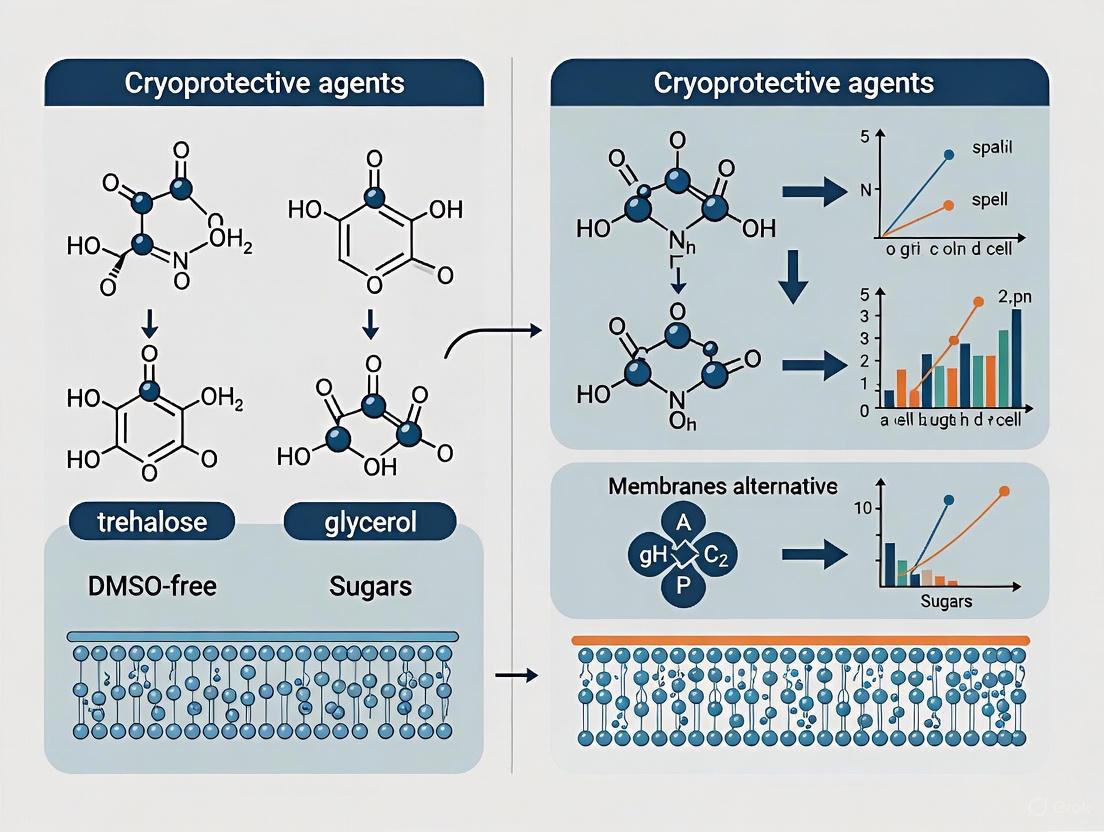
This article provides a detailed examination of DMSO-free cryoprotective agents for researchers, scientists, and drug development professionals working in cell therapy.
DMSO-Free Cryopreservation for Cell Therapy: A Comprehensive Guide to Safer Alternatives and Protocols
Abstract
This article provides a detailed examination of DMSO-free cryoprotective agents for researchers, scientists, and drug development professionals working in cell therapy. It covers the foundational drivers behind the shift from DMSO, including cytotoxicity concerns and regulatory pressures. The content explores current methodological approaches using sugars, polymers, and deep eutectic solvents, offers troubleshooting strategies for implementation challenges, and presents comparative data on cell viability and functionality. By synthesizing the latest research and market trends, this guide serves as a essential resource for optimizing cryopreservation protocols to enhance the safety and efficacy of cell-based therapies.
Why the Field is Moving Beyond DMSO: Toxicity, Regulation, and Market Drivers
Documented Cytotoxicity of DMSO on Sensitive Cell Types
Dimethyl sulfoxide (DMSO) represents a cornerstone reagent in biomedical research, serving dual roles as a potent cryoprotectant for cell preservation and a versatile solvent for water-insoluble compounds. Classified by the FDA as a Class 3 solvent with low toxic potential, its application has been considered safe at concentrations below 10% (v/v) [1]. However, advanced toxicological assessments using sensitive high-throughput technologies have revealed that DMSO exerts significant biological effects even at low concentrations, challenging the long-held presumption of its biological inertness [1]. For cell therapy research, where product safety, potency, and consistency are paramount, understanding the documented cytotoxicity profile of DMSO becomes crucial. This whitepaper synthesizes current evidence on DMSO-induced cytotoxicity across sensitive cell types, providing technical guidance for researchers navigating the transition toward DMSO-free cryopreservation protocols in advanced therapeutic applications.
Mechanisms of DMSO Cytotoxicity: From Molecular Disruption to Functional Impairment
Epigenetic and Transcriptomic Alterations
Recent omics technologies have demonstrated that DMSO exposure induces extensive molecular disruptions. A landmark study exposing 3D cardiac and hepatic microtissues to 0.1% DMSO revealed massive deregulation of gene expression and epigenetic markers [1]. Transcriptome analysis detected 2,051 differentially expressed genes (DEGs) in cardiac tissues and 2,711 DEGs in hepatic tissues, with over 60% being downregulated in both systems [1]. These changes affected critical cellular processes including metabolism, vesicle-mediated transport, and cellular response to stresses. Particularly concerning was the finding that DMSO induced drastic tissue-specific changes in microRNA expression and DNA methylation patterns, with cardiac microtissues showing genome-wide epigenetic alterations [1]. Such epigenetic disruptions pose significant concerns for cell therapies where maintained lineage fidelity and genomic stability are essential for therapeutic function.
Metabolic and Functional Disruptions
DMSO exposure induces significant metabolic alterations, particularly affecting energy production pathways. Pathway analysis demonstrates consistent suppression of mitochondrial function across cell types, with the "citric acid cycle and respiratory electron transport" pathway being particularly affected [1]. In hepatic microtissues, 63 out of 171 genes in this pathway were differentially expressed, with 76.2% being downregulated [1]. Similarly, glucose metabolism pathways showed significant disruption, with 80.5% of affected genes being downregulated in hepatic models [1]. These metabolic disruptions correlate with functional impairments observed in various cell types. For instance, DMSO has been shown to negatively impact cellular membrane and cytoskeleton structure by interacting with proteins and dehydrating lipids, increasing membrane permeability in erythrocytes and altering chromatin conformation in fibroblasts [2]. Furthermore, DMSO can induce unwanted differentiation in stem cells and interfere with DNA methyltransferases and histone modification enzymes, causing epigenetic variations and reduced pluripotency in human pluripotent stem cells [2].
Figure 1: Molecular and cellular pathways of DMSO-induced cytotoxicity. DMSO exposure triggers multifaceted disruptions at epigenetic, transcriptomic, and metabolic levels, culminating in compromised cellular function and viability.
Quantitative Cytotoxicity Profiles Across Cell Types
Concentration-Dependent Effects on Cell Viability
The cytotoxic effects of DMSO manifest in a concentration-dependent manner across diverse cell types, with significant variations in sensitivity. Systematic investigation using live-cell imaging revealed that increased DMSO concentrations correspondingly slowed cell confluency growth rates, with complete proliferation inhibition observed at 5% concentration in HepG2 cells [3]. After 72 hours of exposure, 3% DMSO reduced cell confluency to approximately 40% of untreated controls, while 1% DMSO allowed approximately 75% relative confluency [3]. Time-dependency represents another crucial factor, with longer processing times resulting in greater impacts on viability [3]. Comprehensive assessment across six cancer cell lines (HepG2, Huh7, HT29, SW480, MCF-7, and MDA-MB-231) demonstrated that DMSO at 0.3125% showed minimal cytotoxicity across most cell lines, though the safe concentration limit proved dependent on both cell type and exposure duration [4].
Table 1: Documented DMSO Cytotoxicity Across Sensitive Cell Types
| Cell Type | Concentration | Exposure Time | Key Effects | Reference |
|---|---|---|---|---|
| iPSC-derived Cardiac Microtissues | 0.1% | 2 weeks | 2,051 differentially expressed genes; epigenetic alterations | [1] |
| Hepatic Microtissues | 0.1% | 2 weeks | 2,711 differentially expressed genes; metabolic disruption | [1] |
| Hep G2 Cells | 1-5% | 72 hours | Concentration-dependent growth inhibition; complete proliferation arrest at 5% | [3] |
| Odontoblast-like Cells (MDPC-23) | 0.0004-0.008% | 24 hours | Altered cell adhesion; minimal cytotoxicity | [5] |
| Six Cancer Cell Lines | 0.3125% | 24-72 hours | Minimal cytotoxicity in most lines; cell-type dependent effects | [4] |
| Castration-Resistant Prostate Cancer Cells | 0.1-1% | 96 hours | No cytotoxicity; significant decrease in migratory ability | [6] |
| RTgill-W1 Fish Cells | Low concentrations | Not specified | Metabolic disruptions; importance of solvent controls | [7] |
Cell-Type Specific Sensitivity Variations
Different cell types exhibit markedly different sensitivity thresholds to DMSO exposure, necessitating cell-specific optimization. While 0.3125% DMSO showed minimal cytotoxicity across five of six cancer cell lines tested, the MCF-7 breast cancer line demonstrated particular sensitivity, highlighting the importance of cell-specific validation [4]. In contrast, castration-resistant prostate cancer (CRPC) cell lines showed no cytotoxicity and unchanged cell viability with DMSO concentrations up to 1% during 96-hour treatments, though significant decreases in migratory ability occurred even at these low concentrations [6]. Interestingly, odontoblast-like cells (MDPC-23) maintained viability despite altered adhesion characteristics when exposed to very low DMSO concentrations (0.0004-0.008%) for 24 hours [5]. These findings collectively underscore that DMSO sensitivity varies significantly across cell types, influenced by intrinsic metabolic characteristics, membrane composition, and differential expression of molecular pathways affected by DMSO.
Experimental Assessment of DMSO Cytotoxicity
Standardized Methodologies for Cytotoxicity Evaluation
Robust assessment of DMSO cytotoxicity requires standardized methodologies with appropriate controls and validated endpoints. The MTT (3-(4,5-dimethyl-2-thiazolyl)-2,5-diphenyl-tetrazolium bromide) assay represents a widely employed method for viability assessment, measuring the enzymatic reduction of yellow MTT to purple formazan by mitochondrial dehydrogenases in metabolically active cells [4]. According to ISO 10993-5:2009 standards, a reduction in cell viability exceeding 30% relative to the control is considered indicative of cytotoxicity, providing a practical threshold for biological significance beyond statistical alone [4]. Complementary methodologies include trypan blue exclusion for direct viable cell counting, flow cytometry with propidium iodide staining for necrosis detection, and crystal violet staining for cell adhesion assessment [5]. Live-cell imaging represents another powerful approach, enabling continuous monitoring of cell proliferation and confluency following DMSO exposure without fixed timepoint limitations [3].
Critical Experimental Considerations
Several methodological factors significantly influence the reliability of DMSO cytotoxicity assessments. Cell seeding density optimization proves crucial, with 2000 cells per well providing consistent linear viability across multiple cancer cell lines and time points in 96-well formats [4]. Solvent controls remain essential, as recent research demonstrates that even low DMSO concentrations induce metabolic disruptions detectable by omics approaches [7]. Time-course evaluations are equally important, as DMSO effects manifest differently across exposure durations; while some cell types show immediate responses, others demonstrate cumulative effects over time [3] [4]. Furthermore, functional assessments beyond basic viability – such as migration assays, differentiation capacity evaluation, and epigenetic profiling – provide crucial insights into subtler DMSO effects that may compromise cellular function for therapeutic applications [6] [2] [1].
Figure 2: Experimental workflow for comprehensive DMSO cytotoxicity assessment. The methodology encompasses pre-assay preparation, multiple complementary assessment techniques, and standardized analysis frameworks for reliable interpretation.
The Scientist's Toolkit: Research Reagent Solutions
Table 2: Essential Reagents for DMSO Cytotoxicity Research and Cryopreservation
| Reagent/Category | Function/Application | Technical Notes | |
|---|---|---|---|
| DMSO (Conventional) | Cryoprotectant; solvent for water-insoluble compounds | Use at minimal effective concentrations (typically 0.1-0.5% as solvent; 5-10% for cryopreservation); associated with cytotoxicity at higher concentrations | |
| Optibumin 25 | Recombinant human serum albumin for cryopreservation | Animal-origin-free; enables up to 40% DMSO reduction in CryoStor formulations while maintaining T-cell viability and expansion | [8] |
| Polyvinylpyrrolidone (PVP) | DMSO alternative for cryopreservation | Demonstrated comparable cell recovery to DMSO with human serum in adipose tissue-derived stem cells | [9] |
| StemCell Keep | DMSO-free cryopreservation medium | Effective for hiPSCs, hESCs, and MSCs; polyampholyte-based mechanism protecting cell surface | [2] |
| CryoStor | Controlled-rate freezing media | Commercial formulation; compatible with Optibumin for DMSO reduction strategies | [8] |
| Sucrose + Ethylene Glycol | Vitrification solution combination | Effective for neural stem cell vitrification; eliminates DMSO while maintaining differentiation potential | [2] |
| Osmolyte-Based Solutions | DMSO-free freezing cocktails | Blends of sucrose, glycerol, creatine, isoleucine, and mannitol; support MSC recovery and modulate epigenome | [2] |
| Penetrating CPAs | Intracellular cryoprotectants | Include glycerol, ethylene glycol, propylene glycol; penetrate cell membrane | [9] |
| Non-penetrating CPAs | Extracellular cryoprotectants | Include sucrose, dextrose, methylcellulose; function extracellularly | [9] |
Implications for Cell Therapy and Transition to DMSO-Free Solutions
Patient Safety and Product Efficacy Concerns
The documented cytotoxicity of DMSO carries direct implications for cell therapy applications, where both patient safety and product efficacy are paramount. Clinical administration of DMSO-containing cellular products has been associated with adverse reactions affecting cardiac, neurological, and gastrointestinal systems [2]. These effects are concentration-dependent, providing strong rationale for minimizing DMSO content in therapeutic formulations. From a product efficacy perspective, DMSO-induced epigenetic alterations and functional impairments threaten the consistency and potency of cellular therapies. The preservation of critical memory T-cell phenotypes – including stem cell memory and central memory populations crucial for CAR-T therapy durability and efficacy – can be compromised by DMSO exposure [8]. Furthermore, DMSO can negatively impact CD8+ cytotoxic T-cell populations essential for therapeutic potency, potentially altering the critical CD4/CD8 balance that determines treatment success [8].
Emerging DMSO-Free Cryopreservation Strategies
The compelling evidence for DMSO cytotoxicity has accelerated development of DMSO-free cryopreservation strategies for cell therapy applications. Multiple approaches have demonstrated promising results, including replacement with alternative cryoprotectants like ethylene glycol and sucrose combinations for neural stem cells [2], osmolyte-based freezing solutions containing sucrose, glycerol, creatine, isoleucine, and mannitol for mesenchymal stromal cells [2], and polyampholyte-based cryoprotectants that adsorb to cell membranes [2]. Advanced techniques such as programmed freezing methods utilizing magnetic field-driven freezers (Cells Alive System) prevent intracellular ice formation without DMSO [2], while pretreatment strategies with cryoprotective sugars prior to freezing enhance post-thaw recovery [2]. Several commercially available DMSO-free cryosolutions including StemCell Keep, CryoSOfree, and XT-Thrive now offer viable alternatives, though further validation across diverse cell types remains necessary [2].
The historical perception of DMSO as a biologically inert solvent requires significant revision in light of contemporary scientific evidence. Documented cytotoxicity across sensitive cell types – including extensive transcriptomic alterations, epigenetic modifications, metabolic disruptions, and functional impairments – underscores the critical need for careful concentration optimization and exposure limitation in research settings. For the cell therapy field, where product consistency, potency, and patient safety are paramount, the transition toward DMSO-reduced and DMSO-free cryopreservation protocols represents an essential evolution. Continued development and validation of alternative cryoprotectants and freezing methodologies will enable researchers and clinicians to circumvent DMSO-associated cytotoxicity while maintaining the viability and functionality of precious cellular therapeutic products. The scientific tools and experimental frameworks presented in this technical guide provide a foundation for evidence-based decision-making in this crucial aspect of therapeutic development.
Clinical Side Effects and Patient Safety Concerns in Cell Infusion
The development of cell-based therapies represents a paradigm shift in treating conditions ranging from hematological malignancies to degenerative diseases and solid tumors. A critical, yet potentially hazardous, step in the clinical application of these therapies is the infusion of cellular products into patients. Cryopreservation is indispensable for long-term cell storage, ensuring a continuous, quality-controlled supply and bridging the gap between manufacturing and clinical administration [10]. Dimethyl sulfoxide (DMSO), a penetrating cryoprotective agent (CPA), has been the cornerstone of cryopreservation for decades due to its efficacy in preventing freezing-induced cell damage [10] [11]. However, its association with a spectrum of patient side effects has raised significant safety concerns within the field [10] [11] [2]. This whitepaper, framed within a broader thesis on DMSO-free alternatives, provides an in-depth analysis of the clinical side effects and patient safety concerns associated with cell infusion. It further explores the mechanistic basis of these adverse events and evaluates emerging mitigation strategies, including the development of DMSO-free cryopreservation protocols, which are critical for the safer global deployment of adoptive cell therapies.
Mechanisms of Cryopreservation-Associated Toxicity
Understanding the side effects of cell infusion requires a fundamental grasp of the sources of cellular damage during cryopreservation and the mechanisms by which cryoprotectants themselves can cause harm.
Cellular Damage During Freezing and Thawing
During cryopreservation, cells undergo chemical, mechanical, and thermal stresses that can lead to apoptosis or necrosis. The primary mechanisms of cryoinjury are governed by the "two-factor hypothesis" [10]:
- Intracellular Ice Formation: At excessively rapid cooling rates, water within the cell does not have time to efflux and forms ice crystals. These crystals cause physical lesions in the plasma membrane and organelles, leading to immediate cell death [10].
- Solution Effects: At overly slow cooling rates, ice forms extracellularly, leading to a hyperconcentrated environment of solutes. This imbalance causes severe cellular dehydration and shrinkage, resulting in toxic damage to the cell membrane [10]. The optimal cooling rate is cell-type specific and must be carefully calibrated to minimize both forms of damage. Thawing rates are equally critical, as slow warming can facilitate recrystallization of intracellular ice, further damaging cellular structures [10].
DMSO-Specific Toxicity Mechanisms
While DMSO mitigates cryoinjury, it introduces its own risks through multiple pathways:
- Direct Cellular Toxicity: DMSO exposure can cause mitochondrial damage, alter chromatin conformation, and disrupt the cell membrane and cytoskeleton by dehydrating lipids and interacting with proteins [2]. These effects are often time-, temperature-, and concentration-dependent [2].
- Epigenetic Impact: Repeated use or exposure to DMSO, even at sub-toxic levels, can interfere with DNA methyltransferases and histone modification enzymes. This disruption leads to epigenetic variations and has been shown to reduce the pluripotency of stem cells and disrupt mRNA expression in murine embryonic stem cells [2].
- Patient Side Effects: Upon infusion, DMSO is rapidly distributed and metabolized to dimethyl sulfide, which is eliminated through breath and causes a characteristic garlic-like odor [11]. More seriously, DMSO can induce histamine release, which is linked to a range of infusion-related reactions affecting gastrointestinal, cardiopulmonary, and neurological systems [11]. The compound's potency is such that it has been documented to trigger unwanted differentiation in stem cell cultures [2].
Table 1: Summary of DMSO-Mediated Toxicity Mechanisms
| Toxicity Type | Biological Mechanism | Consequence |
|---|---|---|
| Cellular Toxicity | Membrane lipid dehydration, protein interaction, mitochondrial damage | Compromised membrane integrity, reduced viability and function |
| Epigenetic Alteration | Disruption of DNA methyltransferases and histone modifiers | Altered gene expression, loss of pluripotency, phenotypic changes |
| In Vivo Patient Effects | Induction of histamine release; metabolic conversion to dimethyl sulfide | Infusion reactions (nausea, chills, arrhythmias); characteristic breath odor |
Clinical Side Effects of DMSO in Cell Infusion
The administration of DMSO-preserved cell products is associated with a diverse profile of adverse events, which can be categorized based on the route of administration.
Systemic Side Effects of Intravenous Infusion
Intravenous infusion is a common delivery method for cellular therapies, and it directly introduces DMSO into the patient's systemic circulation. The side effect profile is well-documented in the context of hematopoietic stem cell (HSC) transplantation and is increasingly recognized with mesenchymal stromal cell (MSC) therapies. A comprehensive review analyzing 1173 patients who received 1–24 intravenous infusions of DMSO-containing MSC products found that the DMSO doses delivered were 2.5–30 times lower than the 1 g DMSO/kg dose typically accepted as a maximum in HSC transplantation [11]. With adequate premedication, this analysis reported only isolated infusion-related reactions [11]. The most common adverse events are summarized in the table below.
Table 2: Common Clinical Side Effects Associated with Intravenous DMSO-Containing Cell Products
| Organ System | Reported Adverse Events | Typical Severity/Notes |
|---|---|---|
| Gastrointestinal | Nausea, vomiting, abdominal pain [11] | Common; often attributed to DMSO-induced histamine release [11] |
| Cardiopulmonary | Hypertension, hypotension, bradycardia, tachycardia, cough, dyspnea [11] | Requires monitoring; can be severe in rare cases |
| Neurological | Headache, dizziness, amnesia, seizures, cerebral infarction [11] | Seizures and infarction are rare but serious |
| Systemic/Other | Chills, low-grade fever, fatigue, hemolysis, hemoglobinuria [10] [11] [12] | Hemolysis is concentration-dependent (>10-28% v/v solutions) [11] |
It is critical to note that in HSC transplantation, it is often difficult to disentangle the toxic effects of DMSO from those of the conditioning chemotherapy/radiotherapy and the underlying disease [11]. Furthermore, the concentration of DMSO in the infusion solution is a key determinant of toxicity. For instance, the infusion of 40% (v/v) DMSO solutions has been linked to hematological disturbances like hemolysis, whereas these effects were not observed when the concentration was reduced to 10% (v/v) [11].
Local and Site-Specific Side Effects
Cell therapies are also administered via local injection or topical application, which presents a different risk profile.
- Local Injection: Direct injection of cells (e.g., intrathecal, intramuscular, or into a specific organ) can lead to localized adverse events. Commonly reported issues include pain or discomfort at the injection site, swelling, bruising, and redness [12]. While often mild, these reactions are a direct consequence of the procedure and the injected solution.
- Topical Application: For wound healing applications, data on DMSO-containing MSC products are limited. However, an assessment based on the topical use of DMSO itself for wound healing concluded that the DMSO concentrations present in a standard cryopreserved MSC product are unlikely to cause significant local adverse effects [11]. A worst-case scenario estimation assuming 100% transdermal absorption from a large wound in a lightweight patient suggested that systemic DMSO exposure would be approximately 55 times lower than an intravenous dose of 1 g/kg [11].
Quantitative Analysis of Safety Data
A meta-analysis of cell therapy clinical trials in chronic spinal cord injury provides valuable quantitative insights into the safety profile of these treatments. The analysis, which included 76 studies and 1633 cases, found that the total prevalence of adverse events in cell therapy was 19% [13]. Reassuringly, none of the reported adverse events were graded as life-threatening (Grade 4) or fatal (Grade 5) on the Common Terminology Criteria for Adverse Events scale [13]. The most frequently reported adverse events were transient backache and meningism (90%) and cord malacia (80%) [13]. The analysis also revealed variability in adverse event rates depending on the cell type used, with embryonic stem cells associated with the lowest rate (2.33%) and combination therapies (e.g., olfactory ensheathing cell and bone marrow MSC) associated with higher rates (55%) [13].
Emerging Strategies: DMSO-Free Cryopreservation
The documented safety concerns associated with DMSO have catalyzed the development of alternative, DMSO-free cryopreservation strategies. The overarching goal is to maintain high post-thaw cell viability and functionality while eliminating the source of toxicity.
Alternative Cryoprotectants and Formulations
Research has focused on identifying and combining biocompatible, often non-penetrating, cryoprotectants.
- Sugar-Based Solutions: Solutions containing sugars like sucrose and trehalose act as osmotic buffers and can stabilize cell membranes [14].
- Polyampholytes: These are polymers with both positive and negative charges, such as those found in the commercial product StemCell Keep. They are thought to adsorb onto the cell membrane, providing surface protection without the need for DMSO [2].
- Osmolyte Cocktails: An international multicenter study conducted by the PACT/BEST collaborative recently demonstrated that a DMSO-free solution containing Sucrose, Glycerol, and Isoleucine (SGI) was comparable to standard DMSO-containing solutions for cryopreserving MSCs. The study found no significant differences in post-thaw viability, immunophenotype, or gene expression profile between SGI- and DMSO-cryopreserved cells across multiple laboratories [14]. This highlights the feasibility of standardizing DMSO-free cryopreservation.
- Other Molecules: Other promising agents include ethylene glycol (EG), hydroxyethyl starch (HES), and block copolymers like PEG-PA, which have shown efficacy in vitrification protocols and for specific cell types like neural stem cells and natural killer cells [2].
Supporting Techniques and Protocols
Eliminating DMSO often requires adjunct techniques to achieve optimal cryoprotection.
- Pre-cryopreservation Treatment: Pretreating cells with cryoprotective agents can enhance their resilience. For example, electroporation-aided delivery of sugars like trehalose into the cytoplasm of MSCs has been used to provide intracellular cryoprotection [2].
- Programmed Freezing: Advanced controlled-rate freezers offer improved control over ice nucleation. The "Cells Alive System" (CAS), which uses a magnetic field to prevent water molecule clustering and intracellular ice formation, has proven effective for preserving various cell and tissue types, even without DMSO [2].
- Optimized Thawing: Rapid and uniform warming is crucial to prevent devitrification and ice recrystallization during the thawing process, especially for vitrified samples. Developing high-throughput warming systems that achieve this uniformly is an active area of research [2].
Diagram 1: A workflow comparing the pathways and patient outcomes of DMSO-based versus DMSO-free cell therapy cryopreservation and infusion.
The Scientist's Toolkit: Research Reagent Solutions
Transitioning to DMSO-free cryopreservation requires a toolkit of new reagents, technologies, and validated protocols. The table below outlines key solutions for researchers developing safer cell therapy products.
Table 3: Research Reagent Solutions for DMSO-Free Cryopreservation
| Reagent / Solution | Composition / Type | Function & Application Notes |
|---|---|---|
| SGI Solution [14] | Sucrose, Glycerol, Isoleucine | A defined, DMSO-free CPA shown to be comparable to DMSO for MSC cryopreservation in a multicenter study. |
| StemCell Keep [2] | Polyampholyte-based solution | Adsorbs to cell membrane, providing cryoprotection without DMSO; used for hiPSCs, hESCs, and MSCs. |
| Osmolyte-Based Freezing Solutions [2] | Blends of sucrose, glycerol, creatine, isoleucine, mannitol | Confers cryoprotection, retains differentiation capacity, and modulates the CpG epigenome in MSCs. |
| Ethylene Glycol (EG) + Sucrose [2] | Penetrating CPA + non-penetrating CPA | Effective combination for vitrification of sensitive cells like neural stem cells. |
| PEG−PA Block Copolymer [2] | Synthetic block copolymer | Acts as a cryoprotectant for stem cells, supporting survival, proliferation, and differentiation post-thaw. |
| Cells Alive System (CAS) [2] | Programmed freezer with magnetic field | Prevents intracellular ice formation by inhibiting water clustering; enables DMSO-free preservation. |
The administration of DMSO-cryopreserved cell products carries a well-established, though generally manageable, risk of adverse effects in patients, ranging from mild infusion reactions to serious cardiopulmonary or neurological events. These safety concerns, driven by the inherent toxicity of DMSO, represent a significant hurdle in the clinical development and widespread adoption of cell therapies. However, the field is rapidly evolving. Robust, multi-center studies now demonstrate that DMSO-free cryopreservation, utilizing advanced cryoprotectant formulations like the SGI solution, is a viable and comparable alternative for cells such as MSCs. The continued development and standardization of these solutions, supported by adjunct techniques in pre-treatment, controlled freezing, and optimized thawing, pave the way for a new era in cell therapy. The successful implementation of DMSO-free protocols will be paramount for enhancing patient safety, simplifying logistics, and ultimately enabling the global deployment of safer adoptive cell-based treatments.
Logistical and Cost Burdens of Post-Thaw Washing Steps
In the rapidly advancing field of cell therapy, cryopreservation stands as a critical bridge between manufacturing and clinical administration, enabling centralized production models and quality-controlled supply chains [10]. Traditional cryopreservation protocols rely heavily on dimethyl sulfoxide (DMSO) as a penetrating cryoprotectant due to its exceptional ability to prevent intracellular ice formation during freezing [15]. However, this established approach carries a significant operational burden: the mandatory post-thaw washing steps required to remove DMSO before patient administration. These washing procedures introduce substantial logistical complexity, cost implications, and technical challenges that impact the entire cell therapy pipeline from manufacturing to bedside treatment.
The necessity for DMSO removal stems from its documented toxicity to both cells and patients. DMSO can compromise cell viability and function during cryopreservation and thawing, and in clinical settings, it can cause adverse reactions ranging from mild symptoms like nausea and headaches to severe complications such as hypotension or arrhythmias [16]. These concerns are particularly critical for therapies involving large cell doses, such as CAR-T or stem cell therapies [16]. Consequently, regulatory bodies increasingly push for minimizing or eliminating DMSO content in cell therapies, placing additional scrutiny on removal processes [16].
Quantifying the Burden: Operational and Economic Impact
Time and Resource Intensive Processes
The post-thaw washing process is fundamentally time-consuming and resource-intensive. Multiple wash steps are typically required to reduce DMSO to concentrations considered safe for patient administration, which inevitably slows down workflows and delays therapeutic processes [16]. Each additional manipulation step extends the critical period between thaw and infusion, potentially compromising cell potency and viability.
Table 1: Time and Resource Requirements for Post-Thaw Washing
| Process Component | Requirement/Demand | Impact on Workflow |
|---|---|---|
| Laboratory Time | Significant, multiple wash steps needed [16] | Slows down workflows, delays therapeutic processes [16] |
| Specialized Equipment | Centrifuges or alternative, mechanical force-reducing methods such as filtration [11] | Increases capital investment and maintenance costs |
| Technical Personnel | Trained staff for labor-intensive process [16] | Increases operational costs, especially in large-scale manufacturing [16] |
| Quality Control | Additional testing post-washing | Extends process time, increases analytical burden |
Cell Loss and Viability Impact
Perhaps the most significant burden of post-thaw washing is the inevitable loss of therapeutic cells during processing. Each additional step, particularly cell washing, increases the risk of cell loss or damage, especially for sensitive cell types like T cells or stem cells where maintaining cell viability is critical [16]. The centrifugation and manipulation involved in washing procedures can physically damage cells or trigger apoptosis, reducing the final yield of viable therapeutic products.
For immune cells like NK and T cells, which represent functionally heterogeneous cell types that are sensitive to cryopreservation, the washing process poses particular challenges [10]. These cells are vulnerable to mechanical stresses caused by detachment, dissociation into single cells, and centrifugation during processing steps [10]. The osmotic shock experienced during DMSO removal and medium exchange can further compromise cell recovery and function [10].
Process Variability and Quality Control Challenges
Post-thaw washing introduces significant variability into the manufacturing process, as even slight inconsistencies in washing can affect the final product's quality [16]. This variability raises the likelihood of batch failure and increases production costs. The lack of standardization in washing protocols across different facilities further complicates this issue, making it difficult to establish consistent manufacturing practices for cell therapies.
The labor, equipment, reagents, and quality control required for DMSO removal add substantially to operational costs, especially in large-scale manufacturing [16]. These factors collectively contribute to the high cost of cell therapies, limiting their accessibility and creating economic barriers to widespread adoption.
Technical Workflow: Traditional vs. Emerging Approaches
The following diagram illustrates the complex workflow required when using DMSO-based cryopreservation compared to the streamlined process enabled by DMSO-free alternatives.
DMSO-Free Cryopreservation as a Strategic Solution
Emerging Technological Approaches
The significant burdens associated with post-thaw washing have accelerated development of DMSO-free cryopreservation strategies. These approaches generally follow two main paths: identifying alternative cryoprotectants that perform similar protective functions without toxicity, and leveraging novel technologies to develop unconventional cryopreservation methods without DMSO [15].
Hydrogel Microencapsulation Technology demonstrates particular promise. Recent research shows that hydrogel microcapsules can enhance cell survival during cryopreservation with significantly reduced DMSO requirements. One 2025 study demonstrated that hydrogel microencapsulation enables effective cryopreservation of mesenchymal stem cells (MSCs) with as low as 2.5% DMSO while sustaining cell viability above the 70% clinical threshold [17]. This approach provides a physical barrier that protects cells from ice crystal formation and reduces dependence on penetrating cryoprotectants.
Intracellular Delivery of Trehalose represents another innovative strategy. Trehalose is known as a versatile glass-forming agent that can limit molecular mobility in the glassy matrix and substitute for water upon dehydration to interact with lipid bilayers or proteins, thereby maintaining their native structures [15]. Although traditionally used as an extracellular cryoprotectant due to its non-permeability, techniques including electroporation, nanoparticle-mediated delivery, and membrane-permeabilizing peptides are being explored to facilitate intracellular trehalose accumulation [15] [18]. This approach harnesses the protective capacity of non-toxic sugars while overcoming their membrane impermeability.
Polyampholyte Cryoprotectants offer another alternative. These polymers exhibit cryoprotective properties through multiple mechanisms, including membrane stabilization and inhibition of ice recrystallization [18]. One study reported that human bone marrow-derived MSCs cryopreserved using polyampholyte cryoprotectants maintained high viability and biological properties even after 24 months of cryopreservation at -80°C [18].
Validated DMSO-Free Formulations
Substantial progress has been made in developing and validating complete DMSO-free formulations. An international multicenter study published in 2024 compared a DMSO-free cryoprotectant solution containing sucrose, glycerol, and isoleucine (SGI) to traditional DMSO-containing solutions for cryopreservation of MSCs [14]. The study conducted across seven different centers found that the DMSO-free solution provided comparable results to DMSO-containing solutions in terms of cell viability, recovery, immunophenotype, and gene expression profile [14].
Table 2: Experimental Performance of DMSO-Free Formulations
| Cell Type | DMSO-Free Formulation | Post-Thaw Viability | Key Findings | Source |
|---|---|---|---|---|
| MSCs (Multicenter Study) | Sucrose, Glycerol, Isoleucine (SGI) | Comparable to DMSO controls | No significant differences in viability, recovery, phenotype, or gene expression | [14] |
| MSCs (Hydrogel Encapsulated) | 2.5% DMSO with Alginate Microcapsules | >70% (Clinical threshold) | Enabled 5-fold reduction in DMSO concentration; retained differentiation potential | [17] |
| Umbilical Cord Blood CD34+ | 2.5% DMSO + 30 mmol/L Trehalose | Significantly higher than 10% DMSO controls | Improved colony-forming units and reduced apoptosis compared to standard formulations | [19] |
| MSCs (Long-Term Storage) | Polyampholyte Cryoprotectant | High viability maintained | No affect on biological properties after 24 months at -80°C | [18] |
Commercial DMSO-Free Platforms
The growing recognition of DMSO-related challenges has spurred development of commercial DMSO-free cryopreservation platforms. These include chemically-defined, animal component-free formulations designed specifically for clinical applications [16]. Notable examples include NB-KUL DF, CryoScarless, CryoNovo P24, and CryoProtectPureSTEM, which have demonstrated comparable results to DMSO-based systems for various cell types including HSCs, T-cells, and CD34+ cells [18].
These commercial platforms offer significant advantages in regulatory compliance and manufacturing standardization. As chemically-defined formulations, they provide unparalleled consistency in cell culture performance, which is essential for regulatory compliance and quality control [16]. Their well-defined composition ensures reproducibility across batches, simplifying the approval process for cell therapies.
The Scientist's Toolkit: Research Reagent Solutions
Table 3: Essential Reagents for DMSO-Free Cryopreservation Research
| Reagent / Material | Function in Cryopreservation | Example Applications | Key Considerations |
|---|---|---|---|
| Trehalose | Non-penetrating CPA; stabilizes membranes via water replacement hypothesis [15] | Intracellular delivery for NK cells, T cells [10]; combination with low DMSO [19] | Requires delivery mechanism (electroporation, nanoparticles) for intracellular effect [15] |
| Sucrose | Extracellular CPA; controls osmotic pressure & facilitates vitrification [14] | Component of SGI formulation for MSCs [14]; vitrification protocols | Common component in commercial serum-free formulations |
| Alginate Hydrogel | 3D physical barrier against ice crystals; reduces CPA requirement [17] | Microencapsulation of MSCs for low-CPA cryopreservation [17] | Biocompatible and biodegradable; suitable for transplantation |
| Polyampholytes | Synthetic polymers inhibiting ice recrystallization; membrane stabilization [18] | Long-term storage of bone marrow-derived MSCs [18] | Lower toxicity profile; highly tunable properties |
| 1,2-Propanediol | Penetrating CPA alternative to DMSO; lower toxicity [18] | Vitrification of neural stem cells [18] | Often combined with sugars in defined formulations |
| Hydroxyethyl Starch | Non-penetrating CPA; extracellular matrix support [19] | Cord blood banking with reduced DMSO [19] | Effective colloid for controlling ice formation |
Implementation Framework and Technical Protocols
Experimental Methodology: Hydrogel Microencapsulation
The high-voltage electrostatic coaxial spraying technique for cell microencapsulation represents one of the most promising approaches for reducing DMSO dependence [17]. The detailed methodology includes:
Microcapsule Fabrication: A core solution containing cells (e.g., MSCs at 80% confluence) is prepared using 0.68 g mannitol and 0.15 g hydroxypropyl methylcellulose dissolved in sterile water [17]. The cell pellet is resuspended in this solution, which may be supplemented with 0.1 mol/L NaOH solution and 5 mg/mL Type I collagen from rat tail [17]. The shell solution consists of 0.46 g mannitol and 0.2 g sodium alginate dissolved in sterile water [17]. Both solutions must be filtered through a 0.22 μm sterile-grade filter before use.
Electrostatic Spraying System Setup: The cell-containing core solution and sodium alginate shell solution are loaded into separate 3 mL syringes connected to a custom-made coaxial needle assembly via infusion pumps [17]. The flow rates are typically adjusted to 25 μL/min for the core solution and 75 μL/min for the shell solution [17]. A beaker containing calcium chloride solution (6.0 g calcium chloride in sterile water) is positioned below the coaxial needle assembly with the needle tip adjusted to an appropriate distance from the solution surface, and the voltage is set to 6 kV for electrostatic spraying [17].
Gelation and Recovery: The liquid flowing through the coaxial channel forms microdroplets that fall into the calcium chloride solution, where they rapidly gel to form microspheres [17]. Once the reaction is complete, the microspheres are collected by centrifuging at 600 rpm for 5 min, the supernatant is discarded, and the microsphere pellets are resuspended in complete culture medium for further culture or cryopreservation [17].
Protocol: SGI Cryopreservation Formulation
For the sucrose-glycerol-isoleucine (SGI) formulation validated in the international multicenter study:
Solution Preparation: The SGI formulation consists of specific concentrations of sucrose, glycerol, and isoleucine in a balanced salt solution [14]. The exact concentrations may be proprietary but are implemented in commercial formulations like those developed by Evia Bio [14]. The solution should be prepared under sterile conditions and filtered through a 0.22 μm membrane before use.
Cell Processing and Freezing: MSCs are harvested at approximately 80% confluence using standard dissociation enzymes [14]. The cell suspension is centrifuged and resuspended in the SGI cryopreservation solution at an appropriate cell concentration (typically 1-5 × 10^6 cells/mL) [14]. The cell suspension is aliquoted into cryovials and frozen using a controlled-rate freezer at a cooling rate of -1°C/min to -80°C before transfer to liquid nitrogen storage [14].
Thawing and Assessment: For thawing, cryovials are transferred to a 37°C water bath with gentle agitation until just thawed [14]. The cell suspension is immediately transferred to pre-warmed culture medium and centrifuged at 300-400 ×g for 5 minutes [14]. The supernatant is discarded, and the cell pellet is resuspended in fresh culture medium for viability assessment and further experimentation [14].
The logistical and cost burdens associated with post-thaw washing steps represent a significant challenge in the clinical translation and commercialization of cell therapies. The requirement for multiple washing cycles to remove DMSO introduces complexity, variability, and expense while potentially compromising product quality and yield. DMSO-free cryopreservation strategies offer a promising path forward by eliminating this bottleneck entirely, simplifying workflows from thaw to administration, and enhancing patient safety.
While technical challenges remain in optimizing DMSO-free protocols for specific cell types, the accumulating evidence from both academic research and commercial development demonstrates that effective cryopreservation without DMSO is achievable. As the field continues to mature, standardized DMSO-free protocols will play an increasingly important role in enabling scalable, cost-effective, and globally accessible cell therapies. The elimination of post-thaw washing steps represents not merely a technical improvement but a fundamental advancement in the practical implementation of cell-based therapeutics.
Regulatory Pressures for Safer Cryopreservation in Clinical Applications
The field of clinical cell therapy is at a pivotal juncture, with regulatory pressures increasingly shaping cryopreservation practices toward enhanced patient safety. For decades, dimethyl sulfoxide (DMSO) has served as the cornerstone cryoprotectant for cellular therapies, backed by extensive historical use in hematopoietic stem cell transplantation. However, growing documentation of DMSO-related toxicities has triggered both scientific and regulatory reevaluation of its risk-benefit profile in emerging cell therapies. This technical guide examines the current regulatory landscape driving the development and adoption of safer cryopreservation protocols, with particular emphasis on DMSO-free alternatives for cell therapy research and clinical application.
The imperative for change stems from documented patient safety concerns. DMSO administration has been associated with significant clinical side effects—including cardiovascular, neurological, gastrointestinal, and allergic reactions—in patients receiving infusions of cell therapy products [10]. Furthermore, beyond acute clinical toxicity, DMSO has demonstrated detrimental effects on cellular function, altering expression of natural killer (NK) and T cell markers and potentially impacting their in vivo efficacy [10]. These concerns exist within a rapidly evolving regulatory framework that increasingly demands both demonstration of safety and meticulous documentation of process controls throughout the cryopreservation workflow.
Current Regulatory Landscape & Standards
Evolving Global Regulatory Framework
The regulatory environment for cell and gene therapies in 2025 reflects the sector's maturation, with agencies worldwide seeking to balance innovation with safety, scalability, and equitable access [20]. A significant trend is the push toward global harmonization. The U.S. Food and Drug Administration (FDA) has launched initiatives like the Gene Therapies Global Pilot Program (CoGenT), designed to explore concurrent, collaborative regulatory reviews with international partners such as the European Medicines Agency [20]. This effort aims to reduce duplication, accelerate approvals, and facilitate global access to therapies.
Concurrently, regulatory bodies have issued new, specific guidance documents. In September 2025, the FDA released three draft guidances pertinent to cell therapy development [20]:
- Expedited Programs for Regenerative Medicine Therapies for Serious Conditions
- Postapproval Methods to Capture Safety and Efficacy Data for Cell and Gene Therapy Products
- Innovative Designs for Clinical Trials of Cellular and Gene Therapy Products in Small Populations
These documents emphasize robust post-approval monitoring and flexible trial designs, creating a framework where comprehensive safety data, including details on cryoprotectant exposure, is paramount.
Specific standards for cryopreservation are also being codified. The Parenteral Drug Association, with support from the Standards Coordinating Body, has published a standard providing a flexible decision-making framework for selecting cryopreservation methods, aiming to reduce product variability and speed time to market [21]. Furthermore, the 12th edition of the AABB's Standards for Cellular Therapy Services took effect in July 2025, underscoring the dynamic nature of compliance requirements [22].
Table 1: Key Regulatory and Standards Bodies Influencing Cryopreservation Practices
| Organization | Region | Key Document/Initiative | Impact on Cryopreservation |
|---|---|---|---|
| U.S. FDA | USA | Gene Therapies Global Pilot (CoGenT) [20] | Promotes harmonized review of cell therapies, including manufacturing. |
| European Medicines Agency (EMA) | Europe | Clinical Trials Regulation [20] | Governs use of cell lines under directives like EUTCD. |
| AABB | International | Standards for Cellular Therapy Services (12th Ed.) [22] | Sets accreditation standards for facilities handling cellular therapies. |
| Parenteral Drug Association | International | Cryopreservation Standard [21] | Provides a decision framework for cryopreservation methods. |
| Japanese MHLW | Japan | Act on the Safety of Regenerative Medicine [23] | Governs cell storage and outlines guidelines for practitioners. |
Regulatory Scrutiny of DMSO
Current regulatory acceptance of DMSO is nuanced. For hematopoietic stem cell transplantation, a maximum dose of 1 gram of DMSO per kilogram of body weight per infusion is generally considered acceptable by bodies such as the European Society for Blood and Marrow Transplantation and the AABB [11]. However, the context of administration is critical. A 2025 review concluded that for intravenous administration of mesenchymal stromal cell products, the doses of DMSO delivered are typically 2.5–30 times lower than this 1 g/kg threshold, and with adequate premedication, only isolated infusion-related reactions are reported [11].
Nevertheless, the regulatory pressure stems from a precautionary principle. The documented toxicities, coupled with the lack of suitable alternatives, have prompted regulators to encourage rigorous risk assessment and the development of safer options. This is evident in the requirements for detailed documentation of the cryopreservation process and its impact on Critical Quality Attributes of the cell product.
DMSO Toxicity & Clinical Safety Concerns
Documented Adverse Events in Patients
The clinical safety concerns associated with DMSO are well-documented and multi-faceted. When administered to patients, DMSO is rapidly distributed throughout the body and is metabolized to dimethyl sulfone and dimethyl sulfide, the latter being responsible for a characteristic "garlic-like" odor on the patient's breath [11]. The adverse reactions are often attributed to DMSO-induced histamine release [11].
The frequency and severity of these adverse effects are directly correlated with the concentration of DMSO in the infusion solution and the total dose administered [11]. For instance, administration of a 40% (v/v) DMSO solution has been linked to hematological disturbances like hemolysis and hemoglobinuria, effects not observed when the concentration is reduced to 10% (v/v) [11]. This dose-dependency is a key consideration in risk assessment.
Table 2: Clinical Adverse Events Associated with DMSO Infusion
| Organ System | Common Adverse Effects | Less Common/Serious Effects |
|---|---|---|
| Cardiopulmonary | Hypertension/hypotension, bradycardia/tachycardia, cough, dyspnea [11] | |
| Gastrointestinal | Nausea, vomiting, abdominal pain [11] | |
| Neurological | Headache [11] | Amnesia, seizures, cerebral infarction [11] |
| Systemic | Chills, allergic reactions [11] [10] | |
| Other | Hemolysis, hemoglobinuria (with high conc.) [11] | Altered immune cell function [10] |
Detrimental Effects on Cellular Products
Beyond patient-side effects, DMSO exerts toxicity at the cellular level, which is a significant concern for the potency and fidelity of cell therapy products. For sensitive immune cells like T cells and NK cells—the workhorses of many adoptive cell therapies—DMSO has been associated with altered expression of critical cell surface markers and potentially compromised in vivo function [10]. Furthermore, even at low levels (0.1%), DMSO has been implicated in causing irreversible chromosomal damage and alterations in the epigenetic landscape of cells, raising long-term safety concerns [24]. These effects introduce unwanted variability and potential risk into therapeutic products, fueling the regulatory push for safer alternatives.
The Scientist's Toolkit: DMSO-Free Cryopreservation Solutions
Transitioning to DMSO-free cryopreservation requires a toolkit of new reagents and methodologies. The ideal cryoprotectant is non-toxic, fully defined, and compatible with cGMP manufacturing processes. Current research focuses on several classes of compounds to replace the function of DMSO.
Table 3: Research Reagent Solutions for DMSO-Free Cryopreservation
| Reagent Category | Examples | Function & Mechanism | Considerations |
|---|---|---|---|
| Cell-Penetrating CPAs | Small amides, formamides, ethylene glycol | Penetrate cell membrane, replace water to suppress ice formation, reduce solute concentration. | Must balance efficacy with low toxicity. Many are less efficient than DMSO [10]. |
| Non-Penetrating CPAs | Sugars (trehalose, sucrose), polymers (PEG, HES), proteins (albumin) | Remain extracellular, create osmotic gradient for cell dehydration, stabilize cell membrane. | Often used in combination with penetrating agents for synergistic effect [10]. |
| Ice-Blocking Polymers | XT-Thrive [24] | Specifically inhibit ice recrystallization, a major source of cryo-injury. | Aims to mimic function of antifreeze proteins found in extremophiles. |
| Completely Defined Media | XT-Thrive and other commercial formulations | Serum-free, protein-free solutions that eliminate batch variability and improve reproducibility. | Essential for cGMP compliance and precision in therapeutic delivery [24]. |
A key product exemplifying this trend is XT-Thrive, a completely defined, non-toxic cryopreservation solution formulated without DMSO, serum, or recombinant proteins. Every component is fully identified and quantified, ensuring superior compatibility with cGMP manufacturing processes and addressing the regulatory demand for well-characterized biologics [24].
Experimental Protocols for Evaluating DMSO-Free Formulations
Developing and validating a DMSO-free cryopreservation protocol requires a systematic, evidence-based approach. The following methodology outlines the key stages for evaluating new cryoprotectant formulations for immune cells like T and NK cells.
Diagram: Experimental workflow for evaluating DMSO-free cryopreservation formulations, from cell preparation through post-thaw analysis.
Protocol: DMSO-Free Cryopreservation of T & NK Cells
Objective: To assess the efficacy of a novel DMSO-free cryoprotectant solution in preserving the viability, phenotype, and function of human T and NK cells post-thaw, in comparison to a standard DMSO-containing medium.
Materials:
- Cells: Ex vivo expanded human T cells or NK cells.
- Basal Medium: Appropriate serum-free cell culture medium.
- Control CPA: Standard freezing medium (e.g., 90% FBS/10% DMSO or commercial equivalent).
- Test CPA: DMSO-free cryopreservation medium (e.g., a formulation containing sugars, polymers, and/or ice blockers).
- Equipment: Controlled-rate freezer, cryogenic vials, -80°C freezer, liquid nitrogen storage tank, 37°C water bath, centrifuge, flow cytometer, cell counter/analyzer.
Methodology:
- Cell Preparation: Harvest cells during the log phase of growth. Perform a final cell count and viability assessment using a trypan blue exclusion assay or an automated cell counter. Pellet cells via centrifugation.
- CPA Loading & Formulation: Resuspend the cell pellet in the pre-chilled test or control cryopreservation medium at a target concentration of 5-20 x 10^6 cells/mL. Aliquot the cell suspension into cryovials. For the test formulation, follow the manufacturer's recommended protocol, which may involve direct resuspension or a step-wise addition to minimize osmotic shock.
- Controlled-Rate Freezing: Place the cryovials in a controlled-rate freezer. Initiate a standardized freezing profile. A common profile for lymphocytes is [10]:
- Start at +4°C.
- Cool at -1°C/min to -40°C.
- Cool at -5°C/min to -100°C.
- Transfer vials immediately to a liquid nitrogen vapor phase storage tank (-150°C or lower).
- Thawing and CPA Removal: After a minimum of 24 hours (to ensure complete temperature equilibration), rapidly thaw one vial per condition in a 37°C water bath with gentle agitation until only a small ice crystal remains. Immediately transfer the cell suspension to a pre-warmed basal medium containing a protein source (e.g., FBS or HSA) to dilute the CPA. Centrifuge to remove the cryopreservation medium and resuspend in complete culture medium.
- Post-Thaw Analysis: Conduct analyses immediately post-thaw and after a short recovery culture (e.g., 4-24 hours).
- Viability and Recovery: Assess using trypan blue and flow cytometry with a viability dye (e.g., 7-AAD or propidium iodide). Calculate percentage viability and total cell recovery.
- Phenotype: Use flow cytometry to evaluate the expression of key surface markers (e.g., CD3, CD56, CD16, activation markers) to ensure the cryopreservation process does not alter the cell's immunophenotype.
- Functional Assays:
- Proliferation: Use a CFSE dilution assay or similar to measure the ability of thawed cells to divide.
- Cytokine Secretion: Stimulate cells with PMA/ionomycin or specific target cells and measure cytokine production (e.g., IFN-γ, IL-2) via ELISA or flow cytometry.
- Cytotoxicity: Perform a standard chromium-51 release assay or a real-time cytotoxicity assay to measure the ability of thawed cells to lyse target cells.
Technical & Regulatory Hurdles in Implementation
Scientific and Logistical Challenges
Despite regulatory pressures and clear scientific rationale, the transition away from DMSO faces significant hurdles. A primary challenge is that DMSO-free cryopreservation of NK and T cells remains difficult due to their status as heterogeneous cell populations that are inherently sensitive to freezing and thawing [10]. No universal alternative has yet matched DMSO's efficacy across diverse cell types.
Scaling cryopreservation processes is also a major industry hurdle. A 2025 survey by the ISCT Cold Chain Management & Logistics Working Group identified the "Ability to process at a large scale" as the single biggest challenge, cited by 22% of respondents [25]. This is compounded by a lack of consensus on critical technical procedures; for instance, nearly 30% of organizations rely on vendors for controlled-rate freezer qualification, and there is limited use of freeze curves in the product release process, which can compromise process control and consistency [25].
The Regulatory Pathway for New Formulations
Introducing a new cryoprotectant formulation into a clinical product requires rigorous comparability testing. Regulators will require comprehensive data demonstrating that the new DMSO-free process yields a product that is comparable to, or superior to, the product cryopreserved with DMSO in terms of its Critical Quality Attributes. These include viability, identity, purity, potency, and functional capacity. Furthermore, the entire manufacturing process, including the cryopreservation and thawing steps, must be fully validated and controlled under cGMP. The regulatory strategy must be clearly defined early in development, as switching from a DMSO-based to a DMSO-free process later in the clinical trial pathway may require a significant comparability study, adding complexity, cost, and time [25].
The regulatory, clinical, and scientific momentum toward safer, DMSO-free cryopreservation is undeniable. The field is moving beyond simply proving feasibility and is now focusing on optimizing and standardizing these new technologies for widespread clinical adoption. Key areas for future development include a deeper understanding of the cell biology of cryoinjury, the development of better analytical tools to assess post-thaw cell health and function, and the creation of standardized, fit-for-purpose cryopreservation technologies that do not compromise product quality [26].
In conclusion, regulatory pressures are acting as a powerful catalyst for innovation in cryopreservation science. While DMSO remains a accepted cryoprotectant within certain dose and concentration limits, its documented toxicities and detrimental effects on cellular products are driving a concerted effort across the industry to develop safer, defined, and more effective alternatives. The successful implementation of DMSO-free cryopreservation protocols will require close collaboration between researchers, product developers, and regulators. This collaborative effort is essential to ensure that the next generation of cell therapies is not only effective but also manufactured with the highest possible safety profile, enabling their broad and equitable access to patients worldwide.
The global market for DMSO-free cryopreservation media is experiencing a paradigm shift, driven by the escalating demands of advanced cell therapy research and the documented limitations of traditional dimethyl sulfoxide (DMSO)-based preservation. With the global cell therapy market itself projected to grow at a remarkable CAGR of 20.8% from 2024 to 2034, reaching over $44.6 billion, the need for reliable, safe, and effective cell preservation methods has never been more critical [27]. DMSO-free cryopreservation media represent a direct response to this need, offering enhanced cell viability and reduced toxicity for sensitive therapeutic cells. The market for these specialized media is poised for robust growth, with projections indicating an expansion from approximately $1.1 billion in 2025 to between $2.5 billion and $3.68 billion by the mid-2030s, demonstrating a Compound Annual Growth Rate (CAGR) ranging from 8.3% to 9.73% [28] [29]. This growth is predominantly fueled by key adoption sectors including cell and gene therapy manufacturing, biopharmaceutical research, and expansive biobanking operations, where the integrity of cellular material is paramount. The transition to DMSO-free alternatives is not merely a trend but an essential evolution, supporting the broader thesis that advanced, biocompatible cryoprotective agents are indispensable for the future of regenerative medicine and the successful commercialization of cell-based therapies.
Quantitative Market Data and Growth Trajectory
The DMSO-free cryopreservation medium market is characterized by strong growth fundamentals, underpinned by quantitative data from multiple industry analyses. The tables below summarize the key market projections and segment-specific growth rates that delineate the future of this sector.
Table 1: Global Market Size and Growth Projections for DMSO-Free Cryopreservation Media
| Market Segment | 2024/2025 Base Value | 2033/2035 Projected Value | CAGR (Compound Annual Growth Rate) | Source Basis |
|---|---|---|---|---|
| Overall DMSO-Free Freezing Media Market | $1,000 Million (2024) [28] | $2,500 Million (2035) [28] | 8.3% (2025-2035) [28] | DMSO Free Freezing Culture Media Market |
| $500 Million (2025) [30] | ~$1,700 Million (2033) [31] | ~7.5% (2025-2033) [31] | DMSO-free Freezing Culture Media Trends | |
| Broader Cell Freezing Media Market | $1.92 Billion (2025) [29] | $3.68 Billion (2032) [29] | 9.73% (2025-2032) [29] | Cell Freezing Media Market |
| $1.30 Billion (2025) [32] | $2.97 Billion (2035) [32] | 8.6% (2026-2035) [32] | Cell Freezing Media Market |
Table 2: Growth Rates by Key Market Segment and Region
| Segment Analysis | Dominant Segment | Fastest-Growing Segment | Source |
|---|---|---|---|
| Formulation/Technology | DMSO-based Media [32] | DMSO-free Alternatives [32] | Cell Freezing Media Market |
| Application | Stem Cells & Cell Therapy [32] | Drug Discovery/Pharma/CDMO [32] | Cell Freezing Media Market |
| End User | Biopharma & Cell Therapy Manufacturers [32] | Academic & CRO Research Labs [32] | Cell Freezing Media Market |
| Region | North America [32] [29] | Asia Pacific [32] [29] | Cell Freezing Media Market |
The data reveals a consistent and positive outlook. The discrepancy in absolute market size between the "DMSO-Free" specific and "Cell Freezing" overall markets indicates that while DMSO-free media is a rapidly expanding segment, traditional DMSO-based media currently hold a larger market share. However, the DMSO-free segment is consistently identified as the fastest-growing formulation type, signaling a strong market shift [32]. Geographically, North America, with its advanced biotechnology ecosystem and significant R&D investment, remains the dominant region. However, the Asia Pacific region is anticipated to experience the most rapid growth, fueled by increasing healthcare investments, government initiatives in life sciences, and an expanding contract research and manufacturing organization (CRO/CMO) landscape [32] [29].
Key Adoption Sectors and Driving Forces
The adoption of DMSO-free cryopreservation media is concentrated in sectors where cell viability, functionality, and regulatory compliance are critical. The expansion of these sectors directly propels the demand for advanced cryopreservation solutions.
Cell and Gene Therapy Manufacturing
This is the primary adoption sector, driven by the explosive growth of cell therapies, including Chimeric Antigen Receptor (CAR) T-cell therapies for oncology and stem cell-based therapies for regenerative medicine [27] [33]. The inherent toxicity of DMSO poses a significant risk to the efficacy and safety of these living drugs. DMSO has been linked to altered cell function, DNA damage, and adverse patient reactions upon infusion, such as allergic reactions and organ toxicity [30] [34]. Consequently, regulatory bodies like the FDA are increasingly scrutinizing the use of DMSO in clinical-grade cell products. DMSO-free media, which utilize alternative cryoprotectants like trehalose, sucrose, and proprietary polymers, offer a safer profile and help maintain the therapeutic potency of critical cell types like T-cells and stem cells post-thaw, thereby streamlining the path to regulatory approval and commercial scalability [30] [31].
Biopharmaceutical Research and Drug Discovery
Pharmaceutical companies and Contract Development and Manufacturing Organizations (CDMOs) represent a major end-user segment [28] [32]. The drug discovery pipeline heavily relies on cell-based assays, high-throughput screening, and disease modeling using sensitive primary cells and stem cells. The batch-to-batch variability and cytotoxic effects introduced by DMSO can compromise experimental reproducibility and lead to misleading results [32]. DMSO-free freezing media provide greater consistency and higher post-thaw viability, ensuring that the cellular tools used in research accurately reflect biological reality. This is crucial for reliable data generation in critical areas like target validation, lead compound screening, and toxicity testing [30] [35].
Biobanking and Academic Research
Academic institutions and large-scale biobanks are rapidly adopting DMSO-free formulations to preserve valuable and irreplaceable biological samples, including primary tissue samples, patient-derived organoids, and stem cell lines [32] [31]. The driving force in this sector is the long-term preservation of cellular integrity and genetic fidelity. DMSO-induced cellular stress can alter gene expression profiles and differentiation potential over time, which is a significant concern for biobanks supporting longitudinal studies or regenerative medicine initiatives [31]. Furthermore, the shift towards serum-free and animal-origin-free (xeno-free) formulations within the DMSO-free category aligns with the need for defined, regulatory-compliant culture systems, minimizing the risk of pathogen transmission and variability associated with animal sera [32] [29].
Experimental Protocol for Evaluating DMSO-Free Media
To validate the efficacy of a DMSO-free cryopreservation medium for a specific cell therapy application, a standardized experimental protocol must be followed. The following methodology provides a framework for a head-to-head comparison against a traditional DMSO-based control.
Objective: To evaluate the post-thaw viability, functionality, and recovery of therapeutic cells (e.g., human T-cells or mesenchymal stem cells) cryopreserved in a candidate DMSO-free medium compared to a standard DMSO-containing medium.
Materials:
- Cell Culture: Log-phase growth therapeutic cells.
- Cryopreservation Media: Candidate DMSO-free medium (e.g., CryoStor CS0, STEMCELL TeSR E8 Cryopreservation Medium) and control DMSO-based medium (e.g., culture medium with 10% DMSO).
- Supplies: Cryogenic vials, controlled-rate freezer, water bath, cell counter, flow cytometer.
Procedure:
- Cell Preparation and Freezing: Harvest and concentrate the cells. Resuspend the cell pellet in the pre-chilled candidate DMSO-free medium and the control medium at a standardized cell concentration (e.g., 1-10 x 10^6 cells/mL). Aliquot into cryovials.
- Controlled-Rate Freezing: Place the cryovials in a controlled-rate freezer, following a validated freezing cycle (e.g., -1°C/min to -40°C, then rapid cooling to -100°C) before transferring to liquid nitrogen for long-term storage (at least 24 hours).
- Thawing and Assessment: Rapidly thaw one vial from each group in a 37°C water bath. Immediately dilute the thawed cell suspension in pre-warmed culture medium.
- Post-Thaw Analysis:
- Viability and Recovery: Perform cell counting using an automated cell counter (e.g., Vi-Cell) with Trypan Blue exclusion. Calculate viability (%) and total cell recovery (%) relative to the pre-freeze count.
- Flow Cytometry for Apoptosis/Necrosis: Stain cells with Annexin V and Propidium Iodide (PI) and analyze by flow cytometry within a few hours post-thaw to quantify early apoptotic (Annexin V+/PI-) and necrotic (Annexin V+/PI+) populations.
- Functional Potency Assay: Culture the thawed cells for 24-72 hours and perform a cell-specific functional assay. For T-cells, this could be a cytokine release assay (e.g., IFN-γ ELISA) upon stimulation. For stem cells, this could be a colony-forming unit (CFU) assay or analysis of pluripotency markers via flow cytometry.
Data Interpretation: Superior performance of the DMSO-free medium is indicated by statistically significant higher post-thaw viability, improved total cell recovery, lower levels of early apoptosis/necrosis, and maintenance of critical cell-specific functions comparable to or better than the DMSO control.
Diagram 1: Experimental workflow for evaluating DMSO-free cryopreservation media, from cell preparation to post-thaw analysis.
The Scientist's Toolkit: Essential Reagent Solutions
The successful implementation of DMSO-free cryopreservation protocols relies on a suite of specialized reagents and equipment. The following table details key components of the research toolkit for scientists in this field.
Table 3: Essential Research Reagents and Materials for DMSO-Free Cryopreservation
| Item | Function/Description | Example Suppliers/Vendors |
|---|---|---|
| DMSO-Free Cryopreservation Medium | A ready-to-use, defined formulation containing alternative cryoprotectants (e.g., sugars, polymers) and buffering agents to protect cells without DMSO-induced toxicity. | Thermo Fisher Scientific, BioLife Solutions, Merck KGaA/MilliporeSigma, STEMCELL Technologies [30] [32]. |
| Defined, Serum-Free Base Medium | Serves as the foundation for in-house media preparation; essential for ensuring reproducibility and avoiding variability from animal-derived components. | Thermo Fisher (Gibco), Corning, Fujifilm Irvine Scientific [28] [29]. |
| Controlled-Rate Freezer | Equipment that precisely controls the cooling rate during freezing, which is critical for maximizing cell viability by preventing lethal intracellular ice crystal formation. | PHC Corporation, BioLife Solutions [29]. |
| Cryogenic Storage Vials | Specially designed vials that can withstand extreme ultra-low temperatures (e.g., -196°C in liquid nitrogen) without cracking. | Corning, Thermo Fisher (Nunc) [32]. |
| Cell Viability Assay Kits | Reagents for quantifying post-thaw cell health, such as flow cytometry kits for Annexin V/PI staining or automated cell counters with dye exclusion capability. | Bio-Rad Laboratories, Sartorius [32] [35]. |
The market analysis unequivocally demonstrates that DMSO-free cryopreservation media are transitioning from a niche alternative to a mainstream necessity within cell therapy research and development. The strong growth projections, characterized by a CAGR of approximately 8-10%, are intrinsically linked to the expansion of the $44+ billion cell therapy market [27]. The key adoption sectors—cell therapy manufacturing, biopharmaceutical R&D, and biobanking—are driving this demand due to an imperative need for safer, more reliable, and regulatory-compliant cell preservation methods. The experimental protocols and toolkit outlined provide researchers with a practical roadmap for evaluating and implementing these advanced media. As the industry continues to prioritize cell product quality and patient safety, DMSO-free cryopreservation media will solidify their role as a foundational technology, enabling the next wave of breakthroughs in regenerative medicine and cell-based therapeutics.
Innovative Formulations and Protocol Strategies for Different Cell Types
The advancement of cell therapy is critically dependent on reliable cryopreservation methods to maintain cell viability and function during storage and transport. For decades, dimethyl sulfoxide (DMSO) has been the predominant cryoprotective agent (CPA) despite documented concerns regarding its cytotoxicity and adverse clinical effects. These include patient side effects such as nausea, vomiting, and more serious complications, alongside detrimental impacts on cellular function, including altered differentiation potential and epigenetic changes [15]. This has driven significant research into natural, non-toxic alternatives, primarily focusing on sugars and sugar alcohols.
This technical guide examines the application of trehalose and related compounds as cornerstone agents in DMSO-free cryopreservation strategies. We explore their protective mechanisms, provide comparative efficacy data, and detail advanced methodologies for their implementation, specifically framed within the context of developing safer protocols for cell therapy research and manufacturing.
Protective Mechanisms of Trehalose
Trehalose (α-d-glucopyranosyl-(1 → 1)-α-d-glucopyranoside) is a non-reducing disaccharide that confers protection through two principal, complementary hypotheses.
The Vitrification Hypothesis: Trehalose possesses an exceptional ability to form a high-viscosity, glassy state upon concentration, either through desiccation or freeze-induced dehydration. This glass-like matrix inhibits the nucleation and growth of ice crystals, which are a primary source of physical damage to cellular structures during freezing. Trehalose also acts as a kosmotrope, ordering water molecules in its immediate vicinity and thereby disrupting the hydrogen bond network necessary for ice formation [36].
The Water Replacement Hypothesis: Under normal hydrous conditions, cellular membranes and proteins are stabilized by a shell of water molecules. As water is removed during freezing, trehalose can directly hydrogen-bond to the polar head groups of phospholipids and the surface residues of proteins. This action effectively replaces water, maintaining structural integrity and preventing cold denaturation or membrane phase transitions that would otherwise lead to cell death [36].
A critical challenge in utilizing trehalose is its inherent low membrane permeability. As a polar molecule, it cannot spontaneously cross the plasma membrane of mammalian cells, thus limiting its protective efficacy to the extracellular environment unless assisted by specialized delivery techniques [36].
Comparative Performance Data
Trehalose has been rigorously evaluated as a cryoprotectant for a diverse range of cell types, both as a supplemental agent and as a potential replacement for DMSO. The data consistently indicate that trehalose has an optimal concentration range, typically between 100 mM to 400 mM, beyond which osmotic stress can become detrimental [36]. The following table summarizes key experimental outcomes from recent studies.
Table 1: Summary of Cryopreservation Outcomes with Trehalose-Based Formulations
| Cell Type | CPA Formulation | Key Outcome | Reference |
|---|---|---|---|
| Human Umbilical Cord Blood Stem Cells | 2.5% DMSO + 30 mM Trehalose | Higher cell viability and colony-forming units (CFUs), lower apoptosis vs. 10% DMSO controls [19]. | Chen et al. |
| Human Pluripotent Stem Cells | 500 mM Trehalose + 10% Glycerol | Replaced 10% DMSO; increased relative viability by 20-30% while maintaining phenotype and functionality [36]. | PMC Article |
| Pancreatic Islets (Rat) | Trehalose + Poly-L-lysine (PLP) | Sustained viability and functional insulin secretion; restored euglycemia in diabetic mice post-transplantation [37]. | SCRC Article |
| Human Oocytes | 0.15 M Intracellular + 0.5 M Extracellular Trehalose | 66% survival at -60°C vs. 0% for controls and extracellular-only groups [38]. | ESHRE Article |
| hiPSC-Derived Cardiomyocytes | Optimized DMSO-free (Trehalose, Glycerol, Isoleucine) | >90% post-thaw recovery, significantly superior to 69.4% with DMSO; post-thaw function preserved [39]. | SCRC Article |
| Whole Rat Ovary | 3.0 M DMSO + 0.2 M Trehalose | Better preservation of ovarian histology and significantly lower apoptosis compared to sucrose and fructose [40]. | IMR Press Article |
Advanced Intracellular Delivery Methodologies
To overcome trehalose's membrane impermeability and unlock its full potential as an intracellular protectant, several advanced delivery strategies have been developed.
Cell-Penetrating Peptides (CPPs)
Poly-L-lysine isophthalamide (PLP) is a synthetic biopolymer that facilitates trehalose uptake by transiently permeabilizing the cell membrane through hydrophobic interactions with the phospholipid bilayer.
- Synthesis: PLP is synthesized via a single-phase polymerization. L-lysine methyl ester hydrochloride and potassium carbonate are dissolved in deionized water. An acetone solution containing isophthaloyl chloride is swiftly introduced, yielding a precipitate of poly-lysine methyl ester. This is then hydrolyzed and dialyzed to obtain the final PLP polymer as a white powder after lyophilization [37].
- Application Protocol: PLP is combined with trehalose in the cryopreservation medium. The concentration and exposure time must be optimized to maximize trehalose uptake while minimizing the inherent toxicity of CPPs at high concentrations [37].
Ultrasound with Microbubbles (UMT)
This technique utilizes ultrasound-induced acoustic cavitation to create transient pores in the cell membrane.
- Experimental Setup: A focused ultrasound source (e.g., 500 kHz) is used alongside a passive cavitation detector (PCD) to monitor microbubble activity. Cells are suspended in trehalose solution (0-1000 mM) with microbubbles (e.g., 1% v/v SonoVue) and exposed to ultrasound in a temperature-controlled chamber [41].
- Optimized Parameters: Effective delivery has been demonstrated with parameters of 0.5 MHz frequency, 0.25 MPa peak negative pressure, 100 ms pulse length, and a 2 s pulse repetition period for a 5-minute total exposure time. Confocal imaging with rhodamine-labeled trehalose confirms intracellular delivery [41].
Other Delivery Strategies
- Microinjection: A direct mechanical method for introducing trehalose into cells, proven highly effective for large cells like oocytes but low-throughput and not suitable for all cell types [38].
- Genetic Engineering: Cells can be engineered to express trehalose biosynthetic pathways, enabling endogenous production of the sugar, though this is a complex and irreversible modification [36].
Detailed Experimental Protocols
DMSO-Free Cryopreservation of Pancreatic Islets with PLP
This protocol demonstrates a clinically relevant method for cryopreserving rat pancreatic islets using trehalose and PLP [37].
- Synthesis of PLP: As described in section 4.1.
- Islet Preparation: Isolate pancreatic islets from rats using collagenase digestion and separate them using density gradient centrifugation. Identify islets by dithizone staining.
- CPA Loading: Incubate the islets in a cryopreservation medium containing a defined concentration of trehalose (e.g., 100-250 mM) and a pre-optimized, non-toxic concentration of synthesized PLP.
- Freezing: Use a controlled-rate freezer. Cool samples from room temperature to -4°C at -10°C/min. Hold for 10 minutes, then seed ice nucleation manually. Subsequently, cool at -1°C/min to -60°C, then at -10°C/min to -100°C before transfer to liquid nitrogen for storage.
- Thawing & Assessment: Rapidly thaw samples in a 37°C water bath. Assess viability using live/dead staining (FDA/PI), hormone secretion (insulin/glucagon staining), and functional integrity via glucose-stimulated insulin secretion (GSIS) tests. Validate in vivo by transplanting thawed islets into diabetic mice.
DMSO-Free Cryopreservation of hiPSC-Derived Cardiomyocytes
This optimized protocol uses a cocktail of natural osmolytes and has achieved post-thaw recoveries exceeding 90% [39].
- Cell Differentiation: Generate hiPSC-CMs using a defined protocol via Wnt pathway modulation (e.g., CHIR99021 followed by IWP2). Purify cardiomyocyte population using metabolic selection with sodium L-lactate.
- Biophysical Characterization: Measure cell volume and osmotically inactive volume fraction to inform CPA formulation.
- CPA Formulation: Prepare the DMSO-free CPA cocktail in a basal buffer like Normosol R. The optimized composition includes:
- Trehalose: A non-penetrating glass former.
- Glycerol: A penetrating sugar alcohol for intracellular protection.
- L-Isoleucine: An amino acid that stabilizes proteins.
- Poloxamer 188: A non-ionic surfactant to protect cell membranes.
- Controlled-Rate Freezing: Resuspend hiPSC-CMs in the CPA solution. Freeze using a controlled-rate freezer with an optimized profile: rapid cooling rate of 5°C/min and a low nucleation temperature of -8°C.
- Post-Thaw Analysis: Thaw cells rapidly and dilute slowly to minimize osmotic shock. Measure recovery and viability. Evaluate functional retention through immunocytochemistry for cardiac markers (cTnT, α-actinin) and calcium transient imaging.
The Scientist's Toolkit: Essential Research Reagents
Table 2: Key Reagents for Trehalose-Based Cryopreservation Research
| Reagent / Material | Function / Application | Example Use Case |
|---|---|---|
| D-(+)-Trehalose Dihydrate | Primary non-penetrating cryoprotectant; forms glassy state and stabilizes membranes. | Standard component in extracellular and intracellular (with delivery) CPA cocktails [37] [41]. |
| Poly-L-lysine isophthalamide (PLP) | Cell-penetrating peptide; enables intracellular delivery of trehalose via membrane permeabilization. | Cryopreservation of pancreatic islets and other sensitive cell types [37]. |
| SonoVue Microbubbles | Ultrasound contrast agent; nucleates cavitation for ultrasound-mediated trehalose delivery. | Intracellular delivery of trehalose into mesenchymal stem cells (MSCs) [41]. |
| L-Isoleucine | Amino acid; acts as a osmolyte and stabilizes proteins during freezing-induced stress. | Component of optimized DMSO-free cocktails for hiPSC-CMs and other cells [39]. |
| Poloxamer 188 | Non-ionic surfactant; protects cell membranes from freeze-thaw related injury. | Standard additive in DMSO-free freezing solutions to enhance post-thaw membrane integrity [39]. |
| Controlled-Rate Freezer | Equipment that provides a precise, programmable cooling profile for slow freezing. | Critical for achieving high post-thaw recovery across most cell types, including hiPSC aggregates and cardiomyocytes [19] [39]. |
Trehalose and other natural osmolytes represent a promising and viable path toward DMSO-free cryopreservation for cell therapies. The evidence demonstrates that optimized trehalose-based formulations can not only match but surpass the efficacy of traditional DMSO-based protocols in terms of post-thaw recovery and function for critical cell types like stem cells and cardiomyocytes.
The primary challenge remains the efficient and scalable intracellular delivery of trehalose. While methods like CPPs and ultrasound are highly effective, future work must focus on standardizing, simplifying, and scaling these technologies to make them practical for GMP manufacturing. Emerging strategies, including the use of machine learning and modeling to rapidly optimize multi-component CPA cocktails, hold great potential for accelerating the development of robust, cell-specific, DMSO-free cryopreservation protocols [42]. As these methods mature, they will be instrumental in overcoming the logistical and safety bottlenecks currently hindering the broader clinical application of cell-based therapeutics.
Synthetic Polymers and Polyampholytes as Membrane Stabilizers
The advent of cell-based therapies, including Chimeric Antigen Receptor (CAR)-T and CAR-NK cell treatments, represents a monumental shift in modern medicine. These therapies, however, are critically dependent on cryopreservation to ensure a continuous, quality-controlled supply of viable cellular material. For decades, dimethyl sulfoxide (DMSO) has been the gold-standard cryoprotective agent (CPA), but its use is fraught with challenges. DMSO is associated with significant clinical toxicities, including cardiovascular, neurological, and gastrointestinal side effects in patients receiving cell therapy infusions [10]. Furthermore, DMSO has been demonstrated to alter the expression of critical cell markers and impair the in vivo function of sensitive cells like T and natural killer (NK) cells, complicating the manufacturing and efficacy of therapeutic products [10]. These concerns have catalyzed the search for safer, more effective alternatives. Among the most promising candidates are synthetic polymers, particularly polyampholytes, which function as potent macromolecular cryoprotectants primarily through extracellular membrane stabilization, offering a viable path toward DMSO-free preservation protocols for advanced cell therapies [43] [44] [45].
Mechanism of Action: Extracellular Membrane Stabilization
Unlike conventional penetrating CPAs, polyampholytes are large, non-permeating polymers that exert their protective effect externally. A growing body of evidence indicates that their primary mechanism of action is the stabilization of the cell membrane against freezing-induced damage, rather than the modulation of ice formation [43] [46].
Molecular Interaction with the Lipid Bilayer
Polyampholytes are polymers containing both cationic and anionic functional groups. This mixed-charge structure enables them to interact strongly with the charged headgroups and phospholipids of the cell membrane. Research has unambiguously demonstrated that polyampholytes cryopreserve cells by strongly interacting with the cell membrane [46]. This interaction is believed to stabilize the membrane's liquid-crystalline phase during temperature shifts, preventing the phase separation and formation of non-bilayer lipid structures that typically occur during freezing and thawing, which compromises membrane integrity [44].
The Role of Hydrophobicity
The affinity of polyampholytes for the cell membrane, and consequently their cryoprotective efficacy, is significantly enhanced by the introduction of hydrophobic motifs. Hydrophobicity increases the polymer's affinity for the hydrophobic core of the lipid bilayer, strengthening the interaction [46]. For instance, the introduction of alkyl chains to polyampholyte structures has been shown to enhance their membrane interaction, enabling more effective protection against various freezing-induced damages [45]. This hydrophobic modification also often enhances the polymer's ability to inhibit ice recrystallization, creating a synergistic protective effect in the immediate vicinity of the cell membrane [45].
The following diagram illustrates the conceptual mechanism by which polyampholytes stabilize the cell membrane during cryopreservation.
Quantitative Performance of Polyampholytes and Synthetic Polymers
The efficacy of polyampholytes has been quantified across multiple cell models, demonstrating their potential to not only replace but also enhance traditional cryopreservation formulations. The table below summarizes key performance data from recent studies.
Table 1: Quantitative Cryopreservation Performance of Select Synthetic Polymers
| Polymer / Formulation | Cell Model | Baseline Recovery (DMSO alone) | Recovery with Polymer | Key Improvement |
|---|---|---|---|---|
| Poly(ampholyte) from PMVE-alt-MA [43] | 2D Cell Monolayer | 24% | 88% | Enabled major DMSO reduction & superior monolayer recovery |
| Poly(MAA-DMAEMA) (hydrophobic) [46] | Mammalian Cells | Not Specified | Significantly Increased | Strong membrane interaction & IRI activity |
| Poly-sulfobetaine (SPB) [46] | Mammalian Cells | Not Specified | Intermediate | Demonstrates structure-function dependence |
| Poly-carboxymethyl betaine (CMB) [46] | Mammalian Cells | Not Specified | None | Highlights need for specific charge balance |
| Choline Chloride-Glycerol DES [47] | Platelets | ~87% (NaCl Control) | ~88% | Post-thaw recovery & function comparable to DMSO-free control |
The data reveals that lead polyampholyte candidates can dramatically increase post-thaw recovery in challenging models like cell monolayers, where DMSO alone performs poorly [43]. Furthermore, certain deep eutectic solvents (DES), such as choline chloride-glycerol, show promise in maintaining platelet function in DMSO-free systems, expanding the toolkit of membrane-stabilizing agents [47].
Experimental Protocols for Evaluation
To facilitate the adoption and further research of these polymers, detailed methodologies for their synthesis and testing are provided below.
Synthesis of a Model Polyampholyte
This protocol describes the synthesis of a poly(ampholyte) from poly(methyl vinyl ether-alt-maleic anhydride) (PMVE-alt-MA), a commonly used precursor [43].
- Reaction Setup: Dissolve 1 gram of PMVE-alt-MA (average M~n~ ≈ 80,000 Da) in 50 mL of anhydrous tetrahydrofuran (THF) with stirring. Heat the solution to 50°C to ensure complete dissolution.
- Aminolysis: Add 2 grams of dimethylaminoethanol (in excess) to the reaction mixture. A pink waxy solid will form. Allow the reaction to proceed with stirring for 30 minutes.
- Hydrolysis and Purification: Add 50 mL of deionized water to the reaction and stir the mixture overnight. Transfer the resulting solution to dialysis tubing (e.g., Spectra/Por, 12–14 kDa molecular weight cut-off). Dialyze against deionized water for 48 hours, changing the water at least seven times to remove unreacted reagents and solvents.
- Isolation: Lyophilize the purified solution to obtain the final poly(ampholyte) as a white, solid product.
- Characterization: Confirm the chemical structure using ( ^1 \text{H} ) NMR and FTIR spectroscopy as described in the source material [43].
Cryopreservation Protocol for Adherent Cell Monolayers
This protocol is critical for applications requiring phenotypically identical cells, such as drug screening, and demonstrates the superior performance of polyampholytes [43].
- Cell Preparation: Culture adherent cells (e.g., L929 or other relevant lines) to 80-90% confluency in standard culture plates.
- CPA Solution Preparation: Prepare the cryopreservation solution containing a reduced concentration of DMSO (e.g., 2.5 - 5 wt%) and the synthesized poly(ampholyte) (e.g., 0.5 - 2 mg/mL) in an appropriate buffer or culture medium. A solution of 10 wt% DMSO should be prepared as a control.
- Freezing: Aspirate the culture medium from the monolayers and gently overlay with the pre-cooled CPA solution. Place the culture plates in a controlled-rate freezer. Initiate the freezing program with a slow cooling rate of approximately -1 °C/min until reaching -80 °C. Alternatively, use a "Mr. Frosty" type container filled with isopropanol.
- Storage: Transfer the frozen plates for long-term storage in the vapor phase of liquid nitrogen.
- Thawing and Assessment: Rapidly thaw the plates in a 37°C water bath. Carefully remove the CPA solution and replace it with fresh, pre-warmed culture medium. Quantify post-thaw cell recovery using a standard assay (e.g., calcein-AM for live-cell staining). Compare recovery and subsequent growth rates against the DMSO-only control.
The experimental workflow for evaluating a novel polymeric cryoprotectant is summarized in the following diagram.
The Scientist's Toolkit: Essential Research Reagents
For researchers seeking to explore or implement this technology, the following table catalogues key materials and their functions as derived from the cited experimental work.
Table 2: Essential Reagents for Polyampholyte-Based Cryopreservation Research
| Reagent / Material | Function / Description | Example Use Case |
|---|---|---|
| Poly(methyl vinyl ether-alt-maleic anhydride) | Biocompatible precursor polymer for polyampholyte synthesis [43]. | Serves as the backbone for creating ampholytic polymers via aminolysis. |
| Dimethylaminoethanol | Reagent for introducing cationic dimethylamino functional groups [43]. | Used in the synthesis of the model poly(ampholyte) to create a charge balance. |
| Dimethyl Sulfoxide (DMSO) | Traditional, penetrating cryoprotectant; used as a control and in combination studies [43]. | Benchmark for performance; used at reduced concentrations (e.g., 2.5 wt%) with polymers. |
| Hydrophobic Monomers (e.g., alkyl methacrylates) | Modifiers to enhance polymer hydrophobicity and membrane interaction [46]. | Copolymerized with charged monomers to create polyampholytes with increased affinity for lipid bilayers. |
| Deep Eutectic Solvents (DES) | Low-toxicity, tunable solvents/cryoprotectants formed from hydrogen-bond donors/acceptors [47]. | Evaluated as additives or primary CPAs in DMSO-free formulations (e.g., for platelet cryopreservation). |
| Calcein-AM / Propidium Iodide | Fluorescent viability stains for quantifying live/dead cells post-thaw. | Standard assay for determining post-thaw recovery and viability in cell populations. |
| Controlled-Rate Freezer | Equipment to apply a consistent, optimized cooling rate (e.g., -1°C/min) [10]. | Essential for standardizing the slow-freezing process to minimize intracellular ice formation. |
Synthetic polymers and polyampholytes represent a paradigm shift in cryoprotection strategy, moving away from reliance on penetrating, cytotoxic solvents like DMSO toward macromolecular agents that function through extracellular membrane stabilization. The quantitative data and established protocols confirm their significant potential to improve post-thaw cell recovery, enable the cryopreservation of complex models like monolayers and tissues, and reduce or eliminate DMSO in critical applications such as cell-based therapies. As the field advances, the rational design of next-generation polymers—optimizing charge balance, hydrophobicity, and molecular architecture—will be key to developing safer, more effective, and universally applicable cryopreservation solutions for translational biomedical research.
The field of regenerative medicine and cell-based therapeutics faces a critical challenge in the cryopreservation of biological materials. Dimethyl sulfoxide (DMSO) has served as the gold-standard cryoprotective agent (CPA) for decades, yet its cytotoxicity and adverse effects in clinical applications have driven the search for safer alternatives [48]. For cell therapies destined for human transplantation, the presence of DMSO raises concerns about potential complications, including patient reactions and compromised cell functionality post-thawing [47]. This pressing need for biocompatible preservation systems has catalyzed research into deep eutectic solvents (DES) as promising DMSO-free alternatives, with choline chloride-glycerol formulations emerging as a particularly attractive candidate for their low toxicity and tunable physicochemical properties.
DES represent a class of solvents formed through hydrogen bonding interactions between a hydrogen bond acceptor (HBA) and a hydrogen bond donor (HBD). When these components are mixed in specific molar ratios, they form a eutectic mixture with a melting point significantly lower than that of either individual component [49]. The choline chloride-glycerol DES belongs to Type III eutectic solvents, characterized by its metal-free composition and exceptional versatility [49]. What makes this formulation particularly relevant for biomedical applications is its composition from generally recognized as safe (GRAS) components – choline chloride (a B-complex vitamin) and glycerol (a natural polyol) – which significantly reduces toxicity concerns compared to conventional cryoprotectants [47] [48].
Scientific Rationale: Molecular Mechanisms of Cryoprotection
Hydrogen Bonding Network and Ice Recrystallization Inhibition
The cryoprotective efficacy of choline chloride-glycerol DES stems from its intricate hydrogen bonding network that disrupts the normal formation of ice crystals. When the DES components are combined in optimal ratios (typically 1:2 for choline chloride to glycerol), they engage in extensive hydrogen bonding that results in a depression of the freezing point [49]. This network interacts with water molecules during the cooling phase, preventing their organization into destructive crystalline structures that would otherwise damage cellular membranes and organelles.
The glass-forming tendency of these mixtures is particularly crucial for vitrification processes, where the solution transitions into an amorphous glassy state without forming ice crystals [48]. This property is quantified by the glass transition temperature (Tg), which for choline chloride-glycerol DES can be modulated by adjusting water content. The addition of small amounts of water (typically 10-20%) creates natural deep eutectic systems (NADES) that maintain cryoprotective properties while reducing viscosity for better tissue penetration [48].
Biophysical Interactions with Cellular Structures
At the cellular level, choline chloride-glycerol DES provides protection through multiple mechanisms. The formulation interacts with membrane phospholipids, maintaining bilayer integrity during the dramatic volume changes that occur during freezing. Additionally, the DES components function as osmotic regulators, controlling the rate of water efflux during cooling to prevent excessive dehydration while minimizing intracellular ice formation [48]. This dual-action protection is particularly important for sensitive cell types used in therapeutic applications, such as stem cells and immune cells, where preserving functional characteristics is as crucial as maintaining viability.
The molecular architecture of the choline chloride-glycerol system creates a unique environment that stabilizes proteins and enzymes against denaturation stresses incurred during freezing and thawing cycles. This stabilization occurs through a combination of preferential exclusion and surface tension effects that preserve the hydration shell around macromolecules [48]. The glycerol component contributes to membrane stabilization through its hydroxyl groups, which can substitute for water molecules in hydrogen bonding interactions with phospholipid head groups, while the choline ion provides additional ionic interactions that reinforce membrane structure.
Experimental Evaluation: Platelet Cryopreservation Case Study
Methodology and Protocol Implementation
A rigorous investigation into choline chloride-glycerol DES for platelet cryopreservation provides valuable insights into its potential for cell therapy applications [47]. The experimental protocol was designed to evaluate whether adding 10% choline chloride-glycerol DES could enhance the DMSO-free NaCl protocol using controlled-rate freezing.
Table 1: Comprehensive Experimental Protocol for DES-Based Platelet Cryopreservation
| Protocol Step | Specification | Parameters & Conditions | Quality Control Measures |
|---|---|---|---|
| DES Preparation | Choline chloride-glycerol (10% v/v) | Molar ratio 1:2, 20-minute exposure | pH verification (7.03 ± 0.04) |
| Cell Processing | Double-dose buffy coat platelet units | Divided into test (DES) & control (NaCl-only) | Initial platelet content: 255-257 × 10⁹/unit |
| Freezing Method | Controlled-rate freezing (CRF) equipment | -80°C freezing, >90 days storage | Cooling rate: -1 to -5°C/min |
| Thawing & Reconstitution | AB plasma reconstitution | Standardized thawing procedure | Metabolic stability assessment |
The experimental design employed ten double-dose buffy coat platelet units divided into test (DES-treated) and control (NaCl-only) groups. After DES exposure (10% for 20 minutes), all units underwent controlled-rate freezing at -80°C using specialized CRF equipment, followed by storage for over 90 days to assess long-term stability [47]. This extended storage period is particularly relevant for cell therapy biobanking, where products may require long-term preservation before clinical use.
Quantitative Assessment of Cryoprotective Efficacy
The evaluation included comprehensive assessment of platelet recovery, integrity, and functionality post-thaw. The results demonstrated that choline chloride-glycerol DES maintained comparable cryoprotection to traditional methods while eliminating DMSO toxicity concerns.
Table 2: Quantitative Analysis of Post-Thaw Platelet Quality with DES Cryopreservation
| Parameter | Control (NaCl-only) | DES-Treated | Significance | Functional Implications |
|---|---|---|---|---|
| Platelet Recovery | 86.9 ± 0.1% | 88.2 ± 0.1% | p = NS | Meets clinical standards (>85%) |
| Platelet Content (×10⁹/unit) | 219.7 ± 28.1 | 225.9 ± 36.9 | p = NS | Maintains therapeutic dosing |
| Mitochondrial Membrane Potential (JC-1% pos) | 63 ± 15 | 68 ± 17 | p = NS | Preserves metabolic activity |
| Lactate Dehydrogenase Release (% of total) | 10.1 ± 6.1 | 8.8 ± 4.1 | p = NS | Indicates minimal cell damage |
| Activation Marker CD62P (%) | 72 ± 15 | 76 ± 11 | p = NS | Moderate activation, comparable to control |
| Integrin Receptor CD41 (%) | 81 ± 11 | 83 ± 7 | p = NS | Maintains adhesion capacity |
| Fibrinogen Binding (PAC-1%) | 33 ± 10 | 32 ± 8 | p = NS | Preserves functional response |
| Coagulation Function (ROTEM CT) | 56 ± 7 | 55 ± 6 | p = NS | Maintains hemostatic capacity |
The data reveals that incorporating choline chloride-glycerol DES into the cryopreservation protocol did not significantly alter post-thaw recovery or functional parameters compared to the NaCl-only control [47]. The high recovery rates (>85%) for both conditions demonstrate the feasibility of DMSO-free cryopreservation when combined with controlled-rate freezing technology. Importantly, mitochondrial membrane potential – a key indicator of cellular health – was well preserved in DES-treated samples, suggesting maintained metabolic capacity post-thawing.
The Scientist's Toolkit: Essential Research Reagents and Materials
Successful implementation of choline chloride-glycerol DES formulations requires specific reagents and equipment optimized for reproducible cryopreservation protocols.
Table 3: Essential Research Reagents for DES-Based Cryopreservation Studies
| Reagent / Equipment | Specification | Research Function | Application Notes |
|---|---|---|---|
| Choline Chloride | Pharmaceutical grade ≥98% | Hydrogen bond acceptor in DES | Store desiccated; hygroscopic |
| Glycerol | Anhydrous, cell culture tested | Hydrogen bond donor in DES | Maintain water content <0.5% |
| Controlled-Rate Freezer | Programmable cooling rates -1 to -5°C/min | Standardized freezing protocol | Essential for reproducible ice nucleation |
| Cryogenic Storage | -80°C mechanical freezer or liquid nitrogen | Long-term preservation | Maintain consistent temperature |
| AB Plasma | Pooled, pathogen-inactivated | Reconstitution medium | Provides optimal recovery environment |
| Flow Cytometry Antibodies | CD62P, CD63, CD42b, CD61, PAC-1 | Phenotypic and functional analysis | Assess activation and receptor retention |
| Metabolic Assays | JC-1, LDH release, ATP assays | Viability and function assessment | Multiple parameter verification |
| Viscometer | Low-temperature capability | DES physicochemical characterization | Essential for protocol optimization |
The reagent specifications highlight the importance of pharmaceutical-grade starting materials to ensure batch-to-batch consistency in DES preparation. The controlled-rate freezer represents critical equipment for reproducible results, as the freezing kinetics dramatically influence cryoprotectant efficacy [47]. Additionally, comprehensive assessment requires specialized reagents for evaluating not just viability but also functional characteristics relevant to the intended therapeutic application.
Comparative Analysis: DES Versus Conventional Cryoprotectants
When positioned within the broader landscape of cryoprotective agents, choline chloride-glycerol DES offers distinctive advantages and limitations compared to established technologies.
The comparative analysis reveals that while DMSO remains the most effective CPA for broad applications, its toxicity profile creates significant limitations for cell therapies [48]. Choline chloride-glycerol DES addresses this fundamental limitation through its GRAS-component formulation and demonstrated biocompatibility. However, the technology requires further optimization to match the broad-spectrum efficacy of DMSO across diverse cell types.
The viscosity of DES formulations presents both a challenge and potential advantage. High viscosity can complicate handling and tissue penetration but contributes to the glass-forming properties essential for vitrification [48]. Strategic addition of water (creating NADES) can modulate viscosity while maintaining cryoprotective efficacy, though this requires careful optimization for specific applications.
Future Perspectives and Research Directions
The development of choline chloride-glycerol DES as a DMSO-free alternative for cell therapy cryopreservation represents a promising approach that aligns with the evolving regulatory landscape for cellular therapeutics. Future research should focus on protocol standardization across different cell types, particularly for sensitive therapeutic cells like mesenchymal stem cells, CAR-T cells, and hematopoietic progenitors. The mechanistic understanding of DES cryoprotection would benefit from advanced biophysical studies examining molecular interactions with membrane lipids and proteins at freezing temperatures.
Translating this technology to clinical applications will require comprehensive toxicological profiling following regulatory guidelines, including in vivo studies of DES-treated cell products. The scalability of DES-based cryopreservation also needs addressing, particularly the development of closed-system processing compatible with current Good Manufacturing Practices (cGMP). Additionally, exploration of customized DES formulations incorporating therapeutic compounds could advance the field toward multifunctional systems that provide cryoprotection while enhancing post-thaw cell functionality.
As the cell therapy field continues to expand, the development of safe, effective cryopreservation platforms free of DMSO-associated complications remains crucial. Choline chloride-glycerol DES formulations represent a technologically innovative approach that balances cryoprotective efficacy with biocompatibility, potentially enabling next-generation cellular therapeutics with improved safety profiles and enhanced clinical outcomes.
Intracellular Delivery Techniques for Non-Penetrating Agents
The development of DMSO-free cryopreservation protocols represents a critical frontier in advanced cell therapy research. While dimethyl sulfoxide (DMSO) has served as the cornerstone cryoprotectant for decades, its documented clinical toxicities—including cardiovascular, neurological, and allergic reactions—have stimulated urgent investigation into safer alternatives [10] [2]. Non-penetrating cryoprotective agents (CPAs) have emerged as promising candidates in this endeavor. These compounds, characterized by their inability to cross cell membranes, include sugars (trehalose, sucrose), polymers (polyvinyl alcohol, hydroxyethyl starch), and other macromolecules that operate exclusively in the extracellular environment [50] [51].
The fundamental challenge limiting their application is their extracellular confinement, which precludes protection against intracellular ice formation—a primary mechanism of cryoinjury [10] [50]. Consequently, researchers have developed sophisticated intracellular delivery techniques to transport these protective molecules across membrane barriers, thereby harnessing their stabilizing potential while avoiding DMSO-associated toxicity. This technical guide comprehensively details these methodologies, their underlying mechanisms, and their implementation within DMSO-free cryopreservation workflows for cell therapy applications.
Mechanisms of Action and Cryoprotection
How Non-Penetrating CPAs Protect Cells
Non-penetrating CPAs employ three primary mechanisms to mitigate freezing damage. The vitrification mechanism involves the formation of a glassy, amorphous state upon cooling, which prevents the organized lattice structure of ice crystals. Compounds like trehalose excel in this function by increasing the glass transition temperature (Tg) and maintaining this non-crystalline state during storage [52]. The water replacement hypothesis posits that these agents form hydrogen bonds with biological macromolecules, substituting for water molecules that are lost during dehydration, thereby preserving native structure and function [52]. Finally, the preferential exclusion doctrine suggests that non-penetrating CPAs are preferentially excluded from the hydration layer of proteins, resulting in a more compact and stable protein structure [52].
When strategically delivered intracellularly, these mechanisms collectively protect cellular integrity by stabilizing membrane phospholipids, preventing protein denaturation, and mitigating the mechanical stress induced by ice formation [52] [51]. Unlike permeating CPAs like DMSO, which can disrupt membrane dynamics and alter chromatin conformation at high concentrations, non-penetrating agents typically exhibit significantly lower cytotoxicity, making them particularly attractive for therapeutic cell preservation [2].
Comparative Analysis of Non-Penetrating CPAs
Table 1: Properties of Common Non-Penetrating Cryoprotectants
| Cryoprotectant | Molecular Class | Key Mechanism | Relative Toxicity | Notable Applications |
|---|---|---|---|---|
| Trehalose | Disaccharide sugar | Water replacement, Vitrification | Very Low | Stem cells, Oocytes, Engineered tissues |
| Sucrose | Disaccharide sugar | Osmotic buffering, Vitrification | Very Low | Adjunct in vitrification protocols |
| Raffinose | Trisaccharide sugar | Vitrification enhancement | Very Low | Cell suspensions |
| Hydroxyethyl Starch (HES) | Polymer | Extracellular ice inhibition | Low | Blood products, Cell therapies |
| Polyvinyl Alcohol (PVA) | Polymer | Ice recrystallization inhibition | Low | Stem cells, Sensitive primary cells |
| Polyethylene Glycol (PEG) | Polymer | Osmotic stabilization, Membrane protection | Low to Moderate | Tissue engineering, Organ preservation |
Intracellular Delivery Techniques
Electroporation-Based Delivery
Principle and Mechanism: Electroporation utilizes short, high-voltage electrical pulses to create transient nanopores in the cell membrane, enabling the passage of extracellular molecules into the cytoplasm. This technique has been successfully employed for intracellular delivery of cryoprotective sugars like trehalose and sucrose [2]. The permeability of the membrane to these compounds increases significantly during and immediately after the electrical pulse, allowing for substantial intracellular loading.
Experimental Protocol:
- Cell Preparation: Harvest and wash cells in an electroporation-compatible buffer (e.g., sucrose-based, isotonic solution). Adjust cell concentration to 1-5 × 10^7 cells/mL.
- CPA Loading: Mix cell suspension with the target non-penetrating CPA (e.g., 0.2-0.5M trehalose).
- Electroporation Parameters: Apply electrical pulses using conditions optimized for specific cell type. For human mesenchymal stromal cells, a representative protocol uses 200-500 V for 5-10 ms pulse duration [2].
- Post-Pulse Incubation: Maintain cells in CPA-containing solution for 15-30 minutes at 4-10°C to allow for intracellular distribution and membrane resealing.
- Washing and Cryopreservation: Remove extracellular CPA by centrifugation and resuspend in final cryopreservation medium for subsequent freezing.
Critical Considerations: Pulse parameters must be optimized to balance efficient intracellular delivery with cell viability. Excessive electrical field strength or duration can cause irreversible membrane damage. Post-electroporation viability should routinely exceed 80% for clinical applications.
Microinjection
Principle and Mechanism: Microinjection uses fine glass capillaries to mechanically introduce solutions directly into the cell cytoplasm or nucleus. This approach offers precise dosage control and is particularly valuable for precious cell samples or when working with particularly large or sensitive non-penetrating CPAs.
Experimental Protocol:
- Instrument Setup: Prepare a micromanipulation system equipped with a microinjector and fine-tipped glass capillaries (typically <1µm diameter).
- Cell Preparation: Plate cells on a suitable substrate (e.g., glass coverslip) to ensure adherence during the injection process.
- CPA Solution: Prepare a sterile, concentrated solution of the cryoprotectant (e.g., 1M trehalose in injection buffer).
- Injection Procedure: Using the micromanipulator, carefully insert the capillary into each cell and deliver 5-20 picoliters of CPA solution. The delivered volume typically represents 5-15% of total cell volume.
- Post-Injection Processing: Allow cells to recover before detaching and proceeding to cryopreservation.
Critical Considerations: Microinjection is technically demanding, low-throughput, and requires significant expertise. It is generally reserved for high-value applications such as oocyte or zygote preservation, where precise intracellular control is paramount.
Engineered Transport Systems
Principle and Mechanism: This approach involves chemically modifying non-penetrating CPAs to facilitate membrane passage or utilizing nanoparticle-based carriers. For example, research has demonstrated that sulfoxide-functionalized trehalose (Tre-S) combines the beneficial hydrogen-bonding properties of DMSO's sulfoxide group with trehalose's membrane-stabilizing capabilities, creating a compound that more readily enters cells while maintaining low toxicity [52].
Experimental Protocol (Tre-S Application):
- CPA Preparation: Synthesize or source sulfoxide-functionalized trehalose derivatives.
- Cell Incubation: Incubate cells with 0.1-0.3M Tre-S solution in culture medium for 2-4 hours at 37°C.
- Uptake Verification: Assess intracellular concentration using appropriate analytical methods (e.g., HPLC, fluorescence tagging).
- Cryopreservation: Freeze cells in medium containing or lacking the engineered CPA, depending on uptake efficiency.
Critical Considerations: Chemical modification must preserve the cryoprotective functionality of the parent molecule while enhancing membrane permeability. The metabolic fate and potential toxicity of derivative compounds require thorough investigation.
Figure 1: Intracellular Delivery Techniques for Non-Penetrating CPAs. This workflow illustrates the four primary methods for delivering non-penetrating cryoprotective agents into cells, their mechanisms of action, and their typical research applications.
Technique Comparison and Selection Guidelines
Table 2: Comparison of Intracellular Delivery Techniques for Non-Penetrating CPAs
| Technique | Efficiency | Throughput | Technical Complexity | Cell Viability | Best For |
|---|---|---|---|---|---|
| Electroporation | Moderate to High | High | Moderate | 70-90% (post-optimization) | Bulk cell processing, Research scale-up |
| Microinjection | Very High | Very Low | Very High | 90-95% (skilled operator) | Precious single cells, Clinical reproductive cells |
| Engineered Transport | Variable | High | Low to Moderate | Typically >85% | Standardized manufacturing, Sensitive primary cells |
| Nanoparticle Carriers | Moderate | Moderate | High | 75-90% | Targeted delivery, Combination therapies |
Integrated Experimental Protocol for DMSO-Free Cryopreservation
This section provides a comprehensive methodology for implementing intracellular delivery of non-penetrating CPAs in a DMSO-free cryopreservation workflow, using trehalose delivery via electroporation in human mesenchymal stromal cells (MSCs) as a model system.
Materials and Reagent Preparation
Research Reagent Solutions:
- Trehalose Stock Solution (0.5M): Prepare in electroporation buffer (e.g., sucrose-based, magnesium-free). Filter sterilize (0.2µm) and store at 4°C.
- Electroporation Buffer: 250mM sucrose, 1mM K2HPO4, 5mM MgCl2, pH 7.4. Adjust osmolarity to be compatible with target cells.
- Cryopreservation Base Medium: Serum-free medium (e.g., RPMI-1640) supplemented with 10% (w/v) human serum albumin.
- Polyampholyte Supplement (Optional): Add at 2-5% (w/v) for enhanced membrane protection [2].
Step-by-Step Methodology
Day 1: Cell Preparation and CPA Loading
- Cell Harvesting: Culture MSCs to 80% confluence. Detach using a non-enzymatic cell dissociation buffer to preserve membrane integrity. Wash cells twice in electroporation buffer.
- Cell Counting and Resuspension: Adjust cell concentration to 1×10^7 cells/mL in electroporation buffer containing 0.5M trehalose. Maintain suspension on ice.
- Electroporation: Transfer 100µL aliquots of cell suspension to electroporation cuvettes (2mm gap). Apply two pulses of 300V for 5ms each with a 1-second interval.
- Post-Pulse Recovery: Immediately transfer electroporated cells to 10 volumes of pre-warmed culture medium. Incubate for 30 minutes at 37°C, 5% CO₂ to allow membrane resealing.
- Viability Assessment: Determine cell viability using trypan blue exclusion or flow cytometry with Annexin V/PI staining. Acceptable post-electroporation viability should exceed 80%.
Day 1: Cryopreservation and Storage
- CPA Removal and Formulation: Centrifuge recovered cells (300 × g, 5 minutes). Resuspend in DMSO-free cryopreservation medium (e.g., base medium with 5% polyampholyte supplement) at 5-10×10^6 cells/mL.
- Controlled-Rate Freezing: Transfer 1mL aliquots to cryovials. Place in a programmed freezer and cool at -1°C/min to -40°C, then at -10°C/min to -100°C before transferring to liquid nitrogen vapor phase (-150°C to -196°C) for long-term storage.
Day 2: Post-Thaw Assessment
- Rapid Thawing: Thaw cryovials in a 37°C water bath with gentle agitation until just ice-free (approximately 1-2 minutes).
- Dilution and Analysis: Gently transfer thawed cell suspension to 10 volumes of pre-warmed culture medium. Centrifuge (300 × g, 5 minutes) to remove cryoprotectants. Assess:
- Viability: Via flow cytometry with Annexin V/PI staining.
- Functionality: MSC differentiation capacity (osteogenic, adipogenic, chondrogenic).
- Phenotype: Surface marker expression (CD73+, CD90+, CD105+, CD34-, CD45-) by flow cytometry.
- Metabolic Activity: Resazurin reduction assay or similar.
The Scientist's Toolkit: Essential Research Reagents
Table 3: Key Reagents for Intracellular Delivery of Non-Penetrating CPAs
| Reagent / Material | Function | Example Specifications |
|---|---|---|
| Trehalose (Pharmaceutical Grade) | Primary non-penetrating CPA | ≥99% purity, low endotoxin (<0.05 EU/mg) |
| Electroporation System | Intracellular delivery | Square-wave pulse capability, 2-4mm cuvettes |
| Polyampholyte Supplements | Membrane stabilization, Ice inhibition | StemCell Keep or similar, 2-5% (w/v) in base medium |
| Serum-Free Cryomedium | Cryopreservation base | With albumin, proprietary formulations (CryoScarless, XT-Thrive) |
| Viability Assay Kit | Post-thaw assessment | Annexin V/FITC-PI flow cytometry kit |
| Osmolarity Tester | Solution quality control | Range: 0-3000 mOsm/kg, ±2% accuracy |
| Programmable Freezer | Controlled-rate freezing | -1°C/min to -10°C/min capability, passive or active nucleation |
The intracellular delivery of non-penetrating cryoprotective agents represents a promising pathway toward clinically viable DMSO-free preservation of therapeutic cells. Techniques such as electroporation, microinjection, and the use of engineered CPA variants each offer distinct advantages for specific applications and cell types. The successful implementation of these technologies requires careful optimization of delivery parameters, thorough functional validation post-thaw, and stringent quality control throughout the process.
As cell therapies continue to advance toward widespread clinical application, the development of safe, effective cryopreservation protocols free from DMSO-associated toxicities will be essential. The methodologies detailed in this technical guide provide a foundation for researchers developing next-generation biopreservation platforms that ensure both cell viability and patient safety. Future research directions will likely focus on enhancing delivery efficiency through novel nanomaterials, expanding the repertoire of bioinspired cryoprotective molecules, and integrating these approaches into automated, closed-system manufacturing platforms compatible with regulatory requirements for clinical-grade cell products.
The transition to DMSO-free cryopreservation represents a critical advancement in cell therapy, addressing toxicity concerns while maintaining, and in some cases enhancing, post-thaw cell viability and function. This technical guide details optimized, experimentally-validated protocols for cryopreserving induced pluripotent stem cells (iPSCs), chimeric antigen receptor T (CAR-T) cells, and mesenchymal stromal cells (MSCs). The following case studies, framed within a broader thesis on adopting DMSO-free alternatives, provide researchers with definitive methodologies and quantitative data to standardize and improve the cryopreservation workflow, thereby supporting the development of safer and more effective cellular therapeutics.
Case Study 1: DMSO-Free Cryopreservation of hiPSC-Derived Cardiomyocytes
Background and Rationale
Human induced pluripotent stem cell-derived cardiomyocytes (hiPSC-CMs) are vital for disease modeling, drug discovery, and therapeutic applications. However, conventional cryopreservation using dimethyl sulfoxide (DMSO) is associated with a significant loss of post-thaw recovery and function [53]. Furthermore, DMSO is not ideal for therapeutic protocols due to its cytotoxicity and potential impact on cell differentiation [54]. This case study outlines a protocol developed to replace DMSO with a cocktail of naturally occurring osmolytes, achieving post-thaw recoveries exceeding 90%—a significant improvement over traditional DMSO-based methods (69.4 ± 6.4%) [53].
Experimental Protocol
Key Reagents and Materials:
- hiPSC-CMs: Generated via Wnt pathway inhibition and purified using sodium l-lactate.
- DMSO-Free CPA Components: A mixture of a sugar, sugar alcohol, and amino acid. The optimal composition was determined using a differential evolution (DE) algorithm [53].
- Basal Buffer: Hank's Balanced Saline Solution (HBSS) with Ca²⁺, Mg²⁺, and glucose.
- Equipment: Controlled-rate freezer, liquid nitrogen storage, low-temperature Raman spectrometer.
Methodology:
- Pre-freeze Processing: Harvest hiPSC-CMs and control aggregate size (3-50 cells) through gentle pipetting [54].
- CPA Loading: Prepare the DMSO-free freezing solution at 2X the final working concentration. Add the solution dropwise to the cell aggregate suspension at a 1:1 ratio. Incubate the mixture at room temperature for 30-60 minutes to allow for sufficient internalization of intracellular CPAs [54].
- Controlled-Rate Freezing:
- Cool samples at -10°C/min to 0°C.
- Hold at 0°C for 10 minutes for temperature equilibration.
- Cool at -1°C/min to the nucleation temperature (TNUC) of -8°C.
- Hold at -8°C for 15 minutes for equilibration.
- Induce ice nucleation manually by briefly spraying LN₂ onto the vials.
- Cool at 5°C/min to -60°C.
- Cool at -10°C/min to -100°C.
- Transfer vials to long-term storage in the liquid phase of LN₂ [53].
- Thawing and Post-thaw Analysis:
Key Data and Findings
- Post-thaw Recovery: The optimized DMSO-free CPA achieved >90% recovery, significantly outperforming the 69.4 ± 6.4% recovery with DMSO [53].
- Optimal Freezing Parameters: A rapid cooling rate of 5°C/min and a low nucleation temperature of -8°C were identified as optimal for hiPSC-CMs [53].
- Functional Integrity: Post-thaw hiPSC-CMs cryopreserved with the best-performing DMSO-free CPA maintained cardiac markers and displayed calcium transient functionality comparable to pre-freeze cells and DMSO-cryopreserved controls [53].
Workflow Diagram
The diagram below illustrates the differential evolution-driven optimization process for the DMSO-free hiPSC-CM cryopreservation protocol.
Case Study 2: Cryopreserved Leukapheresis for Scalable CAR-T Manufacturing
Background and Rationale
The reliance on fresh leukapheresis material presents a major logistical bottleneck for centralized CAR-T manufacturing, with a short transport window and potential for T-cell deterioration in pre-conditioned patients [55]. Cryopreserving leukapheresis products enables a distributed, scalable manufacturing model by decoupling cell collection from manufacturing. This case study summarizes a standardized, closed automated process for leukapheresis cryopreservation that maintains high T-cell quality and compatibility with multiple CAR-T production platforms [55].
Experimental Protocol
Key Reagents and Materials:
- Starting Material: Leukapheresis collection.
- Cryoprotectant: Clinical-grade CS10 (10% DMSO).
- Equipment: Closed-system automated processing platform, controlled-rate freezer (e.g., Thermo Profile 4).
Methodology:
- Leukapheresis Processing:
- Perform a centrifugation-based wash step to reduce non-cellular impurities like red blood cells and platelets, which can interfere with cryopreservation efficacy.
- Adjust the cell concentration to the target range of 5–8 × 10⁷ cells/mL [55].
- Cryomedium Formulation:
- Mix the leukocyte concentrate with cryoprotectant CS10 to achieve a final DMSO concentration of ≥7.5%.
- The total formulation volume is typically 20 mL per bag, aiming for ≥1 × 10⁹ cells per bag as a Critical Quality Attribute (CQA) [55].
- Time-Sensitive Cryopreservation:
- Initiate controlled-rate freezing within ≤120 minutes of cryoprotectant addition to prevent ice crystal formation.
- Use a standardized freezing profile in a controlled-rate freezer [55].
- Thawing and CAR-T Manufacturing:
- Thaw the cryopreserved leukapheresis material rapidly.
- Use the thawed cells directly in non-viral, lentiviral, or "Fast" CAR-T manufacturing platforms without additional resting periods, demonstrating functional recovery post-electroporation [55].
Key Data and Findings
- Post-thaw Viability: The standardized process achieved a post-thaw viability of 90.9–97.0% [55].
- T-cell Population: The CD3+ T lymphocyte proportion was well-preserved through processing and freeze-thaw, with post-thaw values of 42.01–51.21% [55].
- Lymphocyte Advantage: Cryopreserved leukapheresis products showed a higher lymphocyte proportion (66.59%) compared to cryopreserved PBMCs (52.20%), which is advantageous for T-cell therapies [55].
- Platform Compatibility: The cryopreserved starting material performed comparably to fresh leukapheresis across multiple CAR-T platforms in terms of cell expansion, CAR+ proportion, and cytotoxicity [55].
Comparative Performance Data
Table 1: Quality Metrics of Standardized Cryopreserved Leukapheresis Process [55]
| Process Stage | Cell Concentration (×10⁷ cells/mL) | Viability (%) | CD3+ T-cell Proportion (%) |
|---|---|---|---|
| Initial Leukapheresis | 5.09 – 9.71 | 99.2 – 99.5 | 43.82 – 56.31 |
| Pre-Cryopreservation | 4.06 – 5.12 | 94.0 – 96.15 | 41.19 – 56.45 |
| Post-Thaw | 3.49 – 4.67 | 90.9 – 97.0 | 42.01 – 51.21 |
Case Study 3: DMSO-Free Cryopreservation of Mesenchymal Stromal Cells (MSCs)
Background and Rationale
While DMSO is the preferred cryoprotectant for MSCs, its potential side effects in patients drive the search for alternatives [56] [11]. This case study presents results from an international, multicenter study comparing a novel DMSO-free solution to traditional DMSO-containing solutions for cryopreserving MSCs, demonstrating comparable performance and paving the way for standardized, safer cryopreservation methods [14].
Experimental Protocol
Key Reagents and Materials:
- MSC Source: Bone marrow (BM) or adipose tissue (AT), culture-expanded.
- DMSO-Free Solution: Sucrose, Glycerol, Isoleucine (SGI solution).
- Control: Institution-specific DMSO-containing solutions (typically 10% DMSO).
Methodology:
- Cell Culture and Harvest: Culture-expand MSCs from a single donor per center's standard protocol. Harvest cells at passage 3-6 for cryopreservation.
- CPA Preparation:
- Experimental Arm: Cryopreserve cell pellets using the SGI solution.
- Control Arm: Cryopreserve cell pellets using the institution's standard DMSO-containing solution.
- Cryopreservation: Aliquot the cell suspension into cryovials. Freeze using a standard controlled-rate freezing protocol (e.g., -1°C/min to -80°C, then transfer to LN₂).
- Post-Thaw Analysis: After storage, thaw cells rapidly in a 37°C water bath. Perform analyses for:
- Viability: Using flow cytometry (e.g., 7-AAD staining).
- Recovery: Calculate based on post-thaw live cell count versus pre-freeze count.
- Immunophenotype: Assess surface markers (e.g., CD73, CD90, CD105) per ISCT criteria.
- Gene Expression: Profile using RNA sequencing [14].
Key Data and Findings
- Viability and Recovery: The DMSO-free SGI solution demonstrated statistically equivalent viability and recovery compared to the DMSO control across seven international centers. The average post-thaw viability for SGI-cryopreserved MSCs was 85.4% [14].
- Phenotype and Genetics: MSCs cryopreserved in SGI solution maintained their surface immunophenotype and showed no significant differences in gene expression profiles compared to those cryopreserved in DMSO, indicating no adverse impact on cell identity [14].
- Commercial Translation: The SGI formulation is the basis for commercially available kits (e.g., Evia Bio's CellShield MSC), providing a ready-to-use, DMSO-free alternative that simplifies workflows and enhances regulatory readiness [14] [57].
Hydrogel Microencapsulation: An Alternative Strategy for Reducing DMSO
An alternative strategy to enable low-CPA cryopreservation involves encapsulating MSCs in alginate hydrogel microcapsules. One study demonstrated that this 3D approach enabled effective cryopreservation of MSCs with DMSO concentrations as low as 2.5%, while maintaining cell viability above the 70% clinical threshold. The microencapsulated cells retained their phenotype, differentiation potential, and stemness gene expression post-thaw [17].
The Scientist's Toolkit: Essential Reagent Solutions
Table 2: Key Reagents for DMSO-Free and Low-DMSO Cryopreservation Protocols
| Reagent / Solution | Function / Rationale | Example Application |
|---|---|---|
| Sucrose-Glycerol-Isoleucine (SGI) Solution | Non-penetrating (sucrose) and penetrating (glycerol) CPAs with a membrane-stabilizing amino acid (isoleucine). DMSO-free. | Primary cryoprotectant for MSCs and hiPSC aggregates [14] [54]. |
| Sugar & Sugar Alcohol Cocktails | Acts as non-penetrating CPAs to mitigate extracellular ice damage and modulate osmotic stress. | Optimized mixtures for hiPSC-derived cardiomyocytes [53]. |
| Hydrogel (Alginate) Microcapsules | Provides a physical 3D structure that limits ice crystal growth and protects cells from mechanical stress. | Enables radical reduction of DMSO concentration (to ~2.5%) for MSC cryopreservation [17]. |
| Poloxamer 188 (P188) | A non-ionic surfactant that protects cell membranes from fluid-mechanical stress during freezing and thawing. | Common additive in DMSO-free freezing basal buffers for hiPSCs [54]. |
| Clinical-Grade Cryoprotectant (e.g., CS10) | A standardized, GMP-compliant solution containing 10% DMSO. Used where DMSO is currently necessary. | Cryopreservation of leukapheresis starting material for CAR-T manufacturing [55]. |
The case studies presented provide robust evidence that DMSO-free and low-DMSO cryopreservation protocols are viable and advantageous for the critical cell types underpinning modern regenerative medicine and immunotherapy. The successful application of optimized CPA cocktails for hiPSC-CMs, standardized cryopreservation of leukapheresis for CAR-T, and the multicenter validation of a DMSO-free solution for MSCs collectively signal a paradigm shift. These protocols not only mitigate the safety concerns associated with DMSO but also enhance post-thaw recovery and simplify manufacturing workflows. As the field progresses, the adoption of these advanced cryopreservation strategies will be instrumental in improving the consistency, scalability, and safety of cell-based therapies.
Controlled-Rate Freezing (CRF) Optimization for DMSO-Free Media
The advancement of cell therapies hinges on reliable cryopreservation methods that maintain cell viability, potency, and functionality post-thaw. Traditional protocols predominantly rely on dimethyl sulfoxide (DMSO) as a cryoprotective agent (CPA). However, DMSO is associated with significant drawbacks, including cytotoxicity, adverse patient reactions, and potential alterations in cell phenotype and function [58] [59]. As the field moves toward large-scale commercial manufacturing and "off-the-shelf" allogeneic therapies, these limitations become increasingly problematic, particularly for novel administration routes like direct injection into the brain or heart, where DMSO residuals pose a substantial safety risk [58]. Consequently, there is a critical need to develop and optimize DMSO-free cryopreservation media. Controlled-rate freezing (CRF) is a pivotal technology in this endeavor, offering precise control over the freezing process to mitigate cryo-injury and enhance the performance of next-generation, non-toxic CPAs [25].
Key Challenges in DMSO-Free Cryopreservation
Transitioning to DMSO-free formulations presents unique challenges that CRF optimization must address. Unlike permeating CPAs like DMSO, which protect cells intracellularly, many DMSO-free alternatives are non-permeating and function primarily extracellularly. This necessitates more precise control of freezing parameters to prevent intracellular ice formation and manage osmotic stress effectively [59]. Industry surveys highlight that the freezing process and cryomedium composition are among the most significant challenges, receiving the most dedicated resources [25]. Furthermore, scaling these optimized processes for commercial-scale manufacturing is identified as a major industry hurdle [25].
Optimizing Controlled-Rate Freezing Parameters for DMSO-Free Media
The success of DMSO-free cryopreservation is highly dependent on the fine-tuning of CRF parameters. Different cell types have unique biophysical characteristics, necessitating cell-type-specific protocol optimization. The table below summarizes key parameters and their impact on post-thaw outcomes.
Table 1: Key CRF Parameters for DMSO-Free Media Optimization
| Parameter | Impact on Cryopreservation | Optimization Strategy | Cell-Type Specific Example |
|---|---|---|---|
| Cooling Rate | Governs intracellular ice formation vs. osmotic dehydration; a primary factor in cell survival [39]. | Use biophysical characterization (e.g., low-temperature Raman spectroscopy) to identify optimal rate [39]. | hiPSC-derived Cardiomyocytes: Optimal recovery at a rapid 5°C/min [39]. |
| Nucleation Temperature | Influences ice crystal size and uniformity; controls solute concentration kinetics [39]. | Determine the temperature at which ice crystallization is initiated. | hiPSC-derived Cardiomyocytes: Optimal recovery at a low nucleation temperature of -8°C [39]. |
| CPA Composition | Determines membrane stabilization and ice crystal inhibition; DMSO-free CPAs often use synergistic combinations [39] [14]. | Employ algorithms (e.g., Differential Evolution) to optimize multi-component mixtures [39]. | MSCs: A solution of Sucrose, Glycerol, and Isoleucine (SGI) showed comparable results to DMSO controls [14]. |
| Final Storage Temperature | Ensures metabolic arrest is maintained; must be below the glass transition temperature of the solution. | Standard practice is transfer to ≤ -130°C for long-term storage in liquid nitrogen vapor phase [58]. | Universal for most cell therapies. |
The Interplay of CRF Parameters and Cell Survival
The following diagram illustrates the logical relationship between key freezing parameters, the primary physical stresses they control, and the resulting cellular outcomes. This underscores why systematic optimization is critical.
Diagram: The logical relationship between CRF parameters and cell survival shows that optimized parameters balance physical stresses to achieve high post-thaw function.
Experimental Protocols for CRF Optimization
Developing a robust, DMSO-free cryopreservation protocol requires a structured experimental approach. The following methodology, derived from recent studies, provides a framework for protocol development and optimization.
Biophysical Characterization Workflow
A foundational step is understanding the cell's intrinsic biophysical properties.
- Osmotic Response Measurement: Determine the osmotically inactive cell volume (Vb). This parameter is crucial for modeling water transport during freezing and predicting optimal cooling rates [39].
- Membrane Permeability Analysis: Characterize the hydraulic conductivity (Lp) and its activation energy (E Lp). These values define the rate of water movement across the cell membrane in response to osmotic gradients created during freezing [39].
- Low-Temperature Raman Spectroscopy: Utilize this technique to study solute partitioning and water crystallization behavior directly within the cell suspension at sub-zero temperatures. The "partitioning ratio" derived can directly inform the selection of the optimal cooling rate [39].
Differential Evolution (DE) Algorithm for CPA Optimization
Given the complex, synergistic nature of multi-component DMSO-free CPAs, systematic optimization is essential.
- Define Component Bounds: Select a panel of candidate non-toxic osmolytes (e.g., trehalose, sucrose, glycerol, amino acids like isoleucine or proline). Set minimum and maximum concentration limits for each [39].
- Formulate CPA Cocktails: Using the DE algorithm, generate a set of candidate CPA mixtures with varying compositions within the predefined bounds.
- Evaluate Post-Thaw Recovery: Cryopreserve cells using each candidate formulation alongside a standard DMSO control. Use a controlled-rate freezer, initially testing a range of cooling rates (e.g., 1°C/min to 10°C/min) [39].
- Iterate to Find Optimum: The DE algorithm uses the post-thaw recovery data (e.g., viability, recovery rate) as a fitness function to generate new, potentially better-performing CPA mixtures over several iterative cycles until an optimal composition is identified [39].
Post-Thaw Functional Validation
Assessing viability and recovery is insufficient; cells must retain their therapeutic functionality.
Table 2: Essential Post-Thaw Analytical Methods
| Assay Category | Specific Assays | Measured Outcome |
|---|---|---|
| Viability & Recovery | Flow cytometry (e.g., 7-AAD, Annexin V), Trypan Blue exclusion, Lactate Dehydrogenase (LDH) release [47] [19]. | Quantifies cell death, apoptosis, and membrane integrity post-thaw. |
| Phenotype & Identity | Flow cytometry for surface markers (e.g., CD34+, CD45+, CD90+), Immunocytochemistry [19] [14]. | Confirms retention of critical surface receptors and phenotypic identity. |
| Functional Capacity | Colony Forming Unit (CFU) assays [19], Calcium transient imaging for cardiomyocytes [39], Cytotoxicity assays for immune cells [60]. | Measures proliferative potential, specialized cellular functions, and therapeutic potency. |
| Omics & Integrity | Gene expression profiling (RNA-seq) [14], Genomic stability assessment. | Ensures no deleterious changes in transcriptome or genome due to the cryopreservation process. |
The Scientist's Toolkit: Research Reagent Solutions
The transition to DMSO-free cryopreservation is supported by a growing portfolio of advanced reagents and solutions. The following table details key materials essential for experimental work in this field.
Table 3: Key Research Reagent Solutions for DMSO-Free Cryopreservation
| Reagent / Solution | Function & Mechanism | Example Applications |
|---|---|---|
| Deep Eutectic Solvents (DES) | Mixtures of hydrogen bond donors/acceptors forming low-melting-point liquids; stabilize membranes via hydrogen bonding [47]. | Platelet cryopreservation (e.g., Choline Chloride-Glycerol) [47]. |
| Sugar-Based CPAs (Trehalose, Sucrose) | Non-penetrating CPAs that stabilize cell membranes and proteins extracellularly; promote vitrification [19] [59]. | Umbilical cord blood stem cells [19], MSC cryopreservation [14]. |
| Amino Acid-Based CPAs (Proline, Isoleucine) | Naturally occurring osmolytes that stabilize protein structure and reduce osmotic stress [39]. | hiPSC-derived cardiomyocytes (in cocktail) [39], MSCs (SGI solution) [14]. |
| Peptoid-Based CPAs (XT-Thrive) | Biomimetic polymers that mimic antifreeze proteins; inhibit ice recrystallization [60]. | MSCs, T-cells, organoids; shown to enhance post-thaw viability and function [60]. |
| Hydroxyethyl Starch (HES) | High molecular weight polymer; non-penetrating CPA that enhances extracellular vitrification and reduces ice crystal growth. | Hematopoietic stem cell cryopreservation (often combined with lower DMSO) [19]. |
Implementation Workflow: From Development to Scale-Up
Integrating an optimized DMSO-free CRF protocol into a development pipeline requires a multi-stage process. The following workflow outlines the path from initial cell testing to scalable GMP-compliant production.
Diagram: A recommended workflow for developing and implementing an optimized DMSO-free CRF protocol.
The optimization of controlled-rate freezing for DMSO-free media is no longer a peripheral research interest but a central pillar for the scalable and safe future of cell therapy. By moving beyond a one-size-fits-all approach and embracing cell-type-specific optimization of cooling rates, nucleation temperatures, and novel CPA cocktails, researchers can achieve post-thaw recoveries and functionality that meet or exceed traditional DMSO-based methods. The ongoing development of sophisticated, non-toxic cryoprotectants—from deep eutectic solvents to biomimetic peptoids—provides an expanding toolkit. When these advanced CPAs are paired with a scientifically rigorous, data-driven approach to CRF parameter optimization, the field is poised to overcome a critical bottleneck, enabling the full realization of off-the-shelf cell therapies for millions of patients.
Overcoming Implementation Hurdles and Optimizing Post-Thaw Outcomes
Addressing the Efficacy-Toxicity Paradox in Alternative CPAs
The clinical success of cell therapies is critically dependent on effective cryopreservation, yet the field remains constrained by the efficacy-toxicity paradox of conventional cryoprotectants. While dimethyl sulfoxide (DMSO) demonstrates high cryoprotective efficiency, its inherent cytotoxicity and associated clinical side effects present significant limitations for therapeutic applications. This whitepaper examines current scientific approaches to overcoming this paradox through the development of DMSO-free cryoprotective agents (CPAs), focusing on mechanism-based modeling, novel CPA design, and optimized protocol engineering. We synthesize evidence from recent studies demonstrating that rational combinations of non-toxic molecules, guided by computational optimization and a fundamental understanding of cryoinjury mechanisms, can achieve post-thaw cell viability and functionality comparable to or exceeding DMSO-based methods, without the associated toxicity concerns.
Cryopreservation enables the long-term storage and logistical feasibility of cell therapies, making it an indispensable component of the manufacturing and supply chain for autologous and allogeneic treatments. The current paradigm relies heavily on dimethyl sulfoxide (DMSO) as a primary cryoprotectant due to its exceptional ability to penetrate cells and suppress ice formation [10]. However, this efficacy comes with significant toxicological liabilities. DMSO exerts concentration-dependent cytotoxicity that can impact cell metabolism, damage intracellular enzymes, and induce apoptosis [52]. Furthermore, infusion of DMSO-cryopreserved cell products is associated with clinical side effects including allergic reactions, renal dysfunction, and cardiovascular complications [10] [52].
This creates a fundamental efficacy-toxicity paradox: the concentrations required for optimal cryoprotection often approach or exceed the threshold for unacceptable toxicity. This paradox is particularly acute for sensitive cell types like T cells, natural killer (NK) cells, and induced pluripotent stem cells (iPSCs), where DMSO has been shown to alter cell marker expression and impair in vivo function [10]. Resolving this paradox requires a multifaceted strategy that decouples cryoprotective efficacy from cytotoxic effects through novel agent design, combination approaches, and protocol optimization.
Current Approaches to DMSO-Free Cryopreservation
Research into DMSO-free cryopreservation has explored diverse chemical families and mechanisms of action. The table below summarizes the primary categories of alternative CPAs, their proposed mechanisms, and key considerations for cell therapy applications.
Table 1: Approaches to DMSO-Free Cryopreservation
| CPA Category | Representative Compounds | Proposed Mechanism of Action | Advantages | Limitations |
|---|---|---|---|---|
| Sugars and Sugar Alcohols | Trehalose, Sucrose, Raffinose | Preferential exclusion, vitrification, water replacement [52] | High biocompatibility, stabilizes membranes and proteins | Often non-penetrating, requires combination strategies |
| Intracellular CPAs | Ethylene Glycol, Propylene Glycol, Glycerol | Penetrate cells, colligatively reduce ice formation [61] | Lower individual toxicity than DMSO | Can still exert specific and non-specific toxicity at high concentrations [61] |
| Amino Acids and Proteins | L-Isoleucine, Human Serum Albumin [54] | Membrane stabilization, osmotic balance | FDA-approved components, reduced regulatory burden | Complex interactions in mixtures |
| Polymer-Based CPAs | Poloxamer 188 [54] | Membrane stabilization during freeze-thaw | Protects against mechanical stress | Typically non-penetrating, acts extracellularly |
| Engineered Biomimetics | Sulfoxide-functional trehalose (Tre-S) [52] | Combines sulfoxide ice inhibition with trehalose membrane stabilization | Designed functionality, reduced toxicity | Synthetic complexity, early development stage |
Mathematical Modeling for CPA Toxicity and Efficacy Optimization
The development of effective multi-CPA mixtures presents a complex optimization challenge due to the vast combinatorial space of potential formulations. Recent work has addressed this through mathematical modeling of CPA toxicity kinetics, enabling in silico prediction and optimization before experimental validation.
Multi-CPA Toxicity Model Formalism
A comprehensive toxicity model has been developed that predicts the toxicity kinetics of mixtures containing up to five common CPAs: glycerol, dimethyl sulfoxide (DMSO), propylene glycol, ethylene glycol, and formamide [61]. The model quantifies toxicity rate (k) using a first-order kinetic model:
[ \frac{dN}{dt} = -kN ]
where N represents the number of viable cells over time t [61]. The model incorporates three key toxicity components:
- Specific Toxicity: CPA-specific cytotoxic effects modeled with a power-law dependence on concentration: ( k = \zetai Mi^{\alpha_i} ), where M is molality, ζ and α are constants for each CPA i [61].
- Non-Specific Toxicity: Collective toxicity from total solute concentration affecting water hydrogen bonding and biomolecule stability [61].
- CPA Interactions: Binary interactions between different CPAs that can modulate overall toxicity [61].
Model-Driven CPA Mixture Optimization
When paired with vitrification/devitrification models, this toxicity model enables computational identification of CPA mixtures that achieve vitrification with minimal toxicity [61]. One optimized solution identified through this approach contained 7.4 molal glycerol, 1.4 molal DMSO, and 2.4 molal formamide [61]. The modeling process revealed that non-specific toxicity terms were particularly important predictors, especially for propylene glycol, along with specific toxicity of formamide and its interactions with glycerol [61].
Promising DMSO-Free Formulations and Experimental Evidence
Sulfoxide-Functional Trehalose (Tre-S)
Novel bioinspired CPAs represent an emerging strategy that combines beneficial molecular motifs from different cryoprotectants. Sulfoxide-functional trehalose (Tre-S) exemplifies this approach, engineered to merge the membrane-stabilizing properties of trehalose with the ice-inhibiting capability of the sulfoxide group found in DMSO [52].
Experimental Results: In studies with L929 cells, Tre-S demonstrated superior biocompatibility compared to DMSO and achieved post-thaw survival efficiency exceeding that of native trehalose [52]. The proposed mechanism involves disruption of the water hydrogen bond network to inhibit ice formation/growth while potentially entering cells to balance intra/extracellular osmotic pressure [52]. This molecular engineering strategy represents a promising direction for designing CPAs with tailored functionality and reduced toxicity.
Optimized Multi-Component Formulation for hiPSCs
DMSO-free cryopreservation is particularly critical for stem cell applications where DMSO may influence differentiation and epigenetic regulation. An optimized protocol for human induced pluripotent stem cell (hiPSC) aggregates employs a combination of sucrose, glycerol, isoleucine, human serum albumin, and poloxamer 188 in a basal buffer [54].
Optimization Methodology: A differential evolution algorithm identified optimal component ratios in just 8 experimental iterations, demonstrating the power of computational optimization for multi-variable CPA formulation [54]. Low-temperature Raman spectroscopy analysis revealed that optimized DMSO-free solutions reduced sensitivity to undercooling compared to DMSO-containing controls, indicating greater robustness to process deviations [54].
Table 2: Representative DMSO-Free Formulations and Performance
| Cell Type | CPA Formulation | Control (DMSO) | DMSO-Free Performance | Reference |
|---|---|---|---|---|
| L929 | Sulfoxide-functional trehalose (Tre-S) | ~10% DMSO | Superior post-thaw survival vs. trehalose; higher biocompatibility vs. DMSO | [52] |
| hiPSC Aggregates | Sucrose + Glycerol + L-Isoleucine + Albumin + P188 | 7.5% DMSO | Reduced undercooling sensitivity; equivalent or improved post-thaw viability and function | [54] |
| Bovine Endothelial Cells | Glycerol (7.4m) + DMSO (1.4m) + Formamide (2.4m) | Standard DMSO mixtures | Model-optimized reduced-toxicity vitrification solution | [61] |
Experimental Protocols for DMSO-Free Cryopreservation
Pre-freeze Processing:
- Culture hiPSCs to 65-75% confluence and dissociate into small aggregates (3-50 cells).
- Prepare 2× concentrated DMSO-free freezing solution containing sucrose, glycerol, isoleucine, albumin, and poloxamer 188 in HBSS buffer.
- Add freezing solution dropwise to aggregate suspension at 1:1 ratio.
- Incubate at room temperature for 30-60 minutes to permit CPA equilibration.
Controlled-Rate Freezing:
- Transfer 1 mL aliquots to cryogenic vials.
- Cool at -10°C/min to 0°C, hold for 10 minutes for temperature equilibration.
- Cool at -1°C/min to nucleation temperature (-4°C to -12°C).
- Induce ice nucleation manually using a Cryogun or automated seeding.
- Continue cooling at -1°C/min to -60°C.
- Rapid cool at -10°C/min to -100°C before transfer to liquid nitrogen storage.
Thawing and Assessment:
- Rapidly thaw vials in 37°C water bath (2.5 minutes).
- Dilute dropwise with culture medium and plate onto vitronectin-coated surfaces.
- Assess viability, attachment efficiency, and pluripotency marker retention.
The Scientist's Toolkit: Essential Reagents for DMSO-Free Research
Table 3: Key Reagents for DMSO-Free Cryopreservation Research
| Reagent / Material | Function in Protocol | Example Application |
|---|---|---|
| Sucrose | Non-penetrating CPA; osmotic balance; vitrification enhancer | hiPSC cryopreservation [54] |
| Trehalose and Derivatives | Membrane stabilization; water replacement; glass formation | Base CPA or engineered molecules (Tre-S) [52] |
| Glycerol | Penetrating CPA; less toxic than DMSO | Component of multi-CPA mixtures [61] [54] |
| L-Isoleucine | Membrane stabilization; metabolic regulation | hiPSC cryopreservation formulation [54] |
| Human Serum Albumin | Protein stabilizer; antioxidant; carrier function | Serum-free cryopreservation formulations [54] |
| Poloxamer 188 | Synthetic polymer; membrane stabilization during freeze-thaw | Prevents membrane damage in hiPSC aggregates [54] |
| Formamide | Penetrating CPA; used in optimized mixtures | Model-optimized vitrification solutions [61] |
The efficacy-toxicity paradox in cryopreservation represents a significant but addressable challenge for the cell therapy industry. Current evidence demonstrates that DMSO-free preservation is achievable through multiple strategic approaches: computational modeling of CPA interactions, rational design of novel cryoprotectants with tailored functionality, and optimization of multi-component formulations that act synergistically to protect cells. The integration of computational and experimental methods provides a powerful framework for efficiently navigating the complex parameter space of CPA mixture development.
Future progress will likely come from several directions: first, continued refinement of toxicity and vitrification models to encompass more CPA types and cell-specific responses; second, development of novel bioinspired CPAs that maximize cryoprotective efficacy while minimizing biological interference; and third, standardization of DMSO-free protocols across diverse therapeutic cell types. As these approaches mature, they will enable the cryopreservation of increasingly sensitive cell products with reduced safety concerns, supporting the continued growth and clinical impact of cell-based therapies.
Scaling Up from Research to GMP and Industrial Volumes
The scaling of advanced therapy medicinal products (ATMPs) from research to commercial volumes represents one of the most significant challenges in cell therapy today. As the industry progresses through 2025, developers are contending with a critical convergence of scientific momentum and operational strain [62]. While cell and gene therapies are reaching more patients than ever before, industry reports indicate that approximately 80% of eligible patients still lack access to these treatments, due in part to manufacturing and scalability limitations [62]. The traditional reliance on dimethyl sulfoxide (DMSO) as a cryoprotectant has become a particular bottleneck in this scaling effort. Although DMSO-free cryopreservation is scientifically complex, driven by concerns over DMSO's toxicities—including cardiovascular, neurological, and gastrointestinal side effects in patients—the transition is essential for creating safer, more scalable cell therapies [10] [11]. This technical guide examines the pathway to industrial-scale DMSO-free cryopreservation, providing researchers with methodologies, data, and frameworks to navigate this critical transition.
The Rationale: Clinical and Manufacturing Drivers for DMSO Alternatives
Clinical Safety Concerns
DMSO has been associated with significant clinical toxicities when administered to patients, with side effects ranging from nausea and vomiting to more serious cardiovascular and neurological events [10]. These adverse reactions are particularly concerning in the context of cell therapies, where DMSO-cryopreserved products are often administered directly to patients. In hematopoietic stem cell transplantation, a maximum dose of 1 g DMSO per kg body weight per infusion is generally considered acceptable, but isolated infusion-related reactions still occur despite adequate premedication [11]. For mesenchymal stromal cell (MSC) therapies, analyses of 1,173 patients receiving intravenous DMSO-containing MSC products found the delivered DMSO doses were 2.5–30 times lower than this 1 g/kg threshold, with limited adverse events reported [11]. Nevertheless, the risk profile necessitates careful management, especially as therapies scale to broader patient populations.
Impact on Cell Function and Product Quality
Beyond direct patient toxicity, DMSO presents challenges to cell quality and function:
- Altered Cell Phenotype: DMSO has been associated with changes in the expression of critical markers on NK and T cells, potentially impacting their in vivo function and persistence [10].
- Post-Thaw Viability Challenges: The process of post-thaw DMSO removal introduces additional manipulation steps, posing risks of cell damage, loss, and increased product variability [11].
- Manufacturing Incompatibilities: DMSO's chemical properties can interfere with certain bioprocessing steps, creating limitations for standardized, large-scale production [63].
Current DMSO-Free Cryopreservation Technologies and Performance
Emerging Formulations and Their Efficacy
Several DMSO-free approaches have demonstrated promising results in recent studies. The table below summarizes key performance data for emerging technologies:
Table 1: Performance Comparison of DMSO-Free and Low-DMSO Cryopreservation Technologies
| Technology/Formulation | Cell Type Tested | Post-Thaw Viability | Key Functional Outcomes | DMSO Concentration |
|---|---|---|---|---|
| NB-KUL DF [64] | MSCs, PBMCs, T cells | Comparable to CryoStor CS5 | Maintained viability and functionality | 0% (DMSO-free) |
| NB-KUL DF [64] | NK cells | Slightly reduced vs. CryoStor CS5, but superior to CryoStor CSB | Maintained key functions | 0% (DMSO-free) |
| Hydrogel Microencapsulation [17] | hUC-MSCs | >70% (clinical threshold) | Retained phenotype, differentiation potential, and stemness gene expression | 2.5% |
| CryoStor (American Red Cross) [65] | Leukopak cells | >80% | High recovery rates for critical starting material | 5% |
Biomimetic and Protein-Based Approaches
Innovative bioinspired strategies are emerging, including:
- Antifreeze Protein Mimetics: X-Therma and others are developing compounds that replicate the antifreeze properties of proteins found in Arctic species, inhibiting ice recrystallization without toxicity [63].
- Polymer-Based Cryoprotectants: Various non-penetrating polymers show promise in protecting cell membranes during freezing by modifying ice crystal formation and growth [10].
Scaling Challenges and Solutions for DMSO-Free Formulations
The Scaling Paradox: Volume vs. Control
The transition from research to GMP and industrial volumes introduces fundamental challenges in cryopreservation quality control. As Alison Pritchard of Cryoport Systems notes, "Clinical innovation is accelerating. But the infrastructure to deliver that innovation is lagging" [62]. This is particularly true for DMSO-free formulations, which may have narrower optimal cooling rate windows or different biophysical properties compared to traditional DMSO-containing media.
Table 2: Scaling Challenges and Mitigation Strategies for DMSO-Free Cryopreservation
| Scaling Challenge | Research Scale (≤1L) | GMP/Industrial Scale (>1L) | Mitigation Strategy |
|---|---|---|---|
| Cooling Rate Uniformity | Easily achieved in small volumes | Significant thermal gradients in large volumes | Adaptive controlled-rate freezing with multiple thermal probes |
| Formulation Consistency | Manual preparation sufficient | Requires automated mixing and filling | Closed-system bioreactors with inline monitoring |
| Post-Thaw Function Assessment | Low-throughput functional assays | High-throughput potency assays needed | Automated flow cytometry and AI-driven viability prediction [66] |
| Supply Chain Complexity | Simple storage logistics | Global distribution with temperature stability | Validated cryoshippers with continuous monitoring [65] |
Supply Chain Integration
The successful scaling of DMSO-free cryopreservation requires rethinking the entire therapy lifecycle. As the industry moves toward more centralized manufacturing models, cryopreservation must enable robust global distribution [62] [10]. The American Red Cross's approach to cryopreserved leukopaks demonstrates this integrated thinking, combining standardized processing with validated shipping and storage protocols to ensure consistent product quality [65].
Experimental Protocols for DMSO-Free Formulation Development
Hydrogel Microencapsulation Protocol for Low-DMSO Cryopreservation
Recent research demonstrates that combining physical protection methods with reduced DMSO concentrations can achieve clinical-grade viability while minimizing DMSO exposure [17]. The following protocol has been validated for human umbilical cord MSCs (hUC-MSCs):
Diagram 1: Hydrogel Microencapsulation Workflow
Materials and Reagents:
- Core Solution: 0.68 g mannitol, 0.15 g hydroxypropyl methylcellulose in sterile water [17]
- Sodium Alginate Shell Solution: 0.46 g mannitol, 0.2 g sodium alginate in sterile water [17]
- Crosslinking Solution: 6.0 g calcium chloride in sterile water [17]
- Cryopreservation Medium: Base medium with 2.5% (v/v) DMSO [17]
Procedure:
- Cell Preparation: Culture hUC-MSCs to 80% confluence, trypsinize, and centrifuge to obtain cell pellet [17].
- Microsphere Formation:
- Resuspend cell pellet in core solution containing 5 mg/mL Type I collagen [17].
- Use coaxial needle assembly with electrostatic sprayer (6 kV) [17].
- Set core solution flow rate to 25 μL/min and shell solution to 75 μL/min [17].
- Collect microdroplets in calcium chloride solution for instantaneous gelling [17].
- Culture and Cryopreservation:
Quality Control Assessment:
- Viability Testing: Trypan blue exclusion demonstrating >70% viability [17].
- Phenotype Maintenance: Flow cytometry for MSC markers (CD73, CD90, CD105) [17].
- Functionality: Multilineage differentiation potential (osteogenic, adipogenic, chondrogenic) [17].
- Genetic Stability: PCR for stemness-related genes (Oct4, Nanog, Sox2) [17].
DMSO-Free Formulation Screening Protocol
For researchers developing completely DMSO-free formulations, this screening approach provides systematic evaluation:
Diagram 2: Formulation Screening Protocol
CPA Candidate Categories [10]:
- Sugars: Trehalose, sucrose, mannose
- Amino Acids: Proline, glycine
- Polymers: Polyethylene glycol, hydroxyethyl starch
- Ice-Binding Polymers: Synthetic analogues of antifreeze proteins [63]
Evaluation Metrics:
- Immediate Post-Thaw Viability (flow cytometry with Annexin V/PI)
- 24-Hour Recovery (cell metabolism and proliferation assays)
- Phenotype Stability (surface marker expression by flow cytometry)
- Functional Potency (cell-type specific functional assays)
The Scientist's Toolkit: Essential Reagents and Solutions
Table 3: Key Research Reagent Solutions for DMSO-Free Cryopreservation Development
| Reagent/Category | Example Products | Function | Considerations for Scaling |
|---|---|---|---|
| DMSO-Free Cryomedium | NB-KUL DF [64], CryoStor [65] | Base formulation for cell-specific cryopreservation | Requires GMP-grade documentation and supply chain assurance |
| Biomimetic Additives | X-Therma formulations [63] | Inhibit ice recrystallization through natural mechanisms | Patent landscape and regulatory status as novel excipients |
| Hydrogel Polymers | Sodium alginate, collagen [17] | 3D physical protection during freezing | Sterilization validation and lot-to-lot variability |
| Cell-Specific Supplements | IL-2, IL-15 (for immune cells) [10] | Enhance recovery and maintain function | Cost impact at manufacturing scale |
| Cryopreservation Bags | Cryogenic bags with overwraps [67] | Container closure system for frozen storage | Extractables/leachables validation and freezing uniformity |
Regulatory and Quality Considerations for Scale-Up
Critical Quality Attributes (CQAs) for DMSO-Free Formulations
The transition to GMP manufacturing requires careful definition and control of CQAs specific to DMSO-free systems:
- Cryoprotectant Concentration Uniformity: For combination formulations, ensure homogeneous distribution throughout the product [67].
- Post-Thaw Viability Stability: Demonstrate consistent recovery rates across manufacturing batches [65].
- Functional Potency: Maintain therapeutic efficacy after cryopreservation without DMSO [64].
- Storage Stability: Establish validated expiration dates under specified storage conditions [65].
Documentation and Characterization
For regulatory submissions, comprehensive characterization of the DMSO-free formulation is essential:
- Component Sourcing: Complete traceability of all cryoprotectant components [67].
- Safety Profile: Toxicological assessment of novel cryoprotectants [63].
- Manufacturing Process Validation: Demonstration of robust, reproducible cryopreservation across operational scales [62].
The transition to DMSO-free cryopreservation at industrial scale represents both a technical challenge and a strategic imperative for the cell therapy industry. Current evidence suggests that a combination of physical protection methods (such as hydrogel microencapsulation) and novel cryoprotectant formulations can achieve clinical-grade results while significantly reducing or eliminating DMSO [17] [64]. The successful implementation of these technologies at scale will require close collaboration between research, manufacturing, and supply chain partners to ensure that the advanced cryopreservation methods needed for tomorrow's therapies are available, scalable, and accessible to the patients who need them most [62]. As the industry works to bridge the access gap that currently leaves 80% of eligible patients without treatment options [62], DMSO-free cryopreservation represents not just a technical improvement, but an essential step toward sustainable, scalable, and safer cell therapies for global patient populations.
Cost-Reduction Strategies for High-Priced Formulations
The transition to DMSO-free cryopreservation represents a paradigm shift in cell therapy manufacturing, addressing both clinical safety concerns and economic challenges. This technical guide synthesizes current innovations and practical methodologies that can reduce reliance on expensive, toxic cryoprotectants while maintaining cell viability and functionality. With the global DMSO-free cryopreservation market projected to grow from $500 million in 2025 to approximately $1.2 billion by 2033 at a CAGR of 12% [68], the economic imperative is clear. Emerging technologies including novel cryoprotectants, biomaterial encapsulation, and process engineering offer researchers viable pathways to decrease costs while improving product quality and patient safety. Implementation of these strategies requires careful consideration of cell-specific requirements and manufacturing workflows, but demonstrates potential to significantly reduce the financial barriers currently limiting widespread adoption of advanced cell therapies.
Dimethyl sulfoxide (DMSO) has served as the gold standard cryoprotectant for decades, but its continued use presents significant challenges for the commercial viability of cell therapies. Beyond the well-documented patient safety concerns including nausea, vomiting, arrhythmias, and neurotoxicity [17] [56], DMSO introduces substantial costs throughout the therapeutic manufacturing pipeline. These include expenses associated with post-thaw washing procedures, additional quality control testing, and management of adverse events in clinical settings.
The economic burden extends to compromised cell viability and functionality, with DMSO demonstrated to cause mitochondrial damage, altered chromatin conformation, and disruption of epigenetic profiles [2]. These effects can necessitate additional cell expansion cycles or even batch rejection, creating significant waste in manufacturing processes. Furthermore, regulatory pressures are increasingly favoring defined, xeno-free components in cell therapy products, positioning DMSO-free formulations as essential for future commercial success [69] [2].
For cell therapy researchers and developers, transitioning to DMSO-free alternatives now represents both a technical challenge and substantial economic opportunity. The strategies outlined in this document provide a roadmap for leveraging recent advances in cryobiology to reduce manufacturing complexity while improving product consistency and safety profiles.
Quantitative Landscape: Market Data and Cost Structures
Understanding the economic landscape for cryopreservation reagents provides critical context for evaluating cost-reduction strategies. The following data illustrates current market dynamics and projected growth areas that underscore the financial opportunity in DMSO-free formulations.
Table 1: Market Analysis of Cryopreservation Reagents (2025-2033 Projections)
| Parameter | DMSO-Based Cryopreservation | DMSO-Free Cryopreservation |
|---|---|---|
| Market Size (2025) | Component of $1.5B global cell cryopreservation reagent market [69] | $500 million [68] |
| Projected Market Size (2033) | Component of $2.5B global cell cryopreservation reagent market [69] | ~$1.2 billion [68] |
| CAGR (2025-2033) | 7% for overall market [69] | 12% [68] |
| Major Cost Drivers | Post-thaw washing, adverse event management, quality control | R&D, specialized formulations, quality assurance |
| Price Premium Justification | N/A | Reduced processing costs, improved safety profile, regulatory advantages |
Table 2: Cost-Benefit Analysis of DMSO-Free Transition Strategies
| Strategy | Implementation Cost | Potential COGS Reduction | Key Benefits |
|---|---|---|---|
| Novel Cryoprotectant Formulations | Medium | 15-25% | Simplified workflow, reduced toxicity testing |
| Hydrogel Microencapsulation | High | 20-30% | DMSO concentration reduction to 2.5%, clinical threshold viability [17] |
| Closed System Automation | High | 25-40% | Reduced cleanroom requirements, labor savings [70] [71] |
| Liquid cytokine formats | Low-Medium | 10-15% | Time savings (≤1 hour per batch), reduced contamination risk [71] |
Market analysis indicates that North America and Europe currently dominate the DMSO-free cryopreservation market due to robust research infrastructure and regulatory frameworks, but the Asia-Pacific region is emerging as a high-growth market driven by increasing investments in biotechnology [68]. The pharmaceutical sector represents a significant and growing segment, with innovation particularly concentrated in formulations for sensitive cell types including stem cells and immune cells [68] [69].
Technical Strategies for DMSO-Free Cryopreservation
Novel Cryoprotectant Formulations
Advanced cryoprotectant cocktails represent the most direct approach to replacing DMSO while maintaining cell viability. These formulations typically combine multiple mechanisms of action to provide comprehensive cryoprotection:
Osmolyte-based solutions: Combinations of sucrose, glycerol, creatine, isoleucine, and mannitol have demonstrated efficacy for mesenchymal stromal cell cryopreservation while retaining differentiation capacity and modulating the cytosine-phosphate-guanine epigenome [2]. These formulations function through osmolality control and membrane stabilization.
Polymer-based cryoprotectants: Block copolymers such as PEG-PA (5000-500) have shown excellent cryoprotective properties for stem cells, with recovered cells exhibiting acceptable survival, proliferation and multilineage differentiation post-thaw [2]. The mechanism involves membrane stabilization and potential ice recrystallization inhibition.
Commercial DMSO-free media: Products such as StemCell Keep, CryoSOfree, and XT-Thrive provide chemically-defined, ready-to-use formulations [72] [2]. NB-KUL DF has demonstrated comparable performance to DMSO-based media while eliminating cytotoxicity and simplifying workflows by removing wash steps [73].
Biomaterial-Based Encapsulation Approaches
Hydrogel microencapsulation technology represents a promising strategy for reducing cryoprotectant requirements while maintaining cell viability. The approach combines biomaterials with low concentrations of cryoprotectants to achieve vitrification or controlled ice formation.
Table 3: Hydrogel Microencapsulation Protocol for DMSO Reduction
| Step | Procedure | Parameters | Outcome |
|---|---|---|---|
| Cell Encapsulation | Encapsulate MSCs in alginate microcapsules using high-voltage electrostatic coaxial spraying | Voltage: 6kV; Flow rates: 25μL/min (core), 75μL/min (shell) [17] | Uniform microcapsules with controlled size distribution |
| Low-CPA Cryopreservation | Cryopreserve with reduced DMSO concentrations (2.5%) using controlled-rate freezing | DMSO concentration: 2.5% (v/v); Cooling rate: 1°C/min [17] | Cell viability ≥70% (clinical threshold) [17] |
| Post-Thaw Analysis | Assess viability, phenotype, and functionality | Flow cytometry, differentiation assays, gene expression [17] | Retention of phenotype, stemness, and differentiation potential |
This approach leverages the cryoprotective properties of alginate hydrogels, which form a three-dimensional network that facilitates exchange of gases and nutrients while shielding cells from ice crystal damage [17]. The extracellular ice crystals within microspheres do not damage encapsulated cells and provide protection against devitrification damage during rewarming [17]. This method enables reduction of DMSO to 2.5% while maintaining viability above the 70% clinical threshold and preserving cell functionality [17].
Process Innovations and Engineering Solutions
Beyond formulation changes, process innovations offer significant opportunities for cost reduction in cell therapy manufacturing:
Closed, automated systems: Implementing closed system technologies reduces cleanroom classification requirements, decreases contamination risk, and improves manufacturing efficiency [70]. These systems can lower COGS through increased robustness and higher equipment utilization rates [70].
Stable liquid formulations: Transitioning from lyophilized to stable liquid cytokines and growth factors (such as Akron Bio's Closed System Solutions) reduces reconstitution time by up to one hour per batch and minimizes dosing errors [71]. These formats support closed processing and potential movement to lower-grade cleanroom environments.
Programmed freezing methods: Advanced freezing techniques like the "Cells Alive System" use magnetic field vibrations to prevent ice crystal formation without DMSO, demonstrating improved post-thaw survival rates compared to conventional freezers [2].
The following workflow illustrates how these strategies integrate into a comprehensive DMSO-free manufacturing process:
The Scientist's Toolkit: Research Reagent Solutions
Successful implementation of DMSO-free cryopreservation requires access to specialized reagents and materials. The following table catalogues essential components for developing and optimizing reduced-cost formulations:
Table 4: Essential Reagents for DMSO-Free Cryopreservation Research
| Reagent Category | Specific Examples | Function & Mechanism | Commercial Sources |
|---|---|---|---|
| Penetrating CPAs | Ethylene glycol, glycerol, proline | Membrane permeation, ice crystal inhibition | Sigma-Aldrich, Thermo Fisher [68] [2] |
| Non-Penetrating CPAs | Trehalose, sucrose, raffinose | Osmotic regulation, membrane stabilization | Sigma-Aldrich, Thermo Fisher [56] [2] |
| Polymers & Ampholytes | PEG-PA copolymers, polyampholytes | Membrane stabilization, ice recrystallization inhibition | Specialty manufacturers [2] |
| Hydrogel Biomaterials | Sodium alginate, ECM components | 3D encapsulation, physical protection | Sigma-Aldrich, Amsbio [68] [17] |
| Commercial DMSO-Free Media | NB-KUL DF, XT-Thrive, StemCell Keep | Ready-to-use formulations, defined composition | Nucleus Biologics, X-Therma, StemCell [72] [73] [2] |
| Stabilizing Additives | Human serum albumin, poloxamer 188 | Membrane stabilization, reduction of mechanical stress | Akron Biotech, Sigma-Aldrich [71] [2] |
When selecting reagents, researchers should prioritize chemical-defined, GMP-compatible components for therapeutic applications. The trend toward customized media formulations, such as those offered through Nucleus Biologics' QuickStart Media platform, enables optimization for specific cell types and manufacturing processes [73].
Experimental Protocols and Methodologies
Hydrogel Microencapsulation with Low DMSO Cryopreservation
This protocol demonstrates how biomaterial encapsulation enables radical reduction of DMSO concentration while maintaining cell viability above clinical thresholds [17]:
Materials Preparation:
- Prepare sodium alginate solution (0.2g sodium alginate + 0.46g mannitol in 50mL sterile water)
- Prepare calcium chloride crosslinking solution (6.0g calcium chloride in 50mL sterile water)
- Prepare core solution (0.68g mannitol + 0.15g hydroxypropyl methylcellulose in 15mL sterile water)
- Filter sterilize all solutions through 0.22μm filters
Cell Encapsulation Procedure:
- Culture hUC-MSCs to 80% confluence in complete medium (DMEM/F12 + 10% FBS + 1% penicillin/streptomycin)
- Trypsinize cells and centrifuge at 1000rpm for 5 minutes
- Resuspend cell pellet in core solution containing Type I collagen (5mg/mL)
- Load cell suspension into syringe connected to coaxial needle assembly
- Set electrostatic sprayer to 6kV with flow rates of 25μL/min (core) and 75μL/min (shell)
- Collect microcapsules in calcium chloride solution for gelation
- Culture microcapsules in complete medium for 24h before cryopreservation
Cryopreservation and Analysis:
- Transfer microcapsules to cryoprotective solution containing 2.5% DMSO
- Implement controlled-rate freezing at 1°C/min to -80°C followed by liquid nitrogen storage
- Thaw rapidly at 37°C and assess viability via flow cytometry
- Evaluate phenotype retention (CD73, CD90, CD105 expression)
- Verify multilineage differentiation potential (osteogenic, adipogenic, chondrogenic)
- Analyze stemness-related gene expression (Nanog, Oct4, Sox2)
Validation Framework for DMSO-Free Formulations
Implementing a structured validation approach ensures comprehensive assessment of new cryopreservation protocols:
The transition to DMSO-free cryopreservation represents a critical pathway for reducing costs while improving the safety and efficacy of cell therapies. As demonstrated throughout this guide, multiple complementary strategies exist—from novel cryoprotectant formulations to biomaterial encapsulation and process innovations—that can be implemented based on specific cell type requirements and manufacturing constraints.
The field continues to evolve rapidly, with several emerging trends poised to further accelerate cost reduction:
- Increasing commercial availability of GMP-grade DMSO-free media will reduce barriers to implementation [68] [73]
- Advances in vitrification technologies using nanoparticle-mediated rewarming show promise for improving viability without DMSO [56]
- Standardization of closed, automated systems will drive down manufacturing costs while improving consistency [70]
- Gene editing technologies enabling creation of more cryo-resistant cell lines may further reduce cryoprotectant requirements [74]
For researchers and therapy developers, prioritizing DMSO-free formulation development now positions organizations for long-term commercial success while addressing critical patient safety concerns. By implementing the strategies outlined in this guide, the cell therapy industry can make significant progress toward democratizing access to these transformative treatments.
Automation and Workflow Integration for DMSO-Free Processes
The transition to DMSO-free cryopreservation represents a critical advancement in cell therapy, driven by the need to enhance patient safety and enable robust, automated manufacturing. Dimethyl sulfoxide (DMSO), while effective as a cryoprotectant, is associated with dose-dependent toxicities in patients, including adverse cardiac, neurological, and gastrointestinal reactions [11] [10]. Furthermore, for sensitive cell types like human-induced pluripotent stem cell-derived cardiomyocytes (hiPSC-CMs), DMSO can cause impaired functional recovery and introduce epigenetic variations that compromise therapeutic integrity [39]. From a manufacturing perspective, the presence of DMSO necessitates post-thaw washing steps to mitigate its toxicity. These steps are labor-intensive, prone to human error, introduce significant osmotic and mechanical stresses on fragile cell products, and create a major bottleneck for automation [10] [18]. Eliminating DMSO from the process is therefore not merely a scientific preference but a practical necessity for creating the closed, streamlined, and scalable workflows required for the widespread clinical and commercial success of cell therapies.
Challenges and Strategic Alternatives for DMSO-Free Formulations
Limitations of Conventional DMSO-Based Cryopreservation
The challenges of DMSO extend beyond patient-side effects to direct impacts on cellular integrity and manufacturing logistics. In vitro studies demonstrate that DMSO causes mitochondrial damage, alters cell membrane and cytoskeleton structure, and disrupts epigenetic profiles in stem cells, potentially affecting their differentiation potential and therapeutic function [18]. From a process standpoint, DMSO can leach contaminants from plasticware like bioreactors and storage bags, introducing variables that complicate quality control and regulatory approval [39]. The mandatory post-thaw wash to remove DMSO is a significant hurdle; it is resource-intensive, leads to substantial cell loss (often 10-25%), and increases the risk of contamination [18]. This step is notoriously difficult to automate effectively, as it requires careful control of centrifugation or filtration, making it a primary target for process optimization through DMSO elimination.
DMSO-free cryopreservation strategies typically employ multi-factorial approaches using combinations of non-toxic, naturally occurring molecules. The overarching goal is to replicate the cryoprotective functions of DMSO while eliminating its drawbacks. These strategies can be categorized as follows:
- Sugar-Based Osmolytes: Molecules like trehalose, sucrose, and raffinose act as non-penetrating cryoprotectants. They stabilize the cell membrane from the outside by forming a glassy state during freezing and mitigating osmotic shock [18] [39].
- Sugar Alcohols and Amino Acids: Components such as glycerol, 1,2-propanediol, and isoleucine often serve as penetrating cryoprotectants. They help dehydrate cells in a controlled manner before freezing and reduce intracellular ice crystal formation [18] [39].
- Polymer-Based Protectants: Synthetic molecules like polyampholytes, poloxamers, and polyvinyl alcohol (PVA) function by inhibiting ice recrystallization, a major source of cell damage during the thawing process [10] [18].
- Advanced Supplementary Techniques: To improve the efficacy of these alternative cryoprotectants, researchers employ adjunct techniques such as electroporation-assisted delivery of sugars, magnetic nanoparticle-based warming to enable rapid and uniform thawing, and controlled-rate freezing protocols optimized for specific cell types [18].
Table 1: Strategic Alternatives to DMSO and Their Functions
| Strategy Category | Example Compounds | Primary Function | Considerations |
|---|---|---|---|
| Sugar-Based Osmolytes | Trehalose, Sucrose, Raffinose | Stabilize cell membrane, form glassy state | Often non-penetrating; may require delivery aids |
| Penetrating Agents | Glycerol, Ethylene Glycol, 1,2-propanediol | Control dehydration, reduce intracellular ice | Can be toxic at high concentrations; requires optimization |
| Ice Recrystallization Inhibitors | Polyampholytes, PVA, Antifreeze Proteins | Inhibit ice crystal growth during thawing | Improves post-thaw viability; polymers require GMP-grade sourcing |
| Vitrification Enablers | High-concentration EG/Sucrose cocktails | Enable glassy solidification without ice | Requires very rapid cooling/warming; potential CPA toxicity |
Quantitative Analysis of DMSO-Free Formulations
The development of effective DMSO-free media requires systematic optimization. Recent studies demonstrate that tailored formulations can meet or exceed the performance of standard DMSO protocols. For instance, a DMSO-free solution for hiPSC-derived cardiomyocytes achieved a post-thaw recovery of over 90%, significantly higher than the 69.4% ± 6.4% recovery seen with 10% DMSO [39]. This highlights the potential for superior cell-specific optimization. The table below summarizes performance data for various DMSO-free formulations reported in recent literature.
Table 2: Quantitative Performance of DMSO-Free Cryopreservation Formulations
| Cell Type | DMSO-Free Formulation | Post-Thaw Viability/Recovery | Comparative DMSO Control | Key Findings |
|---|---|---|---|---|
| hiPSC-Cardiomyocytes [39] | Trehalose, Glycerol, Isoleucine | >90% recovery | 69.4% ± 6.4% recovery | Preserved calcium transient function and cell morphology. |
| Mesenchymal Stromal Cells [18] | 100-300 mM Sucrose + 10% Platelet Lysate | Improved cryopreservation vs. baseline | Standard DMSO protocol | Retained attachment, proliferation, and multilineage differentiation. |
| Human Bone Marrow MSCs [18] | Polyampholyte CPA | High viability | N/A | No affect on biological properties after 24 months of cryopreservation. |
| T-cells & NK Cells [10] | Poly-L-lysine, Ectoine, Dextran, Sucrose | Maintained viability & morphology | N/A | Preserved cytotoxic activity after 2 months of cryopreservation. |
| Human Umbilical Cord MSCs [18] | 1,2-propanediol, 1.0 M EG, Fe₃O₄ nanoparticles | Improved cell survival | Standard DMSO protocol | Suppressed devitrification and recrystallization during thaw. |
Experimental Protocol: Development and Validation of a DMSO-Free Formulation
This section provides a detailed, actionable protocol for developing and testing a DMSO-free cryopreservation solution for a target cell type, using hiPSC-derived cardiomyocytes as a model [39].
Biophysical Characterization and CPA Optimization
- Cell Preparation: Culture and differentiate hiPSCs into cardiomyocytes (hiPSC-CMs) using a defined protocol (e.g., Wnt pathway modulation with CHIR99021 and IWP2). Purify the cardiomyocyte population using metabolic selection with sodium L-lactate to achieve >95% purity [39].
- Biophysical Analysis: Determine key cellular properties that influence freezing behavior:
- Osmotically Inactive Volume (Vb): Use equilibrium freezing techniques or osmometry to measure the fraction of cell volume that does not lose water during freezing. hiPSC-CMs have been found to have a large osmotically inactive volume, which is a critical parameter for modeling water transport during freezing [39].
- Cell Membrane Permeability: Characterize the permeability to water (Lp) and cryoprotectants (Ps) at various temperatures using video microscopy or other suitable methods.
- CPA Formulation Screening:
- Prepare a base isotonic solution (e.g., Normosol R) [39].
- Test combinations of candidate cryoprotectants, such as trehalose (a sugar), glycerol (a sugar alcohol), and isoleucine (an amino acid).
- Employ a Differential Evolution (DE) algorithm to efficiently search the multi-component concentration space and identify the optimal cocktail that maximizes post-thaw recovery. The DE algorithm helps overcome the "one-size-fits-all" limitation by finding the cell-specific ideal formulation [39].
Freezing-Thawing and Functional Validation
- Controlled-Rate Freezing:
- Resuspend the cell pellet in the optimized DMSO-free CPA.
- Use a controlled-rate freezer. For hiPSC-CMs, a rapid cooling rate of 5°C/min and a low nucleation temperature of -8°C (induced by manual seeding or automated ice nucleation) have been identified as optimal [39].
- Transfer samples to liquid nitrogen for long-term storage.
- Thawing and Recovery Assessment:
- Rapidly thaw cells in a 37°C water bath for 2-3 minutes.
- Dilute the thawed cell suspension drop-wise in a pre-warmed culture medium to mitigate osmotic shock.
- Quantify post-thaw recovery:
(Total viable cell count post-thaw / Total viable cell count pre-freeze) * 100[39]. - Measure viability using trypan blue exclusion or flow cytometry with stains like propidium iodide.
- Post-Thaw Functional Assays:
- Immunocytochemistry: Confirm the expression of key cardiac markers (e.g., cTnT, α-actinin) to verify lineage fidelity [39].
- Calcium Transient Imaging: Use fluorescent indicators (e.g., Fluo-4) to assess the electromechanical functionality of the cardiomyocytes and ensure that contractile properties are preserved post-thaw [39].
- Proliferation and Attachment Assays: Seed the thawed cells and monitor their attachment efficiency and subsequent growth over several days to confirm the retention of critical biological functions [18].
The following workflow diagram illustrates the key stages of this experimental protocol:
Experimental Workflow for DMSO-Free Protocol Development
The Scientist's Toolkit: Essential Reagents and Materials
Success in DMSO-free cryopreservation and its integration into automated workflows depends on a core set of reagents, equipment, and software tools.
Table 3: The Scientist's Toolkit for DMSO-Free Process Development
| Category / Item | Specific Examples | Function & Application Notes |
|---|---|---|
| Key Reagents | ||
| Trehalose | Sigma-Aldrich, MilliporeSigma | Non-penetrating osmolyte that stabilizes membranes and promotes vitrification. |
| Glycerol | Humco, GMP-grade suppliers | Penetrating cryoprotectant; used in combination with sugars to mitigate ice formation. |
| Polyampholytes | Custom-synthesized or commercial | Synthetic polymer that acts as a potent ice recrystallization inhibitor. |
| Ethylene Glycol (EG) | Sigma-Aldrich, Thermo Fisher | Penetrating cryoprotectant often used in vitrification cocktails. |
| Specialized Equipment | ||
| Controlled-Rate Freezer | Planer, CytoMate | Enables precise manipulation of cooling rates critical for DMSO-free protocol optimization. |
| Magnetic Nanowarming System | Custom-built [18] | Uses iron oxide nanoparticles and alternating magnetic fields for ultra-rapid and uniform thawing, preventing ice recrystallization. |
| Automation & Software | ||
| Differential Evolution Algorithm | Custom Python/Matlab scripts | Optimizes multi-component CPA formulation concentrations for a specific cell type. |
| Open-Source Automation Platforms | SerialFIB [75] | Python-based platform for customizing and automating cryo-workflows (e.g., sample preparation for cryo-EM). |
| Self-Hostable Workflow Engines | Windmill, n8n [76] | Orchestrates and automates multi-step processes (e.g., data logging, equipment triggering) in R&D and production. |
The integration of DMSO-free cryopreservation into automated workflows is a cornerstone for the future of scalable, safe, and effective cell therapy manufacturing. The path forward requires a synergistic approach, combining cell-specific bio-preservation science with flexible automation platforms. As DMSO-free formulations become more robust and validated for a wider range of cell types, they will inherently simplify downstream automation by removing the most variable and damaging step: the post-thaw wash. This will enable the development of fully closed, end-to-end manufacturing systems that ensure product consistency, reduce costs, and ultimately accelerate the delivery of advanced therapies to patients. The ongoing research and toolkits outlined in this guide provide a foundation for researchers and process engineers to lead this critical transition.
Cell-Type Specific Tailoring and Customizable Media Platforms
The advancement of cell-based therapies is critically dependent on optimized in vitro culture and preservation systems. While dimethyl sulfoxide (DMSO) has been the longstanding cryoprotectant of choice, growing evidence of its toxicity and batch-to-batch variability in serum-containing media is driving the field toward refined, customized solutions. This whitepaper details the framework for cell-type-specific tailoring of culture and cryopreservation media, emphasizing DMSO-free alternatives. Within the context of cryopreservation for cell therapy, we present quantitative data on emerging cryoprotective agents (CPAs), detailed experimental protocols for their evaluation, and a visualization of the critical development workflow. This guide provides researchers and drug development professionals with the tools to develop defined, consistent, and safer bioprocesses for next-generation therapeutics.
The composition of cell culture media is not merely a support system; it is a decisive factor influencing cell growth, phenotype, gene expression, and ultimately, the therapeutic efficacy of the final product [77]. The traditional reliance on serum and DMSO introduces significant challenges, including undefined composition, batch-to-batch variability, and toxicity concerns, which hamper clinical reproducibility and precision [24].
DMSO exhibits acute toxicity in patients and causes adverse cell effects even at low levels (0.1%), including irreversible chromosomal damage and alterations in the epigenetic landscape [24]. In clinical settings, infusions of DMSO-cryopreserved cell products have been associated with adverse reactions, some attributed to DMSO-induced histamine release [11]. Although the DMSO doses delivered via mesenchymal stromal cell (MSC) products are typically lower than the 1 g/kg accepted in hematopoietic stem cell transplantation, the risk profile necessitates a shift toward safer alternatives [11].
Customizable media platforms address these issues by enabling the creation of fully defined, xeno-free formulations tailored to the unique metabolic and functional requirements of specific cell types, thereby enhancing performance, consistency, and compliance with regulatory standards for cell therapy products [78] [79].
Customizable Media Platform Architectures
Modern platforms facilitate media customization through a variety of user-driven and expert-guided approaches. These systems are designed to integrate seamlessly into the therapeutic development workflow, from discovery to commercialization.
Table: Key Capabilities of Custom Media Platforms
| Platform Capability | Description | Example Use Case |
|---|---|---|
| Formula-Based Customization | Users input a specific formula, configuring components, grades, and concentrations. | Replicating and refining a published research medium for a novel cell line. |
| Database-Guided Design | Starting from an extensive library of publicly available or supplier-specific basal formulations. | Rapidly adapting a classical medium (e.g., DMEM) for a new application. |
| AI-Assisted Design | Using self-guided, AI-based tools to generate novel formulations from scratch based on high-level inputs. | De novo design of a medium for a rare or difficult-to-culture primary cell type. |
| End-to-End Expert Services | Partnering with specialists to develop, optimize, and scale a complete formulation addressing all Critical Quality Attributes (CQAs). | Accelerating process development for a late-stage clinical therapy to meet GMP standards. |
These platforms, such as NB-Lux and NB-AIR, allow for the transparent configuration of every aspect, from components and testing to packaging, ensuring the final medium is a precise strategic asset [78]. The underlying manufacturing is governed by ISO 13485, ISO 9001, and EXCiPACT certified quality systems, which are critical for clinical-grade therapeutic production [78].
DMSO-Free Cryoprotective Strategies
The move toward DMSO-free cryopreservation is a central pillar of modern cell therapy bioprocessing. Research has identified several promising alternative CPAs and strategies.
Mechanisms of Cryoprotection and DMSO Toxicity
Cellular damage during cryopreservation occurs through multiple pathways, including intracellular ice crystal formation, osmotic shock, and "solution effects" from concentrated solutes [10]. CPAs mitigate these damages. Penetrating CPAs like DMSO replace intracellular water, suppress ice crystal growth, and lower the freezing point. However, DMSO's toxicity is concentration- and exposure time-dependent [80]. It can alter the expression of critical cell markers in T and NK cells and negatively impact their in vivo function, posing a significant challenge for immunotherapies [10].
Promising DMSO-Free Formulations
Alternatives to DMSO focus on both penetrating and non-penetrating agents, often used in combination to reduce overall toxicity.
- Sucrose-Glycerol-Isoleucine (SGI) Solution: An international, multicenter study demonstrated that a DMSO-free solution containing sucrose, glycerol, and isoleucine was comparable to traditional DMSO-containing solutions for cryopreserving MSCs. The study found no significant differences in post-thaw cell viability, recovery, immunophenotype, or gene expression profile between MSCs cryopreserved with SGI and DMSO [14].
- Multi-CPA Mixtures: A high-throughput evaluation of CPAs revealed that mixtures of chemicals often reduce overall toxicity compared to single-CPA solutions. This "toxicity neutralization" effect, where one CPA counteracts the toxicity of another, is a key strategy for designing effective vitrification solutions for complex tissues and organs [80]. For example, toxicity neutralization has been observed in mixtures containing formamide and DMSO, as well as formamide and glycerol [80].
- Next-Generation Commercial Formulations: Fully defined, non-toxic, serum-free, and protein-free cryopreservation solutions are now commercially available. These solutions, such as XT-Thrive, are designed for cell and gene therapy applications and are formulated without DMSO or serum to ensure superior compatibility with cGMP manufacturing [24].
Table: Comparison of Cryoprotective Agents for Cell Therapy
| Cryoprotectant | Type | Proposed Mechanism | Reported Advantages | Reported Limitations |
|---|---|---|---|---|
| DMSO | Penetrating | Replaces intracellular water, suppresses ice formation, reduces freezing point. | Highly efficient, widely used, extensive historical data. | Patient toxicity (allergic, cardiovascular, neurological); alters cell function and epigenetics [10] [24]. |
| SGI Solution | Mixed (Non-penetrating/Penetrating) | Sucrose provides extracellular stabilization, glycerol penetrates slowly, isoleucine may stabilize membranes. | Comparable post-thaw MSC recovery & phenotype to DMSO; reduced patient toxicity risk [14]. | Requires validation across more cell types; long-term functional data still emerging. |
| Ethylene Glycol (EG) | Penetrating | Similar to DMSO; penetrates cell membrane to prevent intracellular ice. | Lower toxicity profile in some mixtures; effective in vitrification solutions [80]. | Often requires use in combination with other CPAs for optimal efficacy. |
| Sucrose/Trehalose | Non-penetrating | Extracellular stabilization, promotes vitrification, induces protective dehydration. | Chemically defined, non-toxic; improves stability of cell membranes. | As a non-penetrating agent, offers limited protection against intracellular ice alone. |
| Polymer-Based Agents | Non-penetrating | Inhibits ice recrystallization during thawing, stabilizes cell membranes. | Synthetic, highly defined; can be engineered for specific properties. | Relatively new technology; requires further validation in clinical-grade therapies. |
Experimental Protocols for Evaluating Custom Media and CPAs
Robust experimental validation is essential for adopting new media and cryopreservation formulations. Below is a core protocol for evaluating a DMSO-free CPA against a DMSO control for a therapeutic cell type.
Protocol: Multicenter Comparison of Cryoprotectant Solutions
This methodology is adapted from a successful international collaborative study that validated a DMSO-free solution for MSCs [14].
A. Cell Preparation and Cryopreservation
- Culture and Expand Cells: Culture the target cells (e.g., MSCs, T cells) according to standard protocols. Ensure cells are in a consistent passage number and have reached 70-90% confluence.
- Harvest and Aliquot: Harvest cells, perform a cell count and viability assessment (e.g., via Trypan Blue exclusion). Split the cell suspension into equal aliquots for the different cryopreservation groups (e.g., DMSO-based vs. DMSO-free).
- Prepare Cryopreservation Solutions:
- Test Solution (SGI): Prepare the DMSO-free solution (e.g., containing Sucrose, Glycerol, and Isoleucine).
- Control Solution: Use the laboratory's standard DMSO-containing solution (e.g., 10% DMSO in culture medium).
- Resuspend and Freeze: Gently resuspend each cell pellet in the respective pre-chilled cryopreservation solution. Transfer the cell suspension to cryovials. Freeze the vials using a controlled-rate freezer at a standard cooling rate (e.g., -1°C/min). Store vials in the liquid or vapor phase of liquid nitrogen.
B. Post-Thaw Analysis
- Rapid Thaw and Assess Viability: Rapidly thaw cryovials in a 37°C water bath. Immediately dilute the cell suspension in pre-warmed culture medium.
- Measure Key Metrics:
- Viability and Recovery: Perform a cell count and viability assay (e.g., flow cytometry with 7-AAD or Annexin V/PI). Calculate post-thaw recovery:
(Total viable cells post-thaw / Total viable cells pre-freeze) * 100. - Phenotype: Analyze the expression of critical surface markers via flow cytometry (e.g., CD73, CD90, CD105 for MSCs; CD3, CD56 for NK/T cells) to ensure immunophenotype is maintained.
- Potency and Function: Perform a functional assay relevant to the cell's therapeutic mechanism. For MSCs, this could be an immunosuppression assay (e.g., inhibition of PBMC proliferation) or a trilineage differentiation assay. For T cells, a cytokine release or cytotoxicity assay upon target recognition is appropriate.
- Viability and Recovery: Perform a cell count and viability assay (e.g., flow cytometry with 7-AAD or Annexin V/PI). Calculate post-thaw recovery:
High-Throughput Toxicity Screening
For early-stage screening of novel CPA mixtures, automated, high-throughput methods can be employed.
- Cell Seeding: Seed cells (e.g., bovine pulmonary artery endothelial cells - BPAECs) in 96-well plates.
- Automated CPA Exposure: Use an automated liquid handling system (e.g., Hamilton Microlab STARlet) to add and remove CPAs with precise concentrations and exposure times at room temperature. This system allows for the randomization of treatments to minimize plate position effects.
- Viability Readout: Use a metabolic activity assay like PrestoBlue to measure cell viability after CPA exposure. This provides a rapid and quantitative assessment of CPA toxicity, enabling the screening of dozens of single agents and binary/ternary mixtures [80].
The Scientist's Toolkit: Essential Research Reagent Solutions
The following table details key reagents and tools critical for developing and testing customized media and cryopreservation formulations.
Table: Essential Research Reagents for Media and Cryopreservation Development
| Reagent / Tool | Function / Description | Role in Customization |
|---|---|---|
| Serum Replacements | Chemically defined substitutes for fetal bovine serum (FBS). | Eliminates batch-to-batch variability, reduces risk of viral contamination, supports xeno-free GMP manufacturing [79]. |
| Chemically Defined Lipids | Precisely formulated lipid concentrates. | Supplements essential fatty acids and cholesterol for membrane integrity, especially in serum-free media. |
| Recombinant Growth Factors | Engineered human proteins (e.g., FGF-2, TGF-β, EGF). | Drives specific cell behaviors like proliferation and differentiation; ensures consistency and potency. |
| CPA Building Blocks | Small molecules like sucrose, trehalose, glycerol, ethylene glycol. | Serves as raw materials for formulating and optimizing DMSO-free cryoprotectant solutions [14]. |
| Controlled-Rate Freezer | Equipment that programs a consistent cooling rate (typically -1°C/min). | Standardizes the freezing process to minimize variability and ensure reproducible cell recovery across experiments. |
| Metabolic Viability Assays | Assays like PrestoBlue that measure cellular metabolic activity. | Enables high-throughput, quantitative screening of CPA toxicity and media formulation efficacy [80]. |
Visualizing the Workflow: From Design to Validation
The following diagram illustrates the integrated logical workflow for customizing a cell-type-specific platform, culminating in the validation of a DMSO-free cryopreservation protocol.
Diagram Title: Custom Media and CPA Development Workflow
The paradigm is shifting from one-size-fits-all reagents to precisely tailored solutions. Cell-type-specific tailoring of culture and cryopreservation media is no longer a niche pursuit but a fundamental requirement for robust, reproducible, and clinically safe cell therapy development. By leveraging customizable media platforms and embracing DMSO-free cryoprotection strategies grounded in rigorous experimental validation, researchers can overcome the limitations of traditional tools. This approach paves the way for manufacturing advanced therapeutic products with enhanced efficacy, consistency, and safety, ultimately accelerating their path to patients.
Benchmarking Performance: Viability, Functionality, and Regulatory Status
The successful translation of cell therapies from research to clinical application is critically dependent on robust cryopreservation protocols that maintain high cell viability and functionality post-thaw. While dimethyl sulfoxide (DMSO) has remained the cryoprotectant of choice for decades, growing evidence of its toxicity and detrimental effects on cell function has accelerated the development of DMSO-free alternatives [10] [15]. This whitepaper provides a comprehensive technical analysis of comparative performance metrics between established DMSO-based cryopreservation and emerging DMSO-free platforms, with a specific focus on post-thaw viability and recovery rates across diverse cell types relevant to cell therapy research and development.
The imperative to transition to DMSO-free formulations is underscored by clinical observations. DMSO administration is associated with significant adverse effects including cardiovascular, neurological, gastrointestinal, and allergic reactions in patients receiving cell therapy products [10]. Furthermore, from a manufacturing perspective, DMSO has been demonstrated to alter the expression of critical markers on immune cells such as T and NK cells and impact their in vivo functionality, potentially compromising therapeutic efficacy [10]. These concerns, coupled with challenges in scaling DMSO-based cryoprotectants, have driven innovation in safer, more defined alternatives for autologous and allogeneic cellular therapies, including CAR-T and CAR-NK cell therapies [10].
Mechanisms of Cryoinjury and Cryoprotection
Understanding Cellular Damage During Freeze-Thaw Cycles
Cryopreservation imposes severe chemical, mechanical, and thermal stresses that can lead to cellular apoptosis or necrosis [10]. The fundamental mechanisms of cryoinjury are governed by the "two-factor hypothesis" established by Mazur and colleagues, which relates cooling rates to specific damage patterns [10].
- Intracellular Ice Formation (IIF): At excessively rapid cooling rates, water within the cell does not have sufficient time to exit, leading to the formation of intracellular ice crystals. These crystals cause mechanical damage to intracellular organelles and plasma membranes, typically resulting in immediate cell death [10] [81].
- Solution Effects/Solute Damage: At excessively slow cooling rates, ice forms preferentially in the extracellular space. This extracellular ice formation increases the solute concentration in the remaining unfrozen extracellular fluid, creating a hypertonic environment that draws water out of cells. The resulting cellular dehydration can cause severe membrane damage and protein denaturation due to the prolonged exposure to high solute concentrations [82] [10].
- Osmotic Shock: During thawing, rapid influx of water into dehydrated cells can cause membrane rupture if not properly controlled. This is particularly problematic when non-permeating cryoprotectants are used at high concentrations [81].
The Role of Cryoprotective Agents (CPAs)
Cryoprotectants mitigate freezing damage through several interconnected mechanisms:
- Colligative Action: CPAs depress the freezing point of water and reduce the fraction of water that becomes ice at any given temperature, thereby minimizing both intracellular and extracellular ice formation [15].
- Membrane Stabilization: Permeating CPAs like DMSO can interact with lipid bilayers to stabilize membrane integrity during dehydration and rehydration [15]. Newer biomimetic cryoprotectants are designed to mimic natural antifreeze proteins that inhibit ice recrystallization [83].
- Vitrification Enhancement: Some CPAs facilitate the transition of water into a glassy, amorphous state rather than crystalline ice, particularly at high concentrations and rapid cooling rates [10].
Figure 1: Pathways of Cryoinjury and Protection. This diagram illustrates how cooling rates during freezing determine the primary mechanisms of cell damage, and how cryoprotectants provide multi-faceted protection to enhance post-thaw viability.
Quantitative Comparison of DMSO vs. DMSO-Free Formulations
Performance Metrics Across Cell Types
Substantial research efforts have yielded multiple DMSO-free platforms with promising performance characteristics. The following tables synthesize quantitative post-thaw viability and recovery data from recent studies.
Table 1: Post-Thaw Viability Comparison Across Cell Types and Formulations
| Cell Type | DMSO-Based Formulation | Post-Thaw Viability (%) | DMSO-Free Formulation | Post-Thaw Viability (%) | Citation |
|---|---|---|---|---|---|
| Hematopoietic Stem Cells (BM) | 10% DMSO + Serum | Baseline* | XT-Thrive A/B (Biomimetic) | Similar engraftment to DMSO | [83] |
| THP-1 Monocytes | 5% DMSO | Baseline* | 5% DMSO + Polyampholyte | ~2x Recovery vs. DMSO-alone | [84] |
| L929 Fibroblasts | 10% DMSO | Baseline* | Tre-S (Sulfoxide-Trehalose) | Superior to Trehalose alone | [52] |
| Peripheral Blood Mononuclear Cells | 10% DMSO | Baseline* | XT-Thrive A/B | Comparable to DMSO control | [83] |
| Human Dermal Fibroblasts | FBS + 10% DMSO | >80% | HPL + 10% DMSO | Below FBS + DMSO performance | [85] |
*Baseline indicates the reference value against which alternatives were compared in the respective studies.
Table 2: Protocol Specifications and Additional Metrics
| Formulation | Cooling Rate | Storage Conditions | Additional Functional Metrics | Citation |
|---|---|---|---|---|
| 5% DMSO + Polyampholyte | Controlled rate freezing | Liquid nitrogen vapor phase | Improved macrophage differentiation post-thaw; Reduced apoptosis | [84] |
| XT-Thrive A/B | -1°C/min (CoolCell) | Liquid nitrogen | Maintained proliferation capacity; Multi-lineage differentiation capability | [83] |
| Tre-S | Standard freezing protocol | -80°C or liquid nitrogen | Enhanced membrane integrity; Superior ice inhibition properties | [52] |
| FBS + 10% DMSO | -1°C/min (CoolCell) | Liquid nitrogen vapor phase | Retention of fibroblast phenotype; High Ki67 and Collagen-I expression | [85] |
Analysis of Comparative Performance
The aggregated data reveals several key trends in DMSO-free cryopreservation performance:
- Biomimetic Formulations: Platforms like XT-Thrive demonstrate that fully synthetic, biomimetic cryoprotectants can achieve functional outcomes comparable to DMSO-based systems, particularly in sensitive primary cells like hematopoietic stem cells [83].
- Macromolecular Enhancers: The addition of polyampholytes to reduced-concentration DMSO (5%) significantly improves cell recovery compared to DMSO-alone, effectively doubling recovery rates for THP-1 monocytes while maintaining differentiation capacity [84].
- Engineering Approaches: Chemical modification of natural cryoprotectants, such as sulfoxide-functionalization of trehalose (Tre-S), enhances performance over the unmodified molecule, though comprehensive comparison to full-concentration DMSO remains ongoing [52].
- Cell-Type Specificity: Response to DMSO-free formulations varies significantly by cell type, with fibroblasts showing particular sensitivity to cryopreservation media composition [85].
Detailed Experimental Protocols
Macromolecular Cryoprotectant Protocol for Immune Cells
The following methodology details the protocol demonstrating enhanced recovery of THP-1 monocytes using polyampholyte-supplemented media [84]:
Materials:
- THP-1 cell line (or primary immune cells of interest)
- Polyampholyte (synthesized from poly(methyl vinyl ether-alt-maleic anhydride) and dimethylamino ethanol)
- Base cryopreservation medium: RPMI 1640 with 2 mM L-glutamine
- Fetal Bovine Serum (FBS)
- DMSO (if using combination approach)
- CoolCell or similar controlled-rate freezing container
- Cryovials
Procedure:
- Cell Preparation: Culture THP-1 cells to logarithmic growth phase (2-9 × 10^5 cells/mL). Harvest cells during active division to ensure optimal physiological state pre-freezing.
- Cryomedium Formulation: Prepare cryopreservation medium containing:
- 5% DMSO (v/v)
- 20% FBS (v/v)
- 40 mg/mL polyampholyte
- Balance RPMI 1640 with 2 mM L-glutamine
- Sterile filter using 0.22 μm syringe filter
- Cell Resuspension: Centrifuge cells at 100 RCF for 5 minutes. Resuspend cell pellet in cryopreservation medium at target density of 1 × 10^6 viable cells/mL.
- Aliquoting: Dispense 1 mL cell suspension into each cryovial.
- Controlled-Rate Freezing: Place cryovials in CoolCell freezing container and transfer immediately to -80°C freezer for minimum 4 hours (preferably 24 hours).
- Long-Term Storage: After initial freezing, transfer cryovials to liquid nitrogen vapor phase for long-term storage.
- Thawing Protocol: Rapidly thaw cryovials in 37°C water bath for approximately 2 minutes until only small ice crystal remains.
- Dilution: Dilute thawed cell suspension 1:10 with pre-warmed thawing medium (RPMI 1640 with 20% FBS, 2 mM L-glutamine, 1% antibiotic-antimycotic).
- Centrifugation: Centrifuge at 100 RCF for 5 minutes to remove cryoprotectants.
- Resuspension and Culture: Resuspend cell pellet in fresh complete medium and proceed with experimental applications or viability assessment.
Key Parameters for Success:
- Maintain consistent cell density across experimental conditions
- Use fresh DMSO aliquots for each cryopreservation experiment
- Limit time between cryomedium addition and initiation of freezing
- For 96-well plate cryopreservation, supplement with ice nucleators to minimize well-to-well variability
Biomimetic Cryoprotectant Protocol for Hematopoietic Cells
This protocol outlines the methodology for cryopreserving hematopoietic cells using XT-Thrive biomimetic cryoprotectants [83]:
Materials:
- XT-Thrive A or B cryopreservation medium (X-Therma Inc.)
- Primary hematopoietic cells (bone marrow, peripheral blood mononuclear cells)
- Control cryomedium: 10% DMSO in FBS
- CoolCell FTS30 freezing containers
- Cryovials
Procedure:
- Cell Preparation: Isolate target cells using standard density gradient centrifugation (e.g., Ficoll-Paque).
- Aliquoting: Aliquot cells at 10 × 10^6 cells per vial, centrifuge, and remove supernatant.
- Cryomedium Addition: Suspend cell pellet in 1 mL of XT-Thrive cryopreservation medium.
- Freezing: Within 5 minutes of cryomedium addition, transfer cryovials to CoolCell FTS30 freezing containers and place in -80°C freezer.
- Storage: After 24 hours, transfer cells to liquid nitrogen for long-term storage (8-22 days in original study).
- Thawing and Assessment: Rapidly thaw in 37°C water bath, mix with warm PBS, and centrifuge at 200 × g for 5 minutes at 4°C to remove cryoprotectants before functional assessment.
The Scientist's Toolkit: Essential Research Reagents
Table 3: Key Reagents for DMSO-Free Cryopreservation Research
| Reagent/Category | Specific Examples | Function/Mechanism | Application Notes |
|---|---|---|---|
| Biomimetic Cryoprotectants | XT-Thrive A/B | Ice-interactive polymers mimicking antifreeze proteins; inhibit ice crystal formation | Serum-free, protein-free; suitable for hematopoietic cells [83] |
| Polyampholytes | Synthetic polyampholytes (e.g., PMVE-alt-MA derived) | Extracellular cryoprotectants; reduce intracellular ice formation; mitigate osmotic shock | Enhance recovery as supplement to reduced DMSO (5%); improve post-thaw function [84] |
| Engineered Sugars | Sulfoxide-functionalized Trehalose (Tre-S) | Combines membrane stabilization of trehalose with ice inhibition of sulfoxide groups | Improved performance vs. native trehalose; demonstrates rational design approach [52] |
| Commercial DMSO-Free Media | CryoStor CS5 | Defined composition, serum-free formulations | cGMP-grade options available; suitable for clinical translation [84] [85] |
| Ice Nucleators | Pollen-derived ice nucleators | Control ice formation temperature; reduce well-to-well variability in plate formats | Critical for assay-ready cryopreservation in multi-well plates [84] |
| Controlled-Rate Freezing Devices | CoolCell, CoolCell FTS30 | Provide consistent -1°C/min cooling rate | Essential for protocol standardization; improves reproducibility [83] [85] |
The comprehensive evaluation of post-thaw viability and recovery rates demonstrates that DMSO-free cryopreservation has evolved from concept to practical reality. Current biomimetic, macromolecular, and engineered cryoprotectant platforms can achieve performance metrics comparable to, and in specific cases superior to, traditional DMSO-based formulations. The optimal DMSO-free solution remains cell-type dependent, with different formulations excelling with hematopoietic, immune, or stromal cell populations.
For research and development professionals, the expanding toolkit of DMSO-free options offers promising pathways to overcome the clinical limitations of DMSO while maintaining cell quality and function. As these technologies continue to mature, they promise to enhance both the safety profile and manufacturing scalability of next-generation cell therapies, ultimately supporting their broader clinical translation and commercial viability.
For researchers and drug development professionals in the field of cell therapy, demonstrating a product's specific biological activity—or potency—is a fundamental regulatory requirement. Potency is defined by regulatory agencies as "the specific ability or capacity of the product to affect a given result" and is considered a Critical Quality Attribute (CQA) that must be measured for each product lot to ensure the therapy will have its intended clinical effect [86]. Unlike small molecule drugs, Advanced Therapy Medicinal Products (ATMPs) often function through complex, multifaceted biological mechanisms, making the development of robust potency assays that reflect the therapy's mechanism of action (MoA) particularly challenging yet essential [87] [86].
The assessment of potency becomes even more critical within the evolving context of cryopreservation science, particularly with the growing impetus to develop DMSO-free alternatives. The established cryoprotectant Dimethyl Sulfoxide (DMSO), while effective for cell preservation, has been associated with significant clinical toxicities and detrimental alterations to the function of immune cells, including altered expression of phenotypic markers and impaired in vivo activity [10] [24]. As the field moves toward safer, DMSO-free cryopreservation solutions, validating that these new formulations maintain the phenotypic marker retention and functional potency of the cell therapy product is paramount. A well-designed potency assay strategy does more than satisfy a regulatory checklist; it accelerates development by guiding process decisions, ensuring consistent efficacy, and smoothing the path to approval [86].
Core Principles of Potency Assays
Regulatory Framework and Definitions
Regulatory guidelines from the FDA, EMA, and other bodies consistently emphasize that each cell therapy must have a quantitative potency assay relevant to its biology [86]. These assays are required for product characterization, quality control, and lot release, and they play a key role in comparability studies when manufacturing processes are changed [87] [86]. The fundamental principle is that the potency assay must provide direct evidence that the product is functioning as designed, ideally correlating with clinical outcomes [86].
The Challenge of DMSO in Traditional Cryopreservation
The widespread use of DMSO as a cryoprotectant presents a specific challenge for accurate potency assessment. DMSO has been linked to:
- Clinical side effects: Including cardiovascular, neurological, gastrointestinal, and allergic reactions in patients receiving infusions of cell therapy products [10].
- Altered cellular function: Studies report that DMSO can cause altered expression of key markers on NK and T cells and negatively impact their in vivo function [10].
- Assay interference: These functional and phenotypic alterations introduce a confounding variable when testing the intrinsic potency of a cell product, underscoring the need for DMSO-free cryopreservation that better preserves native cell function [10] [24].
Key Potency Assay Methodologies for Major Cell Therapy Types
The appropriate potency assay is dictated by the cell type and its primary MoA. The following sections and table summarize the state-of-the-art for major ATMP categories.
Table 1: Key Potency Assays for Major Cell Therapy Types
| Cell Type | Primary Mechanism of Action | Common Potency Assays & Readouts | Common Methods | References |
|---|---|---|---|---|
| Cytotoxic T/NK Cells | Cytotoxicity of target cells (e.g., viral-infected or cancer cells) | - Direct cytotoxicity- Effector cell degranulation- Inflammatory cytokine secretion | - Chromium-51 release assay- Flow cytometry with dead/live dyes- CD107a or Granzyme B expression (flow)- IFNγ, TNFα, IL2 measurement (ELISA, ELISpot) | [87] |
| CAR-Modified T/NK Cells | Targeted cytotoxicity via chimeric antigen receptor | - CAR-dependent cytokine release- Target cell killing | - IFNγ release upon co-culture with antigen-bearing cells (ELISA)- Cytotoxicity assays using antigen-positive target cells | [87] [86] |
| Mesenchymal Stromal Cells (MSCs) | Immunomodulation; Tissue repair | - Anti-inflammatory cytokine secretion- Inhibition of immune cell activation | - IL-1 Receptor Antagonist (IL-1RA) secretion in co-culture with M1 macrophages (ELISA)- IDO activity assay- Inhibition of T-cell or macrophage activation | [88] |
Cytotoxic Lymphocytes (CTL, NK, CAR-T, CAR-NK)
For cytotoxic cells, the primary potency assay typically measures direct killing of target cells. Standard methods include measuring the release of cell-associated molecules (e.g., endogenous LDH or pre-loaded dyes like 51Chromium or calcein) from dying target cells, or quantifying cell death via flow cytometry using dead/live cell dyes [87]. Given the complexity of these functional assays, surrogate markers of cytotoxic activity are often employed. These include measuring the induction of degranulation markers (CD107a) or effector molecules (granzyme B), or the secretion of inflammatory cytokines like IFNγ, TNFα, and IL2 following contact with target cells [87].
Mesenchymal Stromal/Stem Cells (MSCs)
MSCs often function through immunomodulation, requiring different assay strategies. A key methodology involves co-culturing MSCs with immune cells to measure their capacity to suppress inflammation. For example, one established assay measures the secretion of IL-1 Receptor Antagonist (IL-1RA) by MSCs in an inflammatory environment dominated by M1-polarized macrophages [88]. The process involves:
- Differentiation and Polarization: THP-1 monocytes are differentiated into macrophages and polarized to an M1 state using appropriate cytokines. Successful polarization is confirmed by marker expression (CD36, CD80) and proinflammatory TNFα release [88].
- Co-culture: The ABCB5+ MSCs are co-cultured with the M1 macrophages at a defined ratio [88].
- Readout: The concentration of IL-1RA in the supernatant is quantified using a validated ELISA, providing a quantitative measure of the MSC's anti-inflammatory capacity [88]. This assay must be validated for selectivity, accuracy, and precision over a relevant concentration range [88].
Diagram 1: Workflow for MSC immunomodulatory potency assay.
The Scientist's Toolkit: Essential Reagents and Materials
The development and execution of robust potency assays require carefully selected reagents and materials. The following table details key components for setting up these critical experiments.
Table 2: Essential Research Reagent Solutions for Functional Potency Assays
| Reagent/Material | Function in Potency Assays | Key Considerations |
|---|---|---|
| Target Cells | Serve as the antigen-presenting or disease-relevant target for effector cells (e.g., CTL, CAR-T). | Can be tumor cell lines, peptide-loaded Antigen Presenting Cells (APCs), or custom cell mimics. Consistency, documentation, and chain-of-custody are critical for regulatory compliance [86]. |
| Custom Cell Mimics (e.g., TruCytes) | Engineered reference materials that replicate key phenotypic characteristics of target cells. | Provide standardized, regulatory-friendly inputs for CAR-T potency assays (e.g., via specific surface antigens). Enable earlier assay development and reduce variability [86]. |
| Cytokine Detection Kits (ELISA, ELISpot) | Quantify functional cytokine secretion (e.g., IFNγ, IL-1RA) as a surrogate or direct potency readout. | Assays must be validated for selectivity, accuracy, precision, and robustness. Kits should be suitable for eventual GMP use [87] [88]. |
| Flow Cytometry Antibodies | Measure phenotypic marker retention (identity), degranulation (CD107a), and intracellular cytokines. | Critical for assessing product identity and alternative functional readouts. Antibody validation and panel design are essential [87]. |
| DMSO-Free Cryopreservation Media | Preserve cell function and viability without the confounding toxic effects of DMSO. | Formulations should be fully defined, serum-free, and compatible with cGMP manufacturing to ensure product consistency and accurate potency readouts [10] [24]. |
Implementing a Potency Assay Strategy: An Experimental Protocol
This section provides a detailed methodology for establishing a potency assay, using a CAR-T cell cytotoxicity assay as a model protocol. This workflow can be adapted for other effector cell types.
Protocol: CAR-T Cell Cytotoxicity and Functional Potency Assay
Objective: To quantitatively measure the specific cytotoxic activity and cytokine release profile of a CAR-T cell product against its target antigen.
Materials:
- Effector cells: Cryopreserved (preferably in DMSO-free medium) CAR-T cell product.
- Target cells: Antigen-positive and antigen-negative cell lines or custom cell mimics.
- Cell culture medium, appropriate for both effector and target cells.
- Sterile 96-well tissue culture plates (U-bottom or flat-bottom).
- Cytokine detection ELISA kit (e.g., for human IFNγ).
- Equipment: CO2 incubator, centrifuge, multichannel pipettes, plate reader.
Method:
- Thaw and Recover Cells: Thaw the CAR-T cells and target cells according to standard protocols. Allow cells to recover in pre-warmed culture medium for at least 4-6 hours (or overnight) in a 37°C, 5% CO2 incubator.
- Prepare Effector-Target Co-culture: Count and resuspend both effector and target cells. Seed target cells in the 96-well plate. Add CAR-T cells to the wells at several effector-to-target (E:T) ratios (e.g., 20:1, 10:1, 5:1, 1:1). Include control wells for:
- Target cells alone (spontaneous release).
- Target cells with lysis buffer (maximum release).
- Effector cells alone (background control).
- Antigen-negative target cells + CAR-T cells (antigen specificity control).
- Incubate: Centrifuge the plate briefly to initiate cell contact and incubate for 4-24 hours at 37°C, 5% CO2. The incubation time may require optimization based on the specific CAR-T product.
- Harvest Supernatant: Carefully centrifuge the plate and transfer a defined volume of supernatant from each well to a new plate without disturbing the cell pellet.
- Measure Cytokine Release: Use the harvested supernatant in a standardized IFNγ ELISA, following the manufacturer's instructions. This provides a quantitative measure of T-cell activation.
- Measure Cytotoxicity (Parallel Assay): In a parallel setup, quantify target cell killing using a method such as the LDH release assay. After the co-culture incubation, centrifuge the plate and transfer supernatant to a new plate. Add the LDH reaction mixture and incubate as per kit instructions. Measure absorbance to calculate percent cytotoxicity.
Diagram 2: Workflow for CAR-T cell potency assay.
Data Analysis:
- Cytotoxicity: Calculate percentage cytotoxicity for each E:T ratio using formula, factoring in control values.
- Potency Assignment: The lot's potency can be expressed in units relative to a reference standard, often based on the IFNγ EC50 (effective concentration that gives half-maximal response) or the cytotoxicity at a specific E:T ratio.
The development of robust, mechanism-of-action-relevant potency assays is a cornerstone of successful cell therapy development. These assays are indispensable for ensuring product quality, consistency, and efficacy from early research through commercial lot release. As the field advances toward the adoption of next-generation, DMSO-free cryopreservation systems to enhance patient safety and product fidelity, the role of potency assays becomes even more critical. They provide the essential tools to validate that new cryoprotectant formulations not only maintain high cell viability but, more importantly, preserve the intricate phenotypic and functional characteristics of the cellular product. By prioritizing potency assay development early and integrating it with the transition to DMSO-free systems, researchers and drug developers can de-risk their programs, build regulatory confidence, and accelerate the delivery of safer, more effective cell therapies to patients.
In Vitro vs. In Vivo Performance Data for Key Cell Therapies
Cryopreservation serves as a critical enabling technology for the cell therapy industry, allowing for long-term storage, rigorous quality control testing, and global distribution of viable cellular products [11]. The current paradigm largely relies on dimethyl sulfoxide (DMSO) as a cryoprotectant, particularly for mesenchymal stromal cells (MSCs), T cells, and natural killer (NK) cells [11] [10]. However, a growing body of evidence indicates that the freezing and thawing process itself introduces significant variabilities that differentially impact cellular attributes in controlled laboratory environments (in vitro) versus complex living systems (in vivo). These discrepancies present substantial challenges for predicting clinical efficacy based on preclinical data. Within this context, the scientific community is actively investigating DMSO-free alternatives to mitigate these inconsistencies and enhance the translational fidelity of cell therapy products. This technical guide examines the quantitative differences between in vitro and in vivo performance data for cryopreserved cell therapies, explores the underlying biological mechanisms, and details emerging protocols designed to bridge the gap between preclinical findings and clinical outcomes.
Quantitative Disparities in Preclinical and Clinical Performance
Impact of Cryopreservation on Critical Quality Attributes
The cryopreservation process induces immediate, measurable changes to cellular properties. A quantitative assessment of human bone marrow-derived MSCs (hBM-MSCs) revealed significant post-thaw alterations, as detailed in Table 1.
Table 1: Quantitative Impact of Cryopreservation on hBM-MSC Attributes In Vitro [89]
| Cell Attribute | Immediately Post-Thaw (0-4h) | At 24h Post-Thaw | Beyond 24h Post-Thaw |
|---|---|---|---|
| Viability | Reduced | Recovered to pre-freeze levels | Variable by cell line |
| Apoptosis Level | Increased | Decreased, but still elevated | Variable by cell line |
| Metabolic Activity | Impaired | Remained lower than fresh cells | Variable by cell line |
| Adhesion Potential | Impaired | Remained lower than fresh cells | Variable by cell line |
| Proliferation Rate | Not measured | Not measured | No significant difference observed |
| CFU-F Ability | Not measured | Not measured | Reduced in 2 of 3 cell lines |
| Differentiation Potential | Not measured | Not measured | Variably affected |
These data clearly demonstrate that a standard 24-hour recovery period is insufficient for a full functional recovery post-thaw, and that the state of the final product (fresh vs. frozen) introduces variability that must be accounted for in process development [89].
In Vivo Functional Consequences and DMSO Safety Profile
While in vitro data provides essential insights into cell health, the ultimate test of a cell therapy's efficacy is its performance in vivo. The administration of DMSO-cryopreserved cell products raises safety considerations that are primarily assessed in clinical settings.
Analysis of 1,173 patients receiving intravenous DMSO-containing MSC products found that the delivered DMSO doses were 2.5–30 times lower than the 1 g DMSO/kg dose accepted in hematopoietic stem cell transplantation [11]. With adequate premedication, only isolated infusion-related reactions were reported, suggesting a manageable safety profile for intravenously administered MSCs at these doses [11]. For topical applications, a worst-case scenario analysis of systemic DMSO exposure from a large wound site estimated it to be approximately 55 times lower than the intravenous 1 g/kg threshold [11].
However, DMSO is associated with significant clinical toxicities, including cardiovascular, neurological, gastrointestinal, and allergic reactions in patients receiving cell therapies [10]. It has also been shown to alter the expression of NK and T cell markers and their in vivo function, posing a direct challenge to the efficacy of adoptive cell therapies like CAR-T and CAR-NK [10]. This has driven the push for DMSO-free cryopreservation solutions tailored for these sensitive and functionally critical immune cells [10].
Experimental Protocols for Assessing Cell Therapy Performance
Protocol 1: Quantitative In Vitro Assessment of Post-Thaw hBM-MSCs
This protocol outlines a comprehensive method for evaluating the impact of cryopreservation on hBM-MSCs, providing critical in vitro data [89].
- Cell Culture and Cryopreservation: Culture hBM-MSCs in DMEM supplemented with 10% FBS. At the desired passage, detach cells and centrifuge. Resuspend the cell pellet at 1 × 10^6 cells/mL in FBS supplemented with 10% DMSO (v/v). Aliquot 1 mL into cryovials and freeze using a controlled-rate freezing container (e.g., "Mr. Frosty") at -80°C for 24 hours to achieve a cooling rate of -1°C/min. Finally, transfer vials to liquid nitrogen for long-term storage [89].
- Thawing and Post-Thaw Analysis: Rapidly thaw cryovials in a 40°C water bath for 1 minute. Dilute the cell suspension in warm complete medium and centrifuge to remove DMSO. Resuspend the pellet in fresh medium and analyze immediately (0h) or after incubation for 2h, 4h, or 24h [89].
- Assessment Time Points and Methods:
- Viability & Apoptosis: Measure at 0h, 2h, 4h, and 24h post-thaw using assays like Trypan Blue exclusion and flow cytometry-based apoptosis detection.
- Metabolic Activity & Adhesion Potential: Assess at the same time points using metabolic assays (e.g., MTT) and adhesion assays.
- Phenotype: Evaluate surface marker expression via flow cytometry at all time points.
- Long-term Functionality: For cells cultured beyond 24h, assess proliferation rates, colony-forming unit (CFU-F) ability, and differentiation potential (osteogenic and adipogenic) [89].
Protocol 2: Statistical Framework for In Vivo Drug Combination Synergy
For cell therapies that function indirectly, such as through the secretion of bioactive molecules, assessing in vivo efficacy often involves combination studies. The SynergyLMM framework provides a robust method for analyzing such complex in vivo data [90].
- Input Data Collection: Generate longitudinal tumor burden data (e.g., tumor volume measurements) from in vivo animal models across various treatment groups, including cell therapy monotherapy, drug monotherapy, combination therapy, and a control group. Normalize measurements for each animal to its baseline at treatment initiation [90].
- Model Fitting and Diagnosis: Fit a linear mixed-effect model (exponential growth) or a non-linear mixed-effect model (Gompertz growth) to the longitudinal data. This model accounts for inter-animal heterogeneity and dynamic changes in treatment effects. Perform statistical diagnostics to check model fit and identify potential outliers [90].
- Synergy Scoring and Statistical Assessment: Calculate time-resolved synergy scores (SS) and combination indices (CI) using defined reference models such as Bliss Independence or Highest Single Agent (HSA). Perform uncertainty quantification and statistical testing to determine the significance of identified synergistic or antagonistic effects at different time points [90].
- Power Analysis: Use the framework's power analysis tools to optimize future experimental designs, determining the necessary number of animals and measurement time points required to achieve sufficient statistical power for detecting synergy [90].
The following workflow diagram illustrates the key stages of the SynergyLMM statistical analysis framework.
Mechanisms of Cryodamage and the Rationale for DMSO-Free Formulations
Understanding the biophysical and biochemical mechanisms of cryoinjury is fundamental to developing improved cryopreservation protocols. Cellular damage during freezing and thawing is multifaceted, as illustrated in the diagram below.
The "two-factor hypothesis" of cryoinjury explains the primary physical mechanisms. If the cooling rate is too slow, extracellular ice formation leads to severe cellular dehydration and solute concentration, known as the "solution effect," causing damage and death. Conversely, if cooling is too rapid, water cannot exit the cell quickly enough, leading to lethal intracellular ice crystal formation [10]. DMSO mitigates these effects by penetrating cells, reducing ice crystal formation, and lowering the freezing point. However, DMSO itself introduces risks, including cellular toxicity and dose-dependent adverse effects in patients, such as cardiovascular events and allergic reactions [10]. Furthermore, DMSO can alter the expression of critical functional markers on therapeutic cells like T and NK cells, potentially compromising their in vivo efficacy [10]. These concerns form the compelling rationale for developing DMSO-free and serum-free cryopreservation solutions that can ensure both product safety and functional fidelity [63].
The Scientist's Toolkit: Essential Reagents and Solutions
Table 2: Key Research Reagents for Cell Therapy Cryopreservation & Analysis
| Reagent / Solution | Function / Application | Technical Notes |
|---|---|---|
| DMSO (Dimethyl Sulfoxide) | Penetrating cryoprotectant | Industry standard; concerns over in vivo toxicity and impact on cell function [11] [10]. |
| CryoStor | Chemically defined, serum-free freeze medium | Xeno-free; formulated to reduce DMSO-related toxicity [85]. |
| Fetal Bovine Serum (FBS) | Base medium supplement for cryopreservation | Provides proteins and other macromolecules; animal-derived origin is a regulatory concern [89] [85]. |
| Human Platelet Lysate (HPL) | Serum-free alternative to FBS | Human-derived; reduces immunogenic risk in clinical therapies [85]. |
| SynergyLMM (Web Tool) | Statistical analysis of in vivo combination studies | Enables robust, time-resolved assessment of synergy/antagonism in animal models [90]. |
| Controlled-Rate Freezer (e.g., CoolCell) | Standardizes freezing rate at -1°C/min | Critical for reproducible cryopreservation outcomes [89] [85]. |
The journey from a cryopreserved cell therapy product to a predictable clinical outcome is complex, necessitating a careful integration of in vitro and in vivo data. While in vitro assays are indispensable for quantifying post-thaw cell viability, phenotype, and immediate functionality, they are insufficient predictors of in vivo efficacy. The translational gap is influenced by the cumulative effects of cryopreservation-induced cellular stress, the potential toxicity of cryoprotectants like DMSO, and the profound complexity of the in vivo environment. The future of the field lies in the adoption of DMSO-free cryopreservation formulations that are specifically designed to maintain cellular function without introducing exogenous risks. Furthermore, the use of advanced statistical frameworks like SynergyLMM for analyzing in vivo data will enhance the rigor and predictive power of preclinical studies. By systematically addressing the discrepancies between in vitro and in vivo performance through improved cryobiology methods and robust analytical tools, the development of safer, more effective, and more reliable cell therapies can be accelerated.
Analysis of Commercial Formulations and Supplier Landscape
The global market for DMSO-free cryopreservation media is experiencing significant transformation, driven by growing recognition of DMSO-associated toxicities and advancing cell therapy pipelines. The market is shifting from a single-standard solution to a diverse landscape of specialized, high-performance formulations.
Table 1: Global Market Overview for Cell Freezing Media
| Metric | 2025 Estimate | 2035 Projection | CAGR | Primary Growth Driver |
|---|---|---|---|---|
| Overall Cell Freezing Media Market [32] | USD 1.30 Billion | USD 2.97 Billion | 8.6% (2026-2035) | Demand for cell-based therapies & regenerative medicine |
| DMSO-Free Media Segment [68] | USD 500 Million | ~USD 1.2 Billion | ~12% (2025-2033) | DMSO toxicity concerns and regulatory guidance |
| North America Market Share [29] [32] | 39.3% - 46% | - | - | Established biopharma industry and advanced healthcare infrastructure |
| Asia-Pacific Market Share [29] [32] | 25.3% | - | Fastest Growing | Expansion of cell therapy manufacturing capacity and rising investments |
Despite the rapid growth of DMSO-free alternatives, DMSO-containing media remain the dominant segment, holding an estimated 32.4% share of the cryoprotectant type market [29]. This is largely due to DMSO's proven efficacy and broad applicability as a penetrating cryoprotectant [32]. However, the DMSO-free alternatives segment is projected to grow at the fastest compound annual growth rate (CAGR), indicating a strong market shift [32].
The primary limitations of DMSO that drive this shift include acute patient toxicity (cardiovascular, neurological, gastrointestinal, and allergic reactions), adverse effects on cell products (altered expression of critical cell markers, genomic instability, and epigenetic changes), and manufacturing challenges related to scalability and batch-to-batch variability [10] [91] [24].
Key Suppliers and Product Differentiators
The supplier landscape for DMSO-free media includes established life science leaders and specialized innovators, each offering distinct value propositions.
Table 2: Key Suppliers and Product Differentiators
| Supplier Category | Representative Companies | Key Product/Technology | Primary Application & Differentiation |
|---|---|---|---|
| Established Bioproduction Leaders | BioLife Solutions [92] [32] | CryoStor series [92] | Cell therapy manufacturing; Proven post-thaw viability (>90%) for sensitive cells [92]. |
| Lonza [92] [32] | Portfolio of cryopreservation media [92] | Clinical applications; Extensive regulatory approvals and GMP compliance [92]. | |
| Specialized Research & Stem Cell Focus | STEMCELL Technologies [92] [32] | Tailored DMSO-free solutions [92] | Stem cell preservation; Formulations optimized for specific stem cell types [92]. |
| Innovators & Emerging Players | X-Therma [91] [24] | XT-Thrive (Peptoid-based) [91] | Next-generation alternative; Defined, protein-free, enables room-temperature handling [91]. |
| CryoCor [92] | Tailored media [92] | Clinical applications; Specializes in GMP-compliant, custom formulations [92]. | |
| Broad-Range Distributors | Merck KGaA/MilliporeSigma [29] [32] | Diverse portfolio | Wide accessibility; Broad distribution network and product range for general research [29]. |
Competitive dynamics are characterized by significant investment in research and development to improve efficacy and safety. Key differentiators among vendors include superior post-thaw cell viability and functionality, regulatory compliance supporting clinical applications, and the ability to provide customized formulations for specific cell types [68] [92]. The level of merger and acquisition activity is moderate, with larger players strategically acquiring smaller innovators to enhance their technology portfolios and market reach [68].
Technical Formulations and Functional Characteristics
DMSO-free cryopreservation media rely on a combination of novel cryoprotectants and optimized base formulations to protect cells from cryoinjury. These formulations can be broadly categorized by their mechanism of action.
Cell-Penetrating Cryoprotectants: These are small molecules that cross the cell membrane to replace intracellular water and inhibit lethal intracellular ice formation [10]. While DMSO is the most common, alternatives include glycerol, ethylene glycol, and propanediol [93]. Glycerol, for instance, has been shown to effectively preserve human corneal stroma-derived MSCs (hCS-MSCs) with high post-thaw proliferation rates, presenting a viable non-toxic alternative to DMSO for clinical applications [93].
Non-Penetrating Cryoprotectants: These molecules remain in the extracellular space. They function by dehydrating cells prior to freezing, thereby reducing the amount of water available to form intracellular ice, and by stabilizing the cell membrane. Common examples include sugars like trehalose and sucrose, and polymers like hydroxyethyl starch [68] [10].
Advanced Novel Formulations: Innovation is focused on biomimicry and synthetic biology. For example, X-Therma's XT-Thrive uses peptoids (synthetic polymers mimicking natural antifreeze proteins) to inhibit ice recrystallization without the toxicity of DMSO. This formulation is chemically defined, serum-free, protein-free, and compatible with modern cGMP processes [91] [24].
The characteristics of innovation in this field are concentrated on novel cryoprotectants, enhanced formulation stability, and closed-system delivery to minimize contamination risk [68]. There is also a strong trend toward serum-free and chemically defined formulations to eliminate batch-to-batch variability and regulatory risks associated with animal-derived components [29] [32].
Experimental Protocol for Evaluating DMSO-Free Media
A standardized methodology is critical for the objective assessment of DMSO-free cryopreservation media performance against DMSO-based controls. The following protocol provides a framework for benchmarking.
Detailed Methodology
Cell Preparation and Cryopreservation
- Cell Culture: Culture the target cells (e.g., T-cells, MSCs) under standard conditions to achieve a log-phase growth state [10].
- Harvesting and Formulation: Harvest cells and centrifuge to form a pellet. Resuspend the cell pellet in the test DMSO-free cryopreservation media and a control 10% DMSO-containing medium at a standardized cell concentration (e.g., 1-10 x 10^6 cells/mL) [93]. Aliquot into cryovials.
- Freezing Protocol: Place cryovials in a controlled-rate freezer. A standard cooling rate of -1°C per minute is widely used for many immune and stromal cells until reaching at least -80°C before transfer to long-term storage in liquid nitrogen [10] [93].
Thawing and Post-Thaw Analysis
- Thawing: After a defined storage period (e.g., 1 week minimum), rapidly thaw cryovials in a 37°C water bath with gentle agitation until only a small ice crystal remains [10].
- Viability and Recovery Assessment:
- Immediate Viability: Determine post-thaw viability using a trypan blue exclusion assay or, more accurately, by flow cytometry with staining for Annexin V and Propidium Iodide (PI) to distinguish live, early apoptotic, and dead cells [10] [93]. Calculate percentage viability and total viable cell recovery.
- Proliferation Capacity: Plate thawed cells in growth medium and monitor their proliferation over several days using metrics like population doubling time or metabolic activity assays (e.g., MTT, AlamarBlue) [93].
- Functional Potency: This is cell-type specific and is the most critical metric.
- For T-cells/NK cells: Perform a cytotoxicity assay (e.g., against tumor cell lines) and analyze cell surface marker expression (e.g., CD3, CD56, activation markers) by flow cytometry to ensure phenotype is retained [10] [91].
- For MSCs: Assess tri-lineage differentiation potential (adippo-, osteo-, and chondrogenic) and immunomodulatory function in suppression assays [91].
The Scientist's Toolkit: Essential Reagents and Materials
Table 3: Essential Research Reagents and Materials for Evaluation
| Item | Function/Description | Example/Note |
|---|---|---|
| DMSO-Free Test Media | The investigational formulation(s) for cryopreservation. | e.g., XT-Thrive, CryoStor DMSO-Free, or in-house formulations [92] [91]. |
| DMSO Control Medium | The gold-standard control for performance benchmarking. | Typically 5-10% DMSO in culture medium or saline [10] [93]. |
| Controlled-Rate Freezer | Provides the precise, repeatable cooling rate required for optimal cryopreservation. | Standard rate for lymphocytes & MSCs: -1°C/min [10]. |
| Liquid Nitrogen Storage | Provides long-term storage at temperatures below the glass transition point of water (<-130°C). | Ensures long-term stability [94]. |
| Programmable Water Bath | For standardized, rapid thawing of vials at 37°C. | Rapid thawing is generally recommended to avoid ice recrystallization [10]. |
| Flow Cytometer with Viability Stains | For quantitative assessment of post-thaw cell viability, recovery, and phenotype. | Use Annexin V/PI or other viability dyes for accuracy beyond trypan blue [10] [93]. |
| Cell Culture Reagents for Functional Assays | Materials to assess the critical quality attribute of the thawed cells: their function. | Target cells for cytotoxicity assays (immune cells) or differentiation induction cocktails (MSCs) [10] [91]. |
The commercial landscape for DMSO-free cryopreservation is rapidly evolving from a reliance on a single, problematic agent to a diversified ecosystem of innovative, specialized formulations. Key suppliers are differentiating their products through superior safety profiles, enhanced post-thaw functionality, and compliance with regulatory standards for cell therapies.
The successful adoption of these alternatives hinges on rigorous, standardized experimental validation that goes beyond simple viability checks to include comprehensive functional potency assays. As the field of cell and gene therapy advances toward industrial scale and more complex products, the development and standardization of safe, effective, and scalable DMSO-free cryopreservation media will remain a critical enabler for the broader deployment of these transformative medicines. Future progress will likely be driven by biomimetic cryoprotectants, integrated closed-system platforms, and AI-guided formulation design.
Current Regulatory Status and Pathways for Clinical Adoption
The transition to DMSO-free cryopreservation media represents a critical evolution in cell and gene therapy, driven by significant safety concerns and regulatory pressures associated with dimethyl sulfoxide (DMSO). The global market for these alternatives is experiencing robust growth, projected to reach approximately USD 1.7 billion by 2033, reflecting a compound annual growth rate (CAGR) of around 7.5% [31]. This shift is largely motivated by the well-documented cytotoxicity of DMSO and its link to adverse patient reactions, including cardiovascular, neurological, and gastrointestinal complications [10]. Regulatory bodies are increasingly advocating for the minimization or elimination of DMSO in cell therapies, particularly for sensitive applications like CAR-T and stem cell treatments [16] [11]. This guide details the current regulatory landscape, validates key DMSO-free experimental approaches, and outlines a clear pathway for the clinical adoption of these advanced cryopreservation solutions, providing researchers and developers with the technical knowledge to navigate this transition successfully.
Dimethyl sulfoxide (DMSO) has been the gold standard cryoprotectant (CPA) for decades, prized for its ability to penetrate cells and suppress ice crystal formation [15]. However, its clinical use is fraught with challenges. DMSO is associated with cellular toxicity, compromising cell viability, altering differentiation potential, and impeding the therapeutic efficacy of critical cell types like T cells and mesenchymal stromal cells (MSCs) [16] [15]. Furthermore, patient infusions of DMSO-preserved cells can trigger adverse events, from mild symptoms like nausea and headaches to severe complications such as hypotension and arrhythmias [11] [10].
The regulatory and clinical push toward DMSO-free alternatives is also driven by manufacturing complexities. The administration of DMSO-cryopreserved cells necessitates post-thaw washing steps to reduce DMSO to safe concentrations. These steps are labor-intensive, introduce variability, increase the risk of cell loss or damage, and complicate scale-up, thereby escalating production costs and creating logistical bottlenecks [16]. Eliminating DMSO streamlines the manufacturing workflow, enabling faster turnaround from thaw to infusion and enhancing the overall scalability of cell therapy production.
Current Regulatory Landscape
Regional Regulatory Perspectives and Requirements
Regulatory scrutiny on DMSO is intensifying globally, with agencies emphasizing the need for safer, more defined cryopreservation solutions.
United States (FDA): The U.S. Food and Drug Administration (FDA) imposes strict guidelines to ensure the safety, efficacy, and quality of cell therapy products. There is a clear regulatory push for minimizing or eliminating DMSO content, especially in sensitive therapies like CAR-T and stem cell treatments. The FDA requires comprehensive chemistry, manufacturing, and controls (CMC) data, and DMSO-free formulations must demonstrate comparability or superiority to DMSO-based media in preserving cell viability, identity, potency, and function [95]. The agency also favors chemically-defined, animal-origin-free formulations to reduce variability and contamination risks [29].
Europe (EMA): In Europe, the European Medicines Agency (EMA) and national bodies like Germany's Paul Ehrlich Institute provide guidance on cryoprotectant use. While a maximum DMSO dose of 1 g/kg body weight is currently accepted for hematopoietic stem cell transplants, this is increasingly seen as a benchmark to surpass with safer alternatives [11]. The regulatory landscape in Europe is characterized by a precautionary approach, encouraging the development of DMSO-free solutions to mitigate patient safety risks.
Asia-Pacific: The Asia-Pacific region, particularly Japan and China, is exhibiting the fastest growth in the adoption of advanced cell freezing media, driven by rapid biotechnology expansion and government initiatives promoting regenerative medicine [29]. Regulatory reforms in these countries are increasingly aligning with international standards, creating a conducive environment for the approval of innovative DMSO-free cryopreservation media.
Key Regulatory Hurdles for Commercialization
Navigating the regulatory pathway for DMSO-free media presents several specific challenges:
- Demonstrating Efficacy and Consistency: New formulations must provide robust data from rigorous validation studies showing equivalent or better post-thaw recovery, viability, and functionality across diverse cell types compared to DMSO-based standards [31] [95].
- GMP Compliance and Scalability: Manufacturers must produce media under Good Manufacturing Practice (GMP) conditions, ensuring batch-to-batch consistency, high purity, and scalability for clinical and commercial use [29] [16].
- Comprehensive Safety Profiling: Regulatory submissions require extensive preclinical safety and toxicology data to confirm the absence of cytotoxicity and adverse effects associated with the new formulation's components [95].
The following diagram illustrates the key regulatory pathway and critical decision points for the clinical adoption of DMSO-free cryopreservation media.
Quantitative Analysis of DMSO-Free Cryopreservation Media
The growing adoption of DMSO-free media is reflected in market data and performance metrics. The tables below summarize key quantitative insights.
Table 1: Global Market Overview for DMSO-Free Freezing Culture Media
| Region | Projected Market Size (2025) | Projected CAGR (%) | Projected Market Size (2033) | Key Growth Drivers |
|---|---|---|---|---|
| Global | USD 950 million [31] | ~7.5% [31] | ~USD 1.7 billion [31] | Cell therapy advances, DMSO toxicity concerns, regulatory support |
| North America | 39.3% market share [29] | - | - | Strong biopharma sector, advanced healthcare infrastructure |
| Asia Pacific | 25.3% market share [29] | Highest growth rate | - | Increased R&D investment, burgeoning biotech industry |
Table 2: Post-Thaw Performance Comparison of DMSO-Free Formulations
| Cryopreservation Formulation | Cell Type Tested | Post-Thaw Viability/Recovery | Key Functional Assays | Source |
|---|---|---|---|---|
| CPA-Free CRF with NaCl | Platelets | >85% recovery | Mitochondrial membrane potential (JC-1), CD62P, CD63, LDH release [47] | Ehn et al., 2025 |
| 2.5% DMSO + 30 mmol/L Trehalose | Umbilical Cord Blood (CD34+) | Higher viability & CFUs vs. 10% DMSO controls | Colony Forming Units (CFUs), cell apoptosis [19] | 2015 Study |
| NB-KUL DF (Commercial Media) | T Cells, MSCs | Equivalent to CryoStor CS5 | Cell viability, recovery, expansion potential [16] | Nucleus Biologics, 2024 |
Validated Experimental Protocols and Methodologies
Protocol: DMSO-Free Cryopreservation of Platelets using Controlled-Rate Freezing
A recent 2025 study demonstrated the feasibility of DMSO-free platelet cryopreservation using a controlled-rate freezing (CRF) protocol with isotonic saline, with and without a deep eutectic solvent (DES) additive [47].
- Primary Objective: To assess whether adding 10% choline chloride-glycerol DES enhances platelet quality in a DMSO-free CRF/NaCl cryopreservation protocol.
Materials and Reagents:
- Double-dose buffy coat platelet units (n=10)
- Cryoprotectant: 10% Choline Chloride-Glycerol Deep Eutectic Solvent (DES) in isotonic saline
- Control Solution: Isotonic saline (0.9% NaCl)
- Equipment: Controlled-Rate Freezer (CRF), -80°C storage freezer
- Reconstitution Medium: AB plasma
Step-by-Step Methodology:
- Preparation: Divide each platelet unit into test (DES-treated) and control (NaCl-only) groups.
- DES Exposure: Expose test units to 10% DES for 20 minutes.
- Freezing: Prepare all units using the NaCl protocol and freeze at -80°C using CRF equipment.
- Storage: Store frozen units for over 90 days.
- Thawing and Reconstitution: Rapidly thaw units in a 37°C water bath and reconstitute in AB plasma.
Key Outcome Measures:
- Platelet Recovery: Calculated as >85% for both control and DES-treated units.
- Cell Integrity: Mitochondrial membrane potential (JC-1 assay), Lactate dehydrogenase (LDH) release.
- Phenotypic Expression: Flow cytometry for activation markers (CD62P, CD63, PAC-1) and surface receptors (CD42b, CD61/CD41).
- Functional Assessment: Rotational thromboelastometry (ROTEM).
Results and Conclusion: The study concluded that CPA-free CRF-based platelet cryopreservation is feasible, with no significant differences observed between DES and control groups, maintaining functional integrity [47].
Protocol: Cryopreservation of Umbilical Cord Blood with Low DMSO and Trehalose
An earlier but influential study evaluated cryoprotectants for umbilical cord blood (UCB) stem cells, highlighting the efficacy of combining low DMSO with the sugar trehalose [19].
- Primary Objective: To compare post-thaw outcomes of UCB units frozen with different CPA combinations.
Experimental Groups:
- Group A: 10% ethylene glycol + 2.0% DMSO
- Group B: 10% DMSO + 2.0% dextran-40
- Group C: 2.5% DMSO + 30 mmol/L trehalose
- Group D: Without CPA (control)
Methodology:
- UCB Processing: Isolate mononuclear cells from 115 UCB units using density gradient centrifugation.
- CPA Addition: Add respective CPAs before freezing.
- Controlled-Rate Freezing: Use a CRF with a multi-stage protocol to slowly cool cells to -80°C before transfer to liquid nitrogen.
- Thawing and Analysis: Thaw units after 6 months, wash, and analyze.
Key Outcome Measures: CD34+ cell count, cell viability, Colony Forming Units (CFUs), and cell apoptosis.
- Results and Conclusion: Group C (2.5% DMSO + trehalose) exhibited significantly higher cell viability and CFUs, and a lower apoptosis rate after thawing compared to other groups. This supports the strategy of using low concentrations of DMSO permeating CPA supplemented with non-permeating stabilizers like trehalose [19].
The Scientist's Toolkit: Essential Research Reagents
The following table catalogues key reagents and their functions crucial for developing and validating DMSO-free cryopreservation protocols.
Table 3: Key Reagent Solutions for DMSO-Free Cryopreservation Research
| Reagent / Material | Function in Cryopreservation | Example Applications |
|---|---|---|
| Deep Eutectic Solvents (DES) | Low-toxicity, tunable cryoprotectants that stabilize membranes and proteins through hydrogen bonding [47]. | Platelet cryopreservation (e.g., Choline Chloride-Glycerol) [47]. |
| Trehalose | A non-permeating disaccharide that stabilizes cells by forming a glassy state and protecting membrane integrity (water replacement hypothesis) [15]. | Umbilical cord blood cryopreservation, often combined with low DMSO [19]. |
| Chemically-Defined Media | Serum-free, animal-origin-free formulations that provide consistency, reduce variability, and enhance regulatory compliance [29] [16]. | Commercial media like NB-KUL DF for T cells and MSCs [16]. |
| Controlled-Rate Freezer (CRF) | Equipment that ensures an optimal, reproducible cooling rate to minimize intracellular ice formation and osmotic shock [47] [19]. | Critical for protocols using low CPA concentrations or CPA-free solutions [47]. |
Pathway to Clinical Adoption
Integrating DMSO-free cryopreservation into clinical development requires a strategic, phased approach.
- Early-Stage Research and Formulation Screening: Begin with in-vitro screening of candidate DMSO-free formulations against relevant cell types. Critical quality attributes (CQAs) like post-thaw viability, recovery, phenotype, and functionality (e.g., cytotoxic activity for T cells, differentiation potential for MSCs) must be assessed [16] [15].
- Process Development and Scalability: Once a lead formulation is identified, focus on developing a scalable, GMP-compliant manufacturing process. This includes defining critical process parameters (CPPs) for freezing and thawing and ensuring the formulation is compatible with closed-system manufacturing technologies to safeguard product sterility [29].
- Regulatory Strategy and Engagement: Early dialogue with regulatory agencies (e.g., FDA pre-IND meetings) is crucial. The strategy should present comprehensive data packages demonstrating a thorough understanding of the formulation's composition, mechanism of action, and its impact on the final cell product [95].
- Clinical Lot Production and Trial Execution: Generate clinical trial material using the locked, GMP-grade DMSO-free process. Clinical trials should be designed to specifically monitor and report on safety endpoints potentially related to the cryopreservation formulation, even if the risk is theoretically lower, to build a robust safety database [11].
The following workflow visualizes the experimental journey from initial concept to validated protocol for a DMSO-free formulation.
The movement toward DMSO-free cryopreservation media is a definitive and necessary progression for the cell and gene therapy industry. This transition is supported by a clear regulatory impetus, compelling clinical safety data, and the availability of increasingly effective alternative formulations. The successful clinical adoption of these media hinges on a rigorous, data-driven strategy that encompasses robust preclinical validation, scalable GMP manufacturing, and proactive regulatory engagement. As research continues to yield more sophisticated and cell-type-specific solutions, DMSO-free cryopreservation is poised to become the new standard, ultimately enabling the development of safer, more effective, and more widely accessible cell therapies.
Conclusion
The transition to DMSO-free cryopreservation is a critical evolution for the cell therapy industry, driven by compelling needs for improved patient safety, product efficacy, and streamlined logistics. The landscape of alternatives, including sugars, polymers, and deep eutectic solvents, has matured significantly, demonstrating comparable and sometimes superior performance to traditional DMSO-based methods. Future progress hinges on overcoming cost and scalability challenges, generating robust clinical validation data, and fostering collaboration between researchers, manufacturers, and regulators. As these solutions become more standardized and accessible, DMSO-free cryopreservation will undoubtedly become the new gold standard, enabling safer and more effective off-the-shelf cell therapies for a wider range of diseases.
References
- 1. DMSO induces drastic changes in human cellular ... [https://www.nature.com/articles/s41598-019-40660-0]
- 2. Strategies in developing dimethyl sulfoxide (DMSO)-free ... [https://www.frontiersin.org/journals/immunology/articles/10.3389/fimmu.2022.1030965/full]
- 3. The cytotoxicity of DMSO | Case studies | Cell x Image Lab [https://www.healthcare.nikon.com/en/ss/cell-image-lab/case/c20.html]
- 4. Optimizing Cell Density and Unveiling Cytotoxic Profiles of ... [https://www.mdpi.com/2409-9279/8/4/93]
- 5. Cytotoxicity of dimethyl sulfoxide (DMSO) in direct contact ... [https://pmc.ncbi.nlm.nih.gov/articles/PMC4757809/]
- 6. The Rationality of Implementation of Dimethyl Sulfoxide as ... [https://pmc.ncbi.nlm.nih.gov/articles/PMC9801450/]
- 7. Metabolic disruptions induced by low concentrations of ... [https://www.sciencedirect.com/science/article/pii/S0166445X25001195]
- 8. Cryopreservation Just Got Better with Optibumin® 25 [https://invitria.com/resources/cryopreservation-just-got-better-with-optibumin-25/]
- 9. What do you think about alternatives to DMSO for cell ... [https://cellculturedish.com/questions/what-do-you-think-about-alternatives-to-dmso-for-cell-therapy-applications/]
- 10. Cryopreservation of NK and T cells without DMSO for adoptive ... [https://pmc.ncbi.nlm.nih.gov/articles/PMC12376086/]
- 11. Dimethyl sulfoxide in cryopreserved mesenchymal stromal cell ... [https://translational-medicine.biomedcentral.com/articles/10.1186/s12967-025-06807-6]
- 12. Side Effects of Stem Cell Therapy [https://www.dvcstem.com/post/stem-cell-therapy-safe]
- 13. Adverse events of cell therapy clinical trials in human chronic ... [https://pmc.ncbi.nlm.nih.gov/articles/PMC11061649/]
- 14. Cryopreservation of mesenchymal stem/stromal cells using ... [https://www.sciencedirect.com/science/article/abs/pii/S1465324924007734]
- 15. Dimethyl sulfoxide-free cryopreservation for cell therapy [https://www.sciencedirect.com/science/article/abs/pii/S0011224020300936]
- 16. Importance Of Chemically-Defined, DMSO-Free ... [https://nucleusbiologics.com/blog/nb-kul-df-importance-of-chemically-defined-dmso-free-cryopreservation-media/]
- 17. Hydrogel microcapsulation technology reduces the DMSO ... [https://pmc.ncbi.nlm.nih.gov/articles/PMC12639263/]
- 18. Strategies in developing dimethyl sulfoxide (DMSO) [https://pmc.ncbi.nlm.nih.gov/articles/PMC9579275/]
- 19. Comparison of the Effects of Different Cryoprotectants on ... [https://pmc.ncbi.nlm.nih.gov/articles/PMC4685149/]
- 20. From the Editors — Cell Therapy Regulation in 2025 [https://www.isctglobal.org/telegrafthub/blogs/isct-head-office1/2025/10/07/from-the-editors-cell-therapy-regulation-in-2025-a]
- 21. Standards Development in Action: Cryopreservation of Cells [https://www.standardscoordinatingbody.org/cryopreservation]
- 22. 12th Edition of Standards for Cellular Therapy Services ... [https://www.aabb.org/news-resources/news/article/2025/06/25/12th-edition-of-standards-for-cellular-therapy-services-takes-effect-july-1]
- 23. Basic Points to Consider for Cell Storage under the Act on ... [https://www.sciencedirect.com/science/article/pii/S2352320425001427]
- 24. Next-Generation DMSO-Free & Serum ... [https://www.cellandgene.com/doc/next-generation-dmso-free-serum-free-cryopreservation-for-cell-and-gene-therapy-0001]
- 25. Cryopreservation - Key Survey Findings from the ISCT ... [https://www.isctglobal.org/telegrafthub/blogs/ken-ip1/2025/05/28/cryopreservation-key-survey-findings-from-the-isct]
- 26. Setting the standards for cryopreservation of stem cells ... [https://www.insights.bio/cell-and-gene-therapy-insights/journal/article/411/setting-the-standards-for-cryopreservation-of-stem-cells-for-clinical-applications]
- 27. Cell Therapy Market Size, Share & Growth Analysis by 2034 [https://www.transparencymarketresearch.com/cell-therapy-market.html]
- 28. DMSO Free Freezing Culture Media Market Overview [https://www.wiseguyreports.com/reports/dmso-free-freezing-culture-media-market]
- 29. Cell Freezing Media Market Size & Opportunities, 2025-2032 [https://www.coherentmarketinsights.com/industry-reports/cell-freezing-media-market]
- 30. DMSO-Free Cryopreservation Medium Analysis 2025 and ... [https://www.archivemarketresearch.com/reports/dmso-free-cryopreservation-medium-296559]
- 31. DMSO-free Freezing Culture Media Trends and Forecast ... [https://www.datainsightsmarket.com/reports/dmso-free-freezing-culture-media-1170387]
- 32. Cell Freezing Media Market to Grow 8.6% CAGR till 2035 [https://www.towardshealthcare.com/insights/cell-freezing-media-market-sizing]
- 33. Cell Therapy Market Size, Share And Growth Report, 2031 [https://www.marketsandata.com/industry-reports/cell-therapy-market]
- 34. DMSO-Free Cryopreservation Medium Market Share, ... [https://www.linkedin.com/pulse/dmso-free-cryopreservation-medium-market-share-aepze/]
- 35. Cell Therapy Technologies Market Growth, Drivers, and ... [https://www.marketsandmarkets.com/Market-Reports/cell-therapy-technologies-market-213334978.html]
- 36. Trehalose in cryopreservation. Applications, mechanisms ... [https://pmc.ncbi.nlm.nih.gov/articles/PMC11411628/]
- 37. Reviving hope: unlocking pancreatic islet immortality by ... [https://stemcellres.biomedcentral.com/articles/10.1186/s13287-025-04168-x]
- 38. Beneficial effect of microinjected trehalose on the ... [https://www.sciencedirect.com/science/article/pii/S0015028201029594]
- 39. DMSO-free cryopreservation of hiPSC-derived cardiomyocytes [https://stemcellres.biomedcentral.com/articles/10.1186/s13287-025-04384-5]
- 40. Effects of Sucrose, Trehalose, and Fructose on Whole ... [https://www.imrpress.com/journal/CEOG/51/4/10.31083/j.ceog5104090/htm]
- 41. Mesenchymal stem cell cryopreservation with cavitation- ... [https://www.nature.com/articles/s44172-024-00265-6]
- 42. New Cryoprotectants for Cell Therapies [https://pubmed.ncbi.nlm.nih.gov/41136847/?utm_source=FeedFetcher&utm_medium=rss&utm_campaign=None&utm_content=1tgF4I8bUCpZBxcDNSIR78_uIMPJKVb6ylfqhnaMbeZ_JjWgoI&fc=None&ff=20251025054323&v=2.18.0.post22+67771e2]
- 43. Synthetically Scalable Poly(ampholyte) Which Dramatically ... [https://pmc.ncbi.nlm.nih.gov/articles/PMC6692820/]
- 44. Polyampholytes as Emerging Macromolecular Cryoprotectants - PMC [https://pmc.ncbi.nlm.nih.gov/articles/PMC6960013/]
- 45. Bridging polymer chemistry and cryobiology [https://www.nature.com/articles/s41428-022-00735-8]
- 46. Toward a Molecular Understanding of the Mechanism of Cryopreservation by Polyampholytes: Cell Membrane Interactions and Hydrophobicity - PubMed [https://pubmed.ncbi.nlm.nih.gov/27077533/]
- 47. Innovations in Platelet Cryopreservation: Evaluation of DMSO ... [https://pmc.ncbi.nlm.nih.gov/articles/PMC12563202/]
- 48. Natural deep eutectic systems—A new era of ... [https://www.sciencedirect.com/science/article/abs/pii/S0065229620300690]
- 49. Deep eutectic solvent - Wikipedia [https://en.wikipedia.org/wiki/Deep_eutectic_solvent]
- 50. Cryopreservation: An Overview of Principles and Cell- ... [https://pmc.ncbi.nlm.nih.gov/articles/PMC7995302/]
- 51. Cryoprotectant - an overview [https://www.sciencedirect.com/topics/medicine-and-dentistry/cryoprotectant]
- 52. Sulfoxide-functional trehalose enhances DMSO-free ... [https://www.sciencedirect.com/science/article/abs/pii/S1385894724051957]
- 53. DMSO-free cryopreservation of hiPSC-derived cardiomyocytes [https://pubmed.ncbi.nlm.nih.gov/40495211/]
- 54. Cryopreservation of Human iPS Cell Aggregates in a ... [https://www.frontiersin.org/journals/bioengineering-and-biotechnology/articles/10.3389/fbioe.2020.00001/full]
- 55. a multi-platform comparative study | Scientific Reports [https://www.nature.com/articles/s41598-025-14865-5]
- 56. Dimethyl sulfoxide in cryopreserved mesenchymal stromal cell ... [https://pmc.ncbi.nlm.nih.gov/articles/PMC12362920/]
- 57. New DMSO free cryo media for MSC therapy [https://www.linkedin.com/posts/gregorywerchowski_significant-news-in-the-field-of-cryopreserving-activity-7394382945857363968-gy2p]
- 58. Optimizing cryopreservation strategies for scalable cell therapies [https://pmc.ncbi.nlm.nih.gov/articles/PMC11659802/]
- 59. From cold chain to ambient: Benefits, risks, and evidence ... [https://pmc.ncbi.nlm.nih.gov/articles/PMC12593556/]
- 60. Cell Therapy Cryogenics: Moving Beyond the DMSO Era [https://www.labroots.com/webinar/cell-therapy-cryogenics-moving-beyond-dmso-era?srsltid=AfmBOopgv8u7U5V2vA997mFhgGnEFzT-4MVrCS5oLCZ-Q3JVX8RR0xE2]
- 61. MULTIPLE CRYOPROTECTANT TOXICITY MODEL FOR ... [https://pmc.ncbi.nlm.nih.gov/articles/PMC9529850/]
- 62. ATMP Development in 2025: Promise, Pressure, and the ... [https://www.cryoport.com/bio-blog-atmp-development-in-2025-promise-pressure-and-the-push-to-scale/]
- 63. The Future Of DMSO-Free And Serum ... [https://graphenevc.com/blog/the-future-of-dmso-free-and-serum-free-cryopreservation-for-advanced-therapies]
- 64. Performance Of A Customizable DMSO-Free ... [https://www.cellandgene.com/doc/performance-of-a-customizable-dmso-free-cryopreservation-media-formulation-0001]
- 65. Advancing Cell Therapy with Cryopreserved Leukopaks [https://www.isctglobal.org/telegrafthub/blogs/isct-head-office1/2025/09/10/advancing-cell-therapy-with-cryopreserved-leuk]
- 66. Cryopreservation in Cell and Gene Therapy [https://cgt.global/cryopreservation-in-cell-and-gene-therapy-ensuring-high-viability-cells-for-research-manufacturing/]
- 67. Process Steps in Cell Therapy Manufacturing [https://www.cellandgene.com/topic/cell-therapy-manufacturing]
- 68. DMSO-Free Cryopreservation Medium Decade Long ... [https://www.datainsightsmarket.com/reports/dmso-free-cryopreservation-medium-1030496]
- 69. Cell Cryopreservation Reagent Unlocking Growth Potential [https://www.archivemarketresearch.com/reports/cell-cryopreservation-reagent-318768]
- 70. Finding closure: Lowering the costs of cell and gene ... [https://www.bioprocessintl.com/bioprocess-insider/finding-closure-lowering-the-costs-of-cell-and-gene-therapies]
- 71. Reducing the Complexity, Time, Risk, and Cost of Media ... [https://www.isctglobal.org/telegrafthub/blogs/lauren-reville/2024/09/11/reducing-the-complexity-time-risk-and-cost-of-medi]
- 72. Cell Therapy Cryogenics: Moving Beyond the DMSO Era [https://www.labroots.com/webinar/cell-therapy-cryogenics-moving-beyond-dmso-era?srsltid=AfmBOoqiQh5MOJCqjga-vcBfLhbVy2igLyLMK-s9AhBy3oIRmgR7ZqS7]
- 73. Nucleus Biologics Launches NB-KUL™ DF: A DMSO-Free ... [https://nucleusbiologics.com/news/nucleus-biologics-launches-nb-kul-df-dmso-free-cryomedia/]
- 74. Cost-effective strategies for CAR-T cell therapy manufacturing [https://pmc.ncbi.nlm.nih.gov/articles/PMC12022644/]
- 75. A modular platform for automated cryo-FIB workflows - PMC [https://pmc.ncbi.nlm.nih.gov/articles/PMC8769651/]
- 76. Top 9 Workflow Automation Tools as of November 2025 [https://www.shakudo.io/blog/top-9-workflow-automation-tools]
- 77. Why Is Custom Cell Culture Media So Important [https://www.cellandgene.com/doc/why-is-custom-cell-culture-media-so-important-0001]
- 78. Custom Cell Culture Media [https://nucleusbiologics.com/cell-culture-media/custom-cell-culture-media/]
- 79. Benefits of Customizable Cell Culture Media in Therapeutic ... [https://www.thermofisher.com/us/en/home/biotech-lab-solutions/biotech-learning-center/custom-custom-cell-culture-media-therapeutic-development.html]
- 80. High-throughput evaluation of cryoprotective agents for ... [https://www.sciencedirect.com/science/article/pii/S0011224025001221]
- 81. Improving Cell Recovery: Freezing and Thawing ... [https://pmc.ncbi.nlm.nih.gov/articles/PMC8909336/]
- 82. Comparison of different freezing rates on post-thaw viability ... [https://www.sciencedirect.com/science/article/abs/pii/S0011224025000094]
- 83. A bioinspired and chemically defined alternative to dimethyl ... [https://pmc.ncbi.nlm.nih.gov/articles/PMC8563414/]
- 84. Cryopreservation and post-thaw differentiation of monocytes ... [https://pubs.rsc.org/en/content/articlehtml/2025/lp/d5lp00131e]
- 85. Optimisation of cryopreservation conditions, including storage ... [https://bmcmolcellbiol.biomedcentral.com/articles/10.1186/s12860-024-00516-6]
- 86. How Potency Assay Strategy Can Accelerate Cell Therapy ... [https://slingshotbio.com/how-potency-assay-strategy-can-accelerate-cell-therapy-development/]
- 87. Potency assays and biomarkers for cell-based advanced ... [https://pmc.ncbi.nlm.nih.gov/articles/PMC10288881/]
- 88. Potency assay to predict the anti-inflammatory capacity of a ... [https://www.sciencedirect.com/science/article/pii/S1465324924000501]
- 89. Quantitative assessment of the impact of cryopreservation ... [https://pmc.ncbi.nlm.nih.gov/articles/PMC7734731/]
- 90. Improved analysis of in vivo drug combination experiments ... [https://www.nature.com/articles/s41467-025-65218-9]
- 91. Cell Therapy Cryogenics: Moving Beyond the DMSO Era [https://www.labroots.com/webinar/cell-therapy-cryogenics-moving-beyond-dmso-era?srsltid=AfmBOoo2lIwxJCNRDFHdGGW1h3knoYQf9h2Lj7W7fELwQwrS1nRam-Cr]
- 92. Top DMSO-Free Cryopreservation Medium Companies & ... [https://www.linkedin.com/pulse/top-dmso-free-cryopreservation-medium-companies-d5m6c/]
- 93. Alternative cryoprotective agent for corneal stroma-derived ... [https://www.nature.com/articles/s41598-024-65469-4]
- 94. Cell & Gene Therapy Logistics: Clinical Trial Supply Chain ... [https://intuitionlabs.ai/articles/cell-gene-therapy-logistics-supply-chain]
- 95. United States DMSO Freezing Culture Media Market Size ... [https://www.linkedin.com/pulse/united-states-dmso-freezing-culture-media-market-size-2026-ldpse/]