Epigenetic Regulation of Stem Cell Plasticity: Mechanisms, Disease Roles, and Therapeutic Targeting
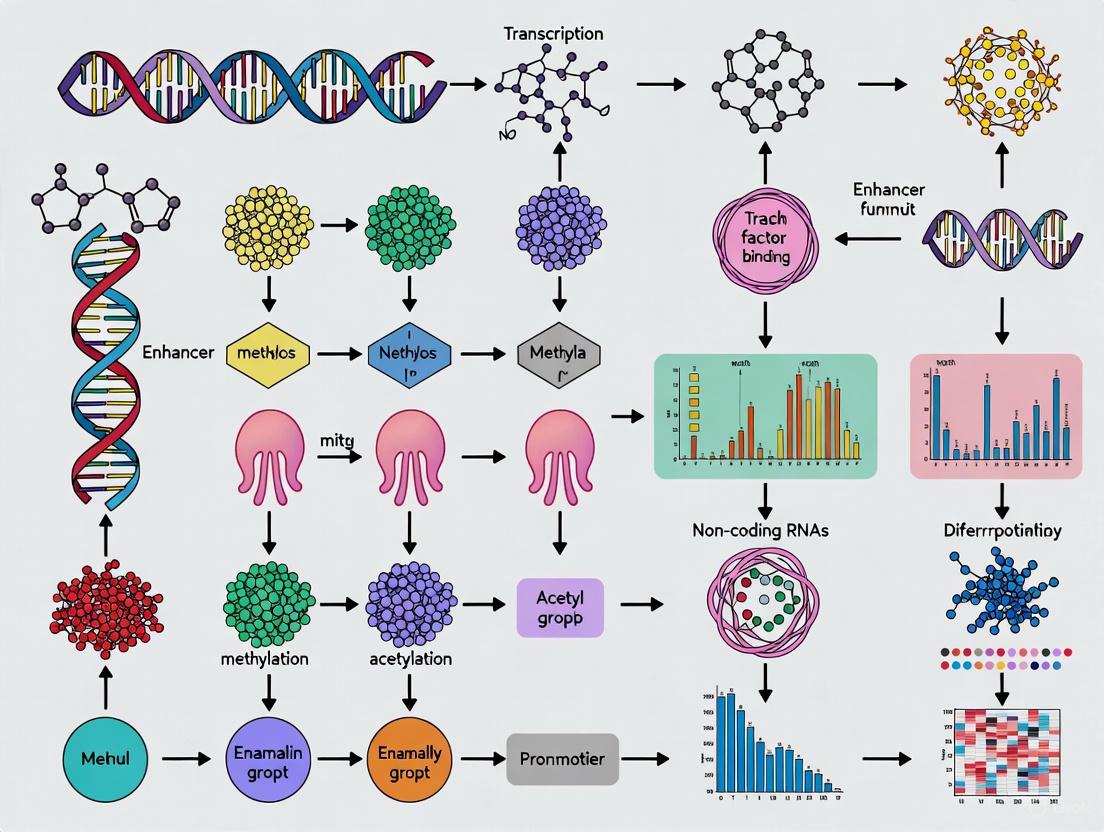
This article comprehensively explores the epigenetic mechanisms governing stem cell plasticity, a pivotal process in development, tissue homeostasis, and disease.
Epigenetic Regulation of Stem Cell Plasticity: Mechanisms, Disease Roles, and Therapeutic Targeting
Abstract
This article comprehensively explores the epigenetic mechanisms governing stem cell plasticity, a pivotal process in development, tissue homeostasis, and disease. We detail how dynamic changes in DNA methylation, histone modifications, and non-coding RNAs enable stem cells to switch between self-renewal and differentiation states. For researchers and drug development professionals, the content covers foundational principles, advanced methodological approaches for investigation, challenges in therapeutic targeting, and validation strategies through comparative epigenomic analyses. A particular focus is placed on the role of epigenetic dysregulation in cancer stem cells, aging, and therapy resistance, synthesizing recent findings to highlight emerging therapeutic opportunities aimed at modulating the epigenome to control cell fate.
Core Epigenetic Mechanisms Governing Stem Cell Fate and Plasticity
Stem cell plasticity, the fundamental capacity of stem cells to alter their fate in response to intrinsic and extrinsic cues, represents a cornerstone of regenerative medicine and developmental biology. This whitepaper delineates the conceptual evolution of stem cell plasticity from Waddington's classical epigenetic landscape to contemporary molecular understandings, with particular emphasis on the central role of epigenetic regulation. We examine the dynamic interplay between DNA methylation, histone modifications, and chromatin remodeling in mediating cell fate decisions, and provide a technical overview of experimental methodologies for investigating plasticity mechanisms. Within the broader context of epigenetic regulation in stem cell research, this resource offers scientists and drug development professionals a comprehensive framework for navigating this rapidly advancing field, supported by quantitative data and standardized experimental workflows.
The metaphor of the "epigenetic landscape," conceived by Conrad Waddington in 1942, elegantly depicted cellular differentiation as a ball rolling down a hillside through branching valleys toward irreversible fate commitments [1]. In this original conception, stem cell plasticity was inherently unidirectional. The contemporary post-Yamanaka era has radically transformed this paradigm, recognizing that cellular differentiation is not a one-way trajectory. Modern research demonstrates that somatic cells can be reprogrammed upward toward pluripotency, transdifferentiated sideways across lineages, and that tissue-specific stem cells exhibit remarkable dynamic flexibility in response to physiological demands and environmental signals [2].
This paradigm shift necessitates a refined definition: stem cell plasticity is the capacity of stem cells to alter their differentiation potential, fate decisions, and functional states in response to developmental cues, environmental signals, and experimental manipulations, mediated by reversible epigenetic and transcriptional mechanisms. This operational definition underscores the regulated malleability of stem cell states, which sits at the very heart of their therapeutic potential and physiological function. The molecular basis of this plasticity is governed predominantly by epigenetic mechanisms—heritable changes in gene expression that occur without alterations to the underlying DNA sequence [3] [1]. These mechanisms, including DNA methylation, histone modifications, and chromatin remodeling, form the molecular interface between environmental signals and gene expression programs, thereby enabling dynamic cellular responses while maintaining genomic integrity.
Molecular Mechanisms of Epigenetic Regulation
The epigenetic machinery governing stem cell plasticity operates through several interconnected systems that establish and maintain cell identity. The coordinated action of these systems enables both the stability of cell fate decisions and the dynamic reversibility essential for plasticity.
DNA Methylation and Demethylation Dynamics
DNA methylation, involving the covalent addition of a methyl group to cytosine bases primarily at CpG dinucleotides, provides a stable mechanism for gene silencing that can be maintained through cell divisions [1]. In stem cells, this process is dynamically regulated:
- DNA Methyltransferases (DNMTs): DNMT1 maintains methylation patterns during DNA replication, while DNMT3A and DNMT3B establish de novo methylation [1]. The balance of these enzymes is critical for stem cell function. In hematopoietic stem cells (HSCs), loss of DNMT1 impairs both self-renewal and differentiation, causing skewed lineage output toward myelopoiesis [3]. Conversely, conditional knockout of Dnmt3a in HSCs leads to increased self-renewal at the expense of differentiation [3].
- Ten-Eleven Translocation (TET) Enzymes: TET proteins catalyze the oxidation of 5-methylcytosine (5mC) to 5-hydroxymethylcytosine (5hmC) and further oxidized derivatives, initiating active DNA demethylation pathways [3] [1]. The functional consequences of TET-mediated demethylation are context-dependent; loss of TET2 in HSCs profoundly increases self-renewal and leads to myeloid skewing, while TET1 deficiency in neural progenitor cells decreases their self-renewal potential without affecting differentiation capacity [3].
Table 1: Key Enzymes Regulating DNA Methylation in Stem Cell Plasticity
| Enzyme | Function | Impact on Stem Cell Plasticity | Associated Phenotypes from Loss-of-Function Studies |
|---|---|---|---|
| DNMT1 | Maintenance methylation | Balanced self-renewal and differentiation | HSCs: Impaired self-renewal, skewed lineage output [3] |
| DNMT3A/B | De novo methylation | Restriction of self-renewal, promotion of differentiation | HSCs: Increased self-renewal, impaired differentiation [3] |
| TET1 | Active demethylation | Regulation of lineage-specific genes | Neural Progenitors: Decreased self-renewal [3]; HSCs: Enhanced self-renewal, B-cell bias [3] |
| TET2 | Active demethylation | Control of differentiation potential | HSCs: Enhanced self-renewal, myeloid skewing, CMML-like disease [3] |
Histone Modifications and Chromatin Architecture
Post-translational modifications of histone tails create a "histone code" that influences chromatin accessibility and gene expression [1]. The combinatorial nature of these modifications generates enormous regulatory complexity:
- Histone Acetylation: Generally associated with open chromatin and active transcription, histone acetylation is dynamically regulated by histone acetyltransferases (HATs) and histone deacetylases (HDACs) [1]. This modification neutralizes the positive charge of histones, reducing chromatin compaction.
- Histone Methylation: The functional consequences depend on the specific residue modified and the degree of methylation. For example, H3K4me3 is associated with active promoters, while H3K27me3 marks facultative heterochromatin and repressed genes [1]. The bivalent presence of both activating (H3K4me3) and repressing (H3K27me3) marks at promoters of developmental genes in pluripotent stem cells maintains them in a "poised" state, ready for rapid activation or silencing upon differentiation [1].
Diagram 1: Epigenetic Regulation of Cell Fate. External signals activate epigenetic "writers" and "erasers" that modify chromatin state, which is interpreted by "reader" proteins to influence gene expression and ultimate cell fate decisions.
Non-Coding RNAs
Non-coding RNAs, including microRNAs, long non-coding RNAs, and piwi-interacting RNAs, contribute to epigenetic regulation by guiding chromatin-modifying complexes to specific genomic loci, influencing DNA methylation patterns, and promoting histone modifications [1]. These mechanisms work in concert to establish the precise patterns of gene expression that define stem cell states and enable plasticity.
Experimental Approaches for Investigating Stem Cell Plasticity
Rigorous experimental design is essential for dissecting the mechanisms of stem cell plasticity. The following methodologies represent cornerstone approaches in the field.
Lineage Tracing and Fate Mapping
Lineage tracing enables the reconstruction of developmental histories and fate choices of individual stem cells and their progeny within living tissues.
Detailed Protocol:
- Genetic Labeling System: Utilize inducible Cre-lox systems (e.g., CreER[T2]) under tissue-specific promoters to achieve temporal control of recombination.
- Reporter Activation: Administer tamoxifen (0.1-1 mg/g body weight, intraperitoneally) to activate CreER[T2], inducing recombination and permanent labeling of target stem cell populations.
- Time-Course Analysis: Harvest tissues at multiple time points (e.g., 1, 7, 30 days post-induction) to track lineage progression.
- Tissue Processing: Prepare cryosections or whole mounts for fluorescence microscopy and immunohistochemistry.
- Quantitative Analysis: Calculate lineage bias, clone sizes, and differentiation kinetics using automated image analysis software.
Key Controls:
- Tamoxifen-only controls to assess leakiness of CreER[T2] system
- Vehicle-only controls to confirm inducibility
- Heterozygous controls to account for gene dosage effects
Epigenomic Profiling
Comprehensive mapping of epigenetic landscapes provides insights into the regulatory mechanisms governing cell fate decisions.
Detailed Protocol for Low-Input CUT&Tag:
- Cell Preparation: Isolate 50,000-100,000 target stem cells by fluorescence-activated cell sorting (FACS) using validated surface markers.
- Chromatin Immobilization: Bind cells to Concanavalin A-coated magnetic beads.
- Antibody Incubation: Incubate with primary antibody (e.g., anti-H3K27ac, 1:50 dilution) in antibody buffer overnight at 4°C.
- Tagmentation: Add protein A-Tn5 transposase complex (1:250 dilution) and incubate for 1 hour at 37°C.
- Library Preparation and Sequencing: Extract DNA and amplify libraries with barcoded primers for 12-14 cycles. Sequence on Illumina platform (recommended depth: 10-20 million reads per sample).
- Bioinformatic Analysis: Process reads using standard pipelines (e.g., Bowtie2 for alignment, MACS2 for peak calling). Identify differentially accessible regions and integrate with RNA-seq data.
Table 2: Quantitative Market Data for Stem Cell Research Tools (2024-2033 Projections)
| Market Segment | 2021 Market Size (USD Million) | 2025 Projected Market Size (USD Million) | 2033 Projected Market Size (USD Million) | CAGR (%) |
|---|---|---|---|---|
| Global Stem Cell Therapy Market | 185.444 [4] | 456.1 [4] | 2759.02 [4] | 25.231 [4] |
| North America Market | 93.835 [4] | 227.822 [4] | 1343.64 [4] | 24.835 [4] |
| Asia Pacific Market | 32.453 [4] | 83.694 [4] | 557.322 [4] | 26.744 [4] |
| Stem Cell Concentration Systems | 345.7 (2024) [5] | N/A | 1032.4 [5] | 10.46 [5] |
Functional Assays for Plasticity Assessment
In vitro and in vivo functional assays directly test the differentiation potential and lineage flexibility of stem cell populations.
Detailed Protocol for Clonal Differentiation Assay:
- Single-Cell Sorting: Isolate individual stem cells into 96-well plates pre-coated with extracellular matrix using FACS with index sorting to record surface marker expression.
- Multilineage Differentiation Conditions: Culture clones in parallel under distinct differentiation conditions:
- Myeloid Conditions: SCF (100 ng/mL), GM-CSF (50 ng/mL), IL-3 (20 ng/mL)
- Lymphoid Conditions: Flt3L (100 ng/mL), IL-7 (10 ng/mL)
- Erythroid Conditions: EPO (5 U/mL), SCF (100 ng/mL)
- Culture Duration: Maintain cultures for 14-21 days with medium changes every 3-4 days.
- Endpoint Analysis: Harvest cells and analyze lineage commitment by flow cytometry using validated antibody panels (CD11b/Gr-1 for myeloid, B220/CD19 for B cells, CD4/CD8 for T cells).
- Data Interpretation: Calculate lineage bias and plasticity indices based on clone composition across conditions.
The Scientist's Toolkit: Essential Research Reagents
Successful investigation of stem cell plasticity requires carefully selected reagents and systems. The following table details essential tools for experimental design.
Table 3: Essential Research Reagents for Investigating Stem Cell Plasticity
| Reagent/Solution | Function | Example Applications | Key Providers |
|---|---|---|---|
| Stem Cell Concentration Systems | Isolate, concentrate, and process stem cells | Cell therapy development, regenerative medicine research | Terumo Corporation, Lonza Group AG, Miltenyi Biotec [5] |
| Magnetic-Activated Cell Sorting (MACS) | High-quality cell separation | Isolation of pure stem cell populations for functional assays | Miltenyi Biotec [5] |
| Automated Bioprocessing Platforms | Cell culture, expansion, and concentration | Scale-up of stem cell cultures for therapeutic applications | Lonza Group AG, Thermo Fisher Scientific [5] |
| DNMT Inhibitors (5-azacytidine, decitabine) | DNA methyltransferase inhibition | Experimental manipulation of DNA methylation patterns to assess impact on plasticity | Multiple pharmaceutical and biotech suppliers |
| HDAC Inhibitors (TSA, SAHA) | Histone deacetylase inhibition | Increase histone acetylation to study chromatin accessibility in fate decisions | Multiple pharmaceutical and biotech suppliers |
| TET Activators (Vitamin C) | Enhancement of TET-mediated demethylation | Promote DNA demethylation to study reprogramming and plasticity | Multiple pharmaceutical and biotech suppliers |
| Cytokine Cocktails | Directed differentiation | Assess lineage potential under defined conditions | PeproTech, R&D Systems, STEMCELL Technologies |
Signaling Pathways Governing Plasticity Decisions
Multiple signaling pathways integrate extracellular information to modulate the epigenetic machinery and influence stem cell fate decisions. The following diagram illustrates key pathway interactions.
Diagram 2: Signaling-Epigenetic Axis in Fate Decisions. Extracellular signals activate core pathways that modulate epigenetic effectors to establish specific gene expression programs and cell fate outcomes.
The contemporary understanding of stem cell plasticity has transcended Waddington's original unidirectional landscape, revealing a dynamic system where epigenetic mechanisms serve as the molecular interpreters of environmental cues, enabling remarkable cellular adaptability. The experimental frameworks and technical resources outlined in this whitepaper provide a foundation for advancing this knowledge toward therapeutic applications. As the field progresses, key challenges remain, including the precise control of plasticity for regenerative purposes without risking tumorigenesis, the understanding of context-dependent epigenetic memory, and the development of strategies to manipulate these mechanisms safely in clinical settings. The integration of single-cell multi-omics, advanced genome engineering, and computational modeling will continue to refine our understanding of stem cell plasticity, ultimately enabling the rational design of cell-based therapies that harness this fundamental biological property for regenerative medicine and disease treatment.
The regulation of stem cell fate, encompassing the fundamental processes of self-renewal and differentiation, is orchestrated by a complex interplay of genetic and epigenetic mechanisms. Among these, DNA methylation represents a crucial epigenetic modification that dynamically controls gene expression patterns without altering the underlying DNA sequence. This reversible modification is centrally regulated by two antagonistic enzyme families: DNA methyltransferases (DNMTs), which catalyze the addition of methyl groups to cytosine bases, and ten-eleven translocation (TET) proteins, which mediate active DNA demethylation through iterative oxidation of 5-methylcytosine (5mC) [6] [7]. The precise balance between these opposing activities establishes methylation patterns that guide stem cell fate decisions, maintain pluripotency, and direct lineage specification [8] [9]. Disruption of this equilibrium contributes to various pathologies, including cancer, where aberrant DNA methylation patterns support the maintenance of cancer stem cells (CSCs) and promote tumorigenesis [8] [10]. This review comprehensively examines the molecular mechanisms, functional roles, and experimental approaches for studying DNMTs and TET proteins in the context of stem cell biology, providing researchers with both theoretical foundations and practical methodological guidance.
Molecular Mechanisms of DNA Methylation and Demethylation
DNA Methyltransferases (DNMTs): Establishment and Maintenance of Methylation Patterns
The DNMT family in mammals comprises several enzymes with specialized functions in establishing and maintaining DNA methylation patterns. DNMT1, DNMT3A, and DNMT3B represent the primary catalytically active enzymes, while DNMT3L serves as a catalytically inactive regulatory cofactor, and DNMT2 primarily methylates RNA rather than DNA [11] [12].
Table 1: DNA Methyltransferase Family Members and Functions
| Protein | Primary Function | Key Structural Domains | Role in Stem Cell Biology |
|---|---|---|---|
| DNMT1 | Maintenance methylation during DNA replication | CXXC, RFTS, BAH domains | Sustains self-renewal; represses differentiation genes [8] |
| DNMT3A | De novo methylation | PWWP, ADD domains | Establishes methylation patterns during differentiation [11] |
| DNMT3B | De novo methylation | PWWP, ADD domains | Works with DNMT3A in developmental methylation [12] |
| DNMT3L | Catalytic enhancer for DNMT3A/B | - | Stimulates de novo methylation in early development [11] |
| DNMT2 | tRNA methylation | - | Limited role in DNA methylation; methylates specific tRNAs [11] |
DNMT1 functions as the primary maintenance methyltransferase, exhibiting a strong preference for hemimethylated CpG sites that arise during DNA replication. This specificity enables DNMT1 to faithfully copy methylation patterns from the parent strand to the daughter strand, thereby preserving epigenetic information across cell divisions [6] [10]. Structurally, DNMT1 contains several specialized domains including the replication focus targeting sequence (RFTS) domain, which mediates its localization to replication forks, and CXXC and bromo-adjacent homology (BAH) domains that facilitate chromatin interactions [11].
In contrast, DNMT3A and DNMT3B function primarily as de novo methyltransferases, establishing new methylation patterns during early development and cellular differentiation. These enzymes contain PWWP domains that target them to specific genomic regions, particularly heterochromatic regions and gene bodies [11] [12]. DNMT3L, though catalytically inactive, enhances the methylation activity of DNMT3A and DNMT3B by stabilizing their conformation and promoting their recruitment to specific genomic loci [11].
TET Proteins: Mediators of Active DNA Demethylation
The TET protein family, comprising TET1, TET2, and TET3, catalyzes the stepwise oxidation of 5mC to 5-hydroxymethylcytosine (5hmC), 5-formylcytosine (5fC), and finally 5-carboxycytosine (5caC) in an Fe(II) and α-ketoglutarate-dependent manner [6] [7]. This oxidation cascade initiates active DNA demethylation through two primary mechanisms: (1) the canonical TET-TDG-BER pathway, where thymine DNA glycosylase (TDG) recognizes and excises 5fC and 5caC, initiating base excision repair that restores unmethylated cytosine; and (2) replication-dependent dilution, where oxidation products passively dilute during cell division due to impaired recognition by maintenance DNMTs [6] [7].
Table 2: TET Family Proteins and Their Characteristics
| Protein | Key Domains | Expression Patterns | Catalytic Dependencies |
|---|---|---|---|
| TET1 | CXXC, CRD, DSBH | Embryonic tissues, ESCs | Fe(II), α-ketoglutarate, O₂ [7] |
| TET2 | CRD, DSBH | Hematopoietic tissues, widespread | Fe(II), α-ketoglutarate, O₂ [7] |
| TET3 | CXXC, CRD, DSBH | Neural tissues, oocytes | Fe(II), α-ketoglutarate, O₂ [7] |
Structurally, all TET proteins share a conserved C-terminal catalytic domain consisting of a cysteine-rich domain (CRD) and a double-stranded β-helix (DSBH) region that houses the catalytic center [7]. TET1 and TET3 additionally contain N-terminal CXXC domains that facilitate binding to CpG-rich sequences, while TET2 lost this domain through chromosomal inversion during evolution [7]. This structural difference likely contributes to their distinct genomic localization patterns, with TET1 and TET3 enriched at CpG-rich promoters and TET2 preferentially targeting gene bodies and enhancers [7].
The enzymatic activity of TET proteins is regulated by various cellular metabolites and cofactors. α-ketoglutarate serves as an essential cosubstrate, while succinate and fumarate act as competitive inhibitors [8]. Notably, mutated isocitrate dehydrogenase (IDH) enzymes produce the oncometabolite 2-hydroxyglutarate, which inhibits TET function and contributes to DNA hypermethylation in cancer [8]. Vitamin C has also been shown to enhance TET activity by promoting enzyme folding and Fe(II) recycling [7].
Figure 1: DNA Methylation and Demethylation Pathway. This diagram illustrates the dynamic cycle of cytosine modification, highlighting the antagonistic relationship between DNMTs and TET proteins. SAM: S-adenosylmethionine; TDG: thymine DNA glycosylase; BER: base excision repair.
DNMT and TET Functions in Stem Cell Fate Decisions
Regulation of Pluripotency and Self-Renewal
In embryonic stem cells (ESCs), DNMTs and TET proteins collaborate to establish a precise epigenetic landscape that maintains the balance between self-renewal and differentiation capacity. TET1 plays a particularly important role in this context by binding to and demethylating promoters of pluripotency factors such as NANOG, facilitating their expression [7] [9]. Similarly, TET1 interacts with the pluripotency factor NANOG at specific genomic loci to activate genes essential for maintaining the undifferentiated state [7].
DNMTs contribute to pluripotency maintenance by repressing differentiation-associated genes. DNMT3A and DNMT3B establish de novo methylation at lineage-specific promoters, silencing them while preserving a transcriptionally permissive state at pluripotency loci [8]. This balanced methylation landscape creates "bivalent domains" at developmentally important genes—regions marked by both activating (H3K4me3) and repressing (H3K27me3) histone modifications—that keep genes in a poised state ready for rapid activation upon differentiation signals [9].
The critical balance between DNMT and TET activities is exemplified by studies showing that simultaneous depletion of all three DNMTs in ESCs leads to global hypomethylation and loss of differentiation capacity, while TET deficiency results in hypermethylation and impaired lineage specification [8] [7].
Control of Differentiation and Lineage Commitment
During stem cell differentiation, both DNMTs and TET proteins undergo dramatic changes in expression and localization to direct lineage-specific gene expression programs. TET-mediated demethylation activates differentiation programs by removing methylation marks from lineage-specific genes. For instance, during neural differentiation, TET proteins demethylate and activate neurogenesis-related genes, with different oxidation products potentially directing distinct fate decisions—hydroxymethylation driving neurogenesis while formylation and carboxylation promote gliogenesis [13].
DNMTs simultaneously establish repressive methylation at pluripotency gene promoters to prevent reversion to an undifferentiated state. The coordinated action of these enzymes ensures proper lineage commitment while restricting alternative fate choices. In hematopoietic stem cells, TET2-mediated demethylation activates key differentiation genes such as GATA2 and members of the HOX gene family, and TET2 deficiency leads to hypermethylation of these loci, blocking differentiation and promoting self-renewal [8].
Table 3: Stem Cell Fate Regulation by DNMT and TET Proteins
| Biological Process | Key DNMT Functions | Key TET Functions | Representative Target Genes |
|---|---|---|---|
| Pluripotency Maintenance | Repress differentiation genes | Demethylate pluripotency promoters | NANOG, OCT4, SOX2 [8] [9] |
| Neural Differentiation | Methylate pluripotency genes | Oxidize cytosine in neurogenic genes | NEUROG1, NEUROD1 [13] |
| Hematopoietic Differentiation | Establish lineage-specific methylation | Demethylate erythroid/myeloid genes | GATA2, HOX clusters [8] |
| Mesenchymal Differentiation | Silence alternative lineages | Activate adipogenic/osteogenic programs | PPARγ, RUNX2 [6] |
Experimental Approaches for Studying DNA Methylation Dynamics
Research Reagent Solutions
Table 4: Essential Research Reagents for DNA Methylation Studies
| Reagent/Category | Specific Examples | Function/Application | Experimental Notes |
|---|---|---|---|
| DNMT Inhibitors | 5-azacytidine, decitabine | Cytosine analogs that trap DNMTs; cause hypomethylation | Used clinically (e.g., for MDS); can induce stem cell differentiation [8] |
| TET Activators | Vitamin C (ascorbate) | Enhances TET activity by promoting Fe(II) recycling | Improves iPSC generation efficiency; modulates 5hmC levels [7] |
| Metabolic Modulators | DMOG (α-KG analog), IDH1/2 inhibitors | Alter cofactor availability for TET enzymes | DMOG inhibits TETs; IDH mutations produce 2-HG, a TET inhibitor [8] |
| HDAC Inhibitors | Valproic acid, trichostatin A | Increase histone acetylation, synergize with DNMT inhibitors | Enhance reprogramming efficiency; open chromatin structure [9] |
| Antibodies | Anti-5mC, anti-5hmC, anti-5fC, anti-5caC | Detect specific cytosine modifications | Key for immunostaining, dot blot, and enrichment-based methods [7] |
| Reporter Systems | 5hmC/5mC reporters | Visualize methylation status in live cells | Enable tracking of methylation dynamics in real-time [14] |
Methodologies for Assessing DNA Methylation Status
Advanced methodologies have been developed to precisely map and quantify various cytosine modifications at base resolution across the genome. Bisulfite sequencing remains the gold standard for detecting 5mC, while oxidative bisulfite sequencing (oxBS-seq) and TET-assisted bisulfite sequencing (TAB-seq) provide specific quantification of 5hmC by distinguishing it from 5mC [7]. For higher-resolution analysis of TET activity, chemical-labeling enrichment methods can map 5fC and 5caC distributions, though these modifications occur at much lower frequencies than 5hmC.
Chromatin immunoprecipitation followed by sequencing (ChIP-seq) enables researchers to profile the genomic binding sites of DNMT and TET proteins, revealing their target loci and potential regulatory functions. When combined with methylation data, this approach can establish direct relationships between enzyme binding and methylation changes at specific genomic regions.
For functional studies, CRISPR-based epigenetic editing tools allow targeted recruitment of catalytic domains of DNMTs or TETs to specific genomic loci, enabling precise manipulation of methylation status at individual genes to investigate causal relationships between methylation and gene expression [7].
Figure 2: Experimental Approaches for DNA Methylation Analysis. This workflow outlines key methodologies for investigating DNA methylation dynamics, from sample preparation to data analysis, highlighting techniques specific to different cytosine modifications.
Dysregulation in Cancer and Therapeutic Implications
DNMT and TET Alterations in Cancer Stem Cells
Cancer stem cells (CSCs) utilize DNMT and TET dysregulation to maintain stem-like properties while resisting differentiation and conventional therapies. DNMT1 is frequently overexpressed in CSCs, where it silences tumor suppressor genes and differentiation pathways through promoter hypermethylation [8]. In acute myeloid leukemia (AML), DNMT1 collaborates with EZH2 to establish repressive chromatin marks that block differentiation, while in breast cancer, DNMT1 hypermethylates and silences transcription factors like ISL1 and FOXO3 that normally balance stemness and differentiation [8].
TET2 function is commonly impaired in hematological malignancies through inactivating mutations or inhibition by oncometabolites. TET2 loss leads to hypermethylation and repression of differentiation genes such as GATA2 and HOX family members, reinforcing self-renewal and stemness potential [8]. In glioblastoma, SOX2 indirectly inhibits TET2 to preserve self-renewal capacity of glioma stem cells, and TET2 reconstitution suppresses tumor growth in preclinical models [8].
IDH1/2 mutations produce the oncometabolite D-2-hydroxyglutarate, which inhibits TET enzymes and causes widespread DNA hypermethylation, supporting CSC maintenance while limiting differentiation [8]. Similarly, BCAT1 activity supports leukemia stem cell engraftment by disrupting α-ketoglutarate homeostasis, thereby inhibiting TET function and promoting hypermethylation [8].
Epigenetic Therapy Strategies
The reversible nature of epigenetic modifications makes DNMTs and TET proteins attractive therapeutic targets. DNMT inhibitors azacitidine and decitabine are already approved for hematological malignancies like myelodysplastic syndromes and are being investigated in solid tumors [8] [10]. These hypomethylating agents demonstrate efficacy in eradicating CSCs by reactivating silenced tumor suppressor genes and differentiation programs.
Emerging strategies focus on combining epigenetic therapies with other treatment modalities. HDAC inhibitors synergize with DNMT inhibitors to enhance gene reactivation, while combinations with immunotherapy may help overcome immune evasion by CSCs [9] [10]. Metabolic interventions that modulate α-ketoglutarate levels or vitamin C supplementation represent alternative approaches to enhance TET activity and promote differentiation of CSCs [7].
Novel therapeutic approaches include developing specific inhibitors against mutant IDH enzymes, targeted degradation of DNMTs, and epigenetic editing using CRISPR-based systems to precisely correct aberrant methylation patterns at specific genomic loci [7] [10]. These advanced strategies offer the potential for more specific interventions with reduced off-target effects compared to current epigenetic drugs.
DNMTs and TET proteins constitute a fundamental regulatory system that dynamically controls DNA methylation status to guide stem cell fate decisions. Their balanced activities establish epigenetic landscapes that maintain pluripotency while allowing responsive lineage commitment during differentiation. Dysregulation of this system contributes significantly to cancer pathogenesis, particularly through effects on cancer stem cells that drive tumor initiation, progression, and therapy resistance.
Future research directions should focus on elucidating the precise mechanisms that recruit DNMTs and TET proteins to specific genomic loci, understanding how different oxidation products (5hmC, 5fC, 5caC) exert distinct biological effects, and deciphering the complex crosstalk between DNA methylation and other epigenetic modifications. From a therapeutic perspective, developing more specific epigenetic modulators and delivery systems represents a promising avenue for targeting CSCs while minimizing toxicity to normal stem cells.
The rapid advancement of epigenetic editing technologies offers unprecedented opportunities for both basic research and therapeutic applications. By enabling precise manipulation of methylation status at individual genes, these tools will help establish causal relationships between specific methylation events and stem cell behaviors while potentially paving the way for novel epigenetic therapies for cancer and other diseases characterized by stem cell dysfunction.
The histone code represents a fundamental epigenetic mechanism whereby post-translational modifications (PTMs) to histone proteins regulate chromatin structure and DNA accessibility without altering the underlying genetic sequence. This complex language of chemical modifications serves as a critical interface between the genome and cellular identity, particularly in stem cell plasticity and lineage commitment. Through effector-mediated recognition by specialized protein domains, histone modifications establish heritable transcriptional states that maintain pluripotency or drive differentiation. Disruption of these epigenetic pathways contributes significantly to cancer stemness and therapy resistance. This technical review examines the molecular machinery of histone code interpretation, its quantitative analysis, and therapeutic targeting in regenerative medicine and oncology.
The histone code hypothesis posits that post-translational modifications to histone proteins constitute an information-rich system that extends the genetic message by regulating chromatin-templated processes [15]. Histones comprise the major protein component of chromatin, the scaffold in which the eukaryotic genome is packaged, and are subject to more than 20 types of PTMs, especially on their flexible N-terminal tails [16] [17]. These modifications include acetylation, methylation, phosphorylation, ubiquitination, and sumoylation, among others, creating a complex combinatorial landscape that helps manage epigenetic information [15] [16].
The mechanisms by which histone modifications influence chromatin function operate through two primary models: the "direct" model, where PTMs directly affect chromatin compaction by altering charge states or internucleosomal interactions; and the emerging "effector-mediated" paradigm, where histone PTMs are specifically recognized and "read" by protein modules termed effectors, facilitating downstream events via recruitment or stabilization of chromatin-templated machinery [15]. This effector-mediated recognition represents a crucial mechanism for translating the histone code into biological outcomes, particularly in developmental processes and cellular identity.
Molecular Mechanisms of Histone Code Interpretation
Reader Domains and Effector-Mediated Recognition
Chromatin effector modules target their cognate covalent histone modifications through specialized structural domains that exhibit specific readout mechanisms for individual marks [15]. A diverse family of "reader pockets" has evolved to interpret the histone code through distinct molecular recognition principles:
Bromodomains: These approximately 110-amino acid modules form left-handed antiparallel four-helix bundles with hydrophobic binding pockets that recognize acetylated lysine residues [15]. The acetylated lysine inserts into a deep, narrow binding pocket where the acetyl carbonyl forms a hydrogen bond with a conserved asparagine residue, while the pocket's hydrophobic character provides complementary interactions [15]. Different arrangements of bromodomains enable diverse recognition capabilities, as exemplified by TAF1's double bromodomains that bind dually acetylated H4 tails with the two acetyllysine-binding pockets separated by approximately 25Å, and Rsc4p's tandem bromodomains that fold as a single structural unit with binding pockets oriented on the same face and separated by ~20Å [15].
Methyl-Lysine Readers: Multiple protein families recognize methylated lysine residues through distinct structural mechanisms. Chromo, Tudor, PHD, MBT, PWWP, WD, ADD, zf-CW, BAH, and CHD domains all function as methyllysine readers [16]. These domains typically engage methylated lysine through aromatic cage structures that coordinate the methylammonium group via cation-π interactions, with surrounding residues providing additional specificity for the modification state and flanking histone sequence [15].
The combinatorial nature of histone modification recognition enables precise control of chromatin states, where modified histone tails act as integrating platforms permitting chromatin-associated complexes to receive information from upstream signaling cascades [15]. This multifaceted recognition system allows for sophisticated regulation of nuclear processes including transcription, DNA repair, replication, and epigenetic inheritance.
Writer and Eraser Enzymes
The dynamic nature of the histone code is maintained by opposing enzyme families that establish ("write") or remove ("erase") histone modifications:
Table 1: Major Histone-Modifying Enzyme Families
| Enzyme Class | Function | Representative Enzymes | Histone Targets |
|---|---|---|---|
| Histone Acetyltransferases (HATs) | Add acetyl groups to lysine residues | Gcn5p, PCAF, p300/CBP, TIP60 | H3K9, H3K14, H3K18, H3K27, H4K5, H4K8, H4K12, H4K16 |
| Histone Deacetylases (HDACs) | Remove acetyl groups from lysine residues | Rpd3p, HDAC1-11 | Multiple acetylated lysines |
| Histone Methyltransferases (HMTs) | Add methyl groups to lysine or arginine residues | EZH2 (H3K27), Set1/Set7/9 (H3K4), Suv39h (H3K9) | H3K4, H3K9, H3K27, H3K36, H3K79, H4K20 |
| Histone Demethylases (HDMs) | Remove methyl groups from lysine or arginine residues | LSD1, JMJD family | Multiple methylated lysines/arginines |
| Kinases | Add phosphate groups to serine, threonine, or tyrosine residues | Aurora B, MSK1/2, IKK-α | H3S10, H3S28, H3T3, H3T11, H4S1 |
These enzyme families work in coordination to maintain the dynamic equilibrium of histone modifications, with their activities fine-tuned by cellular signaling pathways, metabolic states, and developmental cues. Dysregulation of these enzymes features prominently in disease states, particularly cancer, where mutations in histone-modifying enzymes can disrupt normal epigenetic control [19] [8].
Histone Modifications in Stem Cell Plasticity and Lineage Commitment
Chromatin Dynamics in Pluripotency and Differentiation
Embryonic stem (ES) cells exhibit a unique chromatin architecture characterized by a loosely packed mesh of fibers with less condensed chromatin than somatic cells [20]. Super-resolution microscopy reveals that nucleosomes in ES cells form smaller, less dense clusters than in differentiating cells, reflecting a more open chromatin configuration permissive for pluripotency [20]. This plastic state is maintained by a specific histone modification landscape:
Activation-Associated Marks: ES cells display abundant H3K4me3 at promoters of active genes and bivalent domains containing both H3K4me3 (activation-associated) and H3K27me3 (repression-associated) marks at developmental regulator genes [20]. These bivalent domains are thought to maintain genes in a "poised" state, ready for rapid activation or stable repression upon differentiation cues.
Repression-Associated Marks: H3K27me3, deposited by Polycomb Repressive Complex 2 (PRC2) with EZH2 catalytic subunit, maintains repression of developmental genes in ES cells while preserving their potential for future activation [19] [20]. The dynamic balance between H3K27me3 and H3K27me1 (associated with active transcribed regions) illustrates the complexity of modification-specific functional outcomes [20].
During lineage commitment, the histone modification landscape undergoes extensive reorganization, with resolution of bivalent domains toward monovalent active or repressive states, reinforcing cell fate decisions through stable epigenetic patterns [20].
ATP-Dependent Chromatin Remodeling Complexes in Neural Development
Chromatin remodeling complexes work in concert with histone modifications to regulate lineage commitment, particularly in neural development where their dysfunction is linked to neurodevelopmental disorders [21]. These complexes are categorized into four major families based on their catalytic subunits:
SWI/SNF Complexes: The Brg1/Brm-associated factor (BAF) complex is essential for neural progenitor cell self-renewal and proliferation. BAF complex disruption leads to cortical thinning, midbrain and cerebellar hypoplasia, and neuronal migration defects [21]. During later neurogenesis, the BAF complex limits progenitor proliferation and promotes neuronal differentiation by preventing H3K27me3-mediated silencing of neuronal differentiation genes [21].
CHD Complexes: CHD family members display diverse, sometimes opposing functions in neural development. CHD4 deletion reduces cortical thickness and causes premature cell cycle exit, while CHD8 haploinsufficiency increases progenitor proliferation leading to megalencephaly [21]. CHD proteins also regulate neuronal migration, with CHD5 establishing neuronal polarity and early radial migration, while CHD3 regulates late migration and cortical layering [21].
ISWI Complexes: Smarca1 controls neural progenitor proliferation by binding the Foxg1 promoter, while Smarca5 regulates cerebellar granule neuron progenitor proliferation [21].
INO80 Complexes: Ino80 maintains neural progenitor populations by supporting DNA repair mechanisms; its deletion triggers p53-dependent microcephaly and apoptosis [21].
The coordination between ATP-dependent chromatin remodeling and histone modifications represents a crucial regulatory layer in lineage commitment, with mutations in these systems contributing significantly to developmental disorders and disease.
Figure 1: Histone Modification Dynamics During Lineage Commitment. Embryonic stem cells maintain bivalent chromatin domains at developmental genes, which resolve toward active or repressed states during differentiation through coordinated action of histone-modifying enzymes. [8] [20]
Analytical Methods for Histone Modification Analysis
Mass Spectrometry-Based Proteomics
Mass spectrometry has emerged as a powerful tool for comprehensive histone modification analysis, enabling identification and quantification of PTMs in an unbiased manner [16]. Key methodological approaches include:
Bottom-Up MS Proteomics: This widely adopted approach involves protease digestion (typically with ArgC-like specificity) of acid-extracted histones followed by LC-MS/MS analysis on high-resolution instruments like Orbitrap systems [19]. The method provides >90% sequence coverage for histones H3 and H4, enabling quantification of dozens of unique modification patterns across cell lines [19]. Normalization strategies typically compare all detected modified forms of a common peptide backbone against each other, allowing relative quantification of PTM stoichiometry.
Quantitative Proteomic Atlas Construction: Large-scale profiling of cancer cell lines has quantified 37 unique histone H3 modification patterns and 19 H4 modification patterns, revealing cancer-type specific epigenetic signatures [19]. For example, H3K27 methylation is especially enriched in breast cancer cell lines, and EZH2 depletion in mammary xenograft models significantly reduces tumor burden, demonstrating the predictive utility of proteomic approaches [19].
Chromatin Immunoprecipitation Sequencing (ChIP-seq)
ChIP-seq remains the gold standard for genome-wide mapping of histone modifications, though traditional methods suffer from quantitative limitations. Recent advances have addressed these challenges:
- siQ-ChIP (sans spike-in Quantitative ChIP): This method establishes an absolute quantitative scale for ChIP-seq without spike-in reagents by leveraging the equilibrium binding reaction in chromatin immunoprecipitation [22]. The quantitative scaling factor (α) is derived as:
where vin is input sample volume, V-vin is IP reaction volume, mIP and min are IP and input masses, and m_loaded represents masses loaded for sequencing [22]. This approach enables direct comparison of histone modification abundance across samples and experimental conditions.
- Track Interpretation Constraints: siQ-ChIP reveals that sequencing tracks must be interpreted as probability density distributions rather than qualitative enrichment profiles [22]. This constraint has implications for how cellular perturbations are assessed, as traditional normalization methods can lead to misinterpretation of histone modification dynamics.
Integrated Multi-Omics Approaches
Combining proteomic and genomic analyses provides complementary insights into histone modification states. While transcript levels of histone-modifying enzymes often correlate with resulting PTM patterns, several PTMs are regulated independently of enzyme expression, highlighting the importance of post-translational regulation of modifying enzymes themselves [19]. Integrated approaches thus provide a more comprehensive understanding of the regulatory networks controlling the histone code.
Table 2: Quantitative Histone Modification Patterns in Cancer Cell Lines [19]
| Histone Modification | Function | Breast Cancer Lines | Leukemia Lines | Cervical Cancer Lines |
|---|---|---|---|---|
| H3K4me3 | Transcriptional activation | Variable | Variable | Variable |
| H3K9me3 | Heterochromatin formation | Moderate | Low | Moderate |
| H3K27me3 | Polycomb repression | High | Low | Moderate |
| H3K36me3 | Transcriptional elongation | Moderate | Low | Moderate |
| H3K79me2 | Euchromatin maintenance | Moderate | Moderate | Moderate |
| H4K16ac | Transcriptional activation | Moderate | Low | High |
| H4K20me3 | Heterochromatin | Low | Low | Moderate |
Histone Modifications in Cancer Stemness and Therapeutic Targeting
Epigenetic Regulation of Cancer Stem Cells
Cancer stem cells (CSCs) utilize histone modification patterns to maintain stem-like properties including self-renewal capacity, differentiation blockade, and therapy resistance [8]. Key mechanisms include:
Polycomb-Mediated Repression: EZH2, the catalytic subunit of PRC2, is frequently overexpressed in cancers and contributes to CSC maintenance by depositing H3K27me3 marks at tumor suppressor and differentiation genes [19] [8]. In acute myeloid leukemia (AML), EZH2 collaborates with DNMT1 to establish repressive chromatin states, while in breast cancer, it silences transcription factors that balance stemness and differentiation [8].
Metabolic-Epigenetic Crosstalk: Metabolic alterations in CSCs influence histone modifications through metabolic co-factors. Lactate has been shown to increase histone acetylation, epigenetically activating MYC expression in intestinal tumor organoids [14]. This regulation depends on bromodomain-containing protein 4 (BRD4), connecting metabolism with chromatin reading. Similarly, mutations in isocitrate dehydrogenase (IDH1/2) produce the oncometabolite D-2-hydroxyglutarate, which inhibits histone demethylases and TET DNA demethylases, promoting CSC maintenance [8].
Pluripotency Factor Regulation: CSCs exhibit distinct DNA methylation and histone modification patterns at promoters of pluripotency factors like OCT4, SOX2, and NANOG [8]. Hypomethylation of these loci in circulating tumor cells correlates with increased tumor-repopulating potential, highlighting how epigenetic mechanisms preserve stemness programs in cancer [8].
Therapeutic Targeting of Histone Modifications
The dynamic nature of epigenetic modifications makes them attractive therapeutic targets. Several classes of epidrugs have been developed:
Bromodomain Inhibitors: Compounds targeting BRD4 show promise in disrupting the recognition of acetylated histones by CSCs, particularly in combination with metabolic interventions [14]. These inhibitors displace BRD4 from chromatin, suppressing MYC expression and other stemness regulators.
EZH2 Inhibitors: Selective inhibition of EZH2 catalytic activity can reverse H3K27me3-mediated silencing of tumor suppressors, promoting differentiation and reducing tumor burden in preclinical models [19] [8]. Several EZH2 inhibitors are in clinical development for hematological malignancies and solid tumors.
HDAC Inhibitors: Broad-spectrum and isoform-selective HDAC inhibitors can alter the histone acetylation landscape, potentially reactivating silenced differentiation genes in CSCs [8]. Drugs like suberoylanilide hydroxamic acid (SAHA) are approved for certain cancer indications and are being explored in combination therapies.
Figure 2: Targeting Histone Modifications in Cancer Stem Cells. Metabolic-epigenetic crosstalk and histone-modifying enzymes maintain cancer stemness, providing targets for epigenetic therapies including BRD4, EZH2, and HDAC inhibitors. [14] [8]
The Scientist's Toolkit: Essential Research Reagents and Methodologies
Table 3: Essential Research Reagents for Histone Code Investigation
| Reagent/Methodology | Function | Key Applications |
|---|---|---|
| siQ-ChIP | Quantitative ChIP-seq without spike-ins | Absolute quantification of histone modification genome-wide distribution [22] |
| Bottom-Up Mass Spectrometry | Comprehensive PTM identification and quantification | Global histone modification profiling across cell states [16] [19] |
| Histone Modification-Specific Antibodies | Immunodetection of specific PTMs | Western blot, immunofluorescence, ChIP-seq validation [18] [22] |
| Bromodomain Inhibitors (e.g., JQ1) | Competitive binding to acetyl-lysine pockets | Disruption of histone acetylation reading in stemness regulation [14] |
| EZH2 Inhibitors (e.g., GSK126) | Selective inhibition of H3K27 methyltransferase | Reversal of Polycomb-mediated silencing in CSCs [19] [8] |
| HDAC Inhibitors (e.g., SAHA) | Blockade of histone deacetylase activity | Increasing histone acetylation, promoting differentiation [8] |
| Organoid Culture Systems | 3D models maintaining cellular hierarchy | Studying histone modifications in tissue context and cancer stemness [14] |
| CellPhenTracker | Machine learning-based cell tracking | Lineage tracing with metabolic and epigenetic monitoring [14] |
The histone code represents a sophisticated epigenetic regulatory system that integrates environmental cues, metabolic states, and developmental signals to control chromatin structure and cellular identity. In stem cell biology and cancer, specific histone modification patterns maintain plastic states capable of self-renewal while retaining differentiation potential. The dynamic nature of these epigenetic marks, mediated by opposing writer and eraser enzymes and interpreted by reader domains, provides a mechanism for rapid response to changing conditions without altering DNA sequence.
Future research directions will likely focus on understanding the spatial organization of histone modifications in the 3D nuclear context, particularly how chromatin looping and topologically associated domains interface with the histone code to regulate gene expression programs. Additionally, the development of more precise epigenetic editing tools, such as engineered reader domains coupled to functional effectors, will enable targeted manipulation of specific histone modification states for both basic research and therapeutic applications. As single-cell epigenomic technologies advance, we will gain unprecedented resolution into the heterogeneity of histone modification landscapes within stem cell and cancer populations, potentially revealing new regulatory principles and therapeutic vulnerabilities.
The integration of histone modification analysis into clinical practice represents another promising frontier, with potential applications in cancer diagnosis, prognosis, and treatment selection. As epigenetic therapies continue to develop, combination approaches targeting multiple components of the histone code machinery may prove most effective in overcoming the plasticity and adaptability of cancer stem cells. Ultimately, deciphering the complex language of histone modifications will continue to provide fundamental insights into the epigenetic regulation of development, disease, and cellular identity.
Stemness—the capacity for self-renewal and multilineage differentiation—and cellular plasticity are fundamentally regulated by epigenetic mechanisms. Within this regulatory framework, non-coding RNAs (ncRNAs) have emerged as master conductors, establishing complex networks that control the gene expression programs defining stem cell identity and fate. These RNA molecules, which do not code for proteins, constitute the majority of the human transcriptome and have evolved as critical layers of epigenetic regulation in stem cell biology [23] [24]. The interplay between ncRNAs and other epigenetic mechanisms—including DNA methylation and histone modifications—creates a dynamic regulatory system that maintains stem cell populations while allowing responsive differentiation to diverse cellular lineages [25] [26]. In pathological contexts, particularly cancer, this regulatory system becomes subverted, where cancer stem cells (CSCs) exploit ncRNA-mediated circuits to sustain their self-renewing capabilities, promote tumor heterogeneity, and drive therapeutic resistance [27]. This review examines the molecular mechanisms through which diverse ncRNA classes govern stemness and plasticity, providing a technical guide for researchers investigating stem cell biology and developing novel therapeutic strategies.
Classification and Molecular Functions of Key ncRNA Families
Non-coding RNAs are broadly categorized by length and molecular function. The major classes involved in regulating stemness include microRNAs (miRNAs), long non-coding RNAs (lncRNAs), circular RNAs (circRNAs), and PIWI-interacting RNAs (piRNAs). Table 1 summarizes the defining characteristics and primary functions of these ncRNA classes in stem cell regulation.
Table 1: Major Non-Coding RNA Classes in Stemness Regulation
| ncRNA Class | Size Range | Key Biogenesis Factors | Primary Mechanisms of Action | Documented Roles in Stemness |
|---|---|---|---|---|
| miRNA | ~22 nt | Drosha, Dicer, AGO2 | mRNA degradation; translational repression | Maintains pluripotency; controls differentiation timing; regulates stem cell quiescence/proliferation balance [28] [29] |
| lncRNA | >200 nt | RNA Pol II/III | Chromatin modification; transcriptional regulation; molecular scaffolding | X-chromosome inactivation; nuclear organization; stem cell lineage specification [30] [24] |
| circRNA | Variable | Back-splicing | miRNA sponging; protein scaffolding | Stem cell maintenance; pluripotency factors regulation [27] [28] |
| piRNA | 24-31 nt | PIWI proteins | Transposon silencing; DNA methylation | Genome stability in germline and somatic stem cells [24] |
The biogenesis pathways for these ncRNA classes are highly specialized. MicroRNAs (miRNAs) undergo either canonical or non-canonical processing. The canonical pathway involves transcription of primary miRNAs (pri-miRNAs) by RNA polymerase II, nuclear cleavage by the Drosha-DGCR8 complex to form precursor miRNAs (pre-miRNAs), export to the cytoplasm via Exportin-5, and final processing by Dicer to generate mature ~22 nucleotide miRNAs that load into the RNA-induced silencing complex (RISC) [28] [29]. Non-canonical pathways include mirtrons that bypass Drosha processing through splicing mechanisms [28]. In contrast, long non-coding RNAs (lncRNAs) are primarily transcribed by RNA polymerase II and undergo processing similar to mRNAs, including 5' capping, splicing, and polyadenylation, though they exhibit more tissue-specific expression patterns [30] [29]. Circular RNAs are generated through back-splicing events where downstream 5' splice sites join with upstream 3' splice sites, forming covalently closed loop structures that confer exceptional stability [28].
Molecular Mechanisms of ncRNA-Mediated Stemness Regulation
ncRNA Control of Pluripotency and Self-Renewal Networks
Non-coding RNAs regulate stemness through sophisticated interactions with core transcriptional networks and signaling pathways. In embryonic stem cells (ESCs), miRNAs such as the miRNA-302/367 cluster and miRNA-290 cluster directly target core transcription factors including NR2F2, CDKN1A, and RBL2, thereby reinforcing the pluripotent state by suppressing differentiation programs [29]. Similarly, lncRNAs like Xist mediate X-chromosome inactivation through recruitment of chromatin-modifying complexes, establishing epigenetic silencing that is essential for proper development and maintaining female pluripotent stem cell populations [24]. Single-cell transcriptomic analyses have revealed that lncRNA expression patterns are highly cell-type-specific throughout hematopoietic differentiation, with distinct lncRNA signatures characterizing hematopoietic stem and progenitor cells (HSPCs) compared to differentiated lineages [30]. This precise developmental regulation underscores the importance of lncRNAs in maintaining cellular identity during stem cell differentiation.
Exosomal ncRNAs in Intercellular Communication
A particularly significant mechanism in stem cell regulation involves exosomal ncRNAs that mediate intercellular communication within specialized microenvironments. In cancer, exosomes serve as critical vehicles for transferring ncRNAs between cell populations, creating a bidirectional communication network that reinforces stemness properties. As illustrated in Figure 1, this exosome-mediated crosstalk establishes a feed-forward loop that amplifies stem cell characteristics and promotes tumor progression.
Figure 1: Bidirectional Exosomal ncRNA Communication Between CSCs and Non-CSCs. Cancer stem cells (CSCs) and non-CSC tumor cells exchange exosomes containing distinct ncRNA cargoes, creating a self-reinforcing loop that promotes tumor progression through enhanced stemness, metastasis, and therapy resistance [27].
The molecular consequences of this exosome-mediated communication are profound. Non-CSC-derived exosomal ncRNAs enhance CSC stemness by upregulating stemness marker expression (including OCT4, EpCAM, and ALDH) and activating stemness-reinforcing signaling pathways such as Wnt/β-catenin, Notch, and PI3K/AKT/mTOR [27]. Reciprocally, CSC-derived exosomal ncRNAs promote tumor progression by enhancing stemness, metastasis, angiogenesis, chemoresistance, and immune suppression in non-CSCs. For example, lung CSC-derived exosomal lncRNA Mir100hg activates H3K14 lactylation to potentiate metastatic activity in non-CSCs, while circRNAs such as circZFR function as molecular sponges for miRNAs, sequestering them and indirectly upregulating expression of downstream targets that promote proliferation and migration [27].
Epigenetic Circuitry in Cellular Plasticity
Non-coding RNAs participate in sophisticated feedback loops within the broader epigenetic landscape. They recruit and guide chromatin-modifying complexes to specific genomic loci, establishing heritable gene expression states that define cellular identity. For instance, certain lncRNAs interact with polycomb repressive complex 2 (PRC2) to catalyze H3K27 trimethylation, leading to stable gene silencing of differentiation promoters in stem cells [24]. Similarly, miRNAs can target components of the DNA methylation machinery, such as DNA methyltransferases (DNMTs), creating interconnected regulatory layers that modulate cellular plasticity [25] [24]. This epigenetic plasticity enables both normal differentiation processes and pathological states, as seen in cancer where transient non-CSC populations can regain stem-like properties through ncRNA-mediated reprogramming [27].
Experimental Approaches for ncRNA-Stemness Research
Core Methodologies and Workflows
Investigating ncRNAs in stemness requires specialized methodological approaches. Single-cell RNA sequencing (scRNA-seq) has emerged as a powerful tool for delineating ncRNA expression heterogeneity across stem cell populations. The experimental workflow, as illustrated in Figure 2, enables researchers to capture the dynamic regulation of ncRNAs during stem cell differentiation and in heterogeneous populations like CSCs.
Figure 2: Single-Cell RNA Sequencing Workflow for ncRNA Analysis in Stem Cells. This pipeline enables comprehensive profiling of ncRNA expression across heterogeneous stem cell populations, facilitating identification of stemness-associated ncRNA signatures [30].
Key technical considerations for scRNA-seq studies include the use of custom lncRNA references that incorporate annotations from databases like NONCODE to ensure comprehensive ncRNA capture [30]. Bioinformatics processing typically involves alignment to combined references (GENCODE for protein-coding genes and NONCODE for lncRNAs), followed by dimensionality reduction, unsupervised clustering using algorithms like Leiden, and differential expression analysis to identify stemness-associated ncRNAs [30]. For functional validation, reverse transcription quantitative PCR (RT-qPCR) provides precise quantification of candidate ncRNAs, while flow cytometry enables sorting of distinct stem cell subpopulations based on surface markers (e.g., CD44, CD133, ALDH) for subsequent molecular analyses [27] [30].
Essential Research Reagents and Tools
Table 2: Essential Research Reagents for ncRNA-Stemness Investigations
| Reagent/Tool Category | Specific Examples | Research Application | Technical Notes |
|---|---|---|---|
| Stem Cell Markers | CD44, CD133, OCT4, EpCAM, ALDH | Identification and isolation of stem cell populations | Marker expression varies by stem cell type and species [27] |
| ncRNA Inhibition/Overexpression | Anti-miRNAs, miRNA mimics, siRNA, CRISPR-based editors | Functional perturbation of ncRNA activity | Consider compensation effects; use multiple approaches for validation [28] |
| Exosome Isolation Methods | Ultracentrifugation, immunoaffinity capture, size-exclusion chromatography | Purification of exosomes for ncRNA cargo analysis | Method choice affects exosome yield and purity [27] |
| scRNA-seq Platforms | 10X Genomics, Fluidigm C1 | High-resolution transcriptomic profiling | 10X offers higher throughput; custom ncRNA references enhance detection [30] |
| Bioinformatics Tools | Seurat, Scanpy, BBKNN | Analysis of scRNA-seq data | Enable batch effect correction and differential ncRNA expression analysis [30] |
Therapeutic Implications and Translational Applications
The pivotal role of ncRNAs in regulating stemness and plasticity presents compelling therapeutic opportunities. From a diagnostic perspective, the remarkable stability of ncRNAs in bodily fluids and their tissue-specific expression patterns make them promising biomarkers for liquid biopsy applications [28] [29]. In oncology, exosomal ncRNAs derived from CSCs hold potential for early detection of metastasis and monitoring therapeutic responses [27]. Therapeutically, multiple strategies are being explored to target ncRNA networks in stem cell populations, particularly for overcoming therapy resistance in cancer. These approaches include anti-miRNA oligonucleotides that inhibit oncogenic miRNAs, miRNA mimics to restore tumor-suppressive miRNA functions, and engineered exosomes designed to deliver therapeutic ncRNAs specifically to CSCs [27] [28].
The clinical translation of ncRNA-based therapies faces several challenges, including delivery efficiency, tissue specificity, and potential off-target effects. Innovative solutions such as modified oligonucleotides (e.g., locked nucleic acids) that enhance stability and specificity, and targeted delivery systems using nanoparticle formulations are advancing toward clinical application [28]. Furthermore, combination therapies that integrate epigenetic drugs with conventional chemotherapy, targeted therapy, or immunotherapy show synergistic potential for eliminating therapy-resistant CSCs by disrupting the ncRNA-mediated circuits that sustain stemness [25]. As precision medicine advances, ncRNA profiling promises to enable more individualized treatment strategies that account for the dynamic plasticity of stem cell populations in both normal tissue homeostasis and disease.
Non-coding RNAs constitute a critical regulatory layer in the epigenetic control of stemness and cellular plasticity. Through diverse mechanisms—including exosome-mediated intercellular communication, guidance of chromatin-modifying complexes, and integration with core signaling pathways—ncRNAs establish dynamic networks that maintain stem cell populations while permitting responsive differentiation. In pathological conditions, particularly cancer, these regulatory circuits are co-opted to sustain Cancer Stem Cells that drive tumor progression and therapy resistance. Advanced technologies such as single-cell transcriptomics, coupled with innovative therapeutic approaches targeting ncRNA networks, are rapidly advancing our ability to investigate and manipulate these fundamental biological processes. As research continues to unravel the complexities of ncRNA functions in stem cell biology, these insights promise to catalyze the development of novel diagnostic and therapeutic strategies for regenerative medicine and oncology.
The interplay between cellular metabolism and epigenetic regulation constitutes a fundamental biological axis governing cell fate decisions, particularly within the context of stem cell plasticity. This whitepaper delineates the mechanistic roles of three key metabolites—acetyl-CoA, S-adenosylmethionine (SAM), and α-ketoglutarate (α-KG)—as essential substrates and cofactors for chromatin-modifying enzymes. We synthesize current evidence demonstrating how fluctuations in the availability of these metabolites, driven by metabolic reprogramming, directly shape the epigenetic landscape to influence stemness, differentiation, and cellular reprogramming. Furthermore, we explore the pathological implications of this metabolic-epigenetic interplay in cancer stem cells (CSCs), highlighting emerging therapeutic strategies. Supported by structured data summaries, experimental workflows, and pathway visualizations, this review serves as a technical guide for researchers and drug development professionals aiming to target these pathways for regenerative medicine and oncology applications.
The physiological identity and functional capacity of every cell are maintained by highly specific transcriptional networks, which are themselves governed by the epigenetic landscape—a dynamic layer of chemical modifications to DNA and histone proteins that regulates gene expression without altering the underlying DNA sequence [31]. A paradigm shift in our understanding of epigenetic control has revealed that the enzymes responsible for adding or removing these modifications are acutely sensitive to the cellular concentrations of specific intermediary metabolites [32] [33]. This creates a direct molecular link between the metabolic state of a cell and its transcriptional output.
Among these metabolites, three stand out for their widespread and critical roles: acetyl-CoA, the substrate for protein acetylation; S-adenosylmethionine (SAM), the universal methyl donor for methylation reactions; and α-ketoglutarate (α-KG), an essential co-substrate for a large family of dioxygenases, including histone and DNA demethylases [32] [31]. The nuclear availability of these metabolites allows the cell to synchronize its gene expression program with its metabolic status, a mechanism that is crucial for cell fate transitions such as those occurring during stem cell differentiation, somatic cell reprogramming, and the acquisition of stem-like properties in cancer [33] [8] [9].
This review provides an in-depth examination of how acetyl-CoA, SAM, and α-KG mechanistically control the epigenome to influence stem cell plasticity. We frame this discussion within the broader context of stem cell research, emphasizing how metabolic cues are integrated into the regulatory circuits that determine self-renewal and differentiation, and how their dysregulation contributes to the pathogenesis of cancer stem cells.
Molecular Mechanisms of Metabolite-Dependent Epigenetic Control
Acetyl-CoA: Fueling Open Chromatin and Transcriptional Activation
Acetyl-CoA is a central metabolic hub, produced from the catabolism of glucose, fatty acids, and amino acids. Its role as the sole donor of acetyl groups for histone acetylation directly couples energy status to chromatin state [31].
- Enzymatic Actors: Histone acetyltransferases (HATs) such as Gcn5, MYST, and p300/CBP utilize acetyl-CoA to modify lysine residues on histones [32]. The removal of these marks is catalyzed by histone deacetylases (HDACs), including the NAD+-dependent sirtuins [32] [31].
- Mechanism of Action: The transfer of an acetyl group to a lysine residue neutralizes its positive charge, weakening the electrostatic interaction between histones and the negatively charged DNA backbone. This results in a more relaxed chromatin structure (euchromatin) that is permissive to transcription [31]. Furthermore, acetylated lysines serve as docking sites for bromodomain-containing reader proteins, which recruit additional transcriptional co-activators [33].
- Metabolic Sensors and Nuclear Availability: Nuclear acetyl-CoA levels are dynamically regulated. Key mechanisms include:
- The ATP-citrate lyase (ACLY) pathway: Glucose-derived citrate is exported from the mitochondria and cleaved by ACLY in the nucleus and cytosol to generate acetyl-CoA [33] [31].
- The Acetyl-CoA Synthetase 2 (ACSS2) pathway: Under metabolic stress such as hypoxia, acetate is utilized by ACSS2 to generate acetyl-CoA in the nucleus [32] [33].
- Nuclear translocation of the pyruvate dehydrogenase complex (PDC): This enables direct conversion of pyruvate to acetyl-CoA within the nucleus [32].
The following diagram illustrates the major pathways governing nuclear acetyl-CoA production and its subsequent impact on histone acetylation and gene regulation:
Figure 1: Nuclear acetyl-CoA generation and its epigenetic role. Acetyl-CoA is produced in the nucleus via multiple pathways involving ACLY, ACSS2, and PDC, fueling HAT activity to promote histone acetylation, open chromatin, and gene activation.
S-Adenosylmethionine (SAM): The Master Methyl Donor
SAM is the primary donor of methyl groups for DNA methylation and histone methylation, thereby serving as a critical nexus between one-carbon metabolism and the epigenetic control of gene expression [32] [33].
- Enzymatic Actors: SAM is utilized by DNA methyltransferases (DNMTs) and histone methyltransferases (HMTs), such as EZH2, which catalyzes the repressive H3K27me3 mark [32] [33] [8]. The reaction product, S-adenosylhomocysteine (SAH), is a potent competitive inhibitor of these methyltransferases. Thus, the SAM/SAH ratio is a crucial indicator of cellular methylation capacity [32] [33].
- Metabolic Regulation: SAM is synthesized from ATP and methionine by methionine adenosyltransferase (MAT). Its levels are influenced by nutrient availability, including dietary intake of methionine, folate, and vitamin B12, which feed into the one-carbon metabolism cycle [33].
- Influence on Cell Fate: Fluctuations in SAM availability can have site-specific effects on histone methylation. For instance, in yeast, H3K4 methylation by Set1 is particularly sensitive to disruptions in SAM biosynthesis, while Dot1-mediated methylation is less so, due to differences in enzyme affinity (Km) for SAM [32]. In intestinal stem cells and cancer models, SAM availability influences the balance between self-renewal and differentiation by modulating the methylation of key promoters [33] [8].
Table 1: Key Methylation Reactions Dependent on S-Adenosylmethionine (SAM)
| Epigenetic Mark | Enzyme(s) | Functional Outcome | Sensitivity to SAM |
|---|---|---|---|
| DNA (5mC) | DNMT1, DNMT3A/B | Transcriptional repression | High (low SAM → global hypomethylation) |
| H3K4me3 | SET1/COMPASS, MLL | Transcriptional activation | High (e.g., yeast Set1) |
| H3K27me3 | EZH2 (PRC2) | Transcriptional repression | Moderate |
| H3K36me3 | SETD2 | Transcriptional elongation | Varies by context |
| H3K79me | DOT1L | Transcriptional activation | Low (due to low Km of DOT1) |
α-Ketoglutarate (α-KG): A Key Regulator of Demethylation
α-KG (also known as 2-oxoglutarate) is a tricarboxylic acid (TCA) cycle intermediate that serves as an essential co-substrate for the Jumonji C (JmjC) domain-containing histone demethylases (KDMs) and the Ten-eleven translocation (TET) family of DNA demethylases [32] [8].
- Enzymatic Mechanism: These enzymes are Fe²⁺/α-KG-dependent dioxygenases. They catalyze reactions that couple the oxidative decarboxylation of α-KG to succinate and CO₂, with the hydroxylation of their substrate (methylated DNA or histone), leading to demethylation [32].
- Metabolic Sensors and Inhibitors: The activity of these dioxygenases is therefore dependent on oxygen availability, Fe²⁺, and the cellular α-KG/succinate ratio. Importantly, structurally similar metabolites like 2-hydroxyglutarate (2-HG), an oncometabolite produced by mutant isocitrate dehydrogenase (IDH) in some cancers, act as competitive inhibitors [33] [8]. This inhibition leads to a hypermethylated epigenetic landscape that blocks differentiation and promotes a stem-like state in malignancies like AML and GBM [8].
- Role in Pluripotency and Differentiation: By facilitating the removal of repressive methylation marks, α-KG-dependent demethylases help to activate genes necessary for lineage specification. In pluripotent stem cells, TET enzymes promote a hypomethylated state of pluripotency gene enhancers, while their inhibition locks cells in a less differentiated, stem-like state [8] [9].
Table 2: α-Ketoglutarate-Dependent Demethylation Enzymes and Their Roles
| Enzyme Family | Targets | Biological Function | Inhibitors |
|---|---|---|---|
| TET Dioxygenases | 5-Methylcytosine (DNA) | DNA demethylation, activation of gene expression | 2-HG, Succinate, Fumarate |
| JmjC KDMs | H3K9me2/3, H3K27me3, H3K36me2/3, etc. | Histone demethylation, chromatin relaxation | 2-HG, Succinate, Fumarate |
| ALKB Homologs | Methylated DNA/RNA (repair) | DNA alkylation damage repair | - |
The interconnected roles of these three metabolites in shaping the chromatin landscape are summarized in the pathway diagram below:
Figure 2: Metabolic control of the epigenome. The diagram illustrates how acetyl-CoA, SAM, and α-KG, derived from central metabolic pathways, regulate the activities of epigenetic enzymes to influence the balance between stem cell self-renewal and differentiation. Inhibitory interactions are shown in orange.
Experimental Approaches for Investigating Metabolic-Epigenetic Axis
Studying the metabolic control of the epigenome requires a multidisciplinary approach, combining metabolic manipulation, epigenomic profiling, and functional validation.
Key Methodologies and Workflows
A standard experimental workflow for establishing a causal link between a metabolite, its associated epigenetic mark, and a functional cell fate outcome is outlined below. This typically begins with the modulation of metabolite availability, followed by comprehensive molecular profiling and functional assays.
Figure 3: A generalized experimental workflow for investigating the metabolic-epigenetic axis. The process involves perturbing metabolism, analyzing molecular changes, validating functional outcomes, and elucidating deeper mechanisms.
The Scientist's Toolkit: Essential Research Reagents
The following table catalogs critical reagents and tools used in this field to manipulate and measure the metabolic-epigenetic interplay.
Table 3: Research Reagent Solutions for Studying Metabolic Control of the Epigenome
| Reagent/Tool | Category | Function/Application | Example Use Case |
|---|---|---|---|
| DMKG (Dimethyl-alpha-ketoglutarate) | Metabolite Agonist | Cell-permeable α-KG precursor; boosts α-KG levels | Rescue experiments in α-KG-deficient conditions; promote differentiation [8] |
| Methionine-Free Media | Metabolic Modulator | Depletes intracellular SAM pools; reduces methylation capacity | Study effects of hypomethylation on stemness and differentiation [33] |
| Sodium Acetate | Metabolic Modulator | Source for acetyl-CoA production via ACSS2 | Investigate acetate-dependent histone acetylation in hypoxia [32] [33] |
| BET Inhibitors (e.g., JQ1) | Epigenetic Inhibitor | Blocks binding of bromodomain readers to acetylated histones | Dissect functional outcomes of histone hyperacetylation [14] |
| EZH2 Inhibitors (e.g., GSK126) | Epigenetic Inhibitor | Inhibits H3K27me3 deposition; de-represses targets | Target SAM-dependent methylation in cancers with EZH2 dependency [8] |
| Etonostat | Epigenetic Inhibitor | Pan-HDAC inhibitor; increases histone acetylation | Enhance reprogramming efficiency or induce differentiation [9] |
| LC-MS/MS | Analytical Platform | Quantifies absolute levels of metabolites (SAM, SAH, acetyl-CoA, α-KG) | Correlate metabolite abundance with epigenetic mark levels [33] |
| CUT&Tag / ChIP-seq | Epigenomic Profiling | Maps genome-wide localization of histone modifications | Identify loci where metabolic changes alter histone marks [8] [9] |
Implications in Stem Cell Plasticity and Cancer
The metabolic control of the epigenome is a cornerstone of stem cell plasticity—the ability of stem cells to self-renew or differentiate—and its dysregulation is a hallmark of cancer, particularly in cancer stem cells (CSCs).
- Pluripotency and Reprogramming: The balance of activating (H3K4me3, H3K27ac) and repressive (H3K27me3) histone marks maintains pluripotent stem cells in a "poised" state, ready to rapidly respond to differentiation signals [9]. During reprogramming of somatic cells to induced pluripotent stem cells (iPSCs), a metabolic shift toward glycolysis increases acetyl-CoA production, facilitating a hyperacetylated chromatin state that enhances the expression of pluripotency factors like OCT4 and NANOG [31] [9]. HDAC inhibitors like valproic acid can significantly improve reprogramming efficiency [9].
- Cancer Stemness and Therapeutic Resistance: CSCs hijack these mechanisms to maintain their identity. For example, lactate, once considered a waste product, was recently shown to increase histone acetylation, epigenetically activating the MYC oncogene and promoting CSC self-renewal and dedifferentiation in intestinal tumor organoids [14]. This lactate-driven effect was dependent on the bromodomain protein BRD4, suggesting that combined targeting of metabolism (e.g., lactate production) and epigenetic readers could be a promising therapeutic strategy [14]. Similarly, mutations in IDH or TET2, which disrupt α-KG-dependent demethylation, lead to a block in differentiation and are initiating events in leukemogenesis [8].
The intricate interplay between acetyl-CoA, SAM, α-KG, and the epigenetic machinery represents a fundamental layer of regulation that allows cells to adapt their identity and function in response to metabolic cues. This metabolic-epigenetic axis is indispensable for normal development and tissue homeostasis, governing the delicate balance between stem cell self-renewal and differentiation.
From a therapeutic perspective, targeting this axis offers immense promise, especially in oncology. The dependence of CSCs on specific metabolic-epigenetic circuits reveals metabolic vulnerabilities that can be exploited. Future efforts should focus on developing more selective inhibitors, identifying predictive biomarkers for patient stratification, and designing rational combination therapies that simultaneously target metabolic enzymes and epigenetic regulators. As our understanding of the spatial and temporal dynamics of metabolites within the nucleus deepens, so too will our ability to precisely manipulate cell fate for regenerative medicine and cancer therapy.
Investigating and Harnessing Epigenetic Plasticity in Research and Disease
Single-cell epigenomic technologies represent a transformative advancement in biomedical research, enabling the precise characterization of epigenetic landscapes at unprecedented resolution. These methodologies allow researchers to decode the complex regulatory mechanisms that govern cellular identity, differentiation, and function within heterogeneous tissues. In the context of stem cell biology, these tools have proven particularly valuable for elucidating the epigenetic underpinnings of stem cell plasticity—the ability of stem cells to self-renew and differentiate into diverse lineages. This technical guide comprehensively outlines the current state of single-cell epigenomic technologies, their applications in mapping developmental trajectories and cellular heterogeneity, detailed experimental protocols, and their crucial role in advancing our understanding of epigenetic regulation in stem cell plasticity research. As the field rapidly evolves, driven by both technological innovations and sophisticated computational approaches, these methods are increasingly being integrated into both basic research and therapeutic development pipelines, offering new avenues for targeted clinical interventions.
Core Single-Cell Epigenomic Technologies and Applications
Single-cell epigenomic technologies have moved beyond transcriptomic profiling to encompass multiple layers of epigenetic regulation, providing a multidimensional view of cellular states and fate decisions. These approaches capture distinct aspects of the epigenetic machinery that collectively orchestrate gene expression programs without altering the underlying DNA sequence.
Table 1: Key Single-Cell Epigenomic Technologies and Their Applications
| Technology | Molecular Target | Primary Application | Resolution | Key Insights in Stem Cell Biology |
|---|---|---|---|---|
| scRNA-seq | mRNA transcripts | Cell type identification, transcriptional states | Single-cell | Reveals cellular heterogeneity and lineage-specific gene expression patterns [34] [35] |
| scATAC-seq | Chromatin accessibility | Open chromatin regions, regulatory elements | Single-cell | Maps accessible chromatin landscape in stem cells and progenitors [36] |
| scCUT&Tag | Histone modifications (H3K27ac, H3K27me3, H3K4me3) | Activating/repressive chromatin marks | Single-cell | Reconstructs epigenomic trajectories during fate specification [37] |
| Spatial Transcriptomics | mRNA with spatial context | Tissue organization, spatial niches | Multi-cellular to single-cell | Maps stem cell niches and positional identities [34] [36] |
| Multi-ome Assays | Multiple modalities simultaneously | Integrated gene regulation | Single-cell | Correlates chromatin state with transcriptome in the same cell [36] |
The convergence of these technologies has been particularly powerful for stem cell research. A recent study utilizing single-cell profiling of H3K27ac, H3K27me3, and H3K4me3 histone modifications in human brain and retina organoids demonstrated how switching of repressive and activating epigenetic modifications can precede and predict cell fate decisions at each developmental stage [37]. This epigenomic trajectory reconstruction from pluripotency through neuroepithelium to retinal and brain region specification provides a temporal census of gene regulatory elements and transcription factors governing cell identity acquisition.
Furthermore, technological innovations are continuously enhancing the resolution and scope of these approaches. Foundation models, originally developed for natural language processing, are now driving transformative approaches to high-dimensional, multimodal single-cell data analysis [36]. Frameworks such as scGPT and scPlantFormer excel in cross-species cell annotation, in silico perturbation modeling, and gene regulatory network inference, providing powerful computational tools to complement wet-lab epigenomic protocols.
Single-Cell Epigenomics in Stem Cell Plasticity and Differentiation
The application of single-cell epigenomic technologies has revolutionized our understanding of stem cell biology by revealing how epigenetic mechanisms regulate the balance between self-renewal and differentiation. Stem cell plasticity—the ability of stem cells to switch between different states and differentiation pathways—is fundamentally governed by dynamic changes in the epigenetic landscape.
Epigenetic Regulation of Pluripotency and Differentiation
Research utilizing single-cell epigenomic approaches has demonstrated that histone modifications play a critical role in maintaining pluripotent states and guiding lineage commitment. In human neural organoid systems, the transition from pluripotency through neuroepithelium to specialized neural fates is accompanied by specific changes in histone modification patterns [37]. The repressive mark H3K27me3 is particularly important for fate restriction, as removal of this modification at the neuroectoderm stage disrupts normal development and results in aberrant cell identity acquisition.
Similarly, in cancer stem cells (which share many properties with normal stem cells), epigenetic mechanisms support stemness by enabling long-term self-renewal while suppressing cellular differentiation [8]. This is mediated through deregulated expression of pluripotency factors such as POU5F1 (OCT4), SRY-box transcription factor 2 (SOX2), and Nanog homeobox (NANOG), along with aberrant activation of stemness-related pathways including WNT, NOTCH, and Hedgehog signaling.
Metabolic Regulation of the Epigenome in Stemness
Emerging evidence highlights how cellular metabolism influences epigenetic states and stem cell plasticity. Lactate has been identified as a key metabolic regulator that controls cancer stemness and plasticity through epigenetic mechanisms [14]. In intestinal tumor organoids, lactate suppresses cancer stem cell (CSC) differentiation and induces dedifferentiation into a proliferative CSC state by increasing histone acetylation and epigenetically activating MYC expression. This metabolic-epigenetic axis represents a crucial mechanism maintaining stem cell populations in both normal and pathological contexts.
Table 2: Key Epigenetic Modifications in Stem Cell Regulation
| Epigenetic Mark | Role in Stem Cell Biology | Enzymatic Regulators | Functional Outcome |
|---|---|---|---|
| H3K27me3 | Represses developmental genes | PRC2 complex (EZH2) | Maintains differentiation blockade, fate restriction [37] |
| H3K4me3 | Marks active promoters | MLL/COMPASS complexes | Promotes expression of self-renewal genes [37] |
| H3K27ac | Identifies active enhancers | p300/CBP | Enhances lineage-specific gene expression programs [37] |
| DNA Methylation | Gene silencing | DNMT1, TET proteins | Maintains stemness by repressing differentiation genes [8] |
| Histone Acetylation | Chromatin relaxation | HDACs, HATs | Regulates accessibility of stemness genes [14] |
The integration of single-cell epigenomic technologies with advanced computational approaches is enabling researchers to reconstruct lineage trajectories and identify key decision points in stem cell differentiation. By applying trajectory inference algorithms to single-cell epigenomic data, researchers can predict the sequence of epigenetic changes that drive cells from pluripotent states to differentiated fates, providing unprecedented insights into the molecular regulation of stem cell plasticity.
Detailed Experimental Methodologies
Successful implementation of single-cell epigenomic technologies requires careful consideration of experimental design, sample preparation, and analytical approaches. Below, we outline comprehensive protocols for key methodologies in this domain.
Single-Cell CUT&Tag for Histone Modifications
The CUT&Tag (Cleavage Under Targets and Tagmentation) method provides a robust approach for mapping histone modifications at single-cell resolution with lower cell input requirements and higher signal-to-noise ratio compared to traditional ChIP-seq protocols.
Protocol Workflow:
Cell Preparation and Permeabilization
- Harvest approximately 50,000-100,000 cells from organoid cultures or primary tissues
- Wash cells with PBS and resuspend in appropriate buffer
- Permeabilize cells with digitonin to enable antibody entry while maintaining nuclear structure
Antibody Binding
- Incubate cells with primary antibody specific to target histone modification (e.g., anti-H3K27me3, anti-H3K27ac, or anti-H3K4me3)
- Use validated antibodies with demonstrated specificity for epitope of interest
- Include appropriate negative controls (e.g., isotype control antibodies)
Adapter Protein Binding
- Add pA-Tn5 adapter protein which binds to primary antibody
- The pA-Tn5 complex contains sequencing adapters that will be incorporated during tagmentation
Tagmentation
- Activate Tn5 transposase with magnesium solution
- The activated Tn5 cleaves DNA adjacent to antibody-bound histone marks and inserts sequencing adapters
- Optimize incubation time and temperature to balance DNA fragmentation and library complexity
Library Preparation and Sequencing
- Extract and purify DNA fragments
- Amplify libraries with appropriate barcoding for multiplexing
- Sequence on appropriate platform (Illumina recommended for high throughput)
This approach was successfully implemented in a study of human neural organoids, where researchers captured transitions from pluripotency through neuroepithelium to retinal and brain region specification, obtaining high-quality data from over 30,000 cells per histone modification [37].
Single-Cell Multiome ATAC + Gene Expression
This integrated approach simultaneously profiles chromatin accessibility and gene expression in the same single cell, providing direct correlation between regulatory elements and transcriptional outputs.
Protocol Workflow:
Nuclei Isolation
- Gently homogenize tissue to preserve nuclear integrity
- Use optimized lysis buffer to remove cytoplasm while maintaining nuclear membrane
- Filter through appropriate mesh to remove debris and aggregates
Barcoding and Partitioning
- Load nuclei into appropriate single-cell partitioning system (e.g., 10x Genomics)
- Co-encapsulate nuclei with barcoded beads in oil emulsion droplets
- Each bead contains unique barcodes to label all nucleic acids from a single nucleus
In-Droplet Processing
- Lyse nuclei to release chromatin and RNA
- Perform tagmentation of accessible chromatin regions with barcoded Tn5 transposome
- Reverse transcribe RNA with barcoded primers
Library Construction
- Separate ATAC and Expression libraries for targeted amplification
- Incorporate platform-specific adapters and sample indices
- Quality control using appropriate methods (Bioanalyzer, Qubit)
Sequencing and Data Processing
- Sequence libraries on appropriate platform (Illumina recommended)
- Demultiplex using cell barcodes and unique molecular identifiers (UMIs)
- Align to reference genome and call peaks (ATAC) and genes (Expression)
This multiome approach is particularly powerful for studying stem cell systems, as it enables direct correlation between chromatin state changes and transcriptional outputs during fate decisions, providing mechanistic insights into the gene regulatory networks controlling stem cell plasticity.
Single-Cell Multiome ATAC + RNA Workflow
Specialized Considerations for Challenging Samples
Stem cell-derived organoids and primary tissues present unique challenges for single-cell epigenomic analysis. For dense, collagen-rich tissues like tendons (relevant for mesenchymal stem cell research), specific optimization is required:
- Enhanced Dissociation Protocols: Use optimized enzymatic cocktails (e.g., collagenase II/IV combined with gentle mechanical disruption) to liberate cells while preserving viability [34]
- Stress Minimization: Include transcriptional stress inhibitors during processing to minimize artifactual gene expression
- Cell Quality Assessment: Implement rigorous viability assessment (e.g., flow cytometry with viability dyes) before loading on single-cell platforms
- Nuclear Isolation for Archival Tissues: For frozen samples, optimized nuclear isolation protocols can yield high-quality epigenomic data even when cell integrity is compromised
The Scientist's Toolkit: Essential Research Reagents and Platforms
Successful implementation of single-cell epigenomic technologies requires access to specialized reagents, instruments, and computational tools. The following table outlines key solutions for researchers in this field.
Table 3: Essential Research Reagents and Platforms for Single-Cell Epigenomics
| Category | Specific Product/Platform | Key Features | Applications in Stem Cell Research |
|---|---|---|---|
| Single-Cell Partitioning | 10x Genomics Chromium | High-throughput, optimized chemistry | Simultaneous profiling of chromatin and transcriptome [38] |
| Epigenomic Assay Kits | CUT&Tag Assay Kits | Low background, high sensitivity | Mapping histone modifications in rare stem cell populations [37] |
| Spatial Omics | 10x Visium/Xenium | Spatial barcoding, subcellular resolution | Mapping stem cell niches and positional identities [36] |
| Bioinformatics Tools | scGPT, CellRanger, Seurat | Pre-trained models, user-friendly interfaces | Cell type annotation, trajectory inference [36] |
| Validated Antibodies | Certified Histone Modification Antibodies | High specificity, CUT&Tag validated | Specific targeting of epigenetic marks in stem cells [37] |
| Library Prep Kits | Illumina Tagmentation Kits | Optimized for low input, high efficiency | Preparing sequencing libraries from limited stem cell samples |
| Cell Sorting | FACS with Viability Dyes | High purity, viability maintenance | Isolation of specific stem cell populations before analysis |
The single-cell technologies market continues to evolve rapidly, with the market projected to reach $10.25 billion in 2025 and maintain a Compound Annual Growth Rate (CAGR) of 15.5% from 2025 to 2030 [39]. This growth is driving innovation and increasing accessibility of these technologies for stem cell researchers.
Current Challenges and Emerging Solutions
Despite significant advances, single-cell epigenomic technologies face several technical and analytical challenges that researchers must navigate for successful implementation in stem cell plasticity research.
Technical Limitations and Optimization Strategies
- Sample Preparation Artifacts: The dissociation process for complex tissues can induce stress responses and alter native gene expression patterns. Solution: Implement rapid processing protocols, utilize nuclear isolation rather than whole cell dissociation when appropriate, and include stress-minimizing additives in dissociation buffers [34]
- Cell Type Bias: Certain cell types may be underrepresented due to differential survival during processing. Solution: Incorporate viability-enhancing protocols and validate cell type representation against known markers
- Technical Noise: Single-cell data is inherently sparse and noisy. Solution: Implement rigorous quality control metrics, utilize UMIs to distinguish biological variation from technical artifacts, and employ computational imputation methods cautiously
Analytical and Computational Challenges
The complexity of single-cell epigenomic data presents significant analytical challenges that require specialized computational approaches:
- High-Dimensionality: Single-cell datasets often contain millions of measurements per sample, including gene expression levels, chromatin accessibility, and epigenetic modifications [38]
- Batch Effects: Technical variation across experiments can confound biological signals. Solution: Implement batch correction algorithms and include control samples across batches
- Integration of Multimodal Data: Combining data from different epigenomic assays requires sophisticated integration approaches. Emerging foundation models such as scGPT demonstrate exceptional cross-task generalization capabilities, enabling zero-shot cell type annotation and perturbation response prediction [36]
Single-Cell Epigenomics Challenges
Future Perspectives and Concluding Remarks
Single-cell epigenomic technologies have fundamentally transformed our ability to study stem cell biology and epigenetic regulation at unprecedented resolution. As these methods continue to evolve, several emerging trends are likely to shape their future applications in both basic research and therapeutic development.
The integration of artificial intelligence and foundation models represents perhaps the most significant advancement in the field. Frameworks such as scGPT and scPlantFormer excel in cross-species cell annotation, in silico perturbation modeling, and gene regulatory network inference [36]. These tools are increasingly capable of predicting how epigenetic perturbations influence stem cell fate decisions, potentially reducing experimental burden and accelerating discovery.
Spatial multi-omics approaches are another rapidly advancing frontier. Technologies that combine epigenomic profiling with spatial context are essential for understanding stem cell niches—the specialized microenvironments that regulate stem cell behavior. Methods like PathOmCLIP, which aligns histology images with spatial transcriptomics via contrastive learning, enable researchers to correlate tissue architecture with epigenetic states [36].
From a clinical perspective, single-cell epigenomic technologies hold tremendous promise for advancing regenerative medicine and targeted therapies. By elucidating the epigenetic mechanisms that control stem cell plasticity and lineage commitment, these approaches can inform strategies for manipulating cell fate in therapeutic contexts. Furthermore, understanding how epigenetic regulation goes awry in disease states can reveal new therapeutic targets for conditions ranging from cancer to degenerative disorders.
As the field continues to mature, we anticipate increased standardization of protocols, enhanced computational tools for data integration and interpretation, and broader accessibility of these powerful technologies to the research community. These developments will undoubtedly deepen our understanding of epigenetic regulation in stem cell biology and open new avenues for therapeutic intervention in a wide range of human diseases.
In the pursuit of understanding cancer stemness and epigenetic regulation, researchers face the significant challenge of modeling the complex interactions between tumor cells and the intact immune system. Syngeneic mouse models have emerged as indispensable tools in this endeavor, providing an immunocompetent environment where tumor cells derived from a specific inbred mouse strain are implanted into genetically identical hosts [40]. This genetic matching preserves a fully functional immune system, enabling the study of tumor-immune dynamics impossible in immunodeficient models [40]. For investigators focusing on stem cell plasticity, these models offer a unique platform to directly compare normal stem cell behavior with neoplastic stem cell pathology within the same genetic background and physiological context.
The application of syngeneic models is particularly valuable for exploring the epigenetic regulation of cancer stemness - the ability of a small population of poorly differentiated malignant cells to self-renew, generate differentiated progeny, and exhibit superior tumor-initiating potential [8]. These poorly differentiated malignant cells, often termed cancer stem cells (CSCs), demonstrate exceptional plasticity and improved resistance to environmental and therapy-elicited stress [8]. By leveraging syngeneic systems, researchers can dissect how epigenetic mechanisms control the transition between normal and pathological stem cell states in a physiologically relevant microenvironment, bridging critical gaps between in vitro findings and clinical applications.
Biological Foundations: Normal and Neoplastic Stem Cells in Syngeneic Systems
Defining Stem Cell Populations for Comparative Analysis
In syngeneic model research, precise identification of both normal and neoplastic stem cell populations is fundamental. Normal intestinal stem cells (ISCs) serve as exemplary guardians of homeostasis, marked by specific identifiers such as Lgr5⁺ and Fgfbp1⁺ populations residing at the base and upper regions of intestinal crypts [41]. These ISCs maintain epithelial integrity through continuous proliferation and differentiation into secretory and absorptive lineages, processes finely regulated by epigenetic mechanisms [41]. In contrast, cancer stem cells (CSCs) across various tumor types share fundamental properties with normal stem cells—specifically self-renewal capacity and differentiation potential—but operate through dysregulated mechanisms that support oncogenesis and therapeutic resistance [8].
The distinction between these populations becomes evident in their epigenetic landscapes. While normal stem cells maintain carefully balanced epigenetic patterns that support tissue homeostasis, CSCs exhibit distinct epigenetic profiles characterized by repression of differentiation genes and aberrant activation of stemness-related pathways including WNT, NOTCH, and Hedgehog signaling [8]. These differences are not merely correlative; research demonstrates that DNMT1, crucial for maintaining normal and malignant stem cells, becomes specifically essential for CSC survival but not for their normal counterparts [8]. This vulnerability presents a potential therapeutic avenue specifically targeting the neoplastic stem cell population.
Epigenetic Regulation of Stem Cell Plasticity
Stem cell plasticity—the capacity to transition between different phenotypic states—represents a fundamental property of both normal and neoplastic stem cells, with epigenetic mechanisms serving as primary regulators. In normal intestinal epithelium, epigenetic controls including DNA methylation, histone modifications, and non-coding RNA networks maintain the balance between stemness and differentiation [41]. These mechanisms ensure proper responses to environmental cues while preserving cellular identity and function throughout the organism's lifespan.
In pathological contexts, this plasticity becomes subverted. Cancer stem cells leverage epigenetic plasticity to adapt to therapeutic pressures and microenvironmental stresses. For instance, in glioblastoma (GBM), a highly aggressive brain cancer, glioma stem cells (GSCs) demonstrate remarkable plasticity through epigenetic reprogramming that enables transitions between proneural and mesenchymal states—a key mechanism underlying therapeutic resistance and tumor recurrence [42]. Similarly, treatment stresses like radiation and chemotherapy can promote epigenetic changes that drive dedifferentiation of non-stem tumor cells into CSC-like states, effectively replenishing the therapy-resistant population [42] [43].
Table: Key Epigenetic Regulators in Normal and Neoplastic Stem Cells
| Epigenetic Regulator | Function in Normal Stem Cells | Dysregulation in Cancer Stem Cells |
|---|---|---|
| DNMT1 | Maintains DNA methylation patterns for proper differentiation | Promotes cancer stemness by hypermethylating tumor suppressor and differentiation genes [8] |
| TET2 | Regulates DNA demethylation for lineage specification | Loss induces hypermethylation and repression of differentiation genes, reinforcing self-renewal [8] |
| EZH2 | Controls chromatin structure and gene silencing | Overexpressed, establishes repressive chromatin marks at differentiation genes [8] |
| HDAC | Fine-tunes gene expression through histone tail modification | Aberrant activity silences tumor suppressors and differentiation programs [44] |
Methodological Framework: Experimental Approaches for Comparative Analysis
Establishing Syngeneic Model Systems
The foundation of robust comparative studies begins with proper model establishment. Researchers typically utilize well-characterized syngeneic tumor cell lines—such as B16 (melanoma), CT26 (colon carcinoma), and 4T1 (breast carcinoma)—implanted into genetically identical mouse strains including C57BL/6, Balb/C, and FVB [40] [45]. These models provide reproducible tumor growth kinetics and preserve the immune interactions essential for studying stem cell behavior in physiologically relevant contexts. For studies focusing on specific cancer types with well-defined CSC populations, such as glioblastoma, specialized syngeneic lines like GL261 glioma models offer platforms for investigating glioma stem cell dynamics [42].
A critical methodological consideration involves tumor implantation protocols, which must be standardized to ensure consistent engraftment and tumor microenvironment formation. As detailed in immune profiling studies, tumors are typically harvested and processed when they reach volumes of approximately 250-300 mm³, with careful attention to dissociation techniques that preserve cell viability and surface markers for subsequent analysis [45]. For comparative studies integrating normal stem cell analysis, parallel processing of healthy tissues from the same mouse strain provides essential baseline data for identifying disease-specific alterations.
Analytical Techniques for Stem Cell Characterization
Comprehensive characterization of stem cell populations in syngeneic models requires multimodal approaches that capture both cellular identity and functional capacity. Flow cytometry stands as a cornerstone technique, enabling identification and isolation of stem cell populations using well-established surface markers (e.g., CD133, Lgr5, EpCAM) and functional dyes that assess proliferation, apoptosis, and drug efflux capacity [46] [45]. Advanced applications include complex staining panels that simultaneously quantify immune cell populations and stemness markers within the same tumor, providing integrated views of tumor ecosystem dynamics.
Single-cell RNA sequencing (scRNA-seq) has revolutionized our ability to dissect stem cell heterogeneity and plasticity. As demonstrated in a comprehensive atlas of the tumor immune microenvironment across ten syngeneic models, scRNA-seq can resolve distinct cellular states and transitional populations within both normal and neoplastic stem cell compartments [45]. This approach has proven particularly powerful for identifying rare stem cell populations and mapping their lineage relationships under different experimental conditions. Complementing transcriptomic approaches, epigenetic profiling techniques including ChIP-seq, ATAC-seq, and methylome analysis provide mechanistic insights into the regulatory landscape governing stem cell behavior, revealing how chromatin accessibility and DNA methylation patterns differ between normal and neoplastic contexts [8] [42].
Table: Core Methodologies for Stem Cell Analysis in Syngeneic Models
| Methodology | Key Applications | Technical Considerations |
|---|---|---|
| Flow Cytometry | Stem cell population identification and sorting, surface marker quantification, cell cycle analysis | Requires validated antibody panels, careful compensation controls, and viability staining [46] |
| Single-cell RNA Sequencing | Resolution of cellular heterogeneity, identification of rare populations, trajectory inference | Cell viability critical, appropriate sequencing depth required, computational expertise needed [45] |
| Epigenetic Profiling | Mapping DNA methylation patterns, histone modifications, chromatin accessibility | Tissue fixation and processing conditions crucial, antibody validation required for ChIP-seq [8] |
| Functional Assays | Sphere formation, limiting dilution transplantation, drug sensitivity testing | In vivo validation essential, careful titration of cell numbers required [42] |
Experimental Workflow for Comparative Studies
Key Research Applications and Experimental Findings
Dissecting Stem Cell-Immune System Interactions
The intact immune system in syngeneic models enables critical investigations into how normal and neoplastic stem cells interact with immune components—a dimension entirely absent in immunodeficient systems. High-resolution single-cell RNA sequencing of CD45+ immune cells across ten syngeneic models has revealed complex immune landscapes that vary significantly between models and correlate with therapeutic responses [45]. For instance, researchers identified an interferon-stimulated gene-high (ISGhigh) monocyte subset that was significantly enriched in models responsive to anti-PD-1 therapy, suggesting a potential role for this population in supporting effective anti-tumor immunity [45].
These immune-stem cell interactions appear bidirectional. Not only do immune cells influence stem cell behavior, but CSCs can actively shape their immune microenvironment. In glioblastoma models, GSCs have been shown to recruit and polarize tumor-associated macrophages, creating immunosuppressive niches that support stem cell maintenance and therapeutic resistance [42]. Similar interactions occur in epithelial cancers, where CSCs employ various mechanisms—including expression of immune checkpoint molecules and secretion of immunosuppressive cytokines—to evade immune surveillance and elimination [8]. These findings highlight the value of syngeneic models for uncovering the dynamic crosstalk between stem cells and immune populations.
Evaluating Epigenetic Therapies and Combination Strategies
Syngeneic models provide ideal platforms for testing epigenetic therapies designed to target the stem cell compartment. Growing evidence suggests that epigenetic modifiers can alter the differentiation state and immune susceptibility of CSCs, creating opportunities for therapeutic intervention [44] [47]. In head and neck squamous cell carcinoma (HNSCC) models, for example, combination treatment with the DNA methyltransferase inhibitor 5-azacytidine and the HDAC inhibitor romidepsin significantly enhanced the efficacy of anti-PD-L1 therapy [47]. Mechanistic investigations revealed that epigenetic treatment increased expression of immune-related genes including STAT1, STAT3, and PD-L1, potentially sensitizing tumors to immune checkpoint blockade.
These findings align with observations in other model systems. In glioblastoma, epigenetic therapies have shown potential for counteracting the plasticity that enables GSCs to adapt and resist conventional treatments [42]. Similarly, in acute myeloid leukemia, inhibitors targeting epigenetic regulators like EZH2 and IDH1/2 have demonstrated activity against leukemia stem cells, supporting their clinical development [8] [44]. The ability of syngeneic models to assess both direct anti-tumor effects and immune-modulating impacts makes them particularly valuable for prioritizing combination strategies for clinical translation.
Table: Epigenetic Drugs in Preclinical and Clinical Development for Targeting Cancer Stemness
| Epigenetic Drug Class | Representative Agents | Mechanism of Action | Development Stage |
|---|---|---|---|
| DNMT Inhibitors | 5-azacitidine, Decitabine | Reverse DNA hypermethylation, reactivate silenced genes | FDA-approved for MDS; in clinical trials for solid tumors [44] [47] |
| HDAC Inhibitors | Romidepsin, Vorinostat | Increase histone acetylation, modulate gene expression | FDA-approved for CTCL; in combination trials with immunotherapy [44] [47] |
| EZH2 Inhibitors | Tazemetostat | Inhibit H3K27 methyltransferase activity | FDA-approved for follicular lymphoma; investigated in multiple solid tumors [44] |
| KAT Inhibitors | TH1834, NU9056 | Inhibit histone acetyltransferase activity | Preclinical development, showing promise in breast cancer models [44] |
Signaling Pathways Governing Stem Cell Plasticity
Successful investigation of normal and neoplastic stem cells in syngeneic models requires carefully selected research tools and reagents. The following table summarizes core resources that enable comprehensive characterization of stem cell biology in these systems.
Table: Essential Research Reagents for Stem Cell Studies in Syngeneic Models
| Reagent Category | Specific Examples | Research Applications |
|---|---|---|
| Syngeneic Cell Lines | B16 (melanoma), CT26 (colon carcinoma), 4T1 (breast carcinoma), GL261 (glioma) | Provide genetically matched tumor systems with intact immune recognition; enable reproducible tumor growth and metastasis studies [40] [45] |
| Stem Cell Markers | Anti-CD133, Anti-Lgr5, Anti-EpCAM, Aldefluor assay | Identification, isolation, and tracking of stem cell populations in normal and neoplastic tissues [8] [41] |
| Epigenetic Inhibitors | 5-azacytidine (DNMTi), Romidepsin (HDACi), Tazemetostat (EZH2i) | Experimental modulation of epigenetic states to assess functional consequences on stem cell behavior [44] [47] |
| Immune Profiling Panels | Anti-CD45, Anti-CD3, Anti-CD8, Anti-CD11b, Anti-Ly6G, Anti-F4/80 | Comprehensive characterization of immune microenvironment and its interaction with stem cell populations [46] [45] |
| Single-Cell Analysis Platforms | 10x Genomics Chromium Controller, BD FACSAria SORP sorter | High-resolution dissection of cellular heterogeneity and rare population characterization [45] |
Limitations and Translational Considerations
Despite their significant utility, syngeneic models present important limitations that must be considered when interpreting results and planning translational studies. A fundamental concern lies in the species-specific differences between mouse and human biology, particularly regarding immune system function, tumor biology, and drug metabolism [40] [48]. These differences may contribute to the limited translatability of findings, potentially explaining why many therapies showing promise in syngeneic models fail in human clinical trials [48].
Additionally, the lack of human antigen presentation in fully murine systems limits their utility for developing immunotherapies that target human-specific antigens [40]. This is particularly relevant for vaccine development and T-cell receptor-based therapies that depend on human leukocyte antigen (HLA) presentation. Furthermore, most syngeneic models employ established cell lines that have adapted to in vitro culture conditions, potentially reducing their resemblance to original tumors [48]. These limitations highlight the importance of complementary approaches—including humanized mouse models and patient-derived xenografts—for validating findings before clinical advancement.
To maximize translational relevance, researchers should carefully select syngeneic models that best recapitulate specific human disease features and integrate multiple model systems throughout the drug development pipeline. As emphasized in critical assessments, syngeneic models might be most productively viewed as "in vivo assays" for understanding mechanism of action rather than as comprehensive disease models [48]. This perspective encourages appropriate application of these tools while acknowledging their constraints.
Syngeneic models provide powerful experimental platforms for comparing normal and neoplastic stem cells within immunocompetent environments, offering unique insights into disease-specific mechanisms rooted in epigenetic regulation. By preserving intact immune systems and enabling direct comparison of stem cell behaviors across physiological and pathological states, these models reveal fundamental aspects of stem cell plasticity, tumor-immune interactions, and therapeutic resistance mechanisms. The integration of advanced single-cell technologies with sophisticated functional analyses continues to enhance the resolution at which we can investigate these processes, moving the field toward increasingly precise understanding of stem cell biology in cancer.
Future progress will likely depend on further refinement of syngeneic models—including the development of next-generation systems with enhanced human relevance—and the integration of multi-omics approaches that capture the dynamic interplay between genetic, epigenetic, and microenvironmental factors shaping stem cell behavior. As epigenetic therapies continue to advance toward clinical application, syngeneic models will play an increasingly important role in validating combination strategies and identifying biomarkers of response. Through continued methodological innovation and thoughtful application, these models will remain indispensable tools for unraveling the complex biology of cancer stemness and developing more effective therapeutic approaches for cancer patients.
Stem cell plasticity—the ability of stem cells to transition between quiescent, proliferative, and differentiated states—is fundamentally governed by epigenetic mechanisms. These mechanisms, including DNA methylation, histone modifications, and chromatin remodeling, create a dynamic regulatory landscape that controls gene expression without altering the underlying DNA sequence [49]. In both normal development and disease states such as cancer, this plasticity enables stem cells to respond to environmental cues and maintain tissue homeostasis. The emergence of functional genomics tools, particularly CRISPR-based screening technologies, has revolutionized our ability to systematically identify essential epigenetic regulators that control these fate transitions [50]. This technical guide explores how modern CRISPR and RNAi screening methodologies are being deployed to define the epigenetic machinery governing stem cell plasticity, with significant implications for regenerative medicine and therapeutic development.
Functional Genomics Approaches for Epigenetic Regulator Identification
CRISPR Screening Platforms
CRISPR screening technologies have evolved beyond simple gene knockout to encompass a sophisticated toolkit for interrogating epigenetic function. These approaches include:
- CRISPR knockout (CRISPRko): Utilizes Cas9 nuclease to create DNA double-strand breaks, resulting in frameshift mutations and gene disruption. While effective, this approach can yield unpredictable outcomes due to alternative splicing or in-frame repair events [51].
- CRISPR interference (CRISPRi): Employs catalytically dead Cas9 (dCas9) fused to repressive domains (e.g., KRAB) to block transcription without DNA cleavage, enabling reversible gene suppression [51].
- CRISPR gene and epigenome engineering (CRISPRgenee): A dual-action system that simultaneously combines Cas9 nuclease activity with transcriptional repression, significantly improving loss-of-function efficacy and reproducibility [51].
- Epigenome editing tools: Technologies such as CRISPRoff enable stable gene silencing through DNA methylation, while base editors and prime editors allow precise nucleotide changes without double-strand breaks [52].
RNAi Screening Approaches
While CRISPR-based methods dominate current functional genomics, RNA interference (RNAi) remains a valuable approach, particularly in systems where CRISPR delivery is challenging. RNAi screens utilize:
- shRNA libraries: Lentiviral-delivered short hairpin RNAs for stable gene knockdown
- siRNA arrays: High-throughput transfection of synthetic small interfering RNAs
- miRNA screens: Focused libraries targeting epigenetic regulatory microRNAs
Although RNAi suffers from higher off-target effects compared to CRISPR, combinatorial approaches and improved design algorithms continue to make it useful for validating epigenetic regulators identified in primary CRISPR screens.
Key Applications in Stem Cell Plasticity Research
Identifying Regulators of Neural Stem Cell Aging
A groundbreaking application of CRISPR screening in neural stem cells (NSCs) has identified essential epigenetic regulators that influence aging. Researchers developed in vitro and in vivo high-throughput CRISPR-Cas9 screening platforms to systematically uncover gene knockouts that boost NSC activation in old mice [53]. The genome-wide screens in primary cultures from young and old NSCs revealed:
- 301 gene knockouts that specifically enhanced old NSC activation
- Key pathways including cilium organization and glucose import
- Slc2a4 (GLUT4 glucose transporter) knockout as a top intervention improving function of old NSCs
- Transient glucose starvation restored activation capacity in aged NSCs
This approach demonstrated that CRISPR screens in aged primary cells can identify previously unknown aging regulators with potential therapeutic implications.
Dissecting Cancer Stem Cell Plasticity
In cancer stem cells (CSCs), functional genomics screens have revealed intricate connections between epigenetic regulation and metabolic reprogramming. The reciprocal interaction between metabolic pathways and epigenetic regulation governs critical CSC properties including self-renewal, differentiation, therapy resistance, and metastasis [54]. Key findings include:
- Metabolites as epigenetic regulators: Acetyl-CoA and S-adenosyl methionine (SAM) serve as substrates for histone and DNA modifications, directly linking metabolism to epigenetic states
- Dietary influences: Palmitic acid can establish stable epigenetic memory through Set1A-dependent H3K4me3 deposition, enhancing metastatic potential
- Environmental sensing: Metabolic enzymes can function as epigenetic regulators, allowing CSCs to adapt to nutrient availability
Table 1: Key Epigenetic Regulators of Stem Cell Plasticity Identified Through Functional Genomics
| Regulator | Function | Screening Platform | Biological Context | Reference |
|---|---|---|---|---|
| Slc2a4 (GLUT4) | Glucose transporter | In vivo CRISPR screen | Neural stem cell aging | [53] |
| SETDB1 | Histone methyltransferase | CRISPR-Cas9 screen | Metastatic uveal melanoma | [52] |
| PTPN2 | Protein tyrosine phosphatase | CRISPR-Cas9 + small molecules | CAR T-cell solid tumor targeting | [52] |
| XPO7 | Nuclear export protein | Genome-wide CRISPR screen | TP53-mutated acute myeloid leukemia | [52] |
| Sptlc2, Rsph3a, Pxdc1 | Cilium organization | Genome-wide CRISPR screen | Old neural stem cell activation | [53] |
Advanced Screening Methodologies
Recent technological advances have significantly enhanced the resolution and applicability of epigenetic regulator screens:
CRISPRgenee for Enhanced Loss-of-Function Studies The CRISPRgenee system addresses limitations of individual CRISPRko or CRISPRi approaches by combining simultaneous gene knockout and epigenetic silencing [51]. This dual-action system demonstrates:
- Improved depletion efficiency compared to individual CRISPRi or CRISPRko
- Reduced sgRNA performance variance across replicates
- Accelerated gene depletion kinetics
- Compatibility with high-resolution small-library screening
Spatial and Single-Cell Resolution Integration of CRISPR screens with single-cell RNA sequencing (Perturb-seq) and spatial transcriptomics enables mapping of epigenetic regulators with cellular resolution, revealing cell-type-specific functions within heterogeneous stem cell populations.
Experimental Protocols and Methodologies
Genome-Wide CRISPR Screen in Aged Neural Stem Cells
Primary Cell Isolation and Culture
- Isplicate NSCs from subventricular zone of 6 young (3-4 months) and 6 old (18-21 months) Cas9-expressing mice
- Culture in growth factor-defined media to maintain quiescent state
- Verify impaired activation capacity in old NSCs via Ki67 staining (approximately 2-fold decline)
Library Design and Transduction
- Utilize genome-wide sgRNA library targeting ~23,000 protein-coding genes with 10 sgRNAs/gene plus 15,000 control sgRNAs
- Transduce >400 million quiescent NSCs with lentiviral sgRNA library at low MOI to ensure single integration
- Maintain adequate coverage (>500x) throughout screening process
Activation and Selection
- Activate transduced qNSCs with growth factors (EGF/FGF)
- Harvest at two timepoints: 4 days (early activation) and 14 days (long-term self-renewal)
- For day 4 timepoint, FACS-sort Ki67+ cells to isolate successfully activated population
Analysis and Hit Calling
- Extract genomic DNA and amplify sgRNA regions for high-throughput sequencing
- Analyze sgRNA enrichment/depletion using CasTLE algorithm
- Compare young vs. old screens to identify age-specific regulators
- Validate top hits individually using Ki67+ FACS analysis and genomic cleavage efficiency assays
CRISPRgenee for Enhanced Epigenetic Targeting
Vector Design
- Fuse active Cas9 to powerful transcriptional repressor domain (ZIM3-KRAB)
- Clone dual sgRNA expression construct targeting shared exon and promoter region
- Implement doxycycline-inducible system for timed expression control
Truncated sgRNA Optimization
- Design 15-nt truncated sgRNAs for epigenome editing component
- Maintain 20-nt sgRNAs for nuclease activity
- Validate silencing efficiency compared to full-length guides
Evaluation Metrics
- Measure protein reduction via flow cytometry at multiple timepoints
- Assess persistence of effect after doxycycline withdrawal
- Compare to conventional CRISPRko and CRISPRi controls
- Evaluate genotoxic stress through γH2AX staining
Diagram 1: CRISPRgenee workflow for identifying epigenetic regulators of stem cell plasticity. The system combines simultaneous gene knockout and epigenetic repression for enhanced loss-of-function screening.
Research Reagent Solutions
Table 2: Essential Research Reagents for Epigenetic Regulator Screens
| Reagent Type | Specific Examples | Function | Application Notes |
|---|---|---|---|
| CRISPR Libraries | Genome-wide KO (Brunello), CRISPRi, CRISPRgenee | High-throughput gene perturbation | CRISPRgenee enables dual knockout/repression with reduced library size [51] |
| Epigenetic Editors | dCas9-KRAB, CRISPRoff, Cas12f-based editors | Targeted chromatin modification | Compact editors (Cas12f) enable viral delivery; CRISPRoff enables stable silencing [52] |
| Stem Cell Models | Primary NSCs, iPSCs, cancer stem cells | Biologically relevant screening context | Aged primary cells essential for aging studies; iPSCs enable differentiation models [53] |
| Screening Vectors | Lentiviral, inducible systems | Efficient delivery and regulation | Doxycycline-inducible systems enable temporal control; dual-expression vectors for CRISPRgenee [51] |
| Detection Reagents | scRNA-seq, ATAC-seq, epigenetic biosensors | Multidimensional readouts | Integration with single-cell technologies enables resolution of heterogeneous populations |
Signaling Pathways in Epigenetic Regulation of Plasticity
Diagram 2: Metabolic-epigenetic regulation of stem cell plasticity. Metabolic inputs and environmental cues influence epigenetic machinery through metabolite availability, establishing reciprocal regulation of stem cell fate decisions.
Functional genomics approaches employing CRISPR and RNAi screens have dramatically accelerated the identification of essential epigenetic regulators governing stem cell plasticity. The integration of these technologies with advanced stem cell models, particularly aged primary cells and patient-derived organoids, has revealed novel connections between epigenetic regulation, metabolism, and environmental sensing. Emerging methodologies such as CRISPRgenee represent significant improvements in screening efficiency and reliability, enabling more precise dissection of complex epigenetic networks [51].
Future directions in this field will likely focus on several key areas:
- Multiplexed screening approaches that simultaneously target multiple epigenetic regulators
- Spatiotemporal resolution through inducible and lineage-tracing systems
- Integration with single-cell multi-omics to resolve cellular heterogeneity
- Computational prediction of epigenetic dependencies using artificial intelligence
- Therapeutic translation through identification of druggable epigenetic targets
As these technologies continue to evolve, functional genomics will play an increasingly central role in deciphering the epigenetic code that controls stem cell behavior, with profound implications for understanding development, aging, and disease.
Cancer stem cells (CSCs) represent a therapeutic frontier in oncology due to their role in driving tumor initiation, therapeutic resistance, and metastasis. This technical review examines the epigenetic mechanisms underlying CSC maintenance and plasticity in glioblastoma (GBM) and leukemia, malignancies that demonstrate paradigmatic epigenetic vulnerabilities. We synthesize recent advances (2019-2025) in understanding how spatial, metabolic, and chromatin architectural features converge to establish treatment-resistant CSC states. The analysis delineates niche-specific epigenetic interventions in GBM's hypoxic core, invasive edge, and perivascular regions, while contrasting these with leukemia's distinct CSC regulation. Quantitative data on epigenetic target expression, functional assays, and preclinical therapeutic efficacy are systematically compiled. Emerging methodologies—including spatial multi-omics, spectroscopic epigenomic mapping, and 3D chromatin profiling—that enable precise epigenetic targeting are evaluated. This review provides a framework for developing niche-aware, combinatorial epigenetic strategies to overcome CSC-mediated therapy resistance.
Cancer stem cells (CSCs) constitute a plastic, therapy-resistant subpopulation within tumors that drives initiation, progression, metastasis, and relapse [55]. Their capacity to evade conventional treatments stems from enhanced DNA repair mechanisms, metabolic adaptability, and dynamic transitions between cellular states [56]. Unlike genetic mutations, epigenetic modifications—reversible changes to chromatin structure and function without DNA sequence alteration—provide the mechanistic foundation for this plasticity [10].
The CSC state is maintained through coordinated action of "writer," "reader," and "eraser" proteins that establish, interpret, and remove epigenetic marks [25]. These include DNA methyltransferases (DNMTs), histone-modifying enzymes, and chromatin remodeling complexes that collectively shape transcriptional programs governing self-renewal and differentiation [10]. In both leukemia and glioblastoma, these epigenetic regulators become dysregulated, locking CSCs in a primitive, therapy-resistant state while enabling adaptive responses to microenvironmental cues [57] [55].
This review advances beyond generic epigenetic overviews by examining how spatial context in solid tumors (GBM) versus liquid tumors (leukemia) creates distinct epigenetic vulnerabilities. We integrate evidence from single-cell epigenomics, spatial transcriptomics, and metabolic profiling to establish a precision framework for CSC-directed therapies.
Glioblastoma CSCs: Spatial-Epigenetic Crosstalk in Therapy Resistance
Glioblastoma exhibits profound intra-tumoral heterogeneity, with CSCs occupying specialized niches that impose unique epigenetic states [57]. The hypoxic core, invasive edge, and perivascular niches establish microenvironmental pressures that drive epigenetic reprogramming, creating a "resistance loop" against conventional radiotherapy [57].
Hypoxic Core: HIF-SIRT-Mediated Quiescence
The hypoxic core (oxygen partial pressure <10 mmHg) represents the most radiotherapy-resistant GBM region, with post-radiation viability 3.2-fold higher than normoxic areas [57]. Chronic hypoxia stabilizes HIF-1α, which transcriptionally activates SIRT1 by 2.8-fold through direct binding to hypoxia-responsive elements [57]. SIRT1, a NAD+-dependent histone deacetylase, subsequently deacetylates H3K9 at promoters of pro-apoptotic genes (p21, BAX), reducing their expression by 60-70% and inducing a quiescent state [57].
Key experimental findings:
- Hypoxic conditions (1% O2) reduce TET2 demethylase activity by 50%, causing global 5-hydroxymethylcytosine (5hmC) loss and hypermethylation of the CDKN1A (p21) promoter [57]
- Spatial epigenomic analysis of 12 GBM specimens revealed hypoxic cores had 1.8-fold lower 5hmC levels than invasive edges [57]
- SIRT1 inhibition with EX-527 delivered via hypoxia-sensitive liposomes increased H3K9 acetylation at p21 promoters by 3.5-fold and enhanced radiation-induced cell death in hypoxic xenografts by 50% [57]
Invasive Edge: EZH2-Driven Mesenchymal Transition
The invasive edge is characterized by EZH2-mediated H3K27 trimethylation that drives proneural-to-mesenchymal transition (PMT), enhancing motility and radiation evasion [57]. Single-cell chromatin immunoprecipitation (scChIP-seq) reveals invasive edge cells exhibit 2.3-fold higher EZH2 expression and 1.9-fold higher H3K27me3 levels at differentiation gene promoters (OLIG2, SOX10) compared to core cells [57].
Therapeutic targeting evidence:
- A retrospective study of 57 GBM patients showed high EZH2 levels in pre-radiotherapy invasive edges predicted 2.4-fold higher recurrence and 35% shorter progression-free survival [57]
- EZH2 inhibition with GSK126 reduced H3K27me3 by 70%, decreased mesenchymal marker vimentin by 65%, and increased radiation-induced apoptosis from 18% to 42% in proneural GICs [57]
Perivascular Niche: BRD4-Super-Enhancer Axis
Perivascular niches utilize BRD4-dependent super-enhancers to maintain stemness programs [57]. BET bromodomain inhibitors disrupt this axis, preferentially targeting CSCs over non-CSC populations [57].
Table 1: Niche-Specific Epigenetic Mechanisms in GBM CSCs
| GBM Niche | Primary Epigenetic Axis | Functional Outcome | Therapeutic Intervention | Efficacy in Preclinical Models |
|---|---|---|---|---|
| Hypoxic core | HIF-1α-SIRT1 + TET2 inhibition | Quiescence, reduced apoptosis | SIRT1 inhibitor (EX-527) + HIF-1α inhibitor (PX-478) | 68% reduction in hypoxic core volume vs. radiotherapy alone |
| Invasive edge | EZH2-H3K27me3 | Proneural-mesenchymal transition, enhanced motility | EZH2 inhibitor (GSK126) | Increased radiation-induced apoptosis from 18% to 42% |
| Perivascular | BRD4-super-enhancer + HDAC-DNA repair | Stemness maintenance, enhanced DNA repair | BET inhibitors + HDAC inhibitors | Selective CSC targeting, synergy with radiotherapy |
Figure 1: GBM Spatial Niches and Their Epigenetic Axes. Three major GBM niches employ distinct epigenetic mechanisms to promote radioresistance through quiescence (hypoxic core), plasticity (invasive edge), and stemness maintenance (perivascular region).
Leukemia Stem Cells: Epigenetic Paradigms in Hematological Malignancies
Leukemia stem cells (LSCs) were the first identified CSCs, initially characterized in acute myeloid leukemia (AML) as CD34⁺CD38⁻ cells capable of initiating disease in immunodeficient mice [55]. Unlike solid tumors, LSCs reside in specialized bone marrow niches where they exploit distinct epigenetic mechanisms to maintain self-renewal capacity.
MLL Fusion Proteins as Epigenetic Drivers
MLL (mixed-lineage leukemia) gene rearrangements generate fusion oncoproteins that recruit epigenetic complexes to sustain LSC self-renewal programs [49]. These functions hijack the histone-modifying machinery, particularly DOT1L-mediated H3K79 methylation, to activate HOX gene clusters and other stemness regulators [49] [25].
Experimental models and findings:
- MLL-AF9 translocation models demonstrate dependence on menin-KMT2A interactions for leukemogenesis
- DOT1L inhibition disrupts MLL-fusion transcriptional programs and impairs LSC self-renewal
- CD34⁺CD38⁻ LSCs from AML patients show 3.1-fold higher expression of EZH2 compared to normal hematopoietic stem cells
DNA Methylation Dynamics in LSCs
LSCs exhibit distinct DNA methylation patterns characterized by focal hypermethylation of tumor suppressor genes alongside global hypomethylation [10]. DNMT3A mutations, particularly at R882, are recurrent in AML and create DNA methylation patterns that lock cells in a stem-like state [10].
Therapeutic implications:
- Hypomethylating agents (azacitidine, decitabine) demonstrate efficacy in DNMT3A-mutated AML
- Combined DNMT and HDAC inhibition shows synergistic effects in preclinical LSC models
- TET2 mutations, present in 10-25% of AML cases, confer sensitivity to hypomethylating agents
Table 2: Epigenetic Targets in Leukemia vs. Glioblastoma CSCs
| Parameter | Leukemia Stem Cells | Glioblastoma Stem Cells |
|---|---|---|
| Key Epigenetic Regulators | MLL-fusions, DOT1L, DNMT3A, TET2 | EZH2, BRD4, SIRT1, HDACs |
| Characteristic Modifications | H3K79me2 (DOT1L), DNA hyper/hypomethylation | H3K27me3 (EZH2), H3K9 deacetylation (SIRT1) |
| Stem Cell Markers | CD34⁺CD38⁻ | CD133⁺, CD44⁺ |
| Primary Screening Models | SCID-leukemia initiating cell assay | Orthotopic xenografts, neurosphere assays |
| Metabolic Dependencies | Oxidative phosphorylation, fatty acid oxidation | Glycolysis, glutaminolysis |
| Clinical Trial Agents | DOT1L inhibitors (Pinometostat), DNMT inhibitors | EZH2 inhibitors (GSK126), BET inhibitors |
Metabolic-Epigenetic Interplay in CSC Maintenance
CSCs orchestrate reciprocal regulation between cellular metabolism and epigenetic states, creating a self-reinforcing circuit that maintains plasticity [54]. Key metabolites serve as essential cofactors and substrates for epigenetic modifications, directly linking metabolic reprogramming to chromatin state.
Acetyl-CoA and Histone Acetylation
Acetyl-CoA abundance, regulated by glucose metabolism and fatty acid oxidation, determines global histone acetylation levels [54]. In breast CSCs, hypoxia-induced upregulation of GLUT1 and pyruvate dehydrogenase enhances acetyl-CoA production, increasing H4 acetylation and activating stemness genes [54]. Fatty acid oxidation-mediated acetyl-CoA generation promotes epithelial-mesenchymal transition and metastasis through epigenetic mechanisms [54].
S-adenosylmethionine (SAM) as Methyl Donor
SAM availability, controlled by methionine and folate cycles, regulates methylation of histones, DNA, and RNA [54]. Dietary palmitic acid establishes stable epigenetic memory through Set1A-dependent H3K4me3 deposition, creating pro-metastatic niches [54].
Figure 2: Metabolic-Epigenetic Circuitry in CSCs. Key metabolites (acetyl-CoA, SAM) generated through core metabolic pathways serve as substrates for epigenetic modifications, directly linking cellular metabolic state to chromatin regulation and CSC maintenance.
Experimental Approaches: Methodologies for Epigenetic Targeting
Spatial Multi-omics and Chromatin Profiling
Advanced epigenomic technologies enable comprehensive mapping of CSC-specific epigenetic states:
Single-cell epigenomic protocols:
- scChIP-seq: Enables histone modification profiling (H3K27me3, H3K9ac) at single-cell resolution in heterogeneous populations [57]
- scATAC-seq: Maps chromatin accessibility landscapes in individual CSCs, identifying regulatory elements [58]
- CUT&Tag: Provides high-resolution mapping of transcription factor binding and histone modifications with lower cell input requirements [58]
Spatial transcriptomics and epigenomics:
- Multiplexed error-robust fluorescence in situ hybridization (MERFISH) combined with immunohistochemistry spatially resolves epigenetic marker expression relative to niche features [57]
- Mass spectrometry imaging (MSI) detects metabolite distributions (acetyl-CoA, SAM, α-ketoglutarate) within tumor sections [54]
Spectroscopic Epigenetic Decryption
Label-free spectroscopic methods provide non-destructive epigenetic state monitoring:
- Raman spectroscopy: Detects vibrational signatures of DNA methylation and histone acetylation; differentiates naïve, activated, and exhausted T cells based on epigenetic fingerprints [58]
- FTIR spectroscopy: Identifies spectral biomarkers of epigenetic and transcriptional states in living cells [58]
- Mass spectrometry imaging: Spatially resolves epigenetic modifications and metabolic distributions in tissue sections [54]
Functional Validation Assays
CSC-specific functional assays:
- Neurosphere formation: Quantifies self-renewal capacity of GBM CSCs in serum-free conditions [57] [55]
- Limiting dilution transplantation: Measures in vivo tumor-initiating capacity in immunodeficient mice [55]
- Radiation survival assays: Evaluates clonogenic survival post-radiation with epigenetic modulator treatment [57]
Table 3: Research Reagent Solutions for Epigenetic CSC Studies
| Reagent Category | Specific Examples | Research Application | Key Findings Enabled |
|---|---|---|---|
| Epigenetic Inhibitors | GSK126 (EZH2i), EX-527 (SIRT1i), JQ1 (BETi), Pinometostat (DOT1Li) | Target validation, combination therapy screening | EZH2 inhibition increases radiation-induced apoptosis from 18% to 42% in GSCs |
| Metabolic Modulators | Etomoxir (CPT1A inhibitor), UK5099 (mitochondrial pyruvate carrier inhibitor) | Metabolic-epigenetic connection studies | Fatty acid oxidation inhibition reduces acetyl-CoA and histone acetylation in breast CSCs |
| Cell Surface Markers | CD44-APC, CD133-PE, CD34-FITC, CD38-PerCP | CSC isolation via FACS | Identification of CD34+CD38- population with 1000-fold higher engraftment potential in AML |
| Epigenetic Profiling Kits | EpiQuik Total Histone Extraction, EZ DNA Methylation-Gold, EpiNext Chromatin Immunoprecipitation | Epigenetic mark quantification | Hypoxic GBM cores show 1.8-fold lower 5hmC levels than invasive edges |
| 3D Culture Systems | StemMACS CSC Medium, NeuroCult NS-A Proliferation, Matrigel-based invasion assays | CSC functional maintenance | Demonstration of EZH2 role in proneural-mesenchymal transition |
Therapeutic Translation: From Mechanistic Insights to Clinical Applications
Combinatorial Epigenetic Strategies
Single-agent epigenetic therapies have demonstrated limited efficacy due to compensatory mechanisms and CSC plasticity [25]. Rational combinations that target multiple epigenetic axes show enhanced preclinical activity:
GBM-targeted combinations:
- EZH2 inhibition (GSK126) + radiation therapy reduces mesenchymal transition and increases apoptosis [57]
- HDAC inhibitors (vorinostat) + BET inhibitors (JQ1) disrupt super-enhancer networks in perivascular niches [57]
- DNMT inhibitors + immune checkpoint blockers overcome T-cell exhaustion in GBM microenvironment [58]
Leukemia-directed approaches:
- DOT1L inhibitors + standard chemotherapy target MLL-rearranged LSCs [49]
- Hypomethylating agents + venetoclax show synergy in DNMT3A-mutated AML [10]
Niche-Targeted Delivery Systems
Overcoming biological barriers requires advanced delivery strategies:
- Hypoxia-sensitive liposomes: Enable targeted release of SIRT1 inhibitors (EX-527) in hypoxic cores [57]
- Ligand-functionalized nanoparticles: CD44-targeted systems preferentially deliver epigenetic drugs to CSCs [56]
- BBB-penetrant formulations: Angiopep-2 modified systems enhance brain uptake of epigenetic inhibitors [57]
Targeting epigenetic drivers in CSCs represents a promising therapeutic frontier in oncology. The distinct epigenetic vulnerabilities of leukemia and glioblastoma CSCs highlight the importance of context-specific approaches. In GBM, spatial navigation of epigenetic states across tumor niches necessitates compartmentalized targeting strategies, while leukemia demands disruption of oncogenic epigenetic memory in LSCs.
Future progress will require: (1) Advanced spatial multi-omics to resolve niche-specific epigenetic states at single-cell resolution; (2) Dynamic metabolic-epigenetic mapping to identify critical nodal points; (3) Development of brain-penetrant epigenetic drugs with improved therapeutic indices; (4) Rational combinatorial regimens that simultaneously target multiple epigenetic axes while preventing resistance.
The integration of spectroscopic epigenomic monitoring with targeted epigenetic interventions presents a transformative approach for real-time treatment adjustment. As our understanding of CSC plasticity deepens, epigenetic therapies offer the potential to transform lethal malignancies into chronically manageable diseases by specifically targeting the root populations responsible for treatment failure and recurrence.
Epigenetic modifications represent a cornerstone of gene regulation, governing chromatin structure and transcriptional activity without altering the underlying DNA sequence. These reversible mechanisms include DNA methylation, histone modifications, and chromatin remodeling, which are frequently dysregulated in cancer, leading to uncontrolled cell proliferation, impaired differentiation, and therapeutic resistance [25] [59]. The dynamic nature of epigenetic alterations presents a compelling therapeutic avenue, positioning epigenetic drugs (epi-drugs) at the forefront of precision oncology. Epi-drugs target the enzymatic machinery responsible for installing, removing, or interpreting epigenetic marks, enabling the reprogramming of cancer cells and the restoration of normal gene expression patterns [44] [60].
This review focuses on three principal classes of epi-drugs: DNA methyltransferase inhibitors (DNMTi), histone deacetylase inhibitors (HDACi), and Bromodomain and Extra-Terminal motif inhibitors (BETi). These agents have demonstrated significant potential in modulating the cancer epigenome, with some compounds achieving regulatory approval and many others advancing through preclinical and clinical development. The context of this discussion is framed within the broader research on the epigenetic regulation of stem cell plasticity, as these mechanisms are critical for maintaining cancer stemness, cellular identity, and adaptive responses to therapy [8]. By examining the current landscape of DNMTi, HDACi, and BETi, this article provides a comprehensive technical resource for researchers and drug development professionals navigating this rapidly evolving field.
DNA Methyltransferase Inhibitors (DNMTi)
Mechanism of Action and Drug Classifications
DNA methyltransferases (DNMTs) catalyze the transfer of methyl groups to cytosine bases in DNA, primarily within CpG islands, leading to transcriptional repression. In cancer, aberrant hypermethylation of tumor suppressor gene promoters is a common oncogenic mechanism [60]. DNMT inhibitors are designed to counteract this process. They are broadly classified into two categories: nucleoside analogues and non-nucleoside analogues [60].
Nucleoside analogue DNMTi, such as azacitidine and decitabine, are incorporated into DNA during replication. They covalently bind to and trap DNMT enzymes, primarily DNMT1, leading to the degradation of the methyltransferase and subsequent global DNA hypomethylation upon subsequent cell divisions. This process can reactivate silenced tumor suppressor genes. A critical aspect of their mechanism is the induction of DNA damage response pathways; the formation of DNA-DNMT adducts is a key cytotoxic event, independent of tumor suppressor gene re-expression in some contexts [60]. Non-nucleoside DNMTi, which include various natural products and small molecules, do not integrate into DNA and are generally less toxic, though they often exhibit lower efficacy and selectivity compared to their nucleoside counterparts [60].
Clinical and Preclinical Landscape
The clinical application of DNMTi is most established in hematological malignancies. Azacitidine and decitabine have received FDA approval for the treatment of myelodysplastic syndromes (MDS), acute myeloid leukemia (AML), and chronic myelomonocytic leukemia (CMML) [44] [60]. More recently, in 2022, azacitidine gained accelerated approval for juvenile myelomonocytic leukemia (JMML) [60]. The success in hematologic cancers has not been fully replicated in solid tumors, where their efficacy as monotherapies has been limited [61]. This has spurred the development of next-generation agents and combination strategies.
Table 1: Approved DNA Methyltransferase Inhibitors (DNMTi)
| Drug Name | Category | FDA Approval Status | Approved Indications | Key Clinical Trial Findings |
|---|---|---|---|---|
| Azacitidine | Nucleoside Analogue | Approved (2004) | MDS, AML, CMML, JMML | Improves survival in MDS and AML [60]. |
| Decitabine | Nucleoside Analogue | Approved (2006) | MDS, AML, CMML | Effective in high-risk MDS [60]. |
| Clofarabine | Nucleoside Analogue | Approved | AML | [44] |
| Arsenic Trioxide | Non-nucleoside | Approved | Acute Promyelocytic Leukemia | [44] |
Preclinical research continues to explore novel DNMTi and their applications. Compounds in investigation include CP-4200 (elaidic acid) for AML, SGI-1027 for solid tumors, Fazarabine for lymphoblastic leukemia, and Zebularine for cholangiocarcinoma, among others [44]. A significant focus of current research is on combining DNMTi with other therapeutic modalities, such as immunotherapy, targeted therapy, and chemotherapy, to overcome resistance and expand their utility into solid tumors [25] [61].
Key Experimental Workflow for DNMTi Evaluation
The evaluation of novel DNMTi involves a multi-faceted approach to assess their epigenetic and anti-tumor effects.
- In Vitro Demethylation Assay: Cell lines (e.g., MOLM-13 for AML, HCT-116 for colorectal cancer) are treated with the DNMTi candidate. Genomic DNA is then extracted and analyzed via bisulfite sequencing (whole-genome or targeted) to quantify changes in methylation levels at specific CpG islands, particularly within the promoters of known hypermethylated tumor suppressor genes (e.g., CDKN2A, MLH1).
- Gene Expression Analysis: RNA is extracted from treated and untreated cells. RT-qPCR or RNA-Seq is performed to measure the reactivation of genes whose promoters were demethylated in step 1. This confirms the functional consequence of DNA hypomethylation.
- Phenotypic Assays:
- Proliferation/Survival: Cell viability is measured using assays like MTT or CellTiter-Glo. Clonogenic assays assess long-term reproductive cell death.
- Apoptosis: Flow cytometry with Annexin V/PI staining quantifies apoptotic cell populations.
- Differentiation: Morphological changes or surface marker expression (e.g., CD14 in AML models) are evaluated to assess induction of differentiation.
- In Vivo Validation: Efficacy is tested in patient-derived xenograft (PDX) models or cell line-derived xenografts. Mice are treated with the DNMTi, and tumor growth is monitored. Post-treatment, tumors are harvested for analysis of DNA methylation (pyrosequencing), gene expression (RNA-Seq), and histopathology to correlate epigenetic changes with anti-tumor activity.
Histone Deacetylase Inhibitors (HDACi)
Mechanism of Action and Isoform Selectivity
Histone deacetylases (HDACs) remove acetyl groups from lysine residues on histone tails, leading to a more condensed chromatin structure and transcriptional repression. HDAC inhibitors (HDACi) block this activity, resulting in histone hyperacetylation, chromatin relaxation, and the reactivation of silenced genes [60]. However, the mechanism of HDACi is complex and extends beyond histone modification. They also alter the acetylation status of numerous non-histone proteins involved in critical cellular processes such as cell cycle progression, apoptosis, and DNA repair [60].
There are 18 HDAC enzymes, divided into four classes. First-generation HDACi are pan-inhibitors, targeting multiple HDAC classes simultaneously. While clinically effective, their broad activity profile is associated with significant toxicity [61]. Second-generation HDACi were developed to achieve isoform selectivity to improve safety and tolerability. For instance, HDAC6 is a cytoplasmic enzyme with unique substrates like α-tubulin and Hsp90. Inhibiting HDAC6 impacts microtubule stability, protein aggregation, and cell migration, with a distinct therapeutic profile from HDACs involved in direct gene regulation [62]. This selectivity is a key area of ongoing drug discovery.
Clinical and Preclinical Landscape
HDACi have garnered regulatory approval primarily for T-cell lymphomas. Vorinostat and Romidepsin are approved for cutaneous T-cell lymphoma (CTCL), Belinostat for peripheral T-cell lymphoma (PTCL), and Panobinostat for multiple myeloma [44] [60]. A significant milestone was the approval of Tucidinostat (Chidamide) in China and Japan for advanced breast cancer, marking its entry into solid tumor therapy [44].
Recent research explores HDACi in new disease contexts, including neurodegenerative disorders. Preclinical studies indicate that HDAC6 inhibitors can reduce tau aggregation and ameliorate cognitive deficits in mouse models of Alzheimer's disease, positioning them as a promising therapeutic avenue for neuroprotection [62]. In oncology, the combination of HDACi with other agents is a major focus to enhance efficacy and overcome resistance.
Table 2: Approved Histone Deacetylase Inhibitors (HDACi)
| Drug Name | HDAC Selectivity | FDA Approval Status | Approved Indications |
|---|---|---|---|
| Vorinostat | Pan-HDACi | Approved (2006) | Cutaneous T-cell lymphoma (CTCL) |
| Romidepsin | Class I HDACs | Approved (2009) | CTCL |
| Belinostat | Pan-HDACi | Approved (2014) | Peripheral T-cell lymphoma (PTCL) |
| Panobinostat | Pan-HDACi | Approved (2015) | Multiple Myeloma |
| Tucidinostat | Class I/IIb HDACs | Approved (China/Japan) | Advanced Breast Cancer |
Key Signaling Pathway and HDACi Mechanism
The following diagram illustrates the core mechanisms of HDAC and BET inhibitors, highlighting key functional nodes and the points of action for therapeutic inhibition.
Bromodomain and Extra-Terminal Inhibitors (BETi)
Mechanism of Action and Domain Selectivity
BET proteins (BRD2, BRD3, BRD4, and BRDT) function as epigenetic "readers" that bind to acetylated lysine residues on histones via their bromodomains (BD1 and BD2). This interaction recruits transcriptional regulatory complexes to specific genomic locations, such as super-enhancers, thereby controlling the expression of key genes involved in cell growth and oncogenesis [63]. BET inhibitors (BETi) are small molecules that competitively disrupt the binding between BET bromodomains and acetylated histones. This leads to the downregulation of oncogenes like MYC and has shown significant anti-tumor activity in preclinical models [63] [14].
A major advancement in the field is the development of domain-selective inhibitors. While first-generation BETi are pan-inhibitors that target both BD1 and BD2 domains of all BET proteins, next-generation compounds are designed to be selective for either BD1 or BD2. This is motivated by the distinct biological functions and structural characteristics of the two domains. For example, BD1 typically has a deeper binding pocket and preferentially binds diacetylated H4 peptides, while BD2 exhibits broader substrate specificity and greater conformational flexibility [63]. Selective inhibition aims to maintain efficacy while reducing the dose-limiting toxicities observed with pan-BETi.
Clinical and Preclinical Landscape
Despite robust preclinical efficacy in triple-negative breast cancer, AML, and multiple myeloma, no BET inhibitor has yet received FDA approval [63]. Clinical development has been challenged by issues such as dose-limiting toxicity (DLT), drug resistance, and tumor heterogeneity. However, numerous BETi are actively being evaluated in clinical trials, including CPI-0610, ABBV-075, BMS-986158, and the BD2-selective inhibitor ABBV-744 [63].
A key insight from recent research is the phenomenon of transcriptional rewiring, where cancer cells develop tolerance to BETi by activating compensatory survival pathways. For instance, in Ewing sarcoma, drug-tolerant persister cells upregulate mesenchymal and extracellular matrix (ECM) genes, creating a new dependency on Focal Adhesion Kinase (FAK). This vulnerability can be therapeutically exploited with combination therapy, as demonstrated by the synergistic effect of BETi (BMS-986158) and FAK inhibitors (Defactinib) in vitro and in vivo [64]. Beyond direct inhibitors, alternative modalities such as PROTACs (Proteolysis-Targeting Chimeras) have been developed. BET-PROTACs, like ARV825, induce the degradation of BET proteins rather than merely inhibiting them, which can lead to more profound and durable anti-tumor responses [63].
Table 3: Select BET Inhibitors in Clinical Development
| Drug Name | BET Selectivity | Clinical Stage | Notable Contexts/Trials |
|---|---|---|---|
| Birabresib (OTX015) | Pan-BETi | Phase 1/2 | Activity in NUT Midline Carcinoma (NMC) [61]. |
| Molibresib (GSK525762) | Pan-BETi | Phase 1 | Activity in NUT Midline Carcinoma (NMC) [61]. |
| CPI-0610 | Pan-BETi | Clinical Trials | AML, Myelofibrosis [63]. |
| ABBV-744 | BD2-Selective | Clinical Trials | Designed to improve therapeutic index [63]. |
| AZD5153 | Bivalent BETi | Clinical Trials | Simultaneously engages BD1 and BD2 [63]. |
The Scientist's Toolkit: Key Research Reagents
Table 4: Essential Research Reagents for Epi-Drug Investigation
| Research Reagent | Function/Application | Example Use-Case |
|---|---|---|
| BET Inhibitor (e.g., JQ1, BMS-986158) | Small molecule tool compound to inhibit BET bromodomain function. | Used in in vitro and in vivo studies to dissect BET-dependent transcriptional programs and assess efficacy [63] [64]. |
| HDAC Inhibitor (e.g., Vorinostat, Tubastatin A) | Pan- or selective inhibitor of HDAC enzymes. | Tubastatin A (HDAC6-selective) is used to probe the specific roles of HDAC6 in tau pathology and protein aggregation [62]. |
| DNMT Inhibitor (e.g., Decitabine) | Induces DNA demethylation and gene reactivation. | Used in cell culture to reverse promoter hypermethylation and study the re-expression of silenced tumor suppressor genes [60]. |
| FAK Inhibitor (e.g., Defactinib) | Inhibits Focal Adhesion Kinase signaling. | Employed in combination studies with BETi to target acquired resistance mechanisms in sarcoma models [64]. |
| PROTAC BET Degrader (e.g., ARV825) | Bifunctional molecule that induces ubiquitination and degradation of BET proteins. | Used to compare the phenotypic effects of BET protein degradation vs. bromodomain inhibition [63]. |
| Genetic Models (KD/KO cell lines) | Knockdown or knockout of specific epigenetic regulators (e.g., HDAC6). | Essential for validating on-target effects of pharmacological inhibitors and establishing causal roles of specific enzymes [14] [62]. |
The field of epigenetic drug development continues to mature, moving from broad-acting agents toward increasingly selective and sophisticated therapeutic strategies. The progression of DNMTi, HDACi, and BETi from preclinical models to clinical trials underscores their significant potential in reprogramming the cancer epigenome. Future success will likely hinge on several key approaches: First, the development of highly selective inhibitors (e.g., BD2-selective BETi, HDAC6-specific inhibitors) aims to enhance efficacy and minimize toxicity. Second, rational combination therapies—such as epi-drugs with immunotherapy, targeted therapy, or chemotherapy—are crucial for overcoming resistance, as exemplified by the BETi/FAKi synergy [64] [61]. Finally, the application of multi-omics technologies and advanced biomarkers will enable patient stratification and the identification of core epigenetic dependencies within complex tumor networks, paving the way for true precision medicine [25]. By leveraging these strategies, the next generation of epi-drugs holds the promise of more effective and durable treatments for cancer and other diseases driven by epigenetic dysregulation.
Overcoming Plasticity-Driven Therapy Resistance and Technical Challenges
Therapeutic resistance remains a paramount challenge in clinical oncology, with epigenetic mechanisms playing an increasingly recognized role in this process. Within the broader context of epigenetic regulation of stem cell plasticity research, it is evident that cancer cells co-opt developmental epigenetic programs to survive therapeutic pressures. Cellular plasticity enables cancer cells to alter their identities, transitioning between different phenotypic states to evade targeted therapies [43]. This plasticity is fundamentally governed by epigenetic mechanisms that regulate chromatin architecture and gene expression without altering the underlying DNA sequence [25]. The dynamic interplay between cellular quiescence and adaptive plasticity creates a resilient reservoir of therapy-resistant cells that ultimately drive disease progression and relapse across multiple cancer types, including hematological malignancies and solid tumors [65].
Epigenetic therapies target the very machinery that governs this plasticity, including DNA methyltransferases, histone-modifying enzymes, and chromatin remodeling complexes. However, the efficacy of these agents is often limited by the emergence of resistance mechanisms rooted in the same epigenetic plasticity they aim to counteract. Understanding these resistance mechanisms is critical for developing more effective epigenetic-based therapeutic strategies and combination approaches that can overcome or prevent the development of resistance [25] [66].
Molecular Mechanisms of Epigenetic Therapy Resistance
Key Epigenetic Modifications in Therapy Resistance
The following table summarizes the primary epigenetic modifications associated with therapy resistance and their functional consequences:
| Epigenetic Modification | Functional Role in Resistance | Associated Cancers |
|---|---|---|
| DNA Hypermethylation | Silencing of tumor suppressor genes (e.g., p15, p16, CDKN2A) [67]; Loss of ER binding at enhancers in endocrine-resistant breast cancer [66] | Multiple Myeloma [67], Breast Cancer [66] |
| Global DNA Hypomethylation | Genomic instability; Reactivation of transposable elements [67] | Multiple Myeloma [67], Triple-Negative Breast Cancer (TNBC) [66] |
| Histone Modification Dysregulation | Overexpression of EZH2 (H3K27me3 writer) promoting silencing [67]; Overexpression of Class I HDACs [67] | Multiple Myeloma [67], Leukemias [49] |
| Altered Non-Coding RNA Expression | Post-transcriptional regulation of drug targets and survival pathways [25] | Prostate Cancer [68], Various Cancers [25] |
The Role of Cellular Quiescence
A primary mechanism of resistance across cancer types is the establishment of a quiescent cell population that evides conventional therapies, which predominantly target proliferating cells. In acute myeloid leukemia (AML), functional genomic profiling has identified a rare, quiescent label-retaining cell (LRC) population that mediates disease propagation and therapy resistance [65]. These LRCs are characterized by:
- Reversible Quiescence: These cells reside primarily in the G0 cell cycle phase but retain the capacity to re-enter the cell cycle and initiate disease, preserving both genetic clonal competition and epigenetic inheritance [65].
- Therapy Resistance: After treatment with cytarabine (AraC) and doxorubicin (DXR), 60-80% of the residual, chemotherapy-resistant leukemia cells were comprised of LRCs [65].
- Distinct Molecular Identity: LRC quiescence is defined by promoter-centered chromatin dynamics and gene expression controlled by an AP-1/ETS transcription factor network, where the transcription factor JUN is both necessary and sufficient for maintaining the quiescent state [65].
Lineage Plasticity and Phenotypic Switching
Beyond quiescence, cancer cells exhibit remarkable adaptive plasticity, allowing them to switch phenotypes and lineage identities to survive therapy. This "phenotypes-first" resistance pathway arises from non-genetic reprogramming that enables rapid adaptation [69].
- Epithelial-to-Mesenchymal Transition (EMT): Carcinoma cells can undergo EMT, acquiring a migratory, invasive mesenchymal phenotype that is resistant to many therapies. This process is regulated by transcription factors like Snail, Slug, ZEB1/ZEB2, and Twist, and signaling pathways such as TGF-β, WNT, and Notch [43].
- Lineage Dedifferentiation: Prostate adenocarcinoma and non-small-cell lung cancer (NSCLC) can undergo neuroendocrine differentiation as a resistance mechanism to androgen receptor signaling inhibitors and EGFR-TKI inhibitors, respectively. This is often facilitated by the loss of tumor suppressors like TP53 and RB1 [43] [68].
- Dynamic Transcriptional States: Single-cell transcriptomics reveals that genetically identical cancer cells can fluctuate between a continuum of non-heritable cell states, each associated with different drug sensitivity profiles. This phenotypic heterogeneity is enhanced by cell-intrinsic epigenetic reprogramming [69].
Experimental Models and Methodologies for Studying Resistance
Key Research Reagents and Experimental Tools
The following table details essential reagents and methodologies used to investigate epigenetic therapy resistance mechanisms:
| Research Reagent / Method | Primary Function | Key Experimental Insight |
|---|---|---|
| CFSE Label Tracing | Identifies quiescent cells with low proteome turnover via dye retention [65] | Prospective isolation of quiescent, therapy-resistant LRCs in human AML [65] |
| Single-Cell Transcriptomics | Resolves transcriptional heterogeneity and cell states within tumors [69] | Identification of a continuum of resistance states in ovarian cancer treated with Olaparib [69] |
| DNMT Inhibitors (e.g., Decitabine, Azacytidine) | Induce DNA hypomethylation and reactivation of silenced genes [66] | In ER+ breast cancer PDX models, low-dose decitabine inhibited growth by reactivating tumor suppressors via ER-responsive enhancers [66] |
| HDAC Inhibitors | Increase histone acetylation, promoting a more open chromatin state [67] | Target aberrant overexpression of Class I HDACs in Multiple Myeloma; studied in combination therapies [67] |
| CBP/p300 Inhibitors (e.g., A-485) | Target histone acetyltransferases to modulate gene expression programs [65] | Treatment enriched for quiescent LRCs in human AML models, mimicking chemotherapy resistance [65] |
Protocol for Isolating and Characterizing Quiescent Therapy-Resistant Cells
The following workflow diagram outlines a key methodology for studying quiescent, therapy-resistant cancer cells, based on studies in human AML [65]:
Detailed Experimental Steps:
- Cell Labeling: Primary human leukemia cells or solid tumor dissociates are labeled with the fluorescent dye CFSE (Carboxyfluorescein succinimidyl ester). The concentration and incubation time are optimized to achieve bright, covalent labeling of cellular proteins without compromising cell viability or stem cell function [65].
- In Vivo Modeling: Labeled cells are transplanted into immunodeficient NSG mice. For solid tumors, this may involve orthotopic or subcutaneous implantation. This step allows the cells to establish a tumor microenvironment and begin proliferating [65].
- Therapy Challenge: Mice are treated with relevant chemotherapeutic agents, targeted therapies, or epigenetic drugs (e.g., CBP/p300 inhibitor A-485). This selective pressure enriches for resistant cell populations [65].
- Analysis and Isolation: Following treatment, tumor cells are harvested from the bone marrow (for leukemias) or primary tumor mass. Fluorescence-Activated Cell Sorting (FACS) is used to separate the label-retaining cells (LRCs)—the brightest CFSE population representing quiescent, slow-cycling cells—from the rapidly dividing non-LRCs (dim CFSE) [65].
- Functional Validation: Isolated LRCs and non-LRCs are subjected to functional assays, most critically limiting dilution transplantation into secondary recipient mice to quantify stem cell frequency and prove the self-renewal capacity of LRCs. Additional assays include cell cycle analysis (using Hoechst/Pyronin Y staining), apoptosis measurement, and assessment of chemotherapy resistance in vivo [65].
- Molecular Profiling: To define the molecular basis of quiescence and resistance, LRCs and non-LRCs are compared using:
- Single-cell RNA-seq to define distinct transcriptional programs.
- Chromatin Immunoprecipitation (ChIP-seq) for histone modifications.
- ATAC-seq to map accessible chromatin regions.
- High-coverage DNA sequencing to track clonal architecture and confirm that resistance is not solely driven by genetic mutations [65].
Signaling Networks Governing Quiescence and Plasticity
The molecular circuitry controlling cellular quiescence and plasticity involves a complex interplay of transcription factors and epigenetic regulators. Research in AML has identified a critical network centered on AP-1 and ETS transcription factors [65].
Key Components of the Signaling Network:
- Central Role of JUN: The transcription factor JUN, a component of the AP-1 complex, has been identified as a master regulator of the quiescent LRC state in AML. Functional studies demonstrated that JUN is both necessary for maintaining quiescence and sufficient to induce it. Its expression is associated with persistence and chemotherapy resistance in diverse patients [65].
- Promoter-Centered Chromatin Dynamics: The quiescent state is not a passive absence of proliferation signals but an actively maintained program characterized by distinct chromatin configurations at the promoters of key genes involved in cell cycle regulation and differentiation [65].
- Cross-talk with Developmental Pathways: Signaling pathways crucial during development and tissue regeneration, such as TGF-β, WNT, Notch, and Hippo, are frequently reactivated in cancer cells undergoing plasticity. These pathways interact with and modulate the activity of core epigenetic regulators like EZH2 and DNMTs, creating a stable, therapy-resistant cell state [43] [49].
Therapeutic Strategies to Overcome Resistance
Combination Epigenetic Therapies
Given the limited efficacy of single-agent epigenetic drugs in solid tumors, combination strategies represent the most promising avenue [25] [66].
- DNMT Inhibitors + Immunotherapy: Preclinical data suggests that DNMT inhibitors like decitabine can upregulate tumor antigens and components of the antigen presentation machinery, potentially sensitizing immunologically "cold" tumors to checkpoint blockade immunotherapy. Clinical trials are exploring this combination in TNBC and other solid tumors [66].
- HDAC Inhibitors + Targeted Therapy: Combining HDAC inhibitors with targeted agents can overcome adaptive resistance. For example, in endocrine-resistant breast cancer, HDAC inhibitors can restore sensitivity to hormone therapy by reversing aberrant epigenetic silencing of the estrogen receptor pathway [66].
- Dual Epigenetic Targeting: Simultaneously targeting multiple epigenetic axes, such as combining a DNMT inhibitor with an HDAC inhibitor, can have synergistic effects by more comprehensively reshaping the tumor epigenome to a less malignant state [25].
Targeting the Quiescent Reservoir
Eradicating the quiescent cancer cell population requires novel approaches that move beyond traditional antiproliferative agents.
- Drugging the Quiescence Program: Identifying and targeting critical dependencies of quiescent cells, like the AP-1/ETS network or specific metabolic pathways, could force these cells out of their protective state (a process known as "triggering") and make them vulnerable to conventional therapies [65].
- Epigenetic Priming: Using low-dose epigenetic drugs to disrupt the stable chromatin state of quiescent cells before administering cytotoxic therapy is an area of active investigation. This approach aims to reverse the epigenetic blocks that maintain the drug-tolerant state [25] [66].
The mechanisms of epigenetic therapy resistance, centered on cellular quiescence and adaptive plasticity, represent a fundamental barrier to curative cancer therapy. The dynamic and reversible nature of epigenetic regulation allows cancer cells to adopt a spectrum of states that promote survival under therapeutic stress. Overcoming this challenge requires a deep understanding of the molecular circuits that maintain the quiescent, plastic state and the development of sophisticated combination therapies that co-target the epigenetic machinery and the resistant cell population it protects. Future research leveraging single-cell multi-omics and functional genomics in clinically relevant models will be essential to identify the core dependencies of therapy-resistant cells and translate these findings into durable clinical responses.
The tumor microenvironment exerts a powerful influence on cellular identity and behavior, with hypoxia emerging as a master regulator of epigenetic states and cellular plasticity. This technical review examines the mechanisms through which the hypoxic niche drives epigenetic reprogramming and the proneural-to-mesenchymal transition (PMT), a critical process in cancer progression and therapeutic resistance. We synthesize current research demonstrating how oxygen-sensing pathways, particularly those mediated by hypoxia-inducible factors (HIFs), interface with chromatin-modifying enzymes to reshape the epigenomic landscape. Within the context of stem cell plasticity research, this review details how these microenvironmental cues enable dynamic shifts between cellular states that enhance adaptability and resilience. For researchers and drug development professionals, we provide structured quantitative data, experimental methodologies, and essential research tools to advance this burgeoning field.
Stem cells, whether normal or malignant, reside within specialized microenvironments known as niches that regulate their self-renewal, quiescence, and differentiation [70] [71]. Among various microenvironmental cues, oxygen tension serves as a fundamental signal that shapes cellular behavior and identity. Physiological hypoxia (1-5% O2) is a characteristic feature of early development and normal stem cell compartments, while pathological hypoxia (<1% O2) commonly occurs in rapidly growing tumors due to impaired vascularization [72].
The convergence of research on normal stem cell biology and cancer has revealed striking parallels in how hypoxic niches maintain plastic cellular states. In both contexts, hypoxia activates transcriptional programs that not only promote survival under low oxygen conditions but also initiate profound epigenetic remodeling [72] [73]. This epigenetic reprogramming enables a high degree of plasticity, allowing cells to transition between different functional states – a capability fundamental to development, tissue regeneration, and unfortunately, cancer progression.
The proneural-to-mesenchymal transition (PMT) represents a critical manifestation of this plasticity, particularly in aggressive cancers like glioblastoma (GBM), where it drives invasion, therapeutic resistance, and tumor recurrence [73]. This review systematically examines the molecular machinery connecting hypoxic sensing to epigenetic reprogramming and PMT, providing researchers with methodological frameworks and technical resources to investigate these processes.
Molecular Mechanisms: From Oxygen Sensing to Epigenetic Reprogramming
Oxygen-Sensing Pathways and HIF Signaling
Cellular responses to hypoxia are primarily mediated by the hypoxia-inducible factor (HIF) family of transcription factors, which function as master regulators of oxygen homeostasis. The HIF complex is a heterodimer consisting of an oxygen-labile α-subunit (HIF-1α, HIF-2α, or HIF-3α) and a constitutively expressed β-subunit (HIF-1β) [72].
Under normoxic conditions (20-21% O2), HIF-α subunits are continuously synthesized but rapidly degraded. This process is mediated by prolyl-hydroxylase domain-containing enzymes (PHDs) that use oxygen as a substrate to hydroxylate specific proline residues (Pro402 and Pro564 in HIF-1α) [72]. This hydroxylation creates a recognition site for the von Hippel-Lindau (VHL) E3 ubiquitin ligase complex, leading to polyubiquitination and proteasomal degradation of HIF-α [72].
Under hypoxic conditions, PHD activity is inhibited due to oxygen scarcity, allowing HIF-α subunits to accumulate and dimerize with HIF-1β. The complex then translocates to the nucleus, where it binds to hypoxia-response elements (HREs) in target gene promoters, recruiting transcriptional co-activators to initiate gene expression programs that facilitate adaptation to low oxygen [72].
Table 1: HIF Family Members and Their Target Genes in Stem Cell Plasticity
| HIF Subunit | Stability Under Hypoxia | Key Target Genes | Functional Roles in Plasticity |
|---|---|---|---|
| HIF-1α | Short-half life (<5 min) | PDK1-3, PKM2, OCT4 | Metabolic reprogramming, pluripotency |
| HIF-2α | More stable | OCT4, SOX2, NANOG, c-MYC | Stem cell self-renewal, CSC maintenance |
| HIF-3α | Variable, splice variants | Negative regulator of HIF-1α/2α | Attenuates hypoxic response |
Epigenetic Machinery in Hypoxic Responses
Hypoxia induces widespread changes in all major epigenetic modifications, including DNA methylation, histone modifications, and chromatin remodeling. The interplay between HIF signaling and epigenetic regulators creates a feed-forward loop that stabilizes cellular phenotypes adapted to low oxygen environments.
DNA Methylation Dynamics: Hypoxia directly impacts DNA methylation patterns through oxygen-dependent DNA demethylases of the TET (ten-eleven translocation) family. TET enzymes catalyze the conversion of 5-methylcytosine (5mC) to 5-hydroxymethylcytosine (5hmC) in an oxygen-dependent manner. Under hypoxic conditions (1% O2), TET2 activity is reduced by approximately 50%, leading to global loss of 5hmC and promoter hypermethylation of specific tumor suppressor genes [73]. Spatial epigenomic analyses of glioblastoma specimens reveal that hypoxic cores exhibit 1.8-fold lower 5hmC levels compared to invasive edges, with significant hypermethylation at the CDKN1A (p21) promoter [73].
Histone Modification Changes: Hypoxia triggers extensive alterations in histone modifications through both HIF-dependent and HIF-independent mechanisms. A key pathway involves the NAD+-dependent histone deacetylase SIRT1, which is transcriptionally upregulated by HIF-1α under chronic hypoxia. HIF-1α directly binds to a hypoxia-responsive element in the SIRT1 promoter, increasing its transcription by 2.8-fold [73]. SIRT1 subsequently deacetylates H3K9 at promoters of pro-apoptotic genes, reducing their expression by 60-70% and promoting cell survival under stress conditions [73].
Table 2: Epigenetic Regulators Modulated by Hypoxia
| Epigenetic Regulator | Modulation by Hypoxia | Molecular Function | Impact on Chromatin State |
|---|---|---|---|
| TET2 | Activity reduced by ~50% at 1% O2 | DNA demethylation | Global 5hmC loss, hypermethylation |
| SIRT1 | Transcription increased 2.8-fold by HIF-1α | Histone deacetylase | H3K9 deacetylation, gene silencing |
| EZH2 | Expression upregulated via MELK-FOXM1 axis | H3K27 methyltransferase | Increased H3K27me3, repression of differentiation genes |
| HDACs | Class I HDACs upregulated | Histone deacetylase | Chromatin compaction, gene silencing |
| BRD4 | Expression and activity increased | Bromodomain protein | Super-enhancer activation, stemness programs |
Proneural-to-Mesenchymal Transition: An Epigenetic Switch
PMT as a Paradigm of Cellular Plasticity
The proneural-to-mesenchymal transition represents a fundamental cellular plasticity program in which cells shift from a differentiated, lineage-committed state to a more primitive, motile, and therapy-resistant mesenchymal phenotype. This transition bears conceptual similarity to the epithelial-to-mesenchymal transition (EMT) in carcinomas but occurs in neural-derived tissues without a true epithelial origin [73].
In glioblastoma, PMT is characterized by the downregulation of proneural markers (e.g., OLIG2, SOX10) and upregulation of mesenchymal markers (e.g., YKL-40, CD44). This transition enhances invasive capacity, promotes radioresistance, and is associated with poor clinical outcomes. Single-cell chromatin immunoprecipitation sequencing (scChIP-seq) of GBM surgical specimens reveals that cells at the invasive edge harbor 2.3-fold higher EZH2 expression and 1.9-fold higher H3K27me3 levels at differentiation gene promoters compared to tumor core cells [73].
Hypoxia-Induced Epigenetic Reprogramming in PMT
The hypoxic niche orchestrates PMT through multifaceted epigenetic mechanisms that converge to suppress the proneural signature while activating mesenchymal programs. A central player in this process is EZH2, the catalytic subunit of the Polycomb Repressive Complex 2 (PRC2), which mediates histone H3 lysine 27 trimethylation (H3K27me3).
The MELK-FOXM1-EZH2 axis represents a key mechanistic link between hypoxia and PMT. Under hypoxic conditions, the maternal embryonic leucine zipper kinase (MELK) phosphorylates the transcription factor FOXM1 at Ser715, enhancing its binding to the EZH2 promoter and increasing EZH2 transcription [73]. This creates a positive feedback loop wherein EZH2-mediated H3K27me3 silences differentiation genes, stabilizing the mesenchymal phenotype, while mesenchymal cells further upregulate MELK-FOXM1 to sustain EZH2 expression.
Simultaneously, hypoxia-induced HIF-1α activates SIRT1 expression, leading to deacetylation of H3K9 and additional repression of proneural genes. The combined action of these epigenetic modifiers establishes a robust bistable switch that locks cells into the mesenchymal state, even after reoxygenation in some contexts.
Diagram 1: Hypoxia-Induced Epigenetic Pathways in PMT. This figure illustrates the key molecular mechanisms through which hypoxia triggers epigenetic reprogramming to drive the proneural-to-mesenchymal transition.
Experimental Approaches for Investigating Hypoxia-Mediated Epigenetic Reprogramming
Modeling Hypoxic Niches In Vitro
Establishing physiologically relevant hypoxic conditions is essential for studying hypoxia-mediated epigenetic reprogramming. We recommend the following standardized protocols:
Controlled Hypoxia Culture System:
- Use specialized hypoxia workstations or modular incubator chambers for precise oxygen control
- Maintain cells at 0.1-1% O2 for severe hypoxia or 1-5% O2 for physiological hypoxia
- Include 5% CO2 and balance N2 for proper gas mixing
- Allow minimum 24-72 hours exposure for epigenetic changes to manifest
- Monitor oxygen levels continuously using fluorescent-based sensors
Hypoxia Mimetics:
- Pharmacological agents: Dimethyloxallyl Glycine (DMOG; 1mM) or CoCl2 (100-200μM) to stabilize HIF-α
- Iron chelators: Deferoxamine (DFX; 100-200μM) to inhibit PHD activity
- Note: Hypoxia mimetics induce HIF stabilization but do not fully recapitulate all aspects of true hypoxia
Assessing Epigenetic Modifications
Chromatin Immunoprecipitation (ChIP) Protocol for Hypoxic Cells:
- Crosslink proteins to DNA using 1% formaldehyde for 10 minutes at room temperature
- Quench crosslinking with 125mM glycine for 5 minutes
- Harvest cells and lyse using ChIP-compatible lysis buffers
- Sonicate chromatin to 200-500bp fragments (validated by agarose gel electrophoresis)
- Immunoprecipitate with antibodies against H3K27me3, H3K9ac, H3K4me3, or HIF-1α
- Reverse crosslinks, purify DNA, and analyze by qPCR or sequencing
DNA Methylation Analysis:
- Whole-genome bisulfite sequencing (WGBS) for comprehensive methylation profiling
- Methylated DNA immunoprecipitation (MeDIP) for targeted approaches
- Pyrosequencing for validation of specific CpG sites
Functional Assays for PMT
Invasion and Migration Assays:
- Transwell invasion assays with Matrigel coating (8μm pore size)
- Time-lapse microscopy for single-cell tracking of migration patterns
- 3D spheroid invasion assays in collagen matrices
Stemness Assessment:
- Extreme limiting dilution analysis for cancer stem cell frequency
- Neurosphere formation assays in serum-free conditions
- Flow cytometry for stem cell markers (CD133, CD44, ALDH1 activity)
The Scientist's Toolkit: Essential Research Reagents
Table 3: Key Research Reagents for Investigating Hypoxia-Mediated Epigenetic Reprogramming
| Reagent Category | Specific Examples | Function/Application | Considerations |
|---|---|---|---|
| HIF Inhibitors | PX-478 (HIF-1α inhibitor), PT2399 (HIF-2α inhibitor) | Target HIF subunit stability or dimerization | PT2399 shows specificity for HIF-2α with reduced off-target effects |
| Epigenetic Inhibitors | EX-527 (SIRT1 inhibitor), GSK126 (EZH2 inhibitor), JQ1 (BET inhibitor) | Block specific epigenetic modifiers | EX-527 increases H3K9 acetylation at p21 promoter by 3.5-fold |
| Hypoxia Reporters | pO2 histography, HIF-1α-GFP reporters, nitroimidazole-based probes (e.g., pimonidazole) | Detect and quantify hypoxia in cells and tissues | Pimonidazole forms adducts at O2 < 10mmHg, detectable by IHC |
| Metabolic Modulators | 2-DG (glycolysis inhibitor), Oligomycin (OXPHOS inhibitor) | Perturb metabolic pathways to study epigenetics-metabolism crosstalk | 2-DG reduces acetyl-CoA production from glucose |
| CSC Markers | CD133, CD44, ALDH1A1, LGR5 | Identify and isolate cancer stem cell populations | Marker expression varies by tumor type and microenvironment |
| Cytokines/Growth Factors | TGF-β, EGF, FGF, SDF-1 | Model niche signaling components | TGF-β strongly induces PMT in combination with hypoxia |
Quantitative Data Synthesis: Hypoxia-Induced Molecular Changes
Table 4: Quantitative Effects of Hypoxia on Epigenetic Regulators and Cellular Properties
| Parameter | Normoxic Baseline | Hypoxic Condition | Fold Change | Experimental Model |
|---|---|---|---|---|
| iPSC Reprogramming Efficiency | <1% at 21% O2 | 5% O2 | Significant increase | Mouse embryonic fibroblasts [72] |
| HIF-1α-mediated SIRT1 Transcription | Baseline | Chronic hypoxia | 2.8-fold increase | GBM cells [73] |
| TET2 Demethylase Activity | 100% at 21% O2 | 1% O2 | ~50% reduction | GBM surgical specimens [73] |
| 5hmC Levels in GBM Hypoxic Core | Reference level | Hypoxic core | 1.8-fold decrease | Spatial epigenomics [73] |
| Radiation-Induced Apoptosis | 35% at 21% O2 | Hypoxia with SIRT1 overexpression | Decrease to 15% | U87 GBM cells [73] |
| EZH2 Expression at Invasive Edge | Reference level | Invasive edge | 2.3-fold increase | scChIP-seq of GBM [73] |
| H3K27me3 at Differentiation Genes | Reference level | Invasive edge | 1.9-fold increase | scChIP-seq of GBM [73] |
| Viable Cells Post-Radiation in Hypoxic Core | Reference level | Hypoxic core | 3.2-fold higher | Clinical GBM observations [73] |
The hypoxic niche serves as a powerful architect of cellular plasticity, orchestrating epigenetic reprogramming that drives transitions between cellular states such as the proneural-to-mesenchymal transition. The mechanistic insights detailed in this review – particularly the HIF-SIRT and MELK-FOXM1-EZH2 axes – provide a framework for understanding how microenvironmental cues are transduced into stable epigenetic states that influence tumor progression and therapeutic resistance.
For researchers pursuing translational applications, targeting hypoxia-induced epigenetic pathways represents a promising strategy for overcoming treatment resistance in cancers like glioblastoma. The development of niche-specific epigenetic interventions, such as SIRT1 inhibitors for hypoxic cores or EZH2 inhibitors for invasive margins, may enable more precise targeting of the spatial heterogeneity that characterizes aggressive tumors [73]. Emerging technologies including spatial multi-omics, hypoxia-sensitive nanocarriers for drug delivery, and CRISPR-based epigenetic editing will further accelerate both fundamental discoveries and therapeutic innovations in this rapidly evolving field.
Diagram 2: Integrative Pathway from Hypoxic Niche to Therapeutic Resistance. This figure summarizes the sequential molecular events through which the hypoxic niche ultimately drives therapy resistance and tumor recurrence via epigenetic reprogramming and cellular plasticity.
Dedifferentiation, the process by which specialized cells revert to a less specialized, stem-like state, represents a fundamental challenge in regenerative medicine and oncology. Within the broader context of epigenetic regulation of stem cell plasticity, this reversal of cellular identity is now understood not as a passive degeneration but as an actively regulated epigenetic program [74]. While dedifferentiation enables remarkable tissue regeneration in species like zebrafish and newts, in mammals it is increasingly linked to pathological conditions, including therapy resistance in cancer and the failure of insulin-producing β-cells in type 2 diabetes [74] [75].
The core thesis of this research is that the differentiated state is maintained by a stable epigenetic landscape, and that this lock can be broken by metabolic and signaling cues. Recent pioneering work demonstrates that metabolites like lactate can drive dedifferentiation by remodeling the epigenome, specifically through increased histone acetylation and activation of oncogenes like MYC [14]. Conversely, this suggests that targeted intervention in these epigenetic pathways could potentially "re-lock" cells in their differentiated state, offering novel therapeutic strategies. This technical guide synthesizes current mechanistic understanding and evolving strategies to counteract dedifferentiation for research and therapeutic ends.
Molecular Mechanisms of Dedifferentiation
Dedifferentiation is governed by a complex interplay of transcriptional, epigenetic, and metabolic factors that collectively override the gene expression program of a differentiated cell.
Core Epigenetic Drivers
The commitment to a specific cell lineage is encoded in the epigenome through modifications such as DNA methylation and histone marks. During dedifferentiation, this landscape is radically rewritten:
- DNA Methylation Shifts: DNA methyltransferase 1 (DNMT1) is crucial for maintaining self-renewal in both normal and cancerous stem cells. In cancer stem cells (CSCs), DNMT1 promotes stemness by hypermethylating and silencing tumor suppressor and differentiation genes, such as ISL1 in breast cancer and various differentiation genes in acute myeloid leukemia (AML) [8]. Conversely, the loss of TET2, a demethylase, leads to hypermethylation and repression of differentiation genes like GATA2 and HOX family members, thereby reinforcing a stem-like state in glioblastoma and AML [8].
- Histone Modification Dynamics: The oncometabolite lactate has been identified as a potent inducer of dedifferentiation. In intestinal tumor organoids, lactate suppresses the differentiation of cancer stem cells (CSCs) and promotes the dedifferentiation of cancer differentiated cells (CDCs) back into CSCs. Mechanistically, lactate increases global histone acetylation, which epigenetically activates the MYC oncogene in a manner dependent on the bromodomain-containing protein BRD4 [14]. This places histone-modifying enzymes and readers as central players in the plasticity switch.
Signaling Pathways and Metabolic Regulation
Several conserved signaling pathways and metabolic states are recurrently implicated in fostering a dedifferentiation-permissive environment:
- Wnt/β-catenin Signaling: Activation of this pathway is a known inducer of dedifferentiation in multiple cell types, including epidermal cells and articular chondrocytes [74]. In hepatocellular carcinoma, DNMT1-mediated silencing of a WNT pathway repressor can activate this signaling axis to support CSC maintenance [8].
- Inflammatory and Stress Signaling: The inflammatory cytokine oncostatin M (OSM) triggers cardiomyocyte dedifferentiation in rats via the Ras/MEK/Erk cascade [74]. Similarly, in pancreatic β-cells, metabolic stresses such as endoplasmic reticulum (ER) stress and oxidative stress from chronic hyperglycemia can lead to the downregulation of key differentiation markers like Pdx1 and MafA, initiating the dedifferentiation process [75].
- Metabolic Reprogramming: A shift in energy metabolism is a hallmark of dedifferentiation. Lactate is a prime example, acting as a signaling molecule that directly influences the epigenome [14]. Furthermore, in glioblastoma, the hypoxic niche promotes a metabolic switch that supports stem-like states and therapy resistance [42].
Table 1: Key Molecular Regulators of Dedifferentiation
| Regulator | Type | Proposed Mechanism in Dedifferentiation | Experimental Context |
|---|---|---|---|
| Lactate | Metabolite | Increases histone acetylation, activates MYC via BRD4 | Human intestinal tumor organoids [14] |
| DNMT1 | Enzyme | Hypermethylates differentiation and tumor suppressor genes | Breast Cancer, AML, Colorectal Cancer [8] |
| BRD4 | Epigenetic Reader | Binds acetylated histones; required for lactate-driven MYC expression | Human tumor organoids [14] |
| OSM | Cytokine | Activates Ras/MEK/Erk signaling pathway | Rat cardiomyocytes (in vitro) [74] |
| TET2 | Enzyme | Loss leads to hypermethylation of differentiation genes | Glioblastoma, AML [8] |
| c-Jun | Transcription Factor | Negative regulator of myelination; essential for Schwann cell dedifferentiation | Murine Schwann cells after nerve injury [74] |
Strategies to Lock the Differentiated State
The molecular understanding of dedifferentiation reveals multiple nodes for therapeutic intervention. The overarching goal is to reinforce the epigenetic and transcriptional architecture of the differentiated cell.
Targeting the Epigenetic Machinery
- Inhibiting DNMT1: The targeted inhibition of DNMT1 presents a strategy to reverse the hypermethylation that silences differentiation genes. Drugs like azacitidine and decitabine are already approved for use in some hematological malignancies and may help to release the differentiation block in CSCs [8].
- Bromodomain Inhibition: Given the role of BRD4 in mediating lactate-induced dedifferentiation through MYC activation, small-molecule BRD4 inhibitors emerge as a promising strategy to disrupt this pathway and potentially promote differentiation in cancer contexts [14].
- HDAC Inhibitors: While lactate increases histone acetylation to drive dedifferentiation, the use of histone deacetylase (HDAC) inhibitors in this context is complex. Their effect is highly context-dependent, as they can sometimes promote differentiation by altering the expression of specific genes.
Disrupting Key Signaling Pathways
- Targeting Metabolic Pathways: Intervening in the production or signaling of metabolites like lactate could lock cells in a differentiated state. This could involve inhibiting lactate dehydrogenase (LDH) or monocarboxylate transporters (MCTs) [14] [75].
- Modulating Stress Pathways: Alleviating chronic ER and oxidative stress in pancreatic β-cells can prevent their dedifferentiation. This includes strategies to enhance UPR function or boost antioxidant capacity, thereby preserving the expression of β-cell identity markers like Pdx1 and MafA [75].
Direct Reprogramming and Redifferentiation
An alternative to preventing dedifferentiation is to actively reverse it by forcing redifferentiation. Direct reprogramming or transdifferentiation uses lineage-specific transcription factors or chemical cocktails to convert one cell type directly into another, bypassing a plastic intermediate state [76]. For dedifferentiated β-cells, this involves recreating a physiological milieu that encourages the reacquisition of β-cell identity [75].
Table 2: Experimental Strategies to Counteract Dedifferentiation
| Strategy | Target/Mechanism | Potential Application | Considerations |
|---|---|---|---|
| BRD4 Inhibition | Blocks reader of histone acetylation, suppresses MYC | Solid tumors, intestinal cancer | Preclinical validation in organoids [14] |
| DNMT1 Inhibition | Reverses hypermethylation of differentiation genes | AML, Breast Cancer, CRC | Approved drugs available (e.g., azacitidine) [8] |
| LDH/MCT Inhibition | Reduces lactate production/signaling | Cancers with high lactate flux; Diabetes | May impact normal metabolism [14] [75] |
| UPR Enhancement | Reduces ER stress, preserves differentiation factors | Type 2 Diabetes (β-cells) | Requires precise control to avoid apoptosis [75] |
| Direct Reprogramming | Ectopic expression of TFs or use of chemicals to enforce fate | Regenerative Medicine, Disease Modeling | Efficiency and long-term stability of converted cells [76] |
Detailed Experimental Protocols
To empirically investigate dedifferentiation and test locking strategies, robust in vitro models and precise methodologies are required.
Establishing a Human Tumor Organoid Model for Dedifferentiation Studies
This protocol, adapted from a 2025 study, allows for the simultaneous tracing of cell lineage, metabolic status, and differentiation state [14].
- Organoid Generation: Isolate stem or primary cancer cells from human tissue (e.g., intestine) and embed them in a basement membrane matrix (e.g., Matrigel). Culture in a defined medium containing essential niche factors: Wnt-3A, R-spondin 1, and Noggin to promote stemness and self-renewal.
- Genetic Engineering: Introduce genetically encoded fluorescent reporters using lentiviral transduction. Construct reporters where the promoter of a stem cell marker (e.g., LGR5) drives the expression of GFP, and a differentiation marker (e.g., KRT20) drives the expression of RFP.
- Live-Cell Imaging and Tracking: Culture the engineered organoids under controlled conditions (5% CO₂, 37°C) on a confocal microscope equipped with an environmental chamber. Acquire time-lapse images every 6-12 hours over 5-7 days.
- Lineage Tracing and Phenotype Analysis: Use a machine-learning-based cell tracker like CellPhenTracker to reconstruct lineage relationships and correlate them with fluorescence expression over time. This allows for the identification of events where a RFP+ CDC gives rise to a GFP+ CSC, indicating dedifferentiation.
- Metabolic Perturbation: To test the role of specific metabolites, treat organoids with a relevant compound (e.g., 10-20 mM sodium lactate). Include control groups with equimolar sodium chloride. Monitor and quantify the changes in the rates of differentiation and dedifferentiation using the tracking data.
Assessing β-Cell Dedifferentiation and Redifferentiation
This protocol is used to model type 2 diabetes pathology and test therapeutic compounds [75].
- In Vitro Model of Glucolipotoxicity: Culture mature pancreatic β-cell lines (e.g., INS-1) or primary mouse/human islets in a medium containing high glucose (e.g., 25 mM) and elevated free fatty acids (e.g., 0.5 mM palmitate) for 48-96 hours. This mimics the diabetic metabolic environment and induces dedifferentiation.
- Measuring Dedifferentiation Markers:
- qRT-PCR: Extract total RNA and synthesize cDNA. Perform quantitative PCR to assess the downregulation of β-cell maturity genes (PDX1, NKX6.1, MAFA, INS) and the concomitant upregulation of dedifferentiation markers (NGN3, OCT4).
- Immunofluorescence: Fix cells and stain for key transcription factors like PDX1 and NKX6.1. A loss of nuclear localization of these proteins is a hallmark of β-cell dedifferentiation.
- Testing Redifferentiation Agents: Following the establishment of dedifferentiation, switch the stressed cells to a normal glucose/lipid medium supplemented with the candidate redifferentiation compound (e.g., a small molecule inhibitor). Culture for an additional 3-5 days.
- Functional Assessment (Glucose-Stimulated Insulin Secretion - GSIS): After the treatment period, perform a GSIS assay. Incubate cells in low (2.8 mM) and then high (16.7 mM) glucose solutions, collecting the supernatant. Measure insulin secretion using an ELISA kit. Successful redifferentiation is indicated by the restoration of a robust insulin secretory response to high glucose.
Diagram 1: Molecular pathways of dedifferentiation and intervention points. Metabolic stress triggers epigenetic changes; inhibitors can lock in the differentiated state.
The Scientist's Toolkit: Essential Research Reagents
Successfully researching dedifferentiation requires a carefully selected toolkit of reagents and models.
Table 3: Key Research Reagent Solutions for Dedifferentiation Studies
| Reagent / Tool | Function | Example/Specification |
|---|---|---|
| Fluorescent Reporter Organoids | Live tracking of cell states and lineage | LGR5-GFP / KRT20-RFP human intestinal organoids [14] |
| CellPhenTracker Software | Machine-learning-based analysis of cell lineage, type, and metabolism from live imaging data | Custom software for single-cell tracking and phenotype analysis [14] |
| BRD4 Inhibitors | Probe the role of histone acetylation reading in dedifferentiation | JQ1, I-BET151; use at 500 nM-1 µM in cell culture [14] |
| DNMT Inhibitors | Reverse hypermethylation-induced silencing of differentiation genes | Decitabine (5-Aza-2'-deoxycytidine); use at low nanomolar range to avoid toxicity [8] |
| Metabolic Stress Inducers | Model diabetes-like conditions to induce β-cell dedifferentiation | High Glucose (25 mM) + Palmitate (0.5 mM) for 48-96 hours [75] |
| Modified mRNA | Safe, non-integrating method for transient expression of reprogramming or differentiation factors | mRNA incorporating 5-methylcytidine and pseudouridine, transfected with cationic vehicle [77] |
The strategic locking of cells in a differentiated state is transitioning from a theoretical concept to a tangible therapeutic goal. The evidence is clear: dedifferentiation is an active, metabolically-driven process that subverts the epigenome, with factors like lactate playing a surprisingly direct role [14]. The most promising strategies emerging from current research involve the direct targeting of this epigenetic plasticity, for instance, using BRD4 inhibitors to disrupt the readout of histone acetylation signals that promote a stem-like state.
Future progress hinges on the continued refinement of human model systems, such as genetically engineered organoids and the use of patient-derived iPSCs, which offer a more physiologically relevant context for screening potential locking agents [14] [78]. The challenge remains to achieve a precise and durable reset of the epigenetic landscape without compromising essential cellular functions. As our understanding of the molecular locks that maintain cellular identity deepens, so too will our ability to develop targeted therapies that counteract pathological dedifferentiation in cancer, diabetes, and beyond.
Intratumoral heterogeneity represents a fundamental challenge in oncology, driven substantially by the dynamic plasticity of cancer stem cells (CSCs). Within the framework of epigenetic regulation of stem cell plasticity, CSCs exist in multiple transcriptional and functional states that are maintained by reversible epigenetic mechanisms rather than permanent genetic alterations. This epigenetic plasticity enables CSCs to transition between quiescent and proliferative states, adopt different lineage potentials, and develop therapeutic resistance through non-mutational mechanisms. The core thesis of this whitepaper posits that understanding the epigenetic drivers of CSC heterogeneity is paramount for developing effective therapeutic strategies capable of addressing the multiple cellular states that coexist within tumors.
Cancer stem cells constitute a small subpopulation of malignant cells characterized by self-renewal capacity, differentiation potential, and enhanced tumor-initiating capabilities [8]. These properties are maintained through sophisticated epigenetic regulation that mirrors mechanisms operative in normal stem cell biology [9]. The dynamic interplay between DNA methylation, histone modifications, and chromatin remodeling creates a plastic epigenetic landscape that allows CSCs to adapt to therapeutic pressures and microenvironmental cues, ultimately driving intratumoral heterogeneity and treatment failure across multiple cancer types, including acute myeloid leukemia (AML), glioblastoma (GBM), and breast cancer [8] [9].
Molecular Mechanisms of Epigenetic Plasticity in CSCs
DNA Methylation Dynamics
DNA methylation patterns serve as critical determinants of CSC identity and heterogeneity. The balanced activity of DNA methyltransferases (DNMTs) and ten-eleven translocation (TET) demethylases establishes methylation landscapes that define transcriptional programs supporting stemness while suppressing differentiation.
Table 1: DNA Methylation Regulators in CSC Heterogeneity
| Regulator | Cancer Type | Function in CSCs | Impact on Heterogeneity |
|---|---|---|---|
| DNMT1 | AML, Breast Cancer | Maintains hypermethylation of tumor suppressor and differentiation genes [8] | Promotes homogeneous stemness state |
| TET2 | AML, GBM | Catalyzes demethylation; repressed in CSCs [8] | Loss increases epigenetic plasticity |
| IDH1/IDH2 | GBM, AML | Mutations produce 2-HG inhibiting TET enzymes [8] | Creates locked hypermethylated state |
| BCAT1 | AML | Disrupts α-ketoglutarate homeostasis, inhibiting TETs [8] | Promotes metabolic-epigenetic plasticity |
DNMT1 plays a particularly crucial role in maintaining CSC populations across malignancies. In AML, DNMT1 promotes leukemogenesis by repressing tumor suppressor and differentiation genes through DNA hypermethylation and establishment of bivalent chromatin marks mediated by EZH2 [8]. In breast cancer models, DNMT1 maintains stemness by silencing transcription factors that balance stemness and differentiation, such as ISL1 and FOXO3 [8]. The DNMT1-mediated hypermethylation of FOXO3 leads to subsequent upregulation of SOX2, which further enhances self-renewal and transactivates DNMT1 in a feed-forward loop that stabilizes the CSC state [8].
The DNA demethylation pathway centered on TET2 provides counter-regulation to DNMT activity. In glioblastoma, SOX2 contributes to preservation of self-renewal and enhances tumor-propagating potential of glioma stem cells (GSCs) through indirect inhibition of TET2 [8]. TET2 reconstitution in GBM models suppresses tumor growth and improves survival, highlighting its role as a gatekeeper against stemness [8]. Similarly, in hematological malignancies, TET2 loss induces hypermethylation and repression of genes involved in hematopoietic differentiation, such as GATA2 and members of the HOX gene family, thereby reinforcing self-renewal and stemness potential [8].
Histone Modification Networks
Histone modifications create a complex regulatory layer that controls chromatin accessibility and transcriptional programs in CSCs. The balance between activating and repressive marks establishes bivalent domains that maintain genes in a poised state, ready for rapid activation or repression during state transitions.
Table 2: Histone Modifications Governing CSC States
| Modification | Catalytic Enzyme | Function | Role in CSC Heterogeneity |
|---|---|---|---|
| H3K27me3 | EZH2 (PRC2) | Repressive mark silencing differentiation genes [9] | Maintains undifferentiated state |
| H3K4me3 | SET1/COMPASS | Activating mark at pluripotency genes [9] | Sustains self-renewal programs |
| H3K27ac | p300/CBP | Active enhancer mark [9] | Promoves oncogenic expression programs |
| H3K9me3 | SUV39H1 | Facultative heterochromatin [9] | Suppresses differentiation |
The polycomb repressive complex 2 (PRC2) and its catalytic component EZH2, which mediates H3K27 trimethylation, play particularly important roles in maintaining CSC heterogeneity. In breast cancer, elevated EZH2 levels correlate with increased CSC populations and poorer prognosis [9]. EZH2-mediated H3K27me3 deposition silences tumor suppressor genes, such as CDKN2A, and differentiation-related genes like bone morphogenetic protein 2 (BMP2), maintaining cells in a stem-like, undifferentiated state [9]. Similarly, H3K9me3, catalyzed by SUV39H1, is associated with repression of differentiation pathways in glioblastoma CSCs, supporting their self-renewal and tumor-initiating capabilities [9].
The bivalent chromatin state characteristic of pluripotent stem cells is also maintained in CSCs, with coexisting H3K4me3 (activating) and H3K27me3 (repressive) marks at important developmental gene promoters [9]. This bivalency allows CSCs to remain in a poised state, enabling rapid transcriptional responses to microenvironmental signals and therapeutic pressures, thereby contributing to functional heterogeneity within the CSC pool.
Diagram 1: Histone Modification Networks Regulating CSC States - This diagram illustrates how balancing activating and repressive histone modifications creates epigenetic plasticity enabling transitions between diverse CSC functional states.
Therapeutic Targeting of Epigenetic Regulators in Heterogeneous CSC Populations
Current Epigenetic Therapies and Limitations
Several classes of epigenetic drugs have been developed to target CSC populations, including DNMT inhibitors, HDAC inhibitors, and EZH2 inhibitors. While these agents show promise in preclinical models, their efficacy in clinical settings has been limited by several factors related to CSC heterogeneity:
DNMT Inhibitors (azacitidine, decitabine) are currently licensed for use in cancer patients and can reduce CSC populations in AML models by reversing hypermethylation of differentiation genes [8]. However, their effects are often transient due to adaptive responses in heterogeneous CSC populations, including upregulation of alternative epigenetic regulators and selection for pre-existing resistant subclones.
HDAC Inhibitors (valproic acid, vorinostat) have demonstrated ability to increase reprogramming efficiency and promote differentiation in some CSC contexts [9]. In glioblastoma, HDAC inhibitors can reduce self-renewal capacity but often fail to eliminate quiescent CSC subsets that reside in protective niches.
EZH2 Inhibitors represent a more targeted approach but face challenges due to functional redundancy between polycomb complexes and compensatory activation of parallel signaling pathways in different CSC states. In breast cancer models, EZH2 inhibition alone is insufficient to eradicate all CSC subsets due to this functional heterogeneity [9].
Experimental Protocols for Targeting Epigenetic Plasticity
Combined Epigenetic Therapy Protocol:
- Pre-treatment characterization: Single-cell RNA sequencing of patient-derived xenografts to map CSC heterogeneity and identify dominant epigenetic states
- Drug administration: Sequential dosing with DNMT inhibitor (decitabine, 0.5 mg/kg daily for 5 days) followed by HDAC inhibitor (panobinostat, 15 mg/kg every other day for 2 weeks)
- Assessment metrics: Flow cytometry for CSC surface markers (CD44+/CD24-, CD133+), limiting dilution transplantation assays for tumor-initiating frequency, and DNA methylation arrays for global methylation changes
- Resistance monitoring: Single-cell ATAC-seq at days 0, 7, and 21 to track chromatin accessibility changes in surviving CSCs
Metabolic-Epigenetic Targeting Approach:
- Identify metabolic dependencies: Screen CSCs for sensitivity to inhibitors of mitochondrial metabolism (e.g., metformin) and alpha-ketoglutarate modulators
- Combine with epigenetic drugs: Administer BCAT1 inhibitors to restore α-ketoglutarate levels followed by TET-activating agents
- Evaluate effects: Measure 5-hydroxymethylcytosine levels as indicator of TET activity and assess differentiation markers
The Scientist's Toolkit: Research Reagent Solutions
Table 3: Essential Research Reagents for CSC Epigenetics
| Reagent/Category | Specific Examples | Function/Application | Considerations for Heterogeneity |
|---|---|---|---|
| DNMT Inhibitors | Decitabine, Azacitidine | Demethylating agents for differentiation induction [8] | Effects vary across CSC subtypes |
| HDAC Inhibitors | Valproic Acid, Vorinostat | Promote chromatin opening and transcriptional activation [9] | Differential sensitivity among CSC states |
| EZH2 Inhibitors | GSK126, Tazemetostat | Target H3K27me3-writing activity [9] | Resistance in quiescent CSCs |
| CRISPR-dCas9 Systems | dCas9-DNMT3A, dCas9-TET1 | Locus-specific epigenetic editing [79] | Enables state-specific targeting |
| Single-cell Multi-omics | scATAC-seq, scRNA-seq | Mapping epigenetic and transcriptional heterogeneity [79] | Essential for comprehensive profiling |
| CSC Functional Assays | Limiting dilution transplantation, Sphere formation | Quantifying tumor-initiating capacity [8] | Gold standard for stemness evaluation |
Future Perspectives: Mapping and Addressing CSC Heterogeneity
The future of targeting CSC heterogeneity lies in developing multidimensional approaches that account for the dynamic nature of epigenetic states. Several promising directions are emerging:
Single-cell multi-omics technologies enable unprecedented resolution of CSC heterogeneity by simultaneously profiling epigenetic, transcriptomic, and proteomic features in individual cells [79]. These approaches can identify rare transitional states that may represent therapeutic vulnerabilities.
Metabolic-epigenetic interplay represents another promising avenue. The discovery that metabolites such as α-ketoglutarate and D-2-hydroxyglutarate influence TET enzyme activity and DNA methylation patterns reveals how metabolic heterogeneity contributes to epigenetic diversity in CSCs [8]. Targeting these metabolic pathways may lock CSCs in differentiation-prone states.
Artificial intelligence and big data analysis are expected to deepen understanding of epigenetic heterogeneity by integrating large-scale datasets to predict CSC state transitions and identify optimal interventional timepoints [79]. Machine learning algorithms can nominate combination therapies that address multiple CSC states simultaneously.
Diagram 2: Comprehensive Strategy for Targeting Heterogeneous CSCs - This workflow outlines an integrated approach from single-cell characterization through multimodal therapeutic intervention to address CSC heterogeneity.
The challenge of addressing intratumoral heterogeneity through targeting diverse CSC states requires a paradigm shift from static to dynamic therapeutic approaches. The epigenetic plasticity that underlies CSC heterogeneity represents both a formidable clinical challenge and a potential therapeutic opportunity. By developing interventions that account for the multidimensional nature of epigenetic regulation and the dynamic transitions between CSC states, the field can progress toward more effective strategies for eliminating the cellular reservoirs that drive tumor recurrence and therapeutic resistance. Future success will depend on biomarker-driven approaches that identify dominant CSC states in individual patients and combination therapies that simultaneously address multiple epigenetic mechanisms to prevent adaptive resistance.
The principal promise of epigenetic-based therapies lies in their ability to control gene expression directly at the pre-transcriptional level, correcting dysregulation at its source without altering the underlying genomic sequence [80]. This capability is particularly relevant in the context of stem cell plasticity, where epigenetic mechanisms govern the delicate balance between self-renewal and differentiation—processes that become dysregulated in cancer and other diseases [81] [8]. However, translating this promise into effective therapies has proven challenging. First-generation epigenetic drugs, including DNA methyltransferase (DNMT) inhibitors and histone deacetylase (HDAC) inhibitors, have demonstrated significant limitations including poor pharmacokinetic profiles, lack of cellular specificity, and dose-limiting toxicities due to their broad mechanisms of action [80]. These challenges are particularly pronounced when targeting the epigenetic regulators of stem cell plasticity, where precision is paramount to manipulating cell fate decisions without inducing malignant transformation [81] [49]. This technical guide examines current strategies to optimize epi-drug delivery and specificity, with particular emphasis on their application in stem cell plasticity research.
Epi-Drug Specificity: Molecular and Cellular Approaches
The Specificity Challenge in Stem Cell Plasticity
The inherent plasticity of stem cells and cancer stem cells (CSCs) is maintained by complex epigenetic landscapes including DNA methylation patterns, histone modifications, and chromatin architecture [8] [82]. Targeting these mechanisms requires exceptional specificity because broad epigenetic manipulation can lead to dysregulated differentiation, oncogenic transformation, or cell death [49]. First-generation epi-drugs like azacitidine and vorinostat exhibit global effects on their targets, resulting in dose-limiting toxicities such as thrombocytopenia and neutropenia [80]. In stem cell populations, such non-specific effects can disrupt the delicate balance between self-renewal and differentiation, potentially exacerbating the disease state rather than ameliorating it [81].
Advanced Targeting Strategies
Recent advances have focused on increasing the precision of epigenetic interventions through multiple complementary approaches:
- Cellular Targeting: Leveraging nanocarrier systems functionalized with ligands that recognize receptors overexpressed on target stem cells or CSCs, such as CD44, CD133, or receptor tyrosine kinases [83] [84].
- Molecular Targeting: Developing catalytic inhibitors with enhanced isoform selectivity for epigenetic regulators, particularly those within the same enzyme family that perform distinct functions in stem cell fate determination [80].
- Locus-Specific Targeting: Utilizing epigenome editing technologies based on CRISPR/Cas systems fused to epigenetic effector domains to write or erase specific epigenetic marks at defined genomic loci, offering unprecedented precision for research and potential therapeutic applications [83] [80].
Table 1: Advanced Targeting Strategies for Improved Epi-Drug Specificity
| Strategy | Mechanism | Examples | Advantages | Challenges |
|---|---|---|---|---|
| Cellular Targeting | Ligand-receptor mediated delivery to specific cell types | Antibody-conjugated nanoparticles; Peptide-targeted liposomes | Reduces off-target effects on non-target cells; Improves therapeutic index | Limited by receptor expression heterogeneity; Potential immunogenicity |
| Molecular Targeting | Selective inhibition of specific enzyme isoforms | Isoform-selective HDAC inhibitors; Second-generation DNMT inhibitors | Reduced off-target enzymatic effects; More predictable pharmacokinetics | Compensation by non-targeted isoforms; Development of resistance |
| Locus-Specific Targeting | CRISPR/dCas9-epigenetic effector fusions | dCas9-DNMT3A; dCas9-TET1; dCas9-HDAC | Unprecedented genomic precision; Research and therapeutic potential | Delivery challenges; Potential off-target editing; Long-term safety unknown |
Advanced Delivery Systems for Epi-Drugs
Nanocarrier Platforms
Nanotechnology-based delivery systems have emerged as powerful tools to enhance the therapeutic properties of epi-drugs. These platforms address multiple limitations simultaneously by improving bioavailability, protecting cargo from degradation, and enabling targeted delivery [83].
- Liposomes: Spherical vesicles with hydrophilic cores capable of encapsulating water-soluble epi-drugs, with demonstrated efficacy in delivering HDAC inhibitors and DNMT inhibitors. Surface modification with polyethylene glycol (PEG) extends circulation time, while ligand conjugation enables target cell engagement [83].
- Solid Lipid Nanoparticles (SLNs): Offer enhanced stability compared to liposomes and provide controlled release kinetics, making them suitable for sustained epigenetic modulation in stem cell niches [83].
- Polymeric Nanoparticles: Biodegradable polymers like PLGA allow for tunable release profiles and can be engineered to respond to specific microenvironmental cues present in stem cell compartments, such as pH or enzyme activity [83].
- Artificial Exosomes (AEs): Engineered nanovesicles that mimic natural exosomes, leveraging inherent biocompatibility and potential for homing to specific cell types, including CSCs [83].
Biomacromolecular and Prodrug Approaches
Beyond encapsulation, molecular engineering strategies offer alternative pathways to improve epi-drug performance:
- Polymer-Drug Conjugates: Covalent attachment of epi-drugs to water-soluble polymers enhances solubility and extends half-life while reducing rapid clearance. These constructs can be designed with cleavable linkers that respond to specific conditions in the target tissue [83].
- Prodrug Strategies: Chemical modification of epi-drugs into inactive forms that require enzymatic activation in the target cell or tissue, potentially leveraging enzymes overexpressed in CSCs or specific stem cell populations [83].
- Biomacromolecule Delivery: Advanced nanocarriers are being developed to deliver epigenetic editors and effectors, including CRISPR/Cas systems for precise epigenome editing, addressing the significant delivery challenges these large biomolecules present [83].
Table 2: Nanocarrier Systems for Enhanced Epi-Drug Delivery
| Nanocarrier Type | Composition | Loading Capacity | Release Kinetics | Key Advantages |
|---|---|---|---|---|
| Liposomes | Phospholipid bilayers | High for hydrophilic drugs | Variable; can be tuned with composition | Biocompatible; amenable to surface modification |
| Solid Lipid Nanoparticles | Solid lipid matrix | Moderate for lipophilic drugs | Sustained release | Enhanced stability; industrial scalability |
| Polymeric Nanoparticles | Biodegradable polymers (e.g., PLGA) | High for various drug types | Tunable from days to weeks | Precise control over properties; potential for triggered release |
| Nanogels | Cross-linked polymer networks | High for hydrophilic drugs | Responsive to stimuli (pH, temperature) | High water content; excellent biocompatibility |
| Artificial Exosomes | Engineered lipid bilayers | Moderate for various cargo types | Natural cell uptake mechanisms | Innate tropism for specific cells; low immunogenicity |
Experimental Models and Methodologies
In Vitro Stem Cell and Organoid Models
The study of epi-drug delivery in the context of stem cell plasticity requires sophisticated experimental models that faithfully recapitulate the hierarchical organization and microenvironmental influences of native tissues:
- Cancer Stem Cell (CSC) Cultures: Isolation and propagation of CSCs using surface markers (e.g., CD44, CD133, CD34) and functional assays (e.g., sphere formation) to evaluate epi-drug effects on self-renewal and differentiation [8] [84].
- Patient-Derived Organoids: 3D structures that self-organize through spatially restricted lineage commitment, maintaining the cellular heterogeneity and epigenetic landscape of the original tissue [85]. These models are particularly valuable for assessing how epi-drug delivery systems penetrate complex structures and influence stem cell fate decisions.
- Epigenomic Profiling: Techniques including ChIP-seq, ATAC-seq, and whole-genome bisulfite sequencing are essential for evaluating the specificity and efficacy of targeted epi-drugs, measuring on-target versus off-target epigenetic changes [8] [82].
In Vivo Validation Models
- Xenograft Models: Immunodeficient mice implanted with human stem cell-derived tumors or patient-derived xenografts (PDXs) to study epi-drug delivery system behavior in complex microenvironments [84] [85].
- Lineage Tracing Models: Genetically engineered models that enable tracking of stem cell fate following epi-drug treatment, providing critical insights into how epigenetic manipulation influences long-term tissue homeostasis and plasticity [85].
- Biodistribution Studies: Using fluorescence or radiolabeling to track nanocarrier accumulation in target tissues versus off-target organs, quantifying improvements in delivery specificity [83].
Diagram 1: Experimental Workflow for Epi-Drug Development. This workflow integrates in vitro modeling, therapeutic development, and in vivo validation to comprehensively assess epi-drug delivery systems targeting stem cell plasticity.
The Scientist's Toolkit: Research Reagent Solutions
Table 3: Essential Research Reagents for Epi-Drug Delivery Studies
| Reagent/Category | Specific Examples | Research Application | Key Considerations |
|---|---|---|---|
| Nanocarrier Components | PLGA, PEG, DSPC phospholipids, chitosan | Formulation of epi-drug delivery systems | Biocompatibility, encapsulation efficiency, release kinetics |
| Targeting Ligands | Folate, transferrin, RGD peptides, monoclonal antibodies (anti-CD44, anti-CD133) | Cell-specific delivery to stem cells/CSCs | Binding affinity, receptor density, internalization efficiency |
| Epigenetic Editors | dCas9-effector fusions (DNMT3A, TET1, HDAC3), zinc finger proteins | Locus-specific epigenetic modification | Specificity, delivery efficiency, duration of effect |
| Stem Cell Markers | CD34, CD44, CD133, Lgr5, ALDH activity assays | Identification and isolation of target cell populations | Specificity, stability, compatibility with delivery systems |
| Epigenetic Assays | ChIP-seq, ATAC-seq, bisulfite sequencing, histone modification panels | Assessment of epi-drug specificity and mechanism | Sensitivity, genome coverage, single-cell resolution |
The field of epi-drug delivery is evolving toward increasingly sophisticated approaches that prioritize cellular and locus specificity to overcome the toxicity and off-target effects that have limited first-generation epigenetic therapies. The integration of advanced nanocarriers with molecular targeting technologies and epigenome editing tools represents a promising multidisciplinary strategy to achieve the precision required to therapeutically modulate stem cell plasticity without disrupting physiological epigenetic regulation. Future advances will likely focus on combinatorial delivery systems capable of simultaneously targeting multiple epigenetic regulators, stimuli-responsive nanomaterials that release their cargo in response to specific microenvironmental cues, and enhanced biomolecular delivery for next-generation epigenetic editors. As these technologies mature, they will provide powerful research tools to decipher the epigenetic code governing stem cell fate and potentially unlock novel therapeutic paradigms for cancer, degenerative diseases, and regenerative medicine applications.
Validating Targets and Comparative Epigenomics Across Tissues and States
Functional validation of cancer stem cell (CSC) dynamics and plasticity represents a cornerstone of modern oncological research, particularly within the framework of epigenetic regulation. The ability to track cellular lineages with high resolution in living systems has transformed our understanding of how tumor hierarchies are established, maintained, and perturbed by therapeutic interventions. In vivo lineage tracing, when combined with orthotopic xenograft models, provides an unparalleled platform for investigating the epigenetic mechanisms governing stem cell plasticity, metastatic dissemination, and therapeutic resistance [86] [87]. These techniques enable researchers to move beyond static snapshots of tumor biology toward a dynamic, temporally-resolved understanding of how cancer stem cells navigate microenvironmental pressures, execute differentiation programs, and potentially dedifferentiate in response to therapeutic challenges—processes increasingly recognized as being under profound epigenetic control [3] [8].
The integration of these approaches is particularly powerful for investigating the cancer stem cell paradigm, which posits that a subset of malignant cells with stem-like properties drives tumor initiation, propagation, and relapse. Understanding the epigenetic regulation of these cells is critical, as it governs their ability to transition between states of quiescence and proliferation, self-renewal and differentiation, and epithelial and mesenchymal characteristics [88] [8]. This technical guide provides a comprehensive framework for implementing these advanced methodologies to dissect the epigenetic mechanisms underlying stem cell plasticity in cancer.
Technological Foundations of Single-Cell Lineage Tracing
Cas9-Enabled Lineage Tracing Systems
Modern lineage tracing approaches have evolved dramatically from early techniques that relied on static fluorescent labels or natural genetic variations. The advent of CRISPR-Cas9-based lineage tracing has revolutionized the field by enabling large-scale, high-resolution tracking of cellular populations over time [86]. These systems operate on the principle of heritable, Cas9-induced genetic scarring that accumulates over successive cell divisions, creating a record of cellular relationships that can be reconstructed phylogenetically.
The core mechanism involves engineering cells to express:
- Cas9 nuclease for generating heritable indel mutations
- Multiple target sites with unique static barcodes (intBCs) for identifying distinct integrated copies
- Guide RNAs (sgRNAs) to direct Cas9 to the target sites, with carefully tuned activity to control recording rate [86]
As cells divide, Cas9 introduces stochastic insertion/deletion (indel) mutations at the target sites, creating unique "alleles" that are inherited by daughter cells. Over time, related cells share a pattern of these mutations, enabling computational reconstruction of their phylogenetic relationships [86]. The integration of this lineage information with single-cell RNA sequencing (scRNA-seq) allows simultaneous assessment of transcriptional states and clonal histories—an approach termed functionalized lineage tracing [87].
Table 1: Core Components of Cas9-Based Lineage Tracing Systems
| Component | Function | Technical Considerations |
|---|---|---|
| Cas9 Nuclease | Generates heritable indel mutations at target sites | Constitutively active; codon-optimized for target cells |
| Target Sites | Genomic loci that accumulate mutations over time | Multiple copies (≥10) with unique identifying barcodes (intBCs) |
| Guide RNAs (sgRNAs) | Direct Cas9 to target sites | Designed with mismatches to tune recording kinetics; multiple guides per target site |
| Reporter Elements | Enable detection and isolation of labeled cells | May include luciferase for in vivo imaging, fluorescent proteins for sorting |
Lineage Tracing Workflow
The following diagram illustrates the comprehensive workflow for Cas9-enabled lineage tracing experiments, from initial cell engineering to final data analysis:
Orthotopic Xenograft Models for Studying Cancer Progression
Model Establishment and Validation
Orthotopic xenograft models involve implanting cancer cells or patient-derived tissue into the anatomically correct organ or tissue of origin in immunocompromised mice, thereby preserving critical microenvironmental cues that influence tumor behavior [86] [89]. This approach stands in contrast to subcutaneous models, as it better recapitulates the native tissue context that shapes epigenetic states and cellular plasticity.
The establishment of orthotopic xenografts for lineage tracing studies typically involves:
Cell Line Engineering: As described in Section 2.1, cancer cells (e.g., human KRAS-mutant lung adenocarcinoma A549 cells) are engineered to contain the lineage tracing apparatus along with reporter genes such as luciferase for in vivo monitoring [86].
Orthotopic Implantation: For lung cancer models, approximately 5,000 engineered cells are embedded in Matrigel and surgically implanted into the left lung of immunocompromised mice (e.g., C.B-17 SCID or NSG strains) [86]. This precise anatomical placement enables observation of organ-specific metastatic patterns.
Longitudinal Monitoring: Tumor growth and dissemination are tracked using non-invasive imaging techniques, particularly bioluminescence imaging in luciferase-expressing models, which allows quantification of metastatic spread over time [86].
Patient-derived xenograft (PDX) models represent a particularly powerful variation of this approach, wherein freshly resected human tumor fragments are implanted directly into immunodeficient mice without in vitro culture. These models better preserve the original tumor's heterogeneity, architecture, and stromal components [89]. Successful establishment of pediatric solid tumor PDX models has been demonstrated with engraftment rates varying by tumor type—sarcomas show particularly high success (>55%), while central nervous system tumors engraft less frequently due to specialized microenvironmental requirements [89].
Xenograft Model Validation
Rigorous validation of xenograft models is essential for generating interpretable data. Key validation steps include:
- Histopathological Confirmation: Comparing hematoxylin and eosin (H&E) stained sections of original patient tumors and xenografts to ensure architectural preservation [89].
- Short Tandem Repeat (STR) Profiling: Authenticating the human origin of xenografts and confirming identity with the original tumor [89].
- Molecular Characterization: Verifying retention of driver mutations, gene fusions, and expression profiles characteristic of the original malignancy [89].
- Metastatic Assessment: Confirming that xenografts recapitulate appropriate patterns of metastatic spread observed in human disease [86].
Table 2: Orthotopic Xenograft Model Development and Characterization
| Parameter | Assessment Method | Acceptance Criteria |
|---|---|---|
| Engraftment Success | Tumor palpation/imaging, survival rate | Varies by tumor type; typically >30% for aggressive cancers |
| Histopathological Concordance | H&E staining, immunohistochemistry | >85% similarity to original tumor architecture and marker expression |
| Genetic Stability | STR profiling, sequencing | >80% STR concordance with original tumor; retention of driver mutations |
| Metastatic Pattern | Gross dissection, histology, luciferase imaging | Recapitulation of human disease metastatic tropism |
| Lineage Tracer Function | Sequencing of target sites | Adequate indel diversity and recording rates for phylogenetic reconstruction |
Integrating Lineage Tracing with Epigenetic Regulation Studies
Investigating Metabolic-Epigenetic Axes in Cancer Stemness
The integration of lineage tracing with epigenetic analyses has revealed profound connections between cellular metabolism, epigenetic states, and stemness. A striking example involves lactate-mediated epigenetic regulation, where lactate was found to suppress cancer stem cell (CSC) differentiation and promote dedifferentiation through histone acetylation mechanisms [14]. Using genetically encoded reporters in human tumor organoids combined with machine-learning-based cell tracking (CellPhenTracker), researchers simultaneously traced cell lineage, metabolic changes, and cell-type specification [14]. This approach demonstrated that lactate increases histone acetylation, leading to epigenetic activation of MYC—an effect dependent on bromodomain-containing protein 4 (BRD4) [14].
Similarly, studies of mitochondrial transfer from neurons to cancer cells have uncovered non-cell-autonomous mechanisms of metabolic-epigenetic regulation. Using a novel reporter system (MitoTRACER) that permanently labels recipient cells, researchers demonstrated that cancer cells acquiring neuronal mitochondria exhibit enhanced metabolic capacity, stemness, and metastatic potential [90]. Fate mapping of these cells in primary tumors revealed their selective enrichment at metastatic sites, highlighting how intercellular organelle transfer can shape cancer hierarchies through metabolic and consequent epigenetic alterations [90].
DNA Methylation in Stem Cell Fate Decisions
DNA methylation machinery plays crucial roles in maintaining cancer stemness states. DNMT1, the primary maintenance methyltransferase, sustains self-renewal capacity in multiple stem cell compartments by preserving methylation patterns that suppress differentiation genes [3] [8]. In hematopoietic stem cells (HSCs), loss of DNMT1 leads to defects in both self-renewal and differentiation, causing skewed lineage output toward myelopoiesis—a phenomenon also observed in aged hematopoietic systems [3]. Conversely, de novo methyltransferases DNMT3A and DNMT3B are required for restricting self-renewal and directing differentiation, with knockout studies demonstrating expanded stem cell pools at the expense of normal differentiation programs [3].
The following diagram illustrates key epigenetic pathways regulating cancer stemness that can be investigated using lineage tracing approaches:
Experimental Protocols for Key Applications
Protocol: Metastasis Lineage Tracing in Lung Cancer Xenografts
This protocol adapts methodology from Quinn et al. [86] for investigating metastatic heterogeneity and the epigenetic regulation of dissemination.
Materials:
- A549-LT cells (or other cancer line) engineered with lineage tracing apparatus
- Immunocompromised mice (C.B-17 SCID or NSG)
- Matrigel matrix
- Surgical equipment for orthotopic lung implantation
- In vivo imaging system (for luciferase monitoring)
Procedure:
- Pre-implantation Analysis: Sequence the lineage tracer target sites in the initial cell population to characterize the baseline clonal diversity (approximately 2,150 distinct clones in referenced study) [86].
- Orthotopic Implantation: Anesthetize mice and surgically implant 5,000 engineered cells embedded in Matrigel into the left lung. Monitor animals post-operatively until fully recovered.
- Longitudinal Monitoring: Track tumor growth and metastasis weekly using bioluminescence imaging. The referenced study followed mice for 54 days until widespread metastatic dissemination was evident [86].
- Tissue Collection: Sacrifice mice and collect primary tumors and metastatic lesions from multiple organs (lung lobes, lymph nodes, liver, etc.). Process tissues for single-cell suspension.
- Cell Sorting: Use fluorescence-activated cell sorting (FACS) to exclude mouse cells and enrich for human cancer cells based on appropriate markers.
- Single-Cell Sequencing: Prepare both RNA expression libraries and target site amplicon libraries from individual cells using platforms such as the 10x Genomics Chromium system.
- Data Processing: Use specialized pipelines (e.g., Cassiopeia) to call intBCs and indel alleles from the lineage data, followed by phylogenetic reconstruction [86].
Key Parameters:
- Aim for >40,000 single-cell profiles across multiple tissues for robust statistical power
- Apply quality controls to exclude clones with poor recording kinetics or low allele diversity
- Focus analysis on the largest 100 clonal populations typically representing >97% of recovered cells
Protocol: Investigating Mitochondrial Transfer in Breast Cancer Models
This protocol, based on Zamponi et al. [90], enables tracking of intercellular mitochondrial transfer and its impact on cancer cell fate.
Materials:
- 4T1 mouse breast cancer cells or other appropriate lines
- Neuronal stem cells (NSCs) from mouse subventricular zone or dorsal root ganglia
- MitoTRACER construct for permanent labeling of mitochondrial recipient cells
- Mitochondrial dyes (e.g., MitoTracker) for live imaging
- Metabolic analyzers (Seahorse XF Analyzer) for mitochondrial respiration assessment
Procedure:
- Neuronal Differentiation: Coculture NSCs with cancer cells to induce neuronal differentiation (confirmed by TUBB3 and MAP2 expression) [90].
- Mitochondrial Labeling: Genetically label neuronal mitochondria with GFP and cancer cells with mCherry for visualization.
- Coculture Establishment: Combine differentiated neurons with cancer cells at appropriate ratios (e.g., 1:2 neuron:cancer ratio) and culture for 48-72 hours.
- Transfer Quantification: Image cultures using live-cell microscopy to detect GFP-positive mitochondria in mCherry-positive cancer cells. Alternatively, use flow cytometry for quantification.
- Metabolic Profiling: Isolate cancer cells from coculture using FACS and analyze mitochondrial respiration using Seahorse XF Analyzer.
- In Vivo Validation: Inject MitoTRACER-labeled cancer cells that have acquired neuronal mitochondria into orthotopic locations in mice. Track their metastatic potential compared to control cells.
- Epigenetic Analysis: Perform chromatin immunoprecipitation (ChIP) for histone modifications (e.g., H3K27ac) and DNA methylation analysis in recipient vs. non-recipient cells.
Applications:
- Fate mapping of mitochondrial recipient cells in metastasis
- Correlation of mitochondrial transfer with stemness marker expression
- Investigation of metabolic-epigenetic couplings in recipient cells
The Scientist's Toolkit: Essential Research Reagents
Table 3: Key Research Reagents for Lineage Tracing and Xenograft Studies
| Reagent/Cell Line | Function | Example Application |
|---|---|---|
| A549-LT Cell Line | Lung adenocarcinoma line engineered with lineage tracing apparatus | Studying metastatic routes and heterogeneity in orthotopic lung models [86] |
| 4T1-mCherry+ Cells | Triple-negative breast cancer line with fluorescent labeling | Investigating mitochondrial transfer from neurons in breast cancer models [90] |
| NSG Mice (NOD/SCID/IL2Rγnull) | Immunodeficient mouse strain with superior engraftment potential | Establishing patient-derived xenografts and studying human tumor progression [89] |
| Cassiopeia Pipeline | Computational tool for processing lineage tracing data and tree reconstruction | Analyzing single-cell lineage tracing datasets and building phylogenetic trees [86] |
| MitoTRACER | Genetic reporter for permanent labeling of cells receiving mitochondrial transfers | Fate mapping of mitochondrial recipient cells and their metastatic potential [90] |
| CellPhenTracker | Machine-learning-based cell tracker for lineage reconstruction in organoids | Simultaneous tracking of cell lineage, metabolic changes, and specification [14] |
Data Analysis and Interpretation
Phylogenetic Reconstruction and Analysis
The reconstruction of phylogenetic trees from lineage tracing data represents a critical analytical phase. The Cassiopeia pipeline exemplifies a robust computational approach for this task [86]. After sequencing the target sites from single cells, the pipeline:
- Processes Raw Sequencing Data: Leverages unique molecular identifiers (UMIs) and read redundancy to confidently call intBCs and indel alleles.
- Filters Quality Data: Excludes cells with poor sequencing quality or clones with insufficient recording kinetics.
- Reconstructs Phylogenies: Applies maximum-parsimony or model-based approaches to build trees that best explain the observed pattern of shared mutations.
These phylogenetic trees enable researchers to answer fundamental questions about tumor evolution: Are metastases clonal or polyclonal? What is the timing and directionality of metastatic spread? Which clones possess enhanced metastatic capabilities? [86]
Integration with Transcriptomic Data
The power of functionalized lineage tracing emerges from correlating lineage relationships with transcriptional states. By combining lineage data with single-cell RNA sequencing, researchers can:
- Identify gene expression programs associated with metastatic competence
- Trace the emergence of therapeutic resistance mechanisms
- Map phenotypic plasticity along phylogenetic branches
- Identify epigenetic regulators whose expression correlates with stemness traits
In one application, this approach revealed "stark heterogeneity in metastatic capacity, arising from pre-existing and heritable differences in gene expression" [86], including identification of both pro-metastatic genes and unexpected suppressors of invasion like KRT17.
The integration of in vivo lineage tracing with orthotopic xenograft models represents a transformative approach for investigating the epigenetic regulation of cancer stemness and plasticity. These techniques enable unprecedented resolution in mapping cellular fate decisions, phylogenetic relationships, and the functional consequences of epigenetic alterations in physiologically relevant contexts. As these methodologies continue to evolve—particularly through improvements in recording capacity, analytical frameworks, and multi-omic integration—they promise to unravel the complex interplay between genetic, epigenetic, and microenvironmental factors that dictate cancer progression and therapeutic resistance. The systematic application of these tools, as outlined in this technical guide, provides a roadmap for advancing our understanding of cancer stem cell biology and developing novel therapeutic strategies that target the epigenetic roots of tumor plasticity and heterogeneity.
The concept of stem cells serves as a cornerstone in both developmental biology and oncology. Somatic stem cells (SSCs), or normal stem cells, are essential for tissue maintenance, repair, and regeneration, residing in finely tuned anatomical niches that preserve their quiescence, self-renewal, and differentiation capacity [91]. In contrast, cancer stem cells (CSCs) are a subpopulation within tumors that drive tumor initiation, progression, metastasis, and therapeutic resistance [55]. Despite sharing hallmark features like self-renewal and plasticity, the molecular underpinnings that distinguish SSCs from CSCs offer critical therapeutic insights. Epigenetic regulation—heritable changes in gene expression that do not alter the DNA sequence—plays a pivotal role in establishing and maintaining these differences. This review delves into the comparative epigenomics of normal and cancer stem cells, focusing on glioblastoma (GBM) and leukemia, and frames these mechanisms within the broader context of stem cell plasticity and its implications for targeted therapy.
Comparative Epigenomic Landscapes
The functional divergence between SSCs and CSCs is largely governed by distinct epigenomic landscapes, including DNA methylation, histone modifications, and non-coding RNA expression.
Table 1: Key Epigenetic Modifications in SSCs vs. CSCs
| Epigenetic Mechanism | Role in SSCs | Dysregulation in CSCs | Implications in GBM & Leukemia |
|---|---|---|---|
| DNA Methylation | Maintains quiescence and differentiation balance; hypermethylation silences lineage-specific genes until differentiation. | Genome-wide hypomethylation & promoter-specific hypermethylation (e.g., of tumor suppressors). | In GBM, promoter hypermethylation of the MGMT gene affects response to temozolomide [25]. |
| Histone Modification (H3K27me3) | PRC2-mediated repression of developmental genes in a poised, bivalent state [9]. | EZH2 (PRC2 catalytic subunit) overexpression silences tumor suppressors and differentiation genes [92] [9]. | In AML and GBM, EZH2 overexpression maintains stemness and confers drug resistance [9]. |
| Histone Modification (H3K4me3) | Marks promoters of active genes critical for pluripotency (e.g., OCT4, SOX2) [9]. | Activated at oncogenes and self-renewal genes, providing a stemness advantage. | Sustains expression of CSC factors like SOX2 in GBM [9]. |
| Non-coding RNAs | Fine-tune translation and mRNA stability during differentiation. | Dysregulated expression promotes stemness, plasticity, and drug resistance. | miRNAs and lncRNAs regulate PMT in GBM and stemness in AML [93] [25]. |
DNA Methylation
In SSCs, DNA methylation is crucial for maintaining the balance between quiescence and differentiation. For instance, in the intestinal crypt, a gradient of Wnt and BMP signaling, reinforced by epigenetic mechanisms, preserves stem cell identity at the crypt base while promoting differentiation towards the villus [91]. In CSCs, this orderly pattern is disrupted. Genome-wide hypomethylation can lead to genomic instability, while promoter-specific hypermethylation silences key tumor suppressor genes. In leukemia, for example, hypermethylation of promoters associated with differentiation pathways can block normal maturation, maintaining cells in a primitive, self-renewing state.
Histone Modifications
Histone modifications are vital for regulating chromatin dynamics. In pluripotent stem cells (PSCs), a "bivalent" chromatin state, characterized by the simultaneous presence of activating (H3K4me3) and repressive (H3K27me3) marks at developmental gene promoters, keeps these genes poised for activation or repression upon differentiation signals [9]. CSCs hijack this mechanism. The histone methyltransferase EZH2, which catalyzes H3K27me3, is frequently overexpressed in CSCs from both GBM and leukemia. This leads to the silencing of tumor suppressor genes such as CDKN2A and differentiation-related genes like BMP2, thereby locking CSCs in a stem-like, undifferentiated state [9]. Conversely, activating marks like H3K27ac are found at enhancers of key oncogenes and self-renewal networks, reinforcing the CSC phenotype.
Non-Coding RNAs
Non-coding RNAs (ncRNAs), including microRNAs (miRNAs) and long non-coding RNAs (lncRNAs), function as master regulators of gene expression. In SSCs, they fine-tune the translation and stability of mRNAs during lineage commitment. In CSCs, their dysregulation contributes significantly to malignancy. In GBM, specific lncRNAs and miRNAs have been identified as regulators of the proneural-to-mesenchymal transition (PMT), a key plastic change associated with therapy resistance [93]. Similarly, in leukemia, specific ncRNA signatures are involved in maintaining the self-renewal capacity of leukemic stem cells (LSCs).
Key Signaling Pathways and Therapeutic Targets
The epigenome interacts intimately with key signaling pathways to govern stem cell fate. These pathways are often shared between SSCs and CSCs but are dysregulated in the latter, presenting attractive therapeutic targets.
Table 2: Key Signaling Pathways in GBM and Leukemia CSCs
| Pathway | Role in Normal Stem Cells | Dysregulation in CSCs | Therapeutic Target/Agent |
|---|---|---|---|
| NOTCH | Regulates brain cell development, neural stem cell maintenance [93]. | Promotes proliferation, self-renewal, and survival in PN GSCs [93]. | Gamma-secretase inhibitors (in clinical trials) [93]. |
| Wnt/β-catenin | Maintains stem cell identity in intestinal crypts [91]. | Promotes MES transition and invasiveness in GBM; activated in LSCs [93]. | Small molecule inhibitors (e.g., PRI-724) [55]. |
| NF-κB | Involved in immune and inflammatory responses. | Activated by TNF-α, radiation; drives MES phenotype, radioresistance in GBM [93]. | NEMO-binding domain mimetics [42]. |
| STAT3 | Cytokine signaling, cell growth, differentiation. | Promotes MES traits, stemness, and is regulated by TAMs in GBM [42] [93]. | STAT3 decoy oligonucleotides, small molecule inhibitors [93]. |
| MEOX2-NOTCH | - | Specifically identified in Classical (CL) GSCs; promotes proliferation and stemness [94]. | FDA-approved drugs identified (specifics under investigation) [94]. |
| SRGN-NF-κB | - | Specifically identified in Mesenchymal (MES) GSCs; maintains stemness and subtype signature [94]. | FDA-approved drugs identified (specifics under investigation) [94]. |
The diagrams below illustrate the core signaling networks in GBM CSCs and a proposed experimental workflow for comparative epigenomic analysis.
Experimental Protocols for Epigenomic Analysis
Deciphering the epigenomic landscape requires a suite of sophisticated technologies. Below is a standard integrated workflow and the essential toolkit for conducting such analyses.
The Scientist's Toolkit: Key Research Reagent Solutions
| Category | Reagent/Kit | Function & Application |
|---|---|---|
| Cell Isolation | FACS Antibodies (e.g., anti-CD133, anti-CD44) | Isolation of pure CSC populations based on cell surface markers [94] [55]. |
| Epigenetic Profiling | ChIP-seq Kit (e.g., EZ-Magna ChIP) | Genome-wide mapping of histone modifications (H3K27me3, H3K4me3) and transcription factor binding [9]. |
| DNA Methylation Analysis | Illumina Infinium MethylationEPIC BeadChip | Interrogation of genome-wide DNA methylation patterns at single-base resolution [25]. |
| Transcriptomics | Single-Cell RNA-seq Kit (10x Genomics) | Characterization of cellular heterogeneity and transcriptional states at single-cell resolution [94] [42]. |
| Functional Perturbation | dCas9-KRAB/dCas9-p300 SAMs | CRISPR-based epigenetic editing for targeted gene silencing or activation [79] [25]. |
| Functional Assays |
Stem cell function across diverse tissues is governed by a complex interplay of epigenetic mechanisms that regulate self-renewal, differentiation, and plasticity. This technical review provides a comprehensive analysis of how DNA methylation, histone modifications, and non-coding RNAs coordinate stem cell fate decisions in intestinal, neural, and hematopoietic systems. We synthesize key findings from recent studies that reveal both conserved and tissue-specific epigenetic regulatory principles, with particular emphasis on their implications for understanding disease mechanisms and developing targeted therapies. The analysis integrates quantitative datasets, experimental methodologies, and visual schematics to provide researchers with a practical resource for navigating the epigenetic landscape of stem cell biology.
Epigenetic regulation represents a fundamental mechanism by which stem cells maintain plasticity—the ability to balance self-renewal with differentiation capacity. In mammalian systems, this regulation occurs through heritable changes in gene expression that do not alter the underlying DNA sequence, primarily mediated through DNA methylation, histone modifications, and non-coding RNA networks [3] [95]. The epigenetic landscape of stem cells not only regulates transcriptional programs dictating stem cell function but also must possess the potential to coordinate differentiation toward distinct effector lineages [3]. This is particularly critical in rapidly renewing tissues like the intestinal epithelium, neural niches, and hematopoietic system, where precise epigenetic control ensures tissue homeostasis while preventing malignant transformation.
Growing evidence indicates that epigenetic dysregulation constitutes a key driver of aging-associated stem cell decline and pathological states [3] [82]. Unlike terminally differentiated cells, the impact of epigenetic alterations in stem cells propagates beyond self; changes can be heritably transmitted to differentiated progeny and perpetuated within the stem cell pool through self-renewal divisions [3]. This review systematically examines the epigenetic mechanisms governing three distinct stem cell populations—intestinal, neural, and hematopoietic—to identify conserved principles and tissue-specific adaptations that maintain stem cell plasticity.
Comparative Epigenetic Mechanisms Across Stem Cell Types
DNA Methylation and Hydroxymethylation
DNA methylation, involving the addition of methyl groups to cytosine bases, establishes stable gene repression patterns critical for stem cell fate determination. The ten-eleven translocation (TET) family enzymes catalyze oxidation of 5-methylcytosine (5mC) to 5-hydroxymethylcytosine (5hmC), facilitating DNA demethylation and contributing to epigenetic plasticity [96] [88] [49].
Table 1: DNA Methylation Dynamics Across Stem Cell Types
| Stem Cell Type | Key Enzymes | Functional Role | Experimental Findings |
|---|---|---|---|
| Intestinal Stem Cells (ISCs) | TET1, DNMT1 | Regulation of Wnt pathway genes; epithelial self-renewal | Tet1 deficiency reduces 5hmC at Wnt targets (Axin2, Lgr5), decreases proliferative cells by ~40%, impairs organoid formation [96] |
| Neural Stem Cells (NSCs) | TET1, DNMT3A, DNMT1 | Neurogenesis; astrocyte differentiation; learning and memory | Tet1 loss decreases NPC self-renewal; increases methylation at neurogenic genes; impaired learning/memory [3] |
| Hematopoietic Stem Cells (HSCs) | TET2, TET1, DNMT3A, DNMT1 | Lineage commitment; prevention of myeloid skewing | Tet2 deletion increases HSC self-renewal, causes myeloid bias; Tet1 loss increases B-cell production [3] |
In intestinal stem cells, TET1-mediated hydroxymethylation actively maintains stemness by regulating Wnt signaling components. Genome-wide 5hmC mapping revealed striking differences between Lgr5+ ISCs and differentiated villus cells, with ISCs exhibiting enriched 5hmC at promoters of stemness genes like Lgr5, Olfm4, and Wnt targets including Axin2 and c-Myc [96]. The spatial distribution of 5hmC also varies significantly along the crypt-villus axis, with highest levels detected in differentiated villus cells compared to proliferative crypt cells [96].
Neural and hematopoietic systems demonstrate distinct dependencies on TET family members. While TET1 dominates in ISCs, TET2 assumes primacy in HSCs, with loss leading to exaggerated self-renewal and myeloid lineage skewing—phenotypes reminiscent of aging-associated hematopoietic decline [3]. This tissue-specific enzyme preference highlights specialized epigenetic adaptations despite conserved molecular mechanisms.
Histone Modifications
Histone modifications—including acetylation, methylation, phosphorylation, and ubiquitination—regulate chromatin accessibility and gene expression patterns in stem cells. The dynamic interplay between these modifications creates a "histone code" that integrates environmental signals to direct stem cell fate decisions [25] [95].
Table 2: Histone Modification Patterns in Stem Cell Regulation
| Modification Type | Stem Cell System | Regulatory Function | Experimental Evidence |
|---|---|---|---|
| H3K4me3 (Activating) | HSCs, NSCs | Promotes self-renewal genes; prevents differentiation | MLL fusion proteins in leukemia maintain stem-like state [88] |
| H3K27me3 (Repressive) | All three systems | Silences differentiation genes; maintains plasticity | Polycomb complexes repress lineage-specific genes in stem cells [95] |
| H3K9me3 (Heterochromatin) | NSCs, ISCs | Establishes heterochromatin; limits plasticity | G9a/GLP-mediated H3K9 methylation regulates differentiation [95] |
| Acetylation (Activating) | Mesenchymal stem cells | Promotes osteogenic differentiation | HDAC inhibitors enhance lineage-specific differentiation [97] |
The polycomb and trithorax group proteins emerge as central regulators maintaining the balance between stemness and differentiation across all three systems. Polycomb repressive complexes (PRCs) maintain HSCs and NSCs in undifferentiated states by silencing developmental genes, while trithorax proteins counteract this repression to allow lineage commitment when appropriate [95]. In intestinal regeneration, histone modifying enzymes integrate Wnt and Notch signaling to coordinate epithelial renewal, with dysregulation contributing to tumorigenesis.
Recent studies have identified novel histone modifications—including citrullination, crotonylation, and 2-hydroxyisobutyrylation—whose functions in stem cell biology are just beginning to be explored [25]. The discovery that metabolites like vitamin C can enhance TET and JHDM enzyme activities reveals intriguing connections between cellular metabolism and epigenetic states in stem cells [88] [49].
Non-coding RNAs and Emerging Regulators
Non-coding RNAs, particularly microRNAs, contribute significantly to post-transcriptional regulation in stem cells. These molecules fine-tune gene expression networks and can influence epigenetic states through feedback mechanisms.
In embryonic stem cells, unique microRNA signatures distinguish pluripotent states and regulate stem cell division [95]. Similarly, in somatic stem cells, specific microRNA patterns have been associated with maintenance of quiescence or activation of differentiation programs. The interplay between non-coding RNAs and chromatin-modifying complexes creates regulatory loops that stabilize stem cell states or facilitate transitions during differentiation.
Emerging evidence also highlights the role of RNA modifications (the "epitranscriptome") in stem cell regulation. Modifications such as N6-methyladenosine (m6A) impact RNA stability, translation efficiency, and splicing—influencing the expression of key stem cell factors [25]. These findings expand the conceptual framework of epigenetic regulation beyond DNA and histone modifications to include RNA-level mechanisms.
Experimental Approaches and Methodologies
Genome-Wide Epigenetic Mapping
Comprehensive profiling of epigenetic marks requires specialized methodologies that can capture DNA and histone modifications at nucleotide resolution. The following protocols represent state-of-the-art approaches for stem cell epigenomics:
Hydroxymethylated DNA Immunoprecipitation Sequencing (hMeDIP-seq) [96]
- Cell Preparation: Isolate pure stem cell populations using FACS (e.g., Lgr5-EGFP+ ISCs) or magnetic bead sorting
- DNA Extraction: Fragment genomic DNA to 100-500bp by sonication
- Immunoprecipitation: Incubate with anti-5hmC antibody (e.g., rabbit monoclonal) overnight at 4°C
- Library Preparation: Use protein A/G beads to capture antibody-DNA complexes; wash and elute DNA
- Sequencing: Prepare libraries for high-throughput sequencing (Illumina platforms)
- Data Analysis: Map reads to reference genome; call peaks using HOMER or similar tools; identify differentially hydroxymethylated regions (DhMRs)
Chromatin Immunoprecipitation Sequencing (ChIP-seq) for Histone Modifications [98]
- Cross-linking: Fix cells with 1% formaldehyde for 10 minutes at room temperature
- Chromatin Shearing: Sonicate to fragment sizes of 200-600bp
- Immunoprecipitation: Incubate with histone modification-specific antibodies (e.g., H3K27ac, H3K4me3)
- Library Preparation: Reverse cross-links; purify DNA; prepare sequencing libraries
- Validation: Confirm targets by qPCR with positive and negative control regions
Single-Cell Epigenomic Profiling
- Techniques: scATAC-seq, scChIP-seq, scBS-seq
- Applications: Resolve epigenetic heterogeneity in stem cell compartments; identify rare subpopulations
- Considerations: Higher technical noise; specialized bioinformatics pipelines required
Functional Validation Approaches
- Intestinal Organoids: Culture ISCs in Matrigel with growth factors (EGF, R-spondin, Noggin)
- Neural Organoids: Differentiate iPSCs into 3D neural structures
- Applications: Test gene function through CRISPR/Cas9 editing; compound screening; study differentiation dynamics
In Vivo Transplantation Assays [99]
- HSC Reconstitution: Transplant genetically modified HSCs into irradiated recipients; assess lineage contribution
- Neural Stem Cell Grafting: Inject NSCs into neonatal or adult mouse brain; evaluate migration and differentiation
- Tumorigenesis Models: Orthotopic transplantation of candidate cells to assess transformation potential
Epigenome Editing
- CRISPR-dCas9 Systems: Fuse dCas9 to epigenetic modifiers (DNMT3A, TET1, HDACs); target specific loci
- Screening Approaches: Pooled CRISPR screens with epigenetic readouts to identify functional regulators
Signaling Pathway Integration
Epigenetic regulators interface with key signaling pathways to coordinate stem cell behavior. The schematic below illustrates how major signaling pathways converge on epigenetic machinery across intestinal, neural, and hematopoietic stem cells:
Wnt Signaling predominantly regulates intestinal stem cells, where it activates TET-mediated hydroxymethylation at key target genes like Axin2 and Lgr5 [96]. In the hematopoietic system, cytokine signaling (including TGF-β and interleukins) influences DNMT activity to guide lineage commitment. Neural stem cells extensively integrate Notch signaling with histone methyltransferase activity to maintain self-renewal capacity while preventing premature differentiation. All stem cell types are influenced by metabolic cues that modulate HDAC activity and histone acetylation states, creating a direct link between nutrient availability and epigenetic regulation of stemness [88] [49].
The Scientist's Toolkit: Essential Research Reagents
Table 3: Key Reagents for Studying Stem Cell Epigenetics
| Reagent Category | Specific Examples | Application | Considerations |
|---|---|---|---|
| Epigenetic Inhibitors | Decitabine (DNMTi), I-CBP112 (CBP/p300i), Chidamide (HDACi) | Modulate differentiation; enhance plasticity | Concentration-dependent effects; viability concerns at high doses [97] |
| Cell Culture Systems | Intestinal organoids, Neurospheres, HSPC cocultures | Maintain stemness in vitro; study differentiation | Tissue-specific media requirements; matrix considerations (Matrigel) |
| Sorting Markers | Lgr5-EGFP (ISCs), CD34/CD133 (HSCs), Prominin1 (NSCs) | Isolate pure populations | Marker heterogeneity; activation status affects composition |
| Antibodies | Anti-5hmC, Anti-H3K27ac, Anti-H3K4me3, Isotype controls | Epigenetic mapping; validation | Lot-to-lot variability; rigorous validation required |
| Sequencing Kits | hMeDIP-seq, ChIP-seq, WGBS, RNA-seq kits | Genome-wide profiling | Method-specific biases; cross-platform compatibility |
Experimental Design Considerations
When investigating epigenetic regulation in stem cells, several critical factors must be addressed:
Stem Cell Purification and Purity
- Use multiple surface markers when possible to isolate defined populations
- Consider functional assays (e.g., label retention, transplantation) to validate stemness
- Account for heterogeneity within putative stem cell compartments
Epigenetic Dynamics
- Implement time-course designs to capture transitional states
- Correlate epigenetic changes with transcriptional and functional outcomes
- Consider passive (replication-coupled) versus active demethylation mechanisms
Technical Controls
- Include reference cell lines with established epigenetic landscapes
- Use biological replicates to account for individual variation
- Employ spike-in controls for quantitative comparisons between conditions
Clinical Implications and Therapeutic Perspectives
The mechanistic insights from comparative epigenetic analyses are translating into novel therapeutic strategies, particularly in oncology and regenerative medicine.
Cancer Stem Cells and Therapy Resistance In glioblastoma, comparative epigenetic analysis of tumor-initiating cells (GICs) and syngeneic EPSC-derived neural stem cells (iNSCs) has revealed disease-specific mechanisms and patient-specific drug response predictors [99]. Similarly, in leukemia, epigenetic reprogramming underlies the acquisition of therapy-resistant states, with MLL fusion proteins creating self-reinforcing chromatin states that maintain stem-like properties [88] [82].
Regenerative Medicine Applications Small molecule epigenetic modifiers show promise for enhancing the therapeutic potential of stem cells. In mesenchymal stem cells from aged donors, compounds like Gemcitabine and Chidamide significantly promote osteogenic differentiation (5.9- and 2.3-fold respectively), suggesting approaches to counteract age-related stem cell decline [97].
Combination Therapies The reversibility of epigenetic marks makes them attractive drug targets. Preclinical models demonstrate that combining epigenetic therapies with conventional chemotherapy or immunotherapy can overcome resistance mechanisms [25] [82]. This approach is particularly relevant for targeting the cancer stem cell compartments that often drive recurrence.
Cross-tissue analysis of epigenetic regulation reveals both universal principles and specialized adaptations in stem cell systems. Conserved mechanisms include the use of polycomb/trithorax systems to maintain differentiation potential, TET-mediated DNA demethylation to facilitate plasticity, and histone modification networks to integrate environmental signals. Tissue-specific specializations reflect unique functional demands—the rapid turnover of intestinal epithelium necessitates different epigenetic controls than the largely quiescent neural stem cell niche.
Future research directions should prioritize:
- Single-cell multi-omics to resolve epigenetic heterogeneity within stem cell compartments
- Spatial epigenomics to contextualize stem cells within their native niches
- Metabolic-epigenetic coupling mechanisms that influence stem cell fate
- Computational modeling to predict epigenetic dynamics during state transitions
- Editing technologies for precise manipulation of epigenetic memory
The accelerating development of epigenetic therapies promises to transform approaches to regenerative medicine and cancer treatment. As our understanding of stem cell epigenetics deepens, so too will our ability to harness these mechanisms for therapeutic benefit. The integration of basic mechanistic studies with translational applications represents the most promising path forward for realizing the potential of epigenetic medicine.
The epigenetic regulation of gene expression serves as a critical interface between genetic information and cellular phenotype, playing a fundamental role in both normal development and oncogenesis. DNA methylation, comprising the addition of a methyl group to the 5' position of cytosine typically at CpG dinucleotides, represents one of the most stable and well-characterized epigenetic modifications [100]. This modification regulates gene expression and chromatin structure without altering the underlying DNA sequence, providing a mechanism for cellular memory and phenotypic plasticity that is essential for processes such as genomic imprinting, X chromosome inactivation, and cellular differentiation [100].
In the context of cancer, DNA methylation patterns are frequently altered, with tumors typically displaying both genome-wide hypomethylation and localized hypermethylation of CpG-rich gene promoters [100]. Promoter hypermethylation of key tumor suppressor genes is commonly associated with gene silencing, while global hypomethylation can induce chromosomal instability. These alterations often emerge early in tumorigenesis and remain stable throughout tumor evolution, making cancer-specific DNA methylation patterns highly relevant as biomarkers [100]. The inherent stability of the DNA double helix provides additional protection compared to single-stranded nucleic acid-based biomarkers, further enhancing their utility for clinical applications [100].
The connection between epigenetic regulation and cancer stemness represents a particularly promising area for biomarker development. Cancer stem cells (CSCs) are defined by their ability to self-renew while generating differentiated progeny, along with exceptional plasticity, tumor-initiating capacity, and enhanced resistance to therapy [8]. Emerging evidence demonstrates that not only genetic traits but also highly plastic epigenetic mechanisms support key features of cancer stemness, including self-renewal, differentiation blockade, and tumor repopulation potential [8]. CSCs exhibit distinct epigenetic landscapes compared to bulk tumor cells, with a prevalence of epigenetic signatures associated with accelerated cellular proliferation and disease pathogenesis [8].
DNA Methylation Biomarkers: Technical Foundations and Biological Significance
Molecular Principles and Stability Advantages
DNA methylation biomarkers offer several advantages for cancer detection and monitoring. The early emergence of methylation alterations during tumorigenesis, combined with their chemical stability and the development of highly sensitive detection technologies, positions them as promising tools for early cancer detection [100] [101]. The rapid clearance of circulating cell-free DNA (cfDNA), with estimated half-lives ranging from minutes to a few hours, presents a challenge for blood-based biomarker analyses [100]. However, DNA methylation seems to impact cfDNA fragmentation, with nucleosome interactions helping to protect methylated DNA from nuclease degradation, resulting in a relative enrichment of methylated DNA fragments within the cfDNA pool [100]. This stability contributes to the high potential of DNA methylation-based biomarkers, including their enhanced resistance to degradation during sample collection, storage, and processing, especially compared to more labile molecules such as RNA [100].
DNA Methylation in Cancer Stem Cell Regulation
The epigenetic control of transcription is critical for preserving cancer stemness properties. DNA methyltransferase 1 (DNMT1) is crucial for maintaining both normal and malignant stem cells by sustaining DNA methylation patterns that support self-renewal [8]. However, only CSCs require DNMT1 expression for survival, indicating a unique role of this enzyme specifically in malignant stem populations [8]. In acute myeloid leukemia (AML), DNMT1 promotes leukemogenesis by repressing tumor suppressor and differentiation genes through a mechanism involving DNA hypermethylation and the establishment of bivalent chromatin marks mediated by EZH2 [8]. Similarly, in breast cancer, DNMT1 promotes CSC-driven oncogenesis by hypermethylating and silencing transcription factors that balance stemness and differentiation, such as ISL1 and FOXO3 [8].
Dysregulation of DNA demethylation pathways also contributes to cancer stemness. In glioblastoma, SOX2 contributes to the preservation of self-renewal and enhances the tumor-propagating potential of glioma stem cells via a mechanism involving the indirect inhibition of TET2, a key demethylation enzyme [8]. TET2 reconstitution suppresses tumor growth and improves survival in orthotopic glioblastoma models, highlighting the therapeutic potential of targeting this pathway [8]. Similarly, in hematological malignancies, TET2 mutations contribute to leukemia stem cell generation, expansion, and maintenance through hypermethylation and repression of genes involved in hematopoietic differentiation [8].
Table 1: Key DNA Methylation Biomarkers in Cancer Detection and Their Performance Characteristics
| Biomarker/Panel | Cancer Type | Sensitivity | Specificity | Biological Function |
|---|---|---|---|---|
| TriMeth (C9orf50, KCNQ5, CLIP4) | Colorectal | 85% (Stage I: 80%) | 99% | Tumor-specific methylation markers for early detection [102] |
| SEPTIN9, SOCS1, COX2 | Hepatocellular Carcinoma | 83.9% | 88.5% | Multiple regulatory functions; SOCS1 involved in cytokine signaling [101] |
| ALX3, HOXD8, IRX1, HOXA9, HRH1, PTPRN2, TRIM58, NPTX2 | Multiple Cancers (Pancreatic, Esophageal, Liver, Lung, Brain) | N/A | N/A | Developmental genes frequently methylated in low-survival-rate cancers [103] |
| BEX1 | Hepatocellular Carcinoma | N/A | N/A | Sustains CSC maintenance via WNT/β-catenin signaling activation [8] |
Methodological Approaches in Methylation Biomarker Development
Biomarker Discovery Technologies
Various methods exist for the analysis of DNA methylation, each with distinct advantages and applications in biomarker development. Whole-genome bisulfite sequencing (WGBS) and reduced representation bisulfite sequencing (RRBS) are widely used for biomarker discovery, providing broad methylome coverage through bisulfite-based chemical conversion [100]. Enzymatic methyl-sequencing (EM-seq), along with emerging third-generation sequencing technologies such as nanopore and single-molecule real-time sequencing, offers comprehensive methylation profiling without chemical conversion, thereby better preserving DNA integrity [100]. This is particularly promising for liquid biopsy analyses, where DNA quantity is often limited.
Microarrays and enrichment-based techniques, including methylated DNA immunoprecipitation sequencing (MeDIP-seq), support both biomarker discovery and clinical validation by balancing profiling breadth with cost and throughput [100]. However, these methods provide less detailed methylation information compared to whole-genome sequencing methods. Targeted methods, such as quantitative real-time PCR (qPCR) and digital PCR (dPCR), offer highly sensitive, locus-specific analysis, making them particularly suited for clinical validation [100].
The following workflow illustrates a comprehensive approach for methylation biomarker discovery and validation:
Analytical Considerations and Validation Strategies
The successful development of DNA methylation biomarkers requires careful attention to analytical validation and clinical utility. For blood-based analyses of cancer biomarkers, plasma is frequently used as it is usually enriched for circulating tumor DNA (ctDNA) and has less contamination of genomic DNA from lysed cells compared to serum [100]. The stability of ctDNA is also higher in plasma, making it preferable for methylation analyses [100].
A critical consideration in methylation biomarker development is the ctDNA fraction present in the sample. Biomarker sensitivity is limited not by total cfDNA abundance, but by the proportion of ctDNA present. At low ctDNA fractions, which are commonly seen in early-stage disease and cancers of the central nervous system, the robustness of DNA methylation-based detection will decrease [100]. This challenge can be addressed through the selection of biomarkers with large methylation differences between tumor and normal tissue and the use of highly sensitive detection methods.
For cancers in specific anatomical locations, local liquid biopsy sources often offer distinct advantages over blood, including higher biomarker concentration and reduced background noise from other tissues [100]. For urological cancers such as bladder, prostate, and kidney cancer, urine is a natural liquid biopsy source due to its proximity to the urinary tract. Urine is particularly effective for bladder cancer management, as most tumors are in direct contact with the urine, resulting in higher concentrations of tumor-derived biomarkers compared with blood [100]. Similarly, for biliary tract cancers including cholangiocarcinoma, bile has emerged as a promising liquid biopsy source, with studies indicating that bile samples often outperform plasma in detecting tumor-related somatic mutations [100].
Table 2: Research Reagent Solutions for DNA Methylation Biomarker Development
| Reagent Category | Specific Examples | Function in Workflow | Technical Considerations |
|---|---|---|---|
| Bisulfite Conversion Kits | EZ DNA Methylation kits, MethylEdge | Converts unmethylated cytosines to uracils while preserving methylated cytosines | DNA degradation concerns; conversion efficiency critical [100] |
| Methylation Arrays | Infinium HumanMethylation450K, MethylationEPIC | Genome-wide methylation profiling at single-CpG resolution | Coverage limitations; batch effect correction needed [103] |
| Targeted Methylation PCR | Methylation-specific PCR, Digital PCR | High-sensitivity validation of candidate biomarkers | Enables detection of low-frequency methylation events [100] [102] |
| Library Prep Kits | EM-seq kits, Enzymatic conversion | Alternative to bisulfite conversion; better DNA preservation | Emerging technology with potential advantages [100] |
| Bioinformatics Tools | ChAMP, SeSAMe, Bismark | Processing and analysis of methylation data | Normalization and batch correction critical [103] |
Integration with Stem Cell Plasticity Research
Epigenetic Regulation of Cancer Stemness
The epigenetic control of cancer stemness represents a crucial interface between developmental biology and oncogenesis. CSCs exhibit distinct epigenetic landscapes compared with bulk tumor cells, differentiated cancer cells, and normal stem cells, with a prevalence of epigenetic signatures associated with accelerated cellular proliferation and disease pathogenesis [8]. These include signs of deregulated activity of DNA-methylating and demethylating enzymes, which are globally linked to CSC preservation [8].
The relationship between DNA methylation and stemness pathways is complex and bidirectional. DNMT1 has been shown to promote cancer stemness and tumorigenicity in multiple hematological and solid malignancies by sustaining pluripotency and stemness-related programs while suppressing differentiation pathways [8]. In breast cancer, DNMT1 promotes CSC-driven oncogenesis by hypermethylating and silencing transcription factors that balance stemness and differentiation, such as ISL1 and FOXO3 [8]. This repression can lead to the upregulation of pluripotency-associated genes, creating a feed-forward loop that reinforces the stem cell state.
Dysregulated DNA methylation can also promote cancer stemness by activating key developmental signaling pathways. In hepatocellular carcinoma, the DNMT1-regulated protein BEX1 is overexpressed and sustains CSC maintenance by sequestering RUNX3, a repressor of CTNNB1 transcription, thereby activating WNT/β-catenin signaling [8]. Similarly, aberrant DNA methylation disrupts intestinal stem cell differentiation during early WNT/β-catenin-driven tumorigenesis [8]. These findings highlight how methylation alterations can converge on core stemness pathways to maintain the CSC state.
The following diagram illustrates the key pathways connecting DNA methylation to cancer stemness regulation:
Metabolic Regulation of Epigenetic States in Cancer Stemness
Emerging research reveals intricate connections between cellular metabolism, epigenetic regulation, and cancer stemness. Metabolic reprogramming in CSCs can influence epigenetic states by modulating the availability of key metabolites that serve as cofactors or substrates for epigenetic enzymes [14]. Lactate, for instance, has been identified as a key regulator of tumor dynamics, suppressing CSC differentiation and inducing dedifferentiation into a proliferative CSC state [14]. Mechanistically, lactate increases histone acetylation, epigenetically activating MYC, a master regulator of stemness [14].
This metabolic-epigenetic axis represents a promising therapeutic target. Since lactate's regulation of MYC depends on the bromodomain-containing protein 4 (BRD4), targeting cancer metabolism combined with BRD4 inhibitors emerges as a promising strategy to prevent tumor relapse [14]. Similarly, branched chain amino acid transaminase 1 (BCAT1) activity has been shown to support the in vivo engraftment capacity of leukemia stem cells by altering the epigenomic landscape toward widespread hypermethylation via disrupted α-ketoglutarate homeostasis, which is a key endogenous inhibitor of TET enzymes [8].
Mutations in isocitrate dehydrogenase (IDH1) and IDH2, which are common in glioblastoma and hematological tumors, lead to the synthesis of the oncometabolite D-2-hydroxyglutarate, which inhibits TET enzymes and causes widespread DNA hypermethylation, supporting the maintenance of leukemia stem cells while limiting differentiation [8]. These findings highlight how metabolic alterations in CSCs can drive epigenetic reprogramming that reinforces the stem cell state.
Clinical Translation and Future Perspectives
Current Clinical Applications
Despite the extensive research on DNA methylation biomarkers in cancer, only a few tests have successfully transitioned from research to clinical practice [100]. Among the FDA-approved or designated breakthrough devices are Epi proColon and Shield for detection of colorectal cancer, and the multi-cancer tests Grail's Galleri and OverC MCDBT [100]. The disparity between the vast number of research publications and the limited clinical implementation underscores the challenges that remain in developing robust, high-performance DNA methylation-based biomarkers.
Several factors affect the successful clinical implementation of DNA methylation biomarkers. Low levels of tumor material in liquid biopsies require advanced technologies for biomarker discovery and validation, including optimized discovery workflows and standardized targeted analyses [100]. In addition, the choice of liquid biopsy source, selection of appropriate control groups in both discovery and validation phases, sufficient independent validation, and large-scale clinical studies to demonstrate clinical utility are all important factors that impact the chance of succeeding with clinical translation [100].
Emerging Trends and Future Directions
The field of DNA methylation biomarkers is rapidly evolving, with several emerging trends likely to shape future development. The integration of multi-omics approaches combining methylation data with genetic, transcriptomic, and proteomic information holds promise for developing more comprehensive biomarker panels [103]. Similarly, the application of artificial intelligence and machine learning to methylation data enables the identification of complex patterns that may not be apparent through traditional analytical methods [103].
Another promising direction is the development of tissue-of-origin determination using methylation patterns. The cell-type-specific nature of DNA methylation signatures can be leveraged not only to detect cancer but also to identify the anatomical origin of detected malignancies, which is particularly valuable for multi-cancer early detection tests [100] [103]. The methylation biomarkers ALX3, HOXD8, IRX1, HOXA9, HRH1, PTPRN2, TRIM58, and NPTX2 have been identified as important markers for five cancers characterized by low five-year survival rates (pancreatic, esophageal, liver, lung, and brain cancers) [103]. The combination of ALX3, NPTX2, and TRIM58 selected from distinct functional groups achieved an accuracy prediction of 93.3% when validated across the ten most common cancers [103].
From the perspective of cancer stemness, targeting the epigenetic regulators of CSCs represents a promising therapeutic strategy. Drugs with prominent epigenetic effects, including azacitidine, decitabine, and various histone deacetylase inhibitors, are currently licensed for use in cancer patients [8]. These agents may exert their therapeutic effects in part by targeting the CSC population and modulating the epigenetic pathways that maintain stemness. As our understanding of the epigenetic regulation of cancer stemness deepens, more targeted approaches may emerge that specifically disrupt the maintenance of CSCs while sparing normal stem cell populations.
In conclusion, DNA methylation biomarkers represent powerful tools for cancer diagnosis, prognosis, and therapeutic monitoring. Their development and interpretation are increasingly informed by our growing understanding of cancer stemness and epigenetic plasticity. As technologies advance and our knowledge deepens, these biomarkers are poised to play an increasingly important role in precision oncology, potentially enabling earlier detection and more effective targeting of the treatment-resistant cell populations that drive cancer progression and recurrence.
Tumors are not static entities but dynamic ecosystems characterized by profound genetic and epigenetic heterogeneity. At the heart of this heterogeneity lies a subpopulation of cancer stem cells (CSCs) whose remarkable phenotypic plasticity is governed by epigenetic mechanisms. CSCs demonstrate the ability to dynamically switch between states of self-renewal, differentiation, and transdifferentiation, enabling tumor propagation, metastatic dissemination, and therapeutic resistance [104] [54]. This plasticity, fundamental to both normal tissue stem cells and their malignant counterparts, is orchestrated through reversible epigenetic modifications that modulate gene expression without altering the underlying DNA sequence [105]. The hierarchical CSC model posits that pre-existing CSCs undergo self-renewal and differentiation to generate both additional CSCs and the non-CSC tumor cells that constitute the bulk of the tumor [104]. Crucially, this model suggests that conventional therapies often eliminate differentiated cancer cells while sparing the resistant CSC population, ultimately leading to tumor relapse.
The clinical challenge of therapy resistance underscores the critical need to move beyond static genomic profiling toward dynamic epigenomic characterization. While most driver mutations are clonal within tumors, epigenetic heterogeneity provides a reversible, adaptive mechanism for survival under therapeutic pressure [105]. As such, integrating epigenomic profiles into drug response prediction frameworks represents a paradigm shift in personalized oncology. This whitepaper provides a technical guide to the experimental methodologies, computational frameworks, and clinical translation strategies for predicting drug response through the lens of epigenomic regulation and CSC plasticity.
Computational Frameworks for Epigenomics-Integrated Drug Response Prediction
Advanced Deep Learning Architectures
Sophisticated deep learning models now systematically incorporate multi-omics data with drug molecular features to predict drug sensitivity. These models have evolved from using single-omics data to integrating pathway-level multi-omics difference features for enhanced biological interpretability.
Table 1: Comparative Analysis of Deep Learning Models for Drug Response Prediction
| Model Name | Architecture Features | Omics Data Integrated | Drug Representation | Key Performance Advantages |
|---|---|---|---|---|
| PASO [106] | Transformer encoder, multi-scale CNNs, attention mechanisms | Gene expression, mutation, CNV (pathway-based differences) | SMILES sequences | Superior accuracy vs. state-of-the-art methods; identifies key pathways & drug structure components |
| DrugS [107] | Deep Neural Network (DNN) with autoencoder | Gene expression (20,000 protein-coding genes) | SMILES strings | Robust performance across datasets (CTRPv2, NCI-60); applicable to PDX models |
| GraphTCDR [108] | Heterogeneous Graph Neural Network | Multi-omics data as node attributes | Molecular features | 3.60% PCC, 4.30% SCC, 6.50% R² improvement over previous methods |
| ATSDP-NET [109] | Transfer learning with multi-head attention | Bulk and single-cell RNA-seq | Drug structural information | Superior recall, ROC, AP on scRNA-seq data; identifies transition states |
The PASO model exemplifies the trend toward biologically informed feature engineering. Instead of using raw omics data, it calculates differences in gene expression, mutation, and copy number variations between within and outside biological pathways using statistical methods (Mann-Whitney U test for expression, Chi-square-G test for CNV and mutation) [106]. These pathway-based difference values serve as cell line features, which are combined with drug SMILES information and processed through multi-scale convolutional networks and transformer encoders. The integrated attention network learns complex interactions between omics features and drug properties, enabling the model to highlight biological pathways relevant to cancer and identify critical parts of drug chemical structures [106].
Graph-based approaches like GraphTCDR construct cell line-drug heterogeneous networks where multi-omics data and drug features serve as node attributes [108]. Through graph neural network propagation, these models capture higher-order relationships between cell lines and drugs, consistently outperforming methods that process samples independently. This demonstrates the value of explicitly modeling the biological network context in prediction tasks.
Single-Cell Resolution and Transfer Learning
The emergence of single-cell technologies has revealed limitations in bulk sequencing approaches that mask cellular heterogeneity. ATSDP-NET addresses this by incorporating transfer learning and attention networks to predict drug responses in single-cell tumor data after pre-training on bulk cell gene expression data [109]. The model's multi-head attention mechanism identifies gene expression patterns linked to drug reactions, achieving high correlation between predicted sensitivity gene scores and actual values (R = 0.888, p < 0.001) and resistance gene scores (R = 0.788, p < 0.001) [109].
This approach enables tracking dynamic processes as cells transition from sensitive to resistant states, visualized using uniform manifold approximation and projection (UMAP). Such single-cell resolution provides unprecedented insight into the minority cell populations that may drive therapy resistance through epigenetic plasticity mechanisms.
Experimental Methodologies for Epigenomic Profiling in Drug Response
Mapping the Epigenetic Landscape
Comprehensive epigenomic characterization requires multi-modal assays that capture the major regulatory layers: DNA modification, histone modification, chromatin accessibility, and RNA modification.
Table 2: Core Epigenomic Profiling Technologies for Drug Response Studies
| Technology Category | Specific Methods | Measured Features | Application in Drug Response | Sample Requirements |
|---|---|---|---|---|
| DNA Methylation | Whole-genome bisulfite sequencing, EPIC arrays | 5-methylcytosine (5mC), 5-hydroxymethylcytosine (5hmC) | Promoter methylation of drug transporters, apoptosis genes; epigenetic age estimation | 50-100ng DNA (WGBS); 10ng (arrays) |
| Histone Modification | ChIP-seq, CUT&RUN | H3K27ac, H3K4me3, H3K9me3, H3K36me3 | Activation/repression of survival pathways in CSCs | 0.5-1 million cells (ChIP-seq); 50,000 (CUT&RUN) |
| Chromatin Accessibility | ATAC-seq, DNase-seq | Open chromatin regions, regulatory elements | Accessibility changes in enhancers regulating resistance genes | 50,000-500,000 cells (ATAC-seq) |
| Multi-omics Integration | scNMT-seq, EpiTOF | Combined DNA methylation, chromatin, transcriptomics | Correlating epigenetic states with transcriptional outputs | Varies by method |
The experimental workflow typically begins with cell line or patient-derived sample collection, followed by epigenomic profiling using appropriate technologies. For drug response studies, samples are often profiled both before and after drug exposure to capture adaptive epigenetic changes. Quality control steps include assessing DNA/RNA integrity, sequencing library complexity, and spike-in controls for normalization.
Analyzing Epigenetic Plasticity Signals
A key methodology involves quantifying the relationship between epigenetic conservation and expression variability as a signal of cellular plasticity. As demonstrated in colorectal cancer studies, this approach calculates pairwise distance (PWD) metrics for DNA methylation - the average absolute difference in methylation between all CpG sites annotated with a gene or its promoter region [105]. When correlated with gene expression variability (quantified using deviance from single-cell RNA sequencing), a negative correlation (r = -0.47 in normal colon) indicates phenotypic plasticity, where more variably expressed genes have more conserved methylation profiles [105].
This epigenetic conservation framework reveals that CRC progenitors retain the phenotypic plasticity of normal colon stem cells, with a broadly permissive epigenome that enables rapid adaptation to therapeutic pressures without requiring extensive epigenetic remodeling [105]. This methodology can be applied to drug-treated samples to identify which epigenetic plasticity programs are activated in response to therapeutic challenge.
The Epigenetic-Metabolic Interface in Cancer Stem Cell Plasticity
The integration of epigenomic profiles must account for the profound interconnection between cellular metabolism and epigenetic states, particularly in CSCs. Metabolic rewiring directly influences epigenetic landscapes through metabolite availability that serves as substrates or co-factors for epigenetic modifications [54].
This diagram illustrates the direct molecular connections between metabolic pathways, epigenetic modifications, and cancer stem cell properties. Two metabolites play particularly crucial roles: acetyl-CoA, primarily produced through glucose metabolism and fatty acid oxidation, serves as the essential acetyl donor for histone acetylation [54]; and S-adenosyl methionine (SAM), generated through methionine and folate cycles, acts as the universal methyl donor for both histone and DNA methylation [54]. These metabolites directly translate metabolic states into epigenetic information that regulates CSC plasticity, epithelial-mesenchymal transition, metastatic potential, and therapy resistance.
Epigenetic-Targeted Therapies and Response Prediction
Classes of Epigenetics-Targeted Drugs
The growing understanding of epigenetic mechanisms in cancer has spurred development of pharmacological agents targeting epigenetic modifiers. These drugs are categorized based on their molecular targets and mechanisms of action:
- DNA methyltransferase inhibitors (e.g., azacitidine, decitabine) reverse promoter hypermethylation of tumor suppressor genes, potentially reversing silenced apoptotic pathways in CSCs [59].
- Histone deacetylase inhibitors (e.g., vorinostat, romidepsin) increase histone acetylation, promoting expression of differentiation genes that may reduce CSC self-renewal [59].
- Histone methyltransferase inhibitors (e.g., tazemetostat targeting EZH2) counteract repressive H3K27me3 marks that maintain CSC identity [104] [59].
- Bromodomain inhibitors (e.g., JQ1) disrupt reading of acetylated histones, particularly effective in cancers dependent on super-enhancer-driven oncogenes [59].
- IDH inhibitors (e.g., ivosidenet) prevent production of the oncometabolite 2-hydroxyglutarate that inhibits TET enzymes and DNA demethylation [59].
Predicting Response to Epigenetic Therapies
Predicting response to epigenetic therapies requires specialized approaches beyond conventional drug response prediction. Key considerations include:
- Baseline epigenetic state: Pre-existing histone modification patterns and DNA methylation episignatures can predict sensitivity to specific epigenetic drugs [59] [110].
- Epigenetic heterogeneity: Tumors with higher epigenetic plasticity may demonstrate adaptive resistance, requiring combination approaches [105].
- Metabolic dependencies: The efficacy of epigenetic therapies depends on cellular metabolic states that provide essential cofactors [54].
- Temporal dynamics: Epigenetic reprogramming occurs over time, necessitating longitudinal assessment rather than single-timepoint prediction.
Computational models like PASO can be adapted for epigenetic therapy prediction by incorporating specific epigenetic features and targeting the unique mechanisms of these agents [106].
The Scientist's Toolkit: Essential Research Reagents and Platforms
Table 3: Key Research Reagent Solutions for Epigenomics-Drug Response Studies
| Reagent Category | Specific Products/Platforms | Primary Research Application | Technical Considerations |
|---|---|---|---|
| Reference Databases | CCLE, GDSC, DepMap, PRISM | Training data for prediction models; validation of findings | Batch effect correction needed when integrating across sources |
| Epigenetic Editing | dCas9-DNMT3A, dCas9-TET1, dCas9-p300 CRISPR systems | Functional validation of specific epigenetic modifications in drug response | Efficiency varies by genomic context; requires careful controls |
| Pathway Analysis | MSigDB, KEGG, Reactome | Biological interpretation of predictive features; pathway-based feature engineering | Gene set selection influences results; context-specific sets preferred |
| Single-Cell Multi-omics | 10x Genomics Multiome, CITE-seq | Simultaneous profiling of epigenome and transcriptome in same cells | Higher technical noise; specialized computational methods required |
| Metabolite Sensors | LC-MS platforms, SAM/SAH assays, acetyl-CoA quantification | Correlating metabolite levels with epigenetic marks and drug sensitivity | Rapid metabolite turnover requires careful sample processing |
| CSC Markers | CD44, CD133, ALDH activity assays | Isolation and functional characterization of CSC subpopulations | Marker specificity varies by cancer type; functional validation essential |
Clinical Translation and Future Directions
Translating epigenomics-based drug response predictions to clinical application requires addressing several implementation challenges. First, developing minimally invasive profiling approaches using liquid biopsies and circulating tumor DNA methylation signatures can monitor dynamic epigenetic changes during treatment [110]. Second, establishing clinically feasible turnaround times necessitates optimized laboratory workflows and computational pipelines. Third, validating predictive biomarkers in prospective clinical trials remains essential for establishing clinical utility.
The emerging generation of epigenetic clocks shows particular promise as biomarkers for therapeutic monitoring. These clocks, based on DNA methylation patterns that correlate with biological age, can be applied to cancer cells to measure drug-induced epigenetic reprogramming [111]. Studies have demonstrated that biological age is fluid and exhibits rapid changes in response to stressors including drug treatments, making epigenetic clocks sensitive indicators of therapeutic impact [111].
Future directions include developing real-time tracking of epigenetic plasticity states during therapy, creating multi-modal integration frameworks that combine epigenomic, transcriptomic, and proteomic data, and establishing clinical decision support systems that incorporate epigenetic vulnerability assessment into treatment selection. As the field advances, epigenomics-integrated drug response prediction will increasingly guide personalized therapeutic strategies that specifically target the epigenetic drivers of cancer stem cell plasticity and therapy resistance.
Conclusion
The intricate epigenetic regulation of stem cell plasticity is a central determinant of tissue homeostasis and a critical driver of disease, particularly in cancer and aging. The synthesis of knowledge across the four intents reveals that key mechanisms—DNA methylation, histone modifications, and their metabolic regulation—are not only fundamental to understanding cell fate but are also actionable therapeutic targets. While methodological advances now allow unprecedented resolution in studying epigenetic states, significant challenges remain in overcoming therapy resistance driven by cellular plasticity. The future of this field lies in developing next-generation epi-drugs with improved specificity, combining epigenetic therapies with conventional treatments or immunotherapies, and leveraging comparative epigenomics to create personalized intervention strategies. Ultimately, mastering the epigenetic control of stem cell plasticity holds the promise of revolutionary treatments for regenerative medicine and cancer therapy.
References
- 1. Epigenetic regulation of brain development, plasticity, and ... [https://www.nature.com/articles/s41386-025-02179-z]
- 2. Molecular basis of cell fate plasticity — insights from the ... [https://www.sciencedirect.com/science/article/pii/S0959437X25000462]
- 3. Epigenetic Control of Stem Cell Potential During Homeostasis ... [https://pmc.ncbi.nlm.nih.gov/articles/PMC4469343/]
- 4. Stem Cell Therapy Market Report 2025 (Global Edition) [https://www.cognitivemarketresearch.com/stem-cell-therapy-market-report]
- 5. World's Top 40 Companies in Stem Cell Concentration ... [https://www.sphericalinsights.com/blogs/world-s-top-40-companies-in-stem-cell-concentration-system-2025-watchlist-statistical-report-2024-2035]
- 6. DNA methylation and demethylation in adipocyte biology [https://pmc.ncbi.nlm.nih.gov/articles/PMC12226276/]
- 7. TET (Ten-eleven translocation) family proteins: structure, ... [https://www.nature.com/articles/s41392-023-01537-x]
- 8. Epigenetic regulation of cancer stemness [https://www.nature.com/articles/s41392-025-02340-6]
- 9. Epigenetic regulation of reprogramming and pluripotency [https://www.frontiersin.org/journals/cell-and-developmental-biology/articles/10.3389/fcell.2025.1559183/full]
- 10. Epigenetic regulators in cancer therapy and progression [https://www.nature.com/articles/s41698-025-01003-7]
- 11. Evolutionary and structural insights into DNMTs and TETs [https://pmc.ncbi.nlm.nih.gov/articles/PMC12392533/]
- 12. Evolutionary and structural insights into DNMTs and TETs [https://bmcmolcellbiol.biomedcentral.com/articles/10.1186/s12860-025-00552-w]
- 13. Distinct roles of TET-mediated cytosine oxidation in neural ... [https://www.sciencedirect.com/science/article/pii/S2213671125002188]
- 14. Lactate controls cancer stemness and plasticity through ... [https://pubmed.ncbi.nlm.nih.gov/39933514/]
- 15. How chromatin-binding modules interpret histone modifications [https://pmc.ncbi.nlm.nih.gov/articles/PMC4691843/]
- 16. Quantitative Proteomic Analysis of Histone Modifications - PMC [https://pmc.ncbi.nlm.nih.gov/articles/PMC4502928/]
- 17. Regulation of chromatin by histone modifications [https://www.nature.com/articles/cr201122]
- 18. Histone Modification Table [https://www.cellsignal.com/learn-and-support/reference-tables/histone-modification-table?srsltid=AfmBOorv8JmcI0D5pqgvbrnD2cCQC8t_WE_o2cV3i1Hj-vOLoV5EfPP4]
- 19. A quantitative atlas of histone modification signatures from ... [https://epigeneticsandchromatin.biomedcentral.com/articles/10.1186/1756-8935-6-20]
- 20. Chromatin Dynamics in Lineage Commitment and Cellular ... [https://pmc.ncbi.nlm.nih.gov/articles/PMC4584322/]
- 21. A review on the genetic mechanism of chromatin remodeling ... [https://pmc.ncbi.nlm.nih.gov/articles/PMC7969188/]
- 22. Streamlined quantitative analysis of histone modification ... [https://www.nature.com/articles/s41598-023-34430-2]
- 23. Non-coding RNAs as regulators in epigenetics (Review) [https://pubmed.ncbi.nlm.nih.gov/27841002/]
- 24. Non-coding RNAs as regulators in epigenetics (Review) [https://www.spandidos-publications.com/10.3892/or.2016.5236]
- 25. Targeting epigenetic regulators as a promising avenue to ... [https://www.nature.com/articles/s41392-025-02266-z]
- 26. Epigenetic Mechanisms that Regulate Cell Identity [https://www.sciencedirect.com/science/article/pii/S1934590910005229]
- 27. Exosomal non-coding RNAs: mediators of crosstalk ... [https://www.nature.com/articles/s41420-025-02726-z]
- 28. Non-coding RNAs: emerging biomarkers and therapeutic ... [https://pmc.ncbi.nlm.nih.gov/articles/PMC11931079/]
- 29. Non-Coding RNAs in Health and Disease [https://www.mdpi.com/2813-9038/2/3/17]
- 30. Single-cell profiling of long non-coding RNAs in the ... [https://pmc.ncbi.nlm.nih.gov/articles/PMC12445416/]
- 31. Interplay between metabolism and epigenetics: a nuclear ... [https://pmc.ncbi.nlm.nih.gov/articles/PMC4893201/]
- 32. Metabolic control of methylation and acetylation - PMC [https://pmc.ncbi.nlm.nih.gov/articles/PMC4731252/]
- 33. The emerging intertwined activities of metabolism and ... [https://www.nature.com/articles/s12276-025-01537-7]
- 34. Single-cell sequencing reveals cellular heterogeneity and ... [https://www.frontiersin.org/journals/physiology/articles/10.3389/fphys.2025.1685955/full]
- 35. A practical guide to sequencing in neuropsychiatric research [https://pmc.ncbi.nlm.nih.gov/articles/PMC12331514/]
- 36. Transformative advances in single-cell omics - PubMed Central [https://pmc.ncbi.nlm.nih.gov/articles/PMC12560279/]
- 37. Single-cell epigenomic reconstruction of developmental ... [https://www.nature.com/articles/s41593-024-01652-0]
- 38. Single Cell Sequencing Market Size & Growth Forecast to ... [https://www.marketsandmarkets.com/Market-Reports/single-cell-sequencing-market-244864213.html]
- 39. Single-cell Technologies 2025 Trends and Forecasts 2033 [https://www.archivemarketresearch.com/reports/single-cell-technologies-136916]
- 40. Syngeneic Models in Cancer Research: Bridging the Gap ... [https://blog.crownbio.com/syngeneic-models-cancer-research]
- 41. Epigenetics in intestinal stem cells: Molecular mechanisms ... [https://www.sciencedirect.com/science/article/pii/S0344033825003802]
- 42. Epigenetic mechanisms of plasticity and resistance in ... [https://www.frontiersin.org/journals/epigenetics-and-epigenomics/articles/10.3389/freae.2025.1519449/full]
- 43. Cancer cell plasticity and therapeutic resistance [https://pmc.ncbi.nlm.nih.gov/articles/PMC12465352/]
- 44. Current trends in clinical trials and the development of ... [https://pmc.ncbi.nlm.nih.gov/articles/PMC11233149/]
- 45. Single-cell atlas of the tumor immune microenvironment ... [https://www.frontiersin.org/journals/immunology/articles/10.3389/fimmu.2025.1676581/full]
- 46. The Evolution and Importance of Syngeneic Tumor Models ... [https://www.reactionbiology.com/the-evolution-and-importance-of-syngeneic-tumor-models-in-immunotherapy-research-2/]
- 47. Epigenetic Treatment Alters Immune-Related Gene ... [https://www.mdpi.com/2072-6694/17/15/2431]
- 48. The Problem with Syngeneic Mouse Tumor Models [https://pubmed.ncbi.nlm.nih.gov/39996612/]
- 49. Epigenetic Regulation of Stem Cell Plasticity in Tissue ... [https://pmc.ncbi.nlm.nih.gov/articles/PMC7042459/]
- 50. CRISPR libraries: A powerful screening tool for function ... [https://www.sciencedirect.com/science/article/pii/S3050538025000389]
- 51. CRISPR GENome and epigenome engineering improves loss ... [https://pmc.ncbi.nlm.nih.gov/articles/PMC12272254/]
- 52. CMN Weekly (31 October 2025) [https://crisprmedicinenews.com/news/cmn-weekly-31-october-2025-your-weekly-crispr-medicine-news/]
- 53. CRISPR–Cas9 screens reveal regulators of ageing in ... [https://www.nature.com/articles/s41586-024-07972-2]
- 54. Interplay between epigenetics and metabolism controls ... [https://www.frontiersin.org/journals/epigenetics-and-epigenomics/articles/10.3389/freae.2024.1424163/full]
- 55. Cancer stem cells: landscape, challenges and emerging ... [https://www.nature.com/articles/s41392-025-02360-2]
- 56. Biomarkers and Targeted Therapy for Cancer Stem Cells - PMC [https://pmc.ncbi.nlm.nih.gov/articles/PMC10842814/]
- 57. Niche-specific epigenetic interventions in the spatially ... [https://pmc.ncbi.nlm.nih.gov/articles/PMC12604988/]
- 58. Spectroscopic Decryption of Epigenetic Remodeling ... [https://bmrat.org/index.php/BMRAT/article/view/1010]
- 59. Epigenetics-targeted drugs: current paradigms and future ... [https://www.nature.com/articles/s41392-024-02039-0]
- 60. Epigenetic drugs in cancer therapy - PMC - PubMed Central [https://pmc.ncbi.nlm.nih.gov/articles/PMC11865116/]
- 61. Progresses and Pitfalls of Epigenetics in Solid Tumors ... [https://www.mdpi.com/1422-0067/25/21/11740]
- 62. Advancing histone deacetylase 6 (HDAC6) as a promising ... [https://www.frontiersin.org/journals/drug-discovery/articles/10.3389/fddsv.2025.1662691/full]
- 63. Recent Advances and Strategies in BET Bromodomain ... [https://www.sciencedirect.com/science/article/abs/pii/S022352342500995X]
- 64. Transcriptional Rewiring of BET Inhibitor Treated Ewing ... [https://pubmed.ncbi.nlm.nih.gov/40949973/]
- 65. Epigenetic mechanisms controlling human leukemia stem ... [https://www.nature.com/articles/s41467-025-58370-9]
- 66. Epigenetic Therapies and Biomarkers in Breast Cancer [https://www.mdpi.com/2072-6694/14/3/474]
- 67. Epigenetic strategies to reverse drug resistance in ... [https://clinicalepigeneticsjournal.biomedcentral.com/articles/10.1186/s13148-017-0319-5]
- 68. Transcriptional and epigenetic reprogramming, lineage ... [https://www.sciencedirect.com/science/article/pii/S266700542500064X]
- 69. Genes-first and phenotypes-first paths to treatment ... [https://www.nature.com/articles/s41419-025-08127-5]
- 70. The regenerative journey: exploring stem cell roles from injury ... [https://pmc.ncbi.nlm.nih.gov/articles/PMC12502613/]
- 71. Cancer stem and cells : challenges in immunotherapy resistance niches [https://molecular-cancer.biomedcentral.com/articles/10.1186/s12943-025-02265-2]
- 72. in Hypoxia and the Cell Regulations... Reprogramming Epigenetic [https://pmc.ncbi.nlm.nih.gov/articles/PMC7876330/]
- 73. Frontiers | Niche -specific epigenetic interventions in the spatially... [https://www.frontiersin.org/journals/molecular-biosciences/articles/10.3389/fmolb.2025.1704311/full]
- 74. Dedifferentiation: inspiration for devising engineering ... [https://pmc.ncbi.nlm.nih.gov/articles/PMC7395755/]
- 75. Reversing pancreatic β-cell dedifferentiation in the treatment ... [https://pmc.ncbi.nlm.nih.gov/articles/PMC10474037/]
- 76. Cell reprogramming: methods, mechanisms and applications [https://cellregeneration.springeropen.com/articles/10.1186/s13619-025-00229-x]
- 77. Highly efficient reprogramming to pluripotency and directed ... [https://pmc.ncbi.nlm.nih.gov/articles/PMC3656821/]
- 78. Induced pluripotent stem cells (iPSCs) [https://www.nature.com/articles/s41392-024-01809-0]
- 79. Epigenetic crosstalk between stem cells and tumors [https://pubmed.ncbi.nlm.nih.gov/40978277/]
- 80. Drugging the epigenome in the age of precision medicine [https://clinicalepigeneticsjournal.biomedcentral.com/articles/10.1186/s13148-022-01419-z]
- 81. of Epigenetic in Tissue Regeneration... Regulation Stem Cell Plasticity [https://www.frontiersin.org/research-topics/8646/epigenetic-regulation-of-stem-cell-plasticity-in-tissue-regeneration-and-disease/magazine]
- 82. Epigenetic reprogramming as the nexus of cancer ... [https://link.springer.com/article/10.1007/s12672-025-04085-8]
- 83. Targeting the epigenome with advanced delivery strategies for ... [https://pmc.ncbi.nlm.nih.gov/articles/PMC11711227/]
- 84. Biology of stem cell paradox: a double-edged sword ... [https://cancerci.biomedcentral.com/articles/10.1186/s12935-025-03981-x]
- 85. in tissues, organoids, and cancers | Stem and Molecular... cells Cellular [https://link.springer.com/article/10.1007/s00018-019-03199-x]
- 86. Single-cell lineages reveal the rates, routes, and drivers of ... [https://pmc.ncbi.nlm.nih.gov/articles/PMC7983364/]
- 87. Functionalized Lineage Tracing Can Enable the Development ... [https://pmc.ncbi.nlm.nih.gov/articles/PMC9120583/]
- 88. Editorial: Epigenetic Regulation of Stem Cell Plasticity in ... [https://www.frontiersin.org/journals/cell-and-developmental-biology/articles/10.3389/fcell.2020.00082/full]
- 89. Establishing a pediatric solid tumor PDX biobank for precision ... [https://pmc.ncbi.nlm.nih.gov/articles/PMC12351738/]
- 90. Nerve-to-cancer transfer of mitochondria during ... [https://www.nature.com/articles/s41586-025-09176-8]
- 91. Transcriptomic Comparisons of Somatic and Cancer Stem Cells [https://pmc.ncbi.nlm.nih.gov/articles/PMC12383795/]
- 92. The interplay of DNA damage, epigenetics and tumour ... [https://pmc.ncbi.nlm.nih.gov/articles/PMC12484684/]
- 93. Phenotypic variations in glioma stem cells - PubMed Central [https://pmc.ncbi.nlm.nih.gov/articles/PMC12403308/]
- 94. Combined targeting of glioblastoma stem cells of different ... [https://www.nature.com/articles/s41467-025-58366-5]
- 95. Epigenetic Regulation of Stem Cell Differentiation [https://www.nature.com/articles/pr2006122]
- 96. Epigenetic regulation of intestinal stem cells by Tet1 ... [https://pmc.ncbi.nlm.nih.gov/articles/PMC5131782/]
- 97. Engineering Lineage Potency and Plasticity of Stem Cells ... [https://www.nature.com/articles/s41598-018-34511-7]
- 98. Epigenetic Plasticity Drives Adipogenic and Osteogenic ... [https://www.sciencedirect.com/science/article/pii/S0021925820334190]
- 99. Comparative epigenetic analysis of tumour initiating cells ... [https://www.nature.com/articles/s41467-021-26297-6]
- 100. a roadmap for DNA methylation biomarkers in liquid biopsies [https://www.nature.com/articles/s41388-025-03624-5]
- 101. Development of a Circulating Tumor DNA Methylation ... [https://www.sciencedirect.com/science/article/abs/pii/S0748798325015951]
- 102. Novel DNA show high sensitivity and... methylation biomarkers [https://pubmed.ncbi.nlm.nih.gov/31727158/]
- 103. DNA methylation biomarker analysis from low-survival-rate ... [https://www.frontiersin.org/journals/bioinformatics/articles/10.3389/fbinf.2025.1523524/full]
- 104. Targeting Epigenetic Modifiers of Tumor Plasticity and Cancer ... [https://pmc.ncbi.nlm.nih.gov/articles/PMC9102449/]
- 105. Epigenetic conservation infers that colorectal cancer ... [https://www.nature.com/articles/s41598-025-24703-3]
- 106. Anticancer drug response prediction integrating multi-omics ... [https://journals.plos.org/ploscompbiol/article?id=10.1371/journal.pcbi.1012905]
- 107. Deep learning-driven drug response prediction and ... [https://www.nature.com/articles/s41598-025-91571-2]
- 108. Prediction of cancer drug response based on ... [https://www.sciencedirect.com/science/article/abs/pii/S0893608025008822]
- 109. A drug response prediction method for single-cell tumors ... [https://pmc.ncbi.nlm.nih.gov/articles/PMC12408664/]
- 110. Translating the Epigenome: Advancing Disease ... [https://frontlinegenomics.com/translating-the-epigenome/]
- 111. Turning back the epigenetic clock: Can we reverse ageing? [https://www.ddw-online.com/turning-back-the-epigenetic-clock-can-we-reverse-ageing-38601-202511/]