GMP in Stem Cell Biomanufacturing: A 2025 Guide to Quality, Scale, and Regulation
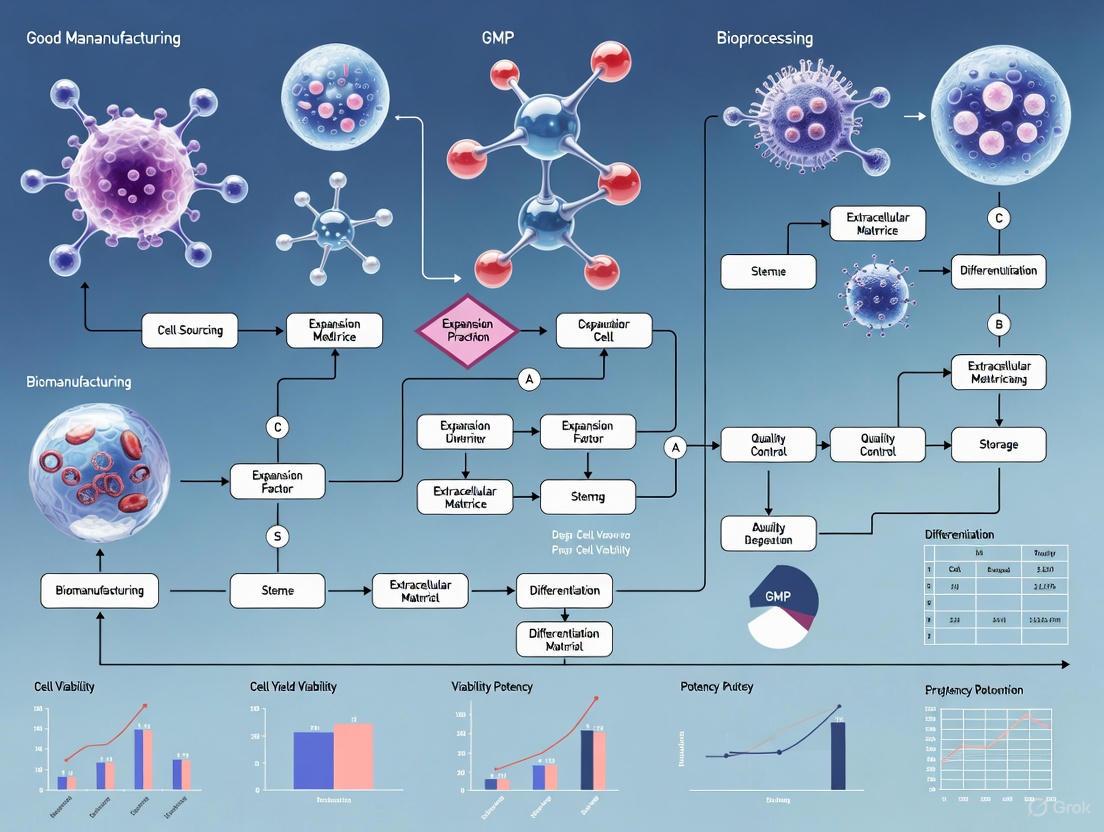
This article provides a comprehensive overview of Good Manufacturing Practice (GMP) for researchers, scientists, and drug development professionals working in stem cell biomanufacturing.
GMP in Stem Cell Biomanufacturing: A 2025 Guide to Quality, Scale, and Regulation
Abstract
This article provides a comprehensive overview of Good Manufacturing Practice (GMP) for researchers, scientists, and drug development professionals working in stem cell biomanufacturing. It covers the foundational principles of GMP and quality management systems, explores methodological advances in automated and scalable processes, addresses critical troubleshooting challenges in safety and efficacy, and offers a comparative analysis of global regulatory frameworks. The content synthesizes the latest 2025 challenges and technological solutions, from managing donor variability and high costs to implementing AI and point-of-care models, providing a vital resource for navigating the path from research to clinical application.
GMP Fundamentals: Building a Quality Foundation for Stem Cell Therapies
Good Manufacturing Practice (GMP) is a quality assurance system that ensures pharmaceutical products, including stem cell therapies, are consistently produced and controlled according to stringent quality standards appropriate for their intended use [1]. In the context of stem cell biomanufacturing, GMP provides the critical framework for achieving safety, efficacy, and quality in advanced therapy medicinal products (ATMPs) [1]. These regulations govern the methods, facilities, and controls used in manufacturing, processing, and packing to ensure products are safe for use and possess the ingredients and strength they claim to have [2].
The fundamental purpose of GMP is to prevent harm to patients by minimizing risks that cannot be eliminated through final product testing alone [3]. This is particularly crucial for cell therapies, where terminal sterilization of the final product is often impossible, making quality-by-design principles essential throughout the manufacturing process [4]. Historical incidents, such as the 1937 cough medicine tragedy containing impure sulfanilamide that caused over 100 deaths, underscore the critical importance of robust manufacturing controls [3].
Core GMP Principles in Stem Cell Biomanufacturing
Quality Management Systems
The overarching theme of GMP is a robust Quality Management System (QMS) that encompasses all processes and systems ensuring consistent product quality [3]. This system implements the Plan-Do-Check-Action (PDCA) cycle for continual improvement:
- Plan: Setting goals and ensuring all necessary preparations and precautions are documented
- Do: Implementing processes, including small-scale testing to minimize potential damage
- Check: Analyzing implementation or testing data and making changes for unexpected outcomes
- Action: Refining the system to work as intended and updating all documentation [3]
The QMS includes various critical elements such as documentation requirements, standard operating procedures (SOPs), qualification procedures for equipment and materials, personnel training, process validation, and regular audits [3].
Facility and Environmental Control
Stem cell manufacturing facilities require stringent environmental controls to prevent contamination of products that cannot be terminally sterilized [4]. A cGMP manufacturing facility must include clean rooms that control for temperature, humidity, pressure, and air particulates, preventing contamination from the environment, materials, human handlers, and cross-contamination from other products [4]. These facilities should implement uni-directional flow of materials and people with proper gowning procedures, as defined under US FDA 21CFR§211 and 21CFR§1271 [4].
Documentation and Traceability
Comprehensive documentation provides the backbone of GMP compliance, ensuring full traceability throughout the manufacturing process [3] [1]. This includes detailed recording of manufacturing processes, quality control procedures, testing results, and component sources [3] [5]. For stem cell products, documentation ensures traceability is maintained, which is crucial if adverse events potentially assignable to the product occur [1]. The level of documentation must demonstrate GMP compliance and facilitate regulatory inspections or audits [5].
Raw Material and Reagent Control
Stem cell biomanufacturing requires rigorous qualification of all raw materials and reagents. The International Council for Harmonisation (ICH) distinguishes between:
- Raw materials: Components or reagents used during manufacture
- Source or starting materials: Intended to become part of the active biological substance
- Excipients: Intended to be inactive components in the final formulation [3]
Particular attention must be paid to materials of animal origin, with manufacturers advised to avoid animal-origin components when possible due to viral safety concerns [3]. For materials that must be used, a risk-based approach is essential, considering country of origin, viral testing and inactivation, and supplier traceability [3].
Table 1: Key GMP Guidelines and Regulations
| Region | Regulatory Body | Key Regulations/Guidelines | Focus Areas |
|---|---|---|---|
| United States | FDA/CBER | 21 CFR 210, 211, 1271 [4] [2] | Drug manufacturing, finished pharmaceuticals, human cells & tissues |
| European Union | EMA | EU GMP Guidelines, ATMP Regulation [1] | Advanced therapy medicinal products |
| International | WHO | GMP Guidelines | Global standards for pharmaceuticals |
Critical Process Controls in Stem Cell Bioprocessing
Bioprocess Engineering Fundamentals
Stem cell bioprocessing applies engineering principles to achieve control, reproducibility, automation, validation, and safety of both the process and the final cellular product [6] [7]. The design principles for stem cell bioprocessing encompass three key groups: (1) process components (cell source, signals, scaffolds, bioreactors), (2) process requirements (GMP compliance, quality assurance, monitoring), and (3) process function (end product functionality and integration) [7].
Traditional 2-D plastic dish cultures are inadequate for supplying clinical-relevant quantities of cells (e.g., 10¹⁰–10¹² per batch for PSC-derived cardiomyocytes) [6]. Bioreactor-based 3-D culture systems provide a platform to generate a controlled microenvironment that can potentially recreate the stem cell niche to promote stem cell proliferation or lineage-specific differentiation [6]. These systems enable the large-scale production of functionally consistent stem cell populations required for therapeutic applications [6].
Process Components and Requirements
Successful stem cell bioprocessing requires careful consideration of multiple interconnected components:
GMP Bioprocess Framework
Scaling Challenges and Solutions
Stem cells typically constitute scarce cell populations, creating significant scaling challenges. Hematopoietic stem cells represent only 0.1–0.3% of bone marrow cells, while BM-MSCs represent a mere 0.001–0.01% of bone marrow aspirate [6]. To meet clinical demand (e.g., 10⁸–10⁹ cells per patient), these primary stem cells require substantial in vitro expansion [6].
For pluripotent stem cells (PSCs), including ESCs and iPSCs, the scaling challenge differs. While established PSC lines can theoretically be expanded indefinitely, the tumorigenicity and potential immunogenicity of these cells necessitates careful monitoring and control during expansion [6]. Bioprocess engineering approaches help alleviate these limitations by providing rational tools for controlled ex vivo stem cell cultivation [6].
Table 2: Stem Cell Types and Manufacturing Considerations
| Stem Cell Type | Key Characteristics | Manufacturing Challenges | GMP Considerations |
|---|---|---|---|
| Embryonic Stem Cells (ESCs) | Pluripotent, indefinite expansion capacity [6] | Teratoma formation, difficult differentiation control, ethical considerations [6] [7] | Rigorous characterization, genetic stability monitoring, complete differentiation [6] |
| Induced Pluripotent Stem Cells (iPSCs) | Patient-specific, reprogrammed from somatic cells [6] | Low reprogramming efficiency (0.001-1%), genetic abnormalities [6] | Reprogramming method validation, genomic integrity assessment [6] |
| Mesenchymal Stem Cells (MSCs) | Multipotent, immune-modulatory properties [6] | Donor variation, limited expansion capability, functional priming needs [6] | Donor screening, functional potency assays, batch consistency [6] [1] |
| Hematopoietic Stem Cells (HSCs) | Blood cell reconstitution capability [7] | Low frequency in sources, limited volume from cord blood [7] | Purity assessment, viability maintenance, contamination prevention [7] |
GMP Compliance in Stem Cell Therapy Manufacturing
Regulatory Framework for Advanced Therapies
Stem cell-based products are classified as Advanced Therapy Medicinal Products (ATMPs) under European regulations, encompassing gene therapy, somatic cell therapy, and tissue-engineered products [1]. Similarly, in the United States, human cells, tissues, and cellular- and tissue-based products (HCT/Ps) are regulated by the Center for Biologics Evaluation and Research (CBER), a division of the FDA [4]. These regulations recognize that products comprising living cells cannot be standardized in the same way as conventional pharmaceuticals, requiring adapted GMP approaches [1].
The regulatory framework mandates that stem cell products for human use must be produced under GMP conditions, with requirements that include:
- Demonstration of absence of infectious disease and microbial contamination
- Measurement of content and functionality of cells during shelf life
- Comprehensive documentation ensuring traceability [1]
Risk-Based Approach to GMP Implementation
A risk-based approach to GMP compliance is essential, particularly for early-stage clinical trials where the costs of establishing and maintaining a GMP system can be prohibitive, especially for universities and small-to-medium enterprises [1]. The level of processing and manufacturing oversight needed depends on multiple factors including tissue source, proliferation and differentiation potential of the cells, type of manipulations performed, intended use, and the nature of the clinical trial [4].
This risk-based approach extends to raw material qualification, where manufacturers must implement a structured risk assessment strategy to evaluate the overall safety of using raw materials in the manufacturing process [3]. This includes considering overall quality with respect to identity, purity, and biological safety profiles, including exposure to adventitious agents [3].
Automation and Technological Advancements
Automation plays an increasingly critical role in GMP-compliant stem cell manufacturing by improving regulatory compliance and product consistency through minimized human errors [8]. Commercial CAR-T manufacturing, for instance, involves multiple unit operations that must be completed within short schedules (~10-20 days), where manual processes create inherent risks for operator errors [8].
Fully automated systems such as Lonza's Cocoon and Miltenyi Biotec's CliniMACS Prodigy platform offer significant automation for process steps in autologous protocols, including those for CAR-T, tumor-infiltrating lymphocytes, and mesenchymal stem cells [8]. Emerging technologies like industrial-grade smart glasses can provide operators with real-time, step-by-step guidance, enabling voice-commanded documentation and reducing errors in high-risk manufacturing processes [8].
Stem Cell Manufacturing Workflow with GMP Controls
Essential Research Reagent Solutions for GMP Compliance
GMP-Grade Cell Culture Media
GMP-grade cell culture media are manufactured and controlled according to GMP principles, ensuring consistent production of high-quality pharmaceutical excipients while minimizing risks associated with contamination, errors, and deviations [5]. These media are formulated to provide optimal environments for growth, expansion, and differentiation of therapeutic cells, containing carefully balanced ingredients like growth factors, cytokines, and other essential components [5].
Key aspects of GMP compliance for cell culture media include:
- Quality Control Testing: Rigorous testing for microbial contamination, endotoxin levels, pH, osmolality, and nutritional content [5]
- Traceability and Documentation: Comprehensive documentation of formulation, manufacturing processes, quality control tests, and results [5]
- Validation and Qualification: Manufacturing processes should be validated, and equipment qualified to ensure consistent media meeting predetermined specifications [5]
- Personnel Training: Employees must be adequately trained in GMP principles and practices [5]
Critical Materials and Reagents
Table 3: Essential GMP-Grade Reagents for Stem Cell Biomanufacturing
| Reagent Category | Specific Examples | Function in Manufacturing | GMP Requirements |
|---|---|---|---|
| Cell Culture Media | PromoExQ GMP media [5], Xeno-free formulations | Support growth, expansion, differentiation of therapeutic cells | Batch-to-batch consistency, documented composition, endotoxin testing, sterility assurance [5] |
| Growth Factors & Cytokines | G-CSF, EPO, FGF, SCF | Direct stem cell proliferation, maintenance, differentiation | Purity documentation, activity verification, absence of animal-derived components [3] [7] |
| Cell Separation Reagents | CD34+ selection beads [7], FACS antibodies | Isolation and purification of target cell populations | Validation of separation efficiency, documentation of magnetic bead composition [7] |
| Cryopreservation Media | DMSO solutions, serum-free formulations | Long-term storage of cell products | Defined formulation, endotoxin limits, container compatibility [4] |
| Cell Activation Reagents | Anti-CD3/CD28 beads, cytokines | T-cell activation for CAR-T manufacturing | Quality consistency, performance validation, absence of contaminants [8] |
GMP principles provide the essential foundation for ensuring the safety, quality, and traceability of stem cell-based therapies throughout the biomanufacturing process. By implementing robust quality management systems, maintaining strict environmental controls, ensuring comprehensive documentation, and qualifying all materials and processes, manufacturers can produce stem cell therapies that meet regulatory requirements and protect patient safety. The dynamic nature of stem cell science necessitates that GMP frameworks continue to evolve through collaboration between regulators, manufacturers, and researchers, balancing rigorous quality assurance with practical implementation to advance the field of regenerative medicine.
Core Components of a Robust Quality Management System (QMS)
A Quality Management System (QMS) is a formally established framework of business processes, policies, and documented procedures designed to ensure that products consistently meet customer requirements and regulatory quality standards [9]. In the context of Good Manufacturing Practice (GMP) for stem cell biomanufacturing, a robust QMS is not merely a regulatory obligation but a fundamental component that ensures the safety, identity, purity, potency, and efficacy of advanced therapy medicinal products (ATMPs) [10] [11]. The production of stem cells and cell-based therapies operates under stringent regulatory oversight, including the U.S. Food and Drug Administration (FDA) requirements under 21 CFR Parts 1271 and 211, and European regulations for ATMPs [4] [11]. This guide outlines the core components of a QMS, with specific application to the technically demanding field of stem cell biomanufacturing.
Foundational QMS Frameworks and Regulatory Alignment
The regulatory landscape for medical products, including cell therapies, is increasingly harmonizing around internationally recognized standards. Understanding this framework is essential for building a compliant QMS.
The Shift to ISO 13485 and the QMSR
A significant recent development is the FDA's final rule amending the Quality System Regulation (QS Regulation) by incorporating by reference the international standard ISO 13485:2016 [12]. This new rule, titled the Quality Management System Regulation (QMSR), becomes effective on February 2, 2026, and is intended to harmonize U.S. quality expectations with global device frameworks, reducing duplicative regulatory obligations [12] [13]. While this standard is specific to medical devices, its principles of a risk-based quality system are influential across the medical product spectrum.
Key enhancements in ISO 13485:2016 and the corresponding QMSR include [12] [14] [15]:
- A greater emphasis on risk management and risk-based decision-making throughout the product lifecycle.
- Expanded requirements for the control of suppliers and outsourced processes.
- Strengthened requirements for software validation and data integrity.
- A process-oriented approach that ensures the integration of quality controls from design through post-market surveillance.
Table: Comparison of QMS Regulatory Frameworks
| Framework | Scope | Status | Key Emphasis |
|---|---|---|---|
| FDA QS Regulation (21 CFR 820) | Medical Devices (U.S.) | Effective until Feb 2, 2026 | U.S.-specific current good manufacturing practices [12] |
| FDA QMSR (21 CFR 820) | Medical Devices (U.S.) | Effective from Feb 2, 2026 | Harmonized with ISO 13485:2016; risk-based lifecycle approach [12] [13] |
| ISO 13485:2016 | Medical Devices (International) | Current International Standard | Risk management, supplier control, validation; often a prerequisite for global markets [14] [15] |
| GMP for Cell Therapies (21 CFR 1271 & 211) | Human Cells, Tissues, and Cell-based Products (U.S.) | Actively Enforced | Donor screening, aseptic processing, control over starting materials, and final product testing [4] [11] |
Core Components of a Robust QMS
A robust QMS for stem cell biomanufacturing is built upon several interconnected pillars. The following diagram illustrates the logical relationships and workflow between these core components.
Document Management
Document management forms the backbone of the QMS, organizing all quality documents into a centralized system with controlled approval workflows and audit trails [9]. This includes:
- Quality Manual: A comprehensive, policy-level document that outlines the QMS policies and procedures [15].
- Standard Operating Procedures (SOPs): Detailed instructions for all critical processes, from personnel training and facility cleaning to cell culture and quality control testing.
- Control of Records: Managing records such as equipment logs, batch records, and training files as evidence that processes have been followed [15].
For stem cell therapies, this also encompasses the medical device file or product dossier, which contains detailed product descriptions, manufacturing specifications, and labeling information [15].
Management Responsibility
Top management must demonstrate leadership and commitment to the QMS by establishing a quality policy and ensuring that quality objectives are set and met [15]. Key activities include:
- Conducting regular management reviews of the QMS to ensure its continuing suitability, adequacy, and effectiveness.
- Committing to comply with regulatory requirements and to continually improve the QMS.
- Ensuring the availability of adequate resources [15].
Under the QMSR, FDA investigators will have the authority to inspect management review reports, making this component critically visible [12].
Resource Management
This component ensures that adequate resources—including skilled personnel, infrastructure, equipment, and work environment—are provided to achieve quality objectives [15]. In stem cell biomanufacturing, this entails:
- Personnel: Training and qualification of staff in aseptic techniques and specific GMP procedures [4] [11].
- Facility and Equipment: Maintaining cleanrooms which control for temperature, humidity, pressure, and air particulates, with proper qualification (IQ/OQ/PQ) and maintenance of all equipment [4] [11].
- Environmental Controls: Implementing and validating robust contamination control strategies, including cleanroom qualification and monitoring [13].
Product Realization
Product realization encompasses all stages from initial concept to the delivery of the final product. It requires thorough planning and execution of product development while establishing stringent quality requirements [15]. For stem cell biomanufacturing, this includes several critical sub-processes:
- Design and Development Controls: A systematic approach to designing the product and its manufacturing process. This requires:
- Establishing User Needs and translating them into Design Inputs.
- Executing a Design Plan with verification and validation activities.
- Creating a Traceability Matrix that links user needs to design inputs, outputs, verification, validation, and risk controls [13].
- Control of Suppliers and Outsourced Processes: A risk-based approach to selecting, evaluating, and controlling suppliers of critical raw materials (e.g., growth factor-supplemented media, cytokines, FCS-alternatives) and contract manufacturing organizations [13] [16] [11].
- Process Validation and Control: Defining, controlling, and validating manufacturing processes to ensure they consistently yield products that meet predetermined quality attributes. For cell therapies, this includes validating critical processes like cell expansion, differentiation, and purification [11].
Measurement, Analysis, and Improvement
This component requires manufacturers to monitor product quality, manage complaints, and systematically collect and evaluate data to drive improvements [15]. Key elements include:
- Control of Nonconforming Product: Identifying and segregating products that do not conform to specifications.
- Corrective and Preventive Action (CAPA): A closed-loop system to investigate nonconformities, identify root causes, implement corrections, and prevent recurrence [4] [15].
- Internal Audits: Scheduled, planned, and executed audits to verify the QMS's conformity and effectiveness [9]. As with management reviews, internal audit reports will be available for FDA inspection under the QMSR [12].
- Post-Market Surveillance: For marketed products, a system for proactively collecting and analyzing post-market data, such as complaints and real-world performance data, to feed back into risk management and product improvement [16].
The Scientist's Toolkit: Essential Reagents and Materials for Stem Cell Biomanufacturing
The following table details key reagents and materials used in GMP-compliant stem cell manufacturing processes, along with their critical functions and quality considerations.
Table: Essential Research Reagent Solutions for Stem Cell Biomanufacturing
| Reagent/Material | Function in Bioprocess | GMP & Quality Considerations |
|---|---|---|
| Basal Media (e.g., α-MEM, DMEM) | Provides essential nutrients and pH buffering for in vitro cell growth [11]. | Must be well-defined; sourced from qualified suppliers; subject to incoming inspection and testing for identity, purity, and endotoxin levels. |
| Media Supplements (e.g., FCS, Human Serum, Defined Growth Factors) | FCS provides a rich source of growth factors and proteins; defined supplements (e.g., FGF-2) promote specific growth or differentiation [11]. | Xenogeneic risk mitigation is critical. FCS is a potential source of adventitious agents. Preference for human-sourced or completely defined, recombinant supplements to increase safety and reproducibility [11]. |
| Dissociation Enzymes (e.g., Collagenase, Trypsin-EDTA) | Used for cell harvesting from tissues (e.g., adipose stromal vascular fraction) and for passaging adherent cells (e.g., MSCs) [11]. | Must be GMP-grade; validated for purity and performance; absence of animal-origin components is preferred to reduce contamination risk. |
| Cell Separation Reagents (e.g., Immunomagnetic beads, FACS antibodies) | For enrichment of specific cell populations (e.g., MSCs using STRO-1, CD271, or CD49a) from a heterogeneous starting material [11]. | Antibodies and beads must be clinical-grade. The separation process must be validated to ensure it does not adversely affect cell function, viability, or safety. |
| Cryopreservation Solutions | Formulated solutions (e.g., containing DMSO) to maintain cell viability and potency during frozen storage and distribution [10]. | DMSO must be high-purity, tested for biocompatibility. The cryopreservation and thawing processes must be standardized and validated to ensure consistent post-thaw recovery. |
Detailed Experimental Protocol: Validation of a Critical Cell Expansion Process
This protocol outlines a detailed methodology for validating a critical unit operation in stem cell biomanufacturing: the expansion of Mesenchymal Stem/Stromal Cells (MSCs). Validation is essential to demonstrate that the process consistently produces cells meeting Critical Quality Attributes (CQAs) for identity, purity, viability, and potency [11].
Objective
To validate the MSC expansion process in a GMP-compliant, closed-system bioreactor to ensure it consistently yields a final cell product that meets all pre-defined specifications for use in clinical trials.
Materials and Equipment
- Starting Material: Bone marrow aspirate from a qualified donor, following donor eligibility determination as per 21 CFR 1271 [11].
- Bioreactor: A closed-system, automated bioreactor with controlled parameters for temperature, CO₂, pH, and dissolved oxygen.
- Cell Culture Media: A GMP-grade, xeno-free or human serum-supplemented medium, pre-screened for performance and endotoxins [11].
- Analytical Equipment: Flow cytometer, cell counter (with viability assay), sterility testing system, endotoxin testing kit, and equipment for potency bioassays.
Methodology
Process Performance Qualification (PPQ) Batches:
- Execute a minimum of three consecutive, full-scale PPQ batches using the established production process.
- The process parameters (e.g., seeding density of 1,000-4,000 cells/cm², feeding schedule, dissolved O₂ setpoints) shall be fixed and controlled within pre-defined ranges [11].
In-Process Controls and Monitoring:
- Monitor and record critical process parameters (CPPs) throughout the run, including pH, dissolved oxygen, temperature, and metabolite levels (e.g., glucose, lactate).
- Perform in-process cell counting and viability assessments at defined intervals (e.g., during feeding or harvesting) to track growth kinetics and ensure the process is under control.
Testing of Final Cell Product: Upon reaching the target harvest population (while limiting population doublings to <20 to prevent senescence [11]), the final cell product from each PPQ batch is tested against its CQAs:
- Identity: Flow cytometric analysis for positive expression of CD90, CD73, and CD105, and negative expression of CD45, CD34, and HLA-DR [11].
- Viability: Determined by a validated method (e.g., trypan blue exclusion), must meet a pre-set specification (e.g., >90%).
- Purity and Potency: The cell composition must meet specifications. A validated potency bioassay (e.g., an in vitro immunosuppression assay measuring T-cell proliferation inhibition) must demonstrate bioactivity [10] [11].
- Safety: Tests for sterility (bacteria/fungi), mycoplasma, and endotoxin must be negative.
Data Analysis and Report:
- Compile all data from the PPQ batches.
- Demonstrate that the process is reproducible and that all CPPs were maintained within their specified ranges.
- Provide evidence that the CQAs of all final products consistently met all pre-defined acceptance criteria.
- A final validation report is issued, summarizing the conclusion that the process is validated for routine clinical manufacturing.
Implementing a robust Quality Management System is a foundational requirement for the successful development and commercialization of stem cell-based therapies. The core components—Document Management, Management Responsibility, Resource Management, Product Realization, and Measurement, Analysis, and Improvement—form an interdependent framework that embeds quality into every stage of the product lifecycle. The ongoing global harmonization of regulations, exemplified by the FDA's adoption of ISO 13485, underscores the universal importance of a risk-based, proactive approach to quality. For researchers and scientists, a deep understanding and diligent application of these QMS principles are not just regulatory exercises but are critical to ensuring that these promising advanced therapies are safe, effective, and accessible to patients.
Critical Quality Attributes (CQAs) and Defining the Target Product Profile
In the field of stem cell biomanufacturing, the pathway to producing safe and effective therapies is meticulously guided by two foundational concepts: the Quality Target Product Profile (QTPP) and Critical Quality Attributes (CQAs). These elements are central to a systematic framework known as Quality by Design (QbD), which emphasizes building quality into a product from the earliest stages of development rather than relying solely on end-product testing [17] [18]. For researchers and drug development professionals, a deep understanding of the relationship between the QTPP and CQAs is essential for navigating the complex journey from research to commercially viable, regulated cell therapies.
The Foundational Framework: From QTPP to CQAs
The Quality Target Product Profile (QTPP) is a prospective and dynamic summary of the quality characteristics a drug product should possess to ensure the desired safety and efficacy for patients. It defines the "what" – the overall quality goals of the therapy [17] [10]. The QTPP forms the basis for the entire development process, guiding scientists as they design the product and its manufacturing process.
Derived directly from the QTPP are the Critical Quality Attributes (CQAs). A CQA is defined as a physical, chemical, biological, or microbiological property or characteristic that must be maintained within an appropriate limit, range, or distribution to ensure the desired product quality [17] [19]. In essence, CQAs are the measurable "critical-to-quality" properties of the final product that directly link back to the goals outlined in the QTPP.
This foundational relationship operates within a broader quality landscape defined by current Good Manufacturing Practices (cGMP). cGMP provides the regulatory framework for systems that assure proper design, monitoring, and control of manufacturing processes and facilities [20]. For cell-based therapies, this is further supplemented by Good Tissue Practices (GTP), which specifically govern methods for manufacturing human cellular and tissue-based products, with a focus on preventing the introduction and spread of communicable diseases [21]. The entire process is guided by the principles of Quality by Design (QbD), a systematic approach that begins with predefined objectives (the QTPP) and emphasizes product and process understanding and control [17].
The following diagram illustrates the logical workflow from patient needs to the establishment of a control strategy, highlighting the central role of the QTPP and CQAs.
Defining the Quality Target Product Profile (QTPP) for Stem Cell Therapies
The QTPP is a comprehensive plan that outlines the critical quality characteristics of the final stem cell product. It is established before significant product development work commences and serves as the blueprint for all subsequent development activities [17]. A well-defined QTPP prevents wasted resources and ensures the development process remains focused on delivering a therapy that is safe and effective for its intended clinical use.
For a stem cell therapy, the QTPP should include, but is not limited to, the following elements [17] [10]:
- Intended Use and Clinical Setting: The specific disease or condition to be treated, the target patient population, and the route of administration (e.g., intravenous, intramyocardial).
- Dosage Form and Delivery System: The physical form of the therapy (e.g., cryopreserved cell suspension, encapsulated cells) and the delivery device.
- Dosage Strength: The number of viable and potent cells per dose.
- Container Closure System: The primary packaging that will maintain the product's quality and sterility.
- Therapeutic Moisty Release or Delivery: Attributes affecting the therapeutic function, such as viability, purity, identity, and potency of the cell product.
- Drug Product Quality Criteria: Characteristics like sterility, purity (freedom from unintended cell types), stability (shelf-life), and absence of specific pathogens.
An example QTPP for a hypothetical mesenchymal stem cell (MSC) therapy is provided in the table below.
Table 1: Example QTPP for a Hypothetical Allogeneic MSC Therapy for Inflammatory Disease
| QTPP Element | Target Profile |
|---|---|
| Dosage Form | Cryopreserved cell suspension in a single-dose bag |
| Route of Administration | Intravenous infusion |
| Dosage Strength | 2 x 10^8 viable cells per dose |
| Container Closure | Cryobag with protective overwrap |
| Sterility | Sterile, no microbial contamination |
| Purity (Cell Identity) | ≥ 90% CD73+, CD90+, CD105+ expression; ≤ 5% CD45+ expression |
| Potency | Ability to suppress T-cell proliferation in vitro by ≥ 50% compared to control |
| Viability | ≥ 70% post-thaw viability |
| Stability (Shell Life) | 24 months when stored below -150°C |
Identifying and Assessing Critical Quality Attributes (CQAs)
Once the QTPP is defined, the next step is to identify which quality attributes are critical. A CQA is classified as critical based on the severity of harm that could result to the patient if the product attribute falls outside its acceptable range. The probability of occurrence or detectability does not impact this criticality determination [17]. For cell therapies, CQAs are often linked to the identity, purity, potency, and viability of the cellular product [10].
The process of identifying and ranking CQAs is a systematic one, often involving a cross-functional team of scientists. The typical workflow is as follows:
- List Potential Quality Attributes: Compile a comprehensive list of all potential product attributes, from identity and assay to microbial limits and physical characteristics [17].
- Conduct Criticality Assessment: Each attribute is evaluated based on its potential impact on safety and efficacy, and the uncertainty associated with that assessment [19]. This is often done using a scoring system.
- Rank CQAs: Attributes are ranked along a criticality continuum. Those with the highest risk scores (high impact, high uncertainty) are designated as CQAs and become the focus of process development and control.
Table 2: CQA Criticality Assessment for the Hypothetical MSC Therapy
| Quality Attribute | Potential Impact on Safety/Efficacy | Uncertainty | Risk Score (Impact x Uncertainty) | Designated CQA? |
|---|---|---|---|---|
| Cell Viability | High (Directly impacts dose and engraftment) | Low | High | Yes |
| Tumorigenic Markers | High (Safety risk) | Medium | High | Yes |
| Potency (Immunomodulation) | High (Directly linked to efficacy) | Medium | High | Yes |
| Cell Surface Identity (CD73+, etc.) | High (Defines active ingredient) | Low | Medium | Yes |
| Endotoxin Level | High (Safety risk) | Low | Medium | Yes |
| Residual Reagents | Medium (Safety risk at high levels) | Low | Low | No (Monitored as non-critical) |
| Cell Morphology | Low | High | Low | No |
The Scientist's Toolkit: Key Reagents for CQA Assessment
Assessing CQAs requires a suite of sophisticated analytical techniques and reagents. The table below details essential tools used in the characterization of stem cell therapies.
Table 3: Research Reagent Solutions for Assessing Stem Cell Therapy CQAs
| Reagent / Assay Type | Function in CQA Assessment |
|---|---|
| Flow Cytometry Antibodies | To quantify cell surface markers (e.g., CD73, CD90, CD105) for identity and purity analysis. |
| Cell Viability Assays (e.g., 7-AAD) | To distinguish between live and dead cells, critical for determining dosage strength and product quality. |
| qPCR/PCR for Pathogen Testing | To detect viral and microbial contaminants, ensuring product safety. |
| LAL Assay Reagents | To detect and quantify endotoxin levels, a critical safety attribute. |
| In Vitro Potency Assay Kits (e.g., Co-culture with target cells) | To measure the biological activity of the cells, a direct indicator of therapeutic efficacy. |
| Karyotyping/G-Banding Reagents | To assess genomic stability and rule out tumorigenic potential. |
Experimental Protocols for CQA Characterization
Establishing a CQA requires robust experimental data to link the attribute to product safety and efficacy. The following are detailed methodologies for key experiments.
Protocol: Flow Cytometry for Identity and Purity
This protocol is used to quantify the expression of specific markers, a key CQA for cell identity and purity [10].
- Sample Preparation: Harvest and wash cells. Create a single-cell suspension and determine cell count and viability.
- Staining: Aliquot cells into tubes. Add fluorochrome-conjugated antibodies against target antigens (e.g., CD73, CD90, CD105) and appropriate isotype controls. Incubate in the dark for 20-30 minutes at 4°C.
- Washing and Fixation: Wash cells twice with a buffer like PBS containing 1-2% fetal bovine serum to remove unbound antibody. Resuspend in a fixation buffer if analysis is not immediate.
- Data Acquisition: Analyze samples on a flow cytometer. Collect a minimum of 10,000 events per sample.
- Data Analysis: Use software to gate on the viable cell population based on forward and side scatter. Compare the fluorescence of the stained sample with the isotype control to determine the percentage of positively stained cells.
Protocol: In Vitro Potency Assay (T-cell Suppression Assay)
This bioassay is critical for demonstrating the functional potency of immunomodulatory stem cells like MSCs [10] [19].
- Activate Responder T-cells: Isolate peripheral blood mononuclear cells (PBMCs) from a healthy donor. Label with a cell proliferation dye (e.g., CFSE). Activate T-cells within the PBMC population using an activator like anti-CD3/CD28 beads.
- Co-culture Setup: Plate irradiated test MSCs (the product) at varying ratios (e.g., 1:1, 1:10 MSC:PBMC) in a multi-well plate. Add the activated, labeled PBMCs to the wells. Include controls: activated PBMCs alone (maximum proliferation) and non-activated PBMCs (background).
- Incubation: Culture the cells for 3-5 days in a controlled incubator (37°C, 5% CO₂).
- Flow Cytometric Analysis: Harvest the cells and analyze by flow cytometry to measure the dilution of the proliferation dye in the T-cell population.
- Potency Calculation: The potency is expressed as the percentage suppression of T-cell proliferation compared to the maximum proliferation control. A product specification would require, for example, ≥ 50% suppression.
Protocol: Process Capability and Risk Assessment
This methodology assesses the manufacturing process's ability to consistently produce a CQA within its desired range [19].
- Link CMAs and CPPs to CQAs: Using prior knowledge and risk assessment, identify Critical Material Attributes (CMAs - e.g., donor age, media composition) and Critical Process Parameters (CPPs - e.g., passage number, oxygen tension, bioreactor agitation speed) that can impact a CQA.
- Design of Experiments (DoE): Rather than testing one factor at a time, use a structured DoE (e.g., factorial design) to vary multiple CMAs and CPPs simultaneously across a defined range.
- Modeling and Data Analysis: Produce multiple batches under the different DoE conditions. Measure the resulting CQAs for each batch. Use statistical analysis to build a model that links the process inputs (CMAs/CPPs) to the output (CQA).
- Define a Control Strategy: Based on the model, establish proven acceptable ranges for the CPPs and specifications for the CMAs. This defines the space within which the process can reliably operate to produce a product meeting its CQAs.
The ultimate goal of defining the QTPP and CQAs is to establish a holistic control strategy for the stem cell product. This strategy is a planned set of controls, derived from current product and process understanding, that ensures process performance and product quality [17]. The control strategy includes, but is not limited to:
- Control of Input Materials: Specifications for raw materials, reagents, and starting cells (CMAs).
- Procedural Controls: Standard Operating Procedures (SOPs) for each manufacturing step.
- Process Controls and Monitoring: In-process testing and tight control of CPPs.
- Product Specifications: Release tests and acceptance criteria for the CQAs of the final drug product.
In a QbD framework, the rigor of the control is commensurate with the criticality of the attribute. A highly critical CQA that is well-controlled by the process and formulation may not require rigorous routine end-product testing [19]. Instead, the focus shifts to ensuring the process is robust and reproducible, thereby consistently delivering a high-quality product that fulfills its QTPP and, ultimately, its therapeutic promise for patients.
Sourcing GMP-Compliant Raw Materials and Managing Vendor Qualification
The successful commercialization of cell and gene therapies hinges on the quality of raw materials (RMs) used in their manufacture. Raw materials encompass all components, reagents, and materials used in the production of cell therapy products but not intended to be part of the final product, including cryopreservation media, culture and isolation reagents, and disposables such as plasticware and bioprocessing bags [22]. The selection of raw materials directly impacts the safety, efficacy, and quality of the final therapeutic product, making their qualification and control a fundamental requirement under Good Manufacturing Practice (GMP) regulations [23] [24].
Regulatory authorities worldwide mandate that pharmaceutical and biotech firms establish robust systems for qualifying both the chemical entities and their suppliers [23]. As stated in the FDA's Q7A GMP Guidance for Active Pharmaceutical Ingredients, a quality unit(s) independent of production must establish a system to "release or reject raw materials, intermediates, packaging, and labeling materials" [24]. This guidance, while applicable to APIs, sets the standard for the level of control expected in biologics manufacturing. The global cell therapy raw materials market, projected to reach USD 24,970 million by 2034, reflects the critical importance and scale of these materials in advancing regenerative medicine [22].
Regulatory Framework and Quality Management
GMP Requirements and Compliance Foundations
GMP regulations and good business practices require that pharmaceutical RMs and their suppliers be qualified both initially and periodically [23]. These requirements are embedded in the US Code of Federal Regulations, ICH guidance documents, European GMP regulations, and various ISO standards. The foundational principle is patient safety, driven by historical incidents where unsuitable raw materials led to widespread toxicity and patient harm [23]. Legally, a pharmaceutical firm assumes full responsibility for the quality of all RMs purchased and used in a cGMP manufacturing process, creating a compelling business interest to exercise rigorous supplier oversight [23].
A GMP-compliant quality management system must encompass organizational structure, procedures, processes, and resources to ensure APIs—and by extension, the raw materials used in their production—meet intended specifications for quality and purity [24]. The quality unit bears responsibility for reviewing and approving all specifications and master production instructions, approving all procedures affecting intermediate or API quality, and ensuring that internal audits are performed [24]. These responsibilities cannot be delegated and must be described in writing [24].
Risk-Based Classification of Raw Materials
A risk-based approach to raw material qualification is essential for allocating appropriate resources and oversight. Materials classified as "critical" require more extensive testing and supplier evaluation before qualification is achieved [23]. The critical status of an RM relates directly to its intended use in the process and the potential risk created by a quality deficit that could adversely impact the product's identity, purity, potency, toxicity, or efficacy [23]. Importantly, a material may be critical in one process but not in another, requiring firms to justify their classifications based on scientific knowledge and patient protection principles [25].
Table 1: Risk Classification and Testing Requirements for Raw Materials
| Risk Category | Definition | Testing Requirements | Supplier Evaluation |
|---|---|---|---|
| Critical | Material whose quality deficit may directly impact product identity, purity, potency, toxicity, or efficacy | Full testing of multiple supplier lots for all attributes; rigorous specifications | Extensive evaluation; on-site audit usually required |
| Non-Critical | Material with lower risk of impacting critical quality attributes | Certificate of analysis plus identity confirmation after at least one lot undergoes full testing | Basic supplier qualification; quality surveys may suffice |
The ICH Q9 quality risk management framework provides the foundation for such risk assessments, linking evaluation of risk to quality based on scientific knowledge and ultimately to patient protection [25]. The level of effort, formality, and documentation should be commensurate with the determined level of risk [25].
Supplier Qualification Program Implementation
Qualification Process Workflow
A structured, multi-step qualification process ensures consistent evaluation and approval of raw material suppliers. This process should be carefully defined in GMP procedures and placed under strict change control [23]. The following diagram illustrates the comprehensive workflow for qualifying a new raw material supplier:
Supplier Qualification Workflow
The qualification process begins with collecting comprehensive information about the raw material, including available grades, supplier specifications, and compendial status [23]. Based on this information and the material's risk classification, a qualification strategy is determined with clear acceptance criteria [23]. For critical materials, the qualification strategy should verify the supplier's testing program through comprehensive testing and establish a complete quality profile of the RM [23].
Quality Agreements and Technical Requirements
Quality agreements formally define the roles and responsibilities between the company and supplier. The FDA's guidance "Contract Manufacturing Arrangements for Drugs: Quality Agreements" establishes expectations for outsourcing relationships, with concepts applicable to raw material suppliers [25]. These agreements must clearly specify how deviations and out-of-specification results will be investigated, how changes to manufacturing processes will be managed and communicated, how complaints are handled, and the company's rights for on-site audits [25].
Quality surveys provide essential understanding of the supplier's quality management system. Questions should focus specifically on quality systems relevant to the material being supplied, avoiding unrelated business aspects such as pricing or environmental health and safety practices [25]. Surveys should be straightforward and respect proprietary information restrictions that may limit suppliers' willingness to provide detailed explanations or copies of internal documents [25].
Table 2: Essential Documentation for Raw Material Qualification Program
| Document Type | Purpose | Key Contents |
|---|---|---|
| Master Plan | Records basic decisions, assumptions, and company philosophies related to quality | Organizational history, roles and responsibilities, reference to regulations, commitment to quality |
| Quality Agreements | Defines roles and responsibilities between company and supplier | Change management procedures, deviation handling, audit rights, complaint resolution |
| Quality Surveys | Assess supplier's quality management system | Questions about quality standards, regulations, certifications, and best practices |
| Specification Sheets | Defines quality requirements for specific materials | Testing parameters, acceptance criteria, analytical methods, reference standards |
On-Site Audits and Ongoing Monitoring
For high- and moderate-risk suppliers, on-site audits represent a crucial component of the qualification process. These audits should be conducted by staff with adequate knowledge and training following a written plan [25]. Following the audit, a formal report should document findings and observations, with the supplier expected to provide a written response to any deficiencies [25]. The standard industry practice is to re-audit suppliers every 3-5 years for non-GMP-regulated key raw materials, though this frequency may be adjusted based on the supplier's quality history and performance [25].
The COVID-19 pandemic accelerated adoption of virtual audit methodologies, described as "remote" or "distant inspections" conducted off-site using enhanced communication and information technology [25]. While these temporary measures helped maintain compliance during travel restrictions, on-site audits remain the gold standard for initial qualification of critical suppliers.
Advanced Monitoring through Continued Process Verification
Multivariate Data Analysis for Raw Material Quality
Continued Process Verification (CPV) provides a formal framework for ensuring biomanufacturing processes remain in a validated state, satisfying regulatory requirements for life-cycle validation [26]. A CPV program entails routine analysis of data pertaining to critical process parameters (CPPs) and critical quality attributes (CQAs) across the entire manufacturing process, making it appropriate for monitoring raw material consistency [26].
Traditional univariate CPV approaches, which assess individual attributes against predetermined control limits, can be labor-intensive and may miss subtle multi-attribute trends [26]. Multivariate Data Analysis (MVDA) applies advanced statistical algorithms to analyze complex, heterogeneous datasets and detect changes and excursions more effectively [26]. Principal Component Analysis (PCA), an unsupervised machine-learning method, reduces data dimensionality by transforming original variables into new, uncorrelated latent variables called principal components (PCs) [26].
The following diagram illustrates the data pipeline and analytical process for multivariate monitoring of raw materials:
Multivariate Data Analysis Process
Implementation of an MVDA-based application begins with quality attribute data captured from analytical laboratories through systems of record (SAP and LIMS), followed by integration using platforms like Biovia Discoverant [26]. An extract-transform-load (ETL) pipeline, such as Talend, then extracts data, transforms it into appropriate structures, and loads it into cloud storage (e.g., AWS S3) [26]. After preprocessing (missing value imputation and z-score normalization), the training dataset develops a PCA model that facilitates quality monitoring and outlier detection through two key metrics: Hotelling's t² statistic and the Squared Prediction Error (SPE) [26].
Practical Application and Case Study
The utility of multivariate CPV can be illustrated through glycine powder, a raw material frequently used in formulation buffers for drug-substance filtration [26]. A PCA model trained on 43 batches, with two principal components accounting for 50.3% of variance, enables identification of outlier batches through an interactive dashboard [26]. For example, batches #30, #32, #34, and #37 were found to exceed the 95% control limit for Hotelling's t² statistic, with investigation revealing that batch #37 had significantly higher glycine content than other batches, exceeding the mean by more than three standard deviations [26].
This approach enables rapid identification and interrogation of potential outlier batches, supporting investigations into raw material variability during manufacturing investigations and when manufacturers notify users of process or site changes [26].
Industry Trends and Future Directions
Evolving Standards and Market Dynamics
The cell therapy raw materials market is experiencing significant transformation, with several key trends shaping qualification and sourcing strategies:
- Shift toward chemically defined, xeno-free media and reagents: Companies are increasingly adopting chemically defined, animal-origin-free media and reagents to reduce batch-to-batch variability, contamination risk, and simplify regulatory compliance [22].
- Stronger demand for GMP-grade, traceable materials: As therapies advance to late-stage clinical trials and commercialization, requirements intensify for raw materials meeting Good Manufacturing Practices with full traceability, documented viral clearance, and consistent lot quality [22].
- Growth in allogeneic therapy manufacturing: The preference for scalable, cost-effective allogeneic (off-the-shelf) therapies drives demand for higher volumes of raw materials, pushing suppliers to ensure sufficient capacity and consistency [22].
- Integration of automation and digital tools: Automation, closed-system bioreactors, and AI/ML monitoring tools are increasingly employed to improve consistency, reduce contamination risk, and optimize processes [22].
- Regulatory evolution and heightened quality requirements: Regulators are establishing clearer guidelines and standards for raw materials in cell/gene therapies, including requirements around donor sourcing, material origin, adventitious agent risk, and validation [22].
Research Reagent Solutions for Stem Cell Biomanufacturing
Table 3: Essential Raw Material Categories for Stem Cell Biomanufacturing
| Material Category | Specific Examples | Function | Quality Considerations |
|---|---|---|---|
| Cell Culture Supplements | Growth factors, cytokines, hormones | Support growth, differentiation, and viability of cells | Chemically defined composition, absence of animal components, lot-to-lot consistency |
| Culture Media | Basal media, feeds, buffers | Provide nutrients and maintain physiological environment for cell growth | Formulation consistency, endotoxin levels, osmolality, pH stability |
| Viral Vectors | AAV, Lentiviral vectors | Deliver genetic material for modified cell therapies | Titer consistency, purity, absence of replication-competent viruses |
| Cryopreservation Media | DMSO, formulation buffers | Maintain cell viability during frozen storage | Sterility, biocompatibility, consistent freezing profiles |
| Separation Reagents | Enzymes, dissociation agents, selection markers | Isolate, dissociate, and purify target cell populations | Specificity, activity levels, absence of contaminants |
Strategic Supplier Partnerships and Case Example
The industry is moving toward strategic partnerships with suppliers capable of providing integrated solutions and technical support. A case study of Thermo Fisher Scientific's Hopewell facility illustrates this trend—a 128,000 sq. ft. cGMP facility designed to address industry challenges through fully cGMP-compliant production, integrated viral vector manufacturing, closed-system processing, automation, and sustainable operations [22]. This expansion resulted in measurable improvements: GMP raw material availability expanded threefold, lead times for viral vector materials reduced from 10-12 weeks to 6-7 weeks, and lot-to-lot consistency reached 99.8% [22].
Technical support from suppliers has become increasingly critical for design, qualification, and monitoring stages of the process life cycle [25]. For cleaning agents used in validated applications, technical support may include laboratory testing for selecting optimal cleaning agents and parameters, saving time and resources during start-up or when troubleshooting existing issues [25]. Suppliers should provide support through multiple channels—phone, email, teleconferences, webinars, and on-site assistance—supplemented by comprehensive technical literature including material safety data sheets, certificates of analysis, technical data sheets, and laboratory reports [25].
Effective management of GMP-compliant raw materials and vendor qualification programs represents a critical competency for stem cell biomanufacturers. A science-based, risk-managed approach that incorporates comprehensive supplier qualification, robust quality agreements, strategic supplier partnerships, and advanced monitoring through continued process verification provides the foundation for consistent production of safe and efficacious cell therapies. As the industry evolves toward more complex therapies and larger-scale manufacturing, the principles outlined in this technical guide will enable organizations to navigate the increasingly stringent regulatory landscape while maintaining supply chain resilience and product quality.
Distinguishing Between Autologous and Allogeneic Manufacturing Logistical Frameworks
The development of cell therapies as transformative medical interventions necessitates two distinct manufacturing logistical frameworks: autologous (patient-specific) and allogeneic (donor-derived). Within a Good Manufacturing Practice (GMP) environment for stem cell biomanufacturing, the choice between these models dictates every aspect of production, from supply chain architecture to quality control protocols. Autologous therapies employ a personalized, circular logistics model that faces significant scalability challenges but minimizes immune rejection. In contrast, allogeneic therapies leverage a linear, batch-production model that offers "off-the-shelf" availability and superior scalability, albeit with complexities surrounding immune compatibility. This whitepaper provides an in-depth technical analysis of these frameworks, equipping researchers and drug development professionals with the knowledge to navigate the logistical intricacies of advanced therapy medicinal products (ATMPs).
Cell therapies involve the use of living cells to treat, and potentially cure, a wide range of diseases. The fundamental division in their manufacturing approach stems from the source of these therapeutic cells [27]. Autologous cell therapies are derived from a patient’s own cells, which are harvested, processed, expanded, and often genetically modified ex vivo before being reinfused into the same patient [27] [28]. This creates a highly personalized, patient-specific product. Allogeneic cell therapies, however, are derived from healthy donors [27]. These cells are processed and expanded into large batches that can be stored and used to treat multiple patients, creating an "off-the-shelf" product [29].
The selection of a manufacturing model is a foundational strategic decision in cell therapy development. It has profound implications for process design, facility layout, supply chain logistics, cost structure, and ultimately, patient access [29] [30]. Both models must operate within the stringent requirements of GMP to ensure product safety, identity, purity, and potency, but the path to achieving this differs significantly.
Core Manufacturing Process and Workflow
Despite their differences, autologous and allogeneic therapies share a common overarching production process. The critical divergence lies in the scale, timing, and source of the starting material.
The following diagram illustrates the generalized workflow for cell therapy manufacturing, highlighting the points where autologous and allogeneic processes diverge and converge.
Figure 1. Core Cell Therapy Manufacturing Workflow. This flowchart delineates the shared and divergent steps in autologous (green) and allogeneic (red) manufacturing pathways, from cell sourcing to patient infusion.
Detailed Methodologies and Protocols
The generalized workflow in Figure 1 translates into distinct operational protocols for each model. Key experimental and production methodologies are standardized yet must accommodate the inherent variability of each system.
Cell Sourcing and Collection
- Autologous Cell Collection Protocol: The process begins with leukapheresis of the patient. This is a minimally invasive procedure where blood is drawn from the patient, circulating through an apheresis machine that selectively isolates white blood cells (including T-cells or hematopoietic stem cells), and returns the remaining blood components to the patient [28]. The collected cells, known as the apheresis product, are then shipped in a temperature-controlled shipper (often at 2-8°C or frozen) to the manufacturing facility. The viability and quality of these starting cells can be highly variable, as they are sourced from patients who may have undergone multiple rounds of chemotherapy, leading to potentially fragile cells [30].
- Allogeneic Cell Collection Protocol: Cells are sourced from a healthy, qualified donor through a similar apheresis procedure or from donated tissues like umbilical cord blood [27] [29]. Donor screening and eligibility are critical and are performed according to strict regulatory standards. The quality of the starting material is generally higher and more consistent than in the autologous setting [27] [30]. This donor material is used to create a Master Cell Bank (MCB) and subsequently a Working Cell Bank (WCB), which serves as a consistent and well-characterized source for many production batches [29].
Cell Manipulation and Expansion
This stage involves activating, genetically modifying (e.g., using viral vectors for CAR transduction), and expanding the cells in a bioreactor to achieve the target therapeutic dose.
- Autologous Process: This is a patient-specific, small-scale process. Each batch is processed in a separate, often parallel, production train (e.g., a single-use bioreactor bag or flask) [30]. The process must be highly adaptable to accommodate variability in the starting cell count and viability from different patients.
- Allogeneic Process: This is a large-scale batch process. A single production run in a large-scale bioreactor (e.g., a stirred-tank reactor) generates a bulk lot of cells that is subsequently aliquoted into hundreds or thousands of individual patient doses [29] [30]. This allows for standardized process parameters and greater consistency within a batch.
Final Formulation, Cryopreservation, and Release
After expansion, cells are harvested, washed, and formulated into the final drug product in infusion bags. For both models, the product is typically cryopreserved in liquid nitrogen vapor phase storage to maintain stability [29]. A critical step is Quality Control (QC) release testing, which includes assessments of sterility, mycoplasma, potency, identity, and viability. For autologous products, the time sensitivity of the product often requires innovative strategies to manage the turnaround time for these tests, such as implementing rapid microbial testing methods [29].
Comparative Analysis of Logistical Frameworks
The core operational difference between the two models—personalized versus batch production—cascades into every facet of their logistical frameworks. The following table provides a quantitative and qualitative comparison of these critical dimensions.
Table 1: Comprehensive Comparison of Autologous and Allogeneic Manufacturing Logistical Frameworks
| Logistical Characteristic | Autologous Framework | Allogeneic Framework |
|---|---|---|
| Cell Source & Product Nature | Patient's own cells; Personalized product [27] [28] | Healthy donor cells; "Off-the-shelf" product [27] [29] |
| Manufacturing Strategy | Scale-out: Multiple parallel, small-scale production lines for individual patients [29] [30] | Scale-up: Single, large-scale batch production aliquoted for many patients [29] [30] |
| Production Timeline | Several weeks; Time-critical due to patient waiting [27] [30] | Produced in advance; No patient waiting for manufacturing [29] [28] |
| Supply Chain Model | Circular & Complex: Patient Manufacturing Facility Patient. Requires robust cold chain and precise scheduling ("vein-to-vein" time) [29] | Linear & Simplified: Donor → Manufacturing Facility → Storage → Hospital/Clinic. Allows for bulk processing and inventory [29] |
| Immune Compatibility & Rejection Risks | Minimal risk of immune rejection; No GvHD; Generally does not require immunosuppression [27] [28] | Risk of immune rejection (GvHD) and host-mediated elimination; Often requires immunosuppression or HLA matching [27] [29] |
| Key Manufacturing Challenges | - High product variability- Complex chain of identity/custody- Time sensitivity- High cost of goods [27] [29] | - Immune rejection management- Donor cell variability & screening- Ensuring batch consistency at large scale [27] [29] |
| Scalability & Cost Structure | Difficult and costly to scale; "Service-based" model with high cost per dose [27] [29] | Economies of scale; Lower potential cost per dose; More attractive for high-volume indications [27] [29] |
| Regulatory & Quality Control Focus | - Ensuring safety/efficacy of personalized treatments- Tracking each patient's cells- Managing wider analytical specifications [29] | - Donor eligibility & cell bank characterization- Batch consistency & purity- Managing immune reactions [29] |
Visualizing the Supply Chain Architectures
The distinct supply chain models described in Table 1 are best understood through a visual comparison of their material and information flows.
Figure 2. Supply Chain Architecture Comparison. The autologous model (green) features a complex circular flow centered on the individual patient, while the allogeneic model (red) employs a simplified linear flow from donor to centralized inventory.
The Scientist's Toolkit: Essential Reagents and Materials
The execution of GMP-compliant cell therapy manufacturing relies on a suite of critical reagents, equipment, and materials. The following table details key items essential for both autologous and allogeneic processes.
Table 2: Key Research Reagent Solutions for Cell Therapy Biomanufacturing
| Tool Category | Specific Examples | Function & Application in GMP Biomanufacturing |
|---|---|---|
| Cell Culture Media & Supplements | Serum-free media, Growth factors (e.g., IL-2), Cell activation reagents (e.g., CD3/CD28 beads) | Provides a defined, xeno-free environment for cell expansion and differentiation. Critical for maintaining cell viability, promoting growth, and directing cell function [31]. |
| Bioprocessing Equipment | Single-use bioreactors, Automated closed-system processing platforms | Single-use technologies reduce cross-contamination risk and cleaning validation. Automated platforms (e.g., from Lonza, Thermo Fisher) minimize human touchpoints, enhance process consistency, and are vital for scaling out (autologous) or scaling up (allogeneic) [31] [30]. |
| Critical Raw Materials | Viral vectors (e.g., Lentivirus, AAV), Transfection reagents, Cell separation reagents | Viral vectors are crucial for genetic modification (e.g., CAR transduction). Dual sourcing of critical raw materials is a key best practice to de-risk supply chain disruptions [32] [30]. |
| Analytical Tools & QC Reagents | Flow cytometers, PCR systems, Sterility and mycoplasma test kits, Cell counters | Used for in-process testing and final product release. Ensures product identity, purity, potency, and safety. Rapid microbial methods are increasingly important for time-sensitive autologous products [29] [30]. |
| Cryopreservation Solutions | GMP-grade DMSO, Cryopreservation bags, Controlled-rate freezers | Essential for maintaining cell viability and product stability during storage and transport. Controlled-rate freezing and standardized thawing protocols are critical for ensuring consistent cell recovery at the clinical site [29]. |
Best Practices for GMP Compliance and Scalability
Navigating the logistical frameworks requires adherence to evolving best practices that address the unique challenges of each model while ensuring GMP compliance.
- 1. De-risking the Manufacturing Process: For both models, the strategy is to close open processing steps and reduce human touchpoints. This is achieved by implementing closed, automated instrument platforms [30]. Automation not only minimizes contamination risk but also improves process consistency. Furthermore, digitalization of GMP record keeping, including electronic batch records, streamlines quality oversight and simplifies audits [30].
- 2. Robust Raw Material Management: Ensuring a reliable supply of critical raw materials is paramount. Best practices include rigorous vendor qualification and, for the most critical materials, implementing dual vendor sourcing strategies wherever possible [30]. The COVID-19 pandemic highlighted vulnerabilities in single-source supply chains, making robust supply agreements and real-time inventory monitoring essential components of a resilient logistics plan.
- 3. Advanced Analytical and Process Monitoring: Moving beyond traditional end-point release testing, the industry is focusing on developing meaningful in-process analytical assays [30]. Monitoring critical quality attributes (CQAs)—such as cell phenotype, potency, and metabolic state—during the manufacturing process provides early indications of product quality and allows for better process control. This is especially valuable in autologous processes with inherent starting material variability.
- 4. Strategic Scaling and Facility Design: The manufacturing approach dictates facility design. Autologous therapies require facilities designed for scale-out, with multiple, identical, and segregated production suites or modules to handle many patient-specific batches concurrently [29] [33]. Allogeneic therapies, in contrast, require facilities designed for scale-up, featuring large-scale bioreactors and downstream processing equipment suitable for producing bulk product [29]. The use of modular and flexible GMP suites can accommodate the needs of both models as pipelines evolve [29] [32].
- 5. Comprehensive Workforce Training: A highly trained workforce is critical for success. Training programs must extend beyond GMP operators to include process development scientists, QC/QA staff, and warehousing personnel [30]. Given the living nature of these products, staff must have a deep understanding of aseptic technique, process control, and the specific biological principles underlying the therapy they are producing.
The autologous and allogeneic manufacturing frameworks represent two viable but fundamentally different paths for delivering transformative cell therapies. The autologous model, with its patient-specific, circular logistics, offers a powerful solution for complex indications where immune compatibility is paramount, but it is constrained by scalability and cost challenges. The allogeneic model, with its linear, batch-based "off-the-shelf" paradigm, promises greater scalability and potential for democratizing patient access, though it must overcome the scientific and clinical hurdles of immune rejection.
For researchers and drug development professionals, the choice is not necessarily one of superiority but of strategic alignment with the target disease, patient population, and therapeutic mechanism of action. A deep understanding of these distinct logistical frameworks is essential for designing robust, GMP-compliant processes, building resilient supply chains, and ultimately, successfully translating promising cell therapies from the laboratory to the clinic. The future of the field will likely see a coexistence of both models, each optimized for the specific clinical contexts where it provides the greatest benefit to patients.
From Process to Production: Methodologies for Scalable GMP Manufacturing
Implementing Automated, Closed-System Bioreactors for Scalable Expansion
The advancement of stem cell therapies hinges on the ability to transition from laboratory-scale experiments to industrially relevant, clinically compliant production. Automated closed-system bioreactors represent a transformative technological solution for achieving this scaling while adhering to the stringent requirements of Good Manufacturing Practice (GMP). These systems are engineered to perform cell culture processes—including seeding, medium exchange, passage, and harvest—with minimal manual intervention, within a sealed environment that prevents microbial contamination [34] [35]. This is particularly critical for cell-based medicinal products, where the living cells constitute the final product and cannot be terminally sterilized [36].
The drive toward automation and closed-processing is a direct response to the major challenges in the Advanced Therapy Medicinal Product (ATMP) landscape: high costs, significant process variability, and the necessity for GMP compliance [35]. By standardizing the manufacturing process, these systems reduce labor intensity and the risk of human error, enhance process reproducibility, and facilitate the collection of comprehensive data for quality control. Furthermore, they provide a straightforward path for scaling up production to meet clinical demand, moving away from the inefficiencies and space constraints of traditional flask-based culture [37]. Framing this technology within a GMP overview underscores its role as not merely a convenience but an essential component for the safe, effective, and reliable commercialization of stem cell therapies.
Key Principles of Bioreactor Scale-Up
Scaling up a bioprocess is a complex engineering challenge that goes beyond simply increasing the volume. The primary goal is to maintain a constant cellular physiological state across different scales to ensure consistent product quality, yield, and critical quality attributes (CQAs). This requires a meticulous approach to balancing both scale-independent and scale-dependent parameters [38].
Scale-Dependent and Scale-Independent Parameters
Successful scale-up involves identifying and controlling two classes of parameters. Scale-independent parameters, such as pH, temperature, dissolved oxygen (DO) concentration, and media composition, are typically optimized at a small scale and then held constant during the transfer to larger bioreactors [38]. In contrast, scale-dependent parameters are inherently linked to the bioreactor's physical dimensions and operating conditions. These include agitation speed, gas-sparging rates, working volume, and the resulting fluid dynamics. They cannot be kept constant across scales and must be carefully optimized for each specific large-scale system [38].
Established and Advanced Scale-Up Criteria
The optimization of scale-dependent parameters is guided by specific scale-up criteria, each with its own advantages and limitations. The most commonly used criterion is constant specific power input (P/V), which influences mixing, gas dispersion, and shear forces. However, P/V is an average value and does not account for local variations in energy dissipation within the bioreactor, which can lead to heterogeneous microenvironments [38] [39].
Other classical criteria include constant volumetric oxygen mass transfer coefficient (kLa), crucial for ensuring adequate oxygen supply; constant impeller tip speed, which relates to shear stress; and constant mixing time, which affects homogenization. As shown in Table 1, these parameters are interdependent, and prioritizing one inevitably causes others to change, making a perfect scale-up impossible [38].
Table 1: Interdependence of Key Parameters in Bioreactor Scale-Up
| Scale-Up Criterion | Impeller Speed (N) | Power/Volume (P/V) | Tip Speed | Mixing Time | kLa |
|---|---|---|---|---|---|
| Constant P/V | Decreases | Constant | Increases | Increases | Increases |
| Constant Impeller Speed (N) | Constant | Decreases significantly | Increases | Decreases | Decreases |
| Constant Tip Speed | Decreases | Decreases | Constant | Increases | Decreases |
| Constant Mixing Time | Increases | Increases significantly | Increases | Constant | Increases |
More sophisticated, modern approaches leverage Computational Fluid Dynamics (CFD) to model the complex fluid flow within a bioreactor. One advanced criterion is the Kolmogorov length scale distribution. The Kolmogorov scale (λk) describes the size of the smallest eddies in a turbulent flow and is calculated as λk = (ν³/ε)^(1/4), where ν is the kinematic viscosity and ε is the local energy dissipation rate [39]. Since cell damage is likely to occur when the Kolmogorov length scale is equal to or smaller than the cell diameter, ensuring a similar distribution of this parameter across scales can protect cells from harmful hydrodynamic stress. Studies have demonstrated that matching Kolmogorov length scale distributions between non-similar bioreactors can lead to highly comparable cell growth outcomes [39].
Implementation Strategies for GMP Compliance
Implementing an automated closed-system bioreactor within a GMP framework requires careful planning that extends beyond the bioreactor itself to encompass the entire manufacturing environment and process.
Facility and Environmental Control
GMP facilities must be designed to prevent contamination of the cellular product. This involves the use of cleanrooms classified according to air purity (e.g., ISO Class 5-8). These rooms control particle counts and microbial levels through High-Efficiency Particulate Air (HEPA) filtration and maintain specified pressure differentials to protect the product [36]. The bioreactor's closed-system design acts as a primary barrier, allowing it to be operated in a lower-grade cleanroom (e.g., Grade D), which significantly reduces facility costs and operational complexity [35]. A unidirectional flow for materials and staff must be established to minimize the risk of cross-contamination [36].
Process Automation and Closed-Processing
Automation in bioreactors handles tasks like perfusion, fluidization, and gas exchange without user intervention [34]. This standardization ensures that every batch is produced identically, a core tenet of GMP. The closed nature of single-use disposable bioreactors eliminates risks associated with cleaning validation and cross-contamination between batches during seeding, medium exchange, and cell harvest [34] [35]. This is especially vital for autologous therapies, where multiple individual batches are processed concurrently.
Raw Materials and Quality Control
All raw materials, especially cell culture media, must be compliant with pharmacopoeial standards (e.g., European Pharmacopoeia, USP) [36]. A critical step is the elimination of undefined components like fetal bovine serum (FBS). FBS is a major source of process variability and poses a risk of transmitting pathogens. GMP manufacturing requires a shift to xenogeneic-free, defined media supplements, such as human platelet lysate (hPL) or other serum-free formulations [35] [37]. Each batch of a Cell-Based Medicinal Product (CBMP) must undergo rigorous testing for identity, purity, potency, viability, and sterility before release [36].
Experimental Protocols for Process Validation
Validating a scaled-up process requires demonstrating that the product and process performance at the manufacturing scale are consistent with the data generated during development.
Protocol: Scale-Up of Pluripotent Stem Cell Aggregates in a Rocking-Motion Bioreactor
This protocol is adapted from a study demonstrating successful expansion of pluripotent stem cells in an automated, single-use rocking bioreactor [34].
- Objective: To achieve a high-density, scalable expansion of pluripotent stem cell aggregates while maintaining pluripotency, viability, and a stable karyotype.
- Bioreactor System: Rocking-motion bioreactor (e.g., Xuri type) with single-use cell culture bag.
- Procedure:
- Inoculum Preparation: Prepare a single-cell suspension or small aggregates of pluripotent stem cells from a validated master cell bank.
- Bioreactor Seeding: Seed the bioreactor at a density of approximately 0.5–1.0 x 10^6 cells/mL in a defined, serum-free medium optimized for pluripotency.
- Process Parameters: Set the bioreactor to controlled temperature (37°C), CO₂ (for pH control), and dissolved oxygen. Initiate a slow rocking speed and rate to keep cells in suspension without subjecting them to excessive shear.
- Perfusion Operation: Once the cell density reaches a pre-defined threshold (e.g., 1-2 x 10^6 cells/mL), initiate a continuous perfusion of fresh medium. The perfusion rate is gradually increased based on glucose consumption or lactate production rates to meet nutrient demands and remove waste products.
- Process Monitoring: Monitor key parameters online (pH, DO, temperature) and offline (cell count, viability, metabolite levels, aggregate size). The system can run automatically for 4 days without manual intervention.
- Harvest: After 4 days of culture, or when the target cell density is reached, stop the rocking and perfusion. Harvest the cells from the bioreactor bag.
- Success Criteria: A 5-7-fold expansion in cell number, with >95% viability, and maintenance of pluripotency confirmed by marker expression (e.g., flow cytometry for TRA-1-60, SSEA-4) and tri-lineage differentiation potential. Karyotype analysis must show no major genetic abnormalities [34].
Protocol: CFD-Optimized Scale-Up for HEK293 Cells
This protocol outlines a modern, model-assisted approach for scaling up shear-sensitive cells like HEK293 to geometrically dissimilar bioreactors [39].
- Objective: To scale up a HEK293-F cell culture from a 4 L benchtop bioreactor to a 30 L pilot-scale bioreactor by matching the Kolmogorov length scale distribution.
- Pre-Scale-Up CFD Optimization:
- CFD Model Setup: Create a computational model of the small-scale (4 L) bioreactor and simulate its fluid dynamics to calculate the energy dissipation rate (ε) field and the resulting Kolmogorov length scale distribution.
- Define Target Distribution: The Kolmogorov distribution from the successful small-scale run is set as the target.
- Surrogate-Based Optimization: Using open-source tools (e.g., OpenFOAM, DAKOTA), automatically optimize the stirrer geometry, position, and speed in the 30 L bioreactor model. The optimization goal is to minimize the difference between its Kolmogorov distribution and the target distribution, using a statistical test (e.g., Kolmogorov-Smirnov test) as the objective function.
- Determine Final Parameters: The optimization output provides the ideal stirrer design and operating parameters for the 30 L run.
- Benchmarking: For comparison, a parallel control run is performed using a classical scale-up criterion, such as constant specific power input (P/V).
- Cell Culture Execution:
- Inoculation: Inoculate both the CFD-optimized and the classically scaled 30 L bioreactors with HEK293-F cells from the same pre-culture.
- Batch Process: Run the bioreactors in batch mode with constant pH, DO, and temperature.
- Monitoring: Track viable cell density (VCD), viability, and aggregate size distribution over time.
- Success Criteria: The CFD-optimized run should achieve a maximum VCD that is significantly closer to the VCD achieved at the small scale than the classically scaled run (e.g., 5.60 vs. 5.02 x 10^6 cells/mL), demonstrating the superiority of the advanced scale-up criterion [39].
Essential Reagents and Equipment
The table below catalogs key materials and their functions for operating automated closed-system bioreactors in a GMP-compliant manner.
Table 2: Research Reagent Solutions for GMP Bioreactor Processes
| Item | Function/Description | GMP Consideration |
|---|---|---|
| Defined, Serum-Free Medium | A chemically defined cell culture medium free of animal-derived components. | Eliminates variability and safety risks of FBS; required for regulatory approval [35] [37]. |
| Human Platelet Lysate (hPL) | A human-derived growth supplement used as a substitute for FBS. | Must be sourced from certified vendors, tested for pathogens, and used in GMP-grade formulations [37]. |
| Cell Detachment Reagent | A GMP-grade enzyme (e.g., trypsin-replacement) for dissociating adherent cells. | Must be well-characterized and free of animal contaminants. |
| Coating Substrate | A recombinant protein (e.g., fibronectin, vitronectin) for coating surfaces to support cell adhesion. | Replaces animal-derived adhesion proteins; must be GMP-grade for consistent performance [37]. |
| Single-Use Bioreactor Chamber | A pre-sterilized, disposable bag that serves as the culture vessel. | Eliminates cleaning and sterilization validation; ensures batch-to-batch integrity [34] [40]. |
| Quality Control Kits | Kits for testing sterility, mycoplasma, endotoxin, identity, and potency. | Must be validated and compliant with pharmacopoeial methods (EurPh, USP) [36]. |
Performance Data and Analysis
Quantifying the performance of automated bioreactor systems is essential for evaluating their scalability and efficiency. The following table consolidates key performance metrics from published studies.
Table 3: Performance Metrics of Automated Bioreactor Systems for Cell Expansion
| Bioreactor System / Type | Cell Type | Scale / Culture Area | Expansion Fold / Yield | Viability | Key Outcome |
|---|---|---|---|---|---|
| Rocking-Motion Bioreactor [34] | Pluripotent Stem Cells | 150 mL - 1 L | 5.7-fold (avg, over 4 days), Max 9.5-fold | 97% | Maintained pluripotency & karyotype; full automation. |
| Quantum (Hollow Fiber) [37] | Bone Marrow MSCs | 21,000 cm² | Yield: 100–276 x 10^6 cells (from 20 x 10^6 seed) | High | Preserved immunomodulatory function; reduced manual steps by ~99%. |
| CliniMACS Prodigy [37] | Various MSCs | 1-layer CellSTACK | Yield: 29–50 x 10^6 cells (P0) | High | Fully automated from isolation to harvest. |
| CFD-Optimized Stirred-Tank [39] | HEK293-F | 30 L | Max VCD: 5.60 x 10^6 cells/mL | High | Superior growth vs. classical scale-up (5.02 x 10^6 cells/mL). |
Visualization of Workflows and Relationships
GMP Bioreactor Implementation Workflow
The following diagram illustrates the key stages and decision points in implementing an automated closed-system bioreactor, from technology selection to lot release.
Implementation Workflow for GMP Bioreactors
Scale-Up Parameter Relationships
This diagram maps the cause-and-effect relationships between different scale-up criteria and their impact on the cell culture environment.
Scale-Up Criteria and Their Effects
The implementation of automated, closed-system bioreactors is a cornerstone for the successful and scalable GMP biomanufacturing of stem cells. This transition from open, manual processes to integrated, controlled systems directly addresses the critical challenges of standardization, contamination control, and scalability that have long hindered the field. By applying a systematic approach to scale-up—leveraging both classical and advanced CFD-based criteria—and integrating it within a robust GMP quality system, manufacturers can achieve the high-quality, reproducible, and economically viable production necessary to bring transformative stem cell therapies to patients. The future of the field will be further shaped by the integration of AI for real-time process control and analytics, driving continued gains in efficiency and reliability [41].
This technical guide provides an in-depth examination of the core bioprocessing unit operations—cell harvesting, purification, and formulation—within the critical framework of Current Good Manufacturing Practice (CGMP) for stem cell-based therapeutics. With the global stem cell biomanufacturing market projected to exhibit a remarkable 11.8% CAGR (2025-2033) and reach approximately $3,435 million by 2025, the demand for robust, scalable, and compliant manufacturing processes is paramount [31]. The intricate balance between achieving high cell viability, ensuring product purity, and maintaining biological potency defines the success of advanced cell therapies. This document details standardized methodologies, technological solutions, and quality control measures essential for researchers and drug development professionals to navigate the complexities of translating promising cell therapies from the laboratory to commercially viable, clinically approved products [42] [10].
Cell Harvesting: Primary Recovery of Cellular Products
Cell harvesting is the pivotal unit operation that links upstream cell culture with downstream purification, involving the separation of cells, cell debris, and soluble impurities from the culture broth to generate a clarified fluid for subsequent processing [42]. The strategic importance of this step cannot be overstated, as its efficiency directly impacts product yield, quality, and the burden on all subsequent purification steps [42].
Key Harvesting Methodologies and Protocols
Protocol 1: Centrifugation-Based Harvesting for Suspension Cultures
- Objective: To separate whole cells and large debris from the culture supernatant using centrifugal force.
- Principle: Differential sedimentation based on density differences between solids and liquids [43].
- Materials: Disc-stack centrifuge (or lab-scale equivalent), depth filters, storage vessels.
- Method:
- Transfer: Aseptically transfer the cell culture broth from the bioreactor to the centrifuge feed tank.
- Clarification: Process the broth through a disc-stack centrifuge. Typical parameters involve optimizing feed rate and bowl speed to balance clarification efficiency and cell shearing [44]. High feed rates reduce residence time and can lower clarification efficiency.
- Polishing: Pass the centrate through a depth filter (e.g., cellulose-based or fully synthetic) to remove remaining submicron particles and fine debris [42] [44].
- Analysis: Measure the turbidity and viability of the resulting clarified harvest [44].
- CGMP Considerations: Equipment must be validated for its intended use. Centrifuges should be designed for easy cleaning and sterilization to prevent cross-contamination. Low-shear systems are preferred to minimize cell damage and the generation of difficult-to-remove submicron particles [44].
Protocol 2: Depth Filtration-Based Harvesting (Single-Use System)
- Objective: To clarify cell culture fluid using a fully disposable system, eliminating the need for centrifugation and reducing cleaning validation requirements.
- Principle: Size exclusion and adsorption within a porous filter media to retain particles and impurities [43] [44].
- Materials: Single-use depth filter pods or capsules (e.g., Millistak+ pod, Supracap), peristaltic pump, single-use tubing and bags.
- Method:
- System Assembly: Aseptically connect the bioreactor outlet to the depth filter inlet via single-use tubing within a closed-system manifold.
- Filtration: Pump the cell culture broth through the depth filter. The filter's gradient density structure handles variable particle sizes, with larger particles retained at the surface and finer particles within the matrix [42].
- Process Monitoring: Monitor differential pressure across the filter to assess fouling and determine capacity [44].
- Collection: Direct the clarified filtrate into a single-use bioprocess bag.
- CGMP Considerations: All single-use components must be certified for bio-compatibility and low extractables/leachables. The system should be pre-sanitized (e.g., gamma-irradiated) and integrity tested prior to use [42].
Protocol 3: Gentle Harvesting for Shear-Sensitive Cell Therapies
- Objective: To harvest viable cells as the final product (e.g., for CAR-T cell therapies) with maximum viability and minimal shear-induced damage.
- Principle: Use of low-shear technologies like acoustic wave separation or fluidized bed centrifugation [42] [43].
- Materials: Acoustic settler system or single-use continuous centrifuge.
- Method:
- Feed Introduction: Continuously introduce cell culture into the separation chamber.
- Separation:
- Acoustic Method: Apply acoustic waves to gently concentrate cells into a distinct stream, separating them from the spent medium [42].
- Centrifugation Method: Use a low-shear, single-use centrifuge that maintains cells in a fluidized bed, concentrating them without the high g-forces of traditional centrifuges [42].
- Collection: Aseptically collect the concentrated, viable cell fraction for subsequent washing or formulation.
- CGMP Considerations: Operations must maintain a closed, sterile pathway as the harvested cells often cannot be terminally sterilized. Systems should be designed for automated, reproducible operation to minimize operator-dependent variability [10].
Table 1: Comparison of Primary Cell Harvesting Methods
| Method | Mechanism | Optimal Scale | Key Advantages | Major Limitations | Suitability for Cell Type |
|---|---|---|---|---|---|
| Centrifugation | Density-based sedimentation | Lab to >2000 L [42] | High throughput; continuous operation; economical at large scale [43] | High shear can damage cells and create debris; ~90% purity requires secondary polishing [43] [44] | Robust suspension cells (e.g., CHO); not for fragile therapies |
| Depth Filtration | Size exclusion & adsorption | Lab to ~1000 L [44] | Gentle on cells; closed single-use systems; high-quality filtrate [43] [44] | Limited capacity for high biomass; filter disposal [43] [44] | Adherent & suspension cultures; clarifying centrate |
| Tangential Flow Filtration (TFF) | Cross-flow membrane separation | Lab to >20,000 L [44] | Scalable; good for perfusion; consistent performance | Membrane fouling; can be complex to operate [44] | High-density cultures; protein concentration |
| Acoustic Separation | Acoustic wave force | Lab to 50 L [42] | Extremely low shear; high viability recovery; closed system | Currently limited in scale | Shear-sensitive cells (e.g., cell therapies) |
The Scientist's Toolkit: Key Reagents for Cell Harvesting
Table 2: Essential Reagents for Cell Harvesting and Detachment
| Reagent / Solution | Function | Key Considerations |
|---|---|---|
| Trypsin | Proteolytic enzyme that cleaves proteins to dissociate adherent cells [45] | Non-specific; can damage membrane receptors and reduce viability if over-digested; economical [45]. |
| TrypLE / Recombinant Trypsin | Animal-origin-free recombinant enzyme for cell detachment [45] | Consistent, defined composition; reduced risk of contamination; gentler than trypsin. |
| Accutase | Blended enzymatic preparation of proteases and collagenases [45] | More specific to extracellular matrix; gentler, leading to higher viability for sensitive cells like iPSCs [45]. |
| EDTA Solution | Chelating agent that binds calcium and magnesium ions [45] | Disrupts cell-to-cell adhesion; non-enzymatic; often used in combination with enzymes; suitable for cultures with minimal ECM. |
| Benzonase Nuclease | Degrades free DNA and RNA released from lysed cells [45] | Reduces cell clumping and solution viscosity, improving filtration efficiency and cell suspension quality [45]. |
| Phosphate Buffered Saline (PBS), without Ca2+/Mg2+ | Washing and dilution buffer | Removes divalent cations that promote cell adhesion, enhancing the action of detachment reagents [45]. |
Diagram 1: Cell Harvesting Method Decision Workflow
Cell Purification: Isolation of the Target Product
Following harvest and clarification, the target biologic—whether a soluble protein, viral vector, or the cells themselves—must be purified from a complex mixture of process-related impurities. These impurities include host cell proteins (HCPs), DNA, lipids, and media components [42]. Purification is a multi-step process designed to achieve the high purity levels mandated for clinical use.
Purification Strategies and Chromatography Protocols
The backbone of biopharmaceutical purification is chromatography, which separates molecules based on specific physicochemical properties.
Protocol 4: Purification of a Monoclonal Antibody using Protein A Affinity Chromatography
- Objective: To capture and purify a monoclonal antibody (mAb) from clarified cell culture harvest with high specificity.
- Principle: The Fc region of antibodies binds with high specificity to immobilized Protein A ligand.
- Materials: Protein A chromatography resin, AKTA or similar FPLC system, buffers (Equilibration, Wash, Elution, Strip, CIP).
- Method:
- Clarification: Ensure the harvest is fully clarified to prevent column fouling.
- Equilibration: Equilibrate the Protein A column with a minimum of 5 column volumes (CV) of phosphate-based buffer, pH 7.4.
- Loading: Load the clarified harvest onto the column. Monitor UV absorbance to detect breakthrough.
- Washing: Wash with 5-10 CV of equilibration buffer to remove unbound and weakly bound impurities.
- Elution: Elute the bound mAb using a low-pH buffer (e.g., glycine buffer, pH 3.0). Collect the eluate in a neutralization buffer to immediately restore pH and preserve product stability.
- Cleaning-in-Place (CIP): Clean the column with 0.1-0.5 M NaOH to remove residual impurities and sanitize the resin.
- Storage: Store the column in 20% ethanol.
- CGMP Considerations: Chromatography resins must be characterized for ligand leakage and product contact safety. All buffers must be prepared with USP-grade water and components. Column packing must be validated to ensure performance and efficiency.
Protocol 5: Cell Purification for Therapy using Buoyancy-Activated Cell Separation (BACS)
- Objective: To isolate a specific, viable cell population (e.g., T-cells) from a heterogeneous mixture (e.g., PBMCs) with high purity and recovery.
- Principle: Antibody-conjugated microbubbles bind to target cells, floating them to the surface for separation [43].
- Materials: BACS isolation kit (microbubbles against target antigen), buffer, pipettes, magnets (optional).
- Method:
- Incubation: Incubate the cell mixture with the microbubble cocktail for 15-20 minutes to allow binding.
- Separation: Allow the mixture to stand or place in a magnetic field (if magnetic microbubbles are used). Target cells bound to microbubbles will float to the surface.
- Collection: Gently pipette the top layer containing the target cell-microbubble complex.
- Washing & Release: Wash the cells and release the microbubbles as per manufacturer's instructions (often via a simple buffer change).
- Analysis: Assess purity (e.g., via flow cytometry) and viability.
- CGMP Considerations: The isolation kit must be GMP-manufactured. The process should be validated to demonstrate consistent purity (>95%) and viability. All steps must be performed aseptically [43].
Table 3: Analytical Methods for Purity and Impurity Profiling
| Analytical Method | Target Impurity / Attribute | Principle | Acceptance Criteria (Example) |
|---|---|---|---|
| ELISA | Host Cell Proteins (HCPs), Protein A leaching | Antigen-antibody binding with enzymatic detection | < 100 ng HCP/mg product [10] |
| qPCR / ddPCR | Residual Host Cell DNA | Amplification and quantification of specific DNA sequences | < 10 ng/dose [10] |
| SDS-PAGE / CE-SDS | Protein Purity & Fragmentation | Size-based separation under denaturing conditions | Main peak > 98% |
| A280 / UV-Vis Spectrophotometry | Protein Concentration | Absorbance of aromatic amino acids at 280 nm | N/A (Quantitative) |
| Flow Cytometry | Cell Population Purity & Identity | Fluorescent antibody detection of surface markers | Purity > 90% for target cell population [10] |
Cell Formulation and Final Fill-Finish
The final formulated product must maintain its identity, purity, potency, and stability from the point of manufacture until administration to the patient. Formulation involves exchanging the process buffer into a final formulation buffer that confers stability during storage and transport, typically followed by cryopreservation for cell-based products [10].
Formulation and Cryopreservation Protocol
Protocol 6: Formulation and Cryopreservation of a Cell Therapy Product
- Objective: To prepare a purified cell therapy product (e.g., CAR-T cells) in a stable, cryopreserved format for storage and distribution.
- Principle: Use of cryoprotectants to mitigate ice crystal formation and cell damage during freezing and thawing.
- Materials: Cryopreservation medium (e.g., containing DMSO), controlled-rate freezer, cryogenic bags or vials, -80°C freezer or liquid nitrogen storage.
- Method:
- Buffer Exchange: Wash and concentrate the purified cell product via centrifugation or tangential flow filtration to remove process buffers.
- Formulation: Resuspend the cell pellet in chilled, pre-formulated cryomedium. A typical formulation includes 90% serum/plasma or a protein stabilizer and 10% DMSO.
- Dispensing: Aseptically dispense the formulated cell suspension into cryogenic bags or vials. Ensure accurate cell concentration and volume per vial.
- Controlled-Rate Freezing: Place the vials/bags in a controlled-rate freezer. Apply a standard freezing ramp (e.g., -1°C per minute to -40°C, then rapid cooling to -100°C) to ensure high post-thaw viability.
- Long-Term Storage: Transfer the frozen product to a -150°C mechanical freezer or liquid nitrogen vapor phase for long-term storage.
- CGMP Considerations: The formulation must be defined and controlled. The container-closure system must be validated for compatibility and integrity at cryogenic temperatures. All critical process parameters (e.g., cooling rate, DMSO concentration) must be strictly controlled and documented. Stability studies are required to establish the product's shelf-life and expiration dating [10] [46].
Integrating CGMP and Quality by Design (QbD) in Bioprocessing
Adherence to CGMP is a legal requirement for the commercial manufacture of cell-based therapeutics. The FDA's CGMP regulations (21 CFR 210, 211, 600, 1271) provide the minimum standards for methods, facilities, and controls to ensure product safety, identity, strength, quality, and purity [2] [46]. A modern approach to meeting these requirements is through the implementation of Quality by Design (QbD) principles.
Defining the Quality Target Product Profile (QTPP)
The foundation of QbD is the Quality Target Product Profile (QTPP), which forms the basis for process and product development [10]. The QTPP is a prospective summary of the quality characteristics of a drug product that will ensure the desired safety and efficacy.
Table 4: Example QTPP for an Allogeneic Stem Cell Therapy Product
| QTPP Element | Target | Rationale |
|---|---|---|
| Dosage Form | Cryopreserved suspension in cryovial | For stability and ease of administration |
| Cell Viability | > 70% post-thaw | To ensure a sufficient number of viable, functional cells |
| Cell Identity & Purity | > 80% target cell population (e.g., MSC) | To ensure the product contains the active ingredient |
| Potency | In vitro assay (e.g., inhibition of T-cell proliferation) linked to clinical mechanism | To ensure the biological activity of the product [10] |
| Safety (Sterility) | Sterile (no microbial growth) | To prevent transmission of infection |
| Safety (Endotoxin) | < 5 EU/kg/hr | To prevent pyrogenic reaction |
| Safety (Tumorigenicity) | No tumor formation in validated assay | To ensure patient safety from potential oncogenic risk |
Process Analytical Technology (PAT) and Control Strategies
Under QbD, Process Analytical Technology (PAT) tools are employed for real-time monitoring of critical process parameters (CPPs) to ensure they remain within predefined ranges, thus assuring critical quality attributes (CQAs) of the final product. Examples include:
- In-line sensors: For pH, dissolved oxygen, and glucose in bioreactors.
- On-line HPLC: For monitoring protein product concentration and purity during purification.
- Flow Cytometry: For real-time monitoring of cell surface markers and viability during cell culture and purification.
Diagram 2: QbD Framework for Process Development
The successful translation of stem cell therapies from research to clinical and commercial reality hinges on the establishment of robust, scalable, and fully compliant advanced bioprocessing workflows. As detailed in this guide, each unit operation—from the critical initial harvesting step that sets the stage for downstream success, through the high-resolution purification processes, to the final formulation that guarantees product stability—must be designed and executed with an unwavering focus on CGMP principles and QbD methodologies. The integration of innovative technologies, such as single-use systems, low-shear harvesting, and advanced analytics, is key to overcoming the inherent challenges of cell-based product manufacturing. By adhering to this rigorous technical and regulatory framework, scientists and drug development professionals can ensure the consistent production of safe, efficacious, and high-quality advanced cell therapies, ultimately fulfilling their potential to address unmet medical needs across a spectrum of diseases.
Integrating Process Analytical Technologies (PAT) for Real-Time Monitoring
Process Analytical Technology (PAT) is a regulatory framework endorsed by the U.S. Food and Drug Administration (FDA) to transform pharmaceutical manufacturing from traditional quality-by-testing (QbT) to a more robust quality-by-design (QbD) approach [47] [48]. The FDA defines PAT as “a system for designing, analyzing, and controlling manufacturing through timely measurements (i.e., during processing) of critical quality and performance attributes of raw and in-process materials and processes, with the goal of ensuring final product quality” [47]. This paradigm shift enables real-time quality assurance through continuous monitoring and control of Critical Process Parameters (CPPs) to maintain Critical Quality Attributes (CQAs) within specified limits [48] [49].
In the context of advanced therapies, including stem cell biomanufacturing, PAT provides the technological foundation for implementing Quality by Design (QbD) principles [47]. The QbD approach begins with defining a Quality Target Product Profile (QTPP), which informs the identification of CQAs—physical, chemical, biological, or microbiological properties that must remain within appropriate limits to ensure the desired product quality [47]. Process parameters that significantly impact CQAs are designated as CPPs and become the primary targets for PAT monitoring and control strategies [47].
The core objective of PAT is to build quality directly into the manufacturing process rather than relying solely on end-product testing [49]. This is achieved through real-time measurement and control, leading to reduced process variability, improved efficiency, and ultimately, real-time release (RTR) of products [47] [49]. For stem cell therapies, where products are often living cells with complex characteristics, PAT offers the potential to monitor critical quality attributes throughout manufacturing, ensuring consistent production of safe and effective therapies.
PAT Implementation Framework and Monitoring Approaches
Strategic Integration Models
PAT implementations can be deployed at various integration levels depending on the manufacturing requirements and technological feasibility. The four primary integration models provide different approaches to process measurement [47]:
- At-line: Analysis is performed on samples removed from the process stream at proximity to the process equipment, with rapid measurement techniques.
- On-line: Analysis is performed on samples diverted from the manufacturing process stream and may be returned to the process stream after analysis.
- In-line: Analysis is performed directly on the process stream without removing samples, typically using immersed probes or flow-through cells.
- Off-line: Analysis is performed on samples removed from the process stream in a dedicated laboratory setting, often requiring more extensive sample preparation.
The following diagram illustrates the core PAT control loop and the relationship between its key components:
Figure 1: The PAT Control Loop - This diagram illustrates the continuous feedback mechanism where PAT tools monitor CPPs to assess CQAs, enabling process control systems to make real-time adjustments and facilitate real-time release.
Advanced PAT Tools and Analytical Techniques
The successful implementation of PAT relies on advanced analytical technologies capable of providing real-time or near-real-time data on process parameters and quality attributes. These technologies span multiple analytical domains, each with specific applications in biomanufacturing.
Table 1: Advanced PAT Tools for Bioprocess Monitoring
| Technology Category | Specific Techniques | Key Applications in Biomanufacturing | Integration Mode |
|---|---|---|---|
| Spectroscopic | NIR, MIR, Raman, SERS, SEIRA, UV-Vis [47] | Concentration monitoring, metabolite analysis, product quality attributes | In-line, On-line |
| Chromatographic | UHPLC, UPLC, MALS [47] | Purity assessment, impurity profiling, product characterization | At-line, On-line |
| Mass Spectrometry | Magnetic sector MS, Quadrupole MS [48] | Off-gas analysis, metabolite monitoring, solvent drying control | On-line, In-line |
| Biosensors | LSPR, WGM-based sensors [47] | Specific analyte detection, biomarker monitoring | In-line, On-line |
| Software Systems | Chemometric modeling, Machine Learning, Digital Twins [47] [50] | Data analysis, predictive control, process optimization | All modes |
These PAT tools generate vast amounts of multivariate data that require sophisticated data analysis approaches. Chemometric modeling, particularly partial least squares (PLS) regression, and machine learning (ML) algorithms are employed to extract meaningful information from complex spectral data and establish correlations between process parameters and product quality attributes [47]. The integration of digital twins—virtual representations of physical processes—further enhances PAT capabilities by enabling predictive analytics and in-silico process optimization [47].
PAT Implementation Methodology and Experimental Design
Systematic PAT Implementation Workflow
Implementing PAT within a biomanufacturing process requires a structured approach that aligns with regulatory expectations and scientific rigor. The following workflow outlines key stages for successful PAT deployment:
Quality Target Product Profile (QTPP) Definition: Prospectively define the quality characteristics of the drug product that must be achieved to ensure safety and efficacy [47].
Critical Quality Attribute (CQA) Identification: Identify physical, chemical, biological, or microbiological properties that must be controlled within appropriate limits to achieve the QTPP [47].
Process Understanding and Risk Assessment: Conduct risk assessments to identify process parameters that significantly impact CQAs and designate them as CPPs [47].
PAT Tool Selection and Qualification: Select appropriate analytical technologies based on the measurement requirements, process compatibility, and regulatory considerations [48].
Design of Experiments (DoE): Employ structured experimental designs to understand the relationship between CPPs and CQAs and establish the design space [47].
Chemometric Model Development: Develop and validate multivariate calibration models to predict CQAs from PAT tool outputs [47].
Control Strategy Implementation: Define the approach for maintaining process control within the design space, including response procedures for out-of-trend results [47].
Continuous Monitoring and Knowledge Management: Implement systems for ongoing process verification and continuous improvement through knowledge management [50].
The implementation workflow is visualized in the following diagram:
Figure 2: PAT Implementation Workflow - This diagram outlines the systematic approach for implementing PAT, from initial quality target definition to continuous monitoring.
Experimental Protocols for PAT Model Development
Protocol for Spectroscopic Method Development
Objective: Develop a multivariate calibration model for predicting glucose concentration in bioreactors using Raman spectroscopy.
Materials and Equipment:
- Raman spectrometer with immersion probe (e.g., Thermo Scientific MarqMetrix All-In-One Process Analyzer) [48]
- Bioreactor system with temperature, pH, and dissolved oxygen control
- Standard solutions of glucose at varying concentrations
- Cell culture media
- Chemometric software (e.g., MATLAB, SIMCA, or proprietary software)
Procedure:
- System Configuration: Install the Raman immersion probe in the bioreactor, ensuring proper alignment and connection to the spectrometer.
- Experimental Design: Prepare a series of calibration samples with glucose concentrations spanning the expected operating range (e.g., 0-10 g/L) using a full factorial or central composite design.
- Spectral Acquisition: Collect Raman spectra for each calibration standard using consistent instrument parameters (laser power, integration time, number of accumulations).
- Reference Analysis: Obtain reference glucose concentrations for each standard using validated off-line methods (e.g., HPLC, enzymatic assays).
- Data Preprocessing: Apply spectral preprocessing techniques including smoothing, baseline correction, and standard normal variate (SNV) transformation to remove non-chemical variances.
- Model Development: Use partial least squares (PLS) regression to develop a calibration model correlating spectral features with glucose concentrations.
- Model Validation: Validate the model using an independent set of validation samples not included in the calibration set, assessing performance using root mean square error of prediction (RMSEP) and correlation coefficients.
Protocol for Real-Time Monitoring and Control
Objective: Implement a feedback control system for maintaining glucose concentration within a specified range.
Materials and Equipment:
- Validated Raman spectroscopic method for glucose monitoring
- Bioprocess control software (e.g., Aizon AI platform) [50]
- Automated nutrient feed system
- Data acquisition and communication interface
Procedure:
- System Integration: Connect the Raman spectrometer output to the bioprocess control software via OPC or other standardized communication protocol.
- Control Algorithm Configuration: Program a proportional-integral-derivative (PID) controller or advanced model predictive controller (MPC) to maintain glucose concentration within the target range.
- Setpoint Definition: Define the glucose concentration setpoint and allowable control range based on process characterization studies.
- System Testing: Perform controlled experiments to verify the response of the control system to deviations from the setpoint.
- Long-term Monitoring: Implement the control strategy in production bioreactors with continuous monitoring of system performance and periodic model updates.
Essential Research Reagents and Solutions for PAT
Successful implementation of PAT requires specific reagents, materials, and analytical systems tailored to real-time monitoring applications.
Table 2: Essential Research Reagent Solutions for PAT Implementation
| Category | Specific Products/Technologies | Function in PAT | Key Features |
|---|---|---|---|
| Process Mass Spectrometers | Thermo Scientific Prima PRO, Prima BT [48] | Real-time gas analysis for fermentation off-gas monitoring | Magnetic sector technology, multi-stream sampling, 21 CFR Part 11 compliant software |
| Spectroscopic Analyzers | MarqMetrix All-In-One Process Analyzer [48] | In-line Raman spectroscopy for metabolite monitoring | Non-destructive analysis, no sample preparation, fiber-optic probe compatibility |
| Single-Use Bioreactors | Thermo Scientific HyPerforma Single-Use Fermentor [48] | Microbial fermentation with integrated PAT capabilities | Pre-installed sensor ports, compatibility with single-use sensors, 30L and 300L configurations |
| Software Platforms | Thermo Scientific GasWorks, Aizon AI [50] [48] | Data analysis, multivariate modeling, and process control | 21 CFR Part 11 compliance, machine learning capabilities, real-time monitoring dashboards |
| Chemometric Tools | PLS Toolbox, SIMCA, Custom Python/R Libraries [47] | Multivariate data analysis and model development | Support for various calibration algorithms, data preprocessing methods, model validation |
Benefits and Impact of PAT Integration
The implementation of PAT provides significant operational and quality benefits throughout the biomanufacturing lifecycle. By enabling real-time process understanding and control, PAT addresses fundamental limitations of traditional quality testing approaches.
Table 3: Quantitative Benefits of PAT Implementation in Biomanufacturing
| Benefit Category | Traditional Approach | PAT-Enabled Approach | Impact |
|---|---|---|---|
| Quality Testing | End-product testing with limited in-process controls [47] | Real-time quality monitoring and control [47] [49] | Up to 20% reduction in costs associated with defective products [47] |
| Process Development | Empirical approach with sequential experimentation | Systematic QbD with design space definition [47] | Reduced development timelines and increased right-first-time execution |
| Manufacturing Costs | High waste generation and reprocessing | Reduced waste and rework [49] | Significant reduction in production expenses, particularly in downstream processing [47] |
| Process Efficiency | Batch processes with hold times between steps | Continuous processing with integrated unit operations [51] | Increased space-time yield (STY) and reduced facility footprint [51] |
| Product Release | End-product testing with quarantine periods | Real-time release (RTR) based on continuous quality verification [47] | Reduction in release timelines from weeks to days [50] |
The transition to PAT-enabled manufacturing represents a fundamental shift in pharmaceutical quality systems, moving from discrete quality verification to continuous quality assurance. This approach is particularly valuable for stem cell biomanufacturing, where the living nature of the product necessitates careful monitoring and control throughout the production process. As noted by industry leaders, PAT implementation allows manufacturers to "harness data, digital, and emerging technologies like AI" to accelerate product delivery while maintaining quality standards [50].
Strategies for GMP-Compliant Cryopreservation and Cold Chain Logistics
In the field of stem cell biomanufacturing, the journey from a master cell bank to a final therapeutic product is a race against time and biological variability. Maintaining cell viability, identity, and function throughout this journey is paramount, and failure at any point in the cold chain can compromise an entire production batch, leading to substantial financial losses and potential patient harm. Cryopreservation and cold chain logistics serve as the critical bridge between cell manufacturing and clinical application, ensuring that these living therapies retain their therapeutic properties [52]. Within the framework of Good Manufacturing Practice (GMP), these processes must be meticulously designed, validated, and controlled. This guide provides an in-depth examination of the strategies essential for implementing robust, GMP-compliant cryopreservation and cold chain management systems for stem cell-based therapies, providing researchers and drug development professionals with a roadmap to navigate this complex landscape.
The Science of Cryopreservation in Biomanufacturing
Fundamental Principles and Cellular Challenges
Cryopreservation is a preservative process that stabilizes living cells for long-term storage by halting all biochemical activity. The primary challenge during freezing is the formation of ice crystals, both intra- and extracellularly, which can cause severe mechanical damage to cell membranes and organelles [53]. The process involves carefully navigating a critical temperature zone from -15°C to -60°C, during which cells are most vulnerable during both cooling and warming phases [54].
Different cell types exhibit unique responses to freezing based on attributes such as cell surface to volume ratio, membrane permeability to water and cryoprotectants, and the osmotic limit of the cells [54]. For instance, human pluripotent stem cells (hPSCs), with their characteristic colony growth and tight cell-cell junctions, are particularly sensitive to cryoinjury, often experiencing significant apoptosis post-thaw due to disrupted cellular organization [54].
Cryoprotectant Agents: Function and Toxicity
Cryoprotectant agents (CPAs) are essential for mitigating freezing injury. Permeating CPAs, such as dimethyl sulfoxide (DMSO), glycerol, and ethylene glycol, penetrate cell membranes and depress the freezing point of water, reducing ice crystal formation through hydrogen bonding [53]. Non-permeating CPAs, including sucrose, trehalose, and hyaluronic acid, accelerate cell dehydration and can help reduce the required concentration of toxic permeating CPAs [53].
Despite their protective benefits, CPAs—particularly DMSO—introduce significant challenges. DMSO is known to be cytotoxic and can cause reduced cell viability, stunted proliferation, changes in cell morphology, increased reactive oxygen species (ROS) production, and apoptosis [53]. In a clinical setting, DMSO infusion has been associated with adverse reactions including neurological, gastrointestinal, cardiovascular, and hepatic complications [53]. Consequently, a major focus of current research is developing strategies to reduce or eliminate DMSO from cryopreservation protocols.
Table 1: Common Cryoprotectant Agents (CPAs) and Their Properties
| CPA | Type | Common Concentration | Key Advantages | Reported Challenges |
|---|---|---|---|---|
| DMSO | Permeating | 5-10% (v/v) | Highly effective, widely used | Cytotoxicity, patient adverse reactions |
| Glycerol | Permeating | 10-20% (v/v) | Lower toxicity than DMSO | Lower permeability in some cell types |
| Ethylene Glycol | Permeating | 4-6 M | Effective vitrification agent | Toxicity at high concentrations |
| Sucrose | Non-Permeating | 0.1-0.5 M | Reduces required DMSO concentration | Does not prevent intracellular ice |
| Trehalose | Non-Permeating | 0.1-0.5 M | Natural osmoprotectant | Poor cellular uptake |
Cooling Methodologies: Slow Freezing vs. Vitrification
Two primary cooling methods are employed in biomanufacturing:
- Slow Freezing: Cells are cooled at a controlled rate (typically -1°C/min) using programmable freezers with moderate CPA concentrations. This method allows for cellular dehydration but cannot completely avoid ice crystal formation [53] [54].
- Vitrification: An ultra-rapid cooling process that solidifies the cell solution into a glass-like state without ice crystallization. While effective, this method requires very high CPA concentrations (often >40% w/v), which can be toxic to mammalian cells [53].
For large-scale GMP cell banking, slow freezing methods are generally preferred due to their scalability and more manageable CPA requirements [54].
GMP Compliant Cell Banking
Cell Bank System and Best Practices
A hierarchical cell banking system is fundamental to ensuring a consistent and well-characterized starting material for stem cell biomanufacturing. This system typically consists of a Master Cell Bank (MCB) and a Working Cell Bank (WCB). Best practices recommend generating sufficient vials (often 200 or more) so the MCB never needs to be prepared again, with the WCB produced from the MCB for clinical manufacturing [55].
GMP cell banks must be prepared using approved batch records with comprehensive documentation providing full traceability of all materials and processes [55]. Key considerations include:
- Quarantine and Testing: Cell banks should be quarantined until quality assurance review and release, with particular attention to mycoplasma and other contamination [55].
- Stability Monitoring: A protocol for cell bank stability should be established with regular data collection to monitor viability and performance, serving as a cost-effective alternative to separate stability testing [55].
- Storage and Access Control: Cell bank storage requires robust security measures, including limited access, dual-key systems for freezers, and continuous temperature monitoring with alarm systems and backup power [55]. Regulatory inspectors routinely review temperature records for the entire storage period.
Essential Testing and Characterization
Comprehensive testing is critical for cell bank qualification and must comply with regulatory standards outlined in ICH Q5D and regional pharmacopoeias. Key testing includes:
- Identity Testing: DNA fingerprinting by STR assay or identity testing by cox-1 gene sequencing [56].
- Sterility Testing: Detection of bacterial and fungal contaminants using direct inoculation or filtration methods per USP and EP guidelines [56].
- Mycoplasma Testing: Detection of both culturable and non-culturable mycoplasma by qPCR covering >90 species [56].
- Viral Safety Testing: Comprehensive in vitro and in vivo assays for endogenous and exogenous viruses, including species-specific viral screening for rodent cell lines [55].
Table 2: Essential Testing for GMP Cell Banks
| Test Category | Specific Assays | Regulatory Guidance |
|---|---|---|
| Identity | STR DNA Fingerprinting, Gene Sequencing | ICH Q5D |
| Sterility | Bacterial and Fungal Culture, Bacteriostatic/Fungistatic Testing | USP, EP, FDA PTC |
| Mycoplasma | qPCR (>90 species), Culture Method | USP, EP |
| Viral Safety | In vitro virus assay, In vivo virus assay, Retrovirus testing, Species-specific virus testing | ICH Q5A(R1) |
| Purity/Potency | Viability, Flow Cytometry, Functional Assays | BLA-specific |
Cold Chain Logistics and Monitoring
The "Vein-to-Vein" Challenge for Advanced Therapies
Advanced stem cell therapies, particularly autologous treatments, operate on a "vein-to-vein" model that represents one of the most complex logistical challenges in modern medicine [57]. This closed-loop supply chain involves:
- Cell collection (apheresis) at a clinical site
- Transport to a manufacturing facility
- Cell engineering and expansion
- Cryopreservation and storage
- Shipment back to the clinical site
- Thaw and infusion into the patient
This entire process is a race against the clock, as starting materials have limited stability and patients are often in critical condition [52] [57]. Any delay or temperature excursion can compromise the product and the patient's treatment opportunity.
Temperature Requirements and Shipping Modalities
Unlike traditional pharmaceuticals (2-8°C), stem cell therapies typically require cryogenic temperatures (-150°C or colder) to maintain viability [57]. This necessitates specialized shipping solutions:
- Liquid Nitrogen Dry Shippers: These specially designed dewars contain an absorbent material saturated with liquid nitrogen, maintaining temperatures in the vapor phase below -135°C (the glass transition point for water) for extended periods (5-20 days) [57]. These are the industry standard for cryogenic shipments.
- Dry Ice Shipping: At -78.5°C, dry ice is insufficient for most cryogenic shipments and poses hazards including explosion risk and suffocation [53]. Many countries restrict dry ice imports, limiting its utility for global supply chains [53].
Critical Monitoring and Documentation Systems
An effective cold chain monitoring strategy is essential for GMP compliance and product safety. Key features include [58]:
- Real-Time Data: Continuous monitoring enables immediate intervention before excursions cause irreparable damage.
- Precise Monitoring Capabilities: Package-level monitoring with calibrated probes (uncertainty <±0.5°C recommended by CDC for vaccines) provides accurate product temperature data [58].
- Customizable Alerts: Multi-level alert systems can notify appropriate personnel based on the type and severity of issues.
- Complete Analytics: Automated analysis of large data sets can identify trends and calculate complex metrics like Mean Kinetic Temperature (MKT).
Beyond temperature monitoring, two distinct but equally critical documentation trails must be maintained:
- Chain of Custody (COC): The auditable trail of who has physical possession of the product at every step [57].
- Chain of Identity (COI): The permanent, unequivocal link between the starting material and the final drug product for a specific patient, preventing potentially fatal misadministration [57].
Validation and Quality Systems
Cold Chain Process Validation
Cold chain processes must be formally validated to demonstrate they can consistently maintain product quality. This involves a systematic approach including [59]:
- Risk Assessment: Identifying and evaluating potential failure modes throughout the distribution network.
- Test Protocol Development: Designing worst-case scenario tests that challenge the limits of the packaging and shipping system.
- Performance Qualification: Executing test protocols under defined conditions to gather empirical data on system performance.
Cold chain testing services employ standards such as ISTA 7D (Temperature test for transport packaging) and ASTM D3103 (Thermal insulation performance) to validate shipping systems [60].
Quality Management and Deviation Handling
A robust Quality Management System (QMS) must extend across the entire supply chain. Key elements include [55] [57]:
- Standard Operating Procedures (SOPs): Clear procedures for handling shipping deviations, temperature excursions, and chain of identity discrepancies.
- Training Programs: Comprehensive training for all personnel, including clinical site staff who handle the final product.
- Corrective and Preventive Actions (CAPA): Systematic investigation of deviations and implementation of corrective measures.
- Change Control: Managed process for implementing modifications to validated systems.
Emerging Alternatives and Future Directions
Ambient Temperature Transport
Research is exploring ambient cell transport as a potential alternative to circumvent the challenges of cryopreservation [53]. By optimizing three key elements—nutrient support, oxygen support, and structural support—through hydrogel encapsulation or specialized medical devices, it may be possible to maintain cell viability without ultra-low temperatures [53]. This approach offers potential benefits including avoidance of cryoprotectant toxicity, reduced logistical complexity, and lower costs.
Advanced Cryopreservation Technologies
Ongoing research focuses on improving cryopreservation efficiency through:
- Small Molecule Interventions: Targeting regulatory pathways that control apoptosis and ROS production to enhance post-thaw recovery [54].
- Serum-Free and Xeno-Free Formulations: Eliminating animal-derived components from cryomedium to enhance clinical safety [54].
- Novel Cryoprotectants: Investigating natural osmoprotectants like ectoine and high molecular weight polymers (e.g., PVP, HES) as DMSO replacements [54].
The Scientist's Toolkit: Essential Research Reagents and Materials
Table 3: Key Reagents for GMP Cryopreservation
| Reagent/Material | Function | GMP Considerations |
|---|---|---|
| DMSO (Dimethyl Sulfoxide) | Permeating cryoprotectant | Quality and purity documentation; minimize residual concentration |
| Defined Serum-Free Cryomedium | Carrier solution without animal components | Reduces immunogenicity and variability; xeno-free formulations preferred |
| Controlled-Rate Freezer | Programmable cooling at optimal rate | Equipment qualification and calibration |
| Cryogenic Storage Vials | Container for cell suspension | Material compatibility, seal integrity validated at cryogenic temperatures |
| Liquid Nitrogen Dry Shipper | Maintains cryogenic temperatures during transport | Validated hold time under worst-case conditions |
| Real-Time Temperature Logger | Monitors conditions during transit | Calibrated sensors; 21 CFR Part 11 compliant software |
Implementing robust strategies for GMP-compliant cryopreservation and cold chain logistics is a multidisciplinary challenge requiring deep scientific understanding, meticulous process control, and seamless logistical coordination. From the initial cell bank creation to the final patient infusion, each step must be designed, validated, and executed with an unwavering commitment to quality. As the stem cell therapy field continues to evolve, embracing technological advancements in monitoring, exploring novel preservation methods, and maintaining a proactive quality culture will be essential for delivering on the promise of these revolutionary treatments. The framework presented in this guide provides a foundation for researchers and drug development professionals to build systems that ensure the safety, identity, and potency of stem cell therapies throughout their journey from manufacturer to patient.
Developing a Robust, Repeatable Vein-to-Vein Process for Autologous Therapies
The clinical success of autologous cell therapies, particularly in immuno-oncology, inherited genetic disorders, and regenerative medicine, has driven unprecedented levels of investment and scientific interest [61]. These personalized treatments, which involve harvesting a patient's own cells, modifying them ex vivo, and reinfusing them back into the same patient, represent a paradigm shift in medicine. However, their personalized nature introduces profound manufacturing and logistical complexities that threaten commercial viability and patient access [61].
The "vein-to-vein" timeline—the critical path from apheresis through final product administration—serves as the central nervous system of autologous therapy production. Shortening this timeline directly correlates with improved patient outcomes, especially for those with aggressive, rapidly progressing diseases [61]. Currently, significant bottlenecks exist throughout this process, including apheresis slot limitations, lengthy manufacturing procedures, and time-consuming quality control (QC) steps that collectively limit production capacity. In North America alone, approximately 80% of eligible patients are unable to access autologous CAR-T therapies due to these constraints, with even greater limitations outside North America, Europe, and Australia [61].
Developing a robust, repeatable vein-to-vein process requires addressing challenges across the entire workflow: initial venous access for cell collection, efficient cell processing and genetic modification, rigorous quality control, and successful reinfusion. This technical guide examines current bottlenecks and presents integrated solutions aligned with Good Manufacturing Practice (GMP) standards to establish reliable, scalable production systems for autologous therapies.
Current Bottlenecks in Autologous Therapy Production
Manufacturing and Logistics Constraints
The autologous therapy production pipeline faces multiple interconnected constraints that impact both quality and scalability:
- High Cost Structure: Traditional manufacturing requires significant investment in facilities, equipment, and personnel. For example, Gilead's Kite Pharma European facility cost approximately $150 million with capacity for only 4,000 patients per year [61].
- Extended Vein-to-Vein Timelines: Shipping cold-chain-dependent samples between patients and centralized manufacturing sites significantly extends production timelines, potentially compromising product viability and patient outcomes [61].
- Personnel-Intensive Processes: Current manufacturing approaches require substantial manual intervention, increasing contamination risk and limiting batch-to-batch consistency [61].
- QC Bottlenecks: Conventional sterility testing requires approximately seven days, creating a major logistical bottleneck that delays product release and patient treatment [61].
Technical Challenges in Venous Access
The initial and final steps of the vein-to-vein process—cell collection and product administration—depend critically on successful peripheral venous access, which presents its own challenges:
- Patient-Specific Vascular Limitations: ICU patients and those with chronic illnesses often present with compromised venous access due to conditions like edema, shock, fluid deficiency, obesity, or previous multiple interventions [62].
- Variable Practitioner Skill: Studies demonstrate significant variation in first-attempt success rates for peripheral venous catheterization, ranging from 25% to 35% failure rates in clinical settings, potentially causing treatment delays and patient discomfort [62].
- Inadequate Assessment Methods: Traditional vein assessment relying solely on visual inspection and palpation proves insufficient for patients with challenging vascular access [63].
Table 1: Quantitative Outcomes of Vein Assessment and Matching Strategies
| Parameter | Control Group (Standard Care) | Intervention Group (Graded Matching) | Statistical Significance |
|---|---|---|---|
| Puncture Time (seconds) | Significantly longer | Significantly shorter | Z = -3.170, P = 0.002 |
| First-Attempt Success Rate | Baseline | Significantly higher | χ² = 22.709, P < 0.001 |
| Catheter Retention Duration | No significant difference | No significant difference | Not significant |
| Complication Rates | No significant difference | No significant difference | Not significant |
Integrated Platform Solutions for Vein-to-Vein Processes
Centralized vs. Decentralized Manufacturing Models
Two primary manufacturing architectures dominate autologous therapy production, each with distinct advantages:
- Centralized Manufacturing: Traditional model offering economies of scale, consistent process control, and streamlined quality oversight but requiring significant infrastructure investment and extending vein-to-vein timelines through shipping requirements [61].
- Decentralized Manufacturing: Emerging approach utilizing regional centers positioned closer to patients, potentially reducing vein-to-vein times by at least two days by eliminating shipping logistics [61].
The existing network of Foundation for the Accreditation of Cellular Therapy (FACT) accredited centers (28 in the United States) could be leveraged to significantly increase manufacturing capacity. Many are located within academic hospitals or transplant units housing cleanroom infrastructure and GMP-capable staff with experience delivering complex advanced-therapy medicinal products (ATMPs) [61]. With appropriate support, these centers could evolve into manufacturing sites, potentially increasing global production capacity from approximately 15,000 batches to over 15,000 batches in the United States alone [61].
Closed, Automated Production Platforms
Next-generation integrated platforms address key bottlenecks through technological innovation:
- Closed System Architecture: Enables manufacturing in lower-classification environments (controlled nonclassified or grade D), reducing infrastructure requirements and contamination risk [61].
- Automated Processing: Reduces manual intervention needs, provides built-in compliance features, and enables multiparallel processing for increased throughput [61].
- Digital Connectivity: Allows centralized oversight and batch release regardless of manufacturing location, maintaining quality standards across distributed networks [61].
- Rapid QC Technologies: Novel release-testing assays can reduce sterility testing time from seven days to hours, dramatically shortening vein-to-vein timelines [61].
Platform forecasts indicate these integrated systems can achieve >50% reduction in cost of goods sold (CoGS) while enabling existing facilities to scale fourfold from current capacity [61].
Methodologies for Enhanced Venous Access
Venous Grading and Skill Matching Protocol
Implementing a standardized approach to venous assessment and practitioner matching significantly improves first-attempt success rates:
Peripheral Venous Vascular Grading Standards: Veins are classified into four distinct grades based on clinical characteristics [62]:
- Grade I: No edema, clearly protrudes from skin under pressure, >2mm diameter, >2cm length, clearly palpable, soft and elastic.
- Grade II: Mild edema, slightly protrudes from skin under pressure, 1-2mm diameter, 1-2cm length, faintly palpable, slightly elastic.
- Grade III: Moderate edema, faintly visible under pressure, <1mm diameter, <1cm length, difficult to palpate, partially hardened.
- Grade IV: Severe edema, not visible under pressure, not visible to naked eye, not palpable, entire segment hardened with phlebitis.
Nursing Puncture Ability Grading Standards: Practitioners are classified into three levels based on simulated and clinical assessments [62]:
- N1: Scores below 80 in mock assessment, successfully completes first-attempt venipuncture in no more than 1 patient.
- N2: Scores 80-90 in mock assessment, succeeds in first-attempt venipuncture in 2 patients.
- N3: Scores above 90 in mock assessment, succeeds in first-attempt venipuncture in 3 patients.
In implementation, patients are matched with nurses whose venipuncture skill levels correspond to their venous grade, ensuring appropriate expertise for each case [62].
Advanced Vein Visualization Techniques
Emerging technologies significantly enhance vein prominence and accessibility:
- Near-Infrared (NIR) Vascular Imaging: Makes veins more visible by exploiting the light-reflecting properties of hemoglobin, creating dark contrast with skin tissue and visualizing veins in phosphorescent color [63].
- Isometric Exercise Techniques: Simple handgrip exercises or fist clenching significantly increases visibility of both dorsal metacarpal and cephalic veins, with studies showing improvement after approximately 10 to 22 fist clenches [63].
Research comparing these techniques demonstrates that NIR light visualization provides the highest first-attempt success rates, followed by isometric exercise techniques, both outperforming traditional approaches [63].
Diagram 1: Comprehensive Vein-to-Vein Process Flow. This workflow illustrates the integrated patient-side, manufacturing, and administration processes with cross-cutting quality management and digital tracking systems.
GMP-Compliant Cell Processing and Quality Control
Efficient Gene Delivery Systems
Genetic modification of patient cells represents a critical technological and cost factor in autologous therapy production:
- Viral Vector Challenges: Lentiviral vectors, the dominant gene-delivery method, present production complexities, high costs, scaling difficulties, and regulatory challenges [61].
- Non-Viral Alternatives: Lipid-based nanoparticle systems (e.g., LipidBrick Cell Ready) offer simplified, scalable gene delivery without specialized equipment requirements [61].
- Preserved Cell Viability: Advanced non-viral systems demonstrate high transfection efficiency with minimal impact on cell fitness, critical when working with limited patient-derived cell numbers [61].
- Payload Versatility: Modern systems accommodate diverse nucleic acid payloads including mRNA, circular RNA, sgRNA, plasmid DNA, and nanoplasmids across multiple cell types (T cells, NK cells, dendritic cells, hematopoietic stem cells) [61].
These systems integrate well with standardized, automated, closed-system workflows, supporting rapid preclinical cycles and shortened vein-to-vein timelines [61].
Rapid Quality Control Methodologies
Conventional QC approaches create significant bottlenecks in autologous therapy production:
- Traditional Sterility Testing: Standard microbial culture methods require approximately seven days, creating the single longest delay in product release [61].
- Novel Rapid Methods: Advanced assays can reduce sterility testing time to a matter of hours while maintaining regulatory compliance [61].
- Automated Feedback Loops: Integrated systems incorporate validated production processes with automated quality checks, ensuring consistent product quality regardless of manufacturing location [61].
- High-Performance Reagents: Ready-to-use, standardized reagents simplify workflows and reduce batch-to-batch variability in QC testing [61].
Table 2: Autologous Therapy Manufacturing Models Comparison
| Parameter | Centralized Model | Decentralized Model | Integrated Platform |
|---|---|---|---|
| Facility Cost | ~$150 million for 4,000 patients/year | Lower infrastructure investment through network utilization | Reduced capital requirements through modular design |
| Vein-to-Vein Timeline | Extended due to shipping | Reduced by ≥2 days by eliminating shipping | Further reduced through process integration |
| Manufacturing Capacity | Limited by facility size | Scalable through network expansion | 4x capacity increase through efficiency |
| Quality Control | Centralized testing | Distributed with centralized oversight | Integrated rapid testing |
| Cost of Goods Sold | High | Moderate | >50% reduction |
Implementation Framework and Regulatory Considerations
Ethical Principles for Stem Cell Research and Translation
The International Society for Stem Cell Research (ISSCR) guidelines provide an ethical framework for therapy development:
- Integrity of the Research Enterprise: Maintain public confidence through independent peer review, oversight, replication, and accountability at each research stage [64].
- Primacy of Patient Welfare: Protect vulnerable patients from procedures offering no prospect of benefit that involve greater than a minor increase over minimal risk [64].
- Evidence-Based Applications: Provide stem cell-based interventions only after rigorous independent expert review of safety and efficacy and appropriate regulatory approval [64].
- Transparency and Social Justice: Promote timely information exchange and ensure equitable distribution of therapy benefits across diverse populations [64].
These principles complement existing legal frameworks and inform interpretation of GMP requirements for autologous therapy development [64].
The Scientist's Toolkit: Essential Research Reagents and Materials
Table 3: Key Research Reagent Solutions for Autologous Therapy Development
| Reagent/Material | Function | Application in Vein-to-Vein Process |
|---|---|---|
| LipidBrick Cell Ready System | Non-viral nucleic acid delivery | Genetic modification of patient cells using preformed lipid-based nanoparticles |
| Safety Intravenous Indwelling Needle (22G) | Peripheral venous access | Cell collection and final product administration for adult patients |
| Near-Infrared Vascular Imaging | Vein visualization | Enhanced vein prominence for difficult vascular access patients |
| Isometric Exercise Tools | Vein dilation | Natural vein prominence improvement through increased blood flow |
| Rapid Sterility Assays | Microbial contamination testing | Quality control testing reduced from 7 days to hours |
| Standardized Cell Culture Media | Ex vivo cell expansion | Maintenance and proliferation of patient cells during manufacturing |
Establishing a robust, repeatable vein-to-vein process for autologous therapies requires integrating technological innovations across the entire production continuum—from initial venous access through final product administration. The implementation of venous grading systems matched with practitioner skill levels, combined with advanced visualization technologies, significantly improves first-attempt success rates for cell collection and product administration. Meanwhile, closed automated production platforms with rapid quality control methodologies address critical manufacturing bottlenecks, reducing both costs and vein-to-vein timelines.
As the field evolves, decentralized manufacturing networks leveraging existing accredited treatment centers will likely coexist with centralized facilities, collectively expanding patient access to these transformative therapies. By adopting the integrated approaches outlined in this technical guide, researchers, scientists, and drug development professionals can advance autologous therapies from complex scientific achievements to commercially viable, widely accessible treatments that fulfill their potential to revolutionize medicine.
Navigating Biomanufacturing Hurdles: Troubleshooting and Cost Optimization
Addressing Donor Variability and Batch Inconsistency in Starting Materials
In the field of stem cell biomanufacturing, the inherent biological diversity of human donors presents a fundamental challenge to producing standardized, consistent therapeutic products. Donor variability affects every aspect of cell therapy development, from the initial collection of starting materials through final product formulation [65] [66]. Cellular heterogeneity manifests at both single-cell and population levels, influenced by factors including asymmetric cell division, cellular age, and environmental conditions [67]. This variability directly impacts critical quality attributes of cell therapies, including metabolic activity, product yield, and ultimately, process consistency and therapeutic efficacy [67].
The growing emphasis on Good Manufacturing Practice (GMP) for cell therapies demands robust strategies to manage biological variation while maintaining product quality and safety [68] [10]. As the industry progresses toward commercial-scale production, addressing these sources of variability becomes increasingly critical for regulatory compliance and clinical success [10] [66]. This technical guide examines the sources of donor variability and batch inconsistency, provides methodologies for characterization and mitigation, and outlines advanced bioprocessing strategies to enhance product consistency in stem cell manufacturing.
Donor-related variability originates from multiple biological and clinical factors that significantly influence the characteristics of starting materials:
Donor Physiology and Health Status: The physiological state of a donor directly impacts cellular starting materials. Research demonstrates that mononuclear cell products consistently reflect the donor's condition at collection, with variables including age, health status, and disease pathology driving substantial variability [65]. Patients with chronic lymphocytic leukemia (CLL) often exhibit lymphocytosis, while lymphoma patients frequently present with lymphopenia, directly influencing the cellular composition of apheresis products [65].
Disease State and Treatment History: Prior medical interventions significantly affect cell quality and quantity. For autologous therapies, patients often have extensive histories of cytotoxic chemotherapy or radiation, which can severely compromise the number and functionality of healthy target cells available for collection [66]. Manufacturing success rates vary substantially by clinical indication, with the lowest success rates observed in products manufactured from lymphoma patients' cells [65].
Genetic and Epigenetic Factors: Underlying genetic differences between donors create functional variability in stem cell populations. Studies indicate that inter-donor variability has greater impact on induced pluripotent stem cell differentiation potential than parental cell type [66]. Epigenetic regulation, including DNA methylation and histone modification, further influences stem cell identity and differentiation capacity [69].
Collection and processing methods introduce additional variability that compounds biological differences:
Apheresis Procedure Variations: The apheresis process itself represents a significant source of technical variability. Instrument selection, vascular access quality, procedure duration, and operator skill all influence the composition and quality of collected starting materials [65] [66]. Interruptions in blood flow during apheresis can disrupt density-based separation, potentially increasing contamination by platelets, granulocytes, and red blood cells [65].
Cell Collection Methodologies: Different apheresis systems, including the Spectra Optia and Amicus Cell Separator, offer unique features that may select for different cell populations [66]. The timing of collection relative to mobilization regimens also critically impacts cell yield and quality, particularly for hematopoietic stem cells [66].
Post-collection Handling Effects: Pre-freeze processing, cryopreservation protocols, and storage conditions significantly influence post-thaw cell recovery and functionality [65]. Transient warming events during storage cumulatively impact cell viability, while minor alterations in processing protocols can have substantial effects on final product quality [65].
Impact on Manufacturing and Therapeutic Outcomes
The cumulative effect of these variability sources manifests throughout the manufacturing process and ultimately affects therapeutic efficacy:
Manufacturing Process Performance: Variability in starting materials creates downstream challenges in process consistency. In CAR T-cell manufacturing, non-T cell contaminants (e.g., monocytes, granulocytes) can inhibit T-cell proliferation or selectively induce apoptosis of activated T cells [65]. The proportion of target cells (CD3+ T cells) in mononuclear products varies widely by clinical indication, directly impacting manufacturing success rates [65].
Final Product Characteristics: Donor variability drives heterogeneity in critical quality attributes of final products, including viability, potency, and purity. Studies characterizing bone marrow-derived human mesenchymal stem cells from different donors identified significant differences in cell growth potential and interleukin-6 production, despite all donations meeting minimal ISCT criteria for MSCs [66].
Therapeutic Consistency and Efficacy: Functional differences between donors translate to variable clinical outcomes. Research on pooled mesenchymal stromal cells reveals that even when pooled according to fitness groups, cultures become dominated by donors with highest cellular fitness, potentially skewing therapeutic effects and failing to represent natural biological diversity [70].
Table 1: Quantitative Impact of Donor Variability on Manufacturing Outcomes
| Variability Source | Impact Parameter | Observed Range/Effect | Reference |
|---|---|---|---|
| Clinical Indication | CD3+ T cells in apheresis product | Wide variation in ALL and lymphoma patients | [65] |
| Donor Fitness | Proliferation and metabolic activity | Significant differences between low- and high-fitness donor groups | [70] |
| Prior Chemotherapy | Healthy target cell count | Severely reduced in autologous donors | [66] |
| Pooling Strategy | Donor representation | Dominance by highest fitness donor within one passage | [70] |
Quantitative Assessment and Characterization Methods
Analytical Methods for Characterizing Variability
Comprehensive characterization of starting materials requires a multifaceted analytical approach to quantify critical quality attributes:
Cell Composition Analysis: Flow cytometry represents the cornerstone technique for characterizing cellular starting materials, enabling quantification of target cell populations and identification of contaminating cell types [65] [69]. In CAR T-cell manufacturing, understanding both T-cell and contaminant non-T cell populations is essential, as different cellular contaminants can inhibit T-cell proliferation or induce apoptosis of activated T cells [65]. Standardized automated methods help overcome variability in characterization assays due to inter- and intra-observer variation [65].
Functional Potency Assays: Measuring therapeutic potential requires robust functional assays that reflect mechanism of action. For multipotent adult progenitor cells (MAPCs), quality control includes T-cell inhibition assays to measure immunomodulatory capacity and tube-formation assays to assess proangiogenic activity [69]. These functional measurements provide critical data beyond surface marker expression alone.
"Omics" Technologies for Comprehensive Characterization: Advanced genomic, transcriptomic, and epigenomic analyses enable deep characterization of cellular products. Transcriptome analysis via microarray reveals subtle differences between cell batches, while miRNA profiling distinguishes between different stem cell types, including MAPCs and MSCs [69]. DNA methylation mapping provides insight into epigenetic stability during expansion, identifying potential markers for identity controls [69].
Experimental Protocols for Donor Variability Assessment
Robust assessment of donor variability requires standardized experimental approaches:
Protocol 1: Comprehensive Donor Cell Functional Profiling
- Donor Stratification: Categorize donors into functional groups (low-, middle-, and high-fitness) based on initial proliferation rates and metabolic activity [70].
- Proliferation Assay: Culture individual donor cells under standardized conditions and quantify population doublings over time using validated cell counting methods [70].
- Metabolic Activity Assessment: Measure cellular metabolic activity using standardized assays such as MTT or PrestoBlue [70].
- Differentiation Potential Evaluation: Culture cells in osteogenic, adipogenic, and chondrogenic induction media for 14-21 days, followed by cytochemical staining and gene expression analysis of lineage-specific markers [69].
- Immunomodulatory Function: Co-culture donor cells with activated T-cells and quantify T-cell proliferation via flow cytometry or 3H-thymidine incorporation [69].
- Data Integration: Compare functional profiles across donor groups to identify significant variations in potency and functionality.
Protocol 2: Pooled Donor Population Tracking
- Fluorescent Labeling: Label individual donor cell populations with distinct fluorescent cell trackers (e.g., CellTracker dyes) [70].
- Pool Preparation: Combine labeled donor populations at defined ratios to create pooled cultures [70].
- Long-term Culture: Maintain pooled cultures over multiple passages under standard manufacturing conditions.
- Donor Representation Quantification: At each passage, analyze donor proportion via fluorescence microscopy or quantitative PCR using donor-specific genetic markers [70].
- Dominance Assessment: Track changes in donor representation over time to identify emergence of dominant donors, particularly those with highest cellular fitness [70].
Table 2: Key Research Reagent Solutions for Variability Assessment
| Reagent/Assay | Application | Functional Role | Reference |
|---|---|---|---|
| Flow Cytometry Panel (CD105, CD73, CD90) | MSC Identity Confirmation | Verifies cell population meets ISCT minimum criteria | [71] |
| Tri-lineage Differentiation Media | Stem Cell Functionality | Assesses multipotent differentiation capacity | [69] [71] |
| T-cell Inhibition Assay | Immunomodulatory Potency | Measures functional therapeutic mechanism | [69] |
| miRNA Profiling | Cell Identity Verification | Distinguishes between stem cell types (e.g., MAPC vs. MSC) | [69] |
| Telomere Length Analysis | Proliferative Capacity Prediction | Indicates replicative potential and senescence status | [69] |
| Copy Number Variation (CNV) Analysis | Genomic Stability | Detects genomic alterations during expansion | [69] |
Mitigation Strategies and Process Controls
Donor Selection and Screening Strategies
Proactive donor management represents the first line of defense against excessive variability:
Comprehensive Donor Screening: Implement rigorous donor screening protocols that extend beyond basic health assessments to include detailed characterization of cellular fitness markers. High-valued donors demonstrate the ability to reliably donate higher blood volumes rich in the target cell population [66]. Establishing large donor networks with diverse characteristics ensures availability of suitable starting materials despite inherent biological variability [66].
Donor Stratification Systems: Categorize donors into functional groups based on performance characteristics, including proliferation capacity, metabolic activity, and differentiation potential [70]. This stratification enables intentional selection of donors based on specific manufacturing requirements and allows for strategic pooling to minimize extreme variability.
Standardized Pre-collection Protocols: Establish consistent patient preparation procedures, including optimal timing for apheresis collection relative to disease status and prior treatments. For stem cell collections, this involves monitoring peak peripheral blood CD34+ cell counts following mobilization regimens to determine optimal collection timing [66].
Process Control and Standardization
Manufacturing process controls can significantly dampen the impact of variable starting materials:
Sequential Variability Reduction: Implement multi-step manufacturing processes designed to sequentially reduce variability at each stage. In CAR T-cell manufacturing, this involves steps to shed non-T cells and enrich T-cell populations, followed by cell culture with T-cell-specific activation and expansion [65]. While effective at reducing overall variability, this approach requires careful optimization to balance purity and yield [65].
Automated Manufacturing Platforms: Utilize closed, automated culture systems such as hollow-fiber bioreactors to minimize operator-dependent variability and enhance process consistency [69]. These systems reduce air-handling requirements and labor while maintaining standardized culture conditions across multiple production runs.
Culture Parameter Optimization: Carefully control critical process parameters including oxygenation, mechanical forces, and chemical stimuli to direct secretome profiles and cellular functionality [71]. Serum-free media formulations eliminate batch-to-batch variability associated with serum-containing media while addressing supply limitations and ethical concerns [69].
Advanced Bioprocessing Solutions
Innovative bioprocessing technologies offer promising approaches to manage cellular heterogeneity:
Cell Pooling Strategies: Combine cells from multiple donors to create more consistent starting materials. However, research indicates that pooled cultures frequently become dominated by the fittest donor, potentially skewing product characteristics [70]. Carefully designed pooling approaches must account for donor compatibility and functional characteristics.
Alternative Product Paradigms: Consider cell-free approaches utilizing the mesenchymal stem cell secretome or extracellular vesicles as therapeutics [71]. These products can be bioengineered to enhance therapeutic potential, scaled to specific dosages, and characterized more thoroughly than living cell products [71].
Advanced Separation Techniques: Implement surface marker-based approaches utilizing proteins, polysaccharides, and lipids, alongside label-free methods that leverage cellular volume and physical properties for separation [67]. Emerging biotechnological tools, including real-time single-cell analysis and microfluidic devices, enhance separation techniques and cellular diversity management [67].
The following workflow diagram illustrates a comprehensive approach to managing donor variability throughout the manufacturing process:
Comprehensive Variability Management Workflow
Addressing donor variability and batch inconsistency in starting materials requires a systematic, multifaceted approach spanning donor selection, process control, advanced characterization, and innovative manufacturing technologies. The inherent biological diversity of human donors cannot be eliminated, but through rigorous donor screening, process standardization, and comprehensive characterization, manufacturers can effectively manage this variability to produce consistent, high-quality cell therapies.
Future advancements in single-cell analysis, microfluidic processing, and cell-free therapeutic approaches promise enhanced capability to control and leverage biological diversity rather than simply reduce it. As the field progresses toward commercial-scale manufacturing, embracing these strategies will be essential for delivering safe, efficacious, and consistent cell therapies to diverse patient populations.
Strategies for Overcoming High Costs of Goods (COGs) and Legacy Processes
The global stem cell manufacturing market, projected to reach $41.67 billion by 2034, faces a significant constraint: the high cost of goods sold (COGS) associated with establishing and maintaining Good Manufacturing Practice (GMP)-compliant facilities [72]. These costs stem from complex biological processes, specialized equipment, cleanrooms, and stringent regulatory requirements that drive up production expenses and ultimately limit patient access to transformative therapies [73]. Simultaneously, the persistence of legacy biomanufacturing processes—including traditional batch processing, manual operations, and outdated quality control systems—further compounds these challenges through inefficiencies, high contamination risks, and limited scalability [74].
The stem cell biomanufacturing sector is experiencing remarkable growth with a projected CAGR of 11.35% from 2025 to 2034, reaching approximately USD 34.54 billion by 2032 [73] [72]. This expansion is driven by increasing clinical trials, with over 600 active clinical trials currently investigating stem cell applications across more than 50 disease areas [72]. However, this growth potential is constrained by COGS pressures that demand strategic intervention across the entire biomanufacturing value chain.
Table: Stem Cell Manufacturing Market Growth Metrics
| Metric | 2024/2025 Value | Projected Value | CAGR | Source |
|---|---|---|---|---|
| Market Size | USD 14.22-14.49 billion (2024) | USD 41.67 billion by 2034 | 11.35% | [73] [72] |
| Stem Cell Biomanufacturing | USD 3,435 million by 2025 | USD 4,500 million by 2028 | 11.8% | [31] |
| Active Clinical Trials | >600 trials | >5,000 trials registered | N/A | [72] |
Strategic Framework for COGS Reduction
Traditional cost-reduction approaches often focus disproportionately on sales, general, and administrative (SG&A) expenses, yet COGS typically represents five times larger cost component for most manufacturers [75]. A modern strategic framework for COGS reduction in stem cell biomanufacturing encompasses five interconnected pillars: procurement optimization, design to value, advanced manufacturing technologies, network footprint optimization, and supply chain transformation.
Procurement and Supply Chain Optimization
Strategic procurement initiatives can deliver substantial COGS reduction through AI-powered supplier management and process automation. Advanced analytics can optimize purchasing across entire supplier networks, generating accurate insights into supplier performance and enabling more efficient contracting and negotiation processes [75]. One global automotive OEM demonstrated the potential of this approach, realizing gains in just one quarter with potential annual savings exceeding $500 million [75].
In stem cell biomanufacturing specifically, single-use technologies represent a transformative procurement strategy, reducing capital investment in stainless-steel equipment and lowering contamination risks [31]. The adoption of single-use bioreactors and disposable flow paths can reduce cleaning validation requirements and increase facility flexibility, contributing to 10-25% savings on conversion costs [75].
Design to Value and Process Intensification
Design to Value (DtV) methodologies address product and process complexity that drives COGS inflation. By applying detailed customer insights to identify willingness to pay, manufacturers can trim excessive features and unnecessary design attributes, reducing costs while potentially improving customer experience [75]. In stem cell manufacturing, this translates to simplified differentiation protocols, optimized media formulations, and reduced process variability.
Process intensification through continuous biomanufacturing represents a paradigm shift from traditional batch processing. Continuous bio-manufacturing skid markets are growing rapidly (CAGR of 13.8%), projected to reach $3.29 billion by 2029 [76]. These systems enable fully connected, continuous biologics creation with real-time supervision, enhancing productivity while reducing production expenses by up to 50% per gram of therapeutic product [76]. For stem cell manufacturing, this means higher cell densities and yields in shorter timeframes through advanced bioreactor designs and automated control systems [31].
Advanced Manufacturing Technologies
Integrating digital capabilities including AI, digital twins, and advanced automation into traditional production systems can unlock 10-25% incremental savings on conversion costs [75]. Manufacturers can use digital twins to identify bottlenecks and risks, model potential scenarios, and gauge impacts from process changes before implementation [75].
The adoption of modular bioprocessing systems and single-use technologies allows for more flexible, cost-efficient, and scalable production, crucial for meeting personalized medicine needs [32]. These technologies are particularly valuable for autologous cell therapies, where patient-specific manufacturing necessitates sophisticated yet adaptable production platforms [31].
Table: Advanced Technology Impact on Biomanufacturing COGS
| Technology | COGS Impact | Application in Stem Cell Manufacturing | Key Benefit |
|---|---|---|---|
| Single-Use Bioreactors | 10-25% reduction in conversion costs | Small-batch, multi-product facilities | Reduced cleaning validation, lower capital cost |
| Continuous Bioprocessing | Up to 50% reduction per gram | Process intensification for scale-up | Higher productivity, smaller footprint |
| AI & Digital Twins | 10-25% savings on conversion costs | Process optimization and prediction | Reduced batch failures, improved yields |
| Automation & Robotics | Significant manual labor reduction | Repetitive processes (e.g., media changes, cell passaging) | Improved consistency, reduced contamination |
Facility Footprint and Network Optimization
Production overcapacity not only increases costs but also incentivizes companies to accept lower-margin business to utilize idle capacity [75]. Strategic network rightsizing to meet demand, optimizing production locations, and building flexibility to respond to geopolitical challenges can yield significant savings—up to 20% reduction in operating expenses in documented cases [75].
The stem cell manufacturing market demonstrates distinct regional variations, with North America dominating (largest share in 2024), while the Asia-Pacific region emerges as the fastest-growing market [72]. This geographic distribution offers opportunities for strategic footprint decisions that leverage regional advantages in costs, talent pools, and regulatory environments.
Supply Chain Transformation and Planning
Modern supply chain approaches have evolved beyond mere COGS reduction to focus on operating margin improvement and value creation across the entire ecosystem [77]. AI-powered demand forecasting and inventory optimization can generate remarkable improvements, as demonstrated by a chemicals manufacturer that achieved 50% improvement in forecast accuracy, 12% reduction in unnecessary inventory, and 25% reduction in transportation costs [75].
For stem cell products with limited shelf lives and precise storage requirements, advanced supply chain planning is particularly crucial. Implementing dynamic profitability models allows companies to adjust cost structures in near real-time based on market conditions, input prices, and demand changes while considering how activities and constraints impact both cost and revenue [77].
Experimental Protocols and Methodologies
Process Intensification through Perfusion Bioreactor Systems
Objective: Implement continuous perfusion bioreactor technology to intensify stem cell expansion processes, increasing volumetric productivity while reducing media consumption and footprint.
Materials:
- Single-use perfusion bioreactor skid (e.g., Thermo Fisher Scientific's S.U.B. or Sartorius's Biostat STR) [74] [76]
- Cell retention device (acoustic settler, tangential flow filtration, or alternating tangential flow system)
- Stem cell-specific culture media (commercially available or proprietary formulation)
- Multiparameter bioreactor monitoring system (pH, dissolved oxygen, temperature, biomass)
- In-line analytical technologies (e.g., dielectric spectroscopy for viable cell density)
Methodology:
- System Assembly and Preparation: Install single-use bioreactor and perfusion flow path according to GMP requirements. Perform pressure hold tests and integrity verification.
- Inoculation and Batch Phase: Inoculate bioreactor with stem cells at target seeding density (e.g., 0.5 × 10^6 cells/mL for mesenchymal stem cells). Maintain standard batch process for 48-72 hours.
- Perfusion Initiation: Begin perfusion when cell density reaches approximately 1.5-2.0 × 10^6 cells/mL. Set initial perfusion rate to 0.5-1.0 vessel volumes per day.
- Process Control and Optimization: Gradually increase perfusion rate proportional to cell density, maintaining glucose concentration >2 g/L. Implement nutrient feeding strategy based on metabolic consumption rates.
- Cell Harvest and Analysis: Harvest cells when target density achieved (typically 10-20 × 10^6 cells/mL). Assess viability, identity, potency, and purity per regulatory requirements.
Expected Outcomes: This protocol typically yields 3-5x higher volumetric productivity compared to batch processes, with 30-50% reduction in media consumption per billion cells produced, significantly reducing raw material COGS.
Automated Closed-System Cell Processing
Objective: Implement automated closed-system processing for stem cell differentiation and harvesting to reduce labor requirements, improve process consistency, and minimize contamination risks.
Materials:
- Automated cell processing system (e.g., Lonza's Cocoon Platform, Miltenyi's CliniMACS Prodigy)
- Closed-system consumable sets with integrated differentiation chambers
- Differentiation media components and induction factors
- Quality control sampling system with sterile sample diversion
- Process analytical technology (PAT) for real-time monitoring
Methodology:
- System Programming and Validation: Program differentiation protocol into automated platform, defining media exchange schedules, factor additions, and environmental control parameters.
- Cell Loading and Process Initiation: Aseptically connect cell inoculum to closed-system consumable. Initiate automated differentiation protocol with predefined process parameters.
- Process Monitoring and Control: Utilize integrated PAT for real-time monitoring of critical quality attributes. Implement feedback control loops for pH, dissolved oxygen, and metabolite levels.
- Harvest and Formulation: Automatically transfer differentiated cells to harvest chamber for washing, concentration, and final formulation in cryopreservation media.
- Quality Assessment: Collect samples at defined process intervals for off-line analysis of cell identity, purity, and functionality.
Expected Outcomes: Automated processing typically reduces hands-on time by 60-80%, increases process consistency by reducing operator-dependent variability, and decreases batch failure rates due to contamination by 3-5x.
Diagram: Legacy Process Modernization Workflow
The Scientist's Toolkit: Essential Research Reagent Solutions
Table: Key Reagent Solutions for Advanced Stem Cell Biomanufacturing
| Reagent/Category | Function | COGS Impact | Example Products |
|---|---|---|---|
| Chemically Defined Media | Cell culture base medium without animal components | Reduces batch variability, improves regulatory compliance | StemSpan, mTeSR, StemFlex |
| Single-Use Bioreactors | Scalable cell expansion in disposable format | Eliminates cleaning validation, reduces capital cost | AMBR, Biostat RM, Xpansion |
| Cell Separation Matrices | Isolation and purification of specific cell populations | Improves yield and purity, reduces processing time | CliniMACS, RoboSep, FACS Aria |
| Process Analytical Technology | Real-time monitoring of critical process parameters | Enables quality by design, reduces batch failures | BioProfile, Cedex, Nova |
| Cryopreservation Media | Long-term storage of cell products | Maintains viability and potency post-thaw | CryoStor, Synth-a-Freeze |
| Gene Editing Tools | Genetic modification of stem cells | Enables engineered functions, disease modeling | CRISPR-Cas9, TALEN, ZFN |
Implementation Roadmap and Change Management
Successful implementation of COGS reduction strategies requires strategic governance and cross-functional collaboration. Companies should establish clear frameworks that encompass four critical phases: define, assess, improve, and monitor [75].
In the definition phase, organizations must harmonize definitions, metrics, and cost-reduction targets for COGS across the entire enterprise, ensuring business units and functions have consistent performance gauges [75]. For stem cell manufacturers, this includes standardizing measurements of cell yield per input cost, quality-adjusted cost per dose, and facility utilization efficiency.
The assessment phase leverages internal and external industry benchmarks to rapidly evaluate each COGS improvement area, prioritizing where bold investments could unlock the most value quickly [75]. Techniques like T-shirt sizing (small, medium, large, extra-large) help prioritize areas with the most significant potential impact [75].
During the improvement phase, companies should empower dedicated teams with clear project charters, deliverables, budgets, and KPIs to define success [75]. Creating a governance structure of senior leaders from both operations and business leadership helps remove barriers and establish accountability [75].
Finally, the monitoring phase requires implementing automated tracking systems that capture and aggregate cost data, with regular performance reviews ensuring all stakeholders maintain an accurate, objective view of progress against cost-reduction targets [75].
Diagram: COGS Reduction Implementation Framework
The strategic reduction of COGS in stem cell biomanufacturing requires a fundamental shift from traditional cost-cutting to value-driven optimization across the entire manufacturing ecosystem. By implementing targeted technological solutions—including continuous processing, automation, and single-use technologies—and establishing robust governance frameworks, manufacturers can significantly reduce production costs while maintaining the quality and efficacy of stem cell therapies.
The future of sustainable stem cell biomanufacturing lies in embracing data-driven decision-making, flexible manufacturing platforms, and collaborative innovation models that collectively address the cost challenges while advancing therapeutic potential. As the field continues to evolve, manufacturers who successfully implement these strategies will be positioned to deliver transformative stem cell therapies to broader patient populations through economically viable production platforms.
Mitigating Contamination Risks and Ensuring Aseptic Processing
In the field of stem cell biomanufacturing, contamination control is not merely a regulatory hurdle but a fundamental determinant of product safety and efficacy. Unlike conventional pharmaceuticals, stem cell products and other Advanced Therapy Medicinal Products (ATMPs) are living biological entities that cannot undergo terminal sterilization through heat, radiation, or filtration without compromising their viability and function [78] [79]. This inherent characteristic necessitates strict aseptic processing throughout the entire manufacturing workflow, from cell isolation to final product filling. The consequences of contamination extend beyond financial losses to include potential health risks for patients and the loss of irreplaceable autologous cell sources [80] [78].
The challenge is magnified by the predominantly manual nature of many cell processing operations. Recent survey data reveal that cell processing operators shoulder significant psychological stress, with 72% expressing concern about contamination risks despite only 18% having directly experienced contamination incidents [80]. This disparity highlights the critical need for robust, scientifically-grounded contamination control strategies that not only protect the product but also support operator confidence and performance. This guide provides a comprehensive technical overview of current contamination risks, detection methodologies, and mitigation strategies aligned with Good Manufacturing Practice (GMP) standards for stem cell biomanufacturing.
Contamination in stem cell manufacturing can originate from multiple sources and manifest in various forms, each with distinct characteristics and detection challenges:
Microbial Contamination: This category includes bacteria, fungi, and yeasts. Bacterial contamination often leads to rapid pH shifts and media turbidity, while fungal contamination may present more gradually with visible filaments [81]. These contaminants typically originate from improper aseptic techniques, non-sterile equipment, or contaminated reagents.
Viral Contamination: Viruses pose unique challenges as they are often introduced through contaminated raw materials such as serum, reagents, or host cell lines. Viral contamination may not cause immediate visible changes in culture conditions, making detection difficult without specific testing protocols [81].
Mycoplasma Contamination: As the smallest self-replicating organisms, mycoplasmas are particularly problematic because they do not cause turbidity or other obvious signs of microbial presence. Instead, they alter gene expression, metabolism, and cellular function, potentially leading to misleading experimental results or compromised therapeutic manufacturing [81]. Their small size (0.2-0.3 µm) means they cannot be detected using standard light microscopy, requiring specialized testing methods.
Cross-Contamination: In shared research or manufacturing environments, the risk of cell line misidentification or accidental mixing of cultures is a significant concern. Highly proliferative cell lines, such as HeLa or HEK293, can overgrow slower-growing populations, fundamentally altering cell stocks and study results [81].
Chemical and Particulate Contamination: Chemical contaminants can stem from residual detergents on improperly cleaned glassware, endotoxins, or extractables from plastic consumables [81]. In GMP manufacturing, particulate contamination is a critical concern due to regulatory requirements for injectable biologics, with particles potentially originating from bioreactor components, tubing degradation, or air filtration systems [81].
Risk Assessment in Facility Design
A scientific, risk-based approach to facility design is fundamental to contamination control. The initial risk assessment should inform the entire facility layout and operational workflow:
Single-Product Facilities: These typically have a lower risk profile, allowing for design flexibility. The focus is primarily on aseptic operation, batch segregation, and worker safety. Closed functions may often be consolidated into single rooms [79].
Multiproduct Facilities: Potential for cross-contamination increases significantly in these environments. Risk mitigation strategies include product campaigning, physical segregation, unidirectional HVAC design, and rigorous sanitization protocols between product batches [79].
Contract Manufacturing Organizations (CMOs): CMOs face amplified risks due to insourcing multiple clients' manufacturing operations. This often necessitates a compartmentalized suite approach with strict access controls and segregation protocols [79].
Table 1: Common Contamination Sources and Their Characteristics
| Contamination Source | Common Types | Detection Methods | Impact on Cell Cultures |
|---|---|---|---|
| Laboratory Environment | Airborne microbes, fungal spores | Environmental monitoring, contact plates | Altered growth, metabolic changes |
| Human Operators | Bacteria, yeast from skin | Personnel monitoring, gowning validation | Microbial overgrowth, culture loss |
| Raw Materials & Reagents | Mycoplasma, endotoxins, viruses | Sterility testing, endotoxin assays, PCR | Subtle functional changes, toxicity |
| Equipment & Consumables | Biofilms, chemical residues | Swab testing, extractables studies | Chronic low-grade contamination |
Contamination Detection and Monitoring Methodologies
Establishing a Comprehensive Testing Regime
A robust contamination monitoring program employs multiple complementary techniques throughout the manufacturing process:
Sterility Testing: Traditional sterility tests require 14-day incubation periods to detect microbial growth. More rapid microbiological methods are emerging that can provide results in as little as three days, though these require proper validation for each specific application [82].
Mycoplasma Detection: Recommended methods include fluorochrome DNA staining (e.g., Hoechst stain) or PCR-based tests with higher sensitivity and specificity. These should be performed regularly on master cell banks, working cell banks, and end-of-production cultures [81] [82].
Viral Testing: In vitro assays can assess drug substance for viral contamination. These are particularly important when using animal-derived components in culture media [83].
Environmental Monitoring: A comprehensive program should include viable and non-viable particle counting in critical areas, surface monitoring using contact plates and swabs, and personnel monitoring to assess gowning techniques [83]. Real-time particle monitoring systems can provide immediate feedback on air quality in cleanrooms and during specific operations.
In-Process Testing Strategies
For biomanurfacturing processes, strategic in-process testing is crucial for early contamination detection:
- Test sterility at each culture passage point
- Perform sterility testing on the inoculum before introducing it to large-scale bioreactors
- Maintain backup cultures throughout the seed train process to preserve continuity if contamination is detected [82]
- Implement a bioburden reduction filtration step where possible, typically using 0.22-µm filters for media and buffer sterilization [83]
The following workflow diagram illustrates a comprehensive contamination monitoring strategy:
Strategic Mitigation: From Manual Processing to Closed Systems
Aseptic Technique and Operator Training
The human operator remains both a significant contamination risk and the first line of defense. Survey data indicates that operators' primary contamination concerns include uncertainty regarding materials and environment (60% of respondents), risks from open handling (50%), and potential contamination from physical contact during operations (47%) [80]. Addressing these concerns requires:
Comprehensive Training Programs: Initiatives like the Stanford LCGM GMP Training Program combine paid on-the-job training with classroom instruction to build skills in aseptic technique, Good Documentation Practices, and cleanroom comportment [84].
Psychological Support: Reducing the psychological burden on operators is crucial. Implementing evidence-based risk assessments and sharing contamination rate data can help align perceived risk with actual incidence, potentially reducing stress-induced errors [80].
Strict Adherence to Aseptic Protocols: Fundamental practices include proper gowning, disinfection of gloves and work surfaces with 70% ethanol, working slowly and deliberately within the biosafety cabinet, and avoiding talking or singing during sterile procedures [85].
Technological Solutions and Facility Design
Closed System Technologies: Wherever possible, replacing open processes with closed systems significantly reduces contamination risk. Single-use systems (SUS) eliminate the need for complex cleaning validation and reduce cross-contamination risks between batches [79] [83]. Technologies like the Bioquell Qube isolator system provide closed-processing capabilities with integrated biodecontamination using hydrogen peroxide vapor (HPV) [86].
Facility Design Considerations: The design of stem cell manufacturing facilities should prioritize contamination control through proper zoning, airlock systems, and HVAC design with HEPA filtration. A block flow diagram should be developed to identify each process step and assign an "open" or "closed" label, guiding appropriate facility requirements for each step [79].
Automation and Robotics: Implementing automated systems for repetitive tasks reduces human intervention and associated contamination risks. Automated cell culture systems, closed-system bioreactors, and robotic liquid handlers can maintain aseptic conditions while improving process consistency [78].
Table 2: Comparison of Open vs. Closed Processing Systems
| Characteristic | Open Processes | Closed Processes |
|---|---|---|
| Contamination Risk | High (exposed to environment) | Low (isolated from environment) |
| Facility Requirements | Grade A (BSC) in Grade B room | Lower classification possible |
| Operator Dependency | High reliance on technique | Reduced reliance on technique |
| Cleaning Validation | Complex for reusable equipment | Simplified with single-use systems |
| Capital Cost | Generally lower initial investment | Higher initial investment |
| Operational Cost | Higher long-term (labor, monitoring) | Potentially lower long-term |
The Scientist's Toolkit: Essential Reagents and Materials
Implementing effective contamination control requires specific reagents, equipment, and materials, each serving distinct functions in the overall strategy:
70% Ethanol: Used for surface decontamination and wiping gloves; effective against most bacteria and fungi through protein denaturation [85] [82].
Sterile Single-Use Consumables: Pre-sterilized pipettes, culture vessels, and filters eliminate cleaning validation requirements and reduce cross-contamination risks between batches [81] [83].
Validated Disinfectants: Including sporicidal agents such as hydrogen peroxide vapor for facility decontamination, with efficacy validated through programs like Ecolab's Validex [86].
Mycoplasma Detection Kits: PCR-based or fluorescence-based test systems for routine screening of cell cultures, with capabilities to detect multiple mycoplasma species [81] [82].
Environmental Monitoring Equipment: Including viable air samplers, particle counters, and contact plates for ongoing assessment of cleanroom conditions [83].
Rapid Sterility Testing Systems: New technologies that can reduce the standard 14-day sterility test period to as little as 3-5 days through methods like flow cytometry or nucleic acid amplification [82].
0.22-µm Filters: Used for bioburden reduction filtration of solutions and media that cannot be autoclaved, effective for removing bacteria and fungi [83].
Mitigating contamination risks in stem cell biomanufacturing requires a comprehensive, multi-layered strategy addressing human, technical, and facility factors. The most effective approach integrates robust operator training, strategic process design favoring closed systems, rigorous environmental monitoring, and scientific risk assessment at each manufacturing step. As the field advances toward larger-scale allogeneic therapies requiring 200 to 2,000 L batch sizes, the implementation of automated, closed processes becomes increasingly critical for both contamination control and economic viability [79].
Future directions point toward increased adoption of single-use technologies, advanced rapid microbiological methods for faster contamination detection, and harmonized regulatory approaches that provide clear guidance while accommodating the unique characteristics of living cell therapies. By viewing contamination control not as a series of isolated checks but as an integrated system spanning from facility design to daily operator practices, stem cell manufacturers can achieve the rigorous aseptic processing standards required for safe, effective therapies.
Managing Tumorigenicity and Genetic Instability in Pluripotent Stem Cell Products
Human pluripotent stem cells (hPSCs), encompassing both embryonic stem cells and induced pluripotent stem cells (iPSCs), represent a promising foundation for regenerative medicine due to their unique self-renewal capabilities and multi-lineage differentiation potential [87]. Although over 100 clinical trials have employed hPSC-derived products to treat life-threatening diseases, the tumorigenic risk posed by residual undifferentiated hPSCs remains a formidable obstacle to clinical implementation [87] [88]. This risk manifests primarily through two mechanisms: (1) the formation of teratomas from residual undifferentiated cells in cell therapy products, and (2) the potential for genetic instability acquired during in vitro culture and reprogramming to predispose cells to malignant transformation [87] [89].
The clinical translation of hPSC technologies depends on effectively addressing these safety concerns within a Good Manufacturing Practice (GMP) framework. This technical guide comprehensively outlines the current strategies for eliminating tumorigenic hPSCs, critically evaluates methodologies for assessing elimination efficiency, and provides detailed experimental protocols for ensuring the safety of hPSC-derived therapeutic products, all within the context of GMP-compliant biomanufacturing.
Mechanisms of Tumorigenicity and Genetic Instability
The tumorigenic potential of hPSC-derived products originates from multiple sources. Residual undifferentiated pluripotent stem cells present in differentiated cell products can proliferate and form teratomas upon transplantation [87]. These tumors, while often benign, can undergo malignant transformation and present significant health risks to patients. Additionally, the reprogramming process itself can induce genetic and epigenetic abnormalities that increase oncogenic potential. The Yamanaka factors used in reprogramming, particularly c-MYC, are established oncogenes that may reactivate during differentiation or under stress conditions [89].
hPSCs maintained in culture for prolonged periods are prone to acquiring genetic abnormalities, including chromosomal abnormalities, copy number variants, and loss of heterozygosity [89]. These alterations can provide a selective growth advantage to certain subpopulations, leading to their dominance in culture and increased tumorigenic potential in therapeutic products. The dynamic nature of these risks necessitates robust, integrated approaches throughout the manufacturing process to ensure final product safety.
Genetic Instability in Culture
Genetic instability represents a critical challenge in hPSC biomanufacturing. Studies have demonstrated that hPSCs can accumulate genetic instability over time in in vitro culture systems [89]. This instability arises from multiple factors, including oxidative stress, replication stress, and compromised DNA damage response mechanisms inherent to pluripotent cells. The selection pressure of standard culture conditions often favors the expansion of variants with growth advantages, potentially including those with pre-malignant changes.
Table 1: Common Genetic Abnormalities in Cultured hPSCs
| Genetic Abnormality | Frequency | Potential Consequences | Detection Methods |
|---|---|---|---|
| Chromosomal aneuploidy (e.g., trisomy 12, 17, X) | 20-40% of lines after prolonged culture | Enhanced proliferation, altered differentiation, tumorigenic potential | Karyotyping, FISH, aCGH |
| Copy number variants (CNVs) | >30% of lines | Activation of oncogenes, silencing of tumor suppressors | SNP array, NGS |
| Point mutations in tumor suppressor genes | 10-20% of lines | Loss of cell cycle control, increased survival | Whole genome sequencing |
| Epigenetic alterations | Variable | Altered gene expression, genomic instability | Bisulfite sequencing, ChIP-seq |
Strategic Approaches to Risk Mitigation
Current Elimination Strategies
Multiple strategies have been developed to eliminate tumorigenic hPSCs from differentiated cell products, most of which target hPSC-specific markers or vulnerabilities [87]. These approaches can be broadly categorized into physical, pharmacological, and genetic methods, each with distinct advantages and limitations for GMP implementation.
Physical separation methods leverage size, density, or surface marker differences to selectively remove undifferentiated cells. Fluorescence-activated cell sorting (FACS) and magnetic-activated cell sorting (MACS) utilizing antibodies against hPSC-specific surface markers (e.g., TRA-1-60, SSEA-4, SSEA-5) can achieve high-purity depletion but may require single-cell suspension, potentially damaging differentiated cells.
Pharmacological approaches exploit the unique metabolic and signaling dependencies of hPSCs. Small molecule inhibitors targeting pluripotency-associated pathways or inducing selective apoptosis in undifferentiated cells have shown promising results. For instance, Dinaciclib has demonstrated potent suppression of MCL-1 and selective induction of cell death in human iPSCs without affecting cardiac tissue viability [87]. Similarly, compounds that disrupt the p53-dependent stress response pathway can selectively target hPSCs with DNA damage [87].
Genetic strategies incorporate suicide genes or conditional ablation systems that can be activated post-transplantation if tumor formation is detected. While powerful, these approaches require genetic modification of the starting cell population, adding regulatory complexity.
Table 2: Comparison of Tumorigenic hPSC Elimination Strategies
| Strategy Category | Specific Methods | Efficiency | Advantages | Limitations | GMP Compatibility |
|---|---|---|---|---|---|
| Physical Separation | FACS, MACS | >95% depletion | High specificity, immediate effect | Potential cell damage, scale-up challenges | High |
| Pharmacological Inhibition | Small molecules (e.g., Dinaciclib) | >99% depletion | Scalable, cost-effective | Potential off-target effects on differentiated cells | Moderate-High |
| Metabolic Targeting | Glucose/glutamine analogs | >90% depletion | Broad applicability | Variable efficiency across cell lines | Moderate |
| Immunological Targeting | Antibody-mediated cytotoxicity | >95% depletion | High specificity | Cost, potential immune activation | Moderate |
| Genetic Modification | Suicide genes (e.g., iCaspase9) | >99.9% elimination | "Fail-safe" mechanism | Regulatory complexity, genetic modification | Low-Moderate |
Process-Based Risk Mitigation
Beyond direct elimination strategies, process optimization plays a crucial role in minimizing tumorigenic risk. This includes implementing robust differentiation protocols that efficiently direct hPSCs to the target lineage while minimizing residual undifferentiated cells. The use of defined culture media and matrices reduces batch-to-batch variability and selective pressures that might favor the expansion of abnormal cells.
Advanced reprogramming technologies have significantly reduced the initial genetic instability associated with iPSC generation. Non-integrative methods such as mRNA transfection, Sendai virus delivery, and small molecule-based reprogramming have replaced traditional viral methods, minimizing the risk of insertional mutagenesis and providing a safer foundation for clinical-grade iPSCs [90]. These methods avoid genomic integration, thereby reducing the potential for oncogene activation.
Continuous process monitoring and in-process controls are essential GMP components for detecting early signs of genetic instability or emergence of abnormal subpopulations. This includes regular karyotyping, copy number variation analysis, and pluripotency marker assessment throughout the manufacturing process to ensure consistent product quality and safety.
Experimental Protocols for Safety Assessment
Protocol for Assessment of Pluripotent Stem Cell Elimination Efficiency
Principle: This protocol provides a standardized methodology to quantitatively evaluate the efficiency of tumorigenic hPSC elimination strategies by measuring the depletion of undifferentiated cells from a mixed population using flow cytometry and functional teratoma assays.
Materials:
- Test Article: hPSC-derived differentiated cell product treated with elimination method
- Control Articles: Untreated mixed population, pure hPSC population
- Staining Reagents: Anti-TRA-1-60-FITC, anti-SSEA-4-PE, appropriate isotype controls
- Flow Cytometry Equipment: Capable of detecting FITC and PE fluorescence
- Animal Model: Immunodeficient mice (e.g., NOD/SCID) for teratoma assay
- Cell Culture Reagents: Appropriate media for hPSCs and differentiated cells
Procedure:
Sample Preparation:
- Prepare single-cell suspensions of test and control articles using gentle dissociation reagents.
- Adjust cell concentration to 1×10^7 cells/mL in flow cytometry buffer.
Cell Staining:
- Aliquot 100μL of cell suspension per staining condition.
- Add predetermined optimal concentrations of fluorescence-conjugated antibodies.
- Incubate for 30 minutes at 4°C protected from light.
- Wash cells twice with flow cytometry buffer and resuspend in 500μL buffer.
Flow Cytometry Analysis:
- Acquire data using a flow cytometer calibrated with appropriate compensation controls.
- Collect a minimum of 50,000 events per sample.
- Set gates based on isotype control-stained samples.
- Calculate the percentage of TRA-1-60+/SSEA-4+ cells in test and control samples.
Limiting Dilution Teratoma Assay:
- Prepare serial dilutions of test and control articles (10^6 to 10^2 cells).
- Inject each cell dose subcutaneously into immunodeficient mice (n=5 per group).
- Monitor injection sites weekly for 16-24 weeks for teratoma formation.
- Calculate tumorigenic cell frequency using extreme limiting dilution analysis (ELDA).
Data Analysis:
- Calculate elimination efficiency using the formula: Elimination Efficiency (%) = [1 - (Treated % pluripotent cells / Untreated % pluripotent cells)] × 100
- Compare teratoma incidence between treated and control groups.
- Perform statistical analysis using appropriate tests (e.g., Student's t-test for flow data, Chi-square for teratoma incidence).
Troubleshooting:
- High non-specific staining: Titrate antibodies and optimize Fc receptor blocking.
- Low cell viability after processing: Optimize dissociation method and reduce processing time.
- Inconsistent teratoma formation: Validate immunodeficient mouse model and cell preparation.
Protocol for Detection of Genetic Instability in hPSC Cultures
Principle: This protocol describes comprehensive assessment of genetic stability in hPSC cultures using karyotyping and copy number variation analysis to identify abnormalities that may increase tumorigenic potential.
Materials:
- Cell Cultures: hPSCs at various passage numbers
- Karyotyping Reagents: Colcemid, hypotonic solution (KCl), fixative (methanol:acetic acid)
- Microscopy Equipment: Phase contrast microscope with image capture system
- DNA Extraction Kit: For high-quality genomic DNA isolation
- aCGH or SNP Microarray: Platform for copy number variation analysis
- Bioinformatics Tools: For data analysis and visualization
Procedure:
Metaphase Chromosome Preparation:
- Culture hPSCs to 60-70% confluence.
- Add colcemid (final concentration 0.1μg/mL) and incubate for 2-4 hours.
- Harvest cells using trypsinization and centrifuge at 200×g for 5 minutes.
- Resuspend cell pellet in pre-warmed hypotonic solution (0.075M KCl) and incubate for 20 minutes at 37°C.
- Slowly add fresh fixative (3:1 methanol:acetic acid) while gently vortexing.
- Centrifuge and resuspend in fresh fixative; repeat twice.
- Drop cell suspension onto clean microscope slides and air dry.
G-Banding and Karyotype Analysis:
- Age slides overnight at 60°C or 1-2 hours at 90°C.
- Treat with trypsin solution followed by Giemsa staining.
- Analyze 20-30 metaphase spreads per sample under microscope.
- Capture images and arrange chromosomes according to standard karyotyping conventions.
- Identify and document any numerical or structural abnormalities.
Copy Number Variation Analysis:
- Extract high-quality genomic DNA from hPSCs using appropriate kit.
- Quantify DNA concentration and purity using spectrophotometry.
- Label DNA and hybridize to aCGH or SNP microarray according to manufacturer's instructions.
- Scan array and extract feature data using manufacturer's software.
- Analyze data using bioinformatics tools to identify regions of copy number gain or loss.
Data Interpretation and Reporting:
- Document all chromosomal abnormalities using standard International System for Human Cytogenomic Nomenclature (ISCN).
- Compare CNV profiles with databases of common hPSC-associated variants.
- Establish thresholds for reporting based on size and gene content of variants.
- Generate comprehensive genetic stability report for each cell line.
Quality Control:
- Include control cell lines with known karyotypic abnormalities.
- Establish and monitor performance metrics for each assay.
- Implement regular review by qualified cytogeneticist.
The Scientist's Toolkit: Essential Research Reagents
Table 3: Key Research Reagent Solutions for Tumorigenicity Management
| Reagent Category | Specific Examples | Function | Application Notes |
|---|---|---|---|
| Pluripotency Markers | Anti-TRA-1-60, Anti-SSEA-4, Anti-OCT4 | Identification of undifferentiated hPSCs | Use combination for highest specificity; validate for flow cytometry vs. immunocytochemistry |
| Small Molecule Inhibitors | Dinaciclib, YM155, YM155 | Selective elimination of hPSCs | Dose optimization critical to minimize off-target effects on differentiated cells |
| Cell Separation Reagents | Magnetic beads (MACS), FACS antibodies | Physical removal of undifferentiated cells | Consider scalability and cost for manufacturing applications |
| Genetic Stability Assays | Karyotyping kits, aCGH/SNP arrays | Detection of genetic abnormalities | Establish baseline and monitoring frequency based on cell line stability |
| Apoptosis Detection | Annexin V, Caspase assays | Monitoring cell death mechanisms | Distinguish between specific and nonspecific toxicity |
| GMP-Grade Media Components | Essential 8, StemFlex, defined factors | Maintenance of hPSC quality | Reduce batch-to-batch variability in manufacturing |
Visualization of Key Workflows and Signaling Pathways
Tumorigenic hPSC Elimination Strategy Workflow
hPSC-Specific Signaling Pathways for Targeted Elimination
Integration with GMP Biomanufacturing Frameworks
The implementation of tumorigenicity control strategies must be fully integrated within a GMP-compliant biomanufacturing framework to ensure consistent production of safe cell therapy products. This integration requires comprehensive documentation, validated processes, and rigorous quality control at each manufacturing step.
Current GMP standards for stem cell biomanufacturing emphasize the importance of process validation for tumorigenic cell elimination methods [64]. This includes demonstrating consistent performance across multiple batches, establishing acceptance criteria for residual undifferentiated cell levels, and implementing in-process controls to monitor elimination efficiency. The global stem cell biomanufacturing market, projected to reach approximately $3,435 million by 2025, reflects the growing investment in these technologies and the increasing emphasis on safety standardization [31].
Training programs focused on GMP biomanufacturing, such as those offered by the Global Training Hub for Biomanufacturing, are essential for building workforce capacity in these specialized techniques [91]. These programs provide hands-on training in GMP processes, quality control, and analytical techniques necessary for ensuring the safety of hPSC-derived products.
Emerging technologies are further enhancing our ability to manage tumorigenicity within GMP frameworks. Advanced gene editing tools like CRISPR-Cas9 enable the development of "fail-safe" mechanisms such as inducible suicide genes that can be activated if unwanted proliferation occurs post-transplantation [90]. Similarly, the creation of hypoimmunogenic cell lines through genetic modification of HLA expression reduces immune rejection risks while maintaining safety features [92].
Effective management of tumorigenicity and genetic instability is paramount for the successful clinical translation of hPSC-based therapies. A multi-layered approach combining optimized reprogramming methods, robust differentiation protocols, targeted elimination strategies, and comprehensive safety assessment provides the most effective framework for risk mitigation. The integration of these approaches within GMP-compliant manufacturing systems ensures consistent production of safe cell therapy products.
Future directions in the field include the development of more sensitive detection methods for residual undifferentiated cells, advanced in vivo monitoring systems for early detection of potential tumor formation, and continued refinement of gene editing technologies for enhanced safety mechanisms. As the stem cell biomanufacturing field continues to evolve at a remarkable pace – with a projected CAGR of 11.8% (2025-2033) – maintaining rigorous safety standards while advancing therapeutic innovation remains essential for fulfilling the promise of pluripotent stem cell-based regenerative medicine [31].
Solving Scalability Challenges through Process Intensification and Automation
The advancement of cell and gene therapies, particularly those based on human pluripotent stem cells (hPSCs), has created an unprecedented demand for robust, large-scale manufacturing paradigms. Current estimates indicate that effective patient treatments may require cell quantities of up to 10^12 cells per patient, presenting a formidable production challenge that traditional two-dimensional culture systems cannot feasibly meet [6]. This scalability gap represents a critical bottleneck in translating regenerative medicine discoveries from laboratory research to commercially viable therapeutics accessible to broad patient populations. Process intensification and automation have emerged as essential strategies to overcome these manufacturing hurdles, enabling the transition from manual, small-scale operations to automated, controlled bioprocesses capable of producing clinical-grade cells in the quantities required for therapeutic applications [6] [93].
Within the context of Good Manufacturing Practice (GMP) stem cell biomanufacturing, these strategies must simultaneously address multiple constraints: ensuring product quality and consistency, maintaining cost-effectiveness, and complying with stringent regulatory requirements. The complexity is particularly acute for autologous therapies, where traditional scale-up models do not apply, and each patient batch represents an individual manufacturing campaign [94] [95]. This technical guide examines current methodologies, experimental data, and technological innovations that are defining the next generation of biomanufacturing systems capable of meeting these challenges through integrated approaches to process intensification and automation.
Quantitative Landscape of Biomanufacturing Challenges
The table below summarizes key quantitative challenges and improvements in stem cell bioprocessing, highlighting the substantial gaps between current capabilities and clinical requirements.
Table 1: Quantitative Requirements and Improvements in Stem Cell Bioprocessing
| Parameter | Current Challenge/Standard | Clinical Requirement | Demonstrated Improvement via Intensification |
|---|---|---|---|
| Cell Production Scale | Limited by 2D culture systems | 10^10 to 10^12 cells per patient batch [6] | >10^10 hiPSCs in stirred-tank bioreactors [96] |
| Volumetric Productivity | Conventional fed-batch processes | High titer requirements for cost-effectiveness | 4-8x increase in mAb titers through N-1 perfusion [97] |
| Process Duration | 12+ days for high-density hiPSC expansion [94] | Reduced processing time for economic viability | Seed train elimination via one-step inoculation [96] |
| Inoculation Density | ~0.5 × 10^6 cells/mL (conventional) | High-density inoculation for rapid expansion | 2-8 × 10^6 cells/mL via N-1 perfusion [97] |
| Labor Requirements | Extensive manual operations | Reduced human intervention for consistency | Fully automated, closed systems (e.g., LimONE) [95] |
Upstream Process Intensification Strategies
One-Step Inoculation for Seed Train Intensification
One-step inoculation (OSI), also termed "frozen accelerated seed train," represents a significant advancement in upstream intensification by enabling direct inoculation of production bioreactors using cryopreserved high-cell-density working banks [96]. This approach fundamentally transforms traditional multi-passage expansion sequences into a streamlined process that reduces both processing time and contamination risk.
Experimental Protocol: One-Step Inoculation for hiPSC Expansion
- Cell Line and Culture Conditions: Use Gibco Episomal hiPSCs maintained in Essential 8 Flex medium on recombinant human vitronectin-coated surfaces under feeder-free conditions [96].
- High-Density Cryopreservation: Centrifuge exponentially growing cells and resuspend in CryoStor CS10 at densities of 1–100 × 10^6 cells/mL. Freeze cells at a controlled rate of -1°C/min using a CoolCell LX freezing container before transfer to liquid nitrogen for storage [96].
- Direct Inoculation: Thaw cryovials rapidly at 37°C and inoculate directly into SU bioreactors containing Synthemax II-coated microcarriers at a density of approximately 66,666 cells/mL (18,500 cells/cm²) in medium supplemented with Y-27632 (RI) to suppress apoptosis [96].
- Bioreactor Operation: Implement an intermittent stirring protocol (70 rpm, 5 minutes on/175 minutes off) for the initial 12 hours to promote cell attachment, followed by continuous stirring. Initiate perfusion with RI-free medium after 24 hours at rates of 0.60–0.66 vessel volumes per day to remove the differentiation-promoting effects of RI while maintaining nutrient supply [96].
This methodology demonstrated attachment efficiencies of approximately 50% within the first day of cultivation, with comparable cell distribution, growth, and viability to conventionally passaged controls, while eliminating multiple expansion steps [96].
N-1 Perfusion for High-Density Inoculation
Intensification of the N-1 stage (the step immediately preceding the production bioreactor) through perfusion culture enables substantial increases in inoculation density, subsequently dramatically reducing production bioreactor time while increasing volumetric productivity.
Experimental Protocol: N-1 Perfusion for Inoculum Build-up
- N-1 Bioreactor Setup: Configure a bioreactor system with perfusion capability using an alternating tangential flow (ATF) or other cell retention device [97].
- Perfusion Media Strategy: Utilize enriched basal medium designed specifically for high-density culture, initiating perfusion once cells reach approximately 50% of maximum density.
- Process Parameters: Maintain perfusion rates to achieve approximately 1-2 vessel volume exchanges per day, adjusting based on metabolic consumption rates (glucose, glutamine) and byproduct accumulation (lactate, ammonia).
- Harvest Criteria: Harvest cells when viable cell densities reach 100–200 × 10^6 cells/mL for inoculation into the production bioreactor at densities of 2–20 × 10^6 cells/mL [97].
Implementation of this strategy for monoclonal antibody production demonstrated 4–8 fold increases in titers compared to conventional processes, with comparable product quality attributes [97].
Downstream Process Intensification Methodologies
While upstream advances have dramatically increased titers, downstream processes often become the limiting bottleneck in overall manufacturing throughput. Intensification strategies have accordingly evolved to address these constraints through continuous processing and integrated operations.
Table 2: Downstream Intensification Strategies and Performance Metrics
| Process Step | Conventional Approach | Intensified Approach | Demonstrated Improvement |
|---|---|---|---|
| Capture Chromatography | Batch Protein A chromatography | Multi-column chromatography (MCC) | 2-3x productivity increase, 30-50% buffer reduction [97] |
| Polishing Steps | Sequential bind-elute and flow-through steps | Integrated pool-less polishing | Elimination of intermediate holds and pool adjustments [97] |
| Viral Inactivation | Batch treatment with hold steps | Continuous viral inactivation | Reduced processing time and facility footprint [97] |
| Overall Yield | ~70% in commercial manufacturing | Potential for >80% yield | Reduced product loss through streamlined processing [97] |
Multi-Column Chromatography for Continuous Capture
Experimental Protocol: Multi-Column Protein A Chromatography
- System Configuration: Implement a periodic counter-current chromatography (PCC) system with 3–6 columns arranged in sequential loading configuration [97].
- Process Development: Optimize column switching times to approach dynamic binding capacity throughout the loading phase, maximizing resin utilization efficiency.
- Integration Strategy: Direct connection to harvest clarification with continuous product collection into surge vessels before polishing operations.
- Buffer Management: Utilize in-line dilution systems to minimize buffer preparation and storage requirements while maintaining optimal binding and elution conditions.
Implementation of this approach demonstrated significant improvements in productivity with reduced buffer consumption and smaller facility footprint compared to batch capture operations while maintaining product quality [97].
Integrated Polishing Steps
Experimental Protocol: Integrated AEX-CEX Polishing
- Column Configuration: Arrange anion exchange (AEX) and cation exchange (CEX) chromatography units in series with no intermediate collection [97].
- Flow-Through Operation: Design both polishing steps to operate in flow-through mode, with impurities removed while the product flows through both columns.
- Process Analytical Technology: Implement real-time monitoring of critical quality attributes (CQAs) using UV, pH, and conductivity sensors to ensure consistent performance.
- Pool-less Operation: Eliminate intermediate product pools between steps, reducing hold times and potential for product degradation.
This integrated approach demonstrated reduced processing time while maintaining viral clearance and impurity removal capabilities comparable to traditional sequential processing [97].
Automation and Digital Transformation
Integrated Automated Systems
Automation represents the critical enabler for implementing intensified processes at commercial scale, particularly for cell therapies where manual operations present significant variability and cost challenges.
System Description: LimONE Automated Cell Therapy Platform
- Platform Architecture: Integrated system comprising hardware device, single-use consumable, and control software designed for closed-system processing [95].
- Key Innovation: Combination of bioreactor and centrifuge functions within a single container, enabling seamless sequencing of cell incubation and processing steps without transfers between equipment [95].
- Volume Range: Capable of handling volumes from 2 mL to 500 mL, supporting process development through clinical production scale without technology transfer [95].
- Software Interface: User-friendly protocol creation with built-in process control, data logging, and remote access capabilities to ensure regulatory compliance while minimizing operator intervention [95].
This system addresses fundamental scalability constraints in autologous therapy manufacturing by reducing manual steps, eliminating transfer-related cell losses, and providing a standardized platform for multiple cell therapy types [95].
Digital Twins and Process Analytical Technology
Digital transformation through Industry 4.0 technologies provides the foundation for next-generation biomanufacturing with enhanced control and predictability.
Implementation Framework: Digital Twin Technology
- Virtual Process Modeling: Create dynamic digital replicas of physical bioprocesses incorporating mechanistic understanding and historical data [93].
- Real-Time Data Integration: Connect with process analytical technology (PAT) including Raman spectroscopy, dielectric spectroscopy, and advanced chemometric models for monitoring critical process parameters [93].
- Predictive Capabilities: Utilize machine learning algorithms for proactive deviation detection and dynamic process control, enabling real-time release testing for appropriate products [93].
- Closed-Loop Optimization: Implement adaptive control strategies that automatically adjust process parameters based on digital twin predictions to maintain optimal performance [93].
Companies adopting these approaches have demonstrated accelerated tech transfer, improved batch consistency, and reduced time-to-market for biopharmaceutical products [93].
The Scientist's Toolkit: Essential Research Reagents and Technologies
Table 3: Key Research Reagent Solutions for Process Intensification
| Reagent/Technology | Function | Application Example |
|---|---|---|
| Synthemax II MCs | Synthetic, xeno-free surface for adherent cell culture | Microcarrier-based expansion of hiPSCs in stirred bioreactors [96] |
| CryoStor CS10 | Serum-free, GMP-compliant cryopreservation medium | High-density banking (up to 100 × 10^6 cells/mL) for one-step inoculation [96] |
| Essential 8 Flex | Chemically defined, xeno-free culture medium | Feeder-free maintenance and expansion of pluripotent stem cells [96] |
| Y-27632 (RI) | Rho-associated kinase inhibitor | Suppression of dissociation-induced apoptosis during cell passaging and inoculation [96] |
| Recombinant Human Vitronectin | Defined extracellular matrix substrate | Xeno-free coating solution for attachment and expansion of pluripotent cells [96] |
| ProcessOptimizer | Python package for Bayesian optimization | Data-driven process optimization and Design of Experiments (DoE) [98] |
| Multi-column Chromatography Systems | Continuous capture chromatography | High-capacity primary recovery with reduced buffer consumption [97] |
Process intensification and automation represent paradigm-shifting approaches to addressing the critical scalability challenges in GMP stem cell biomanufacturing. The methodologies and data presented in this technical guide demonstrate that through strategic implementation of one-step inoculation, high-density perfusion culture, continuous downstream processing, and integrated automation, manufacturers can achieve order-of-magnitude improvements in productivity while enhancing product quality and consistency. As the field continues to evolve, the integration of digital technologies and data-driven optimization will further transform biomanufacturing, enabling more robust, efficient, and economically viable production of advanced therapies to meet growing clinical demands. The successful implementation of these strategies requires multidisciplinary expertise spanning biology, engineering, and data science, highlighting the need for continued collaboration across traditional scientific boundaries to fully realize the potential of these innovative manufacturing approaches.
Benchmarking and Compliance: Validation and Global Regulatory Landscapes
Analytical Methods for Potency Assay Development and Product Release
In the realm of Good Manufacturing Practice (GMP) stem cell biomanufacturing, potency assays represent a critical component of the quality control framework, serving as essential measures of a cell therapy product's (CTP) biological activity. Regulators require developers to measure the potency of all biologics, including cell and gene therapies, to ensure that a consistent product is delivered to all patients [99]. As a new and complex field of therapeutics, cell and gene therapies require a bespoke and multi-faceted approach to demonstrating potency, which has often led to development delays due to challenges in achieving regulatory acceptance [99].
Potency is defined as the quantitative measure of the biological activity of a product, which is linked to its relevant biological properties and ultimately to its mechanism of action (MoA) in clinical settings [10]. For stem cell therapeutics, potency measurements are used as part of the testing to demonstrate that product lots meet defined specifications when released for clinical use [100]. The development of robust potency assays is particularly challenging for CTPs due to their complex nature, poorly understood mechanisms of action, and natural lot-to-lot variability [10]. A comprehensive analysis of FDA-approved cell therapy products reveals that developers employ an average of 3.4 potency tests per product, with some products requiring up to 8 distinct tests to adequately characterize potency [101].
Regulatory Framework and Critical Quality Attributes
Regulatory Foundations for Potency Testing
The regulatory framework for potency assays is established by agencies including the U.S. Food and Drug Administration (FDA) and the European Medicines Agency (EMA), which require extensive characterization data packages for biologics at every development stage [102]. According to ICH Q6B guidelines, manufacturers must employ state-of-the-art analytical techniques to thoroughly determine a product's physicochemical properties and biological activity [102]. The FDA mandates that all biologics, including CTPs, must have a potency test used for release testing for licensure, typically performed on the final manufactured product after packaging [101].
The quality target-product profile (QTPP) forms the foundation of this framework, defining the critical attributes of a CTP through metrics that bioprocess engineers can target in stage-specific development programs [10]. Within the QTPP, potency should be prioritized early in CTP development as it ultimately confirms product utility and forms the basis for key decisions including product-lot release, shelf life determination, and comparability between manufacturing sites [10].
Critical Quality Attributes (CQAs) for Stem Cell Products
Critical Quality Attributes (CQAs) are properties that must be maintained within defined ranges to guarantee product quality, safety, and efficacy [102]. For stem cell therapeutics, these typically include:
- Identity: Defining the active pharmaceutical ingredient(s) and cellular populations
- Purity: Distinguishing CTPs from non-pharmacological cells (considered impurities)
- Potency: Measuring biological activity relevant to the intended mechanism of action
- Viability: Ensuring cellular integrity and metabolic activity
- Safety: Confirming absence of contaminants and harmful properties
The complexity of CTPs presents unique challenges in CQA definition, as it is often impractical to produce pure cell compositions with precise frequencies of each cell type [10]. The challenge rather lies in dissecting the positive and negative roles played by different cellular subpopulations and establishing acceptable ranges for critical subtypes [10].
Table 1: Distribution of Potency Test Types for 31 FDA-Approved Cell Therapy Products
| Test Category | Frequency | Percentage | Example Applications |
|---|---|---|---|
| Viability and Count | 37 tests | 52% | Cell viability, total nucleated cell count |
| Expression | 19 tests | 27% | CAR expression, surface markers |
| Bioassays | 7 tests | 7% | Cytotoxicity, cytokine secretion |
| Genetic Modification | 6 tests | 9% | Transgene copy number, vector potency |
| Histology | 2 tests | 3% | Tissue structure, matrix deposition |
Source: Adapted from Journal of Translational Medicine analysis of FDA-approved CTPs [101]
Methodological Approaches for Potency Assay Development
Structural and Physicochemical Characterization Methods
Structural characterization techniques confirm the protein's primary structure and higher-order structure of cellular components. Peptide mapping by liquid chromatography-mass spectrometry (LC-MS) verifies amino acid sequences and identifies post-translational modifications [102]. High-resolution mass spectrometry can pinpoint modifications like deamidation or oxidation and confirm disulfide bond arrangements, while chromatographic methods (e.g., reversed-phase and ion-exchange HPLC) and capillary electrophoresis separate and analyze size and charge variants of biological components [102].
For cellular therapeutics, flow cytometry represents a cornerstone technology for multiparameter characterization of cell populations, enabling simultaneous assessment of viability, identity, and functional markers. The analysis of FDA-approved products reveals that measurements of gene or protein expression were used by 20 of the 31 CTPs (65%), and 19 CTPs (61%) used measurements of cell viability or cell count as a potency test [101]. These physicochemical techniques reveal product heterogeneity and quantify purity, adhering to regulatory guidelines like ICH Q6B, which outlines that structural characterization should include analyses of sequence, terminal residues, disulfide bridges, glycosylation, and other modifications [102].
Functional Characterization and Bioassays
Functional characterization methods are crucial for demonstrating biological activity linked to the mechanism of action. Cell-based bioassays measure functions like antibody-dependent cell-mediated cytotoxicity (ADCC) or cytokine neutralization, which reflect the biologic's mechanism of action [102]. For stem cell products, these may include differentiation assays, secretory activity measurements, or immunomodulatory function assessments.
While bioassays are considered the gold standard for potency assessment as they capture the complexity of the entire biological system, the analysis of FDA-approved CTPs indicates that only 7 of 31 CTPs (23%) reported bioassays as potency tests [101]. However, due to redactions in regulatory documents, as many as 24 (77%) CTPs could potentially have a bioassay as a potency test [101]. This suggests that while bioassays are valuable, they may be supplemented with other physicochemical methods for practical product release purposes.
Figure 1: Potency Assay Development Workflow showing the relationship between Mechanism of Action, assay development, and clinical efficacy
Advanced Analytical Technologies
Emerging technologies are transforming potency assay development through increased automation, sensitivity, and data integration. Multi-attribute method (MAM) uses high-resolution LC-MS with automated data analysis to simultaneously monitor multiple product quality attributes, potentially replacing several conventional assays by identifying and quantifying multiple site-specific modifications in one workflow [102]. High-throughput systems (e.g., Ambr and Tecan Freedom EVO platforms) enable design space screening to systematically identify key critical performance parameters [103].
Artificial intelligence (AI) and machine learning are increasingly applied across the cell therapy pipeline, from target selection to product manufacturing and quality control [104]. For quality control, AI-enabled assays allow for rapid, sensitive characterization of identity, purity, potency, and safety, with companies pioneering comprehensive cell product QC through computational approaches [104]. These technologies support the development of predictive analytics that monitor real-time bioreactor conditions (temperature, pH, metabolites) to forecast cell expansion, viability, and functionality [104].
Implementation Strategies for Product Release
Phase-Appropriate Assay Development
Potency assays should be developed during the product development cycle and are likely to be more comprehensive at the end of that cycle compared to the beginning [100]. It is recommended that potency assays be developed as early as possible in the product development cycle, with progressive implementation and refinement as the product advances through clinical stages [100]. This phase-appropriate approach allows for method optimization while maintaining regulatory compliance throughout development.
The ASTM F3368-19 standard guide recommends that multiple assays, and possibly both in-vitro and in-vivo assays, will be required to provide a broad measure of potency [100]. However, in-vitro assays are likely to be preferred as release assays for products, so studies to identify potency assays should emphasize in-vitro assays that are correlative or predictive of preclinical or clinical results [100]. This balanced approach ensures practical implementation while maintaining scientific rigor.
Process Analytics and Real-Time Release Testing
Process Analytical Technology (PAT), as defined by regulatory agencies, is a system for designing, analyzing, and controlling manufacturing processes to ensure that quality is built into the process rather than tested into the final product [105]. Key elements include in-line monitoring through direct measurement of parameters without interrupting the production process, multivariate analysis for evaluating multiple variables simultaneously to predict outcomes, and feedback control for adjusting process conditions in real-time to maintain quality [105].
Real-Time Release Testing (RTRT) is a cutting-edge approach that uses process analytics to determine if a product meets release criteria during production [105]. Unlike traditional methods that rely on post-production testing, RTRT enables faster time-to-market by reducing delays associated with laboratory testing, generates cost savings by minimizing waste through early issue identification, and enhances quality assurance by providing continuous verification of product quality [105].
Table 2: Essential Research Reagent Solutions for Potency Assay Development
| Reagent Category | Specific Examples | Function in Potency Assessment |
|---|---|---|
| Cell Viability Assays | Flow cytometry dyes (PI, 7-AAD), metabolic activity assays (MTT, ATP) | Quantify live/dead cell ratios and metabolic capacity |
| Surface Marker Antibodies | CD markers, CAR detection reagents, lineage-specific antibodies | Confirm cellular identity and phenotype |
| Cytokine/Chemokine Detection | ELISA kits, multiplex bead arrays, ELISpot reagents | Measure secretory activity and immunomodulatory function |
| Genetic Analysis Tools | qPCR probes, sequencing panels, FISH probes | Verify genetic modifications and stability |
| Functional Assay Reagents | Differentiation media, cytotoxicity substrates, inhibitor compounds | Assess biological activity and mechanism of action |
| Reference Standards | Qualified cell lines, characterization panels, positive controls | Enable assay standardization and comparability |
Assay Validation and Quality Control
For product release, potency assays must undergo rigorous validation to demonstrate accuracy, precision, specificity, and robustness according to regulatory standards [102]. The validation process should establish appropriate acceptance criteria that link analytical results to clinical performance, ensuring that products falling within specified ranges will consistently deliver the intended therapeutic effect [10].
Batch-to-batch consistency is a central goal of biologics characterization, with emphasis on ensuring each batch falls within a tightly controlled range of analytical attributes [102]. Analytical comparability assessments are particularly vital whenever changes are made in the manufacturing process or when scaling up production [102]. According to regulatory guideline ICH Q5E, manufacturers must demonstrate that the post-change product is comparable to the pre-change product in terms of quality, safety, and efficacy, often through extensive analytical testing [102].
Figure 2: Product Release Ecosystem illustrating the integration of characterization, manufacturing, and quality systems
Emerging Trends and Future Directions
Artificial Intelligence in Potency Assay Development
Artificial intelligence is reshaping discovery and development across Advanced Therapy Medicinal Products (ATMPs), including applications to identify and optimize modality-specific leads, engineer delivery systems, predict safety and developability, and accelerate translation under evolving regulatory frameworks [104]. AI platforms are beginning to not only discover but also design ATMPs, creating molecules that emerge from in-silico fitness landscapes [104].
A significant challenge with AI-designed therapies is reverse-engineering the in-silico mechanism of action into a set of in-vitro and ex-vivo assays that regulators will accept as "mechanistically relevant" and "quantitative" [104]. Hybrid strategies are emerging that combine reported assays (experimental workflows already used for human-approved ATMPs) with speculative assays (AI-driven assay-selection engines that continuously update the experimental plan in silico as new data are generated) [104].
Advanced Technologies for Enhanced Characterization
Innovative technologies are advancing potency assessment capabilities through increased resolution, automation, and data integration. Computer vision and deep learning enable automated analysis of histology, live-cell imaging, and biomechanical testing, providing high-content characterization of engineered tissues while reducing manual bias [104]. Digital twins and AI-guided microphysiological systems promise to simulate tissue integration and long-term functionality in silico, accelerating translation of tissue-engineered products into safe, reproducible, and regulatory-compliant therapies [104].
In the biomanufacturing space, high-throughput technologies and automated characterization workflows are increasingly employed for process characterization studies [103]. These include automated and in-line cell count and metabolite measurement, recipe-guided continuous feeding regimes, automated buffer preparation, and chromatography method queuing, all contributing to more robust and efficient manufacturing processes [103].
Robust potency assay development remains a cornerstone of successful stem cell biomanufacturing, serving as the critical link between product characterization and clinical performance. The current landscape employs a multi-faceted approach, with FDA-approved products utilizing an average of 3.4 potency tests per product, predominantly focusing on viability assessments (52%) and expression analysis (27%) while increasingly incorporating advanced bioassays and genetic characterization methods [101].
The integration of process analytics with release criteria creates a synergistic framework that enhances quality control and operational efficiency [105]. While implementation challenges exist, including high initial costs and data management complexity, advancements in technology promise to make these tools more accessible and impactful [105]. Organizations that embrace comprehensive characterization practices, coupled with emerging AI technologies and advanced analytical platforms, will be better equipped to meet the demands of an increasingly competitive and regulated global market while delivering safe and effective stem cell therapies to patients.
Navigating the IND Submission Process and Regulatory Expectations
The Investigational New Drug (IND) application represents a critical milestone in the journey of a new therapy from the laboratory to clinical evaluation. For researchers and drug development professionals working in the field of stem cell biomanufacturing, navigating this regulatory process requires careful planning and a thorough understanding of the U.S. Food and Drug Administration's (FDA) requirements. The IND serves as the mechanism through which sponsors technically obtain an exemption from federal law that prohibits the shipment of unapproved drugs across state lines, enabling the investigational product to be distributed to clinical investigators in multiple states [106].
Within the context of Good Manufacturing Practice (GMP) stem cell biomanufacturing, the IND process demands rigorous attention to product characterization, manufacturing consistency, and preclinical safety assessment. The rapidly advancing field of regenerative medicine, including cell therapies, gene therapies, and tissue-engineered products, has prompted regulatory evolution worldwide, with the U.S. implementing specific provisions through the 21st Century Cures Act to expedite the development of promising therapies [107]. This technical guide provides a comprehensive overview of the IND submission process with specific consideration for stem cell-based investigational products.
The IND Application: Types and Legal Framework
IND Categories and Definitions
An IND is required for any experimental drug that has not yet been approved for commercial use but is undergoing clinical trials to assess its safety and effectiveness [108]. The FDA categorizes INDs into several distinct types based on their purpose and submission context:
Table: Types of Investigational New Drug Applications
| IND Type | Submitted By | Primary Purpose |
|---|---|---|
| Commercial IND | Pharmaceutical companies or drug manufacturers | Intent to market the drug commercially upon approval [108] |
| Research IND | Single investigators or academic groups | Explore drug effects in a clinical setting, especially in early-phase trials [108] |
| Emergency Use IND (EIND) | Physicians in emergency situations | Immediate use of investigational drug in emergencies without time for full IND submission [106] |
| Treatment IND | Sponsors for promising therapies | Provide wider access to investigational drugs for serious conditions during ongoing trials [106] |
For stem cell products, specific regulatory classifications apply depending on the nature of the product. Cellular therapy and tissue engineering products are regulated under FDA regulations, specifically outlined in 21 CFR Part 1271, which governs human cells, tissues, and cellular and tissue-based products (HCT/Ps) [107]. The regulatory pathway depends on whether the product meets all criteria for regulation solely under Section 361 of the Public Health Service Act or requires the more extensive oversight of Section 351 (requiring an IND and BLA) [107].
Regulatory Evolution for Regenerative Medicine
The regulatory landscape for regenerative medicine products has evolved significantly in recent years. The 21st Century Cures Act, enacted in 2016, brought substantial changes to regenerative medicine regulation, introducing the Regenerative Medicine Advanced Therapy (RMAT) designation to expedite the development and review of promising regenerative medicine products [107]. This designation can be sought for cell therapies, therapeutic tissue engineering products, human cell and tissue products, or any combination product using such therapies, excluding those regulated solely under Section 361 of the Public Health Service Act [107].
Globally, regulatory frameworks for regenerative medicine vary, with different regions implementing distinct approaches:
- European Union: Regulation (EC) No 1394/2007 provides centralized marketing authorization for gene therapies, cell therapies, and tissue-engineered products through the Committee for Advanced Therapies (CAT) [107]
- Japan: The Act on the Safety of Regenerative Medicine and Pharmaceuticals and Medical Devices Act establishes a fast-track approval system based on demonstrated safety and probable efficacy, followed by post-marketing surveillance [107]
- Canada: Health Canada regulates biologics through the Biologic and Radiopharmaceutical Drugs Directorate, requiring thorough review of quality, safety, and efficacy for market approval [107]
IND Submission Process: Step-by-Step Requirements
Pre-IND Planning and Consultation
Before submitting an IND, sponsors must conduct comprehensive preclinical testing to establish preliminary safety and efficacy data. The FDA encourages early communication through its Pre-IND Consultation Program, which fosters dialogue between sponsors and new drug review divisions to provide guidance on data necessary to warrant IND submission [106]. For stem cell products, this early interaction is particularly valuable for aligning on product characterization, potency assays, and animal model selection.
The initial step involves determining whether an IND is actually required. According to FDA regulations, an IND is necessary when [109]:
- Testing an unapproved drug
- Using an approved drug outside its labeled indications
- Investigating a new indication or patient population
For institutional researchers, consulting with the Clinical Research Compliance Office or equivalent regulatory support department is essential early in the process [109].
IND Application Components
A complete IND application must contain information in three broad areas as specified in FDA regulations [106]:
Animal Pharmacology and Toxicology Studies
This section includes preclinical data to permit an assessment of whether the product is reasonably safe for initial testing in humans. For stem cell products, this typically includes:
- Proof-of-concept studies demonstrating biological activity
- Toxicology assessments evaluating potential adverse effects
- Tumorigenicity studies for pluripotent stem cell-derived products
- Biodistribution studies tracking cell migration and persistence
- Any previous experience with the drug in humans (including foreign use)
Manufacturing Information
This critical section contains information pertaining to the composition, manufacturer, stability, and controls used for manufacturing the drug substance and drug product. For GMP stem cell biomanufacturing, this includes [106]:
- Cell source and characterization (donor eligibility, cell lineage)
- Manufacturing process description (isolation, expansion, differentiation, purification)
- Process controls and in-process testing
- Container closure system and storage conditions
- Final product release criteria (identity, purity, potency, viability)
- Stability data supporting proposed shelf life
The manufacturing of human cellular products must comply with Current Good Manufacturing Practices outlined in 21 CFR Part 210 and 211, as well as specific requirements for human cells, tissues, and cellular and tissue-based products in 21 CFR Part 1271 [110].
Clinical Protocols and Investigator Information
This section includes detailed protocols for proposed clinical studies to assess whether initial-phase trials will expose subjects to unnecessary risks. Key components include [106]:
- Detailed study protocols with scientific rationale and statistical considerations
- Investigator qualifications and commitments
- Institutional Review Board (IRB) information
- Informed consent document draft
- Commitment to adhere to IND regulations
IND Submission Workflow
Submission and FDA Review Process
Once compiled, the IND application is submitted to the FDA either electronically through the FDA's Electronic Submissions Gateway or via hard copy [109]. Required forms include:
- FDA Form 1571 (IND Application Cover Sheet)
- FDA Form 1572 (Statement of Investigator) [109]
After submission, sponsors must wait 30 calendar days before initiating any clinical trials [106]. During this period, the FDA reviews the IND for safety to ensure research subjects will not be subjected to unreasonable risk. Possible FDA responses include [109]:
- No response: If the FDA does not raise concerns, the IND becomes active after 30 days
- Clinical hold: Issued if significant safety concerns or insufficient study protocols are identified
- Request for additional information: Seeking clarification or additional data before approval
GMP Considerations for Stem Cell Biomanufacturing
GMP Facility Requirements
For stem cell products intended for clinical use, manufacturing must occur in facilities that comply with Current Good Manufacturing Practices. A GMP facility must establish processes and procedures under the requirements in 21 CFR Part 210 and 211 at a minimum, with additional CFR parts applicable depending on the specific business type [110].
Table: cGMP Requirements for Manufacturing Facilities
| CFR Section | Title | Key Requirements |
|---|---|---|
| 21 CFR 210 | Current Good Manufacturing Practice in Manufacturing, Processing, Packing, or Holding of Drugs; General | General cGMP processes and systems [110] |
| 21 CFR 211 | Current Good Manufacturing Practice for Finished Pharmaceuticals | Specific requirements for organization, facilities, equipment, controls, records [110] |
| 21 CFR 1271 | Human Cells, Tissues, and Cellular and Tissue-Based Products | Donor eligibility, good tissue practice, procedures to prevent communicable disease spread [110] |
Key GMP facility considerations for stem cell biomanufacturing include [110]:
- Environmental control and monitoring for aseptic processing
- Equipment qualification and maintenance
- Supply chain management for critical reagents and materials
- Personnel training and qualification
- Documentation systems for batch records and traceability
- Quality control laboratory capabilities
Stem Cell Biomanufacturing Systems
Stem cell biomanufacturing requires specialized systems capable of maintaining cell quality and function while achieving necessary production scale. Bioreactor-based manufacturing platforms enable production of consistent and reproducible cell supplies in an efficient and cost-effective way [111]. For mesenchymal stem cells (MSCs), successful expansion has been demonstrated in systems such as the Mobius CellReady 3L single-use bioreactor, which can achieve cell densities greater than 2×10^5 cells/mL while maintaining critical quality attributes including surface marker expression and differentiation potential [111].
Considerations for scale-up of stem cell manufacturing include:
- Shear force management during transition from 2D to microcarrier culture
- Process monitoring to maintain cell identity and function
- Closed system implementation to reduce contamination risk
- In-process controls to ensure batch consistency
Stem Cell Manufacturing Process
Critical Quality Attributes and Controls
Implementing controls during manufacturing of clinical-grade stem cells is essential for ensuring product safety and efficacy. These controls should address [112]:
- Microbiological safety including sterility and endotoxin testing
- Cell identity through marker expression profiling
- Purity from unwanted cell populations
- Potency through functional assays relevant to biological activity
- Viability and cellular function
- Genomic stability to minimize risks of transformation and senescence
For mesenchymal stem/stromal cells, a routine panel of assays typically includes assessment of cell state (viability, apoptosis, cell cycle) and identity/purity using both standard ISCT-recommended markers (positive: CD105, CD90, CD73; negative: CD14, CD34, CD45) and additional markers indicative of MSC properties [111].
Essential Research Reagents and Materials
Successful stem cell biomanufacturing requires carefully selected reagents and materials that comply with regulatory requirements for therapeutic manufacturing.
Table: Essential Research Reagent Solutions for Stem Cell Biomanufacturing
| Reagent/Material | Function | GMP Considerations |
|---|---|---|
| Cell Culture Media | Supports cell growth, expansion, and differentiation | Defined, xeno-free formulations; quality documentation; vendor qualification |
| Growth Factors/Cytokines | Directs stem cell differentiation and maintenance | Recombinant human sources; purity and potency testing; lot consistency |
| Microcarriers | Provides surface for adherent cell growth in bioreactors | Material composition; sterility; performance qualification |
| Dissociation Enzymes | Enables cell passaging and harvest | Animal-origin free; purity; minimal proteolytic damage |
| Cell Separation Reagents | Isolation and purification of target cell populations | Closed system compatibility; viability maintenance; purity |
| Cryopreservation Solutions | Maintains cell viability during frozen storage | Defined formulation; DMSO quality; controlled rate freezing |
Common Challenges and Strategic Considerations
Regulatory Strategy for Complex Products
Stem cell-based products present unique regulatory challenges due to their complexity, heterogeneity, and potential for changes during manufacturing. Key strategic considerations include:
- Product characterization: Developing robust analytical methods to define critical quality attributes that correlate with biological activity
- Potency assay development: Creating quantitative assays that measure biological function specific to the mechanism of action
- Stability protocols: Establishing appropriate stability-indicating assays for living cell products
- Comparability protocols: Planning for manufacturing changes and demonstrating product comparability
Manufacturing Consistency and Scale-Up
Achieving consistent, scalable manufacturing processes represents a significant challenge in stem cell biomanufacturing. Strategic approaches include:
- Early process development with consideration for scalability
- Process parameter criticality assessment to identify key variables requiring tight control
- Raw material strategy to ensure consistent supply of critical reagents
- In-process control implementation to maintain process consistency
The emergence of innovative biomanufacturing platforms, including bioreactor-based expansion systems and exploration of novel environments such as low Earth orbit for space-based biomanufacturing, may offer new opportunities for enhancing stem cell production efficiency and quality [111] [113].
Navigating the IND submission process for stem cell-based therapies requires meticulous planning, robust manufacturing processes, and comprehensive understanding of regulatory expectations. The successful transition from preclinical development to clinical investigation hinges on effective integration of GMP principles throughout product development, combined with strategic regulatory engagement. By addressing critical aspects of product characterization, manufacturing quality, and preclinical safety assessment, developers of innovative stem cell therapies can position themselves for successful IND submission and progression to clinical evaluation. As the field of regenerative medicine continues to advance, maintaining dialogue with regulatory agencies through pre-IND consultations and staying abreast of evolving guidance documents will remain essential components of successful regulatory strategy.
This whitepaper provides a comparative analysis of the regulatory frameworks governing advanced therapies, with a specific focus on stem cell-based products, in three major jurisdictions: the United States (US), the European Union (EU), and Japan. For researchers and scientists in drug development, navigating the distinct pathways of the US Food and Drug Administration (FDA), the European Medicines Agency (EMA), and Japan's Pharmaceuticals and Medical Devices Agency (PMDA) is critical for successful global market entry. Each authority employs a risk-based classification system but differs significantly in regulatory philosophy, approval pathways, and post-market surveillance requirements. Understanding these differences is paramount for structuring development plans, clinical trials, and manufacturing controls, including Good Manufacturing Practice (GMP), to meet regional expectations. This guide synthesizes the core regulatory structures, highlights key strategic considerations for stem cell products, and provides a foundational overview of essential research reagents to support compliant biomanufacturing.
The global regulatory landscape for advanced therapies like stem cells is complex and region-specific. The FDA, EMA, and PMDA serve as the principal regulatory bodies overseeing the safety, efficacy, and quality of medicinal products in their respective regions [114]. While all three share the ultimate goal of protecting public health, their legal foundations, organizational structures, and procedural nuances vary considerably.
The FDA in the US operates under the Federal Food, Drug, and Cosmetic Act [114]. It is a centralized agency that engages in direct communication with sponsors throughout the product development lifecycle. The EMA coordinates the scientific evaluation of medicines across the EU member states under Regulation (EC) No 726/2004 [114]. Unlike the FDA, the EMA's centralized procedure results in a single marketing authorization valid across the EU, granted by the European Commission. Japan's PMDA functions under the Pharmaceuticals and Medical Devices Act (PMD Act) and conducts scientific reviews, while the official marketing authorization is issued by the Ministry of Health, Labour and Welfare (MHLW) [114] [115]. A key characteristic of the PMDA is its strong emphasis on integrating pre- and post-market safety and on confirming the applicability of foreign data to the Japanese population [114] [116].
Comparative Analysis of Regulatory Frameworks
Core Regulatory Frameworks and Approval Pathways
Stem cell-based products are typically classified as high-risk therapies and are subject to the most stringent regulatory pathways in each region. The following table summarizes the core regulatory elements for biological products and advanced therapies.
Table 1: Comparison of Core Regulatory Frameworks for Biological Products
| Feature | FDA (U.S.) | EMA (EU) | PMDA (Japan) |
|---|---|---|---|
| Governing Law | Federal Food, Drug, and Cosmetic Act [114] | Regulation (EC) No 726/2004 [114] | Pharmaceuticals and Medical Devices Act (PMD Act) [114] [116] |
| Primary Application for Complex Products | Biologics License Application (BLA) [114] | Marketing Authorisation Application (MAA) via Centralised Procedure [114] | New Drug Application (J-NDA) [114] |
| Review Body | Center for Biologics Evaluation and Research (CBER) [114] | Committee for Medicinal Products for Human Use (CHMP) [114] | PMDA (review) + MHLW (approval) [114] [115] |
| Key Accelerated Pathways | Fast Track, Breakthrough Therapy, Regenerative Medicine Advanced Therapy (RMAT), Priority Review [114] | PRIority MEdicines (PRIME), Conditional Marketing Authorisation [114] | Sakigake Designation, Conditional Early Approval, Priority Review [114] [116] |
| Typical Review Timeline | 6-10 months (Priority Review) [114] | 12-15 months (Standard); 150 days (Accelerated Assessment) [114] | 12-18 months [114] |
| Post-Approval Oversight | Pharmacovigilance, REMS (Risk Evaluation and Mitigation Strategies) [114] | PSMF, PSURs, QPPV [114] | Risk management, re-examination system [114] [117] |
For stem cell products, which often target serious or life-threatening conditions with unmet medical needs, accelerated pathways are particularly relevant. The FDA's Regenerative Medicine Advanced Therapy (RMAT) designation, EMA's PRIME scheme, and Japan's Sakigake designation are designed to expedite development and review, offering enhanced regulatory guidance and potential approval based on surrogate or intermediate endpoints [114] [116].
Regulatory Pathways and Classification Logic
The journey from development to market approval for a high-risk biological product follows a logical sequence of regulatory interactions. The following diagram illustrates the generalized pathway across the three regions, highlighting key decision points.
Figure 1: Generalized Regulatory Pathway for High-Risk Biological Products
Key Strategic Considerations for Stem Cell Biomanufacturing
For stem cell biomanufacturing, several strategic considerations are critical across all regions:
- Quality Management Systems (QMS) and GMP: Adherence to GMP is a foundational requirement. The FDA's Quality System Regulation (21 CFR Part 820) is being harmonized with the international standard ISO 13485:2016, with the final rule effective February 2, 2026 [118]. The EU's MDR and Japan's PMD Act similarly mandate robust QMS. For cell-based products, this involves strict control over starting materials (e.g., donor cells), aseptic processing, and comprehensive tracking.
- Pharmacovigilance: Each region has stringent post-market safety monitoring. The PMDA places a particularly strong emphasis on this, requiring rigorous Post-Marketing Surveillance (PMS) and the submission of Periodic Safety Update Reports (PSURs) [114] [117]. The EU requires a Pharmacovigilance System Master File (PSMF) and a designated Qualified Person for Pharmacovigilance (QPPV) [114].
- Bridging Strategies: A key differentiator for the PMDA is the requirement for data relevant to the Japanese population [114] [115]. Even with robust global clinical data, foreign manufacturers must often conduct bridging studies to demonstrate the therapy's applicability to Japanese patients, which must be factored into development timelines.
- Combination Products: Stem cell products may be combined with a medical device (e.g., a scaffold). Regulatory oversight depends on the primary mode of action. In the EU, if the principal action is from the cells, it is regulated as a medicinal product, and the device part may require a CE certificate with possible consultation of EMA [119].
The Scientist's Toolkit: Essential Reagents for Stem Cell Research and Manufacturing
The development and GMP-compliant manufacturing of stem cell therapies rely on a suite of critical reagents and materials. The following table details key components and their functions in the context of regulatory compliance.
Table 2: Key Research Reagent Solutions for Stem Cell Biomanufacturing
| Reagent/Material | Function in R&D and Manufacturing | GMP & Regulatory Considerations |
|---|---|---|
| Cell Culture Media | Provides essential nutrients, growth factors, and hormones for the expansion and maintenance of stem cells. | Formulation must be consistent and well-defined. Raw materials require sourcing from qualified suppliers. Animal-origin free (xeno-free) formulations are strongly preferred to reduce contamination risk. |
| Cell Separation & Sorting Reagents | Enables the isolation and purification of specific stem cell populations (e.g., using antibodies for FACS or MACS). | Antibodies and magnetic beads used in the manufacturing process must be of clinical grade. Validation of separation efficiency and purity is critical for regulatory submissions. |
| Growth Factors & Cytokines | Directs stem cell differentiation into specific lineages (e.g., cardiomyocytes, neurons) or promotes self-renewal. | Recombinant human proteins are essential. Certificates of Analysis (CoA) detailing identity, purity, potency, and safety (endotoxin, sterility) are required for GMP compliance. |
| Biomaterials & Scaffolds | Provides a three-dimensional structure for tissue engineering, influencing cell behavior, differentiation, and implantation. | If classified as part of a combination product, the biomaterial must meet relevant medical device regulations (biocompatibility, sterility, mechanical testing) [119]. |
| Critical Raw Materials | Includes reagents like trypsin for cell passaging, DMSO for cryopreservation, and buffers. | All raw materials must be traceable and tested for adventitious agents. The impact of any changes in supplier must be assessed through comparability studies. |
The regulatory pathways of the FDA, EMA, and PMDA, while aligned in their commitment to patient safety, present distinct challenges and opportunities for developers of stem cell therapies. Success in the global market requires an integrated strategy from the earliest stages of development. Key to this is a deep understanding of the specific data requirements, accelerated pathways, and post-market obligations in each region. Proactive engagement with regulatory agencies through scientific advice procedures, leveraging harmonized formats like the CTD, and implementing a robust, globally-minded Quality Management System are non-negotiable for efficient navigation of this complex landscape. As regulatory frameworks continue to evolve, particularly for innovative products like those involving AI or complex combinations, a proactive and nuanced understanding of the FDA, EMA, and PMDA will remain a critical determinant of success for researchers and drug development professionals.
Validating Manufacturing Processes and Demonstrating Product Comparability
In the field of stem cell biomanufacturing, validating manufacturing processes and demonstrating product comparability are critical components of Good Manufacturing Practice (GMP) that ensure the consistent production of safe, pure, and potent therapeutic products. Process validation provides documented evidence that a process consistently produces a result meeting its predetermined specifications and quality attributes, while comparability demonstrates that manufacturing process changes do not adversely affect the product's quality, safety, or efficacy [120] [121]. For complex stem cell therapies, where the products are often living cells with intricate biological functions, these activities present unique challenges due to limited process and product knowledge at different development stages, complex mechanisms of action, variable starting materials, and analytical methods that are often still evolving [121].
The regulatory framework for these activities is comprehensive and continuously adapting to technological advances. The U.S. Food and Drug Administration (FDA) and European Medicines Agency (EMA) have established guidelines that align process validation activities with a product lifecycle concept, linking process design, qualification, and continued verification during routine commercial production [120]. For stem cell products specifically, the FDA has issued dedicated guidance documents, including the July 2023 "Manufacturing Changes and Comparability for Human Cellular and Gene Therapy Products," which addresses the unique challenges in this rapidly advancing field [121]. The International Council for Harmonisation (ICH) guidelines Q8 (Pharmaceutical Development), Q9 (Quality Risk Management), and Q10 (Pharmaceutical Quality System) further support this framework [120].
Regulatory Framework and Guidelines
Current Regulatory Landscape
The regulatory foundation for stem cell biomanufacturing encompasses both general GMP principles and product-specific guidance. The Current Good Manufacturing Practice (CGMP) regulations, found in 21 CFR Parts 210, 211, and 600, contain the minimum requirements for methods, facilities, and controls used in manufacturing to ensure product safety, identity, strength, quality, and purity [2]. These regulations are enforced through FDA review of marketing applications and facility inspections [2]. For biological products including stem cell therapies, Part 600 provides additional specific requirements [2].
The FDA's specific guidance for cellular and gene therapy products has evolved significantly to address scientific advances. Recent documents include:
- Manufacturing Changes and Comparability for Human Cellular and Gene Therapy Products (July 2023): Provides advice on managing manufacturing changes, reporting requirements, and designing comparability studies [121].
- Considerations for the Development of Chimeric Antigen Receptor (CAR) T Cell Products (January 2024): Offers specific guidance for this promising class of therapies [122].
- Potency Assurance for Cellular and Gene Therapy Products (December 2023): Addresses the critical challenge of ensuring product potency [122].
- Expedited Programs for Regenerative Medicine Therapies for Serious Conditions (September 2025): Facilitates development of promising therapies [122].
Process Validation Lifecycle Approach
The modern approach to process validation employs a lifecycle framework consisting of three distinct stages that span the entire product development and commercial manufacturing continuum [120]:
- Stage 1: Process Design: This stage begins early in product development, during the research and development phase, and continues through technology transfer and Phase 1 clinical trial manufacturing. The focus is on understanding the process and defining the manufacturing strategy based on knowledge gained through development and scale-up activities [120].
- Stage 2: Process Qualification: This stage evaluates process performance to confirm the manufacturing process operates as expected and produces product meeting predetermined quality attributes. For investigational products, certain CGMP requirements may be flexible, but the fundamental principle of ensuring product safety remains paramount [120] [2].
- Stage 3: Continued Process Verification: This ongoing stage during routine commercial production provides continuous assurance that the process remains in a state of control, employing statistical process control methods and monitoring of critical quality attributes [120].
For stem cell products, this lifecycle approach is particularly important due to the incremental process understanding that develops throughout clinical development. The FDA emphasizes "planning with the end in mind," ensuring that product development aligns with clinical development pace and that manufacturing changes are implemented strategically to minimize impact on product quality [121].
Comparability Guidance for Stem Cell Products
Demonstrating comparability following manufacturing changes presents special challenges for stem cell therapies. The 2023 FDA guidance recognizes that issues such as limited starting materials (particularly for autologous products), complex mechanism of action, and evolving analytical methods complicate comparability assessments [121]. The guidance emphasizes the need for a thorough risk assessment to evaluate the potential for a manufacturing process change to adversely impact product quality [121].
The guidance indicates that some manufacturing changes fall outside the scope of comparability and would require a new investigational new drug (IND) application. These include changes from allogeneic to autologous starting materials, changes in viral vector capsid or envelope, modifications to transgene sequence, and alterations to the target gene of a gene-editing tool [121]. This distinction is particularly relevant for stem cell products undergoing iterative process improvements.
Table 1: Key FDA Guidance Documents for Stem Cell Product Development
| Guidance Document | Release Date | Key Focus Areas |
|---|---|---|
| Manufacturing Changes and Comparability for Human CGT Products | July 2023 | Risk assessment, reporting categories, study design for manufacturing changes [121] |
| Potency Assurance for Cellular and Gene Therapy Products | December 2023 | Strategies for ensuring product potency, critical quality attributes [122] |
| Considerations for CAR T Cell Products | January 2024 | Specific development considerations for CAR T cell therapies [122] |
| Human Gene Therapy Products Incorporating Genome Editing | January 2024 | Safety and characterization of genome-edited products [122] |
| Expedited Programs for Regenerative Medicine Therapies | September 2025 | Accelerated development pathways for serious conditions [122] |
Process Validation Methodologies
Stage 1: Process Design
Process design establishes the foundation for manufacturing consistency and represents the cumulative process knowledge gained through development activities. For stem cell products, this includes understanding critical process parameters (CPPs) and their relationship to critical quality attributes (CQAs). The complexity of stem cell biology necessitates a science-based approach to process design, often employing design of experiments (DoE) and other multivariate approaches to understand parameter interactions [120].
Key activities during this stage include:
- Cell Line Characterization: Comprehensive understanding of the stem cell line's history, genetic stability, and differentiation potential [3].
- Raw Material Qualification: Risk-based assessment of all raw materials, with special attention to materials of animal or human origin due to potential adventitious agent risks [3].
- Process Parameter Definition: Identification and preliminary ranges for CPPs through scale-down model studies.
- Critical Quality Attribute Identification: Definition of the physicochemical, biological, and immunological properties that define product quality.
For stem cell products, process design must also address the challenges of scale-up and cell population stability throughout manufacturing. The product's mechanism of action often informs which quality attributes are truly critical, though complete understanding may evolve throughout clinical development.
Stage 2: Process Qualification
Process qualification consists of two elements: facility/equipment qualification and process performance qualification (PPQ). The facility and equipment qualification ensures that the manufacturing environment is suitable for its intended purpose and operates reliably, while PPQ demonstrates that the manufacturing process as designed can consistently produce product meeting quality standards [120].
For stem cell facilities, qualification includes specialized considerations for aseptic processing, environmental monitoring, and closed system processing to prevent cross-contamination, particularly when manufacturing multiple products in the same facility [120]. The qualification approach should follow a risk-based strategy that focuses on the aspects most critical to product quality.
PPQ studies for stem cell products present unique challenges due to the limited number of batches that can be produced, particularly for autologous therapies. The FDA guidance suggests approaches such as the split donor method, where the same starting material is divided and processed using both pre-change and post-change processes [121]. When sufficient cells are not available from a single donor, alternatives include pooling multiple collections from the same healthy donor or single collections from multiple healthy donors [121].
Stage 3: Continued Process Verification
Continued process verification (CPV) provides ongoing assurance that the process remains in a state of control during routine commercial production. The FDA guidance describes CPV as involving monitoring of process performance and product quality to detect unplanned process departures, with data collected proportionally to the process's understanding and performance history [120].
For stem cell products, an effective CPV program typically includes:
- Statistical Process Control: Monitoring of CPPs using control charts and statistical trending to detect process drift.
- Periodic Assessment of Product Quality: Regular quality reviews that aggregate and analyze data across multiple batches.
- Process Capability Analysis: Evaluation of the process's ability to produce product within specified quality limits.
The integration of advanced technologies such as artificial intelligence (AI) and machine learning is revolutionizing CPV. These tools enable real-time monitoring of bioprocesses, immediate detection of deviations, and predictive analytics that can anticipate potential quality issues before they occur [123]. The bioprocess validation market is increasingly adopting these digital technologies, with the market size projected to grow from USD 537.30 million in 2025 to approximately USD 1,179.55 million by 2034, reflecting the increasing importance of these approaches [123].
Table 2: Process Validation Stages and Key Activities for Stem Cell Products
| Validation Stage | Key Activities | Stem Cell-Specific Considerations |
|---|---|---|
| Stage 1: Process Design | - Process characterization- CPP and CQA identification- Raw material qualification- Scale-up model development | - Donor variability assessment- Cell stability studies- Differentiation potency maintenance- Complex raw material qualification [3] |
| Stage 2: Process Qualification | - Facility/equipment qualification- Process Performance Qualification (PPQ)- Cleaning validation- Aseptic process validation | - Split-donor comparability studies [121]- Limited batch numbers for PPQ- Multiple product facility management [120]- Closed system verification |
| Stage 3: Continued Process Verification | - Statistical process control- Process capability analysis- Annual product quality review- Change control management | - Real-time potency monitoring [123]- Small data set statistical approaches- Donor-to-donor variability tracking- Advanced analytics (AI/ML) implementation [123] |
Demonstrating Product Comparability
Comparability Study Design
Demonstrating comparability following manufacturing changes requires a structured, risk-based approach that evaluates the potential impact of the change on product quality, safety, and efficacy. The FDA's 2023 guidance emphasizes that the extent of comparability data required depends on the stage of clinical development and the risk associated with the changes [121]. Higher-risk changes and those implemented later in development require more rigorous comparability studies.
The comparability study design should include:
- Risk Assessment: Systematic evaluation of the potential for the manufacturing change to adversely impact critical quality attributes, based on severity and probability [121].
- Analytical Comparability: Comprehensive side-by-side comparison of pre-change and post-change product using a panel of orthogonal analytical methods.
- Statistical Analysis: Appropriate statistical approaches for evaluating similarity, with consideration for the specific attributes being measured.
For stem cell products, the guidance specifically addresses the challenge of limited starting material for autologous therapies. The split-donor approach, where the same pool of collected starting material is divided into two sublots for manufacturing using both pre-change and post-change processes, is recommended when feasible [121]. When this isn't possible due to insufficient cell numbers, alternatives include pooling multiple collections from the same healthy donor or single collections from multiple healthy donors [121].
Analytical Methods for Comparability
The analytical methods used in comparability studies must be sufficiently precise and accurate to detect meaningful differences between pre-change and post-change products. The FDA guidance states that "accuracy and precision dictate the ability of the sponsor to interpret the results of the comparability study" [121]. Therefore, release assays should be qualified or validated based on the stage of clinical development, while characterization assays should be fit for their intended use and precise enough to detect meaningful differences [121].
For stem cell products, a comprehensive analytical comparability package typically includes:
- Identity and Purity Assays: Flow cytometry, PCR, and other methods to confirm cell identity and characterize impurity profiles.
- Potency Assays: Quantitative measures of biological activity that should be included in the comparability assessment [121].
- Viability and Cellular Function: Measures of cell health, functionality, and metabolic activity.
- Genetic Stability: Assessment of genomic integrity, particularly for products that have undergone genetic modification.
The guidance emphasizes that limiting comparability assessment to release and in-process control tests is generally not sufficient, and orthogonal methods should be considered, especially for highly critical attributes [121].
Statistical Approaches for Comparability
Statistical evaluation of comparability data requires careful consideration of the attributes being measured and the study design. The FDA guidance notes that different statistical methods can be used within the same study for different quality attributes [121]. Importantly, the guidance clarifies that "the absence of a statistically significant difference between pre- and post-change products does not necessarily demonstrate comparability" [121].
Recommended statistical approaches include:
- Equivalence Testing: For quality attributes where similarity is important, the two one-sided t-test (TOST) procedure for comparison of mean values is generally more appropriate than simple significance testing [121].
- Non-inferiority Testing: For attributes such as impurities and viability, one-sided non-inferiority testing may be appropriate [121].
- Paired Data Analysis: For split-donor studies, the data from each half are paired and not independent, requiring statistical tests suitable for paired data analysis [121].
The guidance cautions that studies with inadequate statistical power due to small sample sizes or imprecise analytical methods may not demonstrate comparability even in the absence of statistically significant differences [121]. This is particularly relevant for stem cell products, where the number of lots available for comparability testing may be limited.
Practical Applications and Case Studies
Risk Assessment Framework for Buffer and Solution Mixing
A practical example of process validation in biomanufacturing is the validation of buffer and solution mixing processes, which plays a vital role in ensuring drug product quality and regulatory compliance [124]. Variations in mixing processes can diminish product efficacy, stability, and safety, making comprehensive validation essential.
A robust risk-assessment framework for mixing validation includes evaluation of:
- Mixing Hydrodynamics: Analysis of power per unit volume (P/V), Froude's number (Fr), and blend time (tblend) to assess shear, vortex formation, and mixing efficiency [124].
- Solution Properties: Evaluation of solubility limits, particle size distribution, and chemical complexity/ionic strength [124].
- Worst-Case Identification: Systematic approach to identify the most challenging conditions for validation.
The framework employs matrix and bracketing approaches to optimize validation efforts while ensuring process consistency. The matrix approach tests a representative subset of variable combinations, while bracketing focuses on testing extremes of key variables [124]. Both methods aim to streamline validation while maintaining regulatory compliance.
Manufacturing Change Management
Effective management of manufacturing changes requires a proactive approach that anticipates potential changes and their impact on product comparability. The FDA guidance recommends limiting manufacturing changes to early clinical phases when possible, as changes implemented later present higher risks [121].
For licensed products, the guidance allows sponsors to include comparability protocols for post-approval changes in the original biologics license application (BLA) submission [121]. This protocol becomes an agreed-upon plan for implementing changes post-approval, assuming successful completion of the comparability study against predefined acceptance criteria.
Communication with regulatory agencies is critical when planning manufacturing changes. The FDA recommends discussing comparability in dedicated meetings, including pre-IND meetings for early development and Type B CMC meetings for later-stage development [121]. These discussions provide valuable feedback on proposed comparability approaches and can prevent costly delays due to regulatory objections.
The Scientist's Toolkit: Essential Research Reagent Solutions
Successful process validation and comparability studies require carefully selected reagents and materials with appropriate quality standards. The following table outlines essential materials and their functions in stem cell bioprocess validation.
Table 3: Essential Research Reagent Solutions for Stem Cell Bioprocess Validation
| Reagent/Material | Function in Validation/Comparability | Critical Quality Considerations |
|---|---|---|
| GMP-compliant Cell Lines | Starting material for active biological substance; forms basis of manufacturing process | Complete history, genetic stability, viral safety testing, characterization [3] |
| Culture Media and Feeds | Supports cell growth, proliferation, and maintenance; defines biochemical environment | Composition consistency, absence of adventitious agents, growth promotion testing [3] |
| Viral Vectors | Gene delivery for genetically modified stem cell products | Identity, purity, potency, titer, replication-competent virus testing [122] |
| Animal-Origin Free Components | Reduces adventitious agent risk in raw materials | Certified animal origin-free status, supplier traceability, viral safety [3] |
| Critical Raw Materials | Components/reagents used during manufacture of therapeutic product | Qualification program, identity, purity, biological safety profiles, supply chain risk [3] |
| Analytical Reference Standards | Calibration and validation of analytical methods used in comparability studies | Well-characterized, qualified for intended use, stability [121] |
Validating manufacturing processes and demonstrating product comparability are fundamental requirements in stem cell biomanufacturing that ensure consistent production of safe and effective therapies. The regulatory framework for these activities continues to evolve, with recent guidance specifically addressing the unique challenges of cellular therapies. A successful approach incorporates lifecycle thinking, risk-based decision making, and robust statistical methods throughout product development and commercialization.
The complexity of stem cell products necessitates special considerations in both process validation and comparability assessment, particularly regarding limited starting materials, evolving analytical methods, and complex mechanisms of action. By implementing the strategies outlined in this guide—including comprehensive process characterization, appropriate study design, and effective use of statistical methods—manufacturers can navigate these challenges while maintaining compliance with regulatory expectations.
As the field advances, the integration of digital technologies such as AI and machine learning promises to enhance process validation through real-time monitoring and predictive analytics. These innovations, combined with a thorough understanding of regulatory expectations and product-specific challenges, will support the continued development of safe and effective stem cell therapies for patients in need.
Appendix: Workflow Diagrams
Diagram 1: Process Validation and Comparability Workflows. The diagram illustrates the three-stage process validation lifecycle and the sequential steps for assessing product comparability following manufacturing changes.
Diagram 2: Risk Assessment Framework for Process Validation. This diagram outlines a structured approach to risk assessment, particularly for mixing validation, showing the main workflow and the components that contribute to the overall risk score calculation.
The Role of Contract Manufacturing Organizations (CMOs) in the GMP Ecosystem
Contract Manufacturing Organizations (CMOs) and Contract Development and Manufacturing Organizations (CDMOs) provide specialized outsourced services for the development and production of biotechnology-based therapies, including stem cells and other advanced therapeutic medicinal products (ATMPs) [125]. Within the rigorously regulated pharmaceutical industry, their operations are governed by Good Manufacturing Practice (GMP), a set of quality assurance regulations that ensure products are consistently produced and controlled according to the highest quality standards appropriate to their intended use [1]. For stem cell biomanufacturing, this is particularly critical because the final product consists of living cells, which cannot be terminally sterilized and exhibit inherent biological variability [10] [4].
The GMP framework is not static; it comprises "current" GMP (cGMP) regulations that evolve with scientific and technical progress. In the United States, key regulations include 21 CFR Part 210 & 211 for finished pharmaceuticals and 21 CFR Part 1271 for human cells, tissues, and cellular and tissue-based products (HCT/Ps) [110]. Similarly, the European Commission has published specific guidelines on GMP for Advanced Therapy Medicinal Products (ATMPs) [1]. Compliance with these regulations is mandatory, ensuring patient safety by enforcing strict controls across all aspects of manufacturing, from facility design and personnel training to process validation and quality control [4] [110].
Market Dynamics and Growth Drivers
The biologics CMO/CDMO market is experiencing rapid growth, fueled by the increasing complexity of therapeutic modalities and the strategic decision of pharmaceutical companies to outsource to access specialized expertise and reduce capital investment.
Table 1: Global Market Overview for Biotechnology CMO/CDMO Services
| Market Segment | 2024/2025 Market Size | Projected 2032/2034 Market Size | Compound Annual Growth Rate (CAGR) | Key Driver |
|---|---|---|---|---|
| Overall Biologics CMO Market [126] | USD 35.91 Billion (2025) | USD 71.78 Billion (2032) | 10.4% | Demand for biologics, biosimilars, and advanced therapies. |
| Overall Biotech CMO/CDMO Market [125] | USD 67.25 Billion (2024) | USD 199.67 Billion (2034) | 11.54% | Rising demand for biologics, biosimilars, and gene therapies. |
| Contract Pharmaceutical Fermentation [127] | USD 14.96 Billion (2024) | USD 32.39 Billion (2034) | 8.03% | Outsourcing of complex fermentation for biologics and vaccines. |
Table 2: Market Segmentation and Leading Product/Service Types
| Segment Category | Dominant Segment (Share) | Fastest-Growing Segment | Primary Reason for Growth/Dominance |
|---|---|---|---|
| Product Type [125] | Monoclonal Antibodies (mAbs) (~41%) | Cell & Gene Therapies | Therapeutic versatility of mAbs; innovation in personalized medicine. |
| Service Type [125] | Commercial Manufacturing (~46%) | Fill-Finish & Packaging | Need for large-scale production; criticality of aseptic filling for sensitive biologics. |
| Production System [126] | Mammalian Systems (43.4%) | Viral Vector/Cell Therapy Platforms | Ability to produce complex, properly glycosylated proteins; demand for gene therapies. |
| Scale of Operation [125] | Commercial Scale (~53%) | Flexible/Hybrid Manufacturing | Economies of scale for approved drugs; need for adaptability for multi-product pipelines. |
Several key trends are shaping the CMO landscape. There is a pronounced shift toward integrated services that cover the entire drug development pathway, from process development to commercial manufacturing [125]. Furthermore, CMOs are increasingly focusing on specialized therapies, such as orphan drugs and precision medicines, including cell and gene therapies [125]. The market is also characterized by strategic partnerships and mergers & acquisitions as CMOs seek to consolidate capabilities and expand their geographic reach [128] [125]. Geographically, North America currently dominates the market, but the Asia-Pacific region is expected to grow at the fastest rate, driven by cost-effective manufacturing, government incentives, and a growing skilled workforce [125] [126].
GMP Requirements for Stem Cell Biomanufacturing
Stem cell-based products are classified as Advanced Therapy Medicinal Products (ATMPs) and are regulated as pharmaceuticals, requiring full adherence to GMP [1]. The fundamental principle of GMP in this context is Quality by Design (QbD), where quality is built into the product through rigorous design and control of the manufacturing process, rather than merely tested in the final product [10] [4]. This is essential because, unlike conventional drugs, cell-based products cannot be sterilized at the end of manufacturing.
Facility and Environmental Controls
A GMP-compliant facility for stem cell manufacturing must be designed to prevent contamination, cross-contamination, and errors. Key requirements include:
- Clean Rooms: Manufacturing must occur in clean rooms with controlled temperature, humidity, pressure, and airborne particulates. A uni-directional flow of materials and personnel is required to prevent contamination [4].
- Closed Systems: The use of closed system processing and single-use disposable technologies is emphasized to minimize the risk of contamination during handling [4].
- Equipment Qualification: All equipment must undergo installation qualification (IQ) and operational qualification (OQ) to ensure it is fit for its intended purpose and operates correctly [4].
Quality Systems and Documentation
A robust Quality Management System (QMS) is the backbone of GMP compliance. The QMS encompasses several critical subsystems [4] [110]:
- Standard Operating Procedures (SOPs): Documented procedures for all manufacturing and testing operations.
- Personnel Training: All staff must be thoroughly trained and have clearly defined responsibilities.
- Documentation and Records: Comprehensive documentation, including batch production and control records, must be maintained to provide a complete history of each batch.
- Quality Control (QC) Unit: An independent QC unit is responsible for approving or rejecting all components, drug product containers, closures, in-process materials, and finished products.
- Corrective and Preventive Actions (CAPA): A system to investigate deviations, implement corrective actions, and prevent recurrence.
The CMO Contribution: Technical Processes and Workflows
CMOs provide the specialized infrastructure and expertise to execute complex stem cell manufacturing processes under GMP standards. The workflow involves multiple interconnected unit operations.
Figure 1: Generalized GMP Workflow for Cell Therapy Manufacturing
Critical Bioprocessing Steps
- Cell Expansion and Differentiation: This is a core step where a small number of starting cells are multiplied and guided into the desired therapeutic cell type. CMOs use advanced bioreactor systems (e.g., stirred-tank or wave reactors) instead of traditional flasks to achieve scalable, reproducible, and monitored expansion [10]. Process parameters like pH, temperature, and dissolved oxygen are tightly controlled.
- Cell Purification: The expanded cell population often requires purification to isolate the target therapeutic cells and remove undesired cell types or impurities. Techniques such as centrifugation, filtration, and fluorescence-activated cell sorting (FACS) are employed under stringent aseptic conditions [10].
- Formulation, Preservation, and Distribution: The final cell product is formulated in a suitable medium for administration. For autologous therapies and many allogeneic products, cryopreservation is critical to maintain cell viability and potency during storage and transport. CMOs develop controlled rate freezing protocols and secure cold chain logistics to ensure the product reaches the patient without compromising quality [10].
Analytical Testing and Quality Control
A comprehensive Quality Control (QC) regimen is applied throughout the manufacturing process to ensure the final product meets its Quality Target Product Profile (QTPP) [10]. This involves testing for Critical Quality Attributes (CQAs) such as:
- Identity: Confirming the presence of the correct cell type(s) through flow cytometry or PCR.
- Purity: Assessing the percentage of the target cell population and the absence of unwanted cells.
- Viability and Potency: Measuring the percentage of living cells and their biological activity, which is a direct indicator of therapeutic efficacy. Potency assays are particularly challenging and require careful development [10].
- Safety: Testing for sterility (bacteria, fungi), mycoplasma, and endotoxins to ensure the product is safe for administration.
Table 3: Essential Research Reagent Solutions for Cell Therapy Manufacturing
| Reagent/Category | Function in Biomanufacturing | GMP Consideration |
|---|---|---|
| Cell Culture Media | Provides essential nutrients for cell growth, expansion, and differentiation. | Must be GMP-grade, fully characterized, and sourced from qualified vendors to avoid introducing contaminants or variability. |
| Growth Factors & Cytokines | Directs cell fate by signaling proliferation or differentiation into specific lineages. | Requires strict quality control for identity, purity, and activity. Animal-free, recombinant versions are preferred. |
| Dissociation Enzymes | Used to detach adherent cells from culture surfaces for sub-passaging or harvest. | Must be non-animal origin and well-characterized to prevent damage to cells and avoid introducing adventitious agents. |
| Cell Separation Reagents | Enables purification of target cells via markers (e.g., antibodies for FACS/MACS). | Antibodies and magnetic beads need to be clinical-grade. The process must be validated to ensure consistent purity and recovery. |
| Cryopreservation Media | Protects cells from ice-crystal damage during freezing and storage. | Formulation must include GMP-grade cryoprotectants (e.g., DMSO) and be pre-sterilized. Final container integrity is critical. |
Emerging Technologies and Future Outlook
The CMO industry is rapidly adopting advanced technologies to improve efficiency, scalability, and quality.
- Digitalization and Automation: The integration of Artificial Intelligence (AI) and machine learning is used to optimize cell culture conditions, predict yields, and improve process consistency [125] [127]. Automation and robotics are being deployed to reduce human error, enhance traceability, and enable closed-system processing [125].
- Process Intensification: Technologies like continuous bioprocessing and high-density cell culture are being implemented to increase manufacturing productivity and reduce facility footprint and costs [126].
- Advanced Analytics and Big Data: The use of big data from genomic sequencing, multi-omics, and real-time process monitoring allows for more sophisticated quality control, predictive maintenance, and personalized medicine approaches [129].
Despite the promising outlook, the industry faces challenges, including navigating complex global regulations, high capital investment for specialized facilities, and a shortage of skilled personnel [125] [130]. Furthermore, the integration of AI presents specific challenges related to data integrity, algorithmic bias, and validation in a GMP context [130]. However, the continued growth in demand for advanced therapies like stem cells ensures that CMOs will remain an indispensable partner in the GMP ecosystem, driving innovation while upholding the highest standards of quality and patient safety.
Conclusion
The successful clinical translation of stem cell therapies is inextricably linked to robust GMP biomanufacturing. Mastering the fundamentals of quality systems, coupled with the adoption of advanced methodologies like automation and AI, is paramount to overcoming persistent challenges in scalability, cost, and safety. As the global regulatory landscape continues to evolve, a proactive and nuanced understanding of regional requirements will be essential. Future progress hinges on continued innovation in point-of-care manufacturing, harmonization of international standards, and strategic collaborations across academia and industry. These efforts are crucial for transforming promising laboratory discoveries into safe, effective, and accessible therapies for patients worldwide.
References
- 1. Regenerative medicine and regulation: what's GMP got to ... [https://www.eurogct.org/regenerative-medicine-and-regulation-whats-gmp-got-do-it]
- 2. Current Good Manufacturing Practice (CGMP) Regulations [https://www.fda.gov/drugs/pharmaceutical-quality-resources/current-good-manufacturing-practice-cgmp-regulations]
- 3. Research Use Only to Good Manufacturing Practices [https://www.thermofisher.com/us/en/home/biotech-lab-solutions/biotech-learning-center/ruo-gmp-compliant-biologics.html]
- 4. Good Manufacturing Practice for Cell & Cell-Based Therapies [https://www.roosterbio.com/blog/good-manufacturing-practice-for-cell-and-cell-based-therapies-facilities-quality-control/]
- 5. Biomanufacturing with GMP cell culture media [https://www.regmednet.com/biomanufacturing-with-gmp-cell-culture-media-an-interview-with-maximilian-gert-kleint_promocell/]
- 6. Stem cell bioprocess engineering towards cGMP ... [https://pmc.ncbi.nlm.nih.gov/articles/PMC4158018/]
- 7. Stem cell bioprocessing: fundamentals and principles - PMC [https://pmc.ncbi.nlm.nih.gov/articles/PMC2659585/]
- 8. Cell and Gene Therapy Good Manufacturing Practices [https://www.bioprocessintl.com/cell-therapies/smart-good-manufacturing-practice-production-of-cell-and-gene-therapies-a-vision-for-the-future]
- 9. The 6 Essential Components of a Quality Management ... [https://biotech.com/2019/09/18/the-6-essential-components-of-a-qms/]
- 10. Biomanufacturing for clinically advanced cell therapies - PMC [https://pmc.ncbi.nlm.nih.gov/articles/PMC6594100/]
- 11. Production of mesenchymal stromal/stem cells according to ... [https://pmc.ncbi.nlm.nih.gov/articles/PMC3707032/]
- 12. Quality Management System Regulation: Final Rule [https://www.fda.gov/medical-devices/quality-system-qs-regulationmedical-device-current-good-manufacturing-practices-cgmp/quality-management-system-regulation-final-rule-amending-quality-system-regulation-frequently-asked]
- 13. FDA readies for QMSR implementation with draft QMS ... [https://www.hoganlovells.com/en/publications/fda-readies-for-qmsr-implementation-with-draft-qms-information]
- 14. ISO 13485 — Medical devices [https://www.iso.org/iso-13485-medical-devices.html]
- 15. ISO 13485 for Medical Devices QMS: The Complete Guide [https://www.ptc.com/en/blogs/medtech/iso-13485-qms-medical-device]
- 16. Future Trends in ISO 13485 for Medical Device Suppliers [https://www.smithers.com/resources/2025/november/trends-in-iso-13485-for-medical-device-suppliers]
- 17. Understanding Pharmaceutical Quality by Design - PMC [https://pmc.ncbi.nlm.nih.gov/articles/PMC4070262/]
- 18. Qbd Cqa Cpp Pat Understanding Process [https://www.nnit.com/insights/articles/qbd-cqa-cpp-pat-understanding-process]
- 19. Critical Quality Attributes Assessment and Testing Strategy ... [https://www.americanpharmaceuticalreview.com/Featured-Articles/359768-Critical-Quality-Attributes-Assessment-and-Testing-Strategy-for-Biotherapeutics-Development/]
- 20. Facts About the Current Good Manufacturing Practice ... [https://www.fda.gov/drugs/pharmaceutical-quality-resources/facts-about-current-good-manufacturing-practice-cgmp]
- 21. Turning Stem Cells into Cures [https://health.ucdavis.edu/stemcellresearch/gmp/terms.html]
- 22. Cell Therapy Raw Materials Market Size is Expected to ... [https://www.globenewswire.com/news-release/2025/11/03/3179489/0/en/Cell-Therapy-Raw-Materials-Market-Size-is-Expected-to-Reach-USD-24-970-Million-by-2034.html]
- 23. Qualification of Raw Materials for Biopharmaceutical Use [https://www.biopharminternational.com/view/qualification-raw-materials-biopharmaceutical-use]
- 24. Q7A Good Manufacturing Practice Guidance for Active ... [https://www.fda.gov/regulatory-information/search-fda-guidance-documents/q7a-good-manufacturing-practice-guidance-active-pharmaceutical-ingredients]
- 25. Supplier Qualification Program for Key Raw Materials [https://ispe.org/pharmaceutical-engineering/march-april-2022/supplier-qualification-program-key-raw-materials]
- 26. Monitoring Raw Materials With Continued Process ... [https://www.bioprocessintl.com/biochemicals-raw-materials/continued-process-verification-a-multivariate-data-driven-modeling-application-for-monitoring-raw-materials-used-in-biopharmaceutical-manufacturing]
- 27. Autologous vs. Allogeneic Cell Therapies: Promises & ... [https://www.genedata.com/resources/learn/details/blog/autologous-allogeneic-cell-therapies]
- 28. Autologous Cell Therapy vs Allogeneic: 7 Key Differences ... [https://int.livhospital.com/autologous-cell-therapy-vs-allogeneic-7-key-differences-benefits/]
- 29. Differences Between Autologous and Allogeneic Cell ... [https://www.patheon.com/us/en/insights-resources/blog/differences-between-autologous-and-allogeneic-cell-therapies.html]
- 30. Autologous versus allogeneic: the future of manufacturing ... [https://www.insights.bio/cell-and-gene-therapy-insights/journal/article/2599/Autologous-versus-allogeneic-the-future-of-manufacturing-and-standardization-in-cell-therapies]
- 31. Stem Cell Biomanufacturing 2025-2033 Trends [https://www.archivemarketresearch.com/reports/stem-cell-biomanufacturing-137066]
- 32. Cell and Gene Therapy Biomanufacturing Industry Outlook ... [https://finance.yahoo.com/news/cell-gene-therapy-biomanufacturing-industry-080700888.html]
- 33. Autologous vs allogeneic: manufacturing models built ... [https://www.phacilitate.com/advanced-therapies-week-agenda-1/autologous-vs-allogeneic-manufacturing-models-built-scale-speed]
- 34. Automated Closed-System Expansion of Pluripotent Stem ... [https://www.sciencedirect.com/science/article/pii/S2472630322012535]
- 35. GMP-compliant manufacturing in a closed-system ... [https://www.insights.bio/cell-and-gene-therapy-insights/webinars/382/GMP-compliant-manufacturing-in-a-closed-system-automated-bioreactor-with-a-novel-cell-culture-medium]
- 36. Cell therapy: cGMP facilities and manufacturing - PMC [https://pmc.ncbi.nlm.nih.gov/articles/PMC3666518/]
- 37. Automated Manufacturing Processes and Platforms for ... [https://pmc.ncbi.nlm.nih.gov/articles/PMC11872983/]
- 38. Exploring Principles of Bioreactor Scale-Up [https://www.bioprocessintl.com/bioreactors/lessons-in-bioreactor-scale-up-part-1-mdash-exploring-introductory-principles]
- 39. Automated Shape and Process Parameter Optimization for ... [https://www.mdpi.com/2227-9717/11/9/2703]
- 40. Perfusion Bioreactors Industry Research Report 2025 [https://finance.yahoo.com/news/perfusion-bioreactors-industry-research-report-142900563.html]
- 41. AI-Driven Perfusion Bioreactors Market 2025: Key Trends ... [https://natlawreview.com/press-releases/ai-driven-perfusion-bioreactors-market-2025-key-trends-growth-drivers]
- 42. Cell Harvesting Steps Separate the Good from the Bad [https://www.biopharminternational.com/view/cell-harvesting-steps-separate-the-good-from-the-bad]
- 43. Cell Harvesting: Methods From Common Cell Culture Media [https://www.akadeum.com/blog/cell-harvesting/?srsltid=AfmBOooXJy8utGZYzCw0HIiFk3p1H1dI_XQ7RfxXqdwQaCPGjVGCfTp6]
- 44. A Decade of Harvesting Methods [https://www.bioprocessintl.com/chromatography/a-decade-of-harvesting-methods]
- 45. Five Fundamental Tips for Cell Harvesting [https://www.corning.com/worldwide/en/products/life-sciences/resources/stories/at-the-bench/five-fundamental-tips-for-cell-harvesting.html]
- 46. Current Good Manufacturing Practice [https://www.aabb.org/regulatory-and-advocacy/regulatory-affairs/regulatory-for-cellular-therapies/biological-products/current-good-manufacturing-practice]
- 47. Current PAT Landscape in the Downstream Processing of ... [https://pmc.ncbi.nlm.nih.gov/articles/PMC12120361/]
- 48. Process Analytical Technology | PAT Testing [https://www.thermofisher.com/kw/en/home/industrial/pharma-biopharma/manufacturing-control-pharma-biopharma/process-analytical-technology.html.html]
- 49. What is PAT? [https://www.bruker.com/en/products-and-solutions/process-analytical-technology/what-is-pat.html]
- 50. Agenda | 2025 ISPE Biotechnology Conference [https://ispe.org/conferences/2025-biotechnology-conference/agenda]
- 51. Data Science, Modeling, and Advanced PAT Tools Enable ... [https://www.bioprocessintl.com/continuous-bioprocessing/data-science-modeling-and-advanced-pat-tools-enable-continuous-culture]
- 52. Cryopreservation for Critical Starting Material Products [https://www.organabio.com/cryopreservation-for-critical-starting-material-products-benefits-of-effective-cold-chain-management/?srsltid=AfmBOop0Ru4a3goDpoBUTTJ5nG_poLgxQna0IVfeNHE8Jo1fU9n0UO5w]
- 53. From cold chain to ambient: Benefits, risks, and evidence ... [https://pmc.ncbi.nlm.nih.gov/articles/PMC12593556/]
- 54. Bioprocessing of Cryopreservation for Large-Scale ... [https://pmc.ncbi.nlm.nih.gov/articles/PMC3559214/]
- 55. Cell Bank Stability During Storage and Handling [https://www.bioprocessintl.com/cell-line-development/contractor-perspectives-best-practices-for-transfer-handling-testing-and-storage-of-cell-banks]
- 56. Cell Banking [https://texcell.com/cell-banking/]
- 57. Cold Chain Logistics for Gene Therapies: A CDMO Guide [https://cdmoworld.com/cold-chain-logistics-gene-therapies-cdmo-guide/]
- 58. 6 Features of an Effective Cold Chain Monitoring Strategy [https://dicksondata.com/cold-chain-monitoring-strategy?srsltid=AfmBOopkdLVRFyHa-Mo0MZFlaYhF3muHHiaQWTw36qcYb_zHGjVUxcnt]
- 59. Part 1: Introduction to Cold Chain Process Validation [https://www.modality-solutions.com/introduction-cold-chain-process-validation/]
- 60. Cold Chain Testing Services [https://www.steris-ast.com/solutions/testing-and-validation/packaging-testing/cold-chain-testing]
- 61. Integrated Platforms for Autologous Cell Therapy [https://www.bioprocessintl.com/sponsored-content/autologous-cell-therapy-can-integrated-platforms-break-the-bottlenecks-]
- 62. Improving Peripheral Venous Puncture Outcomes in ICU via ... [https://pmc.ncbi.nlm.nih.gov/articles/PMC12506556/]
- 63. The effect of three different techniques used to improve vein ... [https://bmcmededuc.biomedcentral.com/articles/10.1186/s12909-025-07350-0]
- 64. Guidelines — International Society for Stem Cell Research [https://www.isscr.org/guidelines]
- 65. Addressing Variability in Donor Tissues and Cells - NCBI - NIH [https://www.ncbi.nlm.nih.gov/books/NBK544028/]
- 66. Optimizing the quality of cell therapy starting materials [https://www.regmednet.com/optimizing-the-quality-of-cell-therapy-starting-materials/]
- 67. Cellular variability as a driver for bioprocess innovation ... [https://www.sciencedirect.com/science/article/pii/S073497502500014X]
- 68. GMP manufacturing of cell and gene therapy products [https://www.sciencedirect.com/science/article/abs/pii/S152500162500111X]
- 69. Quality Control During Manufacture of a Stem Cell ... [https://www.bioprocessintl.com/cell-therapies/quality-control-during-manufacture-of-a-stem-cell-therapeutic]
- 70. Pooled mesenchymal stromal cells do not reflect average ... [https://www.sciencedirect.com/science/article/pii/S2352320425001968]
- 71. Bioprocessing of Mesenchymal Stem Cells and Their ... [https://pmc.ncbi.nlm.nih.gov/articles/PMC6157150/]
- 72. Stem Cell Manufacturing Market Surges 11.35% CAGR ... [https://www.towardshealthcare.com/insights/stem-cell-manufacturing-market-sizing]
- 73. Stem Cell Manufacturing Market Size to Exceed USD 34.54 ... [https://www.coherentmarketinsights.com/press-release/stem-cell-manufacturing-market-4681]
- 74. Next-Generation Biomanufacturing Market Trends 2025 to ... [https://www.futuremarketinsights.com/reports/next-generation-biomanufacturing-market]
- 75. Why Manufacturers Need to Focus on COGS [https://www.bcg.com/publications/2024/why-manufacturers-should-focus-on-cost-of-goods-sold]
- 76. Continuous Bio-Manufacturing Skid Global Market Report ... [https://www.einpresswire.com/article/866523582/continuous-bio-manufacturing-skid-global-market-report-2025-business-growth-current-and-future-trends-till-2029]
- 77. Supply Chain Strategy: Why It's Time to Shift from COGS ... [https://riverlogic.com/?blog=supply-chain-strategy-why-its-time-to-shift-from-cogs-reduction-to-operating-margin-improvement]
- 78. Current challenges and future directions of ATMPs in ... [https://pmc.ncbi.nlm.nih.gov/articles/PMC12274769/]
- 79. Design Considerations for Large-Scale Stem Cell ... [https://ispe.org/pharmaceutical-engineering/november-december-2023/design-considerations-large-scale-stem-cell]
- 80. Operator stress factors and cell contamination risks in ... [https://pmc.ncbi.nlm.nih.gov/articles/PMC12019840/]
- 81. Cell culture challenges: Contamination & prevention [https://greenelephantbiotech.com/blog/cell-culture-challenges-contamination-prevention/]
- 82. Cell Culture Contamination: Experts on How to Minimize ... [https://www.corning.com/worldwide/en/products/life-sciences/resources/stories/at-the-bench/how-to-minimize-contamination-risk-and-protect-your-cultures.html]
- 83. Managing Risk in Aseptic Processing Environments [https://www.genengnews.com/insights/managing-risk-in-aseptic-processing-environments/]
- 84. GMP Training Program | Laboratory for Cell and Gene Medicine [https://med.stanford.edu/lcgm/programs/GMP-Training-Program.html]
- 85. Aseptic Laboratory Techniques and Safety in Cell Culture [https://www.thermofisher.com/us/en/home/references/gibco-cell-culture-basics/aseptic-technique.html]
- 86. Contamination-Control Processes [https://www.bioprocessintl.com/risk-management/what-unseen-trouble-lies-within-your-processes-]
- 87. Elimination of tumorigenic pluripotent stem cells from their ... [https://pubmed.ncbi.nlm.nih.gov/40541178/]
- 88. Elimination of tumorigenic pluripotent stem cells from their ... [https://www.sciencedirect.com/science/article/pii/S221367112500147X]
- 89. Natural vs. Induced Pluripotent Stem Cell Therapies [https://esmed.org/natural-vs-induced-pluripotent-stem-cell-therapies/]
- 90. Pluripotent Stem Cells: Recent Advances and Emerging ... [https://pmc.ncbi.nlm.nih.gov/articles/PMC12025069/]
- 91. 2025 Hands-on training for Good Manufacturing Practice in ... [https://www.who.int/news-room/articles-detail/call-for-applications---2025-hands-on-training-for-good-manufacturing-practice-in-biomanufacturing-organised-by-the-global-training-hub-for-biomanufacturing-in-the-republic-of-korea--supported-by-the-world-health-organization]
- 92. Current Landscape of FDA Stem Cell Approvals and Trials ... [https://www.reprocell.com/blog/current-landscape-of-fda-stem-cell-approvals-and-trials-2023-2025]
- 93. Bioprocessing & Bioproduction In-Depth Focus 2025 [https://www.pharmafocusamerica.com/articles/bioprocessing-bioproduction-in-depth-focus-2025]
- 94. What are the most significant manufacturing hurdles in ... [https://www.pharmasalmanac.com/articles/what-are-the-most-significant-manufacturing-hurdles-in-biopharma-and-how-can-they-be-addressed]
- 95. Limula launches automated cell therapy tech [https://www.bioprocessintl.com/facilities-capacity/limula-launches-automated-cell-therapy-tech]
- 96. Process Intensification in Human Pluripotent Stem Cell ... [https://www.mdpi.com/2227-9717/12/3/426]
- 97. Biomanufacturing evolution from conventional to intensified ... [https://pmc.ncbi.nlm.nih.gov/articles/PMC7531520/]
- 98. ProcessOptimizer, an Open-Source Python Package for ... [https://pmc.ncbi.nlm.nih.gov/articles/PMC11863379/]
- 99. Addressing potency-assay related development delays for ... [https://www.asgct.org/advocacy/policy-statements/addressing-potency-assay-related-development-delays-for-cell-and-gene-therapies-results-of-a-scientific-exchange-between-fda-and-developers]
- 100. Standard Guide for Cell Potency Assays for Cell Therapy ... [https://www.astm.org/f3368-19.html]
- 101. Analysis of the measurements used as potency tests for the 31 ... [https://translational-medicine.biomedcentral.com/articles/10.1186/s12967-025-06253-4]
- 102. Biologics Characterization for Ensuring Quality and Consistency [https://www.mabion.eu/science-hub/articles/biologics-characterization-for-ensuring-product-quality-and-consistency/]
- 103. Process Characterization and Validation for Biologics [https://www.patheon.com/us/en/our-capabilities/large-molecule/biologics/process-characterization-and-validation.html]
- 104. Strategies for Developing Mechanism of Action and ... [https://www.marinbio.com/strategies-for-developing-mechanism-of-action-and-potency-assays-for-ai-generated-advanced-therapy-medicinal-products-atmps/]
- 105. Process Analytics and Release Criteria: Key to Quality and Effici [https://www.openaccessjournals.com/articles/process-analytics-and-release-criteria-key-to-quality-and-efficiency-18271.html]
- 106. Investigational New Drug (IND) Application [https://www.fda.gov/drugs/types-applications/investigational-new-drug-ind-application]
- 107. Brief summary of the regulatory frameworks of regenerative ... [https://pmc.ncbi.nlm.nih.gov/articles/PMC11794276/]
- 108. Understanding the IND Application: A Step-by-Step Guide [https://www.excedr.com/blog/ind-application-process]
- 109. Submitting an IND Application - One UNC Clinical Research [https://clinicalresearch.unc.edu/playbooks/my-study-lifecycle/study-start-up/fda-regulatory-approvals/investigational-new-drug-ind/submitting-an-ind-application/]
- 110. What is GMP? [https://www.kumc.edu/research/midwest-stem-cell-therapy-center/facility/what-does-gmp-mean.html]
- 111. Stem Cell Biomanufacturing [https://www.merckmillipore.com/INTL/en/stem-cell-biomanufacturing/ZWCb.qB.k_gAAAFC1_QIQgr4,nav]
- 112. Good manufacturing practices production of mesenchymal ... [https://pubmed.ncbi.nlm.nih.gov/21028982/]
- 113. New Stem Cell Reports Perspective: Biomanufacturing in ... [https://issnationallab.org/space-news/stem-cell-reports-biomanufacturing/]
- 114. What Are the Differences Between FDA, EMA, & PMDA ... [https://avendium.com/2025/11/21/what-are-the-differences-between-fda-ema-and-pmda-approval-pathways/]
- 115. Comparison of Medical Device Regulatory Frameworks [https://www.ijpsjournal.com/article/Comparison+of+Medical+Device+Regulatory+Frameworks+Approval+and+Registration+Processes+in+the+USA+and+Japan]
- 116. Japan's Medical Device Reegulations: A 2025 Update [https://www.pacificbridgemedical.com/publication/japan-medical-device-regulatory-landscape-a-2025-update/]
- 117. Understanding PMDA Legislation Compared to FDA and ... [https://www.linkedin.com/pulse/understanding-pmda-legislation-compared-fda-ema-janaina-2ikke]
- 118. Overview of Device Regulation [https://www.fda.gov/medical-devices/device-advice-comprehensive-regulatory-assistance/overview-device-regulation]
- 119. Medical devices | European Medicines Agency (EMA) [https://www.ema.europa.eu/en/human-regulatory-overview/medical-devices]
- 120. Biopharmaceutical Manufacturing Process Validation: [https://www.globenewswire.com/news-release/2025/10/28/3175149/0/en/Biopharmaceutical-Manufacturing-Process-Validation-Understand-FDA-Guidance-and-EU-Guidelines-Nov-17th-Nov-18th-2025.html]
- 121. New FDA Guidance Addresses Challenges with Cell and ... [https://globalforum.diaglobal.org/issue/november-2023/new-fda-guidance-addresses-challenges-with-cell-and-gene-manufacturing-comparability-and-complexity/]
- 122. Cellular & Gene Therapy Guidances [https://www.fda.gov/vaccines-blood-biologics/biologics-guidances/cellular-gene-therapy-guidances]
- 123. Bioprocess Validation Market Size 2025 to 2034 [https://www.precedenceresearch.com/bioprocess-validation-market]
- 124. Validation Risk Assessment of Buffer and Solution Mixing [https://www.bioprocessintl.com/biochemicals-raw-materials/buffer-and-solution-mixing-time-validation-a-risk-assessment-framework-for-analysts-using-matrix-and-bracketing-approaches]
- 125. Biotechnology CMO and CDMO Market on Track for USD ... [https://www.globenewswire.com/news-release/2025/11/21/3192861/0/en/Biotechnology-CMO-and-CDMO-Market-on-Track-for-USD-199-67-Billion-by-2034-with-a-Strong-11-54-CAGR.html]
- 126. Biologics Contract Manufacturing Market Forecast, 2025- ... [https://www.coherentmarketinsights.com/industry-reports/biologics-contract-manufacturing-market]
- 127. Contract Pharmaceutical Fermentation Services Market (By ... [https://www.precedenceresearch.com/contract-pharmaceutical-fermentation-services-market]
- 128. Top 10 Contract Development and Manufacturing ... [https://www.genengnews.com/topics/bioprocessing/top-10-contract-development-and-manufacturing-organizations-2025/]
- 129. Big Data in the Pharma Industry: Opportunities and ... [https://kms-technology.com/blog/big-data-in-pharma-industry/]
- 130. The Risks and Challenges of Artificial Intelligence in GMP ... [https://www.linkedin.com/pulse/risks-challenges-artificial-intelligence-tim-walker-pzqbf]