GMP-Compliant iPSC-Derived Cardiomyocytes: Clinical Production, Quality Standards, and Therapeutic Applications
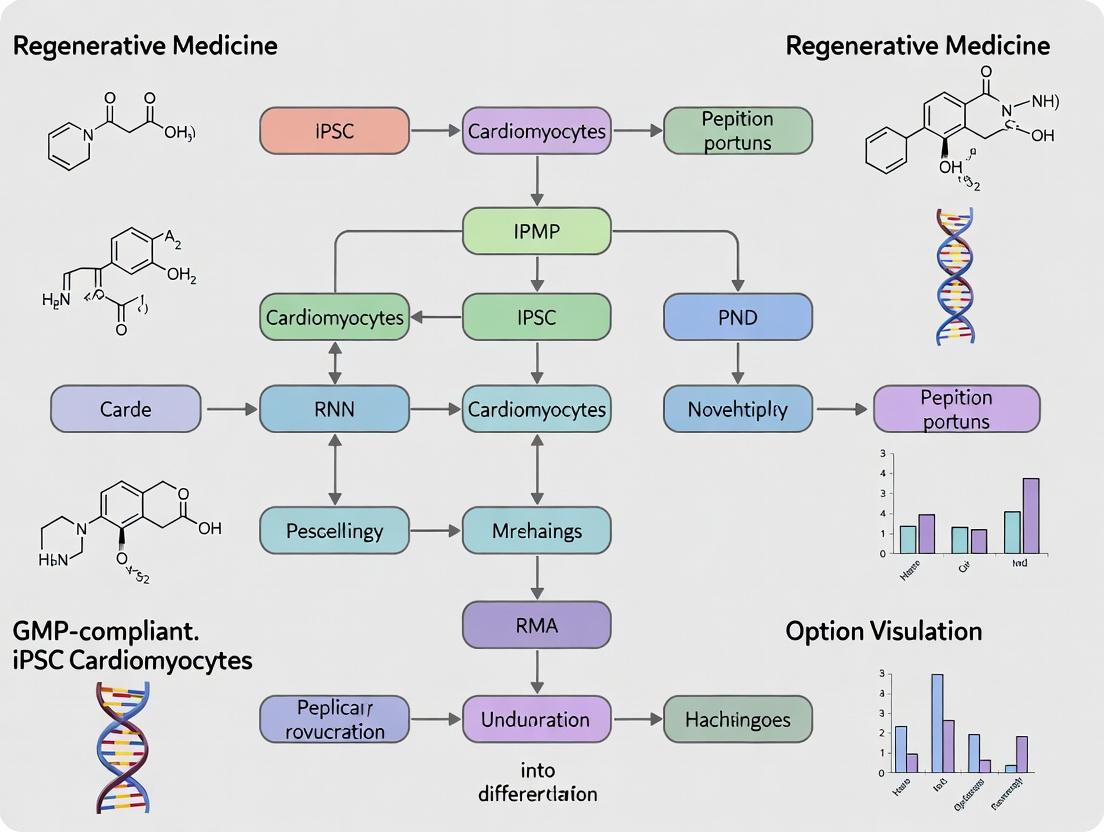
This comprehensive article addresses the critical pathway for translating iPSC-derived cardiomyocytes from research to clinical applications.
GMP-Compliant iPSC-Derived Cardiomyocytes: Clinical Production, Quality Standards, and Therapeutic Applications
Abstract
This comprehensive article addresses the critical pathway for translating iPSC-derived cardiomyocytes from research to clinical applications. It explores the foundational biology underpinning cardiac differentiation, details GMP-compliant manufacturing methodologies, and provides solutions for common production challenges. The content further examines rigorous validation strategies, including functional, genetic, and safety profiling, essential for regulatory approval. Designed for researchers, scientists, and drug development professionals, this guide synthesizes current best practices for producing clinically-relevant, therapeutic-grade cardiac cells for regenerative medicine, disease modeling, and drug testing.
The Blueprint for Clinical-Grade Heart Cells: Understanding iPSC Cardiomyocyte Biology and GMP Imperatives
The derivation of cardiomyocytes from induced pluripotent stem cells (iPSCs) represents a cornerstone of regenerative medicine, disease modeling, and drug discovery. For clinical translation, this process must be standardized under Good Manufacturing Practice (GMP) conditions. Cardiac differentiation from iPSCs is not spontaneous but requires precise temporal modulation of key evolutionarily conserved developmental signaling pathways: WNT, BMP, and FGF. A GMP-compliant protocol must eliminate undefined components, use clinically acceptable reagents, and ensure batch-to-batch reproducibility for therapeutic applications.
This document provides detailed protocols and mechanistic insights into the orchestrated manipulation of these pathways to direct iPSCs toward a cardiac fate, framed within the requirements of clinical research.
Key Signaling Pathways in Cardiac Commitment
WNT/β-Catenin Signaling
A biphasic modulator. Initial activation of canonical WNT signaling is required for mesoderm induction. Subsequent inhibition is critical for cardiac specification from the mesoderm. Small molecules like CHIR99021 (activator) and IWP-4 or IWR-1 (inhibitors) are used for precise, GMP-adaptable control.
BMP Signaling
Acts synergistically with Activin/Nodal during the early phase to promote primitive streak and mesendoderm formation. BMP4 is commonly used. Its signaling must be tightly controlled, as sustained activity can lead to alternative lineages.
FGF Signaling
FGF2 (bFGF) supports the pluripotent state. During differentiation, FGF signaling, particularly through FGF2 and FGF10, works in concert with BMP to enhance cardiac mesoderm formation and subsequent cardiomyocyte proliferation and maturation.
Table 1: Quantitative Summary of Key Pathway Modulation in a Typical Protocol
| Pathway | Phase (Day) | Role | Typical Modulator | Concentration Range | Duration |
|---|---|---|---|---|---|
| WNT | 0-1 | Activation for Mesoderm Induction | CHIR99021 | 3 - 12 µM | 24-48 hours |
| BMP | 0-1 | Synergy with Activin for Primitive Streak | BMP4 | 10 - 30 ng/mL | 24-48 hours |
| Activin/Nodal | 0-1 | Primitive Streak Induction | Activin A | 20 - 100 ng/mL | 24-48 hours |
| WNT | 2-3 | Inhibition for Cardiac Specification | IWP-4 or IWR-1 | 2 - 5 µM | 48-72 hours |
| FGF | 2-7 | Support of Cardiac Progenitors | FGF2 | 10 - 20 ng/mL | 5-10 days |
Experimental Protocols
Protocol 1: GMP-Adaptable, Chemically Defined Cardiac Differentiation
Objective: To generate contracting cardiomyocytes from human iPSCs using a small molecule-based, monolayer differentiation protocol suitable for GMP adaptation.
Materials:
- GMP-grade human iPSCs cultured in vitronectin-coated plates.
- Essential 8 (E8) or equivalent GMP-grade maintenance medium.
- RPMI 1640 medium with B-27 supplement (minus insulin for first 4 days, then with insulin).
- GMP-grade or clinically acceptable small molecules: CHIR99021, IWP-4.
- GMP-grade recombinant human proteins: BMP4, Activin A, FGF2.
- Metabolic purification media: Lactate-containing RPMI without glucose.
Method:
- Pre-differentiation Culture: Maintain iPSCs in E8 medium. Achieve 80-90% confluency at the start of differentiation (Day 0). A uniform monolayer is critical.
- Mesoderm Induction (Day 0): Aspirate E8. Add differentiation medium I: RPMI/B-27 minus insulin supplemented with 6-8 µM CHIR99021, 20 ng/mL BMP4, and 20 ng/mL Activin A. Incubate for 24 hours.
- WNT Inhibition & Cardiac Specification (Day 1-3):
- Day 1: Aspirate medium. Add differentiation medium II: RPMI/B-27 minus insulin supplemented with 5 µM IWP-4 and 10 ng/mL FGF2. Incubate for 48 hours.
- Day 3: Replace medium with fresh RPMI/B-27 minus insulin + 10 ng/mL FGF2.
- Cardiac Lineage Maturation (Day 5 onward):
- Day 5: Begin feeding every other day with RPMI/B-27 with insulin. No additional growth factors are required. Spontaneous contractions typically appear between Day 7-10.
- Metabolic Purification (Day 12-15):
- To enrich cardiomyocytes (>95% purity), replace medium with lactate purification medium (RPMI lacking glucose, supplemented with 4 mM sodium lactate) for 3-5 days. Change medium daily. Non-cardiomyocytes, which cannot utilize lactate as an energy source, are selectively eliminated.
Protocol 2: Quantification of Differentiation Efficiency via Flow Cytometry
Objective: To assess the percentage of cardiac troponin T (cTnT) positive cells.
Materials: Permeabilization buffer, blocking buffer (5% BSA), primary antibody (anti-cTnT), fluorescent secondary antibody, flow cytometry analyzer.
Method:
- Harvest cells at Day 10-15 using gentle dissociation.
- Fix with 4% PFA for 15 min, permeabilize with 0.1% Triton X-100 for 10 min.
- Block with 5% BSA for 30 min.
- Incubate with anti-cTnT antibody (1:200) for 1 hour at RT.
- Incubate with fluorescent secondary antibody (1:500) for 45 min in the dark.
- Resuspend in PBS and analyze using a flow cytometer. Use appropriate isotype controls.
The Scientist's Toolkit: Research Reagent Solutions
Table 2: Essential Materials for GMP-Compliant Cardiac Differentiation
| Item | Function | GMP-Compliance Note |
|---|---|---|
| GMP-grade iPSC Line | Starting cell source. Must be fully characterized (karyotype, pluripotency, sterility). | Master and working cell banks created under GMP. |
| Vitronectin (VTN-N) | Recombinant human protein used as a defined substrate for iPSC attachment and growth. | Animal-free, xeno-free, recombinant source. |
| Essential 8 (E8) Medium | Chemically defined, xeno-free medium for iPSC maintenance. | Available in GMP-manufactured format. |
| CHIR99021 | GSK-3β inhibitor; activates WNT signaling for mesoderm induction. | Sourced from suppliers offering "for manufacturing use" grade. |
| IWP-4 | Porcupine inhibitor; blocks WNT ligand secretion for cardiac specification. | Sourced from suppliers offering "for manufacturing use" grade. |
| Recombinant Human BMP4 | Induces primitive streak formation. | Available as GMP-grade, animal-component free protein. |
| B-27 Supplement | Serum-free supplement crucial for cardiomyocyte survival and function. | Use GMP-manufactured version. Insulin-free variant is key for initial differentiation. |
Diagrams
The Imperative for GMP in iPSC-Cardiomyocyte Therapies
The clinical translation of human induced pluripotent stem cell-derived cardiomyocytes (iPSC-CMs) for cardiac regeneration or disease modeling demands a foundational commitment to Good Manufacturing Practice (GMP). GMP is the quality assurance system that ensures products are consistently produced and controlled to the quality standards appropriate for their intended human use. For iPSC-CMs, this is non-negotiable due to the unique risks of stem cell-based products: tumorigenicity, immunogenicity, batch-to-batch variability, and the potential for microbial contamination.
Recent regulatory guidelines emphasize a risk-based approach. A 2023 review of cell therapy trials highlighted that over 30% of clinical holds were due to insufficient chemistry, manufacturing, and controls (CMC) data, directly attributable to non-GMP practices. Implementing GMP is not merely a regulatory hurdle; it is the framework that ensures patient safety, product efficacy, and data reliability for clinical research.
Table 1: Key Regulatory Guidelines for Advanced Therapy Medicinal Products (ATMPs)
| Guideline/Source | Key Focus Area | Relevance to iPSC-Cardiomyocyte Differentiation |
|---|---|---|
| FDA 21 CFR Parts 210, 211 | Current GMP for Finished Pharmaceuticals | Core requirements for facility, equipment, personnel, and documentation. |
| EMA Guideline on Human Cell-based Medicinal Products (CHMP/410869/2006) | Quality, non-clinical, and clinical aspects for cell-based ATMPs. | Specifically addresses risk management for tumorigenicity and heterogeneity. |
| ICH Q5A(R2) (2022) | Viral Safety Evaluation of Biotechnology Products | Critical for raw materials (e.g., starting cells, growth factors) and final product testing. |
| USP <1043> Ancillary Materials | Quality of materials used in cell therapy manufacturing. | Guides selection and qualification of cytokines, small molecules, and media components. |
| Ph. Eur. General Chapter 5.2.12 (2024) | Raw materials for ATMP production. | Updated requirements for sourcing and testing biological starting materials. |
Application Note: GMP-Compliant iPSC Line Establishment & Banking
Objective: To establish a Master Cell Bank (MCB) and Working Cell Bank (WCB) from a donor under GMP conditions, ensuring traceability, sterility, and genetic stability for downstream cardiomyocyte differentiation.
Protocol 1: Derivation and Qualification of a GMP-Compliant Master Cell Bank
1. Starting Material Acquisition:
- Source human dermal fibroblasts from a qualified tissue bank operating under GMP.
- Ensure full donor eligibility screening (infectious disease markers, genetic screening per risk assessment) and informed consent.
- Document Chain of Identity (COI) and Chain of Custody (COC) procedures.
2. Reprogramming & Clone Selection:
- Use a non-integrating, GMP-grade reprogramming vector system (e.g., episomal plasmids or Sendai virus).
- Perform limiting dilution to derive single-cell clones.
- Critical Step: Screen clones for pluripotency markers (OCT4, NANOG, TRA-1-60 via flow cytometry, min. >95% positive) and karyotype stability (G-banding, 20 metaphases analyzed). A recent multi-center study (2024) found that only ~65% of clones from a single donor met both pluripotency and karyotype criteria for MCB creation.
3. Master Cell Bank (MCB) Creation:
- Expand a single qualified clone in a GMP-certified, xeno-free, chemically defined medium.
- Harvest cells at a defined passage (e.g., P5) and cryopreserve in at least 200 vials using a controlled-rate freezer.
- Store MCB vials in validated liquid nitrogen vapor phase storage systems with continuous temperature monitoring.
4. MCB Release Testing:
- Perform comprehensive testing on a representative number of vials (typically 3-5).
Table 2: Mandatory Release Tests for an iPSC Master Cell Bank
| Test Category | Specific Assay | Acceptance Criteria |
|---|---|---|
| Sterility | USP <71> Sterility Tests | No growth of aerobic/anaerobic bacteria or fungi. |
| Mycoplasma | PCR-based assay (e.g., EP 2.6.7) | Negative. |
| Viral Safety | In vitro assay for adventitious viruses, PCR for specific viruses (e.g., HIV, HBV, HCV). | Negative. |
| Identity | Short Tandem Repeat (STR) Profiling | Match to donor tissue. |
| Viability & Potency | Post-thaw viability (Trypan Blue), Pluripotency marker expression (Flow Cytometry). | Viability >90%, Pluripotency markers >95%. |
| Genetic Stability | Karyotype (G-banding) or high-resolution CNV analysis. | Normal diploid karyotype (46, XX or XY), no major CNVs. |
| Tumorigenicity In vitro | Soft Agar Colony Formation Assay. | No colony formation. |
Diagram 1: GMP iPSC Bank Creation & Release Workflow
Application Note & Protocol: Directed Differentiation to Cardiomyocytes under GMP
Objective: To differentiate GMP-grade iPSCs from the WCB into highly pure, functional cardiomyocytes using a monolayer, small molecule-driven protocol with fully defined, GMP-compliant reagents.
Protocol 2: GMP-Compliant iPSC-Cardiomyocyte Differentiation
Materials (The Scientist's Toolkit):
Table 3: Essential Reagents for GMP iPSC-CM Differentiation
| Reagent Solution | Function in Protocol | GMP Consideration |
|---|---|---|
| GMP-grade Basal Medium (e.g., RPMI 1640) | Chemically defined base for differentiation and maintenance. | Must have Drug Master File (DMF) or equivalent regulatory backing. |
| GMP-Grade CHIR99021 (GSK-3β inhibitor) | Activates Wnt pathway for mesoderm induction. | Source from a supplier with full traceability, Certificate of Analysis (CoA), and suitability for human use. |
| GMP-Grade IWP-4 (Wnt inhibitor) | Inhibits Wnt pathway for cardiac specification. | As above. Often the most critical and costly small molecule. |
| Albumin, Human, Recombinant | Carrier protein in medium; replaces BSA of animal origin. | Essential for xeno-free status. Must be from a GMP source. |
| Insulin, Human Recombinant | Supports cardiomyocyte survival and metabolism post-differentiation. | GMP-source is mandatory. |
| L-Ascorbic Acid 2-Phosphate | Antioxidant, promotes cardiac maturation. | Pharmaceutical grade required. |
| GMP-Compatible Detachment Enzyme | For passaging iPSCs pre-differentiation. | Xeno-free, recombinant enzyme (e.g., recombinant trypsin). |
Methodology:
- Thawing and Preparation of iPSCs: Thaw one vial of the qualified WCB into GMP-grade mTeSR Plus medium. Expand cells over 1-2 passages to achieve required cell number. Confirm >90% confluence and >95% pluripotency marker expression before differentiation.
- Day 0 - Mesoderm Induction: Dissociate iPSCs to single cells using the GMP-compatible enzyme. Seed cells at a defined density (e.g., 1.5 x 10^5 cells/cm²) in basal medium + CHIR99021 (6 µM). Critical Parameter: Seeding density uniformity is vital for reproducible differentiation efficiency.
- Day 2 - Cardiac Specification: Replace medium with basal medium + IWP-4 (5 µM).
- Day 5-7 - Metabolic Selection: Switch to a lactate-free, glucose-containing maintenance medium supplemented with insulin and ascorbic acid. This selectively enriches for metabolically active cardiomyocytes. A 2024 benchmark study reported that this step increases purity from ~70% to >95% cTnT+ cells.
- Day 10-14 - Functional Assessment: Beating clusters are observed. Cells can be maintained for further maturation.
Diagram 2: Key Signaling Pathway in iPSC-CM Differentiation
Protocol 3: In-process Controls & Final Product Release Assays
1. Purity Assessment (Flow Cytometry):
- Harvest a representative sample (≥1x10^6 cells).
- Fix, permeabilize, and stain with fluorescently labeled antibodies against cardiac Troponin T (cTnT) and α-Actinin.
- Analyze on a validated flow cytometer. Release Specification: >90% cTnT+ cells for preclinical use; >95% for clinical administration.
2. Functional Assessment (Multielectrode Array - MEA):
- Plate differentiated iPSC-CMs onto GMP-compatible MEA plates.
- Record field potentials after electrophysiological stabilization (Day 30+ recommended).
- Measure key parameters: Beat Rate, Field Potential Duration (FPD, corrected for rate), and conduction velocity.
- Data Example: A recent GMP batch characterization showed: Beat Rate = 45 ± 12 bpm; FPDc = 350 ± 40 ms; demonstrating expected human cardiomyocyte-like physiology.
Table 4: Example Final Product Release Criteria for iPSC-CMs
| Quality Attribute | Test Method | Target Specification |
|---|---|---|
| Purity (Cardiac) | Flow Cytometry (cTnT+) | ≥ 95% |
| Viability | Trypan Blue Exclusion | ≥ 80% |
| Sterility | BacT/Alert Microbial Detection System | No Detection (ND) in 14 days. |
| Mycoplasma | PCR-based assay | ND. |
| Endotoxin | LAL Assay | < 0.5 EU/mL |
| Potency (Functional) | Multielectrode Array (MEA) | Consistent, synchronous beating; FPDc within 250-450ms. |
| Residual Small Molecules | HPLC-MS/MS | CHIR99021 & IWP-4 < 1 ng/million cells. |
Diagram 3: GMP Production & Testing Workflow for iPSC-CMs
The clinical translation of induced pluripotent stem cell-derived cardiomyocytes (iPSC-CMs) for therapeutic applications demands adherence to Good Manufacturing Practice (GMP). The criticality of source materials is foundational, directly impacting the identity, purity, safety, and efficacy of the final cellular product. This application note details the protocols and analytical frameworks for qualifying GMP-grade iPSC lines and associated raw materials (RMs) within a GMP-compliant cardiomyocyte differentiation workflow. The integrity of the starting biological and chemical inputs dictates the success of downstream differentiation, scale-up, and patient administration.
GMP-Grade iPSC Master Cell Bank (MCB) Qualification Protocol
A qualified GMP-grade iPSC Master Cell Bank (MCB) is the non-negotiable starting point for clinical manufacturing. The following protocol outlines the essential characterization and release testing.
Protocol 2.1: MCB Characterization and Release Testing
Objective: To establish a fully characterized, GMP-compliant iPSC MCB for use in cardiomyocyte differentiation.
Materials (Research Reagent Solutions):
- GMP-Grade iPSC Line: Sourced from a qualified cell provider (e.g., CGT Catapult's clinical iPSC line, Cellomics' GMP iPSCs).
- GMP-Grade Basement Membrane Matrix: e.g., Laminin-521 (Biolamina), Vitronectin (VTN-N).
- GMP-Grade Maintenance Medium: e.g., TeSR-E8 (STEMCELL Technologies) or equivalent GMP-formulated medium.
- Karyotyping Solution: G-banding or high-resolution array CGH/karyotyping service.
- Mycoplasma Detection Kit: e.g., PCR-based or culture-based GMP-compliant kit.
- Flow Cytometry Antibodies: GMP-grade or validated antibodies against pluripotency markers (OCT4, SOX2, NANOG, SSEA-4, TRA-1-60).
- Trilineage Differentiation Kit: GMP-compatible directed differentiation kit (ecto-, meso-, endoderm).
- Sterility Test Media: Thioglycollate and Soybean-Casein Digest media.
Methodology:
- Thaw and Expansion: Thaw one vial from the proposed MCB. Expand cells over a minimum of three passages in GMP-grade maintenance medium on GMP-grade matrix-coated vessels.
- Sterility Testing (EP 2.6.1/USP <71>): Inoculate samples from the culture supernatant into bacterial and fungal culture media. Incubate for 14 days.
- Mycoplasma Testing (EP 2.6.7): Perform a validated nucleic acid amplification test (NAT) or culture method on concentrated cell culture supernatant.
- Karyotypic Analysis: At passage equivalent to the proposed MCB, perform G-banding analysis on ≥20 metaphase spreads. Alternative: high-resolution SNP or array CGH.
- Identity Testing: Perform Short Tandem Repeat (STR) profiling and compare to donor tissue and/or parental line.
- Pluripotency Assessment:
- Flow Cytometry: Detach cells, fix, and stain with antibodies against surface (SSEA-4, TRA-1-60) and intracellular (OCT4, NANOG) markers. Analyze ≥10,000 events. Acceptance: >90% positive for each marker.
- Trilineage Differentiation: Using a GMP-compatible kit, differentiate cells towards the three germ layers. Confirm by immunocytochemistry for lineage-specific markers (e.g., TUJ1/βIII-tubulin (ectoderm), α-SMA (mesoderm), SOX17 (endoderm)).
- Viral Safety: Test for relevant adventitious viruses (e.g., HIV, HBV, HCV, EBV) via NAT. For reprogramming methods using integrating vectors, provide evidence of transgene silencing.
Release Criteria Summary (Table 1):
| Test Category | Specific Test | Acceptance Criteria | Typical Result (Example) |
|---|---|---|---|
| Sterility | Sterility (Bac/Fungi) | No growth | No growth observed |
| Mycoplasma | Mycoplasma NAT/Culture | Negative | Not Detected |
| Karyotype | G-band Analysis | Normal diploid, 46XY/XX, no major abnormalities | 46, XX, Normal Female Karyotype |
| Identity | STR Profiling | Match to reference profile | 16/16 loci match |
| Pluripotency | Flow Cytometry (OCT4, NANOG, SSEA-4, TRA-1-60) | >90% positive for each marker | 95-99% positive |
| Differentiation Potential | Trilineage Markers | Positive staining for all three germ layers | Confirmed differentiation |
| Viral Safety | Adventitious Virus Panel (NAT) | Negative for specified viruses | Not Detected |
Raw Material Risk Assessment and Qualification
Raw materials (RMs) include all ancillary materials used in production: media, cytokines, small molecules, dissociation reagents, and coating matrices. A risk-based approach is mandated.
Protocol 3.1: Risk-Based TSE/BSE and Supplier Qualification
Objective: To categorize RMs based on biological origin risk and establish supplier qualification protocols.
Methodology:
- Categorization: Classify each RM using the EMEA/410/01 guidelines.
- Category 1: High risk (e.g., fetal bovine serum, trypsin of bovine origin). Not permitted for GMP.
- Category 2: Medium risk (e.g., human albumin, recombinant proteins from animal-cell culture). Use only with stringent justification and certification.
- Category 3: Low risk (e.g., synthetic chemicals, plant-derived, recombinant from microbial systems). Preferred.
- Supplier Qualification:
- Audit supplier’s Quality Management System (QMS).
- Require full disclosure of origin, manufacturing process, and all components.
- Obtain TSE/BSE certificates of suitability (CEP) from the EDQM for Category 2 materials of animal origin.
- For critical reagents (e.g., CHIR99021, Activin A, BMP4), establish internal identity and potency testing.
Raw Material Criticality & Testing Matrix (Table 2):
| Material Type | Example | Risk Category | Key Certification/Test | GMP Alternative |
|---|---|---|---|---|
| Basal Medium | DMEM/F-12 | 3 | Certificate of Analysis (CoA) | GMP-manufactured, animal component-free |
| Growth Factors | Recombinant Human BMP4 | 2 (if from animal cells) | CEP, CoA for identity/potency/sterility | GMP-grade, recombinant from non-animal system (e.g., E. coli) |
| Small Molecules | CHIR99021 (GSK-3β inhibitor) | 3 | CoA for identity/purity (>98%) | Sourced from GMP-compliant chemical manufacturer |
| Matrix | Recombinant Laminin-521 | 3 | CoA for identity/sterility/endotoxin | Defined, xeno-free, GMP-grade |
| Dissociation Reagent | EDTA-based Solution | 3 | CoA for composition/sterility | Defined, enzyme-free, GMP-grade |
Cardiomyocyte Differentiation: Critical Material Inputs
A typical GMP differentiation protocol uses sequential modulation of Wnt signaling. The quality and consistency of the initiating materials are paramount.
Protocol 4.1: GMP-Compliant Monolayer Cardiomyocyte Differentiation
Objective: To differentiate a qualified GMP iPSC MCB into cardiomyocytes using defined, GMP-grade raw materials.
Materials (Research Reagent Solutions):
- GMP-Grade iPSCs: From qualified MCB (Protocol 2.1).
- GMP-Grade Cardiomyocyte Differentiation Kit: e.g., STEMdiff Cardiomyocyte Differentiation Kit (GMP-grade formulation) or equivalent.
- GMP-Grade RPMI 1640 Medium & B-27 Supplement (Insulin-free): Basal media for differentiation and maintenance.
- GMP-Grade Matrigel or Recombinant Laminin: For plate coating.
- GMP-Grade Lactate Purification Solution: Lactate-containing, glucose-free medium for metabolic selection.
- Flow Cytometry Antibodies: cTnT (cardiac Troponin T) antibody.
Methodology:
- Preparation: Coat culture plates with GMP-grade matrix. Thaw and expand iPSCs to 85-90% confluence in GMP maintenance medium.
- Day 0: Mesoderm Induction: Replace medium with GMP differentiation medium containing CHIR99021 (Wnt activator). Concentration and timing are cell line-specific (e.g., 6-8 µM for 48h).
- Day 2-4: Cardiac Specification: Replace with medium containing a Wnt inhibitor (e.g., IWP2 or IWR-1) in RPMI/B-27(insulin-) to direct cardiac mesoderm.
- Day 5-7+: Spontaneously Beating CM Appearance: Change to RPMI/B-27(insulin-) without supplements. Spontaneous contractions typically begin between days 7-10.
- Day 10-14: Metabolic Purification: Replace medium with lactate purification solution for 4-7 days to selectively eliminate non-cardiomyocytes.
- Analysis: Assess purity by flow cytometry for cTnT (target >90% cTnT+). Assess function via microelectrode array (MEA) for field potential.
Critical Path Signaling in Cardiac Differentiation (Diagram 1):
Diagram 1: GMP Cardiac Differentiation Signaling Pathway
GMP iPSC-CM Manufacturing Workflow (Diagram 2):
Diagram 2: GMP iPSC to Cardiomyocyte Manufacturing Workflow
The establishment of a robust, GMP-compliant process for generating clinical-grade iPSC-cardiomyocytes is fundamentally dependent on the criticality of its source materials. Rigorous qualification of the iPSC MCB and a risk-based, documented approach to raw material selection and testing are not merely regulatory checkboxes but essential scientific practices that underwrite product consistency and patient safety. Integrating these protocols ensures that the foundational elements of the manufacturing process are controlled, traceable, and fit for clinical application.
The clinical translation of iPSC-derived cardiomyocytes (iPSC-CMs) for therapeutic use is governed by a stringent and evolving regulatory framework. Both the U.S. Food and Drug Administration (FDA) and the European Medicines Agency (EMA) provide guidelines, though they differ in specificity and structure. The primary regulatory pathways include Investigational New Drug (IND) applications (FDA) and Clinical Trial Applications (CTAs) under the Advanced Therapy Medicinal Product (ATMP) regulation (EMA). Compliance with Good Manufacturing Practice (GMP) is a non-negotiable cornerstone for both agencies, emphasizing product quality, safety, and consistency.
Comparative Regulatory Framework: FDA vs. EMA
Table 1: Key Guideline Documents for Cell-Based Cardiac Therapies
| Agency | Document Title/Reference | Key Focus Areas | Status (as of 2025) |
|---|---|---|---|
| FDA | Chemistry, Manufacturing, and Controls (CMC) Information for Human Gene Therapy INDs | GMP, product characterization, potency assays, stability, vector biology. | Final Guidance (2020) |
| FDA | Considerations for the Design of Early-Phase Clinical Trials of Cellular and Gene Therapy Products | Trial design, patient selection, safety monitoring, dose escalation. | Final Guidance (2015) |
| EMA | Guideline on quality, non-clinical and clinical aspects of medicinal products containing genetically modified cells | Detailed CMC requirements, environmental risk assessment, long-term follow-up. | Adopted (2022) |
| EMA | Reflection paper on stem cell-based medicinal products | Identity, purity, potency, tumorigenicity, genomic stability, off-target differentiation. | Final (2011, under revision) |
Table 2: Core CMC & Preclinical Requirements Comparison
| Requirement Category | FDA Emphasis | EMA Emphasis |
|---|---|---|
| Cell Characterization | Identity (specific markers for cardiomyocytes), purity (>90% cTnT+ typical), viability, karyotype. | Same, with added stress on in vitro functional maturity (e.g., electrophysiology). |
| Potency Assay | Quantitative measure of biological function (e.g., contractility, calcium flux, gene expression). Mandatory for lot release. | Similar, often requiring linkage to proposed mechanism of action. |
| Safety Testing | Sterility, mycoplasma, endotoxin, adventitious agents. In vivo tumorigenicity study (e.g., nude mouse assay). | Identical, with explicit requirement for evaluation of residual undifferentiated iPSCs (<0.001% common benchmark). |
| Genomic Stability | Karyotyping at master cell bank and end-of-production cells. | Karyotyping + more sensitive methods (e.g., CNV analysis, whole genome sequencing recommended). |
| Delivery System | Validation of delivery device functionality and biocompatibility. | Similar, with additional consideration as part of the combined ATMP. |
Detailed Experimental Protocols
Protocol 1: Quantitative Potency Assay via Calcium Transient Analysis
Objective: To establish a quantitative, lot-release potency assay for iPSC-CMs by measuring calcium handling kinetics. Materials: GMP-grade iPSC-CMs, Fluo-4 AM calcium indicator dye, HBSS buffer, compound plates, fluorescent imaging plate reader (FLIPR) or confocal microscope. Procedure:
- Plate dissociated iPSC-CMs in a 96-well optical-bottom plate at a density of 50,000 cells/well. Culture for 48 hours to restore adherence.
- Load cells with 4 µM Fluo-4 AM in HBSS for 45 minutes at 37°C. Replace with fresh HBSS.
- Using a FLIPR system, record baseline fluorescence for 10 seconds, then automatically add 30mM KCl (final concentration) to depolarize cells and induce calcium influx.
- Record fluorescence intensity (excitation 485 nm, emission 525 nm) for 2 minutes.
- Data Analysis: Calculate Amplitude (F/F0) and Decay Time Constant (Tau, τ). Establish a specification range (e.g., Amplitude >2.0, Tau <2.5 sec) based on characterized master cell banks.
- Acceptance Criteria: Test article must fall within the predefined range to pass potency for lot release.
Protocol 2:In VivoTumorigenicity Study (Nude Mouse Bioassay)
Objective: To assess the risk of tumor formation from residual undifferentiated iPSCs in the final product. Materials: NOD.Cg-Prkdcscid Il2rgtm1Wjl/SzJ (NSG) mice, GMP-grade iPSC-CMs, positive control (undifferentiated iPSCs), Matrigel. Procedure:
- Prepare cells: Test Article (iPSC-CMs, 1x10^7 cells), Positive Control (undifferentiated iPSCs, 1x10^5 cells), Vehicle Control (Matrigel alone).
- Subcutaneously inject 100 µL of each cell suspension (mixed 1:1 with Matrigel) into the dorsal flank of 10 mice per group.
- Monitor animals weekly for 12-16 weeks for palpable mass formation.
- Terminate the study at 16 weeks. Necropsy all animals, weigh any masses, and perform histopathological analysis (H&E staining, human-specific marker staining).
- Acceptance Criterion: No palpable masses or histological evidence of teratoma in the test article group. Positive control must form teratomas to validate assay sensitivity.
Visualizations
Title: GMP Manufacturing and CQA Testing Workflow for iPSC-CMs
Title: Comparative Regulatory Pathways: FDA IND vs EMA CTA/MAA
The Scientist's Toolkit: Essential Research Reagent Solutions
Table 3: Key Reagents for GMP-Compliant iPSC-CM Development & Testing
| Reagent/Category | Example Product/Supplier (GMP-grade) | Critical Function in Development/QC |
|---|---|---|
| Basal Medium | RPMI 1640 (without glucose), B-27 Supplement (Xeno-free) | Provides essential nutrients for cell maintenance and cardiac differentiation. Xeno-free is preferred for clinical production. |
| Differentiation Inducers | Recombinant Human BMP-4, CHIR99021 (GSK-3 inhibitor), IWP-4 (Wnt inhibitor) | Precisely activates Wnt signaling pathways to direct mesoderm and cardiac lineage specification. GMP-grade is critical. |
| Cell Dissociation Agent | Recombinant Trypsin or Enzyme-free dissociation buffers | For gentle passaging and harvest of iPSC-CMs while maintaining viability and function. |
| Characterization Antibodies | Anti-cTnT (Cardiac Troponin T), Anti-NKX2-5, Anti-SSEA-4 | Flow cytometry for identity (cTnT, NKX2-5) and safety/residual pluripotency (SSEA-4). Conjugated to fluorochromes. |
| Functional Assay Kits | Fluo-4 AM Calcium Sensitive Dye, Contractility Analysis Software (e.g., SarcTrack) | Enables quantitative potency assays via calcium transient or contraction force measurement. |
| Safety Testing Kits | MYCOALERT Mycoplasma Detection Kit, Endpoint Chromogenic LAL Assay | Validated kits for lot-release safety testing for mycoplasma and endotoxin contamination. |
| Cell Freezing Medium | Defined, serum-free, GMP-grade cryopreservation media | Ensures high post-thaw viability and functional recovery of the final therapeutic product. |
Within the framework of a GMP-compliant induced pluripotent stem cell (iPSC)-derived cardiomyocyte (iPSC-CM) differentiation program for clinical research, a comprehensive Target Product Profile (TPP) is essential. This document defines the minimum quality specifications for the final cellular product, ensuring consistency, safety, and efficacy. The core Critical Quality Attributes (CQAs) are Purity, Potency, Identity, and Safety. This application note details protocols and analytical methods for defining and verifying these specifications.
Table 1: Example TPP Specifications for GMP-Compliant iPSC-Derived Cardiomyocytes
| CQA Category | Specific Attribute | Assay/Method | Acceptance Criterion | Rationale |
|---|---|---|---|---|
| Identity | Cardiac Lineage Markers | Flow Cytometry (cTnT, α-actinin) | ≥ 90% cTnT+ & α-actinin+ cells | Confirms cardiac phenotype. |
| Purity | Cardiac Muscle Content | Flow Cytometry (cTnT) | ≥ 80% cTnT+ cells | Minimizes non-cardiac cell types. |
| Purity | Undifferentiated iPSC Contamination | Flow Cytometry (TRA-1-60) | ≤ 0.1% TRA-1-60+ cells | Mitigates teratoma risk. |
| Purity | Non-Cardiac Mesoderm Contamination | Flow Cytometry (CD90, CD140b) | ≤ 5% combined positive | Controls off-target differentiation. |
| Potency | Electrophysiological Function | Multi-Electrode Array (MEA) | Consistent Field Potential Duration (FPD) & Beating Rate | Confirms functional maturity and response. |
| Potency | Contractile Force (if applicable) | Force Transduction Measurement | ≥ 0.5 mN/mm² (example) | Quantifies contractile strength. |
| Potency | β-Adrenergic Response | MEA +/- Isoproterenol | ≥ 10% decrease in FPD upon stimulation | Demonstrates physiological response. |
| Safety | Viability | Trypan Blue Exclusion | ≥ 70% viable cells post-thaw | Ensures product integrity. |
| Safety | Endotoxin | LAL Assay | ≤ 0.5 EU/mL | Confirms absence of pyrogens. |
| Safety | Mycoplasma | PCR-based assay | Not Detected | Confirms absence of microbial contamination. |
| Safety | Sterility (Bacteria/Fungi) | USP <71> | No Growth | Confirms aseptic processing. |
| Safety | Karyotype | G-banding or SNP array | Normal diploid (46, XY/XX) | Confirms genomic stability. |
Detailed Experimental Protocols
Protocol 3.1: Flow Cytometry for Identity, Purity, and iPSC Contamination
Purpose: To quantify the percentage of cardiomyocytes (cTnT+) and residual undifferentiated iPSCs (TRA-1-60+). Materials: Single-cell suspension of differentiated iPSC-CMs, fixation/permeabilization buffer, PBS/2% FBS, primary antibodies (anti-cTnT, anti-α-actinin, anti-TRA-1-60), isotype controls, fluorochrome-conjugated secondary antibodies (if needed), flow cytometer. Procedure:
- Cell Preparation: Harvest and dissociate cells to a single-cell suspension. Aliquot 1x10^6 cells per test tube.
- Fixation & Permeabilization: For intracellular markers (cTnT, α-actinin), fix and permeabilize cells using a commercial kit (e.g., BD Cytofix/Cytoperm). For surface marker (TRA-1-60), skip permeabilization.
- Staining: Incubate cells with appropriate primary antibodies or isotype controls for 60 minutes at 4°C in the dark. Wash twice.
- Secondary Staining (if necessary): Incubate with fluorochrome-conjugated secondary antibody for 30 minutes at 4°C. Wash twice.
- Acquisition & Analysis: Resuspend in PBS/2% FBS. Acquire data on a flow cytometer (collect ≥10,000 events). Analyze using FlowJo software. Gate on single, viable cells. Report percentage of positive cells for each marker relative to isotype control.
Protocol 3.2: Functional Potency Assessment via Multi-Electrode Array (MEA)
Purpose: To assess electrophysiological maturation and pharmacological response of iPSC-CM monolayers. Materials: 48- or 96-well MEA plate (e.g., Axion Biosystems Maestro), iPSC-CMs seeded as syncytium, recording medium (Tyrode's solution: 140 mM NaCl, 5 mM KCl, 10 mM HEPES, 1 mM MgCl2, 2 mM CaCl2, 10 mM Glucose, pH 7.4), Isoproterenol (1 µM stock), data acquisition system. Procedure:
- Plate Preparation: Seed iPSC-CMs onto fibronectin-coated MEA plates at a density of 50,000-100,000 cells/well to form a confluent, beating monolayer. Culture for 7-14 days post-differentiation.
- System Equilibration: One hour before recording, replace culture medium with pre-warmed Tyrode's solution. Place plate in the MEA recorder inside a CO2 incubator (37°C) to equilibrate.
- Baseline Recording: Record field potentials from all electrodes for at least 5 minutes under spontaneous beating conditions.
- Pharmacological Challenge: Carefully add Isoproterenol to a final concentration of 100 nM. Record for an additional 10-15 minutes.
- Data Analysis: Using integrated software (e.g., Axis Navigator), calculate key parameters:
- Beating Rate (BPM): From inter-spike intervals.
- Field Potential Duration (FPD): Analogous to QT interval. Normalize using Fridericia's formula (FPDc = FPD / (RR interval)^(1/3)).
- Drug Response: Calculate % change in FPD and beating rate post-isoproterenol.
Signaling Pathways & Workflow Visualizations
Diagram Title: iPSC Cardiac Differentiation Signaling Pathway
Diagram Title: iPSC-CM GMP Release Testing Workflow
The Scientist's Toolkit: Key Research Reagent Solutions
Table 2: Essential Materials for iPSC-CM TPP Analysis
| Item | Function | Example Product/Catalog # |
|---|---|---|
| GMP-Grade Basal Medium | Foundation for differentiation media; ensures xeno-free, traceable components. | Thermo Fisher Gibco StemScale PSC Suspension Medium. |
| Small Molecule Inducers | Precisely modulate key pathways (e.g., WNT activation/inhibition). | CHIR99021 (GSK-3 inhibitor), IWP-4 (WNT inhibitor). |
| Cardiac Marker Antibodies | Critical for identity and purity assays via flow cytometry or ICC. | Anti-cTnT (clone 13-11), Anti-α-actinin (sarcomeric), Anti-TRA-1-60. |
| Flow Cytometry Validation Beads | For instrument performance qualification and assay standardization. | BD Cytometer Setup & Tracking Beads. |
| Multi-Electrode Array (MEA) System | Non-invasive, functional potency assessment of iPSC-CM monolayers. | Axion Biosystems Maestro Pro. |
| LAL Endotoxin Assay Kit | Validated, sensitive detection of endotoxin for safety specification. | Lonza PyroGene Recombinant Factor C Assay. |
| Mycoplasma Detection Kit | Highly sensitive PCR-based detection of mycoplasma contamination. | MycoAlert PLUS (Lonza). |
| GMP-Grade Recombinant Proteins | For media supplementation (e.g., Albumin, Insulin, Transferrin). | Human Recombinant Albumin, Lipid-rich. |
| Karyotyping Service/Kit | Confirmation of genomic stability post-differentiation and expansion. | G-banding service or SNP microarray (e.g., Cytoscan HD). |
From Lab to Clinic: Step-by-Step GMP Protocols for iPSC Cardiomyocyte Differentiation and Scale-Up
Within the framework of GMP-compliant clinical research for iPSC-derived cardiomyocytes (iPSC-CMs), the selection of an optimal differentiation and expansion platform is critical. This application note provides a comparative workflow analysis between two predominant, scalable methodologies: adherent monolayer culture and 3D suspension culture. The evaluation focuses on key parameters relevant to clinical translation, including scalability, yield, quality, and compliance, supported by current data and detailed protocols.
Table 1: Quantitative Comparison of Monolayer vs. 3D Suspension Culture for iPSC-CM Production
| Parameter | GMP-Compliant Monolayer Culture | GMP-Compliant 3D Suspension Culture |
|---|---|---|
| Typical Scale (Current) | Multi-layered cell stacks (e.g., 10-layer) or hyperflasks. | Stirred-tank or wave-type bioreactors (0.1L - 2L working volume). |
| Cell Yield Density | ~1-2 x 10^5 CMs/cm² at harvest. | ~1-5 x 10^6 CMs/mL of suspension culture. |
| Total Yield per Run | ~1-5 x 10^9 CMs (10-layer stack). | ~2-10 x 10^9 CMs (1L bioreactor run). |
| Differentiation Efficiency | 80-95% cTnT+ by flow cytometry. | 70-90% cTnT+ by flow cytometry. |
| Maturation Markers | Moderate: ~15-25% multinucleation, organized sarcomeres. | Variable: Can be enhanced by 3D structure and electrical stimulation post-differentiation. |
| Process Monitoring | Medium sampling, microscopy. Complex for multilayered vessels. | Real-time monitoring of pH, pO₂, metabolites (e.g., glucose, lactate). |
| Harvest Method | Enzymatic (e.g., TrypLE) detachment, potential shear stress. | Aggregate dissociation via enzymatic or gentle mechanical means. |
| Cell Homogeneity | High uniformity across the monolayer. | Potential for aggregate size heterogeneity requiring control. |
| GMP Compliance Footprint | Larger cleanroom area for multiple vessels. Requires automated handling for scale. | Smaller footprint, closed-system potential, easier process automation. |
| Key Challenge | Surface area scaling is physical and costly. | Aggregate size control and nutrient/gas gradient management. |
Detailed Protocols
Protocol 1: GMP-Compliant Monolayer Differentiation of iPSCs to Cardiomyocytes
Objective: To generate high-purity iPSC-CMs using a directed, small molecule-driven differentiation protocol on Matrigel-hESC-Qualified Matrix or equivalent GMP-compliant substratum.
Materials (Research Reagent Solutions):
- GMP-iPSC Line: Master Cell Bank-derived, pluripotent stem cells.
- GMP-Compliant Matrix: Recombinant Laminin-521 (e.g., Biolamina LN521) or Vitronectin.
- Basal Medium: RPMI 1640 without glucose.
- Differentiation Inducers: CHIR99021 (GSK-3β inhibitor), IWP-4 (Wnt inhibitor).
- Cardiomyocyte Maintenance Medium: RPMI 1640 with B-27 Supplement.
- GMP-Compliant Dissociation Enzyme: Recombinant Trypsin-like enzyme (e.g., TrypLE Select).
Procedure:
- Cell Seeding: Seed GMP-iPSCs at an optimized density (e.g., 1.5-2.0 x 10^4 cells/cm²) on GMP-compliant matrix-coated vessels in mTeSR Plus or equivalent medium. Culture until ~85-90% confluent.
- Day 0 - Mesoderm Induction: Replace medium with RPMI 1640 + B-27 minus insulin + 6-8 µM CHIR99021.
- Day 2 - Wnt Inhibition: Replace medium with RPMI 1640 + B-27 minus insulin.
- Day 3 - Cardiac Specification: Add medium with 5 µM IWP-4.
- Day 5 - Metabolic Selection: Change to RPMI 1640 + B-27 minus insulin. Continue feeding every 2-3 days.
- Day 7-9 - Cardiomyocyte Maintenance: Switch to RPMI 1640 + full B-27 Supplement. Spontaneous contractions typically appear.
- Day 12-15 - Harvest: Wash cells with DPBS without Ca²⁺/Mg²⁺. Add GMP-compliant dissociation enzyme (e.g., TrypLE Select) and incubate at 37°C for 5-10 minutes. Gently dislodge cells, neutralize with medium containing serum or inhibitor, and filter through a 100 µm strainer. Centrifuge and resuspend for analysis or cryopreservation.
Protocol 2: GMP-Compliant 3D Suspension Differentiation in Bioreactor
Objective: To differentiate iPSCs into cardiomyocyte aggregates in a controlled, scalable suspension bioreactor system.
Materials (Research Reagent Solutions):
- Bioreactor System: Single-use, stirred-tank bioreactor with pH/DO control.
- GMP-iPSC Aggregates: Pre-formed from single cells using AggreWell or spinner flask.
- Agitation: Paddle impeller or orbital shaker for suspension.
- Sparse Matrix: GMP-compliant methylcellulose or polymeric nanoparticles to minimize aggregation.
- Media & Inducers: As in Protocol 1, but potentially at adjusted concentrations.
Procedure:
- Inoculum Preparation: Harvest GMP-iPSCs as single cells. Form uniform aggregates (100-200 µm diameter) in a spinner flask or AggreWell plates using mTeSR Plus with 10 µM Y-27632.
- Bioreactor Setup & Inoculation: Prepare bioreactor with initial medium (mTeSR Plus). Transfer aggregates to the bioreactor vessel. Set initial parameters: 37°C, pH 7.2-7.4, DO 30-40% air saturation, agitation speed 30-60 rpm to prevent settling.
- Day 0 - Mesoderm Induction: Exchange medium to RPMI/B-27 minus insulin + CHIR99021 (concentration may require optimization, e.g., 4-6 µM).
- Process Control (Days 0-12): Maintain DO >20% via oxygen blending. Monitor pH and adjust with CO₂ or base. Take daily samples for metabolite analysis (glucose, lactate) and aggregate size monitoring. Adjust agitation to control aggregate size (<300-400 µm).
- Day 2 & 3: Perform medium exchanges as per the monolayer protocol timeline (remove CHIR, add IWP-4), using the bioreactor's perfusion or drainage/fill capabilities.
- Day 7-12 - Maturation: Transition to RPMI + full B-27 Supplement. May implement electrical stimulation protocols post-differentiation.
- Harvest: Stop agitation. Allow aggregates to settle or use a cell sieve. Wash aggregates and dissociate using a combination of collagenase II and TrypLE Select. Filter and centrifuge to obtain single-cell or small cluster suspension.
Visualizations
The Scientist's Toolkit: Essential Research Reagent Solutions
Table 2: Key Materials for GMP-Compliant iPSC-CM Differentiation
| Item | Function & Relevance | Example (GMP-Compliant or -Adaptable) |
|---|---|---|
| Recombinant Human Laminin-521 | Defined, xeno-free extracellular matrix for consistent iPSC adhesion and expansion. Critical for monolayer protocols. | Biolamina LN521, iMatrix-511 silk. |
| Small Molecule Inducers | Precisely control differentiation signaling pathways (Wnt activation/inhibition). Core of most protocols. | CHIR99021, IWP-4, IWR-1. |
| Chemically Defined Medium | Basal medium for differentiation phases, enabling metabolic selection (lactate-based) of CMs. | RPMI 1640 without glucose, DMEM without glucose. |
| B-27 Supplement | Serum-free supplement essential for cardiomyocyte survival, maintenance, and maturation. | B-27 Supplement (with/without insulin). |
| GMP-Grade Dissociation Enzyme | Enzyme for gentle, non-animal-derived cell detachment (monolayer) or aggregate dissociation (3D). | TrypLE Select, recombinant trypsin. |
| Single-Use Bioreactor | Scalable, closed-system vessel for 3D suspension culture. Enables process control and reduces contamination risk. | PBS mini, Applikon, Xcellerex systems. |
| Aggregate Formation Aid | Enhances uniform embryoid body/aggregate formation in suspension culture. | Anti-adherence rinsing solution, methylcellulose. |
| Cell Strainers | For controlling aggregate size during inoculation and harvesting in 3D culture. | Pre-sterilized, disposable 100-200 µm strainers. |
This protocol details an optimized, chemically defined, and GMP-compliant methodology for differentiating human induced pluripotent stem cells (hiPSCs) into functional cardiomyocytes (CMs) using small molecule modulation of key developmental signaling pathways. The approach is designed for clinical research applications, emphasizing reproducibility, scalability, and the avoidance of undefined components like serum or Matrigel. By precisely timing the addition of small molecule inhibitors and activators, we robustly direct mesoderm formation, cardiac specification, and cardiomyocyte maturation, yielding >90% cTnT-positive cells by day 12 of differentiation.
Core Signaling Pathways & Protocol Rationale
Cardiac differentiation from hiPSCs recapitulates in vivo embryonic heart development. The protocol sequentially modulates the following pathways:
- Wnt/β-catenin Pathway: Transient activation during the initial phase drives primitive streak/mesoderm formation. Subsequent precise inhibition promotes cardiac mesoderm specification.
- Activin/Nodal (TGF-β) Pathway: Initial activation synergizes with Wnt activation to induce definitive mesendoderm.
- BMP Signaling: Co-activation with Activin/Nodal enhances mesoderm induction.
- FGF2 Signaling: Baseline support of pluripotency and early differentiation stages.
Signaling Pathway Diagrams
Detailed Differentiation Protocol
Materials & Reagents (Research Toolkit)
| Reagent/Cell Line | Function & Role in Protocol | Example Vendor/Cat. No. (GMP-grade where applicable) |
|---|---|---|
| hiPSC Line | Starting biological material. Must be karyotypically normal, pluripotent, and adapted to monolayer culture. | (Internal or banked GMP-grade line, e.g., WCB from a Master Cell Bank) |
| RPMI 1640 Medium | Basal, chemically defined medium for differentiation. | Thermo Fisher, 11875093 |
| B-27 Supplement (Insulin Minus) | Serum-free supplement used during cardiac specification to avoid insulin-induced proliferation. | Thermo Fisher, A1895601 |
| CHIR99021 | Small molecule GSK-3β inhibitor; activates Wnt signaling for mesoderm induction. | Tocris, 4423 (GMP analogs available) |
| IWP4 (or Wnt-C59) | Small molecule Wnt inhibitor; blocks palmitoylation of Wnt proteins to specify cardiac mesoderm. | Tocris, 5214 |
| Activin A | Recombinant human protein; activates Nodal/TGF-β signaling for definitive mesendoderm. | PeproTech, 120-14P (GMP-grade) |
| BMP4 | Recombinant human protein; activates BMP signaling synergistically with Activin A. | PeproTech, 120-05ET (GMP-grade) |
| FGF2 (bFGF) | Recombinant human protein; supports cell survival and early differentiation stages. | PeproTech, 100-18B (GMP-grade) |
| Matrigel (or GMP LN-521) | Extracellular matrix for coating plates; supports hiPSC adhesion and survival. | Corning, 354277 (LN-521: BioLamina, LN521-02) |
| 0.5 mM EDTA (Versene) | Gentle cell dissociation agent for passaging hiPSCs as small clumps. | Thermo Fisher, 15575020 |
| ROCK Inhibitor (Y-27632) | Increases single-cell survival during seeding and passaging. | Tocris, 1254 |
Protocol Workflow
Step-by-Step Methodology
Pre-Differentiation (Day -3): Cell Seeding
- Coat a 12-well plate with Matrigel (1:100 dilution in DMEM/F-12) or GMP-grade recombinant laminin-521 (5 µg/mL) for 1 hour at 37°C.
- Aspirate coating solution. Wash once with PBS.
- Harvest hiPSCs as small clumps using 0.5 mM EDTA. Neutralize with complete mTeSR Plus medium.
- Seed cells at a density of 1.5 x 10^5 cells/cm² in mTeSR Plus supplemented with 10 µM Y-27632.
- Incubate at 37°C, 5% CO₂. Change medium daily with mTeSR Plus (without Y-27632). Target 85-90% confluency on Day 0.
Phase I: Mesoderm Induction (Day 0 - Day 2)
- Day 0: Aspirate mTeSR Plus. Add Induction Medium: RPMI 1640 supplemented with:
- 6 µM CHIR99021
- 10 ng/mL Activin A
- 10 ng/mL BMP4
- 5 ng/mL FGF2
- Incubate for 48 hours (medium remains unchanged).
Phase II: Cardiac Specification (Day 2 - Day 5)
- Day 2: Aspirate Induction Medium completely.
- Add Specification Medium: RPMI 1640 + B-27 Supplement (Without Insulin) containing:
- 5 µM IWP4 (or 0.5 µM Wnt-C59).
- Incubate for 72 hours. Medium remains unchanged.
Phase III: Cardiac Maturation (Day 5 onwards)
- Day 5: Aspirate Specification Medium.
- Add Maturation Medium: RPMI 1640 + B-27 Supplement (With Insulin). No additional small molecules.
- Day 7: Expect to observe areas of spontaneous contraction. Perform a full medium change with fresh Maturation Medium.
- Change medium every 2-3 days thereafter. For enhanced maturation from Day 10, consider switching to a medium containing fatty acids (e.g., T3 hormone (1 nM) and fatty acid supplement).
Harvest & Analysis (Day 12-15)
- Cardiomyocytes can be metabolically selected if needed (lactate purification).
- Dissociate using a gentle cardiomyocyte dissociation kit for flow cytometry or replating.
- Fix for immunocytochemistry (ICC) or harvest for RNA/protein analysis.
Table 1: Typical Yield & Purity Metrics (Day 12 Post-Differentiation)
| Parameter | Measurement Method | Expected Outcome (Range) | Clinical-Grade Target |
|---|---|---|---|
| Cardiac Troponin T (cTnT)+ Cells | Flow Cytometry | 90 - 95% | > 90% |
| Cell Yield per cm² | Cell Counting | 1.0 - 1.5 x 10⁶ cells/cm² | Maximize with scale-up in bioreactors |
| Spontaneously Beating Areas | Microscopy Observation | > 80% of well area | Qualitative functional indicator |
| Ploidy (Diploid %) | Flow Cytometry (DNA content) | > 95% | > 90% (minimal polyploidy) |
| Viability Post-Thaw | Trypan Blue Exclusion | > 85% (if cryopreserved) | > 80% |
Table 2: Functional Maturation Metrics (Day 30+ with Maturation Protocols)
| Parameter | Measurement Method | Immature (Day 12) | Mature (Day 30+) |
|---|---|---|---|
| Resting Membrane Potential | Patch Clamp | -55 to -65 mV | -75 to -85 mV |
| Maximum Upstroke Velocity (dV/dtmax) | Patch Clamp | 50-100 V/s | 150-300 V/s |
| Sarcomere Length | α-actinin ICC | ~1.65 µm | ~1.85 µm |
| Metabolic Shift (Glycolysis/OxPhos) | Seahorse Analyzer | Primarily Glycolytic | Increased Oxidative Phosphorylation |
Critical Protocol Notes for GMP Compliance
- Documentation: Maintain a complete Device History Record (DHR) for each differentiation lot, including all reagent lot numbers, expiration dates, and environmental conditions.
- Quality Control: Implement in-process controls (IPC): Check viability and pluripotency marker expression (OCT4) at Day 0. Perform mycoplasma testing on the starting cell bank and end-of-production cells.
- Reagent Sourcing: Where possible, use GMP-manufactured, xeno-free, and chemically defined raw materials. Qualify all critical reagents (e.g., small molecules, growth factors).
- Process Consistency: Use automated cell passagers and bioreactors (e.g., stirred-tank reactors) for scale-up to ensure homogeneity and reduce operator-dependent variability.
- Safety Testing: Final cell product must be tested for sterility, endotoxin, and adventitious agents as per regulatory guidelines (e.g., FDA, EMA).
Within the framework of clinical research aiming for GMP-compliant production of induced pluripotent stem cell-derived cardiomyocytes (iPSC-CMs), purification is a critical downstream processing step. The initial differentiation process yields heterogeneous cell populations containing residual undifferentiated iPSCs and non-cardiac cell types, which pose teratoma and arrhythmia risks upon transplantation. This application note details two orthogonal purification strategies: metabolic selection leveraging the unique metabolic profile of cardiomyocytes, and physical separation using cardiomyocyte-specific surface markers. Both approaches are evaluated for scalability, robustness, and compatibility with closed-system processing suitable for Good Manufacturing Practice (GMP).
Metabolic Selection via Glucose Deprivation
Cardiomyocytes primarily utilize fatty acid β-oxidation and are relatively adaptable to metabolic stress compared to glycolysis-dependent undifferentiated iPSCs and many other cell types. Glucose deprivation culture selectively enriches for functional cardiomyocytes.
Key Signaling Pathway: Metabolic Adaptation in Cardiomyocytes
Diagram 1: Metabolic selection signaling pathway.
Protocol: Lactate-Enriched, Glucose-Depleted Purification
Objective: To enrich iPSC-CM populations to >95% purity post-differentiation by culturing in lactate-supplemented, glucose-free medium.
Materials (See Toolkit Table 1)
- Differentiated iPSC culture (Day 10-12 post-cardiac induction).
- Glucose-Free RPMI 1640 Medium (e.g., Thermo Fisher, A2494301).
- Sodium Lactate (e.g., Sigma, L7022).
- B-27 Supplement (minus insulin, for final culture).
- Phosphate-Buffered Saline (PBS), sterile.
- Cell culture incubator (37°C, 5% CO2).
Procedure:
- Preparation: On Day 10-12 of differentiation, assess beating areas. Prepare Lactate Purification Medium: Glucose-Free RPMI 1640 supplemented with 4 mM sodium lactate.
- Medium Exchange: Aspirate and discard the existing culture medium. Wash cells gently with 2 mL of PBS per well of a 6-well plate.
- Selection Phase: Add 2 mL per well of Lactate Purification Medium. Return cells to the incubator.
- Medium Refreshment: Replace the Lactate Purification Medium every 2-3 days for a total selection period of 7-10 days. Observe morphological changes and increased synchronicity of beating.
- Recovery: After selection, replace medium with RPMI 1640 supplemented with B-27 (with insulin) for recovery and maintenance before downstream analysis or sorting.
Data Summary: Table 1: Efficacy of Glucose Deprivation Purification.
| Metric | Pre-Purification | Post-Purification (Day 7-10) | Measurement Method |
|---|---|---|---|
| cTnT+ Cell Population | 60-75% | 92-98% | Flow Cytometry |
| Viability | >90% | 85-92% | Trypan Blue Exclusion |
| Metabolite Utilization | Glucose High, Lactate Low | Glucose N/D, Lactate High | Metabolite Assay |
| Yield of Cardiac Cells | 100% (Baseline) | 40-60% of initial | Cell Counting |
Surface Marker-Based Sorting
Physical separation using antibodies against intracellular (e.g., cardiac Troponin T) or surface (e.g., SIRPA, VCAM1) markers allows for high-precision isolation of cardiomyocytes, compatible with FACS or magnetic-activated cell sorting (MACS).
Experimental Workflow: SIRPA-Based MACS Purification
Diagram 2: MACS workflow for iPSC-CM purification.
Protocol: Magnetic-Activated Cell Sorting (MACS) for SIRPA+ Cardiomyocytes
Objective: To rapidly isolate a highly pure population of iPSC-CMs using positive selection for the surface marker SIRPA.
Materials (See Toolkit Table 1)
- Differentiated iPSC culture (Day 12-15).
- Gentle Cell Dissociation Reagent.
- MACS Buffer (PBS, pH 7.2, 0.5% BSA, 2 mM EDTA).
- Anti-SIRPA MicroBead Kit (e.g., Miltenyi Biotec, 130-125-364).
- LS Columns and MACS Separator.
- Pre-separation filters (30-70 µm).
Procedure:
- Cell Harvest: Dissociate differentiated cultures into a single-cell suspension using a gentle enzyme. Quench with serum-containing medium. Pass cells through a 40-µm strainer.
- Cell Counting and Washing: Count cells. Centrifuge at 300 x g for 5 min. Aspirate supernatant. Resuspend cell pellet in 80 µL of cold MACS Buffer per 10^7 cells.
- Antibody Labeling: Add 20 µL of Anti-SIRPA MicroBeads per 10^7 cells. Mix well and incubate for 15 minutes in the refrigerator (2-8°C).
- Wash: Add 1-2 mL of MACS Buffer per 10^7 cells. Centrifuge at 300 x g for 5 min. Aspirate supernatant completely.
- Column Preparation: Place an LS Column in the magnetic field of the MACS Separator. Rinse with 3 mL of MACS Buffer.
- Apply Cell Suspension: Resuspend cells in 500 µL of MACS Buffer. Apply cell suspension onto the column. Collect flow-through containing unlabeled (SIRPA-) cells.
- Wash Column: Wash column 3 times with 3 mL of MACS Buffer. Never let the column run dry.
- Elution: Remove column from the magnet and place it over a collection tube. Pipette 5 mL of MACS Buffer onto the column and immediately flush out magnetically labeled cells (SIRPA+) using the plunger.
- Analysis and Culture: Centrifuge eluted cells and resuspend in appropriate medium. Determine purity by flow cytometry for cTnT or another cardiac marker.
Data Summary: Table 2: Efficacy of SIRPA-MACS Purification.
| Metric | Pre-Sort | Post-Sort (SIRPA+ Fraction) | Method |
|---|---|---|---|
| Sorting Efficiency | N/A | >85% recovery of labeled cells | Cell Count |
| Purity (cTnT+) | 65-80% | 96-99.5% | Flow Cytometry |
| Viability | >90% | 88-95% | Flow Cytometry w/ viability dye |
| Throughput | N/A | High (10^9 cells in <2 hrs) | Process Time |
| Residual Beads | 0% | Present, requires assessment | Microscopy/Flow |
The Scientist's Toolkit: Research Reagent Solutions
Table 1: Essential Materials for iPSC-CM Purification.
| Item | Function | Example Product/Catalog |
|---|---|---|
| Glucose-Free RPMI 1640 | Base medium for metabolic selection, lacking glucose to stress non-cardiomyocytes. | Thermo Fisher Scientific, A2494301 |
| Sodium Lactate | Energy substrate provided to support survival of oxidative cardiomyocytes during selection. | Sigma-Aldrich, L7022 |
| Anti-SIRPA MicroBeads | Magnetic beads conjugated to antibody against human SIRPA (CD172a) for positive selection of CMs. | Miltenyi Biotec, 130-125-364 |
| MACS LS Columns | Large-scale columns for magnetic separation, suitable for high-cell-number GMP-oriented workflows. | Miltenyi Biotec, 130-042-401 |
| Gentle Cell Dissociation Reagent | Enzyme-free solution to dissociate cardiomyocyte aggregates into single cells with high viability. | StemCell Technologies, 07174 |
| Cardiac Troponin T (cTnT) Antibody | Gold-standard intracellular marker for confirming cardiomyocyte identity and purity via flow cytometry. | Thermo Fisher Scientific, MS-295-P1 |
| B-27 Supplement (Minus Insulin) | Serum-free supplement used during metabolic selection to inhibit non-CM survival via insulin deprivation. | Thermo Fisher Scientific, A1895601 |
Within the framework of developing a GMP-compliant process for iPSC-derived cardiomyocyte (iPSC-CM) production for clinical research and therapeutic applications, scaling differentiation from flasks to bioreactors presents significant challenges. This document details critical scale-up considerations, application notes, and protocols for large-scale cardiomyocyte generation, focusing on stirred-tank bioreactor systems. Success hinges on precise control of physicochemical parameters and efficient, reproducible cell aggregate formation.
The transition from static culture to bioreactor systems introduces variables that must be tightly controlled to maintain differentiation efficiency and cardiomyocyte purity. Key quantitative parameters are summarized below.
Table 1: Critical Process Parameters (CPPs) for Bioreactor Scale-Up of iPSC-CMs
| Parameter | Optimal Range (Stirred-Tank) | Impact on Process | Monitoring Method |
|---|---|---|---|
| Dissolved Oxygen (DO) | 20-40% air saturation (Stage-specific) | Critical for metabolic shift & cardiac differentiation; hypoxia can induce aberrant phenotypes. | In-line polarographic or optical probe. |
| pH | 7.2 - 7.4 | Affects enzyme activity, cell health, and differentiation signaling. | In-line pH probe with controlled CO2 and/or base addition. |
| Agitation Rate | 30-60 rpm (varies with vessel) | Prevents aggregate settling & ensures nutrient homogeneity; excessive shear stress damages cells. | Impeller speed control. Computational Fluid Dynamics (CFD) modeling recommended. |
| Aggregate Size (Embryoid Body) | 150 - 300 µm diameter | Core determinant of efficient differentiation & viability; limited by oxygen diffusion. | Off-line image analysis (e.g., Vi-CELL, manual microscopy). |
| Cell Seeding Density | 1-3 x 10^6 cells/mL | Initiates proper cell-cell contacts for cardiogenesis. | Off-line cell counter (e.g., NucleoCounter). |
| Glucose Concentration | Maintain > 2.0 g/L | Prevents nutrient starvation and supports high-density culture. | Off-line analyzer (e.g., Bioprofile) or in-line biosensor. |
Table 2: Comparison of Differentiation Efficiency Metrics: Flask vs. Bioreactor
| Performance Metric | 6-Well Plate / Flask (Static Control) | 1L Stirred-Tank Bioreactor | Notes |
|---|---|---|---|
| Cardiac Troponin T+ (cTnT+) Yield | ~70-85% purity | Target: 65-80% purity | Bioreactor requires optimization to match static purity. |
| Total Cell Yield | ~1-5 x 10^7 cells | Target: 1-2 x 10^9 cells | Scalable yield is the primary advantage. |
| Batch-to-Batch Variability (cTnT+ %) | Moderate (5-10% CV) | Challenge: Higher (Can be >15% CV) | Robust control of CPPs is essential to reduce variability. |
| Media Consumption per 10^9 CMs | High | Reduced by 30-50% | Perfusion or fed-batch strategies in bioreactors improve efficiency. |
Detailed Protocol: Cardiomyocyte Differentiation in a Stirred-Tank Bioreactor
This protocol outlines a monolayer-based differentiation strategy adapted for microcarriers or aggregate culture in a benchtop stirred-tank bioreactor.
Protocol 3.1: Bioreactor Setup and Inoculation
- Objective: Aseptically prepare the bioreactor and seed dissociated iPSCs.
- Materials: Sterile, single-use bioreactor vessel (0.5 - 2L); pH and DO probes; peristaltic pump; basal media (e.g., RPMI 1640 without glucose); B-27 supplement; GMP-grade CHIR99021 (Wnt activator); Matrigel-coated microcarriers or defined aggregate formation substrate.
- Procedure:
- Calibrate pH and DO probes according to manufacturer instructions.
- Fill the vessel with pre-warmed basal media supplemented with B-27 (minus insulin).
- Add microcarriers to a final concentration of 15-20 mg/mL.
- Inoculate with a single-cell suspension of pluripotent iPSCs at a density of 2.0 x 10^6 cells/mL. Use ROCK inhibitor (Y-27632, 10 µM) in the inoculum to improve viability.
- Set initial conditions: Temperature = 37°C, pH = 7.4 (controlled with CO2/ base), DO = 40% (controlled via gas blending: air/N2/O2), Agitation = 40 rpm (intermittent or low-shear impeller).
- Allow cells to attach to microcarriers/form aggregates for 24-48 hours with minimal agitation.
Protocol 3.2: Directed Differentiation via Wnt Pathway Modulation
- Objective: Initiate and direct mesoderm specification toward the cardiac lineage.
- Materials: GMP-grade CHIR99021 (GSK-3β inhibitor); GMP-grade IWP-4 (Wnt inhibitor).
- Procedure:
- Day 0 (Initiation): Add CHIR99021 to a final concentration of 3-6 µM (concentration requires cell line-specific optimization). Maintain conditions for 24 hours.
- Day 1: Perform a 50% media exchange to remove CHIR99021.
- Day 3 (Specification): Add IWP-4 to a final concentration of 2-5 µM. Maintain for 48 hours.
- Day 5: Perform a 50% media exchange with fresh basal media + B-27 (minus insulin).
- Days 7-10 (Metabolic Selection): Switch to media containing basal media + B-27 with insulin. This formulation promotes cardiomyocyte survival over non-cardiac cells. Continue media exchanges every 2-3 days.
- Day 12+ (Harvest): Assess beating and cTnT expression via sampling. Harvest aggregates using gentle enzymatic digestion (e.g., collagenase).
Visualization: Signaling Pathways and Workflows
Title: Wnt Signaling Modulation for Cardiac Differentiation
Title: Bioreactor Workflow for iPSC-Cardiomyocyte Production
The Scientist's Toolkit: Essential Research Reagents & Materials
Table 3: Key Reagent Solutions for GMP-Compliant iPSC-CM Bioreactor Processes
| Item / Reagent | Function in the Process | Critical Specification / Note |
|---|---|---|
| GMP-grade iPSC Line | Starting cellular material. Must be master cell bank qualified. | Karyotypically normal, mycoplasma-free, with validated pluripotency. |
| Stirred-Tank Bioreactor | Scalable culture vessel with environmental control. | Single-use, sensor-integrated (pH/DO), with low-shear impeller (e.g., paddle, marine). |
| Microcarriers | Provide scalable surface for cell attachment and growth. | Defined matrix (e.g., vitronectin-derived), size 150-200µm, GMP-sourced. |
| CHIR99021 (GMP) | Small molecule Wnt activator. Initiates differentiation by inhibiting GSK-3β. | Concentration requires rigorous, in-house optimization for each cell line. |
| IWP-4 (GMP) | Small molecule Wnt inhibitor. Specifies cardiac lineage by blocking Wnt secretion. | Timing of addition is critical; typically 48-72 hours post CHIR initiation. |
| B-27 Supplement (Serum-Free) | Chemically defined supplement supporting cardiomyocyte survival and function. | Use "B-27 Minus Insulin" during differentiation, then standard "B-27 With Insulin" for metabolic selection. |
| Lactate Assay Kit | Off-line analytical tool. Lactate buildup indicates high metabolic activity/cell stress. | Used to guide media exchange frequency and monitor cell health in fed-batch/perfusion. |
| Anti-cTnT Antibody | Primary antibody for quantifying cardiomyocyte purity via flow cytometry. | Clone and conjugate must be validated for intracellular staining in iPSC-CMs. |
| ROCK Inhibitor (Y-27632) | Improves viability of dissociated iPSCs during inoculation. | Use only in seeding media, not during the core differentiation stages. |
Application Notes
The translation of iPSC-derived cardiomyocytes (iPSC-CMs) from research to clinical application demands robust, reproducible, and GMP-compliant downstream processes. This phase is critical for ensuring cell viability, functional purity, and therapeutic efficacy post-thaw, while maintaining sterility and traceability. Key challenges include minimizing shear stress during harvest, optimizing cryoprotectant agent (CPA) formulations to mitigate cryoinjury, and establishing pre-infusion handling protocols that preserve cell phenotype and function.
Recent advances emphasize the shift from enzymatic dissociation to aggregate-based harvesting for microtissue therapies, and the use of serum-free, defined cryopreservation media. Final formulation for delivery often involves resuspension in a clinical-grade carrier solution compatible with targeted intramyocardial or intracoronary administration. Process analytics, including flow cytometry for cardiac troponin T (cTnT) and metabolic assays post-thaw, are mandatory for lot release.
Protocols
Protocol 1: Aggregate Harvesting of iPSC-Cardiomyocytes for Microtissue Formulation
Objective: To harvest differentiated iPSC-CM aggregates while preserving cell viability, structural integrity, and cardiac function.
Materials:
- GMP-grade, phenol red-free, cardiomycete maintenance medium.
- GMP-grade Dulbecco's Phosphate Buffered Saline (DPBS), without Ca2+/Mg2+.
- Gentle Cell Dissociation Reagent (GCDR) or equivalent non-enzymatic chelating solution.
- 37°C incubator, 5% CO2.
- Benchtop centrifuge with swing-bucket rotor for 15/50 mL tubes.
- Serological pipettes.
- 100 µm reversible strainer or mesh filter.
Procedure:
- Preparation: Aspirate the spent differentiation medium from the culture vessel (e.g., bioreactor or plate).
- Wash: Gently add 10-15 mL of warm DPBS per 150 cm2 of culture surface. Rock the vessel gently and aspirate.
- Dissociation: Add pre-warmed Gentle Cell Dissociation Reagent (e.g., 10 mL per 150 cm2). Incubate at 37°C for 5-8 minutes.
- Aggregate Detachment: Gently tap the sides of the vessel to encourage aggregate detachment. The monolayer should detach as sheet-like aggregates. Do not pipette vigorously.
- Neutralization: Transfer the aggregate suspension to a 50 mL tube containing an equal volume of cold maintenance medium to neutralize the reagent.
- Washing & Sizing: Pass the aggregate suspension through a 100 µm reversible strainer. Wash aggregates retained on the strainer with 20 mL of cold maintenance medium. Back-flush the strainer to collect the harvested aggregates in a fresh 50 mL tube.
- Concentration: Centrifuge at 100 x g for 3 minutes at 4°C. Carefully aspirate the supernatant.
- Resuspension: Gently resuspend the aggregate pellet in the appropriate volume of cold formulation or cryopreservation medium. Keep on ice until the next step.
Protocol 2: Cryopreservation of iPSC-Cardiomyocytes in a Defined, Serum-Free Medium
Objective: To cryopreserve iPSC-CM single cells or small aggregates with high post-thaw viability and functional recovery.
Materials:
- Harvested iPSC-CMs (from Protocol 1).
- Defined, serum-free cryopreservation medium (e.g., containing 10% DMSO and 30% albumin solution).
- Programmable controlled-rate freezer or Mr. Frosty isopropanol chamber.
- Cryogenic vials (2 mL).
- 37°C water bath.
Procedure:
- CPA Addition: After the final harvest centrifugation, resuspend the cell aggregate pellet in cold cryopreservation medium. Target a final concentration of 5-10 x 10^6 cells/mL or 100-200 aggregates/mL.
- Aliquoting: Quickly aliquot 1.0-1.5 mL of the cell suspension into pre-labeled cryogenic vials. Place vials on ice.
- Freezing:
- Controlled-Rate Freezer: Place vials in the freezer and run the program: Cool from 4°C to -5°C at -1°C/min. Hold at -5°C for 5-10 minutes (seeding can be induced). Cool to -50°C at -1°C/min. Cool to -150°C at -5°C/min. Transfer to liquid nitrogen vapor phase storage.
- Passive Freezing: Place vials in a Mr. Frosty chamber, pre-cooled at 4°C. Place the chamber at -80°C for 24 hours. Transfer vials to liquid nitrogen vapor phase storage.
- Thawing:
- Retrieve a vial from storage and immediately place it in a 37°C water bath with gentle agitation until only a small ice crystal remains (~2 minutes).
- Wipe the vial with 70% ethanol and transfer the contents to a 15 mL tube.
- Slowly dilute the thawed cells by drop-wise addition of 10 mL of pre-warmed maintenance medium over 2-3 minutes, with gentle agitation.
- Centrifuge at 150 x g for 5 minutes. Aspirate the supernatant containing DMSO.
- Gently resuspend the pellet in warm maintenance medium for immediate assessment or formulation.
Protocol 3: Post-Thaw Formulation for Intramyocardial Delivery
Objective: To prepare a thawed iPSC-CM product in a GMP-compliant carrier solution suitable for clinical injection.
Materials:
- Thawed and washed iPSC-CM aggregates (from Protocol 2, Step 4).
- Clinical-grade carrier solution (e.g., HypoThermosol FRS or Plasmalyte-A with 1% Human Serum Albumin).
- Sterile 1 mL syringes and 27-gauge needles.
- Cell counting and viability analyzer (e.g., automated trypan blue exclusion).
Procedure:
- Assessment: Perform a cell count and viability assay on a small aliquot of the thawed/washed cell product. Viability should meet the pre-defined release criterion (typically >70%).
- Final Formulation: Centrifuge the cell product at 100 x g for 3 minutes. Aspirate the supernatant and gently resuspend the pellet in the approved clinical carrier solution to the target concentration for injection (e.g., 5-10 x 10^6 viable cells per 150 µL).
- Quality Control: Perform a final sterility test (rapid mycoplasma) and endotoxin test on an aliquot of the final formulated product. Visually inspect for clumping.
- Loading: Gently draw up the final cell suspension into a 1 mL syringe, avoiding bubbles. Attach the administration needle.
- Delivery: The formulated product must be administered to the patient within a validated holding time (typically 1-2 hours), maintaining the product at 2-8°C until use.
Data Tables
Table 1: Comparison of Harvesting Methods for iPSC-Cardiomyocytes
| Method | Principle | Avg. Viability (%) | Aggregate Size (µm) | Functional Recovery (Beating Rate) | Key Advantage | Key Limitation |
|---|---|---|---|---|---|---|
| Gentle Enzymatic (GCDR) | Calcium Chelation | 92 ± 5 | 100-500 | >90% within 24h | Maintains cell-cell junctions; minimal shear | Slower than trypsin |
| Aggregate Passaging | Mechanical Sizing | 88 ± 7 | 50-200 | >85% within 48h | Simple, no enzymes; ideal for microtissues | Size distribution can be broad |
| Trypsin/EDTA | Proteolysis | 75 ± 10 | Single Cells | ~70% after 5-7 days | Creates single-cell suspension | High shear stress; damages surface proteins |
Table 2: Efficacy of Cryopreservation Formulations for iPSC-CMs
| Formulation Base | CPA Composition | Post-Thaw Viability (%) | Day 3 Beating Recovery (%) | cTnT+ Purity Post-Thaw (%) | Lactate Dehydrogenase (LDH) Release (U/L) |
|---|---|---|---|---|---|
| 90% FBS / 10% DMSO | 10% DMSO | 68 ± 8 | 65 ± 12 | 88 ± 5 | 125 ± 25 |
| Commercial Serum-Free Medium | 5% DMSO, 30% Dextran | 82 ± 6 | 80 ± 10 | 92 ± 3 | 85 ± 15 |
| Defined Albumin Solution | 10% DMSO, 30% HSA | 85 ± 5 | 88 ± 8 | 95 ± 2 | 65 ± 10 |
| Trehalose-Based Solution | 5% DMSO, 0.2M Trehalose | 78 ± 7 | 75 ± 9 | 90 ± 4 | 95 ± 20 |
Diagrams
Title: iPSC-CM Downstream Processing Workflow
Title: Mechanism of Cryoprotection in Cell Freezing
The Scientist's Toolkit: Key Reagent Solutions
| Item | Function in Downstream Processing | GMP-Compliant Consideration |
|---|---|---|
| Gentle Cell Dissociation Reagent (GCDR) | Non-enzymatic, EDTA-free solution for detaching cells as sheets/aggregates by calcium chelation, minimizing membrane protein damage. | Must be sourced with Drug Master File (DMF) or equivalent regulatory support. |
| Defined Serum-Free Freeze Medium | A chemically defined, animal-component-free solution containing DMSO and macromolecules (e.g., HSA, dextran) for consistent, high-viability cryopreservation. | Formulation must be fully disclosed and manufactured under GMP. Albumin must be human-sourced, pathogen-free. |
| HypoThermosol FRS | A clinical-grade, intracellular-like carrier solution designed for hypothermic storage and transport of cell therapies, improving stability post-thaw. | Available as a GMP-manufactured, cGMP-compliant solution. |
| Reversible Strainers/Mesh Filters | Sterile, disposable filters for gentle size selection of cell aggregates, removing overly large clumps or single cell debris. | Must be sterilized by gamma irradiation and non-pyrogenic. Material should not adsorb cells. |
| Lactate Dehydrogenase (LDH) Assay Kit | Colorimetric kit to measure LDH enzyme released from damaged cells, quantifying cryoinjury and process-related cellular stress. | Assay components should be for research use only; QC method requires full GMP validation for lot release. |
Solving Critical Bottlenecks: Troubleshooting Low Yield, Purity, and Functional Maturation in GMP Production
Within the context of GMP-compliant induced pluripotent stem cell (iPSC)-derived cardiomyocyte (CM) production for clinical research, achieving high differentiation efficiency and low batch-to-batch variability is paramount. These metrics directly impact the feasibility, cost, and reliability of cell therapies, disease modeling, and cardiotoxicity screening. This document outlines the major underlying causes of these pitfalls and provides standardized protocols and solutions to mitigate them.
Key Pitfalls and Root Causes
Table 1: Common Pitfalls, Root Causes, and Impact on GMP Production
| Pitfall | Primary Root Causes | Impact on Clinical Research & GMP Compliance |
|---|---|---|
| Low Differentiation Efficiency | Suboptimal seeding density; Inconsistent iPSC pluripotency; Inaccurate growth factor/concentration timing; Unoptimized media formulations; High passage number of starting iPSCs. | Reduced yield increases production cost; Insufficient cell numbers for dosing or assays; Potential for increased impurity populations. |
| High Batch-to-Batch Variability | Donor-specific genetic background effects; Serum/lot variability in reagents; Manual process handling inconsistencies; Fluctuations in incubator conditions (CO2, temp, humidity); Lack of in-process quality controls. | Compromises reproducibility of preclinical data; Hampers comparability between clinical trial cohorts; Challenges lot release specification setting. |
Application Notes & Protocols
Protocol: Standardized GMP-Compliant iPSC Cardiomyocyte Differentiation (Small Molecule-Based)
This protocol is based on established Wnt modulation using CHIR99021 and IWP-4/IWR-1, optimized for consistency.
Objective: To reproducibly generate >80% TNNT2+ cardiomyocytes from a GMP-manufactured iPSC line.
Materials: See "The Scientist's Toolkit" (Section 5).
Pre-Differentiation Critical Checkpoints:
- Confirm iPSCs are karyotypically normal and pluripotent (flow cytometry for OCT4, TRA-1-60 >95%).
- Culture iPSCs in a GMP-grade, feeder-free system for ≥3 passages prior to differentiation.
- Ensure cells are 70-80% confluent and show minimal spontaneous differentiation.
Differentiation Workflow:
Detailed Steps:
- Day -1: Seed GMP-iPSCs as single cells in GMP-grade vitronectin-coated 6-well plates at a critical density of 1.8 x 10^5 cells/cm² in complete Essential 8 Medium. Incubate overnight.
- Day 0 (Initiation): Aspirate medium. Add Differentiation Media A (RPMI 1640 + B-27 Supplement minus insulin) containing 6 µM CHIR99021. Record exact time of addition.
- Day 1: Aspirate CHIR-containing medium. Wash once with DMEM/F-12. Add fresh Differentiation Media A (without CHIR99021).
- Day 2: Aspirate medium. Add Differentiation Media A containing 5 µM IWP-4 (or IWR-1).
- Day 3-4: Aspirate medium. Add fresh Differentiation Media A.
- Day 5-7 (Metabolic Selection): On Day 5, switch to Metabolic Selection Media (RPMI 1640 + B-27 Supplement with insulin, without glucose, supplemented with 4 mM lactate). Culture for 4-5 days, changing media every 2 days. This selectively eliminates non-cardiomyocytes.
- Day 10+: Return to CM Maintenance Media (RPMI 1640 + B-27 Supplement with insulin). Change media every 3 days. Spontaneous beating is typically observed by Day 7-9.
Protocol: In-Process Quality Control Assessment for Variability Reduction
Objective: To monitor key differentiation milestones and identify process deviations in real-time.
Table 2: Critical Quality Attribute (CQA) In-Process Monitoring
| Day | Assay | Target Metric (Acceptance Criterion) | Purpose |
|---|---|---|---|
| D0 | Cell Density & Viability (Automated counter) | 1.75 - 1.85 x 10^5 cells/cm², >95% viability | Ensures uniform initiation density. |
| D2 | Brightfield Morphology | Emergence of mesendodermal sheet | Visual check of early differentiation. |
| D3-4 | qPCR for MESP1, T (Brachyury) | >100-fold increase vs. D0 iPSCs | Molecular confirmation of mesoderm induction. |
| D7-8 | Flow Cytometry for cTnT | >50% cTnT+ cells pre-selection | Early efficiency assessment. |
| D12-14 | Flow Cytometry for cTnT | >80% cTnT+ cells post-selection | Final purity check for lot release. |
Signaling Pathway Logic in Cardiac Differentiation
The Scientist's Toolkit
Table 3: Essential Research Reagent Solutions for Robust Cardiac Differentiation
| Item (GMP-grade preferred) | Function in Protocol | Critical Note for Variability Reduction |
|---|---|---|
| GMP iPSC Line | Starting biological material. | Use a master cell bank with characterized pluripotency and genetics. |
| Vitronectin (VTN-N) | Recombinant attachment matrix. | Consistent coating concentration and incubation time is vital for uniform seeding. |
| CHIR99021 | GSK-3β inhibitor, activates Wnt signaling. | Titrate for each cell line (Range: 4-8 µM). Use a single, qualified lot for clinical batches. |
| IWP-4 or IWR-1 | Wnt production inhibitor, suppresses signaling. | Key for cardiac specification. IWP-4 is more commonly used. |
| B-27 Supplement (with & minus insulin) | Serum-free culture supplement. | "Minus insulin" is crucial for early differentiation. "With insulin" is for maintenance. |
| RPMI 1640 | Basal differentiation medium. | Low glucose formulation supports metabolic selection. |
| DL-Lactic Acid (Sodium Salt) | Component of metabolic selection media. | Selectively nourishes energetically efficient cardiomyocytes, purifying the population. |
| Accutase | Gentle cell dissociation enzyme. | Standardize dissociation time and temperature for consistent single-cell seeding. |
Within the framework of GMP-compliant iPSC-cardiomyocyte (iPSC-CM) differentiation for clinical applications, achieving a mature adult-like phenotype is paramount for predictive safety pharmacology, disease modeling, and regenerative therapies. Immature iPSC-CMs exhibit fetal-like characteristics—spontaneous beating, reliance on glycolysis, disorganized sarcomeres, and negative force-frequency relationships—which limit their utility. This document outlines key criteria and protocols for assessing and driving maturation toward an adult-like phenotype.
Core Maturation Criteria & Quantitative Benchmarks
The transition to an adult phenotype requires concurrent optimization across three pillars. The following table summarizes target metrics derived from current literature and human adult cardiomyocyte data.
Table 1: Quantitative Targets for Adult-like iPSC-Cardiomyocyte Phenotypes
| Criterion Category | Specific Parameter | Immature (Fetal) iPSC-CM Profile | Target Adult-like Phenotype | Measurement Technique |
|---|---|---|---|---|
| Electrophysiological | Resting Membrane Potential | -40 to -60 mV | -80 to -85 mV | Patch Clamp |
| Maximum Upstroke Velocity (dV/dt_max) | < 100 V/s | 200 - 300 V/s | Patch Clamp | |
| Action Potential Duration at 90% repolarization (APD90) | Often excessively long or short, rate-insensitive | ~300 ms (at 1Hz), with appropriate rate adaptation | Patch Clamp / Optical Mapping | |
| Presence of I_K1 Current | Low or absent | Robust, enabling stable resting potential | Patch Clamp | |
| Metabolic | Primary Energy Source | Glycolysis (>80%) | Fatty Acid β-Oxidation (>70%) | Seahorse XF Analyzer, LC-MS |
| Mitochondrial Density & Morphology | Low density, fragmented | High density, elongated, cristae-rich | TEM, Fluorescence (MitoTracker) | |
| Mitochondrial Membrane Potential (ΔΨm) | Lower | Higher | TMRE/JC-1 staining | |
| Structural & Functional | Sarcomere Length | ~1.6 - 1.7 μm | ~2.0 - 2.2 μm | Immunostaining (α-actinin) |
| Cell Size / Cytosolic Volume | Small, rounded | Elongated, rod-shaped (>1000 μm³ volume) | Microscopy, Coulter Counter | |
| Myofibril Organization | Disorganized, peripheral | Aligned, striated, throughout cell | Structured Illumination Microscopy | |
| Force-Frequency Relationship (FFR) | Negative (force decreases with increased pacing rate) | Positive (force increases with increased pacing rate) | Muscular Thin Film, AFM | |
| Calcium Transient Kinetics | Slow decay (tau > 500 ms) | Rapid decay (tau < 200 ms) | Calcium imaging (Fluo-4, Fura-2) |
Detailed Experimental Protocols
Protocol 2.1: Metabolic Maturation via Fatty Acid Supplementation Objective: To shift iPSC-CM metabolism from glycolysis to fatty acid β-oxidation. Materials: GMP-grade RPMI 1640 without glucose, B-27 Supplement (minus insulin), Albumin Lipid-Rich BSA (e.g., AlbuMAX II), Long-chain fatty acids (e.g., oleate/palmitate conjugate), Seahorse XF Cell Culture Microplates. Procedure:
- At day 12-15 of differentiation, dissociate iPSC-CMs and replate as a monolayer on pre-coated Seahorse microplates or culture plates at a density of 50,000-80,000 cells/well.
- At day 15+, replace standard maintenance medium with metabolic maturation medium: RPMI 1640 + 1x B-27 (minus insulin) + 1% Albumax II + 100-200 μM oleate/palmitate (2:1 ratio).
- Culture cells for 2-4 weeks, with media changes every 2-3 days. Maintain spontaneous or paced (1-2 Hz) contraction.
- Analysis (Seahorse XF): Measure Oxygen Consumption Rate (OCR). Key assays: a) Mitochondrial Stress Test (Oligomycin, FCCP, Rotenone/Antimycin A) to assess ATP-linked respiration and spare respiratory capacity. b) Fuel Flex Test to quantify dependency on fatty acids vs. glucose vs. glutamine.
Protocol 2.2: Structural & Functional Assessment via Quantitative Immunocytochemistry Objective: To quantify sarcomere organization and cell morphology. Materials: 4% PFA, Triton X-100, blocking buffer (5% normal goat serum), primary antibodies (mouse anti-α-actinin, rabbit anti-cTnT), DAPI, phalloidin (for F-actin), high-resolution fluorescence microscope. Procedure:
- Fix cells in 4% PFA for 15 min at room temperature (RT). Permeabilize with 0.1% Triton X-100 for 10 min. Block for 1 hour.
- Incubate with primary antibodies (α-actinin 1:800, cTnT 1:500) overnight at 4°C.
- Incubate with appropriate fluorescent secondary antibodies (e.g., Alexa Fluor 488, 594) and phalloidin (if needed) for 1 hour at RT. Include DAPI for nuclei.
- Image using a 60x or 100x oil objective. Acquire Z-stacks for 3D analysis.
- Quantitative Analysis: Use software (e.g., ImageJ, SARFIA, CellProfiler):
- Sarcomere Length: Plot intensity profile across clearly striated regions; measure distance between consecutive peaks of α-actinin signal.
- Alignment Index: Apply Fast Fourier Transform (FFT) on α-actinin images; the anisotropy of the power spectrum indicates myofibril alignment.
- Cell Aspect Ratio: Measure cell length and width from phalloidin images; calculate length/width ratio.
Protocol 2.3: Electrophysiological Pacing for Maturation Objective: To induce electrophysiological and structural maturation via chronic electrical stimulation. Materials: GMP-compatible culture plates (e.g., 24-well), carbon rod or platinum wire electrodes, custom or commercial cell pacemaker (e.g., IonOptix, C-Pace), pacing medium (maintenance medium with 10 μM Y-27632 if needed). Procedure:
- Seed iPSC-CMs at high density (>1 million cells/cm²) to promote monolayer formation and electrical syncytium.
- At day 10-12 post-differentiation, connect electrodes to the pacemaker and place them into the well, ensuring they are sterile and not touching the monolayer directly.
- Initiate pacing. A common effective paradigm: 2 ms bipolar pulses at 1 Hz, 2.5x threshold voltage, for 2-4 weeks. Monitor daily for consistent capture.
- Change media every other day, ensuring pacing is resumed promptly. Assess maturation endpoints per Table 1 after the pacing period.
Signaling Pathways & Workflow Diagrams
Title: iPSC-CM Maturation Triggers and Pathways
Title: GMP-Compliant iPSC-CM Differentiation & Maturation Workflow
The Scientist's Toolkit: Research Reagent Solutions
Table 2: Essential Materials for iPSC-CM Maturation Studies
| Item / Reagent | Function & Rationale | Example (GMP-compatible target) |
|---|---|---|
| CHIR99021 | Small molecule GSK-3β inhibitor; activates Wnt signaling for efficient mesoderm induction during differentiation initiation. | Tocris Bioscience (#4423) |
| IWP-4 | Potent Wnt production inhibitor; critical for timely inhibition of Wnt signaling to steer mesoderm toward cardiac lineage. | Stemgent (#04-0036) |
| B-27 Supplement (Serum-Free) | Defined, serum-free supplement containing hormones, proteins, and lipids essential for long-term cardiac cell viability and function. | Gibco (#17504044) |
| Albumax II or Lipid-Rich BSA | Provides carrier proteins for hydrophobic molecules (e.g., fatty acids); essential component of metabolic maturation media. | Gibco (#11021045) |
| Long-Chain Fatty Acids (Oleate/Palmitate) | Physiologic energy substrate for adult cardiomyocytes; drives metabolic remodeling via PPARα activation. | Sigma (O3008 & P9767) |
| 3,3',5-Triiodo-L-thyronine (T3) | Thyroid hormone; potent inducer of structural and metabolic maturation through nuclear receptor signaling. | Sigma (#T6397) |
| Y-27632 (ROCK inhibitor) | Improves cell survival after dissociation/replating, critical for setting up maturation assays without significant cell loss. | STEMCELL Tech (#72304) |
| Matrigel or Recombinant Laminin-521 | Extracellular matrix for cell adhesion; provides structural and biochemical cues essential for cell survival and organization. | Corning (#354277) or Biolamina (#LN521) |
| Seahorse XF Analyzer Cartridges & Kits | For real-time, live-cell analysis of mitochondrial function and metabolic flux (glycolysis vs. oxidative phosphorylation). | Agilent Technologies |
| Ion Channel Modulators (E-4031, Nifedipine) | Pharmacological tools for validating electrophysiological maturity (e.g., presence of IKr, ICa,L) in patch clamp experiments. | Tocris Bioscience |
Within the framework of GMP-compliant induced pluripotent stem cell (iPSC)-derived cardiomyocyte clinical development, ensuring genetic integrity is non-negotiable. As processes scale from research to clinical-grade manufacturing, cell populations are subjected to extended culture and increased passaging, which elevates the risk of acquiring genetic abnormalities. Karyotypic instability (e.g., trisomies 12, 17, 20) and off-target mutations from genome editing (e.g., for reporter lines or disease correction) can compromise product safety, efficacy, and consistency. This document outlines integrated application notes and protocols for monitoring these critical quality attributes during scale-up.
Systematic sampling for genetic analysis should be integrated at defined stages of the master cell bank (MCB) and working cell bank (WCB) generation, pre-differentiation, and post-differentiation.
Table 1: Recommended Genetic Stability Checkpoints During Scale-Up
| Process Stage | Sample Point | Primary Test | Rationale |
|---|---|---|---|
| Master Cell Bank (MCB) | Post-banking, representative vials | Karyotyping (classical & molecular); Whole Genome Sequencing (WGS) | Defines baseline genetic integrity of the starting material. |
| Working Cell Bank (WCB) | Post-thaw & expansion for differentiation | Targeted NGS panel; SNP array | Verifies stability after bank recovery and limited expansion. |
| Pre-Differentiation | iPSCs at confluency for differentiation initiation | Rapid molecular karyotype (e.g., aCGH/SNP array) | Ensures genetically sound starting population for differentiation. |
| Post-Differentiation / Final Product | Cardiomyocyte batch (purified pool) | Targeted NGS panel for off-targets; RT-qPCR for pluripotency gene residuals | Confirms absence of editing artifacts and residual undifferentiated cells. |
Table 2: Comparison of Genetic Analysis Methods
| Method | Resolution | Detection Capability | Time | Approx. Cost | Best For |
|---|---|---|---|---|---|
| Classical Karyotyping (G-banding) | ~5-10 Mb | Aneuploidy, large rearrangements | 7-14 days | $$$ | Mandatory GMP release test for MCB. |
| Array CGH (aCGH) / SNP Array | ~10-100 kb | Copy Number Variations (CNVs), Loss of Heterozygosity (LOH) | 3-5 days | $$ | High-throughput, molecular karyotyping of banks. |
| Targeted NGS Panel | Single base | Known/ suspected off-target mutations, specific variants | 1-2 weeks | $$ | Routine monitoring of edited loci. |
| Whole Genome Sequencing (WGS) | Single base | Genome-wide SNVs, indels, CNVs, off-targets | 4-6 weeks | $$$$ | Comprehensive baseline characterization of MCB. |
Experimental Protocols
Protocol 3.1: Molecular Karyotyping via SNP Array for Intermediate Checkpoints
Objective: Detect CNVs and aneuploidy in iPSCs during scale-up expansion. Materials: See "The Scientist's Toolkit" below. Procedure:
- Cell Harvest: Collect at least 1x10^6 iPSCs from a representative culture flask. Confirm viability >90%.
- Genomic DNA Isolation: Use a magnetic bead-based gDNA isolation kit optimized for cultured cells. Elute in 50 µL of provided buffer. Quantify using fluorometry (e.g., Qubit). Require [DNA] > 50 ng/µL, total > 1 µg, A260/A280 ~1.8.
- Array Processing: a. Fragment 200 ng of gDNA and quality-check fragment size distribution (Bioanalyzer). b. Perform isothermal amplification, fragmentation, and precipitation. c. Resuspend pellet in hybridization buffer and load onto the chosen SNP array chip (e.g., Illumina Infinium CytoSNP-850k). d. Hybridize for 16-24 hours at 48°C. e. Perform single-base extension and fluorescence staining on the automated fluidics station.
- Data Analysis: Scan array and process using vendor software (e.g., Illumina BlueFuse Multi). Analyze for CNV calls using a matched reference (e.g., unedited parental line or public database). Flag any call with >50 consecutive probes and log2 ratio deviation > |0.3| for further investigation.
Protocol 3.2: Off-Target Analysis via Targeted NGS
Objective: Verify absence of mutations at predicted and empirically determined off-target sites in edited iPSC lines. Materials: See "The Scientist's Toolkit" below. Procedure:
- Panel Design: Compile a list of genomic sites: a) All in silico predicted off-target sites (from tools like Cas-OFFinder), b) Sites identified from prior in vitro GUIDE-seq or CIRCLE-seq experiments on the specific gRNA, c) Genomic "safe harbor" loci and key tumor suppressor genes (e.g., TP53, P53).
- Amplicon Library Preparation: a. Design PCR primers to generate 200-300 bp amplicons covering each target site. b. Perform a multiplexed PCR on 100 ng of sample gDNA using high-fidelity polymerase. c. Index the amplicons with dual barcodes in a second, limited-cycle PCR. d. Purify libraries with SPRI beads and quantify by qPCR.
- Sequencing & Analysis: a. Pool libraries and sequence on a mid-output flow cell (e.g., Illumina MiSeq, 2x150 bp). Target minimum 100,000x read depth per amplicon. b. Align reads to the reference genome (hg38). c. Use variant calling software (e.g., GATK) with stringent parameters. Filter for variants present at >0.5% frequency in the edited sample but absent (<0.1%) in the isogenic unedited control. d. Manually inspect Integrative Genomics Viewer (IGV) tracks for all filtered variants.
Visualization
Title: GMP Genetic Monitoring Workflow for iPSC-Cardiomyocyte Scale-Up
Title: Pathways Linking Culture Stress to Karyotypic Instability
The Scientist's Toolkit: Key Research Reagent Solutions
Table 3: Essential Materials for Genetic Stability Monitoring
| Item / Reagent Solution | Function & Rationale | Example Vendor/Product |
|---|---|---|
| High-Fidelity DNA Polymerase | For accurate amplification of target loci for NGS panels, minimizing PCR errors. | Thermo Fisher Platinum SuperFi II, NEB Q5. |
| Magnetic Bead gDNA Isolation Kit | High-quality, automated-friendly genomic DNA extraction suitable for array and NGS. | Qiagen MagAttract HMW DNA Kit, Promega ReliaPrep. |
| SNP Microarray Kit | Molecular karyotyping solution for high-resolution CNV/LOH detection. | Illumina Infinium CytoSNP-850k, Thermo Fisher Cytoscan HD. |
| Multiplexed PCR & Indexing Kit | Streamlines library preparation for targeted NGS panels from many samples. | Illumina AmpliSeq, IDT xGen Amplicon Panels. |
| NGS-Compatible gRNA Off-Target Prediction & Validation Service | Comprehensive in silico prediction followed by in vitro CIRCLE-seq/Digen-seq to identify empirical off-target sites. | Synthego, ToolGen EDITome. |
| Cell Karyostat Reagent | Adds a mitotic arrestant (e.g., KaryoMAX) to culture for metaphase harvest in classical karyotyping. | Thermo Fisher Gibco KaryoMAX Colcemid. |
| GMP-grade iPSC Culture Media | Chemically defined, xeno-free media to minimize selective pressure and stress during scale-up. | Thermo Fisher Gibco StemFlex, mTeSR Plus. |
Within the framework of clinical research involving GMP-compliant induced pluripotent stem cell (iPSC)-derived cardiomyocytes, stringent control of biological contaminants is non-negotiable. Mycoplasma, endotoxin, and adventitious agents (e.g., viruses) pose significant risks to product safety, patient health, and regulatory approval. This document provides detailed application notes and protocols for detecting, mitigating, and controlling these critical contaminants throughout the manufacturing workflow.
Table 1: Regulatory Limits and Common Detection Methods for Critical Contaminants
| Contaminant | Typical Regulatory Limit (Biological Products) | Key Detection Methods | Typical Time-to-Result |
|---|---|---|---|
| Mycoplasma | ≤ 1 CFU/mL (USP<63>, EP 2.6.7) | Culture-based (gold standard), PCR-based (NAT), Indicator Cell Culture (Hoechst staining) | Culture: 28 days; NAT: 4-6 hours |
| Endotoxin | ≤ 5 EU/kg/hr (for parenteral drugs, FDA) | Limulus Amebocyte Lysate (LAL): Gel-clot, Turbidimetric, Chromogenic; Recombinant Factor C (rFC) assay | 15 mins - 1 hour |
| Adventitious Viruses | Absence in specified sample volume (ICH Q5A) | In vitro assay (cytopathic effect on multiple cell lines), PCR/Next-Generation Sequencing (NGS), Transmission Electron Microscopy (TEM) | In vitro: 14-28 days; PCR: 1-2 days; NGS: 3-7 days |
Table 2: Common Sources and Mitigation Strategies
| Contaminant | Primary Sources in iPSC Workflow | Primary Mitigation/Inactivation Strategies |
|---|---|---|
| Mycoplasma | Cell culture reagents (especially animal-derived sera), cross-contamination from other cell lines, lab personnel. | Use of qualified, endotoxin/low-bioburden reagents; Aseptic technique; Regular testing; Quarantine of new cell lines; Gamma-irradiation of raw materials. |
| Endotoxin | Water, culture media components, bioreactor components, downstream purification materials. | Depyrogenation (dry heat ≥250°C, rinse with WFI), use of USP-grade reagents, sterile filtration (0.1µm filters do NOT remove endotoxins). |
| Adventitious Agents | Starting biological material (e.g., donor cells for iPSCs), animal-derived reagents (trypsin, growth factors), facility environment. | Thorough donor screening, use of animal-component-free reagents, viral clearance/validation studies (low pH, solvent/detergent, nanofiltration), closed system processing. |
Detailed Experimental Protocols
Protocol 3.1: Rapid Mycoplasma Detection via PCR-Based Assay
Application: In-process testing of iPSC banks and cardiomyocyte differentiation batches.
Materials (Research Reagent Solutions):
- Sample: 200 µL of supernatant from test cell culture (≥3 days post-passage).
- DNA Extraction Kit: e.g., QIAamp DNA Mini Kit (Qiagen).
- Mycoplasma PCR Kit: Commercially available kit detecting a broad range of Mycoplasma and Acholeplasma species (e.g., VenorGeM, Minerva Biolabs).
- Positive Control DNA: Provided with kit.
- Nuclease-Free Water.
- Real-Time PCR Instrument.
Procedure:
- Sample Preparation: Centrifuge 200 µL of cell culture supernatant at 12,000 × g for 10 min. Discard 150 µL of supernatant.
- DNA Extraction: Resuspend pellet in the remaining 50 µL and follow kit instructions for DNA extraction. Elute DNA in 50 µL of elution buffer.
- PCR Setup: On ice, prepare a master mix according to the kit protocol (typically containing polymerase, dNTPs, primers, probes, and reaction buffer). Aliquot 45 µL of master mix into each PCR tube. Add 5 µL of extracted DNA (test sample), positive control, or nuclease-free water (negative control) to respective tubes.
- PCR Run: Place tubes in a real-time PCR instrument. Use cycling conditions recommended by the kit manufacturer (e.g., 95°C for 10 min, followed by 40 cycles of 95°C for 15 sec and 60°C for 60 sec with fluorescence acquisition).
- Analysis: Analyze amplification curves. A sample is considered positive if it produces a sigmoidal amplification curve crossing the threshold line within the cycle limit specified by the kit. The positive control must be positive, and the negative control must be negative.
Protocol 3.2: Kinetic Chromogenic LAL Assay for Endotoxin Quantification
Application: Release testing of final cardiomyocyte cell product suspension medium or critical raw materials.
Materials (Research Reagent Solutions):
- LAL Reagent: Kinetic chromogenic LAL (e.g., Pyrochrome, Charles River).
- Endotoxin Standard: Control Standard Endotoxin (CSE) at 10 EU/mL.
- Endotoxin-Free Water (WFI quality).
- Endotoxin-Free Tubes and Tips.
- Microplate Reader capable of reading at 405 nm.
Procedure:
- Preparation: Reconstitute LAL reagent and CSE as per manufacturer's instructions. Perform all work in a laminar flow hood dedicated to endotoxin testing.
- Standard Curve: Prepare a dilution series of CSE in endotoxin-free water (e.g., 5.0, 0.5, 0.05, 0.005 EU/mL).
- Sample Prep: Dilute test sample as necessary (if known or suspected high endotoxin) using endotoxin-free water. Include a positive product control (PPC) by spiking a sample aliquot with a known amount of CSE (e.g., to 0.5 EU/mL final).
- Assay Setup: Pipette 100 µL of each standard, control, and test sample into a pre-labeled, endotoxin-free 96-well microplate in duplicate.
- Reaction: Add 100 µL of reconstituted LAL reagent to each well using a repeat pipettor. Start timer immediately.
- Reading: Shake plate briefly and place in a pre-warmed (37°C) microplate reader. Read absorbance at 405 nm every 30-60 seconds for 90-120 minutes.
- Calculation: Software calculates the log/log correlation of reaction time (onset time) vs. endotoxin concentration of standards. The endotoxin concentration of unknowns is interpolated from this standard curve. PPC recovery must be within 50-200%.
Protocol 3.3: In Vitro Assay for Adventitious Viruses (Co-Cultivation)
Application: Lot release testing of master/working cell banks (MCB/WCB) of iPSCs.
Materials (Research Reagent Solutions):
- Test Article: Lysate from the iPSC cell bank (≥10^7 cells).
- Indicator Cell Lines: At least three cell lines, including a human diploid cell line (e.g., MRC-5), a cell line of the same species and tissue type as the product (e.g., human cardiomyocyte progenitor line), and a cell line from a different species (e.g., Vero).
- Appropriate Growth Media for each cell line.
- Positive Control Viruses: e.g., Vesicular Stomatitis Virus (VSV), Reovirus type 3.
Procedure:
- Indicator Cell Preparation: Seed each indicator cell line into multiple T-25 flasks or multi-well plates to achieve 70-80% confluence at time of infection.
- Inoculation: Remove medium from indicator cells. Inoculate test flasks with 1 mL of the test article lysate. Include positive control (flasks inoculated with known virus) and negative control (flasks with maintenance medium only) flasks for each cell line.
- Adsorption: Incubate at 35-37°C for 60-90 minutes with occasional rocking.
- Maintenance: Remove inoculum, wash cell monolayer once with PBS, and add fresh maintenance medium.
- Observation & Subpassaging: Observe cultures every 2-3 days under a microscope for cytopathic effect (CPE: rounding, detachment, syncytia). At ~7-day intervals, subculture a portion of the cells (including supernatant) onto fresh indicator cells of the same type. Continue observation for a total of 28 days.
- Endpoint Analysis: Record all observations. At day 28, perform a hemadsorption assay (using guinea pig and human red blood cells at 4°C and 20-25°C) on all cultures. The test is valid if positive controls show expected CPE. The test article passes if no evidence of viral presence is detected in any indicator cell line.
Diagrams
Mycoplasma PCR Detection Workflow
Endotoxin Control from Source to Product
Adventitious Agent Testing Strategy
The Scientist's Toolkit: Key Reagent Solutions
Table 3: Essential Materials for Contaminant Control in iPSC-Cardiomyocyte Research
| Item | Function & Application | Key Considerations for GMP-Compliance |
|---|---|---|
| Mycoplasma Detection Kit (PCR-based) | Rapid, sensitive detection of mycoplasma nucleic acids in cell banks and supernatants. | Kit should be validated for sensitivity (≤ 10 CFU/mL) and inclusivity of relevant species. Use GMP-grade reagents if available. |
| Kinetic Chromogenic LAL Assay | Precise quantitative measurement of endotoxin levels in final product formulations and critical reagents. | Ensure LAL reagent is from a qualified supplier. Routine use of rFC assays is encouraged as a non-animal alternative. |
| Animal-Origin-Free, Recombinant Growth Factors (e.g., BMP4, Activin A, FGF2) | Essential for directed differentiation of iPSCs to cardiomyocytes; eliminates risk from bovine/porcine adventitious agents. | Must be produced under GMP, with full traceability and Certificate of Analysis (CoA) for endotoxin/bioburden. |
| Cell Culture Media (Chemically Defined) | Supports iPSC expansion and differentiation without animal sera, reducing variability and contamination risk. | Pre-qualified for low endotoxin. Full raw material sourcing and CoA required. |
| Sterile, Low-Binding 0.1µm Filters | Removal of mycoplasma and other microorganisms from heat-sensitive liquids (not for endotoxin removal). | Integrity test pre- and post-use. Use in closed systems where possible. |
| Endotoxin-Free Water (WFI) | Solvent and diluent for critical reagent preparation and as a negative control in assays. | Must meet compendial (USP/EP) specifications for endotoxin (<0.25 EU/mL) and conductivity. |
| Next-Generation Sequencing (NGS) Service/Panel | Broad, untargeted screening for viral nucleic acids in cell banks. | Service provider should have a validated platform and experience with regulatory filings (BLA/IND). |
This application note provides a framework for reducing reagent costs in iPSC-derived cardiomyocyte differentiation protocols for clinical research, while maintaining full compliance with Good Manufacturing Practice (GMP) standards. We present data-driven strategies, validated protocols, and a toolkit for implementing cost-saving measures in critical stages of differentiation, purification, and characterization.
Quantitative Analysis of High-Cost Reagents in Cardiomyocyte Differentiation
Table 1: Cost Breakdown of Key Reagents in a Standard GMP Differentiation Protocol
| Reagent Category | Example Reagents | % of Total Material Cost | Potential Cost-Saving Strategy |
|---|---|---|---|
| Basal Medium | RPMI 1640, B-27 Supplement | 35% | Bulk sourcing, in-house preparation of defined components |
| Growth Factors & Small Molecules | CHIR99021, IWP-2/4, Activin A, BMP4 | 45% | Concentration optimization, alternate sourcing (GMP-grade equivalents), lyophilized reformulation |
| Matrices & Coating Reagents | Recombinant Laminin-521, Vitronectin | 12% | Reduced coating concentration validation, alternate GMP-approved substrates |
| Metabolic Selection Reagents | Lactate, Glucose | 3% | In-house solution preparation from USP-grade powders |
| Cell Dissociation Reagents | GMP-grade Trypsin-EDTA, Accutase | 5% | Validation of reduced volumes, alternate enzymes |
Table 2: Impact of Optimization on Yield and Cost (Per 10⁹ Cardiomyocytes)
| Parameter | Standard Protocol | Optimized Protocol | Change |
|---|---|---|---|
| Total Reagent Cost | $18,500 | $12,950 | -30% |
| Final Cardiomyocyte Purity (cTnT+) | 92% ± 3% | 91% ± 4% | -1% (NS) |
| Functional Maturity (Force Measurement) | 95% of Control | 97% of Control | +2% (NS) |
| Batch Success Rate (GMP Compliance) | 98% | 98% | No Change |
Application Notes & Protocols
Protocol: Titration and Validation of Small Molecule Concentrations
Objective: To determine the minimum effective concentration of costly small molecules (CHIR99021, IWP-2/4) required for efficient cardiomyocyte differentiation without compromising yield or purity.
Materials:
- GMP-grade iPSC line (Master Cell Bank)
- Basal Medium: RPMI 1640 (without glucose)
- GMP-grade B-27 Supplement (with insulin)
- CHIR99021 (GMP-grade, lyophilized)
- IWP-4 (GMP-grade, lyophilized)
- Recombinant Human Laminin-521
Methodology:
- Cell Seeding: Seed iPSCs as single cells on Laminin-521-coated plates at 1.5x10⁴ cells/cm² in Essential 8 Medium.
- CHIR99021 Titration: At 90-100% confluence, initiate differentiation (Day 0). Replace medium with RPMI/B-27 containing CHIR99021 at concentrations: 6, 8, 10, 12 µM (n=6 per group).
- Wnt Inhibition: At 48 hours (Day 2), replace medium with RPMI/B-27 containing IWP-4 at concentrations: 2, 4, 5, 6 µM.
- Metabolic Selection: From Day 7, replace medium with RPMI (without glucose) supplemented with B-27 and 4 mM lactate for 5 days.
- Analysis: On Day 12, assess viability (flow cytometry), purity (flow cytometry for cTnT), and perform functional analysis (MEA or calcium imaging).
Validation for GMP: Full documentation (lot numbers, expiry), in-process controls, and QC release criteria (purity >85%, viability >80%) must be maintained. The optimized concentration must pass three consecutive validation runs.
Protocol: In-House Preparation of GMP-Compliant Lactate Selection Medium
Objective: To replace pre-formulated, expensive selection media with in-house prepared media from USP-grade components, reducing cost by >70%.
Materials:
- USP-grade Sodium L-lactate
- GMP-grade RPMI 1640 (without glucose)
- GMP-grade B-27 Supplement
- Sterile, endotoxin-free water for irrigation (WFI)
- 0.22 µm PES vacuum filtration unit
Methodology:
- Solution Preparation: Prepare a 1M Sodium Lactate stock solution by dissolving 11.2g of USP-grade Sodium L-lactate in 100mL of WFI. Sterilize by 0.22 µm filtration. Perform endotoxin testing (<0.25 EU/mL).
- Medium Formulation: For 1L of Lactate Selection Medium, combine 978 mL of RPMI 1640 (no glucose), 20 mL of B-27 Supplement, and 2 mL of the 1M Sodium Lactate stock (final 2mM).
- Quality Control: Test each batch for osmolality (280-320 mOsm/kg), pH (7.2-7.6), and sterility (BACTEC). Compare selection efficiency against commercial control in a parallel differentiation run.
The Scientist's Toolkit: Research Reagent Solutions
Table 3: Essential Materials for Cost-Optimized GMP Differentiation
| Item | Function | Cost-Saving Consideration |
|---|---|---|
| Lyophilized GMP Small Molecules | Wnt activation/inhibition. More stable, often lower cost per mg than solubilized aliquots. | Bulk purchase with long expiry; in-house solubilization in certified DMSO. |
| USP-Grade Bulk Chemicals (e.g., Lactate, Glucose) | Metabolic selection and feeding. Foundation for in-house medium preparation. | Direct sourcing from pharmaceutical chemical suppliers; stringent QC on receipt. |
| GMP-Grade Recombinant Proteins (Alternate Sources) | Extracellular matrix coating (Laminin-511 vs. -521). | Validate functionally equivalent but lower-cost GMP-approved alternatives. |
| Concentrated Basal Media Powders | Base for all differentiation and maintenance media. | Prepare from powder; validate sterility, osmolality, and performance post-reconstitution. |
| GMP-Grade Dimethyl Sulfoxide (DMSO) | Universal solvent for small molecule stock solutions. | Required for in-house solubilization of lyophilized factors; ensures GMP traceability. |
Visualizations
Title: Cost-Saving Levers in iPSC-CM Differentiation Workflow
Title: Wnt Pathway Modulation for Cardiac Differentiation
Benchmarking for the Clinic: Rigorous Validation, Safety Testing, and Comparative Analysis of iPSC-CMs
Application Notes
This integrated profiling platform is designed for the rigorous, multi-parametric quality control and functional validation of GMP-compliant iPSC-derived cardiomyocytes (iPSC-CMs) destined for clinical research applications, including cell therapy and drug safety screening. The concurrent analysis of transcriptomic, proteomic, and functional endpoints provides a holistic assessment of batch-to-batch consistency, maturation state, and electrophysiological fidelity, which are critical for regulatory submission and reliable experimental outcomes.
Table 1: Core Characterization Metrics for iPSC-CM Batches
| Assay Type | Key Metrics | Target/Expected Range (Example) | Primary Purpose |
|---|---|---|---|
| Transcriptomic (RNA-seq) | Cardiomyocyte Purity (TNNT2, MYH6) | >90% TNNT2+ expression | Lineage specification and contamination check |
| Maturation Index (MYH6/MYH7 ratio, NR2F2) | Ratio >1.5; NR2F2 expression low | Assessment of developmental maturity | |
| Expression of Ion Channels (KCNJ2, SCN5A, CACNA1C) | Consistent expression profile across batches | Predictor of electrophysiological capability | |
| Proteomic (LC-MS/MS) | Sarcomeric Protein Abundance (cTnT, α-Actinin) | High abundance, correlated with transcript data | Structural integrity validation |
| Phosphoproteome State (RyR2, PLB phosphorylation) | Specific phospho-site patterns | Functional signaling pathway activity | |
| Surface Marker Quantification (VCAM1, SIRPA) | VCAM1+ >85% by parallel reaction monitoring | Purity assessment orthogonal to RNA | |
| Microelectrode Array (MEA) | Beat Rate (BR) | 0.5 - 2 Hz (spontaneous) | Basal automaticity and rhythm |
| Field Potential Duration (FPD) | 250 - 450 ms (corrected for rate) | Action potential duration surrogate; hERG liability target | |
| Extracellular Field Potential (FP) Amplitude | >1 mV | Signal strength; tissue health | |
| Patch Clamp (Voltage) | Resting Membrane Potential (RMP) | -70 to -80 mV (Ventricular-like) | Membrane integrity and Kir2.1 function |
| Action Potential Amplitude (APA) | >100 mV | Sodium channel (SCN5A) function | |
| Maximal Upstroke Velocity (dV/dt_max) | >100 V/s | Sodium channel availability and kinetics |
Detailed Protocols
Protocol 1: GMP-Compliant iPSC-CM Differentiation & Harvest for Multi-Omic Analysis
- Principle: Directed cardiac differentiation via Wnt modulation using a defined, xeno-free medium.
- Materials: GMP-grade human iPSC line, defined cardiomyocyte differentiation kit (commercially available, GMP-compliant), RPMI 1640 medium with B-27 supplements, laminin-521 coating matrix.
- Procedure:
- Culture iPSCs to 85-90% confluency in a 6-well plate coated with laminin-521.
- Day 0: Initiate differentiation by switching to Cardiomyocyte Differentiation Medium A containing CHIR99021 (Wnt activator).
- Day 2: Replace with Cardiomyocyte Differentiation Medium B without Wnt activator.
- Day 5: Replace with Cardiomyocyte Maintenance Medium containing XAV939 (Wnt inhibitor).
- Day 7 onwards: Feed cells every 2-3 days with Cardiomyocyte Maintenance Medium.
- Day 12-15: Metabolic selection (lactate purification) may be applied to enrich cardiomyocytes.
- Harvest: At day 30+ for mature phenotypes, dissociate cells using a gentle cell dissociation reagent. Aliquot cell pellets (1x10^6 cells each) for RNA-seq (snap-frozen) and proteomics (flash-frozen).
Protocol 2: Microelectrode Array (MEA) Electrophysiology
- Principle: Non-invasive recording of extracellular field potentials from a syncytium of beating iPSC-CMs.
- Materials: 48- or 96-well MEA plate, integrated amplifier/data acquisition system, temperature controller (37°C), data analysis software.
- Procedure:
- Plate purified iPSC-CMs (10,000-20,000 cells/well) onto fibronectin-coated MEA plates. Culture for 7-10 days to form a synchronous monolayer.
- Pre-warm the recording buffer (Tyrode's solution: 140 mM NaCl, 5 mM KCl, 2 mM CaCl2, 1 mM MgCl2, 10 mM HEPES, 10 mM glucose, pH 7.4) to 37°C.
- Replace culture medium with recording buffer and equilibrate for 15 min in the MEA system at 37°C, 5% CO2.
- Record spontaneous activity for at least 3 minutes at a 10 kHz sampling rate.
- Analysis: Software automatically detects FP peaks. Calculate Beat Rate (BR, bpm), FP Duration (FPD, ms; often corrected for rate using Fridericia's formula: FPDc = FPD / RR interval^(1/3)), and FP amplitude (mV).
Protocol 3: Automated Patch Clamp (Voltage Clamp for I_Kr)
- Principle: High-throughput, giga-seal recording of hERG (KCNH2) channel current (I_Kr), the primary target for drug-induced arrhythmia.
- Materials: Automated patch clamp system (e.g., SyncroPatch 384), single-cell suspension of iPSC-CMs, external and internal recording solutions.
- Solutions: External: NaCl 140mM, KCl 4mM, CaCl2 2mM, MgCl2 1mM, HEPES 10mM, Glucose 10mM, pH 7.4 with NaOH. Internal: KCl 50mM, KF 60mM, NaCl 10mM, EGTA 20mM, HEPES 10mM, pH 7.2 with KOH.
- Procedure:
- Prepare a single-cell suspension of iPSC-CMs using a gentle enzymatic dissociation kit. Keep in suspension buffer at room temperature.
- Load cell suspension and solutions into the designated plates of the automated system.
- Run the standard whole-cell voltage clamp protocol for hERG:
- Holding potential: -80 mV.
- Step to +50 mV for 2 seconds to activate and inactivate channels.
- Step to -50 mV for 4 seconds to elicit large tail currents (I_Kr).
- Return to holding potential. Repeat every 15 seconds.
- Apply increasing concentrations of a reference compound (e.g., E-4031) to generate an IC50 value for batch validation.
Visualizations
Title: Integrated iPSC-CM Profiling Workflow for Clinical Batches
Title: Key Signaling & Ion Channels in iPSC-CM Profiling
The Scientist's Toolkit: Essential Research Reagent Solutions
| Item | Function in Profiling Workflow |
|---|---|
| GMP-grade Laminin-521 | Defined extracellular matrix for consistent iPSC expansion and differentiation under xeno-free conditions. |
| Defined, Xeno-Free Cardiomyocyte Differentiation Kit | Ensures reproducibility and eliminates lot-to-lot variability in differentiation efficiency for clinical-grade batches. |
| Cardiac Troponin T (cTnT) Monoclonal Antibody | Gold-standard marker for immunofluorescence and flow cytometry validation of cardiomyocyte purity post-differentiation. |
| RNase Inhibitor & Magnetic mRNA Isolation Beads | Preserves RNA integrity and enables high-quality mRNA extraction for transcriptomic analysis (RNA-seq). |
| Trypsin/Lys-C Protease Mix & TMTpro Isobaric Labels | For efficient, multiplexed protein digestion and quantitative labeling in high-resolution proteomic studies. |
| Fibronectin, from Human Plasma | Coating agent for MEA plates to promote iPSC-CM attachment, spreading, and functional syncytium formation. |
| E-4031 (hERG Blocker) | Reference pharmacological compound for validating hERG channel function and assay sensitivity in patch clamp. |
| Dofetilide & Nifedipine | Additional reference compounds for comprehensive electrophysiological profiling (IKr and ICaL block, respectively). |
| Gentle Cell Dissociation Reagent (Enzyme-free) | Generates viable single-cell suspensions from 3D aggregates or monolayers for flow cytometry or patch clamp. |
| Data Analysis Software Suite (e.g., pCLAMP, Axis/GraphPad Prism) | For acquisition, processing, and statistical analysis of complex electrophysiological and omics datasets. |
Within the clinical translation of GMP-compliant induced pluripotent stem cell (iPSC)-derived cardiomyocytes, comprehensive safety assessment is paramount. Residual undifferentiated pluripotent stem cells or early progenitors possess tumorigenic potential, primarily through teratoma formation. Furthermore, genetic aberrations acquired during reprogramming, GMP-manufacturing, or differentiation can pose oncogenic risks. This document details the critical assays—the In Vivo Teratoma Formation Assay and complementary In Vitro/In Silico Genetic Safety Assessments—required to establish product safety profiles for regulatory submissions and clinical trials.
Table 1: Teratoma Assay Benchmark Data for iPSC-Derived Products
| Parameter | Typical Acceptable Threshold (Clinical Grade) | Common Measurement Method | Reference Values from Recent Studies (2023-2024) |
|---|---|---|---|
| Cell Dose for Assay | ≥1x10^6 pluripotent cells (or equivalent in final product) | Flow cytometry for pluripotency markers (OCT4, TRA-1-60) | 1x10^6 to 5x10^6 cells per injection site |
| Observation Period | Minimum 12-16 weeks | Weekly palpation, terminal histology | 12-16 weeks post-injection |
| Tumorigenicity Threshold | 0% tumor incidence at cell dose for clinical use | Gross & histological analysis | <1% residual pluripotency in product often targets zero teratoma |
| Teratoma Detection Limit | ~1-10 pluripotent cells in permissive model | Limiting dilution assays in immunodeficient mice | Estimated 1-10 OCT4+ cells can initiate teratoma |
| Required Germ Layer Representation | All three (Ecto-, Meso-, Endoderm) | H&E and immunohistochemistry staining | Confirmed by histology for positive control samples |
Table 2: Key Genomic Safety Assessment Metrics
| Assay Type | Target Aberration | Acceptability Criteria (Proposed) | Platform/Technology |
|---|---|---|---|
| Karyotyping | Gross chromosomal abnormalities (e.g., trisomy 12, 17) | Normal, stable karyotype (46, XX or XY) | G-banding, Spectral Karyotyping (SKY) |
| Copy Number Variation (CNV) | Sub-chromosomal deletions/amplifications (>1-5 Mb) | No recurrent aberrations linked to oncogenesis | SNP microarray, Array CGH, NGS |
| Whole Genome Sequencing (WGS) | Single nucleotide variants (SNVs), small indels in cancer genes | No pathogenic variants in tier 1 oncogenes (e.g., TP53, MYC) | Illumina NovaSeq, PacBio HiFi |
| RNA-Seq | Gene expression outliers, fusion genes, viral vectors | No aberrant expression of pluripotency or oncogenes in final product | NGS Transcriptomics |
Experimental Protocols
Protocol 3.1:In VivoTeratoma Formation Assay
Objective: To assess the tumorigenic potential of the iPSC-derived cardiomyocyte product by testing its ability to form teratomas containing tissues from all three embryonic germ layers in an immunodeficient mouse model.
Materials:
- Test article: Final differentiated cardiomyocyte product, intermediate differentiation stage cells, and parental iPSC line (positive control).
- Mice: 6-8 week old, severely immunodeficient (e.g., NSG or NOG mice), n≥10 per group.
- Matrigel or similar basement membrane matrix.
- SCID Mouse Diet, sterile water.
Method:
- Cell Preparation: Harvest test and control cells. Accurately count viable cells. For the final product, administer the maximum clinical dose (by cell number) and a 10x dose. For the positive control (undifferentiated iPSCs), prepare 1x10^6 cells.
- Formulation: Mix cell pellet with ice-cold Matrigel (1:1 ratio) on ice to a final volume of 100-200 µL per injection.
- Injection: Using a cold syringe and 23-27G needle, inject the cell-Matrigel suspension subcutaneously into the hind limb (e.g., femoral muscle) or intramuscularly into the gastrocnemius muscle of anesthetized mice. Multiple sites per animal can be used.
- Monitoring: Palpate injection sites weekly for up to 16 weeks. Measure any palpable mass with calipers. Monitor animal health and welfare closely.
- Termination & Analysis: Euthanize animals at the study endpoint or if a tumor reaches 1.5 cm in diameter. Excise the injection site en bloc.
- Gross Examination: Photograph and measure/weigh any masses.
- Histopathology: Fix tissue in 10% neutral buffered formalin, paraffin-embed, section, and stain with Hematoxylin and Eosin (H&E). A certified pathologist should examine slides for the presence of tissues derived from all three germ layers (e.g., neural rosettes (ectoderm), cartilage/muscle (mesoderm), gut-like epithelium (endoderm)).
- Interpretation: A negative result (no teratoma) in the test article groups, concurrent with a positive result in the iPSC control group, indicates a lack of residual pluripotent cells in the final product at the tested dose.
Protocol 3.2: Comprehensive Genetic Safety Assessment Workflow
Objective: To identify and characterize genetic abnormalities in the master iPSC bank, working cell banks, and the final cardiomyocyte product.
Method:
- Sample Collection: Genomic DNA and RNA from key manufacturing stages.
- Karyotyping (G-Banding): Culture cells, arrest in metaphase with colcemid. Harvest, swell with hypotonic solution, fix, drop onto slides, stain with Giemsa. Analyze 20-50 metaphase spreads microscopically for chromosomal number and structural integrity.
- High-Resolution CNV/SNP Analysis:
- Extract high-quality DNA.
- Process using a genome-wide SNP microarray (e.g., Illumina Infinium) or Clinical Exome/Genome array per manufacturer's protocol.
- Analyze data with bioinformatics software (e.g., BlueFuse, Nexus CNV) to identify copy number changes >50-100 kb. Compare to databases of recurrent iPSC aberrations (e.g., 20q11.21 amplification).
- Next-Generation Sequencing (NGS):
- Whole Genome Sequencing (WGS): Fragment DNA, prepare sequencing library, sequence on a platform like Illumina NovaSeq to >30x coverage. Align to human reference genome (GRCh38). Call SNVs and indels using pipelines like GATK. Filter variants against population databases (gnomAD) and prioritize those in cancer census genes (COSMIC).
- RNA-Seq: Extract total RNA, assess quality (RIN >8), prepare stranded mRNA-seq library. Sequence. Align transcripts, quantify expression. Check for aberrant pluripotency gene expression (POU5F1, NANOG) and screen for unexpected fusion transcripts.
Diagrams & Workflows
Title: Integrated Safety Assessment Workflow for iPSC-Cardiomyocytes
Title: Tumorigenicity Risk Pathways & Assay Targets
The Scientist's Toolkit: Research Reagent Solutions
Table 3: Essential Reagents & Materials for Safety Assessment
| Item | Function in Assay | Key Considerations for GMP Context |
|---|---|---|
| Matrigel / Geltrex | Basement membrane extract for cell suspension during injection. Provides a permissive microenvironment for potential teratoma growth. | Use lot-tested, growth factor reduced versions. Consider animal-free, defined hydrogels for clinical-stage assays. |
| Immunodeficient Mice (NSG, NOG) | In vivo host lacking adaptive immunity, allowing engraftment and growth of human cells without rejection. | Maintain in specific pathogen-free (SPF) facilities. Consistent age, sex, and strain are critical for assay reproducibility. |
| Pluripotency Marker Antibodies (e.g., anti-OCT4, SSEA-4, TRA-1-60) | Quantify residual undifferentiated cells in final product via flow cytometry (FACS) and confirm teratoma tissue origin via IHC. | Validate antibodies for specificity. Use isotype controls. IHC-positive control slides are essential. |
| Karyotyping Reagents (Colcemid, Giemsa stain, Hypotonic solution) | Arrest cells in metaphase, swell chromosomes, and create banding patterns for microscopic analysis of gross chromosomal integrity. | Use reagent-grade chemicals. Follow standardized SOPs for consistent banding quality. |
| SNP/CNV Microarray Kit (e.g., Illumina Infinium Global Screening Array) | Genome-wide genotyping to detect sub-chromosomal copy number variations and loss of heterozygosity with high resolution. | Ensure high DNA quality (A260/280). Include reference control samples in each batch. |
| NGS Library Prep Kits (WGS & RNA-Seq) | Fragment and adaptor-ligate nucleic acids for next-generation sequencing to detect point mutations, small indels, and expression profiles. | Select kits with low duplication rates and high reproducibility. Use unique dual indexes (UDIs) to prevent sample cross-talk. |
| Bioinformatics Pipelines (e.g., GATK, CNVkit, Cell Ranger) | Analyze raw sequencing/microarray data for variant calling, CNV detection, and expression quantification against reference genomes. | Use validated, version-controlled pipelines. Employ databases like gnomAD, COSMIC, and ClinVar for annotation. |
Within the context of advancing GMP-compliant induced pluripotent stem cell-derived cardiomyocyte (iPSC-CM) differentiation for clinical research, a rigorous comparative efficacy analysis against existing cellular models is mandatory. This application note provides a detailed comparison of iPSC-CMs, primary cardiomyocytes (from human, rat, and mouse), and immortalized cell lines, focusing on their applicability in drug discovery, disease modeling, and toxicity testing. Protocols for critical comparative assays are included to enable standardized evaluation.
Quantitative Comparison of Key Characteristics
Table 1: Comparative Profile of Cardiomyocyte Sources
| Characteristic | Human iPSC-CMs | Human Primary Adult CMs | Rodent Primary CMs (Ventricular) | Immortalized Lines (e.g., HL-1, AC16) |
|---|---|---|---|---|
| Source Availability | Essentially unlimited (renewable) | Extremely limited (donor-dependent) | Moderate (sacrifice required) | Essentially unlimited (renewable) |
| Genetic Background | Patient-specific or engineered | Donor-specific, diverse | Inbred/outbred strains | Clonal, often transformed |
| Proliferation Capacity | Very low (post-differentiation) | None (terminally differentiated) | None (terminally differentiated) | High (continuous division) |
| Physiological Fidelity | High, but immature (fetal-like) | Gold standard (fully mature adult) | High maturity, but species-specific | Low, dedifferentiated phenotype |
| Key Ion Channel Expression (Relative to Adult Human) | Lower IKr, IKs; Higher If | Native adult expression profile | Rodent-specific (e.g., dominant Ito) | Often aberrant or absent |
| Metabolic Profile | Primarily glycolytic | Primarily oxidative phosphorylation | Primarily oxidative phosphorylation | Often glycolytic (Warburg effect) |
| Sarcoplasmic Reticulum (SR) Function | Underdeveloped, low SR Ca2+ load | Fully functional | Fully functional (species-specific kinetics) | Poorly defined/absent |
| Throughput Potential | High (for human cells) | Very Low | Moderate | Very High |
| Cost per Experiment | Moderate to High | Very High | Low to Moderate | Low |
| GMP-Compatibility Potential | High (defined differentiation) | Very Low | Not applicable | Low (transformation history) |
Table 2: Performance in Key Assay Formats (Quantitative Summary)
| Assay Type | iPSC-CMs (Representative Data) | Primary Rodent CMs (Representative Data) | Notes & Comparative Efficacy |
|---|---|---|---|
| Multielectrode Array (MEA) - Baseline FPD (Field Potential Duration, analogous to QT) | 250-400 ms | 150-250 ms | iPSC-CMs show longer duration, reflecting immature repolarization. More sensitive to IKr blockers. |
| Ca2+ Transient Amplitude (Fluo-4 ratio) | ΔF/F0: 0.5 - 2.0 | ΔF/F0: 3.0 - 8.0 | Primary CMs exhibit stronger, faster transients due to robust SR function. |
| Contractility (Sarcomere Shortening) | 5-10% shortening | 8-15% shortening | Primary CMs generally show greater force generation. iPSC-CM measurements require highly controlled conditions. |
| hERG Block IC50 Correlation (vs. clinical QT prolongation) | R2 ~ 0.85 - 0.90 | R2 ~ 0.70 - 0.80 | iPSC-CMs provide superior predictive value for clinical TdP risk due to human ion channel context. |
| Cytotoxicity (LDH Release) Assay Z' Factor | 0.5 - 0.7 | 0.3 - 0.6 | iPSC-CMs enable higher assay robustness in plate-based formats due to cell number consistency. |
Experimental Protocols for Comparative Assessment
Protocol 1: Standardized Multielectrode Array (MEA) Assay for Proarrhythmic Risk Assessment
Objective: To compare the electrophysiological response of iPSC-CMs and primary rodent cardiomyocytes to pharmacological agents under identical experimental conditions.
Reagents & Equipment: MEA system (e.g., Maestro, Multi Channel Systems), 48- or 96-well MEA plates, iPSC-CMs (day 30-60 post-differentiation), isolated rat ventricular cardiomyocytes, Tyrode's solution (1.8 mM Ca2+), test compounds, DMSO.
Procedure:
- Plate Preparation: Seed iPSC-CMs as small aggregates or single cells onto fibronectin-coated MEA plates at 50,000-100,000 cells/well. For primary rat CMs, plate immediately after isolation at 20,000-50,000 cells/well. Allow attachment for 48-72 hours (iPSC-CMs) or 2-4 hours (primary CMs) in appropriate maintenance media.
- System Calibration: Place the MEA plate in the recording system (37°C, 5% CO2 if available). Equilibrate for 10 minutes in Tyrode's solution.
- Baseline Recording: Record spontaneous field potentials for 5 minutes at 10-25 kHz sampling rate. For quiescent primary cells, apply 1 Hz point stimulation if needed.
- Compound Addition: Prepare test compound serial dilutions in Tyrode's (final DMSO ≤0.3%). Add compound to wells; record for 10 minutes per concentration.
- Data Analysis: Extract parameters: beating rate, field potential duration (FPD at 80% repolarization, corrected for rate), conduction velocity, and arrhythmia incidence (e.g., early afterdepolarizations).
Protocol 2: Simultaneous Calcium Transient and Contractility Imaging
Objective: To assess functional coupling and drug-induced inotropy in both cell types.
Reagents & Equipment: Fluorescence imaging system with high-speed camera, perfusion chamber, Fluo-4 AM or Cal-520 AM dye, Blebbistatin (excitation-contraction uncoupler, optional), β-adrenergic agonists (e.g., Isoproterenol) for validation.
Procedure:
- Cell Loading: Load cells with 2-5 µM Fluo-4 AM in standard medium for 20 min at 37°C. Replace with dye-free medium for de-esterification (20 min).
- Experimental Setup: Transfer coverslip with cells to a perfusion chamber on the microscope stage (37°C). Perfuse with Tyrode's solution at 1-2 mL/min.
- Dual Acquisition: For Ca2+ transient: Use 488 nm excitation, collect emission >500 nm. For contractility: Use bright-field or phase-contrast imaging at high frame rate (>100 fps).
- Pharmacological Challenge: After 2 min baseline, perfuse with test compound (e.g., Verapamil, Digoxin, Isoproterenol) for 5-10 min per concentration.
- Analysis: Calculate Ca2+ transient amplitude (ΔF/F0), decay tau (τ), and, from contractility videos, sarcomere shortening or cell edge displacement.
Pathway and Workflow Visualizations
Title: iPSC-CM Differentiation vs Primary Isolation Workflow
Title: Key β-adrenergic Signaling in Cardiomyocytes
The Scientist's Toolkit: Research Reagent Solutions
Table 3: Essential Materials for iPSC-CM & Comparative Studies
| Item | Function & Application | Example/Brand |
|---|---|---|
| GMP-grade iPSC Lines | Foundation for clinical-grade differentiation. Ensures traceability and reduces batch variability. | Cellomics, CGT, or institutional GMP banks. |
| Defined Cardiomyocyte Differentiation Kits | Robust, standardized generation of iPSC-CMs using small molecules (e.g., Wnt modulators). | Gibco PSC Cardiomyocyte Kit, StemCell Technologies STEMdiff. |
| Matrigel or Defined ECM Substrates | Provides essential adhesion cues for cell survival, plating, and maturation. | Corning Matrigel (xeno-free), Synthemax. |
| Selective Metabolic Media | Promotes maturation by shifting cell metabolism from glycolysis to fatty acid oxidation. | RPMI without glucose, supplemented with BSA-conjugated fatty acids. |
| Electrophysiology Dyes (Voltage- or Ca2+-sensitive) | Optical mapping of action potentials and calcium transients in 2D or 3D cultures. | FluoVolt (Voltage), Fluo-4/Cal-520 (Ca2+), from Thermo Fisher. |
| hERG Channel Blocker Control | Positive control for QT prolongation assays (MEA, patch clamp). | E-4031, Dofetilide (precise IC50 titration required). |
| Cell Isolation Enzymes (for primary CMs) | High-quality collagenase/ protease blends for reproducible isolation of viable primary cardiomyocytes. | Worthington Collagenase II, Liberase. |
| Portable Pipette Controller | For precise, repetitive media changes during extended differentiation protocols. | Reinnervate Pipette Boy. |
| LIVE/DEAD Viability/Cytotoxicity Assay Kits | Standardized quantification of compound-induced cell death across different CM sources. | Thermo Fisher Molecular Probes kits (e.g., calcein AM / ethidium homodimer-1). |
| Data Analysis Software for MEA/Imaging | Specialized platforms for extracting and comparing complex physiological parameters. | Axis Tox, Cardio Analytics (MEA), SoftEdge (IonOptix), or custom ImageJ macros. |
1. Application Notes
The clinical translation of allogeneic induced pluripotent stem cell (iPSC)-derived cardiomyocytes (iPSC-CMs) necessitates a rigorous assessment of immunogenicity. A dual strategy combining in silico HLA matching and comprehensive in vitro immune response evaluation is critical for predicting and mitigating graft rejection. This framework is fundamental for patient stratification, cell banking strategy design, and supporting regulatory filings within GMP-compliant clinical development programs.
1.1 HLA Matching Strategies The goal is to minimize allorecognition by creating iPSC banks derived from donors with homozygous haplotypes at frequent HLA loci. Computational matching algorithms are used to determine the projected population coverage.
Table 1: Projected Population Coverage with Homozygous HLA Haplotype iPSC Banks
| Number of Selected HLA-Homozygous Donors | Covered HLA Alleles | Projected Population Coverage (Caucasian) | Projected Population Coverage (Japanese) |
|---|---|---|---|
| 1 (A02:01, B40:01, DRB1*04:05) | 3 | ~8% | ~12% |
| 3 (Strategically selected) | 6 | ~30% | ~50% |
| 10 (Strategically selected) | 20 | ~70% | ~90% |
| 50 (Theoretical "super donor" bank) | 100 | >90% | >95% |
1.2 Key Immune Response Pathways to Assess The immunogenicity of iPSC-CMs is multifaceted, involving both innate and adaptive immune responses that must be evaluated in vitro.
- Direct Allorecognition: Host CD8+ T-cells directly recognize mismatched donor HLA Class I molecules on iPSC-CMs.
- Indirect Allorecognition: Host antigen-presenting cells (APCs) phagocytose donor cell debris, present donor-derived peptides on self-HLA Class II, and activate CD4+ T-cells.
- Natural Killer (NK) Cell Activation: Potential "missing-self" recognition due to altered HLA Class I expression on differentiated iPSC-CMs.
- Antibody-Mediated Rejection: Pre-existing or de novo generated donor-specific antibodies (DSAs) can bind to donor HLA on iPSC-CMs, triggering complement-dependent cytotoxicity (CDC) or antibody-dependent cellular cytotoxicity (ADCC).
2. Experimental Protocols
2.1 Protocol: In Vitro Mixed Lymphocyte Reaction (MLR) Co-culture Assay Purpose: To measure the proliferation of allogeneic T-cells in response to iPSC-CMs, modeling direct and indirect allorecognition. Materials:
- GMP-grade, terminally differentiated iPSC-CMs (irradiated or mitomycin-C treated).
- Peripheral blood mononuclear cells (PBMCs) from HLA-mismatched donors.
- Cell culture medium (RPMI-1640 + 10% human AB serum).
- CFSE (Carboxyfluorescein succinimidyl ester) or similar proliferation dye.
- Flow cytometer with appropriate antibodies (anti-CD3, CD4, CD8).
Methodology:
- Cell Preparation: Harvest iPSC-CMs and inhibit their proliferation via irradiation (30 Gy). Label PBMCs with CFSE (5 µM, 10 min).
- Co-culture Setup: Plate irradiated iPSC-CMs (1x10^5 cells/well) in a 96-well plate. Add CFSE-labeled allogeneic PBMCs (1x10^5 cells/well) at a 1:1 stimulator:responder ratio. Include controls (PBMCs alone, PBMCs with PHA mitogen).
- Incubation: Incubate for 5-7 days at 37°C, 5% CO₂.
- Analysis: Harvest non-adherent cells. Stain with anti-CD3/CD4/CD8 antibodies. Analyze by flow cytometry to determine the percentage of CFSE-low proliferating T-cell subsets.
2.2 Protocol: Complement-Dependent Cytotoxicity (CDC) Assay Purpose: To assess the cytotoxic potential of donor-specific antibodies (DSAs) present in human serum against iPSC-CMs. Materials:
- iPSC-CMs.
- Test sera (from sensitized patients or DSA-positive controls, heat-inactivated and non-inactivated).
- Rabbit complement source.
- Lactate Dehydrogenase (LDH) release detection kit.
- Microplate reader.
Methodology:
- Cell Plating: Plate iPSC-CMs (5x10^3 cells/well) in a 96-well plate and culture overnight.
- Serum & Complement Addition: Dilute test sera in medium. Add serum dilutions to iPSC-CMs for 30 minutes at 37°C. Add rabbit complement (final concentration 5-10%) and incubate for 2 hours.
- Control Setup: Include maximum LDH release (lysis buffer), spontaneous release (medium only), and serum-only (no complement) controls.
- Detection: Follow manufacturer's protocol for LDH detection. Measure absorbance at 490nm.
- Calculation: Calculate % Cytotoxicity = [(Experimental – Spontaneous) / (Maximum – Spontaneous)] x 100.
2.3 Protocol: NK Cell Cytotoxicity Assay Purpose: To evaluate the susceptibility of iPSC-CMs to killing by allogeneic NK cells via "missing-self" or activating receptor engagement. Materials:
- iPSC-CMs.
- Isolated human NK cells (CD56+ CD3-).
- Calcein-AM fluorescent dye.
- Flow cytometer or fluorescence plate reader.
- Anti-HLA Class I blocking antibody (e.g., W6/32).
Methodology:
- Target Cell Labeling: Label iPSC-CMs with Calcein-AM (1 µM) for 1 hour.
- Effector Cell Preparation: Ispure NK cells from PBMCs using magnetic-activated cell sorting (MACS).
- Co-culture: Mix Calcein-AM-labeled iPSC-CMs with NK cells at varying effector:target (E:T) ratios (e.g., 5:1, 10:1, 20:1) in a 96-well plate. Include an anti-HLA Class I blocking condition.
- Incubation: Incubate for 4 hours at 37°C.
- Measurement: Collect supernatant. Measure released Calcein-AM fluorescence (Ex/Em ~494/517nm).
- Analysis: Calculate % Specific Lysis = [(Experimental – Spontaneous) / (Maximum – Spontaneous)] x 100.
3. Diagrams
HLA Matching and iPSC Bank Strategy Workflow
Key Immune Rejection Pathways Against Allogeneic iPSC-CMs
4. Research Reagent Solutions
Table 2: Essential Reagents for iPSC-CM Immunogenicity Assessment
| Reagent / Material | Function / Application | Key Consideration for GMP Context |
|---|---|---|
| GMP-grade iPSC-CMs | The therapeutic cell product for testing. Must be terminally differentiated and purified. | Batch-to-batch consistency, purity (>95% cTnT+), and validated lack of undifferentiated iPSCs are critical. |
| Human AB Serum | Used in MLR and NK assays to provide human complement and growth factors without xenogenic components. | Must be sourced from accredited suppliers, pooled, and tested for pathogens to reduce background variability. |
| Defined HLA Typed PBMCs | Source of effector immune cells (T, NK cells) from multiple donors representing diverse HLA types. | Use commercially available characterized panels from leukopaks. IRB compliance for sourcing is essential. |
| Donor-Specific Antibody (DSA) Sera | Positive control for antibody-mediated rejection assays (CDC, ADCC). | Can be obtained from patient serum repositories or generated in vitro. Characterize HLA specificity and titer. |
| Flow Cytometry Antibodies | For immune cell phenotyping (CD3, CD4, CD8, CD56) and proliferation analysis (CFSE). | Use validated, fluorochrome-conjugated antibody panels. Titrate for optimal signal-to-noise. |
| Lactate Dehydrogenase (LDH) Kit | Quantitative measurement of cytotoxicity in CDC and NK cell assays. | Choose kits compatible with human cells and serum. Validate linear range with iPSC-CMs. |
| Complement Source (Rabbit) | Active complement for CDC assays. | Pre-test lots for low background cytotoxicity. Heat-inactivated serum serves as the negative control. |
| Calcein-AM / Europium-based Kits | Fluorescent/ luminescent dyes for real-time or endpoint quantification of cytotoxicity. | Calcein-AM is cost-effective; Europium (e.g., BATDA) assays offer high sensitivity and low background. |
Within the framework of advancing GMP-compliant iPSC cardiomyocyte differentiation for clinical research, this review examines active and recent clinical trials. These case studies highlight the translational application of standardized, high-quality cardiomyocytes in cell therapy and disease modeling for cardiac repair.
| Trial Identifier/Name | Phase | Primary Condition | Intervention (Cell Product) | Key Objective | Status (As of 2024) |
|---|---|---|---|---|---|
| HEAL-CHF (NCT: Search Required) | I/IIa | Chronic Heart Failure | Allogeneic iPSC-derived Cardiomyocyte Spheroids | Assess safety & feasibility of intramyocardial injection for improving cardiac function. | Recruiting / Active |
| LION-1 (NCT: Search Required) | I | Advanced Heart Failure | Allogeneic iPSC-derived Cardiomyocyte Sheets (Bridging to Transplant) | Evaluate safety and graft survival of epicardially placed cell sheets as a bridge to heart transplantation. | Completed (Initial Results Pending) |
| CIRCULATE (NCT: Search Required) | I | Ischemic Cardiomyopathy | Allogeneic iPSC-derived Cardiomyocyte Progenitors | Determine the maximum safe dose and preliminary efficacy of catheter-based endocardial delivery. | Not Yet Recruiting |
| In Vitro Disease Modeling (Non-interventional) | N/A | Inherited Arrhythmias (e.g., CPVT, LQTS) | Patient-derived iPSC-CMs | Use of GMP-grade differentiation protocols to generate in vitro models for drug toxicity & efficacy screening. | Various Pre-clinical / Translational Studies |
Application Note 1: Safety & Efficacy Assessment in HEAL-CHF Trial
Objective: To evaluate the safety, engraftment, and functional impact of allogeneic iPSC-CM spheroids in a chronic heart failure model. Background: The transition from pre-clinical large-animal studies to first-in-human trials requires rigorous GMP manufacturing and standardized potency assays. Protocol Highlights:
- Cell Product Administration:
- Material: GMP-grade, HLA-matched or hypoimmunogenic iPSC-derived cardiomyocyte spheroids (∼500µm diameter).
- Delivery: Direct intramyocardial injection via a mini-thoracotomy under echocardiographic guidance.
- Dose Escalation: Cohort-based, from 5x10^7 to 2x10^8 cells per patient.
- Primary Endpoint Monitoring (Safety):
- Incidence of Major Adverse Cardiac Events (MACE), including arrhythmias, over 12 months.
- Continuous telemetry for first 14 days post-operation.
- Regular 12-lead ECG and 24-hour Holter monitoring at 1, 3, 6, and 12 months.
- Efficacy & Engraftment Assessment:
- Cardiac MRI: Performed at baseline, 6, and 12 months to measure changes in Left Ventricular Ejection Fraction (LVEF), end-systolic volume, and scar mass.
- Blood Biomarkers: Serial measurement of NT-proBNP and cardiac troponin levels.
- Immunosuppression Monitoring: Blood levels of immunosuppressants (e.g., tacrolimus) and panel-reactive antibody (PRA) screens to monitor rejection.
Experimental Protocol: GMP-Compliant Cardiac Differentiation
This detailed protocol underlies the generation of cardiomyocytes for clinical applications.
Title: GMP-Compliant Monolayer Cardiac Differentiation Protocol.
Materials (The Scientist's Toolkit):
| Research Reagent Solution | Function |
|---|---|
| GMP-grade Human iPSC Line | Starting biological material. Must be banked under GMP conditions with full characterization and freedom-to-operate. |
| GMP-certified Basal Medium (e.g., RPMI 1640) | Chemically defined, xeno-free base medium for differentiation. |
| Recombinant Human Albumin, GMP-grade | Carrier protein, replaces BSA. Provides essential nutrients and stabilizes growth factors. |
| Small Molecule GSK-3β Inhibitor (e.g., CHIR99021), GMP-compliant | Activates Wnt/β-catenin signaling to induce mesoderm specification. Critical for differentiation initiation. |
| Wnt Inhibitor (e.g., IWR-1 or IWP-2), GMP-compliant | Suppresses Wnt signaling at the precise timepoint to drive cardiac mesoderm specification towards cardiomyocytes. |
| Lactate-Enriched Purification Media | Selectively eliminates non-cardiomyocytes (which can metabolize lactate) by providing lactate as the primary carbon source, enriching for oxidative cardiomyocytes. |
| GMP-qualified Rock Inhibitor (Y-27632) | Improves single-cell survival during passaging and cryopreservation, critical for maintaining high viability. |
Procedure:
- iPSC Culture & Seeding: Maintain GMP-iPSCs in a feeder-free, xeno-free system. At ∼80% confluence, dissociate to single cells using a gentle, enzyme-free cell dissociation reagent. Seed cells at a high density of 1.5-2.0 x 10^5 cells/cm² in a matrix-coated vessel in medium containing 10 µM Y-27632.
- Initiation of Differentiation (Day 0): Once cells reach >95% confluence, replace medium with Cardiac Induction Medium A: RPMI 1640 supplemented with GMP-grade recombinant human albumin and 6-8 µM CHIR99021. Incubate for exactly 24 hours.
- Wnt Pathway Inhibition (Day 1-3): At 24 hours, aspirate Medium A and replace with Cardiac Induction Medium B: RPMI 1640 with recombinant human albumin only. Incubate for 48 hours.
- Cardiac Specification (Day 3-5): On Day 3, add the Wnt inhibitor IWR-1 to Medium B at a final concentration of 5 µM. Continue culture for 48 hours.
- Metabolic Selection & Maturation (Day 7-14+): Between Day 7-10, switch to Lactate Purification Medium: a glucose-free, lactate-supplemented medium (e.g., RPMI without glucose, 4 mM sodium lactate). Culture for 7-10 days, refreshing medium every 2-3 days. This step enriches cardiomyocyte purity to >95%.
- Harvest & Formulation: Detach cardiomyocytes using a low-dose collagenase-based solution. Wash and resuspend in the final GMP-formulation buffer (e.g., containing human albumin and electrolytes) for direct application or cryopreservation in a controlled-rate freezer.
Diagram 1: Key Signaling in Cardiac Differentiation
Title: Wnt Pathway Regulation Drives Cardiac Fate.
Diagram 2: Clinical Trial Product Workflow
Title: From GMP Cell Bank to Clinical Administration.
Conclusion
The transition to GMP-compliant production of iPSC-derived cardiomyocytes marks a pivotal advancement in cardiovascular regenerative medicine and drug discovery. Success hinges on integrating foundational biological knowledge with rigorous, scalable manufacturing processes, robust troubleshooting frameworks, and comprehensive validation pipelines. Key takeaways include the necessity of defining a clear Target Product Profile early, implementing closed-system bioreactors for scalability, and adopting multi-omic approaches for cell characterization. Future directions will focus on enhancing cardiomyocyte maturation, developing universal 'off-the-shelf' products through HLA engineering, and establishing standardized global release criteria. As the field progresses, these clinically-engineered cardiac cells will not only offer novel therapeutic avenues for heart failure but also set a benchmark for the manufacturing of other iPSC-derived cell types, accelerating the entire field of regenerative medicine toward widespread clinical reality.