MSC Exosomes: Decoding the Bioactive Cargo Powering Next-Generation Regenerative Medicine
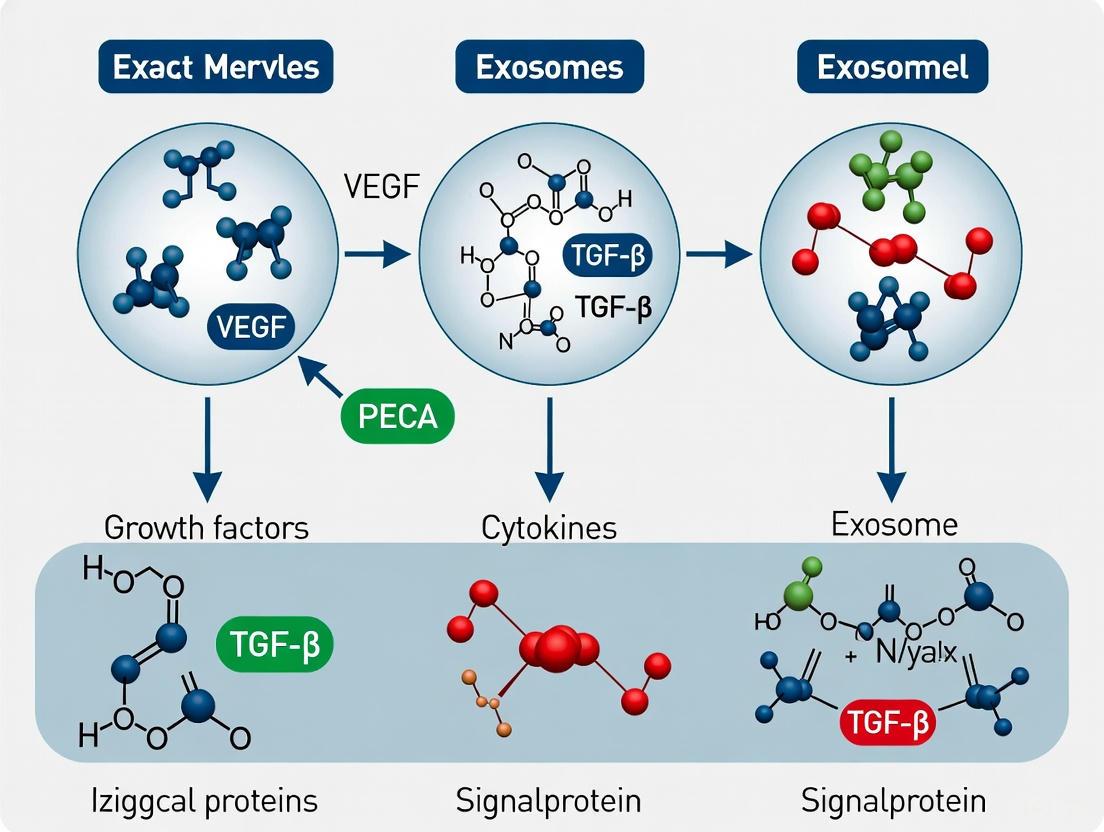
This article comprehensively reviews the molecular composition, mechanisms, and therapeutic applications of mesenchymal stem cell-derived exosomes (MSC-EVs) for researchers and drug development professionals.
MSC Exosomes: Decoding the Bioactive Cargo Powering Next-Generation Regenerative Medicine
Abstract
This article comprehensively reviews the molecular composition, mechanisms, and therapeutic applications of mesenchymal stem cell-derived exosomes (MSC-EVs) for researchers and drug development professionals. It explores the foundational biology of MSC-EVs as natural carriers of regenerative bioactive molecules—including proteins, miRNAs, and lipids—that modulate inflammation, angiogenesis, and tissue repair. The scope extends to methodologies for exosome production, isolation, and bioengineering, alongside troubleshooting key challenges in standardization and targeted delivery. Finally, it provides a comparative analysis of preclinical successes and the current clinical trial landscape, validating MSC-EVs as a potent, cell-free therapeutic strategy poised to transform regenerative medicine.
Unpacking the Cargo: A Deep Dive into the Bioactive Molecules in MSC Exosomes
Mesenchymal stem cell-derived exosomes (MSC-Exos) represent a transformative approach in regenerative medicine, offering a cell-free therapeutic alternative that addresses critical limitations of whole-cell therapies. These nanoscale extracellular vesicles (30-150 nm in diameter) function as sophisticated biological delivery systems, transporting bioactive molecules—including proteins, lipids, and nucleic acids—to recipient cells [1] [2]. Their therapeutic effects are mediated through complex molecular mechanisms that modulate immune responses, promote tissue repair, and restore homeostasis [3] [4]. As natural nanocarriers with low immunogenicity, high stability, and an innate ability to traverse biological barriers, MSC-Exos have demonstrated significant efficacy across a broad spectrum of disease models, from autoimmune conditions and cardiovascular diseases to wound healing and infertility treatment [2] [5] [6]. This whitepaper provides a comprehensive technical overview of MSC-Exos, detailing their biogenesis, molecular composition, functional mechanisms, and standardized methodologies for their isolation and characterization, framed within the context of their application as delivery systems for bioactive molecules in regenerative medicine research.
Biological Foundations of MSC Exosomes
Biogenesis and Structural Composition
The formation of MSC-derived exosomes is a meticulously orchestrated intracellular process originating from the endosomal system. Exosomes are intraluminal vesicles (ILVs) that are formed within late endosomes, also known as multivesicular bodies (MVBs). This biogenesis involves two primary pathways: the ESCRT (Endosomal Sorting Complex Required for Transport)-dependent mechanism and ESCRT-independent pathways that rely on tetraspanins and lipid composition [1] [2].
The ESCRT machinery comprises four protein complexes (ESCRT-0, -I, -II, and -III) associated proteins such as VPS4 and Alix. ESCRT-0 initiates the process by recognizing and clustering ubiquitinated cargoes, while ESCRT-I and -II facilitate membrane budding and vesicle formation. ESCRT-III drives the final scission of ILVs into the MVB lumen. In ESCRT-independent pathways, tetraspanins (CD63, CD9, CD81) and specific lipids like ceramides facilitate vesicle formation and cargo sorting [1] [2]. Once formed, MVBs either fuse with lysosomes for degradation or with the plasma membrane to release exosomes into the extracellular space through exocytosis [7].
The structural architecture of MSC-Exos consists of a lipid bilayer membrane enriched with tetraspanins (CD9, CD63, CD81), heat shock proteins (Hsp60, Hsp70, Hsp90), and membrane transport proteins (Rab GTPases, annexins) [4] [1]. This bilayer encapsulates a rich cargo of proteins, nucleic acids, and lipids that reflect their parental cell origin and functional status. The lipid composition, particularly high concentrations of cholesterol, sphingomyelin, and ceramides, contributes to membrane rigidity and stability while facilitating cellular uptake [1] [7].
Molecular Cargo and Characterization
MSC-Exos function as sophisticated molecular freight systems, carrying diverse bioactive molecules that mediate their therapeutic effects. Their cargo includes proteins, lipids, and various nucleic acid species, each contributing to their regenerative and immunomodulatory capabilities.
Table 1: Characteristic Molecular Cargo of MSC-Derived Exosomes
| Cargo Category | Specific Components | Functional Roles |
|---|---|---|
| Surface Markers | CD9, CD63, CD81, CD44, CD73, CD90 | Vesicle identification, cellular targeting, and adhesion |
| Intracellular Proteins | Alix, TSG101, Hsp70, Hsp90 | Biogenesis, stress response, protein folding |
| Nucleic Acids | mRNA, miRNA (e.g., miR-21, miR-146a), lncRNA | Epigenetic reprogramming, gene regulation, signaling modulation |
| Lipids | Cholesterol, sphingomyelin, ceramides, phosphatidylserine | Membrane stability, signal transduction, cellular uptake |
| Bioactive Factors | Growth factors, cytokines (TGF-β, IL-10) | Tissue repair, immunomodulation, angiogenesis |
The molecular profile of MSC-Exos is dynamic and influenced by the tissue source of parent MSCs (bone marrow, adipose tissue, umbilical cord), culture conditions, and specific environmental stimuli [4] [2] [5]. For instance, exosomes derived from umbilical cord MSCs contain distinct growth factors like TGF-β, which is absent in those from other sources, while bone marrow MSC-Exos exhibit particularly potent effects on dermal fibroblasts [4]. Similarly, exposure to hypoxic conditions can enhance the angiogenic properties of MSC-Exos, demonstrating their remarkable phenotypic plasticity [5].
Therapeutic Mechanisms and Signaling Pathways
MSC-Exos exert their multifaceted therapeutic effects through sophisticated mechanisms that involve precise cargo delivery and modulation of key signaling pathways in recipient cells. The following diagram illustrates the primary mechanisms through which MSC-Exos execute their therapeutic functions:
Immunomodulatory Pathways
MSC-Exos demonstrate remarkable capacity to modulate both innate and adaptive immune responses through several coordinated mechanisms. A primary immunomodulatory pathway involves the regulation of macrophage polarization. MSC-Exos can promote the shift from pro-inflammatory M1 macrophages to anti-inflammatory M2 phenotypes through the transfer of regulatory miRNAs such as miR-146a, which modulates the JAK1/STAT1/STAT6 signaling pathway [4] [5]. This polarization effect is context-dependent, as exosomes can also stimulate M1 differentiation in certain fibrotic environments to exert antifibrotic effects [5].
In adaptive immunity, MSC-Exos suppress dendritic cell maturation through miR-21-5p transfer, reducing expression of MHC class II and costimulatory molecules [5]. They directly modulate T-cell activity by transferring miRNAs such as miR-125a-3p, which maintains Th1/Th2 balance and suppresses Th17 expansion [5]. Additionally, MSC-Exos inhibit B-cell proliferation and antibody production via miR-155-5p, while promoting regulatory T-cell expansion through miR-540-3p and miR-338-5p transfer [5]. These coordinated immunomodulatory effects create an anti-inflammatory microenvironment conducive to tissue repair and regeneration.
Tissue Repair and Regenerative Mechanisms
The regenerative properties of MSC-Exos are mediated through multiple interconnected pathways that promote cell survival, proliferation, and tissue restoration. In wound healing models, exosomes accelerate re-epithelialization by activating Wnt/β-catenin signaling and upregulating proliferation markers like CK19 and PCNA [4]. They enhance cell survival under stress conditions by inhibiting apoptosis through AKT signaling activation and suppression of pro-apoptotic factors [4].
Angiogenic effects are achieved through the transfer of specific miRNAs (e.g., miR-125a) and lncRNAs (e.g., MALAT1) that inhibit anti-angiogenic factors and promote new blood vessel formation [4]. Exosomal cargo includes growth factors such as VEGF-A, FGF-2, and HGF, which directly stimulate endothelial cell proliferation and tube formation [4]. In bone regeneration, MSC-Exos promote osteoblast proliferation, differentiation, and mineralization, while in cartilage repair, they enhance chondrocyte proliferation and matrix synthesis [4]. The antifibrotic properties are particularly valuable in conditions like systemic sclerosis, where exosomes can attenuate fibrosis by modulating TGF-β signaling and collagen deposition [5].
Experimental Methodology and Standardization
Exosome Isolation and Purification Techniques
The isolation of high-purity exosomes is critical for both research and therapeutic applications. Several methods have been developed, each with distinct advantages and limitations for specific applications.
Table 2: Comparison of Primary MSC-Exo Isolation Methods
| Method | Principle | Purity | Yield | Time | Scalability | Key Applications |
|---|---|---|---|---|---|---|
| Differential Ultracentrifugation | Sequential centrifugation based on size/density | Moderate | Moderate | 4-5 hours | Good for large volumes | Research, preclinical studies |
| Density Gradient Ultracentrifugation | Separation based on buoyant density | High | Low | 18-24 hours | Limited | High-purity research applications |
| Ultrafiltration | Size-based separation using membranes | Moderate | High | 2-3 hours | Excellent | Therapeutic development, large-scale production |
| Precipitation | Solubility reduction using polymers | Low | High | 30 minutes | Excellent | Diagnostic assays, RNA analysis |
| Immunoaffinity Capture | Antibody-based surface marker binding | Very High | Low | 3-4 hours | Limited | Specific subpopulation isolation |
Ultracentrifugation-based techniques remain the gold standard for research applications, with differential ultracentrifugation being the most widely used method (approximately 56% of all isolation protocols) [7]. This approach involves successive centrifugation steps: initial low-speed spins (500×g) to remove cells and debris, followed by higher-speed centrifugation (10,000×g) to eliminate microvesicles and apoptotic bodies, and finally ultracentrifugation (100,000-120,000×g for 60-120 minutes) to pellet exosomes [7]. For higher purity requirements, density gradient ultracentrifugation separates exosomes from contaminating proteins and lipoproteins using iodixanol or sucrose gradients, though with reduced yield and scalability [7].
Ultrafiltration offers an attractive alternative for therapeutic applications, utilizing size-exclusion membranes to separate exosomes based on molecular weight cutoffs. This method provides higher throughput and better preserves exosome integrity, making it more suitable for clinical translation [7]. Immunoaffinity capture provides the highest purity by leveraging antibodies against exosome surface markers (CD63, CD81, CD9), but its clinical utility is limited by cost and scalability constraints [1].
Characterization and Quality Control
Comprehensive characterization of isolated MSC-Exos is essential to ensure identity, purity, and functionality. The following workflow outlines the standard operating procedures for exosome validation:
Standardized characterization employs multiple complementary techniques to assess exosome size, concentration, morphology, and molecular composition. Nanoparticle Tracking Analysis (NTA) determines size distribution and concentration, confirming vesicles within the 30-150 nm diameter range [1]. Transmission Electron Microscopy (TEM) provides ultrastructural visualization of the characteristic "cup-shaped" or "dish-shaped" morphology [4]. Western blot analysis confirms the presence of tetraspanin markers (CD9, CD63, CD81) and the absence of apoptotic or endoplasmic reticulum contaminants [1] [7]. Functional assays then validate biological activity through in vitro models assessing immunomodulation, proliferation promotion, or tissue-specific regenerative capacity [4] [5].
The Scientist's Toolkit: Essential Research Reagents
Table 3: Key Research Reagents for MSC-Exo Studies
| Reagent Category | Specific Examples | Function and Application |
|---|---|---|
| Isolation Kits | Total Exosome Isolation Kits, ExoQuick-TC | Polymer-based precipitation for rapid exosome isolation from cell culture media |
| Characterization Antibodies | Anti-CD63, Anti-CD81, Anti-CD9, Anti-Alix, Anti-TSG101 | Western blot and immunoaffinity capture for exosome identification and purification |
| Cell Culture Media | MesenCult, StemPro MSC SFM | Defined, serum-free media for MSC expansion and exosome production |
| Functional Assay Kits Macrophage Polarization Assays, T-cell Proliferation Kits, Angiogenesis Assays | In vitro validation of exosome immunomodulatory and regenerative functions | |
| Visualization Reagents | PKH67, PKH26, CellMask | Fluorescent membrane dyes for exosome tracking and uptake studies |
| RNA Analysis Tools | miRNA Microarrays, Small RNA Seq Kits, RT-qPCR Assays | Comprehensive analysis of exosomal RNA cargo and functional genomics |
Clinical Translation and Applications
Therapeutic Applications Across Disease Models
MSC-Exos have demonstrated remarkable therapeutic potential across diverse disease models, positioning them as versatile candidates for clinical translation. In dermatological applications, exosomes significantly accelerate wound healing through multiple mechanisms: they modulate inflammation by shifting macrophages to the M2 phenotype, enhance re-epithelialization via Wnt/β-catenin signaling activation, stimulate angiogenesis through transfer of pro-angiogenic miRNAs, and promote collagen remodeling [4]. When combined with biomaterial scaffolds like chitosan/silk hydrogel sponges, exosomes exhibit enhanced retention and sustained release, further improving healing outcomes in diabetic wound models [4].
In autoimmune and inflammatory conditions such as systemic sclerosis, MSC-Exos deliver antifibrotic miRNAs that attenuate collagen deposition and tissue fibrosis [5]. They ameliorate pulmonary arterial hypertension in animal models and show promise in treating other autoimmune diseases including systemic lupus erythematosus, rheumatoid arthritis, and Sjogren's syndrome through coordinated immunomodulation of both innate and adaptive immune responses [5].
Emerging applications in reproductive medicine demonstrate the versatility of MSC-Exos. In infertility treatment, exosomes repair endometrial damage, modulate the ovarian immune microenvironment, and address conditions such as premature ovarian insufficiency, polycystic ovary syndrome, and thin endometrium [6]. Their stable biological activity and lack of requirement for immunological matching make them particularly attractive for reproductive applications where precise timing and minimal intervention are crucial [6].
Clinical Trial Landscape and Regulatory Considerations
The clinical translation of MSC-Exos is rapidly advancing, with an increasing number of trials investigating their therapeutic potential across various medical conditions. Current clinical studies explore exosome applications in wound healing, myocardial infarction, neurological disorders, and COVID-19-related complications [2]. These trials aim to establish safety profiles, optimal dosing regimens, and administration routes for exosome-based therapies.
Significant challenges remain in the clinical development pathway. Biological variability arising from different MSC sources (bone marrow, adipose tissue, umbilical cord), donor heterogeneity, and culture conditions significantly influences exosome cargo and therapeutic efficacy [2]. Standardization of manufacturing processes, including isolation methods, quantification, and functional potency assays, represents a critical hurdle for regulatory approval [2] [7]. Scalability issues must be addressed through the development of robust Good Manufacturing Practice (GMP)-compliant production systems that ensure batch-to-batch consistency [2].
Future perspectives include engineering approaches to enhance targeting specificity and therapeutic potency. Surface modification with tissue-specific antibodies or peptides can improve targeted delivery, while loading with defined miRNA or drug combinations enables precision medicine applications [2]. The development of synthetic exosome mimetics combines the advantages of natural exosomes with the controllability of synthetic nanoparticles, potentially overcoming many current limitations in large-scale production and standardization [2].
MSC-derived exosomes represent a paradigm shift in regenerative medicine, offering a sophisticated nanoscale platform for therapeutic delivery that surpasses many limitations of whole-cell therapies. Their innate ability to transport complex molecular cargo, modulate multiple signaling pathways simultaneously, and navigate biological barriers with precision positions them as powerful tools for addressing complex disease mechanisms. While challenges in standardization, scalable production, and regulatory approval remain, ongoing research and clinical development continue to validate their therapeutic potential across diverse medical applications. As understanding of their biological mechanisms deepens and engineering strategies advance, MSC-Exos are poised to become transformative therapeutic agents that embody the convergence of natural biological design and precision medicine.
Mesenchymal stem cell-derived exosomes (MSC-Exos) are emerging as pivotal agents in regenerative medicine, functioning as primary mediators of the therapeutic effects traditionally attributed to their parent cells [5] [8]. These natural nanoscale vesicles (30-150 nm) facilitate intercellular communication by transferring a complex cargo of bioactive molecules—including proteins, miRNAs, and lipids—to recipient cells, thereby modulating gene expression and influencing key biological processes such as immune responses, fibrosis, and tissue repair [5] [9] [8]. Their lipid bilayer envelope provides structural stability and protects the internal cargo from degradation, ensuring the functional delivery of its contents [8]. Compared to whole-cell therapies, MSC-Exos offer a cell-free alternative with lower immunogenicity, a superior safety profile, and no risk of tumorigenesis or thrombosis, presenting significant advantages for clinical translation [5] [10]. This whitepaper provides an in-depth analysis of the core bioactive components of MSC-Exos, detailing their composition, functions, and the experimental methodologies essential for their characterization within the context of regenerative medicine research.
Core Bioactive Components of MSC Exosomes
The therapeutic efficacy of MSC-Exos is largely attributed to their diverse and specific biomolecular cargo, which is meticulously packaged from the parent cell. The table below summarizes the key functional proteins, regulatory miRNAs, and lipids that constitute this cargo.
Table 1: Key Bioactive Components in MSC-Derived Exosomes
| Component Category | Key Molecules | Primary Functions & Mechanisms | Relevance to Regenerative Medicine |
|---|---|---|---|
| Functional Proteins | Tetraspanins (CD9, CD63, CD81), MSC markers (CD73, CD90, CD44), Heat shock proteins (HSP70, HSP90), TSG101, Alix [5] [8] [11] | Facilitate target cell adhesion and fusion; used as surface markers for isolation and identification; contribute to immunomodulation and cellular stress response [5] [8] [11]. | Serves as identity markers for exosome purification and quality control; involved in recipient cell targeting and uptake. |
| Regulatory miRNAs | miR-146a, miR-21-5p, miR-125a-3p, miR-155-5p, miR-540-3p, miR-338-5p [5] | Modulate gene expression in target cells; key roles in inhibiting fibrotic pathways (e.g., miR-146a), suppressing dendritic cell maturation (miR-21-5p), regulating T-cell activity (miR-125a-3p), and inhibiting B-cell proliferation (miR-155-5p) [5]. | Primary mediators of immunomodulation, anti-fibrosis, and tissue repair; potential as tunable therapeutic agents. |
| Lipids | Cholesterol, Sphingomyelin, Ceramide, Phosphatidylserine, Phosphatidylcholine [8] [11] | Form the structural bilayer; confer stability and rigidity; involved in membrane trafficking, budding, and cellular uptake [8] [11]. | Provides structural integrity; influences pharmacokinetics and bio-distribution; lipid composition can affect therapeutic efficacy. |
Functional Proteins
Proteins embedded in the exosomal membrane and contained within its lumen are fundamental to its structure, targeting, and function. The exosomal membrane is rich in tetraspanins (CD9, CD63, CD81), which are classical markers used for exosome identification and purification. These proteins play a crucial role in cell adhesion, membrane fusion, and the specific sorting of cargo into exosomes [5] [8]. MSC-Exos also retain characteristic mesenchymal stem cell surface markers such as CD44, CD73, and CD90, which can aid in tracing their cellular origin [5]. Internally, exosomes carry a diverse array of proteins, including cytosolic proteins like the endosomal sorting complex members Alix and TSG101, heat shock proteins (HSP70, HSP90) involved in stress response, and a wide range of cytokines and growth factors [8] [11]. These proteins collectively enable MSC-Exos to directly influence signaling pathways in recipient cells, contributing to processes such as immunomodulation and tissue repair.
Regulatory miRNAs
MicroRNAs (miRNAs) are among the most biologically significant cargoes in MSC-Exos. These small non-coding RNAs function as post-transcriptional regulators of gene expression, allowing exosomes to profoundly alter the phenotype of recipient cells [5] [12]. The miRNA content is not random but is selectively packaged, often reflecting the physiological status of the parent MSC and the external stimuli it has encountered [5]. For instance, under hypoxic conditions, MSC-Exos are enriched with miRNAs that promote angiogenesis [5]. The therapeutic effects of specific miRNAs have been demonstrated in various disease models: miR-146a is pivotal for inducing anti-inflammatory macrophage polarization (M2 phenotype) [5], while miR-155-5p and miR-21-5p are involved in suppressing B-cell and dendritic cell activity, respectively [5]. This targeted regulatory capacity makes miRNAs central to the mechanism of action of MSC-Exos in regenerative medicine.
Lipids
The lipid bilayer of exosomes is a dynamic and functional component, distinct from the plasma membrane of the parent cell. It is enriched in cholesterol, sphingomyelin, and ceramide, which contribute to its rigidity, stability, and protection of the internal cargo from enzymatic degradation in the extracellular environment [8] [11]. Ceramide, in particular, plays a key role in the inward budding of the endosomal membrane during the formation of intraluminal vesicles (ILVs) within multivesicular bodies (MVBs) [8]. The specific lipid composition also influences how exosomes interact with and are taken up by recipient cells, affecting their tropism and biological distribution in vivo [8].
Experimental Protocols for Isolation and Characterization
Standardized and reproducible protocols are critical for the isolation and characterization of MSC-Exos to ensure the consistency and reliability of research data.
Exosome Isolation Techniques
The choice of isolation method depends on the required balance between yield, purity, and downstream application.
- Ultracentrifugation (Gold Standard): This is the most widely used method. It involves a series of centrifugal steps to remove cells, debris, and larger vesicles, followed by high-speed ultracentrifugation (typically ≥100,000 × g) to pellet exosomes [11]. Advantages: No specialized reagents required; suitable for large volumes. Disadvantages: Time-consuming; requires expensive equipment; can cause exosome aggregation or damage; potential co-precipitation of protein contaminants [11].
- Ultrafiltration: This method uses membranes with specific molecular weight cut-offs (e.g., 100-500 kDa) to separate exosomes based on size. Advantages: Faster than ultracentrifugation; avoids high mechanical force. Disadvantages: Membrane fouling can reduce yield and purity; smaller exosomes may be lost [11].
- Immunoaffinity Capture: This technique utilizes antibodies against exosome surface markers (e.g., CD63, CD81) conjugated to magnetic beads or chromatography matrices to specifically pull down exosomes. Advantages: High specificity and purity; ideal for isolating exosomes from specific cell origins. Disadvantages: Lower yield; higher cost; may elute exosomes in non-physiological conditions [11].
Characterization and Cargo Analysis
Once isolated, exosomes must be characterized to confirm their identity and analyze their cargo.
- Nanoparticle Tracking Analysis (NTA): This technique visualizes and tracks the Brownian motion of vesicles in a suspension to determine their particle size distribution and concentration [10].
- Transmission Electron Microscopy (TEM): TEM provides high-resolution images to confirm the classic cup-shaped morphology and size (30-150 nm) of exosomes [10] [8].
- Flow Cytometry: Western blotting or flow cytometry is used to detect the presence of positive protein markers (e.g., CD9, CD63, CD81, TSG101, Alix) and the absence of negative markers (e.g., GM130 for Golgi apparatus) [10] [11].
- miRNA Profiling: The miRNA cargo can be analyzed using techniques like next-generation sequencing (NGS) or quantitative real-time PCR (qRT-PCR) to identify and quantify specific miRNAs of interest [5] [12].
- Proteomic and Lipidomic Analysis: Mass spectrometry-based approaches are employed for a comprehensive analysis of the protein and lipid composition of exosomes, providing a deep insight into their functional potential [8].
Table 2: Key Research Reagent Solutions for MSC Exosome Research
| Reagent / Material | Function / Application | Key Considerations |
|---|---|---|
| Ultracentrifuge | Physical isolation of exosomes from conditioned cell media or biofluids. | The cornerstone equipment for gold-standard isolation; requires optimization of g-force, time, and rotor type [11]. |
| Ultrafiltration Membranes | Size-based isolation and concentration of exosomes. | Pore size (e.g., 100-500 kDa) is critical; choose low-protein-binding membranes to minimize loss [11]. |
| Anti-Tetraspanin Antibodies (e.g., anti-CD63, CD81, CD9) | Immunoaffinity capture for high-purity isolation; characterization via flow cytometry/Western blot. | Essential for confirming exosome identity (characterization) and for highly specific pulldown (isolation) [11]. |
| Nanoparticle Tracking Analyzer | Determining particle size distribution and concentration. | Provides vital quantitative data for dose-standardization in functional experiments and therapies [10]. |
| miRNA Sequencing Kits | Comprehensive profiling of exosomal miRNA content. | Allows for the discovery of miRNA signatures associated with specific therapeutic effects [5]. |
Visualization of Signaling Pathways and Workflows
The following diagrams illustrate the key mechanisms and experimental processes described in this whitepaper.
miRNA-Mediated Regulatory Network in MSC Exosomes
This diagram visualizes how specific miRNAs carried by MSC-Exos modulate recipient cell functions by targeting key signaling pathways, leading to immunomodulation, anti-fibrotic, and regenerative outcomes.
Experimental Workflow for MSC Exosome Research
This diagram outlines a standardized workflow from cell culture and exosome isolation to functional characterization, crucial for ensuring reproducible research.
Exosomes, nanosized extracellular vesicles ranging from 30-150 nm in diameter, have emerged as pivotal mediators of intercellular communication within the immune system [13] [14]. These lipid-bilayer enclosed vesicles transport a diverse molecular cargo—including proteins, lipids, and nucleic acids—that can profoundly influence inflammatory pathways and immune responses [15]. In the context of regenerative medicine, mesenchymal stem cell (MSC)-derived exosomes demonstrate remarkable therapeutic potential by modulating inflammation, facilitating tissue repair, and restoring immune homeostasis [4] [16]. This technical review examines the mechanisms through which exosomal cargo orchestrates immune regulation, with particular emphasis on MSC-exosomes as a promising cell-free therapeutic strategy for inflammatory conditions and regenerative applications.
Exosome Biogenesis Pathways
Exosome formation occurs through two primary mechanistic pathways: the endosomal sorting complex required for transport (ESCRT)-dependent and ESCRT-independent mechanisms [13] [17]. The biogenesis process initiates with the inward budding of the plasma membrane to form early endosomes, which subsequently mature into late endosomes [18]. During this maturation, the endosomal membrane invaginates inward to form intraluminal vesicles (ILVs) within multivesicular bodies (MVBs) [17] [15]. These MVBs subsequently follow one of two destinies: fusion with lysosomes for content degradation or fusion with the plasma membrane to release ILVs as exosomes into the extracellular space [13] [19].
The ESCRT machinery, comprising four complexes (ESCRT-0, -I, -II, and -III), works sequentially to recognize and sort ubiquitinated proteins into ILVs [13] [15]. ESCRT-0 initiates the process by recognizing and clustering ubiquitinated cargo, while ESCRT-I and II promote membrane budding. ESCRT-III then facilitates the final scission and release of ILVs into the MVB lumen [15]. ESCRT-independent biogenesis pathways involve tetraspanin proteins (CD9, CD63, CD81) and lipid mediators such as ceramides, which can induce membrane curvature and vesicle formation without ESCRT involvement [14] [17].
Molecular Composition of Exosomal Cargo
Exosomes carry a diverse array of biomolecules that reflect their cellular origin and physiological state:
- Proteins: Tetraspanins (CD9, CD63, CD81), ESCRT components (Alix, TSG101), heat shock proteins, major histocompatibility complex molecules, and apoptosis-related proteins [20] [15]
- Nucleic Acids: mRNAs, microRNAs (miRNAs), long non-coding RNAs, and other regulatory RNAs [13] [16]
- Lipids: Cholesterol, ceramides, sphingomyelin, phosphatidylserine, and other phospholipids that contribute to membrane structure and function [14] [15]
The specific composition of exosomal cargo is dynamically regulated and varies depending on the cell type of origin and physiological conditions, ultimately determining the functional impact on recipient cells [17] [15].
Molecular Mechanisms of Exosome-Mediated Immune Modulation
Regulation of Inflammatory Signaling Pathways
Exosomes modulate inflammatory responses through direct delivery of regulatory molecules to immune cells. MSC-derived exosomes have demonstrated capacity to suppress pro-inflammatory M1 macrophage polarization while promoting anti-inflammatory M2 phenotypes [4] [20]. This effect is mediated through the transfer of specific microRNAs, such as miR-21, miR-146a, and miR-181, which target key components of inflammatory signaling pathways including NF-κB and Toll-like receptor signaling [4]. Additionally, MSC-exosomes pretreated with melatonin showed enhanced anti-inflammatory capacity, significantly suppressing pro-inflammatory cytokines IL-1β and TNF-α while upregulating anti-inflammatory IL-10 [4].
The tetraspanin family proteins enriched in exosome membranes, particularly CD9, CD63, and CD81, facilitate targeting and uptake by recipient immune cells [14] [20]. These proteins form specialized membrane microdomains that interact with receptors on target cells, determining the specificity of exosome binding and internalization [14].
Adaptive Immune Regulation
Exosomes directly modulate adaptive immunity through antigen presentation and lymphocyte regulation. Dendritic cell-derived exosomes carry MHC-peptide complexes that can directly activate CD4+ and CD8+ T cells [17] [20]. Meanwhile, regulatory T cell (Treg)-derived exosomes express CD73, which generates anti-inflammatory adenosine that suppresses T cell responses and promotes immunological tolerance [20]. B cell-derived exosomes modulate fibroblast responses in inflammatory environments through integrin-mediated adhesion and signaling pathways [20].
Table 1: Exosomal Cargo Components and Their Immunomodulatory Functions
| Cargo Type | Specific Components | Immune Functions | Mechanisms of Action |
|---|---|---|---|
| Proteins | TGF-β, IL-10, Annexin A1 | Anti-inflammatory | Suppress pro-inflammatory cytokine production, promote Treg differentiation |
| MHC-I/II complexes | Antigen presentation | Direct T cell activation, immune surveillance | |
| CD73, CD39 | Immunosuppression | Generate adenosine, suppress T cell proliferation | |
| miRNAs | miR-21, miR-146a | Anti-inflammatory | Target NF-κB pathway, reduce pro-inflammatory cytokines |
| miR-155 | Pro-inflammatory | Promotes inflammatory cytokine production | |
| miR-150-5p, miR-142-3p | Tolerance induction | Transfer to DCs, reduce IL-6, increase IL-10 production | |
| Lipids | Phosphatidylserine | Immunosuppression | Engage phagocytic receptors, promote tolerance |
| Ceramides | Membrane structure | Facilitate exosome biogenesis, stability |
MSC-Exosomes in Inflammatory Resolution and Tissue Repair
MSC-derived exosomes promote tissue repair through multifaceted mechanisms that extend beyond pure immunomodulation. In wound healing models, MSC-exosomes accelerate re-epithelialization, enhance angiogenesis, and improve collagen remodeling [4]. These effects are mediated through the transfer of growth factors (VEGF, FGF, HGF) and regulatory RNAs that activate proliferative pathways such as Wnt/β-catenin and AKT signaling in recipient cells [4] [16]. The therapeutic efficacy of MSC-exosomes can be further enhanced through engineering approaches, including preconditioning of parent MSCs under hypoxic conditions or with inflammatory cytokines to enrich specific therapeutic cargo [16].
Table 2: Quantitative Effects of MSC-Exosomes in Preclinical Models of Inflammation
| Disease Model | Exosome Source | Key Outcomes | Mechanistic Insights |
|---|---|---|---|
| Diabetic Wounds | Umbilical cord MSC | Accelerated re-epithelialization, enhanced angiogenesis | Activation of Wnt/β-catenin signaling, increased CK19 and PCNA expression |
| Rheumatoid Arthritis | Bone marrow MSC | Reduced joint inflammation, decreased cartilage erosion | Polarization of macrophages to M2 phenotype, reduced TNF-α, IL-6 |
| Acute Kidney Injury | MSC | Attenuated tissue damage, improved function | 60-fold increase in urinary exosomal miR-192, reduced apoptosis |
| Colitis | Dendritic cell | Reduced inflammation, improved survival | Decreased TNF-α, IFN-γ, IL-17A, IL-12, increased anti-inflammatory cytokines |
Experimental Approaches for Exosome Research
Exosome Isolation and Characterization Techniques
The selection of appropriate isolation methods is critical for exosome research and therapeutic applications:
- Ultracentrifugation: Considered the gold standard, this method uses sequential centrifugation steps to separate exosomes based on size and density [4] [18]
- Size Exclusion Chromatography: Separates exosomes from contaminating proteins based on hydrodynamic radius, preserving vesicle integrity and function [18]
- Polymer-Based Precipitation: Uses polymers to decrease exosome solubility, enabling rapid isolation though with potential protein contamination [18]
- Immunoaffinity Capture: Employs antibodies against exosome surface markers (CD9, CD63, CD81) for highly specific isolation of exosome subpopulations [18]
Following isolation, exosomes must be characterized using multiple complementary techniques:
- Nanoparticle Tracking Analysis (Nanosight): Determines particle size distribution and concentration by tracking Brownian motion [19]
- Tunable Resistive Pulse Sensing: Measures particle concentration and size by detecting temporary changes in current as particles pass through a nanopore [19]
- Flow Cytometry: Specialized instruments with enhanced sensitivity can detect fluorescently labeled exosomes for immunophenotyping [19]
- Electron Microscopy: Provides high-resolution visualization of exosome morphology and ultrastructure [18]
Research Reagent Solutions for Exosome Studies
Table 3: Essential Research Reagents for Exosome Investigation
| Reagent/Category | Specific Examples | Research Application | Technical Considerations |
|---|---|---|---|
| Isolation Kits | Total Exosome Isolation Kit (Invitrogen), ExoQuick-TC (SBI) | Rapid exosome precipitation from biofluids | Potential co-precipitation of contaminants; suitable for large sample processing |
| Characterization Antibodies | Anti-CD9, CD63, CD81, TSG101, Alix | Exosome identification and subtyping by flow cytometry, Western blot | Tetraspanin combination recommended for comprehensive detection |
| Engineering Tools | Rab27a siRNA, CRISPR/Cas9 systems | Modulate exosome biogenesis and secretion | Rab27a knockdown reduces exosome release; genetic manipulation of parent cells |
| Cargo Loading Reagents | Electroporation buffers, transfection reagents, sonication equipment | Therapeutic cargo loading (drugs, nucleic acids) | Optimization required to balance loading efficiency with vesicle integrity |
| Tracking Dyes | PKH67, DiD, CFSE, GFP-labeled tetraspanins | Exosome uptake and trafficking studies | Dye aggregation potential; fluorescent protein tagging enables genetic encoding |
Functional Assays for Immunomodulatory Assessment
Evaluating the immunomodulatory capacity of exosomes requires specialized functional assays:
- Macrophage Polarization Assays: Co-culture of exosomes with primary macrophages followed by analysis of surface markers (CD86 for M1, CD206 for M2) and cytokine secretion profiles [4] [20]
- T Cell Proliferation and Differentiation: CFSE dilution assays to measure T cell proliferation suppression; intracellular cytokine staining for Th1/Th2/Th17 differentiation [20]
- In Vivo Imaging and Tracking: Labeling exosomes with near-infrared dyes or luciferase to monitor biodistribution and homing to inflammatory sites in disease models [16]
- Omic Approaches: RNA sequencing and proteomic analysis of exosome cargo to comprehensively characterize molecular composition and identify novel mediators [15]
Signaling Pathways in Exosome-Mediated Immune Regulation
The diagrams below illustrate key signaling pathways through which exosomal cargo modulates immune and inflammatory responses.
Exosome-Mediated Immune Cell Regulation - This diagram illustrates how exosomal cargo influences macrophage polarization and T cell responses through molecular transfer and surface interactions.
Exosomes represent sophisticated natural delivery systems that play fundamental roles in coordinating immune responses and resolving inflammation. The molecular cargo they carry—including proteins, lipids, and regulatory RNAs—enables them to modulate signaling pathways in recipient cells with remarkable specificity. In regenerative medicine, MSC-derived exosomes have demonstrated significant therapeutic potential through their capacity to reprogram immune cells, suppress pathological inflammation, and create a pro-regenerative microenvironment [4] [16].
Future research directions should focus on optimizing exosome engineering strategies to enhance therapeutic efficacy and targeting specificity [16]. This includes developing standardized methods for cargo loading, surface modification, and large-scale production that meet regulatory requirements for clinical translation. Additionally, a deeper understanding of how specific exosomal components collectively orchestrate immune responses will enable the design of more precise therapeutic interventions for inflammatory diseases, autoimmune disorders, and transplantation medicine.
As the field advances, exosome-based therapies are poised to become powerful tools in regenerative medicine, offering cell-free alternatives that retain the therapeutic benefits of MSCs while minimizing risks associated with cell transplantation [4] [16] [18]. The continued elucidation of exosome mechanisms of action will undoubtedly uncover new opportunities for innovative treatments across a spectrum of inflammatory and immune-mediated conditions.
Mesenchymal stem cell-derived exosomes (MSC-Exos) have emerged as a novel cell-free therapeutic strategy in regenerative medicine, largely due to their capacity to activate critical intracellular signaling pathways. These nanoscale vesicles, enriched with proteins, microRNAs (miRNAs), and growth factors, serve as potent mediators of intercellular communication. This technical review delineates the mechanisms by which MSC-Exos orchestrate tissue repair through the targeted modulation of the PI3K/Akt, Wnt/β-catenin, and MAPK/ERK signaling pathways. We synthesize current findings on specific exosomal cargoes—such as miRNAs and proteins—that interact with these pathways to promote cell survival, proliferation, differentiation, and angiogenesis. The document also provides standardized experimental workflows for investigating these interactions and a catalog of essential research reagents, offering a foundational resource for scientists and drug development professionals advancing exosome-based therapeutics.
Mesenchymal stem cell-derived exosomes are extracellular vesicles with a diameter of 30–150 nm that are released via the fusion of multivesicular bodies with the plasma membrane [18] [21]. They are fundamental constituents of the MSC secretome and are laden with a diverse array of bioactive molecules, including proteins, lipids, DNA, and over 3,400 types of RNA, as cataloged in the ExoCarta database [22]. The therapeutic effects of MSCs—spanning anti-inflammatory, immunomodulatory, and tissue repair processes—are now largely attributed to this paracrine activity [22]. As natural nanocarriers, MSC-Exos selectively transfer functional cargo to recipient cells, thereby activating key signaling pathways that direct cellular responses toward a regenerative phenotype [23] [21]. Their low immunogenicity and absence of tumorigenic risk, attributed to low MHC-I and absence of MHC-II expression, further enhance their therapeutic profile [22]. This review focuses on their role as potent activators of the PI3K/Akt, Wnt/β-catenin, and MAPK pathways, which are central to controlling cell growth, survival, and tissue homeostasis.
MSC Exosomes in the Activation of Key Regenerative Pathways
Wnt/β-catenin Pathway Activation
The Wnt/β-catenin pathway is a highly conserved signaling cascade that plays a crucial role in stem cell self-renewal, proliferation, and tissue repair [23]. MSC-Exos dynamically regulate this pathway through two primary mechanisms: the direct shipment of Wnt proteins and the transfer of miRNAs that inhibit endogenous Wnt antagonists.
- Direct Ligand Transfer: Studies have demonstrated that exosomes from human umbilical cord MSCs can transport the Wnt4 protein directly to recipient cells. Upon delivery, Wnt4 stabilizes β-catenin and promotes its nuclear translocation, activating downstream target genes such as Cyclin D1 and Bcl2, which drive cell cycle progression and suppress apoptosis [23].
- miRNA-Mediated Inhibition: Alternatively, MSC-Exos can modulate the pathway indirectly via miRNAs. For instance, miR-181a-5p, found in exosomes from skin papilla cells, targets and inhibits the expression of two Wnt antagonists: Wnt inhibitory factor 1 (WIF1) and secreted frizzled-related protein 2 (SFRP2). This inhibition effectively releases the Wnt/β-catenin pathway from suppression, enhancing pro-growth signaling and protecting hair follicle stem cells from apoptosis [23]. The pathway's significance is underscored by its role in diverse tissues, from promoting hair follicle growth to facilitating repair in kidney and lung injury models [23].
Table 1: Exosomal Cargo Targeting the Wnt/β-catenin Pathway
| Exosomal Cargo | Type | Target/Mechanism | Biological Outcome | Experimental Context |
|---|---|---|---|---|
| Wnt4 | Protein | Stabilizes β-catenin, promotes nuclear translocation | Upregulates Cyclin D1, Bcl2; promotes cell proliferation & survival [23] | Human umbilical cord MSC-Exos |
| miR-181a-5p | miRNA | Inhibits Wnt antagonists WIF1 and SFRP2 | Releases Wnt/β-catenin pathway suppression, promotes growth [23] | Skin papilla cell-derived exosomes |
| miR-29c-3p | miRNA | Inhibits beta-site APP cleaving enzyme 1 (BACE1) | Activates Wnt/β-catenin, reduces Aβ1-42, decreases neuronal apoptosis [23] | Bone marrow MSC-EVs in Alzheimer's model |
PI3K/Akt Pathway Activation
The PI3K/Akt pathway is a central regulator of cell growth, survival, and metabolism. Its activation by MSC-Exos is frequently mediated by the transfer of specific miRNAs that suppress negative regulators of the pathway, leading to enhanced cell viability and inhibition of apoptosis.
A key mechanism involves the delivery of miR-21-5p. This exosomal miRNA targets the PTEN (Phosphatase and Tensin Homolog) gene, a well-known tumor suppressor that acts as a negative regulator of the PI3K/Akt pathway. By inhibiting PTEN, miR-21-5p enhances Akt phosphorylation and activation [22]. This mechanism has been demonstrated in the context of premature ovarian failure (POF), where exosomes from umbilical cord MSCs transfected with miRNA-21 enhanced therapeutic outcomes by inhibiting the PTEN/AKT/FOXO3a signaling axis, thereby reducing oxidative stress and inhibiting excessive autophagy in ovarian granulosa cells [22]. The activation of this pathway converges on promoting cell cycle progression and suppressing pro-apoptotic signals.
MAPK/ERK Pathway Activation
The MAPK/ERK pathway transmits signals from cell surface receptors to the nucleus, fundamentally influencing cell proliferation and differentiation. MSC-Exos can activate this pathway to foster a regenerative environment, particularly in neural and vascular tissues.
While the search results provide less specific exosomal cargo for the MAPK/ERK pathway compared to the other pathways, its established role as a crucial intracellular network regulated by MSC secretions is well-documented [24] [25]. The pathway is known to be activated by growth factors and cytokines present in the exosomal membrane or delivered to recipient cells. This activation can lead to the transcription of genes essential for cell cycle entry and the inhibition of pro-apoptotic proteins. The crosstalk between the MAPK/ERK pathway and other cascades like PI3K/Akt allows MSC-Exos to coordinate a synergistic and robust regenerative response [24].
Table 2: Summary of Key Pathways Activated by MSC-Exosomes
| Signaling Pathway | Primary Exosomal Cargo | Key Molecular Targets | Downstream Effects | Regenerative Outcomes |
|---|---|---|---|---|
| Wnt/β-catenin | Wnt4, miR-181a-5p, miR-29c-3p | β-catenin, WIF1, SFRP2, BACE1 | ↑Cyclin D1, ↑Bcl-2, ↓Bax | Cell proliferation, anti-apoptosis, tissue repair [23] |
| PI3K/Akt | miR-21-5p, other miRNAs | PTEN, AKT, FOXO3a | ↑Cell cycle progression, ↓autophagy, ↑survival | Cell survival, metabolic regulation, anti-oxidative stress [22] |
| MAPK/ERK | Growth factors, cytokines | RAS, RAF, MEK, ERK | ↑Transcription of proliferation genes | Cell proliferation, differentiation, angiogenesis [24] |
Experimental Protocols for Pathway Analysis
Isolation and Characterization of MSC-Exos
Principle: Obtaining high-purity exosomes is a prerequisite for functional studies. Ultracentrifugation is considered the gold standard method [18] [21].
Protocol:
- Cell Culture: Culture MSCs (from bone marrow, adipose tissue, or umbilical cord) in exosome-depleted fetal bovine serum.
- Conditioned Media Collection: Collect supernatant after 48-72 hours. Perform sequential centrifugation:
- 300 × g for 10 min to remove cells.
- 2,000 × g for 20 min to remove dead cells.
- 10,000 × g for 30 min to remove cell debris and large vesicles.
- Ultracentrifugation: Pellet exosomes at 100,000 × g for 70-120 min at 4°C.
- Washing: Resuspend the pellet in phosphate-buffered saline (PBS) and centrifuge again at 100,000 × g for 70 min to purify.
- Characterization:
- Nanoparticle Tracking Analysis (NTA): To determine particle size distribution and concentration [18].
- Transmission Electron Microscopy (TEM): To visualize cup-shaped morphology [18] [21].
- Western Blot: To confirm the presence of exosomal markers (CD9, CD63, CD81, Alix, TSG101) and absence of negative markers (e.g., Grp94) [21].
Validating Pathway Activation in Recipient Cells
Principle: To confirm that MSC-Exos activate specific pathways in target cells.
Protocol:
- Uptake Assay: Label isolated exosomes with a lipophilic dye (e.g., PKH67 or DiD) and incubate with recipient cells. Confirm internalization via confocal microscopy after 6-24 hours.
- Functional Knockdown: Use small interfering RNAs (siRNAs) or inhibitors to knock down key pathway components (e.g., β-catenin for Wnt pathway, Akt for PI3K pathway) in recipient cells prior to exosome treatment. This establishes the necessity of the pathway for the observed effect.
- Molecular Analysis:
- Western Blot: Analyze protein lysates from exosome-treated cells for:
- Phosphorylation status of key kinases (e.g., p-Akt, p-ERK).
- Total protein levels of pathway components (e.g., total β-catenin, PTEN).
- Expression of downstream targets (e.g., Cyclin D1, Bcl-2).
- Quantitative PCR (qPCR): Measure mRNA levels of downstream target genes.
- Immunofluorescence: Visualize the nuclear translocation of transcription factors like β-catenin.
- Western Blot: Analyze protein lysates from exosome-treated cells for:
Pathway Visualization and Logical Workflow
The following diagrams, generated using Graphviz DOT language, illustrate the core signaling pathways and the experimental workflow for studying MSC-Exos.
The Scientist's Toolkit: Key Research Reagents
This section details essential reagents and kits for isolating, characterizing, and functionally analyzing MSC-Exos and their effects on signaling pathways.
Table 3: Essential Research Reagents for MSC-Exosome Studies
| Reagent/Kits | Function/Application | Key Characteristics |
|---|---|---|
| Total Exosome Isolation Kit (Invitrogen) | Isolation of exosomes from cell culture media or biological fluids. Utilizes polyethylene glycol (PEG) precipitation [18]. | Simple, fast, and suitable for processing multiple samples; may co-precipitate non-exosomal material. |
| ExoQuick-TC (System Biosciences) | Precipitation-based exosome isolation from tissue culture media [18]. | High yield, kit-based protocol; purity may be lower than ultracentrifugation. |
| miRCURY Exosome Kit (QIAGEN) | Isolation of exosomes for downstream RNA analysis, particularly miRNA [18]. | Optimized for preserving RNA integrity; ideal for miRNA cargo studies. |
| CD63/CD81 Immunoaffinity Beads | Isolation of specific exosome subpopulations by targeting surface tetraspanins [18]. | Provides high-purity exosomes for specific functional studies. |
| PKH67/PKH26 Dyes | Fluorescent lipophilic membrane dyes for labeling and tracking exosome uptake by recipient cells [21]. | Essential for visualizing internalization via confocal microscopy. |
| Antibodies: CD9, CD63, CD81, Alix, TSG101 | Western Blot characterization of exosomal markers to confirm identity and purity [18] [21]. | Critical for standardizing exosome preparations. |
| Phospho-Specific Antibodies: p-Akt, p-ERK, p-GSK-3β | Detection of activated/phosphorylated signaling proteins in recipient cells to confirm pathway activation. | Key for molecular analysis of pathway engagement. |
| Akt Inhibitor (MK-2206), MEK Inhibitor (U0126) | Chemical inhibitors used to block specific pathways (PI3K/Akt and MAPK/ERK, respectively) for functional validation experiments. | Necessary for establishing causal links between pathway activation and biological outcomes. |
MSC-derived exosomes represent a sophisticated biological system for targeted pathway activation in regenerative medicine. Their efficacy is rooted in the precise delivery of protein and miRNA cargoes that convergently regulate the Wnt/β-catenin, PI3K/Akt, and MAPK/ERK signaling axes to promote cell survival, proliferation, and tissue repair. The standardized experimental frameworks and reagent toolkits outlined herein provide a critical foundation for the rigorous validation of these mechanisms. As the field progresses, overcoming challenges related to the standardization of isolation protocols, optimization of dosing, and development of targeted delivery systems will be paramount. Future research leveraging engineered exosomes and combinatorial approaches with biomaterials holds the promise of unlocking the full clinical potential of these potent nanotherapeutics, paving the way for a new era in personalized regenerative medicine.
Mesenchymal stem cell-derived exosomes (MSC-Exos) are emerging as pivotal therapeutic agents in regenerative medicine, primarily functioning as natural carriers of bioactive molecules. These nanosized extracellular vesicles (30-150 nm) mediate intercellular communication by transferring proteins, lipids, RNA, and DNA between cells, thereby influencing recipient cell function and phenotype [26] [27]. Unlike their parent cells, MSC-Exos possess an innate ability to cross biological barriers, making them particularly attractive for drug delivery and therapeutic intervention [28] [29]. Their lipid bilayer membrane protects their cargo from degradation and facilitates trafficking through various physiological systems, while their surface composition determines their specific tropism and biodistribution patterns [26] [30]. This inherent targeting capability, combined with low immunogenicity and stability in circulation, positions MSC-Exos as promising vectors for delivering regenerative signals to precise anatomical locations.
Biogenesis and Composition of MSC Exosomes
Biogenesis Pathways
Exosome biogenesis involves a sophisticated intracellular process originating from the endosomal system. The formation begins with the inward budding of the plasma membrane to form early endosomes, which subsequently mature into late endosomes. Further invagination of the endosomal membrane leads to the creation of intraluminal vesicles (ILVs) within multivesicular bodies (MVBs) [27] [28]. These MVBs follow one of two destinies: degradation through fusion with lysosomes or release of ILVs as exosomes upon fusion with the plasma membrane [28]. This complex process is regulated by two primary mechanisms:
- ESCRT-Dependent Pathway: The Endosomal Sorting Complex Required for Transport (ESCRT) machinery, comprising ESCRT-0, -I, -II, and -III complexes along with associated proteins (ALIX, VPS4, VTA1), coordinates the recognition of ubiquitinated proteins, membrane budding, and vesicle scission [26] [27].
- ESCRT-Independent Pathway: This mechanism relies on tetraspanin proteins (CD9, CD63, CD81, CD82) and lipid-based microdomains enriched with ceramide, which facilitate vesicle formation and cargo sorting without ESCRT involvement [26] [27].
The secretion of mature exosomes is regulated by Rab GTPase proteins (Rab27a, Rab27b, Rab35, Rab7, Rab11) and SNARE complexes that mediate vesicle trafficking and membrane fusion [26] [27]. External stimuli such as hypoxia, inflammation, and cellular stress can significantly influence both the quantity and molecular composition of secreted exosomes [26].
Molecular Composition
MSC-Exos contain a diverse array of biomolecules that reflect their biological functions and origin:
- Lipid Composition: The lipid bilayer is enriched in cholesterol, sphingomyelin, phosphatidylserine, hexosylceramides, and saturated fatty acids, providing structural stability and facilitating membrane fusion [26].
- Protein Cargo: Proteomic analyses have identified approximately 730 functional proteins in MSC-Exos, including tetraspanins (CD9, CD63, CD81, CD82), adhesion molecules (integrins), antigen presentation proteins (MHC class II), heat shock proteins, and MSC-characteristic markers (CD73, CD44, CD90) [26]. ESCRT-related proteins (ALIX, TSG101) and membrane transport proteins (Rab GTPases, annexins) are also consistently present [26].
- Nucleic Acid Content: MSC-Exos contain various RNA species (mRNA, miRNA, rRNA, tRNA) with specific enrichment patterns that differ from parent cells [26]. Additionally, several DNA forms have been detected, including double-stranded DNA (>10 kb), single-stranded DNA, and mitochondrial DNA, which can be transferred to recipient cells [26].
Table 1: Key Cargo Components in MSC-Derived Exosomes
| Component Type | Key Elements | Functional Significance |
|---|---|---|
| Surface Proteins | CD9, CD63, CD81, CD73, CD90, Integrins | Cellular targeting, adhesion, MSC identity |
| Intracellular Proteins | ALIX, TSG101, Heat shock proteins, Rab GTPases | Biogenesis regulation, stress response, trafficking |
| Lipids | Cholesterol, Sphingomyelin, Phosphatidylserine | Membrane stability, fusion capacity |
| Nucleic Acids | mRNA, miRNA, tRNA, dsDNA | Genetic reprogramming, epigenetic regulation |
Innate Mechanisms for Crossing Biological Barriers
Structural Properties Enabling Barrier Penetration
The innate ability of MSC-Exos to cross biological barriers stems from their fundamental physicochemical properties. Their nanoscale size (30-150 nm) allows efficient transit through microscopic pores and channels inaccessible to larger particles or cells [28] [29]. The lipid bilayer membrane provides protection against enzymatic degradation in biological fluids while enabling membrane fusion with target cells [26]. Specific structural features facilitating barrier crossing include:
- Surface Topography: The curvature and flexibility of exosomal membranes enable deformation and passage through constricted spaces.
- Hydrophobic-Hydrophilic Balance: Amphipathic properties allow navigation through both aqueous and lipid-rich environments.
- Surface Charge: Zeta potential influences electrostatic interactions with cellular membranes and extracellular matrix components.
Biodistribution and Homing Mechanisms
MSC-Exos demonstrate distinctive biodistribution patterns influenced by their cellular origin, surface composition, and administration route. The homing specificity is largely dictated by integrin expression patterns on the exosome surface, which determine organ-specific tropism [26]. Upon systemic administration, MSC-Exos show preferential accumulation in certain organs:
- Liver and Spleen: Rapid clearance by mononuclear phagocyte system represents a major elimination pathway.
- Kidneys: Significant accumulation enables potential application for renal disorders.
- Lungs: Initial sequestration followed by redistribution to other tissues.
- Inflammatory and Tumor Sites: Enhanced permeability and retention effect facilitates targeted accumulation.
The table below summarizes quantitative biodistribution data from preclinical studies:
Table 2: Biodistribution Patterns of Intravenously Administered MSC-Exos in Preclinical Models
| Target Tissue | Accumulation Peak | Retention Duration | Key Determining Factors |
|---|---|---|---|
| Liver | 30-60 minutes | Up to 24 hours | Phagocytic clearance, integrin expression |
| Spleen | 1-2 hours | Up to 12 hours | Immune cell interactions, size-based filtration |
| Kidneys | 1-3 hours | Up to 48 hours | Glomerular filtration, tubular reabsorption |
| Lungs | 5-30 minutes | Up to 6 hours | First-pass effect, capillary bed entrapment |
| Inflamed Tissues | 4-24 hours | Up to 72 hours | Enhanced vascular permeability, chemotactic signals |
| Brain | 6-24 hours | Up to 48 hours | Transcytosis across blood-brain barrier |
Cellular Uptake Mechanisms
MSC-Exos employ multiple pathways to enter target cells, each with distinct molecular requirements:
- Direct Membrane Fusion: The exosomal membrane merges with the plasma membrane, directly releasing contents into the cytoplasm without encapsulation [30]. This process is mediated by specific lipid compositions and membrane proteins.
- Endocytosis: Receptor-mediated uptake through clathrin-dependent or caveolin-dependent pathways, followed by trafficking through endosomal compartments [28].
- Phagocytosis: Engulfment by specialized cells, particularly in the immune system, facilitated by surface opsonins and recognition receptors.
- Macropinocytosis: Actin-dependent uptake of extracellular fluid containing exosomes, often stimulated by growth factors or signaling molecules.
The following diagram illustrates the complete biogenesis and cellular uptake processes:
Experimental Protocols for Studying Biodistribution
Labeling and Tracking Methodologies
Accurate assessment of MSC-Exos biodistribution requires robust labeling techniques that maintain vesicle integrity while providing detectable signals:
- Fluorescent Labeling: Lipophilic dyes (DiR, DiD, PKH67, PKH26) intercalate into the lipid bilayer, enabling in vivo and in vitro tracking. Standard protocol: Incubate 100 μg exosomes with 1-5 μM dye for 30 minutes at 37°C, followed by removal of unincorporated dye by size-exclusion chromatography or ultracentrifugation [27].
- Radiolabeling: Incorporation of radioisotopes (99mTc, 111In, 124I) via chelating agents or direct labeling provides high sensitivity for quantitative biodistribution studies using SPECT/CT imaging.
- Luciferase/Luminescence Tagging: Genetic engineering of parent MSCs to express membrane-anchored luciferase (GlucB, CD63-luciferase) enables sensitive in vivo bioluminescence imaging.
- Quantum Dot Labeling: Semiconductor nanocrystals conjugated to exosome surface markers offer photostable, multiplexed tracking capabilities.
Quantitative Biodistribution Assays
Precise quantification of tissue-specific accumulation employs multiple complementary approaches:
- qPCR-Based Methods: Detection of exosome-specific nucleic acids (artificial spike-ins or endogenous sequences) in tissue homogenates using TaqMan assays.
- Mass Spectrometry: Stable isotope labeling with amino acids in cell culture (SILAC) of parent MSCs enables proteomic tracking of exosomes in recipient tissues.
- Enzymatic Assays: Measurement of exosome-associated enzymes (alkaline phosphatase, luciferase) in tissue lysates.
- Immunodetection: Western blot, ELISA, or immunohistochemistry for exosome-specific markers in tissue sections.
Table 3: Key Research Reagents for Biodistribution Studies
| Reagent Category | Specific Examples | Research Application |
|---|---|---|
| Fluorescent Dyes | PKH67, PKH26, DiD, DiR, CM-Dil | In vivo and in vitro tracking, membrane labeling |
| Molecular Probes | Lipophilic tracers, Membrane-permeant dyes | Cellular uptake kinetics, subcellular localization |
| Antibodies | Anti-CD63, Anti-CD81, Anti-CD9, Anti-Alix, Anti-TSG101 | Immunoaffinity capture, characterization, detection |
| Isolation Kits | Polymer-based precipitation, Size-exclusion chromatography | Rapid isolation from biological fluids |
| Imaging Reagents | Quantum dots, Gold nanoparticles, Radiotracers | Multimodal imaging, quantitative biodistribution |
Administration Route Optimization
The delivery pathway significantly influences MSC-Exos biodistribution and therapeutic efficacy:
- Intravenous Injection: Provides systemic distribution but results in significant hepatic and splenic sequestration. Optimal dosing strategies utilize 10^8-10^11 particles for small animal models [10].
- Intranasal Administration: Enables direct nose-to-brain delivery bypassing the blood-brain barrier, with accumulation in the central nervous system within hours.
- Local Injection: Direct application to target sites (intramyocardial, intra-articular, intratumoral) maximizes local concentration while minimizing systemic exposure.
- Aerosolized Inhalation: Effective for pulmonary diseases, with therapeutic effects achieved at approximately 10^8 particles, significantly lower than intravenous doses [10].
The following workflow outlines a standard biodistribution study:
Engineering Strategies for Enhanced Targeting
Surface Modification Approaches
Genetic and chemical engineering techniques enable precision targeting of MSC-Exos to specific tissues:
- Genetic Engineering: Parent MSCs are transfected to express targeting ligands (RGD peptides, transferrin, antibodies) fused to exosome-enriched transmembrane proteins (Lamp2b, CD63, PDGFR) [30].
- Chemical Conjugation: Click chemistry, streptavidin-biotin, or lipid-based conjugation enables post-isolation modification with homing ligands.
- Membrane Hybridization: Fusion with synthetic liposomes or cell membranes displaying targeting motifs enhances specificity while preserving biological function.
Loading Techniques for Therapeutic Cargo
Maximizing the regenerative potential of MSC-Exos requires efficient encapsulation of therapeutic molecules:
- Pre-Loading: Incubation of parent MSCs with small molecules, nucleic acids, or proteins results in endogenous packaging into exosomes.
- Post-Loading: Electroporation, sonication, extrusion, or saponin permeabilization facilitates external loading of purified exosomes with therapeutic cargo.
- Co-Incubation: Passive diffusion of hydrophobic compounds through the lipid membrane during prolonged incubation.
MSC exosomes represent sophisticated natural delivery systems with an innate capacity to cross biological barriers and distribute to specific tissues. Their biodistribution patterns are influenced by complex interactions between surface molecules, physiological barriers, and administration routes. Understanding these mechanisms provides a foundation for harnessing MSC-Exos as therapeutic vectors in regenerative medicine. Future research should focus on standardizing isolation protocols, engineering targeted exosomes with enhanced specificity, and conducting comprehensive safety assessments to accelerate clinical translation. As the field advances, MSC-Exos hold exceptional promise as next-generation acellular therapeutics capable of delivering regenerative signals across biological barriers with precision and efficiency.
From Lab to Clinic: Production, Isolation, and Therapeutic Applications of MSC Exosomes
The field of regenerative medicine is increasingly recognizing mesenchymal stem cell-derived exosomes (MSC-Exos) as potent, cell-free therapeutic agents. These nano-sized extracellular vesicles inherit multifaceted regenerative capabilities from their parental cells, demonstrating significant potential in modulating immune responses, promoting angiogenesis, and facilitating tissue repair [1] [31]. However, the clinical translation of MSC-Exos faces a substantial bottleneck: the inability to produce sufficient quantities of high-purity vesicles using conventional two-dimensional (2D) static culture systems. These traditional methods fail to mimic the native cellular microenvironment, often resulting in impaired therapeutically relevant properties and limiting vesicle yield [32] [33].
To address these challenges, three-dimensional (3D) dynamic culture systems and bioreactors have emerged as transformative technologies for the scalable production of MSC-Exos. These advanced platforms better recapitulate the in vivo physiological conditions by providing crucial mechanical stimulation, enhancing nutrient and gas exchange, and facilitating complex cell-cell and cell-matrix interactions [33] [34]. The integration of 3D culture within controlled bioreactor environments has demonstrated remarkable success in amplifying exosome production while concurrently enhancing their biological functionality, thereby positioning these systems as indispensable tools for bridging the gap between laboratory research and clinical application of MSC-derived exosomes in regenerative medicine [32] [34] [30].
The Superiority of 3D Dynamic Culture over 2D Static Systems
Physiological Relevance and Functional Advantages
Cells in the human body reside within a complex three-dimensional microenvironment, interacting with surrounding cells and the extracellular matrix (ECM) in a dynamic milieu influenced by mechanical forces such as fluid flow and pressure. Traditional 2D static culture systems lack these critical elements, leading to altered cell morphology, polarity, metabolic profiles, and differentiation capacity [33]. Research has consistently demonstrated that cells cultured in 2D monolayers exhibit more flattened shapes, modified nuclear morphology, and consequent alterations in gene transcription and translation compared to their in vivo counterparts or 3D-cultured cells [33]. These morphological and functional discrepancies ultimately compromise the therapeutic relevance of the cells and their secreted products, including exosomes.
In contrast, 3D dynamic culture systems provide a physiologically relevant environment that preserves essential cellular characteristics. The 3D architecture allows for the establishment of oxygen and nutrient gradients similar to those found in living tissues, which significantly influences cellular behavior and secretome composition [33] [34]. Furthermore, the incorporation of dynamic mechanical stimulation—including shear stress, tension, and compression—mirrors the physical cues experienced by cells in their native environments, such as the periodic tension felt by myocardial cells during heartbeats or the shear stress experienced by vascular cells from blood flow [33]. This mechanical conditioning profoundly affects cellular communication, differentiation, and the molecular cargo packaged into exosomes, ultimately enhancing their therapeutic efficacy in recipient cells [33] [34].
Quantitative Evidence: Enhanced Yield and Purity
The transition from 2D static to 3D dynamic culture systems produces quantifiable improvements in both the yield and purity of MSC-derived exosomes. A comprehensive 2024 study investigating human adipose-derived MSCs cultured in the VITVO bioreactor system under both normoxic and hypoxic conditions demonstrated striking enhancements in production metrics compared to traditional 2D cultures [32].
Table 1: Quantitative Comparison of Exosome Production in 2D vs. 3D Culture Systems [32]
| Culture Parameter | 2D Static Culture | 3D Bioreactor Culture | Enhancement Factor |
|---|---|---|---|
| EV Concentration (particles/mL) | Normoxia: 4.2 × 10⁹ ± 7.5 × 10⁸Hypoxia: 3.9 × 10⁹ ± 3.0 × 10⁸ | Normoxia: 9.1 × 10⁹ ± 1.5 × 10⁹Hypoxia: 9.7 × 10⁹ ± 3.1 × 10⁹ | ~2.2-2.5 fold increase |
| Particle-to-Protein Ratio (particles/µg) | 3.3 × 10⁷ ± 1.1 × 10⁷ | 1.6 × 10⁸ ± 8.3 × 10⁶ | ~4.8 fold increase (purity) |
| Impact of Hypoxia | No significant difference in EV concentration or size | No significant difference in EV concentration or size | Hypoxia did not affect yield in this system |
Additional research using adipose-derived MSCs in scalable bioreactors, including vertical wheel bioreactors (VWBR) and spinner flask bioreactors (SFB), further corroborates these findings, reporting "significantly higher total EV production and cell productivity in the bioreactors compared to the 2D group" [34]. These studies also noted the upregulation of EV biogenesis genes in dynamic 3D cultures, providing a molecular explanation for the observed increases in exosome secretion [34]. The enhanced particle-to-protein ratio, a key indicator of vesicle purity, is particularly noteworthy as it suggests that 3D bioreactor culture generates exosome preparations with reduced contaminating protein aggregates, a common challenge in exosome isolation that can confound functional analyses and therapeutic applications [32].
Bioreactor Technologies for Scalable MSC Exosome Production
System Configurations and Operational Principles
Various bioreactor systems have been adapted and optimized for 3D MSC culture and exosome production, each offering distinct advantages based on their design and operational mechanics. These systems can be broadly categorized into several types, with specific implementations showing particular promise for MSC exosome manufacturing.
The VITVO bioreactor is a small-scale, portable system featuring a fiber-based matrix that enables true 3D culture of MSCs. This system operates on a perfusion-based principle, allowing for continuous nutrient delivery and waste removal while maintaining cells in a physiologically relevant 3D environment [32]. Its design facilitates high-density cell culture and has demonstrated exceptional capabilities for enhancing both the quantity and quality of MSC-derived extracellular vesicles, making it particularly suitable for process development and screening of culture conditions [32].
Stirred Tank Bioreactors, including spinner flasks (SFB), represent another widely used platform. These systems utilize mechanical agitation to suspend cells either as aggregates or on microcarriers, creating a homogeneous culture environment that supports efficient mass transfer [34]. The scale-up potential of stirred tank systems is well-established in bioprocessing, making them attractive for large-scale exosome production. However, the shear forces generated by impeller agitation require careful optimization to prevent detrimental effects on cell viability and function.
Vertical Wheel Bioreactors (VWBR) offer an advanced alternative that generates a unique flow pattern, effectively suspending 3D cell aggregates while minimizing damaging shear stresses [34]. Comparative studies have indicated that VWBR systems can outperform SFB configurations in terms of EV production, likely due to their superior mixing efficiency and gentler hydrodynamic environment [34]. This makes them particularly valuable for the culture of sensitive stem cell populations and the production of delicate biological products like exosomes.
Table 2: Comparison of Bioreactor Systems for MSC Exosome Production
| Bioreactor Type | 3D Culture Format | Key Advantages | Considerations |
|---|---|---|---|
| VITVO | Fiber-based matrix | True 3D culture; High EV purity; Suitable for screening | Limited scale-up capacity |
| Spinner Flask (SFB) | Microcarriers or aggregates | Simple design; Easily scalable; Homogeneous environment | Potential shear stress; Aggregation challenges |
| Vertical Wheel (VWBR) | Aggregates | Low shear stress; Efficient mixing; High EV yield | Specialized equipment required |
| Hollow-Fiber | High-density perfusion | High cell density; Continuous harvest | Potential nutrient gradients; Cost |
The Role of Dynamic Mechanical Stimulation
The dynamic microenvironments created within bioreactors do not merely function as scaled-up culture vessels; they actively modulate cellular physiology through the application of biomechanical forces. Shear stress, resulting from fluid flow over cell surfaces, has been identified as a key regulator of exosome biogenesis [34]. Proposed mechanisms for shear-induced exosome production include the activation of calcium-dependent signaling pathways and the stimulation of piezoreceptors that convert mechanical stimuli into biochemical signals [34].
These mechanical cues influence not only the quantity of exosomes produced but also their molecular composition and functional properties. The activation of specific mechanotransduction pathways can alter the sorting of proteins, lipids, and nucleic acids into exosomes, potentially tailoring their cargo for enhanced therapeutic performance in target tissues [33] [34]. This phenomenon underscores the critical importance of optimizing bioreactor parameters—including agitation rate, flow dynamics, and oxygen transfer—as these physical factors directly influence the critical quality attributes of the resulting exosome products.
Experimental Protocols for 3D Dynamic Culture
Establishing 3D MSC Cultures in Bioreactor Systems
The successful implementation of 3D dynamic culture for MSC exosome production requires careful attention to protocol details across multiple stages, from cell expansion to final harvest. The following methodology outlines a standardized approach applicable to various bioreactor systems, with specific notes on system-specific adaptations.
Cell Source and Pre-culture:
- Isplicate human MSCs from approved tissue sources (e.g., adipose tissue from abdominoplasties, bone marrow, umbilical cord) following ethical guidelines and obtaining appropriate donor consent [32].
- Culture and expand MSCs in standard culture medium (e.g., MEM alpha supplemented with gentamycin and 10% EV-depleted fetal bovine serum or human platelet lysate) under standard conditions (37°C, 5% CO₂) [32] [34].
- Use cells at early passages (passage 2-6) to maintain stemness characteristics and prevent senescence-associated alterations in exosome profile [32] [34].
- Prior to bioreactor seeding, detach cells using accutase or trypsin-EDTA, neutralize with culture medium, and centrifuge at 300-500 × g for 5 minutes [32] [34].
Bioreactor Seeding and Culture:
- For VITVO systems: Seed cells directly onto the fiber matrix according to manufacturer's specifications, ensuring uniform distribution [32].
- For microcarrier-based cultures (e.g., in spinner flasks): Hydrate and sterilize microcarriers (e.g., Cytodex), then seed cells at appropriate density (e.g., 3,000-10,000 cells/cm²) using the intermittent agitation method (alternating between agitation and static periods) to promote cell attachment [34].
- For aggregate cultures (e.g., in VWBR or ultralow-attachment plates): Seed cells at optimized densities to promote self-assembly into 3D spheroids, typically ranging from 0.5-5 × 10⁶ cells/mL depending on system scale [34].
- Maintain cultures with controlled parameters (pH 7.4, dissolved oxygen >30%, temperature 37°C) with continuous or periodic monitoring [32] [34].
- Implement perfusion or medium exchange schedules based on nutrient consumption rates, typically every 2-4 days for batch culture or continuously for perfusion systems [32].
Process Monitoring and Analytics:
- Monitor cell viability and growth kinetics through daily sampling and analysis via trypan blue exclusion or similar methods [34].
- Assess metabolic parameters (glucose, lactate, glutamine) using blood gas analyzers or bioanalyzers to guide medium exchange schedules [34].
- For 3D aggregates or microcarrier cultures, determine cell number indirectly through DNA quantification assays or enzyme-based methods (e.g., WST-8) [34].
Exosome Isolation and Characterization from 3D Cultures
Following the culture period, exosomes must be carefully harvested and processed to maintain their integrity and biological activity. The following protocol details this critical downstream processing phase.
Harvest and Initial Processing:
- Collect culture supernatant from bioreactors at specific time points (typically 48-96 hours after medium exchange to ensure adequate exosome accumulation) [32].
- Centrifuge supernatant at 2,000 × g for 20 minutes to remove cells and large debris [32] [34].
- Follow with higher-speed centrifugation at 10,000 × g for 30 minutes to eliminate apoptotic bodies and larger microvesicles [32].
Exosome Isolation:
- Ultracentrifugation: Pellet exosomes by centrifuging the pre-cleared supernatant at 100,000-120,000 × g for 70-120 minutes at 4°C [32] [34]. Resuspend the resulting pellet in sterile PBS for subsequent applications.
- Alternative Methods: For larger volumes, consider tangential flow filtration, size-exclusion chromatography, or precipitation-based methods (e.g., ExtraPEG), though these may require optimization for specific bioreactor culture formats [34] [31].
Characterization and Quality Control:
- Determine particle concentration and size distribution using Nanoparticle Tracking Analysis (NTA) [32].
- Confirm exosome identity through transmission electron microscopy for morphological assessment [32].
- Verify presence of exosomal markers (CD63, CD81, CD9, TSG101, Alix) and absence of negative markers (calnexin) via western blot or flow cytometry [32] [1].
- Assess specific MSC surface markers on exosomes (CD73, CD90) through flow cytometry [32].
- Evaluate purity using protein-to-particle ratio, with higher ratios indicating purer preparations [32].
Diagram 1: Experimental workflow for 3D dynamic culture and exosome isolation from MSCs, showing key stages from cell expansion through final characterization.
Engineering Strategies for Enhanced Exosome Production
Preconditioning and Environmental Modulation
Beyond the physical aspects of 3D dynamic culture, strategic manipulation of the cellular environment through preconditioning regimens can further enhance both the quantity and therapeutic quality of MSC-derived exosomes. These approaches leverage the inherent responsiveness of MSCs to various physiological stressors and signaling molecules to steer their secretory profile toward desired therapeutic outcomes.
Hypoxic Preconditioning mirrors the physiological oxygen tensions (typically 1-5% O₂) found in native stem cell niches, as opposed to the standard atmospheric oxygen levels (21% O₂) used in conventional cell culture. While one study noted that hypoxia did not significantly alter EV concentration or size in VITVO bioreactors [32], numerous other investigations have demonstrated that hypoxic preconditioning (ranging from 1-10% O₂) generates distinctive modifications in stem cell properties and influences the secretion of cytokines, growth factors, and exosomes [32]. This strategy has been shown to enhance the angiogenic, immunomodulatory, and regenerative cargo of MSC-Exos, potentially through the activation of hypoxia-inducible factor (HIF)-mediated signaling pathways [32].
Biochemical Priming involves exposing MSCs to specific cytokines, growth factors, or other bioactive molecules prior to or during bioreactor culture. Proinflammatory factors such as IFN-γ and TNF-α have been shown to enhance the immunomodulatory properties of resulting exosomes, while growth factors like BMP-2 can steer exosomal cargo toward osteogenic applications [31]. The timing, concentration, and combination of these priming agents must be carefully optimized to achieve the desired exosome characteristics without compromising cell viability or fundamental vesicle biogenesis.
Mechanical Stimulation within bioreactors can be precisely controlled to optimize exosome yield and functionality. Different shear stress profiles (laminar vs. turbulent, continuous vs. intermittent) activate distinct mechanotransduction pathways that influence exosome biogenesis and cargo sorting [34]. Understanding these relationships enables the design of culture protocols that mechanically "train" MSCs to produce exosomes with enhanced therapeutic potential for specific applications, such as cardiovascular repair or neural regeneration.
Genetic and Bioengineering Approaches
For applications requiring highly specialized exosome functions, direct engineering of parental MSCs or the exosomes themselves offers unprecedented control over their final properties. These approaches typically involve genetic modification of MSCs to express desired therapeutic molecules that are subsequently packaged into exosomes.
Genetic Engineering of Parental MSCs utilizes viral vectors or non-viral methods to introduce genes encoding therapeutic proteins, peptides, or regulatory RNAs into MSCs prior to bioreactor culture. These engineered cells then produce exosomes enriched with the desired molecules. For instance, MSCs transfected with miRNA-21 have demonstrated enhanced therapeutic potential in models of premature ovarian failure by inhibiting the PTEN/AKT/FOXO3a signaling pathway [22]. Similarly, Rab27a modification has been employed to enhance the osteogenic properties of MSC-derived exosomes for bone regeneration applications [16].
Surface Modification techniques allow for the customization of exosome targeting capabilities by engineering surface proteins or lipids to display homing peptides, antibodies, or receptor ligands. These modifications can be achieved through genetic engineering of parental cells or through direct chemical or enzymatic modification of isolated exosomes [16] [31]. Such targeting moieties enhance the delivery efficiency of therapeutic exosomes to specific tissues or cell types, reducing off-target effects and improving therapeutic efficacy at lower doses—a critical consideration for clinical translation.
Diagram 2: Engineering strategies for enhancing MSC-exosome production and therapeutic properties, showing the relationship between specific approaches and their functional outcomes.
The Scientist's Toolkit: Essential Research Reagents and Materials
Successful implementation of 3D dynamic culture systems for MSC exosome production requires careful selection of specialized reagents, equipment, and analytical tools. The following table comprehensively outlines the essential components of a complete workflow, from cell culture through final characterization.
Table 3: Research Reagent Solutions for 3D MSC Exosome Production
| Category | Specific Product/Kit | Function/Application | Key Considerations |
|---|---|---|---|
| Cell Culture | MEM Alpha Medium + FBS/HPL | Basal culture medium for MSC expansion | Use EV-depleted serum to reduce background [32] |
| Human Platelet Lysate (HPL) | Xeno-free alternative to FBS | Must be filtered through 0.2μm filters [32] | |
| Accutase/Trypsin-EDTA | Cell detachment and passage | Neutralize with culture medium [32] [34] | |
| 3D Scaffolds/Carriers | Microcarriers (Cytodex) | Provide surface for 3D growth in SFB | Require hydration and sterilization before use [34] |
| Synthetic Hydrogels | ECM-mimetic 3D environment | Composition affects MSC differentiation and secretome [33] | |
| Ultralow-Attachment Plates | Facilitate spheroid formation | Static 3D control for bioreactor comparisons [34] | |
| Bioreactor Systems | VITVO Bioreactor | Fiber-based 3D culture system | Suitable for small-scale production and screening [32] |
| Spinner Flasks (SFB) | Simple stirred bioreactor | Optimal agitation rate critical to minimize shear [34] | |
| Vertical Wheel Bioreactor (VWBR) | Low-shear mixing system | Superior for sensitive cell types and aggregates [34] | |
| Isolation & Purification | Ultracentrifugation | Gold standard for exosome isolation | Time-consuming; potential for vesicle damage [32] [31] |
| Size-Exclusion Chromatography | High-purity exosome isolation | Maintains vesicle integrity and function [31] | |
| Tangential Flow Filtration | Scalable concentration and purification | Suitable for large-volume bioreactor harvests [31] | |
| ExtraPEG-based Kits | Polymer-based precipitation | Rapid processing; potential co-precipitation [34] | |
| Characterization | Nanoparticle Tracking Analysis | Particle concentration and size distribution | Requires appropriate dilution of samples [32] |
| Western Blot | Detection of exosomal markers | Confirm presence of CD63, CD81, TSG101 [32] [1] | |
| Flow Cytometry | Surface marker quantification | Enables detection of MSC markers (CD73, CD90) [32] | |
| Transmission Electron Microscopy | Morphological validation | Confirms classic cup-shaped exosome morphology [32] | |
| miRNA/Protein Arrays | Cargo analysis | Identifies therapeutic molecules in exosomes [1] [22] |
The integration of 3D dynamic culture systems and bioreactor technologies represents a paradigm shift in the production of MSC-derived exosomes for regenerative medicine applications. The compelling evidence demonstrating enhanced exosome yield, purity, and functional potency from these advanced culture platforms underscores their indispensable role in overcoming the critical scalability challenges that have hindered the clinical translation of exosome-based therapies. As the field progresses, several key areas will likely shape the future of scalable MSC exosome production.
Future advancements will likely focus on the integration of process analytical technologies (PAT) and quality by design (QbD) principles to establish robust, reproducible manufacturing platforms that meet regulatory standards for clinical-grade exosome production [31] [35]. The continued refinement of engineering strategies, including genetic modification of parental MSCs and precise control of bioreactor parameters, will enable the production of exosomes with customized therapeutic properties tailored to specific clinical indications [16] [30]. Additionally, the growing emphasis on standardization and characterization across the field will be essential for comparing results between studies and establishing universally accepted quality metrics for therapeutic exosomes [31] [30].
As these technologies mature, 3D dynamic culture systems are poised to transition from research tools to central components of cGMP-compliant manufacturing processes, ultimately enabling the widespread clinical application of MSC-derived exosomes as next-generation acellular therapeutics for a broad spectrum of degenerative, inflammatory, and age-related diseases [30] [22]. The ongoing convergence of bioreactor engineering, molecular biology, and regenerative medicine will continue to drive innovation in this rapidly evolving field, bringing us closer to realizing the full potential of MSC exosomes as powerful tools for tissue repair and regeneration.
The field of regenerative medicine is increasingly focusing on mesenchymal stem cell-derived exosomes (MSC-Exos) as a potent cell-free therapeutic alternative. These nanoscale vesicles (30-150 nm) carry a complex cargo of bioactive molecules—including proteins, lipids, and nucleic acids—that mirror the therapeutic effects of their parent MSCs, such as immunomodulation, tissue repair, and angiogenesis [2] [22]. The efficacy of these exosomes in preclinical models for conditions ranging from retinal degeneration to myocardial infarction underscores their potential [36] [37]. However, a significant bottleneck in the clinical translation of these "tiny giants of regeneration" is the lack of standardized, efficient, and scalable methods for their isolation and purification [38] [36]. The purity and integrity of the isolated exosomes directly influence experimental reproducibility and therapeutic outcomes, making the choice of isolation technique a critical decision for researchers and drug development professionals.
This technical guide provides an in-depth analysis of three core isolation techniques—Ultracentrifugation, Size Exclusion Chromatography (SEC), and Immunoaffinity Capture—within the context of purifying MSC-Exos for bioactive molecule research. We will compare their fundamental principles, present structured experimental protocols, and summarize their comparative performance based on yield, purity, and downstream applicability.
Core Techniques for MSC Exosome Isolation
Ultracentrifugation (UC)
Principle: Ultracentrifugation is a density-based separation method that employs high centrifugal forces (typically ≥ 100,000 ×g) to pellet exosomes from a pre-cleared conditioned medium. It is considered the benchmark against which newer methods are often evaluated [39] [40].
Detailed Protocol: A typical UC protocol for isolating MSC-Exos involves the following steps [38]:
- Cell Culture: Culture MSCs in serum-free media for 48 hours to avoid contaminating vesicles from fetal bovine serum (FBS). If FBS is necessary, it must be pre-processed by ultracentrifugation (e.g., 120,000 ×g overnight) to deplete endogenous vesicles [41].
- Harvesting and Pre-clearing: Collect the conditioned media and perform sequential centrifugations.
- Centrifuge at 300 ×g for 10 minutes to remove live cells.
- Centrifuge at 2,000 ×g for 10 minutes to eliminate dead cells.
- Centrifuge at 10,000 ×g for 30 minutes to pellet large microvesicles and cellular debris.
- Filter the supernatant through a 0.45 µm and then a 0.22 µm PVDF membrane to remove remaining large particles [42] [41].
- Ultracentrifugation: Transfer the pre-cleared supernatant to ultracentrifuge tubes and centrifuge at 100,000 ×g to 120,000 ×g for 70-90 minutes at 4°C to pellet the exosomes.
- Washing: Resuspend the crude exosome pellet in a large volume of phosphate-buffered saline (PBS) and perform a second ultracentrifugation under the same conditions to remove co-pelleted protein contaminants.
- Resuspension: Finally, resuspend the purified exosome pellet in a small volume of PBS (e.g., 50-100 µL) and store at -80°C [38].
Variations: A sucrose cushion ultracentrifugation (SUC) method has been developed to improve purity and preserve integrity. In this modified protocol, the pre-cleared conditioned media is layered over a dense sucrose solution (e.g., 30% in PBS) before ultracentrifugation. During centrifugation, exosomes, which have a buoyant density similar to sucrose (1.15–1.19 g/mL), form a band within the cushion, while higher-density protein contaminants pellet. This method has been shown to yield a greater number of intact, cup-shaped exosomes with less protein contamination compared to direct UC [38].
Size Exclusion Chromatography (SEC)
Principle: SEC separates particles based on their hydrodynamic diameter. A column is packed with porous beads. As the sample passes through the column, smaller molecules (like soluble proteins) enter the pores and are delayed, while larger exosomes are excluded from the pores and elute first [41] [40]. This is a gentle, non-force-based method that maintains exosome integrity.
Detailed Protocol:
- Sample Preparation: Pre-clear the conditioned media from MSC cultures as described in the UC protocol (steps 1-2) to remove cells and large debris.
- Column Equilibration: Pack a chromatography column with an appropriate matrix, such as Sepharose-based beads (e.g., Sepharose 2B or Sepharose CL-2B). Equilibrate the column with several bed volumes of PBS or a similar isotonic buffer [41].
- Sample Loading and Elution: Load the pre-cleared sample onto the top of the column. Allow the sample to enter the resin and then add elution buffer (PBS). Collect sequential fractions of the eluate. The exosomes, due to their larger size, will elute in the early fractions (void volume), followed by smaller proteins and other soluble contaminants in later fractions [41].
- Concentration (Optional): The exosome-containing fractions are often dilute and may require concentration using ultrafiltration devices with an appropriate molecular weight cutoff (e.g., 100 kDa) or a second method like ultracentrifugation [40].
Advanced SEC: Size Exclusion-Fast Performance Liquid Chromatography (SE-FPLC) is a high-performance liquid chromatography adaptation of SEC. It offers rapid isolation (<20 minutes), high reproducibility, and effective removal of common contaminants like albumin and lipoproteins, making it suitable for high-yield EV production and clinical translation [43].
Immunoaffinity Capture
Principle: This technique leverages the specific binding between antibodies immobilized on a solid support (e.g., magnetic beads, chromatography resins) and antigens present on the exosome surface. Common targets are tetraspanins (CD9, CD63, CD81), which are highly enriched on exosomes [39] [40]. This method offers high specificity for exosome subpopulations.
Detailed Protocol:
- Bead Preparation: Incubate magnetic beads coated with an antibody against a specific exosome surface marker (e.g., anti-CD63) with the pre-cleared conditioned media or a partially purified exosome sample for several hours at room temperature or 4°C with gentle agitation.
- Washing: Separate the beads from the solution using a magnet. Wash the bead-exosome complex multiple times with a PBS-based buffer to remove non-specifically bound contaminants.
- Elution: Elute the captured exosomes from the beads. This can be challenging; methods include using a low-pH glycine solution, a high-salt buffer, or a competing peptide that mimics the antigen. Alternatively, for downstream RNA/protein analysis, the beads can be boiled in SDS-PAGE loading buffer to lyse the exosomes and release their cargo, though this destroys vesicle integrity [39].
Table 1: Comparative Analysis of Exosome Isolation Techniques
| Feature | Ultracentrifugation (UC) | Size Exclusion Chromatography (SEC) | Immunoaffinity Capture |
|---|---|---|---|
| Principle | Based on density and sedimentation velocity | Based on hydrodynamic size | Based on specific antigen-antibody binding |
| Yield | High, but can cause aggregation and loss | Generally high, but sample is dilute | Low, as it captures only a specific subpopulation |
| Purity | Low to moderate; co-pellets contaminants (e.g., proteins) | Moderate to high; effectively separates from soluble proteins | Very High for the targeted subpopulation |
| Processing Time | Long (typically > 4 hours) | Moderate (typically 1-2 hours) | Moderate (2-4 hours, depends on binding) |
| Cost | Low (no expensive reagents) | Moderate (column costs) | High (antibody costs) |
| Scalability | Good for large volumes, but equipment-limited | Good with larger columns or FPLC systems | Poor for large volumes due to high cost |
| Exosome Integrity | May be compromised due to high g-forces | Excellent; gentle process | Preserved, but elution conditions can be harsh |
| Main Advantage | Standardized, handles large volumes | High integrity, good purity | High specificity for subpopulations |
| Main Disadvantage | Low purity, potential for damage | May not fully separate from similar-sized lipoproteins | Selective, high cost, dependent on marker expression |
The Scientist's Toolkit: Essential Research Reagents
The following table details key reagents and materials required for the isolation and characterization of MSC exosomes.
Table 2: Key Research Reagent Solutions for MSC Exosome Workflow
| Reagent / Material | Function / Application | Examples / Notes |
|---|---|---|
| Serum-Free Media or EV-Depleted FBS | Cell culture for exosome production | Prevents contamination by serum-derived vesicles. EV-depleted FBS is prepared by ultracentrifuging standard FBS at 120,000 ×g overnight [41]. |
| Ultracentrifuge & Rotors | Equipment for UC and SUC methods | Requires a fixed-angle or swinging bucket rotor capable of ≥ 100,000 ×g (e.g., Sorvall WX series) [38]. |
| Sucrose Cushion Solution | Medium for density-based purification | 30% sucrose solution in PBS; improves purity and preserves exosome integrity during UC [38]. |
| Size Exclusion Columns | Medium for SEC separation | Columns packed with Sepharose CL-2B or similar matrices for laboratory-scale isolation [41]. |
| Immunoaffinity Beads | Solid support for affinity capture | Magnetic or chromatographic beads conjugated with antibodies against CD9, CD63, CD81, or other exosome surface proteins [39] [40]. |
| PBS Buffer | Universal buffer | Used for dilution, washing, and resuspension of exosomes throughout isolation protocols. |
| Nanoparticle Tracking Analysis (NTA) | Instrument for characterization | Measures particle size distribution and concentration (e.g., NanoSight LM20) [38] [42]. |
| Transmission Electron Microscopy (TEM) | Instrument for characterization | Visualizes exosome morphology and size; requires uranyl acetate for negative staining [38] [42]. |
| Western Blotting Reagents | Characterization of exosome markers | Antibodies against exosome markers (CD63, CD81, TSG101, Alix) and negative markers (e.g., Calnexin) to confirm purity and identity [38] [37]. |
Experimental Workflow and Technique Selection
The following diagram illustrates the generalized workflow for isolating and characterizing MSC exosomes, highlighting the key decision points for each technique.
MSC Exosome Isolation Workflow
Selection Guide for Specific Research Objectives
The choice of isolation method should be guided by the primary goal of the research:
- For high yield and large-scale production: Ultracentrifugation or Tangential Flow Filtration (TFF, not covered here but noted as a scalable method [37]) are preferred. When using UC, the sucrose cushion (SUC) modification is highly recommended to enhance purity without significant yield loss [38].
- For high purity and preserved biological function: SEC is often the optimal choice. It effectively removes soluble protein contaminants and yields exosomes with high integrity, which is crucial for functional studies in regenerative medicine [43] [41]. Studies have shown that exosomes isolated by methods like Ion-Exchange Chromatography (a charge-based method) and SEC can exhibit superior biological effects, such as a stronger clonogenic effect on epithelial cells, compared to UC-derived exosomes [42].
- For specific subpopulation analysis: Immunoaffinity capture is unparalleled when the study requires exosomes expressing a specific surface marker (e.g., CD63+ exosomes). This is particularly valuable for biomarker discovery or understanding the function of specific exosome subsets [39] [40].
The isolation of MSC-derived exosomes is a foundational step in unlocking their potential as carriers of bioactive molecules for regenerative medicine. Ultracentrifugation remains a widely used, scalable workhorse, while SEC excels in balancing yield with purity and preserving vesicle integrity. Immunoaffinity capture offers unparalleled specificity for subpopulation studies but at a higher cost and lower yield. There is no single "perfect" method; the choice hinges on the specific requirements of yield, purity, scalability, and downstream application. As the field advances, hybrid approaches that combine the strengths of multiple techniques are likely to become the standard for producing clinical-grade MSC-Exos, ensuring that their therapeutic potential can be fully and reliably realized.
Mesenchymal stem cell-derived extracellular vesicles (MSC-EVs), particularly exosomes, have emerged as a revolutionary cell-free platform in regenerative medicine. These natural lipid-bilayer nanoparticles, typically 30-150 nm in diameter, serve as endogenous carriers of bioactive molecules including proteins, lipids, and nucleic acids [44] [45]. Their intrinsic advantages—low immunogenicity, ability to cross biological barriers like the blood-brain barrier, high biocompatibility, and innate targeting capabilities—make them ideal therapeutic vehicles [36] [46]. Beyond their natural regenerative functions, engineering strategies applied to MSC-EVs can significantly enhance their therapeutic potency, targeting specificity, and drug delivery efficiency. This technical guide examines state-of-the-art methodologies for cargo loading and surface functionalization of MSC exosomes, providing researchers with experimental frameworks to advance bioactive molecule delivery for regenerative medicine applications.
Cargo Loading Strategies: Methodologies and Applications
Cargo loading techniques enable researchers to package therapeutic molecules into MSC exosomes, transforming them into targeted delivery systems. These approaches are broadly categorized into pre-isolation (endogenous) and post-isolation (exogenous) methods, each with distinct advantages and limitations.
Pre-isolation (Endogenous) Loading Strategies
Endogenous loading involves genetically or biochemically engineering parent MSCs to package specific therapeutic molecules into EVs during their biogenesis.
Genetic Engineering of Parent Cells: Transfection of MSCs with plasmids encoding target proteins or RNAs enables the production of EVs pre-loaded with desired therapeutics. For instance, engineering MSCs to overexpress specific microRNAs (miRNAs) like miR-145 results in its enrichment within secreted EVs [47]. This approach leverages natural cellular machinery for cargo sorting and packaging, often mediated by RNA-binding proteins such as heterogeneous nuclear ribonucleoprotein A2/B1 (hnRNPA2B1), which recognizes specific sequence motifs and facilitates miRNA loading into EVs [48].
Environmental Preconditioning: Exposing MSCs to specific culture conditions (hypoxia, inflammatory cytokines, or drug treatments) modulates the biological cargo of secreted EVs. For example, hypoxia-preconditioned MSCs release EVs with enhanced angiogenic properties [48].
Table 1: Endogenous Loading Strategies for MSC Exosomes
| Strategy | Mechanism | Therapeutic Cargo | Efficiency/Output | Key Applications |
|---|---|---|---|---|
| Genetic Modification | Transfection/transduction of parent MSCs | mRNA, miRNA, siRNA, therapeutic proteins | Varies by transduction efficiency & cargo type | Sustained release of RNA therapeutics; Cancer therapy |
| Environmental Preconditioning | Culture under stress conditions (hypoxia, cytokine stimulation) | Endogenous miRNAs, proteins, growth factors | Enhanced angiogenic/regenerative potential | Tissue repair, ischemic conditions |
| Metabolic Engineering | Incorporation of lipid-conjugated molecules | Cholesterol-conjugated nucleic acids | Improved membrane permeability & loading | RNA interference therapies |
Post-isolation (Exogenous) Loading Strategies
Exogenous loading involves incorporating therapeutic cargo into previously isolated EVs, offering flexibility for materials that cannot be produced through genetic engineering.
Electroporation: This widely used technique applies short electrical pulses to create transient pores in the EV membrane, facilitating cargo entry. For siRNA loading, typical parameters include 0.4-0.7 kV and 100-400 μF in electroporation buffers, though optimization is necessary to minimize cargo aggregation [47]. Adding EDTA to the electroporation buffer can reduce siRNA aggregation issues. Studies have successfully loaded let-7 miRNA into MSC-EVs via electroporation for targeted therapy against MDA-MB-231 triple-negative breast cancer tumors [47].
Sonication: Utilizing high-frequency sound waves, sonication creates temporary membrane disruptions for cargo entry. Parameters typically involve 20-40% amplitude for 1-5 minutes in short pulses to minimize EV damage. This method has effectively loaded chemotherapeutic agents like paclitaxel and doxorubicin into EVs, demonstrating enhanced drug accumulation in tumor models compared to free drug administration [47]. However, sonication may reduce expression of tetraspanin markers CD9 and CD63, potentially affecting EV function.
Simple Co-incubation: Passive diffusion allows lipophilic molecules to incorporate into EV membranes during incubation. Small molecules like curcumin and doxorubicin have been successfully loaded via incubation at room temperature or 37°C for 2 hours to overnight [47]. Hydrophilic molecules can be loaded after covalent conjugation with lipophilic anchors like cholesterol.
Freeze-Thaw Cycling: Repeated freezing (-80°C) and thawing (room temperature) creates transient membrane pores through ice crystal formation, enabling cargo encapsulation [47].
Table 2: Exogenous Loading Methods for MSC Exosomes
| Method | Mechanism | Optimal Cargo Type | Advantages | Limitations |
|---|---|---|---|---|
| Electroporation | Electrical pulses create transient membrane pores | siRNA, miRNA, DNA (<750 bp) | Versatile for nucleic acids; Standardized protocol | Cargo aggregation; Potential vesicle damage |
| Sonication | Ultrasound-induced membrane disruption | Chemotherapeutic agents, proteins | High loading efficiency; Suitable for diverse molecules | Alters EV membrane integrity; May affect surface markers |
| Co-incubation | Passive diffusion across lipid bilayer | Lipophilic small molecules, cholesterol-conjugated RNAs | Simple protocol; Preserves EV integrity | Limited to small/lipophilic molecules; Low efficiency for hydrophilic cargo |
| Freeze-Thaw Cycling | Ice crystal formation creates temporary pores | Proteins, small molecules | Equipment simplicity; Compatible with various cargo | Potential EV aggregation; Moderate loading efficiency |
Surface Functionalization: Strategies for Enhanced Targeting
Surface engineering enables precise targeting of MSC exosomes to specific tissues or cell types, significantly improving therapeutic efficacy while reducing off-target effects.
Pre-isolation Surface Modification
Genetic engineering of parent MSCs represents the most common approach for endogenous surface modification. Transfection with plasmids encoding fusion proteins that incorporate targeting ligands (peptides, antibodies, or receptors) into EV membrane proteins (e.g., Lamp2b, CD63, PTGFRN) results in the production of EVs with engineered surfaces [49] [48]. For instance, expressing Lamp2b fused with neuron-specific RVG peptide yields EVs with enhanced brain targeting capabilities [49].
Metabolic engineering represents another strategy, where incorporating chemically modified lipids with functional groups (e.g., azide, DBCO) into parent MSCs enables subsequent click chemistry reactions on secreted EVs [49].
Post-isolation Surface Modification
Chemical conjugation enables direct modification of isolated EVs through various strategies:
Covalent Conjugation: NHS-PEG-maleimide linkers facilitate conjugation between primary amines on EV surface proteins and thiol groups on targeting ligands [49]. This method requires careful control of reaction conditions to maintain EV integrity.
Hydrophobic Insertion: Engineered ligands conjugated to lipid moieties (e.g., DSPE-PEG) spontaneously insert into EV membranes during incubation. This approach has been used to incorporate targeting aptamers like AS1411 for improved tumor targeting [47].
Click Chemistry: Copper-free strain-promoted azide-alkyne cycloaddition (SPAAC) between incorporated metabolic labels and targeting ligands offers high specificity and efficiency [49].
Experimental Protocols: Detailed Methodologies
Protocol: Electroporation for siRNA Loading
Materials: Isolated MSC exosomes, siRNA solution, electroporation buffer (e.g., 8.6% sucrose, 0.1-5 mM EDTA), electroporation cuvettes (2-4 mm gap), electroporator.
Procedure:
- Mix 100 μg exosomes with 2-5 μg siRNA in 100-200 μL electroporation buffer.
- Transfer mixture to pre-chilled electroporation cuvette.
- Apply electrical pulse: 0.4-0.7 kV, 100-400 μF capacitance.
- Incubate on ice for 30 minutes to allow membrane recovery.
- Remove unencapsulated siRNA using size exclusion chromatography or ultrafiltration.
- Verify loading efficiency using fluorescence quantification (if using labeled siRNA) or HPLC.
Optimization Notes: EDTA concentration should be optimized to minimize siRNA aggregation while maintaining EV integrity. Include controls with siRNA alone to assess aggregation formation [47].
Protocol: Genetic Engineering for Surface Modification
Materials: MSC culture, lentiviral/plasmid vectors encoding fusion protein (e.g., Lamp2b-RVG), transfection reagent, selection antibiotics, EV isolation reagents.
Procedure:
- Transduce MSCs with lentiviral vectors encoding the targeting fusion construct.
- Select successfully transduced cells using appropriate antibiotics (e.g., puromycin).
- Expand engineered MSCs under standard culture conditions.
- Harvest conditioned media from confluent cultures.
- Isolate EVs using standard methods (ultracentrifugation, size exclusion chromatography).
- Validate surface modification via flow cytometry, western blot, or immunogold labeling.
Optimization Notes: Monitor EV secretion rates post-engineering, as some modifications may impact EV biogenesis. Titrate viral particles to achieve optimal transduction without cytotoxicity [49] [48].
The Scientist's Toolkit: Essential Research Reagents
Table 3: Key Research Reagents for MSC Exosome Engineering
| Reagent/Category | Specific Examples | Function/Application | Technical Notes |
|---|---|---|---|
| EV Isolation Kits | Total Exosome Isolation Kit, qEV size exclusion columns | Rapid isolation with preserved functionality | Compare yields with ultracentrifugation; assess purity |
| Characterization Antibodies | Anti-CD63, CD81, CD9, TSG101, Alix, Calnexin | EV marker identification and purity assessment | Follow MISEV2018/2023 guidelines for minimal characterization |
| Loading & Transfection Reagents | Electroporation buffers, transfection reagents (lipofectamine, PEI) | Cargo loading and genetic modification | Optimize reagent:EV ratios to minimize toxicity |
| Fluorescent Tracking Dyes | PKH67, PKH26, DiD, DiR, CFSE | EV labeling for uptake and biodistribution studies | Remove unincorporated dye thoroughly to reduce background |
| Targeting Ligands | RVG peptide, RGD peptide, AS1411 aptamer, Transferrin | Surface functionalization for tissue-specific delivery | Consider ligand density effects on targeting efficiency |
| RNA Binding Proteins | hnRNPA2B1, Ago2, Alix | Facilitate endogenous miRNA loading | Overexpress to enhance specific miRNA packaging |
| Analytical Instruments | NTA (Nanoparticle Tracking Analysis), Western blot, TEM | EV characterization: size, concentration, morphology | Use multiple complementary methods for comprehensive characterization |
Analytical and Validation Methods
Rigorous characterization is essential following engineering procedures to confirm successful modification while maintaining EV integrity and function.
Loading Efficiency Quantification: For fluorescently labeled cargo, measure fluorescence before and after purification using standard curves. For nucleic acids, extract cargo from loaded EVs and quantify via qRT-PCR or bioanalyzer. Compare to unloaded controls and standards of known concentration [47].
Surface Modification Validation: Techniques include flow cytometry for bulk analysis of ligand presence, immunogold electron microscopy for visual confirmation of surface display, and surface plasmon resonance to assess binding affinity to target receptors [49].
Functional Integrity Assessment: Verify that engineered EVs maintain key biological properties, including cellular uptake capability, endosomal escape efficiency, and biological activity in recipient cells [46].
Engineering MSC exosomes through cargo loading and surface functionalization represents a transformative approach in regenerative medicine, enabling precise delivery of bioactive molecules to target tissues. As the field advances, key challenges include standardizing isolation and engineering protocols, improving loading efficiency, scaling up production under GMP conditions, and addressing regulatory requirements [46]. Future developments will likely focus on combinatorial engineering strategies, intelligent release systems responsive to physiological cues, and personalized exosome therapies tailored to individual patient needs. By systematically applying these engineering principles, researchers can unlock the full potential of MSC exosomes as sophisticated therapeutic vehicles for regenerative applications.
The therapeutic paradigm in regenerative medicine has undergone a significant shift, moving from a focus on stem cell differentiation and replacement toward an appreciation of paracrine signaling as the primary mechanism of action [36]. Mesenchymal Stem Cell (MSC)-derived exosomes have emerged as core mediators of this effect, serving as natural nanocarriers of bioactive molecules. These extracellular vesicles (EVs), with a diameter of 30-150 nm, encapsulate a sophisticated cargo of functional proteins, lipids, and nucleic acids—including miRNAs, mRNAs, and other non-coding RNAs—that precisely regulate inflammatory responses, angiogenesis, and tissue repair processes in target tissues [36] [50]. As acellular therapeutic agents, MSC exosomes offer significant advantages over whole-cell therapies, including low immunogenicity, an inability to replicate, thereby reducing tumorigenic risk, an ability to cross biological barriers like the blood-brain barrier, and superior storage stability [36] [45]. This in-depth technical guide synthesizes the most current preclinical evidence, detailing the mechanisms, methodologies, and application spectra of MSC exosomes across three key regenerative domains: skin wound healing, bone/cartilage repair, and neurodegenerative models.
Mechanisms of Action: The Bioactive Cargo
The therapeutic efficacy of MSC exosomes is mediated by their diverse molecular cargo, which facilitates complex intercellular communication. The composition of these exosomes reflects the physiological state of their parent cells and can be modified by preconditioning or genetic engineering to enhance their therapeutic potential [45].
Key Components: The exosomal cargo includes:
- Proteins: Tetraspanins (CD9, CD63, CD81), heat shock proteins (Hsp70, Hsp90), annexins, and flotillins are involved in vesicle biogenesis and structure. Growth factors, cytokines, and enzymes mediate specific regenerative processes [51] [52].
- Nucleic Acids: A rich repertoire of miRNAs (e.g., miR-126, miR-21, miR-146a), mRNAs, and other RNAs can be transferred to recipient cells to alter their gene expression profiles and subsequent function [36] [53].
- Lipids: The lipid bilayer, enriched with cholesterol, ceramide, and sphingolipids, not only protects the internal cargo but also actively participates in cellular signaling and membrane fusion events [51] [52].
Modes of Recipient Cell Interaction: Exosomes deliver their bioactive cargo through several mechanisms, including direct fusion with the recipient cell membrane, endocytosis, or ligand-receptor interactions, leading to the modulation of key signaling pathways such as PI3K/Akt, NF-κB, and TGF-β/Smad [36] [53]. The following diagram illustrates the mechanisms by which MSC exosomes deliver their cargo and mediate their therapeutic effects in recipient cells.
Diagram 1: Mechanism of MSC Exosome Action. MSC exosomes deliver their bioactive cargo to recipient cells via membrane fusion, endocytosis, or ligand-receptor binding. This delivery modulates key cellular processes including angiogenesis, anti-inflammation, anti-apoptosis, and proliferation.
Preclinical Applications and Quantitative Outcomes
Skin Wound Healing
MSC exosomes have demonstrated remarkable efficacy in accelerating cutaneous wound repair through coordinated modulation of the inflammatory response and stimulation of regeneration. The multifaceted role of exosomes in wound healing involves targeting various cellular players in the wound microenvironment, as shown in Diagram 2 below.
Diagram 2: MSC Exosomes in Skin Wound Healing. MSC exosomes coordinate wound repair by stimulating proliferation and migration of fibroblasts, promoting angiogenesis in endothelial cells, enhancing re-epithelialization of keratinocytes, and inducing anti-inflammatory M2 macrophage polarization through specific molecular pathways.
The molecular mechanisms illustrated above translate into measurable, quantifiable outcomes in preclinical models. Adipose-derived stem cell exosomes (ADSC-Exos), in particular, have shown exceptional promise.
Table 1: Preclinical Efficacy of MSC Exosomes in Skin Wound Healing
| Exosome Source | Model System | Key Molecular Findings | Quantitative Outcomes | Reference |
|---|---|---|---|---|
| Adipose-Derived MSC (ADSC) | Diabetic mice | Delivery of miR-21-5p promoted fibroblast migration and angiogenesis via PTEN/PI3K/Akt pathway. | Significant acceleration of wound closure rate; >90% healing within 14 days vs. <60% in controls. | [53] |
| Adipose-Derived MSC (ADSC) | Chronic wound models | Cargo included IL-10, HGF, VEGF, FGF2. Promoted macrophage polarization to pro-healing M2 phenotype. | Enhanced granulation tissue formation, collagen deposition, and neovascularization. | [53] |
| Human Umbilical Cord MSC | Mouse burn model | Activated Akt, Erk, and Stat3 signaling pathways via HGF, IGF1, NGF, SDF1. | Stimulated cell migration, proliferation, and re-epithelialization. | [51] |
Bone and Cartilage Repair
In orthopedic regeneration, MSC exosomes mitigate inflammation and promote anabolic activity in bone and cartilage cells. They have shown efficacy in models of osteoarthritis, osteonecrosis, and critical-sized bone defects.
Table 2: Preclinical Efficacy of MSC Exosomes in Bone and Cartilage Repair
| Exosome Source | Model System | Key Molecular Findings | Quantitative Outcomes | Reference |
|---|---|---|---|---|
| Multiple MSC Sources | Osteoarthritis models | Precisely regulated inflammatory response, angiogenesis, and tissue repair processes. | Promoted cartilage regeneration and subchondral bone remodeling. | [36] |
| Adipose-Derived MSC (ADSC) | Cartilage injury | Carried bioactive cargo that modulated inflammation and reduced fibrosis. | Proven efficacy in stimulating cartilage and bone tissue repair. | [53] |
| Bone Marrow MSC | Rat cranial defect | Not specified in search results. | Significant improvement in new bone volume and bone mineral density. | [36] |
Neurodegenerative Models
A particularly compelling application of MSC exosomes is in neurological disorders, leveraging their innate ability to cross the blood-brain barrier (BBB) [45]. They exert neuroprotective and neurorestorative effects by modulating inflammation, reducing apoptosis, and stimulating endogenous repair mechanisms.
Table 3: Preclinical Efficacy of MSC Exosomes in Neurodegenerative Models
| Exosome Source | Model System | Key Molecular Findings | Quantitative Outcomes | Reference |
|---|---|---|---|---|
| Adipose-Derived MSC (ADSC) | Stroke, Traumatic Brain Injury (TBI), Spinal Cord Injury (SCI) | Delivery of miR-126, IGF-1, and BDNF inhibited inflammatory signaling & apoptosis, supported neurotrophic signaling. | Smaller infarct volumes, better neurological function, enhanced neurogenesis, neuronal survival, and synaptic plasticity. Reduced neuroinflammation and glial scarring. | [53] |
| Multiple MSC Sources | Alzheimer's Disease (AD), Parkinson's Disease (PD), Glaucoma | Immunomodulation, improvement of inflammation, vascular and tissue repair. | Demonstrated therapeutic application potential in various neurological diseases. | [45] |
| Umbilical Cord MSC | Amyotrophic Lateral Sclerosis (ALS) | Not specified in search results. | Currently in Phase 1/2 clinical trials (NCT06598202), recruiting 38 participants. | [36] |
Experimental Protocols: From Isolation to Functional Validation
The translational path of MSC exosomes from bench to bedside relies on robust, reproducible experimental protocols. This section details the core methodologies employed in preclinical research, as outlined in the search results.
Exosome Isolation and Characterization
A typical workflow for obtaining and validating MSC exosomes involves several critical steps, summarized in the diagram below.
Diagram 3: Experimental Workflow for MSC Exosome Research. The standard pipeline for MSC exosome research involves culture and media collection, isolation via one of several common techniques, comprehensive physical and biochemical characterization, and final validation through in vitro or in vivo functional assays.
Isolation Techniques:
- Differential Ultracentrifugation: The most common and traditional method. It involves sequential centrifugation steps with increasing forces (up to ≥100,000 × g) to pellet exosomes. Advantages: Simple principle, no specialized reagents required, high yields. Disadvantages: Time-consuming, requires special equipment, can cause exosome aggregation or structural damage, and purity is not optimal [45] [52].
- Ultrafiltration: Uses size-exclusion membranes to separate exosomes based on molecular weight and size. Advantages: Simple, fast, equipment-independent, preserves structural integrity. Disadvantages: Membrane adhesion reduces yield, and shear forces may damage exosomes [45] [52].
- Size Exclusion Chromatography (SEC): Separates vesicles based on molecular size and weight as they pass through a column with porous beads. Advantages: High purity, preserves structural and biological integrity. Disadvantages: Equipment-dependent and can have low yields [52].
- Polymer Precipitation: Uses polymers (e.g., polyethylene glycol) to alter the solubility and dispersion of exosomes, causing them to precipitate. Advantages: Equipment-independent, simple operation, saves time, high yields. Disadvantages: Low purity and reagent-dependent [18] [52].
Characterization Techniques:
- Nanoparticle Tracking Analysis (NTA): Measures the size distribution and concentration of particles in a suspension by analyzing their Brownian motion. It is simple to operate and provides accurate quantification [52].
- Transmission Electron Microscopy (TEM): Provides high-resolution images to visually confirm the cup-shaped morphology and size of exosomes. A drawback is that it cannot accurately quantify exosomes [52].
- Western Blot: Used to detect the presence of characteristic exosomal protein markers (e.g., CD9, CD63, CD81, Alix, TSG101) to confirm exosomal identity. It is highly specific and sensitive but requires a large sample volume [52].
In Vitro and In Vivo Functional Assays
In Vitro Models:
- Skin Wound Healing: Scratch assay (cell migration) using fibroblasts or keratinocytes; tube formation assay using human umbilical vein endothelial cells (HUVECs) to assess angiogenesis; models of macrophage polarization.
- Bone/Cartilage Repair: Chondrocyte or osteoblast culture under inflammatory stress (e.g., with IL-1β); osteogenic differentiation of progenitor cells.
- Neurodegenerative Diseases: Neuron cultures under oxidative stress; microglia culture models of neuroinflammation.
In Vivo Models and Administration:
- Administration Routes: Common methods include intravenous (IV) injection, local injection into the target tissue (e.g., intra-articular for osteoarthritis, intracerebral for stroke), or topical application for skin wounds [36] [54].
- Disease Models:
- Skin: Full-thickness excisional or diabetic wounds in mice or rats.
- Bone: Critical-sized calvarial defects in rats; surgically-induced osteoarthritis in rodents.
- Neuro: Middle cerebral artery occlusion (MCAO) for stroke; transgenic models for Alzheimer's (e.g., APP/PS1 mice) or Parkinson's disease (e.g., MPTP-induced).
The Scientist's Toolkit: Essential Research Reagents
Table 4: Key Reagents and Materials for MSC Exosome Research
| Reagent / Material | Function / Application | Technical Notes |
|---|---|---|
| Mesenchymal Stem Cells | Source of exosomes. | Sources include adipose tissue (ADSC), umbilical cord (UC-MSC), bone marrow (BM-MSC). Choice affects exosome cargo and potency [3]. |
| Serum-Free Media | Cell culture during exosome production. | Essential to avoid contamination of exosomes with bovine serum-derived vesicles. |
| Ultracentrifuge | Isolation of exosomes via high-speed centrifugation. | Critical for differential ultracentrifugation protocol. Requires fixed-angle or swinging-bucket rotors. |
| Size Exclusion Columns | High-purity isolation of exosomes. | Kits available from various suppliers (e.g., qEV from IZON). Provide cleaner preparations than ultracentrifugation. |
| Nanoparticle Tracker | Characterization of exosome size and concentration. | Instruments such as Malvern Nanosight are the industry standard for NTA. |
| CD63 / CD81 / CD9 Antibodies | Characterization of exosomes via Western Blot or Flow Cytometry. | Confirm the presence of classic tetraspanin markers. |
| Animal Disease Models | In vivo functional validation of exosome efficacy. | e.g., Diabetic mice for wound healing, MCAO rats for stroke, surgically-induced OA models. |
MSC exosomes have unequivocally demonstrated profound therapeutic potential across a wide spectrum of preclinical models for skin, bone, and neurological disorders. Their efficacy is rooted in the delivery of a complex cocktail of bioactive molecules that orchestrate multiple regenerative processes, including immunomodulation, angiogenesis, and cell survival. The transition of these promising "tiny giants of regeneration" from bench to bedside, however, hinges on overcoming significant challenges in standardized production processes, targeted in vivo delivery, and the establishment of long-term biodistribution and safety profiles [36]. Future research will be guided by interdisciplinary technologies, including 3D dynamic culture for scalable production, genetic engineering to enhance targeting and cargo, and the development of intelligent slow-release systems for sustained delivery [36]. As solutions to these challenges emerge, MSC exosomes are poised to transform from naturally-derived regenerative factors into programmable nanomedicines, offering powerful new solutions for precision regenerative medicine.
The field of regenerative medicine is increasingly pivoting from cell-based therapies to the use of cell-derived products, with exosomes emerging as a primary therapeutic agent. Exosomes, nanoscale extracellular vesicles (30-150 nm) secreted by cells, are encapsulated by a lipid bilayer and carry a functional cargo of proteins, lipids, RNAs, and metabolites [55] [56]. They act as critical mediators of intercellular communication, facilitating processes essential for tissue repair, such as modulating inflammation, promoting angiogenesis, and stimulating progenitor cell proliferation and differentiation [55] [57]. Mesenchymal stem cell (MSC)-derived exosomes, in particular, have demonstrated prolific therapeutic efficacy in regenerating bone, skin, cartilage, and neural tissues [55] [57] [58].
Despite their promise, the clinical translation of free exosomes is significantly hampered by intrinsic limitations. When administered systemically, exosomes suffer from rapid clearance by the mononuclear phagocyte system and exhibit short half-lives in circulation [55] [56]. Furthermore, upon local administration, they demonstrate inadequate retention at the injury site, often failing to achieve the sustained therapeutic concentrations required for the complex and prolonged process of tissue regeneration [59] [56]. To overcome these barriers, integration with biomaterial scaffolds presents a powerful strategy. Biomaterial-assisted delivery systems, particularly hydrogels, provide a three-dimensional microenvironment that protects exosomes from degradation, enables their localized and sustained release, and offers structural support for tissue ingrowth [59] [60] [56]. This synergistic combination enhances the stability, functional integrity, and therapeutic efficacy of exosomes, creating a versatile and safe platform for regenerative medicine.
Exosome Biogenesis, Cargo, and Mechanisms in Regeneration
Biogenesis and Cargo Loading
Exosome formation is a regulated, multi-step process originating from the endosomal system. It begins with the inward budding of the plasma membrane to form an early sorting endosome (ESE). This ESE matures into a late sorting endosome (LSE), which subsequently undergoes a second inward invagination of its membrane, forming intraluminal vesicles (ILVs) inside the organelle, now termed a multivesicular body (MVB) [61] [58]. The MVB then traffics to the cell surface and fuses with the plasma membrane, releasing the ILVs into the extracellular space as exosomes [55] [61]. The cargo of exosomes—comprising proteins (e.g., tetraspanins CD63, CD81, CD9, and ESCRT components like TSG101 and ALIX), lipids, nucleic acids (miRNA, mRNA, lncRNA), and metabolites—is selectively packaged during MVB formation and reflects the physiological state of the parent cell [55] [61] [58].
Signaling Pathways and Regenerative Mechanisms
The therapeutic effects of MSC-derived exosomes are largely attributed to their delivery of bioactive molecules to recipient cells, thereby influencing key signaling pathways. The following diagram illustrates the primary mechanisms by which exosomal cargo, particularly miRNAs, orchestrates tissue repair.
Diagram: Exosome-mediated activation of key regenerative signaling pathways. Exosomes deliver functional cargo to recipient cells, modulating pathways that promote osteogenesis, angiogenesis, anti-inflammation, and tissue remodeling.
The mechanisms highlighted in the diagram are supported by specific experimental evidence:
- Bone Regeneration: BMSC-derived exosomes enriched with miR-23a-3p promote the polarization of pro-inflammatory M1 macrophages to anti-inflammatory M2 macrophages, reducing early inflammation and facilitating healing [56]. Other miRNAs in BMSC-EVs regulate osteogenic differentiation via the Wnt/β-catenin and BMP/Smad pathways [56].
- Angiogenesis: Adipose-derived stem cell (ADSC) exosomes carry miRNA-125a and miRNA-31, which are transferred to vascular endothelial cells to stimulate proliferation and new blood vessel formation [56].
- Scar Inhibition: MSCs and their exosomes can regulate fibroblast activity via the MAPK/ERK pathway, preventing excessive collagen production and reducing scar formation [57]. ADSC-exosome delivered miR-192-5p targets IL-17RA, regulating the Smad pathway to treat proliferative scar fibrosis [56].
Biomaterial Scaffold Systems for Exosome Delivery
Hydrogels
Hydrogels are highly hydrophilic, three-dimensional polymer networks that swell in water while maintaining their structure, closely mimicking the native extracellular matrix (ECM) [60] [56]. Their high water content and tunable physical properties make them ideal for tissue repair.
- Composition: Common natural polymers include collagen, gelatin methacryloyl (GelMA), chitosan, hyaluronic acid, and alginate. Synthetic options include polyethylene glycol (PEG) and polyvinyl alcohol (PVA) [60] [56].
- Advantages: Excellent biocompatibility, injectability for minimally invasive delivery, and tunable mechanical properties and degradation kinetics to match the target tissue [60].
- Exosome Integration: Exosomes can be encapsulated uniformly within the hydrogel matrix during the cross-linking/gelation process. The porous structure allows for the controlled diffusion and release of exosomes, which can be further modulated by adjusting the hydrogel's mesh size and degradation rate [56].
Other Scaffold Types
- Porous and Nanofibrous Scaffolds: These provide a high surface-area-to-volume ratio that enhances cell attachment and infiltration. They can be fabricated from synthetic polymers (e.g., PLA, PCL) or natural materials, and exosomes are typically adsorbed onto the scaffold surface or integrated into the fibers during electrospinning [57].
- 3D-Printed Scaffolds: Offer precise control over architecture, porosity, and geometry, allowing for the creation of patient-specific defect models. Exosomes can be incorporated into the bioink prior to printing [62] [57].
- Decellularized ECM Scaffolds: These biomaterials derived from native tissues closely mimic the natural biochemical composition and architecture, providing a highly bioactive microenvironment for exosome delivery and tissue regeneration [60].
Table 1: Performance Comparison of Biomaterial Scaffolds for Exosome Delivery
| Scaffold Type | Key Materials | Loading Efficiency | Release Kinetics | Primary Applications |
|---|---|---|---|---|
| Hydrogels | GelMA, Chitosan, Hyaluronic Acid, PEG | High for encapsulation | Tunable; sustained release over days to weeks | Skin wound healing, cartilage repair, nerve regeneration |
| Nanofibrous Mats | PCL, PLA, Collagen | Moderate (surface adsorption) | Often a burst release initially | Bone regeneration, tendon repair |
| 3D-Printed Porous Scaffolds | Bioceramics, PCL-based composites | Varies with bioink and method | Dependent on scaffold degradation | Critical-sized bone defects, osteochondral units |
| Decellularized ECM | Tissue-derived ECM components | High for integration into matrix | Controlled by ECM breakdown | Cardiac repair, cartilage, cutaneous wound healing |
Experimental Protocols: From Isolation to Functional Assessment
Exosome Isolation and Characterization
A robust workflow for obtaining high-purity exosomes is foundational. Key techniques include:
- Ultracentrifugation (UC): Considered the "gold standard," UC separates exosomes based on size and density through sequential high-speed centrifugation steps. Protocol: Culture supernatant is sequentially centrifuged at 300 × g (10 min, 4°C) to remove cells, 2,000 × g (20 min, 4°C) to remove dead cells, 10,000 × g (30 min, 4°C) to remove cell debris and larger vesicles, and finally at 100,000 × g (70 min, 4°C) to pellet exosomes. The pellet is washed in PBS and ultracentrifuged again at 100,000 × g (70 min, 4°C) [63] [61].
- Tangential Flow Filtration (TFF): A scalable alternative that uses a pump and filters to separate exosomes based on size, causing less damage and aggregation than UC [63].
- Size-Exclusion Chromatography (SEC): Separates exosomes from contaminants like proteins based on hydrodynamic volume, providing high purity but requiring optimization to avoid microvesicle contamination [61].
- Immunoaffinity Capture: Uses antibodies against exosomal surface markers (e.g., CD63, CD81) for high-purity isolation, though it is less suitable for large-scale production [63] [61].
Characterization must adhere to MISEV guidelines, employing a combination of:
- Nanoparticle Tracking Analysis (NTA): For determining particle size distribution and concentration [58].
- Transmission Electron Microscopy (TEM): For visualizing exosome morphology and confirming a cup-shaped structure [56] [58].
- Western Blot (WB): For detecting positive protein markers (e.g., CD63, CD81, TSG101, Alix) and the absence of negative markers (e.g., GM130, Calnexin) [61] [58].
Engineering and Loading Strategies for Enhanced Therapeutic Potential
Exosomes can be engineered or loaded with specific therapeutic agents to enhance their regenerative capacity. The workflow below outlines the primary strategies for creating functionalized exosomes.
Diagram: Workflow for engineering and loading exosomes. Strategies are categorized into endogenous loading (modifying parent cells) and exogenous loading (directly modifying purified exosomes).
Detailed Loading Protocols:
- Sonication: Mix purified exosomes with the therapeutic drug (e.g., Paclitaxel, Doxorubicin) in a 1:1 volume ratio. Sonicate the mixture using a sonicator probe at a power of 20-40 W for 2-6 cycles (30 s on/30 s off) on ice. Remove unencapsulated drug via ultracentrifugation or SEC [61]. Note: Sonication has been reported to have higher drug encapsulation efficiency than electroporation or incubation [61].
- Electroporation: Resuspend exosomes in an electroporation buffer containing the drug or nucleic acids. Apply an electric pulse (e.g., 500-700 V, 5 ms pulse) using an electroporator. Incubate the mixture on ice for 30 min to allow vesicle recovery. Remove free cargo via ultrafiltration [61].
- Co-incubation: The simplest method; incubate exosomes with hydrophobic drugs at room temperature for 5-60 minutes. The drugs passively diffuse and incorporate into the exosome's lipid bilayer [61].
Scaffold Loading and In Vitro/In Vivo Assessment
Loading Exosomes into Hydrogels:
- Physical Mixing/Encapsulation: The most common method. Exosomes are uniformly mixed with the hydrogel precursor solution (e.g., GelMA, chitosan) before cross-linking, typically via UV light or ionic cross-linking. This ensures homogenous distribution [56].
- Surface Absorption: Pre-formed, lyophilized scaffolds are immersed in a concentrated exosome solution, allowing adsorption onto the surface. This can lead to a burst release profile [62].
Release Kinetics Assay: Protocol: Load a known quantity of exosomes into a hydrogel disk (e.g., 100 µL volume) and immerse it in 1 mL of release buffer (e.g., PBS, pH 7.4) at 37°C under gentle agitation. At predetermined time points, collect the entire release buffer and replace it with fresh buffer. Quantify the released exosomes using a BCA assay for total protein, or more specifically, via NTA or ELISA for exosomal markers. Plot the cumulative release percentage over time to characterize the profile [56].
In Vivo Efficacy Testing: Protocol for a Critical-Sized Bone Defect Model (e.g., in a rat femur):
- Surgical Procedure: Anesthetize the animal and create a ~4-5 mm segmental defect in the femur using a surgical burr.
- Implantation: Implant the exosome-loaded scaffold (e.g., a 3D-printed ceramic or hydrogel composite) into the defect. Control groups receive an empty scaffold or scaffold loaded with non-therapeutic exosomes.
- Monitoring & Analysis: Monitor animals for 8-16 weeks. Analyze bone regeneration using:
- Micro-Computed Tomography (µCT): For quantitative 3D analysis of bone volume (BV), tissue volume (TV), and bone mineral density (BMD) at weeks 4, 8, and 12.
- Histology: Post-sacrifice, process explanted bones for sectioning and staining (e.g., H&E, Masson's Trichrome, Safranin O) to assess new bone formation, collagen deposition, and cartilage formation.
- Immunohistochemistry (IHC): Stain for osteogenic markers (e.g., Osteocalcin, Runx2) to confirm active bone regeneration [55] [58].
The Scientist's Toolkit: Essential Research Reagents
Table 2: Key Reagents and Materials for Exosome-Scaffold Research
| Reagent/Material | Function/Application | Examples & Notes |
|---|---|---|
| Fetal Bovine Serum (FBS) for CM | Source for exosome production from MSC cultures. | Must use exosome-depleted FBS (via ultracentrifugation at 100,000+ × g overnight) to avoid serum-derived vesicle contamination. |
| CD63/CD81/CD9 Antibodies | Exosome characterization (WB, flow cytometry) and immunoaffinity isolation. | Tetraspanins; positive markers for identification and purification. |
| TSG101 & Alix Antibodies | Exosome characterization (WB). | ESCRT-pathway proteins; positive markers for identification. |
| Gelatin Methacryloyl (GelMA) | Hydrogel scaffold material. | Photocrosslinkable; offers good biocompatibility and tunable mechanical properties. |
| Polyethylene Glycol (PEG) | Synthetic hydrogel material and exosome isolation polymer. | Biocompatible and inert; used in precipitation-based isolation kits. |
| Size-Exclusion Chromatography (SEC) Columns | High-purity exosome isolation. | qEV columns (Izon Science) are a popular commercial option for separating exosomes from proteins. |
| MiRCURY Exosome Kit | Total exosome RNA isolation. | For downstream analysis of exosomal miRNA and other RNA cargo. |
| Cell Counting Kit-8 (CCK-8) | In vitro assessment of cell proliferation and viability on scaffolds. | Colorimetric assay; safer alternative to MTT. |
| Recombinant BMP-2 & VEGF | Positive controls for osteogenic and angiogenic induction assays. | Used to validate the bioactivity of exosome preparations in functional assays. |
The integration of exosomes with biomaterial scaffolds represents a paradigm shift in regenerative medicine, offering a cell-free, targeted, and potent therapeutic strategy. This combination successfully addresses the critical limitations of rapid clearance and poor retention that plague free exosome therapies. By enabling localized and sustained delivery, biomaterial scaffolds amplify the innate regenerative signals carried by MSC exosomes, leading to enhanced outcomes in bone, skin, cartilage, and neural repair in preclinical models.
Despite the promising results, significant challenges remain on the path to clinical translation. Key hurdles include the scalability of exosome production and the development of robust, Good Manufacturing Practice (GMP)-compliant isolation protocols that ensure batch-to-batch consistency [63] [61]. Furthermore, the field must establish standardized characterization metrics for both native and engineered exosomes to meet regulatory requirements. Future research will likely focus on the development of next-generation "smart" scaffolds that respond to physiological stimuli (e.g., pH, enzymes) to release exosomes on-demand [60], and on more sophisticated exosome engineering to enhance their target specificity and cargo-loading efficiency. Overcoming these barriers will be crucial to fully harnessing the potential of exosome-scaffold combination therapies and bringing them from the laboratory bench to the patient bedside.
Navigating the Hurdles: Standardization, Scalability, and Delivery Challenges in Exosome Therapeutics
The field of regenerative medicine is increasingly shifting from a cell-based to a cell-free paradigm, with mesenchymal stromal cell-derived exosomes (MSC-exos) emerging as a primary therapeutic agent [31]. These nanoscale extracellular vesicles (30-150 nm in diameter) are now recognized as key mediators of the therapeutic effects of their parent cells, functioning as natural delivery vehicles for a cargo of bioactive molecules including proteins, lipids, mRNA, and miRNA [64] [7]. This cargo enables exosomes to participate in intercellular communication and mediate processes such as immunomodulation, angiogenesis, and tissue regeneration [31] [7].
The transition to exosome-based therapies offers significant clinical advantages: they possess lower immunogenicity due to reduced major histocompatibility complex (MHC) molecule content, cannot self-replicate eliminating tumorigenic risks, exhibit enhanced stability protected by a lipid bilayer, and demonstrate an inherent ability to cross biological barriers like the blood-brain barrier [65] [31]. Despite this promise and over 1,100 registered clinical trials for stem cell therapies by August 2021, only 20 trials specifically targeted MSC-derived extracellular vesicles or exosomes by September 2021, highlighting the significant translational challenges that remain [64].
This whitepaper examines three critical bottlenecks hindering the clinical translation of MSC-exos: product heterogeneity, storage stability, and the development of robust potency assays, framing these challenges within the context of harnessing their bioactive molecular cargo for regenerative medicine.
The Heterogeneity Challenge in MSC-Exosome Products
Heterogeneity is perhaps the most fundamental challenge in MSC-exosome therapeutics, arising from multiple variables that directly influence the composition and biological activity of the resulting vesicles. This variability affects critical quality attributes (CQAs) and ultimately, clinical efficacy and reliability.
The therapeutic properties of MSC-exos are significantly influenced by upstream manufacturing parameters, leading to substantial batch-to-batch variations [64]. Key factors include:
Cell Source: The tissue origin of MSCs (e.g., bone marrow, adipose tissue, umbilical cord) dictates exosome composition and function. For instance, bone marrow MSC-exos highly inhibit inflammatory cell accumulation and mediate B-cell maturation, whereas umbilical cord-derived MSC-exos are particularly effective at suppressing oxidative stress in kidney injury and promoting angiogenesis [64]. Proteomic analyses reveal that even induced pluripotent stem cell (iPSC)-derived MSC-exos differ significantly from their parent iPSC-exos, acquiring a more specific protein footprint related to the stem cell niche [64].
Culture Conditions: Factors such as medium composition, three-dimensional (3D) culture versus traditional 2D, bioreactor parameters, and oxygen tension (hypoxia) crucially affect the resulting exosome's therapeutic properties [64]. These conditions alter the exosomal cargo, thereby modifying their biological functions and potential clinical applications.
Isolation Methods: Techniques like ultracentrifugation, density gradient centrifugation, ultrafiltration, and immunoaffinity chromatography yield preparations with different purity profiles, sizes, and functional properties [31] [7]. Ultracentrifugation, while considered the gold standard, often co-isolates non-exosomal components like lipoproteins and can cause physical damage to exosomes, while immunoaffinity provides higher purity but may select for specific subpopulations [7].
The following diagram illustrates the key factors contributing to MSC-exosome heterogeneity and their interrelationships:
Table 1: Functional Heterogeneity of MSC-Exosomes Based on Tissue Source
| Tissue Source | Key Functional Characteristics | Demonstrated Therapeutic Applications |
|---|---|---|
| Bone Marrow | Inhibits inflammatory cell accumulation; mediates B-cell maturation, proliferation, and activation [64] | Immunomodulation; graft-versus-host disease (GvHD) [64] |
| Umbilical Cord | Suppresses oxidative stress by activating ERK1/2 pathway; promotes angiogenesis; improves skin cell proliferation/migration [64] | Cisplatin-induced acute kidney injury; fracture healing; wound healing [64] |
| Adipose Tissue | Not widely used in cancer or pancreatic diseases; effective for skin, inflammation, and transplantation [64] | Skin regeneration; anti-inflammatory applications; transplantation support [64] |
| Placenta | Used for diverse disease categories except autoimmune conditions [64] | Liver, musculoskeletal, and inflammatory diseases [64] |
Experimental Protocols for Characterizing Heterogeneity
Standardized protocols for exosome characterization are essential for addressing heterogeneity. The following methodologies represent current best practices:
Protocol 1: Differential Ultracentrifugation for Exosome Isolation
- Step 1: Centrifuge cell culture medium at 300 × g for 10 min to pellet cells
- Step 2: Transfer supernatant and centrifuge at 2,000 × g for 10 min to remove dead cells
- Step 3: Centrifuge at 10,000 × g for 30 min to remove cell debris and microvesicles
- Step 4: Ultracentrifuge at 100,000-120,000 × g for 70 min to pellet exosomes
- Step 5: Wash pellet in large volume of PBS and repeat ultracentrifugation [7]
- Notes: This method yields "small EVs" rather than pure exosomes and may co-isolate contaminants like lipoproteins. Increasing centrifugation time beyond 4 hours causes serious physical damage to exosomes [7].
Protocol 2: Density Gradient Ultracentrifugation for Higher Purity
- Step 1: Create a discontinuous density gradient using iodixanol, CsCl, or sucrose in a centrifuge tube
- Step 2: Layer pre-cleared sample (via low-speed centrifugation) on top of the gradient
- Step 3: Ultracentrifuge at 100,000 × g for 18 hours
- Step 4: Collect fractions of specific density (exosomes typically band at 1.13-1.19 g/mL)
- Step 5: Dilute fractions in PBS and ultracentrifuge to remove density gradient medium [7]
- Notes: This method efficiently separates exosomes from soluble proteins and aggregates, resulting in higher purity but lower yield compared to differential ultracentrifugation [7].
Protocol 3: Nanoparticle Tracking Analysis (NTA) for Size and Concentration
- Step 1: Dilute exosome preparation in filtered PBS to achieve 20-100 particles per frame
- Step 2: Inject sample into nanoparticle tracking analyzer chamber
- Step 3: Record particles moving under Brownian motion using a camera
- Step 4: Analyze video tracks to calculate hydrodynamic diameter via Stokes-Einstein equation
- Step 5: Generate size distribution profile and concentration measurement
- Notes: This technique provides both size distribution and particle concentration, essential for dose standardization in therapeutic applications [64].
Storage Stability: Preserving Structural Integrity and Bioactivity
The long-term storage stability of MSC-exosomes presents a critical translational challenge, as maintaining their structural integrity and biological potency during storage is essential for clinical application.
Factors Affecting Exosome Stability
Exosome stability is influenced by multiple factors that can degrade their structure and function:
Temperature Degradation: Repeated freeze-thaw cycles cause significant particle aggregation and loss of bioactive components. Storage at 4°C or -20°C leads to considerable reduction in exosome recovery and functionality over time [64].
Formulation Composition: The choice of buffer, presence of cryoprotectants (e.g., trehalose, sucrose), and protein concentration significantly impact stability. Phosphate-buffered saline (PBS) alone often leads to aggregation, while albumin-rich formulations provide better preservation [65].
Oxidative Damage: Lipid bilayer membranes are susceptible to oxidative damage during long-term storage, potentially compromising membrane integrity and cargo protection [64].
The following workflow outlines key parameters and decision points in establishing optimal storage conditions for MSC-exosomes:
Table 2: Stability Profiles of MSC-Exosomes Under Different Storage Conditions
| Storage Condition | Impact on Physical Properties | Impact on Bioactive Cargo | Functional Consequences |
|---|---|---|---|
| -80°C (Short-term) | Moderate aggregation after multiple freeze-thaw cycles [64] | miRNA degradation after 6 months; protein cargo preservation variable [64] | Gradual loss of immunomodulatory activity; reduced angiogenic potential [64] |
| 4°C | Rapid aggregation within days; particle size increase [64] | Significant miRNA loss within 1 week; protein profile alteration [64] | Marked reduction in therapeutic efficacy in disease models [64] |
| Lyophilized with Cryoprotectants | Maintains particle integrity when properly reconstituted [65] | Preserves majority of miRNA and protein content [65] | Retains >80% functional activity in potency assays [65] |
| PBS vs. Protein-Supplemented | PBS alone causes significant aggregation; albumin prevents aggregation [65] | Better cargo preservation in protein-rich formulations [65] | Functional potency maintained longer in formulated vs. plain buffer [65] |
Experimental Protocols for Stability Assessment
Protocol 4: Stability Testing Under Various Storage Conditions
- Step 1: Aliquot exosome preparations into different formulations (PBS, PBS+trehalose, PBS+albumin)
- Step 2: Store aliquots at -80°C, -20°C, 4°C, and room temperature
- Step 3: At predetermined time points (1 week, 1 month, 3 months, 6 months), analyze:
- Step 4: Subject samples to freeze-thaw cycles (1, 3, 5 cycles) and analyze as above
- Notes: Protein-stabilized formulations typically show superior preservation of physical and functional properties compared to buffer alone [65].
Protocol 5: Lyophilization of MSC-Exosomes
- Step 1: Mix exosome preparation with cryoprotectant (e.g., 5% trehalose, 1% sucrose)
- Step 2: Pre-freeze at -80°C for 2 hours
- Step 3: Transfer to pre-cooled lyophilizer and maintain condenser temperature below -40°C
- Step 4: Apply primary drying at -30°C for 24 hours under vacuum (<100 mTorr)
- Step 5: Conduct secondary drying at 25°C for 6 hours
- Step 6: Store lyophilized powder with desiccant at -20°C or 4°C
- Step 7: Reconstitute with sterile water and characterize recovery [65]
- Notes: Optimal cryoprotectant concentration must be determined empirically for each exosome preparation to maximize recovery and functionality [65].
Potency Assays: Measuring Biological Activity
Defining and measuring potency represents one of the most significant challenges in MSC-exosome translation. Potency assays must quantitatively reflect the biological activity relevant to the intended clinical effect, serving as a critical quality attribute that links product characteristics to clinical performance.
Complexities in Potency Assessment
The development of robust potency assays faces several inherent challenges:
Multimodal Mechanisms: MSC-exosomes exert therapeutic effects through multiple parallel mechanisms including immunomodulation, anti-fibrotic activity, pro-angiogenic effects, and anti-apoptotic activity [66]. A single assay cannot capture this complexity.
Uptake and Signaling Paradigms: The traditional model suggesting direct internalization of exosomes by target cells is increasingly challenged by observations of inefficient cellular uptake despite high therapeutic efficacy [66]. The Extracellular Modulation of Cells by EVs (EMCEV) model proposes that MSC-exosomes exert effects by modulating the extracellular environment, enabling a "one EV to many cells" interaction [66].
Cargo-Based vs. Functional Assays: While measuring specific miRNAs or proteins (e.g., miR-21, ALIX, CD81) provides quantitative data, these may not correlate with biological activity. Functional assays better reflect potency but often show higher variability [66] [31].
The following diagram illustrates the multimodal mechanisms of action that potency assays must capture:
Table 3: Potency Assays for MSC-Exosome Bioactivity Assessment
| Biological Activity | Assay Type | Readout Method | Key Bioactive Cargo Association |
|---|---|---|---|
| Immunomodulation | T-cell proliferation suppression; macrophage polarization [31] | CFSE dilution; cytokine secretion profile (IL-10, TNF-α) [31] | miR-17-5p, miR-21, TGF-β, PGE2 [31] |
| Angiogenesis | Endothelial tube formation; migration assay [31] | Tube length/branch points; transwell migration [31] | miR-126, VEGF, FGF, MMPs [31] |
| Anti-apoptosis | Oxidative stress protection; anti-apoptotic gene expression [64] | Cell viability (MTT); caspase 3/7 activity; Bcl-2/Bax ratio [64] | miR-21, hsa-let-7b, hsa-let-7g, NRF2 [64] |
| Tissue Regeneration | Collagen deposition; proliferation markers [31] | Hydroxyproline content; Ki-67 staining; scratch assay [31] | miR-29a, YRNA, collagen types I/III [31] |
Experimental Protocols for Potency Assessment
Protocol 6: Immunomodulatory Potency Assay
- Step 1: Isolate peripheral blood mononuclear cells (PBMCs) from healthy donors
- Step 2: Label with CFSE (5 μM) for 10 min at 37°C
- Step 3: Activate T-cells with anti-CD3/CD28 antibodies
- Step 4: Add MSC-exosomes at various concentrations (e.g., 1-50 μg/mL)
- Step 5: Culture for 72-96 hours and analyze:
- T-cell proliferation via CFSE dilution by flow cytometry
- Treg population (CD4+CD25+FoxP3+) by flow cytometry
- Cytokine secretion (IFN-γ, IL-10, TGF-β) via ELISA [31]
- Notes: Include reference standards (e.g., previous batches with known activity) for assay normalization and validation [66].
Protocol 7: Angiogenic Potency Assay
- Step 1: Plate human umbilical vein endothelial cells (HUVECs) on Matrigel-coated plates
- Step 2: Treat with MSC-exosomes at various concentrations
- Step 3: Incubate for 4-16 hours at 37°C
- Step 4: Capture images of tube networks using inverted microscopy
- Step 5: Quantify total tube length, number of branches, and nodes using image analysis software
- Step 6: Validate with VEGF as positive control and untreated as negative control [31]
- Notes: HUVEC passage number significantly affects assay performance; use early passage cells (P3-P6) for consistent results [31].
Protocol 8: miRNA Cargo Analysis by RT-qPCR
- Step 1: Extract total RNA from exosomes using modified TRIzol or commercial exosome RNA isolation kits
- Step 2: Quantify RNA concentration and quality (e.g., Bioanalyzer)
- Step 3: Reverse transcribe using miRNA-specific stem-loop primers
- Step 4: Perform qPCR with miRNA-specific assays
- Step 5: Normalize using spiked-in synthetic miRNAs (e.g., cel-miR-39)
- Step 6: Calculate relative expression using ΔΔCt method [64] [31]
- Notes: Include external controls for extraction efficiency and PCR inhibition. Focus on miRNAs with documented therapeutic relevance (e.g., let-7 family, miR-21, miR-146) [64].
The Scientist's Toolkit: Essential Research Reagents
Table 4: Essential Research Reagents for MSC-Exosome Studies
| Reagent/Category | Specific Examples | Function/Application |
|---|---|---|
| Isolation Kits | Total Exosome Isolation Kit, exoEasy Maxi Kit, PEG-based precipitation kits [7] | Rapid isolation from cell culture media or biological fluids; suitable for processing multiple samples simultaneously [7] |
| Characterization Antibodies | Anti-CD63, CD81, CD9, TSG101, ALIX, Calnexin (negative control) [31] [7] | Western blot, flow cytometry, and immuno-EM characterization of exosome markers and purity assessment [31] [7] |
| Cell Culture Supplements | FBS-depleted with ultracentrifugation, serum-free media, growth factor cocktails, hypoxia mimetics [64] | Production of clinically relevant exosomes under defined conditions; modulation of exosome cargo and yield [64] |
| Bioactivity Assay Kits T-cell suppression kits, angiogenesis kits (Matrigel), apoptosis detection kits, cytokine ELISA arrays [31] | Standardized assessment of exosome potency across multiple biological pathways; quantification of therapeutic potential [31] | |
| Storage/Stabilization Reagents | Trehalose, sucrose, human serum albumin, cryoprotectant formulations, lyophilization buffers [65] | Preservation of exosome integrity, stability, and bioactivity during storage and transportation [65] |
The clinical translation of MSC-exosome therapies faces three interconnected bottlenecks: heterogeneity stemming from biological and manufacturing variables, stability limitations during storage, and the complexity of defining and measuring potency. Addressing these challenges requires integrated approaches that include standardization of manufacturing protocols, development of advanced formulation strategies, and implementation of matrixed potency testing that captures the multifaceted bioactivity of exosomes.
The future of MSC-exosome therapeutics lies in embracing their inherent complexity while developing robust quality control systems that ensure consistent safety and efficacy. This will require continued collaboration between basic scientists, clinical researchers, and regulatory experts to establish standards that facilitate the translation of these promising bioactive therapeutics from bench to bedside.
The therapeutic potential of Mesenchymal Stem Cell (MSC)-derived exosomes in regenerative medicine is immense, driven by their cargo of bioactive molecules such as proteins, microRNAs, and lipids [51]. These nanosized extracellular vesicles (30-150 nm) mediate intercellular communication, offering capabilities in immunomodulation, tissue repair, and targeted drug delivery [67] [45]. However, the transition from promising preclinical results to widespread clinical application is constrained by significant production challenges. Achieving consistent, high-quality, clinical-grade exosome batches requires overcoming hurdles in cell source optimization, culture refinement, isolation technologies, and rigorous quality control [67]. This guide details strategic approaches to standardize MSC exosome bioprocessing, ensuring the reproducible manufacture of therapeutics that meet regulatory standards for clinical use.
Core Production Workflow and Standardization Challenges
The journey to clinical-grade exosomes begins with a multi-stage production workflow, each stage presenting distinct standardization challenges that can impact the final product's consistency and quality.
The general workflow for producing MSC-derived exosomes can be visualized in the following diagram, which outlines the key stages from cell sourcing to final characterization:
Key Standardization Challenges
Variability introduced at any stage of the production workflow can compromise batch consistency. The primary challenges include:
- Cell Source Heterogeneity: The biological functions and characteristics of MSC-Exos vary significantly in size, composition, and function depending on their tissue source (e.g., bone marrow, adipose tissue, umbilical cord) [10]. This inherent variation directly influences therapeutic efficacy.
- Culture Process Variability: Factors such as passage number, cell confluency, culture medium composition, and the use of serum-containing versus defined, serum-free media can dramatically alter exosome yield and content [67].
- Isolation Method Inconsistency: Different isolation techniques (e.g., ultracentrifugation, tangential flow filtration, precipitation) co-purify different non-exosomal components and can affect vesicle integrity, leading to batch-to-batch variability [45] [18].
- Lack of Unified Metrics: The field suffers from a lack of harmonized reporting standards, with large variations in exosome characterization, dose units, and outcome measures observed across clinical trials [10].
Strategic Approaches for Scalable and Consistent Production
Cell Source and Culture Optimization
The foundation of consistent exosome production lies in the careful selection and maintenance of the parent MSCs.
- Cell Source Selection: MSC sources such as bone marrow, adipose tissue, and umbilical cord are most common in clinical trials [10]. The choice of source should be justified based on the intended therapeutic application, and a master cell bank should be established to ensure a consistent and traceable starting material.
- Culture Process Refinement: Moving from traditional 2D flask cultures to scalable bioreactor-based systems is critical for expanding production capacity while maintaining control over the microenvironment [67]. Furthermore, preconditioning MSCs during culture by exposing them to specific stimuli, such as hypoxic or inflammatory environments, can enhance the therapeutic potency of the resulting exosomes, as demonstrated in a model of intervertebral disc degeneration [68].
Advanced Isolation and Purification Technologies
Moving beyond traditional methods is key to achieving high-purity exosomes at scale. The following table compares the most common isolation techniques:
Table 1: Comparison of Primary Exosome Isolation Methods
| Method | Principle | Advantages | Disadvantages | Suitability for Scale-Up |
|---|---|---|---|---|
| Differential Ultracentrifugation (DUC) | Sequential centrifugation at increasing forces | Considered the "gold standard"; high purity [45] [18] | Time-consuming; high equipment cost; can damage exosomes [45] | Low (limited scalability) |
| Density Gradient Centrifugation | Separation based on buoyant density | Higher purity than DUC; maintains vesicle integrity [45] | Complex operation; low yield; time-consuming [45] | Low |
| Ultrafiltration | Size-exclusion via membrane pores | No chemical contaminants; relatively fast [45] | Membrane clogging; shear force may damage exosomes [45] | Medium |
| Tangential Flow Filtration (TFF) | Continuous flow across membranes | High yield and scalability; gentle on vesicles [18] | Requires specialized equipment | High |
| Size Exclusion Chromatography (SEC) | Separation by size in porous beads | High purity; preserves biological activity [18] | Sample dilution; limited throughput | Medium |
| Polymer-Based Precipitation | Reduction of exosome solubility | Simple; suitable for small sample volumes [18] | Co-precipitates contaminants (e.g., proteins) [18] | Low to Medium |
For clinical-grade production, technologies like TFF and integrated systems such as microfluidic microarrays or the EXODUS system are increasingly favored as they offer improved scalability, automation, and reproducibility [67].
Characterization and Quality Control Framework
A rigorous QC framework is non-negotiable for clinical-grade exosomes. It must define critical quality attributes (CQAs) and specify the analytical techniques for their assessment.
Table 2: Essential Quality Control Assays for Clinical-Grade Exosomes
| Critical Quality Attribute (CQA) | Standard Assay | Purpose & Target Specification |
|---|---|---|
| Particle Concentration & Size Distribution | Nanoparticle Tracking Analysis (NTA) | Quantify yield and confirm size profile (30-150 nm) [10] [45] |
| Surface Marker Profile | Flow Cytometry (CD9, CD63, CD81), Western Blot (TSG101, Alix) | Confirm exosomal identity and purity [69] [18] |
| Morphology | Electron Microscopy (TEM/SEM) | Visualize classic cup-shaped morphology and membrane integrity [10] |
| Absence of Contaminants | Protein assay, PCR, LAL test | Ensure low levels of protein, nucleic acid, or endotoxin contaminants from parent cells or media [69] |
| Potency / Bioactivity | Cell-based assays (e.g., anti-inflammatory, angiogenic) | Measure specific biological function relevant to the therapeutic indication [10] |
The integration of artificial intelligence-driven quality control frameworks is a promising advancement to enhance the objectivity and throughput of this critical process [67].
A Practical Experimental Protocol: Generating Potentiated Exosomes
The following workflow and protocol illustrate how preconditioning strategies can be experimentally applied and validated to produce exosomes with enhanced therapeutic activity, using a study on intervertebral disc degeneration as a model [68].
Protocol: Production of Hi-Exos (Hypoxia/Inflammation-Primed MSC Exosomes)
Cell Culture & Preconditioning:
- Culture human MSCs (e.g., from bone marrow) in a serum-free medium to avoid contaminating bovine exosomes.
- At ~80% confluency, precondition MSCs by transferring them to a hypoxic chamber (e.g., 1% O₂) and adding a cytokine mix (e.g., TNF-α and IL-1β) to create a combined hypoxic and inflammatory environment for 24-48 hours.
- Replace the medium with a fresh, exosome-depleted production medium for an additional 24-48 hours to collect conditioned medium.
Exosome Isolation & Purification:
- Clarification: Centrifuge the conditioned medium at 2,000 × g for 30 minutes to remove cells and debris.
- Concentration: Use Tangential Flow Filtration (TFF) to concentrate the supernatant.
- Isolation: Perform ultracentrifugation at 120,000 × g for 70 minutes to pellet the exosomes (Hi-Exos). Alternatively, use a TFF-SEC combo for a more scalable, gentler purification.
- Washing: Resuspend the pellet in sterile, cold PBS and filter through a 0.22 µm filter.
Characterization & QC:
- NTA: Confirm a peak particle size of ~100 nm and quantify the yield (particles/mL).
- Western Blot: Probe for positive markers (CD63, CD81, TSG101) and negative markers (e.g., Calnexin).
- TEM: Verify the spherical, cup-shaped morphology.
Functional Validation (In Vitro):
- Treat senescent nucleus pulposus cells (induced by TBHP or serial passaging) with Hi-Exos.
- Perform a Senescence-Associated Beta-Galactosidase (SA-β-gal) Assay. The expected result is a significant reduction in SA-β-gal positive cells compared to untreated senescent cells or those treated with exosomes from unprimed MSCs.
- Validate the proposed mechanism, such as the downregulation of the DDIT4/NF-κB pathway via transferred miR-221-3p, using qRT-PCR and Western blot [68].
The Scientist's Toolkit: Key Research Reagent Solutions
Table 3: Essential Reagents and Kits for Exosome Research
| Item | Function/Application | Example & Notes |
|---|---|---|
| Serum-Free, Xeno-Free MSC Media | Supports MSC expansion and exosome production without introducing foreign exosomes. | Essential for clinical-grade production. |
| TFF Cassette System | Scalable concentration and purification of exosomes from large volumes of conditioned media. | Preferable to ultracentrifugation for scale-up. |
| Size Exclusion Chromatography (SEC) Columns | High-resolution purification of exosomes from soluble protein contaminants. | Often used in combination with TFF. |
| Nanoparticle Tracking Analyzer | Measures particle size distribution and concentration of exosome preparations. | A standard for QC. |
| Exosome Isolation Kits (Polymer-Based) | Rapid isolation from small-volume samples; ideal for initial R&D and screening. | Can co-precipitate contaminants; not ideal for therapeutics [18]. |
| CD63/CD81/CD9 Antibody Panels | Detection and validation of exosome surface markers via flow cytometry or Western blot. | Confirms exosomal identity. |
Achieving consistent, clinical-grade batches of MSC exosomes is a multifaceted challenge that demands an integrated strategy. Success hinges on the systematic implementation of controlled cell banking, scalable bioreactor-based culture, advanced isolation technologies like TFF, and a robust, multi-parameter QC framework. The emerging adoption of preconditioning strategies to enhance exosome potency and the exploration of AI-driven analytics represent the next frontier in refining production protocols. As the field progresses, global collaboration and harmonization of regulatory standards will be paramount. By adhering to these strategic principles, researchers and drug development professionals can overcome production bottlenecks and fully unlock the transformative potential of MSC exosome-based therapies in regenerative medicine.
Extracellular vesicles, particularly exosomes derived from mesenchymal stem cells (MSCs), have emerged as a promising cell-free platform for regenerative medicine. These natural lipid bilayer nanoparticles inherit the regenerative and immunomodulatory capabilities of their parent cells, demonstrating significant potential for treating conditions ranging from primary osteoporosis to neurological injuries [70] [46] [48]. However, a critical barrier limits their clinical translation: the inability to control their in vivo distribution following systemic administration. Upon intravenous injection, exosomes are rapidly cleared by the mononuclear phagocyte system, with substantial accumulation in the liver and spleen and limited delivery to target tissues [71] [72]. This biodistribution profile reduces therapeutic efficacy and increases potential off-target effects. This technical guide synthesizes current engineering strategies to overcome these limitations, providing researchers with methodologies to enhance the targeting specificity and therapeutic index of MSC exosomes for regenerative applications.
Engineering Strategies for Targeted Delivery
Surface Functionalization for Tissue-Specific Homing
The surface of exosomes can be modified to display targeting ligands that promote receptor-specific binding to desired cell types. These approaches can be categorized into endogenous and exogenous methods, each with distinct advantages.
Endogenous Modification (Parent Cell Engineering): This strategy involves genetically engineering the parental MSCs to express targeting ligands fused to exosomal surface proteins (e.g., CD9, CD63, CD81). The modified cells subsequently produce exosomes that naturally display the targeting motif [16] [48]. For instance, transducing MSCs with a plasmid encoding a Lamp2b-fused targeting peptide (e.g., the bone-homing peptide Asp-Ser-Ser) results in exosomes with enhanced tropism for osteoblasts [16]. This method leverages the cell's natural biogenesis machinery but requires expertise in genetic manipulation of stem cells.
Exogenous Modification (Direct Surface Engineering): Isolated exosomes can be directly functionalized through chemical or physical methods. Click chemistry allows for the covalent conjugation of azide-modified targeting ligands (e.g., RGD peptides for angiogenesis) to DBCO groups pre-installed on the exosomal membrane. Alternatively, post-insertion techniques can transfer ligand-lipid conjugates (e.g., DSPE-PEG-Folate) onto the exosome surface [73] [74]. These methods offer precise control over ligand density but must be optimized to prevent vesicle aggregation or damage.
Cellular Preconditioning to Modulate Intrinsic Properties
The biological profile and targeting tendencies of MSC exosomes can be influenced by modulating the parent cell's environment, a process known as preconditioning [75] [16].
- Hypoxic Preconditioning: Culturing MSCs under mild hypoxic conditions (e.g., 1-5% O₂) upregulates pro-angiogenic factors like HIF-1α and VEGFA in the resulting exosomes, enhancing their natural homing to ischemic tissues and promoting angiogenesis [75].
- 3D Culture Systems: Transitioning from traditional 2D monolayers to 3D culture systems (e.g., spheroids, microcarriers) can significantly augment exosome yield—by up to 20-fold—and alter their cargo, potentially enhancing their regenerative capacity and tissue penetration [75].
- Inflammatory Priming: Exposing MSCs to inflammatory cytokines such as IFN-γ or TNF-α can enrich the resulting exosomes with immunomodulatory miRNAs and proteins (e.g., PD-L1), directing them toward immune cells and inflamed tissues [48].
The following diagram illustrates the logical workflow for selecting and implementing these key engineering strategies.
Quantitative Biodistribution and Pharmacokinetics
Understanding the in vivo journey of exosomes is paramount for predicting efficacy and safety. Quantitative biodistribution studies provide critical data on organ accumulation, clearance rates, and the impact of engineering interventions.
Imaging and Tracking Methodologies
Accurate biodistribution analysis relies on sensitive imaging modalities. Radionuclide imaging, particularly using isotopes like Zirconium-89 (⁸⁹Zr) for Positron Emission Tomography (PET), is considered the gold standard for quantitative in vivo tracking due to its excellent tissue penetration and quantification capabilities [71] [72]. The ⁸⁹Zr isotope is ideal for tracking exosomes over several days, given its 78.4-hour half-life, which aligns with exosome pharmacokinetics [71]. The labeling process typically involves conjugating the chelator desferrioxamine (DFO) to exosomal surface amines, followed by complexation with ⁸⁹Zr [71].
While fluorescence imaging with lipophilic dyes (e.g., DiR, DiD) is widely used, it suffers from limitations such as photobleaching and poor quantification in deep tissues [71] [72]. The following workflow details the protocol for the preferred radiolabeling approach.
Biodistribution Data and the Impact of Engineering
Quantitative studies in mice and rats reveal a characteristic biodistribution pattern for unmodified, systemically administered exosomes: rapid blood clearance (half-life of minutes) and dominant accumulation in the organs of the mononuclear phagocyte system (MPS), primarily the liver and spleen [71]. The table below summarizes key biodistribution and pharmacokinetic parameters from a quantitative study of GMP-grade exosomes [71].
Table 1: Quantitative Biodistribution and Pharmacokinetics of Intravenously Administered Exosomes in Rodents
| Parameter | Findings in Mice | Findings in Rats | Implications for Therapy |
|---|---|---|---|
| Primary Organs of Accumulation | Liver, Spleen | Liver, Spleen | MPS sequestration is a major hurdle. |
| Secondary Organs | Kidney, Lung, Stomach, Intestine, Urinary Bladder | Kidney, Lung, Stomach, Intestine, Urinary Bladder | Potential for treating conditions in these tissues. |
| Blood Circulation Half-life | Rapid clearance (< few minutes) | Faster clearance than in mice | Highlights need for stealth coatings. |
| Persistence in Tissues | Signal detected for up to 7 days | Signal detected for up to 7 days | Supports potential for sustained intracellular delivery. |
| Quantitative Signal | Higher total organ signal | Lower total organ signal, suggesting higher excretion | Species-specific differences must be considered in preclinical models. |
Engineering strategies directly aim to alter this profile. For example, surface functionalization with bone-targeting peptides (e.g., Asp-Ser-Ser) has been shown to shift distribution away from the liver and toward skeletal tissues in ovariectomized (OVX) mouse models of osteoporosis [70] [16]. Similarly, modifying surfaces with neuron-targeting peptides (e.g., RVG) can enhance delivery to the brain by leveraging receptor-mediated transcytosis [75] [73].
The Scientist's Toolkit: Essential Reagents and Materials
Successful execution of exosome engineering and biodistribution studies requires a suite of specialized reagents and tools. The following table catalogues essential materials for key experimental procedures in this field.
Table 2: Key Research Reagent Solutions for Exosome Engineering and Tracking
| Reagent / Material | Function / Application | Specific Examples & Notes |
|---|---|---|
| Amino-Reactive DFO Chelator (p-NCS-Bn-DFO) | Covalently binds to exosome surface proteins for subsequent radiolabeling with Zirconium-89. | Critical for quantitative PET imaging studies [71]. |
| Zirconium-89 (⁸⁹Zr) Oxalate | Positron-emitting isotope for radiolabeling exosomes to enable long-term, quantitative PET tracking. | Half-life of 78.4 hours ideal for exosome PK studies [71]. |
| Targeting Ligands | Peptides, antibodies, or aptamers used to functionalize exosome surface for specific tissue targeting. | RGD (angiogenesis), RVG (neurons), Bone-homing peptides (e.g., Asp-Ser-Ser) [16] [73]. |
| Lipophilic Fluorescent Dyes (DiD, DiR, PKH67) | Labels exosome membrane for in vitro uptake assays or short-term in vivo fluorescence imaging. | Prone to dye transfer and quenching; not ideal for quantitative biodistribution [71] [72]. |
| Tangential Flow Filtration (TFF) System | Scalable, GMP-compliant method for isolating and concentrating exosomes from large volumes of cell culture supernatant. | Preferred over ultracentrifugation for industrial-scale production and better function preservation [72]. |
| CD9/CD63/CD81 Plasmid Vectors | Genetically engineered to express fusion proteins (Lamp2b-Ligand) for endogenous loading of targeting motifs. | Enables production of exosomes with native surface display of targeting ligands [16] [48]. |
The path toward clinically viable exosome-based regenerative therapies is paved with sophisticated engineering solutions that confer controlled biodistribution and enhanced targeting. The synergistic application of surface functionalization, cellular preconditioning, and advanced formulation with biomaterials represents the forefront of this effort. As the field matures, future work must prioritize the standardization of manufacturing and analytical protocols compliant with Good Manufacturing Practice (GMP) to ensure batch-to-batch consistency and facilitate regulatory approval [46] [72]. Furthermore, the development of novel targeting ligands and a deeper understanding of the fundamental mechanisms governing exosome homing will unlock the full potential of MSC exosomes as precise, effective, and off-target-minimized therapeutics for a wide spectrum of degenerative diseases.
The therapeutic application of mesenchymal stem cell (MSC)-derived exosomes represents a paradigm shift in regenerative medicine, moving from cell-based therapies toward acellular, nanoscale interventions. These natural bioactive carriers precisely regulate inflammatory responses, angiogenesis, and tissue repair processes by delivering functional RNAs, proteins, and other signaling molecules to target tissues [36]. Their therapeutic potential has been demonstrated across diverse conditions including bone and joint regeneration, nerve function reconstruction, myocardial repair, and skin wound healing [36] [4].
However, the clinical translation of MSC exosome therapies faces a fundamental pharmacological challenge: overcoming biological barriers to achieve sufficient circulating half-life and tissue retention at target sites. As naturally occurring vesicles, exosomes possess inherent advantages for navigating biological systems, including low immunogenicity, biocompatibility, and an innate ability to cross protective barriers such as the blood-brain barrier (BBB) [36] [76]. Despite these favorable properties, unmodified exosomes often exhibit suboptimal pharmacokinetic profiles, limiting their therapeutic efficacy [66]. This technical guide examines the core strategies and methodologies for enhancing the pharmacokinetic properties of MSC exosomes, with a specific focus on prolonging circulation time and improving tissue-specific retention for regenerative medicine applications.
MSC Exosomes as Natural Drug Delivery Platforms
Structural and Functional Properties
MSC-derived exosomes are nanoscale extracellular vesicles (30-150 nm) with a lipid bilayer membrane, originating from the endosomal pathway and released upon fusion of multivesicular bodies with the plasma membrane [4]. They are distinguished from other extracellular vesicles by specific surface markers (CD9, CD63, CD81), heat shock proteins, and biogenesis-related proteins (Alix, TSG101) [4]. As endogenous carriers, exosomes transport diverse biomolecular cargo including mRNAs, microRNAs, proteins, and lipids, which they horizontally transfer to recipient cells to mediate restorative functions and tissue regeneration [4].
The inherent biological properties of MSC exosomes make them particularly attractive as therapeutic delivery vehicles. Their small size and lipid bilayer structure enable efficient biological barrier penetration while protecting cargo from degradation [76]. Their surface composition contributes to low immunogenicity, reducing clearance by the immune system compared to synthetic nanoparticles [36]. Additionally, as natural intercellular communication vehicles, they possess intrinsic targeting mechanisms that can be harnessed and engineered for precision medicine applications [36] [76].
Comparative Advantages Over Alternative Delivery Systems
When compared to synthetic drug delivery systems, MSC exosomes offer distinct advantages for clinical applications. Table 1 summarizes the key comparative benefits of MSC exosomes relative to synthetic nanocarriers and cell-based therapies.
Table 1: Comparative Advantages of MSC Exosomes as Delivery Vehicles
| Parameter | MSC Exosomes | Synthetic Nanoparticles | Whole Cell Therapies |
|---|---|---|---|
| Immunogenicity | Low immunogenicity [36] | Variable, often high immunogenicity [76] | Significant immunogenic concerns [77] |
| Biological Barrier Crossing | Efficiently crosses BBB and other barriers [76] | Limited barrier penetration [76] | Limited migration and engraftment [36] |
| Tumorigenicity Risk | No risk of tumor formation [36] [4] | Not applicable | Potential tumor formation risk [4] |
| Storage Stability | Stable at -80°C for extended periods [36] | Variable stability profiles | Limited shelf life, complex cryopreservation |
| Targeting Mechanism | Innate and engineerable targeting [76] [78] | Requires surface modification | Limited homing capability [36] |
| Production Scalability | Scalable with standardized processes [66] | Highly scalable | Complex expansion processes |
Quantitative Assessment of Circulating Half-Life
High-Throughput Measurement Methodology
Accurate measurement of circulation half-life is essential for preclinical development of exosome-based therapeutics. Traditional methods for assessing circulating concentration of fluorescently labeled agents involve a three-part protocol: blood collection, isolation of fluorescent dye from the blood suspension, and fluorescence intensity measurement using a plate reader [79]. This approach is laborious, requires substantial blood volume (≥20 μL per time point), and introduces multiple points of error through various processing steps [79].
A robust high-throughput quantitative microscopy-based method has been developed to overcome these limitations. This approach enables precise blood concentration measurements using only 2 μL of blood volume (0.1% of total blood volume for a mouse), allowing multiple cohorts of experimental animals to be analyzed simultaneously with continuous sampling from the same animal [79]. The minimal blood volume requirement enables researchers to collect up to 10 time points per day from a single animal while remaining within NIH animal care guidelines, significantly reducing experimental cohort sizes and variability between measurements [79].
Table 2: Key Methodological Parameters for Circulation Half-Life Measurement
| Parameter | Traditional Method | High-Throughput Method |
|---|---|---|
| Blood Volume per Sample | ≥20 μL [79] | 2 μL [79] |
| Maximum Daily Time Points (Mouse) | 1 [79] | 10 [79] |
| Required Animals | Multiple cohorts [79] | Single animals [79] |
| Sample Processing | Multiple steps [79] | Minimal processing [79] |
| Compatible End Points | Limited by blood loss [79] | Enables multiple additional end points [79] |
| Measurement Principle | Plate reader fluorescence [79] | Quantitative microscopy [79] |
Experimental Protocol: Circulation Half-Life Measurement
The following detailed protocol enables accurate assessment of exosome circulation kinetics:
Fluorescent Labeling: Label exosomes with lipophilic fluorescent dyes (e.g., DiD, DiI) or conjugate fluorescent proteins to surface markers prior to administration [79].
Systemic Administration: Administer fluorescently labeled exosomes via intravenous injection, noting that circulation half-life measurements may vary slightly between retro-orbital (5.2 hours) and tail-vein (5.6 hours) administration routes in mice [79].
Blood Collection: Collect 2 μL blood samples at predetermined time points (e.g., 5, 15, 30, 60 minutes post-injection, then hourly up to 8 hours) via tail nick or other minimally invasive methods [79].
Sample Preparation: Dispense each 2 μL blood sample into individual wells of a 384-well glass-bottom plate alongside a set of standards for calibration [79].
Automated Imaging: Acquire multiple images of each well using an automated epifluorescence imaging system with consistent exposure settings across all samples [79].
Image Analysis: Analyze fluorescence intensities using custom MATLAB programs or similar analytical software, comparing sample intensities to the standard curve to determine exosome concentration in blood for each time point [79].
Pharmacokinetic Modeling: Calculate circulation half-life using standard pharmacokinetic models based on the concentration-time data obtained [79].
This methodology has been validated for various therapeutic agents including polymeric nanoparticles and antibodies, demonstrating its applicability across different formulation types [79]. The minimal blood volume requirement enables researchers to perform additional end-point measurements such as biodistribution analysis and organ uptake studies in the same animals without significant interference from blood loss [79].
Diagram 1: High-throughput workflow for measuring exosome circulation half-life using minimal blood volume, enabling multiple time points from single animals [79].
Engineering Strategies for Enhanced Circulating Half-Life
Surface Modification Approaches
Surface engineering of exosomes represents a powerful strategy for enhancing their circulating half-life. The lipid bilayer membrane of exosomes provides natural attachment points for modifications that can alter their interaction with biological systems. Common approaches include:
PEGylation: Conjugation of polyethylene glycol (PEG) chains to exosome surfaces creates a hydrophilic layer that reduces opsonization and recognition by the mononuclear phagocyte system (MPS), thereby decreasing clearance and extending circulation time [76]. While traditional PEGylation of synthetic nanoparticles faces challenges such as accelerated blood clearance upon repeated administration, exosomes may demonstrate different immunological profiles due to their natural composition [76].
CD47 Display: Engineering exosomes to express CD47, a "don't eat me" signal that engages Sirpα on phagocytic cells, can significantly reduce phagocytic clearance [76]. This approach leverages natural mechanisms employed by circulating cells to avoid immune recognition.
Surface Charge Modulation: Adjusting the zeta potential of exosomes through lipid composition modifications or surface ligand attachment can influence their interaction with plasma proteins and subsequent clearance kinetics [80]. Neutral or slightly negative surface charges typically reduce non-specific interactions and extend circulation time.
Biomaterial-Assisted Delivery Systems
Incorporating exosomes into biomaterial scaffolds represents another strategic approach to enhance their local retention and controlled release:
Hydrogel Encapsulation: Embedding exosomes in injectable hydrogels such as hyaluronic acid-based systems or chitosan/silk sponges creates a reservoir for sustained local release, significantly extending functional presence at target sites [4] [81]. For example, Pluronic F-127 hydrogel loaded with umbilical cord MSC exosomes extended their release and activity at wound sites, boosting angiogenesis and wound closure rates [4].
Smart Release Systems: Developing stimuli-responsive biomaterials that release exosomes in response to specific pathological conditions (e.g., pH changes, enzyme activity) can further enhance tissue-specific retention while minimizing off-target distribution [36] [78].
Enhancing Tissue-Specific Targeting and Retention
Active Targeting Strategies
Improving the tissue-specific homing of exosomes enhances their therapeutic efficacy while reducing required doses and potential off-target effects. Several engineering approaches have demonstrated success:
Ligand-Receptor Engineering: Modifying exosome surfaces with targeting ligands such as peptides, antibodies, or receptor agonists enables specific interaction with markers overexpressed in diseased tissues [76] [78]. For pulmonary applications, the natural accumulation of intravenously administered exosomes in lung tissues due to the organ's extensive capillary network and first-pass filtration effect provides a foundational advantage that can be further enhanced through surface modifications [78].
Membrane Protein Engineering: Incorporating specific membrane proteins through genetic engineering of parent MSCs or direct modification of isolated exosomes can improve crossing of biological barriers, particularly the blood-brain barrier [76]. For neurodegenerative diseases, this approach holds significant promise for delivering therapeutic cargo to the central nervous system.
Preconditioning Strategies: Exposing parent MSCs to specific microenvironments (e.g., hypoxia, inflammatory cytokines) before exosome collection can alter their cargo and surface composition, enhancing innate targeting capabilities [4] [78]. For instance, pretreatment of MSCs with melatonin enhanced the anti-inflammatory capacity of derived exosomes in diabetic wound models [4].
The Extracellular Modulation Model
Traditional understanding of exosome mechanism suggested direct internalization by target cells as the primary mode of action. However, recent evidence challenges this model due to observed inefficient cellular uptake despite high therapeutic efficacy [66]. The Extracellular Modulation of Cells by EVs (EMCEV) model proposes that MSC exosomes primarily exert their effects by modulating the extracellular environment, enabling a "one EV to many cells" interaction paradigm [66]. This revised understanding has important implications for designing retention strategies, suggesting that prolonged presence in the tissue microenvironment rather than cellular internalization may be the critical determinant of therapeutic efficacy.
Diagram 2: Comprehensive engineering framework for enhancing exosome circulation half-life and tissue retention through surface modifications and delivery systems.
The Scientist's Toolkit: Essential Research Reagents and Materials
Successful investigation of exosome pharmacokinetics requires specific reagents and methodologies. Table 3 catalogues essential research tools for studying and optimizing exosome circulation half-life and tissue retention.
Table 3: Essential Research Reagents for Exosome Circulation and Retention Studies
| Reagent/Material | Function/Application | Key Considerations |
|---|---|---|
| Lipophilic Fluorescent Dyes (DiD, DiI) | Exosome labeling for tracking and quantification [79] | Small blood volume (2μL) enables multiple time points from single animals [79] |
| 384-Well Glass-Bottom Plates | High-throughput sample imaging [79] | Compatible with automated fluorescence imaging systems |
| Automated Epifluorescence Imaging System | Quantitative measurement of blood exosome concentration [79] | Enables high-throughput analysis of multiple samples |
| Injectable Hydrogels (Hyaluronic acid, Chitosan/Silk) | Sustained release reservoirs for exosomes [4] [81] | Extends functional presence at target sites; enables localized delivery |
| PEGylation Reagents | Surface modification to reduce immune clearance [76] | Creates hydrophilic layer that reduces opsonization |
| CD47 Expression Vectors | Genetic engineering to reduce phagocytic clearance [76] | Provides "don't eat me" signal to phagocytic cells |
| Hypoxic Chambers | Preconditioning of parent MSCs to enhance exosome function [4] [78] | Alters cargo and surface composition for improved targeting |
| MATLAB with Custom Analysis Scripts | Quantitative analysis of fluorescence imaging data [79] | Enables accurate concentration calculations from image data |
Overcoming biological barriers by prolonging circulating half-life and enhancing tissue retention represents a critical frontier in MSC exosome therapeutics. The interdisciplinary integration of advanced measurement techniques, surface engineering strategies, and biomaterial-assisted delivery systems provides a comprehensive toolkit for addressing these pharmacological challenges. As the field progresses toward clinical translation, standardization of production processes, comprehensive biodistribution studies, and robust potency assays will be essential for realizing the full therapeutic potential of MSC exosomes in regenerative medicine [36] [66]. The continued refinement of these approaches promises to transform MSC exosomes from natural delivery vehicles into programmable nanomedicines capable of precise tissue targeting and sustained therapeutic action.
Mesenchymal stem cell-derived exosomes (MSC-Exos) are nanoscale extracellular vesicles (30-150 nm) that have emerged as a promising cell-free alternative to whole-cell therapies in regenerative medicine [5] [11]. These vesicles are naturally released by MSCs and contain a bioactive cargo of proteins, lipids, mRNAs, and microRNAs that mediate therapeutic effects through intercellular communication [82]. The transition from MSC-based therapies to MSC-Exos has been driven by several compelling safety advantages, including lower immunogenicity, reduced tumorigenic risk, and avoidance of cell-related risks such as vascular occlusion or accidental differentiation [5] [82]. Unlike whole cells, exosomes do not replicate, providing a significant safety benefit [11].
However, their clinical translation necessitates rigorous assessment of immunogenicity, tumorigenicity, and long-term toxicity profiles. This whitepaper provides a comprehensive technical guide to these safety considerations, framed within the context of bioactive molecules in MSC exosomes for regenerative medicine research. As of 2025, no exosome-based therapeutic has received FDA approval, underscoring the critical importance of thorough safety evaluation and regulatory compliance [83].
Immunogenicity Profile of MSC-Derived Exosomes
inherent immunogenic properties
MSC-Exos exhibit inherently low immunogenicity compared to their parent cells due to their simplified structure and lack of replicative capacity. The lipid bilayer membrane contains surface proteins that contribute to their immunomodulatory functions rather than provoking immune responses [82]. Key tetraspanins (CD9, CD63, CD81) that serve as exosome markers do not typically trigger significant immune recognition [5] [11]. Additionally, membrane proteins such as CD55 and CD59 stabilize exosomes in the extracellular milieu by inhibiting the complement system, further reducing immunogenic potential [11].
The immunomodulatory capabilities of MSC-Exos represent a dual-aspect safety consideration. While their capacity to suppress immune responses provides therapeutic value, it also necessitates careful evaluation to ensure this suppression does not create vulnerabilities to infections or impair immune surveillance [5].
Assessment methodologies and experimental protocols
A robust assessment of exosome immunogenicity requires both in vitro and in vivo approaches. The following experimental protocols provide comprehensive immunogenicity profiling:
In Vitro Immune Activation Assay
- Purpose: To evaluate potential immune cell activation and pro-inflammatory cytokine release in response to exosome exposure
- Protocol:
- Isolate peripheral blood mononuclear cells (PBMCs) from human donors using density gradient centrifugation
- Seed PBMCs in 96-well plates at 2×10^5 cells/well in RPMI-1640 with 10% exosome-depleted FBS
- Add MSC-Exos at concentrations ranging from 10^8 to 10^10 particles/mL
- Include positive controls (LPS, 1μg/mL) and negative controls (media only)
- Incubate for 24-72 hours at 37°C, 5% CO2
- Collect supernatant for cytokine analysis (IL-1β, IL-6, TNF-α, IFN-γ) via ELISA
- Analyze T-cell activation markers (CD69, CD25) via flow cytometry
Complement Activation Assay
- Purpose: To assess potential activation of the complement system
- Protocol:
- Incubate MSC-Exos (10^9 particles) with 10% fresh human serum in veronal buffer
- Incubate at 37°C for 60 minutes
- Measure complement activation products (C3a, C5a, SC5b-9) using commercial ELISA kits
- Compare to zymosan (positive control) and buffer-only (negative control) samples
In Vivo Immunogenicity Study
- Purpose: To evaluate immune responses in a physiologically relevant context
- Protocol:
- Administer MSC-Exos to immunocompetent animal models (mice, rats) via intended clinical route
- Collect serum samples pre-dose and at 2, 7, 14, and 28 days post-administration
- Analyze for anti-exosome antibodies using ELISA with immobilized exosomes
- Assess T-cell responses via ELISpot for IFN-γ production
- Examine tissues (spleen, lymph nodes, injection site) for immune cell infiltration histologically
Table 1: Key Immunogenicity Assessment Parameters
| Parameter | Method | Acceptance Criteria |
|---|---|---|
| Cytokine Release | Multiplex ELISA | No significant increase in pro-inflammatory cytokines vs. control |
| T-cell Activation | Flow cytometry (CD69, CD25) | <15% increase in activated T-cells |
| Antibody Formation | Anti-drug antibody ELISA | No detectable exosome-specific antibodies |
| Complement Activation | C3a, C5a ELISA | <2-fold increase vs. negative control |
Tumorigenicity Assessment
Theoretical risks and mitigating factors
The tumorigenicity risk profile of MSC-Exos is complex and context-dependent. While MSC-Exos generally present lower tumorigenic risk compared to whole MSCs, which carry concerns regarding accidental differentiation and uncontrolled proliferation, theoretical risks remain [82] [11]. These include:
- Potential transfer of oncogenic molecules if derived from compromised source cells
- Modulation of the tumor microenvironment through immune suppression
- Promotion of angiogenesis that could support existing tumors
- Context-dependent duality where exosomes may either suppress or promote tumor growth based on their cargo and target environment [82]
Risk mitigation begins with rigorous source cell screening to exclude cells with malignant potential or genetic abnormalities [83]. Manufacturing processes must include steps to remove potential oncogenic contaminants, and comprehensive characterization should verify the absence of known oncogenic factors in the exosome cargo.
Experimental frameworks for tumorigenicity evaluation
In Vitro Transformation Assay
- Purpose: To assess potential for inducing malignant transformation
- Protocol:
- Utilize immortalized but non-tumorigenic cell lines (e.g., HEK-293, NIH/3T3)
- Treat cells with MSC-Exos (10^9 particles/mL) twice weekly for 8 weeks
- Monitor for transformation indicators:
- Focus formation
- Anchorage-independent growth in soft agar
- Increased proliferation in serum-free conditions
- Include positive control (oncogene-transfected cells) and negative control (untreated cells)
Oncogenic Cargo Profiling
- Purpose: To identify potential oncogenic molecules in exosome cargo
- Protocol:
- Extract RNA and protein from MSC-Exos
- Perform RNA sequencing to identify known oncogenic miRNAs (e.g., miR-21, miR-155)
- Conduct proteomic analysis (LC-MS/MS) to detect oncoproteins
- Compare expression profiles to well-characterized reference exosomes
In Vivo Tumor Formation Study
- Purpose: To evaluate tumorigenic potential in immunodeficient models
- Protocol:
- Utilize immunocompromised mice (e.g., NOD/SCID, nude mice)
- Administer MSC-Exos via intended clinical route at 10^10 particles/animal
- Include positive control (tumorigenic cells) and negative control (vehicle)
- Monitor animals for 6 months for:
- Visible tumor formation
- Weight loss and other morbidity signs
- Metastasis in vital organs
- Conduct complete necropsy and histopathological examination of major organs
Diagram 1: Tumorigenicity Assessment Workflow (76 characters)
Table 2: Tumorigenicity Testing Strategy
| Test System | Key Endpoints | Duration | Regulatory Context |
|---|---|---|---|
| In Vitro Transformation | Focus formation, soft agar growth, proliferation | 8 weeks | FDA ICH S1B |
| Oncogenic Cargo Analysis | Oncogenic miRNAs, proteins, DNA content | 2-4 weeks | Complementary assessment |
| In Vivo Tumor Formation | Tumor incidence, histopathology, metastasis | 6 months | EMA CAT requirements |
| Angiogenesis Assay | Tube formation, endothelial cell proliferation | 1-2 weeks | Tumor microenvironment impact |
Long-Term Toxicity Evaluation
Unique considerations for exosome therapeutics
Long-term toxicity assessment for MSC-Exos must account for their unique biological properties, including biodistribution patterns, persistence in tissues, and cumulative effects from repeated administration. Unlike small molecules, exosomes can remain biologically active for extended periods and may modify cellular functions through their bioactive cargo [82]. Key concerns include potential off-target effects, immune system modulation, and interference with normal cellular processes through horizontal transfer of genetic material.
Clinical evidence from registered trials indicates that MSC-Exos administration has been generally well-tolerated, with most adverse events being mild and transient [10]. However, these findings primarily reflect short-term observations, highlighting the need for comprehensive long-term assessment.
Comprehensive toxicity study design
Repeat-Dose Toxicity Study
- Purpose: To identify potential target organ toxicities and establish a no-observed-adverse-effect-level (NOAEL)
- Protocol:
- Select two relevant animal species (one rodent, one non-rodent)
- Administer MSC-Exos at three dose levels (low, mid, high) via clinical route
- Include a control group receiving vehicle only
- Dosing frequency should mimic clinical regimen (e.g., weekly, biweekly)
- Study duration: At least 3 months for initial clinical trials, extended for chronic use
- Endpoints:
- Clinical observations (daily)
- Body weight and food consumption (weekly)
- Clinical pathology (hematology, clinical chemistry, urinalysis)
- Gross necropsy and histopathology of all major organs
- Organ weights (brain, liver, kidneys, spleen, heart, lungs)
Biodistribution and Persistence Study
- Purpose: To track exosome distribution and clearance over time
- Protocol:
- Label exosomes with near-infrared dyes (DiR, DiD) or radioactive labels (99mTc, 111In)
- Administer labeled exosomes to animals via clinical route
- Use in vivo imaging systems (IVIS) to track distribution at multiple time points
- Collect tissues at termination for quantitative analysis (gamma counting, qPCR for human-specific markers)
- Assess persistence at 1, 7, 14, 28, and 90 days post-administration
Reproductive and Developmental Toxicity
- Purpose: To evaluate effects on reproduction and fetal development
- Protocol:
- Segment 1: Fertility and early embryonic development
- Segment 2: Embryo-fetal development
- Segment 3: Pre- and post-natal development
- Follow ICH S5(R3) guidelines with appropriate exosome-specific modifications
Regulatory Landscape and Compliance
Global regulatory frameworks
The regulatory landscape for exosome-based therapeutics is fragmented and rapidly evolving, with significant disparities between major jurisdictions [84]. As of 2025, regulatory agencies are still developing comprehensive guidelines specific to exosome products, requiring manufacturers to adapt existing frameworks for biologics.
Table 3: Global Regulatory Classification of Exosome Therapeutics
| Region | Regulatory Authority | Classification | Key Requirements |
|---|---|---|---|
| United States | FDA | Biological product under PHS Act Section 351 | IND/BLA pathway, GMP compliance, preclinical safety data |
| European Union | EMA | Advanced Therapy Medicinal Product (ATMP) | Centralized marketing authorization, risk-based quality controls |
| Singapore | HSA | Cell, Tissue or Gene Therapy Product (CTGTP) | Case-by-case classification, GMP alignment with PIC/S standards |
| Japan | PMDA | Regenerative Medical Products | Conditional/time-limited approval, post-market surveillance |
Chemistry, manufacturing, and controls (CMC) requirements
Robust CMC documentation is essential for regulatory approval and requires comprehensive characterization of exosome products [83]:
Identity and Characterization
- Particle size distribution (NTA, TRPS)
- Surface marker profile (CD9, CD63, CD81 via flow cytometry)
- Morphology (transmission electron microscopy)
- Purity assessment (protein:particle ratio)
Quality Control Testing
- Sterility: Bacterial and fungal culture, mycoplasma testing
- Endotoxin: LAL assay with strict limits (<0.5 EU/mL)
- Potency: Cell-based assays measuring biological activity
- Purity: Absence of process-related impurities (serum proteins, chemicals)
Manufacturing Consistency
- Validation of manufacturing process scalability
- Demonstration of batch-to-batch consistency
- Stability studies under intended storage conditions
- Define shelf-life and storage requirements
The Scientist's Toolkit: Essential Research Reagents and Methodologies
Table 4: Research Reagent Solutions for Safety Assessment
| Reagent/Category | Specific Examples | Function in Safety Assessment |
|---|---|---|
| Exosome Isolation Kits | Total Exosome Isolation Kit, ExoQuick-TC, miRCURY Exosome Kit | Standardized purification for consistent safety testing |
| Characterization Antibodies | Anti-CD9, CD63, CD81, TSG101, Calnexin | Identity verification and purity assessment |
| Cell-Based Assay Systems | PBMCs, HEK-293, NIH/3T3 cells, endothelial cells | Immunogenicity and tumorigenicity screening |
| Animal Models | Immunodeficient mice (NOD/SCID), wild-type rodents, disease models | In vivo safety and toxicity profiling |
| Analytical Instruments | NTA (Nanosight), TEM, flow cytometer, ELISA readers | Physicochemical and biological characterization |
| Cytokine Detection Kits | Multiplex cytokine arrays, ELISA kits for IL-1β, IL-6, TNF-α | Immunogenicity assessment |
| Cell Viability/Cytotoxicity Assays | MTT, XTT, LDH release, Annexin V/PI staining | General toxicity screening |
Risk Mitigation and Future Directions
Integrated risk assessment framework
A comprehensive risk assessment for MSC-Exos should integrate data from all safety studies to establish a robust risk-benefit profile. This includes:
- Source cell qualification including donor screening, genetic stability assessment, and tumorigenicity testing of parent cells
- Process validation to ensure removal of potential contaminants and consistency in exosome production
- Product characterization establishing specifications for identity, purity, potency, and safety
- Clinical monitoring plans with specific attention to immunogenicity, tumor formation, and organ toxicity
Emerging technologies and future considerations
The field of exosome safety assessment is rapidly evolving with several promising developments:
- Advanced biodistribution tracking using sensitive molecular tags and imaging modalities
- Multi-omics approaches for comprehensive profiling of exosome cargo and potential contaminants
- Microphysiological systems (organ-on-a-chip) for more predictive human-relevant safety assessment
- Standardized reference materials to enable cross-study comparisons and method validation
Diagram 2: Integrated Safety Strategy (58 characters)
As the field advances, regulatory harmonization between major jurisdictions will be critical for efficient global development of MSC-Exos therapies. Ongoing collaboration between researchers, manufacturers, and regulatory bodies will help establish standardized safety assessment protocols that protect patient welfare while facilitating the responsible clinical translation of these promising therapeutic agents [84].
Evidence and Efficacy: Validating MSC Exosomes through Preclinical Models and Clinical Trials
Mesenchymal stem cells (MSCs) have long been at the forefront of regenerative medicine due to their multipotent differentiation potential, self-renewal capacity, and immunomodulatory properties [3]. These non-hematopoietic stem cells, isolated from various tissues including bone marrow, adipose tissue, and umbilical cord, function as an internal repair system, dividing to replenish other cells and capable of evolving into various cell types [85]. Traditionally, the therapeutic mechanism of MSCs was attributed to their ability to migrate to sites of injury and differentiate into specific cell lineages to replace damaged tissue. However, a significant paradigm shift has occurred with the growing understanding that their therapeutic benefits are largely mediated through paracrine signaling rather than direct cell replacement [3]. This revelation has brought MSC-derived exosomes into sharp focus as a potentially superior therapeutic modality.
Exosomes are nanoscale extracellular vesicles (30-150 nm in diameter) released by nearly all cell types, including MSCs [85] [86]. These vesicles are not merely cellular debris but sophisticated biological messengers that facilitate intercellular communication by transferring proteins, lipids, DNA, and various forms of RNA between cells [85] [86]. As the field of regenerative medicine evolves, a critical comparative analysis of MSC exosomes versus whole cell therapies becomes essential for guiding future therapeutic development. This review provides an in-depth technical examination of their relative safety and efficacy profiles, framing the discussion within the context of bioactive molecules that underpin the therapeutic effects of MSC exosomes.
Fundamental Biological Distinctions: Mechanisms of Action
Whole MSC Therapeutics: Cellular Multipotency
Whole MSC therapies utilize living, metabolically active cells that exert their effects through multiple complex mechanisms:
- Direct Differentiation: MSCs retain the capacity to differentiate into mesodermal lineages (osteocytes, chondrocytes, adipocytes) and certain ectodermal and endodermal lineages, enabling direct tissue replacement [3].
- Trophic Factor Secretion: MSCs secrete a diverse array of bioactive molecules including growth factors, cytokines, and chemokines that promote angiogenesis, modulate inflammation, and inhibit apoptosis [3].
- Immunomodulation: Through both cell-to-cell contact and secreted factors, MSCs interact with various immune cells (T cells, B cells, dendritic cells, macrophages) to regulate immune responses [3].
- Microenvironment Remodeling: MSCs actively modify their immediate environment through matrix remodeling and by influencing neighboring cell behavior.
The therapeutic effects of whole MSCs are therefore mediated by the integrated sum of these mechanisms, with cells responding dynamically to local environmental cues in a manner that cannot be fully predicted.
MSC-Derived Exosomes: Targeted Bioactivity
MSC-derived exosomes represent a cell-free therapeutic approach that encapsulates specific bioactive components of parent MSCs:
- Molecular Cargo Transfer: Exosomes serve as natural delivery vehicles for proteins, lipids, mRNA, microRNA, and other nucleic acids from parent MSCs to recipient cells, directly influencing their function and gene expression [85] [87].
- Paracrine Signaling Specialization: Exosomes mediate the paracrine effects of MSCs, carrying concentrated signaling molecules that can modulate inflammation, promote cell proliferation, and stimulate tissue repair [85].
- Precision Targeting: Their nano-size enables enhanced tissue penetration and biological barrier crossing, potentially reaching sites that might be inaccessible to whole cells [86].
- Signal Amplification: A single MSC can release thousands of exosomes, creating an amplified signaling network that extends far beyond the physical location of the parent cell.
Unlike whole cells, exosomes function as finite biological packages with predetermined cargo, offering more controlled and predictable effects without the capacity for dynamic response to environmental cues.
Table 1: Fundamental Characteristics of MSC Whole Cell Therapies vs. MSC-Derived Exosomes
| Characteristic | Whole MSC Therapy | MSC-Derived Exosomes |
|---|---|---|
| Physical Nature | Living, metabolically active cells | Non-living, nano-scale vesicles (30-150 nm) |
| Primary Mechanism | Cell differentiation, trophic factor secretion, immunomodulation | Transfer of bioactive molecules (proteins, lipids, RNA) between cells |
| Therapeutic Components | Entire cell with all its contents | Selective cargo from parent MSC |
| Proliferation Potential | Retains self-renewal capacity | Non-replicating |
| Duration of Action | Potentially long-term (if cells engraft) | Transient, requiring repeated administration |
| Manufacturing Complexity | High (requires maintaining cell viability) | Lower (cell-free product) |
Safety Profile Analysis: Risk-Benefit Assessment
Whole MSC Therapy Safety Considerations
Whole cell therapies present unique safety challenges that must be carefully managed:
- Tumorigenic Potential: Although MSCs themselves are not considered highly tumorigenic, their proliferative capacity introduces a theoretical risk of malignant transformation, particularly with extensive in vitro expansion [88]. The risk is more significant when using pluripotent stem cells but remains a consideration for all cellular therapies.
- Immunological Complications: While MSCs exhibit low immunogenicity and are generally used in allogeneic settings, they can still trigger immune responses or exhibit paradoxical immunomodulatory effects that might predispose to infections [88].
- Biodistribution Concerns: After systemic administration, MSCs can potentially accumulate in non-target tissues, with the lungs being a common site of initial entrapment [88]. This aberrant distribution raises concerns about ectopic tissue formation or unintended effects on non-target organs.
- Administration Risks: Cell-based therapies carry risks associated with the administration procedure itself, including vascular occlusion, embolism formation, and infusion reactions [88].
- Senescence and Functional Decline: With repeated passaging during in vitro expansion, MSCs can undergo replicative senescence, potentially altering their therapeutic properties and safety profile [88].
MSC Exosome Safety Advantages
Exosome-based therapies offer several compelling safety advantages that address key limitations of whole cell approaches:
- Reduced Tumorigenic Risk: As non-replicating entities, exosomes eliminate the risk of uncontrolled cell growth or malignant transformation, representing a significantly safer profile from an oncogenic perspective [10] [89].
- Lower Immunogenicity: Exosomes exhibit minimal immunogenic potential compared to whole cells, reducing the risk of immune rejection and adverse inflammatory responses [10]. This enables repeat administration without sensitization.
- Predictable Biodistribution: Their nano-scale size allows for more controlled distribution patterns, potentially enhancing target tissue delivery while minimizing non-specific accumulation [86].
- Avoidance of Vascular Obstruction: The small particle size virtually eliminates risks of vascular occlusion or embolism formation associated with larger cellular aggregates [89].
- Reduced Senescence Concerns: As acellular products, exosomes are not subject to age-related functional decline or replicative senescence that can affect cultured MSCs.
Table 2: Comprehensive Safety Comparison Between Whole MSC and MSC Exosome Therapies
| Safety Parameter | Whole MSC Therapy | MSC-Derived Exosomes |
|---|---|---|
| Oncogenic Potential | Theoretical risk of malignant transformation | No risk of uncontrolled proliferation |
| Immunogenicity | Low but present; risk of immune activation | Minimal immunogenicity |
| Biodistribution Control | Unpredictable engraftment; pulmonary entrapment | More predictable; enhanced tissue penetration |
| Administration Risks | Risk of embolism, vascular occlusion | Minimal vascular risks due to nano-size |
| Long-term Fate | Uncertain persistence and differentiation | Transient effect; clear clearance mechanisms |
| Product Consistency | Batch-to-batch variability due to biological nature | More standardized production possible |
| Tumor Promotion | Potential to support tumor growth in certain contexts | Theoretical risk of signaling but no physical incorporation |
Efficacy Evidence: Comparative Therapeutic Performance
Whole MSC Therapy Clinical Efficacy
Whole MSC therapies have demonstrated promising results across diverse clinical applications:
- Immunomodulatory Applications: MSCs have shown significant efficacy in graft-versus-host disease (GVHD), with products like Rexlemestrocel-L receiving regulatory approval for steroid-refractory acute GVHD in pediatric patients [88]. Their ability to interact with multiple immune cell populations simultaneously makes them particularly valuable for complex immune dysregulation.
- Inflammatory Bowel Disease: MSC therapy in fibrin gel has demonstrated effectiveness in closing fistulas in patients with IBD and Crohn's disease, leveraging both immunomodulatory and tissue reparative functions [88].
- Orthopedic Applications: The multipotent differentiation capacity of MSCs has been harnessed for bone and cartilage regeneration, with numerous clinical trials demonstrating improved outcomes in osteoarthritis and bone healing [3].
- Neurological Disorders: Early-phase clinical trials have explored MSC administration for conditions including stroke, multiple sclerosis, and neurodegenerative diseases, with evidence supporting their anti-inflammatory and neuroprotective effects [3].
The efficacy of whole MSCs stems from their multimodal mechanism of action, simultaneously engaging multiple therapeutic pathways through direct cell contact, secreted factors, and environmental modulation.
MSC Exosome Therapeutic Efficacy
MSC-derived exosomes have demonstrated compelling efficacy across multiple disease models, often rivaling or exceeding that of their cellular counterparts:
- Cardiovascular Repair: In porcine models of myocardial ischemia-reperfusion injury, exosomes from induced pluripotent stem cell-derived cardiomyocytes and MSCs demonstrated significant restoration of myocardial function, with some studies suggesting superior functional recovery compared to whole cell therapies [85].
- Hair Regeneration: Clinical studies on androgenetic alopecia have reported substantial improvements in hair density (increases of 9.5 to 35 hairs/cm²) and hair thickness (up to 13.01 µm) following exosome therapy [87]. Patient satisfaction was generally high across studies, with no serious adverse events reported.
- Retinal Protection: In models of retinal degeneration, BM-MSC-derived small extracellular vesicles protected retinal pigment epithelium (ARPE-19) cells from H₂O₂-induced oxidative damage, increasing cell viability from 37.86% to over 52% [37]. This protective effect was accompanied by significant reduction in apoptotic cells.
- Drug Potentiation: Exosomes have demonstrated ability to enhance the effects of conventional therapeutics, as evidenced by embryonic stem cell-derived exosomes increasing chemosensitivity of doxorubicin in breast cancer cells [85].
- Route-Dependent Efficacy: Clinical evidence suggests administration route significantly influences efficacy, with aerosolized inhalation achieving therapeutic effects in respiratory diseases at doses approximately 10⁸ particles, substantially lower than required for intravenous administration [10].
The efficacy of exosomes appears particularly pronounced in applications where paracrine signaling represents the primary mechanism of action, while whole cells may maintain advantages in scenarios requiring structural integration or sustained factor secretion.
Clinical Translation Landscape: Trial Status and Regulatory Considerations
Current Clinical Trial Landscape
The clinical development landscape for MSC-derived exosomes is rapidly expanding, with an increasing number of trials registered worldwide:
- Trial Volume and Distribution: A comprehensive review identified 66 eligible clinical trials involving MSC-EVs and Exos registered between 2014 and 2024 across ClinicalTrials.gov, the Chinese Clinical Trial Registry, and the Cochrane Register of Studies [10].
- Administration Routes: Intravenous infusion and aerosolized inhalation represent the predominant administration methods, with nebulization particularly prominent for respiratory applications including COVID-19-related lung injury [10].
- Therapeutic Areas: Current trials span diverse indications including respiratory diseases, neurological disorders, orthopedic conditions, and aesthetic applications, reflecting the broad therapeutic potential of exosome-based therapies [10] [87] [86].
- Development Stage: The field remains in early developmental stages, with the majority of trials in Phase I or Phase I/II, primarily evaluating safety, feasibility, and preliminary efficacy [89].
Standardization and Manufacturing Challenges
Critical challenges remain in the clinical translation of both whole MSC and exosome therapies:
- Production Standardization: While procedures for isolation, expansion, and therapeutic use of MSCs have been standardized according to International Society for Cellular Therapy (ISCT) guidelines, standardized protocols for isolation and purification of EVs and exosomes remain lacking [10].
- Characterization Variability: Significant variations exist in extracellular vesicle characterization, dose units, and outcome measures across trials, complicating cross-study comparisons and meta-analyses [10].
- Dosing Uncertainties: The relationship between exosome dose and therapeutic effect appears route-dependent, with large variations in reported dosing regimens across clinical trials [10].
- Regulatory Status: As of 2025, no exosome product has garnered FDA approval for therapeutic use, with all current applications considered experimental or cosmetic [89] [86]. The regulatory pathway for exosome therapies continues to evolve alongside the scientific understanding of these complex biological agents.
Research Methodologies: Experimental Workflows and Technical Approaches
MSC Exosome Production and Isolation Workflow
The production of therapeutic-grade MSC exosomes requires meticulous attention to cell culture conditions and isolation methodologies:
Diagram 1: MSC Exosome Production Workflow
Experimental Assessment of Therapeutic Effects
The evaluation of MSC exosome efficacy employs standardized in vitro and in vivo models:
Diagram 2: Efficacy Evaluation Methodology
The Scientist's Toolkit: Essential Research Reagents and Materials
Table 3: Key Research Reagents for MSC Exosome Studies
| Reagent/Material | Function/Purpose | Application Examples |
|---|---|---|
| α-MEM with hPL | Culture medium supporting MSC expansion and sEV production | Optimal BM-MSC growth and sEV yield [37] |
| Ultracentrifugation | Classical method for EV isolation and purification | Standard laboratory-scale sEV isolation [37] |
| Tangential Flow Filtration (TFF) | Large-scale EV isolation with higher particle yields | GMP-compliant production scale-up [37] |
| Nanoparticle Tracking Analysis (NTA) | Size distribution and concentration measurement | Particle size (∼107-114 nm) and yield quantification [37] |
| Transmission Electron Microscopy (TEM) | Morphological characterization of vesicles | Visualization of cup-shaped sEV morphology [37] |
| Western Blot Markers (CD9, CD63, TSG101) | Confirmation of vesicle identity | Detection of exosome-specific surface markers [37] |
| Flow Cytometry Antibodies (CD73, CD90, CD105) | MSC surface marker characterization | Verification of MSC identity per ISCT criteria [3] |
| H₂O₂-induced Damage Models | Oxidative stress induction in target cells | ARPE-19 cell damage for retinal therapy studies [37] |
The comparative analysis of MSC exosomes versus whole cell therapies reveals a complementary rather than strictly competitive relationship. MSC-derived exosomes present compelling advantages in safety profile, manufacturing control, and therapeutic precision for applications where paracrine signaling mediates the primary mechanism of action. The reduced risk of tumorigenicity, lower immunogenicity, and more predictable biodistribution position exosomes as attractive candidates for clinical translation, particularly in immunological and inflammatory disorders.
Whole MSC therapies maintain relevance in scenarios requiring structural integration, sustained factor secretion, or complex multimodal actions that exceed the capacity of predefined vesicular cargo. Their dynamic responsiveness to environmental cues represents an advantage in regenerating complex tissues where adaptive cellular behavior is essential.
Future research priorities should address critical gaps in standardized manufacturing protocols, potency assay development, and comprehensive biodistribution studies. The establishment of rigorous quality control metrics and dose-response relationships will be essential for regulatory approval and clinical adoption. As the molecular mechanisms underlying exosome bioactivity become increasingly elucidated, opportunities for engineered exosomes with enhanced targeting and customized cargo represent the next frontier in extracellular vesicle therapeutics.
The evolution from cellular to cell-free approaches reflects a maturation of the regenerative medicine field, with MSC-derived exosomes offering a refined therapeutic modality that harnesses the essential bioactive molecules of MSCs while mitigating key safety concerns associated with whole cell transplantation.
Exosomes, a subset of extracellular vesicles (EVs) secreted by mesenchymal stem cells (MSCs), have emerged as pivotal acellular therapeutic agents in regenerative medicine. These nanoscale vesicles (30-150 nm) facilitate intercellular communication by transferring bioactive molecules—including proteins, lipids, and nucleic acids—to recipient cells, thereby modulating processes such as tissue repair, angiogenesis, and immune regulation. While MSCs can be isolated from various tissues, growing evidence indicates that their tissue of origin fundamentally shapes exosomal composition and function. This technical review comprehensively examines the molecular and functional characteristics of exosomes derived from three predominant MSC sources: bone marrow (BM-MSCs), adipose tissue (AD-MSCs), and umbilical cord (UC-MSCs). We synthesize current quantitative data on their molecular cargo, detail experimental methodologies for their isolation and characterization, and discuss implications for selecting optimal exosome sources based on specific therapeutic applications.
Mesenchymal stem cells (MSCs) are multipotent stromal cells characterized by their tri-lineage differentiation potential, immunomodulatory properties, and ability to promote tissue repair. Originally identified in bone marrow, MSCs have since been isolated from numerous tissues including adipose tissue, umbilical cord, dental pulp, and placenta [3]. The therapeutic effects of MSCs were initially attributed to their differentiation and engraftment capabilities; however, emerging paradigm shifts now recognize that their benefits are primarily mediated through paracrine secretion of bioactive factors rather than direct cell replacement [36] [3].
Exosomes, a specific subclass of extracellular vesicles (30-150 nm in diameter), are now established as critical mediators of this paracrine activity [90] [51]. These nanovesicles originate from the endosomal system through the formation of intraluminal vesicles within multivesicular bodies (MVBs), which subsequently fuse with the plasma membrane for release into the extracellular space [11]. As natural carriers of diverse biomolecules—including proteins, lipids, DNA, mRNA, and non-coding RNAs—exosomes facilitate intercellular communication by delivering functional cargo to target cells [36] [51].
The composition and therapeutic potential of MSC-derived exosomes are profoundly influenced by their cellular origin. The tissue-specific microenvironment imparts distinct molecular signatures that dictate exosome cargo and, consequently, their functional specialization in regenerative processes [90] [91]. This review systematically analyzes the functional differences in exosomes derived from three clinically relevant MSC sources: bone marrow, adipose tissue, and umbilical cord, providing a framework for rational source selection in regenerative applications.
Proteomic and Lipidomic Profiles
The protein composition of exosomes reflects their biogenesis pathway and includes tetraspanins (CD9, CD63, CD81), fusion proteins (GTPases, Annexins), biogenesis-related proteins (Alix, TSG101), and heat shock proteins (HSP70, HSP90) [11] [51]. Beyond these conserved markers, tissue-specific proteins contribute to functional specialization.
Table 1: Comparative Protein Cargo in MSC-Derived Exosomes
| Protein Category | Bone Marrow (BM-MSC-Exos) | Adipose (AD-MSC-Exos) | Umbilical Cord (UC-MSC-Exos) |
|---|---|---|---|
| Angiogenic Factors | High VEGF, FGF2 | Moderate VEGF, High MCP-1 | Very High VEGF, HGF, FGF2 |
| Immunomodulatory Proteins | High TGF-β, PGE2 | High TSG-6, IL-10 | High IDO, GAL-1, GAL-9 |
| Extracellular Matrix Proteins | High Fibronectin, Collagen I | High Fibronectin, Collagen VI | High Laminin, Collagen IV |
| Enzymatic Activity | Moderate CD73 activity | High CD73 activity | Very High CD73 activity [92] |
Lipid composition also varies significantly, influencing membrane fluidity, stability, and cellular uptake. All MSC-exosomes contain cholesterol, sphingolipids, phosphoglycerides, and ceramides [51], but quantitative differences exist in lipid raft domains and signaling lipids that modulate recipient cell responses.
Nucleic Acid Cargo
The nucleic acid content, particularly microRNAs (miRNAs), represents a key functional component through which exosomes regulate gene expression in target cells. Reactome ontology analysis reveals distinct patterns of pathway enrichment across MSC-exosomes from different sources [91].
Table 2: Characteristic miRNA Profiles and Enriched Pathways by MSC Source
| MSC Source | Enriched miRNAs | Top Enriched Pathways | Potential Functional Specialization |
|---|---|---|---|
| Bone Marrow | miR-21-5p, miR-22-3p, let-7b-5p | TGF-β signaling, WNT signaling, FGF signaling | Osteogenic differentiation, Hematopoietic support |
| Adipose | miR-31-5p, miR-125a-5p, miR-155-5p | Adipocytokine signaling, Insulin signaling, PPAR signaling | Metabolic regulation, Angiogenesis, Anti-fibrosis |
| Umbilical Cord | miR-21-3p, miR-146a-5p, miR-199a-3p | HIF-1 signaling, VEGF signaling, Toll-like receptor signaling | Immunomodulation, Angiogenesis, Anti-apoptosis |
Beyond miRNAs, exosomes contain other nucleic acid species including mRNA, long non-coding RNAs (lncRNAs), circular RNAs (circRNAs), and mitochondrial DNA [36], each with potential tissue-specific enrichment patterns that warrant further investigation.
Functional Specialization by Tissue Source
Bone Marrow MSC-Exosomes (BM-MSC-Exos)
BM-MSC-exosomes demonstrate particular efficacy in bone and cartilage regeneration. Their molecular cargo is enriched for proteins and miRNAs that promote osteogenic differentiation, such as BMP-2, osteonectin, and miR-196a [90]. In neural applications, BM-MSC-exosomes have shown promise in traumatic brain injury models, where they improve sensory-motor and cognitive function, reduce hippocampal neuron loss, and promote neurogenesis [90]. Optimal dosing in TBI models was identified at 100μg per rat, with higher or lower doses showing reduced efficacy [90].
Adipose MSC-Exosomes (AD-MSC-Exos)
AD-MSC-exosomes exhibit strong angiogenic potential, making them particularly suitable for wound healing and ischemic conditions. They are enriched with pro-angiogenic factors like VEGF, FGF, and specific miRNAs (e.g., miR-31, miR-125a) that activate endothelial cells and promote neovascularization [90] [91]. In wound healing applications, AD-MSC-exosomes at 200μg/mL significantly enhanced healing rates by promoting collagen deposition, re-epithelialization, and angiogenesis through activation of Akt/Erk/Stat3 pathways [90] [51]. Their lipid composition may also contribute to skin barrier repair and regeneration.
Umbilical Cord MSC-Exosomes (UC-MSC-Exos)
UC-MSC-exosomes demonstrate superior immunomodulatory capabilities, attributed to their high content of immunoregulatory miRNAs (e.g., miR-146a) and proteins (IDO, GAL-1) [93]. This makes them particularly effective in inflammatory and autoimmune conditions. In studies on premature ovarian insufficiency (POI), UC-MSC-exosomes restored ovarian function by inhibiting granulosa cell apoptosis through regulation of AMPK/NR4A1 and PI3K/AKT/mTOR signaling pathways [93] [11]. They also show promise in acute respiratory conditions, with demonstrated efficacy in LPS-induced acute lung injury models [94].
Technical Methodology: Isolation, Characterization, and Functional Assays
Exosome Production and Isolation Protocols
Production Considerations:
- Cell Culture Conditions: MSC culture expansion should utilize standardized, xenogeneic-free media (e.g., RoosterNourish) [92]. Both 2D and 3D culture systems are employed, with 3D bioreactors consistently producing more EVs per cell [92].
- Collection Medium: Use low-particulate EV collection media (e.g., RoosterCollect-EV) to enhance final yield and purity [92].
- Collection Timing: EV yield and characteristics may vary between early (Day 2) and late (Day 5) collection time points [92].
Isolation Techniques:
- Ultracentrifugation: The most common method, involving sequential centrifugation steps (300 × g for 10 min, 2,000 × g for 10 min, 10,000 × g for 30 min) followed by ultracentrifugation at 100,000 × g for 70 min [11]. Advantages include no requirement for specialized reagents; limitations include potential vesicle aggregation and protein contamination [90] [11].
- Size-Exclusion Chromatography (SEC): Separates exosomes based on size using porous gel filtration columns. Better preserves exosome integrity and bioactivity but cannot separate exosomes from similar-sized vesicles [90].
- Ultrafiltration: Uses membranes with specific molecular weight cutoffs (typically 100-500 kDa) to concentrate exosomes. Faster than ultracentrifugation but prone to membrane clogging and vesicle deformation [11].
- Immunoaffinity Capture: Employs antibodies against exosomal surface markers (CD9, CD63, CD81) for high-purity isolation. Ideal for specific subpopulations but may alter biological activity and is costlier [11].
Combination approaches (e.g., ultrafiltration followed by SEC) often provide superior purity and preservation of native exosome characteristics [90].
Characterization and Quality Control
Comprehensive characterization should adhere to MISEV (Minimal Information for Studies of Extracellular Vesicles) guidelines [90] [92]:
- Particle Size and Concentration: Nanoparticle Tracking Analysis (NTA) to confirm size distribution (30-150 nm) and quantify particles [92].
- Surface Marker Profiling: Western blot or flow cytometry for tetraspanins (CD9, CD63, CD81) and negative markers (e.g., apolipoproteins) [11].
- Electron Microscopy: Transmission electron microscopy (TEM) for morphological assessment [11].
- Functional Assays: CD73 enzyme activity measurement as a potency marker [92].
- Purity Assessment: Protein-to-particle ratio and residual albumin quantification [92].
Experimental Workflow for Functional Testing
The following diagram illustrates a standardized workflow for evaluating MSC-exosome efficacy in disease models:
Administration Parameters and Biodistribution
Route and Dosage Optimization
The administration route significantly impacts exosome biodistribution and therapeutic efficacy [90]. Comparative studies in acute lung injury models demonstrate that:
- Intravenous (IV) delivery provides systemic distribution but may result in hepatic and splenic clearance [94].
- Local administration (intramuscular, intra-articular, intradermal) enhances target site retention [90].
- Pulmonary routes (nebulization, intranasal) achieve direct lung delivery with minimal systemic exposure [94].
Dosage optimization is critical, as higher doses do not always yield greater benefits and may even cause adverse effects [90]. In traumatic brain injury models, 100μg exosomes per rat demonstrated superior efficacy compared to 50μg or 200μg doses [90].
Table 3: Administration Parameters and Efficacy by Disease Model
| Disease Model | Exosome Source | Optimal Dose | Administration Route | Efficacy Outcomes |
|---|---|---|---|---|
| Acute Lung Injury | UC-MSC | 5×10⁸ particles | Intravenous [94] | Reduced inflammation, improved lung architecture |
| Wound Healing | AD-MSC | 200 μg/mL | Local administration [90] | Enhanced angiogenesis, re-epithelialization |
| Sciatic Nerve Injury | BM-MSC | 0.9×10¹⁰ particles/mL | In vitro administration [90] | Promoted neurite outgrowth, functional recovery |
| Perianal Fistulas | UC-MSC | 10 μg/100 μL | Local administration [90] | Enhanced tissue closure, reduced inflammation |
Engineering and Modification Strategies
To enhance therapeutic potential, several exosome engineering approaches have been developed:
- Surface Engineering: Modifying exosomal membranes to improve targeting specificity and circulation time through covalent attachment of ligands, peptides, or antibodies [90].
- Cargo Loading: Incorporating therapeutic molecules (drugs, RNA, proteins) via electroporation, sonication, extrusion (active loading), or incubation (passive loading) [90].
- Genetic Modification: Transfecting donor cells to express specific therapeutic proteins or RNAs that are subsequently incorporated into secreted exosomes [90].
The Scientist's Toolkit: Essential Research Reagents
Table 4: Key Reagents for MSC-Exosome Research
| Reagent Category | Specific Examples | Function/Application |
|---|---|---|
| Cell Culture Media | RoosterNourish-MSC, RoosterCollect-EV | Xenogeneic-free MSC expansion and EV collection [92] |
| Isolation Kits | AgentV-DSP, Ultracentrifugation systems | High-purity exosome purification [92] |
| Characterization Tools | Nanoparticle Tracking Analyzers, CD9/CD63/CD81 antibodies, Albumin ELISA | Size quantification, surface marker detection, purity assessment [11] [92] |
| Functional Assays | CD73 Activity Assay, Tube Formation Assay, T-cell Proliferation Assay | Potency measurement, angiogenic potential, immunomodulation [92] |
The tissue origin of MSCs fundamentally determines the molecular composition and functional specialization of their secreted exosomes. BM-MSC-exosomes show enhanced capacity for osteogenic and neural repair, AD-MSC-exosomes excel in angiogenic and wound healing applications, while UC-MSC-exosomes demonstrate superior immunomodulatory properties. These functional differences underscore the importance of rational source selection based on therapeutic objectives.
Future research directions should focus on:
- Standardization of isolation protocols and quality control metrics to enhance reproducibility [90] [92].
- Engineering strategies to enhance targeting specificity and therapeutic potency [90] [36].
- Comprehensive biodistribution studies to elucidate pharmacokinetic profiles across different administration routes [90] [94].
- Large-scale production methodologies to enable clinical translation [36] [92].
As the field progresses toward clinical application, understanding these source-dependent functional differences will be crucial for developing effective, targeted exosome-based therapeutics for regenerative medicine.
The field of regenerative medicine is witnessing a significant paradigm shift, moving away from whole mesenchymal stem cell (MSC) therapies toward the utilization of their secreted bioactive molecules, particularly those encapsulated within extracellular vesicles (EVs) and exosomes [36]. Originally, the therapeutic mechanism of MSCs was predicated on cellular differentiation and direct cell replacement at injury sites. However, a growing body of evidence now indicates that MSCs exert most of their paracrine effects on tissue repair through the release of secreted factors, with exosomes being a core component [95]. These nanoscale, lipid-bilayer vesicles, typically ranging from 30-150 nm in size, act as natural carriers for a diverse cargo of functional RNAs, proteins, and lipids [36]. When administered, these vesicles precisely regulate inflammatory responses, angiogenesis, and tissue repair processes in target tissues, making them "tiny giants" in the realm of regenerative medicine [36]. This whitepaper consolidates and analyzes the key preclinical animal studies that validate the efficacy of MSC-derived exosomes in facilitating the regeneration of various tissues, including bone, cartilage, and skin, within the broader context of developing acellular therapeutic strategies based on bioactive molecules.
Methods for Preclinical Evaluation of MSC Exosomes
Systematic Literature Identification and Analysis
The findings summarized in this technical guide are derived from systematic reviews and meta-analyses of preclinical in vivo studies. These analyses were conducted following the Preferred Reporting Items for Systematic Reviews and Meta-Analysis (PRISMA) guidelines, ensuring a comprehensive and methodical gathering of relevant scientific literature [96] [95] [97]. The typical methodology involves searching major biomedical databases like PubMed, Cochrane Library, Web of Science, and Embase using specific keywords related to "mesenchymal stem cells," "exosomes," "extracellular vesicles," and the target tissue (e.g., "bone," "cartilage," "skin regeneration") [96] [97]. The identified studies are then screened against strict inclusion and exclusion criteria, with data on study design, animal models, exosome characterization, treatment protocols, and outcomes systematically extracted.
Quality Assessment and Risk of Bias
The quality of the included animal studies is typically assessed using tools such as the Systematic Review Centre for Laboratory Animal Experimentation (SYRCLE) risk of bias assessment [96] [95]. This evaluation examines elements like selection bias, performance bias, detection bias, and reporting bias. According to these assessments, the primary studies investigating MSC exosomes for cartilage and bone regeneration generally presented an "unclear-to-low risk" of bias, bolstering the reliability of their collective findings [96] [95].
Efficacy of MSC Exosomes in Specific Tissue Types: Preclinical Data
The therapeutic potential of MSC-exosomes has been rigorously tested in preclinical models for various tissue types. The tables below synthesize quantitative and qualitative data from systematic reviews and meta-analyses, providing a clear comparison of outcomes.
Table 1: Summary of Preclinical Studies on MSC-Exosomes for Bone Regeneration
| Animal Model | Number of Studies | Exosome Source | Key Outcomes | Proposed Mechanisms |
|---|---|---|---|---|
| Rats/Mice (n=690) | 23 | Bone Marrow, Adipose Tissue, Umbilical Cord | Promoted new bone formation with supporting vasculature; Improved morphological, biomechanical, and histological outcomes [95]. | Enhanced cell survival, proliferation, migration; Stimulated osteogenesis and angiogenesis [95]. |
| Rabbits (n=38) | 23 | Bone Marrow, Adipose Tissue, Umbilical Cord | Effective in bone defects, osteonecrosis, and osteoporosis models [95]. | Improved bone density and vascularization in defect sites [95]. |
Table 2: Summary of Preclinical Studies on MSC-Exosomes for Cartilage Regeneration
| Animal Model | Number of Studies | Exosome Source | Key Outcomes | Proposed Mechanisms |
|---|---|---|---|---|
| Mice/Rats (n=378) | 13 | Bone Marrow, Adipose Tissue, Synovium | Increased cellular proliferation, enhanced matrix deposition, improved histological scores [96]. | Modulation of inflammatory response; Delivery of pro-regenerative miRNAs and proteins [96]. |
| Rabbits (n=56) | 13 | Bone Marrow, Adipose Tissue, Synovium | Alleviated osteoarthritis (OA) degeneration; promoted repair of osteochondral defects [96]. | Chondrocyte proliferation and matrix synthesis [96]. |
Table 3: Summary of Meta-Analysis on MSC-Exosomes for Wound Healing and Skin Regeneration
| Model Type | Number of Studies | Optimal EV Type | Optimal Administration Route | Key Efficacy Findings |
|---|---|---|---|---|
| Diabetic Wounds | 39 | Apoptotic sEVs (ApoSEVs) | Subcutaneous Injection | Superior wound closure and collagen deposition with ApoSEVs; better revascularization with sEVs [97]. |
| Non-Diabetic Wounds | 36 | Apoptotic sEVs (ApoSEVs) | Subcutaneous Injection | Adipose-derived MSCs (ADSCs) showed the best effect on wound closure rate [97]. |
Detailed Experimental Protocols for Key Studies
Protocol for a Preclinical Bone Regeneration Study
A typical study evaluating MSC-exosomes in a rat critical-sized calvarial defect model would involve the following steps [95]:
- Exosome Isolation and Characterization: Exosomes are isolated from human bone marrow-MSC conditioned medium via ultracentrifugation or size-exclusion chromatography. They are characterized for size (e.g., Nanoparticle Tracking Analysis showing ~50-200 nm), morphology (Transmission Electron Microscopy), and positive expression of markers (CD63, CD81, TSG101) via western blot.
- Animal Model Creation: A critical-sized (e.g., 5mm) calvarial defect is created in the parietal bone of anesthetized adult Sprague-Dawley rats using a trephine drill.
- Treatment Groups: Animals are randomly divided into:
- Group 1: Defect filled with a scaffold (e.g., hydrogel) loaded with MSC-exosomes.
- Group 2: Defect filled with scaffold alone.
- Group 3: Untreated defect (sham control).
- Administration: A single application of the exosome-loaded scaffold is performed at the time of surgery.
- Outcome Assessment: After 8-12 weeks, animals are euthanized, and calvaria are harvested for:
- Micro-Computed Tomography (μCT): To quantify new bone volume and bone mineral density.
- Histology (H&E, Masson's Trichrome): To assess tissue morphology, collagen deposition, and osteointegration.
- Immunohistochemistry: To stain for osteogenic markers (Osteocalcin, RUNX2) and angiogenic markers (CD31).
Protocol for a Preclinical Wound Healing Study
A representative protocol from the skin regeneration meta-analysis for a diabetic mouse model is as follows [97]:
- Exosome Preparation: sEVs are isolated from human adipose-derived MSC (ADSC) conditioned medium and characterized per MISEV2023 guidelines.
- Diabetic Model Induction: Type 1 diabetes is induced in C57BL/6 mice via multiple intraperitoneal injections of streptozotocin (STZ). Mice with sustained hyperglycemia are selected.
- Wound Creation: Under anesthesia, full-thickness excisional wounds are created on the dorsal skin.
- Treatment Groups: Mice are randomized into:
- Group 1: Wounds treated with ADSC-sEVs via subcutaneous injection around the wound.
- Group 2: Wounds treated with vehicle control (e.g., PBS) via injection.
- Dosing and Frequency: Multiple doses are administered (e.g., 100 µg exosomes in 100 µL PBS per dose) on days 0, 2, and 4 post-wounding.
- Outcome Monitoring:
- Digital Planimetry: Wound closure rate is measured every other day until complete healing.
- Tissue Harvesting: On day 7 and day 14, wound tissue is harvested.
- Histology and Immunofluorescence: Tissues are analyzed for scar width, blood vessel density (CD31+ staining), and collagen deposition (Masson's Trichrome, Picrosirius Red).
Signaling Pathways and Mechanisms of Action
MSC-exosomes orchestrate tissue regeneration by delivering their cargo to recipient cells, thereby influencing key intracellular signaling pathways. The following diagram illustrates the core mechanistic principles shared across different tissue types.
A prime example is the role of specific miRNAs in bone regeneration. For instance, exosomal miR-335-5p has been identified as a key molecular effector. Upon delivery to osteoprogenitor cells, it downregulates the expression of inhibitors of the Wnt/β-catenin and MAPK signaling pathways. This downregulation leads to the stabilization and nuclear translocation of β-catenin, which in turn activates the transcription of pro-osteogenic genes, ultimately driving bone formation [98]. Similar mechanisms involving distinct miRNA cargos (e.g., miR-21, miR-29) are implicated in promoting angiogenesis and inhibiting fibrosis in skin wounds [97].
The Scientist's Toolkit: Key Research Reagent Solutions
Table 4: Essential Materials and Reagents for MSC-Exosome Research
| Reagent / Material | Function in Research | Specific Examples / Notes |
|---|---|---|
| MSC Culture Media | Expansion and maintenance of parent MSC lines. | Serum-free, xeno-free media are preferred to avoid contaminating EVs from fetal bovine serum [97]. |
| Ultracentrifugation System | Standard method for isolating exosomes from conditioned media. | Requires ultracentrifuges and fixed-angle or swinging-bucket rotors [95]. |
| Size-Exclusion Chromatography (SEC) | Alternative isolation method for high-purity exosome preparations. | Provides better separation from soluble proteins than ultracentrifugation [97]. |
| Nanoparticle Tracking Analysis (NTA) | Characterizing exosome size distribution and concentration. | Instruments like Malvern Nanosight [95]. |
| Transmission Electron Microscopy (TEM) | Visualizing exosome morphology and confirming bilayer structure. | Used alongside NTA for comprehensive characterization [96] [95]. |
| Antibodies for Surface Markers | Confirming exosome identity via Western Blot or Flow Cytometry. | Antibodies against CD9, CD63, CD81, TSG101, ALIX [95]. |
| 3D Biopolymer Scaffolds | Serving as a delivery vehicle for sustained release at the target site. | Hydrogels (e.g., Hyaluronic acid, Collagen), fibrin, synthetic polymers [95]. |
| Animal Disease Models | In vivo validation of therapeutic efficacy. | Critical-sized bone defects (rat, rabbit), full-thickness skin wounds (mouse, diabetic db/db mouse), osteochondral defect models [96] [95] [97]. |
Preclinical animal studies provide compelling and consistent evidence for the therapeutic efficacy of MSC-derived exosomes in regenerating bone, cartilage, and skin. The mechanisms are multifaceted, involving the coordinated delivery of pro-regenerative cargo that enhances cell proliferation, angiogenesis, and tissue-specific matrix synthesis while modulating inflammation. However, challenges remain in the standardization of EV isolation methods, characterization protocols, and dosing strategies before clinical translation can be fully realized [96] [97]. Future work will likely focus on the bioengineering of exosomes to enhance their targeting and potency, paving the way for these bioactive nanoparticles to become a new class of "programmable nanomedicines" in regenerative medicine [36].
The field of regenerative medicine is increasingly shifting from a cell-based to a cell-free paradigm, with mesenchymal stromal/stem cell-derived exosomes (MSC-Exos) emerging as a pivotal therapeutic modality [99] [100]. These nano-sized extracellular vesicles (30-150 nm in diameter) recapitulate the biological potential of their parent MSCs by serving as natural carriers of proteins, mRNAs, microRNAs, and other bioactive molecules [99] [46]. The therapeutic appeal of MSC-Exos lies in their ability to mediate intercellular communication, thereby influencing processes such as immunomodulation, tissue regeneration, angiogenesis, and apoptosis inhibition [99] [100]. Compared to whole-cell therapies, exosomes offer significant advantages including a higher safety profile, reduced risk of infusion-related toxicities, ability to cross biological barriers, and lower immunogenicity [99] [100] [46]. This analysis examines the current clinical trial landscape for MSC-derived exosomes, focusing on 64 registered studies and their preliminary outcomes within the broader context of bioactive molecules in regenerative medicine research.
MSC-Exos: Biogenesis, Cargo, and Mechanisms of Action
Exosome Biogenesis and Cargo Composition
MSC-Exos are generated through the endosomal pathway, originating from the inward budding of the endosomal membrane to form intraluminal vesicles within multivesicular bodies (MVBs) [46]. These MVBs subsequently fuse with the plasma membrane, releasing exosomes into the extracellular space. The lipid bilayer membrane of MSC-Exos contains sphingolipids, cholesterol, phospholipids, and membrane proteins that reflect their cellular origin [46].
The bioactive cargo of MSC-Exos includes:
- Proteins: Over 304 identified proteins including tetraspanins (CD9, CD63, CD81), heat shock proteins, and membrane transport proteins [99]
- Nucleic Acids: More than 150 microRNAs, mRNAs, tRNAs, and other non-coding RNAs [99] [100]
- Lipids: Sphingomyelin, cholesterol, phosphatidylserine, and other lipid species that contribute to membrane stability and function [46]
This complex molecular composition varies depending on the MSC source and physiological conditions, influencing their therapeutic properties and tissue targeting capabilities [99] [100].
Key Signaling Pathways Mediating Therapeutic Effects
The following diagram illustrates the primary signaling pathways through which MSC-Exos exert their regenerative effects:
MSC Exosome Signaling Pathways
The therapeutic mechanisms of MSC-Exos are mediated through several key signaling pathways that modulate recipient cell behavior. The immunomodulatory effects occur primarily through T-cell regulation and macrophage polarization, while tissue regeneration results from coordinated angiogenesis stimulation and apoptosis inhibition [99] [100]. Simultaneously, anti-inflammatory effects are achieved through cytokine modulation, including IL-10 upregulation and TNF-α reduction [99] [46]. These multifaceted mechanisms enable MSC-Exos to address complex pathological processes in degenerative, inflammatory, and traumatic conditions.
Analysis of Clinical Trial Landscape
Disease Areas and Therapeutic Applications
Clinical trials investigating MSC-Exos span multiple therapeutic areas, with concentration in several key domains. The distribution of registered clinical studies reflects the diverse biological activities of exosomal bioactive molecules and their applicability across different disease pathologies.
Table 1: Clinical Applications of MSC-Exos by Disease Area
| Disease Area | Number of Studies | Key Mechanisms | Phase Distribution |
|---|---|---|---|
| Neurological Disorders (Alzheimer's, stroke, Parkinson's) | 14 | Neuroprotection, anti-inflammatory, synaptic plasticity | Phase 1-2 |
| Autoimmune Diseases (GvHD, rheumatoid arthritis, multiple sclerosis) | 9 | T-cell modulation, IFN-γ inhibition, tolerance induction | Phase 1-3 |
| Respiratory Diseases (ARDS, COVID-19) | 7 | Inflammation resolution, epithelial repair | Phase 1-2 |
| Renal Diseases (Chronic kidney disease) | 6 | Anti-fibrotic, tubular cell regeneration | Phase 2-3 |
| Dermatological Applications (Acne scars, hyperpigmentation, wound healing) | 11 | Collagen remodeling, melanin regulation, angiogenesis | Phase 1-2 |
| Cardiovascular Diseases (Myocardial infarction) | 5 | Angiogenesis, cardiomyocyte protection, fibrosis reduction | Phase 1-2 |
| Orthopedic Conditions (Osteoarthritis) | 8 | Chondrogenesis, anti-inflammatory, cartilage protection | Phase 1-2 |
| Other Applications (Type 1 diabetes, hepatic regeneration) | 4 | β-cell protection, immunomodulation, hepatocyte regeneration | Phase 1-2 |
The neurological disorder segment represents a substantial portion of MSC-Exos clinical trials, driven by the ability of exosomes to cross the blood-brain barrier and deliver therapeutic cargo directly to neural tissues [99] [101]. Similarly, the prominence of dermatological applications reflects the favorable safety profile and regenerative properties of topical or locally administered exosomes [99].
Source Materials and Production Methodologies
MSC-Exos used in clinical trials are derived from various tissue sources, each with distinct characteristics that influence their therapeutic profile and manufacturing considerations.
Table 2: MSC Sources and Their Characteristics in Clinical Trials
| MSC Source | Number of Studies | Key Advantages | Notable Bioactive Components |
|---|---|---|---|
| Adipose Tissue | 7 | Abundant source, superior angiogenic potential | miR-125a, miR-31, Angiogenin |
| Bone Marrow | 5 | Gold standard, robust immunomodulation | miR-21, miR-146a, TGF-β |
| Umbilical Cord | 4 | High proliferation capacity, potent tissue repair | HIF-1α, miR-21, miR-29 |
| Other Sources (Endometrium, dental pulp) | 2 | Tissue-specific applications | Varies by source |
The selection of MSC source material significantly impacts the exosome profile and functional properties. Adipose-derived exosomes demonstrate enhanced angiogenic capability, while bone marrow-derived exosomes exhibit potent immunomodulatory effects through inhibition of IFN-γ secretion by T cells [99] [100]. Umbilical cord-derived exosomes show superior proliferation capacity and tissue repair potential, making them particularly valuable for regenerative applications [99].
Experimental Protocols and Manufacturing Workflows
The production of clinical-grade MSC-Exos requires standardized protocols under Good Manufacturing Practice (GMP) conditions where the cell culture environment, cultivation system, and culture medium are strictly monitored [100]. The following workflow illustrates the typical production and characterization pipeline:
MSC Exosome Production Workflow
The ultracentrifugation method remains the most frequently used technique for isolating MSC-Exos in clinical trials, employing significant centrifugal forces up to 1,000,000×g to separate exosomes from various sample components [100]. Tangential Flow Filtration (TFF) represents an alternative method that concentrates conditioned medium and purifies MSC-Exos based on vesicle sizes using a sterile hollow fiber polyether-sulfone membrane with specific pore sizes [100]. All clinical trials must adhere to MISEV2018 guidelines for extracellular vesicle characterization, which includes both marker and physical characterization [100].
Preliminary Outcomes and Efficacy Data
Analysis of Reported Clinical Outcomes
Completed clinical studies, though limited in number, provide preliminary evidence supporting the safety and potential efficacy of MSC-Exos across various indications. The outcomes demonstrate consistent therapeutic trends while highlighting disease-specific response patterns.
Table 3: Preliminary Clinical Outcomes from MSC-Exos Trials
| Condition | Trial Details | Dosage and Administration | Reported Outcomes |
|---|---|---|---|
| Chronic Kidney Disease | Phase 2/3, n=40 [99] | 100 μg/kg/dose, IV, two doses one week apart | Significant improvement in eGFR, serum creatinine, blood urea, and UACR over 12 months |
| Skin Hyperpigmentation | Randomized controlled, n=21 [99] | 0.2g MSC-Exos twice daily for 8 weeks, topical | Significantly reduced melanin content for 2 months with good tolerability |
| Acne Scars | Randomized split-face, n=25 [99] | MSC-Exos gel (9.78 × 10¹⁰ particles/mL), topical | Reduced size of skin pores and skin surface scabrousness from baseline |
| Graft-versus-Host Disease | Case report, n=1 [99] | Exosomes from 4×10⁷ MSCs, IV, four doses 2-3 days apart | Clinical GvHD symptoms improved significantly within 2 weeks; stable at 4 months |
| COVID-19 ARDS | Prospective cohort, n=24 [99] | Single dose from 1-10×10⁶ MSCs/kg, IV | 83% survival rate; 71% cured, 13% critical but stable, 16% died from unrelated causes |
The preliminary outcomes demonstrate consistent safety profiles and encouraging efficacy signals across multiple disease domains. The renal function improvements in chronic kidney disease patients were particularly notable for their persistence over the 12-month study period, suggesting potential disease-modifying effects [99]. Dermatological applications showed significant cosmetic improvements with excellent safety profiles, supporting the potential of MSC-Exos as topical regenerative agents [99].
Dosage, Administration Routes, and Treatment Regimens
Clinical studies have employed varied dosage strategies and administration routes, reflecting disease-specific requirements and evolving understanding of exosome pharmacokinetics.
Dosage Considerations:
- Units of Measurement: Doses reported in weight (μg), particle number, or parent MSC equivalents [100]
- Dose Range: 10-100 μg common in preclinical models; 100 μg/kg emerging in clinical studies [99]
- Frequency: Single versus multiple administrations (weekly or biweekly intervals) [99]
Administration Routes:
- Intravenous (IV): Most common systemic route; requires careful attention to dosage and infusion rate [99]
- Topical/Local: Direct application to skin; intradermal injection for dermatological conditions [99]
- Inhalation: Emerging route for pulmonary conditions; direct delivery to respiratory epithelium [102]
- Intra-articular: Direct joint injection for osteoarthritis applications [99]
Optimal dosing strategies remain disease-dependent, with evidence suggesting that the highest therapeutic efficacy does not necessarily correlate with the highest dose attempted [99] [100]. Further pharmacokinetic and biodistribution studies are needed to establish evidence-based dosing regimens.
The Scientist's Toolkit: Essential Research Reagents and Materials
The standardization of research reagents and materials is critical for generating reproducible, high-quality MSC-Exos data. The following table outlines essential components of the experimental toolkit for MSC-Exos research.
Table 4: Essential Research Reagents for MSC-Exos Studies
| Reagent Category | Specific Examples | Function and Application | Quality Considerations |
|---|---|---|---|
| Cell Culture Media | Serum-free MSC media, Xeno-free supplements | Maintain MSC phenotype during expansion; eliminate serum-derived EVs | Defined composition; lot-to-lot consistency; exosome-free |
| Isolation Kits | Ultracentrifugation optimizers, TFF membranes, Size exclusion columns | Separate exosomes from conditioned media based on size and density | Reproducibility; specificity for 30-150 nm particles; minimal co-isolation of contaminants |
| Characterization Antibodies | Anti-CD63, CD81, CD9; TSG101; Calnexin (negative) | Confirm exosome identity and purity via Western blot, flow cytometry | Specificity; validation for exosome detection; appropriate isotype controls |
| Nanoparticle Analysis Reagents | NTA standards, Membrane dyes (PKH67, DiI), RNA dyes (SYTO RNA) | Quantify particle size, concentration, and incorporation into recipient cells | Minimal aggregation; stable fluorescence; appropriate quantification standards |
| Functional Assay Kits | Angiogenesis kits (tube formation), Migration assays (Boyden chamber), ELISA cytokine panels | Evaluate biological activity of MSC-Exos in vitro | Sensitivity; reproducibility; relevance to therapeutic mechanisms |
The selection of appropriate research reagents significantly impacts the quality and interpretation of MSC-Exos data. Critical considerations include using serum-free media to avoid confounding bovine exosomes, implementing multiple characterization methods to confirm exosome identity, and selecting functional assays that reflect relevant biological mechanisms [100] [46]. Standardization across laboratories remains challenging but essential for advancing the field.
Regulatory Landscape and Future Directions
The regulatory environment for MSC-Exos is evolving rapidly, with the FDA increasingly focusing on this emerging therapeutic category [103] [104]. Recent draft guidance published in September 2025 outlines expedited programs for regenerative medicine therapies for serious conditions, potentially streamlining the development pathway for promising exosome-based therapies [104]. The Regenerative Medicine Advanced Therapy (RMAT) designation has emerged as a valuable regulatory tool, with 184 approvals granted as of September 2025 [104].
Key regulatory considerations for MSC-Exos development include:
- Product Characterization: Comprehensive physical, chemical, and biological characterization as outlined in MISEV2018 guidelines [100]
- Manufacturing Consistency: Implementation of GMP-compliant processes with rigorous quality control [100] [46]
- Safety Assessment: Long-term safety monitoring plans addressing unique safety considerations of regenerative therapies [104]
- CMC Strategy: Development of chemistry, manufacturing, and controls information sufficient to assure product quality [104]
Future directions in the field include increased engineering of MSC-Exos to enhance targeting and payload delivery, development of combination products, implementation of innovative trial designs, and greater utilization of real-world evidence to support regulatory submissions [104] [46]. As the regulatory pathway becomes more clearly defined, the clinical translation of MSC-Exos is expected to accelerate significantly.
The clinical trial landscape for MSC-derived exosomes reveals a rapidly expanding field with promising preliminary outcomes across diverse therapeutic areas. The analysis of registered studies demonstrates consistent safety profiles and encouraging efficacy signals in neurological, immunological, renal, and dermatological conditions. Key challenges remain in standardizing manufacturing processes, establishing optimal dosing regimens, and implementing robust characterization methodologies. The evolving regulatory framework, including the recent FDA draft guidance on expedited programs for regenerative medicine therapies, provides clearer pathways for clinical development. As understanding of exosome biology deepens and manufacturing capabilities advance, MSC-Exos are poised to become important therapeutic tools in the regenerative medicine arsenal, offering targeted delivery of bioactive molecules with favorable safety profiles. Continued research focus on mechanism of action, product characterization, and clinical validation will be essential for realizing the full potential of this promising modality.
The field of regenerative medicine is witnessing a significant shift from whole-cell therapies toward cell-free therapeutic approaches utilizing extracellular vesicles, particularly exosomes derived from Mesenchymal Stem/Stromal Cells (MSCs). MSC-derived exosomes (MSC-Exos) are nanoscale extracellular vesicles (30-150 nm in diameter) that transfer functional cargos—including miRNA, mRNA, proteins, cytokines, and lipids—from MSCs to recipient cells, thereby mediating therapeutic effects without the risks associated with whole-cell administration [7] [105]. These vesicles participate in intercellular communication and contribute to the healing of injured or diseased tissues and organs by modulating immunomodulatory properties, stimulating angiogenesis, inhibiting apoptosis, and promoting tissue regeneration [7] [100]. This whitepaper, framed within the broader context of bioactive molecules in MSC exosomes for regenerative medicine research, provides an in-depth technical guide to benchmarking the performance of these sophisticated therapeutic agents through appropriate efficacy metrics and functional endpoints.
Defining Mechanism of Action, Potency, and Efficacy
Clear operational definitions are fundamental for establishing robust efficacy metrics. The following framework distinguishes between key concepts in therapeutic development, adapted from regulatory perspectives for cell therapy products [106].
- Mechanism of Action (MOA): The specific pharmacological process through which a product produces its intended effect. For MSC-Exos, this involves the transfer of bioactive cargo to recipient cells, altering their programming and function.
- Potency: The specific attribute of a product that enables it to achieve its intended MOA. This is a laboratory-measured attribute.
- Potency Test: A test that measures the attribute (potency) that enables the product to achieve its intended MOA.
- Efficacy: The ability of the product to achieve the desired clinical or therapeutic effect in a living system.
- Efficacy Endpoint: Attributes related to how a patient feels, functions, or survives, or, in preclinical models, measurable parameters indicative of disease modification.
- Efficacy Endpoint Test: A test that measures attributes related to the efficacy endpoint.
The relationship between these concepts can be visualized through a logical workflow that connects the product's activity to its clinical effect.
Quantitative Efficacy Endpoints Across Disease Models
The therapeutic efficacy of MSC-Exos has been evaluated across diverse preclinical models of human disease. The table below summarizes key quantitative efficacy endpoints and outcomes, demonstrating the breadth of their regenerative potential.
Table 1: Efficacy Endpoints and Functional Outcomes of MSC-Exos in Preclinical Models
| Disease Category | Specific Model | Key Efficacy Endpoints Measured | Reported Outcomes | Primary Source of MSC-Exos |
|---|---|---|---|---|
| Renal Disease | Chronic Kidney Disease (CKD) | Blood Urea Nitrogen (BUN), Serum Creatinine (SCR), Tubular Injury, Inflammation, Fibrosis [107] | Significant improvement in renal function, reduced injury and fibrosis [107] | Multiple Sources |
| Neurological Disorders | Stroke | Infarct Volume, Neurological Severity Scores, Neurovascular Plasticity, Functional Recovery [100] [108] | Reduced infarction, improved functional recovery and plasticity [100] | Bone Marrow, Adipose Tissue |
| Parkinson's Disease | Dopaminergic Neuron Survival, Motor Function Tests, Neuroinflammation [100] | Improved neuron survival and motor function [100] | Bone Marrow | |
| Alzheimer's Disease | Amyloid-Beta Plaque Load, Cognitive Function Tests, Synaptic Density [100] | Reduced plaque load, improved cognitive function [100] | Umbilical Cord | |
| Cardiovascular Disease | Myocardial Infarction | Infarct Size, Ejection Fraction, Fractional Shortening, Angiogenesis [100] [109] | Reduced infarct size, improved cardiac function, enhanced angiogenesis [109] | Bone Marrow |
| Pulmonary Hypertension | Right Ventricular Systolic Pressure, Vascular Remodeling [109] | Ameliorated hypertension and remodeling [109] | Bone Marrow | |
| Autoimmune & Inflammatory | Graft-versus-Host Disease (GvHD) | Survival Rate, Clinical GvHD Score, Histopathological Damage [100] | Improved survival and reduced disease score [100] | Adipose Tissue, Bone Marrow |
| Rheumatoid Arthritis | Clinical Arthritis Score, Joint Inflammation, Bone Erosion [100] | Attenuated disease progression [100] | Bone Marrow | |
| Type 1 Diabetes | Blood Glucose, Insulitis, Beta-cell Mass [100] | Improved glucose control, reduced insulitis [100] | Umbilical Cord | |
| Wound Healing | Diabetic Wounds | Wound Closure Rate, Re-epithelialization, Angiogenesis, Collagen Deposition [108] | Accelerated wound healing and improved histology [108] | Adipose Tissue, Umbilical Cord |
Methodologies for Isolating and Characterizing MSC-Exos
Core Isolation Techniques
The isolation of pure and functional exosomes is a critical first step in R&D. The most common methods used in both research and clinical settings include:
- Differential Ultracentrifugation (DUC): This method is considered the gold standard and most frequently used technique (approximately 56% of all methods) [7]. It involves successive steps of centrifugation to pellet cells, debris, and microvesicles, followed by high-speed ultracentrifugation (100,000–120,000 g) to pellet exosomes. While applicable to large volumes, DUC can co-isolate impurities like serum lipoparticles and may cause physical damage to exosomes with prolonged duration [7] [100].
- Density Gradient Ultracentrifugation (DGUC): Often used following DUC for further purification, DGUC separates vesicles based on their buoyant density in a medium such as sucrose or iodoxinol. It is reported to efficiently separate exosomes from soluble proteins and aggregates, resulting in a purer recovery [7].
- Tangential Flow Filtration (TFF): This scalable method uses a hollow fiber membrane with a specific pore size to concentrate and purify exosomes from conditioned media based on size. It is a gentler alternative that is suitable for Good Manufacturing Practice (GMP) production and has been used in several clinical trials [100].
Comprehensive Characterization Workflow
To ensure the identity, quality, and purity of isolated MSC-Exos, a multi-parametric characterization approach is mandatory, following guidelines such as MISEV2018 [100]. The workflow below outlines the key steps and techniques involved in the isolation and characterization process.
The Scientist's Toolkit: Essential Research Reagents and Materials
The following table details key reagents and tools essential for conducting research on MSC-derived exosomes, from isolation to functional analysis.
Table 2: Key Research Reagent Solutions for MSC-Exo Research
| Reagent / Material | Function / Application | Technical Notes |
|---|---|---|
| Mesenchymal Stem Cells | Source material for exosome production. | Sources include Bone Marrow (BM), Adipose Tissue (AT), and Umbilical Cord (UC). Functional properties of exosomes can vary by source [10] [100]. |
| Serum-Free Medium | Cell culture for exosome production. | Essential for avoiding contamination with bovine exosomes from fetal bovine serum (FBS). Use media optimized for MSC growth under serum-free conditions. |
| Protease Inhibitors | Added to conditioned media post-collection. | Prevents degradation of the protein cargo within exosomes during the isolation process [7]. |
| Phosphate Buffered Saline (PBS) | Washing and resuspension buffer. | Used for washing exosome pellets and as a final vehicle for resuspension and storage. Must be sterile and particle-free. |
| Antibody Panels | Characterization of exosomes via flow cytometry or Western Blot. | Critical antibodies target tetraspanins (CD63, CD81, CD9) and biogenesis markers (Alix, TSG101). Negative markers (e.g., GM130) assess purity [7] [100]. |
| Sucrose/Iodoxinol Solution | Formation of density gradient for purification. | Used in Density Gradient Ultracentrifugation (DGUC) for high-purity isolation of exosomes [7]. |
| Hollow Fiber TFF Membrane | Size-based concentration and purification. | Used in Tangential Flow Filtration (TFF) systems; pore size (e.g., 0.1 µm) is selected to retain exosomes while filtering out smaller proteins [100]. |
| Cell-Specific Culture Media | Preconditioning of MSCs. | Used to prime MSCs (e.g., with hypoxia, inflammatory cytokines) to alter the cargo and enhance the therapeutic potency of secreted exosomes [109]. |
Dosing, Administration, and Clinical Translation
The therapeutic efficacy of MSC-Exos is heavily influenced by dosing and administration route, which must be optimized for each disease target.
Dosing Considerations: There is no universal consensus on dosing, with variations observed across preclinical and clinical studies. Doses in mouse models typically range from 10–100 μg of exosomes [100]. Notably, the highest therapeutic dose is not always the most efficacious, underscoring the need for careful dose-response studies [100]. In clinical trials, significant variation exists in how doses are reported (e.g., by particle number, total protein weight, or the cell number used for production), making cross-trial comparisons challenging [10] [100].
Administration Routes: The route of administration is critical for targeting and efficacy.
- Intravenous (IV) Infusion: The most common route in preclinical studies, though it can lead to initial accumulation in the liver, spleen, and lungs [100].
- Aerosolized Inhalation/Nebulization: A predominant route for respiratory diseases. Evidence suggests this local administration can achieve therapeutic effects at significantly lower doses (around 10^8 particles) compared to IV routes, indicating a narrow and route-dependent effective dose window [10].
- Local Administration: Includes intra-articular injection for osteoarthritis or direct injection into a wound site. This can enhance local bioavailability and reduce systemic clearance [100].
Table 3: Clinical Trial Dosing and Administration of MSC-Exos (Selected Examples)
| Condition | Exosome Source | Administration Route | Reported Dose | Reference |
|---|---|---|---|---|
| Respiratory Diseases (e.g., COVID-19 ARDS) | Adipose, Umbilical Cord | Nebulization / Aerosol Inhalation | ~10^8 particles | [10] |
| Graft-versus-Host Disease (GvHD) | Adipose Tissue | Intravenous Infusion | Dose calculated based on donor cell equivalent | [100] |
| Type 1 Diabetes | Umbilical Cord | Not Specified | 100 μg | [100] |
| Chronic Kidney Disease | Multiple | Not Specified | Various (Preclinical data shows significant BUN/SCR reduction) | [107] |
The transition of MSC-derived exosomes from a research tool to a mainstream therapeutic hinges on the rigorous and standardized benchmarking of their performance. This requires a deep understanding of their mechanism of action, the establishment of fit-for-purpose potency assays that are logically linked to the MOA, and the validation of clinically relevant efficacy endpoints across disease models. Critical challenges remain, including the standardization of isolation protocols, dosing units, and characterization methods to reduce variability and improve inter-study comparability [10] [100] [108]. As the field progresses, the integration of multi-omics data to decipher cargo-function relationships and the development of engineered exosomes with enhanced targeting and potency will further refine these metrics, solidifying the role of MSC-derived exosomes as a powerful and precise modality in the next generation of regenerative medicine.
Conclusion
MSC exosomes represent a paradigm shift in regenerative medicine, offering a cell-free therapeutic platform that harnesses the innate regenerative power of bioactive molecules. The synthesis of research confirms their efficacy in modulating key repair pathways, their superiority in safety profiles compared to whole cells, and their versatility across diverse disease models. Future progress hinges on interdisciplinary efforts to standardize manufacturing, refine bioengineering for precision targeting, and validate therapeutic outcomes in large-scale clinical trials. The continued deciphering of the exosomal 'cargo code' promises to unlock a new era of 'programmable nanomedicines,' ultimately enabling precise, effective, and off-the-shelf regenerative therapies for patients worldwide.
References
- 1. Mesenchymal Stem Cell-Derived Exosomes - PubMed Central [https://pmc.ncbi.nlm.nih.gov/articles/PMC8393426/]
- 2. Mesenchymal stem cell-derived exosomes: A paradigm ... [https://www.sciencedirect.com/science/article/abs/pii/S0014482725002125]
- 3. Mesenchymal stem cells in treating human diseases [https://www.nature.com/articles/s41392-025-02313-9]
- 4. Therapeutic potential of mesenchymal stem cell-derived ... [https://pmc.ncbi.nlm.nih.gov/articles/PMC10907468/]
- 5. Mesenchymal Stem-Cell-Derived Exosomes and MicroRNAs [https://pmc.ncbi.nlm.nih.gov/articles/PMC12249468/]
- 6. Mechanisms and applications of mesenchymal stem cell ... [https://stemcellres.biomedcentral.com/articles/10.1186/s13287-025-04729-0]
- 7. Mesenchymal stem cell derived-exosomes: a modern ... [https://translational-medicine.biomedcentral.com/articles/10.1186/s12967-020-02622-3]
- 8. Engineered exosomes and composite biomaterials for tissue ... [https://pmc.ncbi.nlm.nih.gov/articles/PMC10945329/]
- 9. The Application of Exosomes From Different Sources Loaded ... [https://pmc.ncbi.nlm.nih.gov/articles/PMC12531312/]
- 10. Trends in mesenchymal stem cell-derived extracellular ... [https://pmc.ncbi.nlm.nih.gov/articles/PMC12488731/]
- 11. Current status and future prospects of mesenchymal stem cell ... [https://ovarianresearch.biomedcentral.com/articles/10.1186/s13048-025-01813-0]
- 12. Mesenchymal stem cell-derived exosomes as a plausible ... [https://www.frontiersin.org/journals/cell-and-developmental-biology/articles/10.3389/fcell.2025.1563427/full]
- 13. Exosome regulation of immune response mechanism [https://pmc.ncbi.nlm.nih.gov/articles/PMC10622742/]
- 14. The role of exosomal molecular cargo in exosome biogenesis ... [https://pmc.ncbi.nlm.nih.gov/articles/PMC11231912/]
- 15. Regulation of cargo selection in exosome biogenesis and ... [https://www.nature.com/articles/s12276-024-01209-y]
- 16. Recent advances in the application of engineered ... [https://www.sciencedirect.com/science/article/abs/pii/S0014299924009269]
- 17. The role of exosomes in immunopathology and potential ... [https://www.nature.com/articles/s41423-025-01323-5]
- 18. The potential of exosomes in regenerative medicine and ... [https://www.frontiersin.org/journals/medicine/articles/10.3389/fmed.2025.1539714/full]
- 19. Quantification of Exosomes - PMC [https://pmc.ncbi.nlm.nih.gov/articles/PMC5039048/]
- 20. Immune Cell-Derived Exosomes in Inflammatory Disease ... [https://pmc.ncbi.nlm.nih.gov/articles/PMC10800116/]
- 21. Therapeutic Potential of Mesenchymal Stem Cell-Derived ... [https://www.mdpi.com/1422-0067/25/14/7882]
- 22. Advances in mesenchymal stem cell and exosome-based ... [https://stemcellres.biomedcentral.com/articles/10.1186/s13287-025-04318-1]
- 23. Mesenchymal stem cell-derived exosomes and the Wnt/β ... [https://pmc.ncbi.nlm.nih.gov/articles/PMC12203135/]
- 24. PI3K/Akt, RAS/MAPK, JAK/STAT Signaling [https://www.biorender.com/template/pi3kakt-rasmapk-jakstat-signaling]
- 25. JAK/STAT, PI3K/AKT, MAPK/ERK Pathways in NK Cells [https://www.biorender.com/template/jakstat-pi3kakt-mapkerk-pathways-in-nk-cells]
- 26. Biology and therapeutic potential of mesenchymal stem ... [https://pmc.ncbi.nlm.nih.gov/articles/PMC7469857/]
- 27. Mesenchymal Stem Cell-Derived Exosomes as an ... [https://pmc.ncbi.nlm.nih.gov/articles/PMC8399916/]
- 28. Mechanism of mesenchymal stem cells and exosomes in ... [https://www.frontiersin.org/journals/immunology/articles/10.3389/fimmu.2023.1181308/full]
- 29. Mesenchymal stem cell-derived extracellular vesicles for ... [https://www.nature.com/articles/s41419-022-05034-x]
- 30. The tiny giants of regeneration: MSC-derived extracellular ... [https://www.frontiersin.org/journals/cell-and-developmental-biology/articles/10.3389/fcell.2025.1612589/full]
- 31. Clinical applications of stem cell-derived exosomes [https://www.nature.com/articles/s41392-023-01704-0]
- 32. Dynamic cultivation of human mesenchymal stem/stromal ... [https://pmc.ncbi.nlm.nih.gov/articles/PMC10902030/]
- 33. Current Advances in 3D Dynamic Cell Culture Systems - PMC [https://pmc.ncbi.nlm.nih.gov/articles/PMC9778081/]
- 34. Extracellular Vesicle Secretion from 3D Culture of Human ... [https://www.mdpi.com/2306-5354/12/9/933]
- 35. 3D Cell Culture Industry - Emerging Growth Trends [https://www.marketsandmarkets.com/ResearchInsight/3d-cell-culture-industry.asp]
- 36. The tiny giants of regeneration: MSC-derived extracellular ... [https://pmc.ncbi.nlm.nih.gov/articles/PMC12310703/]
- 37. Comparison of production methods for mesenchymal stem ... [https://www.nature.com/articles/s41598-025-21218-9]
- 38. An improvised one-step sucrose cushion ultracentrifugation method... [https://pmc.ncbi.nlm.nih.gov/articles/PMC6033286/]
- 39. Key differences between exosome isolation methods [https://immunostep.com/2025/04/16/key-differences-between-exosome-isolation-methods-ultracentrifugation-vs-immunoaffinity/]
- 40. Stem cell derived exosome trilogy: an epic comparison of ... [https://stemcellres.biomedcentral.com/articles/10.1186/s13287-025-04440-0]
- 41. Characterization of Extracellular Vesicles by Size- ... [https://pmc.ncbi.nlm.nih.gov/articles/PMC6802587/]
- 42. Large-scale separation and purification of exosomes using... [https://bmrat.org/index.php/BMRAT/article/view/881]
- 43. High throughput and rapid isolation of extracellular ... [https://www.sciencedirect.com/science/article/pii/S2452199X24003219]
- 44. Mesenchymal stem cell-derived extracellular vesicles [https://pmc.ncbi.nlm.nih.gov/articles/PMC12399395/]
- 45. Mesenchymal stem cell-derived extracellular vesicles [https://www.frontiersin.org/journals/cell-and-developmental-biology/articles/10.3389/fcell.2025.1626996/full]
- 46. Extracellular vesicle-based drug overview: research ... [https://www.nature.com/articles/s41392-025-02312-w]
- 47. Emerging Strategies for Cargo Loading and Engineering of ... [https://www.mdpi.com/2079-4991/15/18/1418]
- 48. Harnessing engineered mesenchymal stem cell-derived ... [https://stemcellres.biomedcentral.com/articles/10.1186/s13287-025-04708-5]
- 49. Extracellular vesicles for targeted drug delivery: advances in ... [https://translational-medicine.biomedcentral.com/articles/10.1186/s12967-025-07077-y]
- 50. Therapeutic Applications of Stem Cell-Derived Exosomes [https://www.mdpi.com/1422-0067/25/6/3562]
- 51. Bio fluid exosomes: promises, challenges, and future ... [https://translational-medicine.biomedcentral.com/articles/10.1186/s12967-025-06886-5]
- 52. Current status and future prospects of mesenchymal stem cell ... [https://pmc.ncbi.nlm.nih.gov/articles/PMC12560345/]
- 53. Adipose-derived stem cell exosomes: multifaceted therapeutic ... [https://pmc.ncbi.nlm.nih.gov/articles/PMC12527763/]
- 54. Exosome Therapy: An Emerging Research Area in ... [https://www.dvcstem.com/post/exosome-therapy]
- 55. Engineering exosomes and biomaterial-assisted ... [https://pmc.ncbi.nlm.nih.gov/articles/PMC10053084/]
- 56. Different exosomes are loaded in hydrogels for the ... [https://www.frontiersin.org/journals/bioengineering-and-biotechnology/articles/10.3389/fbioe.2025.1545636/full]
- 57. Biomimetic scaffolds loaded with mesenchymal stem cells ... [https://stemcellres.biomedcentral.com/articles/10.1186/s13287-024-04012-8]
- 58. Exosomes to exosome-functionalized scaffolds: a novel ... [https://pmc.ncbi.nlm.nih.gov/articles/PMC11550564/]
- 59. Exosome-integrated biomaterials: A paradigm in ... [https://www.sciencedirect.com/science/article/pii/S2666386425004916]
- 60. Mesenchymal stromal cell-laden hydrogels in tissue ... [https://pmc.ncbi.nlm.nih.gov/articles/PMC12464487/]
- 61. Latest developments in advanced exosome engineering ... [https://link.springer.com/article/10.1007/s44395-025-00023-3]
- 62. Mesenchymal stromal cell secretome in scaffold-based ... [https://www.sciencedirect.com/science/article/abs/pii/S0141813025084764]
- 63. Optimising exosome isolation techniques for advanced ... [https://immunostep.com/2025/01/28/optimising-exosome-isolation-techniques-for-advanced-therapeutic-applications-whats-working-in-2025/]
- 64. Heterogeneity of mesenchymal stem cell-derived ... [https://pmc.ncbi.nlm.nih.gov/articles/PMC9063275/]
- 65. Practical Considerations for Translating Mesenchymal Stromal ... [https://pmc.ncbi.nlm.nih.gov/articles/PMC9414392/]
- 66. Overcoming challenges in MSC-sEV therapeutics [https://www.sciencedirect.com/science/article/pii/S1465324925005912]
- 67. Recent advances in scalable exosome production [https://www.sciencedirect.com/science/article/pii/S2096691125000196]
- 68. Exosomes derived from MSCs exposed to hypoxic and ... [https://www.sciencedirect.com/science/article/pii/S2452199X25001021]
- 69. Exploring Regulatory Frameworks for Exosome Therapy [https://pmc.ncbi.nlm.nih.gov/articles/PMC12371722/]
- 70. Exosomes as Emerging Therapeutic Strategies in Primary ... [https://pmc.ncbi.nlm.nih.gov/articles/PMC12515007/]
- 71. Quantitative Biodistribution and Pharmacokinetics Study of ... [https://pmc.ncbi.nlm.nih.gov/articles/PMC9229812/]
- 72. Advances in Analysis of Biodistribution of Exosomes by ... [https://www.mdpi.com/1422-0067/21/2/665]
- 73. Exosome-Based Drug Delivery: A Next-Generation ... [https://www.mdpi.com/1999-4923/17/10/1336]
- 74. Engineered exosomes: a promising drug delivery platform ... [https://www.frontiersin.org/journals/molecular-biosciences/articles/10.3389/fmolb.2025.1583992/full]
- 75. Engineering strategies and optimized delivery of exosomes for ... [https://pmc.ncbi.nlm.nih.gov/articles/PMC10405842/]
- 76. Exosome‐Based Therapeutics: A Natural Solution to ... [https://pmc.ncbi.nlm.nih.gov/articles/PMC12426913/]
- 77. Overcoming immunological barriers in regenerative medicine [https://pmc.ncbi.nlm.nih.gov/articles/PMC4409427/]
- 78. Engineerable mesenchymal stem cell-derived extracellular ... [https://stemcellres.biomedcentral.com/articles/10.1186/s13287-025-04490-4]
- 79. High-throughput quantitative microscopy-based half-life ... [https://pmc.ncbi.nlm.nih.gov/articles/PMC7035491/]
- 80. Current challenges surrounding exosome treatments [https://www.sciencedirect.com/science/article/pii/S2773041723000021]
- 81. MSC-derived exosomes injectable hyaluronic acid ... [https://www.sciencedirect.com/science/article/pii/S0168365925006066]
- 82. “Mesenchymal stem cell-derived exosomes (MSC- ... [https://www.sciencedirect.com/science/article/abs/pii/S0008874925000723]
- 83. Regulatory Roadmap for Exosome-Based Therapeutics [https://www.atlantisbioscience.com/blog/commercialising-exosome-therapeutics-key-regulatory-pathways/?srsltid=AfmBOoqXPl4idu4BGlFpEJjKwzAMgXMw5gn8dNB9PD9sU9IdJiytLg8_]
- 84. Navigating the Global Regulatory Landscape for Exosome ... [https://pmc.ncbi.nlm.nih.gov/articles/PMC12389065/]
- 85. Exosomes vs Stem Cells: Differences & Utility (2025) [https://www.dvcstem.com/post/exosomes-vs-stem-cells]
- 86. What Are Exosomes? The Best Current Evidence (2025) [https://allureaestheticsllc.com/blog/what-are-exosomes-best-evidence/]
- 87. Exosomes and Hair Regeneration: A Systematic Review of ... [https://pmc.ncbi.nlm.nih.gov/articles/PMC12433634/]
- 88. Safety Assessment of Stem Cell-Based Therapies [https://pmc.ncbi.nlm.nih.gov/articles/PMC12609812/]
- 89. Mesenchymal Stem Cells vs Exosomes: A Comparison ... [https://celltexbank.com/mscs-vs-exosomes/]
- 90. Exosome Source Matters: A Comprehensive Review from ... [https://pmc.ncbi.nlm.nih.gov/articles/PMC11858990/]
- 91. Understanding molecular characteristics of extracellular ... [https://www.sciencedirect.com/science/article/pii/S2773041724000015]
- 92. When Data Blooms: Insights into MSC-EV Bioprocessing [https://www.roosterbio.com/blog/when-data-blooms-insights-into-msc-ev-bioprocessing/]
- 93. Advances in mesenchymal stem cell and exosome-based ... [https://pmc.ncbi.nlm.nih.gov/articles/PMC12296599/]
- 94. Comparison of efficacy of exosomes derived from human ... [https://www.frontiersin.org/journals/pediatrics/articles/10.3389/fped.2025.1560915/full]
- 95. Mesenchymal stem cell exosomes in bone regenerative ... [https://pmc.ncbi.nlm.nih.gov/articles/PMC7364174/]
- 96. A Systematic Review of Preclinical In Vivo Studies [https://pubmed.ncbi.nlm.nih.gov/32159464/]
- 97. Mesenchymal stem cells-derived small extracellular vesicles ... [https://translational-medicine.biomedcentral.com/articles/10.1186/s12967-024-05744-0]
- 98. Exosomes promise better bone regeneration [https://www.sciencedirect.com/science/article/pii/S2352320425001531]
- 99. Mesenchymal stromal/stem cell (MSC)-derived exosomes in ... [https://pmc.ncbi.nlm.nih.gov/articles/PMC10079493/]
- 100. Mesenchymal stromal/stem cell (MSC)-derived exosomes in ... [https://stemcellres.biomedcentral.com/articles/10.1186/s13287-023-03287-7]
- 101. Alzheimer's disease drug development pipeline: 2025 - PMC [https://pmc.ncbi.nlm.nih.gov/articles/PMC12131090/]
- 102. Clinical trials 2025 [https://www.nature.com/collections/aabgdjgaah]
- 103. The Evolving Legal Landscape of Regenerative Medicine [https://lengealaw.com/the-evolving-legal-landscape-of-regenerative-medicine-what-clinics-must-know-in-2025/]
- 104. FDA Publishes New Draft Guidance on Regenerative ... [https://www.hklaw.com/en/insights/publications/2025/10/fda-publishes-new-draft-guidance-on-regenerative-medicine-therapies]
- 105. Concise Review: MSC -Derived Exosomes for Cell-Free Therapy [https://pubmed.ncbi.nlm.nih.gov/28294454/]
- 106. Mechanism of action, potency and efficacy: considerations for ... [https://translational-medicine.biomedcentral.com/articles/10.1186/s12967-024-05179-7]
- 107. Meta-Analysis Study of the Therapeutic Impact of... :: SSRN [https://papers.ssrn.com/sol3/papers.cfm?abstract_id=5143811]
- 108. Umbrella review of mesenchymal stem cell-derived ... [https://www.frontiersin.org/journals/cell-and-developmental-biology/articles/10.3389/fcell.2025.1655623/full]
- 109. Frontiers | Toward Exosome -Based Therapeutics: Isolation... [https://www.frontiersin.org/journals/cardiovascular-medicine/articles/10.3389/fcvm.2017.00063/full]