Navigating Autologous Cell Therapy Regulations: A 2025 Guide for Developers and Researchers
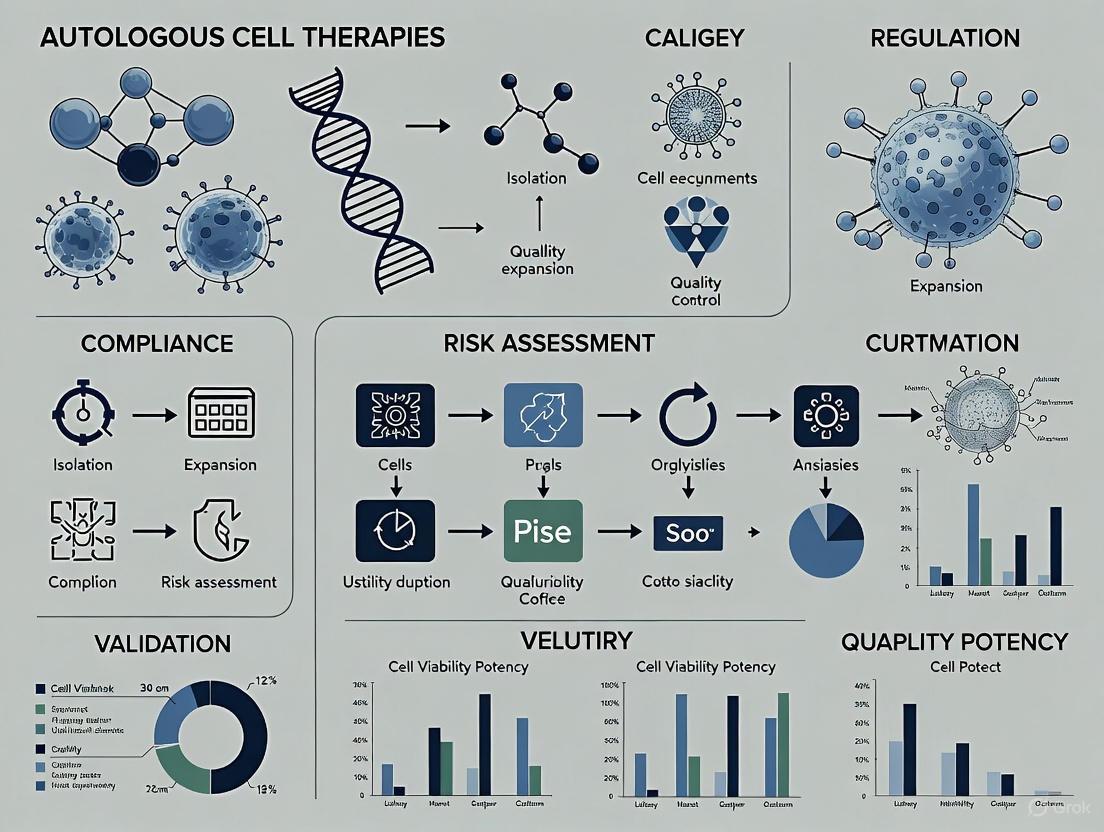
This article provides a comprehensive overview of the current regulatory landscape for autologous cell therapies, tailored for researchers, scientists, and drug development professionals.
Navigating Autologous Cell Therapy Regulations: A 2025 Guide for Developers and Researchers
Abstract
This article provides a comprehensive overview of the current regulatory landscape for autologous cell therapies, tailored for researchers, scientists, and drug development professionals. It covers foundational principles from major agencies like the FDA and EMA, explores practical methodologies for Chemistry, Manufacturing, and Controls (CMC) and Good Manufacturing Practices (GMP), addresses common challenges in manufacturing scalability and potency assurance, and offers a comparative analysis of global regulatory pathways. The content synthesizes the latest 2025 regulatory updates, including the recent elimination of REMS for CAR-T therapies and new point-of-care manufacturing frameworks, to guide successful therapy development from discovery to market approval.
Understanding the Global Regulatory Framework for Autologous Therapies
Autologous cell therapies represent a revolutionary, personalized paradigm in medicine, defined by the use of a patient's own cells to treat their disease. Unlike conventional pharmaceuticals or allogeneic (donor-derived) cell therapies, these "living drugs" are created through a complex process of harvesting a patient's cells, engineering and expanding them ex vivo, and then reinfusing them as a customized therapeutic [1]. This approach has produced groundbreaking treatments, particularly in immuno-oncology, with autologous Chimeric Antigen Receptor (CAR) T-cell therapies leading the transformation of care for certain blood cancers [2]. The core premise of autologous therapy is the creation of a patient-specific drug product, a fundamentally different model from standardized, off-the-shelf medicines [1].
The development of these therapies occurs within a rapidly evolving regulatory framework designed to balance accelerated innovation with rigorous safety standards. Regulatory bodies, including the U.S. Food and Drug Administration (FDA), have established specialized pathways to address the unique challenges posed by these personalized living entities [3]. This guide provides an in-depth technical examination of the defining characteristics of autologous cell therapies and the critical regulatory distinctions that govern their research and development, providing essential context for professionals navigating this advanced therapeutic landscape.
Defining Characteristics: Autologous vs. Allogeneic Cell Therapies
The fundamental distinction in cell therapy development lies in the source of the cellular starting material. Autologous therapies are derived from and administered to the same patient, constituting a fully personalized treatment. In contrast, allogeneic therapies are derived from healthy donors and developed as "off-the-shelf" products intended for multiple patients [1]. This primary difference drives significant implications for product development, manufacturing, logistics, and clinical use.
Table 1: Core Characteristics of Autologous and Allogeneic Cell Therapies
| Characteristic | Autologous Cell Therapy | Allogeneic Cell Therapy |
|---|---|---|
| Cell Source | Patient's own cells (e.g., from leukapheresis) [1] | Healthy donor(s) (e.g., cell banks) [1] |
| Key Advantage | Minimal risk of immune rejection (GvHD) and no need for donor matching [1] | "Off-the-shelf" availability; rapid treatment access [1] |
| Primary Challenge | Logistical complexity; patient-specific manufacturing; variable starting material [1] [2] | Risk of immune rejection (GvHD); requires host immunosuppression [1] |
| Manufacturing Model | Decentralized or "hub-and-spoke"; patient-as-batch [3] [2] | Centralized, large-scale batch production [1] |
| Product Consistency | High inter-patient variability due to inherent patient factors [1] [2] | Highly consistent, standardized product from controlled donors [1] |
| Turnaround Time | Several weeks from collection to infusion [1] | Immediate availability from cryopreserved inventory [1] |
| Cost Structure | High cost-of-goods (COGs); service-based model [1] | Lower COGs at scale; traditional pharmaceutical model [1] |
The selection of an autologous versus an allogeneic approach is a foundational strategic decision in therapy development. The autologous model is often chosen when the therapeutic mechanism depends on patient-specific immune recognition or when the risks of graft-versus-host disease (GvHD) are prohibitive. The allogeneic model is prioritized for conditions requiring rapid intervention and for applications where scalable, cost-effective production is critical for commercial viability [1].
The Autologous Cell Therapy Workflow: From Patient to Product
The journey of an autologous cell therapy is a multi-step, tightly controlled process that seamlessly integrates clinical care with biopharmaceutical manufacturing. The following diagram illustrates the core workflow, highlighting the closed-loop, patient-specific nature of the operation.
Figure 1. The End-to-End Autologous Cell Therapy Workflow. This diagram outlines the patient-specific journey from cell collection to reinfusion, highlighting the integrated clinical and manufacturing processes. GMP: Good Manufacturing Practice.
Detailed Workflow Stages and Methodologies
Leukapheresis and Cell Collection: The process initiates with leukapheresis, a clinical procedure where a patient's blood is passed through an apheresis machine to separate and collect peripheral blood mononuclear cells (PBMCs), which include the desired T cells or other lymphocyte populations [2]. The collected apheresis material serves as the critical, unmanipulated starting material for the entire manufacturing process. Its quality is highly variable, influenced by the patient's disease status, prior therapies, and overall health, presenting a significant challenge for process standardization [2].
Cell Processing, Selection, and Activation: Upon receipt at a Good Manufacturing Practice (GMP) facility, the apheresis material undergoes processing to isolate the specific cell type required for the therapy. For a T-cell-based therapy like CAR-T, this involves techniques such as:
- Bead-Based Enrichment: Using magnetic beads conjugated with antibodies (e.g., anti-CD3/CD28) to positively select T cells and simultaneously activate them through co-stimulation [2].
- Flow-Based Cell Sorting: Employing fluorescence-activated cell sorting (FACS) for high-precision isolation of specific cell subsets based on surface markers (e.g., CD4+, CD25+ for Treg therapies) [2]. This is critical for therapies requiring a highly pure starting population.
Genetic Engineering: The selected cells are genetically modified to confer the desired therapeutic function. In the case of CAR-T therapies, this involves introducing the CAR gene, which directs the T cell to target a specific tumor antigen. The primary methodologies include:
- Viral Vector Transduction: Using lentiviral or gamma-retroviral vectors to stably integrate the genetic construct into the host cell's genome. This is the most common method for approved CAR-T therapies [2].
- Non-Viral Engineering: Utilizing techniques like electroporation to deliver mRNA or CRISPR/Cas9 components for transient expression or precise gene editing, respectively [4].
Ex Vivo Expansion: The engineered cells are cultured in bioreactors or culture bags with media containing growth factors (e.g., IL-2) to expand them to the therapeutic dose, which can range from hundreds of millions to billions of cells [2]. This stage must be carefully controlled to prevent cellular senescence or the loss of therapeutic potency. For some Treg therapies, the mTOR inhibitor rapamycin is added to the culture to selectively expand the Treg population while suppressing contaminating effector T cells [2].
Formulation, Cryopreservation, and Release: The final drug product is formulated into a sterile infusion bag, often cryopreserved in a controlled-rate freezer, and stored in the vapor phase of liquid nitrogen. A critical portion of the batch undergoes rigorous Quality Control (QC) testing, including:
- Sterility (bacterial/fungal culture, mycoplasma).
- Potency (e.g., in vitro cytotoxic assay for CAR-T cells).
- Identity (flow cytometry for cell surface markers).
- Purity and Viability (e.g., by trypan blue exclusion).
- Vector Copy Number and Replication Competent Retrovirus (RCR) testing for genetically modified products [2] [5]. Only upon successful completion of these release assays is the product shipped back for infusion.
The Regulatory Landscape for Autologous Therapies
The personalized and complex nature of autologous cell therapies demands a specialized regulatory framework. The FDA's Center for Biologics Evaluation and Research (CBER), through its Office of Therapeutic Products (OTP), oversees this rapidly evolving field and has issued numerous guidance documents to clarify development pathways [5] [4].
Core Regulatory Distinctions and Challenges
Regulators face the unique challenge of applying pharmaceutical-level oversight to a product that is inherently variable because it is manufactured from a different starting material (each patient) for every batch. Key regulatory distinctions include:
- The "Patient-as-Batch" Paradigm: Unlike a traditional drug, each autologous product is a single batch. This requires rigorous chain of identity (COI) and chain of custody (COC) controls to prevent misadministration, often managed through robust digital tracking systems [1].
- Variable Starting Material: The quality of the apheresis material is not controlled by the manufacturer but by the patient's clinical condition. This variability must be characterized and managed through process validation and defined acceptance criteria for the incoming material [2].
- Limited Product Characterizability: Because the entire product is often needed for infusion, the release testing suite may rely on tests performed on a "representative" sample or use rapid, near-real-time assays. This necessitates a robust process validation strategy to demonstrate that the manufacturing process consistently produces a product meeting its quality attributes [2].
Recent FDA Guidance and Regulatory Evolution
The regulatory landscape is dynamic, with new guidances reflecting the field's maturation. In September 2025, the FDA released three pivotal draft guidance documents directly impacting autologous therapy development [3] [5]:
Table 2: Key Recent FDA Draft Guidances Relevant to Autologous Cell Therapies (September 2025)
| Guidance Document Title | Key Focus Areas | Significance for Autologous Therapy Developers |
|---|---|---|
| Expedited Programs for Regenerative Medicine Therapies for Serious Conditions | Clarifies use of RMAT (Regenerative Medicine Advanced Therapy) designation, Fast Track, and Breakthrough Therapy pathways [3]. | Provides a clearer roadmap for leveraging accelerated approval mechanisms to bring promising therapies to patients faster. |
| Postapproval Methods to Capture Safety and Efficacy Data for Cell and Gene Therapy Products | Emphasizes use of real-world data (RWD) and real-world evidence (RWE) for long-term safety and effectiveness monitoring [3]. | Supports a lifecycle approach to approval, where initial approval can be based on smaller datasets with post-market commitments to gather long-term data. |
| Innovative Designs for Clinical Trials of Cellular and Gene Therapy Products in Small Populations | Encourages adaptive, Bayesian, and externally controlled trial designs to generate robust evidence with fewer patients [3]. | Acknowledges the challenge of recruiting for rare diseases and provides regulatory acceptance for innovative statistical trial designs. |
Other critical guidance documents include "Considerations for the Development of Chimeric Antigen Receptor (CAR) T Cell Products" and "Potency Assurance for Cellular and Gene Therapy Products," which provide detailed recommendations on CMC, preclinical, and clinical development [5] [4]. Furthermore, the FDA's support for umbrella trial designs (master protocols) allows sponsors to study multiple versions of a product (e.g., different CAR constructs) under a single IND structure, accelerating early-phase development [4].
Analytical and Manufacturing Considerations
The Scientist's Toolkit: Essential Reagents and Materials
The development and manufacturing of autologous cell therapies rely on a suite of specialized reagents and materials, each serving a critical function in the workflow.
Table 3: Key Research Reagent Solutions for Autologous Cell Therapy Development
| Reagent/Material | Critical Function | Application in Autologous Therapy Workflow |
|---|---|---|
| Cell Separation Kits (e.g., immunomagnetic beads) | Isolation and activation of target cell populations (e.g., T cells, Tregs) from apheresis material [2]. | Cell Processing & Selection |
| Cell Culture Media & Supplements (e.g., serum-free media, cytokines like IL-2) | Supports ex vivo cell expansion and maintenance of cell viability and function [2]. | Ex Vivo Expansion & Culture |
| Viral Vectors (e.g., Lentivirus, Gamma-retrovirus) | Stable delivery and integration of genetic material (e.g., CAR transgene) into target cells [2] [4]. | Genetic Engineering |
| CRISPR-Cas9 System (RNP complex) | Precision gene editing for knock-in, knock-out, or gene correction strategies [4]. | Genetic Engineering |
| Flow Cytometry Antibodies | Analytical tool for assessing cell identity, purity, transduction efficiency, and characterization of final product [2]. | Quality Control & Potency Assays |
| Rapamycin | mTOR inhibitor used in culture to selectively expand Tregs and suppress effector T-cell outgrowth [2]. | Ex Vivo Expansion (Specific to Tregs) |
Addressing Critical Manufacturing Challenges: Scalability, Dose, and Cost
The manufacturing of autologous therapies faces three universal challenges, which are particularly acute for rare cell types like Regulatory T cells (Tregs) [2]:
Scalability: Current processes are labor-intensive and involve open manipulations. The path to scalability lies in automation, integrated unit operations, and closed cell processing systems to improve efficiency and patient throughput [2]. The industry is actively developing technologies to automate individual unit operations with the goal of creating end-to-end closed systems.
Dose-Enabling Cell Numbers: The manufacturing process must be robust enough to handle variable starting material and consistently expand cells to a therapeutic dose. For Tregs, which do not expand as robustly as conventional T cells, achieving the required cell numbers is a critical hurdle. Process optimization focuses on maximizing fold-expansion while maintaining critical quality attributes like phenotype and function [2].
Cost of Goods (COGs): Autologous therapies are inherently expensive due to personalized manufacturing, single-use raw materials, and extensive analytical testing. Strategies to reduce COGs include implementing automation to reduce labor, optimizing media and reagent use, and developing more efficient processes to improve success rates and yields [1] [2].
Autologous cell therapies are defined by their patient-specific nature, which is simultaneously their greatest strength and their most significant challenge. Their key characteristic—the use of the patient's own cells—eliminates the risk of graft-versus-host disease and enables a powerful, personalized therapeutic effect. However, this same characteristic imposes profound logistical, manufacturing, and regulatory complexities that distinguish them from all other classes of medicinal products.
The regulatory landscape for these therapies is maturing in tandem with the science. Recent FDA guidances reflect a sophisticated understanding of the need for flexible, accelerated pathways, innovative trial designs, and a lifecycle approach to evidence generation. For researchers and developers, success in this field requires not only scientific excellence but also a deep understanding of the regulatory distinctions that govern these "living drugs." As the field progresses, the convergence of advanced automation, artificial intelligence in regulatory review, and continued global harmonization will be critical to overcoming the remaining hurdles of scalability, cost, and access, ultimately ensuring that these transformative therapies can reach all patients in need [3].
The field of regenerative medicine is governed by a precise regulatory framework designed to balance innovation with patient safety. The U.S. Food and Drug Administration (FDA) regulates Human Cells, Tissues, and Cellular and Tissue-Based Products (HCT/Ps) under the authority of 21 CFR Part 1271 and the Public Health Service Act (PHS Act) [6]. This framework establishes two distinct regulatory pathways—Section 361 and Section 351—that dictate the development, review, and market access for cellular therapies, including autologous products where cells are derived from and returned to the same patient [7]. The Center for Biologics Evaluation and Research (CBER) is the FDA center responsible for overseeing these products, ensuring they meet rigorous standards for safety, purity, and potency before they can be marketed in the United States [8].
For researchers and drug development professionals, understanding the distinction between these pathways is critical not only for regulatory compliance but also for strategic planning of preclinical and clinical development. The classification of a product determines the scope of necessary evidence, the timeline to clinical application, and the overall resource investment required for successful translation from bench to bedside. This guide provides a technical examination of these pathways, with particular emphasis on their implications for autologous cell therapy research.
Defining Section 361 and Section 351 Pathways
The regulatory landscape for HCT/Ps is bifurcated into products regulated solely under Section 361 of the PHS Act and those regulated as biological products under Section 351.
Section 361 Products
Section 361 products are regulated solely under the authority of Section 361 of the PHS Act, which focuses on controlling communicable diseases [6] [7]. These products are not subject to premarket review processes such as an Investigational New Drug (IND) application or a Biologics License Application (BLA) [6]. The regulatory focus for these products is primarily on ensuring that they do not transmit infectious diseases and are not contaminated. Examples include traditional bone marrow transplants and minimally manipulated cord blood for hematopoietic reconstitution [9].
Section 351 Products
Section 351 products are those HCT/Ps that do not meet all the criteria for regulation solely under Section 361. These products are regulated as biological drugs under Section 351 of the PHS Act and subject to the drug and device provisions of the Federal Food, Drug, and Cosmetic Act (FDCA) [6] [7]. This classification brings with it the requirement for premarket approval, meaning sponsors must demonstrate safety and efficacy through robust clinical trials and submit a Biologics License Application (BLA) before marketing [6]. Most autologous cell therapies that involve more than minimal manipulation, such as culture expansion or genetic modification, fall into this category and require intensive regulatory oversight.
Table 1: Core Definitions and Regulatory Implications of 361 vs. 351 Pathways
| Feature | Section 361 Products | Section 351 Products |
|---|---|---|
| Legal Authority | Section 361 of PHS Act & 21 CFR 1271 [6] | Section 351 of PHS Act & FDCA [6] [7] |
| Regulatory Focus | Prevention of communicable disease transmission [7] | Premarket demonstration of safety, purity, and potency [6] |
| Premarket Review | Not required [6] | Required (IND/BLA) [6] |
| Typical Examples | Minimally manipulated bone marrow, certain cord blood products [9] | Culture-expanded MSCs, CAR-T cells, genetically modified therapies [6] [10] |
Critical Criteria Differentiating Section 361 from Section 351
The assignment of an HCT/P to either the 361 or 351 pathway hinges on four specific criteria outlined in 21 CFR 1271.10(a). A product must meet all four criteria to be regulated solely under Section 361.
Minimal Manipulation
This criterion examines whether the processing of the cells or tissues has altered their original characteristics. For cells and non-structural tissues, minimal manipulation means that the processing does not alter the relevant biological characteristics of the cells [6]. Culture expansion is a prime example of more than minimal manipulation. Growing mesenchymal stromal cells (MSCs) in vitro to increase cell number before administration fundamentally alters their biological characteristics and thus triggers classification as a 351 product [6]. Studies have shown that such expansion can lead to profound degeneration in progenitor potency, including reduced proliferation and differentiation potential, and even genomic instability over time [6].
Homologous Use
Homologous use requires that the HCT/P performs the same basic function in the recipient as it did in the donor [6]. For example, using cartilage to repair a cartilage defect constitutes homologous use. Using adipose-derived cells for an orthopedic, neurological, or immunological purpose would generally be considered non-homologous use, as the basic function of adipose tissue in the donor is for energy storage and insulation, not these alternative functions. This would push the product into the 351 pathway.
No Combination with Another Article
The HCT/P cannot be combined with another article (e.g., a drug or device), with a narrow exception for combinations that do not raise new clinical safety concerns [6]. Combining cells with a scaffold that is considered a device, or mixing them with a drug to activate them, typically violates this criterion. The exception might apply to the addition of a sterile, biocompatible solution like lactated Ringer's solution that is necessary for cell function but does not itself raise new safety issues.
Systemic Effect and Metabolic Activity
This final criterion has two parts. The product cannot be dependent upon the metabolic activity of living cells for its primary function, unless it is for: (1) autologous use; (2) use in a first- or second-degree blood relative; or (3) reproductive use [6]. This exception is particularly relevant for autologous cell therapies, as it allows for living, metabolically active cells to be used even if they have a systemic effect. However, if an allogeneic product (from an unrelated donor) relies on living cells for a systemic effect, it would fail this criterion and be regulated as a 351 product.
The relationship between these criteria and the resulting regulatory pathway is illustrated in the following logic flow, which is particularly relevant for autologous therapy development.
Diagram 1: FDA HCT/P Regulatory Pathway Decision Logic
The Role of CBER in Oversight and Review
The Center for Biologics Evaluation and Research (CBER) is the cornerstone of FDA regulation for cellular and gene therapies. CBER exercises its authority using both the Public Health Service Act and the Federal Food, Drug, and Cosmetic Act to provide comprehensive oversight of these complex products [8].
Regulatory and Policy Development
CBER is responsible for developing and issuing detailed guidance documents that help sponsors navigate the regulatory requirements for product development. The center's annual guidance agenda reflects its focus on emerging scientific and regulatory challenges. For 2024-2025, CBER has prioritized numerous draft and final guidances pertinent to cell and gene therapy, including documents on "Accelerated Approval of Human Gene Therapy Products for Rare Diseases," "Postapproval Methods to Capture Safety and Efficacy Data," and "Safety Testing of Human Allogeneic Cells Expanded for Use in Cell-Based Medical Products" [5] [10]. These documents provide critical insight into CBER's current thinking on issues such as the use of platform technologies, long-term follow-up, and manufacturing comparability.
Review Programs and Initiatives
To foster innovation and address the unique challenges of regenerative medicine, CBER has established several specialized programs. The Regenerative Medicine Advanced Therapy (RMAT) designation, for instance, provides intensive FDA guidance and potential for accelerated approval. For rare diseases, CBER's Support for clinical Trials Advancing Rare disease Therapeutics (START) program selects investigational therapies to provide enhanced communication and support [10]. Internationally, CBER is advancing the Collaboration on Gene Therapies Global Pilot (CoGenT Global), modeled after Project Orbis in oncology, to explore collaborative reviews with international regulators like the European Medicines Agency, aiming to reduce duplication and harmonize global standards [10].
Table 2: Key CBER Programs and Initiatives for Cell and Gene Therapy Development (2024-2025)
| Program/Initiative | Primary Focus | Key Features & Benefits |
|---|---|---|
| RMAT Designation [10] | Regenerative Medicine Therapies | Intensive FDA-sponsor interaction; potential for accelerated approval based on surrogate endpoints. |
| START Program [10] | Rare Disease Cell/Gene Therapies | Enhanced communication and support for selected products to accelerate development. |
| CoGenT Global Pilot [10] | International Harmonization | Collaborative review with foreign regulators to streamline global development. |
| Rare Disease Innovation Hub [10] | Cross-Center Rare Disease Focus | Collaboration between CBER and CDER to leverage expertise and address common development challenges. |
Technical and Regulatory Considerations for Autologous Therapies
The development of autologous cell therapies presents a unique set of technical and regulatory challenges that distinguish them from traditional pharmaceuticals and allogeneic cell products.
Manufacturing and Quality Control
Autologous therapies are manufactured on a patient-specific basis, creating significant challenges for process consistency and quality control. Each batch—derived from a single patient—must be individually tracked and tested. Sponsors must establish rigorous Chemistry, Manufacturing, and Controls (CMC) information in their IND applications, detailing the manufacturing process, characterization of the cellular product, and appropriate quality control release criteria [5]. Demonstrating manufacturing comparability is particularly complex; any change in the manufacturing process (e.g., a new reagent or equipment) requires a demonstration that the modified product is comparable to the one used in nonclinical and clinical studies that supported safety and efficacy findings [5].
Preclinical and Clinical Development
Preclinical assessment of autologous therapies must be carefully designed to evaluate the product's biological activity and potential toxicology, often using relevant animal models [5]. A critical regulatory consideration is the requirement for long-term follow-up (LTFU). FDA currently recommends 15 years of LTFU for patients who have received gene therapy products to monitor for delayed adverse events, such as secondary malignancies or immune responses [10]. However, CBER has indicated that these requirements are under reassessment and may be subject to change [10]. For clinical trials, especially in small populations, CBER encourages the use of innovative trial designs such as Bayesian statistics and adaptive designs to maximize the information gained from limited numbers of patients [5].
The Scientist's Toolkit: Essential Reagents and Materials
Developing a compliant autologous cell therapy requires carefully sourced materials and rigorous testing protocols. The following table details key research reagent solutions and their functions in the development process.
Table 3: Research Reagent Solutions for Autologous Cell Therapy Development
| Reagent/Material | Function in Development | Key Regulatory Considerations |
|---|---|---|
| Cell Culture Media & Supplements | Ex vivo expansion and maintenance of patient cells. | Defined, serum-free, xeno-free formulations are preferred; qualification of all raw materials is required to ensure consistency and safety [5]. |
| Growth Factors & Cytokines | Directing cell differentiation, expansion, or activation. | Purity, potency, and source must be documented; recombinant human proteins are standard to avoid animal-derived components [5]. |
| Critical Reagents for Functional Assays | Measuring biological activity (potency) of the final product. | Assays must be validated for specificity, accuracy, and precision; they are essential for demonstrating product potency as required by 21 CFR 610.10 [5]. |
| Ancillary Materials (e.g., antibodies, enzymes) | Cell selection (e.g., CD4+), separation, or genetic modification. | These materials may introduce contaminants; documentation of source, testing, and removal from the final product is critical for CMC [5]. |
| Cryopreservation Solutions | Long-term storage of patient-apheresis material or final product. | Formulation must maintain cell viability and function post-thaw; final product characterization often includes post-thaw viability and potency [6]. |
Emerging Regulatory Trends and Future Directions
The regulatory landscape for cell and gene therapies is dynamic, with several emerging trends that will shape the development of autologous therapies in the coming years.
A significant focus is on the use of accelerated approval pathways for serious and life-threatening conditions, particularly rare diseases with significant unmet needs. CBER has signaled its intent to issue new guidance on this topic, which is expected to clarify how surrogate endpoints (e.g., biomarker levels or microphysiological system data) can support accelerated approval for gene therapies, with confirmatory trials required post-approval to verify clinical benefit [10]. Furthermore, the increasing pace of approvals—with eight novel cell and gene therapies approved in 2024—indicates CBER's commitment to streamlining the review process for these transformative treatments [10]. However, this efficiency does not come at the expense of safety. The agency maintains a strong focus on risk mitigation, as evidenced by recent boxed warnings for certain therapies and ongoing vigilance regarding potential long-term risks like secondary malignancies and immune responses [10]. For researchers, this evolving landscape underscores the necessity of engaging with CBER early and often throughout the product development lifecycle to align on study designs, endpoints, and risk management strategies that will support a successful regulatory submission.
Advanced Therapy Medicinal Products (ATMPs) represent a groundbreaking category of medicines for human use based on genes, cells, or tissue engineering. Within the European Union (EU), the regulatory framework for ATMPs was established by Regulation (EC) No 1394/2007 to address the specific nature of these innovative therapies and ensure their free movement across member states while maintaining high standards of quality, safety, and efficacy [11] [12]. These products are at the forefront of scientific innovation, offering new treatment possibilities for various diseases, including genetic disorders, cancer, and tissue damage. The European Medicines Agency (EMA) plays a central role in the regulatory oversight of ATMPs through its Committee for Advanced Therapies (CAT), which provides specialized expertise for the evaluation and classification of these complex therapies [11]. The classification of a product as an ATMP has significant implications for its developmental pathway, as all ATMPs must undergo the centralized marketing authorization procedure, resulting in a single evaluation and authorization valid across the entire European Economic Area [13].
ATMP Classification Categories
Core ATMP Categories
The EU regulatory framework delineates three main types of ATMPs, with a fourth category covering combined products:
- Gene Therapy Medicinal Products (GTMPs): These contain genes that lead to therapeutic, prophylactic, or diagnostic effects. They function by inserting 'recombinant' genes into the body, typically to treat various diseases including genetic disorders, cancer, or long-term diseases. A recombinant gene is a stretch of DNA created in the laboratory, bringing together DNA from different sources [11]. Chimeric Antigen Receptor (CAR)-T cell therapies are a prominent example classified as GTMPs, as they involve genetically modifying T-cells to express receptors targeting specific cancer antigens [14].
- Somatic-Cell Therapy Medicinal Products (CTMPs): These contain cells or tissues that have been manipulated to change their biological characteristics, or cells or tissues not intended for the same essential functions in the body. They can be used to cure, diagnose, or prevent diseases [11]. The classification often hinges on whether cells are subject to substantial manipulation or are intended for non-homologous use [12].
- Tissue-Engineered Products (TEPs): These contain cells or tissues that have been modified so they can be used to repair, regenerate, or replace human tissue [11]. The cellular component in TEPs may be autologous or allogeneic.
- Combined ATMPs: These incorporate one or more medical devices as an integral part of the medicine. An example includes cells embedded in a biodegradable matrix or scaffold, where the scaffold acts as the device component supporting the cellular element [11].
Substantial Manipulation and Non-Homologous Use
The classification of cell-based products as ATMPs critically depends on the concepts of substantial manipulation and non-homologous use [12]. The regulatory framework provides clarity on manipulations not considered substantial to reduce interpretive variability.
Table: Manipulations Not Considered "Substantial" per Annex I of Regulation (EC) No 1394/2007
| Manipulation Type | Description |
|---|---|
| Cutting, Grinding, Shaping | Mechanical processes altering tissue structure but not biological function |
| Centrifugation | Separation based on density |
| Soaking in Antimicrobial Solutions | Chemical treatment for contamination control |
| Sterilization, Irradiation | Processes to eliminate or inactivate microorganisms |
| Cell Separation, Concentration, Purification | Isolation of specific cell populations |
| Filtering, Cryopreservation, Vitrification | Processing and preservation techniques |
Products utilizing only these non-substantial manipulations and intended for homologous use (the same essential function in the recipient as in the donor) typically fall outside the ATMP classification. Conversely, products involving more extensive genetic or cellular modifications or intended for non-homologous use are classified as ATMPs [12].
The ATMP Classification Procedure
The ATMP classification procedure is an optional service provided by the EMA's Committee for Advanced Therapies (CAT) to help developers determine whether their product meets the scientific criteria for ATMP classification [15]. This voluntary procedure is particularly valuable for addressing borderline cases, especially products that may combine characteristics of medicinal products and medical devices [15]. The primary objective is to provide early regulatory certainty, allowing developers to understand the applicable regulatory pathway early in the development process. The CAT delivers scientific recommendations on ATMP classification after consultation with the European Commission within 60 days after receipt of a valid request [15]. This streamlined timeline facilitates efficient planning and resource allocation for product developers.
Submission Timelines and Process
The EMA has established specific submission deadlines and corresponding discussion dates for ATMP classification requests to ensure predictable and efficient processing. The table below outlines the scheduled dates for 2025, demonstrating the structured nature of this regulatory procedure [15].
Table: 2025 ATMP Classification Request Submission and Procedural Timeline
| Deadline for Request Submission | Start of Procedure (Day 0) | CAT Discussion (Day 30) | CAT Adoption (Day 60) |
|---|---|---|---|
| 9 January 2025 | 24 January 2025 | 21 February 2025 | 21 March 2025 |
| 6 February 2025 | 21 February 2025 | 21 March 2025 | 16 April 2025 |
| 6 March 2025 | 21 March 2025 | 16 April 2025 | 16 May 2025 |
| 1 April 2025 | 16 April 2025 | 16 May 2025 | 13 June 2025 |
| 30 April 2025 | 19 May 2025 | 13 June 2025 | 18 July 2025 |
| 29 May 2025 | 16 June 2025 | 18 July 2025 | 14 August 2025 |
| 30 July 2025 | 14 August 2025 | 12 September 2025 | 10 October 2025 |
| 28 August 2025 | 12 September 2025 | 10 October 2025 | 7 November 2025 |
| 25 September 2025 | 10 October 2025 | 7 November 2025 | 5 December 2025 |
| 23 October 2025 | 24 November 2025 | 5 December 2025 | 23 January 2026 |
| 20 November 2025 | 22 December 2025 | 23 January 2026 | 20 February 2026 |
The process involves submitting a formal application to the EMA, with the CAT adopting the final recommendation precisely 60 days after the procedure's start [15]. The outcomes of these classifications are published as summary reports on the EMA website, providing valuable transparency and reference points for future developers [15] [16].
Diagram 1: The ATMP Classification Procedure Timeline. This streamlined 60-day process provides developers with regulatory certainty early in product development.
Regulatory Pathways for ATMPs
Centralized Marketing Authorization
The primary regulatory pathway for ATMPs in the EU is the centralized marketing authorization procedure, mandatorily coordinated by the EMA [11] [13]. This pathway involves a single scientific evaluation of the product's quality, safety, and efficacy, culminating in a marketing authorization valid across all EU member states. The CAT prepares a draft opinion on the ATMP, which it sends to the Committee for Medicinal Products for Human Use (CHMP). The CHMP then adopts an opinion recommending (or not) authorization to the European Commission, which issues the final binding decision [11]. This pathway is particularly suited to products with significant commercial interest and broader patient populations, ensuring consistent standards and facilitating market access across the EU.
Hospital Exemption (HE) Clause
Recognizing that many ATMPs target limited patient populations with minimal commercial interest, Regulation 1394/2007 established the Hospital Exemption (HE) under Article 28 [14] [12]. This clause exempts from centralized authorization those ATMPs prepared on a non-routine basis according to specific quality standards (Good Manufacturing Practice - GMP) within a hospital (or under a university's supervision) and used for individual patients under the exclusive responsibility of a medical practitioner within the same EU member state [14]. National authorities oversee HE approval, which has led to significant variations in implementation between member states, creating challenges regarding clarity and consistency [14]. An example is ARI-0001, a CAR-T cell therapy developed by Hospital Clinic in Barcelona, which received national authorization from the Spanish regulator AEMPS under the HE clause in February 2021 [14].
ATMP Classification in Practice: Case Examples
The practical application of ATMP classification is illustrated by the CAT's published recommendations. These examples provide critical guidance for developers in classifying their own products. The table below summarizes selected classification outcomes adopted by the CAT, demonstrating how the regulatory criteria are applied to specific product descriptions [16].
Table: Selected ATMP Classification Examples from CAT Scientific Recommendations
| Product Description | Therapeutic Area/Indication | Classification | Date of Adoption |
|---|---|---|---|
| Autologous anti-BCMA CAR T-cells | Relapsed/refractory multiple myeloma | Gene Therapy Medicinal Product | 5/07/2018 |
| Ex-vivo expanded allogeneic bone marrow derived mesenchymal stromal cells | Graft-versus-host disease | Somatic Cell Therapy Medicinal Product | 28/03/2019 |
| Allogeneic, ex vivo expanded, umbilical cord blood-derived haematopoietic CD34+ progenitor cells | Haematopoietic reconstitution for transplantation | Tissue Engineered Product | 28/03/2019 |
| Autologous skeletal muscle derived cells attached to poly(DL-lactide-co-glycolide) microparticles | Faecal incontinence and anorectal malformation | Combined Tissue Engineered Product | 28/03/2019 |
| Autologous viable adipose-derived regenerative cells extracted from human subcutaneous fat | Progressive hemifacial atrophy | Not an ATMP | 06/02/2019 |
| Organ donor derived CD34+ haematopoietic stem cells and a defined dose of donor-derived CD3+ T-cells | Prevention of kidney transplant rejection | Not an ATMP | 20/09/2018 |
These examples highlight nuanced distinctions in classification. For instance, CAR-T products are consistently classified as GTMPs due to genetic modification [14] [16], while cell-based products without genetic modification are assessed based on manipulation and intended function. Notably, similar products (e.g., adipose-derived cells) can receive different classifications based on specific processing methods or intended uses [16].
Regulatory Considerations for Autologous Cell Therapies
Development and Manufacturing Framework
Autologous cell therapies, where the starting material is derived from the patient themselves, present unique regulatory challenges. Their development must navigate a complex interface between different regulatory frameworks. The starting material (cells/tissues) initially falls under the EU Tissues and Cells Directives before transitioning to the ATMP Regulation once manufacturing begins [14]. This creates a situation where hospitals often act as service providers to industry, requiring clear definition of respective responsibilities and liabilities [14]. Furthermore, the EMA's guideline on clinical-stage ATMPs, effective July 1, 2025, emphasizes that immature quality systems can compromise the use of clinical trial data to support a marketing authorization, underscoring the need for robust Chemistry, Manufacturing, and Controls (CMC) planning from the outset [17].
Diagram 2: Autologous ATMP Development and Regulatory Workflow. The process navigates multiple regulatory frameworks, from initial cell collection under tissue directives to final product administration under ATMP rules.
Analytical and Quality Control Requirements
Robust analytical methods and quality control are paramount for autologous ATMPs, which often exhibit inherent batch-to-batch variability. The regulatory framework emphasizes a risk-based approach and phase-appropriate application of GMP standards [17]. However, full GMP compliance is mandatory for marketing authorization, verified through inspections [17]. The EMA guideline references over 40 other guidelines covering critical quality topics, including the ICH Q9 on quality risk management and ICH Q10 on pharmaceutical quality systems, which are being further integrated into updated GMP guidelines for ATMPs [18] [19]. Key analytical requirements include:
- Potency Assays: Quantitatively measuring the biological function of the product is critical. The EMA provides specific guidelines on potency testing of cell-based immunotherapy medicinal products for cancer treatment [18].
- Identity and Purity: Methods must confirm the identity of the cellular product and the absence of contaminants.
- Stability: Demonstrating product stability throughout the shelf-life and during transport is essential, particularly for cryopreserved products.
Recent Developments and Future Outlook
The regulatory landscape for ATMPs is continuously evolving. Recent developments include:
- GMP Guideline Revisions: In May 2025, the EMA released a concept paper proposing revisions to Part IV of the EU GMP guidelines specific to ATMPs. These revisions aim to align with the updated Annex 1 on sterile medicinal products, integrate ICH Q9 and Q10 principles, and provide clarity on new technologies like automated systems and single-use systems [19].
- Clinical Trial Guideline: The new "Guideline on quality, non-clinical and clinical requirements for investigational advanced therapy medicinal products in clinical trials" came into effect in July 2025. This multidisciplinary document consolidates information from over 40 separate guidelines, providing a primary reference for clinical trial applications [17].
- Support for Developers: The EMA offers various support mechanisms, including the ATMP pilot for academia and non-profit organizations launched in 2022, which provides dedicated regulatory assistance and fee reductions to boost the number of ATMPs reaching patients [11]. Free online training modules are also available to help developers navigate the regulatory environment [11].
Future regulatory focus areas include closer alignment of marketing authorization and health technology assessment (HTA) processes, increased use of real-world data to support regulatory decisions, adaptation to automated and decentralized manufacturing, and harmonization of genetically modified organism (GMO) frameworks across member states [14] [20].
Table: Key Regulatory and Research Reagent Solutions for ATMP Developers
| Resource Category | Specific Item/Guideline | Function/Purpose |
|---|---|---|
| Regulatory Guidelines | Guideline on Human Cell-Based Medicinal Products (EMEA/CHMP/410869/2006) | Overarching quality, non-clinical, and clinical requirements for CTMPs [18] |
| Reflection Paper on Stem Cell-Based Medicinal Products (EMA/CAT/571134/2009) | Specific advice on quality, tumorigenicity, and rejection risks for stem cell products [18] | |
| ICH Q5A (R1) Viral Safety Evaluation | Framework for evaluating viral safety of biotechnology products [18] | |
| Guideline on Potency Testing of Cell Based Immunotherapy Medicinal Products | Defines expectations for measuring biological activity of cell-based cancer therapies [18] | |
| Critical Reagents & Materials | GMP-Grade Cytokines and Growth Factors | Direct cell differentiation and expansion during manufacturing |
| Cell Separation and Selection Reagents | Isolate target cell populations from starting material | |
| Vector Systems (e.g., Lentiviral, AAV) | Facilitate genetic modification for GTMPs; require specific development guidelines [18] | |
| Biodegradable Matrices/Scaffolds | Serve as medical device component in Combined ATMPs [11] | |
| Quality Management Systems | Environmental Monitoring Systems | Ensure aseptic processing conditions are maintained |
| Donor Screening and Testing Kits | Meet regulatory requirements for infectious disease marker testing [17] | |
| Validated PCR and Flow Cytometry Assays | Assess identity, purity, potency, and safety of final product | |
| Stability Monitoring Systems | Track product viability and potency during storage and transport |
The U.S. Food and Drug Administration (FDA) employs a risk-based, tiered oversight system for regulating human cells, tissues, and cellular and tissue-based products (HCT/Ps). This framework, established under 21 CFR Part 1271, categorizes products based on potential risk to patients, with the level of regulatory scrutiny corresponding to the assigned tier [21]. For developers of autologous cell therapies, where a patient's own cells are used in their treatment, understanding this structure is critical for navigating the regulatory landscape. The system aims to ensure patient safety without imposing unnecessary burdens that could stifle innovation, a balance particularly relevant for personalized therapies [22].
The core of this framework distinguishes between products deemed low-risk enough to be regulated solely under Section 361 of the Public Health Service (PHS) Act and those requiring the more rigorous oversight of Section 351 of the PHS Act [21]. Recent scientific advancements and the growing number of clinical applications for cell and gene therapies (CGT) have prompted the FDA to refine this approach further. In 2025, the agency released new draft guidance documents to address the sector's rapid maturation, providing updated recommendations on expedited programs, innovative trial designs for small populations, and post-approval evidence generation [3] [23]. These developments reflect an evolving system that strives to balance safety, innovation, and timely patient access.
The Three-Tiered Regulatory Structure
The FDA's regulatory framework for HCT/Ps is built upon a three-tiered structure. This classification is pivotal for sponsors to determine the applicable regulatory pathway and requirements for their product. The following table summarizes the key characteristics of each tier.
Table 1: FDA's Three-Tiered Regulatory Framework for HCT/Ps
| Tier & Risk Level | Regulatory Basis | Key Criteria | Pre-Market Approval Required | Examples |
|---|---|---|---|---|
| Tier 1: Low Risk [21] | Section 361 of PHS Act & 21 CFR 1271.15 [21] | Considered current medical practice [21] | No [21] | Organ transplant, blood transfusion [21] |
| Tier 2: Middle Risk ("361 HCT/Ps") [21] | Section 361 of PHS Act & 21 CFR 1271.10 [21] | 1. Minimally manipulated2. For homologous use only3. Not combined with another drug/device (with exceptions)4. No systemic effect, or for autologous/allogeneic use in a first- or second-degree blood relative, or for reproductive use [21] | No [21] | Certain bone, ligament, and skin grafts [21] |
| Tier 3: High Risk ("351 Products") [21] | Section 351 of PHS Act [21] | Any product that does not meet all four Tier 2 criteria [21] | Yes (Biologics License Application - BLA) [21] | Most cell and gene therapies, including CAR-T cells and genetically modified cells [8] |
Critical Definitions and Their Impact
The distinction between Tier 2 and Tier 3 often hinges on the interpretation of "minimal manipulation" and "homologous use":
- Minimal Manipulation: For structural tissue, this means processing that does not alter the original relevant characteristics of the tissue. For cells or non-structural tissues, it means processing that does not alter the relevant biological characteristics of the cells [21].
- Homologous Use: The product performs the same basic function in the recipient as it did in the donor (e.g., bone for bone, cartilage for cartilage) [21].
The vast majority of investigational autologous cell therapies fall into the Tier 3 (351 product) category. This is because they often involve more than minimal manipulation—such as genetic modification or extensive ex vivo expansion—or are intended for non-homologous use, where the cells are used for a different function than they originally served [21] [22]. Consequently, these products must comply with full pre-market approval requirements, including the submission of an Investigational New Drug (IND) application to initiate clinical trials and a successful Biologics License Application (BLA) for market approval [21].
2025 Regulatory Developments and Refinements
The FDA's tiered system is not static. In 2025, CBER issued a trio of draft guidance documents that refine the agency's approach within the existing tiered framework, particularly for high-risk (351) products. These guidances address commitments made under the Prescription Drug User Fee Act (PDUFA) VII to promote transparency and efficiency in CGT development [23].
Table 2: Summary of Key FDA Draft Guidances for Cell and Gene Therapies (2025)
| Guidance Document Title | Primary Focus | Key Updates and Recommendations |
|---|---|---|
| Expedited Programs for Regenerative Medicine Therapies for Serious Conditions [3] [23] | Consolidates pathways for accelerated development (Fast Track, Breakthrough Therapy, RMAT, Priority Review) [3] [23] | - Broadens scope of "regenerative medicine therapy" [23]- Emphasizes Chemistry, Manufacturing, and Controls (CMC) readiness [23]- Clarifies use of real-world evidence (RWE) and externally controlled trials [23] |
| Innovative Designs for Clinical Trials... in Small Populations [24] [23] | Recommends clinical trial designs for rare diseases with limited patient numbers [24] [23] | - Endorses single-arm trials using participants as their own control [23]- Supports adaptive, Bayesian, and master protocol designs [3] [23]- Encourages disease progression modeling and use of historical controls [23] |
| Postapproval Methods to Capture Safety and Efficacy Data... [3] | Outlines strategies for long-term safety and effectiveness monitoring post-approval [3] | - Leverages real-world data (RWD) to ensure long-term safety without delaying initial approval [3]- Highlights need for product-specific safety monitoring and long-term follow-up [23] |
A significant trend in these updates is the greater openness to flexible and efficient approaches for Tier 3 products, especially those targeting rare diseases. The FDA now more explicitly encourages the use of innovative trial designs—such as single-arm trials with patients as their own controls, adaptive designs, and studies using external control arms—to generate robust evidence when traditional, large-scale randomized trials are not feasible [23]. Furthermore, the agency is placing increased emphasis on the use of RWE to support both pre-market and post-market evidence generation, acknowledging the challenges of studying therapies for small patient populations [3] [23].
Compliance and Operational Considerations for Developers
For a Tier 3 autologous cell therapy, navigating the regulatory pathway requires strategic planning from the earliest stages of development. The following diagram illustrates the key regulatory milestones and considerations throughout the development lifecycle.
Navigating the "Valley of Death" and Manufacturing Hurdles
A major challenge for academic researchers and small companies is transitioning from pre-clinical success to clinical trials—a phase often called the "valley of death." A significant regulatory barrier in this phase is meeting the CMC requirements for an IND application [22]. The FDA's 2025 draft guidances strongly encourage early and ongoing engagement with the agency to discuss CMC challenges, including ensuring product comparability as manufacturing processes are scaled up or refined [23].
Financial constraints are a primary barrier, as the current CMC regulatory expectations for Tier 3 products can be prohibitively expensive for therapies targeting small patient populations or pediatric diseases [22]. To address this, stakeholders are advocating for:
- Platform Technology Designations: Allowing a single technology (e.g., a viral vector or gene-editing system) to be used across multiple disease applications with substantially less preclinical work [22].
- Advanced Manufacturing Technology Programs: Streamlining regulatory processes for novel, more efficient manufacturing methods [22].
- Appropriate GMP Standards: Developing good manufacturing practice (GMP) standards suitable for small-batch manufacturers to improve viability [22].
The Scientist's Toolkit: Essential Reagents and Materials
The development and manufacturing of autologous cell therapies require a suite of critical reagents and materials. The following table details key components and their functions in the process.
Table 3: Research Reagent Solutions for Autologous Cell Therapy Development
| Reagent/Material | Function in Development/Manufacturing | Key Considerations |
|---|---|---|
| Cell Separation Media | Isolates target cell population (e.g., T-cells, stem cells) from patient apheresis material [21] | Purity, viability, and recovery yield of the target cell population are critical. Must be GMP-grade for clinical use. |
| Activation/Stimulation Reagents | Activates T-cells ex vivo for expansion and genetic modification (e.g., in CAR-T therapy) [22] | Coated antibodies or ligand-based reagents. Consistency and potency are vital for reproducible cell product characteristics. |
| Gene Delivery Vectors | Introduces genetic material into cells (e.g., Lentivirus, Retrovirus, CRISPR-Cas9 components) [22] | Viral titer, transduction efficiency, and safety (e.g., replication incompetence). Non-viral methods (electroporation) are also used. |
| Cell Culture Media & Supplements | Supports the ex vivo expansion and viability of the cell product [21] [22] | Serum-free, xeno-free formulations are preferred for regulatory compliance and reducing adventitious agent risk. Includes cytokines (e.g., IL-2) for T-cell growth. |
| Cryopreservation Media | Preserves the final cell product for storage and transport back to the patient [21] | Must maintain high post-thaw viability and potency. Typically contains DMSO and protein stabilizers. |
The FDA's risk-based, tiered oversight system provides a structured framework for regulating the diverse and rapidly advancing field of cell therapy. For autologous therapies, which predominantly fall under the high-risk Tier 3 category, the path to market is complex, requiring a BLA and adherence to rigorous standards. The recent 2025 draft guidances signal the FDA's commitment to adapting this framework to the unique challenges of CGTs, particularly for rare diseases, by promoting more flexible trial designs, a greater reliance on RWE, and clearer expedited pathways.
The future of this regulatory landscape will likely involve continued refinement to balance safety with efficient access. As emphasized by FDA leadership, the agency is actively exploring how post-approval monitoring and platform technologies can accelerate the availability of promising therapies while ensuring ongoing safety assessment [22]. For researchers and developers, proactive engagement with the FDA through available expedited programs and early-briefing meetings remains the most effective strategy for successfully navigating this dynamic tiered system and bringing transformative autologous cell therapies to patients.
The cell and gene therapy (CGT) landscape is undergoing unprecedented transformation, marked by significant regulatory evolution from 2024 to 2025. For developers of autologous cell therapies, these changes represent a pivotal shift toward more streamlined yet rigorous pathways that balance accelerated access with comprehensive safety oversight. The U.S. Food and Drug Administration (FDA) has demonstrated remarkable engagement with this innovative sector, approving eight novel CGTs in 2024 alone—a notable increase from previous years that signals the agency's commitment to fulfilling its projection of approving 10-20 CGTs annually by 2025 [10]. This acceleration is particularly relevant for autologous therapies, which face unique manufacturing and regulatory challenges due to their patient-specific nature and complex logistics.
The regulatory advancements for autologous cell therapies occur within a rapidly expanding ecosystem. By 2024, the number of global CGT developers reached 2,936, reflecting a 6% annual growth rate, with oncology (56.6%) and rare diseases (35.4%) dominating the clinical pipeline [25]. This growth is supported by approximately 2,500 active Investigational New Drug (IND) applications for CGTs filed with the FDA's Office of Therapeutic Products (OTP) [10], indicating a robust pipeline that will likely yield further regulatory innovations. For research scientists and drug development professionals working on autologous products, understanding these regulatory milestones is crucial for successfully navigating both current requirements and future expectations.
Analysis of 2024-2025 Regulatory Framework Updates
Key Guidance Documents and Their Strategic Implications
The FDA's Center for Biologics Evaluation and Research (CBER) has maintained an ambitious guidance agenda specifically targeting CGT development challenges. The tables below summarize the most significant recent documents and their specific relevance to autologous cell therapy research.
Table 1: Significant FDA CGT Guidances Issued 2024-2025
| Guidance Title | Release Date | Key Focus Areas | Relevance to Autologous Therapies |
|---|---|---|---|
| Expedited Programs for Regenerative Medicine Therapies for Serious Conditions | 09/2025 (Draft) | Clarifies RMAT designation, Fast Track, and Breakthrough Therapy pathways [3] | Accelerates development pathways for serious conditions with unmet needs |
| Postapproval Methods to Capture Safety and Efficacy Data for Cell and Gene Therapy Products | 09/2025 (Draft) | Recommends real-world evidence strategies for long-term safety assessment [3] | Addresses unique long-term follow-up challenges for patient-specific products |
| Innovative Designs for Clinical Trials of Cellular and Gene Therapy Products in Small Populations | 09/2025 (Draft) | Encourages adaptive, Bayesian, and externally controlled trial designs [3] | Facilitates robust evidence generation for rare diseases with limited patients |
| Considerations for the Development of Chimeric Antigen Receptor (CAR) T Cell Products | 01/2024 (Final) | Covers safety, manufacturing, and clinical design for CAR-T products [5] | Provides autologous CAR-T specific framework for development |
| Human Gene Therapy Products Incorporating Human Genome Editing | 01/2024 (Final) | Recommends IND content for genome editing therapies [5] | Guides autologous gene-edited cell therapy development |
| Frequently Asked Questions — Developing Potential Cellular and Gene Therapy Products | 11/2024 (Draft) | Addresses common technical and regulatory questions [5] | Provides clarity on frequent autologous therapy development challenges |
| Manufacturing Changes and Comparability for Human Cellular and Gene Therapy Products | 07/2023 (Draft) | Guides manufacturing process changes and comparability studies [5] | Essential for autologous process optimization and scale-up |
Table 2: Notable FDA CGT Guidances Planned for 2025
| Planned Guidance Title | Status | Potential Impact on Autologous Therapies |
|---|---|---|
| Accelerated Approval of Human Gene Therapy Products for Rare Diseases | Draft (Carried over from 2024) | May provide pathway using measurable biomarkers as surrogate endpoints [10] |
| Use of Platform Technologies in Human Gene Therapy Products Incorporating Human Genome Editing | Draft (Carried over from 2024) | Could streamline development for similar autologous products using common platforms |
| Potency Assurance for Cellular and Gene Therapy Products | New in 2025 [26] | Addresses critical quality attribute for highly variable autologous products |
| Postapproval Methods to Capture Safety and Efficacy Data for Cell and Gene Therapy Products | New in 2025 [26] | Complements September 2025 draft guidance on postmarket evidence generation |
Regulatory Pathways and Designations: Strategic Applications for Autologous Therapies
The 2024-2025 regulatory updates have enhanced several specialized pathways particularly beneficial for autologous cell therapies targeting serious conditions. The Regenerative Medicine Advanced Therapy (RMAT) designation, as clarified in the September 2025 draft guidance, remains a powerful tool for accelerating development of autologous products for unmet medical needs [3]. FDA leadership has indicated potential flexibility for RMAT-designated products regarding confirmatory evidence requirements, suggesting that continued follow-up from the pivotal trial might be acceptable rather than requiring a separate post-approval study [10].
For rare diseases—which represent a prime target for autologous therapies—the agency is developing specific frameworks for accelerated approval of gene therapies. While the draft guidance remains pending, CBER Director Peter Marks has outlined a conceptual framework categorizing products based on their suitability for this pathway [10]. This includes scenarios where the gene therapy product itself can be measured (e.g., hemoglobin levels in hemoglobinopathies) or when upstream/downstream markers serve as proxies for clinical benefit. For autologous therapies targeting complex genetic diseases without easily measurable markers, accelerated approval may remain challenging, emphasizing the importance of early regulatory strategy.
The FDA has also demonstrated willingness to employ novel clinical trial designs appropriate for small populations, as reflected in the September 2025 draft guidance on innovative trial designs [3]. For autologous therapies targeting rare conditions, this may include Bayesian approaches, adaptive designs, and carefully managed external controls. These methodologies help address the fundamental challenge of conducting adequately powered trials in limited patient populations while maintaining scientific rigor.
Figure 1: Integrated Regulatory Pathway for Autologous Cell Therapies
Impact on Autologous Cell Therapy Development
2024 Approval Milestones: Breaking New Ground for Autologous Products
The unprecedented approval of eight novel CGTs in 2024 included several autologous therapies that broke new ground technologically and regulatorily, creating important precedents for future development. These milestones demonstrated the FDA's evolving approach to addressing the unique challenges of autologous products, including their complex manufacturing, patient-specific variability, and limited clinical population sizes.
Table 3: Notable Autologous Cell Therapy FDA Approvals in 2024
| Product Name | Technology Platform | Indication | Significance | Approval Date |
|---|---|---|---|---|
| Amtagvi (lifileucel) | Tumor-Infiltrating Lymphocytes (TILs) | Advanced melanoma | First cellular therapy for solid tumors; first TIL approval [27] | 02/16/2024 |
| Tecelra (afamitresgene autoleucel) | T-Cell Receptor (TCR) | Metastatic synovial sarcoma | First approved TCR therapy for cancer [27] | 07/2024 |
| Aucatzyl (obecabtagene autoleucel) | CD19 CAR-T | Relapsed/refractory B-cell ALL | CD19 CAR-T with two doses tailored to leukemia burden [27] | 11/08/2024 |
The approval of lifileucel (Amtagvi) represented a particular breakthrough as the first therapy using tumor-infiltrating lymphocytes (TILs) and the first cellular therapy approved for a solid tumor [27]. After more than 30 years in development, this milestone created a regulatory pathway for other TIL therapies and demonstrated the FDA's willingness to utilize accelerated approval based on objective response rate for autologous products addressing unmet needs in oncology. Similarly, the approval of afami-cel (Tecelra) as the first T-cell receptor (TCR) therapy established precedent for personalized therapies requiring specific HLA types and tumor antigen expression, introducing companion diagnostic requirements for autologous cell therapies [27].
These approvals reflect the FDA's increasing sophistication in evaluating complex autologous products, particularly regarding their manufacturing challenges. The agency recognized that autologous therapies face fundamental biological constraints that limit manufacturing speed improvements, acknowledging that "cells can only grow at a certain rate, so there is a fundamental limitation on speeding up manufacturing turnaround times" [28]. This understanding informs a more realistic regulatory approach to process validation and comparability for these highly variable products.
Manufacturing and Quality Control: Evolving Expectations
The 2024-2025 regulatory updates place significant emphasis on manufacturing and quality control challenges specific to autologous therapies. Recent guidances address the critical balance between process innovation and product consistency, recognizing that autologous products face unique hurdles in scaling and quality assurance.
The draft guidance on "Manufacturing Changes and Comparability for Human Cellular and Gene Therapy Products" (July 2023) provides a framework for managing process improvements—a common necessity as autologous therapies transition from clinical to commercial stages [5]. For autologous products, demonstrating comparability after manufacturing changes is particularly challenging due to inherent patient-to-patient variability in starting materials. The guidance acknowledges these challenges while maintaining rigorous standards for ensuring that process changes do not adversely impact safety or efficacy profiles.
Potency assurance remains a focal point in both recent and planned guidances. The draft guidance on "Potency Assurance for Cellular and Gene Therapy Products" (December 2023) and its planned 2025 finalization address one of the most challenging aspects of autologous therapy development [5] [26]. For these highly variable products, potency assays must account for substantial differences in starting materials while ensuring consistent biological activity across all manufactured lots. The FDA's attention to this area underscores the critical nature of robust potency testing for products that cannot be terminally sterilized and have limited shelf lives.
Figure 2: Autologous Therapy Manufacturing with Regulatory Focus Areas
Essential Research Reagents and Experimental Approaches
Critical Reagents and Materials for Regulatory-Compliant Research
The successful development of autologous cell therapies requires carefully selected research reagents and materials that meet regulatory standards while supporting robust and reproducible manufacturing. The following table outlines essential components and their functions in the context of current regulatory expectations.
Table 4: Essential Research Reagents for Autologous Cell Therapy Development
| Reagent/Material Category | Specific Examples | Function in Development/Manufacturing | Regulatory Considerations |
|---|---|---|---|
| Cell Culture Media | Serum-free media formulations, X-VIVO, TexMACS | Supports ex vivo cell expansion and maintenance | Defined composition; animal-origin free preferred; quality consistency [5] |
| Cell Activation Reagents | Anti-CD3/CD28 antibodies, TransAct | Activates T-cells for genetic modification and expansion | Defined molecular identity; purity documentation; consistency between lots [4] |
| Gene Delivery Systems | Lentiviral vectors, Retroviral vectors, mRNA for non-viral delivery | Introduces genetic material (e.g., CAR constructs) into patient cells | Proof of vector identity; purity; potency; absence of replication-competent viruses [5] |
| Cell Selection and Separation | CD4/CD8 magnetic bead kits, CliniMACS system | Isulates and purifies target cell populations from leukapheresis material | Validation of selection efficiency; purity of final population; demonstration of removal of separation reagents [29] |
| Cryopreservation Media | CryoStor CS10, Synth-a-Freeze | Preserves final product for storage and transportation | Defined formulation; animal origin-free; validation of post-thaw viability and function [5] |
| Quality Control Assays | Flow cytometry reagents, ELISA kits, qPCR assays | Characterizes product identity, purity, potency, and safety | Validation for intended purpose; specificity; sensitivity; accuracy; precision [5] |
Methodologies for Addressing Key Regulatory Requirements
Comprehensive Potency Assay Strategy
Recent guidance emphasizes the critical importance of robust potency assessment for autologous cell therapies [5] [26]. A comprehensive potency assay strategy should include:
- Multiple assay formats measuring different aspects of biological function (e.g., cytotoxic activity, cytokine secretion, effector cell differentiation)
- Reference standards appropriate for patient-specific products, potentially using well-characterized master cell banks or surrogate materials
- Matrix approach that collectively demonstrates potency through complementary assays when no single assay fully captures product function
- Stability-indicating properties to monitor potential product degradation over shelf life
For autologous CAR-T therapies, this typically includes specific cytotoxicity assays against antigen-expressing target cells, cytokine release assays (particularly IFN-γ and IL-2), and flow cytometry-based quantification of CAR expression. The 2023 draft guidance on potency assurance provides specific recommendations for implementing a comprehensive strategy that addresses the unique variability challenges of autologous products [5].
Process Comparability Protocol
The "Manufacturing Changes and Comparability for Human Cellular and Gene Therapy Products" draft guidance outlines expectations for demonstrating comparability following manufacturing process changes [5]. For autologous therapies, this requires:
- Analytical comparability assessing quality attributes including identity, purity, potency, and safety
- Nonclinical comparability where appropriate, using in vitro or in vivo models
- Clinical comparability if analytical approaches cannot fully address potential impact
A structured comparability protocol should include:
- Side-by-side testing of products from old and new processes using multiple lots
- Statistical approaches appropriate for highly variable products
- Assessment of critical quality attributes most likely to be impacted by specific changes
- Defined acceptance criteria based on understanding of product quality attributes
For autologous therapies, comparability exercises must account for inherent patient-to-patient variability, often requiring increased sample sizes and careful statistical analysis to distinguish process-related changes from normal biological variation.
Future Directions and Strategic Recommendations
Emerging Regulatory Trends and International Harmonization
The regulatory landscape for autologous cell therapies continues to evolve rapidly, with several emerging trends likely to shape development pathways through 2025 and beyond. The FDA's Collaboration on Gene Therapies Global Pilot (CoGenT Global), launched in 2024, represents a significant step toward international regulatory harmonization [10] [3]. Modeled after the Oncology Center of Excellence's Project Orbis, this initiative enables collaborative review of gene therapy applications with international partners, starting with the European Medicines Agency (EMA). For developers of autologous therapies, this program may eventually streamline global development through reduced duplication and more aligned requirements.
The FDA is also reconsidering its approach to long-term follow-up (LTFU) requirements for gene therapies, with the director of OTP indicating that "everything is on the table for revisiting and reassessing" the current 15-year recommendation [10]. For autologous therapies, which already face substantial patient burden due to their personalized nature, modified LTFU expectations could significantly impact trial feasibility and patient recruitment. Any changes would likely maintain focus on specific risks while reducing unnecessary burden.
Artificial intelligence and digital tools are playing an increasingly important role in regulatory processes. The FDA's January 2025 draft guidance on "Considerations for the Use of Artificial Intelligence To Support Regulatory Decision-Making for Drug and Biological Products" establishes a framework for AI utilization in drug development [3]. For autologous therapy developers, AI tools are already being employed to analyze regulatory documents, predict potential compliance issues, and optimize manufacturing processes. These technologies may help address the substantial challenges of managing complex, patient-specific manufacturing data and identifying potential quality issues within highly variable product streams.
Strategic Recommendations for Autologous Therapy Developers
Based on the 2024-2025 regulatory milestones, developers of autologous cell therapies should consider several strategic approaches:
Engage Early with Regulatory Authorities: The increasing complexity of autologous therapy development makes early regulatory engagement essential. Pre-IND meetings should specifically address manufacturing strategies, potency assay approaches, and clinical trial designs tailored to small populations.
Implement Platform Thinking Where Possible: While autologous therapies are inherently patient-specific, platform approaches to certain elements (vector systems, activation methods, analytical methods) can streamline development and regulatory review. The planned guidance on "Use of Platform Technologies in Human Gene Therapy Products Incorporating Human Genome Editing" may provide further direction in this area.
Design for Commercial Viability from Early Stages: With the high costs and complex logistics of autologous therapies, early attention to commercial scalability is crucial. This includes designing manufacturing processes with appropriate controls for variability, establishing robust supply chains for critical reagents, and planning for efficient distribution logistics.
Leverage Real-World Evidence Strategically: The emphasis on postapproval data capture in recent guidances suggests opportunities to incorporate real-world evidence into development programs. Strategic planning for postmarket data collection can support both initial approval and post-approval requirements.
Monitor International Regulatory Evolution: As initiatives like CoGenT Global progress, developers should monitor evolving international requirements to enable efficient global development strategies.
The 2024-2025 period represents a significant maturation point in the regulatory framework for autologous cell therapies. The FDA's focused guidance efforts address many unique challenges of these innovative products while maintaining appropriate standards for safety and efficacy. For research scientists and drug development professionals, understanding these evolving expectations is essential for successfully navigating the complex pathway from concept to clinic. The increasing regulatory sophistication demonstrated through product-specific approvals, tailored guidance documents, and innovative programmatic initiatives provides a more predictable—though still demanding—pathway for bringing transformative autologous therapies to patients in need. As the field continues to evolve, ongoing engagement with regulatory authorities and attention to emerging guidelines will remain critical success factors.
Implementing Compliant Development and Manufacturing Strategies
Chemistry, Manufacturing, and Controls (CMC) Requirements for INDs and IMPDs
For developers of autologous cell therapies, the Chemistry, Manufacturing, and Controls (CMC) section of an Investigational New Drug (IND) application or an Investigational Medicinal Product Dossier (IMPD) is a foundational element that demonstrates the product's quality, safety, and consistency. This section provides regulators with comprehensive details on the manufacturing process, analytical controls, and characterization of the drug substance and drug product. A robust CMC package is critical for ensuring the protection of clinical trial subjects and is a prerequisite for regulatory approval to proceed with human trials [30]. For autologous cell therapies, where the starting material is derived from individual patients, the CMC documentation must address unique challenges such as inherent variability, aseptic processing, and real-time product testing [31]. The level of detail required in the CMC section evolves with the clinical phase, with earlier phases requiring sufficient information to assure safety, while later phases demand more refined and validated processes to support efficacy claims [32] [33].
Core CMC Requirements for Drug Substance and Drug Product
Drug Substance (Active Substance)
The drug substance for an autologous cell therapy is the cellular material itself, which is manipulated and expanded ex vivo. The CMC section must thoroughly describe its properties and manufacturing journey.
- Description and Characterization: A detailed account of the cell therapy's biological characteristics, including cell type (e.g., T-cells, mesenchymal stem cells), source (autologous), and methods for confirming identity and phenotype (e.g., flow cytometry for cell surface markers) [32] [34].
- Manufacturer Information: The name and address of all facilities involved in the manufacturing process, from cell collection and processing to testing and release [32] [33].
- Manufacturing Process and Process Controls: A comprehensive, step-by-step description of the manufacturing process, ideally presented as a flow diagram. This includes [32] [34]:
- Cell Collection: Procedures for leukapheresis and initial cell handling.
- Cell Processing: Methods for selection, activation, genetic modification (e.g., using viral vectors or CRISPR), and expansion.
- Process Controls: In-process tests and critical parameters (e.g., cell viability, growth characteristics) monitored to ensure process consistency.
- Control of the Drug Substance: The established acceptance criteria and analytical methods used to ensure the identity, purity, potency, and quality of the final cell product. This includes tests for viability, sterility, mycoplasma, and adventitious agents [34] [31].
- Stability Data: Information supporting the stability of the drug substance under the proposed storage and transportation conditions to ensure it remains viable and functional throughout its shelf life [32].
Drug Product (Final Formulation)
The drug product is the final, finished dosage form administered to the patient.
- Composition and Formulation: A complete list of all components in the final formulation, including the active cell substance and any excipients (e.g., cryopreservants like DMSO, infusion media) [32] [33].
- Manufacturer Information: Details for the facility performing the final product formulation, filling, and packaging [33].
- Manufacturing Process and Procedures: A description of the steps involved in formulating the final product, including washing, formulation in the final medium, filling into the administration container, and cryopreservation [32].
- Control of the Drug Product: The specifications and test methods for the final product release. For sterile injectable products like cell therapies, this is critical and includes [32] [34]:
- Container Closure System: A description of the primary container (e.g., cryobags, vials) and its compatibility with the product to prevent issues like leaching or adsorption [34].
- Stability Data: Data demonstrating the stability of the final drug product in its container closure system under the intended storage conditions (e.g., vapor phase liquid nitrogen) [32].
Placebo and Labeling
- Placebo Formulation: If a placebo is used in the clinical study, a description of its composition, manufacturing, and control must be provided. The placebo must be comparable to the active drug product in physical characteristics to maintain effective blinding, with testing to confirm the absence of the active cellular ingredient [32] [33].
- Labeling: Copies of all proposed product labels must be submitted. The Investigator’s Brochure (IB) is considered the primary labeling document for the investigational product [32].
Autologous Cell Therapy-Specific CMC Considerations
Autologous cell therapies present unique CMC challenges that must be addressed in the regulatory submission.
- Handling of Process Variability: Unlike traditional drugs, the starting material (patient cells) has inherent biological variability. The CMC must demonstrate how the manufacturing process is designed and controlled to consistently produce a safe and effective product despite this variability [31].
- Aseptic Processing: Because cell therapies cannot be terminally sterilized, the entire manufacturing process must be conducted using validated aseptic techniques, preferably in a closed system to minimize contamination risk [31].
- Supply Chain and Traceability: The CMC must outline a robust chain of identity and chain of custody protocol to ensure each patient's cells are accurately tracked from collection through manufacturing and back to administration [34].
- Impurities and Residuals: The submission must address clearance or acceptable levels of process-related impurities, which can include residual solvents, antibiotics, cytokines, growth factors, and (for genetically modified therapies) residual vector DNA or reagents [34] [31].
The diagram below illustrates the typical workflow and control points for manufacturing an autologous cell therapy.
Analytical Control Strategy
A multi-tiered control strategy is essential for autologous cell therapies. The table below summarizes the key analytical tests required for product release.
Table 1: Key Analytical Testing for Autologous Cell Therapy Products
| Test Category | Specific Assays | Purpose & Acceptability Criteria |
|---|---|---|
| Safety (Sterility) | Sterility Test, Mycoplasma Test, Adventitious Agent Test | Ensures product is free from microbial contamination. Compendial methods are preferred [34]. |
| Purity | Endotoxin Test, Residual DNA/Protein, Residual Reagents (e.g., cytokines, antibiotics) | Quantifies process-related impurities. Endotoxin limits are based on dosing; other residuals must be justified for safety [34] [31]. |
| Identity | Cell Surface Marker Analysis (Flow Cytometry), Vector Copy Number (for genetically modified cells) | Confirms the presence of the correct cell population and genetic construct. Assays must be specific to the product [34]. |
| Potency | Functional Assay (e.g., cytokine release, cytotoxicity, target cell killing) | Measures the biological activity linked to the mechanism of action. Must be quantitative and developed early, though it can evolve with phases [34] [31]. |
| Viability & Dosage | Viability (e.g., Trypan Blue), Total and Viable Cell Count | Determines the number of live cells per dose. FDA recommends a minimum viability of 70%; a lower specification requires supporting data [34]. |
The following diagram illustrates the relationships between the critical quality attributes and their corresponding analytical methods.
Comparative Analysis: IND vs. IMPD CMC Requirements
While the US (IND) and EU (IMPD) regulatory frameworks for CMC are largely harmonized under the ICH Common Technical Document (CTD) format, there are key differences in submission strategy and specific requirements that sponsors must consider for global development.
Table 2: Comparison of CMC Requirements for US IND and EU IMPD Submissions
| Feature | US IND | EU IMPD (Q-IMPD) |
|---|---|---|
| Governing Agency | US Food and Drug Administration (FDA) | European Medicines Agency (EMA) & National Competent Authorities |
| Submission Format | eCTD (Module 3) [35] | Non-granular, single document following IMPD-specific section numbering [35] |
| Module 2.3 QOS | Optional [35] | Required (as part of the Q-IMPD) [35] |
| Drug Substance Incorporation | May cross-reference a US Drug Master File (DMF) [35] | May cross-reference an Active Substance Master File (ASMF) or a Certificate of Suitability (CEP) [35] |
| Process Validation | Not required for investigational materials [35] | Not required, except for non-standard sterilization processes not in a pharmacopoeia [35] |
| Excipient Specifications | Required | Validation of analytical procedures and justification of specifications for excipients are not required [35] |
| Stability Commitment | Not applicable [35] | A shelf-life extension plan for the investigational product is required [35] |
Essential Research Reagents and Materials
The development and quality control of autologous cell therapies rely on a suite of specialized reagents and materials. The following table details critical components of the "scientist's toolkit" for this field.
Table 3: Key Research Reagent Solutions for Autologous Cell Therapy Manufacturing
| Reagent/Material | Function in Development/Manufacturing |
|---|---|
| Viral Vectors | Serves as a vehicle to deliver genetic material (e.g., a CAR transgene) into the patient's cells. Requires detailed characterization of the gene insert and construct [34]. |
| Cell Culture Media & Supplements | Provides the nutrients, growth factors, and cytokines necessary for the ex vivo activation and expansion of T-cells or other therapeutic cell types. Serum-free, GMP-grade formulations are preferred [34]. |
| Cell Selection Reagents | Magnetic beads or other technologies used to isolate specific cell populations (e.g., CD4+/CD8+ T-cells) from the leukapheresis product prior to manufacturing [34]. |
| Transfection/Transduction Reagents | Facilitates the introduction of DNA or the entry of viral vectors into cells during the genetic modification step. Must be thoroughly tested and cleared from the final product [34]. |
| Cryopreservation Media | A formulation containing cryoprotectants (e.g., DMSO) that allows for the long-term storage of the final cell product in a frozen state while maintaining cell viability and function [34]. |
| Reference Standards & Critical Reagents | Well-characterized cell lines, vectors, or antibodies used to qualify and validate analytical methods (e.g., potency assays, flow cytometry) to ensure consistent and reliable testing [33]. |
Detailed Experimental Protocols for Key Assays
Sterility Testing According to Compendial Methods
Objective: To demonstrate that the final cell therapy product is free from viable microorganisms.
Methodology:
- Sample Collection: Aseptically withdraw a representative sample from the final product container. The sample volume should be sufficient as per pharmacopoeial requirements (e.g., Ph. Eur. 2.6.1, USP <71>).
- Culture Media: Inoculate the sample into two primary types of culture media:
- Fluid Thioglycollate Medium (FTM): Incubated at 30-35°C to support the growth of aerobic and anaerobic bacteria.
- Soybean-Casein Digest Medium (SCDM): Incubated at 20-25°C to support the growth of fungi and molds.
- Incubation and Observation: Incubate the inoculated media for at least 14 days. Observe the cultures visually for turbidity (indicating microbial growth) at regular intervals on days 3, 5, 7, and 14.
- Validation & Controls: The test method must be validated to demonstrate that the cellular product itself does not exhibit antimicrobial properties that would mask contamination (Bacteriostasis and Fungistasis Test). Each test run must include positive controls (inoculated with low levels of representative microbes) and negative controls (uninoculated media) to confirm media fertility and aseptic conditions [34].
Potency Assay by Cytokine Release
Objective: To provide a quantitative measure of the biological function of a CAR-T cell product, which is critical for lot release and stability testing.
Methodology:
- Coculture Setup:
- Effector Cells: Use the CAR-T cell product as the effector. Prepare a serial dilution of cells to establish a dose-response curve.
- Target Cells: Use antigen-positive tumor cells (e.g., NALM-6 for CD19-CAR) and, as a critical control, antigen-negative tumor cells.
- Coculture: Combine effector and target cells in a defined ratio (e.g., 1:1, 2:1) in a multi-well plate. Include wells for effector cells alone and target cells alone to measure background signal.
- Stimulation and Incubation: Incubate the coculture for 18-24 hours at 37°C with 5% CO₂ to allow for T-cell activation upon antigen recognition.
- Cytokine Measurement:
- Collect the cell culture supernatant after incubation.
- Quantify the concentration of a key effector cytokine (e.g., IFN-γ) released by the activated CAR-T cells using a quantitative immunoassay, such as an ELISA or an electrochemiluminescence (ECL) assay.
- Data Analysis:
- Subtract the background cytokine level from the control wells.
- The potency is reported as the amount of cytokine released per cell (or per volume) over time. The dose-response curve should demonstrate a significantly higher cytokine release in antigen-positive cocultures compared to antigen-negative controls, confirming antigen-specific activation [34] [31].
Vector Copy Number (VCN) Determination
Objective: To quantify the average number of integrated vector copies per cell in a genetically modified cell product, which is critical for assessing the success of transduction and patient safety.
Methodology:
- Genomic DNA (gDNA) Extraction: Isolate high-quality, high-molecular-weight gDNA from a defined number of cells from the final product using a validated extraction method. Precisely quantify the gDNA using a fluorescent method (e.g., PicoGreen).
- qPCR/Digital PCR Setup:
- Target Reaction: Amplify a sequence unique to the vector backbone (e.g., the WPRE or a specific portion of the transgene).
- Reference Reaction: Amplify a single-copy endogenous gene in the human genome (e.g., RPPH1, Albumin) to normalize for the amount of gDNA input.
- Amplification and Quantification: Run the reactions in a real-time PCR instrument (for qPCR) or a digital PCR system. Digital PCR is often preferred for its absolute quantification without the need for a standard curve.
- Calculation:
- For qPCR: The VCN is calculated using the ΔΔCq method, comparing the Cq values of the target sequence to the reference gene, and calibrated against a cell line with a known, single copy of the vector.
- For digital PCR: VCN = (Concentration of target molecules / Concentration of reference molecules). The acceptance criterion is typically a pre-defined range (e.g., 0.5 - 5 copies per cell) to ensure adequate transduction without risking insertional mutagenesis [34].
The development of autologous cell therapies represents a frontier in personalized medicine, harnessing a patient's own cells to treat conditions like cancer and genetic disorders [36]. Unlike traditional pharmaceuticals, each patient-specific batch is a unique "living medicine," making the implementation of Good Manufacturing Practice (GMP) not merely a regulatory hurdle but a fundamental component of product efficacy and safety [36] [37]. A phase-appropriate approach to GMP provides a strategic framework for applying quality systems and manufacturing controls that are proportionate to the current stage of development, from preclinical research through commercial marketing [38]. This strategy enables innovators to manage risks effectively while navigating the complex regulatory pathways established by agencies like the FDA, EMA, and Health Canada, which classify these advanced therapies as biological drugs subject to pre-market review of safety and efficacy data [7] [8] [38]. For autologous therapies, which face inherent challenges in scalability, supply chain complexity, and product consistency, a rigid, one-size-fits-all GMP strategy is untenable [36]. This guide outlines a dynamic, phase-appropriate framework for GMP implementation, designed to meet regulatory requirements while supporting the efficient advancement of transformative autologous cell therapies.
Foundational Regulatory Frameworks
Autologous cell therapy products are regulated as drugs under the Food and Drugs Act in Canada and under similar frameworks in other major jurisdictions [38]. In the United States, the FDA's Center for Biologics Evaluation and Research (CBER) regulates these products under Section 351 of the Public Health Service Act, requiring premarket review [7] [8]. The European Medicines Agency (EMA) provides a comprehensive set of guidelines specific to Advanced Therapy Medicinal Products (ATMPs), including cell-based therapies [18]. A critical understanding for developers is that with the exception of minimally manipulated lymphohematopoietic cells for homologous use in transplantation, autologous cell therapies are subject to the full scope of drug regulations, including Clinical Trial Application and New Drug Submission processes [38].
Table 1: Global Regulatory Landscape for Autologous Cell Therapies
| Regulatory Authority | Key Regulatory Framework | Relevant Guidelines/Documents |
|---|---|---|
| Health Canada | Food and Drug Regulations (Part C, Division 5 & 8) [38] | Guidance for Cell Therapy Products in Clinical Trials [38] |
| U.S. FDA | PHS Act Section 351, FD&C Act [7] | Draft Guidance on CAR-T Cell Products [39]; FRAME Initiative for Distributed Manufacturing [39] |
| European EMA | Advanced Therapy Medicinal Products Regulation [18] | Guideline on Human Cell-Based Medicinal Products [18]; GMP for ATMPs [39] |
| UK MHRA | Manufacturer's License (Point of Care) [39] | Point of Care Manufacturing Framework [39] |
A significant regulatory evolution is the recognition of decentralized manufacturing models, where production occurs at or near the point of patient care [39]. The UK's MHRA has pioneered this approach with new license types for "manufacturer’s license (Point of Care, POC)" [39]. Similarly, the FDA's Emerging Technology Program has initiated the Framework for Regulatory Advanced Manufacturing Evaluation (FRAME), which includes distributed manufacturing as a platform for POCare production [39]. These frameworks often rely on a "Control Site" model, where a central entity maintains regulatory responsibility and quality oversight over multiple decentralized manufacturing sites, ensuring consistency and compliance [39].
Phase-Appropriate GMP Implementation Strategy
A phase-appropriate approach tailors the depth and breadth of GMP systems to the stage of product development, managing risk while efficiently allocating resources.
Preclinical and Early-Phase Clinical Development (Phase I/II)
The primary goal in early development is to ensure patient safety and generate proof-of-concept, while establishing a foundational quality system.
- Facility and Control Strategy: Implement modular and closed automated systems (e.g., GMP-in-a-box) to minimize contamination risk and infrastructure requirements [39] [37]. Process controls should focus on critical process parameters (CPPs) directly impacting product safety, such as sterility, endotoxin, and identity [37].
- Documentation and Training: Establish standard operating procedures (SOPs) for core operations like cell collection, processing, and final product handling. Training should be documented, with an emphasis on the specific, often manual, processes in use [36].
Table 2: Phase-Appropriate Analytical and Control Focus
| Development Phase | Primary Quality Focus | Recommended Process & Analytical Controls |
|---|---|---|
| Preclinical / Phase I | Patient Safety | Sterility, endotoxin, mycoplasma, viability, identity (e.g., cell surface markers) [37] [38] |
| Phase II / Pivotal | Process Consistency & Preliminary Efficacy | Incorporation of in-process controls (IPCs), development of potency assays, cell count and viability, vector copy number (if applicable) |
| Commercial (Phase III+) | Product Comparability & Robustness | Validated potency assays, defined acceptance criteria for CPPs, real-time release testing (where applicable), full product characterization [40] |
Late-Phase Clinical and Commercial Preparation (Phase III and Beyond)
As a therapy advances toward commercialization, the focus shifts to demonstrating process robustness, consistency, and scalability to support a market authorization application.
- Facility and Control Strategy: Transition toward more robust, potentially distributed manufacturing models. Implement a control site architecture to oversee multiple manufacturing sites, ensuring product comparability across locations [39]. The process must be validated to demonstrate it consistently produces a product meeting its pre-determined quality attributes [36].
- Automation and Digital Integration: To ensure scalability and consistency, leverage closed, automated systems like the Gibco CTS Rotea Counterflow Centrifugation System or the CTS Xenon Electroporation System [37]. Integrate digital tools such as manufacturing execution systems (MES) and electronic batch records to enhance data integrity and provide real-time monitoring [40] [37].
- Comparability Protocol: A rigorous comparability protocol is essential if changes are made to the process during late-stage development. As stated in regulatory guidance, the sponsor must demonstrate that a comparable product is manufactured, especially if multiple sites are involved [39].
Essential Methodologies and Experimental Protocols
Protocol for Process Performance Qualification (PPQ)
Objective: To demonstrate with a high degree of assurance that the manufacturing process, when operated within defined parameters, consistently produces a product that meets all critical quality attributes (CQAs).
- Process Definition: Finalize and document the manufacturing process flow, specifying all CPPs and their operating ranges. This includes all unit operations from cell collection (leukapheresis) through final formulation [36] [37].
- Facility & Equipment Qualification: Ensure all equipment is qualified (IQ/OQ/PQ) and the manufacturing environment is controlled and monitored per GMP standards [37].
- PPQ Batch Execution: Manufacture a minimum of three consecutive conformance batches at the commercial scale. For autologous therapies, this involves processing materials from multiple donors to capture inherent variability [36].
- Data Collection & Analysis: Monitor and record all CPPs and in-process data. Test all final products against the release specification. Use statistical process control (SPC) to demonstrate the process is in a state of control [37].
Protocol for Demonstrating Product Comparability Across Multiple Sites
Objective: To ensure that the same autologous cell therapy product manufactured at different decentralized sites (e.g., regional facilities or point-of-care centers) is comparable in quality, safety, and efficacy.
- Standardized Technology Platform: Implement the same automated, closed-system technologies and standardized unit operations (e.g., centrifugation, activation, transduction, expansion) across all sites to minimize process variability [39] [37].
- Centralized Control Site Oversight: The control site maintains the master file, provides centralized quality assurance, and oversees training to ensure consistency [39].
- Comparative Testing: Manufacture the product from a common pool of starting material (or from carefully selected donors with similar material characteristics) at each of the different sites.
- Analytical Comparison: Perform a comprehensive analytical characterization of the final products from each site. This battery of tests should include, but not be limited to:
- Potency Assay: To demonstrate equivalent biological function [18].
- Phenotype Profile: Flow cytometry for critical identity markers.
- Viability and Cell Number.
- Purity and Safety Tests: Sterility, mycoplasma, and endotoxin.
- Statistical Analysis: Use equivalence testing to demonstrate that the products from different sites are comparable within a pre-defined margin.
The Scientist's Toolkit: Key Research Reagent Solutions
The successful development and GMP-compliant manufacturing of autologous cell therapies rely on a suite of critical reagents and systems. Selection of these components must consider quality, consistency, and regulatory compliance from early development through to commercialization.
Table 3: Essential Materials and Systems for GMP Cell Therapy Manufacturing
| Item / System | Function | GMP-Relevant Considerations |
|---|---|---|
| Closed, Automated Cell Processing System (e.g., Gibco CTS Rotea) | Performs cell washing, concentration, and separation in a closed, automated manner [37]. | Reduces contamination risk, improves process consistency, enables use in lower-grade cleanrooms [39] [37]. |
| GMP-Grade Cell Culture Media & Supplements | Provides nutrients and factors for cell growth and expansion. | Must be xeno-free where possible, sourced from qualified vendors, and tested for adventitious agents to ensure patient safety and process consistency [37] [18]. |
| Immunomagnetic Cell Separation Kits | Isolates or depletes specific cell populations (e.g., T-cells, CD34+ cells) using magnetic beads [37]. | Use of closed, automated systems (e.g., CTS Dynacellect) for bead removal is critical for GMP compliance and final product safety [37]. |
| GMP-Grade Gene-Modification Reagents (Viral/non-viral) | Introduces genetic material into cells (e.g., CAR constructs). | Viral vectors must be manufactured under GMP and thoroughly tested. Non-viral systems like electroporation (e.g., CTS Xenon) require standardized, closed protocols [37] [18]. |
| Process Analytical Technology (PAT) | In-line, on-line, or at-line monitoring of CPPs. | Enables real-time quality control, reduces batch release times, and is a key component of advanced manufacturing paradigms [40]. |
Visualizing the Control Site Model for Decentralized Manufacturing
The control site model is a pivotal regulatory innovation for managing quality across decentralized manufacturing networks. The following diagram illustrates the logical relationships and oversight responsibilities within this framework.
Implementing a phase-appropriate GMP strategy is not a linear checklist but a dynamic process that evolves with the product's development lifecycle. For autologous cell therapies, this approach is critical to navigating the inherent challenges of personalized manufacturing while meeting stringent regulatory requirements for safety and efficacy. The future of this field will be shaped by technological innovations—particularly automation, closed processing, and digital integration—and emerging regulatory models that support decentralized production [39] [40] [37]. By adopting a strategic, phased approach to GMP, developers can effectively manage risks, optimize resources, and ultimately accelerate the delivery of these transformative living medicines to patients in need.
The advanced cell therapy sector faces a critical challenge: scaling the manufacturing of highly personalized autologous products while adhering to stringent regulatory requirements. Traditional manufacturing approaches, which rely heavily on manual, open-process handling, inherently introduce risks of contamination, human error, and data integrity vulnerabilities that directly impact patient safety and therapeutic efficacy [41]. A persistent industry misconception suggests that advancing quality and compliance invariably increases costs or reduces output. However, strategic investment in integrated automation and closed-system technologies enables a paradigm shift, allowing manufacturers to simultaneously elevate quality and compliance standards while enhancing productivity [41]. This technical guide examines the core principles, technologies, and methodologies for scaling compliant manufacturing processes for autologous cell therapies, framed within the rigorous regulatory context of Advanced Therapy Medicinal Products (ATMPs).
Technical Advantages of Automation and Closed Systems
Core Mechanisms for Enhancing Aseptic Assurance and Product Quality
Automation in cell therapy manufacturing provides fundamental advantages in aseptic processing, a non-negotiable requirement for parenteral cell products.
Risk Reduction through Closed Processing: Automated, closed systems utilize single-use consumable cartridges that integrate all essential unit operations. This allows patient material to remain within a closed system from initial loading until final harvest, dramatically reducing manual interventions and associated aseptic risks [41]. Platforms like Cellares' Cell Shuttle employ a fluidic bus system that facilitates software-defined transfer of cells and reagents between modules, offering workflow flexibility within a single, closed cartridge design [41].
Contamination Control: In contrast to open systems that expose the cell therapy product to potential environmental contaminants, closed systems are designed with sterile barriers and connectors that prevent exposure to the room environment [42]. This architectural approach reduces contamination rates and enables operation in controlled but non-classified (CNC) environments rather than more expensive Grade A or B cleanrooms, significantly lowering facility costs while maintaining product safety [42].
Quantitative Performance Comparison of Automated Systems
The selection of an appropriate automated system requires careful analysis of technical specifications and performance metrics. The table below summarizes key parameters for current cell processing systems.
Table 1: Performance Comparison of Cell Processing Automated Systems [42]
| System Type | Core Technology | Cell Recovery Rate | Input Volume Range | Input Cell Capacity | Processing Time |
|---|---|---|---|---|---|
| Modular | Counterflow Centrifugation | 95% | 30 mL – 20 L | 10 x 10⁹ | 45 minutes |
| Modular | Electric Centrifugation Motor & Pneumatic Piston | 70% | 30 mL – 3 L | 10–15 x 10⁹ | 90 minutes |
| Modular | Spinning Membrane Filtration | 70% | 30 mL – 22 L | 3 x 10⁹ | 60 minutes |
| Modular | Acoustic Cell Processing | 89% | 1–2 L | 1.6 x 10⁹ | 40 minutes |
| Modular | Magnetic Separation | 85% | 1–2 L | 3 x 10⁹ | N/A |
| Integrated | Varies by Platform | Varies by Platform | Varies by Platform | Varies by Platform | Varies by Platform |
Regulatory Framework and Compliance Integration
Aligning Automation Strategy with Regulatory Expectations
Regulatory bodies including the FDA (CBER) and EMA emphasize that quality cannot be tested into products but must be built into the manufacturing process. The Quality by Design (QbD) framework provides a systematic approach to development that begins with predefined objectives and emphasizes product and process understanding and process control [43].
Early Regulatory Planning: Successful regulatory strategy involves "beginning with the end in mind," mapping out a clear pathway from early research through clinical trials to commercialization [43]. This includes early understanding of Chemistry, Manufacturing, and Controls (CMC) requirements for Biologics License Applications (BLA), which often cause significant delays if not adequately addressed during development phases [43].
Data Integrity and Documentation: Automated systems enhance regulatory compliance through robust data capture and audit trails. As the EMA notes, "The use of automated equipment may ease compliance with certain GMP requirements" by improving operator safety, reducing human errors, and enabling processing robustness and reproducibility [42]. Integrated quality control platforms automatically generate electronic batch records for thousands of doses annually and facilitate automated data upload into Laboratory Information Management Systems (LIMS), providing reliable audit trails critical for product release and patient safety [41].
Process Analytical Technologies (PAT) and Quality Control
Automation enables the implementation of advanced Process Analytical Technologies (PAT) for real-time quality monitoring.
In-Process Controls: Automated QC platforms (e.g., Cellares' Cell Q) integrate commercial off-the-shelf instruments including cell counters, flow cytometers, centrifuges, plate readers, incubators, and PCR systems with robotic liquid plate handlers [41]. This integration streamlines the majority of in-process and release testing assays, from sample loading to automated data reporting, improving assay robustness and reducing manual labor while enhancing data quality and consistency [41].
Potency Assay Development: A phased approach to potency assay development should begin early in product development, moving from multiple candidate assays to qualified and validated methods as programs advance [43]. Innovative platforms such as physiologically relevant miniaturized in vitro assay platforms (PRIMA) that mimic human circulatory conditions can provide more accurate assessment of potency and mechanism of action [43].
Implementation Methodologies for Scalable Automated Systems
System Architecture Selection: Integrated vs. Modular Approaches
The implementation of automated systems requires strategic decision-making between integrated and modular architectures, each with distinct advantages for different development stages.
Table 2: Comparative Analysis of Automated System Architectures [42]
| Parameter | Integrated Closed Systems | Modular Closed Systems |
|---|---|---|
| Workflow Design | End-to-end, all-in-one solution | Individual instruments optimized for single unit operations |
| Flexibility | Dedicated to specific patient's product; limited flexibility | High versatility; ability to mix and match instruments from different suppliers |
| Scalability Approach | One-patient-at-a-time processing; scaled out by adding units | Scaled by optimizing individual process steps; allows incremental capacity expansion |
| Implementation Complexity | Simplified validation of complete workflow | More complex integration and validation of separate modules |
| Best Application | Established processes at commercial scale | Process development and optimization; evolving manufacturing processes |
Experimental Protocol for Automated CAR-T Cell Manufacturing
The following detailed methodology outlines a standardized protocol for automated CAR-T cell manufacturing using a modular closed-system approach, suitable for process transfer and validation activities.
Starting Material Preparation: Isolate Peripheral Blood Mononuclear Cells (PBMCs) from leukapheresis material using a closed-system centrifugal elutriation system (e.g., Rotea system). Process 30mL-20L input volume with target cell recovery of ≥95%. Perform complete blood count and viability assessment using integrated cell counter [42].
T-Cell Activation and Transduction: Transfer isolated T-cells to formulation container within closed cartridge. Add activation reagents (e.g., CD3/CD28 beads) and viral vector containing CAR construct through sterile connectors. Transfer cell-bead mixture to perfusion-enabled bioreactor system. Activate continuous perfusion with defined gas exchange parameters (typically 5% CO₂, 37°C). Monitor cell density and activation markers daily through integrated sampling ports [41] [42].
Cell Expansion and Formulation: Continue expansion in bioreactor until target cell numbers are achieved (typically 6-9 days). Monitor glucose/lactate levels automatically using integrated sensors. Transfer expanded CAR-T cells to formulation container for bead removal and washing using integrated counterflow centrifugation. Perform final formulation in appropriate infusion buffer. Conduct in-process testing including flow cytometry for CAR expression, sterility testing, and mycoplasma testing [41] [42].
Diagram 1: CAR-T Cell Automated Workflow
Digital Integration and Data Management Architecture
Comprehensive automation requires robust digital integration to support full workflow automation across the entire cell therapy manufacturing process.
Supervisory Control Systems: Implement software-driven digital integration (e.g., Gibco CTS Cellmation Software for DeltaV System) that connects cell therapy instruments within a common network to control workflows across multiple instruments in a 21 CFR Part 11 compliant environment [42]. This enables real-time monitoring of critical process parameters (CPPs) and facilitates automated data collection for quality attribute assessment.
Manufacturing Execution Systems (MES): Integrate MES to provide a unified digital platform for streamlining and optimizing the entire manufacturing lifecycle from production planning through execution, quality control, and logistics management [44]. In a mature manufacturing environment, connect production hardware and controllers with supervisory control layers and MES to enable comprehensive data mining and analysis across batches for real-time optimization and troubleshooting [42].
Essential Research Reagent Solutions for Automated Cell Therapy Manufacturing
The transition to automated manufacturing requires specific reagent systems compatible with closed-system processing. The table below details critical reagents and their functions in automated workflows.
Table 3: Essential Research Reagent Solutions for Automated Cell Therapy Manufacturing
| Reagent Category | Specific Examples | Function in Automated Workflow | Compatibility Requirements |
|---|---|---|---|
| Cell Separation Media | Ficoll-Paque PREMIUM | Density gradient separation of PBMCs in closed systems | Sterile, closed-vial compatibility for automated welding |
| Cell Activation Reagents | CD3/CD28 Dynabeads, TransAct | T-cell activation and expansion in bioreactor systems | GMP-fit, low endotoxin, formulated for automated dispensing |
| Cell Culture Media | CTS OpTmizer, X-VIVO | Serum-free media for cell expansion | Pre-filtered, compatible with perfusion systems and single-use bioreactors |
| Genetic Modification Tools | Lentiviral vectors, mRNA | CAR gene transfer in closed systems | High-titer, clinical-grade, formulated for cryopreservation |
| Cryopreservation Media | CryoStor, Synth-a-Freeze | Final product formulation and cryopreservation | Defined formulation, compatible with automated fill-finish systems |
| Process Analytical Reagents | Flow cytometry antibodies, qPCR kits | In-process and release testing | Standardized for automated QC platforms with electronic data output |
Strategic Implementation Roadmap
Phased Approach to Automation Implementation
Successful implementation of automated systems requires a strategic, phased approach that aligns with product development lifecycle stage.
Phase 1: Process Development (Preclinical): Focus on process understanding using modular systems that offer flexibility for optimization. Implement basic automation in critical unit operations with high variability in manual processing. Begin development of assay methods compatible with automated platforms. Establish preliminary quality target product profile (QTPP) and identify critical quality attributes (CQAs) [44] [43].
Phase 2: Clinical Manufacturing (Phase I/II): Implement more integrated systems for later-phase clinical trials. Establish closed processing for high-risk operations. Validate automated QC methods for product release. Implement electronic batch records and data management systems. Conduct comparability studies between manual and automated processes [43].
Phase 3: Commercial Preparation (Phase III): Transition to fully integrated automated systems designed for commercial scale. Validate entire automated manufacturing process. Implement advanced PAT and real-time release testing. Establish continuous process verification protocols. Finalize tech transfer to commercial manufacturing facility [41] [43].
Knowledge Management and Continuous Improvement
As emphasized in Advanced Therapies Week 2025, implementing manufacturing feedback loops and companywide knowledge management systems is essential for reducing operational variation and improving process stability [43]. Integrating data across clinical, manufacturing, and development functions enables better process control and product consistency, ultimately leading to scalable, tech-transferable manufacturing [43].
Diagram 2: Automation Implementation Roadmap
The strategic implementation of automation and closed systems represents a fundamental enabling technology for scaling autologous cell therapy manufacturing while maintaining regulatory compliance. By reducing contamination risks, enhancing process consistency, and providing robust data integrity, these systems directly address the core challenges of manufacturing personalized therapies at scale. The quantitative performance data, implementation methodologies, and reagent solutions outlined in this technical guide provide a framework for researchers and manufacturers to navigate the transition from manual processes to automated, closed-system manufacturing. As the field advances, continued innovation in automation technologies, coupled with thoughtful regulatory strategy and knowledge management, will be essential for making these transformative therapies more accessible to patients worldwide.
For researchers and drug development professionals working with autologous cell therapies, navigating the divergent regulatory landscapes of the U.S. Food and Drug Administration (FDA) and the European Medicines Agency (EMA) presents a significant challenge. The requirements for donor eligibility and starting material testing form a critical foundation for ensuring the safety and quality of these advanced therapies. Establishing a robust compliance strategy for these initial steps is essential for successful clinical development and market authorization across different regions [45]. This guide provides a detailed technical comparison of FDA and EMA requirements, offering actionable insights for developing globally-minded regulatory strategies for autologous cell therapy products.
Regulatory Framework and Definitions
Foundational Regulations
The regulatory frameworks governing cell therapies differ substantially between the United States and European Union, influencing how donor eligibility and starting materials are defined and controlled.
FDA Framework: The FDA regulates Human Cells, Tissues, and Cellular and Tissue-Based Products (HCT/Ps) primarily under 21 CFR Part 1271 [46] [47]. The core requirements for donor eligibility determination are detailed in Subpart C of these regulations [46]. The FDA's Center for Biologics Evaluation and Research (CBER) oversees these products, with the Office of Therapeutic Products (OTP) providing specific jurisdiction [48]. The FDA distinguishes between products regulated solely under Section 361 of the PHS Act (minimally manipulated, homologous use) and those regulated as drugs, devices, and/or biological products under Section 351 and the FD&C Act [47].
EMA Framework: In the EU, cell and gene therapies are regulated as Advanced Therapy Medicinal Products (ATMPs) under Regulation (EC) No 1394/2007 [48]. The European Commission's EUTCD (European Union Tissues and Cells Directives) provides the foundational framework for quality and safety standards for human tissues and cells [45]. Unlike the FDA's centralized approach, the EMA operates through a decentralized network where National Competent Authorities play significant roles in oversight and implementation.
Critical Definitional Differences
A fundamental divergence between the two regulatory systems lies in how they conceptualize and classify materials used in manufacturing:
Starting Materials vs. Critical Raw Materials: The EMA formally defines 'starting materials' as those that will become part of the drug substance, such as vectors used to modify cells, gene editing components, and cells themselves [45]. In contrast, the FDA does not have a formal regulatory definition for "starting materials" and typically uses the term 'critical raw materials' to encompass similar substances [45]. This distinction carries significant implications for testing requirements, GMP application, and regulatory oversight throughout the manufacturing process.
Viral Vector Classification: The regulatory classification of viral vectors highlights these definitional differences. The FDA classifies in vitro viral vectors used to modify cell therapy products as a drug substance, while the EMA considers these to be starting materials [45]. This classification directly impacts the level of control, testing expectations, and GMP application throughout the product lifecycle.
Donor Eligibility Determination
Core Requirements and Procedures
Donor eligibility determination is mandatory for both FDA and EMA frameworks, though specific requirements demonstrate notable variations, particularly for autologous therapies.
FDA Donor Eligibility Requirements: Under 21 CFR 1271.50, establishments must determine donor eligibility based on:
- Donor screening for risk factors and clinical evidence of relevant communicable diseases [46]
- Donor testing for relevant communicable disease agents with results that are negative or non-reactive [46]
- Documentation by a responsible person as defined in 21 CFR 1271.3(t) [46] [47]
The FDA requires that these eligibility determinations be completed before implantation, transplantation, infusion, or transfer of the HCT/P, with limited exceptions for urgent medical need [46].
EMA Donor Testing Requirements: While the EMA follows similar principles for donor screening and testing under the EUTCD, a key distinction exists for autologous materials. The EMA requires some donor testing even for autologous material, whereas the FDA's requirements for autologous donations are less extensive [45]. This represents a critical consideration for developers of patient-specific therapies planning multi-regional development.
Table 1: Comparative Donor Eligibility Testing Requirements
| Requirement Aspect | FDA Position | EMA Position |
|---|---|---|
| Regulatory Basis | 21 CFR 1271 Subpart C [46] | EUTCD [45] |
| Autologous Donor Testing | Less extensive requirements [45] | Required for some testing even for autologous material [45] |
| Laboratory Standards | Expected to be tested in CLIA-accredited labs [45] | Expected to be handled and tested in licensed premises and accredited centres [45] |
| Responsible Party | Responsible person at the establishment [46] | Qualified Person (QP) oversight [45] |
Required Testing and Screening
Both agencies mandate specific testing for communicable diseases, though the precise requirements continue to evolve with emerging risks and technologies.
FDA-Required Testing: The FDA's regulations specify testing for a defined list of relevant communicable disease agents and diseases [47]. According to 21 CFR 1271.80 and 1271.85, these include:
- Human Immunodeficiency Virus (HIV-1 and HIV-2)
- Hepatitis B Virus (HBV)
- Hepatitis C Virus (HCV)
- Human Transmissible Spongiform Encephalopathy (including Creutzfeldt-Jakob disease)
- Treponema pallidum (syphilis)
- For viable, leukocyte-rich cells: Human T-lymphotropic virus (HTLV-I and HTLV-II)
- For reproductive cells/tissues: Chlamydia trachomatis and Neisseria gonorrhoeae [47]
The FDA also maintains the authority to identify additional relevant communicable disease agents that meet specific criteria related to transmissibility, severity, and available testing methods [47].
Documentation and Recordkeeping: The FDA requires specific accompanying records for HCT/Ps, including a distinct identification code, eligibility statement, and summary of records used for determination [46]. These records must not contain personal donor information and must be retained for at least 10 years after administration, distribution, disposition, or expiration of the HCT/P, whichever is latest [46].
Starting Material and Raw Material Controls
Material Classification and Control Strategies
The regulatory approach to starting and raw materials demonstrates significant divergence between FDA and EMA, requiring strategic planning for global development programs.
Material Classification Differences:
- EMA: Formally defines 'starting materials' as materials that will become part of the drug substance. Vectors used as precursors for product manufacture must be prepared according to GMP principles [45].
- FDA: Uses the term 'critical raw materials' without a formal definition of starting materials. Expects an enhanced material control approach aligned with material risk and development stage [45].
Viral Vector Testing Variations: The testing expectations for viral vectors used in cell therapy manufacturing highlight practical implications of these classification differences. For replication competent virus (RCV) testing, the EMA considers that once absence has been demonstrated on the in vitro vector, the resulting genetically modified cells do not require further RCV testing. However, the FDA requires that the cell-based drug product also needs to be tested [45]. This represents a significant operational difference affecting both development strategy and final product testing.
Potency Testing Requirements
Potency assurance represents another area of regulatory divergence for starting materials, particularly for viral vectors:
FDA Expectations: Requires a validated functional potency assay to assess the efficacy of the drug product used in pivotal studies [45]. This reflects the FDA's classification of viral vectors as drug substances rather than starting materials.
EMA Approach: Considers infectivity and expression of transgene generally sufficient in early phase development, with less functional assays acceptable at later stages [45]. This aligns with the EMA's view of viral vectors as starting materials.
Table 2: Starting Material Testing and Control Comparison
| Control Aspect | FDA Requirements | EMA Requirements |
|---|---|---|
| Material Classification | Critical raw materials [45] | Starting materials (formal definition) [45] |
| Viral Vector Status | Classified as a drug substance [45] | Considered starting materials [45] |
| RCV Testing | Required for cell-based drug product [45] | Testing on vector typically sufficient [45] |
| Potency Testing for Viral Vectors | Validated functional potency assay essential for pivotal studies [45] | Infectivity and transgene expression generally sufficient in early phase [45] |
| GMP Application | Enhanced control based on risk and development stage [45] | Formal GMP application for starting materials [45] |
Technical Implementation and Compliance Strategies
Quality Management and Procedural Requirements
Successful implementation of donor eligibility and starting material controls requires robust quality systems tailored to regulatory expectations.
Procedure Establishment: The FDA mandates that establishments "establish and maintain procedures for all steps" in testing, screening, and determining donor eligibility [46]. These procedures must be:
- Defined, documented, and implemented
- Reviewed and approved by a responsible person before implementation
- Readily available to personnel
- Followed with any departures recorded and justified [46]
Quarantine Management: Both agencies require effective quarantine systems for materials pending eligibility determination. The FDA specifies that HCT/Ps must be "clearly identified as quarantined" and "easily distinguishable from HCT/Ps that are available for release" [46]. Similar principles apply within the EMA framework, though specific implementation may vary across member states.
The Scientist's Toolkit: Essential Research Reagents and Materials
Table 3: Key Reagents and Materials for Donor Eligibility and Starting Material Testing
| Reagent/Material | Function/Application | Technical Considerations |
|---|---|---|
| FDA-Cleared/Approved Donor Screening Tests | Detection of relevant communicable disease agents as defined in 21 CFR 1271.3(r) [47] | Must be performed by CLIA-certified laboratory or equivalent [46] |
| Cell Isolation Reagents | Separation of desired cell populations from heterogeneous mixtures (e.g., T-cells for CAR-T therapies) [49] | Techniques include MACS, FACS; process can induce cellular stress affecting viability [49] |
| Viral Vector Systems | Genetic modification of cells (e.g., lentiviral/retroviral vectors for CAR-T) [45] [49] | FDA classifies as drug substance; EMA as starting material [45] |
| Cell Culture Media & Supplements | Cell activation and expansion [49] | Cytokine supplementation (IL-2, IL-7, IL-15) affects expansion and phenotype [49] |
| Cryopreservation Media | Maintenance of cell viability during storage and transport [49] | DMSO cryoprotectants; controlled rate freezing at -1°C/minute [49] |
Comparability and Change Management
For autologous cell therapies, demonstrating comparability after manufacturing changes presents unique challenges under both regulatory frameworks.
Current Regulatory Landscape: Presently, CGT products are considered outside the scope of the ICH Q5E guideline on comparability, though a new annex is in development [45]. Meanwhile, both FDA and EMA have issued region-specific guidance documents:
- FDA: Draft guidance on "Manufacturing Changes and Comparability for Human Cellular and Gene Therapy Products" (July 2023) [45] [5]
- EMA: "Questions and Answers on comparability considerations" (effective December 2019) and multidisciplinary guidelines for GM cells [45]
Key Comparability Principles: Both agencies emphasize:
- Risk-based approaches to evaluate impact of changes
- Increased testing rigor with advanced development stage
- Importance of potency testing
- Use of stability testing and stress studies to identify differences [45]
Notable Differences: The EMA provides more specific guidance for changes involving recombinant starting materials, requiring tests for the finished product such as transduction efficiency, vector copy number, and transgene expression [45]. The FDA guidance does not currently include equivalent specific recommendations.
Navigating the divergent FDA and EMA requirements for donor eligibility and starting material testing requires careful strategic planning from the earliest stages of autologous cell therapy development. The fundamental differences in regulatory classification—particularly the EMA's formal "starting materials" definition versus the FDA's "critical raw materials" approach—create tangible implications for testing strategies, GMP application, and control systems. Key divergences in viral vector testing, potency assay requirements, and autologous donor testing further complicate global development programs. Successful navigation of these complex regulatory landscapes demands proactive engagement with both agencies, implementation of robust quality management systems, and strategic alignment of manufacturing processes with region-specific expectations. As regulatory frameworks continue to evolve, particularly for decentralized manufacturing models relevant to autologous therapies, maintaining current regulatory intelligence and engaging in early dialogue with health authorities will be essential for bringing innovative cell therapies to patients across multiple regions.
This technical guide provides a comprehensive framework for post-approval safety monitoring of advanced therapies, with a specific focus on autologous cell therapies. It examines the evolving pharmacovigilance (PVG) challenges posed by these transformative treatments, including prolonged biological activity, potential for delayed toxicities, and the complexities of long-term patient follow-up. The document synthesizes current regulatory requirements, details advanced risk management methodologies, and proposes innovative, proactive monitoring strategies. Designed for researchers, scientists, and drug development professionals, this whitepaper serves as an essential resource for navigating the complex lifecycle safety management of autologous cell therapies within a rigorous regulatory context.
Autologous cell therapies represent a paradigm shift in modern medicine, offering curative potential for a range of conditions from cancer to rare genetic disorders. Unlike traditional pharmaceuticals, these products are often characterized by a single administration, prolonged or permanent biological activity, and a complex, personalized manufacturing process. These very characteristics necessitate a fundamentally different approach to pharmacovigilance—one that moves from reactive post-market reporting to a proactive, predictive, and integrated safety surveillance system spanning the entire product lifecycle [50].
Regulatory agencies, including the U.S. Food and Drug Administration (FDA) and the European Medicines Agency (EMA), mandate rigorous long-term follow-up (LTFU) for these therapies. The FDA requires LTFU for recipients of gene therapy products for up to 15 years post-treatment, highlighting the critical importance of monitoring for delayed adverse events [5]. The core challenge lies in establishing robust systems capable of capturing both acute toxicities, such as Cytokine Release Syndrome (CRS), and delayed events, such as genotoxicity or secondary malignancies, while ensuring high patient retention over extended periods in often small, geographically dispersed patient populations [50] [51].
Regulatory Framework and Guidelines
A robust understanding of the global regulatory landscape is fundamental to designing compliant and effective pharmacovigilance strategies for autologous cell therapies. Regulatory requirements are dynamic and have been recently updated to address the unique challenges of these products.
Key FDA Guidance Documents
The FDA has issued numerous guidances specific to cell and gene therapy products. The following table summarizes several critical, recently updated documents.
Table 1: Key FDA Guidance Documents for Cell and Gene Therapy Pharmacovigilance
| Guidance Document Title | Publication Date | Core Focus Area |
|---|---|---|
| Postapproval Methods to Capture Safety and Efficacy Data for Cell and Gene Therapy Products [5] | 09/2025 | Strategies for post-market data collection, including real-world evidence (RWE) and registry use. |
| Long Term Follow-up After Administration of Human Gene Therapy Products [5] | 01/2020 | Requirements for monitoring patients for delayed adverse events. |
| Considerations for the Development of Chimeric Antigen Receptor (CAR) T Cell Products [5] | 01/2024 | Specific safety and efficacy considerations for CAR T-cell therapies. |
| Human Gene Therapy Products Incorporating Human Genome Editing [5] | 01/2024 | Safety assessment for genome editing technologies, including off-target analysis. |
| Expedited Programs for Regenerative Medicine Therapies for Serious Conditions [5] | 09/2025 | Pathways for accelerated development, with associated pharmacovigilance obligations. |
Global Pharmacovigilance System Assessment
Internationally, the strength of a national pharmacovigilance system can be evaluated using standardized tools. The World Health Organization (WHO) and other bodies have developed frameworks to assess key functional components.
Table 2: Core Indicators for Assessing National Pharmacovigilance Systems [52]
| Assessment Component | WHO Indicators (# of core indicators) | IPAT* Indicators (# of core indicators) | GBT* Vigilance (# of sub-indicators) |
|---|---|---|---|
| Legal Provisions, Regulations & Guidelines | 1 | 2 | 7 |
| Existence of a PV Center | 1 | 1 | Not Applicable |
| Budgetary Provisions | 1 | 1 | 1 |
| Human Resource & Training | 1 | 1 | 4 |
| Pharmacovigilance in Curriculum | 1 | Not Applicable | Not Applicable |
| IPAT: Indicator-Based Pharmacovigilance Assessment Tool; GBT: Global Benchmarking Tool |
In the United States, autologous cell therapies that are more than minimally manipulated are regulated as biological products under Section 351 of the Public Health Service Act and require premarket approval [7]. This places them squarely in a regulatory pathway that demands comprehensive pre- and post-market safety surveillance.
Safety Considerations for Autologous Cell Therapies
The safety profile of autologous cell therapies is distinct from conventional drugs, encompassing a range of acute and delayed toxicities directly linked to their biological mechanism of action.
Acute Toxicities
- Immune Effector Cell-Associated Toxicities: CAR T-cell therapies have highlighted serious acute toxicities, primarily Cytokine Release Syndrome (CRS) and Immune Effector Cell-Associated Neurotoxicity Syndrome (ICANS). The pathophysiology involves robust immune activation, with key roles for cytokines such as interleukin (IL)-6 and interferon (IFN)-γ. These events typically occur within days of infusion and can escalate rapidly to life-threatening systemic inflammation and neurological deficits without prompt intervention [50].
- Vector-Related Reactions: The delivery systems for genetic material can induce acute reactions. Adeno-associated viruses (AAVs) can be associated with hepatotoxicity, thrombocytopenia, and complement activation. Similarly, lipid nanoparticles (LNPs) and other non-viral delivery platforms carry their own immunogenic and toxicological risks [50].
Delayed and Long-Term Toxicities
- Genotoxicity and Oncogenicity: A paramount long-term concern is the risk of insertional mutagenesis, particularly with integrating viral vectors like gammaretroviruses and lentiviruses. This can disrupt normal gene function and lead to secondary malignancies, as witnessed in early trials for X-SCID and Wiskott-Aldrich syndrome [50] [51]. While the Strimvelis (ADA-SCID) program has reported no cases of leukemic transformation, the risk necessitates vigilant, long-term monitoring [51].
- Off-Target Effects in Genome Editing: For therapies utilizing technologies like CRISPR-Cas9, the potential for off-target genomic modifications, large deletions, or chromosomal rearrangements is a critical safety consideration. Furthermore, immune responses to bacterial-derived editing proteins (e.g., Cas9) can lead to hypersensitivity or systemic inflammation [50].
- Persistence and Unanticipated Biological Effects: The prolonged persistence of genetically modified cells can lead to chronic immune modulation or organ-specific effects that only become apparent after many years [50].
Risk Management and Proactive Pharmacovigilance Strategies
A proactive, risk-adaptive pharmacovigilance model is essential to protect patients while supporting innovation. This involves integrating risk management plans with advanced data collection and analysis tools.
Risk Management Plans (RMPs) and Registries
A tailored Risk Management Plan (RMP) is a regulatory cornerstone for any approved autologous cell therapy. The RMP must be dynamic, updated regularly as new safety data emerges from both clinical trials and post-marketing sources [50]. A critical component of the RMP for rare diseases is often a patient-centric registry.
The registry established for Strimvelis (an ex vivo stem cell gene therapy for ADA-SCID) sets a precedent. It was designed to monitor up to 50 patients for over 15 years. To overcome challenges of patient rarity, young age, and geographic dispersion, the registry employs a central electronic platform. Data is collected by a single investigator site but can be supplemented with information submitted directly by patients, families, and local physicians, ensuring continuous data flow and high patient retention [51].
Advanced Signal Detection and Data Integration
Modern pharmacovigilance leverages technological advancements to enable near real-time safety surveillance.
- Real-World Data (RWD) and Artificial Intelligence (AI): The integration of RWD from electronic health records, claims data, and patient-generated health data provides invaluable insights into a product's performance in diverse, real-world populations. AI-driven analytics can then be applied to this data for proactive signal detection, identifying potential safety issues earlier than traditional methods [50].
- Predictive Biomarkers and Multi-Omics: The use of multi-omics profiling (genomics, transcriptomics, proteomics) can help identify predictive biomarkers of both efficacy and toxicity, enabling a more personalized risk-benefit assessment [50].
- Digital Monitoring Tools: Wearable biosensors and electronic patient-reported outcome (ePRO) platforms facilitate continuous, remote monitoring of patients, capturing data on quality of life and potential adverse events outside the clinical setting [50].
The workflow below illustrates the integration of these components into a cohesive pharmacovigilance system.
The Scientist's Toolkit: Essential Reagents and Materials
Research and monitoring of autologous cell therapies rely on a suite of specialized reagents and platforms.
Table 3: Essential Research Reagent Solutions for Pharmacovigilance and Long-Term Follow-Up
| Research Reagent / Material | Primary Function | Application in PVG and LTFU |
|---|---|---|
| Lentiviral / Retroviral Vectors | Ex vivo genetic modification of autologous cells (e.g., CAR gene insertion). | Basis of therapy; requires long-term monitoring for replication-competent virus and insertional mutagenesis [50] [5]. |
| CRISPR-Cas9 System Components | (g)RNA, Cas9 nuclease for precise genome editing. | Core therapeutic agent; requires rigorous off-target analysis and assessment of immunogenicity [50]. |
| Cytokine Detection Assays | (e.g., ELISA, Multiplex Luminex) to quantify IL-6, IFN-γ, etc. | Critical for monitoring and managing CRS and other immune-related adverse events [50]. |
| Flow Cytometry Panels | Antibodies against CD19, CD3, CD34, etc. | Tracking persistence, expansion, and phenotype of administered cell products in patient blood [50]. |
| Next-Generation Sequencing (NGS) | Whole genome/exome sequencing, integration site analysis. | Gold standard for detecting clonal dominance, insertional mutagenesis, and off-target editing events [50] [51]. |
| Digital PCR (dPCR) | Absolute quantification of vector copy number (VCN). | Sensitive monitoring of biodistribution and long-term persistence of genetically modified cells [50]. |
The pharmacovigilance paradigm for autologous cell therapies is evolving towards a fully integrated, proactive, and predictive model. This requires a fundamental shift where safety considerations are embedded beginning at the research and manufacturing stages, rather than being an afterthought in the post-marketing phase [50]. Future success will depend on the widespread adoption of adaptive, digitally enabled safety frameworks that leverage AI, RWE, and seamless patient engagement tools.
Collaboration among sponsors, regulators, healthcare providers, and patients is paramount. By implementing the strategies outlined in this guide—including patient-centric registries, advanced analytics, and robust risk management plans—the field can advance the transformative potential of autologous cell therapies while steadfastly ensuring long-term patient safety and maintaining public trust. The ultimate goal is to establish a pharmacovigilance ecosystem that is as dynamic and innovative as the therapies it aims to protect.
Overcoming Common Regulatory and Manufacturing Hurdles
Autologous cell therapies represent a paradigm shift in personalized medicine, where a patient's own cells are harvested, manipulated, and reintroduced as a therapeutic agent. Unlike conventional pharmaceuticals, these products are inherently patient-specific, leading to unique manufacturing complexities. Each batch is a single lot for a single patient, making traditional quality testing paradigms insufficient. Consequently, robust process validation is not merely a regulatory formality but the cornerstone for ensuring that these complex, variable processes consistently produce safe and potent therapeutics [7].
The regulatory framework for these therapies in the United States is primarily managed by the FDA's Center for Biologics Evaluation and Research (CBER). A critical regulatory distinction is made between products regulated solely as Human Cells, Tissues, and Cellular and Tissue-Based Products (HCT/Ps) under Section 361 of the PHS Act and those regulated as drugs, devices, and/or biological products under Section 351. Most autologous cell therapies fall under the Section 351 pathway, requiring premarket review of safety and efficacy data and compliance with stringent current good manufacturing practices (CGMP) [7]. This whitepaper outlines a strategic framework for process validation tailored to the unique challenges of autologous cell therapy manufacturing, providing researchers and developers with methodologies to ensure consistency and meet regulatory expectations.
The Process Validation Lifecycle: A Framework for Consistency
Process validation is defined as "the collection and evaluation of data, from the process design stage through commercial production, which establishes scientific evidence that a process is capable of consistently delivering quality products" [53] [54]. For autologous therapies, this is not a one-time event but a continuous lifecycle, integrating quality into every manufacturing step. The FDA's guidance endorses a lifecycle model comprising three core stages [53] [54] [55].
Table: The Three Stages of Process Validation for Autologous Cell Therapies
| Stage | Primary Objective | Key Activities for Autologous Therapies | Regulatory Documentation |
|---|---|---|---|
| Stage 1: Process Design | To design a process capable of consistently producing a product that meets its Critical Quality Attributes (CQAs). | - Define Quality Target Product Profile (QTPP)- Identify CQAs via risk assessment- Establish Critical Process Parameters (CPPs)- Process characterization and scale-up studies | Quality Target Product Profile, Risk Assessment Reports, Process Characterization Study Reports |
| Stage 2: Process Qualification | To confirm the process design performs as intended under actual manufacturing conditions. | - Facility/Equipment Qualification (IQ/OQ)- Process Performance Qualification (PPQ) using multiple patient lots- Demonstration of aseptic processing and control | Installation/Operational Qualification Protocols & Reports, Process Validation Protocol, Process Validation Report |
| Stage 3: Continued Process Verification | To provide ongoing assurance that the process remains in a state of control during routine commercial production. | - Continuous monitoring of CPPs and CQAs- Statistical Process Control (SPC)- Regular data trending and process capability analysis- Management of process changes and deviations | Continued Process Verification Plan, Annual Product Reviews, Trend Analysis Reports, Change Control Records |
The following workflow diagram illustrates the interconnected activities and key outputs throughout this validation lifecycle.
Stage 1: Process Design – Building a Foundation of Quality
The Process Design stage is the research and development phase where the foundation for quality is established. The goal is to develop a deep process understanding, ensuring that the inherent variability of a patient's starting material does not compromise the final product's safety or efficacy.
Defining the Quality Target Product Profile (QTPP) and Critical Quality Attributes (CQAs)
The QTPP is a prospective summary of the quality characteristics of the drug product that ensures the desired safety and efficacy. For an autologous therapy, this includes patient-specific elements. From the QTPP, CQAs are identified. CQAs are physical, chemical, biological, or microbiological properties or characteristics that should be within an appropriate limit, range, or distribution to ensure the desired product quality [53] [55].
Table: Example QTPP and Linked CQAs for an Autologous CAR-T Cell Therapy
| QTPP Element | Target | Critical Quality Attribute (CQA) |
|---|---|---|
| Dosage Form | Intravenous infusion | Cell Viability: Must exceed a predefined threshold (e.g., >70%) pre-infusion. |
| Potency | Capable of inducing target cell lysis | CAR Expression Percentage: Percentage of T-cells expressing the chimeric antigen receptor.Cytotoxic Activity: Measured by in vitro target cell killing assay. |
| Purity and Impurities | Minimal residual process reagents | Level of Residual Cytokines/Cryopreservatives: Below a safety-established limit. |
| Stability | Stable for required storage and transport duration | Viability and Potency Retention: Over the validated hold times at specified temperatures. |
| Safety (Sterility) | Free from microbial contamination | Sterility Test Result: No growth in pharmacopoeial culture methods. |
Risk Assessment and Identifying Critical Process Parameters (CPPs)
A systematic risk assessment is crucial to link material attributes and process parameters to CQAs. Tools like Failure Mode and Effects Analysis (FMEA) are used to prioritize variables for experimental studies. Parameters with a high potential to impact a CQA are classified as Critical Process Parameters (CPPs) and must be tightly controlled and monitored [54] [55].
Experimental Protocol: Risk Assessment via FMEA
- Assemble Cross-Functional Team: Include experts from R&D, Process Development, Manufacturing, and Quality.
- Map the Manufacturing Process: Break down the process into discrete unit operations (e.g., Apheresis, Cell Selection, Activation, Transduction, Expansion, Formulation).
- Identify Potential Failure Modes: For each unit operation, brainstorm what could go wrong (e.g., low cell activation, low transduction efficiency, excessive cell differentiation during expansion).
- Evaluate Severity (S), Occurrence (O), and Detectability (D): Rate each failure mode on a scale (e.g., 1-10).
- Severity: The impact of the failure on the CQA.
- Occurrence: The likelihood of the failure occurring.
- Detectability: The ability to detect the failure before it impacts the product.
- Calculate Risk Priority Number (RPN): RPN = S × O × D.
- Priorize and Act: Focus process design and control strategies on failure modes with the highest RPNs.
Stage 2: Process Qualification – Confirming the Process Design
Process Qualification (PQ) demonstrates that the manufacturing process, as designed, is capable of reproducible commercial manufacturing. For autologous therapies, this involves qualifying both the equipment and the process itself across a range of expected starting material variations.
Equipment and Facility Qualification
This involves Installation Qualification (IQ) to verify equipment is installed correctly, and Operational Qualification (OQ) to demonstrate it operates as intended across its anticipated operating ranges. A particular focus for aseptic processes is media fill simulations to validate the aseptic processing technique of personnel [54].
Process Performance Qualification (PPQ)
The PPQ constitutes the pivotal validation runs. For autologous therapies, the PPQ strategy must account for donor-to-donor variability.
Experimental Protocol: PPQ for an Autologous Cell Therapy
- Define Scope and Acceptance Criteria: The protocol must pre-define the number of PPQ lots, the CQAs to be measured, and the statistical acceptance criteria for success.
- Select Representative Donor Lots: Use a panel of starting material (apheresis units) that represents the expected variability in the patient population (e.g., age, disease state, white blood cell count).
- Execute PPQ Runs: Manufacture the product at commercial scale using the finalized process, procedures, and operators. This often involves consecutive or parallel successful runs. The FDA guidance emphasizes the need for "commercial production" conditions [53].
- Data Collection and Analysis: Collect extensive data on all CPPs and CQAs. Use statistical analysis to demonstrate the process is consistent and reproducible. For example, process capability (Cpk) analysis can show how well CPPs are controlled within their specified limits.
- Report and Conclude: Document all results in a PPQ Report. Any deviations must be thoroughly investigated. The report should provide a scientific justification for concluding that the process is validated.
Stage 3: Continued Process Verification – Maintaining the Validated State
Once the process is qualified, Continued Process Verification (CPV) ensures it remains in a state of control throughout its commercial lifecycle. This is critical for autologous therapies where every batch provides a new data point.
Statistical Process Control (SPC) and Trending
A CPV program involves the ongoing monitoring of CPPs and CQAs. Control charts are the primary tool for SPC, helping to distinguish between common-cause (random) variation and special-cause (assignable) variation that requires investigation [55].
Experimental Protocol: Implementing a CPV Program
- Develop a CPV Plan: Identify the parameters to be monitored, sampling plans, and statistical methods.
- Establish Control Charts: For key continuous variables (e.g., cell viability, final cell count), use Individual-Moving Range (I-MR) or Xbar-R charts. Set control limits based on historical PPQ and initial commercial data.
- Routine Data Collection and Plotting: Plot new batch data on control charts as they are manufactured.
- Out-of-Trend (OOT) Investigation: Any data point outside control limits or showing non-random patterns must trigger a formal investigation per established procedures to determine the root cause and implement corrective and preventive actions (CAPA).
- Annual Product Review: Compile and analyze data from all batches produced over the year to evaluate trends and the need for process improvements or re-validation.
The Scientist's Toolkit: Essential Reagents and Materials
The consistent performance of a cell therapy process is dependent on the quality and consistency of its raw materials. The following table details key reagents and their critical functions.
Table: Key Research Reagent Solutions for Autologous Cell Therapy Manufacturing
| Reagent/Material | Function | Criticality for Process Consistency |
|---|---|---|
| Cell Culture Media & Supplements | Provides nutrients and growth factors for cell survival, activation, and expansion. | Formulation consistency is a CPP; variability can directly impact cell growth, viability, and potency. Must be qualified for intended use. |
| Activation Agents (e.g., Anti-CD3/CD28 Beads) | Stimulates T-cell activation, a crucial step for transduction and expansion. | The ratio of beads to cells is often a CPP. Batch-to-batch consistency of the agent is essential for reproducible activation kinetics and cell phenotype. |
| Viral Vector (e.g., Lentivirus) | Delivers the genetic material (e.g., CAR transgene) to the patient's cells. | The multiplicity of infection (MOI - ratio of vector to cells) is a CPP. Vector titer, potency, and purity are CQAs of the raw material that directly impact transduction efficiency. |
| Cryopreservation Media | Protects cells from damage during freeze-thaw cycles for storage and transport. | The composition and controlled-rate freezing process are critical for maintaining cell viability and function from the manufacturing facility to the patient's bedside. |
| Cell Selection & Separation Kits | Isolates or enriches specific cell populations from apheresis product. | The recovery and purity of the selected population are critical. Performance must be validated with variable starting material. |
Navigating the manufacturing complexities of autologous cell therapies demands a rigorous, science-based, and lifecycle approach to process validation. By strategically implementing the three stages—Process Design, Process Qualification, and Continued Process Verification—sponsors can build quality and consistency directly into their manufacturing processes. This structured methodology not only provides the documented evidence required for regulatory compliance but, more importantly, creates a robust system capable of managing inherent variability, ultimately ensuring that every patient receives a safe, potent, and high-quality therapeutic product.
For autologous cell therapies, where a unique product is manufactured for each individual patient, demonstrating consistent potency is a paramount yet complex regulatory requirement. Potency, defined as the "specific ability or capacity of the product to achieve its intended biological effect," is a Critical Quality Attribute (CQA) that must be quantitatively measured for every batch released [56]. Unlike traditional pharmaceuticals, autologous products face unique challenges, including inherent variability in the starting patient material, limited batch sizes leaving no room for manufacturing error, and a compressed timeline for quality control testing before the product must be infused back into the patient [57]. A robust potency assurance strategy is therefore not merely a regulatory checkbox but is fundamental to ensuring that each patient receives a therapy that is consistently safe, pure, and clinically effective. This guide details the framework for developing relevant and quantitative potency assays tailored to the distinct needs of autologous cell therapy products.
Regulatory Framework and Evolving Expectations
The regulatory landscape for cell and gene therapies is dynamic, with recent guidance documents refining expectations for potency assurance. In the United States, autologous cell therapies are regulated as "351 products" under the Public Health Service Act, requiring premarket review of safety and efficacy data [7]. The U.S. Food and Drug Administration (FDA) and other international regulators recognize potency as a CQA for biologics, with expectations codified in guidelines such as ICH Q6B and the specific FDA Draft Guidance on Potency Assurance for Cellular and Gene Therapy Products from December 2023 [56] [57].
A significant shift in 2025 has been the emphasis on post-approval monitoring and the use of innovative clinical trial designs. Regulators are encouraging the use of Real-World Evidence (RWE) to capture long-term safety and efficacy data without delaying initial approvals [3]. Furthermore, for rare diseases with small patient populations, the FDA now encourages adaptive, Bayesian, and externally controlled trial designs to generate robust evidence with fewer patients [3]. These evolving frameworks underscore the need for potency assays that are not only quantitative at release but can also be linked to long-term clinical performance.
Table 1: Key Recent Regulatory Guidance Documents Impacting Potency Assurance
| Guidance Document Title | Release Date | Relevance to Potency Assurance |
|---|---|---|
| Potency Assurance for Cellular and Gene Therapy Products; Draft Guidance for Industry | December 2023 | Provides core recommendations for developing relevant biological assays that accurately measure the product's specific mechanism of action [5] [57]. |
| Considerations for the Development of Chimeric Antigen Receptor (CAR) T Cell Products; Guidance for Industry | January 2024 | Offers recommendations on safety, manufacturing, and analytical comparability, which is critical after process changes [5] [4]. |
| Postapproval Methods to Capture Safety and Efficacy Data for Cell and Gene Therapy Products; Draft Guidance for Industry | September 2025 | Emphasizes real-world data collection to ensure long-term safety and effectiveness, linking product quality to clinical outcomes [5] [3]. |
| Innovative Designs for Clinical Trials of Cellular and Gene Therapy Products in Small Populations; Draft Guidance for Industry | September 2025 | Recognizes challenges of rare disease trials and encourages robust designs with fewer patients, impacting clinical efficacy linking [5] [3]. |
Critical Challenges in Potency Assay Development
Linking Mechanism of Action to a Measurable Bioactivity
The foremost challenge is designing an assay that faithfully reflects the therapy's Mechanism of Action (MOA). A deep understanding of the MOA is essential for identifying the correct Critical Quality Attributes (CQAs) related to potency [58]. For a CAR-T cell product, this is not simply the expression of the CAR receptor (an identity test) but its functional capacity to recognize a target antigen, activate T-cells, and subsequently mediate cytotoxic killing of tumor cells [57]. If the MOA is not unequivocally defined, the relationship between clinical outcomes and the product’s attributes may be used to suggest relevancy for the potency assay [58].
Patient-Defined Variability in Autologous Starting Material
Autologous therapies begin with cells from patients whose disease state and prior treatment history can significantly impact cell fitness and functionality [58]. This inherent variability in the starting material poses a major challenge for developing a potency assay with defined acceptance criteria that can distinguish a potent from a sub-potent product across a heterogeneous patient population. The assay must be robust enough to account for this biological "noise" while still detecting meaningful changes in product quality.
Quantitative and Validation Hurdles
Regulators expect potency assays to be quantitative, reproducible, and stability-indicating [56]. Achieving this with complex, living cell products is non-trivial. Cell-based assays often suffer from high variability due to factors like reagent lot-to-lot differences, operator technique, and cell culture conditions [56] [58]. Furthermore, as the product advances to commercialization, the assay must undergo full validation per ICH Q2(R2) guidelines, demonstrating accuracy, precision, specificity, and robustness [57].
A Strategic Framework for Potency Assurance
A proactive, phase-appropriate strategy for potency assurance is critical for accelerating development and reducing late-stage failures [58]. This lifecycle approach involves several key stages.
The Potency Assay Development Lifecycle
The lifecycle of a potency assay typically progresses through three main phases [56]:
- Development: This initial phase involves designing and optimizing a custom assay based on the therapy's MOA. Key considerations include selecting a physiologically relevant cell line, optimizing transduction/co-culture conditions, and establishing a measurable experimental readout (e.g., cytokine secretion, cytotoxicity, or gene expression) [56].
- Qualification: This phase demonstrates that the assay is suitable for its intended purpose, such as lot release for early-phase clinical trials. It establishes preliminary performance characteristics [56].
- Validation: Required for pivotal trials and commercial application, this is the formal process of demonstrating that the assay is reliable, reproducible, and meets all predefined acceptance criteria per ICH Q2(R2) [57].
Implementing a Tiered Potency Strategy
A tiered approach to potency allows for scientific rigor while accommodating program maturity [56]. Early in development, simpler, quantitative assays (e.g., measuring vector-derived transgene expression via qPCR) may be sufficient for screening. As the program advances, these are supplemented or replaced with more complex, MOA-based bioassays that capture the intended biological effect. This strategy ensures that the release assay is both practical and clinically relevant [56] [58].
Statistical Analysis and Acceptance Criteria
Establishing scientifically justified acceptance criteria is fundamental. Several statistical models are used to analyze potency data and calculate relative potency [56]:
- Parallel-Logistic Analysis: Uses a multi-parameter logistic regression to generate a dose-response curve.
- Parallel-Line Analysis: Employs linear regression to evaluate relative potency based on parallel dose-response relationships.
- Slope-Ratio Analysis: Also uses a linear regression model for specific assay types.
Acceptance criteria should be based on data from nonclinical and clinical batches and refined as more information becomes available. They must be phase-appropriate and designed to reject lots that are either sub-potent or have excess activity [58].
Methodologies and Experimental Protocols
This section provides a detailed methodology for developing a functional cell-based potency assay, using a CD19-targeting CAR-T cell as a model autologous therapy.
Protocol: Cytotoxic Potency Assay for CAR-T Cells
Principle: This assay quantifies the in vitro tumor-killing ability of CAR-T cells against target cells expressing the specific antigen, directly measuring a key MOA.
Key Research Reagent Solutions: Table 2: Essential Reagents for Cytotoxic Potency Assay
| Reagent/Material | Function in the Assay | Critical Specification/Consideration |
|---|---|---|
| Target Tumor Cell Line | Serves as the antigen-positive target for killing (e.g., NALM-6 for CD19). | Must consistently express high levels of the target antigen. Confirm before each assay. |
| Effector Cells (CAR-T product) | The therapeutic agent being tested for potency. | Must be cryopreserved and thawed using a standardized protocol to maintain viability. |
| Reference Standard | A well-characterized batch of CAR-T cells used to calibrate the assay. | Essential for calculating relative potency and controlling inter-assay variability [58]. |
| Luminometer-Compatible Lysis Assay Kit | Measures cytotoxicity by quantifying protease release from lysed target cells. | Provides a quantitative, high-throughput readout. Must be sensitive and reproducible. |
| Cell Culture Media | Supports the viability and function of both target and effector cells during co-culture. | Serum-free, defined media is preferred to reduce variability. Must be sterile. |
Step-by-Step Workflow:
- Preparation:
- Thaw the CAR-T test article and reference standard rapidly, and rest in pre-warmed culture media for 1-2 hours.
- Harvest and count the target tumor cells. Ensure viability is >90%.
Assay Plate Setup:
- Seed target cells in a white-walled, clear-bottom 96-well plate at a predetermined density (e.g., 10,000 cells/well).
- Serially dilute the CAR-T effector cells to create an Effector-to-Target (E:T) ratio series (e.g., 20:1, 6.7:1, 2.2:1, 0.7:1). Include replicates for each dilution.
- Include critical controls:
- Target cells alone (background control).
- Target cells + lysis buffer (maximum lysis control).
- Target cells with non-transduced T-cells (antigen-specificity control).
Co-culture and Incubation:
- Centrifuge the plate briefly to initiate cell contact.
- Incubate for the specified duration (e.g., 4-6 hours) at 37°C, 5% CO₂.
Cytotoxicity Measurement:
- Following the manufacturer's instructions for the lysis assay kit, add the substrate solution to each well.
- Incubate in the dark for a set time (e.g., 10-30 minutes).
- Measure luminescence on a plate reader.
Data Analysis and Relative Potency Calculation:
- Calculate % Cytotoxicity for each well:
(Experimental Luminescence - Background Control) / (Maximum Lysis Control - Background Control) * 100. - Plot % Cytotoxicity versus E:T ratio (or effector cell concentration) for both the test article and the reference standard.
- Use parallel-line analysis [56] to calculate the relative potency of the test article compared to the reference standard.
- Calculate % Cytotoxicity for each well:
Orthogonal Assays for a Comprehensive Potency Profile
A robust potency assurance strategy often employs orthogonal methods to measure different facets of biological activity. For the same CAR-T product, an additional assay could be:
Protocol: Activation-Induced Cytokine Release Assay
- Principle: Measures the secretion of key cytokines (e.g., IFN-γ, IL-2) upon CAR engagement with its target, reflecting T-cell activation.
- Methodology: Co-culture CAR-T cells with target cells at a fixed E:T ratio. After 18-24 hours, collect supernatant and quantify cytokine levels using a multiplex bead-based immunoassay (e.g., Luminex) or ELISA.
- Purpose: Serves as an orthogonal, quantitative measure of a different functional dimension of the CAR-T product, strengthening the overall potency claim.
Developing relevant and quantitative potency assays for autologous cell therapies is a complex but surmountable challenge that demands a science-driven, strategic approach. Success hinges on early investment in understanding the product's MOA, a phase-appropriate and risk-based assay lifecycle plan, and the implementation of robust, statistically-sound methods that can withstand the inherent variability of patient-derived materials. By integrating these potency assurance principles seamlessly with manufacturing process controls and clinical development, sponsors can build a compelling data package that demonstrates consistent product quality. This not only facilitates smoother regulatory interactions and approvals but, more importantly, ensures that every patient receives a therapy with a predictable and potent therapeutic effect.
The regulatory framework for autologous cell therapies is dynamic, increasingly adapting to balance robust safety monitoring with improved patient access. A pivotal recent development is the U.S. Food and Drug Administration's (FDA) elimination of the Risk Evaluation and Mitigation Strategies (REMS) for all six currently approved BCMA- and CD19-directed autologous chimeric antigen receptor (CAR) T cell immunothepies [59] [60]. This significant regulatory change, enacted in June 2025, signals a maturation in the field, reflecting the extensive experience the medical community has gained in managing recognized risks like cytokine release syndrome (CRS) and neurological toxicities [59].
This evolution places a greater emphasis on sophisticated, continuous post-marketing surveillance (PMS) and real-world evidence (RWE) generation to ensure long-term safety and effectiveness [61] [3]. For researchers and developers in autologous cell therapies, understanding these shifting requirements is critical. The removal of the REMS burden does not eliminate the need for rigorous safety monitoring; instead, it re-centers it on systematic post-market studies and agile analysis of real-world data, making the mastery of these processes more essential than ever [59] [60].
Core Regulatory Requirements and Recent Changes
Key Post-Marketing Obligations for Cell Therapies
With the specific REMS requirements for CAR-T cell therapies removed, the foundational and ongoing post-market safety obligations remain firmly in place. Regulatory expectations are multifaceted and long-term.
- Long-Term Safety Follow-Up: All autologous cell therapies continue to be subject to requirements for post-marketing observational safety studies that assess long-term risks. A critical mandate is the follow-up of patients for 15 years after product administration to monitor for long-term effects, such as secondary malignancies [59].
- Adverse Event Reporting: All CAR T cell immunotherapies remain subject to routine safety monitoring through adverse event reporting requirements in accordance with 21 CFR 600.80 [59]. This passive surveillance system serves as a foundational safety net.
- Labeling and Medication Guides: The core safety information, including boxed warnings for CRS and neurological toxicities, remains in the product labeling and Medication Guides [59]. The FDA has updated prescribing information to align with the REMS elimination, streamlining patient monitoring recommendations [59] [60].
- Real-World Evidence Generation: Regulatory authorities increasingly expect comprehensive safety monitoring throughout a product’s lifecycle, leveraging RWE to confirm safety profiles in diverse patient populations [61]. The FDA's September 2025 draft guidance, 'Postapproval Methods to Capture Safety and Efficacy Data for Cell and Gene Therapy Products,' underscores this focus [3].
Analysis of the REMS Elimination and Its Impact
The FDA's decision to eliminate the REMS for autologous CAR-T cell therapies represents a landmark regulatory shift. Table 1 summarizes the key changes and their implications for clinical practice and drug development.
- Table 1: Impact of FDA's REMS Elimination for CAR-T Cell Therapies
| Aspect | Previous REMS Requirement | New Status (Post-June 2025) | Implications |
|---|---|---|---|
| Hospital Certification | Required special certification for dispensing sites [60]. | Requirement eliminated [59]. | Increases number of qualified treatment centers, improving patient access. |
| Emergency Medication | Mandated on-site, immediate access to tocilizumab [59]. | Requirement eliminated [59]. | Reduces administrative and inventory burden on healthcare facilities. |
| Patient Monitoring | Recommended monitoring for up to 4 weeks post-infusion [60]. | Updated label recommends monitoring for at least 2 weeks, with daily monitoring for the first week [59]. | Aligns with clinical experience that serious reactions are unlikely beyond the early period. |
| Patient Proximity | Patients required to stay near treatment center for up to 4 weeks [60]. | Updated label advises remaining within proximity of a healthcare facility for at least 2 weeks [59]. | Reduces burden on patients, particularly those from rural areas. |
| Driving Restrictions | Advised against driving for up to 8 weeks [60]. | Updated label advises avoiding driving for 2 weeks following infusion [59]. | Reduces lifestyle impact on patients during recovery. |
This change is grounded in the accumulated clinical experience and the establishment of management guidelines for CRS and neurologic toxicities by the hematology/oncology community [59]. Adverse event reporting for these conditions has remained stable, giving the FDA confidence that the benefits of these products can be assured without the specialized REMS program [59]. This shift is expected to significantly improve access, allowing patients to receive treatment closer to home and potentially increasing treatment rates for eligible patients [60].
Designing Robust Post-Marketing Safety Studies
The Estimand Framework in Pharmacoepidemiology
For post-market safety studies, clarity in defining the research question is paramount. The ICH E9(R1) estimand framework provides a systematic structure to ensure alignment among study objectives, design, analysis, and interpretation [62]. This framework is increasingly relevant for observational safety studies, though its adoption is still evolving.
The framework defines five key attributes [62]:
- Treatment: The drug exposure condition and the comparator treatment.
- Variable (Endpoint): The safety outcome or endpoint to be measured.
- Population: The target patient population addressed by the clinical question.
- Intercurrent Events (ICE): Events occurring after treatment initiation that affect the interpretation of the outcome (e.g., treatment discontinuation, use of additional medication, death).
- Population-Level Summary: The summary measure for comparing treatments (e.g., hazard ratio, risk difference).
A review of recent pharmacoepidemiologic studies found that while the terms "exposure," "outcome," and "population" are consistently defined, the concept of intercurrent events is rarely explicitly mentioned [62]. Proactively defining ICEs and the strategy to handle them (e.g., a "treatment policy" strategy where the event is ignored) is crucial for designing rigorous safety studies that yield unambiguous results.
Experimental Protocols for a Safety Re-Evaluation Study
A well-designed safety study protocol is essential for generating reliable evidence. The following methodology, inspired by a large-scale multicenter study on a placental peptide injection, provides a template for a post-market safety re-evaluation [63].
- Study Design: A retrospective observational study using a hospital-based centralized monitoring system. This design leverages real-world data from routine clinical practice.
- Settings and Data Sources: The study is conducted across multiple tertiary hospitals. Data is collected from electronic health records (EHRs), claims databases, and patient registries to ensure a comprehensive and diverse dataset [61] [63].
- Patient Population:
- Inclusion Criteria: All patients who received at least one dose of the product within the study timeframe.
- Analysis Set: The Primary Analysis Set (PAS) includes all enrolled patients who received at least one dose, analyzed on an intention-to-monitor basis [63].
- Data Collection and Variables:
- Standardized Case Report Form (CRF): Used to ensure consistent data extraction across sites. The CRF includes [63]:
- Patient General Information (demographics, medical history).
- Treatment Drug Information (dose, duration, concomitant medications).
- Adverse Event Record Table.
- Key Variables: Demographic characteristics, medical history, vital signs, laboratory parameters, therapeutic regimens, and detailed accounts of Adverse Drug Reactions (ADRs) and Adverse Events (AEs) [63].
- Standardized Case Report Form (CRF): Used to ensure consistent data extraction across sites. The CRF includes [63]:
- Outcome Definitions and Adjudication:
- Adverse Drug Reaction (ADR): Any harmful response to a medicinal product occurring at normal doses, presumed to be causally related [63].
- Adverse Event (AE): Any untoward medical occurrence during treatment, regardless of causal relationship [63].
- Severity Assessment: Severity is evaluated using standardized criteria like the Common Terminology Criteria for Adverse Events (CTCAE v5.0) [63].
- Statistical Analysis:
- Software: Analysis is performed using statistical software such as SAS (version 9.4) or R [63].
- Descriptive Statistics: Continuous variables are summarized using mean, standard deviation, median, and interquartile range. Categorical variables are presented as frequencies and percentages [63].
- Incidence Calculation: The incidence of ADRs is calculated as the number of patients with an ADR divided by the total number of patients in the PAS [63].
Safety Study Development Workflow
Leveraging Real-World Evidence in Regulatory Decision-Making
Real-world evidence is derived from data generated during routine healthcare delivery. Table 2 outlines the primary data sources used in post-marketing surveillance, along with their respective strengths and limitations, which must be carefully considered when designing a study [61].
- Table 2: Key Data Sources for Post-Marketing Safety Surveillance
| Data Source | Key Characteristics | Strengths | Limitations |
|---|---|---|---|
| Spontaneous Reporting Systems (e.g., FAERS) | Voluntary reports from HCPs, patients, manufacturers [61]. | Early signal detection; global coverage; detailed case narratives [61]. | Underreporting; reporting bias; limited denominator data [61]. |
| Electronic Health Records (EHR) | Comprehensive clinical data from routine care [61]. | Detailed clinical context; large populations; real-world practice [61]. | Data quality variability; limited standardization; privacy concerns [61]. |
| Claims Databases | Data from healthcare billing and insurance claims [61]. | Large population coverage; long-term follow-up; good for health economics [61]. | Limited clinical detail; coding inaccuracies; administrative focus [61]. |
| Patient Registries | Longitudinal data on specific patient populations [63]. | Prospective, detailed follow-up; tailored to specific diseases/therapies [61]. | Can be resource-intensive; potential for selection bias [61]. |
| Digital Health Technologies | Wearables, mobile apps, remote monitoring [61]. | Continuous, objective monitoring; high patient engagement [61]. | Requires data validation; technology access barriers [61]. |
Successfully navigating post-market requirements requires a suite of methodological, analytical, and regulatory tools. The following toolkit is essential for researchers.
- Table 3: Research Reagent Solutions for Post-Market Studies
| Item Category | Specific Tool / Reagent | Function / Explanation |
|---|---|---|
| Methodological Frameworks | ICH E9(R1) Estimand Framework [62] | Provides a structured approach to define what is being estimated in a study, ensuring alignment from objective to conclusion. |
| Study Protocol Templates | STaRT-RWE, HARPER Templates [62] | Standardized templates from ISPE/ISPOR for documenting study parameters and scientific decisions in observational research. |
| Data Source Platforms | EHR Systems, Claims Databases, Patient Registries [61] [63] | Infrastructure for collecting and aggregating the real-world data necessary for longitudinal safety assessment. |
| Statistical Analysis Software | SAS, R [63] | Software platforms used for complex statistical analyses, including propensity score matching and time-to-event analysis. |
| Adverse Event Assessment | Common Terminology Criteria for Adverse Events (CTCAE) [63] | A standardized classification system for grading the severity of AEs in clinical trials and post-market studies. |
| Regulatory Guidance Databases | FDA.gov, EMA.europa.eu [3] | Primary sources for the most current regulatory guidelines and draft guidance documents on post-market requirements. |
Future Outlook and Strategic Preparation
The regulatory environment for autologous cell therapies is rapidly evolving, with technology playing an increasingly central role. Key trends shaping the future beyond 2025 include:
- AI and Advanced Analytics: Regulatory agencies are embracing Artificial Intelligence (AI) and data analytics to manage the complexity of CGT manufacturing and patient monitoring [3]. Machine learning is being used for early signal detection from complex datasets, while Natural Language Processing (NLP) tools analyze unstructured data from clinical notes and scientific literature [61] [3]. The FDA's 2025 draft guidance on 'Considerations for the Use of Artificial Intelligence To Support Regulatory Decision-Making' outlines a framework for ensuring AI models are trustworthy [3].
- Global Regulatory Harmonization: Initiatives like the Gene Therapies Global Pilot Program (CoGenT) aim to explore concurrent, collaborative reviews with international partners like the EMA [3]. This push for harmonization seeks to reduce duplication and accelerate global patient access, mirroring initiatives like Project Orbis in oncology [3].
- Patient-Centric Monitoring: Future PMS systems will become more patient-centric, incorporating patient-reported outcomes (PROs), digital biomarkers, and personalized safety assessments [61]. This shift engages patients as active participants and captures a more holistic view of treatment impact.
- Continuous Safety Learning: The paradigm is moving towards a model of continuous safety learning, where real-world evidence enables the real-time adaptation of safety knowledge and risk management strategies throughout a product's lifecycle [61].
For researchers and drug development professionals, staying ahead of these trends is not optional. Proactively integrating the estimand framework into study design, establishing robust data partnerships to leverage RWE, and building competence in AI and advanced analytics will be critical for successfully managing post-market requirements for autologous cell therapies in the years to come.
The field of autologous cell therapies represents one of the most innovative yet challenging frontiers in modern medicine. These patient-specific treatments, where cells are harvested from an individual, processed or engineered, and reintroduced for therapeutic purposes, offer unprecedented potential for addressing serious and life-threatening conditions. However, their complex, personalized nature presents unique regulatory challenges that traditional drug approval pathways are ill-equipped to handle. The current regulatory landscape for autologous cell therapies has undergone significant transformation, with global regulators implementing specialized expedited programs and pilot support initiatives designed to balance rigorous safety standards with efficient development pathways.
In 2025, the regulatory framework for cell and gene therapies (CGT) has reached a pivotal point of maturation [3]. The U.S. Food and Drug Administration (FDA) has demonstrated a proactive stance by releasing multiple Draft Guidance for Industry documents specifically addressing the unique challenges of these innovative therapies [3]. Simultaneously, the agency's Center for Biologics Evaluation and Research (CBER) has established the Office of Therapeutic Products (OTP) as a "super office" with enhanced review capabilities and specialized expertise in cell and gene therapy products [4]. These developments reflect a strategic shift toward regulatory flexibility that acknowledges the distinct characteristics of autologous cell therapies while maintaining rigorous standards for patient safety and product quality.
Expedited Regulatory Programs for Autologous Cell Therapies
Regenerative Medicine Advanced Therapy (RMAT) Designation
The Regenerative Medicine Advanced Therapy (RMAT) designation, established under the 21st Century Cures Act, represents one of the most significant regulatory mechanisms for accelerating the development of autologous cell therapies [64] [65]. This program provides sponsors with intensive FDA guidance and opportunities for expedited development and review of regenerative medicine products, including autologous cell therapies, that target unmet medical needs in patients with serious conditions.
Eligibility Criteria and Evidentiary Requirements: To qualify for RMAT designation, a regenerative medicine therapy must be intended to treat, modify, reverse, or cure a serious or life-threatening disease or condition, and preliminary clinical evidence must indicate the potential to address unmet medical needs for that condition [64] [65]. The FDA's September 2025 draft guidance on "Expedited Programs for Regenerative Medicine Therapies for Serious Conditions" provides sponsors with detailed recommendations on the evidentiary standards required for RMAT designation, emphasizing the need for robust preliminary clinical evidence while acknowledging the challenges of early-phase trials in rare diseases [64].
Strategic Benefits and Program Advantages: The benefits of RMAT designation are substantial and include early interactions with FDA senior managers, rolling review of Biologics License Application (BLA) components, and eligibility for priority review and accelerated approval [65]. Perhaps most significantly, the FDA has demonstrated flexibility in its approach to confirmatory evidence for RMAT-designated products, indicating that for these therapies, the center would consider accepting continued follow-up of subjects from the pivotal trial to provide confirmatory evidence, rather than requiring sponsors to conduct an additional clinical study [10]. This approach acknowledges the practical challenges of conducting large-scale trials for personalized therapies targeting small patient populations.
Table 1: RMAT Designation Statistics (as of September 2025)
| Metric | Number | Source |
|---|---|---|
| RMAT designation requests received | Almost 370 | [65] |
| RMAT designations approved | 184 | [65] |
| RMAT-designated products approved for marketing (as of June 2025) | 13 | [65] |
Additional FDA Expedited Pathways
Beyond the RMAT designation, sponsors of autologous cell therapies can leverage several other established FDA expedited programs that align with the characteristics of these innovative products.
Fast Track Designation: This program facilitates the development and expedites the review of drugs and biologics intended to treat serious conditions and fill unmet medical needs. For autologous cell therapies targeting conditions with limited treatment options, Fast Track designation offers opportunities for early and frequent communication with the FDA throughout the development process [3] [64].
Breakthrough Therapy Designation: Reserved for products that demonstrate substantial improvement over available therapies on clinically significant endpoints, this designation provides all Fast Track benefits plus more intensive FDA guidance. The 2025 draft guidance clarifies how sponsors can leverage this pathway for promising cell therapies showing dramatic early efficacy [3].
Accelerated Approval Pathway: This pathway allows approval based on a surrogate or intermediate clinical endpoint that reasonably predicts clinical benefit, requiring post-approval studies to verify the anticipated benefit. The FDA has indicated particular openness to accelerated approval for gene therapy products where sponsors can measure the product itself or an upstream/downstream marker that correlates with clinical benefit [10].
Specialized Programs for Rare Diseases
Autologous cell therapies frequently target rare diseases, which presents unique development challenges due to small patient populations. The FDA has established specialized programs to address these specific challenges.
START Program: CBER's Support for clinical Trials Advancing Rare disease Therapeutics (START) program accelerates the development of selected investigational cell and gene therapies by providing frequent access and enhanced communication with FDA staff. In 2024, CBER selected four investigational CGTs for this program [10].
Rare Disease Evidence Principles (RDEP): The FDA has proposed a new framework, the Rare Disease Evidence Principles (RDEP), to accelerate development of therapies for very small rare disease patient populations with serious unmet needs. RDEP would allow approval based on one adequate and well-controlled trial plus strong confirmatory evidence, such as natural history studies, external controls, or case reports. To be eligible, therapies must target a known genetic defect that drives the disease, involve patient populations generally under 1,000 in the US, and address conditions that lead to rapid disability or death with no existing therapies [66].
Pilot Support Initiatives and Regulatory Innovation
International Harmonization Initiatives
CoGenT Global Pilot Program: Modeled after the successful Project Orbis for oncology products, the Collaboration on Gene Therapies Global Pilot (CoGenT Global) represents a groundbreaking initiative for international regulatory harmonization [3] [10]. This program enables collaborative review of gene therapy applications with international regulatory partners, initially focusing on the European Medicines Agency (EMA) [10]. The program allows foreign regulators to participate in FDA review meetings and share information, starting with initial submissions and potentially expanding to earlier development stages [3]. This initiative is expected to reduce duplication, accelerate approvals, and facilitate global access to life-saving therapies [3].
Benefits and Implementation Timeline: The CoGenT program aims to increase regulatory harmonization, improve review efficiency, reduce delays, and ultimately accelerate global access to gene therapies [3]. While initially focused on submission and review of gene therapy applications, it may be expanded to include chemistry, manufacturing, and controls (CMC) and nonclinical issues from earlier in the development cycle [10]. CBER leadership has expressed optimism that the program will reduce duplication of efforts and facilitate global harmonization of gene therapy regulation [10].
Manufacturing and Development Support Pilots
Chemistry, Manufacturing, and Controls Development and Readiness Pilot (CDRP): FDA and Duke-Margolis hosted a virtual workshop in September 2025 sharing lessons learned and best practices from the CDRP Program, with input from both FDA and industry [66]. This pilot addresses one of the most challenging aspects of autologous cell therapy development: establishing robust, reproducible manufacturing processes for patient-specific products.
Enhanced CMC Considerations: The 2025 draft guidance on expedited programs for regenerative medicine therapies emphasizes that RMAT or other expedited review designation does not change the CMC information required to assure product quality [65]. The guidance notes that regenerative medicine therapies with expedited clinical development may "face unique challenges in expediting product development activities to align with faster clinical timelines" [65]. To ensure CMC readiness for expedited development, sponsors may need to pursue more rapid CMC development programs, and manufacturing changes post-RMAT designation may impact eligibility if comparability cannot be established [65].
Advanced Clinical Trial Designs
The FDA's September 2025 draft guidance on "Innovative Designs for Clinical Trials of Cellular and Gene Therapy Products in Small Populations" provides recommendations for sponsors planning clinical trials of CGT products for rare diseases [24]. This guidance expands on existing FDA recommendations by providing specific considerations for the use of various clinical trial designs and endpoints to generate clinical evidence to support product licensure despite small patient populations [24].
Figure 1: Innovative Clinical Trial Framework for Small Populations - This diagram illustrates the interconnected strategies for designing efficient clinical trials for autologous cell therapies targeting rare diseases, incorporating adaptive designs, real-world evidence, and streamlined regulatory outcomes.
Key Methodological Approaches: The FDA encourages several innovative trial designs specifically suited to small population studies of autologous cell therapies [3] [24]:
- Adaptive and Bayesian Designs: These approaches allow for modifications to trial design based on accumulating data without compromising validity, enabling more efficient evaluation with limited patient numbers [3].
- Externally Controlled Trials: Using natural history data as historical controls can provide a basis for comparison when randomized controlled trials are not feasible, provided the control and treatment populations are adequately matched [24] [65].
- Umbrella Trials with Master Protocols: The FDA has provided specific guidance on "Studying Multiple Versions of a Cellular or Gene Therapy Product in an Early-Phase Clinical Trial" using umbrella trials with master protocols that allow parallel assessment of different product versions [4].
Practical Implementation Framework
Strategic Engagement with Regulatory Authorities
Early and Frequent Interactions: FDA recommends that sponsors of regenerative medicine therapies engage with the Office of Therapeutic Products (OTP) staff early in product development [65]. This allows sponsors to obtain FDA input on clinical trial design, safety monitoring, and other components of their clinical plan before finalizing development strategies. The START program exemplifies this approach through its provision of enhanced communication channels between sponsors and regulators [10].
Structured Regulatory Engagement Plan: Developing a comprehensive regulatory engagement strategy is critical for successfully navigating expedited pathways. This should include pre-submission meetings, strategic discussion of clinical trial designs, early alignment on endpoints, and proactive planning for manufacturing considerations.
Table 2: Autologous Cell Therapy Development Toolkit – Essential Regulatory Components
| Component | Function | Implementation Considerations |
|---|---|---|
| RMAT Designation Strategy | Secures intensive FDA guidance and potential accelerated approval | Prepare robust preliminary clinical evidence; align with serious condition/unmet need criteria [64] [65] |
| Innovative Trial Design | Generates substantial evidence with limited patients | Implement adaptive, Bayesian, or externally controlled designs; consider master protocols [3] [24] |
| Real-World Evidence Plan | Supports both pre- and post-approval evidence generation | Establish data collection protocols for long-term safety and effectiveness [3] |
| CMC Development Strategy | Ensures manufacturing readiness for expedited timelines | Pursue rapid process development; establish comparability protocols for manufacturing changes [65] |
| Patient Engagement Framework | Incorporates patient experience data into development | Engage patient communities for endpoint selection and trial design input [65] |
Evidence Generation and Trial Methodology
Endpoint Selection and Validation: For autologous cell therapies targeting rare diseases, selecting appropriate endpoints is critical. The FDA encourages sponsors to obtain input from patient communities regarding clinically relevant endpoints [65]. Additionally, the agency has shown openness to surrogate endpoints that reasonably predict clinical benefit, particularly for accelerated approval [10].
Long-Term Follow-Up Strategies: While the FDA currently recommends 15 years of long-term follow-up after gene therapy administration, the director of OTP has indicated that the agency is reconsidering these requirements [10]. Sponsors should develop comprehensive safety monitoring plans that include both short-term and long-term safety assessments, potentially incorporating digital health technologies for data collection [65].
Figure 2: Strategic Regulatory Engagement Workflow - This diagram outlines the sequential yet overlapping stages of engaging with regulatory authorities through expedited programs, highlighting parallel development pathways and ongoing interaction opportunities.
The Scientist's Toolkit: Essential Research and Regulatory Components
Table 3: Research Reagent Solutions for Autologous Cell Therapy Development
| Tool/Technology | Function | Application in Therapy Development |
|---|---|---|
| AI/ML Platforms | Regulatory mining and data analysis | Automated analysis of global regulations (e.g., Janssen's system processes ~9,000 regulations/day); identification of compliance trends [3] |
| Natural Language Processing | Regulatory document analysis | Analysis of FDA/EMA inspection reports, warning letters, and scientific literature to anticipate regulatory risks [3] |
| Digital Health Technologies | Remote safety monitoring | Collection of real-world safety information; long-term follow-up data collection [65] |
| Advanced Analytics | Patient outcome prediction | Analysis of large datasets to predict patient-specific outcomes and identify optimal cell products [67] |
| Gene Editing Platforms | Product optimization | CRISPR-based engineering of autologous cells (e.g., CAR-T therapies); requires separate IND for significant modifications [4] |
The current regulatory environment for autologous cell therapies offers unprecedented opportunities for efficient development through well-defined expedited programs and innovative pilot initiatives. The strategic implementation of these pathways requires proactive planning, early engagement with regulatory authorities, and thoughtful integration of regulatory considerations throughout the development process.
Successful navigation of these pathways demands a comprehensive approach that addresses both clinical and manufacturing challenges while maintaining focus on patient safety and product quality. By leveraging the flexibility offered by RMAT designation, innovative trial designs, international harmonization initiatives, and specialized support programs, sponsors can accelerate the development of promising autologous cell therapies while maintaining the rigorous standards required for regulatory approval.
As the field continues to evolve, regulators have emphasized their commitment to adapting regulatory frameworks to keep pace with scientific innovation. The recent guidance documents and pilot programs demonstrate a recognition that fully realizing the potential of autologous cell therapies depends not only on scientific advancement but also on the ability of regulatory systems to evolve, ensuring that transformative treatments reach patients safely, swiftly, and equitably [3].
The year 2025 marks a pivotal regulatory inflection point for autologous cell therapies. The U.S. Food and Drug Administration's (FDA) elimination of Risk Evaluation and Mitigation Strategies (REMS) for all approved BCMA- and CD19-directed autologous chimeric antigen receptor (CAR) T-cell immunotherapies represents a fundamental shift from constrained access toward managed expansion [59] [68]. Concurrently, international regulatory bodies like the UK's Medicines and Healthcare products Regulatory Agency (MHRA) are pioneering new frameworks for modular and point-of-care (POC) manufacturing [69]. These parallel developments signal a maturation of the cell therapy field, recognizing accumulated clinical experience while addressing persistent logistical challenges. For researchers and drug development professionals, understanding these changes is crucial for designing compliant clinical trials, optimizing manufacturing strategies, and advancing the next generation of autologous therapies within an evolving global regulatory landscape that increasingly balances safety with accessibility.
The 2025 CAR-T REMS Elimination: Rationale and Specific Changes
Background and Scope of the Change
The FDA's REMS program was initially imposed on the first CAR-T therapies beginning in 2017 due to serious safety concerns, primarily the risks of cytokine release syndrome (CRS) and neurological toxicities [59] [70]. This program mandated that administering hospitals become specially certified, maintain on-site, immediate access to tocilizumab (an IL-6 receptor antagonist used to treat CRS), and ensure patients remained within proximity of the treatment facility for extended periods [60]. In June 2025, the FDA determined this specialized safety program was no longer necessary to ensure the benefits of these products outweigh their risks, leading to its elimination for six approved autologous CAR-T cell therapies targeting CD19 or BCMA [59] [68].
The products affected by this regulatory change are:
- Abecma (idecabtagene vicleucel)
- Breyanzi (lisocabtagene maraleucel)
- Carvykti (ciltacabtagene autoleucel)
- Kymriah (tisagenlecleucel)
- Tecartus (brexucabtagene autoleucel)
- Yescarta (axicabtagene ciloleucel) [59] [68]
Key Regulatory Changes and Labeling Updates
The elimination of the REMS program introduces several concrete changes to the requirements for administering these therapies and their prescribed labeling, summarized in the table below.
Table 1: Key Changes from the REMS Elimination
| Aspect | Previous REMS Requirement | New Guidance (Post-REMS Elimination) |
|---|---|---|
| Hospital Certification | Required special certification and training [60] | No longer required [59] |
| Tocilizumab Access | Mandated on-site, immediate access [59] [60] | No longer a REMS requirement (though clinical need remains) [68] |
| Post-Infusion Proximity | Up to 4 weeks near treating facility [60] [70] | Recommended 2 weeks [59] [70] |
| Driving Restriction | Up to 8 weeks [70] | Recommended 2 weeks [59] [70] |
| Patient Monitoring | Intensive monitoring for several weeks [60] | Monitor for ≥2 weeks, including daily for ≥1 week [59] |
The FDA's decision was predicated on the extensive experience the medical hematology/oncology community has gained in diagnosing and managing CRS and neurologic toxicities, alongside stable adverse event reporting profiles for these products [59]. The agency concluded that the risks can be adequately communicated through the existing boxed warnings and Medication Guides without the need for a separate REMS program [59] [68].
Scientific and Clinical Evidence Supporting the Change
Robust clinical and real-world evidence demonstrating the predictable timing and manageable nature of CAR-T-associated toxicities underpins the FDA's decision. A synthesis of data from clinical trials and real-world practice reveals a consistent pattern: the vast majority of CRS and ICANS events occur and resolve within the first two weeks post-infusion [70]. The following table details the median onset times for toxicities across the different approved products, highlighting this predictable safety profile.
Table 2: Toxicity Onset Profiles for Approved Autologous CAR-T Therapies
| CAR T-Cell Therapy | Target Antigen | CRS Onset Median (Range) | ICANS Onset Median (Range) |
|---|---|---|---|
| Tisagenlecleucel (Kymriah) | CD19 | 3 days (1–51) | 6 days (1–368) |
| Axicabtagene ciloleucel (Yescarta) | CD19 | 3 days (1–20) | 5 days (1–133) |
| Brexucabtagene autoleucel (Tecartus) | CD19 | 4 days (1–13) | 6 days (1–51) |
| Lisocabtagene maraleucel (Breyanzi) | CD19 | 5 days (1–63) | 8 days (1–63) |
| Idecabtagene vicleucel (Abecma) | BCMA | 1 day (1–27) | 2 days (1–148) |
| Ciltacabtagene autoleucel (Carvykti) | BCMA | 7 days (1–23) | 8 days (1–28) |
A multicenter retrospective study of 475 adults with large B-cell lymphoma reinforced this evidence, finding that fewer than 1% of CRS or ICANS cases developed after day 14, with over 93% resolving within the first 28 days [70]. This data provides a strong scientific foundation for shortening the required post-infusion monitoring and proximity period from four weeks to two.
Emerging International Point-of-Care Regulatory Frameworks
The MHRA's Modular and Point-of-Care Manufacturing Model
While the U.S. focuses on easing administration rules, the UK's MHRA has introduced a groundbreaking regulatory framework for the "decentralized manufacturing" of Advanced Therapy Medicinal Products (ATMPs), including CAR-T therapies [69]. Effective July 2025, this framework establishes two new pathways:
- Modular Manufacturing (MM): Manufacturing activities performed away from the primary site, potentially at a clinic or hospital lab.
- Point-of-Care (POC) Manufacturing: Manufacturing performed at or very near the patient's bedside [69].
The core of this model involves two new license types: the "manufacturer's license (MM)" and the "manufacturer's license (POC)" [69]. The holder of this license, termed the "control site," creates a Master File (MF) containing full instructions for the final manufacturing or assembly steps at the satellite POC or MM unit. The control site is responsible for supervising these satellite locations and for the final product release, which occurs centrally rather than at the bedside [69]. This structure is a significant departure from the conventional model where product release is tied to the final bedside preparation.
Regulatory Workflow for Point-of-Care Products
The MHRA's new regulatory pathway establishes a clear relationship and workflow between the central license holder and the point-of-care manufacturing units, ensuring centralized oversight and quality control.
Implications for Global Drug Development
The MHRA's framework is the first of its kind and was developed in consultation with 16 regulatory bodies via the International Coalition of Medicines Regulatory Authorities (ICMRA) [69]. This suggests a potential for future international harmonization. For drug developers, this model offers a pathway to overcome critical logistical hurdles, including short product shelf-lives and the personalized nature of autologous therapies, which make centralized manufacturing for a geographically dispersed population challenging and costly [69] [71]. The POC model could significantly reduce the complexity and cost of cell therapy logistics by localizing the final manufacturing steps.
Practical Implementation for Researchers and Developers
Adapting Clinical Trial Protocols and Safety Monitoring
With the REMS elimination, researchers must update their approach to trial design and safety monitoring to align with the new reality.
- Protocol Design: Incorporate the updated FDA labeling, including the two-week proximity recommendation and revised monitoring schedules (daily for the first week, continued for at least a second week) [59]. Eligibility criteria may be broadened to include patients whose geographic location or logistical constraints previously precluded participation.
- Safety Monitoring Plan: While the REMS is gone, vigilance for CRS and ICANS remains paramount. Protocols should detail management algorithms based on established guidelines (e.g., ASTCT consensus grading) and ensure access to tocilizumab and corticosteroids, even if not formally mandated [60] [70]. Pharmacovigilance systems must be robust to meet ongoing FDA requirements for adverse event reporting (21 CFR 600.80) and 15-year post-marketing safety studies [59] [68].
- Site Selection and Training: Trials can now include community hospitals and centers without prior REMS certification. This expansion necessitates comprehensive training programs for new sites on toxicity recognition and management, leveraging the "extensive experience" of established centers [59] [70].
Navigating Manufacturing and Regulatory Strategy
The regulatory evolution invites a strategic re-evaluation of manufacturing and development pathways.
- Hybrid Manufacturing Models: Investigators should consider a hybrid approach. Centralized manufacturing remains suitable for scalable, standardized production, while POC models are optimal for urgent, niche, or geographically constrained applications [71]. The choice depends on factors like product stability, patient population distribution, and treatment urgency.
- Engaging with Regulators: Early interaction with agencies like the FDA and MHRA is critical. For developers interested in POC pathways, discussing the Master File structure, control site responsibilities, and technology requirements with regulators will be essential [69].
- Technology Investments: Implementing POC manufacturing requires investment in closed, automated cell processing systems and analytical technologies that can be deployed in a hospital setting. These technologies are vital to ensure consistency and quality across multiple decentralized units [71].
Essential Research Reagents and Materials
Successful adaptation to the new regulatory environment requires a suite of specialized reagents and materials to ensure product quality and safety monitoring.
Table 3: Key Research Reagent Solutions for CAR-T Development and Monitoring
| Reagent/Material | Function in Development & Manufacturing | Application in New Regulatory Context |
|---|---|---|
| Cell Activation & Transduction Reagents | Activate T cells and facilitate genetic modification with CAR construct. | Critical for both centralized and POC manufacturing; consistency is key for decentralized models [69]. |
| Cell Culture Media & Cytokines | Support T-cell expansion and maintain cell viability during manufacturing. | Formulation stability is crucial for reproducible product quality across distributed manufacturing sites [71]. |
| Analytical Potency Assays | Measure biological activity of the final CAR-T product (e.g., cytokine release, cytotoxicity). | Essential for quality control and product release from a central site in a POC model [5] [69]. |
| Cryopreservation Media | Enable long-term storage and shipment of cellular products. | Vital for centralized manufacturing and hybrid models; allows for scheduled administration and quality testing pre-release [71]. |
| CRS/ICANS Biomarker Assays | Detect and monitor inflammatory cytokines (e.g., IL-6, IFN-γ) and neurotoxicity markers. | Remain critical for patient safety monitoring under shortened observation periods post-REMS [70]. |
The regulatory milestones of 2025 are not endpoints but waypoints in the maturation of cell therapy. The elimination of the CAR-T REMS and the creation of POC pathways reflect a collective learning curve and a deliberate shift toward integrating these transformative treatments into the broader healthcare ecosystem. The future will likely see:
- Increased Regulatory Flexibility: Other regulators may follow the MHRA's lead, potentially including the FDA, which has already demonstrated adaptability through the REMS elimination [69].
- Technology-Driven Scaling: Advances in automated, closed-system bioreactors and rapid potency assays will be the enablers of robust and economically viable POC manufacturing [71].
- Focus on Health Equity: A primary goal of these regulatory changes is to improve access for rural and underserved populations [70]. The success of these policies will be measured not only by the number of treating centers but also by the demographic and geographic diversity of the patients they serve.
For researchers and drug development professionals, navigating this new landscape requires a proactive and strategic approach. It demands an understanding that regulatory requirements will continue to evolve alongside clinical experience and technological capability. By integrating the updated safety guidelines from the REMS elimination and actively engaging with emerging decentralized manufacturing frameworks, the field can accelerate the development and delivery of the next generation of autologous cell therapies, ensuring they reach all patients in need.
Analyzing Global Standards and Regulatory Convergence
The regulatory pathways for autologous cell therapies between the U.S. Food and Drug Administration (FDA) and the European Medicines Agency (EMA) present significant divergences that critically impact global development strategies. For drug development professionals, navigating these differences—from clinical trial design and expedited review pathways to chemistry, manufacturing, and control (CMC) requirements—is essential for successful market authorization in both regions. A recent study reveals that only 20% of clinical trial data submitted to both agencies matches, underscoring the profound inconsistencies in regulatory expectations [48]. This technical guide provides a comprehensive comparative analysis structured to inform strategic planning for autologous cell therapy development, with a specific focus on the nuanced requirements that define the US and EU regulatory landscapes.
Autologous cell therapies, which use a patient's own cells, represent a paradigm shift in personalized medicine but introduce unique regulatory challenges due to their patient-specific nature, complex manufacturing, and often limited clinical trial populations [10] [49]. In the United States, the FDA regulates these products as biological products under Section 351 of the Public Health Service Act, requiring a Biologics License Application (BLA) approval before marketing. The primary regulatory body within the FDA is the Center for Biologics Evaluation and Research (CBER), specifically its Office of Therapeutic Products (OTP) [48] [10].
In the European Union, autologous cell therapies are classified as Advanced Therapy Medicinal Products (ATMPs) under Regulation (EC) No 1394/2007 [48] [11]. The EMA provides a centralized scientific assessment and issues an opinion, but the final Marketing Authorization is granted by the European Commission [48] [11]. A key scientific committee within the EMA, the Committee for Advanced Therapies (CAT), is responsible for evaluating the quality, safety, and efficacy of ATMPs [11].
Table 1: Fundamental Regulatory Frameworks
| Aspect | FDA (US) | EMA (EU) |
|---|---|---|
| Governing Regulation | Public Health Service Act [48] | Regulation (EC) No 1394/2007 [48] |
| Product Classification | Biological Product [10] | Advanced Therapy Medicinal Product (ATMP) [11] |
| Review Authority | FDA Center for Biologics Evaluation and Research (CBER) [48] | European Commission (based on EMA/CAT opinion) [48] [11] |
| Key Scientific Body | Office of Therapeutic Products (OTP) [48] | Committee for Advanced Therapies (CAT) [11] |
Clinical Trial and Marketing Authorization Pathways
The journey from initial clinical investigation to market approval involves distinct procedural and temporal differences between the agencies. A pivotal divergence lies in the clinical trial application process. The FDA operates under an Investigational New Drug (IND) application system, with a 30-day review period before trials can commence unless the agency places a hold [48]. In contrast, the EU utilizes a Clinical Trial Application (CTA) submitted to National Competent Authorities and Ethics Committees, with a centralized submission portal, the Clinical Trials Information System (CTIS), available for multi-state trials [48].
For marketing authorization, the FDA requires a Biologics License Application (BLA), demonstrating safety, purity, and potency [48]. The EMA requires a Marketing Authorization Application (MAA) for ATMPs [48]. Review timelines differ, with the FDA offering standard (10-month) and priority (6-month) reviews, while the EMA standard review takes 210 days, excluding clock stops [48].
Table 2: Approval Pathways and Timelines
| Aspect | FDA (US) | EMA (EU) |
|---|---|---|
| Clinical Trial Application | Investigational New Drug (IND) [48] | Clinical Trial Application (CTA) [48] |
| Marketing Application | Biologics License Application (BLA) [48] | Marketing Authorization Application (MAA) [48] |
| Standard Review Timeline | 10 months (Standard BLA) [48] | 210 days (excluding clock stops) [48] |
| Expedited Review Timeline | 6 months (Priority Review) [48] | 150 days (Accelerated Assessment) [48] |
Expedited Development and Review Programs
Both regions offer specialized pathways to accelerate the development of promising therapies for serious conditions, though their structures and nomenclature vary.
- FDA Programs: The Regenerative Medicine Advanced Therapy (RMAT) designation is a dedicated program for cell and gene therapies. Products with RMAT designation are eligible for intensive FDA guidance and can use the Accelerated Approval pathway based on surrogate or intermediate endpoints [48] [72]. Other programs include Fast Track and Breakthrough Therapy designations [48].
- EMA Programs: The PRIME (Priority Medicines) scheme provides enhanced support and accelerated assessment for ATMPs addressing unmet medical needs [48]. The Conditional Marketing Authorization pathway allows for approval based on less comprehensive data when the benefit of immediate availability outweighs the risk of less complete data [48].
A significant recent development is the Collaboration on Gene Therapies Global Pilot (CoGenT), launched by the FDA to explore concurrent, collaborative reviews with international partners like the EMA. Modeled after Project Orbis in oncology, this initiative aims to reduce duplication and accelerate global patient access [3] [10].
Chemistry, Manufacturing, and Controls (CMC)
CMC is a critical and highly divergent area for autologous cell therapies. Early decisions on process and analytical methods directly impact licensure and commercialization [45].
Starting Materials and Raw Materials
The regulatory definition and control of materials used in manufacturing differ significantly. The EMA strictly defines 'starting materials' as substances that will become part of the drug substance, such as vectors for genetic modification. These must be produced under GMP principles [45]. The FDA does not formally define "starting materials" but expects an enhanced, risk-based control approach for 'critical raw materials' [45].
A key example is viral vectors used to modify cells in vitro. The FDA classifies them as a drug substance, whereas the EMA considers them a starting material [45]. This classification cascades into testing requirements; for instance, the FDA requires replication competent virus (RCV) testing on both the viral vector and the final cell-based drug product, while the EMA may not require further RCV testing on the final product if its absence is demonstrated on the vector [45].
Process Validation and Comparability
Demonstrating that a manufacturing process consistently produces a product meeting its quality attributes is a core CMC requirement. As shown in Table 3, while both agencies align on a risk-based approach, specifics differ. The EMA typically expects three consecutive batches for process validation, while the FDA focuses on statistical adequacy [45]. For comparability exercises following a process change, the FDA recommends including historical data, whereas the EMA does not require this [45].
Table 3: Key CMC Divergences for Autologous Cell Therapies
| CMC Consideration | FDA Position | EMA Position |
|---|---|---|
| Viral Vector Classification | Drug Substance [45] | Starting Material [45] |
| Potency Testing for Vectors | Validated functional assay essential [45] | Infectivity/transgene expression may suffice, especially in early phases [45] |
| Donor Testing (Autologous) | Governed by 21 CFR 1271; tested in CLIA labs [45] | Governed by EUTCD; handled in licensed premises [45] |
| Batches for Process Validation | Statistically adequate number [45] | Generally three consecutive batches [45] |
| Use of Historical Data in Comparability | Recommended [45] | Not required/recommended [45] |
| Stability Data for Comparability | Thorough assessment with real-time data [45] | Real-time data not always needed [45] |
CMC Strategy Divergence Map
Pre-Clinical and Clinical Development
Clinical trial design expectations are a major source of regulatory divergence. The FDA often demonstrates flexibility by accepting real-world evidence and surrogate endpoints, particularly for accelerated pathways in rare, life-threatening conditions [48]. The EMA typically requires more comprehensive clinical data, emphasizing larger patient populations and longer-term efficacy data before granting approval [48]. This can result in therapies reaching the US market first.
To address the challenges of small patient populations in rare diseases, the FDA has released new draft guidance encouraging innovative trial designs, such as adaptive, Bayesian, and externally controlled trials, to generate robust evidence with fewer patients [3] [72]. The EMA also acknowledges the need for flexible approaches under its complex clinical trial framework.
The Scientist's Toolkit: Key Reagents for Cell Therapy Characterization
Robust characterization of the cell product is non-negotiable for regulatory approval. The following table details essential reagents and their functions in establishing Critical Quality Attributes (CQAs).
Table 4: Essential Research Reagents for Cell Therapy Characterization
| Research Reagent / Assay | Function in Development |
|---|---|
| Anti-CD3/CD28 Antibodies | T-cell activation and expansion via TCR and co-stimulatory signaling [49]. |
| Cytokines (e.g., IL-2, IL-7, IL-15) | Promote T-cell survival, expansion, and influence differentiation into specific phenotypes (e.g., memory vs. effector) [49]. |
| Fluorochrome-conjugated Antibodies | Cell phenotyping via flow cytometry to assess identity, purity, and expression of surface markers (e.g., CD3, CD4, CD8, CD45RA, CD62L) [49]. |
| CRISPR/Cas9 System | Precise genetic engineering for gene knockout (e.g., PD-1) or knock-in of therapeutic transgenes (e.g., CAR) [49]. |
| Viral Vectors (e.g., Lentivirus) | Stable delivery and integration of genetic material (e.g., CAR transgene) into the host cell genome [49]. |
| qPCR/dPCR Assays | Quantification of vector copy number (VCN) and analysis of genomic integrity in the final product [49]. |
| Functional Potency Assay Reagents | Materials for assays (e.g., cytokine release, cytotoxicity) that demonstrate the therapeutic mechanism of action [45] [49]. |
| Cryopreservation Media (DMSO) | Preservation of cell viability and function during storage and transport [49]. |
Post-Approval Requirements and Safety Monitoring
Post-marketing obligations for autologous cell therapies are stringent in both regions but differ in duration and structure.
- Long-Term Follow-Up (LTFU): The FDA currently recommends 15 years of LTFU for gene therapy products to monitor long-term risks, such as secondary malignancies [48] [10]. The EMA's LTFU requirements are generally risk-based and can be shorter [48]. Notably, the FDA has indicated it is reconsidering its 15-year LTFU guidance [10].
- Pharmacovigilance Systems: In the US, the FDA may require a Risk Evaluation and Mitigation Strategy (REMS) for high-risk products. However, in a significant 2025 policy shift, the FDA eliminated the REMS requirement for all six approved autologous CAR-T cell therapies, reflecting increased clinical comfort in managing their risks (e.g., cytokine release syndrome) [60]. This removes burdens like mandatory hospital certification and should improve patient access. In the EU, a decentralized system is used, requiring Risk Management Plans (RMPs) and reporting to the EudraVigilance database [48].
- Post-Approval Data Capture: New FDA draft guidance outlines methods for capturing real-world safety and efficacy data post-approval, emphasizing the use of real-world evidence without delaying initial approvals [3] [72].
Post-Approval Safety Monitoring Pathways
The regulatory landscapes of the FDA and EMA for autologous cell therapies are characterized by fundamental divergences in clinical data expectations, CMC requirements, and post-approval obligations. These differences necessitate a tailored, region-specific strategy from the earliest stages of development. The FDA's framework often facilitates faster market access through flexible evidentiary standards and expedited pathways like RMAT, while the EMA demands more extensive and longer-term data, potentially delaying approvals but based on a comprehensive dataset [48].
Successful navigation requires a proactive, intelligence-driven approach:
- Early and Parallel Engagement: Seek simultaneous scientific advice from both the FDA and EMA to identify and plan for divergent requirements early in development [48].
- Strategic Use of Expedited Pathways: Leverage RMAT and PRIME designations strategically, ensuring supporting data meets the distinct evidence standards of each agency [48] [72].
- Investment in Global CMC Strategy: Develop a deep understanding of region-specific CMC nuances, particularly regarding starting materials, potency testing, and comparability, to avoid costly delays during review [45].
- Monitor Harmonization Initiatives: Stay informed on evolving programs like the FDA's CoGenT Global Pilot and new draft guidances (e.g., on innovative trial designs and post-approval data capture) that signal future regulatory trends and potential for alignment [3] [10] [72].
The removal of REMS for CAR-T therapies and the push for innovative trial designs underscore a dynamic regulatory environment moving towards greater efficiency and reliance on real-world evidence. For researchers and drug developers, mastering these divergences is not merely a regulatory hurdle but a strategic imperative to ensure that transformative autologous cell therapies can reach all patients in need—safely, swiftly, and equitably.
The development of autologous cell therapies represents one of the most promising yet regulatory-complex fields in modern medicine. These patient-specific treatments, which involve collecting, processing, and reintroducing a patient's own cells, face significant challenges in navigating divergent international regulatory frameworks. The existing International Council for Harmonisation (ICH) guidelines were established primarily for conventional pharmaceuticals and do not adequately address the unique characteristics of cell-based therapies [73]. This misalignment creates substantial barriers to global development and patient access, particularly for autologous products characterized by decentralized manufacturing, limited shelf lives, and patient-specific production runs [74].
The regulatory landscape for autologous cell therapies is further complicated by fundamental differences in how major regulatory agencies classify and oversee these products. While the U.S. Food and Drug Administration (FDA) and European Medicines Agency (EMA) have established dedicated pathways for advanced therapy medicinal products (ATMPs), harmonization remains elusive for critical aspects such as starting material definitions, good manufacturing practice (GMP) requirements, and clinical trial design [73] [75]. This whitepaper examines current international harmonization efforts, identifies persistent challenges, and provides strategic guidance for researchers and developers navigating this evolving landscape.
Current ICH Framework and Its Limitations for Cell Therapies
The Fundamental Misalignment with Conventional Pharmaceutical Paradigms
The ICH has successfully harmonized technical requirements for pharmaceutical products across its member countries since its establishment over 30 years ago [73]. However, this framework presents significant challenges when applied to autologous cell therapies due to fundamental differences in product characteristics and manufacturing paradigms:
Batch Testing Limitations: Traditional batch release testing requirements cannot be applied to autologous cell products with their short shelf-lives, challenging the execution of standard sterility testing within clinically relevant timeframes [73].
Process Validation Challenges: Conventional process qualification requirements are difficult to implement given the limited number of batches manufactured during development and the inherent variability of patient-specific starting materials [73].
Manufacturing Scale-Out vs. Scale-Up: Autologous therapies require "scale-out" (replicating manufacturing lines) rather than traditional "scale-up" (increasing batch size), creating unique comparability challenges under existing frameworks [74].
Table 1: Key ICH Guideline Limitations for Autologous Cell Therapies
| ICH Guideline Category | Specific Limitations for Autologous Therapies | Practical Consequences |
|---|---|---|
| Quality Guidelines (Q-series) | Requirements for process validation and batch consistency | Difficult implementation for patient-specific batches |
| Safety Guidelines (S-series) | Standardized non-clinical testing approaches | Inadequate for complex mode-of-action assessments |
| Efficacy Guidelines (E-series) | Clinical trial design and statistical principles | Challenging application for small, heterogeneous populations |
| Multidisciplinary Guidelines (M-series) | Common technical document structure | Insufficient flexibility for cell therapy-specific data |
Regional Regulatory Divergences in Key Areas
Beyond ICH limitations, significant differences exist between major regulatory regions in several critical areas:
Starting Material Definition: The FDA and EMA have different interpretations of what constitutes starting materials for cell therapy products, affecting the point at which GMP requirements must be implemented [75].
GMP Application: The EU's Clinical Trial Regulation (CTR) lacks provisions for Drug Master Files (DMFs) or Regulatory Support Files (RSFs) for investigational medicinal products, creating challenges for sponsors using contract manufacturers [73].
Batch Testing Requirements: Mutual recognition agreements for GMP between the US and EU do not extend to ATMPs, potentially requiring duplicate testing for products imported between regions [73].
Ongoing International Harmonization Initiatives
Regulatory Convergence Programs and Platforms
Despite the challenges, several promising initiatives are advancing international regulatory convergence for cell therapies:
Collaboration on Gene Therapies Global Pilot (CoGenT Global): Modeled after the Oncology Center of Excellence's Project Orbis, this FDA-led initiative allows foreign regulators to participate in internal FDA meetings, share applications and supporting information, and collaborate on regulatory reviews [10]. The program initially launched with the European Medicines Agency focusing on gene therapy applications, with potential expansion to chemistry, manufacturing, and controls (CMC) and nonclinical issues [10].
Asia Partnership Conference of Regenerative Medicine (APACRM): Established in 2018, this forum brings together regulatory agencies and industry associations from across Asia to optimize and harmonize regulations for regenerative medicine products, including aspects such as quality control of final products, raw material requirements, preclinical evaluation, manufacturing, patient eligibility, and clinical safety [76].
Bespoke Gene Therapy Consortium (BGTC): A public-private partnership that includes the FDA with the goal of building platforms and standards to speed the development and delivery of gene therapies, representing a collaborative approach to addressing development challenges [73].
Regulatory Science Advancements and Flexible Approaches
Regulatory agencies are developing more flexible approaches to address the unique challenges of cell therapies:
EMA's PRIME Program: Provides developers of innovative ATMPs with options to adapt their CMC development to restricted timelines, including alternatives to standard process qualification and validation [73].
FDA's START Program: The Support for clinical Trials Advancing Rare disease Therapeutics program selects investigational cell and gene therapies for enhanced communication with FDA staff to accelerate development [10].
Rare Disease Innovation Hub: A collaborative initiative between FDA's CBER and CDER to leverage cross-agency expertise addressing common scientific, clinical, and policy issues in rare disease product development [10].
The following diagram illustrates the complex regulatory pathways and convergence initiatives for autologous cell therapies:
Strategic Implementation Framework for Researchers
Chemistry, Manufacturing, and Controls (CMC) Strategy
Developing a robust CMC strategy is essential for navigating international regulatory requirements:
Starting Material Characterization: Implement comprehensive donor screening and testing protocols that meet the most stringent regional requirements, facilitating submissions across multiple jurisdictions [75] [77].
Process Comparability Protocols: Establish analytical comparability protocols early in development to support manufacturing changes and scale-out to multiple production sites [74] [4].
Container Closure Systems: Select cryopreservation containers and storage conditions that accommodate different regional labeling requirements, particularly for the EU's Annex VI requirement for expiry dates on immediate packaging [73].
Table 2: Essential Reagents and Materials for Autologous Cell Therapy Development
| Category | Specific Materials/Reagents | Function in Development | Regulatory Considerations |
|---|---|---|---|
| Cell Processing | Closed-system automated processors (e.g., CliniMACS Prodigy) | Cell selection, activation, and culture | cGTP compliance during initial collection; cGMP for manufacturing steps [74] [75] |
| Cryopreservation | Cryogenic storage containers, DMSO-free cryoprotectants | Long-term cell preservation | Container compatibility with regional labeling requirements [73] |
| Quality Control | Rapid sterility testing methods, flow cytometry panels | Product characterization and release | Validation against compendial methods; implementation of risk-based approaches [73] |
| Vector Systems | Lentiviral, retroviral vectors, CRISPR guides | Genetic modification of cells | Comprehensive testing for replication competent virus [5] [4] |
Clinical Development and Trial Design Approaches
Innovative clinical trial designs can address the challenges of autologous therapy development:
Umbrella Trial Designs: The FDA has provided guidance on studying multiple versions of a cellular or gene therapy product in an early-phase clinical trial under a master protocol, allowing direct comparison of different versions with shared control groups [4].
Accelerated Approval Pathways: For rare diseases, FDA's CBER has indicated flexibility in accepting biomarkers or surrogate endpoints that reasonably predict clinical benefit, particularly for regenerative medicine advanced therapy (RMAT) designated products [10].
Long-Term Follow-Up Strategies: Develop comprehensive long-term follow-up plans that address regional differences in requirements, with FDA currently considering potential changes to its 15-year follow-up recommendation for gene therapies [10].
Regulatory Engagement and Submission Strategies
Proactive regulatory engagement is critical for successful global development:
Early Scientific Advice: Seek parallel scientific advice from multiple regulatory agencies to identify potential divergences early in development and develop strategies to address them [76] [73].
Structured Information Submissions: Organize regulatory submissions to facilitate work-sharing between agencies, with complete and transparent data packages that can be efficiently reviewed by multiple regulators [73].
Post-Approval Safety Data Collection: Implement robust post-approval safety monitoring plans that capture real-world evidence across different healthcare systems and satisfy regional pharmacovigilance requirements [10] [5].
The harmonization of regulatory requirements for autologous cell therapies remains a work in progress, with significant advancements in regulatory convergence but persistent challenges in implementation. The ongoing initiatives led by major regulatory agencies, coupled with emerging regulatory science, provide a foundation for continued progress. For researchers and developers, success in this evolving landscape requires proactive regulatory strategy, robust product characterization, and engagement with international harmonization efforts.
The future of autologous cell therapy development will likely see increased regulatory reliance and work-sharing between regions, where regulators in one region use assessments performed by regulators in another region to inform their decision-making [73]. This approach could be particularly valuable for cell therapies, whose complexity could strain the infrastructure of smaller regulatory agencies. Additionally, as noted in recent regulatory discussions, "approval of a cell therapy product by the FDA or EMA could form the basis for approval in other countries, leveraging the dossiers used to support initial approval" [73]. This potential pathway represents a promising direction for truly global development of these transformative therapies.
For the research community, active participation in standards development organizations, industry associations, and public-private partnerships will be essential to shaping a more harmonized future that facilitates global development while maintaining rigorous standards for safety and efficacy.
The development of autologous cell therapies for rare diseases presents a unique set of challenges for researchers and drug development professionals. These products, classified as "351 products" under the Public Health Service Act and regulated as biological products by the FDA's Center for Biologics Evaluation and Research (CBER), require premarket review of safety and efficacy data [7]. However, traditional randomized controlled trial (RCT) designs often prove impractical due to extremely small patient populations, lack of effective comparator therapies, and complex treatment protocols [78]. This regulatory and clinical landscape necessitates innovative approaches to trial design that can generate substantial evidence of effectiveness while respecting population constraints.
The U.S. Food and Drug Administration (FDA) has recognized these challenges, issuing draft guidance specifically addressing innovative designs for clinical trials of cellular and gene therapy products in small populations [24]. This guidance expands on existing principles to provide recommendations for planning, designing, conducting, and analyzing cell and gene therapy trials to facilitate the FDA's assessment of product effectiveness. For sponsors of autologous cell therapies, understanding and implementing these adaptive design approaches is crucial for successful regulatory navigation and ultimately bringing promising therapies to patients with rare diseases.
Regulatory Framework and Justification for Alternative Designs
The Current Regulatory Landscape
Cell and gene therapy products intended for small populations—generally those meeting the definition of a rare disease or condition under section 526(a)(2) of the FD&C Act—fall under specific regulatory considerations [24]. The FDA's guidance documents, while non-binding, represent the agency's current thinking on generating clinical evidence to support product licensure. For autologous cell therapies specifically, which are inherently personalized and often complex to manufacture, the traditional drug development paradigm requires adaptation.
The regulatory framework employs a tiered, risk-based approach, with cellular therapy products that do not meet all criteria for minimal manipulation and homologous use regulated as drugs, devices, and/or biological products under Section 351 of the PHSA [7]. This classification triggers requirements for premarket review and compliance with extensive manufacturing and control regulations, making efficient trial design essential for feasible development pathways.
Scenarios Warranting Deviation from Traditional RCTs
A recent multi-stakeholder "Meeting of the Minds" co-hosted by leading cell and gene therapy organizations identified specific clinical scenarios where departure from blinded RCTs appears warranted [78]. These scenarios provide crucial guidance for sponsors considering adaptive designs:
- High Efficacy in Tiny Populations: Cases where the experimental treatment is expected to have high efficacy but the enrollable patient population is too small to support a traditional RCT.
- No Effective Standard of Care: Situations where no effective standard of care exists and patients assigned to placebo would experience significant disease progression during the trial.
- Unacceptable Control Group Burden: Cases where subjecting the control group to complex, burdensome, and potentially risky protocols in the interest of blinding would impose unacceptable burden on patients.
These justified departures from traditional RCTs enable sponsors to consider single-arm trials, unblinded RCTs, and other adaptive designs while maintaining regulatory acceptability.
Quantitative Comparison of Randomization Designs for Small Trials
Performance Metrics for Randomization Schemes
When randomization is feasible in small population trials, the choice of randomization design requires careful consideration of the trade-off between treatment balance and allocation randomness. The maximum absolute imbalance (MI) and correct guess (CG) probability are key metrics for evaluating this trade-off [79]. The table below summarizes the characteristics of various randomization designs applicable to small population trials.
Table 1: Characteristics of Randomization Designs for Small Population Clinical Trials
| Randomization Design | Key Mechanism | Maximum Imbalance Control | Randomness Level | Suitability for Small Trials |
|---|---|---|---|---|
| Permuted Block Design (PBD) | Fixed block sizes with forced balance | Tight within blocks | Low to moderate (deterministic assignments possible) | High (ensures balance even in very small samples) |
| Simple Randomization (SR) | Equal probability for each assignment | Weak (imbalance grows with √n) | High | Moderate (can lead to concerning imbalances) |
| Efron's Biased Coin Design (BCD) | Biased probability (e.g., 0.67-0.8) when imbalance occurs | Moderate | Moderate | Moderate |
| Big Stick Design (BSD) | Deterministic assignment when imbalance reaches specified limit; random otherwise | Strong (controlled maximum) | Moderate to high | High |
| Biased Coin with Imbalance Tolerance (BCDWIT) | Combines BCD with BSD tolerance limits | Strong | Moderate to high | High |
| Urn Design (UD) | Adaptive probability based on current imbalance | Moderate | Moderate | Moderate |
| Chen's Ehrenfest Urn Design (EUD) | Constant number of balls; dynamic probabilities | Moderate to strong | Moderate to high | High |
Research comparing 14 randomization designs across 15 sample sizes (ranging from 10 to 300) has demonstrated that performance occupies a closed region with upper and lower boundaries [79]. Efron's BCD represents the upper boundary (worst-case scenario for the balance-randomness trade-off), while Soares and Wu's BSD defines the lower boundary (best-case scenario). Designs approaching the lower boundary provide smaller imbalance and higher randomness—a crucial combination for small trials where both balance and unpredictability matter significantly.
Quantitative Performance in Small Samples
The performance of randomization designs varies significantly with sample size, making some designs particularly suited to the small populations characteristic of autologous cell therapy trials. The table below compares quantitative performance metrics across different designs at sample sizes relevant to rare disease trials.
Table 2: Performance Metrics of Randomization Designs in Small Samples (n=20-60)
| Design | Parameter | Maximum Absolute Imbalance | Correct Guess Probability | Probability of Deterministic Assignment |
|---|---|---|---|---|
| Permuted Block Design | Block size 4 | 2 | 0.625 | 0.20 |
| Permuted Block Design | Block size 6 | 3 | 0.583 | 0.14 |
| Simple Randomization | - | 4.5 (average) | 0.500 | 0 |
| Efron's BCD | p=0.67 | 3.8 | 0.558 | 0 |
| Big Stick Design | Threshold=3 | 3 | 0.540 | 0.10 |
| BCDWIT | p=0.67, Threshold=3 | 3 | 0.545 | 0.08 |
| Ehrenfest Urn Design | - | 3.2 | 0.535 | 0 |
For autologous cell therapy trials, where blinding may be challenging due to complex manufacturing and administration processes, designs with lower CG probabilities (like BSD, BCDWIT, and EUD) help maintain allocation concealment while ensuring acceptable treatment balance [79]. The maximum imbalance control is particularly important in small trials where even modest imbalances can represent substantial percentage differences between treatment groups.
Methodological Protocols for Implementing Adaptive Designs
Bayesian Adaptive Randomization Protocol
Bayesian adaptive randomization represents a powerful approach for small population trials, allowing for increased probability of assigning patients to better-performing treatments based on accumulating data. The following protocol outlines a standardized approach:
Prior Distribution Specification: Define prior distributions for treatment effect parameters based on preclinical data or clinical opinion. For autologous cell therapies with limited prior data, consider using skeptical or weakly informative priors.
Adaptation Algorithm Definition: Establish predetermined rules for updating randomization probabilities. A common approach uses the probability that each treatment is superior, raised to a power parameter (typically ranging from 1 to n/2N, where n is current sample size and N is target sample size).
Randomization Probability Calculation: Compute probabilities using Bayesian posterior distributions:
- For two treatments: P(assign to A) = [P(A superior)]^g / {[P(A superior)]^g + [P(B superior)]^g}
- Where g is the tuning parameter controlling adaptation aggressiveness
Interim Analysis Schedule: Pre-specify frequent interim analyses (e.g., after every 5-10 patients in very small trials) to update randomization probabilities.
Stopping Rules: Implement pre-defined stopping rules for efficacy, futility, or safety based on posterior probabilities (e.g., stop for efficacy if P(treatment effect > δ) > 0.995).
This methodological approach is particularly valuable when limited prior information exists about the autologous cell therapy's efficacy, as it allows efficient learning during the trial while maintaining ethical treatment assignment.
Master Protocol Framework for Platform Trials
Platform trials represent an innovative approach for evaluating multiple autologous cell therapy candidates across related rare diseases using a shared infrastructure:
Common Control Arm Establishment: Implement a shared control arm that serves as comparator for multiple experimental therapies, increasing efficiency in small populations.
Adaptive Entry and Exit: Pre-specify rules for adding new experimental therapies as they become available and dropping therapies for futility or established efficacy.
Bayesian Hierarchical Modeling: Incorporate borrowing of information across related subpopulations or disease variants using hierarchical models with adaptive borrowing strength.
Operational Infrastructure: Develop centralized manufacturing, cell processing, and assessment capabilities to standardize approaches across multiple therapy candidates.
This approach maximizes what can be learned from each patient while efficiently evaluating multiple therapeutic approaches—a crucial advantage when patient numbers are severely limited.
Essential Research Reagent Solutions for Autologous Cell Therapy Trials
The successful implementation of adaptive trials for autologous cell therapies requires specialized research reagents and materials. The following table details key solutions essential for this field.
Table 3: Research Reagent Solutions for Autologous Cell Therapy Clinical Trials
| Reagent/Material Category | Specific Examples | Function in Trial Context | Regulatory Considerations |
|---|---|---|---|
| Cell Separation & Isolation | Ficoll density gradient, CD34+ selection kits, CliniMACS system | Isolation of target cell populations from apheresis products | Requires validation of purity, viability, and potency; compliance with Good Manufacturing Practice (GMP) |
| Cell Culture & Expansion | Serum-free media, cytokine cocktails (SCF, TPO, FLT-3 ligand), GMP-grade antibiotics | Ex vivo expansion and maintenance of cellular products | Documentation of all raw materials, qualification of growth characteristics, stability testing |
| Genetic Modification | Lentiviral/retroviral vectors, mRNA transfection reagents, CRISPR-Cas9 systems | Genetic engineering of autologous cells for therapeutic function | Comprehensive vector characterization, integration site analysis, replication-competent virus testing |
| Cryopreservation | DMSO, defined cryopreservation media, controlled-rate freezing equipment | Long-term storage and stability of autologous cell products | Validation of post-thaw viability, potency, and functionality; container closure integrity testing |
| Quality Control & Potency Assays | Flow cytometry panels, ELISA kits, qPCR reagents, functional assays | Assessment of critical quality attributes and biological activity | Assay validation including specificity, accuracy, precision, and range; establishment of release criteria |
| Sterility Testing | BacT/ALERT culture bottles, mycoplasma detection kits, endotoxin testing | Ensuring microbial safety of final cellular product | Validation of test sensitivity, sterility assurance throughout manufacturing process |
These reagent solutions must be selected and qualified with careful attention to regulatory requirements for advanced therapy medicinal products (ATMPs). The autologous nature of these therapies necessitates particular emphasis on consistency across individual manufacturing runs and comprehensive characterization of each final product.
Visualization of Adaptive Trial Design Workflows
Adaptive Trial Decision Pathway for Autologous Cell Therapies
The following diagram illustrates the structured decision framework for selecting appropriate trial designs in small population autologous cell therapy development:
Diagram 1: Trial Design Decision Pathway
This decision pathway incorporates the key considerations identified through multi-stakeholder engagement, including population size, standard of care availability, patient burden, and expected efficacy [78]. Following this structured approach helps sponsors justify their chosen design to regulatory authorities.
Adaptive Randomization Workflow Implementation
For trials incorporating adaptive randomization elements, the following diagram details the operational workflow:
Diagram 2: Adaptive Randomization Workflow
This implementation workflow highlights the cyclical nature of adaptive designs, where accumulating data informs ongoing trial operations. For autologous cell therapies with potentially delayed treatment effects, the timing of interim analyses must carefully consider the expected kinetics of therapeutic response.
Adaptive trial designs represent a methodological imperative for advancing autologous cell therapies for small populations. By implementing the randomization schemes, methodological protocols, and decision frameworks outlined in this technical guide, sponsors can generate robust evidence of safety and efficacy while operating within the constraints of rare disease populations. The quantitative comparisons and structured workflows provide actionable guidance for researchers navigating the complex intersection of innovative trial methodology and regulatory requirements for advanced therapies.
As regulatory agencies continue to develop guidance specific to these challenging contexts [24], the thoughtful application of these adaptive approaches will be essential for delivering promising autologous cell therapies to patients with rare diseases who currently lack effective treatment options.
For developers of autologous cell therapies, navigating the divergent regulatory pathways of the U.S. Food and Drug Administration (FDA) and European Medicines Agency (EMA) presents significant challenges. Autologous therapies, which use a patient's own cells, represent a growing segment of advanced medicinal products with complex manufacturing and regulatory considerations. These products are classified differently by each agency: the FDA regulates them as Biologics under Section 351 of the Public Health Service Act, requiring a Biologics License Application (BLA), while the EMA classifies them as Advanced Therapy Medicinal Products (ATMPs), requiring a Marketing Authorisation Application (MAA) [80] [7]. Understanding these distinct frameworks is crucial for researchers and drug development professionals seeking to bring innovative autologous cell therapies to global markets.
The regulatory divergence between these agencies affects every development stage, from initial trial design through post-market surveillance. A recent study revealed that only 20% of clinical trial data submitted to both agencies matched, highlighting major inconsistencies in regulatory expectations [48]. This technical guide provides a comprehensive comparison of BLA and MAA requirements, offering strategic insights for successfully navigating both regulatory landscapes within the context of autologous cell therapy development.
Key Regulatory Differences: A Structured Comparison
The FDA and EMA have established distinct regulatory frameworks for evaluating autologous cell therapies. The following structured comparison outlines critical differences in submission requirements, review processes, and technical expectations.
Table 1: Fundamental Comparison of FDA BLA and EMA MAA Processes
| Aspect | FDA (BLA) | EMA (MAA) |
|---|---|---|
| Governing Authority | Center for Biologics Evaluation and Research (CBER) [8] | Committee for Advanced Therapies (CAT) & Committee for Medicinal Products for Human Use (CHMP) [11] |
| Legal Framework | Public Health Service Act §351 & Federal Food, Drug, and Cosmetic Act [8] [7] | Regulation (EC) No 1394/2007 (ATMP Regulation) [11] |
| Application Type | Biologics License Application (BLA) [81] | Marketing Authorisation Application (MAA) [82] |
| Submission Format | Common Technical Document (CTD) [83] [81] | Common Technical Document (CTD) [83] |
| Standard Review Timeline | 10 months (Standard); 6 months (Priority Review) [48] [83] | 210 days (Standard); 150 days (Accelerated Assessment) [48] [83] |
| Expedited Pathways | RMAT, Fast Track, Breakthrough Therapy, Accelerated Approval [48] | PRIME Scheme, Conditional Marketing Authorization [48] |
| Decision-Making Body | FDA has full approval authority [48] | EMA provides scientific opinion; European Commission grants final approval [48] |
Table 2: Technical & Operational Requirements Comparison
| Technical Area | FDA (BLA) Expectations | EMA (MAA) Expectations |
|---|---|---|
| Clinical Data | Often accepts real-world evidence and surrogate endpoints with accelerated pathways [48] | Typically requires more comprehensive clinical data, larger patient populations, and long-term efficacy [48] |
| Long-Term Follow-Up | Mandates 15+ years for gene therapies [48] | Risk-based requirements, generally shorter than FDA [48] |
| Risk Management | Risk Evaluation and Mitigation Strategies (REMS) for high-risk products [82] [48] | Mandatory Risk Management Plan (RMP) for all products [82] [48] |
| Pediatric Requirements | Not a mandatory pre-approval requirement | Mandatory Paediatric Investigation Plan (PIP) [82] |
| Environmental Assessment | Required for specific products [5] | Mandatory Environmental Risk Assessment (ERA) for centralized procedures [82] |
| Clinical Data Transparency | No direct equivalent to Policy 0070 | EMA Policy 0070 requires publication of clinical data [82] |
| Decentralized Manufacturing | Evolving guidance | Specific guidance for Point-of-Care (POC) and Modular Manufacturing (MM), especially in the UK [84] |
Strategic Regulatory Planning for Dual Submissions
Early Agency Engagement and Parallel Advice
Proactive regulatory engagement is fundamental for successful dual submissions. Sponsors should initiate dialogue with both agencies early in development to identify potential divergences in requirements.
- FDA Meeting Types: Utilize Type B meetings and Initial Targeted Engagement for Regulatory Advice (INTERACT) meetings for early feedback on complex development issues [83].
- EMA Scientific Advice: Seek multilateral scientific advice from the EMA, particularly from the Committee for Advanced Therapies (CAT) for ATMP-specific guidance [11].
- Parallel Scientific Advice (PSA): Participate in parallel consultation procedures where sponsors receive simultaneous feedback from both FDA and EMA on specific development questions. This is particularly valuable for oncology, orphan medicines, and ATMPs [83]. While this approach cannot guarantee a harmonized global strategy, it helps anticipate significant differences in trial design endpoints and evidence expectations.
Early engagement allows sponsors to design development programs that efficiently collect data satisfying both agencies' requirements, potentially saving considerable time and resources during the formal review process.
Clinical Development and Trial Design Considerations
Navigating differing clinical trial expectations represents one of the most significant challenges in global autologous cell therapy development.
- For FDA Submissions: Leverage adaptive trial designs and consider using accelerated endpoints that the FDA may accept through its flexible evidentiary standards, particularly for serious conditions with unmet needs [48].
- For EMA Submissions: Plan for larger sample sizes and longer duration follow-up to characterize long-term efficacy and safety adequately. The EMA typically requires more extensive clinical datasets than the FDA [48].
- Harmonization Strategies: Where possible, design single global trials with protocols containing appendices or adaptive elements that satisfy both agencies' requirements. This may involve strategic planning for larger enrollment or longer observation periods to meet EMA standards while incorporating the innovative endpoints and statistical approaches acceptable to the FDA.
Chemistry, Manufacturing, and Controls (CMC) Strategy
The complexity of autologous cell therapies presents unique CMC challenges, particularly regarding manufacturing consistency and quality control.
- Manufacturing Complexity: Unlike traditional pharmaceuticals, autologous therapies are patient-specific and often involve decentralized manufacturing elements [84]. Demonstrate process control and consistency despite biological variance, as exemplified by approved autologous products like Kymriah [81].
- Decentralized Manufacturing Considerations: For therapies requiring manufacturing activities at the point of care, engage with agencies on the appropriate regulatory framework. The MHRA (UK) has introduced specific guidance on Point-of-Care (POC) and Modular Manufacturing (MM) designations, requiring a Decentralized Manufacturing Master File (DMMF) [84].
- Comparability Protocols: Implement rigorous comparability protocols for any manufacturing process changes, as small modifications can significantly impact the final product [81].
Submission Process Workflows
Understanding the distinct submission and review workflows for BLAs and MAAs is crucial for planning and resource allocation. The following diagrams illustrate the key stages for each process.
FDA BLA Submission Process
EMA MAA Submission Process
Essential Documentation and Technical Requirements
Core Submission Documents
Both BLAs and MAAs follow the Common Technical Document (CTD) format, but with region-specific requirements for specific modules.
- Module 1 (Regional Information): Contains administrative documents and region-specific information. For EMA MAAs, this includes the Risk Management Plan (RMP), Paediatric Investigation Plan (PIP) compliance information, and Environmental Risk Assessment (ERA) [82]. For FDA BLAs, this includes Risk Evaluation and Mitigation Strategies (REMS) if required [48].
- Module 2 (CTD Summaries): Provides high-level summaries of quality, non-clinical, and clinical data. While the structure is harmonized, the emphasis may differ between agencies, with EMA typically requiring more comprehensive clinical summaries [48].
- Module 3 (Quality Data): Detailed Chemistry, Manufacturing, and Controls (CMC) information. Both agencies place heavy emphasis on demonstrating manufacturing control and consistency for complex autologous products [81].
- Module 4 (Non-Clinical Study Reports): Reports of animal and in vitro studies. Must establish a foundation of safety before human trials [81].
- Module 5 (Clinical Study Reports): Complete reports of all clinical trials. The FDA may accept real-world evidence and surrogate endpoints, while the EMA typically requires more comprehensive clinical datasets [48].
Autologous Cell Therapy-Specific Technical Requirements
Table 3: Specialized Requirements for Autologous Cell Therapy Applications
| Requirement | FDA BLA | EMA MAA |
|---|---|---|
| Long-Term Follow-Up | 15+ years mandatory for gene therapies [48] | Risk-based, generally shorter duration [48] |
| Product Traceability | Critical for patient-specific products [84] | Essential for pharmacovigilance, especially in decentralized manufacturing [84] |
| Point-of-Care Manufacturing | Evolving regulatory approach | Specific framework for Point-of-Care (POC) and Modular Manufacturing (MM) [84] |
| Real-Time Release Testing | Often necessary for autologous products with short shelf-life [84] | Required for many autologous therapies, must be validated [84] |
| Stability Data | Based on product characterization and validated test methods [81] | Similar requirements, but must cover potential variations across manufacturing sites [84] |
The Scientist's Toolkit: Essential Research Reagent Solutions
The development and quality control of autologous cell therapies require specialized reagents and materials. The following table details key research solutions essential for preclinical and clinical lot generation.
Table 4: Essential Research Reagents for Autologous Cell Therapy Development
| Research Reagent | Function in Development | Critical Quality Attributes |
|---|---|---|
| Cell Separation Media/Magnetic Beads | Isolation of target cell population from apheresis product (e.g., CD34+ selection) | Purity, viability, efficiency, removal of contaminating cells |
| Cell Culture Media & Supplements | Ex vivo expansion and maintenance of cellular products | Composition consistency, growth promotion, absence of adventitious agents |
| Cryopreservation Solutions | Long-term storage of cellular material | Post-thaw viability, maintenance of phenotype and function |
| Cytokines/Growth Factors | Directing cell differentiation, expansion, or activation | Potency, specificity, purity, stability |
| Vector Systems (Viral/Non-Viral) | Genetic modification of cells (for gene therapies) | Titer, transduction efficiency, identity, purity, safety |
| Functional Assay Reagents | Measuring potency and biological activity | Specificity, accuracy, precision, reproducibility |
| Mycoplasma Detection Kits | Testing for mycoplasma contamination | Sensitivity, specificity, reliability |
Post-Approval Considerations
Pharmacovigilance and Risk Management
Post-approval safety monitoring is particularly critical for autologous cell therapies due to their novel mechanisms and potential long-term risks.
- FDA Requirements: Implement Risk Evaluation and Mitigation Strategies (REMS) if required for high-risk products [48]. Maintain 15+ years of Long-Term Follow-Up (LTFU) for gene therapies and report adverse events through the FDA Adverse Event Reporting System (FAERS) [48].
- EMA Requirements: Develop and maintain a comprehensive Risk Management Plan (RMP) [82]. Submit Periodic Safety Update Reports (PSURs) and report adverse events through the EudraVigilance database [48]. For decentralized manufacturing, establish robust traceability systems to monitor safety across multiple manufacturing sites [84].
Lifecycle Management
After approval, sponsors must manage variations, extensions, and updates to the marketing authorization.
- Manufacturing Changes: Any significant changes to the manufacturing process require a comparability exercise to demonstrate that product quality, safety, and efficacy remain unaffected [81]. Both agencies require prior approval for major changes.
- Labeling Updates: Changes to the product information based on new safety data or additional indications require regulatory submission and approval.
- Additional Indications: pursuing new therapeutic claims requires submitting comprehensive clinical data supporting the new use, typically through supplemental applications (sBLA with FDA or Type II variation with EMA).
Successfully navigating both FDA BLA and EMA MAA pathways for autologous cell therapies requires strategic planning from the earliest development stages. Developers must recognize that while both agencies share the fundamental goal of ensuring product safety and efficacy, their regulatory frameworks, evidence expectations, and review processes differ significantly. Key success factors include early and continuous regulatory engagement, carefully designed clinical development plans that address both agencies' requirements, robust CMC strategies demonstrating manufacturing control, and comprehensive post-approval surveillance plans.
The dynamic regulatory landscape for these innovative therapies continues to evolve, with both agencies introducing new guidelines and expedited pathways to address their unique challenges. By understanding the distinct requirements outlined in this guide and implementing a proactive, strategic approach to regulatory planning, developers of autologous cell therapies can optimize their chances of successful market authorization in both the United States and European Union, ultimately bringing promising new treatments to patients in need.
The United Kingdom's Medicines and Healthcare products Regulatory Agency (MHRA) has established a world-first regulatory framework for the manufacture of innovative medicines at the point of care (POC), which came into force on July 23, 2025 [85] [86]. This pioneering legislation, known as The Human Medicines (Amendment) (Modular Manufacture and Point of Care) Regulations 2025, addresses critical challenges in the advanced therapy medicinal product (ATMP) sector, particularly for autologous cell therapies that are manufactured for individual patients and often have very short shelf lives [85] [69]. The new framework provides a structured regulatory pathway for "decentralised manufacturing" (DM), an overarching term that encompasses both point-of-care and modular manufacturing activities [87].
For researchers and developers working on autologous cell therapies, this framework represents a significant evolution from the conventional model where product release occurs at the bedside. Instead, it enables a system where complex, personalized therapies can be manufactured and supplied at or near the patient while maintaining centralized quality control and product release [69]. This regulatory innovation is particularly crucial for cell therapies involving patient-specific raw materials, as it resolves problems associated with long-distance, cold-chain transport and enables treatment within narrow clinical windows of eligibility [87] [88].
Defining the New Manufacturing Frameworks
The 2025 regulations establish two distinct but related pathways for decentralized manufacturing, each with specific legal definitions and applications relevant to autologous cell therapy production [85].
Key Regulatory Definitions
Table 1: Key Definitions under the Human Medicines Regulations 2012 (Amended)
| Term | Definition | Relevance to Autologous Cell Therapies |
|---|---|---|
| POC (Point of Care) | The place where a patient receives care, including healthcare facilities, ambulances, or home-based settings [85]. | Enables manufacturing at hospitals, clinics, or other care settings where cell therapies are administered [86]. |
| POC Medicinal Product | A medicinal product that, for reasons relating to method of manufacture, shelf life, constituents, or administration, can only be manufactured at or near its place of use [85]. | Applicable to autologous cell therapies with very short stability (seconds/minutes) that cannot withstand traditional supply chains [85]. |
| POC Control Site | The premises where the manufacturer's licence holder supervises and controls POC manufacturing activities [85]. | Centralized quality oversight for distributed manufacturing network [69]. |
| POC Master File | A detailed description of arrangements for manufacturing or assembling a POC medicinal product [85]. | Documents standardized processes for cell therapy production across multiple sites [69]. |
| MM (Modular Manufacture) | A relocatable manufacturing unit that can be deployed where needed [85]. | Prefabricated units for cell processing that can be sequentially moved between clinical sites [85]. |
| MM Medicinal Product | A product that, for deployment reasons, the licensing authority determines must be manufactured in a modular unit [85]. | Therapies requiring specialized, deployable manufacturing capabilities near treatment centers [85]. |
Conceptual Workflow for Point-of-Care Manufacturing
The following diagram illustrates the regulatory and operational relationships in the POC manufacturing framework for cell therapies:
Diagram 1: POC Manufacturing Regulatory Workflow illustrates the centralized oversight model where a single Manufacturer's Licence (POC) and Control Site supervise multiple distributed POC manufacturing sites, all operating under a single POC Master File.
Regulatory Framework and Implementation Requirements
The Three Pillars of Readiness
The MHRA emphasizes that successful implementation of decentralized manufacturing depends on three fundamental pillars of readiness [87]:
Regulatory Pillar: The responsibility of the MHRA, including the new statutory instrument and supporting guidance documents that supplement existing regulations. This pillar is the most visible change and will evolve as experience with DM accumulates.
Institutional Pillar: Requires healthcare providers (principally the NHS in the UK), regulators like the Human Tissue Authority, and assessment bodies such as NICE to be prepared for these disruptive changes. Developers must engage with healthcare providers to evaluate DM location suitability, covered by technical agreements following GMP Chapter 7 principles.
Technical Pillar: The responsibility of innovators and applicants, who must ensure manufacturing and testing procedures meet the challenges of novel DM locations. Not all processes are currently suitable for DM, with decisions based on manufacturing complexity, environmental requirements, and automation availability.
Licensing and Designation Requirements
The new framework introduces specific licensing categories that researchers and manufacturers must adhere to for decentralized production of cell therapies [85]:
Manufacturer's Licence (POC): Required for POC medicinal products, specifying the POC control site and the products manufactured.
Manufacturer's Licence (MM): Required for modular manufacture, specifying the MM control site and products.
Master File System: Both pathways require a corresponding Master File (POC Master File or MM Master File) detailing manufacturing arrangements.
Existing manufacturers can apply to vary their Manufacturer's Licence (MIA) or Manufacturer's Specials Licence to include POC or MM activities [85].
The Designation Process
A crucial innovation in the framework is the designation step, which requires justification based on clinical benefit rather than mere convenience or cost reduction [87]. Applicants must demonstrate:
For POC designation: The product has characteristics (e.g., extremely short shelf life) meaning it "can only be manufactured" at or near the administration site. Complex quality oversight needing extended hold times would not support POC designation.
For MM designation: "Reasons relating to deployment" justify decentralized, relocatable manufacture that could otherwise occur in a factory. This intentionally broad definition allows for future innovations.
Clinical benefit justifications may include improved clinical outcomes, equity of access, timeliness of treatment, or overcoming geographical barriers—particularly important for conditions with narrow clinical windows of eligibility [87].
GMP and Quality Control Considerations
The regulatory framework maintains rigorous Good Manufacturing Practice (GMP) standards while adapting to the distributed model [87]:
- The Control Site must hold an appropriate manufacturing license and is responsible for supervising all decentralized manufacturing activities.
- Any addition of DM processes triggers an MHRA inspection, requiring clear procedures and systems to support decentralized operations.
- The Master File must comprehensively describe all manufacturing arrangements and is subject to regulatory assessment.
- The license holder is responsible for ensuring all satellite sites operate according to the Master File, with new sites requiring regulatory submission.
This framework effectively creates a hub-and-spoke model where the central license holder maintains responsibility for quality across the distributed manufacturing network, similar to the relationship between marketing authorization holders and contract manufacturing organizations (CMOs) [69].
Technical Protocols and Methodologies
Implementation Workflow for Autologous Cell Therapies
For researchers implementing autologous cell therapy production under the POC framework, the following technical workflow provides a methodological approach:
Diagram 2: Autologous Cell Therapy POC Workflow shows the integration of POC Master File procedures across the manufacturing process, with centralized product release based on data review rather than physical product testing at the control site.
Essential Research Reagents and Materials
Table 2: Key Research Reagent Solutions for POC Cell Therapy Manufacturing
| Reagent/Material | Function in POC Manufacturing | Technical Considerations |
|---|---|---|
| Cell Separation Media | Isolation of target cell populations from patient samples | Must maintain consistency across multiple POC sites; predefined acceptance criteria in Master File |
| Culture Media & Cytokines | Cell expansion and differentiation | Formulation stability critical for distributed logistics; quality testing protocols defined centrally |
| Gene Editing Reagents | Genetic modification of patient cells (e.g., CAR-T therapies) | Requires strict temperature control during transport to POC sites; validated thawing procedures |
| Cryopreservation Media | Storage and stability maintenance | Validated hold times for interim storage at POC facilities; standardized freezing protocols |
| Quality Control Assays | Potency, sterility, and identity testing | Rapid test methods compatible with POC settings; some testing may remain centralized |
| Aseptic Processing Materials | Maintaining sterility during manufacturing | Closed-system processing equipment; validated sanitization procedures across sites |
Comparative Analysis: Impact on Autologous Cell Therapy Development
Transition from Conventional to POC Manufacturing
The MHRA's 2025 framework fundamentally transforms the regulatory approach for autologous cell therapies by addressing the limitations of the conventional manufacturing model [69]:
Table 3: Conventional vs. POC Manufacturing Models for Cell Therapies
| Aspect | Conventional Model | POC/MM Model |
|---|---|---|
| Manufacturing Location | Single, centralized facility | Multiple distributed sites (hospitals, clinics) |
| Product Release | At the bedside for each patient batch | At the centralized control site based on data |
| Regulatory Oversight | Inspection of each manufacturing site | Inspection of control site and Master File system |
| Supply Chain | Complex cold chain logistics | Simplified local manufacturing |
| Batch Definition | Each patient treatment is a batch | Controlled by centralized quality system |
| Shelf Life Constraints | Limiting for ultra-short stability | Enables "manufacture on demand" |
Application to Different Therapy Types
The framework accommodates various advanced therapy types, with particular relevance for [85] [5]:
- Autologous CAR-T therapies: Where patient cells are collected, genetically modified, and reinfused
- Tissue-engineered products: Requiring timely implantation after manufacturing
- Gene therapies: With vector integration steps potentially distributed
- 3D-printed medicines: Created at the point of care based on patient needs
- Blood products: Traditionally managed through distributed systems
The UK MHRA's 2025 Point-of-Care Manufacturing Regulations represent a significant advancement in regulatory science, creating a adaptive framework specifically designed for the challenges of personalized cell therapies. For researchers and developers, this framework offers:
Regulatory Certainty: Clear pathways for developing decentralized manufacturing strategies for autologous therapies with limited stability.
Innovation Enablement: Support for emerging technologies like 3D printing and AI integration in distributed manufacturing, as noted in recent pharmaceutical literature [88].
International Alignment: While the UK is the first jurisdiction to implement such a comprehensive framework, the MHRA developed these regulations in consultation with 16 regulatory bodies through the International Coalition of Medicines Regulatory Authorities (ICMRA), suggesting potential for future international convergence [69].
For the autologous cell therapy sector, this framework potentially reduces development and manufacturing costs while improving patient access to personalized treatments. By moving product release from the bedside back to the factory through a robust quality system, the regulations maintain the fundamental requirements for product quality, safety, and efficacy while enabling the distributed manufacturing models necessary for the next generation of cell therapies [69] [87].
As implementation proceeds, researchers should monitor emerging guidance from the MHRA's Decentralised Manufacture Hub and engage with the agency through designated consultation channels to shape the evolving technical requirements for this innovative regulatory pathway [87].
Conclusion
The regulatory landscape for autologous cell therapies is rapidly evolving, marked by significant 2025 developments such as the FDA's removal of REMS requirements for CAR-T therapies and the UK MHRA's new point-of-care manufacturing framework. These changes reflect a maturation of the field and growing regulatory confidence in managing therapy-specific risks. Successful navigation requires understanding both foundational principles and recent updates, implementing robust, scalable manufacturing processes, and proactively addressing regional regulatory requirements. Future directions will likely see increased regulatory convergence, expanded use of real-world evidence, and greater flexibility in manufacturing locations. Developers must maintain agility in adapting to these changes while upholding stringent quality standards to accelerate patient access to these transformative therapies.
References
- 1. Autologous vs. Allogeneic Cell Therapies: Promises & ... [https://www.genedata.com/resources/learn/details/blog/autologous-allogeneic-cell-therapies]
- 2. Treg cell therapy manufacturability: current state of the art ... [https://pmc.ncbi.nlm.nih.gov/articles/PMC12141221/]
- 3. From the Editors — Cell Therapy Regulation in 2025 [https://www.isctglobal.org/telegrafthub/blogs/isct-head-office1/2025/10/07/from-the-editors-cell-therapy-regulation-in-2025-a]
- 4. Understanding FDA Cell and Gene Therapy Guidance [https://www.synthego.com/blog/fda-cell-and-gene-therapy-guidance/]
- 5. Cellular & Gene Therapy Guidances [https://www.fda.gov/vaccines-blood-biologics/biologics-guidances/cellular-gene-therapy-guidances]
- 6. What Is a 361 vs. 351 Product? Understanding FDA ... [https://www.novavitalabs.com/post/what-is-a-361-vs-351-product-understanding-fda-regulation-of-human-cells-and-tissues]
- 7. Regulatory for Cellular Therapies [https://www.aabb.org/regulatory-and-advocacy/regulatory-affairs/regulatory-for-cellular-therapies]
- 8. Cellular & Gene Therapy Products [https://www.fda.gov/vaccines-blood-biologics/cellular-gene-therapy-products]
- 9. Florida's New Stem Cell Law: What It Means for… [https://www.americordblood.com/articles/florida-stem-cell-law-explained?srsltid=AfmBOooOp9oXR4peT3sI80JnYw7cscox1ZeyIRfeAlR6ypdCTcYuHYnC]
- 10. Cell Gene Therapies Will 2025 Represent A Continuation ... [https://www.cellandgene.com/doc/cell-gene-therapies-will-represent-a-continuation-of-fda-s-developments-0001]
- 11. Advanced therapy medicinal products: Overview [https://www.ema.europa.eu/en/human-regulatory-overview/advanced-therapy-medicinal-products-overview]
- 12. Cell therapy medicinal product regulatory framework in ... [https://www.frontiersin.org/journals/immunology/articles/10.3389/fimmu.2012.00253/full]
- 13. Advanced therapies: marketing authorisation [https://www.ema.europa.eu/en/human-regulatory-overview/marketing-authorisation/advanced-therapies-marketing-authorisation]
- 14. The Regulatory Framework for CAR-T Cells in Europe - NCBI [https://www.ncbi.nlm.nih.gov/books/NBK584158/]
- 15. Advanced therapy classification - European Medicines Agency [https://www.ema.europa.eu/en/human-regulatory-overview/marketing-authorisation/advanced-therapies-marketing-authorisation/advanced-therapy-classification]
- 16. Scientific recommendations on classification of advanced ... [https://www.ema.europa.eu/en/human-regulatory-overview/marketing-authorisation/advanced-therapies-marketing-authorisation/scientific-recommendations-classification-advanced-therapy-medicinal-products]
- 17. EMA Guideline On Clinical-Stage ATMPs Comes Into Effect [https://www.cellandgene.com/doc/ema-guideline-on-clinical-stage-atmps-comes-into-effect-on-the-verge-of-convergence-0001]
- 18. Guidelines relevant for advanced therapy medicinal products [https://www.ema.europa.eu/en/human-regulatory-overview/advanced-therapy-medicinal-products-overview/guidelines-relevant-advanced-therapy-medicinal-products]
- 19. EMA Proposes Revisions to GMP Guideline for ATMPs [https://www.gmp-compliance.org/gmp-news/ema-proposes-revisions-to-gmp-guideline-for-atmps]
- 20. Cell and gene therapy regulatory framework in Europe [https://www.worldcourier.com/insights/time-to-adapt-europes-evolving-cgt-regulatory-framework]
- 21. Four Food and Drug Administration draft guidance ... [https://pmc.ncbi.nlm.nih.gov/articles/PMC6055862/]
- 22. Regulatory News — Stakeholders urge FDA to update CGT ... [https://friendsofcancerresearch.org/news/regulatory-news-stakeholders-urge-fda-to-update-cgt-regulations-to-ease-path-to-market-for-promising-therapies/]
- 23. Rare Disease Focus: FDA's Trio of Cell and Gene Therapy ... [https://www.ropesgray.com/en/insights/alerts/2025/11/rare-disease-focus-fdas-trio-of-cell-and-gene-therapy-draft-guidances-highlight-expedited-programs]
- 24. Innovative Designs for Clinical Trials of Cellular and Gene ... [https://www.fda.gov/regulatory-information/search-fda-guidance-documents/innovative-designs-clinical-trials-cellular-and-gene-therapy-products-small-populations]
- 25. Watershed year of cell and gene therapy (CGT): A review ... [https://www.sciencedirect.com/science/article/abs/pii/S0304383525005506]
- 26. REGULATORY UPDATE: FDA Releases 2025 Guidance ... [https://www.aabb.org/news-resources/news/article/2025/01/03/regulatory-update--fda-releases-2025-guidance-agenda]
- 27. From the Editors: Cell & Gene Therapy Approvals in 2024 [https://www.isctglobal.org/telegrafthub/blogs/ken-ip1/2025/01/16/cell-gene-therapy-approvals-in-2024]
- 28. The State of Cell Therapy Manufacturing with the Rise ... [https://theconferenceforum.org/editorial/the-state-of-cell-therapy-manufacturing-with-the-rise-of-approved-products]
- 29. Navigating cell therapy's maze of risks [https://www.cellgenetherapyreview.com/3975-Featured-Articles/621117-Navigating-a-maze-of-risks/]
- 30. The Importance of CMC Information in IND Applications [https://biobostonconsulting.com/the-importance-of-chemistry-manufacturing-and-control-cmc-information-in-inds/]
- 31. A Guide to Cellular Therapy Regulations [https://usdm.com/resources/blogs/cellular-therapy-regulations]
- 32. IND Applications for Clinical Investigations: Chemistry, ... [https://www.fda.gov/drugs/investigational-new-drug-ind-application/ind-applications-clinical-investigations-chemistry-manufacturing-and-control-cmc-information]
- 33. Key Steps for Successful CMC Authoring of IND and IMPD ... [https://mmsholdings.com/perspectives/successful-cmc-authoring-ind-impd-submissions/]
- 34. CMC Requirements for Cell and Gene Therapy for IND ... [https://www.bioagilytix.com/blog/cmc-requirements-for-cell-and-gene-therapy-for-ind-applications/]
- 35. CMC Content for Global Clinical Development of ... [https://premier-research.com/perspectives/cmc-content-for-global-clinical-development-of-pharmaceuticals/]
- 36. Manufacturing autologous cell therapies [https://www.patheon.com/us/en/insights-resources/blog/autologous-cell-therapy-manufacturing-challenges-and-best-practices.html]
- 37. Guide to Cell Therapy GMP Manufacturing for Autologous ... [https://www.thermofisher.com/blog/behindthebench/guide-to-cell-therapy-gmp-manufacturing-for-autologous-car-t-and-beyond/]
- 38. Health Canada Policy Position Paper – Autologous Cell ... [https://www.canada.ca/en/health-canada/services/drugs-health-products/biologics-radiopharmaceuticals-genetic-therapies/applications-submissions/guidance-documents/cell-therapy-policy.html]
- 39. Implementation of a quality management system for ... [https://pmc.ncbi.nlm.nih.gov/articles/PMC12361990/]
- 40. Trends Shaping the Future of Cell and Gene Therapy ... [https://www.agcbio.com/biopharma-blog/trends-shaping-the-future-of-cell-and-gene-therapy-manufacturing]
- 41. PDA 2025: How Automation Assures Product Quality for ... [https://www.biopharminternational.com/view/pda-2025-how-automation-assures-product-quality-for-next-gen-biopharma]
- 42. Closed System Automation for Cell Therapy [https://www.thermofisher.com/blog/behindthebench/closed-system-automation-cell-therapy/]
- 43. Advanced Therapies Week 2025: Considering the end early [https://www.phacilitate.com/insights-resources/advanced-therapies-week-2025-considering-end-early?page=13]
- 44. Production Processes for Small Business Scaling Manufacturers [https://snicsolutions.com/blog/startups-scale-manufacturing-production]
- 45. Manufacturing and control strategies for Cell and Gene ... [https://www.parexel.com/insights/blog/manufacturing-and-control-strategies-for-cell-and-gene-therapy-products-navigating-eu-and-us-regulatory-requirements]
- 46. 21 CFR Part 1271 Subpart C -- Donor Eligibility [https://www.ecfr.gov/current/title-21/chapter-I/subchapter-L/part-1271/subpart-C]
- 47. 21 CFR Part 1271 -- Human Cells, Tissues, and Cellular ... [https://www.ecfr.gov/current/title-21/chapter-I/subchapter-L/part-1271]
- 48. FDA vs. EMA: Navigating Divergent Regulatory ... [https://cromospharma.com/fda-vs-ema-navigating-divergent-regulatory-expectations-for-cell-and-gene-therapies-what-biopharma-companies-need-to-know/]
- 49. Process Steps in Cell Therapy Manufacturing [https://www.cellandgene.com/topic/cell-therapy-manufacturing]
- 50. in Pharmacovigilance and Gene Cell : Evolving Challenges... Therapy [https://link.springer.com/article/10.1007/s40264-025-01596-9]
- 51. Gene therapy in rare diseases: the benefits and challenges of... [https://ojrd.biomedcentral.com/articles/10.1186/s13023-018-0791-9]
- 52. A comparative analysis of three pharmacovigilance system ... [https://pmc.ncbi.nlm.nih.gov/articles/PMC12237061/]
- 53. Stages Process Validation Explained [https://www.nnit.com/insights/articles/stages-process-validation-explained]
- 54. Process Validation: A Guide to Ensuring Quality and ... [https://trainual.com/manual/process-validation]
- 55. Process Validation in Six Sigma: A Complete Guide [https://www.6sigma.us/process-improvement/process-validation/]
- 56. Potency Assays for Cell and Gene Therapy [https://insights.forgebiologics.com/how-potency-assays-support-gene-therapy-success]
- 57. Cell Therapy Manufacturing: Testing, Validation & ... [https://www.allucent.com/resources/blog/cell-therapy-manufacturing]
- 58. Early Potency Assay Assurance Strategies: [https://www.marinbio.com/company/early-potency-assay-assurance-strategies-accelerates-drug-development-define-cqas-quality-risk-management-manufacturing-process-control-regulatory-success/]
- 59. FDA Eliminates Risk Evaluation and Mitigation Strategies ... [https://www.fda.gov/vaccines-blood-biologics/safety-availability-biologics/fda-eliminates-risk-evaluation-and-mitigation-strategies-rems-autologous-chimeric-antigen-receptor]
- 60. FDA's Elimination of REMS for CAR T Cell Therapies [https://www.wcgclinical.com/insights/fdas-elimination-of-rems-for-car-t-cell-therapies/]
- 61. Post-Marketing Surveillance in 2025: Evolving Strategies ... [https://www.vitrana.com/post-marketing-surveillance-in-2025-evolving-strategies-for-real-world-safety-monitoring/]
- 62. Review of Recent Pharmacoepidemiologic Post-Market ... [https://link.springer.com/article/10.1007/s43441-025-00780-4]
- 63. Post-marketing safety re-evaluation of placental peptide ... [https://www.frontiersin.org/journals/pharmacology/articles/10.3389/fphar.2025.1541005/full]
- 64. Expedited Programs for Regenerative Medicine Therapies ... [https://www.fda.gov/regulatory-information/search-fda-guidance-documents/expedited-programs-regenerative-medicine-therapies-serious-conditions-0]
- 65. FDA Publishes New Draft Guidance on Regenerative ... [https://www.hklaw.com/en/insights/publications/2025/10/fda-publishes-new-draft-guidance-on-regenerative-medicine-therapies]
- 66. The Advocate: September 2025 | ASGCT [https://www.asgct.org/advocacy/the-advocate-newsletter/the-advocate-september-2025]
- 67. Autologous Stem Cell and Non-Stem Cell Based Therapies ... [https://www.precedenceresearch.com/autologous-stem-cell-and-non-stem-cell-based-therapies-market]
- 68. FDA Eliminates Risk Evaluation and Mitigation Strategies ... [https://www.fda.gov/news-events/press-announcements/fda-eliminates-risk-evaluation-and-mitigation-strategies-rems-autologous-chimeric-antigen-receptor]
- 69. MHRA Issues New Regulation On Modular And Point Of ... [https://www.cellandgene.com/doc/mhra-issues-new-regulation-on-modular-and-point-of-care-manufacture-of-atmps-0001]
- 70. Eliminating REMS for CAR T-Cell Therapies - PubMed Central [https://pmc.ncbi.nlm.nih.gov/articles/PMC12523345/]
- 71. Centralized vs. Point-of-Care Manufacturing [https://www.roslinct.com/insights/centralized-vs-point-of-care-manufacturing/]
- 72. Regulatory Round-up - September 2025 [https://ct.catapult.org.uk/news/regulatory-round-up-september-2025]
- 73. Why Regulatory Convergence is Key to Global ... [https://www.biopharma-excellence.com/articles/why-regulatory-convergence-is-key-to-global-development-of-cell-and-gene-therapies/]
- 74. Regulatory challenges for the manufacture and scale-out of ... [https://www.ncbi.nlm.nih.gov/books/NBK201975/]
- 75. Regulatory Requirements For CAR-T Starting Materials [https://www.cellandgene.com/doc/regulatory-requirements-for-car-t-starting-materials-0001]
- 76. Regulatory insights on gene therapies, adeno-associated ... [https://pmc.ncbi.nlm.nih.gov/articles/PMC12019077/]
- 77. Source-Cell Storage Systems for Allogeneic Cell Therapy ... [https://www.rescp.org/journal/view.html?doi=10.59931/rcp.23.006]
- 78. Considerations driving the choice in clinical trial design of ... [https://www.sciencedirect.com/science/article/pii/S1465324925007388]
- 79. Quantitative comparison of randomization designs in ... [https://pmc.ncbi.nlm.nih.gov/articles/PMC3399213/]
- 80. Regulatory approval for autologous human cells and tissue ... [https://pmc.ncbi.nlm.nih.gov/articles/PMC6581762/]
- 81. Biologics License Application (BLA) Guide For Life ... [https://kivo.io/news/biologics-license-application-bla-guide-for-life-sciences-teams]
- 82. NDA to MAA: Steps, Differences & EU Marketing ... [https://www.allucent.com/resources/blog/nda-to-maa-eu-marketing-authorisation]
- 83. EMA Marketing Authorisation vs FDA New Drug Application [https://somerville-partners.com/marketing-authorisation-application-ema-vs-new-drug-application-fda/]
- 84. 7 New MHRA Guidances To Help You With Decentralized ... [https://www.cellandgene.com/doc/new-mhra-guidances-to-help-you-with-decentralized-manufacturing-for-cell-and-gene-therapies-0001]
- 85. Human medicines Modular Manufacture and Point ... - GOV. of UK [https://www.gov.uk/government/publications/human-medicines-modular-manufacture-and-point-of-care-regulations-2025-overview/human-medicines-modular-manufacture-and-point-of-care-regulations-2025-overview]
- 86. UK Introduces World-First Framework for Point-of-Care ... [https://www.aabb.org/news-resources/news/article/2025/07/23/uk-introduces-world-first-framework-for-point-of-care-advanced-therapies-manufacturing]
- 87. Decentralised Manufacturing : emerging considerations – MHRA ... [https://mhrainspectorate.blog.gov.uk/2025/09/15/decentralised-manufacturing-emerging-considerations/]
- 88. UK point-of-care production of cell therapies could arrive in ... [https://www.pharmaceutical-technology.com/analyst-comment/uk-point-of-care-production-cell-therapies/]