Navigating Batch Effects in Stem Cell scRNA-seq: From Foundational Concepts to Advanced Integration Strategies
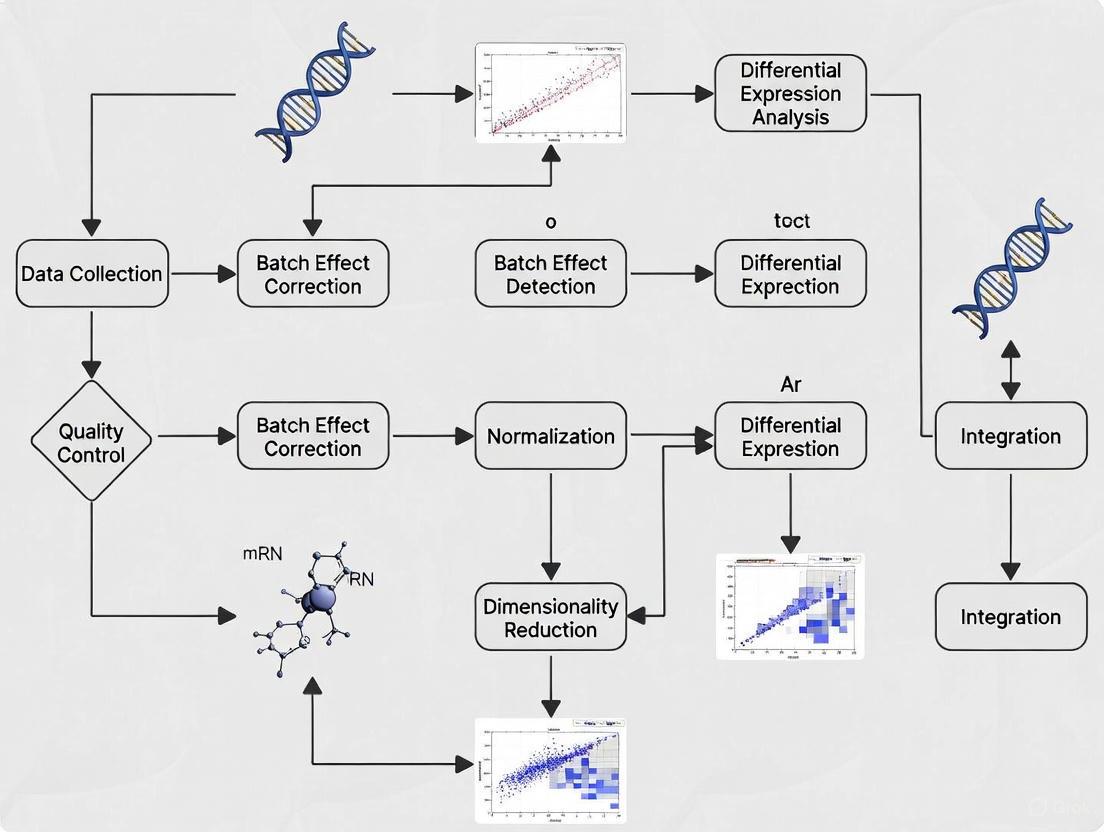
This article provides a comprehensive guide for researchers and drug development professionals on handling batch effects in single-cell RNA sequencing (scRNA-seq) of stem cell datasets.
Navigating Batch Effects in Stem Cell scRNA-seq: From Foundational Concepts to Advanced Integration Strategies
Abstract
This article provides a comprehensive guide for researchers and drug development professionals on handling batch effects in single-cell RNA sequencing (scRNA-seq) of stem cell datasets. We first explore the sources and impact of technical variation, highlighting its critical implications for data interpretation. We then detail a landscape of computational correction methods, from established to cutting-edge deep learning models, offering practical application guidance. The guide further addresses common troubleshooting scenarios and optimization techniques to prevent overcorrection and preserve biological signals. Finally, we present a rigorous framework for method validation using advanced metrics and benchmark performance across different stem cell research contexts, empowering robust and reproducible analysis.
Understanding the Enemy: Defining Batch Effects and Their Impact on Stem Cell ScRNA-Seq Data
What Are Batch Effects? Technical vs. Biological Variation in Stem Cell Cultures
What is a Batch Effect?
A batch effect is non-biological variation in experimental data caused by technical factors. In molecular biology, this occurs when non-biological factors in an experiment introduce systematic changes in the produced data. These effects can lead to inaccurate conclusions when their causes are correlated with experimental outcomes [1].
In the context of stem cell single-cell RNA sequencing (scRNA-seq), batch effects can obscure true biological signals, such as cellular heterogeneity or differentiation states, and lead to incorrect biological inferences [2]. Batch effects are a critical challenge in high-throughput sequencing experiments, including those using microarrays, mass spectrometers, and scRNA-seq platforms [1].
What Causes Batch Effects in Stem Cell Cultures and scRNA-seq?
Batch effects originate from multiple sources throughout the experimental workflow. The table below categorizes common sources of this technical variation.
Table 1: Sources of Variation in Stem Cell Research
| Variation Type | Source Examples | Impact on Data |
|---|---|---|
| Technical (Batch Effects) | Different sequencing runs or instruments [1] [3] | Systematic shifts in gene expression profiles that are not due to biology [2]. |
| Variations in reagent lots or manufacturing batches [1] [3] | Cells from the same type cluster by processing batch instead of biological condition [4]. | |
| Changes in sample preparation protocols or personnel [1] [3] | Compromised differential expression analysis and meta-analyses [3]. | |
| Time of day when the experiment was conducted [1] | ||
| Environmental conditions (temperature, humidity, atmospheric ozone) [1] [3] | ||
| Biological | Genotypic differences between individual donors or cell lines [5] | Represents the true biological variation of interest, such as different cell types or disease states. |
| Biological noise in gene expression between cells [5] |
For stem cell cultures specifically, technical variation can be introduced by [6]:
- Differences in feeder cell conditions (e.g., mouse embryonic fibroblasts vs. human foreskin fibroblasts).
- Variations in extracellular matrix lots (e.g., basement membrane gel).
- Inconsistencies in media components and supplement batches (e.g., growth factors like FGF or LIF).
- Minor changes in dissociation protocols during passaging.
How Do I Detect Batch Effects in My scRNA-seq Data?
Before correction, you should assess whether your data contains significant batch effects. Several visualization and quantitative methods can help [4].
Visualization Techniques:
- Principal Component Analysis (PCA): Plot your data by the top principal components. If samples cluster by batch (e.g., sequencing run) rather than by biological source (e.g., cell type), it indicates a batch effect [3] [4].
- t-SNE or UMAP: Overlay batch labels on the plot. In the presence of batch effects, cells from different batches tend to form separate clusters instead of mixing based on biological similarities [4].
Diagram: Workflow for Batch Effect Detection and Correction
Quantitative Metrics:
- kBET (k-nearest neighbor Batch Effect Test): A statistical test that assesses whether the local neighborhood of a cell has a balanced mix of batches [2].
- LISI (Local Inverse Simpson's Index): Quantifies both batch mixing (Batch LISI) and cell type separation (Cell Type LISI). Higher batch LISI values indicate better mixing [2].
What Methods Can Correct for Batch Effects?
Various computational techniques have been developed to correct for batch effects. The choice of method depends on your data type and experimental design.
Table 2: Batch Effect Correction Tools for scRNA-seq Data
| Tool/Method | Description | Best For | Considerations |
|---|---|---|---|
| Harmony [2] [4] | Integrates datasets iteratively in low-dimensional space (e.g., PCA). | Large datasets; fast runtime [4]. | Preserves biological variation well [2]. |
| Seurat Integration [2] [4] | Uses Canonical Correlation Analysis (CCA) and Mutual Nearest Neighbors (MNN). | Datasets with high biological fidelity needs [2]. | Computationally intensive for large datasets [2]. |
| ComBat/ComBat-seq [3] | Empirical Bayes framework to adjust for batch effects. | Microarray and RNA-seq count data [3]. | Can be used with small batch sizes [1]. |
| scDML [7] | Deep metric learning using triplet loss, guided by initial clusters. | Preserving rare cell types; complex integrations. | Newer method showing high performance in benchmarks [7]. |
| BBKNN [2] | Batch Balanced K-Nearest Neighbors; fast and lightweight. | Large datasets requiring computational efficiency [2]. | Less effective for non-linear batch effects [2]. |
How Can I Prevent Batch Effects Through Experimental Design?
Prevention is the most effective strategy. Good experimental design can substantially reduce batch effects before data processing begins [2].
Key Strategies:
- Balance Your Design: Ensure that the biological conditions of interest (e.g., treatment vs. control) are equally represented across all processing batches [8].
- Include Technical Replicates: Process the same biological sample across different batches to quantify technical variation [9].
- Standardize Protocols: Use the same reagent lots, instruments, and personnel for a given study when possible [2].
- Randomize Processing: If samples cannot be processed simultaneously, randomize the order of processing across biological conditions.
- Use Controls: Include reference control samples or spike-in RNAs (e.g., ERCC spike-ins) in each batch to monitor technical performance [5].
What is the Difference Between Technical and Biological Replicates?
Understanding replicates is crucial for designing experiments that can account for batch effects.
Technical Replicates: Repeated measurements of the same biological sample. They demonstrate the variability of the protocol itself and address the reproducibility of the assay, but not the biological phenomenon [9].
- Example in stem cell research: Taking one batch of iPSCs from a single donor, splitting it, and preparing multiple RNA-seq libraries to measure library prep variability.
Biological Replicates: Measurements from biologically distinct samples. They capture random biological variation and indicate if an experimental effect is generalizable [9].
- Example in stem cell research: Using iPSCs derived from multiple different healthy donors to ensure observed effects are not specific to one genetic background.
What Are the Signs of Over-Correction?
Aggressive batch correction can sometimes remove genuine biological signals. Watch for these signs of over-correction [4]:
- Distinct Cell Types Merge: On UMAP/PCA plots, clearly distinct cell types are clustered together after correction.
- Complete Overlap of Samples: Samples from very different conditions or experiments show complete overlap, suggesting biological differences have been removed.
- Loss of Biological Markers: Cluster-specific markers identified after correction are dominated by genes with widespread high expression (e.g., ribosomal genes) rather than specific functional genes.
The Scientist's Toolkit: Essential Reagents and Materials
Table 3: Key Research Reagent Solutions for Stem Cell scRNA-seq Studies
| Reagent/Material | Function | Example Use Case |
|---|---|---|
| Extracellular Matrix [6] | Provides attachment surface for feeder-free stem cell culture. | Coating plates for iPSC maintenance in defined conditions. |
| Pluripotency-Supporting Media [6] | Serum-free media formulations with essential growth factors. | Maintaining stem cells in an undifferentiated state across experiments. |
| Stem Cell Dissociation Reagent [6] | Enzymatic or non-enzymatic solution for detaching cells during passaging. | Creating single-cell suspensions for scRNA-seq without affecting viability. |
| ROCK Inhibitor (Y-27632) [6] | Improves survival of single stem cells after dissociation. | Adding to media after passaging or thawing to reduce apoptosis. |
| ERCC Spike-In Controls [5] | Exogenous RNA sequences added to samples in known quantities. | Quantifying technical noise and batch effects in sequencing data. |
| UMI Barcodes [5] | Unique Molecular Identifiers attached to each mRNA molecule. | Correcting for amplification bias and improving quantification accuracy. |
Diagram: Relationship Between Experimental Factors and Data Quality
FAQ on Batch Effects in Stem Cell Research
Q: Can batch effects be completely eliminated? A: While they can be significantly reduced, complete elimination is challenging. The goal is to minimize their impact so that biological signals remain the dominant source of variation in your data [1] [8].
Q: Should I correct for batch effects if my batches are balanced? A: Even with balanced designs, batch effects can still exist and should be assessed. However, in a perfectly balanced scenario, batch effects may be 'averaged out' when comparing biological conditions [8].
Q: How does sample imbalance affect batch correction? A: Sample imbalance (different cell type proportions across batches) substantially impacts integration results and biological interpretation. Methods like Harmony and scVI have shown better performance with imbalanced samples, but careful interpretation is always needed [4].
Q: Can I add new data to an already batch-corrected dataset? A: This is challenging. Corrected embeddings are typically tied to the specific datasets processed together. Integrating new data often requires re-running the entire batch correction process on the combined old and new data [2].
Q: In stem cell research, what are the most critical steps to minimize batch effects? A: Standardizing cell culture conditions (passaging techniques, media batches, and confluence at harvesting) and using consistent RNA library preparation protocols across all samples are most critical for minimizing batch effects in stem cell studies [6] [5].
FAQ: Understanding and Identifying Batch Effects
Batch effects in stem cell scRNA-seq arise from both biological and technical sources. Key biological sources include variations between individual cell donors and differences in sample collection times or environmental conditions [2]. A prominent technical source is the inherent stochasticity of the iPSC reprogramming process itself, which can create strong batch (or donor) effects that prevent models trained on one batch from being applied to another [10]. Other major technical sources encompass differences in sequencing platforms (e.g., Illumina vs. Ion Torrent), sample preparation protocols, reagents, instrumentation, and personnel handling samples across different laboratories or processing dates [2] [11].
How can I detect if my stem cell scRNA-seq data has batch effects?
You can use both visual and quantitative methods to detect batch effects.
- Visual Methods:
- PCA Plot Examination: Perform Principal Component Analysis (PCA) on the raw data and color cells by their batch of origin. Separation of cells by batch in the top principal components, rather than by biological source (e.g., cell type), indicates a batch effect [11] [4].
- t-SNE/UMAP Plot Examination: Visualize your data using t-SNE or UMAP. If cells from the same cell type or condition cluster separately based on their batch, it signals a batch effect that needs correction [11] [4].
- Quantitative Metrics: Several metrics provide a less biased assessment [11] [4]:
- kBET (k-nearest neighbor Batch Effect Test): A statistical test assessing if the local batch proportion in a cell's neighborhood matches the global expectation.
- LISI (Local Inverse Simpson's Index): Quantifies the diversity of batches (Batch LISI) and cell types (Cell Type LISI) in a local neighborhood. A higher Batch LISI indicates better batch mixing.
Table 1: Quantitative Metrics for Batch Effect Assessment
| Metric | What It Measures | Interpretation |
|---|---|---|
| kBET | Whether local batch mixing reflects the global expected proportion | Rejection of the null hypothesis indicates a significant batch effect. |
| Batch LISI | Diversity of batches in a cell's local neighborhood | Higher values indicate better mixing of batches. |
| Cell Type LISI | Purity of cell types in a cell's local neighborhood | Lower values indicate better separation of cell types. |
| ARI (Adjusted Rand Index) | similarity between two clusterings (e.g., before/after correction) | Values closer to 1 indicate higher clustering accuracy. |
| ASW (Average Silhouette Width) | Compactness and separation of clusters | Higher values indicate more compact and well-separated clusters. |
What are the best methods for correcting batch effects in stem cell data?
The "best" method can depend on your specific data, but several tools have been benchmarked for scRNA-seq integration [2] [4].
Table 2: Commonly Used scRNA-seq Batch Effect Correction Tools
| Tool | Core Methodology | Strengths | Considerations for Stem Cell Research |
|---|---|---|---|
| Harmony | Iterative clustering in PCA space with batch correction [2] [11]. | Fast, scalable, preserves biological variation [2]. | A recommended first choice due to good balance of speed and performance [4]. |
| Seurat Integration | Uses CCA and Mutual Nearest Neighbors (MNN) as "anchors" to align datasets [2] [11]. | High biological fidelity; integrated with a comprehensive analysis suite [2]. | Can be computationally intensive for large datasets; requires parameter tuning [2]. |
| scANVI | Deep generative model (variational autoencoder) that can use cell labels [2]. | Excels at modeling complex, non-linear batch effects [2]. | Requires familiarity with deep learning; may need GPU acceleration [2]. Preserves rare cell types well [7]. |
| BBKNN | Batch Balanced K-Nearest Neighbors; a fast graph-based method [2]. | Computationally efficient and lightweight [2]. | Less effective on highly complex batch effects; parameter sensitive [2]. |
| scDML | Deep metric learning using triplet loss, guided by initial clusters and neighbor information [7]. | Effectively preserves subtle and rare cell types, which is crucial in stem cell differentiation studies [7]. | A newer method that has shown strong performance in benchmarks against other popular tools [7]. |
| sysVI | Conditional VAE using VampPrior and cycle-consistency constraints [12] [13]. | Designed for integrating datasets with substantial batch effects (e.g., across species or protocols) [12] [13]. | Ideal for ambitious projects like integrating organoid models with primary tissue data [12] [13]. |
What are the signs of over-correction and how can I avoid it?
Over-correction occurs when batch effect removal also removes genuine biological signal. Key signs include [11] [4]:
- Distinct cell types are incorrectly clustered together on UMAP/t-SNE plots.
- A complete overlap of samples from very different biological conditions (e.g., control vs. treated), suggesting the loss of meaningful differential expression.
- Cluster-specific markers are comprised of genes with widespread high expression (e.g., ribosomal genes) instead of canonical cell-type-specific markers.
- A notable absence of expected differential expression hits for pathways known to be active in certain cell types or conditions.
To avoid over-correction, start with less aggressive correction methods and always validate that known biological signals are retained after integration. Be particularly cautious with methods that use strong adversarial learning or high Kullback–Leibler (KL) regularization, as these can indiscriminately remove both technical and biological variation [12] [13].
My stem cell samples are imbalanced (different cell type proportions across batches). How does this affect integration?
Sample imbalance—where batches have different numbers of cells, different cell types present, or different cell type proportions—is common in stem cell research (e.g., due to varying differentiation efficiencies). This can substantially impact integration and downstream biological interpretation [4].
- Adversarial learning methods are particularly prone to mixing embeddings of unrelated cell types when their proportions are unbalanced across batches [12] [13]. For instance, a rare cell type in one batch might be incorrectly merged with a more abundant cell type from another batch.
- Guidelines: In imbalanced settings, it is recommended to use methods that do not rely on adversarial learning and to carefully inspect the integration results for the preservation of rare cell populations [4]. Methods like
scDMLthat are explicitly designed to preserve rare cell types can be particularly valuable in these scenarios [7].
Experimental Protocol: A Standard Workflow for Batch Effect Correction
The following diagram outlines a standard computational workflow for detecting and correcting batch effects in scRNA-seq data.
Standard Batch Effect Correction Workflow
Detailed Methodological Steps:
- Normalization: Adjust raw counts for technical biases like sequencing depth. Common methods include LogNormalize (counts divided by total cells, scaled, log-transformed) and SCTransform (uses a regularized negative binomial model), which also performs variance stabilization [2].
- Feature Selection: Identify Highly Variable Genes (HVGs) that drive biological heterogeneity. This focuses subsequent analysis on the most informative features and can help minimize the influence of batch-effect-associated genes [2].
- Scaling and Linear Dimensionality Reduction: Scale the data so that the mean expression is 0 and variance is 1 across cells. Then, perform Principal Component Analysis (PCA) to reduce dimensionality. The top PCs are used for batch correction by many methods [2] [11].
- Batch Effect Detection & Decision: As described in FAQ #2, use PCA/UMAP and quantitative metrics (e.g., LISI, kBET) to assess the need for correction.
- Batch Effect Correction: If a significant batch effect is detected, apply a chosen integration algorithm (see Table 2). The selection depends on dataset size, complexity of batch effects, and the need to preserve rare cell types.
- Post-Correction Evaluation: It is critical to re-evaluate the data using the same visual and quantitative methods from Step 4. Check that batches are well-mixed and that biological separation (e.g., by known cell types) is maintained, guarding against over-correction.
Table 3: Key Software Tools and Resources
| Category | Item/Reagent Solution | Function / Explanation |
|---|---|---|
| Primary Analysis Suites | Seurat (R) / Scanpy (Python) | Comprehensive toolkits encompassing the entire scRNA-seq analysis workflow, including normalization, integration, clustering, and visualization [2]. |
| Batch Correction Algorithms | Harmony, scANVI, scDML, sysVI | Specific computational methods designed to remove unwanted technical variation while preserving biological signal. See Table 2 for details [2] [12] [7]. |
| Quantitative Metrics Packages | kBET, LISI | Software packages that calculate metrics to objectively evaluate the success of batch integration before and after correction [2] [11]. |
| Reference Materials | Quartet Project Reference Materials | Well-characterized reference samples (used in proteomics and other omics) that can be profiled alongside study samples across batches to monitor technical performance and aid in batch-effect correction [14]. |
Frequently Asked Questions
FAQ 1: How can I tell if my clustering results are unreliable due to batch effects?
Clustering results may be unreliable if the same analysis yields different cell groups each time it is run, a problem known as clustering inconsistency. This is often driven by underlying technical variation or batch effects that disrupt the true biological signal. Specifically, when you change the random seed in your clustering algorithm and this leads to the disappearance of previously detected clusters or the emergence of entirely new ones, it is a strong indicator of instability caused by unaddressed technical noise [15]. Tools like the single-cell Inconsistency Clustering Estimator (scICE) have been developed to quantitatively measure this consistency, helping to identify and exclude unreliable clustering outputs [15].
FAQ 2: Why are rare cell populations particularly vulnerable to batch effects, and how can I protect them in my analysis?
Rare cell populations are vulnerable for two main reasons. First, their low cell counts make them statistically easier to obscure by technical variation. Second, aggressive batch correction methods might mistakenly mix them with more abundant, but biologically distinct, cell types to achieve a uniform batch distribution [12] [16]. To protect these populations, it is recommended to use batch correction methods that are known for high biological fidelity and to employ targeted approaches during analysis. Before correction, visually inspect your data to note the location of potential rare populations. After applying a method like Harmony or Seurat Integration, verify that these populations remain distinct and have not been improperly merged with other groups [16] [17].
FAQ 3: Is it better to use a batch-corrected matrix or include batch as a covariate in my differential expression model?
For known batch variables, the current best practice is to incorporate them directly as covariates in your regression model for differential expression analysis, rather than using a pre-corrected gene expression matrix. Studies have shown that using a batch-corrected matrix can lead to inflated false discovery rates (FDRs), while including batch as a covariate in a model like those in edgeR or DESeq2 provides more reliable results [18]. For latent batch effects (those not known or measured), surrogate variable analysis (SVA) methods have been shown to effectively control FDR while maintaining good power [18].
Troubleshooting Guides
Problem: Clustering Bias and Inconsistency
Issue: Your clustering results change dramatically with different random seeds, making cell type identification unreliable.
Diagnosis: This is a classic sign of clustering inconsistency, where technical variation (batch effects) interferes with the algorithm's ability to find stable, biologically real groupings [15].
Solutions:
- Evaluate Clustering Consistency: Use the scICE tool to efficiently assess the consistency of your clusters across multiple runs. It calculates an Inconsistency Coefficient (IC)—values close to 1 indicate reliable clusters, while higher values signal instability [15].
- Apply Appropriate Batch Correction: Implement a robust batch correction method before clustering. The table below summarizes top-performing methods recommended for their ability to integrate data while preserving biological variation [17].
Table: Benchmarking of Select Batch Correction Methods
| Method | Key Principle | Best For | Strengths | Limitations |
|---|---|---|---|---|
| Harmony [17] | Iterative clustering in PCA space | Large datasets, general use | Fast, scalable, good batch mixing | Limited native visualization tools |
| Seurat Integration [17] | Canonical Correlation Analysis (CCA) & Mutual Nearest Neighbors (MNN) | Datasets where biological signal is paramount | High biological fidelity, comprehensive workflow | Computationally intensive for large data [2] |
| LIGER [17] | Integrative Non-negative Matrix Factorization (NMF) | Separating technical from biological variation | Does not assume all inter-dataset variation is technical | Requires more parameter tuning |
| sysVI (VAMP+CYC) [12] | Variational Autoencoder with VampPrior & cycle-consistency | Challenging cases (e.g., cross-species, organoid-tissue) | Improves correction without removing biological signals | More complex, deep learning-based |
Experimental Protocol for Reliable Clustering:
- Quality Control: Filter out low-quality cells and genes using standard QC metrics (count depth, number of genes, mitochondrial fraction) [19].
- Normalization: Normalize data using a method like SCTransform (regularized negative binomial regression) to account for sequencing depth and technical covariates [2].
- Batch Correction: Apply a suitable method from the table above (e.g., Harmony) to integrate your datasets.
- Consistency Check: Run scICE on the corrected data across a range of clustering resolutions to identify the most stable and reliable cluster labels [15].
The following diagram illustrates the negative impact of batch effects on clustering and the corrective workflow.
Problem: Masking of Rare Cell Types
Issue: A suspected rare cell population visible in one dataset disappears or becomes merged with a common cell type after data integration.
Diagnosis: Aggressive batch correction can over-correct the data, forcing the distinct gene expression profile of a rare cell type to be "aligned" with a more prevalent one, especially if the rare type is absent or has unbalanced proportions in one of the batches [12] [16].
Solutions:
- Method Selection: Choose a batch correction method demonstrated to preserve biological heterogeneity. Seurat Integration is often noted for its high biological fidelity [2] [17].
- Leverage Newer Algorithms: Consider advanced methods like sysVI, which uses a cycle-consistency constraint and VampPrior to improve integration without sacrificing biological signals, making it suitable for challenging integrations like between organoids and primary tissue [12].
- Sub-clustering: Perform a two-stage analysis. First, identify and extract major cell populations post-correction. Then, perform a second round of batch correction and clustering only on the cells within a major population of interest. This "zoomed-in" approach can reveal hidden rare subtypes [15].
Problem: Compromised Differential Expression (DE) Analysis
Issue: Differential expression analysis yields an unexpectedly high number of false positives or fails to identify known marker genes.
Diagnosis: Batch effects are a major confounder in DE analysis. If not properly accounted for, the systematic technical differences between sample groups can be misinterpreted as biological differences, inflating false positives. Conversely, overly strong correction can remove genuine biological signals [18].
Solutions:
- For Known Batches: The most effective approach is to include the batch as a covariate in the statistical model used for DE testing (e.g., in
edgeRorDESeq2), rather than using a pre-corrected expression matrix [18]. - For Latent Batches: When batch factors are unknown, use a method like Surrogate Variable Analysis (SVA) to estimate and account for these hidden sources of variation within your DE model [18].
- Use Improved Correction Tools: For analyses that require a corrected matrix, consider newer methods like ComBat-ref. This method builds on ComBat-seq but selects the batch with the smallest dispersion as a reference, which has been shown to improve the sensitivity and specificity of subsequent DE analysis compared to earlier methods [20].
Table: Impact of Batch Effect Correction on Differential Expression Analysis
| Scenario | Impact on True Positives | Impact on False Positives | Recommended Strategy |
|---|---|---|---|
| No Correction | Low (Power loss) | High (Inflation) | Never skip correction. |
| Using Corrected Matrix | Variable | Can be high (Inflation) | Avoid; use covariate instead [18]. |
| Batch as Covariate in Model | High | Well-controlled | Best practice for known batches [18]. |
| ComBat-ref Workflow | High (Retains power) | Well-controlled | Good alternative when a corrected matrix is needed [20]. |
The relationship between batch effects, correction strategies, and the integrity of differential expression analysis is summarized below.
The Scientist's Toolkit
Table: Essential Computational Tools & Reagents for scRNA-seq Batch Correction
| Tool / Resource | Function / Description | Use Case |
|---|---|---|
| Harmony | Iterative batch correction algorithm in PCA space. | Fast, general-purpose integration of multiple datasets [17]. |
| Seurat | Comprehensive R toolkit for single-cell analysis, includes CCA/MNN-based integration. | When high biological fidelity and a full analysis workflow are needed [2] [17]. |
| scICE | Evaluates clustering consistency using the Inconsistency Coefficient (IC). | Quantifying the reliability of clustering results post-correction [15]. |
| sysVI | A cVAE-based method using VampPrior and cycle-consistency. | Integrating datasets with substantial batch effects (e.g., cross-species) [12]. |
| ComBat-ref | A refined batch effect correction method for count data using a reference batch. | Preparing data for differential expression analysis with high statistical power [20]. |
| Unique Molecular Identifiers (UMIs) | Molecular barcodes that label individual mRNA molecules. | Correcting for amplification bias and improving quantification accuracy [16] [19]. |
| SCTransform | A variance-stabilizing normalization method based on a regularized negative binomial model. | Normalizing data and removing technical variation due to sequencing depth [2]. |
Core Case Study: Experimental Investigation of Technical Variation
Background and Experimental Design
This case study is founded on research specifically designed to disentangle technical variability from biological variation in single-cell RNA-sequencing (scRNA-seq) of human induced pluripotent stem cell (iPSC) lines [5]. The experimental design involved collecting scRNA-seq data from iPSC lines of three genetically distinct Yoruba (YRI) individuals. Critically, the researchers performed three independent C1 microfluidic plate collections per individual, with each replicate accompanied by processing of a matching bulk sample using the same reagents [5]. This robust design enabled precise estimation of error and variability associated with technical processing independently from biological variation across individuals.
Detailed Methodology
Table: Experimental Protocol for Controlled Replicate Study
| Step | Description | Key Parameters |
|---|---|---|
| Cell Lines | iPSC lines from three YRI individuals (NA19098, NA19239, etc.) | Genetically distinct backgrounds |
| Replicate Design | Three independent C1 collections per individual | Technical replicates processed separately |
| Quality Control | Visual inspection of C1 plates + data-driven filtering | Flagged empty wells (21) and multiple-cell captures (54) |
| Sequencing | Fluidigm C1 platform with UMIs and ERCC spike-in controls | Average 6.3 ± 2.1 million reads per sample |
| Data Processing | Alignment, UMI counting, QC filtering | 564 high-quality single cells retained from initial collection |
The methodology incorporated both unique molecular identifiers (UMIs) to account for amplification bias and ERCC spike-in controls of known abundance [5]. Visual inspection of C1 microfluidic plates constituted a crucial quality control step, with 21 samples flagged as containing no cell and 54 samples containing more than one cell [5].
Key Findings and Quantitative Results
The study revealed several critical findings regarding technical variation in scRNA-seq experiments:
Table: Key Quantitative Findings from Controlled Replicate Study
| Finding | Metric | Implication |
|---|---|---|
| Read-to-Molecule Correlation | Endogenous genes: r = 0.92; ERCC spikes: r = 0.99 | UMIs essential for accurate quantification |
| Sufficient Sequencing Depth | ~1.5 million reads/cell (~50,000 molecules) | Enabled detection of >6,000 genes |
| Bulk Correlation | Pearson coefficient = 0.8 for bottom 50% expressed genes | Single-cell expression profiles recapitulated bulk data |
| Sample Quality | 564 high-quality samples retained from initial collection | Stringent QC necessary for reliable data |
The research demonstrated that while gene-specific reads and molecule counts were highly correlated for ERCC spike-in data (r = 0.99), this correlation was lower for endogenous genes (r = 0.92), particularly for genes expressed at lower levels [5]. This underscores the importance of using UMIs in single-cell gene expression studies.
Troubleshooting Guide: Common Experimental Challenges
iPSC Culture and Differentiation Issues
Problem: Excessive differentiation (>20%) in cultures
- Solution: Ensure complete cell culture medium is less than 2 weeks old; remove differentiated areas prior to passaging; avoid having culture plates out of incubator for >15 minutes; ensure even cell aggregate size during passaging [21].
Problem: Poor differentiation efficiency
- Solution: Use H9 or H7 ESC line as control; adjust cell density or extend induction time for difficult-to-differentiate iPSC lines [22].
Problem: Low cell attachment after plating
- Solution: Plate 2-3 times higher number of cell aggregates initially; reduce incubation time with passaging reagents; use correct plate type for coating matrix [21].
scRNA-seq Quality Control Challenges
Problem: High mitochondrial read percentage
- Solution: Calculate fraction of counts from mitochondrial genes; filter cells with excessive mitochondrial content indicating broken membranes and cell death [23]. Filtering via median absolute deviations (MAD) is recommended, marking cells as outliers if they differ by 5 MADs [23].
Problem: Low number of detected genes per cell
- Solution: Establish minimum thresholds based on experimental system; typically filter cells with <500-1000 UMIs; consider cell type complexity when setting thresholds [24].
Problem: Doublet detection
- Solution: While not always included in standard QC, tools like Scrublet can identify doublets; however, exercise caution as they may remove cells with intermediate phenotypes [24].
Computational Methods for Batch Effect Management
Advanced Integration Strategies
Substantial batch effects arising from different biological systems (e.g., species, organoids vs primary tissue) or technologies (e.g., single-cell vs single-nuclei RNA-seq) present particular challenges. Current research demonstrates that conventional cVAE-based methods struggle with these substantial batch effects [12] [13].
Table: Comparison of Batch Effect Correction Methods
| Method | Mechanism | Advantages | Limitations |
|---|---|---|---|
| KL Regularization | Adjusts how much embeddings deviate from Gaussian distribution | Standard in cVAE architecture; easy to implement | Removes biological and technical variation indiscriminately |
| Adversarial Learning | Aligns batch distributions in latent space | Actively pushes together cells from different batches | May mix embeddings of unrelated cell types |
| sysVI (VAMP + CYC) | Combines VampPrior and cycle-consistency constraints | Preserves biological signals while improving integration | More complex implementation |
| GLUE | Uses adversarial learning with graph-based framework | Among best-performing in benchmarks | Can mix cell types with unbalanced proportions |
The recently proposed sysVI method employs VampPrior and cycle-consistency constraints to improve integration across challenging datasets while preserving biological signals [12] [13]. This approach specifically addresses the limitations of existing methods that either remove biological information (KL regularization) or artificially mix cell types (adversarial learning).
Research Reagent Solutions
Table: Essential Research Reagents for iPSC scRNA-seq Studies
| Reagent Category | Specific Examples | Function | Considerations |
|---|---|---|---|
| Culture Media | mTeSR Plus, Essential 8 Medium, StemFlex Medium | Supports pluripotent stem cell growth | Monitor expiration; prepare fresh aliquots |
| Passaging Reagents | ReLeSR, Gentle Cell Dissociation Reagent, EDTA | Dissociates cells while maintaining viability | Optimize incubation time for specific cell lines |
| Matrices | Geltrex, Matrigel, Vitronectin XF, Laminin-521 | Provides surface for cell attachment | Use tissue culture-treated plates appropriately |
| Inhibitors | ROCK inhibitor Y-27632, RevitaCell Supplement | Enhances cell survival after passaging/thawing | Use at 10μM for overnight treatment |
| QC Tools | ERCC spike-in controls, UMIs | Monitors technical variation | Include in library preparation |
| Cryopreservation | CRYOSTEM, DMSO with FBS | Long-term cell storage | Use controlled-rate freezing |
FAQs: Addressing Common Researcher Questions
Q: How can I determine if my scRNA-seq data has substantial batch effects? A: Compare per-cell type distances between samples from individual datasets versus between different systems. Significant differences indicate substantial batch effects requiring specialized integration methods [12].
Q: What are the minimum QC thresholds for scRNA-seq data? A: While thresholds vary by experiment, general guidelines include: minimum 500-1000 UMIs/cell, detection of 300+ genes/cell, and mitochondrial ratio below 20% [23] [24]. However, these should be adjusted based on biological expectations.
Q: How many replicates are sufficient for technical variation studies? A: The case study utilized three independent C1 collections per cell line, providing robust estimation of technical variability [5]. The exact number depends on cost constraints and desired statistical power.
Q: Can I combine data from different scRNA-seq platforms? A: Yes, but this creates substantial batch effects requiring advanced integration methods like sysVI. Performance should be carefully evaluated using metrics like iLISI and NMI [13].
Q: How does the use of UMIs improve data quality? A: UMIs account for amplification bias by counting molecules rather than reads, substantially reducing technical variability and providing more accurate gene expression estimates [5].
The Correction Toolbox: A Practical Guide to Batch Effect Integration Methods
In single-cell RNA sequencing (scRNA-seq) research, particularly in stem cell studies, batch effects present a significant challenge. These technical variations, introduced from different machines, handling personnel, or reagent lots, can obscure true biological signals and lead to spurious conclusions [25] [26]. Effective batch effect correction is crucial for integrating datasets and revealing accurate cellular heterogeneity, differentiation trajectories, and novel cell states. This guide demystifies three major computational approaches for batch correction: Mutual Nearest Neighbors (MNN), Deep Learning, and Matrix Factorization, providing troubleshooting and implementation FAQs specifically for stem cell scRNA-seq datasets.
Understanding the Core Methodologies
What is the Mutual Nearest Neighbors (MNN) Approach?
Mutual Nearest Neighbors (MNN) is a powerful strategy for identifying and correcting batch effects by finding pairs of cells across different batches that are biologically similar.
Core Principle: The fundamental assumption is that cells of the same type exist across different batches. MNN identifies these "anchor" cell pairs—where a cell in one batch is the nearest neighbor of a cell in another batch, and vice versa. The computational differences between these mutual neighbors are considered technical batch effects, which can then be corrected [27] [17].
Key Implementation: The original MNNCorrect operates in high-dimensional gene expression space, but this can be computationally intensive. Subsequent methods like fastMNN and Scanorama perform the MNN search in a lower-dimensional subspace (e.g., PCA) to improve speed and efficiency [17]. Seurat's integration method (V3+) also uses a related concept, finding "integration anchors" in a subspace created by Canonical Correlation Analysis (CCA) [17].
The following diagram illustrates the workflow of a standard MNN-based correction method:
How Do Deep Learning Models Correct Batch Effects?
Deep learning approaches use neural networks to learn complex, non-linear representations of scRNA-seq data that are invariant to technical batches.
Core Principle: These models, such as autoencoders, learn to compress gene expression data into a low-dimensional "bottleneck" layer (the embedding) and then reconstruct the data from this layer. The network is trained so that this embedding contains all biological information but is stripped of batch-specific technical noise [28].
Key Variants:
- Variational Autoencoders (VAEs): Used in methods like scGen and scVI, they learn a distribution of the latent space, which can be beneficial for modeling uncertainty and generating data [28] [17].
- Residual Neural Networks: Used in deepMNN, this approach stacks residual blocks to transform the data, using a loss function that minimizes distances between MNN pairs in a PCA subspace while preserving the original data structure through regularization [27].
- Deep Metric Learning: Used in scDML, this method uses "triplet loss" to learn an embedding where cells of the same type are pulled closer together and cells of different types are pushed apart, effectively removing batch effects [7].
What is Matrix Factorization's Role in Batch Integration?
Matrix factorization techniques decompose the high-dimensional gene expression matrix into lower-dimensional factors that represent biological and technical sources of variation.
Core Principle: Methods like LIGER use integrative non-negative matrix factorization (iNMF) to factorize multiple datasets simultaneously. This generates two sets of factors: shared factors (representing common biological features across batches) and dataset-specific factors (representing batch-specific technical variations) [17]. Batch correction is achieved by using only the shared factors for downstream analysis.
Key Implementation: LIGER does not force a complete alignment of batches. It aims to distinguish biological and technical variations, which can be advantageous when batches contain legitimate biological differences alongside technical artifacts [17].
Performance Comparison and Selection Guide
The table below summarizes a comprehensive benchmark of these methods across key performance criteria, based on large-scale evaluation studies [17] [7].
Table 1: Benchmarking Batch Effect Correction Methods
| Method (Example) | Method Category | Key Strength | Preservation of Rare Cell Types | Scalability to Large Datasets | Handling of Multiple Batches | Runtime Efficiency |
|---|---|---|---|---|---|---|
| Harmony [17] | Mixed (PCA + clustering) | Fast, good overall performance | Good | Excellent | Excellent | Excellent |
| Scanorama [17] | MNN | Effective integration, handles multiple batches | Good | Very Good | Excellent | Very Good |
| Seurat V3/V4 [27] [17] | MNN (CCA-based) | Popular, well-integrated workflow | Good | Good | Excellent | Good |
| LIGER [17] | Matrix Factorization | Distinguishes biological vs. technical variation | Fair | Good | Excellent | Good |
| scGen [17] | Deep Learning (VAE) | Supervised, requires cell type labels | Fair | Fair | Requires reference | Fair |
| deepMNN [27] | Deep Learning (ResNet) | Powerful non-linear correction, uses MNN loss | Very Good (per authors) | Excellent (per authors) | Excellent | Excellent (per authors) |
| scDML [7] | Deep Learning (Metric) | Excellent at preserving rare cell types | Excellent | Excellent | Excellent | Very Good |
Troubleshooting FAQs for Stem Cell Researchers
General Integration Challenges
Q: After integration, my stem cell populations are overly mixed and I can no longer distinguish between pluripotent and early differentiated states. What went wrong?
A: This indicates potential over-correction, where the batch effect method has removed biological variation along with technical noise.
- Solution 1: Adjust the method's parameters. For instance, in methods like Harmony or LIGER, reduce the strength of the correction or integration parameter.
- Solution 2: Switch to a method known for better biological conservation. Benchmark studies suggest scDML is particularly strong at preserving subtle cell types [7], while LIGER is designed to retain biological variation distinct from batch effects [17].
- Solution 3: Validate with known marker genes. Check the expression of well-established stem cell markers (e.g., POUSF1/OCT4, NANOG) in the integrated data to ensure their expression patterns are consistent with biology.
Q: My batches are not integrating well; they remain separate in the UMAP visualization. Is the method failing?
A: This indicates under-correction.
- Solution 1: Ensure your pre-processing is consistent. Use the same normalization and highly variable gene selection method across all batches before integration [29].
- Solution 2: Check for severe batch effects. If the batches were generated with vastly different technologies, they might not be suitable for integration. Consider using a method designed for strong correction, like a deep learning approach (e.g., deepMNN [27]).
- Solution 3: Verify the method's compatibility. Some older MNN methods were designed for two batches. Use methods that explicitly handle multiple batches, such as Harmony, Scanorama, Seurat V4, or scDML [27] [17] [7].
Method-Specific Issues
Q: When using an MNN-based method (e.g., fastMNN, Scanorama), the integration result changes depending on the order I input the batches. Why?
A: This is a known limitation of some early MNN implementations, which correct batches in a pairwise, sequential manner. The result can be influenced by which batch is used as the reference.
- Solution: Use more advanced methods that perform batch integration in a single, collective step. Harmony, Scanorama, and deepMNN are explicitly designed to correct multiple batches simultaneously without order dependence [27] [17].
Q: I am using a deep learning model like scVI, but the training is unstable or the results are poor. How can I improve this?
A: Deep learning models are sensitive to hyperparameters and data quality.
- Solution 1: Increase training data size. Deep learning models typically require a substantial number of cells to learn effectively. If your dataset is small, consider using a simpler method.
- Solution 2: Check for over-denoising. Some VAEs can "fill in" too many dropouts (zero counts), potentially distorting the biology. If you suspect this, try a different method like scDML or deepMNN which use different loss functions [27] [7].
- Solution 3: Ensure consistent pre-processing. As with all methods, normalize and scale the data uniformly across batches.
Essential Research Reagent Solutions
The following table lists key computational "reagents" – the algorithms and packages that are essential for implementing these batch correction strategies.
Table 2: Key Computational Tools for Batch Effect Correction
| Tool Name | Method Category | Primary Function | Programming Language | Key Application Context |
|---|---|---|---|---|
| fastMNN [17] | MNN | Fast batch correction using MNN in PCA space. | R | Efficient integration of datasets with identical cell types. |
| Seurat [29] [17] | MNN (CCA & PCA) | A comprehensive toolkit for single-cell analysis, including integration. | R | General-purpose scRNA-seq analysis with robust integration capabilities. |
| Scanorama [17] | MNN | Panoramic stitching of batches for scalable integration. | Python | Integrating large numbers of diverse batches. |
| Harmony [17] | Mixed | Iterative clustering and correction for efficient integration. | R | Fast and effective integration, recommended as a first try. |
| LIGER [17] | Matrix Factorization | Integrative NMF to factorize shared and dataset-specific factors. | R | When seeking to distinguish biological from technical variation. |
| scVI [17] | Deep Learning (VAE) | Probabilistic modeling and batch correction using a VAE. | Python | Complex integration tasks and downstream analysis with uncertainty. |
| scGen [17] | Deep Learning (VAE) | Supervised batch correction and perturbation response prediction. | Python | When cell type labels are available and can be used for guidance. |
| deepMNN [27] | Deep Learning (ResNet) | Batch correction using residual networks guided by MNN pairs. | Python (PyTorch) | Large-scale data integration with high performance. |
| scDML [7] | Deep Learning (Metric) | Batch alignment and rare cell type preservation via metric learning. | Python (PyTorch) | Projects where preserving subtle cell states (e.g., stem cell progenitors) is critical. |
Recommended Experimental Protocol for Stem Cell Datasets
Based on benchmark studies and methodological advances, here is a recommended step-by-step protocol for benchmarking batch correction methods on your stem cell scRNA-seq data:
- Pre-processing: Normalize (e.g., log(TPM+1) or SCTransform) and scale the data for each batch separately. Identify highly variable genes consistently across batches [27] [29].
- Initial Run with Harmony: Given its speed and robust performance in benchmarks [17], run Harmony on your pre-processed data using default parameters.
- Visual Inspection: Generate UMAP plots colored by batch and by cell type (if known). Assess if batches are mixed and if biologically distinct stem cell states remain separate.
- Quantitative Evaluation (If Ground Truth is Available):
- Iterate and Compare: If results from Harmony are unsatisfactory (e.g., over-mixing of states or under-mixing of batches), test other methods. A strong candidate is scDML for its exceptional ability to preserve rare cell types [7], or Scanorama for robust multi-batch integration [17].
- Biological Validation: The final check must always be biological. Ensure that key marker genes for your stem cell system show expected expression patterns in the integrated data and that differentiation trajectories appear plausible.
The following diagram summarizes this recommended workflow:
Frequently Asked Questions
Q1: Based on recent benchmarks, which integration methods consistently perform best for complex single-cell datasets?
Several independent benchmarking studies have identified a consistent group of top-performing methods for single-cell RNA-seq data integration. According to a large-scale benchmark evaluating 68 method and preprocessing combinations across 85 batches, scANVI, Scanorama, scVI, and scGen performed particularly well on complex integration tasks [30]. Another major benchmark focusing on atlas-level data integration found that Harmony, scVI, and Scanorama achieved the best balance between batch effect removal and biological conservation [30]. For cross-species integration specifically, which presents particularly substantial batch effects, scANVI, scVI, and SeuratV4 methods achieved the best balance between species-mixing and biology conservation [31].
Q2: What are the key limitations of popular integration methods I should be aware of?
Each method has specific limitations that may affect your choice depending on your data characteristics and computational resources:
- Seurat Integration: Can be computationally intensive and memory-intensive for large datasets, requiring careful parameter tuning [2].
- scVI/scANVI: Demand significant computational resources and familiarity with deep learning frameworks; scANVI requires GPU acceleration for efficiency [2].
- Harmony: Has limited native visualization tools and requires integration with other packages for comprehensive visualization [2].
- LIGER: Requires choosing a reference dataset (typically the set with the largest number of cells), which may introduce biases [7].
Q3: My dataset has substantial batch effects across different species and technologies. Which method is most suitable?
For substantial batch effects such as cross-species, organoid-tissue, or single-cell/single-nuclei integrations, recent research recommends sysVI, a cVAE-based method employing VampPrior and cycle-consistency constraints [13]. This approach specifically addresses the limitations of standard cVAE models that struggle with substantial batch effects. When integrating whole-body atlases between species with challenging gene homology annotation, SAMap has demonstrated superior performance despite being computationally intensive [31].
Q4: What metrics should I use to evaluate the success of batch correction in my stem cell dataset?
A comprehensive evaluation should include both batch effect removal and biological conservation metrics:
Table: Key Metrics for Evaluating Batch Correction Performance
| Metric Category | Specific Metrics | What It Measures |
|---|---|---|
| Batch Effect Removal | kBET (k-nearest neighbor Batch Effect Test) [2] | Whether batch proportions in local neighborhoods match expected proportions |
| iLISI (graph integration local inverse Simpson's Index) [13] [30] | Batch mixing in local neighborhoods | |
| ASW_batch (Average Silhouette Width) [7] | Batch separation using silhouette widths | |
| Biological Conservation | ARI (Adjusted Rand Index) [7] [31] | Similarity between clustering results and known cell type annotations |
| NMI (Normalized Mutual Information) [13] [7] | Mutual information between clustering and known annotations | |
| ASW_celltype (Average Silhouette Width) [7] | Cell type separation using silhouette widths | |
| ALCS (Accuracy Loss of Cell type Self-projection) [31] | Preservation of cell type distinguishability after integration |
Q5: How does Harmony's approach differ from Seurat's, and when would I choose one over the other?
Harmony and Seurat employ fundamentally different integration strategies:
Table: Comparison of Harmony and Seurat Integration Methods
| Characteristic | Harmony | Seurat Integration |
|---|---|---|
| Core Methodology | Iterative clustering and correction in low-dimensional embedding space [2] | Canonical Correlation Analysis (CCA) and Mutual Nearest Neighbors (MNN) [2] |
| Primary Output | Corrected embedding [32] | Corrected count matrix or embedding [32] |
| Computational Efficiency | Fast and scalable to millions of cells [2] | Computationally intensive for large datasets [2] |
| Strengths | Excellent batch mixing while preserving biological variation [32] [2] | High biological fidelity and seamless integration with Seurat's comprehensive toolkit [2] |
| Ideal Use Case | Large-scale atlas projects with multiple batches [30] | Studies requiring careful cell type distinction and full Seurat workflow integration [2] |
Troubleshooting Guides
Poor Integration Results After Running Batch Correction
Problem: After running batch correction, your stem cell datasets still show strong batch separation, or biological variation has been过度校正.
Solutions:
- Increase integration strength: For methods like Harmony, adjust parameters to increase integration strength. For scVI-based methods, consider sysVI which adds cycle-consistency constraints for challenging integrations [13].
- Check feature selection: Highly variable gene selection significantly improves performance of data integration methods. Re-evaluate your HVG selection strategy [30].
- Try multiple methods: If one method fails, switch to an alternative top-performing approach. Benchmarks show that performance can vary by dataset characteristics [30] [31].
- Validate with appropriate metrics: Use both batch removal (iLISI, kBET) and biology conservation (ALCS, ARI) metrics to ensure you're not over-correcting [13] [31].
Excessive Mixing of Different Cell Types
Problem: After batch correction, distinct cell types in your stem cell dataset are becoming improperly mixed together.
Solutions:
- Reduce integration strength: Over-correction can mix biologically distinct populations. Decrease integration strength parameters in your chosen method.
- Use scDML for rare cell type preservation: For datasets where preserving subtle cell types is crucial, consider scDML which uses deep metric learning to preserve rare populations while removing batch effects [7].
- Apply biology-conscious methods: Methods like scANVI that can incorporate cell type annotations may better preserve biological variation [30] [31].
- Check for unbalanced cell types: Adversarial methods may incorrectly mix cell types with unbalanced proportions across batches. Consider using reference-based approaches instead [13].
Computational Performance and Memory Issues
Problem: Batch correction methods are running too slowly or exceeding available memory with your large stem cell dataset.
Solutions:
- For very large datasets (>1M cells): Use Scanorama or scVI which scale well to large datasets [30].
- For memory-constrained environments: BBKNN is fast and lightweight, though may be less effective for strong batch effects [2].
- Leverage GPU acceleration: Methods like scVI and scANVI can utilize GPU acceleration to significantly speed up computation [2].
- Subsample strategically: For method testing and parameter optimization, use subsampled data before running on full datasets.
Experimental Protocols
Standardized Workflow for Method Evaluation and Selection
Diagram: Comprehensive workflow for evaluating and selecting batch correction methods.
Step-by-Step Protocol for Comparative Method Benchmarking
Research Reagent Solutions & Computational Tools:
- Single-cell analysis toolkit: Seurat (R) or Scanpy (Python) for foundational data processing [2]
- Batch correction methods: Install Harmony, scVI/scANVI, Seurat, LIGER following official documentation [33]
- Evaluation framework: scIB Python module for standardized metric calculation [30]
- Visualization tools: Uniform Manifold Approximation and Projection (UMAP) for visual assessment [7]
Procedure:
- Data Preprocessing: Normalize your single-cell data using standard log-normalization or SCTransform, then select 2000-5000 highly variable genes [30] [2].
- Method Configuration: Set up each integration method with appropriate parameters:
- Harmony: Use default parameters initially, then adjust theta (diversity clustering) and lambda (ridge regression) parameters if needed
- scVI: Train with default architecture (128 hidden nodes, 2 layers, 10-dimensional latent space)
- Seurat: Use 2000 integration features and 30 dimensions for CCA
- LIGER: Use suggested parameters with 20-30 factors [31]
- Integration Execution: Run each method on your stem cell dataset, saving both corrected embeddings and any corrected count matrices.
- Comprehensive Evaluation: Calculate the following metrics for each method:
- Visual Inspection: Generate UMAP plots colored by batch and cell type to visually assess integration quality.
- Method Selection: Choose the method that best balances batch removal and biological preservation for your specific research question.
Performance Reference Tables
Table: Benchmarking Results Across Integration Tasks (Based on [30])
| Method | Simple Integration Tasks | Complex Atlas Tasks | Scalability to >1M Cells | Recommended Preprocessing |
|---|---|---|---|---|
| Harmony | Excellent | Good | Yes [2] | HVG selection [30] |
| scVI | Good | Excellent | Yes [30] | Raw counts [30] |
| Scanorama | Good | Excellent | Yes [30] | HVG selection [30] |
| Seurat | Excellent | Good | Limited [2] | HVG selection & scaling [30] |
| LIGER | Good | Good | Moderate | Raw counts without scaling [30] |
Table: Cross-Species Integration Performance (Based on [31])
| Method | Species-Mixing Score | Biology Conservation | Annotation Transfer Accuracy | Recommended For |
|---|---|---|---|---|
| scANVI | High | High | High | When cell annotations are available |
| scVI | High | Medium-High | Medium-High | Unsupervised integration |
| SeuratV4 | Medium-High | Medium-High | Medium-High | General cross-species use |
| SAMap | Not quantified [31] | High | High | Distant species with poor homology |
Advanced Technical Considerations
Handling Substantial Batch Effects in Stem Cell Research
For challenging stem cell integrations involving substantial batch effects (e.g., different protocols, time points, or differentiation systems), consider these advanced approaches:
Diagram: Strategy for handling substantial batch effects in stem cell datasets.
Key Technical Considerations:
- Systems-Level Integration: For organoid-primary tissue comparisons or cross-species stem cell analysis, employ sysVI which specifically addresses limitations in standard cVAE models through VampPrior and cycle-consistency constraints [13].
- Gene Homology Mapping: For cross-stem cell-species comparisons, optimize gene homology mapping by including in-paralogs for evolutionarily distant species, not just one-to-one orthologs [31].
- Avoid Over-Correction: Use the ALCS metric to detect whether integration is blurring biologically distinct stem cell states, which is particularly important for capturing subtle transitional states in differentiation processes [31].
- Iterative Approach: For building stem cell atlases, plan for an iterative integration process where new datasets can be added without requiring complete reprocessing of existing data [2].
FAQ: Core Concepts and Method Selection
Q1: What distinguishes "substantial" batch effects from milder technical variations? Substantial batch effects arise from major biological or technical confounders, such as integrating data across different species, between in vitro models (like organoids) and primary tissue, or from fundamentally different sequencing protocols (e.g., single-cell vs. single-nuclei RNA-seq). These effects are characterized by significantly greater variation between these systems than the variation observed between samples within the same system. In contrast, milder batch effects typically stem from technical replicates or samples processed in different laboratories but with similar underlying biology [12].
Q2: When should I choose sysVI over scDML, and vice versa? The choice depends on your data characteristics and analysis goals. sysVI is a conditional Variational Autoencoder (cVAE)-based method that combines a VampPrior and latent cycle-consistency loss. It is particularly effective when you need to preserve fine-grained biological variation and perform downstream analysis on cell states and conditions after integration [34] [12]. scDML utilizes deep metric learning guided by initial clusters and nearest neighbor information. It excels in scenarios with rare cell types and when the goal is high clustering accuracy, as it is specifically designed to prevent the loss of subtle cell populations during integration [7] [35].
Q3: What are the definitive signs of over-correction in my integrated data? Over-correction occurs when batch effect removal also erases meaningful biological variation. Key signs include:
- Distinct cell types are clustered together in dimensionality reduction plots (e.g., UMAP) without a biological justification.
- A complete overlap of samples from very different biological conditions (e.g., healthy and diseased cells becoming indistinguishable).
- Cluster-specific marker genes are dominated by housekeeping genes (e.g., ribosomal genes) that lack cell-type specificity [4].
Troubleshooting Guides
sysVI-Specific Workflow and Troubleshooting
Experimental Protocol for sysVI
- Data Preparation: Start with normalized (to a fixed count per cell) and log-transformed data. Subset to highly variable genes (HVGs). For substantial batch effects, it is recommended to select HVGs per system and then take the intersection across systems to obtain ~2000 shared HVGs [34].
- Setup in scvi-tools: Use
SysVI.setup_anndata()to specify thebatch_key(which should represent the "system," e.g., species or technology) and any additional categorical covariates (e.g.,["batch"]within a system) [34]. - Model Initialization: Initialize the model with
model = SysVI(adata). If you have many categorical covariates, setembed_categorical_covariates=Trueto reduce memory usage [34]. - Model Training: Train the model using
model.train(). To use the recommended configuration, employ the VampPrior and latent cycle-consistency by settingplan_kwargs={"z_distance_cycle_weight": 5}. The number of epochs should be sufficient for the loss to stabilize (e.g., 200) [34]. - Obtain Embeddings: After training, generate the integrated latent representation using
embed = model.get_latent_representation(adata)[34].
Troubleshooting Common sysVI Issues
| Problem | Possible Cause | Solution |
|---|---|---|
| Insufficient integration (batches still separate) | Cycle-consistency loss weight may be too low. | Increase z_distance_cycle_weight in plan_kwargs (a range of 2-10 is typical, but values up to 50 can be tested for strong effects) [34]. |
| Loss of biological signal (cell types blurring) | Cycle-consistency or KL loss weight is too high. | Decrease z_distance_cycle_weight or the kl_weight in plan_kwargs [34]. |
| Training instability or poor results | High sensitivity to random seed. | Run multiple models (e.g., 3) with different random seeds (scvi.settings.seed) and select the best performer [34]. |
| High memory usage | Many one-hot encoded categorical covariates. | Initialize the model with embed_categorical_covariates=True to embed categorical covariates instead of one-hot encoding them [34]. |
scDML-Specific Workflow and Troubleshooting
Experimental Protocol for scDML
- Preprocessing: Perform standard preprocessing (normalization, log1p transformation), identify highly variable genes, and scale the data. Conduct PCA to obtain an initial embedding [7].
- Initial Clustering: Perform graph-based clustering at a high resolution on the preprocessed data. This initial over-clustering is crucial to ensure all subtle and rare cell types are captured before integration [7].
- Cluster Merging and MNN: The algorithm uses k-nearest neighbor (KNN) and mutual nearest neighbor (MNN) information to build a similarity matrix between cell clusters. It then applies a merging criterion to optimize the final number of clusters, guided by the known or expected number of cell types [7].
- Deep Metric Learning: scDML uses the initial cluster information and MNN pairs to guide a deep metric learning model with triplet loss. This learns a low-dimensional embedding that pulls cells of the same type (from the same or different batches) closer together while pushing cells of different types apart, effectively removing batch effects [7] [35].
Troubleshooting Common scDML Issues
| Problem | Possible Cause | Solution |
|---|---|---|
| Rare cell types are lost | Initial clustering resolution was too low. | Increase the resolution parameter in the initial graph-based clustering step to generate more, smaller clusters [7]. |
| Poor clustering accuracy | The final cluster number may be misspecified. | Ensure the cut-off for the hierarchical merging of clusters is set appropriately. Using the known number of true cell types as a guide is recommended for evaluation [7]. |
| Incomplete batch mixing | Triplet loss may not be effectively aligning batches. | The method relies on MNNs and triplet selection; ensure the initial clustering and MNN detection are of high quality. Benchmarking has shown scDML generally outperforms other methods in mixing while preserving biology [7] [35]. |
The Scientist's Toolkit: Research Reagent Solutions
Table: Essential Computational Tools for Advanced Batch Correction
| Tool / Resource | Function | Relevance to sysVI/scDML |
|---|---|---|
| scvi-tools [34] [36] | A Python package for deep generative modeling of single-cell data. | Provides the implementation of the sysVI model. Essential for the entire sysVI workflow. |
| Scanpy [7] | A scalable Python toolkit for single-cell gene expression data analysis. | Used for standard data preprocessing (normalization, HVG selection, PCA) before applying either sysVI or scDML. |
| scDML Python Package [7] | The official implementation of the scDML algorithm. | Required to run the scDML method. It is built on PyTorch and integrates with Scanpy for preprocessing. |
| Harmony [4] [33] | A fast and versatile integration method. | A popular alternative for comparison. Benchmarking studies can use it as a baseline to evaluate the performance gain from sysVI or scDML. |
| Seurat (in R) [33] [29] | A comprehensive R toolkit for single-cell genomics. | Its integration functions (e.g., CCA) are common benchmarks. Useful for comparative analysis and for users familiar with the R ecosystem. |
Workflow and Model Architecture Diagrams
sysVI Architecture and Workflow
scDML Architecture and Workflow
Performance Benchmarking and Quantitative Comparison
Table: Benchmarking Scores of sysVI, scDML, and Other Methods on Simulated Data
This table summarizes the performance of various integration methods on a simulated dataset with 4 cell types across 4 batches, as reported in benchmarking studies. The scores are normalized, with higher values indicating better performance.
| Method | Batch Correction (iLISI) | Bio Conservation (NMI) | Bio Conservation (ARI) | Composite Score | Key Strength |
|---|---|---|---|---|---|
| scDML [7] [35] | 0.78 | 1.00 | 1.00 | 0.92 | Superior cell type preservation & clustering |
| sysVI (VAMP+CYC) [12] | 0.85 | 0.96 | 0.95 | 0.89 | Strong integration & biological fidelity |
| Scanorama [7] [35] | 0.75 | 0.91 | 0.90 | 0.83 | Good all-round performance |
| scVI [7] [35] | 0.65 | 0.87 | 0.85 | 0.76 | Scalable baseline |
| Harmony [7] [4] | 0.80 | 0.82 | 0.80 | 0.79 | Fast batch mixing |
| Liger [7] | 0.82 | 0.75 | 0.72 | 0.74 | Requires a reference dataset |
Key Takeaway: Both scDML and sysVI are top-tier methods, but they excel in slightly different areas. scDML achieves perfect clustering metrics (ARI/NMI=1.0) in the provided simulation, highlighting its strength in recovering true cell types. sysVI also demonstrates high biological preservation while achieving excellent batch mixing, making it a robust choice for complex integrations [7] [35] [12].
Frequently Asked Questions
Q1: I have a very large dataset (over 500,000 cells). Which methods are both effective and computationally efficient? For large datasets, computational runtime and memory usage are critical. Harmony is highly recommended as a first choice due to its significantly shorter runtime, which was a key finding in a major benchmark study [17]. Other scalable methods identified in benchmarks include LIGER and Scanorama [17] [7]. A newer method, scDML, also demonstrates scalability to large datasets with lower peak memory usage [7].
Q2: After integrating my data, my rare cell types have disappeared. What can I do? Most methods first remove batch effects and then cluster cells, which can lead to the loss of subtle biological signals, including rare cell types [7]. To address this, consider using scDML, a method specifically designed to preserve rare cell types by leveraging deep metric learning and initial high-resolution clustering to protect these populations during the integration process [7].
Q3: How can I objectively evaluate if my batch correction was successful? Successful batch correction should achieve two goals: good mixing of cells from different batches and preservation of distinct biological cell types. Do not rely on visual inspection alone, as it can be subjective [17]. Instead, use quantitative metrics. The table below summarizes key benchmarking metrics recommended for evaluating the performance of batch correction tools [17] [37].
| Metric Name | What It Measures | Interpretation |
|---|---|---|
| kBET (k-nearest neighbour batch-effect test) | Batch mixing on a local level by comparing local vs. global batch label distributions [17] [37]. | A low rejection rate indicates good local batch mixing. |
| LISI (Local Inverse Simpson's Index) | The effective number of batches in a cell's local neighbourhood [7] [37]. | A higher score indicates better batch mixing. |
| ASW (Average Silhouette Width) | How well cell type clusters are separated (ASWcelltype) or batches are mixed (ASWbatch) [17] [7]. | High ASWcelltype and low ASWbatch are desirable. |
| ARI (Adjusted Rand Index) | The similarity between the clustering results and the known cell type labels [17] [7]. | A higher score indicates better preservation of biological clusters. |
Q4: What is the most recommended method to try first on a new dataset? Based on a comprehensive benchmark of 14 methods, Harmony is recommended as the first method to try due to its fast runtime and strong performance across various scenarios [17]. Seurat 3 and LIGER are also listed as top-tier viable alternatives [17].
Troubleshooting Guides
Problem: Slow Runtime or Inability to Process Large Data
- Possible Cause: The batch correction method is not optimized for the scale of your data. Some algorithms are computationally demanding in terms of CPU time and memory [17].
- Solution:
- Switch to a method known for its speed and scalability, such as Harmony or Scanorama [17].
- Ensure you are following the method's recommended preprocessing steps, which often include dimensionality reduction (e.g., PCA) to improve speed [17].
- Check if the method can operate in a lower-dimensional space, as this can significantly reduce computational demands [17].
Problem: Poor Integration Results (Batch Effect Not Removed or Biological Signals Lost)
- Possible Cause 1: The method assumes all differences are technical and over-corrects, removing true biological variation [7].
- Solution 1: Use a method like LIGER, which is designed to distinguish technical variation from biological variation, or scDML, which aims to preserve cell type purity [17] [7].
- Possible Cause 2: The method is not suited for the specific complexity of your dataset (e.g., batches with non-identical cell types) [17].
- Solution 2: Consult the following flowchart to select a method based on your dataset's characteristics. A benchmark study found that performance can vary depending on the scenario, such as whether batches have identical or non-identical cell types [17].
Flowchart for selecting a batch correction method based on dataset characteristics.
Research Reagent Solutions
The following table details key computational tools and their functions in the analysis of single-cell RNA-sequencing data, particularly for batch correction.
| Tool / Resource | Function in Analysis |
|---|---|
| Seurat | A comprehensive R toolkit for single-cell genomics, widely used for normalization, scaling, highly variable gene (HVG) selection, and its own CCA-based integration method [17]. |
| Scanpy | A popular Python-based framework for analyzing single-cell gene expression data, used for preprocessing (normalization, PCA) and providing a ecosystem for various integration methods [7]. |
| Harmony | An algorithm that iteratively clusters cells and corrects batch effects in a reduced PCA space, known for its short runtime [17]. |
| scDML | A deep metric learning model that uses triplet loss to remove batch effects while preserving the clustering structure and rare cell types [7]. |
| kBET/LISI Metrics | Quantitative metrics used to objectively evaluate the success of batch correction by measuring the mixing of batches and preservation of cell types [17] [37]. |
Beyond Basic Correction: Troubleshooting Overcorrection and Optimizing for Biological Fidelity
In single-cell RNA sequencing (scRNA-seq) research, batch effect correction is a critical but double-edged sword. While it is essential for integrating datasets from different experiments, platforms, or laboratories, overcorrection—the excessive removal of technical variation that also erases true biological signal—poses a significant threat to data integrity. For stem cell researchers, this is particularly critical, as the subtle transcriptional differences that define pluripotent states, differentiation trajectories, and rare progenitor cells can be inadvertently lost. This guide provides a technical framework for recognizing, avoiding, and resolving overcorrection in your scRNA-seq workflows.
FAQs on Overcorrection in scRNA-seq Analysis
What is overcorrection and why is it a problem?
Overcorrection occurs when batch effect removal algorithms are too aggressive, eliminating not only technical artifacts but also genuine biological variation [38]. This is problematic because it:
- Distorts Cellular Heterogeneity: It can merge distinct but biologically similar cell types or states, leading to an oversimplified and inaccurate view of the cellular landscape [13] [7].
- Obscures Rare Cell Populations: Subtle cell populations, such as stem cell progenitors or transitional states, may be erased, preventing their discovery and characterization [7].
- Leads to False Biological Conclusions: Subsequent analyses like differential expression, trajectory inference, and cell-cell communication can yield erroneous results that do not reflect the underlying biology [38].
How can I detect overcorrection in my dataset?
Detecting overcorrection requires a combination of visual inspection, quantitative metrics, and biological sanity checks.
- Visual Clues on UMAP/t-SNE Plots: While well-mixed batches are desired, a loss of biologically plausible separation between known, distinct cell types is a red flag [11].
- Quantitative Metrics: The RBET (Reference-informed Batch Effect Testing) metric is specifically designed to be sensitive to overcorrection. Unlike other metrics (like LISI or kBET), its value may start to increase again when overcorrection occurs, signaling a problem [38].
- Biological Sanity Checks:
- Loss of Canonical Markers: A key sign is the absence or significant dampening of expected cluster-specific marker genes in your differential expression analysis [11].
- Irrelevant Marker Genes: If the top markers defining your clusters are common, widely expressed genes (e.g., ribosomal genes) instead of known, cell-type-specific genes, overcorrection is likely [11].
- Cluster Merging: Known biologically distinct cell types from the raw data are merged into a single cluster after integration without a biological justification [13] [38].
Are certain batch correction methods more prone to overcorrection?
Yes, the propensity for overcorrection can vary by method and how it is configured:
- cVAE with High KL Regularization: Increasing the strength of Kullback–Leibler (KL) divergence regularization in conditional Variational Autoencoders (cVAEs) indiscriminately removes both technical and biological variation, effectively "shutting off" latent dimensions and leading to information loss [13].
- Adversarial Learning Methods: Models that use adversarial learning (e.g., GLUE) to make batch origins indistinguishable can forcibly mix cell types that have unbalanced proportions across batches, merging unrelated populations [13].
- Anchor-based Methods with Too Many Neighbors: In methods like Seurat, using an excessively high number of neighbors (
k) or anchors for correction can lead to a loss of gene expression variation and the erroneous merging or splitting of cell types [38].
What is the difference between normalization and batch effect correction?
These are distinct preprocessing steps that address different technical issues [11]:
- Normalization operates on the raw count matrix to correct for cell-specific biases, primarily differences in sequencing depth (library size) and RNA capture efficiency.
- Batch Effect Correction typically works on a normalized (and often dimensionally-reduced) dataset to mitigate technical variations arising from different sequencing platforms, reagents, laboratories, or processing times.
How can I prevent overcorrection during experimental design?
The best defense against overcorrection begins at the bench:
- Minimize Batch Effects Proactively: Standardize protocols, randomize sample processing orders, and use technical replicates to reduce the initial technical variation [2].
- Strategic Sample Fixation: For large-scale or time-course studies, fixing cells or nuclei allows you to collect all samples and process them in a single batch, eliminating the need for extensive computational correction later [39].
- Use Positive Controls: Include control samples with known and expected cell type compositions to validate that your batch correction pipeline preserves biological truth [40].
Troubleshooting Guide: Diagnosing and Fixing Overcorrection
Step 1: Pre-correction Quality Control and Baseline Establishment
Before applying any batch correction, establish a baseline with your normalized data.
- Action: Visualize the normalized data using UMAP, colored by both
batchand bycell type(using known markers or labels). - Goal: Understand the initial structure. Identify how much of the data variance is driven by batch versus biology. This baseline is crucial for assessing the impact of subsequent correction.
Step 2: Apply Batch Correction and Conduct Primary Diagnostics
Apply your chosen batch correction method and perform an initial evaluation.
- Action:
- Run the integration (e.g., using Harmony, Seurat, scVI, or scDML).
- Visualize the integrated data, again colored by
batchandcell type. - Calculate standard batch mixing metrics (e.g., LISI, kBET).
- Goal: Confirm that technical batches are well-mixed. If batch effects remain strong, consider slightly increasing the correction strength.
Step 3: Actively Screen for Signs of Overcorrection
This is the critical step for identifying the problem.
- Action: Perform the checks listed in the FAQ on detection.
- Compare pre- and post-integration UMAPs for the loss of biologically plausible separation.
- Check if canonical marker genes for key cell types (e.g., pluripotency markers in stem cells) are still detectably expressed and differential after integration.
- Calculate the RBET metric if possible, as it is designed to detect overcorrection [38].
- Goal: Determine if the correction has degraded biological signal.
Step 4: Implement Solutions and Re-evaluate
If overcorrection is detected, implement one or more of the following solutions.
- Action:
- Adjust Method Parameters: Reduce the strength of key parameters, such as the KL divergence weight in cVAEs, the adversary strength in adversarial models, or the number of anchors/neighbors in anchor-based methods [13] [38].
- Switch Methods: Consider using methods specifically designed to preserve biological variation. For example,
sysVIuses a VampPrior and cycle-consistency to better preserve biology, whilescDMLuses deep metric learning and is noted for its ability to preserve rare cell types [13] [7]. - Leverage Cell Type Labels: If available, use semi-supervised methods like
scANVIthat can use partial cell type labels to guide the integration and prevent the merging of distinct populations [2].
- Goal: Achieve a balance where batches are integrated but biological structures are retained.
The following workflow diagram summarizes this troubleshooting process:
Evaluation Metrics for Batch Correction and Biological Preservation
When assessing integration results, it is vital to use metrics that evaluate both batch mixing and biological conservation. The table below summarizes key metrics and what they measure.
| Metric Name | Full Name | Purpose | Interpretation (Ideal) |
|---|---|---|---|
| iLISI [13] [7] | Integration Local Inverse Simpson's Index | Measures batch mixing in local neighborhoods. | Higher values indicate better batch mixing. |
| ASW_batch [7] | Average Silhouette Width for Batch | Measures how similar cells are to their cluster versus batch. | Lower values indicate better mixing (less batch effect). |
| ASW_celltype [7] | Average Silhouette Width for Cell Type | Measures preservation of cell type identity. | Higher values indicate better-defined cell types. |
| NMI/ARI [13] [7] | Normalized Mutual Information/Adjusted Rand Index | Compares clustering results to known cell type labels. | Higher values indicate better conservation of biology. |
| RBET [38] | Reference-informed Batch Effect Testing | Evaluates success of correction using stable reference genes; sensitive to overcorrection. | Lower values indicate better correction; a U-shaped curve with increasing correction strength signals overcorrection. |
Comparison of Batch Correction Methods and Overcorrection Propensity
Different algorithms have varying strengths and weaknesses regarding their risk of overcorrection and their ability to handle complex data. The following table compares several popular methods.
| Method | Core Algorithm | Strengths | Limitations / Overcorrection Risks |
|---|---|---|---|
| Harmony [11] [7] | Iterative clustering in PCA space | Fast, scalable, generally good biological preservation. | Can be less effective on highly complex or non-linear batch effects. |
| Seurat [11] [38] | CCA and Mutual Nearest Neighbors (MNN) | High biological fidelity, comprehensive workflow. | Computationally intensive; overcorrection risk if too many integration anchors (k) are used [38]. |
| scVI/scANVI [7] [2] | Variational Autoencoder (VAE) | Handles complex non-linear effects; scANVI can use cell labels. | Risk of over-denoising; high KL weight can erase biological signal [13] [7]. |
| sysVI [13] | cVAE with VampPrior & cycle-consistency | Designed for strong batch effects while preserving biological signal. | A newer method, may require familiarity with VAE-based tools. |
| scDML [7] | Deep Metric Learning | Excels at preserving rare cell types and improving clustering. | Relies on initial high-resolution clustering, which may be parameter-sensitive. |
| Category | Item / Resource | Function / Purpose |
|---|---|---|
| Experimental Controls | Positive Control RNA [40] | Validates protocol performance with known RNA input. |
| Mock FACS Buffer [40] | Serves as a negative control to assess background contamination. | |
| Sample Preparation | EDTA-, Mg2+- and Ca2+-free PBS [40] | Resuspension buffer that prevents cell clumping and avoids interfering with reverse transcription. |
| RNase Inhibitor [40] | Protects RNA from degradation during sample preparation. | |
| Bioinformatic Tools | Reference-informed RBET metric [38] | Statistically evaluates batch correction success with sensitivity to overcorrection. |
| Housekeeping Gene Lists [38] | Provide stable expression benchmarks for evaluating overcorrection. |
FAQ: Why is integrating stem cell scRNA-seq datasets particularly challenging?
Stem cell scRNA-seq datasets often originate from diverse biological or technical "systems," such as different species, organoids versus primary tissue, or single-cell versus single-nuclei sequencing protocols. These sources create substantial batch effects—technical variations that obscure true biological signals. Without proper correction, these effects can lead to the misclassification of cell types and false interpretations, which is especially critical when studying subtle cellular heterogeneity in stem cells [13] [2].
Troubleshooting Guide: Common Tuning Pitfalls and Solutions
Researchers often try to strengthen batch effect correction by tuning their models, but some common strategies can inadvertently harm the biological validity of the data.
The Pitfall of Increasing KL Divergence Regularization
- The Problem: In conditional Variational Autoencoder (cVAE) models, a common strategy is to increase the strength of the Kullback-Leibler (KL) divergence regularization. This technique aims to force the latent cell embeddings to adhere more closely to a standard Gaussian distribution. However, this approach is indiscriminate; it does not distinguish between technical batch effects and meaningful biological variation [13].
- The Consequences:
- Loss of Biological Information: Increased KL regularization strength leads to lower biological preservation scores, as it removes both unwanted technical variation and the biological signals of interest [13].
- Information Loss in Latent Dimensions: Highly increased regularization can cause some latent dimensions to be set close to zero for all cells, effectively reducing the dimensionality of the data and leading to information loss rather than true integration [13].
- The Solution: Avoid relying solely on KL weight as a primary method for batch effect removal. Its effect can be nullified by standard scaling of embedding features, and it is not a favorable approach for complex integrations [13].
The Pitfall of Over-Reliance on Adversarial Learning
- The Problem: Adversarial learning is another popular cVAE extension used to align batch distributions in the latent space. It uses a discriminator to make batch origins indistinguishable. However, this approach is prone to over-correction, especially when cell type proportions are unbalanced across batches [13].
- The Consequences:
- Mixing of Unrelated Cell Types: To achieve indistinguishability, the model may incorrectly mix embeddings of unrelated cell types. For example, in integrating mouse and human pancreatic islet data, adversarial methods have been shown to mix acinar cells with immune cells, and even beta cells, as the correction strength increases [13].
- Corruption of Biological Structure: Methods like GLUE, which use adversarial learning, have been observed to mix distinct cell types such as astrocytes with Mueller cells in retinal data, corrupting the underlying biological reality [13].
- The Solution: Use adversarial learning with caution. Be wary of increasing its strength excessively, and always validate that distinct cell types remain separable after integration.
The following workflow illustrates the problematic strategies and their outcomes alongside a more robust alternative path.
A Better Path: Alternative Integration Strategies
Given the pitfalls of common tuning strategies, researchers should consider more sophisticated methods designed for substantial batch effects.
Recommended Method: sysVI
The sysVI framework combines a VampPrior (a multimodal prior for the latent space) with cycle-consistency constraints. This combination has been shown to improve batch correction while retaining high biological preservation, making it a strong candidate for challenging stem cell dataset integrations [13].
- VampPrior: Helps preserve biological information in an unsupervised manner by using a mixture of posteriors as the prior, preventing the over-smoothing seen with strong KL regularization [13].
- Cycle-Consistency: Guides the integration process to maintain consistent cell state mappings across different systems, preventing the erroneous mixing of cell types that plagues adversarial methods [13].
Evaluation Metrics for Batch Correction
After applying an integration method, it is crucial to assess its performance using standardized metrics. The table below summarizes key metrics for evaluating batch mixing and biological preservation.
| Metric Category | Metric Name | Purpose | Ideal Outcome |
|---|---|---|---|
| Batch Mixing | iLISI (Local Inverse Simpson's Index) [13] [7] | Measures diversity of batches in local neighborhoods. | Higher score indicates better mixing. |
| Batch Mixing | BatchKL [7] | Statistical test for deviation from expected batch proportions. | Lower score indicates better mixing. |
| Biological Preservation | NMI (Normalized Mutual Information) [13] | Compares clustering results to ground-truth cell labels. | Higher score indicates better cell type recovery. |
| Biological Preservation | ARI (Adjusted Rand Index) [7] | Measures similarity between two data clusterings. | Higher score indicates better clustering accuracy. |
| Biological Preservation | ASW_celltype (Average Silhouette Width) [7] | Quantifies how well cells are grouped by cell type. | Higher score indicates clearer cell type separation. |
The Scientist's Toolkit: Research Reagent Solutions
The following table lists essential computational tools and their functions for scRNA-seq batch correction.
| Tool / Resource | Function in Analysis | Key Feature / Use Case |
|---|---|---|
| sysVI [13] | cVAE-based integration for substantial batch effects. | Uses VampPrior & cycle-consistency; suited for cross-system data. |
| scDML [7] | Batch alignment using deep metric learning. | Preserves rare cell types; uses triplet loss. |
| Harmony [41] [7] [2] | Iterative clustering-based correction in PCA space. | Fast, scalable; good for large atlas-level data. |
| Seurat Integration [7] [2] | Uses CCA and MNN to align datasets. | High biological fidelity; good for cross-condition comparisons. |
| Scanpy's BBKNN [2] | Graph-based correction balancing batches in KNN. | Computationally efficient and lightweight. |
| scVI / scANVI [7] [2] | Deep generative model for integration and analysis. | Handles complex, non-linear batch effects. |
Experimental Protocol: Evaluating Integration Success
This protocol provides a step-by-step guide for benchmarking batch correction methods on a stem cell scRNA-seq dataset.
Step 1: Data Preprocessing & QC
- Normalization: Normalize raw counts using a method like log normalization (
sc.pp.normalize_totalandsc.pp.log1pin Scanpy) or SCTransform in Seurat to account for differences in sequencing depth [2]. - Quality Control: Filter out low-quality cells based on metrics like the number of genes detected per cell and the percentage of mitochondrial counts. This removes empty droplets and dying cells that can distort analysis [42].
- Feature Selection: Identify Highly Variable Genes (HVGs) to focus the analysis on the most biologically informative genes [7].
- Normalization: Normalize raw counts using a method like log normalization (
Step 2: Initial State Assessment
Step 3: Apply Integration Methods
Step 4: Post-Integration Visualization & Quantitative Evaluation
- Visualization: Generate UMAP plots from the integrated latent spaces of each method. Again, color by batch and by cell type.
- Quantitative Scoring: Calculate the metrics listed in the table above (e.g., iLISI, ARI, ASW_celltype) for each method's output.
- Compare Results: A successful method will show a UMAP where cells from different batches are intermingled (high iLISI) but distinct cell types remain separate (high ARI, NMI, ASW_celltype). Watch for warning signs like the mixing of unrelated cell types or the loss of subtle populations [13] [7].
The following diagram summarizes this benchmarking workflow.
FAQs and Troubleshooting Guide
Q1: What are the primary limitations of standard cVAE integration methods when dealing with substantial batch effects, such as those in stem cell research?
Standard conditional Variational Autoencoder (cVAE) methods rely heavily on Kullback-Leibler (KL) divergence regularization and adversarial learning for integration. However, these approaches have significant drawbacks for complex integrations like cross-species or organoid-to-tissue comparisons in stem cell research [43] [13].
- KL Regularization Strength Tuning: Increasing the KL weight to force stronger integration does not distinguish between technical batch effects and true biological variation. It removes both simultaneously, leading to a substantial loss of biological information. The perceived improvement in batch mixing is often an artifact, resulting from the effective collapse of latent dimensions to near-zero, reducing the overall information content used in downstream analysis [43] [13].
- Adversarial Learning: Methods that use adversarial learning to make batch labels indistinguishable in the latent space can forcibly mix unrelated cell types, especially when their proportions are unbalanced across batches. For example, in pancreatic data, this can incorrectly merge delta, acinar, and immune cells, fundamentally distorting the biological interpretation [43] [13].
Q2: How does the sysVI model (VAMP+CYC) overcome these limitations to better preserve biological signals?
The sysVI model integrates two key components to overcome the above limitations: the VampPrior (Variational Mixture of Posteriors Prior) and a cycle-consistency loss (CYC) [43] [34] [13].
- VampPrior: This replaces the standard Gaussian prior in the cVAE with a more flexible, multi-modal prior. This flexibility allows the model to better capture and preserve the complex structure of biological variation within the data, preventing its collapse during integration [43] [13].
- Cycle-consistency Loss: This loss function ensures that when a cell's latent representation is translated from one system (e.g., mouse) to another (e.g., human) and then back again, it should closely resemble its original representation. This process encourages the alignment of matched cell states across systems without forcing the merging of distinct cell types, thus protecting biological variation while removing technical batch effects [43] [13].
The combination of these two strategies in sysVI provides a more disciplined approach to integration, leading to improved batch correction while retaining high biological preservation, which is critical for the accurate interpretation of stem cell states and differentiation pathways [43] [13].
Q3: My integrated dataset shows good batch mixing, but I suspect overcorrection has removed meaningful biological variation. How can I diagnose this?
Overcorrection is a critical issue where batch effect correction removes real biological differences. You can diagnose it using the following strategies:
- Check for Cell Type Merging: Inspect your integrated UMAP plots and clustering results. If biologically distinct but proportionally unbalanced cell types (e.g., a rare progenitor cell type and a common mature cell type) are artificially merged into the same cluster, this is a strong indicator of overcorrection, often caused by adversarial methods [43] [13].
- Use the RBET Metric: Employ the Reference-informed Batch Effect Testing (RBET) framework. RBET is specifically designed to be sensitive to overcorrection. It evaluates integration quality by testing whether known stable "Reference Genes" (e.g., housekeeping genes) maintain a consistent expression pattern across batches after integration. An increase in the RBET value at high correction strengths can signal that biological signal is being degraded [38].
- Validate with Biological Knowledge: Perform differential expression analysis between known cell types post-integration. A significant loss of established marker gene expression or biological pathway activity suggests overcorrection.
Q4: What are the recommended best practices for data preprocessing before using sysVI?
Proper preprocessing is vital for successful integration with sysVI [34]:
- Normalization and Log-Transformation: Normalize the raw count data to a fixed number of counts per cell (e.g., 10,000) and then log-transform (log1p) the normalized counts. The model assumes Gaussian noise distribution on the input features.
- Highly Variable Gene (HVG) Selection: Select HVGs separately for each system (batch) using tools like Scanpy's
pp.highly_variable_genes, specifying within-system batches as thebatch_key. Start with the set of genes present in all systems. The final gene set for integration should be the intersection of HVGs across all systems, typically resulting in ~2000 shared HVGs [34]. - Defining the
batch_key: Thebatch_key(referred to as "system") is the primary covariate for correction. For multiple types of systems (e.g., both species and technology), create a new covariate that combines them (e.g., "mouse-nuclei", "human-cell") and use this for both HVG selection and model setup [34].
Q5: How should I tune the key hyperparameters in sysVI to balance batch correction and biological preservation?
sysVI provides specific hyperparameters to control the integration strength [34]:
- Cycle-Consistency Loss Weight (
z_distance_cycle_weight): This is the primary knob for increasing batch correction. To increase batch mixing, you can increase this weight. The effective range is typically between 2 and 10, though in some challenging cases, values as high as 50 have been used [34]. - KL Loss Weight (
kl_weight): To improve the preservation of biological variation, you can decrease the KL loss weight. The default is often 1.0 [34]. - Random Seed: Model performance can be sensitive to the random seed. It is good practice to run a few models (e.g., three) with different random seeds and select the one with the best integration metrics for your final analysis [34].
Table 1: Summary of Key Hyperparameters in sysVI
| Hyperparameter | Function | Default / Typical Range | Effect of Increasing Value |
|---|---|---|---|
z_distance_cycle_weight |
Controls the strength of cycle-consistency constraint. | 2 - 10 (up to 50) | Increases batch correction strength. |
kl_weight |
Controls the strength of the KL divergence regularization. | 1.0 | Increases both batch and biological information loss (not recommended). |
vamprior_pseudoinputs |
Defines the number of components in the flexible VampPrior. | Configurable during model init. | Increases model flexibility to capture complex biological variation. |
Experimental Protocols
Protocol 1: Benchmarking Integration Performance Using sysVI
This protocol outlines the steps to quantitatively evaluate the performance of the sysVI model against other integration methods on a stem cell dataset [43] [13] [38].
1. Data Preparation and Integration:
- Prepare your dataset(s) as per the preprocessing guidelines above.
- Set up the AnnData object for sysVI using
SysVI.setup_anndata(adata, batch_key='system', categorical_covariate_keys=['batch']). - Train the sysVI model, along with other benchmark models (e.g., a standard cVAE, an adversarial model).
2. Metric Calculation: Calculate the following metrics on the latent embeddings from each model to assess performance comprehensively.
Table 2: Key Metrics for Evaluating Batch Effect Correction Performance
| Metric | Purpose | Interpretation | Ideal Outcome |
|---|---|---|---|
| iLISI (Local Inverse Simpson's Index) [43] [13] | Measures batch mixing (batch effect removal). | Higher scores indicate better mixing of batches in local neighborhoods. | High value. |
| NMI (Normalized Mutual Information) [43] [13] | Measures biological preservation at the cell type level. | Higher scores indicate clustering results that better match ground-truth cell type annotations. | High value. |
| RBET (Reference-informed Batch Effect Testing) [38] | Measures batch effect removal with sensitivity to overcorrection. | Smaller values indicate less batch effect. A biphasic response (value decreases then increases) can indicate overcorrection. | Low value, without signs of overcorrection. |
| ARI (Adjusted Rand Index) [44] | Measures the similarity between two clusterings (e.g., vs. ground truth). | Higher scores (max 1.0) indicate better alignment with true cell types. | High value. |
3. Visualization and Qualitative Inspection:
- Generate UMAP plots of the integrated data, colored by both batch (
system) and cell type (cell_type_eval). - Critically inspect these plots. Good integration should show well-mixed batches while maintaining distinct, separable clusters for different cell types.
Protocol 2: Implementing sysVI for Cross-System Stem Cell Data Integration
This is a step-by-step protocol to run sysVI integration on a dataset, for example, combining stem cell-derived organoid and primary tissue data [34].
1. Installation and Setup:
2. Data Preprocessing and HVG Selection:
3. Model Training:
4. Obtaining and Analyzing the Integrated Embedding:
Visualizations
SysVI Architecture and Workflow
Experimental and Evaluation Workflow
The Scientist's Toolkit: Research Reagent Solutions
Table 3: Essential Computational Tools for Advanced scRNA-seq Data Integration
| Tool / Resource | Function | Relevance to sysVI and Signal Preservation |
|---|---|---|
| scvi-tools [34] [36] | A Python package for deep generative modeling of single-cell omics data. | Provides the implementation of the sysVI model and other cVAE-based methods, making advanced integration techniques accessible. |
| Scanpy [34] | A scalable toolkit for single-cell gene expression data analysis in Python. | Used for standard preprocessing (normalization, HVG selection, PCA) and post-integration analysis (neighbor graph, UMAP, clustering). |
| VampPrior [43] [13] | A flexible, multi-modal prior for variational autoencoders. | Replaces the standard Gaussian prior in the cVAE to better capture complex biological variation and prevent its loss during integration. |
| Cycle-Consistency Loss [43] [13] | A loss function that encourages consistent mapping of cells across different systems. | The core component in sysVI that enables effective batch effect removal without forcing the merging of distinct cell types. |
| RBET Framework [38] | A statistical framework for evaluating batch effect correction with overcorrection awareness. | A crucial tool for diagnosing overcorrection, ensuring that biological signals are not removed during the integration process. |
What is Order-Preserving Batch-Effect Correction and Why Does It Matter?
Order-preserving batch-effect correction is a procedural method that maintains the original relative rankings of gene expression levels within each cell after correcting for technical variations. This is distinct from most standard integration methods, which focus solely on aligning cells across batches and often disrupt the intrinsic, biologically meaningful relationships between genes [44].
Preserving the original order of gene expression is critical for accurate biological interpretation. It ensures that the fundamental patterns necessary for downstream analysis—such as identifying which genes are highly versus lowly expressed in a particular cell type—remain intact. This is especially important for analyzing gene-gene interactions and regulatory networks, as these rely on stable correlation structures to uncover functional relationships and disease mechanisms [44].
What Are the Consequences of Non-Order-Preserving Correction?
Using standard batch-correction methods that are not order-preserving can lead to several problems:
- Loss of Differential Expression Information: The original differences in gene expression between conditions (e.g., healthy vs. diseased) within a batch can be distorted, leading to false negatives or false positives [44].
- Disruption of Inter-Gene Correlation: Biologically relevant gene-gene interaction patterns can be scrambled. This undermines the construction of reliable gene regulatory networks and the identification of functionally related gene clusters [44].
- Misleading Biological Conclusions: The very biological signals you are trying to study can be altered during the technical process of batch correction, compromising the validity of your findings [44].
Which Methods Can Achieve Order-Preserving Correction?
Most popular procedural batch-correction methods (e.g., Harmony, Seurat) do not possess the order-preserving feature. However, some approaches have been developed to address this:
- Global and Partial Monotonic Deep Learning Models: A recently developed method uses a monotonic deep learning network specifically designed for order-preserving batch-effect correction. This method has been shown to maintain the Spearman correlation of gene expression rankings before and after correction, unlike other procedural methods [44].
- Non-Procedural Methods like ComBat: Traditional statistical methods like ComBat are inherently order-preserving. However, their performance can be hindered by the high sparsity and numerous zero values typical of scRNA-seq data, making them less effective in many single-cell scenarios [44].
The following table compares the order-preserving capabilities of different method types:
| Method Type | Examples | Order-Preserving? | Key Considerations for scRNA-seq |
|---|---|---|---|
| Non-Procedural | ComBat [44] | Yes | May be ineffective due to data sparsity and dropout events [44]. |
| Procedural (Standard) | Harmony, Seurat, MNN Correct [44] | No | Focus on cell alignment; may disrupt intra-gene order [44]. |
| Procedural (Order-Preserving) | Global & Partial Monotonic Models [44] | Yes | Uses a monotonic network to explicitly preserve gene expression rankings [44]. |
A Practical Workflow for Implementing Order-Preserving Correction
For researchers aiming to implement an order-preserving pipeline, the following workflow, based on the monotonic deep learning model, is recommended:
Detailed Methodological Steps:
- Initial Clustering: Perform high-resolution clustering on the preprocessed data (after normalization, log transformation, and scaling) to capture all subtle and potential novel cell types, including rare populations [7].
- Similarity Matrix Construction: Use intra-batch and inter-batch nearest neighbor (NN) information to evaluate the similarity between the obtained clusters. This helps in matching similar cell types across different batches [44] [7].
- Distribution Distance Calculation: Employ a metric like Weighted Maximum Mean Discrepancy (MMD) to quantify the distribution distance between the reference and query batches. The weighting helps account for potential class imbalances between batches [44].
- Monotonic Network Training: Train a deep learning network with a monotonicity constraint to minimize the distribution distance loss. This key step ensures that the relative order of gene expression levels is preserved during the correction process [44].
How to Evaluate the Success of Order-Preserving Correction
After applying a correction method, it is essential to verify that it has successfully preserved inter-gene relationships. You can do this by:
- Analyzing Inter-Gene Correlation: For cell types with a sufficient number of cells, identify significantly correlated gene pairs within each batch before correction. Then, calculate the Pearson correlation of these same gene pairs after correction. Effective order-preserving methods will show high Pearson and Kendall correlation coefficients and a low root mean square error (RMSE) between the pre- and post-correlation values, indicating the relationships were maintained [44].
- Checking Differential Expression Consistency: Visually inspect and quantify whether known differential expression patterns between conditions within the original batches are still present and unaltered after integration [44].
The Scientist's Toolkit: Key Research Reagents & Materials
The following table lists essential items used in a typical scRNA-seq workflow that precedes batch-effect correction.
| Item | Function in scRNA-seq Workflow |
|---|---|
| Chromium Controller / Chromium X [45] | Microfluidic platform for single-cell encapsulation into droplets (GEMs). |
| Barcoded Gel Beads [45] [46] | Beads containing cell barcodes and UMIs to uniquely tag mRNA from each cell. |
| Cell Preparation Reagents [47] | Buffers, enzymes, and dissociation kits to create high-quality single-cell suspensions. |
| Nuclei Isolation Kit [47] | For tissues where single-cell dissociation is challenging, allows for single-nuclei RNA-seq. |
| Dead Cell Removal Kits [47] | To enrich for live cells and improve sample viability prior to loading. |
| TotalSeq Antibodies [45] | For CITE-seq, enabling simultaneous measurement of surface protein and gene expression. |
Logical Flow for Method Selection
This diagram outlines a decision-making process for selecting an appropriate batch-correction method based on your data and research goals.
Measuring Success: A Framework for Validating Batch Correction and Comparing Method Performance
Why Are Evaluation Metrics Crucial for scRNA-seq Batch Correction?
In single-cell RNA sequencing (scRNA-seq) analysis, batch effects are technical sources of variation that can confound true biological signals [17] [48]. When you perform batch effect correction, you need robust methods to evaluate its success. Metrics like kBET, LISI, ASW, and ARI provide quantitative answers to two critical questions [17] [49] [50]:
- Has the technical batch effect been successfully removed? (Batch Mixing)
- Has the meaningful biological variation been preserved? (Biological Integrity)
This is especially vital in stem cell research, where distinguishing subtle differences between progenitor states or identifying rare cell types can be the key discovery. Using these metrics ensures your integration is reliable and your downstream conclusions are valid.
The table below summarizes the four essential metrics, their primary function, and how to interpret their scores.
| Metric | Full Name | Primary Function | Interpretation |
|---|---|---|---|
| kBET | k-nearest neighbour batch-effect test [17] [49] | Quantifies batch mixing by testing if local neighborhoods have a similar batch composition to the global dataset [17] [51]. | Lower rejection rate (closer to 0) indicates better batch mixing [17] [49]. |
| LISI | Local Inverse Simpson’s Index [17] [49] [50] | Measures effective number of batches (iLISI) or cell types (cLISI) in a cell's local neighborhood [49] [50]. | Higher iLISI (close to # of batches) = better mixing. Higher cLISI (close to 1) = better cell type separation [49]. |
| ASW | Average Silhouette Width [17] [49] [50] | Measures cell type separation (ASWcelltype) and residual batch separation (ASWbatch) [49] [50]. | High ASWcelltype (max 1) = good cell type purity. Low ASWbatch (min -1) = good batch mixing [49]. |
| ARI | Adjusted Rand Index [17] [49] | Measures cell type purity by comparing the similarity between two clusterings (e.g., before and after correction) [49]. | Higher score (max 1) indicates better agreement with the ground truth cell types [49]. |
Frequently Asked Questions (FAQs)
What is the most common pitfall when interpreting these metrics?
The most common pitfall is optimizing for a single metric in isolation, which can lead to misleading conclusions. For example, a method could achieve a perfect iLISI score by completely mixing all cells, but this would come at the cost of destroying all biological variation, resulting in a terrible cLISI and ASW_celltype score [50]. Similarly, kBET can be sensitive to highly unbalanced batches [51].
- Solution: Always use a balanced panel of metrics. A successful correction should show:
Our stem cell dataset has very imbalanced cell types across batches. Which metrics are most reliable?
When cell type composition differs greatly between batches (a common scenario in stem cell time-course experiments), metrics that are robust to population imbalance are essential.
- Recommended Metrics: The Cell-specific Mixing Score (cms) is specifically designed for this scenario, as it uses distance distributions and is robust to differentially abundant batches [51]. Additionally, the per-cell-type version of iLISI (CiLISI) has been proposed to prevent metrics from favoring methods that simply remove all biological variance [50].
- Metrics to Interpret with Caution: Standard kBET can be sensitive to batch imbalance, as the local distribution is compared to the global expectation, which may not be uniform [51].
We see good metric scores, but our UMAP visualization still shows batch-specific clusters. Who should we trust?
This is a classic conflict between quantitative metrics and qualitative visualization.
- Investigate the Cause: UMAP prioritizes the preservation of local structures. What you perceive as a "batch cluster" could be:
- Incomplete Correction: A real residual batch effect.
- A Biologically Distinct Subpopulation: A rare or novel cell type that is only present in one batch. In stem cell datasets, this could be a unique progenitor state.
- Actionable Steps:
- Drill Down: Isolate the cells in the questionable cluster and check their marker gene expression. If they express unique markers not found in other batches, they are likely a real biological group.
- Check Metric Specificity: Look at metrics like cLISI and ASW_celltype for that specific cluster. If the scores are high, it supports the idea that it's a distinct cell type.
- Trust, but Verify: Metrics provide a rigorous, global summary, while UMAP offers a (sometimes misleading) 2D projection. Let the biological evidence from marker genes be your final arbiter.
How can we implement these metrics in our computational pipeline?
Most of these metrics are implemented in popular R or Python packages, making them accessible for most bioinformatics workflows.
| Metric | Implementation Package |
|---|---|
| kBET | Available as an R package from GitHub (theislab/kBET) [49]. |
| LISI | Available as an R package from GitHub (immunogenomics/LISI) [49]. |
| ASW | Available in base R via the cluster package or in Python via scikit-learn. |
| ARI | Available in base R via the mclust package or in Python via scikit-learn. |
The Scientist's Toolkit: Essential Research Reagents & Computational Solutions
| Category | Item / Tool | Function in Experiment / Analysis |
|---|---|---|
| Wet-Lab Reagents | Reference RNA Spike-Ins | Added to lysates to monitor technical variation and RNA capture efficiency [48]. |
| Viability Stains (e.g., DAPI, Propidium Iodide) | Critical for assessing single-cell preparation quality before sequencing [2]. | |
| Cell Hashing/Oligo-tagged Antibodies | Allows multiplexing of samples, reducing batch effects by processing multiple samples in a single run [48]. | |
| Computational Tools | Harmony [17] | Fast, scalable algorithm for batch integration; often a recommended first choice. |
| Seurat Integration [17] [50] | Anchor-based method that excels at preserving biological variation. | |
| Scanny / BBKNN [17] | A fast, graph-based integration method useful for large datasets. | |
| scVI / scANVI [12] [50] | Deep learning-based methods powerful for complex, non-linear batch effects. |
Batch effect correction (BEC) is a fundamental step in integrating multiple single-cell RNA sequencing (scRNA-seq) datasets, and its success is critical for empowering in-depth biological discovery. However, traditional evaluation metrics lack sensitivity to overcorrection, a phenomenon where true biological variation is erased along with technical batch effects, leading to false biological conclusions. The Reference-informed Batch Effect Testing (RBET) framework represents a significant methodological advance, providing a robust statistical approach for evaluating BEC performance with specific awareness of overcorrection. For researchers working with stem cell scRNA-seq datasets, where preserving subtle but biologically critical cell state transitions is paramount, RBET offers a more biologically meaningful evaluation framework compared to existing methods like kBET or LISI [38].
What is RBET and Why Does It Matter?
RBET is a reference-informed statistical framework that leverages the expression patterns of stable reference genes (RGs) to evaluate the success of batch effect correction methods. Its key innovation lies in specifically detecting when correction algorithms have been too aggressive, thereby preserving the biological fidelity that is essential for accurate downstream analysis in stem cell research [38].
Table: Key Limitations of Traditional BEC Evaluation Metrics
| Metric | Primary Limitation | Impact on Stem Cell Research |
|---|---|---|
| kBET | Poor type I error control; fails with large batch effects | Risk of false biological conclusions |
| LISI | Reduced discrimination with strong batch effects | Inability to detect subtle stem cell subpopulations |
| Traditional Metrics | Lack overcorrection awareness | Potential erasure of true cell state transitions |
Frequently Asked Questions (FAQs)
What exactly is "overcorrection" and why should I be concerned about it?
Overcorrection occurs when batch effect correction methods remove not only technical variations but also genuine biological signals. In stem cell research, this is particularly problematic as it can:
- Erase subtle molecular differences between stem cell states and transitional phenotypes
- Lead to incorrect clustering of cell types
- Generate false conclusions in downstream analyses like trajectory inference and cell-cell communication studies
- Obscure rare but biologically important stem cell subpopulations [38] [4]
How does RBET fundamentally differ from existing metrics like kBET and LISI?
RBET introduces a biologically-grounded approach through two key innovations:
- Reference Gene Utilization: RBET uses stable reference genes (either validated tissue-specific housekeeping genes or genes with stable expression across phenotypically different clusters) as internal controls [38].
- Overcorrection Detection: Unlike kBET and LISI, RBET demonstrates a characteristic biphasic response—its value decreases initially with proper correction but increases again when overcorrection occurs, providing a clear warning signal [38].
Table: Performance Comparison Across BEC Evaluation Methods
| Evaluation Aspect | RBET | kBET | LISI |
|---|---|---|---|
| Overcorrection Awareness | Yes - biphasic response | No | No |
| Type I Error Control | Maintained | Poor | Moderate |
| Large Batch Effect Robustness | High | Low | Low |
| Computational Efficiency | High | Moderate | Moderate |
| Biological Insight Preservation | High | Variable | Variable |
What are the practical signs that my data may be overcorrected?
Beyond quantitative metrics, these visualization and analysis patterns suggest potential overcorrection:
- Distinct cell types are improperly merged in dimensionality reduction plots (UMAP/t-SNE)
- Complete overlap of samples from very different biological conditions
- Cluster-specific markers are dominated by widely expressed genes like ribosomal genes
- Loss of expected biological variation in stem cell differentiation stages [4]
How does sample imbalance affect batch correction, and can RBET help?
Sample imbalance—where batches have different numbers of cell types, cells per type, or cell type proportions—substantially impacts integration results and biological interpretation. This is particularly common in stem cell datasets comparing different time points or conditions. While RBET itself doesn't correct for imbalance, its evaluation accounts for preserved biological variation despite such technical challenges [4].
Troubleshooting Guides
Implementing RBET in Your Stem Cell Research Workflow
Prerequisites and Experimental Design
Research Reagent Solutions:
| Reagent/Material | Function in RBET Framework |
|---|---|
| Validated Housekeeping Genes | Tissue-specific reference genes for pancreas, neural, cardiac, or other stem cell lineages [38] |
| scRNA-seq Datasets | Multiple batches with known biological ground truth where available |
| Cell Type Annotation Tools | ScType or similar for validation of cell type preservation [38] |
| Benchmark Datasets | Publicly available stem cell datasets with known batch effects for method validation |
Step-by-Step RBET Protocol
RBET Workflow Implementation:
Phase 1: Reference Gene Selection
- Strategy 1 (Recommended): Use experimentally validated tissue-specific housekeeping genes from published literature relevant to your stem cell lineage [38].
- Strategy 2 (Alternative): Select genes demonstrating stable expression both within and across phenotypically different clusters in your dataset.
- Validation: Confirm selected RGs are not differentially expressed across batches in uncorrected data.
Phase 2: Batch Effect Detection
- Project the integrated dataset into 2D space using UMAP [38].
- Apply Maximum Adjusted Chi-Squared (MAC) statistics for two-sample distribution comparison on reference genes.
- Calculate the final RBET score, where lower values indicate better batch mixing without overcorrection.
Interpreting Your RBET Results
Expected Outcomes:
- Optimal Correction: Low RBET score with preservation of known biological variation in stem cell subtypes.
- Under-Correction: High RBET score with persistent batch-specific clustering in UMAP visualizations.
- Over-Correction: Moderate RBET score with loss of expected biological separation between distinct stem cell states.
Validation Steps:
- Compare cell type annotation accuracy (using ACC, ARI, NMI) before and after correction [38].
- Verify preservation of known stem cell marker expression patterns.
- Check trajectory inference results maintain expected differentiation paths.
Advanced Technical Support
Optimizing Parameters for Stem Cell Applications
When applying RBET to stem cell datasets, consider these specialized adjustments:
- Reference Gene Selection: For pluripotent stem cells, include established pluripotency markers as reference genes only if validated as stable across your specific batches.
- Handling Rare Populations: Increase sampling sensitivity when working with rare stem cell subtypes by adjusting neighborhood parameters.
- Temporal Datasets: For time-course differentiation studies, validate that RBET preserves expected temporal expression trajectories.
Integration with Complementary Methods
For comprehensive batch effect assessment in stem cell research, combine RBET with:
- Silhouette Coefficient (SC): Measures cluster separation quality [38].
- Differential Expression Consistency: Checks preservation of biological signals [44].
- Visual Inspection: UMAP plots colored by batch and cell type [4].
Troubleshooting Common RBET Implementation Issues
| Problem | Potential Cause | Solution |
|---|---|---|
| Inconsistent RBET scores | Poor reference gene selection | Validate RG stability across batches |
| High RBET after correction | Under-correction | Try more aggressive BEC methods |
| Low RBET but lost biology | Overcorrection | Reduce correction strength or switch methods |
| Poor discrimination | Large batch effects | Verify RBET's robustness to effect size |
The RBET framework represents a significant advancement for the stem cell research community, providing the critical ability to distinguish between successful technical batch effect correction and the preservation of essential biological variation that underpins stem cell identity, function, and differentiation potential.
Frequently Asked Questions (FAQs)
FAQ 1: How can I identify if my stem cell scRNA-seq data has a batch effect?
You can identify batch effects through visualization and quantitative metrics. The most common methods are:
- PCA Plot Examination: Perform Principal Component Analysis (PCA) on the raw data. If cells cluster strongly by their batch (e.g., sequencing run or donor) instead of by expected biological cell types in the scatter plot of the top principal components, it indicates a batch effect [11].
- t-SNE/UMAP Plot Inspection: Visualize your clustered data on a t-SNE or UMAP plot, labeling cells by their batch number. Before correction, cells from the same batch often cluster together. After successful batch correction, cells from different batches should mix within biological clusters [11].
- Quantitative Metrics: Use metrics like the k-nearest neighbor Batch Effect Test (kBET) or Local Inverse Simpson's Index (LISI) to statistically assess batch mixing. These metrics provide a score indicating how well cells from different batches are integrated, with higher LISI scores indicating better mixing [2] [12].
FAQ 2: What is the difference between data normalization and batch effect correction?
These are two distinct but crucial preprocessing steps:
- Normalization operates on the raw count matrix and addresses cell-specific technical biases such as differences in sequencing depth (total reads per cell) and library size. It ensures that expression levels are comparable across cells [11] [2].
- Batch Effect Correction typically occurs after normalization and aims to remove technical variations between groups of samples (batches). It corrects for factors like different sequencing platforms, reagents, or laboratory conditions [11].
FAQ 3: What are the signs of overcorrecting my data during batch effect integration?
Overcorrection occurs when a batch effect method removes genuine biological variation along with technical noise. Key signs include:
- Loss of Canonical Markers: The absence of expected cell-type-specific markers (e.g., lack of canonical T-cell subtype markers in a dataset known to contain them) [11].
- Poor Marker Specificity: A significant portion of the genes that define your clusters are common, widely expressed genes (e.g., ribosomal genes) rather than specific markers [11].
- Overlapping Clusters: Distinct cell types become indistinct and merge into the same cluster, suggesting their unique biological signatures have been erased [11] [12].
FAQ 4: My dataset integrates cells from both human stem cell-derived organoids and primary tissue. Why do standard correction methods fail?
Integrating across such biologically different systems (e.g., organoids vs. primary tissue, or different species) introduces substantial batch effects. Standard cVAE-based methods often struggle because:
- Increased KL Regularization: Simply increasing the strength of KL divergence regularization removes both technical and biological variation without discrimination, leading to a loss of information [12].
- Adversarial Learning Limitations: Methods that use adversarial learning to align batches can forcibly mix unrelated cell types if their proportions are unbalanced across batches, destroying biological accuracy [12]. For these challenging integrations, newer methods like sysVI, which uses a VampPrior and cycle-consistency constraints, have been shown to improve integration while better preserving biological signals [12].
Benchmarking Performance of Batch Effect Correction Methods
The following table summarizes the performance of various batch effect correction methods based on benchmark studies, highlighting their suitability for different aspects of stem cell research.
Table 1: Comparative Performance of Batch Effect Correction Tools
| Method | Underlying Algorithm | Strengths | Limitations / Challenges |
|---|---|---|---|
| Harmony [11] [2] | Iterative clustering in PCA space | Fast, scalable to millions of cells; preserves biological variation well [11] [2]. | Limited native visualization tools [2]. |
| Seurat Integration [2] [33] | CCA and Mutual Nearest Neighbors (MNN) | High biological fidelity; integrates with a comprehensive scRNA-seq analysis workflow [2]. | Computationally intensive for very large datasets; requires careful parameter tuning [2]. |
| LIGER [11] [33] | Integrative Non-negative Matrix Factorization (iNMF) | Effectively identifies shared and dataset-specific factors; good for cross-species integration [11]. | Requires normalization of factor loadings to a reference dataset [11]. |
| scGen [11] | Variational Autoencoder (VAE) | Can predict cellular responses to perturbation; produces a corrected expression matrix [11]. | Performance depends on the reference data used for training [11]. |
| BBKNN [2] | Batch Balanced K-Nearest Neighbors | Very fast and lightweight; easy to use within Scanpy framework [2]. | Less effective for complex, non-linear batch effects; parameter sensitive [2]. |
| sysVI [12] | cVAE with VampPrior & Cycle-Consistency | Best for substantial effects (e.g., organoid vs. tissue); improves integration and downstream analysis [12]. | Newer method; may require familiarity with deep learning concepts [12]. |
Table 2: Quantitative Metrics for Assessing Correction Quality
| Metric Name | What It Measures | Interpretation |
|---|---|---|
| LISI (Local Inverse Simpson's Index) [2] [12] | Batch mixing (bLISI) and cell-type separation (cLISI) within local neighborhoods. | Higher bLISI = better batch mixing. Higher cLISI = better cell-type separation. |
| kBET (k-nearest neighbor Batch Effect Test) [11] [2] | Whether the local batch composition matches the global expectation. | Lower rejection rate = better batch mixing. A high rate indicates significant residual batch effect. |
| NMI (Normalized Mutual Information) [12] | Similarity between the clustering results and ground-truth cell-type annotations. | Higher values indicate better preservation of known biological cell types after correction. |
| Graph iLISI (graph integration local inverse Simpson's index) [12] | Batch composition in local neighborhoods on a graph. | Higher scores indicate better integration and mixing of cells from different batches. |
Experimental Protocol: Benchmarking Batch Effect Correction Methods
This protocol provides a step-by-step guide for comparing the performance of different batch effect correction methods on a stem cell scRNA-seq dataset that contains known batches (e.g., from multiple donors, sequencing runs, or experimental days).
1. Data Preprocessing and Normalization
- Start with a raw count matrix (cells x genes).
- Quality Control: Filter out low-quality cells based on metrics like the number of genes detected per cell, total UMI counts per cell, and high mitochondrial gene percentage. This can be done using tools like Seurat or Scanpy [16] [52].
- Normalization: Normalize the data to account for differences in sequencing depth between cells. A common method is log-normalization (library size normalization scaled to 10,000 reads per cell followed by log-transformation). Alternatively, more advanced methods like SCTransform (regularized negative binomial regression) can be used [2].
2. Application of Batch Effect Correction Methods
- Apply several batch correction algorithms to the normalized data. The batch covariate (e.g., "donorid" or "sequencingrun") must be specified.
- Example Methods to Test: Harmony, Seurat's CCA integration, LIGER, and scANVI are strong candidates for a benchmark [2] [12].
- Execution: Follow the standard workflow for each tool. For example:
- Seurat: Find integration anchors using the
FindIntegrationAnchors()function, followed byIntegrateData(). - Harmony: Run
RunHarmony()on the PCA reduced dimensions of the dataset.
- Seurat: Find integration anchors using the
3. Downstream Analysis and Evaluation
- Clustering: Perform graph-based clustering (e.g., Louvain algorithm) on the corrected data for each method.
- Visualization: Generate UMAP or t-SNE plots for the data output by each method, coloring cells by both batch and cell type (if known).
- Quantitative Assessment: Calculate the metrics listed in Table 2 (e.g., LISI, kBET, NMI) for each corrected dataset. This provides an objective measure of performance.
4. Interpretation of Benchmarking Results
- Successful Correction: A well-corrected dataset will show clusters defined by cell type, not batch. Cells from different batches should be intermingled within biological clusters.
- Choosing the Best Method: The optimal method is the one that simultaneously maximizes batch mixing (high bLISI) and biological preservation (high cLISI and NMI), as visualized in the UMAP plots and confirmed by the quantitative metrics.
Workflow Diagram for Batch Effect Correction Benchmarking
The following diagram illustrates the logical workflow for the experimental protocol described above.
Table 3: Key Research Reagent Solutions for scRNA-seq Experiments
| Item / Resource | Function / Purpose |
|---|---|
| 10x Genomics Chromium | A widely used droplet-based platform for capturing single cells and preparing barcoded scRNA-seq libraries [16] [33]. |
| Unique Molecular Identifiers (UMIs) | Short nucleotide barcodes added to each mRNA molecule during reverse transcription. They allow for the accurate quantification of transcript counts by correcting for amplification bias [16] [52]. |
| Cell Hashing | An antibody-based technique that labels cells from different samples with unique barcoded tags. This allows multiple samples to be pooled and run in a single sequencing lane, reducing batch effects, and helps identify cell doublets [16] [11]. |
| HEK293T Spike-in RNA | External RNA controls added in a known quantity to the cell lysis buffer. They are used to monitor technical variability and assay performance across samples [16]. |
| Viability Dye (e.g., DAPI, Propidium Iodide) | Used in Fluorescence-Activated Cell Sorting (FACS) to select for live cells during sample preparation, improving data quality [16]. |
In stem cell single-cell RNA sequencing (scRNA-seq) research, batch effect correction is essential for integrating datasets from different experiments, laboratories, or protocols. However, standard correction methods can inadvertently remove biological signals along with technical noise, potentially leading to false discoveries in subsequent differential expression (DE) analysis. This technical guide addresses key challenges in preserving biologically meaningful gene lists after correction, providing troubleshooting advice and methodological frameworks specifically tailored for stem cell research applications.
Frequently Asked Questions
FAQ 1: Why does my differential expression analysis yield different results before and after batch effect correction?
Batch effect correction algorithms can alter gene expression relationships in ways that significantly impact DE results. Two primary mechanisms explain these discrepancies:
Overcorrection Effects: Aggressive batch correction may remove genuine biological variation along with technical noise. Methods like ComBat and others that use the variable of interest as a model parameter can potentially overfit the data, creating artificial separation between biological groups [53]. In extreme cases, these methods can generate perfect clustering by biological subgroup even when batches are randomly permuted, indicating inherent bias toward the desired outcome.
Replicate Handling: Methods that fail to properly account for biological replicates introduce systematic bias toward highly expressed genes. Pseudobulk methods, which aggregate cells within biological replicates before applying statistical tests, consistently outperform methods analyzing individual cells because they properly model between-replicate variation [54]. When biological replicates are ignored or improperly handled, DE methods tend to falsely identify highly expressed genes as differentially expressed even when no biological differences exist.
FAQ 2: How can I determine if my batch correction has removed genuine biological signals?
Detecting overcorrection requires both quantitative metrics and biological validation:
Reference Gene Analysis: The RBET framework uses reference genes (e.g., housekeeping genes) with stable expression patterns across cell types to evaluate correction quality. After proper correction, these genes should show consistent expression profiles. A biphasic response in RBET values—where initial improvement in batch mixing is followed by deteriorating scores as correction strength increases—indicates overcorrection [38].
Cluster Integrity Metrics: Evaluate silhouette coefficients and cluster purity metrics after correction. Sharp declines in these values suggest biological signal loss. For stem cell research, specifically check whether known lineage markers maintain appropriate expression patterns in corrected data.
Biological Ground Truth Validation: Compare DE results with established biological knowledge. In stem cell research, confirm that key pluripotency markers (OCT4, SOX2, NANOG) or differentiation markers maintain expected expression patterns between experimental conditions after correction.
FAQ 3: Which batch correction methods best preserve biological signals for differential expression in stem cell research?
Method performance depends on your specific data structure and research question:
Table 1: Batch Correction Method Comparison for Stem Cell scRNA-seq Research
| Method | Preservation of Biological Signals | Stem Cell Research Applications | Key Considerations |
|---|---|---|---|
| Harmony | High for common cell types | Atlas-level integration of multiple stem cell datasets | Fast, scalable; preserves broad biological variation |
| scVI/scANVI | High with proper parameter tuning | Complex differentiations, time-course experiments | Handles non-linear effects; requires computational expertise |
| Seurat Integration | Moderate to high | Comparing organoid vs. primary tissue, cross-species alignment | Computationally intensive for large datasets |
| BBKNN | Moderate | Rapid preprocessing, large-scale screening | Less effective for complex batch effects |
| ComBat | Variable risk of overcorrection | Limited applications in stem cell research | High overcorrection risk with unbalanced designs |
Deep learning approaches (scVI, scANVI) generally perform well for complex integration tasks, while linear embedding methods (Harmony, Seurat) may suffice for simpler batch correction scenarios [55]. The recently proposed sysVI method, which combines VampPrior with cycle-consistency constraints, shows particular promise for preserving biological signals while removing substantial batch effects in challenging integration scenarios like cross-species or organoid-tissue comparisons [12].
FAQ 4: What differential expression methods should I use after batch correction to minimize false discoveries?
The choice of DE method significantly impacts result reliability:
Table 2: Differential Expression Methods for Corrected scRNA-seq Data
| Method Type | Examples | False Discovery Control | Stem Cell Application Suitability |
|---|---|---|---|
| Pseudobulk Approaches | edgeR, DESeq2, limma-voom | High | Optimal for well-defined biological replicates |
| Mixed Models | MAST, NEBULA | Moderate to High | Suitable for complex experimental designs |
| Single-Cell Specific | Wilcoxon rank-sum test | Variable | Rapid screening; requires validation |
| Non-parametric | NOISeq | High for low-expression genes | Useful for detecting subtle expression changes |
Pseudobulk methods consistently outperform other approaches in benchmarking studies, more accurately recapitulating bulk RNA-seq ground truth and showing superior performance in Gene Ontology term enrichment analyses [54]. These methods avoid the systematic bias toward highly expressed genes that plagues many single-cell-specific DE methods.
FAQ 5: My stem cell clusters merge after batch correction. Is this biological or technical?
Cluster merging after correction can indicate either improved integration or overcorrection:
Diagnostic Approach:
- Check whether merged clusters have similar biological functions or lineage relationships
- Examine expression of key marker genes before and after correction
- Use trajectory analysis to determine if merged clusters represent continuous differentiation states
Prevention Strategy:
- Employ methods that explicitly model biological and technical variation separately, such as scANVI, which can incorporate cell type labels to preserve biological identity
- Systematically tune correction strength parameters rather than relying on defaults
- Validate with orthogonal experimental data when possible
Experimental Protocols
Protocol 1: Systematic Batch Correction and DE Validation
This protocol provides a standardized workflow for batch correction and subsequent differential expression analysis in stem cell scRNA-seq studies:
Preprocessing and Quality Control
- Filter cells based on quality metrics (mitochondrial percentage, feature counts)
- Perform initial normalization using SCTransform or log-normalization
- Identify highly variable genes specific to your stem cell system
Batch Effect Assessment
- Visualize batch effects with PCA/UMAP coloring by batch and biological condition
- Quantify batch effect strength using metrics like LISI or kBET
- Compute within-cell-type distances between samples from different batches
Conservative Batch Correction
- Apply multiple correction methods with varying strength parameters
- Compare corrected embeddings using both batch mixing and biological preservation metrics
- Select the approach that achieves optimal balance for your specific research question
Differential Expression Validation
- Perform DE analysis using pseudobulk methods with biological replicates as the unit of analysis
- Compare results across multiple DE methods to identify consistent signals
- Validate key findings using independent experimental approaches when possible
Protocol 2: Overcorrection Detection and Mitigation
Specifically designed to identify and address overcorrection in stem cell datasets:
Reference Gene Selection
- Curate tissue-specific housekeeping genes from literature for your stem cell type
- Alternatively, identify genes with stable expression across phenotypically distinct clusters in your data
- Verify these genes show minimal differential expression across biological conditions
RBET Analysis
- Apply RBET framework to evaluate batch effect removal while monitoring overcorrection
- Systematically vary correction parameters (e.g., k in Seurat) to identify the optimal range
- Select parameters that minimize RBET values without entering the overcorrection phase
Biological Ground Truth Validation
- Check preservation of established stem cell marker expression patterns
- Verify that known differentiation trajectories remain intact after correction
- Confirm that condition-specific responses align with prior biological knowledge
Essential Workflow Diagrams
Batch Correction and DE Analysis Workflow
Pseudobulk DE Analysis Methodology
The Scientist's Toolkit: Research Reagent Solutions
Table 3: Essential Computational Tools for Batch-Aware Differential Expression
| Tool/Resource | Function | Application Context |
|---|---|---|
| scIB | Integration benchmarking | Quantitative evaluation of batch correction performance |
| RBET | Overcorrection-aware evaluation | Detects biological signal loss during correction |
| scvi-tools | Deep learning-based integration | Complex batch effects in stem cell atlas projects |
| Seurat Wrapper | Multiple integration methods | Comparative method testing within unified framework |
| scCustomize | Enhanced visualization | Diagnostic plotting for batch and biological effects |
| Housekeeping Gene Databases | Reference gene sets | Tissue-specific validation of correction quality |
Ensuring biologically meaningful differential expression results after batch correction requires careful methodological choices and rigorous validation. By selecting appropriate correction methods, employing pseudobulk DE approaches, systematically evaluating overcorrection, and validating against biological ground truths, researchers can maximize confidence in their findings. For stem cell research specifically, maintaining the integrity of differentiation trajectories and lineage marker expression is paramount. The frameworks and troubleshooting guides presented here provide a pathway to robust, reproducible differential expression analysis in batch-corrected scRNA-seq data.
Conclusion
Effective management of batch effects is not a one-size-fits-all process but a critical, iterative component of rigorous stem cell scRNA-seq analysis. Success hinges on a principled approach: understanding the specific technical noise in one's data, selecting an integration method aligned with the biological question and data structure, meticulously tuning parameters to avoid overcorrection, and rigorously validating results with appropriate metrics. The emergence of more sophisticated deep-learning models like sysVI and evaluation frameworks like RBET, which are sensitive to the preservation of biological variation, points to a future where integrating data across massive, heterogeneous stem cell atlases will be routine. This capability will powerfully accelerate discovery in developmental biology, disease modeling, and regenerative medicine by enabling robust, large-scale, cross-study comparisons.
References
- 1. - Wikipedia Batch effect [https://en.wikipedia.org/wiki/Batch_effect]
- 2. Batch effect correction and normalization of scRNA-Seq data [https://www.nygen.io/resources/blog/batch-effect-normalization-techniques-scrna-seq]
- 3. How to Analyze RNAseq Data for Absolute Beginners 21 [https://ngs101.com/how-to-analyze-rnaseq-data-for-absolute-beginners-21-a-comprehensive-guide-to-batch-effects-covariates-adjustment/]
- 4. 4 Handy Tips For Correcting Batch Effects | ScRNA-seq ... [https://www.pythiabio.com/post/4-handy-tips-for-correcting-batch-effects-scrna-seq-analysis-101]
- 5. Batch effects and the effective design of single-cell gene ... [https://pmc.ncbi.nlm.nih.gov/articles/PMC5206706/]
- 6. Stem Cell Culture Guide [https://www.atcc.org/resources/culture-guides/stem-cell-culture-guide]
- 7. Batch alignment of single-cell transcriptomics data using ... [https://www.nature.com/articles/s41467-023-36635-5]
- 8. Correction: What are Batch in Omics Data and How to... Batch Effects [https://bigomics.ch/blog/the-tricky-problem-of-batch-effects-in-biological-data/]
- 9. Types of Replicates: Technical vs. Biological [https://www.licorbio.com/blog/technical-and-biological-replicates]
- 10. Predicting reprogramming-related gene expression from ... [https://pmc.ncbi.nlm.nih.gov/articles/PMC10162412/]
- 11. Batch Effect in Single-cell RNA-seq: Frequently Asked ... [https://www.elucidata.io/blog/batch-effect-in-single-cell-rna-seq-frequently-asked-questions-and-answers]
- 12. Integrating single-cell RNA-seq datasets with substantial ... [https://pmc.ncbi.nlm.nih.gov/articles/PMC12577435/]
- 13. Integrating single-cell RNA-seq datasets with substantial ... [https://bmcgenomics.biomedcentral.com/articles/10.1186/s12864-025-12126-3]
- 14. Protein-level batch-effect correction enhances robustness ... [https://www.nature.com/articles/s41467-025-64718-y]
- 15. scICE: enhancing clustering reliability and efficiency of ... [https://www.nature.com/articles/s41467-025-60702-8]
- 16. Challenges in Single-Cell RNA Seq Data Analysis & ... [https://www.elucidata.io/blog/challenges-and-solutions-in-single-cell-rna-seq-data-analysis]
- 17. A benchmark of batch-effect correction methods for single-cell ... [https://genomebiology.biomedcentral.com/articles/10.1186/s13059-019-1850-9]
- 18. A comparison of methods accounting for batch effects in ... [https://www.sciencedirect.com/science/article/pii/S200103701930409X]
- 19. Current best practices in single‐cell RNA‐seq analysis [https://pmc.ncbi.nlm.nih.gov/articles/PMC6582955/]
- 20. Highly effective batch effect correction method for RNA-seq ... [https://pmc.ncbi.nlm.nih.gov/articles/PMC11718288/]
- 21. Troubleshooting Guide for hPSC Culture [https://www.stemcell.com/troubleshooting-tips-for-hpsc-culture.html]
- 22. Stem Cell Culture Support—Troubleshooting [https://www.thermofisher.com/us/en/home/technical-resources/technical-reference-library/cell-culture-support-center/stem-cell-culture-support/stem-cell-culture-support-troubleshooting.html]
- 23. 6. Quality Control [https://www.sc-best-practices.org/preprocessing_visualization/quality_control.html]
- 24. Single-cell RNA-seq: Quality Control Analysis - GitHub Pages [https://hbctraining.github.io/scRNA-seq/lessons/04_SC_quality_control.html]
- 25. Thinking points for effective batch correction on biomedical ... [https://pmc.ncbi.nlm.nih.gov/articles/PMC11471903/]
- 26. Assessing and mitigating batch effects in large-scale omics ... [https://genomebiology.biomedcentral.com/articles/10.1186/s13059-024-03401-9]
- 27. deepMNN: Deep Learning-Based Single-Cell RNA ... [https://www.frontiersin.org/journals/genetics/articles/10.3389/fgene.2021.708981/full]
- 28. Application of Deep Learning on Single-cell RNA ... [https://pmc.ncbi.nlm.nih.gov/articles/PMC10025684/]
- 29. 13 Correcting Batch Effects | ANALYSIS OF SINGLE CELL ... [https://broadinstitute.github.io/2019_scWorkshop/correcting-batch-effects.html]
- 30. Benchmarking atlas-level data integration in single-cell ... [https://www.nature.com/articles/s41592-021-01336-8]
- 31. Benchmarking strategies for cross-species integration of ... [https://www.nature.com/articles/s41467-023-41855-w]
- 32. Batch correction methods used in single-cell RNA sequencing ... [https://pmc.ncbi.nlm.nih.gov/articles/PMC12315870/]
- 33. Batch Effect Correction [https://www.10xgenomics.com/analysis-guides/introduction-batch-effect-correction]
- 34. Integration of scRNA-seq data with substantial batch effects ... [https://docs.scvi-tools.org/en/1.3.3/tutorials/notebooks/scrna/sysVI.html]
- 35. Partially characterized topology guides reliable anchor-free ... [https://pmc.ncbi.nlm.nih.gov/articles/PMC11971424/]
- 36. User guide [https://docs.scvi-tools.org/en/1.3.3/user_guide/index.html]
- 37. CellMixS: quantifying and visualizing batch effects in single ... [https://pmc.ncbi.nlm.nih.gov/articles/PMC7994321/]
- 38. Reference-informed evaluation of batch correction for ... [https://www.nature.com/articles/s42003-025-07947-7]
- 39. Getting Started with scRNA-seq: Experimental Design and ... [https://www.parsebiosciences.com/blog/getting-started-with-scrna-seq-experimental-design-and-sample-preparation/]
- 40. 5 tips for successful single-cell RNA-seq [https://www.takarabio.com/about/bioview-blog/tips-and-troubleshooting/5-tips-to-make-your-single-cell-rna-seq-experiments-a-success?srsltid=AfmBOopqKDPh6Vmn-UhmhhBlyKcvXKiv7EzHG2BavK0pmOX0BZOEsuXL]
- 41. Batch correction methods used in single-cell RNA sequencing ... [https://genome.cshlp.org/content/early/2025/07/07/gr.279886.124]
- 42. FAQs And Tips To Avoid Pitfalls | ScRNA-Seq Analysis 101 [https://www.pythiabio.com/post/scrna-seq-analysis-faqs-and-tips-to-avoid-common-pitfalls-part-1-quality-control]
- 43. Integrating single- cell RNA- seq datasets with substantial batch ... effects [https://pmc.ncbi.nlm.nih.gov/articles/PMC10635119/]
- 44. An order-preserving batch-effect correction method based ... [https://pmc.ncbi.nlm.nih.gov/articles/PMC12207412/]
- 45. scRNA-seq FAQs - Protocols [https://protocols.hostmicrobe.org/scrna-seq-faqs]
- 46. Single-Cell RNA Sequencing Frequently Asked Questions [https://web.genewiz.com/faqs/single-cell-rna-seq]
- 47. FAQs about single cell sample preparation (covering the ... [https://www.10xgenomics.com/blog/faqs-about-single-cell-sample-preparation-covering-the-basics]
- 48. Are batch effects still relevant in the age of big data? [https://www.sciencedirect.com/science/article/pii/S0167779922000361]
- 49. SSBER: removing batch effect for single-cell RNA ... [https://pmc.ncbi.nlm.nih.gov/articles/PMC8120905/]
- 50. Semi-supervised integration of single-cell transcriptomics ... [https://www.nature.com/articles/s41467-024-45240-z]
- 51. CellMixS: quantifying and visualizing batch effects in single-cell RNA-seq data | Life Science Alliance [https://www.life-science-alliance.org/content/4/6/e202001004]
- 52. What are some challenges and solutions in single cell RNA ... [https://www.aatbio.com/resources/faq-frequently-asked-questions/what-are-some-challenges-and-solutions-in-single-cell-rna-seq-data-analysis]
- 53. Are we tricking ourselves with batch effect correction? [https://www.biostars.org/p/145083/]
- 54. Confronting false discoveries in single-cell differential ... [https://www.nature.com/articles/s41467-021-25960-2]
- 55. 12. Data integration [https://www.sc-best-practices.org/cellular_structure/integration.html]