Navigating EU and US Cell Therapy Manufacturing: A Risk-Based Approach to Regulatory Controls
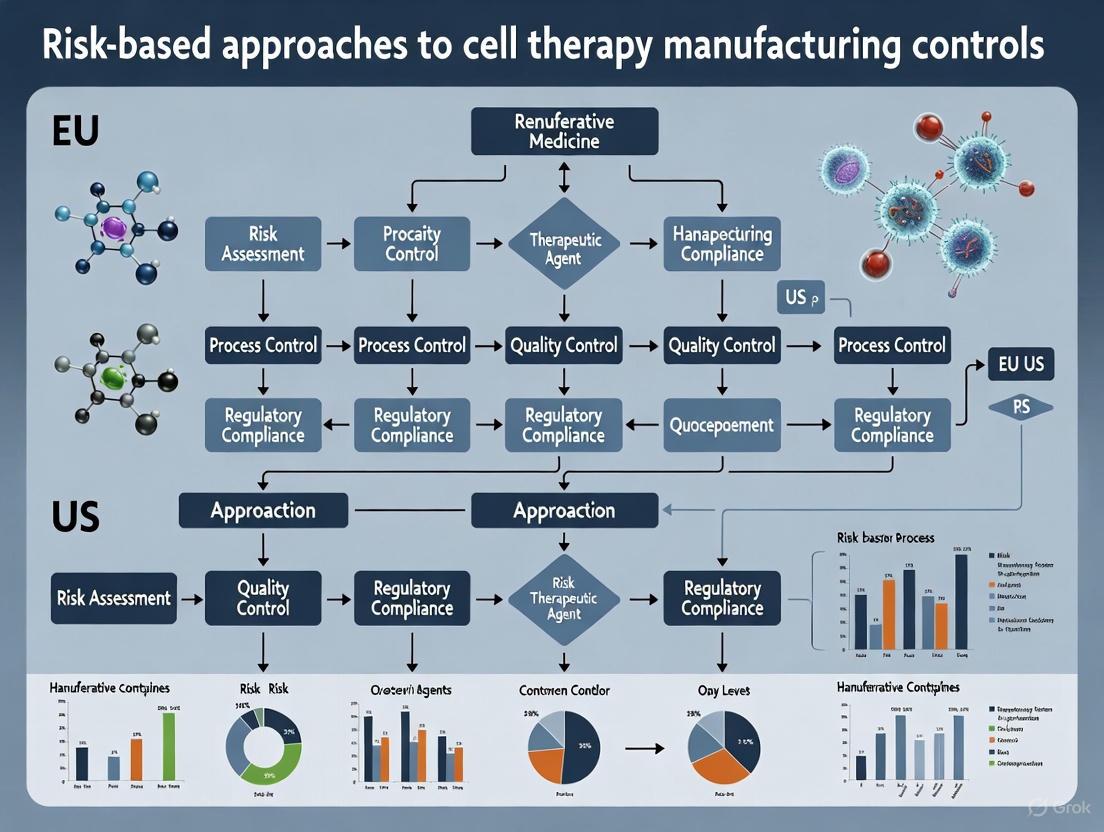
This article provides researchers, scientists, and drug development professionals with a comprehensive guide to implementing risk-based controls for cell therapy manufacturing across evolving EU and US regulatory landscapes.
Navigating EU and US Cell Therapy Manufacturing: A Risk-Based Approach to Regulatory Controls
Abstract
This article provides researchers, scientists, and drug development professionals with a comprehensive guide to implementing risk-based controls for cell therapy manufacturing across evolving EU and US regulatory landscapes. It covers foundational principles from EMA and FDA, practical methodologies for raw material and process risk assessment, strategies for troubleshooting common CMC challenges, and a comparative analysis of regional requirements for potency testing, donor eligibility, and comparability studies. The content synthesizes the latest 2025 regulatory updates to help developers build robust, globally-aligned quality systems that accelerate patient access to advanced therapies.
Understanding the EU and US Regulatory Foundations for Cell Therapy
For researchers and drug development professionals, navigating the divergent regulatory pathways for advanced therapies in the European Union (EU) and the United States (US) is a critical first step in program planning. The same innovative product, often developed to treat serious conditions with limited therapeutic options, is classified and regulated under two distinct systems: Advanced Therapy Medicinal Products (ATMPs) in the EU and Cell and Gene Therapies (CGTs) in the US [1] [2]. While both frameworks aim to ensure the quality, safety, and efficacy of these complex biotherapeutics, their underlying definitions, categorization logic, and regulatory nuances differ significantly. A deep understanding of these differences is not merely an administrative exercise; it is foundational to building a robust, risk-based development strategy that can successfully navigate both major markets. This guide provides a detailed, objective comparison of the core definitions and regulatory structures for ATMPs and CGTs, equipping scientists with the knowledge needed to align their manufacturing controls and non-clinical programs with the appropriate regional expectations.
Core Definitions and Regulatory Categorization
The fundamental distinction lies in the legal structure of the definitions. The EU operates on a product-based, categorical model, while the US employs a more risk-based, tiered framework.
European Union: Advanced Therapy Medicinal Products (ATMPs)
In the EU, ATMPs are defined under Regulation (EC) No 1394/2007 and form a distinct category of medicinal products based on their inherent characteristics [3] [4]. The legislation explicitly delineates four sub-types of ATMPs, creating a precise but sometimes complex classification system.
- Gene Therapy Medicinal Product (GTMP): A biological medicinal product that contains an active substance based on a recombinant nucleic acid. Its therapeutic, prophylactic, or diagnostic effect relates directly to the recombinant nucleic acid sequence it contains or to the product of genetic expression of this sequence [1] [4]. The upcoming EU pharmaceutical legislation proposes to expand this definition to explicitly include genome editing techniques and synthetic nucleic acids [1].
- Somatic Cell Therapy Medicinal Product (sCTMP): A biological medicinal product containing or consisting of cells or tissues that have been subjected to "substantial manipulation" thereby altering their biological characteristics, physiological functions, or structural properties relevant for the intended clinical use. Alternatively, it may consist of cells or tissues that are not intended for the same essential function(s) in the recipient as in the donor (non-homologous use) [5] [4].
- Tissue Engineered Product (TEP): An ATMP that contains or consists of engineered cells or tissues and is presented as having properties for, or is used in or administered to human beings to regenerate, repair, or replace a human tissue [1] [4].
- Combined ATMP (cATMP): An ATMP that incorporates, as an integral part, one or more medical devices or active implantable medical devices [1] [4]. A classic example is a CAR-T cell product, which is always classified as a GTMP due to the genetic modification, even though it is a combination of cells and a genetic construct [1].
A critical differentiator for sCTMPs and TEPs is the concept of "substantial manipulation." The EU regulation provides a list of manipulations that are not considered substantial, including cutting, grinding, shaping, centrifugation, cell separation, concentration or purification, freezing, and cryopreservation [5].
United States: Cell and Gene Therapies (CGTs)
In the US, the Food and Drug Administration (FDA) regulates these products as biological products under Section 351 of the Public Health Service Act [2]. The umbrella term "Cellular and Gene Therapies" is used, with human gene therapies and somatic cell therapies nested underneath [1]. Unlike the EU, there is no separate formal category for tissue-engineered products.
A pivotal concept in the US framework is the risk-based distinction for Human Cells, Tissues, and Cellular and Tissue-Based Products (HCT/Ps) under 21 CFR Part 1271. Products that meet all of the following criteria are regulated as HCT/Ps under Section 361 and are subject to a less rigorous regulatory pathway:
- The product is minimally manipulated.
- It is intended for homologous use only.
- It is not combined with another drug or device (with some exceptions).
- It does not have a systemic effect and is not dependent on the metabolic activity of living cells for its primary function, OR it has a systemic effect or depends on metabolic activity but is for autologous use, allogeneic use in a first- or second-degree blood relative, or for reproductive use [2].
If an HCT/P does not meet all these criteria, it is regulated as a drug, device, or biological product under Section 351 and PHS Act, requiring an Investigational New Drug application and eventual Biologics License Application [2] [4]. This is the pathway for the vast majority of CGTs in clinical development.
Table 1: Core Definitions Comparison
| Aspect | European Union (ATMPs) | United States (CGTs) |
|---|---|---|
| Governing Regulation | Regulation (EC) No 1394/2007 [3] | PHS Act Section 351; 21 CFR Part 1271 [2] |
| Umbrella Term | Advanced Therapy Medicinal Products (ATMPs) [1] | Cellular and Gene Therapies (CGTs) [1] |
| Main Categories | 1. Gene Therapy MP (GTMP)2. Somatic Cell Therapy MP (sCTMP)3. Tissue Engineered Product (TEP)4. Combined ATMP (cATMP) [1] [4] | 1. Human Gene Therapy2. Somatic Cell Therapy(No separate TEP category) [1] |
| Key Classification Driver | Product-based categories and "substantial manipulation" [5] | Risk-based: "minimal manipulation" and "homologous use" [2] |
| Centralized Pathway | Mandatory centralized authorization via EMA for all ATMPs [5] | Required for all biological products (BLA); IND required for clinical investigation [2] |
The following diagram illustrates the logical decision-making process for classifying a product in the EU versus the US, highlighting the different starting points and criteria.
Regulatory Structures and Key Committees
The regulatory architecture for reviewing and approving these therapies also differs, with specialized committees playing distinct roles.
European Medicines Agency and the Committee for Advanced Therapies
In the EU, the European Medicines Agency coordinates the regulatory framework for ATMPs. A cornerstone of this system is the Committee for Advanced Therapies, a multidisciplinary committee established by the ATMP Regulation [3]. The CAT is primarily responsible for:
- Assessing the quality, safety, and efficacy of ATMPs during the centralised marketing authorisation procedure.
- Issuing scientific recommendations on ATMP classification for borderline products [3] [5].
- Managing the certification procedure for quality and non-clinical data for small and medium-sized enterprises [3] [2].
For any developer uncertain about how their product is classified, submitting a request for classification to the CAT is a critical first step. The CAT provides a scientific recommendation within 60 days [1] [5].
US Food and Drug Administration and the Center for Biologics Evaluation and Research
In the US, CGTs are regulated by the FDA's Center for Biologics Evaluation and Research [2]. Within CBER, the Office of Therapeutic Products regulates all CGTs, including genetically modified cells and therapies where the classification may be blurred [1]. For products that are combinations of drugs, devices, and/or biologics, the Office of Combination Products is responsible for assigning primary jurisdiction. Sponsors can submit a Request for Designation to this office to obtain a formal determination on which FDA center will regulate their product [1].
Table 2: Regulatory Bodies and Interaction Pathways
| Function | European Union | United States |
|---|---|---|
| Primary Regulatory Body | European Medicines Agency [3] | Food and Drug Administration [2] |
| Specialized Review Committee | Committee for Advanced Therapies [3] | Center for Biologics Evaluation and Research [2] |
| Key Office for CGT/ATMPs | N/A (Handled by CAT and EMA committees) | Office of Therapeutic Products [1] |
| Combination Product Authority | EMA/CAT [4] | Office of Combination Products [1] |
| Early-Stage Meeting | Innovation Task Force; National Competent Authority advice [2] | INTERACT Meeting; Pre-IND Meeting [1] [2] |
| Formal Classification Procedure | CAT Classification (60-day response) [1] [5] | Request for Designation with OCP (60-day response) [1] |
Experimental Protocols for a Risk-Based Development Approach
A risk-based strategy is essential for navigating the complexities of ATMP/CGT development, particularly when targeting both the EU and US markets simultaneously [2]. The following protocols outline a methodology for establishing key analytical and control strategies that align with regulatory expectations.
Protocol: Implementing a Phase-Appropriate Orthogonal Assay Strategy
Objective: To establish a robust analytical framework for measuring Critical Quality Attributes by employing orthogonal methods, thereby building confidence in product characterization and meeting regulatory expectations for both FDA and EMA [1].
Background: Regulatory authorities encourage the use of orthogonal assays—methods based on different scientific principles to measure the same attribute—to build confidence in CQAs like identity, potency, and purity [1]. This is particularly important for CGTs/ATMPs where reference standards may be lacking.
Methodology:
- CQA Identification: Identify all CQAs for your product (e.g., vector genome integrity, infectivity, potency, identity, purity).
- Assay Selection: For each CQA, select at least two analytical methods that operate on different physicochemical or biological principles.
- Example for Vector Genome Integrity: Use qPCR (a quantitative, amplification-based method) in conjunction with Next-Generation Sequencing (a qualitative/quantitative, sequencing-based method) [1].
- Example for Potency: Develop a cell-based functional assay (measuring biological activity) alongside a binding assay (e.g., ELISA) or a quantitative method (e.g., flow cytometry for surface marker expression).
- Phase-Appropriate Validation:
- Phase 1: Assays should be qualified (not fully validated) but must be demonstrated to be reliable, reproducible, and sensitive enough to support safety decisions [1].
- Phase 3 and BLA/MAA Submission: Assays require full validation per ICH Q2(R2), demonstrating accuracy, precision, specificity, linearity, range, and robustness [1].
- Data Analysis and Justification: Compare results from both orthogonal methods. Justify the chosen methods and any discrepancies in the regulatory submission, explaining how the methods collectively ensure the reliability of the CQA measurement.
Protocol: A Comparative Strategy for Engaging EU and US Regulators
Objective: To strategically plan and execute early interactions with the FDA and EMA/National Competent Authorities to clarify regulatory pathways and reduce development risks.
Background: Early engagement is critical for navigating uncertainties in product classification and development plans. Both regions offer informal and formal meeting types, but the mechanisms differ [2].
Methodology:
- Preparation: Develop a common core briefing document covering the product's quality, non-clinical, and clinical development plan. Formulate clear, specific questions for the regulators.
- EU Pathway Selection:
- For very early, informal advice, request a briefing meeting with the EMA's Innovation Task Force or a National Competent Authority's innovation office [2].
- For formal feedback on specific development questions, request Scientific Advice from the EMA or an NCA [2].
- For product classification, submit a formal request for ATMP classification to the CAT [1].
- US Pathway Selection:
- For very early, non-binding advice, consider an INTERACT meeting with CBER. These are granted based on CBER availability and do not result in official minutes [1] [2].
- For formal guidance prior to an IND submission, request a Pre-IND meeting [1].
- For combination product designation, submit a Request for Designation to the Office of Combination Products [1].
- Execution and Integration: Conduct the meetings. Incorporate the feedback received into the development plan. For advanced programs, consider a joint FDA-EMA scientific advice meeting to discuss clinical trial design and endpoints [2].
The Scientist's Toolkit: Key Research Reagent Solutions
Successfully developing ATMPs and CGTs requires a suite of high-quality, well-characterized materials and analytical tools. The table below details essential reagents and their functions in the context of regulatory development.
Table 3: Essential Research Reagents and Materials for ATMP/CGT Development
| Reagent/Material | Function in Development | Key Regulatory Considerations |
|---|---|---|
| Viral Vectors (e.g., Lentivirus, AAV) | Delivery vehicles for gene transfer; critical starting materials for genetically modified cells like CAR-T products [4]. | Must be well-characterized. Vector manufacturing and testing recommendations are provided in FDA's GT CMC Guidance. Viral safety and freedom from adventitious agents must be demonstrated [4] [6]. |
| Ancillary Materials (e.g., cytokines, growth factors, serum-free media) | Used in the manufacturing process to support cell growth, differentiation, or genetic modification [4]. | Should be GMP-sourced where possible. A risk-based approach to qualification is encouraged (e.g., following USP <1043>). The quality of these materials directly impacts final product safety and efficacy [4]. |
| Cell Separation & Activation Reagents | For the selection, isolation, and activation of specific cell populations (e.g., T-cells for CAR-T therapy) from the cellular starting material [4]. | These processes can constitute "substantial manipulation" in the EU [5]. The reagents must be qualified, and their impact on the biological characteristics of the cells must be understood. |
| Analytical Standards & Controls | Essential for qualifying and validating analytical methods for potency, identity, purity, and safety (e.g., for qPCR, flow cytometry, NGS) [1]. | The use of orthogonal methods is encouraged by regulators. Standards and controls must be stable and well-characterized to ensure the reliability of analytical data submitted in the IND/CTA and BLA/MAA [1]. |
| Cryopreservation Media | For the long-term storage of cell-based starting materials, intermediates, and final drug products, which is often logistically necessary for autologous therapies [7]. | Formulation must preserve cell viability and critical quality attributes post-thaw. The choice of cryoprotectants (e.g., DMSO) must be justified, and their potential effects on product quality and patient safety evaluated. |
The development and manufacture of cell and gene therapies, classified as Advanced Therapy Medicinal Products (ATMPs) in the European Union and regulated as biological products in the United States, represent one of the most dynamic areas of therapeutic innovation. A risk-based approach to manufacturing controls is paramount for navigating the complex regulatory landscapes governed by the European Medicines Agency's Committee for Advanced Therapies (EMA/CAT) and the U.S. Food and Drug Administration's Center for Biologics Evaluation and Research (FDA/CBER). These frameworks are not static; recent guidelines, including the EMA's multidisciplinary guideline on clinical-stage ATMPs effective July 2025 and FDA's trio of draft guidances from late 2025 on expedited programs and innovative trial designs, highlight a continuous evolution aimed at addressing the unique challenges of these products [8] [9] [10]. Understanding the similarities and divergences between these two major regulatory systems is crucial for researchers and drug development professionals aiming to design efficient global development strategies while ensuring patient safety and product quality.
Regulatory Structures and Philosophies
The regulatory structures of the EMA and FDA reflect their respective regional and legal contexts, which in turn influence their operational philosophies towards cell therapy regulation.
The EMA/CAT system involves a multi-layered approach. The CAT is a specific committee within the EMA responsible for assessing the quality, safety, and efficacy of ATMPs and formulating opinions for the Committee for Medicinal Products for Human Use (CHMP). Importantly, while the EMA operates a centralized authorization procedure, national competent authorities (NCAs) of individual EU member states remain crucial, particularly for clinical trial approvals and oversight. This can introduce variability in the implementation of guidelines at the national level. The EU system often provides a framework of scientific guidelines, which, while not legally binding, detail the expectations for demonstrating quality, safety, and efficacy [11] [10].
In contrast, the FDA/CBER operates a more unicameral structure for product review. CBER's Office of Therapeutic Products (OTP) regulates cell and gene therapies under the authority of the Public Health Service Act and the Federal Food, Drug, and Cosmetic Act. The FDA's guidance documents often carry significant weight in interpreting statutory and regulatory requirements. A key philosophical difference lies in the verification of Good Manufacturing Practice (GMP) compliance; the EU often mandates evidence of GMP compliance for clinical trial initiation, whereas the FDA relies more on a phase-appropriate attestation model, with verification typically occurring during pre-license inspections [11] [10].
Table 1: Comparison of Core Regulatory Structures
| Aspect | EMA/CAT (European Union) | FDA/CBER (United States) |
|---|---|---|
| Legal Basis | Directive 2001/83/EC, Regulation (EC) No 1394/2007 (ATMP Regulation) | Public Health Service Act, Federal Food, Drug, and Cosmetic Act |
| Lead Review Body for CGTs | Committee for Advanced Therapies (CAT) | Center for Biologics Evaluation and Research (CBER), Office of Therapeutic Products (OTP) |
| Marketing Authorization | Centralized Procedure (via EMA) | Biologics License Application (BLA) |
| Clinical Trial Approval | National Competent Authorities (NCAs) via Clinical Trial Information System (CTIS) | FDA/CBER via Investigational New Drug (IND) Application |
| Guideline Legal Status | Primarily scientific recommendations, with binding GMP standards | Interpretations of statutory requirements; significant regulatory impact |
| Core Manufacturing Philosophy | Framework-based, with emphasis on adherence to detailed GMP standards from early phases | Risk-based, phase-appropriate approach with graduated GMP compliance [10] |
Key Guidelines and Recent Evolutions
The regulatory guidelines for cell and gene therapies are rapidly evolving to keep pace with scientific advancements. A critical recent development from the EMA is the Guideline on quality, non-clinical and clinical requirements for investigational advanced therapy medicinal products in clinical trials, which came into effect in July 2025. This comprehensive, 60-page multidisciplinary document consolidates information from over 40 separate guidelines and reflection papers, serving as a primary-source reference for Clinical Trial Application (CTA) submissions for both early-phase and late-stage ATMP trials [10]. It is organized according to the Common Technical Document (CTD) format, providing a roadmap for the quality, non-clinical, and clinical data required.
Simultaneously, the FDA/CBER has issued a significant trio of draft guidances in late 2025, which are open for comment until November 24, 2025 [8] [9] [12]. These drafts signal FDA's current thinking on several challenging fronts:
- Expedited Programs for Regenerative Medicine Therapies for Serious Conditions: This draft guidance updates the 2019 final guidance, providing more detailed recommendations on eligibility for expedited programs (like RMAT), emphasizing CMC readiness, and clarifying the use of real-world evidence and externally controlled trials [9].
- Innovative Designs for Clinical Trials of Cellular and Gene Therapy Products in Small Populations: This guidance addresses the challenges of trial design for rare diseases, surveying innovative approaches like single-arm trials with self-controls, disease progression modeling, Bayesian designs, and master protocols [9].
- Postapproval Methods to Capture Safety and Efficacy Data for Cell and Gene Therapy Products: This document outlines methods for robust long-term post-market monitoring to gather data on the safety and effectiveness of these often long-lasting therapies [8].
These parallel developments show both agencies are actively working to provide clearer pathways for developers, with a shared emphasis on flexibility and addressing the challenges of small populations, while also acknowledging the need for robust post-approval data collection.
Manufacturing and Control Strategies: A Detailed Comparison
A risk-based approach to manufacturing controls requires a deep understanding of where regulatory expectations align and diverge. The following workflow diagram summarizes the key comparative considerations in CMC strategy for cell therapy manufacturing.
The diagram above illustrates the key focus areas for a control strategy. The table below provides a more detailed comparison of specific Chemistry, Manufacturing, and Controls (CMC) requirements, which is critical for strategic planning.
Table 2: Detailed Comparison of Key CMC Requirements [13] [10]
| CMC Consideration | EMA Position and Requirements | FDA Position and Requirements |
|---|---|---|
| Starting/Raw Materials | Vectors for genetically modified cells are "starting materials" and must be produced under GMP principles [13]. | Vectors are typically defined as "drug substance." Employs an enhanced risk-based control strategy for critical raw materials [13]. |
| Potency Testing for Viral Vectors | For in vitro viral vectors, infectivity and transgene expression may be sufficient, especially in early development [13]. | A validated functional potency assay is considered essential for the drug product used in pivotal studies [13]. |
| Demonstrating Comparability | Provides specific attributes to test when changing the manufacturing process for recombinant starting materials (e.g., vector sequencing, impurities) [13]. | Guidance recommends a risk-based approach. Lacks a direct, detailed equivalent to the EMA's list for vector changes [13]. |
| Donor Testing Requirements | Requires certain donor testing even for autologous material. Governed by the European Union Tissues and Cells Directive (EUTCD) [13]. | Governed by 21 CFR 1271 Subpart C. Highly prescriptive for allogeneic donors. Testing must be performed in CLIA-accredited laboratories [13] [10]. |
| Process Validation Batches | Generally requires three consecutive batches for validation, with some flexibility allowed [13]. | The number is not specified but must be statistically adequate based on process variability [13]. |
| GMP Compliance for Trials | Evidence of GMP compliance is a prerequisite for conducting clinical trials, supported by mandatory self-inspections [10]. | Employs a phase-appropriate approach based on attestation during IND stages, with verification via inspection at the BLA stage [10]. |
Clinical Development and Expedited Pathways
Navigating clinical development and expedited pathways requires strategic engagement with regulatory agencies. Both regions offer early advice mechanisms. In the EU, sponsors can seek informal guidance from national NCAs or the EMA's Innovation Task Force (ITF), and formal Scientific Advice (SA) from the EMA or NCAs [11]. The FDA offers INTERACT meetings for very early, non-binding advice and formal pre-IND meetings [11]. For complex global programs, joint EMA/FDA advice meetings are available, though they do not guarantee aligned feedback [11].
For therapies targeting serious conditions with unmet needs, expedited pathways are available. In the US, the Regenerative Medicine Advanced Therapy (RMAT) designation, established under the 21st Century Cures Act, provides intensive FDA guidance and potential for accelerated approval based on surrogate endpoints [11] [9]. The comparable program in the EU is the Priority Medicines (PRIME) scheme, which also offers enhanced support and accelerated assessment [11]. Other expedited programs include Fast Track, Breakthrough Therapy, and Accelerated Approval in the US, and Conditional Approval in the EU [11] [9]. The 2025 FDA draft guidance on expedited programs clarifies that regenerative medicine therapies need not have RMAT designation to be eligible for these other programs [9].
A significant area of evolution is in clinical trial design for small populations. The FDA's 2025 draft guidance on innovative designs acknowledges the challenges of rare disease trials and endorses several flexible approaches [9]:
- Single-arm trials using participants as their own control, where a participant's post-treatment status is compared to their own baseline.
- Externally controlled trials using historical or real-world data as a comparator.
- Adaptive designs that allow for pre-planned modifications based on interim data (e.g., group sequencing, sample size reassessment).
- Bayesian designs that incorporate existing data to improve efficiency.
- Master protocol designs to evaluate multiple sub-studies within a single trial framework.
Essential Research Reagents and Materials
The successful execution of cell therapy development and the associated regulatory comparability studies relies on a suite of critical research reagents and analytical tools.
Table 3: Key Research Reagent Solutions for Cell Therapy Development
| Research Reagent / Material | Primary Function in Development & Control |
|---|---|
| Reference Standard | A well-characterized material used as a baseline for assessing the quality, particularly potency, of production batches. Essential for demonstrating comparability after process changes [13]. |
| Functional Potency Assays | Cell-based or biochemical assays designed to measure the biological activity of the product linked to its mechanism of action. Critical for lot release and comparability exercises for both EMA and FDA [13]. |
| Vector Copy Number (VCN) Assays | For genetically modified cell therapies, these qPCR or ddPCR-based assays quantify the number of integrated vector copies per cell, a key safety and quality attribute [13]. |
| Replication Competent Virus (RCV) Assays | Highly sensitive assays to detect the presence of replication-competent virus in viral vector stocks or genetically modified cell products, a critical safety test. FDA requires testing on the final cell-based product, while EMA may not if absence is shown on the vector [13]. |
| Cell Line Characterization Kits | Assays for identity (e.g., STR profiling), sterility, mycoplasma, and adventitious viruses to ensure the safety and consistency of master and working cell banks. |
| Flow Cytometry Panels | Used for characterizing cell surface and intracellular markers to confirm product identity, purity, and to detect impurities throughout the manufacturing process. |
The Principle of Risk-Based Approaches in ICH Q9 and Its Application to Advanced Therapies
The development and manufacturing of Advanced Therapy Medicinal Products (ATMPs) in the European Union and Cell and Gene Therapies (CGTs) in the United States represent one of the most complex challenges in modern medicine. These innovative products, which include gene therapies, somatic cell therapies, and tissue-engineered products, possess inherent biological complexity and individualized characteristics that demand sophisticated quality management approaches [14]. The International Council for Harmonisation (ICH) Q9 Guideline on Quality Risk Management provides the foundational framework for implementing risk-based principles across the pharmaceutical lifecycle. This guideline establishes a systematic process for evaluating, controlling, communicating, and reviewing quality risks, with the ultimate objective of ensuring patient safety and product efficacy [15].
For advanced therapies, the application of ICH Q9 principles is particularly critical due to their unique characteristics, including live biological materials, complex manufacturing processes, and often personalized patient-specific applications [14]. A robust risk-based approach enables manufacturers and regulators to focus resources on the most critical aspects of product quality while maintaining flexibility for innovation. The protection of the patient by managing the risk to quality is considered of prime importance in the ICH Q9 framework, which aligns perfectly with the high-stakes nature of advanced therapies that often treat serious or life-threatening conditions with limited therapeutic alternatives [15].
Fundamental Principles of ICH Q9
Core Concepts and Definitions
The ICH Q9 guideline introduces several fundamental concepts that form the backbone of quality risk management for advanced therapies. Risk is defined as the combination of the probability of occurrence of harm and the severity of that harm, while risk management refers to the systematic application of quality management policies, procedures, and practices to the tasks of assessing, controlling, communicating, and reviewing risk [15]. Within this framework, two concepts are particularly vital for advanced therapies: Critical Quality Attributes (CQAs) and Critical Process Parameters (CPPs).
The relationship between risk and criticality follows specific principles in the ICH Q9 framework. While risk includes severity of harm, probability of occurrence, and detectability (with the level of risk capable of changing as a result of risk management), quality attribute criticality is primarily based upon severity of harm to the patient and does not change as a result of risk management [15]. Conversely, process parameter criticality is linked to the parameter's effect on any CQA and is based on probability of occurrence and detectability, therefore potentially changing as risk management measures are implemented. This distinction is crucial for advanced therapies where the biological nature of the products introduces inherent variability that must be carefully managed.
The Risk Management Process
The ICH Q9 framework outlines a systematic process for quality risk management consisting of risk assessment, risk control, risk communication, and risk review. Risk assessment initiates the process through risk identification, risk analysis, and risk evaluation, where potential harms are identified and analyzed. For advanced therapies, this typically includes risks related to starting materials, viral vector safety, cell characterization, and potential for contamination [13] [14]. Risk control involves implementing measures to reduce risks to acceptable levels, while risk communication ensures that risk management decisions are appropriately shared across relevant stakeholders. Finally, risk review provides for periodic reassessment of risks throughout the product lifecycle, which is especially important for advanced therapies as manufacturing experience accumulates and process improvements are implemented [15].
Table 1: Core Risk Management Concepts in ICH Q9
| Concept | Definition | Application to Advanced Therapies |
|---|---|---|
| Risk Assessment | Systematic process to identify hazards and analyze/evaluate risk | Identifies critical risks in cell sourcing, viral vector design, and manufacturing processes |
| Risk Control | Implementing decisions to reduce risks to acceptable levels | Includes process controls, testing strategies, and environmental monitoring |
| Critical Quality Attribute (CQA) | Physical, chemical, biological, or microbiological property that should be within an appropriate limit, range, or distribution to ensure desired product quality | For cell therapies: viability, identity, potency, purity, and sterility |
| Critical Process Parameter (CPP) | Process parameter whose variability impacts CQA and therefore should be monitored or controlled | In viral vector manufacturing: transduction efficiency, vector copy number |
| Risk Review | Periodic review of risk management outputs | Particularly important as manufacturing experience with advanced therapies accumulates |
Regulatory Landscape for Advanced Therapies: EU vs US
Terminology and Classification Frameworks
A fundamental difference between the European and American regulatory approaches to advanced therapies begins with terminology and classification. In the United States, these products are generally classified as biologics and referred to as Cell and Gene Therapies (CGTs), encompassing human gene therapy products, cell therapy products, and human cells, tissues, and cellular and tissue-based products (HCT/Ps), with HCT/Ps having their own separate regulations [16]. In contrast, the European Union groups these innovative products under the centralized classification of Advanced Therapy Medicinal Products (ATMPs), which are further subdivided into gene therapy, cell therapy, and tissue-engineered categories [16]. This distinction in terminology directly influences how products are classified, regulated, and what regulatory pathways must be followed for market approval in each jurisdiction.
The regulatory frameworks governing these products also differ in their foundational approaches. The EU regulatory system tends to be more principles-based and outcome-focused, requiring organizations to meet broad objectives while allowing flexibility in implementation approaches [17]. Conversely, the US regulatory framework often employs more prescriptive, rules-based approaches with detailed requirements and checklists that companies must follow [17]. This philosophical difference extends to how risk-based approaches are implemented, with the EU emphasizing a top-down, strategic view of risk that integrates governance and compliance into broader business objectives, while the US often adopts a more bottom-up, checklist-driven approach to compliance.
Risk-Based Manufacturing and Control Strategies
The application of risk-based approaches to manufacturing and control strategies reveals both convergence and divergence between EU and US regulatory expectations for advanced therapies. Both regions emphasize the importance of risk-based strategies but implement them with different emphases and requirements.
Table 2: Comparison of EU and US Risk-Based Manufacturing Expectations for Advanced Therapies
| Manufacturing Aspect | US FDA Approach | EU EMA Approach |
|---|---|---|
| Starting Materials | No regulatory definition of "starting materials"; uses "critical raw materials" with enhanced control based on risk and development stage [13] | "Starting materials" defined as those becoming part of drug substance; must be prepared per GMP principles [13] |
| Viral Vector Classification | Classified as a biologic drug substance requiring facility licensing and inspection [16] | Can be classified as starting materials, not always subject to same oversight level [16] |
| Potency Testing for Viral Vectors | Requires validated functional potency assay to assess efficacy of drug product in pivotal studies [13] | Infectivity and transgene expression generally sufficient in early phase; less functional assays acceptable later [13] |
| Replication Competent Virus (RCV) Testing | Requires testing on both the viral vector and the resulting cell-based drug product [13] | Once absence demonstrated on viral vector, genetically modified cells may not require further RCV testing [13] |
| Process Validation Batches | Number not specified but must be statistically adequate based on variability [13] | Generally three consecutive batches, with some flexibility allowed [13] |
| Donor Testing Requirements | Governed by 21 CFR 1271 subpart C; tested in CLIA-accredited labs [13] | Governed by EUTCD; handled and tested in licensed premises and accredited centres [13] |
For advanced therapies, both regulatory systems acknowledge the need for risk-based monitoring and control strategies adapted to product complexity. The FDA encourages risk-based monitoring approaches that focus on critical data elements rather than exhaustive verification of all data points [18]. Similarly, EU regulations have incorporated risk-based approaches into Good Manufacturing Practice standards, advocating for cross-alignment of stringent quality requirements [14]. The Joint Accreditation Committee of ISCT and EBMT (JACIE) in Europe has been instrumental in promoting risk-based approaches to quality management for advanced therapies, particularly in the hospital setting where many of these products are administered [14].
Application of Risk-Based Approaches to Advanced Therapy Development
Risk Assessment Methodologies
Implementing effective risk assessment methodologies for advanced therapies requires specialized approaches that address their unique characteristics. The Quality Target Product Profile (QTPP) serves as the foundation for risk assessment, describing the design criteria for the product and forming the basis for identifying CQAs [15]. For cell-based therapies, the QTPP typically includes attributes such as cell viability, identity, potency, purity, and sterility, each of which must be evaluated for criticality based on the severity of harm to the patient if the attribute falls outside desired ranges.
Risk analysis for advanced therapies often employs both deductive and inductive risk assessment tools. Failure Mode and Effects Analysis (FMEA) is commonly used to systematically evaluate potential failure modes in manufacturing processes, their causes, and their effects on product quality. Similarly, Hazard Analysis and Critical Control Points (HACCP) methodologies, adapted from the food industry, help identify and control critical points in the manufacturing process where failures could pose significant risks to patient safety [14]. These structured approaches are particularly valuable for advanced therapies given the complexity of their manufacturing processes and the limited historical data available for many of these novel products.
Control Strategy Development
The development of an appropriate control strategy for advanced therapies represents a practical application of ICH Q9 principles, where risks identified through assessment are controlled through a combination of process controls, analytical testing, and procedural measures. A well-designed control strategy for advanced therapies is multi-faceted, encompassing controls for raw and starting materials, in-process manufacturing steps, drug substance, drug product, and container closure systems [15]. The control strategy should be proportionate to risk, with more stringent controls applied to CQAs that pose the greatest potential risk to patient safety.
For advanced therapies, control strategies often emphasize process controls over end-product testing, recognizing that the complex nature of these living products makes comprehensive characterization through testing alone challenging [13] [15]. This approach aligns with the ICH Q10 Pharmaceutical Quality System concept, which emphasizes building quality into the product through understanding and control of the manufacturing process rather than relying solely on finished product testing. The lifecycle approach to control strategy recognizes that controls may evolve as knowledge increases, with initial strategies for clinical trial materials potentially being refined for commercial manufacture based on accumulated experience and data [15].
Case Studies and Experimental Data
Viral Vector Manufacturing Controls
Viral vectors used in gene therapy and genetically modified cell therapies represent a key area where risk-based approaches have been applied with notable differences between EU and US regulatory expectations. Experimental data from process validation studies demonstrates that the FDA's requirement for RCV testing on both the viral vector and the final cell product provides an additional layer of safety, though it increases analytical burden [13]. Studies show that while the probability of RCV generation in properly designed lentiviral or retroviral systems is low, the severity of harm potential warrants careful control measures.
Comparative studies of potency assay strategies reveal that the FDA's expectation for validated functional potency assays for viral vectors used in pivotal studies provides more meaningful assessment of vector efficacy compared to the infectivity and transgene expression assays often accepted by EMA in early development [13]. Data indicates that functional potency assays better predict clinical performance, though they require longer development time and greater resources. The risk-based approach to potency assay development should consider the stage of development, with less functional assays potentially acceptable in early phase studies when accompanied by appropriate justification and risk mitigation strategies.
Cell Therapy Manufacturing Comparability
Demonstrating comparability following manufacturing process changes represents a significant challenge for advanced therapies where the products cannot be fully characterized. Current regulatory guidelines position advanced therapies outside the scope of ICH Q5E, though a new annex is in development to address CGT-specific comparability challenges [13]. In the interim, both FDA and EMA have issued region-specific guidance on comparability exercises for advanced therapies.
Experimental approaches to comparability typically employ a risk-based matrix of quality attributes categorized based on their potential impact on safety and efficacy. Studies indicate that the EMA's specific requirements for attribute evaluation when changing manufacturing processes for recombinant starting materials, including full vector sequencing, RCV absence confirmation, impurity comparison, and stability assessment, provide a structured framework for comparability demonstration [13]. Comparability protocols for autologous cell therapies present particular challenges due to product variability, requiring sophisticated statistical approaches and potentially larger sample sizes to demonstrate equivalence.
Table 3: Key Analytical Methods for Advanced Therapy Risk Assessment
| Method Category | Specific Techniques | Application in Risk Assessment | Critical Parameters |
|---|---|---|---|
| Cell Characterization | Flow cytometry, PCR, functional assays | Identity, purity, potency assessment | Viability, phenotype, differentiation potential |
| Vector Quality Control | TCID50, qPCR, transduction assays | Safety and efficacy of gene delivery | Vector titer, infectious titer, RCV testing |
| Process-Related Impurities | ELISA, HCP, residual DNA | Safety assessment for process contaminants | Endotoxin, mycoplasma, bovine serum albumin |
| Product Consistency | NGS, copy number assays, potency | Comparability after process changes | Vector copy number, insertional site analysis |
The application of ICH Q9 risk-based approaches to advanced therapies continues to evolve as regulatory bodies and manufacturers gain experience with these complex products. The fundamental principles of patient protection, science-based decision making, and proportionate risk management provide a stable foundation for navigating the technical and regulatory challenges specific to cell and gene therapies. The differences between EU and US regulatory approaches, while notable, are increasingly being addressed through initiatives aimed at international harmonization, such as the development of a new ICH Q5E annex specifically addressing comparability challenges for advanced therapies [13].
Future developments in risk-based approaches for advanced therapies will likely include greater emphasis on real-world evidence to inform risk management decisions, increased use of advanced analytics and multivariate modeling for risk prediction, and more sophisticated approaches to managing supply chain risks for starting and raw materials. As regulatory frameworks mature on both sides of the Atlantic, the continued application of ICH Q9 principles will be essential for balancing innovation with patient safety, enabling the efficient development and manufacture of these transformative therapies while maintaining appropriate oversight of the unique risks they present.
The development of innovative cell and gene therapies (CGTs) represents a frontier in modern medicine, offering potential cures for conditions with high unmet medical needs. However, their complex and novel nature presents significant development challenges. To address these hurdles, regulatory agencies in the United States and European Union have established specialized expedited pathways—specifically the Regenerative Medicine Advanced Therapy (RMAT) designation in the U.S. and the Priority Medicines (PRIME) scheme in the EU. These pathways are designed to facilitate faster development and review of promising therapies, ensuring they reach patients more efficiently while maintaining rigorous safety and efficacy standards [19].
Understanding the distinctions between these pathways is particularly crucial for developers employing risk-based approaches to manufacturing controls. The regulatory divergence between the U.S. Food and Drug Administration (FDA) and the European Medicines Agency (EMA) affects everything from trial design and evidence requirements to post-market surveillance, creating a complex landscape that must be navigated strategically [19]. This guide provides a detailed, evidence-based comparison of the RMAT and PRIME pathways to inform regulatory strategy within the context of evolving risk-based manufacturing frameworks.
Comparative Analysis of PRIME and RMAT Designations
Side-by-Side Comparison of Key Characteristics
The following table summarizes the fundamental attributes of the PRIME and RMAT designations based on current regulatory frameworks and recent implementation cases.
Table 1: Core Characteristics of PRIME and RMAT Designations
| Characteristic | RMAT (U.S. FDA) | PRIME (EU EMA) |
|---|---|---|
| Governing Agency | FDA Center for Biologics Evaluation and Research (CBER) | European Medicines Agency (EMA) |
| Legal Basis | 21st Century Cures Act, Section 3033 | Regulation (EC) No 1394/2007 |
| Scope | Regenerative medicine therapies (cell therapies, therapeutic tissue engineering products, human cell and tissue products, combination products) | Advanced Therapy Medicinal Products (ATMPs) - gene therapies, cell therapies, tissue-engineered products, combined ATMPs |
| Primary Intention | Expedited development and review for serious conditions | Early and proactive support to optimize robust data generation |
| Designation Focus | Accelerating development and review based on preliminary clinical evidence | Early dialogue and support to maximize generation of robust data |
| Key Benefits | Intensive guidance on efficient trial design, rolling BLA review, potential for accelerated approval and priority review | Kick-off meeting with CAT/CHMP, appointment of EMA coordinator, scientific advice, potential for accelerated assessment |
Eligibility Criteria and Evidence Requirements
Eligibility requirements and evidence thresholds differ significantly between the two pathways, reflecting their distinct regulatory philosophies and legal frameworks.
Table 2: Eligibility Requirements and Evidence Standards
| Eligibility Factor | RMAT Designation | PRIME Scheme |
|---|---|---|
| Target Population | Serious or life-threatening diseases or conditions | Conditions with unmet medical need, focusing on major public health interest |
| Preliminary Evidence | Preliminary clinical evidence indicates potential to address unmet medical needs | Non-clinical or early clinical data showing potential for substantial improvement over existing therapies |
| Therapeutic Promise | Potential to address unmet medical needs for the disease or condition | Demonstration of potential for major therapeutic advantage |
| Request Timing | Concurrently with IND submission or as amendment to existing IND | Based on early data, before initiation of confirmatory trials |
For RMAT designation, the FDA specifically requires that the drug be a "regenerative medicine therapy," which includes cell therapies, therapeutic tissue engineering products, human cell and tissue products, or any combination product using such therapies or products [20]. The therapy must target a serious or life-threatening condition, and preliminary clinical evidence must indicate its potential to address unmet medical needs [20].
The PRIME scheme, administered by EMA's Committee for Advanced Therapies (CAT), targets medicines that may offer a major therapeutic advantage over existing treatments or benefit patients without treatment options [19]. Eligibility requires demonstration of potential for major therapeutic advantage based on early non-clinical or clinical data.
Program Benefits and Strategic Advantages
Both pathways offer significant benefits, though their structures and implementation differ according to their respective regulatory environments.
Table 3: Comparison of Program Benefits and Features
| Benefit Category | RMAT Designation | PRIME Scheme |
|---|---|---|
| Regulatory Interaction | Intensive FDA guidance on trial design and data development plan | Early dialogue and protocol assistance, kick-off meeting with CAT/CHMP |
| Review Features | Rolling review of BLA, potential for accelerated approval and priority review | Accelerated assessment (150 days vs. standard 210 days) |
| Agency Support | Early agreement on accelerated approval endpoints and possible post-market studies | Appointment of EMA coordinator and CAT/CHMP rapporteur for continuous support |
| Evidence Flexibility | Flexibility regarding data needed to support approval, potential use of surrogate endpoints | Scientific advice on evidence generation strategies, acceptance of novel methodologies |
Recent case studies illustrate the strategic application of these benefits. Nanoscope Therapeutics secured RMAT designation for its MCO-010 optogenetic therapy platform in Stargardt disease, building upon prior Orphan Drug and Fast Track designations [21]. Similarly, Cabaletta Bio obtained RMAT designation for rese-cel (resecabtagene autoleucel) in systemic lupus erythematosus and lupus nephritis, complementing its PRIME scheme access for myositis [22]. These examples demonstrate how developers can leverage both pathways for different indications or to maximize regulatory advantages across major markets.
Quantitative Development Trajectories for CGT Products
Understanding the probability of success at various development stages provides crucial context for the value of expedited pathways. Recent comprehensive analysis of CGT development trajectories offers evidence-based metrics to inform regulatory strategy.
Table 4: Clinical Development Success Rates for Cell and Gene Therapies
| Development Metric | Overall CGT Products | CGT with Orphan Designation | CAR T-cell Therapies | AAV Gene Therapies |
|---|---|---|---|---|
| Overall Likelihood of Approval | 5.3% (95% CI 4.0–6.9) | 9.4% (95% CI 6.6–13.3) | 13.6% (95% CI 7.3–23.9) | 13.6% (95% CI 6.4–26.7) |
| Oncology Indications | 3.2% (95% CI 1.6–5.1) | Not specified | Included in overall CAR-T | Not applicable |
| Non-oncology Indications | 8.0% (95% CI 5.7–11.1) | Not specified | Not applicable | Included in overall AAV |
This data, derived from analysis of 995 CGT products corresponding to 1,961 development programs from 1993-2023, reveals several critical patterns [23]. First, orphan-designated products demonstrate significantly higher likelihood of approval (9.4%) compared to non-orphan products (3.2%), highlighting the strategic importance of orphan drug status in CGT development [23]. Second, non-oncology indications show more than double the approval likelihood compared to oncology indications (8.0% vs. 3.2%), suggesting different development challenges across therapeutic areas [23].
Notably, specific product categories like CAR T-cells and AAV-based gene therapies show promising approval probabilities of 13.6% each, significantly higher than the CGT average [23]. These metrics underscore the importance of expedited pathways like RMAT and PRIME in de-risking development programs with statistically higher chances of technical success.
Regulatory Protocol: Securing Expedited Designations
Experimental Protocol for RMAT Designation Request
The process for obtaining RMAT designation follows a structured regulatory pathway with specific requirements:
Submission Framework: Requests must be submitted either concurrently with an Investigational New Drug (IND) application or as an amendment to an existing IND [20]. The submission must clearly indicate the request through specific formatting requirements.
Documentation Requirements: Sponsors must demonstrate that the drug qualifies as a regenerative medicine therapy, targets a serious condition, and that preliminary clinical evidence indicates potential to address unmet medical needs [20]. The cover letter should specify "REQUEST FOR REGENERATIVE MEDICINE ADVANCED THERAPY DESIGNATION" in bold, uppercase letters [20].
Review Timeline: FDA's Office of Tissues and Advanced Therapies (OTAT) must notify the sponsor of its decision within 60 calendar days of receipt [20]. If denied, OTAT provides a written rationale for the determination [20].
Recent Implementation Example: Cabaletta Bio successfully secured new RMAT designations for rese-cel in systemic lupus erythematosus and lupus nephritis, demonstrating the application of this protocol for autoimmune diseases beyond oncology [22].
Experimental Protocol for PRIME Scheme Application
The PRIME application process emphasizes early dialogue and strategic development planning:
Pre-submission Considerations: Applicants should have preliminary data demonstrating the product's potential to offer major therapeutic advantages or address unmet needs for patients without treatment options [19].
Application Procedure: Submissions are made to the EMA, with evaluation by the Committee for Advanced Therapies (CAT) for ATMPs [19]. The process focuses on medicines that may significantly benefit patients with unmet medical needs.
Benefits Activation: Upon acceptance, sponsors gain access to early dialogue and protocol assistance, appointment of an EMA coordinator and CAT/CHMP rapporteurs, and eligibility for accelerated assessment [19].
Recent Implementation Example: Cabaletta Bio obtained PRIME scheme access for rese-cel in myositis in September 2025, highlighting the scheme's applicability to CAR T-cell therapies in autoimmune diseases [22].
Workflow Visualization: Expedited Pathway Strategy
The following diagram illustrates the strategic integration of expedited pathways into the overall development process for advanced therapies:
Diagram 1: Integrated Development Pathway with Expedited Designations
The Scientist's Toolkit: Essential Research Reagents and Materials
Successful navigation of expedited pathways requires specific research tools and materials to generate the robust evidence demanded by regulators. The following table outlines key solutions for developers pursuing RMAT or PRIME designations.
Table 5: Essential Research Reagents and Platform Technologies
| Tool Category | Specific Examples | Research Function | Regulatory Application |
|---|---|---|---|
| Advanced Analytics | Potency assays, identity tests, purity methods | Characterize Critical Quality Attributes (CQAs) | Define product release specifications |
| Process Development | Curi Bio iPSC-based tissue models, Charles River organoid systems | Improve predictive power of preclinical testing | Reduce animal testing via New Approach Methodologies (NAMs) |
| Manufacturing Platforms | Cellares Cell Shuttle, Ori Biotech IRO system | Automated cell therapy production | Support Advanced Manufacturing Technologies (AMT) designation |
| Vector Systems | Engineered lentiviral vectors, targeted lipid nanoparticles | Efficient gene delivery in vivo | Demonstrate plausible mechanism for gene therapies |
| Characterization Tools | Population doubling level assays, surface marker profiling | Monitor cell expansion and differentiation | Establish comparability for process changes |
The regulatory landscape is increasingly favoring human-relevant models and advanced analytics. The FDA has announced a roadmap to phase out animal testing requirements for drug development in favor of New Approach Methodologies (NAMs) such as organoid systems, computational modeling, and functional tissue assays [24]. Similarly, the NIH has updated its policy to end funding for animal-only research, encouraging integration of human-based model systems [24]. This shift makes platforms like those from Curi Bio (iPSC-based functional tissue models) and Parallel Bio (lymph node organoids) increasingly valuable for generating regulatory-grade evidence [24].
The divergent yet complementary nature of PRIME and RMAT pathways requires sophisticated regulatory strategy, particularly within risk-based manufacturing frameworks. While the FDA's RMAT designation offers accelerated development and review features with flexibility in evidence requirements, the EMA's PRIME scheme provides early, proactive support to optimize robust data generation [19]. Successful navigation of these pathways demands early regulatory engagement, strategic use of expedited program benefits, and investment in advanced manufacturing and analytics platforms that align with evolving regulatory preferences for human-relevant models and risk-based controls [24] [19].
For developers operating in both markets, a harmonized strategy that addresses the distinct requirements of each pathway while leveraging their complementary benefits is essential. This includes designing development programs that can satisfy the FDA's emphasis on preliminary clinical evidence and the EMA's focus on major therapeutic advantage, while implementing manufacturing controls that meet both agencies' quality expectations through risk-based approaches. As regulatory evolution continues with initiatives like the FDA's "plausible mechanism" pathway for bespoke therapies [25] [26], maintaining strategic flexibility and proactive regulatory intelligence will be critical for maximizing the acceleration potential of these designated pathways.
Implementing a Risk-Based Control Strategy in Manufacturing
The manufacturing of cell-based therapies represents a paradigm shift in medicine, offering promising treatments for a range of unmet clinical needs from blood-based cancers to regenerative applications. Unlike traditional pharmaceuticals, cell therapies begin with living, biological raw materials that carry inherent variability, making effective risk assessment of critical materials essential for ensuring final product quality, safety, and efficacy [27] [28]. This starting material consists of cells collected directly from patients or donors, introducing a layer of complexity not found in conventional drug manufacturing where starting materials are more predictable and controllable [28].
The journey of these materials from collection through cryopreservation encompasses numerous critical decision points where risk must be systematically assessed and controlled. Raw materials (also termed ancillary materials in some regions) include all components, reagents, and materials that come into direct contact with the cell product during manufacturing but are not intended to be present in the final therapeutic product [27] [29]. These include cell culture media, supplements, enzymes, cryopreservation agents, buffers, and antibodies [27]. Meanwhile, starting materials refer to the cellular foundation of the therapy itself—typically collected via leukapheresis for autologous therapies or from donors for allogeneic approaches [30] [28].
This guide examines the risk assessment frameworks for these critical materials within the diverging regulatory landscapes of the United States and European Union, providing researchers, scientists, and drug development professionals with practical strategies for navigating this complex environment while maintaining the highest quality standards.
Regulatory Landscape: A Comparative Analysis of US and EU Frameworks
The regulatory approaches to cell therapy manufacturing between the US and EU reflect fundamentally different philosophies that directly impact how critical materials are assessed and managed. Understanding these distinctions is essential for developing effective global development strategies.
United States: A Pro-Innovation Stance with Risk-Based Flexibility
The US Food and Drug Administration (FDA) maintains a pro-innovation regulatory stance with a stable and well-understood system that the industry views as manageable and supportive of iterative innovation [31]. The FDA's framework for biological products provides substantial flexibility through risk-based approaches, particularly for raw material qualification.
- Risk-Based Tiered Approach: The United States Pharmacopeia (USP) chapter <1043> provides guidelines for developing appropriate ancillary material qualification programs using a risk-based framework that classifies materials into four tiers [29]. This allows manufacturers to tailor their qualification activities based on the risk level of each material.
- Focus on Supplier Partnership: The US framework encourages strong collaboration between cell therapy manufacturers and their material suppliers, with clear accountabilities for both parties in qualifying materials for clinical use [29].
- Adaptive Guidance for Novel Technologies: The FDA has demonstrated adaptability in addressing emerging technologies, exemplified by its final guidance on Predetermined Change Control Plans (PCCPs) for AI-enabled devices, reflecting a broader flexibility that extends to innovative manufacturing approaches [31].
European Union: A Precautionary Approach with Specific Requirements
The European regulatory environment under the Medical Device Regulation (MDR) and associated guidelines for Advanced Therapy Medicinal Products (ATMPs) follows a more precautionary principle with specific requirements for material qualification [31].
- Stringent Documentation and Traceability: EU regulations emphasize comprehensive documentation, chain of identity preservation, and detailed material traceability throughout the manufacturing process [30] [32].
- Integrated Quality Systems: The EU framework requires robust quality management systems that extend to material suppliers, with particular attention to materials of human or animal origin and their potential safety risks [32] [29].
- Evolving GMP Standards: The European Medicines Agency (EMA) released a concept paper in May 2025 proposing revisions to Part IV of the EudraLex Volume 4 guidelines on GMP for ATMPs, indicating ongoing regulatory evolution specific to advanced therapies [32].
Table 1: Comparative Analysis of US and EU Regulatory Approaches to Critical Materials
| Aspect | United States Framework | European Union Framework |
|---|---|---|
| Governance Philosophy | Pro-innovation, risk-based approach [31] | Precautionary principle with specific requirements [31] |
| Primary Guidance | USP <1043> for ancillary materials [29] | EU ATMP guidelines, EudraLex Volume 4 [32] |
| Risk Classification | Four-tiered system based on risk level [29] | Risk-based but with more prescribed requirements [30] |
| Supplier Relationship | Encourages partnership with shared accountability [29] | Strict supplier qualification with emphasis on audits [32] |
| Starting Material Handling | 21CFR1271 (HCT/P) for minimal manipulation [30] | EU Annex 1, 1394/2007 for tissue and cell engineering [30] |
Risk Assessment Methodologies for Critical Materials
Implementing a robust risk assessment framework for critical materials requires systematic methodologies that address both raw materials and cellular starting materials throughout the manufacturing process.
Raw Material Risk Classification and Qualification
The USP <1043> framework provides a foundational approach for qualifying ancillary/raw materials based on their potential impact on the final cell product [29]. The qualification process should focus on five key areas: (1) identification, (2) selection and suitability for use in manufacturing, (3) characterization, (4) vendor qualification, and (5) quality assurance and control [29].
Table 2: Risk-Based Tiered Approach for Ancillary Material Qualification
| Tier | Risk Level | Qualification Activities | Examples |
|---|---|---|---|
| Tier 1 | Low-risk, highly qualified | Cross-reference DMF, obtain CoAs, assess removal from final product, stability studies [29] | Pre-qualified GMP-grade basal media [29] |
| Tier 2 | Medium-risk, well-qualified | All Tier 1 activities plus limited additional testing for critical quality attributes [29] | Characterized fetal bovine serum, cytokines [27] |
| Tier 3 | High-risk, partially qualified | Extensive qualification including adventitious agent testing, detailed characterization [29] | Animal-derived enzymes, certain growth factors [27] |
| Tier 4 | Highest-risk, minimally qualified | All previous activities plus potential need to upgrade manufacturing process to cGMP standards [29] | Novel excipients, custom-formulated reagents [29] |
The following workflow diagram illustrates the systematic risk assessment process for critical materials from collection through cryopreservation:
Cellular Starting Material Risk Considerations
Cellular starting materials present unique challenges due to their biological variability and patient-specific factors. For autologous cell therapies like CAR-T, the starting material comes from patients who have often undergone multiple prior treatments, potentially compromising cell quality and introducing variability [28]. Key risk factors include:
- Donor/Patient Health Status: Late-stage disease or prior treatments can significantly impact cellular starting material quality, requiring enhanced assessment and potential process adjustments [28].
- Collection Timing: The optimal collection window for starting materials is often early in the disease course before extensive exposure to anti-neoplastic agents, which can enhance final therapy outcomes [30].
- Logistical Challenges: Geographical constraints and transport conditions can impact material viability, particularly for fresh shipments that may experience delays [30].
Experimental Protocols for Material Assessment
Implementing standardized experimental protocols is essential for generating comparable data on critical material performance and quality. The following methodologies provide frameworks for assessing key quality attributes.
Protocol 1: Cryopreservation Impact on Cellular Starting Materials
Objective: To evaluate the impact of cryopreservation on leukapheresis material viability and functionality for CAR-T manufacturing [30].
Materials:
- Leukapheresis material from donors
- Cryopreservation medium (e.g., containing DMSO)
- Controlled-rate freezer
- Liquid nitrogen storage system
- Flow cytometry system with viability stains
- Cell culture reagents for functional assays
Methodology:
- Sample Preparation: Divide fresh leukapheresis material into two aliquots - one for immediate processing (fresh control) and one for cryopreservation.
- Cryopreservation: Mix cells with cryopreservation medium, transfer to cryogenic containers, and freeze using controlled-rate freezing protocol.
- Storage: Store cryopreserved material in vapor phase liquid nitrogen for predetermined intervals (e.g., 1 week, 1 month, 6 months).
- Thawing: Rapidly thaw cryopreserved samples in 37°C water bath with gentle agitation.
- Assessment:
- Viability: Measure post-thaw viability using flow cytometry with viability stains.
- Recovery: Calculate percentage of viable cell recovery compared to pre-freeze counts.
- Functionality: Process both fresh and cryopreserved samples through manufacturing process and compare:
- Fold expansion during culture
- Transduction efficiency (for genetically modified therapies)
- CD3+%, CD4+/CD8+ ratios
- In-vitro anti-tumor potency assays
Validation Parameters: Studies have indicated that CAR-T products from cryopreserved apheresis material should demonstrate comparable in-vitro anti-tumor potency and specificity to those from fresh apheresis material, suggesting non-inferior clinical outcomes [30].
Protocol 2: Raw Material Qualification Using Quality-by-Design Principles
Objective: To implement Quality-by-Design (QbD) principles for qualifying critical raw materials used in cell therapy manufacturing [33].
Materials:
- Test raw materials from multiple lots
- Relevant cell lines or primary cells
- Analytical equipment (flow cytometer, PCR, ELISA)
- Design of Experiment (DoE) software
Methodology:
- Critical Quality Attribute (CQA) Identification: Define CQAs for the final cell product that may be influenced by raw material variability.
- Risk Assessment: Conduct failure mode effects analysis (FMEA) to identify high-risk raw materials and their potential impact on CQAs.
- Experimental Design:
- Select 3-5 lots of the raw material for testing
- Design experiments to test material performance across expected operating ranges
- Include edge-of-failure testing to establish processing boundaries
- Testing Protocol:
- Characterize raw material attributes (identity, purity, potency)
- Assess impact on cell growth, differentiation, and function
- Evaluate lot-to-lot variability and its impact on process consistency
- Data Analysis:
- Establish acceptance criteria for raw material attributes
- Define control strategies for material use
- Determine necessary additional testing for incoming materials
Validation Parameters: The qualification should demonstrate that the raw material consistently supports the production of cell therapy products meeting all predetermined quality attributes, with established ranges for critical process parameters.
Essential Research Reagent Solutions for Material Assessment
Implementing robust risk assessment programs requires specific reagents and technologies designed to evaluate critical material attributes. The following toolkit represents essential solutions for comprehensive material assessment.
Table 3: Research Reagent Solutions for Critical Material Assessment
| Reagent/Technology | Function | Application in Risk Assessment |
|---|---|---|
| Flow Cytometry/FACS | Multi-parameter cell analysis and sorting [34] | Characterizing cellular starting material composition, viability, and identity [34] |
| Next-Generation Sequencing (NGS) | Genomic analysis for identity and purity [34] | Detecting unintended genomic alterations in cellular products or vector systems [34] |
| Ella Platform (Bio-Techne) | Automated immunoassay system [32] | High-throughput protein analysis for raw material characterization and potency testing [32] |
| Endosafe System (Charles River) | Rapid endotoxin testing [32] | Microbial safety assessment of raw materials and in-process samples [32] |
| Growth Direct System (Rapid Micro Biosystems) | Automated microbial detection [32] | Environmental monitoring and sterility testing for critical processes [32] |
| Process Analytical Technologies (PAT) | Real-time process monitoring [33] | Continuous quality assessment during manufacturing steps [33] |
Implementation Strategies: Navigating US-EU Regulatory Divergence
The diverging regulatory landscapes between the US and EU necessitate strategic implementation approaches for global cell therapy development.
Managing Raw Materials in a Global Context
The lack of standardized global regulations for ancillary materials requires careful navigation of regional requirements [29]. Key strategies include:
- Early Regulatory Engagement: Engaging with both FDA and EMA early in development to align qualification strategies and avoid costly late-stage changes [32] [29].
- Comprehensive Supplier Management: Implementing robust supplier qualification programs that meet the requirements of both regions, including regular audits and quality agreements [29].
- Documentation Strategy: Maintaining thorough documentation that satisfies both USP <1043> requirements and EU expectations for material traceability and characterization [32] [29].
Cryopreservation Logistics in Regulatory Context
Cryopreservation implementation differs based on regional interpretations of minimal versus substantial manipulation:
- US Interpretation: Cryopreservation is generally considered minimal manipulation under 21CFR1271 unless it alters relevant biological characteristics [30].
- EU Interpretation: Follows EU Annex 1, 1394/2007, with similar considerations for minimal manipulation [30].
- APAC Variations: Countries like Japan may require GCTP compliance based on scientific data regarding impact on product quality and safety [30].
The following diagram illustrates the regulatory decision pathway for cryopreservation implementation across different regions:
Emerging Technologies and Future Directions
The field of critical material assessment is evolving rapidly with several promising technologies and approaches:
- Automated Quality Control: Artificial intelligence and machine learning are being implemented to automate QC processes, improving throughput, reproducibility, and accuracy while minimizing human errors [34].
- Real-Time Process Control: Purpose-built inline and online analytical technologies enable continuous monitoring of critical quality attributes during production, allowing immediate detection and correction of deviations [33].
- Advanced Data Management: Purpose-built data analysis systems help manage the growing volumes of data generated during material assessment and manufacturing, with machine learning algorithms optimizing production parameters and predicting issues [33].
Effective risk assessment of critical materials from collection through cryopreservation requires a comprehensive, scientifically rigorous approach that accounts for the diverging regulatory expectations of the US and EU markets. By implementing tiered risk classification systems, robust experimental protocols, and strategic supplier partnerships, cell therapy developers can navigate this complex landscape while ensuring the quality, safety, and efficacy of their products. As the field continues to evolve, emerging technologies in automation, real-time monitoring, and data analytics promise to further enhance our ability to manage risks associated with these critical materials, ultimately accelerating the delivery of transformative therapies to patients worldwide.
Defining Critical Process Parameters (CPPs) and Critical Quality Attributes (CQAs) for Autologous and Allogeneic Therapies
In the development and manufacturing of cell therapies, defining Critical Process Parameters (CPPs) and Critical Quality Attributes (CQAs) forms the cornerstone of a robust Chemistry, Manufacturing, and Control (CMC) strategy. CQAs are physical, chemical, biological, or microbiological properties or characteristics that should be within an appropriate limit, range, or distribution to ensure the desired product quality [35]. These parameters are crucial to the safety, efficacy, and consistency of the final therapeutic product. CPPs, meanwhile, are process parameters whose variability has a direct impact on a CQA and therefore should be monitored or controlled to ensure the process produces the desired product quality [35] [36].
The identification and control of CPPs and CQAs represent a fundamental shift from traditional quality-by-testing to a modern, risk-based quality-by-design approach. For cell and gene therapies (CGT), this is particularly critical given their complex biological nature, high inherent variability, and the living nature of the product itself. International regulatory authorities view risk management as an essential production need for the development of innovative, somatic cell-based therapies in regenerative medicine [37]. The application of a structured approach to defining CPPs and CQAs provides a systematic framework for understanding and controlling manufacturing processes, thereby mitigating the risks associated with product variability and process uncertainty.
Comparative Analysis of Autologous vs. Allogeneic Therapies
Autologous and allogeneic cell therapies differ fundamentally in their cell source, manufacturing scale, and logistical requirements, which directly influences their respective CQAs and CPPs. Autologous therapies involve the extraction, manipulation, and reinfusion of a patient’s own cells, requiring highly customized solutions for each patient and a circular supply chain [38]. In contrast, allogeneic therapies use cells from a donor, enabling mass production, off-the-shelf availability, and a more linear supply chain [38]. This fundamental distinction creates divergent priorities for quality control and process development.
Key Distinctions in Manufacturing and Control
Table 1: Core Differences Between Autologous and Allogeneic Therapy Manufacturing
| Aspect | Autologous Therapies | Allogeneic Therapies |
|---|---|---|
| Cell Source | Patient's own cells [38] | Healthy donor cells (related or unrelated) [38] |
| Manufacturing Strategy | Scale-out: Multiple parallel production lines for individual patient products [38] | Scale-up: Produce larger batches aliquoted into individual doses [38] |
| Product Characterization | Focus on patient-specific safety and efficacy; acceptance of wider analytical specifications due to patient-to-patient variability [38] | Emphasis on donor eligibility, comprehensive cell bank characterization, and rigorous batch consistency [39] [38] |
| Primary Immune Risk | Minimal risk of immune rejection (autologous origin) [38] | Higher risk of immune complications (e.g., GvHD) or rejection [38] |
| Supply Chain | Complex, circular logistics with precise scheduling to minimize "vein-to-vein" time [38] | More linear, bulk processing and storage [38] |
For autologous therapies, the control strategy must accommodate inherent patient-to-patient variability. This means that quality control systems and analytical specifications are often designed with wider ranges to accept a broader spectrum of starting material quality. The critical logistical parameters, such as transport time and conditions, become CPPs due to their direct impact on cell viability, a key CQA [38].
For allogeneic therapies, the control strategy is built around ensuring consistency and scalability. A key risk mitigation strategy is the establishment of a well-characterized, fully modified, clonally derived master cell bank, which reduces risks inherent to primary-cell derived therapies [39] [40]. The one-time execution of donor selection and any gene-editing for allogeneic therapies (as opposed to per-batch for autologous) places significant importance on the CQAs of the cell bank itself, such as genetic stability and identity [39].
Defining CQAs and CPPs: A Risk-Based Framework
A standardized, risk-based framework is essential for confidently designing a control strategy for any cell therapy product. This process begins with defining the Quality Target Product Profile (QTPP)—a summary of the quality characteristics necessary for the therapy to be safe and effective. The CQAs are then derived as the specific biological, chemical, and physical attributes that must be controlled to meet the QTPP [36].
Universal and Product-Specific CQAs
While each CGT product is unique, some CQAs are common across most biologics. These universal CQAs include sterility, mycoplasma, endotoxins, cell number, and cell viability [35] [36]. Beyond these, product-specific CQAs must be defined and justified by developers based on their product's mechanism of action. These can include cellular morphology, identity, purity, potency, and genetic stability [35].
Potency, in particular, presents a significant challenge for CGT developers. As a CQA, potency is a quantitative measure of the biological activity of a product, which must be linked to its intended clinical effect. The development of a relevant potency assay is complicated when the mechanism of action is not fully understood [36].
From CQAs to CPPs: A Logical Workflow
The process of linking process understanding to the definition of CPPs and CQAs follows a logical, iterative workflow. This involves identifying potential risks, establishing their relationships, and defining the control strategy.
Diagram: Risk-Based Approach for Defining CPPs and CQAs
The use of heuristic and pseudo-quantitative Failure Mode and Effect Analysis (FMEA) or Failure Mode and Critical Effect Analysis (FMECA) is an effective and efficient risk analysis technique in this context. This method, associated with the direct estimation of severity, occurrence, and detection, can be successfully adopted to identify priority failure modes on which to act to mitigate risks [37].
Comparative Tables for CQAs and CPPs
The following tables provide a structured comparison of CQAs and CPPs, highlighting the different priorities and control points for autologous and allogeneic therapy manufacturing.
Critical Quality Attributes (CQAs)
Table 2: Comparison of Critical Quality Attributes (CQAs)
| CQA Category | Common CQAs (Both Modalities) | Autologous-Specific Emphasis | Allogeneic-Specific Emphasis |
|---|---|---|---|
| Safety | Sterility, Mycoplasma, Endotoxin [35] | Managing risks from patient's diseased/damaged starting material | Donor eligibility; comprehensive adventitious agent testing [38] |
| Identity | Cell surface marker profile | Consistency with patient's cell type | Genetic fingerprint of Master Cell Bank; stable phenotype across batches [39] |
| Purity | Absence of unwanted cell types | Residuals from patient-specific process reagents | Residuals from scale-up reagents (e.g., IL-2, stimulatory factors) [36] |
| Potency | Biological activity linked to mechanism of action | Potency despite variable starting cell fitness | Consistent potency across all batches from the cell bank [36] |
| Viability & Quantity | Cell number, Cell viability [35] | Meeting minimum dose despite variable yield | Precise, scalable dosing from a single batch [38] |
| Genetic Stability | - | Typically not a primary CQA for non-genetically modified autologous products | Critical CQA for genetically engineered iPSC-derived products [39] [40] |
Critical Process Parameters (CPPs)
Table 3: Comparison of Critical Process Parameters (CPPs)
| Manufacturing Stage | Common CPPs (Both Modalities) | Autologous-Specific CPPs | Allogeneic-Specific CPPs |
|---|---|---|---|
| Cell Source & Activation | Culture media composition, Growth factor concentration | Cell selection criteria from apheresis material | Donor selection criteria; reprogramming/editing efficiency (for iPSC) [39] [40] |
| Genetic Modification | Vector multiplicity of infection (MOI), Transduction efficiency | Patient-cell transduction yield | Clonal selection and characterization for Master Cell Bank [39] |
| Cell Expansion | Culture duration, Temperature, pH, Dissolved O₂, Feeding schedule | Adapting process to variable cell growth kinetics | Process parameters ensuring consistent growth and differentiation at scale [35] |
| Harvest & Formulation | Final cell concentration, Cryopreservation medium composition | Maximizing yield from a single batch | Ensuring homogeneity and aliquot consistency from a large batch [38] |
| Logistics & Storage | Cryopreservation rate, Storage temperature | Vein-to-vein time: transport conditions and timing for patient material [38] | Storage stability and shelf-life for "off-the-shelf" product [35] |
Experimental Protocols for CQA/CPP Determination
Protocol for a Risk-Based FMEA/FMECA Analysis
This protocol outlines a methodology for identifying and prioritizing potential failure modes in a cell therapy manufacturing process, which directly informs the definition of CPPs and CQAs [37].
- Team Assembly: Form a multidisciplinary team including process development, manufacturing, quality control, and regulatory affairs.
- Process Mapping: Deconstruct the entire manufacturing process into discrete, sequential unit operations.
- Failure Mode Identification: For each unit operation, brainstorm all potential ways the process could fail (failure modes), and identify all potential causes of each failure mode.
- Risk Scoring: For each failure mode, the team assigns numerical scores (e.g., 1-10) for:
- Severity (S): The seriousness of the effect on the CQA.
- Occurrence (O): The likelihood of the failure occurring.
- Detection (D): The likelihood that the current controls will detect the failure before it affects the product.
- Risk Prioritization: Calculate the Risk Priority Number (RPN) = S × O × D. Use a severity/occurrence matrix and Pareto analysis to identify the failure modes with the highest RPNs—these are the priority risks [37].
- Control Strategy Development: For high-priority risks, define mitigation actions. These actions may include establishing an In-Process Control (IPC) to monitor a CPP, optimizing a process parameter, or adding a new test for a CQA.
Protocol for Establishing a Control Strategy
This protocol describes the thought process for defining the overall control strategy, breaking it down into five sub-control strategies for systematic assessment [36].
- Aseptic Controls: Define the controls to prevent microbial contamination. This includes:
- Material Controls: Perform risk assessments on all raw materials based on their function, concentration, known risks, and ability to be cleared during the process. This controls for residuals like cytokines or stimulation factors [36].
- Process Controls: Define the CPPs (e.g., culture duration, temperature) and implement IPCs (e.g., in-process cell count and viability checks) to ensure process robustness [35].
- Quality Controls: Establish a robust QC laboratory with qualified equipment, critical reagents, and analytical methods. Ensure methods are suitable for their purpose and validated before final process validation [36].
- Chain of Identity/Custody Controls: Implement secure, validated systems (often electronic) to track the product from starting material to final infusion, which is especially critical for autologous products [38].
The Scientist's Toolkit: Essential Research Reagent Solutions
The development and monitoring of CPPs and CQAs rely on a suite of specialized reagents, equipment, and analytical platforms. The following table details key solutions essential for researchers in this field.
Table 4: Essential Research Reagent Solutions for CQA/CPP Analysis
| Tool Category | Specific Examples | Primary Function in CQA/CPP Development |
|---|---|---|
| Cell Culture & Activation | GMP-grade cytokines (e.g., IL-2), Cell culture media, Activation reagents (e.g., TransAct) | Used in process development to define CPPs for cell expansion and activation; their residuals are monitored as a purity CQA [36]. |
| Genetic Modification | Viral vectors (Lentivirus, Retrovirus), CRISPR-Cas9 systems, Electroporation kits | Critical reagents for genetically modified therapies; vector quality and transduction efficiency are key CPPs impacting identity and potency CQAs [39]. |
| Analytical & QC Reagents | Flow cytometry antibodies, PCR kits for mycoplasma/sterility, LAL kits for endotoxin, Cell viability stains (e.g., 7-AAD) | Essential for testing and releasing CQAs like identity, purity, potency, and safety. These are the critical reagents of the QC lab [36]. |
| Automated Manufacturing Platforms | CliniMACS Prodigy (Miltenyi), Cell Shuttle (Cellares), OriBiotech's platform | Integrated, closed systems that standardize unit operations, reduce human intervention, and provide controlled environments to better monitor and control CPPs [36]. |
| Cell Banking Systems | Cryopreservation media, Controlled-rate freezers, Cryogenic storage vessels | Vital for allogeneic therapies to create and characterize a Master Cell Bank. The freezing rate and storage temperature are CPPs for cell viability and recovery CQAs [39] [40]. |
Regulatory Perspectives: US and EU
Regulatory guidance for CGT is continuously evolving. The U.S. Food and Drug Administration (FDA) has published numerous guidances relevant to CMC, including specific documents on Chemistry, Manufacturing, and Control (CMC) Information for Human Gene Therapy INDs and Potency Assurance [41]. A key recent trend is the emphasis on innovative clinical trial designs for small populations, which impacts the amount of CMC data required for initial approval [42]. The FDA also encourages a risk-based approach to address open questions around donor eligibility, starting materials, and genetic stability, especially for novel modalities like iPSC-derived therapies, while formal guidance catches up [39] [40].
Harmonization between the US and EU remains a challenge, though initiatives like the FDA's Gene Therapies Global Pilot Program (CoGenT) aim to explore collaborative reviews with international partners like the European Medicines Agency (EMA) to accelerate global access [43]. From a CMC perspective, both regions require a well-defined control strategy based on product and process understanding. The core principles of defining CQAs through a QTPP and controlling them via CPPs monitored by IPCs are universally applicable, even as specific technical requirements may differ.
The development of cell and gene therapies represents one of the most innovative yet challenging frontiers in medicine. For these Advanced Therapy Medicinal Products (ATMPs) in the European Union and Cell and Gene Therapy (CGT) products in the United States, balancing accelerated development with patient safety requires a nuanced regulatory approach known as phase-appropriate Good Manufacturing Practice (GMP). This risk-proportionate framework acknowledges that product and process knowledge evolves throughout the development lifecycle and that manufacturing controls should correspondingly advance in rigor [44].
The fundamental premise of phase-appropriate GMP is that the level of controls and documentation should be commensurate with the stage of clinical development, the patient population size, and the evolving understanding of the product's critical quality attributes [45]. This principle is recognized by both the U.S. Food and Drug Administration (FDA) and the European Medicines Agency (EMA), though their implementation guidance exhibits nuanced differences that developers must navigate for successful global development [13] [2].
Regulatory Frameworks: A Comparative Analysis of EU and US Approaches
Foundational Principles and Legal Basis
While both regions embrace phase-appropriateness, their regulatory foundations differ. The EU maintains a more structured legislative framework for ATMPs, with detailed guidelines for manufacturing and quality control. The US approach, while equally rigorous, offers greater flexibility in early development stages [46].
Table 1: Comparative Analysis of EU and US Regulatory Foundations for Advanced Therapies
| Regulatory Aspect | European Union (EMA) | United States (FDA) |
|---|---|---|
| Product Classification | Advanced Therapy Medicinal Products (ATMPs) - Gene Therapy (GTMP), Cell Therapy (CTMP), Tissue Engineered (TEP) [2] | Biological Products - Cell and Gene Therapy Products [2] |
| Legal Framework | Directive 2001/83/EC, Regulation (EC) 1394/2007, Directive 2009/120/EC [2] | Public Health Service Act (PHS Act) Section 351 [2] |
| Phase 1 GMP Requirements | Mandatory GMP with specific adaptations per Annex 13 [47] | Exempt from 21 CFR 211 cGMP, but must follow FD&C Act 501(a)(2)(b) [44] |
| Starting Materials Definition | Materials that become part of the drug substance (e.g., vectors, cells) require GMP compliance [13] | No formal regulatory definition; critical raw materials controlled via risk-based approach [13] |
| Expedited Pathways | PRIME (PRIority MEdicines) [2] | RMAT (Regenerative Medicine Advanced Therapy) [2] |
Phase-Appropriate Implementation in Clinical Development
The application of GMP requirements escalates as products advance through clinical stages, with both agencies expecting greater rigor and formal validation as development progresses.
Phase 1 Focus: In the US, manufacturing of Phase 1 investigational drugs is exempt from full cGMP requirements (21 CFR 211), though manufacturers must still adhere to the general adulteration clauses of the FD&C Act and establish a quality management system with appropriate documentation [44]. The EU's Annex 13 similarly allows for adapted GMP for investigational medicinal products, noting that "production processes for investigational medicinal products are not expected to be validated to the extent necessary for routine production but premises and equipment are expected to be qualified" [47].
Late-Phase Transition: As products enter Phase 2 and 3 trials, expectations converge toward full GMP compliance. The FDA requires compliance with appropriate sections of 21 CFR 211 for Phase 2 and 3 investigational products [44], while the EMA expects enhanced process controls and moving toward a fully validated process [47].
Experimental Evidence: Evaluating Starting Material Stability in Cell Therapy Manufacturing
Methodology for Leukapheresis Product Stability Assessment
A critical application of quality-by-design principles in early development involves establishing the stability of starting materials. Recent research has established standardized protocols to determine the optimal holding conditions for leukapheresis products (LPs) used in autologous CAR-T cell manufacturing [48].
Experimental Protocol:
- Source Material: Fresh leukapheresis products collected from healthy donors.
- Storage Conditions: Products were stored under two temperature conditions: Room Temperature (RT: 15-25°C) and Cool Temperature (CT: 2-8°C).
- Duration: Stability was monitored over a 5-day period (121 hours) with regular sampling.
- Analysis Timepoints: Immediate analysis post-apheresis (T0), followed by assessments at 25h, 49h, 73h, and 121h.
- Key Parameters: Cell composition analysis via flow cytometry for T-cells (CD3+, CD4+, CD8+), B-cells, monocytes, NK cells, and NKT cells. Cell viability was assessed using trypan blue exclusion and apoptotic cell detection via Annexin V/PI staining [48].
Quantitative Results and Interpretation
The stability study generated comprehensive data on cellular integrity under different storage conditions, providing evidence-based guidance for manufacturing logistics.
Table 2: Leukapheresis Product Stability Under Different Storage Conditions
| Cell Parameter | Baseline (T0) | Room Temperature (RT) Stability | Cool Temperature (CT) Stability |
|---|---|---|---|
| WBC Count | Consistent baseline | Remained stable throughout 121h [48] | Remained stable throughout 121h [48] |
| CD3+ T-cells | 34.3% ± 4.1% | Stable until 49h; significant variation from 73h [48] | Stable throughout 121h [48] |
| Monocytes | 26.1% ± 7.7% | Rapid decrease after 49h; <1% at 73h [48] | Stable throughout 121h [48] |
| Cell Viability (CD45+) | >95% | >90% until 49h; rapid deterioration thereafter [48] | >90% until 73h [48] |
| Apoptotic Cells | Minimal | 1.2% ± 1.6% at 121h [48] | 4.9% ± 2.0% at 121h [48] |
| Recommended Hold Time | - | Up to 25 hours [48] | Up to 73 hours [48] |
The data demonstrates that cool temperature storage significantly preserves leukapheresis product quality, extending the viable hold time from 25 hours to 73 hours. This has profound implications for manufacturing logistics, particularly in distributed manufacturing models where transportation between clinical sites and manufacturing facilities is required [48].
Manufacturing Process Control: Case Study of a Novel CAR-T Cell Product
Semi-Automated Manufacturing Process Design
The establishment of a GMP-compliant manufacturing process for a novel FiCAR T-cell product with a unique SIRPα-based spacer demonstrates the practical application of phase-appropriate principles in early development [48].
Manufacturing Protocol: 19-FiCART Production
- Process Duration: 12-day semi-automated process
- Cell Selection: CD4/CD8-positive cell enrichment using clinical-grade magnetic separation
- Cell Activation: Combined CD3/CD28 stimulation
- Genetic Modification: Lentiviral transduction with CD19-targeting FiCAR construct
- Culture System: Automated bioreactor system (CliniMACS Prodigy)
- In-process Controls: Regular monitoring of cell count, viability, and transduction efficiency
- Final Product Formulation: Harvested as drug product (DP) in final formulation medium [48]
Manufacturing Outcomes and Quality Assessment
The developed process consistently yielded more than 2 × 10^9 highly viable CAR+ T cells, deemed sufficient for clinical application. The step-wise manufacturing process resulted in progressively enriched T-cell products [48].
Table 3: Manufacturing Process Metrics for 19-FiCART Production
| Process Parameter | Leukapheresis Starting Material | CD4/CD8-Enriched Fraction (Day 0) | Final Drug Substance (Day 12) |
|---|---|---|---|
| CD3+ T-cells | 35.2% ± 5.5% | 79.3% ± 3.0% | 94.0% ± 1.3% [48] |
| CD4+ T-cell Subset | 74.7% ± 8% (of CD3+ cells) | Comparable to baseline | Maintained with expected activation changes [48] |
| CD8+ T-cell Subset | 19.1% ± 6.7% (of CD3+ cells) | Comparable to baseline | Maintained with expected activation changes [48] |
| Cell Viability | >90% | >90% | >90% maintained [48] |
| CAR Transduction Efficiency | N/A | N/A | High efficiency achieved (specific data in source) [48] |
The successful implementation of this manufacturing process underscores how phase-appropriate approach enables robust production of clinical-grade cell therapy products while allowing for process optimization during early development stages.
Analytical Methods and Quality Control Strategies
The Scientist's Toolkit: Essential Reagents and Materials
Cell therapy manufacturing requires specialized reagents and materials whose quality controls evolve throughout the development lifecycle.
Table 4: Essential Research Reagents for Cell Therapy Manufacturing
| Reagent/Material | Function in Manufacturing Process | Phase-Appropriate Quality Considerations |
|---|---|---|
| Leukapheresis Product | Cellular starting material for autologous therapies | Donor screening, cell count, viability, composition analysis [48] [49] |
| Lentiviral Vector | Gene delivery vehicle for CAR insertion | Titer, infectivity, absence of replication-competent virus, purity [13] [49] |
| Cell Separation Reagents | CD4/CD8-positive cell selection | Purity, efficiency, cellular toxicity, residual reagent clearance [48] |
| Cell Culture Media | T-cell expansion and maintenance | Composition consistency, growth promotion testing, endotoxin levels [49] |
| Cell Activation Reagents | CD3/CD28 stimulation for T-cell activation | Potency, consistency, cellular toxicity [48] |
| Cryopreservation Media | Final product formulation and storage | Cell viability post-thaw, composition, sterility [48] |
Phase-Appropriate Analytics and Release Criteria
The analytical control strategy evolves significantly from early to late-stage development, with increasing rigor in method validation and specification setting.
Early Phase (Phase 1/2) Focus: Identity, purity, potency, and safety (sterility, endotoxin) [48]. Methods may include flow cytometry for cell composition, quantitative PCR for vector copy number, and functional assays for potency assessment.
Late Phase (Phase 3/Commercial) Expansion: Enhanced method validation, establishment of correlated potency measures, extended stability studies, and comprehensive characterization of product-related impurities [13].
A key difference between regulatory agencies involves potency testing requirements for viral vectors. The FDA expects more functional assays for in vitro viral vectors classified as drug substances, while the EMA generally finds infectivity and transgene expression sufficient in early phases [13].
The successful navigation of phase-appropriate GMP requirements for cell therapies demands a strategic approach that acknowledges both the converging principles and nuanced differences between EU and US regulatory frameworks. The risk-proportionate model enables efficient early development while ensuring patient safety, with controls escalating as products advance toward commercialization.
Strategic engagement with regulators through early interaction programs (such as the FDA's INTERACT meetings and the EMA's Innovation Task Force) is crucial for aligning on phase-appropriate approaches [2]. As manufacturing processes mature from early clinical stages to commercial scale, the implementation of quality systems should evolve from fundamental controls to fully validated processes capable of ensuring consistent production of safe and efficacious therapies for patients worldwide.
The harmonization of phase-appropriate concepts across regions, while respecting jurisdictional differences, continues to facilitate global development of transformative cell and gene therapies, ultimately accelerating patient access to these innovative treatments.
Leveraging Platform and Historical Data to Streamline Process Validation
In the rapidly evolving field of cell and gene therapy (CGT), manufacturers face unprecedented challenges in navigating divergent regulatory landscapes while accelerating patient access to transformative treatments. The traditional approach to process validation—often repetitive and resource-intensive—increasingly represents a critical bottleneck in global development programs. Against this backdrop, strategic leveraging of platform and historical data emerges as a powerful methodology to streamline validation activities while maintaining regulatory compliance and product quality.
The regulatory philosophy in both the European Union (EU) and United States (US) has converged on a lifecycle approach to process validation, fundamentally shifting from a discrete, batch-focused event to an integrated, knowledge-driven continuum [50]. This paradigm shift, embedded within modern regulatory guidance from both the FDA and EMA, creates a foundation for utilizing prior knowledge to reduce validation burdens. However, significant regional differences in implementation require sophisticated, risk-based strategies that account for jurisdictional nuances in documentation expectations, testing requirements, and submission frameworks [13] [51].
This article examines the strategic application of platform and historical data to streamline process validation for cell therapies, contextualized within the broader thesis of risk-based manufacturing controls across EU and US regulatory regimes. By objectively comparing regulatory requirements and presenting structured experimental methodologies, we provide researchers and drug development professionals with actionable frameworks to accelerate global market access while maintaining rigorous quality standards.
Regulatory Framework Comparison: EU vs. US Approaches
Foundational Principles and Key Divergences
The regulatory frameworks governing process validation for cell therapies in the EU and US share common philosophical roots in the lifecycle approach but differ significantly in structural implementation and specific requirements. Understanding these distinctions is essential for developing effective, harmonized strategies that leverage platform data across jurisdictions.
Table 1: Comparative Analysis of EU vs. US Process Validation Frameworks
| Validation Aspect | US FDA Approach | EU EMA Approach |
|---|---|---|
| Structural Framework | Clearly defined three-stage model (Process Design, Process Qualification, Continued Process Verification) [51] | Categorized as Prospective, Concurrent, and Retrospective validation; does not mandate distinct stages [51] |
| Ongoing Monitoring Terminology | Continued Process Verification (CPV) [51] | Ongoing Process Verification (OPV) [51] |
| Validation Master Plan | Not explicitly mandated but expects equivalent structured documentation [51] | Explicitly instructed in Annex 15 of EU GMP Guidelines [51] |
| Batch Requirements for Process Qualification | Historically three commercial batches (number must be scientifically justified) [13] | No fixed batch number mandated; requires scientific justification for consistency [13] |
| Use of Platform Data in Validation | Acceptable where same/similar manufacturing steps are used [13] | Acceptable where same/similar manufacturing steps are used [13] |
| Use of Historical Data in Comparability Exercises | Inclusion of historical data recommended [13] | Comparison to historical data not required/recommended [13] |
| Surrogate Approaches in Validation | Allowed but must be justified [13] | Allowed only in case of shortage in starting material [13] |
Beyond the structural differences outlined in Table 1, fundamental philosophical distinctions impact how platform data can be leveraged. The FDA's three-stage model provides a linear pathway with defined gates, while the EMA's Annex 15 framework offers multiple validation pathways—traditional, continuous process verification, and hybrid—with the appropriate approach determined by process classification as 'standard' or 'non-standard' [50]. This EU classification system directly dictates the level of validation data required in regulatory submissions, creating a tiered review system that focuses regulatory scrutiny on higher-risk products and processes.
For cell therapy products specifically, both agencies align on employing risk-based approaches to determine the extent of quality attribute testing during comparability exercises [13]. However, notable differences emerge in technical requirements, such as potency testing for viral vectors, where the FDA expects validated functional potency assays while the EMA may accept infectivity and transgene expression measurements, particularly in early development phases [13]. Similarly, divergent approaches to allogeneic donor eligibility determination and testing requirements present challenges for global development programs [10].
Process Validation Lifecycle Alignment Opportunities
Despite jurisdictional differences, significant alignment in the fundamental validation lifecycle creates opportunities for strategic harmonization. Both regulatory systems embrace the core principles of Quality by Design (QbD) and Quality Risk Management (QRM), providing a common foundation for leveraging platform data [50].
The convergence is most evident in the early Process Design stage, where both regulators emphasize deep process understanding through scientific tools like Design of Experiment (DOE) studies and risk analysis [50]. This alignment enables manufacturers to develop unified platform approaches during development that can subsequently support streamlined validation in both regions. The EU framework explicitly rewards manufacturers who invest in "enhanced" development approaches—those employing extensive scientific knowledge and risk management—with regulatory flexibility in later validation stages, including permission to use Continuous Process Verification instead of traditional batch-based validation [50].
In the Process Qualification stage, the primary divergence centers on documentation and submission strategy rather than technical expectations. While the FDA centers its requirements around a comprehensive Process Performance Qualification (PPQ), the EMA provides a spectrum of acceptable approaches contingent on the manufacturer's development strategy and product classification [50]. This creates a strategic imperative for manufacturers to carefully sequence and justify their validation activities based on target markets.
For Continued Process Verification, both regulators mandate ongoing monitoring, with the FDA emphasizing statistical process control and the EMA incorporating verification into Periodic Quality Reviews [51]. The conceptual alignment enables manufacturers to establish unified data collection systems, even if reporting mechanisms differ regionally.
Platform Approaches to Process Characterization and Validation
Establishing Platform Processes for Cell Therapies
Process platforms in bioprocessing provide companies with a strategic framework to streamline product development, validation, and commercialization based on accumulated prior knowledge of similar products and/or manufacturing processes [52]. For cell therapy products, platforms may comprise a common series of unit operations or standardized individual process steps that can be combined in a product-specific manner based on therapeutic needs.
The first step in realizing the benefits of platform strategies is identifying and defining the scope of a platform within a company's pipeline and technology. Platforms will naturally vary between companies, modalities, and therapeutic areas [52]. Critically, establishing a manufacturing platform does not require complete process standardization; individual unit operations that are highly amenable to replication across products present excellent candidates for platform approaches, while product-specific elements may require individualized development strategies.
For cell therapies, a fundamental distinction exists between autologous and allogeneic platforms, as the cell source significantly impacts technical and economic factors including timelines, manufacturing scale, equipment requirements, and facility design [52]. Allogeneic platforms, utilizing donor cells for multiple patients, offer greater scalability and potential for standardization, while autologous approaches require highly personalized manufacturing processes that may benefit from decentralized or hybrid production models.
Table 2: Cell Therapy Platform Data Leveraging Opportunities
| Platform Element | Leveraging Opportunity | Regulatory Consideration |
|---|---|---|
| Upstream Process Unit Operations | Cell expansion parameters, media formulations, and culture conditions can be standardized across products using the same cell type [52] | Documentation should demonstrate comparability of cell growth and critical quality attributes across products |
| Viral Vector Transduction | Vector handling, multiplicity of infection optimization, and transduction parameters can be platformed for similar vector systems [13] | FDA considers in vitro viral vectors as drug substances, while EMA classifies them as starting materials [13] |
| Cell Separation Technologies | Magnetic-activated cell sorting, filtration, or centrifugation parameters can be standardized for similar cell products [52] | Equipment qualification data may be leveraged across multiple applications with appropriate justification |
| Analytical Test Methods | Potency, viability, identity, and purity assays can be standardized across similar product platforms [52] | Method validation data may be partially leveraged with demonstration of suitability for each product |
| Raw Material Specifications | Common raw materials across platforms enable consolidated qualification and testing strategies [13] | Supplier qualification data may be leveraged, but compendial testing is typically required for each material lot |
The regulatory landscape for CGT products carries higher uncertainty than for established biologics, making immediate application of process platforms challenging [52]. In these circumstances, companies should focus on building significant internal prior knowledge during early program development that can be leveraged for future products, even without formal platform declaration.
Leveraging Platform Data in Regulatory Submissions
The strategic application of platform data in regulatory submissions requires careful planning and documentation to meet both FDA and EMA expectations. While both agencies acknowledge the scientific value of prior knowledge, their documentation and justification requirements differ significantly.
The FDA's PPQ-centric approach typically requires comprehensive, product-specific validation data, but allows for leveraging of platform data to support manufacturing process understanding and justify reduced validation studies where scientifically supported [13]. Platform data may be particularly valuable in establishing the robustness of unit operations and demonstrating understanding of parameter criticality through historical performance across multiple products.
The EMA's flexible validation pathway options create opportunities for manufacturers with well-established platforms to pursue Continuous Process Verification strategies, particularly when supported by enhanced development approaches [50]. The EU framework explicitly recognizes that "prior knowledge gained from experience with the development of similar products, processes, and test methods may be taken into account" during validation [50].
For both jurisdictions, successful leveraging of platform data requires comprehensive documentation of the platform's development, including:
- Platform scope and boundaries clearly defining which elements are standardized and where product-specific customization occurs
- Accumulated historical data demonstrating consistent performance across multiple products or development programs
- Statistical analysis establishing the relevance and applicability of historical data to new products
- Risk assessments identifying potential product-specific differences that might impact platform applicability
Regarding comparability exercises following manufacturing changes—a frequent occurrence in cell therapy development—the FDA explicitly recommends inclusion of historical data, while the EMA does not require or recommend historical comparisons [13]. This distinction necessitates strategic planning for post-approval changes in global development programs.
Experimental Design and Methodologies
Protocol for Platform Process Characterization Studies
Robust process characterization provides the scientific foundation for leveraging platform data in validation activities. The following experimental protocol outlines a systematic approach to generating platform knowledge applicable across multiple cell therapy products.
Objective
To characterize and establish proven acceptable ranges (PARs) for critical process parameters (CPPs) within a platform unit operation, enabling reduced characterization studies for subsequent products using the same platform.
Methodology
- Platform Definition: Define the scope of the platform unit operation and identify potential CPPs through risk assessment based on prior knowledge and literature review.
- Scale-Down Model Qualification: Develop and qualify scale-down models that accurately represent manufacturing-scale performance for each unit operation within the platform.
- Design of Experiments (DOE): Implement a full-factorial or response surface methodology DOE to evaluate parameter interactions and establish PARs for CPPs.
- Edge of Failure Studies: Determine parameter limits where process performance or product quality deteriorates significantly.
- Data Aggregation: Collect and statistically analyze data from multiple development programs using the same platform to establish platform PARs.
- Knowledge Management: Document platform knowledge in a searchable format that facilitates retrieval and application to new products.
Experimental Workflow
The following diagram illustrates the sequential workflow for establishing a platform process characterization study:
Platform Process Characterization Workflow
Key Performance Indicators
- Parameter Ranges: Proven acceptable ranges for each CPP that ensure consistent process performance and product quality
- Interaction Effects: Documented understanding of interactions between multiple parameters
- Edge of Failure: Defined parameter limits where process failure occurs
- Data Robustness: Statistical confidence intervals for all critical parameter recommendations
Protocol for Leveraging Historical Data in Comparability Exercises
Demonstrating comparability following manufacturing changes represents a frequent challenge in cell therapy development. This protocol outlines a standardized approach to leveraging historical data to streamline comparability exercises.
Objective
To utilize historical manufacturing and analytical data to reduce the testing burden required to demonstrate comparability following a manufacturing process change.
Methodology
- Change Impact Assessment: Conduct a risk-based assessment of the proposed manufacturing change to identify potentially impacted quality attributes.
- Historical Data Mining: Extract relevant historical data from prior development programs, clinical manufacturing, or commercial production.
- Statistical Power Analysis: Determine the sufficiency of historical data sets to detect relevant differences in quality attributes.
- Equivalence Testing: Design a targeted comparability study using historical data to establish equivalence margins for critical quality attributes.
- Reduced Testing Justification: Justify reduced testing regimes for well-understood quality attributes with substantial historical data supporting robustness.
- Regulatory Strategy: Develop a region-specific regulatory strategy accounting for FDA's acceptance versus EMA's reluctance regarding historical data in comparability exercises [13].
Analytical Framework
The analytical approach for leveraging historical data in comparability exercises involves multiple statistical techniques:
Historical Data Analytical Framework
Acceptance Criteria
- Data Relevance: Historical data must be derived from processes demonstrating statistical control
- Statistical Power: Sufficient historical data points to detect clinically relevant differences
- Attribute Criticality: Justification for leveraging based on demonstrated robustness of specific quality attributes
- Process Understanding: Comprehensive understanding of relationship between process parameters and product quality
The Scientist's Toolkit: Essential Research Reagents and Solutions
Implementing robust platform approaches requires standardized research reagents and analytical solutions. The following table details essential tools for developing and characterizing cell therapy manufacturing platforms.
Table 3: Essential Research Reagent Solutions for Platform Development
| Reagent/Solution Category | Specific Examples | Function in Platform Development |
|---|---|---|
| Cell Culture Media Systems | Serum-free media formulations, lymphocyte expansion supplements, specialized differentiation cocktails | Provide consistent base environment for cell growth and modification across multiple products; enable standardization of expansion protocols [52] |
| Viral Vector Systems | Lentiviral vectors, retroviral vectors, adeno-associated viruses (AAVs) | Enable genetic modification of cell products; platform approaches to vector handling, transduction, and testing reduce variability [13] [52] |
| Cell Separation Reagents | Magnetic bead-based separation kits, density gradient media, fluorescence-activated cell sorting reagents | Standardize cell isolation and purification steps across platform; critical for ensuring consistent starting cell populations [52] |
| Process Analytical Technology | In-line viability analyzers, metabolite sensors, flow cytometry systems | Monitor critical process parameters and quality attributes in real-time; generate data for process understanding and control [52] |
| Reference Standards and Controls | Characterized cell lines, quantification standards, assay controls | Enable method qualification and transfer across platform programs; ensure analytical consistency [52] |
| Cryopreservation Solutions | Defined cryoprotectant formulations, controlled-rate freezing media | Standardize final product formulation and storage conditions; critical for maintaining cell viability and potency [52] |
The strategic leveraging of platform and historical data represents a paradigm shift in process validation for cell therapies, offering a pathway to accelerated development while maintaining rigorous quality standards. Implementation success requires careful navigation of the nuanced regulatory landscapes in both the EU and US, with distinct but increasingly aligned expectations regarding knowledge-driven validation approaches.
Manufacturers pursuing global development programs should prioritize early platform planning during process design, establishing comprehensive knowledge management systems to capture and leverage prior knowledge, and developing region-specific regulatory strategies that account for jurisdictional differences in documentation and data expectations. The ongoing regulatory convergence efforts, including the FDA's Gene Therapies Global Pilot Program (CoGenT) designed to explore collaborative reviews with international partners like the EMA, signal a promising trend toward harmonization that may further facilitate platform approaches in coming years [43].
As the cell therapy field continues to mature, the manufacturers who successfully implement robust platform strategies supported by comprehensive historical data will achieve significant competitive advantages through reduced development timelines, decreased validation costs, and accelerated global market access—ultimately delivering transformative therapies to patients more efficiently while maintaining the highest standards of quality and safety.
Addressing Common CMC Challenges and Optimizing for Global Submissions
Managing Supply Chain and Logistical Risks in Autologous and Allogeneic Models
The development of cell therapies represents a paradigm shift in modern medicine, offering curative potential for a range of diseases. These advanced therapies are categorized into two distinct models: autologous (using patient's own cells) and allogeneic (using donor-derived cells). Each model presents unique supply chain architectures, logistical challenges, and risk profiles that significantly impact development timelines, manufacturing strategies, and regulatory pathways. Effective management of these complex supply chains is crucial, as they can constitute approximately 30% of the total treatment cost [53].
Understanding the architectural differences between these models is fundamental to implementing effective risk-based controls. This comparison guide examines the operational frameworks, logistical challenges, and regulatory considerations for both autologous and allogeneic cell therapy supply chains within the context of evolving US and EU regulatory landscapes, providing researchers and drug development professionals with actionable insights for risk mitigation.
Structural Comparison of Supply Chain Models
Autologous Supply Chain Architecture
The autologous supply chain is a patient-centric, custom-manufactured model characterized by a closed-loop system that begins and ends with the same individual. The critical metric in this model is the vein-to-vein or needle-to-vein time, which encompasses the entire process from cell collection to product administration back to the same patient [53].
This complex journey involves multiple critical handoffs: initial apheresis at a clinical site, cryogenic shipping to a manufacturing facility, complex cellular manipulation and expansion, quality control testing, and final shipment back to the treatment center for administration. The highly personalized nature of this model creates inherent challenges in scheduling, real-time communication between clinics and manufacturers, and maintaining chain of identity and custody throughout the process [53] [54]. Each batch is unique to a single patient, resulting in substantial logistical complexity and requiring robust digital infrastructure for tracking.
Allogeneic Supply Chain Architecture
The allogeneic supply chain operates on a donor-to-patient model, where cells from healthy donors are manufactured into multiple doses for administration to multiple patients. This approach enables a "make-to-stock" or "off-the-shelf" distribution strategy that decouples donor material acquisition from patient treatment, potentially reducing turnaround times [53] [55].
Key to this model is establishing a robust and consistent donor pipeline with rigorous screening protocols. While universal off-the-shelf therapies allow for a traditional push distribution model, more complex scenarios requiring ABO blood group or human leukocyte antigen (HLA) matching necessitate maintaining inventories of multiple batches from different donors [53]. For therapies with very short shelf lives, allogeneic products may still require a "make-to-order" approach similar to autologous therapies, though manufacturing slot planning is generally more predictable [53].
Table 1: Fundamental Structural Differences Between Autologous and Allogeneic Supply Chains
| Characteristic | Autologous Model | Allogeneic Model |
|---|---|---|
| Cell Source | Patient's own cells | Healthy donor(s) cells |
| Manufacturing Approach | Custom-made, patient-specific | Batch production for multiple patients |
| Production Model | Make-to-order | Make-to-stock / "Off-the-shelf" |
| Batch Relationship | One batch = One patient | One batch = Multiple patients |
| Key Time Metric | Vein-to-vein time | Donor-to-patient time |
| Inventory Management | No finished goods inventory | Can maintain product inventory |
| Supply Chain Complexity | High (individual tracking) | Lower (batch tracking) |
Supply Chain Workflow Visualization
The following diagram illustrates the core structural differences between autologous and allogeneic cell therapy supply chains, highlighting their distinct workflows and decision points:
Risk Analysis and Comparative Challenges
Shared Logistical Vulnerabilities
Despite their structural differences, both autologous and allogeneic supply chains face several common vulnerabilities that require careful risk management:
Temperature Sensitivity: Both therapy types typically require cryogenic conditions (dry ice or liquid nitrogen) during storage and transport, necessitating specialized packaging and temperature monitoring systems [53]. Packaging materials must withstand extreme temperatures without becoming brittle, and labels must survive a wide temperature range from 37°C to the vapor phase of liquid nitrogen [53].
Supply Chain for Input Materials: Both models depend on similar raw materials including vectors, cell growth media, excipients, and consumables [53]. Single-sourced raw materials are common in ATMP manufacturing, creating potential bottlenecks. For both therapy types, strategic stock management and secondary source validation are essential mitigation strategies.
Regulatory Documentation: Both supply chains require extensive chain-of-custody documentation, customs regulations compliance, and adherence to evolving regulatory standards across different jurisdictions [53]. The complexity of maintaining appropriate documentation increases with global development programs.
Model-Specific Risk Profiles
Each model presents distinct risk profiles requiring tailored risk mitigation strategies:
Autologous-Specific Risks: The patient-specific nature creates unique challenges including cellular senescence or aging during manufacturing, extended turnaround times (several weeks in some cases), and significant scheduling coordination between clinical sites and manufacturing facilities [54]. There is also the risk of cross-contamination during manufacturing when handling multiple patient-specific batches simultaneously [54].
Allogeneic-Specific Risks: The primary risks include immunological rejection (graft-versus-host disease) requiring possible immunosuppression, and the need for rigorous donor matching based on ABO/HLA typing in some cases [53] [54]. While generally more scalable, maintaining inventories of multiple batches from varying ABO/HLA type donors adds complexity to inventory management [53].
Table 2: Comparative Risk Analysis of Autologous vs. Allogeneic Supply Chains
| Risk Category | Autologous Model | Allogeneic Model |
|---|---|---|
| Supply/Demand Coordination | High risk (patient-specific scheduling) | Medium risk (forecast-based production) |
| Inventory Management | No finished goods inventory risk | High inventory complexity for multi-donor batches |
| Product Consistency | High variability (patient-dependent starting material) | Lower variability (controlled donor selection) |
| Immunological Compatibility | Minimal risk (autologous source) | High risk (GvHD, host rejection) |
| Scalability Challenges | High (service-based model) | Medium (batch production model) |
| Turnaround Time | Weeks (extended vein-to-vein time) | Days (on-demand availability) |
Regulatory Risk Landscape
The regulatory environment for cell therapies continues to evolve, with significant implications for supply chain risk management:
US FDA Framework: The FDA classifies viral vectors used to modify cell therapy products as a drug substance, requiring facilities to be licensed and inspected for quality metrics [16] [13]. Recent developments include the elimination of Risk Evaluation and Mitigation Strategies (REMS) for approved autologous CAR-T cell immunotherapies, simplifying treatment administration [56].
EU EMA Framework: The EMA considers viral vectors as starting materials in many cases, particularly when used in cell therapies or ex vivo gene therapies [16] [13]. The EU is progressing with revisions to pharmaceutical legislation that aim to facilitate decentralized manufacturing while maintaining safety standards [57].
UK MHRA Innovations: The UK has introduced frameworks for Point of Care and Modular Manufacture, allowing medicines to be manufactured closer to patients and potentially reducing treatment delays [56]. This represents a significant shift toward decentralized manufacturing models.
Risk Mitigation Strategies and Experimental Approaches
Supply Chain Resilience Methodologies
Several experimental approaches and operational strategies have emerged to address supply chain vulnerabilities:
Dual-Sourcing Protocols: For critical raw materials, implementing dual-sourcing strategies with pre-qualified alternative suppliers reduces single-point failure risks. Experimental data from industry assessments demonstrates that dual-sourcing of key reagents can reduce supply disruption risk by up to 70% compared to single-source dependencies [53].
Logistics Redundancy Systems: Maintaining multiple logistics options and backup plans is particularly critical when using fresh cells as starting material, which typically have transport windows of up to 72 hours [53]. Mock shipments for each shipping lane are recommended to troubleshoot unforeseen circumstances, with monitoring of temperature excursions and mechanical stresses during transit [53].
Kitting Strategies: Implementing kitting processes - collecting parts and components per the bill of materials into single kits - performed in advance of production dates simplifies manufacturing operations and reduces material handling errors [53]. Appropriate kit expiration dates should be established based on raw material stability profiles.
Decentralized Manufacturing Innovations
Recent regulatory developments have enabled more flexible manufacturing approaches that address key supply chain risks:
Point-of-Care Manufacturing: The UK's MHRA has implemented frameworks allowing manufacturing at or near the treatment site, potentially significantly reducing vein-to-vein times for autologous therapies [56]. This approach mitigates risks associated with long-distance transport of sensitive cellular products.
Modular Manufacturing: The concept of modular facilities that can be easily relocated or replicated represents an innovative approach to scaling cell therapy manufacturing while maintaining quality standards [56] [57]. This "hub and spoke" model allows a central control site to oversee multiple distributed manufacturing modules.
The following diagram illustrates a risk assessment and mitigation workflow for cell therapy supply chains:
Cold Chain Management Experiments
Maintaining product integrity during storage and transport requires rigorous cold chain management protocols:
Cryogenic Packaging Qualifications: Experimental shipping qualifications must simulate mechanical, thermal, and pressure-related stresses encountered during shipment [53]. Protocols should include testing packaging materials at cryogenic temperatures where materials may become brittle and create failure points.
Temperature Monitoring Systems: Implementing comprehensive temperature monitoring with proper placement of monitors and ability to start, receive, and download data is essential for quality assurance [53]. Experimental data from monitoring provides critical information for validating shipping lanes and identifying potential improvements.
Stability Study Methodologies: Conducting stability studies to establish shelf life claims supports flexible supply planning. Supporting vector stability studies to claim as long a shelf life as possible makes supply planning easier for both autologous and allogeneic therapies [53].
Regulatory Considerations for EU-US Development
Comparative Regulatory Frameworks
Navigating divergent regulatory requirements between the EU and US presents significant challenges for global development:
Product Classification Differences: In the US, cell and gene therapies are regulated as biologics, while in the EU they are classified as Advanced Therapy Medicinal Products (ATMPs) [16]. This fundamental classification difference impacts development strategies and regulatory interactions.
Starting Material Definitions: The EMA defines 'starting materials' as those that will become part of the drug substance, while the FDA uses the term 'critical raw materials' with enhanced material control approaches [13]. For viral vectors used in cell therapy manufacturing, the FDA classifies them as drug substances, while the EMA may consider them starting materials [13].
Donor Testing Requirements: Both agencies require rigorous donor testing, but the EMA requires some donor testing even for autologous material, while FDA requirements are governed by 21 CFR 1271 [13]. The EMA expects testing to be handled in licensed premises and accredited centers, while the FDA expects testing in CLIA-accredited labs [13].
Table 3: Key EU-US Regulatory Differences Impacting Supply Chain Management
| Regulatory Aspect | US FDA Approach | EU EMA Approach |
|---|---|---|
| Product Category | Biologics (CGTs) | Advanced Therapy Medicinal Products (ATMPs) |
| Viral Vector Classification | Drug substance | Starting material (in many cases) |
| GMP Compliance Verification | Attestation in early phase, verified at BLA | Mandatory self-inspections with documented evidence |
| Potency Testing for Viral Vectors | Validated functional potency assay essential | Infectivity and transgene expression often sufficient |
| Comparability Assessment | Historical data recommended | Comparison to historical data not recommended |
| Point-of-Care Manufacturing | Emerging framework | Hospital Exemption pathway |
Harmonization Initiatives
Recent initiatives aim to reduce regulatory divergence and streamline global development:
FDA's Gene Therapies Global Pilot Program: This pilot initiative explores concurrent, collaborative regulatory reviews of gene therapy applications with international partners like the EMA, potentially reducing duplication and accelerating global approvals [43].
ICH Guideline Development: A new Annex to ICH Q5E is in development to address CGT-specific comparability challenges, which may help harmonize requirements for manufacturing changes [13].
Mutual Recognition Efforts: Regulatory bodies are increasingly recognizing the need for harmonization, with professional societies like ISCT and ASGCT regularly including regulatory convergence topics in their conference agendas [10].
Essential Research Reagents and Solutions
The following toolkit outlines critical materials and technologies essential for managing cell therapy supply chain challenges:
Table 4: Research Reagent Solutions for Supply Chain Risk Management
| Reagent/Technology | Primary Function | Application in Risk Mitigation |
|---|---|---|
| Cryopreservation Media | Maintain cell viability during frozen storage | Extends product shelf life, provides scheduling flexibility |
| Cryogenic Shipping Containers | Maintain temperature during transport | Ensures product integrity during logistics |
| Temperature Data Loggers | Monitor conditions during shipment | Provides data for quality assurance and process improvement |
| Single-Use Bioreactors | Scale-up cell expansion | Reduces contamination risk, increases manufacturing flexibility |
| Cell Separation Matrices | Enrich target cell populations | Improves process consistency and product quality |
| Vector Titer Assays | Quantify viral vector concentration | Ensures consistent genetic modification efficiency |
| Mycoplasma Detection Kits | Test for microbial contamination | Maintains product safety and regulatory compliance |
| Cell Potency Assays | Measure biological activity | Critical for product release and comparability assessments |
The autologous and allogeneic cell therapy models present fundamentally different supply chain architectures, each with distinct risk profiles requiring tailored management strategies. The autologous model offers immunological advantages but faces significant logistical challenges in coordination, scalability, and vein-to-vein time. The allogeneic model provides greater potential for scalability and reduced turnaround times but introduces complexities in donor matching, inventory management, and immunological compatibility.
Effective risk management requires understanding these structural differences and implementing robust mitigation strategies including dual-sourcing protocols, logistics redundancy systems, and advanced cold chain management. Additionally, navigating the evolving and sometimes divergent regulatory landscapes in the EU and US demands careful planning and strategic regulatory engagement.
As the field advances, emerging innovations in point-of-care manufacturing, regulatory harmonization initiatives, and improved cryopreservation technologies offer promising avenues for addressing current supply chain limitations. By implementing comprehensive risk-based approaches that account for both technical and regulatory considerations, researchers and drug development professionals can optimize supply chain resilience and accelerate the delivery of these transformative therapies to patients.
Strategies for Demonstrating Comparability After Process Changes
For developers of cell and gene therapy (CGT) products, manufacturing changes are inevitable during clinical development and commercialization. These changes, while necessary for scale-up and process optimization, introduce a critical regulatory requirement: demonstrating that the product made after the change (post-change) is highly similar to the product made before the change (pre-change) and that the change has no adverse impact on the product's safety, identity, strength, purity, or quality (SISPQ) [58] [59].
This demonstration, known as comparability, is a cornerstone of Chemistry, Manufacturing, and Controls (CMC) strategy. For cell-based therapies, this is particularly complex due to the inherent variability of cellular starting materials, the multifaceted nature of manufacturing processes, and often, a limited understanding of clinically relevant product quality attributes (PQAs) [59]. A failed comparability exercise can delay regulatory filings and negatively impact the entire drug lifecycle [58]. This guide objectively compares the strategies and data requirements for demonstrating comparability in the European Union (EU) and United States (US) regulatory landscapes, providing a structured framework for developers.
While both the US Food and Drug Administration (FDA) and the European Medicines Agency (EMA) align with the overarching principles of the ICH Q5E guideline, CGT products present unique challenges that fall outside its current scope [13] [59]. Both agencies have therefore developed complementary, yet distinct, regional guidances.
The following table summarizes the key regulatory documents and positions for comparability of advanced therapies.
Table 1: Key Regulatory Guidance for CGT Comparability in the EU and US
| Aspect | US (FDA) Position | EU (EMA) Position |
|---|---|---|
| Overarching Guideline | Draft Guidance for Industry: Comparability Considerations for Human Cell and Gene Therapy Products (July 2023) [13]. | Questions and Answers on comparability considerations for ATMPs (effective Dec 2019) [13] [60]. |
| Legal Basis | Regulated as "biological products" under the Public Health Service Act [2]. | Regulated as Advanced Therapy Medicinal Products (ATMPs) under Regulation (EC) No 1394/2007 [2]. |
| Scope of ICH Q5E | Currently considered outside the scope of ICH Q5E; a new annex is in development [13]. | Currently considered outside the scope of ICH Q5E; a new annex is in development [13]. |
| Guidance for Genetically Modified Cells | No specific equivalent guidance on attributes for changes to recombinant starting materials [13]. | Guideline on quality, non-clinical and clinical aspects of medicinal products containing genetically modified cells specifies attributes to evaluate (e.g., vector sequencing, RCV absence, impurities) [13] [60]. |
| Use of Historical Data | Inclusion of historical data is recommended to support the comparability conclusion [13]. | Comparison to historical data is not required or recommended [13]. |
| Stability Data Requirements | A thorough assessment, including real-time data, is expected for certain changes [13]. | Real-time data is not always needed, depending on the change and supporting data [13]. |
A critical convergence point is that both agencies emphasize a risk-based approach [13] [59]. The extent of comparability testing should be driven by the potential risk the change poses to product quality and patient safety, and it increases with the stage of clinical development [13].
Experimental Protocols and Data Requirements
A well-designed comparability study is multi-faceted, relying on a combination of analytical testing, biological assays, and, in some cases, non-clinical data [59]. The following workflow outlines the strategic approach to planning and executing a comparability study.
The Analytical Toolbox: Core Testing Methodologies
The foundation of any comparability exercise is a rigorous side-by-side analytical comparison of pre- and post-change materials. The testing strategy should be tiered, focusing on attributes most likely to be impacted by the change [59].
Table 2: Core Analytical Methods for Cell Therapy Comparability
| Method Category | Specific Assays & Techniques | Key Parameters Measured (Examples) |
|---|---|---|
| Identity & Purity | Flow cytometry, Cell imaging (e.g., MRI), PCR, ddPCR [59] | Phenotype (CD markers), Vector copy number, Cell morphology, Presence of residual impurities [59] |
| Potency & Biofunction | Cell-based cytotoxicity assays, Gene expression analysis, Mechanism-of-Action (MoA)-based assays [59] | Target cell killing, Transgene expression, Secretion of therapeutic factors, Differentiation potential [59] |
| Safety | Sterility, Mycoplasma, Endotoxin, Replication Competent Virus (RCV) testing [13] [59] | Freedom from adventitious agents, Absence of RCV (Note: FDA requires testing on both vector and cell-based drug product) [13] |
| Characterization | Next-Generation Sequencing (NGS), Mass Spectrometry, 'Omics technologies | Full vector sequencing, Product-related variants, Process-related impurities [59] |
The Scientist's Toolkit: Essential Research Reagents
The execution of these experimental protocols relies on a suite of critical reagents and materials.
Table 3: Essential Research Reagent Solutions for Comparability Studies
| Research Reagent | Function in Comparability Studies |
|---|---|
| Lentiviral Vector (LVV) | Used as a starting material or in-process reagent to genetically modify cells (e.g., in CAR-T therapies). Consistency in vector quality is critical [59]. |
| Cell Culture Media & Supplements | Provides nutrients and growth factors for cell expansion. Changes can significantly impact cell phenotype, function, and viability [58]. |
| Flow Cytometry Antibody Panels | Used to characterize cell surface and intracellular markers, confirming cell identity and purity pre- and post-change [59]. |
| Reference Standard & Critical Reagents | A well-characterized cell bank or material used as a benchmark to qualify assays and ensure the validity of side-by-side comparisons [59]. |
| ddPCR/qPCR Reagents | Enable precise, quantitative measurement of vector copy number, residual DNA, and other specific nucleic acid sequences [59]. |
Statistical Considerations and Non-Clinical Data
Choosing the right statistical approach depends on the available data set size and the question being asked. For early-phase development with limited GMP batch data, descriptive statistics (mean, median, data distribution) and graphical comparisons are often used. As product and process knowledge increases, more robust statistical methodologies for defining a "meaningful difference" can be applied [59].
In some cases, analytical comparability may be insufficient. For major changes, especially those that could alter the product's in vivo behavior, regulators may request non-clinical studies. A common approach is a head-to-head study in a relevant animal model to compare the dose-response, efficacy, and/or biodistribution of the pre- and post-change products [59]. However, the panel of experts at the CASSS CGTP summit noted that non-clinical studies are generally less precise than analytical methods and may sometimes provide less valuable information [59].
Implementing a Risk-Based EU/US Strategy
Success in global development requires a strategic understanding of where EU and US requirements converge and diverge. The following diagram outlines a testing strategy that incorporates considerations for both regions.
Proactive Regulatory Engagement is a powerful tool for derisking comparability. Both agencies offer pathways for early discussion, such as the INTERACT meeting with the FDA's CBER and Scientific Advice (SA) with the EMA or National Competent Authorities (NCAs) [2]. For complex changes, these interactions are invaluable for aligning on the proposed comparability protocol with regulators before significant resources are invested. Creating a common core document for these meetings, adapted for specific regional guidelines, can streamline preparation [2].
Demonstrating comparability for cell therapies after a process change is a challenging but manageable endeavor. A successful strategy is fit-for-purpose, grounded in deep product and process knowledge, and executed using a risk-based approach that accounts for the stage of development and the magnitude of the change. By understanding the nuanced expectations of the FDA and EMA, leveraging a comprehensive analytical toolbox, and engaging with regulators early and often, developers can navigate process changes efficiently. This ensures a consistent supply of high-quality therapies for patients while accelerating the path to global commercialization.
Mitigating Risks in Viral Vector Manufacturing and Testing for Replication Competent Virus (RCV)
The manufacturing of viral vectors for cell and gene therapies (CGTs) carries a specific and severe biological risk: the inadvertent generation of Replication Competent Virus (RCV). RCV arises through recombination events during the vector production process, where the engineered viral vector regains the ability to replicate autonomously [61]. The presence of RCV in a clinical product significantly amplifies the risk of adverse events, most notably insertional oncogenesis, where vector integration disrupts host gene expression and can lead to clonal expansion and malignancy [61]. These risks have led regulatory agencies in the United States (US) and European Union (EU) to mandate rigorous, yet distinct, testing and risk mitigation strategies for RCV [61] [13].
A risk-based approach to manufacturing controls is a cornerstone of current Good Manufacturing Practices (GMP) in both jurisdictions. However, the regulatory interpretation and specific requirements diverge, reflecting differences in legal frameworks and historical precedents [62] [63]. In the US, viral vectors used to modify cells are typically classified as a biologic drug substance, subject to full licensing and inspection [16]. In contrast, the EU often regards the same vectors as starting materials, which influences the extent of direct regulatory oversight, though they must still be produced under GMP principles [13]. This fundamental distinction in product categorization cascades into differences in testing responsibilities, control strategies, and the documentation required for market approval, making a comparative understanding essential for global development.
Comparative Analysis of US and EU Regulatory Requirements
A side-by-side comparison of the core regulatory requirements reveals critical divergences that sponsors must navigate to ensure compliance and patient safety in both markets.
Table 1: Key Differences in US and EU RCV Regulatory Approaches
| Regulatory Aspect | US FDA Position | EU EMA Position |
|---|---|---|
| Vector Classification | Classified as a drug substance [16] | Considered a starting material [13] |
| RCV Testing Scope | Requires testing on both the viral vector (drug substance) and the final cell-based drug product [13] | Testing on the viral vector (starting material) is generally considered sufficient; further testing on the final GM cells is not routinely required [13] |
| Potency Assay Expectations | Requires a validated functional potency assay to assess the efficacy of the drug product used in pivotal studies [13] | Infectivity and transgene expression assays are often sufficient in early phases, with less emphasis on complex functional assays at later stages [13] |
| Quality Unit / Person | The Quality Control Unit is responsible for product release [62] [63] | A legally responsible Qualified Person (QP) must certify and release each batch [64] [63] |
| Process Validation | No specified number of batches; must be statistically adequate based on process variability [13] | Typically requires three consecutive batches for validation, with some flexibility [13] |
The data show that the FDA's approach is often more procedurally stringent, requiring redundant testing across the manufacturing process (vector and final product) and demanding more sophisticated functional potency assays. The EMA, while still rigorous, adopts a more risk-proportionate and science-led approach, placing greater reliance on the quality of the starting material and the oversight of the Qualified Person [13].
Table 2: Comparison of Key RCV Testing Methodologies and Their Applications
| Assay Type | Methodology Summary | Key Features | Regulatory Application |
|---|---|---|---|
| Co-culture Bioassay (Gold Standard) | Vector product is used to infect a permissive cell line (amplification cells), which is then passaged multiple times (e.g., 5 passages over ~3 weeks) to amplify any low-level RCV. The supernatant is then monitored for RCV using methods like PCR or immunostaining [61]. | - Can detect slow-growing viruses- High sensitivity- Time-consuming and labor-intensive | Required by both FDA and EMA for lot release testing of vector products [61] [13] |
| PCR-based Assays | Polymerase Chain Reaction (PCR) is used to detect sequences unique to the replication-competent virus. Requires careful design to avoid false positives from packaging plasmid DNA carryover [61]. | - Highly specific and sensitive- Faster than bioassays- Risk of false positives from contaminating DNA | Used for in-process testing and patient monitoring. Not a standalone replacement for bioassays in product release due to the inability to confirm viral replication [61]. |
| Marker Rescue Assay | Used for retroviral vectors. Involves co-culturing the test sample with cells containing a replication-defective vector with a marker gene. The presence of RCV can "rescue" the marker, allowing it to be transferred and expressed in new cells [61]. | - Specific for retroviruses- Functional readout | Historically used for gammaretroviral vectors; being supplemented or replaced by more modern assays [61]. |
Experimental Protocols for RCV Detection
Standard Co-culture Bioassay for RCR/L Detection
This protocol outlines the biological assay for detecting Replication Competent Retrovirus (RCR) or Lentivirus (RCL) in viral vector lots, as per FDA guidance [61].
Methodology:
- Sample Inoculation: A validated volume of the viral vector product is inoculated onto a permissive cell line (e.g., Mus dunni for MLV-based vectors, HeLa-based lines for lentivirus) selected for high susceptibility and amplification potential.
- Amplification Phase: The inoculated cells are passaged a minimum of five times, typically over a period of approximately three weeks. This extended culture is critical to allow for the amplification of any potential low-level RCV present in the initial sample.
- Detection Phase: The supernatant from the final passage is assessed for the presence of RCV. Detection methods include:
- PCR or qPCR: Targeting viral genes that would be absent in the replication-defective vector but present in the RCV.
- Immunostaining or ELISA: Detecting viral proteins (e.g., p24 for lentivirus).
- Indicator Cell Lines: Using reporter cell lines (e.g., HeLa-LTR/β-gal for Tat-containing RCL) that produce a detectable signal upon infection [61].
Critical Controls:
- Include a positive control spiked with a known, non-infectious amount of a replication-competent virus.
- Include a negative control of uninfected amplification cells.
- Validate the assay to ensure it is capable of detecting a defined low copy number of RCV.
Patient Monitoring Protocol for RCR Exposure
Following administration of a gene therapy product, patients must be monitored for potential exposure to RCV, a key requirement of the FDA's long-term follow-up guidance [61].
Methodology:
- Sample Collection: Peripheral blood mononuclear cells (PBMCs) or other relevant biological samples are collected from the patient at predefined intervals (e.g., every 3 months for the first year, then annually for up to 15 years).
- DNA/RNA Extraction: Genetic material is isolated from the patient samples.
- Analysis by PCR: Samples are analyzed using highly sensitive PCR assays designed to detect sequences unique to the RCV.
- Serological Testing: Patient serum can be tested for antibodies against viral proteins not present in the vector, which would indicate an immune response to a replication-competent virus [61].
The Scientist's Toolkit: Essential Reagents for RCV Analysis
Successful RCV testing and risk mitigation rely on a suite of specialized research reagents and biological materials.
Table 3: Key Research Reagent Solutions for RCV Testing
| Research Reagent | Function in RCV Analysis | Specific Application Example |
|---|---|---|
| Permissive Cell Lines | Act as amplification systems to propagate low levels of RCV to detectable titers. | Mus dunni cells for murine leukemia virus (MLV)-based vectors; HEK-293-based lines for adenovirus vectors [61]. |
| Indicator Cell Lines | Provide a detectable signal (e.g., colorimetric, fluorescent) upon infection by RCV. | HeLa-LTR/β-gal cells for detecting Tat-containing HIV-based RCL via β-galactosidase activity [61]. |
| RCV-Specific Primers/Probes | Enable highly sensitive and specific detection of RCV genetic material via PCR/qPCR. | Primers targeting the gag or pol genes that are absent in the vector but must be present in a replication-competent recombinant [61]. |
| Viral Protein Antibodies | Used in immunoassays (ELISA, immunostaining) to detect the presence of RCV proteins. | Anti-p24 antibodies for detecting HIV-1 capsid protein in lentiviral RCL assays [61]. |
| Reference Standard | A non-infectious, quantifiable standard used for assay qualification and validation. | A chemically inactivated RCV preparation used to establish the limit of detection and standardize PCR assays [61]. |
Mitigating the risk of Replication Competent Virus is a non-negotiable requirement in the development of safe viral vector-based gene therapies. A deep understanding of the nuanced differences between US and EU regulatory frameworks is paramount for designing robust, globally compliant manufacturing and control strategies. While the FDA generally enforces a more centralized and procedurally redundant testing paradigm, the EMA distributes responsibility, relying heavily on GMP-based quality of starting materials and the certification of the Qualified Person.
The experimental gold standard remains the extended co-culture bioassay, complemented by increasingly sensitive molecular methods for in-process testing and patient monitoring. As the field advances and more data accumulates, it is expected that regulatory expectations will continue to evolve, potentially toward greater harmonization. For now, sponsors must adopt a dual-track mindset, integrating the specific testing protocols and control strategies required by each region from the earliest stages of process development to ensure both patient safety and successful market access across the Atlantic.
Utilizing Early Regulatory Interactions (INTERACT, Scientific Advice) to De-Risk Development
For developers of cell and gene therapies (CGTs), early and strategic regulatory engagement is a critical component of a risk-based development strategy. These initial interactions, conducted before the submission of a formal clinical trial application, provide a foundation for building more robust and de-risked development programs. In both the United States (US) and the European Union (EU), regulatory agencies offer specific meeting pathways—the INTERACT (Initial Targeted Engagement for Regulatory Advice on CBER Products) in the US and Scientific Advice in the EU—to address product-specific, non-clinical, and clinical development questions [65] [66].
The global CGT market has experienced significant growth, reaching nearly $4.39 billion in 2020 [65]. As of 2025, the pipeline remains robust, with over 1,200 therapies in clinical trials globally [33]. This rapid expansion underscores the importance of efficient and predictable regulatory interfaces. These early discussions help clarify regulatory expectations, identify potential pitfalls in manufacturing and control strategies, and align on the suitability of novel trial designs for small populations, ultimately accelerating the path to market for transformative therapies [65] [12].
Regulatory Landscape and Policy Updates (2024-2025)
The regulatory environment for CGTs is dynamic, with recent updates emphasizing flexibility and international collaboration. A pivotal 2025 development is the FDA's Gene Therapies Global Pilot Program (CoGenT), modeled after Project Orbis, which explores concurrent, collaborative reviews with international partners like the European Medicines Agency (EMA) to harmonize requirements and accelerate global patient access [43].
Table 1: Key Recent Regulatory Updates (2024-2025)
| Region/Agency | Initiative/Guidance | Key Focus Area | Impact on CGT Development |
|---|---|---|---|
| FDA (US) | Three New Draft Guidances (Sept 2025) [43] [12] | Expedited Programs (RMAT), Postapproval Data, Innovative Trial Designs | Clarifies use of accelerated pathways and evidence generation for rare diseases. |
| FDA (US) | "Plausible Mechanism" Pathway (Nov 2025) [67] | Personalized Therapies | Proposes a new, flexible approval model for bespoke therapies based on molecular targeting and natural history. |
| EMA (EU) | Accelerating Clinical Trials in the EU (ACT EU) [12] | Clinical Trial Efficiency | Aims to add 500 multinational trials and reduce recruitment start times to 200 days. |
| International | ICH E6(R3) GCP (Final Guidance) [8] | Modernized Trial Conduct | Introduces flexible, risk-based approaches suitable for complex CGT trials. |
Furthermore, regulators are increasingly open to adaptive, Bayesian, and externally controlled trial designs for small populations, as reflected in the FDA's recent draft guidance [43] [12]. The concept of a "plausible mechanism" pathway, articulated by FDA leadership in late 2025, signals a potential shift for personalized therapies, where approval could be based on targeting a clear molecular abnormality and demonstrating successful editing, supported by well-characterized natural history data [67].
Comparative Analysis: US INTERACT vs. EU Scientific Advice
Navigating the specific procedures for early advice is essential for effective planning. The following workflow delineates the key stages for requesting and completing these meetings in the US and EU.
Diagram Title: Early Regulatory Interaction Workflow: US vs. EU
Table 2: Detailed Comparison of INTERACT and Scientific Advice
| Feature | US FDA INTERACT Meeting | EU EMA Scientific Advice |
|---|---|---|
| Purpose & Scope | Informal, non-binding advice focused on product-specific, non-clinical, and manufacturing issues pre-IND [65]. | Formal, binding advice on specific developmental questions, including clinical design; can also involve HTA bodies for reimbursement perspectives [68]. |
| Timing & Triggers | Early pre-development phase, for novel products, first-in-class indications, or unprecedented manufacturing [65]. | Can be sought at any stage of development (Phase I-III); often used before major trial investments [68]. |
| Key Participants | 1-2 reviewers from CBER's Office of Therapeutic Products (OTP) [65]. | Multidisciplinary group from EMA, experts from national Competent Authorities, and potentially HTA bodies [68]. |
| Output & Deliverable | Written minutes summarizing discussion and FDA's feedback [65]. | A final detailed written report outlining the agreed-upon advice, which is binding within the EU [68]. |
| Strategic Value | Early risk identification for CMC, pre-clinical, and clinical plans; builds rapport with FDA [65] [66]. | Aligns on complex clinical trial designs (e.g., adaptive, Bayesian) and manages benefit-risk expectations across member states [43] [12]. |
A critical difference lies in the nature of the output. While INTERACT minutes are considered informal and non-binding, EMA Scientific Advice is a formal and binding commitment from the agency regarding the specific questions asked [68]. Furthermore, a key strategic advantage of the EU procedure is the possibility for parallel advice with HTA bodies (e.g., from Germany, France), helping to align evidentiary requirements for both regulatory approval and future reimbursement early in development [68].
Experimental Protocols for De-Risking Development
Early regulatory meetings are most effective when sponsors present comprehensive, data-driven proposals. The following protocols outline key areas for discussion.
Protocol 1: Risk-Based Control Strategy for Autologous Cell Therapy
- Objective: To justify a risk-based control strategy for an autologous chimeric antigen receptor (CAR) T-cell therapy, focusing on the reduction of end-of-production quality control testing through in-process controls and real-time analytics.
- Background: Autologous therapies are highly variable due to patient-specific starting material. Traditional quality control, which relies on end-product testing, can lead to long release times, compromising cell viability and potency [33].
- Methodology:
- Process Data Correlation: Collect extensive data from development batches (N≥10) linking critical process parameters (CPPs—e.g., vector transduction efficiency, cell expansion rate) to critical quality attributes (CQAs—e.g., CAR expression, viable cell number, impurity profiles).
- Implement Advanced Analytics: Integrate purpose-built inline and online analytical technologies (e.g., flow cytometry, metabolite sensors) for real-time monitoring of CQAs during production [33].
- Multivariate Analysis: Use statistical models (e.g., Partial Least Squares regression) to demonstrate that a combination of in-process data can reliably predict final product specifications.
- Data to Present: Correlation matrices and model validation data showing the predictive power of CPPs and in-process CQAs over final product CQAs. Data from the proposed real-time analytics platform should be included [33].
- Regulatory Question: "Based on the provided data, does the agency agree that the proposed real-time process control strategy is sufficient to justify the reduction of end-product testing for [specific CQA, e.g., sterility]?"
Protocol 2: Novel Endpoint for a Gene Therapy Trial in a Small Population
- Objective: To gain agreement on the use of a novel biomarker as a primary efficacy endpoint in a Phase I/II trial for a gene therapy targeting a rare metabolic disease.
- Background: For rare diseases with small populations, traditional clinical endpoints from large-scale trials are often not feasible. The FDA's 2025 draft guidance on "Innovative Designs for Clinical Trials of Cellular and Gene Therapy Products in Small Populations" encourages the use of alternative endpoints [12].
- Methodology:
- Natural History Study: Conduct or reference a well-characterized natural history study (N≥20) to establish the correlation between the proposed biomarker and clinically meaningful disease progression [67].
- Endpoint Validation: In a pre-clinical animal model, demonstrate that the therapy alters the biomarker and that this change corresponds to a functional improvement.
- Trial Design: Propose a single-arm, adaptive trial using the biomarker as the primary endpoint. Include a detailed statistical analysis plan, possibly leveraging Bayesian methods, to quantify the evidence of effectiveness [43] [12].
- Data to Present: Results from the natural history study, pre-clinical proof-of-concept data, and the statistical plan for the clinical trial.
- Regulatory Question: "Does the agency concur that the reduction in [specific biomarker], supported by the provided natural history and pre-clinical data, is reasonably likely to predict clinical benefit and is acceptable as a primary endpoint for an accelerated approval?"
The Scientist's Toolkit: Essential Research Reagent Solutions
The following reagents and platforms are critical for generating the robust data required for successful early regulatory interactions.
Table 3: Key Research Reagent Solutions for CGT Development
| Reagent/Solution | Function | Application in Regulatory De-Risking |
|---|---|---|
| GMP-Grade Cell Culture Media | Provides a defined, xeno-free environment for cell growth and differentiation. | Ensures product consistency and safety; critical for justifying manufacturing process in CMC sections [33]. |
| Clinical-Grade Viral Vectors (e.g., Lentivirus, AAV) | Delivery vehicle for genetic material in gene therapies and CAR-Ts. | Data on vector purity, titer, and potency is central to demonstrating product quality and consistency [69]. |
| Flow Cytometry Antibody Panels | Characterizes cell surface and intracellular markers for product identity and purity. | Essential for defining CQAs and demonstrating a controlled manufacturing process [65]. |
| PCR/QPCR Assays | Detects and quantifies vector copy number, residual host cell DNA, and specific genetic sequences. | Used for lot release testing and stability studies; data is required to prove product potency and safety [65]. |
| Platform Technologies for Analytics | Purpose-built inline/online systems for real-time monitoring of CQAs (e.g., cell density, metabolites) [33]. | Generates data to support a shift from end-product testing to real-time process control, a key topic for INTERACT. |
Strategic utilization of early regulatory interactions through the US INTERACT and EU Scientific Advice pathways provides an indispensable mechanism for de-risking the complex development of cell and gene therapies. By engaging agencies early with robust, data-driven proposals—spanning risk-based CMC strategies, novel clinical endpoints, and innovative trial designs—sponsors can align on evidentiary requirements, mitigate costly late-stage surprises, and navigate the evolving regulatory landscape more efficiently. As the regulatory frameworks in both the US and EU continue to advance in 2025, a proactive and collaborative approach to these interactions remains the cornerstone of successfully delivering transformative therapies to patients in need.
A Side-by-Side Analysis of Key EU and US CMC Requirements
In the development of cell and gene therapies (CGTs), the regulatory classification and testing of starting and raw materials represent a critical foundational step. These definitions directly influence manufacturing protocols, control strategies, and the overall regulatory pathway for a product. Framed within a broader thesis on risk-based approaches to cell therapy manufacturing controls, this analysis objectively compares the definitions and testing expectations for these materials between the European Union (EU) and the United States (US). Understanding these divergences is essential for researchers, scientists, and drug development professionals aiming to design globally compliant manufacturing processes. The regulatory landscape for these advanced therapies is evolving rapidly, with recent guidelines from both the U.S. Food and Drug Administration (FDA) and the European Medicines Agency (EMA) providing updated, yet distinct, frameworks [13] [10].
Definitions and Regulatory Classification
The core of the regulatory divergence begins with the fundamental terminology used to describe the materials that form the basis of cell and gene therapies.
European Union (EMA) Framework
The EMA operates with a precise regulatory definition for 'starting materials'. This term encompasses materials that will become an integral part of the drug substance. Examples include vectors used to modify cells, gene editing components, and the cells themselves [13]. A critical implication of this definition is that these starting materials, such as viral vectors for in vitro use, must be prepared in accordance with Good Manufacturing Practice (GMP) principles [13]. The responsibility for ensuring the quality of the starting material ultimately falls on the drug substance manufacturer, overseen by a qualified person [13].
United States (FDA) Framework
In contrast, the FDA does not have a formal regulatory definition for "starting materials" [13]. Instead, the agency often employs the term 'critical raw materials' to describe a similar set of substances. The control of these materials is governed by a risk-based approach, where the level of control and testing is aligned with the material's potential impact on the final product and the stage of clinical development [13]. This fundamental terminological difference shapes the entire control strategy from the very beginning of process development.
Table 1: Comparative Definitions of Key Materials
| Material Type | EMA Classification & Focus | FDA Classification & Focus |
|---|---|---|
| Viral Vectors (for in vitro use) | Classified as a Starting Material; GMP application required [13]. | Classified as a Drug Substance; expects functional potency assays [13]. |
| Cells from Healthy Donors | Governed by the European Union Tissues and Cells Directive (EUTCD); must be handled in licensed premises [13]. | Governed by 21 CFR 1271 Subpart C; expected to be tested in CLIA-accredited labs [13]. |
| Critical Raw Materials | Addressed within the overall quality system for the Active Substance/Investigational Medicinal Product [60]. | Explicitly termed "Critical Raw Materials"; control strategy is risk- and phase-appropriate [13]. |
Testing Expectations and Key Methodologies
The regulatory distinctions in classification naturally lead to differences in testing expectations. The following experimental workflows and methodologies are critical for meeting regional requirements.
Testing for Viral Vectors
The testing requirements for viral vectors exemplify a major area of divergence, particularly concerning potency and replication-competent virus (RCV).
Experimental Protocol: Replication Competent Virus (RCV) Testing
Objective: To detect the presence of replication-competent virus in viral vector stocks and the final cell-based drug product, as required by the FDA. The EMA may only require testing on the vector itself [13].
Methodology:
- Cell-Based Co-culture Assay: The test article (vector supernatant or cells from the final product) is inoculated onto a permissive cell line (e.g., HEK293 for AAV).
- Amplification: The culture is passaged several times to allow any potential RCV to amplify.
- Detection: The presence of RCV is detected using methods like:
- Enzyme-Linked Immunosorbent Assay (ELISA): To detect viral proteins.
- Polymerase Chain Reaction (PCR): To detect viral genomes.
- Flow Cytometry: To detect viral antigens on the cell surface.
- Controls: Appropriate positive (e.g., known RCV stock) and negative (e.g., mock-infected cells) controls must be included in every assay run.
Donor Eligibility and Cellular Starting Material Testing
For allogeneic therapies, the requirements for qualifying the cellular starting material (CSM) also differ significantly. There is ongoing regulatory discussion about whether blood-derived CSM for products like allogeneic CAR-T should be treated as a blood product or a tissue product, which carries different testing implications [70].
Table 2: Comparison of Donor Testing Requirements
| Aspect | EMA Expectations | FDA Expectations |
|---|---|---|
| Governing Regulation | European Union Tissues and Cells Directive (EUTCD) [13]. | 21 CFR 1271 Subpart C [13]. |
| Testing Facilities | Must be handled and tested in licensed premises and accredited centres [13]. | Expected to be tested in CLIA-accredited laboratories [13]. |
| Autologous Donor Testing | Requires some donor testing even for autologous material [13]. | Focused on communicable disease testing to prevent contamination [10]. |
| Allogeneic Donor Screening | Must comply with EU and member state-specific legal requirements; limited general guidance on emerging pathogens [10]. | More prescriptive requirements for donor eligibility determination, including identified communicable disease agents and restrictions on pooling donors [10]. |
The Scientist's Toolkit: Essential Research Reagent Solutions
Navigating the regulatory requirements for starting materials requires a specific set of reagents and tools. The table below details key solutions and their functions in this context.
Table 3: Key Research Reagent Solutions for Material Testing
| Research Reagent / Solution | Function in Material Testing & Manufacturing |
|---|---|
| Human Serum Albumin (HSA) | Used as a stabilizer and excipient in cell culture media and final formulation [71]. |
| Male AB Serum | A common raw material used in cell culture processes as a growth supplement [71]. |
| Viral Vector Reference Standard | Critical for calibrating potency assays (e.g., infectivity, transgene expression) and ensuring batch-to-batch consistency [13] [60]. |
| PCR Assays for RCV | Used for the sensitive detection of specific viral sequences in Replication Competent Virus testing protocols [13]. |
| Cell-based Potency Assay Kits | Provide a functional readout (e.g., cytotoxicity, transduction efficiency) required by the FDA for drug substance and product potency assurance [13] [41]. |
| Mycoplasma Detection Kits | Essential for testing both raw materials and final products for mycoplasma contamination, a standard regulatory requirement [60]. |
Implications for a Risk-Based Control Strategy
The divergent regulatory definitions and testing expectations have direct implications for implementing a risk-based control strategy in cell therapy manufacturing.
- Impact on Comparability Exercises: Changes in starting materials often trigger a comparability exercise. The FDA and EMA both advocate for a risk-based approach, but the specific attributes to evaluate can differ. For instance, when changing a recombinant starting material, the EMA outlines specific tests for the finished product, such as transduction efficiency and vector copy number, for which there is no direct FDA equivalent [13].
- Good Manufacturing Practice (GMP) Compliance: The EU mandates GMP principles for starting materials from the clinical trial stage, verified through self-inspections [10]. The US FDA employs a more phased, risk-based approach, with full GMP compliance verified later during pre-license inspections [10]. This affects how manufacturers qualify vendors and release raw materials at different stages of development.
- Strategic Raw Material Selection: As evidenced by eight years of clinical-grade ARI-0001 manufacturing experience, the strategic selection and qualification of human-derived raw materials like Human Serum Albumin are critical for process consistency and regulatory success [71]. A proactive, risk-based qualification strategy for these materials is essential for global development.
This comparative analysis reveals that while both the FDA and EMA embrace risk-based principles for controlling cell therapy manufacturing, their operationalization begins at the very definition of what constitutes a starting material. The EMA's defined, GMP-applicable "starting material" contrasts with the FDA's more flexible "critical raw material" categorization. This foundational difference cascades into distinct testing expectations for potency, viral safety, and donor eligibility. For developers, a "one-size-fits-all" approach is not feasible. Success in the global market requires understanding these nuances, engaging with regulators early, and designing a control strategy that is both robust and regionally adaptable from the earliest stages of process development.
Potency testing serves as a critical quality attribute (CQA) for cell and gene therapy products, providing a quantitative measure of a product's biological activity and its specific ability to achieve the intended therapeutic effect [72]. For developers targeting approvals in both the United States and European Union, understanding the nuanced regulatory expectations for potency assays is essential for successful global market access. The regulatory landscape for these advanced therapies is evolving rapidly, with both the U.S. Food and Drug Administration (FDA) and European Medicines Agency (EMA) emphasizing the importance of a comprehensive potency assurance strategy while potentially differing in their specific implementation expectations [73] [10].
The fundamental distinction between functional and identity-based approaches lies in what they measure. Functional assays quantify the biological activity of the product—what the therapeutic does—while identity-based assays typically confirm the presence of specific characteristics that identify the product—what the therapeutic is [72]. For cell and gene therapies, regulators increasingly expect mechanism-of-action–based (MOA) potency assays that reflect the product's intended clinical effect, moving beyond simple identity confirmation to demonstrate relevant biological activity [72] [73].
Regulatory Framework Comparison: FDA vs. EMA Approaches
FDA Potency Assurance Strategy
In December 2023, the FDA issued a draft guideline describing recommendations for developing a comprehensive potency assurance strategy that extends beyond traditional release testing [73]. This strategy encompasses manufacturing process design, material controls, in-process control, and release testing to ensure the product's potency throughout its lifecycle. The FDA recommends a risk-based approach aligned with ICH Q9 (R1) principles, where sponsors must identify potency-related CQAs and conduct a risk assessment for each [73].
- Key FDA Expectations:
- Implementation of a Quality Target Product Profile (QTPP) based on the product's mechanism of action
- Identification of potency-related CQAs important for achieving the intended therapeutic effect
- Risk assessment for each potency-related CQA, including manufacturing steps from release to administration
- Risk mitigation through manufacturing process design and control strategy [73]
The FDA emphasizes that inadequate potency assurance may lead to clinical holds at any development stage if the potency of the product to be administered cannot be assured [73]. For late-phase trials, inconsistent potency across product lots could result in a clinical hold due to reduced statistical power to detect therapeutic effects.
EMA Potency Requirements
The EMA's Guideline on quality, non-clinical and clinical requirements for investigational advanced therapy medicinal products (ATMPs) in clinical trials came into effect on July 1, 2025 [10]. This comprehensive document consolidates information from over 40 separate guidelines and reflection papers, providing a multidisciplinary reference for ATMP development. While the EMA acknowledges the importance of potency testing, its requirements for viral vectors used in cell therapy products differ somewhat from FDA expectations.
For viral vectors used to modify cell therapy products, the EMA considers these as starting materials rather than drug substances, and generally finds infectivity and expression of transgene sufficient in early phase development, with less functional assays sometimes acceptable at later stages compared to FDA expectations [13]. This represents a significant regulatory divergence in how potency is assessed for these critical components.
Table 1: Comparison of FDA and EMA Potency Assay Expectations
| Aspect | FDA Position | EMA Position |
|---|---|---|
| Foundation | Potency assurance strategy (2023 draft guidance) [73] | Multidisciplinary ATMP requirements (2025 guideline) [10] |
| Viral Vectors for In Vitro Use | Classified as drug substance; validated functional potency assay essential [13] | Considered starting materials; infectivity and transgene expression often sufficient [13] |
| Assay Evolution | Expectations increase with development phase [73] | Phase-appropriate approach accepted [10] |
| Strategy Focus | Comprehensive potency assurance through product lifecycle [73] | Focused on demonstration of consistent quality [10] |
| Reference Materials | Recommended for maintaining assay consistency [73] | Implied through quality system requirements [10] |
Functional vs. Identity-Based Assays: Technical Considerations
Functional Potency Assays
Functional potency assays measure the specific ability of a cell or gene therapy product to achieve its intended biological effect, providing a direct link to the mechanism of action [72]. These assays are typically cell-based systems where cells are transduced with the vector and allowed to express the genes encoded within it, followed by measurement of cellular biological response [72].
- Key Characteristics:
- Measure biological activity rather than mere presence of components
- Designed to capture the therapy's specific mechanism of action
- Often require sophisticated experiments measuring downstream changes
- Examples include measurement of enzymatic activity, cell morphology, signaling changes, or cell survival following transduction [72]
For AAV-based gene therapies, functional potency assays present multiple challenges including variability between operators or lots, assay throughput, timeline pressures, cell density, promoter selection, transduction efficiency, gene expression variability, and robustness concerns [72]. Addressing these challenges requires careful planning, iterative optimization, and thorough documentation throughout development, qualification, and validation phases.
Identity-Based Approaches
Identity-based assays serve to confirm that a product contains the expected components but do not necessarily measure biological activity. While these assays are essential for product characterization, they are generally insufficient as standalone potency measures for complex biologics [72].
- Common Applications:
- Confirmation of vector identity through sequencing
- Detection of specific transgene presence
- Measurement of surface markers on cell therapies
- Vector titer determination (different from potency) [72]
It is crucial to recognize that while identity tests are necessary for comprehensive product characterization, they measure different attributes than potency assays. Two batches can have similar identity profiles yet differ significantly in potency due to variations in transduction efficiency or gene expression [72].
Strategic Assay Selection and Lifecycle
The development of appropriate potency assays follows a defined lifecycle with increasing rigor throughout product development. The FDA recommends that potency-related CQAs, risk assessment, and strategy for reducing risk to these CQAs should be in place before clinical investigations begin [73].
Table 2: Potency Assay Development Lifecycle
| Development Phase | Assay Requirements | Regulatory Expectations |
|---|---|---|
| Early Research | Screening assays, proof-of-concept | Understanding of mechanism of action |
| Preclinical | Qualified assays for lot release | Demonstration of relevance to biological activity |
| Early Clinical | Optimized, transferable assays | Phase-appropriate validation |
| Late-Phase Clinical | Nearly validated assays | Robustness demonstrated |
| Commercial | Fully validated assays | Compliance with ICH guidelines [72] [73] |
Experimental Design and Methodologies
Functional Potency Assay Protocols
Developing robust functional potency assays requires careful experimental design tailored to the product's specific mechanism of action. For gene therapy vectors, a typical protocol involves:
- Cell Line Selection – Choose based on vector tropism and compatibility with the vector's promoters and the therapy's mechanism of action [72].
- Transduction Optimization – Determine optimal multiplicity of infection (MOI) and transduction conditions.
- Response Measurement – Quantify biological response appropriate to the mechanism of action (e.g., protein expression, enzymatic activity, morphological changes).
- Data Analysis – Apply appropriate statistical models (parallel-logistic, parallel-line, or slope-ratio analysis) to determine relative potency [72].
For cell-based therapies, particularly those with complex mechanisms like CAR-T cells, potency assays must measure multiple facets of biological activity, including:
- Target cell engagement
- Immune synapse formation
- Cytokine secretion
- Cytotoxic activity [73]
Quantitative Analysis Methods
Several statistical models are commonly used to analyze potency assay data, each offering different approaches to determining relative potency:
- Parallel-Logistic Analysis: Utilizes a three-, four- or five-parameter logistic regression model to generate a dose–response curve, allowing for precise calculation of relative potency between test and reference samples [72].
- Parallel-Line Analysis: Employs a linear regression model to evaluate relative potency based on parallel dose–response relationships across different concentrations [72].
- Slope-Ratio Analysis: Uses a linear regression model to compare the slopes of dose-response curves [72].
The choice of analytical method depends on the nature of the assay, the response curve, and the degree of precision required to establish potency in gene therapy products.
Regulatory Submission Strategies: Navigating FDA and EMA Differences
Demonstrating Comparability
Both FDA and EMA stress the importance of including testing for potency when demonstrating comparability following manufacturing changes, though some differences exist in their detailed requirements [13]. Currently, cell and gene therapies are considered outside the scope of the ICH Q5E guideline on comparability, though a new Annex to ICH Q5E is in development to address CGT-specific challenges [13].
For the EMA, guidance for genetically modified cells outlines specific attributes to evaluate when changing the manufacturing process for recombinant starting materials, including full vector sequencing, confirming the absence of replication competent virus, comparing impurities, and assessing stability [13]. The FDA guidance does not contain an equivalent specific list, instead emphasizing a risk-based approach to determining the extent of comparability studies needed [13].
Risk-Based Approaches to Manufacturing Controls
The regulatory frameworks in both the EU and US increasingly emphasize risk-based approaches to manufacturing controls, though implementation differs. The FDA's potency assurance strategy aligns with existing principles of Quality Risk Management (ICH Q9 (R1)), recommending that sponsors develop a comprehensive approach to ensure potency through manufacturing process design, material controls, in-process control, and release testing [73].
The EMA's guideline similarly encourages a risk-based approach when evaluating quality, non-clinical, and clinical data generated for ATMPs [10]. However, the guideline also notes that immature quality development may compromise the use of clinical trial data to support a marketing authorization, indicating that a weak quality system could prevent authorization of a clinical trial if deficiencies pose risks to participant safety or data robustness [10].
Diagram 1: Potency Assurance Strategy Development Workflow. This diagram illustrates the iterative process for developing a comprehensive potency assurance strategy as recommended by regulatory agencies, beginning with defining the Quality Target Product Profile (QTPP) and progressing through identification of critical quality attributes (CQAs), risk assessment, and mitigation strategies [73].
The Scientist's Toolkit: Essential Research Reagent Solutions
Successful potency assay development requires carefully selected reagents and materials designed to ensure reproducibility and regulatory compliance. The following toolkit outlines essential components for establishing robust potency assays.
Table 3: Essential Research Reagent Solutions for Potency Assay Development
| Reagent/Material | Function | Key Considerations |
|---|---|---|
| Characterized Cell Banks | Provides consistent cellular substrate for assays | Vector tropism, promoter compatibility, passage number [72] |
| Reference Standards | Calibrates assays and enables comparison across batches | Well-characterized, stability demonstrated [73] |
| Quality-Assured Viral Vectors | Serves as positive controls or test materials | Appropriate purity, functionality, minimal impurities [13] |
| Detection Reagents | Measures biological response (antibodies, dyes, probes) | Specificity, sensitivity, lot-to-lot consistency [72] |
| Culture Media/Supplements | Supports cell growth and maintenance | Serum-free options, defined formulations, growth factors [72] |
| Assay Controls | Demonstrates assay performance (positive/negative) | Represents expected responses, stability indicators [73] |
The successful development and regulatory approval of cell and gene therapies requires a sophisticated understanding of the similarities and differences in FDA and EMA expectations for potency assays. While both agencies emphasize the importance of mechanism-of-action–based assays and comprehensive potency assurance, important distinctions remain in their implementation expectations, particularly regarding viral vector characterization and the acceptance of functional versus identity-based approaches at different development stages [13] [73] [10].
Sponsors pursuing global development should:
- Engage both agencies early to align on potency strategy
- Develop a comprehensive potency assurance strategy that extends beyond simple release testing
- Implement phase-appropriate assay validation that increases in rigor throughout development
- Design mechanism-of-action–based functional assays whenever possible
- Maintain thorough documentation of assay development and performance characteristics
- Plan for comparability studies early when anticipating manufacturing changes
As regulatory convergence continues to evolve for advanced therapies, developers who adopt robust, scientifically justified potency strategies aligned with both FDA and EMA thinking will be best positioned for successful global submissions and ultimately, bringing transformative therapies to patients in need.
Divergence in Donor Eligibility and Testing for Allogeneic Cell Therapies
The development of allogeneic cell therapies depends on a robust supply of healthy donor cells, but a key regulatory divergence exists between the European Union (EU) and the United States (US) in how donor eligibility is determined and starting materials are tested. This divergence presents significant challenges for developers aiming to create global manufacturing and supply chains. A risk-based approach to navigating these differences is not merely beneficial but essential for ensuring the consistent quality, safety, and efficacy of these advanced therapies while facilitating their timely access to patients worldwide [13]. This guide provides a detailed, objective comparison of the EU and US regulatory frameworks, offering strategic insights for research and development professionals.
Regulatory Frameworks and Governing Bodies
The regulatory landscapes for allogeneic cell therapies in the EU and US are governed by distinct agencies and legal documents, which in turn shape their respective approaches to donor eligibility.
United States (US): The Food and Drug Administration (FDA) regulates human cells, tissues, and cellular and tissue-based products under 21 CFR Part 1271. This framework establishes requirements for donor eligibility determination, based on donor screening and testing for relevant communicable diseases, to prevent the transmission of infectious diseases [74] [13]. The US donor ecosystem is noted for its genetic diversity, robust regulatory environment, and operational scalability [74].
European Union (EU): The European Medicines Agency (EMA) provides oversight at the Union level, while the European Directorate for the Quality of Medicines & HealthCare (EDQM) plays a crucial role in quality standards. The foundational requirements are outlined in the European Union Tissues and Cells Directives (EUTCD) [13]. A critical operational difference is that within the EU, donor testing is expected to be handled in licensed premises and accredited centres, which can create a barrier for materials sourced from outside the region [75].
Table 1: Key Regulatory Bodies and Frameworks
| Region | Primary Regulatory Body/Bodies | Governing Regulation / Directive |
|---|---|---|
| United States (US) | Food and Drug Administration (FDA) | 21 CFR Part 1271 [13] |
| European Union (EU) | European Medicines Agency (EMA), European Directorate for the Quality of Medicines & HealthCare (EDQM) | European Union Tissues and Cells Directives (EUTCD) [13] |
Comparative Analysis of Donor Eligibility & Testing
A side-by-side comparison of specific requirements reveals critical divergences that impact logistics and strategy.
Donor Screening and Testing Requirements
Both regions mandate rigorous donor screening and testing, but key differences exist in implementation and specificity.
Infectious Disease Testing: Both the FDA and EMA require comprehensive testing for HIV, HBV, HCV, and HTLV. The FDA's requirements are detailed in 21 CFR 1271 Subpart C, and tests must typically be performed in CLIA-accredited laboratories [13]. The EMA, following the EUTCD, also requires a robust testing panel but stipulates that tests should be performed in licensed and accredited centres, and there is a noted preference for the use of CE-certified kits for donor screening in Europe [75]. This creates a logistical hurdle for using the same donor material across both regions without re-testing or validation.
Regional-Specific Testing Variations: Specific testing requirements can vary. For instance, Japan's Pharmaceuticals and Medical Devices Agency (PMDA) requires testing for viruses like Parvovirus twice within the window period, highlighting that global expansion requires careful attention to national add-ons even within a broader regulatory framework like Europe's [75].
Leveraging US Donor Ecosystems: Due to its robust infrastructure, the U.S. donor ecosystem is often leveraged for global programs. Labs there routinely validate combined testing panels that meet the requirements of the FDA, EMA, and even Japan's PMDA, enabling a single U.S. collection to potentially support clinical trials or commercial distribution in multiple regions [74].
Non-Infectious Disease Donor Criteria
Beyond infectious disease, other biological donor characteristics are critically important for the success of allogeneic therapies.
Donor Age: Recent data underscores that the biological age of a donor is a significant factor in transplant success. A large retrospective registry study published in 2025 concluded that patients over 50 with myeloid cancers had better survival outcomes when using stem cells from young, HLA-compatible unrelated donors (aged 18-35) compared to older, HLA-identical siblings [76]. The study found a significant risk reduction in the young donor group: 18% in overall survival and 16% in relapse risk [76]. This evidence is shifting clinical practice, where young donor age is now considered a decisive factor alongside HLA matching.
Other Donor Attributes: Additional factors such as donor-recipient gender matching and CMV serostatus are also considered in donor selection to optimize outcomes and minimize complications like graft-versus-host disease [76].
Table 2: Key Donor Eligibility & Testing Criteria
| Criterion | United States (US) Approach | European Union (EU) Approach |
|---|---|---|
| Governing Rules | 21 CFR 1271 Subpart C [13] | EUTCD [13] |
| Testing Laboratory | CLIA-accredited labs [13] | Licensed & accredited centres; CE-certified kits often preferred [75] |
| Key Non-HLA Factor | Donor age recognized as a critical factor [76] | Donor age recognized as a critical factor [76] |
| Donor-Recipient Matching | Consideration of gender and CMV status [76] | Consideration of gender and CMV status [76] |
The following workflow diagram summarizes the key decision points and highlights regional differences in the donor selection and testing process for allogeneic cell therapies.
Strategic Implications for Global Development
The regulatory divergence directly impacts chemistry, manufacturing, and controls (CMC) planning and global supply chain strategy.
Supply Chain and Logistics: The requirement for region-specific testing laboratories and kits complicates the establishment of a single, global supply chain for starting materials. Sponsors must decide whether to set up regional testing hubs or leverage U.S. labs that have validated multi-region panels [74] [75]. Furthermore, customs and import regulations for donor cells, particularly for directed donations, can be complex and require expert navigation [75].
CMC and Comparability: A critical manufacturing challenge arises when the same product is manufactured at multiple sites, including those in different regions, to increase capacity or proximity to patients. Regulatory agencies like the FDA require sponsors to demonstrate that a comparable product is manufactured at each location and that analytical methods are comparable across sites [77]. Any change in the manufacturing process, including the source or testing of starting materials, necessitates a formal comparability exercise to ensure the product's quality, safety, and efficacy remain unchanged [13] [75].
Point-of-Care Manufacturing: Emerging decentralized manufacturing models, where products are made near the patient's bedside, face heightened scrutiny regarding donor eligibility. In these models, a central "Control Site" is often responsible for maintaining the quality system and ensuring consistent application of donor eligibility standards across all manufacturing points, which may span multiple regulatory jurisdictions [77].
Essential Research Reagent Solutions
Navigating donor eligibility requires specific tools and reagents. The following table details key solutions used in the field for donor screening and characterization.
Table 3: Research Reagent Solutions for Donor Eligibility
| Research Reagent / Solution | Primary Function in Donor Eligibility & Testing |
|---|---|
| FDA-approved/CE-certified Test Kits | Detection of specific infectious disease markers (e.g., HIV, HBV, HCV) in donor serum/plasma. Kit selection is region-dependent [75]. |
| HLA Typing Kits/Reagents | Determination of human leukocyte antigen profiles for donor-recipient matching, a critical first step in donor selection [76]. |
| CMV Serology Assays | Determination of cytomegalovirus immune status, a key non-HLA factor in donor selection to optimize transplant outcomes [76]. |
| Nucleic Acid Testing (NAT) Reagents | Highly sensitive detection of viral genetic material (e.g., for Parvovirus B19), often required in addition to serological tests [75]. |
| Validated Panels for Global Compliance | Integrated testing solutions validated to meet combined requirements of multiple health authorities (FDA, EMA, PMDA), enabling global donor sourcing [74]. |
The divergence in donor eligibility and testing requirements between the EU and US is a concrete reality that developers of allogeneic cell therapies must address with a proactive and strategic risk-based approach. Key takeaways include:
- Embrace a Risk-Based Mindset: Focus characterization efforts on donor attributes with the highest impact on product safety and efficacy, such as young donor age, which is increasingly supported by clinical evidence as a critical factor for success [76].
- Plan for Global Compliance from the Outset: Early engagement with regulators and a deep understanding of regional nuances in testing laboratory standards and reagent certifications are essential for designing efficient global development paths [13] [75].
- Invest in Robust Comparability Protocols: Given that changes in donor sourcing or manufacturing sites are inevitable, having validated analytical methods and a clear strategy for demonstrating product comparability is a fundamental component of CMC planning [13] [77].
Success in this complex landscape depends on integrating regulatory intelligence into every stage of development, from early donor selection to final commercial manufacturing, ensuring that life-saving allogeneic cell therapies can reach all patients in need, safely and efficiently.
For drug development professionals navigating the global landscape of cell therapy manufacturing, understanding the nuanced differences in Good Manufacturing Practice (GMP) compliance between the European Union (EU) and the United States (US) is critical for strategic success. While both regulatory systems share the ultimate goal of ensuring patient safety, product efficacy, and quality, they employ fundamentally different approaches to achieving these objectives. The EU typically employs a verification-based system that emphasizes direct confirmation of compliance through documented evidence and system integration, whereas the US utilizes an attestation model that places significant responsibility on manufacturers to self-certify adherence to specific regulatory requirements [78]. These philosophical differences manifest distinctly in the context of cell and gene therapies, where manufacturing complexity meets regulatory scrutiny.
The concept of phase-appropriate GMP compliance has emerged as a crucial framework for managing the development of these advanced therapies [79]. This risk-based approach recognizes that manufacturing controls should evolve throughout the product lifecycle—from early clinical phases to commercial marketing—aligning with increasing product and process knowledge. For researchers and scientists designing global development programs, appreciating how the FDA and EMA interpret and implement phase-appropriate GMP is essential for avoiding compliance pitfalls, streamlining regulatory interactions, and ultimately accelerating patient access to transformative cell therapies.
Regulatory Philosophies and Governing Frameworks
Foundational Principles and Regulatory Styles
The US Food and Drug Administration (FDA) and European Medicines Agency (EMA) approach GMP compliance from distinct philosophical foundations that directly impact cell therapy manufacturing strategies.
The FDA's regulatory style is characterized as prescriptive and rule-based, with detailed requirements codified in 21 CFR Parts 210 and 211 [78]. This approach provides specific, non-negotiable requirements that manufacturers must strictly follow. The FDA's enforcement mechanisms include Form 483 observations for deviations identified during inspections and warning letters for significant compliance failures. The FDA maintains direct decision-making authority as a centralized federal agency, enabling relatively swift regulatory decisions compared to the European system [80].
In contrast, the EMA employs a directive, principle-based framework outlined in EudraLex Volume 4, with particular relevance to Advanced Therapy Medicinal Products (ATMPs) [78] [81]. Rather than specifying every operational detail, the EMA establishes quality system principles and expects manufacturers to implement compliant systems supported by robust documentation and justification. The EMA operates as a coordinating network rather than a centralized authority, with scientific assessment conducted through committees like the Committee for Medicinal Products for Human Use (CHMP) and final marketing authorization granted by the European Commission [80].
Key Regulatory Differences at a Glance
Table 1: Fundamental Differences Between FDA and EMA Regulatory Approaches
| Aspect | US FDA Approach | EU EMA Approach |
|---|---|---|
| Regulatory Style | Prescriptive, rule-based (21 CFR 210/211) | Principle-based, directive (EudraLex Vol. 4) |
| Quality Risk Management | Traditionally optional; increasingly required | Mandatory under ICH Q9 guidance |
| GMP Documentation | Contemporaneous recording; 1-year retention post-expiration | QMS-integrated; 5-year minimum retention post-batch release |
| Supplier Qualification | Encouraged for critical vendors, not always mandatory | Required audits for all critical suppliers |
| Decision-Making Structure | Centralized federal authority | Network of national competent authorities |
| Legal Authority | Direct approval authority | Scientific opinion to European Commission for final authorization |
Phase-Appropriate GMP Implementation
The Product Lifecycle Compliance Framework
The application of GMP principles must evolve throughout a product's development lifecycle, with increasing stringency as products advance toward commercialization. GMP requirements formally apply from clinical Phase I onwards for cell and gene therapies, necessitating the implementation of a Pharmaceutical Quality System (PQS) in accordance with ICH Q12 [79]. The phase-appropriate approach recognizes that manufacturing processes are refined and optimized throughout clinical development, and that the level of process understanding and control should correspond to the stage of development.
In early-phase trials (Phases I-II), the focus is on ensuring patient safety through controls on product sterility, identity, and potency, while allowing for greater process flexibility as manufacturers gather critical data to define their manufacturing processes [79]. As products advance to late-phase trials (Phase III) and commercial manufacturing, the expectation for process validation, comprehensive control strategies, and detailed documentation increases significantly. Regulatory agencies expect manufacturers to demonstrate increasing process knowledge and control throughout the development lifecycle.
Comparative Phase-Appropriate Expectations
Table 2: Phase-Appropriate GMP Expectations Comparison
| Development Phase | FDA Expectations | EMA Expectations |
|---|---|---|
| Phase I | Basic GMP systems; focus on patient safety through sterility, identity, and potency; process flexibility permitted | Quality system foundation; emphasis on risk management; product quality and safety |
| Phase II | Process refinement; developing manufacturing consistency; preliminary specification setting | Enhanced process controls; ongoing risk management; alignment with QTPP |
| Phase III | Near-commercial process validation; robust control strategy; comprehensive documentation | Process validation approaching commercial standards; pharmaceutical quality system fully implemented |
| Commercial | Full compliance with 21 CFR 211; rigorous process validation; sophisticated control strategy | Full compliance with EudraLex Volume 4; integrated pharmaceutical quality system |
The following diagram illustrates how GMP stringency increases throughout the product lifecycle under both regulatory frameworks, with the EMA typically expecting earlier implementation of comprehensive quality systems.
Verification vs. Attestation in Practice
Documentation and Record-Keeping Requirements
The philosophical differences between EU verification and US attestation models manifest distinctly in documentation practices. The FDA emphasizes contemporaneous recording of data, requiring that information be recorded at the time of the activity directly into controlled notebooks or validated electronic systems rather than transcribed later [78]. Raw data integrity and traceability through analyst signatures and review dates are paramount, with records retention required for at least one year after product expiration [78].
The EMA expects documentation fully integrated within a Quality Management System (QMS), with strict version control, document approval hierarchies, and comprehensive audit trails [78]. Record retention requirements are typically more extensive under EMA regulations, mandating preservation for at least five years after batch release, with even longer requirements for biologics and sterile products like many cell therapies [78].
Inspectional Approaches and Compliance Verification
During regulatory inspections, FDA and EMA investigators demonstrate notably different focus areas reflective of their underlying compliance models. FDA inspectors typically concentrate on data integrity adhering to ALCOA principles (Attributable, Legible, Contemporaneous, Original, Accurate), specific manufacturing processes and deviations, and comprehensive documentation traceability through batch records [78].
EMA inspectors emphasize system-wide quality risk management, validation and qualification lifecycles, and the integration of QMS throughout manufacturing operations [78]. This verification-based approach seeks evidence that manufacturers have not merely implemented controls but have thoroughly evaluated their systems and processes to ensure robust quality assurance.
Special Considerations for Cell Therapy Manufacturing
Risk-Based Approach to Process Controls
Cell therapy manufacturing presents unique challenges that necessitate thoughtful application of GMP principles, including living biological materials, limited batch sizes, complex contamination control requirements, and often personalized autologous approaches [79]. The risk-based approach to manufacturing controls is particularly critical for these products, with both FDA and EMA emphasizing the importance of identifying and controlling Critical Quality Attributes (CQAs) that impact product safety, purity, and efficacy [82].
For cell therapies, typical CQAs include cell viability, purity, potency, sterility, and identity [82]. The manufacturing process must be designed to control these attributes through aseptic processing, validated cryopreservation methods, and monitoring of genetic stability. The complex nature of these therapies often requires specialized manufacturing facilities with classified cleanrooms, advanced air filtration (HEPA), and stringent personnel gowning protocols to prevent contamination [82].
Emerging Standards and Regulatory Harmonization
Recognizing the unique challenges of regulating cell and gene therapies, both FDA and EMA are actively developing specialized frameworks and standards. The FDA has established a Standards Recognition Program for Regenerative Medicine Therapies (SRP-RMT) to identify and recognize voluntary consensus standards that facilitate product development and assessment [83]. Similarly, the EMA has designated Advanced Therapy Medicinal Products (ATMPs) as a special category with specific regulatory considerations [81].
Despite these efforts, significant disparities remain between the two regions. As of 2024, the US market featured approximately 43 approved cell and gene therapies compared to only 20 in Europe, highlighting the impact of regulatory differences on market access [81]. This approval gap reflects broader differences in regulatory philosophy, with the EU perceived as more cautious with greater emphasis on long-term risk assessment and harmonization across diverse member states [81].
The Scientist's Toolkit: Essential Research Reagent Solutions
Implementing appropriate manufacturing controls for cell therapies requires specialized materials and reagents designed to maintain product quality and compliance. The following table outlines key research reagent solutions essential for cell therapy manufacturing.
Table 3: Essential Research Reagent Solutions for Cell Therapy Manufacturing
| Reagent/Material | Function | GMP Compliance Consideration |
|---|---|---|
| Cell Culture Media | Supports cell growth, expansion, and maintenance | Required testing for adventitious agents; full traceability and qualification of raw materials |
| Growth Factors/Cytokines | Directs cell differentiation and proliferation | Rigorous purity testing; vendor qualification essential; documentation of origin and characterization |
| Cell Separation Reagents | Isolates target cell populations from source material | Validation of separation efficiency; demonstration of reagent removal; impact on cell viability and function |
| Viral Vectors | Delivers genetic material for gene-modified therapies | Comprehensive testing for replication-competent viruses; vector potency and titer assays; purity documentation |
| Cryopreservation Media | Maintains cell viability during frozen storage | Validation of cryopreservation and thaw protocols; documentation of component compatibility and container integrity |
| Cell Activation Reagents | Stimulates cells for genetic modification or expansion | Demonstration of reagent removal; impact on cell phenotype and function; validation of activation efficiency |
Implementation Workflow and Compliance Strategy
Developing an effective compliance strategy for global cell therapy development requires systematic planning and execution. The following diagram outlines a comprehensive workflow for addressing both FDA and EMA requirements throughout the product lifecycle.
This workflow emphasizes proactive compliance planning, beginning with thorough understanding of regulatory requirements for both regions, conducting honest assessments of current practices against those standards, and implementing robust systems capable of meeting both FDA attestation expectations and EMA verification requirements.
For drug development professionals navigating the complex regulatory landscape of cell therapy manufacturing, understanding the distinction between the EU's verification-based approach and the US's attestation model is fundamental to strategic success. The phase-appropriate application of GMP principles provides a framework for managing compliance throughout the product lifecycle, but must be implemented with recognition of regional differences in expectation and interpretation.
The most successful global development strategies will incorporate both regulatory philosophies from the earliest stages of process design, implementing robust quality systems that satisfy EMA's verification requirements while maintaining the specific, documented controls necessary for FDA compliance. As regulatory agencies increasingly collaborate on harmonization initiatives [81], developers should anticipate continuing evolution in this space while maintaining flexibility to address regional differences that persist.
Ultimately, a deep understanding of these divergent compliance models enables more efficient global development, reducing time to market for innovative cell therapies and accelerating patient access to these transformative treatments. By implementing the principles outlined in this guide—including structured compliance workflows, appropriate research reagents, and phase-appropriate validation strategies—developers can navigate the complex transatlantic regulatory environment with greater confidence and success.
Conclusion
Successfully navigating the EU and US regulatory landscapes for cell therapy manufacturing demands a proactive, risk-based strategy that is both rigorous and flexible. While foundational principles of quality and safety are universal, key differences in the classification of starting materials, potency testing, and donor eligibility require carefully tailored regional approaches. The ongoing regulatory evolution, marked by new 2025 guidelines and initiatives like the FDA's CoGenT pilot, signals a positive trend toward global convergence. Developers who master this balanced approach—integrating early regulatory dialogue, robust risk management, and strategic planning for regional nuances—will be best positioned to overcome manufacturing hurdles, accelerate approvals, and ultimately deliver transformative therapies to patients worldwide. The future of cell therapy access depends not only on scientific innovation but also on the continued harmonization of these sophisticated regulatory frameworks.
References
- 1. Where the US and EU differ and overlap with CGTs/ATMPs [https://www.pharmalex.com/thought-leadership/blogs/qa-for-innovators-navigating-the-complex-regulatory-world-of-atmps-cgts/]
- 2. A Regulatory Risk-Based Approach to ATMP/CGT Development [https://pmc.ncbi.nlm.nih.gov/articles/PMC9139109/]
- 3. Legal framework: Advanced therapies [https://www.ema.europa.eu/en/human-regulatory-overview/advanced-therapy-medicinal-products-overview/legal-framework-advanced-therapies]
- 4. ATMPs: Chemistry, Manufacturing, and Controls [https://www.bioprocessintl.com/cell-therapies/manufacture-and-regulation-of-cell-gene-and-tissue-therapies-part-1-chemistry-manufacturing-and-control-challenges]
- 5. Cell therapy medicinal product regulatory framework in ... [https://pmc.ncbi.nlm.nih.gov/articles/PMC3418507/]
- 6. Considerations for the Development of CAR T Products ... [https://www.asgct.org/advocacy/policy-statements/considerations-for-the-development-of-car-t-products-guidance]
- 7. ATMP Development in 2025: Promise, Pressure, and the ... [https://www.cryoport.com/bio-blog-atmp-development-in-2025-promise-pressure-and-the-push-to-scale/]
- 8. Regulatory Updates, September 2025 [https://www.caidya.com/resources/regulatory-updates-sept-2025/]
- 9. Rare Disease Focus: FDA's Trio of Cell and Gene Therapy ... [https://www.ropesgray.com/en/insights/alerts/2025/11/rare-disease-focus-fdas-trio-of-cell-and-gene-therapy-draft-guidances-highlight-expedited-programs]
- 10. EMA Guideline On Clinical-Stage ATMPs Comes Into Effect [https://www.cellandgene.com/doc/ema-guideline-on-clinical-stage-atmps-comes-into-effect-on-the-verge-of-convergence-0001]
- 11. A Regulatory Risk-Based Approach to ATMP/CGT ... [https://www.frontiersin.org/journals/medicine/articles/10.3389/fmed.2022.855100/full]
- 12. Regulatory Round-up - September 2025 [https://ct.catapult.org.uk/news/regulatory-round-up-september-2025]
- 13. Manufacturing and control strategies for Cell and Gene ... [https://www.parexel.com/insights/blog/manufacturing-and-control-strategies-for-cell-and-gene-therapy-products-navigating-eu-and-us-regulatory-requirements]
- 14. The clinical quality management system of advanced therapy ... [https://pmc.ncbi.nlm.nih.gov/articles/PMC12179598/]
- 15. Q8, Q9, & Q10 Questions and Answers -- Appendix [https://www.fda.gov/regulatory-information/search-fda-guidance-documents/q8-q9-q10-questions-and-answers-appendix-qas-training-sessions-q8-q9-q10-points-consider]
- 16. Cell and Gene Therapies: 5 Key Differences in US and EU ... [https://pharmasource.global/content/cell-and-gene-therapies-5-key-differences-in-us-and-eu-development-approaches/]
- 17. The Regulatory Divide: How EU and US Approaches ... [https://www.grc2020.com/2025/03/06/the-regulatory-divide-how-eu-and-us-approaches-shape-business-strategy/]
- 18. Why 100% SDV Is No Longer Feasible — and How Risk ... [https://www.precisionformedicine.com/blog/why-100-sdv-is-no-longer-feasible-and-how-risk-based-monitoring-saves-time-money-and-your-trial]
- 19. FDA vs. EMA: Navigating Divergent Regulatory ... [https://cromospharma.com/fda-vs-ema-navigating-divergent-regulatory-expectations-for-cell-and-gene-therapies-what-biopharma-companies-need-to-know/]
- 20. Regenerative Medicine Advanced Therapy Designation [https://www.fda.gov/vaccines-blood-biologics/cellular-gene-therapy-products/regenerative-medicine-advanced-therapy-designation]
- 21. Nanoscope Strengthens Global Regulatory Pathways for ... [https://nanostherapeutics.com/2025/09/02/nanoscope-strengthens-global-regulatory-pathways-for-mco-010-with-fda-rmat-and-five-ema-orphan-designations/]
- 22. Cabaletta Bio Reports Third Quarter 2025 Financial ... [https://www.cabalettabio.com/news-media/press-releases/detail/139/cabaletta-bio-reports-third-quarter-2025-financial-results]
- 23. Mapping the Clinical Development Trajectory of Cell and ... [https://pmc.ncbi.nlm.nih.gov/articles/PMC12447590/]
- 24. How the U.S. Is Reorienting Biopharma Policy [https://avant.bio/regulatory-shockwaves-how-the-u-s-is-reorienting-biopharma-policy-and-what-it-means-for-innovation/]
- 25. FDA unveils new regulatory roadmap for bespoke drug ... [https://www.biopharmadive.com/news/fda-plausible-mechanism-pathway-n-of-1-crispr/805235/]
- 26. FDA's New “Plausible Mechanism Pathway” and Other ... [https://www.arnoldporter.com/en/perspectives/advisories/2025/11/fda-plausible-mechanism-pathway-and-other-initiatives-drugs-for-ultra-rare-conditions]
- 27. Raw Material Considerations for the Manufacture of Cell ... [https://pubmed.ncbi.nlm.nih.gov/41136834/?utm_source=FeedFetcher&utm_medium=rss&utm_campaign=None&utm_content=1pSbSzklLaREgqCOci_fXvUSH1I3RNQUmrls55CL_iyROxxEU-&fc=None&ff=20251028044018&v=2.18.0.post22+67771e2]
- 28. For cell therapies, raw material quality hinges on the ... [https://pharmaphorum.com/rd/cell-therapies-raw-material-quality-hinges-human-touch]
- 29. Qualifying Ancillary/Raw Materials for Cell Therapy [https://www.stemcell.com/ancillary-material-qualification.html]
- 30. Practice of Cryopreservation of Cellular Starting Materials from ... [https://pmc.ncbi.nlm.nih.gov/articles/PMC12446400/]
- 31. The 2025 MedTech Regulatory Divide: A Strategic Analysis ... [https://htec.com/insights/a-strategic-analysis-of-the-2025-us-eu-medtech-regulatory-divide/]
- 32. Perspectives on quality, compliance, and innovation to ... [https://www.insights.bio/cell-and-gene-therapy-insights/journal/article/3606/perspectives-on-quality-compliance-and-innovation-to-accelerate-cgt-manufacturing]
- 33. A purpose-built future: 2025 trends for cell and gene therapy [https://www.team-consulting.com/us/insights/a-purpose-built-future-2025-trends-for-cell-and-gene-therapy/]
- 34. Cell and Gene Therapy Manufacturing QC Market to Rise ... [https://www.towardshealthcare.com/insights/cell-and-gene-therapy-manufacturing-qc-market-sizing]
- 35. FROM AUTOLOGOUS CELL BANKING TO ALLOGENEIC ... [https://www.sciencedirect.com/science/article/pii/S1465324924003347]
- 36. A standardized approach to CGT quality management [https://www.cellgenetherapyreview.com/3975-Featured-Articles/617903-A-standardized-approach-to-CGT-quality-management/]
- 37. A quality risk management model approach for cell therapy ... [https://pubmed.ncbi.nlm.nih.gov/20723148/]
- 38. Differences Between Autologous and Allogeneic Cell ... [https://www.patheon.com/us/en/insights-resources/blog/differences-between-autologous-and-allogeneic-cell-therapies.html]
- 39. A risk-based approach for cell line development ... [https://www.sciencedirect.com/science/article/pii/S1465324922007460]
- 40. A risk-based approach for cell line development ... [https://pubmed.ncbi.nlm.nih.gov/36109321/]
- 41. Cellular & Gene Therapy Guidances [https://www.fda.gov/vaccines-blood-biologics/biologics-guidances/cellular-gene-therapy-guidances]
- 42. Innovative Designs for Clinical Trials of Cellular and Gene ... [https://www.fda.gov/regulatory-information/search-fda-guidance-documents/innovative-designs-clinical-trials-cellular-and-gene-therapy-products-small-populations]
- 43. From the Editors — Cell Therapy Regulation in 2025 [https://www.isctglobal.org/telegrafthub/blogs/isct-head-office1/2025/10/07/from-the-editors-cell-therapy-regulation-in-2025-a]
- 44. Phase Appropriate Controls and GMPs in Cell and Gene ... [https://www.propharmagroup.com/thought-leadership/phase-appropriate-controls-and-gmps-in-cell-and-gene-therapy]
- 45. Outsourcing And Phase-Appropriate GMP For Clinical ... [https://www.outsourcedpharma.com/doc/outsourcing-and-phase-appropriate-gmp-for-clinical-manufacturing-needs-0001]
- 46. Comparative analysis of regulations and studies on stem cell ... [https://stemcellres.biomedcentral.com/articles/10.1186/s13287-024-04065-9]
- 47. Phase-Appropriate GMP [https://www.pharmtech.com/view/phase-appropriate-gmp-0]
- 48. Establishing a GMP-compliant manufacturing process and ... [https://www.nature.com/articles/s41598-025-92736-9]
- 49. Manufacturing Cell and Gene Therapies - PubMed Central - NIH [https://pmc.ncbi.nlm.nih.gov/articles/PMC10961620/]
- 50. Process Validation Regulations For Non [https://www.linkedin.com/pulse/comparative-analysis-process-validation-framework-us-fda-uday-shetty-fppqc]
- 51. EMA vs. FDA Process Validation [https://www.webofpharma.com/2025/11/ema-vs-fda-process-validation.html]
- 52. How To Leverage Platform And Process Characterization ... [https://www.cellandgene.com/doc/how-to-leverage-platform-and-process-characterization-data-to-accelerate-cell-gene-therapies-0001]
- 53. Delivering Curative Therapies: Autologous vs. Allogeneic ... [https://ispe.org/pharmaceutical-engineering/november-december-2023/delivering-curative-therapies-autologous-vs]
- 54. Autologous vs. Allogeneic Cell Therapies: Promises & ... [https://www.genedata.com/resources/learn/details/blog/autologous-allogeneic-cell-therapies]
- 55. Emerging trends in clinical allogeneic CAR cell therapy [https://www.sciencedirect.com/science/article/pii/S2666634025001047]
- 56. Regulatory Round-up - July 2025 - Cell and Gene Therapy [https://ct.catapult.org.uk/news/regulatory-round-up-july-2025]
- 57. One Size Does Not Fit All: EU, UK, and U.S. Regulatory ... [https://www.ropesgray.com/en/insights/viewpoints/102jsow/one-size-does-not-fit-alleu-uk-and-u-s-regulatory-developments-in-the-age-of]
- 58. Best practices for demonstrating comparability for clinical ... [https://www.biophorum.com/news/best-practices-for-demonstrating-comparability-for-clinical-cell-based-therapies/]
- 59. Cell and Gene Therapy Product Comparability Strategies [https://www.bioprocessintl.com/cell-therapies/comparability-for-cell-and-gene-therapy-products-a-challenge-and-an-opportunity]
- 60. Guidelines relevant for advanced therapy medicinal products [https://www.ema.europa.eu/en/human-regulatory-overview/advanced-therapy-medicinal-products-overview/guidelines-relevant-advanced-therapy-medicinal-products]
- 61. Meeting FDA Guidance recommendations for replication ... [https://pmc.ncbi.nlm.nih.gov/articles/PMC9791246/]
- 62. Key Differences Between US and EU GMP Regulations [https://biobostonconsulting.com/key-differences-between-us-and-eu-gmp-regulations/]
- 63. Complying with European versus US GMPs [https://www.biopharminternational.com/view/complying-with-european-versus-us-gmps]
- 64. EU GMP vs US GMP: What's the Difference and How to ... [https://inotek.co.in/blogs/eu-gmp-certification-us-gmp-global-expansion-guide]
- 65. Comparison of international guidelines for early-phase ... [https://pmc.ncbi.nlm.nih.gov/articles/PMC8979759/]
- 66. Regulatory for Cellular Therapies [https://www.aabb.org/regulatory-and-advocacy/regulatory-affairs/regulatory-for-cellular-therapies]
- 67. FDA Outlines “Plausible Mechanism” Approval Pathway for ... [https://www.ropesgray.com/en/insights/alerts/2025/11/fda-outlines-plausible-mechanism-approval-pathway-for-personalized-therapies-but-significant]
- 68. Early access disparities in innovative therapies across the ... [https://www.frontiersin.org/journals/medicine/articles/10.3389/fmed.2025.1642882/full]
- 69. 2025 Forecast For Advanced Therapies [https://www.cellandgene.com/doc/2025-forecast-for-advanced-therapies-0001]
- 70. Regulatory Considerations for Collecting Cellular Starting ... [https://www.aabb.org/education-career/education/calendar/event/2025/08/20/aabb-ecast/regulatory-considerations-for-collecting-cellular-starting-material-for-allogeneic-cell-and-gene-therapy-manufacture-25el-565]
- 71. Strategic human raw material selection for cell therapy ... [https://www.insights.bio/cell-and-gene-therapy-insights/journal/article/3667/strategic-human-raw-material-selection-for-cell-therapy-manufacturing]
- 72. Potency Assays for Cell and Gene Therapy [https://insights.forgebiologics.com/how-potency-assays-support-gene-therapy-success]
- 73. Potency of Cell and Gene Medicinal Products: New FDA ... [https://www.dlrcgroup.com/potency-of-cell-and-gene-medicinal-products-new-fda-guideline/]
- 74. The Donor Advantage: Why U.S. Starting Materials Are ... [https://biobridgeglobal.org/uncategorized/the-us-donor-advantage-allogeneic-cell-therapy/]
- 75. ISCT 2025 Global Regulatory Perspectives (GRP) ... [https://www.isctglobal.org/telegrafthub/blogs/isct-head-office1/2025/09/10/isct-2025-grp-roundtable-takeaways]
- 76. New data on donor selection in allogeneic stem cell ... [http://www.research-in-germany.org/idw-news/en_US/2025/11/2025-11-19_New_data_on_donor_selection_in_allogeneic_stem_cell_transplantation___young_age_is_gaining_in_importance.html]
- 77. Implementation of a quality management system for ... [https://pmc.ncbi.nlm.nih.gov/articles/PMC12361990/]
- 78. FDA vs EMA: Key Differences in GMP Regulations Every ... [https://www.labmanager.com/fda-vs-ema-key-differences-in-gmp-regulations-every-pharma-lab-must-know-34062]
- 79. Phase-appropriate Compliance for Cell and Gene Therapies [https://www.biopharminternational.com/view/phase-appropriate-compliance-for-cell-and-gene-therapies]
- 80. FDA vs EMA: Key Regulatory Differences for ... [https://lsacademy.com/en/fda-vs-ema-key-regulatory-differences-for-pharmaceuticals/]
- 81. Why are there only 20 cell and gene therapies in Europe ? [https://www.labiotech.eu/in-depth/cell-gene-therapy-europe/]
- 82. GMP compliance in Cell Therapy & AAV manufacturing [https://greenelephantbiotech.com/blog/gmp-compliance-in-cell-therapy-aav-manufacturing/]
- 83. Standards Development for Regenerative Medicine ... [https://www.fda.gov/vaccines-blood-biologics/standards-development-regenerative-medicine-therapies]