Navigating the Double-Edged Sword: Strategies to Control Cellular Senescence in Reprogramming for Regenerative Medicine
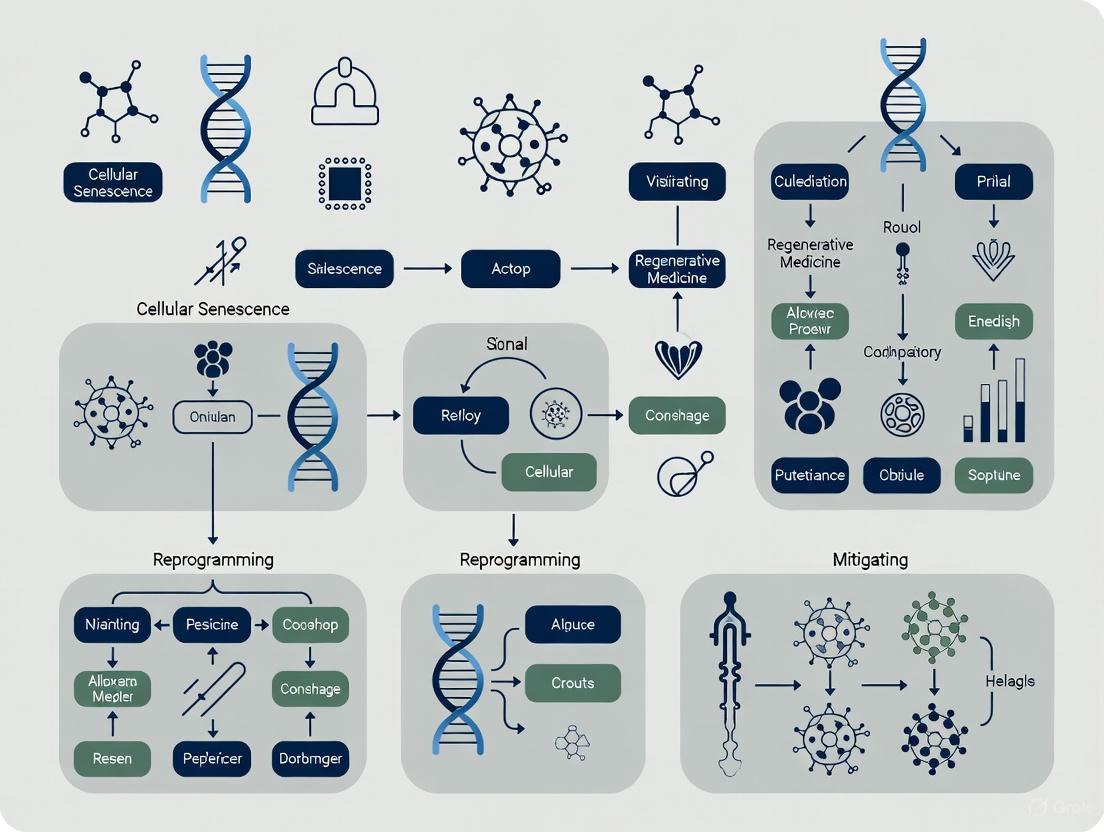
Cellular reprogramming, while holding immense potential for rejuvenation and regenerative medicine, is intrinsically linked to cellular senescence—a process that acts both as a barrier and a paradoxical facilitator.
Navigating the Double-Edged Sword: Strategies to Control Cellular Senescence in Reprogramming for Regenerative Medicine
Abstract
Cellular reprogramming, while holding immense potential for rejuvenation and regenerative medicine, is intrinsically linked to cellular senescence—a process that acts both as a barrier and a paradoxical facilitator. This article synthesizes current research to provide a comprehensive guide for scientists and drug developers. We explore the foundational biology of the senescence-reprogramming axis, detail methodological advances from genetic to chemical reprogramming, and present optimization strategies for mitigating senescence-associated risks. Finally, we discuss rigorous validation frameworks and comparative analyses of emerging techniques, aiming to equip researchers with the knowledge to harness reprogramming's potential safely and effectively for combating age-related diseases and cancer.
The Senescence-Reprogramming Axis: Understanding a Complex Bidirectional Relationship
Cellular senescence and cellular reprogramming represent two fundamentally intertwined biological processes that profoundly influence aging, regeneration, and cancer. While cellular senescence is characterized by permanent cell-cycle arrest and represents a barrier to proliferation, cellular reprogramming demonstrates the remarkable plasticity of cell identity, offering potential for rejuvenation. Understanding the hallmarks of both processes is crucial for researchers aiming to mitigate senescence-associated pathologies and harness reprogramming for therapeutic applications.
This technical support guide provides troubleshooting resources for scientists navigating the complex interplay between these processes, with a specific focus on experimental challenges encountered when senescence arises in reprogramming experiments.
Core Hallmarks and Molecular Mechanisms
Hallmarks of Cellular Senescence
Cellular senescence is a complex, multi-factorial state of irreversible cell cycle arrest triggered by various stressors. Its defining hallmarks are summarized in the table below.
Table 1: Core Hallmarks and Biomarkers of Cellular Senescence
| Hallmark Feature | Key Biomarkers | Detection Methods | Experimental Notes |
|---|---|---|---|
| Irreversible Cell Cycle Arrest | p16INK4a, p21CIP1, p53, Phospho-Rb | WB, IHC, IF, RT-qPCR | Arrest is mediated by p53/p21 and p16INK4A/Rb pathways [1] [2]. |
| Senescence-Associated Secretory Phenotype (SASP) | IL-6, IL-8, IL-1, CCL5, MMPs, TGF-β | ELISA, Multiplex Assays, WB | A pro-inflammatory secretome; heterogeneous and context-dependent [3] [4]. |
| Morphological & Metabolic Changes | Enlarged, flat cell shape; Increased lysosomal mass | Phase-contrast microscopy, SA-β-Gal staining | Morphology is a primary but non-specific indicator [2] [5]. |
| DNA Damage Response (DDR) | γH2AX foci, 53BP1, ATM/ATR activation | IF (foci counting), WB | A common mediator from telomere attrition or external stress [3] [6]. |
| Altered Nuclear Architecture | Loss of Lamin B1, SAHF formation | IF (DAPI staining), WB for Lamin B1 | SAHFs are repressive chromatin domains [2] [5]. |
The following diagram illustrates the primary signaling pathways that initiate and maintain cellular senescence, integrating the key biomarkers from Table 1.
Hallmarks of Cellular Reprogramming
Cellular reprogramming, typically via the introduction of Yamanaka factors (OCT4, SOX2, KLF4, c-MYC, collectively OSKM), resets epigenetic marks and cellular age. Key hallmarks include:
- Epigenetic Remodeling: Resetting of DNA methylation and histone modification patterns to a pluripotent state.
- Telomere Elongation: Restoration of telomere length through reactivation of telomerase.
- Metabolic Reprogramming: A shift from oxidative phosphorylation to glycolysis.
- Loss of Somatic Identity: Downregulation of tissue-specific genes.
- Acquisition of Pluripotency: Activation of core pluripotency network genes.
Troubleshooting Guides & FAQs
FAQ 1: Why do my reprogramming experiments consistently induce cellular senescence in a subset of cells, and how can I mitigate this?
Answer: The induction of senescence during reprogramming is a common and biologically significant response. The OSKM factors themselves can trigger stress responses, including DNA damage and oncogenic stress (via c-MYC), which activate the p53/p21 senescence pathway as a barrier to complete reprogramming [7] [8].
Troubleshooting Steps:
- Modulate p53 Pathway: Transiently suppress p53 using RNAi or small molecules (e.g., Pifithrin-α) during the initial phase of reprogramming. Caution: Monitor for genomic instability or tumorigenic transformation.
- Utilize Partial Reprogramming: Implement transient, non-integrating reprogramming protocols (e.g., using mRNA or Sendai virus) to avoid permanent genetic modification and reduce the stress that leads to irreversible senescence.
- Supplement with Antioxidants: Since oxidative stress is a key inducer of senescence, supplementing culture media with antioxidants like N-Acetylcysteine (NAC) can reduce ROS levels and senescence incidence [6].
- Employ Senolytics Post-Reprogramming: After the reprogramming process, treat cultures with senolytic drugs (e.g., Navitoclax, Fisetin) to selectively eliminate senescent cells that may inhibit the function of the resulting induced pluripotent stem cells (iPSCs) [4].
FAQ 2: My senescence detection assays are giving contradictory results. How can I reliably identify and quantify senescent cells in my cultures?
Answer: A major challenge in the field is the lack of a single, universal biomarker for senescence. Senescent cells are highly heterogeneous, and no single marker is sufficient for unequivocal identification. Contradictory results often arise from relying on a single method [2] [9].
Troubleshooting Steps:
- Use a Multi-Marker Panel: Always combine at least two or three distinct hallmark assays. A recommended combination is:
- SA-β-Gal Staining: A common initial screen, but can be positive in non-senescent cells like macrophages.
- Immunofluorescence for p21 and p16: Key cyclin-dependent kinase inhibitors indicating cell cycle arrest.
- DDR Marker Detection (e.g., γH2AX foci): Confirms an underlying trigger for senescence.
- Employ a New Machine Learning Approach: Recent advances use nuclear morphology features (e.g., area, texture) analyzed by machine learning classifiers to accurately predict senescence state. This method can distinguish senescence from quiescence and DNA damage, and is applicable across cell types [5].
- Validate with Functional Assays: Correlate biomarker presence with functional readouts, such as a persistent lack of proliferation in long-term EdU/BrdU incorporation assays.
FAQ 3: The SASP from senescent cells in my culture is affecting the behavior of neighboring non-senescent cells. How can I isolate its effect?
Answer: The paracrine signaling of the SASP is a major confounding factor in mixed cultures. Senescent cells secrete IL-6, IL-8, and other cytokines that can promote stemness, reprogramming, or inflammation in nearby cells [7] [3].
Troubleshooting Steps:
- Physical Separation: Use transwell co-culture systems to expose target cells to soluble SASP factors without direct cell-cell contact.
- SASP Neutralization: Treat cultures with senomorphic agents (e.g., JAK Inhibitors (Ruxolitinib), NF-κB inhibitors) to suppress SASP secretion without killing the senescent cell. Alternatively, use neutralizing antibodies against specific SASP factors like IL-6.
- Conditioned Media Experiments: Collect conditioned media from pure populations of senescent cells and apply it to target cells. This allows for controlled investigation of SASP effects. Ensure you include proper controls with conditioned media from non-senescent cells.
Key Experimental Protocols
Protocol: Multi-Parameter Assessment of Senescence
Objective: To reliably identify senescent cells using a combination of established biomarkers.
Workflow:
Materials:
- Senescence Inducer: Etoposide (10-50 µM for 3-10 days) or Hydrogen Peroxide (H₂O₂, 100-400 µM for 2 hours).
- SA-β-Gal Staining Kit: Commercial kit available (e.g., from Cell Signaling Technology #9860).
- Primary Antibodies: Anti-p21 (Abcam ab109199), Anti-γH2AX (Ser139, Millipore Sigma 05-636), Anti-Lamin B1 (Abcam ab16048).
- EdU/BrdU Proliferation Kit: (e.g., Click-iT Plus EdU Alexa Fluor 488 Imaging Kit, C10637).
Protocol: Mitigating Senescence During Fibroblast Reprogramming
Objective: To generate iPSCs with reduced senescent cell burden.
Workflow:
Materials:
- Reprogramming Vector: CytoTune-iPS Sendai Reprogramming Kit (Invitrogen) featuring non-integrating Sendai virus vectors for OSKM.
- p53 Suppressor: Validated p53 shRNA lentiviral particles or Pifithrin-α (10 µM).
- Antioxidant: N-Acetylcysteine (NAC, 1 mM).
- Senolytic: Fisetin (10-20 µM).
The Scientist's Toolkit: Research Reagent Solutions
Table 2: Essential Reagents for Senescence and Reprogramming Research
| Reagent Category | Specific Example | Function & Application |
|---|---|---|
| Senescence Inducers | Etoposide, Doxorubicin, H₂O₂ | Induce DNA damage and trigger premature senescence for experimental models [2] [6]. |
| Senescence Detectors | SA-β-Gal Staining Kit, Anti-p16 antibody, Anti-γH2AX antibody | Key tools for detecting hallmark features of senescent cells (Table 1) [3] [2]. |
| Reprogramming Factors | CytoTune-iPS Sendai Reprogramming Kit (OSKM) | Gold-standard, non-integrating method for safe and efficient cellular reprogramming. |
| Senolytics | Navitoclax (ABT-263), Fisetin, Venetoclax | Selectively eliminate senescent cells by inhibiting SCAPs (e.g., BCL-2 family) [1] [4]. |
| Senomorphics | Ruxolitinib (JAK Inhibitor), SP600125 (JNK Inhibitor) | Suppress the deleterious SASP without killing senescent cells, allowing study of its effects [3]. |
| Machine Learning Tools | CellProfiler (open-source), IN Carta | Image analysis software for extracting nuclear features to train senescence classifiers [5]. |
FAQs: Understanding the SASP Paradox
FAQ 1: What is the fundamental paradox of SASP in cellular reprogramming?
The paradox lies in the dual, opposing roles of the Senescence-Associated Secretory Phenotype (SASP). SASP can create a physical barrier that inhibits reprogramming by reinforcing stable cell cycle arrest and promoting a pro-inflammatory environment. Conversely, certain SASP factors can enhance cellular plasticity in neighboring cells, paradoxically facilitating their reprogramming into induced pluripotent stem cells (iPSCs) [7] [8]. The outcome—inhibition or facilitation—depends critically on context, including the duration of SASP exposure (acute vs. chronic) and the specific composition of the SASP secretome [10] [11].
FAQ 2: Which specific SASP factors are known to facilitate reprogramming?
Interleukin-6 (IL-6) is a key SASP factor identified in facilitating reprogramming. In landmark mouse models, senescent cells releasing IL-6 (and other cytokines) acted in a paracrine fashion to enhance the efficiency of OSKM (Oct4, Sox2, Klf4, c-Myc) factor-mediated conversion of surrounding somatic cells into iPSCs [7] [8]. The table below summarizes the roles of key SASP factors.
Table 1: Key SASP Factors and Their Roles in the Reprogramming Paradox
| SASP Factor | Primary Role in Paradox | Mechanism of Action |
|---|---|---|
| IL-6 | Facilitates Reprogramming | Enhances neighboring cell plasticity via paracrine signaling [7] [8]. |
| IL-8 | Context-Dependent | Recruits immune cells; can promote a pro-tumorigenic niche. |
| CCL5 | Context-Dependent | Enhances immune cell trafficking; can recruit regulatory T cells. |
| TGF-β | Inhibits Reprogramming | Reinforces growth arrest and stabilizes the senescent state. |
FAQ 3: How does the senescence-associated epigenetic landscape influence SASP and reprogramming?
Senescent cells undergo extensive epigenetic reprogramming, which directly regulates SASP expression. Key changes include:
- Formation of Senescence-Associated Heterochromatin Foci (SAHF): These repressive chromatin structures help silence proliferation-promoting genes but can also influence SASP gene accessibility [12].
- Cytoplasmic Chromatin Fragments (CCF): Cytoplasmic DNA from CCFs is detected by the cGAS-STING pathway, leading to NF-κB activation and robust SASP expression [12].
- Histone Modifications: Depletion of proteins like HMGB2 can trigger a shift in heterochromatin, coinciding with increased SASP gene expression [12].
This remodeled epigenetic environment not only maintains senescence but also dictates the secretome that can impact the reprogramming efficiency of nearby cells.
FAQ 4: What are the primary experimental strategies to mitigate the negative effects of SASP during reprogramming?
Two main therapeutic strategies are employed:
- Senolytics: Drugs that selectively induce apoptosis in senescent cells. Examples include Dasatinib + Quercetin (D+Q) and Navitoclax (ABT-263), which target pro-survival pathways (e.g., BCL-2 family) in senescent cells [13].
- Senomorphics: Compounds that modulate the SASP without killing the senescent cell. These include inhibitors of key SASP regulatory pathways like NF-κB, p38 MAPK, or JAK-STAT [11] [12]. The goal is to suppress the pro-inflammatory, tissue-destructive aspects of SASP while potentially preserving its beneficial functions.
Troubleshooting Guides
Problem: Low Reprogramming Efficiency in an Aged Cell Culture System
Potential Cause: Accumulation of senescent cells with a chronic, pro-inflammatory SASP that inhibits cellular plasticity.
Solution:
- Pre-treatment Assessment: Quantify senescence burden before reprogramming. Assay for SA-β-gal activity and markers like p16INK4a and p21.
- Intervention: Pre-treat culture with senolytic cocktails (e.g., 100 nM Dasatinib + 10 µM Quercetin for 24-48 hours) to clear senescent cells [13].
- Alternative Strategy: Use low-dose senomorphic compounds (e.g., an NF-κB inhibitor) during the early phase of reprogramming to suppress the inhibitory SASP signals.
- Validation: Post-intervention, re-measure senescence markers and key SASP factors (e.g., IL-6, IL-1α) via ELISA to confirm reduction.
Problem: Inconsistent Reprogramming Outcomes Potentially Driven by Paracrine SASP
Potential Cause: The heterogeneous secretome of senescent cells creates a variable microenvironment, leading to unpredictable outcomes where reprogramming is facilitated in some contexts and inhibited in others.
Solution:
- Characterize the SASP Profile: Use cytokine array or proteomic analysis to define the specific SASP composition in your experimental system. Note the factors present (e.g., high IL-6 vs. high TGF-β).
- Conditioned Media Experiments: Apply conditioned media from your senescent cell culture to naive reprogramming experiments. This will directly test the net effect of your specific SASP secretome.
- Targeted Neutralization: If reprogramming is inhibited by conditioned media, use neutralizing antibodies against specific inhibitory SASP factors (e.g., anti-TGF-β) to block their function.
Experimental Protocols
Protocol 1: Assessing the Senescence Burden in a Cell Population Pre- and Post-Reprogramming
Objective: To quantitatively evaluate the presence of senescent cells, a key variable influencing reprogramming efficiency.
Materials:
- Senescence-associated β-galactosidase (SA-β-gal) Staining Kit
- Lysis Buffer and Western Blotting Equipment
- Antibodies: anti-p16INK4a, anti-p21, anti-Lamin B1
- qPCR reagents and primers for CDKN2A (p16), CDKN1A (p21)
- ELISA kits for IL-6 and IL-8
Method:
- SA-β-gal Staining: Follow manufacturer's protocol. Fix cells and incubate with X-Gal solution at pH 6.0. Senescent cells will stain blue. Quantify by counting positive cells in multiple fields of view.
- Protein Analysis: Lyse cells. Perform Western blot for p16, p21, and Lamin B1 (loss of Lamin B1 is a senescence marker).
- Gene Expression: Extract RNA, synthesize cDNA, and perform qPCR for CDKN2A and CDKN1A.
- SASP Secretion: Collect cell culture supernatant. Use ELISA to quantify levels of secreted IL-6 and IL-8.
Table 2: Key Research Reagent Solutions for Senescence and Reprogramming Studies
| Reagent / Tool | Function | Application in Paradox Research |
|---|---|---|
| OSKM Factors | Core reprogramming transcription factors | To induce pluripotency in somatic cells; studying how SASP modulates their efficiency. |
| Dasatinib + Quercetin | Senolytic combination | To selectively eliminate senescent cells and test their required role in facilitating reprogramming. |
| NF-κB Pathway Inhibitor | Senomorphic compound | To suppress SASP production without killing senescent cells, allowing dissection of SASP's role. |
| Recombinant IL-6 | Pro-inflammatory cytokine | To directly test the effect of a specific SASP factor on reprogramming efficiency in naive cultures. |
| Anti-TGF-β Antibody | Neutralizing antibody | To block the function of an inhibitory SASP factor and assess its contribution to the paradox. |
Protocol 2: Modulating SASP to Test its Role in Reprogramming
Objective: To experimentally determine whether SASP from your system facilitates or inhibits reprogramming.
Materials:
- OSKM induction system (e.g., Doxycycline-inducible lentivirus)
- Senomorphic compound (e.g., NF-κB inhibitor)
- Neutralizing antibodies against specific SASP factors
- Reprogramming efficiency readout (e.g., Nanog-GFP reporter, immunostaining for pluripotency markers)
Method:
- Establish Co-culture or Conditioned Media System: Generate a population of senescent cells (e.g., via irradiation or oncogene activation). Use conditioned media from these cells or establish a direct co-culture with target somatic cells.
- Initiate Reprogramming: Introduce OSKM factors to the target somatic cells.
- Experimental Modulation:
- Group 1: Control (reprogramming + senescent conditioned media/co-culture).
- Group 2: Add senomorphic compound to Group 1.
- Group 3: Add neutralizing antibody to a specific SASP factor (e.g., IL-6) to Group 1.
- Quantify Reprogramming Efficiency: After 7-14 days, quantify the number of emerging iPSC colonies (e.g., by counting Nanog-GFP positive colonies). Compare efficiency between groups to determine the net effect of the SASP and the contribution of specific factors.
Signaling Pathways and Workflows
Troubleshooting Common Experimental Challenges
FAQ: My reprogramming efficiency is low. Could cellular senescence be a factor?
Yes, cellular senescence is a major barrier to reprogramming. The process of inducing pluripotency can itself trigger senescence checkpoints, halting cell cycle progression.
- Root Cause: The activation of the p53-p21 and/or p16INK4a-Rb pathways is a primary defense mechanism against dedifferentiation. When you introduce reprogramming factors like OSKM (Oct4, Sox2, Klf4, c-Myc), cells perceive this as an oncogenic or stressful insult, activating these tumor suppressor pathways and inducing a stable cell cycle arrest [8].
- Solution: Consider transiently inhibiting the p53-p21 pathway. Studies have shown that pharmacological inhibition of p53 (e.g., using PFT-α) can enhance proliferation and improve reprogramming efficiency without inducing genomic instability [14].
- Preventive Measure: Utilize early-passage primary cells, as replicative senescence driven by telomere shortening and the p16INK4a-Rb pathway increases with serial passaging [15] [16].
FAQ: Why do my senescent cell cultures show such heterogeneous secretome profiles?
The Senescence-Associated Secretory Phenotype (SASP) is highly dynamic and context-dependent, varying by cell type, inducer, and time post-induction.
- Root Cause: The SASP is not a single, uniform set of factors but a complex mixture of cytokines, chemokines, growth factors, and proteases. Its composition is regulated by multiple signaling hubs, including the NF-κB and p38 MAPK pathways [17] [18]. The specific stressor (e.g., DNA damage vs. oncogenic stress) can activate different upstream signals, leading to a unique SASP "fingerprint."
- Solution: Table 1 provides a quantitative overview of core SASP factors. Always characterize the SASP in your specific experimental model using multiplex ELISAs or antibody arrays rather than relying on a single marker.
- Investigation Protocol:
- Induce Senescence: Treat cells with a precise dose of a stressor (e.g., 100-200 µM H₂O₂ for oxidative stress, 10 Gy irradiation for DNA damage).
- Confirm Senescence: Verify establishment of senescence 3-7 days post-induction using SA-β-Gal staining and p16/p21 western blotting.
- Collect Conditioned Media: Replace growth media with serum-free media 48 hours before collection to avoid serum protein interference.
- Analyze Secretome: Use a validated proteomic platform to quantify SASP factors in the conditioned media.
FAQ: I inactivated pRb in my human senescent cells, but they still won't proliferate. Why?
In human cells, sustained p16INK4a expression can establish a fail-safe, irreversible arrest that is independent of pRb and p53.
- Root Cause: When p16INK4a is highly expressed and has fully activated pRb, it can initiate a second barrier involving reactive oxygen species (ROS) and protein kinase C delta (PKCδ). This pathway irreversibly blocks cytokinesis, preventing cell division even if pRb is subsequently inactivated [19].
- Solution: This phenomenon underscores the need to target the upstream driver, p16INK4a, or its downstream effectors like ROS. Using antioxidants (e.g., N-acetylcysteine) may help mitigate this secondary block [19].
- Key Difference: Note that this irreversible arrest is more characteristic of human cells; senescence is often more readily reversible in murine cells [19].
Table 1: Core Senescence-Associated Secretory Phenotype (SASP) Factors
| SASP Category | Key Factors | Primary Function/Effect | Common Detection Methods |
|---|---|---|---|
| Inflammatory Cytokines | IL-6, IL-1β, IL-8 | Autocrine reinforcement of senescence; Paracrine immune cell recruitment & chronic inflammation [20] [17] | ELISA, Multiplex Immunoassay |
| Chemokines | CCL2, CCL5 | Recruitment of monocytes and T-cells [17] | ELISA, Multiplex Immunoassay |
| Growth Factors | VEGF, TGF-β | Angiogenesis, tissue fibrosis [17] | ELISA, Multiplex Immunoassay |
| Proteases | MMP-3, MMP-13 | Extracellular matrix (ECM) remodeling [17] [21] | Zymography, Western Blot |
| Other Regulators | cGAS-STING | Intracellular DNA sensing pathway that drives NF-κB activation and SASP, including IL-6 production [20] | Western Blot, Immunofluorescence |
Table 2: Key Senescence Marker Expression in Different Contexts
| Senescence Marker | Replicative Senescence | Oncogene-Induced Senescence (OIS) | Therapy-Induced Senescence (TIS) | Notes |
|---|---|---|---|---|
| p16INK4a | High [16] | High [17] | Variable [22] | More stable marker, crucial for long-term arrest. |
| p21CIP1 | Transiently High [15] | High [15] | High [22] | Often an early, p53-driven response; can be transient. |
| SA-β-Gal Activity | Positive [21] | Positive [18] | Positive [18] | A hallmark of increased lysosomal mass, not senescence-specific. |
| DNA-SCARS (γ-H2AX) | Present [15] | Present [15] | Strongly Present [17] | Foci of persistent DNA damage response. |
| Lamin B1 | Loss [21] | Loss [18] | Loss [18] | Nuclear envelope breakdown, a common feature. |
Pathway Diagrams and Experimental Workflows
Core Senescence Signaling Pathways
Diagram Title: Core Senescence Signaling Pathways
Senescence and Reprogramming Workflow
Diagram Title: Cell Fates in Reprogramming
The Scientist's Toolkit: Research Reagent Solutions
Table 3: Essential Reagents for Senescence and Reprogramming Research
| Reagent / Tool | Function / Application | Example & Notes |
|---|---|---|
| p53 Inhibitor (PFT-α) | Transiently inhibits p53 transcriptional activity to test its necessity in senescence arrest and improve reprogramming efficiency [14]. | Pifithrin-α (PFT-α). Use at low micromolar ranges (e.g., 10-30 µM) for transient treatment. |
| Antioxidants (NAC) | Reduces reactive oxygen species (ROS) to investigate the role of oxidative stress in senescence and to bypass the p16-mediated cytokinetic block [19]. | N-acetylcysteine (NAC). A general antioxidant; effective at 1-5 mM. |
| Recombinant IL-6 | Used to treat cells exogenously to study the paracrine effects of SASP. Also used to validate IL-6 function in autocrine senescence loops [20]. | Confirm activity on your cell type. Often used at 10-50 ng/mL. |
| IL-6 Neutralizing Antibody | Blocks extracellular IL-6 to determine its specific contribution to autocrine/paracrine signaling in senescence maintenance [20]. | Critical for distinguishing intracrine vs. paracrine IL-6 functions. |
| SA-β-Gal Staining Kit | Histochemical detection of senescence-associated β-galactosidase activity at pH 6.0, a common senescence biomarker [21]. | Available from various suppliers (e.g., Cell Signaling Technology). |
| OSKM/OKS Plasmids | Delivery of reprogramming factors (Oct4, Sox2, Klf4, c-Myc or OKS variant) to induce pluripotency and study senescence as a barrier [21] [8]. | Can be delivered via plasmids, viruses, or modified exosomes (e.g., OKS@M-Exo) [21]. |
| CRISPR-Cas9 System | For precise genetic knockout of TP53 (p53) or CDKN1A (p21) to dissect their roles in senescence pathways [14]. | Enables creation of stable knockout cell lines to study long-term effects. |
| Phospho-Histone γ-H2AX Antibody | Immunofluorescence detection of DNA double-strand breaks, a marker of persistent DNA damage in senescent cells (DNA-SCARS) [15] [21]. | Quantify foci per nucleus; increased numbers indicate DNA damage response. |
Cellular senescence and cellular reprogramming represent two fundamentally intertwined processes that profoundly influence aging and cancer [8] [7]. While reprogramming somatic cells to induced pluripotent stem cells (iPSCs) using Yamanaka factors (OCT4, SOX2, KLF4, MYC - collectively OSKM) resets cellular aging markers and rejuvenates aged cells, the process itself often triggers senescence as an intrinsic barrier [8] [7]. This technical guide explores the molecular mechanisms through which senescence creates roadblocks to efficient reprogramming and provides researchers with practical strategies to overcome these challenges.
The interplay between senescence and reprogramming reveals a complex relationship: while senescence acts as a barrier to reprogramming, senescent cells and their associated secretory phenotype (SASP) can paradoxically enhance cellular plasticity and facilitate the reprogramming of nearby cells in certain contexts [8] [7]. Understanding this duality is crucial for developing effective strategies to mitigate senescence during reprogramming experiments.
Quantitative Data: Senescence Markers in Reprogramming
Table 1: Key Senescence Markers to Monitor During Reprogramming Experiments
| Marker Category | Specific Marker | Detection Method | Change in Senescence | Impact on Reprogramming |
|---|---|---|---|---|
| Cell Cycle Regulators | p16INK4a (p16) | Western Blot, Immunofluorescence | Increased [21] | Creates irreversible cell cycle arrest [17] |
| p21CIP1 (p21) | Western Blot, qPCR | Increased [21] | Mediates p53-dependent arrest [17] | |
| p53 | Western Blot, qPCR | Increased [21] | Activates DNA damage response [17] | |
| DNA Damage Response | γ-H2A.X | Immunofluorescence (foci counting) | Increased foci [21] | Indicates nuclear DNA double-strand breaks [21] |
| Epigenetic Marks | H4K20me3 | Western Blot, Immunofluorescence | Increased [21] | Associated with heterochromatin formation [21] |
| H3K9me3 | Western Blot, Immunofluorescence | Decreased [21] | Loss of transcriptional regulation [21] | |
| Senescence-Associated Secretory Phenotype | IL-6 | ELISA, qPCR | Increased [8] | Can paradoxically enhance reprogramming in nearby cells [8] |
| Functional Assays | SA-β-Gal Activity | Histochemical staining | Increased [21] | Visual confirmation of senescent state [21] |
Table 2: Efficacy of Senescence-Mitigating Strategies in Reprogramming
| Intervention Strategy | Experimental Model | Key Senescence Markers Reduced | Impact on Reprogramming Efficiency |
|---|---|---|---|
| OKS (Oct4, Klf4, Sox2) Partial Reprogramming | Senescent human NPCs [21] | p16, p21, p53, γ-H2A.X foci, H4K20me3 [21] | Restored proliferation capacity, reduced SA-β-Gal activity [21] |
| OSKM Cyclical Induction (2-day pulse, 5-day chase) | LAKI progeric mice [23] | Mitochondrial ROS, H3K9me levels [23] | Extended lifespan 33%, no teratoma formation [23] |
| OSK (without c-Myc) AAV9 Delivery | 124-week-old wild-type mice [23] | Frailty index score [23] | Extended remaining lifespan by 109% [23] |
| Chemical Reprogramming (7c cocktail) | Mouse fibroblasts [23] | Epigenetic clocks, mitochondrial OXPHOS [23] | Multi-omics scale rejuvenation, reduced aging metabolites [23] |
Experimental Protocols for Mitigating Senescence in Reprogramming
Protocol 1: Partial Reprogramming with OKS Factors to Ameliorate Senescence
Background: Complete reprogramming to pluripotency often triggers senescence in a subset of cells, while partial reprogramming approaches have demonstrated efficacy in reducing senescence markers without complete dedifferentiation [21] [23].
Materials:
- Plasmid vectors expressing OKS (Oct4, Klf4, Sox2) genes
- Senescent cell model (e.g., replicative senescent NPCs at passage 6)
- Transfection reagent or exosome-based delivery system (e.g., Cavin2-modified exosomes)
- Senescence detection reagents: SA-β-Gal staining kit, antibodies for p16, p21, p53, γ-H2A.X
Procedure:
- Culture senescent NPCs (P6) in appropriate growth medium until 70-80% confluent [21].
- Transfert cells with OKS plasmid using your preferred method. For enhanced efficiency, utilize exosome-based delivery (OKS@M-Exo) [21].
- Incubate for 48-72 hours to allow gene expression.
- Assess transfection efficiency by analyzing OKS expression levels via qRT-PCR or Western blot [21].
- Evaluate senescence markers:
- Assess functional outcomes:
Troubleshooting:
- If transfection efficiency is low, optimize vector:transfection reagent ratio or switch to exosome-based delivery [21].
- If senescence markers remain high, extend treatment duration or consider cyclical induction protocol [23].
Protocol 2: Cyclical Induction of Reprogramming Factors for In Vivo Applications
Background: Continuous expression of Yamanaka factors promotes teratoma formation, while cyclical induction enables rejuvenation without complete dedifferentiation, effectively reducing senescence burden [23].
Materials:
- Doxycycline-inducible OSKM or OSK polycistronic cassette
- AAV9 delivery system for in vivo applications
- Doxycycline for induction control
- Wild-type or progeric mouse model
Procedure:
- For transgenic models: Utilize mice carrying Tet-inducible OSKM cassette [23]. For non-transgenic models: Deliver OSK (without c-Myc) vectors via AAV9 capsid for broad tissue distribution [23].
- Administer doxycycline cyclically:
- Continue cycles for desired duration (study-dependent, ranging from 1 month to 10 months) [23].
- Monitor outcomes:
- Assess teratoma formation histologically [23].
- Evaluate transcriptome, lipidome, and metabolome rejuvenation through multi-omics analyses [23].
- Measure functional improvements: skin regeneration capacity, frailty index, lifespan extension [23].
- Analyze tissue-specific senescence markers: mitochondrial ROS, H3K9me levels [23].
Troubleshooting:
- If teratoma formation occurs, exclude c-Myc from factor combination or shorten induction periods [23].
- If rejuvenation effects are suboptimal, adjust cycle frequency or extend treatment duration [23].
Signaling Pathways and Molecular Mechanisms
Research Reagent Solutions
Table 3: Essential Research Reagents for Senescence and Reprogramming Studies
| Reagent Category | Specific Reagent | Function/Application | Key Considerations |
|---|---|---|---|
| Reprogramming Factors | OSKM (Oct4, Sox2, Klf4, c-Myc) | Complete reprogramming to pluripotency | High teratoma risk; use cyclical induction [23] |
| OKS (Oct4, Klf4, Sox2) | Partial reprogramming with reduced senescence | Lower tumorigenic potential than OSKM [21] | |
| Delivery Systems | Plasmid Vectors | Gene delivery for reprogramming factors | Moderate efficiency; optimize transfection protocol [21] |
| Exosome-based Delivery (e.g., Cavin2-modified) | Enhanced cellular uptake of genetic material | Improved transfection efficiency for senescent cells [21] | |
| AAV9 Capsid | In vivo delivery with broad tissue distribution | Suitable for whole-organism approaches [23] | |
| Senescence Detection | SA-β-Gal Staining Kit | Histochemical detection of senescent cells | Standard marker but can have specificity issues [21] |
| Antibodies: p16, p21, p53 | Protein-level detection of key senescence regulators | Quantify by Western blot or immunofluorescence [21] | |
| γ-H2A.X Antibody | Detection of DNA double-strand breaks | Count foci per nucleus for quantitative assessment [21] | |
| H4K20me3/H3K9me3 Antibodies | Epigenetic senescence markers | Altered patterns indicate epigenetic aging [21] | |
| Chemical Interventions | 7c Chemical Cocktail | Non-genetic partial reprogramming | Small molecule approach; different pathway from OSKM [23] |
| ABT263 (Navitoclax) | Senolytic agent to eliminate senescent cells | Can reverse immunosuppression in TME [17] | |
| Venetoclax | BCL-2 inhibitor with senolytic potential | Used in combination therapies [17] | |
| Induction Control | Doxycycline-Inducible Systems | Temporal control of reprogramming factor expression | Enables cyclical induction protocols [23] |
Frequently Asked Questions (FAQs)
Q1: Why does reprogramming trigger senescence in some cells? Reprogramming imposes significant stress on cells, including replication stress, DNA damage, and metabolic alterations. These stressors activate the DNA damage response (DDR) pathway, which upregulates tumor suppressor genes including TP53 and CDKN2A (p16), leading to irreversible cell cycle arrest and senescence as a protective mechanism against potential malignant transformation [17]. Essentially, senescence acts as a fail-safe mechanism to prevent damaged cells from acquiring pluripotency.
Q2: How can SASP both inhibit and enhance reprogramming? The SASP creates a complex microenvironment with dual effects. In cells undergoing reprogramming, autocrine SASP signaling can reinforce senescence and inhibit reprogramming. However, paracrine SASP signaling to neighboring cells can promote cellular plasticity and enhance reprogramming efficiency through factors like IL-6 [8] [7]. The net effect depends on context, including concentration, timing, and cell type.
Q3: What are the advantages of partial versus complete reprogramming for mitigating senescence? Partial reprogramming using shorter exposure to reprogramming factors or modified factor combinations (e.g., OKS without c-Myc) can rejuvenate cells by resetting epigenetic aging markers without pushing cells through complete dedifferentiation. This approach reduces the risk of teratoma formation and more effectively targets senescence reversal while maintaining cellular identity [21] [23]. Complete reprogramming often triggers senescence in a subset of cells and carries higher tumorigenic risks.
Q4: How can I optimize delivery methods to minimize senescence induction? Exosome-based delivery systems (e.g., Cavin2-modified exosomes) show enhanced transfection efficiency in senescent cells compared to traditional methods [21]. For in vivo applications, AAV9 vectors provide broad tissue distribution with minimal immune activation [23]. The key is balancing delivery efficiency with minimal cellular stress, which often requires empirical optimization for specific cell types.
Q5: What are the most reliable markers to confirm senescence reduction? A multi-parameter approach is essential. Key markers include:
- Reduced expression of cell cycle inhibitors p16, p21, and p53 [21]
- Decreased γ-H2A.X foci indicating reduced DNA damage [21]
- Normalization of epigenetic marks (decreased H4K20me3, increased H3K9me3) [21]
- Reduced SA-β-Gal activity [21]
- Restoration of proliferative capacity (EdU incorporation) [21] No single marker is sufficient; multiple confirmatory assays are recommended.
Q6: How does chemical reprogramming compare to factor-based approaches for overcoming senescence? Chemical reprogramming using small molecule cocktails (e.g., 7c) offers a non-genetic alternative that may bypass some senescence checkpoints. Interestingly, chemical reprogramming upregulates the p53 pathway (unlike OSKM-mediated approaches), potentially offering a safer profile with reduced cancer risk [23]. However, efficiency and protocol standardization remain challenges compared to established factor-based methods.
Core Mechanisms at a Glance
The table below summarizes the fundamental ways in which DNA Damage Response (DDR) and epigenetic remodeling influence each other, creating a bidirectional relationship crucial for genomic integrity and cell fate.
| Mechanism | Impact on DDR/Epigenetics | Experimental Readout |
|---|---|---|
| Chromatin State Dictates Repair Pathway [24] [25] [26] | Open chromatin (H3K27ac, H3K4me3) favors HR; Closed chromatin (H3K9me3, H3K27me3) favors NHEJ. | ChIP-qPCR for histone marks at damage sites; Reporter assays for repair pathway usage. |
| Histone Modifications as DDR Hubs [26] [27] | γH2AX formation is an early DDR signal; H2AK119ub by PRC1/BMI1 promotes end resection for HR. | Immunofluorescence for γH2AX foci; Proximity Ligation Assay (PLA) for repair factor recruitment. |
| Epigenetic Alterations from DDR Signaling [24] [25] | DNA repair machinery can deposit/remove histone marks during repair, altering the local epigenetic state. | ChIP-seq on cells recovered from DNA damage; Tracking histone mark dynamics post-irradiation. |
| DNA Methylation Influences Damage Susceptibility [25] [27] | Hypermethylation of gene promoters can silence DNA repair genes (e.g., MLH1, MGMT), increasing mutation risk. | Whole-Genome Bisulfite Sequencing (WGBS); qRT-PCR of repair gene expression after DNMT inhibitor treatment. |
Frequently Asked Questions & Troubleshooting
FAQ 1: Why is my DNA damage persisting longer than expected after irradiation, and how can I investigate the epigenetic context?
- Potential Cause: The persistent damage may be located in a transcriptionally silent, compact chromatin region (heterochromatin), which is less accessible to the repair machinery.
- Solution:
- Correlate damage sites with chromatin marks: Perform immunofluorescence for γH2AX (damage marker) co-stained with antibodies for heterochromatin marks like H3K9me3 or HP1α. Co-localization suggests damage in repressed regions.
- Increase chromatin accessibility: Treat cells with a low dose of a Histone Deacetylase (HDAC) inhibitor (e.g., Trichostatin A) prior to damage induction. This loosens chromatin, potentially accelerating repair in these zones. Re-measure γH2AX foci decay.
- Validate mechanistically: Use CRISPR/dCas9 to tether a transcriptional activator to the specific genomic locus where damage is persistent to force an open chromatin state and re-test repair efficiency [24] [25] [27].
FAQ 2: My cellular reprogramming efficiency is low, with high rates of senescence. Could DDR and epigenetics be linked to this?
- Potential Cause: Yes, this is a classic barrier. The reprogramming process induces significant replication stress and DNA damage, which can trigger senescence. The epigenetic landscape of the starting somatic cell can impede efficient DDR and successful reprogramming.
- Solution:
- Monitor DDR activation: Check for markers of a sustained DDR (e.g., phospho-ATM, p53-Ser15, p21) early in your reprogramming timeline. High levels indicate stress-induced senescence.
- Target the epigenome: Incorporate small-molecule inhibitors to modulate the epigenetic state.
- Use a DNMT inhibitor (e.g., 5-Azacytidine) to promote a more open chromatin landscape, facilitating access for reprogramming factors [27].
- Use an HDAC inhibitor (e.g., Valproic Acid) to enhance histone acetylation, which has been shown to improve reprogramming efficiency and mitigate some senescence pathways [27].
- Employ senolytics: Add a senolytic cocktail (e.g., Dasatinib + Quercetin) to your protocol to selectively eliminate senescent cells that have arrested due to DNA damage, thereby enriching the population for successfully reprogrammed cells [1] [28] [29].
FAQ 3: How does the cell choose between NHEJ and HR for DSB repair, and what epigenetic factors are involved?
- Answer: The choice is highly influenced by cell cycle phase (HR is active in S/G2) and the local chromatin environment. Key epigenetic players include:
- 53BP1: Promotes NHEJ by protecting DNA ends from resection, often enriched in heterochromatic regions [26].
- BRCA1: Promotes HR by antagonizing 53BP1 and facilitating end resection, often associated with active chromatin marks [26].
- Histone Modifications: H4K20me2 is a binding site for 53BP1, favoring NHEJ. Acetylation of H3K56 or H4K16 promotes an open chromatin state that facilitates resection and HR [24] [26].
- Experimental Tip: To manipulate pathway choice, you can deplete 53BP1 to shift the balance towards HR, or inhibit BRCA1 to favor NHEJ. Monitor pathway usage with specialized reporter constructs (e.g., DR-GFP for HR, EJ5-GFP for NHEJ).
The Scientist's Toolkit: Key Research Reagents
This table lists essential reagents for investigating the DDR-Epigenetics interplay, with a focus on mitigating senescence.
| Reagent / Tool | Function / Mechanism | Example Application in Senescence Mitigation |
|---|---|---|
| HDAC Inhibitors (e.g., Trichostatin A) [27] | Blocks histone deacetylation, leading to a more open chromatin state. | Increases accessibility for DNA repair machinery, potentially reducing damage-induced senescence during reprogramming [24] [27]. |
| DNMT Inhibitors (e.g., 5-Azacytidine) [27] | Inhibits DNA methylation, reactivating silenced genes. | Prevents hypermethylation and silencing of tumor suppressor and pro-repair genes, maintaining genomic health [25] [27]. |
| Senolytics (e.g., Dasatinib + Quercetin) [1] [28] [29] | Selectively induces apoptosis in senescent cells by targeting pro-survival pathways (SCAPs). | Clears senescent cells that accumulate during prolonged cell culture or after genotoxic stress, enriching for healthy proliferating cells [1] [28]. |
| ATM/ATR Inhibitors (e.g., KU-55933) [30] [31] | Pharmacologically inhibits the key kinases that initiate the DDR signaling cascade. | Used to experimentally dissect the role of DDR in triggering senescence. Caution: Can be genotoxic if used improperly. |
| p53 Inhibitor (e.g., Pifithrin-α) | Temporarily inhibits p53 transcriptional activity, a central mediator of damage-induced senescence. | Can be used transiently to bypass stress-induced senescence arrest during challenging manipulations like reprogramming [1]. |
| NAD+ Precursors (e.g., Nicotinamide Riboside) | Boosts cellular NAD+ levels, activating sirtuins (e.g., SIRT1, SIRT6) which are deacetylases linked to genomic stability and aging. | Enhances DNA repair capacity and has been shown to reduce markers of cellular senescence in aging models [28]. |
Key Signaling Pathways Visualized
The following diagrams illustrate the core signaling pathways that integrate DNA damage response with epigenetic remodeling, providing a visual guide for experimental design and troubleshooting.
DDR - Epigenetic Feedback Loop
Senescence Activation & Clearance
From Theory to Practice: Methodologies to Induce Reprogramming While Controlling Senescence
This technical support guide provides troubleshooting and methodological support for researchers aiming to leverage cellular reprogramming to mitigate cellular senescence. A primary challenge in this field is balancing the profound rejuvenating potential of reprogramming factors with the critical need to maintain cellular identity and avoid tumorigenesis. This resource distills the latest research on using OSKM (OCT4, SOX2, KLF4, c-MYC) and OKS (OCT4, SOX2, KLF4) factors to achieve safer epigenetic rejuvenation, offering practical guidance for your experiments.
★ Key Concepts FAQ
What is the core difference between full and partial reprogramming in the context of rejuvenation?
Full reprogramming involves the continuous expression of reprogramming factors (typically OSKM) until a somatic cell is completely converted into an induced pluripotent stem cell (iPSC). This process resets epigenetic aging markers but entirely erases cellular identity, posing a high risk of teratoma formation in vivo [32]. Partial reprogramming, in contrast, applies the factors transiently or cyclically. This exposure is sufficient to restore a more youthful epigenetic state and reverse age-related phenotypes—such as reducing senescence markers and restoring gene expression profiles—without pushing the cell into pluripotency, thereby preserving its original identity and avoiding tumorigenic risks [32] [33] [23].
Why is the "c-MYC" factor often omitted (OKS vs. OSKM) in rejuvenation strategies?
c-MYC is a potent proto-oncogene. Its inclusion in the OSKM cocktail significantly increases the efficiency of full reprogramming but also dramatically elevates the risk of cancer in vivo [23]. For therapeutic rejuvenation, where the goal is not pluripotency but age reversal, omitting c-MYC (resulting in the OKS combination) has been shown to be a safer strategy. Studies have demonstrated that OKS delivery can effectively reverse epigenetic age, improve tissue function (e.g., in the optic nerve and intervertebral disc), and extend lifespan in mouse models without reported tumor formation [23] [21].
How does cellular senescence directly interact with the reprogramming process?
The interaction is bidirectional and paradoxical. On one hand, the process of inducing reprogramming can itself trigger senescence as an innate barrier, halting a subset of cells from undergoing identity change [7]. On the other hand, senescent cells, through their Senescence-Associated Secretory Phenotype (SASP), can create a pro-inflammatory microenvironment that paradoxically enhances the reprogramming efficiency and plasticity of neighboring cells [7]. Furthermore, a key goal of reprogramming for rejuvenation is to directly target and reverse the senescent state, reducing markers like p16INK4a and SA-β-Gal activity in aged tissues [21].
〠 Troubleshooting Guide: Common Experimental Challenges
| Challenge & Phenomenon | Root Cause | Verified Solution |
|---|---|---|
| Low Reprogramming EfficiencyPoor yield of rejuvenated cells. | Low transfection efficiency, particularly in senescent cells; suboptimal factor expression levels [21]. | Use advanced delivery vectors like Cavin2-modified exosomes (OKS@M-Exo), which show enhanced uptake by senescent nucleus pulposus cells [21]. |
| Induction of SenescenceUnexpected cell cycle arrest during reprogramming. | Activation of innate anti-cancer barriers like the p53 pathway in response to reprogramming stress [7] [23]. | Utilize partial (cyclic) reprogramming protocols. For chemical reprogramming with the "7c" cocktail, note that it upregulates p53, suggesting a different pathway than OSKM [23]. |
| Loss of Cellular IdentityDedifferentiation or teratoma formation. | Over-reprogramming due to prolonged or potent factor expression [32] [23]. | Implement short-term, cyclic induction protocols (e.g., 2-day ON, 5-day OFF for Dox-inducible systems) [32] [23]. Excluding c-MYC (using OKS) also mitigates this risk [21]. |
| Poor In Vivo DeliveryInefficient factor delivery to target tissues. | Limitations of viral (AAV) vectors, including immune responses and tissue tropism [33] [23]. | Explore chemical reprogramming cocktails as a non-genetic alternative [33] [23]. For genetic delivery, AAV9 has been used for systemic OSK delivery in mice [23]. |
★ Experimental Protocol: In Vivo Partial Reprogramming in Mouse Models
This protocol is adapted from studies that successfully reversed age-related phenotypes without tumor formation [32] [23].
1. Genetic Model Setup
- Use transgenic mice carrying a doxycycline (Dox)-inducible polycistronic cassette for OSKM or OKS (e.g., "LAKI" mice).
- Alternatively, for a more translational approach, use gene therapy. Administer AAV9 vectors carrying the OKS and rtTA genes systemically to wild-type mice [23].
2. Partial Reprogramming Induction Cycle
- Initiate the cycle when mice show signs of aging or in progeria models.
- Administer Dox in the diet or drinking water to induce transgene expression.
- Apply a cyclic protocol: A common and effective regimen is a 2-day pulse of Dox followed by a 5-day chase without Dox [32] [23].
- Repeat this cycle for multiple weeks (e.g., 35 cycles has been shown to be safe and effective) [23].
3. Monitoring and Validation
- Safety: Regularly monitor for teratoma formation via histology. The cyclic protocol should prevent this [23].
- Efficacy: Assess rejuvenation using:
- Epigenetic Clocks: Analyze DNA methylation patterns from blood or tissue samples [33] [23].
- Transcriptomic Analysis: RNA sequencing to show a shift to a younger gene expression profile [23].
- Functional Assays: Tissue-specific tests (e.g., visual acuity in eye models, grip strength, frailty index) [23] [21].
- Senescence Biomarkers: Measure p16INK4a, p21CIP1, and SA-β-Gal activity in target tissues [21].
◈ Visualizing the Senescence-Reprogramming Interplay
The following diagram illustrates the critical molecular and cellular interactions between senescence and reprogramming, which is central to troubleshooting experiments in this field [7].
The tables below synthesize key quantitative findings from recent studies on reprogramming-induced rejuvenation.
Table 1: In Vivo Outcomes of Partial Reprogramming in Mouse Models
| Reprogramming Factor(s) | Delivery Method | Key Result (Lifespan) | Key Result (Healthspan) | Safety Observation |
|---|---|---|---|---|
| OSKM (Cyclic) | Dox-inducible Transgene | Median lifespan increased by 33% in progeria mice [23] | Ameliorated cellular hallmarks; improved skin regeneration [23] | No teratomas after 35 cycles [23] |
| OSK (Cyclic) | AAV9 Gene Therapy | Remaining lifespan extended by 109% in old (124-week) wild-type mice [23] | Frailty index score improved from 7.5 to 6.0 [23] | No teratoma formation reported [23] |
| Chemical Cocktails | Small Molecules | N/A (In vitro human cell focus) | Restored youthful transcript profile in < 1 week [33] | Did not compromise cellular identity [33] |
Table 2: Cellular & Molecular Rejuvenation Markers Following OKS/S Treatment
| Rejuvenation Marker | Observation After OKS/S Treatment | Experimental Context |
|---|---|---|
| Senescence Markers (p16, p21) | Significant downregulation [21] | Senescent human nucleus pulposus cells [21] |
| DNA Damage (γ-H2A.X foci) | Significant reduction [21] | Senescent human nucleus pulposus cells [21] |
| Epigenetic Age | Reversion of transcriptomic age [33] | Human fibroblasts in vitro [33] |
| Cell Proliferation | Significant increase (EdU+ cells) [21] | Senescent human nucleus pulposus cells [21] |
◈ The Scientist's Toolkit: Essential Research Reagents
| Reagent / Material | Function in Reprogramming & Rejuvenation Research |
|---|---|
| Doxycycline (Dox)-Inducible System | Allows precise, temporal control over the expression of OSKM/OKS factors in transgenic animal models or cells, which is crucial for achieving partial rather than full reprogramming [32] [23]. |
| AAV9 Vectors | A gene therapy delivery tool capable of systemic administration to distribute OKS factors broadly across tissues in adult animals, providing a translational alternative to transgenic models [23]. |
| Cavin2-modified Exosomes | Engineered exosomes that serve as highly efficient, non-immunogenic delivery vehicles for plasmid DNA (e.g., OKS plasmid), enhancing transfection of hard-to-transfect senescent cells [21]. |
| Chemical Cocktails (e.g., 7c) | Defined mixtures of small molecules that can induce epigenetic reprogramming and rejuvenation without genetic integration, offering a potentially safer and more controllable therapeutic path [33] [23]. |
| NCC Reporter System | A fluorescence-based biosensor (Nucleocytoplasmic Compartmentalization) used to distinguish young, old, and senescent cells in high-throughput screens for rejuvenating compounds [33]. |
This technical support center provides specialized guidance for researchers aiming to mitigate cellular senescence during cellular reprogramming experiments. Cellular senescence, a state of irreversible cell cycle arrest, is a significant barrier in regenerative medicine. While it acts as a tumor-suppressive mechanism, its chronic presence contributes to aging and age-related pathologies and can impede efforts to reverse cellular aging [13] [34]. Chemical reprogramming using non-genetic cocktails offers a promising avenue to reverse aging and bypass senescence, but the process is fraught with technical challenges. This resource, framed within the broader thesis of mitigating senescence in reprogramming research, offers detailed troubleshooting guides, FAQs, and methodological support to help you navigate these complexities.
Core Concepts: Senescence and Reprogramming
Cellular Senescence is a complex physiological process characterized by irreversible cell cycle arrest, activation of tumor suppressor pathways (p53/p21 and p16INK4A/Rb), and a pronounced secretory phenotype known as the Senescence-Associated Secretory Phenotype (SASP) [17] [34]. The SASP comprises proinflammatory cytokines, chemokines, and proteases that can remodel the tissue microenvironment [8].
Chemical Reprogramming involves using defined cocktails of small molecules to revert differentiated cells to a pluripotent state or to reverse age-associated markers without using genetic factors like OSKM (OCT4, SOX2, KLF4, MYC) [8]. A key challenge is that the induction of reprogramming itself can trigger senescence as a stress response, creating a barrier to successful age reversal [8].
The interplay between these processes is critical. Emerging research shows that senescent cells, through their SASP, can paradoxically enhance the reprogramming efficiency of nearby cells by secreting factors like IL-6 [8]. However, for the goal of producing healthy, rejuvenated cells, the persistent presence of senescent cells is detrimental and must be managed.
Troubleshooting Guides
Guide 1: High Senescence Rates in Starting Cell Population
Issue or Problem Statement: The primary cells (e.g., fibroblasts) used for reprogramming experiments exhibit high levels of senescence before the protocol begins, leading to low reprogramming efficiency.
Symptoms or Error Indicators:
- High percentage of cells positive for Senescence-Associated Beta-Galactosidase (SA-β-Gal) staining before reprogramming.
- Poor cell proliferation and enlarged, flattened cell morphology at baseline.
- Elevated expression of senescence markers (p16, p21, p53) in pre-reprogramming RNA/protein analysis.
Possible Causes:
- Donor Age: Cells isolated from aged donors have a higher intrinsic senescent burden due to factors like telomere attrition and accumulated DNA damage [35].
- Suboptimal Cell Culture: Replicative exhaustion from excessive passaging or oxidative stress from subculture conditions.
- Cell Isolation Stress: Enzymatic and mechanical stress during cell isolation from tissue can induce damage and senescence.
Step-by-Step Resolution Process:
- Characterize Senescent Burden: Before initiating reprogramming, quantify the baseline senescent population using SA-β-Gal staining and analysis of p16 and p21 expression [34].
- Pre-treatment with Senolytics: Treat the starting cell population with a senolytic cocktail (e.g., 100 nM Dasatinib + 10 µM Quercetin) for 48 hours to selectively eliminate senescent cells [13]. Remove the senolytics and allow the culture to recover for 24 hours before starting reprogramming.
- Validate Clearance: Re-assess senescence markers post-treatment to confirm reduction of the senescent pool.
- Proceed with Reprogramming: Initiate the chemical reprogramming protocol on the pre-cleared cell population.
Validation or Confirmation Step: Compare the efficiency of induced pluripotent stem cell (iPSC) colony formation between pre-cleared and untreated control cultures. A significant increase in colony number and a reduction in differentiation-resistant flat cells indicate successful troubleshooting.
Additional Notes or References: Using low-passage cells and optimizing isolation protocols can minimize pre-existing senescence. The dasatinib and quercetin combination is a well-validated senolytic approach, but other specific BCL-2 family inhibitors like ABT-263 (Navitoclax) can also be explored, bearing in mind potential cell-type-specific toxicities [13].
Guide 2: Senescence Induction During Reprogramming
Issue or Problem Statement: Reprogramming factors or the stress of the process itself triggers a senescence response in a subset of cells, halting their progression to pluripotency.
Symptoms or Error Indicators:
- Emergence of SA-β-Gal-positive cells with large, flat morphology during the reprogramming process.
- Persistent expression of senescence markers in cells that fail to activate pluripotency genes (e.g., NANOG, SOX2).
- Culture stagnation, with a mix of small, reprogramming-competent cells and large, senescent cells.
Possible Causes:
- Stress-Induced Senescence: The metabolic and epigenetic stress of reprogramming activates the p53/p21 DNA damage response pathway [35].
- Oncogene-Induced Senescence: Ectopic expression or activation of certain reprogramming factors (e.g., c-MYC) can be perceived as an oncogenic signal, triggering OIS [17].
- SASP-Mediated Paracrine Senescence: Early senescent cells secrete SASP factors that can reinforce the senescent state in neighboring cells [17] [8].
Step-by-Step Resolution Process:
- Co-treatment with Senomorphics: Supplement the reprogramming cocktail with a senomorphic agent to suppress the SASP without killing cells. For example, add 5 µM of the p38 MAPK inhibitor SB203580 to the medium to inhibit a key SASP regulatory pathway.
- Transient p53 Inhibition: Include a small molecule p53 inhibitor (e.g., 1 µM Pifithrin-α) during the initial 5-7 days of reprogramming to temporarily bypass the stress-induced senescence checkpoint. Use with caution due to potential cancer risks.
- Mid-Process Senolytic Washout: At a defined midpoint (e.g., day 8-10), administer a pulse of senolytic drugs (e.g., Dasatinib/Quercetin for 24 hours) to eliminate cells that have entered senescence during the early phase, then resume the standard reprogramming protocol.
Validation or Confirmation Step: Monitor the dynamics of senescence markers weekly. Successful resolution should show a peak of senescence markers early in the protocol, followed by a decline after intervention, concomitant with a rise in pluripotency marker expression.
Additional Notes or References: The timing and concentration of interventions are critical. Pilot dose-response experiments are essential. Research indicates that transient reprogramming protocols may naturally avoid the full senescence response, making them a valuable alternative strategy [8].
Guide 3: Residual Senescence in Final Cell Population
Issue or Problem Statement: After the completion of the reprogramming protocol, the resulting cell population (e.g., iPSCs or rejuvenated somatic cells) contains a subpopulation of senescent cells.
Symptoms or Error Indicators:
- Heterogeneous cell population with sporadic SA-β-Gal-positive cells interspersed among pluripotent colonies.
- Impaired differentiation capacity of the iPSC line, potentially due to pro-inflammatory SASP signals.
- Genomic or proteomic analysis confirms the presence of senescent cells alongside fully reprogrammed cells.
Possible Causes:
- Incomplete Reprogramming: Some cells may have escaped the senescence checkpoint but failed to fully erase the epigenetic and metabolic marks of aging.
- Insufficient Senescent Cell Clearance: The protocols used did not fully eliminate all senescent cells.
- Spontaneous Senescence: Genomic instability in the newly reprogrammed cells can lead to spontaneous senescence.
Step-by-Step Resolution Process:
- Post-Reprogramming Senolytic Selection: Treat the final cell population with a senolytic cocktail. For iPSCs, which often rely on high BCL-2 family protein expression for survival, a specific BCL-XL inhibitor (e.g., A1331852 at 0.5 µM) may be more appropriate and less toxic than a pan-inhibitor like ABT-263 [13].
- Cell Sorting: Use fluorescence-activated cell sorting (FACS) to isolate a pure population based on a specific surface marker of pluripotency (e.g., SSEA-4) and the absence of a senescence-associated marker (e.g., a specific epitope recognized by an antibody).
- Clonal Expansion: Isolate single-cell clones and expand them. Screen each clone for the absence of senescence markers and for robust pluripotency.
Validation or Confirmation Step: The resulting cell population should be 100% negative for SA-β-Gal staining and show homogeneous expression of pluripotency markers. In vitro differentiation into all three germ layers should be efficient and uniform.
Additional Notes or References: Regularly screening master cell banks for senescent contaminants is a critical quality control measure. Using "Aging Clocks" — multivariate models trained on omics data — can provide a quantitative measure of biological age and the success of senescence clearance in the final population [17].
Frequently Asked Questions (FAQs)
Q1: What are the key markers I should use to reliably identify senescent cells in my reprogramming experiments? A1: There is no single universal marker. A combination is required for reliable identification:
- SA-β-Gal Activity: A common histochemical marker detectable at pH 6.0 [34].
- Protein Markers: Increased levels of tumor suppressors p16INK4a, p21WAF1/Cip1, and p53 [17] [34].
- SASP Factors: Detection of secreted proteins like IL-6, IL-8, and MMPs via ELISA or transcript analysis [8] [34].
- DNA Damage Foci: Immunofluorescence staining for γ-H2AX, a marker of DNA double-strand breaks often present in senescent cells [35].
Q2: How can I distinguish between oncogene-induced senescence (OIS) and stress-induced senescence during reprogramming? A2: Distinguishing them can be challenging as they share common pathways. However, you can infer the cause:
- Context: OIS is typically triggered by the specific action of a single factor known to be oncogenic, such as high c-MYC activity in your cocktail. Stress-induced senescence is a more general response to the culture conditions and metabolic stress of reprogramming [17].
- Marker Emphasis: OIS is often highly dependent on the p16INK4a/Rb pathway. Stressing these markers in your analysis can point towards OIS [17]. Stress-induced senescence often strongly activates the p53/p21 pathway in response to DNA damage [35].
Q3: Are there any pro-senescence factors I should deliberately AVOID in my chemical cocktails? A3: The field is still exploring this. Currently, the focus is less on specific "pro-senescence" chemicals to avoid and more on understanding that the reprogramming process itself is a potent senescence trigger. The key is to proactively include senolytic or senomorphic agents as countermeasures, as outlined in the troubleshooting guides. Some protocols using genetic factors suggest that high levels of c-MYC can potentiate OIS [8].
Q4: My reprogramming efficiency is low, but I don't see classic senescence markers. Could senescence still be the issue? A4: Yes. Cells can enter a state of "dormancy" or other non-proliferative states that are not captured by classic markers like SA-β-Gal. It is advisable to use a broader panel of markers, including analysis of cell cycle arrest genes (p21, p16) and a more comprehensive SASP analysis. Single-cell RNA sequencing can reveal heterogeneous subpopulations, including those in a pre-senescent or alternative arrest state.
Q5: What is the difference between a senolytic and a senomorphic agent, and when should I use each? A5:
- Senolytics: These are drugs that selectively induce apoptosis in senescent cells by targeting their pro-survival pathways (e.g., BCL-2/BCL-XL inhibitors like ABT-263, dasatinib/quercetin). Use them when your goal is to eliminate existing senescent cells from your culture [13] [34].
- Senomorphics: These agents suppress the SASP and other damaging phenotypes of senescent cells without killing them (e.g., NF-κB or p38 MAPK inhibitors). Use them when you need to mitigate the paracrine damaging effects of SASP on neighboring cells during the reprogramming process [34].
The following tables summarize key quantitative data on senolytic agents and senescence inducers relevant to chemical reprogramming research.
Table 1: Selected Senolytic Agents for Experimental Use
| Senolytic Agent | Primary Target(s) | Example Concentration (In Vitro) | Key Considerations |
|---|---|---|---|
| Dasatinib + Quercetin [13] | Multiple tyrosine kinases (D); PI3K, BCL-2 family (Q) | 100 nM D + 10 µM Q | Broad-spectrum senolytic; well-studied combination. |
| ABT-263 (Navitoclax) [13] | BCL-2, BCL-W, BCL-XL | 1 µM | Potent but can cause thrombocytopenia due to BCL-XL inhibition in platelets. |
| A1331852 [13] | BCL-XL (specific) | 0.5 - 1 µM | More specific than ABT-263; potentially fewer off-target effects. |
| Fisetin [13] | Multiple pathways | 10 - 20 µM | Natural flavonoid; senolytic activity observed in multiple cell types. |
Table 2: Common Senescence Inducers and Markers
| Senescence Inducer / Type | Key Hallmarks / Markers | Associated Pathways |
|---|---|---|
| Replicative Senescence [17] [35] | Telomere shortening, DNA damage foci (γ-H2AX) | p53/p21 |
| Oncogene-Induced Senescence (OIS) [17] | Hyperproliferation stress, p16INK4a upregulation | p16INK4a/Rb |
| Therapy-Induced Senescence [34] | Persistent DNA damage response (DDR) | p53/p21, p16/Rb |
| Oxidative Stress Senescence [17] | High ROS, mitochondrial dysfunction | p53/p21 |
Experimental Protocols
Protocol 1: Pre-Clearance of Senescent Cells from Primary Fibroblasts
Objective: To reduce the baseline senescent cell burden in a primary fibroblast culture before initiating chemical reprogramming.
Materials:
- Primary human dermal fibroblasts (low passage, if possible)
- Senolytic cocktail: Dasatinib (100 nM stock) and Quercetin (10 mM stock)
- Fibroblast growth medium
- Phosphate-Buffered Saline (PBS)
- Trypsin-EDTA
- SA-β-Gal Staining Kit
Methodology:
- Cell Seeding: Seed fibroblasts at a density of 10,000 cells/cm² and allow them to adhere overnight in standard growth medium.
- Senolytic Treatment: Replace the medium with fresh growth medium containing 100 nM Dasatinib and 10 µM Quercetin.
- Incubation: Incubate the cells for 48 hours under normal culture conditions (37°C, 5% CO₂).
- Recovery: Aspirate the senolytic-containing medium, wash the cells gently with PBS, and add fresh growth medium without senolytics. Incubate for a further 24 hours.
- Validation (Optional but Recommended): Harvest a subset of cells and perform SA-β-Gal staining according to the manufacturer's protocol. Compare the percentage of SA-β-Gal-positive cells to an untreated control culture. A >50% reduction is typically observed [13].
- Proceed: The pre-cleared fibroblast population is now ready for use in chemical reprogramming experiments.
Protocol 2: Monitoring Senescence Dynamics During Reprogramming
Objective: To track the emergence and resolution of senescent cells throughout a chemical reprogramming timeline.
Materials:
- Cells undergoing chemical reprogramming
- SA-β-Gal Staining Kit
- RNA extraction kit
- cDNA synthesis kit
- qPCR reagents
- Antibodies for p16, p21, and a pluripotency marker (e.g., NANOG)
Methodology:
- Sample Planning: Designate time points for analysis (e.g., Day 0, 3, 7, 10, 14, and endpoint).
- Morphological Analysis: At each time point, capture bright-field images to document changes in cell morphology. Senescent cells appear large, flat, and granular.
- SA-β-Gal Staining: At each time point, fix and stain a culture well for SA-β-Gal. Quantify the percentage of positive cells.
- Molecular Analysis: Harvest cells for RNA and protein at each time point.
- Perform qPCR for senescence genes (CDKN2A/p16, CDKN1A/p21) and pluripotency genes (NANOG, SOX2).
- Perform Western blotting for p16, p21, and NANOG protein levels.
- Data Integration: Plot the dynamics of senescence markers against the emergence of pluripotency markers. This will identify the critical window where senescence peaks and informs the optimal timing for interventional strategies.
Signaling Pathways and Workflows
Senescence and Reprogramming Crosstalk
Experimental Workflow for Senescence Mitigation
The Scientist's Toolkit
Table: Key Research Reagent Solutions for Senescence Mitigation in Reprogramming
| Item Name | Function / Purpose | Example / Notes |
|---|---|---|
| Dasatinib & Quercetin [13] | Broad-spectrum senolytic cocktail. Selectively eliminates senescent cells by targeting pro-survival pathways. | Used for pre-clearance and mid-process pulses. Commercially available from major chemical suppliers. |
| ABT-263 (Navitoclax) [13] | Potent BCL-2/BCL-XL inhibitor senolytic. Effective for senescent cell types reliant on these specific anti-apoptotic proteins. | Can cause platelet toxicity; use specific concentrations and durations. |
| p38 MAPK Inhibitor (e.g., SB203580) | Senomorphic agent. Suppresses the SASP by inhibiting the p38 MAPK signaling pathway, a key regulator of inflammatory cytokine production. | Used during reprogramming to mitigate paracrine effects of SASP without killing cells. |
| SA-β-Gal Staining Kit [34] | Histochemical detection of lysosomal β-galactosidase activity at pH 6.0, a common biomarker for identifying senescent cells in culture. | Essential for quantifying senescent burden before, during, and after experiments. |
| Antibodies for p16 & p21 [17] [34] | Protein-level detection of key cyclin-dependent kinase inhibitors that enforce senescence-associated cell cycle arrest. | Used in Western Blot or Immunofluorescence for confirmatory analysis alongside SA-β-Gal. |
| Cellular Aging Clocks [17] | Multivariate models (e.g., based on DNA methylation) that predict biological age. Provides a quantitative measure of rejuvenation success. | Used to validate the final output of reprogramming experiments, confirming reversal of aging signatures. |
Frequently Asked Questions (FAQs)
Q1: What is the fundamental difference between a senolytic and a senomorphic strategy?
A1: Senolytics are compounds that selectively induce apoptosis (cell death) in senescent cells, thereby reducing their overall burden in tissues [28] [36]. In contrast, senomorphics are compounds that suppress the Senescence-Associated Secretory Phenotype (SASP) without killing the senescent cell [28]. They modulate the harmful, pro-inflammatory secretome that drives tissue dysfunction and chronic inflammation.
Q2: Why would a researcher choose a co-treatment strategy over a single-agent approach?
A2: A co-treatment strategy can target multiple pathways simultaneously, potentially leading to enhanced efficacy. For instance, a senolytic can clear senescent cells, while a co-administered senomorphic can immediately suppress the inflammatory SASP from any remaining cells and may also inhibit pro-survival signals, making the environment less favorable for senescent cell persistence [28]. This approach can be more effective than either strategy alone in mitigating the negative impacts of cellular senescence.
Q3: A common problem is the low specificity of first-generation senolytics. What new strategies are being developed to improve cell-type specificity?
A3: Researchers are developing more targeted delivery systems. One promising strategy involves exploiting the high senescence-associated β-galactosidase (SA-β-gal) activity as a trigger. This includes designing prodrugs like SSK1 (galactose-modified gemcitabine) and GMD (galactose-modified duocarmycin), which are activated specifically in senescent cells, minimizing off-target effects [36]. Additionally, immunological approaches such as antibody-drug conjugates (ADCs) and CAR-T cells are being explored to target specific surface markers on senescent cells [36].
Q4: In the context of cellular reprogramming, how can senescent cells interfere with the process, and how can senotherapeutics help?
A4: Cellular reprogramming, using factors like OSKM (OCT4, SOX2, KLF4, MYC), can itself induce senescence as a barrier to full reprogramming [8]. Furthermore, the SASP from senescent cells can create a pro-inflammatory environment that compromises the efficiency and fidelity of reprogramming neighboring cells. Using senolytics to clear these cells or senomorphics to quell the SASP can create a more permissive microenvironment, improving reprogramming efficiency and reducing the risk of aberrant outcomes [8].
Q5: What are the key biomarkers I should use to confirm senescence in my in vitro models before and after senolytic/senomorphic treatment?
A5: A combination of biomarkers is recommended, as no single marker is entirely specific. Key markers include:
- SA-β-galactosidase activity: A widely used histochemical marker [28] [37].
- Protein levels of p16INK4a and p21CIP1: Core regulators of the senescence growth arrest [28] [17].
- SASP components: Measure the secretion of factors like IL-6, IL-8, or other model-specific cytokines via ELISA or multiplex assays [28] [12].
- Persistent DNA Damage Foci (e.g., γH2AX): Indicates activation of the DNA damage response [17].
The following table summarizes the mechanisms and limitations of common senotherapeutics.
Table 1: Overview of Senolytic and Senomorphic Agents
| Agent Name | Class | Primary Mechanism of Action | Key Limitations |
|---|---|---|---|
| Dasatinib + Quercetin (D+Q) [28] [36] | Senolytic | Inhibits tyrosine kinase receptors (Dasatinib) and BCL-2 family proteins (Quercetin) to target SCAPs. | Limited specificity; can affect non-senescent cells. |
| Fisetin [28] [36] | Senolytic | Flavonoid that targets senescent cell anti-apoptotic pathways (SCAPs). | Bioavailability and pharmacokinetics can be variable. |
| Navitoclax (ABT-263) [17] [36] | Senolytic | Inhibits BCL-2, BCL-xL, and BCL-w to induce apoptosis. | Can cause thrombocytopenia as a side effect [28]. |
| SSK1 [36] | Senolytic (Prodrug) | SA-β-galactosidase-activated prodrug of gemcitabine; selectively toxic to senescent cells. | Requires high SA-β-gal activity for specificity. |
| Rapamycin [28] | Senomorphic | Inhibits mTOR pathway, a key regulator of SASP expression. | Can cause immunosuppression with chronic use. |
| Metformin [28] | Senomorphic | AMPK activator; can reduce SASP and inflammation. | Effects are pleiotropic and not exclusively senomorphic. |
Experimental Protocols
Protocol for In Vitro Senescence Induction and Senotherapeutic Validation
This protocol outlines a standard workflow for inducing senescence in a cell culture model and testing the efficacy of senolytic/senomorphic compounds.
Workflow Diagram:
Materials:
- Cell Line: (e.g., Human diploid fibroblasts like IMR-90, WI-38)
- Senescence Inducer: (e.g., 10 Gy X-ray irradiation, 200 µM H₂O₂ for 2 hours, 1 µM Etoposide for 48 hours)
- Senotherapeutic Agents: (e.g., 100 nM Dasatinib + 10 µM Quercetin, 5 µM Fisetin)
- Staining Reagents: SA-β-gal Staining Kit, antibodies for p16/p21 immunofluorescence.
- Assay Kits: Cell viability assay (e.g., MTT, CellTiter-Glo), ELISA kits for SASP factors (e.g., IL-6).
Step-by-Step Methodology:
- Cell Seeding: Seed cells at an appropriate density (e.g., 10,000 cells/cm²) in culture plates.
- Senescence Induction: Once cells are ~70% confluent, expose them to the chosen stressor.
- For Irradiation: Use an X-ray irradiator to deliver a 10 Gy dose.
- For Chemical Inducers: Replace medium with fresh medium containing the inducer (e.g., 200 µM H₂O₂) for the specified duration. After treatment, wash cells and replenish with fresh complete medium.
- Incubation: Allow cells to develop the senescent phenotype for 5-7 days, changing the medium every 2-3 days.
- Confirm Senescence: Before drug treatment, confirm successful induction in a test well.
- Perform SA-β-gal staining per kit instructions. >70% positive cells indicates robust induction.
- Analyze p16 and p21 protein levels via western blot or immunofluorescence.
- Senotherapeutic Treatment:
- Prepare fresh solutions of senolytic/senomorphic compounds in the appropriate vehicle (e.g., DMSO).
- Treat confirmed senescent cultures with the test compounds. Include a vehicle-only control.
- For senolytics, a typical treatment duration is 24-48 hours. For senomorphics, longer-term treatment may be necessary to assess SASP suppression.
- Assay and Analysis:
- For Senolytics: After treatment, measure cell viability. A successful senolytic will significantly reduce viability in the senescent culture compared to the vehicle control, with minimal effect on non-senescent proliferating cells.
- For Senomorphics: After treatment, collect conditioned media and measure SASP factor levels via ELISA. Analyze cells for SA-β-gal positivity and p16/p21 expression to confirm the senomorphic does not reverse the growth arrest.
Key Signaling Pathways in Senescence and Senotherapeutic Action
The following diagram summarizes the core pathways inducing senescence and the potential points of intervention for senolytics and senomorphics.
Pathway Diagram:
The Scientist's Toolkit: Research Reagent Solutions
Table 2: Essential Reagents for Senescence and Senotherapeutic Research
| Reagent / Tool | Function / Target | Example Use in Experiments |
|---|---|---|
| SA-β-gal Staining Kit [37] | Histochemical detection of lysosomal β-galactosidase activity at pH 6.0, a common senescence biomarker. | Confirm senescence induction in fixed cells prior to senolytic treatment. |
| Anti-p16INK4a Antibody [28] [17] | Detects levels of the p16 protein, a central regulator of senescence, via Western Blot or IF. | Quantify senescence burden and verify that senomorphics do not alter p16 expression. |
| Recombinant IL-6 / IL-6 ELISA Kit [12] | IL-6 is a core SASP factor. The kit quantifies its secretion; the protein can be used to induce paracrine effects. | Measure SASP suppression by senomorphics in conditioned media. |
| Dasatinib & Quercetin [28] [36] | First-generation senolytic cocktail targeting multiple SCAPs. | Positive control for senolytic activity in various cell models. |
| Navitoclax (ABT-263) [17] [36] | BCL-2/BCL-xL inhibitor that induces apoptosis in senescent cells. | Senolytic control, particularly in models where D+Q is ineffective. |
| Rapamycin [28] | mTOR inhibitor acting as a senomorphic by suppressing SASP translation. | Positive control for SASP suppression without cell killing. |
| FOXO4-DRI Peptide [36] | A senolytic peptide that disrupts the FOXO4-p53 interaction, triggering p53-mediated apoptosis specifically in senescent cells. | Example of a targeted, mechanism-based senolytic approach. |
Frequently Asked Questions (FAQs) on Exosome Fundamentals and Senescence Targeting
Q1: What makes exosomes a safer and more effective drug delivery system compared to synthetic nanoparticles for senescence research?
Exosomes offer several inherent advantages over synthetic nanoparticles, which are crucial for sensitive applications like mitigating cellular senescence. Their natural lipid bilayer structure provides high biocompatibility and low immunogenicity, reducing the risk of adverse immune reactions [38] [39]. Key safety features include their capacity to evade clearance by the immune system, circulate for prolonged periods, and penetrate deep into tissues, including the ability to cross the blood-brain barrier [40] [39]. Most importantly, their surface can be engineered to precisely target senescent cells, minimizing off-target effects and enhancing the localized delivery of senolytic or senomorphic factors [41].
Q2: How can I isolate exosomes from my cell culture media for reprogramming studies?
The choice of isolation method depends on your desired balance between yield, purity, and downstream application. The following table summarizes the primary techniques:
| Isolation Method | Principle | Best for Senescence Studies? | Key Considerations |
|---|---|---|---|
| Ultracentrifugation (UC) | Sequential centrifugation based on size/density [42]. | Good for general use. | Considered the "gold standard"; can be time-consuming and may damage exosomes [42]. |
| Polymer-Based Precipitation | Alters exosome solubility using polymers [42] [43]. | High yield for biomarker discovery. | Simple and high-yield, but can co-precipitate contaminants like proteins [42] [43]. |
| Size-Exclusion Chromatography (SEC) | Separates particles by size [42]. | Excellent for functional studies. | Preserves exosome integrity and biological activity; high purity [42]. |
| Tangential Flow Filtration (TFF) | Filtration through membranes of specific pore sizes [38]. | Suitable for scalable production. | Efficient for processing large volumes; often used in combination with UC [38]. |
For senescence research, where preserving biological activity is critical, SEC is highly recommended to obtain functionally intact exosomes for downstream cellular reprogramming experiments [42].
Q3: What are the best practices for labeling exosomes to track their uptake by senescent cells?
Accurate tracking is essential for verifying that exosomes deliver their cargo to target senescent cells. The selection of a labeling dye is critical, as summarized below:
| Labeling Dye | Emission Range | Ideal for In Vivo? | Advantages & Cautions |
|---|---|---|---|
| DiR & DiD | NIR (646-778 nm) [44] [45] | Yes | Low background autofluorescence; deep tissue penetration [44] [45]. |
| PKH67 | Green (490/502 nm) [44] | No | Bright signal; can form aggregates and transfer between membranes, causing artifacts [44]. |
| MemBrightTM | Tunable (499-689 nm) [44] [45] | Yes (with appropriate wavelength) | No aggregation; high specificity; compatible with super-resolution imaging [44]. |
| Genetically Encoded Fluorescent Proteins | e.g., GFP, tdTomato [45] | Limited | Labels specific subpopulations; ideal for tracking endogenously produced EVs [45]. |
For in vivo tracking of exosome delivery to sites of senescence, DiR or MemBrightTM dyes are superior due to their near-infrared emission and minimal background signal [44] [45]. Always include controls for dye aggregation and non-specific binding.
Troubleshooting Common Experimental Issues
Issue 1: Low Yield or Poor Purity of Isolated Exosomes
Problem: The final exosome pellet is small or contaminated with non-exosomal proteins, compromising subsequent senescence experiments.
Solutions:
- If using cell culture media: Start with conditioned media from at least 48-72 hour cultures. Use ExoQuick-TC instead of the standard ExoQuick for dilute biofluids like culture media to improve yield [43].
- If using serum/plasma: For plasma, pre-treat samples with Thromboplastin D to prevent co-precipitation of fibrinogens, which creates a large, insoluble pellet [43]. For serum, strictly adhere to the recommended incubation and centrifugation times to avoid similar issues.
- Combine methods: Use a combination of TFF and UC, or follow polymer precipitation with a purification step using SEC to enhance purity for sensitive functional assays [38].
Issue 2: Inefficient Loading of Senolytic Cargo
Problem: The loading efficiency of therapeutic molecules (e.g., nucleic acids, senolytic drugs) into exosomes is too low for effective senescence clearance.
Solutions:
- Choose the right loading method: Select a method based on your cargo type, as detailed in the table below:
| Cargo Type | Recommended Loading Method | Protocol Summary |
|---|---|---|
| Small Molecule Drugs (e.g., Dasatinib) | Incubation & Sonication [41] [39] | Mix exosomes with drug and incubate at room temperature. Apply mild sonication to transiently disrupt the membrane. Remove free drug via filtration or SEC [39]. |
| Nucleic Acids (siRNA, miRNA) | Electroporation [41] [39] | Mix exosomes with nucleic acids in an electroporation cuvette. Apply an electrical field to create pores in the membrane. Note: Optimize voltage to prevent exosome aggregation [39]. |
| Proteins/Peptides | Genetic Engineering [41] | Transfect parent cells with a plasmid encoding the protein fused to an exosomal membrane protein (e.g., Lamp2b, CD63). Isolate exosomes that natively display the protein on their surface [41]. |
- Use a fusion peptide: For proteins, consider fusing your cargo to a "palmitoylation signal" sequence, which directs it to the exosome membrane during biogenesis in the parent cell [45].
Issue 3: Poor Targeting to Senescent Cells
Problem: Exosomes fail to specifically deliver their cargo to senescent cells, leading to off-target effects and reduced therapeutic efficacy.
Solutions:
- Functionalize the surface: Engineer the exosome membrane to display targeting ligands. The most common strategies are:
- Genetic Modification: Fuse a targeting peptide (e.g., iRGD, which binds to αv integrins often upregulated in senescent cells) to an exosomal surface protein like Lamp2b in the parent cells [41].
- Chemical Conjugation: Use click chemistry to attach ligands directly to amine groups on proteins found on the purified exosome surface [41].
- Exploit natural homing properties: Certain exosomes, such as those derived from mesenchymal stem cells (MSCs), have intrinsic tropism for injured and inflamed tissues, which are often enriched with senescent cells. Sourcing exosomes from such cells can enhance native targeting [38] [39].
Issue 4: Inconsistent or Weak Fluorescent Signal During Uptake Studies
Problem: When tracking labeled exosomes, the signal is weak, fades quickly, or is obscured by high background noise.
Solutions:
- Switch to NIR dyes: For in vivo studies, replace green-emitting dyes (e.g., PKH67) with near-infrared (NIR) dyes like DiD or DiR, which offer deeper tissue penetration and significantly lower autofluorescence [44] [45].
- Validate your labeling: Always perform a control to ensure the fluorescence comes from labeled exosomes and not from free dye aggregates. Purify labeled exosomes using SEC or a size-exclusion spin column after the labeling reaction [44] [45].
- Consider genetic labeling: For long-term fate studies, use parent cells engineered to express a fluorescent protein (e.g., GFP) tethered to the exosome membrane via a palmitoylation signal. This provides a more specific and stable label [45].
Experimental Protocol: Engineering Exosomes for Senescence Targeting
This protocol outlines the process of creating exosomes that deliver a senolytic agent specifically to senescent cells.
Objective: To load exosomes with a senolytic cargo (e.g., a BCL-2 family inhibitor) and functionalize their surface with a peptide for targeted delivery.
Materials:
- Source Cells: e.g., HEK293T cells (for high exosome production) or Mesenchymal Stem Cells (for innate homing)
- Plasmid: Encoding a fusion construct (e.g., Lamp2b-iRGD)
- Therapeutic Cargo: e.g., ABT-263 (Navitoclax)
- Isolation Kits: ExoQuick-TC or UC equipment
- Labeling Dye: e.g., MemBrightTM-488 or DiD
- Transfection Reagent: e.g., Lipofectamine 3000
Procedure: Part A: Production of Targeted Exosomes
- Genetic Engineering: Transfect your source cells with the Lamp2b-iRGD plasmid (or a similar targeting construct) using standard transfection protocols [41].
- Collect Conditioned Media: 48-72 hours post-transfection, collect the cell culture media.
- Isolate Exosomes: Isolve exosomes from the conditioned media using your method of choice (e.g., ExoQuick-TC per manufacturer's instructions or UC). Resuspend the final pellet in sterile PBS for downstream applications [43].
Part B: Loading with Senolytic Cargo
- Incubation & Sonication: Mix the isolated exosomes with ABT-263 at an optimized ratio. Incubate the mixture on a shaker for 1 hour at room temperature.
- Apply Sonication: Subject the mixture to mild sonication in a water bath sonicator (e.g., 30-60 seconds at 20-40 kHz). This transiently disrupts the membrane to facilitate drug entry [39].
- Purification: Remove unencapsulated drug by passing the mixture through a size-exclusion chromatography (SEC) column, collecting the exosome-rich fractions [42].
Part C: Validation and Uptake Assay
- Label a Subset: Label a small aliquot of the finished exosomes with a MemBrightTM dye to enable tracking [44].
- In Vitro Uptake Test: Treat a culture containing stress-induced senescent cells and normal cells with the labeled, targeted exosomes. Incubate for 4-24 hours.
- Image and Analyze: Use fluorescence microscopy or flow cytometry to confirm significantly higher exosome uptake in senescent cells (e.g., those positive for SA-β-Gal) compared to normal cells.
Visualizing the Process: From Exosome Biogenesis to Senescence Targeting
The following diagram illustrates the complete workflow for engineering and applying exosomes to target cellular senescence.
The Scientist's Toolkit: Essential Research Reagents
This table lists key reagents and their functions for conducting exosome research in the context of senescence.
| Research Reagent / Tool | Function / Application | Example Product / Target |
|---|---|---|
| ExoQuick-TC | Polymer-based kit for rapid isolation of exosomes from tissue culture media and other dilute biofluids [43]. | System Biosciences (SBI) |
| Tetraspanin Antibodies | Characterization of exosomes via Western Blot or ELISA to confirm identity (markers: CD63, CD81, CD9) [42] [38]. | Anti-CD9, Anti-CD81 |
| BCL-2 Family Inhibitors | A class of senolytic drugs that can be loaded into exosomes to selectively induce apoptosis in senescent cells [13]. | ABT-263 (Navitoclax), ABT-737 |
| Lipophilic Tracers (NIR) | For in vivo and in vitro tracking of exosome biodistribution and uptake. | DiD, DiR, MemBrightTM series [44] [45] |
| Lentiviral Vectors | For stable genetic modification of parent cells to produce exosomes with engineered surface proteins [41]. | Lamp2b-iRGD construct |
| Senescence-Associated Biomarkers | To validate the presence and clearance of senescent cells in experimental models. | SA-β-Gal, p16, p21 [13] |
In the quest to mitigate cellular senescence through reprogramming research, the precise control of reprogramming factor expression emerges as the most critical experimental variable. The fundamental challenge lies in striking a balance: applying factors long enough to achieve cellular rejuvenation and reverse aging hallmarks, while avoiding the point where cells lose their identity or undergo malignant transformation. The difference between transient and continuous expression protocols determines whether researchers successfully reset epigenetic aging clocks or generate teratomas and therapy-induced senescence. This technical support center provides targeted guidance to navigate these critical parameters, offering troubleshooting solutions for the most common experimental challenges encountered at this delicate intersection of senescence biology and reprogramming technology.
Experimental Protocols & Data Analysis
Protocol 1: Maturation Phase Transient Reprogramming (MPTR) for Robust Rejuvenation
The MPTR protocol represents a significant advancement over earlier transient methods by extending factor expression into the maturation phase of reprogramming, enabling substantially greater rejuvenation effects while maintaining cell identity.
Detailed Methodology:
- Cell Preparation: Generate dermal fibroblasts from middle-aged donors (e.g., 38-53 years chronologically). Transduce cells with a doxycycline-inducible polycistronic lentiviral cassette encoding OCT4, SOX2, KLF4, c-MYC, and GFP.
- Selection: Sort successfully transduced cells using GFP fluorescence.
- Reprogramming Induction: Culture cells with 2 µg/ml doxycycline for 10-17 days to induce reprogramming factor expression.
- Intermediate Sorting: At days 10, 13, 15, and 17, isolate successfully reprogramming cells (SSEA4+/CD13-) from those failing to reprogram (CD13+/SSEA4-).
- Factor Withdrawal & Recovery: Culture sorted intermediates without doxycycline for 4-5 weeks to allow reacquisition of original cell identity.
- Validation: Assess rejuvenation markers, epigenetic clocks, and functional assays to confirm successful aging reversal while maintaining lineage-specific characteristics [46].
Key Parameters:
- Optimal Time Window: 10-17 days of factor expression
- Critical Monitoring Point: SSEA4 emergence marks maturation phase entry
- Identity Retention Check: Morphological return to fibroblast appearance post-withdrawal
Protocol 2: Short-Cycle Transient Reprogramming for In Vivo Applications
For in vivo applications where safety concerns are paramount, shorter cycling protocols have demonstrated efficacy with reduced oncogenic risk.
Detailed Methodology:
- Transgenic System: Utilize Tet-On-OSKM inducible mice or AAV9 delivery of OSK factors (c-MYC excluded for safety).
- Cyclical Induction: Administer doxycycline in short pulses (1-2 days) followed by extended withdrawal periods (5-7 days).
- Cycle Repetition: Repeat cycles for extended durations (1-10 months depending on study design).
- Monitoring: Assess frailty index, transcriptomic rejuvenation, and teratoma formation throughout treatment period [23].
Key Parameters:
- Pulse-Chase Rhythm: 1-day pulse/6-day chase or 2-day pulse/5-day chase
- Duration: 7-10 months for full organism studies
- Safety Measure: c-MYC exclusion reduces tumorigenic risk
Table 1: Quantitative Rejuvenation Outcomes Across Reprogramming Protocols
| Protocol Type | Factor Expression Duration | Epigenetic Age Reduction | Transcriptomic Age Reduction | Identity Retention | Key Applications |
|---|---|---|---|---|---|
| MPTR [46] | 10-17 days | ~30 years (Horvath clock) | ~30 years | Full reacquisition after withdrawal | Human fibroblast rejuvenation, collagen restoration |
| Short-Cycle In Vivo [23] | 1-2 day pulses, cyclical | Not specified | Reversion to younger state | Maintained | Whole-organism lifespan extension, frailty reduction |
| Early Transient (OSKMLN) [47] | 4 days | ~3.4 years (pan-tissue clock) | Youthful gene expression profile | Maintained throughout | Aged human cell functional improvement |
Quantitative Analysis of Reprogramming Outcomes
Table 2: Senescence Modulation Through Reprogramming Approaches
| Reprogramming Approach | Senescence Marker Impact | SASP Modulation | Functional Outcome | Safety Profile |
|---|---|---|---|---|
| MPTR [46] | Reduced H3K9me3, improved epigenetic age | Not specified | Restored migration speed, collagen production | No teratoma formation reported |
| Chemical Reprogramming [23] | Reduced H3K9me3, H3K27me3, decreased oxidative stress | Not specified | 42.1% lifespan extension in C. elegans | p53 pathway upregulation may limit efficacy |
| OSKM-Induced Senescence [8] | Induces senescence in some cells | SASP from senescent cells promotes neighboring cell reprogramming | Enhanced cellular plasticity | Context-dependent - may promote or suppress tumorigenesis |
Troubleshooting Guides & FAQs
Category: Timing and Dosage Optimization
Q: How do I determine the optimal duration for reprogramming factor expression in my primary human cell system? A: The optimal window is cell type-dependent but generally falls within these parameters:
- Fibroblasts: 10-17 days for MPTR protocol [46]
- Short-cycle approaches: 1-4 days for early transient reprogramming [47]
- Critical indicator: Monitor SSEA4 emergence as marker of maturation phase entry; withdraw factors before stabilization phase to prevent pluripotency establishment
- Validation requirement: Always confirm identity reacquisition post-withdrawal through morphology and lineage marker analysis
Q: My cells are losing lineage-specific markers during reprogramming. How can I preserve cellular identity? A: Identity loss indicates excessive reprogramming duration or factor concentration:
- Immediate action: Shorten expression duration by 25-40% and implement more frequent monitoring
- Technical adjustment: Use non-integrative mRNA delivery instead of viral systems for better temporal control [47]
- Validation protocol: Include intermediate time points to assess identity marker expression throughout the process
- Alternative approach: Consider chemical reprogramming which may offer more gradual epigenetic remodeling [23]
Q: How can I minimize teratoma formation risk in in vivo applications? A: Implement these safety-focused strategies:
- Factor modification: Exclude c-MYC from the reprogramming cocktail [23]
- Delivery system: Use AAV9 with tissue-specific promoters for targeted expression
- Expression control: Implement cyclic induction (1-2 day pulses with 5-7 day withdrawals) rather than continuous expression [23]
- Monitoring protocol: Include regular tumor screening throughout the experiment
Category: Senescence-Specific Challenges
Q: My reprogramming protocol is inducing senescence rather than reversing it. What might be causing this? A: Senescence induction typically results from excessive reprogramming stress:
- Primary cause: Overly rapid epigenetic remodeling or supraphysiological factor levels
- DNA damage response: Persistent reprogramming factor expression can trigger DDR, leading to OIS [17] [8]
- Solution: Reduce factor concentration by 50-70% and implement more gradual induction
- Alternative pathway: Consider senolytic pretreatment (e.g., dasatinib + quercetin) to eliminate senescence-prone cells before reprogramming [13]
Q: How can I distinguish beneficial transient SASP from detrimental chronic SASP during reprogramming? A: These characteristics differentiate the two states:
- Beneficial transient SASP: Lasts 24-72 hours, contains immune cell recruitment factors, facilitates senescent cell clearance [17]
- Detrimental chronic SASP: Persists beyond 5-7 days, dominated by pro-inflammatory cytokines (IL-6, TNF-α), promotes tissue dysfunction [17] [8]
- Monitoring: Analyze SASP composition at multiple time points; early inflammatory profile typically shifts to fibrotic factors in chronic SASP
Category: Technical and Validation Challenges
Q: What are the most reliable methods for quantifying rejuvenation outcomes? A: Implement a multi-modal assessment approach:
- Epigenetic clocks: Horvath's pan-tissue clock or skin-and-blood clock for DNA methylation age [47] [46]
- Transcriptomic analysis: RNA-seq with novel transcriptome clocks [46]
- Functional assays: Migration restoration, collagen production, mitochondrial function improvement
- Senescence-specific markers: SA-β-gal activity, p16INK4a/p21 expression, SASP component analysis [48]
Q: My reprogramming efficiency is very low (<5%). How can I improve it without compromising safety? A: Consider these efficiency optimization strategies:
- Metabolic priming: Pre-treatment with NAD+ enhancers or mitochondrial function modulators [49]
- Microenvironment optimization: Use youthful ECM components or conditioned media from young cells
- Alternative delivery: Switch to mRNA-based reprogramming which typically shows higher efficiency than viral methods [47]
- Senescent cell clearance: Pretreatment with senolytics to remove non-responsive, senescence-prone populations [13]
The Scientist's Toolkit: Essential Research Reagents
Table 3: Key Reagents for Reprogramming and Senescence Research
| Reagent/Category | Specific Examples | Function & Application | Senescence Context |
|---|---|---|---|
| Reprogramming Factors | OCT4, SOX2, KLF4, c-MYC (OSKM) + LIN28, NANOG (OSKMLN) | Epigenetic resetting, cellular rejuvenation | Duration controls senescence reversal vs. induction [47] |
| Delivery Systems | mRNA transfection, lentiviral (dox-inducible), AAV9 | Temporal control of factor expression | Non-integrative methods reduce genotoxic stress [47] [23] |
| Senescence Detection | SA-β-gal (C12FDG fluorescent), p16INK4a, p21, SASP cytokines | Quantifying senescence burden | High-content screening enables IC50 determination for modulators [48] |
| Senolytics | Dasatinib + Quercetin, Navitoclax (ABT263), Fisetin | Selective clearance of senescent cells | Pretreatment enhances reprogramming efficiency [13] |
| Epigenetic Age Clocks | Horvath pan-tissue, Skin-and-blood clock | Quantifying biological age reversal | Key validation for rejuvenation protocols [47] [46] |
| Small Molecule Modulators | Rapamycin, KU-60019, Resveratrol | Senomorphic activity - suppressing senescence phenotypes | Dose-dependent effects require careful titration [48] |
The critical distinction between successful senescence mitigation and experimental failure in reprogramming research hinges on precise temporal control of factor expression. The emerging consensus indicates that transient, carefully timed interventions within the maturation phase of reprogramming offer the optimal balance between robust rejuvenation and maintained cellular identity. As the field progresses toward therapeutic applications, the development of more refined temporal control systems and senescence-specific monitoring tools will be essential for translating laboratory success into clinical interventions that truly address the fundamental mechanisms of aging.
Optimizing Protocols and Troubleshooting Senescence in Reprogramming Experiments
Core Senescence Markers and Their Detection
What are the fundamental markers for confirming cellular senescence?
A robust assessment of cellular senescence requires a multi-parameter approach, as no single marker is entirely specific. The core markers are Senescence-Associated β-Galactosidase (SA-β-Gal), cell cycle regulators like p16 and p21, and the Senescence-Associated Secretory Phenotype (SASP). The table below summarizes the key markers, their detection methods, and critical considerations.
Table 1: Core Senescence Markers and Detection Assays
| Marker Category | Key Targets | Common Detection Methods | Specificity & Troubleshooting Notes |
|---|---|---|---|
| Lysosomal Activity | SA-β-Gal (pH 6.0) [50] | Cytochemical staining (X-gal), flow cytometry with fluorescent substrates [50] | Not completely specific; can be present in confluent cells or cells with high lysosomal activity. Requires careful pH control at 6.0 [50]. |
| Cell Cycle Arrest | p16INK4A, p21CIP1, p53 [51] | Immunohistochemistry (IHC), Western Blot (WB), quantitative PCR (qPCR) [51] | p16 is a more specific marker than p21. Expression varies by tissue and age; use multiple markers for confirmation [52]. |
| SASP | IL-6, IL-1β, IL-8, MMPs, GM-CSF [51] | ELISA, qPCR, antibody-based arrays [51] | SASP composition is highly variable and context-dependent. It can exert both tumor-suppressive and tumor-promoting paracrine effects [1]. |
| Other Hallmarks | γH2AX (DNA damage), Lipofuscin, SAHF [51] | Immunofluorescence, Western Blot, cytochemical staining (Sudan Black B) [51] | γH2AX indicates DNA damage but is not exclusive to senescence. SAHF (Senescence-Associated Heterochromatin Foci) can be observed via DNA staining [51]. |
The following diagram illustrates the primary molecular pathways that lead to the establishment of the core senescence markers.
SA-β-Gal Staining Protocol and Troubleshooting
What is the standard protocol for SA-β-Gal staining and how do I troubleshoot common issues?
SA-β-Gal staining is a widely used, first-pass assay for detecting senescence. The following workflow and troubleshooting guide will help you achieve consistent results.
Detailed Staining Protocol (based on [50] [53]):
- Preparation: Culture cells or collect fresh tissue samples. Note: SA-β-Gal staining typically requires fresh or lightly fixed tissues and is not suitable for highly archived formalin-fixed, paraffin-embedded (FFPE) tissues [52].
- Fixation: Fix cells/tissues for 5-15 minutes at room temperature using a solution containing 2% formaldehyde and 0.2% glutaraldehyde.
- Washing: Rinse 2-3 times with phosphate-buffered saline (PBS).
- Staining Incubation: Prepare the X-gal staining solution at pH 6.0 (critical step). Add the solution to the fixed samples and incubate at 37°C in a dry incubator (without CO₂) for 4-16 hours (overnight is common). Protect from light.
- Post-staining: Remove the staining solution, wash with PBS, and store in PBS. The blue precipitate is stable for several days at 4°C.
- Analysis: Observe under a standard light microscope. Senescent cells will display perinuclear blue staining.
Table 2: SA-β-Gal Staining Troubleshooting Guide
| Problem | Potential Cause | Solution |
|---|---|---|
| No/Low Signal | Incorrect pH (too high) | Carefully prepare staining solution at pH 6.0. Verify with a pH meter [50]. |
| Insufficient incubation time | Extend incubation time up to 16 hours. | |
| Over-fixation | Reduce fixation time or concentration of glutaraldehyde. | |
| High Background (All cells blue) | Incorrect pH (too low) | Ensure pH is 6.0, not the lysosomal optimum of 4.0 [50]. |
| Endogenous β-gal activity | Include a control without the X-gal substrate. | |
| Cellular confluency | Avoid using over-confluent cultures, which can show false positives [50]. | |
| Poor Cell Morphology | Toxicity of fixative | Ensure glutaraldehyde concentration does not exceed 0.2%. |
| Excessive drying during incubation | Ensure the sample does not dry out during the long incubation. |
Quantifying p16 and p21 in Tissues
How do I accurately quantify p16 and p21 protein levels across different tissues, and what are the age-related expression patterns?
Detecting p16 and p21 in tissues, especially archived FFPE samples, is best done using immunohistochemistry (IHC). Unlike SA-β-Gal, IHC is highly compatible with FFPE tissues, making it suitable for clinical samples [52]. A systematic survey across human tissues revealed that the expression of p16 and p21 varies significantly by organ and age.
Table 3: p16 and p21 Expression Patterns in Human Tissues with Age (Adapted from [52])
| Tissue/Organ | p16 Expression with Age | p21 Expression with Age | Notes |
|---|---|---|---|
| Skin (Epidermis) | Increases | Increases | Both markers accumulate with age. |
| Pancreas | Increases | Increases | Observed in both exocrine and endocrine pancreas. |
| Kidney | Increases | Increases | Clear age-associated accumulation. |
| Liver | Increases | Low/Unchanged | p16 is the dominant senescent marker in aging liver. |
| Intestine (Colon) | Increases | Low/Unchanged | p16-positive cells increase in aged colon. |
| Brain Cortex | Increases | Low/Unchanged | p16 is a key marker for brain aging. |
| Lung | No significant change | No significant change | Senescent cells are present but do not accumulate further with age. |
| Skeletal Muscle | Not detected | Not detected | No significant p16/p21-positive cells were found. |
Key Consideration for Reprogramming Research: When working with nucleus pulposus cells (NPCs) or other target tissues for reprogramming, successful intervention should lead to a measurable decrease in these senescence markers. For instance, a study delivering reprogramming factors (OKS) via exosomes successfully reduced p16, p21, and p53 protein levels in senescent NPCs, demonstrating a reversal of the senescent phenotype [21].
Analyzing the Senescence-Associated Secretory Phenotype (SASP)
How do I characterize the SASP, and why is its context important?
The SASP is a complex mixture of secreted factors that drives chronic inflammation and can disrupt tissue microstructure. Its analysis requires a multi-analyte approach.
Common Detection Methods:
- Protein-Level Detection: ELISA is ideal for quantifying specific SASP factors like IL-6 or IL-1β. For a broader, unbiased profile, antibody-based arrays or proteomic approaches are recommended [51].
- Gene Expression Analysis: qPCR can be used to measure the mRNA levels of key SASP components (e.g., IL6, IL8, MMP3) as a proxy for their secretion [51] [53].
Critical Interpretation and Troubleshooting:
- SASP is Dynamic and Heterogeneous: The composition of the SASP varies depending on the cell type, the inducer of senescence (e.g., radiation vs. oncogene), and the duration of the senescent state [51] [1]. Do not assume a universal SASP profile.
- Dual Role in Cancer and Therapy: The SASP is a "double-edged sword." While it can reinforce growth arrest and facilitate immune clearance of senescent cells (tumor-suppressive), it can also promote tumor progression, epithelial-to-mesenchymal transition, and therapy resistance in a paracrine manner (tumor-promoting) [50] [1] [54]. The net effect is context-dependent.
- Confirm with Other Markers: SASP factors can be produced by non-senescent cells, such as activated immune cells. Therefore, measurement of SASP should always be correlated with other senescence markers like SA-β-Gal or p16 [51].
Research Reagent Solutions
What are the essential reagents and tools for senescence research?
Table 4: Essential Research Reagents for Senescence Studies
| Reagent/Tool | Function/Application | Example |
|---|---|---|
| X-gal (5-bromo-4-chloro-3-indolyl-β-D-galactopyranoside) | Chromogenic substrate for detecting SA-β-Gal activity at pH 6.0 [50]. | Used in cytochemical staining protocols. |
| p16INK4A Antibody | Detects p16 protein via IHC, Western Blot, or immunofluorescence. A cornerstone marker for senescence [52]. | Critical for confirming cell cycle arrest in tissue sections. |
| SASP Cytokine ELISA Kits | Quantifies the concentration of specific SASP factors (e.g., IL-6, IL-8) in cell culture supernatant [51] [53]. | Provides precise, quantitative data on secretome. |
| Senolytic Compounds | Pharmacological agents that selectively eliminate senescent cells by targeting their anti-apoptotic pathways (SCAPs) [36]. | Dasatinib + Quercetin, Fisetin, Navitoclax (ABT-263). |
| Lipofuscin Dyes | Detects accumulated lipofuscin, an autofluorescent "age pigment" in senescent cells [51]. | Sudan Black B (can quench autofluorescence). |
| γH2AX Antibody | Marker for DNA double-strand breaks, often associated with senescence-inducing DNA damage [51] [21]. | Used in immunofluorescence to visualize DNA damage foci. |
Mitigating Senescence in Reprogramming Research
How can senescence markers guide strategies to mitigate senescence in reprogramming studies?
Cellular senescence is a major barrier to efficient cellular reprogramming. Senescent cells not only fail to reprogram but also secrete SASP factors that can inhibit the reprogramming of neighboring cells. The following diagram outlines a strategy for identifying and mitigating senescence in this context.
Application of Strategies:
- Senolytics: Compounds like Fisetin or the combination of Dasatinib and Quercetin (D+Q) can be applied during or after reprogramming to clear senescent cells that arise as a stress response, thereby improving the overall health and plasticity of the cell population [28] [36].
- Partial Reprogramming: This approach involves transient expression of Yamanaka factors (e.g., OKS: Oct4, Klf4, Sox2) to reset aged or senescent cells to a more youthful epigenetic state without fully converting them to pluripotency. This has been shown to reduce p16, p21, SA-β-Gal, and DNA damage markers, effectively reversing the senescent phenotype and making cells more amenable to reprogramming [21].
The pursuit of regenerative medicine, particularly through cellular reprogramming, holds immense therapeutic potential. However, a significant barrier to its clinical translation is the inherent risk of tumor formation, primarily from teratomas and their potential for oncogenic transformation. A teratoma is a type of germ cell tumor that can contain a mixture of differentiated tissues, such as hair, teeth, bone, and muscle, arising from pluripotent cells [55]. Within the context of cellular reprogramming, these tumors can form when undifferentiated pluripotent cells, such as induced pluripotent stem cells (iPSCs), escape differentiation protocols and are inadvertently transplanted. The situation is further complicated by the interplay with cellular senescence, a permanent cell-cycle arrest historically viewed as a barrier to tumorigenesis. Emerging research reveals a complex duality; while senescence can suppress tumor formation, the senescence-associated secretory phenotype (SASP) can paradoxically foster a pro-inflammatory, pro-tumorigenic microenvironment that may support the survival and growth of pre-malignant cells, including those within a teratoma [1] [8]. This technical support guide provides researchers with actionable strategies and troubleshooting protocols to identify, manage, and mitigate these critical tumorigenic risks in their experiments.
FAQ: Core Concepts for the Practicing Scientist
Q1: What exactly is a teratoma and why is it a common risk in reprogramming studies? A teratoma is a rare type of germ cell tumor composed of miscellaneous tissues derived from multiple germ layers (ectoderm, mesoderm, and endoderm) [55] [56]. In reprogramming research, the process of resetting somatic cells to a pluripotent state using factors like OSKM (OCT4, SOX2, KLF4, MYC) can generate cells with the capacity to form all cell types in the body. If even a few undifferentiated pluripotent cells persist in a cell population destined for transplantation, they can form a teratoma in vivo. This serves as a critical functional test for pluripotency but represents a severe adverse event for clinical applications.
Q2: What is "Teratoma with Malignant Transformation" (TMT)? While most teratomas are benign (mature teratomas), a subset can undergo malignant transformation. Teratoma with Malignant Transformation (TMT) occurs when some of the cells within a teratoma become cancerous [57]. It is a rare event, affecting approximately 6% of all teratomas [57]. These malignant components can be various types of cancer, such as sarcoma or carcinoma, and they significantly alter the prognosis and required treatment, which typically involves aggressive surgery and often adjuvant chemotherapy [55] [57].
Q3: How does cellular senescence influence tumorigenic risk in this context? Cellular senescence is a double-edged sword. Initially, it acts as a potent tumor-suppressive mechanism by halting the proliferation of damaged or aged cells, thereby preventing the propagation of potentially oncogenic mutations [1] [8]. However, the persistent presence of senescent cells and their associated SASP can remodel the tissue microenvironment. The SASP includes pro-inflammatory cytokines, growth factors, and matrix metalloproteinases that can promote chronic inflammation, immune evasion, and even enhance the plasticity of neighboring cells [1] [8]. This paracrine signaling can inadvertently create a niche that facilitates the escape of other cells from tumor suppression and may support the growth or vascularization of teratomas.
Q4: What are the primary clinical symptoms that indicate a teratoma may have formed? Symptoms are highly location-dependent. General signs include pain, swelling, and bleeding [55]. More specific symptoms include:
- Ovarian Teratoma: Pelvic or abdominal pain, abdominal swelling, and irregular menstrual cycles [55] [56].
- Testicular Teratoma: A palpable, firm lump or swelling in the testicle [55].
- Sacrococcygeal Teratoma (near the tailbone): A visible mass, constipation, urinary difficulties, and leg weakness [55].
Table 1: Key Characteristics of Teratoma Types
| Teratoma Type | Common Location | Typicallly Affected Population | Malignant Potential |
|---|---|---|---|
| Mature Teratoma | Ovaries, Testes | Reproductive-aged adults [55] | Usually benign [55] |
| Immature Teratoma | Ovaries, Testes | Children [55] | Cancerous [55] |
| Sacrococcygeal | Tailbone area | Infants (1 in 40,000 live births) [55] | Varies; more common in immature types |
| Fetiform Teratoma | Varies | Infants (1 in 500,000 people) [55] | Rare |
Troubleshooting Guides: Mitigating Risk in the Lab
Guide 1: Preventing Teratoma Formation from Reprogrammed Cell Products
Problem: High incidence of teratoma formation in animal models following transplantation of differentiated iPSC-derived products.
Solution: Implement a multi-layered purification and validation strategy.
- Optimize Differentiation Protocols: Ensure your differentiation protocol is robust and highly efficient. Use well-established, multi-step approaches that guide cells through definitive lineage commitments.
- Purify Target Cells: Use fluorescence-activated or magnetic-activated cell sorting (FACS/MACS) with specific surface markers for your desired cell type to positively select for differentiated cells. Simultaneously, use antibodies against pluripotency markers (e.g., TRA-1-60, SSEA-4) to deplete undifferentiated cells from the final product.
- Induce Senescence in Residual Pluripotent Cells (Experimental): Explore the controlled, transient induction of senescence in any remaining pluripotent cells prior to transplantation. This could involve pharmacological agents that trigger a senescent state, thereby arresting their cell cycle and preventing uncontrolled proliferation. However, be mindful of the potential pro-tumorigenic effects of the SASP and consider combining this with senolytic strategies.
- Validate with a Pluripotency Assay: Always perform a rigorous in vitro teratoma assay or test for the expression of pluripotency genes via qPCR on a sample of your final cell product to confirm the absence of undifferentiated cells.
Guide 2: Managing Oncogenic Transformation and SASP-Related Risks
Problem: Concern about malignant transformation of transplanted cells or SASP-mediated support of tumor growth.
Solution:
- Pre-Transplant Genomic Screening: Conduct whole-genome sequencing and copy number variation analysis on your master cell bank and the final product to identify any acquired mutations that could predispose cells to transformation.
- Employ Senolytic Agents: If using senescence-inducing strategies or working in an aged model system where host senescence is a concern, administer senolytics (e.g., Dasatinib + Quercetin, Navitoclax/ABT263) to clear senescent cells from the graft or host tissue post-transplantation [1]. This can mitigate the negative effects of the SASP.
- Monitor SASP Factors: Analyze the conditioned medium from your cell product for key SASP factors (e.g., IL-6, IL-8, MMPs) using ELISA or multiplex assays. A high SASP signature may indicate a pro-tumorigenic environment and necessitate further purification or treatment.
- Implement a "Suicide Gene" System: As a ultimate safety switch, engineer your donor cells to express a suicide gene (e.g., herpes simplex virus thymidine kinase or inducible caspase-9). If a tumor forms, administering the prodrug will selectively eliminate the transplanted cells.
The Scientist's Toolkit: Essential Reagents & Protocols
Table 2: Research Reagent Solutions for Mitigating Tumorigenic Risk
| Reagent / Tool | Function | Example Use in Mitigation |
|---|---|---|
| Pluripotency Marker Antibodies (e.g., anti-TRA-1-60, anti-SSEA-4) | Immunological detection of undifferentiated cells | Depletion of residual pluripotent cells via FACS/MACS prior to transplantation [55]. |
| Senolytic Compounds (e.g., ABT263/Navitoclax, Dasatinib + Quercetin) | Selective induction of apoptosis in senescent cells | Clearing senescent cells from a cell graft to eliminate source of pro-tumorigenic SASP [1]. |
| SASP Factor ELISA Kits (e.g., for IL-6, IL-8) | Quantification of secreted inflammatory factors | Monitoring the pro-tumorigenic potential of a cell culture or graft microenvironment [1] [8]. |
| Inducible Caspase-9 (iCasp9) System | Genetically encoded "safety switch" | Elimination of the entire transplanted cell population upon administration of a small molecule drug if a tumor forms. |
| Next-Generation Sequencing Services | Genomic integrity screening | Identifying oncogenic mutations in master cell banks and final products before in vivo use. |
Protocol: In Vitro Surrogate Teratoma Formation Assay
This protocol provides a faster, in vitro alternative to the traditional in vivo teratoma assay for assessing the residual pluripotency of a differentiated cell population.
Methodology:
- Harvest Cells: Trypsinize your differentiated cell population. Include a positive control of undifferentiated iPSCs.
- Generate Aggregates: Plate 100,000 - 500,000 cells per well in a low-attachment 96-well U-bottom plate to form embryoid bodies (EBs) in standard culture medium.
- Induce Spontaneous Differentiation: Culture EBs for 21-28 days, allowing for spontaneous differentiation. Change the medium every 2-3 days.
- Analyze Differentiation: At the endpoint:
- Fix and Embed: Fix EBs in 4% PFA, embed in paraffin, and section.
- Stain: Perform Hematoxylin and Eosin (H&E) staining to identify organized tissue structures from all three germ layers (e.g., keratinized epithelium for ectoderm; cartilage or muscle for mesoderm; glandular epithelium for endoderm).
- Immunohistochemistry (IHC): Confirm germ layer commitment using antibodies like β-III-Tubulin (ectoderm), α-Smooth Muscle Actin (mesoderm), and AFP (endoderm).
Troubleshooting: If the assay shows robust tissue formation from your differentiated cell product, this indicates significant residual pluripotency. You must return to and optimize your differentiation and purification protocols before proceeding to in vivo studies.
Visualizing the Risk Mitigation Strategy
The following diagram outlines the core decision-making workflow for preventing tumorigenesis in cellular reprogramming and transplantation experiments, integrating strategies against both teratoma formation and senescence-related risks.
Diagram 1: A decision workflow for validating a cell product's safety, checking for residual pluripotency, genomic instability, and senescent cell burden, with corresponding mitigation strategies.
Epigenetic reprogramming, particularly using Yamanaka factors, has emerged as a powerful strategy to reverse cellular aging and reset epigenetic clocks. This process demonstrates remarkable potential to counteract cellular senescence—a state of irreversible cell cycle arrest mediated by p53-p21CIP1 and p16INK4A-Rb pathways that accumulates with age and contributes to tissue dysfunction [17]. While complete reprogramming erases cellular identity by converting specialized cells to pluripotent stem cells, partial reprogramming has shown promise in restoring youthful epigenetic patterns while maintaining cellular differentiation and function [58].
The fundamental challenge lies in navigating the delicate balance between reversing age-associated epigenetic marks and preserving cell identity. This technical support center provides targeted guidance for researchers tackling the practical experimental hurdles in this rapidly evolving field, with particular emphasis on mitigating cellular senescence during reprogramming interventions.
Core Challenges in Aging Clock Reversion
The Identity vs. Rejuvenation Paradox
The primary challenge in epigenetic rejuvenation research involves the fundamental conflict between resetting aging clocks and maintaining cellular identity:
- Complete Reprogramming Danger: Extended exposure to reprogramming factors (Oct4, Sox2, Klf4, c-Myc) completely erases epigenetic identity, transforming functional cells into pluripotent stem cells that have lost their specialized functions [58].
- Partial Reprogramming Solution: Short, controlled exposure to reprogramming factors can reverse age-related epigenetic changes while preserving cell identity, as demonstrated by reduced inflammation, decreased senescence, and improved mitochondrial function in mouse models [58].
- Senescence-Associated Complications: Persistent senescent cells in starting cell populations can resist reprogramming and secrete pro-inflammatory factors through the Senescence-Associated Secretory Phenotype (SASP), compromising tissue microenvironment and immune surveillance [17].
Senescence Mechanisms Impacting Reprogramming
Figure 1: Cellular Senescence Pathways and Their Signaling Mechanisms. Multiple pathways converge on senescence execution through p53/p21 and p16/Rb pathways, with SASP creating paracrine amplification [17].
Understanding senescence mechanisms is crucial for designing effective reprogramming strategies. The major pathways include:
- Replicative Senescence: Triggered by critical telomere shortening activating DNA damage response [17]
- DNA Damage-Induced Senescence: Caused by persistent irreparable DNA damage [17]
- Oncogene-Induced Senescence (OIS): Activated by oncogenes like RAS or RAF [17]
- Oxidative Stress-Induced Senescence: Driven by reactive oxygen species accumulation [17]
- Mitochondrial Dysfunction-Associated Senescence (MiDAS): Resulting from bioenergetic and redox imbalance [17]
- Paracrine Senescence: Induced by SASP factors from neighboring senescent cells [17]
Troubleshooting Guides & FAQs
Pre-Reprogramming Quality Control
Q1: How do I assess the senescent cell burden in my starting cell population before reprogramming?
High senescent cell burden significantly impairs reprogramming efficiency. Implement these quality control measures:
- Senescence-Associated Beta-Galactosidase (SA-β-Gal) Staining: Quantitative analysis with ≥95% viability in pre-sorted populations
- SASP Factor Measurement: ELISA quantification of IL-6, IL-8, and MMP-3 in conditioned media
- Flow Cytometry for p16 and p21: Establish thresholds for high-confidence senescence detection
- Epigenetic Clock Baseline: Obtain pre-reprogramming epigenetic age using established clocks (Skin&blood clock recommended for in vitro work) [59]
Q2: What are the critical quality metrics for cell preparations prior to reprogramming experiments?
Table 1: Pre-Reprogramming Cell Quality Specifications
| Parameter | Minimum Standard | Optimal Range | Assessment Method |
|---|---|---|---|
| Cell Viability | >90% | >95% | Trypan blue exclusion |
| Senescent Fraction | <15% | <5% | SA-β-Gal + p16 dual assessment |
| Telomere Length | >5kb | >7kb | qPCR or DNA methylation-based estimation [59] |
| Mitochondrial Function | Basal OCR >100 pmol/min | Basal OCR >150 pmol/min | Seahorse Mito Stress Test |
| Epigenetic Age | Consistent with donor age | - | Skin&blood clock [59] |
| Genomic Integrity | No detectable aneuploidy | Normal karyotype | Karyotyping/RNA-seq |
Reprogramming Protocol Optimization
Q3: How can I determine the optimal duration and dosing of reprogramming factors to avoid complete loss of cellular identity?
This represents the most critical technical challenge. Implement a phased approach:
- Begin with Inducible Systems: Use doxycycline-inducible OSKM (Oct4, Sox2, Klf4, c-Myc) constructs for precise temporal control
- Titration Protocol:
- Start with 3-5 day exposure followed by 7-day recovery
- Assess identity markers (cell-type specific antigens) and senescence markers (p16, p21)
- Incrementally adjust duration in 24-hour intervals
- Include intermediate time points for epigenetic clock assessment
- Identity Validation Panel: Monitor expression of ≥3 cell-type specific genes/proteins throughout the process
Q4: What are the key indicators of successful partial versus complete reprogramming?
Table 2: Distinguishing Partial vs. Complete Reprogramming Outcomes
| Characteristic | Partial Reprogramming | Complete Reprogramming | Assessment Timing |
|---|---|---|---|
| Pluripotency Markers | <5% expression (Oct4, Nanog) | >80% expression | Days 7-14 post-induction |
| Lineage Markers | >90% retention | <10% retention | Days 7-14 post-induction |
| Morphology | Unchanged | Dramatically altered | Daily monitoring |
| Proliferation Rate | Transient change, returns to normal | Sustained high rate | Throughout experiment |
| Epigenetic Age | 20-60% reduction | Reset to embryonic state | End point analysis |
| Functional Capacity | Maintained or enhanced | Lost | Cell-type specific assays |
Post-Reprogramming Quality Assessment
Q5: What quality control metrics should I implement after reprogramming to ensure faithful age reversion without identity loss?
Implement a multi-layered QC pipeline post-reprogramming:
- Identity Confirmation:
- RNA-seq for cell-type specific transcriptome preservation
- Immunofluorescence for lineage-specific protein expression
- Functional assays appropriate to cell type
- Rejuvenation Validation:
- Epigenetic clock analysis (Skin&blood clock for in vitro) [59]
- Senescence markers (SA-β-Gal, p16, p21)
- Mitochondrial function (OCR, membrane potential)
- SASP factor profiling
- Safety Assessment:
- Karyotype stability
- Tumorigenicity potential (soft agar assay)
- Proliferation control monitoring
Q6: My cells show improved epigenetic age but persistent senescence markers. What troubleshooting steps should I take?
This common issue suggests incomplete reprogramming:
- Pre-clearing Strategy: Implement senescent cell removal (via FACS or magnetic sorting) prior to reprogramming
- Senolytic Combination: Incorporate dasatinib + quercetin or navitoclax (ABT263) during recovery phase [17]
- Metabolic Priming: Pre-treatment with bezafibrate to enhance mitochondrial function, which has been shown to slow epigenetic aging [59]
- Pathway Inhibition: Consider transient mTOR inhibition with rapamycin, which retards epigenetic aging [59]
Essential Research Reagent Solutions
Table 3: Key Reagents for Epigenetic Reprogramming and Quality Control
| Reagent Category | Specific Examples | Application | Technical Notes |
|---|---|---|---|
| Reprogramming Factors | Doxycycline-inducible OSKM lentivirus | Induced pluripotency | Titrate for optimal expression; use polycistronic constructs |
| Senescence Detection | SA-β-Gal staining kit, p16/p21 antibodies | Senescence burden assessment | Combine multiple markers for confidence |
| Epigenetic Clocks | Skin&blood clock, Horvath clock | Biological age assessment | Skin&blood clock recommended for in vitro work [59] |
| Methylation Analysis | Infinium MethylationEPIC BeadChip, bisulfite sequencing | DNA methylation profiling | Covers >850,000 methylation sites [60] |
| Chromatin Accessibility | ATAC-seq kits | Open chromatin mapping | Requires >25M reads per sample for quality [60] |
| Senolytics | Navitoclax (ABT263), Dasatinib + Quercetin | Senescent cell clearance | Venetoclax + navitoclax well tolerated in clinical settings [17] |
| Metabolic Modulators | Rapamycin, Bezafibrate, CCCP | Mitochondrial function manipulation | Bezafibrate slows epigenetic aging; CCCP accelerates it [59] |
Experimental Workflow for Quality-Controlled Reprogramming
Figure 2: Comprehensive Quality Control Workflow for Epigenetic Reprogramming. This integrated approach ensures systematic assessment and troubleshooting throughout the rejuvenation process.
Advanced Technical Considerations
Epigenetic Assay Quality Standards
When performing epigenetic analyses, adhere to these quality metrics:
- ATAC-seq: >25M reads, ≥75% aligned reads, TSS enrichment ≥6, FRiP score ≥0.1 [60]
- Bisulfite Sequencing: >90% conversion efficiency, even coverage distribution
- ChIP-seq: >60% uniquely mapped reads, >2M uniquely mapped reads for transcription factors [60]
- RNA-seq: RIN >8.0, >20M reads for bulk sequencing
Mitigating Cancer Risk
The rejuvenation-proliferation link necessitates careful safety planning:
- Oncogene Management: Consider c-MYC exclusion or transient expression only
- Tumor Suppressor Monitoring: Regularly assess p53 functionality throughout process
- Genomic Stability Checks: Implement regular karyotyping and tumorigenicity assays
- Proliferation Control: Include termination switches (iCasp9) in reprogramming constructs
The field of epigenetic rejuvenation continues to evolve rapidly. These guidelines provide a foundation for rigorous quality control while maintaining flexibility for protocol optimization as new evidence emerges. Consistent application of these standards will enhance reproducibility and safety in this promising research domain.
Troubleshooting Guides and FAQs
Frequently Asked Questions
FAQ 1: What are the primary causes of heterogeneous reprogramming outcomes in aged cell populations? Heterogeneity arises from several age-related factors. Asynchronous aging means cells within a population are at different stages of their lifespan and exhibit varying degrees of molecular damage, leading to divergent responses to reprogramming stimuli [61]. Furthermore, the senescence-associated secretory phenotype (SASP) from pre-senescent cells can paradoxically either inhibit reprogramming or enhance the plasticity of neighboring cells in a paracrine manner, creating a mosaic of permissive and non-permissive microenvironments within the same culture [7] [1]. The accumulation of epigenetic noise, including variations in DNA methylation patterns and histone modifications across the cell population, also means that the epigenetic barriers to reprogramming are not uniform for all cells [23].
FAQ 2: How can I detect and quantify senescent cells in my reprogramming experiments? While not exhaustive, the following table summarizes key markers and methods for identifying senescent cells. A combination of these assays is recommended for robust detection [1].
Table 1: Key Assays for Detecting Cellular Senescence
| Assay Category | Specific Target/Method | Function and Interpretation |
|---|---|---|
| Cell Cycle Marker | p16INK4A and p21CIP1 | Detection of upregulated proteins indicating cell cycle arrest [1]. |
| DNA Damage Response | γ-H2AX foci (Immunofluorescence) | Visualization of persistent DNA damage foci in the nucleus [1]. |
| Senescence-Associated Activity | SA-β-Galactosidase (SA-β-Gal) Staining | Detection of lysosomal enzyme activity at suboptimal pH 6, a common senescent marker [1]. |
| Secretory Phenotype | ELISA/Luminex for IL-6, IL-8, MMPs | Quantification of SASP factors in the conditioned medium [7] [1]. |
| Epigenetic Clock | DNA Methylation Analysis (e.g., via sequencing) | Quantification of biological age using predictive models like Horvath's or Hannum's clocks [23]. |
FAQ 3: What strategies can mitigate the negative impact of senescent cells on reprogramming efficiency? Two primary strategies are senolytic interventions and modulated reprogramming protocols. Senolytics are drugs that selectively induce apoptosis in senescent cells. Applying senolytics like ABT263 (Navitoclax) or Fisetin before initiating reprogramming can clear these resistant cells from the starting population [7] [1]. Alternatively, employing partial reprogramming protocols using short, cyclic induction of Yamanaka factors (OSKM) can reverse age-related markers without pushing cells into a pluripotent state, thereby reducing the risk of teratoma formation that can be exacerbated by senescent cells [23]. This approach has been shown to rejuvenate aged cells, reset epigenetic clocks, and restore function without full dedifferentiation [23] [62].
FAQ 4: Are there computational tools to predict the key factors for successful reprogramming of aged somatic cells? Yes, computational biology complements experimental work. Several algorithms use publicly available gene expression data (e.g., from RNA-seq) to predict transcription factors or small molecule combinations that can facilitate the conversion of one cell type to another, including from aged to rejuvenated states [63]. These tools analyze the gene regulatory network differences between the starting (aged) cell and the desired target cell to identify key regulators whose perturbation can drive the transition, helping to design more efficient and less heterogeneous reprogramming protocols [63].
The Scientist's Toolkit: Research Reagent Solutions
Table 2: Essential Reagents for Managing Aging and Reprogramming Heterogeneity
| Reagent / Tool | Function | Example Use Case |
|---|---|---|
| ABT263 (Navitoclax) | Senolytic drug; selectively eliminates senescent cells by inhibiting BCL-2 family proteins. | Pre-treatment of aged fibroblast cultures to clear senescence burden prior to reprogramming [1]. |
| Doxycycline (dox)-inducible OSKM Vectors | Allows controlled, transient expression of Yamanaka factors (Oct4, Sox2, Klf4, c-Myc). | Cyclic induction (e.g., 2-day on/5-day off) for partial reprogramming and rejuvenation in vivo and in vitro [23]. |
| AAV9 Delivery System | Gene therapy vector for efficient in vivo delivery of reprogramming factors with broad tissue tropism. | Safe delivery of OSK (excluding c-Myc) factors to aged animal models for systemic rejuvenation studies [23]. |
| 7c Chemical Cocktail | A combination of small molecules that can induce partial reprogramming without genetic integration. | Non-genetic rejuvenation of human and mouse fibroblasts, reversing transcriptomic and epigenomic age [23]. |
| p16-3MR Transgenic Model | A mouse model where p16^Ink4a-positive senescent cells can be tracked and selectively eliminated. | Studying the specific role of senescent cells in reprogramming outcomes and tissue regeneration in vivo [7]. |
Experimental Protocols for Key Experiments
Protocol 1: Senescence Clearance Prior to Reprogramming
This protocol outlines a method to deplete senescent cells from a primary aged cell culture before attempting reprogramming, aiming to reduce heterogeneity.
- Cell Preparation: Isolate and culture primary cells (e.g., dermal fibroblasts) from an aged donor.
- Senescence Induction (Optional): To model stress-induced senescence, treat cells with 100-200 µM H₂O₂ for 2 hours or subject them to 10 Gy of X-ray irradiation. Allow recovery for 3-5 days.
- Senolytic Treatment: Treat culture with a senolytic agent (e.g., 1 µM ABT263 or 10 µM Fisetin) for 48 hours.
- Confirmation of Clearance: Assay the culture for a reduction in SA-β-Gal activity and a decrease in p16INK4A protein levels via immunoblotting compared to an untreated control.
- Reprogramming: Initiate your standard reprogramming protocol (e.g., transduction with OSKM factors) on the senolytic-treated and control cultures.
- Efficiency Assessment: Quantify reprogramming efficiency by counting emerging iPSC colonies that stain positive for markers like TRA-1-60 or Nanog [1].
Protocol 2: Cyclic Partial Reprogramming for Rejuvenation
This protocol describes a safe method for reversing aging hallmarks without full pluripotent conversion, suitable for in vivo applications.
- System Setup: Use a transgenic mouse model with a doxycycline (dox)-inducible polycistronic OSKM cassette or administer OSK (Oct4, Sox2, Klf4) factors via an AAV9 delivery system to wild-type aged mice.
- Cyclic Induction: Administer dox cyclically. A common regimen is a 2-day pulse of dox followed by a 5-day chase without dox. Repeat this cycle for multiple weeks (e.g., 10-35 cycles).
- Monitoring: Throughout the process, monitor for teratoma formation. Excluding c-Myc from the factor cocktail significantly reduces this risk.
- Rejuvenation Validation: After several cycles, assess rejuvenation using multi-omics approaches:
- Transcriptomics: RNA-seq to show a shift of the global gene expression profile towards a younger state.
- Epigenetics: Use an epigenetic clock (DNA methylation array) on tissue samples to demonstrate a reduction in biological age.
- Functional Tests: Perform tissue-specific functional assays, such as wound healing rates or metabolic capacity restoration [23].
Signaling Pathways and Experimental Workflows
The following diagrams illustrate the core concepts and workflows discussed in this guide.
Technical Support Center: FAQs & Troubleshooting Guides
Frequently Asked Questions (FAQs)
Q1: Why does my reprogramming experiment in aged models trigger increased cellular senescence instead of reversal?
The interplay between reprogramming and senescence is complex and often context-dependent. While reprogramming factors (e.g., OSKM) aim to reset cellular age, their induction can paradoxically trigger senescence in a subset of cells [7]. This occurs because the reprogramming process can activate DNA damage responses and stress pathways that initiate senescence as a barrier to transformation [7] [1]. The senescence-associated secretory phenotype (SASP) from these cells can then further influence the local microenvironment, potentially hindering overall efficacy [1]. Strategies to mitigate this include using partial or transient reprogramming protocols and considering the co-administration of senolytic agents to remove newly formed senescent cells [7] [21].
Q2: What are the primary barriers to achieving tissue-specific targeting in vivo?
The main barriers are related to the physiological and structural properties of the target tissue and the tumor microenvironment (TME). A significant hurdle is the inefficient delivery of therapeutic agents; for example, in conventional chemotherapy, only about 0.7% of the administered drug dose may actually reach the tumor tissue [64]. The TME actively inhibits nanoparticle capture and promotes resistance through its complex network of cellular components, dense extracellular matrix (ECM), and abnormal vasculature [64]. Furthermore, the stiffened ECM in many pathological tissues forms a physical barrier that hinders the infiltration of both therapeutic agents and immune cells [65].
Q3: How can I modulate the SASP to improve reprogramming outcomes?
The SASP has a dual role: it can facilitate cellular plasticity and reprogramming in neighboring cells through paracrine signaling (e.g., via IL-6), but it can also promote chronic inflammation and immune suppression [7] [1]. Instead of broadly inhibiting all SASP factors, a more strategic approach involves:
- Targeting key upstream regulators of the SASP, such as the NF-κB or p38 MAPK signaling pathways [1].
- Using senolytics to selectively eliminate senescent cells that are sources of a persistent, detrimental SASP [7] [1].
- Research indicates that the SASP from primary senescent cells can be essential for in vivo reprogramming, as disabling the senescence program (e.g., by knocking out p16Ink4a/Arf) can drastically reduce reprogramming efficiency [7].
Q4: My therapeutic agent shows poor cellular uptake in the target tissue. How can I improve this?
Improving uptake requires optimizing the delivery vehicle's design for both circulation and tissue penetration. Functionalizing nanoparticles or other carriers with targeting ligands (e.g., antibodies, peptides) that bind to receptors uniquely expressed on your target cells can enhance specificity [64]. Furthermore, conjugating polymers like polyethylene glycol (PEG) to the surface of nanoparticles can increase their blood circulation time by reducing opsonization and clearance by macrophages, thereby increasing their chance of reaching the target tissue via the Enhanced Permeability and Retention (EPR) effect [64]. For senescent cells, utilizing exosomes as delivery vehicles has shown promise due to their innate stability, low immunogenicity, and excellent tissue/cell penetration capacity [21].
Troubleshooting Guides
Problem: Low Transfection Efficiency in Senescent Target Cells
- Symptoms: Low expression of delivered transgenes, inadequate phenotypic reversal, poor therapeutic outcome.
- Investigation & Diagnosis:
- Verify Senescent Cell Model: Confirm the presence of senescence markers (e.g., p16INK4a, SA-β-Gal activity, SASP factors) in your target cell population before experimentation [21] [1].
- Analyze Delivery Vector: Check the integrity and concentration of your plasmid or viral vector. For non-viral methods, assess the nanoparticle size and zeta potential, as these affect stability and cellular uptake [64].
- Test Alternative Vectors: Senescent cells can be resistant to standard transfection methods. Compare multiple delivery systems (e.g., lipofection, electroporation, viral vectors) for efficiency and cytotoxicity.
- Solution: Implement an advanced delivery vector.
- Protocol: Using Modified Exosomes for Enhanced Transfection [21]
- Isolate and Modify Exosomes:
- Isolate exosomes from the culture supernatant of Bone Marrow Mesenchymal Stem Cells (BMSCs).
- Modify the exosomes by transfecting the source BMSCs to overexpress Cavin2, creating Cavin2-modified exosomes (M-Exo). This enhances uptake in senescent cells.
- Load Therapeutic Plasmid:
- Construct a plasmid expressing the required reprogramming factors (e.g., OKS: Oct4, Klf4, Sox2).
- Load the plasmid into the M-Exo to form OKS@M-Exo complexes.
- Transfect Target Cells:
- Incubate senescent Nucleus Pulposus Cells (NPCs) or other target cells with the OKS@M-Exo complex.
- Culture the cells for 48-72 hours and then assay for transfection efficiency and downstream effects (e.g., reduction in p16INK4a expression).
- Isolate and Modify Exosomes:
- Protocol: Using Modified Exosomes for Enhanced Transfection [21]
Problem: Induction of a Pro-Fibrotic Microenvironment Following Treatment
- Symptoms: Increased extracellular matrix (ECM) stiffness, elevated expression of collagen and cross-linking enzymes (e.g., LOX, PLOD), activation of Cancer-Associated Fibroblasts (CAFs) [65].
- Investigation & Diagnosis:
- Measure ECM Stiffness: Use techniques like atomic force microscopy (AFM) to quantify the elastic modulus of the tissue.
- Analyze ECM Components: Perform immunohistochemistry or Western blotting for collagen, fibronectin, and hyaluronic acid.
- Profile CAF Markers: Check for increased expression of α-SMA and FAP [65].
- Solution: Target ECM Remodeling and CAF Activation.
- Approach 1: Inhibit ECM Cross-linking.
- Use small-molecule inhibitors of lysyl oxidase (LOX) or procollagen-lysine,2-oxoglutarate 5-dioxygenase (PLOD) enzymes to prevent collagen cross-linking and reduce stiffness [65].
- Approach 2: Modulate CAF Activity.
- Approach 1: Inhibit ECM Cross-linking.
Problem: Inadequate Immune Cell Infiltration into the Target Tissue
- Symptoms: Low numbers of cytotoxic T cells and NK cells within the target tissue, despite systemic administration of immunotherapies.
- Investigation & Diagnosis:
- Characterize Immune Infiltrate: Use flow cytometry or immunofluorescence of dissociated or sectioned tissue to quantify immune cell populations (CD8+ T cells, NK cells, Tregs).
- Assess Physical Barriers: Evaluate the density and architecture of the collagen network and the levels of ECM components like hyaluronic acid, which contribute to physical exclusion [65].
- Solution: Modulate ECM to Decrease Physical Barriers.
- Protocol: Enzymatic Modulation of the ECM to Enhance Permeability [65]
- Select Enzymes: Choose enzymes that degrade key ECM barriers. Common choices include:
- Hyaluronidase: Degrades hyaluronic acid.
- Collagenase: Degrades collagen fibers.
- Administer Enzymes: Deliver the enzyme systemically or locally to the target tissue. Dosing and scheduling must be optimized to avoid tissue damage.
- Co-administer Therapy: Follow enzyme treatment with your primary therapeutic (e.g., adoptive cell therapy, checkpoint inhibitors, reprogramming factors). The temporary reduction in ECM density can significantly improve infiltration and delivery [65].
- Select Enzymes: Choose enzymes that degrade key ECM barriers. Common choices include:
- Protocol: Enzymatic Modulation of the ECM to Enhance Permeability [65]
Table 1: Key Senescence Markers and Their Modulation by OKS Reprogramming in NPCs (in vitro data) [21]
| Marker Category | Specific Marker | Change in Aging NPCs | Response to OKS Reprogramming | Experimental Method |
|---|---|---|---|---|
| Cell Cycle Arrest | p16INK4a (P16) | Increased | Downregulated | Western Blot / qPCR |
| p21CIP1 (P21) | Increased | Downregulated | Western Blot / qPCR | |
| p53 | Increased | Downregulated | Western Blot / qPCR | |
| DNA Damage | γ-H2A.X foci | Increased | Significantly Reduced | Immunofluorescence |
| Epigenetic Marks | H4K20me3 | Increased | Decreased | Immunofluorescence / WB |
| H3K9me3 | Downregulated | Upregulated | Immunofluorescence / WB | |
| Proliferation | EdU+ Cells | Decreased | Significantly Increased | EdU Assay |
| Senescence Activity | SA-β-Gal Activity | Increased | Decreased | SA-β-Gal Staining |
Table 2: Strategies for Microenvironment Modulation to Improve In Vivo Efficacy
| Target | Objective | Example Strategy | Key Reagents / Agents | Outcome / Effect |
|---|---|---|---|---|
| ECM Stiffness | Reduce physical barrier & improve drug penetration | Inhibit collagen cross-linking | LOX/PLOD family inhibitors (e.g., BAPN) | Softer ECM, enhanced diffusion of therapeutics [65] |
| Cancer-Associated Fibroblasts (CAFs) | Reduce pro-fibrotic & immunosuppressive signals | Inhibit CAF activation | TGF-β inhibitors, Minnelide, Pirfenidone [64] | Reduced ECM production, improved T-cell infiltration [64] [65] |
| Senescent Cells (TME) | Eliminate source of chronic SASP | Selective induction of apoptosis | Senolytics (e.g., Navitoclax/ABT263, Venetoclax) [1] | Reduced inflammation, restored immune cell function [1] |
| Hypoxic TME | Improve radiosensitivity & drug efficacy | Increase oxygen concentration | Oxygen promotors, hyperbaric oxygen | Reversion of hypoxia, increased ROS generation during radiotherapy [64] |
| Vascular Permeability | Enhance nanoparticle accumulation | Leverage leaky tumor vasculature | PEGylated nanoparticles of optimal size (~10-100 nm) | Improved passive targeting via the EPR effect [64] |
The Scientist's Toolkit: Research Reagent Solutions
Table 3: Essential Reagents for Targeting Senescence and the Microenvironment
| Reagent / Material | Function / Application | Key Consideration |
|---|---|---|
| OKS (Oct4, Klf4, Sox2) Plasmid | Core reprogramming factors for epigenetic resetting and reversal of senescence markers [21]. | c-Myc is often omitted to reduce tumorigenic risk; partial/transient expression is critical [7] [21]. |
| Cavin2-Modified Exosomes (M-Exo) | Biomimetic delivery vehicle for plasmid DNA; enhances uptake in senescent cells and improves transfection efficiency [21]. | Offers low immunogenicity and high tissue penetration compared to viral or synthetic vectors [21]. |
| Senolytic Agents (e.g., Navitoclax) | Selectively induce apoptosis in senescent cells by targeting BCL-2 family proteins; used to clear SASP-producing cells [1]. | Can cause thrombocytopenia as an off-target effect; timing and combination with primary therapy need optimization [1]. |
| LOX/PLOD Inhibitors (e.g., BAPN) | Reduces ECM stiffness by inhibiting enzymatic collagen cross-linking, thereby enhancing drug and immune cell infiltration [65]. | Must be carefully dosed to avoid compromising structural integrity of healthy tissues. |
| TGF-β Receptor Inhibitor | Suppresses activation of Cancer-Associated Fibroblasts (CAFs), reducing ECM deposition and immunosuppressive signaling [65]. | A key regulator with pleiotropic effects; inhibition can have context-dependent outcomes on tumor growth. |
| PEG (Polyethylene Glycol) | Polymer conjugated to nanoparticles to create a "stealth" effect, reducing opsonization and extending blood circulation half-life [64]. | Critical for exploiting the EPR effect for passive tumor targeting. |
Pathway and Workflow Visualizations
Validation Frameworks and Comparative Analysis of Senescence-Mitigation Strategies
Within the context of mitigating cellular senescence during reprogramming research, aging clocks have emerged as indispensable tools for quantifying biological age and assessing the efficacy of rejuvenation interventions. Epigenetic clocks, primarily based on DNA methylation patterns, and transcriptomic clocks, built from gene expression data, provide a quantitative measure of biological aging that can diverge from chronological age. These clocks are critical for determining whether an intervention, such as epigenetic reprogramming, successfully reverses age-related cellular decline without inducing detrimental side effects like tumorigenesis. The core premise is that successful rejuvenation should reset these molecular clocks to a more youthful state, providing an objective benchmark for researchers and drug development professionals [7] [66] [67].
The interplay between cellular senescence and reprogramming is complex. While cellular senescence acts as a barrier to early tumor development, the chronic accumulation of senescent cells contributes to tissue dysfunction and aging through the Senescence-Associated Secretory Phenotype (SASP). Conversely, induced reprogramming using factors like OCT4, SOX2, KLF4, and MYC (OSKM) can reset aged cells, but it risks triggering tumorigenesis if not carefully controlled. Partial or transient reprogramming has shown promise in erasing senescence markers and restoring function without complete dedifferentiation, thus offering a potential therapeutic pathway. Aging clocks serve as the essential metrics to validate the success and safety of these approaches [7] [1].
FAQs and Troubleshooting Guides
FAQ 1: What is the fundamental difference between first-generation and second-generation epigenetic clocks?
- Answer: First-generation clocks (e.g., Horvath's clock, Hannum's clock) are primarily trained to predict an individual's chronological age using DNA methylation data at specific CpG sites. Horvath's clock is a pan-tissue model based on 353 CpG sites, while Hannum's clock uses 71 CpG sites and is optimized for blood tissue. The residual from the regression model (the difference between predicted epigenetic age and chronological age) is interpreted as age acceleration or deceleration. In contrast, second-generation clocks (e.g., PhenoAge, GrimAge) are trained not just on chronological age, but also on age-related clinical phenotypes, mortality data, and healthspan metrics. GrimAge, for instance, incorporates estimates of smoking pack-years and plasma protein levels, making it more powerful for predicting mortality and morbidity risks. For rejuvenation studies, second-generation clocks may be more sensitive to biological changes induced by interventions [68] [67].
FAQ 2: My reprogramming experiment shows a reduction in senescence markers, but the epigenetic clock indicates age acceleration. How should this discrepancy be interpreted?
- Answer: This apparent conflict highlights the multi-faceted nature of aging. A reduction in senescence markers (e.g., p16, SA-β-gal) confirms a successful impact on that specific hallmark of aging. However, epigenetic clocks capture a broader, genome-wide epigenetic state. The discrepancy could arise from several factors:
- Incomplete Reprogramming: The intervention may have been sufficient to alleviate senescence but not to fully reset the global epigenetic landscape.
- Cellular Stress: The reprogramming process itself can induce stress and DNA damage, which may be recorded as epigenetic age acceleration, even as senescence is cleared.
- Heterogeneous Cell Populations: The clock measurement is an average across a population. It is possible that a subpopulation of cells resisted rejuvenation or was adversely affected, skewing the overall reading.
- Troubleshooting Recommendation: Validate your findings with additional methods. Assess other hallmarks of aging, such as mitochondrial function or telomere length. Consider using a panel of different aging clocks (both epigenetic and transcriptomic) to see if the result is consistent across models. Furthermore, single-cell sequencing can help determine if the age acceleration is universal or confined to a specific subpopulation [7] [68].
FAQ 3: How much error in the calibration data can an epigenetic clock tolerate before its predictions become unreliable?
- Answer: Research has systematically investigated the impact of error in the training data (the known ages of samples used to build the clock). A study adding increasing levels of artificial error to known-age samples found that a threshold of approximately 22% error exists. Below this threshold, the impact on the clock's predictive accuracy is minimal. However, once the error in the training data exceeds 22%, a small but statistically significant increase in the prediction error of the clock is observed, and this effect size increases linearly with further increases in calibration error. This underscores the importance of using as accurately aged calibration samples as possible when developing a new clock for a novel species or tissue [69].
FAQ 4: Can aging clocks be applied to in vitro models of senescence and reprogramming?
- Answer: Yes, certain clocks are highly suited for in vitro work. Horvath's pan-tissue clock has been validated for use in in vitro models. Furthermore, transcriptomic clocks, like the Binarized Transcriptomic aging (BiT age) clock, can be applied to cell culture systems. These tools are invaluable for screening the rejuvenating effects of small molecules or genetic manipulations on senescent cells or during partial reprogramming protocols, providing a high-throughput quantitative readout of biological age before moving to more complex in vivo models [70] [67].
Troubleshooting Guide: Managing Senescence as a Barrier to Reprogramming
| Problem | Potential Cause | Solution |
|---|---|---|
| Low reprogramming efficiency in aged cells. | High basal level of cellular senescence acting as a barrier to cell fate plasticity [7]. | Pre-treat cells with senolytic agents (e.g., Dasatinib + Quercetin, Navitoclax) to clear senescent cells before initiating reprogramming [7] [1]. |
| Oncogenic transformation upon OSKM expression. | Use of c-MYC and/or full, unregulated reprogramming leading to genomic instability. | Utilize partial reprogramming protocols (short-term, cyclic induction) or use cocktails that exclude c-MYC (OSK only). Employ non-integrating vectors for factor delivery [66]. |
| Inconsistent clock readings between technical replicates. | Technical noise from microarray/sequencing platforms; low cell input leading to stochastic effects. | Ensure high-quality, high-yield DNA/RNA extraction. Use sufficient biological replicates. For DNA methylation, consider methods that correct for cell type composition if working with heterogeneous cultures [68]. |
| Clock shows no rejuvenation despite phenotypic improvement. | The clock may be insensitive to the specific intervention or may capture distinct biological processes. | Corroborate findings with functional assays (e.g., mitochondrial respiration, proteostasis assays) and employ a different type of aging clock (e.g., use a transcriptomic clock if an epigenetic clock was used first) [71] [72]. |
Key Signaling Pathways and Workflows
Pathway Diagram 1: Senescence and Reprogramming Crosstalk
This diagram illustrates the paradoxical relationship where the induction of reprogramming factors (OSKM) can trigger senescence in some cells, and the resulting SASP from those senescent cells can, in turn, enhance the reprogramming of neighboring cells in a paracrine manner [7].
Workflow Diagram 2: Validating Rejuvenation with Aging Clocks
This workflow provides a logical sequence for using aging clocks to benchmark the effectiveness of a rejuvenation intervention, from baseline measurement to final validation [66] [72].
The Scientist's Toolkit: Research Reagent Solutions
Table 1: Key Reagents for Reprogramming and Senescence Research
| Reagent / Tool | Function in Rejuvenation Research | Key Considerations |
|---|---|---|
| Yamanaka Factors (OSKM) [66] | Core transcription factors for cellular reprogramming. Resets epigenetic marks and differentiates cell state. | c-MYC is oncogenic; OSK-only cocktails or partial reprogramming are safer. Delivery via non-integrating Sendai virus or mRNA is preferred. |
| Senolytics (e.g., Dasatinib + Quercetin, Navitoclax) [7] [1] | Selectively induces apoptosis in senescent cells. Used to clear the senescence barrier prior to or during reprogramming. | Optimization of dosage and timing is critical to avoid off-target effects on non-senescent cells. |
| SASP Inhibitors (Senomorphics) [7] | Suppresses the pro-inflammatory and potentially tumor-promoting secretome of senescent cells without killing them. | Useful for modulating the tissue microenvironment during reprogramming, but does not remove senescent cells. |
| Epigenetic Clock Panels (e.g., Horvath, GrimAge) [68] [67] | Gold-standard biomarkers for quantifying biological age from DNA methylation data. | Horvath's clock is pan-tissue; GrimAge is superior for mortality prediction. Choice depends on tissue and research question. |
| Transcriptomic Clock (e.g., BiT age) [70] [72] | Quantifies biological age from RNA-sequencing data. Captures the functional state of the transcriptome. | Can be applied to species like C. elegans that lack DNA methylation. Useful for connecting age to functional pathways. |
| Small Molecule Reprogramming Cocktails [66] | Chemical alternatives to genetic reprogramming factors. Can reverse age-associated epigenetic changes. | Offers better temporal control and avoids the risks of genetic manipulation. Still under active development and optimization. |
Table 2: Performance and Error Tolerance of Aging Clocks
| Clock Metric / Characteristic | Key Quantitative Findings | Experimental Implication |
|---|---|---|
| Calibration Data Error Tolerance [69] | Prediction error shows a small but significant increase when training data error exceeds ~22%. Effect size increases linearly with further error. | For developing new clocks, source training samples with the most accurate age data possible. Age estimates with >20% error should be used with caution. |
| Feature Number and Accuracy [71] | Prediction accuracy (R²) plateaus at around ~2,000 features. Models with fewer features can still be highly accurate. | Do not assume more features are always better. A well-trained model with several hundred CpG/transcripts can be sufficient. |
| Impact of Stochastic Variation [71] | Simulated data shows that constraining accumulating stochastic variation between 0 and 1 allows near-perfect age prediction (Pearson correlation ~0.99). | Confirms that aging clocks measure, in part, the accumulation of stochastic, entropic changes, which successful rejuvenation should reverse. |
| Horvath Clock Accuracy [67] | Average absolute error of 3.6 years across multiple tissues. High correlation (r ~0.96) in blood for Hannum clock. | These first-generation clocks provide a robust baseline measure of epigenetic age, but may be less sensitive to interventions than second-generation clocks. |
Advanced Experimental Protocols
Protocol: Partial Reprogramming with Concurrent Senescence Monitoring
This protocol is designed to achieve rejuvenation via partial reprogramming while minimizing the risk of uncontrolled cell growth, and to use aging clocks for validation.
- Cell Preparation: Use aged primary human fibroblasts (e.g., from elderly donors). Plate cells at a defined density.
- Baseline Sampling: Prior to induction, collect samples for:
- DNA Extraction: For baseline epigenetic clock analysis (e.g., using Illumina EPIC arrays).
- RNA Extraction: For baseline transcriptomic clock analysis and senescence marker (p16, p21, SASP factors) qPCR.
- Fixed Cells: For Senescence-Associated β-Galactosidase (SA-β-gal) staining.
- Induction of Partial Reprogramming:
- Method: Use a non-integrating, excisable system (e.g., doxycycline-inducible OSKM lentivirus in a polycistronic vector).
- Key Parameter: Induce with a low dose of doxycycline (e.g., 0.1-0.5 µg/mL) for a short duration (e.g., 3-7 days). This is the "partial" phase critical for avoiding full dedifferentiation [66].
- Post-Induction Sampling & Analysis:
- Withdraw doxycycline and allow cells to recover for several days.
- Repeat all sampling and analyses from Step 2.
- Functional Assay: Perform a functional assay appropriate for the cell type (e.g., proliferation assay, mitochondrial stress test) to confirm improved youthful function.
- Data Integration:
- Calculate the ΔAge (Post-intervention biological age - Baseline biological age) for both epigenetic and transcriptomic clocks. Successful rejuvenation is indicated by a negative ΔAge.
- Correlate the ΔAge with the reduction in senescence markers and improvement in functional assays.
Protocol: Senescence Clearance to Enhance Reprogramming Efficiency
This protocol uses senolytics to remove senescent cells that can act as a barrier to reprogramming.
- Pre-treatment: Treat aged cell cultures with a senolytic cocktail (e.g., 100 nM Dasatinib + 10 µM Quercetin) for 48 hours.
- Confirmation of Clearance: Verify the reduction of senescent cells via SA-β-gal staining and a reduction in SASP factor secretion (e.g., via ELISA for IL-6).
- Reprogramming: Proceed with the standard or partial reprogramming protocol on the senolytic-pre-treated cells and a vehicle-treated control.
- Efficiency Assessment: Compare reprogramming efficiency (e.g., number of emerging iPSC colonies, expression of pluripotency markers) between pre-treated and control groups. The pre-treated group should show significantly higher efficiency, demonstrating the removal of a senescence-mediated barrier [7].
Frequently Asked Questions (FAQs)
Q1: What are the primary functional assays to confirm a cell has successfully escaped senescence? A combination of assays is necessary to confirm the reversal of senescence. Key metrics include the restoration of proliferative capacity, a reduction in senescence-associated β-galactosidase (SA-β-gal) activity, and a decrease in the expression of core senescence effectors like p16INK4A and p21CIP1 [17]. Furthermore, a significant reduction in the secretion of pro-inflammatory SASP factors (e.g., IL-6, IL-8) indicates functional mitigation of the senescent phenotype's paracrine damaging effects [17] [7].
Q2: Why might my reprogramming experiment result in a high percentage of senescent cells, and how can I mitigate this? The introduction of reprogramming factors (e.g., OSKM) itself can act as a stressor, triggering a senescence checkpoint as a protective barrier against uncontrolled proliferation and potential tumorigenesis [7] [8]. This is a common hurdle. Mitigation strategies include:
- Using Transient Reprogramming: Employing non-integrating vectors (e.g., mRNA, episomal plasmids) or inducible systems for short-term expression of reprogramming factors can reduce the stress that leads to senescence [73].
- Co-administering Senolytics: Combining reprogramming with senolytic drugs (e.g., ABT263/Navitoclax) can selectively eliminate senescent cells that arise during the process, enriching the population for successfully reprogrammed cells [17] [74].
- Optimizing the Protocol: Utilizing emerging physical delivery methods like Tissue Nanotransfection (TNT) can offer a less stressful, more localized delivery of reprogramming factors compared to some viral methods, potentially reducing off-target effects and senescence initiation [73].
Q3: How can I distinguish between partial reprogramming and full pluripotency reversal in the context of senescence mitigation? The key distinction lies in the stability of the cell's identity and the extent of epigenetic reset. Partial reprogramming aims to reverse age-related epigenetic marks (e.g., as measured by epigenetic aging clocks) and restore somatic cell function without changing its lineage identity [73] [74]. In contrast, full reprogramming to pluripotency involves a complete erasure of somatic cell identity and the acquisition of differentiation potential into all cell lineages, which carries a higher risk of tumorigenicity [73]. Functional validation would show that a partially reprogrammed cell has youthful markers and function but remains, for example, a fibroblast, while a fully reprogrammed cell becomes an induced pluripotent stem cell (iPSC) [7] [73].
Q4: What in vivo functional tests are gold standards for validating tissue regeneration? Beyond molecular and cellular assays, functional restoration at the tissue and organ level is the ultimate validation. This includes:
- Physiological Recovery: Demonstrating improved organ function, such as enhanced contractility in heart tissue post-injury, improved filtration in kidney models, or restored nerve conduction velocity in peripheral nerve injury models [74].
- Restoration of Tissue Architecture: Histological analysis showing the regeneration of complex, multi-cellular tissue structures with correct cell-cell interactions and extracellular matrix composition, moving beyond simple wound closure to true tissue complexity [75] [76].
- Behavioral or Systemic Outcomes: In animal models, this could manifest as the return of motor function after spinal cord injury, normalized blood pressure in hypertensive models, or improved cognitive performance in neurodegenerative disease models [74].
Troubleshooting Guides
Problem: Low Efficiency of Reprogramming with Concurrent High Senescence
Potential Root Causes:
- Cellular Stress from Gene Delivery: The method of delivering reprogramming factors (e.g., lentiviral vectors) causes significant DNA damage or immune activation, triggering a robust senescence response [73].
- Insufficient Removal of Senescent Cells: The culture conditions or the starting cell population contains a high burden of pre-existing senescent cells that are resistant to reprogramming and dominate the culture through their pro-inflammatory SASP [17] [7].
- Suboptimal Cell Environment: The media composition or growth factor supplementation does not support the metabolic shifts required for successful reprogramming and instead promotes a stress-induced senescent state.
Step-by-Step Solution Protocol:
- Switch to a Non-Viral Delivery System: Transition from integrating viral vectors to transient delivery methods. A recommended protocol is using Tissue Nanotransfection (TNT) to deliver mRNA or plasmid DNA encoding the reprogramming factors.
- Device: Silicon nanochip cartridge with hollow microneedles.
- Electrical Parameters: Apply a series of low-energy, microsecond-long electrical pulses (e.g., 100 V, 10 ms pulse duration, 10 pulses). These parameters must be optimized for the specific target tissue to create transient nanopores for cargo entry without compromising cell viability [73].
- Cargo: Use purified, endotoxin-free plasmid DNA or mRNA for OSKM factors.
- Co-administer a Senolytic Agent: 48 hours after initiating reprogramming, add a senolytic compound to the culture medium.
- Reagent: ABT263 (Navitoclax), a Bcl-2 family inhibitor.
- Concentration: Titrate between 1-5 µM for 24-48 hours. This window allows for the selective elimination of senescent cells that have activated anti-apoptotic pathways [17].
- Note: Perform a dose-response curve on your specific cell type to balance senescent cell clearance with minimal toxicity to non-senescent cells.
- Validate with Functional Assays: 7 days post-transfection, assess the outcome.
- Staining: Perform SA-β-gal staining to quantify the remaining senescent cell population. A successful protocol should show a >60% reduction compared to controls.
- qPCR: Measure mRNA levels of CDKN2A (p16) and CDKN1A (p21). Expect a significant downregulation.
- ELISA: Quantify SASP factors (IL-6, IL-8) in the conditioned media to confirm the attenuation of the paracrine senescent signal [17] [7].
Problem: Incomplete Functional Restoration in Rejuvenated Tissues
Potential Root Causes:
- Persistent Senescent Microenvironments: While some cells are successfully reprogrammed, a residual population of senescent cells remains, creating a chronic inflammatory environment via SASP that inhibits full functional recovery and tissue remodeling [7] [8].
- Failure to Re-establish Proper Cell-Cell and Cell-Matrix Interactions: The reprogramming protocol focuses solely on cell-intrinsic rejuvenation without providing the necessary contextual cues for the cells to re-integrate into a functional tissue unit [75] [76].
- Lack of Vascularization and Innervation: The regenerated tissue lacks a supporting network of blood vessels and nerves, limiting its capacity for nutrient delivery, waste removal, and physiological integration.
Step-by-Step Solution Protocol:
- Combinatorial Senescence Clearance: Implement a cyclic regimen of senolytic treatment after the primary reprogramming event to continuously suppress the senescent microenvironment.
- Protocol: Administer a low dose of a senolytic cocktail (e.g., Dasatinib + Quercetin) in repeated cycles (e.g., 2 days on, 5 days off) for two weeks post-reprogramming [74].
- Utilize 3D Organoid or Co-culture Models: Move beyond 2D monocultures to more physiologically relevant models.
- Method: Embed the reprogrammed cells into a 3D organoid culture system or a decellularized extracellular matrix (ECM) scaffold. Co-culture them with supportive cell types such as endothelial progenitor cells to promote vascularization and with relevant tissue-specific stromal cells [76].
- Benefit: This provides the necessary mechanical and biochemical cues for the cells to self-organize and re-establish tissue complexity and function [75].
- Assess Multi-Parameter Functional Outcomes: Conduct a rigorous, multi-faceted validation.
- Tissue-Level: Analyze histology sections for the presence of key tissue-specific structures (e.g., stratified layers in skin, tubules in kidney, aligned myofibers in muscle).
- Organ-Level: Perform functional tests relevant to the tissue, such as measuring the force of contraction in engineered heart muscle or albumin filtration in a kidney organoid model.
- Systemic-Level: In animal models, track systemic biomarkers of aging (e.g., epigenetic clock analysis from blood samples) and monitor for the reversal of age-related functional deficits [74].
Quantitative Data Tables
Table 1: Key Senescence and Rejuvenation Biomarkers for Functional Validation
| Biomarker Category | Specific Marker | Assay Method | Expected Outcome with Successful Senescence Mitigation |
|---|---|---|---|
| Proliferation | EdU/BrdU Incorporation | Flow Cytometry / Imaging | >3-fold increase in proliferation rate [7] |
| Cell Cycle Arrest | p16INK4A, p21CIP1 | qPCR / Immunoblotting | >50% reduction in protein/mRNA levels [17] |
| Senescence Activity | SA-β-gal | Histochemical Staining | >60% reduction in positive cells [7] |
| SASP Secretion | IL-6, IL-8, MMP-3 | ELISA / Multiplex Assay | >70% reduction in cytokine concentration [17] [7] |
| Epigenetic Age | DNA Methylation Clock | Pyrosequencing / Array | Significant decrease in predicted biological age [17] [74] |
| Metabolic Function | Oxidative Phosphorylation | Seahorse Analyzer | Restored mitochondrial respiration and reduced ROS [17] [73] |
Table 2: Research Reagent Solutions for Functional Validation
| Reagent / Tool | Function / Mechanism | Example Application in Validation |
|---|---|---|
| ABT263 (Navitoclax) | Bcl-2 family inhibitor; senolytic that induces apoptosis in senescent cells. | Clears senescent cells post-reprogramming to enrich for rejuvenated population [17]. |
| Tissue Nanotransfection (TNT) | Non-viral, nano-electroporation platform for transient gene/drug delivery. | Localized, high-efficiency delivery of reprogramming factors (OSKM mRNA) with minimal cellular stress [73]. |
| Urolithin A | A senomorphic compound; mitigates pro-inflammatory SASP and DAMPs. | Reduces senescence-related inflammatory markers without killing the cell; used to modulate microenvironment [74]. |
| OSKM Factors (Oct4, Sox2, Klf4, c-Myc) | Core transcription factors for cellular reprogramming. | Resets epigenetic aging marks and reverses age-associated transcriptional changes in partial reprogramming protocols [73] [74]. |
| Decellularized ECM Scaffolds | Provides a native, tissue-specific 3D structure for cell growth. | Supports the re-establishment of tissue complexity and function after cellular rejuvenation [76]. |
Signaling Pathways and Experimental Workflows
Senescence and Reprogramming Interplay
Diagram Title: Senescence as a Reprogramming Checkpoint and Paracrine Signal
Functional Validation Workflow
Diagram Title: Multi-Step Functional Validation Workflow
Frequently Asked Questions (FAQs)
Q1: What is the primary goal of using reprogramming techniques in senescence research? The primary goal is to mitigate cellular senescence, a state of irreversible cell cycle arrest, by resetting aging hallmarks. This can rejuvenate aged cells and tissues, offering potential therapeutic strategies for age-related diseases [62] [8]. Both genetic and chemical reprogramming aim to reverse age-associated molecular features, such as epigenetic alterations and genomic instability, without fully converting cells to a pluripotent state, thus avoiding the risk of teratoma formation [77] [21].
Q2: How do genetic and chemical reprogramming fundamentally differ in their approach to resetting cellular age? Genetic reprogramming typically involves the forced expression of transcription factors like OSKM (Oct4, Sox2, Klf4, c-Myc) to reactivate pluripotency-associated gene networks [8] [21]. Chemical reprogramming uses defined cocktails of small molecules, such as CHIR99021 and Valproic Acid, to epigenetically modulate cell fate and aging pathways without genetic integration [77]. The key distinction is the mode of action: one is genetic and the other is pharmacological.
Q3: What are the most significant safety concerns associated with each method?
- Genetic (OSKM): The primary risks include tumorigenicity and teratoma formation due to the oncogenic potential of factors like c-Myc and Klf4, and the risk of uncontrolled cell growth if reprogramming is not carefully controlled [77] [8]. The use of viral vectors for gene delivery also raises concerns about insertional mutagenesis and immune responses [21].
- Chemical: While generally considered to have a lower risk of genetic instability, the long-term effects of small molecule treatments require thorough investigation. The main challenge is optimizing cocktail components and dosing to achieve robust rejuvenation without off-target toxicity [77].
Q4: Can partial reprogramming effectively remove senescent cells? Partial reprogramming does not necessarily "remove" senescent cells in the same way senolytic drugs do. Instead, its primary effect is to rejuvenate cells, potentially reversing the senescent phenotype by ameliorating key hallmarks like DNA damage, heterochromatin loss, and the senescence-associated secretory phenotype (SASP) [77] [21]. Research shows it can reduce markers of senescence (e.g., p16INK4a, p21CIP1, SA-β-Gal activity) and restore proliferative capacity in aged human cells [21].
Q5: What are the critical parameters for optimizing a partial reprogramming protocol? Critical parameters include:
- Reprogramming Factor Dosage: The concentration of OSKM transcripts or small molecules.
- Treatment Duration: Short, cyclic induction is crucial for partial reprogramming to prevent full dedifferentiation. For example, a 6-day continuous treatment has been used with chemical cocktails [77].
- Cell Type: The starting cell population can significantly impact efficiency and outcomes.
- Delivery System: The choice of vector (e.g., non-integrating plasmids in exosomes) or small molecule vehicle is vital for safety and efficacy [21].
Troubleshooting Guides
Issue 1: Low Rejuvenation Efficiency
Problem: Your protocol fails to achieve a significant reduction in senescence markers or improvement in aging hallmarks.
| Possible Cause | Solution | Relevant Experimental Evidence |
|---|---|---|
| Suboptimal factor expression/dosage | - Genetic: Titrate the amount of plasmid or viral vector. Use a polycistronic cassette to ensure balanced expression.- Chemical: Perform a dose-response curve for each small molecule. An optimized 2-compound (2c) cocktail may be more efficient than a full cocktail [77]. | A study using a 7-compound (7c) cocktail and a reduced 2c cocktail (e.g., specific compounds not fully listed) showed both could reverse aging hallmarks in aged human fibroblasts [77]. |
| Insufficient treatment duration | Extend the treatment window. For chemical reprogramming, a 6-day continuous treatment has been successfully applied to human fibroblasts [77]. For genetic approaches, cyclic induction (e.g., several days on/off) may be required. | Short-term cyclic induction of OSKM in vivo ameliorated aging hallmarks in a progeria mouse model [77]. |
| Inefficient delivery | - Genetic: Switch to a more efficient delivery system. Using exosomes surface-modified with Cavin2 (M-Exo) significantly enhanced the transfection efficiency of an OKS plasmid in senescent nucleus pulposus cells [21].- Chemical: Ensure small molecules are dissolved in the correct solvent and that the culture medium supports their stability and uptake. | Functional exosomes (OKS@M-Exo) effectively delivered plasmids and alleviated senescence markers in vitro and in a rat disease model [21]. |
Issue 2: Loss of Cellular Identity or Induction of Pluripotency
Problem: Treated cells lose their lineage-specific markers or show activation of pluripotency genes, increasing the risk of teratoma formation.
| Possible Cause | Solution | Relevant Experimental Evidence |
|---|---|---|
| Over-reprogramming | Shorten the duration of factor exposure. The key to partial reprogramming is transient, not sustained, expression [8]. | Transient (partial) reprogramming has been shown to erase senescence markers and restore cell function without inducing tumorigenesis [8]. |
| Use of potent reprogramming factors | - Genetic: Omit the oncogene c-Myc from the cocktail. Using only OKS (Oct4, Klf4, Sox2) has been shown to rejuvenate senescent cells and restore youthful epigenetics [21].- Chemical: Utilize optimized, minimal cocktails. A reduced 2c cocktail was sufficient to improve aging phenotypes without inducing full pluripotency [77]. | Partial overexpression of OKS (without c-Myc) in senescent nucleus pulposus cells ameliorated age-associated hallmarks without reported loss of identity [21]. |
Issue 3: Activation of the Senescence-Associated Secretory Phenotype (SASP)
Problem: Reprogramming leads to an increase in pro-inflammatory SASP factors, which can promote a toxic microenvironment.
| Possible Cause | Solution | Relevant Experimental Evidence |
|---|---|---|
| Reprogramming-induced stress | Some cells may enter senescence as a barrier to reprogramming. This can be a natural part of the process, as senescent cells can paradoxically promote the reprogramming of neighboring cells via paracrine SASP signaling [8]. | In a mouse model, OSKM activation triggered senescence in some cells; the resulting SASP (e.g., IL-6) enhanced the reprogramming of nearby cells [8]. |
| Heterogeneous cell population | Consider combining reprogramming with senolytics. Clearance of senescent cells that arise during the process may improve the overall health of the culture and reduce SASP-mediated negative effects. | Senolytic drugs like ABT263 (Navitoclax) are designed to selectively eliminate senescent cells and are being explored in clinical trials [17] [78]. |
The table below consolidates key performance metrics from cited research for a direct comparison of the two reprogramming strategies in the context of senescence control.
Table 1: Comparison of Genetic and Chemical Reprogramming Performance on Senescence and Aging Hallmarks
| Parameter | Genetic (OSKM/OKS) Reprogramming | Chemical Reprogramming |
|---|---|---|
| Key Reagents | Plasmids/viral vectors for Oct4, Sox2, Klf4, (c-Myc) [21] | Cocktails of small molecules (e.g., CHIR99021, VPA, Repsox, TTNPB, etc.) [77] |
| Reduction in Senescence Markers | ↓ p16INK4a, p21CIP1, p53, SA-β-Gal activity in senescent NPCs [21] | ↓ Cellular senescence, ↓ heterochromatin loss in aged human fibroblasts [77] |
| DNA Damage Response | ↓ γH2AX foci (DNA double-strand breaks) in senescent NPCs [21] | ↓ γH2AX levels (genomic instability) in aged human fibroblasts [77] |
| Epigenetic Restoration | ↓ H4K20me3, ↑ H3K9me3 in senescent NPCs [21] | Amelioration of epigenetic alterations [77] |
| Functional Cell Output | Restored proliferation (↑ EdU+ cells), improved metabolic balance (↑ Col2, Acan; ↓ Mmp13) in NPCs [21] | Improved key drivers of aging, including oxidative stress [77] |
| In Vivo Efficacy | Ameliorated IVDD and alleviated low back pain in a rat model [21] | Extended median lifespan by over 42% and improved healthspan in C. elegans [77] |
| Reported Major Risks | Tumorigenicity, teratoma formation (especially with c-Myc), immune response to delivery vectors [77] [21] | Lower risk of genetic instability, but potential for off-target effects of small molecules [77] |
Experimental Workflow and Signaling Pathways
Genetic Reprogramming Workflow for Senescence Reversal
Senescence Signaling Pathways Targeted by Reprogramming
The Scientist's Toolkit: Research Reagent Solutions
Table 2: Essential Research Reagents for Reprogramming and Senescence Analysis
| Reagent / Material | Function / Application | Examples / Key Components |
|---|---|---|
| Genetic Reprogramming Factors | Forced expression of core pluripotency transcription factors to reset epigenetic aging. | OSKM/OKS: Oct4, Sox2, Klf4, (c-Myc). Delivered via plasmids, mRNAs, or viral vectors [21]. |
| Chemical Reprogramming Cocktails | Small molecule modulators of epigenetic, signaling, and metabolic pathways to induce rejuvenation. | 7c Cocktail: CHIR99021 (GSK-3 inhibitor), VPA (HDAC inhibitor), Repsox (TGF-β inhibitor), TTNPB (RA agonist), Forskolin (cAMP activator), DZNep, Tranylcypromine [77]. Optimized 2c Cocktail: A reduced combination retaining efficacy [77]. |
| Advanced Delivery Systems | Enhancing the efficiency and safety of therapeutic nucleic acid delivery, especially to hard-to-transfect senescent cells. | Cavin2-modified Exosomes (M-Exo): Bio-engineered exosomes for improved plasmid DNA delivery and cellular uptake [21]. |
| Senescence Detection Assays | Quantifying the burden of senescent cells and the efficacy of interventions. | SA-β-Gal Staining: Detect lysosomal β-galactosidase activity at pH 6.0 [21]. Immunofluorescence/WB for markers: p16INK4a, p21CIP1, p53, γH2AX [21]. ELISA/qPCR for SASP factors: IL-6, IL-8, MMPs [17]. |
| Aging Clocks / Biomarkers | Precisely measuring biological age and rejuvenation effects at the molecular level. | Epigenetic Clocks: DNA methylation-based age prediction (e.g., Horvath's clock) [78]. Proteomic Clocks: Plasma protein-based organ-specific age estimation [79]. |
| Senolytic Agents | Selectively eliminating senescent cells that persist or arise during reprogramming. | Navitoclax (ABT263): Bcl-2 inhibitor [17]. UBX1325: Bcl-xL inhibitor (in clinical trials) [78]. |
Comparative Analysis of Senolytic Agents in Combination with Reprogramming Protocols
Frequently Asked Questions (FAQs)
FAQ 1: Why is it necessary to combine senolytics with cellular reprogramming protocols? Cellular senescence acts as a barrier to reprogramming. When somatic cells are reprogrammed using Yamanaka factors (OCT4, SOX2, KLF4, c-MYC), a subset often undergoes senescence instead of reprogramming [8]. These senescent cells secrete pro-inflammatory SASP factors like IL-6, which can create a toxic microenvironment that hampers the efficient generation of induced pluripotent stem cells (iPSCs) and can promote tumorigenesis [8]. Senolytics remove these senescent cells, thereby improving reprogramming efficiency and reducing potential risks.
FAQ 2: What are the key molecular pathways targeted by senolytics in reprogramming experiments? Senolytics primarily disrupt the interactions that allow senescent cells to resist apoptosis. A key pathway involves the forkhead box protein O4 (FOXO4) and p53 interaction [80] [81]. Peptide-based senolytics like ES2 and D-Retro-Inverso (DRI) are designed to block the FOXO4-p53 interaction, which promotes p53-mediated apoptosis specifically in senescent cells [80]. Other senolytics, such as Navitoclax, target Bcl-2 family proteins to induce apoptosis [82].
FAQ 3: Which senolytic agents are most effective in the context of reprogramming? Current research indicates that CR3-based peptides, particularly ES2, show high potency. One study found ES2 to be 3-7 times more effective than the FOXO4-based peptide DRI [80] [81]. Furthermore, machine learning-driven discovery has identified natural products like Ginkgetin, Oleandrin, and Periplocin as promising senolytic candidates with specific activity against senescent cells [83].
FAQ 4: What are the primary safety concerns when using senolytics, and how can they be mitigated? The main concerns are off-target effects (killing non-senescent cells) and toxicity from known senolytic classes. For instance, ABT-263 (Navitoclax) can cause thrombocytopenia, and cardiac glycosides like Oleandrin can be highly toxic [28] [82] [83]. Mitigation strategies include:
- Intermittent Dosing: A "hit-and-run" approach limits exposure [82].
- Localized Delivery: Minimizes systemic exposure [84].
- Improved Specificity: Using predictive models and peptides like ES2 that show higher affinity for senescent cell targets [80] [82].
FAQ 5: How can I monitor senescent cell burden during my experiments? Commonly used biomarkers include:
- Senescence-Associated β-Galactosidase (SA-β-Gal): A widely used histochemical marker [28].
- p16^INK4a and p21^CIP1: Key proteins that mediate cell cycle arrest in senescence; often detected via immunohistochemistry or flow cytometry [28] [17].
- Lamin B1: Loss of this nuclear protein is a marker of senescence [17]. It is important to note that the field faces challenges in clinical validation of these biomarkers, and a combination of markers is recommended for accurate assessment [28].
Troubleshooting Guides
Problem 1: Low Reprogramming Efficiency
Potential Cause: Accumulation of senescent cells during the reprogramming process, creating a inhibitory SASP-rich microenvironment [8].
Solutions:
- Pre-treatment with Senolytics: Treat the cell culture with a senolytic agent (e.g., 1-10 µM Fisetin, 100 nM Dasatinib + 10 µM Quercetin) 24-48 hours before initiating reprogramming [28] [82].
- Co-delivery Strategy: Co-transfect reprogramming factors with a senolytic peptide construct (e.g., ES2). The senolytic peptide can be expressed using a viral vector alongside the OSKM factors to concurrently clear emerging senescent cells [80].
- Validate Senescence Clearance: After senolytic treatment, confirm a reduction in senescent cells by measuring a decrease in SA-β-Gal activity and p16INK4a expression before proceeding with reprogramming [28].
Problem 2: High Cytotoxicity Post-Senolytic Treatment
Potential Cause: Off-target effects of the senolytic compound, leading to excessive death of non-senescent and potentially valuable cells [82].
Solutions:
- Titrate Dosage: Perform a dose-response curve to find the minimal effective concentration. For example, test Dasatinib + Quercetin across a range (e.g., 0.1-10 µM) to identify a concentration that effectively clears senescent cells with minimal impact on overall cell viability [28].
- Shorten Exposure Time: Reduce the treatment window. Instead of a continuous 48-hour treatment, try a 12-24 hour pulse, followed by a washout [82].
- Switch Senolytic Class: If small-molecule senolytics are too toxic, consider testing peptide-based senolytics like ES2, which may offer higher specificity for senescent cells [80] [81].
Problem 3: Inconsistent Senolytic Efficacy Across Cell Types
Potential Cause: Senolytics often exhibit cell-type-specific activity due to heterogeneity in senescent cells and their pathways to evade apoptosis [82] [83].
Solutions:
- Profile Senescent Cells: Characterize the senescent cell population in your specific model. Identify which anti-apoptotic pathways (e.g., Bcl-2, Bcl-xL, p53-FOXO4) are upregulated using qPCR or western blot [82].
- Use a Combination: Employ a cocktail of senolytics that target different pathways. For instance, Fisetin (a flavonoid) can be combined with a Bcl-2 inhibitor like A1331852 to target a broader range of senescent cells [82].
- Leverage Predictive Models: Use published machine learning predictors to identify senolytics with potential efficacy for your specific cell type. These models can screen compound libraries based on chemical structure and known senolytic activity [82] [83].
Research Reagent Solutions
The table below summarizes key reagents used in senolytic and reprogramming research.
Table 1: Essential Reagents for Senolytic and Reprogramming Studies
| Reagent Name | Type | Primary Function | Key Considerations |
|---|---|---|---|
| Dasatinib + Quercetin (D+Q) [28] [82] | Small Molecule Senolytic | First clinically tested senolytic combo; induces apoptosis in senescent cells. | Dasatinib is a kinase inhibitor; Quercetin is a flavonoid. Used as a gold standard for comparison. |
| Fisetin [28] [82] | Small Molecule Senolytic | A natural flavonoid with senolytic activity; improves healthspan in models. | Shown to be effective in preclinical models; generally favorable toxicity profile. |
| Navitoclax (ABT-263) [17] [82] | Small Molecule Senolytic | Bcl-2 family protein inhibitor; effective against senescent hematopoietic stem cells. | Known side effect of thrombocytopenia limits its chronic use [82]. |
| ES2 Peptide [80] [81] | Peptide-based Senolytic | CR3-based peptide that disrupts p53-FOXO4 interaction; high potency. | Reported to be 3-7 times more effective than DRI peptide; requires efficient delivery system [80]. |
| DRI Peptide [80] [81] | Peptide-based Senolytic | FOXO4-based peptide that disrupts p53-FOXO4 interaction to induce apoptosis. | Often fused with a cell-penetrating peptide (e.g., from HIV-TAT) for intracellular delivery. |
| Oleandrin [83] | Small Molecule Senolytic | Natural cardiac glycoside identified via AI screening; high potency. | High toxicity risk; requires very careful dosing and safety evaluation [83]. |
| Yamanaka Factors (OSKM) [84] [8] | Reprogramming Factors | Transcription factors (OCT4, SOX2, KLF4, c-MYC) that reset epigenome to pluripotency. | Can be delivered via lentiviral, Sendai viral, or mRNA vectors. c-MYC is often omitted to reduce tumorigenicity. |
Experimental Workflow and Signaling Pathways
Senolytic Activity in Reprogramming Workflow
The following diagram illustrates a generalized protocol for integrating senolytic treatment into a cellular reprogramming experiment.
Senescence Signaling Pathways Targeted by Senolytics
This diagram outlines the key molecular pathways that establish and maintain cellular senescence, highlighting the points targeted by different senolytic agents.
Quantified Senolytic Agent Profiles
For a quantitative comparison, the table below consolidates data on the efficacy and key characteristics of various senolytic agents from the research.
Table 2: Comparative Profile of Selected Senolytic Agents
| Senolytic Agent | Reported Efficacy (Model) | Key Targets/Mechanism | Noted Advantages | Reported Limitations |
|---|---|---|---|---|
| ES2 Peptide [80] [81] | 3-7x more effective than DRI (in silico & cell models) | CR3 domain, disrupts p53-FOXO4 interaction | High predicted potency and specificity | Peptide delivery challenges in vivo |
| DRI Peptide [80] [81] | Restores fitness in aged mice (in vivo) | FOXO4, disrupts p53-FOXO4 interaction | Validated in vivo efficacy | Lower relative potency than ES2 |
| Oleandrin [83] | More potent than Ouabain (cell lines) | Likely Na+/K+ ATPase inhibitor | High potency identified via AI screen | High toxicity risk |
| Dasatinib + Quercetin [28] [82] | Reduces senescent cell burden in human trial (Diabetic Kidney Disease) | Multiple kinase inhibition (D) + Antioxidant/SASP modulation (Q) | Clinical trial data available | Off-target effects of kinase inhibitor |
| Fisetin [28] [82] | Extends healthspan and lifespan in mice (in vivo) | Not fully defined; may modulate antioxidant pathways | Favorable safety profile, natural product | Cell-type specific activity |
| Navitoclax (ABT-263) [17] [82] | Effective in clearing senescent hematopoietic cells (in vivo) | Bcl-2, Bcl-xL, Bcl-w inhibitor | Broad senolytic activity | Dose-limiting thrombocytopenia |
Frequently Asked Questions (FAQs)
FAQ 1: How stable are reprogrammed cells after long-term cryopreservation? Human induced pluripotent stem cells (iPSCs) manufactured under current Good Manufacturing Practices (cGMP) demonstrate remarkable long-term stability. Studies on cell banks cryopreserved for five years show post-thaw viabilities ranging from 75.2% to 83.3% with percent recovery up to 82.0% [85]. These cells maintain normal karyotype, pluripotency marker expression, and differentiation potential after extended storage, confirming that critical quality attributes remain intact during long-term cryopreservation [85].
FAQ 2: What methods can reduce immunogenicity in reprogrammed cells? Non-integrating delivery systems significantly reduce immunogenicity risks. Sendai viral vectors and chemically induced reprogramming avoid genomic integration, minimizing potential immune responses against genetically altered cells [86]. Additionally, fully chemically induced pluripotent stem cells (CiPSCs) eliminate the need for foreign genetic material entirely, representing a promising approach for generating low-immunogenicity cells suitable for therapeutic applications [86].
FAQ 3: How does cellular senescence affect reprogramming efficiency? Cellular senescence creates a complex bidirectional relationship with reprogramming. While senescence checkpoints can initially restrict reprogramming efficiency, senescent cells paradoxically secrete SASP factors like IL-6 that may enhance cellular plasticity in neighboring cells [7]. Research indicates that genetically disabling senescence programs (e.g., knocking out p16Ink4a/Arf) dramatically reduces in vivo reprogramming efficiency, suggesting the senescence-associated secretome plays a crucial role in facilitating cell-fate plasticity under specific conditions [7].
FAQ 4: What are the key quality attributes to monitor for reprogrammed cell stability? Essential quality attributes include genomic stability (normal karyotype), retention of pluripotency markers (SSEA4, Tra-1-81, Tra-1-60, Oct4), differentiation potential into all three germ layers, telomerase activity, and sterility [85]. These should be assessed pre- and post-cryopreservation, and during extended passaging to ensure long-term stability. Post-thaw assessments should include cell count and viability, plating efficiency, and continued expression of pluripotency markers over multiple passages [85].
Troubleshooting Guides
Problem: Low Cell Viability After Thawing Cryopreserved Cells
Potential Causes and Solutions:
- Incorrect thawing procedure: Thaw cells quickly for no longer than 2 minutes at 37°C. After thawing, transfer to a pre-rinsed tube and add pre-warmed complete medium drop-wise (approximately 1 drop per second) while swirling the tube to prevent osmotic shock [87].
- Improper cryopreservation density: Ensure at least 1 × 10^6 viable cells/mL are cryopreserved in each vial. For specific cell types like neural stem cells (NSCs), recommended seeding densities are >1 × 10^5 viable cells/cm² for H9-derived NSCs and >7 × 10^4 viable cells/mL for StemPro NSCs in suspension culture [87].
- Matrix coating issues: Ensure culture vessels are properly coated with appropriate substrates (e.g., Geltrex, fibronectin, poly-L-ornithine/laminin) following manufacturer instructions. Verify whether tissue culture-treated or non-treated plates are required for your specific coating matrix [87] [88].
Problem: Excessive Differentiation in Reprogrammed Cell Cultures
Potential Causes and Solutions:
- Aged culture medium: Ensure complete cell culture medium stored at 2-8°C is less than 2 weeks old. Replace with fresh medium if uncertain of age [88].
- Improper passaging timing: Passage cells when the majority of colonies are large, compact, and have dense centers compared to their edges. Avoid allowing cultures to overgrow [88].
- Suboptimal colony density: Decrease colony density by plating fewer cell aggregates during passaging. Remove differentiated areas manually prior to passaging [88].
- Prolonged incubation outside incubator: Minimize time culture plates remain outside the incubator—aim for less than 15 minutes at a time [88].
Problem: Poor Neural Induction Efficiency
Potential Causes and Solutions:
- Low quality starting cells: Remove differentiated and partially differentiated human pluripotent stem cells (hPSCs) before neural induction. High-quality starting cells are critical for successful neural induction [87].
- Incorrect plating density: Perform cell counting before plating hPSCs for induction. The recommended plating density for induction is 2-2.5 × 10^4 cells/cm². Both too low and too high cell confluency will reduce induction efficiency [87].
- Improper cell state for induction: Plate cell clumps rather than single cell suspensions for induction. To prevent extensive cell death, consider overnight treatment with 10 μM ROCK Inhibitor Y27632 at the time of hPSC splitting [87].
| Assessment Parameter | LiPSC-18R-P22 | LiPSC-TR1.1-P19 | LiPSC-ER2.2-P15 |
|---|---|---|---|
| Post-Thaw Viability | 83.3% | 75.2% | 81.2% |
| Total Viable Cells/Vial | 8.15 × 10^5 | 1.64 × 10^6 | 1.15 × 10^6 |
| Percent Recovery | 81.5% | 82.0% | 57.5% |
| Pluripotency Marker Expression | >95% positive | >95% positive | >95% positive |
| Karyotype Normalcy | Normal | Normal | Normal |
| Mycoplasma/Sterility | Negative | Negative | Negative |
| Reprogramming Method | Genomic Integration | Oncogene Expression | Immunogenicity Risk | Key Advantages |
|---|---|---|---|---|
| Integrating Viral Vectors | Yes | Yes | Higher | High reprogramming efficiency |
| Non-Integrating Viral Vectors | No | Yes | Moderate | No genomic integration |
| mRNA Reprogramming | No | Transient | Lower | No genetic material persistence |
| Chemically Induced | No | No | Lowest | Fully defined, cost-effective GMP manufacturing |
Detailed Experimental Protocols
Purpose: To evaluate the stability and functionality of reprogrammed cells after extended cryopreservation periods.
Materials:
- Cryopreserved iPSC lines stored in vapor phase of liquid nitrogen
- L7TM matrix-coated vessels
- Appropriate culture medium (e.g., Essential 8 Medium for VTN-N coated plates)
- Pluripotency markers (SSEA4, Tra-1-81, Tra-1-60, Oct4)
- Karyotyping reagents
- Differentiation induction reagents
Methodology:
- Thaw three vials of each iPSC line and measure average cell count and viability post-thaw
- Plate cell aggregates on L7TM matrix-coated vessels and monitor attachment and colony formation
- Assess morphology of pluripotent cells between 6-8 days post-plating
- Perform immunoflourescent staining for pluripotency markers one passage post-thaw
- Conduct flow cytometry analysis to quantify percentage of cell population maintaining pluripotency marker expression
- Perform karyotype analysis post-thaw and after 15 passages
- Test for mycoplasma contamination one day post-thaw and at 5 passages
- Evaluate spontaneous differentiation potential by embryoid body formation and assessment of three germ layer markers
- Assess directed differentiation potential to specific lineages (e.g., neural stem cells, definitive endoderm)
- Expand cells in both 2D and 3D spinner flask cultures to evaluate proliferation potential
Quality Controls:
- All testing should include appropriate positive and negative controls
- Maintain consistent passage conditions throughout the assessment period
- Use standardized differentiation protocols for comparative assessment
Purpose: To reverse cellular aging using chemical cocktails without genetic manipulation.
Materials:
- Young (22-year-old) and old (94-year-old) human fibroblasts
- Hutchinson-Gilford progeria syndrome (HGPS) patient fibroblasts (14-year-old)
- NCC reporter system (mCherry-NLS and eGFP-NES)
- Low serum conditions to suppress cell division
- Chemical cocktails identified through screening
- Transcriptomic aging clock analysis tools
Methodology:
- Establish nucleocytoplasmic compartmentalization (NCC) assay in human fibroblasts
- Validate the system by comparing NCC patterns in young vs. old vs. HGPS fibroblasts
- Induce replicative senescence in fibroblasts under low serum conditions
- Screen chemical cocktails for their ability to restore youthful NCC patterns
- Treat senescent cells with identified chemical cocktails for less than one week
- Assess restoration of youthful genome-wide transcript profile
- Evaluate reversal of transcriptomic age using established aging clocks
- Confirm maintenance of cellular identity throughout the process
- Validate results across multiple cell lines and donors
Key Parameters:
- Monitor Pearson correlation coefficient of mCherry and eGFP signals to quantify NCC
- Ensure treatment does not compromise cellular identity
- Verify that rejuvenation occurs without genetic alteration
The Scientist's Toolkit
Table 3: Essential Research Reagents for Reprogramming and Senescence Studies
| Research Reagent | Function | Application Notes |
|---|---|---|
| ROCK Inhibitor (Y-27632) | Improves cell survival after passaging and freezing | Use at 10 μM concentration; particularly beneficial for single-cell passaging [87] |
| Vitronectin (VTN-N) | Recombinant attachment substrate for feeder-free culture | Use with non-tissue culture-treated plates; compatible with Essential 8 Medium [88] |
| Geltrex/Matrigel | Basement membrane matrix for cell attachment | Use with tissue culture-treated plates; appropriate for multiple media systems [87] [88] |
| B-27 Supplement | Serum-free supplement for neural cell culture | Check expiration date; supplemented medium stable for 2 weeks at 4°C; avoid multiple freeze-thaws [87] |
| Small Molecule Cocktails | Chemical reprogramming and senescence reversal | Enable transgene-free reprogramming; can restore youthful transcript profiles [86] [33] |
| Senescence Assays | Detection of senescent cells (SA-β-Gal, p16, p21) | Essential for monitoring senescence during reprogramming attempts [7] [21] |
Signaling Pathways and Experimental Workflows
Diagram 1: Senescence and Reprogramming Interplay
Diagram 2: Chemical Reprogramming Workflow
Conclusion
The intricate dance between cellular senescence and reprogramming is no longer seen as a simple barrier but as a dynamic process that can be understood and managed. By dissecting the foundational crosstalk, developing refined methodological tools like partial and chemical reprogramming, and implementing rigorous troubleshooting and validation protocols, we are paving the way for transformative clinical applications. Future research must focus on achieving spatiotemporal precision in controlling these processes in vivo, standardizing safety and efficacy metrics across platforms, and advancing combination therapies that leverage both senolytics and reprogramming. Successfully navigating this complex axis will unlock novel, powerful strategies to combat aging-related degeneration, improve cancer treatments, and ultimately extend human healthspan.
References
- 1. Reprogramming cellular senescence and aging clocks for ... [https://molecular-cancer.biomedcentral.com/articles/10.1186/s12943-025-02459-8]
- 2. Cellular Senescence: Molecular Targets, Biomarkers, and ... [https://pmc.ncbi.nlm.nih.gov/articles/PMC9028163/]
- 3. Senescence: A DNA damage response and its role ... [https://www.frontiersin.org/journals/aging/articles/10.3389/fragi.2023.1292053/full]
- 4. IL-23R is a senescence-linked circulating and tissue ... [https://www.nature.com/articles/s43587-024-00752-7]
- 5. Detection of senescence using machine learning ... [https://www.nature.com/articles/s41467-024-45421-w]
- 6. DNA damage, cellular senescence and organismal ageing [https://pmc.ncbi.nlm.nih.gov/articles/PMC2190714/]
- 7. The interplay of cellular senescence and reprogramming ... [https://pmc.ncbi.nlm.nih.gov/articles/PMC12066513/]
- 8. The interplay of cellular senescence and reprogramming ... [https://www.frontiersin.org/journals/cell-and-developmental-biology/articles/10.3389/fcell.2025.1593096/full]
- 9. Yearning for machine learning [https://pmc.ncbi.nlm.nih.gov/articles/PMC10558380/]
- 10. Cellular senescence in cancer: from mechanism paradoxes to ... [https://pmc.ncbi.nlm.nih.gov/articles/PMC12333312/]
- 11. Overcoming the senescence‐associated secretory phenotype ... [https://pmc.ncbi.nlm.nih.gov/articles/PMC8637570/]
- 12. The role of the dynamic epigenetic landscape in senescence [https://www.nature.com/articles/s41514-024-00172-2]
- 13. Strategies targeting cellular senescence - PMC [https://pmc.ncbi.nlm.nih.gov/articles/PMC5873866/]
- 14. Targeting p53-p21 signaling to enhance mesenchymal stem ... [https://pmc.ncbi.nlm.nih.gov/articles/PMC12004386/]
- 15. Role of p53 in the Regulation of Cellular Senescence - PMC [https://pmc.ncbi.nlm.nih.gov/articles/PMC7175209/]
- 16. The Role of p16INK4a Pathway in Human Epidermal Stem ... [https://www.mdpi.com/1422-0067/18/7/1591]
- 17. Reprogramming cellular senescence and aging clocks for ... [https://pmc.ncbi.nlm.nih.gov/articles/PMC12492661/]
- 18. Mechanisms of Cellular Senescence: Cell Cycle Arrest and ... [https://www.frontiersin.org/journals/cell-and-developmental-biology/articles/10.3389/fcell.2021.645593/full]
- 19. Irreversibility of cellular senescence: dual roles of p16INK4a ... [https://pmc.ncbi.nlm.nih.gov/articles/PMC1838411/]
- 20. The SASP factor IL-6 sustains cell-autonomous senescent ... [https://pubmed.ncbi.nlm.nih.gov/39012326/]
- 21. Reprogramming to restore youthful epigenetics of ... [https://www.nature.com/articles/s41413-025-00416-1]
- 22. Article A Senescence Program Controlled by p53 and p16 ... [https://www.sciencedirect.com/science/article/pii/S0092867402007341]
- 23. The long and winding road of reprogramming-induced ... [https://www.nature.com/articles/s41467-024-46020-5]
- 24. The interplay of DNA damage, epigenetics and tumour ... [https://www.nature.com/articles/s41467-025-64445-4]
- 25. Resolving DNA Damage: Epigenetic Regulation of DNA Repair [https://pmc.ncbi.nlm.nih.gov/articles/PMC7321228/]
- 26. Interplay and Dynamics of Chromatin Architecture ... [https://www.mdpi.com/2072-6694/17/6/949]
- 27. Epigenetic Mechanisms in DNA Double Strand Break Repair [https://www.frontiersin.org/journals/molecular-biosciences/articles/10.3389/fmolb.2021.685440/full]
- 28. Targeting Cellular Senescence for Healthy Aging: Advances ... [https://pmc.ncbi.nlm.nih.gov/articles/PMC12456441/]
- 29. Current aspects of targeting cellular senescence for the ... [https://www.frontiersin.org/journals/aging-neuroscience/articles/10.3389/fnagi.2025.1627921/full]
- 30. DNA damage repair: historical perspectives, mechanistic ... [https://www.nature.com/articles/s41392-021-00648-7]
- 31. DNA Damage Response (DDR) Pathway [https://www.sigmaaldrich.com/US/en/technical-documents/technical-article/research-and-disease-areas/cancer-research/dna-damage-response-ddr-pathway?srsltid=AfmBOoqi9Q4ip2esOrFIgCJzL2QmJTd9vb0josLC_5CxigazrnGOc21J]
- 32. Partial cellular reprogramming: A deep dive into an emerging ... [https://pmc.ncbi.nlm.nih.gov/articles/PMC10861195/]
- 33. Chemically induced reprogramming to reverse cellular aging [https://www.aging-us.com/article/204896/text]
- 34. Targeting senescent cells: approaches, opportunities ... [https://pmc.ncbi.nlm.nih.gov/articles/PMC6949083/]
- 35. Molecular mechanisms of aging and anti-aging strategies [https://biosignaling.biomedcentral.com/articles/10.1186/s12964-024-01663-1]
- 36. Senolytics: from pharmacological inhibitors to ... [https://www.nature.com/articles/s41514-024-00138-4]
- 37. Hallmarks and Biomarkers of Skin Senescence [https://pmc.ncbi.nlm.nih.gov/articles/PMC9952625/]
- 38. Immunological Safety Evaluation of Exosomes Derived ... [https://pmc.ncbi.nlm.nih.gov/articles/PMC12049250/]
- 39. Recent advances in extracellular vesicles for therapeutic ... [https://www.nature.com/articles/s12276-024-01201-6]
- 40. Exosome as drug delivery system: Current advancements [https://www.sciencedirect.com/science/article/pii/S2773041723000112]
- 41. Functionalized exosomes for targeted therapy in cancer and ... [https://biosignaling.biomedcentral.com/articles/10.1186/s12964-025-02268-y]
- 42. Cutting-Edge Progress in the Acquisition, Modification and ... [https://pmc.ncbi.nlm.nih.gov/articles/PMC12015628/]
- 43. Exosome Research Products [https://www.systembio.com/products/exosome-research]
- 44. A Review of Labeling Approaches Used in Small Extracellular ... [https://pmc.ncbi.nlm.nih.gov/articles/PMC10426735/]
- 45. Strategies for labelling of exogenous and endogenous ... [https://biosignaling.biomedcentral.com/articles/10.1186/s12964-024-01548-3]
- 46. Multi-omic rejuvenation of human cells by maturation ... [https://elifesciences.org/articles/71624]
- 47. Transient non-integrative expression of nuclear ... [https://www.nature.com/articles/s41467-020-15174-3]
- 48. An effective system for senescence modulating drug ... [https://www.nature.com/articles/s42003-025-08758-6]
- 49. The drug discovery and therapeutic nano-strategies ... [https://pmc.ncbi.nlm.nih.gov/articles/PMC12605296/]
- 50. Senescence-Associated β-Galactosidase Detection in ... [https://pmc.ncbi.nlm.nih.gov/articles/PMC9599972/]
- 51. Revolutionizing Senescence Detection: Advancements ... [https://pmc.ncbi.nlm.nih.gov/articles/PMC12096929/]
- 52. Survey of senescent cell markers with age in human tissues [https://www.aging-us.com/article/102903/text]
- 53. NGAL knockdown alleviated CSE-induced cellular ... [https://eurjmedres.biomedcentral.com/articles/10.1186/s40001-025-03222-x]
- 54. The paradox of senescent-marker positive cancer cells [https://www.nature.com/articles/s41514-024-00168-y]
- 55. Teratoma: Types, Symptoms & Treatment [https://my.clevelandclinic.org/health/diseases/22074-teratoma]
- 56. Teratoma - Causes, Symptoms, Diagnosis, and Treatment [https://www.apollohospitals.com/diseases-and-conditions/teratoma]
- 57. Teratoma with malignant transformation | About the Disease [https://rarediseases.info.nih.gov/diseases/10646/teratoma-with-malignant-transformation]
- 58. Reprogramming 101: How To Reset The Ageing Clock [https://www.gowinglife.com/reprogramming-101-how-to-reset-the-ageing-clock/]
- 59. The relationship between epigenetic age and ... [https://www.nature.com/articles/s43587-022-00220-0]
- 60. Comprehensive guide for epigenetics and transcriptomics ... [https://pmc.ncbi.nlm.nih.gov/articles/PMC11799959/]
- 61. Asynchronous, contagious and digital aging - PMC [https://pmc.ncbi.nlm.nih.gov/articles/PMC8248898/]
- 62. Conserved biological processes in partial cellular ... [https://www.sciencedirect.com/science/article/pii/S1568163725000832]
- 63. Experimental and Computational Approaches to Direct Cell ... [https://pmc.ncbi.nlm.nih.gov/articles/PMC6829265/]
- 64. Improving the Efficacy of Common Cancer Treatments via ... [https://pmc.ncbi.nlm.nih.gov/articles/PMC10891984/]
- 65. Modulating extracellular matrix stiffness: a strategic ... [https://www.nature.com/articles/s41419-024-06697-4]
- 66. Mechanisms, pathways and strategies for rejuvenation ... [https://pmc.ncbi.nlm.nih.gov/articles/PMC11058000/]
- 67. Epigenetic Clocks: Beyond Biological Age, Using the Past to ... [https://pmc.ncbi.nlm.nih.gov/articles/PMC12539533/]
- 68. DNA methylation aging clocks: challenges and ... [https://genomebiology.biomedcentral.com/articles/10.1186/s13059-019-1824-y]
- 69. Calibrating epigenetic clocks with training data error - PMC [https://pmc.ncbi.nlm.nih.gov/articles/PMC10445086/]
- 70. BiT age: A transcriptome‐based aging clock near the ... [https://pmc.ncbi.nlm.nih.gov/articles/PMC7963339/]
- 71. Aging clocks based on accumulating stochastic variation [https://www.nature.com/articles/s43587-024-00619-x]
- 72. Expansive Development of Transcriptomic Clocks for Aging ... [https://www.fightaging.org/archives/2024/07/expansive-development-of-transcriptomic-clocks-for-aging-and-mortality/]
- 73. Tissue nanotransfection and cellular reprogramming in ... [https://www.frontiersin.org/journals/bioengineering-and-biotechnology/articles/10.3389/fbioe.2025.1558735/full]
- 74. Rejuvenation Roundup September 2025 [https://www.lifespan.io/news/rejuvenation-roundup-september-2025/]
- 75. 2025 Tissue Repair and Regeneration Conference GRC [https://www.grc.org/tissue-repair-and-regeneration-conference/2025/]
- 76. Organoids for tissue repair and regeneration [https://www.sciencedirect.com/science/article/pii/S2590006425005836]
- 77. Chemical reprogramming ameliorates cellular hallmarks of ... [https://pmc.ncbi.nlm.nih.gov/articles/PMC12340157/]
- 78. Turning back time with cellular reprogramming [https://www.labiotech.eu/trends-news/cellular-reprogramming/]
- 79. July 2025 – Fight Aging! [https://www.fightaging.org/archives/2025/07/]
- 80. Bioinformatics procedure for investigating senolytic (anti‐ ... [https://pmc.ncbi.nlm.nih.gov/articles/PMC10792327/]
- 81. Bioinformatics procedure for investigating senolytic (anti ... [https://pubmed.ncbi.nlm.nih.gov/38239718/]
- 82. Development and Application of a Senolytic Predictor for ... [https://www.mdpi.com/1420-3049/30/12/2653]
- 83. New Senolytics from Artificial Intelligence | Lifespan Research Institute [https://www.lifespan.io/news/new-senolytics-from-artificial-intelligence/]
- 84. From Bench to Bedside: Translating Cellular Rejuvenation ... [https://www.mdpi.com/2073-4409/13/24/2052]
- 85. Long-Term Stability and Differentiation Potential of ... [https://pmc.ncbi.nlm.nih.gov/articles/PMC6982271/]
- 86. fully chemically induced reboot of human somatic cells [https://www.nature.com/articles/s41392-022-01109-5]
- 87. Stem Cell Culture Support—Troubleshooting [https://www.thermofisher.com/us/en/home/technical-resources/technical-reference-library/cell-culture-support-center/stem-cell-culture-support/stem-cell-culture-support-troubleshooting.html]
- 88. Troubleshooting Guide for hPSC Culture [https://www.stemcell.com/troubleshooting-tips-for-hpsc-culture.html]