Navigating the Vein-to-Vein Journey: Strategies for Managing Autologous Therapy Supply Chain Complexity in 2025
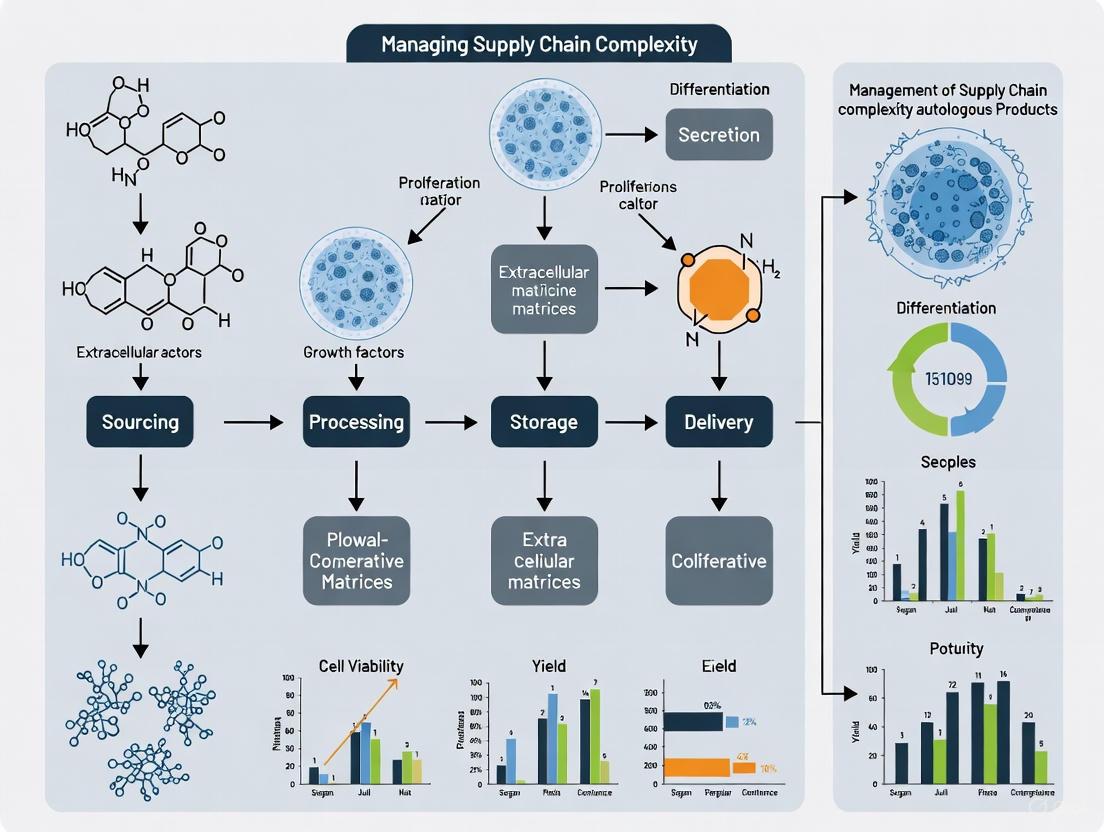
This article provides a comprehensive analysis of the unique challenges and innovative solutions in managing supply chains for autologous cell and gene therapies.
Navigating the Vein-to-Vein Journey: Strategies for Managing Autologous Therapy Supply Chain Complexity in 2025
Abstract
This article provides a comprehensive analysis of the unique challenges and innovative solutions in managing supply chains for autologous cell and gene therapies. Tailored for researchers, scientists, and drug development professionals, it explores the foundational 'vein-to-vein' model, examines emerging methodological approaches including automation and digital platforms, addresses critical troubleshooting for scalability and cost, and validates strategies through comparative analysis with traditional biologics and allogeneic models. The content synthesizes current industry perspectives to offer a roadmap for overcoming the logistical, technical, and operational bottlenecks that limit patient access to these transformative personalized medicines.
Understanding the Autologous Imperative: Deconstructing the Unique 'Vein-to-Vein' Supply Chain
Technical Support Center: Autologous Supply Chain Management
Frequently Asked Questions (FAQs)
FAQ 1: What fundamentally distinguishes an autologous supply chain from a traditional pharmaceutical supply chain?
An autologous supply chain is a closed-loop, patient-centric system where the product is created for and returned to a single patient. This contrasts with traditional "make-to-stock" models. Key differentiators include [1] [2]:
- Single Patient Batch: Each manufacturing batch is for one patient, requiring needle-to-needle traceability and a strict chain of identity and custody [1] [3].
- Scale-Out, Not Scale-Up: Increasing capacity requires adding more parallel manufacturing processes (scaling out) rather than increasing batch size (scaling up) [1] [3].
- The Patient as the Timeline Driver: The entire process, from cell collection to therapy administration, must be synchronized with the patient's clinical condition and schedule [4].
FAQ 2: What are the most critical time constraints (vein-to-vein time) we must manage?
The total vein-to-vein time is a paramount Key Performance Indicator (KPI). The entire process, from leukapheresis to patient infusion, must be completed within a strict timeframe to ensure cell viability and patient readiness [4] [5]. Key constraints include:
- Initial Transport: The door-to-door transport of the collected cells to the manufacturing site is typically 40–50 hours or less [5].
- Manufacturing Duration: The cell modification and expansion process itself can vary, with common durations being 7 days (forward-looking) or 19 days (current state-of-the-art) [4].
- Final Product Shelf-Life: The final cryopreserved therapy has a limited shelf-life, imposing a hard deadline for infusion after release from the manufacturing site [6].
FAQ 3: What are the primary temperature control requirements for shipping?
Maintaining the cold chain is critical for preserving product integrity. Requirements depend on the protocol [4] [5] [2]:
- Fresh Shipments: Transported at -80 °C [4].
- Cryopreserved Shipments: Transported below -150 °C using liquid nitrogen (LN2) shippers [4] [5].
- Monitoring: Real-time monitoring of location, temperature, shock, and orientation is essential, with predefined alarm points to trigger interventions [5].
Troubleshooting Guides
Issue 1: Scheduling and Coordination Failure Between Clinic and Manufacturing Site
- Problem: Inefficient scheduling leads to delays in cell collection or therapy administration, compromising the vein-to-vein time.
- Solution:
- Implement a Cell Orchestration Platform (COP): Utilize a cloud-based, configurable platform to automatically schedule and amend material collections in line with manufacturing capacity and each healthcare provider's treatment schedules [5] [1].
- Establish Clear Communication Protocols: Ensure real-time communication between clinics, manufacturers, and logistics providers to predict delivery dates based on current capacity [2].
- Demand Forecasting: Use historical data to forecast shipment times and optimize demand planning [5].
Issue 2: Temperature Excursion During Transport
- Problem: A temperature monitor indicates an excursion outside the validated range, risking product efficacy and safety [4].
- Solution:
- Immediate Isolation: Intercept the shipment immediately upon alarm trigger [5].
- Impact Assessment: The Quality Control (QC) and manufacturing teams must assess whether the excursion impacts product quality. This assessment should be based on data from shipping qualification studies [2].
- Contingency Activation: Have backup logistics options and contingency plans for unexpected events like severe weather [2].
- Preventive Action: Qualify all shipping lanes and use validated, robust packaging systems capable of withstanding cryogenic conditions and mechanical stresses [2].
Issue 3: High Per-Patient Cost and Lack of Scalability
- Problem: The resource-intensive, personalized nature of the therapy results in prohibitively high costs and an inability to scale for larger patient populations [6] [3].
- Solution:
- Process Automation: Automate steps like cell expansion or cryopreservation to reduce manual labor and increase throughput [6] [3].
- Standardization: Where possible, adopt platform processes, standardized technologies, and common procedures for collection, processing, and reinfusion to drive down costs [3].
- Modular Manufacturing: Invest in flexible, modular manufacturing facilities that can handle multiple patient-specific batches simultaneously (scale-out) [3].
- Strategic Partnerships: Collaborate with experienced Contract Development and Manufacturing Organizations (CDMOs) to access specialized infrastructure and expertise [3].
The table below summarizes the key operational challenges and quantitative data points for autologous supply chains.
Table 1: Key Operational Challenges and Data in Autologous Supply Chains
| Challenge Category | Specific Challenge | Quantitative Data / Industry Insight |
|---|---|---|
| Supply Chain & Logistics | Temperature-controlled transport | Fresh: -80°C; Cryopreserved: < -150°C [4] [5] |
| Initial transport time constraint | Door-to-door time typically 40-50 hours or less [5] | |
| Supply chain cost contribution | Represents ~30% of the total cost of treatment [2] | |
| Manufacturing | Manufacturing duration | 7 days (future scenario) or 19 days (current practice) [4] |
| Cost per dose | Manufacturing cost estimated at $200,000–$800,000 per dose [5] | |
| Batch size | One batch = one patient [1] | |
| Strategic Scaling | Scaling method | Requires "scaling-out" with multiple parallel platforms, not "scaling-up" [1] [3] |
Research Reagent and Material Solutions
The table below details key materials and their functions in the autologous cell therapy manufacturing process.
Table 2: Essential Research Reagents and Materials for Autologous Cell Therapy Manufacturing
| Material / Reagent | Function in the Process |
|---|---|
| Cell Growth Media | Provides essential nutrients to support the expansion and viability of T cells during the manufacturing process [2]. |
| Viral Vector | Serves as the vehicle for genetically engineering the patient's T cells to express the Chimeric Antigen Receptor (CAR) [2]. |
| Cryopreservation Agents | Protects cells from damage during freezing and long-term storage at cryogenic temperatures, ensuring viability [2]. |
| Cell Separation Consumables | Used to isolate and purify the target T-cell population from the apheresis material collected from the patient [2]. |
| Cell Culture Consumables | Includes flasks, bags, or bioreactors that provide a sterile environment for cell activation, genetic modification, and expansion [2]. |
Autologous Supply Chain Workflow Visualization
The following diagram illustrates the complete circular, patient-centric journey of an autologous therapy.
Critical Control Point Decision Matrix
This diagram outlines the key decision points and checks required to maintain supply chain integrity.
Technical Support Center: Troubleshooting Guides and FAQs
Apheresis Procedure Support
Q: The apheresis collection yield is low or contains an unexpected cell population. What could be the cause? A: Low yield can result from several factors related to patient status, device operation, or protocol setup. Investigate the following:
- Patient Factors: Review the patient's complete blood count (CBC) prior to apheresis. Underlying conditions or recent medications can affect peripheral cell counts. Verify that mobilizing agents (e.g., G-CSF) were administered as scheduled for stem cell collections.
- Vascular Access: Inadequate blood flow rate from the patient due to small or collapsing veins is a common cause. Assess the needle placement and catheter patency. Consider the need for a central venous catheter if peripheral access is insufficient [7].
- Device Settings: Confirm the centrifuge speed and collection preferences are correctly configured for the target cell type. An improperly set interface can lead to collection of contaminated products (e.g., RBCs in a stem cell product).
- Anticoagulant Ratio: Verify the acid-citrate-dextrose (ACD) to whole blood ratio. An incorrect ratio can lead to platelet clumping or circuit clotting, reducing efficiency.
Q: A patient is experiencing tingling sensations (paresthesia) and muscle cramps during the procedure. How should this be managed? A: These symptoms are characteristic of citrate-induced hypocalcemia, a common reaction to the anticoagulant used [8].
- Immediate Action: Temporarily pause the procedure or slow the blood return rate. Administer oral calcium supplements, if available and as per protocol.
- Proactive Management: For subsequent procedures, consider prophylactic oral calcium carbonate. In severe cases, and under physician guidance, a diluted intravenous calcium gluconate infusion may be administered.
- Monitoring: Continuously monitor the patient for more severe signs of hypocalcemia, such as carpopedal spasm or arrhythmias.
Supply Chain and Logistics Support
Q: How can I ensure the chain of identity and custody is maintained for an autologous product during transport? A: Maintaining the chain of identity is paramount. Best practices include:
- Robust Labeling: Use unique, patient-specific identifiers on all containers with redundant labeling (e.g., both human-readable and barcoded formats).
- Digital Tracking: Employ shipping systems with integrated GPS and temperature monitoring that provide real-time data and geo-fenced notifications upon arrival at key transit points [5].
- Documentation: Ensure all handovers between clinical, logistics, and manufacturing personnel are documented with verified signatures and timestamps. Utilize integrated software platforms that orchestrate these handoffs automatically [5].
Q: A shipment of collected apheresis material is delayed in transit. What is the contingency plan? A: Time is a critical parameter for cell viability.
- Pre-Planned Mapping: Prior to collection, perform lane mapping and verification to identify all possible flight and transport options, including backups [5].
- Real-Time Intervention: Use the tracking data to locate the shipment. The logistics provider should have a 24/7 control center to intercept the shipment and initiate corrective actions.
- Viability Assessment: Upon receipt, the manufacturing site must perform stringent viability and quality control tests (e.g., trypan blue exclusion, flow cytometry) before the material is accepted for processing. Have a pre-defined acceptable delay threshold based on stability data.
Manufacturing and Re-infusion Support
Q: The final cell therapy product fails a quality control release test, such as viability or sterility. What are the next steps? A: A failed batch for an autologous product is a critical event.
- Investigation: Initiate a thorough root cause analysis. Determine if the failure occurred during collection, transport, manufacturing, or testing itself.
- Communication: Immediately inform the treating physician and the patient. Discuss the impact on the treatment timeline.
- Corrective Actions: Depending on the cause, actions may include re-evaluating the apheresis protocol, auditing transport conditions, or reviewing aseptic techniques in the cleanroom. For some patients, a second apheresis procedure may be required if the initial material is unusable.
Q: What are the common adverse reactions during product re-infusion, and how are they managed? A: Re-infusion can be associated with unique reactions.
- Acute Reactions: These can include fever, chills, hypotension, and allergic reactions to cryoprotectants like dimethyl sulfoxide (DMSO). Pre-medication with antipyretics, antihistamines, and corticosteroids is standard. Slowing the infusion rate and providing supportive care is often effective.
- Delayed Reactions: Monitor for signs of more complex conditions like Tumor Lysis Syndrome (for oncology therapies) or Cytokine Release Syndrome (CRS), which require specific medical management protocols distinct from the apheresis procedure itself.
Experimental Data and Protocols
Table 1: Critical Time and Temperature Parameters for Autologous Product Transport
| Parameter | Target Range | Consequence of Deviation | Monitoring Method |
|---|---|---|---|
| Door-to-Door Transport Time | Typically 40-50 hours or less for apheresis material [5] | Decreased cell viability, potential product failure | GPS tracking, automated timestamping at each handoff [5] |
| Transport Temperature | Refrigerated or Liquid Nitrogen (LN2) conditions, specific to product [5] | Cell death or altered phenotype | Embedded temperature loggers with real-time alerts [5] |
| Apheresis Procedure Duration | 1 to 4 hours, varies by procedure and patient [7] | Patient discomfort, incomplete collection | Machine timer, staff monitoring |
| Calcium Supplementation | Per institutional protocol (e.g., 500-1000 mg oral calcium) | Progression to symptomatic hypocalcemia [8] | Patient symptom reporting, vital signs |
Table 2: Key Reagents and Materials in the Autologous Workflow
| Research Reagent / Material | Function in the Process |
|---|---|
| Anticoagulant (ACD) | Prevents blood from clotting within the apheresis machine circuit [7]. |
| Cell Separation Medium | Density gradient medium used to isolate specific mononuclear cell populations during manufacturing. |
| Cryoprotectant (DMSO) | Protects cells from ice crystal formation during the cryopreservation process post-manufacturing. |
| Cell Culture Media & Cytokines | Provides nutrients and signals for the ex vivo expansion and genetic modification of cells [3]. |
| Sterile Disposable Apheresis Kit | Provides a closed, sterile fluid path for blood collection, separation, and return [7]. |
Detailed Methodologies
Protocol 1: Standardized Apheresis for Peripheral Blood Stem Cell Collection
- Patient Preparation: Administer mobilizing agents (e.g., G-CSF) for 4-5 days. Verify a pre-procedure CBC and CD34+ count if available.
- Venous Access: Establish access via two peripheral veins or a central venous catheter.
- Procedure Setup: Prime the apheresis machine with a sterile kit and anticoagulant. Set parameters based on the patient's total blood volume and target cell type.
- Collection: Run the procedure, typically processing 2-3 total blood volumes. Monitor the patient for citrate reactions or hypotension.
- Product Handling: Upon completion, mix the collection bag thoroughly. Take a sample for cell count and CD34+ enumeration. Seal the tubing and label the product with unique patient identifiers.
- Packaging: Immediately place the product in a validated shipping container pre-conditioned to the correct temperature [5] [3].
Protocol 2: Quality Control and Viability Assessment upon Product Receipt
- Visual Inspection: Check the container for integrity and leaks upon receipt at the manufacturing facility.
- Documentation Review: Verify the chain of identity and all accompanying paperwork.
- Sampling: Aseptically take a representative sample from the product bag.
- Cell Count and Viability: Perform an automated cell count and a viability stain (e.g., trypan blue exclusion) to determine the percentage of live cells.
- Flow Cytometry: Analyze the sample for the presence and purity of the target cell population (e.g., CD3+/CD56+ for NK cells, CD3+ for T cells).
- Sterility Testing: Inoculate culture media for bacterial and fungal testing. The product is often administered before these results are available, based on process controls.
Workflow and System Diagrams
Autologous Therapy End-to-End Workflow
Low Cell Yield Troubleshooting Logic
Troubleshooting Guide: Common Scalability Challenges in Autologous Therapy Production
This guide addresses frequent technical and logistical challenges encountered when scaling the production of autologous cell therapies, providing actionable solutions for researchers and developers.
| Challenge | Root Cause | Potential Solution | Key Considerations |
|---|---|---|---|
| Production Failures & Quality Issues | Reliance on undocumented, manual processes and tribal knowledge that cannot be replicated at scale [9]. | Implement complete process documentation and robust quality control systems at every step, from raw materials to final product container [10]. | Process variability is compounded by inherent patient-to-patient variability in starting material [10]. |
| High Cost of Goods | Individualized batch production for a single patient and extensive manual labor [5] [11]. | Integrate closed, automated systems to reduce hands-on time, minimize contamination risk, and improve consistency [11]. | Automated, modular platforms (e.g., centrifugation, magnetic separation systems) can be implemented for specific unit operations [11]. |
| Unreliable Scheduling & Logistics | Complex coordination of apheresis, manufacturing capacity, and tight shipment windows using manual methods [5]. | Employ advanced supply chain software to orchestrate material collections in line with manufacturing capacity and clinic schedules [5]. | Door-to-door transport for cell collection is typically 40-50 hours or less, requiring precise lane mapping and verification [5]. |
| System & Infrastructure Overload | Backend processes and facility infrastructure were not designed for the throughput of multiple simultaneous batches [9]. | Perform a bottleneck analysis to identify true constraints and design scalable solutions that integrate across the entire operation [9] [12]. | Scaling autologous production involves increasing the number of batches, not the batch size, which stresses systems differently [5] [9]. |
| Difficulty Technology Transfer to CMO | Incomplete transfer of scientific and technical information from research lab to manufacturing partner [10]. | Provide comprehensive documentation including scientific background, detailed cell manipulation protocols, and raw material specifications [10]. | A CMO with strong scientific expertise is a valuable partner in troubleshooting and process improvement [10]. |
Frequently Asked Questions (FAQs)
What are the first steps in making a research process scalable and GMP-compliant?
Begin with a thorough gap analysis of your entire process against GMP guidelines, focusing on incoming raw materials and final product shipping [10]. Key early actions include:
- Process Documentation: Formally document every process step to eliminate reliance on undocumented knowledge [9] [10].
- Reagent Qualification: Source reagents, media, and cytokines manufactured under GMP or comparable standards to ensure purity and lot-to-lot consistency [10].
- Closed Systems: Where practical, adopt single-use, closed systems for cell manipulation to reduce contamination risk and variability [10].
How can we manage the inherent patient-to-patient variability in autologous starting material?
While the starting material will vary, a well-controlled and consistent manufacturing process is critical. Implement in-process assays to monitor cell phenotype, genotype, and function at critical steps. This helps demonstrate process control despite input variability. The final product must still meet pre-defined specifications for identity, safety, purity, and potency [10].
Our manual research process works well. Why is automation critical for scaling?
Manual processes that depend on individual researcher expertise become increasingly unreliable as you add shifts, equipment, and personnel [9]. Automation provides:
- Enhanced Consistency: Automated systems ensure each batch is produced under uniform conditions, which is essential for regulatory compliance and patient safety [11].
- Reduced Contamination Risk: Closed, automated systems minimize human intervention and open processes, protecting the product [11].
- Improved Scalability: Automated systems can handle larger volumes and more complex processes, making commercial-scale production feasible [5] [11].
What logistical data is most critical to collect for the supply chain?
Historical and real-time data is vital for forecasting and problem-solving. Key data points include:
- Shipment Performance: Historical data on shipment times, routes, and temperature excursions to optimize planning [5].
- Real-time Monitoring: Location, temperature, shock, and orientation of shipments using GPS and sensors to trigger alarms for immediate intervention [5].
- Process Timing: Accurate timing for apheresis, manufacturing steps, and clinic receiving hours to identify the best transport modes and achieve reliable lane mapping [5].
Experimental Workflow & Resource Planning
The following diagram illustrates the integrated workflow for autologous cell therapy manufacturing, highlighting the critical parallel paths of product manufacturing and supply chain logistics.
The Scientist's Toolkit: Key Reagent Solutions for Scalable GMP Manufacturing
This table details essential materials and their functions for developing and scaling autologous cell therapy processes.
| Research Reagent / Solution | Function in the Process | Key Considerations for Scalability & GMP |
|---|---|---|
| GMP-grade Media & Cytokines | Supports cell growth, viability, and differentiation during the expansion phase [10]. | Essential for lot-to-lot consistency and regulatory compliance. Plan for a scalable supply chain with a reputable vendor to support commercial needs [10] [11]. |
| Cell Separation Reagents | For isolation and purification of specific cell types (e.g., T-cells) from apheresis material [10]. | Use with closed, automated systems (e.g., magnetic separators) to increase throughput, improve recovery, and reduce manual error [11]. |
| Genetic Modification Vectors | Introduces therapeutic genes into patient cells (e.g., for CAR expression) [11]. | A critical and often constrained raw material. Requires rigorous safety testing and a strategy for securing large-scale, consistent supply for commercialization. |
| Cryopreservation Media | Preserves cell viability during long-term storage and transport between sites [10]. | Must be GMP-manufactured and qualified for use with the final product container to ensure cell recovery and function post-thaw [10]. |
| Single-Use, Closed-System Consumables | Bioreactor bags, tubing sets, and separation kits [10] [11]. | Eliminates cross-contamination and reduces cleaning validation needs. Ensures process consistency and is fundamental for scalable, automated platforms [11]. |
Foundational Concepts: Chain of Identity vs. Chain of Custody
In the complex supply chain for autologous cell and gene therapies, two critical concepts ensure patient safety and product integrity: Chain of Identity (COI) and Chain of Custody (COC). While complementary, they serve distinct functions [13] [14].
Chain of Identity (COI) is the permanent and unequivocal association that connects a patient’s cells (the starting material) and the resulting drug product using unique identifiers throughout the entire process, from cell collection through manufacturing to treatment administration [13] [14]. It ensures the right therapy is delivered to the correct patient.
Chain of Custody (COC) is the continuous, auditable record of all individuals and locations responsible for a therapy product, documenting every handoff and action performed from the start of the collection process through to product administration [13] [14]. It answers who handled the product, what they did, and when and where it happened.
The following table outlines the core differences:
Table 1: Core Differences Between Chain of Identity and Chain of Custody
| Feature | Chain of Identity (COI) | Chain of Custody (COC) |
|---|---|---|
| Primary Focus | "What/Who is this?" (Identity linkage between patient and product) [13] | "Where has it been and who handled it?" (Custodial history and actions performed) [13] [14] |
| Core Function | Maintaining an unbroken link to prevent patient-product mix-ups [13] | Creating a gapless audit trail for accountability and traceability [14] |
| Starting Point | Patient enrollment or prescription [13] | Point of cell collection or when there is physical material to have custody of [13] |
| Information Tracked | Unique patient and product identifiers (e.g., COI ID) [13] [14] | Custodial transfers, locations, dates/times, and actions performed [14] |
Figure 1: COI and COC Coverage in an Autologous Therapy Workflow. COI spans the entire patient-product linkage, while COC tracks physical custody of the material.
Troubleshooting Guides
Issue 1: Inconsistent or Non-Unique Chain of Identity Identifier
Problem The unique alpha-numeric identifier linking a patient to their specific therapy product is generated inconsistently across different collection sites, is not globally unique, or is duplicated, creating a risk of patient-product mix-ups [13].
Resolution
- Implement an Automated Generation System: Use a digital orchestration platform to automatically generate and record COI identifiers upon patient registration. This prevents manual entry errors and ensures consistency across all sites [13].
- Adhere to a Standardized Format: Utilize a globally unique standard like the ISBT 128 Chain of Identity Identifier. This standard uses a structured sequence that includes a Facility Identification Number (FIN) assigned by ICCBBA to guarantee global uniqueness [15].
- Centralized Verification: Implement a system that allows for real-time checking of new COI identifiers against a central registry to prevent duplication [13].
Issue 2: Gaps in the Chain of Custody Audit Trail
Problem The documentation of who handled the product and what actions were performed is incomplete, with missing data points at handoffs between organizations (e.g., from courier to manufacturing site), making investigations difficult and compromising accountability [14].
Resolution
- Digital COC Platform: Transition from manual forms (e.g., spreadsheets, paper) to a digital COC solution that automatically logs custody events. These systems can use predefined workflows to ensure no step is skipped [13] [16].
- Define Critical Tracking Points: Clearly identify which stages, steps, and tasks in the therapy workflow (e.g., "Collection Start," "Serology Report," "Product Receipt") must trigger a mandatory COC record [16].
- Implement Electronic Signatures: Configure digital verification rules for critical custody events, which may require single or dual electronic signatures in a specific order to complete the record [16].
Issue 3: Inadequate Physical Facility Controls Leading to Cross-Contamination Risk
Problem In a facility processing multiple patient therapies in parallel, inadequate physical segregation of materials or utilities increases the risk of cross-contamination between patient samples [17].
Resolution
- Patient-Dedicated Manufacturing Suites: Where possible, dedicate an entire manufacturing suite to a single patient sample from the time of processing until manufacturing is complete [17].
- Segregated Cryostorage: In cryogenic storage, physically segregate patient samples and use clear visual signals, such as labeled storage racks and maps, to differentiate "in-process" from "final" materials [17].
- Independent Utilities: Ensure each manufacturing suite has independent ventilation and utility systems to prevent airborne cross-contamination [17].
Frequently Asked Questions (FAQs)
Q1: Why is a standard like ISBT 128 for the COI Identifier important? Without a global standard, each therapy developer or manufacturer might use their own identifier format. This forces treatment centers and partners to manage multiple, incompatible systems, increasing complexity and the potential for human error. A standard like ISBT 128 ensures interoperability, simplifies partner onboarding, and enhances safety through global uniqueness [15] [14] [18].
Q2: How can we balance the need for COI with patient data privacy regulations (like GDPR or HIPAA)? The COI system should rely on an anonymized, unique reference number (the COI Identifier) to link the patient and product throughout the supply chain. Sensitive personal information (e.g., name, date of birth) is protected and not transmitted unguarded. The anonymized COI identifier provides the necessary link for patient safety without broadly sharing private health data [13] [14].
Q3: What are the consequences of a failure in the Chain of Identity? A COI failure, where the wrong therapy is administered to a patient, is likely to have severe or even fatal consequences. For autologous therapies, delivering a product to the incorrect patient could cause harm and also make that therapy unavailable for the intended patient in the future. Regulatory authorities view this as a critical patient safety issue, and a failure to demonstrate robust COI controls can prevent a therapy from progressing through clinical trials or gaining market approval [13].
Q4: When scaling from clinical trials to commercialization, what is the biggest COI/COC challenge? The primary challenge is the shift from managing a few patient batches manually to coordinating hundreds or thousands of simultaneous batches. Manual tracking via spreadsheets and email becomes unmanageable, leading to errors and delays. Implementing a scalable, automated digital platform for COI/COC tracking is essential for commercialization to handle the increased complexity, ensure data consistency, and facilitate auditing [13] [5].
Essential Research Reagent Solutions
The following tools and technologies are critical for establishing and maintaining robust COI and COC systems in autologous therapy research and development.
Table 2: Key Solutions for COI/COC Tracking and Management
| Solution Category | Specific Examples / Functions | Role in COI/COC |
|---|---|---|
| Digital Orchestration & Tracking Platforms | Vineti, Trakcel's OCELLOS, Salesforce Advanced Therapy Management [13] [19] [16] | Automates the generation and tracking of COI identifiers and COC events; provides real-time notifications and a full, searchable audit trail. |
| Standardized Identifier Systems | ISBT 128 Standard (with Facility Identification Number - FIN) [15] | Provides a globally unique and structured format for the COI Identifier, ensuring consistency and preventing duplication across partners. |
| Smart Packaging & Monitoring | GPS-enabled Smart Boxes, Temperature & Shock Sensors, Geo-fencing [5] | Provides real-time physical tracking data (location, condition), automatically triggering alerts for COC and helping to prevent product loss or damage. |
| Electronic Signature & Verification Systems | Integrated within digital platforms (e.g., configurable single/dual signature requirements) [16] | Ensures regulatory compliance by digitally enforcing and recording identity verification and authorization at critical process steps. |
| Centralized Advanced Therapy Portal | Common portal for treatment centers to handle therapies from multiple providers [14] | Standardizes interactions for healthcare professionals, reducing complexity and human error when checking COI across different therapy products. |
This technical support center provides troubleshooting guides and FAQs for researchers and scientists managing the complex supply chain for autologous cell and gene therapies (CGTs). The content is framed within the broader thesis of managing supply chain complexity for autologous products research.
Troubleshooting Guides
G-01: Troubleshooting Leukapheresis Collection Bottlenecks
Problem: Difficulty in scheduling or coordinating the initial cell collection (leukapheresis) from patients, causing delays in starting the manufacturing process.
- Step 1 → Verify Site Capability and Contracting: Confirm that the clinical site is both technically capable and has an executed contract to perform leukapheresis for your specific trial or therapy. Site onboarding can take months, even years, for smaller institutions [6].
- Step 2 → Decouple Collection from Clinical Site: To alleviate this bottleneck, consider decoupling the leukapheresis procedure from the clinical treatment site. Engage a third-party, GTP/GMP-qualified apheresis provider contracted under your quality agreement framework [20].
- Step 3 → Implement a CBE-30 Pathway (For Approved Therapies): If your therapy is already approved, you can add new leukapheresis collection sites without resubmitting the full Biologics License Application (BLA) using the FDA's "Changes Being Effected in 30 Days" (CBE-30) notification pathway [20].
G-02: Resolving Chain of Identity and Data Integrity Failures
Problem: Breaks in the chain of identity or inconsistent data between manufacturing and logistics platforms, risking patient safety and product integrity.
- Step 1 → Audit Digital Handoffs: Review the data integration points between your Manufacturing Execution System (MES) and logistics tracking platform. Ensure updates on manufacturing steps and shipping status are shared in real-time [21].
- Step 2 → Standardize SOPs and Data Flows: Define and implement Standard Operating Procedures (SOPs) and data flows early in the process to preserve the chain of identity and integrate logistics between collection and manufacturing sites [20].
- Step 3 → Deploy a Unified Tracking Platform: Utilize a platform that provides real-time shipment visibility, temperature monitoring, and manages chain-of-identity and chain-of-custody protocols to synchronize the entire vein-to-vein process [21] [6].
G-03: Addressing Manufacturing Process Variability
Problem: High variability in donor cells leads to unpredictable drug product performance and challenges in demonstrating process comparability during scale-up.
- Step 1 → Enhance Analytical Characterization: Employ a tiered approach and extended analytical characterization to assess how manufacturing conditions impact Critical Quality Attributes (CQAs) and therapeutic efficacy, such as cell persistence and functionality [22] [6].
- Step 2 → Adopt Adaptive and Automated Processes: Implement automated, closed-system bioreactors and advanced culture media to normalize differences in starting materials. Incorporate real-time monitoring systems to better control the process [22] [6].
- Step 3 → Conduct Risk-Based Comparability Assessment: Follow FDA and EMA guidance for a risk-based comparability assessment when scaling up or changing the manufacturing process. This involves staged testing to ensure changes do not impact safety or efficacy [22].
Frequently Asked Questions (FAQs)
Q1: What is the single biggest logistical challenge for autologous therapies? The most significant challenge is managing the patient-specific, vein-to-vein supply chain. This process begins with collecting cells from an individual patient and concludes with delivering the customized therapy back to that same individual. It introduces unique hurdles, including ultra-cold or cryogenic cold-chain maintenance, strict time constraints often measured in hours or days, and the critical need for end-to-end traceability and chain-of-identity. A single misstep can mean the loss of a one-of-a-kind treatment [21] [6].
Q2: How can we make our autologous therapy supply chain more scalable? Transitioning to fit-for-purpose manufacturing models is key to scalability. This includes:
- Decentralized or Regionalized Manufacturing: Establishing patient-adjacent, regional manufacturing centers to reduce logistics complexity and broaden patient access [6].
- Process Automation: Adopting automation for complex processes to drive down costs, reduce labor intensity, and meet the demand of larger patient populations [6].
- Flexible Logistics Infrastructure: Partnering with logistics providers that offer specialized packaging, global reach with local compliance expertise, and flexible infrastructure designed to scale with your therapy [21].
Q3: Our therapy is already approved. Can we still change our leukapheresis network to improve patient access? Yes. For FDA-approved products, you can modify your leukapheresis network without a full BLA resubmission via the "Changes Being Effected in 30 Days" (CBE-30) pathway. This applies if the new collection site uses FDA-cleared devices, operates under a quality agreement with you (the manufacturer), and no changes are made to the product manufacturing process or specifications that negatively impact critical quality attributes [20].
Q4: What are the key regulatory trends for AI in drug development that impact our data systems? Regulatory approaches for AI are evolving and differ by region. This impacts how you design and validate your data systems:
- European Medicines Agency (EMA): Favors a structured, risk-tiered approach. Its framework mandates pre-specified data curation pipelines, frozen and documented models for clinical trials, and explicit assessment of data representativeness to mitigate bias [23].
- US Food and Drug Administration (FDA): Has historically taken a more flexible, case-specific approach, encouraging early dialogue through its Innovation Task Force [23]. A key trend is the requirement for prospective clinical validation of AI tools, moving beyond retrospective studies to demonstrate real-world performance and clinical utility [24].
Table 1: Key Quantitative Data on Bottlenecks and Solutions in Autologous Therapy Supply Chains
| Category | Metric / Statistic | Source / Context |
|---|---|---|
| Regulatory & Data | 33% YoY increase in big data-related patents in pharma (2024) | Led by biomarker research and AI-driven diagnostics [25] |
| Regulatory & Data | 76% of AI use cases in early-stage discovery vs. 3% in clinical outcomes | Highlights cautious uptake in later, more regulated phases [23] |
| Operational Efficiency | 10-20% gain in conversion costs; 5-10% savings in procurement | Potential from data-driven supply chain optimization [25] |
| Operational Efficiency | 95% on-time delivery rate achieved | Merck's result from combining supplier metrics with predictive models [25] |
| Regulatory Process | Only 14% of expedited safety reports to FDA were informative | Finding from FDA's INFORMED initiative audit, highlighting data quality issues [24] |
| Resource Allocation | Medical officers spent a median of 10% of time (avg. 16%) on safety reports | FDA survey, indicating significant inefficiency in regulatory process [24] |
Experimental Protocols
P-01: Protocol for Implementing a Decentralized Leukapheresis Model
Objective: To integrate third-party apheresis centers into an autologous therapy supply chain, thereby reducing clinical site burden and improving patient access.
- Study Design & Protocol Development: Separate the leukapheresis supplier from the clinical site in the trial protocol and study design [20].
- Vendor Qualification & Contracting: Engage GTP/GMP-qualified apheresis providers as third-party vendors. Establish contracts and comprehensive quality agreements [20].
- SOP & Data Flow Definition: Define Standard Operating Procedures (SOPs) and data flows early to preserve the chain of identity and ensure seamless logistics between the collection center and the manufacturing facility [20].
- IRB/Ethics Compliance: Clarify and secure Institutional Review Board (IRB) coverage and informed consent boundaries between the collection and treatment arms of the therapy process [20].
- Validation & Documentation (for CBE-30): For approved therapies, prepare a CBE-30 submission package including a draft notification letter, site comparability justification, supplier qualification documentation, and the chain of identity procedures [20].
P-02: Protocol for Validating an AI/ML Model for Clinical Trial Optimization
Objective: To prospectively validate an AI model that predicts patient recruitment or optimizes trial design, ensuring it meets regulatory standards for real-world deployment.
- Define Intended Use & Risk Classification: Clearly define the model's intended use in the clinical trial workflow. Classify it according to relevant regulatory frameworks (e.g., EMA's "high regulatory impact" or FDA's risk-based categorization) [23] [24].
- Pre-specify Data Curation & Model Freezing: Establish a pre-specified data curation pipeline. For pivotal trials, the model must be "frozen" (no incremental learning during the trial) and thoroughly documented, as per EMA requirements [23].
- Design a Prospective Randomized Controlled Trial (RCT): Design an RCT to validate the model's safety and clinical benefit. This is considered the gold standard for demonstrating utility and is increasingly expected by regulators for impactful AI tools [24].
- Execute Prospective Evaluation & Performance Monitoring: Deploy the frozen model in the live clinical trial environment. Monitor its performance against pre-defined metrics, assessing its impact on clinical decision-making and trial efficiency [24].
- Compile Evidence for Regulatory Submission: Document the entire process, including data representativeness assessments, strategies to mitigate bias, model architecture, and the results of the prospective validation for regulatory submission [23] [24].
Workflow and System Diagrams
Diagram 1: Autologous therapy vein-to-vein workflow.
Diagram 2: Integrated data system for supply chain management.
The Scientist's Toolkit: Research Reagent & Material Solutions
Table 2: Key Materials and Solutions for Managing Autologous Supply Chains
| Item / Solution | Function in Supply Chain Context |
|---|---|
| GMP-grade Apheresis Kits & Reagents | Ensure the quality and sterility of the starting material (patient cells) collected, which is critical for subsequent manufacturing success [26]. |
| Automated, Closed-System Bioreactors | Enable scalable, GMP-compliant cell expansion in a controlled, sterile environment, reducing variability and contamination risk during manufacturing [22] [6]. |
| Cryopreservation Media & Equipment | Maintain cell viability and potency during long-term storage and transport, a critical step in the logistics of autologous products [21]. |
| IoT-enabled Cryogenic Shippers | Provide real-time monitoring of temperature and location during shipment, ensuring product integrity and enabling proactive intervention if conditions deviate [27] [21]. |
| Serialization & Aggregation Software | Enables unit-level tracking with unique serial numbers, providing complete traceability from manufacturing to the patient for recall readiness and chain of identity [27]. |
| Unified Digital Platform (e.g., MES/ERP) | Integrates manufacturing, logistics, and quality data into a single system, providing end-to-end visibility and streamlining regulatory documentation [28] [6]. |
Building a Resilient Framework: Methodologies and Technologies for End-to-End Management
Leveraging Collaborative Digital Platforms for Patient Orchestration and Data Security
Technical Support Center: FAQs & Troubleshooting Guides
This support center provides targeted assistance for researchers, scientists, and drug development professionals using collaborative digital platforms to manage the complex supply chains of autologous cell and gene therapies (CGTs). The guides below address specific technical and operational issues encountered during research and clinical experiments.
Frequently Asked Questions (FAQs)
Q1: What is the primary function of a patient orchestration platform in autologous therapy research? A1: An orchestration platform acts as a centralized hub to manage the entire patient-specific journey, often called the "vein-to-vein" process [6]. It automates and coordinates complex logistics, data flow, and manufacturing activities between the clinical site, manufacturing facility, and the patient. This is crucial for maintaining the Chain of Identity (CoI) and Chain of Custody (CoC), ensuring the right patient receives the correct personalized therapy at the right time [29].
Q2: Our research data contains sensitive patient information. What are the minimum security features a platform must have? A2: To protect sensitive patient data and comply with regulations like HIPAA and GDPR, the platform must implement [30] [29]:
- Data Encryption: Data should be encrypted both in transit (using TLS/HTTPS) and at rest (using standards like AES-256) [29].
- Fine-Grained Access Control: Role-based or attribute-based access ensures that only authorized personnel (e.g., clinicians) can view sensitive patient data, while manufacturing and logistics staff see only the information necessary for their tasks [31] [29].
- Multi-Factor Authentication (MFA): This adds a critical layer of security for user logins [30].
- Audit Trails: Comprehensive logging of all user activities and data access attempts is essential for monitoring, accountability, and security audits [31] [29].
Q3: We are experiencing bottlenecks and errors in our data flow from the clinical site to our manufacturing system. How can this be improved? A3: This is often due to a lack of interoperability between systems. The solution involves [29] [32]:
- Adopting Industry Standards: Implement labeling and data standards like ISBT 128 to facilitate seamless communication between different electronic systems [29].
- Automated Data Capture: Use the platform to automatically capture data at each touchpoint (e.g., via barcode scanning) to minimize manual entry and reduce errors [29].
- Robust Data Integration: Ensure the orchestration platform can integrate via APIs with your key systems, such as Manufacturing Execution Systems (MES) and Electronic Health Records (EHRs) [32].
Q4: What are the most common cybersecurity threats we should protect our research data against? A4: The healthcare sector faces a range of threats. The most prevalent are [30]:
- Human Error: The leading cause of data breaches, often involving sensitive information being sent to the wrong recipient.
- Insider Threats: Accounting for 43% of breaches, these can be malicious or accidental compromises by individuals with data access.
- Cyberattacks: This includes ransomware, malware, and phishing attacks, which are increasingly targeting healthcare data.
Troubleshooting Guides
Guide 1: Resolving "Access Denied" Errors to Sensitive Patient Data
Problem: A researcher or manufacturing operator receives an "Access Denied" error when trying to access data required for their work on the orchestration platform.
Diagnosis and Resolution:
| Step | Action | Expected Outcome |
|---|---|---|
| 1 | Verify User Role and Permissions: Check the user's profile within the platform's admin console. Ensure they are assigned to a role (e.g., "Lead Researcher," "Manufacturing Operator") that has the necessary permissions to access the specific data or functionality. | The user's role is correctly configured with the appropriate permissions. |
| 2 | Check Attribute-Based Rules: If the platform uses Attribute-Based Encryption (ABE) [31], verify that the user's attributes (e.g., department, project, clearance level) match the policy required to decrypt the data. | The user's attributes satisfy the data's access policy. |
| 3 | Review Audit Logs: Consult the platform's audit trail or blockchain log [31] to see the history of the user's access attempts. Look for patterns or specific reasons for denial logged by the system. | The root cause of the denial is identified (e.g., failed authentication, incorrect role). |
| 4 | Confirm Data Classification: Ensure the data the user is trying to access has not been misclassified with overly restrictive security labels that prevent necessary access. | Data classification is accurate and allows for necessary operational access. |
Preventive Measures:
- Conduct regular access control reviews.
- Provide clear training on data handling policies and user roles.
Guide 2: Troubleshooting Chain of Identity (CoI) Verification Failures
Problem: The platform flags a potential Chain of Identity break, risking the misadministration of a patient-specific therapy.
Diagnosis and Resolution:
| Step | Action | Expected Outcome |
|---|---|---|
| 1 | Verify Unique Identifiers: Cross-check all unique identifiers on the sample collection kit, accompanying documentation, and the digital profile in the platform (e.g., CoI ID, Donation ID Sequence) [29]. | All identifiers match perfectly across physical and digital records. |
| 2 | Audit the Digital Trail: Use the platform's built-in audit trail to trace the product's entire journey [29]. Look for any gaps in the log, missing scan events, or discrepancies in timestamps that indicate a handling error. | The digital audit trail is complete and consistent, with no missing steps. |
| 3 | Confirm Manual Entry Accuracy: If any data was manually entered, verify its accuracy against the source documents. A single typographical error can cause a CoI failure. | All manually entered data is confirmed to be accurate. |
| 4 | Escalate to Quality Assurance: If the break cannot be resolved, immediately escalate the issue to the Quality Assurance (QA) team. Do not proceed with further manufacturing or administration steps until QA provides clearance. | The potential CoI break is contained and formally investigated. |
Guide 3: Addressing Performance Lag with Large-Scale Data Encryption
Problem: The platform experiences significant slowdowns during the encryption or decryption of large datasets, such as full genomic sequences or data from large patient cohorts.
Diagnosis and Resolution:
| Step | Action | Expected Outcome |
|---|---|---|
| 1 | Identify the Operation: Determine if the lag occurs during full-dataset encryption/decryption or during column-level encryption of specific sensitive fields (e.g., patient names). | The specific operation causing the performance bottleneck is identified. |
| 2 | Benchmark Against Standards: Compare the performance to known metrics. For example, a secure platform should encrypt 100,000 rows with 3 sensitive columns within approximately 3 minutes [31]. | Performance is measured and compared to baseline standards. |
| 3 | Optimize Encryption Scope: If using column-level encryption, ensure that only the necessary sensitive columns are encrypted, rather than the entire dataset, to reduce the computational load. | The volume of data being encrypted is minimized to what is strictly necessary. |
| 4 | Review Infrastructure: Check the computational resources (CPU, memory) allocated to the platform. Encryption is computationally intensive and may require scaling up the underlying infrastructure. | The platform's infrastructure is sufficient to handle the required encryption workloads. |
Experimental Protocol: Validating Platform Security and Integrity
Objective: To empirically verify the data security, access control effectiveness, and traceability of a collaborative digital platform used for autologous therapy research.
Methodology:
Test Environment Setup:
- Deploy the orchestration platform in a isolated, virtual private cloud environment configured with AES-256 encryption at rest [29].
- Create test user accounts with defined roles (e.g., Clinician, Manufacturing Staff, Logistics Coordinator, Unauthorized User).
Access Control Testing:
- Procedure: Attempt to access sensitive patient data (e.g., full patient name and date of birth) using each test user account.
- Measurement: Record success/failure of access attempts. Verify that persona-based access controls are functional, meaning manufacturing staff cannot view patient-identifying information but can see necessary product data [29].
- Validation: Cross-reference these attempts against the platform's audit logs to ensure all activities are recorded with a timestamp [31].
Data Integrity and CoI Traceability Testing:
- Procedure: Simulate a patient sample's journey from "vein-to-vein" by creating a digital record and updating it at key touchpoints (collection, shipment receipt, manufacturing, final product release).
- Measurement: Use the platform's reporting features to generate a complete audit trail for the simulated product. Check for an unbroken log of all events and verify the accuracy of the CoI data at each step [29].
- Validation: Intentionally introduce a data discrepancy (e.g., mismatched identifier) and confirm the platform's ability to detect and flag the potential CoI break.
The Scientist's Toolkit: Research Reagent & Digital Solutions
Table: Essential Components for a Secure and Orchestrated Autologous Workflow
| Item | Function in the Context of Patient Orchestration |
|---|---|
| Orchestration Platform | The central software hub that automates and manages the entire patient-specific supply chain, coordinating logistics, data, and manufacturing workflows [29] [32]. |
| Attribute-Based Encryption (ABE) | A cryptographic system that provides fine-grained access control, allowing data to be encrypted such that only users with specific attributes (e.g., "Project Alpha," "Principal Investigator") can decrypt it [31]. |
| Blockchain Ledger | A decentralized, immutable log (e.g., using Hyperledger Fabric) used to record user activities and data access events, providing non-repudiation and accountability [31]. |
| ISBT 128 Standard | An international labeling standard for medical products of human origin. Its adoption ensures interoperability and reduces errors in tracking samples and products across different stakeholders [29]. |
| Audit Trail Module | A core platform feature that creates a comprehensive, timestamped record of every action taken on a product or its data, which is critical for regulatory compliance and troubleshooting [29]. |
System Architecture and Data Flow Diagrams
The Role of Automation and Closed Systems in Enhancing Robustness and Reducing Contamination
FAQs: Automation and Closed Systems in Cell Therapy
FAQ 1: What is the fundamental difference between open and closed systems in cell therapy manufacturing?
Open systems expose the cell therapy product to the immediate room environment during processing, which carries a high risk of environmental contamination and requires strict, costly cleanroom classifications (typically Grade A or B) [33]. In contrast, closed systems utilize sterile barriers and connectors to prevent the product from being exposed to the room environment. This significantly reduces contamination risk and can allow for manufacturing in a less stringent Grade C environment or a controlled non-classified space, lowering facility costs and improving robustness [33] [34].
FAQ 2: What are the primary benefits of implementing automation in a GMP environment?
Automation in Good Manufacturing Practice (GMP) environments brings several key benefits [33]:
- Reduced Contamination Risk: Minimizes human intervention and handling.
- Improved Batch-to-Batch Consistency: Ensures processes are performed identically every time.
- Reduced Human Error: Automates complex or multi-step manual procedures.
- Lower Long-Term Costs: Decreases the cost of goods (COGS) by reducing operator requirements, consumables, and manufacturing time, despite a higher initial investment.
- Enhanced Process Control: Enables in-process analytics and characterization testing, allowing for corrective adjustments during manufacturing rather than after a batch fails.
FAQ 3: How do integrated and modular automated systems differ?
There are two main categories of automated systems, each with distinct advantages [33]:
- Integrated Closed Systems: These are all-in-one, end-to-end solutions designed to process one patient's cell product at a time. They are easy to use and integrate several manufacturing steps into a single, seamless workflow.
- Modular Closed Systems: These systems consist of individual instruments, each optimized for a specific unit operation (e.g., cell isolation, expansion). This approach offers greater versatility and flexibility, allowing manufacturers to select best-in-class instruments for each step and adapt more easily to new processes.
FAQ 4: How does a closed-system supply chain benefit autologous therapies?
For autologous therapies, where the product is made for a single patient, the supply chain is a circular process from patient to manufacturing site and back. Closed systems and associated single-use technologies enhance this supply chain by [33] [5] [2]:
- Maintaining Chain of Identity: Ensuring the patient's cells are never mixed up.
- Ensuring Product Integrity: Using smart packaging with real-time temperature and location monitoring to prevent excursions that could damage the fragile product.
- Reducing Contamination During Transit: Protecting the product throughout its journey.
Troubleshooting Guides
Guide 1: Addressing Contamination Events
Problem: A batch of cell therapy product tests positive for microbial contamination.
| Possible Cause | Investigation Steps | Corrective and Preventive Actions |
|---|---|---|
| Breach in a closed system | Inspect all sterile tubing welds/connectors for integrity. Review environmental monitoring data from the manufacturing suite. | Transition from open to closed processing; implement a closure analysis method for all unit operations [34] [35]. |
| Ineffective aseptic technique during manual intervention | Review batch records and video footage (if available) of all open steps like sampling or media addition. | Enhance training on aseptic technique; automate manual steps (e.g., using automated sampling); utilize robotic isolators to separate operators from the product [35]. |
| Compromised single-use kit | Check lot numbers and Certificates of Analysis for sterility. Inspect kit for damage prior to use. | Qualify secondary suppliers for critical single-use components to mitigate supply chain risk [35]. |
Guide 2: Managing Low Cell Recovery or Yield
Problem: The final cell product yield is consistently below the expected target.
| Possible Cause | Investigation Steps | Corrective and Preventive Actions |
|---|---|---|
| Inefficient cell isolation or concentration | Calibrate equipment. Confirm that input cell counts and viability are within the system's specified range. | Validate and optimize process parameters on the automated system. The table below provides performance data from a validated method [36]. |
| Suboptimal process parameters on automated equipment | Review and validate the setpoints for centrifugation speed, time, or incubation periods against the manufacturer's recommendations. | Implement in-process quality controls to monitor cell count and viability at critical steps, allowing for mid-process adjustments [33]. |
| High cell stress during processing | Assess processing times and temperature logs. Review handling procedures during transfers between modules. | Implement a standardized, automated workflow to reduce handling and improve consistency [33] [36]. |
Experimental Protocol: CD34+ Cell Enrichment and NK Cell Harvest Using an Automated System
This protocol details the use of the CliniMACS Prodigy system for two key unit operations, based on a published study generating allogeneic Natural Killer (NK) cells from umbilical cord blood (UCB) [36].
1. Objective: To reliably enrich CD34+ hematopoietic stem cells from UCB and subsequently harvest the final NK cell product using an automated, closed-system platform.
2. Materials and Reagents
- Equipment: CliniMACS Prodigy System (Miltenyi Biotec)
- Consumables: CliniMACS Prodigy TS310 Tubing Set (for LP-34 Enrichment Protocol), CliniMACS PBS/EDTA Buffer, 0.5% Human Serum Albumin (HSA)
- Biologicals: Fresh Umbilical Cord Blood unit (≥2.0E06 CD34+ cells)
3. Methodology
Part A: CD34+ Cell Enrichment from UCB
- Step 1: Install the TS310 tubing set and LP-34 Enrichment Protocol (v2.2) on the CliniMACS Prodigy.
- Step 2: Load the UCB unit and required reagents (PBS/EDTA buffer with 0.5% HSA, CD34 Reagent, FcR Blocking Reagent) as directed by the system software.
- Step 3: Initiate the automated run. The system performs density gradient centrifugation, immunomagnetic labeling of CD34+ cells, and magnetic separation.
- Step 4: Collect the eluted CD34+ enriched cell fraction (approx. 80 mL). Take a 1 mL sample for quality control (cell count, viability, flow cytometry for purity).
Part B: NK Cell Harvest and Concentration
- Step 1: Following the NK cell expansion and differentiation culture (28-41 days), connect the cell culture bag to the CliniMACS Prodigy system configured for harvest.
- Step 2: The system automatically transfers the cell suspension, performs a buffer exchange into a final formulation buffer, and concentrates the cells to the desired volume.
- Step 3: Collect the final, concentrated NK cell product for cryopreservation or fill/finish operations.
4. Expected Outcomes and Data The following table summarizes robust performance data achievable with this automated method across multiple manufacturing runs [36]:
Table: Performance Data of Automated Cell Processing on CliniMACS Prodigy [36]
| Process Step | Performance Metric | Low Input/Volume Group | Medium Input/Volume Group | High Input/Volume Group |
|---|---|---|---|---|
| CD34+ Enrichment | CD34+ Cell Recovery | 68.18% | 68.46% | 71.94% |
| CD34+ Purity | 57.48% | 62.11% | 69.73% | |
| NK Cell Harvest & Concentration | Average Cell Yield | 74.59% | 82.69% | 83.74% |
| NK Cell Purity | Stable at >80% | Stable at >80% | Stable at >80% |
Essential Research Reagent Solutions
Table: Key Materials for Automated and Closed-System Cell Therapy Manufacturing
| Reagent / Material | Function in the Process | Critical Quality Attribute |
|---|---|---|
| CliniMACS CD34 Reagent | Immunomagnetic labeling for the isolation of target hematopoietic stem cells from a complex mixture like UCB [36]. | Specificity and viability of the isolated cell population. |
| Cell Culture Media (e.g., GBGM) | Supports the expansion and differentiation of progenitor cells into the desired therapeutic cell type (e.g., NK cells) [36]. | Consistency, growth factor concentration, and absence of contaminants. |
| Single-Use Bioreactor Bags (e.g., Xuri Cellbags) | Provide a closed, scalable environment for cell expansion and differentiation within a bioreactor system [36]. | Sterility, material biocompatibility (non-leachable, non-toxic), and gas permeability. |
| PBS/EDTA Buffer with HSA | Serves as a washing and formulation buffer to maintain cell viability and function during processing steps [36]. | Osmolarity, pH, endotoxin level, and sterility. |
Workflow and System Diagrams
Autologous Cell Therapy Workflow
Closed System Closure Analysis Logic
Troubleshooting Guides
Guide 1: Resolving Inventory and SKU Proliferation Issues
- Problem: Inconsistent inventory levels and difficulties in managing numerous Stock Keeping Units (SKUs) across different research sites, leading to stockouts or overstocking of critical components.
- Symptoms:
- Discrepancies in raw material inventory reports between sites.
- Frequent delays in experiment initiation due to missing components.
- Increased time spent by researchers on material gathering rather than experimental work.
- Diagnosis and Solution:
| Step | Action & Diagnosis | Solution |
|---|---|---|
| 1 | Audit SKU Usage - Analyze material usage patterns to identify components that are consistently used together across multiple experimental protocols. | Consolidate these frequently used items into a single, new kit SKU to reduce the total number of individual SKUs that need to be managed and tracked [37]. |
| 2 | Implement Kitting Software - Diagnose a lack of real-time visibility into component inventory levels. | Integrate an Inventory Management System (IMS) or Warehouse Management System (WMS) with kitting functionality. This provides real-time tracking of both individual components and pre-assembled kits, preventing stockouts and delays [38] [39]. |
| 3 | Establish Replenishment Triggers - Identify that manual reordering leads to inconsistent inventory levels. | Use the kitting software to set up automated reorder points based on historical usage data and production schedules. This ensures a steady supply of components for kit assembly [38]. |
Guide 2: Addressing Kitting Accuracy and Quality Control Failures
- Problem: Kits arriving at the research site with incorrect, missing, or defective components, causing experimental variation and invalidating results.
- Symptoms:
- Experimental protocols cannot be followed due to kit errors.
- Increased repeat experiments and wasted valuable patient-derived cellular material.
- Erosion of trust in the centralized kitting process.
- Diagnosis and Solution:
| Step | Action & Diagnosis | Solution |
|---|---|---|
| 1 | Enforce Digital Work Instructions - Diagnose that kit assembly relies on paper-based or verbal instructions, leading to human error. | Implement digital work instructions on interactive terminals at kitting stations. These guides standardize the assembly process for every operator, ensuring consistency across shifts and locations [38]. |
| 2 | Integrate Automated Verification - Identify that manual visual checks are insufficient for complex kits. | Deploy mistake-proofing (Poka Yoke) technologies such as barcode scanners or computer vision systems. These systems scan each component during kitting to validate its identity and position against the digital Bill of Materials (BOM), catching errors in real-time [38] [40]. |
| 3 | Maintain a Digital Thread - Traceability is lost when a kit error is discovered. | Utilize kitting software that establishes a digital thread, recording every component in each kit, its source, and the assembly sequence. This allows for rapid root-cause analysis of any quality issues that arise [38]. |
Guide 3: Managing Scalability and Customization Demands
- Problem: The kitting process cannot efficiently adapt to an increasing number of patient-specific batches or accommodate site-specific experimental variations.
- Symptoms:
- Long lead times for new or customized kits.
- Bottlenecks in the kitting facility as patient volume grows.
- Resistance from sites that require minor protocol adjustments.
- Diagnosis and Solution:
| Step | Action & Diagnosis | Solution |
|---|---|---|
| 1 | Adopt a Global Standard with Local Variations - Diagnose that sites are creating entirely unique, siloed processes. | Create a foundation of global standard processes for kit assembly, approved by a central governance team. Then, authorize specific, documented variations for legitimate site-specific needs (e.g., unique reagent brands), ensuring they are visible and measured against the standard [41]. |
| 2 | Leverage Automation for Repetitive Tasks - Identify that manual assembly is the throughput bottleneck. | Integrate automation and robotics for repetitive tasks such as picking small components or sealing kits. This increases throughput, reduces labor costs, and maintains accuracy as volume scales [3] [39]. |
| 3 | Utilize Flexible, Modular Facilities - The physical kitting space cannot handle multiple, simultaneous patient-specific batches. | Design kitting stations based on modular and flexible principles, allowing for easy reconfiguration to handle different therapy types or experimental kits without major downtime [3]. |
Frequently Asked Questions (FAQs)
Q1: How does kitting directly reduce process variation in autologous therapy research? Kitting minimizes variation by delivering a standardized set of verified components to the researcher. This eliminates inconsistencies that arise from using different material batches, suppliers, or preparation methods across sites. It ensures that every experiment starts with the exact same raw materials, directly enhancing the reliability and reproducibility of your research data [38] [39].
Q2: Our research requires flexibility. Won't standardized kitting limit our ability to customize experiments? Effective kitting is designed with customization flexibility. The strategy involves creating a global standard process for the majority of common materials while allowing for pre-defined and controlled local variations. This means you can request custom kits for specific protocol needs without sacrificing the overall standardization and quality control of the supply chain [41] [39].
Q3: What is the most critical piece of technology for implementing a successful kitting program? The central nervous system of a modern kitting program is the Bill of Materials (BOM) integrated within a kitting software or Warehouse Management System (WMS). The BOM acts as the digital blueprint for every kit, defining exact components and quantities. The software enforces this standard, provides digital work instructions, tracks inventory in real-time, and maintains the traceability essential for quality control in regulated research environments [38] [42].
Q4: How can we justify the initial setup cost of a kitting program to our management? Focus on the total cost of ownership and the value of research integrity. The return on investment comes from:
- Reduced Labor Costs: Less time spent by highly-paid researchers on material logistics [38].
- Minimized Experimental Waste: Fewer failed experiments due to incorrect or missing materials [37] [39].
- Optimized Inventory: Lower inventory carrying costs and reduced obsolescence through better material management [38] [42].
- Accelerated Research: Faster time-to-experiment-result due to streamlined processes [39].
Experimental Protocols & Data
Protocol: Implementing a Kitting Process for Critical Reagents
Objective: To establish a standardized, site-agnostic methodology for assembling and validating reagent kits to minimize inter-site experimental variation.
Methodology:
- Component Identification: Analyze historical experimental protocols to identify all reagents, consumables, and materials used. Group items that are consistently used together in a single experimental procedure.
- BOM Creation: For each grouped procedure, create a definitive Digital Bill of Materials (BOM) in your kitting software. The BOM must specify component parts, quantities, source/vendor, and lot number tracking requirements [38].
- Kit Assembly Workstation Setup: Establish an ergonomic kitting station with clear labeling, bins for each component, and access to the digital work instruction system.
- Assembly and Verification: Operators assemble kits following digital work instructions. Each component is scanned to verify against the BOM. A final barcode scan of the completed kit updates inventory, deducting all components simultaneously [38] [37].
- Quality Audit: A random sample of kits from each batch undergoes a secondary quality check, which may include weight verification or a visual audit against a gold-standard kit.
Quantitative Impact of Kitting
The following table summarizes operational metrics improved through kitting implementation, based on industry data [38] [37] [39].
| Metric | Before Kitting | After Kitting | Improvement |
|---|---|---|---|
| Time Spent Gathering Materials | Significant (15-30% of researcher time) | Minimal | Reduces motion waste, freeing researcher time for core tasks [38]. |
| Picking & Assembly Errors | 3-5% error rate | <0.5% error rate | Automated verification drastically reduces errors and subsequent experimental repeats [37]. |
| Order Fulfillment Cycle Time | 48-72 hours | 8-12 hours | Pre-assembled kits enable rapid order processing and shipping [39]. |
| Inventory Accuracy | 90-95% | >99.5% | Real-time tracking of kit components provides superior inventory control [38]. |
Research Reagent Solutions Toolkit
The following tools and technologies are essential for establishing a robust kitting operation for research supply chains.
| Tool / Technology | Function in Kitting Process |
|---|---|
| Warehouse Management System (WMS) | The software platform that tracks inventory in real-time, manages storage locations, and creates pick-lists for kitting operators [42] [39]. |
| Bill of Materials (BOM) | The digital blueprint or "recipe" for each kit, defining every component, its quantity, and assembly sequence to ensure consistency [38]. |
| Barcode Scanner / RFID | Mistake-proofing devices used to verify each component during kit assembly against the BOM, eliminating human error [38] [39]. |
| Automated Storage & Retrieval System (AS/RS) | Robotics that automatically retrieve components from storage and deliver them to the kitting station, drastically reducing manual labor and pick times [39]. |
| Digital Work Instructions | Interactive guides displayed on screens at kitting stations, providing standardized, step-by-step assembly procedures to all operators [38]. |
Process Workflow Diagrams
Standardization through Kitting Workflow
How Kitting Reduces Process Variation
Implementing Advanced Analytics and AI for Predictive Logistics and Demand Planning
This technical support center provides targeted guidance for researchers and scientists managing the complex supply chains of autologous cell and gene therapies. These personalized medicines require a circular logistics model where patient material is collected, manufactured, and returned within extremely tight, viable timelines [5]. The following guides and FAQs address the implementation of advanced analytics and AI to overcome these unique challenges, ensuring that life-saving therapies reach patients reliably.
Troubleshooting Guides
Guide 1: Resolving Data Integration and Quality Issues
Problem: Inaccurate or siloed data leads to poor forecasting and scheduling conflicts in patient material transport.
Symptoms:
- Conflicting shipment schedules between clinics and manufacturing sites.
- Inability to track chain of identity and custody in real-time.
- Frequent manual overrides of automated scheduling systems.
Resolution Steps:
- Audit Data Sources: Compile an inventory of all data sources, including apheresis schedules, manufacturing capacity, carrier timetables, and historical transit times [43].
- Establish Data Standards: Implement common formats and objectives for data recording across all stakeholders to enable faster sharing and prevent discrepancies [43].
- Centralize Data Management: Create a "single version of the truth" by integrating data into a centralized platform that provides shared, continuously updated information for all parties [43].
- Implement Validation Rules: Use automated checks to flag data inconsistencies (e.g., a collection time that conflicts with manufacturing site receiving hours) for immediate review [5].
Guide 2: Optimizing AI Model Performance for Demand Sensing
Problem: AI models for predicting material transport needs are slow to adapt to sudden changes, causing stockouts or material wastage.
Symptoms:
- Models perform well during stable periods but fail during demand spikes (e.g., multiple patient enrollments).
- High volume of false alerts for potential delays.
- Planners consistently reject AI-generated suggestions.
Resolution Steps:
- Enrich Data Inputs: Move beyond historical data. Incorporate real-time data streams such as weather patterns, flight status, and local traffic conditions to improve prediction context [44] [43].
- Adopt a Human-in-the-Loop (HITL) Framework: Configure systems so AI algorithms provide suggestions while human planners make final decisions. Capture these human adjustments to continuously retrain and improve the AI models [43].
- Set Granular Alerts: Configure predictive alerts for specific, high-impact events (e.g., GPS shock detection for packaging integrity, or ETA changes based on live vessel tracking) [43].
Frequently Asked Questions (FAQs)
How can we eliminate recurring bottlenecks in our autologous therapy supply chain?
Accurate logistics forecasting helps identify bottlenecks before they occur by integrating demand signals, capacity constraints, and material flow data into a single predictive model. This allows for proactive rebalancing of inventory, expediting of critical materials, and transportation adjustments. AI-driven forecasting can pinpoint root causes, such as equipment downtime or supplier variability, enabling early corrective actions [45].
What is the role of a "Human-in-the-Loop" in AI-assisted logistics planning?
AI in logistics works best as "Assisted Intelligence." Algorithms handle repetitive work, analyze vast datasets, and present decision proposals. Human planners then use their experience, judgment, and customer service knowledge to accept, reject, or adjust these proposals. This synergy combines machine speed with human expertise. The final decisions are fed back into the system, creating a continuous cycle of model improvement [43].
How can advanced forecasting reduce our dependency on safety stock without increasing risk?
Traditional safety stock relies on static assumptions, often leading to excess inventory. AI-powered forecasting uses dynamic, multi-factor models to predict needs with greater precision. By analyzing patterns in demand, lead times, and potential disruptions, these systems enable a more responsive supply chain. This reduces the need for large safety stock buffers without compromising product availability for patients [45].
Experimental Protocols & Data
Protocol: Implementing a Human-in-the-Loop AI Planning System
Objective: To integrate an AI-assisted planning tool for autologous therapy logistics, reducing manual effort and improving shipment scheduling accuracy.
Methodology:
- System Integration: Link the AI planning tool with existing clinical (apheresis schedules), manufacturing (capacity), and logistics (tracking) systems [5] [43].
- Model Training: Train initial algorithms on 12-24 months of historical data covering material collections, manufacturing durations, and door-to-door transport times [43].
- Pilot Phase: Run the system in parallel with existing manual processes for 1-2 months. AI provides suggestions, but planners execute the final schedule.
- Feedback Loop Implementation: Capture all planner overrides on AI suggestions, logging the reasoning for each adjustment. This data batch is used for weekly model retraining [43].
- Performance Metrics: Track Key Performance Indicators (KPIs) such as empty repositioning kilometers, on-time delivery rate, and planner acceptance rate of AI suggestions [43].
Table 1: Key Performance Indicators (KPIs) for AI-Assisted Logistics
| KPI | Baseline (Manual) | Target with AI | Measured Outcome |
|---|---|---|---|
| Door-to-Door Transport Time | 40-50 hours [5] | < 40 hours | |
| Planner Acceptance of AI Suggestions | 0% | > 90% after 6-12 months [43] | |
| Reduction in Empty Repositioning | — | ~10% [43] | |
| On-Time Delivery for Final Product | — | > 95% |
Data Presentation
Table 2: AI Forecasting Advantages Over Traditional Methods
| Factor | Traditional Forecasting | AI-Based Forecasting |
|---|---|---|
| Primary Data Source | Historical sales data [44] | Multi-source (historical, weather, social sentiment, IoT sensors) [44] [43] |
| Adaptation Speed | Slow (monthly/quarterly cycles) [44] | Real-time or near-real-time [44] |
| Granularity | Regional or product family level [44] | SKU-level, by region, or customer segment [44] |
| Typical Output | Predictive (what will happen) | Predictive and Prescriptive (what will happen and what to do about it) [44] |
Workflow Visualization
AI-Human Collaborative Logistics Workflow
Autologous Therapy Circular Supply Chain
The Scientist's Toolkit: Research Reagent Solutions
Table 3: Essential Components for a Predictive Logistics System
| Component | Function | Example in Autologous Supply Chain |
|---|---|---|
| Centralized Data Platform | Creates a "single version of the truth" by integrating data from all stakeholders [43]. | Integrates apheresis schedules, manufacturing capacity, and shipment tracking. |
| AI/ML Forecasting Engine | Uses algorithms to predict logistics needs and identify patterns from integrated data [44]. | Predicts optimal collection times and transport routes to meet viability windows. |
| Real-Time Tracking Devices | GPS and sensor-enabled devices monitoring location, temperature, shock, and orientation [5]. | Monitors cryogenic shipments of cell materials to ensure integrity. |
| Scheduling & Orchestration Software | IT system that automatically schedules or amends material collections in line with manufacturing capacity [5]. | Prevents clinic-collected material from arriving when the CMO is closed. |
| Human-in-the-Loop Interface | The system interface that allows planners to view, accept, or reject AI-generated proposals [43]. | Enables a planner to manually prioritize a shipment for a critically ill patient. |
### Technical Support & Troubleshooting Guides
This technical support center provides targeted guidance for researchers and scientists navigating the specific logistical challenges of implementing regionalized and decentralized manufacturing models for autologous products.
### Frequently Asked Questions (FAQs)
Q1: What are the primary logistical bottlenecks in an autologous cell therapy supply chain? The autologous supply chain is a patient-specific, circular process where starting material is collected from a patient, sent to a manufacturing facility, and the final product is returned to the same patient. Key bottlenecks include fragmented data systems, maintaining the cold chain, adhering to strict vein-to-vein time constraints, and ensuring end-to-end traceability and chain-of-identity across this complex journey [46] [6].
Q2: How can a regionalized manufacturing model reduce logistical complexity for autologous therapies? Transitioning from a centralized to a regionalized, patient-adjacent manufacturing model can significantly reduce complexity. It shortens the physical distance that the patient's cells and final product must travel, which mitigates risks associated with long-distance cold-chain transport, reduces lead times, and can enhance the quality, safety, and efficacy of these time-sensitive therapies [6].
Q3: What technologies are critical for managing a decentralized supply chain? Key technologies include:
- Digital Platforms: Collaborative digital platforms that manage complex patient orchestration while maintaining data security and regulatory compliance [46].
- Blockchain: Creates secure, transparent, and traceable records of supplier activities and can automate compliance via smart contracts [47].
- AI and Digital Twins: AI-powered platforms and digital twins (virtual replicas of the supply chain) allow for dynamic adjustment of logistics and simulation of different scenarios to pre-emptively identify bottlenecks [47].
- Real-Time Visibility Platforms: Provide insights into the location and status of shipments across the entire chain [48].
Q4: What are the common "delivery exceptions" and how can they be mitigated? Common exceptions include lost orders (incorrect address, damaged labels), delivery driver issues (vehicle breakdown), customs delays for international shipments, and disruptions from natural causes. Mitigation strategies involve providing real-time visibility to all stakeholders, using automation to handle exception alerts, and ensuring robust communication channels to proactively inform patients and clinical sites of any delays [48].
Q5: How can we maintain consistent quality across multiple, geographically dispersed manufacturing facilities? Maintaining quality requires robust systems and standardization. Challenges include high variability in donor cells and variations in processes at different sites. Solutions involve implementing advanced analytical methods for quality control, using automated manufacturing platforms with real-time monitoring to standardize processes, and developing cohesive, multi-threaded batch jobs to enable consistent processing across multiple servers [47] [6].
### Troubleshooting Common Experimental and Logistical Workflows
Issue: High variability in donor starting material leads to unpredictable process outcomes.
- Problem: Incoming patient cells have varying metabolic profiles and capabilities, which existing manufacturing processes struggle to normalize [6].
- Methodology for Investigation:
- Enhanced Characterization: Employ next-generation sequencing and other advanced analytical methods to deeply characterize the incoming apheresis material from multiple donors [46].
- Process Parameter Correlation: Correlate the characterization data with key process performance indicators (e.g., expansion rates, viability) and critical quality attributes (CQAs) of the final drug product.
- Adaptive Process Development: Use the correlated data to develop adaptive manufacturing processes that can adjust culture conditions, media, or protocols based on the incoming material's profile.
Issue: Failure to maintain the cold chain during transport, risking product viability.
- Problem: The time-sensitive, temperature-controlled transport of patient cells is vulnerable to failure, which can compromise the entire therapy [6].
- Methodology for Investigation:
- Root Cause Analysis: Use a digital twin of the logistics network to simulate the transport route and identify vulnerable nodes (e.g., airport tarmac delays, hand-off points) [47].
- Technology Integration: Implement real-time temperature and location monitoring devices (IoT sensors) for all shipments.
- Protocol Validation: Establish and validate contingency protocols for specific excursion events, determining the impact on product quality and defining acceptable thresholds.
Issue: Lack of standardization at clinical sites creates a bottleneck for patient onboarding.
- Problem: The processes for site accreditation, contracting, and training for cell therapy administration can take months or years, especially for smaller institutions, limiting patient access [6].
- Methodology for Investigation:
- Process Mapping: Document the entire site onboarding and therapy administration workflow for several clinical sites to identify common pain points and inconsistencies.
- Stakeholder Feedback: Collect feedback from clinical site personnel on the primary challenges they face.
- Toolkit Development: Create a standardized onboarding toolkit, including template contracts, standardized operating procedures (SOPs) for apheresis and product administration, and standardized training modules to accelerate and harmonize the process.
### Experimental Protocols & Workflow Visualization
### Protocol: Implementing a Regionalized Manufacturing Network
Objective: To establish a framework for transitioning from a centralized to a regionalized manufacturing model for an autologous cell therapy, aiming to reduce logistical complexity and improve vein-to-vein time.
1. Network Design and Risk Assessment
- Comprehensive Risk Assessment: Conduct a supply chain risk assessment to identify single-source dependencies and vulnerabilities in the existing centralized model [47].
- Site Selection: Identify and qualify manufacturing facilities in strategic geographic regions based on proximity to high-density patient populations, local regulatory landscapes, and infrastructure capabilities [49].
2. Technology Stack Implementation
- Digital Logistics Platform: Implement a unified digital platform to manage patient orchestration, chain of identity, and chain of custody data across all regional sites [46].
- Visibility Tools: Integrate a real-time visibility platform to track shipments from apheresis center to manufacturing facility and back to the clinic [48].
- Simulation: Develop a digital twin of the supply chain to model different scenarios, stress-test the network, and identify potential bottlenecks before they occur [47].
3. Process Standardization and Quality Control
- SOP Development: Create a unified set of SOPs for all manufacturing, testing, and logistics processes to be adopted across all regional facilities.
- Advanced Analytics: Incorporate AI-driven forecasting and predictive analytics to anticipate demand fluctuations and potential disruptions at each regional site [47].
The following workflow diagram outlines the core operational process for an autologous therapy within a regionalized model.
### Autologous Therapy Regional Workflow
### Quantitative Data Comparison: Centralized vs. Decentralized Models
The choice between manufacturing models involves significant trade-offs. The table below summarizes key quantitative and qualitative differences to guide decision-making.
| Parameter | Centralized Manufacturing | Decentralized/Regionalized Manufacturing |
|---|---|---|
| Production Scale | Large-scale, high-volume production [49] | Smaller-scale, localized production [49] |
| Cost Structure | Lower per-unit costs due to economies of scale [49] | Higher operational costs due to multiple facilities [49] |
| Lead Time Variability | Higher variability over long distances | Potential for reduction (e.g., Cisco reduced it by 25%) [47] |
| Risk Management | High risk of total disruption from a single point of failure [49] | Reduced risk through diversification across locations [49] |
| Transportation Costs | Higher for long-distance distribution [49] | Reduced by producing closer to the end patient [49] |
| Flexibility to Local Markets | Less flexible, slower to adapt [49] | Highly flexible, quick to respond to local demands [49] |
### The Scientist's Toolkit: Research Reagent & Supply Chain Solutions
For researchers developing and scaling autologous therapies, managing both the biological and logistical components is essential. The following table details key solutions.
| Tool / Solution | Function |
|---|---|
| Automated Manufacturing Platforms | Reduces high costs and process variability by automating complex, labor-intensive steps in cell isolation, activation, and expansion [6]. |
| Advanced Culture Media | Designed to maintain cell "stemness" and prevent exhaustion during the manufacturing process, directly impacting final product efficacy [6]. |
| Real-Time Monitoring Systems | Provides data on process performance and helps maintain control over critical quality attributes during production [6]. |
| Blockchain for Chain of Identity | Creates a secure, immutable record to verify the origins of patient materials and maintain patient-product pairing across the complex supply chain [47]. |
| Digital Twin of Supply Chain | A virtual replica of the end-to-end supply chain used to simulate scenarios, identify bottlenecks, and optimize logistics before implementing changes in the real world [47]. |
| Unified Digital Logistics Platform | Manages the complex orchestration of patient data, material shipments, and manufacturing schedules across multiple sites while ensuring regulatory compliance [46]. |
Overcoming Critical Bottlenecks: Troubleshooting Scalability, Cost, and Access
The development of autologous cell therapies represents a frontier in personalized medicine, but it introduces a manufacturing model entirely different from traditional biologics or pharmaceuticals. Unlike conventional drugs produced in large batches, autologous therapies are patient-specific, where cells are collected from an individual, processed and manufactured, and then returned to the same patient. This personalized nature forsakes the economies of scale typical in the industry, leading to exceptionally high Cost of Goods (CoG). One analysis estimates that manufacturing costs for autologous cell therapy treatments can exceed $100,000 per patient using current manual processes [50]. Effectively managing these costs is not merely a financial concern but a critical step in ensuring these life-saving therapies can reach the patients who need them. This guide provides targeted, practical strategies for researchers and developers to identify and mitigate the primary cost drivers in their manufacturing processes.
Troubleshooting Guide: Identifying and Solving Major Cost Drivers
FAQ 1: What are the primary cost drivers in autologous cell therapy manufacturing?
The high costs are not from a single source but from a combination of factors inherent to the personalized, complex, and labor-intensive manufacturing process. The main contributors are:
- Labor Intensity: The process involves numerous manual, open manipulations, requiring highly skilled technicians. One model estimates autologous processes require 3.3 times more hands-on operations than traditional biologics manufacturing [50].
- Material Costs: This includes high-cost reagents, media, cytokines, and viral vectors. As production scales, materials can become the dominant cost, surpassing labor [51].
- Process Failures & Quality Control: The high number of manual interventions increases contamination risks. Models often assume a 10% batch failure rate for manual processes, compared to 3% for more automated, closed systems [50]. Extensive and rigorous quality control testing for each batch adds significant expense.
- Supply Chain Complexity: Managing the logistics of patient-specific materials—including tight timelines, cold chain maintenance (often in liquid nitrogen), and chain-of-custody assurance—creates a costly and complex circular supply chain [5] [3].
- Lack of Economies of Scale: Scaling production does not involve producing a larger single batch (scale-up) but rather increasing the number of identical, small batches (scale-out). This leads to a linear increase in costs with each additional patient [50].
FAQ 2: How can automation reduce manufacturing costs?
Automation is a cornerstone strategy for reducing CoG. It addresses several cost drivers simultaneously, not merely by replacing labor but by enhancing overall process robustness.
- Reducing Labor Time and Errors: Automated systems minimize human intervention, directly cutting labor costs and the risk of manual errors and contamination, which in turn lowers batch failure rates [11] [51].
- Enhancing Process Consistency: Automated systems ensure each batch is produced under uniform conditions, improving product consistency and quality, which is essential for regulatory compliance and patient safety [11].
- Improving Scalability: Automated systems can handle larger volumes or more parallel processes, making commercial-scale production feasible. For scale-out models, automation allows a single facility to manage more patient batches without a linear increase in staff [11] [52].
Table: Examples of Automated Systems for Cell Therapy Manufacturing
| System Name | Function | Key Benefit | Application in Process |
|---|---|---|---|
| Gibco CTS Rotea Counterflow Centrifugation System [11] | Closed cell processing system | Low output volume; high cell recovery and viability | Leukopak processing; cell wash and concentrate |
| Gibco CTS Dynacellect Magnetic Separation System [11] | Closed, automated cell isolation and bead removal | High cell purity, recovery, and viability; seamless scaling | Cell isolation; de-beading |
| Gibco CTS Xenon Electroporation System [11] | Large-scale, modular electroporation | GMP-compliant; user-friendly interface | Non-viral transfection of T-cells and NK-cells |
FAQ 3: What supply chain strategies can help control costs?
A resilient and intelligent supply chain is critical for autologous therapies, where any delay or excursion can result in a total loss of the product.
- Implement Advanced Tracking and Monitoring: Use smart packaging with embedded sensors to monitor location, temperature, shock, and orientation in real-time. This allows for proactive intervention if predefined alarm points are triggered, potentially saving a high-value shipment [5].
- Adopt Digital Platforms for Orchestration: Utilize software platforms that interface with logistics systems to automatically schedule material collections in line with manufacturing capacity and clinical schedules. This improves coordination and reduces the risk of costly delays [5].
- Optimize Lane Mapping and Network: Work with logistics providers that have extensive airline and fleet networks to source the most reliable and timely shipping routes. A hybrid solution using major carriers can offer more flexibility and end-to-end oversight [5].
- Consider Decentralized Manufacturing: For some therapies, establishing regional manufacturing centers can bring production closer to the patient, significantly reducing transit times and complexities. As manufacturing technologies evolve, this decentralized approach is becoming more feasible [5].
FAQ 4: How can process design and raw material selection lower costs?
Strategic decisions made during process development have a profound and lasting impact on CoG.
- Implement Closed Systems: Transitioning from open manual manipulations to closed processing systems minimizes the need for Grade A cleanrooms and biosafety cabinets, reducing both facility costs and contamination risk [50].
- Standardize Processes and Materials: While therapies are personalized, the underlying processes can be standardized. Adopt platform processes, validated workflows, and common raw materials across different products to streamline operations and reduce validation costs [3] [10].
- Select GMP-Grade Raw Materials: Plan for commercial scaling early by partnering with reputable vendors to ensure a timely supply of high-quality, GMP-manufactured reagents. This supports a smoother transition from discovery to commercial manufacturing [11].
The Scientist's Toolkit: Research Reagent Solutions
Selecting the right materials is crucial for developing a robust and commercially viable process. The following table details key reagents and their functions in cell therapy manufacturing.
Table: Key Reagents and Materials for Cell Therapy Manufacturing
| Reagent/Material | Function | Considerations for Cost & Compliance |
|---|---|---|
| Serum-Free Media | Provides nutrients for cell growth and expansion | Prefer GMP-manufactured, xeno-free formulations to enhance safety and regulatory compliance [10]. |
| Cytokines (e.g., GM-CSF, IL-4) [50] | Directs cell differentiation, activation, and expansion | Use GMP-grade cytokines to ensure purity and lot-to-lot consistency. Sourcing from qualified vendors is critical. |
| Viral Vectors | Vehicles for genetic modification of cells (e.g., in CAR-T therapy) | A major cost driver. Optimizing transduction efficiency can reduce the required vector volume per batch. |
| Magnetic Beads | For cell isolation and selection (e.g., CD4+ T-cell selection) | Automated, closed-system "de-beading" processes can improve cell recovery and reduce material loss [11]. |
| Cryopreservation Agents | Protects cells during frozen storage and transport | Use of standardized, qualified formulations ensures consistent post-thaw viability, reducing batch failures. |
Experimental Protocol: Cost-Benefit Analysis of Automation
Before investing in automation, it is critical to quantitatively evaluate its potential impact. This protocol outlines a methodology for conducting a Cost of Goods (CoG) analysis to compare a manual baseline process with an automated alternative.
Objective: To model and compare the CoG per batch for an autologous dendritic cell therapy under manual and automated production scenarios.
Background: The baseline process is an eight-day, ex vivo manual preparation for generating dendritic cells, involving steps like PBMC isolation, cell culture with cytokines, and maturation [50]. This model can be adapted for other autologous cell therapies.
Methodology:
Define the Baseline (Manual) Process:
- Map every unit operation in the workflow (e.g., density gradient centrifugation, cell washes, feeding, harvest).
- Quantify inputs: hands-on labor time, raw material volumes (media, cytokines), and consumables.
Define the Automated Process Scenario:
- Identify which unit operations can be automated or converted to a closed system (e.g., using automated centrifugation or magnetic separation systems).
- Obtain data on the automated system's cost, throughput, and consumable requirements.
Build the Cost Model:
- Input the following parameters for both scenarios into a modeling software platform or detailed spreadsheet:
- Labor: Cost of skilled operators and time required per batch.
- Materials & Consumables: Cost of all reagents, media, and single-use kits.
- Capital Equipment: Purchase/maintenance cost of equipment (amortized per batch).
- Facility: Cleanroom and utility costs (allocated per batch).
- Quality Control & Assurance: Cost of in-process and release testing.
- Batch Failure Rate: Assume 10% for manual and 3% for automated processes [50].
- Input the following parameters for both scenarios into a modeling software platform or detailed spreadsheet:
Run the Analysis and Compare:
- Calculate the total CoG per batch for both the manual and automated scenarios.
- Perform a sensitivity analysis to identify which factors (e.g., labor cost, failure rate, material cost) have the greatest impact on CoG.
Expected Outcome: The model will provide a quantitative comparison, typically showing that while automation requires capital investment, it significantly reduces labor costs and failure rates, leading to a lower overall CoG at a higher throughput. This data-driven approach justifies the investment in automation technology.
Workflow Visualization: Automated versus Manual Processing
The following diagram contrasts the workflows for a manual, open process versus an automated, closed process, highlighting the reduction in steps and interventions.
Troubleshooting Guides
Guide 1: Troubleshooting Cryopreservation Cracking in Large Organs
Problem: Cracking occurs during the cryopreservation of large biological structures like organs, compromising their integrity.
Root Cause: Cracking is primarily a thermomechanical failure. It often occurs due to internal stresses caused by rapid cooling and the use of vitrification solutions with suboptimal properties [53].
Solution Steps:
- Modify Vitrification Solution: Adjust the composition of your aqueous vitrification solution to achieve a higher glass transition temperature (Tg). Research indicates that solutions with a higher Tg are less prone to causing cracks [53].
- Ensure Biocompatibility: Any change to the vitrification solution must be balanced with the need for biocompatibility to prevent toxicity to the tissue [53].
- Validate the Protocol: Test the new solution on smaller tissue samples before scaling up to entire organs to confirm the reduction in cracking without loss of viability.
Guide 2: Troubleshooting Poor Post-Thaw T Cell Immunogenicity
Problem: Thawed Peripheral Blood Mononuclear Cells (PBMCs), particularly T cells, show low viability, poor recovery, or diminished response in immunoassays.
Root Cause: Technical variations during the collection, cryopreservation, and thawing processes can profoundly impact cell viability and function [54]. This includes delays in processing, incorrect cryopreservation media, or suboptimal thawing rates.
Solution Steps:
- Adopt Standardized Protocols: Implement gold-standard protocols like the HANC Cross-Network PBMC Processing SOP for collection and cryopreservation, and the IMPAACT PBMC Thawing SOP for thawing [54].
- Control Processing Time and Temperature: Process and cryopreserve PBMCs within 8 hours of venepuncture. Maintain ambient temperatures below 22°C to preserve viability and immunogenicity [54].
- Document Everything: Record all technical details, including the anticoagulant used (e.g., heparin vs. EDTA), precise processing times, and the technician involved, as these factors contribute to variability [54].
- Optimize Cryopreservation Media: Use the specified concentration of cryoprotective agents like Dimethylsulfoxide (DMSO), typically 10% in Foetal Calf Serum (FCS). Gently resuspend cells to a concentration of 10^7/mL in pre-cooled media with continuous swirling [54].
Guide 3: Troubleshooting Leukopak Supply Chain Failures
Problem: Fresh leukopaks (a cellular starting material for allogeneic therapies) arrive late, at the wrong temperature, or fail to arrive, causing costly manufacturing delays [55].
Root Cause: The supply chain for fresh leukopaks is vulnerable to donor no-shows, logistical errors in packing and shipping, and courier delays. Cell viability in fresh leukopaks drops significantly after 48 hours [55].
Solution Steps:
- Implement Cryopreservation: Switch to using cryopreserved leukopaks. This "stops the clock" on cell death and decouples the manufacturing schedule from donor and shipping unpredictability [55].
- Use Control Rate Freezers: Employ control rate freezers with validated cooling programs ("freeze curves") to maximize post-thaw cell viability and recovery [55].
- Leverage Cryoshipping: Ship cryopreserved leukopaks in liquid nitrogen dewars, which can maintain cryogenic temperatures (-196°C) for 7-10 days, mitigating the risk of shipping delays [56] [55].
Guide 4: Troubleshooting Cold Chain Shipping & Storage Failures
Problem: Temperature-sensitive products spoil during transportation or storage due to temperature deviations.
Root Cause: Inadequate temperature control, poor energy management in storage facilities, inefficient planning, and a lack of real-time monitoring [57] [58].
Solution Steps:
- Prioritize and Plan Routes: Use route planning and optimization software to ensure time-sensitive products are delivered without delay. Mark orders according to priority [57].
- Select a Packaging System: Choose an active (e.g., blast freezers, temperature-controlled circulation) or passive (e.g., gel packs, dry ice) packaging system based on product requirements and shipment duration. A combination is often used for redundancy [57].
- Monitor in Real-Time: Implement IoT sensors, RFID tags, and data loggers to track the shipment's temperature and location throughout transit. This allows for quick response to fluctuations [57] [58].
- Manage Warehouse Energy: In cold storage warehouses, invest in high-quality insulation, energy-efficient refrigeration systems (e.g., ammonia-based), and preventive maintenance to minimize energy waste and prevent system failures [58].
Frequently Asked Questions (FAQs)
FAQ 1: What are the key challenges in the cold chain for autologous cell therapies? Autologous Cell and Gene Therapies (CGT) present a "batch-of-one" manufacturing challenge, where a unique product is made for each patient. This hinders economies of scale and creates complex logistics. Key challenges include [59]:
- Scalability: Bioreactors are occupied for long periods (e.g., 14 days) per patient.
- Planning: Inefficient logistics and lack of synchronized planning systems between developers and hospitals.
- Manual Processes: Heavy reliance on skilled labor with limited automation.
- Forecasting: Highly variable demand forecasts make investment in manufacturing capacity risky.
FAQ 2: Does using cryopreserved starting material negatively impact the efficacy of cell therapies like CAR-T? Studies, including those conducted by Novartis for its FDA-approved CAR-T therapy Kymriah, have demonstrated that while cryopreserved cells may have lower initial viability and a slower start to expansion, they eventually recover. The final manufactured product shows comparable cellular composition, transduction efficiency, and, crucially, similar functional responses to target cells in vivo. Clinical outcomes are not negatively impacted by using cryopreserved starting material [55].
FAQ 3: What should we do if a cryopreservation error leads to the loss or damage of gametes or embryos? Clinics have an ethical obligation to disclose clinically significant errors to impacted patients. Disclosure is mandatory for errors that affect the number or quality of gametes or embryos in a way that could impact the patient's reproductive chances. A root-cause analysis should be conducted to reveal system failures and implement procedural changes to prevent recurrence [60].
FAQ 4: What are the best practices for energy management in cold storage warehouses? Best practices include [58]:
- High-Quality Insulation: Minimize temperature loss through effective door operations and chamber insulation.
- Efficient Refrigeration: Use modern, efficient systems (e.g., ammonia-based).
- Renewable Energy: Install solar panels to reduce grid energy consumption.
- Preventive Maintenance: Regularly maintain refrigeration equipment to ensure optimal performance and prevent energy waste.
Data Presentation
Table 1: Cold Chain Logistics Optimization Techniques
| Technique | Description | Key Benefit |
|---|---|---|
| Route Planning & Optimization [57] | Using software to determine the shortest and most efficient delivery routes based on constraints. | Ensures on-time delivery of time-sensitive products. |
| Real-Time Monitoring [57] [58] | Using IoT sensors and RFID tags to track a shipment's temperature and location in real-time. | Enables quick response to temperature fluctuations and ensures product integrity. |
| Hybrid Packaging Systems [57] | Combining active (temperature-regulated) and passive (gel packs, dry ice) packaging methods. | Reduces the risk of spoilage by adding redundancy to temperature control. |
| Energy Management [58] | Investing in insulation, efficient refrigeration, and preventive maintenance in cold storage. | Reduces operational costs and environmental impact while ensuring temperature stability. |
| Regulatory Compliance [56] [58] | Adhering to standards like IATA, GDP, and HACCP for packaging, labeling, and documentation. | Prevents delays, fines, and confiscation of goods during transit, especially internationally. |
Table 2: Technical Pitfalls in PBMC Cryopreservation and Their Solutions
| Process Stage | Potential Pitfall | Impact | Recommended Solution |
|---|---|---|---|
| Sample Collection [54] | Use of incorrect anticoagulant (e.g., EDTA over heparin). | Diminished cell immunogenicity and functionality. | Standardize and document anticoagulant used; follow HANC-SOP. |
| Processing [54] | Delayed processing (>8 hours) or incorrect temperature. | Reduced cell viability and immunogenicity. | Process within 8 hours; maintain ambient temperature <22°C. |
| Isolation [54] | Inconsistent isolation method (e.g., Ficoll vs. CPTs) or technician inexperience. | Variable cell recovery and viability. | Standardize isolation method and ensure technician training. |
| Cryopreservation [54] | Incorrect DMSO concentration or cell resuspension technique. | Reduced cellular viability post-thaw. | Use specified DMSO concentration (e.g., 10%); resuspend gently in cooled media. |
Experimental Protocols
Protocol 1: Advancing Vitrification for Large Organs
This methodology is based on the pioneering work of researchers at Texas A&M University to prevent cracking during cryopreservation [53].
Objective: To investigate and optimize vitrification solutions for the cryopreservation of large organs by preventing thermomechanical cracking.
Key Reagents:
- Aqueous vitrification solutions
- Large organ models (e.g., porcine or human organs for research)
Methodology:
- Solution Formulation: Prepare a series of aqueous vitrification solutions with varying chemical compositions designed to achieve a range of glass transition temperatures (Tg).
- Vitrification Process: Perfuse the organ with the selected vitrification solution and initiate controlled cooling to subzero temperatures to achieve a glassy, non-crystalline state.
- Cracking Assessment: Systematically inspect organs post-vitrification for the presence and severity of cracks. Compare the cracking frequency between different solution formulations.
- Biocompatibility Testing: Assess the biocompatibility of the optimized vitrification solution with the target tissue to ensure no toxic effects compromise cellular viability.
- Data Analysis: Correlate the glass transition temperature of each solution with the incidence of cracking. Statistical analysis will confirm if higher Tg solutions significantly reduce cracking.
Protocol 2: Standardized Processing and Thawing of PBMCs for T Cell Studies
This protocol summarizes the gold-standard procedures recommended by the Office of HIV/AIDS Network Coordination to ensure T cell viability and immunogenicity [54].
Objective: To collect, cryopreserve, and thaw PBMCs in a standardized manner to minimize technical variation and preserve T cell viability and function for immunogenicity assays.
Key Reagents:
- Sodium-heparin or lithium-heparin blood collection tubes [54]
- Ficoll-Paque or CPTs for density-gradient centrifugation [54]
- Cryopreservation media: 10% DMSO in Foetal Calf Serum (FCS), cooled to 2-8°C [54]
- Pre-warmed complete culture media
Methodology:
- Collection & Isolation:
- Collect peripheral blood via venepuncture using heparinized tubes.
- Isolate PBMCs via density-gradient centrifugation using Ficoll-Paque within 8 hours of collection, at an ambient temperature <22°C [54].
- Document the anticoagulant, processing time, temperature, and technician.
- Cryopreservation:
- Gently resuspend the PBMC pellet to a concentration of 10^7 cells/mL in the pre-cooled cryopreservation media (10% DMSO in FCS) with continuous swirling [54].
- Transfer the cell suspension to cryovials and freeze using a controlled-rate freezer, if available, to achieve a cooling rate of approximately -1°C per minute [55].
- Store vials in liquid nitrogen.
- Thawing & Culture:
- Rapidly thaw cryovials in a 37°C water bath with gentle agitation [54].
- Immediately transfer the cell suspension to a pre-warmed culture medium.
- Centrifuge to remove the DMSO-containing supernatant.
- Resuspend the cell pellet in fresh, pre-warmed complete culture media.
- Allow cells to "rest" in culture at high density for several hours or overnight before initiating immunoassays to recover functionality [54].
Process Visualization
Diagram 1: PBMC Processing and Thawing Workflow
Workflow for Standardized PBMC Processing
Diagram 2: Cold Chain Optimization Strategy
The Scientist's Toolkit: Research Reagent Solutions
Table 3: Essential Materials for Cryopreservation and Cold Chain Research
| Item | Function | Application Note |
|---|---|---|
| Vitrification Solutions | Aqueous solutions that enable tissue to enter a glassy state without ice crystal formation during freezing. | Adjust the composition to achieve a higher glass transition temperature (Tg) to prevent cracking in large organs [53]. |
| Dimethylsulfoxide (DMSO) | A cryoprotective agent (CPA) that penetrates cells and prevents intracellular ice crystal formation during freezing. | Typically used at a 10% concentration in serum (e.g., Foetal Calf Serum) for cryopreserving PBMCs [54]. |
| Control Rate Freezer | A device that precisely controls the cooling rate during the freezing process, often to -1°C/minute. | Critical for maximizing post-thaw cell viability and recovery; uses validated "freeze curves" [55]. |
| Liquid Nitrogen Dewar | A vacuum-insulated container used for shipping and long-term storage at cryogenic temperatures (-196°C). | Maintains stable temperatures for 7-10 days during transit, crucial for cryoshipping [56] [55]. |
| Real-Time Data Loggers | IoT sensors or RFID tags that monitor and record temperature and location throughout shipment. | Provides visibility and alerts for temperature deviations in the cold chain [57] [58]. |
Mitigating Single-Source Risks in Critical Raw Material Sourcing
For researchers and scientists developing autologous cell therapies, the integrity of the supply chain is not merely a logistical concern—it is a fundamental component of experimental and clinical success. The unique "vein-to-vein" model of these therapies creates a circular supply chain where patient-specific biological materials travel to manufacturing facilities and back, operating within extremely tight timelines, often under liquid nitrogen or refrigerated conditions [5]. Within this highly sensitive chain, a disruption in a single-source critical raw material (CRM) can halt a entire production batch, impacting patient treatment and valuable research. This guide provides actionable strategies for identifying, assessing, and mitigating the risks associated with single-source materials essential for your autologous therapy research.
FAQs: Navigating Single-Source Sourcing Challenges
1. What is the difference between a sole-source and a single-source supplier? Understanding this distinction is critical for risk assessment.
- A sole-source supplier is the only available purveyor of a product or service. There are no other suppliers for that specific material on the market [61].
- A single-source supplier is a deliberately chosen dedicated source, often due to a strategic partnership, cost considerations, or superior quality, even though other suppliers for an equivalent product exist [61]. The risk profile is lower because you have a choice, even if you are not currently exercising it.
2. Why is single-source risk a particularly critical issue for autologous therapy research? Autologous therapies create a uniquely vulnerable ecosystem. Each patient batch is a separate, high-value production run. The door-to-door transport time for cell collection is typically 40-50 hours or less, and the final product has a very short shelf life [5]. A failure of a single-source raw material, such as a specific growth factor, culture medium, or single-use bag, can therefore lead to the catastrophic loss of an individual patient's therapy, which may have a manufacturing cost of hundreds of thousands of dollars [5].
3. How can I identify potential single-source risks deep within my supply chain (e.g., from my suppliers' suppliers)? A lack of visibility into sub-tier suppliers is a major challenge [62]. To address this:
- Create a Supply Map: Develop a database that maps not only your direct (Tier 1) suppliers but also the critical raw materials they provide and the sources of those materials (Tier 2 and beyond) [61] [63].
- Require Transparency: Incorporate contractual clauses with your key suppliers that mandate disclosure of their own sole or single-source dependencies for the critical components they provide to you.
- Collaborate: Engage in open dialogue with your suppliers about supply chain resilience; their business continuity plans can impact your research [64].
4. What are the primary risk categories for critical raw material supply chains? Supply chain risks can be categorized to aid in systematic assessment [62] [63]:
- Economic: Supplier bankruptcy, cost volatility, raw material scarcity, inflation.
- Environmental: Natural disasters (floods, wildfires), climate change impacts.
- Geopolitical: Trade wars, tariffs, political instability in source countries [65].
- Operational: Manufacturing delays, equipment failure, labor shortages, quality control failures.
- Regulatory & Compliance: Evolving environmental, safety, and ethical regulations (e.g., the Uyghur Forced Labor Prevention Act) [63].
5. Beyond finding a second supplier, what are other effective mitigation strategies? Diversification is key, but other strategies include [61] [62]:
- Material Substitution: Investing in R&D to find and qualify alternative materials or excipients that are more readily available [65] [66].
- Inventory Management: Strategically stocking a safety inventory of critical single-source materials, despite potential cold storage challenges [5].
- Supplier Partnerships: Working collaboratively with suppliers on their forecasting and planning processes to ensure your needs are prioritized [64].
- Design Optimization: Where possible, designing your experimental or production processes to avoid sole-source components from the outset [61].
Troubleshooting Guides
Scenario 1: A Key Single-Use Bioreactor Component is Suddenly on Backorder
Problem: Your lab receives a notification that a specific connector for a single-use bioreactor, critical for your cell expansion process, is on backorder for 12 weeks, threatening to halt your research pipeline.
Immediate Actions:
- Assess Impact: Determine the number of active and upcoming patient samples that will be affected. Communicate proactively with clinical partners about potential delays.
- Contact Supplier: Escalate the issue with the supplier's technical and sales teams. Inquire about any allocated "development partner" stock, alternative shipping methods, or potential components that could serve as a substitute.
- Inventory Audit: Check all lab storage and freezers for any unused stock of the component.
Systematic Mitigation:
- Activate Qualifies Alternates: If you have previously qualified an alternate component or supplier, begin the switch immediately. If not, this incident highlights the need for such qualification.
- Implement a "No Sole-Source" Policy: Require managerial sign-off for any new sole-source component used in your research processes. This formalizes risk acknowledgment and establishes vigilance [61].
- Collaborative Planning: Engage with the supplier to implement a collaborative planning, forecasting, and replenishment (CPFR) program. Provide them with your long-term research forecast to help them plan their production [64].
Scenario 2: A Supplier Audit Reveals a Critical Raw Material is Sourced from a Single Geopolitically Unstable Region
Problem: An audit of your primary serum supplier reveals that a key growth factor is purified from materials sourced from a single country experiencing growing political tension, creating a high risk of future disruption.
Immediate Actions:
- Risk Classification: Classify this supplier and the specific material as "high risk" (Red) in your risk register [61].
- Secure Short-Term Stock: If financially viable and storage conditions permit, procure a larger-than-usual safety stock to buffer against short-term disruptions.
Systematic Mitigation:
- Diversify Geographically: Actively seek a second source for the growth factor from a different geographic region to spread risk [62]. The EU's Critical Raw Materials Act, for example, aims to reduce dependency on any single third country to below 65% for strategic materials [67].
- Explore Synthetic Alternatives: Invest in R&D to test and qualify a synthetic, recombinant, or animal-free version of the growth factor, which may offer a more stable and consistent supply.
- Review Supplier Quality Management: Ensure your single-use supplier has a robust Quality Risk Management (QRM) program that includes risk-based audits of its own raw material suppliers [64].
Experimental Protocols for Risk Mitigation
Protocol 1: Developing a Risk Assessment Framework for Critical Raw Materials
Objective: To create a systematic, repeatable process for identifying and prioritizing risks associated with single-source critical raw materials.
Materials:
- Supplier database
- Risk assessment software or spreadsheet
- Cross-functional team (Research, Procurement, Quality Assurance, Finance)
Methodology:
- Identification:
- Create a comprehensive database of all critical raw materials used in your autologous therapy process [61].
- For each material, document the supplier, their location, and any known sub-tier sources.
- Classify each supplier as Sole-Source or Single-Source.
Assessment:
- Develop a simple traffic light risk register (Green, Yellow, Red). Assess each material based on likelihood of disruption and potential impact on your research [61].
- Impact Criteria: Consider cost of disruption, delay in research timelines, impact on patient therapy, and qualification time for an alternative.
- Likelihood Criteria: Consider supplier financial health, geopolitical factors, historical performance, and natural disaster risk.
Mitigation Planning:
- For each "Red" risk material, develop a specific mitigation plan. Assign an owner and a timeline for implementation.
- Common mitigation strategies are summarized in the table below.
Table 1: Risk Mitigation Strategies for Single-Source Materials
| Strategy | Description | Application in Autologous Research |
|---|---|---|
| Supplier Diversification | Qualifying a second or third supplier for the same material. | Critical for high-cost, high-impact materials like cytokines or growth factors. |
| Geographic Diversification | Sourcing the same material from suppliers in different regions. | Mitigates risks from regional disasters, trade disputes, or political instability [65]. |
| Inventory Buffering | Maintaining a strategic safety stock. | Challenging due to cold chain storage and shelf-life constraints but possible for stable reagents [5]. |
| Vertical Integration | Bringing the production of the material in-house. | High capital cost and expertise required; typically a long-term strategy for large organizations. |
| Material Substitution | Replacing the material with a functionally equivalent alternative. | Requires rigorous re-validation in the specific autologous process to ensure product quality and efficacy [66]. |
Protocol 2: Implementing a Supplier Quality Management and Audit Program
Objective: To proactively ensure that critical single-source suppliers meet your lab's quality, regulatory, and operational excellence standards.
Materials:
- Supplier Quality Questionnaire
- Audit checklist (based on cGMP/GLP, ISO 13485, etc.)
- Quality Agreement template
Methodology:
- Pre-Audit Assessment:
- Send a detailed quality questionnaire to all new critical suppliers.
- Review the supplier's QRM system, including their risk register, quality metrics (on-time delivery, defect tracking), and supplier management program [64].
On-Site Audit:
- Conduct an on-site audit focusing on:
- Regulatory Compliance: Check for appropriate certifications (ISO, cGMP).
- Cleanroom Management: For single-use systems, verify cleanroom classification (e.g., ISO Class 7) and monitoring data (particulates, temperature, humidity) [64].
- Sterility Assurance: Review validation data for gamma irradiation (e.g., VDmax25) and sterile barrier packaging [64].
- Business Continuity: Evaluate their Business Impact Analysis (BIA) and disaster recovery plans [64].
- Conduct an on-site audit focusing on:
Post-Audit Actions:
- Formalize the relationship with a Quality Agreement that outlines responsibilities, change control procedures, and notification protocols for disruptions.
- Integrate the supplier into your Sales and Operations Planning (S&OP) process to align forecasts and production plans [64].
Data Presentation
Table 2: Key Research Reagent Solutions for Autologous Therapy Supply Chain Risk Management
| Item / Solution | Function | Risk Mitigation Consideration |
|---|---|---|
| Prefilled Single-Use Bioreactors | Provide a sterile, ready-to-use environment for cell expansion. | Verify supplier has multiple manufacturing sites and a proven business continuity plan to prevent supply disruption [64]. |
| GMP-Grade Cytokines/Growth Factors | Direct cell differentiation and expansion. | Actively qualify a second-source supplier for every critical factor to avoid process stoppage. |
| Cell-Specific Culture Media | Supports the growth and viability of specific cell types. | Work with the manufacturer to understand their raw material sources; consider developing a proprietary, in-house medium as a long-term strategy. |
| Cryopreservation Media | Protects cells during freeze-thaw cycles in the supply chain. | Ensure the formulation is "xeno-free" or "serum-free" to reduce variability and sourcing risk from animal-derived components [66]. |
| Advanced Tracking Systems (e.g., GPS, Temperature Loggers) | Provides real-time location and condition data during transport. | Mitigates the risk of losing a high-value patient sample due to logistical excursions; allows for proactive intervention [5]. |
Workflow and Process Diagrams
Diagram: Single-Source Risk Management Lifecycle
Diagram: Single-Source Risk in Autologous Supply Chain
Technical Support Center
Troubleshooting Guides
Guide 1: Diagnosing and Mitigating Production Bottlenecks Caused by Legacy Systems
User Issue: Inefficient, slow production workflows are causing missed critical deadlines for therapy delivery.
Diagnostic Steps:
- Identify Bottleneck: Perform a value-stream map to track the time each material or batch spends in each production stage (e.g., apheresis receipt, quality control, final product shipment). The stage with the longest queue is the primary bottleneck [6].
- Analyze Bottleneck Stage: Determine if the delay is caused by manual data entry, outdated equipment with slow processing times, or a physical constraint like limited incubator capacity [68].
- Evaluate System Integration: Check for data silos. Does the bottleneck stage require manual re-entry of data from paper records or incompatible software systems? [69].
Resolution Protocols:
- Immediate Mitigation: Re-allocate skilled personnel to the bottleneck stage temporarily. Implement a simplified tracking system (e.g., a shared digital spreadsheet) to improve visibility while a permanent solution is developed [6].
- Long-term Solution: Prioritize the integration of an Enterprise Resource Planning (ERP) system with Electronic Data Interchange (EDI). This automates data exchange and provides real-time inventory and production scheduling, addressing the root cause of manual delays [69].
Guide 2: Addressing Skilled Labor Shortages in GMP Manufacturing
User Issue: Inability to staff manufacturing operations sufficiently, leading to an inability to scale production batches.
Diagnostic Steps:
- Task Audit: Catalog all manual, repetitive tasks in the production workflow (e.g., manual cell counting, data logging, environmental monitoring) [6].
- Skill Gap Analysis: Identify specific roles that are difficult to fill and determine if the required skills are too specialized or if the work is perceived as undesirable due to its manual nature [70].
- Recruitment Feedback: Analyze exit interviews and feedback from unsuccessful candidates to understand if outdated technology is a deterrent [68].
Resolution Protocols:
- Short-term Workaround: Utilize contract manufacturing organizations (CMOs) to manage excess production demand while internal capabilities are built [5].
- Strategic Solution: Invest in automation and closed-system technologies [6]. Implement a reskilling program for current employees, training them to operate and maintain new automated equipment like bioreactors or fill-finish systems. This makes roles more attractive and leverages existing institutional knowledge [68].
Guide 3: Managing Patient-Specific Supply Chain Variability
User Issue: High variability in donor cell starting material leads to unpredictable manufacturing outcomes and drug product performance [6].
Diagnostic Steps:
- Data Correlation: Analyze historical data to correlate donor demographics and cell viability at collection with final product critical quality attributes (CQAs).
- Process Rigidity Assessment: Review if your manufacturing process is entirely fixed or has adaptive pathways (e.g., can culture duration or media be adjusted based on incoming material quality?) [6].
- Chain of Identity Verification: Confirm that the electronic tracking system seamlessly maintains the chain of identity from apheresis to infusion, without manual handoffs [5].
Resolution Protocols:
- Immediate Action: Strengthen pre-screening criteria for apheresis material based on identified correlation factors.
- Long-term Strategy: Develop and validate adaptive process controls. Integrate advanced analytics and real-time monitoring systems to slightly adjust manufacturing parameters (e.g., feeding schedules) to normalize input variability [6].
Frequently Asked Questions (FAQs)
FAQ 1: Our autologous therapy is in Phase III, and our manual, paper-based processes are becoming unmanageable. What is the most critical first step towards scalability?
The most critical first step is to digitize the chain of identity and custody. Implement a single, unified software platform to track each patient's therapy from leukapheresis through to final product administration. This eliminates manual data entry errors, provides real-time visibility, and is the foundational step for integrating further automation. Trying to automate a chaotic, paper-based process will only accelerate the chaos [6] [5] [46].
FAQ 2: We are considering point-of-care manufacturing to simplify logistics. What are the key operational challenges we should anticipate?
The primary challenge is standardization and accreditation of decentralized sites. Each new clinical site requires a lengthy process for accreditation, staff training, and contracting, which can take months or even years for smaller institutions. Furthermore, maintaining consistent quality and process control across multiple, geographically dispersed locations requires robust and identical technology platforms at each site [6].
FAQ 3: How can we justify the high capital investment in automation and new technology to our finance department?
Frame the investment as a cost-per-batch enabler, not just a cost savings. Legacy processes are a primary driver of therapeutic costs that can reach $800,000 per dose [6]. Automation directly addresses this by:
- Reducing labor costs and dependency on scarce skilled workers [69].
- Improving batch consistency and reducing failure rates, which is critical for high-value products [6].
- Enabling you to produce more batches without a linear increase in labor, which is essential for autologous therapies [6]. The return is measured in commercial viability and patient access.
FAQ 4: What is the single biggest supply chain vulnerability for an autologous therapy, and how can we mitigate it?
The biggest vulnerability is the tight, non-negotiable timeline coupled with cold chain management. Any disruption in transport—whether due to weather, customs, or carrier issues—can compromise the product and harm the patient. Mitigation requires a multi-pronged approach:
- Lane Verification: Pre-qualify shipping routes with backup options [5].
- Smart Packaging: Use shippers with integrated GPS and real-time temperature monitoring with geo-fenced alerts [5].
- Regionalized Models: Consider a decentralized or regional manufacturing model to shorten transit distances and simplify logistics [6] [46].
Data Presentation
Table 1: Quantitative Impact of Legacy Systems and Modernization Solutions
| Challenge Metric | Impact of Legacy Processes | Quantified Benefit of Modernization | Source |
|---|---|---|---|
| Production Efficiency | Slower machining/production cycles, higher rejection rates [68] | Cloud-based solutions improve real-time optimization and throughput [68] | Hexagon, 2025 Report |
| Labor Productivity | Manual scheduling and tracking requires daily cycle counts (e.g., 8+ hours/week) [69] | ERP/MRP systems automate scheduling, reduce counts to weekly (saving ~32 hrs/month) [69] | ECI Software Solutions |
| Workforce Scalability | 72% of manufacturers cite outdated tech as a barrier to growth [68] | Intuitive, automated platforms attract modern talent and enable reskilling [68] | Hexagon, 2025 Report |
| Manufacturing Cost | High costs driven by labor, raw materials, and QC testing; estimates from $200k-$800k per dose [6] [5] | Automation and closed-system manufacturing identified as key to driving down costs [6] | Industry Experts (Cell & Gene Therapy Review) |
| Implementation Success | N/A | Companies implementing advanced automation report 20-30% performance gains [70] | McKinsey & Company |
Table 2: Essential Research Reagent and Material Solutions for Scalable Autologous Therapy Workflows
| Item | Function in Research & Development | Role in Addressing Scalability |
|---|---|---|
| Advanced Culture Media | Supports ex vivo cell expansion and maintenance. | Formulations designed to maintain "stemness" and prevent exhaustion during manufacturing improve final product efficacy and batch consistency [6]. |
| Genetic Engineering Tools | (e.g., CRISPR/Cas9 systems) Used for gene editing in CAR-T or other modified therapies. | Enables the development of more potent and persistent allogeneic ("off-the-shelf") therapies, which are inherently more scalable than autologous ones [6]. |
| Real-Time Monitoring Systems | (e.g., sensors for pH, metabolites, etc.) Monitor bioreactor conditions. | Provides data for adaptive process controls, allowing the manufacturing process to normalize variability in starting patient material [6]. |
| Automated Cell Counters & Analyzers | Provides rapid, consistent cell counts and viability measurements. | Reduces manual labor, improves accuracy, and standardizes a critical quality check across multiple production batches [6] [69]. |
| Closed-System Processing Sets | (e.g., sterile tubing sets, bioreactor manifolds) Allow for aseptic connection and transfer. | Minimize manual intervention and contamination risk, enabling automation and making decentralized manufacturing more feasible [6]. |
Experimental Protocols & Workflows
Protocol 1: Workflow for Implementing an Automated Scheduling and Tracking System
Objective: To transition from a manual, resource-intensive scheduling process for patient apheresis and manufacturing slots to an automated, digital orchestration platform.
Methodology:
- Data Integration: Interface the clinical site's electronic medical record (EMR) or clinical trial management system (CTMS) with the manufacturing execution system (MES) and the logistics provider's tracking portal [5].
- Rule Establishment: Define business rules in the software (e.g., apheresis duration, manufacturing capacity per day, qualified transport times between specific sites).
- Portal Deployment: Provide clinical sites with a secure portal (e.g., similar to Marken's Allegro portal) for entering apheresis requests and tracking shipment status [5].
- Automated Scheduling: The system automatically assigns a manufacturing slot based on availability and calculates the latest possible shipment time to meet that slot, then triggers a shipment request with the logistics partner [5].
- Execution and Monitoring: The logistics partner executes the shipment with real-time GPS and temperature monitoring. All stakeholders view progress through a single, integrated system [5].
Protocol 2: Methodology for Process Robustness Testing Using Adaptive Controls
Objective: To determine if incorporating real-time monitoring and adaptive feeding can reduce final product variability caused by differences in donor starting material.
Methodology:
- Define Critical Process Parameters (CPPs): Identify parameters that can be adjusted, such as feeding regimen, glucose concentration, or cell density.
- Establish Correlation Models: Using historical data, model the relationship between a measurable input variable (e.g., initial cell viability, metabolic profile post-thaw) and the desired CPP adjustment.
- Design the Experiment:
- Control Arm: Process donor cells using the standard, fixed feeding protocol.
- Test Arm: Process donor cells using an adaptive protocol where feeding is triggered by real-time metabolite data from the bioreactor.
- Output Analysis: Measure CQAs for both arms, including cell potency, phenotype, and viability. Statistically compare the variance in CQAs between the control and test arms to determine if adaptive controls successfully normalized the output.
Workflow Visualization
Diagram 1: Autologous Therapy Scalability Troubleshooting Logic
Diagram 2: Patient-Specific Supply Chain and Data Flow
Technical Support Center: FAQs and Troubleshooting Guides
FAQ: Supply Chain and Logistics
Q1: What are the critical time and temperature parameters for shipping autologous cell therapies?
Autologous cell therapies require extremely tight control over both time and temperature. The initial cell collection typically has a door-to-door transport time of 40–50 hours or less [5]. The biological material, both at collection and as a final therapy, must be shipped under stringent conditions, most commonly in liquid nitrogen (LN2) or refrigerated conditions [5]. Real-time monitoring of these parameters is non-negotiable for product viability.
Q2: How can we scale the manufacturing process for autologous therapies, which are inherently patient-specific?
Scaling autologous therapies does not follow the traditional "scale-up" model of increasing batch size. Instead, it requires "scale-out," which involves increasing the number of individual batches processed concurrently [5] [3]. This is achieved by implementing modular and flexible manufacturing facilities and leveraging automation to handle multiple patient-specific batches simultaneously without compromising quality [3] [11].
Q3: What key performance indicators (KPIs) should we monitor to ensure supply chain health?
Monitoring the right KPIs is essential for proactive supply chain management. The following table summarizes critical metrics for logistics and inventory management [71]:
| KPI | Formula | Purpose |
|---|---|---|
| Order Shipped Complete and On Time (OSCOT) | (Number of Orders Shipped Complete and On Time / Total Orders) × 100% |
Measures ability to fulfill orders accurately and on schedule. |
| Stock Accuracy | (Correct Inventory Records / Total Inventory Records) × 100% |
Ensures physical inventory matches system records. |
| Turnover Rate | Number of Units Shipped or Sold / Average Number of Units in Inventory |
Indicates how quickly inventory is moving. |
| Lead Time | Not applicable (measured in time units) | Tracks total time for an order to move through the supply chain. |
Q4: What are the main regulatory considerations for the Chemistry, Manufacturing, and Controls (CMC) section of an IND application?
Compliance with Good Manufacturing Practices (GMP) is fundamental [10]. The CMC section must demonstrate a controlled, consistent process. Key considerations include using GMP-grade reagents, qualifying all specialized equipment, implementing a robust quality control (QC) system with assays for identity, purity, potency, and safety (sterility, mycoplasma, endotoxin), and maintaining comprehensive documentation throughout the chain of identity and custody [10] [11]. Early engagement with regulators is highly recommended [3].
Troubleshooting Guide: Common Supply Chain Challenges
Problem: Inconsistent or poor cell viability upon arrival at the manufacturing site.
- Potential Cause 1: Temperature excursion during transit.
- Potential Cause 2: Extended transit times exceeding the product's stability window.
Problem: Difficulty in scheduling and coordinating material collection with manufacturing capacity.
- Potential Cause: Reliance on manual scheduling and lack of integrated systems.
- Solution: Adopt advanced IT solutions and digital orchestration platforms that can automatically schedule material collections in line with available manufacturing capacity and clinic schedules [5]. These systems provide a single, integrated view of the therapy's progress through the entire supply chain [5].
Problem: High costs associated with the autologous therapy supply chain.
- Potential Cause: Inefficient manual processes and open handling systems.
Essential Research Reagent Solutions for Autologous Therapy Development
The table below details key reagents and materials used in developing and manufacturing autologous cell therapies, with a focus on GMP compliance.
| Item | Function |
|---|---|
| GMP-grade Culture Media & Sera | Formulates the base for cell growth and expansion. Using GMP-grade, xeno-free, and serum-free media is critical for safety, consistency, and regulatory compliance [10] [11]. |
| Cell Separation/Activation Reagents | Isolates and enriches target cell populations (e.g., T-cells) from apheresis material. Includes antibodies and magnetic beads for selection. GMP-compliant, sterile, single-use kits are available [11]. |
| Genetic Modification Tools (Viral/Non-viral) | Facilitates the introduction of new genetic material (e.g., CAR constructs). This includes viral vectors (lentivirus, retrovirus) or non-viral methods like electroporation. Quality and purity are paramount [10]. |
| Cryopreservation Media | Protects cell viability during long-term storage and transport. Formulations must be well-characterized and validated for the specific cell product [10]. |
Experimental Protocol: Supply Chain Lane Verification and Mapping
This protocol outlines a methodology for empirically testing and validating a shipping route for autologous cell therapy materials.
1. Objective: To verify that a proposed logistics route can reliably maintain the required temperature and deliver materials within the specified timeframe for an autologous cell therapy product.
2. Materials:
- Validated thermal shipping system (e.g., "Smart Box" with LN2 or refrigerated capability) [5].
- Real-time data loggers/GPS tracking devices (e.g., capable of reporting location, temperature, shock, orientation) [5].
- Simulated patient material (e.g., cell culture media or non-viable surrogate).
3. Methodology:
- Step 1: Route Identification. Based on clinical site and manufacturing facility locations, map the proposed route, including all hand-off points, flight options, and ground transport.
- Step 2: Shipment Preparation. Load the simulated material into the validated shipping system. Activate and securely place the data loggers inside the container.
- Step 3: Execution. Initiate the shipment, closely mimicking the real-world process. This includes scheduled pick-up, transport to the airport, customs clearance (if international), flight(s), and final delivery to the destination facility.
- Step 4: Data Monitoring. Monitor the data loggers in real-time. Predefine critical alarm thresholds for temperature and timeline deviations. Record all timestamped data for location, temperature, and any shock events.
- Step 5: Data Analysis. Upon delivery, download and analyze the complete dataset. Compare the actual transit time against the maximum allowable 40-50 hour window [5]. Verify that temperature remained within the validated range for the entire journey. Correlate any excursions with specific logistical events.
4. Expected Outcome: A verified and data-supported logistics route that can be relied upon for clinical or commercial shipments. Any identified bottlenecks or failure points should be addressed before live patient material is shipped.
Supply Chain Orchestration Logic
The diagram below illustrates the critical decision points and logical flow for orchestrating a robust autologous therapy supply chain, highlighting the integration of data and contingency planning.
Validating Success: Comparative Analysis, Business Models, and Future Readiness
Frequently Asked Questions
1. What is the core logistical difference between autologous and allogeneic therapy supply chains? The core difference lies in product personalization and scalability. Autologous therapies create a circular, patient-specific supply chain where a patient's own cells are collected, manufactured, and returned to them. This requires a "scale-out" model with many simultaneous small batches. In contrast, allogeneic therapies use donor-derived cells to create "off-the-shelf" products from a single large batch for multiple patients, enabling a more traditional, centralized "scale-up" model [72] [73].
2. What are the most critical factors for maintaining cell viability during transport? Maintaining a continuous cryogenic cold chain is paramount. Most cell therapies must be transported frozen at ultra-low temperatures, typically between -150°C and -196°C, using liquid nitrogen or dry ice in specialized cryoshippers. Even brief temperature deviations can cause product degradation and loss of viability. The use of cryoprotectant agents like DMSO is also critical to prevent ice crystal formation during freezing and thawing [73].
3. How can we prevent chain-of-identity breaches in autologous therapies? Preventing breaches requires a combination of digital tracking solutions and robust SOPs. Implement end-to-end digital orchestration platforms that maintain a unique identifier linking the patient to their product throughout the entire journey. Combine this with barcode/RFID scanning at every hand-off point, dual-verification protocols by trained staff, and secure, integrated data systems that avoid manual data entry errors [5] [73].
4. Our therapy is transitioning to late-stage trials. How can we scale the supply chain effectively? Scaling effectively requires a shift from manual coordination to integrated digital systems. In early stages, scheduling is often managed with spreadsheets and manpower. For late stages, invest in an advanced therapy orchestration platform that automatically aligns clinical site schedules with available manufacturing capacity and logistics options. This provides real-time visibility, forecasting, and automated scheduling necessary for handling increased patient numbers [5].
5. What are the key considerations for selecting a logistics partner? Choose a partner with proven experience in advanced therapies, not just traditional pharmaceuticals. Key considerations include: their capability in 24/7 white-glove courier services, validated cryogenic shipping infrastructure, real-time GPS and temperature monitoring technology, global lane-mapping expertise for your specific routes, and a robust quality management system that can integrate with your chain-of-identity protocols [5] [73].
Troubleshooting Guides
Issue 1: High Rate of Product Viability Loss During Shipment
Problem: Cells arriving at the manufacturing site or clinical site show unacceptably low viability.
| Possible Cause | Diagnostic Steps | Corrective Actions |
|---|---|---|
| Temperature Excursion | • Download and analyze data from the temperature logger.• Check for dry ice depletion or LN2 levels in cryoshipper.• Inspect packaging for damage or improper sealing. | • Validate shipping container performance for the specific route and duration.• Switch to a dry vapor shipper for more stable temperature control.• Implement real-time alerting for temperature deviations. |
| Extended Transit Time | • Review courier performance data and lane mapping.• Audit hand-off procedures between couriers.• Check for customs or regulatory clearance delays. | • Optimize shipping lanes and select more direct routes.• Pre-clear shipments with customs using dedicated agents.• Establish a "go/no-go" weather and logistics forecast. |
| Improper Packing/Thawing | • Review training records of staff performing pack/unpack.• Audit the pack-out and receipt checklist usage.• Validate thawing protocol and equipment calibration. | • Re-train staff on standardized packing procedures using job aids.• Implement a dual-verification system at pack-out.• Use a controlled-rate thawing device instead of water baths. |
Issue 2: Chain-of-Identity or Chain-of-Custody Failure
Problem: A breach in the unbroken link between a patient and their product is suspected or confirmed.
Immediate Containment Actions:
- Quarantine the product immediately until the investigation is complete.
- Notify the quality unit and principal investigator without delay.
- Halt any further processing or infusion of the affected product.
Root Cause Investigation:
- Audit the Digital Trail: Review all scans and user logins in the tracking system to identify the point of failure.
- Review Physical Documentation: Check paper-based chain-of-identity forms (if used) for missing signatures or errors.
- Interview Personnel: Speak with staff at each hand-off point (clinical site, courier, manufacturing receiving) to reconstruct events.
Corrective and Preventive Actions (CAPA):
- System Hardening: If the error was digital, enforce stricter user access controls and automate data pulls from apheresis records to minimize manual entry.
- Process Redundancy: Introduce a secondary, independent verification step at critical hand-offs (e.g., manufacturing receipt).
- Enhanced Training: Conduct GMP-based training on the serious regulatory and patient safety implications of chain-of-identity failures.
Issue 3: Inability to Scale Manufacturing and Logistics
Problem: The supply chain cannot support the increased patient numbers required for late-phase trials or commercialization.
Scalability Assessment Table:
| Scaling Bottleneck | Autologous-Specific Challenges | Allogeneic-Specific Challenges | Potential Solutions |
|---|---|---|---|
| Production Capacity | Each patient is a separate batch; scaling means managing 10x-100x more batches, not larger batches [6]. | Larger bioreactors require process re-optimization; risk of batch failure is magnified. | Autologous: Adopt automated, closed-loop processing systems [6]. Allogeneic: Implement scaled-down models for process characterization. |
| Scheduling & Coordination | Manually coordinating apheresis, manufacturing slots, and patient lymphodepletion is unsustainable [5]. | Less complex, but requires coordination of final product shipment and patient readiness. | Implement an advanced therapy orchestration platform for automated, real-time scheduling [5]. |
| Raw Material Supply | High variability of patient starting material is a given. | Need for large, consistent, and qualified donor cell batches. | For Both: Dual-source critical reagents and raw materials. Establish long-term agreements with suppliers [74]. |
Comparative Analysis: Data Tables
Table 1: Fundamental Supply Chain Attribute Comparison
| Feature | Autologous Cell Therapy | Allogeneic Cell Therapy |
|---|---|---|
| Cell Source | Patient's own cells (self-derived) [72]. | Healthy donor cells (donor-derived) [72]. |
| Batch Size | One patient = one batch [73]. | One batch = hundreds or thousands of patient doses [72]. |
| Manufacturing Model | Personalized, "scale-out" [73]. | Batch production, "scale-up" [72]. |
| Key Immune Risk | Minimal rejection risk [72]. | Risk of Graft-versus-Host Disease (GvHD) and immune rejection [72]. |
| Immunosuppression | Generally not required [72]. | Often required [72]. |
| Treatment Timeline | Weeks to months (custom manufacturing) [72]. | Potentially immediate ("off-the-shelf") [72]. |
| Supply Chain Model | Circular, patient-centric vein-to-vein [6] [5]. | Linear, more akin to traditional biologics [73]. |
| Cost Driver | High per-dose cost due to personalized processing [6]. | High upfront process development; lower per-dose cost at scale [72]. |
Table 2: Quantitative Logistics & Operational Comparison
| Operational Factor | Autologous Therapy | Allogeneic Therapy |
|---|---|---|
| Typical Transport Temp | Ultra-low cryogenic (-150°C to -196°C) [73]. | Ultra-low cryogenic or sometimes refrigerated (2-8°C) [5]. |
| Door-to-Door Transport Time | Very tight (e.g., 40-50 hours for apheresis) [5]. | Less critical, can use inventory. |
| Chain-of-Identity | Mandatory, needle-to-needle traceability [73]. | Important for donor traceability, but not patient-specific. |
| Logistics Cost Impact | High (can be ~25% of commercialization costs) [73]. | Lower as a percentage of cost per dose. |
| Ideal Manufacturing | Regionalized, decentralized, or point-of-care to reduce transit time [6] [74]. | Centralized, large-scale facilities to maximize batch size [72]. |
| Handling of Starting Material | Highly variable (dependent on patient health) [6]. | Standardized (from qualified healthy donors). |
The Scientist's Toolkit: Essential Research Reagents & Materials
| Item | Function in Supply Chain Research |
|---|---|
| Cryoprotectant Agents (e.g., DMSO) | Protect cells from ice crystal damage during the freezing and thawing process, which is fundamental to cryopreservation in transport [73]. |
| Controlled-Rate Freezer | Enables gradual, reproducible freezing of cell products to maximize post-thaw viability before shipment [73]. |
| Cryogenic Storage Bags | Specially designed bags that can withstand ultra-low temperatures and are used for final product fill and transport. |
| Temperature Data Loggers | Small devices shipped with the product to continuously monitor and record temperature, providing critical validation data [5]. |
| Liquid Nitrogen Dry Vapor Shippers | Lightweight, portable containers that maintain a stable cryogenic environment for days, essential for transport [73]. |
| Cell Viability Assays (e.g., Flow Cytometry) | Used for quality control at receiving sites to assess the impact of shipping stress on cell health and functionality. |
| GMP-Grade Culture Media | Used during process development to test the resilience of cells to shipping-like stresses (e.g., temperature shifts, vibration). |
Experimental Protocols & Workflows
Protocol 1: Validating a New Shipping Lane
Objective: To ensure that a specific shipping route (lane) can maintain the required temperature and deliver the product within the specified viability and potency limits.
Methodology:
- Route Mapping: Define the exact origin, destination, couriers, flight options, and potential hand-off points.
- Mock Shipment: Prepare mock product (e.g., media with cells or quality control samples) and package it identically to a real therapy.
- Instrumentation: Include calibrated temperature loggers and shock/vibration sensors inside the shipment.
- Replication: Perform a minimum of three independent validation runs using the same lane and parameters.
- Analysis:
- Download and analyze temperature and shock data for any excursions.
- Upon receipt, perform pre-defined quality control tests on the mock product (e.g., viability, potency assays, sterility).
- Acceptance Criteria: The lane is validated only if all replicates show no critical temperature excursions and the product meets all pre-defined release specifications upon arrival.
Protocol 2: Stress Testing a Cold Chain Package
Objective: To determine the failure limits of a shipping container and the robustness of the packing procedure.
Methodology:
- Design of Experiment (DOE): Define stress factors to test, such as static hold time (at worst-case ambient temperature), repeated door openings, and extreme ambient conditions.
- Setup: Place temperature loggers at critical locations inside the loaded container. Place the container in an environmental chamber or expose it to real-world summer/winter conditions.
- Monitoring: Continuously monitor internal temperatures until a failure condition (e.g., temperature rise above -130°C) is reached.
- Data Analysis: Plot temperature vs. time to determine the "hold time" or performance limits of the package. This data defines the maximum allowable transit time for that configuration.
The following workflow diagram illustrates the critical differences and decision points in the supply chains for autologous versus allogeneic cell therapies.
The commercialization of Chimeric Antigen Receptor T-cell (CAR-T) therapies represents a paradigm shift in personalized medicine, but it also introduces unprecedented logistical complexity. Unlike traditional pharmaceuticals, autologous CAR-T therapies are manufactured from a patient's own cells, creating a patient-specific "lot of one" that must be managed through a tightly coordinated, time-sensitive supply chain [73]. This case study examines the evolution of these supply chains, analyzing key challenges, lessons learned, and emerging solutions that are crucial for researchers and drug development professionals managing autologous products.
Understanding the CAR-T Therapy Supply Chain Workflow
The autologous CAR-T supply chain involves multiple critical handoffs between various stakeholders, creating a complex "vein-to-vein" journey with minimal margin for error.
Key Stakeholders and Their Roles
Table 1: CAR-T Supply Chain Stakeholders and Responsibilities
| Stakeholder | Primary Responsibilities | Key Challenges |
|---|---|---|
| Medical Center/Clinic | Patient evaluation, leukapheresis collection, lymphodepletion chemotherapy, final product infusion | Scheduling coordination, chain of identity maintenance, multiple therapy administration protocols [6] |
| Manufacturing Facility | Cell activation, CAR transduction, expansion, cryopreservation, quality control testing | High variability of starting material, process consistency, manufacturing capacity constraints [6] [3] |
| Third-Party Logistics (3PL) | Cryogenic transport of apheresis material and final drug product, real-time monitoring | Maintaining ultra-cold temperatures, coordinating tight timelines, managing shipping lanes [5] [75] |
| Regulatory Bodies | GMP compliance, product approval and release, chain of identity oversight | Evolving regulatory frameworks, balancing innovation with patient safety [76] |
Quantitative Analysis of Commercial CAR-T Therapies
Vein-to-Vein Time and Cost Comparisons
Table 2: Commercial CAR-T Therapy Supply Chain Metrics [77]
| Product Name | Indications | Vein-to-Vein Time | Approximate Cost (USD) |
|---|---|---|---|
| Kymriah (Tisagenlecleucel) | FL, DLBCL, ALL | 3-4 weeks | $475,000 |
| Yescarta (Axicabtagene ciloleucel) | FL, DLBCL | 3.5 weeks | $375,000 |
| Tecartus (Brexucabtagene autoleucel) | MCL, ALL | 2-3 weeks | $373,000 |
| Breyanzi (Lisocabtagene maraleucel) | FL, LBCL, MCL, CLL, SLL | 3-4 weeks | $470,940 |
| Abecma (Idecabtagene vicleucel) | MM | 4 weeks | $441,743 |
| Carvykti (Ciltacabtagene autoleucel) | MM | 4-5 weeks | $465,000 |
FL: Follicular Lymphoma; DLBCL: Diffuse Large B-cell Lymphoma; ALL: Acute Lymphoblastic Leukemia; MCL: Mantle Cell Lymphoma; LBCL: Large B-cell Lymphoma; CLL: Chronic Lymphocytic Leukemia; SLL: Small Lymphocytic Lymphoma; MM: Multiple Myeloma
Technical Support Center: CAR-T Supply Chain FAQs
Troubleshooting Common Supply Chain Challenges
Q: What are the primary factors contributing to vein-to-vein time variability, and how can they be minimized?
A: Vein-to-vein time variability stems from several factors:
- Manufacturing Process Duration: Conventional processes require 3-5 weeks, with significant variability between products [77]. Implementation of rapid manufacturing technologies can reduce this to 1-2 weeks.
- Logistical Coordination: Shipping apheresis material and final product between clinical sites and manufacturing facilities typically requires 40-50 hours door-to-door transport time [5]. Optimized lane mapping and dedicated courier services can reduce delays.
- Scheduling Complexity: Coordination between clinical site availability, manufacturing capacity, and patient clinical status creates bottlenecks. Digital orchestration platforms provide real-time scheduling visibility across stakeholders [76].
Q: How can we maintain chain of identity while ensuring regulatory compliance across global supply chains?
A: Maintaining chain of identity requires:
- Unique Patient Identifiers: Implement systems that protect confidential patient information while ensuring accurate product-patient matching throughout the journey [76].
- Digital Tracking Solutions: Utilize specialized software platforms that monitor chain of identity and chain of custody from leukapheresis to final infusion [73].
- Standardized Labeling: Develop globally consistent labeling nomenclature and machine-readable coding to reduce handling errors at clinical sites [76].
Q: What temperature control challenges exist in cryogenic transport, and what monitoring solutions are available?
A: Cryogenic transport presents multiple challenges:
- Ultra-Cold Requirements: CAR-T products typically require storage at -150°C to -196°C in liquid nitrogen vapor phase shippers [73].
- Real-Time Monitoring: Advanced tracking devices report location, temperature, movement, and shock as often as once per hour [5].
- Contingency Planning: Predefined alarm points trigger automated messages, allowing interception of shipments when parameters are breached [5].
Q: What strategies can mitigate the high manufacturing costs of autologous therapies?
A: Cost reduction strategies include:
- Process Automation: Implementing closed, automated systems reduces manual labor and contamination risk while improving consistency [6] [76].
- Standardized Kits: Using collection and administration kits minimizes process variation across clinical sites [76].
- Platform Processes: Developing validated workflows and analytics accelerates timelines and reduces development costs [3].
Emerging Solutions and Future Directions
Next-Generation Supply Chain Models
Table 3: Emerging CAR-T Supply Chain Innovations
| Innovation Area | Technology/Solution | Potential Impact |
|---|---|---|
| Manufacturing Models | Point-of-care manufacturing, decentralized regional hubs | Reduce vein-to-vein time from weeks to days, decrease transport costs [78] [79] |
| Novel Therapies | Allogeneic (off-the-shelf) CAR-T, in vivo CAR-T generation | Eliminate patient-specific manufacturing, enable traditional pharmaceutical distribution [80] |
| Monitoring Technologies | IoT sensors, AI-powered predictive analytics | Real-time supply chain visibility, proactive issue identification [5] [73] |
| Automation Platforms | Closed, automated manufacturing systems | Reduce manual processing, improve consistency, lower contamination risk [6] |
The Shift Toward Decentralized Manufacturing
Recent industry developments indicate a growing transition toward decentralized and point-of-care manufacturing models. As noted in insights from ISCT 2025, this shift is described as a spectrum that can range from local processing of starting material to full production within hospitals [78]. The primary benefits include:
- Reduced Vein-to-Vein Time: By minimizing transportation requirements between clinical sites and distant manufacturing facilities [79].
- Increased Patient Access: Particularly for rare diseases and patients in hard-to-reach geographic areas [78].
- Enhanced Flexibility: Ability to respond more dynamically to patient demand fluctuations.
Simulation-based comparisons of centralized and point-of-care supply chain strategies indicate that while centralized approaches currently offer advantages in production costs and resource utilization, POC strategies become increasingly competitive as demand grows and technology evolves [79].
Essential Research Reagent Solutions
Table 4: Key Materials for CAR-T Supply Chain Research
| Research Area | Essential Materials | Function/Application |
|---|---|---|
| Cryopreservation | Cryoprotectant agents (DMSO), controlled-rate freezers, liquid nitrogen storage systems | Maintain cell viability during frozen storage and transport [73] |
| Shipping & Storage | Dry ice, liquid nitrogen vapor shippers, temperature loggers, GPS tracking devices | Maintain ultra-cold chain conditions and provide real-time monitoring [5] |
| Cell Processing | Closed-system processing kits, leukapheresis collection kits, administration kits | Standardize procedures across multiple clinical sites [76] |
| Quality Control | Rapid sterility testing, potency assays, mycoplasma detection kits | Expedite release testing while maintaining safety standards [77] |
The evolution of commercial CAR-T therapy supply chains offers critical insights for researchers and drug development professionals:
- Stakeholder Synchronization is Critical: Success requires unprecedented coordination between medical centers, manufacturers, logistics providers, and regulators [75].
- Digital Integration Enables Scalability: Advanced tracking and orchestration platforms are not optional but essential for managing complex patient-specific workflows [5] [73].
- Flexible Manufacturing Models Are Emerging: The future lies in hybrid approaches that combine centralized efficiency with decentralized responsiveness [78] [79].
- Process Standardization Drives Accessibility: While therapies are personalized, standardizing equipment, materials, and procedures is essential for reducing costs and expanding access [3].
The ongoing maturation of CAR-T supply chains demonstrates that solving logistical challenges is as crucial as biological innovation for making transformative therapies available to patients worldwide.
Technical Support Center
Troubleshooting Guides
Issue 1: Rapid Cell Viability Degradation During Transport
- Problem: Patient cell samples show unacceptable drop in viability upon arrival at the manufacturing site.
- Solution:
- Verify Monitoring Equipment: Confirm that all data loggers and GPS trackers in the Smart Box or thermal shipper are fully functional and activated prior to dispatch [5].
- Check Pre-Conditioning: Ensure that all thermal packaging (e.g., phase change materials, liquid nitrogen dry shippers) have been properly preconditioned according to the manufacturer's specifications for the required temperature range [5].
- Analyze Transit Data: Use the real-time tracking portal to review the temperature and location history. Look for any excursions outside the predefined geo-fenced areas or temperature thresholds that triggered automated alarms [5].
- Inspect Packaging Integrity: Examine the shipping container for any physical damage that could have compromised its thermal integrity. For reusable systems, verify that the automated closed-loop return process was followed correctly for reconditioning [5].
Issue 2: Scheduling Synchronization Failure Between Clinic and CMO
- Problem: The collection of patient apheresis material cannot be scheduled to align with the Contract Manufacturing Organization's (CMO) available capacity, causing critical delays.
- Solution:
- Access Integrated Portal: Log in to the orchestration software interface that connects clinic scheduling with the CMO's capacity management system [5].
- Verify Real-Time Capacity: Check the system for any unplanned changes or maintenance windows at the CMO that may have affected slot availability.
- Initiate Manual Override: Use the system's functionality to manually request a one-off appointment by contacting the CMO's planning team directly via the integrated communication channel.
- Review Historical Data: Consult the system's historical lane-mapping data for this specific clinic-CMO route to identify alternative transport modes or pickup times that have succeeded in the past [5].
Issue 3: Unplanned Power Outage at Primary Data Center
- Problem: A primary data center hosting critical research data loses power, threatening service continuity.
- Solution:
- Activate Backup Power: Confirm that emergency backup generators have started automatically. Monitor fuel levels, noting that standard backup power typically lasts 8 to 24 hours [81].
- Initiate Service Migration: If the outage is expected to outlast backup power, immediately begin the process of leasing optical network equipment and computing resources from a partner operator in an unaffected location [81].
- Establish Optical Path: Rapidly provision a high-capacity optical wavelength path to the secondary site by connecting your transmission equipment to the partner's network [81].
- Migrate Computing Resources: Use the newly established path to migrate necessary databases and computational workloads (e.g., genomic analysis pipelines) to the secondary data center to continue research operations [81].
Frequently Asked Questions (FAQs)
Q1: What is the difference between redundancy and agility in our supply chain context? A1: Redundancy involves designing backup options, such as dual-sourcing critical components or securing multiple logistics routes, to ensure continuity [82]. Agility, or "agile resilience," emphasizes the dynamic ability to quickly adapt after a disruption by sharing resources across operators and reallocating them rapidly, rather than solely relying on pre-provisioned backups [81].
Q2: Our autologous therapy requires a transport time of under 50 hours. How can we guarantee this? A2: Guaranteeing such tight timelines requires a multi-faceted approach:
- Lane Mapping and Verification: Conduct a thorough analysis of the entire route from clinic to CMO, including all transport legs and facility operating hours, to identify the best mode of transport [5].
- Real-Time Tracking: Use smart packaging with GPS and temperature monitoring to receive real-time alerts and proactively address any delays [5].
- Strategic Partnerships: Work with logistics providers that have direct access to airline and fleet networks, which can extend pickup deadlines and improve flexibility [5].
Q3: We are experiencing high costs from maintaining redundant systems. Is this financially sustainable? A3: A "resilience at all costs" approach is often financially unsustainable [83]. The modern imperative is to adopt a "cost of resilience" operating model that balances cost competitiveness with agility. This involves strategies like pooling factory investments through joint ventures, using supply chain intermediaries, and developing multiple regional supply chains to achieve resilience without eroding margin [83].
Q4: A key manufacturing hub is at high risk of climate-related disruption. What should we do? A4:
- Risk Assessment: First, quantify the risk using available data. For example, a BCG assessment found that 8% of output from the world's top 50 manufacturing hubs is threatened by climate events [83].
- Diversify Geographically: Consider developing multiple regional supply chains to reduce dependency on a single high-risk location [83].
- Invest in Redundancy: For critically vulnerable components, introduce additional redundancy into your sourcing network, either directly or through brokers who can shift sourcing within their own global networks [83].
Quantitative Data Analysis
Table 1: Financial Impact of Supply Chain Disruptions and Resilience Strategies
| Factor | Impact/Risk | Context & Notes |
|---|---|---|
| EBIT Margin Risk from Tariffs | 1-7 percentage points for OEMs; up to double-digits for full supply chain [83] | Impact varies significantly with dependence on affected markets (e.g., US) for sales and supplies (e.g., China). |
| Output at Risk from Climate Events | ~8% of output from world's top 50 manufacturing hubs [83] | East Asia hosts 10 of the highest-risk sites; consumer electronics and semiconductors are highly vulnerable [83]. |
| Port Throughput at Risk from Climate | 35% of global throughput (19 of top 30 ports) [83] | Major ports in Asia-Pacific, like Shenzhen, are most exposed to flooding and storms [83]. |
| Backup Power Duration | 8 to 24 hours [81] | Based on Tier 1 and Tier 2 requirements of ANSI TIA-942; duration is limited by on-site fuel storage. |
| Autologous Therapy Transport Time | 40-50 hours or less (door-to-door) [5] | This tight timeframe is for the initial cell collection material from patient to manufacturing site. |
Table 2: Cost and Benefit Analysis of Resilience Approaches
| Element | Redundancy-Based Approach | Agile Resilience Approach |
|---|---|---|
| Core Principle | Pre-planned backup capacity and duplication [81] [82] | Dynamic post-disaster resource sharing across operators/layers [81] |
| Primary Cost Driver | Maintaining underutilized backup assets and inventory [83] | Investment in technologies and partnerships that enable rapid reconfiguration [81] |
| Key Financial Challenge | High, fixed overhead that can erode profit margins; "resilience at all costs" is unsustainable [83] | Requires upfront investment in flexible systems and negotiation of sharing frameworks [81] |
| Suitability | Effective for predictable, high-probability disruptions | Essential for large-scale, unpredictable disasters where pre-provisioning is impractical [81] |
Experimental Protocols
Protocol 1: Demonstrating Agile Resilience for Network and Compute Migration
This protocol validates the process of dynamically relocating IT services after a infrastructure failure, as demonstrated in a field-deployment [81].
- Objective: To rapidly migrate critical computing resources (e.g., research databases) and establish high-capacity network connectivity to a secondary site following a simulated power outage at the primary data center.
- Prerequisites:
- A partnership agreement with Operator B for temporary resource sharing.
- Pre-identified optical transmission equipment and data center resources at a secondary location (Suburb Y).
- Access to the necessary characterization and path provisioning tools.
- Procedure:
- Step 1: Characterize Borrowed Facilities. Use low-cost, rapid methods to extract the characteristics (e.g., attenuation, dispersion) of Operator B's optical transmission system to accurately estimate Quality of Transmission (QoT) [81].
- Step 2: Provision Optical Path. Quickly establish a high-capacity optical wavelength path between the primary site (Suburb X) and the secondary site (Suburb Y) by connecting your optical equipment to Operator B's [81].
- Step 3: Migrate Services. Using the newly established wavelength path, migrate the necessary computing resources and databases from Suburb X to Suburb Y [81].
- Step 4: Validate Service Continuity. Confirm that critical research services are fully operational from the data centers in Suburb Y and accessible to end-users.
- Success Metrics:
- Total time from disaster declaration to full service restoration at the secondary site. The proof-of-concept demonstration achieved this within a six-hour window [81].
- Service availability and performance metrics post-migration.
Protocol 2: Implementing a Proactive Network Monitoring Baseline
This protocol outlines the establishment of a comprehensive network baseline, a foundational practice for detecting performance degradation that could disrupt research data flows [84].
- Objective: To create a data-driven portrait of the network's normal behavior to enable proactive anomaly detection and capacity planning.
- Prerequisites: A Network Monitoring System (NMS) capable of collecting data via SNMP, NetFlow, or API calls.
- Procedure:
- Step 1: Segment the Network. Identify and define critical segments for separate baselining (e.g., data center core, WAN links, specific research lab LANs) [84].
- Step 2: Define Key Performance Indicators (KPIs). Select KPIs to monitor, including latency, jitter, packet loss, bandwidth utilization, and device CPU/memory loads [84].
- Step 3: Collect Data Over Diverse Timeframes. Automate data collection to capture network behavior during peak work hours, off-peak hours, and during specific high-load events (e.g., nightly backups, large dataset transfers) [84].
- Step 4: Document Business Context. Annotate the data with notes explaining the "why" behind observed patterns (e.g., "weekly genomic sequencing data upload") [84].
- Step 5: Establish and Review Baselines. Use the collected data to set initial performance baselines. Schedule regular reviews and updates after any significant network change [84].
- Success Metrics:
- A documented baseline for each critical network segment.
- Reduction in mean-time-to-resolution (MTTR) for performance issues due to early detection of deviations from the baseline.
System and Workflow Visualizations
Agile Network Recovery Path
Service Migration Workflow
The Scientist's Toolkit: Research Reagent & Infrastructure Solutions
Table 3: Essential Resources for Resilient Research Operations
| Item / Solution | Function / Purpose |
|---|---|
| Smart Thermal Shipping Box | A configurable thermal container for transporting cell therapies and biological samples. Provides real-time monitoring of location, temperature, shock, and orientation via integrated GPS and sensors [5]. |
| Supply Chain Orchestration Software | Integrated software technology that automates scheduling and coordination between patient clinics, logistics, and manufacturing capacity, essential for managing autologous therapy workflows [5]. |
| Optical Spectrum as a Service (OSaaS) | A model for sharing fiber optic infrastructure among multiple operators. Enables rapid provisioning of high-capacity wavelength paths across administrative domains in a disaster [81]. |
| Proactive Network Monitoring System (NMS) | Software that continuously collects network performance data (latency, packet loss, utilization) to establish baselines and provide early warning of performance degradation [84]. |
| Closed-Loop Packaging System | An automated service for reusable thermal shipping containers that includes an integrated process for return, reconditioning, and repositioning, ensuring integrity and reducing costs [5]. |
For researchers and drug development professionals, navigating the path from discovery to approved therapy is a complex endeavor, particularly for autologous cell therapies. These personalized medicines, which use a patient's own cells, represent a paradigm shift in treatment but introduce unprecedented supply chain and regulatory challenges. The highly individualized nature of these products creates a circular supply chain where patient materials move from clinic to manufacturing facility and back again, all within extremely tight, viability-dependent timeframes [5]. This process is fraught with logistical hurdles that directly impact regulatory strategy and outcomes.
The complexity is not merely operational; it is fundamentally linked to regulatory success. Stringent controls over the entire chain of identity and custody are not just best practices—they are prerequisites for regulatory approval [5]. Each handoff point, each temperature excursion, and each scheduling conflict represents both a logistical and a regulatory risk. Therefore, building a case for streamlined approvals requires an integrated approach that addresses both the regulatory requirements and the supply chain complexities that underpin them. This technical support center provides targeted guidance to help researchers anticipate, troubleshoot, and overcome these interconnected challenges.
Technical FAQs: Navigating Complex Regulatory and Supply Chain Scenarios
Q1: What are the critical path regulatory challenges specific to autologous cell therapy development? The development of autologous cell therapies faces several unique regulatory hurdles:
- Limited Product-Specific Guidance: For cutting-edge modalities like CAR-T, FDA guidance documents often lack specificity, requiring sponsors to interpret broader cellular and gene therapy guidances and draw insights from FDA review documents of approved products [85].
- Manufacturing and Supply Chain Scrutiny: Regulatory agencies closely scrutinize the multi-step, individualized manufacturing process, including how variables like cell viability and potency are controlled during transport, storage, and processing [85].
- Long-Term Safety Monitoring Requirements: As CAR-T cells persist long-term in the body, the FDA classifies them as long-acting biologics, requiring extended patient follow-up plans—often up to 15 years post-treatment—to assess delayed adverse events [85].
Q2: During technology transfer, how should we validate the shipping process to satisfy regulatory requirements? Shipping validation must demonstrate control over critical process parameters under both ideal and worst-case scenarios. Your protocol should account for:
- Temperature Excursion Management: Establish predefined actions for temperature deviations outside specified ranges, with documentation protocols for all excursions [5].
- Time-in-Transit Validation: Validate the maximum allowable transport time while maintaining cell viability and potency, with door-to-door transport typically requiring 40-50 hours or less for cell collection [5].
- Chain of Identity Maintenance: Implement systems that preserve the chain of identity and custody throughout the entire shipping process, which regulatory submissions will require [5] [85].
Q3: What supply chain data points should be included in our regulatory submissions to demonstrate control? Regulatory submissions should demonstrate comprehensive supply chain control through:
- Real-Time Monitoring Data: Include capabilities for monitoring location, temperature, shock, and orientation during transit, with predefined alarm points that trigger automated intervention protocols [5].
- Scheduling and Coordination Evidence: Document coordination between material collection, transport, and manufacturing site receiving hours, particularly when using contract manufacturing organizations (CMOs) [5].
- IT System Integration: Describe the IT solutions that automate and forecast scheduling requests, particularly as you scale from early to late-stage development and commercialization [5].
Q4: How can we leverage regulatory expedited programs for our autologous therapy? Several FDA expedited programs are particularly relevant for autologous therapies:
- Breakthrough Therapy Designation: Granted for therapies with early evidence of significant clinical benefit over existing treatments [85].
- Regenerative Medicine Advanced Therapy (RMAT): Specific to cell-based therapies showing potential for addressing unmet medical needs in serious conditions [85].
- Priority Review: Can shorten the FDA's review clock from 10 months to 6 months for qualifying applications [85]. Planning for eligibility early—particularly around timing of data collection and alignment with intended claims—can meaningfully accelerate development timelines.
Troubleshooting Guides: Addressing Common Experimental and Logistical Challenges
Supply Chain Orchestration Failure
Problem: Inefficient scheduling leads to missed manufacturing slots or compromised cell viability.
Solutions:
- Implement Advanced IT Orchestration: Utilize specialized software that automatically schedules or amends material collections in line with manufacturing capacity and healthcare provider treatment schedules [5].
- Establish Lane Mapping: Conduct thorough lane mapping and verification exercises to identify optimal transport routes and modes, acknowledging that in some cases, no feasible route may exist without process modifications [5].
- Develop Hybrid Logistics Solutions: Leverage hybrid shipping solutions that combine specialized couriers with expansive airline networks for end-to-end oversight and flexibility [5].
Preventive Measures:
- Historical data analysis to forecast shipment times and requirements [5]
- Implementation of geo-fencing with automated notifications when shipments enter or leave key locations [5]
Regulatory Information Gap
Problem: Lack of specific guidance for novel autologous therapy mechanisms creates regulatory uncertainty.
Solutions:
- Leverage Public Domain Resources: Thoroughly review CBER's supporting documentation (clinical, nonclinical, CMC reviews, and REMS plans) for approved therapies to anticipate regulatory expectations [85].
- Engage in Early and Frequent FDA Interaction: Utilize formal meetings (Pre-IND, End-of-Phase, Pre-BLA, Type C) to clarify expectations regarding safety, manufacturing, and clinical design [85].
- Monitor Regulatory Evolution: Track the evolving FDA positions on autologous therapies, including recent updates such as removed REMS requirements for certain approved autologous CAR-T therapies [85].
Manufacturing and Logistics Integration
Problem: Disconnects between manufacturing processes and logistics operations create variability in product quality attributes.
Solutions:
- Implement Closed-Loop Packaging: Utilize automated closed-loop packaging solutions that allow materials to travel at specified temperatures with integrated, efficient returns processes for reusable packaging [5].
- Adopt Smart Container Technology: Deploy configurable containers capable of utilizing multiple GPS tracking devices that report location, temperature, movement, and shock as often as once per hour [5].
- Validate Deviation Protocols: Develop and document robust protocols for handling shipping delays, temperature excursions, and other potential deviations from ideal conditions [85].
Quantitative Data Analysis: Market and Regulatory Landscape
Table 1: Autologous Cell Therapy Market Projections and Growth Dynamics
| Metric | 2025 Value | 2033 Projection | CAGR (2026-2033) | Primary Growth Drivers |
|---|---|---|---|---|
| Market Value | $14.15 billion | $23.03 billion | 8.46% | Advancements in regenerative medicine, rising chronic disease prevalence, demand for personalized treatments [86] |
| Technology Impact | N/A | N/A | N/A | Advances in stem cell biology, gene editing (e.g., CRISPR), bioreactor technologies [86] |
| Regional Adoption | North America leads | Asia-Pacific fastest growing | N/A | Regional infrastructure, regulatory frameworks, technological adoption rates [86] |
Table 2: Cell and Gene Therapy Market Expansion and Regulatory Trends
| Category | Historical Benchmark | Current/Future Projection | Key Context |
|---|---|---|---|
| Global Market Value | $6.02 billion (2017) | $35.4 billion (2026) | Compound annual growth rate of nearly 22% [5] |
| FDA Approval Rate | Minimal (pre-2017) | 10-20 products/year by 2025 | Former FDA Commissioner Scott Gottlieb prediction [5] |
| CAR-T FDA Approvals | 2 (2017) | 6 (2025) | All for hematologic malignancies; more in development [85] |
Experimental Protocols and Methodologies
Supply Chain Control and Monitoring Protocol
Objective: To establish and maintain control over the autologous therapy supply chain from apheresis to final infusion, ensuring product quality and regulatory compliance.
Materials:
- Smart shipping containers with configurable thermal control
- GPS tracking devices with temperature, shock, and orientation monitoring
- Integrated software platform for supply chain orchestration
- Closed-loop packaging system
- Chain of identity documentation system
Methodology:
- Pre-Shipment Validation
- Verify manufacturing slot availability aligns with collection schedule
- Confirm all shipping documentation is prepared and chain of identity protocols are established
- Validate thermal packaging is properly conditioned and monitoring devices are activated
In-Transit Monitoring
- Track shipment location, temperature, and integrity in real-time
- Implement geo-fenced notifications for key transit points (airports, clinics)
- Establish predefined response protocols for any parameter excursions
Receiving and Verification
- Document actual transit conditions against validated parameters
- Verify chain of identity maintenance throughout transport
- Confirm cell viability meets pre-established thresholds before manufacturing
Troubleshooting Notes:
- For shipping delays: Implement contingency manufacturing slots where possible
- For temperature excursions: Follow predefined assessment protocol to determine product impact
- For documentation discrepancies: Haterial process until chain of identity is verified
Regulatory Strategy Development Protocol
Objective: To develop a comprehensive regulatory strategy that addresses the unique challenges of autologous therapies and leverages appropriate expedited pathways.
Materials:
- Current FDA guidance documents for cellular and gene therapy products
- CBER review documents for approved autologous therapies
- Preclinical and clinical data package
- Manufacturing and quality control documentation
Methodology:
- Landscape Assessment
- Review all relevant product-specific and general FDA guidance documents
- Analyze regulatory documentation for analogous approved products
- Identify potential regulatory hurdles specific to autologous approach
Strategic Planning
- Determine eligibility for expedited programs (RMAT, Breakthrough Therapy)
- Develop a comprehensive regulatory timeline with key milestones
- Prepare meeting requests and briefing packages for FDA interactions
Submission Preparation
- Integrate supply chain control data into regulatory submissions
- Document long-term follow-up plans for delayed adverse events
- Prepare robust risk mitigation strategies for identified challenges
Visualizing the Autologous Therapy Supply Chain and Regulatory Pathway
Autologous Therapy Circular Supply Chain
Regulatory Pathway with Expedited Programs
The Scientist's Toolkit: Essential Research and Compliance Reagents
Table 3: Key Research Reagent Solutions for Autologous Therapy Development
| Reagent/Category | Function | Regulatory Considerations |
|---|---|---|
| Cell Processing Media | Maintenance of cell viability and function during transport and manufacturing | Must meet GMP-grade standards; composition critical for regulatory approval [87] |
| Gene Editing Tools (e.g., CRISPR) | Genetic modification of patient cells | Requires comprehensive safety and characterization data; off-target analysis needed [86] |
| Cell Characterization Assays | Quality control and potency assessment | Must be validated for limited sample volumes typical of autologous therapies [46] |
| Cryopreservation Solutions | Long-term storage and transport of final product | Formulation impacts post-thaw viability; requires validation data [5] |
| Supply Chain Monitoring Tools | Real-time tracking of critical parameters | Data from these systems included in regulatory submissions [5] |
FAQs: Addressing Core Supply Chain Challenges
1. What are the biggest supply chain challenges unique to autologous cell therapies? The autologous supply chain is a "circular" system, fundamentally different from traditional linear models. Key challenges include [46] [3]:
- Patient-Specific Logistics: Each therapy is a bespoke product for a single patient, creating a complex workflow from cell collection to reinfusion.
- Extreme Time-Sensitivity: Cell viability is paramount, requiring tightly coordinated transportation with strict cold-chain maintenance.
- Scalability Limitations: Scaling production does not reduce per-unit cost, as each new patient requires a new, dedicated manufacturing run.
- High Costs: The resource-intensive, personalized process involves multiple rounds of testing, processing, and transportation, limiting accessibility [6].
2. How can we improve visibility across our complex supply chain? Limited visibility is a critical vulnerability. Solutions focus on digital integration [88] [89]:
- Real-Time Tracking: Implement advanced supply chain management systems that allow for real-time tracking of patient-specific materials.
- Electronic Data Interchange (EDI): Use modern EDI solutions to ensure accurate, real-time digital exchange of documents and data, eliminating manual errors and improving holistic oversight.
- Collaborative Platforms: Utilize digital platforms that enhance visibility from patient cell collection to final reinfusion, which is critical for success.
3. What strategies can make our supply chain more scalable and resilient? Moving beyond traditional models is essential for scalability and resilience [88] [6] [90]:
- Adopt a Tiered Service Model: Structure operations into tiers (e.g., self-service, transaction processing, centers of expertise) to free skilled professionals from routine tasks for strategic initiatives.
- Explore New Manufacturing Models: Transition towards patient-adjacent or regionalized manufacturing to reduce logistical complexity and improve responsiveness.
- Embrace Automation: Automate steps in the manufacturing process, such as cell expansion, to increase production throughput and reduce manual labor.
4. How can we reduce the high costs associated with autologous therapy supply chains? Cost reduction requires a multi-faceted approach focusing on efficiency and standardization [6] [3]:
- Process Standardization: Adopt common technologies and platform processes for collection, processing, and reinfusion where possible.
- Automation and Closed Systems: Implement automation and closed manufacturing technologies to improve scalability and drive down labor and operational expenses.
- Strategic Partnerships: Partner with experienced Contract Development and Manufacturing Organizations (CDMOs) to access specialized resources and infrastructure at a reduced cost.
5. What new technologies are shaping the future of therapy supply chains? Next-generation supply chains leverage advanced technologies for autonomous decision-making and resilience [90] [91]:
- AI and Advanced Analytics: Use AI and machine learning for more precise planning, forecasting, and proactive risk management. Companies widely using AI achieve significantly higher profitability.
- Intelligent Automation: Deploy robotic process automation (RPA), chatbots, and predictive AI to handle transactional work and provide real-time service.
- In Vivo Manufacturing Models: Emerging "Seed-and-Boost" strategies aim to reduce external manufacturing complexity by activating and expanding therapies inside the patient's body [92].
Troubleshooting Guides
Issue 1: Managing Supply Chain Complexity and Visibility
Problem: Lack of end-to-end visibility leads to delays, errors in the chain of identity, and increased risk of product failure.
Solution: Implement an integrated digital strategy.
- Step 1: Deploy a Centralized Tracking System. Use a single platform to manage chain of identity and chain of custody data, providing a unified view of each patient's therapy journey [46].
- Step 2: Standardize Data Exchange. Adopt modern EDI solutions to seamlessly share data with partners, improving accuracy and real-time communication [89].
- Step 3: Establish Cross-Functional Teams. Create teams with end-to-end responsibility for supply chain performance, breaking down functional silos for holistic optimization [90].
Issue 2: Achieving Scalability in Autologous Processes
Problem: The personalized nature of therapies makes it difficult to scale production without a proportional increase in cost and complexity.
Solution: Focus on process innovation and new operating models.
- Step 1: Automate Key Manufacturing Steps. Identify bottlenecks in cell processing, expansion, or filling and implement automated, closed systems to increase throughput and consistency [6] [3].
- Step 2: Design Modular Facilities. Invest in flexible manufacturing infrastructure that can handle multiple patient-specific batches simultaneously [3].
- Step 3: Challenge Processes Unconditionally. Radically reinvent logistics and planning processes. Shorten planning cycles and integrate steps to enable end-to-end automation [90].
Issue 3: Ensuring Viability in Time-Sensitive Shipments
Problem: Cells are fragile and have a limited lifespan; any delay or temperature excursion during transport can compromise the entire therapy.
Solution: Reinforce the cold chain with technology and robust planning.
- Step 1: Utilize Real-Time Environmental Monitoring. Shipments should have IoT sensors that provide real-time data on location, temperature, and other critical parameters.
- Step 2: Develop Redundant Logistics Networks. Pre-qualify multiple logistics providers and routes to ensure alternatives are available in case of disruptions.
- Step 3: Simplify with New Technologies. Investigate emerging drug delivery systems, such as hydrogel encapsulation, which can simplify logistics by potentially obviating the need for cryopreservation [6].
Essential Data and Models
Quantitative Benefits of Next-Generation Supply Chain Models
Companies that adopt advanced supply chain capabilities achieve measurable performance improvements [91].
| Performance Metric | Improvement | Context |
|---|---|---|
| Profit Margin | 23% higher | Leaders achieved 11.8% margins vs. peers' 9.6% (2019-2023) [91]. |
| Transaction Labor Costs | Up to 25% savings | Result from streamlined processes and automation [88]. |
| Process Cycle Times | 20-30% faster | Enables faster processing of inquiries and payments [88]. |
| Wide Use of AI/GenAI | 6x more likely | 37% of supply chain leaders vs. 6% of peers use AI widely [91]. |
Research Reagent and Solution Toolkit for Supply Chain Research
Table: Key Components for Experimental Supply Chain Modeling
| Item | Function in Research |
|---|---|
| EDI-as-a-Service Platform | Facilitates the digital, real-time exchange of supply chain documents and data between partners, improving accuracy and visibility [89]. |
| IoT Sensors & Trackers | Provide real-time monitoring of location, temperature, and other environmental conditions during material transport for quality control. |
| Advanced Analytics Software | Enables predictive forecasting, risk assessment, and data-driven decision-making using AI and machine learning [88] [91]. |
| Closed & Automated Bioreactors | Used in process development to test scalable, automated, and sterile methods for cell expansion, reducing manual intervention [6]. |
| Cryopreservation Systems | Essential for developing and testing protocols for the long-term storage and stability of cellular starting materials and final products. |
Workflow and System Diagrams
Autologous Cell Therapy Supply Chain Workflow
Next-Generation Supply Chain Operating Model
Conclusion
Managing the supply chain for autologous products requires a fundamental shift from traditional pharmaceutical logistics to a highly coordinated, patient-centric 'vein-to-vein' model. Success hinges on the integration of key strategies: adopting digital platforms for seamless orchestration, implementing automation and standardization to reduce cost and variability, and developing resilient, often regionalized, manufacturing networks. The industry's future depends on its ability to transform these complex, costly processes into scalable, sustainable operations. Continued collaboration between developers, manufacturers, clinicians, suppliers, and regulators is paramount. The future direction points towards further technological innovation—such as in vivo delivery systems that may simplify logistics—and a relentless focus on operational excellence to finally bridge the gap between transformative science and broad, equitable patient access.
References
- 1. Personalized Supply Chains for Cell Therapies [https://www.insights.bio/cell-and-gene-therapy-insights/journal/article/363/Personalized-Supply-Chains-for-Cell-Therapies]
- 2. Delivering Curative Therapies: Autologous vs. Allogeneic ... [https://ispe.org/pharmaceutical-engineering/november-december-2023/delivering-curative-therapies-autologous-vs]
- 3. Manufacturing autologous cell therapies [https://www.patheon.com/us/en/insights-resources/blog/autologous-cell-therapy-manufacturing-challenges-and-best-practices.html]
- 4. A digital platform for the design of patient-centric supply chains [https://pmc.ncbi.nlm.nih.gov/articles/PMC9576774/]
- 5. Managing the Complexity of the Supply Chain for Cell and ... [https://www.marken.com/managing-the-complexity-of-the-supply-chain-for-cell-and-gene-therapies/]
- 6. 2025 cell and gene challenges: Scalability, supply chain ... [https://www.cellgenetherapyreview.com/3975-Featured-Articles/617533-2025-cell-and-gene-challenges-Scalability-supply-chain-and-manufacturing/]
- 7. Apheresis FAQ [https://www.vitalanthealth.org/resources/general/faq]
- 8. Apheresis: How It Works [https://my.clevelandclinic.org/health/procedures/apheresis]
- 9. Scaling Production | Manufacturing Scalability Solutions [https://www.maskedowltechnologies.com/challenges/scalability/]
- 10. Guidance in Developing Commercializable Autologous ... [https://pmc.ncbi.nlm.nih.gov/articles/PMC3808202/]
- 11. Guide to Cell Therapy GMP Manufacturing for Autologous ... [https://www.thermofisher.com/blog/behindthebench/guide-to-cell-therapy-gmp-manufacturing-for-autologous-car-t-and-beyond/]
- 12. How to Overcome Scaling Challenges in Manufacturing - CleVR [https://www.clevr.com/blog/how-to-overcome-scaling-challenges-in-manufacturing]
- 13. Chain Of Identity Cell Therapy | COI Meaning In ATMP [https://trakcel.com/coi-definition-personalized-medicine/]
- 14. A Practical Proposal For Standardizing Traceability Of Cell ... [https://www.cellandgene.com/doc/a-practical-proposal-for-standardizing-traceability-of-cell-and-gene-therapies-0001]
- 15. How the ISBT 128 Chain of Identity Identifier Improves ... [https://www.isbt128.org/post/how-the-isbt-128-chain-of-identity-identifier-improves-patient-safety]
- 16. Manage the Chain of Custody - Trailhead - Salesforce [https://trailhead.salesforce.com/content/learn/modules/advanced-therapy-management-in-health-cloud/manage-the-chain-of-custody]
- 17. COI & COC Risk Management in Autologous Cell Therapy ... [https://convergeconsulting.com/minimizing-coi-coc-risk/]
- 18. Project: Chain of Custody/Chain of Identity [https://www.standardscoordinatingbody.org/project-chain-custody-identity]
- 19. Autologous Cell & Tissue Therapy Labeling Standards [https://www.standardscoordinatingbody.org/vineti]
- 20. Breaking the Bottleneck to Clear Access to Cell and Gene ... [https://biobridgeglobal.org/industry/breaking-the-bottleneck-to-clear-access-to-cell-and-gene-therapy/]
- 21. Logistics Challenges in Cell and Gene Therapy [https://www.biocair.com/en/blog/logistics-challenges-in-cell-and-gene-therapy]
- 22. Current challenges and future directions of ATMPs in ... [https://pmc.ncbi.nlm.nih.gov/articles/PMC12274769/]
- 23. The future of AI regulation in drug development: a comparative ... [https://pmc.ncbi.nlm.nih.gov/articles/PMC12598624/]
- 24. AI in Drug Development: Clinical Validation and ... [https://globalforum.diaglobal.org/issue/june-2025/ai-in-drug-development-clinical-validation-and-regulatory-innovation-are-dual-imperatives/]
- 25. Big Data in the Pharma Industry: Opportunities and ... [https://kms-technology.com/blog/big-data-in-pharma-industry/]
- 26. Regulatory Trends in Cell and Gene Therapies [https://www.synthego.com/blog/regulatory-trends-therapies/]
- 27. Keys to Navigating the Complex Drug Supply Chain [https://www.pharmtech.com/view/keys-to-navigating-the-complex-drug-supply-chain]
- 28. Pharma Supply Chain: Basics, Challenges, and Examples [https://katanamrp.com/blog/pharma-supply-chain-logistics/]
- 29. Protecting Patient Data with Cloud-Based Orchestration ... [https://www.bioprocessintl.com/cell-therapies/beyond-compliance-for-cell-and-gene-therapies-technology-s-role-in-protecting-patient-data]
- 30. A Comprehensive Guide to Healthcare Data Security [https://www.metomic.io/resource-centre/a-comprehensive-guide-to-healthcare-data-security]
- 31. Secure Collaborative Platform for Health Care Research in an ... [https://pmc.ncbi.nlm.nih.gov/articles/PMC9617185/]
- 32. The A to Z Guide to Healthcare Data Orchestration [https://www.gaine.com/blog/the-a-to-z-guide-to-healthcare-data-orchestration]
- 33. Closed System Automation for Cell Therapy [https://www.thermofisher.com/blog/behindthebench/closed-system-automation-cell-therapy/]
- 34. Closure analysis methods to reduce CGT contamination risk [https://www.biophorum.com/news/using-a-closure-analysis-method-to-reduce-cgt-contamination-risks/]
- 35. Automating Aseptic Processing Reduces Contamination Risk [https://www.pharmtech.com/view/automating-aseptic-processing-reduces-contamination-risk]
- 36. Closed-system manufacturing of therapeutic NK cells using ... [https://pmc.ncbi.nlm.nih.gov/articles/PMC12238007/]
- 37. Common Kitting Challenges in 3PL Business & How to Fix Them [https://3plbusiness.com/2023/12/29/key-challenges-in-kitting-and-assembly-and-solutions-to-overcome-them/]
- 38. Kitting Process: Enhancing Efficiency in Manufacturing and ... [https://rzsoftware.com/kitting-process-enhancing-efficiency-in-manufacturing-and-beyond/]
- 39. Kitting: How And When To Use It [https://www.autostoresystem.com/insights/kitting-how-and-when-to-use-it]
- 40. 4 Ways to Decrease Variation [https://www.continualimpact.com/4-ways-to-decrease-variation]
- 41. 7 ways to manage process variations [https://www.processexcellencenetwork.com/lean-six-sigma-business-performance/articles/7-ways-to-manage-process-variations]
- 42. Kitting and Assembly in Modern Supply Chain - Radial [https://www.radial.com/insights/kitting-and-assembly]
- 43. Logistics Planning Guide for 2026: Data-Driven & Assisted ... [https://www.transmetrics.ai/blog/logistics-planning/]
- 44. AI Demand Forecasting in 2025: Trends and Use Cases [https://indatalabs.com/blog/ai-demand-forecasting]
- 45. Logistics Forecasting in 2025 - The Know-how Guide [https://throughput.world/blog/logistics-forecasting/]
- 46. Autologous Cell Therapy Supply Chain Solutions [https://www.bioprocessintl.com/cell-therapies/ebook-autologous-cell-therapies-shoring-up-supply-chains-for-scalability]
- 47. Decentralizing Supply Chains: How Regional Models Drive ... [https://logisticsviewpoints.com/2025/04/02/decentralizing-supply-chains-how-regional-models-drive-resilience-and-flexibility/]
- 48. The Ultimate List of Logistics and Supply Chain FAQs [https://www.loginextsolutions.com/blog/logistics-and-supply-chain-faqs-list/]
- 49. Centralized vs Decentralized Manufacturing [https://www.uphance.com/blog/centralized-vs-decentralized-manufacturing/]
- 50. Cost Analysis of Cell Therapy Manufacture: Autologous ... [https://www.bioprocessintl.com/cell-therapies/cost-analysis-of-cell-therapy-manufacture-autologous-cell-therapies-part-1]
- 51. How reducing labor time can save on your cell therapy ... [https://www.insights.bio/cell-and-gene-therapy-insights/journal/article/2946/How-reducing-labor-time-can-save-on-your-cell-therapy-manufacturing-costs]
- 52. Reducing the Manufacturing Costs of Allogeneic Cell ... [https://www.cellandgene.com/doc/reducing-the-manufacturing-costs-of-allogeneic-cell-therapies-0001]
- 53. Texas A&M researchers pioneer cryopreservation method to ... [https://stories.tamu.edu/news/2025/09/17/texas-am-researchers-pioneer-cryopreservation-method-to-prevent-organ-cracking/]
- 54. Technical pitfalls when collecting, cryopreserving, thawing ... [https://pmc.ncbi.nlm.nih.gov/articles/PMC11133553/]
- 55. Solving The Leukopak Supply Chain Issue With ... [https://www.cellandgene.com/doc/solving-the-leukopak-supply-chain-issue-with-cryopreservation-0001]
- 56. Challenges in Cryoshipping and How to Overcome Them [https://arkcryo.com/blog/challenges-in-cryoshipping-and-how-to-overcome-them.html]
- 57. 7 Ways to Optimize Cold Chain Logistics [https://redarrowlogistics.com/trucking/7-ways-to-optimize-cold-chain-logistics/]
- 58. Top Techniques for Cold Chain Logistics Optimization [https://www.rsa.global/blog/top-techniques-for-cold-chain-logistics-optimization]
- 59. Five Key Manufacturing Challenges in Autologous ... [https://www.supplychainbrain.com/articles/38798-five-key-manufacturing-challenges-in-autologous-commercial-cell-and-gene-therapies]
- 60. Disclosure of medical errors and untoward events involving ... [https://www.asrm.org/practice-guidance/ethics-opinions/disclosure-of-medical-errors-and-untoward-events-involving-gametes-and-embryos-an-ethics-committee-opinion-2024/]
- 61. 5 steps to mitigate the risks of sole-source suppliers [https://www.supplychaindive.com/news/5-steps-mitigate-risks-sole-source-suppliers/609708/]
- 62. Supply Chain Risk Management (SCRM): Strategies & ... [https://www.ivalua.com/blog/supply-chain-risk-management/]
- 63. The Top 10 Supply Chain Risks of 2025 and How to ... [https://www.netsuite.com/portal/resource/articles/inventory-management/supply-chain-risks.shtml]
- 64. Expert guide: Single-use supply chain risk management [https://cleanroomtechnology.com/expert-guide-single-use-supply-chain-risk-management-148917]
- 65. Reducing supply risks for critical raw materials - CEPS [https://www.ceps.eu/ceps-publications/reducing-supply-risks-for-critical-raw-materials/]
- 66. A Strategic Guide to Risk Mitigation in Drug Development ... [https://www.drugpatentwatch.com/blog/a-strategic-guide-to-risk-mitigation-in-drug-development-using-excipient-exclusion/?srsltid=AfmBOoqbPD-tE8xk_omOxHxGp_z8EO94xOjA_gGhO0c-9WbeJuRBYe3j]
- 67. Challenges and opportunities of the European Critical Raw ... [https://link.springer.com/article/10.1007/s13563-023-00394-y]
- 68. Overcoming the impact of outdated technology in ... [https://blog.manufacturing.hexagon.com/digital-transformation-in-manufacturing/overcoming-the-impact-of-outdated-technology-in-manufacturing/]
- 69. Scaling During a Labor Shortage [https://www.foodmanufacturing.com/labor/blog/22861538/scaling-during-a-labor-shortage]
- 70. Reshoring US Manufacturing and Integrated Automation ... [https://www.isddd.com/reshoring-us-manufacturing/]
- 71. Data Visualization for Decision-Making in Distribution and ... [https://archerpoint.com/data-visualization-decision-making-in-distribution-and-logistics/]
- 72. Autologous Cell Therapy vs Allogeneic: 7 Key Differences ... [https://int.livhospital.com/autologous-cell-therapy-vs-allogeneic-7-key-differences-benefits/]
- 73. Cell & Gene Therapy Logistics: Clinical Trial Supply Chain ... [https://intuitionlabs.ai/articles/cell-gene-therapy-logistics-supply-chain]
- 74. Supply Chain Builds Resilience for Advanced Therapies [https://biobridgeglobal.org/industry/build-resilience-for-advanced-therapies-with-supply-chain-and-resource-planning/]
- 75. A quest for stakeholder synchronization in the CAR T-cell ... [https://pmc.ncbi.nlm.nih.gov/articles/PMC11338886/]
- 76. The Evolving CAR-T Therapy Supply Chain [https://www.insights.bio/cell-and-gene-therapy-insights/journal/article/367/the-evolving-cart-therapy-supply-chain-progress-and-challenges]
- 77. Full speed ahead: how rapid CAR-T manufacturing can ... [https://www.insights.bio/cell-and-gene-therapy-insights/journal/article/3513/full-speed-ahead-how-rapid-cart-manufacturing-can-shape-the-cell-therapy-landscape]
- 78. ISCT 2025 takeaways [https://www.cellgenetherapyreview.com/3975-Featured-Articles/619860-ISCT-2025-unpacked/]
- 79. A simulation-based comparison of centralized and point-of- ... [https://www.sciencedirect.com/science/article/abs/pii/S1465324923010381]
- 80. CAR T-cell Therapy Market Forecasts Indicate Strong ... [https://www.prnewswire.com/news-releases/car-t-cell-therapy-market-forecasts-indicate-strong-growth-trajectory-in-the-7mm-during-the-forecast-period-20252034--delveinsight-302596178.html]
- 81. Beyond Redundancy: Toward Agile Resilience in Optical ... [https://arxiv.org/html/2509.24038v1]
- 82. Supply Chain Redundancy → Area [https://lifestyle.sustainability-directory.com/area/supply-chain-redundancy/]
- 83. Cost and Resilience: The New Supply Chain Challenge [https://www.bcg.com/publications/2025/cost-resilience-new-supply-chain-challenge]
- 84. 8 Essential Network Monitoring Best Practices for 2025 [https://www.mushroomnetworks.com/blog/network-monitoring-best-practices/]
- 85. Navigating CAR T Regulatory Challenges: Strategy for ... [https://www.allucent.com/resources/blog/car-t-cell-therapy-challenges-development-and-approval]
- 86. Autologous Cell Therapy Market Progression Supported by ... [https://www.linkedin.com/pulse/autologous-cell-therapy-market-progression-supported-regulatory-e89ge/]
- 87. Current Landscape of FDA Stem Cell Approvals and Trials ... [https://www.reprocell.com/blog/current-landscape-of-fda-stem-cell-approvals-and-trials-2023-2025]
- 88. Next-Generation Supply Chains: Building a Scalable ... [https://www.ismworld.org/supply-management-news-and-reports/news-publications/inside-supply-management-magazine/blog/2025/2025-09/next-generation-supply-chains/]
- 89. Complex Supply Chain Problems and Simple Solutions [https://datainterchange.com/complex-supply-chain-problems/]
- 90. Next-generation supply chain—transforming your ... [https://www.mckinsey.com/capabilities/operations/our-insights/next-generation-supply-chain-transforming-your-supply-chain-operating-model-for-a-digital-world]
- 91. Companies with Next-Generation Supply Chain ... [https://newsroom.accenture.com/news/2024/companies-with-next-generation-supply-chain-capabilities-achieve-23-greater-profitability-shows-new-research-from-accenture]
- 92. In-Vivo Cell Therapy Model Aims to Reduce Manufacturing ... [https://www.biopharminternational.com/view/in-vivo-cell-therapy-model-aims-to-reduce-manufacturing-challenges]