Non-Relapse Mortality in Allogeneic vs. Autologous Transplantation: Mechanisms, Trends, and Clinical Management
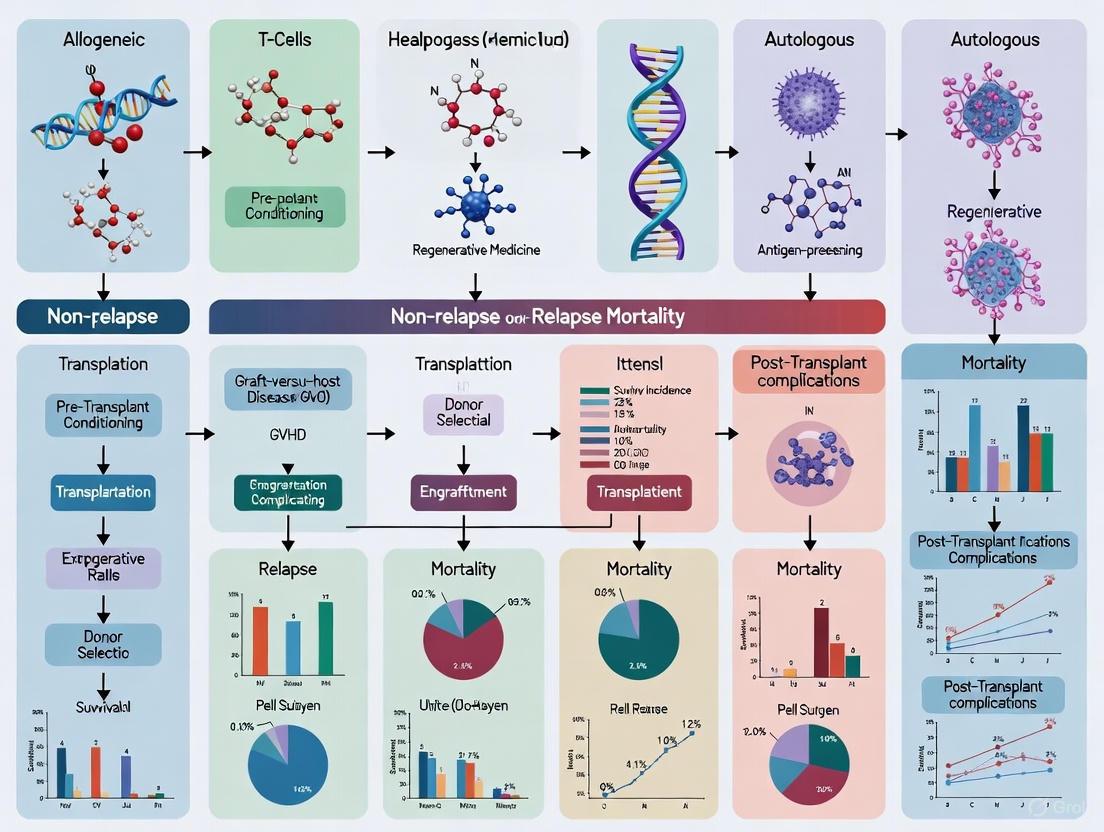
This article provides a comprehensive analysis of non-relapse mortality (NRM) following hematopoietic stem cell transplantation, contrasting the significantly higher risks associated with allogeneic (allo-SCT) versus autologous (auto-SCT) procedures.
Non-Relapse Mortality in Allogeneic vs. Autologous Transplantation: Mechanisms, Trends, and Clinical Management
Abstract
This article provides a comprehensive analysis of non-relapse mortality (NRM) following hematopoietic stem cell transplantation, contrasting the significantly higher risks associated with allogeneic (allo-SCT) versus autologous (auto-SCT) procedures. It explores the foundational mechanisms of NRM, including graft-versus-host disease (GVHD) and infections, and details methodological advances in risk assessment and patient selection. The content further investigates troubleshooting strategies and optimization techniques, such as reduced-intensity conditioning and improved GVHD prophylaxis, which have collectively driven a documented decline in NRM over recent decades. Finally, it synthesizes validation and comparative evidence from large-scale studies and registries, highlighting clinical contexts where the curative potential of allo-SCT justifies its NRM risk. This resource is tailored for researchers, scientists, and drug development professionals engaged in improving transplantation outcomes.
Defining Non-Relapse Mortality: Core Concepts and Etiology in Transplant Biology
In the field of hematopoietic cell transplantation (HCT) and novel cellular therapies, accurately categorizing causes of treatment failure is fundamental to advancing therapeutic strategies. Non-relapse mortality (NRM) and relapse-related mortality (RRM) represent competing risks that must be precisely distinguished to evaluate treatment efficacy and toxicity. NRM is formally defined as death from any cause not preceded by recurrent or progressive primary malignancy, encompassing treatment-related toxicities, infections, and organ failure [1]. In contrast, RRM refers to death following disease relapse or progression. The conceptual and practical distinction between these endpoints enables researchers to determine whether poor survival outcomes stem from inadequate disease control or treatment-related complications, thereby guiding distinct avenues for therapeutic optimization. This framework is equally critical for evaluating both established modalities like allogeneic transplantation and emerging therapies such as CAR T-cells and bispecific antibodies.
Quantitative Comparison of NRM and Relapse across Therapeutic Modalities
NRM and Relapse in Allogeneic Transplantation
Table 1: NRM and Relapse Outcomes in Allogeneic HCT for Hematologic Malignancies
| Disease Context | Study Cohort/Period | NRM Incidence | Relapse Incidence | Key Findings |
|---|---|---|---|---|
| Mixed Hematologic Malignancies | 2003-2007 Cohort (n=1148) [2] | N/A | N/A | Adjusted hazards for NRM and relapse decreased over time. |
| 2013-2017 Cohort (n=1131) [2] | Day-200 NRM: HR 0.66 | Relapse: HR 0.76 | Relapse remains the largest obstacle to better survival. | |
| Myelodysplastic Syndromes (MDS) | EBMT Registry (N=6434) [3] | 10-year NRM: 34% | 10-year Relapse: 34% | NRM and relapse were causes of treatment-failure of the same magnitude. |
| B-cell Non-Hodgkin Lymphoma (B-NHL) | Italian Multicenter Study (N=285) [4] | 5-year NRM: 31.2% | 5-year Relapse: 18.5% | Despite pronounced toxicity, allo-HSCT is effective in high-risk R/R B-NHL. |
| Multiple Myeloma (Relapsed/Refractory) | Single-Center (Allo-SCT, n=34) [5] | 5-year NRM: 45% | 5-year Relapse: 64% | High NRM limits the utility of allo-SCT in this setting. |
| Multiple Myeloma (Frontline/NDMM) | Meta-Analysis (61 studies) [6] | 5-year NRM: 11% | N/A | Better outcomes observed in the frontline setting. |
NRM in Novel Immunotherapies
Table 2: NRM Profile of Novel Immunotherapies in B-cell Malignancies
| Therapy | Disease Context | Pooled NRM Estimate | Leading Cause of NRM | Follow-up |
|---|---|---|---|---|
| Bispecific Antibodies (BsAb) | Lymphoma & Multiple Myeloma (N=2,535) [7] | 4.7% (95% CI 3.4%-6.4%) | Infections (71.8% of non-relapse deaths) | Median 12.0 months |
| CAR T-Cell Therapy | Large B-cell Lymphoma [1] | 6.1% | Infections (50.9% of non-relapse deaths) | Varies by study |
| Multiple Myeloma [1] | 8.0% | |||
| Mantle Cell Lymphoma [1] | 10.6% |
Experimental Protocols for Endpoint Ascertainment
Protocol 1: Long-Term Outcome Analysis in Allogeneic HCT
Objective: To determine long-term survival, non-relapse mortality, and relapse incidence in a retrospective multicenter cohort.
Methodology (as applied in B-NHL study [4]):
- Patient Selection: Identify patients who underwent first allogeneic HCT for a defined hematologic malignancy within a specific timeframe. Key exclusion criteria often include previous allogeneic HCT or use of specific graft sources like cord blood.
- Data Collection: Extract data from national or international registries (e.g., EBMT, CIBMTR) on patient demographics, disease characteristics, transplant procedures, and outcomes.
- Endpoint Definitions:
- Overall Survival (OS): Time from transplant to death from any cause.
- Progression-Free Survival (PFS): Time from transplant to disease progression/relapse or death from any cause.
- Non-Relapse Mortality (NRM): Time from transplant to death without prior relapse or progression. Deaths from infection, organ toxicity, GVHD, and secondary malignancies are typically classified as NRM.
- Relapse Incidence: Time from transplant to relapse or progression, with NRM as a competing risk.
- Statistical Analysis: Use Kaplan-Meier method for OS and PFS. Employ cumulative incidence functions for NRM and relapse to account for competing risks. Perform multivariate analyses (e.g., Cox proportional hazards models) to identify factors associated with outcomes.
Protocol 2: Systematic Review and Meta-Analysis of NRM
Objective: To provide a pooled, quantitative estimate of NRM across multiple studies for a specific therapy or disease context.
Methodology (as applied in CAR T-cell therapy analysis [1]):
- Search Strategy: Systematically search electronic databases (e.g., MEDLINE, Embase) using predefined terms related to the therapy (e.g., "CAR T-cell") and outcomes ("non-relapse mortality," "overall survival").
- Study Selection: Apply inclusion/exclusion criteria (e.g., studies reporting specific CAR T products in approved B-cell malignancies, sample size >5, providing sufficient NRM data). The process is often detailed via a PRISMA flowchart.
- Data Extraction: Extract study characteristics (author, year, design), patient cohort details (disease, product, cohort size), number of deaths, follow-up time, and reported NRM. The number of non-relapse deaths and causes of death are specifically extracted where available.
- Statistical Synthesis: Calculate NRM point estimates for each study. Pool estimates using a random-effects model to account for heterogeneity. Perform meta-regression to explore sources of variation (e.g., across disease entities or specific therapeutic products).
Causal Pathways and Competing Risks in Transplant Mortality
The relationship between patient, treatment, and post-treatment factors leads to distinct outcomes of NRM or relapse. The following pathway visualizes this complex interplay and competing risks.
Table 3: Key Reagent Solutions for HCT and Cell Therapy Outcome Research
| Tool / Resource | Function in Research | Specific Application Example |
|---|---|---|
| Large Clinical Registries | Provide large, multicenter longitudinal data on standardized endpoints. | EBMT, CIBMTR, and JSHCT registries enable analysis of long-term outcomes like NRM and relapse in thousands of patients [8] [4] [3]. |
| Comorbidity Indices | Quantify pre-transplant risk to stratify patients and predict NRM. | The Simplified Comorbidity Index (SCI) uses 5 components (e.g., renal function by eGFR) to predict NRM risk [9]. |
| KDIGO Criteria | Standardize definition and staging of Acute Kidney Injury (AKI). | Used to identify AKI Stage 2-3 as a strong independent predictor of increased NRM [9]. |
| Competing Risks Statistical Models | Calculate unbiased cumulative incidence functions for NRM and relapse. | Prevents overestimation of one risk by appropriately accounting for the other as a competing event [3]. |
| Human Mortality Database | Provides general population mortality data for comparison. | Allows estimation of excess mortality attributable to treatment (excess NRM) versus background population risks [3]. |
| Systematic Review/Meta-Analysis Frameworks | Synthesize NRM evidence across multiple studies. | PRISMA guidelines and random-effects models provide pooled NRM estimates for novel therapies like CAR T-cells and bispecific antibodies [7] [1]. |
For researchers and clinicians developing novel oncological therapies, allogeneic (allo-SCT) and autologous (auto-SCT) stem cell transplantation represent fundamentally different therapeutic platforms with distinct risk-benefit profiles. Non-relapse mortality (NRM), defined as death attributable to the transplantation procedure itself rather than underlying disease recurrence, constitutes a critical endpoint in evaluating these strategies. The allo-SCT versus auto-SCT divide represents a fundamental trade-off: the potentially curative graft-versus-tumor effect of allo-SCT against the significantly higher procedure-related toxicity and mortality. This comparative guide provides a structured, data-driven analysis of NRM risk across transplantation modalities, offering essential baseline metrics for contextualizing emerging cellular and immunotherapeutic approaches.
Quantitative NRM Risk Profiles: Comparative Data Analysis
NRM Incidence Across Hematologic Malignancies
Table 1: Comparative NRM Profiles Across Transplantation Strategies and Indications
| Malignancy | Transplant Type | NRM at 1 Year | NRM at 3-5 Years | Study Details | Citation |
|---|---|---|---|---|---|
| Multiple Myeloma (relapsed after 1st auto-SCT) | Allo-SCT | Not Reported | 15-45% (range across studies) | Retrospective registry analysis (CIBMTR/Japan) | [8] |
| Multiple Myeloma (relapsed after 1st auto-SCT) | Second Auto-SCT | Not Reported | 4-12% (range across studies) | Retrospective registry analysis (CIBMTR/Japan) | [8] [5] |
| Multiple Myeloma (salvage therapy) | Allo-SCT | 23.5% | 45% at 5 years | Single-center experience (n=85, median follow-up 11.5 years) | [10] |
| Multiple Myeloma (salvage therapy) | Auto-SCT (2nd) | Not Reported | 5% at 10 years | Single-center experience (n=41) | [5] |
| B-cell Non-Hodgkin Lymphoma | Allo-SCT | Not Reported | Significantly higher (OR: 6.25, p<0.001) | Meta-analysis of 18 retrospective studies (n=8,058) | [11] |
| B-cell Non-Hodgkin Lymphoma | Auto-SCT | Not Reported | Significantly lower (OR: 0.16, p<0.001) | Meta-analysis of 18 retrospective studies (n=8,058) | [11] |
| Primary Plasma Cell Leukemia | Allo-SCT (first) | High early risk | 27% at 36 months | EBMT retrospective analysis (n=70) | [12] |
| Primary Plasma Cell Leukemia | Auto-SCT (first) | Lower early risk | 7.3% at 36 months | EBMT retrospective analysis (n=681) | [12] |
Temporal Patterns of NRM Risk
The hazard profile for NRM differs significantly between transplantation approaches. Allo-SCT carries a characteristically high early risk, with one analysis showing 1-year NRM of 23.5% in multiple myeloma patients [10]. This elevated risk persists throughout the first several years post-transplant, as evidenced by 3-year NRM of 27% for allo-SCT versus 7.3% for auto-SCT in primary plasma cell leukemia [12].
Conversely, auto-SCT demonstrates a more favorable NRM profile across timepoints. In multiple myeloma patients receiving a second autotransplant at relapse, 5-year NRM remained at 5% with 10-year NRM reaching only 5% in a single-center analysis [5]. This consistent pattern across hematologic malignancies establishes auto-SCT as the superior strategy when minimizing procedure-related mortality is the primary objective.
Methodological Framework: Assessing NRM in Clinical Studies
Statistical Approaches for NRM Analysis
Proper evaluation of NRM requires specialized statistical methods that account for the competing risks inherent in transplantation outcomes. The field has historically suffered from heterogeneity in endpoint definitions and estimation methods, potentially introducing significant biases in NRM reporting [13].
Current Methodological Standards:
Cumulative Incidence Function (CIF): The preferred approach for estimating NRM, which appropriately accounts for competing events (particularly disease relapse/progression). This method prevents the overestimation that occurs when using Kaplan-Meier (1-KM) methods in competing risk scenarios [13].
Competing Risks Regression: Multivariable modeling techniques, such as the Fine-Gray model, should be employed to identify factors associated with NRM while considering the competing risk of relapse [13] [14].
Cause-Specific Hazard Models: Alternative Cox proportional hazard models that treat the competing event as a censoring mechanism can provide complementary insights [13].
Methodological Limitations in Historical Data: A survey of 116 transplantation articles revealed significant heterogeneity in NRM reporting: 8% used 1-KM (inappropriate for competing risks), 18% reported only crude proportions, and 23% did not specify the competing event when using cumulative incidence methods [13]. This methodological inconsistency complicates cross-study comparisons and highlights the need for standardized endpoint definitions.
Experimental Design Considerations
Randomization Challenges: Prospective randomized trials directly comparing allo-SCT versus auto-SCT face significant ethical and practical hurdles, leading to a predominance of retrospective analyses with inherent selection biases [11] [15]. The ongoing German AlloRelapseMM phase III trial (NCT05675319) aims to address this gap by randomizing 280 multiple myeloma patients to either allo-SCT or conventional therapy after relapse from first auto-SCT, with NRM as a secondary endpoint [15].
Donor vs. No-Donor Designs: Some studies employ "biological randomization" by comparing outcomes between patients with matched donors (who proceed to allo-SCT) and those without donors (who receive alternative therapies) [8]. While mitigating some selection biases, this approach cannot fully adjust for confounding factors.
Pathophysiological Mechanisms Underlying the NRM Divide
The substantial NRM differential between allo-SCT and auto-SCT arises from distinct pathophysiological processes. The following diagram illustrates the key biological mechanisms and their clinical consequences that drive this divergence:
The diagram above illustrates how allogeneic transplantation introduces alloreactive donor T-cells that recognize host tissues as foreign, initiating graft-versus-host disease (GVHD) and necessitating prolonged immunosuppression [8] [13]. This dual insult of alloimmune attack and iatrogenic immunodeficiency underlies the characteristically high NRM of allo-SCT through several mechanisms:
- Direct Tissue Damage: GVHD specifically targets the skin, liver, and gastrointestinal tract, causing organ dysfunction and failure [13].
- Infectious Complications: Profound and persistent immunodeficiency creates susceptibility to opportunistic viral, fungal, and bacterial pathogens [14] [10].
- Late Effects: Chronic immune dysregulation increases risk for secondary malignancies and other late complications, contributing to excess mortality years post-transplant [14].
In contrast, autologous transplantation primarily involves chemotherapy-induced myelosuppression with rapid immune reconstitution using the patient's own stem cells, resulting in substantially lower NRM [5].
Essential Research Toolkit for NRM Investigation
Table 2: Key Reagents and Methodologies for NRM Research
| Research Tool Category | Specific Examples | Research Application in NRM Studies |
|---|---|---|
| Statistical Software Packages | R (cmprsk, relsurv, prodlim packages), SPSS, Comprehensive Meta-Analysis | Competing risks analysis, cumulative incidence estimation, relative survival methods for excess mortality calculation [8] [11] [14] |
| Registry Databases | EBMT Registry, CIBMTR Database, Japan Society for Hematopoietic Stem Cell Transplantation | Large-scale retrospective data source for NRM outcomes across transplant strategies [8] [12] [16] |
| NRM Assessment Guidelines | EBMT Statistical Guidelines, IMWG Response Criteria | Standardized endpoint definitions and reporting standards for transplantation studies [5] [12] |
| GVHD Assessment Tools | NIH Consensus Criteria for Acute and Chronic GVHD | Standardized grading of GVHD severity, a primary driver of allo-SCT NRM [10] |
| Conditioning Regimen Classification | Myeloablative vs. Reduced-Intensity Conditioning Criteria | Categorization of transplant intensity, a key modifier of NRM risk [10] |
Research Implications and Future Directions
The significant NRM differential between transplantation strategies has profound implications for therapeutic development and clinical trial design. The superior safety profile of auto-SCT establishes it as the preferred platform for integration with emerging immunotherapeutic approaches, particularly when treatment-related mortality must be minimized. However, the potentially curative graft-versus-myeloma effect of allo-SCT, though offset by higher NRM, remains a unique therapeutic mechanism not replicated by other modalities [15] [16].
Future research should focus on risk-adapted transplantation approaches that maximize efficacy while minimizing NRM. Promising strategies include the selective application of allo-SCT in younger patients with high-risk disease features and the development of improved GVHD prophylaxis regimens [16]. Additionally, novel statistical methods that account for time-dependent effects and competing risks are essential for valid comparison of emerging cellular therapies against established transplantation benchmarks [12] [16].
The evolving therapeutic landscape, including CAR-T cells and bispecific antibodies, will likely reshape the risk-benefit calculus between transplantation strategies. Nevertheless, the fundamental NRM divide between allo-SCT and auto-SCT established in this analysis provides an essential baseline for evaluating next-generation therapies and designing innovative combination approaches in hematologic malignancies.
Non-relapse mortality (NRM) remains a significant challenge in allogeneic hematopoietic stem cell transplantation (allo-HSCT), directly impacting patient survival and quality of life. The major etiologies driving NRM include graft-versus-host disease (GVHD), infection, and organ toxicity. These complications are interconnected, often occurring simultaneously or sequentially in a complex pathophysiology. For researchers and drug development professionals, understanding the comparative burden, underlying mechanisms, and evidence-based management strategies for these primary etiologies is crucial for developing targeted interventions. This guide objectively compares these competing causes of mortality, synthesizing current incidence data, experimental findings, and methodological approaches to inform preclinical and clinical research design.
Comparative Incidence and Mortality Burden
Understanding the relative frequency and impact of these primary etiologies provides context for prioritizing research and therapeutic development. The quantitative burden of each complication is summarized in the table below.
Table 1: Comparative Incidence and Mortality of Primary Etiologies Post-Allogeneic HSCT
| Etiology | Reported Incidence | Mortality Association | Key Risk Factors |
|---|---|---|---|
| Acute GVHD | 35%-50% of HSCT recipients [17] | Grade III-IV has poor overall outcome [17]; Significant cause of NRM [18] | Older recipient/donor, HLA disparity, female donor to male recipient, intensity of conditioning regimen [17] |
| Chronic GVHD | 30%-70% of HSCT recipients [19] | Leading cause of NRM among long-term survivors [19]; Increases mortality risk (RR 1.56) [19] | Prior acute GVHD, older patient age, peripheral blood stem cell graft, female donor to male recipient [19] |
| Infection | N/A | Leading cause of NRM in patients with cGVHD [19] | Immune dysregulation from GVHD, delayed immune reconstitution, long-term immunosuppressive therapy [19] |
| Organ Toxicity | N/A | Important cause of death; improvements in management have contributed to reduced NRM [20] | Conditioning regimen intensity, specific drug toxicities (e.g., from calcineurin inhibitors) [20] |
The data reveals GVHD as the most quantified etiology, with acute and chronic forms affecting a substantial proportion of recipients. Infection represents the most critical outcome, identified as the leading cause of death in patients with chronic GVHD. Improvements in managing organ toxicity and infections have been key drivers in reducing overall NRM over recent decades [20].
Pathophysiological Mechanisms and Experimental Models
Graft-versus-Host Disease (GVHD)
GVHD is an immunologically mediated process that remains a major focus of transplantation research. The pathophysiology of acute GVHD is classically described as a three-phase process, which can be visualized in the following pathway.
Phase 1: The conditioning regimen (chemotherapy/radiotherapy) inflicts damage on host tissues, leading to the release of inflammatory cytokines and the activation of host antigen-presenting cells (APCs) [17]. Phase 2: Donor T cells, contained within the graft, are activated by these host APCs. This activation and subsequent proliferation are central to initiating the immune response [17]. Phase 3: Activated donor T cells, along with inflammatory mediators like interleukin-1 (IL-1) and tissue necrosis factor-alpha (TNF-α), migrate to and attack target tissues—primarily the skin, liver, and gastrointestinal tract—resulting in cellular injury and necrosis [17].
Chronic GVHD involves a more complex, dysregulated immune response that leads to fibrosis and autoimmune-like manifestations. Its pathogenesis also unfolds in three phases: initial tissue injury and innate immune activation; a subsequent adaptive immune response involving alloreactive T and B-cells; and a final phase of fibroblast proliferation and tissue fibrosis [19].
Key Experimental Models and Reagents for GVHD Research
Table 2: Research Reagent Solutions for GVHD Investigation
| Research Reagent | Function / Application in Research |
|---|---|
| Major Histocompatibility Complex (MHC)-Mismatched Mouse Models | Preclinical in vivo models for studying aGVHD pathophysiology and testing prophylactic strategies [18]. |
| Post-Transplant Cyclophosphamide (PTCy) | Used experimentally to probe mechanisms of immune tolerance; depletes alloreactive T cells while sparing regulatory T cells [18]. |
| Aldehyde Dehydrogenase (ALDH) Assays | Enzymatic activity assays to identify and isolate T-regulatory cells (Tregs) resistant to PTCy [18]. |
| Cytokine Detection Kits (e.g., IL-1, TNF-α) | Multiplex immunoassays to measure serum and tissue levels of key inflammatory mediators in GVHD. |
| Anti-T cell Depleting Antibodies (e.g., ATG) | Investigational reagents to modulate T-cell alloreactivity and understand T-cell role in GVHD initiation [17]. |
Infection
Infections are a consequence of the profound and prolonged immunodeficiency state following transplantation. The risk is driven by multiple factors, including the intensity of the conditioning regimen, the occurrence of GVHD, and the therapies used to treat GVHD. The diagram below illustrates this multifactorial risk and the wide spectrum of infectious pathogens.
The leading cause of non-relapse mortality in patients with chronic GVHD is infection, exacerbated by the condition's associated immune dysregulation and the long-term use of immunosuppressive drugs like glucocorticoids [19]. This necessitates the use of multi-agent anti-microbial prophylaxis in this patient population [19].
Organ Toxicity
Organ toxicity, also referred to as regimen-related toxicity, encompasses damage to vital organs from the conditioning chemotherapy and radiotherapy. It can manifest as conditions such as sinusoidal obstruction syndrome (SOS, formerly known as veno-occlusive disease), idiopathic pneumonia syndrome, diffuse alveolar hemorrhage, and thrombotic microangiopathy [21]. While the specific pathophysiology varies by organ and agent, the general mechanism involves direct cytotoxic effects on tissue parenchyma and endothelial cells, leading to inflammation, cell death, and organ dysfunction. Improvements in supportive care, including better management of drug toxicities and more stringent monitoring of drug levels (e.g., for tacrolimus), have contributed to a reduction in deaths from organ toxicity over time [20].
Methodologies for Evaluating Interventions
Experimental Protocols for GVHD Prophylaxis
Clinical trials for GVHD prophylaxis provide a robust template for experimental design. The protocol for the BMT CTN 1703 trial (NCT03959241) offers a prime example of a modern, high-impact study [18].
- Objective: To compare the efficacy of two GVHD prophylaxis regimens in reducing a composite endpoint.
- Population: 431 patients undergoing allo-HSCT with matched related or unrelated donors.
- Intervention Arm: Post-transplant cyclophosphamide (PTCy) combined with tacrolimus and mycophenolate mofetil (MMF).
- Control Arm: Tacrolimus and methotrexate.
- Primary Endpoint: GVHD-free, relapse-free survival (GRFS) at 1 year. GRFS is a composite endpoint defining treatment failure as the occurrence of grade III-IV acute GVHD, moderate-severe chronic GVHD, relapse, or death.
- Key Findings: The PTCy arm demonstrated a significantly superior adjusted 1-year GRFS rate of 52.7% compared to 34.9% in the control arm [18].
Methodologies for Tracking Etiology-Specific Outcomes
Large registry analyses provide real-world data on trends in NRM etiologies. A key methodology is exemplified by a CIBMTR study analyzing 2,905 patients over three time periods (1999-2001, 2002-2005, 2006-2012) [20].
- Data Source: Retrospective analysis of a large, multi-institutional registry (CIBMTR).
- Statistical Analysis: Multivariate analysis to adjust for confounding variables and identify independent factors associated with improved outcomes.
- Key Metrics: Overall survival (OS), non-relapse mortality (NRM), and cause-specific mortality (e.g., deaths from organ toxicity and infection).
- Application: This study demonstrated that for patients receiving tacrolimus-based prophylaxis, OS and NRM improved over time, driven by fewer deaths from organ toxicity and infection, highlighting the impact of improved supportive care [20].
Research Reagents and Therapeutic Tools
A critical component of research in this field involves the use of specific reagents and therapeutic agents, both old and new. The table below details key tools used in experimental and clinical settings.
Table 3: Key Research and Therapeutic Agents in Transplantation Immunology
| Category / Agent | Primary Function / Mechanism of Action | Research or Clinical Context |
|---|---|---|
| Calcineurin Inhibitors (Tacrolimus, Cyclosporine) | Inhibits T-cell activation by blocking calcineurin-mediated IL-2 transcription. | Cornerstone of GVHD prophylaxis; associated with improved outcomes over time [20]. |
| Post-Transplant Cyclophosphamide (PTCy) | Selectively depletes alloreactive T-cells shortly after transplant; favors T-regulatory cell recovery. | Backbone of GVHD prophylaxis in haploidentical and matched donors; key experimental intervention [18]. |
| Systemic Corticosteroids (Prednisone) | Broad anti-inflammatory and immunosuppressive effects. | First-line treatment for both acute and chronic GVHD [17] [19]. |
| JAK Inhibitor (Ruxolitinib) | Inhibits Janus-associated kinase 1 and 2, modulating inflammatory signaling. | FDA-approved for steroid-refractory chronic GVHD; often favored as initial second-line therapy [19]. |
| ROCK2 Inhibitor (Belumosudil) | Inhibits rho-associated coiled-coil-containing protein kinase 2 (ROCK2), reducing pro-fibrotic signaling. | FDA-approved for steroid-refractory chronic GVHD after two prior lines of therapy [19]. |
| Extracorporeal Photopheresis (ECP) | Modulates the immune system by exposing collected white blood cells to psoralen and UVA light before reinfusion. | Non-pharmacologic therapy for steroid-refractory chronic GVHD [19]. |
GVHD, infection, and organ toxicity represent a triad of interconnected etiologies that dominate the landscape of non-relapse mortality in allogeneic transplantation. The evidence synthesized in this guide demonstrates that while GVHD is the most common immunopathological process, infection remains the ultimate cause of death for many patients, particularly those with chronic GVHD on immunosuppression. Progress in reducing NRM has been achieved not through radical new therapies, but through incremental improvements in prophylaxis, supportive care, and infection management. Future research must continue to pursue targeted immunosuppression that can separate GVHD from the graft-versus-tumor effect, as well as strategies to accelerate immune reconstitution. For drug developers, targeting specific pathways in the GVHD cascade and developing novel antimicrobials represent key opportunities to further reduce the burden of these primary etiologies.
Non-relapse mortality (NRM) remains a critical endpoint in evaluating the success of hematopoietic cell transplantation (HCT) and emerging cellular therapies. The temporal pattern of NRM—categorized as early (typically within the first 28-100 days post-treatment) or late (occurring beyond this initial period)—provides crucial insights into distinct risk profiles, underlying mechanisms, and potential intervention strategies. Understanding these temporal dynamics is essential for researchers, scientists, and drug development professionals aiming to optimize therapeutic outcomes and develop targeted approaches for risk mitigation. This guide systematically compares NRM patterns across different transplantation modalities and cellular therapies, providing structured experimental data and methodological frameworks to inform future research and clinical trial design.
Defining NRM Timeframes and Competing Risks
Within transplantation research, NRM is universally defined as death from any cause unrelated to underlying disease relapse or progression. The standardized temporal classification recognizes two distinct phases:
- Early NRM: Occurring within the first 28-100 days post-transplant, this phase is predominantly characterized by treatment-related toxicities, infections, and regimen-related organ damage.
- Late NRM: Events beyond day 100, increasingly attributed to chronic graft-versus-host disease (GVHD), late-onset infections, secondary malignancies, and organ dysfunction resulting from prolonged immunosuppression.
Methodologically, NRM analysis requires competing risks statistical approaches, where relapse-related mortality represents the primary competing event. Studies must carefully distinguish between deaths from non-relapse causes and those from disease progression, with uncertain causes typically excluded from NRM analyses [22].
Comparative NRM Profiles Across Therapeutic Modalities
Allogeneic Hematopoietic Cell Transplantation
Allogeneic HCT presents the most complex temporal NRM profile, with significant evolution over time. A comprehensive analysis of 2,279 patients across 2003-2007 and 2013-2017 demonstrated a substantial reduction in day-200 NRM over the decade (adjusted hazard ratio [HR] 0.66), indicating significant improvements in transplant techniques, supportive care, and patient management [2].
Table 1: NRM Following Allogeneic HCT in Different Eras
| Parameter | 2003-2007 Cohort | 2013-2017 Cohort | Hazard Ratio |
|---|---|---|---|
| Day-200 NRM | Baseline | Reduced | 0.66 |
| Common Early NRM Causes | Organ toxicity, infections, aGVHD | Reduced severity of same | N/A |
| Common Late NRM Causes | cGVHD, infections, organ dysfunction | Reduced frequency | N/A |
| Key Improvements | N/A | Reduced GVHD, fewer infections, less organ damage | N/A |
The temporal NRM risk in allogeneic HCT is profoundly influenced by donor selection and graft manipulation. A study of 573 patients undergoing CD34-selected allogeneic HCT following myeloablative conditioning identified pulmonary disease, moderate-to-severe hepatic comorbidity, cardiac disease, and renal dysfunction as key predictors of NRM, leading to the development of a Simplified Comorbidity Index (SCI) that outperformed traditional comorbidity assessments in predicting NRM risk [23].
Autologous Hematopoietic Cell Transplantation
Autologous HCT demonstrates a fundamentally different NRM profile compared to allogeneic approaches, with significantly lower overall NRM rates. In multiple myeloma patients undergoing autologous HCT, NRM at 36 months was 7.3% (95% CI: 5.2-9.4), substantially lower than the 27% (95% CI: 15.9-38.1) observed in allogeneic recipients during the same period [24]. This favorable NRM profile must be balanced against higher relapse rates in disease-specific contexts.
Chimeric Antigen Receptor T-Cell Therapy
Emerging cellular therapies like CAR-T demonstrate distinct temporal NRM patterns. A real-world analysis of 957 patients with large B-cell lymphoma receiving commercial CD19-directed CAR-T therapy revealed an overall NRM rate of 5.0%, with a striking temporal distribution: only 0.9% of patients experienced early NRM (before day 28), while 4.1% experienced late NRM (after day 28) [22]. This pattern contrasts sharply with allogeneic HCT, where early NRM traditionally predominates.
Table 2: Comparative NRM Rates Across Cellular Therapies
| Therapy | Early NRM Rate | Late NRM Rate | Overall NRM | Primary Etiologies |
|---|---|---|---|---|
| Allogeneic HCT | Varies by era & risk | Varies by era & risk | 27% at 36 months (high-risk) | GVHD, organ toxicity, infection |
| Autologous HCT | Lower early risk | Accumulates over time | 7.3% at 36 months | Regimen-related toxicity, infection |
| CAR-T Therapy | 0.9% (before day 28) | 4.1% (after day 28) | 5.0% overall | Infections (56%), CRS, neurotoxicity |
Tandem Transplantation Approaches
Tandem transplantation strategies introduce additional complexity to NRM temporal patterns. In primary plasma cell leukemia, a comparison of four approaches revealed markedly different NRM profiles:
- Allogeneic-first strategy: 27% NRM at 36 months, with remarkably higher risk in the first 100 days
- Autologous-first strategy: 7.3% NRM at 36 months
- Auto-allo approach: No increased short-term risk with significant progression-free survival benefit after 100 days (HR=0.69) compared to single autologous transplant [24]
For multiple myeloma, the auto-allo HCT approach demonstrated a clear survival advantage in the longer term, albeit at the cost of higher early mortality [25].
Methodological Framework for NRM Analysis
Statistical Approaches for Temporal NRM Assessment
Robust evaluation of temporal NRM patterns requires specialized statistical methodologies to account for treatment sequencing, immortal time bias, and competing risks:
Time-Dependent Covariates in Cox Regression: Appropriate for comparing single versus tandem transplant strategies, where administration of the second transplant occurs months after the first. This approach eliminates immortal time bias by treating the second transplant as a time-dependent covariate [25] [24].
Multiple Timescales Modeling: Poisson regression with multiple timescales simultaneously accounts for time since first transplant and time since tandem transplant, crucial for accurately capturing the changing hazard profile after allogeneic transplantation [25].
Dynamic Prediction by Landmarking: This method computes conditional survival probabilities at successive landmarks throughout follow-up, providing a more nuanced view of how NRM risk evolves over time [25] [24].
Cumulative Incidence Function with Competing Risks: Essential for NRM analysis, this approach properly accounts for relapse as a competing event, preventing overestimation of NRM incidence [24].
NRM Endpoint Definitions and Data Collection
Standardized NRM endpoint definitions are critical for cross-trial comparisons:
Diagram 1: NRM Classification Algorithm. This workflow outlines the standardized process for categorizing mortality events in transplantation studies, emphasizing the critical distinction between relapse-related and non-relapse mortality.
Data sources for NRM analysis typically include transplant center master databases, prospective protocol-specific databases, hospital administrative databases for procedures, electronic medical record review, and structured long-term follow-up data collected at standardized intervals (e.g., 6 months, 1 year, and annually post-transplant) [2].
Evolving Etiologies and Risk Prediction
Temporal Shift in NRM Causes
The causes of NRM have evolved significantly over time, reflecting advances in supportive care and changes in transplant practices. In allogeneic HCT, comparative analyses between 2003-2007 and 2013-2017 demonstrated reduced frequencies of jaundice, renal insufficiency, mechanical ventilation, high-level cytomegalovirus viremia, gram-negative bacteremia, invasive mold infection, and both acute and chronic GVHD in the later era [2].
In CAR-T cell therapy, which represents a newer therapeutic modality, infection predominates as the primary cause of NRM (56% of cases), with approximately half of these being COVID-19 related in contemporary cohorts. Other causes include cytokine release syndrome (10%), stroke (6%), cerebral hemorrhage (6%), second malignancies (6%), and immune effector cell-associated neurotoxicity syndrome (4%) [22].
Predictive Biomarkers and Risk Stratification
Biomarker development has enhanced our ability to predict temporal NRM risk:
REG3α: An antimicrobial peptide produced by Paneth cells that serves as a key marker for gastrointestinal GVHD severity. Elevated levels at GVHD onset predict treatment nonresponse and higher NRM, with persistently high concentrations after one week of steroid therapy indicating particularly poor prognosis [26].
Soluble ST2 (Suppression of Tumorigenesis 2): A decoy receptor for IL-33 released from antigen-presenting cells during GVHD activation. This biomarker shows significant promise for predicting NRM risk and treatment resistance [26].
Simplified Comorbidity Index (SCI): A recently developed tool focusing on four key comorbidities (pulmonary, hepatic, cardiac, and renal dysfunction) plus age >60 years that effectively stratifies patients into distinct NRM risk groups, outperforming previous comorbidity indices [23].
Table 3: Research Reagent Solutions for NRM Biomarker Studies
| Reagent/Biomarker | Biological Function | Research Application |
|---|---|---|
| REG3α Immunoassays | Antimicrobial peptide, intestinal stem cell survival factor | Predict GI GVHD severity and treatment response |
| Soluble ST2 Assays | Decoy receptor for IL-33, inflammatory signaling | GVHD risk stratification and NRM prediction |
| Hepatocyte Growth Factor (HGF) | Tissue repair and regeneration | Complementary biomarker for GI GVHD severity |
| Cytokeratin Fragment 18 | Epithelial cell death marker | Assessment of intestinal epithelial damage |
Implications for Research and Drug Development
The distinct temporal patterns of NRM across therapeutic modalities present both challenges and opportunities for clinical trial design and drug development:
Timing of Interventions: Prophylactic strategies for allogeneic HCT must focus on the early post-transplant period, while CAR-T interventions require extended monitoring for late-occurring complications, particularly infections.
Endpoint Selection: Clinical trials should consider temporal NRM patterns when selecting primary endpoints. Day-100 and 1-year NRM provide complementary information for allogeneic HCT, while CAR-T trials require longer follow-up to capture the predominant late NRM events.
Risk-Adapted Strategies: The development of validated risk prediction tools like the SCI enables targeted interventions for high-risk populations, potentially altering traditional temporal NRM patterns through personalized approaches.
Novel Therapeutic Targets: Emerging understanding of biomarkers like REG3α and ST2 not only facilitates risk prediction but also identifies potential therapeutic targets for modulating GVHD and reducing associated NRM [26].
Future research directions should focus on further elucidating the biological mechanisms underlying temporal NRM patterns, developing interventions specifically timed to address period-specific risks, and validating comprehensive risk prediction models that incorporate both clinical and biomarker parameters across the entire post-treatment timeline.
Risk Stratification and Evolving Methodologies in NRM Assessment
Within the field of hematopoietic stem cell transplantation (HSCT), a cornerstone of curative therapy for hematologic malignancies, predicting and mitigating non-relapse mortality (NRM) remains a paramount research challenge. NRM, defined as death following transplantation from causes other than disease relapse, is a key endpoint that determines the success of the procedure. In the context of a broader thesis on NRM in allogeneic and autologous transplantation research, this guide objectively compares the influence of three foundational prognostic factors: disease status, patient age, and comorbidities. The subsequent analysis, synthesized from contemporary clinical studies and registry data, provides a structured comparison of how these factors impact survival outcomes, supported by quantitative data, experimental methodologies, and essential research tools.
Quantitative Comparison of Key Prognostic Factors
The impact of disease status, age, and comorbidities on transplantation outcomes can be quantitatively summarized from recent clinical research. The data in the tables below provide a comparative overview of their influence on survival and mortality.
Table 1: Impact of Disease Status on Transplant Outcomes
| Disease Status | Study Population | Overall Survival (OS) | Other Key Outcomes | Citation |
|---|---|---|---|---|
| Complete Remission (CR) | Adult AML | 5-year OS: 58% | Critical for optimal outcome | [27] |
| Non-Complete Remission (CR) | Adult AML | 5-year OS: 6% | Significantly poorer survival | [27] |
| Post-Transplant CR | Lymphoid Malignancies | Superior PFS & OS | Independent predictor of improved survival | [28] |
| Advanced Disease | Mixed Hematologic Malignancies | Not Reported | HR for NRM: 1.41 | [29] |
Table 2: Impact of Age and Comorbidities on Transplant Outcomes
| Prognostic Factor | Study Population | Overall Survival (OS) | Non-Relapse Mortality (NRM) | Citation |
|---|---|---|---|---|
| Age >55 years | R/R AML | Independent predictor of poor OS | Not Reported | [30] |
| HCT-CI ≥ 3 (High) | Mixed Hematologic Malignancies | 10-year OS: 31.1% | 10-year NRM: 25.8% | [29] |
| HCT-CI 0 (Low) | Mixed Hematologic Malignancies | 10-year OS: 49.9% | 10-year NRM: 21.0% | [29] |
| Pre-existing Renal Comorbidity | Mixed Hematologic Malignancies | Not Reported | HR: 1.85 | [31] |
| Pre-existing Cardiac Comorbidity | Mixed Hematologic Malignancies | HR: 1.77 | HR: 1.73 | [29] |
Detailed Experimental Protocols and Methodologies
The quantitative data presented above are derived from rigorous clinical research methodologies. Understanding these protocols is essential for critical appraisal of the evidence.
Protocol 1: Systematic Review of Prognostic Factors in AML
- Objective: To synthesize recent evidence on survival, relapse, NRM, and prognostic factors in adult acute myeloid leukemia (AML) patients undergoing allogeneic HSCT (allo-HSCT) [27].
- Information Sources & Search Strategy: A comprehensive search was conducted across electronic databases (PubMed, Scopus, Web of Science, Embase, ClinicalTrials.gov) for studies published between January 2020 and August 2025. The search used MeSH terms and keywords related to "acute myeloid leukemia," "allogeneic hematopoietic stem cell transplantation," "outcomes," and "relapse" [27].
- Selection Process: Following PRISMA guidelines, two independent reviewers screened titles, abstracts, and full texts. The process identified 10 studies that met the inclusion criteria, which focused on adult AML patients and reported outcomes like overall survival (OS) and disease-free survival (DFS) [27].
- Data Collection & Analysis: A standardized form was used to extract data on study characteristics, patient demographics, transplant details, and outcomes. Due to clinical heterogeneity, a qualitative synthesis was performed. The risk of bias was assessed using the Newcastle-Ottawa Scale for observational studies [27].
- Key Outcome Measurement: The stark contrast in 5-year OS between patients transplanted in complete remission (58%) versus those not in remission (6%) was a central finding of this synthesis [27].
Protocol 2: Large-Scale Registry Analysis of Comorbidities
- Objective: To evaluate the association of pre-existing comorbidities with NRM in a modern cohort of allo-HSCT recipients, re-assessing the predictive value of the Hematopoietic Cell Transplantation Comorbidity Index (HCT-CI) [31].
- Study Design & Data Collection: This was a retrospective, multicenter analysis of the European Society for Blood and Marrow Transplantation (EBMT) registry. Data from 38,760 patients who underwent a first allo-HSCT from a matched sibling or unrelated donor between 2010 and 2018 were included. Only patients with a full data set on pre-existing comorbidities were analyzed [31].
- Assessment of Comorbidities: Comorbidities were defined according to HCT-CI criteria and collected via the EBMT Minimum Essential Data forms. This included conditions like renal, pulmonary, cardiac, and hepatic disease, among others [31].
- Statistical Analysis: The primary endpoint was NRM. Multivariate analyses using the Cox proportional-hazards model were performed, adjusting for known risk factors such as previous transplants, stem cell source, disease diagnosis, remission status, patient age, and Karnofsky performance status [31].
- Key Outcome Measurement: This analysis identified pre-existing renal comorbidity as having the strongest association with NRM (Hazard Ratio [HR] 1.85), while other comorbidities like cardiac disease and diabetes showed weaker but significant associations [31].
Visualizing Prognostic Factor Influence on NRM
The following diagram illustrates the logical relationship and relative influence of the key prognostic factors on the pathway to Non-Relapse Mortality.
Table 3: Key Research Reagent Solutions for Prognostic Factor Analysis
| Reagent/Resource | Primary Function in Research | Exemplar Application |
|---|---|---|
| EBMT Registry MED-A Forms | Standardized data collection on pre-existing comorbidities and transplant outcomes for large-scale registry studies. | Used to assess the prevalence and impact of comorbidities like renal and cardiac disease on NRM in 38,760 patients [31]. |
| Newcastle-Ottawa Scale (NOS) | Quality assessment tool for non-randomized studies in systematic reviews, evaluating selection, comparability, and exposure. | Applied to evaluate the risk of bias in included observational studies within a systematic review of AML transplant outcomes [27]. |
| Cox Proportional-Hazards Model | Multivariate regression statistical method to assess the effect of multiple factors on survival time. | Used to calculate hazard ratios (HRs) for NRM, isolating the independent effect of individual comorbidities while adjusting for other variables [31] [29]. |
| HCT-Comorbidity Index (HCT-CI) | Validated scoring system to qualify pre-existing comorbidities to predict NRM and OS in transplant patients. | Employed to stratify patients into low (0), intermediate (1-2), and high (≥3) risk groups for outcome analysis [29]. |
| Quantitative RT-PCR | Highly sensitive molecular technique for detecting and quantifying minimal residual disease (MRD) or specific genetic markers. | Used for monitoring BCR-ABL transcript levels in CML patients post-HSCT to guide TKI therapy and assess relapse risk [32]. |
The Impact of Donor Selection and HLA Matching on NRM
Non-relapse mortality (NRM) remains a significant challenge in allogeneic hematopoietic cell transplantation (allo-HCT), often determining the ultimate success of this potentially curative procedure. The selection of an optimal donor represents a critical modifiable factor that directly influences NRM risk. While human leukocyte antigen (HLA) matching has long been the cornerstone of donor selection, emerging evidence demonstrates that non-HLA characteristics, particularly donor age, exert comparable influence on transplantation outcomes. This review synthesizes current evidence on how donor selection strategies balance HLA matching with other donor characteristics to minimize NRM, providing a structured analysis of quantitative data and methodological approaches for transplantation researchers and therapeutic developers.
Donor Selection Hierarchy and NRM Implications
The established algorithm for donor selection prioritizes HLA-identical sibling donors (MSDs) as the primary option, when available [33]. For patients without matched siblings, unrelated donors (UDs) from international registries provide an alternative source, with matching quality significantly influencing outcomes. The probability of finding a fully matched unrelated donor (MUD) varies considerably by ethnicity, ranging from 16% to 75% [33]. For patients lacking either MSDs or MUDs, alternative options include mismatched unrelated donors (MMUDs), haploidentical related donors, or umbilical cord blood (UCB) units [33].
Recent evidence has prompted reevaluation of this traditional hierarchy, suggesting that younger MUDs may outperform older MSDs despite perfect HLA matching within families [34]. This paradigm shift reflects growing recognition that donor biological age significantly impacts NRM, sometimes outweighing the advantages of closer kinship [35]. The figure below illustrates the contemporary decision-making framework integrating both HLA and non-HLA factors.
Quantitative Comparison of Donor Types and NRM
HLA-Matched Related vs. Unrelated Donors
Retrospective analyses demonstrate similar overall survival between MSD and 10/10 MUD transplants, though with different risk profiles. MSD transplants are associated with lower NRM but higher relapse rates, while MUD transplants show the inverse pattern, creating comparable overall survival despite distinct complication profiles [36].
Table 1: Outcomes of HLA-Matched Donor Transplants for AML/MDS
| Donor Type | NRM | Relapse Incidence | Overall Survival | Reference |
|---|---|---|---|---|
| Matched Related Donor (MSD) | Lower (HR 0.63, p<0.001) | Higher (HR 1.32, p<0.002) | Similar to MUD | [36] |
| Matched Unrelated Donor (MUD) | Higher | Lower | Similar to MSD | [36] |
Impact of Donor Age on NRM
Multiple studies have established donor age as a critical determinant of NRM, with a consistent trend toward improved outcomes with younger donors. A study of 125 AML/MDS patients undergoing HLA-matched allo-HCT found that donor age ≥50 years was associated with significantly increased NRM (HR 3.35, p=0.01), with the effect strengthening further for donors ≥60 years (HR 4.54, p=0.01) [37]. The association between donor age and NRM appears nonlinear, with a pronounced increase beyond age 50.
Table 2: Donor Age Impact on Transplantation Outcomes
| Donor Age Group | NRM Risk (Hazard Ratio) | Statistical Significance | Chronic GvHD Association | Reference |
|---|---|---|---|---|
| <30 years | Reference | - | Lower incidence | [37] |
| 30-39 years | Not significantly increased | p>0.05 | Not significantly increased | [37] |
| 40-49 years | HR 2.03 | p=0.14 (trend) | Not significantly increased | [37] |
| ≥50 years | HR 3.35 | p=0.01 | Significantly increased | [37] |
| ≥60 years | HR 4.54 | p=0.01 | Significantly increased | [37] |
| Per 10-year increase | 2-year survival decrease ~3% | Significant | Not reported | [34] |
HLA Mismatching and NRM
The number and locus of HLA mismatches significantly impact NRM. Single allele-level mismatches in unrelated donors are associated with inferior overall survival (HR 1.21, p<0.02 for 9/10 MMUD vs. 10/10 MUD), with the effect magnified with greater disparity (HR 1.57, p<0.001 for ≤8/10 MMUD) [36]. Mismatches at different HLA loci carry varying risks, with some mismatches (e.g., in HLA-DQB1 and specific C-allele combinations) considered "permissive" with minimal impact on NRM [33].
Comparative Effectiveness of Alternative Donors
Young Haploidentical vs. Older Matched Sibling Donors
In older AML patients (≥60 years), transplants from young haploidentical donors (≤40 years) using post-transplantation cyclophosphamide (PTCy) showed similar overall survival compared to older MSDs (≥60 years), despite significantly different complication profiles [35]. The haploidentical group demonstrated lower relapse incidence (20.1% vs. 28.6%) but higher NRM (24.4% vs. 14.7%), resulting in comparable net survival outcomes [35].
Young MUD vs. Older MSD for Myeloid Malignancies
A recent retrospective registry study of 3,460 patients aged ≥50 with myeloid malignancies compared outcomes between MSDs aged ≥50 years and MUDs aged 18-35 years [34]. After multivariable adjustment, the young MUD group showed significant risk reduction compared to the older MSD group: 14% in event-free survival (p=0.003), 18% in overall survival (p<0.001), and 16% in relapse risk (p=0.018) [34]. This demonstrates that donor youth can potentially overcome the advantage of closer kinship in specific patient populations.
Umbilical Cord Blood Transplantation
In double umbilical cord blood transplantation (dUCBT), the impact of HLA matching on NRM appears distinct from other donor sources. A study of 342 dUCBT recipients found that even high degrees of allele-level HLA mismatch (2-5/10) did not significantly affect NRM, suggesting unique tolerability mechanisms in this setting [38]. Interestingly, in an exploratory analysis of acute leukemia patients, high HLA mismatch was associated with reduced relapse risk without increasing NRM [38].
Key Experimental Protocols and Methodologies
HLA Typing Methodologies
Contemporary donor selection relies on high-resolution molecular HLA typing at minimum for HLA-A, -B, -C, and -DRB1, with increasing evidence supporting additional typing for -DQB1 and -DPB1 [33]. Standard methodologies include:
- Sequence-Specific Oligonucleotide (SSO) Probe Methods: Used for class I allele typing prior to 2002, now largely superseded by more precise techniques [38].
- Sequence-Based Typing (SBT): Automated methodology providing high-resolution allele-level typing, currently considered the gold standard [38].
- Sequence-Specific PCR (SSP): Used particularly for class II typing and resolution of residual genotype ambiguities [38].
The HAMLET study provides an exemplary methodology for comparing alternative donor strategies [34]. This prospective trial randomized 98 adult patients with high-risk AML, ALL, or MDS to receive either haploidentical family donations with PTCy (50 mg/kg on days +3 and +4) or donations from mismatched unrelated donors (MMUDs) with anti-thymocyte globulin (ATG; 10 mg/kg on days -1 to -3) [34]. The primary endpoint was overall survival, with a non-inferiority hazard ratio limit of 0.85 for MMUD versus haploidentical donations [34].
GvHD Prophylaxis Strategies by Donor Type
The success of alternative donor transplantation heavily depends on optimized GvHD prophylaxis:
- Matched Donors: Typically receive calcineurin inhibitors (cyclosporine or tacrolimus) combined with methotrexate or mycophenolate mofetil [37].
- Haploidentical Donors: Rely on post-transplantation cyclophosphamide (PTCy) to selectively eliminate alloreactive T-cells [35].
- Mismatched Unrelated Donors: Often require ATG-based prophylaxis regimens [34].
- Cord Blood: Utilizes unique approaches combining calcineurin inhibitors with mycophenolate mofetil, without routine ATG [38].
The Scientist's Toolkit: Essential Research Reagents
Table 3: Key Reagents for Donor Selection and NRM Research
| Reagent/Category | Primary Research Function | Specific Application Examples |
|---|---|---|
| High-Resolution HLA Typing Kits | Allele-level histocompatibility assessment | Defining 10/10 vs 9/10 matches; identifying permissive mismatches |
| Anti-thymocyte Globulin (ATG) | In vivo T-cell depletion | GvHD prophylaxis in MMUD protocols [34] |
| Post-Transplantation Cyclophosphamide (PTCy) | Selective alloreactive T-cell elimination | GvHD prophylaxis in haploidentical transplantation [35] |
| Granulocyte Colony-Stimulating Factor (G-CSF) | Hematopoietic stem cell mobilization | Peripheral blood stem cell collection from living donors |
| Cryopreservation Media | Viability maintenance during storage | Cord blood unit banking and inventory management |
Biological Mechanisms Underlying Donor Age Effects
The association between younger donor age and reduced NRM may be mediated through several biological pathways, as visualized below:
The superior outcomes associated with younger donors may derive from multiple biological advantages: (1) enhanced immune reconstitution capacity reducing infection-related mortality; (2) reduced cellular senescence factors minimizing alloreactive potential; (3) superior stem cell fitness promoting reliable engraftment; and (4) decreased inflammatory potential of naive immune cells [34] [37]. These factors collectively contribute to the observed reduction in NRM without apparent increase in relapse risk, suggesting distinct mechanisms from the graft-versus-leukemia effects typically associated with HLA disparity.
Donor selection strategies for allo-HCT must integrate both HLA matching and non-HLA characteristics, particularly donor age, to optimize outcomes and minimize NRM. Evidence increasingly supports prioritizing young unrelated donors over older matched siblings in specific clinical scenarios, representing a paradigm shift in donor selection algorithms. Future research should focus on elucidating the biological mechanisms underlying the youth advantage and refining mismatch permissiveness definitions to expand the donor pool without increasing NRM risk. For drug development professionals, these findings highlight the importance of considering donor characteristics when evaluating novel transplantation adjuvants, as their efficacy may vary significantly across donor types.
Conditioning regimens are a critical component of hematopoietic stem cell transplantation (HSCT), designed to eradicate malignant cells, create space in the bone marrow for donor cells, and suppress the host immune system to prevent graft rejection. The intensity of these regimens significantly influences transplant outcomes, particularly the balance between disease control and treatment-related toxicity. Myeloablative conditioning (MAC) regimens cause irreversible destruction of the bone marrow, requiring stem cell rescue, while reduced-intensity conditioning (RIC) and non-myeloablative (NMA) regimens rely more heavily on graft-versus-tumor effects and allow for eventual host hematopoiesis recovery [39] [40].
The choice between conditioning intensities represents a fundamental clinical decision point in transplant medicine, balancing the potent anti-tumor effects of myeloablative approaches against the favorable toxicity profiles of reduced-intensity strategies. This comparison guide examines the experimental evidence, clinical applications, and mechanistic underpinnings of these approaches within the broader context of non-relapse mortality research in allogeneic and autologous transplantation.
Defining Conditioning Intensity Spectrum
Conditioning regimens exist along a continuum of intensity, with distinct definitions based on their myelosuppressive effects and requirements for stem cell support. The table below summarizes the key characteristics of each regimen type.
Table 1: Classification of Conditioning Regimen Intensities
| Regimen Type | Definition | Primary Mechanism | Stem Cell Support Required? | Common Components |
|---|---|---|---|---|
| Myeloablative (MAC) | Causes irreversible bone marrow ablation | Direct cytotoxicity via high-dose chemotherapy/radiation | Always | Busulfan-Cyclophosphamide, Total Body Irradiation (≥12Gy) |
| Reduced-Intensity (RIC) | Causes significant myelosuppression but not irreversible ablation | Mixed: Direct cytotoxicity + immunologic graft-versus-malignancy | Usually | Fludarabine-Melphalan, Fludarabine-Busulfan |
| Non-Myeloablative (NMA) | Minimally myelosuppressive | Primarily immunologic graft-versus-malignancy effect | Yes, but autologous recovery possible | Flu-Cy-2Gy-TBI, Low-dose TBI |
The definitions utilize consensus criteria established by expert transplant societies [39] [40]. RIC and NMA regimens have expanded transplant eligibility to older patients and those with comorbidities who would be ineligible for MAC due to excessive non-relapse mortality risk. The Flu-Cy-2Gy-TBI regimen represents a well-characterized NMA approach, while Flu-Mel and Flu-Bu are common RIC regimens [39]. These regimens leverage the graft-versus-malignancy effect, where donor immune cells recognize and eliminate residual tumor cells, providing a powerful immunologic anti-cancer mechanism that complements direct cytotoxic effects.
Comparative Clinical Outcomes Data
Quantitative Outcomes Across Malignancies
Clinical outcomes vary significantly based on conditioning intensity, disease type, and patient characteristics. The following table synthesizes key survival and toxicity metrics from recent studies.
Table 2: Comparative Outcomes by Conditioning Intensity and Disease Indication
| Disease Context | Conditioning Intensity | Overall Survival | Progression-Free Survival | Non-Relapse Mortality | Relapse Incidence | Study/Reference |
|---|---|---|---|---|---|---|
| Non-Hodgkin Lymphoma | NMA (Flu-Cy-2Gy-TBI) | Median not reached (64-mo f/u) | Comparable to RIC (HR 1.38, NS) | Reference (lower) | Not significantly different | PMC10842498 |
| Non-Hodgkin Lymphoma | RIC (Various) | 103 months (64-mo f/u) | Comparable to NMA (HR 1.38, NS) | Significantly higher (HR 2.61) | Not significantly different | PMC10842498 |
| B-NHL (Italian Study) | Mixed (86/285 myeloablative) | 9-year: 46.6% | 9-year: 39.3% | 5-year CIF: 31.2% | 1-year CIF: 15.9% | Sciencedirect 2025 |
| AML/MDS (Older Patients) | RIC/NMA | 1-year: 77.9% (Haplo) | Not specified | Increased NRM with RIC in ≥70 years | 16.5% (Haplo) vs 56.6% (Chemo) | Cureus 2025 |
| Multiple Myeloma (Salvage) | Allo (RIC predominance) | 5-year: 17%; 10-year: 4% | 5-year: 14%; 10-year: 5% | 5-year: 45% | 5-year: 64% | Anticancer Research 2022 |
| Multiple Myeloma (Salvage) | Auto (2nd transplant) | 5-year: 54%; 10-year: 44% | 5-year: 21%; 10-year: 8% | 5-year: 5% | 5-year: 69% | Anticancer Research 2022 |
Regimen-Specific Toxicity Profiles
Different conditioning regimens demonstrate distinct safety profiles, particularly regarding graft-versus-host disease (GVHD) and hematologic recovery. The table below compares specific regimen toxicities.
Table 3: Regimen-Specific Toxicity and Engraftment Profiles
| Conditioning Regimen | Grade II-IV Acute GVHD | Grade III-IV Acute GVHD | Neutrophil Engraftment | Key Toxicities |
|---|---|---|---|---|
| Flu-Cy-2Gy-TBI (NMA) | Reference (lower) | Reference (lower) | 14 days (with Orca-T) | Minimal mucositis, less organ toxicity |
| RIC regimens (pooled) | Significantly higher (HR 2.25) | Significantly higher (HR 5.62) | Similar to NMA | Increased organ toxicity vs NMA |
| Busulfan-Based MAC | Varies by GVHD prophylaxis | Varies by GVHD prophylaxis | 11-17 days | Seizure risk, VOD, pronounced mucositis |
| Orca-T + MAC | Lower than PTCy cohort | Lower than PTCy cohort | 14 days | Reduced NRM (1.4% at 1 year) |
A study of 279 NHL patients revealed that RIC regimens were associated with significantly higher incidence of grade II-IV (HR, 2.25) and grade III-IV acute GVHD (HR, 5.62) compared to NMA conditioning with Flu-Cy-2Gy-TBI [39]. This suggests that even within the non-myeloablative spectrum, intensity gradations significantly impact immune-mediated complications. For older AML/MDS patients, RIC was associated with increased NRM compared to NMA approaches, highlighting the importance of careful regimen selection in vulnerable populations [27].
Biological Mechanisms and Signaling Pathways
The mechanistic differences between conditioning intensities extend beyond myelosuppression to encompass distinct effects on tumor microenvironment, immune reconstitution, and graft-versus-malignancy effects. The diagram below illustrates the key biological pathways and cellular interactions.
Diagram 1: Biological Mechanisms of Conditioning Regimens
MAC regimens primarily mediate anti-tumor effects through direct cytotoxicity, causing irreversible DNA damage and apoptosis of both malignant and normal hematopoietic cells. This creates space for donor engraftment but generates substantial inflammatory cytokines and tissue damage that contribute to non-relapse mortality [41] [40]. In contrast, RIC and NMA approaches create a more permissive environment for graft-versus-malignancy (GVM) effects, where donor-derived T-cells recognize and eliminate residual tumor cells through alloreactive mechanisms. This immunologic activity is particularly important for controlling disease recurrence in indolent lymphomas and allows for potential augmentation with donor lymphocyte infusions [4] [42].
The establishment of mixed chimerism - the coexistence of both donor and recipient hematopoietic cells - is more common following RIC/NMA conditioning and provides a platform for immunologic graft-versus-tumor effects while maintaining some host immunity. The balance between these competing mechanisms underlies the different efficacy and toxicity profiles observed across the conditioning intensity spectrum.
Research Methodologies and Experimental Protocols
Key Clinical Trial Designs
Studies comparing conditioning intensities employ specific methodological approaches to control for confounding variables and generate valid comparative data.
Retrospective Propensity-Matched Analyses: Large registry studies often use statistical matching to create comparable cohorts. For example, a study comparing RIC versus NMA conditioning in NHL used multivariable Cox proportional hazards models adjusting for age, Karnofsky performance status, HCT-CI, disease histology, ethnicity, GVHD prophylaxis, and donor source to isolate the effect of conditioning intensity [39]. This approach enables analysis of large, real-world datasets while minimizing selection bias through careful statistical adjustment.
Randomized Clinical Trials: The gold standard for comparing conditioning intensities, though fewer in number due to logistical challenges. The Niederwieser et al. trial in older AML patients compared HCT versus non-HCT approaches with conditioning intensity stratified by patient age and comorbidities [27]. Such trials typically use stratification factors including disease risk, donor type, and center experience to ensure balanced allocation.
Long-Term Outcome Studies: Italian multicenter collaborative study on B-NHL assessed outcomes with median follow-up of 8.7 years, evaluating both early and late effects including non-relapse mortality occurring beyond 5 years post-transplant [4]. These studies employ competing risks analyses with relapse as a competing risk for NRM, and cumulative incidence functions to accurately estimate long-term outcomes.
Endpoint Definitions and Assessment
Standardized endpoint definitions are critical for comparing outcomes across studies:
- Non-Relapse Mortality (NRM): Death without evidence of disease progression/relapse; relapse is considered a competing risk [39] [5]
- Overall Survival (OS): Time from transplant to death from any cause; surviving patients censored at last follow-up [39]
- Progression-Free Survival (PFS): Time from transplant to progression, relapse, or death from any cause [39]
- Graft-versus-Host Disease (GVHD): Graded using established clinical criteria (e.g., MAGIC criteria), with relapse/progression and death as competing risks [39]
- Engraftment: Neutrophil recovery defined as first of 3 successive days with ANC ≥500/μL; platelet recovery as first of 3 consecutive days with platelet count ≥20,000/μL without transfusion [39]
The Scientist's Toolkit: Essential Research Reagents
Table 4: Key Reagents and Research Tools for Conditioning Regimen Studies
| Reagent/Tool Category | Specific Examples | Research Application | Functional Role |
|---|---|---|---|
| Conditioning Components | Fludarabine, Busulfan, Melphalan, Cyclophosphamide, TBI | Regimen intensity modulation | Cytotoxic/immunosuppressive agents with varying myelosuppressive potency |
| GVHD Prophylaxis Agents | Post-transplant Cyclophosphamide (PTCy), Calcineurin inhibitors, ATG, Mycophenolate mofetil | Immune modulation studies | Modify alloreactive responses; PTCy enables haploidentical transplantation |
| Engraftment Biomarkers | CD34+ cell counts, Chimerism analysis (STR-PCR, FISH) | Engraftment kinetics assessment | Quantify donor cell expansion and hematopoietic recovery |
| Immune Reconstitution Assays | T-cell repertoire sequencing, TREC analysis, Cytokine profiling | Post-transplant immunity evaluation | Monitor functional immune recovery and GVL effects |
| Toxicity Assessment Tools | HCT-CI, Bearman Toxicity Scales, NCI CTCAE | Regimen-related toxicity quantification | Standardize NRM risk prediction and adverse event reporting |
| Disease Response Assays | MRD testing (flow cytometry, NGS), PET-CT imaging | Anti-tumor efficacy evaluation | Quantify minimal residual disease and treatment response |
The Hematopoietic Cell Transplantation-Specific Comorbidity Index (HCT-CI) has emerged as a critical tool for predicting non-relapse mortality risk and personalizing conditioning intensity selection [40]. Chimerism analysis via short tandem repeat polymerase chain reaction (STR-PCR) or fluorescence in situ hybridization (FISH) provides essential data on donor engraftment dynamics following RIC/NMA regimens. Post-transplant cyclophosphamide has revolutionized GVHD prophylaxis, particularly in the haploidentical setting, enabling expanded donor options without traditional intensity escalation [27] [42].
Clinical Applications and Guidelines
Current evidence-based guidelines reflect nuanced indications for conditioning intensity based on disease, patient, and transplant characteristics.
The European Society for Blood and Marrow Transplantation (EBMT) 2025 guidelines recommend reduced-intensity conditioning for most older patients and those with comorbidities who require allogeneic transplantation, while reserving myeloablative approaches for younger, fitter patients with high-risk disease [40]. This reflects the established balance between MAC's superior disease control and RIC/NMA's reduced non-relapse mortality.
Disease-specific applications include:
- NHL: NMA conditioning with Flu-Cy-2Gy-TBI may be preferred over more intensive RIC regimens due to comparable efficacy with lower NRM and GVHD [39]
- HL: RIC allo-HCT has emerged as the preferred platform, offering favorable efficacy-tolerability balance by leveraging graft-versus-malignancy effects [42]
- AML: MAC is generally preferred for fit patients with high-risk disease, while RIC is reserved for older or less fit patients [27] [40]
- Multiple Myeloma: Auto-HCT remains standard; allo-HCT with RIC is considered for high-risk cases despite higher NRM [5]
The disease status at transplant significantly influences outcomes across all conditioning intensities. For B-NHL patients, those undergoing transplantation in complete remission demonstrated superior 3-year PFS (51.9%) compared to those not in CR (30.9-38.9%) [4]. This highlights the importance of integrating novel agents to maximize pre-transplant cytoreduction.
Emerging Research and Future Directions
The field of conditioning regimens continues to evolve with several promising research directions:
Novel Conditioning Agents: Targeted therapies are being incorporated into conditioning regimens. Antibody-drug conjugates, radioimmunoconjugates, and targeted molecular therapies enable more specific tumor targeting with reduced off-target toxicity [40]. For example, CD45-targeted radioimmunotherapy allows delivery of higher radiation doses specifically to hematopoietic cells.
Personalized Intensity Selection: Machine learning algorithms incorporating disease risk, HCT-CI, donor characteristics, and biomarkers are being developed to optimize individual intensity selection [40]. These models aim to balance relapse risk and NRM more precisely than current clinicopathologic criteria.
Immunomodulatory Combinations: Checkpoint inhibitors combined with RIC regimens are being explored to enhance graft-versus-tumor effects, though this increases GVHD risk [42]. Optimal sequencing and patient selection strategies are under investigation.
Cellular Therapy Integration: The interplay between conditioning intensity and emerging cellular therapies represents a frontier. Studies are evaluating whether RIC can serve as a platform for CAR-T or other cellular products in allo-HCT settings [43] [40].
Outpatient Transplantation: Both myeloablative and reduced-intensity preparative regimens are being safely administered in outpatient settings with comparable 100-day NRM and significantly reduced length of stay [41]. This trend may improve patient satisfaction and reduce healthcare costs while maintaining efficacy.
As the transplant landscape evolves with emerging cellular therapies, conditioning regimens will likely become more personalized, integrating novel agents and biomarkers to optimize the therapeutic index for individual patients.
Large-scale clinical registries are indispensable tools in hematopoietic cell transplantation (HCT) research, providing the extensive, longitudinal data required to analyze complex outcomes such as non-relapse mortality (NRM). The Center for International Blood and Marrow Transplant Research (CIBMTR) and the European Society for Blood and Marrow Transplantation (EBMT) Registry represent two of the most comprehensive data resources in the field, capturing procedural and outcome data from hundreds of transplant centers globally. For researchers and drug development professionals investigating NRM—a primary endpoint in allogeneic transplantation studies—these registries offer unparalleled statistical power to identify risk factors, track temporal trends, and assess the impact of novel therapeutic strategies on transplant-related mortality while controlling for relapse. Their robust data collection frameworks enable multivariate analyses that account for confounding variables such as patient age, disease status, donor type, and graft-versus-host disease (GVHD) prophylaxis regimens, providing critical insights that single-center studies cannot generate.
The analytical value of these registries has grown substantially with recent methodological advancements. Current registry data incorporates refined risk stratification systems, including the European LeukemiaNet cytogenetic risk score for acute myeloid leukemia (AML) and the Revised International Prognostic Scoring System for myelodysplastic syndromes (MDS), enabling more precise outcome analyses [44]. For NRM research specifically, registry data allows investigators to isolate treatment-related mortality from disease relapse, a crucial distinction when evaluating regimens that balance immunosuppressive intensity against disease control. The standardized data definitions employed by both CIBMTR and EBMT ensure consistency across reporting centers, facilitating pooled analyses and international comparisons that accelerate the translation of findings into clinical practice.
Comparative Analysis of Registry Frameworks
The CIBMTR is a collaborative effort between the National Marrow Donor Program/Be The Match in the United States and the Medical College of Wisconsin, functioning as a research consortium that also administers the Stem Cell Therapeutic Outcomes Database (SCTOD) for the C.W. Bill Young Cell Transplantation Program [45]. This dual role enables CIBMTR to combine voluntarily reported research data with federally mandated outcomes reporting, creating a comprehensive database that captures a significant proportion of U.S. transplantation activity and increasingly includes international contributions. The EBMT Registry, in contrast, operates as a pan-European consortium with participation from transplant centers across European and affiliated countries, maintaining one of the world's largest repositories of HCT data through a mandatory reporting system for member centers [46]. Both organizations employ sophisticated data quality assurance processes, including electronic validation checks, audit programs, and training for data managers, to ensure the reliability of their collected data.
The governance structures of both registries include scientific working committees that develop data collection forms, define research priorities, and establish consensus guidelines for transplantation practices. CIBMTR organizes its scientific oversight through disease-specific and methodological committees that design research studies and analyze outcomes, while EBMT employs a similar structure with various working parties focused on specific disease entities or transplantation complications. These expert committees play crucial roles in refining data elements to address emerging research questions, including those related to NRM risk prediction and prevention strategies.
Data Collection Methodologies and Quality Assurance
Both registries employ standardized data collection forms that capture essential information at key timepoints: pre-transplant baseline, 100 days post-transplant, 6 months, 1 year, and annually thereafter. This structured approach ensures consistent capture of demographic variables, disease characteristics, transplant procedures, engraftment data, complications (including GVHD and infections), survival status, disease recurrence, and cause of death—all critical elements for NRM analysis. The EBMT Registry recently underwent a significant technological transformation, launching a new web-based data entry system in August 2023 with enhanced functionality for source document verification tracking, versioning of forms, and improved data export capabilities [46] [47]. This system has already captured data on 43,859 HCT procedures (45% allogeneic) since its inception, demonstrating substantial data collection capacity [46].
CIBMTR employs similarly rigorous data quality protocols, with regular center-specific outcomes reporting and data quality audits. The recent incorporation of patient-reported outcomes (PROs) into CIBMTR's data collection framework represents an important advancement for capturing the patient experience and functional outcomes following transplantation [45]. Both registries have established processes for handling missing data, including electronic validation rules that trigger queries for inconsistent or missing essential data elements. The longitudinal follow-up mechanisms employed by both organizations enable the extended observation necessary for NRM research, as transplant-related mortality can occur months or years after the procedure.
Table 1: Registry Governance and Data Collection Frameworks
| Feature | CIBMTR | EBMT Registry |
|---|---|---|
| Primary Coverage | United States with international collaborations | European with international collaborations |
| Data Collection System | Established outcomes database with PRO modules | New web application (launched August 2023) |
| Recent Updates | 2024 US Summary Slides with new risk stratifications [44] | Monthly releases with functional improvements [47] |
| Data Quality Assurance | Center outcomes reporting, audits, electronic validation | Source document verification tracking, data queries [46] |
Analytical Capabilities and Data Accessibility
For researchers investigating NRM, both registries offer powerful analytical resources that support complex statistical modeling. CIBMTR provides access to summarized data through its annual US Summary Slides, which include univariate survival analyses stratified by disease, disease status, donor type, and other key variables [45]. For more sophisticated investigations, researchers can propose formal study requests through CIBMTR's committee structure or access publication datasets that are made freely available for secondary analysis while safeguarding participant privacy [48]. These datasets enable researchers to apply multivariate statistical techniques to adjust for potential confounders when examining NRM risk factors.
The EBMT Registry similarly facilitates research through its study manager tool, which was under development throughout 2024 and scheduled for implementation in 2025 [46]. This platform will allow EBMT working parties to design and execute studies using the registry's comprehensive data. The EBMT system also supports virtual registries that enable participating centers to analyze their own data in comparison to aggregated benchmark data from other centers, facilitating quality improvement initiatives focused on reducing center-specific NRM rates [47]. Both registries maintain publication policies that require appropriate acknowledgment and scientific review before data utilization, ensuring proper use of their resources.
Registry Data Applications in NRM Research
Current Transplantation Outcomes and Trends
Recent data from both registries reveals evolving practice patterns that have significant implications for NRM. According to the 2024 CIBMTR summary report, allogeneic transplantation volume increased substantially in 2023, with particularly notable growth in the 65- to 74-year-old age group [44]. This demographic shift toward older recipients, who typically have higher baseline NRM risk, underscores the importance of continued research into less toxic conditioning regimens and enhanced supportive care strategies. The report also documented a rapid adoption of post-transplantation cyclophosphamide (PTCy) for GVHD prophylaxis across most donor types, with the most pronounced utilization in mismatched unrelated donor (MMUD) transplants (82% in 2023) [44]. This trend is particularly relevant for NRM research given the established relationship between severe GVHD and transplant-related mortality.
The increasing utilization of haploidentical related donors—now the most common donor source in pediatric transplantation and second only to matched unrelated donors in adults—represents another significant shift with NRM implications [44]. Historically, alternative donor transplants were associated with higher NRM rates, but contemporary approaches using PTCy have substantially improved outcomes. Registry data enables researchers to track whether these technical advances have successfully dissociated donor availability from NRM risk. Meanwhile, autologous transplantation has experienced a slight decline, largely due to the rapid incorporation of CAR-T cell therapies for specific indications, particularly lymphoma and multiple myeloma [44]. This therapeutic shift has created new research imperatives to understand and mitigate the distinct toxicity profiles associated with these novel cellular therapies.
Table 2: Key Transplantation Trends with NRM Implications Based on Registry Data
| Trend | CIBMTR Data | NRM Research Implications |
|---|---|---|
| Donor Source Evolution | MUD (45%), Haplo (21%), MRD (18%), MMUD (12%), Cord (3%) [44] | Requires comparison of NRM across donor types with contemporary GVHD prophylaxis |
| GVHD Prophylaxis Shift | Rapid PTCy adoption: 82% in MMUD, 64% in MUD with NMA/RIC [44] | Necessitates evaluation of PTCy-based regimens on NRM versus traditional approaches |
| Patient Demographics | Growth in 65-74 year age group for allogeneic HCT [44] | Demands specialized NRM risk assessment models for elderly recipients |
| Conditioning Intensity | Differential PTCy use: MAC (43-46%) vs NMA/RIC (58-64%) [44] | Enables analysis of conditioning intensity interaction with GVHD prophylaxis on NRM |
Long-Term Survival and NRM Data
Registry data with extended follow-up provides crucial insights into the temporal patterns of NRM, which continues to impact survival years after transplantation. A systematic review of HCT outcomes published in 2025 reported markedly divergent long-term survival based on disease and transplant characteristics, with the most favorable outcomes observed in children with genetic errors receiving HLA-matched allogeneic transplantation (over 90% 5-, 10- and 15-year survival) [49]. In contrast, adults with malignancies transplanted without remission experienced considerably poorer survival (10-30% at 5-10 years), with disease relapse rather than NRM likely representing the primary cause of treatment failure in this high-risk population [49]. These stark differentials highlight the importance of registry data for identifying patient subgroups that might benefit from intensified supportive care or modified transplant approaches to reduce NRM.
For specific disease entities, registry data enables detailed analysis of how disease status and transplant technique influence long-term outcomes. In myeloid malignancies, for example, allogeneic transplantation for AML in first complete remission yielded a 5-year overall survival of 36.2% with progression-free survival of 26.6% in procedures performed between 2000-2013, while more advanced disease states showed progressively inferior results [49]. The gap between overall and progression-free survival in these data reflects the combined impact of both NRM and disease relapse, necessitating sophisticated statistical techniques such as competing risks analysis to isolate the specific contribution of NRM to treatment failure. The granular data collected by registries enables researchers to perform these nuanced analyses while adjusting for key patient, disease, and transplant characteristics.
Cause of Death Analyses
Comprehensive cause of death documentation in both registries provides critical intelligence for targeting NRM reduction strategies. Recent CIBMTR data indicates that beyond 100 days post-transplantation, primary disease remains the leading cause of mortality in both allogeneic (47% adult, 45% pediatric) and autologous (60% adult, 79% pediatric) settings [44]. This finding underscores the continued challenge of disease relapse in HCT recipients but also highlights the substantial burden of non-relapse mortality, particularly in allogeneic transplantation where non-relapse causes account for approximately half of all late deaths. Further stratification of non-relapse mortality into specific etiologies—such as GVHD, infection, organ toxicity, and secondary malignancies—guides research into specific complications.
The ability to track temporal patterns in causes of death represents another advantage of registry data. As novel GVHD prophylaxis strategies like PTCy become more widespread, researchers can monitor whether the anticipated reduction in GVHD-related mortality materializes in population-level data. Similarly, the introduction of new antimicrobial agents and supportive care strategies can be evaluated through longitudinal analysis of infection-related mortality rates. These population-level surveillance capabilities make registries invaluable for detecting both positive trends and emerging challenges in NRM following transplantation.
Methodological Approaches to NRM Analysis Using Registry Data
Study Design Considerations
The appropriate methodological framework is essential for valid NRM analysis using registry data. The cornerstone statistical approach for NRM research is the competing risks analysis, which accounts for the fact that patients who experience disease relapse cannot subsequently die from non-relapse causes. This methodology typically employs Cumulative Incidence Function (CIF) estimates for NRM, with relapse treated as a competing event, providing more accurate estimates than standard Kaplan-Meier analysis, which would overestimate NRM by censoring relapse events [49]. Registry datasets are particularly well-suited for these analyses due to their large sample sizes and detailed documentation of both events.
For comparative effectiveness research evaluating NRM between different transplant approaches, multivariate regression models using the Fine-Gray proportional hazards model for competing risks are typically employed. These models can adjust for potential confounding variables such as patient age, comorbidities, disease risk, donor type, and GVHD prophylaxis strategy. The large sample sizes available in registry databases enable researchers to include all clinically relevant covariates without overfitting the statistical models. Additionally, the longitudinal nature of registry data facilitates time-dependent covariate analyses, which can account for intermediate events such as acute GVHD that might influence subsequent NRM risk.
Data Extraction and Quality Assessment Protocols
When designing a registry-based NRM study, researchers should implement a systematic data extraction protocol that specifies:
- Study Population Criteria: Clearly define inclusion and exclusion criteria based on disease type, transplant date range, donor type, conditioning intensity, and other relevant factors.
- Variable Definitions: Adopt standardized definitions for all covariates, outcomes, and competing events consistent with established registry definitions.
- Missing Data Handling: Develop a predefined strategy for addressing missing data, which may include multiple imputation techniques for variables with limited missingness or sensitivity analyses to assess the potential impact of missing data on results.
- Data Quality Validation: Implement logic checks and cross-validation procedures to identify potential data errors or inconsistencies before analysis.
The EBMT Registry's ongoing migration of core dataset items and development of extended dataset fields enhances the comprehensiveness of available data for such studies [46]. Similarly, CIBMTR's incorporation of more refined disease risk stratification systems in recent years enables more precise adjustment for disease-related risk factors [44]. Researchers should consult the most recent data dictionaries and form versions from both registries to ensure they are utilizing the most current and complete data elements.
Table 3: Essential Methodological Components for Registry-Based NRM Studies
| Methodological Component | Application in NRM Research | Registry Support |
|---|---|---|
| Competing Risks Analysis | Calculates unbiased NRM estimates with relapse as competing event | Large sample sizes enable precise cumulative incidence estimation |
| Multivariate Adjustment | Controls for confounding by patient, disease, and transplant factors | Comprehensive baseline data collection facilitates robust adjustment |
| Time-Dependent Covariates | Models impact of intermediate events (e.g., GVHD) on NRM risk | Longitudinal follow-up captures complication timing and severity |
| Center Effect Evaluation | Assesses variation in NRM outcomes across transplant centers | Multi-center data enables hierarchical modeling to account for center effects |
Visualization of Registry Data Analysis Workflow
The following diagram illustrates the key stages in designing and executing a registry-based NRM study, from protocol development through result interpretation:
Registry-Based NRM Study Workflow
Essential Research Reagents and Tools
Analytical Framework Solutions
Table 4: Essential Methodological Tools for Registry-Based NRM Research
| Research Tool | Function in NRM Analysis | Implementation Example |
|---|---|---|
| Competing Risks Framework | Accounts for competing events (relapse) in NRM estimation | Cumulative Incidence Function (CIF) with Gray's test for group comparisons |
| Fine-Gray Proportional Hazards Model | Multivariate regression for subdistribution hazards | Assesses effect of covariates on NRM risk with relapse as competing event |
| Landmark Analysis | Reduces immortal time bias in evaluating post-transplant interventions | Evaluates impact of Day 100 GVHD status on subsequent NRM |
| Multiple Imputation Techniques | Addresses missing data in key covariates | Creates complete datasets for analysis when limited variables have missing values |
| Center Effect Modeling | Accounts for outcome variation across transplant centers | Uses random effects or stratified models to adjust for center-level influences |
The CIBMTR and EBMT registries constitute indispensable resources for advancing the understanding of non-relapse mortality following hematopoietic cell transplantation. Their comprehensive data collection, standardized definitions, and rigorous quality control processes provide the foundation for robust comparative effectiveness research that can identify risk factors, evaluate interventions, and ultimately improve outcomes for transplant recipients. The ongoing evolution of these registries—including the incorporation of refined risk stratification systems, patient-reported outcomes, and novel cellular therapy data—ensures their continued relevance in a rapidly evolving therapeutic landscape.
For researchers focused on NRM, these registries offer unparalleled statistical power to investigate this critical endpoint across diverse patient populations and transplant approaches. The sophisticated methodological tools supported by registry data, particularly competing risks analysis and multivariate adjustment, enable valid comparisons that account for the complex interplay between patient, disease, and treatment factors. As both registries continue to enhance their technological infrastructures and analytical capabilities, they will remain vital tools for generating the evidence needed to reduce treatment-related mortality and improve long-term survival for transplant recipients.
Strategies for NRM Mitigation: GVHD Prophylaxis and Supportive Care
Graft-versus-host disease (GVHD) remains a leading cause of non-relapse mortality (NRM) following allogeneic hematopoietic cell transplantation (allo-HCT), historically affecting 20-50% of patients and significantly compromising long-term survival and quality of life [50]. For four decades, the standard prophylactic regimen has combined a calcineurin inhibitor (cyclosporin or tacrolimus) with an antimetabolite (methotrexate or mycophenolate mofetil). While partially effective, this approach has left approximately one-quarter of patients either succumbing to or living with long-term illness due to GVHD [50]. Within this context, Post-Transplant Cyclophosphamide (PTCy) has emerged as a transformative strategy that fundamentally alters the immune reconstitution process after transplantation.
The PTCy mechanism exploits a critical therapeutic window: the drug is administered during the early post-transplant period (typically days +3 and +4) to selectively eliminate alloreactive, donor-derived T-cells that are rapidly dividing in response to host antigens. This targeted depletion occurs while sparing non-alloreactive T-cells, including resting memory and stem-cell T-cells, which possess greater regenerative capacity. The resulting immune environment favors the development of regulatory T-cells and promotes tolerance, thereby reducing the incidence and severity of both acute and chronic GVHD without completely abolishing the beneficial graft-versus-leukemia (GVL) effect [51].
This guide provides a comprehensive comparison of PTCy-based prophylaxis against traditional regimens, synthesizing contemporary clinical data across diverse transplant scenarios to inform research directions and therapeutic development in the ongoing effort to reduce NRM.
Comparative Efficacy Data: PTCy vs. Standard Prophylaxis
Outcomes in Matched Sibling Donor Transplants
The recent phase III ALLG BM12 CAST trial, a practice-changing randomized study, established a new benchmark for GVHD prophylaxis in the matched sibling donor (MSD) setting. Published in 2025, this trial compared an experimental regimen of cyclophosphamide plus cyclosporin against the standard combination of cyclosporin plus methotrexate in 134 adults undergoing myeloablative or reduced-intensity conditioning [50].
Table 1: Key Outcomes from the CAST Trial (MSD Setting)
| Outcome Measure | PTCy + Cyclosporin | Cyclosporin + Methotrexate | P-value |
|---|---|---|---|
| Median GVHD-free/Relapse-free Survival (GRFS) | 26.2 months | 6.4 months | P < .001 |
| 3-Year GRFS Rate | 49% | 14% | - |
| Grade III-IV Acute GVHD (3 months) | 3% | 10% | - |
| 2-Year Overall Survival | 83% | 71% | - |
| Hazard Ratio (GVHD/Relapse/Death) | HR 0.42 (95% CI: 0.27-0.66) | - | - |
The CAST trial demonstrated that the PTCy-based regimen was superior regardless of patient age, conditioning intensity, or disease risk [50]. A supporting retrospective study of 413 MSD transplants confirmed these findings, showing that PTCy (without antithymocyte globulin, ATG) significantly reduced grade 2-4 acute GVHD, moderate-to-severe chronic GVHD, and NRM, leading to improved overall survival without increasing relapse risk [51].
Outcomes in Older Patients and Unrelated Donor Settings
The benefits of PTCy extend beyond the matched sibling setting and are particularly impactful for older patients, a population historically considered high-risk for transplantation. An analysis of patients aged 70 years and older from the BMT CTN 1703 trial revealed striking results [52].
Table 2: PTCy in Patients Aged ≥70 Years (BMT CTN 1703)
| Outcome Measure | PTCy-based Prophylaxis | Tacrolimus/Methotrexate | P-value |
|---|---|---|---|
| 1-Year GRFS | 67.1% | 29.5% | P = .001 |
| 1-Year Overall Survival | 94.3% | 60.2% | P = .001 |
| 1-Year Non-Relapse Mortality | Lower | Higher | - |
| Relapse/Progression | Lower | Higher | - |
This data underscores that PTCy-based prophylaxis not only improves GVHD control but also translates to dramatically better survival outcomes in older adults, challenging previous age-based limitations for transplantation [52].
In severe aplastic anemia (SAA), a study by the SAAWP of the EBMT evaluated PTCy across different donor types, including haploidentical, matched sibling, and unrelated donors [53]. While PTCy was found to be safe and effective across all donor types, the study highlighted important outcome disparities. At two years, overall survival was highest with MSD (92%), followed by unrelated donors (81%), and then haploidentical donors (66%). This survival difference was driven primarily by higher NRM in the haploidentical group (24% vs. 7% for MSD) [53].
Experimental Protocols and Methodologies
The CAST Trial Protocol (Matched Sibling Donor)
The landmark CAST trial established a robust methodology for PTCy administration in the MSD setting [50].
- Patient Population: 134 adults with hematologic malignancies (60% AML, 22% ALL, 16% MDS) undergoing peripheral blood stem cell transplant from matched sibling donors.
- Conditioning Regimens: Both myeloablative and reduced-intensity conditioning were permitted.
- Intervention Arm (PTCy-based):
- Post-transplant cyclophosphamide: 50 mg/kg administered intravenously on days +3 and +4.
- Cyclosporin: Started on day +5 with a target trough level of 200-300 mcg/L, then tapered from day +90 if no GVHD was present.
- Control Arm (Standard):
- Cyclosporin: Started on day -1 with the same target levels.
- Methotrexate: 15 mg/m² intravenous on day +1, 10 mg/m² on days +3, +6, and optionally day +11.
- Primary Endpoint: GVHD-free/relapse-free survival (GRFS).
- Key Findings: The trial concluded that the PTCy/cyclosporin regimen was significantly superior, establishing it as the new standard for MSD transplantation [50].
Protocol for Severe Aplastic Anemia (EBMT Study)
A large retrospective study by the SAAWP of the EBMT detailed the application of PTCy in SAA patients, providing a protocol for non-malignant disease [53].
- Patient Population: 348 SAA patients receiving transplants from haploidentical (n=209), matched sibling (n=70), or unrelated donors (n=69).
- Data Collection: Utilized the EBMT registry from 2010-2022.
- GVHD Prophylaxis: Centered around PTCy, with accompanying agents varying by center.
- Primary Outcomes: Cumulative incidence of acute and chronic GVHD, non-relapse mortality, overall survival, and GRFS.
- Key Findings: PTCy was confirmed as a safe and effective prophylaxis across donor types, though outcomes were optimal with matched sibling and unrelated donors compared to haploidentical [53].
Mechanistic Insights: How PTCy Reconfigures Immune Reconstitution
The efficacy of PTCy is rooted in its precise temporal action on the complex cellular dynamics following stem cell infusion. The following diagram illustrates the key mechanistic pathways.
Diagram: PTCy selectively targets alloreactive T-cells in their proliferation phase post-transplant to reduce GVHD while preserving immune reconstitution and the graft-versus-leukemia (GVL) effect.
This targeted mechanism explains the superior clinical outcomes observed with PTCy. By selectively depleting the alloreactive T-cell clones responsible for initiating GVHD, PTCy disrupts the pathogenic cascade while preserving the broader T-cell repertoire necessary for infection control and leukemia surveillance. The preservation of resting memory T-cells and the promotion of a regulatory T-cell milieu contribute to a more balanced immune reconstitution, which is critical for reducing both acute and chronic GVHD manifestations without completely abrogating the beneficial GVL effect [51].
The Scientist's Toolkit: Essential Research Reagents
Investigating PTCy mechanisms and optimizing its clinical application requires a specific toolkit of research reagents and biological materials.
Table 3: Key Research Reagents for PTCy Studies
| Reagent / Material | Primary Function in PTCy Research |
|---|---|
| Cyclophosphamide (Active Metabolite) | The core investigative agent; used in in vitro and in vivo models to study kinetics, cytotoxicity, and immune cell selectivity. |
| T-Cell Subset Assays | Flow cytometry panels (e.g., for naive, memory, regulatory T-cells) to quantify PTCy's differential impact on T-cell populations. |
| Conditioning Regimen Agents | Chemotherapeutics (e.g., fludarabine, busulfan) and radiation protocols used to establish the pre-transplant environment in model systems. |
| Cytokine & Immune Profiling Kits | Multiplex assays to measure cytokine dynamics (e.g., IL-2, IFN-γ) and broader immune profiling post-PTCy exposure. |
| Human PBMCs & HSPCs | Primary cells from donors and recipients for functional assays and xenogeneic GVHD models. |
| Calcineurin Inhibitors (Cyclosporin, Tacrolimus) | Often used in combination with PTCy; research-grade compounds are essential for studying synergistic effects. |
The consolidation of PTCy as a superior GVHD prophylaxis strategy across donor types and patient ages represents a paradigm shift in allogeneic transplantation. The compelling data from recent randomized trials and large observational studies consistently demonstrate that PTCy-based regimens provide superior control of GVHD, reduce non-relapse mortality, and improve overall survival, particularly for high-risk and older patient populations [50] [52].
Future research should focus on several critical areas:
- Dose Optimization: Refining PTCy dosing (e.g., weight-based vs. fixed dosing) to maximize efficacy while minimizing toxicity, including associated complications like bloodstream infections [51].
- Novel Combinations: Exploring synergistic combinations of PTCy with newer immunomodulatory agents, such as JAK inhibitors or costimulation blockers, to further improve outcomes.
- Mechanistic Biomarkers: Identifying predictive biomarkers for GVHD and GVL effects in the context of PTCy to enable more personalized prophylaxis strategies.
- Extended Applications: Further investigating the role of PTCy in non-malignant diseases and in the context of emerging cellular therapies, such as post-CAR-T cell consolidation.
The ongoing refinement of PTCy-based protocols continues to expand the curative potential of allogeneic hematopoietic cell transplantation, directly addressing the central challenge of non-relapse mortality and opening new avenues for scientific inquiry and therapeutic development.
Optimizing Conditioning Regimens to Balance Efficacy and Toxicity
Conditioning regimens are a critical component of hematopoietic stem cell transplantation (HSCT), designed to eradicate malignant cells, create space for donor engraftment, and suppress the host immune system. The central challenge in transplantation medicine lies in optimizing these regimens to maximize antitumor efficacy while minimizing life-threatening toxicities and non-relapse mortality (NRM). This balance is particularly crucial given the expanding indications for both autologous (auto-HSCT) and allogeneic (allo-HSCT) transplantation across various hematologic malignancies and non-malignant disorders. The evolution of conditioning strategies from one-size-fits-all approaches to personalized regimens based on disease subtype, patient comorbidities, and disease risk represents a significant advancement in the field. This review comprehensively compares contemporary conditioning protocols, evaluates their associated efficacy-toxicity profiles, and examines emerging strategies aimed at improving the therapeutic index of transplantation.
Comparative Analysis of Conditioning Regimens Across Transplantation Modalities
Conditioning for Autologous Stem Cell Transplantation
2.1.1 Evolution from TBI to Chemotherapy-Based Regimens
Autologous stem cell transplantation (ASCT) remains a cornerstone therapy for young, high-risk lymphoma patients with chemosensitive relapsed or refractory disease [54]. The conditioning regimen has evolved from one that included total body irradiation (TBI) to one that includes high-dose chemotherapy, as well as combinations of novel drugs [54] [55]. Historically, TBI was utilized for its potent tumoricidal activity and tissue penetration, but fell out of favor due to significant short- and long-term toxicities. Approximately two-thirds of patients receiving daily TBI experienced pulmonary toxicity, which in turn affected overall survival (OS) [54]. Additional complications included nausea, vomiting, mucositis, dysphagia, diarrhea, xerostomia, bone marrow suppression, cognitive impairment, cataracts, pituitary dysfunction, gonadal failure, hypothyroidism, and secondary tumors, especially myelodysplastic syndrome (MDS) and acute myelogenous leukemia (AML) [54].
2.1.2 Current Standard Chemotherapy Regimens
Table 1: Comparison of Common ASCT Conditioning Regimens in Lymphoma
| Regimen | Components | Primary Indications | 3-Year OS | Key Toxicities | Comparative Efficacy Notes |
|---|---|---|---|---|---|
| BEAM | BCNU, etoposide, cytarabine, melphalan | HL, DLBCL, NHL | 79% (HL), 58% (DLBCL) [54] | Pulmonary toxicity, mucositis | Considered classical regimen; superior survival benefits for HL/DLBCL [54] |
| BeEAM | Bendamustine, etoposide, cytarabine, melphalan | Relapsed/refractory lymphomas | Data emerging | Comparable or reduced toxicity | Emerging as potential alternative to BEAM [54] [55] |
| CBV | Cyclophosphamide, BCNU, etoposide | Follicular lymphoma | 81% (3-year OS for low-dose) [54] | Pulmonary toxicity | CBV-low most effective for FL [54] |
| GBC/GBM | Gemcitabine, busulfan, cyclophosphamide/melphalan | HL, NHL | Data emerging | Favorable toxicity profile | Safe and feasible alternative [54] [55] |
| High-dose Melphalan | Melphalan | Multiple myeloma | Varies by disease status | Mucositis, gastrointestinal toxicity | Remains gold standard for multiple myeloma [5] |
The BEAM regimen (carmustine, etoposide, cytarabine, and melphalan) has demonstrated superior overall survival and progression-free survival in numerous studies and is currently the most commonly used conditioning regimen for ASCT in lymphoma patients [54]. When compared to the BEAC regimen, BEAM showed significantly better 2-year event-free survival (62.4% vs. 28.6%, P = 0.001) and overall survival (62.4% vs. 32.1%, P = 0.003), with similar toxicity profiles but superior hematopoietic reconstitution [54].
Conditioning for Allogeneic Stem Cell Transplantation
2.2.1 Intensity-Modulated Conditioning Approaches
In the allogeneic setting, conditioning regimen intensity significantly impacts both efficacy and toxicity profiles. The historical development of conditioning regimens progressed from myeloablative conditioning (MAC) to reduced-intensity conditioning (RIC) and non-myeloablative regimens to expand transplantation eligibility to older patients and those with comorbidities.
Table 2: Conditioning Intensity Classes and Their Applications in Allo-HSCT
| Intensity Class | Key Characteristics | Common Regimens | Primary Patient Populations | Efficacy Considerations | Toxicity Considerations |
|---|---|---|---|---|---|
| Myeloablative (MAC) | Profound cytoreduction, requires stem cell support | TBI-Cy, BuCy, Flu/Bu | Younger patients with high-risk disease | Potent anti-leukemic activity | High TRM, organ toxicity, prolonged cytopenia |
| Reduced-Intensity (RIC) | Reduced chemotherapy intensity, mixed chimerism | Flu/Mel, Flu/Bu with lower doses | Older patients or those with comorbidities | Relies on GVL effect | Lower TRM, preserves organ function |
| Non-Myeloablative | Minimal cytoreduction, primarily immunosuppressive | Flu/TBI low dose | Candidates for strong GVL effects | Heavy dependence on immunologic graft effects | Minimal regimen-related toxicity |
2.2.2 Disease-Specific Conditioning Considerations
For patients with relapsed/refractory acute myeloid leukemia (R/R AML), allo-HSCT remains the mainstay curative treatment, though outcomes remain unsatisfactory [56]. Novel conditioning regimens incorporating targeted therapies have shown promise in improving outcomes. The combination of azacitidine and venetoclax has demonstrated superior median overall survival (14.7 vs. 9.6 months; HR 0.66, P < 0.001) and higher complete response rates (36.7% vs. 17.9%) compared to azacitidine alone in patients ineligible for intensive chemotherapy [56].
For primary graft failure (PGF), a life-threatening complication of allo-HSCT, a novel 1-day conditioning regimen comprising fludarabine, cyclophosphamide, alemtuzumab, and low-dose TBI showed promising results in a recent study [57]. This regimen resulted in significantly improved neutrophil engraftment (100% vs. 50%) and a trend toward better 12-month overall survival (53.3% vs. 37.5%) compared to a multi-day reduced-intensity conditioning regimen [57].
Experimental Protocols and Methodologies
Key Clinical Studies and Their Designs
3.1.1 Lymphoma Conditioning Regimen Comparisons
A 2015 study aimed to evaluate the efficacy and safety of BEAM, CBV, BuCy, and TBI conditioning regimens through retrospective analysis with subgroup analysis by pathological subtype [54]. The experimental protocol involved systematic review of existing research data with summarization of survival benefits, treatment-related adverse events, and hematopoietic reconstitution after various conditioning regimens. According to pathological subtype analysis, BEAM demonstrated the best survival benefits for patients with HL or DLBCL, with 3-year OS rates of 79% (P = 0.001) and 58% (P = 0.002), respectively [54]. The incidences of treatment-related mortality at 1 year after transplantation were 4%, 7%, 8%, 7%, and 8% in the BEAM, CBV-low, CBV-high, BuCy, and TBI groups, respectively [54].
3.1.2 Multiple Myeloma Transplantation Sequencing
A comprehensive literature review and meta-analysis compared allo-SCT with second auto-SCT following first-line auto-SCT in multiple myeloma [8]. The methodology included analysis of individual patient data from 815 patients obtained from two large databases (the Japan Society for Hematopoietic Stem Cell Transplantation and the Center for International Blood & Marrow Transplant Research), supplemented with data from five smaller studies. Results showed significantly longer OS in the auto-SCT group, with this benefit being consistent across multiple studies [8]. Progression-free survival was also superior for auto-SCT in the CIBMTR dataset and pooled smaller studies. These findings indicate that allo-SCT should no longer be recommended in patients with multiple myeloma relapsing after first-line auto-SCT [8].
3.1.3 Acute Lymphoblastic Leukemia ASCT Outcomes
A retrospective study of 700 patients with Philadelphia chromosome-negative acute lymphoblastic leukemia (Ph- ALL) transplanted in first complete remission between 1999-2020 analyzed outcomes of autologous HSCT [58]. The study employed multivariate analysis using a Cox proportional-hazards model which included variables differing significantly between groups plus a center frailty effect to account for heterogeneity across centers. Results showed that T-cell precursor ALL (TCP-ALL) was associated with reduced risk of relapse (HR 0.7, p=0.006), better leukemia-free survival (HR=0.76, p=0.02) and overall survival (HR=0.75, p=0.024) compared to B-cell precursor ALL [58]. This suggests autologous HSCT may be a valuable option particularly in patients with TCP-ALL.
Decision Pathway for Conditioning Regimen Selection
The following diagram illustrates the key decision factors and considerations in selecting optimized conditioning regimens to balance efficacy and toxicity:
The Scientist's Toolkit: Key Research Reagents and Materials
Table 3: Essential Research Reagents for Conditioning Regimen Development
| Reagent Category | Specific Examples | Research Function | Experimental Applications |
|---|---|---|---|
| Alkylating Agents | Carmustine (BCNU), Busulfan, Melphalan, Cyclophosphamide | DNA cross-linking and cytotoxicity | Myeloablation, tumor eradication in BEAM, CBV regimens [54] |
| Antimetabolites | Cytarabine, Fludarabine, Gemcitabine | DNA synthesis inhibition, immunosuppression | Immunoablation in reduced-intensity conditioning [54] [57] |
| Topoisomerase Inhibitors | Etoposide | DNA damage induction, apoptosis promotion | Cytoreduction in BEAM, BeEAM regimens [54] [55] |
| Biologics/Immunotherapies | Anti-thymocyte globulin (ATG), Alemtuzumab | T-cell depletion, host immunosuppression | Graft-versus-host disease prophylaxis, reduced intensity conditioning [57] [59] |
| Targeted Therapies | Venetoclax | BCL-2 inhibition, apoptosis induction | Combination with azacitidine in AML conditioning [56] |
| Growth Factors | G-CSF (Granulocyte colony-stimulating factor) | Hematopoietic stimulation, mobilization | Stem cell mobilization pre-ASCT [59] |
| Radiation Modalities | Total body irradiation (TBI) | Myeloablation, immunosuppression | MAC regimens, often dose-reduced in modern protocols [54] [57] |
The optimization of conditioning regimens in hematopoietic stem cell transplantation continues to evolve toward personalized approaches that carefully balance efficacy and toxicity. The field has moved decisively away from one-size-fits-all regimens toward disease-specific, risk-adapted, and patient-tailored protocols. Future directions include the continued development of novel targeted agents, optimized radiation delivery techniques, improved pharmacokinetically-guided dosing, and enhanced supportive care measures. The ultimate goal remains the achievement of maximal disease control with minimal treatment-related morbidity and mortality, allowing more patients to benefit from potentially curative transplantation approaches.
Infection Control and Antimicrobial Prophylaxis Protocols
Infection control and antimicrobial prophylaxis are pivotal components in the management of patients undergoing hematopoietic stem cell transplantation (HSCT). Within the context of transplantation research, particularly studies comparing non-relapse mortality (NRM) between allogeneic (allo-SCT) and autologous (auto-SCT) approaches, effective infection prevention strategies directly influence patient survival and treatment success. Infections represent a major cause of NRM, especially in allo-SCT recipients who face prolonged immunosuppression and graft-versus-host disease (GvHD). The heightened susceptibility to bacterial, viral, and fungal pathogens necessitates robust prophylactic protocols tailored to specific transplantation modalities and patient risk profiles.
Recent investigations into transplantation outcomes consistently highlight the substantial impact of infection-related complications on NRM disparities between allo-SCT and auto-SCT. The integration of advanced antimicrobial prophylaxis with novel transplant strategies represents an active area of clinical research aimed at mitigating treatment-related mortality while preserving the therapeutic benefits of cellular therapies.
Comparative Analysis of Transplantation Modalities and Infection Risks
Fundamental Differences in Infection Risk Profiles
The infection risk profiles for allo-SCT and auto-SCT patients differ significantly due to varying degrees and durations of immunosuppression. Allo-SCT recipients require intensive immunosuppressive therapy to prevent and treat GvHD, resulting in profound and sustained defects in cellular and humoral immunity. This creates vulnerability to opportunistic infections for months to years post-transplantation. In contrast, auto-SCT recipients experience a relatively shorter period of severe immunosuppression primarily during the neutropenic phase following infusion, with immune recovery typically occurring within months.
Table 1: Comparative Infection Risks in Transplantation Modalities
| Parameter | Allogeneic SCT | Autologous SCT |
|---|---|---|
| Duration of Severe Immunosuppression | 6-12 months or longer | 1-3 months |
| Risk of Opportunistic Infections | High | Moderate |
| Key Infection Prevention Challenges | GvHD management, prolonged neutropenia, steroid use | Mucosal barrier injury, neutropenia |
| Impact of Graft-versus-Host Disease | Significantly increases infection risk | Not applicable |
| Typical Prophylaxis Duration | Extended (often >6 months) | Short-term (during neutropenia) |
Non-Relapse Mortality Disparities in Recent Clinical Evidence
Contemporary research consistently demonstrates higher NRM in allo-SCT recipients compared to auto-SCT patients, with infections representing a substantial contributing factor. A 2022 single-center analysis over 20 years revealed significantly higher 5-year NRM in allo-SCT recipients (45%) compared to auto-SCT patients (5%) [5]. This dramatic difference underscores the critical need for optimized infection prevention strategies in allogeneic transplantation.
Recent meta-analyses further corroborate these findings. A 2024 comprehensive literature review demonstrated superior overall survival (OS) and progression-free survival (PFS) with auto-SCT compared to allo-SCT in patients relapsing after first-line auto-SCT [8]. The reported non-relapse mortality was substantially higher in the allo-SCT groups across all analyzed studies, ranging from 11% to 45% compared to 3.7% to 12% in auto-SCT recipients [8]. These findings highlight the profound impact of treatment-related complications, including infections, on overall transplantation outcomes.
Methodological Frameworks in Contemporary Transplantation Research
Prospective Trial Design: The AlloRelapseMM Phase III Study
The ongoing German AlloRelapseMM Phase III trial represents a sophisticated methodological approach to evaluating novel transplantation strategies while systematically monitoring infectious complications [15]. This randomized, open-label study aims to assess the superiority of allo-SCT versus conventional therapy in patients with multiple myeloma who have relapsed after first-line auto-SCT.
Key Methodological Elements:
- Patient Population: 400 planned enrollees with relapsed/progressed multiple myeloma after first-line auto-SCT
- Study Arms: Randomization (1:1) to allo-SCT versus conventional triplet chemotherapy after initial salvage therapy
- Primary Endpoint: Overall survival at five years post-randomization
- Infection Monitoring: Time-to-first occurrence of infection with CTCAE grade 3-5 as a key secondary endpoint [15]
The trial's comprehensive assessment of toxicity, including infectious complications, provides a valuable framework for evaluating infection control strategies within transplantation research. The planned follow-up period of up to 67 months per patient allows for robust analysis of late-onset infections and their impact on long-term outcomes [15].
Retrospective Cohort Analysis Methodology
The 2022 single-center experience analysis employed detailed retrospective methodology to compare outcomes between allo-SCT and auto-SCT recipients [5]. This approach enabled long-term assessment of infection-related complications and NRM:
Analytical Framework:
- Patient Groups: 34 allo-SCT versus 41 auto-SCT patients with relapsed/refractory multiple myeloma
- Observation Period: Median 79.9 months (auto) versus 15.7 months (allo)
- Statistical Methods: Kaplan-Meier analysis for OS and DFS, cumulative incidence calculations for relapse and NRM with competing risk analysis [5]
This methodological approach allowed researchers to quantify the significant disparity in NRM between transplantation approaches while accounting for variables such as age, disease status, and prior treatment history.
Antimicrobial Prophylaxis Protocols: Evidence-Based Approaches
General Principles of Surgical Antibiotic Prophylaxis
While not specific to transplantation, general surgical antibiotic prophylaxis principles provide foundational guidance for procedural aspects of HSCT. Optimal prophylaxis requires appropriate antibiotic selection, proper timing, and limited duration [60]. Adherence to these fundamental principles significantly reduces surgical site infections and subsequent systemic complications.
Table 2: Core Components of Effective Antibiotic Prophylaxis
| Component | Optimal Protocol | Common Deviations |
|---|---|---|
| Antibiotic Selection | Agent with activity against anticipated pathogens | Inappropriate spectrum or dosing |
| Timing of Administration | Within 60 minutes before incision | Delayed administration post-incision |
| Duration | Single dose or ≤24 hours postoperative | Prolonged parenteral use beyond 24 hours |
| Redosing | Intraoperatively for prolonged procedures or significant blood loss | Failure to redose during extended procedures |
A recent mixed-methods study in obstetric and gynecological surgeries demonstrated alarming non-adherence to prophylaxis guidelines, with appropriate timing occurring in only 38.2% of procedures and recommended duration in merely 6.1% [60]. Qualitative analysis identified knowledge gaps, workflow inefficiencies, and inadequate monitoring as key barriers to adherence – factors equally relevant in transplantation settings [60].
Specialized Prophylaxis in High-Risk Immunosuppressed Populations
Cardiac surgery research provides insights into prophylaxis optimization in complex surgical patients, with potential applications to transplantation settings. Key evidence-based recommendations include:
Pharmacokinetic/Pharmacodynamic Considerations:
- Time-dependent antibiotics (e.g., β-lactams): Maintain free concentration above minimum inhibitory concentration (MIC) for substantial portion of dosing intervals
- Concentration-dependent agents (e.g., aminoglycosides): Achieve high peak plasma concentrations followed by drug-free intervals
- Special population adjustments: Obesity, cardiopulmonary bypass, renal impairment necessitate dose modifications [61]
First-Line Agents and Alternatives:
- Standard prophylaxis: Cefazolin (2g for >80kg, 3g for >120kg)
- β-lactam allergy alternatives: Vancomycin or clindamycin based on documented allergy severity and local MRSA prevalence
- Extended Gram-negative coverage: Consider in high-risk scenarios (prosthetic implants, reoperations, hospital-acquired colonization) [61]
The cardinal principle across special populations remains limiting prophylaxis duration to ≤24 hours, with potential extension to 48 hours only in select high-risk cases to minimize antimicrobial resistance [61].
Visualizing the Infection Risk and Prophylaxis Pathway in Transplantation
The following diagram illustrates the relationship between transplantation type, immunosuppression intensity, infection risks, and corresponding prophylaxis strategies:
Transplantation Infection Risk and Prophylaxis Pathway - This diagram illustrates how transplantation type determines immunosuppression intensity, which directly influences infection risk profiles and dictates corresponding prophylaxis strategies.
Research Reagent Solutions for Transplantation Infection Studies
Table 3: Essential Research Tools for Transplantation Infection Investigations
| Research Tool Category | Specific Examples | Research Applications |
|---|---|---|
| Clinical Outcome Assessment | CTCAE v5.0, NRM calculation algorithms, EORTC-QLQC30 quality of life questionnaires | Standardized toxicity monitoring, patient-reported outcomes, survival analysis [15] |
| Microbiological Assessment | Blood culture systems, PCR-based pathogen detection, serological testing | Infection identification, pathogen-specific prophylaxis efficacy evaluation |
| Immunological Monitoring | Flow cytometry panels, lymphocyte subset analysis, immunoglobulin quantification | Immune reconstitution tracking, infection risk stratification |
| Data Collection & Management | Electronic case report forms (eCRFs), transplant registry databases | Multicenter trial implementation, long-term outcome analysis [15] [5] |
| Statistical Analysis Tools | R software, SPSS, competing risk analysis methodologies | Time-to-event analysis, NRM calculation with relapse as competing risk [5] |
The evolving landscape of hematopoietic stem cell transplantation continues to refine our understanding of infection risks and optimal prophylactic strategies. The significant disparity in non-relapse mortality between allogeneic and autologous approaches underscores the imperative for enhanced infection control protocols tailored to specific transplantation modalities. Ongoing prospective trials, such as the AlloRelapseMM study, will provide crucial evidence regarding infection outcomes in novel therapeutic sequences [15].
Future research directions should prioritize several key areas: personalized prophylaxis based on immune reconstitution kinetics, optimized antimicrobial stewardship in high-risk populations, and integration of novel infection prevention technologies. Furthermore, the development of risk stratification tools that incorporate transplantation approach, donor selection, GvHD risk, and patient-specific factors will enable more targeted prophylactic strategies. As cellular therapies continue to evolve, maintaining rigorous methodological approaches to infection monitoring and prophylaxis optimization will remain fundamental to improving overall transplantation outcomes and reducing treatment-related mortality.
The choice between allogeneic (allo-) and autologous (auto-) hematopoietic stem cell transplantation (SCT) represents a critical crossroads in the management of hematologic malignancies. This decision is fundamentally guided by a nuanced balance between the potent graft-versus-tumor effects of allogeneic transplants and the significantly lower non-relapse mortality (NRM) associated with autologous approaches. The evolution of transplantation medicine has progressively moved away from a one-size-fits-all methodology, towards highly personalized strategies that integrate disease-specific biology, patient comorbidities, and disease status. Within the broader thesis of transplantation research, tailoring the choice of procedure to the specific clinical context is paramount for optimizing survival and minimizing life-threatening complications. This guide provides a structured, data-driven comparison of allo- and auto-SCT outcomes across different hematologic malignancies, offering researchers and drug developers a framework for evaluating these complex treatment modalities.
Disease-Specific Outcome Comparisons
The efficacy and safety profiles of allo- and auto-SCT vary substantially across different disease entities, influenced by factors such as disease aggressiveness, sensitivity to graft-versus-tumor effects, and patient resilience to transplant-related toxicity.
Key Comparative Data
Table 1: Comparative Outcomes of Allogeneic vs. Autologous SCT by Disease Context
| Disease Context | Transplant Type | Key Efficacy Outcomes | Key Safety Outcomes (NRM & Morbidity) | Primary Indication & Rationale |
|---|---|---|---|---|
| T-Lymphoblastic Lymphoma (T-LBL) [62] | Allogeneic SCT | 5-year OS: 68.2%; 5-year CIR: 28.7% [62] | NRM data not specified; Risk of GvHD [62] | Curative intent; preferred for high-risk (aaIPI ≥3) due to lower relapse vs. auto-SCT [62] |
| Autologous SCT | 5-year OS: 64.0%; 5-year CIR: 37.7% [62] | NRM data not specified; Lower regimen-related toxicity [62] | Consolidation for standard-risk disease; higher relapse risk in high-risk patients [62] | |
| Mantle Cell Lymphoma (MCL) [63] | Allogeneic SCT | Potentially curative; Effective in high-risk MCL and post-CART failure [63] | 1-year NRM: 20-30%; Risk of GvHD, infections, endothelial complications [63] | Salvage therapy; valued for graft-versus-lymphoma (GVL) effect [63] |
| Autologous SCT | Deepens response, prolongs control; no proven curative potential [63] | 5-year NRM: <10%; Modest toxicity, low risk of secondary malignancies [63] | First-line consolidation in eligible patients; not curative [63] | |
| Multiple Myeloma (MM) [5] | Allogeneic SCT | 5/10-year OS: 17%/4%; 5/10-year CIR: 64%/69% [5] | 5-year NRM: 45% (Significantly higher) [5] | Potential curative option due to graft-versus-myeloma effect; limited by high NRM [15] [5] |
| Autologous SCT (Salvage) | 5/10-year OS: 54%/44%; 5/10-year CIR: 69%/82% [5] | 5-year NRM: 5% (Significantly lower) [5] | Standard salvage option for R/R MM; superior OS in retrospective analysis due to low NRM [5] | |
| Acute Myeloid Leukemia (AML) [27] | Allogeneic SCT (MSD) | Superior 2-year OS (62.4%); Critical to transplant in CR (5-year OS: 58% vs. 6% for non-CR) [27] | NRM influenced by conditioning (RIC increases NRM in ≥70 years) [27] | Curative strategy for intermediate/poor-risk AML; benefit stems from GVL effect [27] |
Analysis of Comparative Trends
The data reveals a consistent trade-off. Allogeneic SCT carries a higher risk of NRM, largely due to graft-versus-host disease (GvHD) and infectious complications, but offers a more potent and durable antitumor effect, often making it the only modality with curative potential in diseases like MCL and MM [63] [15]. In contrast, autologous SCT leverages high-dose chemotherapy with lower procedural mortality but lacks this allogeneic immune effect, resulting in higher ultimate relapse rates [63] [5]. The choice is further refined by disease risk status, as seen in T-LBL, where allogeneic SCT provides a significant advantage for patients with high-risk features (aaIPI ≥3) [62].
Detailed Experimental Protocols and Methodologies
To ensure the validity and reproducibility of transplantation outcomes research, a clear understanding of standard methodologies is essential. The following protocols are synthesized from recent clinical studies and trials.
Protocol 1: Cohort Comparison for Transplant Outcomes Improvement
This protocol is designed to analyze temporal trends in transplant success and complications.
- Objective: To determine whether survival has improved over a defined period and to identify remaining impediments to better outcomes by comparing two sequential patient cohorts [2].
- Patient Selection: All recipients of a first allogeneic transplantation during two defined time periods (e.g., 2003-2007 vs. 2013-2017). Exclusion criteria typically include previous autologous transplantation [2].
- Data Collection: Data is gathered from a combination of sources: the center's master patient database, specialty databases (e.g., for reduced-intensity conditioning protocols), hospital procedure databases, direct electronic medical record review, and long-term follow-up data collected at regular intervals post-transplant [2].
- Key Variables & Measurements:
- Primary Endpoints: Day-200 non-relapse mortality (NRM), incidence of recurrent malignancy, relapse-related mortality, and overall mortality [2].
- Adjustment Variables: Co-morbidity scores (e.g., Augmented HCT-CI), donor cell source, donor type, patient age, disease severity, conditioning regimen intensity, patient/donor sex, and Cytomegalovirus serostatus [2].
- Complication Assessment: Frequency and severity of organ toxicity (jaundice, renal insufficiency, mechanical ventilation), infections (CMV viremia, gram-negative bacteremia, invasive mold infection), and GvHD (acute and chronic) [2].
- Statistical Analysis: Adjusted hazards of primary endpoints are calculated for the later cohort versus the earlier cohort (e.g., using Cox proportional hazards models). Complications are compared using appropriate statistical tests for categorical and continuous data [2].
Protocol 2: Randomized Phase III Trial of Allo-SCT in Relapsed Myeloma
This protocol outlines a prospective study to definitively evaluate the efficacy of allogeneic SCT in a specific patient population.
- Objective: To evaluate the superiority of allogeneic SCT compared to conventional therapy in overall survival for patients with multiple myeloma that has relapsed or progressed after first-line autologous stem cell therapy [15].
- Study Design: National, multicenter, randomized, open-labeled, phase III study.
- Patient Population: Patients with confirmed diagnosis of relapsed/progressed MM after first-line therapy, requiring treatment based on SLiM-CRAB criteria. Patients must have achieved at least stable disease after salvage therapy and have an identified HLA-compatible donor [15].
- Intervention:
- Arm A (Interventional): Allogeneic Stem Cell Transplantation.
- Arm B (Control): Continuation of conventional therapy (triplet chemotherapy regimen) [15].
- Endpoint Assessment:
- Primary Endpoint: Overall survival at five years after randomization.
- Secondary Endpoints: Progression-free survival, time-to-first occurrence of a grade 3-5 infection, non-relapse mortality rate, incidence of acute and chronic GvHD, and quality of life (using EORTC QLQ-C30 and QLQ-MY20 questionnaires) [15].
- Monitoring: An independent Data Safety Monitoring Board (DSMB) assures participant safety and assesses interim efficacy data. All adverse events are recorded and reported according to CTCAE criteria and regulatory requirements for serious adverse events (SAEs) [15].
Signaling Pathways and Workflow Visualizations
Graft Mechanisms and Toxicity Pathways
The therapeutic and toxic effects of transplantation are driven by distinct but overlapping biological pathways. The diagram below maps the core mechanisms and their interactions.
Diagram: Graft Mechanisms and Toxicity Pathways - Illustrates the central therapeutic dilemma: Allogeneic SCT generates potent graft-versus-tumor (GVL) effects that reduce relapse but carry a high risk of fatal GvHD, whereas Autologous SCT enables high-dose chemotherapy with low NRM but lacks GVL, leading to higher relapse.
Clinical Decision Workflow for SCT Selection
Selecting the appropriate transplant strategy is a multi-parameter decision. The following workflow outlines key decision points based on disease, risk, and patient factors.
Diagram: SCT Selection Clinical Workflow - A simplified decision framework highlighting how disease type, risk stratification, and patient fitness guide the choice between autologous and allogeneic transplantation.
The Scientist's Toolkit: Research Reagent Solutions
Advancing transplantation research relies on a suite of specialized reagents and cellular products. The following table details key tools essential for both experimental and clinical applications.
Table 2: Key Research Reagents and Cellular Tools in Transplantation Research
| Reagent/Solution | Primary Function & Application | Specific Examples & Notes |
|---|---|---|
| Conditioning Regimens | Myeloablation / Immunoablation: Eradicates residual malignant cells and suppresses host immunity to enable donor engraftment. [2] | Myeloablative (Bu/Cy, TBI): Deeper disease control, higher toxicity. [2] Reduced-Intensity (Flu/Mel): Lowers NRM, relies on GVL; preferred in older/unfit patients. [2] [27] |
| GvHD Prophylaxis | Suppresses alloreactive donor T-cells to prevent Graft-versus-Host Disease, a major cause of NRM. [2] | CNI + MTX/MMF: Classic backbone. [2] Post-Transplant Cyclophosphamide (PTCY): Selectively depletes alloreactive cells; enables haploidentical SCT. [2] Abatacept: Costimulation blocker; used for GvHD prevention. [2] |
| "Off-the-Shelf" Allogeneic CAR-T/NK Cells | Allogeneic cellular immunotherapy from healthy donors; overcomes manufacturing delays/T-cell fitness issues in autologous products. [64] [65] | CAR-NK Cells: No TCR-mediated GvHD risk; innate anti-tumor activity. [65] Allogeneic CAR-T: Engineered with TCR knockout (e.g., via β2M KO) to prevent GvHD. [64] [65] |
| Nicotinamide-Modified Cell Grafts | Enhances homing and engraftment of umbilical cord blood-derived hematopoietic progenitor cells. [66] | Omisirge (omidubicel-onlv): FDA-approved; accelerates neutrophil recovery, reduces infection risk post-transplant. [66] |
| Mesenchymal Stem Cells (MSCs) | Immunomodulation for steroid-refractory acute GvHD treatment; modulates inflammatory response. [66] | Ryoncil (remestemcel-L): FDA-approved, allogeneic bone marrow-derived MSCs for pediatric SR-aGVHD. [66] iPSC-derived MSCs (iMSCs): Offer enhanced consistency and scalability. [66] |
Comparative Outcomes and Validation of NRM Trends in Clinical Practice
Non-relapse mortality (NRM) has shown a consistent and substantial decline over recent decades across both allogeneic and autologous hematopoietic cell transplantation (HCT). This comprehensive analysis synthesizes evidence from large-scale cohort studies and registry data demonstrating significant reductions in NRM alongside improvements in overall survival. The trends persist despite the transplantation of older patients and those with higher-risk comorbidities, reflecting advancements in donor selection, conditioning regimens, graft-versus-host disease (GVHD) prophylaxis, and supportive care. While allogeneic HCT has witnessed the most dramatic improvements, autologous HCT has also demonstrated enhanced safety profiles. This review provides a detailed comparison of NRM outcomes, methodological frameworks from key studies, and essential tools for continued research in the field.
Non-relapse mortality, defined as death following hematopoietic cell transplantation from causes other than disease relapse or progression, represents a critical metric for evaluating transplant safety and efficacy. Over the past three decades, substantial evolution in transplantation techniques and supportive care has transformed HCT outcomes. This analysis documents the validated trends in NRM reduction, providing researchers and clinicians with structured comparative data and methodological insights. The consistent decline in NRM has facilitated the expansion of transplantation eligibility to older patients and those with more complex medical backgrounds, while simultaneously improving overall survival probabilities across hematologic malignancies.
Quantitative Comparison of NRM Trends
Allogeneic Transplantation NRM Reduction
Table 1: Documented NRM Decline in Allogeneic HCT
| Study Cohort/Period | Comparison Groups | Key NRM Findings | Overall Survival Impact | References |
|---|---|---|---|---|
| Single-Center Analysis | 2003-2007 (n=1148) vs. 2013-2017 (n=1131) | Day-200 NRM: HR 0.66 (95% CI: 0.58-0.75) | Overall Mortality: HR 0.66 (95% CI: 0.58-0.75) | [2] |
| Three-Decade Single-Center Experience | 2001-2010 vs. 1991-2000 vs. 1983-1990 | Significant NRM decrease (P=0.0007 and P<0.0001) | OS significantly improved despite older patients & higher-risk diseases | [67] |
| Acute Promyelocytic Leukemia (CR2) | Allogeneic (n=232) vs. Autologous (n=62) | 3-year TRM: 30% (Allo) vs. 2% (Auto) | 5-year OS: 54% (Allo) vs. 75% (Auto) | [68] |
Autologous Transplantation and Comparative Outcomes
Table 2: NRM Trends in Autologous HCT and Disease-Specific Comparisons
| Context | Population | NRM/Outcome Findings | Temporal Trend | References |
|---|---|---|---|---|
| Autologous HCT Late Mortality | 4,702 patients (1981-2014) | Life expectancy deficit: 7.0 years (25.8% reduction) | Late mortality declined over eras (HR2011-2014=0.56 vs. 1981-1999) | [69] |
| Multiple Myeloma Strategies | 24,936 patients (2002-2015) | Auto-allo HCT: Higher early NRM but long-term PFS benefit | NRM remains primary limitation for allo-HCT in myeloma | [16] |
| Primary Plasma Cell Leukemia | 751 patients (1998-2014) | Allo-first: 27% NRM at 36 months vs. 7.3% with auto-first | Balancing NRM risk with potential graft-versus-malignancy effect | [70] |
Methodological Approaches in NRM Research
Core Study Designs and Statistical Methods
Research documenting NRM decline employs sophisticated methodological approaches to ensure valid comparisons across evolving transplant eras:
Cohort Comparisons: Retrospective analyses comparing consecutive transplantation periods within single institutions or registry databases, adjusting for changes in patient demographics, disease characteristics, and transplantation techniques [2] [67].
Time-Dependent Modeling: Statistical models accounting for the time-varying effects of transplantation strategies, particularly important when comparing tandem transplantation approaches or analyzing outcomes where the hazard ratio changes over time [70] [16].
Dynamic Prediction Methods: Advanced statistical techniques that account for multiple timescales (e.g., time since first transplant and time since second transplant) and provide evolving probability estimates based on landmark timepoints [16].
Competing Risks Analysis: Utilization of cumulative incidence functions with relapse or progression as a competing risk for NRM, providing more accurate estimates than standard survival methods [70] [68].
Key Methodological Workflow
The following diagram illustrates the standard methodological workflow for NRM trend analysis derived from major studies:
Factors Driving NRM Reduction
Technical and Procedural Advancements
Multiple interconnected developments in transplantation medicine have contributed to the observed decline in NRM:
Donor Selection and HLA Typing: Refinements in unrelated donor selection, including subtle changes in "allowable" mismatches and the inclusion of HLA-DP typing in more recent cohorts [2]. Improved donor-recipient matching has reduced severe GVHD incidence and other immunologic complications.
Conditioning Regimen Optimization: Development of reduced-intensity conditioning (RIC) protocols enabling transplantation in older and less fit patients [2] [71]. The strategic modulation of regimen intensity balances disease control with organ toxicity reduction.
GVHD Prophylaxis Evolution: Introduction of new immunosuppressive regimens including post-transplantation cyclophosphamide (PTCY), sirolimus-based combinations, and abatacept, which have demonstrated improved GVHD control [2].
Supportive Care and Complication Management
Infection Control: Enhanced antimicrobial prophylaxis and pre-emptive therapy strategies, particularly for cytomegalovirus (CMV) and invasive fungal infections [2]. The transition from antigenemia to DNA-based CMV monitoring allows earlier detection and intervention.
Organ-Specific Toxicity Management: Standardized approaches for hepatic (ursodiol prophylaxis), renal, and pulmonary complication management have reduced severe organ damage [2] [72].
Standardized Monitoring: Implementation of routine late-effects screening and management protocols addressing cardiovascular, endocrine, and other chronic complications [72] [69].
Table 3: Key Reagents and Methodological Tools for NRM Research
| Resource Category | Specific Examples | Research Application | References |
|---|---|---|---|
| Registry Databases | CIBMTR, EBMT Registry | Large-scale cohort identification & outcome benchmarking | [8] [70] [16] |
| Statistical Methodologies | Time-dependent Cox models, Competing risks analysis, Dynamic prediction | Addressing immortal time bias & time-varying effects | [70] [16] |
| NRM Assessment Tools | Standardized cause-of-death classification, NRM cumulative incidence | Consistent endpoint definition across studies | [68] [69] |
| Risk Stratification Systems | Augmented HCT-CI, Disease Risk Index | Adjustment for case-mix differences across eras | [2] |
| GVHD Assessment Criteria | NIH Consensus Criteria for acute & chronic GVHD | Standardized grading of major NRM contributor | [72] |
Remaining Challenges and Research Directions
Despite significant progress, important challenges persist in further reducing NRM:
Relapse Prevention: Malignancy recurrence remains the largest obstacle to better overall survival outcomes, sometimes requiring balancing against NRM risk [2].
Late Mortality Causes: Infection, subsequent neoplasms, and cardiovascular/renal diseases continue to contribute to late mortality despite improvements in early NRM [72] [69].
Disease-Specific Challenges: In diseases like multiple myeloma, the higher NRM associated with allogeneic approaches must be carefully weighed against potential graft-versus-malignancy benefits [8] [70] [16].
Novel Technique Integration: The integration of emerging cellular therapies with transplantation approaches requires continued evaluation of their impact on NRM profiles.
The documented decline in NRM over recent decades represents one of the most significant achievements in hematopoietic cell transplantation. Through systematic analysis of large-scale clinical data, researchers have validated substantial improvements in transplant safety across diverse patient populations and disease states. These trends reflect the cumulative impact of refinements in donor selection, conditioning regimens, GVHD prophylaxis, and supportive care strategies. Continued focus on standardized methodology, comprehensive late-effects management, and careful balancing of efficacy-toxicity tradeoffs will support further progress in reducing NRM and improving long-term survival for transplant recipients.
Within the field of hematologic malignancies, therapeutic decision-making for conditions such as multiple myeloma (MM) and lymphoma requires a nuanced understanding of the risk-benefit profile associated with different transplantation strategies. The core of this comparison lies in the balance between treatment efficacy and treatment-related toxicity, most notably quantified through Non-Relapse Mortality (NRM) and long-term survival metrics. Allogeneic transplantation (allo-HCT) offers the potential for a potent graft-versus-tumor effect but is associated with significant NRM due to complications like graft-versus-host disease (GVHD) and infection. Autologous transplantation (auto-HCT), while exhibiting lower procedural mortality, carries a higher inherent risk of disease relapse. This guide provides an objective, data-driven comparison of these approaches, contextualized within the evolving landscape of novel immunotherapies, to inform researchers and drug development professionals.
Comparative Outcomes of Transplantation Strategies
The choice between autologous and allogeneic hematopoietic cell transplantation is guided by disease-specific factors, patient fitness, and the relative priorities of maximizing anti-malignancy activity versus minimizing treatment-related mortality.
Multiple Myeloma and Primary Plasma Cell Leukemia
In multiple myeloma, tandem autologous transplantation and autologous-allogeneic strategies are explored for high-risk disease. For the rarer, more aggressive primary plasma cell leukemia (pPCL), transplantation strategies are critical.
Table 1: Transplant Outcomes in Multiple Myeloma and Primary Plasma Cell Leukemia
| Metric | Tandem Auto (auto/auto) for MM | Autologous/Allogeneic (auto/allo) for MM | Allogeneic-First (allo-first) for pPCL | Autologous-First (auto-first) for pPCL |
|---|---|---|---|---|
| Postrelapse Overall Survival (6-year) | 35% [73] | 44% [73] | Not Applicable | Not Applicable |
| Relapse Rate (36-month) | Not Applicable | Not Applicable | 45.9% [12] | 68.4% [12] |
| Non-Relapse Mortality (NRM) (36-month) | Not Applicable | Not Applicable | 27% [12] | 7.3% [12] |
| Median Overall Survival | Not Applicable | Not Applicable | 17.5 months [12] | 33.5 months [12] |
| Key Finding | Inferior long-term postrelapse survival [73] | Superior long-term postrelapse survival, likely due to better response to salvage therapy [73] | Lower relapse but higher early mortality; survival curves cross with auto-HCT over time [12] | Higher relapse but lower early mortality; superior short-term survival [12] |
Lymphoma
The comparative effectiveness of auto-HCT and allo-HCT varies significantly across lymphoma subtypes, influenced by disease aggressiveness and responsiveness to graft-versus-lymphoma effects.
Table 2: Transplant Outcomes in Lymphoma Subtypes
| Lymphoma Subtype | Overall Survival (OS) - Auto vs. Allo | Progression-Free Survival (PFS) - Auto vs. Allo | Transplant-Related Mortality (TRM) - Auto vs. Allo | Relapse/Progression - Auto vs. Allo |
|---|---|---|---|---|
| B-NHL (Pooled) | Superior with Auto-SCT (OR: 1.69) [11] | No significant difference (OR: 0.98) [11] | Significantly lower with Auto-SCT (OR: 0.23) [11] | Significantly higher with Auto-SCT (OR: 2.37) [11] |
| High-Grade B-NHL / DLBCL | Superior with Auto-SCT [11] | Superior with Auto-SCT [11] | Not Specifically Reported | Not Specifically Reported |
| Low-Grade B-NHL / Follicular Lymphoma | Not Specifically Reported | Superior with Allo-SCT [11] | Not Specifically Reported | Not Specifically Reported |
The Emergence of CAR T-Cell Therapy and Its NRM Profile
Chimeric Antigen Receptor (CAR) T-cell therapy has emerged as a potent immunotherapy, bringing a distinct toxicity profile and a new context for evaluating NRM. A systematic review of 7,604 patients revealed that the leading cause of NRM is not the classic immune-related toxicities, but infections [1] [74].
Table 3: Non-Relapse Mortality in CAR T-Cell Therapy by Disease and Product
| Disease Entity | NRM Point Estimate | Leading Cause of NRM | CAR T Product-Specific NRM Variations |
|---|---|---|---|
| Mantle Cell Lymphoma | 10.6% [1] | Infections (50.9% of non-relapse deaths) [1] [74] | Not Applicable |
| Multiple Myeloma | 8.0% [1] | Infections (50.9% of non-relapse deaths) [1] [74] | Ciltacabtagene autoleucel: 15.2%; Idecabtagene vicleucel: 6.3% [74] |
| Large B-cell Lymphoma | 6.1% [1] | Infections (50.9% of non-relapse deaths) [1] [74] | Axicabtagene ciloleucel: 7.4%; Tisagenlecleucel: 4.1%; Lisocabtagene maraleucel: 3.8% [74] |
| Indolent Lymphoma | 5.7% [1] | Infections (50.9% of non-relapse deaths) [1] [74] | Not Applicable |
Experimental Protocols and Methodologies
A critical appraisal of the data presented requires an understanding of the underlying study designs and analytical methods.
Retrospective Registry Analyses (e.g., CIBMTR, EBMT)
Much of the transplantation data, particularly for conditions like pPCL, comes from large international registries [73] [12].
- Data Collection: Participating centers report standardized essential data on all consecutive transplants to a central database [12].
- Statistical Adjustment: To compare strategies like single versus tandem transplants, advanced statistical techniques are employed to avoid time bias. These include:
- Cox models with time-dependent covariates: To handle the fact that patients must survive long enough to receive a second transplant in a tandem strategy [12].
- Landmark analysis: A secondary analysis that compares groups from a fixed time point post-transplant (e.g., 100 days) onward [12].
- Dynamic prediction modeling: Illustrates how the predicted survival probability evolves over time based on a patient's characteristics and the transplant strategy they underwent [12].
Systematic Review and Meta-Analysis Protocol
The data on CAR T-cell therapy and lymphoma transplantation comparisons were generated through rigorous meta-analyses [11] [1].
- Search Strategy: Systematic searches of databases (Medline, CENTRAL, Embase) are performed using predefined search terms up to a specified cutoff date [11] [1].
- Study Selection: Identified studies are screened against strict inclusion/exclusion criteria by independent reviewers, with disputes resolved by a third reviewer. The process is often detailed in a PRISMA flow diagram [11].
- Data Extraction and Quality Assessment: Key data points (patient demographics, interventions, outcomes) are extracted. The quality of non-randomized studies is assessed using tools like ROBINS-I to evaluate risk of bias [11].
- Statistical Synthesis: Effect sizes (e.g., pooled odds ratios) are calculated. Heterogeneity is assessed using I² statistics, with a random-effects model used if I² >50% [11].
The following diagram illustrates the multi-step process for study selection in a systematic review.
Analysis and Workflow Tools
The Scientist's Toolkit: Essential Research Reagents and Models
Table 4: Key Reagents and Models for Transplantation and CAR T-Cell Research
| Tool/Solution | Function in Research |
|---|---|
| CAR-HEMATOTOX Score | A validated pre-lymphodepletion score that predicts risk of severe hematologic toxicity and subsequent infections in CAR T-cell patients, guiding prophylactic strategies [74]. |
| ROBINS-I Tool | A structured framework for assessing the risk of bias in the results of non-randomized studies of interventions, crucial for evaluating observational transplant data [11]. |
| Dynamic Prediction Models | Statistical models (e.g., based on landmark analysis) that allow for the prediction of survival probabilities that are updated as a patient's post-transplant follow-up progresses [12]. |
| Meta-Regression Analysis | A statistical technique used in meta-analysis to examine the association between study-level characteristics (e.g., CAR T product type) and the observed effect size, helping to explain heterogeneity [1]. |
Logical Decision Framework for Transplant Strategy
The data indicates that the choice between transplant strategies is not absolute but is conditioned on specific patient and disease factors. The following diagram outlines a conceptual decision framework derived from the evidence.
The landscape of NRM and survival in multiple myeloma and lymphoma is complex and disease-specific. Auto-HCT remains a cornerstone with superior OS in aggressive lymphomas like DLBCL, while allo-HCT provides a powerful graft-versus-tumor effect in indolent lymphomas, albeit with higher NRM. In multiple myeloma, auto/allo strategies demonstrate a superior long-term postrelapse survival benefit. The advent of CAR T-cell therapy has introduced a new paradigm, where infection management, rather than controlling classic neuro- or cytokine toxicities, is the most critical factor in reducing NRM. For researchers and drug developers, these findings highlight the need for disease-specific strategies, improved prophylactic and management protocols for infections, and the continued use of sophisticated statistical methods to unravel the long-term benefits and risks of these potent cellular immunotherapies.
Allogeneic stem cell transplantation (allo-SCT) represents a potentially curative intervention for various hematologic malignancies. Its success is fundamentally governed by the equilibrium between two competing risks: non-relapse mortality (NRM) and disease relapse. NRM encompasses death from transplant-related complications such as infections, graft-versus-host disease (GvHD), and organ toxicity, without evidence of cancer recurrence. Conversely, relapse risk reflects the failure to eradicate the underlying malignancy, often influenced by disease aggressiveness and the graft-versus-leukemia effect. This balance presents a critical therapeutic challenge: intensifying conditioning regimens or immunosuppression may reduce relapse but potentially increase NRM, whereas reduced-intensity approaches might lower NRM at the cost of higher relapse rates. This guide objectively compares the performance of different transplant strategies by analyzing contemporary clinical data, experimental methodologies, and key reagents essential for researchers and drug development professionals working in transplantation biology.
Quantitative Comparison of NRM and Relapse Incidence
Outcomes in allo-SCT vary significantly based on disease status, patient age, donor type, and conditioning intensity. The tables below synthesize quantitative data from recent studies to facilitate direct comparison of NRM and relapse incidence across different clinical scenarios.
Table 1: Contemporary NRM and Relapse Outcomes Across Transplant Indications
| Population | Sample Size | Follow-up | NRM Incidence | Relapse Incidence | Key Predictors | Citation |
|---|---|---|---|---|---|---|
| Lymphoid Malignancies | 58 patients | Median 30.6 mos OS | Not explicitly reported | Not explicitly reported | Post-transplant CR (independent predictor); HLA matching (subgroup-specific) | [28] |
| Elderly Patients (>55 yrs, Flu-Bu-ATG RIC) | 75 patients | Median 49 mos | 1% (Day 100); 9% (1 yr) | 36% (2 yrs) | Karnofsky Performance Status (for NRM); Disease Risk Index (for relapse) | [75] |
| AML (Not in CR) | 151 patients | 3 yrs | 22% (3 yrs) | 58% (3 yrs) | Circulating blasts; Recipient CMV seropositivity; Conditioning intensity (for NRM) | [76] |
| CMML (Pre-transplant EASIX) | 68 patients | Median 5.5 yrs | 26.7% (3 yrs) | Not explicitly reported | High EASIX score; Non-matched related donor; Major ABO mismatch | [77] |
| Second Allo-SCT | 3,356 patients | Median 3.7 yrs | 22% (2 yrs) | 50% (2 yrs) | Early relapse post-1st SCT; Low KPS; Unrelated/haplo donor; GVHD pre-2nd SCT | [78] |
Table 2: Impact of Remission Status and Conditioning on Key Outcomes in AML
| Factor | Impact on NRM | Impact on Relapse | Overall Survival (OS) Correlation | Supporting Evidence |
|---|---|---|---|---|
| Transplantation in CR | Not directly reported | Not directly reported | 5-year OS: 58% (in CR) vs. 6% (non-CR) | Systematic Review [27] |
| Reduced-Intensity Conditioning (RIC) in ≥70 yrs | Increased NRM | Not specified | Improved tolerability, but OS not directly compared | Systematic Review [27] |
| Myeloablative (MAC) vs. RIC/NMA in non-CR AML | RIC associated with increased NRM in multivariate analysis | No significant difference found | No significant OS difference | Contemporary Cohort Study [76] |
Analyzing Prognostic Factors and Their Interactions
The risk of NRM and relapse is modulated by a complex interplay of patient-specific, disease-related, and transplant-associated variables. Understanding these prognostic factors is crucial for refining patient selection and personalizing transplant strategies.
Pre-Transplant Disease Status: Achieving a complete remission (CR) prior to transplantation stands as one of the most powerful predictors of success. In AML, the five-year overall survival is drastically higher for patients transplanted in CR (58%) compared to those not in CR (6%) [27]. Similarly, for lymphoid malignancies, achieving a CR after transplantation is an independent predictor of superior progression-free and overall survival [28].
Conditioning Regimen Intensity: The choice between myeloablative conditioning (MAC) and reduced-intensity/non-myeloablative conditioning (RIC/NMA) involves a direct trade-off. While MAC regimens may offer better disease control in high-risk settings, RIC regimens have expanded transplant eligibility to older and less fit patients. In a contemporary cohort of AML patients not in CR, RIC was surprisingly associated with increased NRM in multivariate analysis, likely reflecting selection bias in a high-risk population [76]. In patients over 70, nonmyeloablative regimens have shown improved tolerability [27].
Novel Biomarkers and Scoring Systems: Beyond traditional factors, novel biomarkers offer refined risk stratification. The Endothelial Activation and Stress Index (EASIX), calculated as
(LDH × Creatinine) / Plateletsbefore conditioning, is a powerful independent predictor of NRM. In CMML patients, a high EASIX score was linked to a 3-year NRM of 52.9%, compared to 17.9% for a low score [77]. Furthermore, the presence of circulating blasts and recipient CMV seropositivity are associated with worse overall survival and increased relapse in AML patients not in remission [76].
The relationship between these factors and the core trade-off can be visualized as a balancing act, where clinical decisions and patient characteristics simultaneously influence the scales of NRM and Relapse Risk.
Diagram 1: The balance between NRM and Relapse Risk is influenced by key clinical decisions and patient-specific factors. Green arrows (label) represent a reducing effect, while red arrows (label) represent an increasing effect. RIC: Reduced-Intensity Conditioning; NMA: Non-Myeloablative; MAC: Myeloablative Conditioning; CR: Complete Remission; EASIX: Endothelial Activation and Stress Index; KPS: Karnofsky Performance Status.
Experimental Protocols for Key Studies
The data presented in this guide rely on rigorous clinical research methodologies. The following protocols detail the design and analysis strategies used in pivotal studies.
Protocol 1: Assessing a Second Allo-SCT (Retrospective Registry Analysis)
This large-scale study [78] exemplifies how registry data is used to analyze high-risk interventions.
- Study Design & Eligibility: A retrospective, multicenter analysis of the EBMT registry. Included were 3,356 patients with relapsed hematologic malignancies who underwent a second allo-SCT between 2011-2021. Key exclusion criteria were a prior autologous SCT, non-calculable Disease Risk Index (DRI), and umbilical cord blood as a donor source.
- Data Collection & Endpoints: Centers reported recipient/donor characteristics, diagnosis, disease status, transplant procedures, and GvHD data using standardized EBMT forms. Primary endpoints were NRM, overall survival (OS), progression-free survival (PFS), relapse incidence (RI), and GvHD.
- Statistical Analysis: Probabilities of OS and PFS were calculated using the Kaplan-Meier method. Cumulative incidence functions estimated NRM, RI, and GvHD in a competing risk setting. A Cox cause-specific proportional-hazards model was used for multivariate analysis, incorporating a frailty term to account for center effect.
Protocol 2: Evaluating Conditioning in Untreated MDS (Retrospective Cohort Comparison)
This study [79] provides a template for comparing conditioning regimens.
- Patient Cohorts: Researchers retrospectively analyzed 106 patients with untreated MDS (5-19% blasts) who received allo-SCT. Patients were divided into two cohorts: those receiving sequential FLAMSA-FB conditioning (n=45) and those receiving standard regimens (n=61), including Thiotepa-Busulfan, Fludarabine-Busulfan, or Treosulfan-Fludarabine.
- Outcome Measures & Follow-up: Key endpoints were progression-free survival (PFS), overall survival (OS), non-relapse mortality (NRM), cumulative incidence of relapse (CIR), and GvHD. All outcomes were measured from the time of transplant, with a median follow-up of 24 months.
- Bias Mitigation: To address confounding factors, researchers performed propensity score matching (PSM). They matched 18 pairs based on IPSS score, donor sex, transplant year, donor relationship, and HLA match status, using a nearest-neighbor algorithm.
Protocol 3: Analyzing Nutrition and NRM (Single-Center Observational Study)
This investigation [80] details the assessment of a modifiable risk factor.
- Cohret and Parameters: In a single-center study, 128 allo-SCTs were analyzed. Nutrition-associated parameters—Body Mass Index (BMI), serum total protein, and serum albumin—were recorded before conditioning and at multiple time points post-transplant (e.g., day +30, day +100).
- Endpoint and Statistical Correlation: The primary endpoint was NRM. Survival analysis was performed using the Kaplan-Meier method with log-rank testing. Association of parameters with NRM was assessed using univariate analysis (chi-squared test) and multivariate analysis (binary logistic regression model).
- Parameter Definitions: BMI was categorized by WHO standards. Serum albumin level ≥35 g/l was defined as normal, with deficiencies categorized as mild (32-34.9 g/l), moderate (28-31.9 g/l), or severe (<28 g/l).
The Scientist's Toolkit: Essential Research Reagents and Models
Table 3: Key Reagents and Tools for Investigating NRM and Relapse
| Category / Reagent | Specific Example / Model | Primary Function in Research | Experimental Context |
|---|---|---|---|
| Conditioning Agents | Fludarabine, Busulfan (i.v.), Anti-thymocyte Globulin (ATG) | RIC regimen backbone; in vivo T-cell depletion | Evaluating regimens for elderly patients [75] |
| Sequential Conditioning | FLAMSA (Fludarabine, Amsacrine, Cytarabine) | "Induction-like" cytoreduction prior to FB conditioning | Disease control in high-risk MDS/AML [79] |
| GvHD Prophylaxis | Post-Transplant Cyclophosphamide (PTCy) | Selective elimination of alloreactive T-cells | Mitigating GvHD/NRM in haploidentical & MUD SCT [78] |
| Prognostic Biomarker | EASIX Score (LDH, Creatinine, Platelets) | Quantifying endothelial activation and stress | Predicting NRM in CMML and other malignancies [77] |
| Disease Staging Model | Disease Risk Index (DRI) | Standardized risk stratification of hematologic malignancies | Multivariate analysis of relapse and survival [78] |
The management of patients undergoing allo-SCT requires meticulous navigation of the inherent trade-off between NRM and relapse. Contemporary data reveals that while NRM remains significant, modern practices—including refined conditioning, improved supportive care, and better donor selection—have led to improved outcomes compared to historical cohorts [78]. Key strategies to optimize this balance include the use of RIC in older patients [75], striving for disease control pre-transplant [27], and employing novel biomarkers like the EASIX score for risk assessment [77]. Future research will focus on further personalizing conditioning intensity, leveraging minimal residual disease monitoring to guide post-transplant interventions, and developing novel agents to suppress relapse without exacerbating GvHD. The ongoing AlloRelapseMM phase III trial [15] for multiple myeloma exemplifies the move towards high-level evidence to define the role of allo-SCT in the era of modern immunotherapy.
Allogeneic hematopoietic cell transplantation remains a cornerstone in the treatment of hematologic malignancies and non-malignant disorders. Despite significant advancements over recent decades, post-transplant complications continue to present major challenges to long-term patient survival and quality of life. Non-relapse mortality (NRM), defined as death without recurrence of the underlying disease, remains a significant barrier to successful transplantation outcomes, primarily driven by organ toxicity, infections, and graft-versus-host disease (GVHD). The field is now at a pivotal juncture where novel therapeutic approaches and sophisticated clinical trial designs are converging to address these persistent challenges [81] [2].
This comparison guide examines the current and emerging strategies in transplantation research, with a specific focus on their potential impact on reducing NRM while maintaining effective disease control. We analyze experimental data and methodologies from recent clinical investigations to provide researchers and drug development professionals with evidence-based insights into the future direction of the field, where personalized approaches and combination therapies are increasingly becoming the standard of care [82].
Current Challenges in Allogeneic Transplantation
Complications Driving Non-Relapse Mortality
Despite procedural refinements, allogeneic transplantation continues to be associated with significant morbidity and mortality unrelated to disease recurrence. A comparative cohort study analyzing patients from 2003-2007 versus 2013-2017 demonstrated that while day-200 NRM showed significant improvement (HR 0.66), it remains a substantial concern, particularly in older patients and those with comorbidities [2]. The primary drivers of NRM include:
- Graft-versus-host disease (GVHD): Both acute and chronic forms continue to cause significant morbidity, organ damage, and susceptibility to infections
- Infectious complications: Cytomegalovirus viremia, gram-negative bacteremia, and invasive mold infections persist despite advanced prophylactic strategies
- Organ toxicity: Hepatic (jaundice), renal insufficiency, and pulmonary complications requiring mechanical ventilation represent significant post-transplant challenges
- Conditioning regimen toxicity: Myeloablative conditioning, particularly with total body irradiation, contributes significantly to organ damage and immune dysregulation [81] [2]
Limitations of Current Research Approaches
The complex pathophysiology of transplantation-related complications presents unique challenges for clinical trial design:
- Heterogeneous patient populations with varying risk profiles complicate patient stratification and outcome interpretation
- Multiple overlapping toxicity syndromes make attribution of NRM causes difficult
- Relatively small patient cohorts for specific transplantation scenarios limit statistical power in single-center trials
- Long-term follow-up requirements to capture late effects and chronic GVHD increase trial duration and cost [83] [15]
Emerging Therapeutic Directions and Their Evidence Base
Advanced Graft Engineering Strategies
Novel graft manipulation techniques aim to separate graft-versus-leukemia effects from GVHD, potentially reducing NRM while maintaining anti-tumor efficacy.
Table 1: Comparison of Emerging Graft Engineering Approaches
| Approach | Mechanism of Action | Development Stage | Key Efficacy Findings | Impact on NRM |
|---|---|---|---|---|
| Orca-T | Selective T-cell depletion with defined T-cell add-back | Clinical trials | Enhanced GvL with reduced GVHD in ALL [81] | Potential reduction via GVHD prevention |
| Orca-Q | Graft engineering to modulate alloreactive responses | Clinical trials | Favorable early toxicity profile [81] | Lower toxicity vs. conventional grafts |
| Post-transplant Cy | Selective in vivo allodepletion | Standard of care | Reduced severe GVHD across donor types [2] | Significant reduction in GVHD-related NRM |
| αβ T-cell depletion | Selective removal of αβ T-cells | Clinical trials | Reduced GVHD without increased relapse [82] | Lower GVHD incidence, potential infection risk |
Allogeneic CAR-Engineered Cell Therapies
The development of "off-the-shelf" allogeneic CAR-T and CAR-NK cell products represents a paradigm shift in cellular therapy, with potential implications for NRM reduction through decreased manufacturing-related delays and more predictable safety profiles.
A systematic review and meta-analysis of allogeneic CAR-engineered cell therapies for relapsed/refractory large B-cell lymphoma encompassing 334 patients demonstrated remarkably low incidences of severe complications: grade 3+ cytokine release syndrome (0.04%), grade 3+ immune effector cell-associated neurotoxicity syndrome (0.64%), and only one occurrence of GVHD-like reaction across all infused patients [84]. The pooled estimates for best overall response rate was 52.5% [95% CI, 41.0-63.9] with complete response rate of 32.8% [95% CI, 24.2-42.0], indicating promising efficacy alongside the favorable safety profile [84].
Table 2: Allogeneic CAR Cell Platforms Comparison
| Platform | Cell Source | Genetic Engineering | Efficacy (ORR) | Safety Advantages |
|---|---|---|---|---|
| Allo-CAR-T | Healthy donor PBMCs | TCR disruption + CAR insertion | ~50-60% in LBCL [84] | Minimal GVHD with proper engineering |
| Allo-CAR-NK | Cord blood or iPSCs | CAR insertion without TCR disruption | ~45-55% in LBCL [84] | Virtually no GVHD/CRS |
| CAR-NKT | Invariant NKT cells | CAR insertion with native targeting | Early phase trials | Favorable toxicity profile [64] |
| iPSC-derived | Engineered iPSCs | Multiple modifications during differentiation | Preclinical/early clinical | Standardized product, lower variability [64] |
Conditioning Regimen Optimization
Refinement of conditioning regimens represents another strategic approach to reducing NRM. Comparative data demonstrates significant advances in this area:
- Reduced-intensity conditioning (RIC): Associated with lower day-200 NRM (HR 0.66) while maintaining efficacy in appropriate patient populations [2]
- TBI dose reduction: Identification of patients who benefit from reduced-dose total body irradiation has led to improved outcomes and lower toxicity [81]
- Novel agent incorporation: Integration of targeted therapies into conditioning regimens shows promise for maintaining anti-tumor efficacy while reducing non-hematologic toxicity
Novel Clinical Trial Designs for Transplantation Research
Adaptive Trial Designs
Rare diseases and specific transplantation scenarios face challenges in recruiting large patient cohorts, necessitating innovative trial methodologies. Adaptive designs allow for planned modifications based on accumulating data, addressing uncertainties in study planning [83].
Figure 1: Adaptive Trial Design Workflow - This diagram illustrates how adaptive designs allow modification based on interim analyses.
Key adaptations relevant to transplantation trials include:
- Sample size re-estimation: Adjusting enrollment targets based on interim effect sizes
- Adaptive randomization: Increasing allocation to better-performing arms during the trial
- Population enrichment: Modifying enrollment criteria to focus on responsive subgroups
- Seamless phase II/III designs: Combining traditional phase objectives to accelerate development [83]
Master Protocol and Platform Trials
Platform trials enable simultaneous evaluation of multiple interventions within a unified infrastructure, particularly valuable for studying heterogeneous transplantation complications:
- Umbrella designs: Multiple targeted therapies for a single disease entity with different biomarkers
- Basket designs: Single therapy for multiple diseases sharing a common biomarker
- Master protocols: Unified infrastructure with predefined rules for adding/removing interventions
The I-SPY 2 trial in breast cancer represents a pioneering example of this approach, evaluating multiple neoadjuvant therapies with adaptive randomization based on biomarker signatures [83].
Key Prospective Trials Shaping Future Directions
Practice-Changing Trial Designs
Several ongoing and recently initiated prospective trials exemplify the novel approaches being applied to transplantation research:
AlloRelapseMM Phase III Trial (NCT05675319) This national, multicenter, randomized, open-labeled phase III study in Germany represents a landmark trial design comparing allogeneic stem cell transplantation versus conventional therapy in relapsed multiple myeloma patients. With planned enrollment of 400 patients (280 randomized), the trial employs a novel salvage-therapy lead-in period followed by randomization of responders, addressing the critical question of allo-SCT efficacy in the modern therapeutic era [15].
Table 3: AlloRelapseMM Trial Design Specifications
| Trial Element | Specification | Rationale |
|---|---|---|
| Patient Population | Relapsed/progressed MM after first-line auto SCT | High unmet need with potential for cure |
| Study Arms | Allo-SCT vs. conventional triplet therapy | Direct comparison of intensive vs. continuous approach |
| Primary Endpoint | Overall survival at 5 years | Most clinically relevant endpoint |
| Key Secondary Endpoints | PFS, NRM, GVHD, toxicity, quality of life | Comprehensive benefit-risk assessment |
| Salvage Therapy Lead-in | 3 cycles of approved triplet regimen | Selection of chemo-sensitive patients, real-world applicability |
| Sample Size | 400 enrolled, 280 randomized | Adequate power for OS difference detection |
| Study Duration | 10 years total (54-month recruitment) | Appropriate for long-term outcomes assessment |
IFM Group Risk-Adapted Strategy Trials The French cooperative group has pioneered risk-adapted approaches in multiple myeloma transplantation, beginning with the IFM 99 trials that stratified patients by β2-microglobulin levels and chromosome 13 deletion status [85]. This foundational work demonstrated the feasibility of tailoring transplantation strategies based on disease risk features, a concept now expanding to other hematologic malignancies.
Endpoint Selection and Validation
Modern transplantation trials increasingly incorporate sophisticated endpoint strategies:
- Composite endpoints: Combining NRM, relapse, and severe GVHD to capture net treatment benefit
- Patient-reported outcomes: Systematic quality of life assessment using validated instruments (e.g., EORTC QLQ-C30 and MY20 in AlloRelapseMM) [15]
- Biomarker-driven endpoints: MRD monitoring, immune reconstitution parameters, and pharmacodynamic markers
- Long-term follow-up: Extended observation for late effects, secondary malignancies, and chronic GVHD
The Scientist's Toolkit: Essential Research Reagents and Methodologies
Table 4: Key Research Reagent Solutions for Transplantation Investigations
| Reagent Category | Specific Examples | Research Application | Functional Role |
|---|---|---|---|
| GVHD Prophylaxis | Post-transplant cyclophosphamide, Calcineurin inhibitors, ATG, Abatacept | Prevention of alloreactive complications [2] | Selective T-cell modulation or costimulation blockade |
| Conditioning Agents | Busulfan, Fludarabine, Melphalan, TBI | Myeloablation or immunosuppression [2] [85] | Create niche space and host immunosuppression |
| CAR Engineering | Lentiviral vectors, CRISPR-Cas9, Transposon systems | Allogeneic CAR-T/NK development [84] [64] | Genetic modification for redirected targeting |
| Cryopreservation | DMSO, Cryoprotective media, Controlled-rate freezing | Stem cell preservation [82] | Maintain cell viability during storage |
| HLA Typing | PCR-SSO, PCR-SSP, Next-generation sequencing | Donor selection and matching [82] | Histocompatibility assessment to minimize GVHD risk |
| MRD Detection | Flow cytometry, NGS, PCR-based methods | Response assessment and relapse prediction [81] | Sensitive disease monitoring post-transplant |
Methodological Protocols for Key Experiments
Conditioning Regimen Comparison Protocol
Based on the IFM 95-02 trial methodology that established melphalan 200 mg/m² as the standard conditioning regimen in multiple myeloma [85]:
Objective: Compare efficacy and toxicity of two conditioning regimens prior to autologous stem cell transplantation.
Patient Population: 282 evaluable patients with NDMM (140 per arm).
Intervention Arms:
- Arm A: Melphalan 140 mg/m² + 8 Gy total body irradiation
- Arm B: Melphalan 200 mg/m²
Assessment Parameters:
- Hematologic recovery: Duration of neutropenia and thrombocytopenia
- Transfusion requirements: Red blood cell and platelet transfusion units
- Non-hematologic toxicity: Mucositis grading, other organ toxicities
- Efficacy: Event-free survival, overall survival
- Hospitalization duration: Days from transplantation to discharge
Statistical Considerations: Power calculation for 45-month survival difference detection, stratified randomization by baseline prognostic factors.
Allogeneic CAR-NK Cell Manufacturing Protocol
Based on clinical trials analyzed in the systematic review of allogeneic CAR therapies [84]:
Starting Material: Cord blood units from public cord blood banks.
NK Cell Isolation: Negative selection using immunomagnetic beads to deplete CD3+ T cells.
CAR Engineering: Lentiviral transduction with anti-CD19 CAR construct containing CD3ζ and 4-1BB costimulatory domains.
Expansion Protocol: Culture with genetically modified feeder cells expressing membrane-bound IL-21 and 4-1BBL for 2-3 weeks.
Quality Control Assessments:
- CAR expression: Flow cytometry quantification
- Cytotoxic function: In vitro killing assays against CD19+ tumor cell lines
- Cytokine production: Multiplex analysis after tumor cell exposure
- Sterility testing: Mycoplasma, endotoxin, and bacterial/fungal culture
- Purity: CD56+CD3- cell percentage >90%
- T-cell content: Residual CD3+ cells <1×10^5/kg to prevent GVHD
Cryopreservation: Formulated in cryoprotectant solution, controlled-rate freezing, vapor phase liquid nitrogen storage.
The future of allogeneic transplantation research lies in strategically combining multiple advanced approaches to address the persistent challenge of non-relapse mortality. Graft engineering platforms like Orca-T and Orca-Q, allogeneic CAR-cell products with favorable safety profiles, optimized conditioning regimens, and sophisticated clinical trial designs collectively represent a powerful toolkit for transforming transplantation outcomes [81] [84] [64].
The critical path forward requires continued emphasis on prospective randomized trials like the AlloRelapseMM study to generate high-level evidence, alongside biomarker development to enable personalized approaches [15]. As these innovative strategies mature and integrate, the field moves closer to the ultimate goal of maximizing the curative potential of allogeneic transplantation while minimizing its treatment-related toxicity, fundamentally improving long-term outcomes for patients with hematologic malignancies.
Conclusion
Non-relapse mortality remains a critical determinant of success in hematopoietic stem cell transplantation, with a persistent and significant disparity between allogeneic and autologous procedures. The foundational understanding of NRM etiology, particularly GVHD, has driven methodological improvements in risk stratification and conditioning. These efforts are validated by real-world data showing a continuous decline in NRM, even as transplant is offered to older and sicker patients, largely due to optimized supportive care, better GVHD prophylaxis, and the adoption of reduced-intensity regimens. However, relapse continues to be the leading cause of death post-transplant, underscoring the need for strategies that simultaneously control disease and reduce treatment-related toxicity. Future research must focus on refining patient selection, enhancing graft-versus-tumor effects without provoking GVHD, and integrating novel cellular and targeted therapies to further improve the therapeutic index of transplantation.
References
- 1. Non-relapse mortality after CAR T-cell therapy - PubMed Central [https://pmc.ncbi.nlm.nih.gov/articles/PMC11765209/]
- 2. Comparing 2003-2007 vs. 2013-2017 cohorts [https://pmc.ncbi.nlm.nih.gov/articles/PMC7847247/]
- 3. Late treatment-related mortality versus competing causes ... [https://www.nature.com/articles/s41375-018-0302-y]
- 4. Long-Term Outcomes After Allogeneic Hematopoietic Stem ... [https://www.sciencedirect.com/science/article/pii/S2666636725012205]
- 5. Autologous and Allogeneic Stem Cell Transplantation as ... [https://ar.iiarjournals.org/content/42/12/5825]
- 6. Efficacy and survival outcome of allogeneic stem-cell ... [https://pmc.ncbi.nlm.nih.gov/articles/PMC11322114/]
- 7. Non-relapse mortality with bispecific antibodies: A ... [https://www.sciencedirect.com/science/article/pii/S1525001625002229]
- 8. Allogeneic versus autologous stem cell transplantation ... [https://pmc.ncbi.nlm.nih.gov/articles/PMC12057802/]
- 9. Nephrons and non-relapse mortality: simplified comorbidity ... [https://www.frontiersin.org/journals/transplantation/articles/10.3389/frtra.2024.1352413/full]
- 10. Long-term outcomes of allogeneic stem cell transplant in ... [https://www.nature.com/articles/s41408-023-00900-z]
- 11. Comparison of Survival Between Autologous and Allogeneic ... [https://pmc.ncbi.nlm.nih.gov/articles/PMC7784574/]
- 12. Comparison of autologous and allogeneic hematopoietic ... [https://haematologica.org/article/view/haematol.2021.280568]
- 13. Clinical Endpoints in Allogeneic Hematopoietic Stem Cell ... [https://pmc.ncbi.nlm.nih.gov/articles/PMC3633734/]
- 14. Long-term outcome after allogeneic hematopoietic cell ... [https://haematologica.org/article/view/9044]
- 15. allogeneic stem cell transplantation as a potential curative ... [https://bmccancer.biomedcentral.com/articles/10.1186/s12885-025-13503-7]
- 16. Outcomes following different upfront stem cell ... [https://www.nature.com/articles/s41409-025-02675-2]
- 17. Graft-Versus-Host Disease (GvHD) - NCBI - NIH [https://www.ncbi.nlm.nih.gov/books/NBK543657/]
- 18. Graft-versus-host disease: teaching old drugs new tricks at ... [https://www.frontiersin.org/journals/immunology/articles/10.3389/fimmu.2023.1225748/full]
- 19. Multidisciplinary Management of Morbidities Associated with ... [https://chi.scholasticahq.com/article/124926-multidisciplinary-management-of-morbidities-associated-with-chronic-graft-versus-host-disease]
- 20. Better acute graft-versus-host disease outcomes for ... [https://pmc.ncbi.nlm.nih.gov/articles/PMC5477598/]
- 21. The Toxicities of Allogeneic Transplantation: What Fellows ... [https://www.hematology.org/education/trainees/fellows/hematopoiesis/2022/the-toxicities-of-allogeneic-transplantation]
- 22. Nonrelapse mortality after CAR T-cell therapy for large B- ... [https://pmc.ncbi.nlm.nih.gov/articles/PMC10641092/]
- 23. a new tool for prediction of nonrelapse mortality in allo-HCT [https://www.sciencedirect.com/science/article/pii/S2473952921005383]
- 24. Comparison of autologous and allogeneic hematopoietic ... [https://haematologica.org/article/view/10695]
- 25. Outcomes following different upfront stem cell ... [https://pmc.ncbi.nlm.nih.gov/articles/PMC12568642/]
- 26. Biochemical markers and emerging therapies for intestinal ... [https://www.frontiersin.org/journals/immunology/articles/10.3389/fimmu.2025.1645503/full]
- 27. Outcomes of Allogeneic Hematopoietic Stem Cell ... [https://pmc.ncbi.nlm.nih.gov/articles/PMC12533790/]
- 28. Prognostic factors and treatment outcomes of allogeneic ... [https://pmc.ncbi.nlm.nih.gov/articles/PMC11811309/]
- 29. Influence of comorbidities on outcome in 1102 patients with ... [https://www.nature.com/articles/s41409-024-02395-z]
- 30. Current scenario of allogeneic hematopoietic stem cell ... [https://pmc.ncbi.nlm.nih.gov/articles/PMC12619730/]
- 31. Association of pre-existing comorbidities with outcome ... [https://pmc.ncbi.nlm.nih.gov/articles/PMC8821004/]
- 32. Risk factors for outcome after allogeneic stem cell ... [https://pmc.ncbi.nlm.nih.gov/articles/PMC8563424/]
- 33. Donor Selection for Adults and Pediatrics - The EBMT Handbook [https://www.ncbi.nlm.nih.gov/books/NBK608270/]
- 34. New data on donor selection in allogeneic stem cell ... [http://www.research-in-germany.org/idw-news/en_US/2025/11/2025-11-19_New_data_on_donor_selection_in_allogeneic_stem_cell_transplantation___young_age_is_gaining_in_importance.html]
- 35. Embarrassment of riches: which donor for allo-transplant? [https://pmc.ncbi.nlm.nih.gov/articles/PMC12597625/]
- 36. Relative Impact of HLA Matching and Non-HLA Donor ... [https://www.sciencedirect.com/science/article/pii/S1083879118303653]
- 37. Donor Age and Non-Relapse Mortality: Study of Their ... [https://www.mdpi.com/1718-7729/29/8/470]
- 38. Impact of Allele Level HLA Mismatch on Outcomes in ... [https://pmc.ncbi.nlm.nih.gov/articles/PMC4753126/]
- 39. Reduced Intensity Compared to Non-myeloablative ... [https://pmc.ncbi.nlm.nih.gov/articles/PMC10842498/]
- 40. Indications for haematopoietic cell transplantation and ... [https://www.nature.com/articles/s41409-025-02701-3]
- 41. Myeloablative and Reduced-Intensity Preparative ... [https://jhoponline.com/articles/myeloablative-and-reduced-intensity-preparative-regimens-for-allogeneic-transplant-in-the-outpatient-versus-inpatient-setting-in-patients-with-acute-myeloid-leukemia-or-myelodysplastic-syndromes]
- 42. Reduced-intensity conditioning for allogeneic ... [https://pubmed.ncbi.nlm.nih.gov/40767562/]
- 43. Orca Bio Presents Three-Year Survival Data with Orca-T® ... [https://orcabio.com/orca-bio-presents-three-year-survival-data-with-orca-t-in-patients-with-hematological-malignancies-at-the-66th-ash-annual-meeting/]
- 44. Current Activity Trends and Outcomes in Hematopoietic Cell ... [https://pubmed.ncbi.nlm.nih.gov/40398621/]
- 45. Summary Slides & Reports [https://cibmtr.org/CIBMTR/Resources/Summary-Slides-Reports]
- 46. The EBMT Registry [https://www.ebmt.org/annual-report-2024/ebmt-registry]
- 47. Registry Release Updates [https://www.ebmt.org/registry/registry-release-updates]
- 48. Publications [https://cibmtr.org/CIBMTR/Resources/Publications]
- 49. Long-Term Results of Hematopoietic Cell Transplantation ... [https://pmc.ncbi.nlm.nih.gov/articles/PMC12356753/]
- 50. Experimental Approach to GVHD Prophylaxis Offers ... [https://ascopost.com/issues/august-25-2025/experimental-approach-to-gvhd-prophylaxis-offers-alternative-to-standard-regimen/]
- 51. PTCy-based graft-versus-host disease prophylaxis for ... [https://www.sciencedirect.com/science/article/pii/S2473952924006670]
- 52. Impact of posttransplant cyclophosphamide-based GVHD ... [https://www.sciencedirect.com/science/article/pii/S2473952925002599]
- 53. Donor impact on allogeneic transplant outcomes with PTCy ... [https://pubmed.ncbi.nlm.nih.gov/40425810/]
- 54. Evolution of conditioning regimens prior to autologous stem ... [https://pmc.ncbi.nlm.nih.gov/articles/PMC12639396/]
- 55. Evolution of conditioning regimens prior to autologous ... [https://www.sciencedirect.com/science/article/pii/S1936523325003250]
- 56. Current scenario of allogeneic hematopoietic stem cell ... [https://link.springer.com/article/10.1007/s00277-025-06693-4]
- 57. Conditioning Regimens for Second Allogeneic ... [https://pubmed.ncbi.nlm.nih.gov/40514014/]
- 58. Autologous stem cell transplantation for adults ... - BMC Cancer [https://bmccancer.biomedcentral.com/articles/10.1186/s12885-025-14126-8]
- 59. Safety and long-term efficacy of autologous hematopoietic ... [https://www.frontiersin.org/journals/medicine/articles/10.3389/fmed.2025.1527779/full]
- 60. Non-adherence to surgical antibiotic prophylaxis guidelines [https://pmc.ncbi.nlm.nih.gov/articles/PMC12261550/]
- 61. Length and Type of Antibiotic Prophylaxis for Infection ... [https://www.mdpi.com/2079-6382/14/9/934]
- 62. Superiority of allo-SCT to auto-SCT in high-risk T-cell ... [https://pmc.ncbi.nlm.nih.gov/articles/PMC11995990/]
- 63. How we treat mantle cell lymphoma with cellular therapy in ... [https://www.nature.com/articles/s41409-025-02599-x]
- 64. Emerging trends in clinical allogeneic CAR cell therapy [https://www.sciencedirect.com/science/article/pii/S2666634025001047]
- 65. Allogeneic CAR-engineered cellular therapy for relapsed ... [https://www.frontiersin.org/journals/immunology/articles/10.3389/fimmu.2025.1585556/full]
- 66. Current Landscape of FDA Stem Cell Approvals and Trials ... [https://www.reprocell.com/blog/current-landscape-of-fda-stem-cell-approvals-and-trials-2023-2025]
- 67. Continuous Reduced Nonrelapse Mortality after Allogeneic ... [https://www.sciencedirect.com/science/article/pii/S1083879114002602]
- 68. Autologous is Superior to Allogeneic Hematopoietic Cell ... [https://pmc.ncbi.nlm.nih.gov/articles/PMC4097890/]
- 69. Trends in Late Mortality and Life Expectancy After ... [https://pmc.ncbi.nlm.nih.gov/articles/PMC9197350/]
- 70. Comparison of autologous and allogeneic hematopoietic cell ... [https://pmc.ncbi.nlm.nih.gov/articles/PMC10071135/]
- 71. Autologous stem cell transplantation versus alternative ... [https://www.sciencedirect.com/science/article/abs/pii/S0037196316000044]
- 72. Late effects of blood and marrow transplantation [https://haematologica.org/article/view/8027]
- 73. Autologous/Allogeneic Hematopoietic Cell Transplantation ... [https://pubmed.ncbi.nlm.nih.gov/29079457/]
- 74. The Main Cause of Non-Relapse Mortality after CAR T Cell ... [https://www.mskcc.org/clinical-updates/main-cause-of-non-relapse-mortality-after-car-cell-therapy-is-not-what-you-think]
- 75. Low non-relapse mortality and long-term preserved quality ... [https://pmc.ncbi.nlm.nih.gov/articles/PMC4803127/]
- 76. Allogeneic hematopoietic cell transplantation in acute ... [https://www.nature.com/articles/s41408-025-01418-2]
- 77. High EASIX score is an independent predictor of non- ... [https://www.nature.com/articles/s41409-022-01829-w]
- 78. How risky is a second allogeneic stem cell transplantation? [https://www.nature.com/articles/s41375-024-02318-3]
- 79. Sequential versus standard conditioning in untreated MDS patients... [https://www.nature.com/articles/s41409-025-02711-1?error=cookies_not_supported&code=abdfb18e-2d8d-40f3-ae3a-30fdb1f1168b]
- 80. Correlation of nutrition-associated parameters with non- ... [https://pmc.ncbi.nlm.nih.gov/articles/PMC8810470/]
- 81. Future Directions in Allogeneic Stem Cell Transplantation ... [https://pubmed.ncbi.nlm.nih.gov/40716436/]
- 82. Allogeneic Stem Cell Transplantation: Current Status and ... [https://www.lidsen.com/journals/transplantation/transplantation-09-01-241]
- 83. Clinical Trial Design for Alpha-1 Antitrypsin Deficiency [https://pmc.ncbi.nlm.nih.gov/articles/PMC5556970/]
- 84. Allogeneic CAR-engineered cellular therapy for relapsed ... [https://pubmed.ncbi.nlm.nih.gov/40698082/]
- 85. 35 years of academic trials focusing on high-dose therapy ... [https://www.nature.com/articles/s41408-025-01387-6]