Omnidirectional 3D Bioprinting: Advanced Strategies for Complex Tissue Engineering and Drug Development
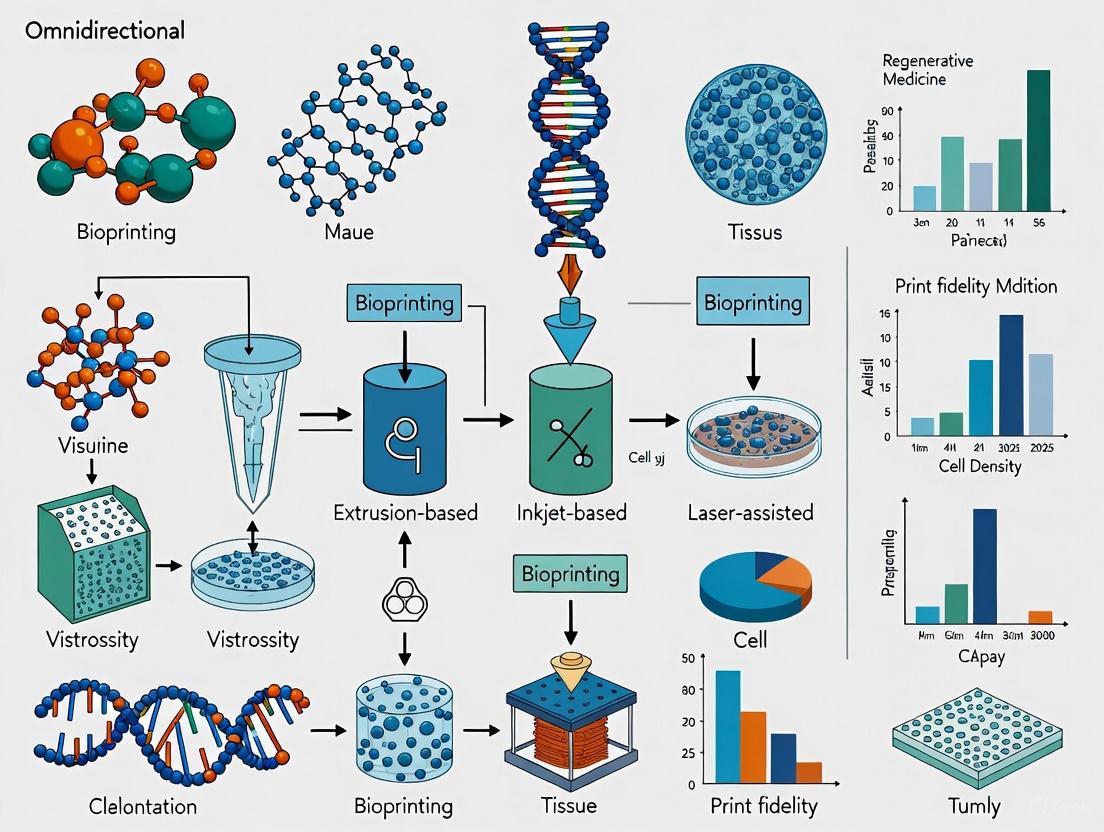
This article explores the transformative potential of omnidirectional 3D bioprinting, a suite of advanced fabrication techniques that overcome the limitations of traditional layer-by-layer manufacturing.
Omnidirectional 3D Bioprinting: Advanced Strategies for Complex Tissue Engineering and Drug Development
Abstract
This article explores the transformative potential of omnidirectional 3D bioprinting, a suite of advanced fabrication techniques that overcome the limitations of traditional layer-by-layer manufacturing. Aimed at researchers, scientists, and drug development professionals, it provides a comprehensive analysis of how these approaches enable the creation of complex, functional tissue constructs with high cell density and intricate vascular networks. We cover foundational principles, key methodologies like embedded bioprinting, and the integration of AI for process optimization and sustainability. The scope also includes critical troubleshooting strategies, validation protocols for pharmaceutical applications, and a comparative assessment of current technologies, offering a holistic view for advancing biomedical research and clinical translation.
Beyond Layer-by-Layer: Understanding the Core Principles of Omnidirectional 3D Bioprinting
Defining Omnidirectional Bioprinting and Its Need in Tissue Engineering
Omnidirectional bioprinting refers to a subset of embedded 3D bioprinting techniques that enable the freeform deposition of bioinks in three dimensions within a support bath, without being constrained by gravity or the need for layer-by-layer stacking from a build platform [1] [2]. This approach represents a significant departure from conventional bioprinting methods, which are often limited to building structures from the bottom up. The core principle involves extruding bioinks into a yield-stress supporting bath that provides temporary structural support, allowing the creation of complex, overhanging, and hollow tissue constructs that would be impossible to fabricate with traditional methods [2]. The supporting bath material exhibits unique rheological properties, behaving as a solid at rest but flowing like a liquid when subjected to stress above a certain threshold, such as from the moving printer nozzle [2]. This technology has emerged as a powerful strategy for engineering tissues with complex architectures, particularly those requiring anisotropic microstructures that mimic native tissue organization found in skeletal muscle, corneal stroma, and meniscus [1].
The Technological Need in Tissue Engineering
The development of omnidirectional bioprinting addresses several critical limitations in conventional tissue engineering approaches:
Recreation of Complex Native Tissue Architectures
Many tissues in the human body contain anisotropic microstructures resulting from well-ordered arrangements of cells and extracellular matrix (ECM) components [1]. These organized architectures are fundamental to their physiological function. Traditional bioprinting methods struggle to recreate these complex geometric arrangements, whereas omnidirectional bioprinting enables the fabrication of freeform cell-laden anisotropic structures with high precision [1].
Fabrication of Perfusable Vascular Networks
A significant challenge in engineering large-scale tissues is the incorporation of functional vascular networks essential for nutrient delivery and waste removal [2]. Omnidirectional bioprinting allows the direct creation of three-dimensional, complex, perfusable vascular networks by printing sacrificial bioinks in an embedded support bath, which can later be removed to create hollow channels [2].
Expansion of Compatible Biomaterials
Conventional extrusion bioprinting requires bioinks with specific viscosity and crosslinking profiles to maintain structural integrity after deposition. Omnidirectional embedded printing significantly expands the range of usable biomaterials by enabling the printing of low-viscosity soft hydrogels, including many ECM-derived hydrogels like collagen and Matrigel with excellent biological properties [2].
Table 1: Comparison of Conventional vs. Omnidirectional Bioprinting Approaches
| Feature | Conventional Bioprinting | Omnidirectional Bioprinting |
|---|---|---|
| Structural Freedom | Limited to bottom-up, layer-by-layer fabrication | Freeform 3D deposition without directional constraints |
| Support Requirements | Often requires temporary sacrificial supports | Utilizes yield-stress support baths that fully surround printed structure |
| Bioink Compatibility | Restricted to rapidly crosslinking or high-viscosity materials | Compatible with low-viscosity, ECM-derived hydrogels |
| Complex Architecture | Limited ability to create overhangs and hollow structures | Enables creation of complex voids, channels, and overhangs |
| Vascularization Potential | Challenging to create 3D perfusable networks | Direct printing of sacrificial vascular templates |
Key Methodological Approaches
Embedded 3D Bioprinting with Shear-Oriented Bioinks
This approach focuses on creating anisotropic structures by utilizing the shear stress generated during the extrusion process to align bioink components and encapsulated cells [1]. The method employs a shear-oriented bioink system composed of materials like GelMA/PEO (gelatin methacryloyl/polyethylene oxide), where shear forces during extrusion induce temporary alignment that can be fixed via photocrosslinking [1]. This technique enables the fabrication of tissue constructs with directional characteristics that mimic native anisotropic tissues like muscle [1].
Experimental Protocol 1: Embedded Bioprinting of Anisotropic Constructs
| Step | Procedure | Parameters & Considerations |
|---|---|---|
| 1. Bioink Preparation | Prepare GelMA/PEO bioink solution and encapsulate cells at appropriate density. | GelMA concentration: 5-15%; Cell density: 1-10 million cells/mL; Maintain sterility |
| 2. Support Bath Preparation | Prepare yield-stress support bath (e.g., gelatin microgel, carrageenan, or nanoclay). | Storage modulus: 100-1000 Pa; Yield stress: 10-100 Pa; Temperature: 4-37°C |
| 3. Printing Process | Extrude bioink into support bath using omnidirectional printing path. | Nozzle diameter: 100-400 μm; Printing pressure: 10-30 kPa; Printing speed: 5-15 mm/s |
| 4. Photo-crosslinking | Apply UV light to crosslink printed structures within support bath. | Wavelength: 365-405 nm; Intensity: 5-20 mW/cm²; Exposure time: 30-60 seconds |
| 5. Support Bath Removal | Remove crosslinked structure from support bath using gentle washing. | Temperature adjustment if thermosensitive bath; Use isotonic buffer solutions |
Ceramic Omnidirectional Bioprinting in Cell-Suspensions (COBICS)
The COBICS technique enables the printing of bone-mimetic structures using a ceramic-based ink within a gelatin-based microgel suspension containing living cells [3] [4] [5]. This approach addresses the challenge of creating mineralized tissue constructs by utilizing a calcium phosphate-based ink that hardens through nanoprecipitation when exposed to aqueous environments, mimicking natural bone biomineralization [6] [7]. The technique allows for the fabrication of complex, biologically relevant bone constructs without the need for harsh post-processing steps like high-temperature sintering or toxic chemicals [5].
Experimental Protocol 2: COBICS for Bone Tissue Engineering
| Step | Procedure | Parameters & Considerations |
|---|---|---|
| 1. Ceramic Ink Preparation | Formulate calcium phosphate-based ink (primarily hydroxyapatite). | Ink viscosity: Paste-like consistency at room temperature; Sterile filtration |
| 2. Cell Suspension Preparation | Suspend bone progenitor cells in gelatin-based microgel support bath. | Cell type: Mesenchymal stem cells or osteoprogenitors; Density: 5-20 million cells/mL |
| 3. Printing Process | Directly print ceramic ink into cell-laden support bath. | Nozzle diameter: 200-500 μm; Printing path: Follows anatomical defect geometry |
| 4. Setting Reaction | Allow ink to set through nanocrystallization in aqueous environment. | Setting time: 5-10 minutes; Conversion to bone apatite nanocrystals |
| 5. Construct Maturation | Culture printed construct in osteogenic media to promote bone formation. | Culture duration: 2-6 weeks; Media: Supplemented with β-glycerophosphate, ascorbic acid |
Omnidirectional Elastic Constraint-Based Printing (OECP)
The SPIRIT v2.0 technique (Sequential Printing in a Reversible Ink Template) incorporates an OECP strategy that significantly expands the range of supporting baths suitable for omnidirectional printing [2]. This approach reduces the rheological demands on supporting baths by leveraging an external yield-stress fluid (YSF) bath to provide omnidirectional elastic constraint and spatial envelopment for printed structures [2]. This innovation enables embedded printing in various ECM-based hydrogels like hyaluronic acid methacrylate (HAMA) and gelatin methacryloyl (GelMA) that lack intrinsic yield-stress properties but offer excellent biological functionality [2].
Visualization of Workflows
Omnidirectional Bioprinting Conceptual Workflow
SPIRIT v2.0 Technical Workflow
The Scientist's Toolkit: Essential Research Reagents
Table 2: Key Research Reagents for Omnidirectional Bioprinting
| Reagent Category | Specific Examples | Function & Application |
|---|---|---|
| Bioink Materials | GelMA (Gelatin Methacryloyl) [1] [2] | Photocrosslinkable hydrogel providing cell adhesion motifs and tunable mechanical properties. |
| HAMA (Hyaluronic Acid Methacrylate) [2] | ECM-derived photocrosslinkable hydrogel with excellent biocompatibility for cartilage and soft tissues. | |
| Shear-oriented Bioinks (GelMA/PEO) [1] | Composite bioinks that align under shear stress to create anisotropic tissue structures. | |
| Ceramic Inks | Calcium Phosphate-based Inks [3] [5] | Mineral-based inks for bone tissue engineering that harden via nanocrystallization in aqueous environments. |
| Hydroxyapatite Inks [7] | Bone mineral component ink that mimics native bone composition and supports osteogenesis. | |
| Support Bath Materials | Gelatin Microgels [2] [5] | Thermoresponsive yield-stress support bath providing temporary structural support during printing. |
| Carrageenan Support Baths [1] | Polysaccharide-based support bath that provides in-situ encapsulation and stabilization. | |
| Nanoclay Suspensions (Laponite) [2] | Nanomaterial-based yield-stress fluids with excellent self-healing properties for support baths. | |
| Crosslinkers & Initiators | LAP (Lithium Phenyl-2,4,6-trimethylbenzoylphosphinate) [2] | Photoinitiator for visible light crosslinking of methacrylated hydrogels with enhanced biocompatibility. |
| Sacrificial Materials | Pluronic F127 [2] | Thermoresponsive polymer used as sacrificial bioink to create perfusable vascular channels. |
Current Challenges and Future Directions
Despite significant advances, several challenges remain in the widespread implementation of omnidirectional bioprinting technologies. There is a continuing need to expand the range of compatible bioinks that better mimic native tissue ECM while maintaining printability [8]. Additionally, achieving vascularization of large-scale constructs remains a hurdle, though omnidirectional printing of sacrificial vascular templates shows promise [2]. The integration of multiple cell types in precise spatial arrangements to recreate tissue complexity also requires further development [1] [8]. Future directions include the development of multi-material printing systems capable of seamlessly transitioning between different bioinks, and the creation of dynamic support baths with tunable properties that can be modified during the printing process [2]. As these technologies mature, omnidirectional bioprinting is poised to become an essential tool for creating functional tissue constructs for both regenerative medicine and disease modeling applications.
The Limitations of Conventional 3D Bioprinting for Complex Tissues
Three-dimensional (3D) bioprinting is a transformative biofabrication technology that enables the precise, layer-by-layer deposition of cell-laden bioinks to create 3D tissue constructs [9]. This technology aims to replicate the complex architecture and function of native tissues for applications in tissue repair, disease modeling, and drug testing [9]. Conventional bioprinting modalities have facilitated significant advancements in developing biomimetic tissues and primarily include extrusion-based bioprinting (EBB), droplet-based bioprinting (DBB), and light-based bioprinting (LiBB), which includes stereolithography and laser-assisted bioprinting [9] [10].
Despite these advancements, as the demand for building more biomimetic, scalable, and vascularized tissues increases, the inherent limitations of these conventional bioprinting methods become apparent [9] [11]. This document details the specific limitations of conventional bioprinting and provides structured experimental protocols for evaluating these constraints within research focused on developing advanced omnidirectional 3D bioprinting approaches.
Key Limitations of Conventional Bioprinting Technologies
Conventional bioprinting modalities face several interconnected constraints that hinder their ability to fabricate highly complex, functional tissues and organs. Key challenges include limited resolution and structural integrity, mechanical and biological compatibility issues, inadequate vascularization, bioink constraints, and scalability challenges [9].
Table 1: Key Limitations of Conventional 3D Bioprinting Modalities
| Limitation Category | Specific Challenge | Impact on Tissue Biofabrication |
|---|---|---|
| Resolution & Precision | Inability to replicate hierarchical structures and fine details (e.g., microvascular networks) [9]. | Hinders creation of physiologically relevant tissues with complex microarchitectures. |
| Structural Integrity | Difficulty in achieving structural stability for soft, hydrated constructs without compromising cell viability [9]. | Limits the fabrication of free-standing, volumetric tissue constructs. |
| Vascularization | Challenges in creating perfusable, branched vascular networks within volumetric tissues [9] [10]. | Restricts nutrient/waste exchange, leading to necrotic cores in thick tissues (>200 µm). |
| Bioink Constraints | Limited availability of bioinks that provide both printability and biofunctionality [9]. | Trade-off between mechanical integrity (high viscosity) and cell viability (low viscosity). |
| Cell Viability & Function | Mechanical stress (shear, pressure) during printing can reduce cell viability and function [9]. | Impacts the health and biological performance of the final bioprinted construct. |
| Scalability & Speed | Layer-by-layer process is often slow, making fabrication of large, human-scale tissues time-consuming [9] [11]. | Barrier to clinical and industrial translation where scale and throughput are critical. |
| Dynamic Remodeling | Limited ability of bioprinted constructs to adapt, remodel, and mature post-printing like native tissues [9]. | Results in static constructs that may not fully integrate or function in a dynamic biological environment. |
Quantitative Comparison of Conventional Bioprinting Technologies
The limitations of conventional bioprinting can be further understood by comparing the technical specifications and performance metrics of different modalities. The following table summarizes quantitative data from commercial systems and research findings.
Table 2: Performance Comparison of Conventional Bioprinting Technologies
| Bioprinting Technology | Typical Resolution | Cell Viability | Print Speed | Key Bioink Properties | Cost Estimate (USD) |
|---|---|---|---|---|---|
| Extrusion-Based (EBB) | 100 µm [12] - 1 mm [9] | Medium-High (40-95%) [9] | 1-20 mm/s [12] | High viscosity, tunable rheology [9] | $1,500 - $350,000 [12] |
| Droplet-Based (Inkjet) | 10 µm - 100 µm [12] | High (>85%) [9] | Recommended ≤20 mm/s [12] | Low viscosity, surface tension critical [13] | ~$5,000 [12] |
| Stereolithography (SLA) | 1.6 µm (XY) [12] - 50 µm [9] | Medium-High [9] | Up to 400 mm/s [12] | Photocurable, optical clarity [9] | $24,900 and above [12] |
| Laser-Assisted (LaBB) | 1 µm (XY) [12] - 50 µm [9] | High (>95%) [9] | N/A | Requires laser-absorbing layer, low viscosity [9] | $99,995 and above [12] |
Experimental Protocol for Assessing Bioprinting Limitations
This protocol provides a methodology to systematically evaluate the limitations of conventional extrusion bioprinting in fabricating complex tissues, providing a baseline for comparing advanced omnidirectional approaches.
Aim
To quantitatively assess the resolution, cell viability, and structural integrity of extrusion-bioprinted constructs with varying architectural complexity.
Materials and Reagents
Table 3: Research Reagent Solutions for Bioprinting Assessment
| Item | Function/Description | Example Supplier/Composition |
|---|---|---|
| GelMA (Gelatin Methacryloyl) | Photocrosslinkable bioink base providing a biocompatible and tunable hydrogel matrix. | Cellink, Advanced BioMatrix |
| LAP Photoinitiator | (Lithium phenyl-2,4,6-trimethylbenzoylphosphinate) Initiates crosslinking of GelMA upon exposure to 405 nm light. | Sigma-Aldrich |
| Human Dermal Fibroblasts (HDFs) | Model cell line for assessing cell viability and biological response post-printing. | ATCC, Lonza |
| Live/Dead Viability/Cytotoxicity Kit | Fluorescent assay (Calcein-AM/EthD-1) for quantifying live and dead cells within bioprinted constructs. | Thermo Fisher Scientific |
| Phalloidin/DAPI Stain | Fluorescent stains for visualizing F-actin cytoskeleton (Phalloidin) and cell nuclei (DAPI) to assess cell morphology and distribution. | Thermo Fisher Scientific |
| DMEM Culture Medium | (Dulbecco's Modified Eagle Medium) Nutrient medium for cell expansion and post-printing culture. | Thermo Fisher Scientific, Sigma-Aldrich |
| PBS (Phosphate Buffered Saline) | Buffer for washing cells and dilutions. | Thermo Fisher Scientific, Sigma-Aldrich |
Equipment
- Extrusion-based 3D bioprinter (e.g., BIO X, Allevi)
- Sterile Laminar Flow Hood
- Cell Culture Incubator (37°C, 5% CO₂)
- 405 nm UV Light Source (for crosslinking)
- Confocal Microscope
- Mechanical Testing System (e.g., uniaxial tester)
Methodology
Step 1: Bioink Preparation
- Synthesize or purchase 5% (w/v) GelMA.
- Dissolve LAP photoinitiator in PBS at 0.25% (w/v) and mix with GelMA solution.
- Trypsinize, count, and mix HDFs with the bioink to a final density of 5 million cells/mL. Keep the bioink on ice until printing to prevent premature crosslinking.
Step 2: Design and Bioprinting
- Design three test structures using CAD software:
- Simple Grid: Single-layer 10x10 mm grid with 1 mm spacing.
- Multi-layered Cube: 5x5x2 mm cube (4 layers).
- Complex Hollow Tube: 8 mm height, 2 mm outer diameter, 1 mm inner diameter.
- Transfer designs to the bioprinter as G-code or STL files.
- Using a 22G nozzle, print all structures into a petri dish. Maintain printing pressure between 20-30 kPa and a speed of 10 mm/s.
- Immediately after printing, crosslink each construct with 405 nm light (5 mW/cm²) for 60 seconds.
Step 3: Post-Printing Analysis
- Cell Viability Assessment (Day 1, 3, 7):
- Incubate constructs in Live/Dead stain solution for 45 minutes.
- Image using a confocal microscope (minimum 3 locations per construct).
- Quantify viability using ImageJ software:
(Live Cells / Total Cells) * 100.
Resolution and Fidelity Assessment (Day 1):
- Acquire brightfield and fluorescent (Phalloidin/DAPI) images.
- Measure the actual strand diameter (n=10 per structure) and pore size, comparing them to the designed dimensions.
- Calculate the printing fidelity:
(Designed Dimension / Actual Dimension) * 100.
Structural Integrity Assessment (Day 1):
- Perform uniaxial compression tests on the cube constructs (n=5) at a strain rate of 1 mm/min.
- Record the compressive modulus from the linear region of the stress-strain curve.
Expected Outcomes
- Cell Viability: Typically ranges from 70% to 90% post-printing, potentially decreasing in the core of thicker constructs (e.g., the cube) over 7 days due to diffusion limitations.
- Resolution/Fidelity: Strand diameter and pore size will likely deviate from the design, with fidelity decreasing as structural complexity increases (e.g., poorest fidelity in the hollow tube).
- Structural Integrity: The compressive modulus will indicate the mechanical stability, which may be insufficient for the hollow tube to maintain its patency without collapsing.
Workflow and Pathway Diagram
The following diagram illustrates the logical relationship between the limitations of conventional bioprinting, the experimental validation protocol, and the overarching goal of developing omnidirectional solutions.
The Path Forward: Necessity of Omnidirectional Approaches
The empirical data gathered using the provided protocol will likely confirm the critical limitations of conventional layer-by-layer bioprinting. These constraints represent a significant bottleneck for creating clinically relevant, complex tissues [9] [11]. This validates the research imperative to develop omnidirectional 3D bioprinting approaches.
These advanced strategies, which may include embedded bioprinting, volumetric bioprinting, or magnetic levitation, aim to overcome these hurdles by:
- Enabling Freeform Fabrication: Depositing bioinks in 3D space without the need for layer-by-layer support, allowing for true volumetric tissue construction [9].
- Enhancing Vascularization: Facilitating the direct writing of intricate, perfusable vascular networks within the tissue volume [9].
- Improving Cell Viability: Minimizing mechanical shear stress by printing within supportive environments [9].
- Increasing Functional Biomimicry: Providing a platform to create more physiologically accurate tissue models and grafts, which is the ultimate goal of tissue biofabrication research [9] [10].
By systematically quantifying the limitations of conventional methods, researchers can build a compelling case for the adoption and development of innovative omnidirectional bioprinting technologies.
Key Physical and Biological Principles of Gel-in-Gel Embedded Printing
Embedded bioprinting, a gel-in-gel approach, represents a pivotal advancement in the field of omnidirectional 3D bioprinting. This technique deposits low-viscosity bio-inks into a temporary support bath, enabling the fabrication of complex, freeform anatomical structures that are impossible to create with traditional layer-by-layer printing [14] [15]. The approach overcomes fundamental limitations of gravitational collapse and structural overhang by leveraging the unique rheological properties of the support matrix, which acts as a fluid during nozzle passage yet provides solid-like support for the deposited bio-ink [16] [15]. This protocol outlines the core physical and biological principles essential for implementing embedded bioprinting strategies, with a focus on replicating native tissue complexity for applications in tissue engineering, disease modeling, and drug development.
Core Principles
Physical and Rheological Foundations
The success of embedded bioprinting hinges on the precise engineering of the support bath's viscoelastic properties. The support medium, typically a microgranular gel or yield-stress fluid, must exhibit several key rheological behaviors:
- Yield-Stress Behavior: The support bath must possess a sufficient yield stress (σy) to prevent the collapse of deposited bio-ink filaments. It behaves as a solid below a critical stress threshold but flows as a liquid when this yield stress is exceeded by the moving print nozzle [17] [15].
- Shear-Thinning and Self-Healing: The viscosity of the support bath should decrease under the high shear stress from the moving nozzle, facilitating smooth movement. Once the stress is removed, the material must rapidly recover its solid-like, elastic properties (a phenomenon known as elastic recovery) to encapsulate and support the printed structure [18] [16].
- Rapid Solvent Exchange: A recent breakthrough demonstrates that ultra-fine fibers down to 1.5 µm in diameter can be achieved via embedded 3D printing by solvent exchange (3DPX). This process involves the rapid interdiffusion of the ink's solvent and the bath's non-solvent, leading to instantaneous solidification of the polymer ink that prevents capillary break-up. This method enables printing speeds of 5 mm/s, which is over 500,000 times faster than meniscus-based approaches for achieving similar feature sizes [17].
Biological Compatibility and Microenvironment
The biological imperative of embedded bioprinting is to maintain a protective, hydrated microenvironment that sustains cell viability and function throughout the printing process and during subsequent crosslinking.
- Cytocompatible Conditions: The entire process, from bio-ink formulation to support bath removal, must occur under mild, physiological conditions (e.g., pH, osmolarity, temperature) to preserve cell viability, which typically ranges from 50% to over 95% in extrusion bioprinting [15].
- Support Bath Biocompatibility: The support bath material must be non-toxic and, ideally, provide a beneficial environment for cells. Materials like gelatin and fluid gels of agarose are common due to their excellent biocompatibility [18] [16].
- Minimized Shear Stress: Bio-inks are engineered for low viscosity and shear-thinning behavior to reduce the extrusion pressures that can induce damaging shear stress on cells [16] [15].
Table 1: Key Rheological Properties of Support Baths and Bio-inks
| Property | Principle | Significance in Embedded Printing | Target Characteristics |
|---|---|---|---|
| Yield Stress | The stress at which a material begins to deform plastically [18]. | Prevents the support bath from flowing and the printed structure from collapsing under its own weight [17]. | Sufficient σy to support bio-ink; low enough for nozzle movement. |
| Shear-Thinning | Viscosity decreases with increasing shear rate [18]. | Facilitates easy nozzle movement through the support bath; enables smooth bio-ink extrusion. | High viscosity at rest, low viscosity under shear. |
| Elastic Recovery | The ability of a material to return to its original shape after deformation [18]. | The support bath quickly "heals" behind the nozzle, trapping the bio-ink in a 3D space [16]. | Rapid recovery of solid-like properties post-shear. |
| Rapid Solidification | Instantaneous phase change via mechanisms like solvent exchange [17]. | Prevents capillary break-up of ultra-fine filaments; enables high-resolution, high-speed printing. | Solidification rate >> capillary break-up rate. |
Experimental Protocols
Protocol 1: Embedded 3D Printing by Solvent Exchange (3DPX) for High-Resolution Fibers
This protocol details the method for printing continuous, soft fibers with diameters as fine as 1.5 µm, as described in the recent Nature Communications article [17].
1. Materials
- Polymer Ink: Select a polymer (e.g., SEBS, polystyrene, PVC) and a compatible solvent (e.g., Toluene for SEBS).
- Support Bath: Prepare a high yield-stress microgranular gel. The gel's continuous phase should be a non-solvent for the polymer (e.g., Ethanol for SEBS/toluene ink) that is miscible with the ink's solvent.
- Equipment: Multi-nozzle extrusion 3D bioprinter with precision pressure control.
2. Methodology
- Step 1: System Design. Construct a ternary phase diagram for the polymer, solvent, and non-solvent to identify the concentration thresholds for phase separation and solidification [17].
- Step 2: Support Bath Preparation. Synthesize the yield-stress support gel, ensuring it is transparent to allow for visual monitoring of the printing process.
- Step 3: Printing Parameters. Load the polymer solution into the printing cartridge. Extrude the ink into the support bath at a speed of 5 mm/s. The solvent (toluene) will rapidly diffuse out into the bath, while the non-solvent (ethanol) diffuses in, causing instantaneous radial solidification of the polymer filament.
- Step 4: Post-Printing Processing. After printing is complete, carefully retrieve the printed structure from the support bath. Wash the structure in a pure non-solvent bath to ensure complete removal of the support medium and residual solvent.
Protocol 2: Embedded Bioprinting of Cell-Laden Constructs
This protocol is optimized for printing with low-viscosity, cell-laden bio-inks for tissue engineering applications [19] [15].
1. Materials
- Bio-ink: A low-viscosity hydrogel precursor such as collagen, alginate, or GelMA. Mix with cells at a density of 1x10^6 to 1x10^8 cells/mL [15].
- Support Bath: Use a cytocompatible fluid gel, such as an agarose microgel or a gelatin-based slurry.
- Crosslinking Solution: Prepare an appropriate crosslinker (e.g., CaCl₂ for alginate, or UV light for GelMA).
2. Methodology
- Step 1: Bio-ink Preparation. Keep the bio-ink at a low temperature to prevent premature gelation during loading. Gently mix the cells to ensure homogeneity.
- Step 2: Printing. Maintain the support bath at a constant physiological temperature (e.g., 37°C). Extrude the bio-ink using low pneumatic or mechanical pressure to minimize shear stress on cells. The support bath will temporarily hold the bio-ink in place.
- Step 3: Crosslinking. Induce gelation of the bio-ink post-printing. For ionic crosslinking (alginate), perfuse the crosslinking solution through the support bath. For photo-crosslinking (GelMA), expose the entire printing vessel to UV light.
- Step 4: Extraction. Once crosslinked, gently release the construct. For thermo-reversible support baths (e.g., gelatin), a temperature change can be used to liquefy and remove the support material [18].
Table 2: Research Reagent Solutions for Embedded Bioprinting
| Reagent/Category | Specific Examples | Function & Application Notes |
|---|---|---|
| Support Bath Materials | Agarose microgel [16], Carbopol [17], Gelatin slurry [18], Purified gelatin [18]. | Provides a temporary, self-healing 3D scaffold for printing; choice depends on required transparency, rheology, and removal method. |
| Bio-ink Polymers | Alginate, Gelatin Methacrylate (GelMA) [15], Collagen [15], Fibrinogen [15]. | Forms the primary scaffold for cells; provides biochemical cues and mechanical support post-crosslinking. |
| Sacrificial Inks | Pluronic F127 [15], Gelatin [18] [15], Agarose [15]. | Used to create hollow channels (e.g., for vascularization); printed as a template and later removed via dissolution or melting. |
| Crosslinking Agents | Calcium Chloride (CaCl₂) [16], UV Light [16]. | Induces gelation of the bio-ink, transforming it from a fluid to a solid gel, stabilizing the printed structure. |
Workflow and Data Visualization
The following workflow diagram summarizes the key decision points and procedural steps in a generic embedded bioprinting experiment.
Diagram 1: Embedded Bioprinting Experimental Workflow. This chart outlines the key stages from project definition to functional analysis, highlighting critical decision points for material selection and process optimization.
The physical principle of rapid solvent exchange, central to the 3DPX protocol, is detailed in the following diagram.
Diagram 2: Solvent Exchange Principle for High-Resolution Printing. This sequence illustrates the diffusion-driven mechanism that enables the printing of ultra-fine, continuous fibers by opposing capillary-induced break-up through rapid solidification [17].
Embedded gel-in-gel printing establishes a robust framework for omnidirectional 3D bioprinting by solving fundamental challenges of structural fidelity and biological compatibility. The convergence of yield-stress support rheology, rapid bio-ink solidification mechanisms like solvent exchange, and cytocompatible processing conditions enables the fabrication of anatomically accurate tissue models. As the field progresses, the integration of real-time process monitoring [20] and intelligent parameter control will be critical for achieving the reproducibility required for clinical translation and high-throughput drug development. These protocols provide a foundational methodology for researchers to explore complex tissue architectures with high resolution and biological function.
Application Note
This application note details a protocol for fabricating a heterogeneous tissue-engineered construct (hetTEC) that replicates the intricate hierarchical structure and mechanical heterogeneity of native fibrocartilage. Conventional homogeneous scaffolds fail to recapitulate the proteoglycan-rich microdomains (PGmDs) embedded within a fibrous microdomain (FmD) matrix, a structure critical for proper tissue mechanobiology [21]. This protocol utilizes an omnidirectional 3D bioprinting approach within a support bath to create these microstructures, enabling the study of context-dependent cellular responses to mechanical stimuli and advancing the development of therapeutic tissue grafts [22] [21].
Quantitative Analysis of Native Tissue Microstructure
The design parameters for the hetTEC are derived from quantitative benchmarks of native bovine and human meniscus tissue [21]. The following table summarizes the key microstructural characteristics that must be replicated.
Table 1: Microstructural Benchmarks of Native Fibrocartilage (Outer Meniscus)
| Tissue Source | PGmD Prevalence (per mm²) | PGmD Area (μm²) | Key Correlations |
|---|---|---|---|
| Fetal Bovine | Lowest | Smallest | - |
| Juvenile Bovine | ~3-4 [21] | Intermediate | - |
| Adult Bovine | ~3-4 [21] | Largest (>20,000) [21] | - |
| Human | ~3-4 [21] | ~15,000 - 25,000 [21] | Positive correlation with donor age and Body Mass Index (BMI) [21] |
Microstructural and Micromechanical Performance
The successful replication of native microstructure directly translates to the replication of native micromechanical strain transfer, a critical factor in cellular mechanotransduction.
Table 2: Micromechanical Strain Transfer in Native Tissue and hetTEC Benchmarks
| Microdomain Type | Tissue-level Strain Transfer (Fetal) | Tissue-level Strain Transfer (Juvenile/Adult) | hetTEC Target Performance |
|---|---|---|---|
| Fibrous Microdomain (FmD) | ~80% [21] | ~65% [21] | Strain amplification/attenuation matching native FmDs [21] |
| Proteoglycan-rich Microdomain (PGmD) | ~80% [21] | ~20-25% [21] | Significant strain attenuation (~20-25%) compared to surrounding FmD [21] |
Protocol: Bioprinting Heterogeneous Tissue Engineered Constructs (hetTECs)
Graphical Workflow
I. Materials and Equipment
A. Research Reagent Solutions
Table 3: Essential Reagents and Materials for hetTEC Bioprinting
| Item Name | Function/Description | Example Source / Composition |
|---|---|---|
| Fibrin-based Bioink | Cell-laden hydrogel for the FmD; provides biocompatibility and structural foundation. | TissuePrint bioink [23] |
| Alginate-Gelatin Blend | Sacrificial bioink for creating PGmDs; can be selectively removed or modified. | Sodium Alginate + Gelatin methacryloyl (GelMA) |
| Primary Chondrocytes | Endogenous cell population for fibrocartilage model. | Isolated from bovine or human meniscus [21] |
| Calcium Chloride (CaCl₂) Crosslinker | Ionic crosslinking agent for alginate-based bioinks. | 100mM solution in PBS [23] |
| Support Bath Gel | Yield-stress fluid enabling omnidirectional printing and structure support. | Carbopol microgel or FRESH support bath [22] [24] |
| Alcian Blue Stain | Histological dye for identifying and quantifying PGmDs. | 1% solution in 3% acetic acid [21] |
| Picrosirius Red Stain | Histological dye for visualizing collagen fibers in FmDs. | Commercial staining kit [21] |
B. Laboratory Equipment
- Omnidirectional Bioprinter: Extrusion-based bioprinter equipped with concentric tube robot printheads for multi-angular access [22]. Example: BIO X6 bioprinter with multiple printheads [25] [12].
- Printhead Configuration: Dual-printhead system (temperature-controlled).
- Confocal-Mounted Microtensile Device: Custom system for applying physiological strain while simultaneously imaging live-cell responses [21].
- Humidified CO₂ Incubator: Maintained at 37°C and 5% CO₂.
II. Step-by-Step Procedure
Step 1: Bioink Formulation and Cell Preparation
Timing: 2-3 hours
FmD Bioink: a. Prepare a fibrin-based bioink (e.g., TissuePrint) according to manufacturer specifications [23]. b. Mix primary chondrocytes (passage 2-4) into the bioink at a density of 10-20 x 10⁶ cells/mL. Gently mix to ensure uniform distribution without introducing bubbles. c. Load the cell-laden bioink into a sterile 3mL printing cartridge. Keep on ice or at room temperature per bioink requirements.
PGmD Bioink: a. Prepare a 4% (w/v) alginate and 5% (w/v) GelMA blend in sterile cell culture medium. b. This bioink is typically acellular for creating the mechanical microdomain. Load into a separate printing cartridge.
Step 2: Support Bath Preparation
Timing: 1 hour
- Prepare a 1-2% (w/v) Carbopol microgel in PBS or a FRESH support bath according to established protocols [24].
- Adjust the pH to 7.4 using 1M Sodium Hydroxide (NaOH) to ensure cell compatibility and proper rheological properties.
- Pour the support bath into a sterile printing petri dish to a depth of at least 1 cm.
Step 3: Omnidirectional Bioprinting of hetTEC
Timing: 30-60 minutes per construct
- CAD Model Import: Load the digital design of the hetTEC into the bioprinter software. The design should specify the locations for the FmD matrix and the embedded PGmDs.
- Printing Parameters:
- Nozzle Diameter: 22G-27G (250-410 μm)
- Print Pressure: 20 - 80 kPa (optimize for consistent filament formation)
- Print Speed: 5 - 15 mm/s
- Printhead Temperature: 18-22°C
- Printing Sequence: a. Using the omnidirectional printhead, first print the base FmD structure by extruding the cell-laden fibrin bioink in a layered pattern within the support bath [22]. b. Pause printing at the predetermined layer. c. Switch to the PGmD printhead and extrude the alginate-GelMA blend to create discrete, localized domains within the FmD structure, mimicking the size and distribution from Table 1. d. Resume printing with the FmD bioink to fully encapsulate the PGmDs.
- Repeat this sequence to build the 3D construct layer-by-layer or through freeform omnidirectional paths.
Step 4: Crosslinking and Support Bath Removal
Timing: 1-2 hours
- After printing, carefully flood the support bath with a 100mM CaCl₂ solution to ionically crosslink the alginate within the PGmDs.
- Incubate for 10-15 minutes.
- Gently remove the CaCl₂ solution and wash the construct with PBS.
- To release the crosslinked hetTEC from the support bath, use a wide-bore pipette or spatula to gently lift the construct. Alternatively, melt or dissolve the support bath according to its specific protocol (e.g., by lowering pH for Carbopol or raising temperature for gelatin-based FRESH baths) [24].
Step 5: Mechanical and Biological Validation
Timing: 2-48 hours
Micromechanical Strain Mapping: a. Mount the hetTEC on the confocal-mounted microtensile device [21]. b. Apply a uniaxial tensile strain (e.g., 5-15%). c. Use confocal microscopy to track fluorescent beads embedded in the matrix or monitor cell deformation. d. Calculate local strain fields in both FmDs and PGmDs. The hetTEC is successful if it reproduces the strain transfer benchmarks listed in Table 2.
Mechanobiological Assay (Calcium Signaling): a. Load the hetTEC with a fluorescent intracellular calcium indicator (e.g., Fluo-4 AM). b. Apply a controlled mechanical stimulus via the tensile device while simultaneously performing live-cell confocal imaging. c. Quantify the immediate calcium flux response in cells located within FmDs versus those adjacent to or within PGmDs. A distinct response profile between the two domains indicates recapitulation of native mechanobiology [21].
Conceptual Framework for Analysis
Troubleshooting
| Problem | Possible Cause | Solution |
|---|---|---|
| Poor structural integrity post-printing | Insufficient crosslinking; rapid printing speed. | Increase CaCl₂ crosslinking time; optimize bioink viscosity; reduce print speed. |
| PGmDs and FmDs merge during printing | Bioinks have similar rheological properties. | Increase the viscosity of the PGmD bioink; optimize support bath yield stress. |
| Low cell viability post-printing | Excessive shear stress during extrusion; toxic crosslinker. | Use a larger nozzle diameter; reduce print pressure; ensure crosslinker is biocompatible and well-rinsed. |
| Inaccurate strain transfer measurements | Construct not properly secured; applied strain too high/low. | Ensure firm grip in tensile device; verify strain levels are within physiological range (5-15%). |
Strategies and Implementations: Embedded, Support Bath, and Multi-Material Bioprinting in Action
A Deep Dive into Embedded 3D Bioprinting Strategies
Embedded 3D bioprinting represents a transformative gel-in-gel approach that has emerged to overcome the fundamental limitations of conventional bioprinting methods. Traditional layer-by-layer bioprinting techniques face significant challenges with gravitational collapse, structural instability, and the inability to create complex overhanging structures [14]. Embedded bioprinting addresses these constraints by depositing bioinks directly into a support bath, typically composed of microgel or granular materials, which provides temporary mechanical support during the printing process [14]. This innovative strategy enables the fabrication of complex, freeform architectures with micron-scale resolution, including vascular networks, hollow structures, and anatomical models that closely mimic native tissues [14].
The foundational principle of embedded bioprinting relies on the rapid sol-gel transition of the support bath facilitated by needle movement within the granular medium [14]. This physical mechanism allows for precise deposition of low-viscosity bioinks that would otherwise lack structural integrity in air [26]. Since its early developments around 2011, the technology has progressed significantly, with applications expanding from simple tissue constructs to complex, human-scale organ models [14]. The evolution of embedded bioprinting has been characterized by innovations in support bath materials, bioink formulations, and printing methodologies, collectively enabling more physiologically relevant tissue models for research and therapeutic applications.
Key Strategies and Quantitative Comparisons
Embedded bioprinting encompasses several distinct strategies, each with unique advantages, limitations, and applications. Understanding these approaches is essential for selecting the appropriate methodology for specific tissue engineering goals.
Table 1: Comparison of Embedded Bioprinting Strategies
| Strategy | Mechanism | Advantages | Limitations | Ideal Applications |
|---|---|---|---|---|
| Sacrificial Bioprinting | Temporary scaffolds that are later removed | Creates complex hollow structures; High resolution | Multi-step process; Potential residue concerns | Vascular networks; Tubular structures |
| Support Bath Bioprinting | Deposition into granular gel suspension | Enables freeform printing; Supports low-viscosity inks | Support removal critical; Bath stability challenges | Anatomical models; Soft tissues |
| Omnidirectional Anisotropic | Shear-oriented bioink in support bath | Creates directional microstructures; Enhanced porosity | Bioink formulation complexity; Multi-phase separation | Muscle tissue; Corneal stroma; Meniscus |
The recent development of omnidirectional anisotropic embedded bioprinting represents a significant advancement, particularly for tissues with inherent directional organization [26]. This approach utilizes shear-oriented bioinks that align during extrusion, creating microstructural anisotropy that mimics native tissue organization. The system employs a GelMA/PEO (polyethylene oxide) composite bioink, where PEO acts as a thickening agent and facilitates shear-induced orientation during extrusion [26]. Following printing and photocrosslinking, the water-soluble PEO is dissolved, creating porous, aligned GelMA fibers that provide topographic cues for cellular organization [26].
Table 2: Support Bath System Requirements for Human-Scale Organ Printing
| Parameter | Ideal Requirement | Functional Significance |
|---|---|---|
| Viscoelasticity | Yield-stress behavior | Flows during needle movement, self-heals after deposition |
| Stability | Maintains integrity for extended periods | Supports large, complex structures during prolonged print times |
| Transparency | High optical clarity | Enables visual monitoring and photopolymerization of bioinks |
| Extraction | Mild, non-destructive removal | Preserves printed structure viability and microarchitecture |
| Biocompatibility | Non-toxic, cell-friendly | Maintains cell viability during and after printing process |
Experimental Protocols
Protocol 1: Omnidirectional Anisotropic Embedded Bioprinting with Shear-Oriented Bioink
This protocol details the methodology for creating anisotropic tissue constructs using a shear-oriented GelMA/PEO bioink system within a κ-carrageenan support bath [26].
Materials Required:
- Gelatin methacrylate (GelMA)
- Polyethylene oxide (PEO, molecular weights 100k-710k Da)
- Lithium phenyl-2,4,6-trimethylbenzoylphosphonate (LAP) photoinitiator
- κ-Carrageenan
- Phosphate buffered saline (PBS)
- Methacrylate anhydride for GelMA synthesis
- Dialysis bags (8-14kDa MWCO)
- Cell culture reagents if printing cell-laden constructs
Support Bath Preparation:
- Prepare a 0.7% (w/v) κ-carrageenan solution in PBS.
- Heat and stir the solution at 70°C for 30 minutes until fully dissolved.
- Autoclave the solution at 121°C for 20 minutes for sterilization.
- Refrigerate the solution for at least 2 hours until complete gelation occurs.
- Crush the resulting gel into microparticles using an electric blender at 1000 rpm.
- Pack the κ-carrageenan microgel particles into a 50mL centrifuge tube and centrifuge at 1000 rpm to remove air bubbles.
- The support bath is now ready for printing applications [26].
GelMA Synthesis Protocol:
- Dissolve 10% (w/v) gelatin in PBS at 50°C.
- Slowly add 2mL methacrylate anhydride to the gelatin solution while stirring at 50°C.
- Continue the reaction for 3 hours with constant stirring.
- Add 400mL PBS to terminate the reaction and dilute the mixture.
- Transfer the solution to dialysis bags (8-14kDa MWCO) and dialyze at 37°C until total dissolved solids (TDS) measure <5 ppm.
- Pre-freeze the dialyzed solution at -20°C or -80°C for 2 hours, then freeze-dry for storage [26].
Shear-Oriented Bioink Formulation:
- Prepare a 5% (w/v) GelMA solution containing 0.25% LAP photoinitiator, filter through a 0.22μm membrane.
- Select PEO with optimal molecular weight (400k Da recommended) and add to achieve 1.5% (w/v) concentration.
- Stir the mixture at 37°C for 3 hours to ensure complete dissolution.
- Cool the bioink to 25°C for 10 minutes before loading into printing syringes.
- For cell-laden constructs, mix bioink with cells at this stage, maintaining room temperature at 25°C and regularly inverting syringes (every 20 minutes) for uniform cell distribution [26].
Printing Parameters:
- Nozzle diameter: 22-30G (typically 25G for anisotropic structures)
- Printing temperature: 25°C
- Extrusion pressure: Optimized for specific nozzle size and bioink viscosity
- Crosslinking: Blue light (100 mW/cm²) for complete GelMA photocrosslinking
- Layer height: 50-200μm depending on desired resolution
Post-Printing Processing:
- After printing, carefully extract the construct from the support bath using mild mechanical manipulation or liquid flow.
- Transfer to cell culture medium to dissolve PEO component (requires 24-48 hours).
- The resulting construct exhibits anisotropic, porous architecture suitable for tissue maturation [26].
Protocol 2: Vision-Enhanced Robotic Bioprinting for Precision Improvement
This protocol integrates computer vision with robotic bioprinting to minimize trajectory deviations and improve printing precision, particularly for complex anatomical structures [27].
Materials and Equipment:
- Robotic bioprinting system with extrusion capability
- High-resolution industrial camera (minimum 1080p resolution)
- Image processing software (Python OpenCV, MATLAB, or similar)
- Support bath material (e.g., κ-carrageenan, gelatin microparticles)
- Bioink of choice (appropriate for extrusion)
System Calibration:
- Calibrate camera intrinsic and extrinsic parameters for accurate spatial measurements.
- Establish coordinate transformation between robot and camera reference frames.
- Determine optimal lighting conditions to minimize reflections and shadows.
- Validate system with test patterns of known dimensions.
Vision-Based Path Compensation Algorithm:
- Image Acquisition: Capture high-resolution images after each printed layer.
- Filament Extraction: Process images to identify printed filament centerlines using edge detection and skeletonization algorithms.
- Deviation Analysis: Compare extracted paths with reference trajectories to quantify deviations.
- Path Compensation: Generate adjusted robot paths for subsequent layers based on measured deviations.
- Iterative Refinement: Repeat process layer-by-layer for continuous improvement.
Implementation for Different Geometries:
Curved-Shape Layers:
- Print initial layer according to reference path.
- Capture image and extract centerline of printed filament.
- Calculate deviation between reference and actual printed path.
- Generate compensated path for next layer by adjusting reference path based on measured deviations.
- Continue iterative compensation for each subsequent layer [27].
Side-by-Side Layers:
- Print first filament according to reference path.
- Capture image and measure actual filament width.
- Adjust spacing between subsequent filaments based on measured width to prevent overlap or excessive gaps.
- Implement spacing compensation for all parallel filaments in the layer [27].
Validation Metrics:
- Layer width disparity: Target <0.15mm deviation
- Curved filament error area: Target <7.0mm²
- Structural fidelity compared to digital model
Visualization of Key Concepts
Workflow: Omnidirectional Anisotropic Bioprinting
Workflow: Vision-Enhanced Bioprinting
The Scientist's Toolkit: Essential Research Reagents and Materials
Table 3: Essential Research Reagents for Embedded 3D Bioprinting
| Category | Specific Materials | Function/Purpose | Application Notes |
|---|---|---|---|
| Support Bath Materials | κ-Carrageenan, Gelatin microparticles, Carbopol | Provides temporary mechanical support during printing | κ-Carrageenan offers excellent transparency and easy extraction [26] |
| Bioink Polymers | GelMA, Alginate, Collagen, Fibrin, Hyaluronic acid | Structural scaffold for cell encapsulation | GelMA provides superior biofunctionality and tunable properties [26] |
| Rheological Modifiers | PEO, Nanocellulose, Gellan gum | Enhances printability and enables shear-induced alignment | PEO molecular weight (100k-710k Da) critical for orientation [26] |
| Crosslinking Agents | LAP photoinitiator, Calcium chloride, Transglutaminase | Enables stabilization of printed structures | LAP enables visible light crosslinking with better cell viability [26] |
| Vascularization Agents | Sacrificial Pluronic F127, Carbohydrate glass | Creates perfusable channel networks | Removed post-printing to create hollow structures [14] |
| Cell Culture Components | DMEM, MEM-α, Penicillin-Streptomycin | Maintains cell viability and function | Essential for cell-laden bioink formulations [26] |
Applications and Future Directions
Embedded 3D bioprinting has demonstrated remarkable success in fabricating complex tissue constructs that were previously challenging with conventional methods. Notable applications include vascularized tissues, heart valves, bone constructs, and anatomical models such as octopus and jellyfish structures [14]. The technology has proven particularly valuable for creating tubular tissues and organs, including blood vessels, trachea, and esophageal constructs, which require precise hierarchical organization and mechanical integrity [28].
The development of omnidirectional anisotropic bioprinting has opened new possibilities for engineering tissues with inherent structural directionality, such as skeletal muscle, corneal stroma, and meniscus [26]. These tissues rely on aligned extracellular matrix components for proper physiological function, and the ability to recreate this anisotropy represents a significant advancement in tissue engineering. The successful fabrication of muscle patches with anisotropic properties that guide cell cytoskeleton extension demonstrates the potential for clinical translation of these technologies [26].
Future developments in embedded bioprinting will likely focus on improving vascularization capabilities, enhancing structural fidelity at multiple length scales, and integrating multiple cell types to create more physiologically relevant tissue models. The combination of embedded bioprinting with advanced imaging techniques and computational modeling will further enable patient-specific tissue constructs for personalized medicine applications [14]. Additionally, the integration of vision-based feedback systems promises to address current challenges in printing precision, particularly for complex anatomical structures requiring high dimensional accuracy [27].
While significant progress has been made, challenges remain in scaling these technologies to human-sized organs, ensuring long-term stability of printed constructs, and achieving full integration with host tissues upon implantation. The continued refinement of bioink formulations, support bath materials, and printing methodologies will be essential for addressing these challenges and realizing the full potential of embedded 3D bioprinting in regenerative medicine and tissue engineering.
Within the advancing field of omnidirectional 3D bioprinting, support bath systems have emerged as a foundational technology enabling the freeform fabrication of complex, biologically relevant tissue constructs. These systems facilitate a gel-in-gel approach to bioprinting, allowing for the deposition of low-viscosity bioinks into a physically confining medium [14] [15]. This strategy directly confronts the primary trade-off in bioprinting: the inherent conflict between the printability of a bioink—requiring sufficient structural integrity to maintain shape fidelity—and its biological functionality—often best served by soft, hydrated microenvironments that mimic native tissue [29]. By providing external, temporary support, these baths dramatically expand the "biofabrication window," permitting the use of mechanically weak hydrogel bioinks optimized for cell viability and function to be patterned into complex, multilayered architectures that would otherwise collapse under gravitational forces when printed in air [29] [30]. The efficacy of this embedded bioprinting paradigm is critically dependent on two paramount material properties of the support bath: its viscoelasticity and its stability. These properties govern the bath's ability to reversibly transition between solid and liquid states during the printing process and to reliably maintain the printed structure over time, forming the core focus of this application note.
Core Material Requirements for Support Baths
The performance of a support bath in embedded 3D bioprinting is governed by a set of interconnected physical and biological requirements. The table below summarizes these essential characteristics and their functional roles.
Table 1: Essential Requirements for Support Bath Systems in Embedded 3D Bioprinting
| Requirement | Functional Role in Bioprinting | Key Considerations |
|---|---|---|
| Viscoelasticity & Yield-Stress | Enables solid-to-liquid transition around moving nozzle and immediate self-healing to trap bioink filaments [29] [30]. | Bath must possess a storage modulus (G') > loss modulus (G") at rest, and a yield stress that is low enough for nozzle movement but high enough to prevent buoyant forces from disrupting the print [30]. |
| Stability | Maintains the spatial position and resolution of the deposited bioink over the printing period and during crosslinking [15]. | Includes dimensional stability (resisting drift or sagging) and long-term stability for extended culture within the bath [15]. |
| Biocompatibility | Ensures the support environment is non-cytotoxic and does not adversely affect the viability or function of encapsulated cells [30] [15]. | The bath material and any resulting degradation products must be non-toxic. Transparency is also valuable for microscopic observation [15]. |
| Easy Extractability | Allows for the gentle retrieval of the fabricated construct without inflicting mechanical damage [14] [15]. | Removal is typically achieved through enzymatic digestion, melting at low temperatures, or dissolution via a chelating agent, depending on the bath material [15]. |
| Permeability | Facilitates the diffusion of nutrients, oxygen, and crosslinking agents to the printed bioink, supporting cell viability and matrix formation [30]. | The microarchitecture of the bath (e.g., granular size in microgel baths) must allow for efficient molecular transport [30]. |
The Scientist's Toolkit: Research Reagent Solutions
The development of functional support baths relies on a specific set of reagents and materials. The following table details key solutions used in the field for formulating and working with these systems.
Table 2: Essential Research Reagents for Support Bath Experimentation
| Reagent/Material | Function in Support Bath Systems | Exemplary Formulations & Notes |
|---|---|---|
| Gelatin Microparticles | A thermo-reversible support bath material, often used in the Freeform Reversible Embedding of Suspended Hydrogels (FRESH) technique [30]. | FRESH v2.0 utilizes spherical, small gelatin microparticles to significantly improve printing resolution and shape fidelity compared to earlier, larger particle formulations [30]. |
| Agarose | A polysaccharide-based polymer that forms a thermoreversible gel with self-healing properties when used as a microgel or fluid gel [30]. | Agarose fluid gels or slurries provide a cell-friendly, transparent environment and allow for high-resolution printing using needles of various diameters [30]. |
| Carbopol (Polyacrylic Acid) | A synthetic polymer that forms a transparent yield-stress fluid when neutralized in an aqueous solution [29]. | Known for its excellent optical clarity and tunable rheology. Requires careful pH control and biocompatibility assessment for cell-laden applications [29]. |
| Cellulose Nanocrystals (CNCs) | Rod-shaped colloidal nanoparticles that self-assemble into a fibrillar network, creating a shear-thinning and self-healing support bath [30]. | CNC baths are noted for their high resolution and have been shown to support the printing of intricate vascular architectures [30]. |
| Xanthan Gum | A natural polysaccharide that produces viscous, shear-thinning solutions, commonly used as a rheology modifier [15]. | Often used in combination with other materials to fine-tune the viscoelastic properties and yield stress of the support bath [15]. |
| Pluronic F127 | A thermoreversible triblock copolymer that is liquid at cold temperatures (4°C) and forms a solid gel at warmer temperatures (e.g., 20-37°C) [15]. | Primarily used as a sacrificial ink for creating vascular channels, but can also serve as a fugitive support material [15]. |
Experimental Protocols for Support Bath Formulation and Evaluation
Protocol 4.1: Formulation and Rheological Characterization of a FRESH-style Gelatin Support Bath
This protocol outlines the procedure for creating and characterizing a gelatin microparticle-based support bath, a common system for embedding bioprinting [30].
Materials:
- Gelatin (Type A, from porcine skin)
- Phosphate-Buffered Saline (PBS), pH 7.4
- 37°C water bath and ice bath
- High-speed homogenizer or blender
- Sieves or mesh (various pore sizes, e.g., 100 µm)
- Rheometer (e.g., cone-plate or parallel-plate)
Method:
- Preparation of Gelatin Microparticles:
- Prepare a 5-10% (w/v) gelatin solution in PBS by dissolving at 37°C.
- Chill the solution rapidly on ice while vigorously stirring or homogenizing to induce the formation of a gelatin slurry.
- Further process the slurry through a series of sieves to isolate microparticles of a desired size distribution (e.g., <100 µm for high resolution).
- Wash the collected microparticles with cold PBS and store at 4°C until use.
- Rheological Characterization:
- Load the gelatin microparticle slurry into the rheometer. Ensure no air bubbles are trapped.
- Amplitude Sweep: At a fixed frequency (e.g., 1 Hz), measure the storage modulus (G') and loss modulus (G") as a function of increasing shear stress (e.g., 0.1 Pa to 100 Pa). The yield stress is identified as the point where G' sharply decreases and crosses G", indicating the solid-to-liquid transition [30].
- Frequency Sweep: At a fixed stress within the linear viscoelastic region (where G' and G" are constant), measure G' and G" over an angular frequency range (e.g., 0.1 to 100 rad/s). A G' consistently higher than G" across frequencies confirms solid-like behavior at rest.
- Thixotropy/Recovery Test: Apply a high shear stress (above the yield point) for 1 minute to liquefy the bath, then immediately step down to a low stress (below the yield point) and monitor G' as a function of time. A rapid recovery of G' (within seconds) indicates strong self-healing capability, which is critical for maintaining print fidelity [29] [30].
Protocol 4.2: Embedded Bioprinting and Fidelity Assessment
This protocol describes the process of printing into a support bath and quantitatively evaluating the geometric fidelity of the resulting construct.
Materials:
- Prepared support bath (e.g., from Protocol 4.1)
- Extrusion bioprinter
- Model bioink (e.g., 2-3% Alginate or low-concentration Collagen)
- Crosslinking solution (e.g., 100 mM CaCl₂ for alginate)
- Imaging system (e.g., digital microscope or high-resolution camera)
Method:
- Bath Loading and Preparation:
- Transfer the support bath into a printing reservoir, ensuring a uniform depth of at least 1 cm.
- Smooth the surface of the bath. For some baths, a brief centrifugation can remove air bubbles.
Embedded Printing Process:
- Load the bioink into a printer-compatible syringe.
- Using a predefined G-code (e.g., for a 20 mm x 20 mm grid or a hollow tube), extrude the bioink into the support bath.
- Key printing parameters to optimize include extrusion pressure, print speed, and nozzle diameter (typically 22G-27G).
Post-Printing Processing and Extraction:
- After printing, crosslink the bioink in situ. For alginate, gently flood the bath with CaCl₂ solution, allowing it to diffuse through the support bath [30].
- To retrieve the construct, dissolve the support bath. For a gelatin bath, this is achieved by raising the temperature to 37°C and gently agitating or washing with warm cell culture media [15].
Quantitative Fidelity Analysis:
- Capture high-resolution images of the printed structure both within the bath and after extraction.
- Using image analysis software (e.g., ImageJ), measure key parameters:
- Filament Diameter: Compare the measured diameter of printed filaments to the theoretical nozzle diameter.
- Angle Accuracy: For structures with overhangs, measure the deviation from the designed angle.
- Pore Size Fidelity: For grid structures, measure the actual pore area and compare it to the designed area.
- Shape Retention Score: Calculate the percentage similarity between the printed 2D projection and the digital design [20].
Visualizing the Embedded Bioprinting Workflow and Material Properties
The following diagrams, generated using DOT language, illustrate the core concepts and experimental workflows governing support bath performance.
Diagram 1: The Self-Healing Cycle of a Yield-Stress Support Bath. This diagram illustrates the reversible rheological behavior that enables embedded 3D bioprinting, from stress-induced fluidization to rapid recovery that encapsulates the bioink.
Diagram 2: Integrated Experimental Workflow for Support Bath Evaluation. This chart outlines the logical progression from material formulation and rheological characterization to functional printing tests, linking each protocol to the core material properties it assesses.
Omnidirectional embedded 3D bioprinting represents a transformative approach in tissue engineering that enables the freeform fabrication of complex, biologically relevant structures. Unlike conventional layer-by-layer bioprinting, this technique permits the deposition of bioinks in three dimensions within a support bath, overcoming gravitational constraints and facilitating the creation of intricate architectures such as vascular networks and ventricle-like structures [15] [2]. The core challenge in this advanced fabrication methodology lies in formulating bioinks that simultaneously satisfy often conflicting requirements: optimal rheological properties for printability, and appropriate biochemical composition for cellular function and tissue maturation. This application note provides a comprehensive framework for designing, optimizing, and characterizing bioinks specifically for omnidirectional printing applications, with structured protocols and quantitative benchmarks to guide researchers and drug development professionals.
Bioink Material Systems and Their Properties
The selection of base materials constitutes the foundational step in bioink development. Both natural and synthetic polymers offer distinct advantages that can be leveraged either independently or in hybrid formulations.
Natural polymers, including collagen, gelatin, alginate, hyaluronic acid (HA), and decellularized extracellular matrix (dECM), provide inherent bioactivity and cellular recognition motifs [24] [31]. These materials typically exhibit excellent cytocompatibility and support critical cell processes such as adhesion, proliferation, and migration. For instance, collagen and gelatin contain binding sites for cell attachment, while alginate offers tunable gelation through ionic crosslinking [32]. However, natural polymers often suffer from weak mechanical properties and batch-to-batch variability.
Synthetic polymers such as polyethylene glycol (PEG), polycaprolactone (PCL), and gelatin methacrylate (GelMA) provide precisely tunable mechanical properties and higher reproducibility [24] [31]. These materials offer control over stiffness, degradation rates, and shear-thinning behavior but typically require functionalization with bioactive peptides to support cellular interactions. GelMA has emerged as a particularly versatile material due to its thermo-responsive behavior and photocrosslinkability, allowing precise control of printability by modulating temperature and concentration [33] [2].
Table 1: Characteristics of Common Bioink Materials for Omnidirectional Printing
| Material | Type | Key Advantages | Limitations | Crosslinking Methods |
|---|---|---|---|---|
| Collagen | Natural | Excellent biocompatibility, native ECM composition | Low mechanical strength, slow gelation | Thermal, pH-mediated |
| Gelatin | Natural | Cell adhesion motifs, thermoresponsive | Liquefies at 37°C, requires stabilization | Chemical crosslinking, conversion to GelMA |
| Alginate | Natural | Rapid ionic gelation, shear-thinning | Lacks cell adhesion sites without modification | Ionic (Ca²⁺) |
| Hyaluronic Acid | Natural | Native tissue component, modifiable | Fast degradation, weak mechanics | Methacrylation, guest-host |
| GelMA | Synthetic (modified natural) | Photocrosslinkable, tunable mechanics | UV exposure requires optimization | UV light (with photoinitiator) |
| PEG | Synthetic | Highly tunable, reproducible | Lacks bioactivity, requires functionalization | Photocrosslinking, chemical |
Advanced bioink strategies increasingly employ multi-component systems that combine the advantages of multiple materials. For example, a formulation of 4% alginate, 10% carboxymethyl cellulose (CMC), and 16% GelMA has demonstrated optimal printability, long-term mechanical stability (up to 21 days), and enhanced cell proliferation [33]. Similarly, fiber-integrated bioinks incorporating electrospun fibers (5-10 μm diameter) have shown significant improvement in nutrient transport within printed constructs, addressing a critical limitation in thick tissue fabrication [34].
Quantitative Assessment of Bioink Printability
Printability assessment requires rigorous quantification of rheological and structural parameters to ensure faithful reproduction of designed architectures. The following protocols establish standardized methodologies for evaluating bioink performance.
Rheological Characterization Protocol
Objective: To quantitatively measure key rheological properties that govern printability in omnidirectional embedded printing.
Materials:
- Rheometer with parallel-plate geometry
- Temperature control unit
- Bioink samples (≥500 μL per formulation)
- Data acquisition software
Procedure:
- Sample Loading: Load bioink sample between parallel plates, ensuring complete coverage without air bubbles.
- Oscillatory Stress Sweep:
- Set temperature to printing temperature (typically 4-25°C for thermoresponsive inks)
- Apply oscillatory shear stress from 0.1 to 1000 Pa at constant frequency (1 Hz)
- Record storage modulus (G′), loss modulus (G″), and complex viscosity
- Shear Recovery Test:
- Apply high shear stress (exceeding yield stress) for 60 seconds
- Immediately reduce to low stress (below yield stress) and monitor G′ and G″ recovery over 300 seconds
- Flow Ramp Test:
- Increase shear rate from 0.1 to 100 s⁻¹ over 300 seconds
- Record viscosity as function of shear rate to quantify shear-thinning behavior
Interpretation: Ideal bioinks for embedded printing exhibit shear-thinning behavior (viscosity decrease under shear), high yield stress (typically >50 Pa), and rapid self-recovery (>90% G′ recovery within 60 seconds) [32] [31] [2]. The loss tangent (tan δ = G″/G′) should be <1 at resting state, indicating solid-like behavior that maintains structural integrity.
Printing Fidelity Assessment Protocol
Objective: To quantitatively evaluate the accuracy of deposited bioink filaments and structures compared to digital designs.
Materials:
- Omnidirectional bioprinter with support bath
- Microscope with digital imaging capability
- Image analysis software (e.g., ImageJ, MATLAB)
- Test structures (filaments, grids, overhangs)
Procedure:
- Filament Printing: Print straight filaments (≥10 mm length) at standardized pressure and speed.
- Grid Structure Fabrication: Print 10×10 mm grid structures with 1-2 mm spacing between filaments.
- Image Acquisition: Capture high-resolution images immediately after printing and after stabilization (5-10 minutes).
- Quantitative Analysis:
- Filament Diameter: Measure at 5 points along length, compare to nozzle diameter
- Shape Fidelity: Calculate area matching between printed structure and digital design
- Pore Roundness: Assess pore circularity in grid structures (ideal = 1.0)
Interpretation: High-fidelity bioinks maintain filament diameter within 10-20% of nozzle diameter and achieve >90% shape fidelity in grid structures [31]. Excessive spreading (>30% diameter increase) indicates inadequate viscosity or rapid crosslinking.
Diagram 1: Comprehensive bioink development workflow integrating rheological characterization, printability testing, and biofunctionality assessment.
Advanced Formulation Strategies for Enhanced Functionality
Hybrid and Composite Bioinks
The integration of multiple material systems addresses individual component limitations. A representative protocol for a alginate-CMC-GelMA hybrid bioink demonstrates this approach:
Formulation: 4% alginate, 10% carboxymethyl cellulose (CMC), and 8-16% GelMA [33]
Preparation:
- Dissolve CMC in deionized water at 60°C with continuous stirring
- Add alginate powder slowly to prevent clumping, stir until fully dissolved
- Incorporate GelMA at 40°C to maintain liquid state
- Sterilize through 0.22 μm filtration for cell-laden applications
- Mix with cell suspension at appropriate density (typically 1-20×10⁶ cells/mL)
Crosslinking: Employ dual-crosslinking strategy:
- Primary ionic crosslinking: 100-200 mM CaCl₂ bath (1-5 minutes)
- Secondary photocrosslinking: UV light (365 nm, 5-10 mW/cm²) with 0.1-0.5% LAP photoinitiator
This hybrid system leverages alginate's rapid gelation, CMC's rheological modification, and GelMA's tunable mechanics and bioactivity.
Support Bath Systems for Omnidirectional Printing
The support bath is an essential component in omnidirectional printing, providing temporary scaffolding during deposition and crosslinking. Yield-stress fluids (YSFs) with suitable rheological properties are typically employed, though recent advances like the SPIRIT v2.0 technique have expanded material options [2].
Table 2: Support Bath Systems for Omnidirectional Bioprinting
| Support Bath Material | Type | Key Properties | Optimal Applications | Limitations |
|---|---|---|---|---|
| Gelatin Microparticle Slurry | YSF | Thermoreversible, self-healing | Collagen-based bioinks, vascular structures | Limited stability at 37°C |
| Carbopol Microgel | YSF | Transparent, tunable yield stress | High-resolution structures | Acidity may require buffering |
| Laponite Nanoclay | YSF | Excellent shear-thinning, clear | Photocrosslinkable bioinks | Potential long-term cytotoxicity |
| HAMA/GelMA (SPIRIT v2.0) | Non-YSF | High bioaffinity, photocrosslinkable | Cell-dense constructs, heterogeneous tissues | Requires external YSF constraint |
Support Bath Preparation Protocol (Gelatin Slurry):
- Prepare 5-15% gelatin solution in PBS or culture medium
- Pre-gel at 4°C for 30 minutes
- Fragment through mesh (100-500 μm) or mechanical homogenization
- Centrifuge (500-1000 ×g, 5 minutes) to achieve uniform slurry concentration
- Equilibrate to printing temperature (typically 10-20°C)
The SPIRIT v2.0 technique deserves particular attention as it enables printing in non-yield stress fluids by leveraging an external YSF bath for omnidirectional elastic constraint, significantly expanding the range of usable biofunctional materials [2].
Biofunctionality and Tissue Maturation
Beyond printability, bioinks must support critical biological functions including cell viability, proliferation, and tissue-specific differentiation.
Cell Viability Assessment Protocol
Objective: To quantify cell survival and proliferation within bioprinted constructs.
Materials:
- Live/dead viability assay kit (calcein-AM/ethidium homodimer)
- Confocal microscope
- Image analysis software
Procedure:
- Print cell-laden constructs at standardized parameters (e.g., 22G nozzle, 5-15 kPa pressure)
- Assess viability at 1, 7, 14, and 21 days post-printing
- Stain with live/dead reagents according to manufacturer protocol
- Image minimum of 5 regions per construct using confocal microscopy
- Quantify viable and dead cells using automated image analysis
Acceptance Criteria: High-performing bioinks maintain >80% cell viability immediately post-printing and support proliferation to >150% initial cell number by day 7 [15] [33].
Vascularization Enhancement Strategies
For thick tissue constructs, vascularization is critical for nutrient transport and waste removal. Integration of sacrificial bioinks (e.g., Pluronic F127, carbohydrate glass) enables creation of perfusable channels:
Sacrificial Printing Protocol:
- Co-print sacrificial ink alongside structural bioink in desired channel pattern
- Stabilize structural bioink through crosslinking
- Dissolve sacrificial ink through temperature change (4°C) or aqueous dissolution
- Seed channel surfaces with endothelial cells (HUVECs) at 5-10×10⁶ cells/mL
- Perfuse with culture medium under physiological flow rates (1-5 mL/min)
Alternative approaches include fiber-integrated bioinks containing electrospun fibers (5-10 μm diameter) that measurably enhance nutrient transport without requiring hollow channels [34].
The Scientist's Toolkit: Essential Research Reagents
Table 3: Key Research Reagent Solutions for Omnidirectional Bioprinting
| Reagent/Material | Function | Example Suppliers | Application Notes |
|---|---|---|---|
| GelMA | Photocrosslinkable hydrogel base | TissUse, Advanced BioMatrix | Degree of methacrylation (60-90%) affects mechanics and crosslinking |
| LAP Photoinitiator | UV initiator for crosslinking | Sigma-Aldrich, TCI Chemicals | Use at 0.1-0.5% w/v; lower cytotoxicity than Irgacure 2959 |
| Ionic Crosslinkers (CaCl₂) | Alginate gelation | Various laboratory suppliers | Concentration (100-200 mM) affects gelation speed and mechanics |
| Pluronic F-127 | Sacrificial material for channels | Sigma-Aldrich, BASF | Print at 4-10°C; dissolves at 4°C or in aqueous media |
| Laponite XLG | Nanoclay for support baths | BYK Additives | Forms transparent yield-stress fluids at 2-6% w/v |
| dECM | Bioactive hydrogel component | Matricel, Xylyx Bio | Tissue-specific (cardiac, liver) bioactivity; batch variability |
Process Monitoring and Quality Control
Implementing robust monitoring systems ensures reproducibility and quality in omnidirectional printing processes. Recent advances in AI-assisted monitoring provide powerful tools for real-time quality assurance.
Modular Monitoring Protocol [20]:
- System Integration: Mount digital microscope (≥5MP) with fixed focal distance above printing area
- Image Acquisition: Capture high-resolution images after each deposited layer
- AI-Assisted Analysis: Implement machine learning algorithm to compare printed structures with digital design
- Defect Detection: Automatically identify common printing defects (under-extrusion, over-extrusion, misalignment)
- Parameter Adjustment: Implement closed-loop control to adjust printing parameters in response to detected defects
This approach enables rapid identification of optimal printing parameters (pressure, speed, temperature) for new bioink formulations and enhances inter-experiment reproducibility.
Diagram 2: Omnidirectional bioprinting system with integrated quality control through AI-assisted monitoring and closed-loop parameter adjustment.
Concluding Remarks
The development of bioinks for omnidirectional printing requires meticulous balancing of rheological properties for printability and biochemical composition for biofunctionality. The protocols and assessment methods outlined herein provide a structured framework for researchers to design and optimize bioinks tailored to specific tissue engineering applications. As the field advances, emerging strategies such as machine learning-empowered optimization [32], intelligent process control [20], and innovative support bath systems [2] will further enhance our capability to fabricate biologically functional tissues with complex, biomimetic architectures. The ultimate goal remains the clinical translation of engineered tissues for drug screening, disease modeling, and regenerative medicine applications.
Within the broader scope of omnidirectional 3D bioprinting research, the fabrication of vascularized tissues represents a pivotal frontier. The primary challenge in engineering thick, functional tissues is ensuring cell viability throughout the construct, which is critically limited by the diffusion of oxygen and nutrients. This diffusion limit restricts the size of engineered tissues to approximately 100-200 µm in the absence of a vascular network [35] [36]. Overcoming this barrier requires the integration of complex, perfusable vascular architectures that can seamlessly integrate with the host's circulatory system upon implantation. Omnidirectional 3D bioprinting provides the necessary spatial control to replicate the multi-scale branching networks of native vasculature, from millimeter-sized vessels to micron-sized capillaries [35] [37]. This application note details the core methodologies, quantitative benchmarks, and detailed protocols central to this advanced fabrication process, providing a toolkit for researchers and drug development professionals.
Bioprinting Techniques for Vascularization
Various bioprinting techniques are employed to create vascular networks, each with distinct capabilities, advantages, and limitations. The choice of technique often depends on the required resolution, vascular scale, and bioink compatibility.
Table 1: Comparison of Bioprinting Techniques for Vascularization
| Bioprinting Technique | Indirect/Direct | Approximate Resolution | Bioink Compatibility | 3D Capability | Key Applications in Vascularization |
|---|---|---|---|---|---|
| Extrusion-Based [35] [38] | Indirect & Direct | ~200 µm | High & low viscosity; Cell-free, cell-loaded, cell-only | +++ | Direct printing of perfusable channels; Sacrificial molding of vascular networks |
| Coaxial Extrusion [35] [37] | Direct | Wall: <200 µm, Channel: ~900 µm | Low viscosity bioinks (e.g., Alginate) | +++ | Direct fabrication of hollow, perfusable tubules in a single step |
| Inkjet/Droplet-Based [35] [38] | Direct | ~30 µm | Low viscosity bioinks | + | High-precision deposition of endothelial cells to form capillary-like structures |
| Laser-Assisted [35] [38] | Direct | ~50 µm | Low viscosity bioinks; Cell-only (high cell density) | + | High-resolution patterning of endothelial cells and micro-vessels |
| Stereolithography (SLA) [38] | Direct | High (<100 µm) | Photopolymerizable resins (limited range) | ++ | Fabrication of intricate channel geometries with high surface resolution |
| Rapid Casting (Sacrificial) [35] | Indirect | Channel: ~150 µm | Cell-free templates, post-printing embedding | +++ | Creating complex, interconnected, and perfusable vascular networks within bulk hydrogels |
The workflow for creating vascularized constructs integrates multiple aspects of omnidirectional design, from initial imaging to final maturation. The following diagram outlines the core pathway from design to a functional vascular network.
Experimental Protocols
Protocol: Coaxial Bioprinting of a Perfusable Vascular Channel
This protocol details the direct fabrication of a hollow, endothelial-lined microvessel using a coaxial nozzle assembly [35] [37].
- Objective: To directly fabricate a hollow, endothelial-lined microvessel using a coaxial nozzle assembly.
- Materials:
- Bioink: 2-3% (w/v) Sodium Alginate in cell culture medium.
- Crosslinking Solution: 100 mM Calcium Chloride (CaCl₂).
- Cells: Human Umbilical Vein Endothelial Cells (HUVECs), resuspended in the alginate solution at a density of 5-10 million cells/mL.
- Equipment: Coaxial bioprinter (e.g., custom or commercial system with coaxial printhead); Sterile syringe and tubing; 37°C cell culture incubator.
- Procedure:
- Bioink Preparation: Gently mix the HUVEC suspension with the sterile sodium alginate solution to achieve the final cell-laden bioink. Keep on ice.
- Printer Setup: Load the cell-laden alginate bioink into the outer syringe of the coaxial nozzle. Load the sterile CaCl₂ crosslinking solution into the inner syringe.
- Printing Parameters: Set the flow rates for the inner (CaCl₂) and outer (bioink) streams. A typical ratio is 1:5 (inner:outer). Extrude the bioink onto a substrate submerged in or adjacent to a CaCl₂ bath.
- Gelation: The alginate instantaneously gels upon contact with calcium ions from the inner stream, forming a hollow filament. The structure is further crosslinked in the calcium bath for 10-15 minutes.
- Post-Printing Culture: Gently transfer the printed vascular channel into a perfusion bioreactor. Culture with endothelial growth medium (EGM-2) under constant, low flow rate to promote endothelial maturation and function.
Protocol: Sacrificial Bioprinting of a Vascular Network
This method involves printing a sacrificial template that is later removed to create perfusable channels within a surrounding cell-laden hydrogel [35] [36].
- Objective: To create a complex, branched vascular network within a bulk tissue construct using a sacrificial template.
- Materials:
- Sacrificial Ink: Pluronic F127 or Gelatin (20-30% w/v).
- Matrix Hydrogel: Fibrin-Collagen blend or other ECM-mimetic hydrogel (e.g., GelMA).
- Cells: HUVECs and supporting cells (e.g., fibroblasts) for the matrix.
- Equipment: Extrusion bioprinter; Temperature-controlled stage (for Pluronic or Gelatin); Cell culture incubator.
- Procedure:
- Sacrificial Template Printing: Heat the Pluronic F127 ink to 4-10°C and load it into a printing syringe. Print the desired 3D vascular network pattern onto a temperature-controlled stage (maintained below 15°C) to keep the ink in a gel state.
- Matrix Encapsulation: After printing, cool the construct to 4°C to fully stabilize the sacrificial ink. Then, encapsulate the entire printed structure within the cell-laden matrix hydrogel. Crosslink the matrix hydrogel as required (e.g., thermally for collagen, enzymatically for fibrin, or via light for GelMA).
- Sacrificial Removal: Incubate the encapsulated construct at 37°C. The Pluronic F127 will liquefy and can be gently evacuated by applying a vacuum or perfusion with cold culture medium, leaving behind hollow channels.
- Endothelial Seeding: Introduce a high-density suspension of HUVECs into the hollow channels and allow them to adhere under static conditions for 1-2 hours.
- Perfusion Culture: Connect the seeded construct to a perfusion bioreactor system. Gradually increase the flow rate over several days to stimulate the development of a confluent, functional endothelium.
The Scientist's Toolkit: Research Reagent Solutions
Successful fabrication of vascularized constructs relies on a carefully selected suite of materials and biological factors.
Table 2: Essential Research Reagents for Vascularized Bioprinting
| Reagent Category | Specific Examples | Function & Rationale |
|---|---|---|
| Base Biomaterials | Sodium Alginate [35], Fibrin, Collagen [38], GelMA [36] | Provide structural support and a printable matrix; mimic aspects of the native extracellular matrix (ECM). |
| Sacrificial Materials | Pluronic F127 [35], Carbohydrate Glass [35], Gelatin | Serve as temporary, removable templates to define the architecture of perfusable channels. |
| Vascular Cells | Endothelial Cells (HUVECs) [37] [39], Pericytes, Smooth Muscle Cells | Form the lining of blood vessels (endothelium) and provide structural stability and functionality to the vascular wall. |
| Inductive Growth Factors | Vascular Endothelial Growth Factor (VEGF) [39], Basic Fibroblast Growth Factor (bFGF) [39] | Promote angiogenic sprouting and the formation of new microvessels from pre-existing channels. |
| Crosslinking Agents | Calcium Chloride (for Alginate) [35], UV Light (for GelMA) | Instantaneously solidify the bioink post-printing to maintain structural fidelity and shape. |
The biological process of forming new blood vessels within a bioprinted construct is guided by specific signaling pathways. The following diagram illustrates the key pathway from a pro-angiogenic stimulus to the formation of stable vasculature.
The advancement of omnidirectional 3D bioprinting is intrinsically linked to solving the challenge of vascularization. The techniques and protocols detailed herein—from coaxial and sacrificial printing to the use of instructive bioinks—provide a robust foundation for creating thick, complex, and metabolically functional tissues. As these technologies mature, focusing on increasing printing resolution and speed, expanding the library of biomimetic bioinks, and enhancing the functional maturation of bioprinted vasculature will be critical. The continued integration of these approaches will ultimately enable the fabrication of patient-specific tissue models for advanced drug screening and the clinical translation of functional engineered organs.
The transition from small-scale, proof-of-concept bioprinting to high-throughput production platforms represents a critical frontier in translational tissue engineering. This scaling is paramount for meeting the demands of applications such as drug screening, disease modeling, and the eventual fabrication of clinical-scale tissues and organs [40]. However, this translation is non-trivial, introducing unique challenges in maintaining cell viability, structural fidelity, and functional reproducibility across vastly increased production volumes [41] [42]. This Application Note outlines the core strategies, quantitative benchmarks, and detailed protocols essential for navigating this scale-up process, with a specific focus on leveraging emerging high-throughput technologies.
Core Scaling Challenges and Comparative Platform Analysis
Scaling bioprinting processes necessitates a fundamental shift from serial, one-at-a-time fabrication to parallelized production. Key challenges include:
- Throughput Bottlenecks: Traditional bioprinting methods, such as aspiration-assisted bioprinting (AAB), are limited by their serial nature, with speeds around 20 seconds per spheroid, making the fabrication of large constructs prohibitively time-consuming [41].
- Viability and Functionality: Maintaining high cell viability (>90%) during faster printing processes is critical. Scaling must not come at the cost of cellular health or the ability of the constructed tissues to mature and function [41] [43].
- Reproducibility and Defect Control: As throughput increases, ensuring consistency across all fabricated constructs becomes a significant hurdle. Uncontrolled defects can lead to highly variable and unreliable results in downstream applications [20].
The table below compares the performance of conventional bioprinting methods with a state-of-the-art high-throughput platform, highlighting the dramatic improvements achievable.
Table 1: Quantitative Comparison of Spheroid Bioprinting Platforms
| Performance Metric | Conventional Aspiration-Assisted Bioprinting (AAB) | High-Throughput HITS-Bio Platform |
|---|---|---|
| Throughput Speed | ~20 seconds per spheroid [41] | >10 times faster than existing techniques; ~600 spheroids in <40 minutes [41] |
| Cell Viability | >90% [41] | >90% [41] |
| Key Innovation | Single spheroid picking and placement [41] | Digitally-controlled nozzle array (DCNA) for simultaneous multi-spheroid positioning [41] |
| Scalable Construct Example | Limited by time constraints | Fabrication of 1 cm³ cartilage constructs [41] |
High-Throughput Experimental Protocols
Protocol A: High-Throughput Spheroid Bioprinting via Nozzle Array
This protocol details the operation of the HITS-Bio (High-throughput Integrated Tissue Fabrication System for Bioprinting) platform for scalable tissue fabrication [41].
I. Materials and Pre-Bioprinting Setup
- Equipment: HITS-Bio platform with Digitally-Controlled Nozzle Array (DCNA), high-precision XYZ linear stage, bioink extrusion head, 405 nm LED crosslinking source [41].
- Bioinks: Gelatin-based hydrogels or other biocompatible, photocrosslinkable polymers to serve as the spheroid support substrate [41].
- Biologics: Pre-formed tissue spheroids (e.g., human adipose-derived stem cells for bone, chondrocytes for cartilage), suspended in culture medium [41].
II. Step-by-Step Procedure
- System Initialization: Sterilize the DCNA and initialize the bioprinter software. Confirm the functionality of all integrated cameras (isometric, bottom, and side views).
- Spheroid Aspiration:
- Transfer the petri dish containing the spheroid suspension to the stage.
- Position the DCNA over the dish and submerge the selectively opened nozzles into the medium.
- Apply a controlled aspiration pressure to lift multiple spheroids simultaneously onto the ends of the DCNA. Confirm successful pickup via the bottom-view camera [41].
- Substrate Deposition:
- Spheroid Positioning:
- Move the DCNA, loaded with spheroids, over the deposited substrate.
- Gently lower the array until the spheroids contact the bioink substrate.
- Cut off the aspiration pressure to deposit the spheroids onto the substrate with high positional precision [41].
- Iterative Layering: Repeat steps 2-4 to build the desired 3D architecture, such as low-density (16 spheroids) or high-density (64 spheroids) arrays [41].
- Encapsulation and Crosslinking:
- After the final spheroid placement, deposit an additional layer of bioink to envelop the entire structure.
- Expose the construct to 405 nm light for 1 minute to induce photo-crosslinking and stabilize the 3D geometry [41].
III. Process Monitoring and Quality Control
- Utilize the real-time camera system to monitor each deposition event for immediate detection of defects like missing or misaligned spheroids [41].
- For advanced process control, integrate an AI-based image analysis pipeline to compare captured images with the intended digital design and flag discrepancies [20].
Protocol B: Intelligent Process Control for Scalable Embedded Bioprinting
This protocol leverages real-time monitoring and AI to enhance reproducibility in high-throughput embedded bioprinting, which is critical for fabricating complex, vascularized structures [14] [20].
I. Materials and Setup
- Equipment: Any standard 3D bioprinter modified with a modular monitoring tool (digital microscope), and a computing unit running AI-based image analysis software [20].
- Support Bath: A viscoelastic microgel or granular bath (e.g., composed of gelatin microparticles or Carbopol) that supports the embedded printing process [14].
- Bioink: Cell-laden hydrogels suitable for extrusion into the support bath.
II. Step-by-Step Procedure
- Printer and Monitoring Integration: Mount the digital microscope to the print head or a fixed position to capture high-resolution images of each layer immediately after deposition. Calibrate the field of view to align with the printing area [20].
- Support Bath Preparation: Fill a transparent printing reservoir with the support bath material to the required depth.
- Printing with Layer-by-Layer Inspection:
- Begin the embedded printing process, depositing the bioink into the support bath to create the desired 3D structure layer-by-layer.
- After each layer is completed, trigger the digital microscope to capture an image [20].
- Real-Time Image Analysis:
- The AI-based software automatically analyzes the captured image, comparing key features (e.g., line width, filament continuity, structural alignment) against the reference digital model [20].
- The system classifies the print quality and identifies specific defects, such as over- or under-deposition of bioink.
- Adaptive Parameter Tuning: Based on the analysis, the system can either alert the operator or automatically adjust printing parameters (e.g., pressure, speed) for subsequent layers to correct the identified defects and optimize the process [20].
The workflow for this intelligent bioprinting process is outlined below.
The Scientist's Toolkit: Essential Research Reagents and Materials
Successful high-throughput bioprinting relies on a carefully selected suite of materials. The following table details key reagents and their critical functions in the scale-up process.
Table 2: Essential Research Reagents for High-Throughput Bioprinting
| Research Reagent | Function/Application | Key Considerations for Scale-Up |
|---|---|---|
| Tissue Spheroids/Organoids | Native-tissue density building blocks for fabricating scalable constructs [41] [44]. | Require uniform size and high viability. Compatibility with high-speed picking mechanisms is crucial. |
| ECM-Based Bioinks | Provide biochemical and mechanical cues mimicking the native extracellular matrix [8] [42]. | Must balance printability with biocompatibility. Decellularized ECM bioinks can enhance tissue-specific function [42]. |
| Hybrid & Stimuli-Responsive Bioinks | Combine advantages of natural and synthetic polymers; can be designed to change properties upon external stimulus [43] [42]. | Enable fabrication of more complex architectures. Critical for creating self-assembling or4D structures that change over time. |
| Support Bath Materials | Viscoelastic hydrogel matrices (e.g., microgels) enabling embedded 3D bioprinting of freeform structures [14]. | Must exhibit excellent self-healing properties, transparency for visualization, and easy extractability without damaging the bioprinted construct [14]. |
| Vascular Endothelial Growth Factor (VEGF) | Key biochemical cue for promoting pre-vascularization within large engineered tissues [43]. | Essential for overcoming diffusion limits and ensuring viability in scaled-up, volumetric constructs. Often requires controlled release systems. |
The successful translation of bioprinting from small-scale designs to high-throughput platforms is a multi-faceted endeavor. It requires the integration of parallelized hardware, like nozzle arrays, intelligent process control systems that leverage real-time monitoring and AI, and a deep understanding of the biomaterials that serve as the tissue's foundational scaffold. The protocols and reagents detailed herein provide a concrete framework for researchers to advance the scale and reproducibility of engineered tissues. By adopting these strategies, the field can accelerate progress toward robust, high-volume production of tissue models for drug development and, ultimately, functional organ replacements for clinical therapy.
Enhancing Fidelity and Efficiency: AI-Driven Process Control and Defect Mitigation
Shape fidelity is a critical parameter in 3D bioprinting, defined as the ability of a deposited bioink to retain its intended structural design post-printing [45]. In the context of omnidirectional 3D bioprinting—where deposition may occur in multiple spatial orientations beyond the conventional layer-by-layer approach—maintaining shape fidelity becomes exponentially more challenging. Loss of shape fidelity manifests as filament collapse, pore structure deformation, and overall structural sagging, ultimately compromising the biological function of the engineered construct [46] [45]. This application note details the primary causes of shape fidelity loss and provides standardized protocols for its quantification and resolution, specifically framed within advanced omnidirectional bioprinting research.
Quantitative Analysis of Bioink Properties and Fidelity
The relationship between bioink properties and printing parameters directly dictates the success of omnidirectional printing. The following data, synthesized from recent studies, provides a benchmark for bioink development.
Table 1: Impact of Bioink Composition on Shape Fidelity and Properties
| Bioink Composition | Young's Modulus | Shape Fidelity Metric | Degradation Profile | Key Findings | Source |
|---|---|---|---|---|---|
| Alginate (4%) + Gelatin (3%) | Not Specified | ~98% Normalized Pore Area | Not Specified | Optimal pore structure retention after 2 days incubation; >90% cell viability. | [45] |
| Alginate (2%) + CNC (4%) | 0.2 – 0.45 MPa | High Structural Fidelity | ~90% degradation in 30 days | Mechanical properties within human skin physiological range. | [46] |
| Alginate (4%) + T-CNF (1%) | 0.2 – 0.45 MPa | High Structural Fidelity | ~50% degradation in 30 days | Excellent rheological properties and printability. | [46] |
| Pluronic F127 (20% w/v) | Storage Modulus ~1-5 kPa | High (as Sacrificial Ink) | Dissolves at low temperatures | Used for creating perfusable vascular networks; gelation near 25-30°C. | [47] |
Table 2: Effect of Material Consistency on Printability
| Material System | Consistency | Extrudability | Wet Shape Retention | Key Observation | Source |
|---|---|---|---|---|---|
| Enzymatically Fibrillated Cellulose Nanofibers (EFCNF) | 15.5 - 25 wt% | Good at 15.5-20 wt%; Clogging at 25 wt% | High | High consistency reduces drying deformation but requires specialized direct-mechanical-actuation extruders. | [48] |
Experimental Protocols for Assessing Shape Fidelity
Protocol: Filament Collapse Test for Omnidirectional Printing
Purpose: To quantitatively evaluate the resistance of a bioink to deformation under gravity when printed in suspended or overhanging configurations, a critical assessment for omnidirectional strategies.
Materials:
- Bioink of interest
- Crosslinking solution (e.g., 2% w/v CaCl₂ for alginate)
- 3D Bioprinter equipped with a co-axial or single-print-head nozzle
- Support structures (e.g., two parallel pillars)
- Imaging system (e.g., high-resolution camera)
Method:
- Setup: Program the bioprinter to deposit a single filament of bioink between two support structures. Systematically vary the bridging distance (e.g., 2 mm to 10 mm).
- Printing: Print the filament at a defined temperature (e.g., 22°C for ambient, 37°C for physiological mimicry).
- Crosslinking: If applicable, expose the printed filament to crosslinking agent via misting or immersion.
- Image Acquisition: Capture images of the suspended filament immediately after printing and at set time intervals (e.g., 1, 5, 10 minutes).
- Data Analysis: Measure the sagging deformation (δ) and the original length (L) between supports. Calculate the deformation angle as θ = sin⁻¹(δ/L) [45].
Interpretation: A lower deformation angle indicates superior resistance to filament collapse, which is non-negotiable for omnidirectional printing where overhangs are frequent.
Protocol: Pore Area Fidelity Analysis
Purpose: To assess the ability of a bioink to maintain the architectural integrity of a designed grid pattern over time, reflecting the stability of complex 3D structures.
Materials:
- Bioink
- 3D Bioprinter
- Culture medium (if applicable)
- Incubator (37°C, if testing under physiological conditions)
- Image analysis software (e.g., ImageJ)
Method:
- Printing: Design and print a single-layer or multi-layer grid structure (e.g., 10 mm x 10 mm with defined pore size).
- Curing & Incubation: Crosslink the structure as required. Transfer it into a culture medium and incubate at 37°C.
- Image Acquisition: Capture images of the grid immediately post-printing (Ainitial), post-crosslinking (Acrosslinked), and after a set incubation period (e.g., 48 hours, A_final).
- Quantification: Use software to measure the area of multiple pores in the grid at each stage.
- Calculation: Calculate the Normalized Pore Number (NPN) or pore area fidelity: NPN = (Afinal / Ainitial) × 100% [45].
Interpretation: An NPN close to 100% signifies high shape fidelity, indicating the bioink resists spreading or collapsing over time, even at physiological temperatures.
Advanced Strategies for Mitigating Fidelity Loss
Material-Based Strategies: Hybrid Bioinks and Sacrificial Inks
Overcoming fidelity loss, especially in omnidirectional printing, requires innovative material strategies.
- Hybrid Hydrogels: Pure alginate, while easy to crosslink, often suffers from low mechanical strength and viscosity. Combining it with materials like cellulose nanocrystals (CNC) or TEMPO-oxidized cellulose nanofibrils (T-CNF) significantly enhances viscosity and mechanical strength, leading to better shape fidelity [46]. Similarly, blending alginate with gelatin improves structural stability and biocompatibility, with a 3% (w/v) gelatin in 4% alginate formulation showing excellent pore fidelity [45].
- Sacrificial Inks: A revolutionary approach for creating complex internal architectures (e.g., vascular networks) in omnidirectional printing. Materials like Pluronic F127 and gelatin are printed as temporary supports. After the primary structure is solidified, the sacrificial ink is removed by dissolving it in aqueous solutions (for Pluronic) or by melting at 37°C (for gelatin), leaving behind patent, complex channels [47]. This gel-in-gel "embedded bioprinting" strategy is pivotal for printing large, complex structures that defy gravity [14].
Technology-Based Strategies: Embedded Bioprinting
Embedded bioprinting is a gel-in-gel approach where bioink is extruded directly into a support bath. This support bath, typically composed of a microparticle or granular gel (e.g., a slurry of gelatin or a carbohydrate-based microgel), acts as a temporary, self-healing scaffold. It provides omnidirectional support to the deposited bioink, preventing gravitational collapse and enabling the fabrication of complex, freeform structures such as vascular networks and heart models that are impossible to create with traditional layer-by-layer methods [14]. The support bath is characterized by its yield-stress fluid behavior: it behaves like a solid under low stress, holding the printed structure in place, but fluidizes locally as the printer nozzle moves through it, then solidifies again instantly afterward [47].
The Scientist's Toolkit: Essential Research Reagents
Table 3: Key Reagents for High-Fidelity Omnidirectional Bioprinting Research
| Reagent / Material | Function | Key Property / Consideration |
|---|---|---|
| Sodium Alginate | Primary bioink polymer; forms hydrogel via ionic crosslinking. | Concentration (e.g., 4-8% w/v) must be balanced for printability vs. cell viability. [45] |
| Calcium Chloride (CaCl₂) | Ionic crosslinker for alginate-based bioinks. | Concentration (e.g., 2% w/v) and application method (co-axial, immersion) affect gelation kinetics. [46] [45] |
| Cellulose Nanocrystals (CNC) | Reinforcing nanomaterial for hybrid bioinks. | Enhances viscosity and mechanical strength (e.g., 4% w/v with alginate). [46] |
| Gelatin | Thermoresponsive polymer; used as a bioink component or sacrificial ink. | Provides cell-adhesive RGD motifs; melts at ~28-37°C, enabling its use as a sacrificial material. [47] [49] |
| Pluronic F127 | Sacrificial ink for creating hollow channels and overhangs. | Thermoreversible gelation; liquid at low temps, solid at room/body temp; removed by dissolution. [47] |
| Support Bath (e.g., Gelatin Slurry, Carbopol) | Medium for embedded 3D bioprinting. | Provides temporary omnidirectional support; must be yield-stress and self-healing. [14] |
Achieving high shape fidelity is a cornerstone for the success of omnidirectional 3D bioprinting in advanced biomedical applications like drug development and tissue engineering. Loss of fidelity is a multi-faceted challenge that can be systematically addressed through rigorous quantitative assessment using the described protocols and strategic implementation of hybrid bioinks and embedded printing technologies. The continuous refinement of bioink rheology, crosslinking mechanisms, and supportive printing technologies is essential to bridge the gap between laboratory-scale fabrication and the creation of clinically viable, functional tissues.
Intelligent process control represents a paradigm shift in omnidirectional 3D bioprinting, addressing critical limitations in reproducibility and quality assurance that have hindered clinical translation. Traditional 3D bioprinting approaches lack integrated process control methods, leading to defects in printed tissues and poor inter-tissue reproducibility [20]. This protocol details the implementation of a modular, low-cost monitoring system that enables real-time inspection and adaptive correction for embedded bioprinting processes. By integrating computer vision and AI-based image analysis, researchers can achieve unprecedented control over complex biofabrication workflows, accelerating process optimization for tissue engineering applications including microphysiological systems, vascularized constructs, and large-scale organoids [20].
Key Research Reagent Solutions
Table 1: Essential research reagents and materials for intelligent bioprinting implementation
| Reagent/Material | Function/Application | Specifications & Considerations |
|---|---|---|
| Bioinks | Primary cell-laden material for constructing 3D tissues | Viscosity range: 30–1×10⁶ mPa·s [15]; Composition: Alginate, gelatin, collagen, GelMA, dECM [15]; Must exhibit shear-thinning behavior |
| Support Bath Materials | Enables embedded 3D bioprinting of complex structures | Composed of microparticles or granular hydrogels [15]; Requirements: Viscoelastic, transparent, easily removable [15] |
| Thermochromic Leuco Dyes | Visualizes polymerization fronts for real-time monitoring | Concentration: 0.5-2.0 wt% [50]; Activation: Color change at specific temperatures (e.g., 35°C) [50]; Must not affect thermomechanical properties |
| Crosslinking Agents | Provides structural integrity to bioprinted constructs | Examples: Ca²⁺ for alginate, Zn²⁺ for smart bioinks [51]; Can be ionic, photochemical, or enzymatic |
| Frontal Polymerization Reagents | Enables energy-efficient in situ curing | Composition: Dicyclopentadiene (DCPD) monomer, Grubbs catalyst, inhibitor [50]; Provides self-curing capability for thermosets |
Quantitative Monitoring System Specifications
Table 2: Technical specifications for real-time monitoring and control systems
| Parameter | Specification | Implementation Details |
|---|---|---|
| Imaging System | Digital microscope | High-resolution camera operating at 200 Hz [50] |
| Detection Accuracy | >95% with optimized dye | Achieved with 0.5-2.0 wt% thermochromic dye loading [50] |
| Processing Rate | 100 Hz | Distance measurement and velocity calculation frequency [50] |
| Control Update Rate | Continuous real-time | Automated parameter adjustment during printing process [50] |
| System Cost | <$500 | Modular and printer-agnostic implementation [20] |
| Region of Interest (ROI) | 60×80 pixels | Positioned 30 pixels from reference point [50] |
Experimental Protocol: Implementation of Real-Time Monitoring
System Setup and Calibration
Hardware Integration: Mount a high-resolution camera parallel to the extrusion nozzle, ensuring coaxial movement capability. Install consistent red light illumination to reduce reflections and enhance contrast [50].
Pixel-to-Metric Calibration: Perform spatial calibration by imaging a reference object of known dimensions. Establish conversion factor between pixel coordinates and millimeter measurements [50].
Software Configuration: Implement Python-based computer vision environment with OpenCV libraries. Configure communication protocols between vision system and bioprinter controller [50].
Bioink Preparation: Formulate bioinks with appropriate rheological properties for embedded bioprinting. For thermoset systems, incorporate thermochromic leuco dye at 0.5-2.0 wt% concentration, verifying absence of effects on mechanical properties [50].
Real-Time Printing with Adaptive Control
Initialization: Begin printing with conservative nozzle velocity (e.g., 1 mm/s). Initialize monitoring system to capture frames at 200 Hz [50].
Edge Detection: Convert each frame to binary representation using Canny edge detection or similar algorithm. Apply thresholds optimized for contrast and noise reduction [50].
Front Identification: Analyze ROI for linear polymerization front using specified criteria:
- Minimum line length: 30 pixels
- Maximum edge slope: 15 degrees from vertical
- Maximum gap between edges: 7 pixels [50]
Velocity Calculation: Measure distance between detected front and reference point at 100 Hz. Calculate front velocity over half-second intervals by comparing first and last distance measurements [50].
Parameter Adjustment: Automatically adjust nozzle velocity to match measured front velocity. Synchronously modify extrusion rate to maintain consistent volumetric flow and prevent under-/over-extrusion [50].
Failure Recovery: If no front detected within 1 second, reduce printing velocity by 25% to allow lagging front to catch up to nozzle position [50].
Post-Printing Validation
Geometric Fidelity Assessment: Compare printed structure to digital design using quantitative image analysis. Measure feature dimensions, layer alignment, and structural integrity.
Cell Viability Analysis: For cell-laden bioinks, assess viability using live/dead staining. Compare results with non-controlled processes to quantify improvement.
Mechanical Characterization: Evaluate thermomechanical properties of printed constructs using dynamic mechanical analysis. Verify that dye incorporation does not affect storage modulus or glass transition temperature [50].
Workflow Visualization
Intelligent Bioprinting Control Loop
Technical Specifications for Embedded Bioprinting
Table 3: Embedded bioprinting parameters for complex tissue fabrication
| Parameter | Recommended Range | Impact on Print Quality |
|---|---|---|
| Bioink Viscosity | 30–1×10⁶ mPa·s [15] | Higher viscosity improves shape fidelity but increases shear stress |
| Printing Temperature | Material-dependent | Affects gelation kinetics and cell viability |
| Nozzle Diameter | 100–500 μm | Smaller diameters improve resolution but increase clogging risk |
| Printing Speed | 1–10 mm/s | Must match polymerization front velocity for optimal curing [50] |
| Layer Height | 50–200% of nozzle diameter | Thinner layers improve resolution but increase printing time |
| Support Bath Elasticity | Tissue-dependent | Must provide sufficient support for overhanging structures [15] |
Applications in Omnidirectional Bioprinting Research
The intelligent process control system described herein enables several advanced applications in omnidirectional 3D bioprinting research:
Vascularized Tissue Constructs: The monitoring system facilitates fabrication of complex vascular networks by ensuring consistent deposition of angiogenic bioinks and supporting structures [20] [15].
Patient-Specific Organ Models: Combined with medical imaging (CT, MRI), the adaptive control enables creation of anatomical models that match patient-specific geometries with high fidelity [15].
High-Resolution Microphysiological Systems: The system's precision supports development of intricate organ-on-chip models with compartmentalized cellular environments [20].
Multi-Material Tissue Interfaces: Real-time monitoring enables seamless transitions between different bioinks, facilitating fabrication of tissue interfaces (e.g., bone-cartilage, skin-dermis) [15].
This protocol establishes a foundation for intelligent process control in omnidirectional 3D bioprinting, providing researchers with a framework for reproducible, high-quality tissue fabrication. The integration of real-time monitoring and adaptive correction addresses critical challenges in tissue engineering and accelerates progress toward clinical translation of bioprinted tissues and organs.
The Role of AI in Predictive Bioink Screening and Printing Parameter Optimization
The convergence of artificial intelligence (AI) with 3D bioprinting technologies is revolutionizing the field of tissue engineering by introducing unprecedented levels of precision, efficiency, and reproducibility. This synergy is particularly transformative in the critical areas of predictive bioink screening and printing parameter optimization, which have traditionally relied on resource-intensive trial-and-error approaches. For researchers exploring advanced omnidirectional 3D bioprinting approaches, AI integration provides essential computational frameworks to manage the increased complexity of multi-axial deposition systems. These intelligent systems leverage machine learning (ML) and deep learning (DL) algorithms to analyze complex relationships between material properties, process parameters, and printing outcomes, thereby accelerating the development of functional tissue constructs for drug screening, disease modeling, and regenerative medicine [52] [53].
The integration of AI addresses fundamental challenges in bioprinting, including the need for improved reproducibility, reduced material waste, and enhanced structural fidelity. By implementing data-driven approaches across the bioprinting workflow—from initial bioink formulation to real-time process control—researchers can achieve more reliable and scalable production of engineered tissues. This technological evolution is particularly valuable for pharmaceutical applications, where high-throughput screening of drug candidates requires consistent and physiologically relevant tissue models [54] [53]. The following sections detail specific AI methodologies, experimental protocols, and practical tools that enable researchers to harness these capabilities within their omnidirectional bioprinting research.
AI-Driven Predictive Bioink Screening
Machine Learning for Bioink Performance Prediction
Predictive bioink screening represents a paradigm shift from traditional material development approaches, leveraging AI to anticipate bioink behavior before laboratory testing. ML models are trained on extensive datasets encompassing material composition, rheological properties, and printing outcomes to identify formulations with optimal characteristics for specific bioprinting applications. These models excel at navigating the complex, multi-dimensional parameter spaces that define bioink performance, including mechanical properties, biocompatibility, and printability metrics [52] [54].
For hydrogel-based bioinks commonly used in omnidirectional bioprinting, ML algorithms can predict key properties such as viscosity, storage modulus, and crosslinking behavior based on chemical composition and environmental factors. Research demonstrates that models like multilayer perceptron (MLP) and decision tree algorithms can accurately forecast droplet size and shape fidelity in cellular droplet bioprinting, enabling researchers to select optimal bioink formulations for specific tissue types with minimal experimental iteration [55]. This capability is particularly valuable when working with sensitive cell types such as stem cells, where formulation precision directly impacts viability and functionality [55].
Table 1: Machine Learning Models for Bioink Optimization
| ML Model | Application | Key Input Parameters | Prediction Output | Reported Performance |
|---|---|---|---|---|
| Multilayer Perceptron (MLP) | Cellular droplet size prediction | Bioink viscosity, nozzle size, printing time, pressure, cell concentration [55] | Droplet diameter | Highest prediction accuracy among tested models [55] |
| Decision Tree | Bioink formulation optimization | Material composition, crosslinking density, polymer concentration [52] | Printability score, mechanical properties | Fastest computation time [55] |
| Random Forest | Mechanical property prediction | Polymer type, concentration, additive percentages [56] | Tensile strength, elastic modulus | R² > 40% improvement over traditional methods [56] |
| Hierarchical ML | Alginate hydrogel printability | Nozzle diameter, printing speed, material concentration [55] | Printing fidelity | Better performance than conventional neural networks [55] |
AI-Guided Biomaterial Design
Beyond screening existing formulations, AI enables de novo design of biomaterials with tailored properties for specific omnidirectional printing applications. Through generative models and optimization algorithms, AI systems can propose novel bioink compositions that balance competing requirements such as structural integrity, degradation kinetics, and bioactivity [52]. This approach is particularly valuable for developing tumor extracellular matrix (ECM) mimics that recapitulate the complex biochemical and biophysical cues of native tissue environments [52].
The implementation of AI in biomaterial design follows a structured workflow: (1) data collection from existing literature and experimental results; (2) feature identification of key material parameters; (3) model training using regression or classification algorithms; and (4) predictive optimization to identify promising candidate formulations. This data-driven strategy has been successfully applied to optimize natural-synthetic hybrid bioinks, such as gelatin methacryloyl (GelMA)-alginate composites, by predicting how component ratios influence rheological behavior and structural properties post-printing [55] [52].
AI-Enhanced Printing Parameter Optimization
Intelligent Parameter Selection
The optimization of printing parameters represents a critical challenge in omnidirectional bioprinting, where the interplay between numerous variables dictates the success of fabrication. AI approaches systematically address this complexity by establishing quantitative relationships between process parameters and printing outcomes. Research demonstrates that ML models can optimize key parameters including printing pressure, nozzle speed, layer thickness, and extrusion temperature to achieve desired structural features with minimal experimental iteration [55] [56] [57].
For extrusion-based bioprinting systems commonly used in omnidirectional applications, studies have identified optimal parameter ranges through ML analysis. A systematic investigation of a custom photo-curable GelMA-based bioink determined that a pressure range of 70-80 kPa combined with speeds between 300-900 mm/min yielded reliable extrusion flow, with 75 kPa and 600 mm/min emerging as optimal for 3D construct fabrication [57]. These parameter combinations successfully minimized common printing issues such as tip clogging, filament dragging, and unintended fusion of adjacent filaments [57].
Table 2: Optimized Printing Parameters for Omnidirectional Bioprinting
| Printing Parameter | Optimized Range | Influence on Print Quality | AI Optimization Method |
|---|---|---|---|
| Printing Pressure | 70-80 kPa [57] | Prevents under-extrusion and over-extension; affects cell viability | Multilayer Perceptron [55] |
| Printing Speed | 300-900 mm/min [57] | Influences filament uniformity and structural accuracy | Decision Tree algorithm [55] |
| Nozzle Size | Adapted to target feature size [55] | Determines resolution and cell density in printed constructs | Random Forest regression [56] |
| Layer Thickness | Adapted to nozzle diameter [56] | Affects interlayer adhesion and structural stability | Response Surface Methodology [56] |
| Bioink Viscosity | Material-dependent optimization [55] | Impacts shape fidelity and cell viability | Bayesian optimization [54] |
| Crosslinking Parameters | Bioink-specific [52] | Determines final mechanical properties | Neural network-based prediction [52] |
Real-Time Process Monitoring and Control
AI-enabled real-time monitoring systems provide critical capabilities for adaptive control during omnidirectional bioprinting processes. These systems integrate digital microscopy and image analysis pipelines to continuously assess printing fidelity and automatically correct deviations from the intended design. A notable implementation developed by MIT researchers features a modular, low-cost (<$500) monitoring platform that captures high-resolution images during printing and rapidly compares them to the target geometry using AI-based image analysis [20].
This approach enables immediate detection of common printing defects such as insufficient deposition, excessive material extrusion, and layer misalignment. The system serves as a foundation for intelligent process control in embedded bioprinting by enabling real-time inspection, adaptive correction, and automated parameter tuning. This capability is particularly valuable for omnidirectional bioprinting systems, where the increased degrees of freedom introduce additional complexity to process control [20]. The implementation of such monitoring systems has demonstrated significant improvements in inter-tissue reproducibility and resource efficiency by minimizing material waste and reducing failed print attempts [20].
Experimental Protocols for AI-Enhanced Bioprinting
Protocol: ML-Guided Bioink Optimization for Omnidirectional Printing
Objective: To optimize bioink formulations for omnidirectional bioprinting using machine learning prediction models.
Materials and Equipment:
- Base biomaterials (e.g., GelMA, alginate, collagen)
- Crosslinking agents (e.g., photoinitiators, ionic crosslinkers)
- High-throughput bioprinter capable of omnidirectional movement
- Rheometer for viscosity and modulus characterization
- ML software environment (Python with scikit-learn, TensorFlow)
Procedure:
- Dataset Generation:
- Prepare 20+ bioink formulations with systematic variation in component ratios
- Characterize rheological properties (viscosity, storage/loss moduli) for each formulation
- Print test structures (filaments, grids, multilayered constructs) using omnidirectional paths
- Quantify printing outcomes: filament diameter, shape fidelity, pore uniformity
Model Training:
- Input parameters: material composition, concentration, crosslinking density
- Output parameters: printability score, mechanical properties, cell viability
- Train multiple ML models (decision tree, random forest, neural network)
- Validate model predictions against experimental results
Formulation Optimization:
- Use trained model to predict performance of untested formulations
- Select top 3-5 candidate formulations for experimental verification
- Iterate based on comparison between predicted and actual performance
Validation:
- Print complex 3D structures using optimized bioink
- Assess structural fidelity, mechanical properties, and biological performance
This protocol enables rapid identification of optimal bioink compositions specifically suited for the complex deposition paths utilized in omnidirectional bioprinting systems [55] [52].
Protocol: AI-Assisted Printing Parameter Optimization
Objective: To determine optimal printing parameters for a given bioink using real-time monitoring and ML analysis.
Materials and Equipment:
- 3D bioprinter with omnidirectional capabilities
- Bioink of interest
- In-line monitoring system (digital microscope)
- Image analysis software
- Data processing unit for ML algorithms
Procedure:
- Experimental Design:
- Define parameter space: printing pressure, speed, nozzle size, layer height
- Establish value ranges for each parameter based on printer and bioink capabilities
- Generate test pattern (single-layer grid structure) for evaluation
High-Throughput Testing:
- Automate printing of test patterns with systematic parameter variation
- Capture images of each printed structure using in-line monitoring
- Quantify printing quality: filament diameter consistency, pore accuracy, strand continuity
Model Development:
- Input parameters: pressure, speed, nozzle size, layer height
- Output parameters: dimensional accuracy, shape fidelity score
- Train Random Forest or MLP model to predict print quality
- Identify critical parameters and interaction effects
Parameter Optimization:
- Use genetic algorithm (e.g., NSGA-II) for multi-objective optimization
- Balance competing objectives: resolution, speed, structural integrity
- Validate optimized parameters by printing complex 3D structures
Real-Time Adaptation:
- Implement trained model for in-process quality monitoring
- Establish feedback loop for parameter adjustment during printing
This approach systematically identifies parameter sets that maximize printing quality while accommodating the unique kinematic requirements of omnidirectional printing systems [20] [56] [57].
Diagram 1: Integrated AI-bioprinting workflow showing the continuous optimization cycle across pre-process, in-process, and post-process stages.
The Scientist's Toolkit: Essential Research Reagents and Materials
Successful implementation of AI-enhanced omnidirectional bioprinting requires carefully selected materials and computational tools. The following table details essential components for establishing these advanced capabilities in a research setting.
Table 3: Research Reagent Solutions for AI-Enhanced Bioprinting
| Category | Specific Examples | Function in Workflow | Key Characteristics |
|---|---|---|---|
| Base Biomaterials | Gelatin methacryloyl (GelMA) [55] [57], Alginate [55], Fibrin, Collagen | Structural support for cells, provides biochemical cues | Tunable mechanical properties, biocompatibility, printability |
| Synthetic Polymers | Polyethylene glycol (PEG), Polyvinyl alcohol (PVA) [58] | Enhances mechanical properties, enables functionalization | Controlled degradation, consistent batch-to-batch properties |
| Crosslinking Agents | Photoinitiators (LAP, Irgacure 2959) [57], Calcium chloride | Stabilizes printed structure, determines final mechanical properties | Cytocompatible, rapid activation, appropriate wavelength |
| Cell Sources | Stem cells (hiPSCs, MSCs) [55], Primary cells, Cell lines | Biological component of engineered tissues | Phenotypic stability, proliferation capacity, tissue-specific functions |
| ML Algorithms | Multilayer perceptron [55], Random Forest [56], Decision Tree [55] | Predicts bioink behavior, optimizes printing parameters | High accuracy, fast computation, handles complex datasets |
| Monitoring Equipment | Digital microscope [20], High-speed camera | Real-time quality assessment, defect detection | High resolution, appropriate magnification, integration capability |
Implementation Workflow for Omnidirectional Bioprinting
The integration of AI into omnidirectional bioprinting research follows a systematic workflow that leverages the protocols and tools detailed in previous sections. This structured approach enables researchers to effectively navigate the complexity of multi-axial deposition systems while maximizing printing outcomes.
Diagram 2: Experimental workflow for optimizing omnidirectional bioprinting parameters using AI and high-throughput testing with integrated feedback loops.
The integration of AI technologies into bioink screening and printing parameter optimization represents a transformative advancement for omnidirectional 3D bioprinting research. By implementing the protocols and methodologies outlined in this document, researchers can significantly accelerate the development of functional tissue constructs while improving reproducibility and reducing resource consumption. The structured approach to data-driven bioink design, combined with intelligent parameter optimization and real-time process control, addresses critical challenges in the field and enables more sophisticated applications in drug development and regenerative medicine.
As AI methodologies continue to evolve, their synergy with advanced bioprinting platforms will unlock new capabilities for engineering complex tissues with enhanced biological fidelity. The frameworks presented here provide both immediate practical value and a foundation for future innovation in omnidirectional bioprinting research.
The integration of artificial intelligence (AI) into omnidirectional 3D bioprinting represents a paradigm shift towards more sustainable laboratory and manufacturing practices. This field addresses two critical challenges in tissue engineering: the excessive consumption of often costly bio-inks and cells, and the significant energy demands of prolonged printing and cell-culture processes. Traditional bioprinting workflows rely heavily on resource-intensive trial-and-error methods for parameter optimization and bioink formulation. AI disrupts this model by introducing data-driven intelligence, enabling predictive modeling and real-time process control. This document outlines specific application notes and experimental protocols, framed within omnidirectional 3D bioprinting research, to help scientists and drug development professionals significantly reduce the environmental footprint of their work while enhancing reproducibility and biological outcomes.
Application Notes
AI for Real-Time Print Defect Detection and Correction
Background: A major source of material waste in bioprinting stems from failed prints due to incorrect deposition of bioink, such as deviations from the intended path or extrusion errors. Implementing a low-cost, modular monitoring system can drastically improve inter-tissue reproducibility and resource efficiency [20].
Experimental Objective: To integrate an AI-powered visual feedback system for the layer-by-layer detection of printing defects, enabling real-time correction and the collection of data for offline process optimization.
Key Findings: A research team at MIT has developed and validated such a system for less than $500. The method involves a digital microscope and an AI-based image analysis pipeline that compares captured images to the intended digital design during the printing process. This allows for the immediate identification of defects, such as over- or under-deposition of bioink, facilitating the rapid identification of optimal print parameters for a variety of materials and paving the way for fully automated, intelligent process control [20].
Quantitative Impact of AI on Bioprinting and Building Efficiency
| Application Area | Metric | Impact of AI Integration | Source |
|---|---|---|---|
| General 3D Bioprinting | Material Waste | Reduces reliance on resource-intensive trial-and-error; enables dynamic parameter adjustment to improve fidelity and reduce waste. | [54] |
| Print Process Control | Defect Identification | Allows for rapid identification of optimal print parameters for various materials via AI-based image analysis. | [20] |
| Commercial Buildings | Energy Consumption | AI could reduce energy use by approximately 8% to 19% by 2050 through optimized control and design. | [59] |
| Commercial Buildings | Carbon Emissions | AI could reduce carbon emissions by approximately 8% to 19% by 2050; combined with policy & clean energy, reductions could reach ~90%. | [59] |
AI-Driven Predictive Optimization of Bioink Formulations
Background: The development of novel, sustainable bioinks—such as those derived from plant-based proteins or other biodegradable sources—is a lengthy and material-intensive process [54] [60]. AI algorithms can accelerate the discovery and screening of bioinks with desired printability, biocompatibility, and mechanical properties.
Experimental Objective: To utilize machine learning models for the in silico prediction of optimal bioink formulations prior to physical experimentation, thereby minimizing wet-lab waste.
Key Findings: AI facilitates the design of eco-friendly hydrogels by predicting molecular interactions and tailoring structural properties. This data-driven approach is instrumental in developing sustainable biomaterials, such as proteins from genetically engineered rice, which serve as a more sustainable and biodegradable resource for 3D printing [54] [60]. This method shifts the paradigm from a "test-everything" to a "predict-first" model, conserving valuable chemical and biological reagents.
Sustainable Material Sourcing and Lifecycle Management
Background: Sustainability in bioprinting extends beyond the printing process to include the entire lifecycle of the materials used, from sourcing to end-of-life disposal [60].
Experimental Objective: To formulate and characterize bioinks derived from sustainable and biodegradable sources, and to evaluate their performance in creating functional tissue constructs.
Key Findings: Research highlights the successful use of biodegradable and bio-sourced proteins as raw materials for 3D printing. For instance, proteins from genetically engineered rice have been used to create prints with good properties and novel functions. The exploration of self-strengthening materials and those that incorporate therapeutic compounds further enhances the sustainability and functionality of bioprinted constructs [60]. Other pioneering work explores the use of residential food waste (e.g., fruit peels, coffee grounds) as a raw material for 3D printing, demonstrating a pathway to a circular economy [61].
Experimental Protocols
Protocol: Implementation of AI-Based Print Monitoring
This protocol details the setup of a printer-agnostic monitoring system for real-time defect detection in extrusion-based bioprinting.
Research Reagent Solutions & Key Materials
| Item | Function/Benefit |
|---|---|
| Digital Microscope | Captures high-resolution, layer-by-layer images of the print for analysis. |
| Modular Mounting Arm | Allows for flexible and stable positioning of the microscope over the print bed. |
| AI-based Image Analysis Pipeline | Software that compares captured images to the digital design to identify defects. |
| Standard Bioinks | Used for initial system calibration and validation (e.g., alginate, gelatin-based hydrogels). |
Workflow:
- System Setup: Mount the digital microscope perpendicular to the print bed using the modular arm. Ensure the entire print area is within the microscope's field of view and that lighting is consistent to avoid shadows.
- Calibration: Print a simple calibration structure (e.g., a single-layer grid) with a known bioink. Use the AI software to establish a baseline for correct deposition by analyzing the printed structure against the digital model.
- Integration and Printing: Initiate the target print job. The system should automatically capture an image after each layer is deposited.
- Real-Time Analysis: The AI pipeline analyzes each image for deviations (e.g., gaps, clogs, positional errors). For a monitoring-only protocol, the system logs defects for post-print analysis.
- Closed-Loop Control (Advanced): For systems with closed-loop control, the AI software sends correction commands to the printer's control system to adjust parameters like pressure, speed, or nozzle path in subsequent layers.
- Data Collection: Record all defect logs and parameter adjustments. This data is invaluable for refining print parameters for future experiments with the same bioink and design.
The following diagram illustrates the core workflow of this AI monitoring system:
AI Monitoring Workflow
Protocol: AI-Guided Bioink Formulation Screening
This protocol uses machine learning to predict viable bioink formulations, minimizing physical experimentation.
Workflow:
- Dataset Curation: Compile a historical dataset of bioink formulations. For each entry, include features like polymer type(s), concentration(s), crosslinker concentration, and key performance labels such as printability score, viability post-print, and compressive modulus.
- Model Selection & Training: Choose a suitable supervised learning algorithm (e.g., Random Forest or Gradient Boosting). Split the curated dataset into training and testing sets to train a model that predicts performance labels from formulation features.
- Predictive Screening: Use the trained model to screen a vast virtual library of novel formulations, including those with sustainable materials like plant-based proteins. The model will predict the performance of each, allowing you to select only the top N most promising candidates.
- Experimental Validation: Physically prepare and test the top candidate formulations identified by the AI model according to standard bioprinting and biological assays.
- Model Refinement: Feed the results from the validation experiments back into the dataset to retrain and improve the model's accuracy for future prediction cycles.
The following diagram illustrates this iterative, AI-guided screening process:
AI Bioink Screening
The Scientist's Toolkit: Essential Research Reagents & Materials
Key Research Reagent Solutions for Sustainable, AI-Driven Bioprinting
| Category | Item | Function / Relevance to Sustainability |
|---|---|---|
| AI & Monitoring | AI-based Image Analysis Pipeline | Core software for defect detection; reduces material waste by ensuring print fidelity. |
| AI & Monitoring | Modular Digital Microscope | Hardware for real-time visual feedback; enables the monitoring system. |
| Sustainable Bioinks | Plant-Based Protein Bioinks (e.g., from rice) | Biodegradable, bio-sourced alternative to synthetic polymers; reduces environmental footprint. |
| Sustainable Bioinks | Food Waste-Derived Pastes | Transforms waste (e.g., peels, grounds) into printable materials; promotes circular economy. |
| Advanced Materials | Self-Strengthening Bioplastics | Material that stiffens in response to force; enhances durability and longevity of constructs. |
| Advanced Materials | Therapeutic-Compound Releasing Materials | 3D printed structures that continuously produce compounds (e.g., drugs); enables localized treatment. |
The synergy between AI and omnidirectional 3D bioprinting is forging a path toward a new standard in sustainable biomedical research. The application notes and protocols detailed herein provide a concrete starting point for laboratories to adopt these practices. By embracing AI for process control, material discovery, and the integration of sustainable biomaterials, researchers can significantly diminish the environmental impact of their work. This advancement is not merely an ethical imperative but a strategic one, promising higher fidelity constructs, accelerated development cycles, and ultimately, more translatable outcomes in regenerative medicine and drug development.
Benchmarking and Regulatory Pathways: Ensuring Reproducibility for Clinical and Pharmaceutical Use
Validation Frameworks for Bioprinted Tissues in Disease Modeling and Drug Testing
The field of tissue engineering is increasingly leveraging 3D bioprinting to replicate the structure and function of real biological tissues, with significant implications for disease modeling and drug discovery [20]. Unlike traditional 2D cell cultures and animal models, which often fail to accurately predict human drug responses due to interspecies differences and low reliability, 3D bioprinted tissues offer a more representative platform for pharmaceutical research [62]. The convergence of 3D bioprinting with drug testing and disease modeling helps bridge the translational gap in drug development, where a significant percentage of drugs fail in clinical phases due to lack of efficacy or safety concerns [62]. This application note details standardized validation frameworks and quantitative benchmarks essential for ensuring that bioprinted tissue constructs reliably mimic human pathophysiology, thereby enhancing their predictive value in preclinical research. These protocols are framed within the context of omnidirectional 3D bioprinting approaches, which aim to overcome the gravitational and structural limitations of conventional layer-by-layer printing, enabling the fabrication of more complex, anatomically accurate tissue models [15].
Quantitative Benchmarks for Bioink and Construct Validation
As the bioprinting field advances beyond proof-of-concept studies, establishing quantitative benchmarks for bioink performance and the resulting tissue constructs becomes critical for reproducibility and functional reliability [63]. Standardized metrics allow for direct comparison between different bioinks and printing methodologies, including emerging omnidirectional approaches.
Table 1: Quantitative Benchmarks for Bioink Performance [63]
| Performance Criterion | Test Method | Benchmark Bioinks & Results | Target Value for Validation |
|---|---|---|---|
| Cell Sedimentation | Homogeneity assessment after 1 hour in cartridge | • PEGDA with xanthan gum, GelMA, RAPID inks: Minimal sedimentation• PEGDA alone or with alginate: Significant cell settling | Minimal to no observable cell settling after 1 hour |
| Cell Viability During Extrusion | Immediate cell membrane integrity test post-printing at 75 μL/min | • PEGDA & GelMA: < 10% cell damage• RAPID inks: < 4% cell damage | > 90% cell viability (i.e., < 10% damage) |
| Cell Viability After Curing | Cell membrane integrity test after 5-minute exposure to curing conditions | • PEGDA & GelMA (photocuring): > 50% cell damage at droplet edges• RAPID inks (ionic crosslinking): < 20% cell damage at droplet edges | > 80% cell viability post-curing |
Table 2: Bioprinting Modalities and Their Characteristics [15]
| Bioprinting Method | Resolution | Bioink Viscosity | Cell Viability | Advantages | Disadvantages |
|---|---|---|---|---|---|
| Inkjet Bioprinting | 10–200 μm | Low (< 10 mPa·s) | ~85–90% | High speed, low cost | Clogging, low viscosity limits |
| Laser-Assisted Bioprinting | 20–100 μm | Low to Medium (1–300 mPa·s) | > 90% | High resolution, high cell density | High cost, low throughput |
| Extrusion Bioprinting | 100–2000 μm | Medium to High (30 – 1x10⁶ mPa·s) | ~50–95% | High scalability, multi-material printing | Shear stress on cells, low resolution |
| Embedded Bioprinting | Micron-scale | Low to Medium (e.g., Collagen, Alginate) | High (maintained in support bath) | Enables complex, vascularized structures | Support bath removal, process complexity |
Detailed Experimental Protocols
The following protocols provide standardized methodologies for quantifying key bioink performance parameters, which are integral to validating tissues for disease modeling and drug testing applications.
Protocol 1: Quantitative Assessment of Cell Sedimentation
Purpose: To evaluate the ability of a bioink to maintain a homogeneous cell suspension within the printing cartridge, preventing clogging and ensuring consistent cell density in the final construct [63].
Materials:
- Bioink of interest (e.g., GelMA, PEGDA, RAPID ink formulations)
- Cell line relevant to the tissue model (e.g., 3T3 fibroblasts)
- Bioprinter cartridge
- Hemocytometer or automated cell counter
Method:
- Prepare Cell-Laden Bioink: Mix the bioink with cells to achieve a final density of 1-10 million cells/mL, ensuring homogeneous distribution.
- Load Cartridge: Transfer the bioink into a clean, sterile bioprinter cartridge, avoiding bubble formation.
- Incubate: Allow the loaded cartridge to stand undisturbed in the bioprinter (or simulated printing conditions) for 1 hour at the maintained printing temperature (e.g., 4°C, 18-25°C, or 37°C as required).
- Sample Collection: After 1 hour, carefully dispense a small volume (e.g., 50 μL) from the top and bottom of the cartridge into separate microcentrifuge tubes.
- Quantify Cell Density: Dissolve or dilute the bioink samples as needed for your material (e.g., using crosslink-dissolving agents) and measure the cell concentration in each sample using a hemocytometer or automated cell counter.
- Calculate Sedimentation Ratio: Determine the ratio of cell density at the bottom of the cartridge to the cell density at the top. A ratio close to 1.0 indicates minimal sedimentation.
Protocol 2: Assessing Acute Cell Membrane Damage During Extrusion
Purpose: To explicitly quantify cell death caused by shear forces experienced during the extrusion printing process, distinct from long-term viability assays [63].
Materials:
- Cell-laden bioink
- Extrusion bioprinter (e.g., BIO X)
- Cell-impermeable fluorescent dye (e.g., Propidium Iodide, PI)
- Microcentrifuge tubes
- Centrifuge
- Flow cytometer or fluorescence microscope
Method:
- Printing Setup: Set the bioprinter to a constant, standardized flow rate (e.g., 75 μL/min) using a standard nozzle size (e.g., 22G-27G).
- Collect Eluent: Print the cell-laden bioink directly into a microcentrifuge tube placed on ice to halt metabolic activity.
- Stain for Viability: Immediately mix the collected bioink with a cell-impermeable fluorescent dye like PI.
- Prepare Control: To establish a baseline death level, prepare a non-printed sample of the same bioink and treat it with a cell-lysing agent (e.g., 0.1% Triton X-100) to create a 100% dead control. A live control (non-printed, non-lysed) should also be prepared.
- Analyze Membrane Integrity: Analyze the samples using flow cytometry or a fluorescence microscope to count the proportion of dye-positive (dead/damaged) cells.
- Calculate Extrusion-Induced Damage: The percentage of cell damage during extrusion is calculated from the printed sample, corrected for the baseline death in the live control.
Protocol 3: Evaluating Cell Viability Post-Bioink Curing
Purpose: To quantify cell death resulting specifically from the bioink curing process, such as exposure to cytotoxic photo-initiators, UV light, or crosslinking ions [63].
Materials:
- Cell-laden bioink
- Curing equipment (UV light source for photopolymerizing inks, CaCl₂ bath for ionic crosslinking)
- Cell-impermeable fluorescent dye (e.g., PI)
- Live-cell fluorescent dye (e.g., Calcein AM)
- Confocal microscope or high-content imager
Method:
- Formulate Droplets: Dispense small, standardized droplets (e.g., 20 μL) of the cell-laden bioink into a multi-well plate.
- Apply Curing Conditions: Expose the droplets to the standard curing conditions for the bioink.
- Photocuring Inks (GelMA, PEGDA): Expose to UV light (365-405 nm) with photoinitiator for a defined duration (e.g., 30-60 seconds).
- Ionic Inks (RAPID, Alginate): Immerse in a crosslinking ion solution (e.g., 100 mM CaCl₂) for 5 minutes.
- Stain for Viability: After curing, incubate the constructs with a dual-fluorescence live/dead stain (e.g., Calcein AM for live cells and PI for dead cells).
- Image and Quantify: Use confocal microscopy to capture high-resolution z-stack images, focusing on the center and edges of the constructs. Quantify the ratio of live to dead cells, noting any spatial patterns (e.g., increased death at edges due to dehydration or rapid curing).
The Scientist's Toolkit: Key Research Reagent Solutions
The selection of appropriate materials is fundamental to the success of any bioprinting project. The following table details essential reagents and their functions in creating validated tissue constructs.
Table 3: Essential Research Reagents for Bioprinting Validation [64] [63]
| Reagent Category | Specific Examples | Function & Application Notes |
|---|---|---|
| Structural Hydrogels | Gelatin Methacryloyl (GelMA), Methacrylated Collagen (ColMA), Hyaluronic Acid Methacrylate (HAMA) | Provides a tunable, cell-adhesive protein base for bioinks. Mechanical stiffness is modulated by concentration and degree of functionalization. Crosslinked via photopolymerization. |
| Recombinant Protein Inks | RAPID Ink (C7 protein + Alginate-P) | Enables dual-crosslinking: initial shear-thinning self-assembly for printability, followed by ionic crosslinking for stability in aqueous environments, enhancing cell viability during curing [63]. |
| Photoinitiators | LAP (Lithium phenyl-2,4,6-trimethylbenzoylphosphinate) | A cytocompatible photoinitiator used in combination with methacrylated bioinks (GelMA, ColMA) to initiate crosslinking upon exposure to UV/blue light. |
| Support Bath Materials | CELLINK Start, Carbopol, Microgel Baths | A yield-stress fluid or granular gel used in embedded bioprinting to provide temporary physical support for printing low-viscosity bioinks into complex, freeform structures [15]. |
| Thermoplastics (for support) | Polycaprolactone (PCL) | A biodegradable, high molecular weight polyester used as a reinforcing scaffold or permanent support structure in multi-material bioprinting due to its low melting point (60°C) [64]. |
| Basement Membrane Matrix | Matrigel | A complex basement membrane extract used to enhance the biological relevance of 3D cell culture models, particularly for cancer studies and stem cell differentiation [64]. |
Integrated Validation Workflow for Bioprinted Tissues
The following diagram illustrates the logical workflow for the comprehensive validation of a bioprinted tissue construct, from initial bioink preparation to final functional assay, integrating the protocols and benchmarks described in this document.
Bioprinted Tissue Validation Workflow
This integrated validation framework, particularly when applied within omnidirectional bioprinting strategies like embedded bioprinting, ensures that the fabricated tissue models are not only structurally complex but also biologically robust and predictive for downstream applications in drug screening and disease modeling.
Comparative Analysis of Bioprinter Platforms and Their Outputs
The field of 3D bioprinting has evolved from simple layer-by-layer deposition to advanced omnidirectional approaches, enabling the fabrication of complex, biologically relevant tissues. This evolution is critical for applications in regenerative medicine, disease modeling, and drug development, where the anatomical and functional fidelity of engineered constructs directly impacts their utility [65]. Traditional Cartesian bioprinters, constrained to linear motion along three axes, often produce constructs with stair-step artifacts and limited geometric complexity, restricting their ability to mimic native tissue architectures [66]. In contrast, emerging multi-axis or omnidirectional bioprinting platforms offer dynamic nozzle orientation and curvilinear motion, facilitating conformal printing on anatomically relevant surfaces and the creation of intricate, freeform structures such as vascular networks [66]. This Application Note provides a comparative analysis of diverse bioprinter platforms, detailing their operational principles, performance metrics, and output characteristics. Furthermore, it presents standardized experimental protocols for platform validation and a curated list of essential research reagents, serving as a practical resource for researchers and scientists engaged in the development and application of advanced 3D bioprinting technologies.
Comparative Platform Analysis
Bioprinter platforms can be broadly categorized by their motion control systems, which directly influence printing capabilities, resolution, and suitable applications. The following sections and comparative table summarize the key characteristics of current platforms.
Table 1: Quantitative Comparison of Bioprinter Platforms
| Platform Type | Typical Positional Accuracy | Typical Feature Resolution | Key Strengths | Key Limitations | Est. Cost (USD) | References |
|---|---|---|---|---|---|---|
| Low-Cost Open-Source (Converted) | < 35 µm (all axes) | < 200 µm | High customizability, cost-effective, accessible | Requires technical expertise for assembly/calibration | < $900 | [67] |
| Traditional Cartesian | ± 100 µm | 150-500 µm | Widely available, established protocols | Limited to planar deposition, stair-step artifacts | $5,000 - $100,000+ | [66] |
| Multi-Axis Robotic Arm | ± 30 µm (repeatability) | 100-500 µm | Omnidirectional printing, conformal deposition on curved surfaces | Complex toolpath planning, lower mechanical precision than CNC | > $100,000 (system dependent) | [66] |
| Holographic (Light-Assisted) | N/A | < 200 nm (2PP); 1-10 µm (µSL) | Extremely high resolution, complex micro-geometries | Limited by photocrosslinkable materials, complex setup | High (> $250,000) | [66] |
- Low-Cost Open-Source Platforms: Conversions of desktop thermoplastic printers, such as the modified FlashForge Finder with a Replistruder 4 syringe pump, demonstrate that high performance is accessible at low cost. These systems can achieve travel accuracy better than 35 µm and print collagen scaffolds with high fidelity (average errors < 2%) [67]. Their open-source nature allows for extensive hardware and software customizability, making them ideal for research laboratories with limited budgets or specific, evolving application needs.
- Traditional Cartesian Platforms: These conventional systems operate with linear motion along the X, Y, and Z axes and represent a large segment of commercial bioprinters. While precise, they are fundamentally constrained by their layer-by-layer, planar approach. This often results in the stair-step effect on sloped surfaces and difficulty fabricating structures with significant overhangs (>45-60°) without sacrificial support materials [66].
- Multi-Axis Robotic Platforms: Systems integrating six-degrees-of-freedom (6-DOF) robotic arms represent the cutting edge in omnidirectional bioprinting. Though their inherent mechanical repeatability (±30 µm for a UR5e) may be slightly lower than high-end CNC systems, their ability to dynamically adjust nozzle orientation enables printing on arbitrarily curved surfaces, eliminates stair-step artifacts, and allows for fabrication of complex overhangs without supports [66]. This makes them particularly suited for applications like vascular grafts and tracheal implants. Their expanded workspace also makes them candidates for future in situ bioprinting applications.
- High-Precision Light-Assisted Platforms: Techniques like two-photon polymerization (2PP) and micro-stereolithography (µSL) achieve superlative resolution, down to the sub-micron level [66]. These are powerful for creating intricate microenvironments and vascular networks via sacrificial templating. However, their reliance on specific photocrosslinkable materials and complex optical setups can limit their versatility and integration with certain cell types.
Experimental Protocols for Platform Validation
To ensure reliability and reproducibility in omnidirectional bioprinting, standardized validation protocols are essential. The following methodology outlines a comprehensive workflow for assessing bioprinter performance.
Diagram 1: Bioprinter validation workflow.
Bioink and Support Bath Preparation
A. GelMA-Alginate Composite Bioink Preparation
- Synthesize Gelatin Methacryloyl (GelMA) following a modified protocol from [66]:
- Dissolve 5 g of porcine skin gelatin (Type A, ~300 Bloom) in 50 mL of deionized water at 50°C with continuous stirring.
- Add 10 mL of glycidyl methacrylate dropwise to the reaction mixture.
- Maintain reaction at 50°C for 12 hours with stirring.
- Terminate the reaction and dialyze the solution against deionized water for 3 days at room temperature to remove unreacted species.
- Lyophilize the purified solution to obtain a white, porous GelMA foam. Store at -20°C.
- Prepare Bioink Precursor Solution [66]:
- Dissolve lyophilized GelMA in deionized water at 10% (w/v) concentration.
- Add sodium alginate to a final concentration of 1% (w/v).
- Add a photoinitiator solution (e.g., Eosin Y-based) to a final concentration of 10% (v/v).
- Gently mix the solution and allow it to dissolve completely at room temperature for 30 minutes before printing. Sterile filter if needed for cell-laden printing.
B. Carbopol Support Bath Preparation
- Prepare a 0.4% (w/v) Carbopol (Carbomer 940) suspension in deionized water [66].
- Allow the solution to rest for 24 hours to ensure full dissolution and hydration.
- Adjust the pH to neutral using a basic solution (e.g., NaOH) to trigger gelation, creating a viscoplastic support bath.
Printing and Validation of Standardized Test Structures
A. Test Structure Design and Printing
- Design: Create two digital models:
- A 10x10x2 mm square lattice scaffold to assess in-plane geometric fidelity.
- A Y-shaped branched tubular structure with curved surfaces to evaluate multi-axis/omnidirectional printing capabilities.
- Printing: For both Cartesian and multi-axis platforms, generate machine code (G-code) from the models. For the robotic platform, employ custom slicers capable of generating curvilinear paths and dynamic nozzle orientation to maintain normality to the print surface [66]. Print the lattice structure in air and the tubular structure within the Carbopol support bath using the prepared GelMA-alginate bioink.
B. Outcome Measurement and Analysis
- Geometric Fidelity: Capture high-resolution images (e.g., with a digital microscope) of the printed constructs. Use an AI-based image analysis pipeline to compare the printed dimensions (strand width, pore size, overall structure) to the original CAD model, calculating the percentage error [20].
- Filament Morphology: Measure the diameter of multiple filament segments across the construct from microscopic images. Calculate the coefficient of variation (standard deviation/mean) to quantify consistency.
- Cell Viability (if using cell-laden bioink): For bioprinted constructs, perform a live/dead cell viability assay 24 hours post-printing following standard protocols (e.g., calcein AM and ethidium homodimer-1 staining) and quantify viability using fluorescence microscopy.
The Scientist's Toolkit: Essential Research Reagents
Successful implementation of the protocols above relies on a core set of materials and reagents. The following table details key solutions for 3D bioprinting applications.
Table 2: Key Research Reagent Solutions for 3D Bioprinting
| Reagent / Material | Function / Role in Bioprinting | Example Application / Note |
|---|---|---|
| GelMA (Gelatin Methacryloyl) | Photocrosslinkable hydrogel backbone; provides biocompatibility, cell-adhesive motifs, and tunable mechanical properties. | A versatile base for bioinks; used at 5-15% (w/v) for structural integrity while supporting cell viability [65] [66]. |
| Sodium Alginate | Ionic-crosslinkable polysaccharide; enhances bioink viscosity and provides rapid initial gelation with divalent cations (e.g., Ca²⁺). | Often combined with GelMA to form a composite bioink with improved printability and mechanical strength [65] [66]. |
| Decellularized Extracellular Matrix (dECM) | Provides a biologically active scaffold rich in native tissue-specific proteins and cues; enhances cell maturation and function. | Used as a component in bioinks to better mimic the native tissue microenvironment for organoids and engineered tissues [65] [68]. |
| Carbopol (Carbomer) | Viscoplastic support bath medium; acts as a solid-like suspension for embedded printing, enabling freeform fabrication. | Used as a 0.3-0.5% (w/v) suspension for printing complex structures like vascular networks without collapse [66]. |
| Photoinitiator (e.g., Eosin Y) | Initiates radical polymerization upon exposure to light, crosslinking the hydrogel (e.g., GelMA). | Critical for light-assisted bioink crosslinking; concentration and light exposure must be optimized for cell safety [66]. |
| Calcium Chloride (CaCl₂) | Crosslinking agent for ionic hydrogels like alginate; induces rapid gelation to stabilize printed filaments. | Used as a post-printing immersion solution or co-printed with alginate-containing bioinks [66]. |
| Thrombocyte Concentrate | Biological additive; provides a source of growth factors to enhance tissue regeneration in the printed construct. | Incorporated into alginate/cellulose hydrogels to create bioactive bioinks [65]. |
This comparative analysis delineates a clear technological trajectory in bioprinting, from accessible open-source systems to sophisticated omnidirectional platforms, each with distinct advantages for specific research objectives. The provided experimental protocols and reagent toolkit offer a foundational framework for standardized evaluation and implementation. The integration of advanced materials like dECM bioinks with the geometric freedom of multi-axis printing is poised to overcome longstanding challenges in vascularization and functional integration [65] [66]. As the field progresses, the convergence of these platforms with AI-driven process control and monitoring [20] will be critical for achieving the reproducibility and scalability required to transition engineered tissues from bench to bedside.
The high failure rate of drug candidates in clinical trials, often due to inadequate efficacy or unforeseen toxicity, remains a critical bottleneck in pharmaceutical development. This failure is largely attributable to the insufficient predictive power of existing preclinical models, specifically the interspecies differences of animal models and the oversimplified nature of traditional 2D cell cultures [62] [69]. Three-dimensional (3D) bioprinting has emerged as a transformative biofabrication technology that enables the creation of complex, patient-specific tissue constructs with spatially controlled cell distribution and extracellular matrix (ECM) components [10]. These bioprinted human models offer a promising path to bridge the significant gap between conventional in vitro tests and in vivo outcomes, thereby enhancing the accuracy of drug efficacy and toxicity screening [70]. This document details the application and protocols for utilizing omnidirectional 3D bioprinting strategies, particularly embedded bioprinting, to generate physiologically relevant human microtissues for drug testing.
The Case for Bioprinted Models in Drug Discovery
Limitations of Traditional Preclinical Models
Traditional drug testing paradigms rely heavily on 2D cell cultures and animal models. While useful for high-throughput initial screening, 2D cultures lack the 3D architecture, cell-cell interactions, and cell-ECM interactions found in native tissues, leading to inaccurate assessments of drug response [70]. Animal models, though complex, often fail to predict human-specific drug reactions due to well-documented interspecies differences in physiology, metabolism, and disease pathogenesis [62]. Consequently, over 90% of potential new drugs fail in clinical trials, representing a massive loss of resources and time [69].
Advantages of 3D Bioprinted Microtissues
3D bioprinting fabricates living tissues by layering cells and biocompatible "bioinks" based on computer-aided design, allowing for the creation of microtissues that recapitulate the physical, biochemical, and mechanical properties of native human organs [70]. Key advantages include:
- Improved Predictability: Provides more human-like responses, reducing clinical trial failures stemming from poor preclinical modeling [70].
- High Architectural Control: Enables the incorporation of complex features like vascular networks and multiple cell types in a spatially organized manner [62] [71].
- Personalized Medicine: Facilitates the use of patient-derived cells (e.g., induced pluripotent stem cells, or iPSCs) to create patient-specific tissue models for tailored drug profiling [70] [69].
- Ethical & Economic Benefits: Reduces reliance on animal testing and lowers costs by filtering out toxic or inefficacious candidates earlier in the development pipeline [70].
Table 1: Quantitative Comparison of Drug Testing Models
| Model Characteristic | Traditional 2D Models | Animal Models | 3D Bioprinted Models |
|---|---|---|---|
| Physiological Relevance | Low | Moderate (Species-specific) | High (Human-cell based) |
| Structural Complexity | Monolayer | High (Whole organism) | Tunable, from simple to complex |
| Vascularization Potential | No | Yes | Yes (Perfusable channels possible) [71] |
| Throughput & Scalability | High | Low | Medium to High (Automation compatible) [70] |
| Personalization Potential | Low | Low | High (Patient-derived iPSCs) [69] |
Key Bioprinting Strategies and Experimental Protocols
Omnidirectional Embedded 3D Bioprinting
A pivotal advancement in fabricating complex tissue models is embedded bioprinting, a gel-in-gel approach. This technique involves depositing a bioink into a support bath composed of a microparticle slurry or granular gel. The support bath acts as a temporary, self-healing matrix that surrounds the printed filament, providing physical support and enabling the fabrication of complex structures with overhangs and hollow features, such as vascular networks, which are impossible to create with traditional layer-by-layer printing in air [14].
Protocol 1: Embedded Bioprinting of a Vascularized Microtissue
Objective: To fabricate a simple 3D tissue construct with an embedded, perfusable vascular channel using a support bath.
Materials (Research Reagent Solutions):
- Bioink: A blend of gelatin methacryloyl (GelMA) and hyaluronic acid, supplemented with human dermal fibroblasts (HDFs) at a density of 10 million cells/mL.
- Support Bath: A slurry of Carbopol microgels (1.0% w/v in PBS), tuned to viscoelastic properties suitable for embedded printing.
- Sacrificial Ink: Pluronic F-127 ink (25% w/v), kept at 4°C to maintain liquidity during printing.
- Crosslinking Solution: Photoinitiator (LAP, 0.25% w/v) in PBS for UV crosslinking (365 nm, 5-10 mW/cm²).
Methodology:
- Preparation: Load the support bath into a printing chamber. Equip a temperature-controlled extrusion printhead (20-25°C) with a conical nozzle (22G-27G) with the sacrificial ink. Load a second printhead (cooled to 4°C) with the cell-laden bioink.
- Printing the Vascular Channel: Using the first printhead, print a linear filament of the sacrificial Pluronic ink within the support bath to define the vascular channel geometry.
- Embedded Casting: Immediately after printing the sacrificial pattern, use the second printhead to encapsulate the channel by printing the cell-laden bioink around it within the support bath, forming a cuboidal tissue construct.
- Photo-Crosslinking: Expose the entire construct within the support bath to UV light for 60-120 seconds to crosslink the GelMA-based bioink.
- Support Bath Removal & Sacrificial Ink Dissolution: Gently flush the chamber with cold PBS (4°C) to dissolve the Carbopol support bath and liquefy the Pluronic F-127 sacrificial ink, leaving behind a hollow, perfusable channel within the solidified, cell-laden hydrogel.
- Endothelialization: Perfuse the channel with a suspension of human umbilical vein endothelial cells (HUVECs) at 5 million cells/mL and incubate under dynamic culture conditions to form an endothelial lining.
Quality Control:
- Assess post-printing cell viability using a Live/Dead assay (>85% viability is acceptable).
- Confirm channel patency and dimensions via bright-field or confocal microscopy.
- Verify endothelial cell confluency and junction formation (e.g., CD31 staining) after 3-5 days of culture.
Protocol for Drug Screening on Bioprinted Tissue Models
Once validated, bioprinted tissues can be employed for compound screening.
Protocol 2: Drug Efficacy and Toxicity Screening
Objective: To evaluate the therapeutic efficacy and cytotoxic response of a drug candidate on a bioprinted human liver microtissue.
Materials:
- Bioprinted Model: A spheroidal liver microtissue composed of iPSC-derived hepatocytes, hepatic stellate cells, and Kupffer cells in a collagen/decellularized liver ECM bioink, fabricated using a droplet-based bioprinter.
- Test Compound: Drug candidate solution, prepared in culture medium at 10x the final desired concentration.
- Controls: Culture medium (negative control) and a known hepatotoxic compound (e.g., acetaminophen) at a benchmark concentration (positive control).
- Assessment Kits: ATP-based cell viability assay, Albumin ELISA kit, CYP450 activity assay.
Methodology:
- Tissue Maturation: Culture the bioprinted liver microtissues for 7 days in a specialized hepatocyte culture medium to promote functional maturation.
- Compound Dosing: Transfer individual microtissues to a 96-well plate. Apply the test compound, controls, and culture medium (n=6 per condition). Incubate for 72 hours.
- Endpoint Analysis:
- Viability: Lyse a subset of tissues and measure ATP content.
- Function: Collect supernatant and measure albumin secretion via ELISA.
- Metabolic Activity: Measure CYP3A4 activity using a luminescent substrate.
- Histology: Fix remaining tissues, section, and stain for markers of apoptosis (TUNEL) and oxidative stress.
Data Interpretation: Compare the viability, functional markers, and histology of the test compound group against the negative control. A significant drop in viability and function, coupled with positive staining for apoptosis/oxidative stress, indicates hepatotoxicity. Efficacy for a liver-targeting drug would be indicated by improved function or resolved injury markers in a disease model.
Table 2: Essential Research Reagent Solutions for Bioprinting Drug Testing Models
| Reagent Category | Specific Examples | Function & Rationale |
|---|---|---|
| Base Biomaterials | GelMA, Hyaluronic Acid, Fibrin, Decellularized ECM (dECM) [71] | Provides the 3D scaffold; mimics the native extracellular matrix to support cell adhesion, proliferation, and function. |
| Synthetic Polymers | Polyethylene Glycol (PEG), Polycaprolactone (PCL) [71] | Offers tunable mechanical properties and printability; often used in hybrid bioinks for enhanced structural integrity. |
| Cells | Primary cells, iPSCs, Immune cells (e.g., Kupffer cells) [72] | Source of human biology; patient-derived iPSCs enable personalized models; multiple cell types recreate tissue interactions. |
| Sacrificial Inks | Pluronic F-127, Carbohydrate Glass [71] | Used to create hollow, perfusable channels (vasculature) that are later dissolved, leaving behind patent lumens. |
| Crosslinkers | Photo-initiators (e.g., LAP), Calcium Chloride (for alginate) | Instigates hydrogel formation from the bioink, providing mechanical stability to the printed construct. |
Discussion and Future Perspectives
The integration of 3D bioprinting into drug discovery workflows represents a paradigm shift towards more human-relevant and predictive biology. Techniques like embedded bioprinting are crucial for building the complex, vascularized tissues necessary for assessing drug distribution, metabolism, and target engagement in a physiologically meaningful context [14]. The future of this field lies in the convergence of bioprinting with other advanced technologies. This includes integration with microfluidic organ-on-a-chip platforms to provide dynamic perfusion and mechanical cues [71], and the use of AI-guided optimization to design bioinks and printing parameters [70]. As standardization and validation efforts progress, led by consortia and regulatory agencies, bioprinted tissue models are poised to become indispensable tools for de-risking drug development and delivering safer, more effective therapeutics to patients faster.
The field of 3D bioprinting stands at a pivotal juncture, where its potential to revolutionize regenerative medicine, drug discovery, and disease modeling is tempered by significant challenges in reproducibility and clinical translation. Omnidirectional 3D bioprinting approaches seek to overcome these hurdles by enabling the fabrication of complex, multi-material biological constructs with enhanced biomimicry. However, the full potential of these advanced technologies can only be realized through comprehensive standardization encompassing uniform vocabulary, precise bioink characterization, and clearly defined process parameters. This document outlines specific application notes and experimental protocols designed to support researchers in establishing robust and reproducible omnidirectional bioprinting workflows, framed within the broader context of a research thesis on advanced bioprinting methodologies.
Standardizing Bioprinting Vocabulary and Classification
A consistent lexicon is fundamental for scientific communication and collaboration. Adherence to standardized terminology ensures clarity and precision across research publications, protocols, and regulatory documents.
Core Terminology Definitions
The following table summarizes key standardized terms essential for reporting bioprinting research, based on definitions proposed by the International Society of Biofabrication [73] [74].
Table 1: Standardized Terminology for 3D Bioprinting
| Term | Definition |
|---|---|
| Bioink | A formulation of cells suitable for processing by an automated biofabrication technology that may also contain biologically active components and biomaterials [73]. |
| Biomaterial Ink | Materials that can be printed and subsequently seeded with cells after printing, but not directly formulated with cells [73]. |
| Biocompatibility | The ability of a bioink to perform its desired function, supporting appropriate cellular activity (viability, adhesion, proliferation, differentiation) to facilitate tissue regeneration without eliciting undesirable local or systemic effects [75]. |
| Printability | The ability of a material to be extruded as a filament or droplets while retaining distinct demarcation between strands and maintaining desired construct geometries [73]. |
| Extrudability | The ability of a material to be extruded from a nozzle without clogging after application of pressure [73]. |
Classification of Bioprinting Technologies
Bioprinting technologies are categorized based on their fundamental operating principles, which directly influence their suitability for omnidirectional applications. The following diagram illustrates the logical classification of core bioprinting processes.
Diagram 1: Classification of 3D Bioprinting Technologies. This map shows the main categories of bioprinting processes as defined by ISO/ASTM 52900 standards, which provide a framework for consistent process description [74].
Quantitative Bioink Characterization Protocols
Characterizing bioinks requires a multi-faceted approach that evaluates both their biophysical and biological properties. The following protocols provide standardized methods for this essential characterization.
Protocol: Rheological and Printability Assessment
Objective: To quantitatively measure the rheological properties and printability of a candidate bioink, determining its suitability for omnidirectional extrusion-based printing. Background: Rheological properties directly influence extrudability, shape fidelity, and cell viability during the printing process [73].
Materials:
- Rheometer (e.g., cone-and-plate or parallel plate)
- Extrusion-based bioprinter (e.g., pneumatic or mechanical)
- Target bioink (e.g., Alginate-Gelatin composite)
- Filament morphology analysis software (e.g., ImageJ)
Procedure:
- Rheological Analysis:
- Load the bioink onto the rheometer plate.
- Perform a viscosity shear rate sweep from 0.1 to 100 s⁻¹ at a constant temperature (e.g., 20-37°C).
- Conduct an oscillatory frequency sweep (0.1-10 Hz) at a fixed strain within the linear viscoelastic region to determine storage (G') and loss (G'') moduli.
- Record the yield stress, which indicates the minimum stress required to initiate flow.
- Printability Assessment:
- Load the characterized bioink into a bioprinter cartridge equipped with a standardized nozzle (e.g., 25-30 G).
- Print a simple 3D grid structure (e.g., 10 mm x 10 mm, 5 layers).
- Capture high-resolution images of the printed filaments immediately after deposition.
- Analyze the images to measure filament diameter and pore uniformity, comparing them to the designed model.
Data Analysis and Acceptance Criteria: Table 2: Target Parameters for Bioink Printability [73]
| Parameter | Target Value/Range | Measurement Technique |
|---|---|---|
| Complex Viscosity | 10 - 1000 Pa·s (at low shear) | Rheometry |
| Shear-Thinning Index | n < 0.1 (Power Law model) | Rheometry |
| Yield Stress | 50 - 500 Pa | Rheometry |
| Filament Diameter Consistency | ± 5% of nozzle diameter | Image Analysis |
| Pore Area Uniformity | > 90% fidelity to design | Image Analysis |
Protocol: Assessing Biocompatibility and Cell-Material Interactions
Objective: To evaluate the biocompatibility of a printed construct, focusing on cell viability, distribution, and metabolic activity post-printing. Background: Biocompatibility is an evolving concept that extends beyond the absence of cytotoxicity to include the active support of desired cellular functions such as adhesion, proliferation, and differentiation within the 3D construct [75].
Materials:
- Bioink with encapsulated cells (e.g., fibroblasts, mesenchymal stem cells)
- Live/Dead viability/cytotoxicity assay kit (e.g., Calcein AM / Ethidium homodimer-1)
- Cell culture incubator (37°C, 5% CO₂)
- Confocal microscope
- Reagents for metabolic activity assays (e.g., AlamarBlue, MTT)
- Phalloidin and DAPI stains for cytoskeleton and nuclei visualization
Procedure:
- Bioprinting: Fabricate constructs using the optimized parameters from Protocol 3.1. Culture the constructs in appropriate medium, changing it every 2-3 days.
- Cell Viability Assessment (Days 1, 3, 7):
- At each time point, incubate constructs in Live/Dead stain solution according to the manufacturer's protocol.
- Image multiple regions of each construct using confocal microscopy (e.g., z-stacking).
- Quantify the number of live (green) and dead (red) cells using image analysis software to calculate percentage viability.
- Cell Morphology and Distribution (Day 7):
- Fix constructs with 4% paraformaldehyde, permeabilize with 0.1% Triton X-100, and block with 1% BSA.
- Stain F-actin with Phalloidin and nuclei with DAPI.
- Image using confocal microscopy to assess cell spreading, cytoskeletal organization, and distribution throughout the bioink matrix.
- Metabolic Activity (Days 1, 3, 7):
- Incubate constructs with a metabolic activity indicator (e.g., AlamarBlue) for 2-4 hours.
- Measure the fluorescence or absorbance of the supernatant. Normalize the values to the initial (Day 1) reading to track changes over time.
Data Analysis and Acceptance Criteria: A bioink is considered to have passed initial biocompatibility testing if it meets the following criteria post-printing and after 7 days in culture [75]:
- Cell Viability: ≥ 80% [76]
- Cell Distribution: Homogeneous throughout the printed construct
- Metabolic Activity: Stable or increasing trend over the culture period
- Cell Morphology: Exhibiting spread, non-rounded morphology indicative of healthy integration with the matrix
Detailed Bioprinting Process Protocols
Standardizing the printing process itself is critical for reproducibility. The following protocols detail specific methods for different bioprinting modalities relevant to omnidirectional approaches.
Protocol: Extrusion-Based Bioprinting for Multi-Material Constructs {#extrusion-protocol}
Objective: To reliably fabricate a multi-material, cell-laden construct using extrusion-based bioprinting with high cell viability and structural fidelity. Background: Extrusion-based bioprinting is compatible with a wide range of biomaterials and allows for the creation of multi-material structures, making it highly suitable for complex omnidirectional printing strategies [73] [77].
Materials:
- Extrusion bioprinter (e.g., pneumatic or mechanical) with multiple printheads
- Bioinks (e.g., Alginate-Gelatin for structural support, GelMA for cell-laden regions)
- Crosslinking solution (e.g., CaCl₂ for alginate, UV light for GelMA)
- Sterile cultureware and cell culture reagents
Procedure:
- Pre-Bioprinting:
- Bioink Preparation: Prepare and sterilize bioinks. For cell-laden bioinks, mix cells at a target density (e.g., 1-10 million cells/mL) [76] gently to ensure homogeneity and high initial viability.
- Model Preparation: Design a multi-material 3D model (e.g., a vascular-like structure with a core and sheath) using CAD software and slice it for printing.
- Printer Setup: Load bioinks into separate cartridges. Install appropriate nozzles (e.g., 25G for high resolution, 22G for higher cell viability). Calibrate the print bed and nozzle heights.
- Bioprinting:
- Set printing parameters based on bioink rheology. Typical starting parameters include [73]:
- Pressure: 15-25 kPa (pneumatic) or Piston Speed: 2-10 mm/s (mechanical)
- Print Speed: 5-15 mm/s
- Nozzle Temperature: 20-37°C (if applicable)
- Initiate the print. For multi-material constructs, the printer will automatically switch printheads as per the design.
- Crosslink the material during or immediately after deposition. For example, use a CaCl₂ mist for alginate or a focused UV light source for GelMA.
- Set printing parameters based on bioink rheology. Typical starting parameters include [73]:
- Post-Bioprinting:
- Transfer the construct to a well plate and submerge in complete cell culture medium.
- Place the construct in an incubator (37°C, 5% CO₂) for culture. Refresh the medium every 48 hours.
Troubleshooting:
- Poor Filament Formation: Increase bioink concentration or adjust crosslinking strategy.
- Low Cell Viability: Reduce applied pressure, increase nozzle diameter, or optimize bioink cell compatibility.
- Layer Misalignment: Re-calibrate the print bed and ensure stable temperature to prevent bioink swelling/contraction.
Protocol: Projection-Based Bioprinting for Organ-Scale Structures {#vat-protocol}
Objective: To manufacture organ-scale (e.g., ~1 cm³) structures with high resolution and cell viability using projection-based bioprinting. Background: Projection-based bioprinting, such as Digital Light Processing (DLP), offers high resolution and speed, but maintaining bioink stability and cell health during extended printing times for large constructs is a key challenge [76].
Materials:
- DLP bioprinter
- Specialized bioink (see Table 3)
- Photoinitiator (e.g., LAP)
- Biocompatible oil (e.g., mineral oil) for sealing
- 6-well or 12-well cell culture plates
Procedure:
- Bioink Formulation for Organ-Scale Printing: Prepare the bioink as specified in the table below to ensure stability and reduce heterogeneity during the extended printing process [76].
- Printer Setup:
- Load the prepared, cell-laden bioink into the printing vat or well plate.
- For extended prints, carefully layer a biocompatible oil on the bioink surface to prevent evaporation and maintain component stability.
- Upload the 3D model (e.g., a 10x10x10 mm³ corpora cavernosa structure [76]) to the printer software.
- Bioprinting:
- Set exposure parameters based on bioink photosensitivity and desired curing depth. This often requires prior calibration with a test structure.
- Initiate the printing process. The projector will cure entire layers simultaneously.
- Post-Printing and Culture:
- Carefully retrieve the printed structure and rinse with sterile PBS to remove uncrosslinked material and oil.
- Transfer to a well plate with complete cell culture medium.
- Culture for up to 7 days, assessing cell viability and functionality at defined endpoints.
Table 3: Research Reagent Solutions for Organ-Scale Projection Bioprinting
| Reagent | Function | Example Formulation/Citation |
|---|---|---|
| Ficoll 400 | Reduces bioink heterogeneity in refractive index and density, crucial for print fidelity in large constructs. | Add to final concentration of 5-10% (w/v) [76]. |
| 4-(2-aminoethyl)benzenesulfonyl fluoride | Serine protease inhibitor; enhances bioink stability by inhibiting enzymatic degradation during extended printing times. | Add to final concentration of 0.1-0.5 mM [76]. |
| Mineral Oil | Oil-sealing layer to prevent bioink evaporation and component denaturation, ensuring stability. | Layer on top of bioink in vat [76]. |
| Lithium Phenyl-2,4,6-trimethylbenzoylphosphinate (LAP) | A cytocompatible photoinitiator for visible light crosslinking, enabling high cell viability. | Use at 0.1-0.3% (w/v) [74]. |
The protocols and characterization frameworks outlined herein provide a foundational roadmap for standardizing omnidirectional 3D bioprinting research. By adopting consistent vocabulary, rigorous bioink characterization methods, and detailed process definitions, researchers can significantly improve the reproducibility, reliability, and comparability of their work. This systematic approach is a critical step towards the ultimate goals of clinical translation and the widespread adoption of 3D bioprinted tissues and organ models in therapeutic applications and drug development. Future standardization efforts will need to integrate emerging challenges and technologies, including the characterization of 4D bioprinting systems, the application of artificial intelligence for process optimization, and the development of universally accepted quality control metrics for the final bioprinted products [78].
Conclusion
Omnidirectional 3D bioprinting represents a paradigm shift in our ability to engineer complex living tissues, moving beyond the constraints of traditional additive manufacturing. By integrating advanced methodologies like embedded bioprinting with AI-driven optimization and real-time process control, this field is poised to significantly enhance the reproducibility and biological relevance of engineered constructs. The future of biomedical research and clinical translation hinges on continued collaboration across disciplines to refine these technologies, develop robust standards, and navigate the regulatory landscape. The successful implementation of these approaches will not only accelerate drug discovery by providing more predictive human models but also pave the long-term path toward creating functional, implantable tissues, ultimately reshaping the treatment of debilitating injuries and diseases.
References
- 1. Omnidirectional anisotropic embedded 3D bioprinting [https://pubmed.ncbi.nlm.nih.gov/39155942/]
- 2. Omnidirectional elastic constraint-based embedded 3D ... [https://www.sciencedirect.com/science/article/abs/pii/S1369702124001627]
- 3. Exploring ceramic omnidirectional bioprinting in cell ... [https://www.labroots.com/trending/chemistry-and-physics/19700/exploring-ceramic-omnidirectional-bioprinting-cell-suspensions?srsltid=AfmBOorlra9_VIpmWIswfAEvidO0duVzXQL08xoq2f2aMG_110RA92aw]
- 4. 3D-printable bone replacements [https://www.advancedsciencenews.com/3d-printable-bone-replacements/]
- 5. Ceramic Omnidirectional Bioprinting in Cell-laden ... [https://pubmed.ncbi.nlm.nih.gov/35993710/]
- 6. New 3D bioprinting technique creates bone with living cells [https://www.freethink.com/health/bioprinting]
- 7. Novel 3D-Printing Technique Could Hasten Bone-Graft ... [https://www.asme.org/topics-resources/content/novel-3d-printing-technique-could-hasten-bone-graft-recovery]
- 8. 3D Bioprinting Strategies, Challenges, and Opportunities to ... [https://pmc.ncbi.nlm.nih.gov/articles/PMC8653950/]
- 9. Unconventional bioprinting modalities for advanced tissue ... [https://www.sciencedirect.com/science/article/abs/pii/S0142961225006234]
- 10. 3D bioprinting and its innovative approach for biomedical ... [https://pmc.ncbi.nlm.nih.gov/articles/PMC9790048/]
- 11. Unconventional bioprinting modalities for advanced tissue ... [https://pubmed.ncbi.nlm.nih.gov/40976137/]
- 12. Beginner's Guide to Bioprinting [https://meow.wse.jhu.edu/protocols/beginners-guide-to-bioprinting/]
- 13. 3D Bioprinting Market Size to Surpass USD 8.57 Billion by ... [https://finance.yahoo.com/news/3d-bioprinting-market-size-surpass-110300791.html]
- 14. Embedded 3D bioprinting – An emerging strategy to ... [https://www.sciencedirect.com/science/article/pii/S2452199X23003171]
- 15. Embedded 3D bioprinting – An emerging strategy to ... [https://pmc.ncbi.nlm.nih.gov/articles/PMC10618244/]
- 16. A Path Toward High-Resolution Bioprinting [https://www.aiche.org/resources/publications/cep/2025/april/path-toward-high-resolution-bioprinting]
- 17. Fast 3D printing of fine, continuous, and soft fibers via ... [https://www.nature.com/articles/s41467-025-55972-1]
- 18. The sculpting tool in bioprinting: research and application ... [https://pmc.ncbi.nlm.nih.gov/articles/PMC12237911/]
- 19. Building breath, layer by layer: 3D printing with living lung ... [https://stories.tamu.edu/news/2025/11/24/building-breath-layer-by-layer-3d-printing-with-living-lung-cells-in-extreme-environments/]
- 20. New 3D bioprinting technique may improve production of ... [https://news.mit.edu/2025/new-3d-bioprinting-technique-may-improve-production-engineered-tissue-0917]
- 21. Microstructural Heterogeneity in Native and Engineered ... [https://pmc.ncbi.nlm.nih.gov/articles/PMC4805445/]
- 22. Truly Omnidirectional 3D Printing [https://indico3.conference4me.psnc.pl/event/86/contributions/11513/]
- 23. Protocol for 3D Bioprinting a Co-culture Skin Model Using ... [https://pmc.ncbi.nlm.nih.gov/articles/PMC12304462/]
- 24. Three-Dimensional Printing and Bioprinting Strategies for ... [https://pmc.ncbi.nlm.nih.gov/articles/PMC12430996/]
- 25. Application notes - 3D Bioprinting [https://www.cellink.com/application-notes/]
- 26. Omnidirectional anisotropic embedded 3D bioprinting - PMC [https://pmc.ncbi.nlm.nih.gov/articles/PMC11326905/]
- 27. Precision improvement of robotic bioprinting via vision- ... [https://www.nature.com/articles/s41598-024-68597-z]
- 28. 3D Bioprinting Strategies for the Regeneration of ... [https://www.mdpi.com/2306-5354/7/2/32]
- 29. Engineered assistive materials for 3D bioprinting: support ... [https://pmc.ncbi.nlm.nih.gov/articles/PMC10788121/]
- 30. embedded 3D bioprinting of freeform in vitro models [https://pubs.rsc.org/en/content/articlehtml/2023/bm/d3bm00626c]
- 31. Printability and Shape Fidelity of Bioinks in 3D Bioprinting - PMC [https://pmc.ncbi.nlm.nih.gov/articles/PMC7564085/]
- 32. Bioink Formulation and Machine Learning-Empowered ... [https://www.frontiersin.org/journals/bioengineering-and-biotechnology/articles/10.3389/fbioe.2022.913579/full]
- 33. A comprehensive protocol for hydrogel-based bioink design [https://www.lifescience.net/publications/1488049/a-comprehensive-protocol-for-hydrogel-based-bioink/]
- 34. 3D bioprinting: New bioink for a better transport of nutrients [https://analytik.news/en/press/2025/83.html]
- 35. 3D bioprinting for vascularized tissue fabrication - PMC [https://pmc.ncbi.nlm.nih.gov/articles/PMC5124424/]
- 36. 3D Bioprinting of Vascularized Tissues for in vitro and in ... [https://www.frontiersin.org/journals/bioengineering-and-biotechnology/articles/10.3389/fbioe.2021.664188/full]
- 37. 3D Bioprinting-Based Vascularized Tissue Models ... [https://www.frontiersin.org/journals/bioengineering-and-biotechnology/articles/10.3389/fbioe.2021.685507/full]
- 38. Advances in 3D Bioprinting: Techniques, Applications, and ... [https://pmc.ncbi.nlm.nih.gov/articles/PMC10376421/]
- 39. Bioprinting in Vascularization Strategies - PMC [https://pmc.ncbi.nlm.nih.gov/articles/PMC6305822/]
- 40. 3D bioprinting for high-throughput screening: Drug ... [https://pmc.ncbi.nlm.nih.gov/articles/PMC7968875/]
- 41. High-throughput bioprinting of spheroids for scalable tissue ... [https://www.nature.com/articles/s41467-024-54504-7]
- 42. Recent advances and challenges in materials for 3D ... [https://www.sciencedirect.com/science/article/pii/S1002007120305232]
- 43. Organ-Specific Strategies in Bioprinting - PubMed Central - NIH [https://pmc.ncbi.nlm.nih.gov/articles/PMC12565448/]
- 44. Current Standing and Future Potential of 3D Bioprinting ... [https://scifiniti.com/3105-0387/2/2025.0015]
- 45. Shape Fidelity Evaluation of Alginate-Based Hydrogels ... [https://pmc.ncbi.nlm.nih.gov/articles/PMC9680455/]
- 46. Shape Fidelity of 3D-Bioprinted Biodegradable Patches [https://www.mdpi.com/2072-666X/12/2/195]
- 47. The sculpting tool in bioprinting: research and application ... [https://www.frontiersin.org/journals/bioengineering-and-biotechnology/articles/10.3389/fbioe.2025.1486459/full]
- 48. Shape fidelity and structure of 3D printed high consistency ... [https://www.nature.com/articles/s41598-019-40469-x]
- 49. Insights of 3D bioprinting and focusing the paradigm shift ... [https://link.springer.com/article/10.1557/s43578-022-00524-2]
- 50. Real-time process monitoring and automated control for ... [https://www.nature.com/articles/s44334-025-00032-1]
- 51. Development of a Smart Bioink for Bioprinting Applications [https://www.frontiersin.org/journals/mechanical-engineering/articles/10.3389/fmech.2019.00056/full]
- 52. AI-guided biomaterials and biofabrication strategies for ... [https://www.sciencedirect.com/science/article/pii/S3050562325001795]
- 53. Artificial intelligence-augmented bioprinting systems: Data- ... [https://www.accscience.com/journal/IJB/articles/online_first/5676]
- 54. Advancing sustainability in bioprinting through artificial ... [https://accscience.com/journal/IJB/articles/online_first/5194]
- 55. Machine Learning‐Enhanced Optimization for High ... [https://pmc.ncbi.nlm.nih.gov/articles/PMC12120697/]
- 56. Multi objective optimization of FDM 3D printing parameters ... [https://www.nature.com/articles/s41598-025-01016-z]
- 57. An experimental workflow for bioprinting optimization [https://accscience.com/journal/IJB/articles/online_first/4815]
- 58. Hydrogel Bioink Market Key Highlights, AI Growth Trends ... [https://www.linkedin.com/pulse/hydrogel-bioink-market-key-highlights-ai-growth-z1xnc/]
- 59. Potential of artificial intelligence in reducing energy and ... [https://www.nature.com/articles/s41467-024-50088-4]
- 60. Through Chemistry and 3D Printing, New Materials Emerge [https://artsci.washington.edu/news/2025-04/through-chemistry-and-3d-printing-new-materials-emerge]
- 61. MIT students developing 3D printer that turns food waste ... [https://www.dezeen.com/2025/09/12/mit-3d-printer-turns-food-waste-objects-ai/]
- 62. 3D bioprinting for the construction of drug testing models- ... [https://www.frontiersin.org/journals/bioengineering-and-biotechnology/articles/10.3389/fbioe.2025.1457872/full]
- 63. Quantitative criteria to benchmark new and existing bio- ... [https://pmc.ncbi.nlm.nih.gov/articles/PMC5811195/]
- 64. Comparison of the potential for bioprinting of different 3D ... [https://pmc.ncbi.nlm.nih.gov/articles/PMC10236351/]
- 65. Editorial: State-of-the-art of 3D Printing and Bioprinting ... [https://www.frontiersin.org/journals/bioengineering-and-biotechnology/articles/10.3389/fbioe.2025.1703915/abstract]
- 66. High-Precision Multi-Axis Robotic Printing [https://pmc.ncbi.nlm.nih.gov/articles/PMC12466967/]
- 67. Development of a high-performance open-source 3D ... [https://www.nature.com/articles/s41598-022-26809-4]
- 68. Global hotspots and emerging trends in 3D bioprinting research [https://pmc.ncbi.nlm.nih.gov/articles/PMC10248473/]
- 69. 3-D Tissue Bioprinting Program [http://ncats.nih.gov/research/research-activities/bioprinting]
- 70. Bioprinting of Human Microtissue for Drug Testing [https://www.bccresearch.com/industry-trends/bioprinting-of-human-microtissue-for-drug-testing-industry?srsltid=AfmBOorOYQywWAQPTfOjL0_fnDrTBnCkhjkLVAr2AV1aCgNlMU_YAfly]
- 71. Three-Dimensional Printing and Bioprinting Strategies for ... [https://www.mdpi.com/2073-4360/17/17/2337]
- 72. Advances in Drug Delivery Integrated with Regenerative ... [https://pmc.ncbi.nlm.nih.gov/articles/PMC12030587/]
- 73. Key parameters and applications of extrusion-based ... [https://www.sciencedirect.com/science/article/abs/pii/S2405886621000294]
- 74. 3D bioprinting processes: A perspective on classification ... [https://pmc.ncbi.nlm.nih.gov/articles/PMC7582007/]
- 75. Characterization of Biocompatibility of Functional Bioinks ... [https://pmc.ncbi.nlm.nih.gov/articles/PMC10135811/]
- 76. Bioink design for organ-scale projection-based 3D ... [https://www.nature.com/articles/s41596-025-01221-0]
- 77. What is 3D Bioprinting? [https://www.cellink.com/3d-bioprinting/]
- 78. 3D bioprinting in tissue engineering: current state-of-the-art ... [https://pubmed.ncbi.nlm.nih.gov/40513614/]