Optimizing Cell Therapy Recovery: A Comprehensive Comparison of Thawing Methods for Viability and Potency
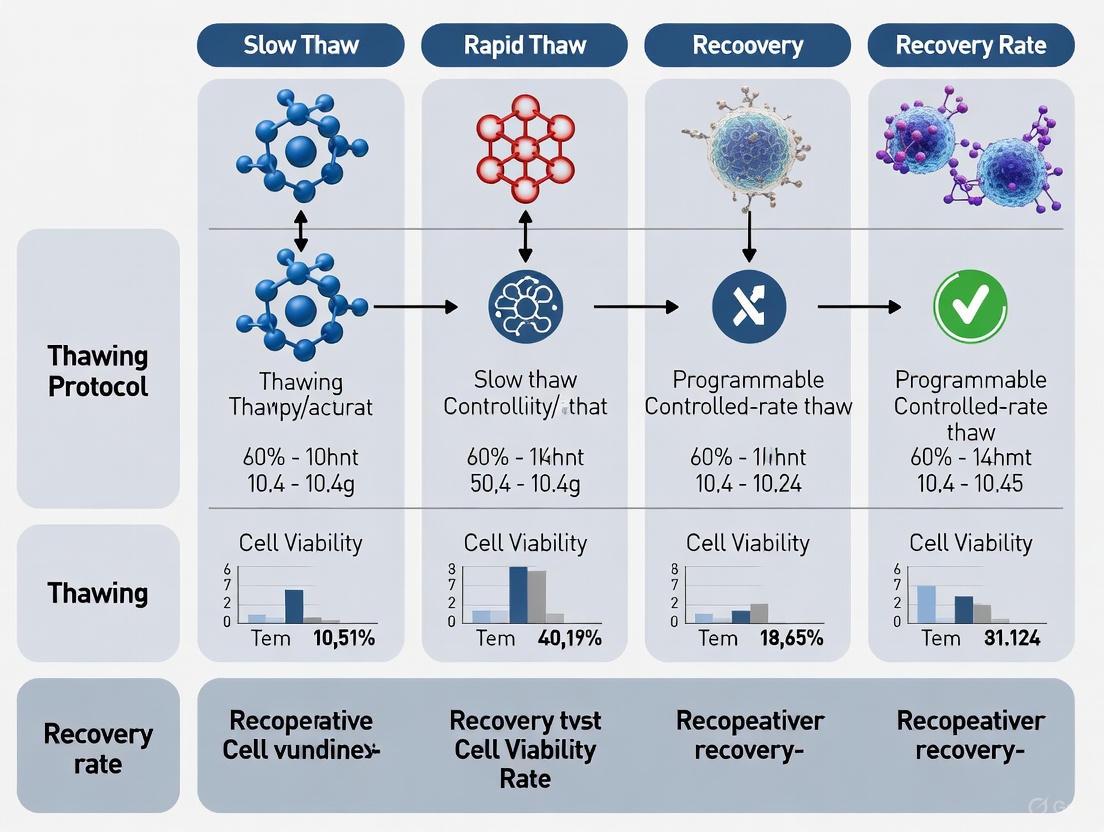
For researchers and drug development professionals, the thawing process is a critical determinant of success in cell therapy applications.
Optimizing Cell Therapy Recovery: A Comprehensive Comparison of Thawing Methods for Viability and Potency
Abstract
For researchers and drug development professionals, the thawing process is a critical determinant of success in cell therapy applications. This article provides a comprehensive analysis of thawing methodologies, from foundational principles to advanced comparative studies. It explores the impact of different techniques—including traditional washing, simple dilution, and automated systems—on key metrics such as total nucleated cell recovery, CD34+ viability, colony-forming unit potential, and post-thaw immunomodulatory function. The content delivers practical protocols for various cell types, addresses common troubleshooting scenarios, and validates method efficacy through direct comparison of clinical and experimental outcomes, ultimately serving as an essential resource for optimizing cell therapy product recovery.
The Critical Role of Thawing in Cell Therapy: Preserving Your Living Product
Why Thawing is the Achilles' Heel of Cell Therapy Efficacy
In the rapidly advancing field of cell therapy, the freeze-thaw process represents a critical juncture where significant product efficacy can be gained or lost. While cryopreservation has enabled the practical storage and distribution of cellular therapeutics, the thawing process remains a vulnerable point in the product lifecycle that directly impacts clinical outcomes. Substantial evidence indicates that suboptimal thawing procedures can severely compromise cell viability, function, and ultimately therapeutic efficacy [1] [2]. For instance, the failure of Prochymal (an MSC注射液) in Phase III clinical trials for graft-versus-host disease was partially attributed to impaired cell function post-thaw [2]. This comprehensive analysis compares current thawing methodologies, their impact on cell recovery, and provides technical guidance for optimizing this crucial step in cell therapy workflows.
The vulnerability of thawing processes stems from the complex biophysical events that occur during ice crystallization and devitrification. During freezing, intracellular and extracellular ice formation can cause mechanical damage to membrane systems and organelles [3]. The thawing phase introduces equal if not greater risks, particularly through the phenomenon of recrystallization - where small ice crystals merge into larger, more destructive structures during suboptimal warming conditions [4]. The damaging effect is particularly pronounced for sensitive therapeutic cell types including mesenchymal stromal cells (MSCs), T cells engineered with chimeric antigen receptors (CAR-T), and other immunotherapies [1] [5].
Thawing Methodologies: Technical Comparison
Conventional Thawing Methods
Water Bath Thawing remains the most widely used approach in both research and clinical settings. The standard protocol involves rapidly transferring cryopreserved vials from liquid nitrogen storage to a 37°C water bath with gentle agitation until only a small ice crystal remains, typically requiring 2-3 minutes [6] [3]. The method aims to quickly pass through the dangerous recrystallization temperature zone (-50°C to -5°C) where ice crystal growth is most probable. While practical and accessible, this method presents challenges including contamination risk from waterborne pathogens, inconsistent heat transfer, and potential for overheating cell products if not carefully monitored [3].
Bed-Based Thawing Systems offer a closed alternative to water baths, utilizing pre-warmed aluminum blocks or similar conductive surfaces to transfer heat to cryovials. These systems reduce contamination risk but typically demonstrate slower heat transfer rates compared to water immersion, potentially extending the time spent in the critical recrystallization zone [3].
Advanced Thawing Technologies
Laser-Based Rewarming represents a cutting-edge approach that addresses fundamental limitations of conventional methods. Research demonstrates that utilizing a 1,064nm wavelength laser with gold nanorods (GNRs) uniformly dispersed in the cryoprotectant solution enables unprecedented warming rates of up to 10⁶ °C/min [4]. This ultra-rapid warming effectively avoids devitrification and ice crystal formation, significantly improving viability outcomes. The system employs a 2,000W single-mode continuous fiber laser with precisely controlled power output (400-1,600W range optimal for ice-free recovery) directed through a highly thermally conductive sapphire platform [4].
Microfluidic Rapid Warming systems, though not detailed in the search results, are emerging as another advanced approach for small-volume cell therapies, utilizing direct contact with pre-warmed surfaces in confined channels to achieve high heat transfer rates.
Table 1: Comparison of Thawing Method Performance Characteristics
| Thawing Method | Max Warming Rate | Optimal Volume Range | Contamination Risk | Cell Viability Range | Implementation Complexity |
|---|---|---|---|---|---|
| Water Bath | ~45°C/min [1] | 1-10mL | High [3] | 44-88% [2] | Low |
| Bed/Block Systems | ~20-30°C/min | 1-5mL | Moderate | 50-85% | Low |
| Laser Rewarming | 10⁶ °C/min [4] | 1-8μL [4] | Low | >90% (projected) | High |
Quantitative Impact of Thawing on Cell Quality and Function
Viability and Recovery Metrics
The immediate impact of thawing methodology manifests in cell viability and recovery rates. Studies demonstrate dramatic differences in post-thaw outcomes depending on the technique employed. Conventional thawing methods typically yield highly variable recovery rates ranging from 36% to 88% across different MSC sources [2]. This variability presents significant challenges for dose consistency in clinical applications. The poor performance at the lower end of this range (36-44% viability) directly correlates with reduced therapeutic efficacy in clinical settings [2].
The timing of viability assessment also proves crucial. Research indicates that viability measurements immediately post-thaw may not reflect the true recovery potential, as apoptosis continues for several hours after thawing. Studies on human bone marrow MSCs show peak apoptosis rates up to 30% within 4 hours post-thaw, with metabolic activity and adhesion capacity remaining suppressed even at 24 hours despite improved viability [2]. This suggests that conventional immediate post-thaw viability assessment may overestimate actual functional cell yield.
Functional Impairments Post-Thaw
Beyond simple viability, thawing processes significantly impact critical cellular functions:
Immunomodulatory Capacity: For MSCs, the immunomodulatory function—a key therapeutic mechanism—is particularly vulnerable to freeze-thaw damage. Studies demonstrate that direct infusion of thawed MSCs without recovery culture results in severely compromised immunomodulatory function, even when viability appears adequate [2]. This functional impairment manifests as reduced suppression of T-cell proliferation and altered secretion of paracrine factors.
Membrane and Structural Integrity: Thawing-induced membrane damage occurs through multiple mechanisms. Investigations reveal that MSC adhesion deficiency post-thaw stems from disruption of F-actin cytoskeleton architecture rather than simple detachment of surface adhesion molecules [2]. This structural compromise additionally sensitizes cells to complement activation and innate immune attack following infusion [1].
Metabolic and Oxidative Stress: The thawing process generates substantial oxidative stress through rapid mitochondrial reactivation and increased reactive oxygen species (ROS) production. This oxidative burden can lead to lipid peroxidation, protein oxidation, and DNA damage without adequate antioxidant protection in the recovery medium [2].
Table 2: Functional Consequences of Suboptimal Thawing on Therapeutic Cells
| Functional Attribute | Impact of Suboptimal Thawing | Clinical Consequence | Experimental Evidence |
|---|---|---|---|
| Viability & Recovery | 36-88% variability in MSC recovery [2] | Inconsistent dosing, reduced efficacy | 41-study systematic review [2] |
| Immunomodulation | Severe reduction in immunosuppressive capacity [2] | Treatment failure in inflammatory conditions | GVHD trial failure analysis [2] |
| Membrane Integrity | Cytoskeletal disruption, adhesion deficiency [2] | Rapid clearance post-infusion, reduced engraftment | F-actin disruption documentation [2] |
| Metabolic Activity | Reduced metabolism lasting >24h [2] | Delayed functional activity post-administration | Metabolic assay time course [2] |
| Oxidative State | Increased ROS, oxidative damage markers [2] | Cumulative cell damage, accelerated senescence | Antioxidant protection studies [2] |
Molecular and Cellular Mechanisms of Thawing Damage
Physical Stressors During Thawing
The process of thawing subjects cells to multiple physical stressors that collectively contribute to cell damage and death. Recrystallization represents the primary mechanism of injury during the warming phase. As temperatures rise, small ice crystals that formed during freezing undergo Ostwald ripening, merging into larger, more destructive crystalline structures that physically disrupt membranes and organelles [4]. The critical temperature zone for this phenomenon typically ranges from -50°C to -5°C, making the speed of transition through this range a crucial determinant of cell survival.
Osmotic stress constitutes another significant challenge during thawing. As ice melts and cryoprotectant concentrations suddenly change, rapid water influx occurs, potentially causing excessive swelling and membrane rupture [2] [3]. The magnitude of this stress depends on multiple factors including cryoprotectant permeability, warming rate, and cell type. The damaging effect is particularly pronounced when non-permeating cryoprotectants are used, as they create substantial osmotic gradients across cell membranes during thawing [2].
Biological Pathways Activated by Thawing Stress
At the molecular level, thawing stress activates several detrimental pathways in therapeutic cells:
Complement Activation and Innate Immune Recognition: Thawed MSCs demonstrate increased susceptibility to complement-mediated destruction due to membrane changes that expose binding sites for complement components [1]. This triggers sequential activation of C3 and C5 convertases, generating opsonins (C3b, iC3b) and anaphylatoxins (C3a, C5a) that promote phagocytic clearance and inflammatory responses against the administered cells [1].
Cell Death Pathway Activation: The freeze-thaw process promotes both apoptotic and necrotic cell death pathways. Studies document increased phosphatidylserine externalization (early apoptosis marker) and caspase activation in thawed cells [2]. Additionally, membrane damage from ice crystals can lead to unregulated necrosis, releasing DAMPs (damage-associated molecular patterns) that provoke undesirable inflammatory responses in recipients [1].
Cytoskeletal Disorganization: Thawing-induced disruption of actin dynamics impairs critical functions including adhesion, migration, and secretory activity. Research specifically identifies F-actin depolymerization as a key defect in thawed MSCs, compromising their ability to adhere to endothelial surfaces and migrate to sites of injury [2].
Diagram 1: Pathways of Thawing-Induced Cell Damage illustrating how physical stressors during thawing activate detrimental molecular pathways that ultimately compromise therapeutic cell function.
Optimized Thawing Protocols for Specific Cell Types
Standardized Thawing Workflow
An optimized general thawing protocol derived from current best practices involves the following critical steps:
Preparation: Pre-warm culture medium to 37°C and prepare all necessary equipment in a biological safety cabinet. Pre-label culture vessels with cell type, passage number, and date [6].
Rapid Retrieval: Transport frozen vials from liquid nitrogen storage using appropriate protective equipment. Carefully loosen the cap ¼ turn to relieve potential pressure buildup from trapped liquid nitrogen before retightening [6] [3].
Controlled Thawing: Immerse the vial in a 37°C water bath with constant gentle agitation. Remove the vial when only a small ice crystal remains (typically 2-3 minutes), ensuring the cap remains above water level to prevent contamination [6] [3].
Dilution and Cryoprotectant Removal: Transfer the thawed cell suspension to a sterile centrifuge tube. Slowly add 5-10mL of pre-warmed dropwise while gently agitating to minimize osmotic shock. For suspension cells, centrifuge at 150×g for 5 minutes to pellet cells, then resuspend in fresh medium [6].
Assessment and Culture: Determine viable cell density using trypan blue exclusion or automated cell counting. Seed cells at the recommended density in appropriate culture vessels and incubate under standard conditions [6].
Diagram 2: Optimized Cell Thawing Workflow demonstrating the sequential critical steps for maximizing cell recovery and function post-thaw.
Cell Type-Specific Considerations
Different therapeutic cell products require tailored approaches to thawing:
MSCs and Stromal Cells: These adherent cells benefit from a recovery period of 24-48 hours before use in functional assays or administration. Research demonstrates that allowing MSCs to recover in culture after thawing significantly improves their immunomodulatory capacity and metabolic activity [2]. For clinical applications where immediate use is necessary, optimization of cryoprotectant composition and thawing rate is essential.
CAR-T Cells and Lymphocytes: These suspension cells typically require immediate centrifugation after thawing to remove cytotoxic DMSO [6]. Post-thaw, they often exhibit transient functional impairment, with some protocols recommending a brief reactivation step before administration. The critical parameter is maintaining high cell density during freezing (>5×10⁵ viable cells/mL) to support post-thaw recovery [3].
Primary and Non-Expanded Cells: Cells that cannot be expanded after thawing (such as primary hepatocytes or neuronal cells) require particularly optimized thawing conditions, as there is no opportunity for post-thaw recovery through proliferation. For these cell types, advanced thawing technologies like laser rewarming may offer significant advantages despite higher implementation complexity [4].
Research Toolkit: Essential Reagents and Materials
Table 3: Essential Research Reagents and Materials for Thawing Optimization Studies
| Reagent/Material | Function/Purpose | Example Application/Note |
|---|---|---|
| DMSO (Dimethyl Sulfoxide) | Penetrating cryoprotectant | 5-10% concentration standard; temperature-dependent cytotoxicity [2] [3] |
| Gold Nanorods (GNRs) | Photothermal conversion agents | 67nm length, 10nm diameter; enable laser absorption for uniform warming [4] |
| Programmed Freezing Systems | Controlled rate freezing | Enables reproducible cooling conditions (<1°C/min for MSCs) [1] |
| Sapphire Substrate Platforms | High thermal conductivity surface | Enables ultra-rapid heat transfer for glassification [4] |
| Fiber Laser Systems | Precision heating source | 1,064nm wavelength, 400-1,600W optimal power range [4] |
| Trehalose | Non-penetrating cryoprotectant | 0.5mol/L concentration; stabilizes membranes via water replacement [4] |
| Viability Stains (Trypan Blue) | Membrane integrity assessment | Standard post-thaw viability quantification [6] |
| Antioxidant Supplements | Reduce oxidative stress | Mitigate ROS-mediated damage during thawing [2] |
The thawing process legitimately represents a critical vulnerability in cell therapy manufacturing and administration, with demonstrated impact on clinical outcomes. The evidence comprehensively shows that suboptimal thawing compromises cell viability, function, and therapeutic consistency through multiple mechanical, osmotic, and biological pathways. Success in this domain requires matching thawing methodology to specific cell product characteristics, with advanced technologies like laser rewarming offering promising solutions for particularly sensitive or high-value cellular therapeutics. As the field advances, standardized, optimized thawing protocols must be recognized as essential components of cell therapy development rather than peripheral technical considerations, ensuring that the full therapeutic potential of these innovative treatments is realized in clinical practice.
Cryopreservation is an indispensable tool in modern cell therapy and biopreservation, enabling long-term storage of biological materials by cooling them to ultra-low temperatures where biochemical activity is effectively suspended [7]. Despite its widespread application, the freezing and thawing processes inevitably induce cellular damage known as cryo-injury, primarily through two interconnected physical mechanisms: intracellular ice formation and osmotic stress. These damaging processes occur when cells are exposed to sub-zero temperatures during cryopreservation protocols, triggering a cascade of physical events that can compromise cell viability, functionality, and therapeutic efficacy [8] [9].
The formation of ice crystals within cells represents a primary mechanism of freezing injury. During cooling, intracellular water can freeze, forming ice crystals that mechanically damage membranes, organelles, and other critical cellular structures [8]. Concurrently, as extracellular ice forms, solutes become concentrated in the remaining liquid fraction, creating a hypertonic environment that draws water out of cells through osmosis [10]. This process of freeze-induced dehydration subjects cells to profound osmotic stress, leading to membrane damage, protein denaturation, and eventual cell death if not properly managed [10] [7]. Understanding these fundamental mechanisms is crucial for developing optimized cryopreservation protocols that maintain cell viability and function for therapeutic applications.
Theoretical Foundations of Cryo-Injuries
The Dual Mechanism of Freezing Injury
The physical processes of cryo-injury follow a sequential pathway beginning with extracellular ice formation and culminating in either intracellular ice crystallization or excessive cellular dehydration. Figure 1 illustrates the critical branching pathways that determine cellular survival or death during cryopreservation.
As depicted in Figure 1, the freezing process initiates with ice formation in the extracellular space. This ice formation excludes solutes, effectively increasing their concentration in the remaining unfrozen fluid and creating a hypertonic environment. In response to this osmotic imbalance, water moves out of cells, leading to cellular dehydration. The cooling rate determines the predominant injury pathway: slow cooling permits extensive dehydration but can cause solute damage, while rapid cooling traps water inside cells, resulting in lethal intracellular ice formation [10] [7]. The addition of cryoprotectants and optimization of cooling protocols enables a middle path that minimizes both forms of damage, enhancing cell survival.
Osmotic Stress as a Mechanism of Freezing Injury
The osmotic stress mechanism of freezing injury was formally identified in the 1950s when researchers discovered that the cryopreservation process caused osmotic stress by instantly freezing the liquid, leading to damaging ice crystal formation [7]. This fundamental understanding was further refined by Mazur in 1963, who characterized how the rate of temperature change controls water movement across cell membranes and consequently determines the extent of intracellular freezing [7].
The physical basis of osmotic injury stems from the phase transition of water to ice during cooling. As extracellular ice forms, dissolved salts and other solutes become concentrated in the diminishing unfrozen fraction, creating a pronounced osmotic gradient across cell membranes [10]. This gradient drives water efflux from cells, causing substantial cell shrinkage and membrane stress. If the cooling rate is too slow, cells experience excessive dehydration, leading to membrane collapse and concentrated intracellular solutes reaching toxic levels that can denature proteins and disrupt metabolic processes [10] [11]. The recognition of osmotic stress as a primary injury mechanism prompted the development of cryoprotective agents specifically designed to mitigate these damaging osmotic shifts.
Experimental Evidence and Comparative Data
Cryoprotectant Concentration Optimization
Different cell types exhibit varying sensitivities to both freezing damage and cryoprotectant toxicity, necessitating empirical optimization for each application. Table 1 summarizes experimental data from a study evaluating membrane, mitochondrial, and DNA damage in Pataló (Ichthyoelephas longirostris) semen cryopreserved with ethylene glycol (EG) at three different concentrations [12].
Table 1: Comparison of Cryo-Injuries in Pataló Semen Using Different Ethylene Glycol Concentrations [12]
| Cryoprotectant Concentration | Total Motility (%) | Membrane Damage (%) | Mitochondrial Damage (%) | DNA Fragmentation (%) |
|---|---|---|---|---|
| Fresh Semen (Control) | 85.2 ± 6.3 | 9.6 ± 6.9 | 29.1 ± 16.8 | 0.24 ± 0.13 |
| 6% EG | 78.5 ± 8.1 | 75.4 ± 10.2 | 68.3 ± 15.5 | 22.5 ± 21.9 |
| 8% EG | 81.3 ± 7.2 | 72.1 ± 11.8 | 65.2 ± 14.1 | 15.8 ± 18.3 |
| 10% EG | 76.8 ± 9.4 | 79.3 ± 13.0 | 71.6 ± 16.2 | 18.4 ± 19.7 |
The data reveal several critical trends. While all cryopreserved samples showed significantly increased damage compared to fresh semen, the 8% ethylene glycol concentration demonstrated the most favorable balance across all measured parameters, with the highest post-thaw motility and the lowest DNA fragmentation among the cryopreserved groups [12]. Interestingly, the highest membrane and mitochondrial damage occurred at the 10% EG concentration, suggesting potential cryoprotectant toxicity at higher concentrations, while 6% EG provided insufficient protection against DNA damage [12]. These findings underscore the importance of optimizing cryoprotectant concentration to achieve the optimal balance between protection and toxicity for specific cell types.
Advanced Macromolecular Cryoprotectants
Traditional permeating cryoprotectants like DMSO and ethylene glycol have limitations, including cytotoxicity and imperfect protection against freezing injury. Recent research has focused on developing macromolecular cryoprotectants that operate through different protective mechanisms. Table 2 presents experimental data comparing conventional and advanced cryopreservation approaches for THP-1 monocytic cells, highlighting the enhanced performance of macromolecular cryoprotectants [13].
Table 2: Post-Thaw Recovery of THP-1 Monocytes Using Different Cryopreservation Formulations [13]
| Cryopreservation Formulation | Post-Thaw Recovery (%) | Viability (%) | Apoptosis Rate | Differentiation Capacity |
|---|---|---|---|---|
| 5% DMSO (Standard) | 45.2 ± 6.8 | 68.5 ± 5.2 | High | Reduced macrophage markers |
| Commercial CryoStor CS5 | 58.7 ± 5.3 | 75.3 ± 4.1 | Moderate | Moderate |
| 5% DMSO + Polyampholyte | 89.5 ± 4.6 | 92.8 ± 3.2 | Low | Similar to non-frozen controls |
The data demonstrate that supplementation with synthetic polyampholytes—polymers with mixed cationic and anionic side chains—significantly enhanced post-thaw recovery and viability while reducing apoptosis compared to DMSO-alone or commercial formulations [13]. Cryo-Raman microscopy analysis revealed the biophysical mechanism: polyampholytes reduced intracellular ice formation by promoting cellular dehydration during freezing, thereby mitigating mechanical damage to cellular structures [13]. Furthermore, cells cryopreserved with polyampholyte-supplemented media successfully differentiated into macrophages with phenotype and surface marker expression comparable to non-frozen controls, indicating preserved functionality—a critical requirement for cell therapy applications [13].
Methodologies for Assessing Cryo-Injuries
Experimental Workflow for Cryo-Injury Analysis
Comprehensive assessment of cryo-injuries requires a multi-parametric approach evaluating multiple cellular compartments and functional attributes. Figure 2 outlines a standardized experimental workflow for systematic cryo-injury analysis, incorporating methodologies from recent studies [12] [13].
The standardized workflow begins with cell preparation and cryoprotectant exposure, followed by controlled-rate freezing using optimized parameters [11]. After a defined storage period, samples undergo standardized thawing to minimize variability in this critical phase. Post-thaw assessment encompasses five key analytical dimensions: (1) Viability and recovery quantified via trypan blue exclusion; (2) Membrane integrity evaluated through flow cytometry with propidium iodide (PI) and Annexin V staining; (3) Mitochondrial function assessed using JC-1 staining to measure membrane potential; (4) DNA fragmentation measured via comet assay or TUNEL staining; and (5) Functional capacity evaluated through cell-specific differentiation assays and marker expression analysis [12] [13]. This multi-faceted approach provides a comprehensive profile of cryo-injuries across cellular compartments, enabling rational optimization of cryopreservation protocols.
The Scientist's Toolkit: Essential Research Reagents
Table 3 catalogues key reagents and methodologies employed in cryo-injury research, providing researchers with essential tools for investigating freezing damage mechanisms and developing protective strategies.
Table 3: Essential Research Reagents for Cryo-Injury Investigation
| Reagent/Methodology | Primary Function | Application in Cryo-Injury Research |
|---|---|---|
| Dimethyl Sulfoxide (DMSO) | Permeating cryoprotectant | Standard cryoprotectant that penetrates cells, reduces ice formation, but exhibits cytotoxicity at high concentrations [9] [7] |
| Ethylene Glycol | Permeating cryoprotectant | Lower molecular weight alternative to DMSO with different membrane permeability characteristics [12] |
| Polyampholytes | Macromolecular cryoprotectant | Synthetic polymers with mixed charges that reduce intracellular ice formation and mitigate osmotic shock [13] |
| Ice Recrystallization Inhibitors (IRIs) | Ice growth modulators | Small molecules that inhibit destructive ice crystal growth during freezing and thawing cycles [9] |
| Flow Cytometry with PI/Annexin V | Membrane integrity assessment | Quantifies percentages of live, apoptotic, and necrotic cells post-thaw [12] [14] |
| JC-1 Mitochondrial Staining | Mitochondrial function analysis | Evaluates mitochondrial membrane potential as indicator of metabolic health after cryopreservation [12] |
| Cryo-Raman Microscopy | Ice formation visualization | Directly characterizes intracellular ice formation and distribution in frozen samples [13] |
| Controlled-Rate Freezer | Temperature management | Precisely controls cooling rates to optimize dehydration process and minimize intracellular ice [11] |
This toolkit enables researchers to not only assess cryo-injuries but also implement advanced strategies to mitigate them. The combination of traditional permeating cryoprotectants with emerging macromolecular agents represents a particularly promising approach, leveraging the complementary protective mechanisms of different compound classes to enhance overall cell recovery and functionality [9] [13].
The successful cryopreservation of cells for therapeutic applications requires careful management of the competing risks of intracellular ice formation and osmotic stress. The experimental evidence presented demonstrates that optimizing cryoprotectant concentration and type can significantly impact post-thaw recovery, viability, and functionality. While conventional cryoprotectants like DMSO and ethylene glycol remain widely used, emerging macromolecular approaches show considerable promise in enhancing protection against both forms of cryo-injury.
For cell therapy applications, where maintaining cellular function is as critical as ensuring viability, comprehensive assessment of cryo-injuries across multiple cellular compartments is essential. The standardized methodologies and reagent toolkit outlined provide researchers with a framework for systematic evaluation and optimization of cryopreservation protocols. As the field advances, the integration of novel cryoprotective strategies with precise cooling control will continue to improve outcomes, enabling more reliable and effective preservation of therapeutic cell products.
The Impact of Freeze-Thawing on Hematopoietic and Non-Hematopoietic Products
The cryopreservation of cellular therapeutics represents a critical unit operation in the manufacturing and clinical deployment of advanced therapy medicinal products (ATMPs). For hematopoietic and non-hematopoietic products alike, the freeze-thaw process can significantly influence critical quality attributes including viability, recovery, and ultimately, therapeutic efficacy [15]. While cryopreservation enables the generation of cell banks, ensures product availability, and provides time for quality control testing, its impact varies substantially across different cell types [15] [16]. This guide provides a comparative analysis of freeze-thaw effects across major therapeutic cell products, summarizing quantitative recovery data and detailing key experimental methodologies to inform protocol development for researchers and drug development professionals.
Comparative Analysis of Post-Thaw Cell Attributes
The following tables summarize quantitative post-thaw recovery and functionality data for hematopoietic and non-hematopoietic cell products, as reported in recent literature.
Table 1: Viability and Recovery Metrics After Thawing
| Cell Type | Post-Thaw Viability/Recovery | Functional Recovery | Key Findings |
|---|---|---|---|
| HSPC (CD34+) | Viability maintained for decades; Significant decrease after >20 years [17] | CFU capacity significantly decreased after >20 years (P=0.005) [17] | Long-term cryostored grafts are resilient to time, but functionality declines after two decades [17]. |
| BM-MSC | Reduced viability and increased apoptosis at 0-4h; Recovery at 24h [16] | Impaired metabolic activity and adhesion potential at 24h; Variable differentiation potential [16] | 24-hour period is insufficient for full functional recovery; Fresh and cryopreserved MSCs are fundamentally different [16]. |
| iPSC | Ready for experiments in 4-7 days (optimized) vs. 2-3 weeks (unoptimized) [18] | Cell-cell contacts in aggregates support survival; Vulnerable to intracellular ice formation [18] | Optimal cooling rate is cell type-specific; Balanced dehydration and ice formation prevention is crucial [18]. |
| HSPC-NK (RNK001) | Consistently high post-thaw viability [19] | Robust anti-tumor functionality; Persistence in vivo similar to fresh cells [19] | Optimized GMP-compliant freeze-thaw protocol enables effective off-the-shelf NK cell product [19]. |
| PBSC (Allogeneic Grafts) | N/A | Significantly higher graft failure with frozen vs. fresh grafts (OR 0.58 for composite failure) [20] | Fresh grafts associated with lower graft failure and potential long-term survival benefits [20]. |
Table 2: Impact of Cryopreservation Technical Parameters
| Parameter | Impact on Hematopoietic Products | Impact on Non-Hematopoietic Products |
|---|---|---|
| Cooling Rate | -1°C/min to -3°C/min optimal for iPSC; -1°C/min frequently used [18] | Variable optimal rates; MSCs sensitive to uncontrolled freezing [16] |
| Cryoprotectant | 10% DMSO standard; Toxicity concerns drive research into lower concentrations and combinations [21] [22] | 10% DMSO in FBS common for MSCs; Toxicity requires post-thaw washing [16] |
| Storage Temperature | Vapor phase nitrogen (-150°C to -160°C) recommended to prevent infectious spread [22] | Below -123°C (extracellular glass transition temperature) to prevent stressful events [18] |
| Post-Thaw Recovery Period | HSPC-NK cells showed enhanced proliferative capacity post-thaw [19] | MSCs require >24h for partial recovery; metabolic activity and adhesion remain impaired [16] |
Experimental Protocols for Freeze-Thaw Assessment
GMP-Compliant HSPC-NK Cell Cryopreservation
An optimized protocol for cryopreserving Natural Killer cells derived from hematopoietic stem cells demonstrates the feasibility of producing functional off-the-shelf products [19].
Key Methodology:
- Cell Source: CD34+ HSPCs isolated from umbilical cord blood using the CliniMACS plus system [19].
- Cryopreservation Formula: The study used an optimized GMP-compliant cryopreservation solution, though the specific composition of DMSO and potential additives is not detailed in the provided excerpt [19].
- Freezing Method: Controlled-rate freezing was employed, a standard approach for therapeutic cell products [19].
- Quality Assessment: Post-thaw analysis included viability measurement, flow cytometry for phenotype (CD56+CD3-), and in vitro functionality assays (degranulation, IFN-γ production, 3D tumor spheroid killing) [19].
- In Vivo Validation: Persistence and anti-tumor activity were confirmed in NOD/SCID/IL2Rgnull mice, with cryopreserved cells performing similarly to fresh cells [19].
Quantitative Assessment of hBM-MSC Recovery
This study provides a detailed temporal analysis of bone marrow-derived mesenchymal stem cell recovery in the first 24 hours post-thaw and beyond [16].
Key Methodology:
- Cell Culture: Three donor-derived hBM-MSC lines cultured in DMEM with 10% FBS [16].
- Cryopreservation Formula: Cells cryopreserved at 1×10^6 cells/mL in FBS supplemented with 10% DMSO [16].
- Freezing Method: Vials placed in "Mr Frosty" container filled with isopropyl alcohol in a -80°C freezer for 24 hours (cooling rate approximately -1°C/min), then transferred to liquid nitrogen for minimum 1 week [16].
- Thawing Method: Rapid thaw in 40°C water bath for exactly 1 minute, diluted in warm complete medium, and centrifuged to remove DMSO [16].
- Post-Thaw Assessment: Cells analyzed immediately (0h), 2h, 4h, and 24h post-thaw for viability (trypan blue exclusion), apoptosis, metabolic activity (MTS assay), adhesion potential, immunophenotype (CD105, CD90, CD73), and colony-forming unit ability [16].
Optimization of HSC Cryopreservation from Umbilical Cord Blood
This study investigated improved cryopreservation conditions for hematopoietic stem cells using a novel cryomedium with reduced DMSO concentration [21].
Key Methodology:
- Cell Source: Mononuclear cells (MNC) isolated from umbilical cord blood using Ficoll-Hypaque density-gradient centrifugation [21].
- Experimental Conditions: Tested cryomedium containing reduced Me₂SO (2-5%) with ethylene glycol compared to control (10% Me₂SO with 2% Dextran-40) [21].
- Freezing Methods: Compared isopropanol (IPA) freezing devices with controlled-rate freezing (CRF) systems [21].
- Assessment Metrics: Post-thaw viability of MNC, recovery of CD34+ cells, and total colony-forming units (CFU) [21].
Diagram: Generalized Freeze-Thaw Workflow for Therapeutic Cell Products. The process from cell harvest through post-thaw assessment is common to both hematopoietic and non-hematopoietic products, though recovery timelines and optimal parameters differ by cell type, based on protocols described in [18] [19] [16].
The Scientist's Toolkit: Essential Research Reagents
Table 3: Key Reagents for Cryopreservation Research
| Reagent/Material | Function | Example Application |
|---|---|---|
| Dimethyl Sulfoxide (DMSO) | Penetrating cryoprotectant that prevents intracellular ice crystal formation [18] [21] | Standard concentration of 10% for HSPC and MSC; research focuses on reducing concentration to minimize toxicity [21] [16] |
| Ethylene Glycol (EG) | Alternative cryoprotectant with potentially lower toxicity; enables reduced DMSO concentration [21] | Tested at 10% concentration in combination with 2-5% DMSO for HSC cryopreservation [21] |
| Ficoll 70 | Additive that enables long-term storage at -80°C without compromising viability [18] | Added to freezing solution for iPSC storage at -80°C for at least one year [18] |
| Controlled-Rate Freezer | Equipment that precisely controls cooling rate during freezing process [18] [22] | Standard method for HSPC and iPSC; cooling rate of -1°C/min commonly used [18] [22] |
| Liquid Nitrogen Storage | Provides ultra-low temperatures for long-term cell preservation [22] | Vapor phase storage (-150°C to -160°C) recommended to prevent cross-contamination [22] |
| Colony-Forming Unit (CFU) Assay | Functional assessment of progenitor cell potency post-thaw [21] [17] | Critical quality metric for HSPC products; demonstrates proliferative capacity [21] [17] |
| NOD/SCID Mouse Model | In vivo assessment of hematopoietic reconstitution capacity [19] [22] | Gold-standard functional assay for HSPC potency; used to validate cryopreserved HSPC-NK cells [19] [22] |
Diagram: Impact and Mitigation of Freeze-Thaw Stress on Cell Products. The freeze-thaw process induces damage at cellular and molecular levels, leading to functional consequences that differ between hematopoietic and non-hematopoietic products. Targeted mitigation strategies can address these specific injury mechanisms, based on findings from [18] [15] [20].
The impact of freeze-thawing on therapeutic cell products demonstrates significant variation between hematopoietic and non-hematopoietic lineages. Hematopoietic products, particularly HSPCs, generally demonstrate greater resilience to cryopreservation, maintaining viability and some functional capacity for decades, though graft failure rates remain higher compared to fresh products [20] [17]. In contrast, non-hematopoietic products like MSCs and iPSCs experience more substantial functional impairments post-thaw, including reduced metabolic activity, adhesion potential, and differentiation capacity that may require extended recovery periods [18] [16]. These differences underscore the necessity of cell type-specific optimization of cryopreservation protocols, including cryoprotectant composition, cooling rates, and post-thaw handling procedures. As the field of cell therapy advances, continued refinement of freeze-thaw methodologies will be essential to ensure consistent product quality and therapeutic efficacy across diverse cellular products.
In the field of cell therapy and biopreservation, dimethyl sulfoxide (DMSO) stands as a cornerstone cryoprotectant, enabling the long-term storage of living cells essential for advanced medical treatments. Since its introduction in the 1960s, this simple organosulfur compound has become the most widely used cryoprotective agent (CPA) for preserving hematopoietic stem cells, immune cells for adoptive therapies, and other biologics [23]. DMSO's unique chemical properties allow it to prevent lethal intracellular ice crystal formation during freezing, thereby facilitating the successful cryopreservation of cellular products that would otherwise be non-viable after thawing. However, this remarkable preservation capability comes with a significant trade-off: DMSO exhibits concentration-dependent toxicity that can compromise both cellular function and patient safety [24]. This dual nature of DMSO—as both protector and potential toxin—creates a critical balancing act for researchers and clinicians in the cell therapy field, particularly as the demand for cryopreserved cellular products continues to grow with the expansion of regenerative medicine and immunotherapy applications.
The fundamental challenge lies in navigating DMSO's narrow therapeutic window—the concentration range where it provides adequate cryoprotection while minimizing harmful effects. As cell therapies become more sophisticated and are applied to increasingly fragile cell types, understanding this balance becomes paramount. This review examines the intricate mechanics of DMSO-mediated cryoprotection, analyzes its documented toxicities at cellular and clinical levels, compares its performance to emerging alternatives, and provides evidence-based guidance for optimizing its use in modern cell therapy workflows, with particular emphasis on recovery outcomes post-thaw.
Molecular Mechanisms of DMSO in Cryoprotection
Biophysical Basis of Cryoprotection
DMSO's cryoprotective properties stem from its fundamental effects on water behavior and ice crystal dynamics at low temperatures. As a penetrating cryoprotectant, DMSO freely crosses cell membranes due to its low molecular weight and hydrophilicity, achieving relatively uniform distribution between intracellular and extracellular compartments [25]. This membrane permeability is crucial for its protective function. Once inside cells, DMSO exerts multiple protective mechanisms simultaneously. Primarily, it functions as a colligative agent, reducing the freezing point of aqueous solutions and effectively decreasing the amount of ice formed at any given subzero temperature [24]. By increasing solute concentration both inside and outside cells, DMSO reduces the fraction of water that can undergo phase transition to ice, thereby minimizing the mechanical damage caused by ice crystal formation to delicate cellular structures.
At the molecular level, DMSO interacts directly with water molecules through hydrogen bonding, disrupting the normal tetrahedral arrangement of water molecules that would otherwise facilitate ice nucleation and growth [23]. This interaction promotes vitrification—the transition of water into an amorphous glassy state rather than an organized crystalline structure—particularly when combined with rapid cooling rates [24]. The vitreous state prevents the mechanical damage caused by ice crystals piercing membranes and organelles. Additionally, DMSO stabilizes proteins and lipid membranes during the freeze-thaw cycle by preventing cold-denaturation and maintaining structural integrity through direct molecular interactions [24]. These multifactorial mechanisms collectively enable DMSO to protect cells through the potentially lethal process of cryopreservation.
Cellular Interactions and Membrane Dynamics
DMSO's interaction with biological membranes represents a critical aspect of its cryoprotective mechanism with important implications for both preservation and toxicity. The compound increases membrane porosity by creating transient pores that facilitate water movement across the membrane during freezing and thawing [26]. This property helps prevent the lethal osmotic shock that can occur when water gradients develop between intracellular and extracellular compartments during temperature changes. However, this membrane-perturbing effect is a double-edged sword, as excessive porosity can compromise membrane integrity and lead to cell death.
The following diagram illustrates the dual pathways through which DMSO exerts its cryoprotective and toxic effects at the cellular level:
At higher concentrations typically used in cryopreservation (5-10%), DMSO can cause significant membrane fluidization that may persist after thawing and impact cellular function [24]. Studies have shown that DMSO interacts with lipid bilayers, disrupting their packing density and potentially compromising the function of membrane-bound receptors and transporters [23]. These membrane effects are particularly problematic for sensitive cell types such as neural stem cells, chondrocytes, and certain immune cell subsets, which may experience long-term functional impairment even when viability appears adequate immediately post-thaw [23] [24]. The temperature dependence of DMSO's membrane interactions further complicates its use—while it destabilizes membranes at room temperature, it provides stabilization at cryogenic temperatures, highlighting the importance of careful temperature management during addition and removal steps [24].
Documented Toxicity Profiles of DMSO
Cellular-Level Toxicity and Functional Impairment
Despite its protective capabilities, DMSO exerts multiple toxic effects on cells that can compromise their therapeutic utility. The concentration- and time-dependent cytotoxicity of DMSO presents a significant challenge, particularly for sensitive primary cells and stem cells used in therapeutic applications [23] [24]. At the cellular level, DMSO exposure can induce mitochondrial damage, as demonstrated in astrocytes, and negatively impact cellular membrane and cytoskeleton structure by interacting with proteins and dehydrating lipids [23]. These structural compromises manifest as increased membrane permeability in erythrocytes and altered chromatin conformation in fibroblasts [23].
Perhaps more concerning are the effects of DMSO on cellular function and differentiation potential. Numerous studies have documented that even subtoxic concentrations of DMSO can influence epigenetic programming, potentially leading to unwanted phenotypic changes. For example, DMSO interferes with DNA methyltransferases and histone modification enzymes in human pluripotent stem cells, causing epigenetic variations and reduction in their pluripotency [23]. Similarly, murine embryonic stem cells display disrupted mRNA expression levels of several markers following DMSO treatment [23]. These findings have profound implications for cell therapies where maintenance of differentiation potential or specific functional characteristics is essential for therapeutic efficacy.
The table below summarizes key cellular toxicity findings associated with DMSO exposure:
Table 1: Documented Cellular-Level Toxic Effects of DMSO
| Cell Type | DMSO Concentration | Exposure Conditions | Observed Effects | Reference |
|---|---|---|---|---|
| Human Astrocytes | Not specified | Not specified | Mitochondrial damage | [23] |
| Human Pluripotent Stem Cells | Low concentrations (≥0.1%) | Repeated exposure | Epigenetic variations, reduced pluripotency | [23] |
| Murine Embryonic Stem Cells | Not specified | Not specified | Disrupted mRNA expression markers | [23] |
| Erythrocytes | Not specified | Not specified | Increased membrane permeability | [23] |
| Human Fibroblasts | Not specified | Not specified | Altered chromatin conformation | [23] |
| Human Chondrocytes | 6M and 8.1M | 37°C (98.6°F) | Significant toxicity observed | [24] |
Clinical Adverse Effects in Therapeutic Applications
The cellular-level toxicity of DMSO translates directly to clinically significant adverse effects when DMSO-cryopreserved cellular products are administered to patients. Nearly 100% of bone marrow transplant recipients receiving DMSO-cryopreserved cells experience side effects or serious complications during infusion [27]. These adverse reactions span multiple organ systems and range from mild, transient symptoms to severe, life-threatening events. Commonly reported infusion-related reactions include nausea, vomiting, hypertension, fever, and tremors [26]. More concerning are the reports of cardiovascular complications (including arrhythmias and cardiac arrest), neurological symptoms (including seizures and encephalopathy), respiratory distress, and hepatotoxicity [27] [26].
The severity of these adverse events has led to the development of various DMSO depletion strategies before infusion, including centrifugation and washing procedures. However, these approaches introduce their own challenges, including cell loss during processing (particularly platelets), potential for product contamination, and the introduction of additional processing time and complexity [26]. For fragile cell products and in settings where rapid administration is critical, these washing steps may themselves compromise cell viability and function, creating a dilemma for clinicians seeking to balance DMSO-related toxicity against cell product integrity.
Comparative Analysis of DMSO and Alternative Cryoprotectants
Performance Comparison with Established Alternatives
The documented limitations of DMSO have spurred investigation into various alternative cryoprotectants, both as replacements and as supplements to enable DMSO concentration reduction. The table below provides a systematic comparison of DMSO alongside other commonly used cryoprotectants:
Table 2: Comparative Analysis of Cryoprotectants for Cell Therapy Applications
| Cryoprotectant | Mechanism of Action | Optimal Concentration | Advantages | Disadvantages | Compatible Cell Types |
|---|---|---|---|---|---|
| DMSO | Penetrating; inhibits ice crystallization, promotes vitrification | 5-10% (v/v) | High efficacy, broad spectrum protection, well-established protocols | Significant cellular & patient toxicity, affects differentiation | Most mammalian cell lines, HSCs, immune cells |
| Glycerol | Penetrating; reduces freezing point, stabilizes proteins | 5-15% (v/v) | Lower toxicity than DMSO, effective for specific applications | Slower membrane penetration, osmotic stress concerns | Red blood cells, spermatozoa, some cell lines |
| Trehalose | Non-penetrating; water replacement, glass formation | 0.1-0.5M extracellular | Low toxicity, FDA GRAS status, stabilizes membranes | Poor cellular uptake without modification | RBCs, stem cells, microbial cultures |
| Sucrose | Non-penetrating; osmotic buffer, glass formation | 0.1-0.5M extracellular | Low cost, low toxicity, excellent for lyophilization | Purely extracellular action, osmotic shock risk | Proteins, vaccines, lyophilized formulations |
| Ethylene Glycol | Penetrating; similar to DMSO but smaller molecular size | Variable by application | Rapid penetration, effective vitrification | Metabolized to toxic compounds, narrower safety margin | Oocytes, embryos in reproductive medicine |
The comparative data reveals that while DMSO remains the most broadly effective cryoprotectant, alternatives offer specialized advantages for particular applications. Glycerol provides a lower toxicity profile for cell types where its penetration kinetics are sufficient, such as red blood cells and reproductive cells [24]. Non-penetrating cryoprotectants like trehalose and sucrose offer excellent extracellular protection with minimal toxicity but typically require combination with penetrating agents for comprehensive cryoprotection of complex cellular systems [24].
DMSO Reduction and Combination Strategies
A promising approach to balancing efficacy and toxicity involves using reduced concentrations of DMSO in combination with other cryoprotective agents. Research demonstrates that lower DMSO concentrations (2.5-5%) combined with non-penetrating cryoprotectants like trehalose can achieve post-thaw viability comparable to standard 10% DMSO formulations while significantly reducing toxic side effects [25] [26]. A systematic review and meta-analysis of controlled clinical studies found that reducing DMSO concentration in peripheral blood stem cell cryopreservation did not significantly impact platelet or neutrophil engraftment, suggesting that lower concentrations may be clinically sufficient while reducing patient adverse effects [26].
The following diagram illustrates the strategic development pathways for improving cryopreservation protocols by addressing DMSO-associated challenges:
Innovative combination approaches include using DMSO with disaccharides like trehalose or sucrose, which work synergistically to provide both intracellular and extracellular protection [25]. These combinations allow for reduction of DMSO concentration to 2.5-5% while maintaining or even improving post-thaw recovery compared to DMSO alone [25]. Other promising strategies incorporate macromolecular cryoprotectants like hydroxyethyl starch, dextran, and polyvinyl alcohol, which provide extracellular stabilization without penetrating cells, thereby reducing the osmotic stress and direct toxicity associated with high concentrations of penetrating agents [23] [25].
Emerging DMSO-Free Cryopreservation Platforms
Biomimetic and Bioinspired Alternatives
The growing recognition of DMSO-related limitations has accelerated development of completely DMSO-free cryopreservation platforms, particularly for sensitive therapeutic applications. Bioinspired cryoprotectants based on natural antifreeze proteins represent a particularly promising approach. These include fully synthetic, chemically-defined formulations designed to mimic the ice-binding properties of antifreeze proteins found in extremophiles [27]. For example, XT-Thrive A and XT-Thrive B—DMSO-, protein-, and serum-free cryopreservation media candidates—have demonstrated effectiveness in freezing hematopoietic stem cells from human whole bone marrow comparable to 10% DMSO controls, with similar stem cell frequencies measured 12 weeks after transplant in immunodeficient mice [27].
Other innovative approaches include polyampholyte cryoprotectants, which have shown excellent results with human bone marrow-derived mesenchymal stromal cells, maintaining high viability without affecting biological properties even after 24 months of cryopreservation at -80°C [23]. Similarly, amphiphilic block copolymers have demonstrated excellent MSC proliferation and multilineage differentiation properties post-thaw [23]. These biomimetic approaches aim to replicate nature's solutions to freezing stress while avoiding the toxicity concerns associated with traditional cryoprotectants.
Commercial DMSO-Free Formulations
The research advances in DMSO-free cryopreservation are increasingly translating to commercially available solutions. Several commercially available DMSO-free cryoprotectant solutions are now marketed, particularly for cellular therapeutics [23]. These include formulations such as CryoScarless, CryoNovo P24, and CryoProtectPureSTEM, which have shown comparable results to DMSO-based cryopreservation for hematopoietic stem cells, T-cells, and CD34+ cells [23]. However, the literature suggests there are still limited independent studies to scrutinize or validate the potency of these commercial products, which may explain why many researchers continue to use DMSO-based formulations despite their limitations [23].
The performance of some commercial DMSO-free media has been demonstrated in specific applications. For instance, StemCell Keep has shown higher recovery rates and cell attachment for human embryonic stem cells compared to standard DMSO-containing protocols [23]. Similarly, specialized formulations have been developed for specific cell types, such as neural stem and progenitor cells, where 40% v/v ethylene glycol and 0.6 M sucrose has preserved expression of cell markers, proliferation and multipotent differentiation capability [23]. As these commercial solutions continue to undergo validation across a wider range of cell types and applications, they are likely to see increased adoption in both research and clinical settings.
Experimental Approaches and Methodological Considerations
Standardized Testing Protocols for Cryoprotectant Evaluation
Rigorous evaluation of cryoprotectant efficacy requires standardized experimental approaches that assess both immediate post-thaw viability and long-term functional recovery. The following core methodologies represent best practices in cryoprotectant comparison studies:
Controlled-Rate Freezing Protocols: Using programmable freezing systems that maintain precise cooling rates (typically -1°C/min) to ensure reproducible freezing kinetics across experimental conditions [23] [25]. This eliminates the variability associated with passive freezing devices and enables direct comparison between different cryoprotectant formulations.
Viability and Functional Assessment: Comprehensive post-thaw evaluation should include immediate viability measures (e.g., trypan blue exclusion, flow cytometry with viability dyes), recovery assessments after 24-hour culture, and functional assays specific to the cell type being preserved (e.g., CFU assays for hematopoietic cells, differentiation potential for stem cells, cytotoxic activity for immune cells) [23] [25].
Engraftment Models for Stem Cells: For therapeutic stem cells, in vivo engraftment studies in immunodeficient mice provide the most clinically relevant assessment of cryoprotectant efficacy. These models evaluate the preservation of stemness and functional capacity through serial transplantation and multi-lineage differentiation analysis [27].
The Researcher's Toolkit: Essential Reagents and Solutions
Table 3: Essential Research Reagents for Cryoprotectant Evaluation
| Reagent/Solution | Function | Application Notes | Representative Examples |
|---|---|---|---|
| DMSO (High Purity) | Penetrating cryoprotectant control | Use fresh aliquots; concentration typically 5-10%; minimize exposure time at room temperature | Sigma-Aldrich D2650 [27] |
| Trehalose Solutions | Non-penetrating cryoprotectant | Typically 0.1-0.5M; often combined with reduced DMSO; requires dissolution in appropriate buffer | Compendial-grade trehalose [24] |
| Programmable Freezer | Controlled-rate freezing | Enables standardized -1°C/min cooling rate; superior to passive devices | Custom controlled-rate freezers [25] |
| Viability Assays | Post-thaw viability assessment | Combine immediate (dye exclusion) and delayed (24h culture) measures | Acridine orange/propidium iodide [27] |
| Flow Cytometry Antibodies | Cell phenotype and function | Assess surface markers, intracellular targets, apoptosis | CD34, CD45, 7-AAD [25] |
| Colony Forming Unit Assays | Functional assessment of progenitors | Semisolid media supporting clonal growth; 10-14 day culture | MethoCult for hematopoietic cells [25] |
The dual nature of DMSO as both an essential cryoprotectant and a significant source of toxicity necessitates a nuanced, evidence-based approach to its use in cell therapy manufacturing. For applications where DMSO remains the cryoprotectant of choice, implementation strategies should focus on concentration minimization, with 5-7.5% DMSO combined with extracellular protectants like trehalose or sucrose providing a favorable balance of efficacy and safety [26]. The development of standardized washing protocols for post-thaw DMSO removal, balanced against the cell loss associated with additional processing, represents another critical consideration for clinical implementation [26].
For emerging cell therapies targeting sensitive applications or fragile cell types, the expanding landscape of DMSO-free alternatives offers promising options that warrant serious consideration. Biomimetic cryoprotectants and commercial DMSO-free formulations have demonstrated comparable performance to DMSO in specific applications, particularly for hematopoietic stem cells and some immune cell types [23] [27]. As these technologies continue to mature and accumulate validation data across broader cell types, they are likely to see increased adoption in both research and clinical settings.
The optimal cryoprotectant strategy must be tailored to the specific cell type, therapeutic application, and manufacturing workflow. By critically evaluating both the protective benefits and toxic liabilities of DMSO against emerging alternatives, researchers and clinicians can make informed decisions that maximize cell product quality and patient safety while advancing the field of cell therapy through improved cryopreservation methodologies.
In the development of cell therapies, the transition from manufacturing to clinical application hinges on the successful thawing of cryopreserved products. The processes of cryopreservation and thawing introduce substantial stress to cells, potentially compromising their function and therapeutic efficacy. Therefore, defining and accurately measuring key success metrics—viability, recovery, engraftment, and potency—is not merely a quality control step but a fundamental requirement for predicting clinical outcomes. These metrics provide critical, data-driven insights that enable researchers and clinicians to compare and optimize thawing methods, select suitable cryopreservation formulations, and ultimately ensure that the administered cell product possesses the functional capacity to elicit the intended therapeutic effect.
The challenge lies in the fact that these metrics are influenced by a complex interplay of factors across the entire cell handling workflow. As this guide will demonstrate through a comparative analysis of recent data, choices in cryoprotectant, freezing protocol, and post-thaw processing directly impact cell quality. A holistic understanding of these interconnected metrics is essential for advancing cell therapy research and development.
Comparative Analysis of Key Success Metrics
The evaluation of a thawed cell product requires a multi-faceted approach. The following sections break down the definition, measurement methods, and influencing factors for each of the four critical success metrics.
Viability: Assessing Cellular Health
Viability measures the proportion of live cells in a sample post-thaw, indicating the success of the cryopreservation and thawing processes in preserving basic cellular integrity.
- Measurement Techniques: Common methods include dye exclusion assays (like Trypan Blue) and flow cytometry using stains such as 7-Aminoactinomycin D (7-AAD) or Annexin V/Propidium Iodide (PI) to distinguish live, apoptotic, and dead cells [28] [29]. Studies show that the choice of assay matters; for instance, acridine orange (AO) staining has demonstrated greater sensitivity to delayed post-thaw degradation compared to 7-AAD flow cytometry [28].
- Comparative Data: Viability is highly dependent on the cryopreservation solution and protocol. The table below summarizes experimental findings from key studies:
Table 1: Comparative Post-Thaw Viability Across Cell Types and Formulations
| Cell Type | Cryopreservation Formulation | Post-Thaw Viability | Key Findings | Source |
|---|---|---|---|---|
| Hematopoietic Stem Cells (HSCs) | Uncontrolled-rate freezing at -80°C | Median: 94.8% (with decline of ~1.02% per 100 days) | Long-term storage at -80°C is viable, with a moderate time-dependent decline. | [28] |
| Mesenchymal Stem Cells (MSCs) | NutriFreez (10% DMSO) | High, comparable to PHD10 | Viability and recovery maintained for up to 6 hours post-thaw. | [29] |
| Mesenchymal Stem Cells (MSCs) | CryoStor CS5 (5% DMSO) | Decreasing trend over 6 hours | Lower DMSO concentration correlated with reduced viability over time. | [29] |
| Mesenchymal Stem Cells (MSCs) | PHD10 (10% DMSO) | High, comparable to NutriFreez | A clinically-ready formulation showing robust performance. | [29] |
Recovery: Quantifying Cell Yield
Recovery refers to the proportion of cells viable and available for use after thawing and any subsequent processing steps (like washing) compared to the pre-freeze count. It is a crucial metric for determining if a sufficient therapeutic dose is available.
- Measurement: Calculated as (Post-thaw viable cell count / Pre-freeze viable cell count) x 100.
- Influencing Factors: Recovery is significantly impacted by processing methods. For example, a study on cord blood mononuclear cells (CBMCs) found that density gradient (DG) isolation prior to cryopreservation yielded superior recovery of mononuclear cells and key subsets like CD34+ cells compared to standard volume reduction (VR) methods [30]. Furthermore, post-thaw washing steps are a major point of cell loss; protocols for PBMCs note that up to 20% cell loss can be expected during washing [31].
- Experimental Insight: Research on MSCs cryopreserved at high concentrations found that while diluting the product post-thaw from 9 million cells/mL improved viability, it showed a trend of decreased recovery, highlighting a potential trade-off between these two metrics [29].
Engraftment: Measuring In Vivo Function
Engraftment is the gold-standard functional metric for hematopoietic stem cells (HSCs), reflecting the ability of transplanted cells to home to the bone marrow and initiate sustained hematopoiesis. It is a direct indicator of the product's therapeutic potency in a clinical setting.
- Measurement: Clinically, engraftment is tracked by the time to neutrophil and platelet recovery post-transplant.
- Key Evidence: A landmark study on HSCs cryopreserved at -80°C for a median of 868 days (over 2 years) demonstrated that despite a gradual decline in viability, the products still supported durable engraftment in most patients [28]. This finding is critical for resource-constrained settings.
- Determining Factors: Engraftment success is multi-factorial. While product quality (viability and CD34+ cell dose) is fundamental, the study found that disease type and patient remission status were the primary drivers of engraftment kinetics, not storage duration or donor age [28].
Potency: Verifying Biological Activity
Potency is a comprehensive measure of a cell product's specific biological or therapeutic activity, as defined by regulatory bodies. It confirms that the cells are not just alive but are functionally capable of their intended mechanism of action.
- Measurement: Potency assays are product-specific. For immunomodulatory cells like MSCs, a common potency assay is the inhibition of T-cell proliferation [29].
- Comparative Data: Research directly comparing cryopreserved MSC products found that cells frozen in different formulations (NutriFreez and PHD10) exhibited comparable potency in their ability to inhibit T-cell proliferation and improve monocytic phagocytosis post-thaw [29].
- The Impact of Processing: The functional fitness of a starting material is also a measure of potency. CBMCs processed with DG isolation prior to freezing demonstrated a significantly higher colony-forming unit (CFU) potential post-thaw than those processed with standard volume reduction, indicating better preservation of progenitor cell function [30].
Experimental Protocols for Key Assays
To ensure reproducibility and accurate comparison across studies, standardized experimental protocols are essential. Below are detailed methodologies for two critical assays cited in the comparative data.
Thawing and Viability Assessment of MSCs
This protocol, derived from Frontiers in Bioengineering and Biotechnology, is designed to evaluate post-thaw viability and recovery of Mesenchymal Stem Cells under different conditions [29].
- 1. Thawing: Remove vial from liquid nitrogen storage and immediately place it in a 37°C water bath for approximately 2 minutes. Agitate gently until only a small ice crystal remains.
- 2. Immediate Dilution: Upon thawing, promptly dilute the cell suspension to reduce the cytotoxic concentration of DMSO. For cells cryopreserved at 9 million cells/mL (M/mL), a 1:2 dilution with a pre-warmed solution like Plasmalyte A containing 5% Human Albumin (PLA/5% HA) is used to achieve a final concentration of 3 M/mL.
- 3. Washing & Centrifugation: Transfer the diluted cells to a tube and centrifuge at approximately 300-500 x g for 5 minutes to pellet the cells. Carefully decant the supernatant containing the residual cryoprotectant.
- 4. Resuspension: Resuspend the cell pellet in an appropriate culture medium or buffer for downstream analysis.
- 5. Viability Measurement:
- Trypan Blue Exclusion: Mix a small aliquot of cells with Trypan Blue dye and count using a hemocytometer or automated cell counter. Live cells exclude the dye, while dead cells are stained blue.
- Flow Cytometry with Annexin V/PI: For a more detailed assessment of apoptosis and necrosis, stain cells with Annexin V and Propidium Iodide (PI) according to manufacturer instructions. Analyze on a flow cytometer to distinguish live (Annexin V-/PI-), early apoptotic (Annexin V+/PI-), late apoptotic (Annexin V+/PI+), and necrotic (Annexin V-/PI+) populations.
- 6. Recovery Calculation: Calculate the viable cell recovery: (Total live cells counted post-thaw / Number of cells originally cryopreserved) x 100.
Thawing of PBMCs for Functional Studies
This protocol, adapted from BPS Bioscience, is optimized for recovering peripheral blood mononuclear cells for downstream functional applications like immunology assays [31].
- 1. Partial Thaw: Swirl the vial in a 37°C water bath until ~90% thawed. This minimizes over-exposure to 37°C, which can decrease viability.
- 2. Transfer and Rinse: Wipe the vial with 70% ethanol, then transfer its entire contents to a 15 mL tube. Rinse the original vial with pre-warmed "Thaw Medium" and add the rinse to the same tube to maximize cell recovery.
- 3. Slow Dilution: Slowly add 10 mL of pre-warmed Thaw Medium dropwise to the cell suspension while gently mixing. This gradual dilution minimizes osmotic shock.
- 4. Gentle Washing: Centrifuge the tube at 200 x g for 10 minutes at room temperature. The lower g-force compared to MSC protocols is standard for more sensitive PBMCs.
- 5. Supernatant Removal & Repeat Wash: Carefully remove the supernatant without disturbing the pellet, then resuspend the cells in another 10 mL of Thaw Medium and repeat the centrifugation step.
- 6. Final Resuspension: Resuspend the final cell pellet in the desired culture medium for immediate use in functional assays. The protocol notes that up to 20% cell loss can be expected during these washing steps [31].
Visualizing Workflows and Relationships
The following diagrams summarize the core experimental workflows and the logical relationships between key concepts discussed in this guide.
MSC Post-Thaw Analysis Workflow
Interrelationship of Success Metrics
This diagram illustrates how processing decisions and experimental metrics are interconnected, ultimately determining the clinical potential of a cell therapy product.
The Scientist's Toolkit: Essential Research Reagents
Selecting the right reagents is fundamental to the success of any cell processing workflow. The table below lists key solutions and their functions as discussed in the cited research.
Table 2: Essential Reagents for Cell Cryopreservation and Thawing Experiments
| Reagent / Solution | Function & Application | Example Use-Case |
|---|---|---|
| DMSO (Dimethyl Sulfoxide) | A permeating cryoprotectant that reduces intracellular ice crystal formation. Concentrations of 5-10% are standard. | Used in most cryopreservation formulations for HSCs and MSCs [28] [29]. |
| CryoStor (CS5, CS10) | Proprietary, pre-formulated, serum-free cryopreservation solutions containing 5% or 10% DMSO. | Provides a standardized, regulatory-compliant option for freezing clinical-grade cell therapies [29]. |
| Human Albumin (HA) | Used as a non-permeating cryoprotectant and protein stabilizer in cryopreservation and dilution buffers. | A key component of in-house clinical formulations like PHD10 (PLA/5% HA/10% DMSO) [29]. |
| Plasmalyte A (PLA) | A balanced, buffered electrolyte solution used as a base for cryopreservation and post-thaw dilution/washing. | Serves as the base solution for the PHD10 cryopreservation formulation [29]. |
| Ficoll / Histopaque | Polysaccharide-based solutions used for density gradient centrifugation to isolate mononuclear cells. | Critical for enriching PBMCs or CBMCs from whole blood or apheresis products before cryopreservation [30] [32]. |
| Annexin V / Propidium Iodide (PI) | Fluorescent stains used in flow cytometry to detect apoptotic (Annexin V+) and necrotic (PI+) cells. | Provides a more nuanced assessment of post-thaw cell health beyond simple viability [29]. |
| 7-AAD & Acridine Orange (AO) | Viability dyes for flow cytometry (7-AAD) and fluorescent microscopy (AO). | Used for rapid, post-thaw viability assessment of hematopoietic stem cell products [28]. |
From Theory to Practice: Standard and Advanced Thawing Protocols
Cryopreservation is a cornerstone of modern cell therapy, enabling "off-the-shelf" availability of advanced therapeutic products. However, the freeze-thaw process itself represents a critical bottleneck where significant cell loss and functionality impairment can occur. This guide provides a detailed, evidence-based comparison of manual thawing techniques and their impact on the recovery of primary cells and stem cells, offering researchers a framework to optimize their protocols for cell therapy applications.
The process of thawing cryopreserved cells is far more than simply warming frozen vials. Successful thawing requires understanding the multiple stressors cells experience during this transition, including intracellular ice crystal formation, osmotic shock, and cryoprotectant toxicity [15] [33].
During freezing, cells are exposed to cryoprotective agents (CPAs) like dimethyl sulfoxide (DMSO) and subjected to controlled-rate cooling. When thawing, this process must be strategically reversed while minimizing the inevitable cellular damage that occurs during these phase transitions. Research demonstrates that the post-thaw recovery phase is equally critical, as cells remain in a "cryo-stunned" state for several hours, requiring careful handling to restore normal function [15] [18].
Different cell types present unique challenges during thawing. Primary cells – which maintain native genotypes and phenotypes – are particularly sensitive to cryopreservation-induced damage due to their limited proliferative capacity and higher fragility compared to immortalized cell lines [33]. Similarly, stem cells including induced pluripotent stem cells (iPSCs), embryonic stem cells (hESCs), and tissue-specific stem cells require specialized handling to preserve their differentiation potential and functionality post-thaw [18] [34].
Comparative Recovery Rates Across Cell Types and Methods
The table below summarizes quantitative recovery data for different cell types and thawing conditions reported in recent studies:
| Cell Type | Thawing Condition | Recovery Rate | Key Findings | Citation |
|---|---|---|---|---|
| THP-1 Monocytes | DMSO-alone cryopreservation | Baseline | Standard reference for comparison | [13] |
| THP-1 Monocytes | Polyampholyte + DMSO | ~2x higher vs DMSO-alone | Significantly enhanced recovery; reduced intracellular ice | [13] |
| Adipose Stem Cells (TCP-expanded) | Standard protocol | >90% viability | CD105 expression significantly decreased post-thaw | [35] |
| Adipose Stem Cells (HFB-expanded) | Standard protocol | >90% viability | Robust post-thaw function maintained | [35] |
| Neural Stem Cells (NES) | Cryopreserved vs. fresh | 84.4% cyst shrinkage | Superior to fresh cells (46.9% shrinkage) in spinal cord injury model | [34] |
| Human Embryonic Stem Cells | Conventional cryopreservation | Significantly lower | Inappropriate method for hESCs | [36] |
| Human Embryonic Stem Cells | Programmable cryopreservation | Higher | Maintained pluripotency and normal karyotype | [36] |
| Human Embryonic Stem Cells | Vitrification | Highest attachment & recovery | Optimal preservation of pluripotent markers | [36] |
Interpretation of Comparative Data
The data reveals striking differences in how various cell types respond to thawing processes. The twofold improvement in THP-1 monocyte recovery with polyampholyte-supplemented cryoprotectant highlights the importance of advanced formulations that restrict intracellular ice formation [13]. The superior performance of cryopreserved versus fresh neural stem cells in therapeutic applications challenges conventional assumptions, with researchers noting that frozen-ready batches allowed more comprehensive quality testing, potentially explaining their enhanced consistency and performance in spinal cord injury models [34].
For stem cells specifically, the cryopreservation method itself dramatically impacts outcomes. Studies demonstrate that while conventional slow-freezing methods are "not appropriate" for hESCs, both programmable cryopreservation and vitrification yield significantly higher attachment and recovery rates while maintaining pluripotency [36].
Step-by-Step Manual Thawing Protocol
The following comprehensive protocol integrates best practices from multiple research studies for thawing primary cells and stem cells:
Pre-Thaw Preparation
- Warm complete medium in a 37°C water bath. Appropriate media include Iscove's Modified Dulbecco's Medium (IMDM), RPMI 1640, or DMEM, typically supplemented with 10% Fetal Bovine Serum (FBS) [37].
- Prepare DNase I Solution (100 µg/mL) if cells are prone to clumping post-thaw. Note: Avoid DNase if cells will be used for DNA or RNA extraction [37].
- Pre-warm water bath to 37°C and ensure it's clean to minimize contamination risk.
- Work efficiently – thaw only one vial at a time to prevent prolonged DMSO exposure at higher temperatures [37].
Thawing Process
- Retrieve vial from liquid nitrogen storage, minimizing exposure to room temperature. If not thawing immediately, place on dry ice [37].
- Clean vial exterior with 70% ethanol or isopropanol before placing in biosafety cabinet [37].
- Twist cap a quarter-turn to relieve internal pressure, then retighten [37].
- Quickly thaw by gently swirling vial in 37°C water bath. Remove when a small ice crystal remains (approximately 1-2 minutes). Do not vortex [37].
- Re-clean vial with 70% ethanol before returning to biosafety cabinet [37].
Post-Thaw Processing
- Transfer cell suspension to a 50 mL conical tube using a pipette [37].
- Rinse vial with 1 mL of medium and add it dropwise to cells while gently swirling the tube [37].
- Wash by adding 15-20 mL of medium dropwise while gently swirling the tube [37].
- Centrifuge at 300 × g for 10 minutes at room temperature [37].
- Remove supernatant carefully, leaving a small amount to avoid disturbing the cell pellet [37].
- Resuspend pellet by gently flicking the tube [37].
- If clumping occurs, add DNase I Solution (100 µg/mL) and incubate at room temperature for 15 minutes [37].
- Repeat washing step with 15-20 mL of medium and centrifuge again [37].
- Perform cell count using Trypan Blue exclusion assay on an aliquot collected immediately after thawing (before washing) to establish baseline viability and track potential cell loss during washing [37].
The Scientist's Toolkit: Essential Research Reagents
| Reagent/Material | Function | Application Notes |
|---|---|---|
| DMSO (Dimethyl sulfoxide) | Penetrating cryoprotectant | Reduces intracellular ice formation; can be toxic at higher temperatures [18] |
| Polyampholytes | Macromolecular cryoprotectant | Supplements DMSO; restricts intracellular ice; improves recovery [13] |
| Fetal Bovine Serum (FBS) | Medium supplement | Provides proteins and growth factors; reduces osmotic shock during washing [37] |
| DNase I Solution | Enzyme | Reduces cell clumping post-thaw by digesting DNA released from damaged cells [37] |
| Y-27632 (Rho kinase inhibitor) | Small molecule inhibitor | Enhances post-thaw viability of stem cells; reduces apoptosis [38] |
| Trypan Blue | Vital dye | Assesses cell viability by excluding live cells; standard for post-thaw quality check [37] |
| CryoStor CS10 | Commercial freeze medium | Xeno-free, serum-free formulation; optimized for sensitive stem cells [38] |
| VitroGel Hydrogel | 3D culture matrix | Enhances recovery of 3D cultures and organoids post-thaw [38] |
Experimental Design for Thawing Method Comparisons
Researchers evaluating thawing methods should incorporate these key experimental elements:
Key Performance Metrics
- Viability assessment: Perform trypan blue exclusion or similar viability assay immediately post-thaw and at 24-hour intervals to track recovery [37] [33].
- Functional characterization: For stem cells, evaluate differentiation potential post-thaw through trilineage differentiation assays (adirogenic, osteogenic, chondrogenic) [35].
- Phenotypic analysis: Use flow cytometry to monitor surface marker expression (e.g., CD105 for adipose stem cells, pluripotency markers for iPSCs) [35].
- Clonogenic assays: Assess colony-forming unit potential to determine stemness preservation [35].
- Therapeutic efficacy testing: For cell therapy products, implement functional assays such as cyst shrinkage measurement in disease models [34].
Protocol Variations for Comparison
- Controlled-rate freezing vs. vitrification: Compare ice crystal formation and its impact on recovery [36].
- DMSO concentration gradients: Test varying concentrations (5-10%) to optimize balance between cryoprotection and toxicity [18].
- Post-thaw culture conditions: Evaluate different seeding densities, media supplements, and matrix coatings [18].
- Osmotic shock mitigation: Compare slow dilution methods versus direct centrifugation [18].
The following workflow diagram illustrates a standardized experimental approach for comparing thawing methods:
Discussion: Implications for Cell Therapy Product Recovery
The comparative data presented reveals several critical considerations for cell therapy development:
Consistency Versus Fresh Cells
Surprisingly, cryopreserved neural stem cells (NES) demonstrated superior therapeutic consistency compared to fresh cells in spinal cord injury models, with cryopreserved cells achieving 84.4% cyst shrinkage versus 46.9% with fresh cells [34]. This challenges the presumption that fresh cells inherently maintain superior functionality and suggests that the quality control enabled by cryopreservation – including comprehensive testing for identity, purity, and genomic integrity – may contribute to more predictable performance [34].
Cell Type-Specific Optimization Requirements
Different cell types demand tailored approaches. Primary monocytes benefit significantly from macromolecular cryoprotectants that restrict intracellular ice formation [13], while adipose-derived stem cells exhibit system-specific marker expression changes post-thaw, with TCP-expanded cells showing significant CD105 reduction not observed in HFB-expanded counterparts [35]. For human embryonic stem cells, vitrification outperforms both conventional and programmable cryopreservation in attachment and recovery rates [36].
Practical Recommendations for Research Applications
- For high-throughput screening applications, consider cryopreserving THP-1 monocytes in multi-well plates with polyampholyte-supplemented media and ice nucleators to minimize well-to-well variability [13].
- When working with primary adipose stem cells for therapeutic applications, acknowledge that cryopreservation drives differential changes in subpopulations between expansion systems, though functional characteristics appear maintained [35].
- For neural stem cell transplantation, cryopreserved undifferentiated NES cells provide superior consistency, though researchers should note that differentiated neuronal cells show increased sensitivity to freeze-thaw cycles [34].
Future Directions in Thawing Optimization
Emerging research continues to refine our understanding of post-thaw recovery mechanisms. Studies now investigate molecular pathways activated during the "cryo-stunned" phase, seeking interventions to accelerate functional recovery [15]. The development of targeted cryoprotectant cocktails that address specific cellular vulnerabilities represents another promising avenue, potentially enabling custom formulations for distinct cell types [13] [38].
For cell therapy applications specifically, the trend toward closed-system automated thawing addresses both consistency and regulatory requirements for clinical translation [30] [37]. As the field advances, integration of real-time monitoring during the thaw process may provide additional opportunities for intervention and quality assurance.
Successful thawing of primary cells and stem cells requires both technical precision and understanding of the underlying cell stress responses. The protocols and comparative data presented here demonstrate that method optimization must be cell type-specific, with particular attention to cryoprotectant selection, thawing kinetics, and post-thaw recovery conditions. By implementing these evidence-based practices, researchers can significantly improve cell recovery outcomes, enhancing both research reproducibility and the therapeutic potential of cell-based products.
In cell therapy manufacturing, the recovery of cryopreserved products is a critical step that directly impacts cell viability, functionality, and ultimately, therapeutic efficacy. Two primary methodologies dominate this space: traditional wash methods, which typically involve centrifugation steps to remove cryoprotectants and contaminants, and simple dilution, which involves diluting the thawed product without subsequent removal of the dilution medium. The choice between these protocols represents a significant procedural divergence with implications for cell recovery rates, process complexity, and product quality. As the cell therapy field expands toward treating larger patient populations, optimizing these post-thaw processing steps has become increasingly important for both autologous and allogene therapy platforms [30] [39].
This guide provides an objective comparison of these approaches, examining their procedural frameworks, impacts on critical quality attributes, and applicability across different cell therapy products. Understanding these differences enables researchers to select the most appropriate method for their specific therapeutic application and manufacturing constraints.
Methodological Fundamentals
Traditional Wash Methods
Traditional wash methods employ centrifugation-based techniques to actively remove cryoprotectants like DMSO and undesirable contaminants from thawed cell products. The standard protocol involves multiple steps of dilution followed by centrifugation to pellet cells, careful aspiration of the supernatant, and resuspension in an appropriate formulation buffer [30] [39]. This approach aims to thoroughly cleanse the cell product of potentially harmful residuals.
- Centrifugation Parameters: Typical protocols involve centrifugation at 300-400 × g for 5-10 minutes at room temperature [30].
- Process Scalability: For larger volumes, automated systems like the COBE 2991 cell processor or tangential-flow filtration (TFF) systems may be employed [39].
- Closed Systems: Modern GMP-compliant implementations often use closed-system bag centrifuges to minimize contamination risk during processing [39].
The fundamental objective of traditional washing is to achieve high purity by effectively eliminating process residuals such as serum proteins (when used in cryopreservation formulations) to comply with regulatory requirements, which mandate residual serum concentration in the final product not exceed 1:1,000,000 [39].
Simple Dilution Protocol
Simple dilution represents a minimally manipulative approach where the thawed cell product is diluted with an appropriate buffer or culture medium without subsequent removal of the cryoprotectant-containing solution. This method operates on the principle that sufficient dilution reduces the concentration of DMSO to levels considered tolerable for administration while maximizing cell recovery by avoiding the stresses associated with centrifugation [30].
- Dilution Factors: Typical protocols use 5-20× dilution factors depending on the initial DMSO concentration and cell sensitivity [30].
- Mixing Considerations: Gentle mixing is critical to ensure homogeneous distribution while minimizing shear stress on vulnerable cell populations.
- Administration Constraints: The diluted product maintains the total volume, which may present administration challenges if large volumes are involved.
The primary advantage of simple dilution lies in its procedural simplicity and reduced processing time, which can be particularly beneficial in point-of-care settings where sophisticated laboratory equipment may be unavailable [30].
Experimental Workflow Comparison
The diagram below illustrates the fundamental procedural differences between these two methodologies, highlighting their distinct pathways from thawed product to final formulation.
Comparative Performance Analysis
Impact on Cell Recovery and Viability
Quantitative comparisons between traditional wash methods and simple dilution reveal significant differences in cell recovery and viability across various cell types. These metrics are crucial for determining the optimal processing method for specific therapeutic applications.
Table 1: Comparative Cell Recovery and Viability Metrics
| Cell Type | Processing Method | Cell Recovery (%) | Viability (%) | Key Findings |
|---|---|---|---|---|
| Cord Blood MNCs [30] | Density Gradient Pre-cryopreservation + Post-thaw Wash | 76.4 ± 8.2 | 92.1 ± 3.5 | Superior recovery of mononuclear cells |
| Cord Blood MNCs [30] | Volume Reduction + Post-thaw Wash | 64.3 ± 10.1 | 88.7 ± 4.2 | Lower recovery with higher contaminants |
| Cord Blood MNCs [30] | Simple Dilution | ~85-90* | 85-90* | Higher initial recovery, potential functionality impact |
| Therapeutic Cells (General) [39] | Traditional Centrifugation | 70-85 | >85 | Industry target for clinical administration |
| Therapeutic Cells (General) [39] | Minimal Manipulation | >90 | >80 | Maximum recovery, potentially lower viability |
*Estimated from textual descriptions of superior recovery with simple dilution [30]
The data indicates a clear trade-off: while simple dilution typically yields higher total cell recovery by avoiding the cell loss associated with centrifugation steps, traditional wash methods often result in superior final viability by removing dead cells and debris [30]. The choice between methods depends on whether the therapeutic application prioritizes total cell dose or product purity.
Functional and Phenotypic Consequences
Beyond simple recovery metrics, the functional integrity of processed cells is paramount for therapeutic efficacy. Research demonstrates that processing methods can significantly influence post-thaw fitness and functional capabilities.
- Metabolic Activity: Studies on cord blood units have shown that cells undergoing density gradient separation before cryopreservation followed by post-thaw washing demonstrate significantly higher metabolic activity compared to those processed with volume reduction methods [30].
- Clonogenic Potential: The colony-forming unit (CFU) capacity of hematopoietic stem cells from cord blood is better preserved when mononuclear cell isolation is performed prior to cryopreservation rather than simple volume reduction with post-thaw washing [30].
- Activation Response: Certain immune cell subsets, particularly T-cells and NK cells, show differential responses to activation stimuli based on processing methods, which is crucial for therapies requiring immediate functionality post-administration [40].
The functional implications extend to specific therapeutic applications. For example, in CAR-T cell manufacturing, the transduction efficiency during viral vector introduction can be significantly impacted by the post-thaw processing method, with excessive manipulation potentially reducing cell fitness for genetic modification [40].
Technical and Regulatory Considerations
Implementation Framework
The implementation of either processing method requires careful consideration of technical requirements, equipment needs, and personnel expertise. These factors significantly influence both development-stage and commercial-scale manufacturing decisions.
Table 2: Technical Implementation Requirements
| Parameter | Traditional Wash Methods | Simple Dilution |
|---|---|---|
| Equipment Needs | Centrifuges (bench-top or automated systems like COBE), biosafety cabinets, automated cell counters [39] | Basic lab equipment: pipettes, tubes, mixers |
| Processing Time | 30-90 minutes (including multiple steps) | 5-15 minutes |
| Technical Expertise | Moderate to High (requires trained personnel for centrifugation, supernatant aspiration) | Low (minimal technical training required) |
| Scalability | Challenging at large scales; requires specialized equipment like TFF or continuous-flow centrifuges [39] | Highly scalable with appropriate mixing systems |
| Closed System Capability | Achievable with specialized equipment but at higher cost [39] | Easily implemented in closed systems |
| Process Analytical Technologies | Compatible with in-process monitoring | Limited in-process control points |
The equipment disparity between methods represents a significant consideration for manufacturing facilities. Traditional wash methods often require substantial capital investment in centrifugation equipment, particularly when implementing closed systems for commercial-scale production [39]. Conversely, simple dilution protocols can be implemented with minimal specialized equipment, reducing barriers to adoption in resource-constrained environments.
Regulatory and Compliance Aspects
From a regulatory perspective, both processing methods must address quality control requirements and safety considerations for advanced therapy medicinal products (ATMPs).
- Product Specifications: Regulatory guidelines typically mandate minimum viability thresholds (often >70-85%) for administered cell products, which both methods must demonstrate through validated analytical methods [39].
- Impurity Clearance: Traditional wash methods provide documented clearance of process residuals like serum proteins, which must be reduced to ≤1:1,000,000 in the final product according to 21 CFR 610.15 [39].
- Potency Assurance: The European Medicines Agency (EMA) and FDA require potency assays that reflect the mechanism of action, which may be influenced by processing methods [41] [42].
- Manufacturing Consistency: Regardless of method chosen, regulators require demonstration of process consistency and robustness, with comprehensive characterization of critical process parameters and their impact on critical quality attributes [42].
The extent of cellular manipulation also has regulatory implications. Methods involving minimal manipulation, such as simple dilution, may navigate a more streamlined regulatory pathway in some jurisdictions compared to those involving more extensive processing [43].
Research Reagent Solutions Toolkit
Implementing either processing method requires specific materials and reagents optimized for cell therapy applications. The following table details essential components for post-thaw processing workflows.
Table 3: Essential Research Reagents and Materials for Post-Thaw Processing
| Reagent/Material | Function | Application Notes |
|---|---|---|
| DMSO-Free Formulation Buffer | Cryoprotectant dilution medium | Critical for simple dilution to reduce DMSO to tolerated levels |
| Wash Buffer (e.g., PBS) | Centrifugation resuspension medium | Should contain protein stabilizers (e.g., HSA) for traditional wash methods |
| Hydroxyethyl Starch (HES) | Sedimentation agent for volume reduction | Used in some cord blood processing protocols before cryopreservation [30] |
| Ficoll-Paque or Similar | Density gradient medium for MNC isolation | Enriches mononuclear cells before cryopreservation [30] |
| Automated Cell Counter | Cell quantification and viability assessment | Systems like NucleoCounter NC-250 provide standardized counting [43] |
| Closed System Processing Sets | Sterile fluid pathways for GMP compliance | Available for systems like COBE 2991 for traditional washing [39] |
| Trypan Blue or 7-AAD | Viability staining | Standard viability assessment pre- and post-processing |
| Cell-Specific Culture Medium | Post-thaw recovery medium | Supports cellular function restoration after processing |
The selection of appropriate reagents should consider both functional requirements and regulatory compliance, particularly for therapies advancing toward clinical application. Quality-controlled, GMP-grade materials are essential for manufacturing processes intended for human administration [30] [39].
Method Selection Guidelines
Choosing between traditional wash methods and simple dilution requires a systematic assessment of product requirements, manufacturing capabilities, and therapeutic objectives. The following diagram outlines key decision factors and their relationships in the selection process.
Concluding Analysis
The comparison between traditional wash methods and simple dilution reveals a complex trade-off landscape without a universally superior solution. Traditional centrifugation-based methods provide higher purity and better removal of cryoprotectants and contaminants, making them preferable for products where impurities may impact safety or efficacy. The demonstrated superiority of density gradient separation before cryopreservation for maintaining functional properties like CFU potential and metabolic activity supports this approach for therapies requiring immediate post-thaw functionality [30].
Conversely, simple dilution offers maximized cell recovery and procedural simplicity, advantageous in settings where equipment availability or technical expertise may be limited. The significantly higher recovery rates (estimated 85-90% versus 64-76% for washed cord blood MNCs) make this approach compelling when maximum cell dose is the primary objective [30]. Additionally, the minimal manipulation aspect of simple dilution may offer regulatory advantages for certain product classifications [43].
Future methodology development will likely focus on hybrid approaches and emerging technologies that mitigate the limitations of both methods. Automated systems with reduced-shear processing [39], advanced cell separation technologies, and improved cryopreservation formulations that reduce DMSO toxicity all represent promising directions. As the cell therapy field continues to evolve, post-thaw processing methodologies will undoubtedly advance in parallel, enabling more effective manufacturing of these promising therapeutic products.
The process of thawing cryopreserved cellular material represents a critical juncture in the cell therapy workflow, where product viability and sterility can be significantly compromised. Traditional manual thawing methods, particularly water bath-based techniques, introduce substantial variability and contamination risks that threaten the reproducibility essential for clinical-grade therapeutics. The burgeoning cell therapy landscape, with over 2,000 cell and gene therapy candidates currently under investigation, has intensified the focus on standardized, closed-system technologies that can ensure both sterility and reproducibility [44]. Automated thawing systems have emerged as technological solutions that replace open, labor-intensive processes with controlled, sealed environments. This guide provides an objective comparison of these systems, focusing on their performance against conventional alternatives and examining the experimental data supporting their adoption in research and clinical settings.
Technology Landscape: From Water Baths to Automated Closed Systems
The evolution of thawing technologies reflects the increasing quality demands of advanced therapy medicinal products (ATMPs). Traditional water baths, while widely used, present three fundamental limitations: (1) they are open systems susceptible to microbial contamination; (2) they lack standardization, leading to operator-dependent variability in thawing profiles; and (3) they risk over-thawing, which can degrade critical cellular components [45] [46].
In contrast, automated closed thawing systems represent a technological paradigm shift. These systems are characterized by their water-free operation and sealed processing chambers that maintain a sterile pathway. Devices like the ThawSTAR platform utilize adaptive sensing technology to customize the thawing profile to each individual vial, eliminating guesswork and standardizing the process [46]. This closed-system approach aligns with Good Manufacturing Practice (GMP) requirements for cell therapy manufacturing, reducing human intervention and the potential for batch-to-batch variation [44].
The market for these automated solutions is expanding rapidly, projected to grow at an annualized rate of 16% over the next decade [44]. This growth is fueled by the demonstrated potential of automated and closed cell processing systems to significantly reduce costs associated with manufacturing advanced cell therapies while improving consistency and compliance with regulatory standards.
Comparative Performance Analysis: Quantitative Data
Independent validation studies provide quantitative metrics for comparing the performance of automated thawing systems against conventional water bath methods. The following tables summarize key experimental findings for different cell types, measuring critical outcome parameters including live cell recovery and viability.
Table 1: Performance Comparison for Immune Cell Types
| Cell Type | Thawing System | Live Cell Recovery (×10⁷ cells) | Viability (%) | Study Details |
|---|---|---|---|---|
| Peripheral Blood Mononuclear Cells (PBMCs) | ThawSTAR CFT2 | 2.78 | 92.8% | 3 donors, tested in triplicates [45] |
| Peripheral Blood Mononuclear Cells (PBMCs) | Water Bath | 2.96 | 93.9% | 3 donors, tested in triplicates [45] |
| Monocytes | ThawSTAR CFT2 | 2.05 | 95.0% | 3 donors, tested in triplicates [45] |
| Monocytes | Water Bath | 1.89 | 94.6% | 3 donors, tested in triplicates [45] |
Table 2: Performance Comparison for Stem Cell Types
| Cell Type | Thawing System | Live Cell Recovery (×10⁵ cells) | Viability (%) | Study Details |
|---|---|---|---|---|
| Human Pluripotent Stem Cells (hPSCs) | ThawSTAR CFT2 | 9.05 | 83.04% | 3 cell lines, tested in triplicates [45] |
| Human Pluripotent Stem Cells (hPSCs) | Water Bath | 9.35 | 82.93% | 3 cell lines, tested in triplicates [45] |
The data indicates a nuanced performance profile. For monocytes, the automated system demonstrated superior cell recovery (+8.5%) while maintaining equivalent viability [45]. For other cell types like PBMCs and hPSCs, the automated system produced statistically equivalent results in both recovery and viability compared to the water bath [45]. This demonstrates that closed systems can effectively match the performance of conventional methods on key cell health metrics while providing the additional benefits of standardization and contamination control.
Experimental Protocols and Methodologies
To ensure the validity and reproducibility of thawing system comparisons, researchers employ standardized experimental protocols. The following workflow details a typical methodology for generating the comparative data cited in this guide.
Detailed Methodology
The comparative studies from which the performance data is drawn typically follow this rigorous protocol [45]:
- Cell Preparation: Cells (PBMCs, monocytes, or hPSCs) are first cultured and expanded under standardized conditions to ensure a consistent starting population.
- Cryopreservation: The cells are cryopreserved using a defined medium, such as CryoStor CS10, at specific concentrations (e.g., 3 × 10⁷ cells/vial for PBMCs, 2 × 10⁷ for monocytes, 1 × 10⁶ for hPSCs). This standardization is critical for minimizing pre-thaw variables.
- Storage: The filled cryogenic vials are transferred to vapor phase liquid nitrogen for storage. In the referenced studies, a one-week storage period was used before thawing to ensure stability.
- Experimental Groups: For the thawing comparison, vials are randomly divided into two groups. Group 1 is processed using the automated, closed system (ThawSTAR CFT2). Group 2 is thawed using the conventional manual water bath method at 37°C.
- Thawing Process:
- Automated System: Vials are transferred from storage and placed directly into the ThawSTAR CFT2 system within a biosafety cabinet. The device's automated cycle runs for approximately 2.5 minutes, using adaptive sensing to determine the endpoint [45].
- Water Bath: Vials are immersed in a calibrated 37°C water bath and manually agitated until the last ice crystal disappears, at which point they are immediately removed and dried.
- Post-Thaw Analysis: Immediately after thawing, cell count and viability are assessed using a standardized method, such as an automated cell counter (e.g., NucleoView) that utilizes dye exclusion to distinguish live from dead cells.
- Data Analysis: Live cell recovery (the absolute number of viable cells recovered) and percentage viability are calculated for both groups. Statistical analysis (e.g., t-tests) is performed across multiple replicates (typically n=3 per donor/cell line) and donors (typically 3 different donors or cell lines) to determine significance.
The Researcher's Toolkit: Essential Materials for Thawing Studies
The consistent execution of thawing comparison studies requires specific reagents and tools. The table below details key components of the research toolkit referenced in the experimental data.
Table 3: Essential Research Reagents and Tools for Thawing Studies
| Item Name | Function & Application in Thawing Research |
|---|---|
| ThawSTAR CFT2 Automated Thawing System | Provides a standardized, water-free, closed-system platform for the experimental automated thawing group. Ensures reproducible thawing profiles and maintains sterility [45]. |
| CryoStor CS10 Cryopreservation Medium | A defined, GMP-managed formulation used to suspend cells before freezing. Its standardized composition minimizes variability in cryoprotection, ensuring that thawing outcomes are not confounded by medium differences [45]. |
| Sterile Polypropylene Cryogenic Vials (1.8-2.0 mL) | The standardized container compatible with the automated thawing system. Using consistent vials ensures uniform heat transfer during the thawing process [45]. |
| NucleoView Cell Counter / Flow Cytometer | Instrument for post-thaw analysis. It provides automated, quantitative data on total cell count and viability (e.g., via trypan blue exclusion or fluorescent dye staining), which are the primary endpoints for comparison [45]. |
| ThawSTAR CFT2 Confirmation Vials | Accessory vials used for performance qualification and documentation of the thawing system's instrument performance. They help generate an audit trail, which is critical for regulated research environments [45]. |
| ThawSTAR CFT2 Transporter | A portable unit for transporting frozen vials from storage (e.g., LN₂ tank) to the thawing instrument. It protects cells from transient warming events, ensuring that all samples enter the thawing process at a consistent, cold temperature [45]. |
Decision Framework: Selecting a Thawing System
Choosing between an automated closed system and a traditional water bath involves a multi-factorial analysis. The following diagram outlines the key decision pathways and considerations for researchers and process developers.
Analysis of Selection Factors
The decision framework highlights critical trade-offs. Automated closed systems are the unequivocal choice for GMP manufacturing and clinical applications where sterility assurance and regulatory compliance are paramount [44] [46]. The ability to generate audit trails via data logging and integrate with broader automated cell processing platforms provides significant long-term value, despite higher initial capital investment.
For basic research applications where regulatory pressure is lower and budget constraints are primary, traditional water baths may still be considered. However, this decision must account for the hidden costs of contamination events, batch failures due to variability, and the labor required for manual process monitoring and documentation.
The performance data (Tables 1 & 2) should inform decisions for specific cell types. While automated systems match water bath performance for many cells, they may offer distinct advantages for sensitive or high-value cell types like monocytes, where improved recovery was demonstrated [45].
The objective comparison of thawing methods reveals that automated, closed systems provide a compelling solution for cell therapy workflows where reproducibility, sterility, and regulatory compliance are critical. While the performance in cell recovery and viability is comparable to—and in some cases superior to—water baths, the primary advantages lie in process control, contamination risk reduction, and data documentation.
The market trajectory indicates rapid adoption of these technologies, driven by the escalating pipeline of cell and gene therapies [44]. Future developments will likely focus on increased connectivity with broader cell processing systems, more compact and portable designs for decentralized manufacturing, and enhanced data analytics for predictive process optimization. As the industry continues to mature, automated thawing systems will transition from a specialized tool to a standard component of the robust, closed manufacturing processes required to reliably deliver advanced therapies to patients.
The success of cell-based therapies is profoundly dependent on the viability and functionality of cells after they are thawed for clinical use. A one-size-fits-all approach to thawing and post-thaw processing is insufficient due to the unique biological characteristics and stress vulnerabilities of different cell types. For researchers, scientists, and drug development professionals, optimizing these processes is not merely a technical detail but a critical determinant of therapeutic efficacy. This guide provides a structured, evidence-based comparison of cell-specific considerations for hematopoietic stem and progenitor cells (HSPCs), mesenchymal stromal cells (MSCs), T-cells (with a focus on CAR-T applications), and induced pluripotent stem cells (iPSCs). By synthesizing current research and experimental data, we aim to support the development of robust, standardized protocols that maximize cell recovery, functionality, and ultimately, patient outcomes.
Comparative Analysis of Post-Thaw Cell Recovery
Table 1: Comparative Post-Thaw Recovery and Viability Across Cell Types
| Cell Type | Key Viability Markers | Reported Post-Thaw Viability | Critical Processing Factors | Primary Functional Assays |
|---|---|---|---|---|
| HSPCs (Hematopoietic Stem and Progenitor Cells) | CD34+7-AAD- viability, Colony Forming Units (CFU) | Significant decrease after 20+ years: Viability (P=0.015), CFU (P=0.005) [17] | Long-term cryostorage duration, oxidative stress [17] [47] | CFU assays, Long-term engraftment in models, CD34+ cell count |
| MSCs (Mesenchymal Stromal Cells) | 7-AAD- viability, Cell count loss | >90% viability with optimized reconstitution; >40% cell loss with suboptimal protocols [48] | Reconstitution solution protein content, post-thaw cell concentration [48] | Immunomodulation assays, Differentiation potential (osteogenic, adipogenic) |
| T-Cells (for CAR-T) | Lymphocyte proportion, CD3+ viability | ≥90% post-thaw viability [49] | Lymphocyte proportion in leukapheresis, automated closed processing [49] | CAR-T expansion, Cytotoxicity assays, Phenotype (e.g., Tcm/Tem ratio) |
| iPSCs (Induced Pluripotent Stem Cells) | Survival rate, Pluripotency marker retention | >85% survival rate with 3D cryopreservation [38] | Use of ROCK inhibitor (Y-27632), Cryoprotectant formulation [38] [50] | Pluripotency markers (e.g., Alkaline Phosphatase), Karyotyping, Trilineage differentiation |
Table 2: Optimized Post-Thaw Reconstitution Parameters by Cell Type
| Cell Type | Optimal Reconstitution Solution | Ideal Cell Concentration | Essential Additives | Stability Post-Thaw |
|---|---|---|---|---|
| HSPCs | Not Specified in Results | Not Specified | Antioxidants (e.g., Sulforaphane) [47] | Varies with storage duration [17] |
| MSCs | Isotonic Saline + 2% HSA [48] | ≥ 1x10^6 cells/mL [48] | Human Serum Albumin (HSA) [48] | >90% viability for ≥4 hours at room temperature [48] |
| T-Cells (for CAR-T) | Clinical-grade media | Target: ~5x10^7 cells/mL [49] | Not Specified | Functional recovery post-electroporation [49] |
| iPSCs | Pre-warmed mTeSR1 medium [50] | Not Specified | ROCK inhibitor (Y-27632) [38] [50] | ROCK inhibitor required for first 20-24 hours [50] |
Cell-Specific Protocols and Experimental Workflows
Hematopoietic Stem and Progenitor Cells (HSPCs)
Experimental Workflow for Assessing Long-Term Cryostorage Impact: A study evaluating HSPCs cryopreserved for up to 34 years established a key methodology [17]. Samples were grouped by storage duration (<10 years, 10-19 years, ≥20 years). The functional assessment included:
- Viability Analysis: Flow cytometry for CD45+7-AAD- (total leukocytes) and CD34+7-AAD- (HSPCs).
- Functional Potency: Colony-forming unit (CFU) assays to measure clonogenic capacity.
- Cytokine Production: Assessment of Th1 and Th2 cytokine secretion profiles.
Key Findings: The data revealed that HSPC grafts are resilient during the first decade of storage. However, after 20 years, significant declines were observed in viability, CFU capacity, and cytokine production. Notably, the surviving cells retained some functional capacity, suggesting no absolute time-limit for cryostorage, but highlighting the need for quality assessment pre-use [17].
Mechanistic Insight and Optimization: Recent research identifies ferroptosis, an iron-dependent form of cell death, as a major driver of HSPC loss in ex vivo culture. Supplementing culture medium with ferroptosis inhibitors like liproxstatin-1 (Lip-1, 10 µM) or ferrostatin-1 (Fer-1) can significantly enhance the ex vivo expansion of both cord blood and adult HSPCs. This intervention preserves phenotypic and molecular stem cell identity and improves durable, multilineage engraftment in xenotransplantation models [51].
Mesenchymal Stromal Cells (MSCs)
Experimental Protocol for Optimized Thawing and Reconstitution: A systematic study identified critical pitfalls and optimizations for clinically compatible MSC formulations [48].
Methodology:
- Cryopreservation: Human adipose-derived MSCs were cryopreserved in a DMSO-based cryoprotectant.
- Thawing & Reconstitution: Cells were thawed and reconstituted in various isotonic solutions (saline, Ringer's acetate, PBS) with or without 2% Human Serum Albumin (HSA).
- Analysis: Total cell number and viability (7-AAD) were determined via flow cytometry to assess cell loss and stability over 1-4 hours at room temperature.
Key Results and Recommendations:
- Protein is Essential: Reconstitution in protein-free solutions induced up to 50% instant cell loss.
- Optimal Solution: Isotonic saline supplemented with 2% HSA was identified as the best reconstitution vehicle, supporting >90% viability with no significant cell loss for at least 4 hours.
- Concentration is Critical: Diluting MSCs to concentrations below 1x10^5 cells/mL in protein-free vehicles caused instant and severe cell loss (>40%). HSA prevents this dilution-induced damage [48].
T-Cells (for CAR-T Manufacturing)
Standardized Protocol for Cryopreserved Leukapheresis: Cryopreserved leukapheresis is a scalable source for CAR-T manufacturing, and a standardized process has been established using a closed automated system [49].
Methodology and Key Parameters:
- Process Optimizations: Included centrifugation to remove non-cellular impurities (RBCs, platelets) and the use of CS10 (10% DMSO) as a cryoprotectant.
- Controlled Freezing: The time from cryoprotectant addition to initiation of controlled-rate freezing was strictly limited to ≤120 minutes.
- Quality Attributes: Target cell concentration was set at ~5x10^7 cells/mL, with formulation volumes of 20mL/bag.
Performance Data:
- Post-Thaw Viability: Achieved ≥90% [49].
- T-Cell Recovery: CD3+ T lymphocyte proportions remained consistent pre- and post-cryopreservation (e.g., ~43-56% pre-freeze vs. ~42-51% post-thaw) [49].
- Functional Competence: Cryopreserved leukapheresis products showed comparable performance to fresh materials in non-viral, lentiviral, and Fast CAR-T platforms regarding cell expansion, CAR+ proportion, and cytotoxicity [49].
Induced Pluripotent Stem Cells (iPSCs)
Robust Thawing and Recovery Protocol: A detailed protocol from a biobanking perspective ensures high recovery and maintenance of pluripotency [50].
Step-by-Step Methodology:
- Thawing: Vials are thawed gently in a 37°C water bath, dried, and decontaminated with 70% ethanol.
- Transfer: Cell suspension is transferred to a conical tube containing pre-warmed medium (e.g., mTeSR1).
- Centrifugation: Cells are centrifuged at 1100 rpm for 3 minutes.
- Resuspension & Plating: The pellet is resuspended in growth medium supplemented with 10 µM Y-27632 (ROCK inhibitor).
- Initiating Culture: The cell suspension is plated on Matrigel-coated plates.
- Inhibitor Removal: The ROCK inhibitor is removed 20-24 hours post-thaw, and media is exchanged daily thereafter.
Critical Consideration: The use of a Rho-associated kinase (ROCK) inhibitor is paramount for iPSC recovery after thawing. It significantly enhances cell survival by inhibiting apoptosis induced by cell dissociation and cryopreservation stress [38] [50].
The Scientist's Toolkit: Essential Reagents and Materials
Table 3: Key Research Reagent Solutions for Cell Thawing and Recovery
| Reagent/Material | Function/Purpose | Example Application/Cell Type |
|---|---|---|
| ROCK Inhibitor (Y-27632) | Improves post-thaw survival by reducing apoptosis associated with cell dissociation. | iPSCs [38] [50] |
| Human Serum Albumin (HSA) | Prevents cell loss during thawing and dilution; provides protein support in reconstitution solutions. | MSCs (at 2% in saline) [48] |
| Cryoprotectant CS10 | A clinical-grade, serum-free cryoprotectant containing 10% DMSO. Minimizes erythrocyte volume interference. | T-Cells (Cryopreserved Leukapheresis) [49] |
| Liproxstatin-1 (Lip-1) | A potent ferroptosis inhibitor that blocks lipid peroxidation, preserving functional stem cells during culture. | HSPCs (Ex vivo expansion) [51] |
| VitroGel Hydrogel Matrix | A synthetic hydrogel that provides a 3D microenvironment mimicking the extracellular matrix for enhanced cell growth and cryopreservation. | iPSCs (3D culture & cryopreservation) [38] |
| DMSO (Dimethyl Sulfoxide) | A permeating cryoprotectant that depresses the freezing point of water and reduces intracellular ice crystal formation. | Widely used for most cell types; requires careful washing post-thaw due to cytotoxicity [52]. |
The journey of a cell therapy product from cryogenic storage to clinical application is fraught with potential bottlenecks that can be mitigated through cell-specific thawing and post-thaw handling protocols. As the evidence demonstrates, HSPCs require attention to long-term storage effects and vulnerability to ferroptosis; MSCs are exquisitely sensitive to reconstitution solutions and concentration; T-cells for CAR-T benefit from standardized, automated processing of leukapheresis starting material; and iPSCs are dependent on critical additives like ROCK inhibitors for survival. Adhering to these tailored methodologies, which are grounded in robust experimental data, is essential for maximizing cell recovery, preserving critical functions, and ensuring the consistent quality of cellular products. This approach directly supports the advancement of reliable and effective cell therapies.
Post-thaw processing is a critical determinant of success in cell therapy, directly impacting cell recovery, viability, and functional potency. As the field advances with an increasing number of approved therapies, standardized and optimized post-thaw handling protocols have become essential for maintaining product quality from manufacturing to patient administration. This guide objectively compares current post-thaw processing methodologies, evaluating their performance across key metrics including cell recovery, purity, and functional fitness to support evidence-based protocol selection.
Experimental Comparison of Post-Thaw Processing Methods
A comprehensive study directly compared four post-thaw processing methods for cord blood mononuclear cells (CBMCs) derived from volume-reduced cord blood units, providing quantitative data on recovery, purity, and viability [30] [14]. The evaluated methods included:
- Wash-Only: Simple centrifugation with media replacement
- Density Gradient: Separation using Ficoll-Paque PLUS
- Beads Depletion: Immunomagnetic depletion of CD15/CD235a cells
- PBMC Isolation Kit: EasySep Direct Human PBMC Isolation Kit
The table below summarizes the key quantitative findings from this comparative study:
| Processing Method | CBMC Recovery (%) | Granulocyte Depletion (%) | Viable LAN⁺ Cells Day 0 (%) | Viable Cells After 5 Days (%) |
|---|---|---|---|---|
| Wash-Only | Highest yield | Lowest level | Not specified | Not specified |
| Density Gradient | Intermediate | Intermediate | Not specified | Not specified |
| Beads Depletion | Significantly depleted | Highest depletion | Not specified | Best preserved |
| PBMC Isolation Kit | Significantly depleted | Highest depletion | Highest percentage | Well maintained |
⁺ LAN: Live, Apoptosis-Negative [14]
The data reveals significant trade-offs between recovery and purity across methods. The Wash-Only approach maintained the highest CBMC recovery but achieved the lowest purity with considerable granulocyte contamination [14]. In contrast, both the Beads and PBMC Isolation Kit methods achieved superior purity through significant depletion of granulocytes, though with substantially lower overall CBMC recovery [14].
Functional outcomes also varied considerably. Samples processed with the PBMC Isolation Kit showed the highest percentage of viable, apoptosis-negative cells immediately post-thaw (Day 0) [14]. However, when assessed after five days of culture under stimulation, the Beads method demonstrated superior preservation of viability, highlighting the importance of application-specific method selection [14].
Detailed Experimental Protocols
Method 1: Wash-Only Processing
The Wash-Only protocol provides a straightforward approach for maximizing cell recovery when high purity is not the primary concern [14].
Procedure:
- Thaw cryopreserved cells rapidly in a 37°C water bath [53]
- Transfer cell suspension to a centrifuge tube
- Gradually add pre-warmed wash medium (e.g., RPMI 1640 with 10% FBS) to dilute DMSO
- Centrifuge at 400 × g for 10 minutes at room temperature [54]
- Carefully aspirate supernatant without disturbing cell pellet
- Resuspend cells in appropriate culture medium or infusion solution
- Perform cell count and viability assessment
Key Considerations:
- Enables highest cell recovery among compared methods [14]
- Minimal manipulation reduces processing time and equipment requirements
- Retains significant granulocyte contamination which may affect downstream applications [14]
Method 2: Density Gradient Separation
Density gradient centrifugation separates mononuclear cells from granulocytes, red blood cells, and cellular debris based on density differences [14].
Procedure:
- Thaw cells rapidly and dilute with pre-warmed medium
- Carefully layer diluted cell suspension over Ficoll-Paque PLUS solution (3:1 ratio)
- Centrifuge at 400 × g for 30-40 minutes at room temperature with brake disengaged
- Carefully collect the mononuclear cell layer at the interface
- Transfer collected cells to a new tube and wash with 3-5 volumes of medium
- Centrifuge at 300 × g for 10 minutes
- Resuspend in appropriate medium for counting and downstream use
Key Considerations:
- Provides intermediate purity and recovery [14]
- Requires technical skill for proper interface collection
- May result in some loss of mononuclear cells during collection
Method 3: Beads Depletion (CD15/CD235a)
Immunomagnetic depletion targets and removes specific contaminating cell populations using antibody-conjugated magnetic beads [14].
Procedure:
- Thaw cells rapidly and dilute with pre-warmed medium containing DNase (10-20 µg/mL)
- Centrifuge at 400 × g for 10 minutes and resuspend in appropriate buffer
- Add antibody cocktail targeting CD15 (granulocytes) and CD235a (red blood cells)
- Incubate for 15-20 minutes at room temperature
- Add magnetic particles and incubate for additional 10-15 minutes
- Place tube in magnetic separator for 2-5 minutes
- Carefully pour off supernatant containing untouched mononuclear cells
- Wash cells and resuspend for counting
Key Considerations:
- Achieves highest depletion of granulocytes [14]
- Best preserves long-term viability over 5-day culture [14]
- Requires specialized reagents and equipment
- Results in significant reduction in total CBMC recovery [14]
Method 4: PBMC Isolation Kit
The EasySep Direct Human PBMC Isolation Kit provides a specialized system for mononuclear cell isolation without density centrifugation [14].
Procedure:
- Thaw cells and dilute in appropriate medium
- Centrifuge and resuspend in recommended buffer at specified cell concentration
- Add antibody-based isolation cocktail
- Incubate for 15 minutes at room temperature
- Add magnetic particles and incubate for 10 minutes
- Adjust tube volume as recommended and place in magnet
- Incubate for 5-10 minutes then decant supernatant
- Repeat washing steps if specified
- Resuspend purified cells for counting
Key Considerations:
- Achieves highest purity with significant granulocyte depletion [14]
- Results in highest percentage of viable, apoptosis-negative cells immediately post-thaw [14]
- Significantly depletes CD14+ monocytes, correlating with reduced T-cell proliferation capacity [14]
DMSO Reduction Protocols and Outcomes
For patients requiring DMSO reduction due to intolerance or specific clinical conditions, specialized protocols have been developed. A clinical study evaluated DMSO reduction in autologous hematopoietic progenitor cells (HPCs) for patients with amyloidosis, demonstrating variable recovery rates across cell populations [54].
The table below summarizes the recovery outcomes following DMSO reduction:
| Cell Population | Recovery (%) After DMSO Reduction |
|---|---|
| Viable Nucleated Cells | 120.85% (median) |
| Viable Mononuclear Cells | 104.53% (median) |
| Viable CD34+ Cells | 51.49% (median) |
| Colony-Forming Unit Capacity | 93.37% (median) |
The DMSO reduction process employed a centrifugation-based method: thawed bags were transferred to a washing bag, mixed with hydroxyethyl starch (HES) and acid citrate dextrose solution (ACD-A), centrifuged, and supernatant removed [54]. Notably, while nucleated and mononuclear cells showed excellent recovery, the significant loss of viable CD34+ cells indicates substantial risk for progenitor cell populations [54].
Workflow Visualization
The following diagram illustrates the decision pathway for selecting appropriate post-thaw processing methods based on experimental outcomes:
The Scientist's Toolkit: Essential Research Reagents
The table below details key reagents and their functions in post-thaw processing:
| Reagent/Kit | Primary Function | Application Notes |
|---|---|---|
| Ficoll-Paque PLUS | Density gradient medium for mononuclear cell separation | Provides intermediate purity and recovery; requires technical skill for interface collection [14] |
| EasySep Direct Human PBMC Isolation Kit | Immunomagnetic isolation of mononuclear cells | Achieves highest purity; depletes CD14+ cells affecting T-cell proliferation [14] |
| CD15/CD235a Depletion Beads | Immunomagnetic depletion of granulocytes and erythrocytes | Best preserves viability over 5-day culture; significant CBMC loss [14] |
| CryoStor CS5 | Serum-free cryopreservation medium with 5% DMSO | Optimized for leukopak cryopreservation; improves post-thaw recovery [55] |
| Hydroxyethyl Starch (HES) | Sedimentation agent for volume reduction | Used in DMSO reduction protocols; improves washing efficiency [54] |
| Dimethyl Sulfoxide (DMSO) | Permeating cryoprotectant | Standard concentration 5-10%; requires post-thaw dilution/washing to reduce toxicity [55] [52] |
Impact of Processing on Cell Fitness and Function
Beyond immediate recovery metrics, post-thaw processing methods significantly influence long-term cell fitness and functionality. The Beads depletion method demonstrated superior performance in maintaining viability during extended culture, with the highest percentage of viable cells remaining after five days of stimulation [14]. This suggests better preservation of functional capacity for applications requiring sustained cell activity.
In contrast, the PBMC Isolation Kit, while achieving excellent initial viability, significantly depleted CD14+ monocytes, which correlated with reduced T-cell proliferation capacity [14]. This highlights a critical consideration for immunotherapy applications where antigen-presenting cell function is essential.
Pre-cryopreservation processing also impacts post-thaw outcomes. Interestingly, mononuclear cell isolation prior to freezing did not improve post-thaw recovery or function compared to standard volume-reduced units, indicating that optimization efforts should focus primarily on post-thaw methodologies [30].
The optimal post-thaw processing method depends heavily on the specific requirements of the downstream application. The Wash-Only method is suitable when maximizing total cell recovery is paramount and purity concerns are secondary. Density Gradient separation offers a balanced approach for applications requiring moderate purity without excessive cell loss. For high-purity requirements, both Beads depletion and PBMC Isolation Kit methods are effective, with the former favoring long-term viability and the latter providing superior immediate post-thaw viability at the cost of monocyte depletion and reduced T-cell proliferation capacity.
These findings provide a framework for researchers to select appropriate post-thaw processing methods based on their specific cell therapy applications, balancing the trade-offs between recovery, purity, and functional outcomes.
Solving Post-Thaw Challenges: A Guide to Maximizing Cell Recovery
In the development of cell therapies, cryopreservation is not merely a storage step but a critical process that can determine the ultimate safety and efficacy of the living drug product. Translation from preclinical proof-of-concept studies to larger clinical trials has revealed that cryopreservation and freeze-thaw processes may present an Achilles heel to optimal cell product safety and particularly efficacy [15]. The central challenge lies in balancing two competing threats: intracellular ice formation, which requires faster cooling, and cell dehydration, which necessitates slower cooling [18]. This comparative guide examines two fundamental approaches to enhancing post-thaw viability—cooling rate optimization and apoptosis control—through systematic analysis of experimental data and methodologies relevant to researchers and drug development professionals.
Cooling Rate Optimization: A Comparative Analysis of Cell-Type Specific Approaches
The cooling rate during cryopreservation directly influences cellular viability by managing the physical stresses of ice formation and osmotic imbalance. Optimal cooling rates are highly cell-type specific, as demonstrated by comparative studies across different cellular therapeutics.
Table 1: Comparison of Optimal Cooling Rates for Different Cell Types
| Cell Type | Optimal Cooling Rate | Key Findings | Experimental Outcomes |
|---|---|---|---|
| iPSCs | -1°C/min to -3°C/min [18] | Significantly better post-thaw recovery compared to -10°C/min [18] | Improved cell survival and maintenance of pluripotency |
| Oocytes | -0.3°C/min to -30°C, then -50°C/min to -150°C [18] | Multi-phase cooling critical for cells with large surface area/volume ratio [18] | Reduced intracellular ice crystal formation |
| Ovarian Tissue | Complex multi-step protocol: 1°C/min to -7°C, then -60°C/min to -32°C, then 0.3°C/min to -40°C [56] | Optimized based on glass transition (-120.49°C) and melting (-4.11°C) temperatures [56] | Similar tissue quality to fresh tissue; resumed folliculogenesis |
| hCAR-T Cells | Platform approach: -1°C/min to below -45°C, then -10°C/min to -100°C [57] | Balanced approach for clinically viable recovery | Maintained phenotype, potency, and proliferative capacity |
The experimental protocol for determining optimal cooling rates typically involves using a controlled-rate freezer (CRF) to systematically test different cooling profiles. For human iPSCs, researchers typically cryopreserve cells in cryovials placed in cryocontainers that allow slow, controlled-rate freezing at -80°C before transfer to liquid nitrogen for long-term storage [18]. The evaluation includes post-thaw viability measurements, cell attachment efficiency, and functional assessments specific to each cell type.
Advanced approaches have identified that a constant cooling rate may not yield optimal results. Research on iPSCs suggests that a fast-slow-fast pattern—cooling rapidly in the dehydration zone, slowly in the nucleation zone, and rapidly again in the further cooling zone—maximizes cell survival [18]. This nuanced understanding represents a significant advancement beyond standardized cooling protocols.
Diagram 1: Multi-phase cooling protocol for optimal cell survival, illustrating the fast-slow-fast pattern across temperature zones. This approach balances dehydration control with prevention of intracellular ice formation [18] [56].
Apoptosis Control: Molecular Mechanisms and Protective Strategies
Beyond immediate physical damage from ice crystals, cryopreservation can trigger delayed onset cell death (DOCD) through programmed apoptotic pathways, which may not be evident in immediate post-thaw viability assays [58] [59]. Understanding and controlling these molecular pathways is essential for improving long-term cell recovery.
Research has demonstrated that cryopreservation with conventional cryoprotectants like DMSO can activate apoptosis through both mitochondrial and endoplasmic reticulum (ER) pathways. In hepatocytes, DMSO-induced apoptosis was characterized by increased Bax/Bcl-2 protein ratio, decreased mitochondrial membrane potential, activation of initiator caspase-9 and caspase-12, and evidence of PARP cleavage and nuclear chromatin condensation [60]. These findings highlight the multifaceted nature of cryopreservation-induced apoptosis.
Table 2: Apoptosis Reduction Strategies in Cryopreservation
| Strategy | Mechanism of Action | Experimental Evidence | Reduction in Apoptosis |
|---|---|---|---|
| Glucose (50 mM) Supplementation | Reduces cell shrinkage and membrane damage by increasing extracellular osmolarity [59] | hCAR-T cells showed significantly reduced apoptosis (52.58% to 39.50%) and improved recovery [59] | ~25% reduction |
| Plant Protein Cryoprotectants (TaENO, TaBAS1, WCS120 + TaIRI-2) | Inhibit mitochondrial and ER apoptosis pathways; attenuate Bax/Bcl-2 ratio increase [60] | Hepatocytes showed inhibition of effector caspases-3/7 activation and PARP cleavage [60] | Significant inhibition of apoptotic markers |
| Ice Recrystallization Inhibitors (IRIs) | Inhibit ice crystal growth during transient warming events, reducing mechanical damage [58] | Nature-inspired molecules prevent ice crystal expansion that ruptures cell membranes [58] | Prevents delayed onset cell death |
| Ficoll 70 Supplementation | Enables storage at -80°C while maintaining viability and pluripotency [18] | iPSCs stored for one year showed maintained viability and pluripotency upon thawing [18] | Reduces apoptosis associated with suboptimal storage |
The experimental methodology for assessing apoptosis typically involves measuring activation of key apoptotic markers at multiple time points post-thaw. For hCAR-T cells, researchers evaluated apoptosis at 18 hours post-thaw using flow cytometry with Annexin V/propidium iodide staining, confirming the delayed nature of cryopreservation-induced cell death [59]. Additional methods include Western blotting for caspase activation, PARP cleavage, and Bax/Bcl-2 ratios, as well as morphological assessment for nuclear chromatin condensation [60].
Diagram 2: Cryopreservation-induced apoptosis pathways and protective intervention points. Both mitochondrial and ER stress pathways converge on caspase activation, leading to apoptotic cell death [60] [59].
Integrated Workflow: Combining Cooling Optimization and Apoptosis Control
The most effective approach to addressing low viability integrates both cooling rate optimization and apoptosis control strategies. The following experimental workflow represents a comprehensive methodology for systematic improvement of cryopreservation outcomes:
Cell Preparation Phase
- Culture cells to logarithmic growth phase before freezing [18]
- Confirm absence of microbial contamination
- Prepare as cell aggregates or single cells based on cell type requirements [18]
Pre-freezing Optimization
- Screen cryoprotectant formulations with apoptosis control properties (e.g., glucose supplementation, plant proteins) [60] [59]
- Determine cell-type-specific optimal cooling rate through pilot studies [18]
- Select appropriate container closure system (cryovials or cryobags) [57]
Controlled-Rate Freezing Implementation
- Apply multi-step cooling protocol tailored to cell type [56]
- Implement controlled ice nucleation where appropriate [57]
- Transfer to liquid nitrogen storage without delay [18]
Post-thaw Assessment
- Evaluate immediate viability post-thaw
- Measure apoptotic markers at 18-24 hours post-thaw [59]
- Assess functional recovery and phenotype retention [59] [61]
- Perform comparative analysis across multiple time points
This integrated approach addresses both immediate physical damage and delayed apoptotic cell death, providing a comprehensive solution to low viability in cell therapy products.
The Scientist's Toolkit: Essential Research Reagents and Materials
Table 3: Key Research Reagents for Cryopreservation Optimization
| Reagent/Material | Function | Application Examples |
|---|---|---|
| Controlled-Rate Freezer | Provides precise, reproducible cooling rates | Standardized freezing across cell types [18] [57] |
| DMSO (Dimethyl Sulfoxide) | Penetrating cryoprotectant; reduces ice formation | Base cryoprotectant in most formulations [15] [61] |
| Ice Recrystallization Inhibitors (IRIs) | Inhibit ice crystal growth during warming | Protection against transient warming events [58] |
| Glucose (50 mM) | Sugar-based cryoprotectant; reduces apoptosis | hCAR-T cell cryopreservation [59] |
| Plant Proteins (TaENO, TaBAS1) | Natural cryoprotectants; inhibit apoptosis pathways | Hepatocyte cryopreservation [60] |
| Ficoll 70 | Polymer enabling -80°C storage | iPSC cryopreservation for mid-term storage [18] |
| CryoStor | Commercial, defined composition cryomedium | Comparison studies with research formulations [61] |
Cooling rate optimization and apoptosis control represent two complementary approaches to addressing the critical challenge of low viability in cell therapy cryopreservation. The experimental data demonstrate that cell-type-specific cooling protocols, combined with advanced cryoprotectants that target apoptotic pathways, can significantly improve post-thaw recovery and functionality. For hematopoietic stem cells and CAR-T products, where long-term engraftment and persistence are crucial, both immediate viability and suppression of delayed onset cell death are essential [15] [59]. In contrast, for MSC-based therapies where transient presence may be sufficient, immediate functional recovery may take precedence [15]. The strategies compared in this guide provide researchers with evidence-based approaches to tailor cryopreservation protocols to their specific cell therapy products, ultimately enhancing the consistency, efficacy, and clinical success of these transformative medicines.
Cell clumping represents a significant bottleneck in cell therapy manufacturing, directly impacting product quality, safety, and efficacy. Clumping occurs when dying cells release "sticky" DNA molecules that form viscous networks, entrapping neighboring cells and creating aggregates that compromise downstream applications [62] [63]. For cell therapies, particularly chimeric antigen receptor T-cell (CAR-T) therapies, clumping can reduce viable cell recovery, interfere with accurate dosing, and potentially impede proper engraftment and function upon administration to patients [64]. Managing this phenomenon is not merely a technical concern but a critical determinant of therapeutic success.
The root causes of cell clumping are multifaceted, often stemming from environmental stresses encountered during manufacturing. These include enzymatic tissue dissociation, repeated freeze-thaw cycles, and physical forces during processing [62] [63]. As the cell therapy industry rapidly expands, with over 1,400 agents in development as of 2020, establishing robust, standardized protocols to mitigate clumping becomes increasingly vital for ensuring consistent product quality across clinical and commercial settings [64]. This guide objectively compares two principal strategic approaches: the biochemical intervention using DNase and physical methods centered on gentle resuspension.
Methodological Approaches: Protocols for Clump Reduction
DNase I Treatment Protocol
DNase I enzymatically degrades the extracellular DNA that acts as a glue in cell clumps. The following step-by-step protocol, adapted from established methods, ensures effective de-clumping while preserving cell viability [62].
Step 1: Thawing and Initial Preparation Quickly thaw cell vials in a 37°C water bath. Transfer the thawed cells to a sterile 50 mL conical tube. As an optional step to address severe clumping, 0.25–0.5 mL of DNase I solution (1 mg/mL) can be added directly to the tube prior to transferring the cells [62].
Step 2: Dilution and Washing Slowly add 10–15 mL of culture medium or buffer (e.g., HBSS or PBS) containing 10% fetal bovine serum (FBS) dropwise, while gently swirling the tube. Centrifuge the tube at 300 × g for 10 minutes at room temperature. Carefully discard the supernatant [62].
Step 3: DNase I Application If the cell pellet appears clumpy, resuspend it and add DNase I solution dropwise while gently swirling the tube to achieve a final concentration of 100 µg/mL. Incubate the suspension at room temperature for 15 minutes [62].
Step 4: Post-Treatment Wash and Filtration Add 25 mL of culture medium or buffer containing 2% FBS to wash the cells. Centrifuge again at 300 × g for 10 minutes and discard the supernatant. If clumps persist, pass the sample through a 37–70 µm cell strainer into a fresh tube. The single-cell suspension is now ready for counting and downstream applications [62].
Critical Considerations:
- Downstream Applications: DNase I should be avoided if performing downstream DNA extraction. For sensitive assays like hematopoietic colony formation, an additional wash step is required to remove the enzyme completely [62].
- Optimized Conditions: DNase I is a calcium- and magnesium-dependent enzyme. Its activity drops significantly in buffers lacking these cations or with high ionic strength. A recommended 10X buffer consists of 100 mM Tris (pH 7.5), 25 mM MgCl₂, and 5 mM CaCl₂ [65].
Gentle Resuspension and Processing Techniques
Gentle processing techniques aim to minimize cell death and the subsequent release of DNA in the first place, thereby preventing clump formation.
- Gentle Trituration: This involves the gentle, repetitive pipetting of a cell sample using a wide-bore pipette tip. The mechanical force breaks apart weak bonds between cells without causing significant shear stress or lysis [63].
- Optimized Centrifugation: Balancing centrifugal force is crucial. Excessively high speeds can pellet cells too hard, promoting tight clumps that are difficult to resuspend, while very low speeds may fail to collect cells efficiently. Protocols must be optimized for specific cell types [63].
- Automated Gentle Cell Processing Systems: Technologies like the Ksep system use a principle of counterflow centrifugation. This method balances centrifugal and fluid flow forces to create a gentle fluidized bed for cells, enabling efficient washing and concentration with minimal shear stress. This automated approach can achieve cell recovery rates of 90–99% while retaining critical cellular functions like stem cell pluripotency and T-cell phenotypic markers [66].
- Chemical Alternatives: Chelating agents like EDTA can be used to dissolve certain types of clumps. EDTA works by binding to calcium ions, disrupting calcium-dependent cell adhesion molecules that contribute to aggregation [63].
The following workflow diagram illustrates the decision-making process for selecting and applying these techniques.
Comparative Analysis: DNase Versus Gentle Processing
The strategic choice between DNase and gentle processing depends on the specific requirements of the cell therapy workflow. The table below summarizes the core characteristics, advantages, and limitations of each approach.
Table 1: Direct Comparison of Clump Management Strategies
| Feature | DNase I Treatment | Gentle Resuspension & Processing |
|---|---|---|
| Primary Mechanism | Biochemical digestion of extracellular DNA [62] [65] | Physical separation via low-shear forces; prevention of cell lysis [66] [63] |
| Key Advantage | Highly effective at dissolving existing, DNA-heavy clumps [62] | Preserves native cell physiology; no exogenous enzymes added [66] |
| Major Limitation | Introduces an exogenous enzyme; requires washing; potential cost [62] | May be insufficient for severe clumping from highly stressed cultures [63] |
| Impact on Viability | Good, but incubation and washing steps can cause some cell loss [62] | Very high; designed to maximize recovery (e.g., 90-99%) [66] |
| Best Application Context | Critical for thawing cryopreserved samples with significant cell death and DNA release [62] [18] | Ideal for routine passaging, and for delicate cells (e.g., stem cells, primary T-cells) [66] [18] |
| Scalability | Straightforward to scale in volume, but can be labor-intensive and variable [62] | Highly scalable and consistent with automated systems like Ksep [66] |
| Downstream Compatibility | Not suitable for DNA extraction; must be removed for sensitive assays [62] | Fully compatible with all downstream analytical and therapeutic applications [66] |
The Scientist's Toolkit: Essential Reagents and Solutions
Successful implementation of clump-reduction strategies requires a set of core reagents. The following table details these essential tools and their functions.
Table 2: Key Research Reagent Solutions for Clump Management
| Reagent / Solution | Function | Key Considerations |
|---|---|---|
| DNase I (1 mg/mL) | Endonuclease that cleaves DNA strands in clumps, fragmenting the viscous network [62] [65] | Use RNase-free grade for RNA work; requires Ca²⁺ and Mg²⁺ for optimal activity [65] |
| EDTA (e.g., 2-5 mM) | Chelating agent that binds Ca²⁺ ions, disrupting calcium-dependent cell adhesion [63] | Effective for certain clump types; generally less disruptive to cell physiology than proteases |
| Serum-Containing Medium (e.g., 10% FBS) | Acts as a stopping agent for proteases like trypsin; contains proteins that coat cells, reducing reaggregation [62] [67] | Essential in washing steps after enzymatic dissociation or DNase treatment |
| Cell Strainers (70 µm) | Physically removes persistent clumps by filtration to achieve a true single-cell suspension [62] | Critical final step before flow cytometry or other single-cell analyses [67] |
| Optimized Freezing Media | Contains cryoprotectants (e.g., DMSO) to minimize ice crystal formation and cell death during freeze-thaw, thereby reducing clumping source [18] | Controlled-rate freezing is crucial for iPSC and other sensitive cell types [18] |
| Automated System Buffers | Specialized solutions for instruments like Ksep, designed for gentle washing and concentration with minimal shear [66] | Formulated to maintain cell viability and function during automated processing |
The strategic management of cell clumping is a non-negotiable aspect of robust cell therapy product manufacturing. Neither DNase nor gentle resuspension is universally superior; rather, their strategic application depends on the cell type, process stage, and the root cause of aggregation. DNase I is a powerful rescue tool for addressing severe clumping resulting from cryopreservation or enzymatic stress, while gentle processing techniques are foundational preventive measures that maintain high cell viability and function.
Future advancements will likely focus on integrated and automated solutions that combine these approaches seamlessly. For instance, incorporating mild DNase treatment within closed, gentle processing systems could offer a one-step solution for wash, concentration, and clump dissolution. Furthermore, as the industry moves towards greater standardization, defining critical quality attributes related to aggregate levels will be essential. The development of more specific endonucleases or non-enzymatic DNA-disrupting agents could also provide new tools that eliminate the need for washing steps, thereby streamlining the manufacturing workflow and enhancing the overall efficiency and safety of cell-based therapies.
In the field of cell therapy, the successful recovery of viable, functional cells post-thaw is a pivotal determinant of treatment efficacy. Cryoprotective agents (CPAs) such as dimethyl sulfoxide (DMSO) and glycerol are indispensable for protecting cells from cryoinjury during freezing [68]. However, these same CPAs can exert cytotoxic effects at physiological temperatures and must be thoroughly removed before clinical administration to patients [69]. The process of CPA removal, if not meticulously controlled, exposes cells to severe osmotic stress as water rapidly enters cells faster than CPAs can exit, potentially causing cell swelling, membrane rupture, and significant loss of viability [70] [71]. Consequently, developing optimized protocols for controlled dilution and CPA removal represents a critical frontier in improving cell recovery and the overall success of cellular therapies. This guide objectively compares the performance of current technological approaches for preventing osmotic shock during cryoprotectant removal, providing researchers with experimental data and methodologies to inform their protocol development.
Established and Emerging Methodologies
Several methodologies have been developed to address the challenge of osmotic shock during CPA removal, each with distinct operational principles and performance characteristics.
Table 1: Comparison of Cryoprotectant Removal Methods
| Method | Operating Principle | Key Advantage | Key Limitation | Typical Cell Recovery/ Viability |
|---|---|---|---|---|
| Centrifugation-Based (Manual) | Stepwise dilution & serial centrifugation | Simplicity, wide accessibility | Labor-intensive, osmotic shock, cell clumping [69] | Varies widely; significant loss common [72] |
| Dilution-Filtration | Continuous dilution & filtration in closed-loop [73] | Reduced osmotic damage, closed system [73] [69] | System complexity | High (with flow optimization) [73] |
| Microfiltration-Based Sequential Perfusion (MSP) | Counter-current flow with forced perfusion through membrane windows [72] | High efficiency, controlled mass transfer, suitable for small volumes [72] | Membrane fouling potential | >90% viability reported [72] |
| Hollow Fiber Dialysis | Diffusion-based mass transfer across a semi-permeable membrane [69] | Gradual concentration change | Priming required, complex mass transfer control [69] | Moderate (osmotic damage at start) [69] |
| Microfluidic Diffusion | Passive diffusion at liquid-liquid interface [72] | Precise control at micro-scale | Very low throughput (~10-20 µL/min) [72] | High for very small samples |
The following diagram illustrates the logical decision-making process for selecting an appropriate CPA removal method based on key experimental parameters.
Diagram 1: Method Selection Workflow (6.4 cm width)
Performance Data and Experimental Comparison
Quantitative comparison of method performance reveals clear differences in processing efficiency and cell outcomes.
Processing Efficiency and Cell Recovery
Table 2: Quantitative Performance Comparison of Key Methods
| Method | Reported Washing Time | Time Reduction vs. Centrifugation | Cell Viability / Recovery | Key Performance Cite |
|---|---|---|---|---|
| Manual Centrifugation | Baseline | - | Varies; significant loss common [72] | N/A |
| Optimized Dilution-Filtration | >50% reduction [73] | Over 50% [73] | Maintains volume safety of RBCs [73] | [73] |
| Microfiltration-Based Sequential Perfusion (MSP) | "Rapid" removal [72] | Not quantified | >90% viability, >98% cell recovery [72] | [72] |
| Mathematical Optimization (Theoretical) | N/A | N/A | Eliminates osmotic stress by\ndesign [70] | [70] |
Detailed Experimental Protocols
To ensure reproducibility, detailed protocols for two promising methods are provided.
- System Setup: A closed-loop system comprising a peristaltic pump, tubing (e.g., 4mm diameter), a hemofilter (e.g., Plasmflo AP-05H/L with 85mL lumen volume), and a conductivity meter for real-time monitoring [73] [69]. The system volume is divided into dilution and recirculation regions.
- Cell Suspension: Prepare cryopreserved red blood cells (or other cell types) suspended in a solution containing NaCl and glycerol (e.g., initial concentrations: 290 mOsm NaCl and 6500 mOsm glycerol). Set hematocrit to 30% [73].
- Optimized Operation:
- Initiate circulation of the cell suspension at a defined blood flow rate (Qb).
- Introduce a diluent (isotonic NaCl solution) at a dynamically controlled flow rate (Qd). The optimization involves a program that automatically adjusts Qd in each cycle to maximize CPA clearance while ensuring the cell volume never exceeds its upper tolerance limit [73].
- As the blood-diluent mixture passes through the hemofilter, the solution containing CPAs is removed via filtration, concentrating the cells.
- Continue the process until the measured electrical conductivity of the effluent indicates that the CPA concentration has fallen below a target threshold (e.g., <1%) [69].
- Key Parameters to Monitor:
- Device Setup: A microfluidic device with two counter-current flow channels (cell-side and perfusion-side) separated by an interface layer containing microfiltration membrane windows. The perfusion-side outlet is blocked, forcing all perfusion solution through the membrane into the cell-side channel [72].
- Process for CPA Unloading:
- Pump the cell suspension (thawed, containing CPA) through the cell-side channel at a flow rate (Qc), for example, 0.2 mL/min for unloading.
- Simultaneously, pump an isotonic washing solution (without CPA) through the perfusion-side channel. The flow rate ratio (perfusion-side to cell-side, nq) is critical; a ratio of 2 is often effective [72].
- The perfusion solution is forced through the membrane windows, sequentially diluting the cell suspension in a step-like manner along the flow path, creating a gentle, controlled osmotic gradient.
- Collect the processed cell suspension from the cell-side outlet, now with a significantly reduced CPA concentration.
- Validation: Use electrical conductivity measurement or HPLC to confirm the final CPA concentration in the collected sample [72] [69].
The Scientist's Toolkit: Essential Research Reagents and Materials
Successful implementation of controlled dilution protocols requires specific laboratory materials and reagents.
Table 3: Key Research Reagent Solutions for CPA Removal Studies
| Item | Function/Description | Application Note |
|---|---|---|
| Cryoprotective Agents (CPAs) | Protect cells during freezing but require removal post-thaw due to cytotoxicity at physiological temperatures [68] [69]. | DMSO, glycerol, and ethylene glycol are common; choice depends on cell type and toxicity profile [68]. |
| Isotonic Washing Solution | A solution, typically 0.9% NaCl, used to dilute CPA concentration extracellularly, driving its efflux from cells [73] [69]. | Must be isotonic to the target cell's cytoplasm to prevent immediate osmotic shock upon initial contact. |
| Hollow Fiber Module / Hemofilter | A device containing semi-permeable membranes that allow passage of CPAs and water while retaining cells [73] [69]. | Used in dilution-filtration and dialysis systems. Plasmflo is an example [73]. |
| Electrical Conductivity Meter | Instrument for real-time, indirect assessment of CPA concentration in solution during removal processes [69]. | Safer and easier than HPLC; requires pre-established standard curves for CPA/NaCl solutions [69]. |
| Microfiltration Membrane | A membrane with pores small enough to retain cells but allow passage of solutes and solvents, used in MSP and microfluidic devices [72]. | Key component of the MSP device; prevents mixing of cell and perfusion streams while enabling efficient mass transfer [72]. |
The following workflow diagram maps the experimental setup and decision points for the Optimized Dilution-Filtration protocol.
Diagram 2: Dilution-Filtration Protocol Workflow (7.6 cm width)
The move from traditional, osmotic shock-prone centrifugation methods towards automated, controlled systems like optimized dilution-filtration and microfiltration-based sequential perfusion represents a significant advancement in cell therapy product recovery. The experimental data confirms that these methods can significantly reduce processing time while maintaining high cell viability and recovery by precisely managing osmotic stress [73] [72]. The development of real-time monitoring techniques, such as electrical conductivity measurement, further enhances the robustness and reproducibility of these protocols [69]. As cell therapies become more complex and regulatory standards more stringent, the adoption of these refined, data-driven CPA removal protocols will be crucial for ensuring the delivery of potent and consistent cell products to patients. Future research will likely focus on further integrating sensor technologies and feedback control loops to create fully autonomous, single-use systems tailored for specific cell types.
Dimethyl sulfoxide (DMSO) is an indispensable cryoprotectant in cell therapy, yet its toxicity poses significant challenges for clinical application. Effective mitigation strategies balance three critical parameters: the concentration of DMSO in the product, the temperature at which cells are handled post-thaw, and the duration of exposure to the cryoprotectant before administration. As the field of cell and gene therapy expands, optimizing these factors is crucial for ensuring product safety, maintaining cell viability and potency, and improving patient outcomes. This guide objectively compares current approaches for mitigating DMSO-related toxicity, supported by experimental data and detailed methodologies from recent research.
Comparative Analysis of DMSO Mitigation Strategies
The table below summarizes the core strategies for managing DMSO toxicity, their impacts on cell recovery, and their associated advantages and trade-offs.
Table 1: Comparison of DMSO Toxicity Mitigation Strategies
| Strategy | Typical DMSO Concentration | Impact on Cell Recovery & Viability | Key Advantages | Reported Limitations |
|---|---|---|---|---|
| Post-Thaw Washing | Reduces to ~quarter of original [54] | Significant decrease in viable CD34+ cells (median: 51.49%); increased early apoptotic cells [54] [74] | Effectively reduces infusion toxicity; enables use in high-risk patients [54] | Cell loss during centrifugation; time-consuming; risk of contamination [54] [26] |
| Concentration Reduction (HPCs) | 5%-7.5% [26] | No significant difference in neutrophil/platelet engraftment vs. 10% DMSO [26] | Simplified, less risky process; reduced infusional toxicity [26] | Requires validation for specific cell types [26] |
| Concentration Reduction (Tregs/MSCs) | 5% [75] [74] | High recovery & functionality; fewer apoptotic cells vs. washed products [75] [74] | Maintains cell potency; less disruptive than washing [75] [74] | Prolonged exposure at RT can diminish benefits [74] |
| Controlled Thawing & Dilution | Diluted to 5% post-thaw [74] | Higher live cell recovery vs. washed cells; maintains metabolic activity and potency [74] | Mimics practical bedside preparation; less cell stress vs. washing [74] | Final infused DMSO dose must still be calculated [54] |
Detailed Experimental Data and Protocols
DMSO Reduction via Post-Thaw Washing
- Objective: To assess the recovery of viable hematopoietic progenitor cells (HPCs) after a post-thaw DMSO reduction process for patients with amyloidosis, who are at high risk for complications [54].
- Methodology:
- Thawing: Cryobags were thawed in a 37°C water bath (approx. 5 minutes) [54].
- Dilution & Washing: The thawed product was transferred to a washing bag and mixed with Hydroxyethyl Starch (HES) and Acid Citrate Dextrose (ACD-A) solution [54].
- Centrifugation: The cell suspension was centrifuged at 400 g for 20 minutes at 4°C [54].
- Supernatant Removal: 300 mL of supernatant was removed, reducing the DMSO concentration to approximately a quarter of the original [54].
- Key Findings:
- The process showed high recovery of viable nucleated cells (median: 120.85%) and mononuclear cells (median: 104.53%) [54].
- A significant decrease in viable CD34+ cells was observed post-wash (median recovery: 51.49%) [54].
- The colony-forming unit (CFU) capacity was not significantly decreased (median: 93.37%), indicating preserved functional potency despite cell loss [54].
Lowering DMSO Concentration in Cryopreservation Media
- Objective: To compare the effects of 5% vs. 10% DMSO in freezing media on the recovery and functionality of Regulatory T Cell (Treg) products [75].
- Methodology:
- Cell Source: CD4+CD25+Foxp3+ Tregs were manufactured under GMP-compliant protocols [75].
- Cryopreservation: Cells were cryopreserved in serum-free freezing medium supplemented with 10% human serum albumin and either 5% or 10% DMSO [75].
- Controlled Freezing: Cells were frozen using a programmed freezer with a slow cooling rate [75].
- Assessment: Post-thaw recovery, viability, phenotype, cytokine production, suppressive capacity, and in vivo survival were evaluated [75].
- Key Findings:
Post-Thaw Dilution as an Alternative to Washing
- Objective: To evaluate the impact of two post-thaw processing methods—washing (DMSO removal) vs. dilution (DMSO reduction to 5%)—on the quality and potency of Mesenchymal Stromal Cells (MSCs) [74].
- Methodology:
- Cell Processing: Cryopreserved MSCs containing 10% DMSO were thawed [74].
- Washing Arm: Cells were washed via centrifugation to remove DMSO [74].
- Dilution Arm: The product was diluted, reducing DMSO concentration to 5% [74].
- Viability & Apoptosis: Cell recovery, viability, and apoptosis were measured immediately post-processing and over 24 hours using NucleoCounter and flow cytometry for Annexin V/PI [74].
- Potency Assay: The ability of MSCs to rescue LPS-induced suppression of monocytic phagocytosis was tested [74].
- Key Findings:
- Diluted MSCs had significantly higher cell recovery than washed MSCs, which suffered a 45% drop in total cell count [74].
- While viabilities were similar, washed MSCs displayed a higher population of early apoptotic cells at 24 hours [74].
- Both washed and diluted MSCs demonstrated equivalent potency in functional assays [74].
Visualizing DMSO Toxicity Mitigation Pathways
The following diagram illustrates the decision pathways for mitigating DMSO toxicity, from the point of cryopreservation to patient infusion, highlighting key steps that influence cell recovery and patient safety.
The Scientist's Toolkit: Essential Reagents and Equipment
Successful implementation of DMSO mitigation strategies relies on specific reagents, equipment, and validated protocols. The following table details key components of this toolkit.
Table 2: Research Reagent Solutions for DMSO Mitigation Studies
| Item | Function & Application | Example Use Case |
|---|---|---|
| Cryopreservation Media | Base solution for freezing cells; often contains protein stabilizers like HSA [75]. | Serum-free freezing medium with HSA used for Treg cryopreservation with 5% DMSO [75]. |
| DMSO (GMP-Grade) | Penetrating cryoprotectant that prevents intracellular ice formation [54] [76]. | Standard cryoprotectant used at 5-10% concentration for HPCs and MSCs [54] [74]. |
| Hydroxyethyl Starch (HES) | Extracellular cryoprotectant and washing solution component [54]. | Used in washing solutions during DMSO reduction protocols for HPCs [54]. |
| Human Serum Albumin (HSA) | Protein stabilizer in freezing and washing media; reduces osmotic stress [54] [75]. | Supplement (1-5%) in washing media; 10% HSA in 5% DMSO freezing medium for Tregs [54] [75]. |
| ACD-A Anticoagulant | Anticoagulant used in washing solutions to prevent cell clumping [54]. | Added to the cell suspension during the DMSO washing process for HPCs [54]. |
| Programmable Freezer | Equipment for controlled-rate freezing, crucial for cell survival [54] [76]. | Used to freeze HPCs and Tregs at a controlled cooling rate of -1°C/min [54] [75]. |
| Cell Processing System | Automated systems for washing and concentrating cells (e.g., COBE 2991) [54]. | Used for closed-system DMSO reduction in a GMP-compliant manner [54]. |
The choice of strategy for mitigating DMSO toxicity is a critical determinant in the success of cell therapies. Evidence indicates that simply reducing the initial DMSO concentration to 5% in the freezing medium can provide an optimal balance, maintaining high cell recovery and functionality while inherently lowering toxicant load. Post-thaw washing, while effective at removing DMSO, consistently leads to significant cell loss, particularly of valuable CD34+ populations, making it a high-cost option suitable only for high-risk patients. For many research and clinical applications, post-thaw dilution presents a pragmatic and less damaging alternative to washing. Ultimately, the decision must be guided by the target cell type, the clinical context, and a thorough validation of the chosen protocol's impact on both cell quality and patient safety.
In the field of cell therapy, cryopreservation is a critical step for the long-term storage and distribution of living cellular drugs, known as Advanced Therapy Medicinal Products (ATMPs) [77]. The thawing process that follows is not merely a procedural step but a determinative unit operation that directly impacts cell viability, potency preservation, and ultimately, patient safety and therapeutic efficacy [78]. While manual thawing methods have been widely used historically, they introduce significant variability, creating a major challenge for the consistency required in clinical and commercial manufacturing [30] [18]. This guide provides an objective comparison between manual and automated thawing systems, presenting experimental data and methodologies to help researchers and drug development professionals make informed decisions for their cell therapy products.
Comparison of Thawing Methods
Manual Thawing Systems
Manual thawing typically involves submerging a cryovial or bag containing the cellular product in a 37°C water bath or warmed bead bath until only a small ice crystal remains, a process intended to take less than one minute [79]. The contents are then diluted dropwise into pre-warmed medium and centrifuged to remove cryoprotectants like DMSO before cell counting and further processing [79]. The primary advantage of this method is its low initial cost and minimal equipment requirements. However, it suffers from several critical drawbacks:
- High Variability: The process is highly operator-dependent, leading to inconsistencies in thawing rates, agitation, and handling [78].
- Contamination Risk: Water baths present a significant contamination vector if not meticulously maintained [80].
- Uncontrolled Environment: Transient warming events during handling can critically impact cell viability and function [81].
- Limited Documentation: Manual processes lack integrated data logging for regulatory compliance [78].
Automated Thawing Systems
Automated thawing systems are engineered to provide precise temperature control and reproducible thawing kinetics through programmable thawing profiles [82] [78]. These systems range from single-batch thawers for point-of-care settings to multi-batch systems for centralized manufacturing, often incorporating closed-system design and advanced temperature monitoring to minimize contamination risks and ensure process consistency [78]. Key advantages include:
- Process Consistency: Delivers uniform thermal profiles across operations, minimizing lot-to-lot variability [82] [78].
- Regulatory Compliance: Integrated software provides data logging and audit trails essential for GMP environments [82].
- Reduced Contamination Risk: Many systems incorporate single-use flow paths or sterile environments [78].
- Operational Efficiency: Frees technical staff for other value-added tasks and reduces training requirements [78].
Table 1: Performance Comparison of Thawing Systems for Cell Therapy Applications
| Parameter | Manual Thawing (Water Bath) | Automated Thawing Systems |
|---|---|---|
| Typical Cell Recovery | Highly variable (∼50-90%) [18] | Consistent, high recovery (often >90%) [78] |
| Process Consistency | Operator-dependent; high variability [30] | High reproducibility; minimal operator influence [78] |
| Contamination Risk | Significant without meticulous maintenance [80] | Greatly reduced with closed-system design [78] |
| Data Logging | Manual documentation | Integrated electronic records with audit trails [78] |
| Throughput | Limited by staff availability and expertise | Scalable; multi-batch systems available [78] |
| Regulatory Support | Extensive validation required | Designed for GMP/GLP compliance [82] |
Table 2: Quantitative Recovery Data from Comparative Studies
| Cell Type | Manual Thawing Recovery | Automated Thawing Recovery | Experimental Conditions |
|---|---|---|---|
| Cord Blood MNCs | 74.2% ± 8.1% [30] | 85.5% ± 3.2% (Automated Sepax) [30] | Volume-reduced CBUs, post-thaw processing with density gradient centrifugation [30] |
| Cord Blood MNCs | 70.1% ± 6.8% [30] | 92.3% ± 2.9% (Pre-cryo DG isolation) [30] | Mononuclear cell isolation prior to cryopreservation [30] |
| iPSCs | Highly variable recovery requiring 2-3 weeks for expansion after poor thaw [18] | Consistent recovery, ready for experiments in 4-7 days [18] | Thawing as cell aggregates on Matrigel-coated plates [18] |
Experimental Protocols for Thawing Assessment
Temperature Mapping Methodology
Characterizing thawing processes requires precise temperature profiling to understand thermal gradients and identify critical points. The following methodology, adapted from manufacturing-scale drug substance thawing, can be applied to cell therapy products [83]:
- Equipment Setup: Use Typ-T thermocouples (1.5mm diameter) passed through a customized fixture in the container lid. Position sensors at strategic locations, including the suspected Last Point to Freeze (LPF) and Last Point to Thaw (LPT), which are container-specific and must be determined experimentally [83].
- Data Recording: Record temperatures at intervals of 15 seconds using calibrated data loggers. For thawing, implement camera-assisted inspection to visually determine the actual LPT and thawing time, as temperature probes may detach from ice during phase change, creating measurement bias [83].
- Parameter Calculation: Calculate key parameters including thawing time (from start until complete ice disappearance at LPT), heating rates, and identify any temperature plateaus.
This methodology directly addresses variability by quantitatively mapping the thermal environment experienced by the product, enabling evidence-based process optimization [83].
Post-Thaw Cell Recovery and Fitness Assessment
Evaluating the functional fitness of thawed cells extends beyond simple viability measurements. The following protocols provide comprehensive assessment:
- Cell Recovery and Viability: Quantify viable cell count immediately post-thaw using standardized counting methods (e.g., automated cell counters with trypan blue exclusion). Calculate recovery percentage relative to pre-freeze values [30].
- Functional Fitness - Colony Forming Unit (CFU) Assay: Plate cord blood-derived mononuclear cells in semi-solid methylcellulose media optimized for hematopoietic progenitors. Incubate at 37°C with 5% CO₂ for 14 days. Score granulocyte-macrophage (CFU-GM), erythroid (BFU-E), and multi-lineage (CFU-GEMM) colonies to assess progenitor cell fitness post-thaw [30].
- Metabolic Activity Assessment: Using specialized metabolic assays (e.g., AlamarBlue or MTT), measure cellular reducing capacity at 24 hours post-thaw as an indicator of metabolic recovery. This parameter can reveal stress not apparent in immediate viability measurements [30].
- Cell Composition Analysis: Use flow cytometry to quantify recovery of specific immune subsets (e.g., CD34⁺ hematopoietic stem cells, T-cells, B-cells, monocytes) to determine if thawing methods differentially affect cell populations [30].
The Scientist's Toolkit: Essential Research Reagents and Materials
Table 3: Key Research Reagent Solutions for Thawing Experiments
| Reagent/Material | Function | Application Notes |
|---|---|---|
| Complete Growth Medium | Dilutes cryoprotectant and provides nutrients for cell recovery [79] | Pre-warm to 37°C before use; composition varies by cell type |
| Density Gradient Medium | Isolates mononuclear cells from thawed cord blood units [30] | Use GMP-grade for clinical applications; critical for removing contaminants |
| Cryoprotectant (DMSO) | Prevents intracellular ice crystal formation during freezing [18] | Can be cytotoxic at room temperature; remove post-thaw via centrifugation |
| Methylcellulose Media | Supports hematopoietic progenitor growth for CFU assays [30] | Contains cytokines and nutrients for colony formation; cell type-specific |
| Viability Stain (Trypan Blue) | Distinguishes live/dead cells for recovery calculations [30] | Use immediately post-thaw for accurate viability assessment |
| Flow Cytometry Antibodies | Quantifies specific cell subset recovery (e.g., CD34⁺ cells) [30] | Panel should target relevant therapeutic cell populations |
| Metabolic Assay Dyes | Measures cellular metabolic activity post-thaw [30] | Indicators include AlamarBlue, MTT; read at 24h post-thaw |
The selection between manual and automated thawing systems represents a critical decision point in cell therapy process development. While manual methods offer low initial cost, they introduce significant variability that can compromise product consistency and regulatory compliance. Automated systems address these limitations through precise thermal control, documented processes, and reduced contamination risk, delivering the reproducibility required for clinical-scale manufacturing [82] [78].
The experimental data presented demonstrates that automated systems consistently achieve higher recovery rates with lower variability across multiple cell types. Furthermore, pre-thaw processing strategies, such as mononuclear cell isolation prior to cryopreservation, can significantly enhance post-thaw recovery regardless of the thawing method employed [30]. As the cell therapy field advances toward more complex products and larger clinical trials, implementing robust, validated thawing processes will be essential for ensuring consistent therapeutic outcomes and successful market deployment of these promising living medicines.
Data-Driven Decisions: Comparing Thawing Method Efficacy and Clinical Outcomes
In the rapidly advancing field of cell therapy, the post-thaw processing of cellular products represents a critical determinant of therapeutic success. The transition from cryopreserved to viable, functionally competent cells hinges upon the selection of an optimal thawing methodology. This guide provides a systematic, evidence-based comparison of three principal approaches: direct thaw, dilution, and wash methods, focusing on their impact on cell recovery, viability, and functional fitness for therapy manufacturing.
The integrity and potency of cell therapies—including CAR-T cells, hematopoietic stem cells, and other advanced therapy medicinal products (ATMPs)—can be significantly compromised by cryopreservation-induced stress and the cytotoxicity of cryoprotectants like dimethyl sulfoxide (DMSO) [32] [52]. Consequently, the post-thaw processing strategy is not merely a logistical step but a pivotal manufacturing decision that directly influences product quality and patient outcomes. This article synthesizes current experimental data and protocols to empower researchers and drug development professionals in making informed, data-driven decisions for their cell therapy recovery processes.
The following table summarizes the core characteristics, typical outcomes, and ideal use cases for each thawing method, providing a high-level overview for rapid comparison.
Table 1: Core Characteristics and Applications of Thawing Methods
| Method | Key Procedural Insight | Typical Impact on Viable Cell Recovery | Impact on Purity/Function | Ideal Application Context |
|---|---|---|---|---|
| Direct Thaw | Thawed product is directly infused or used without further processing. | Not applicable (no cells are lost to processing). | Highest risk of DMSO-mediated cytotoxicity and residual contaminant infusion [52]. | Primarily clinical settings where product manipulation is strictly limited; requires DMSO tolerance. |
| Dilution | Post-thaw, the product is diluted with medium/buffer to reduce DMSO concentration. | Minimizes cell loss associated with complex processing steps [30]. | Reduces DMSO concentration osmotically; less effective at removing dead cells/debris [30]. | Research and clinical workflows where speed and simplicity are prioritized, and sample purity is less critical. |
| Wash | Involves active steps (e.g., centrifugation, spinning membrane filtration) to remove cryoprotectant and contaminants. | Centrifugation can cause mechanical stress and cell loss; automated systems like LOVO can achieve >90% viable recovery [84]. | Most effective at removing DMSO, dead cells, cellular debris, and contaminants; significantly enhances final product purity [30] [84]. | Critical for research requiring high purity/function and for therapies where DMSO or contaminants pose a significant risk. |
The decision-making process for selecting the most appropriate method can be visualized as a logical workflow, considering key factors such as regulatory constraints, target cell sensitivity, and purity requirements.
Detailed Method Comparison with Experimental Data
Dilution Method
The dilution method focuses on mitigating the cytotoxic effects of DMSO by simply reducing its concentration post-thaw, without actively removing cellular contaminants.
- Protocol: A typical protocol involves thawing cryopreserved cells (e.g., in a 37°C water bath or dry thawing system [85]) and immediately adding a pre-warmed culture medium or specific buffer (e.g., Plasma-Lyte A) in a dropwise or 1:1 ratio to gently dilute the DMSO [30]. The cells are then gently mixed and ready for use or further culture.
- Performance & Data: Studies on cord blood mononuclear cells (CBMCs) show that while dilution effectively reduces DMSO concentration, it leaves behind a significant burden of dead cells and cryopreservation-induced contaminants. This often results in lower post-thaw viability and functional fitness compared to samples that undergo a washing step, as the debris can inhibit the growth and activity of viable cells [30].
Wash Method
Wash methods actively separate viable cells from cryoprotectants and contaminants, utilizing either traditional centrifugation or advanced automated systems.
Manual Centrifugation Wash:
- Protocol: The thawed cell suspension is diluted with a wash buffer, centrifuged at a defined force and time (e.g., 300-400 × g for 5-10 minutes), and the supernatant containing DMSO and solutes is carefully discarded. The cell pellet is then resuspended in fresh culture medium [86]. This process may be repeated.
- Performance & Data: While standard, this method subjects cells to shear stress during resuspension and can lead to significant cell loss due to the formation of clumps [84]. The manual, open-system nature also raises the risk of contamination.
Automated System Wash (LOVO):
- Protocol: The LOVO Cell Processing System automates washing and concentration using a spinning filtration membrane. The cell suspension is passed through the system, which removes supernatant and particles <4 µm (including DMSO and small debris), while concentrating the target cells in a closed, automated process [84].
- Performance & Data: A multi-center study demonstrated that the LOVO system outperforms centrifugation-based methods. Key data from this study is summarized in the table below.
Table 2: Experimental Recovery Data for Wash and Dilution Methods
| Method | Cell Type / Product | Key Metric | Reported Outcome | Source / Context |
|---|---|---|---|---|
| Dilution | Cord Blood Mononuclear Cells (CBMCs) | Functional Fitness | Lower colony-forming potential and metabolic activity post-thaw compared to washed samples. [30] | Research on optimizing CBUs for therapy. |
| Manual Wash (Centrifugation) | General Cell Therapy Products | Process Time | Can be prolonged, increasing "hold times" and potentially impacting cell health. [84] | Multi-center study on final harvest. |
| Automated Wash (LOVO) | T-Cell Based Therapies | Viable Cell Recovery | 93.5% (compared to 85.8% for in-house centrifugation methods) [84] | Multi-center study on final harvest. |
| Automated Wash (LOVO) | T-Cell Based Therapies | Total Cell Recovery | 87.3% (compared to 80.6% for in-house centrifugation methods) [84] | Multi-center study on final harvest. |
| Automated Wash (LOVO) | T-Cell Based Therapies | Process Time | ~10-15 minutes (significantly faster than manual methods) [84] | Multi-center study on final harvest. |
The operational advantage of an automated wash system like LOVO lies in its integrated, closed processing pathway, which minimizes manual intervention and associated risks.
Essential Experimental Protocols in Practice
Thawing Procedure (Common to All Methods)
Regardless of the subsequent method, a rapid and consistent thaw is crucial. A growing body of evidence suggests dry thawing systems may offer advantages over traditional water baths.
- Protocol (Dry Thawing): Use a dry thawing system pre-heated to 37°C. Thaw cryopreserved straws or vials for a standardized duration (e.g., 30 seconds for 0.25 mL straws) [85]. This method eliminates the risk of waterborne contamination and maintains a more consistent temperature than a water bath.
- Supporting Data: A 2025 study comparing dry thawing to water bath for rooster spermatozoa (a model sensitive to cryo-damage) found dry thawing significantly improved total motility (82.38% vs. 68.14%), viability (82.2% vs. 73.7%), and reduced DNA damage [85]. While not human cells, this underscores the importance of the thawing medium itself.
Density Gradient Centrifugation for Highly Contaminated Samples
For starting materials with high levels of contaminants, such as volume-reduced cord blood units, a post-thaw density gradient centrifugation can be employed as a rigorous wash technique.
- Protocol: Thawed cells are gently layered over a Ficoll or Histopaque solution. The tube is centrifuged (e.g., 400 × g for 30 minutes at room temperature, with brakes off). This separates the sample into layers: debris and granulocytes pellet at the bottom, the density gradient medium is in the middle, and the mononuclear cell ring (PBMCs or CBMCs) is collected from the interface [32] [30]. The cells are then washed with buffer and resuspended.
- Critical Parameter: All reagents and the thawed sample must be at room temperature (15-25°C). Using cold blood prevents red blood cell aggregation, leading to contamination of the PBMC fraction [32].
The Scientist's Toolkit: Key Reagents & Equipment
Table 3: Essential Materials for Post-Thaw Processing
| Item | Function & Application | Example Use Case |
|---|---|---|
| Dry Thawing System | Provides a contamination-free, consistent thermal environment for thawing cryopreserved samples. [85] | Standardized thawing of cell therapy products in both research and GMP environments. |
| LOVO Cell Processing System | Automated, closed system for washing and concentrating cells using spinning membrane filtration. [84] | Final harvest and wash of T-cell therapies, removing DMSO and debris with high viable recovery. |
| Density Gradient Medium (Ficoll/Histopaque) | A solution for isolating mononuclear cells from other cellular elements based on buoyant density. [32] [30] | Purification of PBMCs from thawed whole blood or volume-reduced cord blood units. |
| Wash Buffer (e.g., Plasma-Lyte A with 5% HSA) | An isotonic solution used to dilute and wash cells without causing osmotic shock. | Standard wash buffer for therapeutic cell products in automated and manual wash protocols. [84] |
| CD15/CD16 MicroBeads | Magnetic beads for the specific depletion of contaminating granulocytes from a PBMC fraction. [32] | Further purification of PBMCs post-thaw when high T-cell purity is required. |
| VEGF Potency Assay (ELLA System) | Automated immunoassay system for quantifying secreted VEGF as a potency assay for CD34+ cell therapies. [41] | Quality control and batch release of cell therapy products based on biological function. |
The choice between direct thaw, dilution, and wash methods is a strategic one, with significant implications for the quality of a recovered cell therapy product. Direct thaw offers simplicity but carries the highest biological risk. Dilution provides a middle ground, reducing DMSO with minimal processing loss but offering no purification. Wash methods, particularly those employing automated, closed systems like LOVO, deliver superior product purity and consistent, high viable cell recovery, making them the gold standard for rigorous research and clinical manufacturing where product quality and patient safety are paramount. By aligning method selection with the specific sensitivities of the cell type and the requirements of the downstream application, researchers can significantly enhance the reliability and efficacy of their cell therapy workflows.
Accurate assessment of cell viability is a fundamental and critical requirement in the manufacturing and development of cell and gene therapies [87]. The process of cryopreservation and thawing, while essential for storing cellular products, induces significant stress and can lead to cellular damage and death, making reliable post-thaw viability measurement paramount [30] [53]. Selecting an inappropriate viability assay can lead to an overestimation of viable cell numbers, potentially compromising product quality, safety, and efficacy upon administration to patients [87].
Among the plethora of available techniques, Trypan Blue (TB) exclusion, flow cytometry with 7-Aminoactinomycin D (7-AAD), and fluorescence microscopy with Acridine Orange/Ethidium Bromide (AO/EB) are widely used in both research and clinical settings [88] [89]. This guide provides an objective, data-driven comparison of these three methods, focusing on their performance in the critical context of evaluating thawed cell therapy products, such as peripheral blood stem cells (PBSCs) and cord blood units (CBUs) [89] [30]. By synthesizing experimental data and established protocols, we aim to equip researchers and drug development professionals with the evidence necessary to select a fit-for-purpose viability assay.
The three methods operate on distinct principles for discriminating between live and dead cells.
Trypan Blue (TB) is a diazo dye that relies on the integrity of the plasma membrane. Viable cells with intact membranes exclude the dye and remain unstained, whereas non-viable cells with compromised membranes uptake the dye and appear blue under brightfield microscopy [88] [87]. This method is often automated in systems like the Vi-Cell BLU Analyzer [87].
7-Aminoactinomycin D (7-AAD) is a fluorescent DNA-binding dye that is excluded by viable cells. It penetrates cells with damaged membranes, binding to GC-rich regions of DNA, and is detected in the red fluorescence channel (typically >650 nm) by flow cytometry [87] [89]. A key advantage is its ability to be combined with cell surface marker staining for multi-parameter analysis [87].
Acridine Orange/Propidium Iodide (AO/PI) & Acridine Orange/Ethidium Bromide (AO/EB) are dual-fluorescence staining combinations. AO, a cell-permeable dye, stains all nucleated cells green. PI or EB are cell-impermeable dyes that only enter dead cells, staining their DNA red or orange, respectively. Due to fluorescence resonance energy transfer (FRET), live cells fluoresce only green, and dead cells fluoresce only red, with no double-positive population [88]. This method is commonly used in automated cell counters like the Cellometer [87].
The following diagram illustrates the fundamental staining mechanisms and detection principles for each method.
Comparative Performance Data
Key Characteristics and Practical Considerations
The table below summarizes the core attributes, advantages, and limitations of each viability staining method, providing a quick reference for selection based on experimental needs.
Table 1: Core Characteristics of Viability Staining Methods
| Feature | Trypan Blue (TB) | 7-AAD | AO/EB or AO/PI |
|---|---|---|---|
| Principle | Membrane exclusion [88] | Membrane exclusion & DNA binding [89] | Membrane exclusion & DNA binding [88] |
| Detection Mode | Brightfield microscopy [88] | Flow cytometry [87] | Fluorescence microscopy [88] |
| Viable Cell Signal | Unstained (bright) [88] | 7-AAD negative [87] | Green fluorescence [88] |
| Non-Viable Cell Signal | Blue stained [88] | 7-AAD positive [87] | Red/Orange fluorescence [88] [89] |
| Throughput | Low to Medium [87] | High (especially with multi-well plates) | Medium [87] |
| Objectivity | Low (subjective manual counting) [87] | High (automated analysis) [87] | Medium (automated image analysis) [87] |
| Key Advantage | Simple, cost-effective, versatile [87] | Gold standard for sensitivity; multi-parameter analysis [87] [89] | Clear live/dead distinction via FRET; audit trail [88] [87] |
| Key Limitation | Overestimates viability in damaged/debris-rich samples [88] [87] | Requires expensive instrument; complex data analysis [87] | Requires fluorescence-capable instrument [87] |
Quantitative Performance in Post-Thaw Assessment
Experimental comparisons, particularly on thawed cell therapy products, reveal significant performance differences. A study on post-thaw peripheral blood stem cell (PBSC) grafts compared TB, Eosin Y (EO), AO/EB, and 7-AAD. The concordance with the more sensitive 7-AAD method was quantified using the Intraclass Correlation Coefficient (ICC), where a value of 1 indicates perfect agreement [89].
Table 2: Quantitative Comparison on Post-Thaw PBSC Grafts (n=20) [89]
| Staining Method | Concordance with 7-AAD (ICC) | Key Finding |
|---|---|---|
| Trypan Blue (TB) | 0.748 | Moderate agreement; tends to overestimate viability |
| Eosin Y (EO) | 0.678 | Lower agreement compared to other methods |
| Acridine Orange/Ethidium Bromide (AO/EB) | 0.941 | Excellent agreement; most concordant with 7-AAD |
Another study on Jurkat cells demonstrated that TB exclusion assays consistently reported significantly higher viabilities than fluorescence-based methods (AO/PI or PI alone) over a time course, especially as overall viability decreased [88]. For instance, at a 24-hour time point, TB measured ~80% viability while AO/PI showed ~70% [88]. This overestination is primarily because TB fails to accurately identify and count dead cells that have lost membrane integrity and appear as "large, dim, and diffused" objects, leading to their exclusion from the dead cell count [88].
Experimental Protocols
To ensure reproducible and accurate results, standardized protocols for each method are essential. The following workflows are adapted from cited experimental procedures.
Detailed Protocol: Trypan Blue Exclusion Assay
This protocol is for manual counting using a hemacytometer [88] [87].
- Sample Preparation: Thaw the cell therapy product (e.g., PBSC graft) and ensure it is in a single-cell suspension. Dilute the sample appropriately in Hank’s Balanced Salt Solution (HBSS) or a similar isotonic buffer based on the expected cell concentration [87].
- Staining: Mix one part of the cell suspension with one part of 0.4% Trypan Blue solution. For example, add 10 µL of Trypan Blue to 10 µL of cell suspension [87].
- Incubation: Incubate the mixture at room temperature for approximately 1-2 minutes. Do not exceed 5 minutes, as extended exposure can be toxic to live cells.
- Loading: Pipette approximately 10-20 µL of the stained cell mixture into a hemacytometer chamber (e.g., C-Chip or Neubauer), carefully avoiding overfilling [87].
- Counting & Calculation: Place the hemacytometer on a light microscope and observe under 40X magnification. Count the number of unstained (viable) and blue-stained (non-viable) cells in the designated squares. Calculate viability using the formula: (% Viability = [Number of Viable Cells] / [Total Number of Cells] × 100) [87].
Detailed Protocol: 7-AAD Staining for Flow Cytometry
This protocol describes direct viability staining, which can be combined with surface marker antibodies [87].
- Sample Preparation: Obtain a single-cell suspension from the thawed product (e.g., cord blood mononuclear cells). Adjust the cell concentration to approximately 1-5 x 10^6 cells/mL in a suitable buffer like phosphate-buffered saline (PBS) with 1-2% fetal bovine serum (FBS) [87].
- Staining: Add 7-AAD solution to the cell suspension. The recommended final concentration of 7-AAD should be titrated for optimal staining (e.g., 0.25 µg per 100 µL of cell suspension is a common starting point) [87].
- Incubation: Incubate the stained cells for 10 minutes at room temperature, protected from light [87].
- Acquisition: Analyze the samples on a flow cytometer without washing, within 1 hour of staining. Set up the flow cytometer with a 488 nm blue laser for excitation and collect fluorescence emission using a long-pass filter >650 nm (e.g., PerCP-Cy5.5 or APC-Cy7 channel) [87].
- Gating & Analysis: Create a dot plot of FSC-A vs. SSC-A to gate on the main cell population. On a new dot plot (e.g., FSC-A vs. 7-AAD), gate the 7-AAD negative population as viable cells. The percentage of viable cells is calculated from these gates [87].
Detailed Protocol: AO/EB or AO/PI Staining for Fluorescence Imaging
This protocol is adapted for automated cell counters like the Cellometer but can be adapted for manual fluorescence microscopy [88] [87].
- Sample Preparation: Prepare a single-cell suspension from the thawed sample. Dilute the sample to a concentration suitable for the imaging system being used.
- Staining: Mix 20 µL of the cell suspension with 20 µL of a pre-mixed AO/EB or AO/PI staining solution. The exact concentration of the dyes should be optimized for the specific instrument [88] [87].
- Incubation: Incubate the mixture at room temperature for 1-2 minutes, protected from light.
- Loading: Pipette the entire stained mixture into a disposable counting chamber specific to the automated imaging system [88].
- Image Acquisition & Analysis: Insert the chamber into the instrument. The system will automatically capture fluorescence images in green (for AO, all nucleated cells) and red (for PI/EB, dead cells) channels. The software will enumerate the live (green) and dead (red) cells and calculate the viability percentage [88].
The logical flow of a comparative viability study, from sample preparation to data analysis, is summarized in the workflow below.
Research Reagent Solutions
The following table lists the essential materials and reagents required to perform the viability assays discussed in this guide.
Table 3: Essential Reagents and Materials for Viability Assessment
| Item | Function / Description | Example Application |
|---|---|---|
| Trypan Blue Solution (0.4%) | Membrane-exclusion dye for distinguishing dead cells [88]. | Manual TB assay; reagent for Vi-Cell BLU Analyzer [87]. |
| 7-AAD Viability Stain | Fluorescent nucleic acid dye for flow cytometry-based viability assessment [87] [89]. | Direct staining or in conjunction with surface marker antibodies for PBSC analysis [87]. |
| Acridine Orange (AO) / Propidium Iodide (PI) or Ethidium Bromide (EB) | Dual-fluorescence dye set for differential staining of live (green) and dead (red) cells [88] [89]. | Automated cell counting with systems like the Cellometer [87]. |
| Hemacytometer / Disposable Counting Chamber | Slide with a calibrated grid for manual microscopic cell counting [87]. | Manual TB counting; also used as a disposable chamber in automated image cytometers [88]. |
| Flow Cytometer | Instrument for analyzing fluorescence properties of single cells in a suspension [87]. | Detection and quantification of 7-AAD positive and negative cell populations [87]. |
| Automated Cell Counter (Image-based) | Instrument that uses brightfield or fluorescence imaging to automatically count and classify cells [88] [87]. | Automated analysis of TB-stained or AO/PI-stained samples (e.g., Cellometer, Vi-Cell BLU) [88] [87]. |
| Density Gradient Medium (e.g., Ficoll) | Solution for isolating mononuclear cells from complex samples like whole blood or cord blood [30]. | Pre-processing step to purify mononuclear cells (CBMCs, PBMCs) before viability analysis [30]. |
The choice of a viability assay for evaluating thawed cell therapy products has a direct impact on the reliability of the data and, consequently, decisions regarding product quality.
- Trypan Blue offers simplicity and low cost but is prone to subjectivity and significantly overestimates viability in samples with high levels of membrane-compromised cells or debris, which is common post-thaw [88] [89]. Its use should be limited to rough estimates for fresh, healthy cultures rather than critical decision-making for therapeutic products.
- 7-AAD by flow cytometry is a sensitive and objective method considered a gold standard in many settings [89]. Its principal advantage is the ability to perform multi-parameter analysis, allowing viability assessment within specific immune cell subsets (e.g., CD34+ stem cells, T cells) in heterogeneous products like PBSCs [87]. This provides a deeper layer of quality control.
- AO/EB (or AO/PI) with automated imaging strikes an excellent balance, offering objectivity, an audit trail, and high concordance with 7-AAD [89]. It effectively eliminates the subjectivity of TB counting and is less complex and expensive than full flow cytometry, making it a robust and reliable choice for routine viability testing of homogeneous cell products [88] [87].
For critical applications in cell therapy, particularly with cryopreserved products, fluorescence-based methods (7-AAD and AO/EB) are unequivocally superior to Trypan Blue exclusion. Researchers should select 7-AAD when subset-specific viability is required and AO/EB for accurate, high-throughput viability measurement of bulk cell populations.
Functional potency assays are critical quality attributes required by regulatory bodies for the release of cell therapy products (CTPs). These assays confirm that a product can achieve its intended biological effect, assessing manufacturing consistency and product stability [90]. For cell therapies, demonstrating potency often requires a multi-faceted approach, measuring distinct functional characteristics such as Colony-Forming Cell (CFC) potential for stem cells, immunomodulatory capacity for immune cells, and in vivo engraftment capability. The recovery of these functions is highly dependent on the cryopreservation and thawing processes used. Inconsistent thawing can induce osmotic stress, intracellular ice crystal formation, and prolonged exposure to cytotoxic cryoprotectants like DMSO, ultimately compromising cell viability, recovery, and critical functional attributes [11]. Therefore, the selection and validation of thawing methods are integral to the accurate assessment of a therapy's functional potency, forming a key variable in comparability studies.
Comparative Analysis of Potency Assay Outcomes
The following tables synthesize experimental data from key studies, comparing how different post-thaw processing methods impact the outcomes of standard functional potency assays.
Table 1: Impact of Pre-Cryopreservation Processing on Cord Blood Functional Potency [30]
| Processing Method | Cell Recovery (%) | Viability (%) | CFC Frequency (per 10^5 cells) | CFC Total Yield | Key Assay Findings |
|---|---|---|---|---|---|
| Volume Reduction (VR) | 71.8% | 76.3% | 15.2 | Baseline | Higher granulocyte/erythrocyte contamination; standard for cord blood banking. |
| Density Gradient (DG) Isolation | 44.9% | 93.6% | 27.5 | ~40% Higher | Superior purity and CFC frequency; lower absolute cell recovery. |
Table 2: Post-Thaw Processing and its Impact on Functional Assays [30]
| Post-Thaw Process | Viability (%) | MNC Recovery (%) | Purity (MNC %) | Impact on Potency Assays |
|---|---|---|---|---|
| No Further Processing | 76.3 | 100% (Baseline) | ~70% | High contaminant load can interfere with downstream functional assays. |
| Density Gradient Centrifugation | 95.8 | 56.6% | ~99% | Optimal for assays requiring high purity (e.g., flow cytometry, CFC). |
| Dextran Sedimentation/Ammonium Chloride Lysis | 92.9 | 85.5% | ~95% | Best for maximizing recovery of MNCs for bulk culture or implantation. |
Table 3: Industry Survey on Cryopreservation Challenges Impacting Potency [11]
| Development Stage | Primary Challenge | Reported by | Implied Impact on Potency Assays |
|---|---|---|---|
| All Stages | Thawing Process | Industry Survey | Non-controlled thawing causes osmotic stress and ice crystal damage, reducing viability and potentially skewing potency results. |
| Late Stage & Commercial | Scaling Cryopreservation | 22% of Respondents | Batch-to-batch variability in freezing/thawing can lead to inconsistent potency data, challenging lot release. |
| Up to Phase II | Use of Passive Freezing | 13% of Respondents | Lack of control over critical freezing parameters increases variability in post-thaw cell fitness and function. |
Experimental Protocols for Key Potency Assays
Colony-Forming Cell (CFC) Assay
The CFC assay is a cornerstone potency test for hematopoietic stem and progenitor cells, measuring the ability of a single cell to proliferate and differentiate into a colony of mature cells.
- Methodology: Briefly, mononuclear cells (MNCs) are isolated post-thaw via density gradient centrifugation or other methods as detailed in Table 2. A specific number of viable cells (e.g., 1x10^5) are resuspended in a semi-solid culture medium, such as methylcellulose, which is supplemented with cytokines (SCF, G-CSF, GM-CSF, IL-3, Epo) to support the growth of erythroid (BFU-E), granulocyte-macrophage (CFU-GM), and multi-lineage (CFU-GEMM) colonies. Cells are plated in duplicate or triplicate in 35mm culture dishes [90] [30].
- Incubation and Analysis: Plates are incubated at 37°C with 5% CO2 for 14-16 days. Colonies, defined as clusters of >40 cells, are enumerated and scored based on morphological criteria using an inverted microscope. The frequency of CFCs is calculated per 10^5 cells plated, and the total CFC yield is derived from the total number of viable MNCs recovered [30].
- Thawing Consideration: The choice of post-thaw processing (Table 2) is critical. A high-purity MNC population from density gradient isolation minimizes debris and non-viable cells, leading to a more accurate and precise count of CFC frequency, as contaminants can obscure colony identification.
Immunomodulation Potency Bioassay
For immune-modulating CTPs like MSCs or T-cells, a bioassay that quantifies cytokine release is a standard potency measurement.
- Methodology: For CAR-T cell products like Kymriah and Yescarta, the potency assay involves co-culturing the thawed therapeutic cells with target cells expressing the cognate antigen (e.g., CD19). The activation of the effector cells is quantified by measuring the release of effector cytokines, such as interferon-gamma (IFNγ), into the culture supernatant using an ELISA or electrochemiluminescence assay [90].
- Protocol Details: Thawed and rested CAR-T cells are counted and plated with target cells at a specific effector-to-target ratio. After a 16-24 hour co-culture, the plate is centrifuged, and the supernatant is collected for analysis. The concentration of IFNγ is interpolated from a standard curve. The result is often reported as the specific cytokine release in response to antigen-positive targets minus the background release against antigen-negative targets [90].
- Thawing Consideration: Controlled, rapid thawing at approximately 45°C/min is essential. Poor thawing practices can reduce cell viability and cause dysfunctional signaling, leading to diminished cytokine production and an underestimation of the product's true immunomodulatory potency [11].
Visualization of Thawing's Impact on Potency Assessment
The diagram below illustrates the workflow from thawing a cell therapy product to conducting functional potency assays, highlighting key decision points and their impacts on assay outcomes.
The Scientist's Toolkit: Essential Reagents and Materials
The following table lists key reagents and materials essential for conducting robust functional potency assays on thawed cell therapy products.
Table 4: Essential Research Reagents for Potency Assays
| Reagent/Material | Function in Potency Assays | Specific Examples & Notes |
|---|---|---|
| GMP-Grade Cell Freezing Medium | Preserves cell viability and function during cryopreservation; formulation impacts post-thaw assay performance. | Contains cryoprotectants like DMSO; serum-free, xeno-free formulations are preferred for clinical use [91] [92]. |
| Controlled-Rate Thawing Device | Ensures consistent, rapid warming to minimize DMSO toxicity and osmotic damage, critical for assay reproducibility. | Provides a standardized warming rate of ~45°C/min; reduces contamination risk vs. water baths [11]. |
| Density Gradient Medium | Isolates mononuclear cells post-thaw to remove contaminants like RBCs and granulocytes that interfere with assays. | Ficoll-Paque; essential for achieving high purity in CFC and flow-based assays [30]. |
| Semi-Solid Culture Media | Provides a matrix for single cells to grow into discrete, quantifiable colonies in CFC assays. | MethoCult formulations; contains cytokines and nutrients for hematopoietic progenitor growth [30]. |
| Cytokine & Supplement Cocktails | Stimulates cell proliferation, differentiation, and function in both CFC and immunomodulation bioassays. | Recombinant human cytokines (SCF, GM-CSF, IL-3, Epo for CFC; IL-2 for T-cell assays) [90] [30]. |
| Target Cell Lines | Provides the antigen-specific stimulus for potency bioassays of immune effector cells (e.g., CAR-T, TCR). | CD19-expressing cells for anti-CD19 CAR-T potency assays [90]. |
| Cytokine Detection Kits | Quantifies soluble factors (e.g., IFNγ) released during immunomodulation bioassays as a measure of potency. | ELISA or multiplex immunoassay kits; used in release testing for approved CTPs like Kymriah [90]. |
For cellular therapeutics, the thawing process is a critical determinant of clinical success. The transition from cryopreservation to a viable, functional product directly impacts both the efficacy and safety of the treatment. This guide provides a comparative analysis of thawing methodologies within the broader context of cell therapy product recovery research, focusing on their correlation with engraftment kinetics and adverse event profiles. While cryopreservation allows for long-term storage and "off-the-shelf" availability of cellular products, the thawing phase presents unique challenges, including osmotic stress, cryoprotectant toxicity, and the risk of ice recrystallization, which can collectively diminish the viability and potency of the living drug [77] [93]. Understanding the technical nuances of different thawing protocols is therefore not merely a procedural concern but a fundamental aspect of optimizing clinical outcomes for patients undergoing advanced therapy medicinal product (ATMP) treatments.
Comparative Analysis of Thawing Methods and Outcomes
The post-thaw quality of a cellular product is influenced by a cascade of interconnected factors, from the initial cryopreservation formula to the final infusion. The following diagram illustrates the critical parameters and decision points in the thawing workflow that directly influence key clinical outcomes.
The clinical success of a thawed cell product is quantified through specific, measurable outcomes. The table below summarizes the key performance indicators (KPIs) used to evaluate different thawing and post-thaw processing methods.
Table 1: Key Performance Indicators for Clinical Thawing Outcomes
| Clinical Outcome Metric | Description & Method of Assessment | Direct Impact of Thawing Process |
|---|---|---|
| Time to Engraftment | The number of days for neutrophil (& platelet) recovery post-infusion [28]. | Higher post-thaw viability and functional recovery of CD34+ HSPCs correlate with faster engraftment, reducing infection risk and hospitalization [28] [77]. |
| Product Viability | Percentage of live cells post-thaw, assessed by AO/EB, 7-AAD, or Trypan Blue staining [89] [28]. | Rapid, uniform thawing minimizes ice recrystallization damage. Optimal CPA removal limits osmotic shock, preserving membrane integrity [93] [94]. |
| Infusion-Related Adverse Effects | Patient symptoms post-infusion (e.g., nausea, hypertension, cardiac events) [93]. | Directly linked to infusion of dead cells (and debris) and residual DMSO concentration. Efficient washing reduces DMSO load and associated toxicity [95] [93]. |
| Functional Potency | The ability of cells to perform their therapeutic action (e.g., differentiate, proliferate, secrete factors) [77]. | Thawing stress can induce "cryopreservation-induced delayed-onset cell death" (CIDOCD) or impair metabolic activity, reducing potency independent of immediate viability [77] [93]. |
The correlation between thawing methods and these clinical outcomes is supported by comparative studies. The following table synthesizes quantitative and qualitative findings from clinical and research settings.
Table 2: Impact of Thawing and Post-Thaw Parameters on Clinical Outcomes
| Thawing/Post-Thaw Parameter | Comparative Clinical Data & Findings | Correlation with Engraftment & Adverse Effects |
|---|---|---|
| Rapid Thawing (37°C Water Bath) | Standard clinical practice. Ensures ice crystals melt quickly, minimizing destructive re-crystallization [95] [93]. | Faster Engraftment: High viability recovery supports rapid engraftment. AEs: Risk of bag rupture and microbial contamination in water bath [93]. |
| Dry Thawing (Ambient/37°C Air) | Alternative to water bath. Similar post-thaw viability and apoptosis rates compared to water bath thawing [93]. | Similar Engraftment: Can achieve similar cell recovery and engraftment kinetics. Reduced AEs: Lower contamination risk, potentially safer [93]. |
| CPA Removal via Centrifugation | Common but aggressive. Causes significant cell loss due to osmotic stress and mechanical pelleting [32] [95]. | Potential for Slower Engraftment: Cell loss can reduce effective dose. AEs: Incomplete removal leaves toxic DMSO; over-washing damages cells [95]. |
| Post-Thaw Resting | Culturing cells for 4-24 hours post-thaw before use or assay. Allows recovery from "cryo-stunned" state, membrane repair, and re-expression of surface markers [96]. | Improved Function & Potency: Critical for accurate T-cell immunogenicity assays. May improve in vivo engraftment and function, though logistically challenging for direct infusion [77] [96]. |
| Dilution-Only (No Wash) | Direct infusion after diluting product 1:1 with saline or albumin. Minimizes ex vivo manipulation and cell loss [93]. | Rapid Infusion: Faster time to patient. Increased AEs: Higher DMSO load infusions correlate with more frequent and severe adverse effects (nausea, rigors, cardiac events) [93]. |
Experimental Protocols for Thawing Method Evaluation
To objectively compare thawing methods, researchers employ standardized protocols that assess viability, recovery, and functionality. The following section details key methodologies cited in the literature.
Viability Assessment via Acridine Orange/Ethidium Bromide (AO/EB) Staining
The AO/EB double-staining fluorescent method is a rapid and sensitive technique for quantifying viable, apoptotic, and dead cells in a population, and has been shown to have the best concordance with flow cytometry-based methods like 7-AAD [89].
Detailed Protocol:
- Sample Preparation: After thawing and any post-thaw processing, prepare a single-cell suspension at a concentration of approximately 1-5 x 10^5 cells/mL.
- Staining: Mix 25 µL of the cell suspension with 25 µL of the AO/EB dye solution (typically a mix of acridine orange and ethidium bromide, each at 100 µg/mL in PBS).
- Incubation: Incubate the mixture for 2-5 minutes at room temperature, protected from light.
- Microscopy: Place a 10 µL aliquot of the stained cells on a microscope slide and cover with a coverslip. Immediately observe under a fluorescence microscope with a dual-band filter for FITC and rhodamine.
- Viable cells will have green nuclei with intact structure, as acridine orange (green) permeates all cells and binds to DNA.
- Early apoptotic cells may show condensed or fragmented green chromatin.
- Late apoptotic/necrotic cells will have orange-to-red nuclei, as ethidium bromide (red) only enters cells with compromised membranes and overwhelms the green fluorescence.
- Quantification: Count a minimum of 200 cells across several random fields. Calculate viability as: (Number of viable cells / Total number of cells counted) x 100%.
Functional Assessment of Hematopoietic Stem Cells via Clonogenic Assays
While viability stains measure membrane integrity, clonogenic or colony-forming unit (CFU) assays determine the functional capacity of hematopoietic stem and progenitor cells (HSPCs) to proliferate and differentiate, a critical factor for engraftment potential [77].
Detailed Protocol:
- Post-Thaw Processing: Thaw HSPC product (e.g., PBSC graft) and wash to remove cryoprotectant. Perform a viable cell count.
- Plating: Suspend 1-2 x 10^4 viable mononuclear cells in 1 mL of a semi-solid methylcellulose-based medium supplemented with cytokines (e.g., SCF, G-CSF, GM-CSF, IL-3). Vortex thoroughly to ensure an even cell distribution.
- Culture: Dispense 1 mL of the cell-medium mixture into a 35 mm culture dish in duplicate or triplicate. Place the dishes in a humidified incubator at 37°C with 5% CO2 for 14 days.
- Enumeration and Scoring: After 14 days, score colonies (clusters of >40 cells) under an inverted microscope. Identify and count different colony types based on morphology:
- CFU-GM: Granulocyte-macrophage colonies.
- BFU-E: Burst-forming unit-erythroid (large, diffuse erythroid colonies).
- CFU-GEMM: Multilineage colonies.
- Analysis: Calculate the total number of CFUs per 10^4 cells plated or the overall CFU recovery from the thawed product. A high CFU efficiency post-thaw is a strong positive indicator for rapid and durable engraftment [77].
The Scientist's Toolkit: Essential Reagents and Materials
Successful evaluation and execution of cell thawing protocols require specific reagents and equipment. The following table lists key solutions and their functions in the thawing and assessment workflow.
Table 3: Essential Research Reagents for Thawing and Post-Thaw Analysis
| Research Reagent / Material | Function & Application in Thawing Process |
|---|---|
| Dimethyl Sulfoxide (DMSO) | The gold-standard permeating cryoprotectant. Reduces intracellular ice crystal formation. Must be removed or diluted post-thaw to mitigate patient and cell toxicity [95] [93]. |
| Human Serum Albumin | Commonly used as a protein base in washing and dilution media. Helps stabilize cell membranes and reduces mechanical shear stress during centrifugation and resuspension [93]. |
| Acridine Orange / Ethidium Bromide (AO/EB) | Fluorescent viability dyes for rapid, pre-infusion cell quality assessment. AO stains all cells (green), while EB stains only cells with compromised membranes (red), allowing differentiation of live, apoptotic, and dead populations [89]. |
| 7-Aminoactinomycin D (7-AAD) | A fluorescent DNA dye excluded by viable cells. Used in flow cytometry to distinguish viable (7-AAD negative) from late apoptotic/dead cells (7-AAD positive). Provides a sensitive, quantitative viability measure [89] [28]. |
| Methylcellulose-based CFU Media | Semi-solid media for clonogenic assays. Supports the growth and differentiation of hematopoietic progenitors, enabling functional assessment of post-thaw HSC potency and engraftment potential [77]. |
| Dextran 40 / Hydroxyethyl Starch (HES) | Non-permeating cryoprotectants. Used in combination with DMSO to augment extracellular cryoprotection, allowing for potential reduction of DMSO concentration [93]. |
| Rho-associated protein kinase (ROCK) inhibitor | A small molecule reagent added to post-thaw culture media. Inhibits CIDOCD (apoptosis) in sensitive cell types like T-cells and stem cells, significantly improving recovery and outgrowth after thawing [93]. |
The thawing of cellular therapeutics is a critical determinant of clinical performance, directly influencing the twin pillars of patient outcome: time to engraftment and the burden of adverse effects. The data synthesized in this guide demonstrates that while rapid thawing in a 37°C water bath remains the clinical standard, the subsequent post-thaw handling—specifically the strategy for cryoprotectant removal and the decision to implement a resting period—introduces significant variability in product quality. Methods that minimize osmotic shock and cellular stress during DMSO removal are correlated with higher viability and functional potency, which in turn support faster hematopoietic recovery. Conversely, protocols that allow for significant residual DMSO or inflict mechanical damage during washing contribute to a higher incidence of infusion-related toxicities. As the field of cell therapy continues to evolve, the optimization of thawing and post-thaw protocols will be paramount. Future research must focus on standardizing these processes, developing less toxic cryoprotectant formulations, and establishing robust, predictive potency assays to ensure that the therapeutic potential of these living medicines is fully realized from the cryogenic vial to the patient.
Sepsis, a life-threatening condition caused by a dysregulated host response to infection, remains a leading cause of global mortality with limited treatment options beyond antibiotics and supportive care [74] [97]. Mesenchymal stem/stromal cell (MSC)-based therapies have emerged as a promising therapeutic approach due to their unique immunomodulatory, anti-inflammatory, and anti-bacterial properties [97] [98]. While freshly cultured MSCs have demonstrated safety in clinical trials, they present significant logistical challenges for treating acute conditions like sepsis, where timely intervention is critical [74]. This necessity has driven the development of "off-the-shelf" cryopreserved MSC products that can be administered promptly at bedside.
The transition from freshly cultured to cryopreserved MSC products has raised important questions regarding potential compromises in therapeutic efficacy. Some studies have suggested that cryopreservation may impair MSC functionality, while others report preserved or even enhanced potency [99] [100]. This case study systematically compares the in vivo potency of thawed versus cultured MSCs in preclinical sepsis models, providing critical insights for researchers and drug development professionals working in cell therapy product recovery.
Experimental Models and Methodologies
MSC Preparation and Cryopreservation Protocols
Studies included in this analysis utilized human bone marrow-derived MSCs from commercial sources or healthy volunteer donors with appropriate ethical approvals [99] [29]. Cells were culture-expanded using standard methods and characterized according to International Society for Cellular Therapy (ISCT) criteria, including plastic adherence, specific surface marker expression (CD73+, CD90+, CD105+, CD14-, CD19-, CD34-, CD45-, HLA-DR-), and tri-lineage differentiation potential [98] [29].
Cryopreservation protocols employed various solutions containing dimethyl sulfoxide (DMSO) as the primary cryoprotectant:
- NutriFreez (10% DMSO)
- Plasmalyte-A with 5% human albumin and 10% DMSO (PHD10)
- CryoStor CS5 (5% DMSO)
- CryoStor CS10 (10% DMSO)
Cells were typically frozen at concentrations of 3-9 million cells/mL using controlled-rate freezing and stored in liquid nitrogen until use [29]. For experimentation, cryopreserved MSCs were rapidly thawed in a 37°C water bath and either administered directly or with post-thaw processing.
Post-Thaw Processing Methods
Two primary post-thaw processing methods were evaluated across studies:
Diluted MSCs: Thawed MSCs containing 10% DMSO were diluted to reduce DMSO concentration to approximately 5%, without removing the cryoprotectant [74] [101].
Washed MSCs: Thawed MSCs were centrifuged and washed to completely remove DMSO prior to administration [74].
These processing methods were designed to simulate clinical scenarios where DMSO might be reduced or removed before patient infusion due to safety concerns [74].
In Vivo Sepsis Models
The cecal ligation and puncture (CLP) model, a widely accepted polymicrobial sepsis model that closely mimics human sepsis pathophysiology, was predominantly used across the studies [99]. In this model, the cecum is ligated and punctured to allow fecal content leakage into the peritoneal cavity, inducing peritonitis and systemic inflammation.
MSCs (either cultured or thawed) were administered intravenously at various timepoints post-CLP induction. Control groups typically received vehicle solutions such as phosphate-buffered saline. Outcome measures included:
- Survival rates and physiological parameters (body weight, temperature)
- Bacterial clearance from blood and peritoneal fluid
- Inflammatory cytokine levels
- Organ injury markers and histopathological analysis
- Immune cell function assays (e.g., phagocytic capacity)
Comparative Analysis of Key Quality Parameters
Cell Viability and Recovery Post-Thaw
Evaluation of post-thaw cell quality revealed important differences between processing methods:
Table 1: Post-Thaw MSC Quality Parameters
| Parameter | Diluted MSCs (5% DMSO) | Washed MSCs (DMSO Removed) | Significance |
|---|---|---|---|
| Cell Recovery | Significant reduction (~5%) | Marked reduction (45% drop) | p < 0.005 [74] |
| Viability (0-6h) | Maintained (>90% at 0h, ~81% at 6h) | Maintained (>90% at 0h) | No significant difference [74] [99] |
| Early Apoptosis (6h) | Lower proportion | Significantly higher proportion | p < 0.05 [74] |
| Late Apoptosis (24h) | No significant difference | No significant difference | Not significant [74] |
Notably, while viability measurements immediately post-thaw were comparable between groups, the washing procedure resulted in substantially greater cell loss, likely due to the additional centrifugation step removing stressed cells [74]. Thawed MSCs also showed slightly higher levels of apoptotic cells beyond 4 hours compared to cultured cells, though this did not significantly impact overall viability within the critical 6-hour window for administration [99].
In Vitro Functional Potency
Multiple studies assessed the immunomodulatory capacities of thawed versus cultured MSCs through standardized potency assays:
Table 2: In Vitro Potency Comparisons
| Potency Assay | Cultured MSCs | Thawed MSCs | Significance |
|---|---|---|---|
| T-cell Suppression | 13-38% inhibition of PBMC proliferation | Equivalent inhibition | No significant difference [99] |
| Phagocytosis Rescue | Significant rescue of LPS-impaired monocyte phagocytosis | Equivalent rescue capacity | No significant difference [74] [99] |
| Endothelial Barrier Restoration | Significant decrease in LPS-induced permeability | Equivalent barrier protection | No significant difference [99] |
| Cytokine Secretion | Anti-inflammatory profile (IL-10, PGE2, TSG-6) | Equivalent secretory profile | No significant difference [99] [97] |
These findings demonstrate that cryopreservation does not substantially impair the fundamental immunomodulatory functions of MSCs relevant to sepsis treatment.
In Vivo Efficacy in Preclinical Sepsis Models
Survival and Physiological Outcomes
In vivo assessments consistently demonstrated comparable therapeutic efficacy between cultured and thawed MSC products:
Survival Benefits: Both cultured and thawed MSCs significantly improved survival in murine CLP models compared to vehicle controls, with no statistically significant differences between the two treatment groups [99]. The similar survival advantages indicate preserved therapeutic potency of cryopreserved products.
Physiological Parameters: Administration of either cultured or thawed MSCs resulted in similar improvements in sepsis-induced physiological disturbances, including attenuation of body weight loss and hypothermia [74] [101]. Notably, the presence of 5% DMSO in diluted MSC products did not exacerbate these parameters, alleviating concerns about DMSO-related toxicity in critically ill subjects.
Bacterial Clearance and Immune Function
A critical mechanism of MSC therapy in sepsis involves enhancement of host immune function, particularly phagocytic activity:
Phagocytosis Restoration: CD11b+ cells from peritoneal lavage of CLP mice exhibited markedly reduced phagocytic capacity. Both cultured and thawed MSCs significantly restored phagocytic function to similar degrees, enhancing bacterial clearance [99]. This effect was observed in both diluted and washed MSC preparations, indicating that the cryopreservation process does not impair this key antimicrobial mechanism [74].
Inflammatory Modulation: Systemic levels of pro-inflammatory cytokines (e.g., TNF-α, IL-6) were significantly reduced following MSC administration, while anti-inflammatory mediators (e.g., IL-10) were increased. These modulatory effects were equivalent between cultured and thawed MSC groups [99] [102].
Organ Protection and Safety Profiles
Organ Function: MSC treatment attenuated multiple organ injury markers in septic models, with no significant differences observed between cultured and thawed products [74] [99]. Histopathological analysis demonstrated reduced organ damage in both treatment groups compared to controls.
DMSO Safety: Toxicology studies specifically evaluated the potential adverse effects of DMSO in cryopreserved MSC products. Administration of MSCs containing 5% DMSO in septic mice and immunocompromised nude rats demonstrated no DMSO-related effects on mortality, body weight, temperature, or organ injury markers [74] [101]. The studies concluded that cryopreserved MSCs with DMSO did not cause any detectable impairment in animals, supporting the clinical tolerance of these products.
Signaling Pathways and Mechanistic Insights
MSCs exert their therapeutic effects in sepsis through multiple interconnected signaling pathways that modulate immune responses and promote tissue repair:
The diagram above illustrates key mechanistic pathways through which MSCs modulate sepsis pathophysiology. Both cultured and thawed MSCs engage these pathways through:
Paracrine Signaling: MSCs release numerous bioactive molecules including tumor necrosis factor-stimulated gene-6 (TSG-6), prostaglandin E2 (PGE2), interleukin-10 (IL-10), and indoleamine 2,3-dioxygenase (IDO) that collectively suppress excessive inflammation and promote tissue repair [97] [98].
Antimicrobial Activity: MSCs express antimicrobial peptides (AMPs) including cathelicidin LL-37, β-defensin-2, hepcidin, and lipocalin-2 that directly combat bacterial pathogens and enhance phagocytic clearance [103] [97].
Immune Cell Modulation: MSCs shift macrophage polarization from pro-inflammatory M1 to anti-inflammatory M2 phenotypes, suppress neutrophil extracellular trap formation, and regulate T-cell responses, restoring immune homeostasis [97] [98].
These mechanistic studies confirm that the fundamental therapeutic actions of MSCs in sepsis remain intact following cryopreservation and thawing.
The Scientist's Toolkit: Essential Research Reagents
Table 3: Key Research Reagents for MSC Sepsis Studies
| Reagent / Solution | Function | Application Notes |
|---|---|---|
| DMSO (5-10%) | Cryoprotectant | Prevents ice crystal formation; clinical concentration range 5-10% [74] [29] |
| Human Serum Albumin (5%) | Cryopreservation supplement | Stabilizes cell membrane; used in Plasmalyte-A formulations [29] |
| NutriFreez D10 | Commercial cryopreservation medium | Contains 10% DMSO; maintains viability and potency [29] |
| CryoStor CS5/CS10 | Serum-free cryopreservation solutions | 5% or 10% DMSO formulations; designed for clinical applications [29] |
| Annexin V/PI Staining | Apoptosis/Necrosis detection | Critical for post-thaw quality assessment [74] [29] |
| LPS (Lipopolysaccharide) | TLR-4 agonist; sepsis modeling | Induces inflammatory response in vitro [74] [102] |
| CD14+ Monocyte Isolation | Immune cell separation | For phagocytosis potency assays [74] [99] |
This comprehensive analysis demonstrates that cryopreserved, thawed MSC products maintain comparable in vivo potency to freshly cultured cells in preclinical sepsis models across multiple critical parameters: survival benefit, bacterial clearance, inflammatory modulation, and organ protection. The consistency of these findings across independent research groups provides compelling evidence supporting the use of off-the-shelf MSC products for acute conditions like sepsis.
From a product development perspective, these findings validate cryopreservation as a viable strategy for creating readily available MSC therapies without substantial loss of therapeutic efficacy. The dilution method for DMSO reduction appears superior to washing protocols, yielding better cell recovery and reduced apoptosis while maintaining equivalent potency and safety profiles.
For researchers and clinical developers, these insights support continued advancement of cryopreserved MSC products toward clinical application for sepsis, potentially transforming treatment paradigms for this devastating condition. Future work should focus on optimizing cryopreservation formulations and protocols to further enhance post-thaw cell quality and extend the therapeutic window for administration.
Conclusion
The choice of thawing method is not merely a technical step but a pivotal factor determining the clinical success of cell therapies. Evidence confirms that simplified, standardized methods like controlled-rate dilution can match or surpass traditional washing in recovery and potency for many cell types, while reducing complexity and improving reproducibility. The future of cell therapy hinges on robust, scalable processes; embracing optimized, and often automated, thawing protocols is essential for transforming these living medicines from promising concepts into reliable, economically viable treatments. Future research must focus on developing cell-type-specific thawing regimens and integrating real-time potency assessment to further advance the field.
References
- 1. 文献解析之冻存和冻融对间充质干细胞功能的影响 [http://www.360doc.com/content/23/1214/16/82272366_1107548254.shtml]
- 2. 冻存和复苏对干细胞功能有何影响?_研究 [https://www.sohu.com/a/464562243_120933427]
- 3. 【五分钟讲实验】细胞冻存与复苏常见问题及解决方法 [https://www.genelb.cn/index.php/index/show/catid/176/id/1105.html]
- 4. 基于固体表面冷冻激光复温法的液滴冻融实验研究 [https://pmc.ncbi.nlm.nih.gov/articles/PMC10600432/]
- 5. 2022-05-18 CAR-T细胞疗法行业深度报告 [http://www.chncro.com/Home/news/news1/id/216.html]
- 6. 冷冻细胞系的复苏 [https://www.sigmaaldrich.com/HK/zh/technical-documents/protocol/cell-culture-and-cell-culture-analysis/mammalian-cell-culture/thawing-of-frozen-cell-lines?srsltid=AfmBOopFgftQ4pAcVdFhHCatgSLEhKG3swOXtZmCNQeNjufBASWIt8Wo]
- 7. Cryopreservation of biological materials: applications and ... [https://link.springer.com/article/10.1007/s11626-025-01027-0]
- 8. From Freezer to Failure? The Hidden Risks ... [https://cellbox-solutions.com/cellbox-blog/from-freezer-to-failure-the-hidden-risks-of-cryopreservation-in-cell-therapy]
- 9. Targeting Ice Recrystallization to Improve Cryopreservation ... [https://www.genengnews.com/topics/translational-medicine/targeting-ice-recrystallization-to-improve-cryopreservation-consistency/]
- 10. Osmotic stress as a mechanism of freezing injury [https://www.sciencedirect.com/science/article/abs/pii/001122407190040X]
- 11. Cryopreservation - Key Survey Findings from the ISCT ... [https://www.isctglobal.org/telegrafthub/blogs/ken-ip1/2025/05/28/cryopreservation-key-survey-findings-from-the-isct]
- 12. Cryoinjuries in Cryopreserved Semen of Ichthyoelephas ... [https://pmc.ncbi.nlm.nih.gov/articles/PMC12382667/]
- 13. Cryopreservation and post-thaw differentiation of monocytes ... [https://pubs.rsc.org/en/content/articlehtml/2025/lp/d5lp00131e]
- 14. Impact of pre- and post-thaw processing on recovery ... [https://pubmed.ncbi.nlm.nih.gov/41026081/]
- 15. Impact of Cryopreservation and Freeze-Thawing on ... [https://pmc.ncbi.nlm.nih.gov/articles/PMC9045030/]
- 16. Quantitative assessment of the impact of cryopreservation on ... [https://stemcellres.biomedcentral.com/articles/10.1186/s13287-020-02054-2]
- 17. Long-Term Cryopreservation of Hematopoietic Stem and ... [https://www.sciencedirect.com/science/article/abs/pii/S1465324925008369]
- 18. Improving Cell Recovery: Freezing and Thawing ... [https://pmc.ncbi.nlm.nih.gov/articles/PMC8909336/]
- 19. Good manufacturing practice production of an off-the-shelf ... [https://pmc.ncbi.nlm.nih.gov/articles/PMC12104124/]
- 20. Comparison of Fresh Versus Frozen Allogenic Peripheral ... [https://pubmed.ncbi.nlm.nih.gov/40998263/]
- 21. Optimization of cryopreservation condition for ... [https://www.sciencedirect.com/science/article/abs/pii/S0011224010000192]
- 22. Cryopreservation of Hematopoietic Stem Cells - PMC [https://pmc.ncbi.nlm.nih.gov/articles/PMC2075525/]
- 23. Strategies in developing dimethyl sulfoxide (DMSO) [https://pmc.ncbi.nlm.nih.gov/articles/PMC9579275/]
- 24. Cryoprotectant Toxicity: Balancing Safety and Efficacy [https://allanchem.com/cryoprotectant-toxicity-safety-efficacy/]
- 25. Comparison of the Effects of Different Cryoprotectants on ... [https://pmc.ncbi.nlm.nih.gov/articles/PMC4685149/]
- 26. Impact of lower concentrations of dimethyl sulfoxide on ... [https://www.sciencedirect.com/science/article/abs/pii/S1465324924000537]
- 27. A bioinspired and chemically defined alternative to ... [https://www.nature.com/articles/s41409-021-01368-w]
- 28. Viable and Functional: Long-Term −80 °C Cryopreservation ... [https://pmc.ncbi.nlm.nih.gov/articles/PMC12525932/]
- 29. Key quality parameter comparison of mesenchymal stem ... [https://www.frontiersin.org/journals/bioengineering-and-biotechnology/articles/10.3389/fbioe.2024.1412811/full]
- 30. Impact of pre- and post-thaw processing on recovery ... [https://www.sciencedirect.com/science/article/abs/pii/S1465324925008400]
- 31. Cell Thawing Protocol [https://bpsbioscience.com/cell-thawing-protocol]
- 32. Optimizing PBMC Viability and Recovery: Updated Best ... [https://cgt.global/pbmc-viability-and-recovery/]
- 33. Cryopreservation and Recovery of Primary Cells [https://www.intechopen.com/online-first/1231876]
- 34. Freeze-thawing neural stem cells [https://www.signalsblog.ca/freeze-thawing-neural-stem-cells/]
- 35. Comparative analysis of cryopreserved adipose stem cells ... [https://www.nature.com/articles/s41598-024-83255-0]
- 36. Comparison of three methods for cryopreservation ... [https://www.sciencedirect.com/science/article/pii/S0015028208044294]
- 37. How to Thaw Frozen Primary Cells [https://www.stemcell.com/how-to-thaw-frozen-primary-cells.html]
- 38. 3D culture and cryopreservation/thawing strategy of human ... [https://www.sciencedirect.com/science/article/abs/pii/S2214552425000951]
- 39. Downstream Technology Landscape for Large-Scale ... [https://www.bioprocessintl.com/bioreactors/downstream-technology-landscape-for-large-scale-therapeutic-cell-processing]
- 40. Optimizing viral transduction in immune cell therapy ... [https://pmc.ncbi.nlm.nih.gov/articles/PMC12046913/]
- 41. Validation of a potency assay for CD34 + cell based therapy [https://www.nature.com/articles/s41598-025-14828-w]
- 42. Cell Therapy CMC and Manufacturing - 2025 Archive [https://www.bioprocessingeurope.com/25/cell-therapy-manufacturing]
- 43. Cell Counting and Cell Cycle Analysis of Simple Non ... [https://www.mdpi.com/2073-4409/14/13/986]
- 44. Automated Cell Processing System Market Research ... [https://finance.yahoo.com/news/automated-cell-processing-system-market-081800900.html]
- 45. ThawSTAR® CFT2 Automated Thawing System [https://www.stemcell.com/products/thawstar-cft2-automated-thawing-system.html]
- 46. Water-Free Thawing - Biolife Solutions [https://www.biolifesolutions.com/mastering-biopreservation/thawing/]
- 47. HSC “aging” of cord blood during cryopreservation and ... [https://pmc.ncbi.nlm.nih.gov/articles/PMC12144646/]
- 48. Reconstitution and post-thaw storage of cryopreserved ... [https://www.sciencedirect.com/science/article/pii/S2352320423000275]
- 49. a multi-platform comparative study | Scientific Reports [https://www.nature.com/articles/s41598-025-14865-5]
- 50. Human iPSC Reprogramming Success: The Impact of ... [https://pmc.ncbi.nlm.nih.gov/articles/PMC11756937/]
- 51. Inhibiting ferroptosis enhances ex vivo expansion of ... [https://www.nature.com/articles/s41556-025-01814-7]
- 52. From cold chain to ambient: Benefits, risks, and evidence ... [https://pmc.ncbi.nlm.nih.gov/articles/PMC12593556/]
- 53. Cryopreservation in Cell and Gene Therapy [https://cgt.global/cryopreservation-in-cell-and-gene-therapy-ensuring-high-viability-cells-for-research-manufacturing/]
- 54. Post-thaw dimethyl sulfoxide reduction in autologous ... [https://pmc.ncbi.nlm.nih.gov/articles/PMC12398813/]
- 55. Advancing Cell Therapy with Cryopreserved Leukopaks [https://www.isctglobal.org/telegrafthub/blogs/isct-head-office1/2025/09/10/advancing-cell-therapy-with-cryopreserved-leuk]
- 56. Optimization of freezing and thawing protocols for human ... [https://www.sciencedirect.com/science/article/pii/S0011224025000513]
- 57. Cell Therapy Drug Product Development [https://www.sciencedirect.com/science/article/abs/pii/S0022354923003209]
- 58. The Silent Threat in Cell Therapy Development: Transient ... [https://www.biolifesolutions.com/resource-center/insights-blog/the-silent-threat-in-cell-therapy-development-transient-warming-events/]
- 59. Glucose-Enhanced Cryopreservation of hCAR-T Cells [https://pmc.ncbi.nlm.nih.gov/articles/PMC12580645/]
- 60. Control of stress-induced apoptosis by freezing tolerance ... [https://www.sciencedirect.com/science/article/pii/S1355814523015560]
- 61. Optimisation of cryopreservation conditions, including storage ... [https://bmcmolcellbiol.biomedcentral.com/articles/10.1186/s12860-024-00516-6]
- 62. How to Reduce Cell Clumping in Single Cell Suspensions [https://www.stemcell.com/how-to-reduce-cell-clumping-in-single-cell-suspensions-with-dnase.html]
- 63. How to Reduce Cell Clumping in Cell Cultures [https://www.akadeum.com/blog/cell-clumping/?srsltid=AfmBOop5vDXmzMdMnIGroY60R7vl03TMKc2TEBqW5sPJumVvJwzGONER]
- 64. Comparative analysis of cell therapy infusion workflows at ... [https://www.sciencedirect.com/science/article/abs/pii/S1465324920309877]
- 65. DNase, a powerful research tool for DNA manipulations [https://www.thermofisher.com/us/en/home/references/ambion-tech-support/nuclease-enzymes/general-articles/dnase-i-demystified.html]
- 66. Gentle Cell Processing for Cell Therapy [https://www.sartorius.com/en/knowledge/science-snippets/blog-gentle-cell-processing-for-cell-therapy-1612026]
- 67. Best Practices for Preparing a Single Cell Suspension from ... [https://pmc.ncbi.nlm.nih.gov/articles/PMC6375754/]
- 68. Chemical approaches to cryopreservation [https://www.nature.com/articles/s41570-022-00407-4]
- 69. Assessment of Cryoprotectant Concentration by Electrical ... [https://mts.intechopen.com/redirector/articles/assessment-of-cryoprotectant-concentration-by-electrical-conductivity-measurement-and-its-applicatio]
- 70. Eliminating osmotic stress during cryoprotectant loading [https://www.sciencedirect.com/science/article/abs/pii/S0011224025000045]
- 71. Prevention of osmotic injury to human spermatozoa ... - PubMed [https://pubmed.ncbi.nlm.nih.gov/7657750/]
- 72. Microfiltration-based sequential perfusion: A new approach ... [https://www.sciencedirect.com/science/article/abs/pii/S0925400520303051]
- 73. Theoretical optimization of the removal of cryoprotective ... [https://pmc.ncbi.nlm.nih.gov/articles/PMC4148939/]
- 74. A potency and toxicology study on tolerability of cryopreserved ... [https://pmc.ncbi.nlm.nih.gov/articles/PMC12590272/]
- 75. Freezing Medium Containing 5% DMSO Enhances the Cell ... [https://www.frontiersin.org/journals/cell-and-developmental-biology/articles/10.3389/fcell.2021.750286/full]
- 76. DMSO: Freezing Cells [https://www.susupport.com/blogs/knowledge/dmso-freezing-cells]
- 77. Impact of Cryopreservation and Freeze-Thawing on ... [https://link.springer.com/article/10.1007/s40778-022-00212-1]
- 78. Cell And Gene Therapy Thawing Equipment Market 2025- ... [https://www.360iresearch.com/library/intelligence/cell-and-gene-therapy-thawing-equipment]
- 79. Thawing Cells | Thermo Fisher Scientific - US [https://www.thermofisher.com/us/en/home/references/gibco-cell-culture-basics/cell-culture-protocols/thawing-cells.html]
- 80. Read The Guide to Improving Your Freeze/Thaw Process [https://www.farrarscientific.com/blog/improving-your-freeze-thaw-process]
- 81. Cryopreserved Vials Storage and Thawing Protocol [https://allcells.com/resources-and-support/protocols/storage-thawing/]
- 82. Cell Thawing Device 2025 Trends and Forecasts 2033 [https://www.archivemarketresearch.com/reports/cell-thawing-device-772191]
- 83. Optimization of Methodologies to Study Freeze/Thaw ... [https://pmc.ncbi.nlm.nih.gov/articles/PMC11417747/]
- 84. Assessment of the LOVO device for final harvest of novel ... [https://www.sciencedirect.com/science/article/abs/pii/S1465324922000469]
- 85. Comparative assessment of thawing methods for frozen ... [https://pmc.ncbi.nlm.nih.gov/articles/PMC12006194/]
- 86. Optimizing T cell transduction - PubMed Central [https://pmc.ncbi.nlm.nih.gov/articles/PMC12341239/]
- 87. Assessment and Comparison of Viability Assays for ... [https://pmc.ncbi.nlm.nih.gov/articles/PMC10872314/]
- 88. Trypan Blue vs AO/PI: Viability Staining Method Comparison [https://www.revvity.com/ask/comparing-trypan-blue-and-aopi-staining-methods]
- 89. Comparison of the methods evaluating post thawing ... [https://www.sciencedirect.com/science/article/abs/pii/S147305021930031X]
- 90. Analysis of the measurements used as potency tests ... [https://pmc.ncbi.nlm.nih.gov/articles/PMC11877884/]
- 91. Cell Freezing Medium in Cellular Therapy 2025-2033 [https://www.datainsightsmarket.com/reports/cell-freezing-medium-in-cellular-therapy-1751708]
- 92. Cell Freezing Medium For Cell Therapy in the Real World [https://www.linkedin.com/pulse/cell-freezing-medium-therapy-real-world-5-iqeoc/]
- 93. Pros and Cons of Cryopreserving Allogeneic Stem Cell ... [https://www.mdpi.com/2073-4409/13/6/552]
- 94. Walking on thin ice: controlled freezing & thawing of ... [https://www.insights.bio/cell-and-gene-therapy-insights/journal/article/2677/Walking-on-thin-ice-controlled-freezing-thawing-of-pharmaceutical-active-molec]
- 95. Effects, methods and limits of the cryopreservation on ... [https://stemcellres.biomedcentral.com/articles/10.1186/s13287-024-03954-3]
- 96. Technical pitfalls when collecting, cryopreserving, thawing ... [https://www.frontiersin.org/journals/immunology/articles/10.3389/fimmu.2024.1382192/full]
- 97. Mesenchymal stem/stromal cells as a therapeutic for sepsis [https://stemcellres.biomedcentral.com/articles/10.1186/s13287-025-04371-w]
- 98. Mesenchymal stem cells in treating human diseases [https://www.nature.com/articles/s41392-025-02313-9]
- 99. Thawed Mesenchymal Stem Cell Product Shows ... [https://www.nature.com/articles/s41598-019-54462-x]
- 100. a protocol for a preclinical systematic review and meta ... [https://pmc.ncbi.nlm.nih.gov/articles/PMC7437051/]
- 101. A potency and toxicology study on tolerability of ... [https://pubmed.ncbi.nlm.nih.gov/41210167/]
- 102. The Role of Mesenchymal Stem Cell Secretome in ... [https://www.mdpi.com/2227-9059/11/8/2325]
- 103. A systematic review of preclinical studies on therapeutic ... [https://pmc.ncbi.nlm.nih.gov/articles/PMC12382288/]