Optimizing Cryopreservation Protocols for Cell Therapy Intermediates: A Guide to Scalability and Product Quality
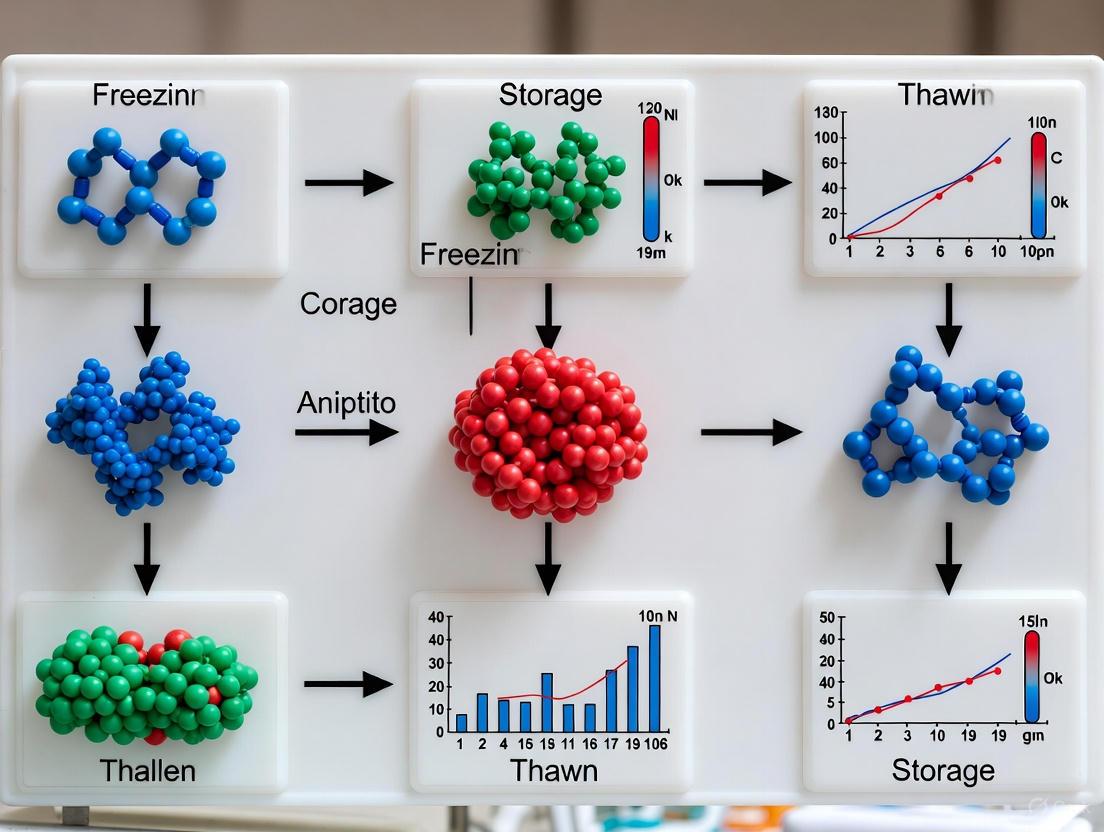
This article provides a comprehensive guide for researchers and drug development professionals on optimizing cryopreservation protocols for cell therapy intermediates.
Optimizing Cryopreservation Protocols for Cell Therapy Intermediates: A Guide to Scalability and Product Quality
Abstract
This article provides a comprehensive guide for researchers and drug development professionals on optimizing cryopreservation protocols for cell therapy intermediates. It covers the fundamental principles of cryobiology, current industry best practices and technological challenges, strategies for troubleshooting and process optimization, and methods for validation and comparative analysis. The content addresses critical challenges such as scaling manufacturing, DMSO toxicity, post-thaw viability, and regulatory compliance, offering evidence-based solutions to enhance product stability, ensure regulatory compliance, and facilitate the successful transition of therapies from clinical development to commercial scale.
Cryobiology Fundamentals and Industry Landscape for Cell Therapy Intermediates
Scientific FAQs
What are the fundamental mechanisms of cell damage during cryopreservation?
Cell damage during cryopreservation primarily occurs through two key mechanisms: mechanical damage from ice crystals and oxidative stress [1].
- Ice Formation and Growth: When temperatures fall below the freezing point, ice first forms in the extracellular spaces. This extracellular ice excludes solutes, leading to a dramatic increase in the solute concentration in the remaining unfrozen fluid. This creates a hypertonic environment, causing water to osmotically leave the cell, leading to severe cellular dehydration and shrinkage. If cooling occurs too rapidly, intracellular water cannot exit the cell quickly enough, resulting in the formation of intracellular ice, which is typically lethal as it disrupts internal cellular structures [1] [2].
- Oxidative Stress: The cryopreservation process triggers the excessive generation of reactive oxygen species (ROS), such as superoxide radicals and hydrogen peroxide. This can be caused by disrupted cellular metabolism, activation of enzymatic pathways, cell dehydration, and impaired activity of antioxidant enzymes. Elevated ROS levels lead to cellular damage through lipid peroxidation, protein oxidation, and DNA damage [1].
How do cryoprotectants (CPAs) work to protect cells?
Cryoprotectants (CPAs) are essential additives that mitigate freezing damage through several protective mechanisms, primarily by modulating ice formation and stabilizing cellular structures [3] [4].
- Colligative Action: CPAs are highly soluble compounds that form hydrogen bonds with water molecules. This interaction depresses the freezing point of water and reduces the amount of ice formed at any given sub-zero temperature. By limiting ice formation, CPAs prevent the lethal concentration of electrolytes and solutes in the unfrozen fraction, thus protecting cells from "solution effects" injury [3] [4].
- Vitrification: At high enough concentrations and with rapid cooling, CPAs enable water to solidify into a glass-like, non-crystalline (amorphous) state, a process called vitrification. This avoids mechanical damage from ice crystallization entirely [5].
- Membrane Stabilization: Some CPAs, particularly non-permeating sugars like trehalose, can stabilize cell membranes by forming a protective glassy matrix during dehydration, preventing the fusion and structural collapse of lipid bilayers [3].
CPAs are broadly categorized based on their ability to cross cell membranes:
Table 1: Categories of Cryoprotective Agents (CPAs)
| CPA Category | Mechanism of Action | Examples | Key Considerations |
|---|---|---|---|
| Permeating Agents | Enter the cell and provide intracellular protection by reducing intracellular ice formation and solute concentration. | Dimethyl Sulfoxide (DMSO), Glycerol, Ethylene Glycol [3] [2] | Can be toxic at high concentrations and require careful addition/removal to avoid osmotic shock. |
| Non-Permeating Agents | Act extracellularly to modulate ice growth and induce protective dehydration. | Sucrose, Trehalose, Raffinose, Hydroxyethyl Starch (HES), Polyvinylpyrrolidone (PVP) [3] [6] | Often used in combination with permeating CPAs to reduce the required toxic concentration of the latter. |
What is the critical difference between slow freezing and vitrification?
The choice between slow freezing and vitrification is fundamental and depends on the sample type, volume, and available technology. The core difference lies in how they manage the physical state of water during cooling [2] [6].
Table 2: Comparison of Slow Freezing and Vitrification Methods
| Feature | Slow Freezing | Vitrification |
|---|---|---|
| Principle | A controlled, slow cooling rate (typically ~ -1°C/min) allows water to gradually leave the cell, minimizing intracellular ice formation [7] [3]. | Ultra-rapid cooling solidifies all water into a glassy, amorphous state without any ice crystal formation [5] [6]. |
| CPA Concentration | Low to moderate (e.g., 10% DMSO) [3]. | Very high (often requiring multi-molar mixtures) [5]. |
| Primary Risks | Solution effects from prolonged exposure to high solute concentrations; intracellular ice if cooling is too rapid [2]. | CPA toxicity due to high concentrations; potential for cracking due to thermal stress [8] [6]. |
| Sample Volume | Suitable for a wide range of volumes, including large samples like cell suspensions [2]. | Typically limited to small volumes (e.g., embryos, oocytes) to ensure sufficient heat transfer for rapid cooling [2]. |
| Ice Formation | Extracellular ice is formed in a controlled manner; intracellular ice is avoided. | No ice formation occurs if the protocol is successful. |
The following diagram illustrates the decision pathway and outcomes based on the cooling strategy:
Why is the cooling and warming rate so critical for cell survival?
The cooling and warming rates are critical because they directly influence the two main sources of cryoinjury: intracellular ice formation (IIF) and solution effects damage [3] [2]. The relationship between cooling rate and cell survival is described by Mazur's "double factor" hypothesis.
- At low cooling rates, cells are exposed to hypertonic conditions for a prolonged period, leading to excessive dehydration and damage from concentrated solutes ("solution effects").
- At high cooling rates, there is insufficient time for water to exit the cell before the temperature drops to a point where the contents supercool and freeze internally. Intracellular ice is almost always lethal.
- The optimal cooling rate is a compromise that minimizes both dehydration and intracellular ice formation [3].
Perhaps counter-intuitively, the warming rate is equally critical. During thawing, if warming is too slow, the sample passes through a temperature range (-60°C to -15°C) where small ice crystals can recrystallize into larger, more damaging ones. Therefore, rapid warming is generally recommended to minimize the time for ice recrystallization to occur [7] [1].
The following diagram summarizes the kinetic challenges and protective mechanisms during the freeze-thaw cycle:
Troubleshooting Guides
Problem: Low Post-Thaw Cell Viability
Potential Causes and Solutions:
Suboptimal Cooling Rate:
- Cause: The cooling rate is either too fast (causing intracellular ice) or too slow (causing excessive dehydration).
- Solution: For many mammalian cells, a cooling rate of approximately -1°C/minute is optimal [7] [3]. Use a controlled-rate freezer or an isopropanol-based freezing container (e.g., Nalgene "Mr. Frosty") placed in a -80°C freezer to achieve this rate [7].
Inadequate CPA or CPA Toxicity:
- Cause: The type, concentration, or exposure time of the CPA is incorrect.
- Solution:
- Use a validated, pre-mixed commercial freezing medium like CryoStor or CELLBANKER for your cell type [7] [6].
- For lab-made formulations, ensure the correct concentration of a permeating CPA like DMSO (typically 10%) and consider adding a non-permeating CPA like sucrose (e.g., 0.2 M) to reduce the required DMSO concentration [3].
- Add and remove CPAs at low temperatures (e.g., on ice) to minimize chemical toxicity [4].
Improper Cell State at Freezing:
- Cause: Cells were not in a healthy, robust state before cryopreservation.
- Solution: Freeze cells during their maximum growth phase (log phase) at >80% confluency. Ensure cells are free from microbial contamination (e.g., mycoplasma) [7].
Slow or Improper Thawing:
- Cause: Slow thawing allows for damaging ice recrystallization.
- Solution: Thaw cells rapidly by placing the cryovial in a 37°C water bath with gentle agitation until only a small ice crystal remains [7]. Dilute the thawed cell suspension in pre-warmed media slowly to reduce osmotic shock.
Problem: Excessive Cell Clumping or Low Yield Post-Thaw
Potential Causes and Solutions:
- Incorrect Cell Concentration:
- Cause: Freezing cells at a very high concentration can lead to clumping.
- Solution: Freeze cells at a concentration within the general range of 1x10^3 to 1x10^6 cells/mL and optimize for your specific cell type [7].
- Cell Membrane Damage from Ice Crystals:
- Cause: Intracellular or extracellular ice crystals physically disrupt membranes, leading to the release of DNA and other sticky intracellular contents, which causes clumping.
- Solution: Ensure optimal cooling rates and CPA usage to control ice formation. The addition of DNase (e.g., 50-100 Kunitz units/mL) to the post-thaw wash medium can help digest extracellular DNA and reduce clumping.
The Scientist's Toolkit: Research Reagent Solutions
Table 3: Essential Reagents for Cryopreservation Workflows
| Reagent / Product | Function / Application | Key Features |
|---|---|---|
| DMSO (Dimethyl Sulfoxide) | A permeating CPA used to protect a wide variety of mammalian cells from intracellular ice and solute damage [3] [4]. | Highly effective, low cost; but can induce differentiation and has cytotoxicity at high concentrations or with prolonged exposure [3] [6]. |
| CryoStor CS10 | A ready-to-use, serum-free cryopreservation media [7]. | Contains 10% DMSO in an optimized, defined solution. Provides a safe, protective environment, often used in GMP-compliant workflows [7]. |
| CELLBANKER Series | A series of commercial cryopreservation media [6]. | Contains DMSO, sugars, and polymers. Offers serum-containing, serum-free, and xeno-free (chemically defined) formulations for different regulatory needs [6]. |
| mFreSR | A serum-free freezing medium designed for human embryonic stem (ES) and induced pluripotent stem (iPS) cells [7]. | Chemically defined, optimized to maintain high thawing efficiencies and pluripotency for sensitive stem cell types. |
| Trehalose | A non-permeating disaccharide CPA [3]. | Naturally produced by many organisms for freeze tolerance. Stabilizes cell membranes by forming a glassy state; often used in combination with permeating CPAs or introduced into cells via specialized techniques [3]. |
| Isopropanol Freezing Container (e.g., Nalgene "Mr. Frosty") | A simple device to achieve an approximate cooling rate of -1°C/minute in a standard -80°C freezer [7]. | Provides an accessible and consistent method for slow freezing without the need for expensive controlled-rate freezers. |
ISCT Survey on Cryopreserved HSPC Stability Programs
The AABB-ISCT Joint Working Group Stability Project Team (SPT) conducted a global survey of 82 centers to assess current practices for cryopreserved Hematopoietic Stem/Progenitor Cell (HSPC) stability programs [9]. The findings revealed significant variability across programs and informed preliminary recommendations for standardization.
Key Survey Findings and Recommendations [9]
| Survey Aspect | Key Findings & Variabilities | SPT Recommendations |
|---|---|---|
| Program Scope | Variability in practices for cryopreserved cell therapy products. | Focus on cryopreserved HSPCs as a starting point for roadmap to standardization. |
| Critical Factors | Stability depends on facility factors (techniques, reagents, storage temp) and independent variables (donor factors, starting material). | A holistic view of the entire process chain is necessary. |
| Key Metrics | Retention of hematopoietic engraftment potential is the primary goal. | Engraftment results should not be the sole metric for stability programs; use additional quality and potency assays. |
FAQs and Troubleshooting Guides
1. Our lab observes variable post-thaw viability in our HSPC products. What are the most critical factors we should check? Variable viability often stems from inconsistencies in the pre-freeze, freezing, or thawing processes. Focus on these key areas [10]:
- Cell Health and Density: Freeze only healthy, actively growing cells at the recommended density (e.g., 1-2 x 10⁶ cells/mL for many cell types). Overgrown cultures or excessively high cell densities can lead to poor recovery [10].
- Controlled-Rate Freezing: The cooling rate is paramount. Use a controlled-rate freezer or a validated device like a CoolCell to maintain a consistent rate of -1°C per minute. Avoid using non-validated insulated boxes, which can lead to uneven and non-reproducible cooling [10].
- Thawing and Cryoprotectant Removal: Thaw cells rapidly in a 37°C water bath. Dilute the cell suspension gradually to remove DMSO and avoid osmotic shock. Gently pipette and do not vortex delicate immune cells [11].
2. What are the best practices for handling small-volume cryopreservation, which is common for pediatric doses or aliquoting? Small-volume cryopreservation (e.g., 10-30 mL) requires specialized containers and handling [12]:
- Use Appropriate Containers: Employ freezing bags specifically designed for small volumes, such as 10-30 mL bags. Using containers that are too large can lead to inefficient freezing and increased variability.
- Prevent Bag Breakage: Frozen bags are fragile. Seal tubing short to reduce stress points, remove air bubbles completely before freezing, and use the correct freezing cassette to ensure a secure fit. Handle frozen bags with extreme care, avoiding any bending or dropping [12].
- Implement a Closed System: Use accessories like sterile docking devices and secondary overwrap bags to maintain a closed system during filling and storage, minimizing contamination risk and protecting against leakage [12].
3. We are troubleshooting low colony formation in our iPSCs post-thaw. What steps can we take? Low recovery of iPSCs is often related to cell condition and handling during the freeze-thaw cycle [10]:
- Pre-freeze Cell Health: Feed iPSCs daily before cryopreservation and freeze cells that have been passaged for 2-4 days, avoiding overgrowth. Ensure cell clumps are gently but adequately dissolved to allow cryoprotectant penetration.
- Gentle Handling: When harvesting, centrifuge at low g-force (200-300 x g for 2 minutes) and operate pipettes gently to avoid mechanical stress.
- Optimized Seeding: After thawing, seed the cells at a high density (e.g., 2x10⁵ - 1x10⁶ viable cells per well of a 6-well plate) onto a Matrigel-coated plate to promote attachment and growth.
4. Are there alternatives to DMSO for cell therapy applications, given its toxicity concerns? Yes, research into DMSO-free and reduced-DMSO formulations is active, though DMSO remains the most common cryoprotectant [13] [10]. Alternatives include:
- Intracellular Cryoprotectants: Glycerol is used for certain cell types like red blood cells.
- Extracellular Cryoprotectants: Large molecules like sucrose, dextrose, and methylcellulose can be used alone or in combination with reduced levels of DMSO (e.g., 2% DMSO with 1% methylcellulose) to provide comparable results while reducing toxicity [10].
- Commercial Formulations: Several companies offer proprietary, xeno-free, and serum-free cryopreservation solutions, some of which are designed to be DMSO-free [10].
The Scientist's Toolkit: Essential Research Reagent Solutions
| Item | Function & Application |
|---|---|
| DMSO (Dimethyl Sulfoxide) | Penetrating cryoprotectant that disrupts ice crystal formation. The standard for many cell types, typically used at 10% concentration [10] [11]. |
| Extracellular Cryoprotectants (e.g., Sucrose, Dextrose) | Non-penetrating additives that help draw water out of cells during freezing, reducing intracellular ice damage. Often used in combination with DMSO [10]. |
| Controlled-Rate Freezing Device | Equipment that ensures a consistent, optimal cooling rate (typically -1°C/min) to maximize cell viability and process reproducibility [10]. |
| Cryogenic Storage Bags | Hermetically sealed containers for cryopreservation. Available in various sizes, including small-volume bags (10-50 mL) optimized for cell therapy doses and aliquoting [12]. |
| Secondary Overwrap Bag | A protective outer bag used during liquid nitrogen storage to contain potential leakage from the primary bag, reducing cross-contamination risks [12]. |
| Cell-Specific Cryopreservation Media | Tailored, often commercially available, formulations that may include DMSO, sugars, and other supplements designed for maximum recovery of specific cell types like HSCs or iPSCs [11]. |
Experimental Protocols for Key Cryopreservation Procedures
Protocol 1: Standard Controlled-Rate Freezing for Cell Therapy Intermediates
This protocol is adapted for cell suspensions such as HSPCs or T cells, based on common industry practices described in the literature [14] [10] [11].
- Preparation: Ensure cells are healthy and in log-phase growth. Determine total cell count and viability.
- Formulation: Centrifuge the cell suspension and resuspend in pre-chilled cryopreservation medium at a target density of 5-10 x 10⁶ cells/mL. A common base formulation is 10% DMSO in a medium containing 20-30% serum or human serum albumin. Keep the cell suspension on ice or at 4°C after adding the cryoprotectant.
- Aliquoting: Aseptically dispense the cell suspension into appropriate cryogenic vials or bags. For small-volume bags, ensure air bubbles are removed before sealing [12].
- Freezing: Place the vials/bags into a controlled-rate freezing chamber. Initiate the freezing program:
- Start at 4°C.
- Cool at a rate of -1°C per minute to -40°C.
- Cool at a faster rate of -5 to -10°C per minute to -100°C.
- After the program completes, immediately transfer the samples to a long-term storage vapor phase liquid nitrogen freezer (-140°C to -180°C).
Protocol 2: Rapid Thaw and DMSO Dilution for Therapeutic Cells
This thawing protocol is critical for preserving post-thaw viability and function [10] [11].
- Rapid Thaw: Remove the vial or bag from liquid nitrogen storage. Immediately place it in a 37°C water bath with gentle agitation until only a small ice crystal remains (approximately 2-3 minutes).
- Decontamination: Wipe the outside of the container with 70% ethanol before moving to a biological safety cabinet.
- Gradual Dilution: Gently transfer the thawed cell suspension to a conical tube. Slowly add pre-warmed (e.g., 37°C) culture medium or a dextrose-based solution drop-wise, with gentle mixing. A typical dilution is 1:10 (cell suspension:medium) over 5-10 minutes. This step is critical to reduce DMSO toxicity and prevent osmotic shock.
- Washing (Optional): Centrifuge the diluted cell suspension at a moderate speed (e.g., 300 x g for 5-10 minutes). Carefully decant the supernatant.
- Resuspension and Recovery: Resuspend the cell pellet in fresh, pre-warmed culture medium. Perform a cell count and viability assessment. Consider allowing the cells a recovery period (e.g., several hours to overnight) in a culture incubator before initiating functional assays or further manipulation.
Cryopreservation Workflow and Risk Mapping
The following diagrams outline the core cryopreservation workflow and a risk-focused view of the process, integrating key survey findings.
Troubleshooting Common Cryopreservation Issues
Cryopreservation is a cornerstone of the cell therapy supply chain, ensuring that viable cells are available from biobanking through to the final "vein-to-vein" delivery to the patient. However, researchers often encounter specific challenges that can impact cell viability and therapy efficacy. This guide addresses common problems and their solutions.
FAQ 1: Why is my post-thaw cell viability low?
Low post-thaw viability can stem from several points in the cryopreservation workflow.
- Cause: Suboptimal Cooling Rate. Excessively slow cooling can expose cells to toxic solute concentrations, while excessively fast cooling leads to lethal intracellular ice formation [15].
- Solution: Implement a controlled cooling rate of approximately -1°C per minute [7] [16]. This can be achieved using a programmable freezing unit or an inexpensive passive cooling device (e.g., a Mr. Frosty or CoolCell) placed in a -80°C freezer overnight [7].
- Cause: Intracellular Ice Formation. This is a primary cause of cell death during fast cooling [15] [16].
- Solution: Ensure the correct concentration of a penetrating cryoprotectant like DMSO is used. These agents replace water inside the cell, reducing ice crystal formation [15].
FAQ 2: How can I prevent contamination during the cryopreservation process?
Maintaining sterility is critical for clinical-grade cell therapies.
- Cause: Non-Sterile Techniques or Compromised Vessels.
- Solution: Use proper aseptic technique and wipe all containers with 70% ethanol [7]. Use sterile, internal-threaded cryogenic vials to minimize contamination risk during storage in liquid nitrogen [7]. Always ensure cells are free from microbial contamination, such as mycoplasma, before freezing [7] [16].
FAQ 3: What causes high levels of cell clumping or low recovery after thawing?
Cell clumping reduces accurate dosing and can impede function.
- Cause: Incorrect Cell Concentration. Freezing at a very high cell concentration can promote clumping [7].
- Solution: Freeze cells at an optimal concentration. While this is cell-type specific, a general range is 1x10^3 to 1x10^6 cells/mL. Test multiple concentrations to determine the best one for your specific cell type [7].
- Cause: Improper Handling During Thaw. Slow thawing can allow small ice crystals to recrystallize into larger, more damaging ones [7].
- Solution: Thaw cells rapidly by placing the vial in a 37°C water bath with gentle agitation until only a small ice pellet remains [7] [16].
FAQ 4: How do I manage the toxicity of Cryoprotective Agents (CPAs) like DMSO?
CPA toxicity is a major concern for direct patient administration.
- Cause: High Concentration and Prolonged Exposure.
- Solution: Use CPAs at the lowest effective concentration. For DMSO, 10% is common, but specific cell types may tolerate less [15]. After thawing, promptly remove the CPA. For sensitive cells or CPAs like glycerol, use a stepwise dilution rather than a direct, large-volume dilution to avoid osmotic shock [16].
Essential Cryopreservation Protocols
Standardized protocols are vital for reproducibility in the cryochain. The following methods are foundational for preserving cell therapy intermediates.
Protocol 1: Standard Slow-Freezing for Cell Suspensions
This is the most widely adopted method for bulk cell suspensions in cryobags or vials [17] [18].
- Harvesting: Harvest cells during their maximum growth phase (typically >80% confluency) [7] [16]. Use gentle dissociation methods.
- Centrifugation: Centrifuge the cell suspension to form a soft pellet. Carefully remove the supernatant [7].
- Resuspension in Freezing Medium: Resuspend the cell pellet in a suitable, cold freezing medium to achieve the desired cell concentration. Options include:
- Aliquoting: Aliquot the cell suspension into cryogenic vials or bags.
- Controlled-Rate Freezing: Cool the samples at a controlled rate of -1°C/min to at least -80°C. Use a controlled-rate freezer or a passive cooling device [7] [16].
- Long-Term Storage: Transfer the frozen vials to long-term storage in the vapor or liquid phase of a liquid nitrogen tank (< -135°C) [7]. Note: Storage at -80°C is not suitable for long-term preservation, as cell viability will decline over time [7].
Protocol 2: Thawing and Recovery of Cryopreserved Cells
The "slow freeze, fast thaw" principle is critical for high recovery [7].
- Rapid Thaw: Remove the vial from liquid nitrogen and immediately thaw it rapidly in a 37°C water bath with gentle agitation. Thawing should take 60-90 seconds. Stop when only a small ice pellet remains [16].
- Decontamination: Wipe the vial exterior with 70% ethanol before placing it in a biosafety cabinet.
- CPA Removal:
- Transfer the thawed cell suspension to a larger volume of pre-warmed culture medium.
- Centrifuge the cells to pellet them and remove the CPA-containing supernatant.
- For cells frozen with glycerol, use a stepwise dilution method to prevent osmotic shock [16].
- Resuscitation: Resuspend the cell pellet in fresh, complete culture medium and transfer to a culture vessel. A medium change within 6-24 hours is often recommended for full recovery [16].
Quantitative Data and Reagent Solutions
The tables below consolidate key quantitative data and reagents to assist in experimental planning.
Table 1: Comparison of Cryopreservation Methods
| Characteristic | Slow Freezing | Vitrification |
|---|---|---|
| Working Time | More than 3 hours | Fast, less than 10 minutes [15] |
| Cost | Expensive (freezing machine often needed) | Inexpensive (no special machine needed) [15] |
| Sample Volume | 100–250 μL [15] | 1–2 μL [15] |
| CPA Concentration | Low | High [15] |
| Risk of Ice Crystals | High | Low [15] |
| Risk of CPA Toxicity | Low | High [15] |
Table 2: Common Cryoprotective Agents (CPAs) and Their Applications
| Cryoprotective Agent | Membrane Permeability | Common Applications in Cell Therapy |
|---|---|---|
| Dimethyl Sulfoxide (DMSO) | Yes [15] | Standard for hematopoietic stem cells, T cells, and many mammalian cell cultures [15]. |
| Glycerol | Yes [15] | Historically used for red blood cells and microorganisms [15]. |
| Ethylene Glycol (EG) | Yes [15] | Used in combination with DMSO for oocytes and embryos [15]. |
| Trehalose | No [15] | A non-toxic, natural disaccharide used as an extracellular CPA for stem cells and red blood cells [15]. |
| CellBanker Series | Yes [15] | Commercial, serum-free formulations used for adipose-derived stem cells, bone marrow, and other cell types [15]. |
The Scientist's Toolkit: Key Research Reagent Solutions
| Item | Function |
|---|---|
| Defined Cryopreservation Media (e.g., CryoStor) | Ready-to-use, serum-free media that provide a defined, protective environment during freeze/thaw, reducing lot-to-lot variability [7]. |
| Controlled-Rate Freezer | Programmable unit that ensures a consistent, optimal cooling rate (e.g., -1°C/min) for maximum viability and protocol reproducibility [16]. |
| Passive Cooling Devices (e.g., CoolCell) | Isopropanol-containing or alcohol-free containers that provide an approximate -1°C/min cooling rate when placed in a -80°C freezer, offering a low-cost alternative [7]. |
| Cryogenic Vials (Internal Thread) | Sterile vials designed for low-temperature storage. Internal-threaded designs help prevent contamination during filling or in liquid nitrogen [7]. |
| Viability Assay Kits (e.g., alamarBlue) | Fluorescent or colorimetric assays used to quantitatively assess cell viability and proliferation after thawing [19]. |
Cryopreservation Workflow and Cryochain Diagrams
The following diagrams illustrate the core workflow for cryopreserving cells and the complete "vein-to-vein" logistics chain in cell therapy.
Cell Cryopreservation Workflow
Vein-to-Vein Cryochain in Cell Therapy
In the development of cell therapies, cryopreservation is a critical unit operation that enables the storage and transport of living cell-based drug products and intermediates. A Critical Quality Attribute (CQA) is defined as a "physical, chemical, biological, or microbiological property or characteristic that should be within an appropriate limit, range, or distribution to ensure the desired product quality" according to the ICH Q8(R2) guideline [20] [21]. For cell therapy intermediates, maintaining viability, functionality, and potency through the freeze-thaw cycle is paramount to ensuring the final product's safety and efficacy. This technical support center provides targeted troubleshooting guidance for researchers navigating the challenges of CQA assessment in the context of cryopreservation protocols.
Troubleshooting Guides
Guide 1: Poor Post-Thaw Viability
Problem: Cell viability after thawing is unacceptably low (<70%, a commonly targeted threshold for cell therapy products) [20].
| Possible Cause | Diagnostic Steps | Corrective Action |
|---|---|---|
| Suboptimal freezing rate causing intracellular ice crystal formation [7] [22]. | Review cryopreservation protocol; was a controlled-rate freezer or validated freezing container used? | Use a controlled cooling rate of -1°C/minute [7] [23]. |
| Improper cryoprotectant agent (CPA) handling [22]. | Check CPA type, concentration, and exposure time to cells pre-freeze. | Use a suitable CPA like DMSO; minimize exposure time at room temperature; use serum-free, GMP-manufactured freezing media [7]. |
| Inadequate cell state at freezing [7]. | Check culture logs for confluency and growth phase. | Harvest cells during their maximum growth phase (log phase) at >80% confluency [7]. |
| Poor thawing technique [22]. | Observe and document the current thawing process. | Thaw cells rapidly (~60-90 seconds) in a 37°C water bath until only a small ice pellet remains [7] [22]. |
Guide 2: Loss of Critical Cellular Functions Post-Thaw
Problem: Cells recover with acceptable viability but show reduced therapeutic functionality (e.g., impaired immunomodulation or differentiation).
| Possible Cause | Diagnostic Steps | Corrective Action |
|---|---|---|
| CPA toxicity or osmotic stress during addition/removal [22]. | Assess cell morphology and function immediately post-thaw. | Remove CPAs gently post-thaw; for glycerol, use stepwise dilution instead of direct medium addition [22]. |
| Ice crystal damage to cell membranes and signaling apparatus [22]. | Use functional assays pre-freeze and post-thaw for comparison. | Ensure a controlled, slow freezing rate to minimize physical damage. Validate the process with functional assays [23]. |
| Insufficient post-thaw recovery time [22]. | Measure functionality at 6, 24, and 48 hours post-thaw. | Allow cells a * recovery period* of 6-24 hours in culture before assaying functionality or moving to the next manufacturing step [22]. |
Guide 3: Inconsistent Potency Assay Results
Problem: Measurements of the product's biological activity, which is directly linked to its therapeutic mechanism, are variable after cryopreservation.
| Possible Cause | Diagnostic Steps | Corrective Action |
|---|---|---|
| Assay not aligned with Mechanism of Action (MoA) [21]. | Review if the potency assay measures the specific biologic activity critical for the therapy's efficacy. | Develop a product-specific potency assay. For an immunomodulatory MSC therapy, this might be an IDO activity assay, not just a general viability test [21]. |
| High variability in cell sample used for the assay (e.g., cell number, viability) [24]. | Standardize the input cell number and viability for the assay. | Pre-qualify cells before freezing; use a consistent, high cell concentration for cryopreservation (e.g., 1x10^6 cells/mL) to minimize variability [7]. |
| Instability of the assay reagent [24]. | Check reagent storage conditions and expiration dates. | Store light-sensitive reagents (e.g., alamarBlue) in the dark; warm frozen reagents to 37°C and mix thoroughly before use to ensure a homogeneous solution [24]. |
Frequently Asked Questions (FAQs)
FAQ 1: What are the universal CQAs for all cell therapy products, and which are most impacted by cryopreservation? According to the US Code of Federal Regulations (21CFR610), the core CQAs for biologics are Safety, Purity, Identity, and Potency [21]. For cell therapies, this typically translates to specific tests for:
- Sterility (e.g., mycoplasma, endotoxin) [20]
- Purity (freedom from undesired cell types or impurities) [20]
- Identity (verification of correct cell type via markers or morphology) [20]
- Potency (biological function relevant to clinical efficacy) [20] Cryopreservation most directly impacts viability (a key aspect of safety and purity) and potency, as the freeze-thaw process can damage cells and impair their therapeutic function [23].
FAQ 2: Why is a potency assay for my MSC therapy so challenging to develop and validate? Potency assays are highly challenging because they must be mechanism-specific. Unlike chemical drugs, a single potency test does not fit all MSC therapies [21]. The assay must be scientifically justified and correlate with the product's intended biological activity in the patient. For example:
- An MSC product for Graft vs. Host Disease would require a potency assay measuring immunomodulation (e.g., T-cell suppression).
- An MSC product engineered to deliver a therapeutic protein would require an assay quantifying that protein's secretion [21]. The FDA requires this scientific rationale to bridge the potency measurement to the claimed clinical effect [21].
FAQ 3: Our post-thaw cell counts are highly variable. What are the key factors to control during cryopreservation? To ensure consistent post-thaw cell counts and recovery, strictly control these factors:
- Cell Health Pre-Freeze: Freeze cells that are healthy, in the log phase of growth, and over 80% confluent [7].
- Freezing Rate: Consistently use a cooling rate of -1°C/minute using a controlled-rate freezer or a validated freezing container like a CoolCell or Mr. Frosty [7] [22].
- Cell Concentration: Freeze at a consistent, optimized concentration. A general range is 1x10^5 to 1x10^6 cells/mL, but this should be determined for your specific cell type [7].
- Thawing Method: Always use a rapid thaw method (37°C water bath with gentle agitation) to minimize damage from ice recrystallization [7] [22].
Experimental Workflows & Protocols
Protocol 1: Standard Cryopreservation Workflow for Cell Therapy Intermediates
This protocol outlines a best-practice workflow for freezing cell therapy intermediates to preserve CQAs.
Title: Cell Cryopreservation Workflow
Detailed Methodology:
- Harvest the cells during their maximum growth phase (typically >80% confluency) using a gentle dissociation method [7].
- Centrifuge the cell suspension at an appropriate force to form a soft pellet. Carefully remove the supernatant [7].
- Resuspend the cell pellet in a chilled, suitable freezing medium (e.g., a GMP-manufactured, serum-free medium like CryoStor CS10) at twice the desired final concentration [7] [22].
- Aliquot the cell suspension into sterile, labeled cryogenic vials. The final concentration in the vials should be within the optimized range (e.g., 1x10^6 cells/mL) [7].
- Freeze the vials using a controlled-rate freezer or place them in an isopropanol-free freezing container (e.g., Corning CoolCell) and immediately transfer it to a -80°C freezer for approximately 24 hours to achieve a cooling rate of -1°C/minute [7].
- Transfer the vials to long-term storage in the vapor phase of liquid nitrogen (<-135°C) for optimal stability [7] [23].
- Update all inventory logs and records to ensure full traceability [7].
Protocol 2: Post-Thaw CQA Assessment Workflow
After thawing, a structured assessment of key CQAs is essential to determine the success of the cryopreservation process and the fitness of the intermediate for further use.
Title: Post-Thaw CQA Assessment
Detailed Methodology:
- Rapid Thaw: Retrieve a vial from storage and immediately thaw it by gentle agitation in a 37°C water bath for approximately 60-90 seconds, or until only a small ice pellet remains [7] [22].
- Decontaminate & Transfer: Wipe the vial with 70% ethanol and transfer the contents to a sterile tube.
- Remove Cryoprotectant: Gently add pre-warmed culture medium dropwise to dilute the CPA. Centrifuge at a low force to pellet the cells and remove the CPA-containing supernatant [22].
- Recovery Period: Plate the cells in fresh culture medium and incubate for 6-24 hours to allow for metabolic recovery [22].
- Viability Assessment:
- Trypan Blue Exclusion: Mix a cell sample with 0.4% Trypan Blue solution and count unstained (viable) and stained (non-viable) cells using a hemocytometer or automated cell counter. Viability should typically be >70% [20] [24].
- Flow Cytometry: Use 7-AAD or Annexin V/PI staining for a more accurate assessment of viability and early apoptosis [20].
- Identity Assessment:
- Potency Assessment:
The Scientist's Toolkit: Key Research Reagent Solutions
Table: Essential reagents and materials for CQA analysis in cell therapy cryopreservation.
| Reagent / Material | Function & Application | Key Considerations |
|---|---|---|
| Serum-Free Freezing Media (e.g., CryoStor CS10) [7] | A ready-to-use, defined formulation containing DMSO to protect cells during freezing and thawing. | Reduces variability and safety risks associated with animal sera; preferred for regulated cell therapy workflows [7]. |
| Controlled-Rate Freezing Container (e.g., CoolCell) [7] | Provides a consistent cooling rate of -1°C/minute when placed in a -80°C freezer, replacing expensive programmable freezers for many R&D applications. | Ensure the container is at room temperature before use for optimal performance [7]. |
| Viability Stains (Trypan Blue, 7-AAD, Annexin V) [20] [24] | Differentiate live cells from dead/dying cells. Trypan Blue for basic counts; 7-AAD/Annexin V for more precise flow cytometry-based apoptosis detection. | Trypan Blue can form precipitates if improperly stored; protect from light and avoid freezing [24]. |
| Metabolic Assay Kits (e.g., alamarBlue, PrestoBlue) [24] | Measure cellular metabolic activity as a surrogate for viability and proliferation. Useful for functional assessment post-thaw. | Reagent is stable to multiple freeze/thaw cycles but must be warmed to 37°C and mixed thoroughly before use to dissolve precipitates [24]. |
| Flow Cytometry Antibody Panels | Used for identity testing (surface marker expression) and purity analysis (detection of contaminating cell types). | Antibody titration is required to optimize staining concentration and signal-to-noise ratio [20]. |
Implementing Controlled-Rate Freezing and Modern Cryopreservation Techniques
Cryopreservation is a critical unit operation in the development of cell-based therapies, enabling the long-term storage of cell therapy intermediates and final products. The choice of freezing method—controlled-rate freezing (CRF) or passive freezing (PF)—directly impacts post-thaw viability, functionality, and batch-to-batch consistency. This technical resource provides a comparative analysis to support researchers in selecting and optimizing cryopreservation protocols for their specific applications.
Quantitative Comparison: CRF vs. Passive Freezing
The table below summarizes key performance data from comparative studies, highlighting the context-dependent nature of method selection.
| Performance Metric | Controlled-Rate Freezing (CRF) | Passive Freezing (PF) | Research Context & Implications |
|---|---|---|---|
| Platelet Recovery & Activation | Increased activation markers (CD62P, PAC-1 binding) and LDH concentration post-thaw [25]. | Lower signs of cellular activation post-thaw [25]. | For platelet cryopreservation, uncontrolled freezing protocols demonstrated a superior activation profile [25]. |
| HPC TNC Viability | 74.2% ± 9.9% post-thaw viability [26]. | 68.4% ± 9.4% post-thaw viability [26]. | Although CRF showed a statistically higher TNC viability, the clinical outcome for Hematopoietic Progenitor Cells (HPCs) was equivalent [26]. |
| HPC CD34+ Viability | 77.1% ± 11.3% post-thaw viability [26]. | 78.5% ± 8.0% post-thaw viability [26]. | No significant difference in the viability of critical CD34+ cells was observed between the two methods [26]. |
| Neutrophil Engraftment | 12.4 ± 5.0 days [26]. | 15.0 ± 7.7 days [26]. | No statistically significant difference in the rate of neutrophil engraftment was found between the two groups [26]. |
| Platelet Engraftment | 21.5 ± 9.1 days [26]. | 22.3 ± 22.8 days [26]. | No statistically significant difference in the rate of platelet engraftment was found between the two groups [26]. |
| Process Consistency | High consistency and reproducibility; reduces vial-to-vial and batch-to-batch variability [25] [27]. | Higher potential for variability due to less control over the freezing curve [25]. | CRF is often recommended for regulated environments where process robustness and documentation are critical [27]. |
| Operational & Cost Factors | High initial equipment cost, uses liquid nitrogen, requires maintenance and specialized staff [25] [27]. | Low initial cost, uses a -80°C freezer, simple to operate with minimal training [25] [27]. | PF provides a feasible, economical, and simpler alternative, especially for smaller labs or specific cell types [25] [26]. |
Experimental Protocols for Method Comparison
Protocol 1: Passive Freezing Using an Isopropanol (IPA) Container
This is a widely used method for achieving a cooling rate of approximately -1°C/minute for cryovials [7] [28].
Materials:
- Cryopreservation medium (e.g., containing 10% DMSO)
- Cryogenic vials
- Isopropanol freezing container (e.g., Nalgene Mr. Frosty) or an isopropanol-free container (e.g., Corning CoolCell)
- -80°C mechanical freezer
- Liquid nitrogen storage tank
Method:
- Harvest and Prepare Cell Suspension: Follow standard procedures to harvest cells and resuspend them in an appropriate cryopreservation medium at the recommended density (e.g., 1x10^6 cells/mL for many mammalian cells) [7] [28].
- Aliquot: Transfer 1 mL of the cell suspension into each cryogenic vial [28].
- Load Container: Place the sealed vials into the isopropanol freezing container at room temperature and immediately transfer the entire container to a -80°C freezer [7] [28].
- Hold: Leave the vials in the -80°C freezer for a minimum of 4 hours, or preferably overnight (18-24 hours) to ensure complete freezing [7].
- Long-Term Storage: The following day, quickly transfer the vials to a liquid nitrogen tank for long-term storage at or below -135°C [7] [28].
Protocol 2: Controlled-Rate Freezing for Platelets
This specific protocol from a peer-reviewed study illustrates a multi-step approach designed to manage the latent heat of fusion [25].
Materials:
- Platelet concentrates in freezing bags with 5-6% DMSO
- Programmable controlled-rate freezer (e.g., Planer Kryo 560)
- Liquid nitrogen storage tank
Method:
- Load: Place the prepared platelet bags into the controlled-rate freezer chamber.
- Program Cooling Profile: Initiate the following programmed sequence [25]:
- Stage I: Cool from +2°C to -5°C at a rate of -1°C per minute.
- Stage II: Hold at -5°C for 15 minutes. (This soak period helps to manage the release of the latent heat of fusion).
- Stage III: Cool from -5°C to -47°C at a rapid rate of -25°C per minute.
- Note: The protocol then continues with further stages until the target storage temperature is reached.
- Transfer: Once the program is complete, immediately transfer the frozen platelet bags to a liquid nitrogen storage tank [25].
Method Selection Workflow
Frequently Asked Questions (FAQs) & Troubleshooting
Q1: Our lab is developing an allogeneic iPSC-based therapy. Is passive freezing sufficient for regulatory compliance?
A: While passive freezing can be acceptable, controlled-rate freezing is strongly recommended for advanced therapies in regulated environments. CRF provides a documented, validated, and reproducible process, which is a key regulatory expectation for critical process steps [27] [29]. It minimizes batch-to-batch variability and provides complete data logging for your cryopreservation process, strengthening your regulatory submission [27].
Q2: I am experiencing low post-thaw viability with my primary T-cells using a passive freezing method. What should I investigate?
A: Follow this troubleshooting guide:
- Verify Cooling Rate: Ensure your passive freezing container is correctly preconditioned (e.g., warmed to room temperature) and that the -80°C freezer is not overloaded, as this can alter the cooling rate [7].
- Optimize Cryoprotectant: Test different concentrations of DMSO (e.g., 5% vs. 10%) or consider using a commercial, serum-free cryopreservation medium like CryoStor, which is designed to improve post-thaw recovery [7] [30].
- Check Cell Health and Density: Freeze only healthy cells in their log growth phase. Ensure you are freezing at an optimal cell density—typically between 5x10^5 to 1x10^7 cells/mL—as too high or too low a density can impact recovery [7] [29].
- Consider Controlled-Rate Freezing: If viability remains low after optimizing the above, your cell type may require a more precise cooling profile. Transitioning to a CRF protocol is the most effective way to resolve this [25] [29].
Q3: For a cell therapy product, what is the absolute minimum temperature for stable long-term storage?
A: For long-term storage, the product must be held below the glass transition temperature (Tg) of water, which is approximately -130°C [31] [14]. Storage at or below this temperature (typically in the vapor or liquid phase of liquid nitrogen, from -135°C to -196°C) effectively halts all metabolic activity and biochemical reactions, allowing for indefinite storage [31] [29]. Storage at -80°C is not suitable for long-term storage of live cells for therapy, as degradation continues over time [7] [28].
Q4: We use DMSO as a cryoprotectant. How critical is the thawing rate for product quality?
A: Rapid thawing is critical. DMSO is cytotoxic upon warming. To minimize its toxic effects and avoid damaging ice recrystallization, thaw the vial quickly in a 37°C water bath until only a small ice crystal remains (typically 1-2 minutes) [7] [28]. The general rule of "slow freeze, fast thaw" is essential for high cell recovery [31] [7].
The Scientist's Toolkit: Essential Research Reagents & Materials
| Tool Category | Specific Examples | Critical Function in Cryopreservation |
|---|---|---|
| Cryoprotectant Agents (CPAs) | Dimethyl Sulfoxide (DMSO), Glycerol, Commercial media (e.g., CryoStor CS10) | Protect cells from ice crystal damage and excessive solute concentration (dehydration) during freezing [31] [7]. |
| Passive Freezing Devices | Nalgene Mr. Frosty, Corning CoolCell | Insulated containers designed to achieve an approximate cooling rate of -1°C/minute when placed in a -80°C freezer [7] [28]. |
| Controlled-Rate Freezers | Planer Kryo 560, Strex CytoSAVER | Programmable units that precisely control the cooling rate through stages, often managing the exothermic latent heat of fusion [25] [27]. |
| Cryogenic Storage Vials | Internal-threaded, sterile cryovials | Provide a sterile environment for cells and reduce contamination risk during filling and storage in liquid nitrogen [7] [29]. |
| Long-Term Storage Systems | Liquid Nitrogen freezers (vapor or liquid phase) | Maintain temperatures below -135°C (typically -150°C to -196°C) to ensure long-term cellular stability [31] [7]. |
Troubleshooting Guides
Guide 1: Diagnosing and Resolving Poor Post-Thaw Viability
Problem: Low cell viability or recovery after thawing. This is a common issue often linked to the freezing process itself.
| Observation | Potential Cause | Recommended Solution |
|---|---|---|
| Very low viability across all cell types | Inappropriate cooling rate causing massive intracellular ice formation or severe solute effects [32] | Optimize the cooling rate for your specific cell type. Test a range from 0.5°C to 2.0°C/min [33]. |
| Viability is high immediately post-thaw but decreases rapidly | "Cryo-stunned" cells; damage from solution effects during slow cooling or residual CPA toxicity [34] | Ensure rapid thawing. For DMSO-containing formulations, consider a post-thaw wash to remove cytotoxic CPAs [35]. |
| Excessive cell clumping or membrane damage | Intracellular ice formation due to overly rapid cooling [32] [36] | Implement controlled ice nucleation (seeding) to reduce supercooling and prevent flash freezing [37] [38]. |
| Poor viability with a Me2SO-free formulation | Suboptimal freezing profile for the non-penetrating CPA [35] [33] | Precisely optimize individual freezing phases (cooling until nucleation, ice crystal growth); spin freezing can be a useful research tool for this [33] [39]. |
Guide 2: Addressing Inconsistent Freezing Results Between Batches
Problem: Significant variation in post-thaw outcomes from one experiment or batch to another.
| Observation | Potential Cause | Recommended Solution |
|---|---|---|
| Variable viability when using passive cooling devices | Unreliable cooling rates due to thermal fluctuations in the -80°C freezer or over-filling/under-filling the device [37] | Use a controlled-rate freezer (CRF) for reproducible, linear cooling. Ensure the freezer door remains closed during the process [37]. |
| Inconsistent ice formation temperature | Uncontrolled, spontaneous nucleation leading to variable degrees of supercooling [37] [32] | Introduce a controlled seeding step in your CRF protocol to trigger ice formation at a consistent, defined temperature (e.g., -5°C to -10°C) [37] [38]. |
| Viability declines after short-term storage at -80°C | Insufficient final storage temperature; sample degradation and ice recrystallization above the glass transition temperature (~ -120°C to -130°C) [37] [36] | For long-term storage, use liquid nitrogen vapor phase (below -135°C) or an ultra-low mechanical freezer (below -150°C) [7] [37]. |
Frequently Asked Questions (FAQs)
FAQ 1: Why is a cooling rate of -1°C per minute so commonly used, and is it truly optimal for all cell types in cell therapy?
The rate of -1°C/minute is a historical standard that works reasonably well for many common mammalian cell types because it balances two key damaging factors: intracellular ice formation (worse at fast rates) and solute effects/osmotic stress (worse at slow rates) [32]. This is known as the "two-factor hypothesis" [33] [36]. However, it is not universally optimal. The ideal rate depends on cell-specific factors like membrane water permeability and surface-to-volume ratio [32]. For instance, some immune cells or complex iPSC-derived intermediates may require a different, optimized rate. It is critical to empirically test and optimize the cooling rate for each specific cell therapy product [33].
FAQ 2: What is "seeding" or controlled ice nucleation, and why is it critical for protocol reproducibility?
Seeding is the process of manually or automatically inducing ice formation in a supercooled sample at a specific, predefined temperature [37] [38]. When a sample cools below its freezing point without ice forming, it is in a metastable supercooled state. If nucleation then occurs spontaneously at a much lower temperature, the sample can freeze almost instantaneously, leading to destructive intracellular ice. By actively seeding at a higher temperature (e.g., -5° to -10°C), you ensure a controlled and gradual growth of extracellular ice. This allows time for water to exit the cell osmotically, minimizing intracellular ice and leading to much more consistent and reproducible post-thaw outcomes [37] [38].
FAQ 3: We are developing an "off-the-shelf" allogeneic cell therapy. What are the key considerations for cryopreservation medium?
The choice of cryopreservation medium is crucial for off-the-shelf therapies. Key considerations are:
- CPA Toxicity and Administration Route: Traditional CPAs like DMSO (Me₂SO) are cytotoxic, and their administration is associated with adverse events, especially with novel routes like intracerebral or intraocular injection [35]. This often necessitates a post-thaw wash step, which introduces risks of contamination and cell damage at the point-of-care [35].
- Me2SO-free Formulations: There is a strong drive towards Me2SO-free cryopreservation media that are safe for direct post-thaw administration [35] [33]. However, these often require meticulous optimization of the freezing profile to achieve performance comparable to DMSO-based media [35] [33].
- Regulatory and Quality Concerns: For clinical use, it is recommended to use GMP-manufactured, fully defined, serum-free cryopreservation media to ensure lot-to-lot consistency and eliminate risks from undefined components like FBS [7].
FAQ 4: How does the final storage temperature impact long-term stability of cell therapy intermediates?
Storage temperature is critical for long-term stability. While -80°C is acceptable for short-term storage (less than one month), it is not suitable for long-term banking. At -80°C, the sample is still above the glass transition temperature (Tg) of the system, which is typically around -120°C to -130°C for DMSO-based solutions [37] [36]. Above the Tg, slow molecular movements and ice recrystallization can occur over time, leading to cumulative damage and loss of viability [36]. For true long-term stability, samples must be stored below -135°C, typically in the vapor phase of liquid nitrogen (around -150°C to -196°C) or in advanced ultra-low mechanical freezers [7] [37].
Data Presentation
Table 1: Impact of Controlled Freezing Parameters on Post-Thaw Viability
Data derived from studies on Jurkat T-cells and iPSC-derived therapies, highlighting the critical effect of optimizing specific freezing phases [35] [33] [39].
| Freezing Parameter | Condition Tested | Post-Thaw Viability Range | Key Takeaway |
|---|---|---|---|
| Cooling Rate Before Nucleation (with Me2SO-free formulation) | Varied | 26.7% to 52.8% | The cooling rate before ice forms significantly impacts viability, dependent on the CPA formulation [33] [39]. |
| Cooling Rate Before Nucleation (with Me2SO-based formulation) | Varied | 22.5% to 42.6% | |
| Rate of Ice Crystal Formation (with Me2SO-free formulation) | Varied | 2.4% to 53.2% | The speed at which ice grows after nucleation is a dominant factor for cell survival [33] [39]. |
| Rate of Ice Crystal Formation (with Me2SO-based formulation) | Varied | 0.3% to 53.2% | |
| Use of Post-Thaw Wash (in preclinical iPSC-therapies) | 100% (12/12) of studies used a wash step [35] | Not Quantified | Standard practice to remove cytotoxic Me2SO, but introduces point-of-care complexity for "off-the-shelf" therapies [35]. |
Experimental Protocols
Protocol 1: A Standardized Workflow for Controlled-Rate Freezing
This protocol outlines the key steps for freezing cells using a Controlled-Rate Freezer (CRF), incorporating best practices for reproducibility [37] [38].
Diagram: Controlled-Rate Freezing Workflow
Step-by-Step Methodology:
- Harvest and Resuspend: Harvest cells and centrifuge to form a pellet. Carefully resuspend the cell pellet in an appropriate, cold cryopreservation medium (e.g., CryoStor CS10) at the recommended concentration (typically 1x10^6 to 1x10^7 cells/mL) [7]. Aliquot into cryogenic vials.
- Equilibration in CRF: Place the cryogenic vials into the pre-cooled chamber of the CRF. Allow the samples to equilibrate to the start temperature (e.g., +4°C). This step is critical for initial reproducibility [38].
- Primary Cooling: Initiate a cooling program with a linear rate. A rate of -1°C/minute is a standard starting point for optimization [7] [32].
- Controlled Ice Nucleation (Seeding): When the sample temperature reaches the predetermined seeding temperature (typically between -5°C and -10°C), hold the temperature and induce nucleation.
- Manual Method: Use a cryopen or pre-chilled forceps to touch the exterior of the vial briefly, initiating ice formation. You will observe a release of the latent heat of fusion as a small temperature spike on the CRF profile [37].
- Automatic Method: Many modern CRFs have an automated seeding function that performs a rapid temperature dip to trigger nucleation [38].
- Secondary Cooling: After holding for 1-2 minutes post-seeding to ensure complete ice propagation, resume cooling at a defined rate (which may be the same as or different from the primary rate) to a final temperature (e.g., -40°C to -80°C) [37] [38].
- Final Transfer: Immediately upon completion of the program, quickly transfer the vials to a long-term storage system (liquid nitrogen vapor phase or ultra-low freezer) [7] [37].
Protocol 2: Method for Manual Seeding in a Cryopreservation Protocol
This protocol details the manual seeding technique, a critical skill for ensuring consistent freezing [37].
Diagram: Manual Seeding Technique
Key Materials:
- Controlled-rate freezer
- Cryopen or forceps
- Insulated gloves and eye protection
- Liquid nitrogen (to pre-chill the instrument)
Procedure:
- Cool and Hold: Program your CRF to cool to your chosen seeding temperature (e.g., -7°C) and hold.
- Pre-chill Instrument: While the sample is cooling, fill a small dewar with liquid nitrogen and chill the tip of the cryopen or forceps.
- Induce Nucleation: Once the sample is holding at the seeding temperature, quickly open the CRF door. Gently touch the tip of the pre-chilled instrument to the exterior surface of the vial, just at the meniscus of the liquid. Ice should instantly form at the point of contact and quickly propagate through the sample.
- Confirm Seeding: Close the CRF door and observe the temperature profile. A small, sharp temperature spike (the release of the latent heat of fusion) confirms successful nucleation.
- Hold and Resume: Allow the sample to hold at the seeding temperature for 1-2 minutes after the temperature stabilizes to ensure all freezable water has crystallized. Then, resume the programmed cooling to the final temperature [37].
The Scientist's Toolkit: Research Reagent Solutions
Table 2: Essential Materials for Cryopreservation Optimization
| Item | Function & Rationale |
|---|---|
| Controlled-Rate Freezer (CRF) | Provides precise, reproducible, and programmable control over cooling rates, which is fundamental for optimizing post-thaw outcomes for sensitive cell therapy intermediates [37]. |
| Liquid Nitrogen Vapor Phase Storage | Ensures long-term stability by maintaining samples at <-135°C, below the glass transition temperature, to prevent ice recrystallization and cellular degradation [7] [37]. |
| GMP-Managed, Serum-Free Freezing Media (e.g., CryoStor) | Defined, xeno-free formulations that provide a consistent and regulatory-compliant environment for freezing cells, eliminating the variability and risks associated with homemade FBS-containing media [7]. |
| Cryopen | A specialized instrument for controlled ice nucleation. It allows for precise, manual seeding of samples at a defined temperature, greatly enhancing protocol reproducibility [37]. |
| DMSO-Free Cryopreservation Formulations | Enables the development of "off-the-shelf" cell therapies by eliminating the cytotoxicity and patient side effects associated with DMSO, removing the need for a post-thaw wash step [35] [33]. |
Troubleshooting Guides
FAQ 1: How do I choose between DMSO and DMSO-free cryoprotectants for my cell therapy product?
The choice depends on a balance between efficacy, regulatory considerations, and the specific sensitivity of your cell type.
- Opt for DMSO-based formulations when working with cell types that have a long history of successful cryopreservation with DMSO (e.g., many hematopoietic stem cells) and when the final product will undergo a post-thaw wash step to remove the DMSO before administration [7] [11].
- Consider DMSO-free formulations when developing therapies for sensitive cell types known to be adversely affected by DMSO (e.g., some pluripotent stem cells), when the final product is infused without a post-thaw wash, or when aiming to avoid DMSO's potential to induce unwanted differentiation or epigenetic changes [40]. Several commercially available DMSO-free solutions like
CryoScarlessandPentaisomaltosehave shown comparable results to DMSO for cells like HSCs and T-cells [40].
FAQ 2: Our post-thaw cell viability is low. What are the key parameters to investigate?
Low post-thaw viability is a common challenge. A systematic investigation should focus on the following parameters, which are detailed in the table below [41] [7]:
| Investigation Parameter | Description & Impact |
|---|---|
| Cooling Rate | A controlled rate of -1°C/minute is ideal for many cell types. Uncontrolled cooling leads to lethal intracellular ice crystallization [7]. |
| Cryoprotectant Concentration | Suboptimal DMSO or alternative concentration can cause toxicity or insufficient protection. Typical DMSO range is 5-10% [7]. |
| Cell Concentration at Freezing | Too high a concentration promotes clumping; too low leads to poor recovery. A general range is 1x10^3 - 1x10^6 cells/mL [7]. |
| Thawing Rate | Rapid thawing in a 37°C water bath is critical to minimize recrystallization damage and cryoprotectant exposure time [11]. |
FAQ 3: We observe functional impairment in cells post-thaw, even with high viability. What could be the cause?
Functional loss despite high viability often points to sublethal damage during the cryopreservation process. Key factors include:
- Cryoprotectant Toxicity: DMSO is known to cause mitochondrial damage, alter chromatin conformation, and impact cell membrane integrity, which can impair function without immediate cell death [40]. Consider switching to or supplementing with less toxic agents.
- Oxidative Stress: The freeze-thaw process can generate reactive oxygen species (ROS). Incorporating antioxidants like trehalose into your cryopreservation medium can help mitigate this stress [40].
- Inadequate Post-Thaw Recovery Time: Cells require a recovery period to re-establish their cytoskeleton and metabolic functions. Allowing cells to incubate overnight post-thaw before functional assessment is recommended [11].
FAQ 4: Are there standardized protocols for testing novel cryoprotectant agents like polymers or nanomaterials?
While a single universal protocol does not exist, a robust testing framework should include the following critical experiments, visualized in the workflow below:
Detailed Methodologies:
- Post-Thaw Viability Assay: Use a dye exclusion method (e.g., Trypan Blue) or a fluorescent viability stain combined with flow cytometry for a quantitative result immediately after thawing. Ensure reagents like Trypan Blue are stored away from light to prevent degradation and precipitation [24].
- Functional Potency Assays: These are cell-type specific. For stem cells, perform in vitro differentiation assays. For immune cells (e.g., CAR-T, NK cells), measure cytokine release or target cell killing (cytotoxicity) [40] [11].
- Proliferation & Growth Kinetics: Use a standardized assay like the alamarBlue or PrestoBlue assay. Follow best practices: warm the reagent to 37°C and mix thoroughly to ensure a homogeneous solution before use, and include positive controls (untreated, living cells) [24].
- Apoptosis & Senescence Analysis: 24-72 hours post-thaw, analyze cells for early and late apoptotic markers using an Annexin V assay. Note that trypsinization can temporarily disrupt the membrane and cause false positive Annexin V staining; allow cells to recover for 30 minutes after trypsinization before staining [24].
- Long-Term Stability: Cryopreserve cells using the novel formulation and assess viability and functionality at predetermined intervals (e.g., 1 month, 6 months, 1 year) after storage in liquid nitrogen [7] [11].
Data Presentation: Comparative Analysis of Cryoprotectant Agents
The table below summarizes key characteristics of major cryoprotectant classes for easy comparison.
| Cryoprotectant Class | Examples | Typical Working Concentration | Mechanism of Action | Key Advantages | Key Disadvantages & Risks |
|---|---|---|---|---|---|
| Penetrating (DMSO) | Dimethyl Sulfoxide (DMSO) | 5 - 10% | Lowers freezing point, disrupts ice formation, stabilizes membranes [11] | High efficacy for many cell types, widely used [7] | Concentration-dependent toxicity, can induce differentiation, patient adverse reactions [40] |
| Non-Penetrating / Sugars | Sucrose, Trehalose, Raffinose | 0.1 - 0.5 M | Creates hypertonic environment, dehydrates cell, stabilizes membranes [40] | Non-toxic, defined composition | Low efficacy alone, often requires electroporation for intracellular delivery [40] |
| Polymers & Polyampholytes | Polyvinyl Alcohol (PVA), Amphiphilic Block Copolymers | 0.1 - 1.0% w/v | Inhibits ice recrystallization, interacts with cell membrane [40] | High polymer efficacy, can be non-toxic, some are biodegradable | Can be cell-type specific, potential for immune response |
| Novel Nanomaterials | Pluronic F127-Liquid Metal NPs, Fe3O4 NPs | Varies by material | Enables ultra-rapid "nano-warming," suppresses devitrification [40] | Dramatically improves thawing uniformity and speed | Regulatory pathway is complex, long-term safety data is limited |
The Scientist's Toolkit: Research Reagent Solutions
This table lists essential materials and their functions for developing and optimizing cryopreservation protocols.
| Item | Function in Cryopreservation | Example & Notes |
|---|---|---|
| Programmed Freezer / Cryo-container | Achieves a controlled, slow cooling rate (typically -1°C/min) to minimize intracellular ice [7] | Controlled-rate freezer; Isopropanol-based "Mr. Frosty"; Isopropanol-free "CoolCell" [7] |
| Serum-Free Freezing Medium | Provides a defined, xeno-free environment during freezing; often contains base medium and cryoprotectants [7] | CryoStor CS10, mFreSR (for iPSCs). Avoids lot-to-lot variability of FBS [7]. |
| Cryogenic Vials | Secure, leak-proof storage at ultra-low temperatures. | Use internal-threaded vials to prevent contamination during storage in liquid nitrogen [7]. |
| Viability Assay Kits | Accurately measure the percentage of live cells post-thaw. | Trypan Blue, alamarBlue, PrestoBlue, Flow cytometry kits with viability dyes [24]. |
| Apoptosis Detection Kit | Detect and quantify early- and late-stage apoptotic cells post-recovery. | Annexin V assay kits. Critical for assessing functional recovery beyond immediate viability [24]. |
| Biomimetic Block Copolymer | Synthetic polymer that mimics natural antifreeze proteins to inhibit ice recrystallization. | Demonstrated to improve erythrocyte and MSC recovery with no abnormal morphologies [40]. |
Troubleshooting Decision Tree for Cryopreservation Failure
When faced with poor post-thaw outcomes, follow this logical pathway to identify the root cause.
For researchers in cell therapy, a consistent and high-quality supply of viable cells is the foundation of successful experiments and manufacturing processes. Cryopreservation is a critical technology that enables the long-term storage and stability of cell therapy intermediates, such as T cells, hematopoietic stem cells, and induced pluripotent stem cells (iPSCs). However, the freezing process is only half of the equation; how the cells are thawed directly impacts their viability, functionality, and the ultimate success of your downstream applications. This technical support center provides detailed protocols and troubleshooting guides to help you navigate the thawing process, minimize post-thaw cellular stress, and ensure you recover cells that are robust and ready for your research.
FAQs and Troubleshooting Guides
What is the single most critical step during the thawing process?
Rapid Thawing. The frozen cell suspension must be thawed quickly to minimize damage from ice recrystallization and reduce the exposure time to the cryoprotectant, typically dimethyl sulfoxide (DMSO), which can be cytotoxic at elevated temperatures [11] [7] [10].
- Best Practice: Immerse the cryovial directly into a pre-warmed 37°C water bath. Gently swirl the vial until only a small ice crystal remains, then promptly remove it [11] [7]. The goal is to move the cells through the dangerous temperature phase where ice recrystallization occurs as quickly as possible.
How can I prevent osmotic shock during and after thawing?
Osmotic shock occurs when cells are exposed to rapid changes in solute concentration, leading to excessive water influx or efflux that can damage the cell membrane. This is a major risk when adding or removing DMSO.
- Best Practice: Avoid direct, rapid dilution. Instead, dilute the thawed cell suspension drop-by-drop with a pre-warmed isotonic buffer or culture medium. Gently pipette or swirl the cell suspension during the addition to ensure gradual mixing and equilibration [42] [10]. This slow dilution allows the DMSO to diffuse out of the cell gradually, preventing sudden volume changes that cause membrane stress.
We see low cell viability post-thaw. What are the potential causes?
Low post-thaw viability can stem from issues at any point in the cryopreservation or thawing workflow. Systematically check the following:
- Pre-thaw Factors: The cells were not healthy or in the logarithmic growth phase before freezing [7] [42]. The freezing protocol itself was suboptimal (e.g., incorrect cooling rate) [7].
- Thawing Factors: The thawing process was too slow, allowing for ice crystal growth [7]. The cells were subjected to osmotic shock during DMSO removal [42].
- Post-thaw Factors: Cells were not given a sufficient recovery period before analysis or downstream use [11]. The seeding density was either too high or too low [10].
Is a post-thaw wash step always necessary?
The necessity of a wash step depends on your downstream application and the sensitivity of your cell type to DMSO.
- For research and further culture: A wash step is generally recommended to remove DMSO and prevent its cytotoxic effects during cell recovery [35].
- For direct administration in cell therapies: This is a complex area. While intravenous administration of DMSO is established for some therapies like CAR-T cells, novel administration routes (e.g., intracerebral, intraocular) often require a post-thaw wash to remove DMSO due to a lack of safety data and concerns over local cytotoxicity [35]. The wash step, however, introduces risks of contamination and handling-related cell damage, driving the need for DMSO-free cryopreservation media in advanced therapeutic applications [35] [43].
Our iPSCs are not forming good colonies after thawing. What should we check?
Poor recovery of iPSCs is often related to the specific handling of these sensitive cells.
- Cell Condition at Freezing: Ensure iPSCs were healthy, fed daily, and frozen as small, well-dissociated clumps. Overgrown or large clumps prevent cryoprotectant penetration, leading to central cell death [10].
- Handling: iPSCs are sensitive to mechanical and osmotic stress. After thawing, pipette gently and ensure slow, dropwise dilution. Use a ROCK inhibitor in the recovery medium to enhance attachment and survival [42] [10].
- Seeding Density: Plate iPSCs at a high enough density to encourage colony formation. A range of 2x10^5 to 1x10^6 viable cells per well of a 6-well plate is typical [10].
Optimized Thawing Protocols for Key Cell Types
General Thawing Protocol for Most Mammalian Cells
This protocol serves as a robust starting point for thawing many common cell types, including adherent cells and immune cells like PBMCs.
Table: Reagents and Equipment for General Thawing Protocol
| Item | Specification | Function |
|---|---|---|
| Water Bath | 37°C, calibrated | Ensures rapid and consistent warming |
| Culture Medium | Pre-warmed to 37°C | Provides nutrients for cell recovery |
| Dilution/Wash Buffer | Pre-warmed PBS or similar | Isotonic buffer for DMSO dilution |
| Centrifuge | Bench-top, calibrated | Gently pellets cells for supernatant removal |
| Pipettes and Tips | Sterile | For gentle handling of cell suspension |
Step-by-Step Methodology:
- Rapid Thaw: Remove the cryovial from long-term storage and immediately place it in a 37°C water bath. Submerge the vial just above the level of the cell suspension but below the cap. Gently agitate until only a tiny ice crystal remains (typically 1-2 minutes) [11] [7].
- Decontamination: Quickly wipe the outside of the vial with 70% ethanol or isopropanol and transfer it to a sterile biological safety cabinet [7].
- Gradual Dilution: Using a sterile pipette, gently transfer the thawed cell suspension to a tube containing 10 volumes of pre-warmed culture medium or buffer. Add the cells drop-by-drop while gently swirling the tube to ensure gradual mixing and DMSO dilution [42] [10].
- Centrifugation: Centrifuge the cell suspension at a gentle speed (e.g., 200 - 300 x g) for 5 minutes to pellet the cells [10].
- Supernatant Removal: Carefully aspirate the supernatant, which now contains the diluted DMSO.
- Resuspension and Culture: Gently resuspend the cell pellet in fresh, pre-warmed complete culture medium. Seed the cells into an appropriately sized culture vessel pre-coated with the necessary substrate if required.
Special Considerations for Sensitive Cell Types
Table: Post-Thaw Recovery Characteristics of Key Cell Types in Therapy
| Cell Type | Key Thawing Consideration | Recommended Recovery Period | Special Reagents |
|---|---|---|---|
| iPSCs | Highly sensitive to dissociation; thaw as small clumps. Use ROCK inhibitor. | 4-7 days [42] | ROCK inhibitor (Y-27632) [10] |
| T Cells / CAR-Ts | Gentle pipetting is critical. Avoid vortexing. Functional assays may require longer rest [11]. | Overnight incubation [11] | IL-2 for activation |
| HSCs (CD34+) | Viability can be assessed shortly after thaw, but functionality may require a recovery phase. | Varies by assay | Cytokine cocktails (SCF, TPO, FLT3-L) |
| hiPSC-CMs (Cardiomyocytes) | New research shows anomalous osmotic behavior post-thaw; monitor closely after resuspension [43]. | 24-48 hours for functional assessment | Specialized DMSO-free media available [43] |
The following workflow summarizes the critical decision points and steps in the post-thaw process for cell therapy products, highlighting where deviations for sensitive cell types may be necessary.
The Scientist's Toolkit: Essential Reagents and Materials
Table: Key Research Reagent Solutions for Post-Thaw Recovery
| Item | Function in Thawing Protocol | Example & Notes |
|---|---|---|
| Controlled-Rate Freezer | Ensures optimal, reproducible cooling during freezing (-1°C/min), which is foundational for good post-thaw viability [7]. | Alternatives: Mr. Frosty, CoolCell |
| 37°C Water Bath | Provides rapid, uniform warming of cryovials to minimize ice recrystallization damage [11] [7]. | Must be cleaned regularly to prevent contamination. |
| DMSO-Freeze Media | Protects cells during freeze-thaw; 10% DMSO is common but cytotoxic. New DMSO-free formulations are emerging [35] [43]. | e.g., CryoStor, or custom osmolyte mixes (trehalose, glycerol, isoleucine) [43]. |
| ROCK Inhibitor (Y-27632) | Significantly improves survival and attachment of dissociated stem cells (e.g., iPSCs) post-thaw by inhibiting apoptosis [42] [10]. | Add to recovery medium for 24 hours. |
| Basal Recovery Medium | Provides nutrients and osmotic support during the critical first hours post-thaw. | RPMI, DMEM, or specialized media tailored to cell type. |
| Programmable Thawing Device | Automates and standardizes the thawing process, reducing variability and improving reproducibility for clinical-grade work. | e.g., ThawSTAR [7]. |
Mastering the thawing process is a critical determinant for success in cell therapy research. By adhering to the principles of rapid thawing, gentle DMSO removal, and providing an appropriate recovery period, you can significantly enhance post-thaw cell viability and functionality. The protocols and troubleshooting guides provided here are designed to address the most common challenges faced at the bench. As the field advances towards more complex cell types and direct administration protocols, continued optimization of thawing practices will remain integral to ensuring that the promise of cell therapies is fully realized in the clinic.
FAQs on Cryopreservation Container Closure Systems
1. Why is container closure integrity (CCI) a major concern for cryopreserved cell therapies? For cell and gene therapy products stored at cryogenic temperatures (e.g., -80°C to -196°C), maintaining CCI is critical for several reasons. First, it ensures a sterile barrier, preventing microbial ingress that could contaminate the product [44]. Second, it preserves the sample's stability by preventing moisture loss or the ingress of atmospheric gases like CO2, which can alter the pH of aqueous drug products [45]. Perhaps most importantly, commonly used rubber stoppers lose their elastic properties and become a glassy solid below their glass transition temperature (typically around -50°C), which can lead to a temporary loss of sealability and CCI failure during frozen storage [46] [44] [45].
2. What are the risks of using standard screw-cap cryovials for long-term biobanking? Standard screw-cap vials, while convenient, can pose significant risks for long-term biobanking. They may not provide robust hermetic sealing, compromising closure integrity [47]. This is particularly dangerous in liquid nitrogen storage, where a loss of integrity can lead to liquid nitrogen entering the vial, potentially causing cross-contamination with other samples in the tank or even vial rupture upon thawing due to rapid expansion [47] [48]. Their durability at cryogenic temperatures may also be lower than specialized systems, making them susceptible to breakage [47].
3. How do plastic polymer vials compare to glass vials for cryogenic storage? Studies show significant differences in performance. Glass vials are susceptible to CCI failure at cryogenic temperatures because the rubber stopper cannot maintain a seal below its glass transition point, allowing gas ingress [45]. When returned to room temperature, the stopper re-seals, potentially trapping pressurized gas inside and creating a safety hazard [45]. In contrast, certain plastic vials made from materials like cyclic olefin copolymer (COC) maintain CCI better. The polymer can form a "cold weld" or polymer entanglement with the stopper, effectively maintaining the seal even as the stopper cycles through its glass transition temperature [45]. COC vials are also more break-resistant at cryogenic temperatures [47].
4. What are "functionally closed" or "closed system" vials? These are vial systems designed to maintain a sterile barrier during both filling and storage. An example is the CellSeal vial, which incorporates ports with septa and filters, allowing for filling and withdrawal while the system remains hermetically sealed via heat sealing or welding [47]. Another example is the AT-Closed Vial, which arrives pre-assembled in an ISO 5 environment and is filled by piercing through the stopper, which then mechanically re-closes and is laser-sealed [49]. These systems are designed to meet cGMP/cGTP requirements for processing clinical samples [47].
5. What should I consider when selecting a container closure system for a new drug product? Selection should be a data-driven process. It is critical to understand the dimensional compatibility between the vial, stopper, and seal to ensure proper CCI at your target storage conditions [50]. Relying solely on component drawings is risky; using real manufacturing data and modeling tools can help quantify the risk of failure [50]. The system must be validated for your specific storage temperature, as performance varies significantly between ambient, frozen, and cryogenic conditions [44] [45]. Finally, consider the entire fill-finish process, including how the capping process parameters (e.g., stopper compression) impact the final container closure integrity [51].
Troubleshooting Guide: Common CCI Issues in Cryogenic Storage
| Problem | Potential Root Cause | Recommended Solution |
|---|---|---|
| Loss of Sterility/ Microbial Contamination | Loss of CCI during storage allows microbial ingress [44]. | Validate CCI at the actual storage temperature using deterministic methods (e.g., helium leak, headspace analysis) [44] [45]. Switch to a vial/stopper combination proven to maintain integrity at cryogenic temperatures [45]. |
| Product Degradation (e.g., pH shift) | Ingress of CO2 or other gases through a compromised seal [45]. | Verify CCI and select a system with a high-integrity seal. Consider using plastic polymer vials which have demonstrated superior CCI at low temperatures in studies [45]. |
| Vial Breakage | Thermal stress and mechanical fragility of glass at cryogenic temperatures; pressure buildup [47] [45]. | Use break-resistant polymer vials made from materials like COC, which remain durable at very low temperatures [47] [45]. Ensure the closure system can accommodate pressure changes. |
| Low Cell Viability Post-Thaw | Improper storage conditions or container not suitable for cryopreservation [47]. | Ensure the container system is validated for cryopreservation. Consider using a functionally closed system to prevent contamination and ensure consistency [47]. |
| Difficulty Removing Stoppers | "Polymer entanglement" or "cold weld" where the stopper bonds to the vial neck, especially in plastic vials [45]. | This is often a sign of a good seal. Follow manufacturer's instructions for opening. This phenomenon confirms the CCI was maintained during storage [45]. |
| Overpressurization upon Thawing | Cold gas ingresses the vial while the stopper is non-elastic at low temperature. The stopper re-seals upon warming, trapping high-pressure gas inside [45]. | Select a container closure system designed to maintain CCI without trapping pressure. Plastic vials have shown to prevent this issue in studies [45]. |
Quantitative Container Performance Data
Table 1: Comparison of Vial Material Performance in Cryogenic CCI Studies
| Vial Material | Key Characteristics | CCI Performance at -80°C to -165°C | Durability at Cryogenic Temperatures |
|---|---|---|---|
| Borosilicate Glass | Traditional material, high clarity. | Poor; significant CCI failure due to stopper glass transition [45]. | Prone to breakage from thermal and mechanical stress [47] [45]. |
| Cyclic Olefin Copolymer (COC) | Glass-like clarity, low moisture permeability, biocompatible [47]. | Excellent; maintains CCI via polymer entanglement with stopper [45]. | High break-resistance and durability [47]. |
| Crystal Zenith (Plastic) | Cyclic olefin polymer, designed for pharmaceutical use. | Excellent; 0% failure in cryogenic CCI testing [45]. | High resistance to breakage [45]. |
Table 2: Headspace Oxygen Analysis in Vials Stored at -80°C Over Time (Indicating CCI) [44]
| Vial & Closure System | Initial O2 (% atm) | 1-Year O2 (% atm) | 2-Year O2 (% atm) |
|---|---|---|---|
| 2R Glass Vial (13mm) with Stopper A & Plastic Push-Fit Cap | 0.12 | 0.08 | N/A |
| 2R Glass Vial (13mm) with Stopper B & Aluminum Cap | 0.10 | 0.13 | N/A |
| 6R Glass Vial (20mm) with Stopper A & Plastic Push-Fit Cap | 0.24 | 0.19 | 0.23 |
| 6R Glass Vial (20mm) with Stopper B & Aluminum Cap | 0.20 | 0.13 | 0.17 |
Experimental Protocol: Container Closure Integrity Testing via Headspace Analysis
Objective: To non-destructively evaluate the container closure integrity (CCI) of vial systems during storage at cryogenic temperatures by measuring oxygen ingress into the vial headspace [44] [45].
Principle: Vials are purged with an inert gas (e.g., nitrogen) to create a low-oxygen headspace. The vials are then stored at the target cryogenic temperature. A loss of CCI will allow atmospheric oxygen to ingress into the vial headspace, which is measured using a non-destructive laser-based headspace analyzer [44] [45].
Materials & Reagents:
- Primary Packaging: Vials (glass or plastic), rubber stoppers, and seals (aluminum or plastic push-fit caps) [44].
- Equipment: Nitrogen purge system, Lighthouse FMS-Oxygen Headspace Analyzer (or equivalent), calibrated cryogenic freezer (-80°C) or liquid nitrogen storage tank [44] [45].
- Consumables: NIST-traceable oxygen standards for instrument calibration [44].
Methodology:
- Sample Preparation: Assemble empty but sterile vials with stoppers and seals. Use a calibrated crimping or capping device to ensure consistent stopper compression [45]. Record the Residual Seal Force (RSF) if possible, and exclude samples with RSF below a validated threshold (e.g., < 6 lbf) [45].
- Headspace Purging & Baseline: Purging with nitrogen gas is a common practice in CCI testing. However, the provided studies [44] [45] used vials with an initial air headspace as the baseline. The method below describes the purging approach for a more sensitive test.
- Purging Method: Replace the headspace atmosphere of the test vials with nitrogen gas to establish a low initial oxygen baseline [45].
- Air Headspace Method: Use vials with ambient air headspace and monitor for oxygen depletion caused by ingressing nitrogen from a storage chamber [45], or monitor for any significant change from the initial level [44].
- Initial Measurement (T0): Measure the headspace oxygen concentration of all vials using the headspace analyzer after purging (or with ambient air) and before cryogenic storage [44] [45].
- Cryogenic Incubation: Place the vials in the target cryogenic storage environment (e.g., -80°C ± 2°C or vapor phase of liquid nitrogen at -165°C) for the desired study duration (e.g., 8 days, 6 months, 1 year, 2 years) [44] [45].
- Post-Storage Measurement: Remove vials from storage and allow them to equilibrate to room temperature. Measure the headspace oxygen concentration again [44] [45].
- Data Analysis: A significant increase in headspace oxygen (for purged vials) or a significant decrease (for air-headspace vials stored in nitrogen) indicates a loss of CCI. Compare results against positive controls (vials with intentionally created micro-leaks) [45].
Container Selection Logic for Cryopreservation
The following flowchart outlines a decision-making process for selecting a container closure system based on critical parameters.
Research Reagent & Material Solutions
Table 3: Key Materials for Cryopreservation Container Closure Systems
| Item | Function / Relevance | Example(s) |
|---|---|---|
| Cyclic Olefin Copolymer (COC) | A superior plastic polymer for vials; offers glass-like clarity, very low moisture permeability, high break-resistance at cryogenic temperatures, and enables robust CCI [47] [49]. | Crystal Zenith vials [46] [45], AT-Closed Vial body [49]. |
| Fluoropolymer-Laminated Stoppers | Elastomeric closures with a laminated film to reduce interactions with the drug product and potentially improve sealing properties [45]. | FluroTec laminated stoppers [45]. |
| Plastic Push-Fit Caps | An alternative to aluminum seals for securing stoppers; can maintain CCI at cryogenic temperatures and are easy to remove [44]. | RayDyLyo CTO caps [44]. |
| Closed-System Cryovials | Vials with integrated ports and tubing that allow for aseptic filling and withdrawal while maintaining a hermetic seal via welding [47]. | CellSeal vials [47]. |
| Pre-Assembled Closed Vials | Vials that are molded and assembled with stoppers in an ISO 5 environment, eliminating contamination risks during filling [49]. | AT-Closed Vial [49]. |
| Helium Leak Test System | A deterministic method for physically testing and validating CCI by detecting the flow of helium gas through a leak [46]. | Used in CCI testing per USP <1207> [46]. |
| Headspace Oxygen Analyzer | A non-destructive instrument for measuring oxygen inside a vial's headspace, used to monitor CCI over time in stability studies [44] [45]. | Lighthouse FMS-Oxygen [44] [45]. |
Solving Common Cryopreservation Challenges and Scaling Your Process
Addressing DMSO Toxicity and Serum-Free Formulation Requirements for Clinical Applications
Fundamental Concepts: DMSO and Serum-Free Formulations
Why is reducing DMSO important in clinical cell therapy products?
Dimethyl sulfoxide (DMSO) is the preferred cryoprotectant for preserving mesenchymal stromal cells (MSCs) and other cellular therapies, but its potential toxicity in patients remains a significant concern [52]. When administered to patients, DMSO has been associated with various adverse effects, including transient mild headaches, moderate chills, nausea, vomiting, and abdominal pain [52]. In more serious cases, cardiopulmonary reactions (hypotension, hypertension, bradycardia, tachycardia, cough, dyspnea) and neurologic events (amnesia, seizures, cerebral infarction) have been reported [52].
Research has demonstrated that DMSO can induce apoptosis in retinal neurons at concentrations as low as 2-4% (v/v) through caspase-3 independent pathways involving apoptosis-inducing factor (AIF) translocation and PARP activation [53]. This highlights safety concerns even at low concentrations previously considered safe.
What are the advantages of serum-free formulations for clinical applications?
Serum-free media formulations offer several critical advantages for clinical cell manufacturing:
- Elimination of batch-to-batch variability from fetal bovine serum (FBS) or human serum, ensuring consistent product quality [54]
- Reduced safety risks from potential biohazards, adventitious agents, and immune reactions [55]
- Regulatory compliance with minimal manipulation guidelines and quality-by-design approaches [54] [56]
- Defined composition supporting reproducible manufacturing processes and predictable cell behavior [54]
Troubleshooting DMSO Toxicity
What are the recommended safe DMSO limits for clinical cell products?
For hematopoietic stem cell transplantation, a maximum dose of 1 g DMSO per kg body weight per infusion is generally considered acceptable [52]. However, analysis of MSC therapy products shows they typically deliver DMSO doses 2.5-30 times lower than this threshold [52]. The table below summarizes key safety considerations:
Table: DMSO Safety Parameters in Cell Therapies
| Parameter | Hematopoietic Stem Cell Therapy | MSC Therapy Products | Critical Factors |
|---|---|---|---|
| Maximum Acceptable Dose | 1 g/kg body weight [52] | 2.5-30 times lower than 1 g/kg [52] | Patient weight, infusion rate |
| Concentration in Final Product | Not to exceed 10% (v/v) [52] | Similar concentration, but lower total volume | Final concentration affects toxicity |
| Infusion Rate | Start slowly, increase as tolerated [52] | Similar approach recommended | Rate influences adverse reactions |
| Premedication | Often used to mitigate reactions [52] | Adequate premedication reduces isolated infusion reactions [52] | Antihistamines, analgesics |
How can I minimize DMSO toxicity while maintaining cell viability?
Several strategies can help balance cryoprotection with reduced DMSO toxicity:
- Post-thaw washing: Remove DMSO through centrifugation or filtration after thawing but before administration. However, this adds manipulation steps that can cause cell damage and loss [52].
- Combination approaches: Use lower DMSO concentrations (as low as 2%) with extracellular cryoprotectants like 1% methylcellulose, which can produce comparable results to higher DMSO concentrations [10].
- Controlled freezing rates: Implement optimized cooling rates of approximately -1°C/minute using controlled-rate freezers or specialized containers like CoolCell to maximize cell viability with minimal DMSO [7] [10].
- Novel cryoprotectant formulations: Explore bioinspired alternatives that mimic natural antifreeze proteins, which have shown promise in preserving hematopoietic stem cells without DMSO [55].
Experimental Protocols for DMSO Reduction
Protocol: Evaluating Reduced DMSO Formulations with Extracellular Cryoprotectants
Purpose: Systematically test combinations of reduced DMSO with extracellular cryoprotectants for specific cell types.
Materials:
- Test cell population (e.g., lymphocytes, MSCs, hepatocytes)
- DMSO (clinical grade)
- Extracellular cryoprotectants: methylcellulose, sucrose, dextrose, polyvinylpyrrolidone (PVP)
- Base cryopreservation medium (serum-free)
- Cryogenic vials (internal or external threaded)
- Controlled-rate freezing container (e.g., CoolCell) or programmable freezer
- Liquid nitrogen storage system
Methodology:
- Prepare experimental groups:
- Positive control: Standard 10% DMSO in appropriate medium
- Test groups: Reduced DMSO (2-5%) combined with extracellular cryoprotectants (e.g., 0.5-1% methylcellulose, 2-5% PVP)
- Include multiple concentrations to establish dose-response
Harvest and concentrate cells during maximal growth phase (>80% confluency) at optimal density (typically 1×10³ - 1×10⁶ cells/mL) [7]
Resuspend cells in test cryopreservation formulations
Implement controlled-rate freezing at -1°C/minute using freezing containers placed at -80°C overnight [7]
Transfer vials to long-term liquid nitrogen storage (-135°C to -196°C)
Assess post-thaw viability using:
- Rapid thawing in 37°C water bath
- Cell viability staining (acridine orange/propidium iodide) [55]
- Functional assays specific to cell type (e.g., proliferation, differentiation, engraftment potential)
Compare test formulations against controls for recovery, viability, and functionality
Table: Extracellular Cryoprotectants as DMSO Supplements
| Cryoprotectant | Mechanism of Action | Recommended Concentration | Compatibility |
|---|---|---|---|
| Methylcellulose | Viscosity modifier, reduces ice crystal formation | 0.5-1% (w/v) | Compatible with reduced DMSO (2-5%) |
| Polyvinylpyrrolidone (PVP) | Large polymer, acts as extracellular cryoprotectant | 10% (w/v) | Can replace DMSO in some applications [10] |
| Sucrose/Dextrose | Osmotic balancer, energy source | 5-10% (w/v) | Included in commercial serum-free formulations [55] |
| Oligosaccharides | Membrane stabilizers, osmotic support | Varies by type | Shown to improve hepatocyte viability [10] |
Troubleshooting Serum-Free Formulation Development
How can I optimize serum-free media for specific cell types?
Developing effective serum-free media requires systematic optimization approaches:
High-dimensional optimization strategies: Use evolutionary computing principles like Differential Evolution algorithms to navigate complex factor combinations. This approach has successfully identified serum-free formulations supporting expansion of hematopoietic cells and primary T-cells by testing less than 1×10⁻⁵% of the total search space [54].
Component interaction analysis: Recognize that some factors may not exhibit significant effects individually but require other factors to act through interactions. Analyze data generated during optimization to gain insights into factor potency, synergies, and dose-dependent effects [54].
Nutrient and metabolic monitoring: Track glucose, glutamine consumption, lactate, and ammonia production throughout culture to ensure metabolic needs are met [56].
What are the common challenges when transitioning to serum-free media?
Table: Serum-Free Transition Challenges and Solutions
| Challenge | Potential Causes | Solutions |
|---|---|---|
| Poor cell expansion | Lack of essential growth factors or hormones | Systematic screening of growth factor combinations; consider insulin, transferrin, lipids [54] |
| Reduced viability | Absence of protective factors present in serum | Add antioxidants, membrane stabilizers, or caspase inhibitors [55] |
| Inconsistent results | Unoptimized component ratios | Use statistical design of experiments (DoE) approaches; test multiple lots for consistency [56] |
| Failure to maintain phenotype | Missing differentiation or maintenance factors | Include specific cytokines or small molecules; validate phenotype with multiple markers [56] |
DMSO-Free Cryopreservation Alternatives
What DMSO-free alternatives show clinical promise?
Research has identified several promising approaches for DMSO-free cryopreservation:
Bioinspired cryoprotectants: Novel fully synthetic cryoprotectants inspired by natural antifreeze protein structures have demonstrated effectiveness for hematopoietic stem cell cryopreservation comparable to 10% DMSO with serum [55]. These formulations control ice formation and are non-toxic, chemically stable, and protein-free.
Specialized commercial media: Serum- and DMSO-free cryopreservation media such as XT-Thrive A and XT-Thrive B have shown recovered numbers of cryopreserved hematopoietic stem cells similar to DMSO with serum controls in immunodeficient mouse transplantation models [55].
Combination extracellular cocktails: Mixtures containing saccharides for energy, salts for ion balance, membrane stabilizers, antioxidants, and osmotic balancers can effectively replace DMSO while maintaining cell viability and function [55].
Visual Guide: Experimental Workflows
DMSO Toxicity Mitigation Pathway
Serum-Free Formulation Development Workflow
The Scientist's Toolkit: Research Reagent Solutions
Table: Essential Reagents for DMSO and Serum-Free Research
| Reagent Category | Specific Examples | Function | Clinical Applicability |
|---|---|---|---|
| DMSO-Free Cryopreservation Media | XT-Thrive A, XT-Thrive B [55] | Bioinspired ice-interactive cryoprotection | Clinical grade, serum- and protein-free |
| Serum-Free Cell Expansion Media | AIM V + Immune Cell Serum Replacement [56], TexMACS, OpTmizer | Support cell growth without serum | Clinical grade, lot-to-lot consistency |
| Extracellular Cryoprotectants | Methylcellulose, PVP, Sucrose [10] | Reduce ice crystal formation, osmotic support | Can be manufactured to GMP standards |
| Controlled-Rate Freezing Containers | CoolCell, Mr. Frosty [7] | Maintain consistent -1°C/minute cooling rate | Reproducible freezing process |
| Viability Assessment Tools | Acridine orange/propidium iodide [55], AlamarBlue, MTT assays | Measure post-thaw cell viability and function | Quality control for cell products |
Frequently Asked Questions
What is the minimum DMSO concentration I can use for hepatocyte cryopreservation?
For hepatocyte cryopreservation, 10% DMSO is the most common and minimum effective concentration. Research suggests that adding oligosaccharides as a supplement to 10% DMSO freezing media can significantly improve cell viability. Some commercial serum-free, GMP-manufactured cryopreservation solutions containing 10% DMSO with additional nutrients like glucose and dextrose have shown higher cell viability compared to standard DMSO protocols [10].
How can I improve cell viability after thawing cryopreserved cells?
Multiple factors impact post-thaw viability [10]:
- Cell health pre-freezing: Ensure cells are harvested during maximal growth phase at >80% confluency
- Optimal cell density: Typically 1×10³ - 1×10⁶ cells/mL; avoid excessive density to prevent nutrient/CPA insufficiency
- Controlled freezing rate: Use specialized containers (CoolCell) or programmable freezers to maintain -1°C/minute
- Rapid thawing: Use 37°C water bath with gentle handling to minimize CPA exposure time
- Proper CPA removal: Use stepwise dilution to avoid osmotic shock
Can we repeatedly freeze and thaw cells for clinical applications?
Repeated freeze-thaw cycles are not recommended for clinical applications. Cryopreservation is inherently traumatic for cells, and multiple cycles typically result in significantly reduced viability and functionality. One study noted that lymphocytes that were thawed, then refrozen and rethawed showed very low viability compared to cells thawed only once [10]. For clinical use, plan your freezing strategy to avoid multiple freeze-thaw cycles.
Mitigating Cryopreservation-Induced Delayed-Onset Cell Death and Transient Warming Events
Troubleshooting Guides
Troubleshooting Delayed-Onset Cell Death
Problem: Post-thaw cell viability appears acceptable initially but significantly decreases after 24-48 hours in culture.
| Potential Cause | Recommended Action | Expected Outcome |
|---|---|---|
| Suboptimal cooling rate [14] | Implement controlled-rate freezing at -1°C/min. Use a validated freezing device like CoolCell. | Minimizes intracellular ice formation and excessive cell dehydration. |
| Cryoprotectant (CPA) toxicity [57] [58] | Use optimized, serum-free cryopreservation formulas. Limit exposure time of cells to CPA at room temperature to <10 min pre-freeze and dilute rapidly post-thaw [28]. | Reduces stress-induced apoptosis; improves post-thaw function. |
| Inadequate pre-freeze cell health [28] | Cryopreserve cells during logarithmic growth phase with >75% viability. Use conditioned media if applicable. | Ensures cells are robust and better able to withstand cryopreservation stresses. |
| Apoptosis activation [59] [58] | Incorporate caspase inhibitors in post-thaw culture media or use cryopreservation media formulated to mitigate apoptosis. | Reduces delayed-onset cell death (DOCD), maintaining higher long-term viability. |
Troubleshooting Transient Warming Events
Problem: Variable post-thaw recovery and functionality despite using a standardized freezing protocol.
| Potential Cause | Recommended Action | Expected Outcome |
|---|---|---|
| Temperature excursions during storage/transport [59] | Use continuous temperature monitoring with data loggers. Store in vapor-phase liquid nitrogen or sub -150°C freezers. | Preents ice recrystallization and cumulative cell damage. |
| Handling during transfers [59] | Develop SOPs for all handling. Use high-thermal-mass containers to extend safe handling windows. | Minimizes heat ingress during routine access or vial retrieval. |
| Uncontrolled thawing rate [14] [11] | Thaw rapidly in a 37°C water bath until a small ice crystal remains; promptly dilute out CPA. | Ensures rapid transition through dangerous temperature zones, reducing ice crystal growth. |
| Lack of protective agents [59] | Supplement cryopreservation media with Ice Recrystallization Inhibitors (IRIs). | Mitigates damage from ice crystal growth during any small warming events. |
Frequently Asked Questions (FAQs)
Q1: What is cryopreservation-induced delayed-onset cell death, and why is it a problem for cell therapies?
Cryopreservation-induced delayed-onset cell death (DOCD) is a phenomenon where cells appear viable immediately after thawing but undergo apoptosis hours or days later [57] [59]. This is a major problem because standard quality control checks at the time of product release can miss this subsequent drop in viability and function. For cell therapies, this can lead to administering a subpotent product to a patient, potentially resulting in reduced therapeutic efficacy or treatment failure [58].
Q2: How can I detect if my cells are undergoing delayed-onset cell death?
Detection requires going beyond immediate post-thaw viability assays (like membrane integrity stains). You should:
- Monitor viability over 24-72 hours post-thaw using flow cytometry-based apoptosis assays (Annexin V/PI) [57].
- Perform functional assays delayed by 24-48 hours, such as proliferation assays, migration assays, or potency assays specific to your cell type [57] [59]. A significant decline in metrics over this period indicates DOCD.
Q3: What are Transient Warming Events (TWEs), and what causes them?
Transient Warming Events (TWEs) are short, unintended exposures of cryopreserved samples to warmer-than-intended temperatures [59]. Common causes include:
- Shipping delays or improper packaging.
- Poor storage handling, such as leaving vials out on the bench during inventory checks.
- Frost buildup in storage freezers, requiring defrost cycles that raise temperatures.
- Inconsistent transport protocols from storage to the point of use [59].
Q4: Why are TWEs so detrimental to cryopreserved cell therapy products?
TWEs are dangerous because frozen cells are not biologically inert. Brief warming episodes can trigger:
- Ice Recrystallization: Small ice crystals melt and re-form into larger, more damaging crystals that rupture cell membranes and organelles [59].
- Increased Cryoprotectant Toxicity: Cryoprotectants like DMSO become more toxic as temperatures rise [59].
- Osmotic Stress: Repeated freezing and thawing cause damaging water shifts across cell membranes.
- Delayed Onset Cell Death: The cumulative stress from TWEs can trigger apoptosis, even if the initial freeze was optimal [59].
Q5: What are the best practices for thawing cryopreserved cells to maximize recovery and minimize DOCD?
A rapid and controlled thaw is critical.
- Rapid Thaw: Use a 37°C water bath and gently agitate the vial. Remove it promptly once only a small ice crystal remains (approx. 80% thawed) [11] [28].
- Dilute Immediately: Gently transfer the cell suspension to a larger volume of pre-warmed culture media. This quickly dilutes the cytotoxic cryoprotectant [11] [28].
- Gentle Handling: Avoid harsh pipetting or vortexing, as post-thaw cells are fragile [11].
- Post-Thaw Rest: Allow cells a recovery period (e.g., overnight incubation) before using them in functional assays or administrations [11].
Experimental Protocols & Data
Detailed Protocol: Assessing Delayed-Onset Cell Death
Objective: To quantify cell viability and apoptosis at multiple time points post-thaw to identify DOCD.
Materials:
- Cryopreserved cell vial
- Water bath at 37°C
- Pre-warmed complete culture medium
- Centrifuge
- Hemocytometer or automated cell counter
- Flow cytometer
- Annexin V-FITC Apoptosis Detection Kit (contains Annexin V-FITC and Propidium Iodide)
Methodology:
- Thaw cells rapidly in a 37°C water bath as described in the FAQ section.
- Dilute and wash the cell suspension gently with pre-warmed medium and centrifuge to remove cryoprotectant.
- Resuspend the cell pellet in complete culture medium and perform an initial cell count and viability assessment (Time 0).
- Plate the cells at a recommended density and incubate under standard culture conditions.
- At 24 and 48 hours post-thaw, harvest the cells and perform viability and apoptosis staining per the Annexin V kit protocol.
- Analyze by flow cytometry to distinguish live (Annexin V-/PI-), early apoptotic (Annexin V+/PI-), late apoptotic (Annexin V+/PI+), and necrotic (Annexin V-/PI+) populations [57] [58].
Quantitative Data on Key Stressors
Table 1: Impact of Cooling Rate on Post-Thaw Viability (Example Data)
| Cell Type | Cooling Rate | Immediate Viability (%) | 24-Hour Viability (%) | Key Functional Marker Retention |
|---|---|---|---|---|
| CAR-T Cells | -1°C/min | 92% | 78% | High (85%) |
| CAR-T Cells | Rapid (uncontrolled) | 85% | 55% | Low (45%) |
| MSCs | -1°C/min | 90% | 82% | High (88%) |
| MSCs | Rapid (uncontrolled) | 88% | 65% | Moderate (60%) |
Table 2: Effect of Transient Warming on Cell Quality
| Number of TWEs (to -80°C) | Post-TWE Immediate Viability | Post-TWE 24-Hour Viability | Observed Impact on Cell Function |
|---|---|---|---|
| 0 (Control) | 95% | 80% | Normal proliferation and phenotype |
| 3 | 90% | 65% | Reduced proliferative capacity |
| 5 | 85% | 45% | Significant loss of potency markers |
Signaling Pathways and Workflows
Cryopreservation-Induced Apoptosis Pathway
Integrated Workflow for Risk Mitigation
The Scientist's Toolkit: Research Reagent Solutions
Table 3: Essential Materials for Cryopreservation Risk Mitigation
| Item | Function & Rationale |
|---|---|
| Optimized Cryopreservation Media (e.g., CryoStor) | Serum-free, defined-formulation media designed to reduce cryopreservation-induced stress and apoptosis, improving post-thaw viability and function [58]. |
| Ice Recrystallization Inhibitors (IRIs) | Molecules that inhibit the growth of ice crystals during transient warming events, protecting cell membranes from damage [59]. |
| Controlled-Rate Freezer (or passive device like CoolCell) | Ensures a consistent, optimal cooling rate (typically -1°C/min), which is critical for cell survival and reducing variability [28]. |
| Annexin V Apoptosis Detection Kit | Essential reagent for detecting early and late-stage apoptotic cells in delayed-onset cell death assays via flow cytometry [57] [58]. |
| Programmable Water Bath | Provides a consistent and rapid 37°C thawing environment, which is crucial for minimizing ice recrystallization and cryoprotectant toxicity during the thaw process [11]. |
| Cryogenic Vials & Data Loggers | Vials designed for low-temperature storage paired with loggers that provide continuous temperature monitoring to detect and record transient warming events [59]. |
Within cell and gene therapy (CGT) manufacturing, cryopreservation is a critical enabling technology that provides stable, extended storage for cell-based intermediates and final products [14] [11]. The qualification of controlled-rate freezers is paramount to ensuring that these valuable materials maintain their viability, potency, and functionality throughout the preservation process [60] [61]. This technical resource provides detailed, actionable guidance on temperature mapping and mixed load validation, addressing common challenges faced by researchers and professionals in drug development.
Core Concepts and Regulatory Framework
Definitions: Validation, Qualification, and Mapping
In the context of GxP, clear distinctions exist between validation, qualification, and mapping [62]:
- Validation is a documented process that provides a high degree of assurance that a specific process, method, or system will consistently produce a result meeting predetermined acceptance criteria. It is the overarching umbrella term.
- Qualification is the process of demonstrating that equipment or facilities are properly installed, are operating correctly, and are performing as intended. Qualification is a subset of validation.
- Temperature Mapping is a specific activity, often forming part of the qualification process, that involves measuring the temperature at multiple locations within a controlled unit to identify its thermal distribution profile, including hot and cold spots [62].
The Qualification Lifecycle
The qualification of equipment like controlled-rate freezers typically follows a structured lifecycle model, such as the GAMP 5 "V" model, which includes the following key stages [62]:
- User Requirement Specification (URS): Defining the intended use and operational parameters.
- Design Qualification (DQ): Verifying that the proposed design meets the URS.
- Installation Qualification (IQ): Documenting that the equipment is installed correctly according to specifications.
- Operational Qualification (OQ): Demonstrating that the equipment operates as intended throughout its anticipated range, often including empty chamber temperature mapping.
- Performance Qualification (PQ): Providing documented evidence that the equipment consistently performs as intended under its normal operating load and conditions [63].
Temperature Mapping Strategies
A robust temperature mapping study is the foundation of a controlled-rate freezer qualification. It provides the data necessary to understand the unit's thermal performance and identify potential risks to product quality.
Mapping Protocol and Data Logger Selection
Detailed Methodology:
- Data Logger Specifications: Select data loggers whose calibration range and accuracy are suitable for the ultra-low temperatures (e.g., -80°C to -150°C) required for cryopreservation [64]. Ensure they have a valid, current calibration certificate traceable to a national standards body (e.g., NIST) [63] [64].
- Logging Interval: Set a logging interval that is frequent enough to capture critical temperature transients. While 15-minute intervals may be acceptable for stable periods, intervals of 1-2 minutes are recommended for dynamic tests like door openings or power failure recovery [64].
- Mapping Grid Setup: Develop a 3D mapping grid that covers the entire storage volume. This involves placing sensors at constant intervals along the X, Y, and Z axes. The grid should be dense enough to provide a comprehensive thermal profile, with additional sensors placed at suspected or known hot and cold spots, typically near air outlets, doors, and corners [62].
- Documentation: Meticulously document the precise location of each data logger using a diagram or map. Record each logger's unique ID and its corresponding position within the freezer. This is critical for analyzing the data and for future requalification [64].
Table: Data Logger Selection and Setup Criteria
| Parameter | Considerations & Best Practices | Common Pitfalls to Avoid |
|---|---|---|
| Calibration | Calibrated within the past year; certificate available for audit [64]. | Using loggers without current calibration or with a range unsuitable for the application temperature [64]. |
| Quantity | Sufficient to establish a 3D grid; extra units for potential hot/cold spots [62]. | Using too few loggers, resulting in an incomplete thermal profile. |
| Placement | Follow a predefined grid; document each logger's ID and location precisely [64]. | Inconsistent or poorly documented placement, making data analysis unreliable. |
| Logging Interval | 1-2 minutes for dynamic tests; up to 15 minutes for stable phases [64]. | Long intervals that fail to capture brief temperature fluctuations during excursions. |
Performing the Mapping Study
The mapping study should be performed under both empty and loaded conditions to understand the full performance range of the freezer [64].
Empty Chamber Mapping: This initial study, often part of the OQ, establishes the baseline temperature distribution of the equipment itself without the influence of a product load [63] [62].
Loaded Chamber Mapping: This is a critical part of the PQ. The freezer should be loaded with a material that accurately represents the thermal mass and physical configuration of the actual products to be stored. Using non-representative placeholders (e.g., empty cardboard boxes) is a common and critical error, as it does not replicate the heat absorption and airflow dynamics of real samples [64].
Mixed Load Validation Strategies
In a research or manufacturing environment, freezers often contain a variety of cell types and container formats, creating a "mixed load" scenario that presents unique validation challenges.
Challenges of Mixed Load Configurations
A mixed load can significantly impact the freezing rate and temperature uniformity within a controlled-rate freezer. Different vial sizes, materials, and fill volumes have varying thermal transfer properties. The configuration of these items on a shelf (e.g., dense packing vs. spaced out) can alter airflow and heat extraction, leading to unexpected thermal gradients [60]. The primary goal of mixed load validation is to ensure that all products, regardless of their position in the load, experience the same validated and critical process parameters.
Defining a Representative Worst-Case Load
Given the near-infinite combinations possible, a practical approach is to define and validate a "worst-case" load that represents the most challenging configuration the freezer is likely to encounter.
Experimental Protocol for Worst-Case Definition:
- Inventory Analysis: Catalog all standard container types, sizes, and formats used in the facility (e.g., 2 mL cryovials, 5 mL cryobags, cryoboxes).
- Identify High-Risk Elements: Determine which elements pose the greatest risk to uniform freezing. This often includes containers with the largest volume (highest thermal mass), containers with the lowest surface-area-to-volume ratio (slowest heat transfer), and configurations that most restrict airflow (e.g., tightly packed boxes) [60].
- Create a Worst-Case Load Prototype: Construct a load using these high-risk elements in a configuration that challenges the freezer's capability, such as placing high thermal mass items in known cooler spots.
- Execute Mapping Studies: Perform temperature mapping studies using this worst-case load. The data will demonstrate whether the freezer can maintain the required thermal control and uniformity under these demanding conditions [60]. If successful, this defined worst-case load and configuration can be established as the qualified limit for operational use.
Validating the Freezing Process for Different Loads
Beyond storage, for controlled-rate freezers used in the active freezing process, validation must ensure the desired cooling rate is achieved for all cells in the load. As demonstrated in a case study for a cell culture laboratory, this involves measuring temperatures within the samples (e.g., in vials or straws) during the freezing process itself for various loading parameters [60].
Table: Key Parameters for Freezing Process Validation [60]
| Parameter | Impact on Freezing Process | Validation Approach |
|---|---|---|
| Vial/Straw Size | Different thermal mass affects the rate of heat removal. | Test each container type and size used in the process. |
| Vial Quantity & Configuration | Affects airflow and heat transfer uniformity across the load. | Map temperatures with different loading patterns and maximum capacity. |
| Rack Type & Containment | Metal vs. plastic racks have different thermal conductivity. | Validate with each rack system used. |
| Freezing Profile | The set cooling rate must be achievable for a given load. | Correlate the freezer's set rate with the actual rate measured inside sample vials. |
Troubleshooting Common Issues
Even with a well-defined protocol, issues can arise during qualification. The following table addresses common problems and their solutions.
Table: Troubleshooting Guide for Freezer Qualification
| Problem | Potential Root Cause | Corrective & Preventive Action |
|---|---|---|
| High temperature variation in empty mapping | Malfunctioning compressor, faulty door seal, blocked condenser, incorrect sensor placement. | Verify equipment maintenance, check door seals, clean condenser, confirm mapping grid aligns with guidelines [64] [65]. |
| Loaded mapping fails to meet criteria | Load is too dense or blocks airflow; thermal mass is not representative; hot spots are overloaded. | Redesign load configuration to ensure airflow; use representative thermal mass (e.g., gel packs, water) instead of empty boxes; redistribute load away from hot spots [64]. |
| Inconsistent results between identical units | Assuming "family qualification" is sufficient; micro-environmental differences (e.g., proximity to walls, room vents). | Qualify each unit individually, even if identical in model, to account for unit-to-unit variation and local environmental factors [64]. |
| Failure to recover temperature after door opening | Excessively long door-open time during test; overloading; unit nearing end of life. | Establish and enforce maximum door-open time SOPs; ensure load does not block airflow; perform preventative maintenance [63] [65]. |
| Power failure hold time too short | Unit defect; excessive ambient temperature in the room; overloading. | Verify unit is functioning correctly; ensure freezer is in a temperature-controlled environment; confirm load is within manufacturer's specification [63] [65]. |
Frequently Asked Questions (FAQs)
Q1: How often should a controlled-rate freezer be re-qualified? Regulatory guidelines do not always specify a strict interval, but a common and accepted best practice is to perform re-qualification annually [64]. Additionally, re-qualification should be performed anytime a significant change occurs, such as after repairs, relocation, or changes to the storage load configuration that could impact thermal performance [64].
Q2: Is it necessary to use a representative thermal load during mapping? Yes. Mapping an empty chamber alone is insufficient for a performance qualification (PQ). A loaded study simulates real-world conditions. The thermal mass of the actual product affects how the freezer maintains temperature and recovers from excursions. Using non-representative placeholders (like empty boxes) is a critical mistake that will provide misleading data [64].
Q3: What is the purpose of door-opening and power failure tests? These "excursion tests" are designed to validate the freezer's resilience and recovery capability under worst-case scenarios that can occur in daily operations [65]. The door-opening test determines how long the door can be open before the internal temperature exceeds predefined limits and how long it takes to recover once closed [63]. The power failure test (or hold-over test) determines how long the unit can maintain a safe temperature after losing power, which is vital for planning mitigation strategies during an outage [63] [65].
Q4: Can I qualify one freezer and apply the results to other identical models? This practice, known as "family qualification," carries significant risk. Even identical models from the same manufacturer can exhibit slight variations in performance due to calibration, wear and tear, or their specific location in a room (e.g., proximity to a vent or door). It is a best practice to qualify each unit individually to ensure the mapping data is accurate for that specific asset [64].
The Scientist's Toolkit: Essential Materials for Qualification
Table: Key Reagents and Materials for Freezer Validation
| Item | Function / Purpose | Technical Notes |
|---|---|---|
| Calibrated Data Loggers | To measure and record temperature at multiple points within the freezer volume. | Must be calibrated for the ULT range (e.g., -80°C); NIST-traceable certificate required [63] [64]. |
| Representative Thermal Mass | To simulate the heat capacity and airflow resistance of actual stored products during loaded studies. | Use gel packs designed for pharmaceutical use or sealed water containers. Avoid empty cardboard boxes [64]. |
| Mapping Fixtures/Racks | To hold data loggers in precise, predetermined positions throughout the 3D space of the freezer. | Ensures consistent and reproducible logger placement between studies. |
| Validation Protocol Template | A pre-written document that defines the scope, methodology, and acceptance criteria for the study. | Ensures compliance with GxP standards and provides the structure for the final report [62]. |
| NIST-Traceable Reference Thermometer | To perform a single-point calibration check of the freezer's built-in temperature display. | Verifies the accuracy of the unit's internal monitoring system [63]. |
A rigorous and well-documented qualification program for controlled-rate freezers is non-negotiable in the development of robust cryopreservation protocols for cell therapy intermediates. By implementing the detailed strategies for temperature mapping and mixed load validation outlined in this guide, researchers and drug development professionals can generate the necessary data to ensure process control, product quality, and regulatory compliance. This foundational work directly supports the ultimate goal of delivering safe and effective cell-based therapies to patients.
Troubleshooting Guides
Problem 1: Low Post-Thaw Viability in Large-Batch Cryopreservation
Problem Description: A significant percentage of cells in a large-batch cryopreservation process (e.g., in a cryobag) are non-viable upon thawing, impacting the required therapeutic dose.
Investigation & Diagnosis:
| Possible Cause | Investigation Method | Diagnostic Indicator |
|---|---|---|
| Suboptimal Cooling Rate [66] | Review controlled-rate freezer data logs; verify protocol matches cell type. | Cooling rate deviates from the ideal -1°C/min for many mammalian cells. [66] |
| Cryoprotectant Toxicity [67] | Check DMSO concentration and exposure time/temperature pre-freeze. | DMSO concentration >10% or prolonged exposure at room temperature. [66] [67] |
| Inconsistent Ice Nucleation [67] | Check if the freezing protocol includes an ice nucleation step. | High variability in post-thaw viability between bags frozen in the same batch. [67] |
| High Cell Density [68] | Calculate the pre-freeze cell concentration. | Cell concentration exceeds ( 1 \times 10^7 ) cells/mL, leading to nutrient and CPA gradients. [68] |
| Oxidative Stress [68] | Perform post-thaw assays for reactive oxygen species (ROS). | Elevated levels of ROS and markers of apoptosis post-thaw. [68] |
Solution: Implement a qualified, controlled-rate freezing protocol. Standardize cryoprotectant addition to minimize room temperature exposure, using a pre-chilled cryopreservation solution like Cryostor CS-10. [69] For large volumes, integrate an automated fill-finish system (e.g., the Finia system) to ensure uniform mixing and temperature control before freezing. [69] Consider adding an ice nucleation step ("seeding") to your freezing profile to reduce destructive supercooling. [67]
Problem 2: Phenotypic Changes or Loss of Function Post-Thaw
Problem Description: While cell viability is acceptable, the recovered cells show altered surface markers, reduced proliferation, or impaired therapeutic function (e.g., diminished cytokine secretion).
Investigation & Diagnosis:
| Possible Cause | Investigation Method | Diagnostic Indicator |
|---|---|---|
| Cryopreservation-Induced Delayed-Onset Cell Death [67] | Perform viability and functional assays at 24 hours post-thaw. | Viability drops significantly between 4 and 24 hours post-thaw. [67] |
| Cryoprotectant-Induced Epigenetic Changes [67] | Conduct epigenetic analysis on post-thaw cells. | Alterations in DNA methylation or histone modification patterns. [67] |
| Disruption of Cytoskeleton [68] | Use fluorescence microscopy to examine actin filaments post-thaw. | Depolymerization of actin filaments and changes in cell morphology. [68] |
| DNA Damage [68] | Perform a γH2AX assay to detect double-strand breaks. | Positive staining for DNA damage markers post-thaw. [68] |
Solution: Optimize the cryoprotectant formulation. Evaluate DMSO-free alternatives or lower DMSO concentrations in combination with non-penetrating CPAs. [67] Ensure cells are harvested during the exponential growth phase for maximum robustness and uniformity before freezing. [68] Implement a post-thaw rest period and recovery protocol in culture medium to allow cells to repair cryopreservation damage before functional assessment or use. [67]
Problem 3: High Variability Between Batches
Problem Description: Inconsistent post-thaw outcomes (viability, recovery, function) between different manufacturing batches, complicating quality control and dosing.
Investigation & Diagnosis:
| Possible Cause | Investigation Method | Diagnostic Indicator |
|---|---|---|
| Manual Process Inconsistencies [69] | Audit and compare operator techniques for CPA addition, mixing, and aliquoting. | Variations in fill volumes, mixing efficiency, and temperature exposure times. [69] |
| Uncontrolled Ice Nucleation [67] | Compare the supercooling extent in different batches via freezing records. | Variable and excessive supercooling across batches leads to unpredictable ice formation. [67] |
| Variable Pre-Freeze Cell Health [68] | Standardize and record pre-freeze metrics like viability, doubling time, and morphology. | Fluctuations in pre-freeze viability and cell health metrics. [68] |
Solution: Transition from manual processes to automated, closed systems for formulation and filling (e.g., Finia Fill and Finish System) and for freezing (programmable controlled-rate freezers). [69] This ensures precise control over cooling rates, aliquot volumes, and mixing, standardizing the entire process. [69] Implement a quality-by-design (QbD) approach to define and control critical process parameters, such as cooling rate and cryoprotectant exposure time. [70]
Frequently Asked Questions (FAQs)
Q1: What are the key advantages of using automated systems over manual processing for large-batch cryopreservation?
Automated systems provide several critical advantages for scaling up cryopreservation [69]:
- Reproducibility: They eliminate operator-to-operator variability, ensuring identical processing for every batch.
- Precision and Control: They offer precise temperature control during formulation and exact aliquoting into final containers (e.g., cryobags).
- Closed System: They reduce the risk of contamination, a paramount concern in Good Manufacturing Practice (GMP) environments.
- Data Integrity: They automatically generate and store electronic process data, supporting regulatory compliance.
Q2: How can I reduce the reliance on DMSO in my cryopreservation protocol?
The movement towards DMSO reduction or elimination is growing due to its toxicity and potential to cause epigenetic changes. [67] Strategies include:
- Lowering Concentration: Systematically test and validate the minimum effective DMSO concentration for your cell type.
- Combination Formulas: Use lower DMSO concentrations in combination with other penetrating (e.g., glycerol) or non-penetrating cryoprotectants (e.g., sucrose, trehalose).
- DMSO-Free Media: Explore commercially available, fully defined, GMP-compliant, DMSO-free cryopreservation media. These are becoming more robust for various cell types. [67]
Q3: What is "controlled ice nucleation" and why is it important for scalability?
"Controlled ice nucleation" (or "seeding") is a deliberate, initiated freezing of the extracellular solution at a specific, slightly supercooled temperature. [67] Without it, the sample can become highly supercooled, leading to spontaneous, rapid, and destructive ice formation. For scalability, uncontrolled nucleation causes batch-to-batch variability. By controlling this step, you ensure consistent ice crystal formation across all containers in a batch, leading to more predictable and uniform post-thaw outcomes. [67]
Q4: Our lab is moving from research to clinical development. What are the most critical cryopreservation factors to standardize?
For clinical translation, consistency and safety are non-negotiable. The ISSCR 2025 Best Practices emphasize standardizing [70]:
- Cryopreservation Protocol: Validate and lock down the cooling profile, cryoprotectant composition, and hold times.
- Critical Quality Attributes (CQAs): Define and monitor post-thaw viability, potency, identity, and functionality for every batch.
- Materials: Qualify all reagents (e.g., cryoprotectants, serum-free media) and primary containers (cryobags/vials) for GMP use.
- Traceability: Implement a robust system for labeling and tracking all materials from donor to patient.
Experimental Protocols for Scalable Cryopreservation
Protocol 1: Automated Processing and Cryopreservation of Cell Therapies
This protocol uses the Finia Fill and Finish System and a controlled-rate freezer for standardized, large-batch processing of suspension cells like PBMCs. [69]
Key Reagent Solutions:
- Cryostor CS-10: A defined, GMP-compliant cryopreservation solution containing 10% DMSO, designed to minimize cryo-injury. [69]
- Lymphoprep: A density gradient medium for isolating PBMCs from leukopaks. [69]
- Dilution Buffer (PBS + 2% hPL): Used for washing and diluting cells in a protein-supplemented, physiological buffer. [69]
Methodology:
- Cell Preparation: Isolate PBMCs from a fresh or thawed leukopak using a density gradient centrifugation method. Perform a final wash and resuspend the cell pellet in a cold, isotonic buffer.
- System Setup: Load the single-use FINIA tubing set. Prime the system and load the resuspended cells and pre-chilled Cryostor CS-10 into designated source bags.
- Automated Formulation & Filling: Execute the programmed method on the Finia system. The system will:
- Cool the materials to a specified temperature (e.g., 2–8°C).
- Mix the cell suspension and cryopreservation solution in a stepwise, controlled ratio.
- Continuously agitate the mixture to maintain a homogeneous cell suspension.
- Aliquot the final formulated product into multiple attached product bags (e.g., 10–70 mL per bag).
- Automatically seal the filled bags.
- Controlled-Rate Freezing: Transfer the product bags to a programmable controlled-rate freezer. Initiate a standardized freezing profile, for example:
- Start at 4°C.
- Cool at -1°C/min to -40°C.
- Cool at -3°C/min to -100°C.
- Hold and then transfer to long-term storage in the vapor phase of liquid nitrogen (<-150°C).
- Quality Control: Use the attached QC bag to perform pre-cryopreservation testing (cell count, viability, sterility).
Protocol 2: Post-Thaw Viability and Functionality Assessment
Key Reagent Solutions:
- Zombie UV Fixable Viability Kit: A fluorescent dye used to label non-viable cells for flow cytometry analysis. [69]
- Fc Block Solution: To prevent non-specific antibody binding during phenotyping. [69]
Methodology:
- Rapid Thawing: Thaw a representative cryobag or vial quickly in a 37°C water bath with gentle agitation until only a small ice crystal remains. [66]
- Immediate Dilution: Immediately upon thawing, transfer the contents to a large volume (e.g., 10x volume) of pre-warmed, complete culture medium to dilute the cytotoxic DMSO. [66]
- Centrifugation and Resuspension: Centrifuge the cell suspension to remove the cryopreservation medium and resuspend in fresh, pre-warmed culture medium.
- Viability Staining: Prepare a viability staining solution with Zombie UV dye in PBS. Incubate a cell aliquot with the dye, then wash and analyze via flow cytometry. Non-viable cells with compromised membranes will be fluorescently positive. [69]
- Phenotyping by Flow Cytometry: Resuspend the stained cells in Fc Block solution, then stain with a panel of fluorescently-conjugated antibodies against key cell surface markers (e.g., CD3, CD19, CD56 for PBMC subsets). Fix cells if needed and acquire data on a flow cytometer. [69]
- Delayed Viability Check: Repeat the viability count 24 hours post-thaw to assess the extent of delayed-onset cell death. [67]
- Functional Assay: Perform a cell-type-specific potency assay, such as a cytokine release assay for T cells or a differentiation assay for stem cells, to confirm therapeutic functionality is retained.
Visual Workflows and Reference Materials
Cryopreservation Workflow Diagram
Essential Research Reagent Solutions
| Reagent / Solution | Function & Application in Cryopreservation |
|---|---|
| Cryostor CS-10 [69] | A defined, serum-free, GMP-compliant cryopreservation solution containing 10% DMSO. Designed to minimize ice crystal formation and osmotic shock, improving post-thaw viability. |
| Dimethyl Sulfoxide (DMSO) [67] | A penetrating cryoprotectant agent (CPA) that depresses the freezing point of water and reduces intracellular ice formation. Its use is associated with toxicity and epigenetic changes, driving research into alternatives. |
| Lymphoprep [69] | A sterile density gradient medium used for the isolation of pure populations of peripheral blood mononuclear cells (PBMCs) from leukopaks, a common starting material. |
| Zombie UV Fixable Viability Kit [69] | A fluorescent dye that covalently binds to the amines of non-viable cells with compromised membranes, allowing for accurate identification of dead cells during flow cytometry analysis. |
| Human Platelet Lysate (hPL) [69] | A serum-free, xeno-free supplement used in cell culture and washing buffers (e.g., Dilution Buffer) as a replacement for fetal bovine serum (FBS), supporting cell health and reducing immunogenic risks. |
Leveraging AI and Machine Learning for Predictive Modeling of Freezing Protocols and Post-Thaw Viability
Foundational AI Concepts in Cryopreservation
FAQ: What are the primary applications of AI in optimizing cryopreservation protocols?
AI and machine learning are revolutionizing cryopreservation by moving beyond traditional trial-and-error approaches. The primary applications involve predictive modeling to determine ideal cooling and warming rates for different cell types, analyzing post-thaw viability data to improve cryoprotectant formulations, and optimizing the entire cryopreservation workflow. For instance, AI-driven predictive modeling can determine the ideal cooling and warming rates for different cell types, significantly reducing ice crystallization damage [11]. Furthermore, machine learning algorithms can analyze vast datasets from post-thaw cell viability to improve cryoprotectant formulations and identify subtle patterns that impact cell survival [11]. Some advanced AI models are even capable of running high-throughput virtual screens, simulating the effect of thousands of drugs or conditions to identify novel, testable hypotheses for enhancing cryopreservation outcomes [71].
FAQ: How can AI help predict post-thaw cell viability before the actual freezing process?
AI models can be trained on historical data from thousands of cryopreserved samples, incorporating variables such as donor characteristics, pre-freeze cell health metrics, storage conditions, and freezing parameters [11]. By learning the complex relationships between these input factors and the resulting post-thaw viability, the model can accurately predict the survival rate of new cell samples. This allows researchers to select the best preservation conditions in advance, thereby reducing material waste and accelerating research and therapy development [11].
Key AI Tools and Experimental Protocols
FAQ: What are some specific AI tools or models used in this field?
Several specialized AI tools are being developed for biological discovery and optimization, including cryopreservation. The PDGrapher model is a graph neural network that maps the relationship between genes, proteins, and signaling pathways inside cells. It predicts the best combination of therapies or interventions that could reverse a dysfunctional state, such as cellular damage from cryopreservation [72]. In one study, it demonstrated superior accuracy, ranking correct therapeutic targets up to 35% higher than other models and delivering results up to 25 times faster [72]. Another powerful tool is Cell2Sentence-Scale 27B (C2S-Scale), a 27 billion parameter foundation model built on the Gemma family of open models. This tool is designed to "understand the language of individual cells" and has been used to generate novel hypotheses about cellular behavior, which were later confirmed with experimental validation in living cells [71].
Experimental Protocol: Validating AI-Generated Cryopreservation Hypotheses
The following workflow, based on the validation of AI predictions, can be adapted for testing new cryopreservation protocols or adjuvant therapies suggested by AI models [71]:
- AI-Powered In-Silico Screening: An AI model (e.g., C2S-Scale) is used to perform a dual-context virtual screen. The model analyzes real-world patient data (e.g., with intact tumor-immune interactions) and isolated cell line data to identify candidates that show a desired effect (e.g., enhanced viability) specifically in a biologically relevant context [71].
- Candidate Identification: The model outputs a list of predicted hits, which may include both known compounds and novel, surprising candidates with no prior known link to the desired outcome [71].
- In-Vitro Validation:
- Cell Preparation: Culture the target cells (e.g., iPSCs, immune cells). The cell type used for validation may be one that was completely unseen by the model during training to test the generalizability of the prediction [71].
- Treatment Groups: Divide cells into the following groups:
- Control Group: Cells with no treatment.
- AI Candidate Group: Cells treated with the AI-predicted compound (e.g., a kinase inhibitor like silmitasertib).
- Context Agent Group: Cells treated with a low dose of a context-setting agent (e.g., a low dose of interferon).
- Combination Group: Cells treated with both the AI candidate and the context agent [71].
- Viability & Function Assay: After treatment, cryopreserve the cells using a standard protocol. Upon thawing, measure post-thaw viability (e.g., via flow cytometry for live/dead staining) and specific functionality (e.g., antigen presentation for immune cells [71] or attachment and proliferation for stem cells [42]).
- Data Analysis: Analyze the results to confirm if the AI prediction held true, specifically looking for the synergistic effect identified in the virtual screen.
The diagram below illustrates this experimental workflow.
Performance Data & Troubleshooting
The table below summarizes quantitative findings from recent research on AI and advanced modeling in bioscience, which underpin their potential in cryopreservation.
Table 1: Performance Metrics of Advanced Models in Biological Discovery
| Model / Strategy | Key Finding | Quantitative Improvement / Outcome | Reference |
|---|---|---|---|
| PDGrapher (Graph Neural Network) | Accurately predicted drug targets to reverse disease state in cells. | Ranked correct therapeutic targets up to 35% higher and was 25x faster than comparable models. | [72] |
| C2S-Scale 27B (Foundation Model) | Identified CK2 inhibitor (silmitasertib) as a conditional amplifier of antigen presentation. | Combination therapy showed a ~50% increase in antigen presentation vs. controls. | [71] |
| Statistical Modeling (Hayashi et al.) | Optimized cooling rate for iPSCs is not constant but follows a "fast-slow-fast" pattern. | Model assessed 16,206 temperature profiles to determine the optimal survival rate. | [42] |
| Polyvinyl Alcohol (PVA) as CPA | Synthetic polymer used as a cryoprotectant for Mesenchymal Stem Cells (MSCs). | Increased MSC viability from 71.2% to 95.4% post-thaw. | [73] |
Troubleshooting Guide
Issue: Consistently low post-thaw viability despite using an AI-suggested protocol.
- Potential Cause 1: Inaccurate Input Data. AI models are highly sensitive to the quality of input data. Inaccurate cell counts, viability measurements, or imprecise recording of freezing parameters (e.g., cooling rate) will lead to flawed predictions.
- Solution: Implement rigorous quality control for all input metrics. Use calibrated equipment and standardized pre-cryopreservation cell health assessments. Ensure the model was trained on data relevant to your specific cell type.
- Potential Cause 2: Suboptimal Thawing Process. Even a perfectly optimized freezing protocol can be negated by a poor thawing process. Rapid thawing is critical to prevent ice recrystallization [11] [74].
- Solution: Thaw cells rapidly in a 37°C water bath until only a small ice crystal remains [11] [74]. Immediately after thawing, dilute the cell suspension drop-wise with a pre-warmed medium to reduce the toxicity of the cryoprotectant (e.g., DMSO) [11] [42].
Issue: High variability in post-thaw recovery between cell lines or different passages.
- Potential Cause: Biological Variability and Pre-Freeze Cell State. AI models might not initially account for clone-to-clone variability or the critical impact of the cell's growth phase at the time of freezing. For iPSCs, freezing cells in the logarithmic growth phase is essential for good recovery [42].
- Solution: Freeze cells when they are 85-95% confluent and actively dividing [42] [75]. For novel cell types, generate more lineage-specific data to fine-tune the AI model. Treat the AI's prediction as a strong starting point for further empirical optimization.
The Scientist's Toolkit: Research Reagent Solutions
Table 2: Essential Reagents and Materials for AI-Guided Cryopreservation Research
| Item | Function / Application | Example & Notes |
|---|---|---|
| Permeable Cryoprotectants | Enter the cell, reduce intracellular ice formation. | DMSO (most common [42] [74]), Glycerol [75]. Cytotoxicity is a concern; exposure time must be minimized [74] [73]. |
| Non-Permeable Cryoprotectants | Act extracellularly, modify biofilm plasticity. | Sucrose, Trehalose, Ficoll 70 [42] [73]. Ficoll 70 enables storage at -80°C for at least one year for iPSCs [42]. |
| Advanced Synthetic CPAs | Offer high ice inhibition with lower toxicity. | Polyvinyl Alcohol (PVA): Increased MSC viability to 95.4% [73]. Polyampholytes: Inspired by antifreeze proteins, show great promise [73]. |
| Serum-Free Freezing Media | Defined composition; avoids animal-derived components. | CryoStor CS-10 (10% DMSO solution) is widely used for PBMCs and other cells [74]. |
| Controlled-Rate Freezer | Ensures reproducible, optimal cooling rates. | Critical for slow-freezing protocols. Alternative: Isopropanol freezing containers (e.g., Mr. Frosty) for a approximate rate of -1°C/min [74] [75]. |
| Viability Assay Kits | Quantify post-thaw cell survival and function. | Flow cytometry kits for live/dead staining (e.g., based on propidium iodide). Functional assays are cell-type specific (e.g., antigen presentation for immune cells [71]). |
The integration of AI into cryopreservation science represents a paradigm shift, moving from standardized protocols to personalized, predictive, and data-driven freezing strategies. By leveraging these tools and methodologies, researchers can significantly enhance the viability and functionality of precious cell therapy intermediates, ultimately accelerating the development of regenerative medicines.
Protocol Validation, Comparative Studies, and Ensuring Regulatory Compliance
This technical support center is designed to assist researchers and scientists in navigating the key considerations when using cryopreserved Peripheral Blood Mononuclear Cells (PBMCs) for Chimeric Antigen Receptor T-cell (CAR-T) manufacturing. Using cryopreserved starting material offers significant logistical advantages for distributed and scalable cell therapy production, decoupling manufacturing from the timing of patient apheresis [76]. The following guides and FAQs are synthesized from recent, peer-reviewed studies to help you troubleshoot common experimental and process challenges, ensuring the production of high-quality, functional CAR-T products.
Frequently Asked Questions (FAQs)
Q1: Does using cryopreserved PBMCs negatively impact the final CAR-T cell product's anti-tumor function? No, when an optimized protocol is used, CAR-T cells generated from cryopreserved PBMCs demonstrate comparable cytotoxicity to those from fresh PBMCs. Studies directly comparing the two have shown that CAR-T cells from both sources exhibit similar abilities to kill target cancer cells in vitro. For instance, one study reported comparable cytotoxicity against SKOV-3 cells, while another found no significant difference in anti-tumor cytotoxicity between CAR-T cells derived from fresh or cryopreserved starting material [77] [78].
Q2: Are there differences in the expansion and growth kinetics during manufacturing? Yes, this is a key process difference that requires management. Research consistently shows that manufacturing from cryopreserved PBMCs can be associated with a slower initial expansion phase [78]. However, through process optimization—such as fine-tuning activation and culture conditions—this delay can be mitigated, and robust expansion can be achieved [77]. The table in Section 3.1 quantifies these expansion differences.
Q3: How does cryopreservation affect the phenotype and critical quality attributes of the resulting CAR-T cells? The phenotype is largely preserved. Studies indicate that CAR-T cells manufactured from cryopreserved PBMCs show comparable phenotypes to their fresh counterparts. This includes:
- Transduction Efficiency: No significant difference in the proportion of CAR-positive T-cells [77].
- T-cell Subsets: Stable proportions of CD4+ and CD8+ T-cell populations [77].
- Differentiation and Exhaustion Markers: No significant differences in the profiles of T-cell memory subsets (e.g., Naïve, Central Memory) or exhaustion markers, which is critical for long-term persistence [77].
Q4: What is the stability of cryopreserved PBMCs? How long can they be stored? PBMCs can be effectively stored long-term. Viability and T-cell proportion remain relatively stable over extended periods. One study found no significant decline in viability or T-cell proportion in PBMCs frozen for up to 2 years, and viability remained high (averaging 90.95%) in samples frozen for 3.5 years [77]. Another study confirmed that long-term cryopreservation effectively preserves PBMCs, with recovery and viability remaining stable [79].
Q5: Are there specific impurities or challenges when using cryopreserved leukapheresis instead of isolated PBMCs? Yes, cryopreserved leukapheresis products may contain non-target cellular impurities like residual red blood cells and platelets. These can impact post-thaw viability and T-cell recovery. A centrifugation-based strategy to remove these impurities is recommended. Optimizing the cryoprotectant (e.g., CS10) concentration is also critical to counteract the volume effects of these impurities [76].
Troubleshooting Guides
Common Problems and Solutions
| Problem | Potential Cause | Recommended Solution |
|---|---|---|
| Reduced cell viability post-thaw | Suboptimal freezing or thawing rate; improper cryoprotectant. | Implement a controlled-rate freezer; use a rapid thaw in a 37°C water bath with gentle dilution to remove DMSO [11] [80]. |
| Slow CAR-T cell expansion | Cryopreservation-induced stress; suboptimal activation post-thaw. | Optimize activation conditions (e.g., bead-to-cell ratio, cytokine cocktail); allow a longer expansion time in culture [77] [78]. |
| Low CAR transduction efficiency | Impaired T-cell function from freeze/thaw; suboptimal vector/transfection. | Use high-titer viral supernatants or optimized electroporation parameters; ensure cells are activated before genetic modification [77]. |
| High T-cell exhaustion in final product | Over-expansion in culture; excessive activation. | Shorten in vitro culture time; monitor exhaustion markers (e.g., PD-1, LAG-3) during manufacturing as a quality control check [77]. |
| Inconsistent results with leukapheresis | High non-cellular impurities (RBCs, platelets). | Implement a centrifugation step pre-cryopreservation to remove impurities; standardize the leukapheresis processing protocol [76]. |
Quantitative Data Comparison: Fresh vs. Cryopreserved PBMCs for CAR-T Manufacturing
The following table consolidates key findings from comparative studies to aid in experimental design and expectation setting.
| Quality Attribute | Fresh PBMCs | Cryopreserved PBMCs | Key References |
|---|---|---|---|
| Post-Thaw Viability | N/A | ~90-97% (with optimized process) | [76] |
| T-cell Proportion Stability | Baseline | Stable (no significant loss of CD3+ cells) | [77] [76] |
| CAR-T Cell Expansion | Robust, faster initial kinetics | Slower initial expansion, but can reach comparable levels | [77] [78] |
| Transduction Efficiency | Baseline | Comparable | [77] |
| Phenotype (CD4+/CD8+) | Baseline | Comparable | [77] |
| Memory/Naïve T-cell Subsets | Baseline | Comparable (Tn, Tcm profiles maintained) | [77] [79] |
| In Vitro Cytotoxicity | High | Comparable | [77] [78] |
| Cytokine Secretion (e.g., IFN-γ) | Baseline | Mostly comparable (some transient decreases noted) | [77] |
Essential Research Reagent Solutions
| Reagent / Material | Function & Application in CAR-T Manufacturing from Cryopreserved PBMCs |
|---|---|
| Cryopreservation Media (e.g., CryoStor CS10) | A ready-to-use, serum-free GMP-compliant cryoprotectant containing 10% DMSO. Provides a defined, consistent environment for freezing and thawing, enhancing post-thaw viability and recovery [80]. |
| DMSO (Dimethyl Sulfoxide) | A common cryoprotectant that disrupts ice crystal formation. Often used at a final concentration of 10% in lab-made formulations with FBS. Note: Concerns about lot-to-lot variability and potential toxicity exist [11] [80]. |
| Controlled-Rate Freezer | Equipment that provides a standardized, slow cooling rate (approx. -1°C/min). Critical for maximizing cell viability and ensuring process consistency, moving beyond isopropanol containers like Mr. Frosty for robust manufacturing [76] [80]. |
| Lentiviral/PiggyBac Vectors | Gene delivery systems. Lentiviral vectors are widely used but have high costs and cargo limitations. The PiggyBac transposon system (non-viral electroporation) is a cost-effective alternative with a larger cargo capacity, successfully used with cryopreserved PBMCs [77]. |
| T-cell Activation Reagents (e.g., CD3/CD28 beads) | Used to activate T-cells post-thaw, a critical step to initiate proliferation and prepare them for genetic modification. The efficiency of this step directly impacts the success of the entire manufacturing process [78]. |
| Liquid Nitrogen Storage | Provides long-term storage at or below -135°C in the vapor phase. Essential for maintaining the stability and viability of cryopreserved PBMCs and final CAR-T products over many years [11] [80]. |
Detailed Experimental Protocols
Protocol 1: Cryopreservation of PBMCs Using a Serum-Free Medium
This protocol, adapted from industry standards, is recommended for clinical-grade manufacturing to avoid the risks associated with FBS [80].
Methodology:
- Isolate PBMCs from whole blood or leukopaks using density gradient centrifugation (e.g., Ficoll).
- Centrifuge the PBMCs at 300 × g for 10 minutes and carefully remove the supernatant.
- Resuspend the cell pellet in cold, serum-free cryopreservation medium (e.g., CryoStor CS10) to a final concentration of 5–10 × 10^6 cells/mL.
- Aliquot 1 mL of the cell suspension into cryovials.
- Initiate freezing using a controlled-rate freezer, programming a slow cooling rate of -1°C per minute until reaching -80°C. Alternatively, place vials in an isopropanol freezing container (e.g., CoolCell) and transfer it directly to a -80°C freezer for 24 hours.
- For long-term storage, transfer the cryovials to the vapor phase of a liquid nitrogen tank (< -135°C) within 24 hours. Do not store long-term at -80°C.
Protocol 2: CAR-T Manufacturing from Cryopreserved PBMCs via PiggyBac Electroporation
This non-viral protocol is based on a 2025 study that successfully generated functional CAR-T cells from long-term cryopreserved PBMCs [77].
Methodology:
- Thawing and Recovery: Rapidly thaw cryopreserved PBMCs in a 37°C water bath. Dilute in pre-warmed medium and centrifuge to remove cryoprotectant. It is optional to rest the cells overnight.
- T-cell Enrichment: Isulate T cells from thawed PBMCs using CD4/CD8 magnetic bead enrichment.
- T-cell Activation: Activate the enriched T cells for 48 hours. Culture conditions (media, cytokines, activator) should be optimized for your specific process.
- Genetic Modification: Electroporate the activated T cells with the PiggyBac transposon system carrying the MSLN CAR vector.
- CAR-T Cell Expansion: Culture the electroporated cells for approximately 11 days to generate mesoCAR-T cells. Monitor cell density, viability, and expansion kinetics daily.
Protocol 3: Quality Control and Flow Cytometry for CAR-T Cells
Establishing an in-house cryopreserved CAR-T cell quality control standard is critical for ensuring the accuracy and reproducibility of flow cytometry data across different instruments and operators [81].
Methodology:
- Generate QC Cells: Aliquot and cryopreserve portions of your final CAR-T cell products (e.g., 5–10 million cells/vial) to be used as quality controls.
- Staining and Analysis: Thaw a QC vial alongside your test samples. Stain for viability (e.g., 7-AAD), T-cell markers (CD3, CD4, CD8), and CAR expression (e.g., using protein L or target antigen-Fc fusion proteins).
- Long-term QC Monitoring: Validate that your QC cells are stable over time. Studies show that cryopreserved CAR-T QC cells maintain stable expression of transduction efficiency and identity markers for at least 1 year [81].
Visualized Experimental Workflow and Decision Logic
CAR-T Manufacturing Workflow
CAR-T Cell Quality Control
Frequently Asked Questions (FAQs)
FAQ 1: Why is post-thaw cell viability not always predictive of clinical success? While viability assays (e.g., dye exclusion) measure membrane integrity, they do not confirm that cells can perform their intended biological functions, such as proliferation, targeted cytotoxicity, or secretion of immunomodulatory factors. A study on peripheral blood stem cells (PBSC) found that products with adequate post-thaw viable CD34+ cell counts could still lead to delayed patient engraftment, indicating a loss of functional activity not captured by viability alone [82]. Similarly, cryopreserved Natural Killer (NK) cells may show acceptable immediate post-thaw viability, but experience rapid decline in function and persistence [83].
FAQ 2: What are the key functional assays for post-thaw potency? The choice of functional assay depends on the cell type and its intended therapeutic mechanism. Common potency assays include:
- Clonogenic Assays: For stem and progenitor cells, CFU (Colony-Forming Unit) assays measure the ability to proliferate and form colonies, a key predictor of engraftment potential [82].
- Cytotoxic Activity: For immune effector cells like NK cells and T cells, assays measuring specific lysis of target tumor cells are critical [83].
- Differentiation Potential: For mesenchymal stem cells (MSCs), the capacity to differentiate into osteogenic, chondrogenic, and adipogenic lineages post-thaw is a key potency marker [84].
- Immunomodulatory Function: For MSCs, the ability to suppress T-cell proliferation and secrete anti-inflammatory cytokines (e.g., IDO, PGE2) is a primary therapeutic function that must be confirmed post-thaw [84].
FAQ 3: How long should cells be acclimated after thawing before analysis? A post-thaw acclimation period can be critical for recovering functional potency. Research on bone-marrow-derived MSCs demonstrated that a 24-hour acclimation period post-thaw allowed cells to significantly recover their metabolic activity, clonogenic capacity, and immunomodulatory function compared to cells used immediately after thawing [84]. The optimal duration may vary by cell type and should be determined during process validation.
Troubleshooting Guides
Issue 1: Poor Post-Thaw Viability and Recovery
| Observed Problem | Potential Root Cause | Recommended Action |
|---|---|---|
| Low viability immediately after thawing | Intracellular ice formation during freezing | Optimize the cooling rate. Slower cooling (e.g., -1°C/min) is often required for larger cells [14] [4]. |
| Cryoprotectant Agent (CPA) toxicity | Test lower concentrations of DMSO (e.g., 5-10%) or alternative CPAs like glycerol. Ensure CPA is added and removed at appropriate temperatures [4]. | |
| High viability initially, but rapid decline within 24 hours | Activation of apoptosis pathways | Incorporate caspase inhibitors in the post-thaw wash media or culture. Ensure post-thaw media contains survival cytokines (e.g., IL-2 for lymphocytes, IL-15 for NK cells) [83]. |
| Poor recovery of metabolic activity | Allow a post-thaw acclimation period (e.g., 24 hours) in complete culture media to enable cellular repair [84]. |
Issue 2: Loss of Critical Cell Phenotype Post-Thaw
| Observed Problem | Potential Root Cause | Recommended Action |
|---|---|---|
| Downregulation of surface markers (e.g., CD44, CD105 on MSCs) | Cryopreservation-induced shedding or internalization of receptors | Validate phenotype after an acclimation period. Flow cytometry analysis 24 hours post-thaw may show recovery of marker expression [84]. |
| Decrease in activating receptors (e.g., NKG2D on NK cells) | Cryo-injury to cell membrane and associated proteins | Optimize cryopreservation media; human serum albumin (HSA) can be superior to FBS for preserving certain phenotypes [83]. |
| Altered immunophenotype impacting product identity | Stress from freeze-thaw cycle | Perform a full panel of identity markers pre-freeze and post-acclimation to establish a validated acceptance criteria for your product [14]. |
Issue 3: Inconsistent Functional Potency Between Batches
| Observed Problem | Potential Root Cause | Recommended Action |
|---|---|---|
| Variable cytotoxic activity in effector cells | Donor-dependent variability in cryopreservation resilience | Implement stricter donor selection criteria based on pre-cryopreservation functional screening [83]. |
| Inconsistent ice nucleation during freezing | Use an controlled-rate freezer with an ice nucleation step to ensure consistent supercooling release and reduce variability [14]. | |
| Reduced clonogenic capacity in stem cells | Suboptimal freeze or thaw rate | Compare controlled-rate freezing vs. passive freezing in a -80°C freezer; controlled-rate often provides more consistent functional outcomes [82]. |
| Loss of anti-inflammatory function in MSCs | Immediate post-thaw metabolic shock | Do not assess potency immediately post-thaw. Implement a defined acclimation period (e.g., 24 hours) to allow functional recovery before product release [84]. |
Experimental Protocols for Key Post-Thaw Analytics
Protocol 1: Assessing Functional Potency via Clonogenic CFU Assay
Principle: This assay measures the proliferative potential and differentiation capacity of single progenitor cells, which is critical for predicting the engraftment capability of hematopoietic stem cells [82].
Methodology:
- Post-Thaw Sample Preparation: Thaw cells rapidly in a 37°C water bath. Gently transfer to pre-warmed culture medium. Consider using DNase (10-50 µg/mL) to prevent cell clumping due to DNA release from dead cells.
- Cell Plating: Plate cells in commercially available methylcellulose-based media optimized for the cell type (e.g., for CFU-GM, BFU-E, CFU-GEMM). A typical range is 1x10³ to 5x10³ cells per 35 mm dish.
- Culture: Incubate plates at 37°C, 5% CO₂ in a humidified incubator for 12-14 days.
- Scoring and Analysis: Score colonies (aggregates of >40 cells) manually under an inverted microscope. Identify colony types based on morphology. The total colony count is a strong predictor of functional activity [82].
Protocol 2: Evaluating NK Cell Cytotoxicity Post-Thaw
Principle: To determine the recovery of the lytic function of NK cells after cryopreservation, which is a direct measure of their therapeutic potency [83].
Methodology:
- Target Cell Preparation: Label target tumor cells (e.g., K562) with a fluorescent dye such as calcein-AM or CFSE.
- Effector Cell Preparation: Thaw and rest NK cells in complete media supplemented with IL-2 (e.g., 100-200 U/mL) for 4-16 hours to allow recovery of surface receptors.
- Co-culture: Co-culture target and effector cells at various Effector:Target (E:T) ratios (e.g., 5:1, 10:1, 20:1) in a round-bottom 96-well plate. Include target cell-only wells (spontaneous release) and target cells with lysis buffer (maximum release).
- Measurement and Analysis: Incubate for 4-6 hours. Measure fluorescence in the supernatant (released from lysed targets). Calculate specific lysis as: (Experimental Release - Spontaneous Release) / (Maximum Release - Spontaneous Release) * 100%.
The Scientist's Toolkit: Key Research Reagent Solutions
| Item | Function/Benefit |
|---|---|
| Dimethyl Sulfoxide (DMSO) | A permeating cryoprotectant that reduces intracellular ice formation by hydrogen bonding with water molecules. Typical clinical concentrations are 5-10% [14] [4]. |
| Human Serum Albumin (HSA) | A defined protein source for cryopreservation media, often used to replace fetal bovine serum (FBS) to improve consistency and reduce regulatory concerns for clinical products [83]. |
| Caspase Inhibitors (e.g., Z-VAD-FMK) | Added to post-thaw wash media to inhibit the initiation of apoptosis (programmed cell death), thereby improving viable cell recovery [83]. |
| Recombinant Cytokines (IL-2, IL-15) | Essential components of post-thaw recovery media for lymphocytes (e.g., NK cells, T cells) to promote survival and maintain functional activity [83]. |
| Methylcellulose-based Media | Semi-solid media used for clonogenic CFU assays to support the growth and differentiation of single progenitor cells into colonies [82]. |
| Defined Cryopreservation Media | Ready-to-use, serum-free, and xeno-free media formulations designed to provide maximum post-thaw recovery and consistency while meeting regulatory requirements [14]. |
Workflow for Post-Thaw Analytical Validation
The following diagram outlines the critical decision points in a robust post-thaw analytical workflow.
Post-Thaw Cell Recovery Process
This diagram illustrates the biological journey of a cell from the frozen state to full functional recovery, highlighting key challenges and potential interventions.
Stability Studies and Establishing Shelf-Life for Cryopreserved Intermediate Products
Frequently Asked Questions (FAQs)
1. What defines an "intermediate product" in cell and gene therapy? An intermediate product is a material that undergoes one or more processing steps between the starting material (e.g., leukapheresis collection) and the final drug product. In cell therapy, this often refers to cryopreserved cell populations like T-cells, NK cells, or Hematopoietic Stem/Progenitor Cells (HSPCs) that are stored after initial collection or manipulation but before final formulation and administration to the patient [11] [61].
2. Why is establishing a shelf-life for cryopreserved intermediates critical? Cryopreservation theoretically halts biological activity, but in practice, cells can degrade over time, impacting product safety, potency, and efficacy. A validated shelf-life ensures that the intermediate product maintains its Critical Quality Attributes (CQAs) throughout the storage period, which is a fundamental requirement of Good Manufacturing Practices (GMP) and regulatory standards like ICH Q1 [85] [61] [86].
3. What are the key regulatory guidelines for stability testing? The International Council for Harmonisation (ICH) has recently revised its ICH Q1 guideline, which provides a consolidated framework for stability testing. This revision explicitly incorporates guidance for Advanced Therapy Medicinal Products (ATMPs), which include cell and gene therapies. Furthermore, standards from AABB and FACT recommend establishing written stability programs for cryopreserved products [85] [86].
4. What is the most critical parameter to measure in a stability study? While cell viability and recovery are essential, the primary goal is to demonstrate retention of potency—the therapeutic function of the product. For example, for HSPCs, this means the ability to successfully engraft and reconstitute hematopoiesis. A stability program should use a combination of assays to build a complete picture of product quality over time [86].
5. How long can cryopreserved intermediate products typically be stored? The storage duration is product-specific and must be validated with data. However, studies have shown that with optimized processes, products like CAR-T cells can maintain stable CQAs for at least 1 year, and some HSPC grafts have been stored for over 20 years with successful outcomes. Your stability protocol must define and validate the expiration period [81] [86].
6. What is the impact of cryopreservation on cell functionality? The cryopreservation process itself—including the cooling rate, cryoprotectant used, and storage conditions—can induce stress and impact post-thaw function. Using intracellular-like cryopreservation media can minimize cold-induced ionic shifts and help preserve cell functionality better than traditional "home-brew" extracellular formulations [61].
Troubleshooting Guides
Issue 1: Low Post-Thaw Viability and Recovery
| Potential Cause | Investigation | Corrective & Preventive Actions |
|---|---|---|
| Suboptimal Cryopreservation Formula | Compare post-thaw recovery and function using a GMP-manufactured, defined cryopreservation medium (e.g., CryoStor) against your current "home-brew" formula [61]. | Transition to a fully-defined, serum-free cryopreservation medium. This reduces lot-to-lot variability and risk of contamination [7] [61]. |
| Inadequate Controlled-Rate Freezing | Review your freezing protocol. A cooling rate of -1°C/minute is ideal for many cell types. Verify the performance of your freezing container or controlled-rate freezer [7]. | Implement and validate a consistent controlled-rate freezing method. Use an automated system or qualified passive freezing containers (e.g., CoolCell) [11] [7]. |
| Improper Cell Concentration | Test freezing your intermediate at different cell concentrations (e.g., 5x10^6 vs. 1x10^7 cells/mL) and compare post-thaw outcomes [7]. | Define and validate an optimal cell concentration range for freezing. Very high concentrations can lead to clumping, while low concentrations result in poor recovery [7]. |
Issue 2: Inconsistent Potency Results After Storage
| Potential Cause | Investigation | Corrective & Preventive Actions |
|---|---|---|
| Lack of a Stability-Indicating Potency Assay | Audit your stability testing plan. Ensure you have a functional assay that correlates with the product's biological mechanism of action, not just a phenotypic marker [86]. | Develop and validate a robust, quantitative potency assay. For HSPCs, this could be a colony-forming unit (CFU) assay; for T-cells, it could be a cytokine release or cytotoxicity assay [81] [86]. |
| Inconsistent Thawing Process | Review and standardize the thawing procedure across different lab personnel. Rapid thawing in a 37°C water bath is critical to minimize DMSO toxicity and ice recrystallization damage [11] [7]. | Implement a Standard Operating Procedure (SOP) for rapid thawing and gentle handling. Use instruments like the ThawSTAR to automate and standardize the process [11] [81]. |
| Storage Temperature Fluctuations | Monitor the temperature logs of your liquid nitrogen storage tanks or ultra-low freezers. Transient warming events can accelerate product degradation [7] [86]. | Ensure continuous temperature monitoring and alarm systems for storage units. For long-term storage, use liquid nitrogen vapor phase (-135°C to -196°C) [7] [86]. |
Issue 3: Out-of-Specification (OOS) Stability Results
| Potential Cause | Investigation | Corrective & Preventive Actions |
|---|---|---|
| Inherent Product Variability | Analyze donor- or process-related factors. The stability of the final product can be influenced by the donor's health status, collection methodology, and time from collection to cryopreservation [86]. | Strengthen donor screening and acceptance criteria. Minimize the hold time between collection and the cryopreservation step [86]. |
| Inadequate Stability Study Design | Review your stability protocol. It must have sufficient sample size, test appropriate time points, and include relevant CQAs as defined by Quality by Design (QbD) principles [85] [86]. | Design a stability program aligned with ICH Q1 and 21 CFR 211.166. Use a risk-based approach to define testing frequency and the number of batches to be tested [85] [86]. |
Experimental Protocols for Shelf-Life Determination
Protocol 1: Designing a Stability Study for a Cryopreserved Intermediate
This protocol outlines the key steps for establishing a shelf-life based on ICH and industry best practices [85] [86].
Objective: To determine the expiration dating period for a cryopreserved T-cell intermediate under specified storage conditions.
Materials:
- Multiple batches of cryopreserved intermediate product (minimum of 3 batches recommended)
- Qualified liquid nitrogen storage tank (vapor phase, ≤ -135°C)
- Validated thawing device (e.g., ThawSTAR or 37°C water bath)
- Materials for quality control testing: flow cytometer, cell counter, viability stain, potency assay reagents.
Procedure:
- Define Critical Quality Attributes (CQAs): Identify the measurable properties that ensure product quality. For a T-cell intermediate, this typically includes:
- Viability: % viable cells (e.g., via 7-AAD staining).
- Recovery: % of pre-freeze total viable cells recovered post-thaw.
- Phenotype: % of CD3+, CD4+, CD8+ cells.
- Potency: Vector Copy Number (for genetically modified cells), transduction efficiency (e.g., % CAR+), or a functional assay like cytokine secretion.
- Identity: A unique marker to confirm the product (e.g., staining with protein L for CAR-T cells) [81].
- Establish Acceptance Criteria: Define the specifications each CQA must meet throughout the shelf-life (e.g., viability > 70%, potency within ±20% of baseline).
- Create a Stability Study Protocol:
- Storage Condition: -135°C to -196°C (liquid nitrogen vapor phase).
- Test Intervals: A typical schedule includes baseline (pre-cryopreservation), then post-thaw at 3, 6, 9, 12, 18, and 24 months, and annually thereafter.
- Sample Size: Test a minimum of two vials per time point to assess variability.
- Execute the Study: At each scheduled time point, remove vials from storage, thaw according to your validated SOP, and test all pre-defined CQAs.
- Data Analysis and Shelf-Life Assignment: Statistically analyze the data to determine the point at which CQAs begin to trend out of specification. The shelf-life is the duration during which all CQAs remain within their acceptance criteria.
The workflow below summarizes this stability study design.
Protocol 2: Validating a Flow Cytometry Quality Control for Stability Testing
Using a consistent, validated flow cytometry assay is crucial for reliable stability data. This protocol, adapted from published work, describes creating an in-house cryopreserved control for assay standardization [81].
Objective: To generate and validate a cryopreserved CAR-T cell quality control (QC) for monitoring flow cytometry-based CQAs during stability testing.
Materials:
- CAR-T cell final product (or intermediate)
- Cryopreservation medium (e.g., CryoStor CS10)
- Liquid nitrogen storage system
- Flow cytometry antibodies and viability dye (e.g., 7-AAD)
- Thawing device
Procedure:
- Generate QC Bank: During routine manufacturing, take a portion of the CAR-T cell product. Aliquot into cryovials (e.g., 5-10 x 10^6 cells/vial) and cryopreserve using your controlled-rate freezing method. Store in liquid nitrogen [81].
- Assess Long-term Stability: Thaw one vial of the QC cells after storage for 2 weeks, 1, 3, 6, 9, and 12 months. Immediately stain for viability (7-AAD), CD3/CD4/CD8, and CAR expression (e.g., using a protein L assay). Analyze by flow cytometry [81].
- Validate QC Performance: The QC cells are considered stable if the post-thaw values for all markers fall within ±20% of the baseline value measured at the time of cryopreservation [81].
- Routine Use: Include one vial of this validated QC with each stability testing run to ensure the accuracy and reproducibility of your flow cytometry data over the entire shelf-life study duration.
The testing timeline for validating the quality control is shown below.
Data Presentation: Stability Testing Frequencies and Parameters
Table 1: Summary of Recommended Testing Intervals and Key Parameters for Cryopreserved Intermediate Stability Studies. Data synthesized from AABB-ISCT survey results and published validation studies [81] [86].
| Testing Parameter | Category | Recommended Testing Frequency | Common Acceptance Criteria |
|---|---|---|---|
| Viability | Quality | 0, 3, 6, 9, 12, 18, 24 months | Often >70%, product-specific |
| Cell Recovery & Count | Quality | 0, 3, 6, 9, 12, 18, 24 months | Compared to pre-freeze count |
| Phenotype (e.g., CD34+, CD3+) | Quality / Identity | 0, 6, 12, 24 months | Within a defined range (e.g., ±20% of baseline) |
| Potency (Functional Assay) | Potency | 0, 12, 24 months | Statistically no loss of function vs. baseline |
| Sterility (Mycoplasma, Microbiology) | Safety | 0 and at the proposed shelf-life | No growth detected |
| Endotoxin | Safety | 0 and at the proposed shelf-life | Below specified limit (e.g., <5 EU/kg) |
| Vector Copy Number (if applicable) | Quality / Potency | 0, 12, 24 months | Within a defined range |
The Scientist's Toolkit: Essential Research Reagents & Materials
Table 2: Key materials and reagents required for establishing a stability program for cryopreserved intermediates.
| Item | Function / Application | Examples / Key Considerations |
|---|---|---|
| Defined Cryopreservation Medium | Protects cells from freeze-thaw damage; reduces variability. | CryoStor CS10: A GMP-managed, serum-free, defined formulation. Preferable to "home-brew" FBS/DMSO mixes for regulatory compliance [7] [61]. |
| Controlled-Rate Freezing Device | Ensures a consistent, optimal cooling rate (e.g., -1°C/min). | Controlled-rate freezers (stand-alone units) or passive freezing containers (e.g., CoolCell, Mr. Frosty) [11] [7]. |
| Liquid Nitrogen Storage System | Provides long-term storage at ≤ -135°C to arrest biological activity. | Use vapor-phase storage to minimize contamination risks. Must have continuous temperature monitoring [7] [86]. |
| Validated Thawing System | Enables rapid, standardized thawing to maximize cell recovery. | ThawSTAR CFT2 automates thawing. Alternatively, a calibrated 37°C water bath with strict timing [11] [81]. |
| Viability & Phenotyping Assays | Measures Critical Quality Attributes (CQAs) like viability and cell composition. | Flow Cytometry with viability dyes (7-AAD). Antibodies for CD3, CD4, CD8, CD34, etc. Spectral flow cytometry allows for deeper immunophenotyping [81] [87]. |
| Potency Assay Reagents | Measures the biological function of the intermediate product. | CFU Assay for HSPCs; Cytokine Release Assay (IFN-γ ELISA/ELISpot) for T-cells; reagents for transduction efficiency measurement (e.g., protein L) [81] [86]. |
Key Metrics for Benchmarking Cryopreservation Success
To ensure the quality and efficacy of cell therapy intermediates, specific quantitative metrics must be evaluated post-thaw. The tables below summarize the critical benchmarks for viability, recovery, and functionality.
Table 1: Post-Thaw Viability and Recovery Benchmarks
| Metric | Target Benchmark | Measurement Technique | Clinical Significance |
|---|---|---|---|
| Viability | >80-85% (Short-term); >90% (Long-term) [88] [89] | Trypan Blue exclusion, fluorescent viability assays (e.g., alamarBlue) [24] | Ensures sufficient live cell dose; minimizes infusion of apoptotic debris [89]. |
| Viable Cell Recovery | Highly variable; e.g., 64%-91% for NK cells [83] | Cell counting pre-freeze vs. post-thaw | Determines the actual administered cell dose versus the intended dose [83]. |
| Apoptosis Rate | As low as possible; monitor over 24h post-thaw | Annexin V/PI staining by flow cytometry [24] | Predicts long-term cell survival and persistence in vivo [83]. |
Table 2: Functional and Phenotypic Integrity Benchmarks
| Metric | Target Benchmark | Measurement Technique | Clinical Significance |
|---|---|---|---|
| Phenotype | Maintenance of critical surface markers (e.g., CD34+, CD45+) [89] | Flow cytometry | Confirms identity and purity; loss of key markers (e.g., NKG2D on NK cells) impairs function [83]. |
| Clonogenicity | Retention of colony-forming ability | CFU (Colony-Forming Unit) assays [89] | Indicates stemness and long-term regenerative potential [89]. |
| Cytotoxic Activity | Minimal reduction from pre-freeze baseline | Cytotoxicity assays (e.g., chromium release, flow-based) [83] | Directly linked to the therapeutic potential of effector cells like NK and CAR-T cells [83]. |
| Activation & Homing | Preservation of key receptors (e.g., CD16, NKp46, chemokine receptors) [83] | Flow cytometry, migration assays | Ensures cells can traffic to target sites and respond to activating signals [83]. |
Troubleshooting Guides & FAQs
FAQ: Addressing Common Cryopreservation Challenges
Why is post-thaw viability acceptable initially but plummets after 24 hours in culture? This is a common indicator of apoptosis triggered by cryopreservation stress [83]. Even with high immediate viability, the recovery process is critical.
- Solution: Implement a post-thaw rest period. After thawing, resuspend cells in culture medium supplemented with appropriate cytokines (e.g., IL-2 for lymphocytes) and allow them to recover for 4-24 hours before functional assessment or administration [83]. This allows cells to repair stress-induced damage.
Our cell recovery rates are consistently low and highly variable between batches. What are the key process control points? Variable recovery often stems from inconsistencies in the freezing or thawing process itself [41].
- Solution: Standardize and control these key parameters:
- Cooling Rate: Use a controlled-rate freezer or validated freezing container (e.g., Mr. Frosty, CoolCell) to ensure a consistent cooling rate of approximately -1°C/minute [7].
- Cell Concentration: Freeze at an optimal cell density. Too low a concentration can lead to low viability, while too high can cause clumping. A general range is 1x10^3 to 1x10^6 cells/mL, but this should be optimized for your cell type [7].
- Thawing: Thaw cells rapidly in a 37°C water bath to minimize damage from ice recrystallization [7].
We see a loss of specific cell function post-thaw, even with good viability. How can we address this? Viability alone does not guarantee functionality. Functional loss can result from cryodamage to activation receptors or signaling pathways [83].
- Solution:
- Profile Key Receptors: Use flow cytometry to check for the expression of critical functional receptors pre- and post-cryopreservation (e.g., NKG2D and CD16 on NK cells) [83].
- Optimize Cryomedium: Consider using a GMP-manufactured, defined cryopreservation medium. These are formulated to reduce toxicity and better preserve cell function compared to home-made FBS/DMSO mixtures [7] [89].
- Functional Assays: Always include a functional assay (e.g., a cytotoxicity or differentiation assay) as part of your quality control battery [89].
Troubleshooting Guide: Step-by-Step Protocols
Protocol: Assessing Post-Thaw Viability and Recovery
- Rapid Thaw: Remove the cryovial from liquid nitrogen storage and immediately place it in a 37°C water bath with gentle agitation. Thaw until only a small ice crystal remains [7].
- Aseptic Transfer: Wipe the vial with 70% ethanol. Transfer the cell suspension to a tube containing pre-warmed culture medium (e.g., 10mL of medium for a 1mL vial).
- Centrifuge: Centrifuge the cells at a gentle speed (e.g., 300 x g for 5-10 minutes) to pellet the cells and remove the cryoprotectant-containing supernatant.
- Resuspend and Count: Resuspend the cell pellet in fresh culture medium. Mix a sample of the cell suspension with Trypan Blue or a fluorescent viability dye and count using an automated cell counter or hemocytometer.
- Calculate Recovery:
- Viability (%) = (Number of live cells / Total number of cells) x 100
- Viable Cell Recovery (%) = (Post-thaw viable cell count / Pre-freeze viable cell count) x 100
Protocol: Troubleshooting Low Viability and Recovery
| Observed Problem | Potential Root Cause | Corrective Action |
|---|---|---|
| Low viability immediately post-thaw | Ice crystal formation (mechanical damage) [89] | Verify controlled cooling rate (-1°C/min). Ensure cryoprotectant (e.g., DMSO) is adequately mixed before freezing [7]. |
| Cryoprotectant (CPA) toxicity [89] | Reduce DMSO concentration (e.g., from 10% to 5%) by supplementing with non-permeable CPAs like sucrose or trehalose [89]. | |
| High cell clumping post-thaw | Cell concentration too high during freezing [7] | Reduce the cell concentration in the freezing vial. Filter cells through a sterile strainer after thawing to dissociate clumps. |
| Viability drops during post-thaw culture | Osmotic stress during CPA removal; activation of apoptosis [89] [83] | Use a gradual dilution method to remove CPA. Add a caspase inhibitor to the recovery medium or implement a post-thaw rest period with cytokine support [83]. |
Essential Research Reagent Solutions
Table 3: Key Reagents for Cryopreservation and Quality Control
| Reagent / Material | Function | Example Products & Notes |
|---|---|---|
| Defined Cryomedium | Protects cells from ice crystal and osmotic damage; often serum-free and GMP-manufactured. | CryoStor [7], mFreSR (for pluripotent stem cells) [7]. Preferred over home-made FBS/DMSO for reduced variability and safety [7]. |
| Cryoprotectants (CPAs) | Penetrate (DMSO) or non-penetrate (sucrose) cells to inhibit ice formation. | DMSO (5-10% final concentration) [89]. Trehalose or sucrose can be used to lower required DMSO concentration [89]. |
| Viability Assay Kits | Accurately quantify the percentage of live cells. | Trypan Blue [24], alamarBlue [24], PrestoBlue [24]. Fluorescent assays are often more sensitive. |
| Flow Cytometry Antibodies | Characterize immunophenotype and detect apoptosis. | Antibodies for identity (e.g., CD34, CD45), functional receptors (e.g., NKG2D, CD16), and apoptosis markers (Annexin V) [24] [89] [83]. |
| Controlled-Rate Freezer | Ensures a consistent, optimal cooling rate to maximize cell survival. | Stand-alone controlled-rate freezers or use of passive freezing containers (e.g., Nalgene Mr. Frosty, Corning CoolCell) [7]. |
Diagrams of Cryopreservation Workflows and Pathways
Cryopreservation and Thawing Workflow
Mechanisms of Cryopreservation-Induced Cell Damage
Post-Thaw Quality Control Decision Pathway
For researchers and drug development professionals in cell therapy, navigating the journey from an Investigational New Drug (IND) application to a Biologics License Application (BLA) is a critical process. This pathway ensures that new biologic products, including cell and gene therapies, are safe, pure, and potent before they reach patients [90]. The regulatory authority overseeing this process for most cell therapies is the FDA's Center for Biologics Evaluation and Research (CBER) [91].
The transition from IND to BLA is milestone-driven. It begins with IND-enabling preclinical studies, progresses through Phase I/II and Phase III clinical trials to establish safety and efficacy, and culminates in the BLA submission, which provides extensive data demonstrating the product meets stringent quality and regulatory standards [91]. Understanding the data requirements at each stage, particularly for cryopreserved cell therapy intermediates, is essential for successful regulatory navigation.
FAQ: IND and BLA Submission Requirements
What are the key data modules required for an IND submission?
An IND application is the first formal step in the drug development process, allowing manufacturers to conduct clinical trials [90]. For cell therapy products, the IND submission must include detailed information across three core areas, as outlined in Table 1 [92]:
- Chemistry, Manufacturing, and Controls (CMC): This section describes the drug substance and drug product, provides a detailed manufacturing workflow flowchart, lists all reagents, and details storage and shipping conditions. It must demonstrate control over the manufacturing process.
- Non-Clinical Information: This includes proof-of-concept and efficacy studies in preclinical models, as well as proposed Good Laboratory Practice (GLP) toxicology and tumorigenicity studies. Pharmacokinetics data are also required.
- Clinical Synopsis: This outlines the proposed clinical phase, study objectives and design, study population, treatment details (dosage, route), primary and secondary endpoints, study duration, entry criteria, and statistical methods.
The amount of information required for an IND is typically phase-appropriate, meaning it is less extensive than what will be required for a BLA [90].
How do BLA data requirements differ from those for an IND?
While the IND focuses on permitting clinical trials, the BLA is a comprehensive request for permission to commercially market the product [91]. The data requirements are therefore more rigorous and extensive. Key differences and additional requirements for a BLA include:
- Enhanced CMC Data: The BLA must provide full evidence of Good Manufacturing Practice (GMP) compliance and process validation to prove the manufacturing process is reliable and reproducible at commercial scale [91] [90].
- Demonstration of Efficacy and Safety: The BLA must include complete clinical trial results from all phases (I-III) that statistically demonstrate the product's safety and efficacy for its intended use [91].
- Comparability Data: For biologic products, it is critical to demonstrate that product batches are consistent over time, especially after any manufacturing changes [91].
- Long-Term Follow-Up Plans: Cell and gene therapies often require plans to monitor patients for delayed adverse events, sometimes for up to 15 years [91].
- Product Labeling and Pharmacovigilance: The application must include draft prescribing information and detailed post-marketing surveillance strategies [91].
What are common pitfalls in the CMC section for cryopreserved products?
The CMC section is a common source of regulatory delays. For cryopreserved cell therapy intermediates, specific challenges include:
- Insufficient Cryopreservation Process Data: Failure to fully document and validate the cryopreservation process, including the freezing rate, cryoprotectant concentration, and storage conditions, can lead to questions about product consistency [41] [68].
- Lack of Post-Thaw Viability and Potency Data: The CMC section must include data demonstrating that the product maintains its identity, purity, potency, and viability after thawing. A lack of robust, validated assays to measure these attributes, particularly potency, is a critical gap [92] [41].
- Inconsistent Manufacturing Between Batches: For autologous therapies, where a new batch is manufactured for each patient, the process must be highly reproducible. Inconsistencies in the freezing or thawing protocols can lead to variable products and regulatory questions [92].
- Inadequate Container Closure System Data: The selection and qualification of cryogenic vials used for storage must be documented to ensure they do not interact with the product and can maintain integrity at ultra-low temperatures [7].
What proof of concept and efficacy data are required for an IND?
For the initial IND, non-clinical data should be sufficient to justify testing the product in humans [92]. This includes:
- Feasibility Studies: Data showing the product's biological activity in relevant in vitro models.
- Proof-of-Concept (POC) and Efficacy Studies: Evidence from pre-clinical models (often animal models of the target disease) that demonstrates a potential therapeutic effect.
- GLP Toxicology and Tumorigenicity Studies: Studies conducted under Good Laboratory Practice standards to assess the product's potential toxicity, including single-dose and repeat-dose toxicity, genotoxicity, and local tolerance [92]. For cell-based products, a specific assessment of tumorigenic risk is often required.
How should I prepare for a pre-BLA meeting with the FDA?
A pre-BLA meeting is a critical opportunity to align with the FDA on the content and format of your upcoming submission. To prepare effectively [91] [90]:
- Engage Early: Schedule the meeting well in advance of your planned submission date.
- Submit Draft Materials: Come prepared with draft sections of your BLA, particularly the CMC and clinical data modules, for the agency to review.
- Ask Clear Questions: Have a well-defined list of questions focused on areas where you seek clarity, such as specific data expectations, format, or potential gaps.
- Discuss CMC and Comparability: Be ready to discuss your manufacturing process, process validation plans, and comparability protocols in detail, as these are common areas of focus.
- Leverage Master Files: If you use raw materials from a supplier, a Letter of Authorization (LOA) for that supplier's Drug Master File (DMF) can streamline the review of component safety and quality [90].
Troubleshooting Common Experimental & Regulatory Issues
Problem: Low post-thaw cell viability impacting product quality.
Low post-thaw viability is a major risk for cell therapy products as it can directly impact efficacy and potency.
- Potential Cause 1: Suboptimal cryopreservation protocol.
- Solution: Implement a controlled-rate freezing process, cooling cells at approximately -1°C/minute. This can be achieved using an isopropanol freezing container (e.g., "Mr. Frosty") placed at -80°C overnight or a controlled-rate freezer [7] [93]. Ensure cells are harvested during their maximum growth phase (log phase) with >80% confluency before freezing [7].
- Potential Cause 2: Inadequate cryoprotectant or formulation.
- Solution: Standardize using a GMP-manufactured, fully-defined cryopreservation medium like CryoStor CS10, which is designed to provide a safe, protective environment during freezing and thawing [7]. Avoid poorly defined "home-brew" formulations that use fetal bovine serum (FBS), which has lot-to-lot variability and risks transmitting infectious agents [7].
- Potential Cause 3: Poor handling during pre-freeze or post-thaw processing.
- Solution: For pre-freeze processing, renew the growth medium one day before harvest to improve cell health. Gently detach adherent cells and minimize stress during centrifugation [68] [93]. Post-thaw, use a rapid thawing method (e.g., 37°C water bath) and promptly dilute out the cryoprotectant to reduce DMSO toxicity [11].
Problem: Inconsistent potency assays between pre-cryopreservation and post-thaw samples.
Potency is a critical quality attribute, and the assay must be able to reliably measure the biological function of the product.
- Potential Cause 1: Cryopreservation-induced biological changes.
- Solution: Understand that cryopreservation can cause morphological alterations, protein denaturation, and metabolic changes [68]. During development, design your potency assay to measure a key biological function that is resilient to these cryo-induced stresses or allow for a short recovery period post-thaw before assay execution.
- Potential Cause 2: Lack of assay validation.
- Solution: Early in development, begin validating your analytical testing methods. The assays used for in-process and final product release must demonstrate specificity, sensitivity, accuracy, and reproducibility to ensure batch-to-batch consistency [92].
- Potential Cause 3: Variable recovery of cell subpopulations.
- Solution: If your product is heterogeneous, ensure your cryopreservation protocol does not selectively damage a critical functional subpopulation. Use flow cytometry or other methods to characterize the phenotype of cells pre-freeze and post-thaw to identify any shifts [68].
Problem: Regulatory questions about product comparability after a process change.
Making changes to your cryopreservation process during development requires a demonstration that the product remains comparable.
- Potential Cause: Insufficient data to bridge the old and new processes.
- Solution: Conduct a formal comparability study. This should include side-by-side testing of products from the old and new processes, comparing critical quality attributes (CQAs) such as [91]:
- Identity and Purity
- Viability and Cell Count
- Potency (using your validated potency assay)
- Function (in relevant in vitro or in vivo models)
- A well-designed study that shows no adverse impact on the product's CQAs is essential for regulatory acceptance.
- Solution: Conduct a formal comparability study. This should include side-by-side testing of products from the old and new processes, comparing critical quality attributes (CQAs) such as [91]:
Experimental Workflows & Data Visualization
Regulatory Pathway from IND to BLA
The journey from initial research to a commercially approved therapy follows a defined regulatory pathway with key milestones and data requirements at each stage, as illustrated below.
Cryopreservation Workflow for Cell Therapy Intermediates
A standardized and well-controlled cryopreservation protocol is essential for maintaining product quality and meeting regulatory expectations. The following workflow outlines key steps from cell preparation to long-term storage.
Essential Research Reagent Solutions
The following table details key reagents and materials essential for developing a robust cryopreservation protocol for cell therapy intermediates, aligning with regulatory standards.
| Item | Function | Regulatory/GMP Considerations |
|---|---|---|
| Defined Cryopreservation Media (e.g., CryoStor) | A ready-to-use solution containing cryoprotectants (e.g., DMSO) and additives to protect cells from ice crystal damage and osmotic stress during freezing and thawing [7]. | Use GMP-manufactured, serum/animal component-free media to ensure lot-to-lot consistency, reduce contamination risk, and support regulatory filings [7]. |
| Controlled-Rate Freezing Device | Equipment or passive device (e.g., isopropanol chamber) that ensures a consistent, optimal cooling rate (typically -1°C/min) to maximize cell viability [7] [93]. | Critical for process validation and consistency. Documentation of the freezing profile is part of the CMC data. |
| Cryogenic Storage Vials | Single-use, sterile containers designed for ultra-low temperature storage. | Prefer internal-threaded vials to prevent contamination [7]. Qualification data may be needed for the container closure system. |
| Cell Dissociation Reagents | Enzymatic or non-enzymatic solutions (e.g., trypsin, TrypLE) used to gently detach adherent cells from culture surfaces before harvesting [93]. | Use of defined, animal-origin-free reagents is recommended for GMP processes to ensure consistency and safety. |
| Viability/Potency Assays | Tools (e.g., trypan blue, automated cell counters, functional assays) to characterize the cell product before freezing and after thawing [92] [94]. | Assays must be validated for specificity, sensitivity, accuracy, and reproducibility for regulatory submissions [92]. |
| CMC Section | Non-Clinical Information | Clinical Synopsis |
|---|---|---|
| - Manufacturing site & QC procedures- Product description (drug substance & product)- Manufacturing workflow flowchart- List of reagents & final formulation- Storage & shipping conditions | - Proof-of-concept & efficacy studies in models- Proposed GLP toxicology & tumorigenicity studies- Pharmacokinetics data (absorption, distribution, metabolism, excretion) | - Study objectives & design- Target patient population & entry criteria- Dosage, route, treatment duration- Primary & secondary endpoints- Statistical methods |
Table 2: Addressing Common CMC Gaps for Cryopreserved Products
| Common CMC Gap | Risk | Mitigation Strategy |
|---|---|---|
| Undefined Cryopreservation Media | Introduction of unknown variables, lot-to-lot variability, and potential contaminants [7]. | Switch to a GMP-manufactured, serum-free, and fully defined cryopreservation medium. |
| Uncontrolled Freezing Rate | Low and variable post-thaw viability, leading to inconsistent product quality and failed lot release [41]. | Implement and document a controlled-rate freezing process for every batch. |
| Insufficient Post-Thaw Characterization | Inability to demonstrate the product maintains its critical quality attributes (identity, purity, potency, viability) after thawing [92]. | Develop and validate robust assays for post-thaw analysis, including a potency assay linked to the biological function. |
| Lack of Stability Data | Uncertainty about the product's shelf life in the frozen state, impacting supply chain and expiration dating [91]. | Conduct real-time and accelerated stability studies on the cryopreserved product to establish the storage expiry. |
Conclusion
Optimizing cryopreservation protocols is not merely a technical step but a critical determinant in the clinical and commercial success of cell therapies. A robust protocol, built on a foundation of cryobiology principles and validated with comprehensive data, ensures the preservation of critical quality attributes from manufacturing to patient administration. The future will be shaped by the adoption of DMSO-free cryoprotectants, AI-driven process optimization, and automated, scalable systems designed to meet global demand. By addressing the current challenges in standardization, scalability, and validation head-on, the field can enhance product consistency, improve patient access, and fully realize the transformative potential of cell and gene therapies.
References
- 1. Overcoming ice : cutting-edge materials and advanced strategies for... [https://jnanobiotechnology.biomedcentral.com/articles/10.1186/s12951-025-03265-6]
- 2. Winter is coming: the future of cryopreservation | BMC Biology | Full Text [https://bmcbiol.biomedcentral.com/articles/10.1186/s12915-021-00976-8]
- 3. Cryopreservation: An Overview of Principles and Cell-Specific Considerations - PMC [https://pmc.ncbi.nlm.nih.gov/articles/PMC7995302/]
- 4. Applications and optimization of cryopreservation technologies to cellular therapeutics [https://www.insights.bio/cell-and-gene-therapy-insights/journal/article/415/Applications-and-optimization-of-cryopreservation-technologies-to-cellular-therapeutics]
- 5. of Principles by vitrification cryopreservation [https://pubmed.ncbi.nlm.nih.gov/25428002/]
- 6. Cryopreservation: A Review Article - PMC [https://pmc.ncbi.nlm.nih.gov/articles/PMC9756256/]
- 7. Basics: Cryopreservation and Best Practices for Freezing... Protocols [https://www.stemcell.com/cryopreservation-basics-protocols-and-best-practices-for-freezing-cells]
- 8. What problems currently exist for cryopreservation? – The Brain Preservation Foundation [https://www.brainpreservation.org/faq-items/16-what-problems-currently-exist-for-cryopreservation/]
- 9. hematopoietic stem/progenitor cells stability... Cryopreserved [https://pubmed.ncbi.nlm.nih.gov/35307845/]
- 10. Cryopreservation of Cells: Dos and Don’ts | Corning [https://www.corning.com/worldwide/en/products/life-sciences/resources/stories/at-the-bench/the-dos-and-donts-of-cryopreservation.html]
- 11. Cryopreservation in Cell and Gene Therapy: Ensuring High-Viability Cells for Research & Manufacturing [https://cgt.global/cryopreservation-in-cell-and-gene-therapy-ensuring-high-viability-cells-for-research-manufacturing/]
- 12. Why OriGen Biomedical® CryoStore Freezing... - OriGen Biomedical [https://www.origen.com/news-and-insights/why-origen-biomedical-cryostore-freezing-bags-are-key-for-small-volume-cryopreservation]
- 13. practices in clinical and preclinical iPSC-based Cryopreservation ... cell [https://pubmed.ncbi.nlm.nih.gov/40171754/]
- 14. Cryopreservation as a Key Element in the Successful Delivery of Cell-Based Therapies—A Review - PMC [https://pmc.ncbi.nlm.nih.gov/articles/PMC7727450/]
- 15. Cryopreservation and its clinical applications - PMC [https://pmc.ncbi.nlm.nih.gov/articles/PMC5395684/]
- 16. of Cryopreservation | Corning Cells Guide [https://www.corning.com/worldwide/en/products/life-sciences/resources/stories/at-the-bench/your-guide-to-the-cryopreservation-of-cells.html]
- 17. Cryopreservation as a Key Element in the Successful Delivery of Cell-Based Therapies—A Review - PMC [https://www.ncbi.nlm.nih.gov/pmc/articles/PMC7727450/]
- 18. Frontiers | Cryopreservation as a Key Element in the Successful ... [https://www.frontiersin.org/articles/10.3389/fmed.2020.592242/full]
- 19. Viability, Proliferation, Cell , and Apoptosis... Cryopreservation [https://www.thermofisher.com/us/en/home/technical-resources/technical-reference-library/cell-analysis-support-center/cell-viability-proliferation-cryopreservation-apoptosis-support/cell-viability-proliferation-cryopreservation-apoptosis-support-troubleshooting.html/]
- 20. Understanding Critical ( Quality ) in T-Cell and MSC... Attributes CQAs [https://www.atlantisbioscience.com/blog/understanding-critical-quality-attributes-cqas-in-t-cell-and-msc-therapy/]
- 21. ( Critical ): Know Their... - RoosterBio Quality Attributes CQAs [https://www.roosterbio.com/blog/critical-quality-attributes-cqas-know-their-importance-limitations-in-product-process-development/]
- 22. of Cryopreservation | Corning Cells Guide [https://www.corning.com/kr/ko/products/life-sciences/resources/stories/at-the-bench/your-guide-to-the-cryopreservation-of-cells.html]
- 23. Process Steps in Cell Therapy Manufacturing [https://www.cellandgene.com/topic/cell-therapy-manufacturing]
- 24. Viability, Proliferation, Cell , and Apoptosis... Cryopreservation [https://www.thermofisher.com/us/en/home/technical-resources/technical-reference-library/cell-analysis-support-center/cell-viability-proliferation-cryopreservation-apoptosis-support/cell-viability-proliferation-cryopreservation-apoptosis-support-troubleshooting.html]
- 25. of buffy coat derived platelets: Paired in vitro... Cryopreservation [https://pmc.ncbi.nlm.nih.gov/articles/PMC7898315/]
- 26. is equivalent to Passive - freezing for... controlled rate freezing [https://pubmed.ncbi.nlm.nih.gov/40323255/]
- 27. Down Methods featuring Freeze | Strex Controlled Rate Freezers [https://strexcell.com/blog/freeze-down-methods-for-cryopreservation/]
- 28. | Abcam Cryopreservation protocol [https://www.abcam.com/en-us/technical-resources/protocols/cryopreservation-of-mammalian-cell-lines]
- 29. Technical Considerations in the Freezing, Low-Temperature Storage and Thawing of Stem Cells for Cellular Therapies - PMC [https://pmc.ncbi.nlm.nih.gov/articles/PMC6558338/]
- 30. : Applications and Advances | Technology Networks Cryopreservation [https://www.technologynetworks.com/cell-science/articles/cryopreservation-applications-and-advances-349021]
- 31. Cryopreservation Freezing Methods and... | Technology Networks [https://www.technologynetworks.com/cell-science/articles/cryopreservation-freezing-methods-and-equipment-292855]
- 32. How Do Cooling Rates Affect Cryopreservation? - Inside Biobanking [https://www.thermofisher.com/blog/biobanking/how-do-cooling-rates-affect-cryopreservation/]
- 33. Relevance of controlled cooling and freezing phases in T-cell cryopreservation - ScienceDirect [https://www.sciencedirect.com/science/article/abs/pii/S0011224024000622]
- 34. Impact of Cryopreservation and Freeze -Thawing on Therapeutic ... [https://link.springer.com/article/10.1007/s40778-022-00212-1]
- 35. strategies for scalable Optimizing ... cryopreservation cell therapies [https://pmc.ncbi.nlm.nih.gov/articles/PMC11659802/]
- 36. Ice Inhibition for Cryopreservation: Materials, Strategies, and Challenges - PMC [https://pmc.ncbi.nlm.nih.gov/articles/PMC7967093/]
- 37. Freezing Technology: Control of Freezing, Thawing, and Ice Nucleation | SpringerLink [https://link.springer.com/protocol/10.1007/978-1-0716-0783-1_6]
- 38. . Presentation given by Allison Hubel Optimizing Freezing Profiles [https://planer.com/archive/292-2019/1048-optimizing-freezing-profiles.html]
- 39. Relevance of controlled cooling and freezing phases in T-cell cryopreservation - PubMed [https://pubmed.ncbi.nlm.nih.gov/38768801/]
- 40. Strategies in developing dimethyl sulfoxide ( DMSO )-free... [https://pmc.ncbi.nlm.nih.gov/articles/PMC9579275/]
- 41. Understanding and mitigating risks associated with cryopreservation ... [https://www.insights.bio/cell-and-gene-therapy-insights/journal/article/3539/understanding-and-mitigating-risks-associated-with-cryopreservation-practices-in-cell-therapy]
- 42. Improving Cell Recovery: Freezing and Thawing Optimization of... [https://pmc.ncbi.nlm.nih.gov/articles/PMC8909336/]
- 43. -free DMSO of hiPSC-derived cardiomyocytes: low... cryopreservation [https://stemcellres.biomedcentral.com/articles/10.1186/s13287-025-04384-5]
- 44. Cryogenic Storage Challenges for Container-Closure Systems | PDA [https://www.pda.org/pda-letter-portal/home/full-article/cryogenic-storage-challenges-for-container-closure-systems]
- 45. PACKAGING SYSTEMS - Container Closure Integrity in Cryogenic Storage Environments [https://drug-dev.com/packaging-systems-container-closure-integrity-in-cryogenic-storage-environments/]
- 46. Integrity of Container Primary Packaging Closure under... Vial Systems [https://pubmed.ncbi.nlm.nih.gov/35987519/]
- 47. Packaging Considerations for Biopreservation - PMC [https://pmc.ncbi.nlm.nih.gov/articles/PMC3088737/]
- 48. Comprehensive assessment of cryogenic storage risk and quality management concerns: best practice guidelines for ART labs - PMC [https://www.ncbi.nlm.nih.gov/pmc/articles/PMC6338590/]
- 49. AT- Closed Vial [https://www.aseptictech.com/en/closed-vials]
- 50. Choose Container Closure Selection (CCS) as per FDA Primary Packaging Guidance [https://www.westpharma.com/blog/2021/september/the-right-container-closure-selection-from-the-beginning]
- 51. Primary Container Closure System Selection for Lyophilized Drug Products | SpringerLink [https://link.springer.com/chapter/10.1007/978-3-031-12634-5_8]
- 52. Dimethyl sulfoxide in cryopreserved mesenchymal stromal cell therapy... [https://translational-medicine.biomedcentral.com/articles/10.1186/s12967-025-06807-6]
- 53. Unexpected low-dose toxicity of the universal solvent DMSO [https://pubmed.ncbi.nlm.nih.gov/24327606/]
- 54. On-demand serum - free media formulations for human hematopoietic... [https://www.nature.com/articles/s42003-019-0296-7?error=cookies_not_supported]
- 55. A bioinspired and chemically defined alternative to dimethyl sulfoxide for the cryopreservation of human hematopoietic stem cells | Bone Marrow Transplantation [https://www.nature.com/articles/s41409-021-01368-w]
- 56. Evaluation of serum - free media formulations in feeder cell -stimulated... [https://pubmed.ncbi.nlm.nih.gov/32278551/]
- 57. Barriers to Effective Cryopreservation of Cell Therapies: Challenges... [https://pubmed.ncbi.nlm.nih.gov/41136846/]
- 58. CryoStor® Cryopreservation Protocol [https://www.sigmaaldrich.com/US/en/technical-documents/protocol/cell-culture-and-cell-culture-analysis/cell-growth-and-maintenance/cryostor-cryopreservation-protocol]
- 59. The Silent Threat in Cell Therapy Development: Transient ... Warming [https://www.biolifesolutions.com/blog/blog/transient-warming-events-in-cell-therapy/]
- 60. Controlled Rate Freezer Qualification of a Cell Culture Laboratory - Performance Validation [https://perfval.com/case-study/controlled-rate-freezer-qualification-of-a-cell-culture-laboratory/]
- 61. Process development considerations for cryopreservation of cellular therapies [https://www.insights.bio/cell-and-gene-therapy-insights/journal/article/64/Process-development-considerations-for-cryopreservation-of-cellular-therapies]
- 62. All You Need to Know About Validation, Qualification, and Mapping [https://www.coldchainplatform.com/articles/2022/gxp-validation-qualification-mapping_en.php]
- 63. Lab Freezer Validation | Technical Safety Services [https://techsafety.com/blog/cold-storage-validation]
- 64. How to Avoid 6 Critical Mistakes in ULT Freezer Qualification [https://www.leading-minds-network.com/en/article/how-to-avoid-6-critical-mistakes-in-ult-freezer-qualification]
- 65. Freezer and Refrigerator Validation | Jansal Group [https://www.jansalgroup.com/temperature-mapping-and-validation/freezer-and-refrigerator-validation/]
- 66. Best Practices for Cryopreservation and Cell Storage | Wisdom LabTech [https://wisdomlabtech.com/cryopreservation-best-practices/]
- 67. Barriers to Effective Cryopreservation of Cell Therapies: Challenges and Emerging Solution | SpringerLink [https://link.springer.com/chapter/10.1007/978-3-031-97297-3_20]
- 68. Cryopreservation: Key to Scalable & Global Cell Therapy Distribution - Atlantis Bioscience Pte Ltd [https://www.atlantisbioscience.com/blog/cryopreservation-in-cell-therapy-enabling-scalability-quality-and-global-distribution/]
- 69. Streamlined Methods for Processing and Cryopreservation of Cell... [https://bio-protocol.org/en/bpdetail?id=4900&type=0]
- 70. Why Reproducibility and Controlled Freezing Are Non-Negotiable in Stem Cell Therapy Development [https://www.grantinstruments.com/posts/why-reproducibility-and-controlled-freezing-are-non-negotiable-in-stem-cell-therapy-development]
- 71. Google’s Gemma AI helps discover new potential cancer... model [https://blog.google/technology/ai/google-gemma-ai-cancer-therapy-discovery/]
- 72. New AI tool predicts to restore health in diseased therapies ... cells [https://news.harvard.edu/gazette/story/2025/09/new-ai-tool-predicts-therapies-to-restore-health-in-diseased-cells/]
- 73. Advanced cryopreservation engineering strategies: the critical step to utilize stem cell products | Cell Regeneration | Full Text [https://cellregeneration.springeropen.com/articles/10.1186/s13619-023-00173-8]
- 74. PBMC Cryopreservation Protocol for High Post - thaw Viability [https://cytologicsbio.com/pbmc-cryopreservation-protocol-for-high-post-thaw-viability/]
- 75. Freezing Protocol [https://www.cytion.com/us/Knowledge-Hub/Cell-Culture-Techniques/Freezing-Protocol/]
- 76. Cryopreserved leukapheresis enables scalable and distributed CAR-T manufacturing: a multi-platform comparative study | Scientific Reports [https://www.nature.com/articles/s41598-025-14865-5]
- 77. analysis and process optimization for Comparative ... manufacturing [https://pmc.ncbi.nlm.nih.gov/articles/PMC11814250/]
- 78. Frontiers | CAR - T from frozen PBMC yield efficient... manufactured [https://www.frontiersin.org/journals/immunology/articles/10.3389/fimmu.2022.1007042/full]
- 79. Comprehensive evaluation of the effects of long-term... [https://bmcimmunol.biomedcentral.com/articles/10.1186/s12865-022-00505-4]
- 80. Two options for successful cryopreservation of purified PBMCs [https://www.stemcell.com/how-to-cryopreserve-pbmcs.html]
- 81. Establishment and validation of in-house cryopreserved CAR/TCR-T cell flow cytometry quality control | Journal of Translational Medicine | Full Text [https://translational-medicine.biomedcentral.com/articles/10.1186/s12967-021-03193-7]
- 82. (PDF) Post - thaw of viability peripheral blood stem... cryopreserved [https://www.academia.edu/52769771/Post_thaw_viability_of_cryopreserved_peripheral_blood_stem_cells_PBSC_does_not_guarantee_functional_activity_important_implications_for_quality_assurance_of_stem_cell_transplant_programmes]
- 83. Optimizing the cryopreservation and post - thaw recovery of natural... [https://pmc.ncbi.nlm.nih.gov/articles/PMC10773738/]
- 84. mesenchymal stem Cryopreserved regain cells ... functional potency [https://translational-medicine.biomedcentral.com/articles/10.1186/s12967-019-2038-5]
- 85. ICH Revises Q1 Guideline, Advancing Stability Testing Standards [https://www.pharmaceuticalonline.com/doc/ich-revises-q-guideline-advancing-stability-testing-standards-0001]
- 86. Cryopreserved hematopoietic stem/progenitor cells stability program-development, current status and recommendations: A brief report from the AABB-ISCT joint working group cellular therapy product stability project team - ScienceDirect [https://www.sciencedirect.com/science/article/abs/pii/S1465324922000706]
- 87. Spectral Flow Cytometry: The Current State and Future of the Technology - PMC [https://pmc.ncbi.nlm.nih.gov/articles/PMC12193525/]
- 88. Cell Cryopreserving Agent in the Real World: 5 Uses You'll Actually... [https://www.linkedin.com/pulse/cell-cryopreserving-agent-real-world-5-uses-youll-bnusf]
- 89. Principles and Protocols For Post- Cryopreservation Quality... [https://pmc.ncbi.nlm.nih.gov/articles/PMC9113563/]
- 90. How to prepare early for regulatory submissions from IND to BLA - Biolife Solutions [https://www.biolifesolutions.com/resource-center/insights-blog/how-to-prepare-early-for-regulatory-submissions-from-ind-to-bla/]
- 91. BLA Filing Process for Gene Therapy Products: 2025 Guide [https://insights.forgebiologics.com/bla-filing-process-for-gene-therapy-products-2025-guide]
- 92. Regulatory considerations for developing a phase I investigational new... [https://pmc.ncbi.nlm.nih.gov/articles/PMC7848308/]
- 93. Freezing Cell | Thermo Fisher Scientific - US Protocols [https://www.thermofisher.com/us/en/home/references/gibco-cell-culture-basics/cell-culture-protocols/freezing-cells.html]
- 94. Viability, Proliferation, Cell , and Apoptosis... Cryopreservation [https://www.thermofisher.com/de/en/home/technical-resources/technical-reference-library/cell-analysis-support-center/cell-viability-proliferation-cryopreservation-apoptosis-support/cell-viability-proliferation-cryopreservation-apoptosis-support-troubleshooting.html]