Overcoming Poor MSC Engraftment and Survival: Advanced Strategies for Enhanced Therapeutic Efficacy
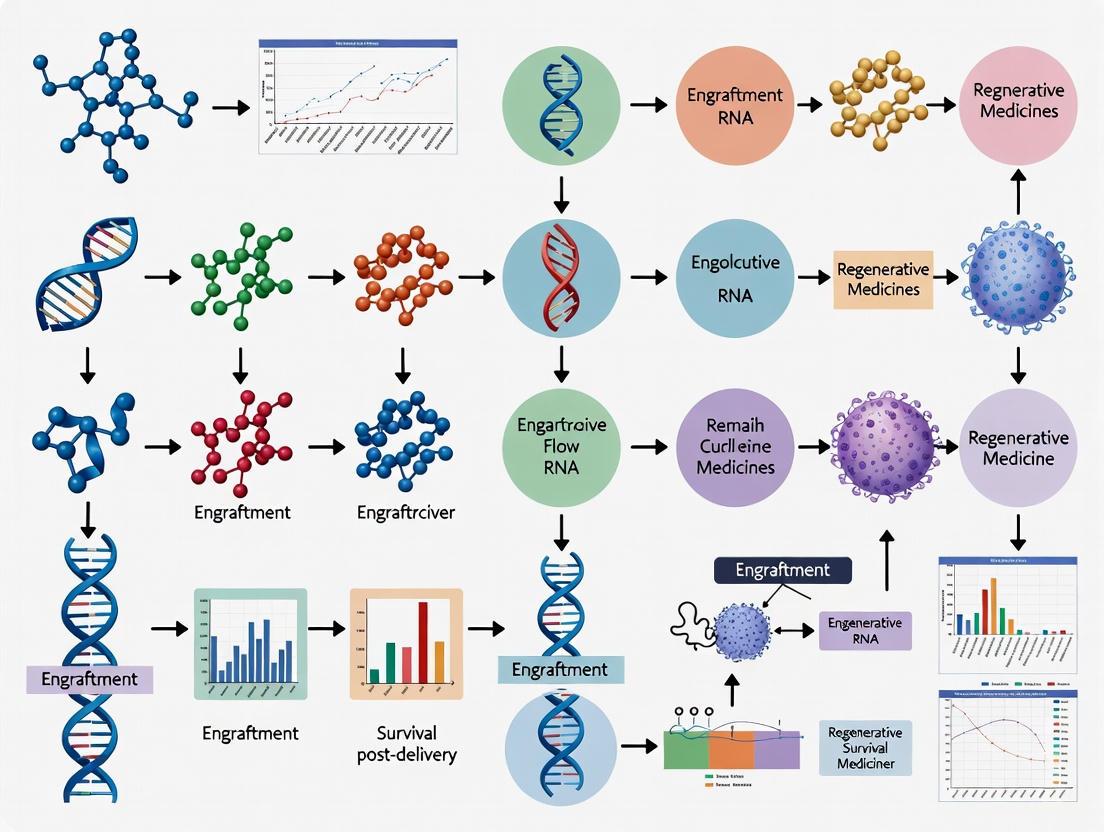
Mesenchymal stem cell (MSC) therapy holds immense promise for regenerative medicine, but its clinical translation is significantly hampered by the persistent challenge of poor cell engraftment and survival post-delivery.
Overcoming Poor MSC Engraftment and Survival: Advanced Strategies for Enhanced Therapeutic Efficacy
Abstract
Mesenchymal stem cell (MSC) therapy holds immense promise for regenerative medicine, but its clinical translation is significantly hampered by the persistent challenge of poor cell engraftment and survival post-delivery. This comprehensive review synthesizes current knowledge and innovative strategies to overcome these limitations. We first explore the foundational mechanisms underlying low engraftment, including the pulmonary first-pass effect, anoikis, and hostile host microenvironments. We then detail methodological advances in delivery routes, cell engineering, and biomaterial scaffolds that enhance cell targeting and retention. Furthermore, we examine cutting-edge optimization techniques such as preconditioning and genetic modification that bolster MSC resilience. Finally, we discuss validation frameworks, including advanced tracking technologies and standardized potency assays, essential for translating preclinical success into reliable clinical outcomes. This resource provides researchers and drug development professionals with an integrated roadmap to enhance MSC therapeutic efficacy.
The MSC Engraftment Problem: Unraveling Causes and Cellular Mechanisms
A critical hurdle in advancing mesenchymal stem cell (MSC) therapies from the laboratory to the clinic is overcoming the fundamental problem of poor engraftment efficiency. Despite promising preclinical results, transplanted MSCs often exhibit low retention at target sites and transient survival in vivo, severely limiting their therapeutic potential [1]. A growing body of evidence suggests that the primary mechanism of action for MSCs has shifted from direct differentiation to paracrine signaling through secreted bioactive factors and extracellular vesicles [1]. This paradigm shift underscores that durable engraftment is not merely about structural integration but about maintaining a sufficient critical mass of functional MSCs at the injury site long enough to exert their therapeutic effects through trophic and immunomodulatory activities.
The engraftment challenge manifests through quantifiable metrics: studies reveal that most administered MSCs are cleared from the body within days to weeks after transplantation, with engraftment rates often falling below 5% in some models [1]. This rapid disappearance stems from multiple stressors, including anoikis (detachment-induced cell death), host immune clearance, harsh inflammatory microenvironments, and inadequate integration with host tissues. Understanding and addressing these specific failure points is essential for developing next-generation MSC therapies with enhanced clinical efficacy.
Troubleshooting Guides & FAQs
Frequently Asked Questions
Q1: Why do my administered MSCs show rapid disappearance in live-animal imaging?
- A: Rapid MSC disappearance typically results from detachment-induced apoptosis (anoikis), instant blood-mediated inflammatory reactions, or host immune clearance. MSCs delivered via suspension lack the essential survival cues provided by extracellular matrix adhesion. To address this, implement 3D culture preconditioning using spheroid formation or utilize biomaterial scaffolds that mimic native tissue architecture to provide crucial integrin signaling before administration [2] [3].
Q2: What are the primary quantifiable metrics for defining engraftment failure?
- A: Engraftment failure is quantified through several key parameters: (1) Cell retention rate: The percentage of delivered cells remaining at the target site after 24-72 hours, often measured via bioluminescent imaging; (2) Cell survival duration: The time until signal becomes undetectable or drops below a therapeutic threshold; and (3) Functional persistence: The duration of measurable therapeutic effects beyond physical cell presence, indicating paracrine activity [1].
Q3: How can I enhance MSC homing to specific injury sites?
- A: Homing efficiency can be enhanced by upregulating CXCR4 receptor expression on MSCs through spheroid culture or hypoxic preconditioning. The SDF-1/CXCR4 chemotactic axis serves as the primary homing pathway. Spheroid formation creates a physiologically relevant 3D microenvironment that upregulates CXCR4, integrins, and matrix metalloproteinases essential for transendothelial migration and tissue navigation [3].
Q4: What strategies can protect MSCs from host immune rejection in allogeneic applications?
- A: For allogeneic applications, consider CRISPR/Cas9-mediated knockout of β2-microglobulin, a essential component of Major Histocompatibility Complex Class I (MHC-I). This creates "immune stealth" MSCs that evade host T-cell recognition while maintaining therapeutic function. This genetic engineering approach significantly reduces immunogenicity while preserving MSC viability and function [4].
Q5: Why do my MSCs show variable engraftment across different experiments?
- A: MSC heterogeneity represents a significant challenge, with variability arising from donor differences, tissue source, passage number, and culture conditions. Standardize cell characterization using International Society for Cell & Gene Therapy (ISCT) criteria, establish strict release criteria including potency assays, and implement comprehensive donor screening protocols to minimize batch-to-batch variability [1] [5].
Quantifying the Engraftment Problem: Key Data
Table 1: Quantifying MSC Engraftment Challenges and Survival Limitations
| Parameter | Typical Range | Influencing Factors | Measurement Techniques |
|---|---|---|---|
| Cell Retention Rate | <1-5% after 1 week | Delivery method, cell source, tissue vascularization | Bioluminescence/fluorescence imaging, quantitative PCR |
| Cell Survival Duration | 7-21 days | Immune compatibility, inflammatory milieu, anoikis | Longitudinal tracking, histology |
| Therapeutic Window | Limited to early phase post-transplant | Microenvironmental cues, preconditioning strategies | Functional assays, biomarker analysis |
| Homing Efficiency | Highly variable (1-20%) | CXCR4 expression, injury signals, route of administration | Cell tracking, migration assays |
Table 2: Comparative Analysis of Engraftment Enhancement Strategies
| Strategy | Mechanism of Action | Key Advantages | Reported Efficacy | Technical Challenges |
|---|---|---|---|---|
| Hydrogel Encapsulation | Provides 3D ECM-mimetic support, enhances retention | Tunable properties, biocompatibility | 3-5x improvement in retention [2] | Optimization of degradation kinetics |
| Spheroid Formation | Upregulates survival & homing receptors (CXCR4) | Simple methodology, enhances paracrine function | 2-4x increase in survival; enhanced migration [3] | Standardization of size & culture |
| Genetic Modification (CRISPR) | Knocks out immunogenic markers (β2M) | Creates universal "off-the-shelf" cells | Near-complete evasion of T-cell recognition [4] | Off-target effects, delivery optimization |
| Hypoxic Preconditioning | Activates HIF-1α signaling pathways | Mimics native niche conditions | Improves resistance to ischemic stress | Requires precise oxygen control |
Experimental Protocols for Engraftment Enhancement
Protocol: Hydrogel Encapsulation for Enhanced MSC Retention
Principle: Biomimetic hydrogels provide a three-dimensional microenvironment that recapitulates key features of native extracellular matrix, supporting MSC viability, retention, and function upon transplantation [2].
Materials:
- Methacrylated hyaluronic acid (MeHA) or gelatin (GelMA)
- Photoinitiator (Lithium phenyl-2,4,6-trimethylbenzoylphosphinate, LAP)
- UV light source (365-405 nm, 5-10 mW/cm²)
- MSC suspension in PBS
Procedure:
- Hydrogel Precursor Preparation: Dissolve lyophilized MeHA or GelMA in PBS at a concentration of 2-5% (w/v). Add LAP photoinitiator to a final concentration of 0.05-0.1% (w/v).
- Cell Encapsulation: Mix MSC suspension with hydrogel precursor solution to achieve a final density of 5-20 million cells/mL. Ensure homogeneous cell distribution.
- Cross-Linking: Transfer cell-polymer mixture to mold or directly inject into target site. Expose to UV light for 30-60 seconds for photopolymerization.
- Implantation & Analysis: Implant hydrogel construct subcutaneously or into target organ. Analyze cell viability, retention, and spatial distribution at designated endpoints using histology and imaging.
Technical Notes: Optimize hydrogel stiffness (elastic modulus) for specific applications: softer matrices (1-10 kPa) for adipogenic/neurogenic differentiation, stiffer matrices (25-40 kPa) for osteogenic commitment [2].
Protocol: Spheroid Formation to Enhance MSC Homing and Survival
Principle: Three-dimensional spheroid culture upregulates CXCR4 expression and enhances MSC resistance to stress, improving homing capability and survival post-transplantation [3].
Materials:
- Low-attachment 96-well round-bottom plates or hanging drop platforms
- MSC culture medium supplemented with growth factors
- Hypoxia chamber (1-5% O₂) - optional
Procedure:
- Cell Seeding: Harvest MSCs at 80-90% confluence using standard trypsinization. Seed cells into low-attachment plates at densities of 1,000-5,000 cells per well in 200 µL complete medium.
- Spheroid Formation: Centrifuge plates at 300-500 × g for 10 minutes to aggregate cells at well bottoms. Incubate at 37°C, 5% CO₂ for 48-72 hours.
- Preconditioning (Optional): Transfer plates to hypoxia chamber (1-5% O₂) for 24 hours to further stabilize HIF-1α and upregulate CXCR4 expression.
- Characterization & Administration: Confirm spheroid formation microscopically. Harvest spheroids by gentle pipetting. Administer via direct injection or systemic infusion.
Technical Notes: Spheroid size significantly impacts viability; optimize cell number to form spheroids of 100-300 µm diameter to prevent necrotic core formation. Spheroid-cultured MSCs demonstrate enhanced expression of CXCR4, integrins, and matrix metalloproteinases crucial for homing [3].
Protocol: CRISPR/Cas9-Mediated Generation of Hypoimmunogenic MSCs
Principle: Targeted knockout of β2-microglobulin (β2M) abrogates MHC class I surface expression, reducing MSC immunogenicity and evading host T-cell recognition for improved allogeneic engraftment [4].
Materials:
- CRISPR/Cas9 plasmid encoding gRNA targeting B2M gene
- Lipofectamine CRISPRMAX or nucleofection system
- MSC culture medium
- Flow cytometry antibodies for HLA-ABC and CD13/CD90/CD105
- T-cell co-culture components for validation
Procedure:
- gRNA Design & Delivery: Design and validate gRNAs targeting exon regions of B2M. Transfect MSCs using lipofection or nucleofection with CRISPR/Cas9-gRNA ribonucleoprotein complexes.
- Clonal Selection: Culture transfected cells for 48-72 hours, then isolate single cells by fluorescence-activated cell sorting or limiting dilution into 96-well plates.
- Genotypic Validation: Expand clonal populations and extract genomic DNA. Confirm B2M knockout via DNA sequencing, T7E1 assay, or SURVEYOR mutation detection.
- Phenotypic & Functional Validation: Analyze HLA-ABC surface expression via flow cytometry (expected >90% reduction). Verify retained MSC markers (CD73, CD90, CD105) and differentiation potential. Validate reduced immunogenicity in mixed lymphocyte reactions.
Technical Notes: Always include off-target analysis using GUIDE-seq or similar methods to identify and exclude clones with unintended mutations. B2M-knockout MSCs maintain multipotency while evading alloreactive T-cell responses [4].
Signaling Pathways in Engraftment Enhancement
Diagram 1: MSC Homing Pathway Enhanced by Spheroid Formation. This diagram illustrates how 3D spheroid culture creates localized hypoxia, stabilizing HIF-1α, which transcriptionally activates CXCR4 expression. The upregulated CXCR4 receptor then interacts with SDF-1 gradients at injury sites, enhancing MSC homing, transmigration, and survival [3].
Diagram 2: CRISPR Engineering for Immune Evasion. This workflow depicts how CRISPR/Cas9-mediated knockout of β2-microglobulin prevents MHC-I surface expression, disrupting host CD8+ T-cell recognition and enabling immune evasion for improved allogeneic engraftment [4].
Research Reagent Solutions
Table 3: Essential Research Reagents for MSC Engraftment Studies
| Reagent/Category | Specific Examples | Primary Function | Key Considerations |
|---|---|---|---|
| Biomaterial Scaffolds | Hyaluronic acid hydrogels, Decellularized ECM, PEG-based polymers | Provides 3D microenvironment, enhances retention & viability | Tunable stiffness, degradation rate, biocompatibility [2] |
| 3D Culture Systems | Low-attachment plates, Hanging drop arrays, Micromold templates | Enables spheroid formation, upregulates homing receptors | Optimize spheroid size (100-300 µm), prevent necrosis [3] |
| Gene Editing Tools | CRISPR/Cas9 systems (SpCas9, dCas9), Cas12 (Cpf1), RNPs | Creates hypoimmunogenic MSCs, enhances therapeutic traits | Validate on-target efficiency, screen for off-target effects [4] |
| Cell Tracking Agents | Luciferase reporters, Fluorescent dyes (DiR, CM-Dil), Quantum dots | Enables quantitative retention & survival monitoring | Consider signal dilution with cell division, potential toxicity |
| Cytokines & Factors | SDF-1/CXCL12, HIF-1α stabilizers, Growth factors (VEGF, FGF-2) | Enhances homing, promotes survival in hostile microenvironments | Optimize concentration, timing, and delivery method |
Frequently Asked Questions (FAQs)
1. What is the pulmonary first-pass effect and why is it a problem for MSC therapies?
The pulmonary first-pass effect describes the phenomenon where a significant proportion of intravenously administered mesenchymal stem cells (MSCs) become trapped in the lungs' capillary network before they can reach the systemic circulation and their intended site of action [6] [7]. This is a major problem because it drastically reduces the number of cells that engraft at the target tissue, limiting the therapeutic efficacy of the treatment. One highly cited preclinical study reported that up to 97% of intravenously infused MSCs can be sequestered in the lungs, though the relevance of this specific figure has been debated due to the extremely high dose used in that particular experiment [7].
2. Are all MSC sources equally affected by lung entrapment?
No, the source of MSCs appears to influence their likelihood of lung entrapment. Evidence suggests that umbilical cord-derived MSCs may have an advantage. Their average size (between 17-19 µm) is comparable to a large monocyte, a type of white blood cell that circulates efficiently, potentially allowing them to pass through the pulmonary circulation more easily than larger or more prone-to-clumping cells, such as some bone marrow-derived MSCs [7].
3. Besides changing the cell source, what strategies can improve MSC delivery and engraftment?
Research focuses on several strategies to overcome this barrier. Modifying the route of administration is one key approach; intra-arterial delivery can bypass the initial pulmonary capillary network, leading to higher engraftment in certain target organs compared to intravenous delivery [6]. Another promising area is the use of cell targeting methodologies, which involve chemically or genetically modifying the surface molecules of MSCs to promote selective adhesion to specific organs or tissues [6]. Finally, a paradigm shift is occurring toward using MSC-derived small extracellular vesicles (MSC-sEVs). These nanoscale vesicles carry the therapeutic signals of MSCs but are small enough to avoid pulmonary entrapment, offering a more predictable pharmacological profile [8].
4. How can I track and quantify MSC biodistribution in my animal models?
Quantifying biodistribution is critical. The table below summarizes key methodologies [6]:
| Method Category | Specific Techniques | Key Considerations |
|---|---|---|
| In Vivo Imaging | Bioluminescence (e.g., luciferase), Fluorescence, Magnetic Resonance Imaging (MRI), Radionuclide imaging (PET, SPECT) | Allows longitudinal tracking in the same animal. Optical methods have limited tissue penetration. MRI and nuclear medicine offer deeper tissue resolution. |
| Ex Vivo Analysis | Quantitative PCR (for species-specific sequences), Flow Cytometry, Histology (e.g., fluorescent probes, in situ hybridization) | Provides precise location data but requires tissue excision. Potential for false positives/sampling errors. Signal dilution can occur with cell division. |
Troubleshooting Guide: Poor Systemic Engraftment Post-IV Injection
Problem: Low number of MSCs reaching the target tissue after intravenous administration.
Investigation & Resolution Flowchart
The following diagram outlines a logical workflow for diagnosing and addressing the issue of poor MSC engraftment.
Detailed Protocols for Key Experiments
Protocol 1: Quantifying Pulmonary First-Pass Effect via Bioluminescent Imaging
This protocol allows for real-time, non-invasive tracking of MSCs in live animals [6].
- Cell Preparation: Stably transduce your MSCs with a luciferase reporter gene (e.g., Firefly luciferase).
- Administration: Intravenously inject a known quantity of luciferase-expressing MSCs (e.g., 1-4 million cells per kilogram for a reputable baseline) into your animal model [7].
- Imaging: At predetermined time points (e.g., 5 min, 30 min, 2 h, 24 h post-injection), administer the luciferin substrate intraperitoneally.
- Data Acquisition: Anesthetize the animal and place it in an in vivo imaging system (IVIS). Capture bioluminescent images with a set exposure time.
- Analysis: Use region-of-interest (ROI) analysis to quantify the total flux (photons/second) in the thoracic region (lungs) compared to the signal in the target organ and the whole body over time. A high and persistent signal in the thoracic region indicates significant pulmonary entrapment.
Protocol 2: Analyzing Global Metabolomic Response to MSC-Derived Therapeutics
This workflow, adapted from drug mechanism-of-action studies, can help verify the biological activity of therapies that successfully bypass the first-pass effect [9].
- Treatment Groups: Establish two groups: one treated with the MSC-based therapeutic (e.g., MSC-sEVs) and a control group.
- Sample Collection: Harvest target tissues at specific time points post-treatment (e.g., early, mid, and late time points). Snap-freeze in liquid nitrogen.
- Metabolite Extraction: Homogenize tissue samples in a cold methanol:water solvent system to extract metabolites.
- LC-MS/MS Analysis: Analyze the extracts using untargeted Liquid Chromatography with tandem Mass Spectrometry (LC-MS/MS).
- Data Processing and Modeling: Use software to align peaks, identify metabolites, and normalize data. Input the normalized abundance levels of significantly perturbed metabolites into a pre-trained machine learning model (e.g., Multi-class Logistic Regression) to identify if the treatment produces a metabolic signature consistent with the intended mechanism of action [9].
The Scientist's Toolkit: Essential Research Reagents & Materials
| Item | Function in This Context |
|---|---|
| Luciferase-Expressing MSCs | Genetically engineered cells that emit light, enabling real-time, non-invasive tracking of biodistribution and persistence in animal models [6]. |
| IVIS Imaging System | An in vivo imaging platform used to detect and quantify the bioluminescent signal from luciferase-expressing cells located deep within tissues [6]. |
| Umbilical Cord-Derived MSCs | A cellular reagent potentially less susceptible to pulmonary trapping due to their smaller size (17-19 µm) and reduced tendency to clump compared to bone marrow-derived MSCs [7]. |
| MSC-sEVs (small Extracellular Vesicles) | A cell-free therapeutic agent. These nano-sized vesicles carry bioactive molecules from MSCs but are small enough to avoid filtration by lung capillaries, thus bypassing the primary first-pass effect [8]. |
| Targeting Ligands (Peptides/Antibodies) | Chemical or genetic tools used to functionalize the surface of MSCs or MSC-sEVs. They promote binding to specific receptors on the target tissue's endothelium, enhancing targeted engraftment [6] [10]. |
For researchers developing mesenchymal stem cell (MSC) therapies, the hostile microenvironment of damaged tissues represents a fundamental translational challenge. After transplantation, MSCs encounter a pathological milieu characterized by inflammation, oxidative stress, and ischemia, which severely compromises their survival, retention, and therapeutic function [11] [12]. This technical support center provides evidence-based troubleshooting guidance to help scientists overcome these barriers. The core issue is that the very conditions MSCs are meant to repair—such as those found in post-ischemic myocardium, inflamed joints, or infarcted brain regions—create a vicious cycle that rapidly decimates the transplanted cells [11] [12]. Understanding and mitigating these hostile forces is essential for advancing the efficacy of MSC-based regenerative medicine.
Frequently Asked Questions (FAQs)
Q1: What specific factors in the hostile microenvironment cause poor MSC survival? The hostile microenvironment is characterized by a triad of interconnected stressors:
- Ischemia/Hypoxia: Results from inadequate blood flow, leading to oxygen and nutrient deprivation [11] [13].
- Oxidative Stress: An overproduction of reactive oxygen species (ROS) that damages lipids, proteins, and DNA within MSCs [11] [14].
- Inflammatory Milieu: High concentrations of pro-inflammatory cytokines (e.g., IFN-γ, TNF-α, IL-1β) that can induce apoptotic pathways and disrupt normal MSC function [12] [15].
Q2: If most transplanted MSCs die quickly, how do they exert therapeutic effects? The therapeutic effects are now largely attributed to a "hit-and-run" paracrine mechanism [16] [17]. Before succumbing to the environment, MSCs secrete a burst of bioactive molecules—growth factors, cytokines, and extracellular vesicles (exosomes)—that modulate the local immune response, promote angiogenesis, and stimulate endogenous repair processes [16]. Furthermore, new evidence suggests that the caspase-dependent apoptosis of MSCs itself is therapeutic. The resulting apoptotic bodies are engulfed by host phagocytes via efferocytosis, a process that can reprogram myeloid cells toward a pro-resolving, anti-inflammatory phenotype, creating a lasting therapeutic impact known as "trained immunity" [15].
Q3: What is Disease Microenvironment Preconditioning (DMP) and how does it work? DMP is an evolving strategy to "train" or "prime" MSCs in vitro by exposing them to conditions that mimic the in vivo hostile environment, such as pro-inflammatory cytokines or hypoxia [12]. This exposure activates adaptive responses and protective signaling pathways (e.g., NF-κβ, JAK/STAT), effectively licensing the MSCs to better survive and function upon transplantation [12] [15]. For instance, preconditioning MSCs with IFN-γ and TNF-α enhances their immunosuppressive capacity by upregulating indoleamine 2,3-dioxygenase (IDO) and other immunomodulatory factors [12].
Troubleshooting Guide: Common Experimental Problems and Solutions
| Problem Observed | Potential Root Cause | Recommended Action |
|---|---|---|
| Poor post-transplant MSC survival | Acute oxidative stress and inflammation in the target tissue [11] [12]. | Precondition MSCs with low-dose inflammatory cytokines (e.g., IFN-γ, TNF-α) in vitro to activate protective pathways prior to transplantation [12]. |
| Rapid loss of MSC therapeutic function | Hostile microenvironment drives MSCs into a dysfunctional state or exhaustive apoptosis [11]. | Utilize a dual-reporter gene system (e.g., NQO1-Fluc for stress, Ubiquitin-Rluc for viability) to non-invasively monitor MSC biology and viability post-delivery [11]. |
| Inconsistent therapeutic outcomes | Significant heterogeneity in MSC donor sources, culture passages, and batch-to-batch variability [12] [17]. | Standardize cell population by using MSC-derived from induced pluripotent stem cells (iPSC-MSCs) and implement rigorous quality control checks for potency markers [17]. |
| Failure to mitigate inflammation | Transplanted MSCs are overwhelmed by the inflammatory milieu and fail to license their immunomodulatory programs [15]. | Prime MSCs with a combination of IL-1β and IFN-γ to synergistically activate the NF-κβ and JAK/STAT pathways, boosting secretion of anti-inflammatory factors like PGE2 and IDO [12] [15]. |
Key Experimental Protocols
Protocol 1: Monitoring MSC Mitochondrial Stress and Viability In Vivo
This protocol is based on a validated method for non-invasively tracking the phenotypic biology of MSCs after transplantation into a hostile microenvironment [11].
Workflow Overview:
Detailed Methodology:
- Vector Construction: Clone a dual-reporter lentiviral vector where:
- Cell Transduction: Transduce your MSCs with the lentiviral vector and use fluorescence-activated cell sorting (FACS) to select a pure population based on a co-expressed fluorescent marker (e.g., TurboRFP) [11].
- In Vivo Imaging: Deliver transduced MSCs (e.g., 3x10^5 cells in a murine IR model) and perform serial bioluminescence imaging (BLI) at days 1, 3, and 7 post-transplantation.
- Data Analysis: Calculate the ratio of NQO1-Fluc signal to Ubiquitin-Rluc signal. A rising ratio indicates increased mitochondrial oxidative stress within the living MSC population [11].
Protocol 2: Preconditioning MSCs with Inflammatory Cytokines
Preconditioning enhances MSC resilience and immunomodulatory capacity before transplantation [12].
Workflow Overview:
Detailed Methodology:
- Cell Culture: Expand MSCs to 70-80% confluency in standard culture flasks.
- Cytokine Treatment: Replace the medium with fresh medium containing predefined concentrations of preconditioning cytokines.
- A common and effective combination is IFN-γ (10-50 ng/mL) and TNF-α (10-20 ng/mL) [12].
- Incubation: Incubate cells for 24 to 48 hours. This duration allows for the transcriptional activation of key immunomodulatory genes.
- Cell Harvesting: After incubation, thoroughly wash the cells with PBS to remove all cytokines. Harvest the MSCs using a standard dissociation reagent like TrypLE or Accutase.
- Quality Control: Validate the preconditioning effect by:
- ELISA: Measuring the increased secretion of IDO or PGE2 in the conditioned medium [12].
- qPCR: Analyzing the upregulation of immunomodulatory genes.
Signaling Pathways in MSC-Microenvironment Interaction
The diagram below illustrates the key signaling pathways activated in MSCs upon encountering the hostile microenvironment, and how preconditioning primes these systems.
The Scientist's Toolkit: Key Research Reagent Solutions
| Reagent / Tool | Function / Application | Specific Example & Notes |
|---|---|---|
| Dual-Reporter Gene System | Non-invasive monitoring of MSC viability and specific biological processes (e.g., oxidative stress) in vivo [11]. | NQO1-Fluc (mitochondrial stress sensor) + Ubiquitin-Rluc8.6 (viability sensor). Critical for longitudinal studies in small animals [11]. |
| Preconditioning Cytokines | Priming MSCs in vitro to enhance their survival and paracrine function post-transplantation [12]. | Recombinant Human IFN-γ and TNF-α. Used at 10-50 ng/mL for 24-48 hours. Validated to upregulate IDO and PGE2 secretion [12]. |
| Pathway-Specific Agonists/Antagonists | To dissect molecular mechanisms behind MSC licensing and survival. | Tert-butylhydroquinone (TBHQ): A NQO1 inducer used to validate the mitochondrial stress sensor [11]. |
| hPSC-Genetic Analysis Kit | Quality control for starting cell populations to ensure genetic integrity and prevent experimental variability. | For example, hPSC Genetic Analysis Kit (Catalog #07550). Karyotypic abnormalities in stem cells can drastically alter differentiation and function [18]. |
| Gentle Cell Dissociation Reagent | Harvesting MSCs or dissociating pluripotent stem cell-derived cardiomyocytes while maximizing cell viability and health. | Preferable to trypsin-based reagents for sensitive cells. Helps maintain surface receptors and cellular functions [18]. |
Anoikis is a specific form of programmed cell death (apoptosis) that is triggered when cells detach from their native extracellular matrix (ECM) [19] [20]. The term, derived from the Greek word for "homelessness," was first defined in 1994 to describe the apoptosis induced by the disruption of normal epithelial cell-matrix interactions [20] [21]. This process is a critical mechanism for maintaining tissue homeostasis, ensuring that cells survive only in their appropriate anatomical context [19].
In the context of Mesenchymal Stem Cell (MSC) therapy for conditions like end-stage liver disease, anoikis presents a major therapeutic barrier [22]. After transplantation, MSCs are delivered into the bloodstream and must navigate to injured sites, a process that inherently involves periods of ECM detachment [22]. During this "homing journey," MSCs encounter dramatically different conditions compared to their controlled in vitro environment, including oxidative stress and hypoxia [22]. This detachment can activate anoikis, leading to massive cell death post-transplantation. Studies indicate that less than 5% of transplanted MSCs survive in liver tissues after 4 weeks, with a significant number dying within the first day after transplantation [22]. This extremely low cell survival rate, driven by anoikis, directly results in insufficient cell engraftment efficiency, which is a major bottleneck limiting the therapeutic potential of MSC-based treatments [22] [23]. Understanding and overcoming the anoikis response is therefore fundamental to improving clinical outcomes in regenerative medicine.
FAQ: Understanding Anoikis in Research and Therapy
Q1: What is the fundamental difference between anoikis and general apoptosis? Anoikis is a specialized, context-dependent form of apoptosis. While general apoptosis can be triggered by various internal or external stressors, anoikis is specifically activated by the loss of survival signals derived from proper cell-ECM adhesion [19] [20]. Both processes share common execution pathways, including caspase activation, but the initiating signal is distinct.
Q2: Why is anoikis a significant problem for systemic MSC transplantation? MSC transplantation for conditions like liver failure is typically performed via intravenous (IV) or intracaudal arterial (CA) injection [22] [23]. This systemic delivery forces the cells into suspension and transit through the circulation, depriving them of matrix-derived survival signals. Consequently, a large proportion of MSCs undergo anoikis before reaching and engrafting in the target tissue, severely compromising therapy efficacy [22].
Q3: How do cancer cells avoid anoikis, and what can MSC research learn from this? Cancer cells acquire "anoikis resistance" to metastasize, allowing them to survive ECM detachment [19]. They achieve this through various mechanisms, such as:
- Activation of pro-survival signaling pathways (e.g., PI3K/Akt, ERK) [19].
- Alterations in death receptor signaling (e.g., through FLIP) [24].
- Modulation of reactive oxygen species (ROS) [19].
- Epithelial-to-mesenchymal transition (EMT) [24]. Research into overcoming MSC anoikis often involves mimicking these pro-survival adaptations therapeutically, for instance, by pre-treating MSCs with cytokines or genetically modifying them to activate similar survival pathways before transplantation [22].
Q4: What are the key molecular pathways that initiate anoikis? Anoikis can be initiated via both the intrinsic (mitochondrial) and extrinsic (death receptor) apoptotic pathways [19].
- The intrinsic pathway is activated by mitochondrial outer membrane permeabilization, leading to the release of cytochrome c and formation of the apoptosome, which activates caspase-9 [19].
- The extrinsic pathway is triggered by the engagement of death receptors (like Fas), leading to the formation of the Death-Inducing Signaling Complex (DISC) and activation of caspase-8 [19]. Both pathways converge on the activation of effector caspases (e.g., caspase-3 and -7) that execute the cell death program [19].
Troubleshooting Guide: Common Experimental Challenges in Anoikis and Engraftment Studies
Problem 1: Low Cell Survival After In Vivo Transplantation
Potential Causes and Solutions:
- Cause: Massive anoikis due to ECM detachment during and after injection.
- Solution: Pre-condition (prime) MSCs prior to transplantation. Hypoxic priming or pretreatment with survival-promoting cytokines (e.g., SDF-1) can enhance resistance to detachment-induced stress [22].
- Cause: High sensitivity to inflammatory and oxidative stress in the in vivo environment.
- Solution: Drug pretreatment. Incubating MSCs with compounds like Melatonin or Trolox before transplantation can upregulate anti-oxidant defenses and improve survival in the hostile in vivo milieu [22].
- Cause: Inefficient homing to the target tissue.
- Solution: Genetic modification. Overexpression of homing-related receptors (e.g., CXCR4, the receptor for SDF-1) on the MSC surface can significantly improve their ability to navigate to and infiltrate injured tissues [22].
Problem 2: High Rates of Spontaneous Differentiation in MSC Cultures Pre-Transplantation
Potential Causes and Solutions:
- Cause: Over-confluent cultures or colonies allowed to become too large and dense.
- Solution: Passage cells when they reach ~85% confluency. Avoid routine passaging at high confluencies, as this promotes differentiation and poor cell health [25].
- Cause: Areas of differentiation are not removed prior to passaging.
- Solution: Manually remove differentiated areas from the culture before harvesting cells for passaging or transplantation [26].
- Cause: Over-exposure of the culture plate to non-incubator conditions.
- Solution: Minimize the time culture plates are outside the incubator to less than 15 minutes at a time [26].
Problem 3: Poor MSC Engraftment Efficiency in Target Tissues
Potential Causes and Solutions:
- Cause: Immune rejection of transplanted cells, even with low-immunogenicity MSCs.
- Cause: Competition with endogenous, resident MSCs.
- Solution: Consider recipient preconditioning. Low-dose local irradiation of the target organ (e.g., the liver) can create niche space for the transplanted cells, though studies show that endogenous MSCs can be radio-resistant, which may still limit long-term engraftment [23].
- Cause: Suboptimal delivery route.
- Solution: Compare delivery methods. While IV injection is common, intracaudal arterial (CA) injection has been shown to achieve significantly higher initial engraftment in the bone marrow of hind limbs and reduces the risk of pulmonary embolism compared to IV injection [23].
Quantitative Data: Survival and Engraftment Metrics
The tables below summarize key quantitative findings from the literature on MSC survival and strategies to improve engraftment.
Table 1: Documented MSC Survival Rates Post-Transplantation
| Metric | Survival Rate / Outcome | Context / Model | Citation |
|---|---|---|---|
| Overall Long-term Survival | < 5% at 4 weeks | MSCs in liver tissues | [22] |
| Initial Cell Death | Large number die within 1 day | MSCs in fibrotic mouse liver | [22] |
| Engraftment without Intervention | Not detectable by Day 28 | GFP-labeled RECs in mouse bone marrow | [23] |
| Engraftment with CA vs. IV injection | Significantly higher with CA | GFP+ cells in stromal fraction on Day 1 | [23] |
| Engraftment with Immunosuppression | Increased frequency on Day 7 | TAC-treated mice vs. control | [23] |
Table 2: Efficacy of Strategies to Overcome Anoikis and Improve Engraftment
| Strategy | Key Intervention | Demonstrated Effect | Citation |
|---|---|---|---|
| Cell Priming | Hypoxic preconditioning | Enhances resistance to detachment and in vivo stress | [22] |
| Drug Pretreatment | Melatonin | Upregulates anti-oxidant defenses; improves survival | [22] |
| Genetic Modification | CXCR4 overexpression | Enhances homing capability to injured tissue | [22] |
| Route of Delivery | Intracaudal Arterial (CA) injection | Higher initial engraftment vs. Intravenous (IV) | [23] |
| Recipient Treatment | Immunosuppressor (Tacrolimus) | Significantly improved engraftment on Day 7 | [23] |
Experimental Protocols: Key Methodologies for Anoikis and Engraftment Research
Protocol 1: In Vitro Anoikis Assay Using Ultra-Low Attachment Plates
This protocol is used to simulate ECM detachment and quantify anoikis sensitivity.
- Harvest Cells: Gently dissociate your MSC culture using a non-enzymatic dissociation reagent (e.g., ReLeSR or Gentle Cell Dissociation Reagent) to generate cell aggregates or single cells, depending on your experimental needs [26].
- Plate Cells: Seed equal numbers of MSCs into two types of plates:
- Control: Standard tissue culture-treated plates coated with an appropriate ECM (e.g., Matrigel, Vitronectin).
- Test: Ultra-low attachment plates, which prevent cell adhesion.
- Incubate: Maintain both plates in standard culture conditions (37°C, 5% CO2) for a predetermined period (e.g., 24-72 hours).
- Analyze Cell Death:
- Viability Staining: Use Trypan Blue exclusion to count viable cells or employ fluorescent dyes like Propidium Iodide (PI) and Annexin V in flow cytometry to distinguish apoptotic (Annexin V+/PI-) and necrotic (Annexin V+/PI+) cells.
- Caspase Activity Assay: Measure the activity of executioner caspases (e.g., caspase-3/7) using commercial luminescent or fluorescent kits.
- Clonogenic Survival: After the suspension period, re-plate cells from the ultra-low attachment plates onto standard adherent plates and allow them to recover. The number of colonies formed after a week is a measure of anoikis-resistant cells.
Protocol 2: Assessing In Vivo MSC Engraftment Efficiency in a Mouse Model
This protocol outlines the steps for transplanting MSCs and quantifying their engraftment.
- Cell Preparation:
- Label MSCs with a stable, non-toxic marker such as Green Fluorescent Protein (GFP) or a fluorescent cell membrane dye (e.g., DiR) [23].
- Consider pre-treating MSCs based on your experimental design (e.g., hypoxic priming, cytokine pretreatment).
- Recient Preconditioning:
- Use severely immunodeficient mice (e.g., NOG mice) to minimize immune rejection [23].
- Preconditioning with local irradiation of the target organ (e.g., liver) can be performed to create niche space. A semi-lethal dose is often used [23].
- Administer immunosuppressants like Tacrolimus Hydrate (TAC) to the recipients, starting before transplantation [23].
- Cell Transplantation:
- Tissue Harvest and Analysis:
- Euthanize mice at specific time points (e.g., Day 1, 7, 28).
- Perfuse the target organ (e.g., liver, bone marrow) with PBS to remove circulating cells.
- For bone marrow, prepare the Collagenase-Released (CR) fraction to isolate stromal cells, as this fraction contains the highest concentration of engrafted MSCs [23].
- Analyze engraftment using Flow Cytometry to detect GFP+ or dye-positive cells within the non-hematopoietic (e.g., CD45-Ter119-CD31-) stromal cell population [23].
Signaling Pathways and Experimental Workflow
The following diagrams illustrate the core anoikis pathway and a generalized experimental workflow for improving MSC therapy, as discussed in this article.
Diagram 1: Core molecular pathways of anoikis. Detachment from the ECM initiates both intrinsic and extrinsic apoptotic pathways, leading to cell death.
Diagram 2: Experimental workflow for overcoming anoikis in MSC therapy. The diagram highlights key challenges (red) and potential intervention strategies (green) at each stage.
The Scientist's Toolkit: Key Reagents and Materials
Table 3: Essential Research Reagents for Anoikis and Engraftment Studies
| Reagent / Material | Function / Application | Example Use Case |
|---|---|---|
| Ultra-Low Attachment Plates | Prevents cell adhesion, forcing suspension culture. | In vitro modeling of ECM detachment to induce and study anoikis. |
| Non-Enzymatic Dissociation Reagents (e.g., ReLeSR, Gentle Cell Dissociation Reagent) | Gently detaches cells as aggregates, minimizing protein damage. | Harvesting MSCs for transplantation or anoikis assays while preserving cell health [26]. |
| ROCK Inhibitor (Y-27632) | Inhibits Rho-associated kinase, reducing apoptosis in single cells. | Added to culture medium after passaging or thawing to improve survival of dissociated MSCs [25]. |
| Extracellular Matrix Coatings (e.g., Matrigel, Geltrex, Vitronectin XF) | Provides a biologically relevant substrate for cell adhesion and growth. | Coating culture plates to maintain adherent MSC cultures and provide pro-survival signals [26] [25]. |
| Flow Cytometry Antibodies (e.g., against CD90, CD45, CD31, Ter119) | Identifies and isolates specific cell populations. | Analyzing engrafted MSCs (e.g., GFP+ in CD45-Ter119-CD31- stromal fraction) in recipient tissues [23]. |
| Caspase Activity Assays (Luminescent/Fluorescent) | Quantifies the activity of key apoptosis executioners. | Measuring the level of anoikis in suspended cells compared to adherent controls. |
| Tacrolimus Hydrate (TAC) | Immunosuppressive drug. | Administered to recipient animals to reduce immune-mediated clearance of transplanted human MSCs [23]. |
The therapeutic application of Mesenchymal Stem Cells (MSCs) has undergone a fundamental paradigm shift. The original hypothesis—that transplanted MSCs directly differentiate to replace damaged tissues—has been supplanted by evidence showing that paracrine-mediated effects are the predominant mechanism of action [27] [28]. This technical support center is designed to help researchers navigate this new paradigm, focusing on overcoming the critical challenge of poor MSC engraftment and survival that limits therapeutic efficacy.
While initial theories posited that MSCs regenerated tissues through direct differentiation and engraftment, quantitative tracking studies revealed a contradiction: the number of successfully engrafted cells and their duration of persistence were insufficient to account for the observed functional improvements [6] [28]. This led to the recognition of the "paracrine hypothesis," which states that MSCs act as a "drugstore" by secreting a complex mixture of bioactive factors—the secretome—that modulates the host's immune response, enhances survival of endogenous cells, promotes angiogenesis, and recruits endogenous repair mechanisms [27] [6] [28]. The following sections provide a structured troubleshooting guide and FAQs to optimize research within this contemporary framework.
FAQs: Core Concepts of the Paracrine Paradigm
Q1: What is the MSC secretome and what are its key components? The secretome comprises all factors actively or passively released by MSCs. It is a composite product with two main fractions [27]:
- Soluble Fraction: Growth factors, cytokines, and chemokines.
- Vesicular Fraction: Extracellular Vesicles (EVs), including exosomes and microvesicles, which carry proteins, lipids, and genetic material like miRNA.
Q2: What is the quantitative evidence for the paracrine effect over direct regeneration? A landmark study quantifying the effects of human cardiosphere-derived cells (CDCs) transplanted into infarcted mice found that direct differentiation accounted for only 20% to 50% of the observed benefits, such as increased capillary density and improved tissue viability. The rivaling or exceeding effect was attributed to paracrine-mediated recruitment of endogenous repair and enhancement of tissue resilience [29] [30].
Q3: Why is improving MSC survival and engraftment still critical if the effects are paracrine? Even though long-term engraftment is low, the initial survival and homing of transplanted MSCs are essential for generating a robust, localized paracrine signal. Studies show that a large number of MSCs die within the first day after transplantation in hostile microenvironments [31]. Enhancing early survival directly increases the magnitude and duration of the therapeutic secretome delivered to the injury site.
Q4: How does the source of MSCs impact their paracrine signature? The secretome is not uniform. Its composition varies based on the tissue of origin (e.g., adipose tissue (AT), bone marrow (BM), or umbilical cord (CB)) [27]. For instance, AT-MSCs have demonstrated greater tubulogenic efficiency compared to BM-MSCs due to differences in expressed factors [27]. The therapeutic application should therefore be tailored by choosing the tissue source with the most advantageous secretome profile.
Troubleshooting Guide: Poor Engraftment & Secretome Efficacy
Problem: Low Post-Transplantation MSC Survival and Engraftment
A large number of MSCs die within the first day after transplantation, leading to insufficient cell engraftment efficiency, which is a major bottleneck in MSC therapy [31].
| Proposed Solution | Underlying Principle | Experimental Protocol / Key Details |
|---|---|---|
| Hypoxic Preconditioning | Primes MSCs to better tolerate the ischemic environment in injured tissues. | Culture MSCs in a low-oxygen environment (e.g., 1-5% O₂) for 24-72 hours prior to transplantation. This upregulates pro-survival and angiogenic genes [31]. |
| Cytokine & Drug Pretreatment | Enhances MSC resistance to apoptosis and improves homing capability. | IGF-1 pretreatment: Incubate MSCs with 50-100 ng/mL IGF-1 for 24 hours. This activates the PI3K/Akt survival pathway [31]. |
| Genetic Modification | Overexpresses specific genes to enhance survival, homing, or paracrine function. | Transduce MSCs with a lentiviral vector to overexpress Akt or VEGF. This significantly reduces caspase-3 levels and apoptosis post-transplantation [31] [29]. |
| Biomaterial-Assisted Delivery | Provides a physical scaffold that improves MSC retention, protects from immune clearance, and supports secretome release. | Encapsulate MSCs in a hydrogel (e.g., fibrin or hyaluronic acid) that mimics the extracellular matrix. This provides anchorage-dependent survival signals and prevents anoikis [28]. |
Problem: Age-Related or Donor-Dependent Variability in MSC Potency
MSCs from older donors or patients with comorbidities often show reduced therapeutic potency, including a less effective pro-angiogenic secretome [32].
| Proposed Solution | Underlying Principle | Experimental Protocol / Key Details |
|---|---|---|
| Paracrine Rejuvenation | Exposure of aged MSCs to the secretome of young MSCs can restore a more youthful phenotype and function. | Use a transwell co-culture system. Plate "old" MSCs in the upper chamber and "young" MSCs in the lower chamber. Culture for 7 days, allowing exchange of soluble factors. This restores angiogenic factor release and is associated with transcriptional changes [32]. |
| Priming with Pro-Inflammatory Cytokines | "Licenses" MSCs to enhance their immunomodulatory secretome. | Pre-treat MSCs with a cytokine cocktail (e.g., IFN-γ at 50 ng/mL and TNF-α at 20 ng/mL) for 24-48 hours. This upregulates the expression of key immunomodulatory factors like TSG-6 and IDO [6]. |
The diagram below illustrates the logical workflow for diagnosing and addressing the core issues of MSC engraftment and secretome potency.
Experimental Protocols: Key Methodologies for Paracrine Research
Protocol 1: Isolating and Characterizing the MSC Secretome
This protocol describes how to collect conditioned medium containing the MSC secretome for downstream analysis and functional testing [27] [29].
- Cell Culture: Culture MSCs to 70-80% confluency in standard complete medium.
- Wash and Serum-Starvation: Wash cells twice with D-PBS (without Ca++ and Mg++) to remove serum contaminants. Replace the medium with a defined, serum-free basal medium (BM).
- Conditioning Phase: Incubate cells for 24-48 hours. The optimal duration depends on cell density and the factors of interest.
- Collection: Collect the medium, now termed "Conditioned Medium" (CM).
- Centrifugation: Centrifuge the CM at a low speed (e.g., 2,000 × g for 10 min) to remove cellular debris.
- Concentration & Storage (Optional): Concentrate the CM using centrifugal filter units (e.g., 3 kDa cutoff) if needed. Aliquot and store at -80°C.
Protocol 2: In Vitro Tubulogenesis Assay for Angiogenic Potency
This assay tests the pro-angiogenic capacity of the MSC secretome by measuring its ability to stimulate human umbilical vein endothelial cells (HUVECs) to form tube-like structures [27] [32].
- Prepare Matrix: Thaw a pre-cast, matrix-coated 96-well plate (e.g., Matrigel or Geltrex) and allow it to polymerize according to the manufacturer's instructions.
- Seed HUVECs: Trypsinize and resuspend HUVECs in the test conditions:
- Test Group: MSC Conditioned Medium (from Protocol 1).
- Positive Control: Standard Endothelial Cell Growth Medium.
- Negative Control: Serum-free Basal Medium. Seed 1.0 × 10⁴ to 2.0 × 10⁴ HUVECs per well in the respective media.
- Incubate: Incubate the plate at 37°C, 5% CO₂ for 6-18 hours.
- Image and Quantify: Image multiple random fields per well using an inverted microscope. Use image analysis software (e.g., ImageJ with the NeuronJ or Angiogenesis Analyzer plug-in) to quantify the total tube length, number of branches, or number of meshes.
The Scientist's Toolkit: Key Reagents & Functional Assays
The following table details essential materials and their functions for researching the MSC paracrine paradigm.
| Research Tool | Function / Application | Example Key Factors / Targets |
|---|---|---|
| ELISA Kits | Quantifies specific protein levels in the secretome (e.g., VEGF, HGF, IGF-1) for quality control and mechanistic studies. | VEGF, HGF, IGF-1, SDF-1 [29] [32] [28]. |
| Extracellular Vesicle Isolation Kits | Isolates exosomes and microvesicles from conditioned medium for studying vesicle-mediated paracrine effects. | Iodixanol density gradient ultracentrifugation; Size exclusion chromatography [27]. |
| ROCK Inhibitor (Y-27632) | Improves survival of dissociated MSCs and single-cell suspensions post-thawing or during passaging, reducing anoikis. | Inhibits Rho-associated coiled-coil kinase [25]. |
| Transwell Co-culture Systems | Allows for the study of paracrine communication between different cell populations without direct contact (e.g., for rejuvenation experiments). | Permeable membrane inserts [32]. |
| Proteomics & miRNA Arrays | Enables comprehensive, unbiased profiling of the entire protein and miRNA content of the secretome. | LC-MS for proteins; Microarray or RNA-Seq for miRNA [28]. |
| HUVECs & Tubulogenesis Assay | A standard in vitro model for functionally validating the pro-angiogenic activity of the MSC secretome. | Matrigel-coated plates; HUVECs [27] [32]. |
Quantitative Data: Key Secretome Components and Their Functions
The therapeutic effects of the MSC secretome are mediated by a defined set of factors. The table below summarizes the primary functional categories and their key mediators.
Table 1: Key Functional Components of the MSC Secretome and Their Roles [27] [28].
| Biological Function | Key Growth Factors & Cytokines | Key MicroRNAs (miRNAs) |
|---|---|---|
| Angiogenesis | VEGF, bFGF, MCP-1, PDGF, HGF, IL-6, IL-8 | miR-21, miR-23, miR-27, miR-126, miR-210 |
| Immunomodulation | IDO, HGF, PGE2, TGF-β1, TSG-6, IL-10 | miR-21, miR-146a, miR-375 |
| Anti-apoptosis | VEGF, bFGF, G-CSF, HGF, IGF-1, STC-1, IL-6 | miR-25, miR-214 |
| Anti-fibrosis | HGF, PGE2, IDO, IL-10 | miR-26a, miR-29, miR-125b |
| Chemoattraction | IGF-1, SDF-1, VEGF, G-CSF, MCP-1, IL-8 | - |
Core Signaling Pathways in MSC Paracrine Action
The beneficial effects of the MSC secretome are mediated through the activation of specific signaling pathways in recipient cells. The diagram below illustrates the key pathways involved in promoting survival and angiogenesis.
Strategic Delivery and Engineering Solutions for Enhanced MSC Implantation
Troubleshooting Guide: Addressing Common MSC Delivery Challenges
Problem: Poor Cell Engraftment and Rapid Clearance After Systemic Delivery
| Problem Phenomenon | Potential Root Cause | Recommended Solution | Key References |
|---|---|---|---|
| Low MSC retention in target tissue (e.g., kidney, heart) after intravenous (IV) injection. | Pulmonary First-Pass Effect: A significant portion of cells are initially trapped in the lung capillaries [33] [34] [35]. | Switch to intra-arterial (IA) or a local injection route to bypass the pulmonary circuit [33] [35]. Pre-treatment to modulate cell size or surface adhesion molecules [36]. | |
| Rapid decrease in detectable MSCs at the target site within hours of local injection. | Harsh Microenvironment: Cell death due to inflammatory factors, hypoxia, or anoikis (detachment-induced death) at the injury site [33] [36]. | Preconditioning MSCs with hypoxia or pro-survival cytokines prior to injection [33]. Use of a 3D hydrogel scaffold for delivery to provide mechanical support and survival signals [33]. | |
| Inconsistent therapeutic efficacy despite using the same IV dose. | Disease-State Dependent Biodistribution: The pathophysiological condition (e.g., inflammation, leaky vasculature) alters MSC homing patterns [35]. | Tailor the administration route and dose based on the specific disease model. For systemic inflammatory conditions, IV may be suitable; for localized injury, consider direct injection [33] [35]. | |
| Limited MSC migration from vasculature to injury site after IA delivery. | Inefficient Transmigration: Failure of the multi-step homing process (rolling, activation, adhesion, transmigration) due to inadequate expression of key ligands/receptors [36]. | Pre-activate MSCs with inflammatory cytokines (e.g., TNF-α) to upregulate expression of homing ligands like HCAM (CD44) and integrins [36]. |
Problem: Technical and Safety Complications
| Problem Phenomenon | Potential Root Cause | Recommended Solution | Key References |
|---|---|---|---|
| Formation of micro-emboli or vascular occlusions after IA injection. | Cell Clumping/Shear Stress: High cell concentration or injection pressure can lead to aggregation and vessel blockage [33] [37]. | Optimize cell dose and infusion rate. Use a controlled-rate infusion pump. Ensure a single-cell suspension by filtering cells through a mesh before injection [37]. | |
| Inadvertent distribution of MSCs to non-target organs following IA delivery. | Nonspecific Uptake: Lack of selective homing signals in non-target tissues; hydrodynamic forces distributing cells systemically [36] [37]. | Employ superselective catheterization to place the catheter as close as possible to the target tissue's blood supply [37]. | |
| Secondary redistribution of locally injected MSCs to distant organs. | Lymphatic Clearance or Vascular Entry: Cells leak from the injection site into circulation or lymphatics [36]. | Utilize scaffold-based delivery systems (e.g., hydrogels) to physically entrap MSCs and enhance local retention [33]. |
Frequently Asked Questions (FAQs)
Q1: What is the single biggest factor determining initial MSC biodistribution?
A: The route of administration is the primary determinant. Intravenous (IV) delivery leads to massive initial entrapment in the lungs (the "pulmonary first-pass effect") before any cells can reach other organs. Intra-arterial (IA) delivery, if performed superselectively, bypasses the lungs and delivers a higher initial dose to the target organ. Local injection places the cells directly into the tissue of interest, though some may still escape [33] [34] [35].
Q2: We see MSCs in the target organ immediately after local injection, but they disappear within 24-48 hours. Where do they go?
A: This is a common observation. The fate of these cells is complex. Many undergo rapid apoptosis due to the hostile, inflammatory microenvironment or a lack of proper survival signals. Others may be cleared by the host immune system (phagocytosis). A fraction may also drain via lymphatic vessels or enter the bloodstream, leading to secondary redistribution to organs like the liver and spleen [33] [36] [35].
Q3: For a focal injury like a myocardial infarct, which route is more efficacious: IA or local injection?
A: Both have pros and cons. Local injection (e.g., intramyocardial) ensures high initial density at the site but is invasive and may cause tissue damage. IA delivery (e.g., intracoronary) is less invasive but requires precise technique to avoid coronary complications like micro-infarctions. The choice often depends on the specific experimental setup and risk-benefit analysis. Evidence suggests that local administration often yields better retention and therapeutic responses for such focal defects [33] [36] [35].
Q4: How does the "hit-and-run" mechanism of MSCs relate to my choice of delivery route?
A: The "hit-and-run" theory suggests MSCs exert their therapeutic effects quickly via paracrine signaling or direct contact before being cleared. If this mechanism is primary, then ensuring a critical mass of cells reaches the injury site quickly is more important than long-term engraftment. In this case, optimizing the delivery route (e.g., using IA to avoid lung entrapment) to maximize this initial "hit" becomes paramount [36].
Table 1: Comparative Biodistribution of MSCs After Different Administration Routes in Animal Models (Qualitative Summary)
| Route of Administration | Initial Primary Organ(s) | Secondary Organs (Later Redistribution) | Key Advantages | Key Disadvantages & Risks |
|---|---|---|---|---|
| Intravenous (IV) | Lungs [34] [35] | Liver, Spleen, Kidneys [35] | Minimally invasive, simple to perform, good for systemic conditions [33]. | High lung entrapment, low target organ delivery, risk of pulmonary embolism at high doses [33] [34]. |
| Intra-arterial (IA) | Target organ supplied by the artery [35] [37] | Liver, Spleen, Lungs (to a lesser extent) [35] | Bypasses pulmonary filter, higher initial delivery to target region [33] [37]. | Technically challenging, risk of vessel injury, micro-emboli, and thrombosis [33] [37]. |
| Local Injection | Injection site (e.g., Kidney, Muscle, Brain) [33] [35] | Liver, Spleen, Lungs (if cells enter circulation) [36] | Highest initial retention at the disease site, avoids first-pass effects [33]. | Invasive, potential for tissue injury, secondary redistribution can occur [33] [36]. |
Table 2: Research Reagent Solutions for MSC Delivery Studies
| Reagent / Material | Function / Application in Delivery Optimization |
|---|---|
| Bioluminescence (Luciferase) Labeling | Enables real-time, non-invasive tracking of MSC biodistribution and persistence in live animals [34] [36]. |
| Hydrogels (e.g., Alginate, Fibrin) | 3D scaffolds that mimic the extracellular matrix, enhancing MSC survival, retention, and function at the injection site [33]. |
| Superparamagnetic Iron Oxide Nanoparticles (SPIONs) | Allows for in vivo tracking of MSCs using Magnetic Resonance Imaging (MRI) [34] [35]. |
| Fluorescent Cell Linkers (e.g., CSFE) | Simple and effective dyes for ex vivo identification and tracking of injected MSCs in tissue sections via microscopy [34]. |
| PCR Probes for Species-Specific Genes (e.g., Alu sequences) | Highly sensitive method to detect and quantify human MSCs in animal tissues post-mortem using qPCR [34] [35]. |
Experimental Protocol: Comparing Delivery Routes in a Rodent AKI Model
Objective: To quantitatively compare the efficiency, biodistribution, and functional efficacy of IV, IA, and local renal parenchymal injections of MSCs in a mouse model of ischemia-reperfusion (I/R) induced Acute Kidney Injury (AKI).
Methodology:
MSC Preparation:
Animal Model & Groups:
- Induce AKI via bilateral renal pedicle clamping (e.g., 30 minutes) in mice.
- Randomize animals into 4 groups post-surgery:
- Group 1 (IV): Receive MSCs via tail vein injection.
- Group 2 (IA): Receive MSCs via superselective intra-aortic injection proximal to the renal arteries.
- Group 3 (Local): Receive MSCs via direct injection into the renal cortex at multiple sites.
- Group 4 (Control): Receive vehicle solution (e.g., PBS) via IV.
In Vivo Imaging & Tracking:
Endpoint Analysis:
- Renal Function: Measure serum creatinine (SCr) and blood urea nitrogen (BUN) levels at baseline and on Day 7.
- Histology: Harvest kidneys, liver, lungs, and spleen on Day 7. Process for:
- GFP Immunofluorescence/Histochemistry: To visually locate MSCs in tissue sections.
- H&E and PAS Staining: To assess tubular injury, cast formation, and overall histopathology.
- qPCR for Human-Specific Genes (e.g., Alu): On tissue homogenates to obtain a highly sensitive, quantitative measure of MSC biodistribution [34] [35].
Expected Outcomes: This protocol will generate quantitative data on cell retention in the target organ (kidney) versus off-target organs (lungs, liver), correlating these findings with the functional recovery of the kidney.
Visualization: MSC Homing Pathways and Experimental Workflow
MSC Delivery and Homing Pathways
MSC Delivery Experimental Workflow
Troubleshooting Guides
FAQ 1: How can I improve the viability and survival of MSCs in 3D cultures, especially under hypoxic conditions?
Issue: A significant proportion of MSCs in 3D constructs, particularly in the core of larger spheroids or in scaffolds placed in ischemic environments, undergo cell death due to nutrient and oxygen diffusion limitations [38].
Solutions:
- Metabolic Preconditioning: Pre-adapt MSCs to hypoxia before transplantation. Culture cells in 1-5% O₂ for 24-48 hours to activate hypoxia-inducible factor (HIF-1α), which upregulates pro-survival genes (e.g., VEGF, GLUT-1) and antioxidant enzymes. This can double survival rates under serum-deprived conditions [38].
- Incorporate Oxygen-Generating Materials: Blend oxygen-releasing compounds into your biomaterial scaffolds. Calcium peroxide (CaO₂) is a promising solid peroxide due to its high oxygen yield (0.0069 mol O₂/g) and sustained release profile. PEGDA/CaO₂ microspheres can maintain elevated oxygen levels for 16-20 hours [38].
- Use Perfluorocarbons (PFCs): Leverage PFCs, which have an oxygen solubility 15-20 times greater than water. PFC-hydrogel systems or PFC-laden scaffolds have been shown to enhance cell viability under hypoxic conditions and increase bone formation by 2.5-fold in defect models [38].
Experimental Protocol: Hypoxic Preconditioning
- Culture MSCs to 70-80% confluency in standard 2D conditions.
- Place cells in a modular incubator chamber and flush with a gas mixture containing 1-3% O₂, 5% CO₂, and balance N₂.
- Incubate for 48 hours at 37°C.
- Harvest preconditioned MSCs using standard trypsinization for subsequent 3D aggregation or scaffold seeding.
- Confirm preconditioning efficacy by measuring HIF-1α protein levels via Western blot or upregulation of VEGF secretion via ELISA [38] [39].
FAQ 2: My 3D MSC aggregates are too large and exhibit central necrosis. How can I control spheroid size and uniformity?
Issue: Uncontrolled spheroid size leads to diffusion-limited nutrient and oxygen transport, causing necrotic cores and heterogeneous cell populations [38].
Solutions:
- Use Non-Adhesive Microwell Platforms: Fabricate or purchase agarose, PEG, or other hydrogel-based microwell arrays (e.g., 100-400 μm diameter) to force cells into uniformly sized aggregates.
- Optimize Seeding Density: For a target diameter of 150-200 μm (ideal for minimizing hypoxia), seed approximately 500-1,000 cells per spheroid. Precise numbers require empirical optimization for your specific cell source [40].
- Liquid Overlay Technique: Coat culture plates with non-adherent hydrogels (e.g., 1-2% agarose) to prevent cell attachment and promote self-aggregation. Orbital shaking can further improve size uniformity [40].
Experimental Protocol: Forming Uniform MSC Spheroids using RGD-Modified Alginate Hydrogel Tubes (AlgTubes)
- Prepare AlgTubes: Dissolve 2% (w/v) high-G content alginate in deionized water. Mix with RGD peptide solution (final concentration 0.5-1 mM) and crosslink with calcium chloride.
- Seed Cells: Dissociate 2D-expanded MSCs to a single-cell suspension. Seed cells into the AlgTubes at a density of 5-10 x 10⁶ cells/mL.
- Dynamic Culture: Place the cell-laden AlgTubes in a bioreactor or on an orbital shaker (40-60 rpm) to ensure even nutrient distribution.
- Harvest Spheroids: After 24-72 hours, gently flush the AlgTubes with a chelating agent (e.g., sodium citrate) to dissolve the alginate and release the formed spheroids.
- Assess Quality: Measure spheroid diameter using microscopy image analysis (aim for 150-200 μm). Assess viability with a live/dead assay (e.g., Calcein-AM/ethidium homodimer-1) [40].
FAQ 3: My MSCs lose their therapeutic potency and differentiate spontaneously in long-term 3D culture. How can I maintain their "stemness" and paracrine function?
Issue: MSCs expanded in conventional 2D monolayers on stiff substrates (e.g., plastic, Young's modulus ~100,000 kPa) rapidly undergo senescence, enlarge, and lose their regenerative and immunomodulatory functions [40].
Solutions:
- Implement an Alternating 2D/3D Culture Strategy: Combine the high proliferative capacity of 2D culture with the functional benefits of 3D spheroids. Expand MSCs as an adherent monolayer for several days, then transition them to a non-adherent environment for 24-72 hours to form 3D spheroids before transplantation. This protocol has been shown to slow MSC enlargement and senescence over multiple passages while preserving anti-inflammatory activity [40].
- Utilize Soft, Biomimetic Hydrogels: Culture MSCs in hydrogels that mimic the mechanical properties of native stem cell niches (e.g., elastic modulus in the kPa range, such as 0.5-5 kPa), which are far softer than traditional tissue culture plastic [40].
- Supplement with Defined Factors: Use chemically defined media supplemented with specific small molecules or growth factors (e.g., FGF-2) that promote stemness and inhibit spontaneous differentiation [40].
Diagram: Alternating 2D/3D Culture Workflow
FAQ 4: How can I enhance the engraftment of MSCs delivered to the target tissue?
Issue: After transplantation, MSCs face a hostile microenvironment characterized by metabolic dysfunction, immune-mediated responses, and reactive oxygen species (ROS), leading to poor engraftment. Up to 90% of transplanted MSCs may undergo apoptosis within the first few days [38].
Solutions:
- Preconditioning with Bioactive Molecules: Pre-treat MSCs with cytokines like IL-1β to enhance their migration capacity by upregulating matrix metalloproteinase-3 (MMP-3) [39]. Alternatively, preconditioning with IFN-γ and TNF-α can promote a more therapeutic immunomodulatory phenotype [39].
- Encapsulate in Protective Hydrogels: Use engineered hydrogels as a physical barrier and bioactive reservoir. Fast-gelling copolymers (e.g., NIPAAm with MAPEGPFC) can provide structural support and sustained oxygen release, significantly improving encapsulated MSC survival under 1% O₂ for up to 14 days [38].
- Leverage the Paracrine Secretome: For some applications, consider using the MSC secretome (conditioned media or isolated extracellular vesicles) instead of live cells. This cell-free approach eliminates concerns about cell engraftment and viability, while still delivering therapeutic factors. The secretome can be incorporated into hydrogels for controlled release [41].
Diagram: Key Signaling Pathways in MSC Preconditioning
FAQ 5: I need to scale up 3D MSC production for clinical applications. What are the practical bioreactor options?
Issue: Traditional spheroid culture methods (e.g., hanging drops, static non-adherent plates) are labor-intensive, low-throughput, and unsuitable for manufacturing the large cell numbers required for clinical trials or therapies [40].
Solutions:
- Utilize Scalable Hydrogel Systems: Implement technologies like RGD-functionalized alginate hydrogel tubes (AlgTubes) that enable dynamic transitions between adherent and spheroid states for continuous, scalable culture [40].
- Adopt Stirred-Tank Bioreactors: Culture MSCs on microcarriers suspended in a stirred-tank bioreactor. This provides a large surface area for 2D-like expansion while the 3D suspension environment can enhance paracrine function [40].
- Explore Packed-Bed or Hollow-Fiber Bioreactors: These systems use porous polymer scaffolds or hollow fibers to support high-density 3D cell culture in a controlled, automated environment, making them suitable for GMP-compliant production [40].
Table 1: Comparison of Oxygen-Generating Materials for 3D Culture Systems
| Material | Mechanism | Oxygen Release Duration | Key Advantages | Reported Outcome |
|---|---|---|---|---|
| Calcium Peroxide (CaO₂) [38] | Hydrolysis reaction produces O₂ and Ca(OH)₂ | 16-20 hours (in PEGDA microspheres) | High oxygen yield (0.0069 mol O₂/g), sustained release | Preserved viability of SH-SY5Y cells and MSCs under oxygen/glucose deprivation |
| Perfluorocarbons (PFCs) [38] | High oxygen solubility and passive diffusion | Varies with formulation and encapsulation | Oxygen solubility 15-20x greater than water; biocompatible | PFC-laden scaffolds increased bone formation by 2.5-fold in defect models |
| H₂O₂-loaded PLGA/catalase microspheres [38] | Catalase-mediated decomposition of H₂O₂ to H₂O and O₂ | On-demand, kinetics tunable via polymer properties | Mitigates ROS toxicity from H₂O₂ byproducts | Promoted recruitment of endothelial and muscle cells in ischemic models |
Table 2: Effects of Preconditioning Strategies on MSC Properties
| Preconditioning Strategy | Key Molecular Changes | Functional Outcomes in 3D Culture/Transplantation |
|---|---|---|
| Hypoxic Preconditioning (1-5% O₂) [38] [39] | ↑ HIF-1α, VEGF, GLUT-1, SOD2 | • Shift to glycolytic metabolism• 2x higher survival under serum deprivation• Enhanced angiogenic potential |
| Cytokine Preconditioning (e.g., IFN-γ, TNF-α) [39] | ↑ CCL2, IL-6, MMP-3 | • Enhanced immunomodulation (M2 macrophage polarization)• Improved migratory capacity |
| Pharmacological Preconditioning (e.g., α-ketoglutarate, Caffeic acid) [39] | ↑ VEGF, HIF-1α, SDF-1; Antioxidant effects | • Improved cell viability in hostile (burn, diabetic) wound models• Accelerated angiogenesis and wound closure |
The Scientist's Toolkit: Essential Research Reagents & Materials
Table 3: Key Reagents for Advanced 3D MSC Culture
| Reagent/Material | Function | Example Use Case |
|---|---|---|
| RGD-functionalized Alginate [40] | Provides integrin-binding sites for cell adhesion in 3D hydrogels, enabling spheroid formation and preventing anoikis. | Creating AlgTubes for scalable alternating 2D/3D culture and dynamic spheroid formation. |
| Calcium Peroxide (CaO₂) [38] | Solid peroxide compound serving as a long-lasting oxygen source to mitigate central hypoxia in large 3D constructs. | Incorporation into PEGDA microspheres to sustain MSC viability in thick scaffolds for bone regeneration. |
| Gelatin Methacryloyl (GelMA) [41] | A photopolymerizable, bio-adhesive hydrogel that forms a tunable 3D network for cell encapsulation or secretome delivery. | Used as an injectable hydrogel scaffold for sustained release of MSC secretome in wound healing applications. |
| ReLeSR / Gentle Cell Dissociation Reagent [26] | Non-enzymatic, gentle passaging reagents that preserve membrane proteins and enhance the viability of hPSCs/MSCs after dissociation. | Critical for harvesting high-quality cell aggregates from 2D culture for subsequent 3D spheroid formation. |
| Fastidious Antimicrobial Neutralization (FAN) Plus Media [42] | Optimized culture media for recovering a wide variety of microorganisms, crucial for stringent sterility testing of 3D cell cultures. | Used for microbiological quality control of 3D MSC-spheroid cultures prior to in vivo implantation. |
Troubleshooting Guide: Hydrogel-Based MSC Delivery Systems
This guide addresses common challenges in using hydrogel systems to improve Mesenchymal Stromal Cell (MSC) engraftment and survival for regenerative medicine applications.
Table 1: Common Experimental Challenges and Solutions
| Challenge | Possible Causes | Verified Solutions & Mechanisms |
|---|---|---|
| Low MSC viability after encapsulation [2] [38] | - Hostile microenvironment (hypoxia, oxidative stress)- Disrupted cell-matrix interactions- Lack of vascular supply | - Use of oxygen-generating components (e.g., Perfluorocarbons (PFCs), calcium peroxide) to mitigate hypoxia [38].- Incorporation of cell-adhesion peptides (e.g., RGD) to activate integrin-mediated survival signaling (PI3K/Akt pathway) and prevent anoikis [2] [43]. |
| Poor MSC retention at target site [2] [44] | - Rapid degradation of hydrogel- Mismatch between hydrogel mechanical properties and native tissue- Washout of cells from the defect site | - Engineer degradation kinetics to align with new tissue formation [2].- Tune hydrogel stiffness (elastic modulus) to match target tissue (e.g., 1–10 kPa for soft tissues like nerve or fat; 25–40 kPa for stiffer tissues like bone) [2].- Use of injectable, self-healing hydrogels that conform to irregular defect shapes and improve retention [2] [45]. |
| Insufficient MSC homing and function [31] [43] | - Lack of appropriate chemotactic signals- Unfavorable inflammatory microenvironment | Precondition MSCs prior to encapsulation:- Hypoxic priming (1-5% O₂ for 24-48 hours) to upregulate pro-survival (HIF-1α, VEGF) and antioxidant genes [38] [43].- Cytokine pretreatment (e.g., with SDF-1) to enhance homing receptor (e.g., CXCR4) expression [43]. |
| Inadequate Host Integration [2] [45] | - Lack of bioactivity in synthetic hydrogels- Foreign body response or fibrosis- Poor angiogenesis into the construct | - Incorporate bioactive motifs (e.g., laminin, hyaluronic acid, VEGF) to mimic the native extracellular matrix (ECM) and promote vascularization [2].- Use "smart" hydrogels (e.g., ROS- or pH-responsive) that degrade in a controlled manner to support tissue remodeling and reduce immune response [2] [45]. |
Frequently Asked Questions (FAQs)
Q1: Why is MSC engraftment so low after transplantation, and how can hydrogels help? The low engraftment is primarily due to a hostile microenvironment post-transplantation, characterized by ischemia, oxidative stress, and inflammation, leading to rapid apoptosis (up to 90% cell death within days) [38] [43]. Furthermore, without a supportive matrix, MSCs undergo anoikis, a form of cell death caused by inadequate cell-ECM interaction [43]. Hydrogels act as a biomimetic 3D scaffold that provides structural and biochemical support, shielding MSCs from initial stresses and facilitating their integration into the host tissue [2].
Q2: What are the key properties of an ideal hydrogel for MSC delivery? An ideal hydrogel should possess the following tunable properties [2]:
- Biocompatibility and Bioactivity: Support cell adhesion, proliferation, and function.
- Tunable Mechanical Properties: Stiffness should be adjustable to match the target tissue to guide stem cell fate.
- Appropriate Porosity: Enable nutrient diffusion, waste elimination, and cell migration.
- Controlled Degradation: Degradation rate should match the speed of new tissue formation.
- Injectability: Allow for minimally invasive administration.
Q3: My MSCs are dying in the inflammatory environment. What strategies can I use? A multi-pronged approach is recommended:
- Cell Preconditioning: Prime your MSCs before encapsulation. Hypoxic preconditioning (1% O₂ for 24 hours) is a well-established method to enhance MSC resistance to stress and improve their secretory profile [38] [43].
- Hydrogel Engineering: Use ROS-scavenging hydrogels. For instance, hydrogels formed from dopamine-modified gelatin (Gel-DA) and phenyl boronate acid-modified hyaluronic acid (HA-PBA) have demonstrated the ability to protect MSCs from oxidative stress in vivo [45].
Q4: How does the delivery route impact MSC engraftment? The delivery route critically determines the initial distribution and retention of MSC-laden hydrogels [6] [44]:
- Intravenous (IV) Injection: Leads to significant cell entrapment in the lungs (>80%) due to the first-pass effect, resulting in very few cells reaching the target organ [6] [44].
- Local/Intra-tissue Injection: Directly places the hydrogel-MSC construct at the target site, maximizing local retention and overcoming the limitations of systemic delivery [6]. Injectable hydrogels are ideal for this route [2].
Experimental Protocols
Protocol 1: Hypoxic Preconditioning of MSCs Prior to Hydrogel Encapsulation
This protocol enhances the survival and therapeutic potential of MSCs before they are loaded into hydrogels for transplantation [38] [43].
- Culture Expansion: Expand MSCs (e.g., BM-MSCs or ADSCs) under standard culture conditions (20% O₂, 37°C) until 70-80% confluency.
- Preconditioning: Replace the culture medium and place the cells in a hypoxic chamber or multi-gas incubator set to 1-2% O₂, 5% CO₂, and 37°C.
- Duration: Maintain the cells in hypoxia for 24-48 hours.
- Harvesting: After preconditioning, trypsinize the cells, wash, and resuspend in an appropriate buffer for subsequent hydrogel encapsulation.
- Validation (Optional): Confirm preconditioning efficacy by measuring the upregulation of markers like HIF-1α, VEGF, or CXCR4 via PCR or Western blot [43].
Protocol 2: Fabrication of a Basic Injectable, ROS-Scavenging Hydrogel
This methodology outlines the creation of a dynamic hydrogel designed to protect MSCs from oxidative stress, based on principles from a study on abdominal wall repair [45].
Reagents:
- Gelatin-Methacrylate (GelMA)
- Dopamine-Modified Gelatin (Gel-DA)
- Hyaluronic Acid modified with Phenyl Boronic Acid (HA-PBA)
- Phosphate Buffered Saline (PBS) or cell culture medium
- MSC suspension
Procedure:
- Polymer Solution Preparation: Separately dissolve Gel-DA and HA-PBA in warm, sterile PBS or culture medium to form homogeneous solutions.
- MSC Incorporation: Gently mix a concentrated MSC suspension with the Gel-DA solution. Keep the solution on ice to prevent premature gelation.
- Hydrogel Crosslinking: Combine the MSC-laden Gel-DA solution with the HA-PBA solution. The dynamic covalent boronic ester bonds will form between the phenyl boronic acid and the catechol groups of dopamine, leading to gelation.
- Delivery: The resulting hydrogel is injectable and self-healing. It can be administered via syringe to the target site, where it will conform to the defect geometry.
- Function: Upon implantation, the hydrogel will respond to the elevated ROS levels in the inflammatory microenvironment, degrading in a controlled manner to release the encapsulated MSCs while simultaneously scavenging harmful radicals [45].
Signaling Pathways and Experimental Workflows
MSC-Hydrogel Interaction and Survival Signaling Pathway
Experimental Workflow for Hydrogel-MSC Construct Development
The Scientist's Toolkit: Research Reagent Solutions
Table 2: Essential Materials for Hydrogel-Based MSC Research
| Category & Reagent | Function & Rationale |
|---|---|
| Natural Polymers | |
| Gelatin / GelMA [45] [46] | Provides inherent cell-adhesion motifs (e.g., RGD); Methacrylation allows for photochemical crosslinking for mechanical tunability. |
| Hyaluronic Acid (HA) [2] [46] | Major component of native ECM; enhances biocompatibility and can be modified (e.g., with PBA) to create responsive hydrogels. |
| Chitosan / Alginate [46] | Biocompatible and biodegradable; often used for ionic crosslinking to form gentle gelation environments. |
| Synthetic Polymers | |
| Polyethylene Glycol (PEG) [2] [38] | "Gold standard" for synthetic hydrogels; offers a bio-inert, highly tunable backbone that can be functionalized with bioactive peptides. |
| Polyvinyl Alcohol (PVA) [2] | Provides mechanical strength and stability; used in composite hydrogels to enhance durability. |
| Functionalization & Crosslinking | |
| RGD Peptide [2] | The quintessential cell-adhesion peptide; incorporated into hydrogels (especially synthetic ones like PEG) to promote integrin binding and cell survival. |
| Phenyl Boronic Acid (PBA) [45] | Forms dynamic, reversible bonds with diols (e.g., in dopamine); enables creation of self-healing, injectable, and ROS-responsive hydrogels. |
| Methacrylate Anhydride [45] | Used to modify polymers (e.g., gelatin, HA) with methacrylate groups, enabling light-induced (UV) crosslinking for spatial and temporal control. |
| Preconditioning Agents | |
| Hypoxic Chamber [38] [43] | Essential equipment for subjecting MSCs to low oxygen (1-5% O₂) to upregulate pro-survival and angiogenic genes prior to transplantation. |
| Oxygen-Generating Compounds [38] | Calcium Peroxide (CaO₂) or Perfluorocarbons (PFCs) are incorporated into hydrogels to provide localized oxygen release, mitigating post-transplant hypoxia. |
Mesenchymal stem cell (MSC) therapy holds groundbreaking potential for treating degenerative diseases, tissue injuries, and malignancies. However, its clinical translation has been significantly hampered by a critical problem: poor cell survival and engraftment post-delivery. Studies indicate that up to 90% of transplanted MSCs undergo apoptosis within the initial days post-transplantation [38]. This massive cell loss occurs because transplanted MSCs encounter a hostile microenvironment characterized by severe hypoxia, nutrient deprivation, immune-mediated responses, and excessive reactive oxygen species (ROS) [38]. Furthermore, systemically administered MSCs must complete a complex homing process to reach injured tissues, a journey many cells do not survive [22]. Cell surface engineering emerges as a powerful strategy to overcome these barriers. By chemically and genetically modifying the MSC surface, researchers can enhance cell survival, improve targeted homing, and ultimately, increase therapeutic efficacy.
Technical Support & Troubleshooting Hub
This section provides practical, step-by-step solutions to common challenges faced in cell surface engineering experiments.
Frequently Asked Questions (FAQs)
Q1: Why are my MSCs losing viability after chemical biotinylation? This is often due to harsh reaction conditions.
- Cause: The use of excessive concentrations of NHS-ester biotin reagents or prolonged reaction times can disrupt membrane integrity and initiate apoptosis.
- Solution: Optimize the reaction by:
- Titrate the reagent: Test a range of biotin concentrations (e.g., 0.1-0.5 mM) and reduce incubation time to 15-30 minutes on ice [47].
- Quench the reaction: After biotinylation, add a large excess of glycine or lysine to quench unreacted esters and prevent ongoing, non-specific modification.
- Check viability: Always perform a viability assay (e.g., Trypan Blue exclusion) post-modification and compare to untreated controls.
Q2: How can I confirm the successful expression of a genetically engineered receptor on my MSC surface? Confirmation requires a multi-step validation approach.
- Protocol:
- Flow Cytometry: This is the primary method. Use antibodies specific for the extracellular domain of your newly introduced receptor. Compare the fluorescence intensity of transfected cells against non-transfected (wild-type) MSCs.
- Functional Assay: Confirm that the receptor is functional. For instance, if you have expressed a novel integrin, perform a cell adhesion assay on a substrate coated with its specific ligand [47].
- Microscopy: Use immunofluorescence staining with the same antibodies and visualize under a confocal microscope to confirm membrane localization.
Q3: What could cause low efficiency in my genetic modification of MSCs? Low efficiency can stem from the method of transfection and the cell's health.
- Troubleshooting Steps:
- Assess Transfection Method: MSCs are notoriously difficult to transfect. If using lipofection is inefficient, consider switching to viral transduction (e.g., lentivirus) or nucleofection for higher efficiency.
- Optimize Cell Health: Use low-passage MSCs (passage 3-5) that are in the log phase of growth. Ensure they are >90% viable before starting the procedure.
- Validate Constructs: Verify that your genetic construct (plasmid, virus) is correct and of high purity. Include a fluorescent marker (e.g., GFP) to easily track transfected cells.
Troubleshooting Guide for Common Experimental Issues
| Problem | Potential Cause | Recommended Solution |
|---|---|---|
| High Cell Death Post-Modification | Cytotoxic chemical reagents; non-physiological conditions (pH, temperature). | Switch to membrane-tolerated reagents (e.g., PEG-maleimide); perform all steps on ice or at 4°C in HEPES-buffered saline [47]. |
| Poor Homing in Animal Model | Low expression of key homing ligands (e.g., CXCR4, integrins). | Genetically engineer MSCs to overexpress homing receptors like CXCR4 (SDF-1 receptor) or PSGL-1 (P-selectin ligand) [22]. |
| Non-Specific Binding in Flow | Non-specific antibody binding or incomplete blocking. | Include a full panel of controls (unstained, isotype); use longer blocking steps with serum from the host species of your secondary antibody. |
| Inconsistent Experimental Results | Heterogeneous MSC populations; variability between cell passages. | Use standardized, early-passage MSCs; employ fluorescence-activated cell sorting (FACS) to isolate a pure population of surface-modified cells for experiments. |
Key Methodologies & Experimental Protocols
This section details standard protocols for chemical and genetic surface engineering.
Chemical Conjugation via Amine Groups
This is a common method for coupling molecules to primary amines on lysine residues of surface proteins.
Detailed Protocol:
- Cell Preparation: Harvest MSCs using a gentle dissociation agent. Wash cells 2-3 times with a cold, amine-free buffer (e.g., PBS, pH 7.4).
- Reaction Preparation: Dissolve the NHS-ester functionalized molecule (e.g., NHS-PEG-Biotin) in DMSO immediately before use. Critical: Keep the final DMSO concentration below 0.1-1% to maintain cell viability.
- Conjugation: Resuspend the cell pellet in cold PBS at a density of 5-10 million cells/mL. Add the NHS-ester reagent to the desired final concentration (typically 0.1-0.5 mM) and incubate for 30 minutes on a rotator at 4°C.
- Quenching & Washing: Stop the reaction by adding 10 volumes of cold complete culture medium (the amines in the serum will quench unreacted esters). Pellet the cells and wash 3 times with PBS + 1% BSA.
- Analysis/Application: The modified cells are now ready for downstream applications, such as functionalization with streptavidin-conjugated ligands [47].
Genetic Engineering for Receptor Expression
This protocol outlines the process of using lentiviral transduction to express a novel receptor on MSCs.
Detailed Protocol:
- Vector Design: Clone the gene of interest (e.g., a chimeric integrin, CXCR4) into a lentiviral expression plasmid under a strong promoter (e.g., CMV, EF1α). Include a fluorescent reporter gene (e.g., GFP) or an antibiotic resistance gene (e.g., Puromycin) for selection.
- Virus Production: Generate lentiviral particles by co-transfecting the transfer plasmid with packaging plasmids (psPAX2, pMD2.G) into HEK293T cells. Collect the virus-containing supernatant after 48-72 hours.
- Cell Transduction: Plate MSCs at 50-60% confluence. Replace the medium with the virus-containing supernatant supplemented with polybrene (6-8 µg/mL) to enhance infection efficiency. Spinoculate by centrifuging the culture plates (e.g., 1000 x g for 30-60 min at 32°C).
- Selection & Expansion: 24-48 hours post-transduction, replace the medium. If using an antibiotic for selection, begin treatment with the appropriate concentration (e.g., 1-2 µg/mL Puromycin) for 5-7 days. Expand the resistant cell population.
- Validation: Validate receptor expression via flow cytometry and functional assays as described in FAQ A2 [47].
The Scientist's Toolkit: Essential Reagents & Materials
The table below catalogs key reagents used in cell surface engineering, along with their specific functions.
Table 1: Key Research Reagent Solutions for Cell Surface Engineering
| Reagent / Material | Function / Application in Surface Engineering |
|---|---|
| NHS-Ester Reagents | Forms stable amide bonds with primary amines (-NH2) on lysine residues of surface proteins; used for conjugating biotin, PEG, or fluorescent dyes [47]. |
| Maleimide Reagents | Specifically reacts with sulfhydryl groups (-SH) on cysteine residues; ideal for site-specific conjugation under mild, physiological conditions [47]. |
| Biotin-Streptavidin System | A high-affinity coupling system. Cells are first biotinylated, then functionalized with streptavidin-conjugated ligands, antibodies, or nanoparticles [47]. |
| Lentiviral Vectors | Efficient delivery system for stable integration and long-term expression of genes encoding for novel surface receptors (e.g., homing ligands) [47]. |
| Sialyl Lewis X (SLeX) | A carbohydrate ligand for E- and P-selectins. Coating MSCs with SLeX enhances rolling on endothelial cells, the first step in the homing process [22]. |
| Perfluorocarbons (PFCs) | Synthetic oxygen carriers with high oxygen solubility. Incorporation into hydrogels or cell carriers can mitigate post-transplantation hypoxia, improving survival [38]. |
Visualizing Signaling Pathways and Workflows
The following diagrams, generated using DOT language, illustrate core concepts and experimental workflows in cell surface engineering.
Diagram 1: MSC Homing & Key Engineering Targets
This diagram visualizes the multi-step homing process of systemically administered MSCs and highlights key molecular targets for surface engineering to enhance each step.
Diagram 2: Chemical vs. Genetic Engineering Workflow
This flowchart provides a high-level overview of the parallel pathways for chemically and genetically engineering the MSC surface, leading to improved survival and homing.
Mesenchymal stem cells (MSCs) represent a highly promising strategy in regenerative medicine for treating bone fractures and critical-sized defects. Their potential lies in their ability to differentiate into osteoblasts, modulate inflammation, and promote tissue repair. However, the clinical translation of MSC-based therapies faces a significant bottleneck: poor cell engraftment and survival post-delivery. Unmodified or "naïve" MSCs often exhibit low survival rates, poor integration, and non-specific distribution after transplantation, particularly in the ischemic or inflammatory environments present in non-union fractures [48] [22]. This technical brief establishes a support center to address these specific challenges, providing targeted troubleshooting guides and FAQs to help researchers enhance the therapeutic efficacy of functionalized MSCs for bone regeneration.
Frequently Asked Questions (FAQs)
Q1: Why do transplanted MSCs have such low survival rates in bone defect sites? Transplanted MSCs encounter a harsh and dramatically different microenvironment compared to controlled in vitro conditions. Upon delivery, they face multiple stressors, including hypoxia, oxidative stress, and inflammatory cytokines [22]. Furthermore, after systemic administration, a significant proportion of cells are initially trapped in the lungs, reducing the number that reaches the bone injury site [6] [22]. This combination of mechanical trapping and a hostile injury environment leads to rapid cell death, with studies showing that a large number of MSCs die within the first day post-transplantation [22].
Q2: What does "MSC functionalization" mean, and how does it improve outcomes? MSC functionalization refers to a suite of advanced strategies to enhance the cells' innate therapeutic properties. This involves genetic, chemical, or material-based modifications designed to overcome the limitations of naïve MSCs [48] [49]. The goal is to improve their survival, control their differentiation into bone-forming osteoblasts, enhance their homing to injury sites, and amplify their paracrine signaling. Essentially, functionalization engineers MSCs to be more robust and effective "living drugs" for bone regeneration [48] [1].
Q3: Can I use allogeneic (donor-derived) MSCs, or will they be rejected? MSCs possess intrinsic immunomodulatory properties and low immunogenicity, making them suitable for allogeneic use in many contexts. They achieve this by inhibiting T-cell proliferation, inducing regulatory T-cells, and secreting immunosuppressive molecules like prostaglandin E2 and TGF-β [6] [16]. However, this immune privilege is not absolute. Some studies have reported immune recognition upon repeated administration of allogeneic MSCs [1]. The immunocompatibility can also be influenced by the host's inflammatory status and the degree of MHC mismatch. Careful monitoring and functionalization strategies to boost immunomodulatory functions are recommended [6] [1].
Q4: What is the role of the delivery scaffold in MSC engraftment? The delivery platform is not merely a carrier; it is an active component of the therapy. Scaffolds provide critical mechanical support and a bioactive microenvironment that protect MSCs during and after transplantation [48]. Advanced scaffolds, such as injectable hydrogels, 3D-printed constructs, and macroporous networks, facilitate cell viability, retention, and spatial organization. Furthermore, smart scaffolds can be designed to release bioactive molecules in response to environmental cues, thereby enhancing the regenerative process and supporting MSC function [48] [50] [51].
Troubleshooting Guide: Common Experimental Problems and Solutions
Table 1: Troubleshooting Low MSC Engraftment and Survival
| Problem | Potential Cause | Recommended Solution |
|---|---|---|
| Low cell survival post-transplantation | Harsh in vivo microenvironment (hypoxia, inflammation) [22] | Precondition MSCs with hypoxic culture or pro-survival drugs prior to transplantation [22] [1]. |
| Anoikis (detachment-induced cell death) | Encapsulate MSCs within a 3D biomaterial scaffold (e.g., collagen hydrogel, GelMA) to provide matrix support [48] [50]. | |
| Poor homing to bone injury site | Inefficient arrest and extravasation from circulation [22] | Genetically modify or chemically coat MSCs to enhance expression of homing ligands (e.g., CXCR4 for SDF-1 gradient) [6] [22]. |
| Incorrect delivery route | Consider intra-arterial delivery to bypass first-pass pulmonary trapping, if applicable to your model [6]. | |
| Inconsistent osteogenic differentiation | Donor-to-donor variability and suboptimal culture conditions [48] [1] | Use functionalization (e.g., BMP-2 gene overexpression) to commit cells to osteogenic lineage prior to implantation [48]. |
| Lack of appropriate osteoinductive cues in vivo | Use osteoinductive scaffolds that activate key signaling pathways (e.g., BMP/Smad, Wnt/β-catenin) [48] [50] [51]. | |
| Uncontrolled immune response | Scaffold material provokes excessive inflammation [51] | Select or design immunomodulatory scaffolds (e.g., ZIF-8 modified hydrogels) that promote pro-regenerative M2 macrophage polarization [51] [52]. |
| MSCs fail to modulate local inflammation | Prime MSCs with inflammatory cytokines (e.g., IFN-γ) to license their immunomodulatory functions [6]. |
Table 2: Quantitative Comparison of MSC Functionalization Strategies
| Functionalization Strategy | Key Mechanism | Reported Efficacy (Preclinical) | Key Challenges |
|---|---|---|---|
| Genetic Modification (e.g., BMP-2, CXCR4 overexpression) [48] [22] | Enhances osteogenic differentiation and homing. | Significantly increased bone formation and MSC recruitment in defect models [48]. | Safety concerns, regulatory hurdles for clinical translation [48]. |
| Hypoxic Preconditioning [22] [1] | Upregulates pro-survival and angiogenic genes. | Improved MSC survival in ischemic tissues; ~2-3 fold increase in cell retention [22]. | Requires optimization of oxygen tension and exposure time. |
| Biomaterial Scaffold (3D Aligned Collagen) [50] | Provides mechanical support and osteoinductive cues. | Spontaneous osteogenic differentiation without chemical inducers; effective critical-sized defect repair [50]. | Batch-to-batch variability of natural polymers; scaling up fabrication. |
| Composite Hydrogel (MSC-Exos/ZIF-8@GelMA) [52] | Sustained release of exosomes and immunomodulatory ions. | Synergistically enhanced osteogenesis and M2 macrophage polarization [52]. | Complex manufacturing; ensuring exosome stability and bioactivity. |
Detailed Experimental Protocols
Protocol: Hypoxic Preconditioning of MSCs to Enhance Survival
This protocol is designed to prime MSCs for the harsh, low-oxygen environment of a bone injury site.
- Cell Culture: Expand human MSCs (e.g., BM-MSCs or AD-MSCs) in standard culture medium under normal conditions (37°C, 20% O₂, 5% CO₂) until 70-80% confluency.
- Preconditioning Setup: Place the cells in a modular incubator chamber or a specialized tri-gas incubator. Flush the chamber with a gas mixture of 1-3% O₂, 5% CO₂, and balance N₂.
- Incubation: Culture the MSCs under this hypoxic condition for 24-48 hours.
- Harvesting for Transplantation: After the preconditioning period, wash the cells with PBS, trypsinize, and resuspend in an appropriate transplantation vehicle (e.g., saline for injection or mixed within a hydrogel) [22] [1].
Protocol: Fabricating a 3D Aligned Collagen Hydrogel for Spontaneous Osteogenesis
This method creates an osteoinductive scaffold that guides MSC differentiation without external chemical inducers.
- Preparation of Mixture: On ice, thoroughly mix a suspension of hMSCs with neutralized, high-concentration type I collagen solution.
- Application of Mechanical Strain: Pipette the cell-collagen mixture into a custom mold or chamber. Apply a single, controlled mechanical strain to the mixture. This aligns the collagen fibrils.
- Gelation: Incubate the strained construct at 37°C for 30-60 minutes to induce thermal gelation, forming an hMSC-embedded, aligned 3D collagen hydrogel patch.
- Culture or Implantation: The construct can be cultured in vitro in standard maintenance medium (where MSCs will spontaneously differentiate) or immediately implanted into a bone defect model, such as a calvarial defect [50]. In vivo, this scaffold supports rapid new bone formation originating from the center of the defect.
Protocol: Priming MSCs with IFN-γ for Enhanced Immunomodulation
Licensing MSCs with inflammatory cytokines boosts their ability to suppress detrimental immune responses.
- Cell Preparation: Culture MSCs to 70% confluency.
- Cytokine Addition: Add a low dose (e.g., 10-50 ng/mL) of recombinant interferon-gamma (IFN-γ) to the standard culture medium.
- Incubation: Incubate the cells with IFN-γ for 24-48 hours prior to harvest.
- Validation (Optional): To confirm licensing, you can measure the upregulation of key immunomodulatory factors like indoleamine 2,3-dioxygenase (IDO) or TSG-6 via RT-qPCR or ELISA [6].
The Scientist's Toolkit: Key Research Reagent Solutions
Table 3: Essential Materials and Their Functions in MSC Functionalization
| Research Reagent | Primary Function | Application Note |
|---|---|---|
| Bone Morphogenetic Protein-2 (BMP-2) | Potent osteoinductive growth factor; drives MSC commitment to osteoblast lineage [48]. | Used in genetic modification (overexpression) or as a supplement in scaffold delivery systems. |
| Gelatin-Methacryloyl (GelMA) | A photocrosslinkable hydrogel derived from collagen; provides a tunable, biocompatible 3D scaffold [52]. | Often modified with other bioactive molecules (e.g., ZIF-8, CS) to enhance osteogenesis and immunomodulation. |
| Chondroitin Sulfate (CS) | A natural glycosaminoglycan (GAG) component of the extracellular matrix [51]. | When combined with gelatin in scaffolds (e.g., Gel50_CS50), it potently modulates immune-stem cell crosstalk for enhanced bone regeneration. |
| Mesenchymal Stem Cell-Derived Exosomes (MSC-Exos) | Extracellular vesicles containing miRNAs, proteins, and lipids that mediate MSC paracrine effects [52]. | Loaded into hydrogels for sustained release; miR-23a-3p within exosomes can promote osteogenesis by targeting PTEN. |
| Zeolitic Imidazolate Framework-8 (ZIF-8) | A metal-organic framework and bone immunomodulator [52]. | Incorporated into hydrogels to release Zinc ions, which inhibit the NF-κB pathway in macrophages, inducing M2 polarization and reducing inflammation. |
| Stromal Cell-Derived Factor-1 (SDF-1/CXCL12) | A chemokine that creates a gradient at injury sites [22]. | Its receptor, CXCR4, can be overexpressed in MSCs to improve their homing and recruitment to bone defects. |
Signaling Pathways and Experimental Workflows
Key Signaling Pathways in MSC-Mediated Bone Regeneration
The following diagram illustrates the core molecular pathways that can be targeted via MSC functionalization to promote bone repair.
Workflow for Developing a Functionalized MSC-Based Therapy
This flowchart outlines a systematic experimental approach from MSC processing to in vivo validation.
Preconditioning and Modification Techniques to Boost MSC Resilience
Frequently Asked Questions (FAQs) and Troubleshooting Guides
Q1: What are the primary reasons for poor MSC engraftment and survival after delivery in vivo?
The therapeutic efficacy of Mesenchymal Stem Cells (MSCs) is often limited by critical bottlenecks post-delivery. The low engraftment efficiency is attributed to several factors:
- Poor Survival in Harsh Microenvironments: After transplantation, MSCs encounter dramatically different and harsh conditions compared to controlled in vitro cultures. These include hypoxia, oxidative stress, and inflammatory mediators at the injury site, leading to significant cell death within the first few days. In some models, MSC survival in target tissues can be less than 5% after several weeks [22].
- Inefficient Homing: The process of systemically delivered MSCs traveling from the bloodstream to the target tissue (homing) is highly inefficient. This multi-step process (rolling, activation, adhesion, crawling, and migration) can fail at any stage, preventing MSCs from reaching the parenchymal tissue in sufficient numbers [22].
- Lung Entrapment: A major issue with intravenous (IV) delivery is the initial trapping of a significant proportion of cells in the lungs, known as the "first-pass" effect. This not only reduces the number of cells reaching the intended site but can also cause complications like pulmonary embolism [6] [23].
- Transient Engraftment: Even when MSCs initially engraft, their presence is often transient. Studies in xenograft models show that while a high level of engraftment can be achieved shortly after intra-arterial injection, the number of detectable graft cells frequently declines over time and may disappear by 28 days post-transplantation [23].
Q2: How can preconditioning strategies overcome these challenges?
Preconditioning is a strategy where MSCs are exposed to sublethal stress or specific bioactive molecules before transplantation. This acts as a "warning signal," priming the cells and activating endogenous survival and repair pathways, thereby enhancing their resilience and therapeutic function [53]. The mechanisms include:
- Activation of Pro-Survival Pathways: Preconditioning upregulates expression of proteins that combat apoptosis and oxidative stress, improving the cells' ability to withstand the toxic environment of damaged tissue [54] [55].
- Enhanced Paracrine Function: The primary therapeutic mechanism of MSCs is largely paracrine. Preconditioning significantly modifies the secretome, enriching it with trophic factors, anti-inflammatory cytokines, and extracellular vesicles (EVs) that promote angiogenesis, reduce cell death, and modulate the immune system [56] [16].
- Improved Homing Capability: Some preconditioning agents can increase the expression of homing-related receptors (e.g., CXCR4, the receptor for SDF-1), potentially improving the cells' navigation to injury sites [22] [54].
Q3: What are the standard protocols for hypoxic preconditioning of MSCs?
Hypoxic preconditioning typically involves culturing MSCs in a controlled, low-oxygen environment. While protocols can vary, a standard methodology is outlined below.
| Parameter | Standard Protocol | Considerations & Variations |
|---|---|---|
| Oxygen Concentration | 1-3% O₂ | Concentrations <1% may be too severe, while >5% may not provide sufficient priming [56]. |
| Duration of Exposure | 24 - 72 hours | The optimal duration may depend on the MSC source and intended application. Longer exposure is not always better and can induce senescence [55]. |
| Culture Conditions | Standard culture medium at 37°C. | |
| Post-Preconditioning Handling | Cells are harvested, washed, and resuspended in an appropriate vehicle for transplantation. | The therapeutic benefit is often observed within a specific "therapeutic window" after preconditioning [53]. |
Troubleshooting Tip: If you observe increased cell death after preconditioning, try a less severe hypoxia level (e.g., 2-3% O₂) and/or a shorter exposure time (24 hours). Always validate the induction of hypoxia-response markers like HIF-1α to confirm the preconditioning effect [55].
Q4: Which cytokines are most effective for preconditioning, and what are the recommended doses?
Preconditioning with inflammatory cytokines mimics the inflammatory environment of a tissue injury and enhances the immunomodulatory capacity of MSCs. Key cytokines and standard dosing are provided in the table below.
| Cytokine | Commonly Used Doses | Primary Effects on MSCs |
|---|---|---|
| TNF-α (Tumor Necrosis Factor-alpha) | 10 - 20 ng/mL for 24-48 hours [57] | Enhances immunomodulatory properties; upregulates secretion of factors like TSG-6 and alters miRNA content in extracellular vesicles (e.g., increases miR-146a) [6] [57]. |
| IFN-γ (Interferon-gamma) | 10 - 50 ng/mL for 24-48 hours [6] | "Licenses" MSCs, potentiating their immunosuppressive function by upregulating indoleamine 2,3-dioxygenase (IDO) and other immune checkpoint molecules [6]. |
| IL-1β (Interleukin-1 beta) | 10 - 20 ng/mL for 24 hours [57] | Primes MSCs for enhanced anti-inflammatory response; can increase miR-146a in EVs, promoting macrophage polarization toward a reparative M2 phenotype [57]. |
Troubleshooting Tip: The response to cytokine preconditioning can be dose-dependent. A low dose of TNF-α (10 ng/mL) may increase miR-21-5p, while a higher dose (20 ng/mL) might further increase miR-146a and miR-34. Use the lowest effective dose to avoid inducing pro-inflammatory effects [57].
Q5: Are there small molecule drugs that can mimic the effects of hypoxia or cytokines?
Yes, small molecule drugs offer a convenient and consistent alternative to physiological preconditioning. They are known as "hypoxia-mimetic" or "priming" agents.
| Small Molecule | Commonly Used Doses | Mechanism of Action | Key Effects |
|---|---|---|---|
| Deferoxamine (DFX) | 100 - 300 µM for 24 hours [55] | Iron chelator that stabilizes Hypoxia-Inducible Factor-1α (HIF-1α) by inhibiting prolyl hydroxylases (PHDs). | Upregulates HIF-1α target genes (e.g., VEGF, SCF); enhances angiogenic and reparative potential of the MSC secretome [55]. |
| StemRegenin 1 (SR1) | 1 µM for 7-9 days [54] | Antagonist of the Aryl Hydrocarbon Receptor (AhR). | Promotes proliferation and migration; increases secretion of trophic factors (HGF, SCF, SDF-1); confers resistance to oxidative stress and apoptosis [54]. |
| Dimethyloxalylglycine (DMOG) | 0.5 - 1 mM for 24 hours | Broad-spectrum inhibitor of PHDs, leading to HIF-1α stabilization. | Similar to DFX, it enhances the pro-angiogenic and survival properties of MSCs. |
Troubleshooting Tip: When using chemical preconditioning agents like DFX, it is critical to perform a dose-response cytotoxicity assay first. Select a sublethal dose that induces the desired molecular response (e.g., HIF-1α stabilization) without compromising cell viability [55].
Experimental Protocols for Key Preconditioning Strategies
Detailed Protocol: Hypoxic Preconditioning with Deferoxamine (DFX)
This protocol uses the hypoxia-mimetic agent DFX to prime human umbilical cord-derived MSCs (hUC-MSCs), enhancing their therapeutic potential for conditions like diabetic nephropathy and neuropathy [55].
Materials:
- Culture-flasks or plates with hUC-MSCs at 70-80% confluency.
- Complete cell culture medium (e.g., DMEM/F12 with 10% FBS and 1% Penicillin/Streptomycin).
- Deferoxamine (DFX) mesylate stock solution (e.g., 100 mM in water, filter-sterilized).
- Phosphate Buffered Saline (PBS), sterile.
- Trypsin/EDTA solution.
- Cell culture incubator (37°C, 5% CO₂).
Method:
- Subculture and Seed Cells: Harvest and seed hUC-MSCs at a density of 5,000 - 8,000 cells/cm² in complete culture medium. Allow cells to adhere overnight.
- Cytotoxicity Assay (Dose Determination): Prior to the main experiment, treat cells with a range of DFX concentrations (e.g., 50, 100, 150, 200, 300 µM) for 24 hours. Perform a viability assay (e.g., MTT). A dose of 150 µM has been identified as a sublethal, effective dose for preconditioning [55].
- Preconditioning Treatment: Replace the medium on the cells with fresh complete medium containing 150 µM DFX. Incubate the cells for 24 hours.
- Post-Preconditioning Wash and Harvest: After 24 hours, carefully aspirate the DFX-containing medium. Wash the cell monolayer twice with sterile PBS to remove all traces of DFX.
- Harvest for Transplantation: Add trypsin/EDTA to detach the cells. Neutralize with medium, collect the cell suspension, and centrifuge. Wash the cell pellet with PBS and resuspend in the final vehicle (e.g., saline solution) for immediate transplantation into animal models.
- Validation (Optional but Recommended): Confirm the preconditioning effect by analyzing the upregulation of HIF-1α protein via Western Blot or the increase in target genes (e.g., VEGF) in the cell lysate or secretome using ELISA or RT-qPCR.
Detailed Protocol: Cytokine Preconditioning with TNF-α and IFN-γ
This protocol enhances the immunomodulatory potency of MSCs, making them more effective for treating inflammatory conditions like GvHD or sepsis [6] [57].
Materials:
- Recombinant human TNF-α and IFN-γ proteins.
- Complete culture medium for MSCs.
- Sterile PBS and trypsin/EDTA.
Method:
- Prepare Cytokine Cocktail: Reconstitute cytokines according to the manufacturer's instructions. Prepare a working solution in complete culture medium to achieve a final concentration of 10-20 ng/mL for TNF-α and 10-50 ng/mL for IFN-γ.
- Treat Cells: When MSCs reach 70-80% confluency, replace the existing medium with the cytokine-containing medium.
- Incubation: Incubate the cells for 24 to 48 hours.
- Harvest Preconditioned MSCs: After incubation, wash the cells twice with PBS, trypsinize, and prepare for transplantation as described in the previous protocol.
Signaling Pathways in MSC Preconditioning
The following diagram illustrates the core molecular pathways activated by different preconditioning strategies, converging on enhanced survival and function.
Research Reagent Solutions
The table below lists key reagents essential for implementing the preconditioning strategies discussed in this guide.
| Reagent / Material | Function / Application | Example from Literature |
|---|---|---|
| Deferoxamine (DFX) | Hypoxia-mimetic agent; iron chelator that stabilizes HIF-1α. | Preconditioning at 150 µM for 24 hours enhanced MSC secretome and improved outcomes in diabetic models [55]. |
| StemRegenin 1 (SR1) | Small molecule AhR antagonist; enhances proliferation, migration, and stress resistance. | Pretreatment at 1 µM for 7-9 days boosted hASC pro-survival and paracrine capabilities [54]. |
| Recombinant Human TNF-α | Pro-inflammatory cytokine for immunomodulatory preconditioning. | Used at 10-20 ng/mL to enhance MSC anti-inflammatory function via TSG-6 and miRNA regulation [6] [57]. |
| Recombinant Human IFN-γ | Cytokine for "licensing" MSCs to enhance immunosuppressive function. | Used at 10-50 ng/mL to upregulate IDO expression and potentiate immunomodulation [6]. |
| Tri-Gas Incubator | Equipment for physiological hypoxic preconditioning. | Used to maintain cultures at 1-3% O₂ for 24-72 hours to prime MSCs [56]. |
| Anti-HIF-1α Antibody | Validation tool for confirming hypoxic preconditioning via Western Blot. | Used to detect stabilized HIF-1α protein in DFX-treated or hypoxic MSCs [55]. |
Mesenchymal stem cells (MSCs) represent a highly promising therapeutic tool for regenerative medicine due to their self-renewal capacity, multi-lineage differentiation potential, and immunomodulatory properties [58] [16]. The fundamental premise of MSC-based therapies relies on these cells successfully reaching, surviving within, and engrafting into damaged target tissues to exert their therapeutic effects. However, a critical bottleneck limits their clinical efficacy: extremely low engraftment efficiency following transplantation [31] [59].
Research indicates that a significant majority of administered MSCs perish within the first days post-transplantation. Studies in fibrotic liver models, for instance, show that a large number of MSCs die within one day, with surviving cells nearly completely disappearing after 11 days [31]. Survival rates in other tissues can be less than 5% after four weeks [31]. This massive cell attrition stems from two interconnected challenges: poor survival against the harsh microenvironments of damaged tissues (e.g., hypoxia, oxidative stress, inflammation) and inefficient homing—the multi-step process through which MSCs navigate from the bloodstream to the injury site [60] [31] [59].
To overcome this barrier, genetic engineering strategies focused on overexpressing pro-survival and homing factors have emerged as a powerful approach to enhance MSC persistence, navigation, and ultimate therapeutic efficacy.
Scientific Foundation: MSC Homing Mechanisms
The homing of MSCs to injury sites is a complex, multi-step process analogous to leukocyte trafficking. Understanding this mechanism is crucial for designing effective genetic engineering strategies. The systemic homing process can be broken down into five key stages [60] [61] [59]:
- Step 1: Tethering and Rolling. Initially, MSCs loosely interact with the endothelial lining of blood vessels near the injury site. This involves CD44 on MSCs binding to selectins (like P-selectin) on activated endothelial cells, causing the cells to slow down and roll along the vessel wall [60] [59].
- Step 2: Activation. While rolling, MSCs are exposed to chemokines presented on the endothelial surface (e.g., SDF-1, also known as CXCL12). Binding of these chemokines to their respective G-protein coupled receptors (e.g., CXCR4, CXCR7) on the MSC surface triggers intracellular signaling that activates integrins, dramatically increasing their affinity for ligands [60].
- Step 3: Arrest. The activated, high-affinity integrins (notably VLA-4, or α4β1 integrin) bind strongly to adhesion molecules such as VCAM-1 on the endothelium. This firm adhesion halts the MSC, bringing its rolling to a complete stop [60] [59].
- Step 4: Transmigration (Diapedesis). The arrested MSC then migrates across the endothelial barrier. This step involves further integrin interactions and the action of enzymes like matrix metalloproteinases (MMPs) that remodel the extracellular matrix and basement membrane, allowing the cell to pass through [60].
- Step 5. Migration. Once in the tissue parenchyma, the MSC continues to migrate along a concentration gradient of chemotactic factors (like SDF-1) towards the core of the injured tissue, where it can then perform its reparative functions [60] [61].
Engineering Strategies & Data
Genetic modification of MSCs to overexpress specific factors that enhance either their survival against apoptotic triggers or their ability to complete the homing steps outlined above has shown significant promise. The table below summarizes key targets and their documented effects.
Table 1: Key Genetic Engineering Targets for Enhancing MSC Survival and Homing
| Target Factor | Primary Function | Mechanism of Action | Documented Outcome | Reference |
|---|---|---|---|---|
| FNDC5 | Pro-survival | Upregulates Bcl-2 (anti-apoptotic), downregulates Bax and cleaved caspase-3 (pro-apoptotic). Enhances secretion of protective exosomes. | Significantly increased MSC survival under hypoxia; improved functional recovery in a brachial plexus root avulsion model. | [62] |
| CXCR4 | Homing | Receptor for SDF-1, a key chemokine highly expressed at injury sites. Enhances Steps 2 (activation) and 5 (migration). | Increased homing to bone marrow and various injured tissues; improved cardiac repair and bone regeneration in osteopenic models. | [60] [31] [63] |
| SDF-1 (CXCL12) | Homing / Priming | The ligand for CXCR4/CXCR7. Creating a chemokine gradient. | Used to pre-treat ("prime") MSCs, enhancing their migratory capacity. | [31] |
| BDNF | Pro-survival / Therapeutic | Brain-derived neurotrophic factor; supports neuronal survival and plasticity. | FNDC5-overexpressing MSCs secreted exosomes that upregulated BDNF, contributing to motor neuron protection. | [62] |
| Bcl-2 | Pro-survival | Potent inhibitor of apoptosis. | Genetic overexpression directly counteracts apoptotic pathways, increasing MSC persistence post-transplantation. | [31] |
The workflow for developing and testing genetically engineered MSCs involves a sequence of key steps, from target identification to final validation.
Experimental Protocols
Protocol 4.1: Lentiviral Transduction for Stable Overexpression
This protocol outlines the process of genetically modifying MSCs using lentiviral vectors to achieve stable, long-term expression of a target gene like FNDC5 or CXCR4 [62].
Vector Preparation:
- Obtain a lentiviral transfer plasmid containing your gene of interest (GOI; e.g., FNDC5) under a strong promoter (e.g., CMV or EF-1α), along with the necessary packaging plasmids (psPAX2, pMD2.G).
- Transfect HEK-293T cells using a standard method like polyethylenimine (PEI) or calcium phosphate to produce viral particles.
- Collect the viral supernatant at 48 and 72 hours post-transfection. Concentrate the supernatant using ultracentrifugation or tangential flow filtration. Titrate the viral stock (e.g., in HEK-293T cells) to determine the transduction units (TU)/mL.
MSC Culture and Transduction:
- Culture human MSCs (e.g., BM-MSCs or UC-MSCs) in appropriate growth medium (e.g., DMEM/F12 supplemented with 10% FBS and 1% Penicillin/Streptomycin) at 37°C and 5% CO₂.
- When MSCs reach 30-50% confluence, replace the medium with fresh growth medium containing the concentrated lentivirus at a pre-optimized Multiplicity of Infection (MOI, typically ranging from 10 to 100). Include a transduction-enhancing reagent like polybrene (5-8 µg/mL).
- After 12-16 hours, remove the virus-containing medium and replace it with fresh growth medium.
Selection and Expansion:
- If the vector contains a selectable marker (e.g., puromycin resistance), begin antibiotic selection 48-72 hours post-transduction. Determine the kill curve for non-transduced cells beforehand to establish the optimal antibiotic concentration.
- Culture the cells under selection for at least 5-7 days, until stable, resistant colonies form.
- Expand the polyclonal population of transduced MSCs for subsequent experiments. Validate overexpression of the target gene via qPCR and Western Blot.
Protocol 4.2: In Vitro Transwell Migration Assay
This assay quantifies the homing capacity of engineered MSCs toward a chemotactic gradient, a critical in vitro validation step [60] [59].
Assay Setup:
- Place a Transwell insert (e.g., 8.0 µm pore size, polycarbonate membrane) into a 24-well plate.
- Prepare a chemoattractant solution. The most common is SDF-1α (CXCL12) at 100-200 ng/mL in serum-free basal medium. Add 500-600 µL of this solution to the lower chamber of the well. For a negative control, use serum-free medium only.
- Resuspend engineered MSCs (e.g., CXCR4-overexpressing) and control MSCs in serum-free medium at a density of 1-5 x 10^5 cells/mL. Add 100-200 µL of this cell suspension to the upper chamber of the Transwell insert.
Incubation and Analysis:
- Incubate the plate for 6-24 hours at 37°C and 5% CO₂ to allow cell migration.
- After incubation, carefully remove the medium from the upper chamber and use a cotton swab to gently wipe non-migrated cells from the top of the membrane.
- Fix the cells that have migrated to the bottom side of the membrane with 4% paraformaldehyde for 10-15 minutes. Stain with 0.1% crystal violet for 20 minutes.
- Wash the membrane gently with PBS and allow it to air dry.
- Count the stained cells in 3-5 random fields under a light microscope (20x objective) or elute the dye and measure absorbance at 570 nm for quantification.
The Scientist's Toolkit: Research Reagent Solutions
Table 2: Essential Reagents for Genetic Engineering of MSCs
| Reagent / Material | Function / Application | Example / Notes |
|---|---|---|
| Lentiviral Vector System | Stable gene delivery into MSCs. | A third-generation system for safety: Transfer plasmid (e.g., pLVX-EF1α-FNDC5), psPAX2 (packaging), pMD2.G (envelope). |
| Polybrene | Enhances viral transduction efficiency. | A cationic polymer that neutralizes charge repulsion between viral particles and cell membrane. Use at 5-8 µg/mL. |
| Puromycin | Antibiotic selection for stably transduced cells. | kills non-transduced cells; concentration must be titrated for each MSC source (typical range 1-5 µg/mL). |
| Recombinant Human SDF-1α | Key chemokine for in vitro homing assays (Transwell). | Used in the lower chamber of a Transwell system to create a chemotactic gradient. |
| Anti-CXCR4 Antibody | Validation of surface receptor overexpression by Flow Cytometry. | Critical for confirming successful CXCR4 engineering. |
| Annexin V / PI Apoptosis Kit | Quantification of cell survival/apoptosis after genetic modification or under stress (e.g., hypoxia). | Used with Flow Cytometry to measure protective effects of pro-survival genes like FNDC5 or Bcl-2. |
| qPCR Assays | Validation of target gene expression at mRNA level. | TaqMan or SYBR Green assays for FNDC5, CXCR4, Bcl-2, etc. |
| Primary Antibodies for Western Blot | Validation of target protein expression. | Antibodies against FNDC5, CXCR4, Bcl-2, Bax, Cleaved Caspase-3, and β-Actin (loading control). |
Frequently Asked Questions (FAQ) & Troubleshooting
Q1: Our genetically engineered MSCs show excellent transgene expression in culture, but we see no improvement in homing in our animal model. What could be wrong?
- A1: This is a common issue. Focus your troubleshooting on the following areas:
- Check Receptor Functionality: Ensure the overexpressed homing receptor (e.g., CXCR4) is not only present but also functional. Perform a calcium flux assay in response to SDF-1 to confirm signaling competence.
- Verify the Gradient: The target tissue must express the cognate ligand (e.g., SDF-1). Confirm its upregulation in your specific injury model via ELISA or qPCR. If the ligand is absent, the receptor is useless.
- Administration Route: Systemic intravenous (IV) administration subjects cells to a "pulmonary first-pass effect," where most get trapped in the lungs [63]. Consider alternative routes like intra-arterial or direct local injection.
- Timing: The inflammatory gradient is time-sensitive. Administer MSCs at the peak of chemokine expression, which is often within the first 24-48 hours post-injury.
Q2: We are concerned about the safety of viral vectors. What are the alternatives for genetic modification?
- A2: While viral vectors (lentivirus, adenovirus) are highly efficient, safety and cost are valid concerns. Non-viral methods are viable alternatives:
- Electroporation: Efficient for delivering mRNA or plasmid DNA, though it can cause high initial cell death.
- Lipofection: Using advanced lipid nanoparticles (LNPs) can achieve high transfection efficiency with lower cytotoxicity than traditional lipofection reagents.
- Transposon Systems (e.g., Sleeping Beauty, PiggyBac): These DNA-based systems can be delivered via non-viral methods and allow for stable genomic integration and long-term expression without using viruses.
Q3: How can we quickly test if our pro-survival genetic modification is working before moving to complex animal models?
- A3: Implement a tiered in vitro screening approach:
- Baseline Apoptosis: Use an Annexin V/Propidium Iodide assay via flow cytometry to confirm reduced baseline apoptosis in your modified cells.
- Challenge Assays: Subject engineered and control MSCs to lethal conditions mimicking the in vivo environment:
- Hypoxia: Culture in a hypoxic chamber (1-2% O₂) for 24-48 hours and measure cell viability.
- Oxidative Stress: Treat with hydrogen peroxide (e.g., 200-500 µM) and assess survival.
- Serum Starvation: Culture in low serum (e.g., 0.5-1% FBS) for several days.
- Mechanistic Validation: Perform Western Blots to confirm that your modification (e.g., FNDC5) is indeed modulating the expected apoptotic pathways (e.g., increasing Bcl-2/Bax ratio, decreasing cleaved Caspase-3) [62].
Q4: Is the therapeutic effect of engineered MSCs solely due to the transgene, or do the MSCs themselves still play a role?
- A4: The MSCs themselves are absolutely critical. The prevailing understanding is that the primary mechanism of action for MSCs is paracrine signaling—the secretion of growth factors, cytokines, and extracellular vesicles (exosomes) [62] [16]. The genetic modification (e.g., FNDC5) enhances the MSC's ability to survive long enough to secrete these beneficial factors and to reach the optimal location for secretion. The exosomes themselves can be engineered to carry the therapeutic protein or its mRNA, making them the actual effector vehicle [62]. Therefore, the strategy empowers the MSC to be a more robust and targeted "drug store," as originally hypothesized [60].
The therapeutic application of Mesenchymal Stem Cells (MSCs) has traditionally faced a significant challenge: poor engraftment and survival after delivery in vivo. Research indicates that a large majority of administered MSCs undergo cell death shortly after transplantation, severely limiting their direct regenerative contribution through differentiation and engraftment [28] [64] [65]. This realization has driven a fundamental paradigm shift in the field. The primary therapeutic mechanism of MSCs is now attributed to their potent paracrine activity—the secretion of a complex mixture of bioactive factors known as the secretome [66] [65] [67]. It is estimated that up to 80% of the regenerative effects of MSCs are mediated through this paracrine action [65].
The secretome includes both a soluble fraction (growth factors, cytokines, chemokines) and a vesicular fraction (extracellular vesicles like exosomes) that collectively modulate immune responses, promote angiogenesis, and enhance tissue repair [28] [65]. To overcome the hurdle of poor cell survival and to harness this paracrine power more effectively, researchers have developed a strategy called "licensing" or "priming." This process involves pre-conditioning MSCs in vitro with specific stimuli, such as inflammatory signals, to enhance and steer their secretory profile towards a more potent and therapeutically desirable outcome [28] [67]. This guide provides a technical deep-dive into implementing and troubleshooting this critical licensing process.
Frequently Asked Questions (FAQs): Core Concepts for Practitioners
Q1: What is the fundamental advantage of using a licensed secretome over naive MSCs in therapy? A1: A licensed secretome offers a cell-free therapeutic that circumvents the risks associated with whole-cell transplantation, including low engraftment, immunogenicity, tumorigenicity, and lung entrapment [66] [65]. Furthermore, licensing allows you to pre-determine and enhance the secretome's potency, creating a more predictable and consistent "off-the-shelf" biological product that is easier to store, handle, and standardize under Good Manufacturing Practices (GMP) [66] [67].
Q2: Which inflammatory cytokines are most critical for licensing MSCs to enhance immunomodulation? A2: Interferon-gamma (IFN-γ) is arguably the most critical cytokine, often used alone or in combination with Tumor Necrosis Factor-alpha (TNF-α) or Interleukin-1 beta (IL-1β) [65]. This combination potently activates MSCs, leading to the upregulation of key immunomodulatory enzymes like Indoleamine 2,3-dioxygenase (IDO) and the secretion of anti-inflammatory factors such as Prostaglandin E2 (PGE2) and Tumor Necrosis Factor-Stimulated Gene 6 (TSG-6), which drive the polarization of macrophages toward the regenerative M2 phenotype [28] [65].
Q3: How do culture conditions beyond cytokine addition influence the licensed secretome? A3: The culture environment is a critical variable. Three-dimensional (3D) culture (e.g., spheroids) has been shown to yield a higher concentration of proteins and a more physiologically relevant cytokine profile compared to traditional 2D monolayers [67]. Similarly, hypoxic culture conditions (0.5% to 5% O₂) more closely mimic the native stem cell niche and can upregulate pro-angiogenic factors like VEGF, PDGF, and HGF, enhancing the secretome's regenerative capacity [67].
Troubleshooting Guide: Optimizing the Licensing Protocol
Table 1: Common Licensing Challenges and Solutions
| Problem | Potential Cause | Recommended Solution |
|---|---|---|
| Inconsistent secretome potency | Uncontrolled passage number; donor variability | Use low-passage MSCs (P3-P7); Implement robust donor screening and cell banking [65]. |
| Inadequate anti-inflammatory response | Suboptimal cytokine concentration/duration | Titrate [IFN-γ] (common range 10-100 ng/mL); Extend licensing duration (e.g., 24-72 hours) [65]. |
| Low yield of extracellular vesicles (EVs) | Serum-containing media interferes with EV isolation | Transition to serum-free media (SFM) or use human platelet lysates for final 48-hour conditioning [67]. |
| Unwanted pro-inflammatory profile | Incorrect cytokine combination or ratio | Avoid using TLR4 agonists (e.g., LPS) which can skew pro-inflammatory; Pre-test cytokine combinations on a small scale [65]. |
| Poor in vivo translation | In vitro licensing does not mimic disease microenvironment | Incorporate a 3D culture system or biomechanical stimuli to better mimic the target tissue [28] [67]. |
Table 2: Key Licensing Cytokines and Their Effects on MSC Secretome
| Licensing Signal | Target Concentration Range | Key Upregulated Factors | Primary Therapeutic Effect |
|---|---|---|---|
| IFN-γ | 10 - 100 ng/mL | IDO, PGE2, HLA-G [65] | Potent induction of T-regulatory cells; suppression of T-cell proliferation. |
| TNF-α | 10 - 50 ng/mL | TSG-6, IL-6, GM-CSF [65] | Enhanced anti-inflammatory macrophage (M2) polarization; tissue protection. |
| IL-1β | 10 - 20 ng/mL | IL-1RA, IL-10, COX-2 [67] | Blockade of IL-1 signaling; potent anti-inflammatory and chondroprotective effects. |
| Poly(I:C) (TLR3 agonist) | 1 - 10 µg/mL | IDO, TGF-β, PGE2 [65] | Drives immunosuppressive phenotype, alternative to pro-inflammatory TLR4. |
| Hypoxia (1-5% O₂) | N/A | VEGF, HGF, FGF2, MMPs [67] | Enhanced angiogenesis, matrix remodeling, and cell survival. |
Core Experimental Protocols for Licensing MSCs
Protocol 1: Standard Inflammatory Cytokine Licensing
- Cell Preparation: Culture MSCs (e.g., bone marrow or umbilical cord-derived) in standard growth medium until 70-80% confluency. Use cells at low passages (P3-P7) to avoid senescence-related functional decline [65].
- Starvation (Optional but Recommended): Replace the growth medium with serum-free basal medium (e.g., DMEM/F12) for 6-24 hours to synchronize the cell cycle and reduce serum-derived protein contamination in the subsequent secretome collection [67].
- Licensing Phase: Replace the medium with fresh serum-free medium containing the chosen licensing cytokine(s). Commonly used: IFN-γ at 50 ng/mL alone or in combination with TNF-α at 25 ng/mL [65].
- Incubation: Incubate cells for 24 to 48 hours under standard culture conditions (37°C, 5% CO₂).
- Secretome Collection: Collect the conditioned medium (now containing the licensed secretome). Centrifuge at 2,000 × g for 10 minutes to remove cell debris.
- Concentration & Storage: Concentrate the supernatant using ultrafiltration units (e.g., 3 kDa cutoff). Aliquot and store at -80°C. Avoid repeated freeze-thaw cycles.
Protocol 2: Hypoxic Pre-conditioning
- Cell Preparation: Prepare MSCs as in Protocol 1, Step 1.
- Hypoxic Exposure: Place the cells in a multi-gas hypoxic incubator set to 1-2% O₂, 5% CO₂, and balance N₂. Maintain for 24-72 hours in serum-free medium [67].
- Optional Combination Licensing: For a synergistic effect, add inflammatory cytokines (e.g., IFN-γ) to the medium during the hypoxic exposure.
- Collection: Follow Steps 5 and 6 from Protocol 1 to collect and store the hypoxic primed secretome.
The following diagram illustrates the signaling pathways activated during the inflammatory licensing of MSCs and how they shape the therapeutic secretome.
The Scientist's Toolkit: Essential Research Reagents
Table 3: Key Reagents for MSC Licensing and Secretome Analysis
| Reagent / Material | Function / Application | Key Considerations |
|---|---|---|
| Recombinant Human IFN-γ | Gold-standard cytokine for inducing immunomodulatory phenotype. | Titrate for each MSC source; high concentrations can be cytotoxic. |
| Serum-Free Media (SFM) | Basal medium for conditioning; prevents FBS contamination. | Use formulations designed for MSC culture (e.g., NutriStem, StemPro) to maintain cell health [67]. |
| Ultrafiltration Centrifugal Units (3-10 kDa) | Concentrates conditioned medium for secretome analysis and functional assays. | Preserves protein complexes and EVs; check for non-specific binding. |
| Human Platelet Lysate (hPL) | FBS substitute for cell expansion prior to licensing. | Redishes immunological risks; batch variability requires testing [67]. |
| ELISA Kits (for IDO, TSG-6, VEGF) | Quantifies specific secretome factors to confirm licensing efficacy. | Essential for quality control and batch-to-batch consistency. |
| CD105, CD73, CD90 Antibodies | Confirms MSC phenotype by flow cytometry pre-licensing. | Mandatory per ISCT guidelines; ensures starting population quality [68] [66]. |
| Hypoxic Chamber / Workstation | Creates a physiologically relevant low-oxygen environment for priming. | Allows precise O₂ control; cheaper alternatives include hypoxic gas jars and bags. |
| Extracellular Vesicle Isolation Kits | Isolves and purifies EVs from conditioned medium. | Based on precipitation, size exclusion, or affinity; choose based on downstream application. |
Workflow Visualization: From Licensing to Therapeutic Application
The following diagram provides a comprehensive overview of the entire experimental workflow, from MSC isolation to the final therapeutic application of the licensed secretome.
A significant challenge in regenerative medicine is the poor engraftment and survival of Mesenchymal Stromal Cells (MSCs) following transplantation. While MSCs show immense therapeutic promise for a wide range of diseases, their clinical efficacy is often limited because a large proportion of administered cells do not survive the harsh microenvironment of the injury site, which is characterized by inflammation, oxidative stress, and nutrient deprivation [69]. This problem has prompted researchers to investigate alternative mechanisms of action. Rather than relying on direct cell replacement, evidence now indicates that the therapeutic benefits of MSCs are largely mediated through paracrine effects and the release of bioactive molecules and organelles [69] [70].
Among these mechanisms, intercellular mitochondrial transfer has emerged as a critical process for restoring cellular homeostasis and promoting repair. Dying or stressed MSCs can be harnessed as donors of healthy mitochondria, transferring these vital organelles to damaged recipient cells. This transfer rescues compromised cells by restoring energy production, reducing oxidative stress, and improving metabolic function, thereby overcoming the limitation of poor donor cell survival [71] [70]. This technical support article details the protocols, troubleshooting guides, and reagent solutions for integrating mitochondrial transfer research into your experimental workflow, specifically aimed at enhancing the therapeutic efficacy of MSC-based approaches.
Core Concepts & Mechanisms of Mitochondrial Transfer
What is mitochondrial transfer and why is it relevant to MSC therapy?
Mitochondrial transfer is a naturally occurring process where functional mitochondria are moved from a donor cell to a recipient cell. For MSC therapy, this means that even if the administered MSCs do not survive long-term, they can still exert a powerful therapeutic effect by "donating" healthy mitochondria to damaged host cells. This transfer helps to rejuvenate stressed cells, making it a promising strategy to circumvent the engraftment problem [71] [70].
What are the primary mechanisms by which mitochondria are transferred?
Research has identified several distinct pathways for mitochondrial transfer, each with unique characteristics. The table below summarizes the key mechanisms.
Table 1: Key Mechanisms of Mitochondrial Transfer
| Mechanism | Description | Key Molecular Components |
|---|---|---|
| Tunneling Nanotubes (TNTs) | Dynamic, actin-based membrane channels that form transiently between cells to allow direct transfer of organelles. | F-actin, Myosin Va/X, Miro1 [71] [70] |
| Extracellular Vesicles (EVs) | Membrane-bound particles (exosomes, microvesicles) released by donor cells that can carry mitochondria and mitochondrial components. | CD38/IP3R/Ca2+ pathway [72] |
| Gap Junction Channels (GJCs) | Direct intercellular channels formed by connexin proteins that allow the transfer of ions, metabolites, and organelles. | Connexin 43 (Cx43) [70] |
| Direct Uptake of Free Mitochondria | Release of isolated mitochondria into the extracellular space, which can be internalized by recipient cells via endocytosis. | Actin-mediated endocytosis [73] [70] |
The following diagram illustrates the logical workflow of how mitochondrial transfer is triggered and executed, and how it leads to its therapeutic effects.
Enhancing Mitochondrial Transfer for Therapeutic Applications
How can I increase the efficiency of mitochondrial transfer from my MSCs?
Several strategies can be employed to enhance the mitochondrial donor function of MSCs. These approaches aim to either genetically engineer the cells or modulate their culture conditions to prime them for transfer.
Table 2: Strategies to Enhance Mitochondrial Transfer Efficiency
| Strategy | Method | Key Findings / Mechanism |
|---|---|---|
| Genetic Modification | Overexpression of Miro1 (a mitochondrial Rho GTPase). | Enhances mitochondrial mobility and transfer via TNTs, leading to improved rescue of damaged cells [71]. |
| Genetic Modification | Upregulation of CD38 signaling. | Activates a calcium-dependent pathway (CD38/IP3R/Ca2+) that triples the release of mitochondria in extracellular vesicles (EV-Mito) [72]. |
| Cell Pre-conditioning | Culture under hypoxic or inflammatory stress. | Primes MSCs to become more efficient mitochondrial donors in response to injury signals [71] [70]. |
| Source Optimization | Using MSCs from specific sources like umbilical cord (UC) or induced pluripotent stem cells (iPSC-MSCs). | Different MSC sources have varying innate capacities for mitochondrial transfer and resilience [71]. |
The diagram below visualizes the key molecular pathway involved in boosting mitochondrial release via extracellular vesicles.
Experimental Protocols & Methodologies
Protocol: Artificial Mitochondrial Transfer (Mitoception) to T-cells
This cell-free protocol is used to study the direct effects of MSC-derived mitochondria on recipient immune cells, such as enhancing the persistence of CAR-T cells [74].
Workflow:
- Isolate Mitochondria: Harvest mitochondria from human UC-MSCs using a mitochondrial isolation kit (e.g., Miltenyi Biotec) and differential centrifugation.
- Co-culture (Mitoception): Incubate the isolated mitochondria with target cells (e.g., primary human CD3+ T cells or PBMCs) at a specific ratio (e.g., 1-2 µg mitochondrial protein per 10,000 cells) in a serum-free medium for 2-4 hours.
- Validation of Transfer: Confirm mitochondrial uptake using flow cytometry or fluorescence microscopy. This is done by staining the isolated mitochondria with a fluorescent dye (e.g., MitoTracker) prior to co-culture.
- Functional Assays: Assess functional outcomes in the
MitoTpos(mitochondria-receiving) cells compared toMitoTnegcontrols. Key assays include:- Apoptosis Assay: Expose cells to Staurosporine (STS) and measure viability via Annexin V/7AAD staining.
- Metabolic Analysis: Measure OCR (Oxygen Consumption Rate) using a Seahorse Analyzer.
- Gene Expression: Analyze transcripts for anti-apoptotic genes (e.g., BCL2) via qRT-PCR.
Protocol: Isolating and Transplanting Free Mitochondria
This protocol is for the direct therapeutic application of isolated mitochondria, which can be injected into injury sites [73] [70].
Workflow:
- Source Selection: Obtain mitochondria from a chosen source (e.g., autologous muscle biopsy, allogeneic MSCs).
- Isolation: Homogenize the tissue or cells gently. Isolate the mitochondrial fraction using differential centrifugation in a cold, isotonic buffer (e.g., containing mannitol and sucrose).
- Quality Control: Assess the quality of the isolated mitochondria by measuring:
- Membrane Potential: Using JC-1 or TMRE dyes.
- Purity & Concentration: via protein assay (e.g., BCA) and citrate synthase activity.
- Transplantation: Administer mitochondria (e.g., 1-5 x 10^6 particles) to the target site. In vivo routes include:
- Direct Injection: Into tissue (e.g., myocardium, spinal cord).
- Intravenous/Intra-arterial Infusion: For systemic delivery.
- Engineered Targeting: Conjugate mitochondria with homing peptides (e.g., CAQK for spinal cord injury) to improve specificity [73].
The Scientist's Toolkit: Key Research Reagents
Table 3: Essential Reagents for Mitochondrial Transfer Research
| Reagent / Material | Function / Application | Example & Notes |
|---|---|---|
| MitoTracker Probes | Fluorescent dyes for labeling and tracking live mitochondria within cells. | MitoTracker Green (labels mass); MitoTracker Red (labels mass and membrane potential). |
| Mitochondrial Isolation Kits | For extracting intact, functional mitochondria from cells or tissues. | Kits from Miltenyi Biotec, Abcam; use cold, isotonic buffers to preserve function. |
| CD38 Plasmid & Transfection Reagent | To genetically engineer MSCs into "super donor" cells for enhanced EV-Mito release. | CAP/pCD38 non-viral complex showed high efficiency and low toxicity [72]. |
| Connexin 43 (Cx43) Antibodies | To inhibit and study gap junction-mediated mitochondrial transfer. | Used for functional blocking experiments. |
| Seahorse XF Analyzer | To measure metabolic changes in recipient cells (OCR for OXPHOS, ECAR for glycolysis). | Key for validating functional bioenergetic rescue post-transfer. |
| Annexin V / 7AAD Apoptosis Kit | To quantify cell survival and resistance to apoptosis after mitochondrial transfer. | Standard flow cytometry method to demonstrate therapeutic effect [74]. |
Frequently Asked Questions (FAQ) & Troubleshooting
Q1: My mitochondrial isolation consistently results in poor membrane potential. What could be wrong?
- Cause: The most common cause is mechanical or chemical stress during the isolation procedure.
- Solution: Ensure all steps are performed on ice or at 4°C using pre-chilled equipment and buffers. Avoid excessive force during homogenization. Always include a BSA wash step to remove toxic fatty acids, and use the isolated mitochondria immediately for the best results [73].
Q2: I am not observing efficient mitochondrial transfer via TNTs in my co-culture system. How can I improve this?
- Cause: The recipient cells may not be sufficiently stressed to trigger the rescue response.
- Solution: Induce stress in the recipient cells prior to co-culture. Use methods like:
- Chemical Stress: Rotenone (Complex I inhibitor), Antimycin A (Complex III inhibitor).
- Metabolic Stress: Glucose deprivation.
- Oxidative Stress: Hydrogen peroxide treatment. Additionally, overexpress Miro1 in your donor MSCs to enhance mitochondrial motility [71].
Q3: Are there standardized guidelines for naming and characterizing mitochondrial transfer processes?
- Answer: Yes. The International Committee on Mitochondria Transfer and Transplantation Nomenclature (ICMTTN) has published consensus recommendations to harmonize terminology. It is advised to use "mitochondrial transfer" for natural intercellular processes and "mitochondrial transplantation" for therapeutic delivery of isolated organelles [75]. Adhering to these guidelines improves clarity and reproducibility in the field.
Q4: How can I specifically target transplanted mitochondria to my tissue of interest, like the spinal cord?
- Answer: Direct injection is common for localized injuries. For more targeted approaches, you can bioconjugate mitochondria with homing peptides. For example, conjugating the CAQK peptide (which binds to injured brain and spinal cord) to mitochondria via Tpp (triphenylphosphonium) has been shown to enhance targeting and promote recovery in a mouse model of spinal cord injury [73].
Concluding Perspective
Mitochondrial transfer represents a paradigm shift in how we approach the therapeutic action of MSCs, effectively turning the challenge of poor engraftment into an opportunity for efficient, organelle-mediated repair. By adopting the protocols, reagents, and troubleshooting strategies outlined in this guide, researchers can systematically explore and harness this novel mechanism. The ongoing development of methods to enhance transfer efficiency and target specificity, as evidenced by recent clinical trials, promises to solidify mitochondrial transfer as a cornerstone of next-generation regenerative therapies.
Core Concepts: Preconditioning to Overcome Poor MSC Engraftment and Survival
What is the primary goal of preconditioning MSCs for transplantation? The primary goal is to enhance the survival, retention, and therapeutic function of Mesenchymal Stem Cells (MSCs) after delivery into the hostile in vivo environment. Post-transplantation, MSCs face a harsh microenvironment characterized by ischemia, inflammation, oxidative stress, and nutrient deprivation, leading to massive cell death and poor engraftment. It is estimated that less than 1% of transplanted MSCs survive beyond the first few days [76] [1]. Preconditioning is an adaptive strategy that involves exposing MSCs to sublethal stress or specific bioactive factors during ex vivo culture. This process "primes" the cells, activating intrinsic survival and anti-inflammatory pathways, thereby preparing them to better withstand the challenges they will encounter upon delivery [77] [78] [79].
What is the fundamental difference between cell-preconditioning and tissue-preconditioning?
- Cell-Preconditioning focuses on modifying the MSCs themselves before transplantation. This involves manipulating the cells' culture conditions to enhance their robustness and therapeutic potency [77] [78].
- Tissue-Preconditioning focuses on modifying the target site or the host environment to make it more receptive to the delivered MSCs. While the provided search results focus heavily on cell-preconditioning, the concept of tissue-preconditioning can be inferred as an emerging complementary approach that may involve modulating the host's immune response or ischemic environment to improve MSC engraftment.
Frequently Asked Questions (FAQs) & Troubleshooting
FAQ 1: We observe low cell survival post-delivery in our myocardial infarction model. Which preconditioning strategy should we prioritize?
Answer: Hypoxic preconditioning is a highly recommended starting point for ischemic conditions like myocardial infarction. The harsh, low-oxygen environment of the infarcted tissue is a major cause of MSC death. Preconditioning MSCs under low oxygen tension (1-5% O₂) for 24-48 hours before transplantation mimics this environment and activates crucial pro-survival pathways.
- Expected Outcome: This strategy upregulates the expression of hypoxia-inducible factor-1alpha (HIF-1α), which in turn activates antiapoptotic signaling (e.g., AKT phosphorylation, increased BCL-2) and enhances the production of pro-angiogenic factors like VEGF [77] [78] [79].
- Troubleshooting Tip: If survival remains low, consider combining hypoxia with a subsequent reoxygenation phase. This has been shown to further increase the expression of prosurvival proteins like phosphorylated AKT and trophic factors [77].
FAQ 2: Our MSCs fail to produce sufficient immunomodulatory factors in our graft-versus-host disease (GVHD) model. How can we enhance their immunomodulatory potency?
Answer: Cytokine priming, particularly with interferon-gamma (IFN-γ), is the best-documented strategy to boost the immunomodulatory function of MSCs. The immunomodulatory capacity of MSCs is not constitutive but requires "licensing" by inflammatory signals.
- Expected Outcome: Preconditioning with IFN-γ significantly upregulates the expression of key immunomodulatory molecules, most notably indoleamine 2,3-dioxygenase (IDO) and prostaglandin E2 (PGE2). This enhances the MSCs' ability to suppress T-cell proliferation and NK cell activation [77] [76] [80].
- Troubleshooting Tip: If using allogeneic MSCs, be aware that IFN-γ priming may also increase the expression of MHC class II molecules, potentially increasing their immunogenicity. Test different concentrations (e.g., 10-50 ng/mL) and durations (e.g., 24-48 hours) to optimize the balance between enhanced potency and potential immunogenicity [80].
FAQ 3: We see poor homing of intravenously delivered MSCs to our target tissue. Are there preconditioning methods to improve migration?
Answer: Yes, both cytokine and hypoxic preconditioning can enhance the homing capacity of MSCs. Homing is dependent on the expression of chemokine receptors on MSCs that correspond to ligands released by the injured tissue.
- Expected Outcome: Preconditioning with factors like IL-1β or hypoxia can upregulate the expression of critical chemokine receptors such as CXCR4 and CX3CR1 on MSCs. This improves their migratory response to gradients of ligands like SDF-1 at the injury site [77] [79].
- Troubleshooting Tip: For a more direct approach, consider glycoengineering, an advanced preconditioning strategy. This involves modifying surface glycans on MSCs (e.g., engineering sialyl Lewis X motifs) to enhance their binding to E-selectin on vascular endothelium, a key step in the homing process to bone marrow and sites of inflammation [80].
FAQ 4: Our preconditioned MSCs show variable therapeutic results between batches. How can we improve consistency?
Answer: Donor-to-donor heterogeneity is a major challenge in MSC therapy. Interestingly, preconditioning itself can be a tool to mitigate this variability. Studies have shown that when MSCs from different donors are stimulated with a standard preconditioning protocol (e.g., with IFN-γ or TNF-α), their immunomodulatory potential becomes more uniform both in vitro and in vivo [80]. Implementing a robust and standardized preconditioning protocol can thus help reduce lot-to-lot variations.
Detailed Experimental Protocols
Protocol 1: Hypoxic Preconditioning
Aim: To enhance MSC survival and angiogenic potential for treating ischemic injuries.
Materials:
- Culture-expanded MSCs (Passage 3-5 recommended).
- Standard MSC growth medium.
- Hypoxia chamber or multi-gas CO₂ incubator.
- Gas mixture: 1-5% O₂, 5% CO₂, balanced N₂.
- Trypsin-EDTA, phosphate-buffered saline (PBS).
Method:
- Culture MSCs until they reach 70-80% confluence under standard conditions (37°C, 20% O₂, 5% CO₂).
- Replace the growth medium with fresh, pre-warmed medium.
- Transfer the culture flasks/plates to the pre-equilibrated hypoxia chamber or incubator set to the desired low oxygen tension (e.g., 1% or 2% O₂).
- Incubate the cells for 24 to 48 hours.
- After incubation, harvest the MSCs using standard trypsinization methods. Wash the cells with PBS and resuspend them in the appropriate vehicle for immediate transplantation.
- Validation: Confirm preconditioning efficacy by assessing upregulation of HIF-1α via Western blot or increased VEGF secretion via ELISA in conditioned media compared to normoxic controls [77] [78] [79].
Protocol 2: Cytokine Priming with IFN-γ
Aim: To license MSCs for enhanced immunomodulatory function in inflammatory disease models.
Materials:
- Culture-expanded MSCs.
- Standard MSC growth medium (serum-free or low-serum media are preferred for priming to avoid variable cytokine effects from serum).
- Recombinant human or species-specific IFN-γ.
- Sterile PBS.
Method:
- Prepare a stock solution of IFN-γ according to the manufacturer's instructions and dilute it in culture medium to a final working concentration (typically 10-50 ng/mL).
- When MSCs reach 70-80% confluence, aspirate the old culture medium and add the medium containing IFN-γ.
- Incubate the cells for 24 to 48 hours under standard culture conditions (37°C, 5% CO₂).
- After priming, carefully wash the MSCs with PBS to remove residual IFN-γ.
- Harvest the cells for transplantation or use the conditioned media for subsequent experiments.
- Validation: Verify successful priming by measuring a significant increase in IDO activity (e.g., via kynurenine assay) or PGE2 production (via ELISA) compared to unprimed controls [77] [76] [80].
Table 1: Summary of Preconditioning Strategies and Their Effects on MSC Properties
| Preconditioning Strategy | Key Signaling Pathways Activated | Key Functional Outcomes | Reported Efficacy in Models |
|---|---|---|---|
| Hypoxia [77] [78] | HIF-1α, AKT, BCL-2 | ↑ Cell survival, ↑ Angiogenic factor secretion (VEGF), ↑ Migration (CXCR4) | Hindlimb ischemia, Myocardial infarction, Liver regeneration |
| IFN-γ Priming [77] [76] [80] | IDO, PGE2, COX-2 | ↑ Immunomodulation, ↑ T-cell suppression, ↑ Macrophage polarization to M2 | GvHD, Sepsis, Colitis, Corneal transplantation |
| TNF-α / IL-1β Priming [77] [76] | NF-κB, IDO, COX-2 | ↑ Immunomodulation, ↑ Neutrophil recruitment, ↑ Adhesion molecules (ICAM-1/VCAM-1) | Colitis, Corneal transplantation, Tendon repair |
| Chemical (H₂O₂) Preconditioning [81] | Activation of antioxidant and pro-survival pathways | ↑ Resistance to oxidative stress, ↑ Cell proliferation under stress | In vitro models of oxidative stress, Myocardial infarction |
Table 2: Specific Parameters for Hypoxic Preconditioning
| Oxygen Concentration | Documented Effects on MSCs | Reference |
|---|---|---|
| 0.5% O₂ | Counters age-related deficiency in MSCs from older donors; improves differentiation capacity. | [78] |
| 1% O₂ | Prevents apoptosis; increases secretion of VEGF and bFGF; improves liver regeneration and erectile function in diabetic models. | [78] |
| 2% O₂ | Decreases tumorigenic potential; improves recovery of ischemic tissue. | [78] |
| 5% O₂ | Enhances clonogenic potential and proliferation rate; upregulates VEGF secretion. | [78] |
Signaling Pathways
The following diagram illustrates the core molecular signaling pathways activated by two common preconditioning strategies: hypoxia and cytokine priming.
The Scientist's Toolkit: Essential Research Reagents
Table 3: Key Reagents for MSC Preconditioning Experiments
| Reagent / Material | Function in Preconditioning | Example Application |
|---|---|---|
| Multi-gas Incubator | Provides precise control over O₂, CO₂, and N₂ levels to create a hypoxic environment for cell culture. | Essential for all hypoxic preconditioning protocols. |
| Recombinant IFN-γ | A pro-inflammatory cytokine used to license MSCs, inducing a potent immunomodulatory phenotype. | Priming MSCs for use in GvHD, autoimmune, or transplantation models [76] [80]. |
| Recombinant TNF-α / IL-1β | Pro-inflammatory cytokines used to mimic an inflamed tissue environment and enhance MSC immunomodulation and homing. | Often used in combination to precondition MSCs for inflammatory conditions like colitis [77] [76]. |
| Lipopolysaccharide (LPS) | A Toll-like receptor 4 (TLR4) agonist used to simulate bacterial infection and inflammatory conditions. | Studying MSC response to innate immune activation; can alter miRNA content in MSC-derived vesicles [77] [57]. |
| Hydrogen Peroxide (H₂O₂) | A chemical agent used to induce sublethal oxidative stress, priming MSCs to withstand in vivo oxidative damage. | In vitro models to study and enhance MSC resistance to reactive oxygen species (ROS) [81]. |
| Fucosyltransferase (e.g., FUT6) | Enzyme used in glycoengineering to modify MSC surface glycans to enhance homing to specific tissues like bone. | Improving MSC recruitment to bone marrow for treatments like osteoporosis [80]. |
Assessing Efficacy: From Preclinical Models to Clinical Translation
Troubleshooting Guides & FAQs
Bioluminescence Imaging (BLI)
FAQ: Why is my BLI signal weak or variable when tracking MSCs in vivo? A weak or variable signal is a common issue often related to the imaging reagents, cell health, or the local tissue environment.
- Solution 1: Verify Reagent Functionality and Delivery. Ensure luciferin is freshly prepared and functional. Use a consistent delivery method (e.g., intraperitoneal injection route and dose) and allow a standardized incubation time for luciferin distribution before imaging [82] [83]. A luminometer with an injector can improve consistency [83].
- Solution 2: Account for Tissue Attenuation. Be aware that photon signal is absorbed and scattered by tissue. Vascularization and fibrosis around the implant site can significantly attenuate the BLI signal, making it a less accurate measure of cell number over time [84]. For deeper tissues, consider newer, brighter luciferases like AkaLuc [85].
- Solution 3: Check for Signal Interference. Certain compounds, such as resveratrol or some flavonoids, can inhibit the luciferase enzyme. Use proper controls and avoid these compounds if possible [83].
- Solution 4: Normalize Your Data. High variability between replicates can be mitigated by using a dual-luciferase assay system (e.g., Firefly and Renilla). This provides an internal control to normalize for variations in transfection efficiency and cell viability [83].
FAQ: Can I use BLI to accurately quantify the number of living MSCs long-term? BLI is excellent for longitudinal tracking, but its accuracy for absolute cell quantification can decrease over time. While a linear correlation between cell number and BLI signal exists, especially at early time points, this correlation weakens as tissue ingrowth (e.g., vascularization, fibrosis) alters the local environment and affects light transmission [84]. BLI is most reliable for monitoring relative changes in cell survival and location.
Magnetic Resonance Imaging (MRI)
FAQ: The hypointense signal from my SPIO-labeled MSCs persists for weeks, but my functional data shows no improvement. Are the cells still alive? This is a key limitation of SPIO-based tracking. A persistent hypointense (dark) signal on MRI does not necessarily indicate the presence of living MSCs.
- Solution: Correlate with a Viability Marker. The SPIO particles are very stable and can be retained in the tissue long after the MSCs have died. When cells die, macrophages (CD68+) phagocytose the iron particles, and the MRI signal then tracks these macrophages, not the original MSCs [86]. Always corroborate MRI data with a viability-specific assay, such as histology for a co-labeled marker (e.g., DAPI) or PCR for a male-specific gene (SRY) when using male MSCs in female recipients [86].
FAQ: Does labeling MSCs with SPIO nanoparticles affect their function? This must be empirically determined for your specific cell type and application. While many studies show that labeling with FDA-approved SPIOs (e.g., Feridex) at low doses does not affect MSC viability, proliferation, or differentiation potential [87], other studies have noted that high doses can inhibit migration, colony formation, and chondrogenic differentiation [82]. It is critical to perform controlled experiments to confirm that your labeled MSCs retain their intended therapeutic function.
FAQ: My MRI scanner is showing "low helium" alerts. What should I do? This is an instrumentation issue. The superconducting magnet in an MRI scanner requires liquid helium to function.
- Solution: Immediately schedule a helium top-up with a qualified service engineer. To prevent operational downtime, it is considered best practice to refill the helium when levels drop to around 60% capacity [88].
Radionuclide Imaging (PET/SPECT)
FAQ: What are the main disadvantages of using radionuclides for stem cell tracking? While highly sensitive, radionuclide imaging has several key limitations for tracking therapeutic MSCs.
- Solution 1: Manage Signal Dilution and Leakage. The radionuclide signal dilutes with each cell division and can leak from dead cells into non-target cells, leading to false positives [82]. Choose an isotope with a half-life appropriate for your study duration.
- Solution 2: Account for Radiation Effects. The ionizing radiation can potentially impair stem cell proliferation and survival. Fortunately, MSCs have been shown to be relatively radiotolerant due to robust DNA repair mechanisms [82].
- Solution 3: Recognize Limited Long-Term Tracking. Due to radioactive decay, the time window for tracking is limited by the isotope's half-life (e.g., 6 hours for Technetium-99m, 67 hours for Indium-111) [82] [89]. This makes it unsuitable for tracking cell survival over months.
FAQ: My radionuclide images have poor spatial resolution. Is this normal? Yes, this is an inherent trade-off for high sensitivity. Radionuclide imaging techniques like SPECT and PET have lower spatial resolution compared to MRI [82]. They excel at answering "how many cells are where?" with high sensitivity but provide less anatomical detail. For better structural context, consider using hybrid imaging techniques like SPECT/CT or PET/CT.
Table 1: Comparison of Cell Tracking Technologies
| Parameter | Bioluminescence (BLI) | MRI with SPIO | Radionuclide (PET/SPECT) |
|---|---|---|---|
| Sensitivity | High (can detect ~1,000 cells [85]) | Low (requires ~1,000 cells [87]) | Picomolar sensitivity [82] |
| Spatial Resolution | Low (millimeters) | High (tens of micrometers) | Low (millimeters) |
| Quantification | Semi-quantitative (linear correlation with cell number) [84] | Semi-quantitative | Quantitative |
| Tracking Duration | Weeks to months [82] [90] | Weeks (signal persists post-cell death) [86] | Short-term (limited by isotope half-life) [82] |
| Viability Assessment | Yes (only live cells produce signal) | No (tracks iron, not live cells) [86] | Indirect (signal dilution/leakage) [82] |
| Clinical Translation | Preclinical only | Yes (FDA-approved agents) [82] | Yes (used in clinical trials) [82] |
Table 2: Impact of Hydrogel Construct on BLI Signal of Implanted MSCs [84]
| Construct Material | Relative BLI Signal Intensity | Correlation with Cell Number | Key Confounding Factor |
|---|---|---|---|
| RGD-Alginate | ~2x higher than agarose | Linear at early time points | Vascular ingrowth delays signal rise |
| Agarose | Baseline | Linear at early time points | Signal attenuation from fibrosis |
Experimental Protocols
This protocol is designed to monitor MSC survival within 3D hydrogel constructs implanted subcutaneously, specifically investigating how construct material affects the BLI signal.
Cell Preparation:
- Isolate and culture bone-marrow-derived human MSCs (hMSCs).
- Transduce cells with a lentiviral vector containing a dual reporter gene for firefly luciferase (Fluc) and GFP.
Construct Preparation:
- Embed Fluc-GFP-hMSCs at varying densities (e.g., 0.25 to 2.0 x 10^6 cells) in 150 µL of hydrogel (e.g., RGD-alginate or agarose).
- Crosslink alginate constructs with calcium sulfate.
- House the cell-seeded hydrogel within an electrospun polycaprolactone (PCL) nanofiber mesh tube.
- Incubate constructs in culture medium for 2-6 hours pre-implantation.
In Vivo Implantation:
- Implant constructs subcutaneously in an athymic nude rat model.
- Distribute different cell doses and material types across multiple implantation sites in a balanced design.
In Vivo BLI Data Acquisition:
- Inject D-luciferin substrate intraperitoneally at a standard dose (e.g., 150 mg/kg).
- Acquire images using a cooled CCD camera system.
- Perform imaging sessions at regular intervals (e.g., Day 0, 3, 7, 14, etc.).
- Analyze data as total photon counts or radiance (photons/sec/cm²/sr) from a region of interest (ROI) over each construct.
This protocol highlights the critical steps for tracking MSCs in a rat model of myocardial infarction and the essential validation required.
MSC Labeling:
- Culture rat MSCs.
- Incubate MSCs with SPIO nanoparticles (e.g., Feridex, 25 µg/mL) complexed with a transfection agent (e.g., poly-L-lysine, 0.375 µg/mL) for 48 hours.
- Wash cells vigorously with PBS to remove excess particles.
- Confirm iron uptake via Prussian blue staining.
Animal Model and Cell Delivery:
- Induce myocardial infarction in female rats by permanent ligation of the left anterior descending coronary artery.
- Two weeks post-MI, intramyocardially inject 1 x 10^6 SPIO-labeled MSCs (in ~25 µL saline) into the peri-infarct zone.
In Vivo MRI:
- Perform serial MRI on a 7.0T or similar scanner at baseline and multiple time points post-transplantation (e.g., 3 days, 1, 2, and 4 weeks).
- Use a T2*-weighted gradient echo sequence, which is highly sensitive to SPIO-induced susceptibility artifacts (hypointense signals).
- Acquire cine images for functional analysis of the heart.
Histological Validation (Critical Step):
- Euthanize animals at each time point and harvest hearts.
- Perform histological staining:
- Prussian blue: To detect iron particles.
- CD68 immunostaining: To identify macrophages that may have phagocytosed the SPIO.
- DAPI: To identify nuclei of the originally transplanted (male) MSCs.
- Perform quantitative PCR (qPCR) for the male-specific SRY gene to independently quantify MSC survival.
Signaling Pathways & Workflows
Diagram 1: Cell tracking technology decision workflow.
Diagram 2: In vivo MSC fates and tracking accuracy.
The Scientist's Toolkit
Table 3: Key Research Reagent Solutions for Cell Tracking
| Reagent / Material | Function / Application | Example & Notes |
|---|---|---|
| Firefly Luciferase (Fluc) | Reporter gene for BLI; catalyzes light-emitting reaction with D-luciferin. | Standard for preclinical tracking. New variants like AkaLuc offer 100-1000x greater brightness [85]. |
| D-Luciferin | Enzyme substrate for Firefly Luciferase. | Must be fresh, stored correctly, and delivery protocol (dose, route, incubation time) must be consistent [83]. |
| Superparamagnetic Iron Oxide (SPIO) | MRI contrast agent; creates local magnetic field perturbation. | Feridex (ferumoxides) is commonly used. Requires validation that signal comes from live MSCs, not macrophages [87] [86]. |
| Transfection Agent (e.g., Poly-L-lysine) | Enhances cellular uptake of SPIO nanoparticles. | Forms a complex with SPIOs for more efficient labeling via magnetoporation [82] [86]. |
| Radionuclides (¹¹¹In, ⁹⁹ᵐTc, ⁶⁴Cu) | Emit gamma rays for detection by SPECT or PET scanners. | ¹¹¹In-oxine: Long half-life for longer studies. ⁹⁹ᵐTc-HMPAO: For short-term, high-resolution imaging [82]. |
| Dual-Luciferase Assay System | Provides an internal control for normalization in BLI experiments. | Measures Firefly and Renilla luciferase activity from the same sample, reducing variability [83]. |
Technical Support Center
Frequently Asked Questions (FAQs)
1. Our in vitro potency data does not predict in vivo MSC therapeutic efficacy. What could be wrong? This common problem often stems from an incomplete potency assay panel. MSCs exert therapeutic effects through multiple mechanisms, and a single assay cannot capture this complexity.
- Solution: Implement a multi-parameter potency assay suite that parallels your intended mechanism of action (see Table 1). For immunomodulatory applications, include T-cell proliferation suppression assays and IDO activity measurements. For engraftment-dependent functions, prioritize cell adhesion, migration, and secretory capacity quantification [91].
2. How can we improve the survival of administered MSCs in the hostile in vivo disease microenvironment? Poor post-delivery survival remains a major translational bottleneck, often caused by nutrient deprivation, inflammatory mediators, and anoikis.
- Solution:
- Preconditioning: Mimic disease stressors in vitro (e.g., hypoxia, inflammatory cytokines like IFN-γ) to enhance MSC resilience [91].
- Bioengineering: Utilize biomaterial scaffolds (e.g., hydrogels) to provide 3D support and protective microenvironments. "Self-MSC原位授权" strategies using BMP-2-loaded bioactive materials have demonstrated enhanced MSC survival and function in murine models [91].
3. What are the critical quality attributes (CQAs) we should monitor for predicting in vivo MSC engraftment? CQAs are vital for linking product characteristics to clinical performance.
- Solution: Focus on attributes directly influencing homing and retention:
- Surface Marker Profile: Confirm CD73, CD90, CD105 expression and absence of hematopoietic markers.
- Functional Signature: Quantify secretion of VEGF, HGF, and SDF-1 under stress conditions.
- Metabolic Status: Assess mitochondrial membrane potential and glycolytic capacity as predictors of post-transplant energy maintenance [91].
4. How do we address the issue of MSC entrapment in the lungs following intravenous delivery? Most intravenously infused MSCs initially lodge in pulmonary capillaries, drastically reducing delivery to target tissues.
- Solution:
- Size Control: Monitor cell size distribution; cells >15-20μm are more prone to entrapment.
- Alternative Routes: Evaluate tissue-specific administration (e.g., intra-arterial, local injection) where feasible.
- Transient Modulation: Investigate cytoskeletal modulators to temporarily decrease cell size and stiffness, potentially improving passage through pulmonary vasculature [91].
5. Our potency assays show high variability between MSC batches. How can we achieve better consistency? This often originates from MSC heterogeneity and sensitive culture conditions.
- Solution:
- Process Control: Standardize culture parameters including seeding density, glucose levels, and harvest timing.
- Functional Potency Panels: Move beyond surface markers to implement quantitative functional assays (e.g., phagocytosis, suppression).
- Advanced Analytics: Employ single-cell RNA sequencing to identify functional subpopulations and establish correlation with in vivo performance [91].
Experimental Protocols for Key Assays
Protocol 1: Transwell Migration Assay for Homing Potential Prediction This assay quantifies MSC chemotaxis toward homing signals, predicting engraftment efficiency.
- Materials: Transwell inserts (5μm pore), Serum-free medium, SDF-1α chemoattractant, 4% Paraformaldehyde, Crystal Violet.
- Procedure:
- Prepare 600μL of 100ng/mL SDF-1α in serum-free medium in lower chamber.
- Seed 50,000 MSCs in 200μL serum-free medium into upper insert.
- Incubate 6-8 hours at 37°C, 5% CO₂.
- Remove non-migrated cells from upper membrane surface with cotton swab.
- Fix migrated cells on lower membrane with 4% PFA for 10 minutes.
- Stain with 0.1% Crystal Violet for 15 minutes, wash gently.
- Count cells in 5 random microscope fields (200x) or elute dye for spectrophotometric quantification.
- Troubleshooting: High background migration indicates membrane damage. Low migration may require SDF-1α concentration optimization or FBS gradient validation [91].
Protocol 2: T-cell Suppression Assay for Immunomodulatory Potency This co-culture system quantifies MSC-mediated immunosuppression, a key mechanism for GVHD applications.
- Materials: Peripheral blood mononuclear cells (PBMCs), Anti-CD3/CD28 antibodies, CFSE dye, IL-2, Flow cytometer.
- Procedure:
- Isolate PBMCs from healthy donor blood (Ficoll density gradient).
- Label PBMCs with 5μM CFSE for 10 minutes at 37°C, quench with 5x volume of cold complete medium.
- Seed 100,000 CFSE-labeled PBMCs alone (control) or with MSCs at 1:5 to 1:20 (MSC:PBMC) ratios in 96-well U-bottom plates.
- Activate T-cells with 1μg/mL soluble anti-CD3/CD28 antibodies and 20IU/mL IL-2.
- Culture for 4-5 days at 37°C, 5% CO₂.
- Harvest cells, stain with CD3-APC antibody, and analyze CFSE dilution of CD3+ T-cells by flow cytometry.
- Calculate % suppression = 1 - (Division Index sample/Division Index control) × 100.
- Troubleshooting: Include MSC-only and PBMC-only controls. High control proliferation is essential for assay sensitivity. Adjust MSC:PBMC ratio if suppression is >90% or <20% [92] [91].
Protocol 3: MSC-3D Hydrogel Construct Viability Assessment This protocol evaluates MSC survival in biomaterial carriers designed to enhance engraftment.
- Materials: Methacrylated gelatin (GelMA), Photoinitiator (LAP), UV light source (365nm), Calcein-AM/EthD-1 Live/Dead stain, Confocal microscope.
- Procedure:
- Mix 5×10⁶ MSCs/mL with 5% (w/v) GelMA solution containing 0.1% (w/v) LAP photoinitiator.
- Pipette 50μL cell-GelMA mixture into silicone molds.
- Crosslink by UV exposure (365nm, 5mW/cm²) for 60 seconds.
- Transfer constructs to complete medium and culture for 1, 3, and 7 days.
- At each timepoint, incubate constructs with 2μM Calcein-AM and 4μM EthD-1 for 45 minutes at 37°C.
- Image using confocal microscope (488nm/515nm for Calcein-AM, 568nm/635nm for EthD-1).
- Quantify viability (%) = (Live cells/Total cells) × 100 from z-stack images.
- Troubleshooting: Optimize UV exposure time to balance crosslinking and cell viability. For higher cell densities, increase GelMA concentration to improve mechanical stability [91].
Table 1: Correlation Between In Vitro Potency Assays and In Vivo Outcomes in Preclinical Models
| In Vitro Potency Assay | Measured Parameter | Target Threshold | Correlation with In Vivo Outcome (R²) | Associated Disease Model |
|---|---|---|---|---|
| T-cell Suppression | % Inhibition of Proliferation | >40% at 1:10 ratio | 0.72 | Murine GVHD [92] [91] |
| IDO Activity | Kynurenine (μM/million cells/24h) | >15 μM | 0.68 | Colitis [91] |
| SDF-1α Directed Migration | Cells per High-Power Field | >50 cells | 0.61 | Myocardial Infarction [91] |
| VEGF Secretion | pg/million cells/24h | >2000 pg | 0.55 | Hindlimb Ischemia [91] |
| Mitochondrial Membrane Potential | JC-1 Red/Green Ratio | >3.5 | 0.65 | Liver Failure [91] |
| Post-Thaw Viability | % Annexin V- | >85% | 0.58 | Multiple Models [91] |
Table 2: Comparison of MSC Delivery Methods and Associated Engraftment Efficiencies
| Delivery Method | Approximate Engraftment Efficiency (%) | Time to Peak Engraftment | Major Challenges | Recommended Potency Assays |
|---|---|---|---|---|
| Intravenous | 1-3% (of administered dose) | 24-48 hours | Pulmonary entrapment, Poor targeting | Migration, Immunomodulation [91] |
| Intra-arterial | 5-15% | 6-12 hours | Microvascular occlusion, Embolism | Size distribution, Secretory profile [91] |
| Local Injection | 15-40% (site-dependent) | 2-7 days | Local inflammation, Leakage | Matrix adhesion, Paracrine factor secretion [91] |
| Scaffold-Assisted | 40-70% | 7-14 days | Host integration, Foreign body response | 3D viability, Biomaterial interaction [91] |
Experimental Workflows and Signaling Pathways
Workflow: Linking In Vitro Potency to In Vivo Outcomes
Pathways: MSC Survival and Therapeutic Mechanisms
The Scientist's Toolkit: Research Reagent Solutions
Table 3: Essential Reagents for Potency Assay Standardization
| Reagent/Category | Specific Examples | Primary Function | Considerations for Standardization |
|---|---|---|---|
| Cell Culture Supplements | MesenCult, StemFlex, FGF-2, PDGF | Maintain stemness and genetic stability during expansion | Lot-to-lot variability testing; Document population doubling effects [91] |
| Cytokines & Chemoattractants | Recombinant SDF-1α, IFN-γ, TNF-α, IL-1β | MSC preconditioning and migration assay standardization | Use GMP-grade; Establish dose-response curves for each new lot [91] |
| Biomaterial Scaffolds | GelMA hydrogels, Alginate beads, Fibrin matrices, 3D打印支架 | Provide 3D microenvironment mimicking in vivo conditions | Sterilization validation; Rheological property documentation [91] |
| Flow Cytometry Antibodies | CD73, CD90, CD105, CD34, CD45, HLA-DR | Identity and purity verification; Functional marker assessment | Multicolor panel validation; Compensation controls; Standardized protocols [91] |
| Viability/Cytotoxicity Assays | Calcein-AM/EthD-1, MTT/XTT, Annexin V/PI | Quantify survival under stress and post-thaw recovery | Define acceptance criteria; Normalize to cell number [91] |
| Metabolic Probes | JC-1, MitoTracker, Seahorse XF Kits | Assess mitochondrial function and metabolic fitness | Establish baseline ranges; Control for culture conditions [91] |
| ELISA/Kits | VEGF, HGF, IDO, PGE2 quantification kits | Quantify secretory profile and functional potency | Standard curve acceptance criteria; Matrix effect evaluation [91] |
Mesenchymal stem cells (MSCs) are multipotent adult stem cells characterized by their self-renewal capacity, multilineage differentiation potential, and immunomodulatory functions. According to the International Society for Cellular Therapy (ISCT), MSCs must meet three key criteria: (1) adherence to plastic under standard culture conditions; (2) expression of specific surface markers (CD73, CD90, and CD105 ≥95%) while lacking expression of hematopoietic markers (CD34, CD45, CD14/CD11b, CD79α/CD19, HLA-DR ≤2%); and (3) ability to differentiate into osteoblasts, adipocytes, and chondrocytes in vitro [58] [16]. While these criteria define all MSCs, their biological characteristics vary significantly depending on their tissue of origin.
Table 1: Comparative Characteristics of Primary MSC Sources
| Characteristic | Bone Marrow (BM-MSCs) | Adipose Tissue (AD-MSCs) | Umbilical Cord (UC-MSCs) |
|---|---|---|---|
| Abundance / Frequency | 0.001% - 0.01% of nucleated cells [58] [93] | 1% - 10% of stromal vascular fraction [93] | High concentration in Wharton's jelly [58] |
| Proliferation Capacity | Moderate [58] | High, faster than BM-MSCs [58] [94] | Very high, superior to BM-MSCs [58] |
| Population Doubling Time | Varies with donor age and health [58] | Shorter than BM-MSCs [58] | Shorter than BM-MSCs [58] |
| Senescence Markers (p16, p21, p53) | Higher expression in later passages [94] | Varies with donor age and health [58] | Lower expression in early passages [58] |
| Colony Forming Unit (CFU) Efficiency | Established standard [16] | 46.3 ± 21.0 (from 400 cells) [95] | 24.2 ± 8.9 (from 400 cells) [95] |
| Immunomodulatory Effects | Strong, well-characterized [16] | Comparable to BM-MSCs [16] | Potent, with low immunogenicity [58] [16] |
| Key Advantages | Gold standard, well-understood biology [16] | High yield, minimally invasive harvest [58] [93] | Non-invasive collection, low ethical concerns, high proliferation [58] |
| Key Limitations | Invasive, painful harvest; donor age-dependent quality [58] [93] | Donor age and health may influence quality [58] | Complex isolation from Wharton's jelly [58] |
Frequently Asked Questions (FAQs) on MSC Source Selection
Q1: Which MSC source is most suitable for allogeneic transplantation? Umbilical Cord MSCs (UC-MSCs) are often preferred for allogeneic therapy due to their inherently low immunogenicity and immune-evasive properties [58] [22]. They express low levels of Major Histocompatibility Complex (MHC) I and no MHC II, minimizing the risk of immune rejection [22]. Their perinatal origin also means they are considered "immunologically naive," and they can be banked for off-the-shelf use [58].
Q2: How does donor age impact the quality of different MSC sources? Donor age significantly affects Bone Marrow and Adipose MSCs. The proliferation and differentiation capacity of BM-MSCs and AD-MSCs decline with donor age [58]. In contrast, UC-MSCs are derived from birth-associated tissues and are not subject to age-related senescence, offering a more consistent and robust cell product [58] [94]. Infant BM-MSCs have been shown to possess superior proliferation and reduced senescence compared to UC-MSCs, but their sourcing is impractical [94].
Q3: For large-scale manufacturing, which source provides the best yield? Adipose Tissue is an excellent source for high cell yields. A single liposuction procedure can provide a large volume of tissue, from which up to 1 billion AD-MSCs can be generated [58]. Furthermore, AD-MSCs cultured in human platelet lysate (hPL) exhibit a significant growth advantage, facilitating large-scale clinical-grade production [93].
Q4: Which MSC source has the strongest osteogenic and chondrogenic potential? Comparative studies indicate that Bone Marrow MSCs have a superior capacity for osteogenic and chondrogenic differentiation. Infant BM-MSCs showed enhanced expression of osteogenic (ALP, OCN) and chondrogenic (SOX9, COL2) genes and improved histological staining outcomes compared to UC-MSCs [94]. This makes BM-MSCs a preferred choice for bone and cartilage regeneration applications.
Troubleshooting Common Experimental Challenges
Problem: Low Cell Survival and Engraftment Post-Transplantation
A major bottleneck in MSC therapy is poor engraftment, with studies showing less than 5% of transplanted cells surviving in the target tissue beyond a few weeks [22] [96].
Potential Solutions & Strategies:
- Cell Priming: Pre-treat MSCs with cytokines (e.g., SDF-1), hypoxia, or specific drugs to enhance their resistance to the harsh in vivo microenvironment (ischemia, inflammation, oxidative stress) [22].
- Genetic Modification: Engineer MSCs to overexpress pro-survival (e.g., Akt, Bcl-2) or homing (e.g., CXCR4) genes to improve their viability and targeting [22].
- Optimized Delivery Route: Intra-arterial delivery can avoid the significant "first-pass" trapping of MSCs in the lungs that occurs with intravenous delivery, leading to better engraftment in the target organ [6].
- Bioengineering Approaches: Use of biomaterial scaffolds or cell sheets can provide a protective microenvironment, improving MSC retention and survival at the transplantation site [22].
Problem: Heterogeneous MSC Populations Leading to Inconsistent Experimental Results
The inherent heterogeneity of MSC isolates, even from the same source, can lead to significant variability in differentiation potential and paracrine activity.
Potential Solutions & Strategies:
- Comprehensive Characterization: Go beyond the ISCT's minimum criteria. Use flow cytometry to validate a broader panel of surface markers (e.g., CD36, CD200, CD273, CD274, CD146) to better define your specific MSC population and its functional properties [93].
- Standardized Culture Protocols: Use consistent, defined media components (e.g., GMP-grade human platelet lysate instead of fetal bovine serum) to reduce batch-to-batch variability and ensure clinical-grade production [93].
- Clonal Analysis: Perform colony-forming unit-fibroblast (CFU-F) assays to assess the heterogeneity and quality of your MSC isolates. PDLSCs produced significantly more colonies than AD-MSCs or WJ-MSCs in one study [95].
- Functional Potency Assays: Implement standardized in vitro assays to measure specific functions relevant to your study, such as T-cell suppression for immunomodulation or tube formation for angiogenic potential [16].
Diagram 1: The systemic homing journey of intravenously injected MSCs to a target tissue, a key challenge in therapeutic efficacy.
Problem: Inadequate Chondrogenic or Osteogenic Differentiation
Difficulty in achieving robust and consistent differentiation can stem from suboptimal progenitor cells or protocol inefficiencies.
Potential Solutions & Strategies:
- Source Selection: If chondrogenic or osteogenic outcome is the primary goal, prioritize Bone Marrow MSCs, as they have demonstrated superior potential in these lineages [94].
- Differentiation Media Optimization: Ensure your induction media contain the correct inducers. For osteogenesis, use dexamethasone, ascorbate-2-phosphate, and β-glycerophosphate. For chondrogenesis, use TGF-β, dexamethasone, ascorbate-2-phosphate, and proline [95] [16].
- 3D Culture for Chondrogenesis: Pellet or micromass culture systems are essential for creating a chondrogenic niche with the necessary cell-cell interactions that mimic precartilage condensation in vivo [95].
- Quality Control: Always include positive controls (known differentiating MSCs) and confirm differentiation using multiple methods: gene expression (e.g., RUNX2 for osteogenesis, SOX9 for chondrogenesis), histochemical staining (Alizarin Red for calcium deposits, Alcian Blue for glycosaminoglycans), and immunohistochemistry [95] [94].
Essential Experimental Protocols
Protocol 1: Standardized Flow Cytometry Characterization for MSCs
Purpose: To confirm MSC identity and profile non-classical markers for better population definition according to ISCT criteria and beyond [93].
Materials:
- Antibodies: Anti-human CD73, CD90, CD105, CD44, CD34, CD45, CD14, CD19, HLA-DR. For extended characterization: CD36, CD163, CD271, CD200, CD273, CD274, CD146, CD248, CD140b [93].
- Staining Buffer: Phosphate-buffered saline (PBS) with 2% fetal bovine serum (FBS).
- Flow Cytometer: Equipped with appropriate lasers and detectors.
Methodology:
- Cell Preparation: Harvest MSCs at 70-80% confluence (passage 3-5) using a non-enzymatic cell dissociation solution or low-concentration trypsin/EDTA to preserve surface markers.
- Staining: Aliquot ~1x10^5 cells per tube. Centrifuge and resuspend pellet in 100 µL staining buffer containing the pre-titrated antibody cocktail. Incubate for 30 minutes in the dark at 4°C.
- Washing & Fixation: Wash cells twice with 2 mL cold staining buffer. Centrifuge at 400 x g for 5 minutes. Resuspend in 200-500 µL of staining buffer. Add propidium iodide (PI) or similar viability dye to exclude dead cells.
- Acquisition & Analysis: Acquire a minimum of 10,000 viable (PI-negative) events on the flow cytometer. Use fluorescence-minus-one (FMO) controls and isotype controls to set positive regions and gates. Report results as mean percentage of positive cells and/or median fluorescence intensity (MFI) ratio [95] [93].
Protocol 2: In Vitro Trilineage Differentiation Assay
Purpose: To functionally validate the multilineage differentiation potential of MSCs into osteocytes, adipocytes, and chondrocytes [95] [16].
Table 2: Composition of Trilineage Differentiation Media
| Lineage | Basal Medium | Key Inducing Factors | Staining for Validation |
|---|---|---|---|
| Osteogenic | High-glucose DMEM, 10% FBS, 50 µg/mL Ascorbate-2-phosphate, 10 mM β-glycerophosphate, 100 nM Dexamethasone [95] [16]. | Dexamethasone, β-glycerophosphate, Ascorbate-2-phosphate. | Alizarin Red S (mineralized matrix) after 21 days. |
| Adipogenic | High-glucose DMEM, 10% FBS, 0.5 mM 3-Isobutyl-1-methylxanthine (IBMX), 1 µM Dexamethasone, 10 µM Insulin, 200 µM Indomethacin [95] [16]. | Dexamethasone, IBMX, Insulin, Indomethacin. | Oil Red O (lipid droplets) after 14-21 days. |
| Chondrogenic | High-glucose DMEM, 1% ITS+ Premix, 50 µg/mL Ascorbate-2-phosphate, 100 nM Dexamethasone, 40 µg/mL Proline, 10 ng/mL TGF-β1 or TGF-β3 [95] [16]. | TGF-β (1 or 3), Dexamethasone, Ascorbate-2-phosphate. | Alcian Blue (proteoglycans) on pelleted cells after 21-28 days. |
Methodology:
- Osteogenesis: Seed MSCs at high density (~3.1x10^4 cells/cm²). The next day, replace growth medium with osteogenic induction medium. Refresh the medium every 3-4 days for 21 days. Fix cells with 4% PFA and stain with 2% Alizarin Red S (pH 4.1-4.3) for 20 minutes.
- Adipogenesis: Seed MSCs at confluence. Allow cells to reach 100% confluence for 2 days before switching to adipogenic induction medium. Refresh medium every 3-4 days for 14-21 days. Fix cells and stain with filtered 0.3-0.5% Oil Red O in 60% isopropanol for 30 minutes.
- Chondrogenesis: Pellet 2.5x10^5 MSCs in a 15 mL polypropylene tube by centrifugation at 500 x g for 5 minutes. Culture the pellet in chondrogenic induction medium without disturbing. Refresh medium every 3-4 days for 21-28 days. Fix pellet with 4% PFA, embed in paraffin, section, and stain with Alcian Blue.
The Scientist's Toolkit: Essential Research Reagents
Table 3: Key Reagents for MSC Research
| Reagent / Material | Function / Purpose | Application Notes |
|---|---|---|
| Human Platelet Lysate (hPL) | A xenogeneic-free supplement for GMP-compliant clinical-grade MSC expansion. Promotes superior growth compared to FBS [93]. | Redances variability and safety concerns associated with animal sera. |
| Collagenase Type I / IV | Enzymatic digestion of solid tissues (adipose, umbilical cord) to isolate the stromal vascular fraction or MSCs [95] [93]. | Concentration and digestion time must be optimized for each tissue type to maximize cell yield and viability. |
| Recombinant Human FGF-2 (bFGF) | A mitogen added to culture media to enhance MSC proliferation and maintain stemness during in vitro expansion [95]. | Typically used at 1-16 ng/mL. Its use is critical for efficient expansion of UC-MSCs and AD-MSCs. |
| Defined Differentiation Kits | Provide standardized, pre-mixed components for osteogenic, adipogenic, and chondrogenic induction. | Ensure lot-to-lot consistency in differentiation experiments. |
| Propidium Iodide (PI) / Viability Dyes | A flow cytometry dye that is excluded by live cells, allowing for the identification and gating-out of dead cells during immunophenotyping [95]. | Essential for obtaining accurate surface marker expression data. |
| TGF-β1 / β3 | The key cytokine driver of chondrogenic differentiation in pellet culture systems [95]. | A critical component without which robust chondrogenesis will not occur. |
| Alizarin Red S, Oil Red O, Alcian Blue | Histochemical stains used to visually confirm and quantify calcium deposits (osteogenesis), lipid vacuoles (adipogenesis), and proteoglycans (chondrogenesis), respectively [95]. | The standard endpoint readouts for trilineage differentiation potential. |
Diagram 2: A generalized experimental workflow for the isolation, characterization, and therapeutic application of MSCs from different sources.
FAQs: Troubleshooting MSC Therapy
Why are my administered MSCs not being detected in the target tissue?
This is a common challenge rooted in the low intrinsic engraftment efficiency of MSCs and limitations in tracking technologies.
- Rapid Post-Translation Cell Death: A significant proportion of intravenously infused MSCs undergo rapid apoptosis (programmed cell death), largely due to the inflammatory environment and blood-mediated reactions. One study found that survival of MSCs in liver tissues was less than 5% four weeks after transplantation [31], with most cells dying within the first day [31].
- Inefficient Homing: The process of MSCs traveling from the injection site to the target tissue (homing) is complex and inefficient. Many cells get trapped in capillary networks, especially in the lungs, and never reach the intended destination [31] [97].
- Tracking Limitations: Many common cell labels have significant shortcomings. For instance, the β-gal (LacZ) gene label is problematic because mammalian tissues have endogenous β-gal activities. GFP can be complicated by endogenous fluorescence, and membrane labels like DiI can be adsorbed by host cells, leading to false positives [98].
How can I improve the survival of MSCs after transplantation?
Enhancing MSC survival is critical for improving engraftment and therapeutic outcomes. Several pre-treatment ("priming") strategies have shown promise.
- Inflammatory Licensing: Pre-exposing MSCs to inflammatory cytokines like TNF and IFN-γ in vitro can enhance their immunosuppressive secretome. However, this "licensing" also sensitizes them to intrinsic apoptosis, potentially accelerating their in vivo clearance. The net therapeutic effect depends on the balance between these opposing outcomes [97].
- Genetic Modification: Modifying MSCs to overexpress pro-survival genes can enhance their resistance to apoptosis. Conversely, creating MSCs primed for efficient apoptosis (and subsequent efferocytosis) is a strategy to boost their immunomodulatory effect, as their therapeutic action is linked to this death process [31] [97].
- Hypoxic Priming & Drug Pretreatment: Culturing MSCs under low oxygen conditions (mimicking their niche) or pre-treating them with certain drugs can enhance their resistance to stress and improve their viability post-transplantation [31].
- Inhibition of Pro-survival Proteins: Research shows that efficient killing of MSCs requires triggering the mitochondrial pathway of apoptosis via inhibition of the pro-survival proteins MCL-1 and BCL-XL. Manipulating these pathways could be a key to controlling MSC fate [97].
Why do MSC clinical trials for Osteoarthritis show such variable results?
The outcomes of MSC therapies for OA are inconsistent due to a combination of patient factors, cell product issues, and delivery challenges.
- Patient Heterogeneity: Factors like varying degrees of body composition (high fat mass and low lean mass) significantly influence OA severity and physical function, potentially affecting how they respond to MSC therapy [99].
- Limited Engraftment and Direct Differentiation: The traditional view that MSCs engraft and directly differentiate into cartilage cells to repair tissue is now considered a relatively rare event. The primary therapeutic benefits are increasingly attributed to their paracrine immunomodulatory capacity and the effects of their secretome [100].
- Cell Source and Preparation: MSCs can be isolated from bone marrow, adipose tissue, umbilical cord, and other tissues. The tissue source, donor age, culture expansion methods, and passage number can all affect the potency and functionality of the final cell product, leading to variability between studies [31] [101].
What is the mechanism of action for MSCs in GvHD, and how can I measure efficacy?
The mechanism is multifaceted and extends beyond simple engraftment and differentiation.
- Paracrine Immunomodulation: MSCs suppress immune cells through secreted factors and metabolic modulators. A key mechanism is T-cell suppression, where MSCs, particularly when primed by interferon-γ (IFN-γ), inhibit the proliferation of CD4+ and CD8+ activated T cells via paracrine mechanisms involving indoleamine 2,3-dioxygenase (IDO), which depletes tryptophan [101].
- Apoptosis and Efferocytosis: Emerging evidence indicates that intravenously infused MSCs undergo rapid apoptosis in the lungs. Their subsequent clearance by host phagocytes (efferocytosis) is essential for therapeutic efficacy, as this process induces monocytes and macrophages to secrete anti-inflammatory mediators [101] [97].
- Efficacy Measurement: Beyond tracking cell presence, efficacy in GvHD should be measured by:
Troubleshooting Guides
Guide 1: Enhancing MSC Engraftment and Survival
Problem: Low MSC survival and engraftment rates post-transplantation are limiting therapeutic efficacy.
Investigation and Resolution Flowchart The following diagram outlines a systematic approach to troubleshoot and resolve poor MSC engraftment and survival, linking potential causes to targeted solutions.
Detailed Steps:
- Step 1: Validate Apoptosis Sensitivity Profile. Before transplantation, test your MSC batch's sensitivity to death receptor-mediated and mitochondrial apoptosis in vitro. This establishes a baseline and helps select the right priming strategy [97].
- Step 2: Implement a Priming Protocol. Based on the desired outcome, choose a priming method. For enhanced immunomodulation, license MSCs with 10-50 ng/mL of IFN-γ and TNF for 24-48 hours before harvest. To promote survival, consider hypoxic priming (1-5% O₂) for 24 hours [31] [97].
- Step 3: Optimize the Delivery Route. For localized diseases like osteoarthritis, direct intra-articular injection is superior. For systemic diseases like GvHD, intravenous is standard, but be aware of the pulmonary first-pass effect. A study tracking MSCs in rat lungs found a significantly higher number of cells with endotracheal (ET) injection compared to intravascular (IV) [100].
- Step 4: Monitor with Robust Tracking. Use a combination of labels and controls. For in vivo imaging, fluorescence endomicroscopy can track cells in accessible organs like the lungs. Always account for label transfer and endogenous activity [98] [100].
Guide 2: Interpreting Mixed Results in Clinical Trials
Problem: Clinical trial data for MSC therapy in GvHD and OA is inconsistent, making results difficult to interpret.
Investigation and Resolution Flowchart This diagram provides a framework for analyzing variable clinical trial outcomes by identifying key confounding factors and linking them to methodological improvements.
Detailed Steps:
- Step 1: Re-evaluate Patient Stratification. Do not treat all patients as identical. In GvHD, analyze recipient and donor age, HLA matching, and underlying disease. In OA, stratify patients by obesity status, joint injury history, and the presence of other chronic conditions, as these significantly impact outcomes [102] [99].
- Step 2: Characterize MSC Product Potency. Move beyond basic marker expression (CD73, CD90, CD105). Implement functional potency assays, such as the ability to undergo apoptosis and suppress T-cell proliferation in vitro. The sensitivity of MSCs to being killed by patient PBMCs has been correlated with clinical response in Crohn's disease [98] [97] [101].
- Step 3: Align Endpoints with the Correct MoA. If the primary MoA is paracrine and apoptotic, the trial's primary endpoints should reflect this. Instead of focusing solely on long-term engraftment, measure the acute changes in inflammatory biomarkers (e.g., IFN-γ, TNF-α) and the activation of anti-inflammatory macrophages following MSC infusion [101] [97].
Research Reagent Solutions
Table: Essential Research Reagents for MSC Engraftment and Survival Studies
| Reagent / Assay | Primary Function | Key Considerations & Pitfalls |
|---|---|---|
| CD34 / CD105 / CD90 Antibodies [98] | Identification of MSCs via surface markers. | CD34 is not a reliable negative marker for all MSCs in vivo (e.g., adipose MSCs are CD34+). Positive markers are co-expressed in many cell types and are not specific for MSCs in vivo. |
| DiD, DiI Lipophilic Dyes [100] | Fluorescent cell membrane labeling for tracking. | Dyes can be transferred to host cells after MSC death, leading to false positive signals. Requires careful controls and interpretation. |
| PrimeFlow RNA Assay [103] | Detection of specific mRNA (e.g., Y-chromosome gene KDM5D) in cells via flow cytometry for chimerism studies. | Allows for donor-recipient distinction in sex-mismatched transplants and can be coupled with immunophenotyping without prior cell sorting. |
| BH3 Mimetics (e.g., ABT-199, A-1331852, S63845) [97] | Small molecules that inhibit specific pro-survival BCL-2 proteins to trigger intrinsic apoptosis. | Used to map the apoptotic dependencies of MSCs. Human MSCs are efficiently killed by co-inhibition of BCL-xL and MCL-1. |
| Recombinant IFN-γ & TNF [97] | Inflammatory cytokines used to "license" or prime MSCs in vitro. | Enhances immunosuppressive potential but also sensitizes MSCs to apoptosis. The concentration and duration of exposure are critical. |
| Annexin V / Propidium Iodide (PI) [97] | Standard flow cytometry assay to detect apoptotic (Annexin V+/PI-) and dead (Annexin V+/PI+) cells. | Essential for quantifying MSC death in response to various stressors and priming protocols prior to in vivo application. |
| zVAD-FMK (pan-caspase inhibitor) [97] | Inhibits caspase activity to block apoptosis and test for alternative cell death pathways. | Used to confirm caspase-dependent apoptosis and to investigate MSC resistance to necroptosis. |
| Fluorescence Endomicroscopy [100] | Minimally invasive imaging technique for real-time, cellular-level tracking of labeled cells in accessible organs (e.g., lungs). | A powerful translatable tool, but limited to surface imaging and requires fluorescently labeled cells. |
Troubleshooting Guide: Poor MSC Engraftment and Survival
A critical bottleneck in Mesenchymal Stromal Cell (MSC) therapy is the stark contrast between promising preclinical results and modest clinical outcomes, largely attributable to poor cell engraftment and survival post-delivery. The following guide addresses the most common challenges and provides targeted solutions.
Low Engraftment Rates Post-Delivery
Observed Problem: After systemic infusion, a very low percentage of administered MSCs (often less than 5% after 4 weeks) successfully engraft in the target tissue [31].
Potential Cause 1: Pulmonary First-Pass Effect
- Explanation: When administered via intravenous (IV) injection, cells travel directly to the lungs, where a significant proportion become trapped in the capillary network and do not reach the systemic circulation [6].
- Solution: Consider alternative delivery routes. Intra-arterial (IA) delivery can bypass the pulmonary circuit and deliver cells closer to the target organ, thereby enhancing engraftment efficiency [6].
Potential Cause 2: Lack of Targeted Homing
- Explanation: MSCs may not sufficiently express the necessary receptors (e.g., chemokine receptors) to respond to signals from the specific injured tissue, leading to non-specific distribution [6] [31].
- Solution: Implement pre-conditioning strategies. Exposing MSCs to a hypoxic environment (1-5% O₂) or inflammatory cytokines (e.g., IFN-γ, TNF-α) before transplantation can upregulate the expression of homing receptors like CXCR4, enhancing their migration toward injury sites [31] [104].
Potential Cause 3: Detachment-Induced Anoikis
- Explanation: The process of detaching adherent MSCs from culture flasks using proteolytic enzymes (e.g., trypsin) can damage surface adhesion proteins, making the cells more susceptible to anoikis (a form of cell death triggered by detachment from the extracellular matrix) after injection [105].
- Solution: Optimize cell culture and harvesting. Using milder dissociation reagents or shorter enzyme exposure times can help. Furthermore, delivering MSCs in combination with supportive biomaterials (e.g., hydrogels) can provide a protective scaffold that mimics the native matrix, improving survival and retention [106] [105].
Poor In Vivo Cell Survival
Observed Problem: A large number of MSCs die within the first few days after transplantation in hostile microenvironmental conditions, such as a fibrotic liver [31].
Potential Cause 1: Hostile Host Microenvironment
- Explanation: After transplantation, MSCs encounter a harsh milieu characterized by ischemia, inflammation, and oxidative stress, which they are not primed to withstand after being expanded in optimal, controlled in vitro conditions [31] [104].
- Solution: Employ inflammatory licensing or "priming." Pre-treating MSCs with pro-inflammatory factors like IFN-γ can "license" them to become more potent immunomodulators and enhance their resistance to the in vivo environment. This priming boosts the production of anti-inflammatory molecules like PGE2 and TSG-6 [6] [104].
Potential Cause 2: Oxidative Stress
- Explanation: The sudden exposure to high levels of reactive oxygen species (ROS) at the injury site can cause severe DNA damage and induce apoptosis in the transplanted cells [105].
- Solution: Use anti-apoptotic genetic modification or pharmacological pre-conditioning. Overexpressing pro-survival genes (e.g., BCL-2, Akt) or treating MSCs with molecules that bolster mitochondrial membrane integrity and antioxidant defenses (e.g., via the Nrf2/Sirt3 pathway) can significantly improve resistance to oxidative stress [104].
Potential Cause 3: Suboptimal In Vitro Expansion
- Explanation: Standard cell culture is performed at 20% oxygen (atmospheric), which is non-physiological. MSCs naturally reside in hypoxic niches (2-7% O₂). Culture at high oxygen induces metabolic shift and oxidative stress, reducing their fitness [105].
- Solution: Expand MSCs under physiological hypoxia (2-5% O₂). This maintains a more primitive state, improves genomic stability, increases proliferation, and enhances secretion of pro-angiogenic factors like VEGF, ultimately leading to better in vivo performance [105] [104].
Experimental Protocols for Enhancing Engraftment
Protocol: Hypoxic Pre-conditioning of MSCs
Objective: To enhance the survival, paracrine function, and homing potential of MSCs before transplantation by mimicking their native physiological niche [105] [104].
- Cell Culture: Expand human MSCs in standard culture medium until 70-80% confluence.
- Pre-conditioning Setup: Place the culture flasks/plates into a modular incubator chamber.
- Gas Control: Flush the chamber with a certified gas mixture containing 5% CO₂ and 95% N₂.
- Oxygen Regulation: Use a proportional oxygen sensor and controller to introduce a precise amount of air to achieve and maintain a steady 2% O₂ environment.
- Incubation: Culture the MSCs under these hypoxic conditions for 48-72 hours prior to cell harvesting for transplantation.
- Validation (Optional): Confirm pre-conditioning efficacy by assessing upregulation of HIF-1α via Western blot or increased VEGF secretion via ELISA [104].
Protocol: In Vivo MSC Tracking via Bioluminescence Imaging (BLI)
Objective: To quantitatively monitor the biodistribution and persistence of transplanted MSCs in a living animal model over time [6].
- Cell Engineering: Stably transduce MSCs with a lentiviral vector encoding the firefly luciferase (Fluc) reporter gene.
- Transplantation: Administer the engineered MSCs into your animal model (e.g., via IV or IA route).
- Imaging Substrate: Inject the animal intraperitoneally with D-luciferin (the luciferase substrate) at a dose of 150 mg/kg body weight.
- Image Acquisition: Anesthetize the animal and place it in an in vivo imaging system (IVIS). Acquire images 10-15 minutes post-injection to allow for substrate distribution and enzymatic reaction.
- Data Analysis: Quantify the total photon flux (measured in photons/second) within a defined region of interest (ROI) over the target organ. A decrease in signal intensity over time directly correlates with a reduction in viable, engrafted MSCs [6].
The tables below consolidate key quantitative findings from the literature to aid in experimental design and interpretation.
Table 1: Impact of Delivery Route on MSC Engraftment
| Delivery Route | Key Advantage | Key Disadvantage | Reported Engraftment Efficiency |
|---|---|---|---|
| Intravenous (IV) | Minimally invasive, simple administration | High "first-pass" lung entrapment; low systemic delivery | Very low (<5% long-term survival in liver) [6] [31] |
| Intra-arterial (IA) | Bypasses lungs; higher delivery to target organ | More invasive; potential for micro-emboli | Significantly higher than IV route [6] |
| Local/Topical | Direct delivery to site; maximizes local concentration | Invasive; not suitable for all organs/tissues | Highly variable, but generally superior for localized applications [106] |
Table 2: Efficacy of MSC Pre-Conditioning Strategies
| Pre-Conditioning Strategy | Key Molecular Changes | Functional Outcome in Vivo |
|---|---|---|
| Hypoxia (1-5% O₂) | Upregulation of HIF-1α, VEGF, SDF-1 [104] | Enhanced survival, angiogenesis, and homing potential [105] [104] |
| Inflammatory Licensing (e.g., IFN-γ) | Upregulation of IDO, PGE2, TSG-6 [6] [107] | Potentiated immunomodulation and anti-inflammatory effects [6] [104] |
| Pharmacological (e.g., CHBP) | Activation of Nrf2/Sirt3/FoxO3a pathway [104] | Improved resistance to oxidative stress and apoptosis [104] |
Signaling Pathways and Workflows
Hypoxic Pre-conditioning Signaling Pathway
The following diagram illustrates the intracellular signaling cascade activated when MSCs are cultured under low oxygen tension, a key pre-conditioning strategy.
Experimental Workflow for Improving MSC Therapy
This workflow outlines a comprehensive experimental plan from cell preparation to validation, integrating key strategies to overcome the engraftment and survival gap.
The Scientist's Toolkit: Research Reagent Solutions
| Reagent / Material | Function in MSC Engraftment Research |
|---|---|
| D-Luciferin | Substrate for firefly luciferase used in bioluminescence imaging (BLI) to track viable MSCs in vivo [6]. |
| Super Paramagnetic Iron Oxide Nanoparticles (SPIONs) | Used to label MSCs for non-invasive tracking using Magnetic Resonance Imaging (MRI) [6]. |
| Dimethyloxallyl Glycine (DMOG) | A competitive inhibitor of HIF-prolyl hydroxylase that chemically mimics hypoxia, stabilizing HIF-1α [104]. |
| Interferon-Gamma (IFN-γ) | Critical cytokine for inflammatory "licensing" of MSCs, enhancing their immunomodulatory potency via IDO and PGE2 upregulation [6] [104]. |
| Hydrogel Scaffolds (e.g., Fibrin, Alginate) | Biomaterial matrices that provide 3D structural support for MSCs, preventing anoikis and improving local retention upon transplantation [106] [105]. |
Frequently Asked Questions (FAQs)
Q1: Why do MSCs show excellent efficacy in animal models but often fail in human clinical trials? A1: This discrepancy stems from several factors: i) Species-specific differences in immune responses and disease pathology; ii) The use of young, healthy animals in controlled environments, unlike older patients with comorbidities; iii) Inconsistent MSC quality due to donor and manufacturing variability that is not fully captured in standardized animal studies [107] [108].
Q2: What is the single most important factor I can control to improve MSC engraftment? A2: While there is no single "magic bullet," a combination approach is most effective. Prioritizing local intra-arterial or direct delivery over intravenous infusion to avoid lung entrapment, coupled with hypoxic pre-conditioning of cells to enhance their innate resilience, provides a significant boost to initial engraftment and subsequent survival [6] [105] [31].
Q3: Are autologous or allogeneic MSCs better for clinical applications? A3: Both have pros and cons. Autologous MSCs (from the patient) avoid immune rejection but can be functionally impaired if the donor is aged or diseased, and require time for expansion. Allogeneic MSCs (from a healthy donor) are available as an "off-the-shelf" product and are generally considered immune-privileged, but repeated dosing may elicit immune responses. The choice depends on the disease, urgency of treatment, and donor status [107] [108] [1].
Q4: How long do transplanted MSCs typically survive in vivo? A4: Survival is highly variable depending on the delivery route, tissue environment, and cell pre-conditioning. Without enhancement strategies, the majority of intravenously infused MSCs can die within the first 24-48 hours. Even with improvements, engraftment is often transient, with cells clearing within 1-4 weeks. The paradigm is shifting to view MSCs as "hit-and-run" factories that exert their primary effect through potent paracrine signaling in the short term, rather than long-term engraftment [31] [1].
Conclusion
The challenge of poor MSC engraftment and survival is multifaceted, yet significant progress is being made through integrated, complementary strategies. The future of MSC therapy lies not in a single silver bullet, but in the synergistic combination of optimized delivery routes, advanced biomaterial scaffolds, strategic cell-preconditioning, and precise genetic engineering. Emerging approaches, such as harnessing the mitochondrial transfer capability and utilizing AI-driven design for personalized therapy, promise to further enhance efficacy. For successful clinical translation, the field must prioritize the development of robust predictive potency assays and standardized manufacturing protocols to ensure consistent, reliable therapeutic outcomes. By systematically addressing the engraftment challenge, researchers can unlock the full potential of MSCs, transforming them from a promising tool into a mainstay of regenerative medicine.
References
- 1. Mesenchymal Stem Cell-Based Therapies: Challenges ... [https://link.springer.com/article/10.1007/s12013-025-01895-z]
- 2. Mesenchymal stromal cell-laden hydrogels in tissue ... [https://pmc.ncbi.nlm.nih.gov/articles/PMC12464487/]
- 3. Can Spheroid Formation Enhance Mesenchymal Stem Cell ... [https://www.frontiersin.org/journals/veterinary-science/articles/10.3389/fvets.2025.1622717/abstract]
- 4. CRISPR-mediated engineering of mesenchymal stromal/stem ... [https://stemcellres.biomedcentral.com/articles/10.1186/s13287-025-04723-6]
- 5. The resurgence of mesenchymal stem cell therapies [https://www.clinicaltrialsarena.com/sponsored/the-resurgence-of-mesenchymal-stem-cell-therapies/]
- 6. MSCs: Delivery Routes and Engraftment, Cell-Targeting ... [https://pmc.ncbi.nlm.nih.gov/articles/PMC3755386/]
- 7. Pulmonary First Pass Effect: How Umbilical Cord-Derived ... [https://www.dvcstem.com/post/pulmonary-first-pass-effect]
- 8. Overcoming challenges in MSC-sEV therapeutics [https://www.sciencedirect.com/science/article/pii/S1465324925005912]
- 9. Empowering drug off-target discovery with metabolic and ... [https://pmc.ncbi.nlm.nih.gov/articles/PMC10256842/]
- 10. Targeting Strategies for Tissue-Specific Drug Delivery [https://www.sciencedirect.com/science/article/pii/S0092867420301458]
- 11. The Myocardial Microenvironment Modulates the Biology ... [https://pmc.ncbi.nlm.nih.gov/articles/PMC7335681/]
- 12. Disease microenvironment preconditioning: An evolving ... [https://www.sciencedirect.com/science/article/abs/pii/S1567576925006915]
- 13. Role of Ischemia/Reperfusion and Oxidative Stress in Shock ... [https://pmc.ncbi.nlm.nih.gov/articles/PMC12154509/]
- 14. The Role of Oxidative Stress and Inflammation in ... [https://www.mdpi.com/2073-4409/14/8/609]
- 15. Fate and long-lasting therapeutic effects of mesenchymal ... [https://stemcellres.biomedcentral.com/articles/10.1186/s13287-025-04158-z]
- 16. Mesenchymal stem cells in treating human diseases [https://www.nature.com/articles/s41392-025-02313-9]
- 17. Current Strategies to Generate Human Mesenchymal Stem ... [https://pmc.ncbi.nlm.nih.gov/articles/PMC6129345/]
- 18. Troubleshooting Guide for STEMdiff™ Cardiomyocyte Kits [https://www.stemcell.com/troubleshooting-guide-for-human-pluripotent-stem-cell-derived-cardiomyocytes.html]
- 19. Mechanisms for Modulating Anoikis Resistance in Cancer and ... [https://pmc.ncbi.nlm.nih.gov/articles/PMC8039382/]
- 20. Disruption of epithelial cell-matrix interactions induces ... [https://pmc.ncbi.nlm.nih.gov/articles/PMC2119917/]
- 21. Disruption of epithelial cell-matrix interactions induces apoptosis [https://pubmed.ncbi.nlm.nih.gov/8106557/]
- 22. Enhancing mesenchymal stem cell survival and homing ... [https://stemcellres.biomedcentral.com/articles/10.1186/s13287-023-03476-4]
- 23. Engraftment of human mesenchymal stem cells in a severely ... [https://pmc.ncbi.nlm.nih.gov/articles/PMC11426203/]
- 24. Review Anoikis molecular pathways and its role in cancer ... [https://www.sciencedirect.com/science/article/pii/S0167488913002498]
- 25. Stem Cell Culture Support—Troubleshooting [https://www.thermofisher.com/us/en/home/technical-resources/technical-reference-library/cell-culture-support-center/stem-cell-culture-support/stem-cell-culture-support-troubleshooting.html]
- 26. Troubleshooting Guide for hPSC Culture [https://www.stemcell.com/troubleshooting-tips-for-hpsc-culture.html]
- 27. Paracrine Mechanisms of Mesenchymal Stromal Cells in ... [https://pmc.ncbi.nlm.nih.gov/articles/PMC7085399/]
- 28. Effects of Mesenchymal Stem Cell‐Derived Paracrine Signals ... [https://pmc.ncbi.nlm.nih.gov/articles/PMC7995150/]
- 29. Relative Roles of Direct Regeneration Versus Paracrine ... [https://pmc.ncbi.nlm.nih.gov/articles/PMC4317351/]
- 30. Relative roles of direct regeneration versus paracrine effects ... [https://pubmed.ncbi.nlm.nih.gov/20110532/]
- 31. Enhancing mesenchymal stem cell survival and homing ... [https://pmc.ncbi.nlm.nih.gov/articles/PMC10478247/]
- 32. Paracrine-mediated rejuvenation of aged mesenchymal ... [https://www.nature.com/articles/s41514-022-00091-0]
- 33. Optimization strategies of mesenchymal stem cell-based ... [https://pmc.ncbi.nlm.nih.gov/articles/PMC10150535/]
- 34. Dissecting the Pharmacodynamics and Pharmacokinetics of ... [https://pmc.ncbi.nlm.nih.gov/articles/PMC6581775/]
- 35. Biodistribution of Mesenchymal Stromal Cells after ... [https://www.mdpi.com/2077-0383/10/13/2925]
- 36. Pharmacokinetic characteristics of mesenchymal stem cells ... [https://www.nature.com/articles/s41392-024-01936-8]
- 37. Reassessing the Role of Intra-Arterial Drug Delivery for ... [https://pmc.ncbi.nlm.nih.gov/articles/PMC4706947/]
- 38. Modulation of Stem Cell Survival and Engraftment [https://pmc.ncbi.nlm.nih.gov/articles/PMC12439257/]
- 39. Engineering strategies to enhance the research progress of ... [https://stemcellres.biomedcentral.com/articles/10.1186/s13287-025-04471-7]
- 40. Alternating 2D and 3D culture reduces cell size ... [https://www.frontiersin.org/journals/bioengineering-and-biotechnology/articles/10.3389/fbioe.2025.1632810/full]
- 41. Mesenchymal stromal cell secretome in scaffold-based ... [https://www.sciencedirect.com/science/article/abs/pii/S0141813025084764]
- 42. BACT/ALERT® 3D - bioMerieux [https://www.biomerieux.com/corp/en/our-offer/clinical-products/bact-alert-3d.html]
- 43. Two complementary strategies to improve cell engraftment in ... [https://pmc.ncbi.nlm.nih.gov/articles/PMC5308221/]
- 44. Mesenchymal Stem Cell Delivery Routes and Fate - PMC [https://pmc.ncbi.nlm.nih.gov/articles/PMC4021770/]
- 45. Spatiotemporal delivery of microenvironment responsive ... [https://www.sciencedirect.com/science/article/abs/pii/S1385894724059242]
- 46. Advancements in Hydrogels - PubMed Central - NIH [https://pmc.ncbi.nlm.nih.gov/articles/PMC12349326/]
- 47. Cell surface engineering to control cellular interactions - PMC [https://pmc.ncbi.nlm.nih.gov/articles/PMC6398572/]
- 48. Functionalized mesenchymal stem cells for enhanced bone ... [https://pmc.ncbi.nlm.nih.gov/articles/PMC12577075/]
- 49. Functionalized mesenchymal stem cells for enhanced ... [https://pubmed.ncbi.nlm.nih.gov/41174641/]
- 50. Spontaneous bone regeneration achieved through one- ... [https://www.sciencedirect.com/science/article/pii/S1742706125001692]
- 51. Modulating immune-stem cell crosstalk enables robust ... [https://www.nature.com/articles/s41536-025-00421-2]
- 52. Hydrogel scaffold encapsulating MSC-Exos and ZIF-8 ... [https://www.sciencedirect.com/science/article/pii/S2452199X2500386X]
- 53. Current insights into the molecular mechanisms of hypoxic ... [https://www.frontiersin.org/journals/neuroscience/articles/10.3389/fnins.2015.00388/full]
- 54. Preconditioning with StemRegenin 1 enhances human ... [https://pmc.ncbi.nlm.nih.gov/articles/PMC12621439/]
- 55. A comprehensive analysis [https://www.sciencedirect.com/science/article/abs/pii/S0014299925003280]
- 56. Role of hypoxia preconditioning in therapeutic potential ... [https://pmc.ncbi.nlm.nih.gov/articles/PMC9350626/]
- 57. preconditioning strategies for MSC-derived extracellular ... [https://www.frontiersin.org/journals/pharmacology/articles/10.3389/fphar.2025.1509418/full]
- 58. Mesenchymal stem cells: opening a new chapter in the ... [https://pmc.ncbi.nlm.nih.gov/articles/PMC12465317/]
- 59. Exploring mesenchymal stem cells homing mechanisms ... [https://pmc.ncbi.nlm.nih.gov/articles/PMC11631218/]
- 60. Mesenchymal Stromal Cell Homing: Mechanisms and ... [https://pmc.ncbi.nlm.nih.gov/articles/PMC6529790/]
- 61. Mesenchymal Stromal Cell Homing: Mechanisms and ... [https://www.sciencedirect.com/science/article/pii/S2589004219301415]
- 62. 过表达FNDC5的骨髓间充质干细胞(BMSCs)通过提高 ... [https://www.ebiotrade.com/newsf/2025-11/20251112084541412.htm]
- 63. 骨髓间充质干细胞移植治疗骨质疏松的研究进展 [http://swyxzh.ijournals.cn/swyxzh/article/html/20210410?st=article_issue]
- 64. Mesenchymal stem cells: paracrine signaling and ... [https://pmc.ncbi.nlm.nih.gov/articles/PMC2902653/]
- 65. Mesenchymal stem cells secretome: The cornerstone of ... [https://pmc.ncbi.nlm.nih.gov/articles/PMC7789121/]
- 66. Exploring the therapeutic potential of MSC-derived ... [https://stemcellres.biomedcentral.com/articles/10.1186/s13287-025-04616-8]
- 67. Stem cell secretome, regeneration, and clinical translation [https://atm.amegroups.org/article/view/59661/html]
- 68. The secretion profile of mesenchymal stem cells and ... [https://www.nature.com/articles/s41392-022-00932-0]
- 69. Review Mitochondrial transfer from mesenchymal stem cells [https://www.sciencedirect.com/science/article/abs/pii/S1567724924001089]
- 70. Therapeutic implications of mitochondrial transfer on stem cell ... [https://pmc.ncbi.nlm.nih.gov/articles/PMC12093763/]
- 71. Mesenchymal stromal cell-mediated mitochondrial transfer ... [https://pmc.ncbi.nlm.nih.gov/articles/PMC12505854/]
- 72. Super mitochondria-enriched extracellular vesicles enable ... [https://www.nature.com/articles/s41467-025-64486-9]
- 73. Promising Therapeutic Strategies for Spinal Cord Injury - PMC [https://pmc.ncbi.nlm.nih.gov/articles/PMC12145523/]
- 74. Survival advantage of native and engineered T cells is ... [https://translational-medicine.biomedcentral.com/articles/10.1186/s12967-024-05627-4]
- 75. Recommendations for mitochondria transfer and ... [https://www.nature.com/articles/s42255-024-01200-x]
- 76. Preconditioned Mesenchymal Stromal Cells to Improve ... [https://pmc.ncbi.nlm.nih.gov/articles/PMC8469056/]
- 77. Preconditioning of Human Mesenchymal Stem Cells to ... [https://pmc.ncbi.nlm.nih.gov/articles/PMC5086389/]
- 78. Preconditioning influences mesenchymal stem cell ... [https://pmc.ncbi.nlm.nih.gov/articles/PMC5824372/]
- 79. Recent advances in pre-conditioned mesenchymal stem ... [https://stemcellres.biomedcentral.com/articles/10.1186/s13287-023-03374-9]
- 80. First Clinical Experiences Using Preconditioning ... [https://link.springer.com/article/10.1007/s40778-023-00232-5]
- 81. The Effects of Preconditioning on Survival of Mesenchymal ... [https://brieflands.com/journals/gct/articles/14850]
- 82. Molecular Imaging of Stem Cells: Tracking Survival ... [https://pmc.ncbi.nlm.nih.gov/articles/PMC3326720/]
- 83. Luciferase-based Reporter Assay Troubleshooting Guide [https://www.goldbio.com/blogs/articles/luciferase-based-reporter-assay-troubleshooting-guide?srsltid=AfmBOop0giyuudw_OZP_nwvas2sLXKrzy6Vp2fq6XlvGGbovFhgpQs7W]
- 84. In Vivo Bioluminescent Tracking of Mesenchymal Stem ... [https://pmc.ncbi.nlm.nih.gov/articles/PMC4186662/]
- 85. Enhanced bioluminescence imaging of tumor cells ... [https://www.nature.com/articles/s41523-025-00795-y]
- 86. Magnetic Resonance Imaging with Superparamagnetic ... [https://www.nature.com/articles/srep09058]
- 87. Magnetic resonance imaging of mesenchymal stem cells ... [https://pmc.ncbi.nlm.nih.gov/articles/PMC2833408/]
- 88. MRI Scanner Problems - How to Troubleshoot [https://directmedimaging.com/mri-scanner-problems-how-to-troubleshoot/]
- 89. Radionuclide Scanning - Special Subjects [https://www.merckmanuals.com/professional/special-subjects/principles-of-radiologic-imaging/radionuclide-scanning]
- 90. Bioluminescence Imaging of Stem Cell-Based ... [https://www.thno.org/v02p0346.htm]
- 91. 干细胞研究突破及2025年技术革新前瞻! - ByDrug [https://bydrug.pharmcube.com/news/detail/0e9b5cfafb0d0467f705de5369ad09fd]
- 92. AOT 2025丨闫金松教授:构建多维度移植管理体系 - 血液时讯网 [https://www.ihemato.com/Detail?id=597]
- 93. Identification and validation of multiple cell surface markers of ... [https://stemcellres.biomedcentral.com/articles/10.1186/s13287-016-0370-8]
- 94. Comparison of infant bone marrow- and umbilical cord ... [https://www.sciencedirect.com/science/article/pii/S235232042400172X]
- 95. In Vitro Characterization of Human Mesenchymal Stem ... [https://pmc.ncbi.nlm.nih.gov/articles/PMC5143785/]
- 96. How to Improve the Survival of Transplanted Mesenchymal ... [https://pmc.ncbi.nlm.nih.gov/articles/PMC4670674/]
- 97. Proinflammatory cytokines sensitise mesenchymal stromal ... [https://www.nature.com/articles/s41420-025-02412-0]
- 98. Commonly Used Mesenchymal Stem Cell Markers and ... [https://pmc.ncbi.nlm.nih.gov/articles/PMC3839663/]
- 99. Osteoarthritis year in review 2025: Epidemiology and therapy [https://pubmed.ncbi.nlm.nih.gov/40914550/]
- 100. Tracking of Mesenchymal Stem Cells with Fluorescence ... [https://www.nature.com/articles/srep40748]
- 101. Mesenchymal stromal cells in hematopoietic cell transplantation [https://pmc.ncbi.nlm.nih.gov/articles/PMC7686890/]
- 102. Pathogenesis and Management of Graft versus Host Disease [https://pmc.ncbi.nlm.nih.gov/articles/PMC4141413/]
- 103. A novel flow-cytometric based method to assess post ... [https://www.nature.com/articles/s41409-023-02143-9]
- 104. Recent advances in pre-conditioned mesenchymal stem ... [https://pmc.ncbi.nlm.nih.gov/articles/PMC10249180/]
- 105. Experimental Strategies of Mesenchymal Stem Cell ... [https://pmc.ncbi.nlm.nih.gov/articles/PMC6431404/]
- 106. Challenges in Clinical Development of Mesenchymal ... [https://pmc.ncbi.nlm.nih.gov/articles/PMC6811694/]
- 107. Challenges and advances in clinical applications of ... [https://jhoonline.biomedcentral.com/articles/10.1186/s13045-021-01037-x]
- 108. Mesenchymal stem cell perspective: cell biology to clinical ... [https://www.nature.com/articles/s41536-019-0083-6]