Overcoming Rapid Clearance: Engineering Strategies to Enhance Exosome Retention at Wound Sites
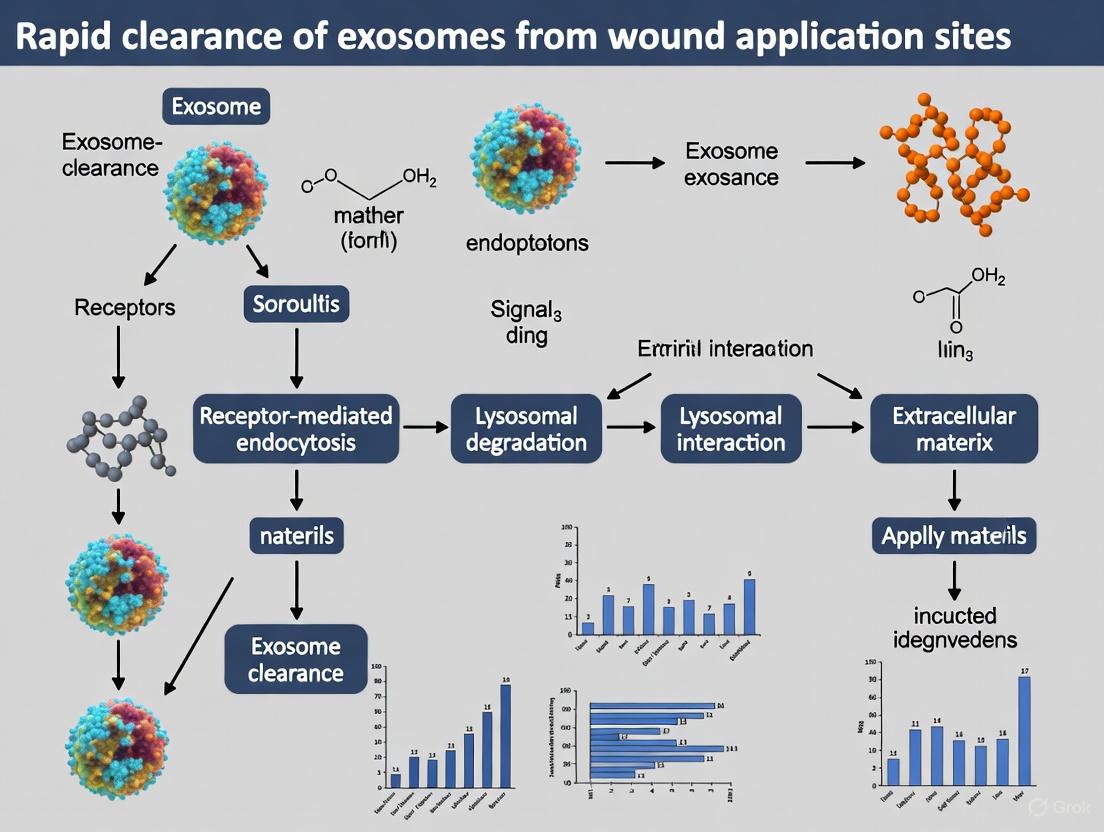
Exosome therapy represents a paradigm shift in regenerative medicine, offering a cell-free approach for treating chronic wounds by modulating inflammation, promoting angiogenesis, and stimulating tissue regeneration.
Overcoming Rapid Clearance: Engineering Strategies to Enhance Exosome Retention at Wound Sites
Abstract
Exosome therapy represents a paradigm shift in regenerative medicine, offering a cell-free approach for treating chronic wounds by modulating inflammation, promoting angiogenesis, and stimulating tissue regeneration. However, the therapeutic potential of exosomes is significantly limited by their rapid clearance from wound application sites, leading to reduced bioavailability and efficacy. This article provides a comprehensive analysis of the biological mechanisms driving exosome clearance and explores cutting-edge engineering strategies designed to overcome this challenge. We detail advanced biomaterial-based delivery systems, surface modification techniques, and preconditioning methods that enhance exosome retention and function. Furthermore, we evaluate current validation methodologies, compare emerging technologies, and discuss the translational pathway for these optimized exosome therapeutics, providing researchers and drug development professionals with a roadmap for developing next-generation wound healing solutions.
The Clearance Challenge: Understanding the Biological Fate of Exosomes in Wound Beds
The Promise and Pitfalls of Exosome Therapeutics in Wound Healing
Frequently Asked Questions (FAQs) & Troubleshooting Guides
FAQ 1: Why are my therapeutic exosomes being cleared so rapidly from the wound site after application, and how can I improve their retention?
Answer: The rapid clearance of exosomes is a major hurdle in wound healing applications. This occurs primarily due to the mononuclear phagocyte system (MPS), which quickly removes circulating extracellular vesicles from the body.
- Mechanism of Clearance: Upon systemic injection, exosomes have a short plasma half-life of only 70 to 80 minutes [1]. They tend to accumulate unintentionally in organs of the MPS, such as the liver, spleen, and lungs, rather than at the target wound site [1].
- Solutions to Improve Retention:
- Biomaterial Hydrogels: Encapsulating exosomes in biomaterials like sprayable alginate (SA) or antibacterial peptide-based hydrogels (F127/OHA-EPL) can create a protective reservoir that provides sustained, localized release at the wound site, shielding them from immediate clearance [2].
- Surface Functionalization: Engineering the exosome surface with targeting peptides or ligands (e.g., via click chemistry) can enhance their specific binding to receptors on cells in the wound environment, such as fibroblasts or endothelial cells, improving localization and uptake before clearance occurs [3] [4].
FAQ 2: What are the primary methods for isolating and characterizing exosomes for wound healing research, and how do I choose?
Answer: Selecting the right isolation and characterization method is critical for obtaining reproducible and high-quality exosome preparations.
The table below summarizes the most common isolation techniques [5]:
| Method | Purity | Yield | Scalability | Best For |
|---|---|---|---|---|
| Ultracentrifugation | High | Medium | Medium | Standard research; requires specialized equipment |
| Size-Exclusion Chromatography (SEC) | Medium–High | Medium | High | Applications requiring high structural integrity and purity |
| Tangential Flow Filtration (TFF) | Medium | High | High | Processing large volumes for clinical translation |
| Polymer-based Precipitation | Low | High | High | Quick, simple isolation where high purity is not critical |
| Immunoaffinity Capture | Very High | Low | Low | Isolating specific exosome subpopulations using surface markers (e.g., CD9, CD63, CD81) |
Characterization Guidelines: The International Society for Extracellular Vesicles (MISEV) guidelines recommend a combination of techniques to confirm you have isolated exosomes [6] [5]:
- Nanoparticle Tracking Analysis (NTA): To determine particle size distribution and concentration.
- Transmission Electron Microscopy (TEM): To visualize the size and morphology (cup-shaped structure) of exosomes.
- Western Blotting: To detect positive protein markers (e.g., tetraspanins CD9, CD63, CD81; ESCRT-related proteins TSG101, ALIX) and negative markers (e.g., calnexin, GM130) to rule out cellular contaminants.
FAQ 3: How can I engineer exosomes to enhance their therapeutic potential for diabetic or chronic wounds?
Answer: Engineering exosomes can tailor their natural abilities to overcome the specific pathological barriers present in chronic wounds.
- Cargo Loading: You can load exosomes with specific therapeutic molecules.
- miRNAs: Transfect parent cells (e.g., Mesenchymal Stem Cells) to produce exosomes enriched with pro-healing miRNAs like miR-126-3p (promotes angiogenesis) or miR-146a (modulates inflammation) [7] [2].
- Proteins/Drugs: Use methods like electroporation or sonication to load exosomes with growth factors (e.g., VEGF) or antioxidant drugs to reverse the high-glucose, high-oxidative stress microenvironment of a diabetic wound [3] [2].
- Parent Cell Preconditioning: A simpler strategy is to precondition the parent cells before exosome collection.
- Hypoxic Preconditioning: Culturing ADSCs under low oxygen tension can yield exosomes with enhanced pro-angiogenic cargo [8].
- Pharmacological Preconditioning: Treating cells with deferoxamine (DFO) can produce exosomes (DFO-Exos) that are more effective at mitigating hyperglycemia-induced damage in diabetic wounds [2].
FAQ 4: What are the critical challenges in translating exosome therapies from the lab to the clinic?
Answer: Despite their promise, several significant challenges remain before exosome therapies become a widespread clinical reality.
- Standardization and Manufacturing: There is a lack of standardized protocols for the large-scale production, isolation, and purification of exosomes. Reproducibility between batches is a major concern for regulatory approval [9] [10] [8].
- Biological Understanding: Key biological questions are still unanswered. It is often difficult to precisely identify the parent cells of natural exosomes in vivo, their specific target cells, and the dominant mechanism of action among their complex cargo [10].
- Dosing and Pharmacokinetics: Defining an optimal dosage and fully understanding the pharmacokinetic profile (absorption, distribution, metabolism, excretion) of exosome therapies is complex and requires more research [10].
- Safety and Immunogenicity: While generally considered low in immunogenicity, the long-term safety and potential for off-target effects of engineered exosomes need thorough evaluation in clinical trials [9] [1].
Experimental Protocol: Evaluating Exosome Retention in a Wound Model
Objective: To test the efficacy of a biomaterial hydrogel in reducing the rapid clearance of exosomes from a wound application site.
Materials:
- Purified exosomes (e.g., from ADSCs), labeled with a near-infrared (NIR) dye (e.g., DiR).
- Sprayable Alginate (SA) hydrogel [2].
- Control: Exosomes suspended in PBS.
- Animal model of diabetic wound healing.
- In vivo imaging system (IVIS).
Methodology:
- Exosome Labeling: Label purified exosomes using a membrane-labeling NIR dye according to manufacturer protocols. Remove unincorporated dye via size-exclusion chromatography [1].
- Formulation Preparation:
- Test Group: Mix labeled exosomes with the sprayable alginate (SA) hydrogel precursor solution to form the exosome-laden hydrogel (Exo-SA).
- Control Group: Suspend the same amount of labeled exosomes in PBS (Exo-PBS).
- Animal Experiment:
- Create full-thickness dermal wounds on the dorsum of diabetic mice.
- Apply the Exo-SA hydrogel directly onto the wounds of the test group.
- Apply the Exo-PBS solution to the wounds of the control group.
- In vivo Imaging: Image the animals at predetermined time points (e.g., 0, 6, 12, 24, 48 hours) post-application using an IVIS system to track the fluorescence signal at the wound site.
- Data Analysis: Quantify the fluorescence intensity in the region of interest (the wound) over time. Compare the signal decay rates between the Exo-SA and Exo-PBS groups to determine the hydrogel's effect on prolonging exosome retention.
This protocol directly addresses the thesis research on solving rapid clearance by providing a testable model for potential solutions.
Visualizing the Clearance Challenge and Engineering Solutions
The following diagram illustrates the key problem of rapid exosome clearance and the primary engineering strategies being developed to overcome it.
The Scientist's Toolkit: Key Research Reagents
This table lists essential materials and their functions for critical experiments in exosome-based wound healing research.
| Research Reagent / Material | Function / Application | Key Details / Rationale |
|---|---|---|
| Dynabeads (CD9/CD63/CD81) | Immunoaffinity capture for isolating specific exosome subpopulations from complex samples like cell culture media or urine [6]. | Antibody-conjugated magnetic beads. Use 20 µL of 1x10⁷ beads/mL for flow cytometry; 20 µL of 1.3x10⁸ beads/mL for Western blot [6]. |
| Sprayable Alginate (SA) Hydrogel | Biomaterial scaffold for exosome delivery to wounds. Protects exosomes from rapid clearance and allows sustained release [2]. | Provides a moist wound environment and localizes exosome delivery. An example of a material used to enhance retention time at the application site. |
| Near-Infrared (NIR) Dye (e.g., DiR) | Lipophilic membrane dye for labeling and in vivo tracking of exosome biodistribution and pharmacokinetics [1]. | Allows non-invasive monitoring of exosome persistence at the wound site over time using an IVIS imaging system. |
| Antibodies for Characterization | Essential for confirming exosome identity and purity via Western Blot or Flow Cytometry [6] [5]. | Positive Markers: CD9, CD63, CD81, TSG101, ALIX. Negative Markers: Calnexin (ER), GM130 (Golgi) to rule out contamination. |
| Size-Exclusion Chromatography (SEC) Columns | Isolation of exosomes with high structural integrity and purity, based on size [5]. | Preferred over precipitation methods when high-purity exosomes are required for therapeutic testing or mechanistic studies. |
Exosome therapy holds significant promise for enhancing wound healing by promoting cell proliferation, reducing inflammation, and stimulating new blood vessel growth [11]. However, a major challenge limiting its efficacy is the rapid clearance of exosomes from the wound application site. The therapeutic impact of exosomes is significantly influenced by their bioavailability and retention at the target site. Achieving optimal therapeutic outcomes requires a comprehensive understanding of the biological mechanisms that lead to their swift removal from wound beds. These mechanisms primarily involve enzymatic degradation and recognition by the immune system, both of which are explored in detail in this technical support guide to assist researchers in troubleshooting and optimizing their experimental approaches.
Fundamental Clearance Mechanisms: FAQs for Researchers
FAQ 1: What are the primary biological pathways responsible for rapid exosome clearance from wound sites?
Exosomes face two dominant clearance pathways that limit their therapeutic retention:
- Immune Recognition and Phagocytosis: Exosomes express surface proteins, including major histocompatibility complex (MHC) molecules, which can be recognized by immune cells such as macrophages, leading to phagocytosis and clearance [12] [13]. Their similarity to the parent cell's membrane makes them susceptible to immune surveillance.
- Enzymatic Degradation: The wound environment is rich in proteases and nucleases. Furthermore, a significant fate of exosomes after cellular uptake is degradation within lysosomes, acidic organelles filled with hydrolytic enzymes that break down exosomal proteins, lipids, and nucleic acids [13].
FAQ 2: How does the source of exosomes influence their clearance rate?
The cellular origin of exosomes critically determines their surface composition and, consequently, their interaction with the immune system. Exosomes from different cell types carry specific biomolecular cargoes, which can either stimulate an immune response or be used by malignant cells to evade immune detection [12]. This dichotomic pattern means that exosomes derived from immunologically "neutral" sources, such as certain mesenchymal stem cells, may exhibit longer half-lives in wounds compared to those from other sources.
FAQ 3: What key exosome surface markers are involved in immune recognition?
Tetraspanins such as CD9, CD63, and CD81 are commonly used to identify and characterize exosomes [11] [6]. The presence and combination of these markers can influence how exosomes interact with recipient cells, including immune cells. It is crucial to profile these markers for your specific exosome source, as their expression is not universal; for instance, Jurkat cells and some B-cell lymphoma lines release exosomes that are CD9 negative [6].
FAQ 4: What are the consequences of rapid clearance for therapeutic efficacy?
Rapid clearance directly reduces the dwell time of exosomes within the wound bed. This shortens the window for therapeutic cargo (e.g., miRNAs, proteins) delivery to target cells like fibroblasts and keratinocytes, thereby diminishing pro-regenerative signals and potentially leading to suboptimal healing outcomes, including delayed wound closure or excessive scar formation [11].
Experimental Protocols for Studying Clearance
Protocol: Tracking Exosome PersistenceIn Vivo
Objective: To quantify the retention and distribution of exosomes at a wound site over time.
Materials:
- Purified exosomes (e.g., from mesenchymal stem cells)
- Fluorescent lipophilic dye (e.g., PKH67, DiR)
- Phosphate-Buffered Saline (PBS)
- Animal wound model
- In vivo imaging system (IVIS) or confocal microscope
- Tissue homogenizer
Method:
- Labeling: Label isolated exosomes with a fluorescent dye according to manufacturer instructions. Remove unincorporated dye using size-exclusion chromatography or ultrafiltration.
- Application: Apply a standardized dose (e.g., 10-100 µg protein equivalent) of labeled exosomes directly to the wound bed in your animal model.
- Imaging: Image the wound site at predetermined time points (e.g., 0, 1, 6, 24, 48 hours) post-application using an IVIS system to track the fluorescence signal.
- Tissue Analysis: At endpoint, harvest wound tissue and process for cryosectioning. Use fluorescence microscopy to visualize exosome localization within the tissue architecture. Alternatively, homogenize tissue to quantify fluorescence intensity.
- Data Analysis: Plot fluorescence intensity over time to generate a clearance curve and calculate the half-life of the exosomes at the wound site.
Protocol: Assessing Immune Cell UptakeIn Vitro
Objective: To determine the rate and extent of exosome uptake by immune cells, such as macrophages.
Materials:
- Isolated exosomes
- Fluorescent dye (e.g., PKH67, CFSE)
- Macrophage cell line (e.g., RAW 264.7, THP-1-derived macrophages)
- Flow cytometer or confocal microscope
Method:
- Labeling: Label exosomes with a green-fluorescent dye as in Protocol 3.1.
- Co-culture: Incubate labeled exosomes with macrophages in culture for a set duration (e.g., 1-24 hours).
- Analysis:
- Flow Cytometry: Harvest macrophages, wash, and analyze by flow cytometry to measure the percentage of fluorescent-positive cells and mean fluorescence intensity, which correlates with uptake.
- Confocal Microscopy: Fix cells after co-culture, stain actin filaments and nuclei, and image to visually confirm intracellular localization of exosomes.
Quantitative Data on Clearance and Inhibition
The table below summarizes key factors and potential strategies related to exosome clearance, derived from current literature.
Table 1: Exosome Clearance Mechanisms and Modulating Strategies
| Clearance Mechanism | Key Effector Molecules/Cells | Impact on Half-Life | Potential Inhibition Strategy |
|---|---|---|---|
| Immune Recognition & Phagocytosis | Macrophages, MHC proteins, Tetraspanins (CD9, CD81) [12] [13] | Significantly shortens | Engineering exosome surface with "self" peptides (e.g., CD47 mimetics) to evade phagocytosis [13] |
| Lysosomal Degradation | Lysosomal hydrolases (proteases, nucleases), acidic pH [13] | Shortens after cellular uptake | Modifying exosomes with pH-sensitive fusogenic lipids to escape endo-lysosomal pathway |
| Proteolytic Degradation (in wound bed) | Matrix Metalloproteinases (MMPs), Serine proteases | Shortens in extracellular space | Incorporating MMP-inhibiting molecules into exosome-loaded hydrogel delivery systems [11] |
| Unknown/Other Pathways | Serum proteins, Complement system | Variable; requires characterization | Pre-incubating exosomes in serum to form a "protein corona" that modulates biological identity |
Table 2: Experimental Techniques for Clearance Analysis
| Technique | Measured Parameter | Throughput | Key Advantage | Key Limitation |
|---|---|---|---|---|
| Flow Cytometry | Percentage of cells that have internalized exosomes | High | Quantitative, single-cell resolution | Requires cell harvesting, does not provide spatial information |
| Confocal Microscopy | Sub-cellular localization of exosomes | Low | Visual confirmation of uptake and trafficking | Semi-quantitative, lower throughput |
| In Vivo Imaging (IVIS) | Whole-body/region persistence and biodistribution | Medium | Non-invasive, longitudinal tracking | Limited resolution, signal can be attenuated by tissue |
The Scientist's Toolkit: Research Reagent Solutions
Table 3: Essential Reagents for Exosome Clearance Research
| Reagent / Kit | Primary Function | Example Application in Clearance Studies |
|---|---|---|
| Dynabeads CD9/CD63/CD81 Isolation Reagents [6] | Immunoaffinity isolation of exosomes via specific surface tetraspanins. | Isolating pure subpopulations of exosomes to study how specific surface markers affect macrophage uptake. |
| PKH67 / PKH67 GL Fluorescent Cell Linker Kits | High-stability lipophilic membrane labeling. | Fluorescently tagging exosomes for long-term tracking in both in vitro uptake assays and in vivo persistence studies. |
| Total Exosome Isolation Kits (e.g., from Invitrogen) [14] | Polymer-based precipitation of total exosomes from biofluids. | Rapidly isolating exosomes from conditioned media for high-throughput clearance screening. |
| Anti-CD63 / CD81 / CD9 Antibodies [6] | Detection and characterization of exosomes by Western Blot, Flow Cytometry. | Confirming exosome identity and profiling surface marker expression after engineering attempts. |
| LysoTracker Dyes | Staining of acidic lysosomal compartments in live cells. | Co-localization studies with fluorescent exosomes to confirm lysosomal degradation pathway. |
Visualizing Clearance Pathways and Experimental Workflows
The following diagrams illustrate the core biological pathways of exosome clearance and a standardized experimental workflow for its assessment.
Diagram 1: Pathways of Exosome Clearance. This map illustrates the competition between the desired therapeutic effect and the primary clearance mechanisms that limit exosome persistence at the wound site.
Diagram 2: Experimental Workflow for Clearance Studies. This chart outlines a standardized procedure for investigating exosome clearance, integrating both in vivo and in vitro analytical endpoints.
Impact of the Chronic Wound Microenvironment on Exosome Stability and Persistence
Frequently Asked Questions (FAQs)
Q1: What specific factors in the chronic wound microenvironment are most detrimental to exosome stability? The chronic wound environment is particularly hostile due to a combination of factors. Key destabilizing elements include:
- Elevated Protease Activity: Chronic wounds are characterized by an imbalance where protease levels (e.g., matrix metalloproteinases, or MMPs) exceed their inhibitors. These enzymes can degrade protein components on the exosome surface and in the wound bed, compromising exosome integrity and function [15].
- Reactive Oxygen Species (ROS): Excessive oxidative stress in chronic wounds can damage the exosome's lipid bilayer through lipid peroxidation, leading to membrane disruption and cargo degradation [16].
- Sustained Inflammation: A prolonged inflammatory phase leads to high concentrations of pro-inflammatory cytokines (e.g., IL-1β, TNF-α) which can contribute to the hostile microenvironment that shortens exosome half-life [15].
- Bacterial Presence and Biofilms: Polymicrobial biofilms and their toxins (like LPS) perpetuate inflammation and produce destructive enzymes that can break down exosomes [15].
- Alkaline pH: Chronic wounds often exhibit an elevated alkaline environment (as opposed to the slightly acidic pH of healing wounds), which can affect exosome surface charge and stability [16].
Q2: Our in vitro data is promising, but we see a rapid loss of therapeutic effect in animal models. Is this due to rapid exosome clearance? Yes, this is a common and critical translational challenge. The rapid clearance of exosomes from the wound site is a major hurdle. Naked exosomes applied topically can be quickly cleared by bodily fluids or broken down by the harsh wound conditions described above, preventing them from maintaining the necessary therapeutic concentration over time [15]. To overcome this, researchers are developing sustained-release delivery systems, such as hydrogels, which protect exosomes and control their release, thereby prolonging their presence and action at the wound site [15] [17].
Q3: How can we engineer exosomes to better withstand the proteolytic environment of a chronic wound? Several engineering strategies can enhance exosome resilience:
- Surface Modification: Coating or conjugating polymers onto the exosome surface can create a protective barrier against proteases [16].
- Parent Cell Preconditioning: Culturing parent cells (like mesenchymal stem cells) under hypoxic conditions or with specific molecules (e.g., 3,3′-diindolylmethane) can enhance the production of exosomes that are inherently more robust and contain higher levels of protective or regenerative cargoes [17].
- Incorporation into Biomaterials: As mentioned, loading exosomes into hydrogels or scaffolds physically shields them from the proteolytic environment and enables sustained release [15] [17].
Q4: What are the key parameters to measure when assessing exosome stability and persistence in a wound model? A comprehensive assessment should include both direct and indirect metrics, as summarized in the table below.
Table 1: Key Metrics for Assessing Exosome Stability and Persistence In Vivo
| Parameter | Description | Common Techniques |
|---|---|---|
| Biodistribution & Retention | Quantifies how long exosomes remain at the wound site. | In vivo imaging (e.g., fluorescently labeled exosomes), qPCR for specific exosomal RNAs extracted from wound tissue [15]. |
| Structural Integrity | Assesses if exosomes maintain their physical structure after application. | Transmission Electron Microscopy (TEM) of wound fluid or tissue extracts [18]. |
| Functional Cargo Delivery | Confirms that exosomal cargo (e.g., miRNAs) is delivered to recipient cells in the wound. | RNA sequencing or qPCR of recipient cells, tracking of fluorescently labeled cargo [19] [17]. |
| Therapeutic Output | Measures the downstream biological effects of exosome activity. | Rate of wound closure, angiogenesis (CD31+ staining), collagen deposition (Masson's trichrome), reduction in inflammatory markers [20] [19]. |
Troubleshooting Common Experimental Challenges
Problem: Inconsistent Therapeutic Outcomes Between Exosome Batches Potential Cause and Solution:
- Cause: Heterogeneity in exosome batches due to variations in parent cell culture conditions (passage number, confluence, media supplements). The chronic wound microenvironment is a stressor that can amplify the impact of these inconsistencies.
- Solution:
- Standardize Cell Culture: Maintain strict protocols for cell passage and harvesting. Use exosome-depleted fetal bovine serum (FBS) in culture media to avoid contaminating vesicles [19].
- Characterize Rigorously: Perform nanoparticle tracking analysis (NTA), Western blot for markers (CD63, CD81, TSG101), and TEM for every batch to ensure consistency in size, concentration, and identity [18].
- Implement a Potency Assay: Develop a standardized in vitro bioassay (e.g., fibroblast migration or endothelial tube formation assay) to functionally validate each batch before in vivo use [19].
Problem: Low Yield of Exosomes for Sustained In Vivo Dosing Potential Cause and Solution:
- Cause: Traditional 2D cell culture systems have a limited surface area, constraining the number of parent cells and thus exosome output.
- Solution:
- Optimize Secretion: Precondition parent cells with hypoxia (1-5% O₂), which has been shown to enhance both exosome secretion and their pro-angiogenic cargo (e.g., VEGF, specific miRNAs) [17].
- Scale Up Production: Transition to 3D bioreactor culture systems, which can support a much higher density of cells, thereby increasing exosome yield.
- Use Concentration Devices: Employ tangential flow filtration (TFF) or centrifugal concentrators for efficient and gentle concentration of exosomes from large volumes of conditioned media [19].
Experimental Protocols for Evaluating Exosome Stability
Protocol 1: Simulating Proteolytic Degradation In Vitro
Purpose: To test the resilience of native versus engineered exosomes to protease activity similar to that found in chronic wounds [15].
Materials:
- Purified exosome sample
- MMP-2 or MMP-9 enzyme in activity buffer
- Phosphate-buffered saline (PBS)
- Protease inhibitor cocktail
- Bicinchoninic acid (BCA) assay kit
- Nanoparticle Tracking Analysis (NTA) instrument or Dynamic Light Scattering (DLS) instrument
Method:
- Prepare Solutions: Aliquot three samples:
- Test: Exosomes + MMP enzyme (e.g., 100 ng/mL).
- Enzyme Control: MMP enzyme alone.
- Exosome Control: Exosomes + PBS.
- Incubate: Incubate all samples at 37°C for 2-4 hours.
- Terminate Reaction: Add a protease inhibitor cocktail to the Test and Enzyme Control samples.
- Analyze:
- Particle Integrity: Use NTA/DLS to measure particle size and concentration. A significant reduction in particle count or a shift in size distribution in the Test sample indicates degradation.
- Protein Content: Perform a BCA assay on the supernatant after ultracentrifugation. An increase in soluble protein suggests exosome lysis.
Protocol 2: Hydrogel-Based Sustained Release and Bioactivity Assay
Purpose: To validate the protective capacity and release kinetics of a hydrogel delivery system for exosomes in a functional assay [15] [17].
Materials:
- Exosome-loaded hydrogel (e.g., Hyaluronic acid or Chitosan-based)
- Purified exosomes in PBS
- Human Dermal Fibroblasts (HDFs)
- High-glucose DMEM culture medium
- Transwell migration plates
Method:
- Release Kinetics:
- Immerse the exosome-loaded hydrogel in PBS at 37°C with gentle agitation.
- At predetermined time points (e.g., 1, 3, 6, 12, 24, 48 hours), collect and replace the release medium.
- Quantify the amount of exosomes released using NTA or a protein assay to generate a release profile.
- Functional Validation (Cell Migration):
- Create a scratch wound in a confluent monolayer of HDFs cultured in high-glucose medium to mimic a diabetic condition [19].
- Apply treatments to the cells:
- Group 1: Conditioned medium from the hydrogel release study (containing released exosomes).
- Group 2: Directly applied free exosomes.
- Group 3: PBS (negative control).
- Monitor and image the scratch closure over 24-48 hours. The group treated with hydrogel-released exosomes should show a more sustained and potentially enhanced pro-migratory effect compared to the rapidly cleared free exosomes.
The diagram below illustrates the core experimental workflow of this protocol.
Diagram 1: Hydrogel Exosome Release and Validation Workflow
The Scientist's Toolkit: Essential Reagents & Materials
Table 2: Key Research Reagents and Their Functions
| Reagent / Material | Function in Exosome Wound Research |
|---|---|
| Hyaluronic Acid Hydrogel | A biocompatible scaffold for creating a sustained-release exosome delivery system; protects exosomes and maintains a moist wound environment [15] [17]. |
| Exosome-Depleted FBS | Essential for cell culture during exosome production. Prevents contamination of cell-derived exosomes with bovine serum vesicles, ensuring sample purity [19]. |
| Nanoparticle Tracking Analyzer | Instrument used to determine the size distribution and concentration of exosome particles in a suspension, a key quality control metric [18]. |
| CD63 / CD81 Antibodies | Surface protein markers used to confirm the identity and purity of isolated exosomes via Western Blot or flow cytometry [18] [21]. |
| Hypoxia Chamber | A sealed chamber used to create a low-oxygen (1-5% O₂) environment for preconditioning parent cells, enhancing exosome yield and regenerative cargo [17]. |
| Recombinant MMP-9 Enzyme | Used in in vitro stability assays to simulate the proteolytic challenge of the chronic wound microenvironment [15]. |
| Fluorescent Lipophilic Dyes (e.g., DiR, PKH67) | Used to label the lipid membrane of exosomes, allowing for tracking of their biodistribution and persistence in vivo using imaging systems [15]. |
Visualizing the Challenge and Solution Strategy
The following diagram outlines the core problem of rapid clearance and the multi-faceted solution strategies discussed in this guide.
Diagram 2: Exosome Clearance Problem and Solution Strategy
Frequently Asked Questions (FAQs)
FAQ 1: Why is understanding exosome clearance kinetics critical for wound healing applications? For wound healing therapies, rapid clearance of exosomes from the application site can severely limit their therapeutic efficacy. The wound environment is dynamic and complex, and if exosomes are cleared before they can be internalized by target cells like fibroblasts and keratinocytes, their ability to modulate inflammation, promote angiogenesis, and encourage proliferation is significantly reduced [22] [23]. Understanding and modulating their pharmacokinetics is therefore essential to ensure sufficient residence time for effective tissue regeneration.
FAQ 2: How does the cellular source of an exosome influence its fate in vivo? The cellular source dictates the exosome's composition, including its surface protein repertoire (e.g., tetraspanins, integrins) and lipid bilayer characteristics [8]. This "molecular signature" is recognized by the host's immune system and determines interactions with the extracellular matrix and cell membranes, thereby directly influencing circulation time, biodistribution, and cellular uptake [22] [8]. For instance, exosomes from different stem cell sources may express varying levels of "self" markers, affecting their immunogenicity and clearance rates.
FAQ 3: What are the primary mechanisms that cause rapid exosome clearance? The two major mechanisms are:
- Immune Clearance: Uptake by phagocytic cells of the mononuclear phagocyte system (MPS), primarily macrophages in the liver and spleen [24]. This is often triggered when exosomes are recognized as foreign.
- Enzymatic Degradation: Degradation by proteases and nucleases present in the wound bed or systemic circulation, which can break down the exosome's structure and cargo if not adequately protected [23].
FAQ 4: What engineering strategies can be used to delay exosome clearance? Common strategies to enhance exosome persistence include:
- Surface Functionalization: Modifying the exosome surface with polymers like polyethylene glycol (PEG) to create a "stealth" effect, shielding it from immune recognition [24].
- Biomaterial Integration: Loading exosomes into hydrogels or scaffolds that provide a sustained-release reservoir at the wound site, protecting them from rapid washaway and degradation [23] [16].
- Genetic Engineering: Transducing parent cells to express targeting ligands or "self" proteins (e.g., CD47) on the exosome surface to evade phagocytosis [16].
Troubleshooting Guides
Issue 1: Rapid Clearance of Exosomes in Pre-Clinical Wound Models
Problem: Your exosome therapy shows excellent efficacy in vitro but fails to improve wound healing in vivo, likely due to rapid clearance from the wound site.
Solutions:
- Strategy A: Employ Biomaterial-Assisted Delivery.
- Action: Encapsulate exosomes within a hydrogel (e.g., chitosan, hyaluronic acid) or a biocompatible scaffold before application to the wound [23] [16].
- Rationale: Biomaterials act as a protective reservoir, providing controlled, localized release of exosomes. This prolongs their retention at the wound site, shields them from enzymatic degradation, and reduces dilution by wound exudates.
- Strategy B: Engineer "Stealth" Exosomes.
- Action: Modify the surface of your exosomes to display "don't eat me" signals. This can be achieved by transducing the parent cells (MSCs, ADSCs) to overexpress CD47, which binds to SIRPα on macrophages and inhibits phagocytosis [16].
- Rationale: Directly interfering with the primary immune clearance pathway can significantly extend the half-life of exosomes in the circulation and at the wound site.
- Strategy C: Pre-condition Parent Cells.
- Action: Culture the parent stem cells under hypoxic or inflammatory conditions (e.g., with TNF-α or IFN-γ) prior to exosome collection [8].
- Rationale: Pre-conditioning alters the cargo and surface composition of the secreted exosomes, potentially enhancing their bioactivity, homing capabilities, and resilience in hostile wound environments.
Issue 2: Inconsistent Clearance Data Between Batches
Problem: Significant variability in pharmacokinetic parameters is observed when testing different batches of exosomes from the same source.
Solutions:
- Action 1: Standardize Isolation and Characterization Protocols.
- Procedure: Ensure strict adherence to a single, optimized isolation method (e.g., Size-Exclusion Chromatography combined with Tangential Flow Filtration for high purity and yield) [25]. Fully characterize each batch for size (NTA), concentration, and surface markers (CD63, CD81, CD9) via flow cytometry or Western blot [8].
- Rationale: Batch-to-batch heterogeneity is a major challenge. Rigorous standardization and quality control are essential to ensure consistent biological behavior, including clearance kinetics.
- Action 2: Implement a Robust Tracer System.
- Procedure: Use a highly stable, quantitative method to label exosomes for in vivo tracking. A recommended method is the lipophilic dye membrane labelling (e.g., DIR or DiD dye) combined with an internal cargo label (e.g., CFSE). Always validate that the labelling process does not alter exosome size or function.
- Rationale: Accurate and reliable tracking is fundamental to pharmacokinetic studies. A dual-label system can help distinguish intact exosomes from free dye aggregates.
The table below summarizes key characteristics of different exosome sources that directly influence their clearance kinetics and therapeutic profile in wound healing.
Table 1: Comparative Characteristics of Exosomes from Different Stem Cell Sources
| Exosome Source | Key Advantages & Characteristics | Potential Clearance & Practical Considerations |
|---|---|---|
| Mesenchymal Stem Cell (MSC) [22] [23] | - Potent anti-inflammatory and pro-angiogenic effects.- Widely studied for regenerative applications.- Relatively low immunogenicity. | - Source (bone marrow, umbilical cord) can affect composition.- Donor age and passage number can influence yield and function, potentially impacting batch consistency. |
| Adipose-Derived Stem Cell (ADSC) [22] [8] | - High yield from easily accessible tissue (abundant source).- Robust proliferative capacity.- Autologous use minimizes immune rejection risk. | - Molecular composition may be influenced by donor's metabolic health.- Scalability for manufacturing requires careful standardization. |
| Induced Pluripotent Stem Cell (iPSC) [22] | - Unlimited source from a single donor clone.- Potential for highly standardized and consistent production.- High proliferative capacity of parent cells. | - Requires rigorous purification to eliminate residual reprogramming factors.- Theoretical tumorigenicity risk requires extensive safety profiling. |
Experimental Protocols
Protocol 1: Tracking Exosome Clearance Kinetics in a Murine Wound Model
Objective: To quantitatively assess the retention and clearance of fluorescently labelled exosomes from a full-thickness dermal wound.
Materials:
- Purified exosomes (from MSC, ADSC, or iPSC)
- Lipophilic fluorescent dye (e.g., DiR or DiD)
- Phosphate Buffered Saline (PBS)
- In vivo imaging system (IVIS) or similar
- Hair clippers and depilatory cream
- Biopsy punch (e.g., 6mm)
Method:
- Exosome Labelling: Label purified exosomes with a lipophilic DiR dye according to manufacturer's instructions. Remove unincorporated dye using a size-exclusion chromatography column [25].
- Wound Creation: Anesthetize mice. Create standardized full-thickness excisional wounds on the dorsum using a sterile biopsy punch.
- Exosome Administration: Immediately apply a standardized dose (e.g., 5x10^10 particles in 20µL PBS) of labelled exosomes directly onto the wound bed. For the control group, apply dye-only solution.
- Image Acquisition: Image mice at predetermined time points (e.g., 0, 2, 6, 12, 24, 48 hours) post-application using an IVIS system. Maintain consistent imaging parameters (exposure time, f-stop) across all time points.
- Data Analysis: Quantify the fluorescence intensity within a fixed region of interest (ROI) drawn around the wound site for each time point. Plot the fluorescence intensity over time to generate a clearance curve and calculate the half-life.
Protocol 2: Isolating Exosomes via Size-Exclusion Chromatography (SEC) for Consistent Pharmacokinetic Studies
Objective: To isolate exosomes with high purity and preserved biological function, minimizing aggregates that can skew clearance data.
Materials:
- Conditioned cell culture media
- SEC columns (e.g., qEVoriginal)
- Fraction collector
- Phosphate Buffered Saline (PBS)
- Ultracentrifuge and tubes (for pre-cleaning optional)
Method:
- Sample Preparation: Centrifuge conditioned media at 2,000 × g for 30 minutes to remove cells and debris. Further ultracentrifuge at 10,000 × g for 45 minutes to remove larger vesicles and apoptotic bodies.
- Column Equilibration: Equilibrate the SEC column with at least 2 column volumes of filtered PBS.
- Sample Loading and Elution: Load the pre-cleared supernatant onto the SEC column. Elute with PBS and collect sequential fractions (e.g., 0.5 mL each).
- Fraction Pooling: Identify exosome-rich fractions using UV absorbance (e.g., ~280 nm) or protein quantification. Typically, the first peak after the void volume contains exosomes. Pool these fractions.
- Concentration (Optional): If required, concentrate the pooled exosome fraction using centrifugal filters with a 100-kDa molecular weight cut-off.
Visualization: Exosome Clearance and Engineering Pathways
Diagram 1: Exosome Clearance Mechanisms
This diagram illustrates the primary pathways that lead to the rapid clearance of exosomes from wound sites.
Diagram 2: Engineering Strategies to Delay Clearance
This diagram outlines key engineering strategies developed to overcome rapid clearance and enhance exosome persistence.
The Scientist's Toolkit: Research Reagent Solutions
Table 2: Essential Reagents for Exosome Clearance Kinetics Studies
| Reagent / Material | Function / Application | Key Considerations |
|---|---|---|
| Lipophilic Tracers (DiR, DiD) | Fluorescently labels the exosome lipid bilayer for in vivo imaging and tracking. | Choose dyes with different excitation/emission spectra for multi-source studies. Always remove unincorporated dye to avoid background noise. |
| Size-Exclusion Chromatography (SEC) Columns | Isolates exosomes based on hydrodynamic diameter, providing high-purity samples with good functionality. | Superior for preserving vesicle integrity and function compared to ultracentrifugation, leading to more consistent pharmacokinetic data [25]. |
| Hydrogels (Chitosan, Hyaluronic Acid) | Biomaterial scaffold for exosome delivery. Provides a sustained-release system, protecting exosomes and prolonging their wound residence time [23] [16]. | Biocompatibility and biodegradation rate should match the wound healing timeline. |
| CD47 Plasmid / Lentivirus | Genetic engineering tool for parent cells. Overexpression leads to display of CD47 ("don't eat me" signal) on exosome surface, potentially evading phagocytic clearance [16]. | Requires validation of successful transduction and that surface display does not impair exosome function. |
Advanced Engineering Solutions for Enhanced Exosome Retention and Delivery
Technical Troubleshooting Guide
This guide addresses common challenges researchers face when developing biomaterial-based systems for the sustained release of exosomes, with a specific focus on overcoming rapid clearance at wound sites.
Table 1: Troubleshooting Common Challenges in Exosome-Loaded Biomaterial Systems
| Challenge | Potential Causes | Suggested Solutions & Optimization Strategies |
|---|---|---|
| Rapid Exosome Release | - Weak physical entrapment within matrix.- Poor compatibility between exosome surface and biomaterial.- Overly large pore size in the scaffold. | - Optimize Cross-linking Density: Increase cross-linking density of hydrogel to create a denser mesh for physical retention [26].- Utilize Affinity Interactions: Functionalize hydrogels with heparin or specific antibodies (e.g., CD63) to bind exosomes via surface ligands [26].- Biomaterial Blending: Use composite biomaterials (e.g., chitosan) known for electrostatic interactions with exosomes to slow release [26]. |
| Low Exosome Loading Efficiency | - Passive diffusion loading method is inefficient.- Exosome aggregation or damage during loading. | - Employ Active Loading: Use techniques like electroporation to load exosomes into pre-formed vesicles before incorporation into the biomaterial [27].- In-Situ Encapsulation: Mix exosomes with the liquid precursor of the biomaterial (e.g., uncrosslinked hydrogel) and initiate gelation to trap them throughout the matrix [26]. |
| Loss of Exosome Bioactivity | - Harsh chemical or physical conditions during biomaterial fabrication (e.g., organic solvents, high temperature).- Degradation during storage. | - Choose Mild Fabrication Conditions: Use biocompatible, aqueous-based gelation systems (e.g., photo-crosslinking with visible light, ionic crosslinking) [26].- Optimize Storage Conditions: Store finished constructs at -80°C, as exosomes show the greatest stability at this temperature [28] [29]. Conduct pre-formulation stability studies to define shelf-life [30]. |
| Poor Biomaterial-Exosome Integration in Vivo | - Rapid degradation of the biomaterial at the wound site.- Host inflammatory response to the implant. | - Tune Biodegradability: Modify the biomaterial's composition to match the timeline of tissue repair, ensuring sustained presence for exosome release [26].- Use Immunomodulatory Biomaterials: Select materials with known anti-inflammatory properties (e.g., certain hydrogels) that can synergize with the immunomodulatory effects of exosomes to improve acceptance [29] [26]. |
Frequently Asked Questions (FAQs)
Q1: What are the key advantages of using a biomaterial system over injecting free exosomes directly into a wound?
A1: Biomaterial systems directly address the core problem of rapid clearance. Free exosomes are quickly cleared from circulation and the application site, limiting their therapeutic window [28] [30]. Biomaterial-based systems offer:
- Sustained Release: They act as a local reservoir, providing controlled and prolonged release of exosomes to the wound bed [26].
- Enhanced Retention: The 3D matrix protects exosomes from enzymatic degradation and physical washout in the dynamic wound environment [26].
- Synergistic Effects: The biomaterial itself can provide a structural scaffold for cell migration and proliferation, working in concert with the regenerative signals from the exosomes [26].
Q2: Which biomaterial property is most critical for controlling the release kinetics of exosomes?
A2: While multiple factors are involved, the mesh size and degradation rate of the biomaterial matrix are paramount [26]. The mesh size must be smaller than the exosome diameter (typically 30-150 nm) to physically trap them. Release is then primarily governed by the degradation profile of the biomaterial. A slower-degrading matrix will provide a more sustained release profile, which is crucial for overcoming rapid clearance.
Q3: How can I confirm that the exosomes released from my biomaterial are still biologically active?
A3: Bioactivity must be verified post-release. A standard protocol involves:
- Collect Release Medium: Incubate the exosome-loaded biomaterial in a suitable buffer (e.g., PBS) at 37°C. Collect the supernatant at predetermined time points [30].
- Characterize Released Exosomes: Use Nanoparticle Tracking Analysis (NTA) or tunable resistive pulse sensing (TRPS) to confirm the presence and concentration of intact vesicles of the expected size [30].
- Functional Assay: Test the collected exosomes in a relevant in vitro bioassay. For instance, apply them to cultured fibroblasts or endothelial cells and measure pro-migratory or pro-proliferative effects to confirm retained functionality [26] [31].
Q4: Our in vivo data shows excessive inflammation at the implant site. Could this be related to the exosomes or the biomaterial?
A4: Yes, both are potential sources. To diagnose the issue:
- Characterize Exosome Source: Exosomes derived from different cells have distinct immunomodulatory functions. Some suppress immunity, while others activate it [29]. Verify the immunogenic profile of your specific exosome source in vitro.
- Profile Biomaterial Biocompatibility: Test the biomaterial alone (without exosomes) in vivo. Many synthetic polymers can trigger a foreign body response. Consider switching to more biocompatible or naturally derived materials like chitosan, collagen, or hyaluronic acid-based hydrogels [26] [32].
Experimental Protocols
Protocol 1: Evaluating Exosome Release Kinetics from a Hydrogel
Objective: To quantitatively measure the rate and duration of exosome release from a hydrogel scaffold in vitro.
Materials:
- Exosome-loaded hydrogel construct
- Phosphate Buffered Saline (PBS) with 1% Penicillin-Streptomycin
- Microcentrifuge tubes
- Orbital shaker incubator (37°C)
- Benchtop centrifuge
- Nanoparticle Tracking Analysis (NTA) instrument (e.g., Malvern Nanosight) or BCA Protein Assay Kit
Method:
- Preparation: Pre-weigh the exosome-loaded hydrogel (e.g., 100 µL volume) and place it into a microcentrifuge tube.
- Incubation: Add 1 mL of pre-warmed (37°C) release medium (PBS + 1% P/S) to the tube.
- Sampling: Place the tube in an orbital shaker incubator at 37°C with gentle agitation (e.g., 100 rpm).
- At predetermined time points (e.g., 1, 3, 6, 12, 24, 48, 72 hours, and up to 2 weeks), carefully remove the entire release medium and transfer it to a fresh tube.
- Immediately add 1 mL of fresh, pre-warmed release medium back to the hydrogel.
- Processing: Centrifuge the collected release medium at 2,000 × g for 10 minutes to remove any potential hydrogel debris.
- Quantification:
- Option A (Particle Count): Dilute the supernatant as needed and analyze using NTA to determine the particle concentration (particles/mL) of released exosomes [30].
- Option B (Protein Content): Use a sensitive protein assay like BCA on the supernatant to quantify total exosomal protein as a proxy for release [30].
- Data Analysis: Calculate the cumulative release percentage over time to generate a release profile curve.
Protocol 2: Functional Validation of Released Exosomes via a Cell Migration (Wound Healing) Assay
Objective: To confirm that exosomes released from the biomaterial retain their bioactivity to promote cell migration—a key process in wound healing.
Materials:
- Released exosome samples (from Protocol 1)
- Relevant cell line (e.g., Human Dermal Fibroblasts (HDFs) or Human Umbilical Vein Endothelial Cells (HUVECs))
- Cell culture plates (12-well or 24-well)
- Culture medium (e.g., DMEM with 10% FBS)
- Sterile PBS
- Wound making tool (e.g., 200 µL pipette tip) or culture-insert
- Phase-contrast microscope with camera
Method:
- Cell Seeding: Seed HDFs in a 12-well plate at a high density (e.g., 2 × 10^5 cells/well) and culture until a confluent monolayer forms.
- Wound Creation: Gently scratch the cell monolayer in a straight line with a sterile pipette tip. Wash the wells with PBS to remove detached cells.
- Treatment: Add the collected release medium containing exosomes (ensure it is sterile-filtered if necessary) to the wounded cells. Use fresh culture medium and medium containing exosomes from non-encapsulated cultures as negative and positive controls, respectively.
- Imaging and Analysis:
- Immediately after wounding (0 hour), capture images of the wounds at specific locations.
- Incubate the cells and capture images at the same locations at 12, 18, and 24 hours.
- Use image analysis software (e.g., ImageJ) to measure the gap area at each time point.
- Calculation: Calculate the percentage of wound closure for each group over time. Bioactivity is confirmed if the exosome-release medium group shows significantly enhanced wound closure compared to the negative control [26].
Signaling Pathway & Experimental Workflow
Diagram 1: Strategic Logic for Solving Exosome Clearance. This diagram outlines the multi-faceted rationale for using biomaterials to overcome the rapid clearance of exosomes from wound sites, leading to improved therapeutic outcomes.
The Scientist's Toolkit: Research Reagent Solutions
Table 2: Essential Materials for Developing Exosome-Loaded Biomaterial Systems
| Item/Category | Function & Rationale | Example(s) |
|---|---|---|
| Hydrogel Polymers | Forms the foundational 3D network that encapsulates exosomes and provides sustained release. | Hyaluronic Acid (HA): Naturally derived, biocompatible, modifiable [26].Chitosan: Bioadhesive, hemostatic, antimicrobial properties beneficial for wounds [26].Poly(ethylene glycol) (PEG): Synthetic, highly tunable, "stealth" properties to reduce immune recognition [32]. |
| Characterization Instruments | Essential for quantifying and qualifying both the exosomes and the biomaterial system. | Nanoparticle Tracking Analysis (NTA): Measures exosome concentration and size distribution in release studies [30].Tunable Resistive Pulse Sensing (TRPS): Provides high-resolution size and concentration data of exosomes [30].Scanning Electron Microscope (SEM): Visualizes the porous microstructure of the biomaterial scaffold [30]. |
| Affinity Binding Molecules | Used to functionalize the biomaterial to enhance exosome binding and slow release kinetics. | Heparin: Binds to various exosome surface proteins, retarding their diffusion [26].Anti-CD63/Anti-CD9 Antibodies: Provides highly specific capture of exosomes via common tetraspanin markers [26]. |
| Cross-linking Agents | Modifies the mechanical strength and degradation rate of the biomaterial, directly impacting release. | Genipin (Natural): A low-toxicity cross-linker for chitosan, collagen, and gelatin [26].UV Light (for Methacrylated polymers): Enables rapid, controllable photo-crosslinking of hydrogels (e.g., GelMA, HAMA) [26]. |
| Cell Assay Kits | For functional validation of released exosome bioactivity in a wound healing context. | Cell Migration Assay Kits: (e.g., culture-inserts for live-cell imaging) to quantify pro-migratory effects [26].Cell Proliferation Assays: (e.g., CCK-8, EdU) to measure growth-promoting activity of exosomes [31]. |
FAQs on Exosome Engineering Fundamentals
Q1: What are the primary strategies for engineering exosomes to improve tissue targeting? The primary strategies can be categorized into two approaches: pre-isolation and post-isolation modification. Pre-isolation modification involves genetically engineering the parent cells to express targeting ligands (e.g., peptides, antibody fragments) fused with exosomal surface proteins like LAMP2b or tetraspanins (CD63, CD9). Post-isolation modification involves directly modifying purified exosomes via click chemistry, hydrophobic insertion, or covalent conjugation to attach targeting moieties such as folate, RGD peptides, or aptamers [33] [34] [35].
Q2: Why are exosomes rapidly cleared after administration, and how can this be mitigated? Rapid clearance is often due to uptake by mononuclear phagocytes. Strategies to reduce clearance and improve circulation time include:
- Surface PEGylation: Grafting polyethylene glycol (PEG) onto the exosome surface creates a hydrophilic stealth layer, reducing opsonization and macrophage uptake [35].
- CD47 Display: Engineering exosomes to display CD47, a "don't eat me" signal, helps evade phagocytosis by interacting with signal regulatory protein-alpha (SIRPα) on phagocytes [35].
- Tissue-Specific Targeting: Decorating exosomes with homing peptides (e.g., cardiac- or muscle-targeting peptides) enhances their accumulation at the desired site, reducing non-specific distribution and clearance [36] [35].
Q3: What are common issues with low drug loading efficiency, and how can they be addressed? Low loading efficiency is a key challenge. The choice of method depends on the cargo type [37].
- For small molecules (e.g., curcumin, doxorubicin): Simple incubation at room temperature is often used, but efficiency can be low. Sonication or electroporation can disrupt the membrane temporarily to allow more cargo influx, but may damage exosome integrity [34] [37].
- For nucleic acids (siRNA, miRNA): Electroporation is common, but can cause cargo aggregation. Transfection of the parent cells to produce exosomes pre-loaded with the nucleic acid is an effective alternative [34] [37].
- For proteins: Genetic engineering of parent cells to express the protein fused with an exosome-enriched domain (e.g., the C1C2 domain of Lactadherin) ensures efficient loading. Optical reversible protein-protein interaction systems, like the CRY2/CIB1 module induced by blue light, offer a novel and controlled loading method [34].
Q4: My engineered exosomes show poor stability in storage. What are the best practices? Improper storage leads to aggregation and degradation.
- Short-term: Exosomes can be stored in PBS or a suitable buffer at 4°C for up to one week [38].
- Long-term: For extended storage, aliquot exosomes to avoid multiple freeze-thaw cycles and store at -80°C. A single freeze-thaw cycle is acceptable, but multiple cycles can damage exosomes and significantly reduce yield [38].
Q5: How can I track and validate the in vivo biodistribution of my engineered exosomes? Tracking is crucial for verifying targeting efficacy and pharmacokinetics.
- Fluorescent Labeling: Lipophilic dyes (e.g., DiR, PKH67) incorporate into the lipid bilayer. Bioluminescence imaging using luciferase-loaded exosomes provides high sensitivity with low background [35].
- Radiolabeling: Labeling exosomes with radioisotopes (e.g., 99mTc, 111In) allows for precise quantitative tracking using SPECT/CT imaging [35].
Troubleshooting Guides for Common Experimental Challenges
Problem: Low Yield of Engineered Exosomes
| Possible Cause | Solution |
|---|---|
| Low productivity of parent cells. | Precondition parent cells with hypoxia or treat with specific pharmacological agents (e.g., rapamycin) to enhance exosome biogenesis and release [8]. |
| Inefficient isolation method. | Optimize isolation protocol. While ultracentrifugation is common, commercial polymer-based precipitation reagents can offer higher yields from small sample volumes [38]. |
| Scalability challenges. | Transition to large-scale bioreactors for cell culture. Implement purification techniques like tangential flow filtration or multi-step chromatography (cation/anion exchange) for processing larger volumes [34]. |
Problem: Inconsistent or Off-Target Delivery
| Possible Cause | Solution |
|---|---|
| Insufficient density of targeting ligands. | Optimize the genetic engineering construct to ensure robust expression of the ligand-fusion protein. For chemical conjugation, titrate the ligand-to-exosome ratio to find the optimal density for specific binding without causing aggregation [35]. |
| Non-specific uptake by immune cells. | Employ stealth coatings like PEG. Alternatively, use exosomes derived from specific source cells (e.g., immature dendritic cells) that inherently possess low immunogenicity [37] [35]. |
| Rapid clearance before reaching target. | Integrate engineered exosomes into hydrogel-based delivery systems. This allows for sustained, localized release at the wound site, prolonging residence time and enhancing therapeutic effect [36] [8]. |
Problem: Cargo Degradation or Loss of Exosome Integrity During Engineering
| Possible Cause | Solution |
|---|---|
| Harsh loading techniques (e.g., sonication, electroporation). | Use milder methods like incubation for small hydrophobic molecules. For more sensitive cargo, shift strategy to parent cell engineering so that exosomes are naturally loaded during biogenesis [37]. |
| Multiple freeze-thaw cycles. | Aliquot exosome preparations into single-use volumes before freezing at -80°C. Avoid repeated thawing and refreezing [38]. |
| Residual isolation reagents. | Ensure complete removal of the supernatant after isolation with precipitation reagents. Perform a buffer exchange step using spin columns or dialysis to remove potential impurities [38]. |
Quantitative Data on Engineering Strategies
Table 1: Comparison of Major Cargo Loading Techniques for Exosomes [34] [37]
| Method | Mechanism | Suitable Cargo | Advantages | Limitations (Loading Efficiency) |
|---|---|---|---|---|
| Simple Incubation | Passive diffusion through membrane | Small hydrophobic molecules (e.g., Curcumin, Doxorubicin) | Easy to perform, preserves vesicle integrity | Low efficiency (~1-20%) |
| Electroporation | Electrical field creates transient pores | Nucleic acids (siRNA, miRNA), some proteins | Applicable to hydrophilic cargoes | Can cause RNA aggregation, variable efficiency (~10-30%), may damage exosomes |
| Sonication | Physical disruption by ultrasonic energy | Proteins, small molecules | Can improve loading for various cargoes | May compromise membrane integrity, potential for vesicle aggregation |
| Extrusion | Forcing through small pores | Proteins, small molecules | Creates homogeneous population | High shear stress can damage membrane and cargo |
| Freeze-Thaw Cycles | Membrane permeabilization by ice crystals | Proteins | Simple, no special equipment | Can lead to large aggregates, low efficiency |
| Transfection (Parent Cell) | Genetic engineering of producer cells | Proteins, nucleic acids | High-quality, naturally loaded exosomes | Requires cell engineering, potential cytotoxicity |
Table 2: Surface Functionalization Methods and Their Applications [33] [34] [35]
| Functionalization Strategy | Key Technique(s) | Targeting Ligand Example | Demonstrated Application |
|---|---|---|---|
| Genetic Engineering | Fuse ligand to exosomal membrane protein (e.g., LAMP2b, CD63) | RGD peptide (for αvβ3 integrin), DARPin (for HER2) | Tumor-targeted drug delivery |
| Click Chemistry | Copper-catalyzed azide-alkyne cycloaddition on surface amines | Folate, DBCO-PEG-c(RGDyK) | Targeted delivery to folate receptor-positive tumors |
| Metabolic Engineering | Incubate cells with engineered sugar precursors with bioorthogonal groups | Azide-modified sugars | Subsequent conjugation via click chemistry |
| Hydrophobic Insertion | Incubate exosomes with ligand-conjugated lipids | DSPE-PEG-Folate, CPP-PEG-Cholesterol | Brain targeting, improved circulation time |
| Aptamer Conjugation | Covalent conjugation or cholesterol-mediated anchoring | AS1411 aptamer (for nucleolin) | Targeted delivery to tumor cells |
Experimental Protocols
Protocol 1: Surface Functionalization via Click Chemistry
This protocol describes conjugating a cyclic RGD (cRGD) peptide to exosomes for targeting αvβ3 integrin, commonly overexpressed in wound neovasculature [35].
Materials:
- Purified exosomes
- DBCO-PEG-c(RGDyK) (or other DBCO-functionalized ligand)
- Phosphate-Buffered Saline (PBS)
- Amicon Ultra centrifugal filters (MWCO 100kDa)
Procedure:
- Exosome Isolation and Purification: Isolate exosomes from your chosen cell source (e.g., Mesenchymal Stem Cells) using a standard method like ultracentrifugation or a commercial kit. Resuspend the final exosome pellet in PBS.
- Reaction Setup: Incubate the purified exosomes (e.g., 100 µg protein amount) with a 10-100 molar excess of DBCO-PEG-c(RGDyK) in PBS for 2-4 hours at room temperature with gentle rotation. Optimization Note: The ligand-to-exosome ratio must be determined empirically.
- Purification: To remove unreacted DBCO-PEG-c(RGDyK), pass the reaction mixture through an Amicon Ultra centrifugal filter (MWCO 100kDa). Centrifuge at 4,000 x g for 10-15 minutes. Collect the retentate containing the conjugated exosomes.
- Validation: Validate the surface conjugation using flow cytometry (for larger vesicles) or a capture ELISA assay with an antibody against the conjugated ligand to confirm successful functionalization.
Protocol 2: Parent Cell Engineering for Active Loading
This protocol involves transfecting parent cells to produce exosomes that display a targeting ligand and are pre-loaded with a therapeutic miRNA [34] [8].
Materials:
- Parent cells (e.g., ADSCs, HEK293)
- Plasmid vector encoding the fusion protein (e.g., LAMP2b-[Targeting Peptide])
- miRNA mimic of interest
- Transfection reagent
- Standard cell culture and exosome isolation materials
Procedure:
- Genetic Modification: Transfect the parent cells with a plasmid encoding a fusion protein where a well-characterized exosomal surface protein (e.g., LAMP2b) is fused to your selected targeting peptide (e.g., a cardiac-homing peptide). A common approach is to use a lentiviral system for stable expression [35].
- Cargo Loading: Co-transfect the cells with the therapeutic miRNA mimic. The cell's endogenous RNA-binding proteins and sorting machinery will package a portion of the miRNA into the developing exosomes [8].
- Production and Isolation: Culture the transfected cells in exosome-depleted FBS medium for 48-72 hours. Collect the conditioned medium and isolate the engineered exosomes using your preferred method (e.g., ultracentrifugation).
- Quality Control: Characterize the engineered exosomes by:
- NTA: For size and concentration.
- Western Blot: For positive markers (CD63, CD81, TSG101) and expression of the LAMP2b-fusion protein.
- qRT-PCR: To confirm the presence and enrichment of the therapeutic miRNA compared to control exosomes.
Visualization of Key Concepts
Diagram 1: Exosome Engineering and Targeting Workflow
Exosome Engineering and Targeting Workflow
Diagram 2: Mechanisms to Overcome Rapid Clearance
Mechanisms to Overcome Rapid Clearance
The Scientist's Toolkit: Research Reagent Solutions
Table 3: Essential Reagents for Exosome Engineering and Analysis
| Reagent / Material | Function | Example & Notes |
|---|---|---|
| Total Exosome Isolation Reagent | Precipitation-based isolation of exosomes from cell media, serum, plasma, and other body fluids. | Thermo Fisher Scientific (#4478359). Optimized protocols available for different sample types [38]. |
| Exosome Spin Columns (MWCO 3000) | Buffer exchange and removal of small molecule contaminants (e.g., free dyes, unreacted ligands) after surface modification. | Thermo Fisher Scientific (#4484449) [38]. |
| LAMP2b Fusion Plasmid | A backbone vector for genetically engineering parent cells to display targeting peptides on the exosome surface. | Widely used in research. The extracellular domain of LAMP2b is replaced with a targeting peptide [35]. |
| DBCO-PEG-NHS Ester | A heterobifunctional crosslinker for post-isolation click chemistry. NHS ester reacts with exosome surface amines, while DBCO allows for strain-promoted click reaction with azides. | A common tool for conjugating azide-containing ligands (e.g., peptides, aptamers) to exosomes [35]. |
| DSPE-PEG-Maleimide | A lipid-PEG conjugate for hydrophobic insertion. DSPE anchors into the exosome membrane, while maleimide reacts with thiol groups on ligands. | Used for attaching cysteine-containing peptides or thiolated aptamers to the exosome surface [35]. |
| PKH67 / DiR Dyes | Lipophilic fluorescent labels for in vitro and in vivo tracking of exosomes. PKH67 (green) for in vitro; DiR (near-infrared) for in vivo imaging. | Sigma-Aldrich (PKH67) & Thermo Fisher (DiR). Proper controls are needed to distinguish from dye artifacts [35]. |
Frequently Asked Questions (FAQs)
Q1: What is the fundamental purpose of preconditioning exosomes for wound applications? Preconditioning is a strategy to enhance the innate stability and therapeutic efficacy of exosomes, particularly for overcoming the challenge of rapid clearance from wound application sites. Techniques like hypoxic preconditioning modify the exosome's cargo, such as enriching specific miRNAs, which improves their ability to promote tissue repair, reduce inflammation, and enhance targeting to the injury site. [39] [40]
Q2: How does hypoxic preconditioning of parent cells alter the resulting exosomes? Hypoxic preconditioning of parent cells, such as Mesenchymal Stem Cells (MSCs), changes the cargo and function of the released exosomes. For example, it can lead to the enrichment of microRNAs like miR-125a-5p. This altered cargo enhances the exosomes' capacity to mitigate cell death under stress, suppress reactive oxygen species (ROS) accumulation, and protect vascular integrity, making them more effective for treating hypoxic wound environments like high-altitude cerebral edema (HACE). [39]
Q3: What are the key mechanistic pathways activated by hypoxia-preconditioned exosomes (H-EXO)? A primary identified pathway is the miR-125a-5p/RTEF-1 axis. H-EXO deliver miR-125a-5p to recipient cells, which then targets and inhibits RTEF-1 expression. This inhibition leads to the downregulation of VEGF, reducing pathological angiogenesis, and helps maintain blood-brain barrier integrity, which is crucial for stabilizing the wound environment. [39]
Q4: Which cell sources are most promising for generating preconditioned exosomes? Mesenchymal Stem Cells (MSCs) are a leading source due to their inherent regenerative and immunomodulatory properties. Preconditioning MSCs with hypoxia or specific pharmacological agents can further augment the potency of their exosomes. Other sources include macrophages, whose exosomes (MφExos) exhibit phenotype-dependent (M1/M2) bioactivities relevant to inflammation and the tumor immune microenvironment. [40]
Q5: What are the primary methods for isolating and purifying exosomes for research? Common methods include:
- Ultracentrifugation: A traditional method that can lead to vesicle loss and requires skilled technique. [6]
- Size-Exclusion Chromatography: Useful for pre-enriching exosomes from complex samples like serum. [6]
- Affinity-Based Kits (e.g., Phosphatidylserine capture): Utilize molecules like Tim4 to bind phosphatidylserine on exosome surfaces. This method allows for gentler elution under neutral conditions and is applicable to various sample types (serum, urine, cell culture supernatant). [41]
- Immunoaffinity Capture (e.g., with magnetic beads): Uses antibodies against surface tetraspanins (CD9, CD63, CD81) for specific isolation. However, note that not all exosomes express all tetraspanins (e.g., Jurkat cell exosomes can be CD9 negative). [6]
Q6: How can I characterize and confirm the identity of my isolated exosomes? Characterization should be multi-parametric. It typically involves:
- Surface Marker Detection: Positive for tetraspanins like CD63, CD81, and/or CD9 (though no single universal marker exists). [6]
- Contaminant Testing: Ensuring the absence of markers from intracellular compartments (e.g., calnexin for ER, GM130 for Golgi, histones for nucleus). [6]
- Particle Analysis: Using techniques like NanoSight (NTA) to determine particle concentration and size distribution. [41]
Troubleshooting Guides
Issue 1: Low Yield of Exosomes from Preconditioned Cell Cultures
| Potential Cause | Solution |
|---|---|
| Suboptimal preconditioning stimulus | Titrate the intensity (e.g., oxygen concentration for hypoxia) and duration of the preconditioning stimulus to find the optimal window that enhances exosome function without inducing significant cell death. |
| Low cell viability or confluency | Ensure cells are healthy and at an appropriate density (e.g., 70-80% confluency) at the start of preconditioning and exosome production. |
| Inefficient exosome isolation | Consider switching or combining isolation methods. For example, direct capture with affinity beads may offer higher recovery than ultracentrifugation, which can lose vesicles. [6] [41] |
Issue 2: Inconsistent Therapeutic Efficacy of Preconditioned Exosomes In Vivo
| Potential Cause | Solution |
|---|---|
| Rapid clearance at the wound site | This is the core challenge. Focus on preconditioning strategies (hypoxic/pharmacological) that are proven to enhance exosome stability and retention. Furthermore, consider additional engineering, such as surface functionalization with targeting ligands. [3] [39] |
| Poor cargo loading efficiency | If using exogenous loading (e.g., loading a drug post-isolation), optimize the loading method (electroporation, sonication, incubation). Ensure the preconditioning itself enriches the desired endogenous cargo (e.g., miRNAs). [3] |
| Heterogeneous exosome population | Use a standardized preconditioning protocol and consistent cell passage numbers. Implement additional purification steps (e.g., size-exclusion chromatography) after initial isolation to improve population uniformity. [3] [41] |
Issue 3: Difficulty in Reproducing Published Preconditioning Protocols
| Potential Cause | Solution |
|---|---|
| Undefined culture medium components | Use serum-free media or rigorously characterize exosome-depleted serum to eliminate confounding factors from serum-derived vesicles. [41] |
| Lack of standardized characterization | Implement a rigorous and consistent panel of quality controls for every batch: particle concentration (NTA), protein content, and specific marker expression via Western blot or flow cytometry. [6] |
| Variations in isolation techniques | Adhere strictly to a single, well-documented isolation protocol within your lab. Document all deviations meticulously. Consider commercial kits for higher reproducibility. [41] |
Quantitative Data on Preconditioning Outcomes
The table below summarizes key quantitative findings from research on preconditioned exosomes, providing benchmarks for expected outcomes.
Table 1: Quantitative Outcomes of Exosome Preconditioning
| Preconditioning Type | Cell Source | Key Quantitative Outcome | Experimental Model | Reference |
|---|---|---|---|---|
| Hypoxia | Mesenchymal Stem Cells (MSCs) | H-EXO significantly outperformed N-EXO in mitigating hypoxia-induced cell death, ROS accumulation, and apoptotic signaling. | In vitro (vascular endothelial cells) | [39] |
| Hypoxia | Mesenchymal Stem Cells (MSCs) | H-EXO attenuated HACE-induced pathological angiogenesis and maintained blood-brain barrier stability via the miR-125a-5p/RTEF-1 axis. | In vivo (HACE mouse model) | [39] |
| N/A (Isolation Efficiency) | K562 Cell Culture | PS-affinity kit recovery: ~30 μg/mL protein and 1-2 x 10^10 particles/mL from concentrated supernatant. | N/A (Isolation Benchmark) | [41] |
| N/A (Isolation Efficiency) | Human Normal Serum | PS-affinity kit recovery: ~34 μg/mL protein and 5 x 10^9 particles/mL from 1 mL serum. | N/A (Isolation Benchmark) | [41] |
Experimental Protocols
Detailed Protocol: Hypoxic Preconditioning of MSCs for Exosome Production
Objective: To generate hypoxia-preconditioned MSC-derived exosomes (H-EXO) with enhanced stability and therapeutic potential for wound models.
Materials:
- Mesenchymal Stem Cells (MSCs, early passages recommended)
- Complete cell culture medium (Serum-free or with exosome-depleted FBS)
- Hypoxia chamber or multi-gas CO2 incubator
- Phosphate Buffered Saline (PBS)
- Ultracentrifuge and fixed-angle rotors
- Sterile polyallomer centrifuge bottles/tubes
- Exosome isolation kit (e.g., ultracentrifugation or affinity-based, as per The Scientist's Toolkit below)
Methodology:
- Cell Culture: Culture MSCs to 70-80% confluency under standard conditions (37°C, 5% CO2, normoxia).
- Preconditioning: Replace the medium with fresh, pre-warmed complete medium. Place the cells in a hypoxia chamber/inculbator set to 1% O2, 5% CO2, and 94% N2. Incubate for 24-48 hours (optimize duration for your cell line).
- Collection: Collect the conditioned medium after the preconditioning period.
- Differential Centrifugation:
- Centrifuge at 300 × g for 10 min to remove live cells.
- Transfer supernatant to new tubes and centrifuge at 2,000 × g for 20 min to remove dead cells and debris.
- Transfer the supernatant and centrifuge at 10,000 × g for 30 min to remove larger vesicles and organelles.
- Exosome Isolation (Ultracentrifugation):
- Transfer the final supernatant to ultracentrifuge tubes.
- Ultracentrifuge at 100,000 - 120,000 × g for 70-90 minutes at 4°C.
- Carefully discard the supernatant. Resuspend the often invisible pellet in a small volume of PBS (e.g., 100-200 μL).
- Optional: Filter the resuspended exosomes through a 0.22 μm filter.
- Characterization: Determine particle size and concentration (e.g., NanoSight), confirm presence of exosomal markers (CD63, CD81), and check for absence of contaminants (Calnexin). [6] [39] [41]
Workflow: Hypoxic Preconditioning and Analysis
The following diagram illustrates the key steps for generating and analyzing hypoxia-preconditioned exosomes.
Signaling Pathway: Mechanism of H-EXO Action
This diagram outlines the key molecular mechanism by which hypoxia-preconditioned exosomes exert their therapeutic effect.
The Scientist's Toolkit
Table 2: Essential Research Reagents for Exosome Preconditioning Workflows
| Item | Function / Application | Example / Note |
|---|---|---|
| Hypoxia Chamber/Incubator | Creates a low-oxygen environment (e.g., 1% O2) for preconditioning parent cells. | Essential for hypoxic preconditioning protocols. |
| Mesenchymal Stem Cells (MSCs) | A common cellular source for producing therapeutic exosomes. | Ensure low passage number and consistent characterization. |
| Exosome-Depleted FBS | Fetal Bovine Serum processed to remove bovine exosomes, preventing contamination in cell culture. | Critical for ensuring that isolated exosomes are host-cell-derived. |
| Ultracentrifuge | High-speed centrifugation for pelleting and purifying exosomes from large volumes of fluid. | The traditional gold-standard method for isolation. |
| Nanoparticle Tracking Analyzer (NTA) | Instrument for determining the size distribution and concentration of particles in exosome preparations. | e.g., NanoSight LM10. [41] |
| MagCapture Exosome Isolation Kit PS | Affinity-based kit that uses Tim4 protein to bind phosphatidylserine on exosome surfaces. | Allows gentle elution with chelating agent; suitable for various samples. [41] |
| Dynabeads (CD9/CD63/CD81) | Magnetic beads coated with antibodies for immunocapture of specific exosome subpopulations. | Useful for flow cytometry or Western blot; note exosome heterogeneity. [6] |
| Antibodies for Characterization | Used in Western Blot to confirm exosome identity (CD63, CD81, CD9) and purity (Calnexin-negative). | No single universal marker; a combination is required. [6] |
The rapid clearance of exosomes from wound sites is a critical barrier limiting their therapeutic efficacy. While exosomes derived from sources like mesenchymal stem cells (MSCs) show immense promise in modulating inflammation, promoting angiogenesis, and facilitating tissue remodeling, their short half-life (approximately 5.5 hours in circulation) and non-specific distribution often lead to suboptimal outcomes [22] [42]. This technical support center outlines strategies to overcome these challenges through the development of advanced hybrid systems. By integrating exosomes with decellularized extracellular matrix (dECM) biomaterials and synthetic polymers, researchers can create stabilized delivery platforms that protect exosomes, control their release, and significantly enhance their retention at the wound application site [43] [42]. The following guides and protocols provide a foundation for fabricating and characterizing these novel systems, enabling more effective and translatable exosome-based therapies for wound healing.
Fabrication Methodologies & Workflows
Strategies for Hybrid System Assembly
Combining exosomes with supportive matrices requires careful selection of techniques to ensure bioactivity and functionality.
Table: Primary Methods for Creating Exosome-Based Hybrid Systems
| Method | Underlying Principle | Key Advantages | Potential Limitations |
|---|---|---|---|
| Passive Hybridization [43] | Exploits electrostatic/hydrophobic interactions for self-assembly. | Simple procedure; preserves EV membrane integrity. | Limited control over hybrid size; potential for unwanted by-products. |
| Sonication [43] | Uses high-frequency sound waves to transiently disrupt lipid bilayers, facilitating fusion. | Forms stable, functional hybrids; enhanced storage stability. | Harsh process may risk damaging exosome cargo. |
| Freeze-Thaw [43] | Forms ice crystals that disrupt membranes, which reassemble into hybrids upon thawing. | Simple and accessible protocol. | Can lead to heterogeneous hybrid populations and exosome aggregation. |
| Extrusion [43] | Forces materials through membranes with defined pore sizes to physically mix them. | Produces hybrids with uniform and controlled size. | High shear stress may compromise exosome integrity. |
| Microfluidic Mixing [43] | Utilizes controlled hydrodynamic forces to mix components uniformly at a microscale. | Enables high reproducibility and precise control over mixing parameters. | Often requires combination with brief sonication for efficient hybridization. |
Protocol: Fabricating an Exosome-Loaded Alginate/dECM Hydrogel Scaffold
This protocol provides a detailed methodology for creating a multifunctional scaffold designed for sustained exosome delivery to wound sites [44] [42].
Key Research Reagent Solutions:
- Sodium Alginate: A natural polysaccharide hydrogel that serves as the exosome-carrying matrix [42].
- dECM Bioink: Provides tissue-specific biochemical cues; often requires methacryloyl functionalization for photochemical crosslinking [44].
- Photoinitiator (e.g., LAP): A critical reagent for light-activated crosslinking of modified hydrogels [44].
- Mesenchymal Stem Cell-Derived Exosomes: The therapeutic cargo; characterized by markers like CD63, CD81, and TSG101 [22] [6].
- Poly(ε-caprolactone) (PCL): A synthetic polymer used to create a mechanically supportive nanofibrous layer via electrospinning [42].
Experimental Workflow:
Exosome Isolation and Characterization:
- Isolate exosomes from human placental MSCs (hPMSCs) conditioned media via ultracentrifugation or precipitation methods [42].
- Characterize the isolated exosomes using:
- Dynamic Light Scattering (DLS): To determine particle size distribution (expected range: 30-200 nm) [42].
- Dot Blot or Western Blot: To confirm the presence of exosomal markers (e.g., CD63, CD81) and absence of cellular contaminants (e.g., calnexin) [42] [6].
- Scanning Electron Microscopy (SEM): To verify spherical morphology [42].
Preparation of the Photocrosslinkable Hydrogel Precursor:
- Option A (Alginate-based): Prepare a sterile solution of sodium alginate (e.g., 2-4% w/v) in PBS. Mix a defined quantity of characterized exosomes uniformly into the alginate solution [42].
- Option B (dECM-based): Utilize methacrylated gelatin (GelMA) or methacrylated dECM (dECM-MA). Suspend the exosomes in the functionalized polymer solution and add a photoinitiator like lithium phenyl-2,4,6-trimethylbenzoylphosphinate (LAP) at a final concentration of 0.1% w/v [44].
Scaffold Assembly and Crosslinking:
- Pour the exosome-loaded precursor solution into a mold.
- For photocrosslinkable systems (Option B), expose the solution to visible or UV light (e.g., 365 nm wavelength) at an intensity of 5-15 mW/cm² for 30-120 seconds to form a stable hydrogel [44].
- Alternatively, layer the hydrogel precursor onto a pre-fabricated electrospun PCL nanofiber mat to create a bilayer composite scaffold that mimics skin structure [42].
Characterization of the Final Construct:
- Assess the scaffold's mechanical properties via compression testing.
- Evaluate the degradation profile and exosome release kinetics in simulated physiological conditions (e.g., PBS at 37°C) [42].
Workflow for Fabricating Exosome-Loaded Hybrid Scaffolds
Troubleshooting Common Experimental Challenges
Problem: Low Hybridization Efficiency Between Exosomes and Synthetic Nanoparticles
- Potential Cause 1: Insufficient interaction between components.
- Solution: Combine strategies. For example, use cationic polymers like polyethyleneimine (PEI) to create electrostatic attraction followed by a brief sonication step to facilitate membrane fusion [43].
- Potential Cause 2: Incompatible surface charges or chemical properties.
- Solution: Modify the surface charge of synthetic nanoparticles to be cationic, promoting interaction with the generally anionic exosome membrane [43].
Problem: Uncontrolled Burst Release of Exosomes from Scaffold
- Potential Cause 1: Hydrogel matrix degrades or dissolves too rapidly.
- Potential Cause 2: Lack of a secondary barrier.
- Solution: Incorporate a hydrophobic nanofibrous layer, such as electrospun PCL, on top of the hydrogel to act as a diffusion barrier and modulate release [42].
Problem: Loss of Exosomal Bioactivity Post-Integration
- Potential Cause 1: Harsh fabrication conditions (e.g., prolonged sonication, organic solvents).
- Solution: Optimize fabrication parameters. Use the mildest effective sonication power/duration and avoid solvent systems that could disrupt the exosomal lipid bilayer [43].
- Potential Cause 2: Denaturation of proteins or degradation of nucleic acids within exosomes.
- Solution: Use passive hybridization methods where possible, and ensure all steps are performed on ice or at 4°C to preserve exosome integrity [43].
Problem: Inconsistent Experimental Results Between Batches
- Potential Cause 1: Variability in exosome sources and isolation methods.
- Solution: Standardize exosome isolation and characterization protocols. Use the same cell passage and culture conditions, and rigorously characterize exosome quantity and quality (e.g., via nanoparticle tracking analysis and Western blot for specific markers) for each batch [6].
- Potential Cause 2: Inadequate characterization of the hybrid system.
Quantitative Data & Performance Metrics
Table: Efficacy of Hybrid Systems in Preclinical Wound Healing Models
| Hybrid System Composition | Key Performance Outcomes | Experimental Model | Reference |
|---|---|---|---|
| Alginate Hydrogel / PCL Nanofibers + hPMSC-Exosomes | Accelerated wound closure; Enhanced re-epithelialization and collagen deposition; Controlled EXOs release preventing rapid clearance. | In-vivo, rat full-thickness wound model | [42] |
| Electrostatically Complexed EVs + PEI/siRNA (Sonication) | Retained knockdown efficacy after 5 days of storage; Increased hybrid stability and functionality. | In-vitro cell culture | [43] |
| Magnetic Nanoparticles + EVs (Passive Hydrophobic Insertion) | ≈80% complexation efficiency; Formation of stable hybrid nanoparticles within 24 h. | In-vitro characterization | [43] |
| Photocrosslinked dECM Biomaterials | Tunable mechanical properties; Enhanced structural stability for long-term applications; Enables 3D bioprinting of complex architectures. | In-vitro tissue engineering constructs | [44] |
★ The Scientist's Toolkit: Essential Research Reagents
Table: Key Materials for Developing Exosome-Matrix Hybrid Systems
| Reagent / Material | Function / Role | Specific Examples & Notes |
|---|---|---|
| Exosome Isolation Beads | Immuno-affinity capture of specific exosome subpopulations for consistent experimental input. | Dynabeads targeting human CD9, CD63, or CD81 [6]. |
| Methacrylated Polymers | Enables photochemical crosslinking for creating hydrogels with tunable mechanical properties and degradation rates. | Gelatin-Methacryloyl (GelMA); Methacrylated dECM (dECM-MA) [44]. |
| Photoinitiators | Generates free radicals upon light exposure to initiate polymer crosslinking in photopolymerizable systems. | Lithium phenyl-2,4,6-trimethylbenzoylphosphinate (LAP); Irgacure 2959 [44]. |
| Cationic Polymers | Serves as a bridge for electrostatic complexation with anionic exosomes and enhances cellular uptake. | Polyethyleneimine (PEI); Chitosan [43]. |
| Electrospinning Polymers | Creates nanofibrous, ECM-mimetic scaffolds that provide mechanical support and act as diffusion barriers. | Poly(ε-caprolactone) (PCL); Polylactic-co-glycolic acid (PLGA) [42]. |
| Exosome Characterization Antibodies | Critical for validating exosome identity and purity before integration into hybrid systems. | Anti-CD63, Anti-CD81, Anti-CD9 for Western Blot or Flow Cytometry [42] [6]. |
Frequently Asked Questions (FAQs)
Q1: What are the primary advantages of using a hybrid system over free exosomes for wound applications? Hybrid systems directly address the major pharmacokinetic limitations of free exosomes. They significantly extend exosome residence time at the wound site by protecting them from rapid clearance, allow for controlled and sustained release of the therapeutic cargo, and can enhance tissue integration by providing a biomimetic structural support that actively guides the regeneration process [22] [43] [42].
Q2: How can I track and quantify the release of exosomes from my scaffold in vitro? Multiple methods can be employed:
- Fluorescent Labeling: Label exosomes with lipophilic dyes (e.g., DiI, PKH67) and measure fluorescence in the release medium over time.
- Protein Quantification: Use assays like BCA to track total protein release, though this is less specific.
- Nanoparticle Tracking Analysis (NTA): Directly measure the concentration and size of particles released into the supernatant. For all methods, establish a standard curve and perform the analysis under sink conditions [42] [6].
Q3: My exosomes lose functionality after sonication. What are gentler alternative methods? If sonication proves too damaging, consider these alternatives:
- Passive Hybridization: Incubate exosomes with cationic polymers or functionalized nanoparticles to allow for spontaneous electrostatic or hydrophobic complex formation [43].
- Freeze-Thaw Cycling: Subject the mixture to multiple cycles of freezing and thawing. While this can also cause some aggregation, it is generally considered less harsh than sonication [43].
- Co-incubation with Hydrogel Precursors: Simply mixing exosomes into the polymer solution before gelation (e.g., before ionic or thermal crosslinking) is often sufficient for effective loading [42].
Q4: Are there specific markers I should use to confirm the successful integration of exosomes into the hybrid system without damaging them? Post-integration, it is crucial to use techniques that do not require the disruption of the hybrid system. Flow Cytometry can be used if the hybrid particles are large enough (e.g., when exosomes are bound to magnetic beads) and stained with fluorescent antibodies against exosomal surface markers (e.g., CD63, CD81) [6]. Immunogold Labeling coupled with Electron Microscopy can also visually confirm the presence of exosomes within or on the matrix without dissolving the construct.
Q5: What is the best way to store hybrid systems, and what is their typical shelf life? Exosomes and hybrid systems are typically stored in PBS or a similar buffer, often with a carrier protein like 0.1% BSA, at -80°C. While functionality can be retained after freezing, the shelf life is not universally defined and can vary. It is critical to establish batch-specific quality control metrics (e.g., particle concentration, marker expression, bioactivity in a functional assay) and test these over time to determine the acceptable storage duration for your specific system [6].
Optimizing Therapeutic Efficacy: Formulation Strategies and Preclinical Assessment
Standardization Challenges in Engineered Exosome (eExo) Production and Characterization
Engineered exosomes (eExos) are emerging as a leading acellular therapeutic strategy for enhancing wound repair and combating rapid clearance from application sites [9]. These nanosized extracellular vesicles (30-150 nm), when derived from sources such as mesenchymal stem cells (MSCs), can be tailored to modulate the wound microenvironment, promoting processes like angiogenesis, re-epithelialization, and collagen remodeling while suppressing chronic inflammation [8] [42]. However, the transition of eExo therapies from preclinical research to clinical applications is hampered by significant standardization challenges in their production and characterization. Inconsistencies in isolation techniques, quantification methods, and characterization protocols lead to variable eExo quality, potency, and purity, which directly impacts their therapeutic efficacy and safety profile [45] [46] [47]. This technical support document addresses the most common experimental hurdles and provides standardized troubleshooting guides and protocols to ensure the reproducible generation of high-quality eExos for wound healing applications.
Troubleshooting Guide: Common Challenges in eExo Workflows
Table 1: Common eExo Production and Characterization Challenges and Solutions
| Challenge Category | Specific Problem | Potential Causes | Recommended Solutions |
|---|---|---|---|
| Isolation & Purity | Low yield from cell culture media | Low starting cell number; suboptimal culture conditions; inefficient isolation technique | Optimize cell culture to 80% confluency; use serum-free media during conditioning; consider Tangential Flow Filtration (TFF) for scale-up [46] [45] |
| Protein contamination in exosome prep | Co-precipitation of non-vesicular proteins (e.g., from serum); inadequate washing steps | Incorporate a size-exclusion chromatography (SEC) step post-ultracentrifugation; use HPLC-SEC to monitor purity [45] | |
| Characterization & Quantification | Inconsistent particle concentration readings | Instrument sensitivity limits; sample aggregation; improper dilution | Use consistent dilution protocols in filtered PBS; perform multiple camera captures (e.g., 3x 30s) via NTA; confirm results with orthogonal methods (e.g., HPLC-SEC) [45] |
| Poor correlation between particle count and protein concentration | High levels of contaminating proteins or lipoproteins | Use vesicular protein concentration via HPLC-SEC as a more reliable metric; avoid relying solely on total protein assays like BCA [45] | |
| Functionality & Potency | Rapid clearance from wound site | Short half-life (~5.5 hrs in circulation); lack of targeting | Engineer eExos with specific targeting peptides; incorporate into stabilizing biomaterial scaffolds (e.g., alginate hydrogel) for controlled release [42] |
| Low therapeutic efficacy in wound models | Loss of bioactivity during isolation/storage; incorrect dosing | Pre-treat parent cells (e.g., hypoxic preconditioning) to enhance exosome potency; store exosomes in PBS with 0.1% BSA at -80°C [8] [6] |
Frequently Asked Questions (FAQs) on eExo Standardization
Q1: What is the most reliable method for quantifying exosome concentration, and why is total protein content misleading?
A: The most reliable approach is to use a combination of techniques. Nanoparticle Tracking Analysis (NTA) provides a particle count and size distribution but has limitations, as it cannot reliably detect vesicles below 50 nm and can be influenced by protein aggregates [45]. Total protein assays (e.g., BCA) are heavily influenced by free-protein contamination and are not an accurate measure of vesicle quantity [45]. For increased reliability, High-Performance Liquid Chromatography-Size Exclusion Chromatography (HPLC-SEC) is recommended. HPLC-SEC can separate vesicles from contaminating proteins, allowing for a more accurate estimation of particle concentration based on vesicular protein and providing a crucial assessment of sample purity [45].
Q2: Which markers should I use to confirm the identity and purity of my MSC-derived eExo preparation?
A: A panel of markers is essential for positive identification and purity assessment.
- Positive Markers: Confirm the presence of exosomes using transmembrane proteins and biogenesis markers. These include the tetraspanins (CD9, CD63, CD81) and proteins involved in MVB formation like ALIX and TSG101 [48] [49] [6]. No single marker is universal, so a combination is required.
- Negative Markers (Purity Control): Essential for identifying contaminants. Test for the absence of proteins from organelles that should not be present in a pure exosome sample, such as calnexin (Endoplasmic Reticulum), GM130 (Golgi apparatus), and histones (nucleus) [6].
Q3: How can I improve the stability and retention of eExos at the wound site to combat rapid clearance?
A: Rapid clearance is a major hurdle. Two primary strategies are:
- Biomaterial Encapsulation: Incorporating eExos into a scaffold (e.g., alginate hydrogel) or embedding them within a composite structure (e.g., hydrogel reinforced with PCL nanofibers) protects them from degradation, minimizes dissipation, and allows for controlled, sustained release at the wound bed [42].
- Surface Engineering: Genetically or chemically modifying the eExo surface to display targeting ligands (e.g., peptides that bind to specific receptors on skin cells like fibroblasts or keratinocytes) can enhance their homing to and retention in the wound tissue [9].
Q4: What are the critical parameters to standardize in cell culture to ensure reproducible eExo production?
A: To achieve batch-to-batch consistency, control the following:
- Cell Confluence: Harvest conditioned media at a consistent confluence, typically ~80% [42].
- Cell Passage Number: Use cells within a defined, low passage range to avoid senescence-induced changes in exosome output [8].
- Serum-Free Conditioning: Culture cells in exosome-depleted serum or serum-free media during the conditioning phase to avoid contamination with bovine exosomes [45].
- Preconditioning: Modulate the cell microenvironment (e.g., hypoxia, inflammatory cytokines) to actively tailor the cargo and enhance the therapeutic potency of the secreted exosomes for wound healing [8].
Detailed Experimental Protocols
Protocol: Isolation and Purity Assessment of MSC-derived Exosomes
This protocol outlines a standardized method for isolating exosomes from mesenchymal stem cell (MSC) conditioned media and critically assessing their purity using HPLC-SEC.
Principle: Differential ultracentrifugation separates vesicles based on size and density, while subsequent HPLC-SEC separates particles based on hydrodynamic volume, effectively distinguishing intact exosomes from contaminating proteins [45].
Materials and Reagents:
- MSC Conditioned Media (e.g., from human placental MSCs cultured in RPMI-1640) [42]
- Ultracentrifugation equipment
- Polycarbonate ultracentrifuge tubes
- Phosphate-Buffered Saline (PBS), 0.22 µm filtered
- HPLC system with Size-Exclusion Column (e.g., compatible with PBS mobile phase)
Procedure:
- Conditioned Media Harvest: Culture MSCs until ~80% confluency. Replace growth media with serum-free media or media containing exosome-depleted FBS. Condition for 48 hours. Collect the media and perform an initial centrifugation at 2,000 × g for 10 minutes at 4°C to remove cells and debris [45] [42].
- Ultracentrifugation: Transfer the supernatant to ultracentrifuge tubes. Pellet exosomes by ultracentrifugation at 100,000 × g for 70 minutes at 4°C [45].
- Wash: Carefully discard the supernatant. Resuspend the pellet in a large volume of filtered PBS. Perform a second ultracentrifugation at the same conditions (100,000 × g, 70 min) to wash the exosome pellet.
- Final Resuspension: Resuspend the final, washed exosome pellet in a small volume (e.g., 100-200 µL) of filtered PBS [45].
- Purity Analysis via HPLC-SEC: Inject a portion of the resuspended exosome sample into the HPLC-SEC system. Monitor the elution profile (e.g., by UV absorbance). The exosome fraction will elute in the void volume (earlier eluting peak), while contaminating proteins will elute later. Collect the exosome-rich fraction for further use [45].
Troubleshooting Note: If the HPLC-SEC profile shows a large protein peak relative to the exosome peak, consider optimizing the ultracentrifugation wash steps or integrating TFF for a cleaner initial isolation [46] [45].
Protocol: Functional Validation of eExos in a Proliferation Assay
This protocol describes a method to validate the bioactivity of eExos by assessing their ability to promote fibroblast proliferation, a key process in wound healing.
Principle: eExos derived from MSCs carry bioactive molecules (e.g., growth factors, miRNAs) that can stimulate the proliferation of recipient cells, such as dermal fibroblasts. This activity can be quantified using a standardized cell viability assay [8].
Materials and Reagents:
- Human Dermal Fibroblasts (HDFs)
- Cell culture plates (96-well)
- Serum-free basal media (e.g., DMEM)
- eExo sample and a negative control (e.g., PBS)
- Cell proliferation assay kit (e.g., MTT, CCK-8)
Procedure:
- Cell Seeding: Seed HDFs at a sub-confluent density (e.g., 5,000 cells/well) in a 96-well plate in complete growth media. Allow cells to adhere overnight.
- eExo Treatment: Replace the media with serum-free basal media. Treat experimental wells with a range of eExo concentrations (e.g., 10-100 µg/mL vesicular protein). Include control wells with serum-free media only.
- Incubation: Incubate the cells for 48-72 hours under standard culture conditions (37°C, 5% CO2).
- Viability Quantification: Add the MTT or CCK-8 reagent to each well according to the manufacturer's instructions. Incubate for the prescribed time to allow formazan crystal formation.
- Measurement and Analysis: Measure the absorbance of the solution at the appropriate wavelength (e.g., 570 nm for MTT). Compare the absorbance of eExo-treated wells to the control wells to calculate the percentage increase in cell proliferation.
Workflow and Pathway Visualization
Diagram: Standardized eExo Workflow
The following diagram illustrates a robust workflow for the production, characterization, and functional validation of eExos for wound healing applications, incorporating key standardization checkpoints.
Diagram: Cargo Sorting in eExo Biogenesis
This diagram outlines the key molecular pathways involved in sorting cargo (proteins, RNAs) into exosomes during their biogenesis, which is critical for engineering exosomes with specific therapeutic functions.
The Scientist's Toolkit: Key Research Reagent Solutions
Table 2: Essential Reagents and Kits for eExo Research
| Reagent/Kits | Primary Function | Key Considerations for Standardization |
|---|---|---|
| Dynabeads (CD9/CD63/CD81) | Immunoaffinity capture of exosomes from pre-enriched samples or directly from complex fluids. | Bead concentration must be optimized for downstream application (e.g., 20µL of 1x10⁷ beads/mL for flow cytometry vs. 1.3x10⁸ beads/mL for Western blot) [6]. |
| HPLC-SEC Columns | High-resolution separation of exosomes from contaminating proteins for purity assessment. | Correlate vesicular protein concentration from SEC with particle count for a more accurate quantification than total protein assays [45]. |
| NTA Instrumentation | Determination of particle size distribution and concentration in a prepared sample. | Requires consistent sample dilution in filtered PBS; performs multiple captures per sample; limited detection for particles <50 nm [45]. |
| Exosome-Depleted FBS | Used in cell culture during conditioning to produce exosome-free media. | Critical for avoiding contamination of the isolated exosome prep with bovine vesicles. Must be used during the conditioning phase. |
| Biomaterial Scaffolds (e.g., Alginate Hydrogel) | Provides a 3D matrix for eExo encapsulation to enhance stability and control release at the wound site. | The hydrophilic/hydrophobic properties of the scaffold can be tuned to modulate the release kinetics of the eExos [42]. |
For researchers developing exosome-based therapies for wound healing, a central paradox exists: the very engineering strategies designed to enhance therapeutic loading and targeting can compromise the cargo integrity and bioactivity of the exosomes. This dilemma is acutely felt in wound healing applications, where the harsh wound microenvironment and rapid clearance from the application site necessitate high functional payload delivery. This technical support center addresses the specific experimental challenges in preserving cargo integrity after engineering, directly supporting the broader research goal of solving the rapid clearance of exosomes from wound sites.
FAQ: Cargo Integrity Fundamentals
Q: What exactly is meant by "cargo integrity" in the context of engineered exosomes?
A: Cargo integrity refers to the stability, bioactivity, and functional state of therapeutic molecules (e.g., nucleic acids, proteins, small molecules) loaded into exosomes after the loading process and throughout subsequent storage and application. Compromised integrity includes phenomena like nucleic acid aggregation, protein denaturation, or leakage of cargo, which directly diminishes the intended therapeutic effect in wound healing [50] [37].
Q: Why is cargo integrity a particular concern for wound healing applications?
A: The wound environment is characterized by chronic inflammation, excessive reactive oxygen species (ROS), and elevated protease activity. These factors can degrade exosomes and their cargo. Furthermore, exosomes suffer from a short half-life (approximately 5.5 hours in circulation) and are rapidly cleared from wound sites. If the engineered exosomes do not deliver a sufficient dose of intact, bioactive cargo before clearance, the therapeutic promotion of angiogenesis, inflammation modulation, and collagen remodeling will fail [9] [42] [37].
Q: Which cargo loading methods are considered most gentle on exosome structure?
A: Passive incubation is the least invasive method, preserving EV membrane integrity but is generally limited to small, lipophilic molecules. Hypotonic dialysis is another low-impact method that uses osmotic pressure to load cargo and is noted for preserving membrane integrity [50]. In contrast, more aggressive methods like sonication and extrusion, while achieving high loading efficiency, pose a greater risk to membrane integrity and surface proteins [50] [37].
Troubleshooting Guide: Cargo Loading and Integrity Verification
Problem: Low Functional Delivery Despite High Loading Efficiency
Symptoms:
- High cargo loading efficiency measured by standard assays, but low functional impact on recipient cells in in vitro wound healing models (e.g., poor fibroblast migration or keratinocyte proliferation).
- Aggregation of nucleic acid cargo (like siRNA) post-loading.
Investigation and Solutions:
Assess Loading Method Impact:
- Action: If using electroporation, suspect cargo aggregation. Add EDTA to the electroporation buffer to chelate divalent cations and mitigate aggregation [50].
- Action: Compare the bioactivity of exosomes loaded via a harsh method (e.g., sonication) versus a milder one (e.g., passive incubation or hypotonic dialysis). The table below summarizes the trade-offs.
Table 1: Comparison of Post-Isolation Cargo Loading Methods and Their Impact on Integrity
Method Mechanism Advantages Key Integrity Considerations Recommended for Cargo Type Passive Incubation Passive diffusion across lipid bilayer [50] Non-invasive; preserves EV membrane integrity [50] Limited to lipophilic drugs; poor loading efficiency [50] Small lipophilic molecules (e.g., Curcumin, Doxorubicin) [50] Electroporation Electrical pulses disrupt membrane [50] [37] High loading efficiency [50] May alter EV membrane integrity; can cause siRNA aggregation [50] Nucleic acids (siRNA, miRNA) [50] Sonication Ultrasonic waves disrupt membrane [50] [37] High loading efficiency [50] May alter EV membrane integrity and surface proteins [50] Hydrophilic and lipophilic cargo [50] Freeze-Thaw Cycling Membrane disruption via ice crystals [50] [37] Does not require specialized equipment [50] Low loading efficiency; risk of cargo degradation [50] Proteins, some small molecules [50] Hypotonic Dialysis Osmotic swelling induces pore formation [50] Preserves EV membrane integrity [50] Possibility of reduced cargo release; infrequently studied [50] Hydrophilic molecules [50] Verify Cargo Functionality Directly:
- Protocol: Post-Loading Cargo Functional Assay
- Step 1: After loading and purification, lyse a aliquot of exosomes to release the cargo.
- Step 2: For siRNA/miRNA, perform a gel electrophoresis to check for a single, sharp band indicating minimal aggregation. Smearing suggests aggregation [50].
- Step 3: For protein cargo, use an activity-specific assay (e.g., an enzyme activity kit) on the lysate to confirm the protein remains functional post-loading.
- Protocol: Post-Loading Cargo Functional Assay
Problem: Rapid Loss of Cargo and Bioactivity in the Wound Microenvironment
Symptoms:
- Exosomes localize to the wound site but show minimal therapeutic effect.
- In vitro experiments show cargo release occurs before exosomes are internalized by target cells.
Investigation and Solutions:
- Implement a Biomaterial Scaffold for Controlled Release:
- Rationale: Scaffolds protect exosomes from the harsh wound environment, prevent rapid clearance, and allow for sustained, localized release, maintaining effective therapeutic concentration [42].
- Protocol: Incorporating Exosomes into an Alginate Hydrogel/ PCL Nanofiber Scaffold [42]
- Materials: Exosomes, Sodium Alginate, Poly(ε-caprolactone) (PCL), Calcium Chloride (CaCl₂), Electrospinning apparatus.
- Step 1: Fabricate a hydrophobic PCL nanofibrous mat via electrospinning to mimic the epidermis and provide structural support.
- Step 2: Mix the exosomes with a sodium alginate solution (a natural, hydrophilic polysaccharide) to mimic the dermis.
- Step 3: Layer the exosome-alginate mixture onto the PCL mat and cross-link by applying a CaCl₂ solution.
- Step 4: Characterize the scaffold for controlled release properties using an in vitro release assay in PBS or simulated wound fluid, measuring cargo release over time via a method like ELISA or qRT-PCR.
The following diagram illustrates this protective scaffold strategy and the subsequent verification of cargo integrity and function.
Problem: Inconsistent Results Due to Storage and Handling
Symptoms:
- Significant batch-to-batch variation in activity.
- Loss of function after exosome thawing.
Investigation and Solutions:
- Optimize Storage Conditions:
- Action: For long-term storage, aliquot exosomes and store at -80°C. Avoid repeated freeze-thaw cycles, as this damages exosome integrity and causes cargo leakage [51].
- Action: Use cryoprotectants like trehalose in the storage buffer (e.g., PBS) to protect against ice crystal formation [51].
- Action: Thaw frozen exosomes quickly at 37°C and place them immediately on ice for use [51].
The Scientist's Toolkit: Essential Reagents for Integrity Assurance
Table 2: Key Research Reagent Solutions for Cargo Integrity Research
| Item | Function in Research | Example Application |
|---|---|---|
| Alginate Hydrogel | Natural polymer scaffold for exosome encapsulation and controlled release; provides a moist wound environment and protects from clearance [42]. | Creating a sustained-release delivery system for ADSC-Exos in full-thickness wound models [42]. |
| PCL (Poly(ε-caprolactone)) | Synthetic polymer used to create electrospun nanofibrous mats; provides mechanical strength to hybrid scaffolds and modulates release kinetics [42]. | Reinforcing alginate hydrogels to create a bilayer scaffold for dermis and epidermis regeneration [42]. |
| CD63/CD81/CD9 Antibodies | Antibodies against canonical exosome surface markers (tetraspanins) used for characterization, isolation, and to verify membrane integrity post-loading [6] [51]. | Confirming the presence of intact exosomes after sonication or extrusion via Western Blot or flow cytometry. |
| EDTA | Chelating agent that binds divalent cations; reduces nucleic acid aggregation during electroporation [50]. | Adding to electroporation buffer when loading siRNA or miRNA to maintain cargo functionality. |
| Trehalose | Cryoprotectant that helps stabilize biological structures during freezing, reducing damage to the exosome membrane and cargo [51]. | Adding to exosome storage buffer (PBS) before freezing at -80°C to preserve activity. |
| Dynabeads (CD9/CD63/CD81) | Magnetic beads for immunoaffinity capture of exosomes; enables high-purity isolation from complex media like conditioned cell culture media [6]. | Isulating a pure population of exosomes for engineering, minimizing contamination that could affect loading efficiency. |
Ensuring the integrity of therapeutic cargo post-engineering is not a standalone goal but a critical determinant in overcoming the rapid clearance of exosomes from wounds. By meticulously selecting loading methods, verifying cargo functionality, and employing protective delivery scaffolds, researchers can significantly enhance the retention and bioactivity of their engineered exosomes. This integrated approach ensures that these powerful nanotherapeutics can fully exert their pro-regenerative effects, turning the tide in the challenging battle against chronic wounds.
Addressing Scalability and Manufacturing Hurdles for Clinical Translation
For researchers focused on overcoming the rapid clearance of exosomes from wound sites, a significant translational gap exists between demonstrating therapeutic efficacy in the lab and developing a viable, commercial-scale clinical product. The very properties that make exosomes promising—their natural origin, complex biology, and heterogeneity—also present formidable manufacturing challenges. This technical support center addresses the specific scalability and production hurdles you may encounter, providing targeted troubleshooting guides to advance your research from the bench to the bedside.
Frequently Asked Questions (FAQs) on Scalability and Manufacturing
Q1: What are the primary bottlenecks in scaling up exosome production for clinical trials?
The major bottlenecks exist in both upstream (production) and downstream (processing) phases. Upstream, achieving consistent, high-yield cell culture under controlled, scalable conditions is challenging. Many research protocols rely on static flask cultures, which are not transferable to industrial-scale production. Downstream, the isolation and purification methods common in research labs, such as ultracentrifugation, are difficult to scale, often yield impure products, and can compromise exosome integrity, directly impacting their retention at the wound site [28] [30] [52].
Q2: How does the choice of cell source impact scalable manufacturing?
The cell source is a critical determinant of both scalability and the final product's functionality. While mesenchymal stem cells (MSCs) are a popular source due to their regenerative properties, they have a finite expansion capability, necessitating constant derivation of new batches, which is both time-consuming and expensive [28]. Immortalized cell lines offer greater scalability and consistency but raise safety concerns that require rigorous validation. The cell source also dictates the exosomes' intrinsic targeting and composition, which can influence their persistence and activity in a wound environment [49] [3] [52].
Q3: Our team is struggling with low exosome yields. What strategies can increase yield?
Low yield is a common issue. Several strategies can be explored:
- Bioreactor Culture: Transitioning from 2D flasks to 3D bioreactor systems can dramatically increase cell density and, consequently, exosome output [52].
- Cell Preconditioning: Modifying the cell microenvironment, such as culturing under mild hypoxia or with specific biochemical cues (e.g., 3,3′-diindolylmethane or nitric oxide), can enhance the secretion of exosomes and enrich them with desired therapeutic cargo [17].
- Genetic Engineering: Genetically modifying parent cells to overexpress genes involved in the exosome biogenesis pathway (e.g., Rab27a) can boost vesicle release [49].
Q4: Why is there so much batch-to-batch variability, and how can we control it?
Variability arises from inconsistencies in the source cells, culture conditions (e.g., passage number, media composition, confluence), and isolation methods [30] [52]. To control it, implement a strict Standardized Operating Procedure (SOP) for every step. This includes using well-characterized, low-passage cell banks, defined culture media without serum-derived contaminants, and reproducible, scalable purification technologies like Tangential Flow Filtration (TFF) instead of manual ultracentrifugation [28] [30].
Q5: What are the best practices for storing exosomes to ensure stability for clinical use?
Exosome stability is paramount for reliability in experiments and clinics. Research indicates that exosomes are often stored at -80°C, but this is impractical for a pharmaceutical product. Lyophilization (freeze-drying) has emerged as a promising method for preserving exosomes at room temperature, enhancing their shelf-life and stability for transportation and storage [30]. Always use cryoprotectants in your formulations to prevent aggregation and maintain vesicle integrity during freeze-thaw cycles.
Troubleshooting Guides
Problem: Low Purity and Yield During Isolation
Issue: Isolated exosome samples are contaminated with proteins, lipoproteins, or other extracellular vesicles, and the yield is insufficient for in vivo wound healing studies.
Step-by-Step Solution:
- Assess Your Starting Material: Ensure your cell culture conditioned media is free of debris by performing a low-speed centrifugation step (e.g., 2,000 × g for 30 minutes) before exosome isolation.
- Move Beyond Ultracentrifugation: While common, ultracentrifugation can cause exosome aggregation and is not scalable. Consider switching to or combining methods.
- Implement a Purification Cascade: Use a sequence of methods for higher purity.
- Step 1: Concentration. Use Tangential Flow Filtration (TFF) to gently concentrate large volumes of conditioned media.
- Step 2: Purification. Pass the concentrate through Size-Exclusion Chromatography (SEC). This separates exosomes from smaller contaminants like proteins based on size, preserving exosome functionality and reducing aggregation [28] [30].
- Characterize Rigorously: Use Nanoparticle Tracking Analysis (NTA) for concentration and size distribution, and Western Blot for positive (CD63, CD81, TSG101) and negative (e.g., albumin) markers to confirm purity [30].
Problem: Rapid Clearance from Wound Site
Issue: Engineered exosomes are rapidly cleared from the wound application site before they can exert their full therapeutic effect.
Step-by-Step Solution:
- Analyze Biodistribution: Use in vivo imaging systems (IVIS) to track fluorescently or luciferase-labeled exosomes after application to the wound. This will confirm the kinetics of clearance.
- Employ a Hydrogel Delivery System: Instead of applying exosomes in a saline solution, encapsulate them within a biocompatible hydrogel (e.g., hyaluronic acid, chitosan, or collagen-based). This creates a reservoir for sustained release, protecting exosomes from rapid clearance and enzymatic degradation, and prolonging their contact with wound cells [17].
- Modify Exosome Surface: Engineer the exosome surface to enhance retention in the wound bed. This can be done by:
- Click Chemistry: Conjugate the exosome surface with peptides that have high affinity for components of the wound extracellular matrix (ECM), such as collagen or fibrin [16] [52].
- Parent Cell Engineering: Transduce the parent cells to express fusion proteins that display ECM-binding domains on the secreted exosome surface.
Research Reagent Solutions
The table below lists key reagents and their functions for tackling manufacturing and clearance challenges.
Table: Essential Research Reagents for Exosome Translation
| Reagent / Material | Primary Function in Research | Key Consideration |
|---|---|---|
| Serum-Free Media | Cell culture; prevents contamination with bovine exosomes from FBS. | Essential for producing defined, clinically-relevant exosomes [30]. |
| Tangential Flow Filtration (TFF) Cassettes | Scalable concentration and purification of exosomes from large volume culture media. | Superior yield and integrity compared to ultracentrifugation [28] [52]. |
| Size-Exclusion Chromatography (SEC) Columns | High-purity isolation of exosomes from contaminating proteins. | Preserves biological activity and reduces aggregation [30]. |
| Hydrogel Polymers (e.g., Hyaluronic acid) | Formulation of a sustained-release delivery system for wound application. | Crucial for overcoming rapid clearance at the wound site [17]. |
| Lyophilization Protectants (e.g., Trehalose) | Stabilize exosomes for long-term storage at room temperature. | Key for pharmaceutical development and shelf-life [30]. |
| Fluorescent Lipophilic Dyes (e.g., PKH67) | Labeling exosomes for in vitro and in vivo tracking and uptake studies. | Critical for biodistribution and pharmacokinetic experiments [30]. |
Experimental Protocols & Workflows
Detailed Protocol: Sustained-Release Exosome-Hydrogel Formulation
This protocol is designed to create a hydrogel-based delivery system to counteract the rapid clearance of exosomes from wound sites.
Objective: To encapsulate therapeutic exosomes within a hydrogel matrix for controlled, sustained release at the wound site.
Materials:
- Purified exosomes (e.g., isolated via TFF/SEC)
- Methacrylated hyaluronic acid (HAMA)
- Photoinitiator (e.g., LAP - Lithium phenyl-2,4,6-trimethylbenzoylphosphinate)
- UV light source (365 nm, ~5-10 mW/cm²)
- DPBS (Dulbecco's Phosphate Buffered Saline)
Method:
- Prepare Hydrogel Precursor Solution: Dissolve HAMA in DPBS to a final concentration of 2-4% (w/v). Add the photoinitiator LAP to a final concentration of 0.05% (w/v). Protect from light.
- Mix with Exosomes: Gently mix your purified exosome preparation with the hydrogel precursor solution on a rotator at 4°C. The volume ratio can be adjusted, but a 1:4 (exosomes:precursor) ratio is a common starting point.
- Crosslink the Hydrogel: Pipette the exosome-hydrogel mixture into the desired mold (or directly onto an in vitro wound model). Expose to UV light (365 nm) for 30-60 seconds to initiate crosslinking and form a solid gel.
- Assess Release Kinetics: Immerse the formed gel in DPBS or simulated wound fluid at 37°C under gentle agitation. Collect release medium at predetermined time points (e.g., 1h, 6h, 24h, 72h). Quantify released exosomes using NTA or a protein assay like BCA to generate a release profile.
Workflow Diagram: Scalable Exosome Production & Engineering
The following diagram illustrates the integrated workflow from scalable production to engineering solutions for enhanced wound retention.
Detailed Protocol: Functionalizing Exosomes for Enhanced Wound Retention
Objective: To conjugate collagen-binding peptides onto the exosome surface to improve their retention in the wound ECM.
Materials:
- Purified exosomes
- DBCO-PEG₄-NHS Ester
- Azide-modified collagen-binding peptide (e.g., sequence TKKTLRT)
- DPBS
- Size-Exclusion Spin Columns (e.g., Zeba)
Method:
- Exosome Surface Modification:
- Resuspend purified exosomes in DBPS.
- Add DBCO-PEG₄-NHS Ester to the exosome suspension (a 10-20 molar excess to surface protein is a starting point). Incubate for 2 hours at room temperature on a rotator.
- Remove unreacted DBCO-NHS using a size-exclusion spin column, equilibrated with DPBS.
- Click Chemistry Conjugation:
- Add the azide-modified collagen-binding peptide to the DBCO-labeled exosomes.
- Incubate for 1-2 hours at room temperature or overnight at 4°C.
- Purification:
- Purify the conjugated exosomes from unreacted peptide using a final SEC or ultrafiltration step.
- Validation:
- Validate conjugation success via Western Blot using an antibody against the peptide tag or by detecting a mobility shift.
- Confirm retained functionality through in vitro binding assays to collagen-coated plates.
Protocols for In Vitro and In Vivo Assessment of Retention and Biodistribution
The therapeutic potential of exosomes in wound healing is significantly hampered by their rapid clearance from application sites. Achieving effective tissue regeneration requires these extracellular vesicles (EVs) to remain at the wound bed for a sufficient duration to exert their biological effects. This technical support center provides comprehensive protocols and troubleshooting guides for researchers to accurately evaluate and enhance exosome retention and biodistribution, enabling the development of more effective wound therapies that overcome the critical clearance barrier.
FAQs: Fundamental Concepts in Exosome Biodistribution
Q1: Why do therapeutically administered exosomes clear so rapidly from circulation? Systemically administered exosomes typically show rapid blood clearance with a half-life of only a few minutes, primarily due to uptake by phagocytic cells like macrophages and neutrophils in the mononuclear phagocyte system (MPS). Tissues such as the liver and spleen are primarily responsible for this rapid clearance, which significantly limits their availability to wound sites [53].
Q2: What key factors influence exosome biodistribution patterns? Multiple factors determine where exosomes distribute in the body:
- Cellular origin: Exosomes from different cell types show distinct tropism (e.g., neural stem cell-derived EVs show better brain targeting than mesenchymal stem cell-derived EVs) [53].
- Membrane composition: Proteins (tetraspanins, integrins), lipids, and glycans on the exosome surface mediate cellular interactions and targeting specificity [53].
- Storage conditions: Improper storage (multiple freeze-thaw cycles, suboptimal temperatures) can cause vesicle aggregation, membrane deformation, and cargo loss, altering biodistribution [54].
Q3: How can I engineer exosomes to improve wound site retention? Effective engineering strategies include:
- Biomaterial incorporation: Embedding exosomes in hydrogels or encapsulating them in microneedles fabricated from hyaluronic acid (HA) can significantly prolong retention at wound sites [54] [16].
- Surface modification: Engineering exosomes to express targeting ligands (peptides, antibodies) that recognize wound-specific markers [53] [16].
- Stabilization additives: Using cryoprotectants like trehalose during processing and storage maintains exosome integrity and function [54].
Q4: What are the critical parameters to monitor in biodistribution studies? Essential parameters include:
- Pharmacokinetics: Blood half-life, clearance rate, and mean residence time.
- Tissue distribution: Quantification in target (wound) versus non-target tissues (liver, spleen, kidneys).
- Functional integrity: Assessment of whether exosomes retain therapeutic activity post-administration.
Experimental Protocols
Protocol for Radiolabeling-Based Biodistribution Studies
Principle: Using radiotracers enables highly sensitive, quantitative tracking of exosome distribution in tissues with proper pharmacokinetic analysis.
Materials:
- Purified exosomes (100-500 µg protein)
- Radioisotope (e.g., 99mTc, 111In, 125I)
- Size exclusion chromatography (SEC) columns
- Gamma counter
- Female mice (e.g., BALB/c, 6-8 weeks)
- Dissection tools and pre-weighed tissue collection tubes
Procedure:
- Radiolabeling:
- Label exosomes using direct or indirect methods according to established protocols.
- Purify labeled exosomes using SEC to remove unbound radioactivity.
- Determine radiochemical purity (>95% required) and specific activity.
Dose Administration:
- Calculate the injection volume (typically 100-200 µL for mice).
- Measure exact activity in the syringe before and after injection using a gamma counter.
- Administer via preferred route (e.g., intravenous, intradermal).
Tissue Collection:
- Euthanize animals at predetermined time points (e.g., 5 min, 30 min, 2 h, 8 h, 24 h).
- Collect tissues of interest (blood, liver, spleen, kidneys, lung, heart, brain, skin/wound).
- Weigh tissues immediately after collection.
Radioactivity Measurement:
- Count tissue samples in a calibrated gamma counter.
- Use appropriate standards for decay correction.
- Calculate % injected dose per gram tissue (%ID/g) using the formula:
Data Analysis:
- Plot concentration-time curves for each tissue.
- Calculate pharmacokinetic parameters: half-life (t1/2), area under curve (AUC), clearance (CL).
- Determine target-to-background ratios (e.g., wound-to-liver ratio) [55].
Troubleshooting:
- Low labeling efficiency: Optimize labeling conditions; consider different radioisotopes.
- High background signal: Ensure thorough purification post-labeling; check for free isotope.
- Variable results between animals: Standardize injection technique; use consistent animal age/weight.
Protocol for Fluorescent Labeling and In Vivo Imaging
Principle: Lipophilic fluorescent dyes incorporate into exosome membranes, enabling real-time tracking and whole-body imaging.
Materials:
- Purified exosomes
- Lipophilic dyes (DiR, DiD, PKH67)
- Ultracentrifugation equipment
- In vivo imaging system (IVIS)
- Anesthesia equipment (isoflurane)
Procedure:
- Fluorescent Labeling:
- Incubate exosomes with dye according to manufacturer's protocol.
- Remove unincorporated dye by ultracentrifugation or SEC.
- Verify labeling efficiency using spectrophotometry/fluorometry.
In Vivo Imaging:
- Anesthetize animals and administer labeled exosomes.
- Image at multiple time points using IVIS system.
- Use appropriate excitation/emission filters for your dye.
- Maintain consistent animal positioning and imaging parameters.
Ex Vivo Validation:
- After terminal time points, collect and image excised tissues.
- Quantify fluorescence intensity in each tissue.
- Compare with control (unlabeled exosomes) to account for autofluorescence.
Data Analysis:
- Use region-of-interest analysis to quantify signal intensity.
- Normalize to background fluorescence.
- Create heat maps of distribution patterns [53].
Troubleshooting:
- Rapid signal quenching: Use more stable dyes; minimize light exposure.
- High background: Optimize dye removal; include proper controls.
- Signal saturation: Adjust exposure time; use appropriate dye concentrations.
Protocol for Evaluating Engineered Exosome Retention in Wound Models
Principle: Incorporating exosomes into advanced delivery systems enhances wound retention and therapeutic efficacy.
Materials:
- ADSC-derived exosomes
- Biomaterials (hyaluronic acid, collagen, fibrin)
- Microneedle molds
- Diabetic mouse wound model
- Histology equipment
Procedure:
- Delivery System Fabrication:
- Hydrogel incorporation: Mix exosomes with hydrogel precursor, crosslink to form stable matrix.
- Microneedle arrays: Prepare HA-based microneedle solutions, incorporate exosomes, centrifuge into molds, dry.
Wound Model Application:
- Create full-thickness excisional wounds in diabetic mice.
- Apply exosome-loaded systems to wound beds.
- Cover with appropriate dressings.
Retention Assessment:
- Use labeled exosomes (fluorescent or radioactive) as above.
- Track presence at wound site over time (e.g., 1, 3, 7, 14 days).
- Compare with free exosome administration.
Efficacy Evaluation:
Troubleshooting:
- Poor exosome release from delivery system: Optimize biomaterial composition and crosslinking density.
- Reduced exosome activity after incorporation: Test different fabrication conditions; verify exosome integrity post-release.
- Variable wound healing responses: Standardize wound size and location; control for metabolic status in diabetic models.
Troubleshooting Guides
Biodistribution Study Issues
| Problem | Possible Causes | Solutions |
|---|---|---|
| Unexpected high lung accumulation | Exosome aggregation | Filter exosomes through 0.22 µm membrane before injection; optimize storage conditions to prevent aggregation [54] |
| Rapid clearance from circulation | Uptake by RES | Modify surface with PEGylation; use smaller exosomes (<100 nm); pre-dose with blank vesicles to saturate RES [53] |
| Poor wound site accumulation | Lack of targeting | Engineer exosomes with wound-homing peptides; use local delivery approaches; incorporate into sustained-release systems [16] |
| High variability between animals | Inconsistent administration | Standardize injection technique; use experienced personnel; validate dosing accuracy [55] |
| Discrepancy between labeling methods | Different labeling efficiencies | Use multiple labeling approaches; confirm co-localization of different labels; include proper controls [53] |
Exosome Handling and Stability Issues
| Problem | Possible Causes | Solutions |
|---|---|---|
| Particle aggregation | Multiple freeze-thaw cycles | Aliquot exosomes to avoid repeated freezing/thawing; use cryoprotectants (trehalose) [54] |
| Loss of biological activity | Suboptimal storage conditions | Store at -80°C in isotonic buffers; avoid prolonged storage at 4°C; consider lyophilization with stabilizers [54] |
| Low labeling efficiency | Damaged membrane integrity | Use fresh, high-quality exosome preparations; optimize labeling conditions; verify exosome quality pre-labeling |
| Inconsistent biodistribution between batches | Variability in exosome preparations | Standardize isolation protocols; characterize each batch (size, markers, concentration); use consistent cell sources/passages [56] |
Quantitative Data Reference Tables
Typical Biodistribution Patterns of Systemically Administered Exosomes
| Tissue | % Injected Dose/g (15 min) | % Injected Dose/g (1 h) | % Injected Dose/g (24 h) | Notes |
|---|---|---|---|---|
| Liver | 25.5 ± 3.2 | 18.3 ± 2.1 | 8.7 ± 1.5 | Primary clearance organ |
| Spleen | 18.7 ± 2.8 | 12.4 ± 1.9 | 5.2 ± 0.9 | High RES activity |
| Kidneys | 8.3 ± 1.2 | 5.2 ± 0.8 | 1.8 ± 0.4 | Renal clearance route |
| Lungs | 12.6 ± 2.1 | 6.8 ± 1.1 | 1.5 ± 0.3 | First-pass accumulation |
| Wound Site | 1.2 ± 0.3 | 0.8 ± 0.2 | 0.3 ± 0.1 | Significantly improved with engineering |
| Blood | 15.3 ± 2.4 | 4.2 ± 0.7 | 0.5 ± 0.1 | Rapid clearance (t1/2: minutes) |
Data compiled from multiple studies showing general trends; actual values vary based on exosome source, size, and administration route [53] [56].
Impact of Storage Conditions on Exosome Properties
| Condition | Particle Concentration | Size Distribution | RNA Content | Bioactivity |
|---|---|---|---|---|
| Multiple freeze-thaw cycles | Decreased ~40% after 3 cycles | Increased size, aggregation | Decreased ~60% after 3 cycles | Significantly impaired |
| -80°C with cryoprotectants | Minimal change | Stable | >90% preserved | Well maintained |
| 4°C short-term (7 days) | Moderate decrease | Some aggregation | Moderate decrease | Partial retention |
| Room temperature | Significant decrease | Major aggregation | Significant decrease | Mostly lost |
| Incorporated in biomaterials | Well preserved | Stable | Well preserved | Extended retention |
Based on systematic review of storage protocols for extracellular vesicles [54].
Visualization: Experimental Workflows and Engineering Strategies
Biodistribution Study Workflow
Biodistribution Assessment Workflow
Engineering Strategies for Enhanced Retention
Engineering Solutions for Retention Challenges
The Scientist's Toolkit: Essential Research Reagents and Materials
| Category | Specific Items | Function | Application Notes |
|---|---|---|---|
| Exosome Isolation | Size exclusion chromatography columns | High-purity exosome separation | Superior to ultracentrifugation for maintaining integrity [56] |
| Tangential flow filtration systems | Large-scale concentration | Essential for preclinical/clinical production [56] | |
| Labeling & Tracking | Lipophilic dyes (DiR, DiD, PKH) | Membrane incorporation for imaging | Optimal for in vivo tracking; validate no alteration of targeting [53] |
| Radioisotopes (99mTc, 111In, 125I) | Quantitative biodistribution | Gold standard for pharmacokinetic studies [55] | |
| Characterization | Nanoparticle tracking analyzer | Size and concentration analysis | Critical for quality control pre-administration [56] |
| Western blot reagents | Tetraspanin detection (CD9, CD63, CD81) | Confirms exosome identity and purity [56] | |
| Delivery Systems | Hyaluronic acid-based hydrogels | Sustained release at wound site | Maintains moist wound environment while retaining exosomes [54] [16] |
| Microneedle array molds | Minimally invasive delivery | Painless penetration of stratum corneum for intradermal delivery [54] | |
| Stabilization | Trehalose | Cryoprotection during storage | Preserves structural and functional integrity during freezing [54] |
| Platelet lysate | Culture supplement | Enhances exosome production and functionality [57] |
Evaluating Success: Models, Metrics, and Comparative Efficacy of Engineered Platforms
Animal Models for Quantifying Exosome Retention and Wound Closure Kinetics
Experimental Design and Animal Models FAQ
What are the most common animal models for exosome wound healing studies?
Rodent models are the most frequently used, accounting for approximately 97% of studies in this field. The selection of a specific model depends on whether you are studying normal or diabetic wound healing [58].
Table 1: Common Animal Models in Exosome Wound Healing Research
| Animal Species | Disease Model | Wound Type | Prevalence in Studies |
|---|---|---|---|
| Mice (e.g., C57BL/6) | Non-diabetic | Full-thickness excisional | ~36 studies [58] |
| Rats (e.g., Sprague-Dawley) | Non-diabetic | Full-thickness excisional | ~30 studies [58] |
| Genetically diabetic mice (db/db) | Type 2 Diabetes | Full-thickness excisional | 6 studies [58] |
| STZ-induced diabetic rats/mice | Type 1 Diabetes | Full-thickness excisional | 22 studies [58] |
| New Zealand Rabbit | Non-diabetic | Not specified | 1 study [58] |
| Non-human primate (Macaque) | Non-diabetic | Not specified | 1 study [58] |
How do I choose the right wound model for my study?
The vast majority of studies (~93%) use full-thickness excisional wounds created on the dorsal skin. This model is highly standardized and ideal for quantifying wound closure kinetics through daily measurement of wound area. Other models include burn wounds, pressure ulcers, and ischemic wounds, which are used to study specific pathological conditions [58]. The size of excisional wounds in reviewed studies typically ranges from 6 mm to 20 mm in diameter, with the most common sizes being 8-10 mm in mice and 15-20 mm in rats [58].
Quantification and Imaging Techniques FAQ
What are the primary methods for tracking exosome retention in wounds?
The search results indicate that studying exosome retention is a key challenge. While specific techniques for direct in vivo tracking are not detailed in these results, successful research in this area typically uses fluorescently or radioactively labeled exosomes. The general workflow involves:
- Labeling Exosomes: Isolated exosomes are labeled with a lipophilic fluorescent dye (e.g., DiR, PKH67) or a radioactive isotope.
- Application to Wound: Labeled exosomes are applied topically or injected around the wound site.
- In Vivo Imaging: At predetermined time points, animals are imaged using an in vivo imaging system (IVIS) to detect the fluorescence or radioactivity signal. The signal intensity over the wound area is quantified to create a retention curve.
- Ex Vivo Validation: After sacrifice, wound tissue is sectioned and visualized using fluorescence or confocal microscopy to confirm cellular uptake of exosomes [16] [23].
How is wound closure kinetics most accurately measured?
Wound closure is most commonly and effectively quantified by daily planar morphometry [58]. The standard protocol is:
- Daily Photography: Take standardized digital photographs of the wound against a scale reference every day until complete closure.
- Area Calculation: Use image analysis software (e.g., ImageJ) to trace the wound margin and calculate the open wound area in pixels or mm².
- Kinetic Analysis: Calculate the percentage of wound closure over time using the formula:
(1 - (Open Area on Day X / Initial Open Area)) * 100. Plotting these values over time generates a wound closure curve, allowing you to calculate the rate of healing [59] [58].
Troubleshooting Common Experimental Issues
My exosomes show low retention at the wound site. What can I do?
Rapid clearance is a major challenge. Consider these strategies to enhance retention, which align with the broader thesis of solving rapid clearance:
- Incorporate into Biomaterials: Instead of applying exosomes in a liquid suspension, load them into a delivery scaffold. Hydrogels (e.g., hyaluronic acid, chitosan), decellularized matrices, or nanofiber meshes can protect exosomes and provide sustained release, significantly improving retention and therapeutic efficacy [23].
- Utilize Engineered Exosomes (eExo): Modify the surface of exosomes to enhance their targeting. Engineering strategies can equip exosomes with specific peptides or antibodies that bind to receptors highly expressed in wound tissue (e.g., on fibroblasts or endothelial cells), improving their affinity and retention [16].
- Optimize Application Frequency: For chronic wound models, a multiple-dosing regimen may be necessary. Studies often apply exosomes every 2-4 days to maintain a therapeutic concentration in the wound bed [58].
The therapeutic effect of my exosome preparation is inconsistent. What could be wrong?
Inconsistency often stems from variability in the exosomes themselves. To ensure reproducibility:
- Standardize Isolation and Storage: Adhere strictly to a single isolation method (e.g., ultracentrifugation, size-exclusion chromatography). After reconstitution, use exosomes within 2 hours or aliquot and store them at -80°C to prevent degradation. Avoid multiple freeze-thaw cycles, as this can damage exosome integrity and reduce functionality [60] [38].
- Characterize Rigorously: Before animal application, characterize your exosome batch for size (should be 30-200 nm), concentration (e.g., via NTA), and presence of positive (e.g., CD63, CD81, TSG101) and negative (e.g., calnexin) markers to ensure purity and identity [6] [61].
- Report Methodology Comprehensively: Follow MISEV2018 guidelines for reporting to improve the transparency and reproducibility of your experiments. Many studies lack sufficient methodological detail, which hampers replication [58].
Experimental Workflow and Strategy Visualization
The following diagram illustrates the core experimental workflow and key strategies to overcome rapid exosome clearance, integrating the FAQs and troubleshooting advice above.
Research Reagent Solutions Toolkit
Table 2: Essential Reagents and Kits for Exosome Wound Healing Research
| Item / Technique | Function / Application | Examples & Notes |
|---|---|---|
| Total Exosome Isolation Kits | Isolates exosomes from cell culture media or biofluids like serum and plasma. | Thermo Fisher reagents are optimized for different sample types (e.g., Catalog No. 4478359 for cell media, 4484450 for plasma) [38]. |
| Exosome Fluorescent Labeling | Tags exosomes with a lipophilic dye for in vivo tracking and retention studies. | DiR, PKH67, PKH26 dyes are commonly used. Avoid excessive vortexing during labeling to prevent damage [60]. |
| Resuspension Buffer | Rehydrates and preserves isolated exosome pellets for application. | Use ice-cold 1X PBS or a specialized Exosome Resuspension Buffer. Aliquot for single use [60]. |
| Characterization Antibodies | Confirms exosome identity and purity via Western Blot or Flow Cytometry. | Common positive markers: CD63, CD81, CD9, TSG101, Alix. Negative control: Calnexin (ER marker) [6] [61]. |
| Dynabeads Immunocapture | Isolates specific subpopulations of exosomes based on surface markers. | Beads conjugated to CD9, CD63, or CD81 (e.g., Thermo Fisher 106-14D) [6]. |
| In Vivo Imaging System (IVIS) | Non-invasive optical imaging to quantify the spatial distribution and retention of labeled exosomes in live animals. | Essential for generating longitudinal retention data [16]. |
The therapeutic potential of exosomes in wound healing is significantly limited by their rapid clearance from the application site. When applied directly, free exosomes are quickly removed by biological fluids and cellular uptake mechanisms, preventing the sustained presence required for effective tissue regeneration. This article provides a comparative analysis of three delivery strategies—hydrogels, scaffolds, and direct application—focusing on their ability to overcome this critical challenge within the context of wound healing research.
Platform Comparison: Technical Specifications and Performance Data
The following table summarizes the key characteristics of the three exosome delivery platforms, highlighting their respective advantages and limitations for wound healing applications.
Table 1: Comparative Analysis of Exosome Delivery Platforms for Wound Healing
| Feature | Direct Exosome Application | Hydrogel-Based Delivery | Scaffold-Based Delivery |
|---|---|---|---|
| Core Structure | Free nanoparticles in solution [62] | Highly hydrophilic 3D polymer network (e.g., Chitosan, GelMA, Hyaluronic Acid) [62] [63] [64] | Porous, fibrous, or 3D-printed structures (e.g., PCL, decellularized ECM) [65] |
| Loading Method | Not applicable (direct use) | Physical mixing, encapsulation, covalent bonding [64] | Surface adsorption, infusion into pores [65] |
| Release Kinetics | Rapid, burst release (minutes to hours) [62] | Sustained and controlled release (days to weeks), tunable via crosslinking density [62] [63] | Variable; depends on scaffold porosity and material degradation [65] |
| Retention at Wound Site | Very low; rapid clearance [62] [22] | High; conforms to wound bed and provides a local reservoir [62] [63] | High; acts as a physical barrier and structural template [65] |
| Key Advantage | Simplicity [22] | Controlled release, injectability/sprayability, biocompatibility [62] [63] | Mechanical support, guided tissue ingrowth [65] |
| Primary Limitation | Rapid clearance, low stability, limited therapeutic efficacy [62] [22] | Potential for premature degradation, complex fabrication [66] | Less conformal to irregular wounds, complex manufacturing [65] |
| Best Suited For | In vitro studies, initial proof-of-concept | Irregularly shaped wounds, diabetic wounds requiring sustained signaling [63] [64] | Large, deep wounds requiring structural support (e.g., deep burns) [65] |
Quantitative data from preclinical studies underscores this performance difference. A sprayable photocrosslinkable hydrogel loaded with exosomes reduced the residual wound area in diabetic mice to 1.07% within 14 days, a dramatic improvement attributed to sustained exosome release [63]. Another study reported that exosome-embedded hydrogels increased the wound healing rate by approximately 30% and enhanced angiogenesis in rodent models [64]. In contrast, the low retention of direct exosome application makes achieving such outcomes challenging.
Experimental Protocols for Platform Evaluation
Protocol: Fabricating a Sprayable Exosome-Loaded Hydrogel
This protocol is adapted from a study demonstrating efficacy in diabetic wound healing [63].
Primary Materials:
- Methacrylated Acellular Dermal Matrix (ADM)
- Photoinitiator: Lithium phenyl-2,4,6-trimethylbenzoylphosphinate (LAP)
- Exosomes (e.g., from human umbilical cord MSCs, hUCMSC-Exo)
- 405 nm blue light source
Methodology:
- Preparation of Hydrogel Precursor: Dissolve the methacrylated ADM and LAP in a suitable buffer (e.g., PBS) to create a precursor solution.
- Loading Exosomes: Gently mix the isolated exosomes into the precursor solution to achieve a homogeneous suspension. Avoid vortexing to preserve exosome integrity.
- Application and Crosslinking: Spray the exosome-loaded precursor solution directly onto the wound bed. Illuminate the area with 405 nm blue light for a controlled duration (e.g., 10-300 seconds) to initiate photocrosslinking and form a stable hydrogel in situ.
- Characterization: Confirm the hydrogel's mechanical properties (rheology), degradation rate, and the sustained release profile of exosomes over time using an in vitro assay.
Protocol: Loading Exosomes onto a Biomimetic Scaffold
This protocol outlines general steps for integrating exosomes with a porous scaffold [65].
Primary Materials:
- Porous scaffold (e.g., collagen-based, synthetic polymer like PCL)
- Exosome suspension
- Equipment for vacuum or centrifugal infusion
Methodology:
- Scaffold Preparation: Sterilize the scaffold and hydrate it in a physiological buffer.
- Exosome Infusion: Pipette a concentrated exosome suspension onto the scaffold. To ensure deep penetration into the pores, use a gentle vacuum or low-speed centrifugation.
- Incubation and Binding: Allow the scaffold to incubate with the exosome suspension for several hours at 4°C to facilitate adsorption and binding to the scaffold matrix.
- Characterization: Quantify the loading efficiency by measuring exosome concentration in the supernatant before and after loading. Use electron microscopy to visualize exosome distribution within the scaffold's architecture.
Troubleshooting Common Experimental Issues
Problem: Hydrogel degrades too quickly, causing a premature burst release of exosomes.
- Solution: Optimize the crosslinking density. Increase the concentration of the crosslinker or extend the crosslinking time (e.g., blue light exposure). Using a different polymer with a slower inherent degradation rate (e.g., alginate) is another viable strategy [63] [64].
Problem: Scaffold fails to release exosomes or shows no therapeutic effect.
- Solution: Verify the exosome loading efficiency. The scaffold's surface chemistry or pore size may not be optimal for exosome retention. Pre-treating the scaffold with adhesion-promoting proteins (e.g., fibronectin) can improve binding. Also, confirm exosome bioactivity after the loading process [65].
Problem: Directly applied exosomes show no improvement over the control.
- Solution: This is a classic symptom of rapid clearance. Confirm the hypothesis by using a labeled exosome to track their retention time at the wound site. Transition to a hydrogel or scaffold system to provide localized and sustained delivery [62] [22].
Problem: The hydrogel is too viscous to spray or inject.
- Solution: Reduce the polymer concentration in the precursor solution. Alternatively, ensure the solution is kept at an optimal temperature (often 4-20°C) before application to maintain fluidity, and use a delivery system designed for higher-viscosity materials [63].
The Scientist's Toolkit: Essential Research Reagents and Materials
Table 2: Key Reagents for Exosome-Hydrogel Scaffold Research
| Item | Function/Description | Example Application |
|---|---|---|
| Mesenchymal Stem Cell (MSC) Exosomes | The primary therapeutic cargo; possess immunomodulatory, pro-angiogenic, and regenerative capabilities [62] [22]. | Cargo from ADSCs, BMSCs, or HucMSCs used to promote healing in diabetic wound models [62] [63]. |
| Methacrylated Gelatin (GelMA) | A photocrosslinkable, biocompatible polymer that forms the hydrogel matrix. Allows tuning of physical properties via light exposure [66]. | Creating a 3D scaffold that can be crosslinked in situ to encapsulate and release exosomes [63]. |
| Chitosan | A natural polysaccharide polymer known for its biocompatibility and inherent wound-healing properties [62]. | Forming a thermosensitive or ion-crosslinked hydrogel for exosome delivery [62]. |
| Photoinitiator (LAP) | A compound that generates free radicals upon light exposure to initiate polymer crosslinking. LAP is known for its good biocompatibility [63]. | Enabling rapid gelation of methacrylated polymers (like ADM or GelMA) under 405 nm light [63]. |
| Acellular Dermal Matrix (ADM) | A biologically derived scaffold that provides a natural microenvironment for cell growth and tissue regeneration [63]. | Serves as the base material for creating a biomimetic, sprayable hydrogel system [63]. |
Signaling Pathways in Exosome-Mediated Wound Healing
Exosomes derived from stem cells promote healing by modulating key cellular processes and signaling pathways. The following diagram illustrates the primary mechanisms through which they act on different target cells in the wound microenvironment.
Mechanisms of Exosome-Mediated Wound Healing
Experimental Workflow for Platform Development
Designing and validating an effective exosome delivery platform requires a structured approach. The workflow below outlines the key stages from initial design to in vivo testing.
Exosome Delivery Platform Validation Workflow
Frequently Asked Questions (FAQs)
Q1: Why can't I just apply exosomes directly to the wound? It's much simpler. A: While direct application is simple, it is highly inefficient for in vivo wound healing. Free exosomes are rapidly cleared by biological fluids and immune cells, drastically reducing their retention time at the wound site from days to hours. This short exposure is often insufficient to modulate the complex and prolonged healing process, especially in chronic wounds [62] [22].
Q2: What is the main difference between a hydrogel and a scaffold? A: The key difference lies in their physical structure and interaction with the wound. Hydrogels are soft, hydrated, 3D networks that can swell and conform to an irregular wound bed, making them ideal for sustained molecular release. Scaffolds are typically more rigid, porous, or fibrous structures designed to provide significant mechanical support and a physical template for new tissue to grow into, making them suitable for large volume defects [62] [65].
Q3: How do I decide which hydrogel polymer to use? A: The choice depends on your experimental needs.
- For injectability or sprayability, use photocrosslinkable polymers like GelMA or Methacrylated ADM [63] [66].
- For inherent bioactive properties (e.g., antimicrobial), chitosan is an excellent choice [62].
- For tunable degradation and mechanical strength, hyaluronic acid-based or alginate hydrogels are often selected [64].
Q4: How can I confirm that the released exosomes are still biologically active? A: After performing your release study, collect the released exosomes from the medium. Then, conduct standard in vitro bioactivity assays, such as a cell migration (scratch) assay using fibroblasts or endothelial cells. The promotion of cell migration by the released exosomes confirms the retention of their bioactivity [63] [65].
Frequently Asked Questions (FAQs) on Engineered Exosomes
Q1: What are the primary challenges in using engineered exosomes for wound healing applications? A major challenge is their rapid clearance from the wound site, leading to a short half-life (approximately 5.5 hours in circulation) and reduced therapeutic efficacy. This often results in the non-favorable accumulation of exosomes in organs like the lungs, liver, and spleen, limiting their availability at the target wound site [42].
Q2: What strategies are being developed to overcome the rapid clearance of exosomes? A leading strategy is their incorporation into advanced biomaterial scaffolds. Embedding exosomes into hydrogels or nanofiber composites can protect them, increase their local concentration at the wound site, and provide controlled release over time, thereby counteracting rapid clearance [42].
Q3: What does early clinical safety data for engineered exosomes reveal? Initial clinical data is emerging. A first-in-human Phase I trial (iEXPLORE, NCT03608631) of engineered exosomes (iExoKrasG12D) for pancreatic cancer reported that the therapy was well-tolerated with no dose-limiting toxicities observed. The maximum tolerated dose was not reached, even at the highest dose levels [67].
Q4: How can I characterize and quantify my engineered exosome preparation? Characterization typically involves multiple techniques:
- Size and Concentration: Use Nanoparticle Tracking Analysis (NanoSightTM) or Dynamic Light Scattering (DLS) to determine particle size distribution and concentration [67].
- Morphology: Confirm spherical morphology using electron microscopy (SEM or Cryo-EM) [42] [67].
- Surface Markers: Verify the presence of exosomal markers (e.g., CD9, CD63, CD81) and the absence of cellular organelle contaminants via flow cytometry or Western blot [67] [6].
Q5: Are there standardized markers for identifying all exosomes? Currently, there is no single universal exosome marker. The research community recommends a combination of markers for verification. Common tetraspanins include CD9, CD63, and CD81, but their expression can vary by cell line. It is also critical to test for the absence of contaminants from organelles like the ER (Calnexin), Golgi (GM130), or nucleus (Histones) [6].
Troubleshooting Guides
Problem: Low Retention and Rapid Clearance of Exosomes from Wound Sites
Potential Causes and Solutions:
| # | Problem Area | Potential Cause | Recommended Solution | Key Reagents / Methods |
|---|---|---|---|---|
| 1 | Delivery Formulation | Direct application of free exosomes leads to rapid dissipation and clearance by the circulatory system. | Incorporate exosomes into a biomaterial scaffold. A hybrid alginate hydrogel/PCL nanofiber scaffold has been shown to provide controlled release and prevent rapid clearance [42]. | - Alginate Hydrogel: For high water retention and exosome encapsulation.- PCL Nanofibers: Electrospun to provide structural support and modulate release kinetics [42]. |
| 2 | Short Half-Life | Exosomes have a native short circulatory half-life. | Engineer exosome surface to display "don't eat me" signals. Engineering exosomes to express CD47 has been shown to extend systemic half-life by mitigating immune clearance [67]. | - Genetic Engineering: Transduce parent cells to express CD47.- Flow Cytometry: Use antibodies against CD47 to verify surface expression [67]. |
| 3 | Inefficient Wound Targeting | Lack of active targeting to wound-specific biomarkers. | Functionalize exosome surface with targeting ligands (e.g., peptides, antibodies) that bind to proteins upregulated in the wound microenvironment (e.g., ECM components or growth factor receptors) [68] [69]. | - Click Chemistry Reagents: For covalent ligand conjugation.- Streptavidin-Biotin System: For high-affinity binding of targeting moieties [6]. |
Problem: Inefficient Cargo Loading into Engineered Exosomes
Potential Causes and Solutions:
| # | Problem Area | Potential Cause | Recommended Solution | Key Reagents / Methods |
|---|---|---|---|---|
| 1 | Loading Method | Passive incubation results in low loading efficiency and specificity. | Use active loading methods. Electroporation is a widely used technique for loading nucleic acids (e.g., siRNA) into pre-isolated exosomes, as demonstrated in a GMP-grade production pipeline [67]. | - Electroporator- siRNA against target gene (e.g., KrasG12D) [67]. |
| 2 | Cargo Type | The physicochemical properties of the cargo hinder membrane crossing. | Prefer hydrophilic cargoes like nucleic acids for electroporation. For small molecule drugs, alternative methods like sonication or saponin-assisted loading may be more effective [37]. | - Sonication Equipment: For membrane disruption and cargo loading.- Saponin: A detergent to permeabilize the exosomal membrane [37]. |
Experimental Protocols
Detailed Protocol: Incorporating Exosomes into a Hybrid Hydrogel/Nanofiber Scaffold
This protocol is adapted from a study demonstrating accelerated healing of full-thickness skin wounds [42].
1. Isolation of Exosomes:
- Source: Culture human placental mesenchymal stem cells (hPMSCs) in RPMI 1640 medium with 10% exosome-depleted FBS until ~80% confluency.
- Method: Isolate exosomes from the cell culture medium via ultracentrifugation or precipitation-based kits.
- Characterization: Confirm exosome identity using dot blot or Western blot for CD63, CD81, or CD9. Determine size distribution and concentration via DLS or NanoSight [42].
2. Fabrication of PCL Nanofiber Layer:
- Method: Use electrospinning to create a nanofibrous mat from a Poly(ε-caprolactone) (PCL) solution.
- Parameters: Optimize voltage, flow rate, and collector distance to produce uniform, bead-free fibers that mimic the extracellular matrix [42].
3. Preparation of Exosome-Loaded Alginate Hydrogel:
- Procedure:
- Prepare a sterile sodium alginate solution in buffer.
- Mix the isolated exosomes thoroughly with the alginate solution.
- Cross-link the alginate-exosome mixture with calcium chloride to form a stable hydrogel [42].
4. Assembly of the Hybrid Scaffold:
- Procedure: Carefully layer the exosome-loaded alginate hydrogel onto the PCL nanofiber mat to create a bilayer structure.
- Characterization: Assess the scaffold's wettability, degradation rate, and controlled release profile of exosomes in vitro [42].
Detailed Protocol: Surface Engineering of Exosomes with CD47
This protocol is based on methods used to generate iExoKrasG12D for clinical trials [67].
1. Genetic Engineering of Parent Cells:
- Method: Transduce the parent bone marrow-derived stromal cells with a lentiviral vector encoding the human CD47 gene.
- Validation: Select stable clones and confirm high CD47 expression on the cell surface via flow cytometry [67].
2. Isolation and Characterization of CD47+ Exosomes:
- Isolation: Collect culture supernatant from the engineered cells and isolate exosomes using standard methods (e.g., ultracentrifugation or size-exclusion chromatography).
- Quality Control:
- Use flow cytometry or Western blot to confirm the presence of CD47 on the isolated exosomes.
- Use NanoSight to verify that the exosome size distribution is within the expected range (e.g., 40-200 nm) [67].
Data Presentation
Table 1: Preclinical Safety and Toxicology Data of Engineered Exosomes
| Exosome Type / Study | Animal Model | Dosing Regimen | Key Toxicology Findings | Reference |
|---|---|---|---|---|
| iExoKrasG12D (siRNA-loaded) | Healthy Mice | 3 cycles, 3 doses/cycle (9 total over 6 weeks) | No changes in body weight; organ weights, chemistry, and hematology panels within physiological ranges. | [67] |
| iExoKrasG12D (siRNA-loaded) | Rhesus Macaques (NHP) | 9 doses over 6 weeks | Body weight unchanged; only minimal and insignificant alterations in organ weight, chemistry, and hematology. | [67] |
| hPMSC-derived Exosomes in Alginate/PCL Scaffold | Rat Model (Full-thickness wound) | Single application via scaffold | Showed good hemocompatibility and no significant systemic toxicity, supporting local biocompatibility. | [42] |
Table 2: Quantified Efficacy of Scaffold-Based Delivery in Wound Healing
| Metric | Free Exosomes | Exosomes in Alginate/PCL Scaffold | Measurement Method / Notes | |
|---|---|---|---|---|
| Wound Closure Rate | Slower, less complete | Accelerated, ~90% closure by day 14 (in rat model) | Measured by percentage reduction in wound area over time. | [42] |
| Exosome Retention | Low, rapid clearance | High, sustained release | Scaffold provided a controlled release over time, preventing rapid dissipation. | [42] |
| Re-epithelialization & Collagen Deposition | Moderate | Significantly Enhanced | Histological analysis showed better tissue organization and collagen maturity. | [42] |
Signaling Pathways and Workflows
Exosome Clearance and Scaffold-Based Solution
This diagram contrasts the fate of free exosomes (rapid clearance) versus scaffold-loaded exosomes (localized and sustained release) at a wound site.
Clinical Trial Workflow (Phase I)
This flowchart outlines the key stages of the first-in-human Phase I clinical trial for engineered exosomes, from manufacturing to primary and secondary outcomes.
The Scientist's Toolkit: Research Reagent Solutions
| Reagent / Material | Function in Engineered Exosome Research | Example Application |
|---|---|---|
| CD63/CD81/CD9 Isolation Beads | Immunoaffinity capture and isolation of exosomes from complex biofluids or cell culture media for downstream analysis or engineering [6]. | Isolating exosomes from serum or cell culture supernatant for cargo loading or characterization. |
| Sodium Alginate | A natural polysaccharide used to form hydrogels for encapsulating exosomes, providing a moist wound environment and controlled release matrix [42]. | Creating the hydrogel component of a hybrid scaffold for wound healing applications. |
| Poly(ε-caprolactone) (PCL) | A synthetic, biodegradable polymer used in electrospinning to create nanofiber mats that provide mechanical strength to hybrid scaffolds [42]. | Fabricating the supportive nanofiber layer in a wound dressing scaffold. |
| siRNA against KrasG12D | A specific small interfering RNA used as a therapeutic cargo to silence an oncogenic mutant gene, demonstrating precision targeting [67]. | Loading into exosomes via electroporation for a targeted gene therapy approach in cancer. |
| Anti-CD47 Antibody | Used to detect and validate the surface expression of the CD47 "don't eat me" signal on engineered exosomes via flow cytometry or Western blot [67]. | Confirming the success of surface engineering to enhance circulatory half-life. |
Natural Exosomes
Natural exosomes are nano-sized extracellular vesicles (30-150 nm in diameter) secreted natively by cells, comprising a phospholipid bilayer that carries proteins, lipids, mRNAs, and miRNAs. [22] They function as crucial mediators of intercellular communication, facilitating tissue regeneration through anti-inflammatory effects, angiogenesis promotion, and extracellular matrix (ECM) remodeling. [22] In wound healing, exosomes derived from mesenchymal stem cells (MSCs) and adipose-derived stem cells (ADSCs) replicate many therapeutic benefits of their parent cells while offering greater stability, lower immunogenicity, and absence of tumorigenic risks. [22]
Engineered Exosomes
Engineered exosomes are modified through various strategies to overcome the limitations of natural exosomes, primarily their rapid clearance from wound sites (half-life ≈5.5 hours in circulation) and insufficient targeting. [70] [42] Engineering approaches are broadly classified into two categories:
- Cargo Loading: Packaging therapeutic molecules (e.g., nucleic acids, proteins, drugs) into isolated exosomes.
- Surface Modification: Altering the exosomal membrane to enhance targeting, retention, and binding to specific biomaterials. [70]
Quantitative Efficacy Comparison in Disease Models
The tables below summarize key performance metrics from preclinical studies comparing engineered and natural exosomes.
Table 1: Efficacy in Diabetic Ulcer Models
| Exosome Type | Key Modification | Wound Closure Rate | Angiogenesis Marker | Inflammation Reduction | Study Model |
|---|---|---|---|---|---|
| Natural MSC-Exos | None | ~40-50% at day 7 | VEGF ↑ 1.5-fold | TNF-α ↓ ~30% | Diabetic mice [22] [59] |
| miR-146a loaded [71] | MS2 system + Silk Fibroin Patch | ~90% at day 7 | CD31+ vessels ↑ 3.2-fold | IL-6 ↓ 70% | Diabetic mice [71] |
| SGM-miR146a-Exo@SFP [71] | SFBP targeting + miRNA | >95% at day 14 | α-SMA ↑ 4.1-fold | IRAK1 expression ↓ 65% | Diabetic rat [71] |
Table 2: Performance in Full-Thickness Wound Models (Venous Ulcer Analog)
| Exosome Type | Delivery System | Necrosis Reduction | Collagen Deposition | Re-epithelialization | Reference |
|---|---|---|---|---|---|
| Natural hPMSC-Exos | Alginate hydrogel | ~30% improvement | Type III collagen ↑ | Moderate | [42] |
| hPMSC-Exos in Alginate/PCL [42] | Hydrogel/Nanofiber scaffold | ~80% improvement | Mature, aligned collagen fibers | Complete, organized | [42] |
| Engineered Exosomes [2] | FHE hydrogel | Hemostasis in <2 minutes | Collagen I ↑ 3.5-fold | Accelerated by 48h | [2] |
Detailed Experimental Protocols
This protocol demonstrates the creation of engineered exosomes with superior anti-inflammatory capacity for diabetic wounds.
Materials:
- Silk fibroin binding peptide (SFBP), screened via phage display
- Lentiviral plasmids: SFBP-Gluc-MS2-pLV (SGM-pLV) and pac-miR146a-pac-pLV
- Human placenta-derived MSCs (PMSCs)
- Silk fibroin patch (SFP)
- Ultracentrifugation equipment
Procedure:
- Construct Fusion Proteins: Clone DNA sequences for SGM and pac-miR146a-pac fusion proteins into lentiviral transfer plasmids.
- Generate Lentiviral Particles: Transfect 293T cells with recombinant lentiviral plasmids to produce lentiviral particles.
- Establish Engineered Cell Lines: Infect PMSCs with lentiviral particles and select stable transfectants using puromycin.
- Isolate Engineered Exosomes: Collect supernatant from engineered PMSCs and isolate SGM-miR146a-Exos using ultracentrifugation.
- Characterize Exosomes: Verify exosome size (≈85 nm) and morphology via TEM and DLS; confirm surface markers (CD9, CD63, TSG101) via western blot.
- Apply to Silk Fibroin Patch: Load SGM-miR146a-Exos onto SFP, creating SGM-miR146a-Exo@SFP.
- In Vivo Testing: Apply SGM-miR146a-Exo@SFP to full-thickness wounds in diabetic rodent models, assessing closure rate, inflammation, and neovascularization.
Key Validation Metrics:
- miR-146a loading efficiency (10-fold higher than conventional methods)
- Binding stability to SFP (significantly increased)
- IRAK1 downregulation in target cells (primary inflammatory pathway target)
This protocol details the creation of a hybrid scaffold system to address rapid exosome clearance.
Materials:
- Sodium alginate
- Poly(ε-caprolactone) (PCL)
- hPMSC-derived exosomes
- Electrospinning apparatus
- Crosslinking agents (e.g., CaCl₂)
Procedure:
- Fabricate PCL Nanofibrous Mat: Electrospin PCL to create a hydrophobic, mechanically supportive layer.
- Prepare Alginate-Exosome Hydrogel: Mix sodium alginate with hPMSC-Exos (≈100 μg exosomes per 1 mL alginate).
- Create Hybrid Scaffold: Layer alginate-exosome hydrogel onto PCL nanofibrous mat.
- Crosslink Structure: Use calcium chloride solution to crosslink the alginate component.
- Characterize Scaffold Properties: Assess wettability, degradation profile, and controlled release kinetics.
- In Vivo Evaluation: Apply scaffold to full-thickness wounds in rodent models, monitoring wound contraction, collagen organization, and exosome retention.
Key Validation Metrics:
- Controlled exosome release profile (sustained over 7-14 days)
- Wound contraction rate (significantly accelerated)
- Collagen maturity and alignment (improved organization)
Signaling Pathways in Engineered vs. Natural Exosomes
The diagram below illustrates the core mechanistic differences in how natural and engineered exosomes target diabetic wound pathways.
Diagram 1: Mechanism of Action Comparison. Engineered exosomes demonstrate enhanced, targeted modulation of key wound healing pathways compared to the broader, less specific activity of natural exosomes.
The Scientist's Toolkit: Research Reagent Solutions
Table 3: Essential Research Tools for Exosome Studies
| Reagent/Tool | Function | Example Products | Key Applications |
|---|---|---|---|
| ExoQuick | Polymer-based exosome precipitation | SystemBio ExoQuick, ExoQuick-TC | Rapid isolation from biofluids (serum, plasma, cell culture media) [72] |
| CD9/CD63/CD81 Dynabeads | Immunoaffinity capture | ThermoFisher Dynabeads | Specific exosome isolation for downstream analysis (flow cytometry, western blot) [6] |
| Silk Fibroin Patch | Biomaterial scaffold | Custom-prepared SFP | Sustained release platform for engineered exosomes [71] |
| Alginate Hydrogel | 3D delivery matrix | Sigma-Aldrich sodium alginate | Controlled exosome delivery to wound sites [42] |
| Lentiviral Constructs | Genetic engineering of producer cells | SGM-pLV, pac-miR146a-pLV | Creating engineered exosomes with enhanced cargo loading [71] |
| Characterization Antibodies | Exosome validation | Anti-CD9, CD63, CD81 | Confirming exosome identity and purity [6] |
Troubleshooting Guides and FAQs
Frequently Asked Questions
Q1: What are the primary advantages of engineered exosomes over natural exosomes for chronic wound applications? Engineered exosomes address three critical limitations of natural exosomes: 1) Rapid clearance - through biomaterial incorporation (e.g., silk fibroin patches, hydrogels) that extends retention from hours to days; 2) Limited targeting - via surface modifications with specific binding peptides; and 3) Suboptimal cargo - through precise loading of therapeutic miRNAs or proteins that enhance anti-inflammatory and pro-regenerative effects. [70] [42] [71]
Q2: Which engineering strategy shows the most promise for enhancing exosome retention in wound sites? Biomaterial incorporation represents the most validated approach. Hybrid scaffolds combining alginate hydrogels with supportive nanofibers (e.g., PCL) have demonstrated controlled exosome release over 7-14 days, compared to the 5.5-hour half-life of free exosomes in circulation. This sustained delivery correlates with significantly improved wound closure rates in diabetic models. [42]
Q3: What are the key characterization steps to verify successful exosome engineering? Comprehensive characterization should include: 1) Size and morphology (TEM, DLS confirming 30-150 nm vesicles); 2) Surface markers (western blot for CD9, CD63, CD81); 3) Cargo verification (qPCR for engineered miRNAs, showing 10-fold increased loading efficiency); 4) Binding efficiency to biomaterials (e.g., using Gluc signals for silk fibroin patches); and 5) Functional validation in target cells (e.g., IRAK1 downregulation for miR-146a exosomes). [71] [6]
Q4: How can researchers optimize loading efficiency for therapeutic miRNAs into exosomes? The MS2-based packaging system demonstrates superior loading efficiency compared to electroporation or sonication. By engineering producer cells to express both MS2 capsid protein (on exosome membranes) and miRNAs with pac sites, researchers have achieved 10-fold higher miRNA loading through specific binding, while maintaining exosome integrity and functionality. [71]
Troubleshooting Common Experimental Challenges
Problem: Low yield of exosomes from cell culture media.
- Solution: Use ExoQuick-TC specifically designed for tissue culture media, and ensure sufficient cell confluence (80-90%) at time of media collection. Pre-concentrate media if necessary, and avoid excessive dilution. [72]
Problem: Inconsistent binding of exosomes to biomaterial scaffolds.
- Solution: Engineer exosomes with specific binding peptides (e.g., silk fibroin binding peptide) on their surface. This significantly enhances binding rate and stability compared to passive adsorption. Characterize binding efficiency using reporter systems like Gaussia luciferase. [71]
Problem: Rapid clearance of exosomes from wound site in vivo.
- Solution: Incorporate exosomes into composite delivery systems such as alginate hydrogel/PCL nanofiber scaffolds. These systems provide controlled release, protect exosomes from degradation, and maintain therapeutic concentrations at the wound site for extended periods. [42]
Problem: Aggregation of nucleic acids during electroporation loading.
- Solution: Add protective agents such as alginate disaccharide, citric acid, or EDTA to the electroporation buffer. Optimize electroporation parameters (e.g., 200-400 V) to minimize aggregation while maintaining exosome integrity. [70]
Problem: Difficulty distinguishing exosome-specific effects from parental cell contaminants.
- Solution: Perform rigorous characterization including western blot for exosomal markers (CD9, CD63, CD81) and negative markers for cellular contaminants (calnexin for ER, GM130 for Golgi). Use immunoaffinity purification with CD9/CD63/CD81 Dynabeads for specific isolation. [6]
Conclusion
The challenge of rapid exosome clearance is a significant but surmountable barrier to realizing the full therapeutic potential of exosome-based wound treatments. A multi-faceted approach that combines biomaterial science, exosome engineering, and sophisticated delivery systems presents the most promising path forward. Strategies such as hydrogel encapsulation, surface modification, and preconditioning have demonstrated significant improvements in exosome retention, bioavailability, and functional outcomes in preclinical models. Future research must prioritize the standardization of manufacturing processes, comprehensive safety profiling, and the execution of robust clinical trials to validate these engineered platforms. Success in this endeavor will not only transform the treatment of chronic wounds but also establish a new paradigm for extracellular vesicle therapeutics across regenerative medicine. The convergence of bioengineering and vesicle biology is poised to deliver the next generation of intelligent, targeted, and highly effective wound healing therapies.
References
- 1. Challenges and future scope of exosomes in the treatment of ... [https://pmc.ncbi.nlm.nih.gov/articles/PMC10192497/]
- 2. Opportunities and challenges of engineered exosomes for ... [https://www.sciencedirect.com/science/article/pii/S266654252400016X]
- 3. Exosome-Based Drug Delivery: A Next-Generation Platform ... [https://pmc.ncbi.nlm.nih.gov/articles/PMC12567338/]
- 4. Engineered exosomes: a promising drug delivery platform ... [https://www.frontiersin.org/journals/molecular-biosciences/articles/10.3389/fmolb.2025.1583992/full]
- 5. Exosome Isolation Protocols and Quantification Guidelines [https://www.sepscience.com/exosome-isolation-protocols-and-quantification-guidelines-12144]
- 6. Exosomes Frequently Asked Questions (FAQs) [https://www.thermofisher.com/us/en/home/life-science/cell-analysis/exosomes/exosomes-webinar-q-and-a.html]
- 7. Mechanisms of skin wound healing regulated by fibroblast ... [https://www.sciencedirect.com/science/article/pii/S2405580825004583]
- 8. Adipose-derived stem cell exosomes - Biomarker Research [https://biomarkerres.biomedcentral.com/articles/10.1186/s40364-025-00801-2]
- 9. Precision exosome engineering for enhanced wound ... [https://pmc.ncbi.nlm.nih.gov/articles/PMC12103044/]
- 10. Current challenges surrounding exosome treatments - PMC [https://pmc.ncbi.nlm.nih.gov/articles/PMC11870656/]
- 11. Insights into optimizing exosome therapies for acute skin ... [https://pmc.ncbi.nlm.nih.gov/articles/PMC11283324/]
- 12. Exosome regulation of immune response mechanism [https://pmc.ncbi.nlm.nih.gov/articles/PMC10622742/]
- 13. The role of exosomes in immunopathology and potential ... [https://www.nature.com/articles/s41423-025-01323-5]
- 14. The potential of exosomes in regenerative medicine and ... [https://www.frontiersin.org/journals/medicine/articles/10.3389/fmed.2025.1539714/full]
- 15. Nanomanaging Chronic Wounds with Targeted Exosome ... [https://pmc.ncbi.nlm.nih.gov/articles/PMC11945274/]
- 16. Precision exosome engineering for enhanced wound ... [https://translational-medicine.biomedcentral.com/articles/10.1186/s12967-025-06578-0]
- 17. Microenvironmental cue-regulated exosomes as ... - Nature [https://www.nature.com/articles/s41427-022-00419-y]
- 18. A rapid, automated surface protein profiling of single ... [https://www.nature.com/articles/srep36502]
- 19. Wound healing effects of exosomes from hypoxia [https://stemcellres.biomedcentral.com/articles/10.1186/s13287-025-04636-4]
- 20. Exosome Therapy for Chronic Wound Healing - PMC [https://pmc.ncbi.nlm.nih.gov/articles/PMC12494051/]
- 21. The functions and clinical application potential of ... [https://www.frontiersin.org/journals/immunology/articles/10.3389/fimmu.2023.1256687/full]
- 22. Therapeutic Potential of Stem Cell-Derived Exosomes in ... [https://pmc.ncbi.nlm.nih.gov/articles/PMC12383377/]
- 23. Exosome as emerging therapeutic platform for wound ... [https://www.sciencedirect.com/science/article/abs/pii/S0040816625004604]
- 24. Exosome‐Based Therapeutics: A Natural Solution to ... [https://pmc.ncbi.nlm.nih.gov/articles/PMC12426913/]
- 25. Cutting-Edge Sensor Technologies for Exosome Detection [https://pmc.ncbi.nlm.nih.gov/articles/PMC12384618/]
- 26. Hydrogel-exosome system in tissue engineering: A promising ... [https://pmc.ncbi.nlm.nih.gov/articles/PMC11061651/]
- 27. Recent advances in extracellular vesicles for therapeutic ... [https://www.nature.com/articles/s12276-024-01201-6]
- 28. A comprehensive review of challenges and advances in ... [https://pmc.ncbi.nlm.nih.gov/articles/PMC11523810/]
- 29. Extracellular Vesicles as an Advanced Delivery Biomaterial for ... [https://pmc.ncbi.nlm.nih.gov/articles/PMC8720116/]
- 30. Challenges in the development and establishment of ... [https://www.sciencedirect.com/science/article/abs/pii/S0168365920305915]
- 31. Strategies to overcome the main challenges of the use of ... [https://cancerci.biomedcentral.com/articles/10.1186/s12935-022-02743-3]
- 32. Challenges in Biomaterial-Based Drug Delivery Approach ... [https://www.mdpi.com/1422-0067/22/1/138]
- 33. Extracellular vesicles for targeted drug delivery: advances in ... [https://translational-medicine.biomedcentral.com/articles/10.1186/s12967-025-07077-y]
- 34. Engineering Exosomes for Therapeutic Applications [https://pmc.ncbi.nlm.nih.gov/articles/PMC11268655/]
- 35. Surface functionalization of exosomes for target-specific ... [https://www.sciencedirect.com/science/article/abs/pii/S0168365920304260]
- 36. Engineering exosomes and exosome-like nanovesicles for ... [https://www.sciencedirect.com/science/article/pii/S2667325824001481]
- 37. Current Strategies for Exosome Cargo Loading and Targeting ... [https://pmc.ncbi.nlm.nih.gov/articles/PMC10216928/]
- 38. Exosome Immunoprecipitation Reagent (Protein A) - FAQs [https://www.thermofisher.com/order/catalog/product/10610D/faqs]
- 39. Hypoxia preconditioned MSC exosomes attenuate high- ... [https://www.sciencedirect.com/science/article/pii/S2452199X25002464]
- 40. The Application of Exosomes From Different Sources Loaded ... [https://pmc.ncbi.nlm.nih.gov/articles/PMC12531312/]
- 41. Q&As and Troubleshooting | [Life Science]Products [https://labchem-wako.fujifilm.com/us/category/01360.html]
- 42. Accelerated healing of full-thickness skin wounds by ... [https://www.sciencedirect.com/science/article/abs/pii/S0141813025028235]
- 43. Extracellular Vesicle-Based Hybrid Systems for Advanced ... [https://pmc.ncbi.nlm.nih.gov/articles/PMC8878585/]
- 44. Light-activated decellularized extracellular matrix ... [https://www.sciencedirect.com/science/article/abs/pii/S0079642525001203]
- 45. Limitations and challenges in the characterization of ... [https://pmc.ncbi.nlm.nih.gov/articles/PMC12011935/]
- 46. Recent advances in scalable exosome production [https://www.sciencedirect.com/science/article/pii/S2096691125000196]
- 47. Progress, challenges, and prospects of small extracellular ... [https://www.sciencedirect.com/science/article/pii/S270736882400030X]
- 48. Challenges and opportunities in exosome research ... [https://pmc.ncbi.nlm.nih.gov/articles/PMC6481742/]
- 49. Bio fluid exosomes: promises, challenges, and future ... [https://translational-medicine.biomedcentral.com/articles/10.1186/s12967-025-06886-5]
- 50. Emerging Strategies for Cargo Loading and Engineering of ... [https://pmc.ncbi.nlm.nih.gov/articles/PMC12472437/]
- 51. Frequently Asked Questions (FAQs) [https://www.creative-biolabs.com/exosome/frequently-asked-questions-faqs.htm]
- 52. The Evolving Role of Exosomes in Targeted Drug Delivery [https://www.pharmasalmanac.com/articles/natures-nanocarriers-the-evolving-role-of-exosomes-in-targeted-drug-delivery]
- 53. Biodistribution of Exosomes and Engineering Strategies for ... [https://pmc.ncbi.nlm.nih.gov/articles/PMC8325750/]
- 54. Different storage and freezing protocols for extracellular ... [https://pmc.ncbi.nlm.nih.gov/articles/PMC11600612/]
- 55. A Guide to Ex Vivo Biodistribution Studies with ... [https://link.springer.com/article/10.1007/s11307-025-02055-8]
- 56. Biodistribution of therapeutic extracellular vesicles [https://www.oaepublish.com/articles/evcna.2023.12]
- 57. Adipose-derived stem cell exosomes - PubMed Central - NIH [https://pmc.ncbi.nlm.nih.gov/articles/PMC12181847/]
- 58. Efficacy and safety of small extracellular vesicle interventions ... [https://pmc.ncbi.nlm.nih.gov/articles/PMC9516230/]
- 59. Exosomes in Diabetic Wound Healing: Mechanisms ... [https://pmc.ncbi.nlm.nih.gov/articles/PMC12377389/]
- 60. Exosome Reconstitution: Step-by-Step Guide - AVANTA Medical [https://www.avanta3.com/blog/exosome-reconstitution-step-by-step-guide/?srsltid=AfmBOor_TOUaSYtzaaNVa5Bo8Bje7LtjfSzl5wrMe4cUKedTW-eav_qj]
- 61. Exosome: A Review of Its Classification, Isolation Techniques ... [https://pmc.ncbi.nlm.nih.gov/articles/PMC7519827/]
- 62. Different exosomes are loaded in hydrogels for the ... [https://www.frontiersin.org/journals/bioengineering-and-biotechnology/articles/10.3389/fbioe.2025.1545636/full]
- 63. A Sprayable Exosome-Loaded Hydrogel with Controlled ... [https://www.sciencedirect.com/science/article/pii/S259000642500729X]
- 64. Exo-hydrogel therapy: a revolutionary approach to managing ... [https://pmc.ncbi.nlm.nih.gov/articles/PMC12337418/]
- 65. Biomimetic scaffolds loaded with mesenchymal stem cells ... [https://stemcellres.biomedcentral.com/articles/10.1186/s13287-024-04012-8]
- 66. Advantages and disadvantages of various hydrogel ... [https://www.sciencedirect.com/science/article/pii/S075333222401271X]
- 67. Engineered exosomes with Kras G12D specific siRNA in ... [https://www.nature.com/articles/s41467-025-63718-2]
- 68. Multifunctional Engineering of Exosomes for Precision ... [https://pubmed.ncbi.nlm.nih.gov/41188685/]
- 69. Multifunctional Engineering of Exosomes for Precision ... [https://link.springer.com/article/10.1007/s11095-025-03961-w]
- 70. Research Advances of Engineered Exosomes as Drug ... [https://pmc.ncbi.nlm.nih.gov/articles/PMC10666244/]
- 71. MiR146a-loaded engineered exosomes released from silk ... [https://www.nature.com/articles/s41392-022-01263-w]
- 72. Exosome Research Products [https://www.systembio.com/products/exosome-research]