Overcoming Standardization Hurdles in MSC Exosome Isolation and Characterization for Clinical Translation
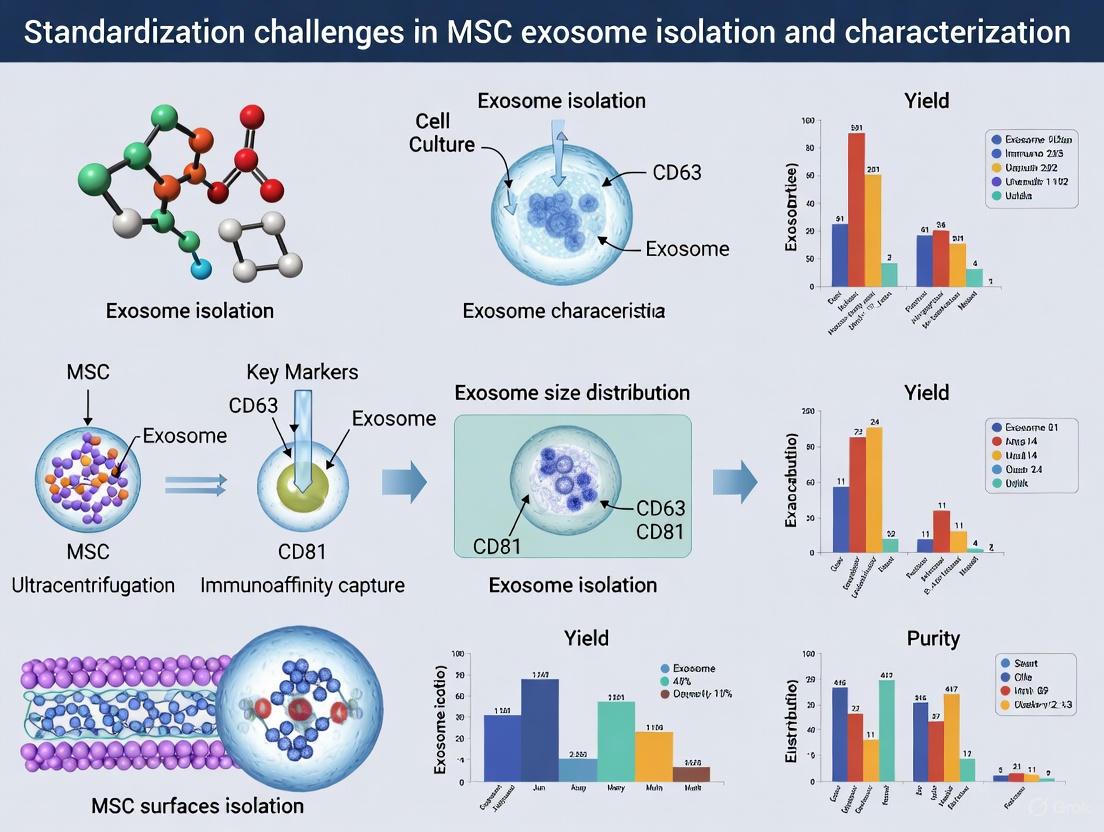
The therapeutic potential of Mesenchymal Stem Cell (MSC)-derived exosomes in regenerative medicine, immunotherapy, and drug delivery is immense.
Overcoming Standardization Hurdles in MSC Exosome Isolation and Characterization for Clinical Translation
Abstract
The therapeutic potential of Mesenchymal Stem Cell (MSC)-derived exosomes in regenerative medicine, immunotherapy, and drug delivery is immense. However, their clinical translation is hampered by significant challenges in standardized isolation, purification, and characterization. This article provides a comprehensive analysis for researchers and drug development professionals, exploring the foundational biology of MSC exosomes, critically comparing traditional and novel isolation methodologies, addressing key troubleshooting and optimization strategies for yield and purity, and outlining rigorous validation frameworks. By synthesizing the latest advances and persistent gaps, this review aims to guide the field toward harmonized protocols that ensure the reproducibility, safety, and efficacy of MSC exosome-based therapies.
The Promise and Complexity of MSC Exosomes: From Biogenesis to Therapeutic Potential
Troubleshooting Guides & FAQs
Issue 1: Inconsistent Detection of Tetraspanin Markers (CD9, CD63, CD81) in Western Blot
Q: Why do I get weak or variable signals for CD63 and CD81 in my MSC exosome preparations, even when CD9 is strong?
A: This is a common standardization challenge. The expression levels and accessibility of these tetraspanins can vary significantly based on the MSC source (e.g., bone marrow, adipose), passage number, and culture conditions. CD9 is often the most abundant and reliably detected.
Troubleshooting Guide:
| Problem | Possible Cause | Solution |
|---|---|---|
| Weak CD63 signal | Low abundance in your MSC source; antibody specificity. | Increase protein load (10-20 µg); validate antibody with a positive control (e.g., HEK293 cell lysate). |
| No CD81 signal | Genuinely low expression; inefficient exosome lysis. | Try different detergent-based lysis buffers (e.g., RIPA); test multiple anti-CD81 clones. |
| High background | Non-specific antibody binding. | Optimize blocking conditions (5% BSA, 1-2 hours); increase wash stringency (e.g., add 0.1% Tween-20). |
| Signal variability between isolations | Biological heterogeneity; inconsistent exosome yield. | Standardize MSC culture (passage, confluence); normalize Western blot load by particle number (NTA) or total protein. |
Detailed Western Blot Protocol:
- Sample Preparation: Lyse exosome pellets (from 10-20 mL conditioned media) in 50-100 µL RIPA buffer with protease inhibitors. Incubate on ice for 30 min, then centrifuge at 12,000xg for 10 min to remove debris.
- Protein Quantification: Use a BCA assay. Load 10-20 µg of protein per lane.
- Gel Electrophoresis: Run on a 4-12% Bis-Tris polyacrylamide gel at 120-150V for 1-1.5 hours.
- Transfer: Transfer to PVDF membrane using a wet or semi-dry system.
- Blocking: Block membrane with 5% BSA in TBST for 1 hour at room temperature.
- Antibody Incubation:
- Primary Antibody: Dilute in 5% BSA/TBST (see table below). Incubate overnight at 4°C.
- Washing: Wash membrane 3x for 10 mins with TBST.
- Secondary Antibody: Use HRP-conjugated antibody (1:5000-1:10000 in 5% BSA/TBST). Incubate for 1 hour at RT.
- Detection: Use a sensitive ECL substrate and image with a chemiluminescence system.
Research Reagent Solutions:
| Reagent/Material | Function | Example |
|---|---|---|
| Anti-CD9 Antibody | Detects CD9 tetraspanin surface marker | Invitrogen #10626D |
| Anti-CD63 Antibody | Detects CD63 tetraspanin surface marker | Abcam #ab68418 |
| Anti-CD81 Antibody | Detects CD81 tetraspanin surface marker | Santa Cruz Biotechnology #sc-166029 |
| RIPA Lysis Buffer | Efficiently lyses exosome membrane to release proteins | Thermo Fisher Scientific #89900 |
| PVDF Membrane | Binds proteins for antibody probing | Bio-Rad #1620177 |
| HRP-conjugated Secondary Antibody | Binds primary antibody for chemiluminescent detection | Cell Signaling Technology #7074 |
Issue 2: Nanoparticle Tracking Analysis (NTA) Shows a Size Profile Outside the 30-200 nm Range
Q: My NTA results frequently show a major peak below 30 nm or above 200 nm. What does this indicate and how can I address it?
A: A peak below 30 nm often suggests contamination with non-exosomal particles like lipoproteins or protein aggregates. A peak above 200 nm indicates the presence of microvesicles, apoptotic bodies, or exosome aggregates.
Troubleshooting Guide:
| Problem | Possible Cause | Solution |
|---|---|---|
| High particle count <30nm | Protein aggregates; FBS-derived particles from culture media. | Use exosome-depleted FBS; ultracentrifuge media prior to use; include a size-exclusion chromatography (SEC) clean-up step. |
| Broad peak >200nm | Microvesicle contamination; exosome aggregation. | Optimize isolation (e.g., increase ultracentrifugation speed/time); filter sample through a 0.22 µm filter pre-NTA; avoid freeze-thaw cycles. |
| Low particle concentration | Inefficient isolation; low exosome secretion by MSCs. | Concentrate conditioned media; use a more sensitive NTA camera; ensure MSC viability and appropriate conditioning time (24-48 hrs). |
Detailed NTA Measurement Protocol:
- Sample Preparation: Dilute the exosome pellet in 1 mL of sterile, filtered 1x PBS. The ideal concentration for most NTA instruments is 10^8 - 10^9 particles/mL. Serial dilution (e.g., 1:10 to 1:1000) is often necessary to find the optimal concentration.
- Instrument Calibration: Calibrate the NTA instrument using latex beads of known size (e.g., 100 nm) according to the manufacturer's instructions.
- Measurement Settings:
- Camera Level: Adjust to clearly visualize particles without saturation (typically 12-16).
- Detection Threshold: Set to 3-5 to minimize background noise.
- Temperature: Monitor and record (typically 25°C).
- Acquire five 60-second videos.
- Data Analysis: Use the built-in software to analyze all videos. Report the mean, mode, and D10/D90 values. Ensure the polydispersity index is considered.
Title: NTA Size Anomaly Diagnosis
Issue 3: Co-isolation of Contaminating Proteins with Exosomes
Q: My exosome preparations are positive for Alix and TSG101 but also show a strong signal for Calnexin (an endoplasmic reticulum marker). How can I improve purity?
A: Co-isolation of intracellular organelle proteins is a major standardization hurdle, primarily due to the limitations of common isolation methods like ultracentrifugation (UC), which can pellet non-exosomal structures.
Troubleshooting Guide:
| Problem | Possible Cause | Solution |
|---|---|---|
| Positive for Calnexin/GM130 | Co-precipitation of ER/Golgi fragments. | Incorporate a density gradient (e.g., iodixanol) step after UC; switch to a more specific method like SEC. |
| High Albumin (from FBS) | Incomplete washing of exosome pellet. | Increase number of PBS washes post-UC; use size-exclusion chromatography (SEC) which effectively separates exosomes from soluble proteins. |
| Positive for ApoA/B | Co-isolation of lipoproteins (LDL/HDL). | This is challenging with UC. SEC or affinity-based methods are preferred for separating exosomes from lipoproteins. |
Detailed Density Gradient Ultracentrifugation Protocol:
- Prepare Gradient: Create a discontinuous iodixanol gradient (e.g., 40%, 20%, 10%, 5%) in an ultracentrifuge tube. Use a buffer like 0.25 M sucrose/10 mM Tris, pH 7.4.
- Load Sample: Carefully layer the crude exosome pellet (resuspended in PBS) on top of the gradient.
- Ultracentrifugation: Centrifuge at 100,000-200,000xg for 12-18 hours at 4°C in a swinging bucket rotor.
- Fraction Collection: After centrifugation, carefully collect fractions (e.g., 1 mL each) from the top of the tube. Exosomes typically band between 1.10-1.19 g/mL.
- Analysis: Analyze each fraction by NTA (for size), BCA (for protein), and Western blot (for markers and contaminants) to identify the purest exosome fractions.
Title: MSC Exosome Biogenesis & Markers
Title: Exosome Contaminants & Solution
Frequently Asked Questions (FAQs)
FAQ 1: What is the most significant impact of the MSC tissue source on the resulting exosomes? The tissue source is a primary determinant of exosomal cargo, including proteins, lipids, and particularly RNA profiles (like miRNAs). This variation in cargo directly influences the biological function of the exosomes. For instance, exosomes from different sources exhibit varying potencies in processes like angiogenesis, immunomodulation, and tissue regeneration [1] [2] [3]. This inherent variability is a major standardization challenge, as results obtained with exosomes from one source may not be directly replicable with those from another.
FAQ 2: My experiments show inconsistent functional outcomes with MSC-exosomes. Could the MSC source be a factor? Yes, absolutely. Biological variability across MSC donors and tissue sources is a well-documented challenge [2]. For example, a protocol optimized for bone marrow MSC-exosomes may not yield the same results with umbilical cord-derived exosomes due to differences in their intrinsic cargo. To troubleshoot, we recommend thoroughly characterizing your exosome batches for specific markers and functional miRNAs related to your desired outcome [4] [5]. Maintaining meticulous records of the MSC source, passage number, and isolation method is crucial for experimental reproducibility.
FAQ 3: Are there specific markers I should check to confirm the identity of exosomes from different MSC sources? While all MSC-exosomes typically express common exosome markers like CD9, CD63, CD81, TSG101, and ALIX [6] [7] [5], the relative abundance of these and other specific proteins can vary. There is no single "source-specific" marker panel yet standardized. Characterization should therefore rely on a combination of techniques to confirm both general exosome identity (via the mentioned markers) and functional cargo, which is source-dependent [4] [2].
FAQ 4: How does the choice of MSC source influence the selection of a drug delivery vehicle? Different MSC-exosomes have unique natural tropisms, or homing capabilities. Bone marrow MSC-exosomes, for instance, have demonstrated a natural ability to target bone tumors [6]. Furthermore, the lipid composition of the vesicle membrane, which can vary by source, affects stability and cellular uptake [7] [8]. Your choice of source should be guided by the target tissue for your therapeutic agent, leveraging the innate homing properties of the exosomes.
Troubleshooting Guides
Issue: Low Purity of Isolated Exosomes Affecting Downstream Applications
Problem: Co-isolation of contaminating proteins or lipids from the cell culture medium or biological fluid, leading to inaccurate quantification and functional data [4].
Solutions:
- Implement a Purity Assessment: Combine quantification methods. A common approach is to use Nanoparticle Tracking Analysis (NTA) for particle concentration and BCA or Bradford assay for total protein. The ratio of particles per µg of protein can serve as a purity indicator [4].
- Refine Your Isolation Technique: Consider adding a size-exclusion chromatography (SEC) step following ultracentrifugation. This has been shown to effectively separate exosomes from soluble protein contaminants [4].
- Validate with Multiple Markers: Use Western Blot to confirm the presence of positive markers (CD9, CD63, TSG101) and the absence of negative markers (e.g., calnexin) from your isolates [6].
Issue: Inconsistent Functional Performance Between Exosome Batches
Problem: Observed variability in biological assays (e.g., tube formation, immune modulation) when using different batches of exosomes.
Solutions:
- Standardize the Cell Source: If possible, use MSCs from a consistent and well-characterized source. Be aware that the therapeutic potential of exosomes can vary; for example, umbilical cord MSC-exosomes are noted for their strong pro-angiogenic and immunomodulatory effects [3].
- Control the Cellular Microenvironment: Maintain strict consistency in MSC passage number, culture conditions (e.g., serum-free media), and confluence at the time of exosome collection. Environmental cues like hypoxia can alter exosome cargo [1].
- Functional Potency Assays: Develop a standardized in vitro bioassay (e.g., a migration or proliferation assay) to qualify each exosome batch before use in complex experiments. For example, test the batch's ability to promote human umbilical vein endothelial cell (HUVEC) tube formation if angiogenesis is your focus [5] [3].
Quantitative Data on MSC-Exosome Characteristics
The following tables summarize key characteristics of exosomes derived from different MSC sources, as reported in the literature.
Table 1: Physical Characteristics and Common Markers of MSC-Exosomes
| MSC Tissue Source | Average Size (nm) | Key Exosomal Markers | Isolation Methods Cited |
|---|---|---|---|
| Adipose (ADSC) | ~90 nm [1] | CD9, CD63, CD81, HSP70 [5] | Ultracentrifugation, Tangential Flow Filtration, Size Exclusion Chromatography [4] [5] |
| Bone Marrow (BMSC) | ~151 nm [6] | ALIX, CD63, TSG101 [6] | Ultracentrifugation [6] [9] |
| Umbilical Cord (hUCESC) | Information Missing | CD9, CD81 [4] | Differential Ultracentrifugation [4] |
| Umbilical Cord (hUCMSC) | Information Missing | CD63, CD81, CD9, HSP70 [3] | Ultracentrifugation [3] |
Table 2: Functional Cargo and Documented Biological Effects
| MSC Tissue Source | Key Functional Cargo | Primary Documented Biological Effects | Experimental Models |
|---|---|---|---|
| Adipose (ADSC) | miR-132, miR-146a [5] | Anti-inflammatory (via ROCK1/PTEN), Pro-angiogenic [5] | LPS-treated THP-1 cells, HUVEC tube formation [5] |
| Bone Marrow (BMSC) | Information Missing | Protection against β-cell destruction & kidney injury, Ferroptosis inhibition (via GPX4) [9] | Streptozotocin-induced diabetic mice [9] |
| Umbilical Cord (hUCMSC) | miR-136, miR-335-5p, miR-1246 [10] | Wound healing, Angiogenesis, Neuroprotection, Immunomodulation [10] [3] | Skin wound models, HUVEC and fibroblast cultures [3] |
Experimental Protocols for Key Functional Assays
Protocol 1: Assessing Pro-angiogenic PotentialIn Vitro(HUVEC Tube Formation Assay)
This protocol is used to evaluate the ability of MSC-exosomes to stimulate blood vessel formation, a key function for regenerative medicine [5] [3].
- Matrigel Coating: Thaw Growth Factor Reduced Matrigel on ice overnight at 4°C. Coat a pre-chilled 96-well plate with 50 µL of Matrigel per well. Incubate for 30-60 minutes at 37°C to allow polymerization.
- Cell Preparation and Treatment: Harvest Human Umbilical Vein Endothelial Cells (HUVECs). Resuspend cells in exosome-depleted serum medium. Pre-treat HUVECs with MSC-exosomes (e.g., 5 µg/mL) for a period (e.g., 12-24 hours) prior to seeding, or mix exosomes directly with the cell suspension.
- Seeding and Imaging: Seed 1.0-2.0 x 10^4 pre-treated HUVECs in 100 µL of medium onto the polymerized Matrigel. Incubate at 37°C, 5% CO2 for 4-16 hours.
- Analysis: Capture images using an inverted microscope (e.g., 40x magnification). Analyze images with software (e.g., ImageJ with Angiogenesis Analyzer plugin). Quantify parameters: Total Tube Length, Number of Meshes, Number of Junctions.
Protocol 2: Evaluating Anti-inflammatory EffectsIn Vitro(Using THP-1 Macrophages)
This protocol measures the immunomodulatory capacity of MSC-exosomes by assessing their effect on macrophage polarization [5].
- Cell Differentiation: Culture THP-1 monocytic cells in RPMI-1640 medium with 10% FBS. Differentiate THP-1 cells into macrophages by treating with 100 ng/mL Phorbol 12-myristate 13-acetate (PMA) for 48 hours.
- Inflammation Induction and Exosome Treatment: After differentiation, wash cells and replace with fresh medium. Induce inflammation by adding 100 ng/mL Lipopolysaccharide (LPS). Co-treat with MSC-exosomes (e.g., 5 µg/mL). Include control groups (untreated, LPS-only).
- Incubation and Harvest: Incubate cells for 24 hours.
- Analysis:
- Gene Expression: Harvest cells for RNA extraction. Perform RT-qPCR to measure expression of pro-inflammatory genes (e.g., TNF-α, IL-6, IL-8) and anti-inflammatory/M2 markers (e.g., CD206, ARG1, IL-10) [5].
- Protein Analysis: Collect cell lysates or supernatant for Western Blot to probe for proteins like ROCK1 and PTEN, which are involved in anti-inflammatory pathways [5].
Signaling Pathway Diagrams
The following diagram illustrates a key signaling mechanism through which Adipose-derived MSC-exosomes exert anti-inflammatory effects, as identified in the search results.
The Scientist's Toolkit: Research Reagent Solutions
Table 3: Essential Reagents and Kits for MSC-Exosome Research
| Reagent / Kit | Function / Application | Brief Protocol Notes |
|---|---|---|
| Ultracentrifugation | Gold-standard method for exosome isolation and concentration. | Sequential spins: 2,000 g (cell debris), 10,000 g (apoptotic bodies/microvesicles), 100,000 g (exosomes) [4]. |
| Size Exclusion Chromatography (SEC) | High-purity exosome isolation; removes soluble protein contaminants. | Often used after ultracentrifugation for further purification. Elution buffer is typically PBS [4]. |
| Nanoparticle Tracking Analyzer (NTA) | Measures particle size distribution and concentration in suspension. | Dilute samples in filtered PBS to ideal concentration (1e8-1e9 particles/mL). Capture multiple videos for statistical accuracy [4] [6]. |
| Transmission Electron Microscopy (TEM) | Visualizes exosome morphology and bilayer structure. | Fix samples with paraformaldehyde, negative stain with phosphotungstic acid, then image [4] [6]. |
| BCA / Bradford Assay | Quantifies total protein concentration; used for purity assessment. | Perform according to kit manufacturer's instructions. Used with NTA data to calculate particle-to-protein ratio [4]. |
| CD63/CD81/CD9 Antibodies | Confirmation of exosome identity via Western Blot or Flow Cytometry. | Standard Western Blot protocol. Positive detection confirms isolation of vesicular fraction [6] [5]. |
| LPS (Lipopolysaccharide) | Tool for inducing inflammation in cellular models (e.g., THP-1 macrophages). | Used at 100 ng/mL to stimulate pro-inflammatory cytokine production [5]. |
| Growth Factor Reduced Matrigel | Substrate for in vitro tube formation assays to study angiogenesis. | Keep on ice during handling. Coat wells and allow to polymerize at 37°C before seeding HUVECs [5] [3]. |
Foundational Knowledge: MSC Exosomes FAQs
Q1: What are Mesenchymal Stem Cell (MSC) derived exosomes? MSC-derived exosomes are nano-sized extracellular vesicles (typically 30-150 nm in diameter) secreted by Mesenchymal Stem Cells. They are enclosed by a lipid bilayer and carry a functional cargo of proteins, nucleic acids (like miRNAs, mRNAs), lipids, and biological factors from their parent cells. They are fundamental paracrine effectors of MSCs, mediating intercellular communication and are considered promising "cell-free" therapeutic agents [11] [12] [13].
Q2: What are the primary therapeutic advantages of using MSC exosomes over whole MSC therapy? MSC exosomes offer several key advantages:
- Safety Profile: They are non-replicating, largely avoiding the risks of tumorigenicity and ectopic tissue formation associated with live cell therapy [11] [12].
- Low Immunogenicity: They exhibit lower immunogenicity than intact cells, reducing the risk of immune rejection [12] [14].
- Stability and Delivery: As nanoparticles, they demonstrate high stability, biocompatibility, and an innate ability to cross biological barriers like the blood-brain barrier [12] [13].
- Storage: They are easier to store and transport compared to live cells [12].
- Engineerability: Their surface and cargo can be engineered to enhance targeting and therapeutic efficacy [7] [14].
Q3: Through what core mechanisms do MSC exosomes exert their therapeutic effects? The therapeutic effects are primarily elicited through four interconnected mechanisms:
- Immunomodulation: Modulating inflammatory responses by, for example, promoting anti-inflammatory M2 macrophage polarization and suppressing pro-inflammatory M1 macrophages [11] [12].
- Angiogenesis: Stimulating the formation of new blood vessels by transferring pro-angiogenic factors and miRNAs [11] [15].
- Tissue Regeneration: Enhancing proliferation and reducing apoptosis in resident cells, and stimulating extracellular matrix (ECM) synthesis to support tissue repair in skin, bone, and cartilage [11] [13].
- Targeted Drug Delivery: Serving as natural nanocarriers to accurately deliver therapeutic substances (e.g., drugs, miRNAs) to target tissues [7] [15].
Troubleshooting Guides & Experimental Protocols
Guide 1: Addressing Low Exosome Purity and Yield
Problem: Isolated exosome samples have low purity (high contamination with proteins and lipoproteins) and/or low yield, leading to unreliable experimental results.
Background: A major standardization challenge is the co-isolation of contaminants during extraction, which can heavily influence functional assays and interpretation of results [4].
Solutions:
- Combine Isolation Techniques: While ultracentrifugation is common, combining it with a purification step like Size Exclusion Chromatography (SEC) can significantly improve purity by separating exosomes from contaminating proteins [4].
- Validate with Multiple Assays: Do not rely solely on a single characterization method. Use a combination of Nanoparticle Tracking Analysis (NTA) for concentration and size, transmission electron microscopy (TEM) for morphology, and flow cytometry or Western blot for surface markers (CD9, CD63, CD81, Alix, TSG101) [4] [12].
- Assess Purity: Incorporate purity assessments. For instance, the ratio of particle concentration (from NTA) to total protein concentration (from BCA or Bradford assay) can serve as a useful purity indicator [4].
Table 1: Common Exosome Isolation Methods and Associated Challenges
| Method | Principle | Advantages | Disadvantages & Standardization Challenges |
|---|---|---|---|
| Ultracentrifugation | Sequential centrifugation based on size and density | Considered the "gold standard"; no reagent requirement [11] | Time-consuming; requires specialized equipment; can cause vesicle damage and aggregation [4] |
| Size Exclusion Chromatography (SEC) | Separates particles based on size through a porous matrix | Preserves vesicle integrity; good purity [4] | May require pre-processing of samples; sample dilution can occur [7] |
| Precipitation | Uses hydrophilic polymers to decrease exosome solubility | Simple and fast protocol; high yield | Co-precipitation of non-vesicular contaminants (e.g., proteins); can impact downstream functional analysis [7] [4] |
| Immunoaffinity Capture | Uses antibodies against exosome surface markers (CD63, CD81) | High specificity and purity | Higher cost; can only capture subpopulations with specific markers [7] |
Guide 2: Managing Variable Functional Outcomes in Pro-Angiogenic Assays
Problem: Experimental results from assays testing the pro-angiogenic capacity of MSC exosomes, such as endothelial tube formation, show high variability.
Background: The angiogenic potential of MSC exosomes is highly dependent on their cargo, which varies based on the MSC tissue source (bone marrow, umbilical cord, adipose), donor age, and culture conditions [11] [16].
Solutions:
- Characterize Cargo: Pre-screen exosome batches for key pro-angiogenic factors (e.g., VEGF-A, FGF-2, PDGF-BB, specific miRNAs like miR-125a) using ELISA or miRNA sequencing to establish a potency profile [11].
- Standardize Cell Source: Use a consistent source of MSCs and document passage numbers, as older passages may have reduced potency [17].
- Consider Engineering: To ensure consistent pro-angiogenic effects, engineer exosomes to overexpress specific angiogenic miRNAs or load them with defined growth factors [11] [14].
Detailed Experimental Protocol: In Vitro Endothelial Tube Formation Assay
- Objective: To evaluate the pro-angiogenic activity of MSC-derived exosomes.
- Materials:
- Human Umbilical Vein Endothelial Cells (HUVECs)
- Growth Factor-Reduced Matrigel
- MSC-derived exosomes (e.g., 50 µg/mL concentration) [11]
- Endothelial cell basal medium
- -well plate
- Microscope with imaging capabilities
- Procedure:
- Matrigel Coating: Thaw Matrigel on ice overnight. Coat each well of a -well plate with a thin layer (e.g., 50 µL) of Matrigel and incubate at 37°C for 30-60 minutes to allow polymerization.
- Cell and Exosome Preparation: Trypsinize and count HUVECs. Resuspend cells in basal medium. Pre-treat HUVECs with MSC exosomes for a set period (e.g., 4-6 hours) or add exosomes directly to the cells when plating them on Matrigel.
- Seeding: Seed the HUVECs (e.g., 1.0 x 10^4 cells/well) onto the polymerized Matrigel in the presence or absence of exosomes. Include a positive control (e.g., medium with VEGF) and a negative control (basal medium only).
- Incubation and Imaging: Incubate the plate at 37°C with 5% CO₂ for 4-16 hours.
- Image Capture and Quantification: After incubation, capture multiple images per well using an inverted microscope. Quantify the formed tubular structures by measuring parameters such as total tube length, number of master junctions, and number of meshes using image analysis software (e.g., ImageJ with the Angiogenesis Analyzer plugin).
Guide 3: Inconsistent Immunomodulatory Effects
Problem: The immunomodulatory effects of MSC exosomes, such as the induction of anti-inflammatory macrophage polarization, are inconsistent between experimental replicates or different exosome batches.
Background: The immunomodulatory function is cargo-dependent. Inflammatory priming of the parent MSCs or variations in isolation techniques can alter the levels of key regulatory miRNAs (e.g., miR-21, miR-146a, miR-181) carried by the exosomes, leading to functional variability [11] [12].
Solutions:
- Prime MSCs: Pre-treat MSCs with inflammatory cytokines (e.g., IFN-γ) or molecules like melatonin to enhance the immunomodulatory cargo of the resulting exosomes [11].
- Functional Potency Assay: Implement a standardized macrophage polarization assay as a quality control measure for each exosome batch. Differentiate monocytes (e.g., THP-1 cells) into M0 macrophages, treat with exosomes alongside classical (IFN-γ + LPS) and alternative (IL-4) polarizing signals, and measure M1/M2 marker expression via flow cytometry (e.g., CD86 for M1; CD206 for M2) or qPCR [11].
- Engineer for Consistency: Genetically engineer MSCs to stably overexpress key immunomodulatory miRNAs to produce exosomes with more consistent and potent effects [7] [14].
Table 2: Key MSC Exosome Cargo and Their Roles in Therapeutic Mechanisms
| Cargo Type | Example Molecules | Documented Function / Mechanism | Experimental Evidence |
|---|---|---|---|
| microRNAs (miRNAs) | miR-21, miR-146a, miR-181 | Modulates inflammatory pathways; encourages M2 macrophage polarization [11] | Preclinical diabetic rat wound models show suppression of IL-1β and TNF-α [11] |
| microRNAs (miRNAs) | miR-125a, lncRNA MALAT1 | Inhibits anti-angiogenic factors; promotes angiogenesis [11] | Functional assays in cutaneous wound models show enhanced collagen synthesis and angiogenesis [11] |
| Growth Factors | VEGF-A, FGF-2, HGF, TGF-β | Stimulates angiogenesis and cell proliferation [11] | ELISA identification in exosomes from various MSC sources; functional migration/proliferation assays on fibroblasts/keratinocytes [11] |
| Proteins | Wnt4, CK19, PCNA | Activates Wnt/β-catenin signaling; promotes re-epithelialization and cell proliferation [11] | Rat burn wound model showed accelerated re-epithelialization and upregulated proliferation markers [11] |
The Scientist's Toolkit: Research Reagent Solutions
Table 3: Essential Materials for MSC Exosome Research
| Reagent / Material | Function / Application | Considerations for Standardization |
|---|---|---|
| CD9, CD63, CD81 Antibodies | Detection of classic exosome surface markers for characterization via flow cytometry or Western blot [4] [12] | Antibody specificity and lot-to-lot consistency are critical for reproducible identification. |
| TSG101 & Alix Antibodies | Detection of exosome biogenesis-related proteins for characterization [4] [12] | Used as additional markers to confirm exosome identity. |
| Xeno-free Culture Medium (e.g., with hPL) | Expansion of MSCs for exosome production [17] | Eliminates variability and safety concerns associated with fetal bovine serum (FBS). |
| Size Exclusion Columns | Purification of exosomes from contaminants after initial isolation [4] | Essential for obtaining high-purity samples for functional assays and in vivo studies. |
| Nanoparticle Tracking Analyzer (NTA) | Determination of exosome particle size distribution and concentration [4] | Instrument calibration is key for cross-study comparisons. Be aware it may undercount vesicles <50 nm [4]. |
| Pluronic F-127 / Chitosan Hydrogel | Biomaterial scaffold for sustained release of exosomes at target sites (e.g., wounds) [11] | Enhances therapeutic efficacy by extending exosome retention and activity. |
Signaling Pathways & Experimental Workflows
MSC Exosome Immunomodulation Pathway
Diagram Title: MSC Exosome Macrophage Polarization
MSC Exosome Angiogenesis Pathway
Diagram Title: MSC Exosome Angiogenic Signaling
Experimental Workflow for Isolation & Characterization
Diagram Title: MSC Exosome Isolation & Characterization Workflow
Frequently Asked Questions (FAQs)
Exosome Definition and Basic Concepts
Q: What are exosomes and why are they important for clinical applications? A: Exosomes are small extracellular vesicles (EVs), typically 30-150 nm in diameter, with a lipid bilayer that are naturally secreted by cells [18]. They play a vital role in intercellular communication by transporting functional cargo such as RNA, microRNAs, bioactive proteins, and lipids between cells [4]. In therapeutic contexts, mesenchymal stem cell-derived exosomes (MSC-exosomes) display angiogenic, immune-modulatory, and regenerative effects, making them promising for cell-free therapies in regenerative medicine, immunotherapy, and drug delivery [18].
Q: What is the critical barrier preventing widespread clinical adoption of exosome therapies? A: The single greatest bottleneck is the profound lack of standardization across the entire field [4]. This encompasses inconsistent methods for exosome isolation, purification, quantification, and characterization. Without validated methodologies and well-characterized reference standards, comparing results between different studies or laboratories becomes highly challenging, and producing reproducible, clinical-grade exosome products is nearly impossible [4] [18].
Isolation and Purity Challenges
Q: What are the common methods for isolating exosomes, and what are their limitations? A: Common isolation methods include ultracentrifugation, size-exclusion chromatography, immunoaffinity capture, and precipitation techniques [19]. A major challenge is that each method has significant drawbacks and results in variable yields and purity [18]. For instance, ultracentrifugation, often considered the gold standard, can produce a low yield (~5%) of exosomes that are frequently co-sedimented with nonspecific proteins [18]. Furthermore, the "purity" of an exosome preparation is difficult to define and assess, as common contaminants like free proteins and lipids can heavily influence total protein assays [4].
Q: My exosome isolation yields are consistently low. How can I improve them? A: Low yields can result from several factors [19]. First, ensure your starting material is fresh and contains adequate exosome levels. Check that all reagents are not expired and are stored correctly. Consider increasing the volume of your starting material. Also, be aware that the isolation technique itself can cause significant vesicle loss; for example, skilled technique is required to avoid vesicle loss during ultracentrifugation steps [20]. Exploring alternative or complementary methods, such as direct capture with magnetic beads for suitable samples, may sometimes yield better results than pre-enrichment by ultracentrifugation [20].
Q: The isolated exosomes appear to be contaminated with non-vesicular proteins. How can I ensure purity? A: Contamination is a common issue that arises from improper handling, the sample's origin (more complex mediums like serum originate more matrix interferences), or inadequate purification steps [4] [19]. Using aseptic techniques is critical. Consider adding an additional purification step, such as a round of size-exclusion chromatography (SEC), which has been demonstrated as an effective methodology for purity assessment [4]. It is also critical to employ several orthogonal methods (e.g., combining SEC with total protein assays) to accurately assess vesicular purity rather than relying on a single technique [4].
Characterization and Quantification Issues
Q: What are the key markers for identifying and confirming the presence of exosomes? A: The tetraspanins CD9, CD63, and CD81 are commonly used as positive markers, along with proteins associated with the endosomal sorting pathway such as TSG101 and Alix [4] [18]. However, it is crucial to understand that there is currently no consensus about a universal exosome marker that is present on all exosomes [20]. The research community recommends combining the detection of multiple membrane-bound proteins to verify the presence of vesicles. It is equally important to test for and document the absence of markers from contaminating compartments such as the ER (e.g., calnexin), Golgi (e.g., GM130), or nucleus (e.g., histones) to demonstrate sample purity [20].
Q: Why can't I rely on total protein concentration to estimate exosome quantity? A: Using total protein content to quantify vesicle concentration is not an accurate approximation because standard protein assays (like BCA or Bradford) are heavily influenced by free-protein and lipid contaminations that may be present in your sample [4]. The correlation between protein concentration and actual exosome content is often poor, especially in complex biofluids like plasma or serum [20]. For a more accurate estimation, the combination of size-exclusion chromatography with total protein assays has been shown to be a promising approach, or alternatively, methods like nanoparticle tracking analysis (NTA) can be used, albeit with their own limitations [4].
Q: My isolated exosomes are not showing expected markers (e.g., CD63, CD81) in Western blot analysis. What might be wrong? A: First, verify that your antibodies are specific and that your samples were prepared correctly. Ensure that the lysis and protein extraction procedures are optimized for exosomes [19]. It is also recommended to test antibodies from two to three different manufacturers, closely following the suggested protocols. Furthermore, be aware that not all exosomes from all cell types express every tetraspanin uniformly. For example, at least two different cell lines (Jurkat cells and several B-cell lymphoma cells) have been documented to release exosomes that are CD9 negative [20].
Storage and Functional Assays
Q: How should I store exosomes to maintain their stability and functionality? A: For long-term preservation, storing exosomes at -80°C is generally considered the best method [19]. To minimize degradation, aliquot the exosomes into smaller volumes before freezing to avoid repeated freeze-thaw cycles, which can damage exosome integrity and lead to content leakage. When thawing, do so quickly at 37°C and then immediately place the aliquot on ice. Some protocols store exosomes in PBS with a carrier protein like 0.1% BSA, and freezing in this buffer has been shown to not change isolation efficiency compared to freshly made exosomes [20].
Q: How can I confirm that my isolated exosomes are biologically active? A: The best way to confirm functionality is by using appropriate biological assays that reflect your intended therapeutic outcome [19]. This could include cell uptake studies where labeled exosomes are incubated with recipient cells to see if they are internalized. Other bioassays might test for specific biomarkers or functions, such as the inhibition of T-cell proliferation for immunomodulatory exosomes or a tube formation assay for pro-angiogenic exosomes. Ensuring that your isolation process does not use harsh conditions that disrupt the exosome membrane or damage surface proteins is critical for maintaining biological activity.
Troubleshooting Guides
Problem 1: Low Yield and Purity in Ultracentrifugation
Issue: The quantity of exosomes obtained is insufficient for downstream applications, and the preparation is contaminated with non-vesicular proteins.
Solutions:
- Optimize Pre-Clearing Steps: Perform low-speed centrifugation steps meticulously (e.g., 2,000 × g for 10 min to remove dead cells and debris, followed by 10,000 × g for 30 min to remove apoptotic bodies and microvesicles) before the final ultracentrifugation [4].
- Implement a Wash Step: After the first ultracentrifugation, resuspend the pellet in a large volume of phosphate-buffered saline (PBS) and perform a second ultracentrifugation under the same conditions to pellet the exosomes again. This can significantly reduce soluble protein contaminants [4].
- Combine Techniques: Use size-exclusion chromatography (SEC) as a follow-up step to ultracentrifugation. This is highly effective for removing contaminating proteins and improving sample purity for downstream applications [4].
Problem 2: Inconsistent Results in Nanoparticle Tracking Analysis (NTA)
Issue: Particle concentration and size distribution measurements vary widely between technical replicates or different instrument operators.
Solutions:
- Standardize Dilution and Measurement:
- Always dilute samples in 0.22-µm filtered PBS to achieve a concentration within the optimal NTA analysis range (1×10^6 to 1×10^9 particles mL⁻¹) [4].
- Measure each sample at four different dilutions for inter-assay assessment.
- For each dilution, capture three videos of 30 seconds each for intra-assay assessment [4].
- Control Software Settings: Keep the detection threshold and camera level consistent across all measurements for a given experiment (e.g., camera level of 15 and detection threshold of 5, as used in one study) [4]. Document all settings meticulously.
- Understand Limitations: Be aware that NTA struggles to detect vesicles smaller than 50 nm and can be influenced by microvesicles or protein aggregates that also scatter light [4]. Do not treat NTA results as an absolute ground truth.
Problem 3: Failure in Detecting Surface Markers via Flow Cytometry
Issue: Expected exosome surface markers (e.g., CD9, CD63, CD81) are not detected when analyzing exosomes bound to capture beads via flow cytometry.
Solutions:
- Confirm Antibody Specificity and Bead Concentration:
- Use antibodies validated for exosome detection.
- For flow cytometry, use a bead concentration that maximizes the signal. A typical recommendation is 20 µL of a stock solution of 1×10^7 magnetic beads per 100 µL isolation volume [20]. Using too many beads can dilute the fluorescence signal.
- Validate the Positive Control: Ensure that the exosomes you are trying to detect actually express the target marker. Check the literature for your specific cell source, as expression can vary (e.g., Jurkat and B-cell lymphoma exosomes can be CD9 negative) [20].
- Pre-enrich for Complex Samples: For complex samples like plasma or serum, perform a pre-clearing step (e.g., using size-exclusion chromatography) prior to bead-based capture to reduce background and improve specific binding [20].
Table 1: Key Methodologies for Purity Assessment of EVs
Table summarizing techniques and findings from characterization studies of human uterine cervical MSC-EVs and commercial EVs.
| Method | Key Parameter | Protocol Details | Advantages | Limitations / Findings |
|---|---|---|---|---|
| Size Exclusion HPLC [4] | Purity Assessment | Used to assess purity of hUCESC-EVs and commercial EVs from adipose stem cells and human serum. | Identified as a new methodology for reliable purity assessment. | Found low purity in commercial exosomes, highlighting that protein and lipid purity data must be included for commercial EVs. |
| Total Protein Assays [4] | Vesicular Protein | Pierce BCA Assay Kit and Bradford reagent used for total protein determination. | Common and accessible lab technique. | Heavily influenced by free-protein and lipid contaminants; not accurate for quantifying vesicle concentration alone. |
| Combined Approach [4] | Particle Estimation | Combination of HPLC-SEC with total protein assays. | Enables estimation of particle concentration using vesicular protein concentration. | Provides a more holistic view than any single method. |
| Nanoparticle Tracking Analysis (NTA) [4] | Size & Concentration | Samples diluted in filtered PBS; measured at 4 dilutions, 3 captures of 30s each; analysis threshold of 5. | Provides size distribution and concentration. | Cannot detect vesicles <50 nm; influenced by protein aggregates; considered the "gold standard" but has drawbacks. |
Table 2: Essential Research Reagent Solutions
A toolkit of key reagents and materials for exosome isolation and characterization.
| Reagent / Material | Function / Application | Example & Notes |
|---|---|---|
| Dynabeads (CD9/CD63/CD81) [20] | Immunoaffinity capture of exosomes for isolation or flow detection. | High specificity but more costly. For flow cytometry, use 20 µL of 1x10^7 beads/mL in 100 µL volume. |
| Size Exclusion Columns [4] | High-performance liquid chromatography for purity assessment and purification. | Effective for removing soluble protein contaminants and assessing sample purity. |
| Ultracentrifugation Equipment [4] | Differential centrifugation for exosome isolation. | Requires an ultracentrifuge (e.g., Optima L-90K). A typical protocol: 100,000 × g for 70 min at 4°C. |
| Specific Antibodies [20] [19] | Characterization of exosome markers (positive and negative). | Positive: CD9, CD63, CD81, TSG101, Alix. Negative (contaminants): Calnexin (ER), GM130 (Golgi), Histones (Nucleus). |
| Exosome Standards [19] | Reference materials to calibrate and validate analytical methods. | Critical for ensuring accuracy, reproducibility, and consistency across experiments and labs. |
Experimental Workflow Visualization
Exosome Characterization Workflow
Purity Assessment Logic
A Critical Toolkit: Comparing MSC Exosome Isolation Techniques from Gold Standard to Novel Platforms
Differential ultracentrifugation remains the most widely used method for isolating small extracellular vesicles (sEVs), including exosomes, from biological fluids and cell culture conditioned media. This technique separates particles based on their size, shape, and density through sequential centrifugation steps at progressively higher forces, with final ultracentrifugation steps reaching up to 100,000-200,000 × g to pellet nanosized vesicles [4] [21]. Within the field of mesenchymal stem cell (MSC) research, the method is particularly valued for its ability to process large sample volumes without the need for specialized equipment beyond an ultracentrifuge [4].
However, the reputation of differential ultracentrifugation as the "gold standard" belies significant challenges in achieving true standardization. Researchers face substantial obstacles in obtaining exosome preparations with consistent yield, purity, and integrity, which consequently limits the reproducibility and comparability of functional studies [4] [22]. This technical support resource addresses these critical limitations through targeted troubleshooting guidance and evidence-based protocol modifications to enhance experimental outcomes in MSC exosome research.
Troubleshooting Common Experimental Issues
FAQ: How can I improve exosome yield while maintaining sample purity?
Challenge: Traditional differential ultracentrifugation protocols often sacrifice either yield or purity, particularly when processing complex samples like serum or conditioned media.
Solution: Modify the standard protocol by reducing ultracentrifugation cycles while incorporating a sucrose cushion.
Detailed Methodology:
- Sample Preparation: Centrifuge conditioned media at 2,000 × g for 10 minutes at 4°C to remove cells and debris [4].
- Intermediate Spin: Transfer supernatant to new tubes and centrifuge at 10,000 × g for 30 minutes to remove apoptotic bodies and microvesicles [4].
- Sucrose Cushion Ultracentrifugation: Layer the supernatant over a pre-formed 30% sucrose/deuterium oxide cushion and ultracentrifuge at 100,000 × g for 70 minutes [23] [4].
- Wash Step: Resuspend the pellet in phosphate-buffered saline (PBS) and perform a second ultracentrifugation at 100,000 × g for 70 minutes [4].
- Resuspension: Resuspend the final sEV pellet in filtered PBS with 1% sucrose for stabilization and store at -80°C [4].
Rationale: Research demonstrates that this modified two-ultracentrifugation cycle protocol with a sucrose cushion results in slightly higher sEV yields with lower levels of protein contamination compared to lengthier three-cycle approaches. The density barrier helps separate sEVs from co-sedimenting contaminants such as lipoproteins and protein aggregates [23].
FAQ: Why do I detect co-isolated contaminants in my exosome preparations?
Challenge: Co-isolation of non-vesicular contaminants, including lipoproteins, RNA-binding proteins (Ago2), and protein aggregates, is a frequent limitation that confounds functional analysis [23].
Solution: Implement rigorous purity assessment and incorporate additional purification steps when necessary.
Assessment Protocol:
- Perform Western blots for common contaminants: ApoA-I, ApoB (lipoproteins), and Ago2 (RNA-binding protein) [23].
- Utilize size exclusion high-performance liquid chromatography (HPLC-SEC) for objective purity assessment, which can identify free-protein and lipid contamination that total protein assays miss [4].
Evidence: Studies show that reduction from three- to two-ultracentrifuge cycles with no sucrose cushion results in much higher sEV yield but also has the highest levels of lipoprotein and Ago2 contamination, highlighting the critical importance of the sucrose cushion step [23].
FAQ: How can I minimize vesicle damage and aggregation during isolation?
Challenge: The high gravitational forces and prolonged run times can compromise vesicle integrity and promote aggregation.
Solution: Optimize centrifugation parameters and post-isolation handling techniques.
- Technical Adjustments:
- Pre-chill Equipment: Always pre-chill the centrifuge and rotor to 4°C before operation to maintain sample integrity [24].
- Avoid Over-drying: Do not leave the pellet undisturbed for extended periods after ultracentrifugation. Resuspend immediately or within 30 minutes to prevent irreversible aggregation [24].
- Gentle Resuspension: Resuspend pellets using low-retention pipette tips with a gentle pipetting action. Avoid vortexing, which can damage vesicles.
- Use Stabilizers: Resuspend final pellets in PBS containing 1% sucrose, which acts as a cryoprotectant and helps maintain vesicle stability during storage [4].
FAQ: Why do I get inconsistent results between different MSC batches or donors?
Challenge: Biological variability combined with technical artifacts leads to poor reproducibility.
Solution: Standardize pre-analytical conditions and implement comprehensive characterization.
- Standardization Protocol:
- Cell Culture Conditions: Culture hUCESC (or other MSCs) under consistent conditions (e.g., 3000 cells/cm² in DMEM-F12 without phenol red for 48 hours for conditioned media collection) [4].
- Quality Control Metrics: Employ multiple characterization techniques simultaneously: Nanoparticle Tracking Analysis (NTA) for concentration and size distribution, transmission electron microscopy (TEM) for morphology, and flow cytometry for specific biomarkers (CD9, CD81) [4].
- Purity Assessment: Combine total protein assays with HPLC-SEC to accurately determine vesicular purity, as protein assays alone are heavily influenced by contaminants [4].
Quantitative Data Comparison
The table below summarizes key performance differences between standard and modified differential ultracentrifugation protocols, illustrating the trade-offs between yield, purity, and practicality:
Table 1: Comparison of Ultracentrifugation Protocol Performance for sEV Isolation
| Protocol Parameter | Traditional Three-Cycle Protocol | Two-Cycle Protocol (No Cushion) | Modified Two-Cycle Protocol (With Sucrose Cushion) |
|---|---|---|---|
| Number of UC Cycles | 3 | 2 | 2 |
| Sucrose Cushion | Not typically used | No | Yes (30%) |
| Relative sEV Yield | Baseline | Much higher | Slightly higher than baseline [23] |
| Protein Contamination | Moderate | Highest levels | Lower than traditional protocol [23] |
| Lipoprotein/Ago2 Contamination | Present | Highest levels | Reduced [23] |
| Practicality | Time-consuming | More efficient | More efficient, good balance [23] |
| Recommended Use | When purity is less critical | When maximum yield is paramount | When balancing yield and purity is essential [23] |
Experimental Workflow and Characterization Pathway
The following diagram illustrates the recommended modified isolation workflow and the subsequent characterization steps essential for validating MSC-derived exosome preparations:
The Scientist's Toolkit: Key Research Reagent Solutions
Table 2: Essential Materials and Reagents for Differential Ultracentrifugation
| Item | Function/Application | Technical Notes |
|---|---|---|
| Preparative Ultracentrifuge | Generates high centrifugal forces (up to 100,000-200,000 × g) required to pellet nanosized vesicles. | Equipped with fixed-angle or swinging-bucket rotors. Requires vacuum and temperature control [21]. |
| Polypropylene Ultracentrifuge Tubes | Hold samples during high-speed spins. | Must be precisely balanced. Open-top thinwall tubes (e.g., 38.5 mL) are common [4] [24]. |
| Sucrose | Forms density cushion for purification; used as stabilizer in resuspension buffer. | 30% sucrose/D2O cushion improves purity; 1% sucrose in PBS helps stabilize vesicles for storage [23] [4]. |
| Phosphate-Buffered Saline (PBS) | Isotonic buffer for washing pellets and resuspending final sEV isolates. | Must be 0.22 µm filtered to remove particulate contaminants [4]. |
| Pierce BCA/BCA Assay Kit | Quantifies total protein concentration. | Heavily influenced by contaminants; must be paired with other purity assessment methods [4]. |
| Antibodies (CD9, CD63, CD81) | Detect exosome-specific tetraspanins via Western Blot or Flow Cytometry. | Essential for confirming vesicle identity and presence of specific markers [4] [25]. |
| Antibodies (ApoA-I, ApoB, Ago2) | Detect common contaminants in Western Blots. | Critical for assessing sample purity and identifying non-vesicular co-isolates [23]. |
While differential ultracentrifugation presents challenges in scalability, vesicle damage, and co-isolation of contaminants, protocol modifications and rigorous characterization can significantly mitigate these limitations. The incorporation of a sucrose cushion, careful attention to resuspension techniques, and the implementation of multi-modal quality control are essential steps toward standardizing MSC exosome isolation. This approach provides researchers with a practical framework for generating more reproducible and reliable exosome preparations, thereby strengthening the foundation for subsequent functional studies and therapeutic applications.
Why Scalability Matters in MSC Exosome Research
The transition of Mesenchymal Stem Cell (MSC) exosome research from the bench to the bedside is heavily dependent on isolation methods that are not only effective but also scalable and reproducible. Traditional methods like ultracentrifugation (UC) are often associated with poor yield, vesicle damage, and low throughput, creating a major bottleneck for clinical translation [4] [26]. This technical guide explores the combined use of Tangential Flow Filtration (TFF) and Size-Exclusion Chromatography (SEC) as a robust, scalable alternative to overcome these challenges, with a focus on troubleshooting common issues.
TFF & SEC: A Primer on the Technology
What is Tangential Flow Filtration (TFF)?
TFF, also known as cross-flow filtration, is a method where the feed solution flows parallel (tangentially) across the surface of a membrane. This flow creates a sweeping action that minimizes the buildup of particles and fouling, a common issue in dead-end filtration [27] [28]. This process allows for the gentle and efficient concentration of large volumes and the removal of small contaminants.
- Key Components of a TFF System:
- Feed Reservoir: Holds the starting solution (e.g., cell culture conditioned media).
- Pump: Drives the circulation of the feed through the system at a controlled flow rate.
- Membrane Module: The core where separation occurs, typically a flat-sheet cassette or hollow fiber module.
- Pressure Sensors: Monitor transmembrane pressure (TMP), a critical process parameter.
- Retentate Loop: The path taken by the concentrated fluid that does not pass through the membrane; it is recirculated for further processing.
- Permeate Collection: The stream containing the filtered fluid and small molecules that pass through the membrane [27] [28].
What is Size-Exclusion Chromatography (SEC)?
SEC is a chromatography technique that separates molecules based on their hydrodynamic size in solution. As a sample passes through a porous resin, smaller molecules enter the pores and are delayed, while larger molecules, like exosomes, are excluded from the pores and elute first [4] [29]. It is renowned for its gentle separation, which preserves vesicle integrity and functionality.
The Combined Workflow for High-Purity Exosomes
The power of these techniques is leveraged in a sequential workflow: TFF for volume reduction and initial purification, followed by SEC for high-resolution polishing. The diagram below illustrates this integrated process.
Troubleshooting TFF for MSC Exosomes
The following table addresses common challenges encountered during the TFF step of exosome processing.
Table 1: Troubleshooting Guide for TFF in Exosome Isolation
| Problem | Potential Cause | Solution |
|---|---|---|
| Rapid Pressure Increase | Membrane fouling or channel blockage. | Implement pre-filtration (e.g., 0.22 µm) of the feed. Optimize cross-flow rate to enhance sweeping effect [27]. |
| Low Permeate Flow (Flux) | Gel layer formation; TMP too high. | Reduce TMP. For shear-sensitive exosomes, ensure you are using a low-shear system (e.g., hollow fiber modules) [28]. |
| Low Exosome Recovery | Non-optimized membrane chemistry or Molecular Weight Cutoff (MWCO). | Adsorption to membrane. Select a membrane material with low protein binding. Use an appropriate MWCO (typically 50-500 kDa) to retain exosomes while passing contaminants [28]. |
| Exosome Damage / Loss of Function | High shear stress from pump or turbulent flow. | Use a gentler pump and consider a hollow fiber format, which provides laminar flow, ideal for fragile, enveloped vesicles [28]. |
Troubleshooting SEC for MSC Exosomes
SEC is generally robust, but performance can degrade. Below are common issues and their fixes.
Table 2: Troubleshooting Guide for SEC in Exosome Isolation
| Problem | Potential Cause | Solution |
|---|---|---|
| Poor Resolution | Sample volume too large; flow rate too high. | Decrease applied sample volume (typically 0.5-2% of column volume). Lower the flow rate for improved separation [29]. |
| Peak Tailing | Column contamination; non-specific binding. | Clean the column according to the manufacturer's protocol. Check that the buffer pH and salt concentration are optimal to suppress unwanted interactions [30] [29]. |
| Peak Fronting | Overloading the column; poorly packed column. | Decrease the sample volume or protein load. Test column performance with a calibration standard to check for packing issues [29]. |
| Drifting Baseline (RI Detection) | Temperature fluctuations; dirty flow cell. | Stabilize the laboratory environment (no drafts from AC). Refer to the user manual for proper cleaning of the detector cell [30]. |
| Decreased Column Lifespan | Contamination from lipids or aggregated proteins. | Always use a guard column. Ensure samples are free of particulates by centrifugation and filtration before loading [30] [31]. |
Frequently Asked Questions (FAQs)
Q1: Why should I switch from ultracentrifugation to TFF-SEC for my MSC exosomes? Comparative studies have demonstrated that TFF-SEC surpasses UC by isolating significantly higher yields of exosomes while maintaining their structural and biological integrity. TFF-SEC is less prone to causing vesicle aggregation and co-isolation of contaminating proteins, resulting in a purer and more functional exosome preparation. It is also more reproducible, time-efficient, and scalable, making it essential for therapeutic development [26].
Q2: How do I choose between a flat-sheet cassette and a hollow fiber module for TFF? The choice depends on your product's sensitivity to shear stress.
- Flat-Sheet Cassettes: Generate more turbulent flow, which is excellent for high flux and is well-suited for robust products like non-enveloped viruses (e.g., AAV) [28].
- Hollow Fiber Modules: Provide gentle, laminar flow with lower shear stress. This makes them the preferred choice for shear-sensitive MSC exosomes and enveloped viruses (e.g., lentivirus), helping to preserve their native structure and function [28].
Q3: Our SEC results show poor resolution. What are the first parameters to optimize? Begin by checking two key parameters:
- Sample Volume: Ensure your injection volume is not exceeding 0.5-2% of the total column volume. Excessive volume is a primary cause of broad, poorly resolved peaks [29].
- Flow Rate: Lowering the flow rate improves resolution by allowing more time for differential partitioning between the mobile and stationary phases [29].
Q4: What are the key standardization metrics we should track for our TFF-SEC process? To ensure consistency and meet MISEV guidelines, rigorously document:
- Yield: Particle concentration (e.g., by NTA) and total protein (e.g., by BCA assay) from the final preparation.
- Purity: Calculate the particle-to-protein ratio, a key indicator of sample purity free from contaminating soluble proteins [4].
- Identity: Confirm the presence of exosome markers (e.g., CD9, CD63, CD81) and the absence of negative markers (e.g., Apolipoproteins) via Western Blot or flow cytometry [4] [32].
- Reproducibility: Record process parameters like TMP, flux, and elution profiles to ensure batch-to-batch consistency.
The Scientist's Toolkit: Essential Research Reagents
Table 3: Key Reagent Solutions for TFF-SEC of MSC Exosomes
| Item | Function in the Protocol | Key Considerations |
|---|---|---|
| TFF System | Concentrates and purifies large volumes of conditioned media. | Choose hollow fiber for shear-sensitive exosomes. Ensure pump offers precise control over flow rates [28]. |
| SEC Columns | Polishes the TFF retentate by separating exosomes from contaminating proteins. | Select resins with a fractionation range suitable for nanovesicles (e.g., 50-200 nm). Use guard columns to extend lifespan [4] [29]. |
| EV-Depleted FBS | Used in cell culture media to prevent contamination with bovine EVs. | Essential for preparing clean, animal-vesicle-free conditioned media for exosome isolation [26]. |
| PBS or Chromatography Buffers | Serves as the mobile phase for SEC and dilution/buffer exchange fluid. | Use filtered (0.22 µm), isotonic buffers, often supplemented with salts to prevent non-specific binding [29]. |
| Characterization Kits | Validates the final exosome preparation (size, concentration, markers). | NTA for size/concentration, protein assays for total protein, and antibody panels for surface markers (CD9, CD63, CD81) [4] [32]. |
For researchers working with mesenchymal stem cell (MSC) exosomes, choosing an isolation method presents a critical trade-off. The field lacks standardized protocols for the isolation and purification of extracellular vesicles (EVs) and exosomes, creating significant challenges for clinical translation and data reproducibility [33]. Precipitation and immunoaffinity capture represent two commonly used approaches with divergent strengths—the former favoring yield, the latter prioritizing purity and specificity. This technical support guide addresses the specific experimental issues you may encounter when employing these techniques within your research.
Isolation Method Comparison
The following table summarizes the core performance characteristics of precipitation and immunoaffinity capture methods, helping you select the appropriate technique based on your experimental goals.
| Feature | Precipitation Method | Immunoaffinity Capture Method |
|---|---|---|
| Primary Principle | Alters solubility or sedimentation rate of exosomes using polymers like PEG [34] | Utilizes antigen-antibody interaction with surface markers (e.g., CD9, CD63) [34] |
| Typical Yield | High/Intermediate [34] | Low [34] |
| Purity & Specificity | Intermediate; co-isolates contaminants like proteins and lipoproteins [34] | High; can target specific exosome subpopulations [34] |
| Key Advantages | Simple, fast workflow; processes many samples; no specialized equipment; maintains vesicle morphology [34] | High purity and selectivity; ideal for biomarker studies [34] |
| Major Disadvantages | Difficulty separating EVs from protein aggregates and lipoproteins; potential polymer contamination [34] | Low yield; requires known surface markers; difficulty eluting intact exosomes from beads/plates [34] |
| Best Suited For | Downstream analyses where high yield is critical, or as a first step in a multi-step protocol | Applications requiring high-purity exosomes or isolation of specific exosome subtypes (e.g., via CD9, CD63) [34] |
Troubleshooting Common Experimental Issues
Why is my exosome yield from immunoaffinity capture so low?
Low yield is a well-documented limitation of immunoaffinity capture and is often a trade-off for achieving high purity [34]. To address this:
- Confirm Antibody Specificity: Ensure the antibody (e.g., anti-CD9, anti-CD63) has a high affinity for the target antigen present on your MSC exosomes [34] [35].
- Optimize Sample Input: The method is sensitive to sample volume. Overloading the column or beads can saturate binding sites, while underloading fails to utilize full capacity [34].
- Gentle Elution: Harsh elution conditions can damage exosomes. Test different, milder elution buffers (e.g., low-pH glycine buffer followed by immediate neutralization) to release more intact exosomes from the antibodies or beads [34].
How can I improve the purity of my exosomes isolated by precipitation?
Precipitation methods often co-isolate contaminants, but you can enhance purity with these steps:
- Incorporate a Wash Step: After precipitation, gently resuspend the pellet and wash it with a suitable buffer (e.g., PBS) to remove soluble contaminants. Re-pellet the exosomes with a gentle centrifugation [34].
- Combine with Size-Based Purification: A subsequent size-exclusion chromatography (SEC) step is highly effective at separating precipitated exosomes from contaminating proteins and polymers, resulting in a much purer preparation while preserving vesicle integrity [4] [34].
- Use a Concentrated Starting Material: For dilute samples like urine or cell culture media, concentrate them via ultrafiltration before precipitation to reduce the relative amount of co-precipitated soluble impurities [34].
My isolated exosomes show low expression of specific markers in western blot. What could be wrong?
This issue can stem from several factors related to the isolation method and analysis:
- Method Selection: Precipitation is non-specific and isolates a heterogeneous mixture of EVs and contaminants. If your target exosome subtype is a minor population, its signal may be diluted [34]. Immunoaffinity capture is preferable for specific subtypes.
- Lysis Efficiency: Ensure your lysis buffer is effective at disrupting the exosome's lipid bilayer to release all marker proteins (e.g., CD9, CD81, Alix, TSG101) for detection [35].
- Characterization Panel: Relying on a single marker is insufficient. Always use a combination of positive markers (e.g., tetraspanins CD63, CD9, CD81) and negative markers (e.g., calnexin, GM130) to confirm the quality of your exosome preparation and the absence of cellular contaminants [4] [35].
Frequently Asked Questions (FAQs)
The main contaminants are proteins, protein aggregates, and lipoproteins [34]. These particles are similar in size to exosomes or can co-precipitate with the polymer. Identification methods include:
- Protein Assays: Use a BCA or Bradford assay, but be aware that these detect total protein, not just exosomal protein. A high protein-to-particle ratio indicates contamination [4].
- Size-Exclusion Chromatography (SEC): SEC can resolve exosome populations from smaller proteins and larger aggregates, providing a visual profile of purity [4] [34].
- Electron Microscopy: TEM can visually identify non-vesicular structures like protein aggregates alongside cup-shaped exosomes [4] [34].
Can I combine different isolation methods to get the best balance of yield and purity?
Yes, hybrid protocols are often the most effective strategy. A common and successful approach is to use precipitation or ultrafiltration as a first step to concentrate the sample and then apply immunoaffinity capture or SEC to purify the exosomes [34]. This combines the high-yield advantage of precipitation with the high-purity advantage of other methods.
Why is there no consensus on a "best" method for exosome isolation?
The "best" method is dictated by the downstream application and the biological question [34] [35]. The field suffers from a lack of validated methodologies and well-characterized reference standards [4]. Key variable factors include:
- Sample Source: Complex biofluids like plasma have more contaminants than cell culture media [4] [34].
- Application Need: Functional studies may require high yield and intact vesicles, while diagnostic biomarker discovery requires high purity and specificity [34].
- Technical Variation: Differences in equipment, reagents, and operator technique make it difficult to compare results across studies directly [33].
Experimental Workflow and Troubleshooting Pathways
Exosome Isolation Workflow
The following diagram illustrates the key steps involved in the two primary isolation methods discussed, highlighting their divergent paths and outputs.
Purity Troubleshooting Pathway
This decision tree helps diagnose and address common purity issues encountered after the initial isolation step.
The Scientist's Toolkit: Essential Research Reagents
The table below lists key reagents and materials essential for experiments involving exosome isolation via precipitation and immunoaffinity capture.
| Reagent/Material | Function in Experiment |
|---|---|
| Polyethylene Glycol (PEG) | A hydrophilic polymer used in precipitation kits to decrease exosome solubility, causing them to fall out of solution [34]. |
| Antibody-coated Beads (e.g., CD9, CD63) | Magnetic or chromatographic beads conjugated with antibodies for immunoaffinity capture; they bind specifically to exosomes bearing the target antigen for high-purity isolation [34]. |
| Size-Exclusion Chromatography (SEC) Columns | Used for polishing steps to separate isolated exosomes from smaller contaminating proteins and polymers based on hydrodynamic volume, significantly improving sample purity [4] [34]. |
| Ultrafiltration Devices (TFF) | Used to concentrate dilute samples (e.g., from cell culture media or urine) prior to isolation, which can improve the efficiency of both precipitation and immunoaffinity methods [34]. |
| Tetraspanin Antibodies (CD9, CD63, CD81) | Primary antibodies used in characterization techniques like Western Blot, Flow Cytometry, or ELISA to confirm the presence of exosomes and specific subtypes in the final isolate [4] [35]. |
| Positive Markers (Alix, TSG101) | Antibodies against proteins involved in the endosomal sorting pathway; used as positive controls to confirm the exosomal nature of the isolate via Western Blot [35]. |
| Negative Markers (e.g., Calnexin) | Antibodies against proteins from organelles like the endoplasmic reticulum; their absence in the exosome isolate confirms a lack of cellular contamination [35]. |
Technical Support Center
Frequently Asked Questions (FAQs)
Q1: My microfluidic device for exosome isolation is frequently clogging. What are the primary causes and solutions?
Clogging in microfluidic channels is often caused by the aggregation of particles or contaminants in the sample. To mitigate this:
- Pre-filtration: Always filter your cell culture supernatant and buffer solutions through a 0.22 µm pore-size filter before introducing them into the microfluidic system to remove large debris and aggregates [36].
- Sample Preparation: Ensure your EV sample is properly pre-cleared by centrifugation steps (e.g., at 2000 × g and 10,000 × g) to eliminate apoptotic bodies and large microvesicles that can clog channels [4].
- Surface Passivation: Treat the microchannels with surface passivation agents (e.g., Poly(vinyl alcohol) or bovine serum albumin) to minimize non-specific adhesion of vesicles and proteins to the channel walls [36].
Q2: How can I assess the purity of my isolated MSC exosomes, and why do different methods give conflicting results?
Assessing exosome purity is a known challenge. Relying on a single method can be misleading.
- The Purity Challenge: Standard total protein assays (like BCA or Bradford) are heavily influenced by co-isolated free proteins and lipid contaminants, giving an inaccurate measure of vesicle-specific proteins [4].
- Recommended Multi-Method Approach: Combine several techniques for a more accurate assessment.
- Size-Exclusion Chromatography (SEC): Techniques like HPLC-SEC can separate vesicles from soluble proteins, providing a better purity assessment [4].
- Purity Ratio: Calculate the particle-to-protein ratio by combining nanoparticle tracking analysis (NTA) for particle concentration with a protein assay. A higher ratio generally indicates a purer sample with less protein contamination [4].
Q3: My microfluidic system for magnetic nanoparticle (MNP)-based capture has low exosome recovery. How can I improve it?
Low recovery can stem from inefficient MNP-exosome interaction or elution.
- Optimize MNP Functionalization: Ensure the MNPs are properly coated with specific antibodies (e.g., against CD63, CD81, CD9) for effective immunoaffinity capture. Inadequate surface chemistry can lead to poor binding [37].
- Control Flow Rates: Using high flow rates in the microfluidic chip can reduce the contact time between exosomes and MNPs, decreasing binding efficiency. Optimize the flow rate to maximize binding while maintaining a practical processing time [38].
- Elution Efficiency: Develop a gentle yet efficient elution protocol to release captured exosomes from the MNPs without damaging their integrity. This is a key challenge, and methods need fine-tuning for specific MNP-antibody complexes [38].
Q4: What are the best practices for storing isolated exosomes to maintain their stability and biological activity?
Proper storage is critical for preserving exosome function.
- Buffer Composition: Resuspend the final exosome pellet in a stabilizing buffer, such as phosphate-buffered saline (PBS) with 1% sucrose, which can help protect vesicle integrity during freezing [4].
- Avoid Repeated Freeze-Thaw: Aliquot exosomes into single-use volumes to avoid repeated freeze-thaw cycles, which can degrade exosomes and cause aggregation.
- Storage Temperature: For long-term storage, keep aliquots at -80°C [4].
Troubleshooting Guides
Table 1: Troubleshooting Microfluidic Exosome Isolation
| Problem | Potential Cause | Solution |
|---|---|---|
| Low Yield | Inefficient cell culture EV production | Use a microfluidic bioreactor to apply controlled shear stress, which can enhance EV release from producer cells [38]. |
| Low Purity | Co-isolation of protein contaminants | Integrate a size-based separation method (like on-chip filtration) with an affinity-based method (like MNP capture) in a hybrid approach [38]. |
| Device Clogging | Large aggregates in sample | Implement a pre-filtration step (0.22 µm) and ensure proper sample pre-clearation via differential centrifugation [4] [36]. |
| Poor MNP Performance | Nanoparticle aggregation | Use surface-modified MNPs (e.g., coated with SiO₂ or functionalized with carboxyl groups) to improve colloidal stability and prevent clumping in microchannels [37]. |
| Inconsistent Results | Batch-to-batch variability in manual processes | Integrate AI-driven automation and real-time monitoring systems to control production conditions and ensure reproducible function and potency [38]. |
Table 2: Troubleshooting Exosome Characterization
| Problem | Potential Cause | Solution |
|---|---|---|
| Overestimation of Purity (Protein Assay) | Contamination from soluble proteins | Use SEC to separate vesicles from proteins and calculate a particle-to-protein ratio instead of relying on protein concentration alone [4]. |
| Inaccurate Sizing (NTA) | Detection limit excludes small EVs | Be aware that NTA typically cannot quantify vesicles below ~50 nm. Use transmission electron microscopy (TEM) for direct visualization and size confirmation [4]. |
| Low Detection of Markers | Loss of surface antigens due to harsh isolation | Use gentler isolation techniques (e.g., SEC) and validate with multiple positive (CD9, CD63, CD81) and negative markers via flow cytometry or Western blot [4]. |
Experimental Protocols
Protocol 1: Microfluidic Encapsulation of Magnetic Nanoparticles for Droplet-Based Assays
This protocol, adapted from Fluigent, details the encapsulation of iron oxide nanoparticles into monodisperse microcapsules using a droplet microfluidic device (RayDrop) [36].
Key Materials:
- Magnetic Nanoparticles: Iron oxide nanopowder (Fe₃O₄), 50-100 nm [36].
- Coating Agent: 0.5M Citric acid solution (improves aqueous stability) [36].
- Core Phase: Distilled water with suspended, coated nanoparticles.
- Shell Phase: 97% w/w Poly(ethylene glycol) diacrylate (PEGDA250) and 3% w/w 2-Hydroxy-2-methylpropiophenone (photoinitiator) [36].
- Continuous Phase: 1% w/w Poly(vinyl alcohol) (PVA) in DI water [36].
- Microfluidic System: Pressure-based controllers (Flow EZ), RayDrop double emulsion device, and UV cross-linking module [36].
Workflow Diagram:
Methodology:
- MNP Coating: Disperse iron oxide nanoparticles in citric acid solution to coat them and improve stability in aqueous suspension [36].
- Phase Preparation: Filter all liquids (core, shell, continuous) through a 0.2 µm filter and degas to minimize air bubbles and clogging [36].
- System Setup & Purging: Connect the RayDrop device to pressure controllers and purge the system to wet all channels and remove air [36].
- Single Emulsion Generation: First, encapsulate the shell material alone into the continuous phase, adjusting pressure until a stable "jetting mode" is achieved [36].
- Double Emulsion Generation: Introduce the core phase (containing suspended MNPs) to produce a water-in-oil-in-water (W/O/W) double emulsion. The MNPs are encapsulated in the aqueous core [36].
- UV Cross-linking: As droplets exit the device, expose them to UV light to polymerize the PEGDA shell, forming solid microcapsules [36].
- Collection: Collect the final microcapsules into distilled water [36].
Protocol 2: Integrated Microfluidic EV Isolation and Characterization Workflow
This protocol outlines a conceptual workflow for using microfluidics with MNPs for integrated EV processing.
Workflow Diagram:
Methodology:
- Sample Loading: Introduce the pre-cleared cell culture supernatant into the microfluidic chip [38] [4].
- On-chip Pre-filtration: Use integrated membranes or filters to remove any remaining large contaminants [38].
- MNP-based Capture: Mix the sample with functionalized MNPs in a specific chamber or channel. Apply a magnetic field to immobilize the MNP-EV complexes while contaminants are washed away [38] [37].
- Washing: Introduce a clean buffer to remove non-specifically bound material [38].
- Elution: Release the purified EVs from the MNPs by changing the buffer conditions (e.g., low pH or competitive elution) [38].
- On-chip Analysis: Direct the eluted EVs to an integrated analysis module, such as a miniaturized NTA cell or a magnetoresistive sensor for quantification and characterization [38] [39].
The Scientist's Toolkit: Research Reagent Solutions
Table 3: Essential Materials for Microfluidic and MNP-based EV Research
| Item | Function/Benefit | Example Use Case |
|---|---|---|
| Citric Acid-Coated Iron Oxide MNPs | Provides a stable, biocompatible, and easily functionalizable nanoparticle platform for capture and manipulation [36]. | Core material for synthesizing affinity beads or for encapsulation in droplets. |
| Functionalized Dynabeads | Commercial superparamagnetic beads with uniform size and consistent surface chemistry (e.g., Tosylactivated, Carboxylic acid) for antibody coupling [37]. | Immunoaffinity capture of specific EV subpopulations from biofluids in a microfluidic chip. |
| Poly(vinyl alcohol) (PVA) | A surfactant used to stabilize emulsions in droplet microfluidics, preventing droplet coalescence [36]. | Component of the continuous phase in double emulsion generation for microcapsule formation. |
| Poly(ethylene glycol) diacrylate (PEGDA) | A biocompatible polymer that can be photopolymerized with UV light to form a hydrogel matrix [36]. | Shell material for creating stable microcapsules that encapsulate MNPs or EVs. |
| Size Exclusion Chromatography (SEC) Columns | separates particles based on hydrodynamic size, effectively separating EVs from contaminating soluble proteins [4]. | Post-microfluidic purification step to enhance sample purity for downstream applications. |
| Tetraspanin Antibodies (CD9, CD63, CD81) | Key biomarkers for the identification and immunocapture of exosomes and other small EVs [4] [16]. | Immobilized on MNPs or microchannel surfaces for specific isolation of EVs from complex samples. |
Navigating Pitfalls: Strategies to Optimize Yield, Purity, and Functional Integrity
The isolation of mesenchymal stem cell (MSC)-derived exosomes is a critical step in harnessing their therapeutic potential for regenerative medicine, immunotherapy, and drug delivery. However, a central challenge plaguing the field is the persistent co-precipitation of contaminants—including lipoproteins, protein aggregates, and non-exosomal vesicles—which confounds accurate characterization and functional analysis. This issue stems from the overlapping physical properties (e.g., size, density) of exosomes and these contaminating species [40] [4]. The presence of these impurities leads to overestimation of exosome yield and protein content, misinterpretation of biological activity, and poor reproducibility between studies [4] [41]. Within the broader context of standardization challenges in MSC exosome research, achieving high-purity isolates is a fundamental prerequisite for generating reliable, comparable data that can accelerate clinical translation.
Frequently Asked Questions (FAQs)
Q1: Why is my exosome sample's total protein concentration high, but the yield of specific exosomal markers low in Western blot analysis?
This discrepancy is a classic indicator of co-precipitation contamination. Standard total protein assays (e.g., BCA, Bradford) detect all proteins in the sample, including non-vesicular contaminants such as soluble proteins and protein aggregates [4]. Commercial exosome preparations have been found to have low purity, with total protein assays heavily influenced by free-protein and lipid contaminations [4]. A high total protein value coupled with weak exosomal marker signals (e.g., CD63, CD81, TSG101) suggests your preparation is enriched with non-exosomal material. For accurate assessment, prioritize particle-based quantification methods like NTA or combine protein measurement with other characterization techniques [4].
Q2: How can I distinguish exosomes from similarly sized contaminants like lipoproteins and protein aggregates?
Distinguishing these species requires a multi-method approach, as they can be similar in size. The table below summarizes key differentiators:
Table 1: Characteristics of Exosomes and Common Contaminants
| Particle Type | Typical Size Range | Key Compositional Markers | Absent or Low Markers |
|---|---|---|---|
| Exosomes/sEVs | 30 - 200 nm [16] [41] | Tetraspanins (CD9, CD63, CD81), Alix, TSG101 [40] [42] | Apolipoproteins, Calnexin [20] |
| Lipoproteins | 10 - 250 nm (e.g., HDL, LDL) | Apolipoproteins (e.g., ApoA1, ApoB) [40] | CD9, CD63, CD81 |
| Protein Aggregates | Variable, can overlap with exosomes | Non-specific protein content | Tetraspanins, Lipid bilayer markers |
| Microvesicles | 100 - 1000 nm [43] | Phosphatidylserine (PS), ARF6 [44] | Specific tetraspanin profiles may differ |
Q3: My downstream functional experiments are yielding inconsistent results. Could co-precipitation be the cause?
Yes, absolutely. Contaminants like protein aggregates can exert non-specific biological effects, while lipoproteins can independently modulate recipient cell responses [40] [41]. For example, the functional activity of exosomes in promoting endothelial cell migration has been shown to differ depending on the isolation method used, likely due to variations in the purity of the final isolate [40]. Using impure exosome preparations makes it impossible to attribute a biological effect definitively to the exosomes themselves, leading to irreproducible and misleading results.
Q4: Are precipitation-based kits prone to this issue?
Yes, polymer-based precipitation methods are highly susceptible to co-precipitating contaminants. These kits work by reducing the solubility of exosomes, but this process is not specific. They efficiently precipitate exosomes but also co-precipitate a significant amount of non-exosomal material, including proteins and lipoproteins, resulting in lower purity compared to other methods like size-exclusion chromatography (SEC) or density gradient centrifugation [40] [42]. While useful for quick concentration from large volumes, precipitation should be followed by additional purification steps for applications requiring high purity.
Troubleshooting Guide: Mitigation and Advanced Purification Strategies
Strategy 1: Implementing a Multi-Step Purification Workflow
No single isolation method can completely resolve all contaminants. The most effective strategy is to combine techniques that leverage different physical or biochemical properties. A common and effective approach is to use precipitation or ultracentrifugation as an initial concentration step, followed by a high-resolution purification technique like Size Exclusion Chromatography (SEC) or density gradient centrifugation [40] [45].
The following diagram illustrates a recommended multi-step workflow designed to sequentially remove major classes of contaminants.
Strategy 2: Choosing the Right Technique for Your Contaminant and Application
Selecting an isolation method depends on the sample type and the primary contaminant of concern. The table below compares the effectiveness of common methods against major contaminant classes.
Table 2: Isolation Method Efficacy Against Common Contaminants
| Isolation Method | Principle | Effectiveness vs. Lipoproteins | Effectiveness vs. Protein Aggregates | Best for Application |
|---|---|---|---|---|
| Ultracentrifugation (UC) | Size/Density | Low (co-pellet) [40] | Low (co-pellet) [40] | Large-volume concentration |
| Density Gradient | Buoyant Density | High (separates by density) [40] [45] | Medium (separates by density) | High-purity functional studies |
| Size-Exclusion Chromatography (SEC) | Particle Size | Medium (limited for similar size) [40] | High (removes smaller aggregates) [40] | High-yield RNA analysis [40] |
| Immunoaffinity Capture | Surface Markers | Very High (if not targeted) | Very High (if not targeted) | Specific exosome subpopulations |
| Phosphatidylserine (PS) Affinity | Membrane Lipid | High (if not targeted) [44] | High (if not targeted) [44] | Intact vesicles from diverse species [44] |
Strategy 3: Rigorous Purity Assessment
Moving beyond single-method characterization is crucial. Incorporate these purity checks:
- Ratio Analysis: Calculate a particle-to-protein ratio (e.g., particles/μg protein from NTA and BCA). A higher ratio generally indicates a purer preparation [4].
- Negative Marker Western Blots: Confirm the absence of common contaminants. Test for Apolipoprotein A1/ B (lipoproteins) and Calnexin (endoplasmic reticulum contamination) [20].
- Orthogonal Size/Count Analysis: Use a combination of NTA (for particle size and concentration) and transmission electron microscopy or TRPS (tunable resistive pulse sensing) to validate size distribution and morphology.
Table 3: Research Reagent Solutions for Purity Challenges
| Reagent / Kit | Function | Key Advantage for Purity |
|---|---|---|
| Dynabeads (CD9/CD63/CD81) [20] | Immunoaffinity capture of exosomes | High specificity for exosomes bearing specific surface markers, reducing non-specific pull-down. |
| MagCapture Exosome Isolation Kit PS [44] | Affinity purification via phosphatidylserine (PS) | Captures a wide range of PS-positive vesicles without antibodies; gentle, non-acidic elution preserves integrity. |
| Size Exclusion Columns (e.g., qEV) | Separation by hydrodynamic size | Effectively removes soluble proteins and small aggregates; maintains vesicle integrity and function [40]. |
| Iodixanol / Sucrose Density Gradient Media | Separation by buoyant density | Effectively resolves exosomes from denser protein aggregates and lighter lipoproteins [40] [45]. |
| EV-Save Extracellular Vehicle Blocking Reagent [44] | Additive for sample processing | Reduces non-specific adsorption of exosomes to tubes and filters during processing, improving yield and purity. |
Addressing co-precipitation contaminants is not merely a technical obstacle but a foundational requirement for standardizing MSC exosome research. The pervasive issue of lipoprotein and protein aggregate contamination undermines data integrity, hampers reproducibility, and impedes the reliable correlation of exosome phenotype with function. By adopting multi-step isolation workflows, rigorously assessing purity through orthogonal methods, and clearly reporting on the presence of negative markers, the research community can build a more robust and standardized framework. This commitment to purity is indispensable for unlocking the full clinical potential of MSC-derived exosomes in translational medicine.
This technical support center is designed to assist researchers in navigating the complex challenges associated with Mesenchymal Stem Cell (MSC) exosome isolation and characterization. The complexity of your sample matrix and the composition of your culture medium are critical factors that can significantly impact the purity, yield, and functionality of isolated exosomes, thereby affecting all subsequent analyses. The guidance provided here is framed within the broader context of standardizing MSC exosome research, a field where the lack of harmonized protocols remains a major bottleneck for clinical translation [33] [16].
Troubleshooting Guides
Troubleshooting Guide: Sample Matrix Complexity
Table 1: Troubleshooting High Background Contamination in Exosome Samples
| Problem & Symptom | Potential Root Cause | Recommended Solution | Preventive Measures |
|---|---|---|---|
| High abundance of intracellular proteins (e.g., ACTB, TUBB) in MS analysis, masking exosomal signals [46]. | Cell death (apoptosis/necrosis) during culture or processing, leading to contamination from cell debris [46]. | Monitor cell viability rigorously (>95%) using trypan blue staining or LDH release assays [46]. | Minimize mechanical stress; avoid excessive washing steps; optimize serum-free conditioning time [46]. |
| Co-isolation of non-exosomal contaminants like protein aggregates and lipoproteins. | Inefficient isolation method that does not adequately separate particles based on size, density, or surface markers. | Incorporate a density gradient centrifugation step post-isolation. Use orthogonal characterization methods (e.g., NTA, western blot, EM) to confirm purity [16]. | Use serial differential centrifugation with carefully optimized g-forces and durations to pre-clear contaminants. |
| Poor exosome yield from biofluids like blood plasma. | Matrix effects from highly abundant proteins (e.g., albumin, immunoglobulins) masking or interfering with exosomes [46] [47]. | For complex biofluids, employ size-exclusion chromatography (SEC) to effectively separate exosomes from soluble proteins [16]. | Pre-process samples promptly; for plasma, ensure a clean two-step centrifugation protocol to remove cells and platelets. |
Troubleshooting Guide: Culture Medium
Table 2: Troubleshooting Culture Medium-Related Issues in Exosome Production
| Problem & Symptom | Potential Root Cause | Recommended Solution | Preventive Measures |
|---|---|---|---|
| Inability to detect low-abundance exosomal proteins via LC-MS due to dynamic range limitations [46]. | Presence of high-abundance proteins in fetal bovine serum (FBS) (e.g., albumin at ~5 g/L) swamps the MS signal [46]. | Switch to serum-free media or use exosome-depleted FBS for cell culture during the exosome production phase [46]. | If serum is mandatory, consider post-isolation methods like immunoaffinity depletion, but beware of non-specific loss of targets [46]. |
| Inconsistencies in exosome yield and composition between batches. | Lot-to-lot variability in complex, multi-component culture media [48]. | Implement a platform identity test for media raw materials. Use a combination of osmolality, glucose, and folic acid quantification to verify media consistency before use [48]. | Establish strict quality control (QC) checks for all raw materials. Where possible, use chemically defined media to reduce variability. |
| Difficulty distinguishing cell-derived exosomes from serum-derived contaminants. | Residual bovine exosomes and proteins from serum-containing media contaminate the isolate. | Use metabolic labeling strategies (e.g., SILAC) with dialyzed serum to specifically tag cell-derived proteins and exosomes, allowing them to be distinguished from contaminants via MS [46]. | Always use a proper control of unconditioned media processed through the same isolation protocol. |
Experimental Protocols
Protocol: Serum-Free Secretome Collection for LC-MS Analysis
This protocol is designed to minimize the dynamic range problem in mass spectrometry by eliminating serum-derived proteins [46].
Key Research Reagent Solutions:
- Serum-Free Cell Culture Medium: Use a chemically defined medium suitable for your MSC type (e.g., DMEM/F-12 supplemented with specific growth factors).
- Phosphate-Buffered Saline (PBS), Protein-Free: For washing cells without introducing protein contaminants.
- Protease Inhibitor Cocktail: Add to collected conditioned media to prevent protein degradation.
- Lactate Dehydrogenase (LDH) Assay Kit: For quantifying cell death and ensuring culture quality.
Detailed Methodology:
- Cell Culture: Grow MSCs to 70-80% confluence in standard serum-containing medium.
- Wash: Gently wash the cell monolayer twice with pre-warmed, protein-free PBS to remove all traces of serum.
- Conditioning: Carefully add serum-free medium to the cells. Incubate for a predetermined period (e.g., 6-48 hours; requires optimization for your cell line).
- Viability Check: Collect a small aliquot of conditioned medium for LDH assay. Simultaneously, perform trypan blue staining on a separate plate to confirm viability exceeds 95% [46].
- Collection: Collect the conditioned medium and centrifuge at 2,000 × g for 10 minutes at 4°C to remove dead cells and large debris.
- Clarification: Transfer the supernatant to a fresh tube and centrifuge at 10,000 × g for 30 minutes at 4°C to eliminate smaller debris and apoptotic bodies.
- Storage: The clarified secretome, containing exosomes and soluble proteins, can be stored at -80°C or processed immediately for exosome isolation.
Protocol: Media Identity Confirmation for QC
This platform approach uses simple tests to specifically identify similar cell-culture media, ensuring consistency in your exosome production process [48].
Key Research Reagent Solutions:
- Osmometer: For measuring the osmolality of the reconstituted media.
- Glucose Assay Kit: A hexokinase-based UV-vis spectrophotometric kit is recommended.
- Folic Acid Standard: USP reference standard for UHPLC quantification.
- UHPLC System with PDA Detector: Equipped with a C18 column for folic acid separation.
Detailed Methodology:
- Sample Reconstitution: Prepare liquid media from powder according to the manufacturer's instructions.
- Osmolality Measurement: Follow USP <785> guidelines to measure the osmolality of the media [48].
- Glucose Quantification:
- Prepare a standard curve of glucose (0.1 - 2.5 mg/mL) using the hexokinase reagent.
- Measure absorbance at 340 nm.
- Dilute the test media to fit within the standard curve's range and measure its glucose concentration.
- Ensure system suitability: R² ≥ 0.98 for the standard curve [48].
- Folic Acid Quantification:
- Perform UHPLC analysis using a gradient method with a C18 column.
- Use a phosphate-based mobile phase with heptanesulfonic acid and acetonitrile/methanol.
- Quantify folic acid against a standard curve.
- Identity Confirmation: Compare the results for osmolality, glucose, and folic acid against the established acceptance criteria for the specific media lot. A match across all three parameters confirms identity.
Visual Workflows and Pathways
Workflow for Managing Sample Matrix
Diagram: Sample Matrix Management
Decision Tree for Purity Challenges
Diagram: Purity Challenge Decisions
Frequently Asked Questions (FAQs)
Q1: Why is serum-free conditioning critical for MSC exosome proteomic studies? Serum, particularly FBS, contains a high concentration of proteins like albumin that create a massive dynamic range in abundance. Mass spectrometers have a limited ability to detect low-abundance proteins (like many exosomal cytokines and signaling proteins) in the presence of these highly abundant contaminants. Serum-free conditioning eliminates this interference, allowing for a more unbiased and comprehensive analysis of the exosomal proteome [46]. Always use exosome-depleted serum if serum-free culture is not feasible for your cells.
Q2: How can I be sure that the vesicles I've isolated are exosomes and not other extracellular vesicles or contaminants? This requires orthogonal characterization. The Minimal Information for Studies of Extracellular Vesicles (MISEV) guidelines recommend using at least two different techniques:
- Nanoparticle Tracking Analysis (NTA) or Tunable Resistive Pulse Sensing (TRPS) to determine the size distribution and concentration (should peak at ~30-150 nm).
- Transmission Electron Microscopy (TEM) to visualize the classic "cup-shaped" morphology.
- Western Blot to detect positive exosomal markers (e.g., CD9, CD63, CD81, Alix, TSG101) and the absence of negative markers (e.g., GM130 for Golgi, calnexin for ER) [16]. No single method is sufficient on its own.
Q3: Our lab sees high variability in exosome yields from MSCs. What are the key factors to control? Variability often stems from these sources:
- Cell Source and Passage Number: MSC properties change with the tissue of origin (bone marrow, adipose, umbilical cord) and with higher passage numbers. Standardize the source and use low-passage cells [33] [16].
- Culture Conditions: Consistency in media (use the identity test protocol above), confluence at the time of conditioning, and the duration of the conditioning phase is critical [48].
- Isolation Protocol: Strictly adhere to centrifugation speeds, times, and temperatures. Small deviations can significantly impact yield and purity.
Q4: What are the current biggest challenges in translating MSC exosome research into clinical applications? The primary challenge is a lack of standardization, which this technical guide aims to address. Key hurdles include:
- Isolation and Purification: No single, scalable method yields 100% pure exosomes, leading to product heterogeneity [33] [16].
- Characterization and Potency: There is a lack of universal potency assays to correlate exosome properties with biological function, making dose determination difficult [33].
- Dosing: Clinical trials show large variations in dosing units (e.g., particle number, protein amount), making it impossible to compare results and establish a therapeutic window [33].
The translation of Mesenchymal Stem Cell (MSC) exosome research from benchtop discoveries to industrial-scale Good Manufacturing Practice (GMP) production represents a significant bottleneck in therapeutic development. The inherent variability in isolation protocols, characterization methods, and source materials creates substantial challenges for achieving batch-to-batch consistency, which is a fundamental requirement for clinical applications and regulatory approval. This technical support center addresses the most pressing scalability and reproducibility issues faced by researchers and development professionals, providing targeted troubleshooting guides and standardized protocols to bridge this critical gap.
Quantitative Data for Process Selection
Performance Metrics of Common Exosome Isolation Protocols
Selecting an appropriate isolation method is the first critical step in ensuring a scalable and reproducible process. The following table summarizes the key performance metrics of major techniques, which must be balanced against the requirements of your specific application (e.g., diagnostic vs. therapeutic) [49] [50].
| Method | Purity | Yield | Scalability | Key Challenges in Scale-Up |
|---|---|---|---|---|
| Ultracentrifugation (UC) | High | Medium | Medium | Time-consuming; low productivity at large scale; risk of exosome aggregation [49] [50]. |
| Size-Exclusion Chromatography (SEC) | Medium–High | Medium | High | Requires specialized chromatography systems; can have limited sample loading volume in traditional formats [49] [50]. |
| Tangential Flow Filtration (TFF) | Medium | High | High | Excellent for concentration and buffer exchange; may require a secondary polishing step (e.g., Bind-Elute SEC) for high purity [50]. |
| Polymer-based Precipitation | Low | High | High | Co-precipitation of contaminants like proteins and lipoproteins is common, compromising purity for downstream applications [49]. |
| Immunoaffinity Capture | Very High | Low | Low | High specificity for exosome subpopulations; limited by antibody cost and throughput, making it unsuitable for large-scale production [49]. |
Clinical Trial Insights: Dosing and Administration
Analysis of registered clinical trials (2014-2024) reveals critical variability in how MSC-derived extracellular vesicle (EV) therapies are reported, directly impacting reproducibility and dose-effect understanding. The data underscores the lack of a harmonized dosing framework [33].
| Administration Route | Reported Dose (Particles) | Common Indications | Notes on Standardization |
|---|---|---|---|
| Intravenous Infusion | Wide variation, typically requiring higher doses | Systemic, inflammatory, and degenerative diseases | Large variations in dose units and characterization make cross-trial comparisons difficult [33]. |
| Aerosolized Inhalation | ~10⁸ particles | Respiratory diseases (e.g., COVID-19, ARDS) | Shown to achieve therapeutic effects at significantly lower doses than IV, suggesting a route-dependent effective dose window [33]. |
Experimental Workflows for Scalable Production
The following workflow diagrams outline a standardized, scalable path from cell culture to purified exosomes, integrating quality control checkpoints essential for GMP compliance.
Scalable MSC Exosome Production Workflow
Comprehensive Exosome Characterization Workflow
The Scientist's Toolkit: Research Reagent Solutions
A robust and reproducible exosome pipeline depends on consistent, high-quality materials. The following table details essential reagents and their critical functions in the production and characterization workflow [49] [50].
| Reagent / Material | Function / Application | Notes for Standardization |
|---|---|---|
| Chemically Defined Cell Culture Media | Upstream cell culture for consistent exosome production. | Eliminates variability and unknown factors associated with serum-containing media; essential for GMP compliance [50]. |
| Super Absorbent Polymer (SAP) Beads | Rapid concentration and initial purification of EVs from large volumes of culture medium. | A scalable alternative to traditional ultrafiltration; improves purity in a single step [50]. |
| Chromatography Resins (AIEX/SEC) | High-purity purification of exosomes based on surface charge or size. | Anion-exchange (AIEX) and Bind-Elute SEC (BE-SEC) are scalable for industrial production and improve batch-to-batch consistency [50]. |
| Antibody Panels (CD9, CD63, CD81) | Characterization of exosome surface markers via flow cytometry or Western blot. | Critical for identity testing; must be validated for the specific MSC source and isolation method used [49]. |
| Protein Aggregation/Contaminant Assays | Detection of common impurities (e.g., albumin) post-purification. | Ensures final product purity and helps evaluate the effectiveness of the chosen isolation protocol [49] [50]. |
Troubleshooting Guides and FAQs
Frequently Encountered Scalability Challenges
Q: Our transition from lab-scale ultracentrifugation to a larger TFF-based process has resulted in low purity and high protein contamination. What is the root cause and solution?
A: This is a common issue when a single purification step is used for scale-up. TFF is excellent for concentration but may not sufficiently remove soluble proteins [50].
- Root Cause: Overloading the TFF system or using it as a stand-alone purification method.
- Solution: Implement a tandem purification strategy. Follow TFF concentration with a polishing step such as Size-Exclusion Chromatography (SEC) or Anion-Exchange Chromatography (AIEX). Studies show the TFF-SEC combination effectively purifies exosomes from cell culture media, resulting in higher purity and functional integrity [50]. AIEX is particularly effective at removing non-ionic surfactants common in cell culture media [50].
Q: We are observing significant batch-to-batch variability in exosome yield and potency when using MSCs from different donors or passages. How can we control this?
A: Variability in the starting biological material is a major hurdle in standardization [33].
- Root Cause: Differences in MSC donor sources, tissue origins (bone marrow vs. umbilical cord), and high passage numbers that lead to cellular senescence.
- Solution:
- Cell Source & Banking: Establish a well-characterized, master cell bank from a low-passage MSC source. This ensures a consistent and renewable starting material.
- Process Parameters: Strictly control and document culture conditions (e.g., dissolved oxygen, pH, confluence at harvest). Use serum-free, chemically defined media to eliminate unknown factors [50].
- Potency Assays: Develop a robust, disease-relevant potency assay early in development. This allows you to quantitatively link critical quality attributes (CQAs) to biological function, going beyond mere particle counts [33].
Q: During the scale-up of HEK293 cell cultures in a bioreactor for engineered exosome production, we see a decline in exosome quality. What process parameters should we investigate?
A: Moving from static flasks to bioreactors requires careful optimization of the physical and chemical environment [50].
- Root Cause: Sub-optimal control of Critical Process Parameters (CPPs) in the bioreactor, such as shear stress from impellers, dissolved oxygen (DO) levels, pH shifts, and nutrient depletion.
- Solution:
- Process Analytical Technology (PAT): Implement PAT tools to monitor CPPs like DO and pH in-line. This allows for real-time control and ensures consistent culture conditions [51].
- Shear Stress Mitigation: Adjust impeller speed and use shear-protectant additives like poloxamer 188 to prevent damage to cells and exosomes.
- Fed-Batch Strategies: Employ fed-batch processes to maintain nutrient levels and avoid the accumulation of waste products, supporting healthier cells and higher-quality exosome output [50].
Characterization and Analysis Problems
Q: Our nanoparticle tracking analysis (NTA) results show a wide size distribution and high particle counts that don't correlate with our functional assay data. What could be wrong?
A: This discrepancy often indicates the presence of non-exosomal particles or artifacts interfering with the analysis [49].
- Root Cause: The sample may contain protein aggregates, lipoproteins, or other contaminants that are counted by NTA as particles. Improper sample preparation or dilution can also cause issues.
- Solution:
- Orthogonal Characterization: Never rely on a single method. Use transmission electron microscopy (TEM) to visually confirm the presence of cup-shaped vesicles and rule out large aggregates.
- Western Blot Validation: Confirm the presence of positive exosome markers (e.g., CD63, CD81, Alix) and the absence of negative markers (e.g., GM130 for organelle contamination) in your sample [49].
- Sample Preparation: Ensure the sample is properly diluted in a particle-free buffer to avoid saturation of the NTA detector. Always include a buffer-only negative control. Adhere to the Minimal Information for Studies of Extracellular Vesicles (MISEV) guidelines for reporting [49].
Q: Our purified exosome preparations are unstable and aggregate upon storage. How can we improve formulation stability?
A: Exosome stability is a critical, yet often overlooked, aspect of product development.
- Root Cause: Aggregation can be triggered by freeze-thaw cycles, storage in inappropriate buffers (e.g., low salt), or high concentrations.
- Solution:
- Buffer Screening: Reformulate into a stabilizing buffer, such as PBS with trehalose or human serum albumin, which can protect against aggregation and cryo-damage.
- Storage Conditions: Avoid multiple freeze-thaw cycles. Aliquot exosomes into single-use volumes. Test storage at -80°C in cryoprotectants vs. lyophilization for long-term stability.
- Quality Control: Implement a stability-indicating assay (e.g., NTA for size distribution and a functional potency assay) to monitor product quality over time under different storage conditions.
Mesenchymal stem cell (MSC)-derived exosomes represent a promising cell-free therapeutic alternative with significant potential in regenerative medicine, immunotherapy, and drug delivery. These nanoscale extracellular vesicles (EVs), typically ranging from 30-150 nm in diameter, mediate intercellular communication by transferring bioactive molecules like proteins, lipids, and nucleic acids to recipient cells [2] [16]. Unlike whole-cell therapies, exosomes offer advantages including lower immunogenicity, reduced risk of tumorigenicity, enhanced stability, and an inability to replicate [33] [2].
However, the clinical translation of MSC-exosome therapies faces substantial challenges due to a lack of standardized protocols across the entire research and development pipeline. Critical processes including isolation, purification, characterization, and dosing vary significantly between laboratories, creating reproducibility issues and hindering comparative analysis of preclinical and clinical findings [33]. The biological variability of exosomes arising from different MSC sources (bone marrow, adipose tissue, umbilical cord), culture conditions, and passage times further complicates standardization efforts [2]. This article establishes a technical support framework to address these challenges through implementation of the Minimal Information for Studies of Extracellular Vesicles (MISEV) guidelines, providing troubleshooting guidance and FAQs to enhance research quality and reproducibility.
Understanding MISEV Guidelines: Evolution and Key Principles
The MISEV Framework Evolution
The International Society for Extracellular Vesicles (ISEV) introduced the MISEV guidelines to establish minimum reporting standards for EV research. These guidelines have evolved significantly to keep pace with this rapidly advancing field:
Table: Evolution of MISEV Guidelines
| Edition | Publication Year | Key Advances and Focus Areas |
|---|---|---|
| MISEV2014 | 2014 | Established initial minimum biochemical, biophysical, and functional criteria [52]. |
| MISEV2018 | 2018 | Enhanced specificity and recovery assessments; included evaluation of commercial kits; provided categorized review of separation methods [52]. |
| MISEV2023 | 2024 | Refined standards for rigor, reproducibility, and transparency; added sections on EV release/uptake and in vivo studies; expanded source-specific guidance [53] [54] [52]. |
Core Principles of MISEV2023
MISEV2023 emphasizes several foundational principles that should guide all aspects of MSC-exosome research:
- Rigorous Reporting: Detailed documentation of experimental conditions and procedures is essential for reproducibility [52]. This includes comprehensive information on cell culture conditions, separation methods, and characterization techniques.
- Appropriate Nomenclature: The guidelines recommend using the generic term "extracellular vesicles" (EVs) or operationally defined terms like "small EVs" rather than potentially misleading terms like "exosomes" unless the endosomal biogenesis pathway has been definitively established [54] [52].
- Comprehensive Characterization: Researchers must implement a multi-parameter characterization approach that assesses both presence of EV-associated components and absence of common contaminants [54] [55].
- Functional Validation: Beyond physical characterization, functional studies should include appropriate controls to demonstrate that observed effects are specifically attributable to EVs rather than co-isolated components [53].
Frequently Asked Questions (FAQs) on MISEV Implementation
Q1: Why is the MISEV2023 guideline so strict about nomenclature, and what terms should I use for my MSC-derived vesicles? MISEV2023 discourages the use of the term "exosomes" unless the endosomal origin of the isolated vesicles is conclusively demonstrated, which is technically challenging for most laboratories. The guidelines recommend using the generic term "extracellular vesicles (EVs)" with operational definitions such as "small EVs" (sEVs) for vesicles smaller than 200 nm or "large EVs" (lEVs) for vesicles greater than 200 nm [54] [52]. This precision in language prevents overinterpretation of results and ensures accurate scientific communication.
Q2: What are the minimum characterization requirements for my MSC-EV preparation according to MISEV? MISEV2023 mandates a comprehensive characterization framework that requires quantification by at least two different methods and surface marker characterization [55]. The essential characterization pillars include:
- Quantification: Determine particle concentration (e.g., by NTA), protein amount (e.g., by BCA assay), and calculate the particle-to-protein ratio as a purity indicator [55] [56].
- Size Distribution: Analyze using techniques like nanoparticle tracking analysis (NTA) or dynamic light scattering (DLS) [57] [56].
- Marker Detection: Demonstrate presence of transmembrane (CD9, CD63, CD81) or cytosolic (Alix, TSG101) proteins associated with EVs, plus absence of contaminants from compartments other than plasma membrane or endosomes [55] [57].
- Single-Particle Imaging: Provide images using electron microscopy or similar techniques [55].
Q3: How do I handle and report pre-analytical variables in my MSC culture system? MISEV2023 requires detailed reporting of pre-analytical variables that significantly impact EV yield and quality [52]. For cell culture systems, you must document:
- Cell Source: Specific tissue origin (e.g., bone marrow, adipose, umbilical cord) and passage number [33].
- Culture Conditions: Medium composition, including serum source (preferably EV-depleted), supplements, and 3D vs. 2D culture [52].
- Harvesting Parameters: Cell confluence at harvest, duration of conditioning, and frequency of medium collection [52].
- Processing Details: Time between collection and processing, temperature conditions, and any preservation methods used [52].
Q4: My EV separation method yields low quantities. How can I balance purity with yield for functional studies? This common challenge requires understanding the inherent trade-offs between different separation techniques. No single method is perfect, so selection should be guided by your downstream application [54] [52]. The table below compares common techniques:
Table: Comparison of MSC-EV Separation Methods
| Method | Principle | Advantages | Limitations | Best Applications |
|---|---|---|---|---|
| Ultracentrifugation | Size/density via high g-forces | High yield; no chemical additives; scalable | Co-precipitation of contaminants; potential vesicle damage [57] | Large-scale production; initial concentration |
| Size Exclusion Chromatography (SEC) | Size-based separation through porous matrix | High purity; preserved vesicle integrity; good functionality [54] | Lower yield; sample dilution; volume limitations [54] | High-purity requirements; functional studies |
| Precipitation | Solubility reduction via polymers | Simple protocol; high recovery; handles small volumes | Co-precipitation of non-EV material (proteins, lipoproteins) [54] | Diagnostic applications; complex biofluids |
| Tangential Flow Filtration (TFF) | Size-based separation under flow | Scalable; consistent; suitable for large volumes | Membrane fouling; requires optimization [57] | Manufacturing scale; processing large volumes |
| Immunoaffinity Capture | Antibody-antigen binding | High specificity for EV subpopulations | Limited capacity; expensive; may miss untargeted EVs [57] | Specific EV subpopulation isolation |
Troubleshooting Guide: Common Experimental Challenges and Solutions
Low Yield and Purity Issues
Problem: Low EV recovery from MSC-conditioned medium.
- Potential Causes: Suboptimal cell confluence during conditioning; inadequate pre-clearing steps; inefficient ultracentrifugation parameters.
- Solutions:
- Ensure MSCs are at 70-80% confluence during conditioning and use serum-free or EV-depleted serum media for 24-48 hours [52].
- Implement sequential centrifugation: 300 × g (10 min) for cells, 2,000 × g (20 min) for dead cells/debris, and 10,000 × g (30 min) for larger vesicles before final ultracentrifugation at 100,000 × g (70 min) [56].
- Consider combining techniques: Ultracentrifugation followed by SEC can significantly enhance purity [54].
Problem: High protein contamination in final EV preparation.
- Potential Causes: Inadequate washing; co-precipitation of non-EV proteins; serum-derived contaminants.
- Solutions:
Characterization and Functional Analysis Problems
Problem: Inconsistent particle concentration measurements between techniques.
- Potential Causes: Different principles of measurement (light scattering vs. protein assay); technique-specific limitations; sample heterogeneity.
- Solutions:
- Always use at least two quantification methods (e.g., NTA for particle count and BCA for protein) and report the ratio [55] [56].
- Understand technique limitations: NTA may miss particles <50 nm and can be influenced by protein aggregates, while protein assays detect both vesicular and co-isolated proteins [56].
- Standardize measurement protocols across experiments and perform technical replicates.
Problem: Unable to detect expected EV markers in Western blot.
- Potential Causes: Insufficient EV material; inefficient lysis; antibody specificity issues; overestimation of EV concentration.
- Solutions:
- Concentrate sample using centrifugal filters if needed.
- Optimize lysis conditions: Use RIPA buffer with protease inhibitors and ensure adequate sonication or freeze-thaw cycles.
- Validate antibodies using positive controls (e.g., cell lysates) and include appropriate controls for non-EV compartments [55].
Problem: Poor reproducibility in functional assays.
- Potential Causes: Inconsistent EV quality between preparations; inappropriate dosing metrics; unstable EV storage conditions.
- Solutions:
- Implement rigorous quality control for each EV batch with full characterization.
- Standardize functional assay dosing using multiple metrics (particles/cell, μg protein/cell, particles/volume).
- Establish proper storage conditions (sucrose-containing PBS at -80°C) and avoid repeated freeze-thaw cycles [52].
Experimental Workflows and Signaling Pathways
Comprehensive MSC-EV Research Workflow
The following diagram illustrates a standardized workflow for MSC-EV research that integrates MISEV guidelines at critical stages:
Diagram: Integrated MSC-EV research workflow with MISEV checkpoints. Green indicates quality control stages, red represents final reporting.
MSC-EV Characterization Framework
This diagram outlines the comprehensive characterization strategy required by MISEV2023:
Diagram: MISEV-compliant EV characterization framework. Green indicates critical quality assessment steps.
Essential Research Reagent Solutions
Implementing MISEV-compliant research requires specific reagents and methodologies. The following table details essential solutions for MSC-exosome studies:
Table: Essential Research Reagents for MSC-Exosome Studies
| Reagent Category | Specific Examples | Function and Application | Technical Notes |
|---|---|---|---|
| Cell Culture Supplements | EV-depleted FBS, Platelet Lysate | Provides growth factors while minimizing exogenous EV contamination | Validate depletion efficiency via NTA; document source and lot number [52] |
| Separation Kits | Size exclusion columns, Precipitation kits | Isolate EVs from conditioned medium or biofluids | Prefer transparent methods over proprietary kits; report exact details [54] |
| Characterization Antibodies | Anti-CD9, CD63, CD81, Alix, TSG101 | Detect EV-specific markers via Western blot, flow cytometry | Include positive/negative controls; validate specificity [55] |
| Quantification Standards | BSA standards, Silica beads | Calibrate protein assays and particle tracking instruments | Use same standards across experiments for consistency [56] |
| Storage Buffers | Sucrose/PBS solutions, Cryopreservatives | Maintain EV integrity during storage | Document buffer composition and storage conditions [52] |
The implementation of MISEV guidelines represents a critical pathway toward resolving the standardization challenges that currently impede the clinical translation of MSC-exosome therapies. By adopting the comprehensive troubleshooting guides, FAQs, and experimental workflows presented in this technical support resource, researchers can significantly enhance the reproducibility, reliability, and comparative analysis of their findings. The MISEV2023 framework provides the necessary structure to navigate the complexities of MSC-exosome research, from proper nomenclature and characterization to functional validation and reporting. As the field continues to evolve, commitment to these standardized approaches will accelerate the transition of MSC-exosome therapies from promising research to clinical reality, ultimately fulfilling their potential as innovative treatments for a wide range of diseases.
Beyond Isolation: Rigorous Characterization and Comparative Analytics for Clinical-Grade Exosomes
Technical Support Center
Troubleshooting Guides
FAQ 1: How can I resolve discrepancies in size measurements between NTA and DLS?
Discrepancies between Nanoparticle Tracking Analysis (NTA) and Dynamic Light Scattering (DLS) often arise from the inherent technical biases of each method, particularly in polydisperse samples like MSC exosome preparations.
- Cause: DLS is highly sensitive to larger particles due to the intensity-based weighting of the signal, where scattering intensity is proportional to the sixth power of the diameter. This can cause larger aggregates to mask the signal from smaller exosomes [58] [59]. In contrast, NTA tracks individual particles, but its detection limit for small vesicles (below ~50 nm) can be a limitation [4].
- Solution:
- Confirm Sample Preparation: Ensure your exosome sample is appropriately diluted in a filtered buffer (e.g., PBS) to minimize particle crowding and aggregation [4] [59].
- Use Multimodal Analysis: Do not rely on a single technique. Use DLS to get a rapid, ensemble-average assessment of the sample's polydispersity. Then, use NTA to obtain a particle-by-particle size distribution and concentration [59].
- Leverage Fluorescent NTA: For a more specific measurement of exosomes, use fluorescent NTA with antibodies against common tetraspanins (e.g., CD63, CD81) to distinguish exosomes from other particles [59].
- Corroborate with TEM: Use Transmission Electron Microscopy (TEM) to visually confirm the size and morphology of particles identified by NTA and DLS [58] [4].
Table 1: Troubleshooting Size Discrepancies Between NTA and DLS
| Symptom | Likely Cause | Recommended Solution |
|---|---|---|
| DLS reports a larger average size than NTA | Presence of a small number of large aggregates skewing the intensity-weighted result [59] | Filter sample through a 0.22 µm filter; analyze with NTA for a number-weighted distribution. |
| NTA does not detect a population of small particles seen in other data | Particles are below the detection limit of NTA (~50 nm) or obscured by larger particles [4] [59] | Use DLS to confirm the presence of small particles; employ fluorescent NTA with high-sensitivity cameras. |
| Both techniques show high polydispersity | Sample is highly heterogeneous, containing exosomes, microvesicles, and protein aggregates [4] | Characterize further with a density gradient or size-exclusion chromatography to separate subpopulations. |
FAQ 2: What are the critical steps to ensure my Western Blot data reliably confirms exosome identity?
Western Blot is crucial for confirming the presence of exosomal marker proteins, but false negatives are common without careful optimization.
- Cause: Inefficient lysis of the exosome's lipid bilayer, overloading of non-vesicular proteins, or the use of degraded antibodies can lead to failed detection [60].
- Solution:
- Lysis Efficiency: Use a strong lysis buffer containing SDS and sonication to ensure complete disruption of the exosomal membrane and release of intra-vesicular proteins [60].
- Protein Loading: Load an appropriate amount of protein. Overloading can cause smearing, while under-loading may result in weak signals. Using total protein quantification (e.g., BCA assay) for normalization is common, but be aware it can be influenced by co-isolated contaminants [4].
- Validate with Multiple Markers: Do not rely on a single marker. The MISEV guidelines recommend assessing markers from different categories [32]:
- Transmembrane/Lipid-Bound Proteins (Tetraspanins): CD9, CD63, CD81.
- Cytoplasmic Proteins: ALIX, TSG101, HSP70.
- Include Negative Controls: Assess your sample for common contaminants from the source (e.g., serum-derived exosomes should be tested for apolipoproteins) [32]. Also, analyze the parent cell lysate to confirm the origin of the markers.
Table 2: Essential Research Reagent Solutions for MSC Exosome Characterization
| Reagent / Kit | Function in Characterization | Key Consideration |
|---|---|---|
| Ultracentrifugation Reagents | Gold-standard for exosome isolation and purification from cell culture media [4] [16]. | Requires optimized g-force and time; can co-precipitate protein aggregates [4]. |
| Size-Exclusion Chromatography (SEC) Columns | Isolates exosomes based on size, yielding high-purity samples suitable for all downstream analyses [4]. | Effective for removing contaminating proteins and lipoproteins from biofluids [4]. |
| Fluorescently-Labeled Antibodies (CD9, CD63, CD81) | Enables specific detection of exosomes via Fluorescent NTA and Flow Cytometry [60] [59]. | Antibody quality and specificity are critical; validation for EV research is recommended. |
| Exosome Lysis Buffer | Efficiently disrupts the exosome membrane for intra-vesicular protein and RNA analysis via Western Blot or ELISA [60]. | Should contain strong detergents (e.g., RIPA buffer) and may require sonication. |
| BCA or Bradford Protein Assay Kits | Quantifies total protein content, used for normalizing samples in Western Blot and other assays [4] [60]. | Results can be heavily influenced by free-protein contaminants; not a direct measure of vesicle concentration [4]. |
FAQ 3: My NTA particle concentration does not correlate with my protein assay results. What does this mean?
A poor correlation between particle concentration (from NTA) and total protein (from BCA/Bradford assay) is a common indicator of sample impurity, a major challenge in standardization [4].
- Cause: The sample likely contains a significant amount of non-vesicular material, such as soluble proteins, lipoprotein particles, or protein aggregates that contribute to the total protein signal but are not counted as particles by NTA [4] [32].
- Solution:
- Assess Purity: Calculate a purity ratio (e.g., particles per µg of protein). While not standardized, significant deviations from expected ranges for your isolation method can indicate contamination [4].
- Improve Isolation Technique: If the protein level is high relative to particle count, switch to or incorporate a purification method like size-exclusion chromatography (SEC), which effectively separates vesicles from soluble proteins [4].
- Multi-Method Validation: Use orthogonal techniques. Transmission Electron Microscopy (TEM) can visually identify non-vesicular structures and confirm the presence of intact vesicles [4] [60]. HPLC-SEC can also be used as a new methodology for purity assessment [4].
Experimental Protocols for Key Experiments
Protocol 1: Integrated Workflow for MSC Exosome Characterization
This protocol outlines a sequential methodology to characterize MSC-derived small extracellular vesicles (sEVs/exosomes) using a combination of NTA, DLS, Western Blot, and TEM.
Sample Preparation (Isolation):
- Islate MSC-sEVs from conditioned media using differential ultracentrifugation [4].
- Critical Step: Culture MSCs in exosome-depleted FBS for at least 48 hours before collecting conditioned media to reduce serum-derived EV contamination [4] [16].
- Resuspend the final EV pellet in a large volume of filtered 1x PBS and perform a second ultracentrifugation wash step to improve purity [4].
- Resuspend the final pellet in a small volume (e.g., 100-200 µL) of filtered PBS and aliquot to avoid freeze-thaw cycles.
Size and Concentration Analysis:
- DLS: Dilute an aliquot of the sample 1:10 to 1:100 in filtered PBS. Acquire measurements in triplicate. Note the Z-average size and the Polydispersity Index (PdI). A PdI >0.2 indicates a polydisperse sample [59].
- NTA: Dilute the sample further (typically 1:100 to 1:1000) to achieve a concentration within the instrument's ideal range (20-100 particles per frame). Capture three videos of 30-60 seconds each. Analyze to obtain the mode and mean particle size, and particle concentration (particles/mL) [58] [59].
Morphological Validation (TEM):
- Fix a 5-10 µL aliquot of the exosome sample with 2% paraformaldehyde for 15 minutes [4].
- Adsorb the fixed sample onto a Formvar/carbon-coated grid for 20 minutes.
- Negative stain with 2% uranyl acetate or phosphotungstic acid for 1 minute [4] [60].
- Wash gently and air-dry before imaging with a TEM at 80-100 kV.
Protein Marker Confirmation (Western Blot):
- Lyse an aliquot of the exosome sample with RIPA buffer containing protease inhibitors.
- Determine protein concentration using a BCA assay [4] [60].
- Separate 10-30 µg of total protein by SDS-PAGE and transfer to a PVDF membrane.
- Probe for positive markers (e.g., CD63, CD81, ALIX, TSG101) and, if possible, a negative marker (e.g., Calnexin for absence of endoplasmic reticulum contaminants) [60] [32].
Integrated MSC Exosome Characterization Workflow
Protocol 2: Fluorescent NTA for Specific Exosome Detection
This protocol enhances standard NTA by using antibodies to specifically detect exosomes bearing common tetraspanin markers.
- Antibody Labeling:
- Incubate 5-10 µg of isolated exosomes with a fluorophore-conjugated antibody (e.g., anti-CD63-Alexa Fluor 488) in a small volume (e.g., 50 µL) for 60 minutes at room temperature, protected from light [59].
- Removal of Unbound Antibody:
- Critical Step: To avoid detecting free fluorophores as particles, the unbound antibody must be removed. This can be done using a size-exclusion spin column (e.g., Exosome Spin Columns) or by ultracentrifugation with a sucrose cushion [59].
- Fluorescent NTA Measurement:
- Resuspend the labeled exosomes in filtered PBS and dilute as for standard NTA.
- Using a fluorescent NTA system, set the laser and filter to the appropriate wavelength for your fluorophore.
- Acquire videos in both scatter and fluorescence modes. The fluorescence mode will specifically count and size only the antibody-labeled exosomes.
Standardization Challenges Framework
The transition of MSC exosome research from basic science to clinical applications is heavily dependent on overcoming standardization challenges. The core issue is the inherent heterogeneity of both the MSCs themselves and the exosomes they produce, which is compounded by a lack of unified methods [61] [32]. The following diagram and table outline this framework of challenges.
Standardization Challenges Framework for MSC Exosomes
Table 3: Key Standardization Challenges and Proposed Mitigations
| Challenge Category | Specific Challenge | Impact on Research & Translation | Proposed Mitigation Strategy |
|---|---|---|---|
| Source & Cell Variability | MSC source (e.g., Umbilical Cord vs. Bone Marrow) and donor-specific differences affect exosome cargo and function [16]. | Inconsistent therapeutic outcomes between batches; poor reproducibility [61]. | Use well-characterized, clonal MSC lines where possible; rigorously document donor and culture conditions [61]. |
| Isolation & Characterization Methods | Different isolation methods (UC, SEC, TFF) yield exosome preparations with varying purity and subpopulations [4] [32]. | Data from different labs are not comparable; clinical products are poorly defined. | Adopt a multi-method characterization approach (as described herein) and report the "EV-METRIC" via platforms like EV-TRACK [32]. |
| Data & Reporting Inconsistencies | Lack of adherence to minimal reporting guidelines (MISEV); use of total protein for vesicle quantification [4] [32]. | Overestimation of vesicle yield; failure to identify contaminating proteins. | Strictly follow MISEV2023 guidelines; use particle concentration (NTA) alongside protein assays for a purity estimate; report multiple positive and negative markers [32]. |
The therapeutic potential of Mesenchymal Stem Cell (MSC)-derived exosomes is immense, spanning regenerative medicine, immunotherapy, and drug delivery. However, a significant reproducibility crisis looms over the field, primarily stemming from the lack of standardized methodologies for exosome isolation and characterization. A critical flaw in common practice is the reliance on total protein concentration as a proxy for vesicle concentration. This approach is fundamentally compromised by co-isolated contaminants such as free proteins and lipoproteins, which heavily influence total protein assays and lead to inaccurate purity assessments [4]. This article establishes a technical support framework for implementing High-Performance Liquid Chromatography-Size Exclusion Chromatography (HPLC-SEC) as a superior method for assessing vesicle purity and concentration, moving the field toward essential standardization.
Technical Foundations: Why HPLC-SEC is Indispensable
The Core Problem with Total Protein Assays
Total protein assays, such as BCA or Bradford, are ubiquitous in exosome research for quantifying yields. However, these assays cannot distinguish between proteins originating from the exosome membrane and cargo, and non-vesicular, contaminating proteins present in the isolation medium. Research has confirmed that this "purity variation seems heavily influenced by the vesicle's origin as more complex mediums originate more matrix interferences" [4]. Using protein concentration alone often results in highly inflated and inaccurate vesicle quantification, making cross-study comparisons unreliable.
HPLC-SEC as a Purity Solution
Size Exclusion Chromatography separates particles based on their hydrodynamic volume. When applied to exosome preparations, it can resolve intact vesicles from smaller, soluble protein contaminants, which elute in later fractions. The combination of HPLC-SEC with total protein assays has been demonstrated to allow particle concentration to be estimated using vesicular protein concentration, providing a more accurate assessment [4]. This method provides a straightforward purity assessment by comparing the chromatographic profile of vesicles against protein contaminants.
Advanced Detection: The Power of Triple-Detection SEC
For absolute characterization, Triple-Detection SEC couples the separation power of SEC with three detection modes: Ultraviolet (UV) Absorbance, Static Light Scattering (LS), and Refractive Index (RI). This combination allows for the simultaneous determination of the molar mass, size, and concentration of particles in solution in an absolute manner, without the need for column calibration [62].
- UV Absorbance: Detects proteins based on their absorption of light at specific wavelengths (e.g., 280 nm).
- Static Light Scattering: Provides an absolute measurement of the molar mass of scattering particles.
- Refractive Index (RI): Sensitive to the overall solute concentration.
The differential sensitivities of UV and RI detectors towards detergent and protein concentrations enable the decomposition of the signal into protein and detergent (or other contaminant) contributions. The mass ratio of bound detergent to protein (δ) can be calculated, allowing for the precise determination of the composition of protein-detergent complexes (PDCs) [62]. While developed for membrane proteins, this principle is directly transferable to distinguishing exosomal proteins from co-isolated contaminants.
The Scientist's Toolkit: Essential Research Reagents & Materials
Table 1: Key reagents and materials for HPLC-SEC analysis of exosomes.
| Item | Function/Purpose | Key Considerations |
|---|---|---|
| HPLC-SEC System | Separation of exosomes from soluble protein contaminants. | Ensure system and pump are compatible with desired flow rates and pressures [63]. |
| Size-Exclusion Column | The stationary phase that separates particles by size. | Choose a column with a pore size and working range suitable for nanoparticles (e.g., 40-200 nm). The chemical composition must be chosen to avoid enthalpic interactions (ΔH=0) [64]. |
| Triple Detector Array | Absolute determination of particle molar mass, size, and concentration. | Consists of UV, Static Light Scattering, and Refractive Index detectors [62]. |
| PBS (Phosphate Buffered Saline) | Isotonic buffer for sample dilution, resuspension, and as a mobile phase. | Must be 0.22 µm filtered and degassed to prevent system blockages and baseline noise [4] [63]. |
| Protein Standards (e.g., BSA) | System calibration and quality control. | Useful for verifying detector response and column performance. |
| Latex Beads (e.g., 4% aldehyde/sulfate) | Capture of exosomes for downstream flow cytometry analysis. | Used to immobilize exosomes for detection of surface markers (e.g., CD9, CD81) [65]. |
| Antibodies (CD9, CD63, CD81) | Detection of exosome-specific tetraspanin biomarkers. | Confirm specificity and performance for techniques like flow cytometry or Western blot [4] [65]. |
Experimental Protocol: Implementing HPLC-SEC for Purity Assessment
Sample Preparation: Isolation of MSC-derived Exosomes
- Cell Culture: Culture MSCs (e.g., from adipose tissue, bone marrow, or human uterine cervical stem cells) to 80-90% confluence [4] [65].
- Conditioned Media Collection: Replace growth media with exosome-depleted media. Collect conditioned media after 48 hours [4].
- Differential Ultracentrifugation:
- Centrifuge at 2,000 × g for 10 minutes to remove cells and debris.
- Centrifuge supernatant at 10,000 × g for 30 minutes to remove apoptotic bodies and microvesicles.
- Ultracentrifuge supernatant at 100,000 × g for 70 minutes to pellet exosomes.
- Wash pellet in PBS and repeat ultracentrifugation [4].
- Alternative Isolation: Tangential Flow Filtration (TFF) can also be used for isolation and is noted for providing higher efficiency and purity values than other methods [66] [65].
- Resuspension: Resuspend the final exosome pellet in 0.22 µm filtered PBS, optionally with 1% sucrose, and store at -80°C [4].
HPLC-SEC Analysis Method
- System Setup: Equilibrate the HPLC-SEC system with a filtered and degassed mobile phase (e.g., PBS or a compatible buffer) for several hours until a stable baseline is achieved [67] [64].
- Column Selection: Select an SEC column with a pore size range appropriate for nanoparticles. Ensure the column chemistry is inert to avoid exosome adsorption (ΔH=0) [64].
- Sample Preparation: Dilute the exosome sample in the mobile phase to achieve a concentration within the detector's linear range. Pre-filter through a 0.22 µm syringe filter to prevent column blockage [63].
- Chromatographic Run:
- Injection Volume: Typically 1-5 µL to avoid overloading the column [63].
- Flow Rate: Use a low, consistent flow rate (e.g., 0.5 mL/min) to maintain resolution and avoid damaging exosomes or the column [67] [63].
- Detection: Monitor elution using UV (e.g., 280 nm for proteins), Light Scattering, and Refractive Index detectors in series.
- Data Analysis:
- Identify the exosome peak (typically eluting near the void volume of the column) and the soluble protein peak (eluting later).
- For triple-detection systems, use the software to calculate the absolute molar mass and the relative contributions of vesicles and contaminants from the combined UV, LS, and RI signals [62].
Diagram 1: HPLC-SEC exosome analysis workflow.
Troubleshooting Guide & FAQs
Common HPLC-SEC Issues and Solutions
Table 2: Troubleshooting common problems in HPLC-SEC analysis of exosomes.
| Problem | Potential Causes | Solutions |
|---|---|---|
| Poor Peak Shape / Broadening | - Extra-column volume (ECV) too high.- Column overloading.- Sample matrix too strong. | - Minimize tubing length and internal diameter [63].- Reduce injection volume/concentration.- Ensure sample solvent is weaker than the mobile phase [63]. |
| Low Resolution Between Vesicle and Protein Peaks | - Incorrect column pore size.- Flow rate too high.- Column degradation. | - Select a column with a pore size optimized for the exosome size range.- Lower the flow rate to improve resolution [67] [63].- Replace or regenerate the column. |
| High Backpressure | - Column blockage.- Mobile phase not filtered/degassed. | - Always filter (0.22 µm) and centrifuge samples [63].- Filter and degass all mobile phases. |
| Irreproducible Elution Times | - Inconsistent flow rate.- Column not equilibrated.- Dwell volume differences. | - Ensure pump is functioning correctly.- Equilibrate with 10+ column volumes before run [63].- Account for gradient delay volume in method transfer [63]. |
| Low Purity Results (High Protein Signal) | - Inefficient initial isolation.- Sample contamination. | - Optimize ultracentrifugation protocol or use TFF [4] [66].- Include wash steps during isolation. |
Frequently Asked Questions (FAQs)
Q1: My HPLC-SEC results still show a significant protein contaminant peak. Does this mean my exosome isolation failed? Not necessarily. It highlights a key limitation of common isolation methods like ultracentrifugation, which are known to co-pellet non-vesicular proteins. The value of HPLC-SEC is in quantifying this contamination. A combination of isolation techniques, such as TFF followed by SEC, can significantly improve purity [65]. The goal is to acknowledge and account for these impurities, not necessarily to eliminate them entirely in the first step.
Q2: How does HPLC-SEC compare to NTA for vesicle quantification? NTA (Nanoparticle Tracking Analysis) directly counts particles based on light scattering but struggles with particles below 50 nm and cannot distinguish between vesicles and similarly-sized impurities like protein aggregates [4]. HPLC-SEC provides a complementary purity assessment by separating vesicles from contaminants. The combination of NTA for particle count and HPLC-SEC for purity offers a more comprehensive characterization profile.
Q3: Can I use HPLC-SEC to confirm the identity of my exosomes? HPLC-SEC primarily assesses size and purity. To confirm identity, fractions corresponding to the exosome peak must be collected and analyzed for the presence of positive protein markers (e.g., CD9, CD63, CD81 via Western Blot or Flow Cytometry) and the absence of negative markers [4] [65]. This orthogonal validation is crucial.
Q4: What is the most critical parameter for achieving good SEC separation? Achieving a purely entropic separation mechanism (where ΔH = 0) is paramount [64]. This means the mobile phase and column chemistry must be chosen so there are no adsorptive interactions between the exosomes and the stationary phase. If exosomes stick to the column, the separation is no longer purely based on size, and data will be invalid.
Diagram 2: SEC separation principle: size-based elution.
The transition from relying solely on total protein assays to incorporating HPLC-SEC for purity analysis is a critical step toward standardizing MSC-exosome research. This approach directly addresses the "purity imperative" by providing a method to identify and quantify non-vesicular contaminants that have plagued the field. By implementing the detailed protocols, troubleshooting guides, and foundational knowledge provided in this technical support document, researchers and drug development professionals can significantly enhance the accuracy and reproducibility of their vesicle concentration assessments, thereby accelerating the reliable translation of exosome-based therapeutics from the bench to the clinic.
The therapeutic potential of Mesenchymal Stem Cell-derived exosomes (MSC-Exos) is immense, spanning regenerative medicine, immunotherapy, and drug delivery [2]. However, the field faces a significant bottleneck: the lack of standardized protocols for exosome isolation and purification [33]. This challenge is central to the broader thesis of standardization in MSC exosome research. Biological variability stemming from different MSC sources (bone marrow, adipose tissue, umbilical cord), combined with methodological inconsistencies in isolation techniques, leads to substantial variations in the yield, purity, and composition of the final exosome preparation [2]. This data-driven analysis provides a comparative overview of major isolation techniques, offering clear metrics, protocols, and troubleshooting guides to help researchers navigate these standardization challenges.
Core Isolation Techniques and Performance Metrics
Selecting an exosome isolation protocol depends on your experimental goals, sample type, and the relative importance of purity, yield, and scalability [49]. The following table summarizes the key performance metrics for the most common methods.
Table 1: Comparative Performance Metrics of Exosome Isolation Methods
| Method | Purity | Yield | Scalability | Typical Instrumentation | Best Use Cases |
|---|---|---|---|---|---|
| Differential Ultracentrifugation | High | Medium | Medium | Ultracentrifuge | Research requiring high purity; proteomic analysis [49]. |
| Size-Exclusion Chromatography (SEC) | Medium–High | Medium | High | Chromatography system | Applications requiring vesicle integrity and good purity; clinical applications [49]. |
| Tangential Flow Filtration (TFF) | Medium | High | High | Filtration apparatus | Processing large sample volumes; pre-clinical and clinical scale production [49]. |
| Polymer-based Precipitation | Low | High | High | Centrifuge | Rapid isolation for biomarker discovery; situations where purity is not the primary concern [49]. |
| Immunoaffinity Capture | Very High | Low | Low | Antibody-conjugated surfaces | Isolation of specific exosome subpopulations based on surface markers [49]. |
Detailed Experimental Protocols
Differential Ultracentrifugation
This is the most established exosome isolation protocol, leveraging sequential centrifugation steps to remove cells, debris, and larger vesicles, ultimately pelleting exosomes at high forces [49].
Detailed Workflow:
- Pre-clearing (Low Speed): Centrifuge the biological fluid (e.g., cell culture supernatant, plasma) at 300 × g for 10 minutes to pellet intact cells.
- Debris Removal (Medium Speed): Transfer the supernatant to a new tube and centrifuge at 2,000 × g for 20 minutes to remove dead cells and large debris.
- Microvesicle Removal (High Speed): Transfer the supernatant again and centrifuge at 10,000 × g for 30 minutes to pellet larger microvesicles and organelles.
- Exosome Pelletion (Ultracentrifugation): Transfer the resulting supernatant to ultracentrifuge tubes and pellet exosomes at >100,000 × g for 70 minutes.
- Wash (Optional): Resuspend the pellet in a large volume of phosphate-buffered saline (PBS) and repeat the ultracentrifugation step (≥100,000 × g for 70 minutes) to wash the exosome preparation.
- Resuspension: Finally, resuspend the pure exosome pellet in a small volume of PBS or a suitable storage buffer for downstream analysis.
Size-Exclusion Chromatography (SEC)
This protocol separates exosomes from contaminating proteins and other soluble factors based on their hydrodynamic radius, maintaining structural integrity and biological activity [49].
Detailed Workflow:
- Sample Preparation: Pre-clear the sample by low-speed centrifugation (e.g., 2,000 × g for 30 minutes) to remove large particles that could clog the column.
- Column Equilibration: Equilibrate the SEC column (e.g., Sepharose CL-2B, Sephacryl S-400) with PBS or a compatible isotonic buffer.
- Sample Loading and Elution: Load a concentrated sample (typically ≤ 0.5% of the total column volume) onto the column. Elute with the equilibration buffer and collect sequential fractions.
- Fraction Identification: Exosomes are typically found in the early eluting (void volume) fractions, while soluble proteins and smaller contaminants elute later. Identify exosome-containing fractions using nanoparticle tracking analysis (NTA) or UV spectrophotometry (absorbance at 280 nm).
Diagram 1: SEC workflow for exosome isolation.
The Scientist's Toolkit: Essential Research Reagents and Materials
Table 2: Key Reagent Solutions for Exosome Isolation and Characterization
| Item | Function | Example & Notes |
|---|---|---|
| PBS (Phosphate-Buffered Saline) | Washing and resuspension buffer; column equilibration. | Must be sterile and particle-free for nanoparticle studies. |
| Protease/Phosphatase Inhibitors | Prevents degradation of exosomal proteins and phosphoproteins. | Added to the initial sample and all buffers during isolation. |
| Polyethylene Glycol (PEG) | Polymer used in precipitation-based kits to force exosomes out of solution. | Molecular weight and concentration vary by commercial kit. |
| CD9/CD63/CD81 Antibodies | Surface markers for exosome characterization via flow cytometry or immunoaffinity capture. | Tetraspanins are common positive markers for exosomes [16]. |
| Sucrose Solution | Used for density gradient ultracentrifugation to further purify exosomes. | Creates a gradient to separate exosomes from non-vesicular contaminants. |
Quantification and Characterization Best Practices
Evaluating yield and purity is essential for validating the success of any isolation protocol and is a critical step toward standardization [49]. The following diagram outlines the standard post-isolation workflow.
Diagram 2: Standard exosome characterization workflow.
Key Analytical Techniques:
- Nanoparticle Tracking Analysis (NTA): Determines particle size distribution and total particle concentration by tracking Brownian motion [49]. This is the gold standard for quantifying yield.
- Ultraviolet-Visible (UV-Vis) Spectroscopy / Protein Assays: Measure total protein concentration. A low ratio of particle count to protein content often indicates high contamination with non-vesicular proteins [49].
- Flow Cytometry: Enables high-throughput phenotyping of exosomes using fluorescently labeled antibodies against common surface markers (e.g., CD9, CD63, CD81) [49] [16].
- Electron Microscopy: Used to confirm the classic cup-shaped morphology and size of exosomes, providing visual validation of the isolation outcome [33].
Technical Support Center: Troubleshooting Guides and FAQs
Frequently Asked Questions
Q1: My exosome yield from cell culture supernatant is consistently low, even with ultracentrifugation. What could be the cause?
A: Low yield can stem from several factors:
- Cell Culture Conditions: Ensure MSCs are healthy, at an appropriate confluence (typically 60-80% for harvest), and cultured in exosome-depleted FBS for 24-48 hours before supernatant collection.
- Incomplete Pelletion: Verify that your ultracentrifuge rotor is properly calibrated and that you are using the correct k-factor for the run time and rotor type to ensure exosomes are fully pelleted.
- Inefficient Resuspension: The exosome pellet can be translucent and difficult to see. Resuspend it thoroughly by pipetting up and down, and consider letting it sit on a rocker for 30 minutes in a small volume of PBS.
Q2: My purity metrics show a high protein concentration relative to the particle count from NTA. What does this indicate and how can I improve purity?
A: A high protein-to-particle ratio is a classic sign of co-isolated contaminants, such as protein aggregates or lipoproteins [49]. To improve purity:
- Incorporate a Wash Step: For ultracentrifugation, always include a wash step with a large volume of PBS.
- Switch or Combine Methods: Consider using Size-Exclusion Chromatography (SEC) as a standalone method or as a polishing step after ultracentrifugation or precipitation. SEC is excellent for removing soluble protein contaminants.
- Use Density Gradient Centrifugation: For the highest purity, a sucrose or iodixanol density gradient can effectively separate exosomes from non-vesicular impurities.
Q3: How can I scale up exosome production for pre-clinical in vivo studies without sacrificing quality?
A: Scaling production is a key challenge in translational research [68].
- Use Bioreactors: Transition from 2D cell culture flasks to 3D bioreactor systems, which support high-density MSC culture and can significantly increase exosome yield.
- Adopt Tangential Flow Filtration (TFF): TFF is ideal for processing large volumes of conditioned media. It allows for simultaneous concentration and buffer exchange, making it highly scalable and efficient for pre-clinical and clinical manufacturing [49].
- Maintain Characterization: Regardless of scale, continue to rigorously characterize your final product using NTA, protein analysis, and surface marker profiling to ensure batch-to-batch consistency.
Q4: My isolated exosomes show weak or inconsistent positive signals for tetraspanin markers in western blot. Why might this be?
A: This is a common issue that can have multiple causes:
- Lysis Efficiency: Exosome membranes are tough. Ensure you are using a strong lysis buffer containing SDS and vortex/sonicate the sample sufficiently to fully solubilize the exosomes and release the membrane-bound tetraspanins.
- Antibody Sensitivity: Not all anti-tetraspanin antibodies are equally effective for exosome detection. Validate your antibodies using a known positive control, such as exosomes from a well-characterized cell line.
- Loading Amount: You may not be loading enough exosomal protein. Concentrate your sample further and load a higher amount (e.g., 10-20 µg of protein) for detection.
Frequently Asked Questions (FAQs) and Troubleshooting
Q1: Our in vivo assay results are inconsistent between different experiment runs. What are the key validation steps to improve reproducibility?
A: Inconsistent in vivo results often stem from inadequate pre-study validation. To address this, you should focus on three key areas [69]:
- Pre-study Validation: Conduct a Replicate-Determination study prior to full implementation. This involves using an appropriate experimental design and sample size to formally evaluate within-run assay variability and establish performance parameters like the Minimum Significant Difference (MSD) [69].
- In-study Validation: Implement quality control procedures for each assay run. Include maximum and minimum control groups to monitor performance over time using control charts. This updates pre-study performance measures to account for between-run variability [69].
- Proper Randomization: Use proper randomization techniques for animals to minimize bias and ensure that biologically meaningful effects are statistically significant [69].
Q2: What are the major sources of variability in functional assays for MSC-derived exosomes, and how can we control them?
A: Variability in MSC-exosome assays primarily arises from biological and technical sources [33] [2]:
- Biological Variability: The therapeutic cargo and functional characteristics of MSC-exosomes are highly influenced by the tissue source of the MSCs (e.g., bone marrow, adipose, umbilical cord), donor differences, and cell passage number [33] [2].
- Technical Variability: A lack of standardized protocols for exosome isolation, purification, and characterization leads to significant variations in the final product. Differences in dose units and outcome measures across studies further complicate comparisons [33].
- Control Strategies: To mitigate these issues, develop and adhere to standardized internal operating procedures (SOPs) for MSC culture, exosome isolation, and characterization. Use well-defined potency assays relevant to your therapeutic mechanism of action (MoA) and fully document the exosome source and production timeline [33] [2].
Q3: How do we select the right potency assay for our MSC-exosome therapy?
A: The choice of a potency assay is dictated by the intended biological mechanism of action (MoA). The assay must be biologically relevant and measure a functional response, not just binding [70]. Below is a guide to common assay types based on therapeutic goal:
Table: Selecting Functional Potency Assays for MSC-Exosomes Based on Mechanism of Action
| Therapeutic Goal | Recommended Assay Type | What it Measures | Example Experimental Readout |
|---|---|---|---|
| Immune Modulation | Cell-Based Assay | Ability to activate or suppress immune cell responses [70]. | T-cell proliferation inhibition; polarization of macrophages to an M2 anti-inflammatory state [2] [16]. |
| Angiogenesis | Signaling Pathway Assay | Activation of pro-angiogenic signaling pathways [70]. | Phosphorylation of AKT or ERK in endothelial cells; increased expression of VEGF [16]. |
| Tissue Regeneration | Cell-Based / Blocking Assay | Promotion of cell migration, proliferation, or inhibition of cell death [70] [16]. | Fibroblast or epithelial cell migration in a scratch-wound assay; reduction in apoptosis markers via Akt/Erk/Stat3 pathways [16]. |
Q4: Our antibody-based therapeutic shows high binding affinity in screening but fails in functional assays. What could be wrong?
A: High binding affinity does not guarantee biological activity. Failure in functional assays often indicates that the antibody, while binding to the target, does not elicit the desired downstream biological effect. This underscores why functional testing is indispensable for lead optimization [70]. To resolve this:
- Shift Screening Priority: Integrate functional assays earlier in the discovery phase to select lead candidates based on biological activity, not just binding affinity [70].
- Investigate MoA: Determine if the antibody is intended to be an agonist (activator) or antagonist (blocker). The assay format must be designed to capture this specific functional outcome, such as using a blocking assay to confirm inhibition of a ligand-receptor interaction [70].
Experimental Protocols for Key Functional Assays
Protocol: T-Cell Proliferation Inhibition Assay (Immune Modulation)
This cell-based assay quantifies the immunomodulatory potency of MSC-exosomes by measuring their ability to suppress T-cell activation.
Detailed Methodology:
- Isolate PBMCs: Isolate Peripheral Blood Mononuclear Cells (PBMCs) from human blood using density gradient centrifugation.
- Label T-Cells: Label isolated T-cells with a fluorescent dye like CFSE (Carboxyfluorescein succinimidyl ester), which dilutes with each cell division.
- Activate T-Cells: Stimulate T-cells using anti-CD3/CD28 antibodies or mitogens like Phytohaemagglutinin (PHA) to induce proliferation.
- Apply Treatment: Co-culture activated T-cells with varying concentrations of MSC-exosomes. Include controls (activated T-cells without exosomes) to establish baseline proliferation.
- Incubate and Analyze: Incubate for 3-5 days. Analyze the cells using flow cytometry to measure CFSE dilution. A decrease in fluorescence intensity indicates cell division. The percentage of inhibition is calculated by comparing the proliferation in treated samples to the control [2] [16].
Protocol: Endothelial Tube Formation Assay (Angiogenesis)
This cell-based assay assesses the pro-angiogenic potential of MSC-exosomes by measuring their ability to promote the formation of capillary-like structures by endothelial cells.
Detailed Methodology:
- Prepare Matrix: Thaw ECM-like gel (e.g., Matrigel) and coat the wells of a pre-chilled tissue culture plate. Allow the gel to polymerize at 37°C for 30-60 minutes.
- Seed Cells: Harvest Human Umbilical Vein Endothelial Cells (HUVECs) and seed them onto the surface of the polymerized gel at a standardized density.
- Apply Treatment: Immediately add serum-free medium containing different concentrations of MSC-exosomes to the seeded cells. Use serum-free medium with VEGF as a positive control and without as a negative control.
- Incubate and Image: Incubate the plate for 4-18 hours. After incubation, capture images of the formed networks using an inverted microscope.
- Quantify Results: Analyze the images with image analysis software. Key parameters to quantify include the total length of the tube structures, the number of branch points, and the total area of the mesh-like network [16].
Quantitative Data and Acceptance Criteria
The table below summarizes key performance parameters and acceptance criteria for different stages of assay validation, based on guidance for in vivo assays, which can be adapted for in vitro functional assays [69].
Table: Assay Performance Parameters and Acceptance Criteria for Validation Stages
| Validation Stage | Key Performance Parameter | Acceptance Criteria | Purpose |
|---|---|---|---|
| Pre-study Validation | Minimum Significant Difference (MSD) | MSD < Biologically Meaningful Effect (e.g., Critical Success Factor) | Quantifies within-run variability and sensitivity to ensure the assay can detect relevant effect sizes [69]. |
| In-study Validation | Quality Control (QC) Chart Monitoring | QC sample results fall within pre-defined control limits (e.g., ±3 standard deviations) | Monitors assay stability and performance over time during routine use [69]. |
| Cross-study Validation (Lab Transfer) | Assay Comparison | Results from new and old labs show acceptable agreement against pre-defined criteria (e.g., statistical equivalence) | Verifies consistent performance after a protocol change or transfer to a new laboratory [69]. |
The Scientist's Toolkit: Research Reagent Solutions
Table: Essential Reagents for MSC-Exosome Functional Validation
| Reagent / Material | Function / Application | Key Considerations |
|---|---|---|
| Ultracentrifugation & Kits | Isolation and purification of exosomes from MSC-conditioned media [33]. | Ultracentrifugation is a common bulk method; commercial kits can offer faster alternatives but may introduce impurities. Consistency is critical [33]. |
| Nanoparticle Tracking Analysis (NTA) | Characterizes exosome size distribution and particle concentration [33]. | Essential for dose standardization. Results can be influenced by instrument settings and sample preparation [33]. |
| Flow Cytometry | Detects and quantifies surface markers (e.g., CD9, CD63, CD81) on exosomes and analyzes immunomodulatory effects on cells [33] [70]. | Use of fluorescent antibodies or dyes requires careful titration and controls. Beads are often used to capture exosomes for surface marker analysis [16]. |
| Human Umbilical Vein Endothelial Cells (HUVECs) | A standard cell model for in vitro angiogenesis assays (e.g., tube formation) [16]. | Low passage number and consistent culture conditions are necessary to maintain physiological relevance and assay reproducibility. |
| Peripheral Blood Mononuclear Cells (PBMCs) | A source of primary immune cells (T-cells, B-cells, monocytes) for immunomodulation assays [16]. | Donor variability can affect results; consider using pooled donors or multiple donors for a more robust assessment. |
Signaling Pathways and Experimental Workflows
MSC Exosome Immunomodulation Pathway
This diagram illustrates the key mechanism by which MSC-derived exosomes modulate the immune response, leading to T-cell proliferation inhibition.
Functional Assay Validation Workflow
This diagram outlines the core stages of the assay validation lifecycle, from initial development to transfer between laboratories.
MSC Exosome Angiogenesis Pathway
This diagram shows how MSC-derived exosomes can promote the formation of new blood vessels by activating key pathways in endothelial cells.
Conclusion
The path to clinical-grade MSC exosomes hinges on overcoming standardization challenges through integrated strategies. No single isolation method currently excels in all metrics of yield, purity, scalability, and functional preservation, necessitating a method selection tailored to the specific application. Future progress depends on the widespread adoption of harmonized guidelines like MISEV, the integration of advanced technologies such as microfluidics and AI-driven quality control, and a concerted focus on rigorous, multi-parameter validation. By addressing these critical areas, the field can unlock the full translational potential of MSC exosomes, paving the way for reproducible, safe, and effective therapies in precision medicine and regenerative therapy.
References
- 1. The functions and clinical application potential of exosomes ... [https://pmc.ncbi.nlm.nih.gov/articles/PMC6686455/]
- 2. Mesenchymal stem cell-derived exosomes: A paradigm ... [https://www.sciencedirect.com/science/article/abs/pii/S0014482725002125]
- 3. Umbilical cord mesenchymal stem cell-derived exosomes ... [https://www.frontiersin.org/journals/bioengineering-and-biotechnology/articles/10.3389/fbioe.2025.1641709/full]
- 4. Limitations and challenges in the characterization of ... [https://pmc.ncbi.nlm.nih.gov/articles/PMC12011935/]
- 5. Human adipose mesenchymal stem cells modulate ... [https://www.nature.com/articles/s41598-022-06824-1]
- 6. Bone marrow mesenchymal stem cell-derived exosomes ... [https://pmc.ncbi.nlm.nih.gov/articles/PMC11588629/]
- 7. Mesenchymal Stem Cell-Derived Exosomes as Drug Delivery ... [https://pmc.ncbi.nlm.nih.gov/articles/PMC11277139/]
- 8. Advances in Mesenchymal Stem Cell-Derived Exosomes ... [https://www.frontiersin.org/journals/bioengineering-and-biotechnology/articles/10.3389/fbioe.2021.797359/full]
- 9. Bone marrow mesenchymal stem cells-derived exosomes ... [https://www.nature.com/articles/s41598-025-25204-z]
- 10. Diverse RNAs in human umbilical cord-derived exosomes and ... [https://pmc.ncbi.nlm.nih.gov/articles/PMC12622322/]
- 11. Therapeutic potential of mesenchymal stem cell-derived ... [https://pmc.ncbi.nlm.nih.gov/articles/PMC10907468/]
- 12. Mesenchymal stem cell-derived extracellular vesicles for ... [https://www.nature.com/articles/s41419-022-05034-x]
- 13. Mesenchymal stem cell-derived exosomes: Characteristics ... [https://www.sciencedirect.com/science/article/abs/pii/S0024320524001310]
- 14. Targeted drug delivery of engineered mesenchymal stem/ ... [https://www.frontiersin.org/journals/bioengineering-and-biotechnology/articles/10.3389/fbioe.2024.1363742/full]
- 15. Progress of mesenchymal stem cell-derived exosomes in ... [https://cancerci.biomedcentral.com/articles/10.1186/s12935-025-03795-x]
- 16. Bio fluid exosomes: promises, challenges, and future ... [https://translational-medicine.biomedcentral.com/articles/10.1186/s12967-025-06886-5]
- 17. FAQ - Clinical MSCs [https://www.reprocell.com/clinical-stem-cell-services/faq-mscs]
- 18. The Opportunities and Challenges of Mesenchymal Stem ... [https://pmc.ncbi.nlm.nih.gov/articles/PMC11640604/]
- 19. Frequently Asked Questions (FAQs) [https://www.creative-biolabs.com/exosome/frequently-asked-questions-faqs.htm]
- 20. Exosomes Frequently Asked Questions (FAQs) [https://www.thermofisher.com/us/en/home/life-science/cell-analysis/exosomes/exosomes-webinar-q-and-a.html]
- 21. Understanding Ultracentrifugation: An Introductory Guide [https://daiscientific.com/ultracentrifugation-introductory-guide/?srsltid=AfmBOoqioFDjckwycx0cNjSB87d6SHqRuYkGLDplzwQ_zwygah5NqnNN]
- 22. Progress, challenges, and prospects of small extracellular ... [https://www.sciencedirect.com/science/article/pii/S270736882400030X]
- 23. Balancing yield, purity and practicality: a modified differential ... [https://pubmed.ncbi.nlm.nih.gov/30604646/]
- 24. Mastering Ultracentrifugation: A Guide to the Do's and Don'ts [https://www.linkedin.com/pulse/mastering-ultracentrifugation-guide-dos-donts-jeff-rich]
- 25. Challenges and opportunities in exosome research ... [https://pmc.ncbi.nlm.nih.gov/articles/PMC6481742/]
- 26. Comparative analysis of tangential flow filtration and ... [https://pmc.ncbi.nlm.nih.gov/articles/PMC9486818/]
- 27. What is a TFF system and how does it work? [https://www.tecnic.eu/what-is-a-tff-system-and-how-does-it-work/]
- 28. Tangential Flow Filtration: A Complete Guide for ... [https://www.repligen.com/unit-operations/uf-df/tangential-flow-filtration-guide]
- 29. Unexpected SEC Results Can It Be Improved [https://www.advancingrna.com/doc/unexpected-sec-results-can-it-be-improved-0001]
- 30. Tips & Tricks GPC/SEC: What You Need to Know to Allow ... [https://www.chromatographyonline.com/view/tips-tricks-gpcsec-what-you-need-know-allow-efficient-gpcsec-troubleshooting]
- 31. mAbs SEC Problems [http://www.chromforum.org/viewtopic.php?t=8683]
- 32. Standardized Reporting of Research on Exosomes to Ensure ... [https://pmc.ncbi.nlm.nih.gov/articles/PMC12344122/]
- 33. Trends in mesenchymal stem cell-derived extracellular ... [https://pmc.ncbi.nlm.nih.gov/articles/PMC12488731/]
- 34. Exosome Isolation and Detection [https://www.bio-techne.com/research-areas/exosomes/exosome-isolation-and-detection]
- 35. Overview of Extracellular Vesicles, Their Origin, Composition ... [https://pmc.ncbi.nlm.nih.gov/articles/PMC6678302/]
- 36. Encapsulation of magnetic nanoparticles with microfluidic ... [https://www.fluigent.com/resources-support/expertise/application-notes/magnetic-nanoparticle-encapsulation/]
- 37. Recent Advances in Magnetic Nanoparticles-Assisted ... [https://www.mdpi.com/2227-9040/11/3/173]
- 38. Microfluidic Devices for Manufacture of Therapeutic ... [https://pmc.ncbi.nlm.nih.gov/articles/PMC12287800/]
- 39. Microfluidic Synthesis, Control, and Sensing of Magnetic ... [https://pmc.ncbi.nlm.nih.gov/articles/PMC8306075/]
- 40. Small extracellular vesicles isolation and separation [https://pmc.ncbi.nlm.nih.gov/articles/PMC9516236/]
- 41. Measurement and standardization challenges for extracellular ... [https://pmc.ncbi.nlm.nih.gov/articles/PMC7546159/]
- 42. Exosome isolation and detection: Methods and applications [https://www.abcam.com/en-us/knowledge-center/cell-biology/exosome-isolation-and-detection]
- 43. Advances of extracellular vesicles isolation and detection ... [https://jnanobiotechnology.biomedcentral.com/articles/10.1186/s12951-025-03768-2]
- 44. Q&As and Troubleshooting | [Life Science]Products [https://labchem-wako.fujifilm.com/us/category/01360.html]
- 45. Efficient methods of isolation and purification of extracellular ... [https://nanoconvergencejournal.springeropen.com/articles/10.1186/s40580-025-00509-x]
- 46. An Introduction to Analytical Challenges, Approaches, and ... [https://pmc.ncbi.nlm.nih.gov/articles/PMC10518356/]
- 47. Matrix Effects—A Challenge toward Automation of ... [https://www.sciencedirect.com/science/article/pii/S1535553510000158]
- 48. A Platform Approach for the Identity Testing of Multi- ... [https://www.biopharminternational.com/view/platform-approach-identity-testing-multi-component-cell-culture-media]
- 49. Exosome Isolation Protocols and Quantification Guidelines [https://www.sepscience.com/exosome-isolation-protocols-and-quantification-guidelines-12144]
- 50. Manufacturing Therapeutic Exosomes: from Bench to Industry [https://pmc.ncbi.nlm.nih.gov/articles/PMC9095511/]
- 51. Essential Strategies to Assist with Biotech Scale-Up Success [https://www.thermofisher.com/blog/life-in-the-lab/bioprocessing-biotech-scale-up-strategies/]
- 52. Minimal Information for Studies of Extracellular Vesicles (MISEV) [https://pmc.ncbi.nlm.nih.gov/articles/PMC11597804/]
- 53. MISEV [https://www.isev.org/misev]
- 54. MISEV2023 provides an updated and key reference for ... [https://pmc.ncbi.nlm.nih.gov/articles/PMC11386207/]
- 55. MISEV Guidelines Inspire Fledgling EV/Exosome Analytics ... [https://www.roosterbio.com/blog/from-benchmark-to-airborne-misev-guidelines-inspire-fledgling-ev-exosome-analytics-services/]
- 56. Limitations and challenges in the characterization of ... [https://link.springer.com/article/10.1007/s00604-025-07147-4]
- 57. Clinical applications of extracellular vesicles [https://www.frontiersin.org/journals/bioengineering-and-biotechnology/articles/10.3389/fbioe.2025.1671963/full]
- 58. Multispectral Nanoparticle Tracking Analysis for the Real- ... [https://pmc.ncbi.nlm.nih.gov/articles/PMC8411845/]
- 59. Overview of extracellular vesicle characterization techniques ... [https://pmc.ncbi.nlm.nih.gov/articles/PMC8978261/]
- 60. Extracellular Vesicle Characterization and Quantification ... [https://www.mtoz-biolabs.com/extracellular-vesicle-characterization-and-quantification-service.html]
- 61. Overcoming challenges in MSC-sEV therapeutics [https://www.sciencedirect.com/science/article/pii/S1465324925005912]
- 62. Characterising protein/detergent complexes by triple ... [https://pmc.ncbi.nlm.nih.gov/articles/PMC4753644/]
- 63. Optimizing HPLC/UHPLC Systems [https://www.ssi.shimadzu.com/service-support/faq/liquid-chromatography/knowledge-base/optimizing-your-hplc-uhplc-system/index.html]
- 64. Fundamentals and Properties of Size-Exclusion ... [https://www.chromatographyonline.com/view/fundamentals-and-properties-size-exclusion-chromatography-packings-and-columns]
- 65. Isolation and Characterization of Extracellular Vesicle from ... [https://pmc.ncbi.nlm.nih.gov/articles/PMC9066249/]
- 66. Isolation and characterization of exosomes from adipose ... [https://pubmed.ncbi.nlm.nih.gov/33372709/]
- 67. Size-Exclusion Chromatography: Molecular Weight in 4 ... [https://bitesizebio.com/28296/size-exclusion-chromatography/]
- 68. Recent advances in scalable exosome production [https://www.sciencedirect.com/science/article/pii/S2096691125000196]
- 69. In Vivo Assay Guidelines - Assay Guidance Manual - NCBI [https://www.ncbi.nlm.nih.gov/books/NBK92013/]
- 70. Role of Functional Assays in Antibody-Based Drug ... [https://precisionantibody.com/the-role-of-functional-assays-in-antibody-based-drug-development/]