Overcoming the Vascularization Hurdle in 3D Bioprinting: From Fundamental Challenges to Clinical Translation
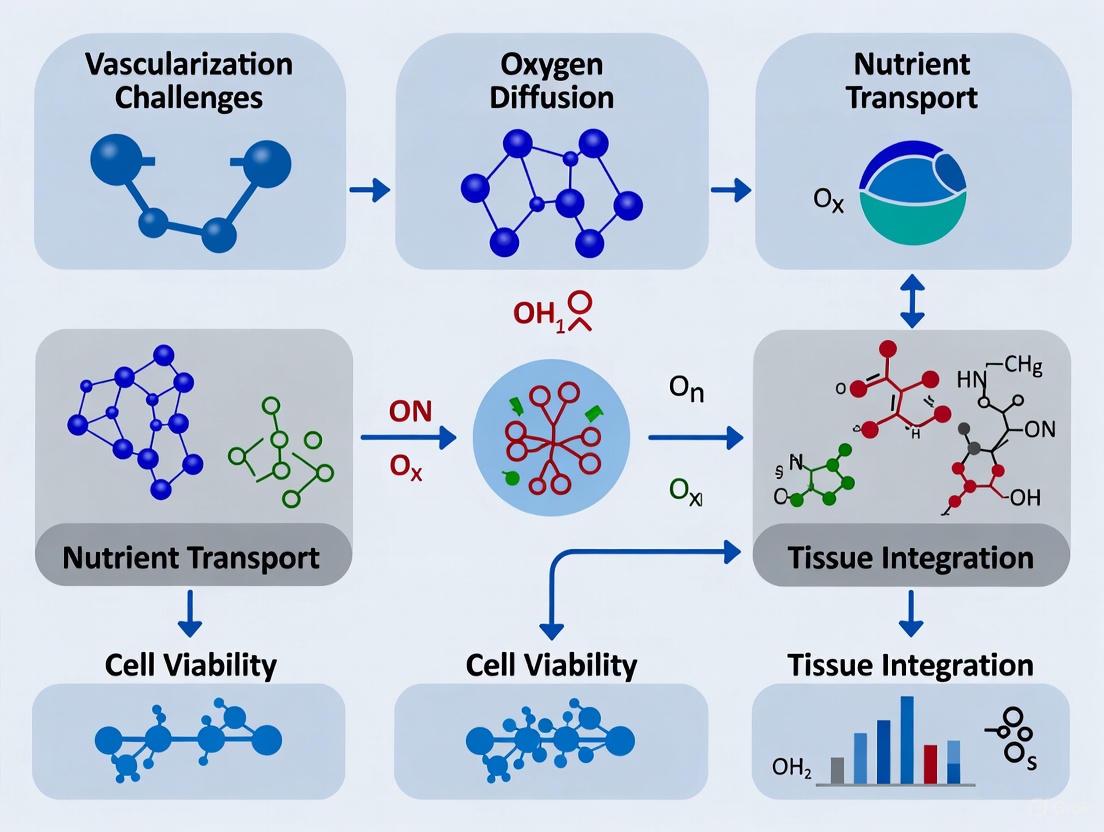
The successful vascularization of bioprinted tissues remains a paramount challenge limiting the clinical translation of engineered organs and complex tissue models.
Overcoming the Vascularization Hurdle in 3D Bioprinting: From Fundamental Challenges to Clinical Translation
Abstract
The successful vascularization of bioprinted tissues remains a paramount challenge limiting the clinical translation of engineered organs and complex tissue models. This article provides a comprehensive analysis for researchers and drug development professionals, exploring the biological foundations of vasculature, advanced bioprinting methodologies like FRESH and sacrificial printing, and strategies for optimizing bioink composition and structural fidelity. It further details rigorous validation frameworks, from in vitro functionality assessments to promising in vivo implantation studies in animal models, synthesizing a clear path from current research toward future clinical applications in regenerative medicine and drug discovery.
The Biological Imperative: Why Vascularization is the Central Hurdle in Tissue Bioprinting
In the field of tissue engineering and regenerative medicine, the inability to adequately vascularize tissues represents arguably the most significant challenge limiting clinical translation. Mass transfer limitations, particularly the diffusion constraints of oxygen and nutrients, restrict the development of engineered constructs to dimensions smaller than those clinically relevant. Within the human body, the vast majority of cells are located within 100–200 μm of the nearest capillary, a spacing that permits sufficient diffusion of oxygen, nutrients, and waste products to maintain viable tissue [1]. This same physical limitation dictates that when laboratory-grown tissues are implanted, only cells within this critical distance from the host's capillaries will survive, leading to central necrosis in larger constructs [1] [2]. For bioprinted tissues, which aim to create architecturally complex three-dimensional structures, overcoming this diffusion barrier is a prerequisite for success. The core of the problem stems from the oxygen diffusion coefficient in aqueous media and the high oxygen consumption rates of metabolically active cells, which together create steep oxygen gradients that rapidly deplete available oxygen, resulting in hypoxic cores in constructs exceeding a few hundred microns in thickness [1] [3].
Quantitative Analysis of the Diffusion Barrier
The Biophysics of Oxygen Diffusion
The 100-200 micron threshold is not arbitrary but is derived from fundamental physical principles governing diffusion. Oxygen transport into non-vascularized scaffolds occurs primarily via diffusion, which follows Fick's laws. The consumption of oxygen by cells can be modeled using Michaelis-Menten kinetics. The interplay between diffusion and consumption creates a predictable gradient from the oxygen source (e.g., culture medium or host tissue) into the construct's core [1]. When the distance from the surface exceeds a critical value, oxygen concentration at the core drops to zero, leading to necrosis. This critical distance is influenced by the specific oxygen consumption rate of the cell type, the oxygen diffusion coefficient in the tissue, and the oxygen partial pressure at the construct surface [1] [2].
Table 1: Key Parameters Governing Oxygen Diffusion in Tissue Constructs
| Parameter | Typical Value/Range | Impact on Diffusion Limitation |
|---|---|---|
| Critical Diffusion Distance | 100–200 μm | Defines the maximum distance cells can be from an oxygen source for survival [1] [2]. |
| Oxygen Solubility in Water | ~2.2 mM | Baseline for oxygen availability in aqueous environments; limits concentration gradient [2]. |
| Oxygen Solubility in PFCs | ~44 mM | ~20x increase over water; used in oxygen carriers to enhance oxygen capacity [2]. |
| Construct Size Leading to Necrosis | >1 cm³ | Volume at which the center typically becomes hypoxic/necrotic without internal oxygenation [3]. |
Consequences for Engineered Tissue Viability
The quantitative restrictions on oxygen diffusion have direct, observable consequences on the viability and function of engineered tissues. Research has demonstrated that the central region of engineered tissues with a volume larger than approximately 1 cm³ is typically in a hypoxic environment, resulting in imperfect tissues characterized by a necrotic center with viable cells only at the periphery [3]. This phenomenon is exacerbated for cell types with high metabolic demands, such as hepatocytes, cardiomyocytes, and neurons, which require a more robust and consistent oxygen supply [2]. Before achieving functional anastomosis with the host vasculature, implanted tissues are depleted of oxygen, leading to hypoxic (<5% dissolved oxygen) and eventually anoxic (<0.5% dissolved oxygen) microenvironments that compromise cell survival and engraftment [2]. Quantitative modeling of oxygen distribution, incorporating flow rates, diffusion coefficients, and cell-specific consumption rates, is essential for predicting and mitigating these effects in tissue design [1].
Experimental Approaches to Characterize Diffusion
Methodologies for Measuring Oxygen Gradients
Quantitatively measuring oxygen concentrations within scaffolds is critical for validating models and assessing the success of vascularization strategies. Direct measurement can be achieved using oxygen probes or oxygen-sensitive dyes [1]. These tools allow researchers to map the oxygen tension throughout a construct and confirm the presence of hypoxic zones. Furthermore, advanced techniques like bioorthogonal Raman microspectroscopy have been introduced as a contactless method to investigate the penetration kinetics of small molecules, including nutrients and drugs, into 3D cell aggregates like spheroids and organoids [4]. This technique can be used to determine effective diffusion coefficients and perfusion times for various compounds within tissue models, providing critical data for model refinement [4].
Protocol: Measuring Oxygen Diffusion and Consumption in a 3D Construct
Objective: To quantitatively map the oxygen gradient and calculate the oxygen consumption rate of cells within a 3D hydrogel construct.
Materials:
- 3D cell-laden hydrogel construct (e.g., collagen, fibrin, or a synthetic hydrogel)
- Oxygen measurement system: Fluorescent oxygen sensor patches or a micro-electrode with a spatial micromanipulator.
- Hypoxia chamber or bioreactor to control external oxygen tension.
- Live/dead cell viability assay (e.g., Calcein-AM/Propidium Iodide) for correlation.
Procedure:
- Construct Preparation: Seed cells at a physiologically relevant density within the hydrogel and culture for 24-48 hours to allow for attachment and adaptation.
- System Calibration: Calibrate the oxygen sensor according to manufacturer protocols at 0% and 21% oxygen tension, or relevant physiological levels (e.g., 5% O₂).
- Data Acquisition:
- Place the construct in the measurement chamber under controlled conditions (temperature, humidity, external O₂).
- Using the micro-manipulator, insert the oxygen micro-electrode or position the optical sensor at the construct surface.
- Record the oxygen tension. Subsequently, advance the sensor in precise 10-20 μm increments deeper into the construct, recording the oxygen tension at each point until the geometric center is reached.
- Repeat the profile measurement in at least three different locations to account for heterogeneity.
- Viability Correlation: At the end of the experiment, perform a live/dead assay on a sectioned construct to visualize the exact boundary where viability drops, correlating it with the measured oxygen gradient.
- Data Analysis:
- Plot the oxygen tension against the distance from the surface. The profile should show a near-linear decline in the outer region, curving as it approaches the hypoxic core.
- Using Fick's second law of diffusion and a known oxygen diffusion coefficient for the hydrogel, the oxygen consumption rate (OCR) of the cells can be calculated by fitting the observed gradient to the diffusion-consumption model.
Strategies to Overcome the Diffusion Barrier
The prevailing approaches to overcome the 100-200 micron barrier can be categorized into several major strategies, each with distinct mechanisms and applications.
Scaffold Functionalization and Oxygen-Releasing Systems
One of the most extensively researched approaches involves engineering the scaffold material itself to promote vascularization or provide oxygen directly.
Growth Factor Delivery: Scaffolds can be functionalized with pro-angiogenic factors such as Vascular Endothelial Growth Factor (VEGF), Platelet-Derived Growth Factor (PDGF), and basic Fibroblast Growth Factor (bFGF) [1]. These factors can be simply loaded into the scaffold, encapsulated in microspheres for controlled release, or covalently bound to the scaffold matrix via chemistries like EDC-NHS to mimic their natural association with the extracellular matrix [1]. For instance, collagen scaffolds loaded with a PDGF/collagen-binding domain fusion protein have been shown to enhance neovascularization in rat models [1].
Oxygen-Releasing Biomaterials: To directly address hypoxia prior to vascularization, biomaterials that carry and release oxygen have been developed. Key technologies include:
- Perfluorocarbons (PFCs): Chemically inert compounds with fluorinated carbon chains that can dissolve large amounts of oxygen (e.g., ~44 mM, a 20-fold increase over water) in a linear relationship with oxygen partial pressure [2]. An example is perfluorooctane (PFO) loaded into polycaprolactone hollow microparticles (PFO-HPs), which provided controlled oxygen release and enhanced cell survival under hypoxia [3].
- Solid Peroxides: Materials like calcium peroxide (CaO₂) and magnesium peroxide (MgO₂) release oxygen upon reaction with water through a reaction that produces H₂O₂, which then decomposes to water and oxygen [2]. These can be blended with polymers like PLGA or PCL to create oxygenating scaffolds, though the potential cytotoxicity of reactive oxygen species (ROS) must be managed [2].
Table 2: Key Reagent Solutions for Oxygen Supply and Vascularization
| Research Reagent | Category | Primary Function | Example Application |
|---|---|---|---|
| Vascular Endothelial Growth Factor (VEGF) | Growth Factor | Initiates endothelial cell capillary formation; key initiator of angiogenesis [1]. | Heparin-impregnated scaffolds for controlled release [1]. |
| Calcium Peroxide (CaO₂) | Oxygen-Generating Material | Reacts with water to produce oxygen, providing a temporary oxygen source within a scaffold [2]. | Blended with PCL to create scaffolds that support cell survival under hypoxia [2]. |
| Perfluorooctane (PFO) | Oxygen Carrier | Dissolves high volumes of oxygen and releases it in a controlled manner to surrounding cells [3]. | Loaded into hollow PCL microparticles (PFO-HPs) for 3D tissue formation [3]. |
| Photocrosslinkable Hydrogel | Bioprinting Material | Elastic, biodegradable polymer for 3D printing soft, living tissues with encapsulated cells [5]. | Printing elastic blood vessel constructs that degrade as cells deposit native matrix [5]. |
| Polycaprolactone (PCL) | Polymer Scaffold | Biodegradable polyester used to fabricate scaffolds and microparticles for cell support [3]. | Shell material for hollow, oxygen-carrying microparticles [3]. |
Protocol: Creating an Oxygen-Releasing Scaffold with CaO₂
Objective: To fabricate a polycaprolactone (PCL)-based scaffold incorporating CaO₂ particles for sustained oxygen release.
Materials:
- Polycaprolactone (PCL)
- Calcium Peroxide (CaO₂) powder
- Solvent (e.g., Chloroform)
- Syringe pump or custom mold setup
- Dissolved oxygen meter or sensor
Procedure:
- Solution Preparation: Dissolve PCL pellets in chloroform to create a homogeneous polymer solution.
- Particle Incorporation: Uniformly disperse a precise weight percentage (e.g., 1-5% w/w) of CaO₂ powder into the PCL solution using magnetic stirring or sonication to avoid agglomeration.
- Scaffold Fabrication:
- Option A (Porogen Leaching): Mix the PCL/CaO₂ solution with a porogen like salt crystals, cast into a mold, and let the solvent evaporate. Leach out the salt in water to create a porous structure.
- Option B (Electrospinning): Load the solution into a syringe for electrospinning to create a fibrous mat.
- Curing and Sterilization: Allow all residual solvent to fully evaporate in a fume hood. Sterilize the final scaffold using ethylene oxide or gamma irradiation, as autoclaving may degrade the polymer or trigger premature oxygen release.
- Oxygen Release Characterization: Immerse the scaffold in phosphate-buffered saline (PBS) at 37°C in a sealed vial. Use a dissolved oxygen probe to measure the oxygen concentration in the solution at regular intervals over several days to profile the release kinetics.
Bioprinting and Microfabrication Strategies
Bioprinting technologies offer a direct route to creating organized vascular architectures within engineered tissues. A significant breakthrough in this area is the development of new elastic hydrogel materials designed for 3D printing of soft living tissues. These hydrogels dissolve in a liquid solution for printing, can be crosslinked with blue light, and are biodegradable, allowing cells to eventually replace them with native collagen and elastin—a crucial process for forming strong, natural blood vessels [5]. Furthermore, microelectromechanical systems (MEMS) and microfluidic technologies are being used to recapitulate the intricate, branching networks of the microvasculature, often using materials like polydimethyl siloxane (PDMS) or developing degradable alternatives [1]. The NASA-sponsored Vascular Tissue Challenge has accelerated innovations in this domain, with winning teams from the Wake Forest Institute for Regenerative Medicine (WFIRM) creating 3D bioprinted liver tissue constructs with functional vascular channels, which are now being tested on the International Space Station to leverage microgravity effects on tissue maturation [6].
The 100-200 micron diffusion barrier remains a central and formidable challenge in the vascularization of bioprinted tissues. This limitation, rooted in the fundamental biophysics of oxygen diffusion and consumption, constrains the size and viability of engineered constructs. While significant progress has been made through diverse strategies—including scaffold functionalization, advanced bioreactors, cell-based prevascularization, microfabrication, and the development of oxygen-releasing biomaterials—no single approach has yet achieved complete success. The future likely lies in the integration of multiple strategies, such as combining bioprinted vascular networks with temporary oxygen-supplying materials to ensure cell survival during the critical period before full integration with the host circulation. As bioprinting technologies and our understanding of vascular biology advance, the goal of producing clinically relevant, fully vascularized tissues and organs becomes increasingly attainable.
The fundamental challenge in engineering clinically relevant tissues and solid organs is the replication of their intrinsic, multiscale vascular networks. In native physiology, blood circulates from the heart through a hierarchical tree of vessels, beginning with large arteries, which branch into arterioles, and finally into capillaries where vital gas and nutrient exchange occurs [7]. Engineering a complete, integrated vascular hierarchy—comprising vessels large enough for surgical anastomosis, strong enough to withstand hemodynamic pressures, and intricate enough to ensure immediate perfusion of an entire fluidic circuit—would be transformative for regenerative medicine [7]. This whitepaper delineates the structure of the native vascular system as an essential blueprint for overcoming the vascularization bottleneck in bioprinting, framing the biological design principles within the context of current translational challenges.
The Native Vascular Hierarchy: A Multiscale Architecture
The cardiovascular system is a network of vessels with specialized anatomy and physiology tailored to their specific functions. This hierarchy can be broadly categorized by scale and role [7] [8].
Structural and Functional Compartments
Table 1: Comparative Anatomy of Blood Vessels in the Hierarchical Tree
| Vessel Type | Lumen Diameter | Wall Structure | Primary Function | Key Identifying Features |
|---|---|---|---|---|
| Elastic Artery | >10 mm [8] | Thick tunica media with high density of elastic fibers; Tunica externa thinner than media [8]. | Conduct blood under high pressure from heart; dampen pulsatile flow. | "Wavy" endothelium on histology due to constriction; internal and external elastic membranes present [8]. |
| Muscular Artery | 1 mm – 10 mm [7] | Thick tunica media dominated by smooth muscle cells; supportive connective tissue [7]. | Distribute blood to specific body regions; vasoconstriction/vasodilation. | Muscular walls; well-defined internal elastic membrane. |
| Arteriole | 5 µm – 100 µm [7] [9] | 1-5 layers of smooth muscle cells (SMCs); ECM, and adventitia [7]. | Regulate blood flow into capillary beds; primary site of peripheral resistance. | Thick wall relative to lumen diameter; responsible for changes in diameter. |
| Capillary | 5 µm – 10 µm [9] | Single endothelial cell layer; thin basement membrane; discontinuous pericytes [7]. | Nutrient, gas, and waste exchange. | Single, discontinuous layer of supportive pericytes [7]; subtypes: continuous, fenestrated, sinusoidal [7]. |
| Venule | 10 µm – 200 µm | Single SMC layer; tunica adventitia blends with surrounding tissue [7]. | Collect blood from capillaries; initial site of immune cell emigration. | Larger lumen and thinner wall compared to arterioles; lower blood pressure [7]. |
| Vein | Up to 5 mm | Thin wall relative to artery; few SMC layers; thick, collagen-rich adventitia [7] [10]. | Return deoxygenated blood to the heart. | Large lumen; presence of valves to prevent backflow; thickest layer is tunica externa [10] [8]. |
The Capillary Bed: The Site of Exchange
Capillaries, the smallest vessels, are specialized for exchange and are categorized into three types based on permeability [7]:
- Continuous Capillaries: Characterized by tight cell-cell junctions, permitting transport of only water, gases, and small molecules. Found in muscle and neural tissue.
- Fenestrated Capillaries: Contain small pores within the endothelial cells and basement membrane, allowing larger molecule exchange. Prevalent in kidneys and intestines.
- Sinusoidal Capillaries: The leakiest type, with gaps in the endothelial monolayer and discontinuous basement membrane, permitting transport of very large molecules and cells. Found in bone marrow and liver.
Quantitative Analysis of Vascular Networks: Methodologies for Validation
Accurate quantification of engineered vasculature is critical for validating its mimicry of native biology. Classical 2D histology, while the gold standard, is laborious and prone to artifact and sampling bias [11] [12]. Advanced 3D imaging techniques now provide robust, quantitative alternatives.
Advanced Imaging and Analysis Techniques
Table 2: Methodologies for Vascular Network Imaging and Quantification
| Technique | Principle | Ideal Vessel Scale | Key Applications | Protocol Highlights |
|---|---|---|---|---|
| Ultramicroscopy (UM) | Light-sheet fluorescence microscopy of optically cleared tissue [11]. | Capillaries, arterioles (<50 µm) [11]. | Quantifying capillary density, diameter, and endothelial cell integration in 3D [11]. | In vivo labeling with Isolectin GS-IB4; tissue clearing (e.g., 3DISCO, iDISCO+); ex vivo imaging [11]. |
| Micro-Computed Tomography (Micro-CT) | X-ray tomography with radiopaque perfusion contrast (e.g., MicroFil) [11] [13]. | Larger vessels (Arteries, veins); limited for capillaries [11]. | 3D visualization and morphometry of larger vascular trees; vessel volume fraction, connectivity [13]. | Postmortem perfusion with MicroFil; specimen decalcification for bone studies; thresholding at ~1000 HU for analysis [13]. |
| Quantitative Vascular Analysis Tool (Q-VAT) | Automated analysis of 2D tiled whole-slide images in ImageJ [12]. | All scales, with separation by diameter [12]. | High-throughput histomorphometry; separation of macro- and microvasculature in large samples [12]. | Input: binary vascular and tissue masks; tile-wise analysis to handle large datasets; outputs vessel density, diameter, and co-staining ratios [12]. |
The following workflow diagram outlines the key steps for processing and analyzing vascular networks using these core methodologies:
The Bioprinting Challenge: Translating Blueprint into Constructs
The primary hurdle in bioprinting solid tissues is the diffusion limit of oxygen and nutrients, approximately 200 µm, which necessitates an integrated, perfusable vascular network to maintain cell viability in constructs of clinically relevant size [7]. Native vasculature achieves this through a connected hierarchy, but replicating this in engineered tissues requires sophisticated strategies.
Key Challenges in Engineering Vascular Hierarchy
- Integration Across Scales: A perfusable hierarchy requires the seamless structural and functional connection of bioprinted macrovessels (>1 mm) to microvessels (<50 µm) [7]. A disconnection at any point in this circuit prevents perfusion and leads to core necrosis in the tissue construct.
- Biological Maturation vs. Geometric Precision: Many bioprinting approaches prioritize the creation of precise vascular channels but overlook the necessary biological processes for vessel stability. A functional vessel is not merely a tubular structure; it requires maturation, a time-dependent process involving lumen formation, pericyte recruitment, basement membrane deposition, and flow-induced remodeling [9].
- Tissue-Specific Vascular Phenotypes: A one-size-fits-all approach is insufficient. The endothelium varies significantly between tissues, from the tight, continuous capillaries of the brain to the leaky, fenestrated capillaries of the liver [7] [9]. Recapitulating these phenotypes is essential for engineered tissues to perform organ-specific functions.
Engineering Strategies and Experimental Models
Several biofabrication techniques are being employed to build hierarchical vasculature, including stepwise molding to create distinct vessel layers [7], sacrificial bioprinting to create interconnected hollow channels [14], and 3D bioprinting of vascularized tissue constructs [6] [15] [9]. A critical component of this research is the use of robust in vivo models to test the functionality and integration of engineered vasculature. The murine matrigel plug assay is a foundational model for this purpose [11].
Detailed Protocol: Spheroid-Based Matrigel Plug Assay for Human Vasculature Integration
- Objective: To quantify the capacity of engineered human endothelial cells (ECs) to integrate into a functional, perfused murine vascular network in vivo.
- Cell Preparation: Generate spheroids from the human ECs of interest (e.g., HUVECs or iPSC-ECs) using non-adherent round-bottom plates or hanging drop methods.
- Matrigel Preparation: Thaw Growth Factor Reduced (GFR) Matrigel on ice. Mix the human EC spheroids gently into the liquid Matrigel, ensuring even distribution.
- Implantation: Using a pre-chilled syringe, subcutaneously inject the spheroid-laden Matrigel (typically 0.5-1.0 mL) into the flank of an immunocompromised mouse (e.g., SCID mouse). The Matrigel will polymerize at body temperature, forming a solid plug.
- In Vivo Perfusion and Analysis: After a pre-determined period (e.g., 7-14 days), inject a fluorescently labeled Lycopersicon Esculentum (Tomato) Lectin or Isolectin GS-IB4 intravenously. This compound binds to the murine endothelium, labeling all perfused vessels. Sacrifice the animal and harvest the plug.
- Imaging and Quantification: Process the plug for Ultramicroscopy. The 3D imaging allows for unambiguous identification of perfused (lectin-positive) murine vessels and the integration of human ECs (e.g., via a human-specific marker) into the capillary networks [11].
The Scientist's Toolkit: Essential Reagents and Models
Table 3: Key Research Reagent Solutions for Vascular Studies
| Reagent / Model | Function and Application | Example Use Case |
|---|---|---|
| Isolectin GS-IB4 | Fluorescently-labeled lectin that selectively binds to endothelial cells, enabling visualization of the entire vascular network [11] [12]. | In vivo perfusion labeling for Ultramicroscopy; staining of whole-mount tissues for Q-VAT analysis [11] [12]. |
| MicroFil MV-122 | Polymerizing, radiopaque silicone rubber contrast agent for ex vivo vascular perfusion [13]. | Perfusion of the murine vasculature for high-resolution 3D visualization and morphometry using Micro-CT [11] [13]. |
| Matrigel | Basement membrane extract providing a biologically active scaffold that supports endothelial cell growth and tube formation. | In vivo matrigel plug assay to study angiogenesis and human EC integration [11]; in vitro capillary formation assays. |
| Decellularized ECM (dECM) | Novel bioink derived from native tissues, providing tissue-specific biochemical and compositional cues [14]. | Used as a bioink in 3D bioprinting to enhance the biological fidelity and maturation of printed vascularized tissues [14]. |
| ApoE-/- Mouse Model | A robust model of accelerated atherosclerosis and plaque capillarization [11]. | Studying plaque angiogenesis and vascular pathology using the unilateral carotid ligation model, analyzed via UM or Micro-CT [11]. |
The native vascular hierarchy, with its exquisitely tuned structure from capillaries to arteries, provides a non-negotiable blueprint for tissue engineering. The path to clinical translation of bioprinted tissues hinges on moving beyond the creation of simple tubular channels to the engineering of a dynamic, multiscale, and tissue-specific vascular system. This requires the continued development of advanced biofabrication strategies, coupled with rigorous quantitative validation tools and biologically relevant experimental models. Success will be measured not by the geometric precision of the printed construct, but by its ability to form a stable, perfused, and functional vascular network that can integrate with the host and support the long-term survival of engineered organs.
Vascularization represents perhaps the most significant obstacle in the field of tissue engineering and bioprinting. Without functional vascular networks, bioprinted tissues cannot overcome the oxygen and nutrient diffusion limit of approximately 100-200 μm, leading to core necrosis and graft failure upon implantation [16] [17]. The biological processes of vasculogenesis, angiogenesis, and vessel maturation are therefore not merely topics of academic interest but fundamental requirements for creating clinically relevant, volumetric tissues. This technical guide examines these core processes within the specific context of advancing bioprinting technologies, where recreating these dynamic biological events in vitro presents unique challenges in cellular organization, biomaterial design, and functional integration.
The hierarchy of the vascular system—spanning from large arteries to microscopic capillaries—demands tissue-specific recapitulation in bioprinted constructs [16]. A functional vasculature must not only form but also adapt, mature, and integrate within the evolving tissue environment, a process that extends well beyond the creation of perfusable channels [16]. This document provides a comprehensive analysis of the biological basis of vascular formation, detailed experimental methodologies for its study, and the application of this knowledge to overcome the persistent challenge of vascularization in engineered tissues.
Core Biological Processes
Vasculogenesis: De Novo Vessel Formation
Vasculogenesis describes the de novo formation of blood vessels from progenitor cells during embryonic development. This process establishes the primitive vascular plexus that serves as the foundational template for the entire circulatory system [16] [18].
- Cellular Mechanisms: Vasculogenesis begins when mesoderm-derived endothelial progenitors, including hemangioblasts, differentiate into endothelial cells in response to vascular endothelial growth factor (VEGF) signaling [18]. These endothelial cells subsequently coalesce and assemble into hollow, tube-like structures that form the initial capillary network [16] [18].
- Key Molecular Regulators: VEGF is the primary regulator, directing the differentiation and assembly of endothelial cells. The process is also mediated by receptor-ligand interactions, such as those involving receptor-mediated hemangioblast formation [18].
The following table summarizes the key characteristics of vasculogenesis and angiogenesis for comparison.
Table 1: Comparative Analysis of Vasculogenesis and Angiogenesis
| Feature | Vasculogenesis | Angiogenesis |
|---|---|---|
| Definition | De novo formation of blood vessels from progenitor cells [18] | Formation of new vessels from pre-existing vasculature [18] |
| Primary Context | Embryonic development [18] | Embryonic development and adult vascular remodeling (e.g., wound healing, disease) [18] |
| Initiating Cells | Endothelial Progenitor Cells (EPCs), hemangioblasts [18] | Mature endothelial cells from a parent vessel [16] |
| Key Processes | Endothelial cell differentiation, coalescence, and tube formation [16] [18] | Endothelial activation, basement membrane degradation, sprouting, lumen formation [16] |
| Primary Stimulus | Developmental genetic programming [18] | Hypoxia, growth factor gradients (e.g., VEGF) [16] [18] |
| Role in Bioprinting | Mimicked by incorporating ESCs, iPSCs, or EPCs into bioinks [18] | Induced via growth factor patterning and co-culture systems to promote microvascular growth [16] |
Angiogenesis: Vascular Network Expansion
Angiogenesis is the process by which new blood vessels sprout from pre-existing vessels, serving as the primary mechanism for vascular network expansion in both development and adult life [16] [18].
- Sprouting Angiogenesis: This complex, multi-step process begins with the activation of endothelial cells by VEGF gradients. A specialized tip cell emerges, guided by VEGF, and migrates into the surrounding extracellular matrix. The tip cell leads the growing sprout, while trailing stalk cells proliferate and elongate the nascent vessel [16]. The process culminates in the fusion of connecting sprouts to form a new, patent vessel.
- Lumen Formation: A critical step in angiogenesis is the creation of a vessel lumen. This occurs through coordinated endothelial cell rearrangements and the fusion of intracellular vacuoles, hollowing out the nascent vessel [16]. VE-cadherin, a cell-cell adhesion molecule, is essential for forming stable junctional rings during this process [16].
The diagram below illustrates the key signaling pathway and cellular events in sprouting angiogenesis.
Vessel Maturation and Stabilization
The formation of a vascular network is followed by a crucial maturation phase, which determines the long-term stability and functionality of the vessels [16].
- Mural Cell Recruitment: Newly formed capillaries are fragile and require stabilization through the recruitment of mural cells—pericytes for capillaries and vascular smooth muscle cells for arterioles and arteries [16]. This recruitment is primarily mediated by Platelet-Derived Growth Factor-BB (PDGF-BB) secreted by endothelial cells [16]. The association between endothelial cells and pericytes is critical; deficiencies in PDGF-BB signaling result in a lack of pericyte coverage, leading to hemorrhagic and unstable vasculature [16].
- Basement Membrane Deposition: The physical association with pericytes stimulates the deposition of a robust basement membrane, a specialized ECM that provides structural support and biochemical signaling [16].
- Barrier Function Maturation: Concurrently, endothelial cells undergo junctional remodeling to enhance barrier function. They upregulate adherens junction proteins (VE-cadherin, β-catenin) and tight junction components (occludin, claudins, ZO-1), which reduce vessel leakiness [16]. The presence of pericytes is known to profoundly enhance micro-vessel barrier function [16].
Quantitative Parameters and Functional Metrics
Evaluating the success of vascularization in bioprinted constructs requires moving beyond static, structural endpoints to include dynamic, functional metrics. The table below outlines key quantitative parameters for assessing vascular maturation and function.
Table 2: Key Quantitative Metrics for Assessing Vascular Maturation and Function
| Metric Category | Specific Parameter | Target / Physiologic Relevance | Assessment Method |
|---|---|---|---|
| Structural Metrics | Vessel Diameter | Capillaries: 5-10 μm; Arterioles: 10-100 μm [17] | Histology, Micro-CT [19] |
| Diffusion Distance | <200 μm (general); <100 μm (metabolically active tissue) [17] | Computational modeling, Staining | |
| Pericyte Coverage Index | >80% for stable microvessels [16] | Immunostaining (e.g., α-SMA, NG2) | |
| Functional Metrics | Barrier Function | Reduced permeability post-maturation [16] | Dextran leakage assay, TEER |
| Perfusability | Continuous flow without leakage | Perfusion systems with contrast agents [20] | |
| Oxygenation Capacity | Tissue-specific (e.g., high for cardiac muscle) | Oxygen sensors, Metabolic assays | |
| Molecular Metrics | VE-Cadherin Localization | Junctional localization [16] | Immunofluorescence |
| CD31 (PECAM-1) Expression | Endothelial cell surface [18] | Flow cytometry, IF | |
| Growth Factor Release | Sustained, tissue-specific profile [16] | ELISA, Bioassays |
Experimental Protocols for Vascularization Studies
Protocol: Co-culture for Microvascular Network Formation
This protocol is designed to form self-assembled microvascular networks in vitro using endothelial and stromal support cells.
- Hydrogel Preparation:
- Prepare a hydrogel support bath, such as fibrin or collagen I, at a concentration of 5-10 mg/mL.
- Alternatively, use a tunable synthetic hydrogel (e.g., PEG-based) functionalized with RGD peptides to promote cell adhesion [16].
- Cell Seeding:
- Resuspend Human Umbilical Vein Endothelial Cells (HUVECs) and Human Lung Fibroblasts (HLFs) in the hydrogel solution at a density of 1-5 x 10^6 cells/mL for HUVECs and 0.5-2 x 10^6 cells/mL for HLFs.
- Plate the cell-laden hydrogel into a tissue culture plate or a microfluidic device and allow it to polymerize.
- Culture and Maintenance:
- Culture the construct in EGM-2 medium supplemented with pro-angiogenic factors (VEGF, bFGF).
- Change the medium every 48 hours.
- Analysis:
- After 7-14 days, fix the constructs and immunostain for CD31 (endothelial cells) and α-SMA (pericytes/myofibroblasts) to visualize the formed networks and quantify parameters like branch points and tube length [16].
Protocol: Assessing Barrier Function via Dextran Leakage Assay
This assay quantitatively measures the permeability and functional maturity of engineered microvessels.
- Sample Preparation:
- Engineer or culture a vascularized tissue construct, ideally within a perfusable microfluidic device [19].
- Perfusion and Imaging:
- Connect the construct to a perfusion system and circulate a serum-free medium.
- Introduce a fluorescently tagged (e.g., FITC) 70-kDa dextran solution into the perfusion circuit. A 70-kDa molecule is used because it is similar in size to albumin, a key blood protein.
- Data Acquisition and Quantification:
- Use time-lapse confocal microscopy to image the extravasation of the dextran from the vessel lumen into the surrounding matrix over 10-20 minutes.
- Quantify the fluorescence intensity in the interstitial space over time. A lower rate of increase in interstitial fluorescence indicates better barrier function and a more mature vessel network [16].
The Scientist's Toolkit: Research Reagent Solutions
Successfully replicating vascular processes in vitro relies on a specific toolkit of biological reagents and materials. The following table details essential components and their functions.
Table 3: Essential Research Reagents for Vascularization Studies
| Reagent Category | Specific Examples | Function in Experiment | Key Considerations |
|---|---|---|---|
| Growth Factors & Cytokines | VEGF (Vascular Endothelial Growth Factor) [16] [18] | Induces endothelial proliferation, migration, and tip cell selection; critical for angiogenesis initiation. | Requires spatial patterning in hydrogels; sustained release profiles are more effective than bolus doses [16]. |
| PDGF-BB (Platelet-Derived Growth Factor-BB) [16] | Secreted by endothelial cells to recruit pericytes for vessel stabilization and maturation. | Essential for long-term vessel stability; deficiency leads to regression. | |
| bFGF (Basic Fibroblast Growth Factor) [18] | Promotes endothelial cell proliferation and angiogenesis. | Often used in combination with VEGF. | |
| Cell Sources | Endothelial Cells (HUVEC, iPSC-EC) [18] | Form the inner lining of all blood vessels and are the primary building blocks of vascular networks. | iPSC-ECs enable patient-specific studies. Co-culture is often necessary for stability. |
| Pericytes / Mesenchymal Stem Cells (MSCs) [16] [18] | Recruited to stabilize nascent vessels, enhance barrier function, and deposit basement membrane. | MSCs can differentiate into pericyte-like cells. Direct contact with endothelial tubes is crucial. | |
| Induced Pluripotent Stem Cells (iPSCs) [18] | Pluripotent cells that can be differentiated into both endothelial cells and pericytes for autologous therapies. | Avoids immunogenicity; requires efficient differentiation protocols; tumorigenic risk must be managed. | |
| Biomaterials & Bioinks | Natural Hydrogels (Collagen, Fibrin) [16] [21] | Serve as biocompatible, proteolytically degradable matrices that support cell invasion and network formation. | Fibrin is highly pro-angiogenic; mechanical properties are often soft and can be difficult to tune. |
| Synthetic Hydrogels (PEG-based) [16] | Provide highly tunable microenvironments with controllable mechanical properties, degradation kinetics, and bioactivity. | Can be functionalized with adhesive peptides (e.g., RGD) and MMP-sensitive crosslinkers. | |
| Critical Assay Reagents | Fluorescently-Tagged Dextran (e.g., 70-kDa FITC-Dextran) | Used in permeability assays to quantify the barrier function and leakiness of engineered vessels. | Molecular weight should be selected based on the specific permeability being studied (e.g., 70-kDa for albumin-sized molecules). |
| Antibodies for CD31/PECAM-1 [18] | Standard marker for identifying endothelial cells and visualizing vascular networks via immunostaining. | Also used in flow cytometry for quantifying endothelial cell populations. | |
| Antibodies for α-SMA and NG2 | Markers for identifying pericytes and smooth muscle cells to assess vessel maturation. | Co-localization with CD31+ structures indicates successful mural cell recruitment. |
Application in Bioprinting: From Biology to Fabrication
The principles of vascular biology are directly applied in bioprinting through several advanced strategies. The workflow for integrating these biological processes into bioprinting is complex and multi-staged, as shown below.
Strategic Integration of Vascular Cells: A common approach involves co-printing endothelial cells and pericytes or MSCs within the bioink. This mimics the cellular components of vasculogenesis and promotes the self-assembly of microvascular networks within the printed construct [18]. For example, co-cultures of HUVECs and fibroblasts have been shown to improve the structural formation of vascularized cardiac tissue [18].
Sacrificial and Embedded Bioprinting: To create intricate, perfusable channel networks, sacrificial bioprinting is employed. This technique involves printing a fugitive ink (e.g., Pluronic F127 or gelatin) that is later evacuated to leave behind hollow channels. These channels can then be seeded with endothelial cells to create a lined vasculature [22]. Embedded bioprinting extends this capability by printing bioinks directly into a support bath, allowing for the freeform fabrication of complex and often fragile 3D vascular structures that would collapse under their own weight in air [22].
Advanced Bioprinting Modalities: The FRESH (Freeform Reversible Embedding of Suspended Hydrogels) bioprinting technique has enabled the creation of high-resolution, collagen-based constructs with internal fluidic channels that function as blood vessel analogs [21]. This allows for the fabrication of fully biologic microphysiologic systems, enhancing cellular function compared to synthetic models [21]. Furthermore, computational approaches are being used to design hierarchical vascular trees that efficiently distribute blood flow. Stanford researchers, for instance, have developed algorithms that generate complex, organ-specific vascular designs significantly faster than prior methods, which can then be translated into 3D printing instructions [20].
The path to clinical-scale bioprinted tissues is inextricably linked to mastering the core biological processes of vasculogenesis, angiogenesis, and vessel maturation. Current research demonstrates that success hinges on integrating multiple advanced strategies: computational design of vascular architectures, sophisticated bioinks that deliver precise biochemical cues, and bioprinting modalities capable of fabricating these complex designs. The field is moving from merely creating static, perfusable channels to engineering dynamic, self-remodeling, and hierarchically organized vascular networks that can truly integrate with host circulation. Future progress will depend on a multidisciplinary approach that views vascularization not as an isolated feature but as an active, time-dependent component of the tissue engineering process, ultimately unlocking the potential to fabricate functional, transplantable human organs.
The development of a functional vasculature is the single greatest obstacle preventing the clinical translation of bioprinted tissues and organs. The term "functional vasculature" is not a monolithic concept but represents a spectrum of context-dependent biological performances tailored to specific tissue needs. A vessel network that suffices for a dermal graft, characterized by moderate permeability for nutrient exchange, would be catastrophically inadequate for cardiac tissue, which demands vessels capable of withstanding pulsatile pressure and facilitating rapid electrical conduction [9]. Similarly, the dense, fenestrated sinusoidal networks essential for hepatic detoxification bear little resemblance to the tight barrier function of the blood-brain barrier. This dichotomy lies at the heart of contemporary tissue engineering challenges.
The broader thesis of vascularization research in bioprinting posits that overcoming this bottleneck requires a paradigm shift—from merely creating perfusable structures to engineering dynamic, self-remodeling vascular networks that are precisely matched to the physiological and mechanical demands of the target tissue. This in-depth technical guide will deconstruct the concept of functional vasculature across tissue types, present quantitative benchmarks for its assessment, detail advanced engineering protocols, and provide a toolkit for researchers navigating this complex landscape. Establishing a functional vascular network is not merely about ensuring initial graft survival; it is a prerequisite for long-term tissue viability, metabolic functionality, and successful integration with the host's circulatory system [23] [24].
The Biological Spectrum of Functional Vasculature
Developmental Processes and Structural Hierarchy
The native vascular system exhibits a highly organized hierarchy, a direct reflection of its diverse functional requirements. This network originates from two primary processes: vasculogenesis, the de novo formation of a primitive capillary plexus from mesoderm-derived endothelial progenitors, and angiogenesis, the sprouting and remodeling of new vessels from pre-existing ones [9]. The resulting structure is a meticulously organized tree.
- Capillaries (5–10 µm diameter) are the workhorses of exchange, consisting of a single endothelial cell layer and a thin basement membrane. Their design prioritizes permeability, with subtypes ranging from "continuous" capillaries with tight junctions to "fenestrated" and "sinusoidal" types with increasingly large openings to facilitate specialized exchange in organs like the kidneys and liver [9].
- Arterioles (5–100 µm diameter) function as resistance vessels. They possess one or more layers of smooth muscle cells, allowing them to constrict and dilate to regulate regional blood flow and pressure into capillary beds [9].
- Arteries are the large-conduit, pressure-dampening vessels. Their thick walls, rich in smooth muscle and elastic fibers, withstand the heart's pulsatile output. Unlike capillaries, they are not primary sites of exchange but are essential for efficient transport [9].
A critical, often overlooked, step in achieving functionality is vascular maturation and stabilization. This process, mediated by the recruitment of pericytes and vascular smooth muscle cells, transforms fragile, nascent vessels into stable, quiescent networks. Endothelial-derived PDGF-BB is a key signal that attracts these mural cells, which in turn provide structural support and regulate endothelial function. Deficits in pericyte coverage, as seen in PDGF-BB knockout models, result in hemorrhagic and regressive vasculature [9].
Defining "Function" by Tissue Context
The performance requirements for vasculature vary dramatically across organs. The table below summarizes the key functional parameters for major organ systems targeted in bioprinting.
Table 1: Tissue-Specific Functional Requirements for Vasculature
| Tissue/Organ | Key Physiological Functions | Vascular Specializations | Key Challenges in Bioprinting |
|---|---|---|---|
| Cardiac Tissue | Contraction, electromechanical conduction | Dense, hierarchical network; high shear stress resistance; aligned vessels for electromechanical sync. | Synchronized electromechanical activity, electrical integration, pressure resilience [24]. |
| Liver | Metabolism, detoxification, protein synthesis | Fenestrated/sinusoidal capillaries (high permeability); lobular zonation (gradients of O₂, toxins). | Replicating lobular zonation, sinusoidal vasculature, long-term metabolic viability [24]. |
| Kidney | Filtration, excretion, homeostasis | High-pressure glomerular capillaries; permeable fenestrated endothelium; complex vascular-epithelial interface. | Nephron reconstruction, segment-specific function, barriership [24]. |
| Pancreatic Islets | Endocrine hormone secretion (e.g., insulin) | Dense, well-regulated capillary network; tight coupling for glucose sensing. | Immune evasion, β-cell maturity and glucose responsiveness [24]. |
| Dermal Tissue | Barrier protection, thermoregulation | Moderately permeable, mesh-like network. | Achieving rapid inosculation with host vessels to ensure graft survival. |
Quantitative Benchmarks for Vascular Function
Evaluating engineered vasculature requires moving beyond qualitative visualization to robust, quantitative metrics. The following parameters, derived from clinical and preclinical imaging, provide a framework for assessing vascular function.
Morphological and Hemodynamic Metrics
Advances in AI and imaging allow for the precise quantification of vascular parameters, which can serve as non-invasive biomarkers of function and health [25] [26].
Table 2: Quantitative Metrics for Assessing Vascular Form and Function
| Parameter Category | Specific Metrics | Measurement Significance | Exemplary Values in Health & Disease |
|---|---|---|---|
| Morphological | Vessel Density (VD) | Measure of vascular area per unit tissue area; indicates perfusion capacity. | In Circumscribed Choroidal Hemangioma (CCH), VD is significantly reduced near the fovea [26]. |
| Fractal Dimension (Df) | Quantifies network complexity and branching pattern. Df ≈ 1.7 in healthy retina. | CCH eyes show significantly reduced arteriolar and venular Df [26]. | |
| Vessel Tortuosity | Measures vessel curvature; increased tortuosity can indicate pathology. | Significantly reduced in CCH-afflicted retinas [26]. | |
| Hemodynamic | Arteriole-to-Venule Ratio (AVR) | Indicator of circulatory health; decreased AVR suggests venular dilation. | Decreased in CCH and cardiovascular disorders [25] [26]. |
| Venular Caliber | Diameter of venules; can increase in inflammatory states. | Significantly increased in CCH eyes across multiple zones [26]. | |
| Functional Perfusion | Retinal Arclength (RAL) | Geodesic distance from optic nerve to vascular border; indicates vascularized area. | In ROP, mean RAL distinguishes Zone I (7.2-17.3mm) from Zone II [27]. |
| Area of Vascularized Retina (AVR) | Surface area of perfused tissue. | In ROP, AVR ranges from 40.3 mm² (Zone I) to 213.1 mm² (Zone II) [27]. |
Experimental Protocols for Engineering and Validating Vasculature
Protocol 1: Engineering a Heparin-Mimetic Angiogenic Hydrogel
This protocol details the creation of a fully synthetic, dextran-based hydrogel that promotes angiogenesis without the bleeding risks associated with native heparin [28].
Workflow Diagram: Heparin-Mimetic Hydrogel Synthesis & Evaluation
Materials and Reagents:
- Dextran methacrylate (Dex-MA) macromer: Base biocompatible polymer.
- Sulfating reagent: To create synthetic heparin-mimetic motifs on dextran.
- MMP-cleavable dithiol crosslinker: Enables cell-mediated matrix remodeling.
- RGD peptide: Confers cell adhesiveness.
- HUVECs and Human Dermal Fibroblasts (HDFs): For 3D co-culture.
- VEGF and bFGF: Pro-angiogenic growth factors.
Detailed Methodology:
- Material Synthesis: Functionalize dextran with methacrylate groups (Dex-MA). To create the heparin-mimetic, introduce sulfate adducts onto the dextran backbone to replicate the charged polysaccharide structure of heparin without its anticoagulant pentasaccharide sequence [28].
- Hydrogel Crosslinking: React Dex-MA macromers with the MMP-cleavable crosslinker and thiol-terminated RGD peptide via a Michael-type addition reaction. This creates a hydrogel with tunable stiffness (≈200–4000 Pa), degradability, and cell adhesiveness [28].
- 3D Cell Culture and In Vitro Assay: Encapsulate HUVECs and HDFs within the hydrogel. Supplement the culture medium with VEGF and bFGF. Culture for 14 days, fixing samples at intervals for immunostaining of endothelial markers (CD31). Quantify network formation by measuring vessel density, average vessel length, and number of branch points. Compare against controls (gels without heparin mimic, with soluble heparin, or without growth factors) [28].
- In Vivo Validation: Implant hydrogel constructs subcutaneously in immunodeficient mice. After 14 days, harvest implants and process for histology. Assess host vessel invasion by quantifying CD31+ endothelial cell infiltration. Evaluate perfusion by intravenous injection of FITC-labeled dextran prior to harvest and confirm its presence within the implanted construct. Critically, monitor implantation sites for local bleeding as a measure of anticoagulant activity [28].
Protocol 2: Rapid Generation of Functional Vascular Organoids
This protocol uses orthogonal transcription factor activation to co-differentiate endothelial and mural cells from iPSCs, forming 3D vascular organoids (VOs) in 5 days [29].
Workflow Diagram: Vascular Organoid Generation from iPSCs
Materials and Reagents:
- Engineered human iPSCs: Containing doxycycline (Dox)-inducible ETV2 and NKX3.1 transgenes.
- Doxycycline: Small molecule inducer of transcription factor expression.
- Modified RNA (modRNA): Alternative method for transient TF expression.
Detailed Methodology:
- Lineage-specific Differentiation: Begin by differentiating the engineered iPSCs into a mesoderm progenitor cell (MePC) state over 2 days using GSK-3β inhibition. Combine ETV2-iPSC-derived MePCs and NKX3.1-iPSC-derived MePCs in a defined 3D suspension culture at a specific ratio (e.g., 3:1) [29].
- Transcription Factor Induction: Add doxycycline to the culture medium to simultaneously activate ETV2 (driving endothelial differentiation) and NKX3.1 (driving mural cell differentiation). The orthogonal induction allows for the synchronous and independent development of both lineages within the same 3D structure [29].
- Organoid Culture and Maturation: Culture the aggregates for 5 days. During this time, they self-assemble into uniformly sized VOs containing lumenized vascular structures composed of iECs and iMCs [29].
- Functional Validation: Characterize VOs via single-cell RNA sequencing (scRNA-seq) to confirm distinct, mature EC and MC populations. Perform immunostaining for markers like CD31 (EC) and NG2 (MC). For therapeutic assessment, implant VOs into a murine hindlimb ischemia model. Use laser Doppler perfusion imaging to quantify the recovery of limb blood flow and histology to confirm the formation of perfused, human-derived vasculature [29].
The Scientist's Toolkit: Essential Research Reagents and Materials
Success in vascularization research hinges on the selection of appropriate biological, material, and analytical tools.
Table 3: Key Research Reagent Solutions for Vascularization Studies
| Category / Item | Specific Example(s) | Function and Application | Reference |
|---|---|---|---|
| Base Hydrogel Materials | Dextran-Methacrylate (Dex-MA), Fibrin, Gelatin (crosslinked/non-crosslinked) | Provide a tunable 3D scaffold for cell encapsulation; biomechanical and biochemical support. | [28] [23] |
| Pro-Angiogenic Modifiers | Heparin-mimetic dextran sulfate, Native Heparin | Bind and stabilize growth factors like VEGF and bFGF; present pro-angiogenic cues. | [28] |
| Cell Sources | HUVECs, HDFs, iPSC-derived iECs/iMCs, EPCs, HMEC-1s | Building blocks for vessel formation; used in co-culture to model vascular cell interactions. | [28] [29] [23] |
| Induction Factors | Doxycycline (for inducible systems), GSK-3β inhibitors (for mesoderm differentiation) | Control differentiation and transcription factor activity in engineered iPSC lines. | [29] |
| Key Growth Factors | Vascular Endothelial Growth Factor (VEGF), Basic Fibroblast Growth Factor (bFGF), PDGF-BB | Direct endothelial sprouting, proliferation, and pericyte recruitment. | [28] [9] |
| Contrast Agents & Dyes | Vascupaint (Bismuth-based), FITC-Dextran | Enable high-resolution 3D imaging of vascular networks (ex vivo) and perfusion assessment (in vivo). | [30] |
| Analysis Software | EVisionAI (for retinal vasculature), U-Net (for OCT segmentation) | AI-based quantitative analysis of vascular parameters (density, tortuosity, caliber). | [27] [26] |
The journey toward engineering contextually appropriate, functional vasculature for bioprinted tissues is fraught with complexity. This guide has underscored that functionality is an organ-specific benchmark, not a universal endpoint. The path forward requires a multidisciplinary convergence of advanced biomaterials that provide tunable biochemical and mechanical cues [28] [9], robust cellular models like iPSC-derived vascular organoids [29], and rigorous quantitative validation frameworks that assess both structure and performance over time [27] [26]. The future of bioprinting depends on a fundamental shift in perspective: from viewing vascularization as a static design feature to engineering it as a dynamic, adaptive, and integrative process. By adopting this context-driven framework, researchers can systematically address the unique vascular demands of each tissue, ultimately bridging the gap between laboratory constructs and clinically viable, functional organs.
The quest to engineer functional human tissues in the laboratory is fundamentally hampered by a triad of interrelated biological failures: the formation of necrotic cores, the occurrence of graft failure, and the inability to scale tissues beyond a diffusion-limited size. These challenges are intrinsically linked to a single, paramount physiological deficiency: the lack of integrated, functional vascular networks within engineered constructs. Without a blood supply to deliver oxygen and nutrients and remove metabolic waste, cells in the interior of thick tissues rapidly succumb to necrosis, triggering a cascade of inflammatory events that can compromise the entire construct's viability and function, ultimately leading to graft failure upon implantation [31] [32]. This whitepaper delves into the pathological mechanisms of necrosis and graft failure, synthesizes current quantitative data, outlines key experimental methodologies for investigating these barriers, and visualizes the core signaling pathways involved. Framed within the broader context of vascularization challenges in bioprinting, this analysis aims to provide researchers and drug development professionals with a comprehensive guide to understanding and overcoming the primary obstacles to scaling functional tissues.
Quantitative Analysis of Failure Modes
The failure modes in tissue engineering and related pathologies can be quantified through histological, clinical, and engineering metrics. The tables below summarize key data on necrosis patterns, graft survival, and bioprinting limitations.
Table 1: Morphological Patterns of Necrosis and Their Contexts [31]
| Type of Necrosis | Key Histological Features | Common Pathological Contexts |
|---|---|---|
| Coagulative | Preservation of cell architecture; anucleate, eosinophilic cells | Ischemia in most solid organs (e.g., heart, kidney) |
| Liquefactive | Loss of structural integrity; transformation to viscous liquid | Central nervous system ischemia; bacterial infections (pus) |
| Caseous | "Cheese-like," whitish, amorphous granular debris | Tuberculous infection (granulomas) |
| Fat | Basophilic calcium deposits (saponification) outlines of fat cells | Acute pancreatitis; breast tissue trauma |
| Fibrinoid | Bright pink, amorphous material deposition in vessel walls | Vascular damage from immune complexes |
Table 2: Clinical Graft Failure Rates Across Tissue and Organ Types
| Graft Type | Reported Failure Rate | Timeframe | Primary Cause of Failure |
|---|---|---|---|
| Penetrating Keratoplasty (PKP) - Overall [33] | 12-20% | 10 years | Immunologic rejection; endothelial decompensation |
| PKP - High-Risk [33] | >35% | 3 years | Irreversible immunologic rejection |
| Descemet Membrane Endothelial Keratoplasty (DMEK) [33] | 1.7% (Primary) | Immediate post-op | Primary donor failure |
| Allogeneic Hematopoietic Stem Cell Transplant (HSCT2 for graft failure) [34] | 48% (Non-Relapse Mortality) | 2 years | Infectious complications |
| Solid Organ Transplant (Heart) - Early Graft Failure [35] | ~40% | 30 days | Primary graft failure; ischemia-reperfusion injury |
Table 3: Limitations of Conventional 3D Bioprinting and Unconventional Solutions [32]
| Challenge | Impact on Tissue Constructs | Emerging Unconventional Solutions |
|---|---|---|
| Limited Vascularization | Necrotic cores in tissues >100-200 µm thick; restricted nutrient/waste exchange | Electrical, acoustic, and magnetic bioprinting modalities; coaxial printing of vascular channels |
| Bioink Constraints | Poor cell viability; inadequate mechanical or biochemical properties | Advanced bioinks (dECM, exosomes); stimuli-responsive hydrogels |
| Resolution vs. Speed | Trade-off between architectural precision and fabrication time | Electrohydrodynamic (EHD) bioprinting for micro/nano-scale precision |
| Scalability | Inability to fabricate large, clinically relevant tissue volumes | Volumetric bioprinting; multi-modal hybrid platforms |
Core Pathological Mechanisms: From Necrosis to Graft Failure
The Molecular and Cellular Pathways to Necrosis
Necrosis, an uncontrolled form of cell death resulting from overwhelming noxious stimuli, is a cornerstone of tissue construct failure. The biochemical sequence begins with ATP depletion, often triggered by hypoxia. This leads to the failure of energy-dependent ion pumps, causing an influx of calcium and water, resulting in cellular and organellar swelling. Increased cytosolic calcium and oxidative stress trigger mitochondrial damage and activate phospholipases and proteases, which dismantle cellular membranes, including those of lysosomes. The release of lysosomal enzymes (e.g., proteases, DNAases) into the cytosol digests cellular components, culminating in plasma membrane rupture [31].
This uncontrolled spillage of intracellular contents, including Damage-Associated Molecular Patterns (DAMPs) like HMGB1 and ATP, is a primary driver of the subsequent inflammatory response. These factors are sensed by the NLRP3 inflammasome, leading to the production of the potent pro-inflammatory cytokine IL-1β, which attracts immune cells and exacerbates tissue damage [31]. While historically considered unregulated, programmed forms of necrosis, known as necroptosis, are now recognized. Necroptosis is catalyzed by the kinase activities of RIPK1 and RIPK3, leading to the assembly of the necrosome and phosphorylation of MLKL. Phospho-MLKL oligomerizes and translocates to the plasma membrane, causing membrane permeabilization and necrotic death [36]. This pathway is particularly relevant in pathological contexts like atherosclerosis, where it contributes to necrotic core expansion.
Atherosclerosis: A Paradigm of Necrotic Core Pathogenesis
Atherosclerotic plaque progression offers a critical model for understanding how necrosis drives macroscopic tissue failure. As plaques evolve, lipid-laden macrophage foam cells accumulate and eventually undergo cell death. The balance between apoptosis and necroptosis is crucial. When caspase-8 is active, it promotes apoptosis and cleaves RIPK1/RIPK3, inhibiting necroptosis. However, if caspase-8 is inhibited—by oxidative stress, chemical inhibition, or genetic deletion—the balance shifts towards RIPK3/MLKL-mediated necroptosis [36].
Crucially, the clearance of dead cells by a process called efferocytosis is vital for plaque stability. If efferocytosis is overwhelmed, dead cells undergo secondary necrosis, releasing pro-inflammatory DAMPs and lipids that further amplify local inflammation and cell death, leading to the expansion of the necrotic core. A larger necrotic core, particularly when covered by a thin fibrous cap, is a hallmark of plaque instability, predisposing to rupture, thrombosis, and clinical events like myocardial infarction [37]. Experimental evidence from mouse models demonstrates that macrophage-specific caspase-8 deficiency accelerates necrotic core expansion and increases plaque severity, despite lower systemic cholesterol levels, underscoring the critical role of this death switch in plaque fate [36].
The Clinical Spectrum of Graft Failure
Graft failure, the ultimate functional consequence in many tissue engineering and transplantation scenarios, manifests across diverse contexts. In corneal transplantation, failure is primarily immunologic. The most common form of rejection is endothelial, characterized by keratic precipitates, corneal edema, and a Khodadoust line. Risk factors include corneal vascularization, preoperative inflammation, and prior graft rejection [33]. In hematopoietic stem cell transplantation (HSCT), graft failure can be primary (failure to engraft) or secondary (loss after initial function). A second HSCT for graft failure is associated with high non-relapse mortality (48% at 2 years), primarily from infectious complications [34]. For solid organs like the heart, early graft failure is the leading cause of death within 30 days post-transplant, often attributable to ischemia-reperfusion injury in the donor graft [35]. A common thread across all graft types is that inflammation and ischemia—processes intimately linked to necrotic cell death—are central drivers of failure.
Experimental Protocols for Investigating Necrosis and Vascularization
In Vitro Model: Assessing Macrophage Death Pathways in Atherogenesis
This protocol is adapted from research investigating the role of caspase-8 in shifting macrophage death from apoptosis to necroptosis [36].
Objective: To determine the effect of caspase-8 inhibition on the mode of cell death in primary macrophages exposed to atherogenic stimuli.
Materials:
- Cells: Bone marrow-derived macrophages (BMDMs) from wild-type C57BL/6J mice.
- Stimuli: Oxidized LDL (oxLDL, e.g., 50-100 µg/mL) or 7-ketocholesterol (7-KC, e.g., 10-20 µM).
- Inhibitor: Specific caspase-8 inhibitor (e.g., Z-IETD-FMK, 20-50 µM).
- Media and Reagents: RPMI 1640 medium supplemented with 5% FBS and 1% penicillin-streptomycin; recombinant M-CSF.
- Assay Kits: Western blot reagents, antibodies for cleaved caspase-3, cleaved caspase-7, phospho-MLKL, and total MLKL; cell viability/cytotoxicity assay (e.g., LDH release).
Methodology:
- BMDM Differentiation: Flush bone marrow from femurs and tibias of euthanized mice. Seed cells at 5x10^5 cells/well in 12-well plates. Differentiate into macrophages by culturing for 5-6 days in complete medium supplemented with recombinant M-CSF (e.g., 20 ng/mL). Refresh medium and M-CSF every 2-3 days.
- Pre-treatment and Stimulation: Pre-treat differentiated BMDMs with the caspase-8 inhibitor or vehicle control (DMSO) for 1-2 hours. Subsequently, co-incubate cells with the inhibitor and either oxLDL or 7-KC for a defined period (e.g., 24 hours).
- Sample Collection and Analysis:
- Western Blotting: Lyse cells and subject proteins to SDS-PAGE. Probe membranes to assess:
- Apoptosis Markers: Levels of cleaved (active) caspase-3 and caspase-7.
- Necroptosis Markers: Levels of phosphorylated MLKL (a key executor of necroptosis) and total MLKL.
- Cell Death Quantification: Measure lactate dehydrogenase (LDH) activity in the culture supernatant as a marker of plasma membrane integrity and necrotic cell death.
- Viability Assay: Use a metabolic activity assay (e.g., MTT) to corroborate overall cell death.
- Western Blotting: Lyse cells and subject proteins to SDS-PAGE. Probe membranes to assess:
- Expected Outcomes: Caspase-8 inhibition in the presence of oxLDL or 7-KC should result in decreased cleavage of caspase-3 and -7, increased phosphorylation of MLKL, and elevated LDH release, confirming a shift from apoptosis to necroptosis.
In Vivo Model: Bone Marrow Transplantation for Studying Plaque Necrosis
This protocol describes a method to investigate the cell-specific role of genes in atherosclerotic necrotic core formation [36].
Objective: To evaluate the impact of myeloid-specific caspase-8 deletion on atherosclerotic plaque development and necrosis.
Materials:
- Animals: Caspase-8-floxed (Casp8flox/flox) mice crossed with LysM-Cre mice to generate myeloid-specific knockout (Casp8komac). Atherosclerosis-prone Ldlr-/- recipient mice (8-week-old females).
- Diet: Western-type diet (e.g., 0.2% cholesterol, 21% dairy butter) for 12 weeks.
- Equipment: Irradiator, equipment for histology (paraffin embedding, microtome), and image analysis software (e.g., NDP.View2).
Methodology:
- Bone Marrow Transplantation: Irradiate Ldlr-/- recipient mice with a lethal dose (e.g., 11 Gy). Within 24 hours, inject 2x10^6 bone marrow cells isolated from either Casp8komac donor mice or their Casp8flox/flox (control) littermates via the tail vein. Maintain mice on antibiotic-supplemented water for 4 weeks for recovery and engraftment.
- Atherosclerosis Induction and Tissue Harvest: After recovery, feed mice a Western-type diet for 12 weeks to induce atherosclerosis. Anesthetize and euthanize mice. Perform intracardiac perfusion with PBS. Harvest the heart and ascending aorta for histological analysis.
- Histological Analysis:
- Processing: Fix the heart in 4% PFA, embed in paraffin, and section serially through the aortic root.
- Staining: Stain sections with Hematoxylin and Eosin (H&E).
- Quantification: Using image analysis software, measure the total plaque area and the area of the necrotic core (defined as acellular, amorphous areas within the plaque) by a researcher blinded to the experimental groups. Calculate the percentage of the necrotic core relative to the total plaque area.
- Expected Outcomes: Ldlr-/- mice reconstituted with Casp8komac bone marrow are expected to develop larger atherosclerotic lesions with significantly enlarged necrotic cores compared to controls, demonstrating the role of macrophage caspase-8 in limiting necrotic death and promoting plaque stability.
Bioprinting Workflow with AI-Enhanced Process Control
This protocol outlines a modern bioprinting workflow incorporating quality control to minimize structural defects that could predispose to necrosis [38].
Objective: To fabricate a 3D tissue construct with integrated, real-time defect detection to ensure architectural fidelity and prevent print failures.
Materials:
- Bioprinter: Any standard 3D bioprinter (extrusion-based).
- Monitoring Module: A modular, low-cost (<$500) monitoring system consisting of a digital microscope mounted to the printhead.
- Software: AI-based image analysis pipeline (custom or commercial) for real-time comparison of printed layers to the digital design.
- Bioink: Cell-laden hydrogel (e.g., gelatin methacryloyl, alginate, or dECM-based bioinks).
Methodology:
- Pre-bioprinting: Design the 3D tissue construct (e.g., a vascular network) using CAD software or medical imaging data. Convert the model into a printable file (e.g., G-code). Prepare the bioink, ensuring high cell viability and appropriate rheological properties.
- Bioprinting with Real-Time Monitoring:
- Setup: Integrate the digital microscope with the bioprinter, ensuring it can capture high-resolution images of each layer after deposition.
- Printing and Image Capture: Initiate the layer-by-layer printing process. After depositing each layer, the microscope captures an image.
- AI Analysis: The captured image is automatically compared to the intended design from the digital file using the AI pipeline. The algorithm rapidly identifies defects such as over- or under-deposition, gaps, or misalignments.
- Corrective Action:
- Parameter Adjustment: Based on the analysis, print parameters (e.g., pressure, speed, nozzle path) can be manually or automatically adjusted for subsequent layers to correct the defect.
- Process Optimization: The data collected over multiple prints is used to iteratively refine and identify the optimal printing parameters for a given bioink and design, enhancing inter-print reproducibility.
- Post-bioprinting: Culture the printed construct under physiological conditions. The successful outcome is a tissue construct with high architectural fidelity to the design, which is critical for ensuring uniform nutrient distribution and minimizing regions of hypoxia that could lead to necrotic cores.
Visualizing Key Signaling Pathways and Experimental Workflows
Necroptotic Signaling Pathway in Macrophage
This diagram illustrates the molecular switch between apoptosis and necroptosis, a key mechanism in necrotic core expansion.
Integrated Bioprinting and Quality Control Workflow
This diagram outlines the experimental workflow for AI-enhanced bioprinting with real-time defect detection.
The Scientist's Toolkit: Essential Research Reagents and Materials
Table 4: Key Research Reagents for Investigating Cell Death and Vascularization
| Reagent / Material | Function in Experimental Context | Example Application |
|---|---|---|
| Caspase-8 Inhibitor (Z-IETD-FMK) | Chemically inhibits caspase-8 activity to shift cell death towards necroptosis. | In vitro study of macrophage death pathways under oxLDL stress [36]. |
| Oxidized LDL (oxLDL) | Mimics atherogenic lipid accumulation in macrophages, inducing foam cell formation and cell death. | In vitro model for studying atherosclerosis-related necrosis [36]. |
| Recombinant M-CSF | Differentiates bone marrow progenitor cells into macrophages. | Generation of bone marrow-derived macrophages (BMDMs) for in vitro studies [36]. |
| Decellularized ECM (dECM) Bioinks | Provides tissue-specific biochemical and structural cues to enhance cell viability and function. | Bioink component for creating biomimetic tissue environments in 3D bioprinting [32]. |
| Anti-VEGF Agents (e.g., Bevacizumab) | Inhibits vascular endothelial growth factor (VEGF) to reduce angiogenesis. | Preconditioning of corneal grafts to reduce neovascularization and rejection risk [33]. |
| Rho-kinase Inhibitors (e.g., Ripasudil) | Modulates actin cytoskeleton, showing anti-inflammatory and endothelial regenerative potential. | Investigation into promoting endothelial cell survival and function post-injury [33]. |
| Phospho-MLKL Antibody | Detects the activated (phosphorylated) form of MLKL, a key marker of ongoing necroptosis. | Western blot analysis to confirm necroptotic pathway activation in cells or tissues [36]. |
The challenges of necrotic cores, graft failure, and limited tissue scale are not independent phenomena but are interconnected through the unifying principle of inadequate vascularization. The pathological mechanisms of necrosis, particularly the regulated pathway of necroptosis, create a pro-inflammatory microenvironment that is fundamentally hostile to both the survival of engineered tissues and the integration of transplanted grafts. Overcoming this triad of failure requires a multi-pronged research strategy that includes: 1) the development of advanced biofabrication techniques capable of creating immediate, perfusable vascular networks within thick tissues; 2) a deeper understanding of cell death signaling pathways to develop targeted pharmacological interventions that can shift the balance towards more manageable forms of cell death like apoptosis; and 3) the implementation of intelligent manufacturing platforms with real-time quality control to ensure the consistent production of high-fidelity, complex tissue architectures. By addressing the vascular deficit at its core, the field can progress from creating small, simplistic tissue models to engineering robust, scaled, and functional tissues capable of long-term survival and therapeutic efficacy.
Engineered Solutions: Advanced Bioprinting Modalities for Creating Vascular Networks
A paramount challenge in the field of tissue engineering is the successful fabrication of thick, complex tissues that mimic native human organs. The primary barrier to this achievement is vascularization—the creation of intricate, perfusable networks of blood vessels within the engineered tissue. Without a robust vascular network, the inner regions of bioprinted constructs are starved of oxygen and nutrients, leading to necrotic cell death and ultimate structural failure [6] [39]. This limitation confines most current bioprinted tissues to thin, simplistic structures that rely on passive diffusion.
To overcome this biological hurdle, the field has advanced significantly beyond basic extrusion methods, developing sophisticated bioprinting modalities designed specifically to engineer living vasculature. This whitepaper provides an in-depth technical analysis of four core bioprinting technologies—Extrusion, FRESH, Sacrificial, and Coaxial printing—evaluating their unique mechanisms, applications, and specific roles in addressing the vascularization challenge. These technologies represent a spectrum of approaches that enable researchers to create the complex, hierarchical, and perfusable vessel networks essential for manufacturing clinically viable tissues and organs.
Core Bioprinting Modalities: Mechanisms and Applications
Extrusion-Based Bioprinting (EBB)
Extrusion-Based Bioprinting (EBB) is the most prevalent and accessible bioprinting modality, functioning on the principle of continuously depositing a bioink—a formulation of biomaterials and living cells—through a nozzle to create 3D structures layer-by-layer [40] [41]. Its instrumentation is categorized by the dispensing mechanism:
- Pneumatic-based extrusion utilizes compressed air to force bioink from a reservoir through a nozzle. While straightforward, it can exhibit delays in dispensing and its accuracy is highly dependent on bioink rheology [42].
- Piston-based extrusion employs a mechanically driven piston to push the bioink, allowing for direct control over extrusion volume and improved deposition accuracy [41] [42].
- Screw-based extrusion uses a rotating screw mechanism to drive the bioink, making it particularly suitable for high-viscosity materials that require significant force to extrude [41].
A critical challenge in EBB is balancing printability (the fidelity of the printed structure to the digital model) with cell viability. Bioinks must demonstrate shear-thinning behavior (viscosity decreases under shear stress within the nozzle) and rapid recovery upon deposition to maintain structural shape [41] [43]. However, the high shear stresses encountered during extrusion, especially with small nozzle diameters or high-viscosity inks, can detrimentally impact cell survival and function [40] [44]. Consequently, process optimization is paramount. Key parameters include nozzle gauge, printing speed, extrusion pressure, and printing temperature, all of which require careful calibration to produce high-fidelity, cell-laden constructs [41] [45].
FRESH Bioprinting
Freeform Reversible Embedding of Suspended Hydrogels (FRESH) bioprinting was developed to circumvent the limitations of printing soft, low-viscosity hydrogels, which are often biologically favorable but lack the mechanical integrity to support their own weight in air [40] [46]. The technique involves extruding bioink into a support bath—typically a gelatin-based microparticle slurry called LifeSupport—which provides temporary, reversible physical support during the printing process [46].
The support bath acts as a yield-stress fluid, behaving as a solid until the mechanical force of the moving nozzle fluidizes it locally, allowing the bioink to be deposited. It then immediately resolidifies, embedding and holding the bioink in place [47]. This omnidirectional support prevents the collapse of complex, overhanging features. After printing, the support bath is easily removed by simply raising the temperature to melt it away, leaving the delicate, fully crosslinked hydrogel structure intact [46].
FRESH bioprinting is particularly powerful for vascularization as it enables the direct fabrication of complex, multiscale, and perfusable vascular networks from soft biomaterials like collagen and fibrin. It allows for the creation of intricate vessel geometries with high resolution, including thin walls and tortuous, branching structures that are derived from medical imaging data, moving beyond the limitations of single-diameter sacrificial channels [46].
Sacrificial Bioprinting
Sacrificial bioprinting is a strategy, often used in conjunction with other extrusion techniques, where a temporary "fugitive" material is printed to define negative spaces within a construct. This sacrificial template is subsequently removed post-printing, leaving behind hollow, perfusable channels within a surrounding cell-laden matrix [47] [43]. The core strength of this approach lies in its ability to create complex, interconnected vascular labyrinths that would be impossible to fabricate from the bottom up.
The successful implementation of a sacrificial ink hinges on its material properties and removal mechanism. Key rheological requirements include appropriate viscosity, yield stress, shear-thinning behavior, and rapid elastic recovery post-extrusion to maintain filament shape [43]. Furthermore, the removal process must be sufficiently mild to preserve the viability of encapsulated cells and the integrity of the surrounding hydrogel.
Table 1: Common Sacrificial Inks and Their Properties
| Biomaterial | Crosslinking/Removal Principle | Key Advantages | Key Challenges |
|---|---|---|---|
| Pluronic F127 | Thermoreversible; gels ~10-15°C, liquefies at 4°C [47] [45]. | Excellent printability, bio-friendly, easy to remove. | Lacks bioactivity, may require reinforcement for larger structures. |
| Gelatin | Thermoreversible; gels below ~30°C, liquefies at 37°C [47] [43]. | Excellent biocompatibility, natural origin, non-toxic removal. | Complex manufacturing process for optimized formulations. |
| Polyvinyl Alcohol (PVA) | Water-soluble [47]. | Good mechanical strength, high solubility, biocompatible. | High printing temperature in fused deposition modeling, not bioactive. |
Coaxial Bioprinting
Coaxial bioprinting is an advanced form of EBB that utilizes a concentric nozzle assembly to simultaneously extrude two or more different bioinks, typically forming a core-shell structure in a single, continuous step [40] [42]. This technology is exceptionally powerful for directly engineering tubular tissues, most notably blood vessels.
The process mechanism allows for two primary configurations:
- Solid Fibers: A cell-laden bioink is extruded through the core nozzle, while a crosslinking solution is extruded through the shell. This enables immediate gelation of the bioink filament upon exit [42].
- Hollow Fibers (Sacrificial Core): A sacrificial bioink (e.g., gelatin or Pluronic F127) is extruded through the core, while a crosslinkable, cell-laden bioink is extruded through the shell. Subsequent removal of the core creates a perfusable, hollow channel [42] [44]. This method can be extended to create multi-layered, tri-layered hollow fibers that mimic the complex anatomy of native arteries [42].
The instrumentation involves independent control over the flow rates of the core and shell materials, which directly determines the dimensions of the extruded fibers. A longer inner nozzle is often used to prevent premature clogging [42]. Optimization of parameters like nozzle diameter, flow rates, and deposition speed is critical, as the shear stress within the confined annular channel can impact the viability of cells in the shell material [44]. When successfully optimized, coaxial bioprinting allows for the direct fabrication of prevascularized tissue constructs in a single, scalable process.
Comparative Technical Analysis
The selection of a bioprinting modality involves trade-offs between resolution, speed, biocompatibility, and the ability to create complex, vascularized structures. The following table provides a direct comparison of the four techniques.
Table 2: Technical Comparison of Bioprinting Modalities for Vascularization
| Technique | Mechanistic Principle | Best-Suited Bioinks | Typical Resolution | Key Advantage for Vascularization | Primary Limitation |
|---|---|---|---|---|---|
| Extrusion (EBB) | Continuous filament deposition by pneumatic, piston, or screw force [41]. | Medium to high-viscosity hydrogels (e.g., Alginate, GelMA) [41] [42]. | 100 - 500 μm [40] | Versatility, cost-effectiveness, ability to print high cell densities [42]. | Lower resolution; high shear stress can compromise cell viability [40]. |
| FRESH | Extrusion into a thermoreversible support bath [46]. | Low-viscosity, soft hydrogels (e.g., Collagen, Fibrin) [46]. | ~20 - 200 μm [46] | Enables freeform, complex 3D vasculature in soft ECM-like materials [46]. | Requires post-print support bath removal; process can be slower. |
| Sacrificial | Printing a fugitive template that is later removed [47] [43]. | Thermoplastics (PVA), Thermoreversible gels (Pluronic F127, Gelatin) [47]. | ~50 - 500 μm (dictates channel diameter) | Creates intricate, interconnected, perfusable network designs [47]. | Requires a second, stable bulk matrix; potential for residual material. |
| Coaxial | Simultaneous extrusion of multiple materials via concentric nozzles [42] [44]. | Ionically crosslinkable (Alginate) and sacrificial bioinks [42] [44]. | ~150 - 1000 μm (tube diameter) | Single-step fabrication of hollow, perfusable tubules [42] [44]. | Complex nozzle design and parameter optimization; risk of cell damage in annulus. |
Integrated Experimental Workflow for Vascularization
The following diagram illustrates a synergistic experimental workflow that integrates multiple bioprinting techniques to address the complex challenge of vascularizing an engineered tissue, moving from design to a functional, perfusable construct.
The Scientist's Toolkit: Essential Research Reagents
Successful vascularization research relies on a carefully selected toolkit of biomaterials, cells, and crosslinking agents. The following table details key components referenced in the literature.
Table 3: Essential Reagents for Vascularized Bioprinting Research
| Reagent Category | Specific Examples | Function & Rationale | Technical Notes |
|---|---|---|---|
| Base Biomaterials | Alginate, Gelatin, GelMA, Collagen, Fibrin [47] [42] | Structural scaffold mimicking ECM; provides a 3D environment for cell growth. | Alginate is ionically crosslinkable; Collagen is thermally or pH-driven; GelMA is photo-crosslinkable. |
| Sacrificial Inks | Pluronic F127, Gelatin, PVA [47] [45] [43] | Fugitive material to define hollow channel networks; removed post-printing. | Select based on removal mechanism (temperature vs. dissolution) and biocompatibility. |
| Crosslinkers | Calcium Chloride (CaCl₂), UV Light, Enzymes (e.g., Transglutaminase) [42] [46] | Induces hydrogel solidification from a liquid/semi-liquid state to a solid gel. | Critical for structural integrity. Ionic (Ca²⁺ for alginate) and photo-crosslinking are most common. |
| Support Bath Materials | Gelatin microparticles, Carbopol [47] [46] | Yield-stress fluid for FRESH printing; provides temporary omnidirectional support. | Must be formulated with compatible ions/buffers for the printed bioink's crosslinking chemistry. |
| Cells for Vasculature | Human Umbilical Vein Endothelial Cells (HUVECs), Human Aortic Smooth Muscle Cells (HAoSMCs) [44] | Form the endothelial lining and muscular wall of blood vessels, respectively. | Essential for creating biologically active, functional vasculature. Often used in co-cultures. |
The path to engineering thick, functional human tissues is inextricably linked to solving the problem of vascularization. No single bioprinting technology operates as a panacea; rather, the future of the field lies in the strategic integration of multiple modalities. Researchers can leverage the direct tubule fabrication of coaxial printing, the complex network design freedom of sacrificial strategies, and the soft material compatibility of FRESH bioprinting within a versatile extrusion-based framework. As these technologies mature, coupled with advancements in bioink design and our understanding of angiogenic signaling, the goal of manufacturing implantable, vascularized organs moves from the realm of science fiction to an attainable horizon. This convergence of engineering and biology holds the promise not only for addressing the critical shortage of donor organs but also for creating advanced in vitro models that can revolutionize drug development and disease modeling.
A paramount challenge in tissue engineering is the successful fabrication of thick, functional tissues that can survive upon implantation. A critical prerequisite for this is the integration of functional vascular networks, as the diffusion limit of oxygen and nutrients is approximately 100–200 μm [48]. Without an integrated vasculature, cells in the core of bioprinted constructs undergo necrosis, leading to graft failure. This vascularization challenge forms the central thesis of advanced bioink development. Bioinks, defined as cell-laden hydrogel formulations processed by automated biomanufacturing technologies, must do more than just carry cells; they must provide a supportive microenvironment that facilitates the formation and maturation of blood vessels [49] [50]. This technical guide examines the design criteria for natural, synthetic, and hybrid hydrogel systems aimed at overcoming the vascularization hurdle, providing a structured comparison of materials, detailed experimental methodologies, and emerging strategies for researchers and drug development professionals.
Fundamental Properties of Hydrogel Bioinks for Vasculature
The ideal bioink for vascular applications must satisfy a complex set of physical, chemical, and biological requirements. These properties are not isolated but are deeply interconnected, influencing the final success of the bioprinted vascularized construct [49].
From a physical property perspective, printability is foundational. This encompasses shear-thinning behavior, where viscosity decreases under the shear stress of extrusion and recovers immediately after deposition to maintain structural fidelity [51] [49]. Closely related is shape fidelity, the ability of a printed filament to retain its intended geometry without collapsing or spreading. This is often governed by the bioink's mechanical strength and elastic modulus, which must be carefully balanced to provide sufficient support for the growing tissue while mimicking the softness of the native vascular extracellular matrix (ECM) [49].
The chemical properties of a bioink are equally critical. Crosslinking mechanisms—whether physical, ionic, or photo-initiated—must be rapid and gentle enough to not compromise cell viability. Photo-crosslinking, while offering excellent spatial and temporal control, can affect cell viability if the photoinitiator concentration or UV exposure is not optimized [51]. Furthermore, the degradation profile of the hydrogel must match the rate of new matrix deposition by the encapsulated cells, allowing for graceful remodelling and vacating space for neotissue formation [49].
Biologically, the bioink must be cytocompatible, supporting high cell viability post-printing. Beyond mere survival, it should promote specific biological functions such as cell adhesion, proliferation, and maturation. For vasculature, this means providing the necessary biological cues—either inherently or through functionalization—to guide endothelial cells to form stable, lumenized tubes [51] [48]. No single natural or synthetic polymer fulfills all these criteria perfectly, necessitating the development of sophisticated hybrid systems.
Table 1: Key Properties of Hydrogel Bioinks for Vascular Applications
| Property Category | Key Parameters | Impact on Vascularization |
|---|---|---|
| Physical/Rheological | Shear-thinning, Yield stress, Shape fidelity, Mechanical strength | Determines architectural precision of printed vascular channels and mechanical stability. |
| Chemical | Crosslinking mechanism (ionic, photo, enzymatic), Degradation rate | Affects cell viability during fabrication and space for vascular ingrowth and remodelling. |
| Biological | Cytocompatibility, Cell adhesion motifs, Bioactivity | Directs endothelial cell function, tubulogenesis, and interaction with supportive cells (e.g., pericytes). |
Natural Hydrogel Systems
Natural hydrogels are derived from biological sources and are prized for their inherent biocompatibility, biodegradability, and presence of cell-adhesive motifs.
Material Profiles and Properties
- Alginate: A seaweed-derived polysaccharide known for its rapid ionic crosslinking (e.g., with Ca²⁺ ions). It offers high cell viability post-printing (>90%) but suffers from poor mechanical strength, low cell adhesion, and complex biodegradability [51]. Its bioactivity is often improved through chemical modification or blending with other materials.
- Gelatin Methacryloyl (GelMA): A chemically modified gelatin that is photo-crosslinkable. It possesses excellent biocompatibility and integrin-binding motifs (RGD sequences) that promote robust cell adhesion, proliferation, and endothelial network formation [52]. Its mechanical properties and degradation kinetics can be tuned by varying the degree of methacrylation and polymer concentration.
- Fibrin: Formed from the polymerization of fibrinogen and thrombin, fibrin naturally forms blood clots. It powerfully encourages cellular growth and invasion and its crosslinking mechanism emulates natural processes. However, it can liquify at high temperatures and has poor structural properties, making it often used as a biologic component within composite bioinks [51] [50].
- Hyaluronic Acid (HA): A major glycosaminoglycan in the native ECM, HA is highly biocompatible and degraded by the enzyme hyaluronidase. It often requires modification (e.g., methacrylation) to achieve suitable gelation characteristics for printing [51] [53].
- Decellularized Extracellular Matrix (dECM): dECM hydrogels are considered "native hydrogels" as they are an amalgamation of proteins and factors from a specific tissue. They possess the highest regenerative potential and tissue-specific bioactivity among natural hydrogels, providing an ideal, complex microenvironment for vascular development [50].
Experimental Protocol: Sacrificial Bioprinting with GelMA and Pluronic F-127
This protocol details a method for creating perfusable, endothelialized channels within a thick, cell-laden construct, a key technique in vascular bioprinting [52].
1. Bioink Preparation:
- Cell-laden GelMA Bioink: Synthesize GelMA with a ~70% degree of functionalization. Dissolve lyophilized GelMA in PBS at 8% (w/v) concentration along with 0.5% (w/v) photoinitiator (Irgacure 2959). Maintain the solution at 37°C with intermittent vortexing until fully dissolved. Centrifuge to remove air bubbles. Prior to printing, mix with the desired cell type (e.g., mesenchymal stem cells or tumor cells for a disease model) at a optimized density.
- Sacrificial Ink: Prepare a 40% (w/v) solution of Pluronic F-127 in cold PBS (4°C). Mix thoroughly to achieve a clear solution. This ink is shear-thinning and solidifies at room temperature, making it ideal for printing temporary channels.
2. Bioprinting Process:
- Utilize a multi-material extrusion bioprinter equipped with a temperature-controlled stage.
- Load the GelMA bioink into a syringe maintained at a temperature that keeps it in a liquid state (e.g., 20-25°C).
- Load the Pluronic F-127 ink into a separate syringe kept cold (4°C).
- Print the construct layer-by-layer. The strategy involves co-printing the Pluronic F-127 ink in the geometry of the desired vascular network, surrounded by the cell-laden GelMA bioink.
- After printing a complete layer, photocrosslink the GelMA matrix using UV light (e.g., 365 nm) at a safe dose to ensure cell viability while achieving sufficient crosslinking.
3. Post-Printing Processing:
- Once the full 3D structure is printed and crosslinked, culture the entire construct in a cell culture incubator (37°C). At this temperature, the Pluronic F-127 liquefies and can be gently aspirated, leaving behind hollow, perfusable channels.
- To endothelialize the channels, introduce a suspension of Human Umbilical Vein Endothelial Cells (HUVECs) into the lumen. Under dynamic perfusion culture, the HUVECs will adhere to the channel walls and form a confluent endothelial lining, mimicking a natural blood vessel.
Diagram 1: Sacrificial Bioprinting Workflow
Synthetic and Hybrid Hydrogel Systems
Synthetic hydrogels offer unparalleled control over mechanical properties and chemical consistency but lack inherent bioactivity.
Material Profiles and Properties
- Polyethylene Glycol (PEG): A "blank slate" hydrophilic polymer that is highly tunable via chemical modification. PEG is non-biodegradable under physiological conditions and does not provide biological cues for cell adhesion or proliferation, making it necessary to functionalize it with peptides (e.g., RGD) and incorporate degradable units (e.g., PLA) [51]. A significant concern is that photocrosslinking may affect cell viability [51].
- Pluronic F-127: A thermoresponsive triblock copolymer that is liquid at cold temperatures and forms a gel at room temperature. It exhibits good structural fidelity during printing but is non-biodegradable and does not promote cell adhesion or proliferation, limiting its use primarily as a sacrificial material [51] [52].
The Hybrid Approach
Hybrid bioinks aim to combine the strengths of natural and synthetic polymers to overcome their individual limitations. A common strategy involves blending a synthetic polymer like PEG with a natural polymer like GelMA or dECM. This creates a material with the tunable, robust mechanics of PEG and the innate bioactivity of the natural component, fostering a more conducive environment for vascularization [24] [50]. Another advanced strategy uses enzymatically degradable sacrificial photoinks based on modified hyaluronic acid, which can be printed with high resolution using stereolithography and then removed to create complex, perfusable vascular channels [53].
Table 2: Comparative Analysis of Hydrogel Systems for Vascular Bioprinting
| Bioink System | Key Advantages | Key Limitations | Vascularization Potential |
|---|---|---|---|
| Alginate (Natural) | Rapid crosslinking, High cell viability, Low cost | Poor cell adhesion, Low mechanics, Complex degradation | Low (requires blending/functionalization) |
| GelMA (Natural) | Excellent biocompatibility, Tunable, RGD motifs | Can dissolve at 37°C without crosslinking | High (supports endothelial tubulogenesis) |
| dECM (Natural) | Tissue-specific bioactivity, Ideal microenvironment | Poor structural properties, Batch variability | Very High (recapitulates native niche) |
| PEG (Synthetic) | Precise control over properties, Tunable mechanics | No cell adhesion, Non-degradable, Potential cytotoxicity | Low (requires extensive functionalization) |
| Pluronic (Synthetic) | Excellent printability, Good structural fidelity | Non-biodegradable, Non-adhesive | Sacrificial use only |
| Hybrid (e.g., GelMA-PEG) | Balanced mechanics and bioactivity, Customizable | More complex formulation process | High (tailorable for specific needs) |
The Scientist's Toolkit: Essential Research Reagents
Table 3: Key Research Reagent Solutions for Vascular Bioprinting
| Reagent/Material | Function in Experiment | Key Considerations |
|---|---|---|
| Gelatin Methacryloyl (GelMA) | Primary cell-laden matrix bioink. Provides bioactive scaffold. | Degree of methacrylation controls crosslinking density & cell behavior. |
| Pluronic F-127 | Sacrificial ink for creating hollow, perfusable channels. | Concentration (e.g., 40%) critical for printability and removal. |
| Irgacure 2959 | Photoinitiator for UV-induced crosslinking of methacrylated bioinks. | Concentration and UV dose must be optimized for cell viability. |
| Hyaluronic Acid (MeHA) | Base polymer for digestible sacrificial photoinks. | Enables enzymatic (hyaluronidase) removal of printed templates. |
| HUVECs | Gold-standard endothelial cell type for lining vascular channels. | Forms confluent, adherent endothelium under perfusion. |
| hMSCs | Supportive stromal cells. Can differentiate into pericytes, stabilizing vessels. | Promotes vascular maturation and stability in co-culture. |
The pursuit of engineered, functional human tissues and organs is intrinsically linked to the successful integration of vascular networks. As this guide has detailed, bioink design is at the heart of this challenge. While significant progress has been made with natural, synthetic, and particularly hybrid hydrogel systems, the field continues to evolve. Future directions point towards the development of increasingly multi-material and multi-cellular bioprinting platforms that can replicate the spatial heterogeneity of native vasculature, from large conduits to capillaries [48] [24]. The use of patient-specific cells and organ-specific dECM bioinks will be crucial for creating clinically relevant, immunocompatible grafts [50]. Furthermore, 4D bioprinting, where printed structures evolve their shape and function over time in response to stimuli, and the integration of machine learning to optimize bioink formulations and printing parameters, represent the next frontier in mastering the complexity of vascularization [54]. The convergence of these advanced material strategies with sophisticated bioprinting technologies holds the promise of finally bridging the gap between laboratory constructs and transplantable, vascularized organs.
The quest to engineer biologically functional tissues in vitro represents one of the most promising frontiers in regenerative medicine and drug development. However, a fundamental physiological limitation has consistently constrained progress: the inability to replicate the complex, perfusable vascular networks that sustain living tissues. Without these crucial delivery systems, nutrient and oxygen diffusion can only support cell viability within approximately 100-200 μm of a nutrient source, rendering thicker tissues prone to necrotic core formation [55]. This diffusion barrier has emerged as a critical bottleneck, impeding the transition from simplistic tissue models to clinically relevant, implantable constructs.
Within this challenge, the development of sacrificial templating and fugitive inks has arisen as a transformative biofabrication strategy. These techniques enable the creation of intricate, perfusable channel networks within 3D-bioprinted constructs, offering a potential pathway toward overcoming the vascularization hurdle. By framing this technical approach within the broader context of vascularization challenges, this guide examines how sacrificial templating provides researchers with a methodology to engineer the lifelines that engineered tissues desperately require for survival, integration, and ultimate functionality.
Core Principles of Sacrificial Templating
Sacrificial templating, also referred to as fugitive ink printing, is a biofabrication technique wherein a temporary material is printed in a predefined channel architecture and subsequently surrounded by a structural bioink or hydrogel. Once the surrounding matrix is stabilized, the sacrificial template is removed, leaving behind a hollow, perfusable network within the construct [55] [56].
The underlying principle leverages the temporary nature of the "fugitive" material, which must fulfill two contradictory requirements: it must possess sufficient structural integrity to maintain its shape during the printing process and matrix encapsulation, yet be readily and completely removable under conditions that do not compromise the surrounding cell-laden construct or its biological components.
The significance of this approach lies in its ability to create complex, three-dimensional vascular architectures that are pre-designed and fully perfusable immediately after fabrication. This differs markedly from angiogenesis-based strategies that rely on cellular self-assembly to form vessels over time, a process that may be insufficient for rapidly supporting thick tissues. Sacrificial templating provides immediate lumens for perfusion, addressing the critical diffusion limit from the moment of construction [55].
Table 1: Key Characteristics of an Ideal Fugitive Ink
| Property | Technical Requirement | Functional Importance |
|---|---|---|
| Printability | Appropriate viscosity and shear-thinning properties [57] | Enables precise deposition of complex channel geometries without post-printing collapse. |
| Biocompatibility | Non-cytotoxic and compatible with cell-laden bioinks [56] | Allows for co-printing with living cells without inducing damage or stress. |
| Complete Removability | Liquefies or dissolves under mild, cytocompatible conditions [56] | Leaves behind clean, open channels without residual material that could obstruct flow. |
| Mechanical Stability | Maintains shape under embedding process [55] | Prevents channel deformation or collapse during the curing of the surrounding matrix. |
Materials and Methods: A Technical Deep Dive
Fugitive Ink Formulations
The selection of fugitive ink material is paramount to the success of the sacrificial templating process. Researchers have developed several classes of materials, each with distinct mechanisms of removal and associated advantages.
Pluronic F127: This triblock copolymer is one of the most widely used fugitive materials. Its key property is reverse thermal gelation; it is a liquid at low temperatures (4°C) and forms a solid gel at higher temperatures (e.g., room temperature or 37°C). This allows it to be printed as a viscous fluid and then stabilized as a temporary template upon deposition. Removal is achieved simply by cooling the entire construct, causing the Pluronic to liquefy and be suctioned out [56]. Its primary advantage is the mild, non-chemical removal process.
Carbohydrate Glasses: Inks composed of sugars like sucrose, glucose, and dextran can be formulated to be printable and rigid at room temperature. These glassy filaments are encapsulated within a hydrogel matrix and are removed by dissolving in aqueous solutions (e.g., cell culture media). The dissolution is isosmotic and cytocompatible, preventing damage to the surrounding construct [55].
Gelatin-Based Inks: Gelatin can be used as a sacrificial material by leveraging its melting point, which is below 37°C. A gelatin fiber can be printed and encapsulated, and the entire structure is then cooled to solidify the gelatin. Removal is achieved by raising the temperature above its melting point, typically to 37°C, causing it to melt away [57].
Detailed Experimental Protocol: Sacrificial Templating with Pluronic F127
The following protocol, adapted from foundational work, outlines the key steps for creating a perfusable network within a cell-laden hydrogel [56].
Step 1: Fugitive Ink Preparation
- Prepare a sterile, aqueous solution of Pluronic F127 (typically 25-40% w/v) in cold conditions (4°C) to keep it in a liquid state.
- Filter-sterilize the solution if necessary. The ink can be loaded into a sterile printing cartridge and kept on ice or in a cooled printing head until use.
Step 2: Bioink and Support Bath Preparation
- Prepare a cell-laden bioink. Natural hydrogels like collagen, fibrin, or GelMA are common choices [57]. Encapsulate the desired cell type (e.g., fibroblasts, smooth muscle cells) at a high density (e.g., 10-50 million cells/mL).
- If using a support bath for freeform printing (e.g., the FRESH technique), prepare a yield-stress gel such as a gelatin microparticle slurry [55].
Step 3: Printing the Sacrificial Network
- Using a extrusion-based bioprinter, deposit the cold Pluronic F127 ink in the desired channel pattern directly into the support bath or onto a substrate.
- The rise in temperature will cause the printed filament to gel, maintaining its structural shape.
- Print the cell-laden bioink around the sacrificial Pluronic template, fully encapsulating it. Crosslink the bioink as required using light (for photopolymerizable inks like GelMA) or temperature.
Step 4: Template Removal and Channel Seeding
- Once the surrounding matrix is stable, cool the entire construct to approximately 4°C. This can be done by transferring it to a cold room or placing it on a chilled stage.
- As the Pluronic F127 liquefies, apply a gentle vacuum or pressure-driven flow to suction the material out of the channels, leaving behind hollow, patent lumens.
- Perfuse the channels with a suspension of endothelial cells (e.g., HUVECs) at a density of 1-5 million cells/mL to form a confluent lining. Allow the cells to adhere under static conditions for several hours (research indicates 5 hours can be optimal [57]) before initiating flow.
Quantitative Analysis of Channel Fidelity and Cell Adhesion
The success of the sacrificial templating process can be quantified through several key metrics, including channel resolution, printing fidelity, and the efficiency of endothelialization. The table below summarizes experimental data from relevant studies.
Table 2: Quantitative Metrics in Sacrificial Templating Experiments
| Experimental Parameter | Reported Value / Range | Context and Significance |
|---|---|---|
| Channel Diameter | Hundreds of microns [55] | Represents the current limit for extrusion-based printing. Below ~100 μm is challenging, necessitating self-assembly for true capillaries. |
| Endothelial Cell Adhesion Efficiency | >20% higher with optimized seeding [57] | Sequential printing with a 5-hour incubation period before perfusion significantly improved HUVEC adhesion compared to other methods. |
| Cell Viability Post-Printing | >89% (Thermal Inkjet) [58] | Viability can be maintained despite shear stresses, though it varies by printing modality (extrusion typically lower than inkjet). |
| Diffusion Limit for Cell Survival | 100-200 μm [55] [16] | The fundamental biophysical constraint that necessitates integrated vasculature for tissue constructs beyond this thickness. |
The Scientist's Toolkit: Essential Research Reagents
Successful implementation of sacrificial templating requires a carefully selected suite of materials and reagents. The following table details key components and their functions in the biofabrication workflow.
Table 3: Essential Reagents for Sacrificial Templating Research
| Reagent / Material | Function / Application | Technical Notes |
|---|---|---|
| Pluronic F127 | Fugitive Ink Material [56] | Reverse thermal gelation allows for easy removal by cooling. Typically used at 25-40% w/v concentration. |
| Gelatin Methacryloyl (GelMA) | Structural Bioink Component [57] [59] | Provides a biocompatible, tunable, and photopolymerizable matrix for cell encapsulation. |
| Hyaluronic Acid (HA) | Bioink Modifier [60] | Enhances lubricity and hydration in bioink formulations; supports cell motility. |
| Polyethylene Glycol Diacrylate (PEGDA) | Synthetic Polymer for Bioinks [55] [60] | Imparts mechanical strength and is photopolymerizable; often blended with natural polymers for balanced properties. |
| Lithium Phenyl-2,4,6-trimethylbenzoylphosphinate (LAP) | Photoinitiator [57] | Enables rapid crosslinking of bioinks (like GelMA, PEGDA) with visible light (405 nm), reducing cell damage compared to UV initiators. |
| Human Umbilical Vein Endothelial Cells (HUVECs) | Lining for Perfusable Channels [57] | Standard model for forming an endothelial barrier in fabricated channels. |
| Decellularized Extracellular Matrix (dECM) | Bioink Component [55] [57] | Provides a biologically active scaffold with native tissue-specific biochemical cues. Often derived from porcine sources. |
Functional Evaluation and Maturation of Printed Vasculature
The mere presence of hollow channels does not guarantee functional vasculature. A critical phase of the process involves the maturation and stabilization of the endothelial-lined tubes into functional vessels. This requires time and, ideally, the application of biomechanical cues.
Perfusion and Shear Stress: Introducing fluid flow through the channels is not merely for nutrient delivery; it provides critical shear stress cues to the endothelial cells. This stress guides endothelial alignment in the direction of flow and promotes the formation of stable, quiescent cell-cell junctions, significantly enhancing barrier function [55] [16]. Integrating bioprinted constructs with microfluidic perfusion systems immediately after printing can accelerate this maturation process.
Mural Cell Recruitment: For long-term stability, nascent vessels require support from mural cells (pericytes for capillaries, smooth muscle cells for larger vessels). Co-culture systems, where fibroblasts or smooth muscle cells are incorporated into the bioink surrounding the channels, can promote this interaction. The supporting cells are recruited to the abluminal surface of the endothelium, where they secrete stabilizing factors and extracellular matrix components, a process mediated by signals like PDGF-BB from the endothelial cells [16].
The ultimate test of functionality is the demonstration of perfusability without leakage, the presence of a selective barrier, and the ability to integrate with a host's circulatory system upon implantation [60].
Sacrificial templating with fugitive inks has firmly established itself as a powerful and indispensable tool in the advanced bioprinting arsenal. It provides a direct and engineerable solution to the pervasive challenge of vascularization, enabling the fabrication of thick, cell-dense tissues with built-in perfusion potential. The technique has evolved from a proof-of-concept to a refined methodology with standardized protocols and a growing palette of compatible materials.
Looking forward, the field is moving beyond simply creating patent channels toward engineering functional and specialized vasculature. This involves the convergence of sacrificial templating with other advanced technologies. The integration of bioprinted vascular networks with microfluidic platforms to create vascularized organ-on-a-chip models is a key trend, providing more predictive human-mimetic systems for drug screening and disease modeling [55]. Furthermore, the combination of 3D-bioprinted large vessels with self-assembling capillary networks (angiogenesis) represents a promising strategy to achieve the full hierarchical complexity of the native vascular tree [16]. Finally, the use of patient-specific cells and the development of "smart," stimuli-responsive bioinks are paving the way for 4D-bioprinted constructs that can dynamically remodel and integrate after implantation, bringing the goal of creating clinically viable, complex tissues ever closer to reality.
A paramount challenge in tissue engineering and regenerative medicine is the successful vascularization of biofabricated constructs [60]. Living tissues require a constant supply of oxygen and nutrients and a means to remove waste products, functions provided by a dense, hierarchical network of blood vessels. In native tissues, no cell is more than 100–200 µm from a capillary, the diffusion limit of oxygen [55]. However, bioprinted tissues that exceed this critical thickness inevitably develop necrotic cores in the absence of integrated, perfusable vascular networks [55]. This limitation has profoundly restricted the clinical application of engineered tissues, as constructs lacking functional vasculature cannot survive implantation or scale to clinically relevant sizes.
The quest to overcome this barrier has led to significant innovation within bioprinting technology itself, including the development of sacrificial printing and coaxial nozzles to create vessel-like channels [55]. While these in vitro strategies are crucial, they often fall short of creating the micro-scale capillary density found in native organs and may not adequately connect to a host's circulatory system upon implantation. Consequently, a paradigm is emerging that combines advanced biofabrication with strategic surgical intervention to guide and accelerate host-derived vascular ingrowth. This guide explores the integration of one such surgical technique—vascular micropuncture—with state-of-the-art 3D bioprinting to pioneer a robust solution for vascularizing engineered tissues and organs.
Core Technologies: Bioprinting and Micropuncture
3D Bioprinting Strategies for Vascular Constructs
3D bioprinting is an additive manufacturing process that enables the spatially controlled deposition of living cells and biomaterials to create complex, three-dimensional structures [61] [55]. For vascular tissue engineering, several bioprinting methodologies have been developed, which can be broadly categorized into three approaches [62]:
- Bulk Matrices with Integrated Channels: Fabricating a solid scaffold containing perfusable channels.
- Cell Patterning for Self-Assembly: Depositing cells in specific patterns that subsequently mature and self-organize into vessel-like structures.
- Free-Standing Tubular Structures: Directly printing tubular constructs that can serve as vascular grafts.
The success of these approaches hinges on the bioprinting technique and the bioink formulation. The table below summarizes the primary bioprinting modalities used in vascular tissue engineering.
Table 1: Key 3D Bioprinting Modalities for Vascular Tissue Engineering
| Bioprinting Modality | Basic Principle | Key Advantages | Inherent Challenges for Vascularization |
|---|---|---|---|
| Extrusion-Based Bioprinting [62] [55] | Pneumatic or mechanical pressure forces a continuous filament of bioink through a nozzle. | High cell density printing; wide range of material viscosities; ability to create complex 3D structures. | Shear stress on cells during extrusion; limited resolution (typically >100 µm). |
| Inkjet Bioprinting [62] | Thermal or acoustic forces generate precise droplets of bioink. | High printing speed; low cost. | Low cell density; nozzle clogging; limited bioink material options. |
| Laser-Assisted Bioprinting (LAB) [62] | A laser pulse creates a pressure bubble that transfers bioink from a ribbon to a substrate. | High resolution; nozzle-free; high cell viability. | Low throughput; complex setup and high cost. |
| Coaxial Extrusion [55] | Two or more nozzles are arranged concentrically to print a tubular structure in a single step. | Direct fabrication of hollow, vessel-like tubes; can encapsulate different cell types in separate layers. | Complex hardware and software control; can be difficult to scale down to small diameters. |
A critical component of these systems is the bioink—a formulation of biomaterials, often hydrogel-based, that encapsulates living cells. An ideal bioink for vascular applications must provide a supportive yet degradable microenvironment, facilitate nutrient transport, and promote vascular cell function. The following table details essential components of a researcher's toolkit for bioprinting vascular constructs, based on cited experiments.
Table 2: Research Reagent Solutions for Vascular Bioprinting
| Reagent/Material | Function/Description | Example from Literature |
|---|---|---|
| Hyaluronic Acid, Gelatin, PEGDA (HyStem-C Kit) [60] | Forms a crosslinked hydrogel that provides compression strength, hydration, and allows for cell motility, adhesion, and proliferation. | Used as the bioink base for bioprinting a functional rat aorta with SMCs and fibroblasts [60]. |
| Cell Aggregates/Spheroids [61] [63] | Spherical clusters of cells used as building blocks in scaffold-free bioprinting; they mimic the native tissue microenvironment better than single cells. | The "Kenzan" method uses spheroids speared onto microneedles to create tissue structures without a hydrogel scaffold [60]. |
| Decellularized Extracellular Matrix (dECM) [55] | The non-cellular component of tissue, stripped of cells, retaining native biochemical and structural cues. | Used in bioinks to provide tissue-specific signals that enhance cell differentiation and function [55]. |
| Polycaprolactone (PCL) [55] | A synthetic, biodegradable polymer often used as a scaffold material for its tunable mechanical strength and slow degradation rate. | Employed in acellular 3D printing to create structural scaffolds and vascular grafts with high mechanical integrity [55]. |
| Sacrificial Inks (e.g., Pluronic F127, Carbohydrate Glass) [55] | A fugitive material printed in the shape of a vascular network and later dissolved (e.g., by cooling or flushing), leaving behind perfusable channels. | Used to create open, endothelial-lined channels within bulk hydrogel constructs to facilitate perfusion [55]. |
The Vascular Micropuncture Surgical Technique
Vascular Micropuncture (MP) is a novel microsurgical technique designed to augment the angiogenic potential of a surgical site by creating precise, controlled perforations in a recipient blood vessel [64]. Unlike macroscale surgical interventions, MP uses an ultrafine needle (e.g., 60 µm in diameter) to generate micro-perforations. These perforations facilitate cell extravasation and angiogenesis, thereby expediting the vascularization of an adjacent implanted scaffold or engineered graft [64].
The underlying hypothesis is that these micro-perforations act as guided pathways for endothelial cells and vascular progenitors to migrate from the host bloodstream into the implanted bioprinted construct. This process can potentially establish a functional, perfused microvascular network between the host and the graft much faster than relying on spontaneous angiogenic sprouting alone. Recent funded research aims to leverage MP specifically to "purposely orient microvascular ingrowth" into 3D printed or bioprinted bone grafts, demonstrating its targeted application in regenerative medicine [64].
Integrated Workflow: Combining Bioprinting with Micropuncture
The synergy between a pre-fabricated, channel-laden bioprinted construct and the pro-angiogenic stimulus of vascular micropuncture creates a powerful strategy for guided vascular growth. The following workflow diagram and accompanying text outline this integrated experimental protocol.
Diagram 1: Integrated Biofabrication and Surgical Workflow.
Detailed Experimental Protocol
Part A: Bioprinting a Channel-Embedded Construct
Bioink Preparation:
- Isolate and expand primary vascular cells, such as rat aortic fibroblasts (FCs) and venous smooth muscle cells (SMCs), harvesting at passage 10 or less upon reaching 80-90% confluence [60].
- Prepare a hydrogel precursor solution. For example, using the HyStem-C Kit, prepare thiolated hyaluronic acid (HA), gelatin, and a crosslinker like polyethylene glycol diacrylate (PEGDA) according to manufacturer instructions [60].
- Mix the cell suspension with the hydrogel solution to create the final bioink. A high cell density (e.g., 100 x 10^6 cells/mL) is often used for scaffold-free or high-cell-density approaches. The cell ratio can be adjusted; one protocol uses 70% SMCs and 30% FCs [60].
3D Bioprinting:
- Utilize an extrusion-based bioprinting system (e.g., Organovo) equipped with a rotating mandrel collector [60].
- For creating tubular grafts, program the printer to deposit the cell-laden bioink onto the rotating mandrel, building the tubular structure layer-by-layer.
- To create constructs with internal channel networks, employ a sacrificial printing strategy. This involves co-printing the cell-laden bioink alongside a fugitive ink (e.g., Pluronic F127) that defines the channel geometry. After printing, cool the construct to liquefy and remove the fugitive ink, leaving behind perfusable channels [55].
Post-Printing Processing & In Vitro Maturation:
- Expose the printed construct to light or a specific chemical initiator to fully crosslink the hydrogel (e.g., for PEGDA-based systems).
- Transfer the construct to a bioreactor for short-term culture (hours to a few days). This allows the structure to stabilize and for cells to begin depositing native extracellular matrix (ECM) before implantation [60].
Part B: Surgical Implantation with Vascular Micropuncture
Surgical Site Preparation:
- In an animal model (e.g., rat), anesthetize the subject and perform a surgical incision to expose the target anatomy and the recipient macrovasculature (e.g., the sagittal sinus vein for a calvarial defect) [64].
Vascular Micropuncture:
- Using a micromanipulator, carefully insert an ultrafine needle (60 µm diameter) into the lumen of the target recipient vessel.
- Create a series of micropunctures along the segment of the vessel adjacent to the planned implantation site. The pattern and density of micropunctures can be optimized experimentally [64].
Graft Implantation and Integration:
- Position the bioprinted construct such that its internal channels are in direct apposition to the micropunctured vessel segment.
- Secure the graft in place. The expectation is that blood and progenitor cells will extravasate through the micropunctures and rapidly infiltrate the pre-formed channels of the graft.
- Over time (days to weeks), this guided ingrowth leads to the formation of a stable, perfused microvascular network within the graft, connecting it to the host's circulation [64].
Data and Validation: Assessing Vascular Integration
Validating the success of this combined approach requires a multi-faceted assessment of graft viability, perfusion, and integration. The following quantitative data, drawn from a recent in vivo study, demonstrates the potential of bioprinted vascular constructs.
Table 3: Quantitative Outcomes from a Bioprinted Vascular Graft Study [60]
| Assessment Category | Metric | Reported Outcome | Implication for Graft Success |
|---|---|---|---|
| * Surgical Safety & Patency* | Short-term adverse events (e.g., thrombosis, rupture, stenosis) | No adverse events observed in a porcine carotid artery implant model. | The graft was well-tolerated and did not cause acute failure. |
| Host Cell Integration | Luminal endothelialization | Observed coverage of the graft's inner lumen by host endothelial cells. | Critical for preventing thrombosis and maintaining long-term patency. |
| Host Cell Integration | Cell infiltration throughout scaffold | Host cells migrated throughout the entire thickness of the graft wall. | Indicates successful biointegration and potential for tissue remodeling. |
| Functional Performance | Physiological behavior | Implanted graft demonstrated physiological behavior similar to a native vessel. | Suggests the graft can withstand hemodynamic forces and function appropriately in vivo. |
The logical progression from a cell-laden bioink to a fully functional, integrated vessel relies on a sequence of biological and surgical events, summarized below.
Diagram 2: Logic of Host-Driven Vascularization.
Key validation methodologies include:
- Laser Doppler Imaging: To measure blood flow and perfusion in and around the implanted graft over time [64].
- Angiography: To visually confirm patency and assess the architecture of the newly formed vascular network within the graft [64].
- Immunohistochemistry (IHC): To identify specific cell types (e.g., CD31+ endothelial cells, α-SMA+ smooth muscle cells) and evaluate the layered structure of the graft, confirming the presence of a confluent endothelium and tissue maturation [60] [64].
- Micro-Computed Tomography (Micro-CT): To quantify the volume and density of mineralized tissue in applications like bone grafts, and to visualize larger vascular structures if contrast agents are used [64].
The integration of 3D bioprinting with vascular micropuncture represents a pragmatic and powerful strategy to overcome the long-standing vascularization bottleneck in tissue engineering. While bioprinting provides the architecture—a patient-specific, biologically active construct with pre-formed channels—micropuncture actively guides the host's innate healing mechanisms to rapidly populate this architecture with a functional blood supply. This synergy between engineering and surgery accelerates the creation of perfusable, living grafts.
Future advancements will likely focus on optimizing the parameters of both technologies: refining bioink formulations to include more potent angiogenic cues, improving the resolution of bioprinted microchannels, and standardizing micropuncture patterns for different tissue types and clinical scenarios. The ultimate goal is a seamless biofabrication line, where a patient's cells are used to print a customized graft that, when implanted with the aid of targeted micropuncture, predictably and reliably integrates with the host to restore lost function. This combined approach marks a significant step away from merely patching damaged tissues and toward truly replacing them, heralding a new era in regenerative medicine.
The fabrication of functional, human-scale tissues and organs in vitro represents a paramount challenge in regenerative medicine, with inadequate vascularization standing as the primary barrier to clinical translation [16]. Tissues exceeding a critical thickness of approximately 100-200 μm—the diffusion limit for oxygen and nutrients—invariably develop necrotic cores unless integrated with perfusable vascular networks [55] [65]. This limitation is particularly acute in metabolically demanding tissues like the heart, where cells may need to reside within 20 μm of a blood vessel and vessel density can exceed 2,500 capillaries per mm³ [20] [66]. For the over 100,000 individuals on transplant waiting lists in the U.S. alone, bioprinted organs could potentially offer life-saving solutions, but only if the vascular challenge is overcome [20] [67].
Traditional approaches in tissue engineering have largely relied on simplified lattice-shaped vascular networks, which prove insufficient for supporting the high cell densities (up to 10⁸ cells/mL) required in clinically relevant, thick tissue constructs [67] [66]. While computational methods like Constrained Constructive Optimization (CCO) have been developed to generate more biologically realistic vascular trees, they have been hampered by prohibitive computational costs, often requiring days or even months to model organ-scale networks, and limited ability to handle complex, nonconvex organ geometries [20] [66]. This technical gap has severely restricted the scale-up of engineered tissues. Recent breakthroughs, particularly a platform developed by Stanford researchers, have introduced algorithmic accelerations that dramatically reduce computation time while enabling application to arbitrarily complex anatomical shapes, marking a significant leap toward overcoming the vascularization bottleneck [20] [68] [66].
Computational Framework for Vascular Tree Generation
Core Algorithmic Architecture
The Stanford computational platform represents a model-driven design framework that integrates several key algorithmic innovations to enable the rapid generation of synthetic, organ-scale vascular networks [66]. At its core, the platform employs an enhanced version of Constrained Constructive Optimization (CCO), which generates vascular trees by sequentially adding new terminal vessels to an existing tree structure. Each new bifurcation is optimized using a cost function, C = w(x)∑lᵢurᵢλ, derived from fluid physics and allometric scaling laws, where r represents vessel radius, l represents vessel length, λ and u are power-law constants, and w(x) is a position-dependent penalty function [66]. This approach ensures the resulting networks mimic the hierarchical branching patterns and hemodynamic efficiency observed in native vasculature.
The platform's significant performance improvements—achieving speed increases of over 200-fold compared to prior methods—stem from four principal algorithmic advancements [20] [66]:
- Partial Binding Optimization: This technique introduces a caching mechanism that stores intermediate tree structures during optimization, avoiding redundant recalculations for unchanged branches. This reduces the computational complexity from O(N²) to approximately O[log(N)] for trees of size N, addressing what was previously the main computational bottleneck [66].
- Partial Implicit Volumes: To handle complex, nonconvex organ geometries efficiently, this method uses an implicit function representation derived from sampled data. This allows for rapid point-enclosure queries during vascular generation, significantly outperforming traditional mesh-based methods, especially as geometric complexity increases [66].
- Collision Avoidance: A dedicated algorithm prevents newly generated vascular branches from intersecting with existing vessels or each other, ensuring physically realistic network topologies [67] [66].
- Closed-Loop Vasculature: The algorithm guarantees the generated network forms a continuous, closed fluid circuit with a single entrance and exit, a essential requirement for engineered tissues that must be perfusable [20] [66].
The following diagram illustrates the integrated workflow of this computational platform, from initial geometry processing to the final output of a printable vascular network:
Performance and Scalability Metrics
The computational efficiency of this platform enables tasks that were previously impractical. For instance, generating a vascular tree for a human heart model containing one million vessels—a task estimated to take months with prior algorithms—can now be completed in approximately five hours [20] [68]. The platform has successfully been used to vascularize over 200 different engineered and anatomical models, including highly nonconvex structures like a biventricle heart shape, demonstrating its robustness and scalability [66].
Quantitative analyses confirm the hemodynamic superiority of synthetically generated vascular trees over traditional lattice designs. The following table summarizes key performance comparisons based on computational fluid dynamics simulations:
Table 1: Performance Comparison of Synthetic Vascular Trees vs. Lattice Networks
| Performance Metric | Synthetic Vascular Trees | Lattice Networks | Implication for Tissue Perfusion |
|---|---|---|---|
| Hydraulic Resistance | Lower nominal resistance [66] | Higher nominal resistance [66] | Lower pressure gradients required for equivalent flow |
| Flow Distribution | Homogeneous flow distribution [66] | High variability (2-3 orders of magnitude) [66] | More uniform nutrient and oxygen delivery |
| Solute Concentration | Minimal depletion in low-flow vessels [66] | Substantial depletion in low-flow vessels [66] | Reduced risk of regional nutrient deprivation |
| Tissue Perfusion | Smaller regions of poor perfusion [66] | Larger regions of poor perfusion, worse in nonconvex shapes [66] | Enhanced viability throughout the tissue volume |
Experimental Translation: From Algorithm to Bioprinted Construct
Bioprinting and Validation Workflow
Translating computationally designed vascular networks into functional, cell-laden constructs requires a tightly controlled bioprinting and validation pipeline. The following workflow outlines the key experimental stages, from preparation to functional assessment, as demonstrated in the validation of the Stanford vascular designs [20] [66]:
In practice, researchers used a 3D bioprinter to fabricate a thick ring structure loaded with human embryonic kidney cells, through which a simplified network of 25 perfusable channels was printed [20] [68]. This construct was then transferred to a bioreactor system where a liquid medium rich in oxygen and nutrients was pumped through the vascular channels. After a seven-day culture period, cell viability was assessed, demonstrating that a high percentage of cells in close proximity to the printed channels remained alive, thereby validating the network's perfusion capability [20] [67].
Essential Research Reagents and Materials
The successful experimental execution of bioprinting vascularized constructs relies on a suite of specialized reagents and materials. The following table catalogs key components used in the featured experiments and the broader field, detailing their specific functions:
Table 2: Essential Research Reagent Solutions for Bioprinting Vascularized Tissues
| Reagent/Material | Function | Example Use Case |
|---|---|---|
| GelMA (Methyl Acrylate Gelatin) [65] | Photocrosslinkable hydrogel providing a biocompatible matrix with tunable mechanical properties. | Used in suspension baths for embedded printing; forms the primary scaffold material. |
| Sacrificial Inks (e.g., Pluronic F127) [65] | Fugitive material printed to define channel geometries; later liquefied and removed to create hollow, perfusable channels. | Creating the lumen of printed vascular networks within a surrounding hydrogel scaffold. |
| Human Embryonic Kidney Cells [20] | Model cell line used to test the ability of vascular networks to support cell survival in thick tissues. | Loaded into bioinks to validate cell viability under perfusion in bioprinted constructs. |
| Polyethylene Glycol (PEG) & Polycaprolactone (PCL) [55] | Synthetic polymers used in bioinks to enhance mechanical strength and printing fidelity. | Blended with natural biomaterials to create hybrid bioinks for robust structural prints. |
| HUVECs (Human Umbilical Vein Endothelial Cells) [65] | Primary endothelial cells used to form the inner lining of blood vessels, promoting biological functionality. | Seeded into the lumen of printed channels to create a functional endothelial barrier. |
| Photoinitiators (e.g., LAP) [55] | Chemicals that initiate polymerization of photocrosslinkable hydrogels upon exposure to specific light wavelengths. | Crosslinking GelMA or PEG-based hydrogels during the bioprinting process to solidify constructs. |
Current Limitations and Future Directions
Despite these significant advances, current bioprinted vascular networks are not yet fully functional blood vessels. The printed channels serve as essential initial conduits for perfusion but lack the cellular complexity and physiological maturity of native vasculature [20]. As noted by researchers, these structures do not yet include key biological components such as endothelial cells (which form the vessel lining), muscle cells, or fibroblasts, which are necessary for vessel stability, contractility, and long-term function in a physiological environment [20] [68].
A major ongoing challenge is the resolution limit of current 3D bioprinters. While the computational platform can design networks with vessel densities matching those of native organs, the physical printing of such intricate, micron-scale features, particularly the capillaries critical for nutrient exchange, remains beyond the capability of most existing bioprinting technologies [20] [55]. To bridge this gap, researchers are pursuing a hybrid strategy: bioprinting the larger "parent" vessels and leveraging biological processes like angiogenesis—the growth of new capillaries from existing ones—to naturally form the finest, unresolvable branches [20]. Furthermore, the maturation of printed vessels into stable, quiescent networks that can integrate with host circulation upon implantation is a critical area of ongoing investigation [16].
Future progress will likely depend on the convergence of multiple disciplines. This includes the development of advanced bioinks that not only support cell viability during printing but also provide biochemical cues to guide vascular maturation and stability [16]. Integrating microfluidic perfusion systems directly within bioprinting workflows can provide essential hemodynamic forces that stimulate endothelial cell alignment and barrier function [55] [69]. Finally, combining patient-specific stem cell-derived cardiomyocytes with these sophisticated vascular designs represents the next critical step toward the ultimate goal of fabricating a fully functional, bioprinted human heart [20] [68].
The development of rapid, computationally guided platforms for designing complex vascular trees marks a transformative advancement in the field of tissue engineering. By solving the critical design bottleneck, these tools provide a clear and scalable pathway from organ-scale blueprints to viable, perfusable tissue constructs. While significant biological and engineering challenges remain, particularly in achieving true capillary-level resolution and long-term vessel functionality, the integration of high-performance computational algorithms with advanced bioprinting technologies has undeniably accelerated the progress toward the creation of transplantable, patient-specific organs. This synergy between digital design and biological fabrication is poised to redefine the possibilities of regenerative medicine, offering tangible hope for addressing the critical shortage of donor organs.
The successful vascularization of engineered tissues remains a pivotal challenge in regenerative medicine, limiting the survival and integration of implants larger than a few hundred microns. This case study examines the application of Freeform Reversible Embedding of Suspended Hydrogels (FRESH) bioprinting for fabricating alginate-gelatin-based vascular constructs. We detail optimized methodologies, present quantitative performance data, and analyze the integration of these constructs within cardiac tissue models. The findings demonstrate that FRESH bioprinting enables the fabrication of complex, cell-laden vascular templates with high structural fidelity and biological potential, offering a promising pathway to overcome diffusion limitations in thick tissues.
Tissues and organs rely on intricately organized vascular networks to support development, homeostasis, and repair by ensuring the delivery of oxygen and nutrients and the removal of waste products [16]. The critical diffusion limit for oxygen in cell-dense tissues is approximately 100–200 μm [55] [70]. Constructs exceeding this thickness rapidly develop necrotic cores if not vascularized, representing a fundamental barrier in tissue engineering [55]. This challenge is particularly acute in cardiac tissue engineering, where the loss of up to a billion cardiomyocytes following a myocardial infarction cannot be naturally replaced due to the heart's limited regenerative capacity [55].
Bioprinting pre-vascularized tissues offers a promising solution by allowing the precise spatial patterning of cells and biomaterials to create embedded vascular templates [70]. Among bioprinting techniques, the FRESH method has emerged as a particularly enabling technology for soft materials like alginate-gelatin. It facilitates the fabrication of complex 3D structures from low-viscosity bioinks that would otherwise collapse under gravity, thereby bridging the gap between printability and biological compatibility [71].
FRESH Bioprinting Methodology and Optimization
Core Principle of FRESH Bioprinting
The FRESH technique involves the extrusion of bioink into a support bath engineered to be solid-like at rest but temporarily fluidize when a yield stress is exceeded by the motion of the printing needle. This mechanism encapsulates and supports the extruded filament during the curing process, preventing gravitational collapse and preserving intricate geometries [71]. After printing, the support bath, typically a gelatin slurry or similar material, can be easily removed by raising the temperature to melt the gel, leaving behind the freestanding, crosslinked bioprinted construct [55] [71].
Bioink Formulation and Properties
Alginate-Gelatin (AlgGel) hydrogels are widely used due to their favorable biocompatibility and tunable properties.
- Alginate: A natural polysaccharide that provides an ionically cross-linkable structure (e.g., with CaCl₂) for mechanical integrity [71] [72].
- Gelatin: A denatured collagen that provides bioactive motifs (e.g., RGD sequences) for cell adhesion and migration. It also contributes to the control of rheological properties [71] [72].
Advanced formulations often incorporate additional components to enhance functionality. For instance, adding Carboxymethyl Cellulose (CMC) can create a microfibrillar structure resembling the native extracellular matrix and help control degradation rates [71]. Phosphosilicate Bioglasses (PSCs) have been incorporated into similar bioinks to significantly enhance angiogenic activity [73].
Table 1: Exemplary Low-Viscosity FRESH Bioink Formulations
| Component | Function | Concentration (w/v%) | Crosslinking Method |
|---|---|---|---|
| Sodium Alginate | Ionic crosslinking, structural integrity | 1.5% | Ionic (CaCl₂) |
| Gelatin | Cell adhesion, thermal gelation | 1% | Physical (cooling) |
| Carboxymethyl Cellulose (CMC) | ECM-mimetic fibers, degradation control | 1% or 2.5% | Uncrosslinked |
| Cells (e.g., Stromal cells) | Biological function, tissue formation | ~5×10⁵ cells/mL | N/A |
Support Bath and Printing Optimization
The support bath is critical for print success. A common formulation is a gelatin slurry with a low concentration of crosslinker (e.g., 10-30 mM CaCl₂ for alginate-based inks) to initiate in-situ pre-crosslinking [71]. Key printing parameters must be systematically optimized using a Design of Experiment (DOE) approach to maximize printability and cell viability. These parameters include:
- Print Speed (
s): Influences filament deposition and shear stress. - Extrusion Pressure (
p): Directly affects cell viability; CFD simulations have identified 25 kPa as a suitable pressure for HUVECs in alginate-gelatin bioinks [74]. - Print Head Temperature (
T): Affects bioink viscosity and gelation. - Nozzle Diameter: Determines printing resolution.
This optimization aims to maximize a Printability Index (Pr), a metric that quantifies process precision and shape fidelity [71]. Post-printing, constructs often undergo further chemical or physical crosslinking to achieve final mechanical stability.
Experimental Protocols and Workflow
The following diagram and protocol outline the standard workflow for FRESH bioprinting of vascular constructs.
FRESH Bioprinting Workflow
Detailed Experimental Protocol
1. Bioink Preparation:
- Dissolve 1.5% (w/v) low-viscosity sodium alginate, 1% (w/v) gelatin, and 1-2.5% (w/v) CMC in Milli-Q water.
- Sterilize the mixture by autoclaving at 121°C for 30 minutes [71].
- After cooling, mix the hydrogel with a cell suspension (e.g., HUVECs, stromal cells) to a final density of ~5×10⁵ cells/mL. Gently homogenize to create the final bioink [71].
2. Support Bath Preparation:
- Prepare a slurry of gelatin (e.g., from porcine skin) in a buffer solution.
- Add calcium chloride (CaCl₂) to a final concentration of 10-30 mM to facilitate ionic crosslinking of alginate during printing [71].
3. Bioprinting Process:
- Load the bioink into a printing cartridge and maintain at a defined temperature (e.g., 10-20°C) to control viscosity.
- Use a systematic DOE to optimize printing pressure, speed, and nozzle pathing. A printing pressure of 25 kPa has been shown to preserve high cell viability for HUVECs [74].
- Extrude the bioink into the support bath to create the desired vascular construct, such as lattice scaffolds or perfusable channels.
4. Post-Printing Processing:
- After printing, transfer the entire bath-containing construct to an incubator at 37°C. This melts the gelatin support bath, allowing for its gentle removal.
- Wash the freed construct with culture medium to remove residual bath material.
- Further culture the construct in dynamic bioreactors if possible, as applying flow through printed channels enhances endothelial cell maturation and barrier function [55].
Performance and Characterization Data
Structural and Mechanical Performance
Rigorous characterization is essential to validate the quality of bioprinted constructs. The table below summarizes key performance metrics for optimized FRESH-printed alginate-gelatin constructs.
Table 2: Performance Metrics of FRESH-Bioprinted Alginate-Gelatin Constructs
| Characteristic | Performance Metric | Experimental Conditions / Notes |
|---|---|---|
| Printing Resolution | ~250 μm filament diameter | Achieved with low-viscosity SA-CMC-Gel bioink [71] |
| Printing Accuracy | 45% (vs. 25% for GelMA) | AlgGel was 1.7x more accurate than GelMA (p < 0.05) [72] |
| Shape Fidelity | 92% | For AlgGel hydrogels [72] |
| Mechanical Stiffness | ~8.6 kPa (Young's Modulus) | Mimics soft tissue mechanics; suitable for cardiac and neural tissues [71] |
| Durability in Culture | >21 days (3 weeks) | Low degradation observed over this period [71] |
| Cell Viability | Up to 100% of control at Day 7 | High metabolic activity maintained post-printing [71] |
Biological Functionality
The ultimate success of a vascular construct is determined by its biological performance.
- Endothelial Network Formation: Co-culture systems within AlgGel patches demonstrate the self-organization of endothelial cells (e.g., HUVECs) into network-like structures over 28 days in culture, a critical step toward forming functional vasculature [72].
- Cardiomyocyte Contractility: In cardiac patches, bioprinted neonatal mouse cardiac cell spheroids in AlgGel exhibited spontaneous contractile activity beginning 7-13 days post-printing, confirming the permissiveness of the environment for complex tissue function [72].
- Angiogenic Induction: The incorporation of phosphosilicate bioglasses (PSCs) into composite hydrogels has been shown to significantly upregulate angiogenesis-related genes and enhance vascularization in vivo, providing a strategy to boost the intrinsic bioactivity of the construct [73].
The Scientist's Toolkit: Essential Research Reagents
Table 3: Key Reagents for FRESH Bioprinting of Vascular Constructs
| Reagent / Material | Function / Role | Specific Example |
|---|---|---|
| Sodium Alginate | Primary polymer for ionic crosslinking; provides structural backbone. | Low-viscosity alginate from brown algae [71]. |
| Gelatin | Provides cell-adhesive motifs (RGD); controls bioink rheology. | Type A gelatin from porcine skin [71]. |
| Carboxymethyl Cellulose (CMC) | Enhances printability; creates ECM-like fibrous network; modulates degradation. | Sodium CMC (Mw = 250 kDa) [71]. |
| Calcium Chloride (CaCl₂) | Ionic crosslinker for alginate; added to support bath and/or post-print solutions. | 2% (w/v) solution for crosslinking [75]. |
| Human Umbilical Vein Endothelial Cells (HUVECs) | Primary cell source for forming vascular endothelial layers and networks. | Cultured in Endothelial Growth Medium [74] [72]. |
| Phosphosilicate Bioglass (PSC) | Bioactive additive that promotes angiogenic activity and vascularization. | Powder form, incorporated at 1-10 mg/mL into bioink [73]. |
| Gelatin Methacryloyl (GelMA) | Alternative photopolymerizable bioink; used for comparison of printability. | Synthesized from gelatin and methacrylic anhydride [75]. |
Signaling Pathways in Vascular Maturation
The formation of a stable, functional vasculature within bioprinted constructs is not instantaneous but follows a dynamic maturation process guided by specific signaling pathways. The key cellular stages and molecular drivers of this process are illustrated below.
Vascular Maturation Signaling
The process initiates with Vascular Endothelial Growth Factor (VEGF), a potent mitogen and chemoattractant for endothelial cells, often upregulated in response to hypoxic conditions within the tissue [16] [70]. VEGF guides the selection of a "tip cell" that leads the formation of new vascular sprouts, a process known as sprouting angiogenesis [16]. Following sprouting, endothelial cells coordinate to form a patent lumen, often through intracellular vacuole fusion [16]. A crucial stabilization step is the recruitment of mural cells (pericytes for capillaries, smooth muscle cells for larger vessels), which is mediated by Platelet-Derived Growth Factor-BB (PDGF-BB) secreted from the endothelial cells [16]. The physical association with pericytes promotes endothelial quiescence, deposition of a robust basement membrane, and strengthening of cell-cell junctions (e.g., via VE-cadherin), resulting in a mature, stable, and non-leaky vessel [16].
This case study establishes FRESH bioprinting of alginate-gelatin constructs as a robust and promising strategy for creating vascularized tissues. The method successfully addresses the core challenge of fabricating complex 3D structures from soft, cell-friendly materials, achieving resolutions relevant to microvasculature and maintaining high cell viability. The demonstrated capacity of these constructs to support endothelial network formation and cardiomyocyte contractility underscores their potential for cardiac tissue engineering and other applications requiring perfusion.
Future advancements will likely focus on integrating multiple bioprinting modalities (e.g., coaxial printing for immediate perfusable channels) with FRESH to create hierarchical vascular trees [55]. The development of stimuli-responsive ("4D") bioinks that adapt their properties post-printing in response to mechanical or biochemical cues will further enhance biological mimicry [55]. Finally, achieving clinical relevance necessitates a continued focus on scaling up the technology, ensuring long-term stability and integration of the vascular networks with host circulation, and navigating the associated regulatory pathways [16].
Bridging the Gap: Optimizing Bioink Properties, Structural Fidelity, and Long-Term Stability
A severe shortage of human organs for people who need transplants due to injury or disease persists, with more than 103,000 people on the waiting list for organs in the US alone [76]. Growing full organs from living human cells has long been touted as a solution to this problem, but progress toward that goal has been hampered by the persistent challenge of delivering sufficient oxygen and nutrients to living tissues grown in the lab [76]. As bioprinted tissues increase in thickness, the cells in their interior are no longer in direct contact with the growth medium and begin to die, dramatically limiting the potential size and complexity of engineered tissues.
This challenge frames the critical trade-off in bioink development: the very rheological properties that enable the fabrication of intricate, thick structures often come at the expense of the biological functionality required to sustain cellular life [77]. Bioinks must navigate the conflicting demands of printability—requiring specific flow and structural characteristics—and cell viability, which depends on a biocompatible, nutrient-permeable environment. Successfully balancing these competing requirements is the key to achieving vascularized tissues that can eventually function as implantable organs.
Fundamental Rheological Properties Governing Bioink Performance
Key Parameters and Their Biological Significance
The rheological behavior of a bioink directly dictates its performance during and after the bioprinting process. Understanding these fundamental properties is essential for designing bioinks that balance printability with cell viability [77] [78].
Table 1: Fundamental Rheological Properties of Bioinks
| Property | Definition | Impact on Printability | Impact on Cell Viability |
|---|---|---|---|
| Viscosity | Resistance to flow under applied shear stress [77]. | High viscosity can impede extrusion; low viscosity causes poor shape fidelity [77]. | Excessive extrusion pressure damages cells; low viscosity may not support 3D structure [79]. |
| Shear-Thinning | Viscosity decreases under increasing shear stress [77]. | Enables smooth extrusion and rapid shape recovery post-deposition [77] [78]. | Reduces shear stress on cells during extrusion, protecting viability [79]. |
| Viscoelasticity | Simultaneous exhibition of viscous (G″) and elastic (G′) properties [78]. | Dominant G′ supports shape persistence; G′′ facilitates flow [78]. | Provides a mechanically supportive yet dynamic environment for cell remodeling. |
| Yield Stress | Minimum stress required to initiate flow [78]. | Prevents sagging before crosslinking; ensures structural integrity of filaments [78]. | High yield stress may create a restrictive microenvironment hindering cell proliferation. |
The Inevitable Trade-Off: Rheology vs. Biology
A significant challenge in bioink development lies in the inherent trade-off between rheological properties and biological functionality [77]. Optimizing one feature often compromises the other. For instance, increasing the polymer concentration enhances the bioink's viscosity and mechanical strength but can negatively impact cell viability by creating a denser matrix that hinders nutrient diffusion and cell spreading [77]. Conversely, bioinks formulated with a high concentration of cell-adhesive motifs or growth factors for optimal biological activity may exhibit altered rheological behavior, making them difficult to print with high fidelity [77].
This trade-off necessitates a careful and iterative approach to bioink design, where the specific requirements of the target tissue and application are considered [77]. For vascularized tissues, this balance becomes even more critical, as the bioink must support the formation of intricate, perfusable networks while maintaining the viability of both the parenchymal cells and the endothelial cells lining the vessels.
Quantitative Relationships and Predictive Modeling
Establishing quantitative relationships between bioink composition, rheology, and printing outcomes is crucial for moving from empirical formulations to rationally designed bioinks. Recent research leverages data-driven approaches to model and predict these complex interactions.
Table 2: Data-Driven Modeling of Bioink Properties
| Modeling Approach | Bioink System | Key Findings | Reference |
|---|---|---|---|
| Polynomial & Multiple Regression | ALGEC (Alginate, Gelatin, TO-NFC) [80]. | Model predicted viscosity with R² of 0.98, enabling formulation optimization for target viscosity ranges [80]. | J Manuf Sci Eng. (2025) [80] |
| Design of Experiment (DoE) | Hyaluronic Acid, Alginate, Dextran [81]. | Identified alginate as the primary determinant of viscosity; established a robust formulation process with consistent output [81]. | J Mater Sci. (2025) [81] |
| Critical Strain-Based Cell Model | Various bioinks incorporating cell mechanics [79]. | Predicts cell viability based on flow rate, bioink viscosity, nozzle geometry, and single-cell rheology (stiffness, fluidity) [79]. | Rheol Acta (2025) [79] |
These models demonstrate that viscosity is highly dependent on shear rate and specific composition. For instance, in ALGEC bioinks, viscosity can be precisely predicted and controlled [80]. Furthermore, integrating cell mechanical properties into viability models provides a more accurate prediction of how process parameters will impact different cell types, allowing for bioprinting design optimization that is specific to the cellular component [79].
Figure 1: A systematic, iterative workflow for data-driven bioink optimization, integrating Design of Experiment (DoE), rheological characterization, and biological testing to achieve a balanced formulation.
Experimental Protocols for Bioink Characterization
A comprehensive, standardized protocol is essential for reliably evaluating bioink performance. The following section outlines key experimental methodologies for characterizing the rheological, structural, and biological properties of bioinks.
Rheological and Printability Assessment
Rheology serves as a roadmap correlating material properties with printability [78]. The following sequence of tests provides a holistic characterization of a bioink's behavior before, during, and after printing.
Flow Sweep Test: Performed using a rotational rheometer (e.g., Anton Paar) with a parallel plate geometry. The shear rate is linearly ramped from 1 to 100 s⁻¹, measuring viscosity and shear stress. This test quantifies shear-thinning behavior, a critical property for extrusion [78] [81]. The resulting flow curve allows researchers to fit models (e.g., Power Law) to describe the flow behavior.
Oscillatory Amplitude Sweep: Conducted at a fixed frequency to identify the linear viscoelastic (LVE) region and determine the yield stress. The point where G′ drops significantly indicates the transition from elastic solid-like to viscous liquid-like behavior, which is crucial for understanding the stress required to initiate flow during extrusion [78].
Thixotropy (3-Interval Thixotropy Test): This test mimics the actual printing process. The bioink is subjected to three intervals: low shear (simulating pre-printing state), high shear (simulating extrusion), and a return to low shear (simulating post-printing recovery). The rate and extent of G′ recovery indicate the self-healing ability of the bioink, which is vital for layer fusion and shape retention [78].
Printability Value (Pr): A dimensionless ratio used to quantitatively evaluate the printing outcome. It is calculated from the dimensions of a printed grid structure: Pr = (L₀ - L)/L₀, where L₀ is the theoretical filament length and L is the printed filament length. A value closer to zero indicates higher printing fidelity [78].
Evaluating Cell Viability and Function
Biological assessment ensures the bioink supports cellular processes essential for tissue formation and function, particularly in vascularized constructs.
Cell Viability Assay: Post-printing, cell-laden constructs are stained with live/dead assay reagents (e.g., calcein-AM for live cells, ethidium homodimer-1 for dead cells). Viability is quantified immediately after printing (to assess extrusion damage) and over subsequent days (to monitor long-term health and proliferation) using fluorescence microscopy and image analysis [79].
Cell Morphology and Distribution: Histological sections of bioprinted constructs are stained (e.g., with phalloidin for F-actin and DAPI for nuclei) to visualize cell spreading, cytoskeletal organization, and overall distribution within the bioprinted matrix [78].
Tissue-Specific Functionality Assessment: For vascularized tissues, functionality assays are critical. These may include:
- Perfusion Testing: Introducing a fluid through the printed vascular channels to validate their patency and interconnectivity [76].
- Barrier Function: Assessing the formation of confluent endothelial linings, for instance, by measuring the diffusion of fluorescently tagged molecules across the endothelial layer [76].
- Expression of Markers: Immunostaining for specific markers like CD31 (PECAM-1) to confirm endothelial cell phenotype and the maturation of vascular structures [76].
Advanced Bioink Strategies for Vascularization
Overcoming the diffusion limit in thick tissues requires innovative bioink design and printing strategies that proactively create and support vascular networks.
Incorporating Vascular Cells and Morphogens
A direct strategy involves blending vascular cell types (such as endothelial cells and pericytes) directly into the bioink or co-printing them in specific patterns. The bioink can be further functionalized with bioactive cues like vascular endothelial growth factor (VEGF) to promote spontaneous vasculogenesis and angiogenesis within the construct [77]. The bioink must provide an environment that supports the survival and self-organization of these cells.
Sacrificial and Coaxial Bioprinting
Sacrificial bioprinting involves printing a temporary filament (e.g., from gelatin or a carbohydrate glass) within a surrounding cell-laden matrix. This sacrificial material is later removed (via melting or dissolution), leaving behind a patent, hollow channel that can be immediately perfused and lined with endothelial cells [76]. The SWIFT (Sacrificial Writing Into Functional Tissue) method exemplifies this, where a dense tissue matrix of organ building blocks (OBBs) is created first, followed by the printing and removal of a sacrificial ink to create an embedded vasculature [76].
Microgel-Based and Granular Bioinks
Emerging as a promising alternative to traditional bulk hydrogels, microgel-based bioinks are composed of microscopic hydrogel particles [82]. These bioinks offer enhanced printability and, more importantly, inherently porous structures that facilitate rapid nutrient/waste diffusion and cell migration—addressing a key limitation of dense hydrogels in pre-vascularization strategies [82].
Figure 2: Key factors impacting cell viability during extrusion bioprinting. Process parameters and bioink rheology combine to create shear stress, which deforms cells. A cell's mechanical properties determine its resistance, leading to death if a critical deformation threshold is exceeded [79].
The Scientist's Toolkit: Essential Research Reagents and Materials
The following table details key materials and reagents essential for the development and characterization of bioinks for vascularized tissue engineering.
Table 3: Research Reagent Solutions for Bioink Development
| Category / Item | Specific Examples | Function / Rationale | Key References |
|---|---|---|---|
| Polymer Backbones | Alginate, Gelatin Methacrylate (GelMA), Polyethylene Glycol Diacrylate (PEGDA), Hyaluronic Acid, Carboxymethyl Cellulose (CMC) [78] [81]. | Provide the structural scaffold; source of bioink's rheological properties and biochemical cues (e.g., RGD in gelatin) [78]. | J. Mater. Chem. B (2025) [78]; J. Mater. Sci. (2025) [81] |
| Crosslinkers | Calcium Chloride (CaCl₂ for alginate), Photo-initiators (I2959, LAP for UV curing) [78]. | Induce hydrogel formation post-printing; critical for achieving structural integrity and stability. | J. Mater. Chem. B (2025) [78] |
| Photo-additives | Lithium Phenyl-2,4,6-trimethylbenzoylphosphinate (LAP), Camphorquinone (CQ), Tartrazine (photo-absorber) [83]. | Enable controlled photopolymerization in vat-based and extrusion-based printing; absorbers prevent light scattering. | RSC Appl. Polym. (2025) [83] |
| Rheology Modifiers | Fumed Silica, Nanofibrillated Cellulose (TO-NFC), Acrylamide [83] [80]. | Tune viscosity, yield stress, and shear-thinning behavior without drastically altering polymer concentration. | J Manuf Sci Eng (2025) [80] |
| Vascular Cells | Human Umbilical Vein Endothelial Cells (HUVECs), Mesenchymal Stem Cells (MSCs), Induced Pluripotent Stem Cell (iPSC)-derived endothelial cells. | Form the lining of vascular channels (endothelial cells) and provide perivascular support (MSCs). | Wyss Institute (2025) [76] |
The journey toward engineering thick, vascularized human tissues hinges on resolving the fundamental "balancing act" between bioink rheology and cell viability. While the trade-offs are complex, the integration of advanced material designs like microgels and composite systems, combined with data-driven optimization and innovative fabrication techniques like sacrificial writing, provides a clear path forward. By systematically applying the protocols and principles outlined in this guide—from rigorous rheological characterization to robust biological validation—researchers can design next-generation bioinks. These advanced materials will not only be printable into complex, hierarchical structures but will also actively nurture the biological processes required for the formation of living, functional, and perfusable vascular networks, ultimately bridging the gap between laboratory constructs and clinical transplantation.
In the pursuit of engineering functional, vascularized tissues, the long-term mechanical stability of bioprinted constructs presents a formidable challenge. Hydrogels, the cornerstone biomaterials in 3D bioprinting for their exceptional biocompatibility and extracellular matrix (ECM)-mimicking properties, are inherently prone to degradation over time [49]. This degradation is particularly problematic for complex tissue constructs featuring intricate vascular networks, as mechanical failure can collapse perfusable channels, disrupt endothelial lining, and ultimately lead to graft failure [84]. The mechanical demands are multifaceted; the scaffold must initially provide sufficient structural integrity to maintain shape fidelity under physiological loads, yet also possess a degradation profile that matches neotissue formation without provoking a foreign body response [85]. This guide synthesizes current strategies and methodologies to engineer hydrogels with tailored mechanical stability, providing a technical roadmap for researchers aiming to overcome one of the most persistent bottlenecks in regenerative medicine.
Core Hydrogel Stabilization Strategies
A multi-faceted approach is required to reinforce hydrogel-based bioinks. The following strategies can be employed individually or in combination to achieve the desired mechanical performance.
Chemical Crosslinking Reinforcement
Chemical crosslinking creates covalent bonds between polymer chains, significantly enhancing mechanical strength and stability against degradation.
- Methacrylation for Photocrosslinking: Gelatin methacryloyl (GelMA) is a premier example where gelatin is functionalized with methacrylate groups. Upon exposure to UV light in the presence of a photoinitiator, these groups form covalent crosslinks, creating a stable network [84]. The degree of functionalization and UV exposure parameters allow precise control over the mechanical properties and degradation rate.
- Double Network (DN) Hydrogels: DN hydrogels incorporate two distinct, interpenetrating polymer networks, often a brittle first network and a ductile second network. This structure efficiently dissipates energy under load, achieving high toughness and fatigue resistance comparable to cartilage [49]. A common combination involves a tightly crosslinked poly(2-acrylamido-2-methylpropanesulfonic acid) network with a loosely crosslinked poly(acrylamide) network.
Table 1: Chemically Modified Hydrogels for Enhanced Mechanical Stability
| Material/Strategy | Crosslinking Mechanism | Key Mechanical Outcome | Considerations for Vascularization |
|---|---|---|---|
| Gelatin Methacryloyl (GelMA) | UV-induced radical polymerization of methacrylate groups [84] | Compression modulus tunable from ~1 kPa to over 1 MPa [84] | High modification density can impede cell migration and capillary formation. |
| N-Acryloyl Glycinamide (NAGA) | Multiple hydrogen bonding and UV crosslinking [84] | High compression strength (~1200 kPa) and excellent fatigue resistance [84] | Slow degradation may hinder ECM remodeling; suitable for large bone defects. |
| Double Network Hydrogels | Two interpenetrating covalent networks | Exceptional toughness and fracture stress (>1 MPa possible) [49] | Often non-degradable; requires sacrificial components for cell invasiveness. |
Physical and Nanocomposite Reinforcement
Physical reinforcement leverages ionic interactions, hydrogen bonding, or the inclusion of nanomaterials to create stronger, more resilient networks without relying solely on permanent covalent bonds.
- Ionic Crosslinking: Alginate, a natural polymer, rapidly forms a gel upon contact with divalent cations like Ca²⁺. While pure alginate gels are weak, their rapid gelation is useful for preserving print fidelity. A hybrid approach, where alginate is ionically crosslinked during printing and a second polymer (like GelMA) is later photocrosslinked, creates a dual-network gel with improved strength [85].
- Nanocomposite Hydrogels: Incorporating nanoparticles such as Laponite nanoclay or cellulose nanocrystals into a hydrogel matrix acts as a multi-functional reinforcement [86] [84]. These nanoparticles can:
- Serve as physical crosslinkers by adsorbing polymer chains, increasing viscosity and shear-thinning behavior for better printability.
- Significantly increase mechanical properties like compressive and tensile modulus.
- Act as carriers for bioactive factors (e.g., growth factors), promoting vascularization.
Advanced Material Design and Processing
- Self-Healing and Shear-Thinning Hydrogels: These hydrogels, often based on dynamic covalent chemistry (e.g., boronate esters) or host-guest interactions (e.g., cyclodextrin and adamantane), break under shear stress during extrusion and spontaneously recover afterward [87]. This property minimizes cell damage during printing and helps maintain structural integrity post-printing, which is crucial for delicate vascular architectures.
- Post-Bioprinting Cell Loading: A paradigm shift from traditional cell-laden bioprinting is the fabrication of acellular, mechanically robust scaffolds followed by cell seeding. The "heart-inspired hollow hydrogel-based scaffold" (HHS) exemplifies this [84]. These scaffolds can be mechanically compressed to expel air and, upon release, rapidly draw in cell suspensions, achieving high cell loading efficiency (~13-fold increase) within seconds without exposing cells to printing-induced shear stress.
Table 2: Physical, Nanocomposite, and Processing Strategies
| Strategy | Mechanism of Action | Key Mechanical Outcome | Experimental Evidence |
|---|---|---|---|
| Nanocomposite (e.g., Laponite) | Nanoparticles act as multi-functional physical crosslinkers [84] | Enhances yield stress, printability, and compression modulus [84] | GLN12 ink (12% NAGA, 10% Laponite) showed a compression modulus of ~989 kPa [84]. |
| Self-Healing Hydrogels | Dynamic bonds (H-bonds, ionic) reform after shear disruption [87] | Excellent shape fidelity and cell viability post-printing; reduces cell damage [87] | Rheological tests show rapid recovery of storage modulus (G') after cessation of shear. |
| Mechanical Post-Processing | Application of cyclic mechanical stimulation post-printing | Can align cells (e.g., fibroblasts) and densify matrix, increasing tensile strength | In vitro studies with custom bioreactors demonstrate improved collagen organization and construct maturity. |
Experimental Protocols for Characterizing Mechanical Stability
Rigorous characterization is essential to validate the efficacy of any stabilization strategy. Below are key methodologies cited in the literature.
Protocol: Unconfined Compression Testing
Objective: To evaluate the compressive modulus, strength, and resilience of a hydrogel construct [84].
- Sample Preparation: Fabricate cylindrical hydrogel constructs (e.g., 8 mm diameter x 4 mm height) via bioprinting and crosslinking. Ensure n ≥ 5 per group.
- Equipment Setup: Use a standard mechanical tester (e.g., Instron or Bose ElectroForce) equipped with a 50 N load cell. Place the sample between two parallel plates.
- Testing Procedure:
- Pre-load the sample to a nominal force (e.g., 0.01 N) to ensure full contact.
- Apply a constant strain rate (e.g., 1 mm/min) until a target strain (e.g., 80%) or material failure is reached.
- For cyclic compression tests, program the machine to apply repeated cycles to a defined strain (e.g., 30%) for hundreds or thousands of cycles.
- Data Analysis:
- Compressive Modulus: Calculate the slope of the linear (elastic) region of the stress-strain curve.
- Compressive Strength: Determine the stress at the point of failure or at a specific strain (e.g., 70%).
- Resilience: For cyclic tests, quantify the energy dissipated per cycle and the change in hysteresis over time.
Protocol: Rheological Characterization of Bioinks
Objective: To assess the viscoelastic properties and printability of a bioink, including shear-thinning and self-healing behavior [85] [87].
- Sample Preparation: Load the uncrosslinked bioink onto the rheometer plate, taking care to avoid air bubbles.
- Equipment Setup: Use a rotational rheometer with a parallel plate geometry (e.g., 25 mm diameter). Maintain a constant temperature (e.g., 20°C for printing).
- Testing Procedure:
- Amplitude Sweep: Apply a constant frequency while oscillating strain from 0.1% to 100% to determine the linear viscoelastic region (LVR) and yield stress.
- Frequency Sweep: Within the LVR, measure the storage (G') and loss (G") moduli as a function of frequency (e.g., 0.1 to 100 rad/s).
- Shear Recovery Test:
- Step 1: Apply a low, constant shear rate (0.1 s⁻¹) for 60s to simulate resting state.
- Step 2: Apply a high shear rate (100 s⁻¹) for 30s to simulate extrusion.
- Step 3: Immediately return to the low shear rate (0.1 s⁻¹) for 120s to monitor recovery.
- Data Analysis:
- Shear-Thinning: A decrease in viscosity with increasing shear rate in Step 2.
- Self-Healing: The percentage recovery of G' or viscosity after returning to the low-shear condition in Step 3.
The Scientist's Toolkit: Essential Research Reagents
Table 3: Key Reagents for Developing Stable Hydrogel Bioinks
| Reagent / Material | Function in Stabilization | Specific Example |
|---|---|---|
| Gelatin Methacryloyl (GelMA) | Photocrosslinkable base polymer providing a biocompatible, tunable network [84]. | Glycosil (GelMA), Sigma-Aldrich (GelMA). |
| N-Acryloyl Glycinamide (NAGA) | Monomer that introduces dynamic hydrogen bonding, enhancing toughness and fatigue resistance [84]. | Custom synthesis or specialty chemical suppliers. |
| Laponite XLG Nanoclay | Nanosilicates that act as physical crosslinkers, improving viscosity, printability, and mechanical strength [84]. | BYK-Chemie (Laponite XLG). |
| Lithium Phenyl-2,4,6-Trimethylbenzoylphosphinate (LAP) | A cytocompatible photoinitiator for UV-induced crosslinking of methacrylated polymers [84]. | Sigma-Aldrich (LAP). |
| Calcium Chloride (CaCl₂) | Ionic crosslinker for anionic polymers like alginate, providing immediate post-printing stabilization [85]. | Various laboratory suppliers. |
Stabilization Strategy Workflow and Signaling in Vascularization
The following diagram illustrates the interconnected strategies for achieving mechanical stability and how they relate to the broader goal of vascularization.
The journey toward engineering mechanically stable, vascularized tissues is being propelled by innovative strategies that move beyond conventional hydrogel formulations. The integration of chemical crosslinking, nanocomposite reinforcement, and smart processing techniques like post-bioprinting cell loading provides a powerful toolkit to create constructs that can withstand physiological stresses while guiding biological function [84] [88]. As the field advances, the focus will shift toward 4D-bioprinting, where scaffolds dynamically change shape and properties over time, and the creation of multimaterial constructs with spatially graded mechanical properties to mimic the complex microenvironment of native tissues [87] [89]. By adopting and refining these strategies, researchers can overcome the critical challenge of hydrogel degradation, paving the way for the successful clinical translation of functional, vascularized bioprinted tissues.
In the evolving field of bioprinting, the quest to create functional, human-scale tissues faces a fundamental obstacle: mass transfer limitations. Diffusion alone cannot support cell survival beyond approximately 100-200 μm [90], making the incorporation of complex vascular networks essential for engineering clinically relevant tissues. However, the fabrication of such intricate, perfusable microvasculature is critically dependent on achieving high shape fidelity—the precision with which a printed structure matches its intended digital design. This technical guide examines the triumvirate of parameters that govern shape fidelity in vascular bioprinting: nozzle size, pressure, and crosslinking. Within the broader thesis that vascularization represents the primary bottleneck in advanced tissue engineering, we demonstrate that controlling these parameters is not merely about structural accuracy but about enabling the biological functionality of the next generation of bioprinted tissues.
The challenge is particularly acute for small-diameter vessels (< 1 mm) and microvasculature, where resolution and structural stability are paramount [91]. Imperfections in printed vascular channels—whether incomplete lumen formation, pore collapse, or deviations from designed topology—directly impede fluid flow, endothelialization, and ultimately, the integration of the vascular network with host circulation. Therefore, a deep understanding of how printing parameters interact to affect shape fidelity is a prerequisite for overcoming the vascularization hurdle in bioprinted tissues and organs.
Fundamental Parameters Governing Shape Fidelity
Nozzle Size: The Primary Determinant of Resolution
Nozzle diameter is arguably the most direct parameter controlling the resolution of an extruded bioink filament. The relationship is intuitively simple: smaller nozzles produce finer filaments, enabling the fabrication of more delicate and complex vascular features.
- Resolution Limits: In extrusion-based bioprinting, nozzle size primarily limits the maximum achievable resolution, typically to around 100 μm [92]. Pushing toward smaller diameters is essential for approaching the scale of capillaries (5–10 μm) [90], though this introduces significant challenges.
- The Cell Damage Trade-off: Using smaller nozzles necessitates higher extrusion pressures to overcome increased fluid resistance, subjecting encapsulated cells to greater shear stress. This can severely compromise cell viability [93]. Furthermore, the physical dimensions of cells (typically 10–20 μm) can lead to nozzle clogging when diameters drop below 200 μm, making the printing of high-cell-density bioinks for vascular constructs particularly challenging.
- Quantitative Impact: The relationship between nozzle size and vascular development has been demonstrated experimentally. Studies have shown that scaffolds designed to exert different tensile forces can directly influence the diameter of forming vascular lumens, with one study reporting lumen diameters of (6.0 ± 1.3) μm under lower tension and (10.8 ± 1.3) μm under higher tension [94]. This illustrates that the initial printed structure, governed by nozzle size, can mechanically guide subsequent biological maturation.
extrusion pressure: Controlling Flow and Managing Stress
Extrusion pressure works in concert with nozzle size to control the flow of bioink. Its precise regulation is critical for consistent printing and cell health.
- Shear-Thinning Behavior: Most hydrogel-based bioinks are shear-thinning, meaning their viscosity decreases under the shear stress of extrusion [95] [92]. This property is beneficial, as it allows easy flow through the nozzle followed by rapid recovery of viscosity to maintain the shape of the deposited filament.
- Pressure-Viability Relationship: Excessive pressure increases shear stress, which can directly damage cell membranes and reduce post-printing viability [93]. The optimal pressure must be high enough to ensure continuous, smooth extrusion but low enough to maintain cell viability, often requiring a delicate balance tuned for each specific bioink formulation.
- Interaction with Nozzle Size: The required extrusion pressure is inversely proportional to the fourth power of the nozzle radius (as described by the Hagen-Poiseuille law). A small reduction in nozzle diameter can necessitate a massive increase in pressure, dramatically amplifying the shear stress on cells. Therefore, pressure and nozzle size cannot be optimized independently.
Crosslinking Strategies: From Printability to Stability
Crosslinking provides the permanent or semi-permanent structural integrity that allows a soft hydrogel bioink to transition from a flowing fluid to a solid-like structure capable of supporting itself and subsequent layers.
- Role in Shape Fidelity: Effective crosslocking is the final step that "locks in" the shape defined by the nozzle and pressure. Inadequate crosslinking leads to pore collapse, filament fusion, and a loss of architectural definition, particularly detrimental for hollow vascular channels [95].
- Crosslinking Modalities:
- Physical Crosslinking (e.g., ionic crosslinking in alginate, thermal gelation in gelatin): Often rapid and cell-friendly, but can yield weaker mechanical properties.
- Chemical Crosslinking (e.g., free radical polymerization in methacrylated gels): Provides stronger, more stable networks but requires careful management of cytotoxic initiators and reaction conditions.
- Photocrosslinking (e.g., using UV or visible light): Offers excellent spatiotemporal control and is widely used in vat polymerization and post-printing reinforcement of extruded structures [92]. Optimization of exposure dose and wavelength is critical to achieve high resolution without compromising cell viability [95].
Table 1: Quantitative Effects of Key Parameters on Shape Fidelity and Vascular Outcomes
| Parameter | Typical Range in Vascular Bioprinting | Primary Effect on Shape Fidelity | Impact on Vascular Formation |
|---|---|---|---|
| Nozzle Size | 100 – 400 μm [92] | Determines filament diameter & minimum feature size. Smaller = higher resolution. | Limits the minimum printable channel size. Influences final lumen diameter via mechanical forces [94]. |
| Extrusion Pressure | 20 – 100 kPa (varies widely with system and ink) [96] | Controls ink flow rate and deposition. Too low = discontinuous flow; Too high = filament spreading & cell damage. | High shear stress from high pressure reduces viability of endothelial and support cells, impairing network maturation. |
| Crosslinking Degree | Varies by material & method (e.g., UV dose: 0.5 - 5 J/cm²) | Determines structural stability and long-term shape retention. Under-crosslinking = collapse; Over-crosslinking = brittleness. | Affects scaffold degradation and ECM remodeling by pericytes/VSMCs. Modulates endothelial cell sprouting and tubulogenesis. |
Advanced Methodologies and Experimental Protocols
Protocol: Optimizing Printing Parameters for a Sacrificial Vascular Channel
This protocol outlines the steps to fabricate a perfusable vascular channel within a bulk tissue construct using a sacrificial bioink, with a focus on parameter optimization for shape fidelity.
- Materials:
- Sacrificial Bioink: A thermoresponsive ink such as gelatin or Pluronic F127, or a carbohydrate-based ink like a sucrose solution [97].
- Cell-Laden Hydrogel: A photocrosslinkable hydrogel like GelMA or a blend of fibrinogen-gelatin-ha (citation:2).
- Support Bath (for suspended printing): A yield-stress fluid such as a microparticulate gel (e.g., Carbopol) or a thermoreversible hydrogel (e.g., Lutrol F127) [93].
- Method Steps:
- Design: Create a digital model of a branching vascular network. A model-driven design platform can accelerate this process dramatically, with recent advances achieving speed increases of over 230-fold [98].
- Sacrificial Filament Printing:
- Nozzle Selection: Choose a nozzle diameter based on the desired final channel size. Account for potential swelling or compaction post-printing. A 150-250 μm nozzle is typical for larger microvessels.
- Pressure Calibration: Perform a test print to determine the minimum pressure that results in continuous, dribble-free extrusion. Correlate pressure and print speed to achieve a consistent filament diameter.
- Print into Support Bath: Extrude the sacrificial ink directly into the yield-stress support bath. The bath's yield stress provides temporary, omnidirectional support, preventing gravitational collapse and enabling printing of complex, overhanging vascular structures [93].
- Encapsulation: After printing the sacrificial network, gently pour the cell-laden hydrogel precursor over the structure and crosslink it (e.g., via photopolymerization).
- Sacrifice and Perfusion: Lower the temperature or introduce an aqueous medium to liquefy and flush out the sacrificial material, leaving behind hollow, perfusable channels. Validate channel patency and integrity using dye perfusion [98].
Protocol: Assessing Shape Fidelity in Bioprinted Vascular Constructs
Rigorous quantification is essential for optimizing printing parameters. The following methods are used to evaluate the success of a printed vascular construct.
- Geometric Fidelity Assessment:
- Macro-imaging: Use a high-resolution digital camera to image the printed construct immediately after printing.
- Micro-Imaging: Employ Optical Coherence Tomography (OCT) or micro-Computed Tomography (μCT) to obtain 3D images of the internal structure, including channels, without destruction [98].
- Quantitative Analysis: Using image analysis software (e.g., ImageJ), compare the printed structure to the original digital model. Key metrics include:
- Filament Diameter Consistency: Measure the diameter at multiple points along a filament.
- Pore Size and Shape Fidelity: Measure the dimensions of designed pores in a grid structure.
- Dimensional Error: Calculate the percentage deviation (%) of printed features (e.g., channel width) from the designed value.
- Functional Biological Assessment:
- Perfusion Assay: Connect the vascular channel to a perfusion system and flow a fluorescent dye (e.g., FITC-dextran) through it. Confocal microscopy can then confirm uniform perfusion and detect leaks, indicating incomplete channel formation or fractures [98].
- Cell Viability Assay: At 24-72 hours post-printing, assess cell viability within the construct using a live/dead assay kit. High viability of endothelial cells lining the channels and stromal cells in the bulk is crucial for vascular maturation.
- Immunofluorescence Staining: After 1-2 weeks in culture, stain for endothelial markers (CD31, eNOS) and pericyte markers (α-SMA, NG2) to evaluate the biological maturation and stabilization of the printed vascular networks [94].
The Scientist's Toolkit: Essential Research Reagents and Materials
Successful vascular bioprinting requires a carefully selected suite of materials and reagents, each serving a specific function in the complex process.
Table 2: Key Research Reagent Solutions for Vascular Bioprinting
| Reagent/Material | Function in Vascular Bioprinting | Example Formulations & Notes |
|---|---|---|
| Natural Polymer Bioinks | Provide biological cues for cell adhesion, proliferation, and vascular morphogenesis. | Fibrinogen-Gelatin blends: Offer good printability and RGD sites for cell adhesion [94]. Alginate: Rapid ionic crosslinking; often blended with other materials for bioactivity. |
| Synthetic Polymer Bioinks | Offer tunable mechanical properties and degradation rates. | Poly(ethylene glycol) (PEG)-based (e.g., PEGDA): Highly tunable; often functionalized with adhesive peptides (e.g., RGD) [97]. Pluronic F127: Used as a sacrificial ink due to its thermoresponsive behavior. |
| Sacrificial Inks | To create hollow, perfusable lumens and channels that mimic vasculature. | Carbohydrate glasses (e.g., sucrose): "One-pot" 3D printing to create interconnected, perfusable vessels [97]. Gelatin: Melts at 37°C, leaving a hollow channel. |
| Support Bath Materials | Enable suspended printing of low-viscosity inks and complex 3D structures. | Microgel-based baths (e.g., gelatin microparticles, Carbopol): Provide yield-stress support [93]. Poly(N-isopropylacrylamide)-based baths: Thermogelling systems. |
| Crosslinking Agents | To solidify the bioink post-printing, providing structural integrity. | Calcium Chloride (CaCl₂): For ionic crosslinking of alginate. Photoinitiators (e.g., LAP, Irgacure 2959): For UV-induced crosslinking of methacrylated polymers. Thrombin: For enzymatic crosslinking of fibrinogen into fibrin. |
| Proangiogenic Factors | To stimulate endothelial cell sprouting and the formation of new microvessels. | Vascular Endothelial Growth Factor (VEGF): A key regulator of angiogenesis; can be encapsulated in microspheres for sustained release [90] [97]. |
Integrated Workflows and Future Directions
The parameters of nozzle size, pressure, and crosslinking do not operate in isolation. They form an interconnected system that must be optimized holistically to achieve the ultimate goal: a vascularized, functional living tissue.
Diagram 1: Integrated Workflow for Vascular Bioprinting. This flowchart illustrates the iterative process of optimizing printing and crosslinking parameters within the broader context of fabricating a functional vascularized construct.
The future of vascular bioprinting lies in the development of smarter, more integrated systems. Key emerging trends include:
- Model-Guided Design and AI: The use of rapid computational models to design physiologically accurate vascular trees, combined with machine learning algorithms to automatically predict and optimize printing parameters for a given bioink and target structure, will drastically reduce trial-and-error [98] [95].
- Multi-Material and Omnidirectional Printing: Advanced printheads capable of switching between multiple materials—structural bioinks, sacrificial inks, and different cell types—within a single construct are essential for replicating the layered architecture of blood vessels [99] [92]. Omnidirectional printing in support baths further allows for the creation of complex, non-planar vascular geometries unachievable by layer-by-layer deposition.
- 4D Bioprinting and Self-Assembly: Incorporating a fourth dimension—time—through the use of smart materials that change shape post-printing under physiological cues offers a path to create more complex microvascular networks [92]. Furthermore, leveraging the innate self-assembly capabilities of endothelial cells and pericytes to form capillary networks within printed constructs can complement direct printing strategies, bridging the gap between engineered resolution and biological complexity [90] [95].
The path to solving the vascularization challenge in bioprinted tissues is paved with the precise control of physical printing parameters. As this guide has detailed, nozzle size, extrusion pressure, and crosslinking strategies form a tightly coupled system that directly dictates the shape fidelity of printed constructs. Mastering their interplay is not an end in itself, but a critical enabler for creating the high-resolution, hierarchically branched, and perfusable vascular networks that are the lifeblood of advanced tissue engineering. The continued convergence of novel bioink design, advanced bioprinting technologies, and intelligent computational modeling promises to accelerate progress, ultimately bringing the vision of lab-grown, fully functional human organs closer to reality.
A critical challenge in tissue engineering and regenerative medicine is the successful vascularization of bioprinted constructs, which is essential for ensuring graft survival, integration, and clinical relevance [16]. Tissues rely on intricately organized vascular networks to support development, homeostasis, and repair by delivering oxygen and nutrients, facilitating waste removal, and mediating paracrine signaling [16]. The absence of functional vasculature leads to tissue ischemia and impaired regeneration, culminating in necrotic cores within engineered tissues due to metabolic demands exceeding oxygen diffusion limits (typically 100-200 μm) [100]. While bioprinting enables spatial control over vascular architectures, many approaches prioritize geometric precision over long-term biological performance [16]. This technical guide examines how co-culture systems and strategic incorporation of extracellular matrix (ECM) components address these vascularization challenges by enhancing the physiological relevance of engineered tissues. We present quantitative data, experimental protocols, and analytical frameworks to advance functional vascularization in 3D bioprinted constructs.
ECM Composition and Physical Properties in Vascularization
The extracellular matrix is a dynamic, three-dimensional network that provides structural support and regulates key biological processes including cell adhesion, migration, differentiation, and signal transduction [101]. Its composition and mechanical properties are crucial for guiding vascular development and stability.
Core ECM Components and Their Functions
Table 1: Key ECM Components and Their Roles in Vascularization
| ECM Component | Primary Function in Vascularization | Mechanical Property | Tissue Examples |
|---|---|---|---|
| Collagens | Provide tensile strength and structural integrity; influence vessel maturation | High stiffness (40-55 MPa in bone) [101] | Ubiquitous; most abundant proteins in human body |
| Elastin | Allows tissue resilience and stretch; critical for pulsatile vessels | Elasticity | Blood vessels, heart valves |
| Glycosaminoglycans (GAGs) | Maintain structural properties; facilitate cell signaling and hydration | Viscoelasticity [101] | Cartilage, basement membranes |
| Fibronectin | Crucial for cell adhesion and migration during angiogenesis | Ligand presentation | Developing vasculature |
| Laminin | Basement membrane component; supports endothelial barrier function | Stiffness modulation | Basal lamina of blood vessels |
Quantitative ECM Properties Across Tissues
Table 2: ECM Mechanical Properties in Physiological and Pathological States
| Tissue Type | Stiffness/Young's Modulus | Viscoelastic Properties | Key Pathological Changes |
|---|---|---|---|
| Normal Brain | <2 kPa [101] | Not specified | - |
| Normal Breast | 0.167±0.031 kPa [101] | Not specified | - |
| Bone | 40-55 MPa [101] | Not specified | - |
| Breast Cancer | 4.04±0.9 kPa [101] | Enhanced energy dissipation | Significant stiffening |
| Pulmonary Fibrosis | 16.52 ± 2.25 kPa (5-10x increase) [101] | Not specified | Progressive hardening |
| Tumor PDS | Significantly higher than normal PDS [102] | Not specified | Increased collagen cross-linking |
The mechanical properties of ECM significantly influence cellular behavior through mechanotransduction pathways [101]. In pathological conditions like cancer and fibrosis, ECM undergoes substantial remodeling characterized by increased stiffness, altered viscoelasticity, and enhanced collagen cross-linking [101] [102]. These changes actively enable malignant transformation and impact vessel formation through conserved force-sensing circuits.
Co-culture Systems for Vascularization
Co-culture systems are fundamental for establishing functional vasculature in engineered tissues by recapitulating the cellular interactions found in native microenvironments.
Endothelial-Stromal Co-cultures
The most prevalent approach for inducing vascularization involves co-culturing endothelial cells with supporting stromal cells. This strategy enables reciprocal paracrine regulation and spatial organization essential for vessel stability [100]. When human umbilical vein endothelial cells (HUVECs) are positioned on the periphery of spheroids with human turbinate mesenchymal stem cells (hTMSCs) in the core, the structures exhibit longer sprouts, increased branching points, and enhanced CD31+ cell expression compared to spatially mixed structures [100]. This core-shell spatial arrangement demonstrates how controlled cell positioning can direct vasculogenic capacity.
Vascularization Strategies: Internal vs. External Induction
Table 3: Vascularization Approaches in 3D Culture Systems
| Approach | Key Components | Mechanism | Applications |
|---|---|---|---|
| Internal Induction | Co-culture with endothelial cells (HUVECs, ECFC-ECs, EPCs) [100] | Self-assembly via paracrine signaling and direct cell-contact | Pre-vascularized spheroids/organoids |
| External Induction | Medium composition, substrate mechanics, growth factors (VEGF, PDGF-BB) [100] | Environmental guidance of differentiation and morphogenesis | Bioprinted constructs with programmed vasculature |
| Combined Approach | Both internal and external elements | Comprehensive vascular guidance | Complex tissue equivalents with hierarchical vessels |
Internal induction focuses on utilizing inherent cell processes, particularly differentiation and self-organization mediated by specific cell types within spheroids or organoids [100]. In contrast, external induction relies on environmental factors including medium composition, substrate mechanical properties, and in vivo transplantation [100]. The most effective vascularization outcomes typically combine both approaches.
Experimental Models and Methodologies
Patient-Derived Scaffolds (PDS) for ECM Analysis
Protocol: Development and Decellularization of Patient-Derived Scaffolds
- Tissue Acquisition: Obtain surgical specimens of breast tumor and normal healthy breast tissue [102]
- Decellularization: Process tissues using an SDS-based protocol to remove cellular components while preserving ECM architecture [102]
- Validation:
- Confirm complete cell removal via H&E staining and DAPI staining [102]
- Verify preservation of GAG content (normal: 1.62 vs. 1.90 µg/mg, tumor: 3.07 vs. 2.99 µg/mg) and collagen content (normal: 186.94 vs. 226.71 µg/mg, tumor: 507.35 vs. 469.59 µg/mg) [102]
- Assess DNA reduction (from 527.1 ng/µL to 7.9 ng/µL) [102]
- Characterization:
Application: MCF-7 breast cancer cells cultured on tumor PDS demonstrated significantly higher viability, proliferation (59 vs. 6 DAPI-stained nuclei), and IL-6 secretion (122.91 vs. 30.23 pg/10⁶ cells) compared to normal PDS, indicating the critical role of tumor-specific ECM in promoting aggressive cancer phenotypes [102].
Organoid Culture Strategies
Protocol: Establishing Tumor Organoid Cultures
- Tissue Processing: Enzymatically and/or mechanically digest tumor tissue into small fragments or individual cells [103]
- Matrix Embedding: Embed tissue fragments into a 3D matrix (collagen or Matrigel) [103]
- Media Supplementation: Add growth factors and signaling molecules including:
- Culture Configuration Options:
- Submerged Matrigel Culture: Organoids embedded in dome or flat gel with growth factor cocktails [103]
- Microfluidic 3D Culture: Tumor spheroids encapsulated within collagen in microfluidic devices [103]
- Air-Liquid Interface (ALI): Minced primary tissue mixed with collagen solution, exposed to air for efficient oxygenation [103]
ECM-Driven Signaling Pathways in Vascularization
The ECM influences vascular development through multiple mechanotransduction pathways that convert mechanical signals into biochemical responses. Key mechanosensors include integrins, Piezo1, TRPV4, and YAP/TAZ, which regulate cellular behaviors essential for vessel formation [101].
In breast cancer models, stiffened ECM activates mechanotransduction pathways including YAP/TAZ, which regulate cell proliferation and survival [101]. Similarly, in hepatocellular carcinoma, stiff ECM (12 kPa) compared to soft ECM (1 kPa) activates AKT and STAT3 pathways, promoting tumor cell proliferation [101]. These same pathways are hijacked in pathological angiogenesis but can be harnessed for engineered vascularization.
The Scientist's Toolkit: Research Reagent Solutions
Table 4: Essential Research Reagents for Vascularized Co-culture Systems
| Reagent Category | Specific Examples | Function | Application Notes |
|---|---|---|---|
| ECM Biomaterials | Matrigel, collagen I, fibrin, hyaluronic acid, alginate [16] [103] | Provide 3D structural support and biochemical cues | Matrigel has batch variability; synthetic alternatives improve reproducibility |
| Engineered Matrices | Synthetic hydrogels, PEG-based systems, recombinant elastin-like polypeptides [103] | Tunable mechanical properties and defined composition | Enable precise control over stiffness, degradation, and ligand density |
| Endothelial Cells | HUVECs, ECFC-ECs, hPSC-derived ECs, organ-specific ECs [100] | Form vessel lining and respond to flow dynamics | Tissue-specific ECs enhance physiological relevance |
| Support Cells | Mesenchymal stem cells, pericytes, vascular smooth muscle cells, fibroblasts [100] | Stabilize vessels and provide paracrine signals | Pericyte recruitment crucial for microvessel stability |
| Growth Factors | VEGF, PDGF-BB, FGF, angiopoietins [100] | Induce sprouting, maturation, and stabilization | Spatial patterning mimics physiological gradients |
| Small Molecule Inhibitors | Y-27632 (Rho-kinase inhibitor), MMP inhibitors [103] | Enhance cell survival, control ECM remodeling | Y-27632 improves organoid growth and passage efficiency |
Advanced Bioprinting Strategies with ECM and Co-cultures
Embedded Bioprinting for Vascular Networks
Embedded bioprinting techniques have gained significant attention for fabricating complex vascular networks. This approach involves direct writing of bioink into a support bath that provides physical containment, enabling freeform fabrication of 3D structures [22]. The method allows creation of structures ranging from simple vascular channels to multiscale hierarchical networks that more closely mimic native vasculature [22]. Key considerations include the rheological properties of both the bioink and support bath, which must be carefully tuned to maintain structural fidelity while supporting cell viability.
Spheroids and Organoids as Building Blocks
Spheroids and organoids serve as advanced building blocks for bioprinting vascularized tissues. These 3D cellular aggregates recapitulate more realistic physiological conditions, including cell-cell and cell-ECM interactions, oxygen and nutrient distribution gradients [100]. When used in bioprinting, spheroids with controlled spatial organization of endothelial and stromal cells exhibit enhanced vasculogenic capacity, forming longer sprouts with increased branching points [100]. This approach leverages the self-organizing capabilities of cellular aggregates to create more physiologically relevant vascular networks.
The integration of co-culture systems with strategically designed ECM components represents a promising approach to overcome vascularization challenges in bioprinted tissues. By recapitulating native cellular interactions and mechanical microenvironment cues, these strategies support the formation of hierarchical, functional vascular networks essential for tissue survival and integration. Future directions include the development of more sophisticated tissue-specific ECM formulations, advanced bioprinting techniques for multiscale vascular architecture, and the integration of immune components to better model physiological and pathological conditions. As these technologies mature, standardized protocols and quality control measures will be essential for translating vascularized tissue constructs from research tools to clinical applications. The convergence of co-culture systems, ECM engineering, and bioprinting technologies holds significant potential for creating functionally vascularized tissues that can successfully integrate with host vasculature and support long-term tissue function.
In the field of bioprinting and tissue engineering, the successful creation of vascular networks has long been a primary objective. However, the mere presence of perfusable tubular structures does not guarantee therapeutic success. Vascularization remains a critical challenge, limiting graft survival, integration, and clinical translation [16]. While bioprinting technologies have achieved remarkable precision in spatial architecture, many approaches prioritize geometric precision over biological performance, resulting in constructs that may exhibit regression, leakage, or disorganization after implantation [16] [104].
This whitepaper reframes vascularization not as a fixed design feature but as a dynamic, time-dependent system requiring tissue-specific maturation [16]. A "functional" blood vessel must be defined by its capacity to adapt, mature, and integrate within the evolving tissue environment, meeting the specific biological and mechanical demands of its target tissue [16]. For researchers and drug development professionals, addressing this challenge requires a multifaceted approach targeting three interconnected biological processes: stable vessel maturation, effective pericyte recruitment, and the establishment of selective barrier function. This transition from structural replication to functional performance represents the next frontier in vascularized tissue engineering.
Biological Foundations of Vessel Maturation
The Natural Course of Vascular Development
Functional vasculature develops through a coordinated sequence of events beginning with vasculogenesis, where mesoderm-derived endothelial progenitors form a primitive capillary plexus [16]. Subsequent sprouting angiogenesis expands this network through a highly regulated process: localized degradation of the vascular basement membrane, pericyte detachment, and loosening of endothelial cell-cell junctions initiate sprout formation [16]. Guided by VEGF gradients, a leading tip cell migrates into the surrounding matrix while trailing stalk cells proliferate to elongate the sprout. When sprouts meet and fuse, a contiguous vessel forms through lumen formation, which involves coordinated endothelial rearrangements and intracellular vacuole fusion [16].
The mature vascular system exhibits a hierarchical architecture with distinct structural and functional specializations across different vessel types [16]. Capillaries (5-10 μm lumen diameter) consist of a single endothelial cell layer and thin basement membrane designed for efficient molecular exchange. Arterioles (5-100 μm) possess layers of smooth muscle cells that regulate perfusion pressure, while arteries have multilayered walls with substantial smooth muscle and elastic fiber content to withstand pulsatile pressures [16]. This structural hierarchy directly informs the design requirements for engineered vascular constructs.
Key Signaling Pathways in Maturation and Stabilization
The following diagram illustrates the core signaling pathways and cellular interactions that govern vessel maturation and stabilization, highlighting the critical relationship between endothelial cells and pericytes:
The EphrinB2/EphB4 signaling axis represents a crucial juxtacrine communication pathway between endothelial cells and perivascular cells [105]. When ephrinB2 on pericyte membranes interacts with EphB4 receptors on endothelial cells, it promotes vessel assembly and stability through bidirectional signaling [105]. Research demonstrates that ephrinB2 knockdown in dental pulp stem cells (a pericyte precursor) impairs capillary-like cord generation, while ephrinB2 overexpression promotes robust network formation in 3D bioprinted hydrogels [105].
Concurrently, PDGF-BB signaling mediates pericyte recruitment, with endothelial-derived PDGF-BB attracting pericyte precursors to nascent microvessels [16]. Mice lacking PDGF-BB exhibit capillaries largely devoid of pericytes, leading to hemorrhagic and unstable vasculature [16]. After recruitment, pericytes physically and biochemically support endothelial tubes by stimulating endothelial quiescence and initiating deposition of a robust basement membrane matrix [16].
Experimental Strategies and Assessment Methodologies
Designer Hydrogel Microenvironments
Hydrogel systems serve as active microenvironments rather than passive scaffolds in vascular tissue engineering, providing tunable control over stiffness, degradation, and biochemical signaling needed for vascular maturation [16]. These platforms vary from natural matrices and synthetic polymers to bioinspired or stimuli-responsive systems, each offering distinct advantages for supporting vascular maturation [16].
Alginate-based biomaterials have emerged as particularly valuable due to their tunability, biocompatibility, biodegradability, and low cytotoxicity [106]. Through modifications or blending with other biomaterials, alginate bioinks achieve substantial enhancements in printability and physicochemical properties that provide favorable microenvironments for seed cells [106]. Similarly, gelatin methacrylate (GelMA) hydrogels have demonstrated exceptional utility in 3D vascular models due to their biocompatibility and tunable physical properties [105].
The following table summarizes key hydrogel properties and their influence on vascular maturation:
Table 1: Hydrogel Properties and Their Impact on Vascular Maturation
| Hydrogel Property | Impact on Vascular Maturation | Optimal Range/Type | Experimental Evidence |
|---|---|---|---|
| Stiffness/Mechanical Properties | Influences endothelial sprouting, lumen formation, and pericyte differentiation | Tissue-specific matching (e.g., 0.5-5 kPa for brain, 8-15 kPa for muscle) | Softer gels promote more extensive capillary network formation [16] |
| Degradation Kinetics | Must balance scaffold integrity with space creation for vascular invasion and remodeling | Timely degradation to match tissue formation rate | Controlled protease-sensitive hydrogels enable vascular infiltration [16] |
| Ligand Presentation | Affects integrin-mediated cell adhesion, migration, and survival | RGD peptides and other ECM-derived adhesion motifs | Biofunctionalized alginate with RGD improves endothelial cell survival and network formation [106] |
| GelMA Degree of Functionalization (DoF) | Impacts matrix density and ligand availability for cell-matrix interactions | ~30% DoF optimal for capillary-like network formation | 30% DoF GelMA showed >2-fold increase in branch points and >3-fold increase in cord length vs. higher DoF [105] |
Advanced 3D Bioprinting and Coculture Models
Extrusion-based bioprinting has enabled the fabrication of pre-vascularized hydrogel constructs through coculture systems that promote self-assembled capillary networks [105]. These models leverage the natural affinity between endothelial cells and perivascular cells to form complex 3D networks within biofabricated constructs.
A representative protocol for creating such models includes:
- Bioink Formulation: Prepare 5% (w/v) GelMA solution containing 0.25% photoinitiator (LAP). Suspend HUVECs and DPSCs in ratio of 3:1 (HUVECs:DPSCs) in the GelMA solution [105].
- Bioprinting Process: Cool bioink at 4°C for 20 minutes on a shaker, then transfer to a 21°C print-head for another 20 minutes before printing using an extrusion-based bioprinter [105].
- Cross-linking: Cross-link printed structures with visible light (405-420 nm wavelength) [105].
- Culture Conditions: Maintain constructs in endothelial cell medium for up to 14 days, assessing network formation over time [105].
The cellular composition in these coculture systems significantly impacts the resulting vascular networks. Research demonstrates that a 1:3 ratio of DPSCs to HUVECs optimizes capillary-like cord formation, with quantitative analysis showing this ratio leads to a significant increase in branch points and cord length by over 2-fold and 3-fold, respectively, compared to other ratios [105].
The Scientist's Toolkit: Essential Research Reagents
Table 2: Key Research Reagents for Vascular Maturation Studies
| Reagent/Category | Function in Vascular Maturation | Specific Examples & Applications |
|---|---|---|
| Hydrogel Platforms | Provides 3D microenvironment for cell growth and network formation | GelMA (30-90% DoF), RGD-modified alginate, collagen-fibrin blends [106] [105] |
| Cell Sources | Provides endothelial and perivascular components for vessel formation | HUVECs, DPSCs, BMSCs, iPSC-derived endothelial cells and pericytes [107] [105] |
| Signaling Modulators | Regulates specific pathways in vessel maturation and stabilization | EphB4/ephrinB2 inhibitor peptide, recombinant PDGF-BB, Angiopoietin-1 [105] |
| Characterization Tools | Assesses network formation, function, and maturation | Live/dead imaging, immunofluorescence (CD31, α-SMA, ZO-1), permeability assays [108] [109] |
Assessment: Moving Beyond Structural Metrics
Multidimensional Functional Analysis
Comprehensive assessment of bioprinted vascular tissues requires evaluation at cellular, tissue, and organ levels [104]. While simple viability assays using vital dyes like Calcein AM/EthD-1 provide initial screening, they offer only a snapshot of a dynamic process [108]. Advanced functional assessment should include:
- Barrier Function Evaluation: Measuring the selective permeability of endothelial barriers using tracer molecules (e.g., FITC-dextran) and transendothelial electrical resistance (TEER) [109].
- Junctional Protein Analysis: Immunofluorescent staining for adherens junction proteins (VE-cadherin, β-catenin) and tight junction components (occludin, claudins, ZO-1) to assess barrier integrity [16] [108].
- Pericyte Coverage Quantification: Colocalization analysis of endothelial markers (CD31) and pericyte markers (NG2, α-SMA, PDGFR-β) to determine vessel maturation index [16] [105].
- Perfusion Capacity: Assessment of network connectivity and capacity for sustained flow using microbead perfusion or similar methods [104].
Temporal Assessment and Advanced Imaging
Critical vascular processes such as lumen formation, pericyte recruitment, and flow-induced remodeling occur progressively and are not captured by static endpoints [16]. A comprehensive assessment framework requires time-resolved evaluation at multiple points throughout the maturation process.
Advanced imaging approaches provide deeper characterization of 3D-bioprinted vascular products:
- Immunofluorescent Confocal Imaging: Enables visualization of specific cell types, proliferation markers (Ki67), apoptosis markers (caspases), and organelle architecture within thick 3D constructs [108].
- Cell Painting Techniques: Uses fluorescent dyes to target multiple organelles simultaneously, providing rich morphological data that can be processed with AI segmentation tools [108].
- Live Cell Tracking: Genetically engineered cells expressing fluorescent proteins (H2B-GFP) enable long-term tracking of cell movement and network dynamics without dye interference from ECM components [108].
The following workflow diagram illustrates a comprehensive assessment strategy for evaluating vessel maturation in bioprinted constructs:
The journey toward clinically functional bioprinted tissues demands a paradigm shift from structural replication to biological performance. Success requires simultaneous optimization of hydrogel microenvironments, cellular composition, bioprinting parameters, and maturation conditions—all aligned with the physiological demands of the target tissue across time [16].
Future progress will likely emerge from several promising frontiers: 4D bioprinting approaches that create dynamic structures evolving over time in response to stimuli; AI-driven design that optimizes bioink formulation and scaffold architecture based on predictive modeling; and advanced imaging analytics that provide deeper insights into structural and functional maturation without destructive testing [110] [106] [108]. Additionally, the integration of patient-specific iPSCs will enable creation of personalized vascular models that better recapitulate human physiology and disease states [111] [107].
For researchers and drug development professionals, these advances promise more physiologically relevant models for disease modeling and therapeutic screening, ultimately accelerating the development of functional tissue replacements for clinical application. By focusing on the dynamic biological processes of vessel maturation, pericyte recruitment, and barrier function—rather than merely structural outcomes—the field can overcome the critical vascularization challenge that has long constrained tissue engineering.
The transition of 3D bioprinting from laboratory-scale constructs to clinically relevant tissue sizes represents one of the most significant challenges in regenerative medicine. The core obstacle lies in overcoming the fundamental limitation of nutrient diffusion, which is approximately 100-200 micrometers [55] [112]. While this diffusion distance suffices for thin, research-scale constructs, it becomes immediately problematic when engineering tissues of clinical thickness. Without an integrated solution for vascularization, scaled-up constructs rapidly develop necrotic cores due to inadequate oxygen delivery and waste removal [113] [55]. This limitation persists despite advancements in print fidelity and bioink development, underscoring that structural replication alone is insufficient for clinical translation.
True scalability requires reconceptualizing vascularization not as a static design feature but as a dynamic, time-dependent system capable of maturation and host integration [16]. The presence of perfusable channels alone does not guarantee functionality; instead, vessels must exhibit stability, appropriate barrier function, and responsiveness to physiological cues. This whitepaper examines the multifaceted challenges—biological, technological, and manufacturing—impedeing the scaling of vascularized tissues and outlines integrated strategies to overcome these barriers for clinical relevance.
Technical Hurdles in Achieving Clinical-Scale Vasculature
The Hierarchical Vascular Network Challenge
Native vasculature exhibits a complex hierarchical organization, spanning from large vessels (>1 mm) for conduit flow down to capillaries (5-10 μm) for nutrient exchange [16]. Recapitulating this multiscale architecture within bioprinted constructs presents distinct challenges at different dimensional scales:
- Macrovascular Challenges (>400 μm): Engineered large vessels must withstand physiological pressures, prevent thrombosis, and enable surgical anastomosis. Achieving sufficient mechanical strength often requires thick, cell-dense walls that can impede nutrient diffusion to inner cells [16] [55].
- Microvascular Challenges (<100 μm): Creating functional capillary networks within tissue volumes exceeds the resolution limits of most bioprinting technologies, which typically produce channels no smaller than 100-300 μm [55]. Furthermore, capillaries in different tissues possess specialized phenotypes—continuous, fenestrated, or sinusoidal—with varying permeability profiles tailored to their physiological roles [16].
Manufacturing and Resolution Limitations
Current bioprinting modalities face significant technical constraints when attempting to fabricate vascularized tissues at clinically relevant scales:
Table 1: Bioprinting Modalities and Their Limitations for Vascularization
| Bioprinting Technique | Typical Resolution | Key Vascularization Strengths | Key Scalability Limitations |
|---|---|---|---|
| Extrusion-Based | 100-300 μm [24] | Handles high-viscosity bioinks; suitable for large constructs and sacrificial printing [114] [55] | Lower resolution; shear stress on cells during extrusion [24] [114] |
| Inkjet | ~2-50 pL droplets [114] | High throughput; minimal material waste [24] | Low-viscosity inks limit mechanical strength; potential thermal/piezoelectric cell damage [114] |
| Laser-Assisted (LAB) | ~10-50 μm [114] | Excellent resolution; no nozzle clogging [114] | Expensive; low throughput; heat-induced cell damage risk [114] |
| Stereolithography/DLP | ~20 μm (FRESH method) [55] | High resolution for complex geometries [55] | Limited by bioink photo-reactivity; potential UV cytotoxicity [24] |
Biological Integration and Maturation Barriers
Beyond fabrication, scaled constructs face critical biological integration challenges:
- Maturation Timeframe: Bioprinted vasculature requires time for biological maturation, including lumen formation, pericyte recruitment, and basement membrane deposition [16]. In vitro culture systems often fail to provide the necessary temporal window and mechanical cues for this process.
- Host Integration: Following implantation, engineered vessels must rapidly inosculate (connect) with the host vasculature to prevent ischemia. This process requires both surgical anastomosis of larger vessels and spontaneous connection of microvascular networks, which can be hampered by inflammation, immune responses, or mismatched vessel dimensions [16] [112].
- Organ-Specific Complexity: Different organs present unique vascular demands. For example, the liver requires sinusoidal vasculature with high permeability, the kidney needs intricate glomerular filtration structures, and the heart demands vessels resistant to pulsatile pressure and capable of supporting high metabolic activity [24]. A one-size-fits-all scaling approach is therefore ineffective.
Advanced Strategies for Engineering Scalable Vasculature
Integrated Fabrication Approaches
To overcome resolution and complexity barriers, researchers are developing hybrid fabrication strategies:
- Sacrificial Bioprinting: A fugitive material (e.g., carbohydrate glass, Pluronic F127) is printed as a vascular template and subsequently encapsulated within a cell-laden hydrogel. The sacrificial material is then removed via dissolution or temperature change, leaving behind perfusable channels [55]. This method allows for the creation of complex, branching networks that are difficult to print directly.
- Coaxial Extrusion: This technique uses concentric nozzles to directly print hollow, tubular structures in a single step. The inner core can be a support medium or sacrificial gel, while the outer shell is a cell-laden bioink, enabling the direct fabrication of vessel-like structures [114] [55].
- Embedded Bioprinting: Techniques like Freeform Reversible Embedding of Suspended Hydrogels (FRESH) involve printing bioinks within a temporary support bath, which stabilizes complex 3D structures during printing and enables the creation of overhanging features like vascular branches [55].
Biological and Biomaterial Enabling Strategies
Advanced bioink design and biological priming are critical for functional vasculature:
Table 2: Research Reagent Solutions for Vascularization
| Reagent Category | Specific Examples | Function in Vascularization |
|---|---|---|
| Natural Hydrogels | Collagen, Gelatin Methacryloyl (GelMA), Alginate [114] [55] | Provide biocompatible, bioactive microenvironment that supports cell adhesion, migration, and morphogenesis. |
| Synthetic Polymers | Polyethylene Glycol (PEG), Polycaprolactone (PCL) [55] | Offer tunable mechanical properties and degradation rates; often combined with natural polymers in hybrid bioinks. |
| Pro-Angiogenic Factors | Vascular Endothelial Growth Factor (VEGF), Platelet-Derived Growth Factor (PDGF-BB) [16] [24] | Stimulate endothelial cell sprouting (VEGF) and recruit mural cells like pericytes for vessel stabilization (PDGF-BB). |
| Specialized Cell Types | Endothelial Cells, iPSC-derived Cholangiocytes, Pericytes [16] [114] | Form the lining of blood vessels (Endothelial Cells) and provide stabilizing support (Pericytes). |
| Oxygen-Generating Materials | Perfluorocarbons, Peroxides [113] | Provide localized oxygen release to support cell viability in thick constructs prior to vascular perfusion. |
| Decellularized ECM (dECM) | Liver dECM, Heart dECM [115] | Provides tissue-specific biochemical cues that enhance cell differentiation and functional organization. |
Post-Printing Maturation and Perfusion Systems
Creating a network is only the first step; prompting its maturation into a functional vasculature is essential:
- Bioreactor Conditioning: Constructs are transferred to perfusion bioreactors that provide controlled flow, generating shear stress cues that promote endothelial cell alignment, junction formation, and vessel stability [55] [116]. These systems can be enhanced with AI to dynamically adjust flow rates and nutrient composition based on real-time sensor feedback [116] [117].
- Microfluidic Integration: Combining bioprinting with organ-on-a-chip technologies creates microphysiological systems where endothelialized channels experience physiological flow conditions, accelerating maturation and enabling real-time assessment of barrier function [55].
- In Vivo Maturation: Some strategies involve implanting constructs into host organisms before full vascular maturation is complete, leveraging the body's own regenerative environment to finalize the remodeling and integration process [112].
Experimental Workflows for Vascularization
A robust experimental pipeline for creating scalable vasculature integrates design, fabrication, and validation. The following workflow synthesizes key methodologies from recent literature.
Diagram 1: Experimental workflow for engineering scalable vasculature, from design to validation.
Detailed Protocol: Sacrificial Bioprinting of a Perfusable Vascular Network
This protocol details a common method for creating branched vascular networks within volumetric tissues [55].
Materials:
- Fugitive Bioink: Pluronic F127 (20-30% w/v in culture medium) or carbohydrate glass.
- Cell-Laden Hydrogel: GelMA (5-10% w/v) containing endothelial cells (e.g., HUVECs) and supporting stromal cells (e.g., fibroblasts) at a density of 5-20 million cells/mL.
- Crosslinking Agent: Photoinitiator (e.g., LAP) for UV crosslinking of GelMA, or calcium chloride for ionic crosslinking of alginate-based bioinks.
- Bioprinter: Extrusion-based bioprinter equipped with temperature-controlled printheads.
- Support Bath: (Optional) For embedded printing, a gelatin slurry or Carbopol support bath.
Procedure:
- Design Phase: Use CAD software to design a 3D branching network architecture. Convert the design into G-code instructions for the bioprinter [114].
- Bioink Preparation:
- Melt the Pluronic F127 fugitive ink and load it into a temperature-controlled printhead maintained at 4-10°C.
- Mix the cell-laden hydrogel precursor solution on ice to prevent premature crosslinking.
- Fabrication Phase:
- Print the fugitive ink network into the support bath or onto a cooled build platform.
- Encapsulate the printed fugitive structure by casting the cell-laden hydrogel around it.
- Crosslink the cell-laden hydrogel using the appropriate method (e.g., UV exposure for 30-60 seconds for GelMA).
- Sacrificial Removal:
- Cool the entire construct to 4°C to liquefy the Pluronic F127.
- Connect the inlet of the network to a syringe pump and perfuse with cold culture medium to flush out the fugitive material, leaving behind patent channels.
- Endothelialization: Perfuse the channels with a suspension of endothelial cells (e.g., HUVECs, 5-10 million cells/mL) and allow them to adhere to the channel walls under static conditions for 2-4 hours. Then, initiate low-flow perfusion in a bioreactor.
- Maturation: Culture the construct under continuous perfusion in a bioreactor for 1-3 weeks, gradually increasing the flow rate to promote endothelial maturation and barrier function.
Emerging Enabling Technologies
The Role of Artificial Intelligence
Artificial intelligence is becoming a pivotal tool in addressing scalability challenges by augmenting both design and manufacturing:
- Predictive Modeling: Machine learning algorithms analyze vast datasets to predict how variations in bioink composition, printing parameters, and flow conditions will affect tissue maturation and vascular network functionality, reducing the need for trial-and-error experimentation [116] [117].
- Generative Design: AI can automatically generate optimized vascular architectures that maximize nutrient delivery efficiency and minimize shear stress points, creating designs that would be difficult to conceive manually [116].
- Process Control: AI-driven real-time monitoring systems use computer vision to detect printing anomalies (e.g., clogging, misalignment) and dynamically adjust parameters to ensure consistent print quality and cell viability [116].
Advanced Oxygenation Strategies
To bridge the oxygenation gap prior to full vascular integration, novel materials are being employed:
- Oxygen-Generating Biomaterials: Incorporation of perfluorocarbons or solid peroxides (e.g., calcium peroxide) within bioinks provides controlled, localized oxygen release for extended periods (exceeding 12 days in vitro), supporting cell survival in the core of thick constructs before host vasculature infiltrates [113].
- Hemoglobin-Based Carriers: Engineered hemoglobin molecules that mimic red blood cells' oxygen-binding capacity are being explored as oxygen reservoirs within bioinks to enhance oxygen availability during the critical post-implantation period [113].
Scaling bioprinted tissues to clinically relevant dimensions is a multifaceted problem demanding convergent solutions. Success hinges on moving beyond the creation of static vascular channels to the engineering of dynamic, self-remodeling vascular systems that can integrate with the host and adapt to physiological demands. The path forward will be paved by:
- Hybrid Biofabrication: Combining multiple printing technologies (e.g., extrusion for gross structure with light-based techniques for high-resolution details) to achieve multiscale vascular architecture.
- Intelligent Biomaterials: Developing next-generation "4D" bioinks that respond to environmental cues to promote guided angiogenesis and vessel maturation post-implantation.
- Standardized Validation: Establishing rigorous, time-resolved functional metrics for vessel stability, perfusion efficiency, and biological integration, moving beyond simple structural confirmation.
- AI-Accelerated Translation: Leveraging machine learning to deconvolve the complex interplay of biological, material, and hemodynamic variables, thereby dramatically accelerating the optimization cycle for clinical-scale tissues.
Achieving scalable, vascularized human tissues is no longer a question of theoretical possibility but of coordinated engineering and biological refinement. By integrating advanced bioprinting modalities with biologically inspired designs and AI-driven optimization, the field is poised to overcome these fundamental challenges, ultimately bridging the critical gap between laboratory innovation and life-saving clinical applications.
From Bench to Bedside: Functional Assessment and Preclinical Validation of Bioprinted Vasculature
The successful fabrication of functional, clinically relevant tissues through 3D bioprinting hinges on the establishment of robust vascular networks. Without functional vasculature, bioprinted constructs face diffusion limitations in oxygen and nutrients, leading to core necrosis and significantly reduced survival rates post-implantation [118]. This challenge is particularly acute for small-diameter vessels (≤6 mm), where traditional grafts risk thrombosis and lack long-term patency [119]. While bioprinting technology has enabled unprecedented spatial control over cell placement, the inability to reproduce constructs with the exact composition, structure, and—most critically—the comprehensive biological functions of natural vasculature remains a major translational bottleneck [120] [118]. A physiological blood vessel is not merely a conduit; it is a dynamic, multi-layered organ with distinct cellular components, mechanical properties, and barrier functions. Therefore, a systematic, multilevel assessment strategy that evaluates bioprinted constructs from the cellular scale to the integrated organ level is essential. This guide provides a structured framework for such an assessment, contextualized within the broader research challenge of achieving functional vascularization in bioprinted tissues.
Cellular-Level Assessment: The Foundation of Vascular Function
High cell viability post-printing is the foundational prerequisite for any functional vascular tissue. Assessments at this level focus on the health, phenotype, and basic interactive capacity of the core cellular components, primarily endothelial cells (ECs) and vascular smooth muscle cells (SMCs).
Key Viability and Phenotypic Markers
The initial assessment must confirm that the bioprinting process has not compromised cell health and that cells are expressing markers indicative of their correct vascular lineage.
- Viability and Proliferation: Standard assays include live/dead staining to quantify immediate post-printing viability, and metabolic activity assays (e.g., AlamarBlue, MTT) to track proliferation over time [118].
- Phenotypic Characterization: Immunofluorescence staining and flow cytometry are used to identify protein markers that confirm cell identity and developmental stage.
- Endothelial Cells: Key markers include CD31 (PECAM-1, for adherens junctions), von Willebrand Factor (vWF) (for secretion), and VE-cadherin (for endothelial-specific contacts) [118].
- Smooth Muscle Cells: Key markers include α-Smooth Muscle Actin (α-SMA) and Calponin, which indicate a contractile, differentiated phenotype crucial for vessel functionality [119] [118].
Protocol: Immunofluorescence Staining for Vascular Cell Markers
This protocol allows for the spatial visualization of specific protein markers within the 3D-bioprinted construct.
- Fixation: Fix the bioprinted vascular construct in 4% paraformaldehyde for 30-60 minutes at room temperature.
- Permeabilization and Blocking: Permeabilize cell membranes with 0.1% Triton X-100 for 15 minutes. Block non-specific binding sites with a solution of 1-5% Bovine Serum Albumin (BSA) for 1 hour.
- Primary Antibody Incubation: Incubate the construct with primary antibodies diluted in blocking buffer overnight at 4°C. Examples: mouse anti-human CD31 (1:100) or rabbit anti-human α-SMA (1:200).
- Secondary Antibody Incubation: Wash off unbound primary antibody and incubate with fluorophore-conjugated secondary antibodies (e.g., Alexa Fluor 488 goat anti-mouse, 1:500) for 2 hours at room temperature, protected from light.
- Nuclear Counterstaining and Imaging: Stain nuclei with DAPI (1 µg/mL) for 10 minutes. Image the construct using confocal microscopy to visualize the spatial distribution and organization of the stained markers [118].
Table 1: Key Research Reagents for Cellular-Level Assessment
| Reagent/Category | Specific Examples | Function in Assessment |
|---|---|---|
| Viability Assay Kits | Live/Dead cell imaging kit (e.g., 488/570 nm) [121] | Distinguishes live (calcein-AM, green) from dead (ethidium homodimer, red) cells to quantify post-printing viability. |
| Antibodies (Primary) | Anti-CD31, Anti-vWF, Anti-VE-cadherin [118] | Binds to specific endothelial cell surface/intracellular proteins to confirm phenotype and junction formation. |
| Antibodies (Primary) | Anti-α-SMA, Anti-Calponin [119] [118] | Binds to proteins expressed by differentiated Smooth Muscle Cells, indicating a contractile phenotype. |
| Fluorophore-Conjugated Secondaries | Alexa Fluor 488, 568, 647 [118] | Binds to primary antibodies to enable fluorescent detection and visualization via confocal microscopy. |
| Nuclear Stains | DAPI (4',6-diamidino-2-phenylindole) [118] | Labels all cell nuclei, allowing for cell counting and spatial localization within the 3D construct. |
Tissue-Level Assessment: Evaluating Integrated Functionality
Moving beyond individual cells, the tissue level focuses on the emergent properties of the assembled vascular construct, including its mechanical strength, barrier function, and ability to perfuse fluids.
Mechanical and Permeability Properties
Native blood vessels possess specific mechanical and barrier properties that are critical for their function and can be measured in vitro.
- Mechanical Strength: Uniaxial or burst pressure testing determines the tensile strength and compliance of the bioprinted vessel, which must withstand physiological pressures without rupture [118].
- Barrier Function: Permeability assays assess the integrity of the endothelial lining. A common method involves perfusing the lumen with a fluorescently tagged macromolecule (e.g., 70 kDa FITC-dextran, similar in size to albumin) and measuring its leakage into the surrounding matrix over time [118].
Table 2: Key Functional Assays at the Tissue Level
| Assessment Type | Measured Parameters | Significance & Physiological Benchmark |
|---|---|---|
| Mechanical Strength | Ultimate Tensile Strength (UTS), Elastic Modulus, Burst Pressure | Indicates ability to withstand hemodynamic forces. Arteries: ~1-2 MPa UTS, veins lower [119] [118]. |
| Barrier Permeability | Apparent Permeability Coefficient (Pₐₚₚ) for fluorescent tracers | Quantifies endothelial monolayer integrity. Low Pₐₚₑ for large molecules indicates a tight, functional barrier [118]. |
| Vasoreactivity | Contraction/Dilation in response to pharmacological agents (e.g., Norepinephrine, Acetylcholine) | Demonstrates presence of functional SMCs and responsive ECs, a hallmark of mature vasculature [119]. |
Protocol: Dextran Permeability Assay for Barrier Integrity
This assay quantitatively evaluates the formation of a functional endothelial barrier.
- Construct Preparation: Bioprint a tubular vascular construct and ensure endothelial cells form a confluent monolayer in the lumen.
- Tracer Perfusion: Prepare a solution of FITC-labeled dextran (e.g., 70 kDa) in culture medium at a concentration of 0.1-1 mg/mL. Perfuse this solution through the lumen of the construct.
- Sample Collection and Measurement: Collect media from the abluminal (outside) chamber at set time intervals (e.g., every 15 minutes for 2 hours).
- Quantification: Measure the fluorescence intensity of the collected samples using a plate reader. Calculate the apparent permeability coefficient (Pₐₚₚ) using the formula: Pₐₚₚ = (dC/dt) * (V / (A * C₀)), where dC/dt is the change in abluminal concentration over time, V is the abluminal volume, A is the surface area of the lumen, and C₀ is the initial luminal concentration [118].
Organ-Level Assessment: Integration and Systemic Response
The ultimate test of a bioprinted vascular construct is its performance at the organ level, which involves its integration with a host system and its ability to support or mimic complex organ-specific functions.
In Vivo Integration and Advanced In Vitro Models
- In Vivo Implantation: The gold standard for assessing functional integration is implantation into an animal model (e.g., rodent). Key metrics include anastomosis (surgical connection) with the host circulatory system, patency over time (e.g., via Doppler ultrasound), and successful recruitment of host cells into the graft to form a mature, stable vessel [118].
- Organ-on-a-Chip and Microphysiological Systems (MPS): These advanced in vitro platforms integrate bioprinted vascular structures with other tissue types to create more physiologically relevant models for drug screening and disease modeling. For instance, a liver-on-a-chip might incorporate a vascular channel adjacent to hepatocytes to study drug metabolism and toxicity [61] [118]. Recent innovations include using AI-assisted monitoring to identify print defects and optimize parameters for fabricating these complex vascularized MPS [38].
Protocol: In Vivo Subcutaneous Implantation for Host Integration
This standard protocol assesses the biocompatibility and integration potential of a bioprinted vascular graft.
- Graft Preparation: Aseptically prepare the bioprinted tubular construct (typically 1-3 cm in length) and pre-condition if necessary.
- Surgical Implantation: Anesthetize an immunodeficient rodent (e.g., nude mouse or rat) according to approved animal care protocols. Make a dorsal subcutaneous pocket and implant the graft.
- Explanation and Analysis: After a predetermined period (e.g., 4-12 weeks), explant the graft.
- Histology: Fix, section, and stain (e.g., H&E, Masson's Trichrome) to examine tissue architecture, inflammation, and host cell infiltration.
- Immunohistochemistry: Stain for human-specific (graft) and mouse-specific (host) markers for ECs and SMCs (e.g., CD31, α-SMA) to track the remodeling and integration of the graft by the host's system [118].
The path to creating clinically viable, complex tissues via bioprinting is inextricably linked to solving the challenge of vascularization. A siloed approach to assessment is insufficient. This multilevel framework—spanning from the confirmation of cellular phenotypes to the demonstration of integrated organ function—provides a comprehensive and necessary strategy for evaluating the success of vascularization strategies. By systematically applying these cellular, tissue, and organ-level assessments, researchers can generate robust, quantitative data to guide the iterative refinement of bioinks, printing technologies, and maturation protocols. This rigorous approach is paramount for advancing the field beyond merely creating structures that look like vasculature, to engineering functional, transplantable tissues that can truly emulate the dynamic physiology of native organs.
The successful integration of functional vascular networks represents the most significant bottleneck in advancing bioprinted tissues from laboratory prototypes to clinically viable implants. Tissues and organs rely on intricately organized vascular networks to support development, homeostasis, and tissue repair by ensuring the delivery of oxygen and nutrients, facilitating waste removal, regulating immune surveillance, and mediating paracrine signaling [16]. Without these networks, bioengineered tissues experience ischemia, impaired regeneration, and metabolic dysregulation, ultimately leading to graft failure. Within this context, three key metrics have emerged as critical determinants of vascular functionality: perfusability, lumen formation, and vessel patency. These metrics provide researchers with quantifiable benchmarks to assess whether bioprinted vascular structures can transcend geometrical resemblance and achieve biological performance.
The presence of perfusable vascular structures alone does not ensure functional success, as many printed constructs exhibit regression, leakage, or disorganized architecture [16]. True vascularization must be understood as a temporally evolving process that reflects tissue-specific remodeling capacity, integration with host vasculature, and responsiveness to environmental signals. This technical guide examines these three pivotal metrics within the broader challenge of vascularization in bioprinted tissues, providing detailed methodologies, quantitative benchmarks, and analytical frameworks for researchers and drug development professionals.
Defining the Key Functional Metrics
Perfusability
Perfusability refers to the capacity of bioprinted vascular channels to sustain fluid flow without leakage or obstruction, enabling efficient mass transport throughout the construct. This metric is fundamental for nutrient delivery and waste removal in three-dimensional tissues, as the diffusion limit for oxygen and nutrients is approximately 150-200 µm [122].
Successful perfusion requires interconnected networks with specific architectural features. The Interconnection Index quantifies network connectivity by measuring the number of branch points and connections per unit volume. Flow Rate Retention assesses the volumetric flow rate (typically µL/min to mL/min depending on channel diameter) that a network can maintain without structural compromise or pressure drop. Barrier Integrity evaluates the extent of macromolecular leakage, often quantified by measuring the retention of fluorescently-labeled dextran or other tracer molecules within the vessel lumen over time [16] [123].
Lumen Formation
Lumen formation encompasses the biological processes through which endothelial cells self-organize into hollow, tubular structures that can eventually become functional blood vessels. This process involves coordinated endothelial rearrangements, often through intracellular vacuole fusion, to hollow out nascent vessels [16].
Key cellular mechanisms driving lumen formation include:
- Intracellular vacuole fusion: Endothelial cells form intracellular vacuoles that coalesce to create a central lumen.
- Cord hollowing: Endothelial cells rearrange around a central apoptotic core or defined axis.
- Cell-cell adhesion: Molecules like VE-cadherin are essential for endothelial cells to form stable junctional rings around the developing lumen [16].
Critical quantification parameters for lumen formation include Lumen Patency Rate (percentage of vessels with open lumens), Lumen Diameter Consistency (measurement of diameter uniformity along vessel length), and Endothelial Cell Polarization (orientation of cells with apical-basal polarity facing the lumen) [16].
Vessel Patency
Vessel patency describes the long-term openness and functionality of vascular channels without occlusion from thrombosis, stenosis, or intimal hyperplasia. This metric is particularly crucial for small-diameter vascular grafts (≤6 mm), which face significant challenges including poor biocompatibility, high thrombosis risk, and inadequate mechanical properties [124].
Patency is typically measured as Primary Patency (duration without any procedures to maintain openness), Assisted Primary Patency (duration after interventions to maintain openness), and Secondary Patency (duration after recanalization of occluded vessels) [124]. Studies have shown concerning patency rates, with one clinical trial reporting only 38% of bioengineered human acellular vessels remaining patent after one year without thrombosis [124].
Thrombosis resistance depends on several factors, including the presence of a confluent endothelial layer, the expression of antithrombotic factors, and the material's inherent thrombogenicity. For instance, gelatin/heparin-coated polyurethane composite-based small-diameter vascular grafts demonstrated higher patency rates after three months implanted into rabbit carotid arteries [124].
Table 1: Quantitative Benchmarks for Vascular Metrics in Bioprinted Constructs
| Metric | Key Parameters | Target Values | Measurement Techniques |
|---|---|---|---|
| Perfusability | Flow rate retention | 10-100 µL/min (microvessels); >100 mL/min (macrovessels) | Microfluidic pressure sensors; Fluorescent bead tracking |
| Barrier integrity | <5% dextran leakage over 24h | Confocal microscopy with fluorescent dextran | |
| Interconnection index | >3 branches/mm³ | Micro-CT; Confocal z-stack analysis | |
| Lumen Formation | Lumen patency rate | >80% of designed vessels | Histological cross-sections; Immunofluorescence |
| Lumen diameter consistency | <10% diameter variation | SEM; Two-photon microscopy | |
| Endothelial polarization | >90% cells with correct orientation | VE-cadherin/ZO-1 staining | |
| Vessel Patency | Short-term patency (24h) | >95% without occlusion | Doppler ultrasound; Visual inspection |
| Medium-term patency (30 days) | >70% without intervention | MRI angiography; Explant histology | |
| Thrombosis resistance | <5% surface area coverage | Platelet staining; Fibrin deposition assays |
Experimental Protocols for Metric Assessment
Perfusion Analysis Protocol
Objective: To quantitatively evaluate the perfusability of bioprinted vascular networks over time.
Materials:
- Bioprinted construct with vascular channels
- Perfusion bioreactor system
- Fluorescent dextran (70 kDa FITC-dextran)
- Culture medium with serum
- Confocal or two-photon microscope
- Pressure sensors and flow meters
Methodology:
- Construct Preparation: Connect the bioprinted vascular construct to a perfusion bioreactor system using custom-designed fittings. Ensure secure connections to prevent leakage at inlet/outlet ports.
- Flow Priming: Initiate flow at low rates (0.1-0.5 mL/min) using culture medium to gradually prime the network without damaging endothelial cells.
- Flow Rate Assessment: Systematically increase flow rates while monitoring pressure differentials across the construct. Record the maximum sustainable flow rate before significant pressure drops occur.
- Tracer Perfusion: Introduce fluorescent dextran (70 kDa at 0.1-1 mg/mL) into the perfusion medium to assess barrier function and network connectivity.
- Leakage Quantification: Image the construct at multiple time points (0, 2, 6, 12, 24 hours) using confocal microscopy. Quantify fluorescence intensity within vessels versus surrounding matrix using ImageJ or similar software.
- Shear Stress Calculation: Calculate wall shear stress using the formula: τ = (4μQ)/(πr³), where μ is fluid viscosity, Q is flow rate, and r is vessel radius.
- Data Analysis: Calculate perfusability index as: (Initial fluorescence intensity - Final intensity)/(Initial intensity) × 100% [123].
Troubleshooting:
- If excessive leakage occurs, verify endothelial cell confluence and junction protein expression (VE-cadherin, ZO-1).
- If flow rates are lower than expected, check for structural collapses or cellular overgrowth within channels.
- If pressure differentials are high, assess for partial occlusions or narrow constrictions in the network.
Lumen Formation Assessment Protocol
Objective: To characterize and quantify lumen formation in bioprinted vascular structures.
Materials:
- Bioprinted constructs with endothelial cells
- Fixation buffer (4% paraformaldehyde)
- Permeabilization buffer (0.1% Triton X-100)
- Blocking buffer (5% BSA in PBS)
- Primary antibodies: anti-CD31, anti-VE-cadherin, anti-ZO-1
- Secondary antibodies with fluorescent conjugates
- Phalloidin (for F-actin staining)
- DAPI (for nuclear staining)
- Mounting medium
- Confocal microscope with z-stack capability
Methodology:
- Sample Fixation: At predetermined time points (days 1, 3, 7, 14), fix constructs in 4% PFA for 30-60 minutes at room temperature.
- Immunofluorescence Staining:
- Permeabilize with 0.1% Triton X-100 for 15 minutes.
- Block with 5% BSA for 1 hour.
- Incubate with primary antibodies (1:100-1:200 dilution) overnight at 4°C.
- Apply secondary antibodies (1:500 dilution) for 2 hours at room temperature.
- Counterstain with phalloidin and DAPI.
- Imaging: Acquire high-resolution z-stacks (1-2 µm steps) using confocal microscopy with 20× and 40× objectives.
- Image Analysis:
- Lumen identification: Identify hollow structures devoid of cellular material using 3D reconstruction software (Imaris, ImageJ).
- Diameter measurement: Measure lumen diameters at multiple points along the vessel length.
- Polarity assessment: Determine endothelial cell orientation based on nucleus position and junction protein localization.
- Junctional integrity: Quantify continuous junctional staining of VE-cadherin and ZO-1 along the vessel perimeter.
- Quantitative Scoring: Develop a lumen formation score incorporating percentage of lumens formed, diameter consistency, and junctional maturity [16] [108].
Validation:
- Compare lumen structures with known positive controls (e.g., Matrigel tube formation assays).
- Validate imaging findings with histological cross-sections (H&E staining).
- Correlate lumen formation with functional perfusion capacity.
Patency Evaluation Protocol
Objective: To assess short-term and long-term patency of bioprinted vessels in vitro and in vivo.
Materials:
- Bioprinted vascular constructs
- Doppler ultrasound system
- Micro-CT scanner with contrast agent
- Histology equipment and reagents
- Platelet-rich plasma
- Antibodies for CD41 (platelets) and fibrinogen
In Vitro Methodology:
- Long-term Perfusion Culture: Maintain constructs under physiological flow conditions (1-15 dyne/cm² shear stress) for up to 30 days.
- Periodic Patency Assessment:
- Weekly Doppler ultrasound to confirm flow through constructs.
- Pressure-flow measurements to detect changes in vascular resistance.
- Microscopic examination for visual evidence of occlusion.
- Thrombogenicity Testing:
- Perfuse with platelet-rich plasma for 2 hours.
- Fix and stain for CD41 to identify platelet adhesion.
- Quantify platelet coverage as percentage of vessel surface area.
- Micro-CT Angiography:
- Perfuse constructs with radio-opaque contrast agents.
- Image using micro-CT at multiple time points.
- Reconstruct 3D vascular networks and quantify vessel volume and patency.
In Vivo Methodology:
- Implantation: Anastomose bioprinted vessels to native circulation (e.g., rodent aorta or carotid artery).
- Longitudinal Monitoring:
- Weekly Doppler ultrasound to assess blood flow velocity and vessel diameter.
- Contrast-enhanced MRI at days 7, 14, 21, and 28.
- Explant Analysis:
- Harvest implants at study endpoint (typically 30-90 days).
- Pressure-fix with formalin for histological processing.
- Section at multiple levels and stain with H&E, Masson's Trichrome, and Verhoeff-Van Gieson.
- Quantify neointimal area, lumen diameter, and thrombus formation.
- Statistical Analysis: Calculate patency rates using Kaplan-Meier survival analysis [124].
Biological Signaling in Vascular Maturation
The functional maturation of bioprinted vasculature depends on precisely coordinated biological signaling pathways that guide endothelial cells through the stages of vasculogenesis, angiogenesis, and stabilization. The following diagram illustrates the key signaling pathways and cellular processes essential for forming stable, functional vessels.
Diagram 1: Signaling Pathways in Vascular Maturation. This diagram illustrates the key molecular and cellular events in functional vessel formation, from initial sprouting to flow-adapted maturation.
The signaling cascade begins with Vascular Endothelial Growth Factor (VEGF) gradients that initiate sprouting angiogenesis by activating VEGFR2 on tip cells, which lead migration, while VEGFR1 activation on stalk cells promotes proliferation and elongation [16]. These cells coordinate to form lumens through VE-cadherin-mediated cell-cell junctions and intracellular vacuole fusion [16].
For stabilization, endothelial cells secrete Platelet-Derived Growth Factor (PDGF-BB), which attracts pericyte precursors expressing PDGFRβ. Pericyte recruitment stimulates endothelial quiescence and initiates deposition of a robust basement membrane, crucial for vessel integrity [16]. Once perfused, hemodynamic shear stress triggers flow-induced remodeling, further strengthening the vessel wall and enhancing barrier function through tight junction formation.
Research Reagent Solutions for Vascular Bioprinting
Table 2: Essential Research Reagents for Vascular Bioprinting Experiments
| Reagent Category | Specific Examples | Function | Application Notes |
|---|---|---|---|
| Bioink Materials | Gelatin methacryloyl (GelMA) | Provides cell-adhesive RGD motifs and tunable mechanical properties | Use 8-15% (w/v) concentrations; 8% for softer dermal layers, 15% for stiffer epidermal layers [123] |
| Decellularized ECM (dECM) | Replicates native tissue-specific microenvironment | Porcine sources are most common; preserves biological cues but requires careful decellularization [122] | |
| Pluronic F127 | Sacrificial material for creating perfusable channels | Use 40% (w/v) for printing; liquefies below 20°C for easy removal [123] | |
| Crosslinkers | LAP photoinitiator | Enables visible light crosslinking (405 nm) | Superior cell compatibility compared to UV initiators; minimal DNA damage [122] |
| Cells | HUVECs | Form endothelial lining of vessels | Primary cells show better functionality than cell lines; use passages 3-7 [123] |
| Fibroblasts | Support vascular maturation and stability | Crucial for initial vasculogenesis; produce ECM and signaling factors [122] | |
| Pericytes/SMCs | Stabilize mature vessels | Recruited by PDGF-BB signaling; prevent regression and reduce leakage [16] | |
| Signaling Factors | VEGF | Promotes endothelial proliferation and sprouting | Use at 40 ng/mL concentration; creates gradient for directed angiogenesis [123] |
| PDGF-BB | Recruits pericytes and smooth muscle cells | Essential for vessel stabilization; concentration-dependent effects [16] |
Integrated Workflow for Vascular Assessment
A comprehensive assessment of vascular functionality requires an integrated approach that combines multiple analytical techniques across different time scales. The following workflow diagram illustrates the temporal progression of key analyses from immediate post-printing assessment to long-term functional evaluation.
Diagram 2: Temporal Assessment Workflow for Bioprinted Vasculature. This workflow illustrates the progression of key analyses from immediate structural validation to long-term functional assessment.
The integrated assessment begins with Structural Assessment (Days 0-1) focusing on geometrical fidelity and initial channel architecture. This progresses to Lumen Formation analysis (Days 1-7) examining the biological processes of tubulogenesis. Perfusion Capacity evaluation (Days 7-14) assesses functional fluid dynamics, while Long-term Patency studies (Days 14-30) determine clinical relevance through thrombosis resistance and remodeling capacity.
The triumvirate of perfusability, lumen formation, and vessel patency provides an essential framework for evaluating the functional maturity of bioprinted vascular networks. As the field progresses, these metrics must be assessed not as isolated endpoints but as interconnected components of a dynamic, evolving system. Future advancements will depend on developing more sophisticated bioinks that actively promote vascular maturation, integrating multiple cell types to recapitulate native vascular biology, and establishing standardized assessment protocols that enable cross-study comparisons. By rigorously applying these key metrics, researchers can accelerate the translation of vascularized bioprinted tissues from laboratory curiosities to clinical solutions that address the critical shortage of transplantable organs and tissues.
The successful integration of engineered tissues following transplantation hinges on one critical factor: the rapid establishment of a functional blood supply. Vascularization remains the primary bottleneck limiting the clinical translation of bioprinted tissues and organs. Without adequate perfusion, oxygen and nutrient diffusion constraints inevitably lead to central necrosis in grafts thicker than approximately 100-200 micrometers, causing implant failure [20] [9]. This challenge frames the critical importance of in vivo integration, a process encompassing both anastomosis (the surgical connection of the graft's vasculature to the host's circulatory system) and subsequent host graft incorporation (the biological remodeling and assimilation of the implant into native tissue).
The host response to an implanted graft is a complex, dynamic process that begins immediately upon implantation. Analyzing this response in animal models provides indispensable insights into the mechanisms of neovascularization, inflammatory signaling, and tissue remodeling. Recent investigations have revealed that differences in graft materials—whether autologous, biologic, or synthetic—trigger dramatically different host immune responses and healing kinetics, particularly in the critical anastomotic regions and surrounding perivascular adipose tissue (PVAT) [125] [126]. This technical guide examines the key biological processes, experimental methodologies, and analytical frameworks for evaluating host-graft integration in animal models, with particular emphasis on its application to advancing vascularized bioprinted tissues.
Biological Fundamentals of Graft-Host Integration
Cellular and Molecular Events in Anastomosis and Incorporation
The process of graft-host integration unfolds through a coordinated sequence of cellular and molecular events beginning immediately after implantation. The initial fibrin clot formation at the anastomotic site provides a provisional matrix for cellular infiltration, followed by inflammatory cell recruitment dominated by neutrophils and macrophages. These early responders secrete cytokines and growth factors that initiate both angiogenesis (the formation of new vessels from existing ones) and, in optimal scenarios, vasculogenesis (the de novo formation of vessels from progenitor cells) [9].
A critical maturation phase follows, characterized by pericyte recruitment and vascular stabilization. This process is mediated by signaling molecules such as Platelet-Derived Growth Factor-BB (PDGF-BB), which attracts pericyte precursors to nascent microvessels [9]. Simultaneously, the deposition of basement membrane proteins strengthens the emerging vascular structures. The resulting functional vasculature must exhibit context-dependent characteristics: in a dermal graft, nutrient delivery may suffice, whereas cardiac tissue requires vessels capable of withstanding pulsatile flow and maintaining barrier function [9].
The Role of Graft Material in Host Response
The composition of the graft material itself profoundly influences the host response and integration outcome. Comparative studies of autologous versus synthetic vascular grafts reveal markedly different biological responses:
- Autologous grafts (e.g., native aorta) exhibit minimal inflammatory response in anastomotic regions and limited pro-inflammatory activation in PVAT [125] [126].
- Decellularized biologic grafts (e.g., decellularized umbilical cord arteries) elicit less pro-inflammatory macrophage activation than synthetic options in vitro [126].
- Synthetic grafts trigger material-specific responses; ePTFE implants provoke significant inflammation with high cytokine and pro-inflammatory gene expression at 24 hours post-implantation, while TPU/TPUU specimens show a more delayed inflammatory response [125].
These differences highlight the importance of biomaterial selection in tissue engineering strategies, particularly for small-diameter vessel applications where synthetic options historically underperform due to inadequate healing responses [125].
Table 1: Host Response Characteristics by Graft Material Type
| Graft Material | Inflammatory Response in Anastomotic Region | PVAT Involvement | Macrophage Activation In Vitro |
|---|---|---|---|
| Autologous | Minimal to none | Limited pro-inflammatory activation | Not applicable |
| Decellularized UCA | Moderate | Not reported | Lower than synthetic materials |
| ePTFE | Significant at 24 hours | Significant inflammation | Higher pro-inflammatory activation |
| TPU/TPUU | Delayed response | Limited pro-inflammatory activation | Higher pro-inflammatory activation |
Quantitative Analysis of Host-Graft Integration in Animal Models
Experimental Models and Key Metrics
Rodent models, particularly rats, serve as the primary in vivo platform for evaluating early host-graft integration dynamics. These models enable precise analysis of the temporal sequence of incorporation events through controlled implantation studies. Key parameters for quantitative assessment include:
- Cytokine expression profiles in anastomotic regions at critical timepoints (e.g., 24 hours and 1 week post-implantation) [125]
- Pro-inflammatory gene expression patterns in both anastomotic sites and PVAT [126]
- Protein and gene expression analyses of PVAT, which increasingly appears to play a significant role in vascular graft healing [125]
- Functional perfusion metrics including blood flow velocity, vessel patency, and thrombus formation
Time-series analysis reveals that the early postoperative healing phase (first 24-48 hours) establishes critical trajectory for long-term graft performance, with significant differences in the upregulation of inflammatory cytokines and pro-inflammatory genes based on graft material [125].
Advanced Imaging and Computational Analysis
Modern analysis of graft integration employs sophisticated imaging modalities and computational frameworks to quantify integration success. High-resolution micro-CT angiography enables three-dimensional visualization of vascular network formation and anastomotic patency. Histomorphometric analysis of explanted grafts provides cellular-level resolution of tissue remodeling and immune cell infiltration.
For large-scale data integration from multiple experimental batches, Batch-Effect Reduction Trees (BERT) offer a high-performance method that retains significantly more numeric values than previous approaches while efficiently addressing technical variations across studies [127]. This computational advancement is particularly valuable for meta-analyses of graft performance across different experimental conditions and animal models.
Table 2: Key Analytical Methods for Assessing Graft Integration
| Analysis Method | Key Metrics | Applications in Graft Integration |
|---|---|---|
| Cytokine/Gene Expression | Pro-inflammatory gene upregulation, cytokine concentrations | Quantifying early host immune response to different graft materials [125] |
| Histomorphometry | Cell density, vessel density, wall thickness | Cellular-level analysis of tissue remodeling and immune cell infiltration |
| Micro-CT Angiography | Vessel diameter, branching density, network complexity | 3D visualization of vascular network formation and anastomotic patency |
| BERT Data Integration | ASW batch score, ASW label score, data retention | Combining datasets from multiple experimental batches while preserving biological signals [127] |
Experimental Protocols for Evaluating Integration
In Vivo Implantation and Analysis Workflow
A standardized protocol for evaluating graft integration in rodent models encompasses the following key stages:
Graft Preparation:
- For synthetic grafts (ePTFE, TPU/TPUU), precondition according to manufacturer specifications
- For decellularized grafts (dUCA), verify complete cellular removal through DNA quantification and histological analysis
- For autologous grafts, perform aseptic harvest with minimal tissue trauma
Surgical Implantation:
- Utilize aseptic technique throughout the procedure
- Perform end-to-end anastomosis using interrupted 10-0 nylon sutures under surgical microscopy
- Ensure consistent graft positioning and orientation across experimental groups
- Maintain physiological conditions including body temperature and hydration
Temporal Tissue Harvest and Analysis:
- Euthanize animals at predetermined timepoints (e.g., 24 hours, 1 week, 4 weeks)
- Harvest graft specimens with adjacent native tissue (approximately 5mm proximal and distal)
- Divide specimens for parallel analysis:
- Flash-freeze one segment in liquid nitrogen for RNA/protein extraction
- Preserve another segment in formalin for histology and immunohistochemistry
- Process PVAT separately for specialized analysis
In Vitro and Computational Predictive Models
In vitro systems provide valuable platforms for preliminary assessment of graft-host interactions before proceeding to animal studies:
Immune Cell Activation Assay:
- Seed human macrophages and neutrophils onto test graft materials (dUCAs, TPU/TPUU, ePTFE)
- Quantify pro-inflammatory cytokine secretion (IL-6, TNF-α) via ELISA
- Assess cellular adhesion and morphology through fluorescence microscopy
Computational Predictive Models:
- Implement MT-Tox, a knowledge transfer-based multi-task learning model for in vivo toxicity prediction [128]
- Utilize sequential knowledge transfer: general chemical pretraining → in vitro toxicological training → in vivo toxicity fine-tuning
- Apply Quantitative In Vitro to In Vivo Extrapolation (QIVIVE) to translate in vitro findings to predicted in vivo outcomes [129]
The Scientist's Toolkit: Essential Research Reagents and Materials
Successful investigation of host-graft integration requires carefully selected materials and analytical tools. The following table summarizes key reagents and their applications in studying anastomosis and incorporation:
Table 3: Essential Research Reagents for Graft Integration Studies
| Reagent/Material | Function/Application | Examples/Specifications |
|---|---|---|
| Decellularized Umbilical Cord Arteries (dUCA) | Biologic graft material with reduced inflammatory response | Less pro-inflammatory macrophage activation than synthetics [125] |
| Thermoplastic Polyether-urethane (TPU/TPUU) | Synthetic graft material with delayed inflammatory profile | Biodegradable polymer showing intermediate host response [125] [126] |
| Expanded Polytetrafluoroethylene (ePTFE) | Synthetic graft material provoking significant early inflammation | Reference material for comparing host response dynamics [125] |
| PEG-based Microgels | Supportive material for bioprinting and suspension bath bioprinting | Enables creation of hierarchical, scalable vasculature [130] |
| Vascular Endothelial Growth Factor (VEGF) | Key angiogenic factor for stimulating neovascularization | Critical for coupling angiogenesis and osteogenesis in bone grafts [131] |
| Platelet-Derived Growth Factor-BB (PDGF-BB) | Mediates pericyte recruitment and vascular stabilization | Essential for mature, functional vasculature formation [9] |
| Batch-Effect Reduction Trees (BERT) | High-performance data integration for incomplete omic profiles | Enables combined analysis of multiple experimental batches [127] |
| MT-Tox Model | Knowledge transfer-based in vivo toxicity prediction | Sequential learning from chemical → in vitro → in vivo data [128] |
Implications for Vascularized Bioprinted Tissues
The principles and analytical frameworks of host-graft integration directly inform the ongoing challenge of vascularizing bioprinted tissues. Several emerging technologies show particular promise:
Advanced Bioprinting Strategies:
- Embedded Bioprinting: Using granular hydrogel supports like PEG microgels to create complex, hierarchical vascular networks within larger tissue constructs [130]
- Multi-material Bioprinting: Combining different bioinks to simultaneously print vasculature and parenchymal tissue
- Sacrificial Bioprinting: Creating vascular channels by printing and subsequently removing temporary materials
Computational Design Advancements:
- Algorithmic Vascular Tree Generation: New computational methods can now generate realistic, organ-scale vascular networks in hours rather than months, achieving designs where any cell would be within 100-150μm of a blood vessel [20]
- Fluid Dynamics Modeling: Simulating blood flow distribution to ensure even perfusion throughout engineered vascular networks
Functional Assessment Framework: Moving beyond structural metrics to evaluate functional vascularization through:
- Perfusion capacity and barrier function
- Time-resolved remodeling potential
- Host integration and inosculation capability
These technological advances, coupled with a deeper understanding of host-graft integration biology, are gradually overcoming the critical vascularization challenge in bioprinted tissues. The continued refinement of animal models and analytical methods for studying anastomosis and incorporation will accelerate progress toward clinically viable engineered tissues and organs.
A paramount challenge in tissue engineering is the successful vascularization of bioprinted tissues. The development of a functional vascular network is imperative for nutrient delivery, waste removal, and ultimately, cell survival within thick, complex tissue constructs [19] [132]. A critical, yet often underappreciated, factor in achieving this is the dimensional accuracy of the bioprinted scaffolds and their internal microarchitectures, including the microchannels designed to become perfusable vessels. Even minor deviations from the designed geometry can impede fluid flow, affect mechanical stability, and disrupt the biological processes necessary for vascular maturation [133]. Consequently, robust and quantitative methods for assessing the as-produced structure of bioprinted constructs are essential for advancing the field. This technical guide focuses on the application of Micro-Computed Tomography (Micro-CT) as a powerful, non-destructive tool for providing high-resolution, three-dimensional data on dimensional accuracy, thereby directly addressing a key bottleneck in the creation of viable vascularized tissues.
Micro-CT Fundamentals and Comparative Imaging Landscape
Principles of Micro-CT in Tissue Engineering
Micro-CT operates on the same fundamental principle as clinical CT scanners but provides significantly higher resolution, typically on the micrometer scale. The technique involves generating a series of X-ray projection images of a sample from different angles. As X-rays pass through the sample, they are attenuated to varying degrees depending on the material density and composition. A digital detector captures these projections, and sophisticated algorithms reconstruct a 3D volumetric image, or tomogram, composed of voxels (3D pixels), each with an associated X-ray attenuation value [134] [135]. This 3D volume can be digitally sliced in any plane, allowing for the non-destructive interrogation of a scaffold's internal and external structure.
Comparison of Imaging Modalities for Bioprinted Constructs
While several imaging modalities are employed in bioprinting research, Micro-CT holds a unique position for assessing dimensional accuracy, particularly for opaque and structurally complex scaffolds. The table below summarizes key modalities and their applicability.
Table 1: Comparison of Imaging Modalities for Assessing Bioprinted Constructs
| Imaging Modality | Key Principle | Typical Resolution | Key Advantages for Bioprinting | Key Limitations for Bioprinting |
|---|---|---|---|---|
| Micro-CT | X-ray attenuation | 1-10 μm | High resolution for 3D structure; non-destructive; quantitative analysis of morphology and density [19] [134]. | Low native soft-tissue/ hydrogel contrast often requires contrast agents [133] [134]. |
| Optical Coherence Tomography (OCT) | Light scattering | 1-20 μm | Label-free, high-speed imaging; excellent for high-water-content hydrogels under culture conditions [133] [19]. | Limited penetration depth (~1-3 mm) [133]. |
| Magnetic Resonance Imaging (MRI) | Nuclear magnetic resonance | 10-100 μm | Excellent soft-tissue contrast; no ionizing radiation [19]. | Lower resolution than Micro-CT; longer scan times; high cost. |
| Photon-Counting CT (PCCT) | Energy-resolved X-ray detection | < 100 μm | High sensitivity; material discrimination; ability to quantify multiple contrast agents simultaneously [136]. | Emerging technology; less accessible. |
Experimental Protocols for Micro-CT Analysis
Enhancing Hydrogel Radiopacity for Micro-CT Imaging
A significant challenge in imaging bioprinted hydrogel scaffolds with Micro-CT is their inherently low X-ray attenuation, which results in poor contrast against the background (e.g., culture media) [133] [134]. A proven strategy to overcome this is the incorporation of radiopaque agents into the bioink or post-printing processing.
Protocol: Fabrication of Radiopaque Alginate Constructs via Barium Cross-Linking
This protocol, adapted from a seminal study, details the creation of hydrogels suitable for Micro-CT imaging [134].
- Bioink Preparation: Prepare a sodium alginate solution in deionized water at a concentration appropriate for bioprinting (e.g., 3-5% w/v).
- Cross-Linking Bath: Instead of the conventional calcium chloride (CaCl₂) cross-linker, prepare a solution of barium chloride (BaCl₂). The concentration can be optimized, but a 0.5-1.0 M solution is a typical starting point.
- Bioprinting and Cross-Linking: Bioprint the alginate construct directly into the BaCl₂ solution. The barium ions (Ba²⁺) will replace sodium ions in the alginate polymer chains, forming a stable, cross-linked "alginate-barium" hydrogel network.
- Rinsing and Storage: After printing, rinse the constructs thoroughly in phosphate-buffered saline (PBS) or culture media to remove excess BaCl₂. The constructs are now ready for imaging or subsequent cell culture studies, following validation of biocompatibility [134].
Rationale: Barium atoms have a higher atomic number than calcium, resulting in significantly greater X-ray attenuation. This creates a strong contrast between the hydrogel scaffold and the surrounding fluid in Micro-CT images, enabling clear segmentation and analysis [134].
Image Acquisition and Processing Workflow
A standardized workflow is crucial for obtaining reliable and reproducible quantitative data.
- Sample Preparation: Mount the radiopaque scaffold in a container filled with PBS or culture media to prevent dehydration during scanning. Secure the sample to minimize movement artifacts.
- Micro-CT Scanning:
- Voltage and Current: Optimize X-ray tube parameters (e.g., 40-70 kV, 100-200 μA) for the scaffold material and size. Higher voltages improve penetration but may reduce contrast.
- Resolution: Select a voxel size that is at least 2-3 times smaller than the smallest feature of interest (e.g., strut size or channel diameter).
- Rotation: Typically, a 360° rotation with a step size of 0.2-0.5° is used.
- Frame Averaging and Integration Time: Use frame averaging (e.g., 2-5 frames) and appropriate exposure times to improve the signal-to-noise ratio.
- Image Reconstruction: Use the scanner's software to reconstruct the projection images into a 3D volume, applying corrections for ring artifacts, beam hardening, and noise.
- Image Processing and Analysis:
- Binarization: Apply an adaptive thresholding algorithm to segment the scaffold material from the background. This step is critical and must be consistently applied across all samples [133].
- Morphological Operations: Use operations like erosion, dilation, opening, and closing to smooth object contours, remove noise, and separate connected regions if necessary [133].
- 3D Analysis: Analyze the binarized 3D volume to extract quantitative parameters.
Diagram: Experimental Workflow for Micro-CT Analysis of Bioprinted Constructs
Quantitative Data Analysis and Key Metrics
Core Morphological Parameters for Vascularization
Once a 3D model is reconstructed and processed, several key parameters can be quantified to assess dimensional accuracy and its implications for vascularization potential.
Table 2: Key Quantitative Parameters for Dimensional Accuracy Assessment
| Parameter | Description | Significance for Vascularization | Measurement Technique |
|---|---|---|---|
| Strut Size (StS) | Diameter or thickness of the hydrogel filaments constituting the scaffold backbone. | Deviations can affect mechanical integrity and diffusion distances for nutrients. | Direct measurement from binarized 3D model; average diameter of material phase [133]. |
| Pore/Channel Size (PS) | Diameter of the interconnected void spaces within the scaffold. | Critical for cell migration, infiltration, and the formation of a continuous vascular network [133]. | Maximum sphere fitting algorithm; analysis of pore size distribution [133]. |
| Volume Porosity (VP) | Percentage of total scaffold volume occupied by void space. | Determines the available space for vascular ingrowth and tissue formation [133]. | Calculated as (1 - Volume of Material / Total Volume) * 100% [133]. |
| Pore Interconnectivity (PC) | Degree to which pores are connected to form a continuous network. | Essential for perfusion and the establishment of a non-obstructed, lumenized vascular system [133]. | Analysis of connected components within the void phase. |
| Pore Shape Factor (SF) | A measure of the circularity or complexity of the pore geometry (e.g., 1.0 for a perfect circle). | Influences fluid dynamics, shear stress on cells, and the ability of endothelial cells to form tubular structures. | Calculated from pore area and perimeter in 2D cross-sections [133]. |
Advanced Analysis: Longitudinal Monitoring and Degradation
Micro-CT's non-destructive nature enables longitudinal studies of the same scaffold over time. This is particularly powerful for:
- Degradation Kinetics: By repeatedly scanning a scaffold incubated in a physiological buffer, researchers can quantify changes in strut size, porosity, and mass loss over time, providing critical data on scaffold stability [134].
- In Vivo Integration: Implanting a radiopaque scaffold and using in vivo Micro-CT systems allows for non-invasive tracking of the scaffold's structural evolution and, with advanced contrast agents, even the host's vascular ingrowth into the construct [136].
The Scientist's Toolkit: Research Reagent Solutions
Table 3: Essential Reagents and Materials for Micro-CT Analysis of Bioprinted Constructs
| Item | Function/Application | Example/Specification |
|---|---|---|
| Calcium-Doped PLA Filament | High-density printing filament for creating custom, patient-specific phantoms with bony structures for calibration or method validation [135]. | StoneFil (FormFutura) [135]. |
| Barium Chloride (BaCl₂) | Radiopaque cross-linking agent for alginate-based hydrogels; significantly enhances X-ray attenuation for high-contrast imaging [134]. | Laboratory grade, 0.5-1.0 M solution for cross-linking. |
| Gold Nanoparticles (Functionalized) | Advanced contrast agents for labeling specific cell types (e.g., endothelial cells) or for use in bioinks to enable cell tracking within scaffolds [136]. | Methacrylated Gold (AuMA) for covalent incorporation into hydrogels [136]. |
| Gadolinium Oxide (Gd₂O₃) Nanoparticles | High-attenuation contrast agent for bioinks; effective for longitudinal tracking of scaffolds in vitro and in vivo using spectral CT [136]. | Nano-powder, dispersed in hydrogel pre-polymer [136]. |
| Hyaluronic Acid/Gelatin/PEGDA Kit | Bioink component kit for creating cell-friendly, printable hydrogels with tunable mechanical properties, used in scaffold-free vascular conduit bioprinting [60]. | HyStem-C Kit (Advanced BioMatrix) [60]. |
| Polylactic Acid (PLA) | Standard reference material for 3D-printed calibration phantoms; provides a known density and attenuation profile [135]. | Standard FDM printing filament. |
The pathway to solving the vascularization challenge in bioprinted tissues is inextricably linked to our ability to precisely fabricate and verify the underlying scaffold architecture. Micro-CT imaging, particularly when enhanced with strategic contrast protocols, provides an unparalleled toolset for the quantitative, non-destructive, and three-dimensional assessment of dimensional accuracy. By rigorously applying the protocols and analyses outlined in this guide, researchers can move beyond qualitative assessments, identifying and correcting fabrication defects, validating designs against digital blueprints, and ultimately engineering scaffolds with the precise morphological features required for robust vascularization. This data-driven approach is a critical step toward the clinical translation of functional, thick, and complex bioprinted tissues.
A critical challenge in tissue engineering is the vascularization of bioprinted constructs—without an integrated network of blood vessels to deliver oxygen and nutrients, thick, functional tissues cannot survive [55] [16]. Two dominant paradigms have emerged to address this challenge: scaffold-based and scaffold-free bioprinting. Scaffold-based approaches use exogenous biomaterials to create a supportive 3D environment for cells, while scaffold-free methods rely on the self-assembly and fusion of cellular aggregates without foreign materials [137] [138]. This whitepaper provides a comparative analysis of these two strategies, focusing on their applications, methodologies, and specific utility in overcoming the vascularization hurdle. The ability to engineer hierarchical, perfusable vascular networks is a key metric for evaluating the success of either approach in advancing toward clinically relevant tissues and organs.
Core Principles and Key Differentiators
The fundamental distinction between the two approaches lies in the use of a supporting matrix. Scaffold-based bioprinting utilizes bioinks—hydrogel formulations derived from natural or synthetic polymers—that are deposited layer-by-layer to create a defined 3D structure. These bioinks can be loaded with cells and biochemical cues to mimic the native extracellular matrix (ECM) [55] [139]. In contrast, scaffold-free bioprinting uses pre-formed cellular aggregates, such as spheroids or cylinders, as "bioink particles." These are printed into a desired geometry where they fuse over time through self-assembly processes, forming a tissue construct composed solely of cells and the ECM they secrete [137].
The following table summarizes the core characteristics of each approach.
Table 1: Fundamental Characteristics of Scaffold-Based and Scaffold-Free Bioprinting
| Characteristic | Scaffold-Based Bioprinting | Scaffold-Free Bioprinting |
|---|---|---|
| Core Principle | Cells are encapsulated within a biomaterial (bioink) that provides structural and biochemical support [55] [139]. | Cellular aggregates (spheroids/cylinders) are printed and fused via self-assembly without exogenous materials [137]. |
| Key Components | Bioinks (natural, synthetic, or hybrid hydrogels), living cells, growth factors [55] [115]. | High-density cell aggregates, sometimes with a temporary molding template (e.g., agarose rods) [137]. |
| Tissue Composition | Composite of biomaterial and cell-secreted ECM. | Primarily cell-secreted ECM, mimicking native tissue composition [137]. |
| Primary Advantage | Superior structural integrity, tunable mechanical properties, and high shape fidelity for complex architectures [55] [140]. | Enhanced direct cell-cell interaction, avoids host inflammatory response to scaffolds, and achieves high cell density [137]. |
| Primary Limitation | Potential for adverse host response, scaffold degradation products may disrupt tissue function, and can impede cell-cell communication [137]. | Limited mechanical strength, challenging to fabricate complex, long-term stable structures, and difficult to control pattern fidelity [137]. |
Bioprinting Techniques and Experimental Protocols
The choice of bioprinting technology is crucial and is often dictated by whether a scaffold-based or scaffold-free approach is employed. Each technique offers distinct trade-offs in resolution, cell viability, and compatibility with different bioinks or cellular aggregates.
Table 2: Bioprinting Techniques and Their Applications
| Bioprinting Technique | Working Principle | Best Suited For | Resolution | Cell Viability | Key Applications in Vascularization |
|---|---|---|---|---|---|
| Extrusion-Based | Pneumatic or mechanical piston-driven deposition of bioink through a nozzle [139] [140]. | Scaffold-based (viscous bioinks); Scaffold-free (cellular cylinders) [139] [137]. | 100 - 500 μm [139] | Moderate (75-95%), subject to shear stress [139] | Fabricating vascular grafts, perfusable channels via sacrificial inks (e.g., Pluronic F127) [55]. |
| Droplet-Based (Inkjet) | Thermal or piezoelectric actuators generate precise bioink droplets [139]. | Scaffold-based (low-viscosity bioinks) [139]. | 20 - 100 μm [139] | High (>85%) [139] | Precise patterning of endothelial cells and growth factors to guide vascular network formation. |
| Laser-Assisted | Laser pulses vaporize a donor ribbon to transfer bioink onto a substrate [139] [140]. | Scaffold-based (high-viscosity bioinks) [139]. | < 20 μm [139] | High (>95%) [139] | High-resolution patterning of single cells for microvascular networks. |
| Digital Light Processing (DLP) | UV light projected to crosslink photosensitive bioinks in a layer-by-layer fashion [55] [139]. | Scaffold-based (photocurable hydrogels) [55]. | < 20 μm [139] | High [139] | Creating complex, high-fidelity vascular architectures with excellent resolution. |
Detailed Experimental Protocol: Scaffold-Free Vascular Tube Fabrication
A seminal scaffold-free protocol for creating small-diameter vascular tubes is detailed by [137]. The methodology is as follows:
Bioink Preparation (Cellular Aggregates):
- Cell Culture: Human umbilical vein smooth muscle cells (HUVSMCs) and human skin fibroblasts (HSFs) are cultured and harvested using standard trypsinization [137].
- Aggregate Formation: The cell pellet is transferred into capillary micropipettes with defined inner diameters (e.g., 300 μm or 500 μm) and incubated to allow compaction.
- Spheroid vs. Cylinder: For spherical bioink, the extruded cellular cylinders are cut into fragments and placed on a gyratory shaker overnight to form spheroids. For cylindrical bioink, the extruded cylinders are matured overnight in specific non-adhesive molds to create cohesive, printable units [137].
Bioprinting and Molding Process:
- Template Fabrication: Agarose rods are prepared by loading liquid agarose into micropipettes, gelling them in cold PBS, and extruding them using a separate printer head to serve as a molding template [137].
- Layer-by-Layer Deposition: Using a rapid prototyping bioprinter, the discrete cellular units (spheroids or cylinders) are deposited layer-by-layer concomitantly with the agarose rods. The agarose rods act as a temporary, sacrificial support to define the lumen and shape of the vascular tube during the fusion process [137].
Post-Printing Fusion and Maturation:
- The printed construct is transferred to a bioreactor for maturation.
- The cellular units undergo self-assembly and fusion over time, driven by inherent morphogenetic processes, to form a cohesive, scaffold-free tubular tissue.
- After fusion, the agarose rods are carefully removed, leaving behind a perfusable lumen. The resulting tubes can be single-layered or double-layered, with outer diameters ranging from 0.9 to 2.5 mm [137].
Detailed Experimental Protocol: Scaffold-Based Vascularized Construct via Sacrificial Bioprinting
A common scaffold-based strategy for creating vascular channels is sacrificial bioprinting, as referenced in [55].
Bioink and Sacrificial Material Preparation:
- Structural Bioink: A cell-laden hydrogel is prepared, such as a hybrid of collagen (natural) and polyethylene glycol (PEG) (synthetic) to ensure biocompatibility and tunable mechanical strength [55].
- Sacrificial Bioink: A fugitive material, such as Pluronic F127 or carbohydrate glass, is selected for its ability to be printed and later liquefied and removed under mild, cell-friendly conditions [55].
Embedded Bioprinting Process:
- Support Bath: A temporary gel support bath (e.g., using the FRESH technique) is prepared to enable the freeform printing of complex structures [55].
- Printing the Vascular Network: The sacrificial bioink is printed within the support bath in the desired pattern of a vascular network (e.g., a branching tree).
- Encapsulation: The structural bioink is then printed around the sacrificial pattern, encapsulating it. The entire construct is stabilized, often through crosslinking induced by light or temperature change [55].
Post-Printing Removal and Endothelialization:
- Sacrificial Removal: The construct is subjected to a specific stimulus, such as a temperature change for Pluronic F127 or a mild dissolution agent for carbohydrate glass, to liquefy and remove the sacrificial material. This leaves behind hollow, perfusable channels within the structural hydrogel [55].
- Lining with Endothelium: The resulting channels are perfused with a suspension of endothelial cells (e.g., HUVECs), which adhere to the inner channel walls and proliferate to form a confluent endothelial lining, mimicking the inner surface of a native blood vessel [55].
The Vascularization Challenge: A Comparative Lens
Vascularization is a multi-stage process involving lumen formation, mural cell recruitment, and stabilization to create a mature, functional network [16]. Scaffold-based and scaffold-free approaches engage with this challenge differently.
The following diagram illustrates the core workflows for creating vascularized constructs using both approaches, highlighting the key steps and biological processes involved.
Scaffold-Based Vascularization: This approach excels in top-down control. It allows for the precise engineering of hierarchical architectures, from large, perfusable channels (∼100s of μm) that can be surgically connected to host vessels, down to guided capillary formation [55] [130]. The biomaterial scaffold can be functionalized with angiogenic growth factors (e.g., VEGF) to promote invasion and angiogenesis from the host. However, a key limitation is that the scaffold itself can physically impede the natural, spontaneous self-assembly of microvascular networks and may provoke a foreign body response that interferes with integration [137] [16].
Scaffold-Free Vascularization: This approach leverages bottom-up self-assembly, which can more authentically recapitulate the natural processes of vasculogenesis. The high cell density and direct cell-cell contacts promote the spontaneous formation of endothelial networks and lumens [137]. It completely avoids complications related to scaffold biodegradation and toxicity. The primary challenge is achieving mechanical robustness and controlling the macroscopic geometry of the resulting vascular network, which can limit its immediate surgical implantability [137].
The Scientist's Toolkit: Essential Research Reagents and Materials
Successful execution of bioprinting experiments requires a carefully selected suite of reagents and materials. The following table catalogs key items central to both scaffold-based and scaffold-free vascular tissue engineering.
Table 3: Essential Research Reagents and Materials for Bioprinting Vascularized Tissues
| Category / Item | Specific Examples | Function and Rationale |
|---|---|---|
| NATURAL BIOINK MATERIALS | ||
| Collagen | Type I Collagen | Mimics the major component of native ECM; promotes cell adhesion and angiogenesis [55]. |
| Decellularized ECM (dECM) | Heart dECM, Liver dECM | Provides tissue-specific biochemical cues and a complex, native-like microenvironment to support vascularization [55] [115]. |
| SYNTHETIC BIOINK MATERIALS | ||
| Poly(ethylene glycol) (PEG) | PEG-Diacrylate (PEGDA) | Offers a highly tunable, "blank-slate" hydrogel with controllable mechanical properties and modification sites for adhesive peptides (e.g., RGD) [55] [130]. |
| Polycaprolactone (PCL) | PCL filaments | Used as a slow-degrading, thermoplastic polymer to provide long-term mechanical support to printed constructs [55]. |
| SACRIFICIAL MATERIALS | ||
| Pluronic F127 | Pluronic F127 hydrogel | A thermoreversible fugitive ink used to print vascular channels that are later liquefied and removed by cooling [55]. |
| Carbohydrate Glass | Sucrose-Glucose mixtures | A rigid, printable sacrificial material that can be dissolved in aqueous, cell-compatible media to create vascular networks [55]. |
| CELLULAR COMPONENTS | ||
| Endothelial Cells (ECs) | HUVECs | Form the inner lining of blood vessels (endothelium) and are essential for creating perfusable, non-thrombogenic lumens [55] [16]. |
| Pericytes / Smooth Muscle Cells (SMCs) | HUVSMCs, PASMCs | Recruited to stabilize nascent vascular tubes, provide contractility, and enhance barrier function, preventing leakage [137] [16]. |
| BIOCHEMICAL CUES | ||
| Growth Factors | VEGF, PDGF-BB | VEGF drives endothelial sprouting and angiogenesis. PDGF-BB is critical for recruiting pericytes and SMCs to stabilize new vessels [16]. |
The pursuit of vascularized bioprinted tissues does not present a single victor between scaffold-based and scaffold-free approaches. Instead, the choice is application-specific. Scaffold-based bioprinting offers unparalleled control over macroscopic architecture and mechanical integrity, making it suitable for engineering larger, structurally defined vascular grafts and patches. Scaffold-free bioprinting excels in fostering authentic, high-density cellular self-assembly, making it a powerful tool for modeling microvascular biology and creating living tissues with minimal foreign material.
The future of the field lies in convergence. Emerging strategies now intelligently combine top-down fabrication with bottom-up self-assembly—for instance, by bioprinting scaffold-based, perfusable macrovessels within a microenvironment designed to encourage the spontaneous formation of a scaffold-free microvascular network [130]. Overcoming the vascularization challenge will require further innovation in bioink design, advanced bioprinting technologies, and a deepened understanding of vascular biology, ultimately enabling the fabrication of complex, metabolically demanding tissues for drug development and clinical transplantation.
The vascularization of bioprinted tissues remains a principal barrier in tissue engineering and regenerative medicine. While traditional approaches struggle to create complex, functional vascular networks, two emerging platforms—microgravity research and Organ-on-a-Chip (OOC) models—offer promising pathways to overcome these limitations. This whitepaper details how the unique microgravity environment accelerates the development of sophisticated, three-dimensional vascularized tissues, and how OOC technology provides a controlled system for modeling human physiology and disease. Together, these platforms present a synergistic approach for advancing drug development, disease modeling, and the ultimate goal of creating implantable, lab-grown organs.
The critical challenge in engineering thick, functional tissues is the inability to replicate the human body's intricate, hierarchical vascular networks. These networks are essential for delivering oxygen and nutrients to, and removing waste from, every cell. Without them, the viability of bioengineered tissues is severely limited; cells in thick constructs cannot survive beyond the diffusion limit of approximately 100-200 microns [20] [76]. This vascularization bottleneck hinders progress in drug screening, disease modeling, and addressing the immense shortage of transplantable organs, with over 100,000 individuals on transplant waiting lists in the U.S. alone [20] [76].
Conventional in vitro models, such as 2D cell cultures, fail to capture the complexity of human tissues. Animal models, while useful, are often poor predictors of human pathophysiology due to species-specific differences [141] [142]. The convergence of bioprinting, OOC technology, and microgravity research is creating a paradigm shift. Microgravity, as experienced on the International Space Station (ISS), removes gravitational forces such as sedimentation and convection, enabling cells to self-assemble into more natural, complex 3D architectures [143] [144]. Simultaneously, OOCs—microfluidic devices containing living human cells—mimic the structure and function of human organs, providing a highly controlled environment for research [141] [142].
This whitepaper explores the role of these two platforms in addressing the vascularization challenge, providing technical details on their operation, experimental protocols, and their collective potential to redefine biomedical research.
The Microgravity Environment as a Research Tool
The microgravity environment of low Earth orbit, particularly on the ISS, induces profound changes in biological systems that can be leveraged to advance tissue engineering.
Key Biological and Physical Effects
Microgravity induces rapid changes in cellular behavior and tissue organization, many of which mirror disease states or accelerate tissue maturation. The table below summarizes the primary effects relevant to vascularized tissue engineering.
Table 1: Key Effects of Microgravity on Biological Systems Relevant to Vascularization
| Effect Category | Specific Effect | Impact on Tissue Engineering & Vascularization |
|---|---|---|
| Cell Behavior & Differentiation | Enhanced 3D cellular aggregation and spheroid formation [143] | Forms more in vivo-like tissue structures passively, improving model fidelity. |
| Altered stem cell differentiation (e.g., toward osteogenic lineage) [143] | Accelerates fabrication of specific tissue types like bone. | |
| Increased angiogenic potential of endothelial progenitor cells [143] | Promotes the formation of new vascular networks. | |
| Tissue Modeling | Accelerated disease progression (e.g., bone loss, muscle atrophy) [141] | Provides accelerated models for conditions like osteoporosis and sarcopenia. |
| Removal of gravitational forces (sedimentation, buoyancy) [144] | Enables fabrication of more homogeneous hydrogel scaffolds and prevents collapse of soft structures. | |
| Physical Properties | Fluid dynamics shift dominated by surface tension rather than gravity [144] | Requires recalibration of bioprinting parameters like droplet formation and cross-linking. |
Experimental Workflow for Microgravity Research
Conducting experiments in microgravity involves a meticulous process from design to execution. The following diagram outlines a typical workflow for a microgravity tissue engineering investigation.
Microgravity Research Workflow
Organ-on-a-Chip Platforms
OOC technology provides a ground-based, highly controlled platform for modeling human physiology. When combined with microgravity insights, its potential is greatly amplified.
OOCs are microfluidic devices, often no larger than a USB stick, that contain hollow channels lined by living human cells. These devices are designed to recapitulate the minimal functional units of human organs [141] [142]. A common design involves two vertically stacked microchannels separated by a porous membrane coated with extracellular matrix (ECM). One channel represents the parenchymal (tissue) space, while the other represents a vascular lumen. The application of continuous, perfused flow is critical, as it introduces fluid shear stress, a key mechanical cue for cells, and ensures efficient nutrient and waste exchange [142].
The "Tissue Chips in Space" initiative, a partnership between the NIH and the ISS National Lab, has funded multiple projects using OOCs to model human diseases in microgravity. These platforms have successfully modeled systems including the immune system (lung-bone marrow chip), musculoskeletal system (cartilage-bone-synovium chip), and kidney (proximal and distal tubule chips) [141].
Key Signaling Pathways in Microgravity and Vascularization
Microgravity influences cellular behavior through the disruption of key signaling pathways. The following diagram synthesizes the primary pathways involved in the response to microgravity and their implications for tissue engineering.
Microgravity-Induced Signaling Pathways
Synergistic Applications for Vascularization
The integration of microgravity research and OOC technology is creating powerful new avenues to solve the vascularization problem.
Advanced Bioprinting in Microgravity
Bioprinting in microgravity addresses one of the fundamental limitations of Earth-based printing: the collapse of soft, complex structures under their own weight. Scaffold-free bioprinting becomes more feasible, allowing researchers to explore how printed cells interact and self-assemble in the absence of a supporting matrix [144]. A prominent example is the investigation launched in August 2025 by the Wake Forest Institute for Regenerative Medicine, which is testing 3D-bioprinted liver tissue constructs with integrated vascular channels on the ISS. The goal is to determine if microgravity alters cell behavior to improve tissue development and maturation [6].
Stanford researchers have developed a computational platform that generates designs for complex vascular trees 200 times faster than prior methods. This platform can create a model for a human heart containing one million blood vessels, a task that previously would have taken months, in approximately five hours. While current 3D printers cannot yet fabricate a network this dense, the team has successfully designed and printed a functional model with 500 branches, demonstrating a critical step toward organ-scale vascularization [20].
Emulated Microgravity and OOC Integration
For research not able to access the ISS, simulated microgravity devices like Random Positioning Machines (RPMs) and clinostats provide a viable alternative. These devices continuously alter the direction of the gravity vector, creating a time-averaged "vector-averaged gravity" environment that effectively simulates microgravity [143] [142]. A 2024 study successfully developed an OOC system with continuous flow within an RPM, demonstrating that A549 lung cancer cells exhibited more pronounced growth reduction in simulated microgravity under static conditions compared to dynamic flow conditions [142]. This highlights the importance of integrating flow with microgravity simulation to create more physiologically relevant models.
Table 2: Comparison of Microgravity Platforms for Vascularization Research
| Platform | Description | Advantages | Limitations | Example Applications |
|---|---|---|---|---|
| International Space Station (ISS) | True, persistent microgravity environment in low Earth orbit. | Gold standard for microgravity research; enables long-duration studies. | High cost (e.g., ~$4,100-4,600/kg for Falcon 9 launch); limited access [144]. | Bioprinting liver tissue (Wake Forest) [6]; testing engineered heart & muscle tissues [145]. |
| Simulated Microgravity (RPMs/Clinostats) | Ground-based devices that randomize gravity vector direction. | More accessible and affordable; suitable for preliminary studies. | Cannot fully replicate space environment; may introduce minor shear forces [143] [142]. | Studying cancer cell behavior [142]; OOC model development. |
| Parabolic Flight | Aircraft flying parabolic trajectories to create ~20-30 seconds of microgravity. | Provides true microgravity for short periods. | Very short duration; not suitable for long-term cell culture experiments [143]. | Testing hardware and initial fluid dynamics. |
Experimental Protocols
To provide a practical resource, this section outlines detailed methodologies for key experiments in this field.
Protocol: Perfusion Culture of Vessels in a 3D-Printed Bioreactor
This protocol is adapted from a study on ex vivo perfusion culture of large blood vessels, a technique crucial for maintaining vessel viability for drug testing and biological studies [146].
1. Bioreactor Fabrication and Sterilization
- Insert Manufacturing: Use a 3D model (e.g., provided in Supplementary Files of source material) to fabricate inserts via 3D printing. Polyamide 12 (PA12) is a recommended material for its liquid retention and durability through sterilization cycles.
- Gasket Fabrication: Fabricate silicone and polycarbonate gaskets using laser cutting based on provided designs.
- Sterilization: Sterilize all components, including tubing and connectors, according to established standards (e.g., autoclaving, chemical sterilization).
2. System Assembly and Priming
- Under sterile laminar flow conditions, assemble the perfusion system.
- Connect the 3D-printed reactor chamber (for the artery) and the media reservoir via a network of tubing, a peristaltic pump, and valves.
- Incorporate a pressure sensor for continuous monitoring and a resistance channel (small inner diameter tube) to control system pressure.
- Prime the entire system with perfusion culture medium (e.g., DMEM with 10% FBS and antibiotics) to remove air bubbles and check for leaks.
3. Vessel Preparation and Mounting
- Collect arterial tissue (e.g., porcine carotid artery), minimize handling, and transport in cold transport medium.
- Trim the ends of the vessel and wash thoroughly in transport medium on an orbital shaker.
- Mount the vessel onto the bioreactor system using barbed luer connectors and secure with vascular silicone ties to provide appropriate tension without damage.
- Verify vessel patency by gently flowing medium through it.
4. Perfusion Culture and Monitoring
- Place the assembled system in a 37°C incubator with 5% CO₂.
- Connect the system to the peristaltic pump and begin with a low flow rate (~10-15 mL/min) overnight for system equilibration.
- Gradually increase the flow rate (e.g., +~2.5 mL/min per hour) until the target physiological flow rate (e.g., 35 mL/min) is reached.
- Monitor the system regularly and change the medium as required. Culture can be maintained for up to 7 days.
Protocol: Operating an Organ-on-a-Chip under Simulated Microgravity
This protocol is based on a 2024 study developing an OOC with continuous flow in a Random Positioning Machine (RPM) [142].
1. Chip Preparation and Sterilization
- Sterilize the cyclic olefin copolymer (COC) microfluidic chip under UV light for 20-30 minutes, followed by a 70% ethanol solution flush for 30 minutes.
- Coat the top channel of the chip with an extracellular matrix (e.g., Matrigel at 100 µg/mL in PBS) and incubate at 37°C for 30 minutes. Meanwhile, fill the bottom channel with PBS.
- After incubation, rinse the membrane with cell culture medium and replace the PBS in the bottom channel with medium.
2. Cell Seeding and Initial Culture
- Seed the target cells (e.g., A549 lung adenocarcinoma cells at a density of 150,000 cells/cm²) into the top channel of the chip.
- Allow the cells to attach under static conditions (no flow) in a 37°C, 5% CO₂ incubator for a period (e.g., 2 hours).
3. Integration with Simulated Microgravity
- Connect the chip's inlet and outlet to the continuous-flow system integrated with the RPM. This system typically uses a pressure-driven or precise syringe pump to maintain a constant, low flow rate (e.g., 1 µL/min).
- Carefully mount the entire OOC assembly onto the RPM, ensuring it is balanced and centered to minimize centrifugal forces.
- Initiate the RPM to begin simulated microgravity exposure and start the medium perfusion. Run the experiment for the desired duration (e.g., 7 days).
4. Control Experiment
- Run a simultaneous control experiment with an identical OOC setup under the same flow conditions but in a normal gravity environment (e.g., placed in the same incubator on a static base).
5. Post-Experiment Analysis
- At the end of the experiment, assess cell viability (e.g., via live/dead assays), morphology (via microscopy), and any other relevant endpoints (e.g., gene expression, protein secretion).
The Scientist's Toolkit: Essential Research Reagents and Materials
The following table lists key materials and their functions for the experiments described above.
Table 3: Essential Research Reagents and Materials for Vascularized Construct Experiments
| Item | Function/Application | Example/Notes |
|---|---|---|
| 3D Bioprinter | Fabricating cell-laden constructs with vascular channels. | Techshot's BioFabrication Facility (BFF) on ISS; custom ground-based systems [144] [6]. |
| Microfluidic Chip | Housing cells to mimic organ-level function in a miniaturized format. | Cyclic Olefin Copolymer (COC) chips with polyester (PET) membranes [142]. |
| Bioinks | Serving as printable, cell-laden matrices for 3D structures. | Self-supporting inks; sacrificial inks for creating hollow channels; dense organ building blocks (OBBs) for SWIFT technique [20] [76] [22]. |
| Perfusion Bioreactor | Maintaining tissue viability ex vivo by providing nutrient flow and mechanical stimuli. | Custom 3D-printed systems (e.g., EasyFlow) for arterial culture [146]. |
| Simulated Microgravity Device | Creating vector-averaged gravity on Earth for preliminary studies. | Random Positioning Machine (RPM); 3D Clinostat (e.g., Litegrav's MSRC) [142]. |
| Specialized Culture Media | Supporting the growth and function of specific cell types under dynamic conditions. | Often include high glucose DMEM, fetal bovine serum (FBS), and antibiotics [146] [142]. |
The integration of microgravity research and OOC models is poised to significantly accelerate progress in vascularizing bioprinted tissues. Future efforts will focus on translating the accelerated disease models and sophisticated tissue structures developed in microgravity into robust, ground-based applications. Key areas for development include improving the throughput and affordability of space-based research and combining the strengths of both platforms—using OOCs to conduct preliminary validation on Earth before deploying more complex tissues to the ISS.
Closing the gap between engineered tissues and native organ function requires a multi-faceted approach. The synergistic use of microgravity's unique environment for advanced biomanufacturing and fabrication, combined with the precision and control of OOCs for modeling and validation, provides a powerful, dual-platform strategy. This integrated path forward holds the potential to not only overcome the longstanding challenge of vascularization but also to unlock new therapies for patients on Earth and support human health in long-duration space exploration.
Conclusion
The path to clinical relevance for bioprinted tissues is intrinsically tied to solving the vascularization challenge. Current research demonstrates significant progress, with advanced bioprinting modalities enabling the fabrication of increasingly complex and hierarchical vascular networks. The convergence of optimized bioink design, computational modeling, and rigorous functional validation is creating a robust foundation. Future directions must focus on achieving true capillary-level resolution, ensuring long-term stability and integration in vivo, and navigating the evolving regulatory landscape. The synergy of these efforts promises to unlock the full potential of bioprinting, ultimately enabling the creation of lab-grown organs for transplantation and highly predictive human tissue models for drug development.
References
- 1. Vascularization Strategies for Tissue Engineering - PMC [https://pmc.ncbi.nlm.nih.gov/articles/PMC2817665/]
- 2. Insight on Oxygen-Supplying Biomaterials Used to Enhance ... [https://pmc.ncbi.nlm.nih.gov/articles/PMC10295847/]
- 3. Controlling oxygen release from hollow microparticles for ... [https://www.sciencedirect.com/science/article/abs/pii/S0142961215002550]
- 4. Diffusion kinetics and perfusion times in tissue models ... [https://www.sciencedirect.com/science/article/pii/S2667074724000090]
- 5. A Bioprinting Breakthrough Could Lead to 3D-Printed Blood ... [https://news.northeastern.edu/2025/02/20/3d-printed-blood-vessels/]
- 6. Science Launching to the ISS With Crew-11 [https://issnationallab.org/press-releases/iss-national-lab-sponsored-experiment-tests-3d-bioprinted-tissue-for-growing-artificial-livers/]
- 7. Manufacturing the multiscale vascular hierarchy : progress towards... [https://pmc.ncbi.nlm.nih.gov/articles/PMC10593098/]
- 8. and Function of Blood Vessels | Anatomy and Physiology II Structure [https://courses.lumenlearning.com/suny-ap2/chapter/structure-and-function-of-blood-vessels/]
- 9. Bioprinting Vascularized Constructs for Clinical Relevance [https://www.mdpi.com/2310-2861/11/8/636]
- 10. and function of blood vessels - Structure and function of... Structure [https://www.bbc.co.uk/bitesize/guides/zvjkbdm/revision/1]
- 11. 3D Imaging and Quantitative Analysis of Vascular Networks [https://pmc.ncbi.nlm.nih.gov/articles/PMC5928875/]
- 12. Q-VAT: Quantitative Vascular Analysis Tool [https://www.frontiersin.org/journals/cardiovascular-medicine/articles/10.3389/fcvm.2023.1147462/full]
- 13. Radiomorphometric Quantitative Analysis of Vasculature ... [https://pmc.ncbi.nlm.nih.gov/articles/PMC3577600/]
- 14. Three-Dimensional Bioprinting Strategies for Tissue ... [https://pmc.ncbi.nlm.nih.gov/articles/PMC5793742/]
- 15. Advancements in tissue and organ 3D bioprinting [https://www.sciencedirect.com/science/article/pii/S0264127524002260]
- 16. Bioprinting Vascularized Constructs for Clinical Relevance [https://pmc.ncbi.nlm.nih.gov/articles/PMC12385750/]
- 17. Blood vessels in a dish: the evolution, challenges, and ... [https://www.frontiersin.org/journals/cardiovascular-medicine/articles/10.3389/fcvm.2024.1336910/full]
- 18. 3D Bioprinting for Vascularization - PMC [https://pmc.ncbi.nlm.nih.gov/articles/PMC10215405/]
- 19. Synergistic coupling between 3D bioprinting and ... [https://pmc.ncbi.nlm.nih.gov/articles/PMC10658349/]
- 20. Designing blood vessels for 3D printed hearts - Stanford Report [https://news.stanford.edu/stories/2025/06/blood-vessels-3d-printed-heart-organs]
- 21. FRESH bioprinting brings vascularized tissue one step closer [https://www.sciencedaily.com/releases/2025/04/250423163914.htm]
- 22. Recent trends in embedded 3D bioprinting of vascularized ... [https://pubmed.ncbi.nlm.nih.gov/39879658/]
- 23. Insights for Artificial Tissue Vascularization [https://pmc.ncbi.nlm.nih.gov/articles/PMC12617686/]
- 24. Organ-Specific Strategies in Bioprinting - PubMed Central - NIH [https://pmc.ncbi.nlm.nih.gov/articles/PMC12565448/]
- 25. Quantitative Analysis of Conjunctival Vascular Alterations [https://www.sciencedirect.com/science/article/abs/pii/S1350946225000898]
- 26. AI-Based Quantitative Assessment of Retinal Vascular ... [https://link.springer.com/article/10.1007/s40123-025-01256-2]
- 27. OCT-Derived Quantitative Measurement of Extent ... [https://pmc.ncbi.nlm.nih.gov/articles/PMC12548099/]
- 28. Engineering a heparin-mimetic biomaterial to promote ... [https://www.nature.com/articles/s42003-025-08946-4]
- 29. Rapid generation of functional vascular organoids via ... [https://www.sciencedirect.com/science/article/abs/pii/S1934590925002218]
- 30. Vascupaint Validates Tumor Vascularization in Nature ... [https://medilumine.com/vascupaint-as-a-biological-reality-check-in-rib-guided-tumour-therapy?srsltid=AfmBOooOgzftPLb49dQBXJIWEmu5qbxMeve-LvqnMAtiiSmm62fTExG3]
- 31. Necrosis Pathology - StatPearls - NCBI Bookshelf [https://www.ncbi.nlm.nih.gov/books/NBK557627/]
- 32. Unconventional bioprinting modalities for advanced tissue ... [https://www.sciencedirect.com/science/article/abs/pii/S0142961225006234]
- 33. Corneal Allograft Rejection and Failure [https://eyewiki.org/Corneal_Allograft_Rejection_and_Failure]
- 34. Outcomes Following Second Allogeneic Stem Cell ... [https://pubmed.ncbi.nlm.nih.gov/40471438/]
- 35. Graft Failure - an overview [https://www.sciencedirect.com/topics/nursing-and-health-professions/graft-failure]
- 36. Frontiers | Macrophage caspase-8 inhibition accelerates necrotic core expansion in atheroma plaque in mice [https://www.frontiersin.org/journals/immunology/articles/10.3389/fimmu.2025.1513637/full]
- 37. Atherosclerosis Pathology: Definition, Etiology, Epidemiology [https://emedicine.medscape.com/article/1612610-overview]
- 38. New 3D bioprinting technique may improve production of ... [https://news.mit.edu/2025/new-3d-bioprinting-technique-may-improve-production-engineered-tissue-0917]
- 39. Tissue Bioprinting: Promise and Challenges - PMC [https://pmc.ncbi.nlm.nih.gov/articles/PMC10740401/]
- 40. Frontiers | Biomaterials for extrusion-based bioprinting and biomedical applications [https://www.frontiersin.org/journals/bioengineering-and-biotechnology/articles/10.3389/fbioe.2024.1393641/full]
- 41. Key parameters and applications of extrusion-based ... [https://www.sciencedirect.com/science/article/abs/pii/S2405886621000294]
- 42. 3D Coaxial Bioprinting: Process Mechanisms, Bioinks and ... [https://pmc.ncbi.nlm.nih.gov/articles/PMC9103990/]
- 43. research and application progress of sacrificial inks [https://pmc.ncbi.nlm.nih.gov/articles/PMC12237911/]
- 44. Process optimization for coaxial extrusion-based bioprinting: A comprehensive analysis of material behavior, structural precision, and cell viability - ScienceDirect [https://www.sciencedirect.com/science/article/abs/pii/S2214860425000466]
- 45. Evaluation of Printing Parameters on 3D Extrusion ... [https://pmc.ncbi.nlm.nih.gov/articles/PMC8600308/]
- 46. FRESH Bioprinting enables more complex geometries [https://www.cellink.com/blog/fresh-3d-bioprinting/]
- 47. Application Status of Sacrificial Biomaterials in 3D Bioprinting [https://pmc.ncbi.nlm.nih.gov/articles/PMC9182955/]
- 48. Bioprinting Technologies and Bioinks for Vascular Model ... [https://pmc.ncbi.nlm.nih.gov/articles/PMC9821327/]
- 49. Hydrogels for 3D bioprinting in tissue engineering and ... [https://pmc.ncbi.nlm.nih.gov/articles/PMC10339415/]
- 50. Natural Hydrogel-Based Bio-Inks for 3D Bioprinting in ... [https://www.mdpi.com/2310-2861/8/3/179]
- 51. 3D Bioprinting Using Hydrogels: Cell Inks and Tissue ... [https://pmc.ncbi.nlm.nih.gov/articles/PMC9784738/]
- 52. 3D bioprinting for the production of a perfusable ... [https://www.frontiersin.org/journals/bioengineering-and-biotechnology/articles/10.3389/fbioe.2025.1484738/full]
- 53. Vascular bioprinting with enzymatically degradable bioinks ... [https://www.sciencedirect.com/science/article/pii/S1742706120305560]
- 54. 3D bioprinting and its innovative approach for biomedical ... [https://pmc.ncbi.nlm.nih.gov/articles/PMC9790048/]
- 55. Three-Dimensional Printing and Bioprinting Strategies for ... [https://pmc.ncbi.nlm.nih.gov/articles/PMC12430996/]
- 56. An Essential Step toward Printing Living Tissues - Wyss Institute [https://wyss.harvard.edu/news/an-essential-step-toward-printing-living-tissues/]
- 57. Bioprinting of Perfusable, Biocompatible Vessel-like ... [https://pmc.ncbi.nlm.nih.gov/articles/PMC11117567/]
- 58. Current Advances in 3D Bioprinting Technology and Its ... [https://pmc.ncbi.nlm.nih.gov/articles/PMC7764360/]
- 59. 3D printing sacrificial templates for manufacturing hydrogel ... [https://www.sciencedirect.com/science/article/pii/S0264127522006347]
- 60. Development and deployment of a functional 3D-bioprinted ... [https://www.nature.com/articles/s41598-025-93276-y]
- 61. Current Standing and Future Potential of 3D Bioprinting ... [https://scifiniti.com/3105-0387/2/2025.0015]
- 62. 3D Bioprinting Methods and Techniques: Applications on ... [https://pmc.ncbi.nlm.nih.gov/articles/PMC6533576/]
- 63. 3D Bioprinting Possibilities and Challenges [https://www.bioprocessintl.com/cell-therapies/3d-bioprinting-possibilities-and-challenges]
- 64. Leveraging Microsurgery and Bioprinting for Rapidly ... [https://pure.psu.edu/en/projects/leveraging-microsurgery-and-bioprinting-for-rapidly-oriented-vasc/]
- 65. Scaffold internal network bioprinting for vascularized tissue ... [https://www.sciencedirect.com/science/article/pii/S1359836825002938]
- 66. Rapid model-guided design of organ-scale synthetic ... [https://pmc.ncbi.nlm.nih.gov/articles/PMC12490288/]
- 67. Scientists Can Now Design Intricate Networks of Blood ... [https://singularityhub.com/2025/06/16/scientists-can-now-design-intricate-networks-of-blood-vessels-for-3d-printed-organs/]
- 68. Stanford Breakthrough Speeds Up Design and 3D Printing of ... [https://www.impactlab.com/2025/06/20/stanford-breakthrough-speeds-up-design-and-3d-printing-of-vascular-networks-for-bioprinted-organs/]
- 69. Engineering in vitro vascular microsystems [https://www.nature.com/articles/s41378-025-00956-w]
- 70. Bioprinting Vasculature: Materials, Cells and Emergent ... [https://pmc.ncbi.nlm.nih.gov/articles/PMC6747573/]
- 71. Fabrication of 3D soft polymeric constructs at high ... [https://www.sciencedirect.com/science/article/abs/pii/S2405886625000193]
- 72. Printability, Durability, Contractility and Vascular Network ... [https://www.frontiersin.org/journals/bioengineering-and-biotechnology/articles/10.3389/fbioe.2021.636257/full]
- 73. 3D bioprinting bioglass to construct vascularized full- ... [https://pmc.ncbi.nlm.nih.gov/articles/PMC10770530/]
- 74. Farinaz Ketabat 1 [https://accscience.com/journal/IJB/11/5/10.36922/IJB025280280]
- 75. Precise cell stratification in alginate/gelatin methacrylate ... [https://www.sciencedirect.com/science/article/abs/pii/S0141813025086593]
- 76. 3D Bioprinting of Living Tissues - Wyss Institute [https://wyss.harvard.edu/technology/3d-bioprinting/]
- 77. Rheological, Structural, and Biological Trade-Offs in Bioink ... [https://pmc.ncbi.nlm.nih.gov/articles/PMC12385449/]
- 78. A comprehensive protocol for hydrogel-based bioink design [https://pubs.rsc.org/en/content/articlehtml/2025/tb/d5tb00737b]
- 79. Cell viability in extrusion bioprinting: the impact of process ... [https://link.springer.com/article/10.1007/s00397-025-01504-z]
- 80. Data-Driven Optimization of Bioink Formulations for ... [https://pubmed.ncbi.nlm.nih.gov/41112526/]
- 81. Utilising design of experiment to design an optimised ... [https://link.springer.com/article/10.1007/s10853-025-11076-1]
- 82. Microgel-based bioink for extrusion-based 3D bioprinting ... [https://www.sciencedirect.com/science/article/pii/S2452199X25000519]
- 83. Cost-effective BioInk design via additive tuning - RSC Publishing [https://pubs.rsc.org/en/content/articlehtml/2025/lp/d5lp00190k]
- 84. A mechanical-assisted post-bioprinting strategy for ... [https://www.nature.com/articles/s41467-024-48023-8]
- 85. Hydrogels for Bioprinting: A Systematic Review of ... [https://pmc.ncbi.nlm.nih.gov/articles/PMC7424022/]
- 86. Bioprinting: Mechanical Stabilization and Reinforcement ... [https://pubmed.ncbi.nlm.nih.gov/38205634/]
- 87. Design aspects and characterization of hydrogel-based ... [https://www.sciencedirect.com/science/article/pii/S2405886623000179]
- 88. Advanced cell-adaptable hydrogels for bioprinting [https://www.sciencedirect.com/science/article/pii/S2452199X25003378]
- 89. A comprehensive review on hydrogel-based bio-ink ... [https://www.sciencedirect.com/science/article/pii/S2666964124000183]
- 90. Biomaterials for Bioprinting Microvasculature - PMC [https://pmc.ncbi.nlm.nih.gov/articles/PMC7810139/]
- 91. 小口径血管的生物打印进展 [https://www.engineering.org.cn/engi/CN/1159887805906215158]
- 92. Complex 3D bioprinting methods - PMC [https://pmc.ncbi.nlm.nih.gov/articles/PMC7954578/]
- 93. Aspects of a Suspended Bioprinting System Affect Cell Viability and Support Bath Properties - PubMed [https://pubmed.ncbi.nlm.nih.gov/37341034/]
- 94. 牵张力对三维打印组织血管管腔形成的影响 [https://pmc.ncbi.nlm.nih.gov/articles/PMC11630224/]
- 95. 3D生物打印中生物墨水的打印性和形状保真度评估方法[知识 ... [https://blog.csdn.net/m0_68961828/article/details/139878190]
- 96. 3D生物打印构建功能化软组织 [https://m.cnpharm.com/c/2020-05-28/732791.shtml]
- 97. 生物材料促进创面血管化的研究进展 [https://pmc.ncbi.nlm.nih.gov/articles/PMC11630115/]
- 98. 3D打印最新Science!斯坦福大学!_血管_组织_研究 [https://www.sohu.com/a/904717921_100121917]
- 99. 中国在组织/器官再生3D打印的科研进展 [http://sklofp.zju.edu.cn/imce/2025/0310/c30315a3025540/page.htm]
- 100. Getting Blood out of a Stone: Vascularization via Spheroids ... [https://www.mdpi.com/2073-4409/14/9/665]
- 101. Extracellular Matrix Signaling Cues: Biological Functions ... [https://pmc.ncbi.nlm.nih.gov/articles/PMC12271642/]
- 102. Tumor extracellular matrix enhances invasive gene ... [https://www.nature.com/articles/s41598-025-12196-z]
- 103. Reproducible extracellular matrices for tumor organoid culture [https://translational-medicine.biomedcentral.com/articles/10.1186/s12967-025-06349-x]
- 104. Bioprinted vascular tissue: Assessing functions from ... [https://www.sciencedirect.com/science/article/pii/S259000642300306X]
- 105. EphrinB2 in dental pulp stem cells promotes endothelial cells ... [https://bmcmolcellbiol.biomedcentral.com/articles/10.1186/s12860-025-00558-4]
- 106. Alginate-based 3D bioprinting strategies for structure–function ... [https://pubs.rsc.org/en/content/articlehtml/2025/tb/d5tb01489a?page=search]
- 107. 3D bioprinting bone/cartilage organoids - PubMed Central - NIH [https://pmc.ncbi.nlm.nih.gov/articles/PMC12451290/]
- 108. advances in imaging and analysis for 3D-bioprinted tissues [https://www.frontiersin.org/journals/bioengineering-and-biotechnology/articles/10.3389/fbioe.2025.1600077/full]
- 109. Fully Three-Dimensional Bioprinted Skin Equivalent ... [https://pmc.ncbi.nlm.nih.gov/articles/PMC6589501/]
- 110. Bioprinted Scaffolds for Biomimetic Applications: A State-of ... [https://pmc.ncbi.nlm.nih.gov/articles/PMC12467169/]
- 111. Advanced 3D biomaterials and bioprinting strategies for in ... [https://www.sciencedirect.com/science/article/pii/S2949723X25000212]
- 112. 3D Bioprinting of Vascularized Tissues for in vitro and in ... [https://www.frontiersin.org/journals/bioengineering-and-biotechnology/articles/10.3389/fbioe.2021.664188/full]
- 113. Controlled oxygen delivery to power tissue regeneration [https://www.nature.com/articles/s41467-024-48719-x]
- 114. 3D bioprinting for bile duct tissue engineering: current status and... [https://pmc.ncbi.nlm.nih.gov/articles/PMC12034648/]
- 115. 3D Bioprinting in Tissue Engineering: Advancements, ... [https://www.jscimedcentral.com/jounal-article-info/JSM-Regenerative-Medicine-and-Bioengineering/3D-Bioprinting-in-Tissue-Engineering:-Advancements,-Challenges,-and-Pathways-to-Clinical-Translation-12103]
- 116. Top 7 Trends In 3D Bioprinting | Verified Market Reports [https://www.verifiedmarketreports.com/blog/top-7-trends-in-3d-bioprinting/]
- 117. Regenerative Medicine Powered by AI Tissue Printers: Transforming... [https://www.linkedin.com/pulse/regenerative-medicine-powered-ai-tissue-printers-andre-rkrue]
- 118. Bioprinted vascular tissue: Assessing functions from cellular ... [https://pmc.ncbi.nlm.nih.gov/articles/PMC10632537/]
- 119. Multimaterial bioprinting approaches and their ... [https://www.sciencedirect.com/science/article/abs/pii/S2405886621000324]
- 120. The Promise and Challenges of Bioprinting in Tissue ... - PMC [https://pmc.ncbi.nlm.nih.gov/articles/PMC11727761/]
- 121. Protocol for designing and bioprinting multi-layered ... [https://pmc.ncbi.nlm.nih.gov/articles/PMC10436237/]
- 122. Bioprinting of Perfusable, Biocompatible Vessel-like ... [https://www.mdpi.com/2306-5354/11/5/439]
- 123. 3D bioprinting of a perfusable skin-on-chip model suitable for ... [https://pmc.ncbi.nlm.nih.gov/articles/PMC12212249/]
- 124. An overview of small diameter vascular grafts: from materials ... [https://pubs.rsc.org/en/content/articlehtml/2025/ma/d5ma00663e]
- 125. Autologous and synthetic vascular grafts trigger different ... [https://pubmed.ncbi.nlm.nih.gov/40704019/]
- 126. Autologous and synthetic vascular grafts trigger different ... [https://www.sciencedirect.com/science/article/pii/S2590006425006593]
- 127. High performance data integration for large-scale analyses ... [https://www.nature.com/articles/s41467-025-62237-4]
- 128. Enhancing multi-task in vivo toxicity prediction via ... [https://pmc.ncbi.nlm.nih.gov/articles/PMC12613903/]
- 129. Comparative Analysis of Chemical Distribution Models for ... [https://www.mdpi.com/2305-6304/13/6/439]
- 130. Advances in Vascular Constructs Address Traditional Tissue ... [https://bme.umich.edu/2025/06/24/advances-in-vascular-constructs-address-traditional-tissue-engineering-challenges/]
- 131. Preclinical Evaluation and Advancements in Vascularized ... [https://www.mdpi.com/2313-7673/10/7/412]
- 132. Bioprinting in Vascularization Strategies - PMC [https://pmc.ncbi.nlm.nih.gov/articles/PMC6305822/]
- 133. Automated quantitative assessment of three-dimensional ... [https://opg.optica.org/boe/fulltext.cfm?uri=boe-7-3-894]
- 134. Bioprinting of radiopaque constructs for tissue engineering ... [https://www.sciencedirect.com/science/article/pii/S2452199X2030075X]
- 135. Design and fabrication of 3D-printed patient-specific soft ... [https://www.nature.com/articles/s41598-023-44602-9]
- 136. Leveraging 3D Bioprinting and Photon-Counting Computed ... [https://pubmed.ncbi.nlm.nih.gov/37709282/]
- 137. Scaffold-Free Vascular Tissue Engineering Using Bioprinting [https://pmc.ncbi.nlm.nih.gov/articles/PMC2748110/]
- 138. Comparing Scaffold-Free vs Scaffold-Based 3D Cell Models [https://www.linkedin.com/posts/bioprinting-laboratories-inc_3dcellculture-organoids-drugdiscovery-activity-7376705894388215808-mmlc]
- 139. A Review of Bioprinting Techniques, Scaffolds, and Bioinks [https://pmc.ncbi.nlm.nih.gov/articles/PMC11447703/]
- 140. 3D Bioprinted Scaffolds for Tissue Repair and Regeneration [https://www.frontiersin.org/journals/materials/articles/10.3389/fmats.2022.925321/full]
- 141. Tissue Chips in Space: Modeling Human Diseases in ... [https://pmc.ncbi.nlm.nih.gov/articles/PMC8294131/]
- 142. Development of Organ-on-a-Chip System with Continuous ... [https://www.mdpi.com/2072-666X/15/3/370]
- 143. Organs in orbit: how tissue chip technology benefits from ... [https://www.frontiersin.org/journals/lab-on-a-chip-technologies/articles/10.3389/frlct.2024.1356688/full]
- 144. Bioprinting in Microgravity - PMC [https://pmc.ncbi.nlm.nih.gov/articles/PMC10265578/]
- 145. Tissue Chips Accurately Model Organs in Space [https://www.nasa.gov/image-article/tissue-chips-accurately-model-organs-in-space/]
- 146. 离体在3D打印生物反应器中对大血管进行灌注培养 [https://www.jove.com/cn/t/65465/ex-vivo-perfusion-culture-large-blood-vessels-3d-printed]