Priming for Potency: Advanced Strategies for MSC Preconditioning to Maximize Paracrine Secretome and Therapeutic Efficacy
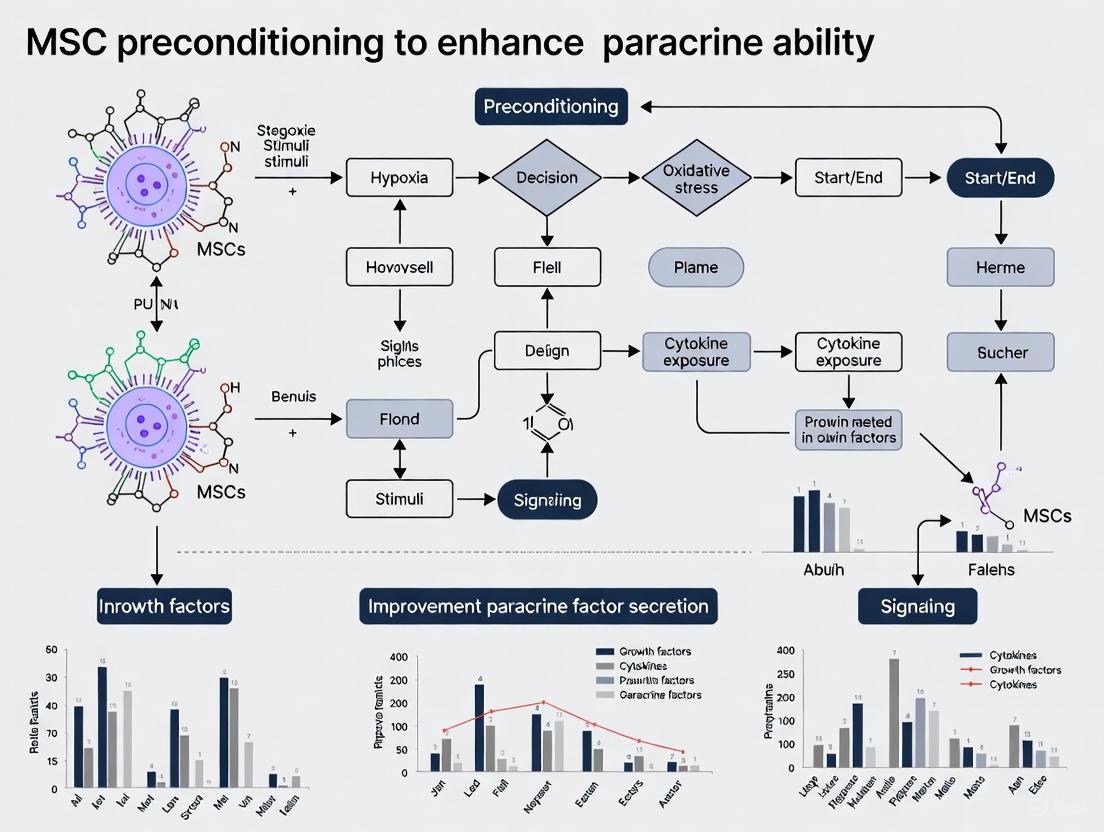
This article provides a comprehensive analysis of mesenchymal stromal cell (MSC) preconditioning, a pivotal strategy to enhance the therapeutic potential of their paracrine activity.
Priming for Potency: Advanced Strategies for MSC Preconditioning to Maximize Paracrine Secretome and Therapeutic Efficacy
Abstract
This article provides a comprehensive analysis of mesenchymal stromal cell (MSC) preconditioning, a pivotal strategy to enhance the therapeutic potential of their paracrine activity. Aimed at researchers and drug development professionals, it explores the foundational science behind the MSC secretome—a complex mixture of bioactive factors and extracellular vesicles responsible for tissue repair and immunomodulation. The content details methodological advances in preconditioning using hypoxia, cytokines, and biochemical agents to amplify secretory profiles. It further addresses critical troubleshooting aspects for overcoming MSC heterogeneity and translational challenges, and validates these approaches through comparative analysis of preclinical and emerging clinical data. The synthesis offers a roadmap for developing potent, cell-free therapeutic products for regenerative medicine and beyond.
The MSC Secretome: Unraveling the Paracrine Basis for Regenerative Therapy
The therapeutic application of Mesenchymal Stromal Cells (MSCs) has undergone a significant paradigm shift. Initially valued for their differentiation and engraftment potential, research now conclusively demonstrates that their regenerative and immunomodulatory effects are predominantly mediated by their secretome—the complex mixture of factors they secrete [1] [2]. This secretome acts via paracrine signaling to influence the local microenvironment, offering a promising cell-free therapeutic strategy that bypasses the risks associated with live-cell transplantation, such as immunogenicity and tumorigenicity [3] [1].
The secretome is not a single entity but a complex cocktail comprising soluble factors (cytokines, growth factors, chemokines) and Extracellular Vesicles (EVs), including exosomes and microvesicles [4] [1]. These components work in concert to mediate intercellular communication, transferring proteins, lipids, and nucleic acids to recipient cells [4]. This Application Note defines the MSC secretome and details how preconditioning strategies can be employed to enhance its therapeutic potency, providing standardized protocols for researchers in the field.
Defining the Composition of the MSC Secretome
The MSC secretome is a dynamic, multifaceted collection of bioactive molecules that reflects the cell's physiological state and environmental cues. Its composition can be broadly categorized as follows:
- Soluble Factors: This fraction includes a wide array of signaling proteins released into the extracellular space.
- Growth Factors: VEGF (angiogenesis), HGF (tissue repair), FGF (cell proliferation), BDNF, GDNF, NGF (neuroregeneration) [5] [1] [2].
- Cytokines and Chemokines: IL-10, IL-6, TSG-6 (anti-inflammation), MCP-1 (immune cell recruitment) [1] [2].
- Other Proteins: Enzymes, transcription factors, and ECM-modifying proteins like matrix metalloproteinases (MMPs) and tissue inhibitors of metalloproteinases (TIMPs) [3] [6].
- Extracellular Vesicles (EVs): These lipid-bilayer enclosed particles are subcategorized based on their biogenesis:
- Non-Coding RNAs: Packaged within EVs or associated with proteins, microRNAs (e.g., miR-21, miR-146a) are key regulatory molecules that can modify gene expression in target cells [1].
Table 1: Key Functional Components of the MSC Secretome and Their Roles
| Component Category | Key Examples | Primary Documented Functions |
|---|---|---|
| Pro-angiogenic Factors | VEGF, ANG, PIGF, FGF [3] [1] | Stimulates blood vessel formation; supports endothelial cell viability |
| Anti-inflammatory Mediators | IL-10, TSG-6, HO-1, PGE2 [1] [2] | Suppresses pro-inflammatory cytokine release; promotes M2 macrophage polarization |
| Anti-apoptotic & Pro-survival Factors | bFGF, TGF-β, GM-CSF, HGF [1] [2] | Inhibits programmed cell death; enhances cell proliferation and survival |
| Neurotrophic Factors | BDNF, GDNF, NGF, NT-3 [5] | Supports neuronal survival, differentiation, and synaptic plasticity |
| Extracellular Vesicles (EVs) | Exosomes, Microvesicles [4] | Horizontal transfer of miRNA, mRNA, and proteins; key mediator of paracrine effects |
Preconditioning: A Strategy to Enhance Secretome Potency
Preconditioning involves exposing MSCs to controlled, sublethal stress or specific biochemical stimuli to enhance their secretory profile and therapeutic efficacy [4] [5]. This strategy mimics the activation MSCs would encounter in a healing microenvironment, priming them to produce a secretome with tailored, enhanced functions.
Table 2: Summary of MSC Preconditioning Strategies and Their Effects on the Secretome
| Preconditioning Strategy | Typical Protocol | Key Documented Effects on Secretome Composition & Function |
|---|---|---|
| Hypoxia | Culture at 1-5% O₂ for 24-72 hours [7] [5] | Upregulates HIF-1α, leading to increased VEGF, ANG, and other pro-angiogenic factors; enhances regenerative and cytoprotective potential [7] [5]. |
| Inflammatory Cytokine Priming | Incubation with IFN-γ (10-50 ng/mL) and/or TNF-α (10-50 ng/mL) for 24-48 hours [7] [5] | Markedly enhances immunomodulatory factors (IDO1, PGE2, TSG-6); boosts immunosuppressive capacity and promotes M2 macrophage activation [7] [5]. |
| 3D Culture Systems | Culture as spheroids or in hydrogels/bioscaffolds for 48-120 hours [7] | Improves cell-cell contact, mimicking native tissue. Secretome shows enhanced anti-inflammatory properties (e.g., increased IL-10) and improved homing distribution in scaffolds [7]. |
| Biochemical/Pharmacological | Incubation with Dexamethasone, Dimethyloxalylglycine (DMOG), or Strontium-substituted compounds [4] | Can direct secretome towards specific lineages (e.g., osteogenic medium preconditioning generates exosomes that promote bone regeneration) [4]. |
Experimental Protocols for Secretome Production and Analysis
Protocol: Standardized Production and Collection of MSC Secretome
This protocol outlines the steps for producing secretome from preconditioned MSCs, adapted from current methodologies [7] [6].
I. MSC Culture and Preconditioning
- Cell Source: Culture human MSCs from a selected source (e.g., Umbilical Cord Wharton's Jelly, Adipose Tissue, Bone Marrow) under standard conditions (37°C, 5% CO₂) [6].
- Preconditioning Application: When cells reach 70-80% confluence, apply the chosen preconditioning stimulus.
II. Secretome Collection and Processing
- Serum Deprivation: After preconditioning, wash cells with PBS and replace medium with serum-free basal medium (e.g., DMEM) to avoid contamination with serum proteins [7] [6].
- Conditioned Medium (CM) Collection: Incubate for 24-72 hours. Collect the CM, which contains the secretome.
- Initial Processing: Centrifuge CM at 2,000 × g for 10 minutes to remove cellular debris and apoptotic bodies [6].
- Filtration: Filter the supernatant through a 0.22 µm sterile filter [6].
- Concentration & Storage (Optional): Concentrate the secretome using centrifugal filter units (e.g., 3 kDa cutoff) or lyophilization. Aliquot and store at -80°C [7].
Protocol: Isolation and Characterization of Extracellular Vesicles (EVs)
This protocol details the isolation of EVs from the total secretome.
I. EV Isolation via Ultracentrifugation
- Differential Centrifugation: Subject the processed CM from Protocol 4.1 to sequential centrifugation.
- 2,000 × g for 20 min to remove dead cells.
- 10,000 × g for 30 min to remove larger vesicles and debris.
- Ultracentrifugation: Transfer supernatant to ultracentrifuge tubes. Pellet EVs at 100,000 × g for 70-120 minutes at 4°C [4].
- Washing: Resuspend the EV pellet in a large volume of PBS and repeat ultracentrifugation (100,000 × g, 70 min) to wash.
- Resuspension & Storage: Resuspend the final EV pellet in a small volume of PBS or suitable buffer. Aliquot and store at -80°C.
II. EV Characterization
- Nanoparticle Tracking Analysis (NTA): Use NTA (e.g., Malvern Nanosight) to determine the particle size distribution and concentration of the EV suspension [8].
- Protein Marker Analysis: Identify specific EV markers (e.g., CD63, CD81, TSG101) and the absence of negative markers (e.g., Calnexin) via Western Blot [4].
- Transmission Electron Microscopy (TEM): Use TEM to visualize the morphology and confirm the cup-shaped structure of isolated exosomes [4].
Protocol: Functional Validation of Secretome Efficacy
In Vitro Functional Assays
- Proliferation Assay:
- Method: Treat target cells (e.g., Human Skin Epithelial Cells - HSEC) with secretome (e.g., 25-100% concentration in basal medium) for 24-120 hours [6]. Use a LIVE/DEAD viability/cytotoxicity kit. Quantify live (green, calcein-AM) and dead (red, ethidium homodimer-1) cells via fluorescence microscopy [6].
- Expected Outcome: Preconditioned secretomes (e.g., from dental pulp or Wharton's jelly MSCs) show significantly increased cell viability and proliferation compared to controls [6].
Migration/Scratch Assay:
- Method: Create a scratch wound in a confluent monolayer of target cells. Treat with secretome and monitor wound closure over 24-72 hours using time-lapse microscopy.
- Expected Outcome: Enhanced migration rates with preconditioned secretomes.
Tube Formation Assay:
- Method: Seed Human Umbilical Vein Endothelial Cells (HUVECs) on Matrigel. Treat with secretome and quantify tube formation (number of branches, tube length) after 4-18 hours.
- Expected Outcome: Secretome from hypoxic-preconditioned MSCs will significantly enhance angiogenic tube formation.
The Scientist's Toolkit: Essential Research Reagents
Table 3: Key Reagents and Materials for Secretome Research
| Reagent/Material | Specific Example & Catalog Number (if known) | Function in Protocol |
|---|---|---|
| Mesenchymal Stem Cells | Human Umbilical Cord Matrix Cells (HUCMC), Adipose-Derived Stem Cells (ADSCs) [6] | Source of secretome; choice of tissue source impacts secretome profile [6] [1]. |
| Cell Culture Media | Dulbecco's Modified Eagle Medium (DMEM), Amniomax-C100 [6] | Base medium for cell expansion and secretome production. |
| Preconditioning Agents | Recombinant Human IFN-γ (e.g., R&D Systems 285-IF), TNF-α [5] | To prime MSCs and enhance immunomodulatory secretome profile. |
| Serum-Free Media | DMEM, low exosome FBS alternatives [7] | For secretome production phase to avoid bovine EV/protein contamination. |
| Ultracentrifuge | Beckman Coulter Optima XPN Series | Essential for high-g force isolation of EVs from conditioned medium. |
| Nanoparticle Tracker | Malvern Panalytical NanoSight NS300 | For determining EV size distribution and concentration. |
| EV Characterization Antibodies | Anti-CD63, Anti-CD81, Anti-TSG101, Anti-Calnexin [4] | For Western Blot validation of isolated EVs and checking for purity. |
| Cell Viability Assay Kits | LIVE/DEAD Viability/Cytotoxicity Kit (e.g., Thermo Fisher L3224) [6] | To quantify the effects of secretome on target cell viability and proliferation. |
| 0.22 µm PES Filter | Millex-GP Sterile Filter Unit (SLGP033RB) | For sterile filtration of conditioned medium to remove debris prior to EV isolation. |
| Protease Inhibitor Cocktail | EDTA-Free Protease Inhibitor Cocktail (e.g., Roche 4693132001) | Added to conditioned medium upon collection to prevent protein degradation. |
The therapeutic application of mesenchymal stem cells (MSCs) has undergone a significant paradigm shift over the past decade. Initially, the primary mechanism of action was believed to be direct cellular engraftment and differentiation into damaged tissues [9]. However, extensive research has demonstrated that administered MSCs exhibit low engraftment rates and short persistence in target tissues, often surviving for less than three weeks post-transplantation [10] [11]. Despite this limited engraftment, pre-clinical and clinical studies have consistently reported functional improvements, particularly in cardiac repair, leading to the formulation of the "paracrine hypothesis" [10] [12]. This hypothesis proposes that the therapeutic benefits of MSCs are mediated primarily through their secretion of bioactive factors, rather than direct cellular replacement [9] [12].
These paracrine factors include a diverse array of soluble proteins, cytokines, chemokines, and growth factors, collectively termed the "secretome," as well as extracellular vesicles (EVs) containing proteins, lipids, and genetic material [13]. The secretome influences adjacent cells by modulating the local microenvironment, exerting effects including cytoprotection, angiogenesis, immunomodulation, and activation of endogenous repair mechanisms [14] [13] [11]. This understanding has redirected research toward harnessing and enhancing the paracrine activity of MSCs, positioning their secreted factors as a promising cell-free therapeutic modality that circumvents challenges associated with whole-cell therapies, such as immune rejection, tumorigenicity, and logistical complexities [10] [15].
Quantitative Analysis of MSC-Derived Paracrine Factors
Key Paracrine Factors and Their Biological Functions
Systematic analysis of the literature has identified hundreds of individual protective factors released by MSCs of various tissue origins. The table below consolidates major paracrine factors, their abbreviations, and their primary proposed functions in tissue repair and regeneration.
Table 1: Key Paracrine Factors Released by MSCs and Their Functions
| Factor Name | Abbreviation | Primary Proposed Functions |
|---|---|---|
| Vascular Endothelial Growth Factor | VEGF | Angiogenesis, cytoprotection, cell proliferation, migration [10] [9] [11] |
| Hepatocyte Growth Factor | HGF | Cytoprotection, angiogenesis, cell migration [10] [9] |
| Fibroblast Growth Factor 2 | FGF2 | Cell proliferation, migration, angiogenesis [10] [9] |
| Insulin-like Growth Factor-1 | IGF-1 | Cytoprotection, cell migration, improved contractility [9] [11] |
| Transforming Growth Factor-β | TGF-β | Vessel maturation, immunomodulation, anti-fibrosis [13] [11] |
| Bone Morphogenetic Protein 2 | BMP2 | Development, cell differentiation [9] |
| Stromal Cell-Derived Factor-1 | SDF-1 | Progenitor cell homing [9] |
| Interleukin-6 | IL-6 | VEGF induction, immunomodulation [9] [16] |
| Tumor Necrosis Factor-α Stimulated Gene 6 | TSG-6 | Anti-inflammatory, immunomodulation [11] |
| Adrenomedullin | ADM | Cytoprotection [9] |
A systematic review examining paracrine-mediated MSC therapy for ischemic heart disease identified 234 individual protective factors across 86 pre-clinical studies [10] [12]. The most frequently utilized MSCs were derived from bone marrow (59/86 studies), cardiac tissue (16/86), and adipose tissue [12]. Administration of MSCs or their secreted factors consistently demonstrated functional improvements in pre-clinical models, including reduced infarct size, improved left ventricular ejection fraction (LVEF), enhanced contractility, and increased vessel density [10].
Functional Classification of Paracrine Effects
The therapeutic effects of the MSC secretome can be categorized into several key mechanistic areas, each mediated by a distinct profile of released factors.
Table 2: Functional Classification of Paracrine Effects and Mediating Factors
| Therapeutic Effect | Key Mediating Factors | Observed Outcomes |
|---|---|---|
| Myocardial Protection | IGF-1, HGF, ADM, SFRP2 [9] [11] | Decreased apoptosis and necrosis of cardiomyocytes under ischemic stress [9]. |
| Angiogenesis & Neovascularization | VEGF, FGF2, HGF, ANG, PGF, PDGF [13] [9] | Increased capillary density, improved blood flow to ischemic areas, formation of new vessels [10] [13]. |
| Immunomodulation | TSG-6, PGE2, IL-10, TGF-β, IDO, IL-1Ra [11] [16] | Polarization of macrophages to M2 anti-inflammatory phenotype, suppression of T-cell proliferation, reduced pro-inflammatory cytokines (e.g., IL-1β, TNF-α) [11]. |
| Anti-Fibrosis | HGF, KGF, BMP-7, STC-1 [11] | Reduced collagen deposition, decreased expression of pro-fibrotic factors like TGF-β1 and TIMP-1 [11]. |
| Activation of Endogenous Stem Cells | SDF-1, VEGF, FGF2 [9] | Recruitment and activation of resident cardiac stem cells, promoting endogenous repair mechanisms [10]. |
Experimental Protocols for Investigating the Paracrine Hypothesis
Protocol 1: Generating Conditioned Medium from Preconditioned MSCs
Principle: Conditioned medium (CM) contains the soluble secretome of MSCs. Preconditioning MSCs prior to CM collection enhances the potency and specificity of the released factors, mimicking a therapeutic state [15] [16].
Materials:
- MSCs: Bone marrow-derived (BM-MSCs) or adipose tissue-derived (AD-MSCs) are common.
- Preconditioning Agents:
- Basal Medium: Serum-free DMEM/F12 to avoid confounding effects of serum proteins.
Procedure:
- Culture and Expansion: Culture MSCs in standard growth medium until 70-80% confluent.
- Serum Starvation: Wash cells with PBS and incubate in serum-free basal medium for 24 hours to synchronize cells and remove serum contaminants.
- Preconditioning:
- CM Collection: After the preconditioning period, carefully collect the medium from all flasks.
- Centrifugation: Centrifuge the collected medium at 2,000 × g for 20 minutes to remove cellular debris.
- Concentration & Storage: Concentrate the supernatant using 3 kDa centrifugal filters (if desired) and store aliquots at -80°C.
Protocol 2: In Vitro Paracrine Signaling Coculture System
Principle: This non-contact coculture system models paracrine interactions between signal-sending (MSCs) and signal-receiving cells (e.g., cardiomyocytes, endothelial cells) to dissect specific ligand-receptor pathways [17].
Materials:
- Cell Lines: Signal-sending cells (e.g., MSCs, STO feeder cells); Signal-receiving cells (e.g., C2C12 myoblasts, HUVECs) [17].
- Transwell Inserts: 0.4 µm pore size, preventing cell migration but allowing free passage of soluble factors.
- Assay Kits: MTT/WST-1 for viability, phalloidin for F-actin staining, ELISA for specific factor quantification.
Procedure:
- Plate Signal-Receiving Cells: Seed C2C12 myoblasts or other target cells in the bottom of a multi-well plate. Allow to adhere overnight.
- Plate Signal-Sending Cells: Seed preconditioned or control MSCs into the transwell inserts.
- Coculture Assembly: Place the MSC-containing inserts into the wells with the signal-receiving cells.
- Incubation: Coculture the cells for 24-72 hours depending on the readout.
- Functional Analysis:
- Wound Healing/Migration Assay: Create a scratch wound in the C2C12 monolayer and measure closure rate over 24-48 hours [17].
- Cytoskeletal Remodeling: Fix and stain C2C12 cells with phalloidin to visualize increased filopodia/lamellipodia formation, indicative of noncanonical Wnt signaling activation [17].
- Molecular Analysis: Harvest conditioned medium from the coculture for ELISA, or lyse signal-receiving cells for Western blotting to analyze pathway activation (e.g., Akt, ERK phosphorylation).
Visualizing Signaling and Experimental Workflows
Paracrine Signaling Network in Cardiac Repair
The following diagram illustrates the key signaling pathways and biological processes activated by MSC-derived paracrine factors in the context of cardiac repair, demonstrating the multi-faceted nature of the hypothesis.
Experimental Workflow for Paracrine Analysis
This diagram outlines a comprehensive experimental workflow for generating and validating the therapeutic effects of the MSC secretome, from preconditioning to in vitro and in vivo functional assays.
The Scientist's Toolkit: Essential Research Reagents
This toolkit catalogues critical reagents and materials utilized in the protocols and studies cited within this field, providing a practical resource for experimental design.
Table 3: Essential Research Reagents for Investigating MSC Paracrine Mechanisms
| Reagent/Material | Primary Function/Application | Representative Examples & Notes |
|---|---|---|
| MSC Sources | Therapeutic cell source for CM or EV production. | Bone Marrow (BM-MSC), Adipose Tissue (AD-MSC), Umbilical Cord (UC-MSC). Source impacts secretome profile [14] [13]. |
| Preconditioning Agents | Enhance paracrine activity of MSCs prior to experiments. | CoCl₂ (hypoxia mimetic [16]), TNF-α/IL-1β (inflammatory priming [15] [16]), Poly(I:C) (TLR3 activation [16]). |
| Transwell Inserts | Enable non-contact coculture to study paracrine signaling. | 0.4 µm pore size permits factor passage but not cells. Critical for protocol 3.2 [17]. |
| Extracellular Vesicle Isolation Kits | Isolate EVs/exosomes from conditioned medium for mechanistic studies. | Ultracentrifugation, size-exclusion chromatography, or commercial kits (e.g., from ThermoFisher, System Biosciences) [13]. |
| Cell Lines for Bioassays | Model signal-receiving cells for functional validation of CM/EVs. | C2C12 myoblasts [17], HUVECs (angiogenesis), PC12 neurons [16], THP-1 macrophages (immunomodulation [16]). |
| Analysis Kits | Quantify specific factors or functional outcomes. | ELISA for VEGF, HGF, etc.; WST-1/MTT for viability; Phalloidin for cytoskeletal staining [17] [16]. |
| miRNA Inhibitors/Mimics | Functionally validate the role of specific miRNAs in MSC-EVs. | Used to knock down or overexpress miRNAs (e.g., miR-21, miR-146a) identified in sequencing studies [15]. |
The therapeutic application of Mesenchymal Stem/Stromal Cells (MSCs) has undergone a fundamental paradigm shift. Initially valued for their differentiation potential, research now confirms that their primary therapeutic effects are mediated through paracrine secretion rather than direct cell replacement [1] [18]. The complex mixture of bioactive molecules secreted by MSCs—the secretome—is now considered the main driver of their regenerative and immunomodulatory actions. This secretome includes three key classes of therapeutic cargos: growth factors, cytokines, and microRNAs (miRNAs), which are often packaged and delivered via extracellular vesicles (EVs) [1] [19].
Preconditioning of MSCs is a strategic approach to enhance the production and enrichment of these beneficial cargos. By exposing MSCs to specific physiological stressors or biochemical signals, such as inflammatory cytokines or hypoxia, it is possible to skew their secretome toward a more potent therapeutic profile, thereby enhancing their efficacy in treating a range of diseases [15] [20]. This application note details the identity, function, and protocols for manipulating these key cargos.
Quantitative Profile of Key Therapeutic Cargos
The therapeutic potential of the MSC secretome is quantifiable. The following tables summarize the major growth factors, cytokines, and miRNAs, their concentrations under varying conditions, and their primary biological functions.
Table 1: Key Growth Factors and Cytokines in the MSC Secretome
| Cargo Type | Specific Factor | Reported Concentration Range (Condition) | Primary Documented Functions |
|---|---|---|---|
| Pro-angiogenic Factor | Vascular Endothelial Growth Factor (VEGF) | Variable (Source & Condition Dependent) | Promotes blood vessel formation [1] |
| Hepatocyte Growth Factor (HGF) | Variable (Source & Condition Dependent) | Promotes angiogenesis, cell survival, and motility [1] [20] | |
| Insulin-like Growth Factor-1 (IGF-1) | Variable (Source & Condition Dependent) | Supports tissue growth and repair [1] | |
| Anti-apoptotic Molecule | Basic Fibroblast Growth Factor (bFGF) | Variable (Source & Condition Dependent) | Enhances cell survival and proliferation [1] |
| Transforming Growth Factor (TGF) | Variable (Source & Condition Dependent) | Involved in immune regulation and tissue repair [1] | |
| Anti-inflammatory Mediator | TNF-α-stimulated Gene/Protein 6 (TSG-6) | Upregulated by TNF-α preconditioning | Key anti-inflammatory factor, reduces cytokine storm [1] [20] |
| Interleukin-10 (IL-10) | Variable (Source & Condition Dependent) | Potent anti-inflammatory cytokine [1] [20] | |
| Heme Oxygenase-1 (HO-1) | Variable (Source & Condition Dependent) | Confers protection against oxidative stress [1] |
Table 2: Key miRNAs Modulated by MSC Preconditioning and Their Therapeutic Roles
| miRNA | Change with Preconditioning | Validated Target/Pathway | Primary Therapeutic Effect |
|---|---|---|---|
| miR-146a | ↑ with TNF-α, IL-1β, LPS [15] | TLR/NF-κB signaling pathway | Anti-inflammatory, immune response modulation [15] |
| miR-21-5p | ↑ with low-dose TNF-α [15] | PTEN/PI3K-AKT pathway | Promotes cell survival, proliferation, anti-apoptosis [21] [15] |
| miR-181a | ↑ with LPS preconditioning [15] | Not specified in results | Tissue repair, inflammatory response modulation [15] |
| miR-222-3p | ↑ with 0.1 μg/mL LPS [15] | Not specified in results | Mitigates inflammatory damage [15] |
| miR-150-5p | ↑ with 1 μg/mL LPS [15] | Not specified in results | Mitigates inflammatory damage [15] |
| miR-23a-3p | Enriched in ADMSC-Exos [21] | TGF-β receptor 2 | Drives CD4+ T cells toward regulatory T cell differentiation [21] |
| miR-10a | Enriched in ADMSC-Exos [21] | FOXP3, TGF-β pathway | Controls differentiation of Tregs and Th17 cells [21] |
Experimental Protocols for Preconditioning and Cargo Analysis
Protocol 1: Cytokine Preconditioning of MSCs
This protocol outlines the process of preconditioning human umbilical cord-derived MSCs (hUC-MSCs) with a cytokine cocktail to enhance the immunomodulatory potency of their secretome, particularly for applications in inflammatory diseases like psoriasis [22].
Application: Enhance anti-inflammatory miRNA (e.g., miR-146a) and protein (e.g., TSG-6) content in the MSC secretome.
Materials:
- Research Reagent Solutions:
- Human Umbilical Cord MSCs (hUC-MSCs): Preferred for high proliferative capacity and potent immunomodulation [1] [20].
- Proinflammatory Cytokines: Recombinant Human IL-17, IL-22, and TNF-α. Prepare stock solutions as per manufacturer's instructions.
- Cell Culture Medium: Standard MSC expansion medium (e.g., DMEM/F12 supplemented with 10% FBS and 1% Penicillin/Streptomycin).
- Serum-free Medium: For the preconditioning phase.
- Phosphate Buffered Saline (PBS): For washing steps.
Methodology:
- Cell Culture: Maintain hUC-MSCs in standard culture medium until 70-80% confluency.
- Preconditioning:
- Harvesting Secretome:
- Collect the conditioned medium after the incubation period.
- Centrifuge at 300 × g for 10 minutes to remove cellular debris.
- The supernatant contains the preconditioned secretome and can be used for further analysis or EV isolation.
Protocol 2: Isolation and Characterization of Extracellular Vesicles
This protocol describes the isolation of small extracellular vesicles (sEVs) from the preconditioned conditioned medium using differential ultracentrifugation.
Application: Isolate EVs enriched with therapeutic cargos for functional studies or as a cell-free therapeutic.
Materials:
- Research Reagent Solutions:
- Ultracentrifuge and Fixed-Angle Rotor: Essential for high-force spins.
- Polycarbonate Bottles or Thin-Wall Tubes: Compatible with ultracentrifugation.
- Filter (0.22 μm): For sterilizing PBS.
- Protease Inhibitor Cocktail: To prevent protein degradation during isolation.
Methodology:
- Clarification: Centrifuge the conditioned medium at 2,000 × g for 20 minutes to remove dead cells and large debris.
- Concentration: Further centrifuge the supernatant at 10,000 × g for 30 minutes to remove larger vesicles and apoptotic bodies.
- EV Pelletting: Transfer the supernatant to ultracentrifuge tubes and centrifuge at 100,000 × g for 70 minutes at 4°C.
- Washing: Resuspend the pellet in a large volume of PBS and centrifuge again at 100,000 × g for 70 minutes to wash the EV pellet.
- Resuspension: Finally, resuspend the purified EV pellet in a small volume of PBS and store at -80°C.
- Characterization: Validate EV preparation by:
- Nanoparticle Tracking Analysis (NTA): For particle size and concentration.
- Transmission Electron Microscopy (TEM): For morphological confirmation.
- Western Blotting: For positive (CD63, CD81, TSG101) and negative (Calnexin) EV markers.
Protocol 3: Functional Analysis of miRNA Activity
This protocol validates the functional impact of preconditioning-induced miRNAs on recipient cells, using macrophage polarization as an example.
Application: Confirm the mechanistic role of specific miRNAs in mediating therapeutic effects.
Materials:
- Research Reagent Solutions:
- Recipient Cell Line: e.g., RAW 264.7 macrophage cell line.
- Lipopolysaccharide (LPS): To induce pro-inflammatory M1 macrophage polarization.
- RNA Isolation Kit: For total RNA extraction.
- qRT-PCR Reagents: Including reverse transcription kit, SYBR Green master mix, and specific primers for miRNAs (e.g., miR-146a) and M1/M2 macrophage markers (e.g., iNOS, Arg1).
- ELISA Kits: For quantifying cytokine secretion (e.g., TNF-α, IL-10).
Methodology:
- Treatment: Treat macrophages with LPS (e.g., 100 ng/mL) to induce inflammation. Co-treat with isolated EVs from preconditioned or control MSCs.
- RNA Extraction and qRT-PCR:
- Isolate total RNA from macrophages after 6-24 hours of treatment.
- Perform reverse transcription and qPCR to quantify the expression of target miRNAs (e.g., miR-146a) and macrophage phenotype genes.
- Protein Analysis:
- Collect cell culture supernatant after 24-48 hours.
- Use ELISA to measure the secretion of pro-inflammatory (TNF-α, IL-6) and anti-inflammatory (IL-10) cytokines.
- Data Interpretation: Successful preconditioning is indicated by elevated miR-146a in recipient cells, accompanied by a shift in macrophage markers from M1 (iNOS) to M2 (Arg1) and a corresponding change in the cytokine profile.
Signaling Pathways and Molecular Mechanisms
The therapeutic cargos orchestrate their effects through complex but defined signaling networks. The following diagram synthesizes the key pathways by which preconditioned MSC-EVs, particularly through miRNAs, mediate immunomodulation in a recipient macrophage.
Diagram: miRNA-Mediated Immunomodulation by Preconditioned MSC-EVs. Preconditioning enhances loading of miRNAs like miR-146a into EVs. Upon delivery to a macrophage, miR-146a targets key components (IRAK1, TRAF6) of the TLR/NF-κB signaling pathway, suppressing pro-inflammatory cytokine production and promoting a shift to an anti-inflammatory M2 phenotype [21] [15].
The Scientist's Toolkit: Essential Research Reagents
Table 3: Essential Research Reagents for MSC Preconditioning and Secretome Analysis
| Reagent/Category | Specific Example | Function/Application |
|---|---|---|
| MSC Sources | Human Umbilical Cord (UC-MSCs), Bone Marrow (BM-MSCs) | Primary cells for research; UC-MSCs often preferred for high proliferative and immunomodulatory capacity [1] [20]. |
| Preconditioning Agents | Recombinant Cytokines (TNF-α, IL-1β, IL-17), LPS | Biologically relevant stimuli to enhance therapeutic cargo production in MSCs [22] [15]. |
| EV Isolation Kits | Ultracentrifugation kits, Size-Exclusion Chromatography (SEC) kits, Polymer-based Precipitation kits | For isolating and purifying extracellular vesicles from conditioned medium. |
| Characterization Instruments | Nanoparticle Tracking Analyzer (NTA), Western Blot Apparatus | For quantifying EV particle size/concentration and confirming EV-specific markers (CD63, CD81) [19]. |
| Functional Assay Kits | miRNA qRT-PCR Assays, ELISA Kits for Cytokines, Macrophage Polarization Antibody Panels | To quantify cargo levels and validate functional outcomes in recipient cells. |
Mesenchymal stem cells (MSCs) represent a cornerstone of regenerative medicine, valued for their multipotent differentiation capacity, immunomodulatory properties, and paracrine activity [14] [18]. However, their biological characteristics and therapeutic potential vary significantly based on their tissue of origin. Understanding these differences is critical for selecting the optimal cell source for specific clinical applications and for developing effective preconditioning strategies to enhance their paracrine ability [18]. This Application Note provides a structured comparison of MSCs derived from the three most common sources—bone marrow (BM-MSCs), adipose tissue (AD-MSCs), and umbilical cord (UC-MSCs)—and outlines detailed protocols for their evaluation within a preconditioning research framework.
The therapeutic utility of MSCs is profoundly influenced by their tissue source, which affects their proliferation, differentiation potential, secretory profile, and senescent behavior. The tables below summarize the key comparative characteristics.
Table 1: Biological Properties and Differentiation Potential of MSCs from Different Sources
| Property | Bone Marrow (BM-MSCs) | Adipose Tissue (AD-MSCs) | Umbilical Cord (UC-MSCs) |
|---|---|---|---|
| Proliferation Capacity | Moderate [23] | High [24] | Superior [23] [14] |
| Senescence & Aging | Lower senescence at late passages; reduced SA-β-gal [23] | Intermediate | Higher senescence in long-term culture [25] |
| Osteogenic Potential | Superior; higher expression of ALP, OCN; strong mineralization [23] [26] [24] | Moderate [26] [24] | Lower than BM-MSCs [23] |
| Chondrogenic Potential | Superior; enhanced SOX9, COL2, COL10 expression [23] [24] | Lower than BM-MSCs [24] | Moderate [23] |
| Adipogenic Potential | High potential [23] [26] | Superior; inherent predisposition [26] | Lower than BM-MSCs [23] |
| Tenogenic Potential | Lower [27] | Not Specified | Superior; higher expression of SCX, TNC; better tendon repair [27] |
| Immunomodulatory Effect | Potent [24] | More potent than BM-MSCs [24] | Strong; low immunogenicity [14] |
| Secretome Profile | Higher HGF, SDF-1 [24] | Higher bFGF, IFN-γ, IGF-1 [24] | Not Specified |
Table 2: Functional and Preconditioning Considerations for Clinical Applications
| Aspect | Bone Marrow (BM-MSCs) | Adipose Tissue (AD-MSCs) | Umbilical Cord (UC-MSCs) |
|---|---|---|---|
| Key Clinical Strengths | Orthopedics (bone, cartilage repair) [26] [24] | Immunomodulatory therapies [24] | Allogeneic banking, tendon repair, hematopoietic support [14] [28] [27] |
| Response to Preconditioning | Hypoxia improves angiogenic factor secretion [29] | Not Specified | Cytokine priming enhances anti-inflammatory miRNA (e.g., miR-146a) in EVs [15] |
| Epigenetic Memory | Runx2 promoter hypomethylation (favors osteogenesis) [26] | PPARγ promoter hypomethylation (favors adipogenesis) [26] | Not Specified |
| Therapeutic Mechanisms | Differentiation & paracrine signaling [18] | Predominantly paracrine signaling [18] | Primarily paracrine; exosome-mediated repair [28] [15] |
Experimental Protocols for MSC Characterization
To systematically evaluate MSCs from different sources, especially in the context of preconditioning, the following standardized protocols are recommended.
Protocol: Trilineage Differentiation and Analysis
This protocol assesses the core multipotency of MSCs, a critical quality control metric and a baseline for evaluating preconditioning effects [26] [24].
1. Osteogenic Differentiation
- Culture Method: Plate MSCs at 4x10³ cells/cm² in a 12-well plate. At confluence, replace medium with osteogenic induction medium (OIM).
- Induction Medium: Base medium supplemented with 1 nM dexamethasone, 50 μM ascorbic acid, and 20 mM β-glycerophosphate [26].
- Duration: 14-21 days.
- Analysis: Fix cells with 70% ethanol and stain with 0.5% Alizarin Red S (pH 4.1-4.3) for 5-10 minutes to detect calcium deposits [26] [28]. Quantify gene expression of markers like ALP and OCN via RT-qPCR [23].
2. Adipogenic Differentiation
- Culture Method: Plate MSCs at 4x10³ cells/cm². At confluence, replace medium with adipogenic induction medium (AIM).
- Induction Medium: Base medium supplemented with 500 nM dexamethasone, 0.5 mM isobutylmethylxanthine, 50 μM indomethacin, and 10 μg/mL insulin [26].
- Duration: 21 days.
- Analysis: Fix cells with 70% ethanol and stain with 0.3% Oil Red O solution for 10 minutes to visualize lipid vacuoles [26] [28]. Analyze expression of PPARγ and LPL via RT-qPCR [23].
3. Chondrogenic Differentiation
- Culture Method: Use a micromass culture system. Pellet 1.6x10⁵ cells or spot 5 μL of cell suspension (1.6x10⁷ cells/mL) in the center of a 24-well plate. Incubate for 2 hours before adding medium.
- Induction Medium: Base medium supplemented with 10 ng/mL TGF-β3, 500 ng/mL BMP-2, 10⁻⁷ M dexamethasone, 50 μg/mL ascorbate-2-phosphate, 40 μg/mL proline, 100 μg/mL pyruvate, and 1:100 ITS+ Premix [26].
- Duration: 21-28 days, with medium changes every 3 days.
- Analysis: Process pellets for paraffin sectioning and stain with Alcian Blue or Safranin O for proteoglycans. Immunohistochemistry for Collagen Type II and gene expression analysis for SOX9 and COL2A1 are recommended [23] [27].
Protocol: In Vitro Preconditioning and Paracrine Function Assessment
Preconditioning aims to enhance MSC fitness, survival, and paracrine output prior to therapeutic application [29].
1. Hypoxic Preconditioning
- Procedure: Culture MSCs at ~80% confluence in a multifunction gas chamber or a dedicated hypoxia workstation. Maintain at 1% O₂, 5% CO₂, and 37°C for 24-72 hours [29].
- Mechanism: Stabilizes HIF-1α, upregulating pro-survival and angiogenic genes like VEGF [29].
- Downstream Analysis: Collect conditioned medium to analyze secreted factors (ELISA for VEGF, HGF, etc.) or isolate extracellular vesicles (EVs) for miRNA profiling (e.g., miR-21, miR-126) [15]. Assess improved cell survival under oxidative stress.
2. Cytokine Preconditioning
- Procedure: Treat MSCs with 10-20 ng/mL of TNF-α or IFN-γ in standard culture medium for 24-48 hours [15].
- Mechanism: Primes MSCs to enhance immunomodulatory capacity.
- Downstream Analysis: Analyze surface expression of immunomodulatory ligands (e.g., PD-L1). Isolve EVs and quantify anti-inflammatory miRNAs like miR-146a and miR-181a via RT-qPCR, which promote macrophage polarization toward an M2 phenotype [15].
3. Herbal Extract Preconditioning
- Procedure: Pre-treat MSCs with sub-therapeutic doses of herbal compounds such as curcumin or artemisinin for a defined period [25].
- Mechanism: Activates Nrf2-mediated antioxidant pathways and reduces SASP, potentially countering senescence.
- Downstream Analysis: Perform SA-β-Gal staining to quantify senescence. Measure intracellular ROS levels and analyze expression of senescence-related genes (p16, p21, p53) [23] [25].
The following diagram illustrates the logical workflow and key mechanisms involved in a preconditioning study.
The Scientist's Toolkit: Essential Research Reagents
The following table lists key reagents essential for conducting the experiments outlined in this document.
Table 3: Essential Reagents for MSC Research and Preconditioning Studies
| Reagent/Category | Specific Examples | Function & Application |
|---|---|---|
| Culture Media Supplements | Human Platelet Lysate (hPL) | Xeno-free supplement for clinical-scale MSC expansion; enhances proliferation while maintaining phenotype [24]. |
| Differentiation Inducers | Dexamethasone, Ascorbic Acid, β-Glycerophosphate, IBMX, Indomethacin, TGF-β3, BMP-2 | Key components in defined media to direct MSC differentiation into osteogenic, adipogenic, and chondrogenic lineages [26]. |
| Preconditioning Agents | TNF-α, IFN-γ, Lipopolysaccharide (LPS), Curcumin, Artemisinin | Biological and herbal modulators used to prime MSCs, enhancing their immunomodulatory, antioxidant, and paracrine functions [25] [15]. |
| Staining & Detection | Alizarin Red S, Oil Red O, Alcian Blue, Antibodies for CD73, CD90, CD105, CD34, CD45 | Used for histological confirmation of differentiation and flow cytometric characterization of MSC surface markers [26] [28] [24]. |
| Molecular Analysis Kits | RT-qPCR Kits, miRNA Extraction Kits, ELISA Kits (VEGF, HGF) | Critical for quantifying gene expression (e.g., Runx2, PPARγ, SOX9), profiling miRNA in EVs, and measuring secreted proteins [23] [15]. |
The choice of tissue source for MSCs is a fundamental determinant of their therapeutic profile. BM-MSCs excel in skeletal regeneration, AD-MSCs offer robust immunomodulation and proliferative capacity, while UC-MSCs present advantages for tendon repair and allogeneic therapies. A deep understanding of these inherent differences enables researchers to make informed decisions for specific clinical applications. Furthermore, integrating standardized characterization with tailored preconditioning protocols provides a powerful strategy to overcome limitations such as senescence and low in vivo engraftment, ultimately maximizing the paracrine output and therapeutic efficacy of MSCs in regenerative medicine.
The therapeutic potential of mesenchymal stromal cells (MSCs) in regenerative medicine is increasingly attributed to their paracrine activity rather than direct cellular differentiation and engraftment [30] [31]. The complex mixture of bioactive factors secreted by MSCs—collectively known as the secretome—mediates immunomodulation, tissue repair, and angiogenesis [30] [32]. However, the composition and potency of this secretome are not static; they are dynamically shaped by signals present in the host microenvironment, particularly following injury [33] [34].
This Application Note explores the paradigm of MSC preconditioning, a strategy where MSCs are exposed in vitro to specific biochemical or physical stimuli mimicking a disease or injury microenvironment. This process "licenses" or "primes" the cells, enhancing the therapeutic quality of their secretome for targeted applications [30] [33]. We detail the molecular mechanisms involved, provide validated experimental protocols for preconditioning, and present quantitative data on the resulting secretome alterations, providing researchers with a framework to harness the host microenvironment for enhanced cell-free therapies.
Molecular Mechanisms: How Injury Signals Reshape the MSC Secretome
The host microenvironment at an injury site is characterized by a distinct biochemical milieu, often involving inflammation, hypoxia, and oxidative stress. When MSCs sense these cues, they undergo functional reprogramming that profoundly alters their secretory profile.
Inflammatory Licensing
Exposure to pro-inflammatory cytokines like Interferon-gamma (IFN-γ) and Tumor Necrosis Factor-alpha (TNF-α) is a potent trigger for secretome remodeling. This process, known as inflammatory licensing, shifts MSCs toward an immunomodulatory phenotype (MSC2) [35]. Key molecular changes include:
- Upregulation of Immunomodulatory Enzymes: Licensed MSCs significantly increase production of Indoleamine 2,3-dioxygenase (IDO), a critical enzyme that suppresses T-cell proliferation [35].
- Altered Surface Marker Expression: Licensing increases surface expression of HLA-ABC and HLA-DR, indicating enhanced immune interaction capacity [35].
- Secretome Factor Enrichment: The licensed secretome becomes enriched with chemotactic and immunomodulatory proteins such as C-C motif chemokine ligand 2 (CCL2) and IL-6, which promote macrophage polarization toward the regenerative M2 phenotype [36] [35].
Disease Microenvironment Preconditioning (DMP)
A more sophisticated approach involves priming MSCs with factors that directly mirror the target pathology. This tailors the secretome to address specific disease mechanisms [33] [34].
- Tissue-Specific Response: When MSCs are exposed to conditioned medium from degenerated intervertebral discs, their secretome adjusts to counter the primary pathology, showing increased levels of factors involved in immunomodulation, adjustment of ECM synthesis, and ECM reorganization [34].
- Cytokine Preconditioning: Priming with Transforming Growth Factor-beta (TGF-β) enhances MSC survival and engraftment post-transplantation, reducing wound healing time in murine models. Preconditioning with IL-1β upregulates Matrix Metalloproteinase-3 (MMP-3), enhancing MSC migration to injury sites [36].
The following diagram illustrates the core signaling pathways involved in MSC inflammatory licensing.
Figure 1: Signaling Pathways in MSC Inflammatory Licensing. Exposure to inflammatory cytokines IFN-γ and TNF-α at the injury site triggers MSC licensing, leading to upregulated IDO and HLA expression and a therapeutically enhanced secretome.
Experimental Protocols
This section provides a detailed methodology for implementing disease microenvironment preconditioning and analyzing the resulting MSC secretome.
Protocol 1: Inflammatory Licensing of MSCs
This protocol describes how to license MSCs into an immunomodulatory (MSC2) phenotype using a cytokine cocktail, as per International Society for Cell & Gene Therapy (ISCT) recommendations [35].
Key Reagents:
- Recombinant human IFN-γ
- Recombinant human TNF-α
- Serum-free basal medium (e.g., lg-DMEM)
Procedure:
- Cell Seeding: Plate passage 3-5 MSCs at a density of 10,000 cells/cm² in standard growth medium and allow them to adhere for 14-24 hours.
- Starvation: Wash cells three times with PBS and incubate in serum-free basal medium for 6 hours to synchronize the cell cycle and remove serum contaminants.
- Licensing Stimulation: Replace the medium with serum-free basal medium containing a cocktail of 15 ng/mL IFN-γ and 15 ng/mL TNF-α.
- Incubation: Incubate cells for 48 hours in a standard culture incubator (37°C, 5% CO₂).
- Validation of Licensing (Quality Control):
- Flow Cytometry: Analyze cells for surface marker upregulation. Successfully licensed MSCs should show >98% positivity for both HLA-ABC and HLA-DR [35].
- ELISA: Measure IDO concentration in the conditioned medium. A successful license is confirmed by a greater than 10-fold increase in IDO secretion compared to resting MSCs [35].
Protocol 2: Disease-Specific Preconditioning Using Tissue-Conditioned Medium
This protocol outlines the generation of a disease-specific microenvironment in vitro using conditioned medium from target tissues to prime MSCs [34].
Key Reagents:
- Donor-derived diseased tissue (e.g., degenerative intervertebral disc)
- Basal medium (e.g., low-glucose DMEM)
- MSCs from desired source
Procedure:
- Tissue-Conditioned Medium (TCM) Generation:
- Obtain human tissue samples (healthy, traumatic, degenerative) with ethical consent.
- Wash tissue pieces thoroughly in PBS and weigh.
- Incubate tissue in basal medium (e.g., 3.5 mL per gram of tissue) for 48 hours.
- Filter the supernatant through a 100 µm cell strainer, aliquot, and store at -80°C.
- MSC Preconditioning:
- Plate and starve MSCs as described in Protocol 1, Steps 1-2.
- Replace the medium with the prepared tissue-conditioned medium (TCM).
- Incubate for 24 hours.
- Secretome Collection:
- After preconditioning, wash cells three times with basal medium to remove the priming stimuli.
- Add fresh serum-free basal medium and incubate for 24 hours.
- Collect the supernatant; this is the preconditioned MSC secretome.
- Centrifuge to remove cellular debris, aliquot, and store at -80°C for subsequent analysis or therapeutic use.
The workflow for this detailed protocol is summarized in the following diagram.
Figure 2: Experimental Workflow for Disease-Specific Preconditioning. The process involves generating conditioned medium from donor tissue, using it to prime MSCs, and collecting the resulting therapeutically tailored secretome.
Data Presentation: Quantitative Changes in the MSC Secretome
Preconditioning induces significant quantitative and qualitative changes in the MSC secretome. The tables below summarize key alterations in protein factors and miRNAs based on experimental data.
Table 1: Key Protein Factors in the Preconditioned MSC Secretome and Their Functions
| Secretome Factor | Function | Change with Preconditioning | Reference |
|---|---|---|---|
| Indoleamine 2,3-dioxygenase (IDO) | Immunosuppression via T-cell proliferation inhibition | >10-fold increase with IFN-γ/TNF-α | [35] |
| Vascular Endothelial Growth Factor (VEGF) | Angiogenesis, neurogenesis | Increased with hypoxic preconditioning | [30] [32] |
| Transforming Growth Factor-β (TGF-β) | Treg activation, suppression of DC maturation | Varies with preconditioning stimulus | [32] [31] |
| Hepatocyte Growth Factor (HGF) | Angiogenesis, antifibrosis, preserves renal function | Component of baseline & primed secretome | [30] [31] |
| TNF-α Stimulated Gene/Protein (TSG-6) | Anti-inflammatory, improves tissue repair | Induced by inflammatory preconditioning | [32] [36] |
| Matrix Metalloproteinases (MMPs) | ECM remodeling, cell migration | Upregulated (e.g., MMP-3 with IL-1β) | [30] [36] |
Table 2: Functional Distribution of Key Molecules in the Preconditioned MSC Secretome
| Biological Function | Key Growth Factors & Cytokines | Key MicroRNAs (miRNAs) |
|---|---|---|
| Angiogenesis | VEGF, bFGF, MCP-1, PDGF, HGF, IL-6, IL-8 | miR-21, miR-23, miR-27, miR-126, miR-130a, miR-210, miR-378 |
| Immunomodulation | IDO, HGF, PGE2, TGF-β1, TSG-6, IL-10 | miR-21, miR-146a, miR-375 |
| Anti-apoptosis | VEGF, bFGF, G-CSF, HGF, IGF-1, STC-1, IL-6 | miR-25, miR-214 |
| Anti-fibrosis | HGF, PGE2, IDO, IL-10 | miR-26a, miR-29, miR-125b, miR-185 |
| Proliferation | VEGF, bFGF, HGF, IGF-1, LIF, MCP-1, PGE2, SDF-1 | miR-17 |
| Chemoattraction | IGF-1, SDF-1, VEGF, G-CSF, MCP-1, IL-8 | - |
The Scientist's Toolkit: Research Reagent Solutions
Table 3: Essential Reagents for MSC Preconditioning and Secretome Analysis
| Item | Function/Description | Example |
|---|---|---|
| Recombinant Human Cytokines | For inflammatory licensing (MSC2 phenotype) | IFN-γ, TNF-α, IL-1β, TGF-β1 |
| Serum-Free Basal Medium | For secretome production; eliminates serum-derived protein contamination | Low-glucose DMEM |
| ELISA Kits | Quantitative validation of specific secretome factors (e.g., IDO) | Human IDO ELISA Kit |
| Proteomic Analysis Tools | Comprehensive, unbiased profiling of secretome protein composition | LC-MS/MS (Liquid Chromatography with Tandem Mass Spectrometry) |
| 3D Culture Scaffolds | Physical preconditioning; mimics native tissue architecture better than 2D culture | Biodegradable polymer hydrogels |
| Hypoxia Chambers | For preconditioning MSCs under low oxygen tension (e.g., 1-5% O₂) | Modular incubator chambers |
The host microenvironment serves as a rich source of instructional cues that can be harnessed to tailor the therapeutic profile of the MSC secretome. Preconditioning strategies, such as inflammatory licensing and disease-mimicking priming, transform MSCs into powerful factories for producing targeted, potent, and cell-free regenerative therapeutics. The protocols and data presented herein provide a roadmap for researchers to standardize and implement these approaches, paving the way for more consistent, effective, and clinically translatable MSC-based therapies. By moving beyond the use of naïve MSCs and towards preconditioned, secretome-based treatments, we can better address the complex challenges of human disease and tissue repair.
A Practical Toolkit: Preconditioning Strategies to Engineer a Potent MSC Secretome
Within the broader scope of research on mesenchymal stem cell (MSC) preconditioning, hypoxic conditioning has emerged as a powerful, non-genetic strategy to amplify the cells' inherent paracrine abilities. MSCs exert a significant portion of their therapeutic effects through the secretion of a repertoire of bioactive molecules, including growth factors, cytokines, and extracellular vesicles, which act in a paracrine fashion to promote processes like angiogenesis, cell survival, and immunomodulation [14]. The core premise of hypoxic preconditioning is to mimic the physiological oxygen tension of the MSC niche—which is typically between 1% and 7% O₂—rather than the standard atmospheric culture condition of 21% O₂ [37]. This "priming" activates key cellular response pathways, predominantly through the stabilization of the master regulator Hypoxia-Inducible Factor-1α (HIF-1α), leading to a transcriptional program that enhances the cells' survival, engraftment, and secretory profile post-transplantation [38] [37]. This application note details the molecular mechanisms, provides quantitative data on the enhanced secretory profile, and outlines standardized protocols for implementing hypoxic preconditioning in a research setting.
Molecular Mechanism: The Central Role of HIF-1α
The therapeutic benefits of hypoxic preconditioning are predominantly mediated by the activation of the HIF-1α signaling pathway. Under normoxic conditions, HIF-1α is continuously synthesized and degraded. However, hypoxia stabilizes HIF-1α, allowing it to translocate to the nucleus, dimerize with HIF-1β, and act as a master transcription factor for a wide array of genes crucial for cellular adaptation to low oxygen.
The diagram below illustrates the core signaling pathway and subsequent cellular responses.
Key Transcriptional Targets and Functional Outcomes
Stabilized HIF-1α drives the expression of a battery of genes that collectively enhance the therapeutic potency of MSCs:
- Enhanced Pro-Survival & Anti-Apoptotic Factors: Hypoxic preconditioning upregulates the expression of anti-apoptotic proteins like Bcl-2 and Bcl-xL, while concurrently reducing caspase-3 activation. This is further reinforced by the activation of pro-survival signaling pathways such as AKT [39] [40] [41]. This genetic reprogramming significantly protects MSCs from the inevitable ischemic stress encountered after transplantation into damaged tissue.
- Boosted Pro-Angiogenic & Trophic Secretome: HIF-1α directly binds to hypoxia-response elements (HREs) in the promoters of key angiogenic genes. This leads to a marked increase in the synthesis and secretion of factors such as Vascular Endothelial Growth Factor-A (VEGF-A), Angiogenin (ANG), and Hepatocyte Growth Factor (HGF) [42] [39] [38]. The resulting conditioned medium from hypoxic MSCs is powerfully angiogenic, stimulating endothelial cell migration, proliferation, and tube formation [39] [38].
Quantitative Data: Measuring the Hypoxic Effect
The activation of the HIF-1α pathway translates into measurable changes in gene expression and protein secretion. The tables below summarize key quantitative findings from pivotal studies.
Table 1: Upregulation of Key Factors at the Transcriptional Level in Hypoxic MSCs
| Factor | Cell Type | Hypoxic Condition | Fold Increase (mRNA) | Citation |
|---|---|---|---|---|
| VEGF-A | Adipose-derived MSC (ASC) | <0.1% O₂, 24h | Significant Increase* | [42] |
| Angiogenin (ANG) | Adipose-derived MSC (ASC) | <0.1% O₂, 24h | Significant Increase* | [42] |
| BCL-XL | Cord Blood MSC | 1% O₂, 24h (Preconditioning) | Increased* | [40] |
| BAG1 | Cord Blood MSC | 1% O₂, 24h (Preconditioning) | Increased* | [40] |
*The original studies reported a statistically significant increase but did not specify an exact fold-change in these instances.
Table 2: Increased Secretion of Angiogenic Proteins from Hypoxic MSCs
| Secreted Protein | Cell Type | Hypoxic Condition | Measured Change | Functional Outcome | Citation |
|---|---|---|---|---|---|
| VEGF-A | Adipose-derived MSC (ASC) | <0.1% O₂, 24h | Significant Increase* | Increased in vivo angiogenesis | [42] |
| Angiogenin (ANG) | Adipose-derived MSC (ASC) | <0.1% O₂, 24h | Significant Increase* | Increased in vivo angiogenesis | [42] |
| VEGF | Bone Marrow MSC | HIF-1α Overexpression | Significantly Increased* | Enhanced endothelial cell migration & tube formation | [38] |
| VEGF & HGF | Chorionic Villus MSC (CV-MSC) | 1% O₂, 24h (Preconditioning) | Significantly Enhanced* | Enhanced EC proliferation, migration, tube formation | [39] |
*Protein concentration was significantly elevated in conditioned medium as measured by ELISA. EC = Endothelial Cell.
Experimental Protocols
To ensure reproducible and reliable results, standardizing the protocol for hypoxic preconditioning is essential. The following section provides a detailed workflow and methodology.
Standardized Workflow for Hypoxic Preconditioning
The typical sequence of events for a hypoxic preconditioning experiment, from cell culture to functional validation, is outlined below.
Detailed Methodologies
Protocol 4.2.1: Hypoxic Preconditioning of Adipose-Derived MSCs (ASCs)
This protocol is adapted from a study investigating the enhanced angiogenic paracrine activity of ASCs [42].
- Cell Culture: Isolate and expand human ASCs from subcutaneous adipose tissue in a complete growth medium (e.g., DMEM-low glucose with 10% FBS and 1% antibiotic-antimycotic). Use cells between passages 3-6 for experiments.
- Seeding: Seed ASCs at a density of 5x10³ cells per cm² and culture until they reach 80% confluency.
- Hypoxic Conditioning:
- Replace the complete medium with serum-free medium.
- Place the cells in a sealed hypoxia chamber (e.g., GENbox Jar) or a tri-gas incubator.
- Expose cells to <0.1% O₂, 5% CO₂, at 37°C for 24 hours.
- Control cells (normoxic) should be cultured in serum-free medium at 20% O₂, 5% CO₂ for the same duration.
- Collection of Conditioned Medium (ASCCM):
- Collect the medium and centrifuge at 875g for 10 minutes to remove cell debris.
- Filter the supernatant through a 0.2-μm filter.
- For in vivo applications, concentrate the medium 50-fold using centrifugal filter columns with a 3-kDa molecular weight cutoff (e.g., Amicon Ultra-15).
Protocol 4.2.2: Hypoxic Preconditioning for Enhanced Survival
This protocol, used for chorionic villus and cord blood MSCs, optimizes preconditioning to bolster cell survival under ischemic stress [39] [40].
- Cell Culture: Culture CV-MSCs or CB-MSCs in their standard expansion medium.
- Preconditioning:
- Simulated Ischemia Assay (for in vitro validation):
- Assessment:
- Compare cell viability, metabolic activity (MTS assay), and apoptosis (caspase-3/7 activity) between preconditioned and normoxic control cells after the ischemic stimulus.
The Scientist's Toolkit: Essential Research Reagents
Successful implementation of hypoxic preconditioning requires specific reagents and equipment. The following table lists key solutions and their applications.
Table 3: Essential Research Reagent Solutions for Hypoxic Preconditioning
| Reagent / Solution | Function & Application in Protocol |
|---|---|
| Serum-Free Medium | Used during the hypoxic exposure phase to eliminate confounding factors from serum and to study the specific secretory response of the MSCs to hypoxia [42]. |
| Amicon Ultra-15 Centrifugal Filters (3 kDa MWCO) | For concentrating the conditioned medium after collection, enabling the study of secreted factors in a concentrated form for in vivo experiments [42]. |
| VEGF-A & ANG Neutralizing Antibodies | Used as functional blocking agents to confirm the specific contribution of these key factors to the observed pro-angiogenic effects in validation assays [42]. |
| N-Acetylcysteine (NAC) | A reactive oxygen species (ROS) scavenger. Used in mechanistic studies to investigate the role of intracellular ROS signaling in mediating the effects of hypoxic preconditioning [43]. |
| Glucose-Free DMEM | A key component of simulated ischemia assays, which models the nutrient-deprived environment of the transplantation site to test MSC resilience [39] [40]. |
| Tri-Gas Incubator / Hypoxia Chamber | Essential equipment to create and maintain a precise, low-oxygen environment (e.g., 0.1% to 2% O₂) for cell culture. |
Hypoxic preconditioning represents a robust, clinically feasible strategy to potentiate the innate therapeutic capabilities of MSCs. By activating the HIF-1α pathway, researchers can engineer MSCs with a superior survival capacity and a powerfully enhanced pro-angiogenic and trophic secretome. The standardized protocols and quantitative data provided in this application note offer a roadmap for scientists to reliably incorporate this priming strategy into their preclinical research, ultimately advancing the development of more effective MSC-based therapies for regenerative medicine.
Mesenchymal stromal cells (MSCs) possess significant regenerative, anti-inflammatory, and immunomodulatory properties, primarily mediated through their paracrine secretion of bioactive molecules [44] [45]. However, their therapeutic efficacy in clinical trials has shown considerable variability, prompting the development of preconditioning strategies to enhance their potency [44]. Cytokine priming represents a strategic approach to amplify the native capabilities of MSCs by pre-activating them with pro-inflammatory cytokines before therapeutic application [46]. This process essentially "licenses" the MSCs, transitioning them to an enhanced immunomodulatory state characterized by increased secretion of key anti-inflammatory factors [44] [47]. Priming with a cocktail of interferon-gamma (IFN-γ), tumor necrosis factor-alpha (TNF-α), and interleukin-1 beta (IL-1β) has emerged as a particularly effective method to reduce donor-dependent heterogeneity and consistently boost MSC function, thereby improving their potential for treating inflammatory and immune-mediated diseases [44] [45].
Experimental Protocols for Cytokine Priming and Validation
Standardized Protocol for Triple Cytokine Priming
The following methodology details the priming of MSCs with the IFN-γ, TNF-α, and IL-1β cocktail, applicable to MSCs derived from bone marrow (BM-MSCs) or adipose tissue (AT-MSCs) [44] [45].
- Cell Culture: Culture and expand MSCs (from passage 3 to 6) in complete medium until 70-90% confluence is reached. For BM-MSCs, use Dulbecco's Modified Eagle Medium (DMEM) supplemented with 10% platelet lysate and 1% penicillin/streptomycin. For AT-MSCs, use Minimum Essential Medium α (α-MEM) supplemented with 5% platelet lysate, 1% penicillin/streptomycin, and 1 ng/ml basic fibroblast growth factor (bFGF) [44] [45].
- Priming Preparation: Seed ( 5 \times 10^5 ) MSCs in a culture flask and allow them to adhere for 24 hours under standard culture conditions (37°C, 5% CO(_2)) [44] [45].
- Cytokine Stimulation: Replace the medium with fresh complete medium containing the priming cocktail:
- Incubation: Incubate the MSCs with the cytokine cocktail for 24 hours [44] [45].
- Post-Priming Processing: After incubation, remove the cytokine-containing medium. Wash the cells three times with phosphate-buffered saline (PBS) to eliminate residual cytokines. The resulting cytokine-primed MSCs (CK-MSCs) are now ready for downstream functional assays or therapeutic application [44] [47].
Key Functional Assays to Validate Priming Efficacy
To confirm the enhanced immunomodulatory profile of CK-MSCs, the following functional assays should be performed.
Immunosuppression Co-culture Assay
This assay evaluates the capacity of primed MSCs to suppress the proliferation of activated immune cells [46] [47].
- Immune Cell Activation: Isolate peripheral blood mononuclear cells (PBMCs) from healthy donors using density-gradient centrifugation with Ficoll-Paque. Activate the PBMCs with 5 µg/mL phytohaemagglutinin (PHA) or 2.5 µg/mL Concanavalin A (Con A) [46] [47].
- Co-culture Setup: Co-culture the activated PBMCs with Mitomycin C-treated MSCs (to prevent MSC proliferation) at a ratio of 10:1 (PBMCs to MSCs) for 96-120 hours [46] [47].
- Proliferation Measurement: Assess PBMC proliferation using a carboxylfluorescein succinimidyl ester (CFSE) dilution assay followed by flow cytometry analysis (e.g., staining for CD3(^+) T-cells) or a 5-bromo-2'-deoxyuridine (BrdU) incorporation assay [46] [47].
Macrophage Polarization Assay
This test measures the ability of CK-MSCs to promote a shift from a pro-inflammatory (M1) to an anti-inflammatory (M2) macrophage phenotype [46] [48].
- Macrophage Differentiation: Differentiate human THP-1 monocytic cells into M0 macrophages by culturing with 150 nM phorbol 12-myristate 13-acetate (PMA) for 24 hours [46].
- M1 Polarization: Polarize the M0 macrophages toward an M1 phenotype by incubating with 20 ng/mL IFN-γ and 100 ng/mL lipopolysaccharide (LPS) [46].
- Co-culture: Place the primed MSCs in a transwell insert above the M1 macrophages (or treat with MSC-conditioned medium) and co-culture for 72 hours [46] [48].
- Analysis: Quantify the secretion of anti-inflammatory cytokine IL-10 and pro-inflammatory cytokine TNF-α in the culture supernatant using Enzyme-Linked Immunosorbent Assay (ELISA). An increase in the IL-10/TNF-α ratio indicates successful M2 polarization [46].
The efficacy of cytokine priming is demonstrated through quantifiable changes in gene expression, secretory profiles, and functional potency.
Table 1: Transcriptomic and Secretory Profile of Cytokine-Primed MSCs
| Parameter | Unprimed MSCs (Baseline) | Cytokine-Primed MSCs (CK-MSCs) | Measurement Technique |
|---|---|---|---|
| TSG-6 Gene Expression | Baseline | 2 to 7-fold increase | qRT-PCR [48] |
| IL-6 Gene Expression | Baseline | 27-fold increase | qRT-PCR [48] |
| CCL-20 Gene Expression | Baseline | Up to 720-fold increase | qRT-PCR [48] |
| IDO Activity | Low | Significantly enhanced | Functional Assay [44] |
| PGE2 Production | Low | Significantly enhanced | Functional Assay [44] |
| Residual Priming Cytokines in Secretome | Not applicable | < 2 ng/mL / ( 5.5 \times 10^6 ) cells | ELISA [48] |
Table 2: Functional Outcomes of MSC Cytokine Priming in Disease Models
| Experimental Model | Key Finding | Impact | Source |
|---|---|---|---|
| In Vitro T-cell Proliferation | Enhanced suppression of T-cell activity | Superior immunosuppression compared to naive MSCs [46] | Mixed Lymphocyte Reaction (MLR) [46] |
| In Vitro Macrophage Co-culture | Inhibition of TNF-α; Increased IL-10 production | Promotes anti-inflammatory microenvironment [46] | ELISA [46] |
| LPS-induced ARDS Mouse Model | Reduced inflammatory cell infiltration, improved lung function | Enhanced therapeutic efficacy in acute inflammation [46] | Spatial Transcriptomics, Histology [46] |
| SARS-CoV-2 Antigen Model | Reduced T-cell IL-6 & IL-10 secretion; Inhibition of T-cell apoptosis | Addresses lymphopenia and cytokine storm in severe infection [47] | Flow Cytometry, Cytokine Assay [47] |
| Donor Variability | High inter-donor heterogeneity | Reduced variability in immunomodulatory capacity [44] [45] | RNA-Seq, Functional Assays [44] [45] |
Signaling Pathways and Workflow Visualization
The molecular mechanisms and experimental workflows involved in cytokine priming and its effects can be visualized through the following diagrams.
Diagram 1: Cytokine Priming Experimental Workflow
Diagram 2: Signaling and Mechanism of Primed MSCs
The Scientist's Toolkit: Research Reagent Solutions
A successful cytokine priming experiment relies on specific, high-quality reagents and materials.
Table 3: Essential Reagents for Cytokine Priming and Validation
| Reagent / Material | Function / Purpose | Example Specification / Source |
|---|---|---|
| Human MSCs | Primary cell source for priming. | Bone Marrow (BM) or Adipose Tissue (AT) derived, passages 3-6 [44] [45]. |
| Recombinant Human IFN-γ | Priming cytokine; key inducer of IDO. | 20 ng/mL working concentration; PeproTech [44] [45]. |
| Recombinant Human TNF-α | Priming cytokine; synergizes with IFN-γ. | 10 ng/mL working concentration; PeproTech [44] [45]. |
| Recombinant Human IL-1β | Priming cytokine; potentiates inflammatory priming. | 20 ng/mL working concentration; PeproTech [44] [45]. |
| Platelet Lysate | Serum supplement for MSC culture medium. | 10% for BM-MSCs; 5% for AT-MSCs [44] [45]. |
| Cell Culture Media | Base medium for MSC expansion. | DMEM for BM-MSCs; α-MEM for AT-MSCs [44] [45]. |
| Ficoll-Paque | Density gradient medium for PBMC isolation. | For separation of peripheral blood mononuclear cells [44] [47]. |
| Phytohaemagglutinin (PHA) | T-cell mitogen for immune cell activation. | 5 µg/mL working concentration for PBMC activation [47]. |
| CFSE / BrdU | Cell proliferation tracking dyes. | For flow cytometry-based (CFSE) or colorimetric (BrdU) proliferation assays [46] [47]. |
| ELISA Kits | Quantification of cytokine secretion. | For TNF-α, IL-10, etc. (e.g., R&D Systems Quantikine) [46]. |
Pharmacological and Small Molecule Preconditioning
Mesenchymal stromal/stem cells (MSCs) represent a promising therapeutic tool for regenerative medicine and immune modulation, primarily through their potent paracrine activity [14]. The therapeutic efficacy of MSCs, however, is often hampered by the harsh microenvironment of damaged tissues, leading to poor cell survival and limited function post-transplantation [33] [49]. Pharmacological and small molecule preconditioning has emerged as a strategic approach to enhance MSC resilience and augment their paracrine potential prior to administration. This methodology involves the brief exposure of MSCs to specific bioactive compounds during in vitro culture, "priming" them to withstand in vivo stresses and actively modulate the repair microenvironment through enhanced secretion of growth factors, cytokines, and extracellular vesicles [50] [49] [31]. This Application Note provides detailed protocols and a mechanistic overview for implementing pharmacological preconditioning to amplify the therapeutic capacity of MSCs.
Key Preconditioning Agents and Their Effects
Preconditioning agents target specific cellular pathways to enhance MSC survival, paracrine function, and regenerative potential. The table below summarizes established agents, their mechanisms, and functional outcomes.
Table 1: Key Pharmacological and Small Molecule Preconditioning Agents for MSCs
| Preconditioning Agent | Concentration Range | Exposure Duration | Primary Signaling Pathways Involved | Key Therapeutic Enhancements |
|---|---|---|---|---|
| Melatonin [50] | 1-100 µM | 24-48 hours | Antioxidant signaling, PI3K/Akt | Improved cell survival, reduced apoptosis, enhanced anti-fibrotic activity [50]. |
| Pioglitazone [50] | 10-20 µM | 48-72 hours | PPAR-γ | Improved cardiomyogenic transdifferentiation, enhanced cardiac function [50]. |
| Atorvastatin [50] | 0.1-1 µM | 24-48 hours | eNOS, CXCR4 upregulation | Improved cardiac function, reduced infarct size, decreased inflammation and fibrosis, enhanced MSC migration [50]. |
| Lipopolysaccharide (LPS) [50] | 0.1-1 µg/mL | 24 hours | TLR4, Akt phosphorylation | Upregulation of VEGF, longer cell survival, intense neovascularization, improved ejection fraction [50]. |
| Interferon-gamma (IFN-γ) [51] [31] | 10-50 ng/mL | 24-48 hours | JAK/STAT, IDO, PGE2 upregulation | Potent immunomodulation, increased immunosuppressive activity, upregulation of TGFB1, ANXA1, and MCP-1 [51]. |
| Deferoxamine [50] | 100-200 µM | 24-48 hours | HIF-1α, CXCR4, MMP-2/9 | Mimics hypoxia, improves migration and homing abilities [50]. |
| IL-1β [50] | 10-20 ng/mL | 24 hours | NF-κB, cytokine production | Enhanced secretion of cytokines and chemokines, improved migration and homing [50]. |
| TGF-β1 [50] [31] | 2-10 ng/mL | 48-72 hours | SMAD, ERK | Improved immunosuppressive function, enhanced migration via canonical SMAD signaling [50]. |
| Astragaloside IV [50] | 10-50 µM | 48-72 hours | NF-κB inhibition | Promoted proliferation ability [50]. |
Detailed Experimental Protocols
General Preconditioning Workflow
The following diagram outlines the overarching workflow for preconditioning MSCs with pharmacological agents, from culture preparation to post-preconditioning analysis.
Protocol: IFN-γ Priming for Immunomodulation
This protocol is designed to enhance the immunosuppressive properties of MSCs for treating inflammatory and autoimmune diseases.
- Objective: To prime MSCs with IFN-γ to boost their expression of immunomodulatory molecules like IDO and PGE2.
Materials:
- Recombinant Human IFN-γ: Reconstitute in sterile PBS with 0.1% BSA to a stock concentration of 100 µg/mL. Aliquot and store at -20°C to -80°C.
- Complete MSC Culture Medium: Standard medium (e.g., DMEM/F-12) supplemented with appropriate serum (FBS or hPL) and 1% penicillin/streptomycin.
- Phosphate Buffered Saline (PBS), sterile, without calcium and magnesium.
- Tissue Culture Flasks.
- Cell Dissociation Agent: Trypsin-EDTA or equivalent.
- Centrifuge Tubes.
Procedure:
- Cell Culture: Culture human MSCs (from bone marrow, adipose, or other sources) in standard conditions (37°C, 5% CO₂) until they reach 70-80% confluence. Use cells at low passages (P3-P6).
- Preparation of Priming Medium: Thaw an aliquot of IFN-γ stock solution and dilute it in pre-warmed complete culture medium to a final concentration of 25 ng/mL. Prepare enough medium to fully cover the cells during incubation.
- Application: Aspirate the existing culture medium from the flask and gently wash the cell layer with 10 mL of sterile PBS to remove residual serum and metabolites. Add the freshly prepared IFN-γ-containing medium to the cells.
- Incubation: Return the culture flask to the incubator (37°C, 5% CO₂) for 24 to 48 hours. A 24-hour incubation is often sufficient for robust IDO induction.
- Post-Priming Processing:
- For Cell Transplantation: After incubation, carefully aspirate the priming medium. Wash the cell monolayer twice with PBS to remove all traces of IFN-γ. Harvest the cells using a standard trypsinization protocol. Centrifuge, resuspend in the desired transplantation medium (e.g., saline with 1% HSA), and count viable cells for immediate use.
- For Secretome Collection: After incubation, aspirate the priming medium, wash cells twice with PBS, and then add fresh, serum-free medium. Condition this medium for a further 24-48 hours. Subsequently, collect the conditioned medium and concentrate it if necessary. Centrifuge to remove cell debris and filter-sterilize (0.22 µm) for downstream applications.
Validation:
- Functional Assay: Confirm enhanced immunomodulation using a T-cell proliferation assay. Co-culture preconditioned MSCs with activated peripheral blood mononuclear cells (PBMCs) and measure T-cell suppression compared to naïve MSCs.
- Molecular Analysis: Verify priming efficacy by measuring IDO gene expression (qRT-PCR) or protein levels (Western Blot/ELISA) and quantifying IDO enzymatic activity (Kynurenine assay) [51].
Protocol: Melatonin Preconditioning for Enhanced Survival
This protocol aims to improve MSC resistance to oxidative stress and apoptosis, which is critical for survival in ischemic environments.
- Objective: To precondition MSCs with Melatonin to upregulate pro-survival pathways and antioxidant defenses.
Materials:
- Melatonin: Prepare a 100 mM stock solution in absolute ethanol or DMSO. Protect from light, aliquot, and store at -20°C.
- Complete MSC Culture Medium.
- PBS, sterile.
- Cell Culture Flasks and Labware.
Procedure:
- Cell Preparation: Seed MSCs at a standardized density (e.g., 5,000 cells/cm²) and allow them to adhere overnight in standard culture conditions.
- Preparation of Preconditioning Medium: Dilute the Melatonin stock solution in pre-warmed complete medium to a final concentration of 10 µM. Ensure the final concentration of the solvent (e.g., DMSO) does not exceed 0.01% (v/v), which is non-toxic to cells.
- Application and Incubation: Aspirate the old medium from the cells and replace it with the Melatonin-containing medium. Incubate the cells for 24 hours under standard conditions (37°C, 5% CO₂).
- Harvesting: After incubation, wash the cells thoroughly with PBS to remove Melatonin. Harvest the cells using standard procedures for subsequent transplantation or analysis.
Validation:
- In Vitro Oxidative Stress Challenge: Expose preconditioned and control MSCs to hydrogen peroxide (H₂O₂, e.g., 200-500 µM) for several hours. Compare cell viability using an MTT or similar assay.
- Apoptosis Assay: Use flow cytometry with Annexin V/PI staining to quantify the percentage of apoptotic cells after an ischemic insult (e.g., serum deprivation or oxygen-glucose deprivation).
- Molecular Analysis: Assess the upregulation of anti-apoptotic proteins like Bcl-2 via Western Blotting [50].
Signaling Pathways in Pharmacological Preconditioning
Preconditioning agents exert their effects by activating specific pro-survival and immunomodulatory pathways. The diagram below illustrates the core signaling cascades targeted by common agents.
The Scientist's Toolkit: Essential Research Reagents
Successful implementation of pharmacological preconditioning requires key reagents and rigorous validation.
Table 2: Essential Research Reagents for Pharmacological Preconditioning
| Reagent / Material | Function / Role in Preconditioning | Example & Notes |
|---|---|---|
| Defined MSC Culture Media | Provides a consistent, xeno-free environment for priming. Essential for clinical translation. | Iscove's Modified Dulbecco's Medium (IMDM) or DMEM/F-12, supplemented with Human Platelet Lysate (hPL) [24]. |
| Recombinant Human Cytokines/Growth Factors | Act as direct priming agents to trigger specific signaling pathways. | Recombinant Human IFN-γ, TGF-β1, IL-1β; use research-grade, carrier-protein-free formulations for accurate dosing [50] [51]. |
| Small Molecule Agonists/Inhibitors | Precisely modulate intracellular signaling pathways to enhance MSC fitness. | Melatonin, Atorvastatin, Pioglitazone, Deferoxamine. Prepare high-concentration stocks in suitable solvents (DMSO, ethanol) [50]. |
| Antibodies for Flow Cytometry | To confirm MSC phenotype post-preconditioning per ISCT criteria. | Fluorescently-labeled antibodies against CD105, CD73, CD90 (positive) and CD45, CD34, CD11b, CD19, HLA-DR (negative) [14] [24]. |
| ELISA Kits / Multiplex Assays | Quantify the enhanced secretion of paracrine factors into the conditioned medium. | Commercial kits for VEGF, HGF, TGF-β1, IDO (via Kynurenine), PGE2 to validate priming efficacy [51] [31]. |
| Functional Assay Kits | Validate the biological outcome of preconditioning in vitro. | T-cell suppression assays, H₂O₂-induced oxidative stress kits, Annexin V apoptosis detection kits [50] [51]. |
Pharmacological and small molecule preconditioning is a powerful and practical strategy to overcome the significant clinical challenge of poor MSC survival and function post-transplantation. By deliberately exposing MSCs to non-lethal stress via agents like IFN-γ, Melatonin, or Atorvastatin, researchers can reliably enhance MSC therapeutic profiles, boosting their paracrine output, immunomodulatory capacity, and resilience. The protocols and frameworks provided herein offer a standardized foundation for integrating preconditioning into pre-clinical MSC manufacturing workflows, paving the way for more potent and predictable cell therapy outcomes.
3D Culture and Biophysical Stimulation
Within regenerative medicine, the therapeutic efficacy of Mesenchymal Stem/Stromal Cells (MSCs) is increasingly attributed to their paracrine activity rather than their direct differentiation potential. The secretome of MSCs—comprising growth factors, cytokines, and extracellular vesicles (EVs)—mediates processes such as tissue repair, immunomodulation, and angiogenesis [14] [15]. Preconditioning represents a strategic approach to amplify these inherent capabilities by exposing MSCs to controlled sublethal stress in vitro, thereby priming them for the challenging in vivo environment they will encounter upon transplantation [20] [36]. This Application Note focuses on two powerful preconditioning modalities: 3D culture and biophysical stimulation. By mimicking key aspects of the native cellular microenvironment, these strategies can shift MSC metabolism, enhance the potency of their secretome, and ultimately improve therapeutic outcomes for researchers and drug development professionals aiming to advance cell-based therapies.
The 3D Culture Paradigm: From Monolayer to Spheroid
Traditional two-dimensional (2D) culture on rigid plastic substrates fails to recapitulate the complex three-dimensional architecture of native tissue. This disconnect promotes MSC senescence, functional attenuation, and enlargement, which can compromise therapeutic efficacy and biodistribution after systemic administration [52] [53]. Transitioning to three-dimensional (3D) culture, particularly via spheroid formation, addresses these limitations by restoring critical cell-cell and cell-matrix interactions.
Quantitative Benefits of 3D Spheroid Culture
The following table summarizes key functional enhancements observed in MSCs cultured as 3D spheroids compared to conventional 2D monolayers.
Table 1: Functional Enhancements of MSC Spheroids vs. 2D Culture
| Parameter | 2D Culture | 3D Spheroid Culture | Therapeutic Implication |
|---|---|---|---|
| Cell Size | Progressive enlargement over passages [52] | Significantly reduced cell size [52] | Improved biodistribution; reduced risk of microvascular occlusion [52] |
| Senescence | Rapid onset with serial passaging [52] [53] | Mitigated senescence; preserved youthful phenotype [52] | Maintained proliferative capacity and therapeutic potency [52] |
| Immunomodulatory Function | Diminishes with culture expansion [20] | Enhanced anti-inflammatory activity [52] | More potent modulation of immune cells (e.g., T cells, macrophages) [52] |
| Secretome | Standard profile | Increased secretion of trophic factors and exosomes [54] | Enhanced paracrine-mediated tissue repair and angiogenesis [54] |
| Stemness Markers | Reduced expression | Elevated expression of stemness-related genes [52] | Preservation of multilineage differentiation potential [52] |
Experimental Protocol: Alternating 2D/3D Culture for Scalable MSC Expansion
A significant challenge in 3D culture is the limited proliferation of MSCs within spheroids. The alternating 2D/3D culture protocol combines the high expansion capability of 2D culture with the functional benefits of 3D spheroid formation [52].
Table 2: Key Reagents for Alternating 2D/3D Culture
| Reagent/Category | Specific Examples | Function |
|---|---|---|
| Basal Medium | EBM-2, DMEM/F12 | Provides essential nutrients and salts for cell growth. |
| Serum Supplement | Fetal Bovine Serum (FBS) | Supplies growth factors and adhesion proteins. |
| Dissociation Agent | TrypLE Select Enzyme | Gently dissociates adherent cells and spheroids for passaging. |
| Low-Adhesion Substrate | RGD-functionalized Alginate Hydrogel (AlgTubes) [52] | Enables dynamic transition between adherent and spheroid states in a scalable format. |
| Extracellular Matrix (ECM) Supplement | Commercial ECM proteins (e.g., Collagen, Laminin) | Enhances cell viability and function during spheroid culture. |
Workflow Diagram: Alternating 2D/3D Culture
Detailed Procedure:
2D Expansion Phase:
- Culture placenta-derived MSCs (or other sources) as an adherent monolayer in complete medium (e.g., EBM-2 supplemented with 10% FBS) under standard conditions (37°C, 5% CO₂) [52].
- Allow cells to grow to approximately 80% confluence (typically 2-4 days).
3D Spheroid Formation Phase:
- Harvest cells using a gentle dissociation enzyme like TrypLE Select.
- Seed the cells into a system that promotes spheroid formation. For scalable production, use RGD-functionalized alginate hydrogel tubes (AlgTubes). Alternatively, for smaller-scale studies, use ultra-low attachment (ULA) plates or the hanging drop method [52] [54].
- In the AlgTube system, cells are captured and form spheroids within the hydrogel matrix under dynamic culture conditions.
- Maintain the spheroids in culture for 24 to 72 hours. The culture medium can be supplemented with defined ECM components to enhance viability [52].
Harvest and Analysis:
- Spheroids can be harvested from the AlgTubes or ULA plates.
- For subsequent expansion or analysis, spheroids can be dissociated back into single cells using TrypLE Select.
- Assess the success of preconditioning by evaluating:
- Cell Size: Use flow cytometry or an automated cell counter to confirm a reduction in average cell diameter.
- Secretome: Analyze the conditioned medium for increased concentration of paracrine factors (e.g., PGE2, TSG-6, VEGF) via ELISA.
- Gene Expression: Perform qPCR to check for upregulation of immunomodulatory genes (e.g., TSG-6, COX-2) and stemness markers [52].
Biophysical Stimulation: Electrical Conditioning
Beyond chemical and biological priming, biophysical stimuli present a potent modality for preconditioning. Electrical stimulation (ES) can directly influence MSC behavior, activating key signaling pathways that enhance their regenerative and paracrine functions [55].
Molecular Mechanisms of Electrical Stimulation
ES exerts its effects by altering the intracellular microenvironment and activating voltage-gated ion channels, leading to downstream signaling cascades. A primary mechanism involves the activation of the PI3K/AKT pathway, a critical regulator of cell survival, proliferation, and metabolism [20]. Concurrently, ES can elevate the expression of Hypoxia-Inducible Factor-1α (HIF-1α), which promotes a metabolic shift towards glycolysis and upregulates the secretion of angiogenic factors like VEGF [36]. The integrated signaling response is illustrated below.
Signaling Pathway Diagram: MSC Response to Electrical Stimulation
Experimental Protocol: Electrical Stimulation of MSC Spheroids in 3D Constructs
This protocol describes the application of ES to MSC spheroids incorporated into a 3D conductive scaffold, combining both preconditioning strategies.
Table 3: Key Reagents for Electrical Stimulation Setup
| Reagent/Category | Specific Examples | Function |
|---|---|---|
| Conductive Scaffold Material | 3D Hydrogels (e.g., GelMA, Collagen), Carbon-Based Nanomaterials, Conductive Polymers (e.g., PPy, PEDOT) | Provides a 3D microenvironment that supports cell viability and conducts electrical current. |
| Electrical Stimulation Equipment | Function Generator, Carbon Rod Electrodes, Ag/AgCl Electrodes, Culture Chamber | Generates and delivers a controlled electrical field to the cell-seeded construct. |
| Culture Medium | Serum-free or Low-Serum Medium (during stimulation) | Prevents the formation of harmful electrochemical byproducts from serum components. |
Workflow Diagram: Electrical Stimulation of 3D MSC Constructs
Detailed Procedure:
Construct Preparation:
Stimulation Setup:
- Place the construct into a custom or commercial electrical stimulation chamber.
- Position electrodes (e.g., carbon rods) on either side of the construct, ensuring they are not in direct contact with the cells to avoid electrolysis. The electrodes should be immersed in the culture medium.
- Replace the standard culture medium with a serum-free or low-serum version to minimize electrochemical damage during stimulation.
Stimulation Protocol:
- Connect the electrodes to a function generator.
- Apply a defined electrical field. A common and effective parameter set is a low-intensity direct current (DC) or pulsed DC field of 1-2 V/cm, at a frequency of 1-20 Hz, for 60 minutes per day [55] [36].
- Repeat the stimulation protocol over 3 to 7 days, maintaining standard cell culture conditions (37°C, 5% CO₂) outside of stimulation periods.
Post-Stimulation Analysis:
- Secretome Profiling: Collect conditioned medium and analyze using ELISA (for specific factors like VEGF, IL-6, TSG-6) or liquid chromatography-mass spectrometry (LC-MS) for a global proteomic profile.
- Extracellular Vesicle (EV) Analysis: Isolate EVs from the conditioned medium via ultracentrifugation. Analyze the miRNA content (e.g., miR-21, miR-146a) using qPCR or sequencing to assess changes linked to enhanced immunomodulation [15].
- Metabolic Analysis: Assess the glycolytic flux and mitochondrial respiration using a Seahorse Bioanalyzer to confirm the metabolic shift towards glycolysis.
The synergistic combination of 3D culture and biophysical stimulation represents a powerful frontier in preconditioning strategies for MSCs. The 3D spheroid model restores a physiologically relevant microenvironment that mitigates senescence and enhances paracrine function, while electrical stimulation directly activates pro-survival and pro-secretory signaling pathways. By adopting the detailed application notes and protocols provided herein, researchers can systematically enhance the therapeutic potency of MSCs, paving the way for more effective and predictable outcomes in regenerative medicine and drug development. The integration of these preconditioning strategies into standard manufacturing protocols holds significant promise for overcoming the current limitations of MSC-based therapies.
Disease Microenvironment Preconditioning (DMP) represents an advanced experimental strategy designed to augment the therapeutic efficacy of Mesenchymal Stromal Cells (MSCs) by pre-exposing them in vitro to conditions that mimic the pathology of the target disease. This approach aims to enhance the cells' adaptive responses and potentiate their paracrine activity, which has emerged as the predominant mechanism underlying MSC-based therapies [56]. Despite tremendous success in preclinical models, the translation of MSCs into clinical applications has been hampered by multiple factors including donor variability, cellular senescence, and, crucially, the hostile host microenvironment that compromises transplanted cell survival and function [57]. The hostile host microenvironment, characterized by inflammation, oxidative stress, and hypoxia, significantly compromises the survival and function of transplanted MSCs [57]. DMP addresses this critical challenge by functionally "priming" MSCs to withstand these adverse conditions and respond more effectively through enhanced secretion of therapeutic factors [57].
The conceptual foundation of DMP rests upon mimicking key pathological elements of the target disease, including inflammatory milieus, hypoxic conditions, metabolic alterations, and oxidative stress. This preconditioning strengthens the MSCs' ability to acclimatize to the hostile microenvironment they encounter upon transplantation [57]. The therapeutic benefits of preconditioned MSCs are primarily mediated through their potentiated secretome, which includes a diverse array of growth factors, cytokines, and extracellular vesicles (EVs) containing regulatory miRNAs [15] [56]. These bioactive molecules collectively facilitate tissue repair, promote angiogenesis, modulate immune responses, and restore bioenergetic homeostasis in damaged tissues [56].
Table 1: Cytokine-Based Preconditioning Protocols for Inflammatory Modeling
| Preconditioning Agent | Concentration Range | Exposure Duration | Key Molecular Effects | Therapeutic Outcomes |
|---|---|---|---|---|
| IFN-γ | 10-50 ng/mL | 24-72 hours | ↑ IDO, ↑ PD-L1, ↑ HLA-G | Enhanced immunosuppression, reduced T-cell proliferation [57] |
| TNF-α | 10-20 ng/mL | 24-48 hours | ↑ miR-146a, ↑ miR-34a in EVs, ↑ COX-2 | Promoted macrophage polarization to M2 phenotype, improved organ injury in sepsis models [57] [15] |
| IL-1β | 10-20 ng/mL | 24-48 hours | ↑ miR-146a in EVs, ↑ NLRP3 activation | Enhanced anti-inflammatory effects, improved sepsis outcomes [57] [15] |
| LPS (Low dose) | 0.1-1 μg/mL | 24-48 hours | ↑ miR-222-3p, ↑ miR-181a-5p, ↑ miR-150-5p in EVs | Mitigated inflammatory damage, dose-dependent responses [15] |
| TGF-β1 | 5-10 ng/mL | 48-72 hours | ↑ SMAD signaling, ↑ fibronectin production | Enhanced tissue repair, modulation of immune responses [57] |
Table 2: Hypoxia and Metabolic Preconditioning Parameters
| Preconditioning Approach | Experimental Parameters | Key Molecular Effects | Therapeutic Outcomes |
|---|---|---|---|
| Chemical Hypoxia (Deferoxamine) | 150 μM for 24 hours [58] | ↑ HIF-1α, ↑ VEGF, ↑ BDNF, ↑ GDNF [58] | Improved outcomes in diabetic neuropathy and nephropathy models [58] |
| Low Oxygen Tension | 1-3% O₂ for 24-72 hours | ↑ HIF-1α, ↑ glycolytic enzymes, ↑ ROS defense | Enhanced cell survival in ischemic tissues, improved angiogenesis [58] |
| Serum from Diseased Donors | 2-10% concentration for 48 hours | Disease-specific molecular adaptations | Improved adaptation to target disease microenvironment [57] |
| High Glucose/Diabetic Conditions | 25-33 mM glucose for 72-96 hours | Metabolic reprogramming, ↑ antioxidant defense | Enhanced efficacy in diabetic models [58] |
Experimental Protocols for DMP Implementation
Protocol 1: Inflammatory Preconditioning with Cytokines
Objective: To enhance the immunomodulatory properties of MSCs through cytokine preconditioning for applications in inflammatory diseases.
Materials:
- Human MSCs (bone marrow, adipose, or umbilical cord-derived)
- Complete culture medium (DMEM/F12 + 10% FBS + 1% Penicillin/Streptomycin)
- Recombinant human cytokines (IFN-γ, TNF-α, IL-1β, etc.)
- Phosphate Buffered Saline (PBS)
- Trypsin/EDTA for cell detachment
- Extracellular Vesicle isolation reagents (Total Exosome Isolation Kit)
Procedure:
- Culture MSCs to 70-80% confluence in standard conditions (37°C, 5% CO₂).
- Prepare preconditioning medium by supplementing complete culture medium with optimal cytokine concentrations (e.g., 20 ng/mL TNF-α or 25 ng/mL IFN-γ) [15].
- Replace standard medium with preconditioning medium and incubate for 48 hours.
- Following incubation, collect conditioned medium for EV isolation and analyze MSC phenotype.
- For EV isolation: Centrifuge conditioned medium at 2,000 × g for 30 minutes to remove cells and debris. Add Total Exosome Isolation reagent (0.5 volume) to the supernatant, incubate overnight at 4°C, then centrifuge at 10,000 × g for 1 hour. Resuspend EV pellet in PBS for therapeutic applications [15].
- Validate preconditioning efficacy through:
- qPCR analysis of immunomodulatory genes (IDO, PD-L1, HLA-G)
- miRNA profiling of EVs (e.g., miR-146a, miR-181a) [15]
- Functional T-cell suppression assays
Technical Notes: Optimal cytokine concentrations and exposure duration should be determined empirically for specific MSC sources and target applications. Avoid prolonged exposure (>72 hours) to prevent induced senescence [57].
Protocol 2: Hypoxia-Mimetic Preconditioning with Deferoxamine
Objective: To enhance MSC survival and paracrine function in ischemic environments through hypoxia-mimetic preconditioning.
Materials:
- Human MSCs at passage 3-5
- Deferoxamine mesylate (DFX)
- Complete culture medium
- HIF-1α ELISA kit
- VEGF ELISA kit
- Apoptosis detection kit (Annexin V/FITC)
Procedure:
- Culture MSCs to 60-70% confluence in standard conditions.
- Determine sublethal DFX concentration through cytotoxicity assay (typically 150 μM) [58].
- Prepare preconditioning medium with 150 μM DFX in complete culture medium.
- Replace standard medium with DFX-containing medium and incubate for 24 hours.
- After incubation, analyze HIF-1α stabilization through Western blot or ELISA.
- For transplantation studies, harvest cells using standard trypsinization following DFX removal.
- Assess preconditioning efficacy through:
- Measurement of VEGF, BDNF, and GDNF secretion by ELISA [58]
- Analysis of MSC survival under oxidative stress (H₂O₂ exposure)
- Evaluation of mitochondrial membrane potential (JC-1 staining)
Technical Notes: DFX preconditioning effects are transient, with peak HIF-1α expression at 24 hours declining thereafter [58]. Plan cell transplantation immediately following preconditioning. Serum concentration in the medium influences DFX effects; optimize based on specific MSC source [58].
DMP Experimental Workflow: Strategic overview of preconditioning protocols.
Molecular Mechanisms of DMP Action
Signaling Pathways Activated by DMP
DMP activates multiple convergent signaling pathways that enhance MSC resilience and paracrine function. The hypoxia-inducible factor (HIF-1α) pathway serves as a master regulator of cellular responses to low oxygen tension, whether induced by chemical mimetics like deferoxamine or genuine hypoxia [58]. HIF-1α stabilization triggers transcriptional upregulation of pro-angiogenic factors including VEGF, promoting neovascularization in ischemic tissues [58] [56].
Inflammatory preconditioning predominantly engages the NF-κB signaling cascade, which coordinates the expression of immunomodulatory mediators. TNF-α preconditioning enhances the expression of COX-2, enabling MSC-derived vesicles to reprogram macrophages toward the anti-inflammatory M2 phenotype through STAT3 phosphorylation [58]. Concurrently, cytokine stimulation increases the expression and packaging of specific miRNAs into extracellular vesicles, particularly miR-146a, which plays a pivotal role in suppressing TLR signaling and dampening excessive inflammation in recipient cells [15].
DMP Mechanism of Action: Key signaling pathways activated by preconditioning.
Epigenetic and Metabolic Reprogramming
Emerging evidence indicates that DMP induces profound epigenetic and metabolic alterations that enhance MSC functionality. Preconditioning modulates acyltransferases and deacylases, leading to protein acylation modifications that influence MSC polarization and secretome composition [59]. For instance, lactylation of histones and metabolic enzymes like PKM2 facilitates the transition of pro-inflammatory macrophages into a reparative phenotype, representing a novel mechanism of metabolic-epigenetic crosstalk [59].
Mitochondrial transfer has been identified as a novel therapeutic mechanism potentiated by DMP, wherein MSCs donate mitochondria to injured cells through tunneling nanotubes, restoring cellular bioenergetics in compromised tissues [56]. This mechanism has demonstrated significant potential in conditions characterized by mitochondrial dysfunction, including acute respiratory distress syndrome (ARDS) and myocardial ischemia [56].
The Scientist's Toolkit: Essential Research Reagents
Table 3: Key Research Reagents for DMP Implementation
| Reagent Category | Specific Examples | Research Application | Functional Role |
|---|---|---|---|
| Inflammatory Cytokines | Recombinant human IFN-γ, TNF-α, IL-1β, IL-6, TGF-β1 | Inflammatory preconditioning | Mimic disease-specific inflammatory milieus, enhance immunomodulatory properties [57] [15] |
| Hypoxia Mimetics | Deferoxamine (DFX), Dimethyloxalylglycine (DMOG) | Hypoxic preconditioning | Stabilize HIF-1α, upregulate pro-angiogenic factors [58] |
| Pathogen Components | Lipopolysaccharides (LPS) from E. coli | Innate immune activation | Prime MSCs for enhanced anti-microbial and immunomodulatory responses [15] |
| EV Isolation Kits | Total Exosome Isolation Kit, ExoQuick-TC | Secretome analysis | Isolate and characterize extracellular vesicles for functional studies [15] |
| Metabolic Modulators | 2-Deoxy-D-glucose, Rotenone, Oligomycin | Metabolic preconditioning | Enhance MSC resilience to metabolic stress in disease microenvironments |
| Antibody Panels | CD73, CD90, CD105, CD34, CD45, HLA-DR | MSC characterization | Verify MSC phenotype and purity post-preconditioning [14] [56] |
| miRNA Analysis Kits | miRNA isolation, RT-qPCR arrays | Molecular profiling | Validate miRNA cargo in EVs following preconditioning [15] |
Concluding Remarks
Disease Microenvironment Preconditioning represents a sophisticated approach to enhancing MSC therapeutic efficacy by leveraging the cells' innate adaptive capabilities. By mimicking pathological conditions in vitro, researchers can generate MSCs with potentiated paracrine functions, improved stress resistance, and enhanced target-specific activity. The protocols outlined herein provide a systematic framework for implementing DMP strategies focused on inflammatory and hypoxic preconditioning, both of which have demonstrated significant promise in preclinical models of human disease.
As the field advances, future refinements to DMP protocols will likely incorporate multi-factorial preconditioning regimens that more comprehensively recapitulate disease complexity. Additionally, standardization of preconditioning parameters and comprehensive molecular characterization of preconditioned MSCs will be essential for clinical translation. When integrated with emerging technologies in genetic engineering, biomaterial scaffolds, and 3D culture systems, DMP stands to significantly advance the field of regenerative medicine by yielding more predictable and potent MSC-based therapies.
Navigating Challenges: From MSC Heterogeneity to Clinical Translation
Addressing Donor and Batch Variability for Consistent Product Quality
Mesenchymal stem/stromal cells (MSCs) represent a promising therapeutic option for numerous conditions including osteoarthritis, graft-versus-host disease, and wound healing [36] [60]. However, their clinical application faces a significant challenge: high donor-to-donor and batch-to-batch variability during manufacturing [60]. This biological variability stems from differences in donor genetics, tissue source, immune status, and overall cell quality, which profoundly impact the consistency, safety, and efficacy of the final therapeutic product [61] [60]. For widespread clinical application, robust and scaled manufacturing processes that reliably yield high amounts of quality-controlled MSCs are essential [60]. This document outlines standardized protocols and analytical methods to address these variability challenges, with particular focus on MSC preconditioning strategies to enhance paracrine ability while maintaining product consistency.
Quantitative Analysis of Critical Quality Attributes and Process Parameters
Systematic monitoring of Critical Quality Attributes (CQAs) and Critical Process Parameters (CPPs) is fundamental to controlling product variability. The following tables summarize the key parameters identified from current literature on bioreactor-based MSC expansion.
Table 1: Critical Quality Attributes (CQAs) for MSC Manufacturing
| Quality Attribute Category | Specific Parameters Measured | Frequency of Measurement | Acceptance Criteria |
|---|---|---|---|
| Cell Growth & Viability | Total cell count, Population doubling time, Viability (e.g., via trypan blue exclusion) | Ubiquitous (100% of studies) [60] | Viability >70-80%, Target cell yield per batch |
| Immunophenotype | Expression of CD105, CD73, CD90; Lack of CD45, CD34, CD14/CD11b, CD79α/CD19, HLA-DR [60] | Very High (27 dedicated attributes) [60] | ≥95% positive for CD105, CD73, CD90; ≤2% positive for hematopoietic markers |
| Differentiation Potential | Osteogenic, Adipogenic, Chondrogenic differentiation capability [60] | High | Positive staining for lineage-specific markers (e.g., Oil Red O for adipocytes, Alizarin Red for osteocytes) |
| Potency & Paracrine Function | Secretion of VEGF, IL-6, PGE2, TSG-6; Angiogenic potential; Exosome characterization [36] | Moderate to High | Quantifiable cytokine secretion; Functional assay results (e.g., tube formation assay) |
Table 2: Critical Process Parameters (CPPs) in Bioreactor Expansion
| Process Parameter Category | Specific Parameters | Impact on Product Quality |
|---|---|---|
| Cell Source & Donor Factors | Tissue source (BM, UCB, AD), Donor age, Health status [61] [60] | Influences proliferative capacity, differentiation potential, and secretory profile [61] |
| Bioreactor System | Bioreactor type (stirred-tank, wave), Impeller design/agitation speed, Microcarrier type & concentration [60] | Affects cell expansion, shear stress, and metabolic activity |
| Culture Medium | Basal medium composition, Growth supplement concentration (FBS/hPL), pH (typically 7.2-7.4), Dissolved Oxygen (DO, often 20-50%) [60] | Impacts growth rate, metabolism, and genetic stability |
| Preconditioning Strategies | Cytokine priming (IL-1β, IFN-γ, TGF-β1), Pharmacological agents (α-ketoglutarate, caffeic acid) [36] | Enhances paracrine function, survival, and homing capacity post-transplantation [36] |
Experimental Protocols for Standardization and Preconditioning
Protocol: Bioreactor Expansion of MSCs with Quality Control
Objective: To standardize the expansion of MSCs in a controlled bioreactor system while minimizing batch-to-batch variability.
Materials:
- Cell Source: Bone marrow-derived MSCs (P3-P5) [60]
- Bioreactor System: Stirred-tank bioreactor with dissolved oxygen and pH monitoring [60]
- Culture Medium: α-MEM supplemented with 10% hPL, 4mM L-glutamine [60]
- Microcarriers: Collagen-coated microcarriers at 15-20 g/L concentration [60]
Methodology:
- Inoculation: Seed MSCs at 2,000-3,000 cells/cm² onto microcarriers in bioreactor.
- Process Monitoring: Maintain parameters at pH 7.2-7.4, DO 20-50%, temperature 37°C with continuous agitation at 40-60 rpm [60].
- Feeding Strategy: Implement continuous medium perfusion at 0.5-1.0 vessel volumes per day once glucose levels drop below 4 mM/L.
- Harvesting: Detach cells from microcarriers using collagenase treatment (0.1-0.2 U/mL for 30-45 minutes at 37°C).
- Quality Assessment: Perform cell count, viability analysis, and flow cytometry for immunophenotype (CD105, CD73, CD90) according to ISCT criteria [60].
Protocol: Cytokine Preconditioning to Enhance Paracrine Function
Objective: To enhance the therapeutic paracrine ability of MSCs through controlled cytokine preconditioning while maintaining batch consistency.
Materials:
- Preconditioning Agents: Recombinant human IL-1β (10 ng/mL), IFN-γ (25 ng/mL), TGF-β1 (5 ng/mL) [36]
- Culture Vessels: T-flasks or bioreactor system
- Analysis Tools: ELISA kits for TSG-6, PGE2, VEGF; RNA extraction kit for qPCR
Methodology:
- Preconditioning Phase: Treat 70-80% confluent MSCs with preconditioning cytokines for 48 hours under standard culture conditions (37°C, 5% CO₂) [36].
- Conditioned Media Collection: Collect culture supernatant and concentrate using 10 kDa molecular weight cut-off filters.
- Paracrine Factor Quantification:
- Functional Assays:
- Macrophage Polarization: Coculture preconditioned MSCs with human macrophages (1:5 ratio) for 24h and assess M2 polarization via CD206 expression by flow cytometry [36].
- In Vitro Wound Healing: Apply conditioned media to fibroblast scratch assay and measure closure rate over 24h.
Visualization of Experimental Workflows and Signaling Pathways
Research Reagent Solutions for Standardized MSC Manufacturing
Table 3: Essential Research Reagents for MSC Preconditioning and Quality Control
| Reagent Category | Specific Product Examples | Function & Application |
|---|---|---|
| Preconditioning Cytokines | Recombinant human IL-1β, IFN-γ, TGF-β1 [36] | Enhances MSC paracrine function, migration, and survival post-transplantation |
| Pharmacological Preconditioning Agents | α-ketoglutarate, Caffeic acid, Collagen supplements [36] | Improves MSC antioxidant capacity, survival in hostile microenvironments, and secretory profile |
| Bioreactor System Components | Collagen-coated microcarriers, hPL-supplemented media, DO/pH probes [60] | Enables scalable 3D expansion while maintaining cell quality and phenotype |
| Quality Assessment Tools | Flow cytometry antibodies (CD105, CD73, CD90, hematopoietic markers), Differentiation kits (osteogenic, adipogenic, chondrogenic) [60] | Verifies MSC identity, purity, and functional potential according to ISCT criteria |
| Secretome Analysis Tools | ELISA kits for TSG-6, PGE2, VEGF, IL-6; Exosome isolation kits; RNA extraction kits [36] | Quantifies paracrine factor production and molecular mechanisms of preconditioning |
Mesenchymal stem cell (MSC) preconditioning represents a pivotal strategy to enhance the therapeutic efficacy of these cells by priming them for the challenging microenvironment of diseased tissues. This process involves exposing MSCs to specific biochemical, physical, or environmental stimuli in vitro to boost their paracrine activity, survival, and engraftment upon transplantation [33]. The broader thesis of MSC preconditioning research posits that by strategically manipulating culture conditions, we can direct MSCs toward a more potent therapeutic state, maximizing their intrinsic capabilities for regenerative medicine and immunomodulation. This Application Note provides a detailed experimental framework for optimizing three critical preconditioning parameters: dosage, timing, and combinatorial approaches, with the goal of standardizing protocols for research and drug development.
Preconditioning Agent Dosage and Exposure Time
Optimizing the concentration of preconditioning agents and their duration of exposure is fundamental to achieving desired cellular effects without inducing toxicity. The following table summarizes key parameters for commonly used preconditioning agents, illustrating the dose-dependent and time-sensitive nature of these interventions.
Table 1: Dosage and Timing Parameters for Common Preconditioning Agents
| Preconditioning Category | Specific Agent | Commonly Used Dosage | Optimal Exposure Time | Key Outcomes & Considerations |
|---|---|---|---|---|
| Inflammatory Cytokines | TNF-α | 10–20 ng/mL [15] | 24–48 hours | ↑ miR-146a in EVs; enhanced immunomodulation [15]. |
| IL-1β | 10–20 ng/mL [36] | 24 hours | ↑ miR-146a in EVs; promotes macrophage polarization [15]. | |
| IFN-γ | 10–50 ng/mL [33] | 24–72 hours | Enhances immunomodulatory function via IDO1 upregulation [33]. | |
| Biochemical Mimetics | Lipopolysaccharide (LPS) | 0.1–1.0 μg/mL [15] | 24 hours | Dose-dependent miRNA profiles (e.g., ↑ miR-222-3p at 0.1μg/mL) [15]. |
| Roxadustat | 10 μmol/L [62] | 24 hours | Mimics hypoxia; activates pro-survival pathways [62]. | |
| Pharmacological Agents | Fasudil | 100 μmol/L [62] | 24 hours | Improves MSC migration and wound healing capacity [62]. |
| Caffeic Acid | Information missing from search results | Information missing from search results | Enhances proliferation and paracrine activity [36]. | |
| Physical Stimuli | Hypoxia | 1–3% O₂ [62] | 24–72 hours | Upregulates HIF-1α, enhancing angiogenic and survival factors [62]. |
Experimental Protocol: Dosage and Timing Optimization
Objective: To determine the optimal dosage and exposure time for a preconditioning agent that maximizes MSC paracrine function without compromising cell viability.
Materials:
- Research Reagent Solutions:
- Human MSCs: Bone marrow-derived (BM-MSCs) or umbilical cord-derived (UC-MSCs) at passage 3-5 [14].
- Preconditioning Agents: Recombinant human cytokines (e.g., TNF-α, IFN-γ), pharmacological agents (e.g., Fasudil), or hypoxia chambers [15] [62].
- Cell Culture Medium: Alpha-MEM or DMEM supplemented with 10% exosome-depleted FBS and 1% penicillin/streptomycin [15].
- Analysis Kits: Cell viability assay (e.g., MTT or CCK-8), ELISA kits for cytokine analysis (e.g., PGE2, IDO1), and RNA extraction kits for miRNA/qPCR [15] [8].
Methodology:
- Cell Seeding: Seed MSCs in 6-well plates at a density of 1 x 10^5 cells per well and allow them to adhere overnight in standard culture conditions (37°C, 5% CO₂).
- Preconditioning Application:
- Prepare a serial dilution of your preconditioning agent (e.g., TNF-α at 1, 5, 10, 20, and 50 ng/mL). Include a negative control (culture medium only).
- Replace the medium in each well with the corresponding preconditioning medium.
- Time-Course Exposure:
- For each dosage, set up multiple plates to be harvested at different time points (e.g., 6, 12, 24, 48, and 72 hours).
- Post-Incubation Analysis:
- Cell Viability: At each time point, perform a cell viability assay according to the manufacturer's instructions.
- Secretome Analysis: Collect conditioned medium from each well. Concentrate the medium using centrifugal filters and analyze the levels of key paracrine factors (e.g., PGE2, IDO1, VEGF) via ELISA.
- EV-miRNA Profiling: Isolate extracellular vesicles (EVs) from the conditioned medium using sequential ultracentrifugation. Extract total RNA and perform qPCR for key miRNAs like miR-21, miR-146a, and miR-181a [15].
- Data Analysis: Calculate the percentage of viable cells for each condition. Normalize secretory and miRNA data to total protein content or cell number. Use statistical analysis (e.g., two-way ANOVA) to identify the dosage and time point that yields the highest therapeutic signature with >90% cell viability.
Combinatorial Preconditioning Strategies
Sequential or concurrent application of multiple preconditioning cues can synergistically enhance MSC potency beyond single-factor approaches. The workflow below illustrates the logic for designing a combinatorial preconditioning strategy.
Diagram 1: A logical workflow for designing combinatorial preconditioning strategies, from defining the therapeutic goal to assessing the synergistic outcome.
Table 2: Exemplary Combinatorial Preconditioning Approaches and Outcomes
| Primary Cue | Secondary Cue | Combination Strategy | Documented Synergistic Outcome |
|---|---|---|---|
| IFN-γ | TNF-α | Concurrent exposure [36] | Enhanced macrophage polarization to M2 phenotype via CCL2 and IL-6 upregulation [36]. |
| Hypoxia | 3D Culture (Spatial context) | Concurrent culture in 3D scaffolds under low O₂ [63] [62] | Increased ECM production, growth factor deposition, and pro-angiogenic secretome [63]. |
| Inflammatory Priming | Biomechanical Force | Sequential or concurrent stimulation [62] | Improved survival, migration, and homing to the lesion site in neurological injury models [62]. |
| Pharmacological Agent | Hypoxia | Sequential preconditioning [62] | Activation of complementary pro-survival and regenerative pathways [62]. |
Experimental Protocol: Sequential Combinatorial Preconditioning
Objective: To establish a protocol for sequential combinatorial preconditioning (e.g., inflammatory priming followed by hypoxia) to maximally activate MSC therapeutic pathways.
Materials:
- Research Reagent Solutions:
- Preconditioning Agents: IFN-γ (25 ng/mL) and TNF-α (10 ng/mL) [36].
- Hypoxia Chamber: A tri-gas incubator or modular chamber capable of maintaining 1% O₂, 5% CO₂, and balance N₂.
- Analysis Tools: RNA-seq for transcriptomic profiling, multiplex ELISA for cytokine arrays, and functional assays (e.g., macrophage polarization co-culture) [8].
Methodology:
- Phase 1: Inflammatory Priming:
- Culture MSCs to 80% confluence.
- Treat cells with a combination of IFN-γ (25 ng/mL) and TNF-α (10 ng/mL) in complete culture medium for 24 hours [36].
- Phase 2: Hypoxic Boosting:
- After 24 hours, carefully remove the cytokine-containing medium.
- Wash the cells gently with PBS and add fresh pre-warmed medium.
- Immediately transfer the culture plates to the hypoxia chamber set at 1% O₂ for an additional 24 hours.
- Control Groups: Include (a) untreated normoxic control, (b) cytokine-only control, and (c) hypoxia-only control.
- Post-Preconditioning Analysis:
- Secretome Profiling: Collect conditioned medium and analyze using a multiplex cytokine array to identify synergistic enhancements in immunomodulatory (e.g., PGE2, TSG-6) and regenerative (e.g., VEGF, HGF) factors.
- Functional Validation: Differentiate THP-1 monocytes into macrophages. Culture the derived macrophages with conditioned medium from your preconditioned MSCs for 48 hours. Analyze M2 macrophage markers (e.g., CD206, ARG1) via flow cytometry to confirm enhanced immunomodulatory function [36].
- Pathway Analysis: Perform RNA-seq on preconditioned MSCs to map activated signaling pathways (e.g., NF-κB, HIF-1α, JAK/STAT) as shown in the pathway diagram below.
Key Signaling Pathways in MSC Preconditioning
Preconditioning agents exert their effects by activating specific intracellular signaling cascades that ultimately alter the MSC transcriptome and secretome. The following diagram maps the core pathways involved.
Diagram 2: Core signaling pathways activated by different preconditioning stimuli, leading to enhanced MSC therapeutic functions. LPS = Lipopolysaccharide; IDO1 = Indoleamine 2,3-dioxygenase 1.
The Scientist's Toolkit
A successful preconditioning experiment relies on a suite of essential reagents and tools. The following table details key solutions for researchers.
Table 3: Essential Research Reagent Solutions for MSC Preconditioning Studies
| Item Category | Specific Product/Model | Critical Function | Key Considerations |
|---|---|---|---|
| Cell Sources | Human Bone Marrow MSCs (BM-MSCs) [14] | Gold standard with well-characterized immunomodulatory properties. | Donor variability requires use of multiple donors [33]. |
| Human Umbilical Cord MSCs (UC-MSCs) [14] [36] | Enhanced proliferation potential, lower immunogenicity. | Ideal for allogeneic therapy development [14]. | |
| Preconditioning Agents | Recombinant Human IFN-γ & TNF-α [36] | Inflammatory priming to boost immunosuppressive molecule expression. | Use exosome-depleted FBS during treatment to avoid confounding EV analysis [15]. |
| Hypoxia Chamber / Tri-Gas Incubator [62] | Mimics the physiological low-oxygen tension of damaged tissues. | Precise O₂ control (1-3%) is critical; compact modular chambers are a cost-effective alternative [62]. | |
| Culture Supplements | Exosome-Depleted FBS [15] | Provides essential growth factors while minimizing background EV contamination. | Essential for all secretome and EV-related studies. |
| Analysis Kits | Multiplex Cytokine Array (e.g., Luminex) [8] | Simultaneous quantification of dozens of secreted proteins from small sample volumes. | Crucial for comprehensive secretome profiling. |
| miRNA Extraction & qPCR Kits [15] | Quantifies key functional miRNAs (e.g., miR-146a, miR-21) in MSC-derived EVs. | Links preconditioning stimulus to a key mechanistic outcome. | |
| Functional Assays | Macrophage Polarization Co-culture System [36] | Validates the functional immunomodulatory capacity of the preconditioned secretome. | Use human THP-1 monocyte cell line for standardization. |
Improving Post-Transplantation Survival and Engraftment in Harsh Microenvironments
Mesenchymal stem cells (MSCs) have emerged as powerful tools in regenerative medicine due to their multipotent differentiation capacity, immunomodulatory properties, and ability to promote tissue repair [14]. These non-hematopoietic stem cells can be isolated from various tissues including bone marrow, adipose tissue, umbilical cord, and placenta [64]. Despite their significant therapeutic potential, clinical applications face substantial challenges, particularly poor survival and engraftment rates following transplantation into harsh microenvironments characterized by inflammation, oxidative stress, and hypoxia [20] [18].
The therapeutic efficacy of MSCs largely depends on their paracrine activity rather than direct differentiation and engraftment [18]. MSCs release a diverse repertoire of bioactive molecules including growth factors, cytokines, and extracellular vesicles that modulate immune responses, promote angiogenesis, inhibit apoptosis, and activate endogenous regeneration pathways [14] [18]. However, this paracrine function is significantly impaired when MSCs are exposed to the hostile conditions of diseased or injured tissues [20].
Preconditioning strategies have emerged as promising approaches to enhance MSC resilience and therapeutic potency. These methods involve exposing MSCs to sublethal stress or specific signaling molecules prior to transplantation, thereby activating endogenous protective mechanisms and enhancing their paracrine activity [65] [20] [66]. This application note provides a comprehensive overview of current preconditioning methodologies, their molecular mechanisms, and detailed protocols for implementing these strategies in research settings.
Preconditioning Strategies and Mechanisms
Pharmacological Preconditioning
Pharmacological agents can significantly enhance MSC therapeutic properties by modulating key survival and paracrine pathways:
Cytokine and Toll-like Receptor Agonists: Preconditioning MSCs with proinflammatory cytokines or TLR agonists enhances their immunomodulatory capacity. TLR3 activation using poly(I:C) significantly improves MSC ability to suppress proinflammatory M1 macrophage activation and promotes polarization toward anti-inflammatory M2 phenotypes [65] [66]. This preconditioning approach increases secretion of immunosuppressive molecules including IDO1, TNFAIP6, and PTGES2, and enhances IL-6 production [65] [14]. Similarly, preconditioning with IFN-γ and TNF-α boosts production of anti-inflammatory factors (TGF-β, IL-4, IL-10) and growth factors (HGF, VEGF, BDNF, FGF2) [65] [64].
Hypoxia Mimetics: Chemical agents that mimic hypoxic conditions stabilize HIF-1α and enhance VEGF production. Cobalt chloride (CoCl₂) pretreatment increases HIF-1α levels and VEGF secretion, leading to improved neuroprotective effects in neuronal cells under oxidative stress [65]. Deferoxamine (DFO), another hypoxia mimetic, enhances secretion of IL-4, IL-10, IL-17, and IFN-γ in MSC-derived conditioned media [65] [18]. These preconditioned MSCs demonstrate enhanced therapeutic efficacy in various disease models including type 1 diabetes [65].
Physiological Preconditioning
Hypoxic Preconditioning: Culture MSCs under reduced oxygen tension (1-5% O₂) for 24-72 hours before transplantation. This approach enhances MSC survival and function through HIF-1α stabilization, leading to increased VEGF secretion and activation of cytoprotective pathways [20]. Hypoxic preconditioning shifts MSC metabolism toward glycolysis, improving their ability to function in low-oxygen environments [20]. CM from hypoxia-preconditioned MSCs has demonstrated positive effects in Alzheimer's disease models, promoting neurogenesis, reducing Aβ deposition, and decreasing hippocampal levels of TNF-α and IL-1β [65] [64].
Three-Dimensional Culture Systems: Culturing MSCs as spheroids or using biomaterial scaffolds enhances cell-cell interactions and mimics the natural stem cell niche.3D culture systems improve MSC viability, paracrine activity, and resistance to oxidative stress compared to conventional 2D cultures [20] [66]. Spheroid formation upregulates anti-apoptotic genes and enhances secretion of angiogenic and immunomodulatory factors [20].
Genetic and Metabolic Modulation
Genetic engineering approaches can enhance MSC therapeutic properties by modulating expression of key survival and paracrine factors:
AKT Overexpression: Genetic modification to enhance PI3K/AKT signaling significantly improves MSC survival and engraftment post-transplantation [20]. AKT-overexpressing MSCs demonstrate increased resistance to apoptosis and enhanced paracrine activity [20].
Metabolic Reprogramming: Strategies that shift MSC metabolism toward glycolysis enhance their survival in harsh microenvironments. This metabolic shift is associated with increased expression of Heat Shock Proteins and HIF-1α, both crucial for cellular stress response [20].
Table 1: Quantitative Effects of MSC Preconditioning Strategies
| Preconditioning Method | Key Molecular Changes | Functional Outcomes | Efficacy in Models |
|---|---|---|---|
| TLR3 Activation (poly(I:C)) | ↑ IDO1, TNFAIP6, PTGES2, IL-6 | Enhanced immunosuppression of M1 macrophages; balanced M1/M2 polarization | Reduced proinflammatory cytokines (IL-1β, IL-6, TNF-α); increased IL-4, IL-10, TGF-β [65] |
| Hypoxia Mimetics (CoCl₂) | ↑ HIF-1α, VEGF | Increased neuronal cell viability under oxidative stress; activation of Nrf2/ARE pathway | 17-35% improved cell survival in H₂O₂-induced oxidative stress models [65] |
| Hypoxic Preconditioning (1-5% O₂) | ↑ HIF-1α, VEGF, Bcl-2 | Improved survival in low-oxygen environments; enhanced paracrine activity | Reduced Aβ deposition; decreased TNF-α and IL-1β in Alzheimer's models [65] |
| Cytokine Preconditioning (TNF-α, IL-1β) | ↑ TGF-β, IL-4, IL-10, HGF, VEGF, BDNF, FGF2 | Enhanced immunomodulation; reduced MMP activity | Improved outcomes in osteoarthritis models [65] |
| 3D Culture Systems | ↑ Anti-apoptotic genes, ECM components | Improved resistance to oxidative stress; enhanced secretory profile | Increased retention and functionality in hostile microenvironments [20] |
Experimental Protocols
Hypoxia Mimetic Preconditioning with Cobalt Chloride
Materials:
- Mesenchymal stem cells (bone marrow, adipose, or umbilical cord-derived)
- Cobalt chloride (CoCl₂) stock solution (100 mM in PBS)
- Complete culture medium (appropriate for MSC type)
- Cell culture plates and incubator (37°C, 5% CO₂)
- Phosphate buffered saline (PBS)
- Trypsin/EDTA for cell detachment
Procedure:
- Culture MSCs in complete medium until 70-80% confluence.
- Prepare CoCl₂ treatment solutions in complete medium at concentrations ranging from 50-200 μM.
- Remove existing culture medium and add CoCl₂-containing medium.
- Incubate cells for 24-48 hours at 37°C with 5% CO₂.
- After treatment, wash cells twice with PBS to remove residual CoCl₂.
- Harvest preconditioned MSCs using standard trypsinization protocol.
- Use immediately for transplantation or collect conditioned medium for downstream applications.
Quality Control:
- Verify HIF-1α stabilization via Western blotting
- Measure VEGF secretion by ELISA
- Assess cell viability using trypan blue exclusion or MTT assay
TLR3 Activation Preconditioning Protocol
Materials:
- Polyinosinic:polycytidylic acid (poly(I:C)) stock solution (1 mg/mL in PBS)
- MSC culture medium
- Sterile cell culture equipment
Procedure:
- Culture MSCs to 60-70% confluence in standard conditions.
- Prepare poly(I:C) working solutions in culture medium at 1-10 μg/mL concentration.
- Replace existing medium with poly(I:C)-containing medium.
- Incubate for 24 hours at 37°C with 5% CO₂.
- Remove preconditioning medium and wash cells with PBS.
- Harvest cells for transplantation or analyze secretome.
Validation Assays:
- Quantify IDO1 expression by RT-PCR or Western blot
- Measure IL-6 secretion using ELISA
- Assess immunosuppressive capacity in T-cell proliferation assays
Hypoxic Preconditioning Protocol
Materials:
- Hypoxia chamber or workstation (capable of maintaining 1-3% O₂)
- Gas mixture (5% CO₂, balanced with N₂)
- Oxygen monitoring system
Procedure:
- Culture MSCs to 80-90% confluence under normoxic conditions (21% O₂).
- Place cells in hypoxia chamber pre-equilibrated to 1-3% O₂, 5% CO₂, balance N₂.
- Maintain cells in hypoxic conditions for 48-72 hours.
- Monitor oxygen levels continuously throughout the preconditioning period.
- Harvest cells directly from hypoxic conditions for immediate use.
Optimization Notes:
- The optimal duration and oxygen level may vary based on MSC source
- Extended hypoxia (>72 hours) may induce senescence in some MSC populations
- Preconditioning effects are typically maximal after 48 hours
Signaling Pathways in MSC Preconditioning
The diagram below illustrates the key molecular pathways activated by different preconditioning strategies, highlighting potential convergence points that enhance MSC survival and paracrine function.
The Scientist's Toolkit: Essential Research Reagents
Table 2: Key Research Reagents for MSC Preconditioning Studies
| Reagent/Category | Specific Examples | Function in Preconditioning | Application Notes |
|---|---|---|---|
| Hypoxia Mimetics | Cobalt Chloride (CoCl₂), Deferoxamine (DFO), Dimethyloxallylglycine (DMOG) | Stabilize HIF-1α; induce hypoxic response under normoxia | CoCl₂ (50-200 μM, 24-48h); monitor cytotoxicity at higher concentrations [65] |
| TLR Agonists | Poly(I:C), LPS, Pam3CSK4 | Activate pattern recognition receptors; enhance immunomodulatory capacity | Poly(I:C) at 1-10 μg/mL for 24h optimal for TLR3 activation [65] [66] |
| Cytokines | IFN-γ, TNF-α, IL-1β | Prime MSCs for enhanced paracrine function | Concentration-dependent effects; typically 10-50 ng/mL for 24-48h [65] [66] |
| Metabolic Modulators | 2-Deoxy-D-glucose, Metformin, Dichloroacetate | Shift MSC metabolism toward glycolysis | 2-DG (0.5-5 mM) enhances glycolytic metabolism; optimize for each MSC source [20] |
| Small Molecule Inhibitors/Activators AKT activators, PI3K inhibitors, Nrf2 activators | Modulate key survival pathways | LY294002 (PI3K inhibitor) used to validate pathway involvement [20] | |
| 3D Culture Systems | Spheroid plates, Hydrogels, Scaffolds | Enhance cell-cell contact and mimic native niche | Low-attachment plates simplest for spheroid formation; hydrogels provide more control over matrix composition [20] [66] |
Preconditioning strategies represent powerful approaches to enhance MSC resilience and therapeutic efficacy in harsh transplantation microenvironments. The methods outlined in this application note—including pharmacological, physiological, and genetic preconditioning—activate convergent signaling pathways that improve MSC survival, paracrine function, and ultimately, engraftment success. Implementation of these protocols requires careful optimization for specific MSC sources and target applications, but offers substantial improvements over naive MSC transplantation. As research in this field advances, combination approaches targeting multiple protective pathways simultaneously may further enhance the clinical potential of MSC-based therapies.
Mesenchymal stem/stromal cells (MSCs) have emerged as a highly promising strategy in regenerative medicine due to their self-renewal, pluripotency, and immunomodulatory properties [14]. The therapeutic potential of MSCs from different tissues has been widely explored in preclinical models and clinical trials for human diseases, ranging from autoimmune diseases and inflammatory disorders to neurodegenerative diseases and orthopedic injuries [14]. However, the same biological properties that make MSCs therapeutically beneficial—including their tropism to sites of inflammation, potent paracrine signaling, and interactions with host tissues—also present potential risks that must be carefully managed [67]. In the tumor microenvironment, MSCs are believed to play both a pro-tumorigenic and an anti-tumorigenic role, dependent on factors including MSC source, type of cancer cell line, and specific microenvironmental conditions [67]. This application note provides a structured framework for identifying, assessing, and mitigating the pro-tumorigenic risks of MSC-based therapies within preconditioning protocols designed to enhance their paracrine ability.
Pro-Tumorigenic Mechanisms: Risk Assessment and Analysis
A comprehensive understanding of potential pro-tumorigenic mechanisms is fundamental to designing safe MSC-based therapies. The following table summarizes the primary identified risks and the evidence supporting them.
Table 1: Documented Pro-Tumorigenic Mechanisms of MSCs
| Risk Mechanism | Experimental Evidence | Contextual Factors |
|---|---|---|
| Promotion of Angiogenesis | Secretion of pro-angiogenic factors (VEGF, FGF, PDGF) leading to enhanced tumor vascularization [67]. | Dose-dependent effect; influenced by MSC source and preconditioning status [49]. |
| Support of Cancer Stem Cell Niches | Creation of a microenvironment that supports tumor-initiating cell survival and self-renewal [67]. | Particularly relevant in hematological malignancies and solid tumors with known CSC populations [67]. |
| Immunomodulation & Immune Evasion | Suppression of anti-tumor immune responses via interaction with T-cells, B-cells, dendritic cells, and NK cells [14] [67]. | Highly dependent on inflammatory cues in the microenvironment; can be paradoxically enhanced by inflammatory preconditioning [14] [33]. |
| Enhancement of Metastasis | Facilitation of epithelial-to-mesenchymal transition (EMT) and creation of pre-metastatic niches [67]. | Demonstrated in models of breast cancer, lung cancer, and melanoma [67]. |
Experimental Protocols for Risk Assessment
Robust preclinical validation is critical for evaluating the tumorigenic potential of preconditioned MSCs. The following protocols provide a standardized framework for safety assessment.
Protocol: In Vitro Tumor Proliferation Co-culture Assay
Objective: To quantify the direct effect of preconditioned MSCs on the proliferation of specific cancer cell lines.
Materials:
- Research Reagent Solutions:
- Conditioned Media (CM) from preconditioned MSCs (hypoxia, IFN-γ, TNF-α, high glucose).
- Cancer Cell Lines relevant to the intended clinical indication (e.g., MDA-MB-231 for breast, A549 for lung).
- Flow Cytometry Kit for cell cycle analysis (e.g., PI/RNase staining).
- Real-Time Cell Analyzer (e.g., xCELLigence) or standard MTS/MTT assay kits.
Methodology:
- CM Preparation: Culture preconditioned and control MSCs until 80% confluency. Replace media with serum-free basal medium. Collect CM after 48 hours, centrifuge to remove debris, and store at -80°C.
- Co-culture Setup: Seed target cancer cells in 96-well plates (5,000 cells/well). After 24 hours, replace media with 50% fresh basal media and 50% CM from test conditions.
- Proliferation Monitoring: Monitor proliferation every 24 hours for 72-96 hours using a real-time cell analyzer or perform endpoint MTS assays.
- Cell Cycle Analysis: Harvest co-cultured cancer cells, fix in 70% ethanol, stain with Propidium Iodide (PI), and analyze DNA content via flow cytometry to determine the percentage of cells in S-phase.
Risk Mitigation Data Point: A significant increase in cancer cell proliferation or S-phase fraction in preconditioned MSC-CM groups compared to control indicates a pro-tumorigenic risk that requires further mitigation.
Protocol: In Vivo Tumor Formation and Metastasis Bioassay
Objective: To assess the impact of systemically administered preconditioned MSCs on tumor growth and metastasis in an immunocompromised mouse model.
Materials:
- Research Reagent Solutions:
- Firefly Luciferase-Expressing Cancer Cells for in vivo bioluminescent tracking.
- Preconditioned MSCs (labeled with a different fluorophore, e.g., GFP).
- In Vivo Imaging System (IVIS).
- Immunodeficient Mice (e.g., NOD-scid gamma, NSG).
Methodology:
- Tumor Initiation: Inject luciferase-tagged cancer cells subcutaneously or orthotopically into NSG mice.
- MSC Administration: Once tumors are established (~50-100 mm³), intravenously inject preconditioned or control MSCs.
- Longitudinal Monitoring: Weekly, inject mice with D-luciferin and image using IVIS to quantify primary tumor bioluminescence and detect distal metastatic signals.
- Endpoint Analysis: Euthanize mice at the study endpoint. Harvest tumors and major organs for histopathological analysis (H&E staining) and immunohistochemistry to identify and locate administered MSCs (via GFP) within tumor sections.
Risk Mitigation Data Point: Enhanced primary tumor growth or a higher incidence of metastases in the preconditioned MSC cohort compared to the control group is a critical safety signal.
In Vivo Tumor Risk Assessment Workflow
Preconditioning Strategies to Enhance Safety and Paracrine Efficacy
Preconditioning is a method that uses various means to improve the potential of MSCs during ex vivo growth [49]. The goal is to enhance their therapeutic profile while actively suppressing known pro-tumorigenic pathways.
Table 2: Preconditioning Strategies to Modulate Pro-Tumorigenic Risk
| Preconditioning Modality | Molecular & Phenotypic Changes | Impact on Pro-Tumorigenic Risk |
|---|---|---|
| Hypoxia (1-3% O₂) | Upregulation of HIF-1α, leading to increased secretion of VEGF, HGF, and other pro-angiogenic factors [49]. | Potential Risk: Enhanced angiogenic potential. Mitigation: Requires careful validation in tumor models. |
| Inflammatory Priming (IFN-γ, TNF-α) | Upregulation of immunomodulatory genes (IDO, HLA-G, PGE2) and enhanced immunosuppressive function [33]. | Potential Risk: Enhanced suppression of anti-tumor immunity. Mitigation: Dose and timing are critical; low doses may prime, while high doses may activate. |
| Biochemical Agents (e.g., CHBP) | Supports mitochondrial membrane potential and induces the Nrf2/Sirt3/FoxO3a pathway, offering resistance to oxidative stress [49]. | Potential Benefit: May promote survival in hostile microenvironments without directly stimulating tumor growth. |
| 3D Culture & Biophysical Cues | Alters secretome profile and enhances paracrine factor production compared to 2D culture [33]. | Context-Dependent: Can be used to direct MSC function towards a more controlled therapeutic phenotype. |
Protocol: Safety-Optimized Inflammatory Preconditioning
Objective: To prime MSCs for enhanced immunomodulatory capacity while monitoring and controlling for induced pro-tumorigenic gene expression.
Materials:
- Research Reagent Solutions:
- Recombinant Human Cytokines: IFN-γ, TNF-α.
- qPCR Reagents: Primers for IDO, HLA-G, TRAIL, VEGF, and housekeeping genes (GAPDH, β-actin).
- ELISA Kits: For quantifying PGE2, IDO, and VEGF in conditioned media.
Methodology:
- Dose Optimization: Culture MSCs to 70% confluency and treat with a range of cytokine concentrations (e.g., IFN-γ at 10-100 ng/mL) for 24-72 hours.
- Gene Expression Analysis: Extract total RNA, synthesize cDNA, and perform qPCR for key immunomodulatory (IDO, HLA-G) and pro-tumorigenic (VEGF) genes.
- Secretome Profiling: Collect CM from preconditioned MSCs and analyze levels of PGE2, IDO activity, and VEGF via ELISA.
- Functional Validation: Validate the safety and efficacy of the optimized preconditioning protocol using the In Vitro co-culture assay (Protocol 3.1).
Risk Mitigation Data Point: An optimal preconditioning regimen should show a significant upregulation of immunomodulatory genes (IDO) without a concomitant strong upregulation of pro-angiogenic genes (VEGF).
Signaling Pathways in MSC Preconditioning
The Scientist's Toolkit: Essential Research Reagent Solutions
The following reagents are critical for implementing the protocols and risk mitigation strategies outlined in this document.
Table 3: Essential Research Reagents for MSC Safety and Preconditioning Studies
| Reagent / Kit | Manufacturer (Example) | Critical Function |
|---|---|---|
| Flow Cytometry Antibody Panel | BD Biosciences, BioLegend | Confirms MSC phenotype (CD73+, CD90+, CD105+, CD45-, CD34-, HLA-DR-) and detects immunomodulatory markers (e.g., HLA-G) [14]. |
| Recombinant Human Cytokines (IFN-γ, TNF-α) | PeproTech, R&D Systems | Used for inflammatory preconditioning to enhance MSC immunomodulatory function [33]. |
| Hypoxia Chamber / Workstation | Baker, Coy Laboratory | Provides a controlled, low-oxygen environment (1-3% O₂) for hypoxia preconditioning [49]. |
| Real-Time Cell Analyzer (xCELLigence) | Agilent | Enables label-free, real-time monitoring of cancer cell proliferation in co-culture with MSC-CM. |
| In Vivo Imaging System (IVIS) | PerkinElmer | Allows non-invasive, longitudinal tracking of tumor growth and metastasis via bioluminescent imaging. |
| ELISA Kits (VEGF, PGE2, IDO) | R&D Systems, Abcam | Quantifies key paracrine factors in MSC-conditioned media to profile secretome for risk assessment. |
| qPCR Assays | Thermo Fisher, Qiagen | Measures gene expression changes in preconditioned MSCs for immunomodulatory and pro-tumorigenic markers. |
The therapeutic application of preconditioned MSCs demands a balanced approach that rigorously evaluates and mitigates pro-tumorigenic risks. By integrating the standardized risk assessment protocols, safety-optimized preconditioning strategies, and essential research tools detailed in this application note, researchers and drug developers can advance MSC-based therapies with enhanced paracrine function and a strengthened safety profile. The continued standardization of these approaches, coupled with advanced screening techniques, will be paramount in translating the promise of preconditioned MSCs into safe and effective clinical realities.
Mesenchymal stem cells (MSCs) have emerged as a highly promising strategy in regenerative medicine due to their self-renewal, pluripotency, and immunomodulatory properties [14]. A significant paradigm shift has occurred in understanding their therapeutic mechanism, moving from direct cell differentiation and replacement toward a primary role of powerful paracrine signaling [14] [68]. The therapeutic effects of MSCs are largely mediated through the release of bioactive molecules, including growth factors, cytokines, and extracellular vesicles (EVs), which play crucial roles in modulating the local cellular environment, promoting tissue repair, angiogenesis, and exerting anti-inflammatory effects [14].
However, the clinical efficacy of MSC-based therapies is frequently compromised by poor engraftment, low survival rates of transplanted cells, and impaired donor-MSC potency under host age and disease conditions [69]. To overcome these limitations, preconditioning has been developed as a strategic approach to enhance MSC viability, paracrine function, and overall therapeutic potential before transplantation [69] [36]. Preconditioning involves the ex vivo exposure of MSCs to various stimuli that mimic aspects of the in vivo environment they will encounter, thereby "priming" them for enhanced performance [70].
This Application Note provides detailed protocols and a standardization framework for translating laboratory-based MSC preconditioning strategies into scalable, robust, and GMP-compliant manufacturing processes. The focus is on modulating the MSC secretome—particularly through extracellular vesicle (EV) release—to maximize therapeutic outcomes for researchers and drug development professionals working in regenerative medicine.
Standardized Preconditioning Protocols
Preconditioning strategies can be broadly classified into physiological microenvironment simulation and pathological microenvironment simulation. The table below summarizes key parameters for major preconditioning approaches.
Table 1: Quantitative Overview of MSC Preconditioning Strategies
| Preconditioning Method | Key Parameters | Optimal Duration | Key Molecular Changes | Primary Therapeutic Outcomes |
|---|---|---|---|---|
| Hypoxia | 1-5% O₂ [69] | 24-72 hours [69] | ↑ HIF-1α, VEGF, HGF, bFGF [69] | Enhanced angiogenesis, cell survival, migration [69] |
| Inflammatory Cytokine Priming | IFN-γ (10-50 ng/mL), TNF-α (10-20 ng/mL) [15] [36] | 24-48 hours [15] | ↑ IDO, PGE2, TGF-β; Altered EV miRNA (e.g., miR-146a, miR-34) [15] | Potent immunomodulation, macrophage polarization to M2 phenotype [15] [36] |
| Pharmacological Preconditioning | α-Ketoglutarate, Caffeic Acid [36] | Varies by agent (e.g., 24h) | ↑ VEGF, HIF-1α; Activation of antioxidant pathways [36] | Improved survival in oxidative stress, accelerated wound closure [36] |
| 3D Culture | Spheroids, Bioreactors [69] [70] | 3-7 days | Increased ECM production, enhanced growth factor deposition [70] | Improved engraftment, heightened paracrine activity [69] |
Detailed Protocol: Hypoxic Preconditioning
Principle: Culturing MSCs under low oxygen tension (1-5% O₂) mimics their physiological niche and activates hypoxia-inducible factors (HIFs), which regulate genes involved in cell survival, metabolism, and paracrine signaling [69].
Materials:
- Confluent (70-80%) MSC culture (P2-P5)
- Tri-gas incubator (pre-calibrated for O₂, CO₂, N₂)
- Standard MSC growth medium
- Hypoxia-specific medium (optional, may contain stabilizing agents)
- Anaerobic chambers for sample processing (if required)
Procedure:
- Cell Preparation: Harvest MSCs at 70-80% confluence using standard trypsinization. Perform a cell count and viability assessment (e.g., via Trypan Blue exclusion).
- Inoculation: Seed MSCs at a density of 3,000-5,000 cells/cm² in standard culture vessels.
- Acclimatization: Allow cells to adhere for 12-24 hours under standard (normoxic) culture conditions (37°C, 5% CO₂, 21% O₂).
- Preconditioning Initiation:
- Transfer the culture vessels to a pre-equilibrated tri-gas incubator set to 37°C, 5% CO₂, and the target low oxygen tension (recommended: 1-2% O₂).
- Ensure the incubator is sealed properly to prevent O₂ leakage.
- Duration: Maintain cultures under hypoxic conditions for a validated period of 24-72 hours. Do not open the incubator door frequently during this period.
- Harvesting: After the preconditioning period, rapidly harvest cells or conditioned medium for downstream applications. For cell harvesting, it is recommended to process samples quickly or within an anaerobic chamber to minimize reoxygenation effects.
Quality Controls:
- Confirm HIF-1α nuclear translocation via immunocytochemistry.
- Measure upregulated secreted factors (e.g., VEGF, HGF) in conditioned medium via ELISA.
- Assess cell viability and apoptosis rates post-preconditioning.
Diagram 1: Hypoxic Preconditioning Signaling Pathway and Functional Outcomes.
Detailed Protocol: Inflammatory Priming with IFN-γ and TNF-α
Principle: Exposure to pro-inflammatory cytokines enhances the immunomodulatory potency of MSCs by upregulating critical effector molecules and altering the miRNA cargo of secreted extracellular vesicles [15] [36].
Materials:
- Confluent (80-90%) MSC culture
- Recombinant human IFN-γ and TNF-α (GMP-grade)
- Serum-free or low-serum MSC medium
- Phosphate-Buffered Saline (PBS)
Procedure:
- Cell Preparation: Seed MSCs at 5,000-8,000 cells/cm² and allow them to adhere overnight under standard conditions.
- Cytokine Preparation: Reconstitute and dilute cytokines in PBS containing a carrier protein (e.g., 0.1% HSA) to create a 100X stock. Avoid multiple freeze-thaw cycles.
- Stimulation:
- Duration: Incubate cells for 24-48 hours at 37°C, 5% CO₂.
- Termination: After incubation, carefully collect the conditioned medium for EV isolation or analysis of secreted factors. Cells can be harvested for transplantation or RNA/protein analysis.
Quality Controls:
- Verify upregulation of Indoleamine 2,3-dioxygenase (IDO) activity via kynurenine assay.
- Characterize EV miRNA profile (e.g., miR-146a, miR-34a) using RT-qPCR or RNA-seq [15].
- Assess immunomodulatory capacity in a functional T-cell suppression assay.
Scaling Preconditioning for GMP Production
Transitioning preconditioning protocols from research to clinical application requires meticulous planning and adaptation to adhere to Good Manufacturing Practice (GMP) standards. The workflow below outlines the critical stages for scaling up a hypotensive, inflammatory priming protocol.
Diagram 2: GMP Workflow for Preconditioned MSC Production.
Critical Considerations for Scalability and Standardization
- Raw Material Control: Source all reagents, cytokines, and media components from qualified GMP-grade suppliers. Certificate of Analysis (CoA) for every material is mandatory. Define and validate acceptable concentration ranges for preconditioning agents (e.g., TNF-α at 10-20 ng/mL) [15].
- Process Parameter Definition and Validation: Critical process parameters (CPPs) must be identified, monitored, and controlled. This includes cell seeding density, duration of preconditioning, cytokine concentration, and oxygen levels for hypoxia. Establish proven acceptable ranges (PARs) for each CPP [69] [36].
- Analytical Assay Development: Implement robust, quantitative potency assays that correlate with the desired therapeutic mechanism. Examples include:
- EV miRNA profiling: Monitoring specific miRNAs (e.g., miR-146a, miR-21-5p) known to be upregulated by preconditioning and associated with anti-inflammatory effects [15].
- IDO activity assay: A functional assay to confirm enhanced immunomodulatory capacity post-inflammatory priming.
- Cytokine secretion profile: Multiplex ELISA to quantify the levels of key paracrine factors (e.g., VEGF, PGE2, TGF-β).
- Closed System Processing: Utilize closed bioreactor systems (e.g., hollow-fiber bioreactors, stirred-tank reactors) for scalable and aseptic expansion and preconditioning. This minimizes contamination risk and facilitates process control and monitoring.
The Scientist's Toolkit: Essential Research Reagents
Table 2: Key Reagents for MSC Preconditioning Research
| Reagent / Material | Function in Preconditioning | Example from Protocols |
|---|---|---|
| Tri-Gas Incubator | Precisely controls O₂, CO₂, and N₂ levels to create a stable hypoxic environment for physiological preconditioning [69]. | Maintaining 1-5% O₂ for 24-72 hours. |
| GMP-Grade Cytokines (IFN-γ, TNF-α) | Licenses MSCs by activating immunomodulatory pathways, enhancing secretion of IDO, PGE2, and altering EV miRNA cargo [15] [36]. | Used at 10-50 ng/mL (IFN-γ) and 10-20 ng/mL (TNF-α) for inflammatory priming. |
| 3D Culture Systems (e.g., Bioreactors) | Provides a more in vivo-like environment than 2D culture, enhancing cell-cell contact, ECM production, and paracrine function [69] [70]. | Culturing MSC spheroids for 3-7 days to boost secretome potency. |
| EV Isolation Kits (e.g., SEC, TFF) | Isolates and purifies extracellular vesicles from conditioned medium for use as a cell-free therapeutic or for analytical characterization [68]. | Isolating exosomes for miRNA profiling (e.g., miR-146a, miR-21-5p) post-preconditioning [15]. |
| Specific miRNA Assays | Quantifies changes in the small RNA content of MSC-EVs, linking preconditioning stimulus to a specific molecular profile and functional outcome [15]. | RT-qPCR or NGS for miRNAs like miR-146a (anti-inflammatory) and miR-34a. |
Concluding Remarks
Preconditioning represents a powerful and necessary step to unlock the full clinical potential of MSC-based therapies by maximizing their paracrine activity. The successful translation of these strategies from bench to bedside hinges on the rigorous standardization and scalable GMP-compliant production outlined in this application note. By systematically defining critical quality attributes (CQAs) and critical process parameters (CPPs), researchers and drug developers can ensure the consistent manufacturing of a potent, well-characterized cellular product. The future of MSC therapy lies in engineered and optimized cell products, and standardized preconditioning is the foundational first step in this evolution.
Evidence and Efficacy: Validating Preconditioned MSC Therapies from Bench to Bedside
Mesenchymal stem cell (MSC) therapy represents a transformative approach in regenerative medicine, demonstrating remarkable efficacy across diverse preclinical disease models. The therapeutic benefits of MSCs are now largely attributed to their paracrine activity rather than direct differentiation, involving the secretion of bioactive molecules like growth factors, cytokines, and extracellular vesicles (EVs) that modulate immune responses, promote tissue repair, and enhance angiogenesis [14] [56]. However, a significant challenge in clinical translation is the harsh host microenvironment—characterized by inflammation, oxidative stress, and hypoxia—that compromises transplanted MSC survival and function [29] [57] [33].
To overcome these limitations, preconditioning strategies have been developed to prime MSCs for enhanced resilience and secretory capacity. Preconditioning involves the deliberate exposure of MSCs in vitro to specific physical, chemical, or biological stimuli that mimic aspects of the disease microenvironment [29] [33]. This process "licenses" the cells, activating protective signaling pathways that improve their post-transplantation survival, homing, and paracrine output [29] [71]. This Application Note synthesizes robust preclinical evidence and provides detailed protocols for leveraging MSC preconditioning to improve outcomes in neurological, cardiovascular, and inflammatory disease models.
Preconditioning MSCs with various stimuli consistently enhances their therapeutic efficacy across disease models. The tables below summarize key quantitative findings from preclinical studies.
Table 1: Preconditioning Efficacy in Neurological Disease Models
| Disease Model | Preconditioning Method | Key Efficacy Outcomes | Proposed Mechanisms |
|---|---|---|---|
| Ischemic Stroke | Hypoxia (0.1-0.3% O₂) | Promoted neurogenesis and neurological functional recovery [29]. | Increased secretion of BDNF, GDNF, and VEGF [29]. |
| Spinal Cord Injury | Hypoxia (0.5% O₂) | Improved motor and cognitive function [29]. | Upregulated secretion of HGF and VEGF [29]. |
| Brain Injury | Hypoxia (0.5% O₂) | Suppressed microglia activity and promoted locomotion recovery [29]. | Upregulated HIF-1α, VEGF receptor, EPO, SDF-1, CXCR4; decreased pro-inflammatory cytokines [29]. |
Table 2: Preconditioning Efficacy in Cardiovascular and Inflammatory Disease Models
| Disease Model | Preconditioning Method | Key Efficacy Outcomes | Proposed Mechanisms |
|---|---|---|---|
| Hindlimb Ischemia | Hypoxia (1-7% O₂) | Promoted repair of ischemic tissue [29]. | Activated HIF-1α/GRP78/Akt signaling axis [29]. |
| Massive Hepatectomy | Hypoxia (1% O₂) | Promoted liver regeneration [29]. | Increased cyclin D1, VEGF, and hepatocyte proliferation [29]. |
| Rheumatoid Arthritis (CIA model) | Sodium Hydrosulfide (NaHS) | Most significant improvement in gait scores; reduced serum CRP, RF, TNF-α, and MMP-1 [72]. | Enhanced anti-inflammatory, immunomodulatory, and regenerative properties [72]. |
| Diabetes Erectile Dysfunction | Hypoxia (1% O₂) | Improved intracavernosal pressure and erectile function [29]. | Upregulated VEGF, BFGF, BDNF, GDNF, SDF-1, CXCR4, and NO synthases [29]. |
Detailed Experimental Protocols
Protocol: Hypoxic Preconditioning of MSCs
This protocol is designed to enhance the therapeutic potential of MSCs by adapting them to low-oxygen conditions similar to those found in injured tissues [29].
Materials:
- Confluent MSC Culture (Passage 3-5)
- Tri-Gas Incubator (Capable of maintaining precise O₂ and CO₂ levels)
- Hypoxia Chamber (Alternative if tri-gas incubator is unavailable)
- Pre-mixed Gas Cylinder (Containing 1-5% O₂, 5% CO₂, balanced N₂)
- Standard MSC Growth Medium
Procedure:
- Culture Expansion: Expand MSCs under standard culture conditions (37°C, 21% O₂, 5% CO₂) until 70-80% confluence at passage 3-5.
- Induction of Hypoxia:
- Replace the culture medium with fresh, pre-warmed growth medium.
- Quickly transfer the culture flasks/plates to a pre-equilibrated tri-gas incubator set to the desired low oxygen tension (commonly 1-5% O₂) and 5% CO₂, with humidity.
- For use of a hypoxia chamber: flush the sealed chamber with the pre-mixed gas for 10-15 minutes to ensure complete atmospheric replacement before sealing.
- Incubation Duration: Incubate the MSCs under hypoxic conditions for 24-72 hours. The optimal duration should be determined empirically for your specific MSC source and application.
- Harvesting Preconditioned MSCs:
- After the preconditioning period, remove the cells from the hypoxic environment.
- Wash the cells with PBS, then detach using a standard trypsin-EDTA solution.
- The preconditioned MSCs are now ready for immediate transplantation or for preparation of conditioned medium for cell-free therapy.
Technical Notes:
- Ensure the hypoxic environment is stable and uninterrupted for the duration of the preconditioning.
- Using a portable gas analyzer is recommended to verify O₂ levels within the chamber.
- Cell viability should be checked post-preconditioning via Trypan Blue exclusion.
Protocol: Inflammatory Priming with Cytokines
Preconditioning MSCs with pro-inflammatory cytokines enhances their immunomodulatory capacity and survival upon transplantation into inflammatory sites [57] [33].
Materials:
- MSC Culture (Passage 3-5, 70-80% confluent)
- Recombinant Human IFN-γ
- Recombinant Human TNF-α
- Serum-free MSC Medium or medium with low FBS concentration (e.g., 2%)
Procedure:
- Preparation of Cytokine Stock: Reconstitute IFN-γ and TNF-α as per the manufacturer's instructions to create concentrated stock solutions. Prepare aliquots to avoid repeated freeze-thaw cycles.
- Stimulation Medium Preparation: Add IFN-γ and/or TNF-α to serum-free or low-serum medium to achieve a final concentration typically in the range of 10-50 ng/mL.
- Priming Step:
- Aspirate the standard growth medium from the MSC culture and wash once with PBS.
- Add the prepared cytokine-containing stimulation medium to the cells.
- Incubate the cells for 24-48 hours in a standard normoxic incubator (37°C, 5% CO₂).
- Post-Priming Processing:
- After incubation, collect the conditioned medium, which is now enriched with immunomodulatory factors. This can be centrifuged and filtered for use.
- To harvest the primed MSCs, wash the cell layer thoroughly with PBS to remove all cytokines, then trypsinize for transplantation.
Technical Notes:
- A dose-response experiment is recommended to optimize the cytokine concentration for your specific MSC batch.
- Confirmation of priming can be done by analyzing the upregulation of indoleamine 2,3-dioxygenase (IDO) activity or PD-L1 expression via flow cytometry [33].
Protocol: Chemical Preconditioning with Sodium Hydrosulfide (NaHS)
Preconditioning with NaHS, a hydrogen sulfide (H₂S) donor, augments the anti-inflammatory and therapeutic efficacy of MSCs, as demonstrated in a rheumatoid arthritis model [72].
Materials:
- Bone Marrow-derived MSCs (BM-MSCs)
- Sodium Hydrosulfide (NaHS)
- Dulbecco's Modified Eagle's Medium (DMEM)-high glucose
- Fetal Bovine Serum (FBS) and Penicillin/Streptomycin
Procedure:
- MSC Culture: Isolate and culture BM-MSCs from rat or human bone marrow. Use cells at passage 3-4 for preconditioning.
- NaHS Solution Preparation: Prepare a fresh stock solution of NaHS in sterile PBS or culture medium.
- Preconditioning Step:
- When MSCs reach 80-90% confluence, replace the medium with a complete culture medium containing 200 μmol/L NaHS [72].
- Incubate the cells for 30 minutes at 37°C in a standard 5% CO₂ incubator.
- Harvesting:
- After incubation, carefully aspirate the NaHS-containing medium.
- Wash the cell monolayer thoroughly with PBS to remove any residual NaHS.
- The preconditioned BM-MSCs are now ready for trypsinization and subsequent transplantation.
Technical Notes:
- Always prepare NaHS stock fresh before use due to the volatile nature of H₂S.
- A pilot experiment to test cell viability post-preconditioning is advised.
Signaling Pathways and Workflows
Hypoxic Preconditioning Signaling Pathway
Experimental Workflow for Preclinical Validation
The Scientist's Toolkit: Research Reagent Solutions
Table 3: Essential Reagents and Tools for MSC Preconditioning Research
| Reagent / Tool | Function / Application | Examples / Key Parameters |
|---|---|---|
| Tri-Gas Incubator | Provides a controlled, stable hypoxic environment for cell preconditioning. | O₂ control range (0.1% to 21%); CO₂ control; humidity control. |
| Hypoxia Chamber | A cost-effective alternative to tri-gas incubators for creating temporary hypoxic conditions. | Must be airtight with airtight ports for gas flushing. |
| Recombinant Cytokines | For inflammatory priming to enhance MSC immunomodulation. | IFN-γ, TNF-α, IL-1β; working concentration typically 10-50 ng/mL. |
| Chemical Preconditioning Agents | Activate specific cytoprotective and anti-inflammatory pathways. | Sodium Hydrosulfide (NaHS; H₂S donor), typically 200 μmol/L for 30 min [72]. |
| Extracellular Vesicle Isolation Kits | For isolating and purifying EVs from preconditioned MSC conditioned medium. | Ultracentrifugation; size-exclusion chromatography; polymer-based precipitation kits. |
| Antibody Panels for Flow Cytometry | Characterization of MSC phenotype and analysis of preconditioning-induced surface markers. | Positive: CD73, CD90, CD105; Negative: CD34, CD45, CD11b; Immunomodulatory: PD-L1, HLA-DR. |
| ELISA / Multiplex Assay Kits | Quantification of secreted factors in conditioned medium to validate preconditioning effects. | Targets: VEGF, HGF, TGF-β, BDNF, IDO, PGE2. |
Within the broader thesis that preconditioning is a pivotal strategy to enhance the paracrine ability of Mesenchymal Stem Cells (MSCs), this document provides direct, head-to-head comparisons of various preconditioning regimens. The therapeutic benefits of MSCs, including immunomodulation, tissue repair, and angiogenesis, are largely mediated by their secretome, which comprises growth factors, cytokines, and extracellular vesicles (EVs) [14]. However, the harsh microenvironment of damaged tissues can lead to poor MSC survival and engraftment, limiting their efficacy [29]. Preconditioning MSCs by exposing them to sublethal stress or specific biological signals in vitro primes them to withstand in vivo challenges and potently enhances their paracrine output [29] [15]. This application note provides detailed, structured protocols for researchers to systematically evaluate and compare the most prominent preconditioning strategies, thereby enabling the development of more potent and reliable MSC-based therapies.
Summarized Data & Comparative Analysis
The following tables synthesize quantitative data from the literature, offering a direct comparison of different preconditioning methods based on their parameters, functional outcomes, and associated molecular changes.
Table 1: Head-to-Head Comparison of Preconditioning Regimens by Parameter and Outcome
| Preconditioning Strategy | Key Parameters & Doses | Primary Functional Outcomes | Key Upregulated Molecules |
|---|---|---|---|
| Hypoxia [29] [15] | 0.5% - 5% O₂ for 24-72 hours | ↑ Cell survival, ↑ Angiogenesis, ↑ Metabolic activity, ↓ Apoptosis | VEGF, bFGF, HIF-1α, EPO, SDF-1, CXCR4 [29] |
| Inflammatory Cytokines (TNF-α) [15] | 10 - 20 ng/mL for 24-48 hours | Enhanced immunomodulation, Macrophage polarization | miR-146a, miR-34 [15] |
| Inflammatory Cytokines (IL-1β) [15] | 10 ng/mL for 24-48 hours | Improved organ injury in sepsis, Macrophage polarization | miR-146a [15] |
| Lipopolysaccharide (LPS) [15] | 0.1 - 1 μg/mL for 24 hours | Mitigated inflammatory damage, Anti-apoptotic effects | miR-222-3p, miR-181a-5p, miR-150-5p [15] |
Table 2: Comparative Analysis of Hypoxic Preconditioning Parameters
| O₂ Content | Model System | Key Measured Outcomes | Proposed Mechanism |
|---|---|---|---|
| 0.5% [29] | AD-MSCs from older donors | Counteracted age-related deficiency, improved differentiation | Acts as a protective factor |
| 1% [29] | In vitro MSC culture | Prevented apoptosis, increased secretion of angiogenic factors | ↑ VEGF, ↑ bFGF, ↓ Caspase-3/7 activity |
| 2% [29] | In vitro MSC culture | Decreased tumorigenic potential | Downregulation of TERT and tumor-suppressor genes |
| 5% [29] | In vitro MSC culture | Enhanced clonogenic potential and proliferation rate | Upregulated VEGF secretion |
Experimental Protocols for Key Preconditioning Regimens
Below are detailed, actionable protocols for implementing and comparing three central preconditioning strategies.
Protocol A: Hypoxic Preconditioning
Objective: To enhance the angiogenic potential and survival of MSCs by culturing them in a low-oxygen environment.
Materials:
- Confluent (70-80%) MSC culture (e.g., Bone Marrow MSCs, Adipose-derived MSCs).
- Standard MSC growth medium.
- Hypoxia chamber or multi-gas CO₂ incubator.
- Phosphate Buffered Saline (PBS).
- Serum-free medium.
Method:
- Preparation: Harvest MSCs at 70-80% confluency using standard trypsinization techniques.
- Seeding: Seed MSCs at a density of 2 × 10^6 cells per 10 cm culture plate in standard growth medium. Allow cells to adhere overnight.
- Preconditioning: The following day, wash cells with PBS to remove residual serum. Replace the medium with serum-free medium.
- Place the culture plates in a hypoxia chamber or incubator set to 1% O₂, 5% CO₂, and 94% N₂.
- Incubate for 48 hours [29].
- Harvesting Secretome: After incubation, collect the conditioned medium (CM).
- Centrifuge CM at 3,000 × g for 5 minutes to remove cell debris.
- The supernatant can be concentrated using a 3-kDa molecular weight cut-off tangential flow filtration system [73].
- Aliquot and store the concentrated secretome at -80°C for future functional assays.
Protocol B: Inflammatory Priming with TNF-α
Objective: To boost the immunomodulatory properties of MSCs and their derived extracellular vesicles.
Materials:
- Confluent MSC culture.
- Standard MSC growth medium.
- Recombinant Human TNF-α.
- Serum-free medium.
Method:
- Preparation: Seed and culture MSCs as described in Protocol A, Step 2.
- Preconditioning: Prepare a working solution of TNF-α in serum-free medium at a concentration of 10 ng/mL [15].
- Aspirate the growth medium from the MSCs and wash with PBS.
- Add the TNF-α-containing serum-free medium to the cells.
- Incubate under standard normoxic conditions (21% O₂, 5% CO₂) for 24 hours.
- Harvesting Secretome/EVs: Collect the conditioned medium.
- Centrifuge at 3,000 × g for 5 minutes to remove cells and debris.
- For exosome isolation, further process the supernatant using ultracentrifugation or size-exclusion chromatography.
- The resulting primed secretome or EVs are rich in immunomodulatory miRNAs like miR-146a [15].
Protocol C: LPS Preconditioning
Objective: To prime MSCs for enhanced anti-inflammatory and tissue-protective effects.
Materials:
- Confluent MSC culture.
- Standard MSC growth medium.
- Lipopolysaccharide (LPS) from E. coli.
- Serum-free medium.
Method:
- Preparation: Seed MSCs as described in previous protocols.
- Preconditioning: Prepare a working solution of LPS in serum-free medium. A concentration of 0.1 μg/mL is effective for upregulating specific miRNAs like miR-222-3p [15].
- Replace the cell culture medium with the LPS-containing serum-free medium.
- Incubate under standard normoxic conditions for 24 hours.
- Harvesting Secretome/EVs: Follow the same collection and processing steps as in Protocol B, Step 3. The miRNA profile of the derived EVs should be validated via qPCR or sequencing.
Signaling Pathways and Experimental Workflows
The following diagrams, created using DOT language, illustrate the logical workflow for comparing preconditioning regimens and the core signaling pathways involved in MSC paracrine activation.
Experimental Workflow for Preconditioning Comparison
Key Signaling Pathways in MSC Preconditioning
The Scientist's Toolkit: Research Reagent Solutions
Table 3: Essential Reagents for Preconditioning Experiments
| Reagent / Material | Function in Preconditioning | Example & Note |
|---|---|---|
| Multi-Gas CO₂ Incubator | Precisely controls O₂, CO₂, and N₂ levels to create a hypoxic environment for cell culture. | Essential for hypoxia protocols; requires regular calibration. |
| Recombinant Human TNF-α | A potent inflammatory cytokine used to prime MSCs for enhanced immunomodulation. | Use high-purity, carrier-free formulations; prepare aliquots to avoid freeze-thaw cycles. |
| Lipopolysaccharide (LPS) | A bacterial endotoxin used to mimic inflammatory conditions and stress the MSCs. | Sourced from E. coli; different serotypes can yield variable responses. |
| Ultrafiltration Devices (3-kDa) | Concentrates the protein-rich secretome from conditioned medium after preconditioning. | Tangential Flow Filtration (TFF) capsules are efficient for processing larger volumes [73]. |
| CD73, CD90, CD105 Antibodies | Validates MSC phenotype and surface marker expression post-preconditioning via flow cytometry. | Confirms preconditioning does not alter core MSC identity [14]. |
| qPCR Assays for miRNAs | Quantifies changes in key miRNA (e.g., miR-146a, miR-222-3p) levels in MSC-EVs post-preconditioning. | Critical for linking preconditioning to mechanistic molecular changes [15]. |
Mesenchymal Stem/Stromal Cell-derived Extracellular Vesicles (MSC-EVs) represent a paradigm shift in regenerative medicine and targeted drug delivery, emerging as a primary mechanism behind the therapeutic benefits of MSCs. A growing body of evidence underscores that MSC-EVs have emerged as a promising cell-free platform that mimics the therapeutic benefits of MSCs while mitigating risks associated with live cell therapies, such as tumorigenicity or immune rejection [19]. These nanoscale vesicles facilitate intercellular communication by delivering a functional cargo of proteins, lipids, and nucleic acids, including microRNAs (miRNAs), to recipient cells [74]. The therapeutic potential of MSC-EVs is highly dynamic and can be significantly amplified through strategic preconditioning of parent MSCs, a process that modulates the molecular composition of the secreted vesicles to enhance their regenerative, immunomodulatory, and anti-tumor capabilities [15]. This application note provides a detailed experimental framework for validating engineered MSC-EVs, focusing onpreconditioning protocols, isolation techniques, and functional characterization.
Preconditioning Strategies to Enhance MSC-EV Potency
Preconditioning involves exposing parent MSCs to specific biochemical or physical stimuli to steer their secretome toward a desired therapeutic outcome. The following table summarizes optimized protocols for key preconditioning agents.
Table 1: Preconditioning Protocols for Modulating MSC-EV miRNA Cargo and Function
| Preconditioning Agent | Concentration / Intensity | Exposure Duration | Key Upregulated miRNAs in EVs | Primary Therapeutic Outcome | Citation |
|---|---|---|---|---|---|
| Lipopolysaccharide (LPS) | 0.1 μg/mL, 0.5 μg/mL, 1 μg/mL | 24-48 hours | miR-222-3p, miR-181a-5p, miR-150-5p | Mitigation of inflammatory damage; dose-dependent response. | [15] |
| Tumor Necrosis Factor-alpha (TNF-α) | 10 ng/mL, 20 ng/mL | 24-48 hours | miR-146a, miR-34 | Enhanced immunomodulation; promotes macrophage polarization. | [15] |
| Interleukin-1β (IL-1β) | 10-20 ng/mL | 24 hours | miR-146a | Promotes macrophage polarization, improves outcomes in sepsis models. | [15] |
| Hypoxia | 1-3% O₂ | 24-72 hours | Varies by source and duration | Upregulates pro-angiogenic factors (e.g., VEGF, miR-126). | [75] |
Experimental Protocol: Inflammatory Preconditioning
Objective: To enhance the immunomodulatory properties of MSC-EVs through TNF-α preconditioning.
Materials:
- Human Umbilical Cord MSCs (hUC-MSCs): Preferred for consistent tumor-suppressive activity [19].
- Recombinant Human TNF-α: Reconstitute in sterile PBS with 0.1% BSA to a stock concentration of 100 μg/mL.
- Serum-free MSC Culture Media: Use to avoid contamination of EVs with serum-derived vesicles.
Procedure:
- Culture hUC-MSCs to 80% confluence in standard culture flasks.
- Replace the medium with fresh serum-free medium.
- Add TNF-α to the experimental flasks at a final concentration of 10-20 ng/mL. Prepare a control flask with an equivalent volume of PBS with 0.1% BSA.
- Incubate the cells for 48 hours in a humidified incubator at 37°C and 5% CO₂.
- After incubation, collect the conditioned medium for EV isolation.
Isolation and Purification of MSC-EVs
The isolation method directly impacts the purity, yield, and functional integrity of MSC-EVs. A combination of Size Exclusion Chromatography (SEC) and Ultracentrifugation (UC) is recommended for high-purity isolates suitable for proteomic analysis and therapeutic development [76].
Table 2: Comparative Analysis of MSC-EV Isolation Methods
| Method | Principle | Procedure Duration | Relative Purity | Key Advantages | Key Limitations |
|---|---|---|---|---|---|
| Ultracentrifugation (UC) | Density-based sedimentation | ~4 hours | Moderate | High yield; considered the "gold standard." | Co-isolation of protein contaminants; potential EV damage. |
| Size Exclusion Chromatography (SEC) | Size-based separation | ~1 hour | High | High purity; preserves EV integrity and function. | Sample dilution; lower yield. |
| Combined SEC + UC | Sequential size and density separation | ~5 hours | Very High | Superior purity; ideal for proteomics and biomarker detection. | Longer procedure; requires multiple steps. |
Experimental Protocol: SEC + UC for High-Purity EV Isolation
Objective: To isolate highly pure MSC-EVs from preconditioned MSC conditioned medium.
Materials:
- qEV Size Exclusion Columns: (e.g., Izon Science 70 nm).
- Ultracentrifuge and Fixed-Angle Rotor: (e.g., Beckman Coulter Optima XPN-100 with Type 70 Ti rotor).
- Polycarbonate Ultracentrifuge Tubes.
- Phosphate-Buffered Saline (PBS), filtered (0.22 μm).
Procedure:
- Pre-clearing: Centrifuge the collected conditioned medium at 2,000 × g for 30 minutes at 4°C to pellet cells and debris. Transfer the supernatant to a new tube and centrifuge at 12,000 × g for 45 minutes at 4°C to pellet larger vesicles and apoptotic bodies.
- Size Exclusion Chromatography (SEC): Load the pre-cleared supernatant onto the qEV column according to the manufacturer's instructions. Elute with filtered PBS and collect the EV-rich fractions (typically fractions 6-9).
- Concentration via Ultracentrifugation: Pool the EV-rich fractions from SEC into polycarbonate ultracentrifuge tubes. Centrifuge at 100,000 × g for 2 hours and 15 minutes at 4°C.
- Wash and Resuspend: Carefully discard the supernatant. Gently rinse the pellet with cold PBS without disturbing it. Repeat the ultracentrifugation step. Finally, resuspend the pure EV pellet in a small volume (e.g., 100-200 μL) of PBS.
- Characterization: Proceed with characterization using Nanoparticle Tracking Analysis (NTA), Western Blot (for CD81, CD63, TSG101), and transmission electron microscopy [76].
Functional Validation and Therapeutic Application
In Vitro Functional Assays
Validating the bioactivity of preconditioned MSC-EVs is critical. Key assays include:
- Macrophage Polarization Assay: Differentiate THP-1 cells into M0 macrophages using PMA. Treat with MSC-EVs (10-50 μg/mL) and assess polarization to M2 (anti-inflammatory) phenotype via flow cytometry (CD206 marker) and cytokine profiling (IL-10, TGF-β) [15].
- T-cell Proliferation Assay: Isolate human PBMCs and label with CFSE. Activate T-cells with anti-CD3/CD28 beads in the presence or absence of MSC-EVs. After 3-5 days, analyze CFSE dilution by flow cytometry to quantify suppression of T-cell proliferation [75].
Engineering MSC-EVs for Targeted Therapy
Beyond preconditioning, MSC-EVs can be directly engineered to function as precision drug delivery vehicles. The two primary approaches are:
- Endogenous Modification: Genetically engineering parent MSCs to overexpress specific therapeutic proteins, ligands, or miRNAs (e.g., miR-21, miR-146) that are then packaged into EVs [19] [15].
- Exogenous Modification: Post-isolation loading of therapeutic cargo (e.g., siRNAs, chemotherapeutic drugs) into purified EVs using techniques like electroporation or sonication, alongside surface modifications to enhance tissue targeting [19].
The Scientist's Toolkit: Research Reagent Solutions
Table 3: Essential Reagents for MSC-EV Research
| Reagent / Material | Function / Application | Example Product / Note |
|---|---|---|
| qEV Size Exclusion Columns | High-purity isolation of EVs from biofluids and conditioned medium. | Izon Science columns (e.g., 70 nm). |
| Recombinant Cytokines | Preconditioning MSCs to enhance EV potency (e.g., TNF-α, IL-1β, IFN-γ). | Use clinical-grade, carrier-free formulations for consistency. |
| CD81, CD63, TSG101 Antibodies | Characterization of isolated EVs via Western Blot to confirm EV identity. | Ensure antibodies are validated for EV detection. |
| NanoSight NS300 | Nanoparticle Tracking Analysis (NTA) for determining EV particle size and concentration. | Malvern Panalytical. |
| Serum-free Media | Culture MSCs for conditioned medium collection, avoiding FBS-derived EV contamination. | Use commercially available, xeno-free MSC media. |
| LPS from E. coli | Preconditioning agent to simulate inflammatory priming and alter EV miRNA cargo. | Use ultrapure grade for consistent TLR4 activation. |
The strategic preconditioning of MSCs presents a powerful methodology to tailor the therapeutic payload of derived extracellular vesicles. By implementing the detailed protocols for preconditioning with agents like TNF-α and LPS, followed by high-purity isolation using SEC+UC, researchers can consistently generate MSC-EVs with enhanced and predictable biological functions. The subsequent functional validation in relevant disease models is essential for confirming efficacy. As the field advances, overcoming challenges related to scalable production under Good Manufacturing Practice (GMP) standards and achieving regulatory standardization will be paramount for translating these promising "tiny giants of regeneration" from the bench to the clinic [19] [74].
Within the broader context of research on mesenchymal stem/stromal cell (MSC) preconditioning to enhance paracrine ability, genetic modification and bioengineering represent the most advanced frontiers. While conventional preconditioning using biochemical or physical stimuli offers transient enhancement of MSC therapeutic properties, engineering approaches aim to create stable, potentiated MSC lines with consistently superior secretory profiles and functional capacities. The therapeutic efficacy of MSCs in treating human diseases is primarily mediated through their paracrine activity, including the secretion of bioactive molecules and extracellular vesicles (EVs) [14]. However, native MSCs often exhibit limited survival, poor engraftment, and reduced function in hostile disease microenvironments [33]. Engineering strategies directly address these limitations by genetically enhancing stress resistance, modulating secretory pathways, and providing protective biomaterial niches that work in concert with preconditioning paradigms to maximize therapeutic outcomes.
Genetic Modification Strategies for Enhanced Paracrine Function
Genetic modification of MSCs enables precise manipulation of specific pathways governing their paracrine activity, survival, and homing capabilities. These approaches provide more stable and targeted enhancement compared to transient preconditioning methods.
Key Genetic Targets and Techniques
Enhancing Secretory Capacity: Genetic engineering can directly amplify the production of therapeutic factors within MSCs. Overexpression of key transcription factors such as hypoxia-inducible factor-1α (HIF-1α) stabilizes the MSC phenotype under normoxic conditions and promotes the secretion of angiogenic cytokines, including vascular endothelial growth factor (VEGF) [36]. Similarly, modulating genes involved in exosome biogenesis (e.g., nSMase2) can increase EV yield and enrich specific cargo, thereby enhancing the potency of MSC-derived paracrine signals [15].
Boosting Stress Resistance and Survival: The hostile microenvironment of damaged tissues—characterized by inflammation, oxidative stress, and hypoxia—rapidly decimates transplanted MSCs. Engineering strategies that overexpress anti-apoptotic proteins (e.g., Bcl-2, Akt1) or antioxidant enzymes (e.g., superoxide dismutase 1, SOD1; catalase, CAT) have been shown to significantly improve MSC resilience post-transplantation [77] [25]. This enhanced survival directly translates to prolonged paracrine activity at the target site.
Improving Homing and Engraftment: The inefficient homing of systemically administered MSCs to injury sites is a major translational hurdle. Genetic modification of homing receptors is a promising solution. For instance, engineering MSCs to overexpress the HCELL glycoform of CD44 enhances binding to E-selectin on endothelial cells, a critical step in the extravasation process [78]. Modifying the expression of chemokine receptors like CXCR4 can also guide MSCs along chemotactic gradients to sites of damage [33].
Advanced Tools: The CRISPR/Cas9 System: The CRISPR/Cas9 system allows for precise gene knockout, knock-in, or transcriptional activation/repression, offering unparalleled control over MSC engineering [33]. This technology can be used to simultaneously knockout negative regulators of paracrine signaling while knocking in therapeutic gene cassettes, creating potent, next-generation MSC therapies with tailored functions.
Quantitative Analysis of Genetic Modification Outcomes
Table 1: Functional Outcomes of Select Genetic Modifications in MSCs
| Genetic Modification | Target Gene/Pathway | Key Functional Outcome | Reported Efficacy/Change | Therapeutic Model |
|---|---|---|---|---|
| Overexpression of HIF-1α | Hypoxia response pathway | Increased VEGF secretion; Enhanced angiogenesis | Significantly higher VEGF vs. controls [36] | Wound healing [36] |
| Overexpression of Akt1 | PI3K/Akt survival pathway | Resistance to H2O2-induced apoptosis; Improved cell survival | Markedly improved viability under oxidative stress [77] | In vitro oxidative stress model [77] |
| Engineering HCELL expression | CD44 (E-selectin ligand) | Enhanced tethering/rolling on endothelium; Improved homing | Increased adhesion to endothelial cells under flow [78] | Systemic administration models [78] |
| CRISPR/Cas9-mediated editing | Variable (e.g., immunomodulatory genes) | Enhanced immunomodulation; Targeted cargo secretion | Customized enhancements based on target [33] | Various inflammatory diseases [33] |
Biomaterial-Based Bioengineering Approaches
Biomaterial scaffolds and hydrogels provide a three-dimensional (3D) protective microenvironment that mimics native niches, working synergistically with cellular preconditioning to enhance MSC viability, retention, and paracrine secretion.
3D Culture and Scaffold-Based Delivery
Transitioning MSCs from traditional 2D monolayers to 3D cultures (e.g., spheroids, biomaterial scaffolds) is a powerful form of physical preconditioning that profoundly influences cell behavior [63] [33]. Culture in 3D has been shown to generally stimulate ECM production and increase the deposition of growth factors compared to 2D culture [63]. This 3D environment enhances cell-cell and cell-matrix interactions, leading to upregulated secretion of therapeutic factors and improved resistance to stress-induced apoptosis.
Scaffolds functionalized with specific ECM components (e.g., collagen, fibronectin) or engineered to present controlled mechanical cues (e.g., tunable stiffness) can further direct MSC paracrine activity. For example, collagen has been demonstrated to enhance MSCs activity by stimulating the secretion of chemokines and growth factors essential for wound healing [36]. Furthermore, scaffolds can be designed as controlled-release systems, delivering bioactive molecules (e.g., growth factors, cytokines) over time to precondition MSCs in situ after implantation [36].
Hydrogels for Encapsulation and Delivery
Hydrogels, composed of hydrophilic polymer networks, are particularly valuable for MSC delivery due to their high water content and tissue-like mechanical properties. They can be engineered from natural polymers like alginate, chitosan, and hyaluronic acid, or synthetic polymers that offer precise control over degradation and mechanical properties [36]. Hydrogels create a hydrated, protective barrier that shields MSCs from immediate immune attack and physical stress upon injection, while allowing for the diffusion of nutrients and oxygen. This supportive microenvironment maintains MSC viability and, crucially, can be designed to direct their secretory profile, thereby accelerating processes like wound healing [36].
Integrated and Combinatorial Engineering Protocols
The most potent strategies often combine genetic, biomaterial, and preconditioning approaches to create a comprehensive solution for enhancing MSC therapy.
Experimental Protocol: Biomaterial-Assisted Delivery of Engineered MSCs
This integrated protocol outlines the key steps for combining genetic engineering of MSCs with their subsequent encapsulation into a biomaterial hydrogel for targeted therapeutic application, such as wound healing.
Step 1: Genetic Modification of MSCs
- Isolate and Culture MSCs from a chosen source (e.g., umbilical cord Wharton's Jelly, bone marrow) [77].
- Engineer MSCs using a lentiviral vector to overexpress a target gene of interest (e.g., HIF-1α to enhance angiogenic secretion). Confirm successful transduction and transgene expression via qRT-PCR and Western Blot.
- Precondition the engineered MSCs (e.g., with hypoxia mimetic CoCl₂ or a low-dose cytokine like TNF-α) to further prime their secretory function [77] [15].
Step 2: Hydrogel Preparation and Cell Encapsulation
- Prepare a Sterile Hydrogel Solution. For example, a 2% (w/v) alginate solution in physiological buffer.
- Mix the Cell Suspension with the hydrogel solution to achieve a final concentration of 5-10 million cells/mL.
- Crosslink the Hydrogel containing the MSCs. For alginate, this is typically done using a calcium chloride solution to form a stable gel.
Step 3: In Vivo Implantation and Analysis
- Administer the Cell-Laden Hydrogel to the target site (e.g., topically or via injection into a wound bed in an animal model).
- Assess Therapeutic Efficacy through:
- Functional Outcomes: Rate of wound closure, blood flow restoration, etc.
- Histological Analysis: Staining for new blood vessels (CD31), collagen deposition (Masson's Trichrome), and cell infiltration.
- Molecular Analysis: Quantification of angiogenic/regenerative factors in the wound tissue via ELISA.
Experimental Protocol: Preconditioning MSCs with Disease-Mimetic Stimuli
Disease Microenvironment Preconditioning (DMP) is an evolving approach to prime MSCs for the specific challenges they will face upon transplantation [33].
Step 1: Prepare Disease-Mimetic Conditioning Medium
- Source Biological Fluids: Obtain serum or plasma from disease-model animals or human patients (e.g., from rheumatoid arthritis or diabetic subjects) [33] [72].
- Alternatively, Use a Defined Cocktail: Create a cytokine/pharmacological cocktail that mimics key aspects of the disease (e.g., for inflammation: 10 ng/mL TNF-α + 10 ng/mL IFN-γ; for oxidative stress: 100 μM H₂O₂; for diabetes: high glucose medium) [15] [33].
Step 2: Preconditioning Protocol
- Culture MSCs until 70-80% confluent.
- Replace standard medium with the disease-mimetic conditioning medium.
- Incubate for a defined period (typically 24-48 hours). Include appropriate control groups (MSCs in standard medium).
Step 3: Functional Validation of Primed MSCs
- Analyze Secretory Profile: Collect conditioned medium and analyze via ELISA/ multiplex arrays for upregulation of anti-inflammatory (e.g., IL-10, PGE2) or regenerative (e.g., VEGF, TGF-β) factors.
- Evaluate Enhanced Resilience: Challenge preconditioned and control MSCs with a lethal dose of H₂O₂ (e.g., 100-500 μM) for 24 hours and measure cell viability using a CCK-8 assay [77].
- Test Immunomodulatory Capacity: Co-culture preconditioned MSCs with activated immune cells (e.g., peripheral blood mononuclear cells, PBMCs) and measure suppression of T-cell proliferation.
The Scientist's Toolkit: Research Reagent Solutions
Table 2: Essential Reagents for MSC Engineering and Preconditioning Research
| Reagent / Tool Category | Specific Examples | Key Function in MSC Research |
|---|---|---|
| Genetic Engineering Tools | Lentiviral/Adenoviral Vectors, CRISPR/Cas9 Systems, Plasmids (e.g., for HIF-1α, Akt1) | Stable or transient genetic modification to enhance survival, homing, and paracrine secretion. |
| Preconditioning Agents | CoCl₂ (Hypoxia Mimetic), Lipopolysaccharide (LPS), TNF-α, IFN-γ, IL-1β, Sodium Hydrosulfide (NaHS) | Priming MSCs to enhance their resilience and tailor their secretory profile for specific therapeutic applications. [77] [15] [33] |
| Biomaterial Scaffolds | Alginate, Chitosan, Hyaluronic Acid, Collagen, Poly(lactic-co-glycolic acid) (PLGA) | Providing 3D support, enhancing retention at the delivery site, and shielding MSCs from the hostile in vivo environment. [63] [36] |
| Cell Culture & Analysis | Human Platelet Lysate (HPL), Cell Counting Kit-8 (CCK-8), Fetal Bovine Serum (FBS), Trypsin-EDTA | Standardized cell expansion, passage, and assessment of viability and proliferation. [77] |
| Characterization Antibodies | Anti-CD73, CD90, CD105 (Positive); Anti-CD34, CD45, HLA-DR (Negative) | Immunophenotyping of MSCs by flow cytometry to confirm identity per ISCT criteria. [14] [64] |
Genetic modification and bioengineering are transformative approaches that move beyond transient preconditioning to create stably enhanced, next-generation MSC therapies. By integrating tools from molecular biology, biomaterials science, and preconditioning protocols, researchers can now design MSCs with superior survival, precision homing, and potent, targeted paracrine activity. The future of MSC therapy lies in these combinatorial and precision-based engineering strategies, which hold the promise of overcoming the current limitations of cell-based treatments and unlocking their full regenerative potential for a wide spectrum of human diseases.
The therapeutic application of mesenchymal stromal cells (MSCs) has emerged as a cornerstone of regenerative medicine, offering promising avenues for treating a diverse spectrum of human diseases. The core thesis of contemporary MSC research posits that preconditioning strategies are pivotal for augmenting the cells' native paracrine abilities, thereby enhancing their therapeutic efficacy in clinical settings. Originally identified for their differentiation capacity, MSCs are now recognized primarily for their immunomodulatory and trophic functions, mediated through the secretion of bioactive molecules such as cytokines, growth factors, and extracellular vesicles (EVs) [14]. However, the transition from preclinical success to consistent clinical outcomes has been challenging. Many clinical trials have yielded variable results, often attributed to the hostile microenvironment of diseased tissues that compromises transplanted MSC survival and function [33]. This application note reviews the current clinical trial landscape and details the experimental protocols underpinning the preconditioning strategies designed to overcome these translational hurdles.
Current Clinical Trial Landscape for MSC Therapies
The clinical investigation of MSCs remains intensely active. As of early 2025, the U.S. National Institutes of Health clinical trials registry (ClinicalTrials.gov) lists over 2,300 registered human clinical trials involving MSCs, targeting conditions including osteoarthritis, traumatic brain injury, septic shock, and diabetic nephropathy [79]. Despite this volume, the efficacy of MSCs in inflammatory and immune-mediated diseases has been inconsistent in late-phase clinical trials [33]. This inconsistency is the primary driver for the development of preconditioning protocols.
Concurrently, the field is witnessing the rapid ascent of cell-free therapies utilizing MSC-derived extracellular vesicles (MSC-EVs). MSC-EVs are nanoscale vesicles that carry a cargo of proteins, lipids, and nucleic acids (e.g., miRNAs) from their parent cells, mirroring their therapeutic effects. As of January 2025, there are 64 registered clinical trials evaluating MSC-EVs for various diseases [79]. These trials are exploring applications in severe COVID-19, ischemic stroke, complex wound healing, neurodegenerative diseases, and myocardial infarction, preliminarily validating their safety and applicability [79]. The therapeutic potential of these EVs is intrinsically linked to the physiological state of the parent MSCs, making their preconditioning a critical factor in manufacturing a potent product.
Table 1: Selected Clinical Trials Involving MSC-Derived Extracellular Vesicles (as of January 2025)
| NCT Number | Condition | Phase | Enrollment | Status |
|---|---|---|---|---|
| NCT05354141 | Acute Respiratory Distress Syndrome | 3 | 970 | Recruiting [79] |
| NCT06598202 | Amyotrophic Lateral Sclerosis | 1/2 | 38 | Recruiting [79] |
| NCT05669144 | Myocardial Infarction | 1/2 | 20 | Unknown [79] |
| NCT06607900 | Neurodegenerative Diseases | 1 | 100 | Not yet recruiting [79] |
| NCT04223622 | Osteoarthritis | N/A | 36 | Completed [79] |
| NCT05787288 | COVID-19 Pneumonia | 1 | 240 | Recruiting [79] |
Preconditioning Strategies to Enhance Paracrine Output
Preconditioning involves the deliberate exposure of MSCs in vitro to specific physical, chemical, or biological stimuli prior to transplantation. The goal is to "prime" the cells, enhancing their resilience, immunomodulatory capacity, and secretion of therapeutic factors, thus aligning with the thesis of boosting paracrine function. The following table summarizes the primary preconditioning approaches.
Table 2: Summary of Key MSC Preconditioning Strategies and Outcomes
| Preconditioning Strategy | Key Mechanistic Insights | Documented Outcomes on MSCs |
|---|---|---|
| Hypoxia | Activation of HIF-1α signaling pathway [5] | Enhanced secretion of angiogenic factors (e.g., VEGF), improved cell survival, and increased neurosphere formation [5]. |
| Pro-inflammatory Cytokines | Exposure to IFN-γ, TNF-α, or IL-1β [15] [80] | Upregulated expression of immunomodulatory molecules (e.g., indoleamine 2,3-dioxygenase); promoted anti-inflammatory macrophage polarization [15] [80]. |
| Biochemical Agents | • Lipopolysaccharide (LPS): Toll-like receptor activation.• StemRegenin 1 (SR1): Aryl hydrocarbon receptor (AhR) antagonism [81]. | • Dose-dependent alteration of miRNA profiles in EVs (e.g., increased miR-181a-5p) [15].• Increased proliferation, migration, and secretion of trophic factors (HGF, SCF, SDF-1) [81]. |
| Disease Microenvironment Preconditioning (DMP) | Priming with serum/plasma from diseased hosts or cocktails mimicking disease conditions (e.g., high glucose) [33]. | Improved MSC survival and functional retention post-transplantation in hostile microenvironments; enhanced tissue-specific reparative functions [33]. |
Signaling Pathways Activated by Preconditioning
The efficacy of preconditioning strategies is mediated through specific molecular signaling pathways that reprogram MSC biology. The diagram below illustrates the core pathways involved in hypoxia and inflammatory cytokine preconditioning.
Detailed Experimental Protocols
This section provides detailed methodologies for implementing key preconditioning strategies and analyzing their effects on MSC paracrine function.
Protocol 1: Hypoxic Preconditioning of MSCs
Objective: To enhance the survival and paracrine activity of MSCs through exposure to low oxygen tension.
Materials:
- Confluent culture of MSCs (P3-P5).
- Standard MSC growth medium.
- Hypoxic chamber or multi-gas CO₂ incubator.
- Phosphate Buffered Saline (PBS).
- Lysis buffer for RNA/protein extraction.
Method:
- Culture Expansion: Expand MSCs under standard culture conditions (37°C, 5% CO₂, 21% O₂) to 70-80% confluence.
- Preconditioning Setup: Replace the culture medium with fresh, pre-warmed growth medium. Place the culture flasks/plates into the hypoxic chamber or incubator set to 1-5% O₂, 5% CO₂, and balance N₂.
- Incubation Duration: Maintain the MSCs under hypoxic conditions for 24-72 hours. The optimal duration may vary based on MSC source and intended application.
- Harvesting: After the incubation period, harvest the conditioned medium for EV isolation or secretome analysis. Harvest the cells for transplantation or downstream analysis (e.g., RNA sequencing, western blot for HIF-1α).
- Validation: Confirm the hypoxic response by measuring the upregulation of HIF-1α and downstream targets like VEGF using qPCR or western blot [5].
Protocol 2: Inflammatory Priming with Cytokines
Objective: To boost the immunomodulatory potency of MSCs by preconditioning with pro-inflammatory cytokines.
Materials:
- Confluent culture of MSCs.
- Serum-free or standard MSC growth medium.
- Recombinant human cytokines: IFN-γ, TNF-α, IL-1β.
- Sterile PBS.
Method:
- Cytokine Cocktail Preparation: Prepare a priming cocktail in fresh culture medium. A common effective concentration is 10-20 ng/mL each of IFN-γ and TNF-α [15] [33].
- Priming Application: Aspirate the existing medium from MSC cultures and add the cytokine-containing medium.
- Incubation: Incubate the cells for 24-48 hours under standard culture conditions (37°C, 5% CO₂).
- Post-Priming Processing: Collect the conditioned medium for analysis of secreted factors or EV isolation. The primed MSCs can be harvested for transplantation. It is critical to wash the cell pellet with PBS to remove residual cytokines before in vivo administration.
- Validation: Assess priming efficacy by measuring the increased expression of immunomodulatory effectors such as indoleamine 2,3-dioxygenase (IDO) activity or PD-L1 surface expression via flow cytometry [33].
Protocol 3: Isolation and Characterization of MSC-Derived EVs
Objective: To isolate and characterize extracellular vesicles from the conditioned medium of preconditioned MSCs.
Materials:
- Conditioned medium from preconditioned or control MSCs.
- Differential centrifugation ultracentrifuge and rotors.
- Polycarbonate ultracentrifuge bottles or tubes.
- PBS, filtered (0.1 µm).
- Protease/phosphatase inhibitors.
- Bicinchoninic acid (BCA) assay kit.
- Nanoparticle Tracking Analysis (NTA) instrument or Dynamic Light Scattering (DLS) device.
- Transmission Electron Microscope (TEM).
Method:
- Conditioned Medium Collection: Collect medium from MSC cultures after 24-48 hours of preconditioning. Centrifuge at 2,000 × g for 30 minutes to remove dead cells and debris.
- Concentration (Optional): Concentrate the supernatant using tangential flow filtration or ultrafiltration concentrators.
- Ultracentrifugation: Transfer the supernatant to ultracentrifuge tubes. Pellet EVs by ultracentrifugation at 100,000 × g for 70-120 minutes at 4°C.
- Washing: Resuspend the EV pellet in a large volume of cold, filtered PBS and repeat ultracentrifugation to wash.
- Final Resuspension: Resuspend the final EV pellet in a small volume of PBS. Aliquot and store at -80°C.
- Characterization:
- Quantification: Determine protein concentration using a BCA assay.
- Size and Concentration: Analyze EV preparation using NTA to determine particle size distribution and concentration.
- Morphology: Confirm vesicle morphology by TEM.
- Marker Analysis: Validate EVs by western blot for positive (CD63, CD81, TSG101) and negative (calnexin) markers [79] [15].
The Scientist's Toolkit: Essential Research Reagents
Table 3: Key Reagent Solutions for MSC Preconditioning Research
| Reagent / Solution | Function in Preconditioning | Example Application |
|---|---|---|
| Recombinant Human IFN-γ | Potent inducer of immunomodulatory phenotype in MSCs. | Used at 10-50 ng/mL to upregulate IDO and enhance T-cell suppression [15] [80]. |
| Recombinant Human TNF-α | Primes MSCs for enhanced paracrine signaling and modulates EV miRNA content. | Used at 10-20 ng/mL to increase levels of miR-146a in MSC-derived exosomes [15]. |
| Lipopolysaccharide (LPS) | Activates Toll-like receptors (TLRs) to mimic bacterial infection and alter MSC secretome. | Low doses (0.1-1 μg/mL) used to modulate miRNA profiles (e.g., miR-181a-5p) in EVs for anti-inflammatory effects [15]. |
| StemRegenin 1 (SR1) | Aryl hydrocarbon receptor (AhR) antagonist that promotes cell proliferation and stress resistance. | Preconditioning at 1 μM for 7-9 days enhances hASC proliferation, migration, and trophic factor secretion [81]. |
| Dimethyloxalylglycine (DMOG) | HIF-1α stabilizer that mimics hypoxic conditions in normoxia. | Chemical alternative to hypoxic chambers for activating hypoxia-responsive pathways [5]. |
| 3D Culture Scaffolds | Provides a physiologically relevant physical microenvironment for preconditioning. | Enhances cell-cell interactions and paracrine factor secretion compared to 2D culture [33]. |
The clinical trial landscape for MSCs is rapidly evolving, with a clear paradigm shift towards enhancing therapeutic efficacy through preconditioning and leveraging the resulting potent secretome via cell-free EV products. The experimental protocols detailed herein—ranging from hypoxic and inflammatory priming to the isolation of EVs—provide a foundational toolkit for researchers aiming to validate and optimize these approaches. The consistent application of these strategies in preclinical and clinical manufacturing is essential to overcome the challenges of host microenvironment-induced functional attrition. Future research must focus on standardizing these preconditioning protocols and delineating their long-term effects in vivo to fully realize the potential of preconditioned MSCs and their derivatives in regenerative medicine.
Conclusion
MSC preconditioning has evolved from a simple enhancing technique to a sophisticated strategy for programming cells to address specific clinical pathologies. The evidence convincingly shows that tailored preconditioning with hypoxia, inflammatory cues, or disease-mimicking conditions can robustly amplify the therapeutic secretome, shifting the paradigm towards potent, cell-free treatments using MSC-derived extracellular vesicles. Future progress hinges on standardizing these protocols for clinical-grade manufacturing, leveraging high-throughput screening to identify optimal preconditioning cocktails, and conducting rigorous, targeted clinical trials. By systematically harnessing the body's own reparative signals, preconditioned MSCs and their secretome are poised to usher in a new era of precise and effective regenerative medicine.
References
- 1. Exploring the therapeutic potential of MSC-derived ... [https://stemcellres.biomedcentral.com/articles/10.1186/s13287-025-04616-8]
- 2. Mesenchymal stem cell secretome for regenerative medicine [https://www.sciencedirect.com/science/article/pii/S2090123224001814]
- 3. The paradigm of stem cell secretome in tissue repair and ... [https://pmc.ncbi.nlm.nih.gov/articles/PMC11711308/]
- 4. Preconditioning Methods to Improve Mesenchymal Stromal ... [https://pmc.ncbi.nlm.nih.gov/articles/PMC9138769/]
- 5. Mesenchymal Stromal Cells Preconditioning: A New Strategy ... [https://pmc.ncbi.nlm.nih.gov/articles/PMC8878691/]
- 6. Development of secretome-based strategies to improve ... [https://www.nature.com/articles/s41598-022-14115-y]
- 7. Method standardization of secretome production, collection ... [https://pmc.ncbi.nlm.nih.gov/articles/PMC12423684/]
- 8. Optimizing mesenchymal stromal cells priming strategies ... [https://www.sciencedirect.com/science/article/pii/S0753332225004123]
- 9. Paracrine mechanisms in adult stem cell signaling and ... [https://pmc.ncbi.nlm.nih.gov/articles/PMC2667788/]
- 10. Paracrine Factors Released by Stem Cells of Mesenchymal ... [https://pmc.ncbi.nlm.nih.gov/articles/PMC9622561/]
- 11. Mesenchymal stem/stromal cell-based therapy: mechanism ... [https://jbiomedsci.biomedcentral.com/articles/10.1186/s12929-021-00725-7]
- 12. A Systematic Review of Pre-clinical Studies | Stem Cell ... [https://link.springer.com/article/10.1007/s12015-022-10429-6]
- 13. Paracrine Mechanisms of Mesenchymal Stromal Cells in ... [https://pmc.ncbi.nlm.nih.gov/articles/PMC7085399/]
- 14. Mesenchymal stem cells in treating human diseases [https://www.nature.com/articles/s41392-025-02313-9]
- 15. preconditioning strategies for MSC-derived extracellular ... [https://www.frontiersin.org/journals/pharmacology/articles/10.3389/fphar.2025.1509418/full]
- 16. Preconditioning of Mesenchymal Stem Cells Enhances the ... [https://www.mdpi.com/2227-9059/12/10/2243]
- 17. Modeling Paracrine Noncanonical Wnt Signaling In Vitro [https://pmc.ncbi.nlm.nih.gov/articles/PMC9253518/]
- 18. Mesenchymal Stem Cell-Based Therapies: Challenges ... [https://link.springer.com/article/10.1007/s12013-025-01895-z]
- 19. Harnessing engineered mesenchymal stem cell-derived ... [https://pmc.ncbi.nlm.nih.gov/articles/PMC12625093/]
- 20. How to enhance MSCs therapeutic properties? An insight on ... [https://stemcellres.biomedcentral.com/articles/10.1186/s13287-024-03935-6]
- 21. Mesenchymal stem cell-derived microRNAs [https://pmc.ncbi.nlm.nih.gov/articles/PMC12576751/]
- 22. Study of the Therapeutic Effect of Cytokine-Preconditioned ... [https://pmc.ncbi.nlm.nih.gov/articles/PMC12383953/]
- 23. Comparison of infant bone marrow- and umbilical cord ... [https://www.sciencedirect.com/science/article/pii/S235232042400172X]
- 24. Comparative analysis of human mesenchymal stem cells ... [https://pmc.ncbi.nlm.nih.gov/articles/PMC4453294/]
- 25. Mechanisms of aging and role of herbal preconditioning in ... [https://www.sciencedirect.com/science/article/abs/pii/S2212429225014889]
- 26. a comparative study of human mesenchymal stem cells ... [https://pmc.ncbi.nlm.nih.gov/articles/PMC5718061/]
- 27. Comparison of mesenchymal stem cells from bone marrow, ... [https://www.sciencedirect.com/science/article/pii/S2405580823000675]
- 28. Human umbilical cord mesenchymal stem cells improve bone ... [https://pmc.ncbi.nlm.nih.gov/articles/PMC12048464/]
- 29. Preconditioning influences mesenchymal stem cell ... [https://pmc.ncbi.nlm.nih.gov/articles/PMC5824372/]
- 30. Mesenchymal Stromal Cell Secretome: Influencing ... [https://pmc.ncbi.nlm.nih.gov/articles/PMC6288292/]
- 31. Effects of Mesenchymal Stem Cell‐Derived Paracrine Signals ... [https://pmc.ncbi.nlm.nih.gov/articles/PMC7995150/]
- 32. Insights into the Secretome of Mesenchymal Stem Cells and ... [https://pmc.ncbi.nlm.nih.gov/articles/PMC6770239/]
- 33. Disease microenvironment preconditioning: An evolving ... [https://www.sciencedirect.com/science/article/abs/pii/S1567576925006915]
- 34. Uncovering the secretome of mesenchymal stromal cells ... [https://stemcellres.biomedcentral.com/articles/10.1186/s13287-020-02062-2]
- 35. Proteomic profiling of iPSC and tissue-derived MSC ... [https://www.nature.com/articles/s41536-024-00382-y]
- 36. Engineering strategies to enhance the research progress ... [https://pmc.ncbi.nlm.nih.gov/articles/PMC12220656/]
- 37. Preconditioning of Hypoxic Culture Increases The ... [https://oamjms.eu/index.php/mjms/article/view/5870]
- 38. HIF-1α Overexpression Induces Angiogenesis in ... [https://pmc.ncbi.nlm.nih.gov/articles/PMC3559201/]
- 39. Hypoxic Preconditioning Enhances Survival and ... [https://pmc.ncbi.nlm.nih.gov/articles/PMC6874947/]
- 40. Hypoxic Preconditioning Increases Survival and Pro ... [https://journals.plos.org/plosone/article?id=10.1371/journal.pone.0138477]
- 41. Transplantation of hypoxia-preconditioned mesenchymal ... [https://www.sciencedirect.com/science/article/pii/S0022522307016522]
- 42. Hypoxic Conditioning Enhances the Angiogenic Paracrine ... [https://pmc.ncbi.nlm.nih.gov/articles/PMC3653395/]
- 43. Hypoxic preconditioning potentiates the trophic effects of ... [https://stemcellres.biomedcentral.com/articles/10.1186/s13287-015-0218-7]
- 44. Improving the therapeutic profile of MSCs: Cytokine ... [https://www.frontiersin.org/journals/immunology/articles/10.3389/fimmu.2025.1473788/full]
- 45. Improving the therapeutic profile of MSCs: Cytokine ... [https://pmc.ncbi.nlm.nih.gov/articles/PMC11872697/]
- 46. Primed Mesenchymal Stem Cells by IFN-γ and IL-1β ... - PMC [https://pmc.ncbi.nlm.nih.gov/articles/PMC11893491/]
- 47. Immunomodulatory effect of IFN-γ licensed adipose ... [https://www.nature.com/articles/s41598-024-75776-5]
- 48. Inflammatory priming of mesenchymal stromal cells ... [https://www.sciencedirect.com/science/article/pii/S0006291X25011064]
- 49. Recent advances in pre-conditioned mesenchymal stem ... [https://pmc.ncbi.nlm.nih.gov/articles/PMC10249180/]
- 50. Pre-Conditioning Methods and Novel Approaches with ... [https://pmc.ncbi.nlm.nih.gov/articles/PMC9140025/]
- 51. Proteomic analysis and functional validation reveal distinct ... [https://pmc.ncbi.nlm.nih.gov/articles/PMC11179434/]
- 52. Alternating 2D and 3D culture reduces cell size and extends ... [https://pmc.ncbi.nlm.nih.gov/articles/PMC12411557/]
- 53. Preventing MSC aging and enhancing immunomodulation [https://www.sciencedirect.com/science/article/pii/S2352320425000902]
- 54. 3D Culture of MSCs for Clinical Application [https://www.mdpi.com/2306-5354/11/12/1199]
- 55. Effects of electricity on the regenerative potential ... [https://www.sciencedirect.com/science/article/pii/S2666386425003856]
- 56. From bench to bedside: translating mesenchymal stem cell ... [https://pmc.ncbi.nlm.nih.gov/articles/PMC12344367/]
- 57. Disease microenvironment preconditioning: An evolving ... [https://pubmed.ncbi.nlm.nih.gov/40300358/]
- 58. A comprehensive analysis [https://www.sciencedirect.com/science/article/abs/pii/S0014299925003280]
- 59. Protein acylation in inflammatory diseases: from mechanisms ... [https://biosignaling.biomedcentral.com/articles/10.1186/s12964-025-02484-6]
- 60. Identification of critical process parameters and quality ... [https://www.frontiersin.org/journals/bioengineering-and-biotechnology/articles/10.3389/fbioe.2025.1608194/full]
- 61. Engineering the next generation of allogeneic CAR cells [https://pmc.ncbi.nlm.nih.gov/articles/PMC12277817/]
- 62. Preconditioning of MSCs for Acute Neurological Conditions [https://www.mdpi.com/2073-4409/13/10/845]
- 63. Ex Vivo Preconditioning as a Useful Tool for Modification of ... [https://pmc.ncbi.nlm.nih.gov/articles/PMC12250167/]
- 64. Mesenchymal stem cells: opening a new chapter in the ... [https://pmc.ncbi.nlm.nih.gov/articles/PMC12465317/]
- 65. Preconditioning of Mesenchymal Stem Cells Enhances the ... [https://pmc.ncbi.nlm.nih.gov/articles/PMC11504366/]
- 66. Recent advances to enhance the immunomodulatory ... [https://www.frontiersin.org/journals/immunology/articles/10.3389/fimmu.2022.1010399/full]
- 67. Potential of Mesenchymal Stem Cell based application in ... [https://pmc.ncbi.nlm.nih.gov/articles/PMC4410295/]
- 68. Mesenchymal Stem Cell-Derived Secretome - PubMed Central [https://pmc.ncbi.nlm.nih.gov/articles/PMC9367576/]
- 69. Potential pre-activation strategies for improving therapeutic ... [https://stemcellres.biomedcentral.com/articles/10.1186/s13287-022-02822-2]
- 70. Ex Vivo Preconditioning as a Useful Tool for Modification of ... [https://www.mdpi.com/1422-0067/26/13/6301]
- 71. Novel preconditioning strategies for enhancing the migratory ... [https://stemcellres.biomedcentral.com/articles/10.1186/s13287-018-0973-3]
- 72. Preconditioning of bone marrow mesenchymal stem cells ... [https://link.springer.com/article/10.1007/s00210-025-04222-8]
- 73. Mesenchymal stem cell-conditioned medium accelerates ... [https://www.frontiersin.org/journals/cell-and-developmental-biology/articles/10.3389/fcell.2025.1659444/full]
- 74. The tiny giants of regeneration: MSC-derived extracellular ... [https://www.frontiersin.org/journals/cell-and-developmental-biology/articles/10.3389/fcell.2025.1612589/full]
- 75. Updated protocols for cell lysate, secretome, and exosome ... [https://www.sciencedirect.com/science/article/abs/pii/S1046202325000568]
- 76. Comparing the Proteomic Profiles of Extracellular Vesicles ... [https://pmc.ncbi.nlm.nih.gov/articles/PMC11188224/]
- 77. Potential Protection of Mesenchymal Stem Cells Against ... [https://bmrat.biomedpress.org/index.php/BMRAT/article/view/969]
- 78. Pharmacokinetic characteristics of mesenchymal stem cells ... [https://www.nature.com/articles/s41392-024-01936-8]
- 79. The tiny giants of regeneration: MSC-derived extracellular ... [https://pmc.ncbi.nlm.nih.gov/articles/PMC12310703/]
- 80. Pre-conditioning Strategies for Mesenchymal Stromal/Stem ... [https://pmc.ncbi.nlm.nih.gov/articles/PMC8974404/]
- 81. Preconditioning with StemRegenin 1 enhances human ... [https://pmc.ncbi.nlm.nih.gov/articles/PMC12621439/]