Process Validation for Autologous Cell Therapy Manufacturing: A Guide to Ensuring Quality, Safety, and Regulatory Compliance
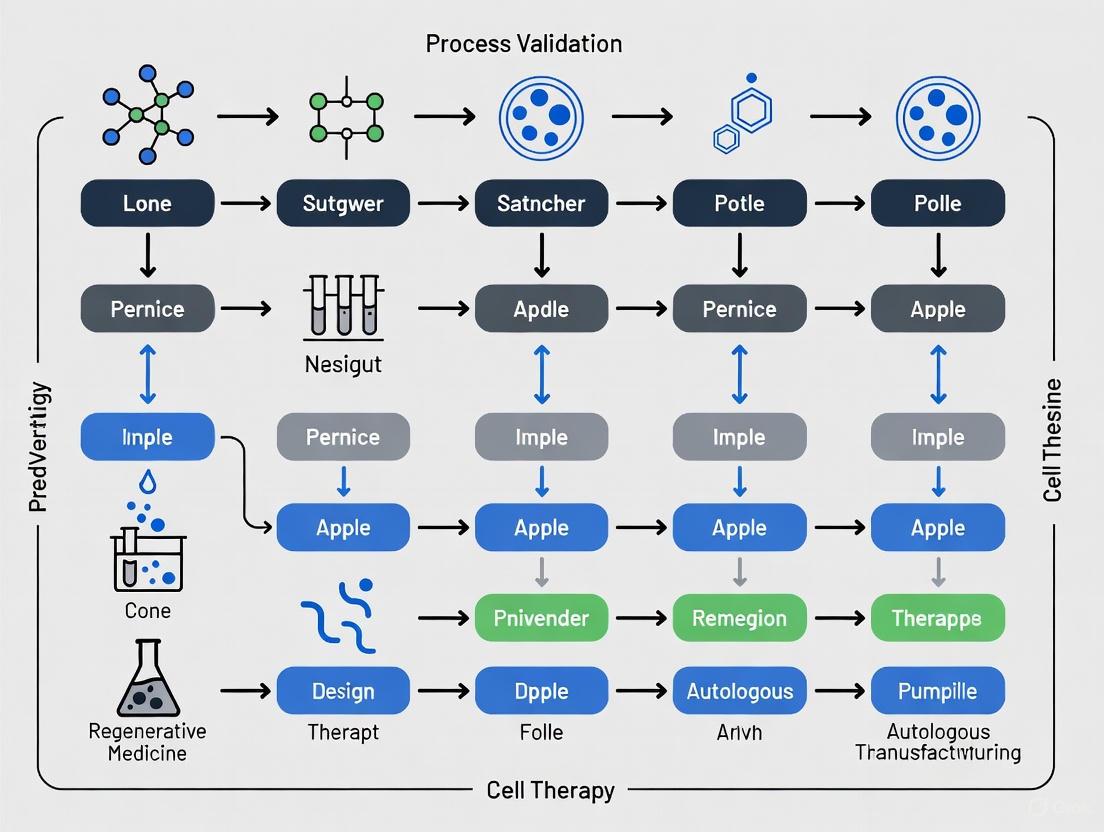
This article provides a comprehensive guide to process validation for autologous cell therapy manufacturing, tailored for researchers, scientists, and drug development professionals.
Process Validation for Autologous Cell Therapy Manufacturing: A Guide to Ensuring Quality, Safety, and Regulatory Compliance
Abstract
This article provides a comprehensive guide to process validation for autologous cell therapy manufacturing, tailored for researchers, scientists, and drug development professionals. It covers the foundational principles that differentiate autologous from allogeneic processes, details methodological steps from risk assessment to aseptic process validation, and offers solutions for common troubleshooting scenarios in scaling and logistics. Furthermore, it explores validation strategies for manufacturing changes and provides a comparative analysis with allogeneic approaches, synthesizing current regulatory guidance and industry best practices to ensure the production of consistent, safe, and effective patient-specific therapies.
Laying the Groundwork: Core Principles and Regulatory Landscape for Autologous Process Validation
Defining Process Validation in the Context of Single-Patient Batches
Process validation in autologous cell therapy manufacturing represents a fundamental paradigm shift from traditional pharmaceutical production. Unlike conventional biologics where a single batch can dose hundreds or thousands of patients, autologous therapies involve manufacturing a unique batch for each individual patient using their own cells [1]. This single-patient batch model creates extraordinary challenges for process validation, requiring demonstration that the manufacturing process consistently produces products meeting predetermined quality attributes despite inherent biological variability between patients [2]. The validation framework must ensure that every patient-specific batch—whether for early-phase clinical trials or commercial production—maintains consistent quality, safety, and efficacy, regardless of the manufacturing scale or location [1].
The validation approach must address the complete product lifecycle, from initial process design through commercial manufacturing, while accommodating the unique logistical challenges of autologous therapies. This includes managing patient-specific material tracking, maintaining chain of identity, ensuring vein-to-vein coordination, and navigating complex supply chain considerations [2]. This article examines the critical components of process validation for single-patient batches, comparing validation strategies across different manufacturing expansion models and providing practical guidance for implementation within autologous cell therapy development programs.
Comparative Analysis of Manufacturing Expansion Strategies and Validation Requirements
Validation Approaches Across Capacity Expansion Models
Table 1: Validation Requirements for Different Manufacturing Expansion Methods
| Expansion Method | Implementation Time | Capital Cost | Capacity Increase | Key Validation Activities | Regulatory Filings |
|---|---|---|---|---|---|
| Increase Existing Suite Capacity | Short-term | Low | Limited | Aseptic Process Simulation (APS), Process Performance Qualification (PPQ) | Change Being Affected (CBE), Possibly Prior Approval Supplement (PAS) |
| Add Rooms to Existing Site | Medium-term | Medium | Moderate | APS Re-execution, PPQ | CBE (within PACMP), PAS (outside PACMP) |
| Expand Existing Site | Long-term | High | Substantial | Comprehensive APS, PPQ, Comparability Studies | Prior Approval Supplement (PAS), Pre-Approval Inspection (PAI) |
| Add Internal Site | Long-term | Very High | Significant | APS, PPQ, Comparability Studies | PAS |
| Add External CMO | Long-term | Variable | Significant | APS, PPQ, Comparability Studies | PAS |
The selection of manufacturing expansion strategy directly impacts the scope and complexity of process validation activities [1]. Short-term options such as optimizing existing suite capacity typically require less rigorous validation, focusing primarily on aseptic process simulation and process performance qualification [1]. These approaches are ideal when rapid, cost-effective capacity expansion is needed, though the throughput volume increase is often limited. Medium-term strategies involving additional rooms at existing sites necessitate more comprehensive validation, including re-execution of aseptic process simulation and potentially additional process performance qualification runs [1].
For substantial capacity increases, long-term expansion strategies require the most extensive validation framework. Expansion of existing sites, addition of internal sites, or incorporation of external contract manufacturing organizations (CMOs) demand comprehensive validation packages including full aseptic process simulation, process performance qualification, and comparability studies to demonstrate equivalence between manufacturing locations [1]. These approaches typically require Prior Approval Supplements and potentially Pre-Approval Inspections, significantly extending implementation timelines but offering substantial capacity gains necessary for commercial-scale operations [1].
Quantitative Comparison of Validation Metrics
Table 2: Performance Metrics for Autologous Therapy Validation
| Validation Parameter | Clinical Trial Phase | Commercial Manufacturing | Acceptable Range | Statistical Confidence |
|---|---|---|---|---|
| Process Success Rate | >80% | >95% | Varies by product | 95% for commercial |
| Product Spec Compliance | >90% | >99% | Based on CQAs | 95% for commercial |
| Turnaround Time Adherence | >85% | >98% | Established limits | 90% for commercial |
| Viability at Infusion | >70% | >80% | Product-specific | 95% for commercial |
| Aseptic Process Media Fill Failure Rate | <0.1% | <0.01% | No positives in valid runs | 95% for commercial |
Validation of autologous cell therapies requires establishing quantitative metrics that reflect the unique characteristics of single-patient batches [1]. Process success rates must demonstrate progressive improvement from early-phase clinical trials through commercial manufacturing, with commercial processes typically requiring success rates exceeding 95% with appropriate statistical confidence [1]. Product specification compliance similarly increases through development, with commercial manufacturing requiring demonstrated capability to meet critical quality attributes (CQAs) with high reliability.
Turnaround time adherence represents a particularly critical metric for autologous therapies, where vein-to-vein time directly impacts cell viability and therapeutic efficacy [2]. Validation activities must demonstrate the manufacturing process can consistently meet established turnaround times under realistic production conditions. Similarly, viability at infusion must be maintained throughout the validated shelf life, with acceptable ranges established based on product-specific characteristics and clinical experience [2]. Aseptic process validation through media fills must demonstrate extremely low contamination risk, with acceptance criteria typically requiring zero positives in a statistically significant number of runs [1].
Experimental Protocols for Process Validation
Protocol for Process Performance Qualification
Objective: To demonstrate and document that the manufacturing process, operating under defined parameters, consistently produces autologous cell therapy products that meet all predetermined quality attributes.
Materials and Methods:
- Starting Material: Apheresis material from consented donors meeting eligibility criteria
- Critical Raw Materials: Viral vectors, cell culture media, cytokines, activation reagents
- Equipment: Bioreactors, separation devices, filling systems, environmental monitoring equipment
- Analytical Methods: Flow cytometry, cell counting, sterility testing, potency assays, identity testing
Procedure:
- Process Design: Establish critical process parameters (CPPs) and critical quality attributes (CQAs) based on development studies
- Equipment Qualification: Verify all equipment is properly installed, operational, and performance-qualified
- Operator Training: Ensure all personnel are trained and qualified on manufacturing procedures
- PPQ Batch Execution: Manufacture a minimum of three consecutive successful batches at commercial scale
- In-Process Testing: Monitor and document all critical process parameters throughout manufacturing
- Final Product Testing: Comprehensive testing against all release specifications
- Data Analysis: Statistical evaluation of process capability and consistency
Acceptance Criteria:
- All critical process parameters maintained within validated ranges
- All final product lots meet all release specifications
- No critical deviations affecting product quality
- Demonstrated statistical confidence in process capability [1]
Protocol for Comparability Studies
Objective: To demonstrate that manufacturing process changes or transfers between sites do not adversely impact product quality, safety, or efficacy.
Materials and Methods:
- Test Articles: Products manufactured using pre-change and post-change processes
- Analytical Methods: Orthogonal methods assessing identity, purity, potency, safety
- Statistical Approaches: Design of experiments, multivariate analysis, equivalence testing
Procedure:
- Study Design: Define comparability acceptance criteria based on product knowledge and clinical experience
- Sample Generation: Manufacture sufficient lots using both processes under representative conditions
- Analytical Testing: Comprehensive physicochemical and biological characterization
- Stability Studies: Accelerated and real-time stability under recommended storage conditions
- Data Analysis: Statistical comparison of quality attributes between pre-change and post-change products
Acceptance Criteria:
- No adverse trend in critical quality attributes
- Products demonstrate equivalent biological activity
- Stability profiles demonstrate no reduction in shelf life
- Any observed differences are justified and not clinically meaningful [1]
Visualization of Process Validation Workflows
Single-Patient Batch Validation Workflow
Process Validation Lifecycle Framework
Essential Research Reagent Solutions for Process Validation
Table 3: Critical Reagents for Autologous Therapy Process Validation
| Reagent Category | Specific Examples | Function in Validation | Quality Requirements |
|---|---|---|---|
| Cell Separation Reagents | CD3/CD28 beads, Density gradient media | Isolation and activation of target cell populations | GMP-grade, endotoxin tested, performance qualified |
| Cell Culture Media | Serum-free media, Supplement mixes | Support cell growth and expansion | Lot-to-lot consistency, growth promotion tested |
| Genetic Modification Tools | Lentiviral vectors, mRNA, CRISPR reagents | Introduce therapeutic transgenes | GMP-grade, titer verified, safety tested |
| Cytokines and Growth Factors | IL-2, IL-7, IL-15, SCF, FLT3-L | Promote cell expansion and differentiation | Recombinant, carrier-free, activity tested |
| Analytical Standards | Flow cytometry standards, Reference cells | Assay qualification and standardization | Traceable, stable, well-characterized |
| Cryopreservation Solutions | DMSO, Dextran, Serum alternatives | Maintain cell viability during storage | Defined composition, sterility tested |
The selection and qualification of critical reagents represents a fundamental aspect of process validation for autologous cell therapies [2]. Cell separation reagents must demonstrate consistent performance in isolating target cell populations while maintaining viability and functionality. Cell culture media requires extensive testing to ensure lot-to-lot consistency and support adequate cell expansion without introducing variability [2]. Genetic modification tools, particularly viral vectors, necessitate comprehensive characterization including titer determination, identity testing, and safety profiling.
Cytokines and growth factors used during manufacturing must be qualified for their biological activity and purity, as variations can significantly impact cell product characteristics [1]. Analytical standards enable qualification of critical assays used for in-process and release testing, providing benchmarks for method validation. Cryopreservation solutions require validation to ensure maintained cell viability and potency throughout the storage period, a critical consideration given the vein-to-vein timeline for autologous products [2].
Process validation for single-patient batches in autologous cell therapy requires a fundamentally different approach than traditional pharmaceutical manufacturing. The framework must accommodate inherent biological variability while demonstrating consistent process performance across multiple manufacturing sites and scales. Successful validation strategies incorporate risk-based approaches, focusing on critical process parameters and quality attributes most likely to impact product safety and efficacy.
The selection of manufacturing expansion strategy directly influences validation complexity, with long-term options requiring more extensive comparability studies and regulatory submissions. Regardless of the approach, effective process validation must encompass the entire product lifecycle, from initial process design through commercial manufacturing and continued process verification. By implementing robust validation frameworks specifically designed for single-patient batches, manufacturers can ensure consistent production of safe and effective autologous cell therapies while navigating the unique challenges of personalized medicine.
Key Regulatory Guidelines from the FDA and Other Agencies
This guide compares the regulatory frameworks of the U.S. Food and Drug Administration (FDA) and the European Medicines Agency (EMA) for cell and gene therapies (CGT), with a specific focus on implications for process validation in autologous cell therapy manufacturing.
Navigating the divergent requirements of the FDA and EMA is a critical first step in planning a global development strategy for autologous cell therapies. The regulatory pathways, data requirements, and approval timelines differ significantly, impacting how process validation and clinical evidence are structured [3].
Table: Key Regulatory Differences Between the FDA and EMA for Cell and Gene Therapies
| Aspect | U.S. Food and Drug Administration (FDA) | European Medicines Agency (EMA) |
|---|---|---|
| Clinical Trial Approval | Investigational New Drug (IND) Application; 30-day review period [3] | Clinical Trial Application (CTA) via Clinical Trials Information System (CTIS) [3] |
| Marketing Approval | Biologics License Application (BLA) to demonstrate safety, purity, and potency [3] | Marketing Authorization Application (MAA); products classified as Advanced Therapy Medicinal Products (ATMPs) [3] |
| Standard Review Timeline | 10 months (Standard BLA Review); 6 months (Priority Review) [3] | 210 days (Standard); 150 days (Accelerated Assessment) [3] |
| Expedited Pathways | RMAT (Regenerative Medicine Advanced Therapy), Fast Track, Breakthrough Therapy [4] [3] | PRIME (Priority Medicines), Conditional Marketing Authorization [3] |
| Long-Term Follow-Up | Mandatory for 15+ years for gene therapies [3] [5] | Risk-based approach, generally shorter than FDA requirements [3] |
| Post-Marketing Safety | Risk Evaluation and Mitigation Strategies (REMS); FAERS reporting [3] | Mandatory Risk Management Plans (RMPs) and EudraVigilance reporting [3] |
A recent study highlighted that only about 20% of clinical trial data submitted to both agencies matched, revealing major inconsistencies in regulatory expectations [3]. This divergence often leads sponsors to prepare distinct applications, adapting trial protocols and evidence to meet differing standards, which directly impacts process validation strategy and costs [3].
Detailed Regulatory Protocols and Experimental Considerations
For autologous therapies, where the product is unique to each patient and cannot be re-made, the FDA and EMA emphasize rigorous process control and validation. The following experimental protocols and guidelines are central to demonstrating product quality and consistency.
FDA Guidance on Manufacturing and Process Changes
The FDA Draft Guidance: "Manufacturing Changes and Comparability for Human Cellular and Gene Therapy Products" (July 2023) provides a critical framework for managing process improvements while ensuring product consistency [4].
Experimental Protocol for Comparability Studies:
- Objective: To demonstrate that a manufacturing change does not adversely impact the critical quality attributes (CQAs) of the autologous cell therapy product.
- Methodology:
- Analytical Comparability: Conduct a comprehensive side-by-side analysis of the pre-change and post-change products. This head-to-head testing must include:
- Potency Assays: Measure the biological activity per FDA's "Potency Assurance for Cellular and Gene Therapy Products" draft guidance (Dec 2023) [4]. For a CAR-T product, this would include tests for
% transduced cells,in vitro cytolytic activity, andcytokine secretion profile. - Identity and Purity: Use flow cytometry for cell surface markers (identity) and tests for endotoxin and mycoplasma (purity).
- Viability and Cell Number: Standard cell counting and viability assays.
- Potency Assays: Measure the biological activity per FDA's "Potency Assurance for Cellular and Gene Therapy Products" draft guidance (Dec 2023) [4]. For a CAR-T product, this would include tests for
- Non-Clinical Data (if needed): If analytical studies are insufficient to demonstrate comparability, additional in vitro or in vivo functional studies may be required.
- Clinical Data: In some cases, limited clinical data from a subsequent trial phase may be needed to confirm comparability.
- Analytical Comparability: Conduct a comprehensive side-by-side analysis of the pre-change and post-change products. This head-to-head testing must include:
- Data Analysis: A successful comparability study will show that all tested CQAs of the post-change product fall within the predefined acceptance ranges established for the pre-change product. Statistical analysis should confirm the absence of significant adverse differences.
FDA Guidance on Autologous CAR-T Cell Products
The FDA Guidance: "Considerations for the Development of Chimeric Antigen Receptor (CAR) T Cell Products" (Jan 2024) outlines specific considerations for this class of autologous therapies [4]. While specific to CAR-T products, its principles are broadly applicable to other genetically modified autologous cell therapies [6].
Experimental Protocol for Process Validation:
- Objective: To validate the manufacturing process for an autologous CAR-T cell therapy, ensuring it consistently produces a product that meets pre-defined quality specifications.
- Methodology - Process Performance Qualification (PPQ):
- PPQ Batches: Execute a minimum of three consecutive validation runs (batches) using the same manufacturing process and procedures intended for commercial production.
- Scale: The PPQ runs should be conducted at the same scale as the clinical and commercial material.
- Critical Process Parameters (CPPs): Monitor and document all CPPs (e.g.,
cell seeding density,culture duration,multiplicity of infection (MOI) for viral transduction) to demonstrate they remain within validated operating ranges. - In-Process Testing: Perform all in-process tests (e.g.,
cell count and viability,glucose consumption) to demonstrate process control. - Release Testing: Test the final product from each PPQ run against all release specifications, including
sterility,potency,identity,purity, andsafety(e.g.,replication competent virus testing).
- Data Analysis: Successful validation is achieved when all three PPQ batches consistently meet all in-process controls and final product release specifications, demonstrating that the process is robust and reproducible.
Autologous Cell Therapy Manufacturing Control
Recent Regulatory Shifts and Real-World Evidence
Recent guidelines highlight a growing regulatory acceptance of real-world evidence (RWE) to support post-approval safety and effectiveness.
- FDA Draft Guidance: "Postapproval Methods to Capture Safety and Efficacy Data for Cell and Gene Therapy Products" (Sept 2025) emphasizes using RWE to monitor long-term outcomes without delaying initial approvals [7]. For autologous therapies, this means establishing robust registries and data collection systems for post-infusion patient follow-up.
- FDA's Elimination of REMS for Autologous CAR-T Therapies (June 2025) for approved BCMA- and CD19-directed products signals a major shift. The FDA determined that the specialized safety program was no longer necessary due to the medical community's extensive experience in managing risks like cytokine release syndrome (CRS) and neurological toxicities [5]. This decision, which also included updated labeling for patient monitoring, is intended to improve patient access while maintaining safety through routine pharmacovigilance [5].
The Scientist's Toolkit: Essential Research Reagents & Materials
The following reagents and materials are critical for conducting the experiments necessary for process validation and regulatory compliance of autologous cell therapies.
Table: Essential Materials for Autologous Cell Therapy Process Validation
| Research Reagent / Material | Critical Function in Development & Validation |
|---|---|
| GMP-Grade Cell Culture Media | Provides the nutrient base for the expansion of patient cells; its consistency is a Critical Process Parameter (CPP) that must be validated to ensure batch-to-batch reproducibility. |
| Clinical-Grade Viral Vectors | Used for genetic modification (e.g., lentivirus for CAR-T generation); the Multiplicity of Infection (MOI) is a key CPP, and vector quality directly impacts Critical Quality Attributes (CQAs) like potency and safety. |
| Flow Cytometry Antibodies | Used for identity testing (e.g., CD3+, CD4+, CD8+), purity analysis, and characterization of cell products; essential for demonstrating product consistency and meeting release specifications. |
| Cell-Based Potency Assays | Measures the biological function of the final product (e.g., in vitro cytolytic activity or cytokine release); this data is a central CQA for lot release and is heavily scrutinized by regulators [4]. |
| Mycoplasma & Sterility Testing Kits | Critical safety assays required for final product release to ensure the product is free from adventitious agents, as mandated by regulations for all biologic products. |
| Cryopreservation Media | Ensures the stability and viability of the final product during frozen storage and transport from the manufacturing site to the clinical center; stability studies are required for validation. |
The regulatory landscape for autologous cell therapies is dynamic, with the FDA and EMA maintaining distinct pathways. Successfully navigating this environment requires a deep understanding of specific guidelines on manufacturing comparability, potency assurance, and long-term follow-up. A proactive strategy that involves early engagement with both agencies, employs robust process validation protocols, and adapts to emerging regulatory tools like real-world evidence is essential for efficiently bringing these transformative autologous therapies to patients globally.
Unique Challenges of Autologous vs. Allogeneic Manufacturing Models
The development of cell therapies represents a paradigm shift in the treatment of cancer, autoimmune diseases, and other complex conditions. Central to this field are two distinct manufacturing models: autologous therapies, which use a patient's own cells, and allogeneic therapies, which are derived from healthy donors [8]. These approaches present fundamentally different challenges in process validation, manufacturing strategy, and commercial scalability [9]. For researchers and drug development professionals, understanding these distinctions is crucial for designing robust manufacturing processes that can consistently produce therapies meeting critical quality attributes [10]. This guide provides a structured comparison of these manufacturing models, focusing on their unique validation requirements, operational complexities, and technical hurdles that must be addressed throughout the product lifecycle.
Fundamental Model Definitions and Workflow Comparison
Autologous Cell Therapy Model
Autologous cell therapies follow a patient-specific manufacturing paradigm where the patient serves as both the source of starting material and the recipient of the final product [8]. This approach involves complex logistics including: cell collection via apheresis from the patient, shipping the material to a manufacturing facility, processing and genetic modification (such as CAR engineering), expansion of the modified cells, and re-infusion back into the same patient [8] [11]. The entire process occurs under strict chain of identity and chain of custody controls to prevent product mix-ups [8].
Allogeneic Cell Therapy Model
Allogeneic therapies utilize cells from healthy donors to create "off-the-shelf" products [12] [8]. This model involves: careful donor selection and screening, large-scale batch manufacturing from a single donor collection, cryopreservation of multiple doses, and on-demand distribution to treatment centers [11]. Unlike autologous therapies, allogeneic products are manufactured in advance and stored until needed, potentially treating hundreds of patients from a single manufacturing batch [8] [11].
The workflow diagrams below illustrate the distinct processes for each model:
Comprehensive Model Comparison Tables
Manufacturing Process and Timeline Comparison
Table 1: Side-by-Side Analysis of Manufacturing Characteristics
| Characteristic | Autologous Model | Allogeneic Model |
|---|---|---|
| Starting Material Source | Patient's own cells [8] | Healthy donor cells [8] |
| Production Scale | Single patient per batch [9] | Hundreds-to-thousands of doses from one batch [11] |
| Typical Manufacturing Timeline | 10-17 days [9] | Batch produced in advance [11] |
| Cell Collection Procedure | Required for each patient [8] | Single collection for multiple patients [8] |
| Product Administration | After manufacturing completion [9] | Immediate, on-demand [11] |
| Manufacturing Success Rate | ~95% (licensed CAR-T) [9] | Dependent on donor material quality [11] |
Process Validation and Quality Control Challenges
Table 2: Process Validation and Quality Attribute Considerations
| Validation Aspect | Autologous Model | Allogeneic Model |
|---|---|---|
| Batch Consistency | High patient-to-patient variability [8] | More consistent starting material [8] |
| Critical Quality Attributes (CQAs) | Affected by patient age, disease status, prior treatments [8] | Can select optimal donors [8] |
| Process Analytical Technology (PAT) | Essential for managing variability [10] | Enables real-time monitoring of large batches [10] |
| Potency Assays | Challenged by material limitations [13] | More material for comprehensive testing [11] |
| Characterization | Limited by sample availability [13] | Extensive characterization possible [11] |
| Release Testing | Time-sensitive due to patient waiting [9] | Can be completed before clinical use [11] |
Scalability and Commercialization Challenges
Table 3: Scaling and Commercial Manufacturing Considerations
| Factor | Autologous Model | Allogeneic Model |
|---|---|---|
| Scaling Approach | Scale-out (multiple parallel units) [9] | Scale-up (larger batch sizes) [9] |
| Manufacturing Infrastructure | Multiple workstations for parallel processing [9] | Large-scale bioreactors [9] |
| Supply Chain Complexity | High (patient-specific logistics) [8] | Lower (traditional pharmaceutical model) [11] |
| Cost Structure | High per-dose cost [8] | Potentially lower per-dose cost at scale [8] |
| Commercial Readiness | Established infrastructure with 300+ treatment centers worldwide [9] | Emerging infrastructure models [11] |
Experimental Approaches for Process Validation
Process Design and Critical Parameter Identification
Validating either manufacturing model requires systematic experimental approaches to establish robust processes. For autologous therapies, Design of Experiments (DoE) methodologies are particularly valuable for understanding which process parameters most significantly impact product quality given variable starting materials [10]. Implementing Quality by Design (QbD) principles early in process development allows researchers to define design spaces that link critical process parameters (CPPs) with critical quality attributes (CQAs) [10].
For allogeneic processes, platform process development approaches can be employed, where manufacturing conditions are optimized for a specific cell type (e.g., CAR-NK, iPSC-derived therapies) and then applied across multiple donors [12] [10]. This includes establishing normal operating ranges (NOR) and proven acceptable ranges (PAR) for key parameters like cell density, transduction efficiency, and expansion duration [10].
Analytical Method Development and Potency Assurance
Robust analytical methods are essential for both models but present different challenges. The following diagram illustrates the relationship between critical quality attributes and their corresponding analytical approaches:
The Scientist's Toolkit: Essential Reagents and Materials
Table 4: Key Research Reagents and Materials for Cell Therapy Manufacturing
| Reagent/Material | Function | Considerations for Process Validation |
|---|---|---|
| GMP-grade Cell Culture Media | Supports cell growth and maintenance | Defined, serum-free formulations reduce batch variability; essential for allogeneic banking [10] |
| Research vs. GMP-grade Viral Vectors | Genetic modification (CAR transduction) | Research-grade vectors used early; transition to GMP-grade for clinical manufacturing requires comparability studies [10] |
| Cell Separation reagents | Isolation of target cell populations | Consistency in recovery and purity critical for process robustness [8] |
| Cryopreservation Media | Long-term storage of cells | Formulation impacts post-thaw viability and potency; requires validation of storage conditions [14] |
| Ancillary Materials | Process supplements (cytokines, etc.) | Must meet USP <1043> standards; quality directly impacts product safety profile [10] |
| Process Gases | Controlled atmosphere for cell culture | CO₂, O₂ levels affect metabolism; monitoring and control strategies needed [10] |
Autologous and allogeneic manufacturing models present distinct but equally complex challenges for process validation and commercialization. Autologous therapies must overcome patient-specific variability and logistical complexities while maintaining strict chain of identity [8] [9]. Allogeneic therapies offer scalability advantages but face hurdles in immune rejection management and ensuring consistent product quality across large batches [8] [15]. Both require rigorous process understanding, well-defined critical quality attributes, and robust analytical methods to ensure product safety and efficacy [10]. The choice between models depends on multiple factors including target patient population, product characteristics, and commercialization strategy. Future advancements in automation, analytical technologies, and regulatory frameworks will continue to shape the evolution of both manufacturing approaches [13] [10].
Establishing a Risk-Based Approach and Critical Quality Attributes (CQAs)
The manufacturing of autologous cell therapies, where a patient's own cells are used to create a personalized treatment, presents a unique set of challenges that differentiate it from traditional biologics and allogeneic (donor-derived) cell products. The inherent variability of starting materials, complex manufacturing processes, and living nature of the final product necessitate a robust, proactive framework for quality management. A risk-based approach, guided by the identification of Critical Quality Attributes (CQAs), is fundamental to ensuring these advanced therapies are consistently safe, pure, and potent [16]. This methodology is central to modern regulatory guidelines and is essential for successful process validation, which confirms that a manufacturing process can reliably produce a product meeting its pre-determined quality attributes.
The core principle of this approach involves a deep understanding of how process parameters influence product CQAs. This understanding allows manufacturers to focus control strategies on the most critical aspects of the process. For autologous CAR-T cell therapies, this is particularly vital due to the high individual variability in apheresis starting material, the complexity of the multi-step manufacturing process, and the limited batch size, which restricts traditional large-scale validation studies [16]. This guide will compare different methodologies for establishing this framework, providing researchers with the experimental protocols and data needed to build a validated and controllable manufacturing process.
Defining Critical Quality Attributes (CQAs) for Autologous Therapies
Identification and Categorization of CQAs
Critical Quality Attributes (CQAs) are physical, chemical, biological, or microbiological properties or characteristics that should be within an appropriate limit, range, or distribution to ensure the desired product quality. For a living, complex product like autologous CAR-T cells, CQAs are often linked to the mechanism of action (MOA) and clinical safety profile. Identifying CQAs is an iterative process that evolves throughout product development, from early research to commercial manufacturing [16].
The following table summarizes the core CQAs for an autologous CAR-T cell product, categorizing them and linking them to their clinical impact.
Table 1: Critical Quality Attributes (CQAs) for Autologous CAR-T Cell Therapies
| Category | Specific CQA | Rationale & Clinical Impact |
|---|---|---|
| Identity & Purity | Percentage of CAR+ T cells | Directly linked to product potency; low levels may compromise efficacy [16]. |
| T-cell subset composition (e.g., CD4+/CD8+ ratio, memory phenotypes) | Influences persistence, durability of response, and potential for toxicity [16]. | |
| Potency | In vitro cytotoxic activity | Measures the fundamental ability to kill target tumor cells [17]. |
| Cytokine secretion profile | Can be indicative of product functionality and potential for causing cytokine release syndrome (CRS) [18]. | |
| Safety | Viability | Low viability may impact engraftment and efficacy, and indicates process-related stress. |
| Sterility (bacterial/fungal) | Essential for patient safety, as products are infused without sterilization filtration. | |
| Mycoplasma | Essential for patient safety. | |
| Replication-Competent Virus (RCV) | Critical safety test for genetically modified products using viral vectors. | |
| Impurities | Residual reagents (e.g., cytokines, activation beads) | Process-related impurities must be controlled to safe levels [16]. |
The Link Between CQAs and Clinical Outcomes
The connection between CQAs and clinical performance is the cornerstone of a meaningful control strategy. For instance, the depth of molecular remission (a measure of minimal residual disease) in patients with B-cell acute lymphoblastic leukemia (B-ALL) treated with obecabtagene autoleucel (obe-cel) has been directly linked to more durable responses and higher rates of event-free and overall survival [18]. This clinical outcome is underpinned by CQAs like potency and CAR+ T-cell persistence. Furthermore, understanding the impact of CQAs on safety is crucial. Research has shown that risk-stratification for hematotoxicity using pre-treatment clinical parameters can identify patients more likely to benefit from treatment with reduced toxicity, which is influenced by the intrinsic quality of the manufactured product [18].
Implementing a Risk-Based Approach: Methodologies and Comparisons
Foundational Principles of Risk Assessment
A risk-based approach for autologous cell therapies requires a systematic process for identifying and evaluating potential sources of variability and their impact on CQAs. The general principles of risk management, as outlined by regulatory bodies, involve [16]:
- Risk Identification: Systematically finding potential problems throughout the manufacturing process, from apheresis collection to final product infusion.
- Risk Analysis: Evaluating the identified risks to determine their severity and probability.
- Risk Control: Implementing measures to mitigate or accept the risks based on their impact on product quality and patient safety.
For autologous products, this is uniquely challenging because traditional comparability studies, which rely on multiple batches, are complicated by the inherent donor-to-donor variability of the starting material. Each batch is a unique product, making it difficult to isolate the impact of a process change from the inherent variability of the patient's cells [16].
Comparative Analysis of Risk Assessment Tools
Different tools can be applied to structure risk assessment. Below is a comparison of two primary methodologies used in the industry.
Table 2: Comparison of Risk Assessment Methodologies for Cell Therapy Manufacturing
| Feature | Failure Mode and Effects Analysis (FMEA) | Risk Ranking and Filtering |
|---|---|---|
| Methodology | A structured, bottom-up approach to identify potential failure modes for each process step, their causes, and effects. | A higher-level, top-down approach to rank risks based on pre-defined factors (e.g., severity, probability) and filter out low-priority items. |
| Best Application | In-depth analysis of a specific, well-understood unit operation (e.g., cell activation, transduction). | Initial screening of a wide range of potential risks (e.g., across an entire process) to focus resources on the most critical areas. |
| Advantages | Highly detailed; provides a risk priority number (RPN); promotes deep process understanding. | Faster to execute; good for prioritizing a large number of variables; less resource-intensive. |
| Disadvantages | Can be time-consuming and resource-intensive; results can be subjective. | Less granular; may overlook complex, multi-step failure modes. |
The following diagram illustrates the logical workflow for implementing a risk-based approach, integrating both methodologies and linking them directly to process validation.
Diagram 1: Risk-Based Approach Workflow for Process Validation. This diagram outlines the iterative cycle of defining quality attributes, assessing risk, implementing controls, and validating the process, which forms the basis for lifecycle management.
Experimental Protocols for CQA and Process Risk Assessment
Protocol 1: Design of Experiment (DoE) for Process Optimization
Objective: To systematically evaluate the impact of multiple Critical Process Parameters (CPPs) on CQAs like CAR+ percentage, viability, and T-cell subset composition.
Background: Traditional one-factor-at-a-time (OFAT) experiments are inefficient and fail to capture interaction effects between parameters. DoE is a powerful statistical tool for building a robust process design space [19].
Methodology:
- Select Factors and Ranges: Identify CPPs (e.g., cell seeding density, IL-2 concentration, duration of activation) and define a relevant operating range for each based on prior knowledge.
- Choose Experimental Design: A fractional factorial or response surface methodology (RSM) design is often appropriate for modeling complex interactions.
- Execute Runs: Perform the cell culture process according to the experimental design matrix.
- Analyze CQAs: At the end of the process, measure the predefined CQAs (responses) for each run.
- Statistical Modeling: Use multiple linear regression to build a mathematical model relating the CPPs to the CQAs.
- Define Design Space: Identify the combination of CPP ranges where the CQAs consistently meet their specifications.
Data Interpretation: The model allows for the prediction of CQA outcomes based on CPP settings. For example, it may reveal that a high seeding density combined with a low cytokine concentration negatively impacts final cell viability, a interaction that would be missed in an OFAT approach.
Protocol 2: Process Characterization for Scalability
Objective: To demonstrate that a process scaled-out to multiple manufacturing sites or operators produces a comparable product.
Background: Increasing production capacity (scale-out) is common for autologous therapies. A robust process must withstand this scaling without altering critical quality attributes [17] [16].
Methodology:
- Study Design: Use a single, well-characterized leukapheresis sample from a healthy donor, split into multiple identical aliquots.
- Parallel Processing: Process the aliquots concurrently across different manufacturing suites, or by different trained operators, using the exact same protocols and reagents.
- Extended Testing: Perform a comprehensive panel of analytical tests on the final products that goes beyond routine release assays. This may include advanced analytics like immunophenotyping for detailed T-cell subsets, transcriptomics, or metabolomics [17].
- Comparability Analysis: Statistically compare the data from all runs. The acceptance criteria for comparability should be pre-defined based on historical data and the known variability of the analytical methods.
Data Interpretation: Successful comparability is demonstrated when all CQAs from the different runs fall within the pre-defined acceptance ranges. Any significant outliers indicate a process parameter sensitive to the scale-out change that requires better control or procedural standardization.
The Scientist's Toolkit: Essential Reagents and Solutions
The following table details key reagents and materials used in the development and manufacturing of autologous CAR-T cell therapies, with an emphasis on their function in controlling CQAs.
Table 3: Research Reagent Solutions for Autologous CAR-T Cell Manufacturing
| Reagent/Material | Function | Impact on CQAs |
|---|---|---|
| Viral Vector | Delivers the genetic material (CAR) into the T cell. The key raw material for genetic modification. | Directly impacts Identity (CAR+ %), Potency, and Safety (via RCV testing) [16]. |
| Cell Activation Beads | Stimulates T-cell proliferation and activation prior to transduction. | Affects T-cell subset composition, expansion fold, and potency. Residual beads are a product-related impurity [16]. |
| Cell Culture Media & Cytokines | Provides nutrients and signals for T-cell survival, expansion, and differentiation. | Composition and quality critically impact viability, final cell number, purity, and phenotype [19] [16]. |
| Cell Separation Reagents | Used in purification steps (e.g., to isolate specific T-cell subsets). | Influences the identity and purity of the starting and final cell population, which can affect efficacy and safety [16]. |
| Cryopreservation Media | Protects cells during frozen storage and transport. | Impacts post-thaw viability and potency, which are critical for product administration and engraftment. |
Establishing a risk-based approach grounded in well-defined CQAs is non-negotiable for the successful process validation and commercialization of autologous cell therapies. As regulatory guidance continues to evolve, the principles of Quality by Design (QbD) and a deep, science-based understanding of the product and process will separate successful therapies from those that fail [20] [19] [16]. The future of this field lies in embracing advanced technologies such as automated, closed-system manufacturing to reduce variability [21] [22], and implementing sophisticated Process Analytical Technologies (PAT) for real-time quality monitoring and control [17]. By adopting the structured methodologies and experimental protocols outlined in this guide, researchers and drug development professionals can build more robust, scalable, and reliable manufacturing processes, ultimately accelerating the delivery of these transformative treatments to patients.
The Importance of Chemistry, Manufacturing, and Controls (CMC) Strategy
For autologous cell therapies, such as CAR-T cell products, a robust Chemistry, Manufacturing, and Controls (CMC) strategy is not merely a regulatory requirement but a fundamental cornerstone that ensures product safety, efficacy, and consistency. Unlike traditional pharmaceuticals, autologous therapies are manufactured on a per-patient basis using the patient's own cells as the starting material. This introduces inherent variability and significant complexity into the manufacturing process [23]. Each batch is a single dose, making traditional batch-release testing paradigms insufficient. Consequently, the CMC strategy must provide a comprehensive framework that governs every aspect, from raw materials and process validation to analytical control strategies and comparability protocols, to successfully navigate the journey from clinical development to commercial marketing authorization.
The complexity of these living therapies means that CMC challenges are a primary reason for regulatory delays and Complete Response Letters (CRLs). Analyses show that a significant majority of application deficiencies are related to CMC, including issues with potency assays, facility readiness, and product stability [24] [25]. A well-defined CMC strategy, developed with a deep understanding of product and process, is therefore critical for mitigating regulatory risk and ensuring that these transformative therapies can reliably reach patients.
Comparative Analysis of CMC Regulatory Expectations
Navigating the global regulatory landscape requires an understanding of both the shared principles and the nuanced differences between major agencies like the U.S. Food and Drug Administration (FDA) and the European Medicines Agency (EMA). While both agencies emphasize the importance of quality, safety, and efficacy, their specific requirements for autologous cell therapies can differ, impacting CMC strategy development.
The table below summarizes key comparative regulatory considerations for autologous cell therapies based on current guidance and reviews.
Table: Comparison of FDA and EMA Regulatory Expectations for Key CMC Aspects
| Regulatory CMC Consideration | FDA Position | EMA Position |
|---|---|---|
| Starting/Raw Materials | No formal regulatory definition of "starting materials"; uses "critical raw materials" with enhanced control based on risk and development stage [26]. | "Starting materials" are defined as those that become part of the drug substance (e.g., vectors, cells). They must be prepared under GMP principles [26]. |
| Potency Testing for Viral Vectors (in vitro) | Requires a validated functional potency assay to assess the efficacy of the drug product used in pivotal studies [26]. | Infectivity and transgene expression may be sufficient in early phases, with functional assays expected later [26]. |
| Demonstrating Comparability | Follows FDA-specific draft guidance (July 2023). Stresses the importance of potency testing and stability data, and recommends the inclusion of historical data [26] [23]. | Guided by an ATMP Q&A document. Requires a risk-based approach and specifies tests for finished products (e.g., transduction efficiency). Does not recommend comparison to historical data [26] [23]. |
| Process Validation (PV) Batches | The number is not specified but must be statistically adequate based on process variability [26]. | Generally requires three consecutive batches, with some flexibility allowed [26]. |
| Use of Platform Data in PV | Acceptable where the same or similar manufacturing steps are used [26]. | Acceptable where the same or similar manufacturing steps are used [26]. |
| Stability Data for Comparability | Requires a thorough assessment, which may include real-time data for certain changes [26]. | Real-time data is not always necessary for comparability exercises [26]. |
A critical area of divergence is the management of manufacturing changes and comparability. Autologous CAR-T products are particularly challenging because changes can occur throughout clinical development and post-approval. While ICH Q5E provides a foundation, it is not fully applicable to cell and gene therapies, leading to region-specific guidances [26] [23]. Both agencies agree that a risk-based approach is essential, and the extent of testing should increase with the stage of clinical development [26]. For example, a major change in a critical raw material, such as the gene modification system, may necessitate a comprehensive comparability study, including non-clinical or clinical bridging studies, to ensure no adverse impact on safety or efficacy [23].
Experimental Data and Comparability Protocols
Designing a Comparability Study
For autologous cell therapies, demonstrating comparability after a manufacturing change is uniquely challenging due to donor-to-donor variability, limited batch sizes, and complex, living products [23]. A scientifically sound protocol is essential. The general principle is to demonstrate that the pre- and post-change products have comparable quality attributes, implying that the existing safety and efficacy profile remains unchanged [23]. The study design should be risk-based, with the scope and complexity proportional to the stage of product development and the significance of the change [23].
The following diagram outlines a high-level workflow for designing and executing a comparability study, incorporating key decision points and potential outcomes.
Figure 1. Comparability study workflow for managing process changes.
Key Analytical Methods and Data Presentation
The comparability study should employ a suite of orthogonal analytical methods to assess a wide range of quality attributes (QAs). These are typically categorized into three tiers based on their potential impact on safety and efficacy: Key Quality Attributes, Critical Quality Attributes (CQAs), and Non-Critical Attributes [23]. The analysis should focus on CQAs, which are physical, chemical, biological, or microbiological properties that must be within an appropriate limit, range, or distribution to ensure the desired product quality.
The table below summarizes the types of quantitative data and acceptance criteria that might be used in a comparability study for a process change, such as the optimization of a cell culture medium.
Table: Example Quantitative Data for a Comparability Study on Culture Media Optimization
| Quality Attribute | Category | Analytical Method | Pre-Change Data (n=5) | Post-Change Data (n=5) | Acceptance Criteria |
|---|---|---|---|---|---|
| Viability | CQA | Flow cytometry (7-AAD) | 95.2% ± 2.1% | 96.5% ± 1.8% | ≥ 90% |
| CAR+ T-cells | CQA | Flow cytometry | 32.5% ± 5.8% | 35.1% ± 4.9% | 25-45% |
| Vector Copy Number (VCN) | CQA | qPCR/ddPCR | 2.8 ± 0.6 | 3.0 ± 0.5 | 1.0 - 5.0 |
| CD4+/CD8+ Ratio | Key QA | Flow cytometry | 1.5 ± 0.4 | 1.6 ± 0.3 | Report result |
| Cytokine Secretion (IFN-γ) | CQA (Potency) | ELISA (upon antigen stimulation) | 4500 ± 550 pg/mL | 4800 ± 600 pg/mL | ≥ 3000 pg/mL |
| Cell Subpopulation (Tcm) | Key QA | Flow cytometry (CD45RO, CD62L) | 28% ± 6% | 30% ± 5% | Report result |
Experimental Protocol: In Vitro Potency Assay (Cytokine Release)
- Objective: To measure the biological activity of the CAR-T product by quantifying IFN-γ release upon specific antigen recognition.
- Materials: Post-manufacturing CAR-T cells, target cells expressing the specific antigen, control cells (antigen-negative), cell culture medium, IFN-γ ELISA kit, CO2 incubator, plate reader.
- Method:
- Co-culture Setup: Seed CAR-T cells at a defined effector-to-target ratio (e.g., 1:1) with both antigen-positive and antigen-negative target cells in a 96-well plate. Include controls for CAR-T cells alone and target cells alone.
- Incubation: Incubate the plate for 18-24 hours at 37°C and 5% CO2.
- Supernatant Collection: Centrifuge the plate and carefully collect the supernatant.
- ELISA Analysis: Transfer the supernatant to an ELISA plate pre-coated with an IFN-γ capture antibody and perform the assay according to the manufacturer's instructions, including standard curve generation.
- Data Analysis: Calculate the IFN-γ concentration in the test samples by interpolating from the standard curve. The result is specific IFN-γ release (test group minus antigen-negative control group).
Essential Research Reagents and Materials
The complexity of autologous cell therapy manufacturing relies on a suite of critical reagents and materials. Their quality and consistency are paramount, as variations can directly impact the critical quality attributes of the final product. The table below details some of these essential materials and their functions.
Table: Key Research Reagent Solutions for Autologous Cell Therapy Manufacturing
| Research Reagent / Material | Function in Manufacturing Process |
|---|---|
| Gene Modification System (e.g., Viral Vector, mRNA) | Introduces the genetic construct (e.g., CAR) into the patient's T-cells, enabling them to recognize and target the tumor cells. This is a critical starting material [26] [23]. |
| Cell Activation Reagents (e.g., Anti-CD3/CD28 Beads) | Stimulates T-cell activation and proliferation, a crucial first step in the manufacturing process to initiate cell growth and enable genetic modification [23]. |
| Cell Culture Media and Supplements | Provides the necessary nutrients, growth factors, and cytokines (e.g., IL-2) to support T-cell expansion and maintain cell viability and function throughout the culture process [23]. |
| Analytical Assay Kits (e.g., Flow Cytometry Antibodies, ELISA) | Used for in-process testing and release testing to characterize the product, including identity (CAR expression), purity (cell subpopulations), potency (cytokine release), and safety (sterility) [24]. |
| Cryopreservation Media | Protects cell viability and functionality during long-term storage and transportation from the manufacturing facility to the clinical site [24]. |
A comprehensive and proactive CMC strategy is the backbone of successful autologous cell therapy development and commercialization. It must be built on a foundation of deep process and product understanding, incorporating Quality by Design (QbD) principles from the earliest stages [23]. This involves identifying Critical Process Parameters (CPPs) and linking them to CQAs to establish a robust control strategy. Furthermore, given the dynamic regulatory landscape and the unique challenges of autologous products, the strategy must be agile. It should include rigorous risk management for manufacturing changes, with well-structured comparability protocols [26] [23]. Engaging with regulatory agencies early and often, leveraging platform knowledge where justified, and maintaining a focus on commercial scalability and supply chain logistics are all essential components for navigating the complex CMC pathway and ultimately delivering safe and effective therapies to patients.
From Theory to Practice: A Step-by-Step Guide to Autologous Process Validation
Conducting a Preliminary Hazard Analysis and Risk Assessment
In the field of autologous cell therapy manufacturing, where each product batch is unique and tailored to a single patient, a systematic and proactive approach to risk management is not just beneficial—it is a fundamental prerequisite for patient safety and regulatory compliance. A Preliminary Hazard Analysis (PHA) serves as a foundational risk management tool, enabling manufacturers to identify and mitigate potential hazards before they can impact product quality. The European Medicines Agency (EMA) strongly affirms the crucial importance of a risk-based assessment to identify potential risks associated with the manufacturing process and to control/mitigate them [27]. For autologous therapies, this is particularly critical, as only one batch of starting material is available from the patient, leaving absolutely no room for error during manufacturing [28]. This guide objectively compares the performance of a PHA-based framework against conventional approaches, providing experimental data to underscore the value of a structured, risk-based methodology in de-risking the complex manufacturing processes for advanced therapy medicinal products (ATMPs).
Core Principles of Preliminary Hazard Analysis
A PHA is a systematic, forward-looking process designed to identify potential hazards, their causes, and their consequences early in the product development lifecycle. The primary goal is to anticipate and prevent failures, rather than react to them after they occur. According to ICH Q9 guidelines on quality risk management, upon which modern PHA is built, risk analysis is defined as "the estimation of the risk associated with the identified hazards" [29]. In practice, this involves a structured methodology where a multidisciplinary team brainstorms potential failure modes for each step of a manufacturing process, estimates the associated risk, and prioritizes mitigation efforts.
The execution of a PHA typically involves the following stages: First, the process is broken down into discrete, manageable steps. For each step, all potential hazards and accidental events that could cause failures are identified [27]. A risk score is then assigned to each hazardous situation, often using a criticality matrix that considers the severity of the potential harm and the probability of its occurrence [27]. The output of this analysis is a prioritized list of risks, which informs the creation of a targeted mitigation plan. The entire workflow of a PHA, from process mapping to the implementation of control strategies, is designed to transform a complex process into a well-understood and controlled system.
The following diagram illustrates the logical workflow and key decision points in a comprehensive PHA, from initial process mapping through to the implementation of control strategies.
Comparative Analysis: PHA vs. Traditional Risk Methods
To objectively evaluate the performance of a PHA-centric approach, we compared it against traditional, less-structured risk assessment methods often reliant on historical data and retrospective correction. The validation was conducted within the context of a GMP-compliant protocol for the production of regulatory T (Treg) cells for adoptive cell therapy [27]. The study aimed to validate a process capable of producing a sufficient number of functional Treg cells, a fundamental prerequisite for the success of a cell therapy clinical protocol [27].
Table 1: Comparison of Risk Assessment Methodologies in Cell Therapy Manufacturing
| Performance Metric | PHA-Based Framework | Traditional Methods |
|---|---|---|
| Proactive vs. Reactive | Proactive identification of potential failures [27] | Typically reactive, addressing problems after they occur |
| Risk Identification Rate | 9 major hazardous topics identified initially [27] | Relies on existing data; may miss novel or complex risks |
| Risk Reduction Efficiency | Reduced unacceptable risks from 44% to 0% [27] | Slower, iterative reduction based on accumulated failures |
| Regulatory Alignment | Aligns with ICH Q9 and EMA emphasis on risk-based approaches [27] [28] | May struggle to meet evolving regulatory expectations |
| Handling of Novel Processes | Excellent for novel processes with limited historical data [27] | Poor; requires extensive historical failure data |
| Resource Intensity | High initial investment in multidisciplinary team time | Lower initial investment, but potential for high failure costs |
The experimental data from the Treg cell process validation provides quantitative support for the efficacy of the PHA approach. A total of nine hazardous topics were identified through the PHA, of which seven were initially quoted as other than acceptable (three tolerable, four unacceptable) without the implementation of risk control strategies [27]. The highest risks were associated with the environment and documentation. By implementing a point-by-point mitigation plan, the scenarios with unacceptable risk were reduced from 44% (4 out of 9 categories) to 0%, and those with acceptable risk increased from 22% (2 out of 9 categories) to 100% [27]. No risk remained unacceptable after mitigation.
Experimental Protocols for PHA Validation
Protocol 1: Risk Identification and Scoring
The first critical protocol in a PHA involves the systematic identification and scoring of risks. The methodology used in the Treg cell validation study serves as an exemplary model.
Detailed Methodology:
- Process Deconstruction: The entire manufacturing process was broken down into its main steps: (1) starting material quality controls (QCs), (2) determination of Treg cell number in the starting material, (3) GMP-compliant isolation of CD8− CD25+ cells, (4) large-scale expansion, (5) functional testing, and (6) cryopreservation and thawing [27].
- Hazard Identification: For each process step, a multidisciplinary team identified all potential hazards and accidental events that could cause failures [27]. This brainstorming session should be based on technical knowledge, process understanding, and historical data where available.
- Risk Scoring: A risk score was assigned to each hazardous situation using a predefined criticality matrix. This matrix evaluates the severity of the potential harm (e.g., catastrophic, major, moderate, minor) against the probability of its occurrence (e.g., frequent, probable, occasional, remote) [27].
- Risk Prioritization: The output is a prioritized list of risks, which directly informs the action plan. This protocol ensures that resources are focused on mitigating the most significant risks first.
Protocol 2: Mitigation Plan Implementation and Effectiveness Testing
Once risks are identified and prioritized, the next protocol involves the development and testing of mitigation strategies.
Detailed Methodology:
- Mitigation Design: For each risk categorized as "unacceptable" or "tolerable," a specific mitigation action is defined. For example, to mitigate environmental risks, actions may include enhanced staff training, rigorous environmental monitoring, and improved documentation systems [27].
- Plan Implementation: The mitigation measures are formally integrated into the standard operating procedures (SOPs) and manufacturing batch record.
- Effectiveness Assessment: The success of the PHA and the associated mitigation plan is measured by its ability to produce a consistent, high-quality product. In the cited study, the validated GMP-compliant protocol allowed at least 4.11 × 10^9 Treg cells to be obtained with an average purity of 95.75 ± 4.38% [27]. This demonstrates that the PHA-based approach effectively controlled process risks to achieve the target Critical Quality Attributes (CQAs).
The following diagram maps the specific experimental workflow from the cited Treg cell validation study, showing how risk assessment is embedded throughout the entire manufacturing process.
The Scientist's Toolkit: Essential Reagents and Materials
The successful execution of a PHA and the subsequent manufacturing process relies on a suite of critical reagents and analytical tools. The selection and quality control of these materials are in themselves a critical part of the risk mitigation strategy.
Table 2: Key Research Reagent Solutions for PHA in Treg Cell Manufacturing
| Reagent/Material | Function in Process & Risk Assessment | Critical Quality Attributes |
|---|---|---|
| Leukapheresis Product | Serves as the patient-specific starting material [27]. A key hazard point is cell viability and shipment temperature. | Volume, total nucleated cell count, CD45+ viability (≥90%), transport temperature (2-8°C) [27]. |
| Cell Isolation Reagents | GMP-compliant immunomagnetic beads for selection of CD8− CD25+ Treg cells [27]. Risk of low purity or selection failure. | Selection efficiency, purity of isolated cell population (verified by flow cytometry) [27]. |
| Expansion Media & Cytokines | Supports large-scale ex vivo cell growth (e.g., with IL-2 and rapamycin) [27]. Risk of introducing contaminants or poor expansion. | Formulation consistency, sterility, endotoxin level, growth promotion capability. |
| Flow Cytometry Assays | In-process and release testing for identity (CD4, CD25, FoxP3, CD127) and purity [27]. Mitigates risk of product mis-identity. | Antibody specificity, sensitivity, accuracy of absolute cell count (e.g., via Trucount tubes) [27]. |
| Single-Use Bioprocess Containers | Used for cell culture and storage; mitigates cross-contamination risk but introduces leachables hazard [29]. | USP Class VI certification [29], biocompatibility in serum-free media, leachables profile. |
The comparative data and experimental protocols presented in this guide unequivocally demonstrate the superior performance of a structured PHA over traditional risk assessment methods for autologous cell therapy manufacturing. The PHA framework transforms risk management from a reactive, documentary exercise into a dynamic, proactive engine for process robustness. By systematically identifying and mitigating hazards early—as evidenced by the reduction of unacceptable risks to 0% in the case study—manufacturers can significantly enhance the probability of manufacturing success, ensure patient safety, and build a compelling case for regulatory approval. In an field where the process is the product, a rigorous PHA is not merely a best practice; it is the cornerstone of a successful and sustainable cell therapy development program.
Defining Critical Process Parameters (CPPs) and Their Link to CQAs
In pharmaceutical manufacturing, particularly for autologous cell therapies, Critical Process Parameters (CPPs) are key variables that have a direct impact on Critical Quality Attributes (CQAs), which are the product characteristics essential for safety and efficacy [30] [31]. The relationship between CPPs and CQAs forms the foundation of modern process validation frameworks, including Quality by Design (QbD) and Process Analytical Technology (PAT) [31].
For autologous cell therapies, where the "process is the product," controlling CPPs is crucial to ensure consistent quality despite inherent biological variability [32]. This guide examines the core principles and experimental approaches for defining CPPs and establishing their link to CQAs within cell therapy manufacturing.
Foundational Concepts and Regulatory Framework
Defining Key Elements
The relationship between CPPs and CQAs begins with establishing a Quality Target Product Profile (QTPP)—a prospective summary of the quality characteristics essential for ensuring drug safety and efficacy [33] [31]. From the QTPP, CQAs are derived, followed by identification of CPPs that affect them.
Critical Quality Attributes (CQAs): Physical, chemical, biological, or microbiological properties or characteristics that must be within an appropriate limit, range, or distribution to ensure the desired product quality [30] [31]. For cell therapies, these typically include cell viability, identity, potency, and purity [34] [35].
Critical Process Parameters (CPPs): Process parameters whose variability has an impact on a CQA and therefore should be monitored or controlled to ensure the process produces the desired quality [30] [36] [32]. Examples in bioreactor processes include pH, dissolved oxygen, temperature, and nutrient feeding strategies [36].
The following diagram illustrates the logical relationship between these elements in a QbD framework:
Regulatory Basis and Guidance
The International Council for Harmonisation (ICH) guidelines provide the regulatory framework for CPP and CQA identification. ICH Q8(R2) describes the QbD approach, while ICH Q9 provides quality risk management principles [33]. Regulatory agencies emphasize that criticality assessment must be based on scientific rationale and risk management [33].
According to FDA guidance, criticality is determined by the severity of harm to the patient for CQAs, while for CPPs, criticality is linked to the parameter's effect on any CQA and is based on probability of occurrence and detectability [33]. This distinction is crucial—CQA criticality doesn't change with risk management, while CPP criticality can evolve as process knowledge increases [33].
CPPs and CQAs in Autologous Cell Therapy Manufacturing
Key CPPs in Cell Therapy Bioprocessing
Cell therapy manufacturing involves multiple unit operations, each with specific CPPs that must be controlled. The following table summarizes critical parameters across different manufacturing stages:
Table 1: Key CPPs in Autologous Cell Therapy Manufacturing
| Manufacturing Stage | Critical Process Parameters | Impact Range/Typical Values | Control Method |
|---|---|---|---|
| Cell Expansion Bioreactor | Dissolved Oxygen (DO) | 30-40% air saturation for aerobic cultures [36] | Optical or polarographic sensors [36] |
| pH | 6.8-7.4 for mammalian cells [36] | Electrochemical sensors with acid/base control [36] | |
| Temperature | 0-60°C range, tightly controlled [36] | Thermistors, resistance thermometers [36] | |
| Agitation rate | Varies by bioreactor type and scale | Impeller speed control | |
| Cell Processing | Centrifugation speed | 300-500 ×g for cell concentration [32] | Centrifuge parameter control |
| Centrifugation time | 10-15 minutes [32] | Timer control | |
| Cell seeding density | Varies by cell type | Cell counting and dilution control | |
| Raw Materials | Growth factor concentration | 90-110 µg/L (around target 100 µg/L) [32] | Formulation process controls |
| Rapamycin concentration (for Tregs) | Protocol-dependent [35] | Media formulation controls |
CQAs in Cell Therapy Products
For autologous cell therapies, CQAs are closely linked to the "Five Pillars" of product success: selection/expansion, specificity, potency, stability, and persistence [35]. The following table outlines key CQAs for different cell therapy types:
Table 2: CQAs for Cell Therapy Products
| Cell Therapy Type | Critical Quality Attributes | Measurement Methods | Acceptance Criteria |
|---|---|---|---|
| Mesenchymal Stem/Stromal Cells (MSCs) | Cell count and viability [34] | Automated cell counters, flow cytometry | Viability >70-80% (application dependent) [34] |
| Immunophenotype (CD105+, CD73+, CD90+, CD45-) [34] | Flow cytometry | Meeting ISCT criteria [34] | |
| Differentiation potential (osteogenic, adipogenic, chondrogenic) [34] | In vitro differentiation assays | Demonstrated trilineage potential [34] | |
| Population Doubling Level (PDL) [32] | Calculation from seeding/harvest densities | Within validated range | |
| Treg Cell Therapies | Identity and purity (CD4+, CD25+, CD127low) [35] | Flow cytometry | Purity > specified threshold |
| Potency (immunosuppressive function) [35] | In vitro suppression assays | Meeting potency specifications | |
| Genetic stability (for engineered Tregs) [35] | Karyotyping, PCR, sequencing | No abnormalities detected | |
| Specificity (CAR/TCR expression) [35] | Flow cytometry, functional assays | > specified percentage positive |
Experimental Approaches for Establishing CPP-CQA Relationships
Systematic Methodology for CPP Identification
Identifying and validating CPPs requires a structured experimental approach. The following workflow outlines a comprehensive methodology:
Key Experimental Protocols
Risk Assessment and Prioritization Protocol
Purpose: Systematically identify and prioritize process parameters for experimental evaluation based on their potential impact on CQAs [32].
Methodology:
- Process Deconstruction: Break down the manufacturing process into individual unit operations (thaw, inoculation, expansion, harvest, formulation) [32].
- Parameter Identification: List all potential process parameters for each unit operation.
- Risk Analysis: Evaluate each parameter using Failure Mode and Effects Analysis (FMEA) based on:
- Severity of impact on CQAs
- Probability of occurrence
- Detectability of failures [33]
- Prioritization: Calculate Risk Priority Numbers (RPN) and prioritize parameters with highest RPN for experimental evaluation.
Output: Prioritized list of parameters for DoE studies, focusing resources on parameters with highest potential impact on product quality.
Design of Experiments (DoE) Protocol
Purpose: Efficiently characterize the relationship between process parameters and CQAs, including interaction effects [30].
Methodology:
- Experimental Design: Select appropriate design (factorial, response surface, etc.) based on the number of parameters and resources.
- Range Selection: Define appropriate ranges for each parameter based on risk assessment and preliminary data.
- Response Variables: Identify relevant CQAs as response variables.
- Execution: Conduct experiments according to the design matrix.
- Model Building: Use statistical analysis to build mathematical models describing parameter-CQA relationships.
Example Application: In MSC bioreactor expansion, a DoE might investigate the effects and interactions of dissolved oxygen (30-50%), pH (6.8-7.4), and seeding density (specific range based on cell type) on critical quality attributes including viability, immunophenotype, and differentiation potential [34].
Proven Acceptable Range (PAR) Determination Protocol
Purpose: Establish the operating range for each CPP where CQAs consistently meet specifications [30].
Methodology:
- Range-Finding Experiments: Conduct experiments at the edges of the proposed operating ranges.
- Edge of Failure Studies: Intentionally exceed proposed ranges to establish failure boundaries.
- Verification Runs: Conduct multiple runs within the proposed PAR to verify consistency.
- Statistical Analysis: Use regression analysis, t-tests, or ANOVA to confirm CQA stability within PAR [30].
Output: Documented PAR for each CPP that ensures consistent product quality.
The Scientist's Toolkit: Essential Research Reagents and Solutions
Table 3: Essential Research Reagents and Solutions for CPP-CQA Studies
| Reagent/Solution | Function in CPP-CQA Studies | Application Examples |
|---|---|---|
| Cell Isolation Kits | Isolation of specific cell populations from starting material | Treg isolation from PBMCs using CD25+ selection [35] |
| Culture Media Formulations | Provide nutrients and growth factors for cell expansion | Serum-free media for MSC expansion in bioreactors [34] |
| Process Modifiers | Selective enhancement of target cell populations | Rapamycin for Treg expansion while suppressing Teff cells [35] |
| Genetic Engineering Tools | Introduction of specific receptors or genetic modifications | Viral vectors for CAR/TCR expression in Tregs [35] |
| Process Analytical Sensors | Real-time monitoring of CPPs | pH, DO, and DCO₂ sensors for bioreactor monitoring [36] |
| Flow Cytometry Reagents | Characterization of immunophenotype and identity CQAs | Antibody panels for MSC surface marker characterization (CD105, CD73, CD90) [34] |
| Differentiation Kits | Assessment of functional potency CQAs | Trilineage differentiation kits for MSC functional assessment [34] |
Comparative Analysis of CPP Impact Across Cell Types
Different cell types exhibit varying sensitivities to process parameters. The following table compares CPP criticality across common therapeutic cell types:
Table 4: Comparative CPP Criticality Across Cell Types
| Critical Process Parameter | MSC Manufacturing | Treg Cell Manufacturing | CAR-T Cell Manufacturing |
|---|---|---|---|
| Dissolved Oxygen | Moderate impact: Affects growth rate and differentiation potential [34] | High impact: Critical for maintaining suppressor function [35] | High impact: Essential for expansion and viability |
| pH | High impact: Tight control required (typically 7.0-7.4) [36] | High impact: Critical for activation and expansion [36] | High impact: Critical for expansion and transduction efficiency |
| Temperature | Moderate impact: Controlled within narrow range [36] | High impact: Critical for activation and genetic modification | High impact: Critical for viability and expansion |
| Agitation Rate | High impact: Sensitivity to shear stress in bioreactors [34] | Moderate impact: Less sensitive due to suspension culture | Low impact: Tolerant of various agitation conditions |
| Nutrient Feeding Strategy | High impact: Affects volumetric productivity and quality [34] | High impact: Critical for achieving therapeutic dose [35] | High impact: Determines expansion fold and viability |
| Cell Seeding Density | High impact: Affects expansion and differentiation potential [32] | Critical impact: Limited starting material requires optimization [35] | Moderate impact: Optimized for activation and expansion |
Implementation in Control Strategy
Integrating CPPs and CQAs into Control Strategy
A well-designed control strategy reduces risk by ensuring CPPs remain within their PARs, thereby maintaining CQAs within specifications [33]. The control strategy should include:
- Process Controls: Monitoring and controlling CPPs in real-time using PAT tools [36] [31]
- Material Controls: Managing Critical Material Attributes (CMAs) of raw materials [32]
- Analytical Procedures: Validated methods for CQA measurement
- Real-time Release Testing (RTRT): Where justified, using process data and surrogate measurements to replace end-product testing [33]
Lifecycle Management
CPP and CQA understanding evolves throughout the product lifecycle [33]. Initially based on limited development data, this understanding should be refined using commercial manufacturing data through Continuous Process Verification (CPV) [30] [33]. CPV provides ongoing assurance that processes remain in a state of control during routine production through monitoring of both CPPs and CQAs [30].
Defining CPPs and establishing their link to CQAs is fundamental to robust process validation for autologous cell therapies. Through systematic risk assessment, well-designed experiments, and appropriate statistical analysis, manufacturers can identify the critical parameters that must be controlled to ensure consistent product quality. The experimental approaches and comparative data presented in this guide provide a foundation for researchers to develop effective control strategies that ensure the manufacturing process consistently produces therapies meeting their quality attributes, ultimately ensuring patient safety and therapeutic efficacy.
Designing and Executing Process Performance Qualification (PPQ)
This guide provides an objective comparison of frameworks, methodologies, and strategic approaches for designing and executing Process Performance Qualification (PPQ) in autologous cell therapy manufacturing.
PPQ Frameworks and Regulatory Foundations
Process Performance Qualification (PPQ) is a critical stage in process validation where the commercial manufacturing process is evaluated to confirm the process design and demonstrate reproducible performance within commercial facilities [37]. For autologous cell therapies, this involves unique challenges as each batch is manufactured for a single patient, diverging significantly from traditional biologics where one batch serves hundreds or thousands of patients [1].
The three-stage process validation life cycle defined by regulatory guidance provides the overarching structure [37]:
- Stage 1: Process Design: The commercial manufacturing process is defined using knowledge from development and scale-up activities.
- Stage 2: Process Qualification: The process design is evaluated to determine its capability for reproducible commercial manufacturing. The PPQ is executed in this stage.
- Stage 3: Continued Process Verification: Ongoing assurance is gained through regular monitoring of routine production to ensure the process remains in a state of control.
The core purpose of a PPQ Master Plan (PPQMP) is to define the approach and scope required to establish that the manufacturing process and control strategy are robust, allowing for reproducible commercial manufacture of Drug Substance (DS) and/or final Drug Product (DP) that consistently meets predefined acceptance criteria [37].
Comparative Analysis of PPQ Strategic Approaches
The execution of PPQ must be tailored to the specific manufacturing modality. The table below compares key strategic considerations for autologous cell therapies against traditional biologics.
Table 1: Strategic Comparison of PPQ Execution for Autologous Cell Therapies vs. Traditional Biologics
| Aspect | Autologous Cell Therapies | Traditional Biologics (e.g., Monoclonal Antibodies) |
|---|---|---|
| Batch Definition | Single-patient batch [1] | One batch for hundreds/thousands of patients [1] |
| Capacity Expansion | Proportional expansion of manpower, facilities, and support functions; complex supply/demand balance [1] | Scale-up of single, large-scale bioreactors and purification trains |
| Sampling Challenges | Limited material for sampling due to small batch sizes [37] | Generally sufficient material for extensive in-process testing |
| Reprocessing Feasibility | Often limited due to product sensitivity and patient-specific timelines [37] | More feasible; unit operations like filtration can often be repeated [37] |
| Core Validation Principles | Still requires PPQ, APS, and comparability studies for process changes [1] | Requires PPQ and supportive validation studies [37] |
Methodologies for Determining PPQ Batch Numbers
A critical step in PPQ design is determining the number of batches required to provide sufficient statistical confidence. The 2011 FDA process validation guidance states that the number of samples "should be adequate to provide sufficient statistical confidence of quality both within a batch and between batches" [38]. Two prominent statistical methodologies are the Tolerance Interval (TI) method and the Process Performance Capability (PpK) method [38].
Both methods follow a structured sequence to demonstrate acceptable statistical confidence [38]:
- Assess the risk of the attribute/parameter to be monitored.
- Assess the statistical reliability of the sample size of historical data.
- Define targeted statistical confidence and reliability using a risk-assessment matrix.
- Compensate for the uncertainty of limited sample sizes by using confidence intervals for the mean and standard deviation.
- Estimate the risk of process failure based on the modeled data distribution.
- Calculate the adequate number of PPQ runs based on the minimum sample size needed to control for this estimated risk.
Risk Assessment for Statistical Confidence
A risk-assessment matrix is built by scoring attributes based on Severity (impact on quality), Occurrence (based on controls), and Detectability (based on testing methodologies) [38]. A Risk Priority Number (RPN) is generated (RPN = S × O × D), which classifies the parameter risk as High, Medium, or Low. This classification then guides the selection of the statistical confidence level (1 – α) and the population proportion (p) to cover. Higher risk attributes require higher confidence and a greater proportion of the population to be covered [38].
Table 2: Example Risk-Assessment Matrix for Setting Statistical Confidence
| Risk Classification | RPN Score Range | Recommended Statistical Confidence (1 – α) | Recommended Population Proportion (p) |
|---|---|---|---|
| High | > 60 | 0.97 - 0.99 | 0.80 - 0.90 |
| Medium | 20 - 60 | 0.90 - 0.95 | 0.90 - 0.95 |
| Low | < 20 | 0.80 - 0.90 | 0.95 - 0.99 |
The Tolerance Interval (TI) Method in Practice
The TI method defines a range that covers a fixed proportion (p) of a population at a stated statistical confidence (1 – α) [38]. For a two-sided TI, it is expressed as: TI = X̄ ± k × s where X̄ is the sample mean, s is the sample standard deviation, and k is the tolerance interval estimator [38].
To account for the uncertainty from limited pre-PPQ data, the sample mean and standard deviation are replaced with their confidence intervals. The number of PPQ runs (n) is then calculated iteratively until the corrected tolerance estimator (k') is less than or equal to the maximum acceptable tolerance estimator (k_max, accep), which is derived from the process specification limits [38].
Experimental Protocols and Analytical Support
Prerequisites for PPQ Execution
Before executing PPQ batches, specific prerequisites must be in place, as defined in the individual PPQ protocols [37]. These general requirements include:
- An approved control strategy.
- Validated equipment and analytical methods.
- A defined target product profile.
- Qualified cell and plasmid banks.
- Approved procedures and trained personnel.
Furthermore, identified potential Critical Process Parameters (CPPs) and Critical Material Attributes (CMAs) must be reviewed and approved by the quality unit before protocol execution [37].
Analytical Method Validation
Robust analytical method validation is a cornerstone of a successful PPQ. Methods for critical quality attributes—particularly purity, impurity, and potency—must be validated before use in PPQ lots [39]. This confirms the center point where a method performs with the most precision and accuracy, ensuring that every result obtained during process validation is sound [39]. For cell-based assays, such as those measuring potency, development should be completed by Phase III clinical batch releases [39]. A key consideration for biologics is the implementation of a process-specific residual Host Cell Protein (HCP) method before Phase III, which is critical for identifying high-risk impurities that could cause adverse reactions in patients [39].
The following workflow diagrams the interconnected activities and decision points in PPQ experimental design.
Diagram 1: PPQ Experimental Workflow
The Scientist's Toolkit: Research Reagent Solutions
The following table details key materials and solutions essential for executing PPQ in autologous cell therapy manufacturing.
Table 3: Essential Research Reagent Solutions for PPQ Execution
| Research Reagent / Material | Function in PPQ |
|---|---|
| Qualified Cell Banks | Provides a consistent, characterized starting material for the manufacturing process; a prerequisite for PPQ execution [37]. |
| Validated Analytical Methods | Ensures that in-process, release, and characterization testing (e.g., potency, purity, impurity) generates precise and accurate data for PPQ batch evaluation [39]. |
| Process-Specific Residual HCP Assay | Measures and confirms the clearance of high-risk host cell proteins during purification, a critical safety-related quality attribute [39]. |
| Viral Vector Raw Material | A critical raw material for genetically modified therapies like CAR-T; shortages can significantly impact supply chain and PPQ execution [1]. |
| Aseptic Process Simulation (APS) Materials | Used to validate the sterility of the manufacturing process during media fills, often required for capacity expansion or new sites [1]. |
Strategic Implementation for Capacity Expansion
Expanding manufacturing capacity for autologous cell therapies requires careful planning and different levels of validation. The following diagram and table compare common expansion options and their associated validation intensity.
Diagram 2: Capacity Expansion Pathways
Table 4: Validation Requirements for Capacity Expansion Methods
| Expansion Method | Typical Validation & Regulatory Requirements | Relative Implementation Time |
|---|---|---|
| Increase Existing Suite Capacity | Aseptic Process Simulation (APS); Process Performance Qualification (PPQ) may be required; Change Being Effected (CBE) filing likely [1]. | Shortest |
| Add Rooms to Existing Site | Re-execution/modification of APS; PPQ likely required; CBE or Prior Approval Supplement (PAS) filing [1]. | Short |
| Expand Existing Site | Comprehensive APS, PPQ, and comparability studies; PAS and/or Pre-Approval Inspection (PAI) likely required [1]. | Medium |
| Add Internal Site | Comprehensive APS, PPQ, comparability studies; PAS required [1]. | Long |
| Add External CMO | Comprehensive APS, PPQ, comparability studies; PAS and other site-specific requirements [1]. | Long |
In conclusion, designing and executing a PPQ for autologous cell therapies demands a highly tailored approach that respects the statistical rigor of traditional biologics validation while addressing the unique single-batch, single-patient model. Success hinges on a science- and risk-based strategy, robust analytical methods, and a clear understanding of the validation implications of future capacity expansion.
Aseptic Process Validation and Media Fill Simulations
Aseptic process validation is a critical requirement in the pharmaceutical and advanced therapy industries to ensure that sterile products are manufactured without microbial contamination. For products that cannot undergo terminal sterilization, such as autologous cell therapies, this validation provides documented evidence that the manufacturing process consistently achieves sterility assurance [40] [41]. Media Fill Tests (MFT), also known as Aseptic Process Simulations (APS), represent the cornerstone of this validation approach, serving as a direct challenge to the aseptic process by replacing the product with a sterile growth medium to detect any potential contamination risks [42] [43].
Within the specific context of autologous cell therapy manufacturing, where each batch is unique to a patient and cannot be filter-sterilized or terminally sterilized, the role of media fills becomes even more crucial. These therapies present unique manufacturing challenges with inherent variability, including the use of viable cells as final products, limited shelf lives, and the requirement for aseptic techniques throughout the entire manufacturing process [44] [43]. The media fill test serves as the primary tool to qualify both the process and the personnel, ensuring that every manipulation maintains the sterility of the patient-specific product [43].
Fundamental Concepts and Definitions
Distinguishing Manufacturing Environments
A clear understanding of different manufacturing environments is essential for proper process validation.
Table 1: Comparison of Manufacturing Environments
| Manufacturing Type | Level of Microbial Control | Key Characteristics | Typical Applications |
|---|---|---|---|
| Clean Manufacturing | Not free of all microorganisms [40] | Controlled environment with limited microbial control [40] | Non-sterile pharmaceuticals, medical devices |
| Aseptic Manufacturing | Without contamination; not necessarily sterile [40] | Sterile drug product, container, and closure brought together in a controlled environment [40] | Biologics, cell therapies, products that cannot be terminally sterilized [40] [44] |
| Sterile Manufacturing | Void of all life [40] | Product, container, and closure are terminally sterilized (e.g., via heat) [40] | Heat-stable injectables, surgical instruments |
The Role of Media Fill Simulations
A Media Fill is an aseptic manufacturing simulation that uses a sterile microbiological growth medium in place of the active drug solution [40] [42]. This simulation runs from the initial formulation or compounding step through to the final sealing of the container, ensuring the growth medium contacts all product-contact surfaces [44]. The filled units are then incubated and inspected for microbial growth, which indicates a breach in aseptic technique [42] [44]. The fundamental purpose is to assess the capability of the aseptic process to produce sterile products repeatedly and to evaluate the contamination risk factors of the process [44].
For cell and gene therapy products, which are not amenable to final sterilization or filtration, the media fill represents the starting point for process validation and is a direct challenge to the process's ability to prevent contamination from both extrinsic and intrinsic sources [44] [43]. The standard for these critical products is absolute: zero contaminated units are acceptable [43].
Regulatory Framework and Requirements
Aseptic processing and media fill simulations are governed by a stringent global regulatory landscape. Key documents include the U.S. FDA's "Guidance for Industry: Sterile Drug Products Produced by Aseptic Processing - Current Good Manufacturing Practice," the EU's EudraLex "The Rules Governing Medicinal Products in the European Union," specifically Annex 1, and various ISO standards, including ISO 13408-1 for healthcare products and ISO 18362 for cell-based health care products [44] [45].
The updated EU GMP Annex 1 (2022) provides particularly detailed requirements, expanding the APS section to 18 specific sections (9.32 to 9.49) [45]. It mandates careful documentation, including a site procedure, a justified risk analysis comparing the commercial process to the APS, a detailed protocol, and a final report [45]. Key requirements include:
- Personnel Qualification: For manual aseptic processes, each operator must initially successfully complete three consecutive APS runs and be revalidated with one APS approximately every six months [44] [45].
- Frequency: Media fills are required during initial process validation and for periodic revalidation, typically twice a year per process and shift [46]. They must also be repeated after any significant modification impacting sterility assurance [46].
- Campaign Considerations: For processes run in campaigns, the APS must simulate the risks associated with both the beginning and the end of the campaign to demonstrate that the campaign duration itself does not pose a risk [45].
Media Fill Experimental Protocol and Design
Designing a robust media fill protocol is a systematic process that requires meticulous planning to accurately simulate the highest-risk conditions of the actual aseptic manufacturing process.
Core Workflow of a Media Fill
The following diagram illustrates the logical sequence and key decision points in a media fill simulation, from preparation through to final assessment.
Detailed Methodologies
1. Culture Media Selection and Preparation: The nutrient medium, typically Tryptic Soy Broth (TSB), must be selected based on several critical criteria [42] [43]. It must have low selectivity and support the growth of a wide range of microorganisms, including those commonly recovered from environmental monitoring programs [43] [41]. It must be clear in appearance to allow for easy visual detection of microbial growth post-incubation and be capable of being filtered through the same grade and type of microbial retentive filter as the actual product [43] [41]. The media itself must be sterile, often irradiated, to avoid being a source of contamination [42].
2. Process Simulation and Worst-Case Conditions: The media fill must imitate the routine aseptic manufacturing process as closely as possible, incorporating all critical steps from component sterilization to final container sealing [42] [44]. To provide the greatest level of challenge, the simulation must intentionally include "worst-case" scenarios [40]. These are conditions that stress the system to its limits and may involve:
- Using the maximum number of personnel and the least experienced operators [40].
- Simulating the longest anticipated duration of the process, including interventions and shift changes [44].
- Performing all routine and non-routine interventions that are permitted during actual production [44] [45].
- Using the oldest equipment that is still acceptable for production [40].
3. Incubation and Inspection: Following the simulation, the filled units are incubated under conditions that promote microbial growth. The incubation should be performed at two temperatures (e.g., 20-25°C and 30-35°C) for a total of 14 days, though longer durations may be required for certain products like cell therapies [43]. After incubation, each unit is visually inspected for turbidity, which indicates microbial growth. Any growth must be investigated, and the microorganism identified [43].
4. Growth Promotion Test: A critical quality control step is the Growth Promotion Test, which must be performed on the media lots used in the APS [46]. This test confirms that the media was still fertile and capable of supporting the growth of a panel of representative microorganisms after going through the entire simulation process [46].
Application in Cell and Gene Therapy Manufacturing
Media fills in autologous cell therapy manufacturing require significant adaptations to address the unique complexities of these living products.
Table 2: Key Considerations for Media Fills in Autologous Cell Therapy
| Consideration | Challenge | Simulation Strategy |
|---|---|---|
| Process Definition | Defining the aseptic boundary for a process that may start with non-sterile tissue [44]. | Aseptic processing begins when maintenance of sterility is required; APS covers from this point to final container closure [44]. |
| Manual/Open Processing | High reliance on operator skill with numerous open manipulations in a Biological Safety Cabinet [44]. | Simulation includes all direct/indirect operator interventions; uses a tissue surrogate for initial steps [44] [43]. |
| Process Duration | Cell expansion can take weeks (e.g., 21 days for CIK cells), unlike minutes for a vial fill [43]. | Simulation duration may be shortened based on risk assessment, but must be representative in terms of interventions and shifts [44]. |
| Cryopreservation | Final product is often frozen, which adds processing steps and stresses the container closure [44]. | APS includes all steps for cryopreservation; container closure integrity must be validated post-freeze-thaw [44]. |
| Batch Size | Small, patient-specific batches [43]. | The number of units filled must be justified. For batches under 3000 units, the target is zero contamination [43]. |
A published study on the validation of media fill for Cytokine-Induced Killer (CIK) cell manufacturing provides a robust real-world example. From July 2019 to August 2022, 16 media fill tests were performed to validate the 21-day expansion process [43]. The protocol simulated every critical step, from cell separation and culture seeding to cytokine addition, feeding, and final cryopreservation [43]. The study emphasized a gradual improvement of the media fill protocol over time, designing worst-case scenarios to be increasingly representative of real occurring events. The successful outcome—all 16 media fills were compliant—demonstrated that a good media fill design combined with a robust environmental monitoring program provides a high degree of assurance of the microbial safety of Advanced Therapy Medicinal Products (ATMPs) [43].
The Researcher's Toolkit: Essential Reagents and Materials
Executing a compliant media fill, especially for a complex process like cell therapy manufacturing, requires a suite of qualified materials and reagents.
Table 3: Key Research Reagent Solutions for Media Fill Simulations
| Item | Function | Key Characteristics & Examples |
|---|---|---|
| Culture Media | Serves as the microbial growth indicator in place of the product [42] [43]. | Tryptic Soy Broth (TSB); sterile, irradiated; supports growth of aerobes, yeasts, and molds; available in dehydrated or ready-to-use forms [42] [43]. |
| Growth Promotion Test Strains | Validates the fertility of the culture media [46]. | A panel of ATCC-derivative strains (e.g., S. aureus, P. aeruginosa, B. subtilis, C. albicans, A. brasiliensis) [46]. |
| Environmental Monitoring Plates | Monitors the state of control of the cleanroom environment during the APS [43] [46]. | Tryptic Soy Agar (TSA) contact plates and settle plates; triple-wrapped and sterilized [43] [46]. |
| Process Consumables | Simulates the actual materials used in the product process (e.g., tubes, pipettes, bags, flasks) [43]. | Must be identical to those used in production and introduced into the aseptic area following validated material flow procedures (e.g., triple-wrapped) [43]. |
| Validated Sanitizers | Used for disinfection of surfaces, equipment, and gloves to maintain the aseptic field [43]. | Includes sterile 70% Isopropanol, sporicidal peroxide blends, and amine-based disinfectants [43]. |
Data Analysis, Acceptance Criteria, and Compliance
The ultimate acceptance criterion for a media fill is a zero growth result from all units filled during the simulation [43]. This is especially critical for small-batch products like cell therapies, where any contamination rate is unacceptable. The media fill must be designed with a sufficient number of units to provide a high sterility assurance level. While traditional pharmaceutical filling may require 5,000 to 10,000 units, the batch size for ATMPs is often smaller, and the target remains zero contamination [43] [46].
Any positive unit constitutes a failure and must trigger a thorough investigation. This investigation must include identification of the microorganism, root cause analysis to determine the source of the contamination, and the implementation of effective Corrective and Preventive Actions (CAPAs) [47] [45]. The investigation should review all aspects of the process, including environmental monitoring data, personnel practices, and equipment sterilization records [44].
Media Fill Simulations are an indispensable component of aseptic process validation, providing direct, documented evidence of a process's capability to consistently produce sterile products. For the field of autologous cell therapy manufacturing, where the product is both the medicine and a living part of the patient, the stakes for sterility are unparalleled. The successful implementation of a media fill program requires a deep understanding of regulatory expectations, a risk-based approach to protocol design that incorporates worst-case conditions, and a commitment to rigorous execution and data analysis. As regulatory frameworks like EU GMP Annex 1 continue to evolve, emphasizing a holistic contamination control strategy, the media fill remains the definitive test that brings all control elements together to ultimately ensure patient safety and product efficacy.
Establishing In-Process Controls and Release Tests for Final Product
For autologous cell therapies, where each product batch is manufactured for a single patient, establishing robust in-process controls (IPCs) and final product release tests is a fundamental component of process validation and a regulatory requirement for Chemistry, Manufacturing, and Controls (CMC) sections in Investigational New Drug (IND) applications [48]. These controls demonstrate that an investigational product can be consistently manufactured while meeting predefined safety, identity, quality, purity, and potency standards [48]. The complex, patient-specific nature of autologous therapies introduces significant variability in starting materials, making a well-designed control strategy essential to ensure that each product delivered to the patient's bedside is safe, potent, and consistent, despite its unique origin [8] [49].
This guide compares traditional approaches with modern technology-enabled strategies for implementing IPCs and release tests, providing researchers and drug development professionals with experimental data and protocols to support process validation in autologous cell therapy manufacturing.
Comparative Analysis of Control Strategies
Traditional End-Product Testing vs. Modern Process-Integrated Control
Traditional quality assurance paradigms for pharmaceuticals primarily rely on end-product testing, where the final drug product is evaluated against release specifications. While this approach is still a regulatory requirement, its limitations are pronounced in autologous cell therapies due to several factors: the very limited quantity of available product for destructive testing, the short shelf-life of fresh products (sometimes just hours), and the patient-specific nature of each batch which makes traditional batch consistency studies impossible [50] [8]. A positive sterility test result, for example, may only be confirmed after the product has already been administered to the patient [50].
Modern frameworks like Quality by Design (QbD) and Process Analytical Technology (PAT) have emerged to address these limitations. The PAT framework, as defined by regulatory agencies, involves "designing, analyzing, and controlling manufacturing through timely measurements of critical quality and performance attributes of raw and in-process materials and processes, with the goal of ensuring final product quality" [49]. For autologous therapies, this means implementing a system of controls that monitors the process in real-time or near-real-time, rather than relying solely on endpoint analysis.
Table 1: Comparison of Traditional vs. Modern Control Strategies for Autologous Cell Therapies
| Feature | Traditional End-Product Testing | Modern Process-Integrated Control (QbD/PAT) |
|---|---|---|
| Primary Focus | Testing the final product against specifications [48] | Building quality into the process through design and control [10] [49] |
| Testing Timeline | After manufacturing is complete, often the rate-limiting step [50] | In-line, on-line, or at-line during the manufacturing process [49] |
| Approach to Variability | Attempts to reject non-conforming batches | Aims to understand and control sources of variability [49] |
| Patient-Specific Challenges | Poorly suited to short shelf-life and limited product quantity [50] | Enables real-time decisions and potential for parametric release [49] |
| Data Utilization | Discrete data points for release decisions | Multivariate data for process understanding and control [10] [49] |
| Implementation Complexity | Lower initial complexity, but high risk of batch failure | Higher initial investment in process understanding and technology [10] |
Quantitative Specifications for Key Release Tests
The following table summarizes the critical quality attributes (CQAs) typically assessed for final product release of autologous cell therapies, such as CAR-T cells. These tests collectively assure the product's identity, safety, purity, potency, and viability before patient infusion.
Table 2: Standard Release Tests and Typical Specifications for Autologous CAR-T Cell Products
| Test Category | Specific Assay | Typical Method/Platform | Release Criteria / Typical Specifications |
|---|---|---|---|
| Safety | Sterility | Culture-based methods, rapid microbiological methods | No microbial growth observed [50] [51] |
| Mycoplasma | Culture-based or PCR-based methods | Absence of mycoplasma [50] | |
| Endotoxin | Limulus Amebocyte Lysate (LAL) assay, read on a spectrophotometer [51] | < 5 EU/kg/hr [50] | |
| Replication-Competent Virus (RCV) | PCR-based or cell culture-based assays | Absence of RCV [50] | |
| Identity | Cell Surface Marker Profile | Flow cytometry (e.g., Beckman Coulter CytoFLEX) [51] | Confirmation of expected cell phenotype (e.g., CD3+ for T cells) [48] [50] |
| Purity & Impurities | Viability | Trypan blue exclusion (e.g., Vi-CELL BLU analyzer) [51] | Typically > 70-80% [50] |
| Residual Reagents (e.g., cytokines, beads) | ELISA, flow cytometry | Below a validated safety threshold [48] | |
| Potency | Transduction Efficiency | Flow cytometry for CAR expression | Varies, but a minimum percentage is required (e.g., >10-30%) [50] |
| Vector Copy Number (VCN) | qPCR/digital PCR | Within a specified range (e.g., < 5 copies per cell) [50] | |
| Functional Assay (Cytotoxicity, Cytokine Secretion) | Co-culture with target cells, ELISA/MSD for cytokine measurement | Significant specific lysis and/or cytokine release compared to control [48] [50] | |
| Dosage | Viable Cell Count & Composition | Cell counter, flow cytometry | Dose within specified range (e.g., 1-5x10^8 CAR+ cells) [50] [51] |
Experimental Protocols for Critical Assays
Protocol: Flow Cytometry for Product Identity and Purity
Objective: To confirm the identity of the cell product as T cells and determine the proportion of CAR-positive cells as a measure of transduction success and purity.
Materials:
- Beckman Coulter CytoFLEX Flow Cytometer or equivalent [51]
- Biomek i-Series Automated Workstation for sample preparation (supports 21 CFR Part 11) [51]
- Fluorescently labeled antibodies: anti-CD3, anti-CD4, anti-CD8, anti-CAR detection reagent (e.g., protein L or target antigen)
- Staining buffer (PBS with 1% FBS)
- Fixation buffer (e.g., 1-4% paraformaldehyde)
Methodology:
- Sample Preparation: Harvest cells from the final product and wash twice with staining buffer. Adjust cell concentration to 1-5 x 10^7 cells/mL. Automated liquid handlers can be used to improve reproducibility [51].
- Staining: Aliquot 100 µL of cell suspension into staining tubes. Add predetermined optimal concentrations of fluorescent antibodies. Include appropriate isotype and fluorescence-minus-one (FMO) controls.
- Incubation: Incubate tubes for 30 minutes in the dark at 4°C.
- Washing: Wash cells twice with 2 mL of staining buffer and centrifuge at 400 x g for 5 minutes.
- Fixation: Resuspend cell pellets in 300-500 µL of fixation buffer.
- Acquisition & Analysis: Acquire data on the flow cytometer, analyzing a minimum of 10,000 events. Use software like Kaluza C for analysis [51]. Report the percentage of CD3+ T cells and the percentage of CAR+ cells within the lymphocyte gate.
Protocol: In-Process Monitoring with Metabolite Analysis
Objective: To monitor nutrient consumption and waste product accumulation during the cell expansion process as an indicator of cell health and to guide feeding regimens.
Materials:
- Photometric Bioprocess Analyzer (e.g., Nova Bioprofile or Cedex Bio) [49]
- Liquid Chromatography Mass Spectrometry (LC-MS) for more comprehensive analysis [49]
- Samples of spent culture media collected at 24-48 hour intervals
Methodology:
- Sample Collection: Aseptically remove 1-2 mL of culture medium from the bioreactor or culture vessel at defined time points (e.g., daily).
- Sample Preparation: Centrifuge the sample at 1000 x g for 10 minutes to remove cells. Transfer the supernatant to a new tube for analysis.
- Analysis:
- For a photometric analyzer, load the supernatant directly onto the instrument to measure concentrations of glucose, glutamine, lactate, and ammonia [49].
- For LC-MS, the supernatant may require dilution and the addition of internal standards for absolute quantification of a wider range of amino acids and metabolites.
- Data Interpretation: Track metabolite levels over time. A sharp drop in glucose/glutamine with a concomitant rise in lactate/ammonia indicates active cell metabolism and may signal the need for media exchange or harvest. Establishing a "metabolic footprint" for successful production runs allows for comparison and early detection of process deviations.
Visualizing the Control Strategy Workflow
The following diagram illustrates the integrated workflow for establishing and implementing a modern control strategy for autologous cell therapy manufacturing, from initial process design to final product release.
The workflow emphasizes that a robust control strategy is built on a foundation of prior knowledge and process understanding (QbD). The development of PAT methods involves a cycle of technology selection, structured experimentation (DoE), and data modeling to create predictive models. These models then inform the in-process control limits that are applied during routine manufacturing, creating a seamless link between development and commercial production [10] [49].
The Scientist's Toolkit: Essential Research Reagent Solutions
The implementation of the protocols and strategies described above relies on specific reagents, instruments, and software. The following table details key solutions used in the field.
Table 3: Essential Research Reagent Solutions for Controls and Release Testing
| Category | Product/Technology | Primary Function | Key Application |
|---|---|---|---|
| Analytical Instruments | Beckman Coulter CytoFLEX Flow Cytometer [51] | Multiparameter cell analysis | Product identity (cell phenotype) and purity (CAR+ percentage) |
| Molecular Devices SpectraMax Multi-mode Reader [51] | Absorbance, fluorescence, and luminescence detection | Endotoxin testing, ELISA-based assays | |
| Vi-CELL BLU Cell Viability Analyzer [51] | Automated cell counting and viability | Total and viable cell count for dosage | |
| Automation & Software | Biomek i-Series Automated Workstation [51] | Automated liquid handling | Standardization of assay setup (e.g., for PCR, staining) |
| IDBS Skyland PIMS Platform [51] | Process information management | 21 CFR Part 11 compliant data management and analytics | |
| Kaluza C Analysis Software [51] | Flow cytometry data analysis | Detailed immunophenotyping analysis | |
| Process Monitoring (PAT) | Raman / NIR Spectroscopy [49] | In-line monitoring of culture metabolites | Real-time tracking of glucose, lactate, etc. |
| Photometric Metabolite Analyzers [49] | At-line measurement of key nutrients/waste | Rapid assessment of media composition to guide feeding | |
| LC-MS (Liquid Chromatography-Mass Spectrometry) [49] | Comprehensive metabolite profiling | Deep characterization of spent media for process models |
Establishing a robust framework of in-process controls and release tests is non-negotiable for the successful development and commercialization of autologous cell therapies. While traditional end-product testing remains a regulatory requirement, its limitations are effectively mitigated by adopting modern, proactive strategies rooted in QbD and PAT principles [10] [49]. The experimental data and protocols provided here offer a comparative foundation for researchers to build their control strategies.
The future of autologous therapy manufacturing lies in enhancing automation, digital integration, and the use of advanced data analytics like AI/ML to further refine process control [52] [10]. This evolution will enable a more holistic control strategy, potentially leading to real-time release and greater assurance that every patient-specific product delivered is safe, potent, and effective.
Navigating Real-World Hurdles: Troubleshooting Common Autologous Validation and Scaling Challenges
Strategies for Managing Process Variability and Donor-to-Donor Differences
In autologous cell therapy, the "process is the product" [53] [54]. The manufacturing process begins with cells collected from a patient via leukapheresis, and the inherent variability of these cellular starting materials presents a fundamental challenge for standardization and consistent product quality [55] [54]. Unlike traditional pharmaceuticals, each batch is a unique, patient-specific product, and variability in the starting material can be compounded throughout downstream manufacturing manipulations [54]. Effectively managing this variability is not merely a technical obstacle but a core requirement for successful process validation and clinical translation, ensuring that every patient receives a safe, potent, and efficacious therapy [53] [28].
Donor-to-Donor Variability
The primary source of variability stems from the patient-donor themselves. The apheresis material is a direct reflection of the donor's cell populations at the moment of collection, making the donor the main driver of variability in manufacturing [55].
Key factors include:
- Disease State and Treatment History: Patients receiving autologous therapies as a last-line treatment often have well-advanced disease and extensive prior treatments like chemotherapy and radiation, which significantly impact the quality, quantity, and functionality of their cells [55] [54]. For instance, patients with Chronic Lymphocytic Leukenia (CLL) may present with lymphocytosis, while lymphoma patients often have lymphopenia, directly affecting the mononuclear cell product obtained [55].
- Patient Demographics: Genetic and epigenetic factors, age, and overall health contribute to the quality of the cellular raw material [54].
Process-Related Variability
Variability is also introduced throughout the collection and manufacturing workflow.
Collection and Logistics:
- Apheresis Procedures: Differences in collection devices, protocols, citrate-based anticoagulants, and operator training can significantly impact cell counts and quality [55] [54].
- Logistics: The time from apheresis to manufacturing, shipping conditions, and cryopreservation and thawing methods contribute to pre-manufacturing variability [54].
Manufacturing Inputs:
- Raw Materials: Using research-grade or non-GMP materials like cell culture media, cytokines, and activation reagents can introduce batch-to-batch variability. These materials often have inadequate documentation and insufficient change control, impeding investigations [53].
- Protocol Drift: Minor, unmanaged alterations to protocols during manual processing can have a large impact on final product quality [55].
The table below summarizes the core sources and their downstream impacts.
Table 1: Key Sources of Variability and Their Impact on Manufacturing
| Source Category | Specific Source of Variability | Impact on Manufacturing and Product |
|---|---|---|
| Donor-Related | Disease state & prior treatments (chemotherapy) [55] [54] | Alters cell quality, quantity, and functionality; impacts proliferation and manufacturing success rates [55]. |
| Patient demographics (age, genetics) [54] | Influences initial cell health and performance in culture. | |
| Collection & Logistics | Apheresis procedure & operator training [54] | Affects product yield, purity (e.g., granulocyte contamination), and collection efficiency [55] [54]. |
| Transport time & cryopreservation methods [54] | Influences post-thaw cell recovery and viability [55]. | |
| Manufacturing Inputs | Raw materials (media, reagents) quality & sourcing [53] | Affects cell growth, transduction efficiency, and final product composition; use of non-GMP materials impedes investigations [53]. |
| Process protocol drift & manual handling [55] | Leads to inconsistencies in final product quality and attributes. |
Strategic Frameworks for Managing Variability
A multi-pronged strategy is essential to manage variability, focusing on controlling what is possible and accommodating what is not.
Quality by Design (QbD) and Risk Management
Quality by Design (QbD) provides a systematic framework for managing variability and product quality [53]. The core of QbD involves:
- Defining a Target Quality Product Profile (TQPP): A prospective description of the therapy's quality characteristics, ensuring it will be safe and efficacious [56].
- Identifying Critical Quality Attributes (CQAs): These are physical, chemical, biological, or microbiological properties or characteristics that must be within an appropriate limit, range, or distribution to ensure the desired product quality [56].
- Understanding the impact of raw material variability and process parameters on CQAs through a structured "design space." This exploration allows for the definition of proven acceptable ranges for inputs, creating a flexible and robust process [56].
Process Control and Automation
- Standardization and Automation: Implementing standardized, automated, closed-system technologies minimizes process variability stemming from manual operations and inter-operator differences [55] [57]. Automation locks in critical process parameters, ensuring consistent execution regardless of the incoming material's variability [56].
- Flexible and Adaptive Processing: Manufacturing processes must be designed with the flexibility to accommodate variable incoming cell counts and growth kinetics. This may involve modular process design with defined hold steps and detailed standard operating procedures (SOPs) that include contingencies for different scenarios [54].
Analytical Development and Real-Time Monitoring
Rigorous analytics are critical for managing variability.
- Comprehensive Testing Strategy: A multivariate approach using both compendial and novel, product-specific assays is required to understand the product thoroughly [54] [28]. This includes assays for identity, purity, viability, and potency.
- In-Process Testing and Real-Time Release: Continuous monitoring of critical parameters during manufacturing provides real-time insights. For fresh autologous products, Real-Time Testing and Release (RTTR) capabilities are critical for making rapid lot disposition decisions [58].
- Data Visualization: Leveraging connected software systems to visualize production, logistics, and testing data in real-time enables rapid, data-driven decisions to optimize processing and maintain control [58].
Experimental Protocols for Assessing Variability
For process validation, it is crucial to generate data that demonstrates a thorough understanding of variability and the robustness of the manufacturing process to accommodate it.
Protocol 1: Evaluating Donor Input Impact on Process Performance
This experiment is designed to quantify the impact of donor-to-donor variability on key process performance indicators.
1. Objective: To determine the impact of variable apheresis starting material on cell expansion and transduction efficiency. 2. Materials:
- Apheresis Products: Obtain leukapheresis material from a minimum of 10-12 donors representing a range of pre-specified variabilities (e.g., different disease indications, prior treatment histories, pre-apheresis CD3+ counts) [55] [59].
- Reagents: Use standardized, GMP-grade reagents throughout: Cell culture media, T-cell activation beads (e.g., anti-CD3/anti-CD28 coated beads), cytokines (IL-2), lentiviral vector for transduction, and separation media (e.g., Ficoll) [53]. 3. Methods:
- Step 1: Product Characterization. Characterize each apheresis unit for CQAs such as Total Nucleated Cell (TNC) count, CD3+ T-cell percentage and count (via flow cytometry), and viability [55] [54].
- Step 2: Standardized Processing. Process each unit through an identical, standardized workflow. This includes Ficoll density gradient separation to remove red blood cells and granulocytes, T-cell activation, transduction, and ex vivo expansion in culture [55].
- Step 3: In-Process Monitoring. Monitor and record key in-process parameters every 2-3 days: cell density, viability (e.g., via trypan blue exclusion), and population doublings [55].
- Step 4: Final Product Assessment. At the end of the culture period, harvest the cells and assess the final product for total cell yield, transduction efficiency (% CAR-positive by flow cytometry), and final cell composition (e.g., T-cell subsets) [55] [28]. 4. Data Analysis: Use statistical modeling (e.g., Mixed Effects Models) to analyze the data. Model the process outcomes (e.g., final yield, transduction efficiency) as responses, with donor as a random effect and other process parameters as fixed effects. This separates variability due to the donor from variability due to the process itself [59].
Protocol 2: Testing Raw Material Robustness
This experiment validates that the manufacturing process is robust to expected variability in critical raw materials.
1. Objective: To establish that the process delivers a consistent product when using different lots of a critical raw material (e.g., cell culture media). 2. Materials:
- Apheresis Product: Use a single, large, well-characterized leukapheresis unit from a healthy donor, aliquoted for consistency.
- Raw Material Lots: Source 3-5 different, GMP-grade lots of the same cell culture media from the same vendor. 3. Methods:
- Step 1: Media Characterization. Test each media lot for critical quality attributes like osmolality, pH, and endotoxin levels to confirm they are within specification but may have minor, acceptable variations [53].
- Step 2: Parallel Processing. Using a standardized process, culture identical aliquots of the apheresis product in each of the different media lots.
- Step 3: In-Process and Final Product Testing. Monitor cell growth kinetics and assess final product CQAs as described in Protocol 1. 4. Data Analysis: Use statistical analysis (e.g., ANOVA) to confirm that there are no significant differences in critical outcomes (e.g., growth rate, final viability, transduction efficiency) across the different media lots. This helps establish a Proven Acceptable Range for that raw material [53].
The following diagram illustrates the logical workflow for designing a variability management study, integrating the key concepts from the experimental protocols.
Essential Research Reagent Solutions
The selection of high-quality, well-characterized reagents is fundamental to controlling variability in process development and validation studies.
Table 2: Key Research Reagents for Managing Process Variability
| Reagent / Material | Critical Function | Considerations for Variability Management |
|---|---|---|
| GMP-Grade Cell Culture Media [53] | Provides nutrients and environment for cell growth and expansion. | Select high-purity, multi-compendial grade media. Avoid research-grade materials with high batch-to-batch variability. Strategic vendor partnerships ensure notification of process changes [53]. |
| T-Cell Activation Reagents (e.g., coated beads) [53] | Stimulates T-cells to proliferate and become receptive to genetic modification. | Use GMP-grade, consistent-sized beads. The quality and density of the surface ligands are Critical Material Attributes (CMAs) that impact activation efficiency [53]. |
| Viral Vector (e.g., Lentivirus) [53] | Delivers genetic material (e.g., CAR transgene) to the target cells. | Transduction efficiency is a key source of variability. Use vectors with high and consistent titer. Understand the impact of vector quality on final product potency [53] [28]. |
| Cell Separation Media (e.g., Ficoll) [55] | Isulates mononuclear cells from apheresis product by density gradient. | Critical for removing contaminating cells like granulocytes and red blood cells, which can inhibit T-cell proliferation if not removed [55]. |
| Cryopreservation Media [55] [54] | Protects cells during freeze-thaw cycles for shipping and storage. | Composition and freezing/thawing protocols significantly impact post-thaw recovery and viability, a major source of pre-manufacturing variability [55] [54]. |
Data Presentation and Analysis
Quantitative data from variability studies should be structured to facilitate clear comparison and decision-making. The following table provides a template for compiling and analyzing data from experiments like Protocol 1.
Table 3: Template for Analysis of Donor Variability Impact on Process Outcomes
| Donor Characteristic | Process Input (e.g., Pre-Culture CD3+ Count) | Process Performance (e.g., Fold Expansion) | Final Product CQA (e.g., Transduction Efficiency %) | Final Product CQA (e.g., Viability %) |
|---|---|---|---|---|
| Lymphoma, Heavy Pretreatment | 1.5 x 10^9 | 15-fold | 40% | 92% |
| CLL, Minimal Pretreatment | 4.0 x 10^9 | 45-fold | 75% | 95% |
| Healthy Donor (Control) | 2.8 x 10^9 | 35-fold | 65% | 98% |
| Process Capability (CpK) | - | >1.33 (if capable) | >1.33 (if capable) | >1.33 (if capable) |
| % Variance Attributed to Donor (from Statistical Model) | - | e.g., 60% | e.g., 45% | e.g., 15% |
Note: The data in the first three rows is illustrative. The Process Capability Index (CpK) and the percentage of variance attributed to the donor are key outputs from the statistical analysis that quantify whether the process can consistently meet specifications and the relative impact of donor variability [59].
The following workflow integrates the strategic and experimental elements into a comprehensive management approach.
Managing process variability and donor-to-donor differences is a central pillar of process validation for autologous cell therapies. A holistic strategy is required, one that moves beyond simply attempting to reduce variability and instead focuses on understanding, controlling, and accommodating it through rigorous frameworks like QbD, robust process design with automation, and comprehensive analytical control. By intentionally studying variability through structured experiments and implementing these strategies, developers can create validated, robust manufacturing processes that consistently produce high-quality, safe, and efficacious therapies for every patient, regardless of the inherent variability of their starting material.
Overcoming Logistical Complexities in Cell Collection and Transport
The successful manufacturing of autologous cell therapies, such as CAR-T cells, is fundamentally dependent on the initial steps of cell collection and transport. This starting material—a patient's own cells—is the foundation upon which the entire therapeutic product is built. Within the context of process validation, demonstrating control over these initial logistical stages is critical for proving that the final product consistently meets its pre-determined quality attributes [1]. Unlike traditional biologics, where a single batch can dose thousands of patients, autologous therapies represent a "lot of one," making the reliable and reproducible collection and isolation of viable, functional cells a paramount challenge [1] [60].
This guide objectively compares the performance of the primary cell isolation techniques used in both research and commercial manufacturing, providing the experimental data and methodologies needed to inform process development and validation strategies.
Comparison of Key Cell Isolation Techniques
Selecting an appropriate cell isolation method is a critical process parameter that directly impacts critical quality attributes (CQAs) like purity, viability, and yield. The table below summarizes the performance characteristics of the most common techniques.
Table 1: Performance Comparison of Major Cell Isolation Techniques
| Technique | Principle | Purity | Viability | Throughput | Relative Cost | Key Advantages | Major Limitations |
|---|---|---|---|---|---|---|---|
| FACS [61] | Fluorescence-activated cell sorting using lasers and droplet deflection | Very High (>95%) | Can be reduced due to process stress [62] | Low to Medium | Very High | Multi-parameter analysis (up to 15 markers) [61] | High equipment cost; requires large cell input (>10,000 cells); complex operation [61] |
| MACS [62] [61] | Immunomagnetic separation using antibody-coated magnetic beads | High (often >90%) [61] | Generally High [63] | High | Low to Medium | Simplicity, speed, and cost-effectiveness; easy to integrate into workflows [63] [61] | Typically limited to one or two parameters; antibody specificity is critical [61] |
| Buoyancy-Activated Cell Sorting (BACS) [64] | Separation using polymer-shelled microbubbles that bind to target cells | High (can remove >99% of unwanted cells) [64] | High (gentle process) [64] | High | Low | Exceptionally gentle; minimal equipment needed (can be done in any container); fast (<15 minutes) [64] | A newer technology with a less extensive track record |
| Density Gradient Centrifugation [62] | Separation based on cell size and density | Moderate | Risk of shear stress and cell lysis [64] | High | Low | Excellent for initial bulk separation of PBMCs from whole blood [62] | Low purity for specific subsets; can cause cellular damage [64] |
Experimental Protocols for Method Validation
Robust process validation requires standardized experimental protocols to generate comparable data. Below are detailed methodologies for assessing the critical performance metrics of cell isolation techniques.
Protocol for Assessing Purity and Viability
Objective: To quantitatively determine the purity and viability of an isolated cell population post-separation. Materials:
- Isolated cell sample
- Fluorescently conjugated antibodies against target cell surface markers (e.g., anti-CD3 for T cells)
- Viability dye (e.g., propidium iodide or 7-AAD)
- Flow cytometry buffer (PBS with 1-2% FBS)
- Flow cytometer
Method:
- Prepare Cells: Resuspend the isolated cell sample in flow cytometry buffer at a concentration of 1-5 x 10^6 cells/mL.
- Stain Cells: Aliquot 100 µL of cell suspension into a flow tube. Add the recommended amount of fluorescent antibodies and viability dye.
- Incubate: Incubate the mixture for 20-30 minutes at 4°C in the dark.
- Wash: Add 2 mL of buffer, centrifuge at 300-400 x g for 5 minutes, and carefully decant the supernatant.
- Resuspend: Resuspend the cell pellet in 200-500 µL of buffer for flow cytometry analysis.
- Acquire Data: Run the sample on a flow cytometer, collecting a minimum of 10,000 events.
- Analyze:
- Viability: The percentage of live cells is determined by the population negative for the viability dye.
- Purity: The percentage of target cells is determined by the population positive for the specific surface markers within the live cell gate.
Protocol for Assessing Cell Recovery
Objective: To calculate the percentage yield of the desired cell type recovered from the original sample. Materials:
- Starting material (e.g., leukapheresis product, PBMCs)
- Hemocytometer or automated cell counter
Method:
- Quantify Starting Material: Precisely count the total number of cells and the number of target cells (e.g., via flow cytometry) in the starting material before separation.
- Quantify Isolated Product: Precisely count the total number of cells and the number of target cells in the final isolated product after separation.
- Calculate Recovery:
- Absolute Recovery: (Total number of target cells in the final product) / (Total number of target cells in the starting material) x 100%.
- This metric is crucial for process validation as it directly impacts the available dose for manufacturing [63].
The Integrated Logistics Workflow
The cell isolation process is not an isolated event but a critical step within a highly complex and time-sensitive logistics chain. The following diagram maps the entire workflow from patient to manufacturing and back, highlighting where isolation occurs and the key validation checkpoints that ensure product quality and chain of identity.
Diagram 1: End-to-End Autologous Cell Therapy Workflow. This map illustrates the integrated process from cell collection to patient infusion, highlighting the critical role of cell isolation and key validation checkpoints that ensure product quality and chain of identity.
Navigating the Cold Chain
As shown in the workflow, transportation is a vulnerable phase. Maintaining the cryogenic chain is critical for cell viability. Cells are often transported at ultra-low temperatures, typically below -130°C, to halt metabolic activity and preserve integrity [62]. This is achieved using dry ice (-78.5°C) or liquid nitrogen dry shippers (vapor phase, -150°C to -196°C) [60] [65]. Any deviation can render the therapy non-viable, underscoring the need for validated shipping containers and continuous temperature monitoring [60].
Essential Research Reagent Solutions
The following table details key reagents and materials essential for executing the cell isolation and validation protocols described above.
Table 2: Key Reagents and Materials for Cell Isolation & Validation
| Item | Function & Application | Specific Examples |
|---|---|---|
| Immunomagnetic Kits [63] | For positive or negative selection of specific cell populations using MACS. | EasySep Human CD3+ T Cell Isolation Kit; RoboSep automated reagent kits. |
| Fluorophore-Conjugated Antibodies [61] | To label specific cell surface markers for analysis and sorting via FACS. | Anti-human CD3, CD4, CD8, CD19, CD34 antibodies conjugated to FITC, PE, APC, etc. |
| Cell Culture Media & Supplements [62] | To support cell viability during processing and for subsequent activation/expansion. | Basal media (RPMI-1640, X-VIVO 15) supplemented with cytokines (IL-2, IL-7, IL-15) and serum. |
| Cryopreservation Media [65] [62] | To protect cells from ice crystal damage during freezing for transport or storage. | Formulations containing Cryoprotectant Agents (CPAs) like DMSO (5-10%), often with protein base. |
| Density Gradient Media [62] | For the initial bulk separation of mononuclear cells from whole blood or apheresis products. | Ficoll-Paque PREMIUM. |
| Viability & Apoptosis Assays | To quantify cell health and function post-isolation and post-thaw. | Trypan Blue exclusion; Flow cytometry assays using 7-AAD/Annexin V. |
Choosing a cell isolation method is a strategic decision that balances purity, viability, yield, cost, and speed. For autologous therapy manufacturing, this choice must be validated as part of a holistic control strategy that encompasses the entire logistical journey—from the patient's bedside and back. As the industry moves towards greater standardization and scale-out manufacturing [66], robust, validated, and efficient cell isolation protocols will become even more critical to ensuring that these life-saving therapies can be delivered reliably to a growing number of patients.
For autologous cell therapy manufacturers, expanding production capacity is a critical yet complex undertaking. Unlike traditional biologics, where scale-up involves larger bioreactors, autologous therapies must scale-out, creating a network of identical, validated manufacturing streams to serve more patients [1] [66]. This guide provides a comparative analysis of the primary expansion pathways—new suites, new internal sites, and external CMOs—and details the experimental protocols for validating them.
Capacity Expansion Pathways: A Strategic Comparison
Capacity expansion for autologous cell therapies is not a one-size-fits-all process. The choice of strategy involves trade-offs between control, cost, implementation speed,, and regulatory complexity. The following table compares the key characteristics of the most common expansion methods.
Table 1: Comparison of Autologous Cell Therapy Capacity Expansion Methods
| Expansion Method | Key Characteristics | Typical Validation & Regulatory Requirements | Relative Implementation Time | Relative Level of Sponsor Control |
|---|---|---|---|---|
| Adding Suites/Rooms to an Existing Site | Adding new production suites within an already approved facility [1]. | Aseptic Process Simulation (APS), Process Performance Qualification (PPQ), and often a Changes Being Effected (CBE) regulatory filing [1]. | Short-term [1] | High [1] |
| Adding a New Internal Site | Constructing a new, company-owned facility or acquiring one via merger/acquisition [1]. | APS, PPQ, Comparability Studies, and a Prior Approval Supplement (PAS) [1]. | Long-term [1] | High [1] |
| Adding an External CMO | Partnering with a contract manufacturing organization [1]. | APS, PPQ, Comparability Studies, and a PAS; plus quality agreements and tech transfer [1]. | Long-term [1] | Low [1] |
Experimental Protocols for Capacity Validation
Validating an expansion requires demonstrating that new facilities can consistently produce a product that is comparable in quality, safety, and efficacy to the material produced in the validated process.
Core Validation Principles and Pre-Studies
Before initiating formal validation studies, foundational work is essential.
- Analytical Method Validation: All methods used for testing must be qualified or validated according to ICH Q2(R2) guidelines. Key parameters include accuracy, precision, specificity, and robustness [28]. For cell therapies, this is particularly critical for potency assays, which should be biologically relevant and quantitative [28].
- Process Characterization: Understanding the relationship between Critical Process Parameters (CPPs) and Critical Quality Attributes (CQAs) of the drug product is the foundation for validation [48]. This involves identifying parameters that must be controlled to ensure product quality.
Key Validation Studies
The following experimental studies are central to demonstrating that an expanded capacity site is equivalent to the original.
Aseptic Process Simulation (APS)
Objective: To demonstrate that the manufacturing process can be performed aseptically in the new suite or site.
Detailed Protocol:
- Media Simulation: The entire manufacturing process is simulated using growth media in place of patient cells.
- Duration and Scale: The simulation runs for the full duration of the actual process, including all manual manipulations, closed-system transfers, and incubation times [1].
- Interventions: All standard and atypical aseptic interventions (e.g., connecting tubing, sampling) are performed as they would be during actual production.
- Challenge: The media used is inoculated with a culture medium supportive of growth. It is then incubated and monitored for microbial contamination.
- Acceptance Criteria: The APS must yield no contamination over a pre-defined number of successful simulation runs (e.g., three consecutive runs) to prove the sterility of the process in the new environment [1].
Process Performance Qualification (PPQ)
Objective: To demonstrate and document that the manufacturing process, when run at the new site or suite, consistently produces a drug product that meets all predefined quality attributes.
Detailed Protocol:
- PPQ Batch Manufacturing: A minimum of three consecutive PPQ batches are manufactured at the new facility using the established process [1].
- In-Process Monitoring: CPPs such as cell viability, growth rate, and transduction efficiency are monitored in real-time to ensure they remain within validated ranges.
- Full Batch Release Testing: Each PPQ batch undergoes the full battery of release tests, including:
- Identity: Confirming the presence of the expected cell type (e.g., via flow cytometry for CD3+ T cells) [48].
- Potency: Measuring the biological activity through a defined mechanism-of-action assay (e.g., a cell-based cytotoxicity assay for CAR-T products) [28].
- Purity and Safety: Testing for sterility, mycoplasma, and endotoxin [28] [48].
- Viability and Cell Count: Ensuring the product meets the required dose specification [48].
- Acceptance Criteria: All CPPs must remain in control, and all release testing results for all PPQ batches must fall within the validated acceptance criteria for the product.
Comparability Study
Objective: To provide conclusive evidence that the drug product manufactured at the new site is highly similar to the product from the original, validated process and that no adverse impact on safety or efficacy exists.
Detailed Protocol:
- Study Design: A side-by-side comparison is conducted, manufacturing products from the same starting material (e.g., apheresis from a single donor, split for processing at two sites) in the original and new facilities.
- Extended Characterization: Beyond standard release tests, products undergo rigorous analytical testing to compare:
- * Phenotype and Identity:* In-depth immunophenotyping by flow cytometry.
- Functional Potency: Dose-response curves in functional assays.
- Transcriptomics/Gene Expression: Advanced analytics like RNA sequencing to detect subtle differences.
- Stability: Real-time stability studies to ensure comparable shelf-life [48].
- Acceptance Criteria: The data must demonstrate that any observed differences are within pre-defined, justified limits and have no impact on the product's safety or clinical performance [1].
The relationships and data flows between these core protocols and the expansion pathway can be visualized as the following workflow:
The Scientist's Toolkit: Essential Reagents & Materials
Successful validation relies on well-characterized reagents and materials. The table below details key items critical for capacity expansion activities.
Table 2: Key Reagents and Materials for Validation Studies
| Reagent/Material | Critical Function in Validation | Key Considerations |
|---|---|---|
| Cell Culture Media | Supports the growth and viability of cells during the PPQ runs and APS. | Consistent composition and sourcing are vital. Changes may require a comparability study [48]. |
| Critical Raw Materials (e.g., cytokines, activation reagents, viral vectors) | Essential components that directly impact cell modification, expansion, and critical quality attributes. | Vendor qualification and strict release testing are required. A risk-based approach is used to assess the impact of any changes [66] [48]. |
| Reference Standards & Controls | Used to qualify and validate analytical methods (e.g., flow cytometry, potency assays) ensuring results are comparable across sites. | Well-characterized and stored under appropriate conditions to ensure stability [28]. |
| Cell Banks (for allogeneic) or Apheresis Material (for autologous) | Serves as the standardized starting material for comparability studies. | For autologous processes, a split-manufacturing approach using a single donor's apheresis is ideal for a fair site-to-site comparison [48]. |
Key Strategic Considerations for Successful Expansion
- Plan for Success Early: "Early decisions have a downstream impact." Think about commercial-scale capacity and supply chain needs during clinical development [66].
- Engage Regulators Proactively: Use pre-IND meetings to secure FDA feedback on phase-appropriate CMC strategies, including plans for future capacity expansion and comparability protocols [48].
- Manage the Entire Ecosystem: Scaling capacity is not just about manufacturing suites. It requires securing critical raw materials (e.g., viral vectors), ensuring redundant supply chains, and scaling testing capacity proportionally [1] [66].
Validating new suites, sites, and CMOs is a multifaceted process grounded in rigorous, data-driven studies. A strategic expansion plan, executed through comprehensive APS, PPQ, and comparability studies, provides the evidence required by regulators to ensure that expanded manufacturing capacity consistently delivers autologous cell therapies that are safe, efficacious, and equivalent to the clinical trial material that demonstrated therapeutic benefit.
Addressing Contamination Risks and Ensuring Product Sterility
In autologous cell therapy manufacturing, where patient-specific living cells are manipulated and infused back, ensuring product sterility is a paramount yet challenging component of process validation. These Advanced Therapy Medicinal Products (ATMPs) cannot undergo terminal sterilization, making robust aseptic processing and sensitive sterility testing critical for patient safety and product quality [67] [68]. The entire manufacturing process, from cell collection to final fill-finish, is designed to minimize exposure to potential contamination hazards [69]. This guide objectively compares the compendial sterility testing method with automated rapid microbial methods, providing researchers with experimental data and protocols to support a science-based approach to sterility assurance within their process validation framework.
Comparison of Sterility Testing Methodologies
Sterility testing is a qualitative assay to confirm the absence of viable microorganisms in the final product. For autologous therapies with short shelf-lives, the speed and accuracy of this test are crucial for at-risk product release [67] [70].
Compendial vs. Automated Methods: A Performance Analysis
The following table summarizes a direct comparison between the traditional compendial method and modern automated systems, based on industry-wide evaluations.
Table 1: Performance Comparison of Compendial vs. Automated Sterility Testing Methods
| Testing Aspect | Compendial USP <71> Method [67] | Automated Blood Culture Systems (BacT/ALERT, BACTEC) [71] [67] |
|---|---|---|
| Regulatory Status | Gold standard; referenced in 21 CFR 610.12 for product release [67] | Considered an alternative method; requires site-specific validation [71] [67] |
| Method Principle | Manual visual inspection for turbidity in liquid media (Tryptic Soy Broth and Fluid Thioglycolate Medium) [67] | Automated, continuous monitoring via colorimetric or fluorometric detection of CO₂ produced by microbial growth [71] [67] |
| Incubation Conditions | Two media types at two temperatures (20-25°C and 30-35°C) for至少14 days [67] | Typically, aerobic and anaerobic bottles incubated at 30-35°C for至少14 days [71] [67] |
| Reported True-Positive Rate | 2.1% (in a study of 1,617 samples) [71] | 2.3% (in a study of 1,617 samples) [71] |
| Reported False-Positive Rate | 7.3% (often due to lab contamination during manual handling) [71] | 0.2% (closed system minimizes manual intervention) [71] |
| Time to Detection (TTD) | Slower; requires growth until visible turbidity is observed [71] | Faster or equivalent TTD for a broad range of organisms [71] |
| Sensitivity for Mold | Good, when performed according to protocol [67] | Poor with bottles alone; requires supplemental fungal plates for adequate detection [67] |
| Labor Intensity | High; requires manual inoculation, transfers, and visual inspection [71] [67] | Low; automated monitoring reduces hands-on time [71] |
Supporting Experimental Data from Comparative Studies
A comprehensive 36-month comparative study analyzing 1,617 samples of a broad range of cell therapy products found that automated methods (BacT/ALERT or BACTEC) demonstrated comparable sensitivity to the CFR (USP <71>) method, with a true-positive rate of 2.3% versus 2.1% [71]. The most significant difference was in the false-positive rate, where the CFR method showed a 7.3% rate compared to only 0.2% for automated systems, which the authors attributed to the automated systems being less prone to laboratory contamination [71]. Furthermore, the study confirmed that time to detection for organisms was equivalent to or faster with automated systems, a critical factor for time-sensitive autologous products [71].
Experimental Protocol for Method Validation
Prior to implementing any sterility testing method, particularly an automated one, a validation study is required to demonstrate it is suitable for the specific cell therapy product matrix. The following protocol, derived from a 2024 validation study on mesenchymal stromal cells and extracellular vesicles, outlines the key steps [72].
Table 2: Key Reagent Solutions for Sterility Testing Validation
| Research Reagent / Solution | Function in the Experimental Protocol |
|---|---|
| BD BACTEC Peds Plus T/F Aerobic/Anaerobic Vials | Culture vials for automated system; contain growth media and a sensor that detects CO₂ produced by microorganisms [72]. |
| Contaminant Microorganism Strains (e.g., S. aureus, E. coli, P. aeruginosa, C. albicans, A. brasiliensis) | Representative panel of bacteria and fungi used to challenge the test method and prove its ability to detect contamination [72]. |
| Trypticase Soy Broth (TSB) | Liquid growth medium used to prepare and expand the inoculum of contaminant microorganisms to the desired concentration [72]. |
| Test Solutions (e.g., Culture Media, DMSO, Final Product Formulation) | Representative samples of all reagents and the final product matrix used in the manufacturing process to check for interference [72]. |
| MALDI-TOF Mass Spectrometry | Analytical method used to confirm the identity of microorganisms used for inoculation and those detected during the test [72]. |
Workflow Overview:
- Inoculum Preparation: Prepare a 0.5 McFarland standard (∼10⁸ CFU/mL) of each challenge microorganism. Perform serial dilutions in TSB to achieve a low-concentration inoculum of 10-50 CFU [72].
- Test Solution Preparation: Prepare the product matrix and key process reagents (e.g., culture media, final product with cryoprotectant) as per manufacturing specifications [72].
- Inoculation and Incubation: Inoculate 1 mL of each test solution with the low-concentration inoculum (10-50 CFU) into the appropriate automated culture vials. Incubate in the system (e.g., BACTEC) for 14 days (bacteria) or 20 days (fungi) at 35±2°C [72].
- Controls:
- Negative Control: Test solution without microbial inoculation.
- Positive Control: Saline mixed with the microbial inoculum to confirm system functionality [72].
- Data Analysis: The automated system continuously monitors for growth. The validation is successful if the system detects all challenge microorganisms in the positive controls and test solutions within the incubation period, with no growth in negative controls, proving no matrix interference and adequate sensitivity [72].
Figure 1: Experimental workflow for sterility test method validation.
Integrating Sterility Assurance into Process Validation
For autologous cell therapies, sterility testing is not a standalone activity but must be integrated into a holistic sterility assurance system as part of the process validation lifecycle [69].
The Sterility Assurance Lifecycle
The US FDA's process validation guidance framework (Stage 1: Process Design, Stage 2: Process Qualification, Stage 3: Continued Process Verification) directly incorporates sterility assurance [69]. During Stage 1 (Process Design), the strategy for sterility control is established, accounting for the fact that microbial contamination is a low-probability event that is not readily measurable through end-product testing alone [69]. Controls must include operational limits, in-process monitoring, and raw material quality (e.g., bioburden). Stage 2 (Process Qualification) demonstrates that the designed process, including all aseptic operations, can consistently produce a sterile product. Finally, Stage 3 (Continued Process Verification) involves ongoing monitoring of the process to ensure it remains in a state of control [69].
Figure 2: Sterility assurance in the process validation lifecycle.
Aseptic Processing and Contamination Control Strategies
Given that terminal sterilization is not an option, autologous cell therapies rely on aseptic processing throughout manufacturing [68]. Key strategies include:
- Closed System Processing: Utilizing single-use systems (SUS) and aseptic connectors to isolate the product from the external environment [68].
- Environmental Control: Manufacturing in ISO 5 (Class 100) cleanrooms or using isolator/RABS technology to create a critical processing zone [68] [72].
- In-process Bioburden Control: Monitoring and controlling the bioburden (the number and type of microorganisms) of components and the product before final filtration (if applicable) and fill-finish [70] [69].
Selecting a sterility testing method is a critical decision in the process validation of an autologous cell therapy. While the USP <71> method remains the regulatory gold standard, evidence shows that validated automated systems offer significant advantages in speed, reduced false-positive rates, and lower labor intensity [71]. The choice must be guided by a robust risk- and science-based approach, culminating in a site-specific validation that proves the method's suitability for the product matrix. Ultimately, the sterility test is a vital component of a broader, integrated sterility assurance system that encompasses closed processing, rigorous environmental monitoring, and robust process controls to ensure the consistent production of a safe and sterile product for patients [69].
Handling Deviations and Out-of-Specification (OOS) Results in Single-Patient Batches
In the specialized field of autologous cell therapy manufacturing, where a single batch is destined for a single patient, the handling of deviations and Out-of-Specification (OOS) results carries unprecedented stakes. Unlike traditional biologics, where one batch can dose hundreds or thousands of patients, autologous cell therapy batches are manufactured for single-patient use [1]. A single OOS result therefore does not just risk a large product inventory; it directly jeopardizes a specific patient's treatment timeline and potential therapeutic outcome. Managing these events with rigor and regulatory compliance is a cornerstone of process validation for these life-saving products. This guide objectively compares the standardized OOS investigation framework against the unique demands of single-patient batch processing, providing the experimental protocols and data presentation essential for researchers and drug development professionals.
Regulatory Framework and Definitions
The U.S. Food and Drug Administration (FDA) defines an OOS result as all test results that fall outside the specifications or acceptance criteria established in drug applications, drug master files (DMFs), official compendia, or by the manufacturer [73]. This definition also encompasses all in-process laboratory tests that are outside of established specifications.
The regulatory foundation for OOS investigations is detailed in 21 CFR 211, which outlines current good manufacturing practice (cGMP) for finished pharmaceuticals. Key sections include §211.165 (Testing and release for distribution) and §211.192 (Production record review), which mandates a documented investigation, including conclusions and follow-up, any time an OOS result occurs [73]. The FDA's guidance, recently updated in May 2022, provides the agency's current thinking on evaluating OOS results, emphasizing that investigations must be scientifically sound, thorough, timely, unbiased, and well-documented [73].
Core HACCP Principles for Proactive Hazard Control
While not explicitly mandated for pharmaceuticals, the Hazard Analysis and Critical Control Point (HACCP) principles offer a valuable systematic framework for proactive risk management in a manufacturing process [74]. Its seven principles provide a logical structure for controlling known hazards:
- Principle 1: Conduct a hazard analysis.
- Principle 2: Determine the critical control points (CCPs).
- Principle 3: Establish critical limits.
- Principle 4: Establish monitoring procedures.
- Principle 5: Establish corrective actions.
- Principle 6: Establish verification procedures.
- Principle 7: Establish record-keeping and documentation procedures [74].
For autologous cell therapies, applying HACCP principles means identifying critical points where a deviation could lead to an OOS result and implementing controls to prevent it, thereby strengthening the overall process validation strategy.
Unique Challenges in Single-Patient Batch Scenarios
The autologous manufacturing model presents distinct challenges that amplify the complexity and consequence of OOS results:
- No Product Pooling: The single-patient batch model eliminates the possibility of pooling material from multiple batches to mitigate the impact of a single OOS result. Each batch is unique and irreplaceable for its intended patient [1].
- Heightened Patient Impact: An OOS result that leads to batch rejection directly translates to a significant treatment delay or even cancellation for the patient. There is no larger inventory to draw from, creating an immense pressure on the investigation process [1] [28].
- Variable Starting Material: The patient's own cells are the starting material, which introduces inherent variability in apheresis quality and cell health. This variability can be a root cause of process deviations and OOS results, complicating investigations [28].
- Compressed Timelines and Stability: Autologous cell therapies are often living products with very limited shelf lives. This creates a narrow window for completing a thorough OOS investigation, implementing corrective actions, and potentially repeating a manufacturing process before the product expires or the patient's condition deteriorates [28].
- Supply Chain Complexities: Shortages of critical raw materials, such as viral vectors, can strain the process. Combined with patient cancellations or the need for re-apheresis, these factors create a volatile supply-and-demand balance where an OOS result can be particularly disruptive [1].
Comparison of OOS Investigation Protocols: Standard vs. Single-Patient Batch Context
The following table contrasts the established, two-phase OOS investigation protocol with its critical application in the context of single-patient autologous therapies.
Table 1: Protocol Comparison for OOS Investigations
| Investigation Phase | Standard Protocol (Multi-Patient Batch) | Single-Patient Batch Considerations & Modifications |
|---|---|---|
| Phase I: Laboratory Investigation | Initial assessment by analyst and supervisor. Check calculations, instruments, standards, and sample preparations. Goal: Identify or rule out obvious laboratory error [73]. | Identical protocol, but extreme time-sensitivity. Retained test preparations must be checked immediately. Investigation must be initiated within hours, not days, due to limited product stability [28]. |
| Phase II: Full-Scale Investigation | Initiated if no lab error is found. Led by Quality Unit (QU). Involves review of production, sampling, and potential retesting/resampling [73]. | Scope is inherently limited. Resampling is often impossible (no more patient cells). Retesting is limited by scant sample volume. Investigation focuses intensely on process records and electronic data [1]. |
| Retesting | A portion of the original sample is re-analyzed. May involve a second, equally qualified analyst [73]. | Sample volume is a major constraint. Pre-defined retest plans in the Batch Record are critical. "Testing into compliance" is a severe regulatory violation in all contexts, but pressure to do so is higher [75] [73]. |
| Averaging of Results | Averaging is acceptable for homogeneous samples if predefined in the method. Averaging initial OOS with passing retest results to hide the failure is prohibited [73]. | Standard rules apply. However, the small batch size and potential for heterogeneity in cell products make the justification for averaging more complex and often inadvisable. |
| Timeline & Documentation | Investigation must be timely and thorough. All steps, data, and conclusions must be documented [73]. | Timeline is drastically compressed. Documentation must be flawless and concurrent. Delays directly impact patient care, making timeline a critical performance metric [1]. |
Quantitative Data from OOS Investigations
While specific OOS rates are often confidential, regulatory inspections and industry benchmarks highlight common failure points. The following table summarizes typical data and metrics relevant to assessing OOS performance.
Table 2: Typical OOS Metrics and Industry Observations
| Metric / Observation | Typical Data / Finding | Implication for Single-Patient Batches |
|---|---|---|
| Common OOS Root Causes (as per FDA 483s) | Inadequate investigation (most common), poor lab controls, data integrity violations, deficient documentation [75]. | Each observation is a direct threat to patient access. Data integrity is paramount, as invalidating an OOS result without proof is a major violation [75]. |
| Laboratory Error Rate | A tracked management metric. Frequent errors indicate systemic issues with training, equipment, or workflow [73]. | A high lab error rate is unsustainable. Each error potentially dooms a patient-specific batch, justifying significant investment in advanced, automated systems. |
| Potency Assay OOS Frequency | Potency testing is cited as one of the most challenging aspects of cell therapy manufacturing, with a higher propensity for OOS results during method maturation [28]. | Requires intensive early-phase development. Using a fully validated potency assay by pivotal trials is a regulatory expectation to minimize this critical failure risk [28]. |
Detailed Experimental Protocols for OOS Invalidation
A OOS result can only be invalidated upon a clear, documented assignment of root cause. The following are standard experimental protocols used to test hypotheses during the laboratory investigation phase (Phase I).
Protocol A: Re-injection/Re-analysis for Instrument Malfunction
- Objective: To confirm or rule out a transient instrument malfunction as the root cause of an anomalous OOS result.
- Methodology:
- The original, prepared sample solution or dilution (which must have been retained) is re-injected or re-analyzed on the suspect instrument.
- This is performed alongside a freshly prepared control standard of known concentration.
- The chromatographic or data profile (e.g., from an HPLC, flow cytometer) of the original analysis is compared to the re-analysis for anomalies such as peak shape, retention time, pressure traces, or noise.
- Data Interpretation: If the re-analysis of the original preparation yields an in-specification result and the control standard performs as expected, the initial OOS result may be attributed to a transient instrument error. The re-analysis result then replaces the original for batch disposition [73].
Protocol B: Re-testing for Sample Handling Error
- Objective: To determine if the OOS result was caused by an error in sample preparation (e.g., dilution error, improper mixing, contamination).
- Methodology:
- A new test is performed using a fresh aliquot taken from the original homogeneous sample.
- The testing is performed by a second, equally qualified analyst, using the same equipment and method.
- The original and new analyst should both perform the testing, if possible, to compare technique.
- Data Interpretation: If the re-test by the second analyst passes, and a thorough investigation of the first analyst's technique reveals a specific, assignable error (e.g., a miscalculated dilution factor documented in a notebook), the initial OOS may be invalidated due to laboratory error. All data, both passing and failing, must be retained [73].
The Scientist's Toolkit: Essential Research Reagent Solutions
Successfully navigating OOS investigations in a cell therapy environment relies on a foundation of robust reagents and systems. The following table details key materials and their functions.
Table 3: Key Research Reagent Solutions for OOS Investigation & Control
| Reagent / Material | Function & Importance | Consideration for OOS Context |
|---|---|---|
| Reference Standards | Well-characterized substances used to calibrate instruments and validate methods. They are the benchmark for data integrity. | Using an unqualified or expired standard is a common root cause of OOS. Their proper qualification and handling are critical for any investigation [73]. |
| Characterized Cell Lines | For allogeneic therapies or as controls for autologous processes, these provide a consistent biological baseline for assay performance. | Drift in control cell data can signal an emerging assay problem before an OOS occurs, enabling proactive correction [28]. |
| Validated Assay Kits | Commercial kits (e.g., for sterility, endotoxin, potency) that have undergone rigorous validation per ICH Q2(R2) to ensure reliability. | Using a non-validated or poorly characterized "research-use-only" kit for lot release is a major source of OOS and regulatory citations [28]. |
| Critical Raw Materials | Cell culture media, cytokines, growth factors, viral vectors. Their consistency is vital for process robustness. | A raw material change is a common root cause for process-related OOS. Rigorous vendor qualification and in-house testing are essential preventive controls [1] [28]. |
| Electronic Lab Notebook (ELN) & LMS | An Electronic Lab Notebook and Laboratory Information Management System (LIMS) enforce data integrity and provide an audit trail. | These systems are indispensable for proving the sequence of events during an OOS investigation and preventing data integrity violations [75]. |
Visualizing the OOS Investigation Workflow
The following diagram illustrates the critical decision points and workflow in a comprehensive OOS investigation, from initial result to final batch disposition.
OOS Investigation Decision Flow
Visualizing the Single-Patient Batch Pressure Points
This diagram maps the unique pressure points and potential failure modes in the autologous cell therapy supply chain, where deviations can directly lead to OOS results and patient impact.
Single-Patient Batch Pressure Points
Handling deviations and OOS results in single-patient batches demands a paradigm shift from traditional pharmaceutical quality control. The frameworks and protocols outlined in this guide underscore that while the regulatory principles of thorough, documented investigation remain constant, their application is intensified by the irreplaceable nature of each batch and the direct line of sight to a patient's wellbeing. A successful program, therefore, is not one that avoids OOS results entirely, but one that responds with clarity, courage, and scientific rigor [75]. For researchers and developers, this means building quality by design into the process, implementing phase-appropriate analytical methods [28], and fostering a quality culture where every investigation is viewed as an opportunity to reinforce the fragile supply chain that connects a patient in need to a life-saving therapy.
Demonstrating Process Robustness: Comparability, Change Management, and Future Models
Conducting Comparability Studies After Process Changes
In autologous cell therapy, where a patient's own cells are manufactured into a personalized treatment, demonstrating comparability is a critical, yet complex, regulatory requirement after any manufacturing process change. Unlike traditional biologics, these living products face unique challenges, including inherent variability of patient-derived starting materials and having only one batch of starting material available, leaving no room for manufacturing error [28] [76]. A well-designed comparability study is essential for demonstrating that a manufacturing change does not adversely affect the product's quality, safety, and efficacy [76]. As outlined in regulatory guidelines like ICH Q5E, the goal is not necessarily to prove the products are identical, but to demonstrate they are highly similar and that any differences have no negative impact on safety or efficacy [76].
Strategic Framework for Comparability Studies
Foundational Principles and a Risk-Based Approach
A successful comparability strategy for autologous cell therapies must be fit-for-purpose and grounded in a risk-based assessment [76]. This involves identifying which product attributes are likely to be affected by the specific manufacturing change and designing a study focused on those attributes [76]. The strategy should be phase-appropriate, with expectations for analytical rigor increasing as the product advances from early clinical trials toward commercialization [28]. The strategy relies on a combination of analytical testing, biological assays, and, in some cases, nonclinical and clinical data to build a comprehensive body of evidence [76].
Navigating Key Challenges
Several inherent challenges must be addressed when planning comparability for autologous products:
- Variable Starting Material: The heterogeneity of patient-derived cells means that process performance and product quality can vary from lot to lot. A comparability study must be designed to account for this inherent variability to distinguish it from changes caused by the manufacturing process itself [76].
- Limited Material Availability: With only a small amount of starting material available per patient, the volume of product available for analytical testing is severely constrained. This limits the scope and number of comparability tests that can be performed [76].
- Evolving Product Knowledge: The understanding of clinically relevant product quality attributes (PQAs) for many cell therapies is still developing, making it difficult to know which attributes are most critical to monitor for comparability [76].
Designing the Comparability Study
Analytical Toolbox and Testing Cascade
A multifaceted analytical comparison is the cornerstone of any comparability exercise. The testing strategy should be comprehensive and include the following stages, as applicable [28] [76]:
Table: Key Stages of Analytical Testing for Comparability
| Testing Stage | Purpose | Examples of Tests |
|---|---|---|
| Starting Material Testing | Ensure patient cells meet quality specifications for successful manufacturing. | Cell count, viability, immunophenotype. |
| In-Process Testing | Monitor critical parameters during manufacturing to ensure the process remains on track. | Cell culture conditions, modification efficiency, expansion characteristics. |
| Release Testing | Evaluate the final therapeutic product against set specifications for identity, purity, and safety. | Sterility, endotoxin, mycoplasma, viability, identity (e.g., flow cytometry for CD25+ FoxP3+ Tregs). |
| Characterization & Stability Testing | Provide a deep analysis of product attributes and evaluate integrity over time. | Potency assays, genetic editing efficiency, stability studies under storage conditions. |
The Central Role of Potency Assays
Among all analytical tests, potency testing is particularly challenging yet crucial. The FDA emphasizes the importance of developing relevant biological assays that accurately measure the product's specific mechanism of action (MoA) [28]. A robust, quantitative potency assay is often the most powerful tool in a comparability study, as it can establish a correlation between product quality attributes and clinical outcomes [76]. For a regulatory T cell (Treg) therapy, this would involve an in vitro suppression assay to confirm the cells retain their immunomodulatory function after the process change [27]. As development progresses, potency methods must evolve from simple, qualitative measures to fully validated quantitative assays to support commercial licensure [28].
Statistical Considerations for Data Analysis
Selecting the right approach to analyze comparability data is critical. The choice between using descriptive statistics (e.g., mean, data distribution) or more robust statistical methodologies depends on the question being asked and the size of the available data set [76]. In early development with limited data, descriptive comparisons of pre- and post-change products may be appropriate. However, as more manufacturing data is generated, more formal statistical methods can be applied. The assessment should consider all available data, including from process development runs, to inform the conclusion [76].
Experimental Protocols and Case Studies
Case Study: Validating a Treg Cell Therapy Process
A published study on developing a GMP-compliant protocol for expanded regulatory T (Treg) cells provides a practical example of a risk-managed validation approach [27]. The workflow, illustrated below, outlines the comprehensive process from starting material to final product release.
Workflow for Treg Cell Therapy Validation
This validation followed a strict risk-assessment methodology. A preliminary hazard analysis (PHA) was conducted for each process step, identifying nine hazardous topics. Mitigation plans were implemented, reducing unacceptable risks from 44% to 0% [27]. The protocol successfully produced an average of >4 billion Treg cells with a purity of 95.75% ± 4.38%, meeting predefined quality specifications for clinical use [27].
Protocol: In Vitro Suppression Assay for Potency
A critical functional test for Treg cell therapies is the in vitro suppression assay, which measures the ability of expanded Tregs to suppress the proliferation of responder T cells (Teffs). Below is a generalized protocol.
Table: Key Reagents for In Vitro Suppression Assay
| Research Reagent | Function |
|---|---|
| CFSE or Similar Cell Tracer | Fluorescent dye to label and track responder T cell (Teff) proliferation via flow cytometry. |
| Anti-CD3/CD28 Activation Beads | Provides a standardized stimulus to activate T cells and initiate proliferation. |
| Cell Culture Media | Defined, serum-free medium optimized for T cell culture, often supplemented with IL-2. |
| Flow Cytometer | Instrument used to analyze the fluorescence intensity of CFSE, determining the division index of Teffs. |
Methodology:
- Label Responder Cells: Isolate CD4+ CD25- T effector cells (Teffs) from a healthy donor and label them with a fluorescent dye like CFSE [27].
- Coculture Setup: Coculture the CFSE-labeled Teffs with the expanded Treg cells (the test product) at various Treg:Teff ratios (e.g., 1:1, 1:2) in the presence of anti-CD3/CD28 activation beads and IL-2 [27].
- Control Groups: Include control wells containing only Teffs (maximum proliferation control) and a background control with non-activated Teffs.
- Incubation and Analysis: Incubate the cultures for 3-5 days. Harvest the cells and analyze them by flow cytometry to measure CFSE dilution. The percentage of suppression is calculated based on the reduction in Teff proliferation in coculture wells compared to the maximum proliferation control.
Regulatory Considerations and Health Authority Expectations
Regulatory agencies provide a clear framework for analytical method development and validation, as outlined in guidelines such as ICH Q2(R2) [28]. The level of analytical validation required is phase-appropriate. During early clinical trials, sponsors must demonstrate analytical method suitability, while methods must be fully validated to support a marketing application [28]. Health authorities encourage the use of technologically advanced assays (e.g., moving from qPCR to ddPCR) and emphasize that non-compendial, product-specific methods require robust scientific justification and validation [28] [76]. A stepwise approach to demonstrating comparability is recommended, beginning with a thorough analytical comparison. Depending on the magnitude of the change and the residual uncertainty, regulators may request additional in vivo nonclinical studies if a reliable animal model exists [76].
Validation Requirements for Different Capacity Expansion Methods
Capacity expansion is a fundamental challenge in autologous cell therapy manufacturing, where each batch constitutes a single patient's personalized treatment [1]. Unlike traditional pharmaceuticals, scaling production to serve more patients requires proportional expansion of manufacturing facilities, manpower, and supporting functions [1]. Validation ensures that changes or additions to existing manufacturing do not lead to higher manufacturing deviations or product quality risks [1]. This guide provides a systematic comparison of different capacity expansion methods, their validation requirements, and experimental approaches for demonstrating comparability.
Capacity Expansion Methods: Comparative Analysis
The manufacturing network for autologous cell therapies can be expanded through various approaches, each with distinct implementation timelines, capacity outputs, and regulatory implications [1]. These methods are broadly categorized into short-term and long-term strategies.
Table 1: Capacity Expansion Methods for Autologous Cell Therapy Manufacturing
| Expansion Method | Implementation Timeline | Capacity Increase | Key Characteristics | Relative Cost |
|---|---|---|---|---|
| Increase Existing Suite/Room Capacity [1] | Short-term | Limited | Process optimization, automation, reduced turnaround times [1] | Low |
| Addition of Suites/Rooms to Existing Site [1] | Short-term | Moderate | Leverages existing approved site infrastructure [1] | Medium |
| Expansion of Existing Sites [1] | Long-term | Substantial | Construction involved; significant operational change [1] | High |
| Addition of Internal Site [1] | Long-term | Substantial | New construction, merger, or acquisition; maximum control [1] | Very High |
| Addition of External CMO [1] | Long-term | Scalable | Reduced capital investment; potential loss of operational control [1] | Variable |
Strategic Considerations for Expansion Method Selection
Choosing the appropriate expansion strategy requires balancing multiple factors. Short-term options like optimizing existing suites offer rapid implementation but limited capacity gains, focusing on efficiency improvements through automation, process streamlining, and layout optimization [1]. Long-term options provide substantial capacity increases but require extensive capital investment, longer implementation timelines, and more comprehensive validation [1]. The addition of external Contract Manufacturing Organizations (CMOs) can accelerate market entry and reduce initial investment but may involve less operational control and complex quality agreement management [1].
Comparative Validation Requirements Across Expansion Methods
Validation requirements intensify as expansion strategies progress from optimization within existing facilities to establishing entirely new manufacturing sites [1]. Regulatory agencies expect rigorous demonstration that changes do not adversely impact product quality, safety, or efficacy.
Table 2: Validation Requirements for Different Capacity Expansion Methods
| Expansion Method | Aseptic Process Simulation (APS) | Process Performance Qualification (PPQ) | Comparability Studies | Regulatory Filing Requirements |
|---|---|---|---|---|
| Increase Existing Suite/Room Capacity [1] | May be required | May be required | Typically not required [1] | Change Being Affected (CBE) or within PACMP framework [1] |
| Addition of Suites/Rooms to Existing Site [1] | Required | Required (depending on significance) | Typically not required [1] | Prior Approval Supplement (PAS) typically required [1] |
| Expansion of Existing Sites [1] | Required | Required | Required [1] | Prior Approval Supplement (PAS) and/or Pre-Approval Inspection (PAI) [1] |
| Addition of Internal Site [1] | Required | Required | Required [1] | Prior Approval Supplement (PAS) [1] |
| Addition of External CMO [1] | Required | Required | Required [1] | Prior Approval Supplement (PAS) [1] |
Regulatory Framework and Documentation Strategy
The level of regulatory documentation required correlates with the degree of manufacturing change. Minor changes may only require notifications like Changes Being Effected (CBE), while major changes such as new sites typically necessitate Prior Approval Supplements (PAS) before implementation [1]. The FDA's 2023 draft guidance "Manufacturing Changes and Comparability for Human Cellular and Gene Therapy Products" provides a contemporary framework for managing such changes [4]. A risk-based approach should guide validation strategy, with more extensive process characterization studies required for higher-risk changes involving new facilities or significant process modifications [1].
Experimental Protocols for Capacity Validation
Aseptic Process Simulation (Media Fill) Studies
Purpose: To demonstrate that the aseptic manufacturing process can consistently produce sterile drug products under validated conditions [77].
Detailed Methodology:
- Model Media Selection: Use soybean-casein digest medium or fluid thioglycollate medium capable of supporting growth of a wide range of microorganisms [77]
- Process Simulation: Execute the complete manufacturing process with media instead of patient materials, including all manual interventions, maximum holding times, and critical operations [77]
- Inoculation Control: Some protocols include controlled inoculation with low levels of representative environmental isolates (e.g., Bacillus firmus, Staphylococcus epidermidis) to challenge the process
- Incubation and Monitoring: Incubate media containers at 20-25°C and 30-35°C for 14 days with regular turbidity examination [77]
- Acceptance Criteria: Zero growth in all units for the validation to be considered successful
Process Performance Qualification (PPQ) Studies
Purpose: To establish documented evidence that the manufacturing process performs as intended under routine production conditions [1].
Detailed Methodology:
- Protocol Development: Create a comprehensive PPQ protocol defining critical process parameters (CPPs), their operating ranges, and acceptance criteria based on manufacturing data [1]
- Batch Execution: Execute consecutive successful batches (typically 3+ consecutive batches) at commercial scale using actual patient materials [1]
- In-Process Monitoring: Monitor and document all CPPs including:
- Cell viability and growth kinetics
- Transduction efficiency (for genetically modified therapies)
- Identity and purity of cellular populations
- Metabolic parameters (glucose consumption, lactate production)
- Product Characterization: Comprehensive testing of final drug product against predefined critical quality attributes (CQAs) [28]
- Success Criteria: Consistent meeting of all acceptance criteria for CPPs and CQAs across all batches
Comparability Studies
Purpose: To demonstrate that manufacturing process changes do not adversely impact the safety, purity, or efficacy of the cell therapy product [1].
Detailed Methodology:
- Analytical Similarity Assessment: Implement orthogonal analytical methods to compare pre- and post-change products [28]:
- Identity: Flow cytometry for surface marker expression (e.g., CD3, CD4, CD8, CAR expression) [28]
- Potency: Cell-based functional assays measuring critical mechanisms of action (e.g., cytokine secretion, target cell killing) [28]
- Purity: Viability, residual reagent quantification, and process-related impurity characterization [28]
- Safety: Sterility, mycoplasma, endotoxin, and replication-competent virus testing [28]
- Extended Characterization: Employ advanced analytics where needed:
- Transcriptomic profiling (RNA-seq)
- Metabolomic analysis
- DNA methylation patterns for epigenetic stability
- Statistical Criteria: Define pre-specified statistical margins for demonstrating comparability using quality range or equivalence testing approaches
The following workflow illustrates the strategic decision-making process for selecting and validating capacity expansion methods:
The Scientist's Toolkit: Essential Research Reagents and Solutions
Successful execution of validation studies requires carefully selected reagents and analytical tools to ensure reliable and reproducible results.
Table 3: Essential Research Reagents and Analytical Tools for Validation Studies
| Reagent/Category | Specific Examples | Function in Validation Studies |
|---|---|---|
| Cell Culture Media [77] | X-VIVO, TexMACS, StemSpan | Provides optimized nutrients for cell expansion while maintaining phenotype and functionality [77] |
| Cell Separation Reagents [35] | Anti-CD4/CD25/CD127 antibodies, Magnetic bead-based kits (e.g., Miltenyi, Stemcell) | Isolation of target cell populations with high purity for process consistency [35] |
| Vector Systems [1] | Lentiviral, Retroviral vectors (GMP-grade) | Genetic modification of T-cells for CAR expression; critical raw material requiring qualification [1] |
| Analytical Flow Cytometry [28] | CAR detection reagents, viability dyes, intracellular staining kits | Comprehensive characterization of cell identity, purity, CAR expression, and activation markers [28] |
| Cell-Based Assay Reagents [28] | Target cells, cytotoxicity dyes, cytokine detection assays | Measurement of critical biological functions for potency assessment [28] |
| Molecular Biology Kits [28] | qPCR/RTPCR kits, NGS library preparation | Vector copy number analysis, residual DNA testing, and comprehensive product characterization [28] |
Emerging Trends and Future Directions in Capacity Expansion
The field of autologous cell therapy manufacturing is rapidly evolving with several trends shaping capacity expansion approaches:
- Automation and Closed Systems: Implementing automated, closed-system processing technologies reduces manual interventions, improves consistency, and facilitates capacity expansion without proportional increases in cleanroom footprint [78]. Recent demonstrations include 24-hour CAR-T cell manufacturing processes compared to traditional 7-14 day timelines [78].
- Decentralized Manufacturing: Point-of-care manufacturing models are emerging to address logistical challenges and reduce vein-to-vein times [78]. Successful implementations in academic centers have demonstrated feasibility with automated, closed-system processes yielding products meeting all release criteria [78].
- Advanced Analytics and PAT: Implementation of Process Analytical Technologies (PAT) and advanced modeling approaches enables real-time quality monitoring and facilitates more efficient validation of manufacturing changes [17]. Hybrid modeling combining mechanistic and data-driven methods enhances process prediction and control [17].
- Harmonized Regulatory Standards: Increasing convergence between major regulatory agencies (FDA, EMA) on expectations for manufacturing changes, though significant differences remain in areas such as donor eligibility determination and comparability assessments [78].
The progressive nature of validation requirements across different expansion methods underscores the importance of strategic planning in autologous cell therapy manufacturing. As the field advances toward more automated and decentralized models, validation approaches will continue to evolve, potentially reducing barriers to efficient capacity expansion while maintaining the rigorous quality standards required for these transformative therapies.
The advancement of cell and gene therapies (CGTs) has introduced two predominant manufacturing paradigms: autologous therapies, which are manufactured from a patient's own cells, and allogeneic therapies, which are produced from healthy donor cells for use in multiple patients [11]. The intrinsic differences in their starting materials, production scales, and logistical requirements necessitate distinct approaches to process validation, which is critical for ensuring consistent product quality, safety, and efficacy [57] [28]. Within the broader context of process validation for autologous cell therapy manufacturing research, this guide provides an objective comparison of the validation frameworks for both modalities. It summarizes quantitative data, details experimental protocols, and explores emerging trends to support researchers, scientists, and drug development professionals in navigating the complex CMC (Chemistry, Manufacturing, and Controls) landscape.
Fundamental Therapeutic Differences and Economic Implications
The core distinction between autologous and allogeneic therapies lies in their relationship to the patient, which fundamentally shapes their manufacturing and validation strategies.
Autologous therapies involve a one-to-one patient-product model. Cells are collected from a patient, manipulated ex vivo, and then infused back into the same individual. This personalized nature results in highly variable starting material and creates a series of individual manufacturing batches, each constituting a unique drug product [11] [79]. Consequently, the validation framework must demonstrate control over a process that can accommodate inherent patient-to-patient variability.
Allogeneic therapies follow a one-to-many donor-product model. Starting material from a single, carefully selected healthy donor is used to manufacture a large master cell bank. This bank then serves as the source for hundreds or thousands of therapeutic doses, enabling an "off-the-shelf" treatment model [11] [80]. The validation focus here shifts towards demonstrating the consistency and quality of the master cell bank and the scalability of the manufacturing process.
This structural difference has a direct and significant impact on manufacturing costs, as detailed in Table 1.
Table 1: Comparative Cost Analysis of Autologous vs. Allogeneic Therapy Manufacturing
| Cost Component | Autologous Therapy (per dose) | Allogeneic Therapy (per dose) | Rationale for Difference |
|---|---|---|---|
| Donor Screening & Testing | £990 – £1,320 [80] | £10 – £20 [80] | Allogeneic: Cost is amortized across thousands of doses from a few donors. Autologous: Each patient is a new donor, requiring full screening. |
| Release Testing | £300 – £500 [80] | £3 – £5 [80] | Allogeneic: Release testing is performed per manufacturing batch (~100 doses). Autologous: Each patient's product is a single batch. |
| Total Manufacturing Cost (per dose) | £2,260 – £3,040 [80] | £930 – £1,140 [80] | The compounding effect of repeated donor and release testing makes autologous therapies more than twice as expensive to manufacture. |
Comparative Analysis of Validation Frameworks
The validation of manufacturing processes for autologous and allogeneic therapies is governed by a core set of regulatory principles, yet their application differs significantly due to the inherent product characteristics.
Analytical Testing and Quality Control
Both therapeutic modalities require rigorous analytical testing to ensure safety, purity, potency, and identity. However, the challenges and emphases within their quality control (QC) processes differ, as outlined in Table 2.
Table 2: Key Analytical Validation Focus Areas by Therapy Type
| Testing Stage | Autologous Therapy Focus | Allogeneic Therapy Focus |
|---|---|---|
| Starting Material | Managing inherent variability of patient cells; ensuring sample quality despite prior patient treatments [11] [79]. | Rigorous donor eligibility screening; extensive characterization and testing of Master Cell Bank for safety (e.g., adventitious agents) and genetic stability [11] [28]. |
| In-Process Testing | Monitoring for consistency across numerous, individualized small-scale batches [28]. | Demonstrating process scalability and consistency across large-scale production batches from the same cell bank [11]. |
| Potency Assurance | Developing assays responsive to potential functional variations between patient products [28]. | Establishing robust potency assays that are sensitive enough to detect drift in a highly expanded cell population [11] [28]. |
| Final Product Release | Each individual batch (patient product) requires full release testing, creating a significant QC burden [80] [28]. | One release test can cover a large batch destined for multiple patients, improving efficiency [80]. |
A central challenge for both modalities, particularly as they approach commercialization, is potency testing. Regulatory guidance, such as the FDA's Draft Guidance on Potency Assurance, mandates the development of relevant biological assays that quantitatively measure the product's specific mechanism of action [28]. These assays must be thoroughly validated to demonstrate accuracy, precision, specificity, and robustness in accordance with ICH Q2(R2) guidelines [28].
Process Validation and Control Strategies
The manufacturing process itself demands distinct validation approaches.
- Autologous Process Validation: The strategy must demonstrate control over a distributed or decentralized manufacturing model. This often involves validating a standardized, closed, and automated manufacturing platform that can be deployed at multiple sites, including at or near the point of care (POCare), while ensuring product comparability across all locations [57] [81]. The validation must prove that the process can successfully handle a wide range of input material quality.
- Allogeneic Process Validation: The focus is on traditional centralized manufacturing and batch consistency. Validation studies must demonstrate that the process can be scaled up to produce large, homogeneous batches from the master cell bank without affecting critical quality attributes (CQAs) [57]. A key requirement is demonstrating a high level of process understanding and control to minimize batch-to-batch variation for a product that will be given to a large patient population [11].
The following workflow diagram illustrates the distinct validation pathways for autologous and allogeneic therapies, highlighting the different pressures and control strategies at each stage.
Emerging Trends and Regulatory Evolution
The regulatory and technological landscape for process validation is rapidly evolving to keep pace with the unique challenges of CGTs.
- Decentralized Manufacturing and Regulatory Frameworks: For autologous therapies, there is a strong push towards decentralized manufacturing to improve patient access and overcome logistical hurdles [57]. Regulatory agencies are developing new frameworks to accommodate this model. The UK's MHRA, for instance, has introduced new manufacturer's licenses for "Point of Care" and "Modular Manufacturing," which rely on a central "Control Site" to maintain oversight and ensure consistency across all manufacturing nodes [57]. Similarly, the FDA acknowledges the need for multi-site manufacturing and requires sponsors to demonstrate that a comparable product is manufactured at each location [57].
- The Role of Industry 4.0 and Advanced Analytics: Both therapy types are beginning to leverage process automation, closed-system technologies, and advanced Process Analytical Technology (PAT) [57] [79] [81]. These technologies are foundational to the concept of "CGT 4.0." The use of inline and online analytical sensors allows for real-time monitoring of Critical Process Parameters (CPPs), moving quality control from a traditional offline, batch-end activity to an integrated, predictive function [79] [81]. The data generated feeds into digital twin models, which can be used for advanced process control and optimization, ultimately leading to more robust and validated processes [79].
The Scientist's Toolkit: Essential Reagents and Materials
The development and validation of cell therapy processes rely on a suite of critical reagents and analytical tools. The following table details key materials and their functions in the context of process and analytical development.
Table 3: Key Research Reagent Solutions for Cell Therapy Validation
| Reagent/Material | Primary Function | Application in Validation |
|---|---|---|
| Cell Culture Media & Supplements | Provides nutrients and signals for cell survival, expansion, and differentiation. | Defining and controlling the growth environment is a CPP. Consistency of raw materials is critical for process robustness and demonstrating comparability [28]. |
| Viral Vectors / Gene-Editing Components | Vehicles for genetic modification (e.g., CAR gene insertion). | These are critical raw materials. Their identity, purity, and potency must be rigorously validated, as they directly impact the safety and efficacy of the final product [28]. |
| Flow Cytometry Reagents | Antibodies and fluorescent dyes for characterizing cell surface and intracellular markers. | Used extensively for identity, purity, and potency assays (e.g., quantifying CD3+ T-cells or CAR expression). Assay validation is required for release testing [28]. |
| Functional Assay Components | Target cells, cytokines, co-stimulatory molecules for measuring biological activity. | Essential for developing and validating the required potency assay, which must measure the product's specific mechanism of action [28]. |
| Next-Generation Sequencing (NGS) | Kits and platforms for genomic and transcriptomic analysis. | Used for detailed product characterization, assessing genetic stability, and monitoring for off-target effects from gene editing [28]. |
| Closed, Automated Bioreactors | Single-use systems for cell culture and processing. | Purpose-built systems are key for standardizing manufacturing, enabling decentralized production, and providing a controlled environment for consistent product generation [79] [81]. |
Detailed Experimental Protocols for Critical Assays
To ensure robust validation, specific experimental methodologies are employed. Below are detailed protocols for two key assays relevant to both autologous and allogeneic therapies.
Protocol: Cell-Based Potency Assay
This assay is designed to measure the biological activity of a CAR-T cell product, a critical quality attribute.
- Principle: Co-culture effector cells (the CAR-T product) with target cells expressing the specific antigen. Quantify cytotoxic activity and/or cytokine release as a measure of potency.
- Materials:
- Effector Cells: The CAR-T cell product at a known concentration.
- Target Cells: Two cell lines—one antigen-positive and one antigen-negative (as a negative control).
- Culture Medium: Appropriate assay medium.
- Detection Reagents: ELISA or multiplex immunoassay kits for IFN-γ and/or other relevant cytokines.
- Procedure:
- Day 1: Harvest and count target and effector cells. Prepare effector cells at multiple effector-to-target (E:T) ratios (e.g., 10:1, 5:1, 1:1).
- Add target cells to a multi-well plate. Add effector cells to the wells according to the planned E:T ratios. Include target cells alone (spontaneous release) and with a lysis buffer (maximum release) as controls.
- Incubate for a specified time (e.g., 16-24 hours) at 37°C, 5% CO₂.
- Day 2: Centrifuge the plate and collect supernatant.
- Analyze the supernatant for cytokine concentration using a validated ELISA or multiplex assay.
- Alternatively, use a real-time cell analyzer or flow cytometry-based cytotoxicity assay to measure target cell lysis.
- Data Analysis: Calculate the percentage of specific lysis or plot cytokine release versus E:T ratio. The potency of the test sample is determined by comparing its activity to a pre-established reference standard, ensuring the assay is quantitative [28].
Protocol: Sterility Testing per Compendial Methods
This is a safety-critical release test for the final product.
- Principle: Test the product for the presence of viable microorganisms using culture-based methods as described in pharmacopoeias (e.g., USP <71>).
- Materials:
- Sterile Soybean-Casein Digest (Tryptic Soy) Broth for bacteria.
- Fluid Thioglycollate Medium.
- Sabouraud Dextrose Broth for fungi and molds.
- Sterile syringes and transfer needles.
- Procedure:
- Aseptically transfer a specified volume of the final cell therapy product into the specified culture media.
- Incubate the inoculated media for at least 14 days.
- Tryptic Soy Broth and Fluid Thioglycollate Medium are incubated at 20-25°C and 30-35°C, respectively. Sabouraud Dextrose Broth is incubated at 20-25°C.
- Observe the media for visual turbidity indicating microbial growth at regular intervals throughout the incubation period.
- Interpretation: The test article meets the requirements of the test if no evidence of microbial growth is found. A positive result in this lot-release test typically renders the batch unsuitable for patient infusion [28].
The choice between autologous and allogeneic therapeutic models dictates a fundamentally different approach to process validation. Autologous therapies require a validation framework designed for variability, focusing on decentralized manufacturing and the control of countless individualized batches. In contrast, allogeneic therapies demand a validation strategy centered on consistency, leveraging centralized, scaled-up production from a well-characterized cell bank to supply a broad patient population.
The future of validation for both modalities is being shaped by regulatory innovation for decentralized models and the integration of advanced technologies such as automation, PAT, and data analytics. These advancements are paving the way for more robust, efficient, and standardized manufacturing processes. Ultimately, a deep understanding of these comparative validation frameworks is not merely an academic exercise but a critical component in the successful translation of these groundbreaking therapies from the research bench to the clinic, ensuring they are safe, effective, and accessible to patients in need.
Leveraging Expedited Regulatory Pathways (RMAT, Fast Track)
For developers of autologous cell therapies, navigating the regulatory landscape efficiently is crucial for bringing transformative treatments to patients in a timely manner. The U.S. Food and Drug Administration (FDA) has established several expedited programs to accelerate the development and review of therapies for serious conditions with unmet medical needs. These pathways are particularly relevant for autologous cell therapies, which are often developed for rare, serious diseases where traditional development timelines may be prohibitive. The Regenerative Medicine Advanced Therapy (RMAT) designation, created specifically for regenerative medicine products, and the Fast Track designation represent two critical mechanisms that, when understood and utilized strategically, can significantly de-risk and accelerate the development pathway [82] [83].
Understanding the distinctions, benefits, and qualification criteria for these pathways is fundamental to constructing an effective regulatory strategy. For autologous cell therapies, which face unique challenges in manufacturing consistency and clinical development, these designations offer opportunities for enhanced regulatory feedback, potential accelerated approval, and more efficient development planning. This guide provides a comparative analysis of these pathways within the context of autologous cell therapy manufacturing, offering evidence-based insights for researchers and drug development professionals engaged in process validation and control strategy development.
Comparative Analysis of Expedited Pathways
Program Specifications and Benefits
The table below provides a detailed comparison of the key expedited pathways relevant to advanced therapy developers, based on current regulatory frameworks and implementation data.
Table 1: Comparison of Key Expedited Regulatory Pathways for Advanced Therapies
| Expedited Program | Qualifying Criteria | Key Benefits | Data Requirements | Strategic Considerations for Autologous Therapies |
|---|---|---|---|---|
| RMAT Designation [84] [85] [83] | - Drug must be a regenerative medicine therapy (e.g., cell therapy, tissue engineering product).- Intended to treat, modify, reverse, or cure a serious or life-threatening condition.- Preliminary clinical evidence indicates potential to address unmet medical needs. | - Early, intensive guidance on efficient drug development program.- Eligibility for Accelerated Approval and Priority Review.- Rolling review of BLA components.- Flexibility to discuss surrogate endpoints and potential to satisfy post-approval requirements with real-world evidence [85] [86] [83]. | Requires preliminary clinical evidence, which may come from clinical investigations with appropriate historical controls or well-designed retrospective studies in early development [83]. | Ideal for autologous therapies targeting rare diseases with no adequate treatments. The flexibility in post-approval evidence generation is valuable for therapies where conducting additional trials post-approval is challenging. |
| Fast Track Designation [82] [87] | - Drug intended to treat a serious condition.- Non-clinical or clinical data demonstrate potential to address unmet medical need, or drug is a qualified infectious disease product. | - More frequent meetings and written communication with FDA.- Eligibility for Accelerated Approval and Priority Review if relevant criteria are met.- Rolling review of BLA [82] [88]. | Can be based on preliminary non-clinical, mechanistic, or clinical data demonstrating potential. | A broader designation that can be sought very early in development, even at the IND stage, based on compelling non-clinical data. Useful for establishing early FDA collaboration. |
| Breakthrough Therapy Designation [82] [87] [88] | - Drug intended for a serious condition.- Preliminary clinical evidence indicates drug may demonstrate substantial improvement on clinically significant endpoint(s) over available therapies. | - All Fast Track benefits.- More intensive guidance involving senior FDA managers.- Organizational commitment to expedite development and review [82] [88]. | Requires more substantial clinical evidence than Fast Track, suggesting a significant advance over existing therapy. | Best suited for autologous therapies that show a dramatic clinical benefit in early trials compared to the standard of care. The high level of FDA interaction is beneficial for complex products. |
| Accelerated Approval [82] [89] | - Drug treats a serious condition.- Provides meaningful advantage over available therapies.- Demonstrates effect on a surrogate endpoint reasonably likely to predict clinical benefit, or on an intermediate clinical endpoint. | - Approval based on a surrogate or intermediate endpoint, potentially shortening development time.- Note: FDA requires post-approval confirmatory trials to verify clinical benefit [82] [89]. | Requires substantial evidence that the drug has an effect on a surrogate endpoint that is "reasonably likely" to predict clinical benefit. | A pathway, not a designation. Can be used in conjunction with RMAT, Fast Track, or Breakthrough. Critical for autologous therapies where long-term clinical outcomes take years to measure. |
RMAT Designation Trends and Outcomes
The RMAT designation program, established under the 21st Century Cures Act in 2016, has seen specific usage trends that can inform regulatory strategy. An analysis of the program's first five years provides valuable quantitative insights:
Table 2: RMAT Designation Requests and Outcomes (2017-2022)
| Fiscal Year (FY) | RMAT Requests Received | RMAT Requests Granted | RMAT Requests Denied | Grant Rate |
|---|---|---|---|---|
| 2017 | 31 | 11 | 18 | ~35% |
| 2018 | 47 | 18 | 27 | ~38% |
| 2019 | 37 | 17 | 18 | ~46% |
| 2020 | 34 | 13 | 21 | ~38% |
| 2021 | 24 | 8 | 14 | ~33% |
| 2022 (as of 03/31/2022) | 14 | 5 | 3 | ~36% |
| Total | 187 | 72 | 101 | ~38% Overall |
Source: Adapted from [84]
The data reveals a 38% overall grant rate for RMAT requests, with a downward trend in annual requests since 2018 [84]. This may indicate sponsor frustrations or misalignment of expectations. As of March 2022, only three RMAT-designated products had gained full approval, highlighting that designation is not a guarantee of approval but rather a mechanism for facilitated development [84]. For autologous cell therapy developers, this underscores the importance of robust preliminary clinical evidence and strategic engagement with the FDA throughout the development lifecycle.
Experimental Protocols for Regulatory Submissions
Designing a Potency Assay for Lot Release
Objective: To establish a validated potency assay that serves as a Critical Quality Attribute (CQA) for the autologous cell therapy product, demonstrating a quantitative link between the measured biological activity and the intended clinical effect. This is a fundamental requirement for Chemistry, Manufacturing, and Controls (CMC) that is scrutinized in all regulatory submissions [90].
Methodology:
- Identify Mechanism of Action (MOA): Define the primary biological activity responsible for the therapeutic effect (e.g., specific cytokine secretion, cytotoxic activity, expression of specific surface markers, differentiation potential).
- Assay Selection and Development:
- Select a quantitative, cell-based functional assay that directly reflects the defined MOA.
- Ensure the assay is stability-indicating, meaning it can detect losses of biological activity over time.
- Develop the assay to be scalable and transferable to a Quality Control (QC) environment for lot release.
- Assay Validation: Perform validation studies to establish:
- Accuracy and Precision: Determine the closeness of agreement between the measured value and a known reference, and the agreement among a series of measurements.
- Linearity and Range: Demonstrate that the assay provides results that are directly proportional to the cell concentration or activity within a specified range.
- Specificity: Confirm that the measured signal is specific to the intended mechanism of action.
- Robustness: Establish the reliability of the assay when small, deliberate changes in method parameters are made.
Regulatory Significance: A well-characterized potency assay is a cornerstone of the control strategy for any biologics license application (BLA). For expedited pathways, having a defined potency CQA early in development facilitates more meaningful feedback from the FDA during interactions and helps avoid CMC-related delays later in development [90].
Protocol for Manufacturing Comparability
Objective: To demonstrate that autologous cell therapy products manufactured before and after a significant manufacturing process change (e.g., scale-up, raw material change) have comparable quality attributes, safety, and efficacy profiles.
Methodology:
- Study Design:
- Manufacture a sufficient number of lots (e.g., n≥10) using both the old and new processes. For autologous therapies, this involves multiple donors.
- Include products from donors with varying baseline characteristics to assess variability.
- Analytical Testing:
- Conduct a comprehensive side-by-side analysis of critical quality attributes (CQAs), including:
- Identity: Purity and specific cell surface markers (e.g., via flow cytometry).
- Potency: Using the validated potency assay from Protocol 3.1.
- Viability and Cell Number.
- Safety: Sterility, mycoplasma, and endotoxin testing.
- Conduct a comprehensive side-by-side analysis of critical quality attributes (CQAs), including:
- Statistical Analysis:
- Use equivalence testing or other appropriate statistical methods to pre-define acceptance criteria for comparability.
- The criteria should be justified based on the known variability of the analytical methods and the clinical experience with the original process.
Regulatory Significance: Successful demonstration of comparability allows for the bridging of nonclinical and clinical data generated with the original process to the new process. This is critical for autologous cell therapies, where process improvements are common during development. Engaging with the FDA on a comparability protocol is a key strategic interaction under expedited pathways like RMAT [90].
Designing a Study for Preliminary Clinical Evidence
Objective: To generate the preliminary clinical evidence required for RMAT or Breakthrough Therapy designation, demonstrating the therapy's potential to address an unmet medical need.
Methodology:
- Patient Population: Focus on a well-defined patient population with a serious or life-threatening disease and a documented unmet medical need (e.g., no available treatments, or inadequate response to existing treatments).
- Endpoint Selection:
- Select clinically meaningful endpoints. For early-phase studies, these could be:
- Trial Design:
- While a concurrent control may not be feasible in early development, the use of well-characterized historical controls can provide a robust basis for comparison.
- Ensure rigorous data collection and consistency of outcomes across multiple patients and, if applicable, clinical sites.
Regulatory Significance: The rigor and persuasiveness of the preliminary clinical evidence are the primary determinants for receiving an expedited designation. The FDA assesses the consistency of outcomes, the number of patients, and the severity and prevalence of the condition when making its designation decision [83].
Visual Workflows for Regulatory Strategy
Strategic Interaction Pathway for RMAT
The following diagram visualizes the strategic engagement points with regulatory agencies throughout the development lifecycle of an autologous cell therapy, leveraging the RMAT designation.
Diagram 1: RMAT Development and Interaction Pathway
Expedited Pathway Decision Logic
This decision tree outlines the logical process for determining which expedited regulatory pathway(s) an autologous cell therapy may qualify for, based on key criteria.
Diagram 2: Expedited Pathway Qualification Logic
The Scientist's Toolkit: Essential Research Reagents & Materials
The development and process validation of autologous cell therapies require a suite of specialized reagents and materials to ensure product quality, safety, and consistency. The following table details key solutions used in critical experiments for regulatory submissions.
Table 3: Key Research Reagent Solutions for Autologous Cell Therapy Development
| Research Reagent / Material | Primary Function in Development & Validation | Application in Regulatory-Facing Studies |
|---|---|---|
| Cell Separation & Isolation Kits | Isolation of specific cell populations (e.g., T-cells, CD34+ cells) from patient apheresis material using magnetic-activated or other separation techniques. | Ensuring a consistent and pure starting cell population for manufacturing; critical for establishing process validation and demonstrating control over raw materials. |
| Cell Culture Media & Supplements | Ex vivo expansion, activation, and differentiation of patient cells. Formulations are often serum-free and xeno-free to enhance safety and regulatory acceptance. | Used in comparability studies (Protocol 3.2) to assess impact of media changes on CQAs. Must support consistent growth and product characteristics lot-to-lot. |
| Cytokines & Growth Factors | Directing cell differentiation, proliferation, and functional potency. | Key components in demonstrating a defined and controlled manufacturing process. Their quality and consistency directly impact the potency assay (Protocol 3.1). |
| Flow Cytometry Antibody Panels | Characterization of cell product identity, purity, and potential impurities throughout the manufacturing process and in the final product. | Generating data on identity and purity CQAs for the BLA. Validation of these panels is essential for product characterization and lot release. |
| Functional Potency Assay Kits | Quantifying the biological activity of the cell product (e.g., cytotoxic T-cell killing assays, cytokine secretion ELISAs/ELISpot). | Forms the core of the potency assay (Protocol 3.1). A validated, stability-indicating kit is a key regulatory requirement for product release. |
| Vector for Genetic Modification | For genetically modified autologous therapies (e.g., CAR-T), the viral vector (lentiviral, retroviral) is a critical raw material that introduces the transgene. | Demonstrating vector purity, titer, and infectivity is a major CMC section. Consistency in vector quality is essential for ensuring consistent final product attributes. |
| Mycoplasma & Sterility Testing Kits | Detecting microbial contamination in the final cell therapy product and in-process samples. | Mandatory safety testing for lot release. Data from validated testing methods are included in the BLA to demonstrate control over the sterile manufacturing process. |
The Role of Emerging Technologies (AI, Automation) in Future Validation
In the field of autologous cell therapy manufacturing, process validation is a critical gateway between clinical development and commercial availability, ensuring that each patient-specific batch consistently meets stringent quality, safety, and efficacy standards. The inherent variability of biological starting materials and the complexity of multi-step manufacturing processes present unique challenges for traditional validation approaches. Emerging technologies, particularly artificial intelligence (AI) and advanced automation, are now transforming the validation paradigm. This guide provides an objective comparison of AI technologies and their applications in addressing these challenges, offering experimental data and methodologies directly relevant to researchers, scientists, and drug development professionals working to industrialize personalized cell therapies.
Technology Landscape: AI and Automation Tools for Bioprocessing
The AI and automation landscape for bioprocessing includes both general-purpose AI models and specialized hardware platforms. The table below compares leading AI models based on their applicability to cell therapy validation tasks, analyzing core capabilities against key technical requirements.
Table 1: AI Model Comparison for Bioprocessing Applications
| AI Model | Core Technical Strengths | Relevant Experimental Data | Ideal Validation Use Cases | Key Limitations |
|---|---|---|---|---|
| Claude (Anthropic) | Exceptional coding/debugging, long-context document handling (200K tokens), structured reasoning [91]. | High accuracy in technical tasks; strong ethical decision-making framework [91]. | Automating complex protocol coding; analyzing lengthy validation reports; ensuring regulatory compliance documentation [91]. | No real-time web access; can be overly conservative; limited multimodal features [91] [92]. |
| ChatGPT (OpenAI) | High conversational fluency, multimodal support (text, images, voice), versatile content generation [91]. | Widely adopted for diverse tasks; strong creative and educational capabilities [91] [92]. | Generating standard operating procedure (SOP) drafts; customer support automation for validation equipment; educational training modules [91]. | Shorter default context window; may produce generic responses; can occasionally hallucinate information [91]. |
| Grok (xAI) | Real-time data integration, multi-step reasoning, direct X (Twitter) integration [91]. | Strong reasoning capabilities; good coding performance [91]. | Coding with real-time context; querying current regulatory updates; troubleshooting with live data feeds [91]. | Occasional factual inaccuracies; weaker multilingual support; limited platform integrations [91]. |
| Perplexity (Perplexity AI) | Real-time web access with citations, combines multiple AI models, concise fact-checking [91]. | Strong fact-checking capabilities; well-sourced answers [91]. | Academic/professional research for validation protocols; fact-checking and verification; summarizing studies with citations [91]. | Limited creative writing abilities; weaker in coding tasks; less suitable for long conversations [91]. |
| Gemini (Google DeepMind) | Massive context window (1M tokens), comprehensive multimodal support, deep Google Search integration [91]. | Strong document processing capabilities; integrated with Google ecosystem [91]. | Large document analysis (e.g., entire validation master plans); multimodal tasks (charts, images); enterprise productivity workflows [91]. | Less conversational depth; weaker creative task performance; optimized for Google ecosystem [91]. |
Specialized automation platforms are also demonstrating significant promise in live manufacturing environments. For instance, Streamline Bio's AI-driven precision robotics platform has successfully undergone initial validation in a live cell therapy production environment, demonstrating its ability to navigate multi-step production challenges and integrate with established equipment like the Miltenyi CliniMACS Prodigy and Fresenius-Kabi LOVO systems [93]. This demonstrates a tangible path toward GMP integration for AI-driven systems.
Experimental Data: Quantifying Technological Impact
Objective measurement of technology performance is fundamental to validation. The following tables summarize experimental data from both software development and bioprocessing applications, providing a quantitative basis for evaluation.
Table 2: Experimental Results from AI Productivity RCT (2025)
| Metric | Without AI Assistance | With AI Assistance | Observed Change | Methodological Notes |
|---|---|---|---|---|
| Task Completion Time | Baseline | +19% slower [94] | Significant slowdown [94] | 16 experienced developers; 246 real-world issues [94]. |
| Developer Speedup Expectation | Baseline | +24% faster (expected) [94] | -43 percentage point gap vs. reality [94] | Self-reported forecasts before task completion [94]. |
| Post-Task Speedup Belief | Baseline | +20% faster (believed) [94] | -39 percentage point gap vs. reality [94] | Self-reported beliefs after experiencing the slowdown [94]. |
| Primary Contributing Factors | N/A | N/A | 5 key factors identified (e.g., time spent editing/verifying AI output) [94] | From analysis of 20 potential factors [94]. |
Table 3: Experimental Data from Bioprocessing Automation
| Technology/Process | Key Performance Metric | Traditional Baseline | With Advanced Tech | Context & Notes |
|---|---|---|---|---|
| Automated, Closed CAR-T Process | Manufacturing Timeline | 7-14 days [78] | 24 hours (demonstrated) [78] | Uses automated, closed, lentivirus-based methods [78]. |
| AI-Driven Robotic Platform | GMP Readiness | Manual, open processes | Initial validation successful; preparing for GMP deployment [93] | Platform validated in live manufacturing environment [93]. |
| Point-of-Care CAR-T Manufacturing | Final Product Viability | Variable (process-dependent) | Median 97.7% viability achieved [78] | Met all release criteria (appearance, sterility, impurities) [78]. |
Experimental Protocols: Methodologies for Technology Validation
Robust experimental protocols are essential for validating the implementation of AI and automation in cell therapy manufacturing. The following detailed methodologies can be adapted for specific technology assessments.
Protocol for AI-Assisted Code Generation for Equipment Control
This protocol assesses an AI model's ability to generate executable code for automating a specific manufacturing unit operation.
Objective: To quantitatively evaluate the accuracy, efficiency, and functionality of AI-generated Python code for controlling a simulated bioreactor system. Materials:
- AI Model(s) for comparison (e.g., Claude, GPT-4, Grok)
- Python 3.8+ environment with
pandas,numpy, andscipylibraries - Standard workstation Procedure:
- Prompt Engineering: Provide each AI model with an identical, detailed prompt specifying: a simulated bioreactor API with functions
get_temperature(),get_pH(),set_heater(state: bool),set_acid_pump(state: bool); and control logic requirements (e.g., "Maintain temperature at 37°C ±0.5°C, pH at 7.2 ±0.1"). - Code Generation: Record the raw, unedited code output from each model.
- Blinded Review & Editing: A developer, blinded to the AI source, reviews the code for syntax errors, logical flaws, and adherence to PEP8 style guidelines. The time taken to correct errors is recorded.
- Functionality Testing: Execute the corrected code against a standardized bioreactor simulation script that introduces pre-programmed perturbations in temperature and pH.
- Data Collection: Record the code's performance: time to stability, number of oscillations, and deviation from setpoints. Analysis: Compare models on initial code accuracy, developer correction time, and ultimate control performance.
Protocol for Live Manufacturing Environment Robotic Validation
This protocol outlines the key stages for validating an AI-driven robotic platform within an operational GMP-compliant cleanroom.
Objective: To validate an autonomous robotics platform in a live cell therapy production environment, ensuring seamless orchestration of complex, multi-step workflows [93]. Materials:
- AI-driven robotic platform (e.g., Streamline Bio platform)
- GMP cleanroom with integrated equipment (e.g., CliniMACS Prodigy, G-Rex, LOVO) [93]
- Cell therapy starting materials
- QC analytical equipment Procedure:
- Installation Qualification (IQ): Verify the robotic platform is installed correctly according to manufacturer specifications within the cleanroom.
- Operational Qualification (OQ): Demonstrate that the platform operates as intended across its defined operating ranges, including integration and communication with existing equipment.
- Performance Qualification (PQ): Execute a minimum of three consecutive, full-scale engineering runs using actual cell therapy starting materials.
- The robotic platform performs predefined, multi-step manufacturing workflows.
- Monitor and record key process parameters (e.g., incubation times, reagent volumes, transfer steps) automatically.
- Collect in-process samples for QC testing.
- Data Collection: Assess success based on three primary endpoints: a) successful completion of the workflow without manual intervention, b) final product meeting all pre-defined Critical Quality Attributes (CQAs), and c) full electronic data traceability from start to finish. Analysis: A successful validation is demonstrated by a 100% success rate in workflow completion, consistent meeting of CQAs, and complete data traceability across all runs [93].
Workflow Diagram: AI-Assisted Validation Protocol Generation
The following diagram visualizes the logical workflow for developing and validating a cell therapy process using AI assistance, from problem identification through to final reporting.
Diagram 1: AI-Assisted Validation Workflow. This chart outlines the collaborative process between AI tools and scientist expertise for developing and executing validation protocols.
The Scientist's Toolkit: Key Reagents and Materials for Automated Validation
Implementing and validating automated and AI-driven systems requires specific, high-quality reagents and materials. The table below details essential components for a robust technology validation strategy.
Table 4: Research Reagent Solutions for Process Validation
| Item / Solution | Function in Validation | Critical Quality Attributes | Technology Integration Notes |
|---|---|---|---|
| GMP-Grade Excipients (e.g., DMSO, HSA) | Formulation and cryopreservation of final drug product; critical for viability and stability studies [95]. | Consistent purity, excipient-grade quality, conforms to pharmacopeia standards [95]. | Early planning with scalable, qualified suppliers is critical to avoid regulatory and supply chain delays [95]. |
| Pre-Configured Fluidic Assemblies | Enable complex, automated fluid handling and fill-finish steps in robotic platforms [95]. | Sterility, low hold-up volume, process compatibility, configurable to specific workflows [95]. | Using pre-qualified components streamlines validation and reduces development risk versus fully custom systems [95]. |
| Modular Equipment Platforms | Provide scalable, standardized unit operations for process scale-up/out (e.g., in decentralized models) [95]. | Consistent performance and user interface across different production volumes [95]. | Reduces variability when scaling processes and is essential for implementing decentralized manufacturing [95]. |
| Standardized QC Assay Kits | Automated, high-throughput analytical testing for real-time release and process monitoring [52]. | Precision, accuracy, robustness, and compatibility with automated sampling systems [52]. | Directly addresses QC bottlenecks; data output must be structured for AI-driven analysis and trend detection [52]. |
The integration of AI and automation into autologous cell therapy validation is no longer a future prospect but an active area of development with demonstrated successes. Objective data reveals a nuanced landscape: while general-purpose AI models can accelerate specific tasks like coding and data analysis, their effectiveness is highly context-dependent and requires expert human oversight. In parallel, specialized robotic platforms are proving their capability to execute complex manufacturing workflows in live GMP environments. For researchers and developers, the path forward involves a strategic, evidence-based approach to technology adoption, focusing on solutions that enhance reproducibility, ensure data integrity, and ultimately build a stronger foundation for the commercial validation of life-saving personalized therapies.
Conclusion
Successful process validation for autologous cell therapy is a multifaceted endeavor that is fundamental to delivering safe and effective personalized medicines. It requires a deep understanding of the unique single-batch manufacturing model, a proactive and risk-based approach to quality, and robust strategies for managing scalability and logistical complexity. As the field evolves, future success will hinge on greater regulatory harmonization, the adoption of advanced technologies like AI and automation to enhance process control, and the development of more streamlined validation frameworks. By mastering these elements, developers can not only navigate the current regulatory landscape but also accelerate the delivery of these transformative treatments to patients in need.
References
- 1. Manufacturing Capacity Expansion and Validation for ... [https://www.pda.org/pda-letter-portal/home/full-article/manufacturing-capacity-expansion-and-validation-for-autologous-cell-therapies]
- 2. Manufacturing autologous cell therapies [https://www.patheon.com/us/en/insights-resources/blog/autologous-cell-therapy-manufacturing-challenges-and-best-practices.html]
- 3. FDA vs. EMA: Navigating Divergent Regulatory ... [https://cromospharma.com/fda-vs-ema-navigating-divergent-regulatory-expectations-for-cell-and-gene-therapies-what-biopharma-companies-need-to-know/]
- 4. Cellular & Gene Therapy Guidances [https://www.fda.gov/vaccines-blood-biologics/biologics-guidances/cellular-gene-therapy-guidances]
- 5. FDA Eliminates Risk Evaluation and Mitigation Strategies ... [https://www.fda.gov/vaccines-blood-biologics/safety-availability-biologics/fda-eliminates-risk-evaluation-and-mitigation-strategies-rems-autologous-chimeric-antigen-receptor]
- 6. Understanding FDA Cell and Gene Therapy Guidance [https://www.synthego.com/blog/fda-cell-and-gene-therapy-guidance/]
- 7. From the Editors — Cell Therapy Regulation in 2025 [https://www.isctglobal.org/telegrafthub/blogs/isct-head-office1/2025/10/07/from-the-editors-cell-therapy-regulation-in-2025-a]
- 8. Autologous vs. Allogeneic Cell Therapies: Promises & ... [https://www.genedata.com/resources/learn/details/blog/autologous-allogeneic-cell-therapies]
- 9. Autologous versus allogeneic: the future of manufacturing ... [https://www.insights.bio/cell-and-gene-therapy-insights/journal/article/2599/Autologous-versus-allogeneic-the-future-of-manufacturing-and-standardization-in-cell-therapies]
- 10. Bridging preclinical to commercial manufacturing in cell ... [https://www.insights.bio/cell-and-gene-therapy-insights/journal/article/3605/bridging-preclinical-to-commercial-manufacturing-in-cell-therapy-mind-the-gap]
- 11. Allogeneic Cell Therapies: Opportunities, Challenges & ... [https://www.phacilitate.com/insights-resources/allogeneic-therapies-silver-bullet-future-cell-therapy-developers]
- 12. Emerging trends in clinical allogeneic CAR cell therapy [https://www.sciencedirect.com/science/article/pii/S2666634025001047]
- 13. The Pitfalls and Promise of Cell and Gene Therapy ... [https://globalforum.diaglobal.org/issue/november-2025/the-pitfalls-and-promise-of-cell-and-gene-therapy-development-a-time-for-concerted-action/]
- 14. Developing Cell Therapy Packaging and Labeling is a ... [https://www.cellandgene.com/doc/developing-cell-therapy-packaging-and-labeling-is-a-time-critical-activity-0001]
- 15. Progress and challenges in developing allogeneic cell ... [https://www.sciencedirect.com/science/article/pii/S1934590925000943]
- 16. QuestionsandAnswersontheMan... [https://www.ccfdie.org/en/fgflf/webinfo/2024/12/1732613151824791.htm]
- 17. Cell Therapy CMC and Manufacturing - 2025 Archive [https://www.bioprocessingeurope.com/25/cell-therapy-manufacturing]
- 18. Autolus Therapeutics Presents Clinical Data Updates at the ... [https://autolus.gcs-web.com/news-releases/news-release-details/autolus-therapeutics-presents-clinical-data-updates-2025-tandem]
- 19. Process Development Considerations for Cell Therapy - PMC [https://pmc.ncbi.nlm.nih.gov/articles/PMC4572896/]
- 20. A risk-based approach for cell line development ... [https://www.sciencedirect.com/science/article/pii/S1465324922007460]
- 21. Automated manufacturing of cell therapies [https://www.sciencedirect.com/science/article/pii/S0168365925001701]
- 22. Cell Therapy Manufacturing Market Size, Share, and ... [https://www.skyquestt.com/report/cell-therapy-manufacturing-market]
- 23. QuestionsandAnswersontheMan... [https://www.ccfdie.org/en/yjxx/yphzp/webinfo/2024/12/1732613151821083.htm]
- 24. Why CMC is a key sticking point for cell and gene therapies ... [https://www.cencora.com/resources/pharma/why-cmc-is-a-sticking-point-for-cgts]
- 25. Setting cell and gene therapies up for success with a ... [https://www.biopharmadive.com/spons/setting-cell-and-gene-therapies-up-for-success-with-a-smarter-cmc-strategy/760468/]
- 26. Manufacturing and control strategies for Cell and Gene ... [https://www.parexel.com/insights/blog/manufacturing-and-control-strategies-for-cell-and-gene-therapy-products-navigating-eu-and-us-regulatory-requirements]
- 27. Process development and validation of expanded regulatory T ... [https://translational-medicine.biomedcentral.com/articles/10.1186/s12967-021-03200-x]
- 28. Cell Therapy Manufacturing: Testing, Validation & ... [https://www.allucent.com/resources/blog/cell-therapy-manufacturing]
- 29. Risk analysis of leachables in cell and gene therapy using ... [https://www.sciencedirect.com/science/article/abs/pii/S0378517321008218]
- 30. Critical Quality Attributes (CQAs) and Critical Process ... [https://www.linkedin.com/pulse/critical-quality-attributes-cqas-process-parameters-cpps-syed-danish-ur7bf]
- 31. Qbd Cqa Cpp Pat Understanding Process [https://www.nnit.com/insights/articles/qbd-cqa-cpp-pat-understanding-process]
- 32. Identify & Define Your Cell Therapy's Biomanufacturing ... [https://www.roosterbio.com/blog/identify-define-your-cell-therapys-biomanufacturing-approach-for-critical-process-parameters-cpps/]
- 33. Q8, Q9, & Q10 Questions and Answers -- Appendix [https://www.fda.gov/regulatory-information/search-fda-guidance-documents/q8-q9-q10-questions-and-answers-appendix-qas-training-sessions-q8-q9-q10-points-consider]
- 34. Identification of critical process parameters and quality ... [https://pmc.ncbi.nlm.nih.gov/articles/PMC12408662/]
- 35. Treg cell therapy manufacturability: current state of the art ... [https://pmc.ncbi.nlm.nih.gov/articles/PMC12141221/]
- 36. What are Critical Process Parameters (CPPs)? [https://www.hamiltoncompany.com/knowledge-base/article/what-are-critical-process-parameters-cpps?srsltid=AfmBOopz8KhVVS9xZ7bGkTy7TQrn3sI627qEFIZGGl-27dbf4sCODawD]
- 37. Developing A Process Performance Qualification Master ... [https://www.cellandgene.com/doc/developing-a-process-performance-qualification-master-plan-for-gene-therapies-0001]
- 38. Process Performance Qualification Runs [https://www.bioprocessintl.com/cell-line-development/process-validation-calculating-the-necessary-number-of-process-performance-qualification-runs]
- 39. Navigating the Complexities of Process Performance ... [https://www.patheon.com/us/en/insights-resources/blog/navigating-the-complexities-of-process-performance-qualification.html]
- 40. What are Media Fills in Aseptic Manufacturing? [https://www.abbviecontractmfg.com/news-and-insights/fun-science-friday/media-fill-aseptic-manufacturing.html]
- 41. Need Process Validation Aseptic Processing [https://innovatrix.eu/why-is-process-validation-needed-in-aseptic-processing/]
- 42. Media Fill Trials for Aseptic Production [https://www.rapidmicrobiology.com/test-method/media-fill-trials-as-process-simulations-in-pharmaceutical-and-biotech-manufacturing]
- 43. Validation of the media fill method for Cytokine-Induced killer ... [https://transmedcomms.biomedcentral.com/articles/10.1186/s41231-023-00149-5]
- 44. Aseptic Process Simulation: Cell and Gene Therapy ... [https://www.americanpharmaceuticalreview.com/Featured-Articles/607960-Aseptic-Process-Simulation-Cell-and-Gene-Therapy-Manufacture/]
- 45. EU GMP Annex 1 Aseptic Process Simulation (APS). [https://www.a3p.org/en/eu-gmp-annex1-aseptic-process-simulation/]
- 46. Aseptic Process Simulations - Applications [https://www.thermofisher.com/us/en/home/industrial/microbiology/microbial-culture/aseptic-process-simulations/applications.html]
- 47. and Aseptic Course - FDA Expectations and... Processing Validation [https://finance.yahoo.com/news/aseptic-processing-validation-course-fda-080800220.html]
- 48. Critical CMC Step for Cell Therapy IND Submission [https://kincellbio.com/the-most-effective-cmc-step-for-successful-cell-therapy-ind-submission/]
- 49. Requirement for smart in-process control systems to deliver ... [https://www.insights.bio/cell-and-gene-therapy-insights/journal/article/453/Requirement-for-smart-in-process-control-systems-to-deliver-cell-therapy-processes-fit-for-the-21st-century]
- 50. release criteria for autologous CAR T cells [https://www.nature.com/articles/s41409-024-02482-1]
- 51. CAR-T Cell Therapy Quality Control - Release Testing ... [https://lifesciences.danaher.com/us/en/solutions/cell-therapy/autologous-car-t-cell-therapy/process-steps/release-testing.html]
- 52. Trends Shaping the Future of Cell and Gene Therapy ... [https://www.agcbio.com/biopharma-blog/trends-shaping-the-future-of-cell-and-gene-therapy-manufacturing]
- 53. Addressing Variability and Meeting Quality Expectations in the ... [https://www.ncbi.nlm.nih.gov/books/NBK544021/]
- 54. Managing Raw Material Variability for Autologous Cell ... [https://www.biopharminternational.com/view/managing-raw-material-variability-for-autologous-cell-therapies]
- 55. Addressing Variability in Donor Tissues and Cells - NCBI - NIH [https://www.ncbi.nlm.nih.gov/books/NBK544028/]
- 56. Strategies for Dealing with Donor Variability [https://www.insights.bio/cell-and-gene-therapy-insights/journal/article/278/Strategies-for-Dealing-with-Donor-Variability]
- 57. Implementation of a quality management system for ... [https://pmc.ncbi.nlm.nih.gov/articles/PMC12361990/]
- 58. Four Keys to Reducing Variability in the Cell Therapy ... [https://www.roslinct.com/insights/four-keys-to-reducing-variability-in-the-cell-therapy-process/]
- 59. Modeling Patient/Donor Variability for Gene/Cell Therapy ... [https://community.jmp.com/t5/Abstracts/Biopharmaceuticals-New-Frontier-Modeling-Patient-Donor/ev-p/756801]
- 60. Cell & Gene Therapy Logistics: Clinical Trial Supply Chain ... [https://intuitionlabs.ai/articles/cell-gene-therapy-logistics-supply-chain]
- 61. Top single cell isolation techniques [https://frontlinegenomics.com/top-single-cell-isolation-techniques/]
- 62. Process Steps in Cell Therapy Manufacturing [https://www.cellandgene.com/topic/cell-therapy-manufacturing]
- 63. Cell Separation and Cell Isolation: Techniques, Methods ... [https://www.stemcell.com/cell-separation]
- 64. Cell Harvesting: Methods From Common Cell Culture Media [https://www.akadeum.com/blog/cell-harvesting/?srsltid=AfmBOook5CNTi3S0E7zU1FtqQXkwyaBrMtj7K40XHwI0G8DCpKLH_tgN]
- 65. Shipping and Logistics Considerations for Regenerative ... [https://pmc.ncbi.nlm.nih.gov/articles/PMC9562819/]
- 66. The State of Cell Therapy Manufacturing with the Rise ... [https://theconferenceforum.org/editorial/the-state-of-cell-therapy-manufacturing-with-the-rise-of-approved-products]
- 67. Sterility Testing for Cellular Therapies: What Is the Role of ... [https://pmc.ncbi.nlm.nih.gov/articles/PMC7315024/]
- 68. Cell & Gene Therapy Fill-Finish: Processes, Challenges & Innovations [https://www.cellandgene.com/topic/cell-gene-therapy-fill-finish]
- 69. Process Validation and Sterility Assurance: Relations and ... [https://www.americanpharmaceuticalreview.com/Featured-Articles/598935-Process-Validation-and-Sterility-Assurance-Relations-and-Requirements/]
- 70. Bioburden Testing vs. Sterility Testing: What Is The ... [https://namsa.com/resources/blog/bioburden-testing-vs-sterility-testing-what-is-the-difference/]
- 71. Sterility testing of cell therapy products: parallel comparison of automated methods with a CFR-compliant method - PubMed [https://pubmed.ncbi.nlm.nih.gov/17176318/]
- 72. Validation of an automated quality control method to test sterility of two advanced therapy medicinal products: Mesenchymal stromal cells and their extracellular vesicles - PMC [https://pmc.ncbi.nlm.nih.gov/articles/PMC12011113/]
- 73. FDA Updates Guidance For Investigating OOS Test Results ... [https://www.outsourcedpharma.com/doc/fda-updates-guidance-for-investigating-oos-test-results-for-pharma-production-0001]
- 74. HACCP Principles & Application Guidelines [https://www.fda.gov/food/hazard-analysis-critical-control-point-haccp/haccp-principles-application-guidelines]
- 75. Handling Out-of-Specification (OOS) Results [https://medium.com/@gmpscientific/handling-out-of-specification-oos-results-37315c3d8b9a]
- 76. Cell and Gene Therapy Product Comparability Strategies [https://www.bioprocessintl.com/cell-therapies/comparability-for-cell-and-gene-therapy-products-a-challenge-and-an-opportunity]
- 77. Current challenges and future directions of ATMPs in ... [https://pmc.ncbi.nlm.nih.gov/articles/PMC12274769/]
- 78. Contract Manufacturing Outsourcing Trends For Advanced ... [https://www.outsourcedpharma.com/doc/contract-manufacturing-outsourcing-trends-for-advanced-therapies-in-and-beyond-0001]
- 79. CGT 4.0: a distant dream or inevitable future? Smart process ... [https://pmc.ncbi.nlm.nih.gov/articles/PMC11962537/]
- 80. Allogeneic Versus Autologous Stem-Cell Therapy [https://www.biopharminternational.com/view/allogeneic-versus-autologous-stem-cell-therapy]
- 81. A purpose-built future: 2025 trends for cell and gene therapy [https://www.team-consulting.com/us/insights/a-purpose-built-future-2025-trends-for-cell-and-gene-therapy/]
- 82. Expedited programs [https://bgtcplaybook.document360.io/docs/expedited-programs-1]
- 83. How the RMAT Pathway is Accelerating Approval of ... [https://ssistrategy.com/service-area/regulatory/how-the-rmat-pathway-is-accelerating-approval-of-regenerative-therapies/]
- 84. A US regulatory approach to advancing the clinical ... [https://pmc.ncbi.nlm.nih.gov/articles/PMC9263300/]
- 85. Expedited Programs for Regenerative Medicine Therapies ... [https://www.fda.gov/regulatory-information/search-fda-guidance-documents/expedited-programs-regenerative-medicine-therapies-serious-conditions-0]
- 86. Cell Gene Therapies Will 2025 Represent A Continuation ... [https://www.cellandgene.com/doc/cell-gene-therapies-will-represent-a-continuation-of-fda-s-developments-0001]
- 87. Fast Track, Breakthrough Therapy, Accelerated Approval [https://www.fda.gov/patients/learn-about-drug-and-device-approvals/fast-track-breakthrough-therapy-accelerated-approval-priority-review]
- 88. The FDA's Process for Approving New Cancer Therapies [https://go2.org/blog/fast-tracking-innovation-the-fdas-process-for-approving-new-cancer-therapies/]
- 89. Understanding the History and Use of the Accelerated ... [https://advisory.avalerehealth.com/insights/understanding-the-history-and-use-of-the-accelerated-approval-pathway]
- 90. Fast-tracking advanced therapies without compromising ... [https://www.drugtargetreview.com/article/187327/fast-tracking-advanced-therapies-without-compromising-regulatory-success/]
- 91. AI Model Comparison Guide: When to Use Which AI in 2025 [https://www.addrc.org/ai-model-comparison-guide-when-to-use-which-ai-in-2025/]
- 92. AI Model Comparison: Which AI Reigns Supreme in 2025? [https://doneforyou.com/ai-model-comparison-which-ai-reigns-supreme-in-2025/]
- 93. Made Scientific and Streamline Bio Announce ... [https://madescientific.com/news/made-scientific-and-streamline-bio-announce-collaboration-to-accelerate-ai-driven-robotic-manufacturing-for-cell-therapies]
- 94. Measuring the Impact of Early-2025 AI on Experienced ... [https://metr.org/blog/2025-07-10-early-2025-ai-experienced-os-dev-study/]
- 95. Tackling fill and finish challenges in cell and gene therapy ... [https://pharmaceuticalmanufacturer.media/pharmaceutical-industry-insights/pharmaceutical-manufacturing-insights/fill-and-finish-challenges-in-cell-and-gene-therapy-manufact/]