Scaling Up Adherent Cell Culture: A GMP Biomanufacturing Guide from Foundations to Factory
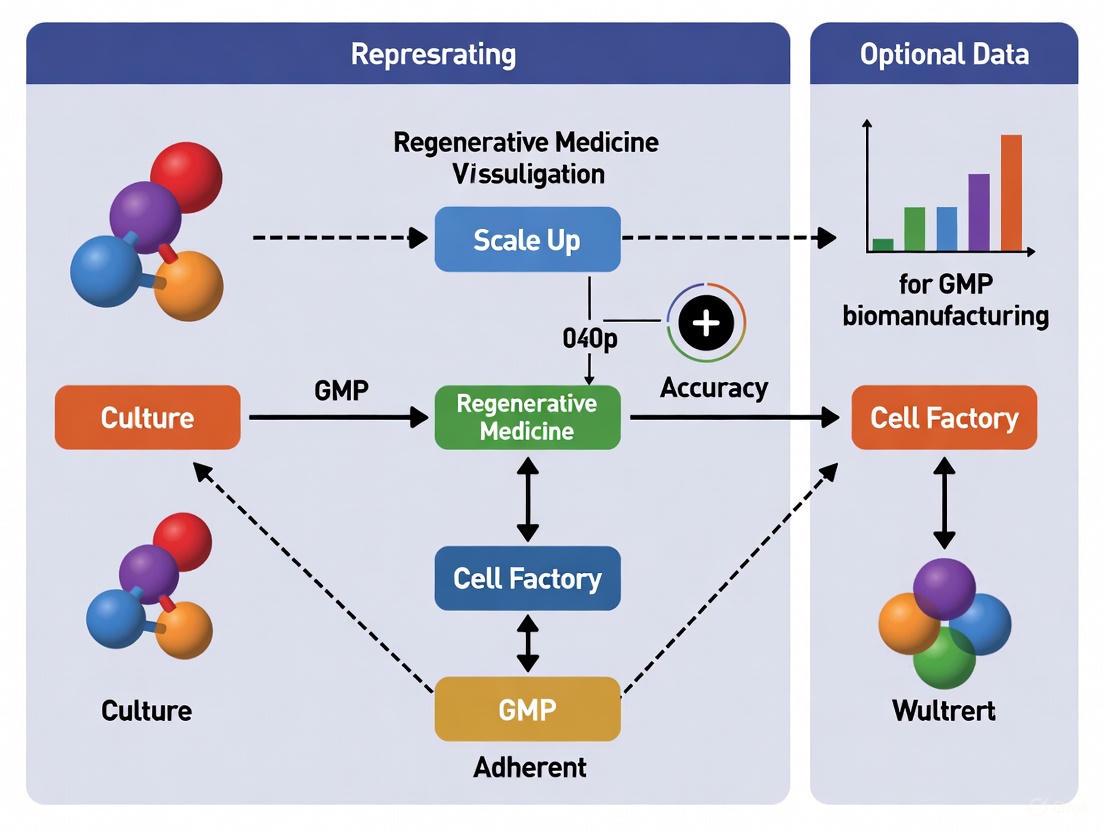
This article provides a comprehensive guide for researchers and bioprocess professionals on scaling adherent cell cultures within a GMP framework for advanced therapies and biologics.
Scaling Up Adherent Cell Culture: A GMP Biomanufacturing Guide from Foundations to Factory
Abstract
This article provides a comprehensive guide for researchers and bioprocess professionals on scaling adherent cell cultures within a GMP framework for advanced therapies and biologics. It covers foundational principles, explores scalable technologies like fixed-bed bioreactors and microcarriers, and details optimization strategies for critical parameters such as cell detachment and shear stress. The content also addresses navigating regulatory requirements and provides a comparative analysis of platform technologies to inform strategic decision-making for robust and compliant industrial-scale manufacturing.
Laying the Groundwork: Core Principles and Challenges of Scaling Adherent Cells in GMP
Why Scalability is a Paramount Challenge for Adherent Cell Therapies and Viral Vectors
The advancement of cell and gene therapies (CGTs) represents one of the most significant breakthroughs in modern medicine, yet their widespread application is constrained by a fundamental manufacturing bottleneck: the challenge of scaling up adherent cell cultures. Unlike suspension cells that can be grown in traditional bioreactors, adherent cells require a surface to attach to for survival and proliferation, making traditional scale-up approaches particularly difficult [1]. This challenge is especially acute for viral vector production, where inherent biological complexity combines with technological limitations to create substantial barriers to commercial-scale manufacturing [2].
The scalability problem extends beyond technical difficulties to economic and access implications. Many advanced therapies are priced at $1-2 million per dose, driven in part by complex and inefficient manufacturing processes [2]. For adherent cell-based therapies to transition from promising research to widely accessible treatments, the industry must overcome significant hurdles in scaling production while maintaining consistency, quality, and cost-effectiveness.
Fundamental Biological and Technical Hurdles
Biological Constraints of Adherent Systems
The core challenge in scaling adherent cell systems lies in their fundamental biological requirements, which resist simplification or standardization:
Inherent Adhesion Dependence: Many therapeutically relevant cells, including mesenchymal stem cells (MSCs), induced pluripotent stem cells (iPSCs), and patient-derived primary cells, are "wired" to require surface attachment for viability, growth, and proper function [1]. Attempting to adapt these cells to suspension culture often alters their biological identity, potency, and functionality, rendering them unsuitable for therapeutic applications [1].
Sensitivity to Microenvironment: Adherent cells are highly sensitive to their physical and chemical microenvironment. Fluid shear stresses in agitated systems can negatively impact cell viability, growth, and behavior [3]. Even oxygen and carbon dioxide levels must be carefully controlled, as deviations can disrupt cell growth, product quality, and intracellular pH environments [3].
Resistance to Standardization: Primary cells derived from patients cannot be genetically stabilized for consistent behavior across batches and often resist adaptation to standardized processes [1]. This biological variability creates significant challenges for manufacturing consistency.
Physical and Engineering Limitations
The biological constraints of adherent cells are compounded by significant physical and engineering limitations:
Surface Area to Volume Ratio: Traditional planar culture systems like flasks and multi-layer vessels exhibit unfavorable surface-to-volume ratios that become progressively worse as scale increases [3]. This limitation directly restricts the maximum cell density achievable per unit volume.
Nutrient and Gas Exchange: In larger vessels, ensuring uniform nutrient availability and gas exchange throughout the culture becomes increasingly difficult [4]. Concentration gradients can develop, creating suboptimal microenvironments that reduce yield and quality.
Harvesting Complications: Detaching adherent cells from growth surfaces while maintaining viability and function presents substantial technical challenges, particularly as culture surface areas expand into thousands of square centimeters [3] [5].
Table 1: Key Scalability Challenges in Adherent Cell Culture Systems
| Challenge Category | Specific Limitations | Impact on Manufacturing |
|---|---|---|
| Biological Constraints | Adhesion dependence, Microenvironment sensitivity, Resistance to standardization | Limited process flexibility, Potential alterations to cell identity and potency, Batch-to-batch variability |
| Physical Limitations | Poor surface-to-volume ratio, Nutrient/gas exchange limitations, Harvesting difficulties | Restricted cell yields, Inconsistent product quality, Complex and inefficient processing |
| Scale-Up Methods | Labor-intensive processes, Limited monitoring/control, High material consumption | High labor costs, Difficult reproducibility, Significant material costs and waste |
| Viral Vector Production | Plasmid DNA dependency, Transient transfection inefficiency, Low yields in purification | High raw material costs, Process variability, Poor recovery rates driving up COGs |
Scale-Up Technologies and Platforms
Traditional and Multi-Layer Vessel Systems
The most straightforward approach to scaling adherent cultures involves increasing the available growth surface area through multi-layer vessels:
CellSTACK Chambers: These modular chambers are available in 1- to 40-layer configurations providing up to 25,440 cm² of growth area. They can be converted to closed systems using specialized caps and tubing, facilitating the transition to GMP compliance [5].
HYPERFlask and HYPERStack Vessels: These incorporate gas-permeable films to enhance oxygen and CO₂ exchange. The HYPERFlask provides 1,720 cm² in a footprint similar to a T-175 flask, while HYPERStack vessels offer up to 18,000 cm² in a closed-system configuration [5].
Roller Bottles: Providing up to 1,750 cm² of surface area, roller bottles represent a traditional scale-up solution but are labor-intensive and difficult to standardize at commercial scales [4].
These systems enable scaling out by adding more surface area within manageable footprints but still require substantial manual handling and lack sophisticated process control.
Microcarrier and Suspension-Based Systems
Microcarrier technology represents a paradigm shift in adherent cell culture by enabling three-dimensional growth in suspension environments:
Traditional Microcarriers: These beads remain suspended in media through constant agitation, providing a growth surface for adherent cells in bioreactor systems. They are available with various surface treatments to support different cell types [3] [5].
Dissolvable Microcarriers: A recent innovation utilizing polyglycolic acid (PGA) polymer chains cross-linked with calcium ions. For cell harvest, the calcium is chelated with EDTA, degrading the PGA and gently releasing cells without enzymatic treatment [5].
SemaCyte Platform: This innovative approach uses 140 x 140 micron microcarriers that function as "miniaturized petri dishes." Cells are pre-attached to these carriers, which can be frozen, stored, and dispensed into microplates as assay-ready reagents [6].
The primary advantage of microcarrier systems is their compatibility with established bioreactor technology, enabling better process control and monitoring while significantly improving surface-to-volume ratios.
Fixed-Bed and Perfusion Bioreactors
For advanced process control and continuous manufacturing, fixed-bed bioreactor systems offer a sophisticated solution:
Ascent FBR System: This system uses layers of specially treated polyethylene terephthalate (PET) polymer mesh as growth surfaces, enabling uniform, low-shear fluid flow through the bioreactor bed. Currently available with 1 m² to 5 m² growth surfaces, with larger systems (up to 1,000 m²) in development [5].
CellCube System: These modules provide up to 85,000 cm² of treated polystyrene growth surface and can be paired with a bioreactor for perfusion-based culture, allowing continuous monitoring and control of critical parameters [5].
These systems maintain the advantages of adherent culture while addressing many limitations of traditional vessels through improved process control, monitoring capabilities, and reduced manual intervention.
Table 2: Comparison of Adherent Cell Scale-Up Platforms
| Platform Type | Maximum Scale | Key Advantages | Key Limitations |
|---|---|---|---|
| Multi-Layer Vessels (CellSTACK, HYPERStack) | 25,440 cm² (CellSTACK-40) | Minimal process development, Compatible with 2D techniques, Ease of use | Limited process control, Labor intensive, Mass transfer challenges |
| Microcarriers (Traditional and Dissolvable) | Varies with bioreactor size | High surface-to-volume ratio, Compatible with bioreactor control, Scalable | Significant process development required, Shear stress concerns, Harvesting complexity |
| Fixed-Bed Bioreactors (Ascent FBR, CellCube) | 5 m² (current), 1,000 m² (development) | Excellent process control, Low shear environment, Continuous perfusion | High capital cost, Complex validation, Limited flexibility for different cell types |
| Innovative Platforms (CellScrew, SemaCyte) | 10,000 cm² (CellScrew 10K) | Reduced footprint (12x), Automation compatible, Minimal material use | New technology with limited track record, Potential compatibility issues |
Specialized Challenges in Viral Vector Manufacturing
Upstream Processing Limitations
Viral vector production for gene therapies faces particular challenges in scaling up adherent processes:
Plasmid DNA Dependency: Most viral vectors are produced using transient transfection of HEK293 cells with multiple plasmids, requiring large amounts of expensive GMP-grade plasmid DNA. For a 500-liter batch, plasmid costs alone can exceed $500,000 [2].
Lentiviral Vector Production Challenges: LV manufacturing commonly relies on adherent cell cultures in multilayer vessels, which are difficult to scale and ill-suited to commercial GMP operations [2]. The fragile nature of enveloped LV vectors (up to 100 nm) makes them susceptible to damage during processing [2].
Serotype and Process Variability: The diversity of AAV serotypes and engineered capsids has led to numerous production approaches without standardization. At least five distinct upstream processes exist for AAV production alone, none universally optimal [2].
Downstream Processing and Purification Hurdles
The challenges continue once viral vectors are produced:
Low Yield Purification: Downstream processes typically involve multiple steps including affinity capture, anion-exchange chromatography, ultracentrifugation, and tangential-flow filtration. These complex, customized protocols result in poor recovery rates, further increasing costs [2].
Empty vs. Full Capsid Separation: Critical separation of full capsids from empty capsids remains technically challenging, though recent advancements in serotype-agnostic affinity chromatography and ion-exchange methods show promise [7].
Cold Chain Requirements: Most viral vector products require storage at or below -65°C due to instability at higher temperatures, creating significant logistical challenges and costs [2].
Emerging Solutions and Innovative Approaches
Process Intensification and Alternative Technologies
Several emerging technologies aim to address the core challenges in scaling adherent systems:
Synthetic DNA: Enzymatically produced synthetic DNA eliminates bacterial fermentation, reduces contamination risk, shortens production timelines, and lowers costs. Sequences can be engineered to include only essential elements, improving transfection efficiency [2].
Producer Cell Lines: Switching from transient transfection to stable producer cell lines eliminates the need for large-scale plasmid DNA production after initial development. These systems offer superior consistency and productivity, though upfront development requires significant investment [2].
Fixed-Bed Bioreactors for LV Vectors: These closed, automated systems reduce labor costs, minimize contamination risk, and improve vector yield consistency, addressing the commercial limitations of traditional adherent platforms [2].
Innovative System Designs
Novel approaches are rethinking the fundamental architecture of adherent culture:
CellScrew Platform: This system provides up to twelve times the productive surface area within a standard roller bottle footprint through optimized geometry. It can reduce operator time by up to 98% when automated and uses additive manufacturing to minimize material consumption [1].
SemaCyte Multiplexing: This platform enables pooling of up to 10 different cell models in the same well, each identified by unique optical barcodes. This increases throughput tenfold while reducing plates and reagents by up to sixfold [6].
High-Density Cell Banks: Using high-density cell banks (containing ~450 million cells vs. traditional 1-4 million) can reduce process time by up to 9 days by eliminating intermediate expansion steps [3].
Experimental Protocols and Methodologies
Protocol: Scalable Adherent Cell Culture Using Multi-Layer Vessels
This protocol outlines the expansion of adherent cells from T-flasks to HYPERStack vessels for research-scale production.
Materials and Reagents:
- Corning HYPERStack 36 Vessel (18,000 cm² growth surface)
- Appropriate cell culture medium
- Pre-warmed and pH-adjusted trypsin/EDTA solution
- Sterile phosphate-buffered saline (PBS)
- Closed-system manifolds and connectors
Procedure:
- Begin with confluent T-150 flasks and harvest cells using standard detachment protocols.
- Prepare the HYPERStack vessel by connecting appropriate tubing and manifolds for closed-system processing.
- Calculate cell seeding density based on validated parameters (typically 10,000-20,000 cells/cm²).
- Introduce cell suspension through the closed-system ports using peristaltic pumps, ensuring even distribution.
- Add pre-warmed, pH-adjusted medium to maintain 0.2-0.4 mL per cm² of growth area [4].
- Place the vessel in a CO₂ incubator at appropriate conditions.
- Monitor glucose consumption and medium acidification daily, performing medium exchanges as needed.
- Harvest cells at 80-90% confluency using trypsin/EDTA solution introduced through closed-system ports.
- Neutralize the trypsin with complete medium and collect cell suspension through harvest ports.
- Perform cell counting and viability assessment before subsequent processing.
Quality Control Considerations:
- Maintain consistent medium volume to surface area ratios throughout scale-up [4]
- Monitor critical quality attributes (CQAs) including viability, doubling time, and phenotype markers
- Validate surface compatibility with your specific cell type early in process development [5]
Protocol: Microcarrier-Based Culture in Bioreactor Systems
This protocol describes the expansion of adherent cells using dissolvable microcarriers in a bioreactor system.
Materials and Reagents:
- Dissolvable microcarriers (PGA-based with calcium cross-linking)
- Bioreactor system with temperature, pH, and DO control
- Cell-specific culture medium
- EDTA solution for carrier dissolution
- Antifoam agent
Procedure:
- Hydrate and condition microcarriers according to manufacturer specifications in growth medium.
- Seed cells onto microcarriers at optimized density in small-scale vessels to establish attachment.
- Transfer the cell-microcarrier suspension to the bioreactor vessel.
- Set process parameters: temperature 37°C, pH 7.2-7.4, DO >40%, agitation rate to maintain suspension without excessive shear.
- Monitor cell growth through daily sampling and metabolic consumption rates.
- Perform fed-batch or perfusion feeding based on nutrient consumption.
- When target cell density is reached, stop agitation and allow microcarriers to settle.
- Remove spent medium and add EDTA solution to dissolve the microcarrier matrix.
- Gently agitate to release cells without mechanical damage.
- Concentrate cells using low-speed centrifugation or tangential flow filtration.
Process Optimization Considerations:
- Agitation rates must balance suspension maintenance with shear stress minimization [3]
- Microcarrier concentration can be optimized for maximum surface area availability
- Dissolution time should be validated for complete carrier breakdown without compromising cell viability
The Scientist's Toolkit: Essential Research Reagents and Materials
Table 3: Essential Reagents and Materials for Scalable Adherent Culture
| Reagent/Material | Function/Purpose | Application Notes |
|---|---|---|
| Surface Coatings (Poly-L-lysine, Collagen, Gelatin) | Promote cell attachment and spreading | Essential for sensitive primary cells; selection depends on cell type [4] |
| Specialized Medium Formulations | Support cell growth and maintain phenotype | May require serum-free adaptations; pre-warming and pH adjustment critical [4] |
| Dissolvable Microcarriers | Provide scalable growth surface with gentle harvest | PGA-based carriers dissolved with EDTA; minimize enzymatic damage [5] |
| Trypsin/EDTA Solutions | Detach cells from growth surfaces | Concentration and exposure time must be optimized for each cell type |
| Closed-System Connectors | Maintain sterility during scale-up | Enable aseptic connections between vessels and fluid transfer systems [5] |
| Process Analytics (Metabolite assays, Cell counters, Viability stains) | Monitor process consistency and product quality | Essential for establishing critical process parameters and quality attributes |
Visualizing Workflows and Relationships
Adherent Cell Scale-Up Technology Decision Pathway
Viral Vector Manufacturing Innovation Workflow
Modern Adherent Manufacturing System Integration
Biological Foundations of Anchorage Dependence
Anchorage dependence describes the fundamental requirement of many eukaryotic cells to attach to a solid, growth-promoting substrate for survival, proliferation, and normal function. This biological imperative distinguishes them from hematopoietic or transformed cells, which can proliferate in suspension. For normal non-transformed cells derived from tissues, the absence of a suitable adhesion surface triggers growth arrest and induces anoikis, a specific form of programmed cell death initiated by detachment from the extracellular matrix (ECM) [8].
The cellular machinery governing anchorage dependence centers on integrin-mediated signaling. Cell surface integrins bind to specific ligands and molecules within the ECM, forming focal adhesions that activate intracellular signaling cascades. These pathways, including the PI3K/Akt and FAK/Src axes, transmit critical survival signals that suppress apoptotic pathways and promote cell cycle progression. Consequently, the biomechanical microenvironment—comprising the adhesion substrate, soluble factors, and mechanical stresses—profoundly influences cell expansion, morphology, and, for stem cells, cellular fate decisions [8].
Manufacturing Challenges in Scaling Adherent Cell Cultures
The scaling of anchorage-dependent cell cultures for industrial biomanufacturing, particularly under Good Manufacturing Practice (GMP) standards, presents distinct engineering challenges. The primary constraint is the need to maximize the available growth surface area while maintaining homogeneous and controlled culture conditions.
Traditional two-dimensional systems, such as cell factories and roller bottles, are limited by a scale-out approach. The largest single Cell Factory unit provides approximately 25,280 cm², while HyperStack systems can reach 60,000 cm². Scaling production requires multiplying parallel units, which introduces operational complexity and hinders precise control over physiochemical parameters like pH and dissolved oxygen [8].
To overcome these limitations, the industry has largely adopted microcarrier-based culture in stirred-tank reactors as the most scalable and technologically advanced solution. This system suspends small beads (microcarriers) with a high surface-area-to-volume ratio in a controlled bioreactor environment. This approach has been successfully implemented at scales up to 6,000 liters, providing an estimated surface area of 2,430 m² for the mass production of cell biomass and viral vaccines using lines such as Vero and MDCK cells [8].
However, the detachment of cells from these microcarriers or other surfaces at the end of the culture phase remains a critical bottleneck. Conventional enzymatic methods, primarily using trypsin or similar proteases, damage delicate cell membranes and surface proteins, reducing cell viability and functionality. These animal-derived reagents also introduce compatibility concerns for human therapies, generate significant waste—estimated at 300 million liters of cell culture waste annually—and complicate automation in high-throughput applications [9] [10].
Application Notes: Advanced Detachment Strategies for GMP Biomanufacturing
Quantitative Analysis of Cell Detachment Methods
The following table summarizes the key performance metrics of conventional versus a novel enzyme-free cell detachment method, highlighting the potential for improved manufacturing workflows.
Table 1: Performance Comparison of Cell Detachment Techniques in Biomanufacturing
| Performance Metric | Conventional Enzymatic Method | Novel Electrochemical Method |
|---|---|---|
| Fundamental Principle | Proteolytic cleavage of adhesion proteins | Alternating electrochemical current on a conductive polymer nanocomposite [9] |
| Typical Detachment Efficiency | Variable; highly dependent on cell type and enzyme activity | Up to 95% (demonstrated on osteosarcoma and ovarian cancer cells) [10] |
| Cell Viability | Can be compromised, especially in delicate primary cells | Maintains over 90% post-detachment viability [9] [10] |
| Scalability | Manual or semi-automated; multiplate systems are complex | Highly scalable; applicable uniformly across large areas [10] |
| GMP & Automation Suitability | Lower; animal-derived reagents and multiple steps increase contamination risk | High; enables fully automated, closed-loop systems with defined, reagent-free process [9] |
| Process Waste Generation | High (enzymes, quenching media) | Significantly reduced [9] |
Experimental Protocol: Enzyme-Free Electrochemical Cell Detachment
This protocol details the novel method for detaching adherent cells using an alternating electrochemical redox-cycling platform, optimized for human cancer cells [9] [10].
I. Materials and Reagents
- Bioreactor Surface: Conductive, biocompatible polymer nanocomposite culture surface.
- Instrumentation: Function generator capable of delivering low-frequency alternating voltage.
- Cell Lines: Human anchorage-dependent cells (e.g., osteosarcoma, ovarian cancer).
- Basal Media: Appropriate serum-free or complete growth medium for the specific cell line.
- Standard Cell Culture Consumables: Sterile centrifuge tubes, pipettes, and cell counters.
II. Step-by-Step Procedure
- Cell Culture: Expand adherent cells on the conductive nanocomposite surface until the desired confluence (typically 70-90%) is reached in the bioreactor.
- System Setup: Connect the conductive culture surface to the function generator, ensuring all connections are secure and the system is contained within a sterile environment, such as a closed-loop bioreactor.
- Medium Exchange: Aspirate the spent culture medium and replace it with a minimal volume of fresh, pre-warmed basal medium to reduce ionic interference.
- Application of Alternating Current: Apply a low-frequency alternating voltage at the predetermined optimal frequency to the culture surface.
- Critical Parameter: The specific frequency is crucial for efficiency. The MIT study identified an optimal frequency that increased detachment from 1% to 95% [9].
- Process Monitoring: Incubate the system for several minutes (typically 2-5 minutes), monitoring for initial signs of cell rounding and detachment.
- Cell Harvesting: Following the application of current and visible cell detachment, gently agitate the bioreactor or perfuse the culture chamber with a balanced salt solution to suspend the detached cells fully.
- Cell Collection: Transfer the cell suspension to a sterile centrifuge tube.
- Post-Processing: Centrifuge the cell suspension at 200-300 x g for 5 minutes to pellet the cells. Aspirate the supernatant and resuspend the cell pellet in an appropriate buffer or fresh growth medium for subsequent use, such as subculturing or seeding in a new production vessel.
III. Quality Control and Analysis
- Cell Count and Viability Assessment: Determine total cell yield and viability (e.g., >90%) using an automated cell counter or hemocytometer with Trypan Blue exclusion method [11].
- Functionality Assessment: Perform cell-specific functional assays to ensure critical biological functions (e.g., differentiation potential, target engagement for CAR-T cells) are retained post-detachment.
The Scientist's Toolkit: Research Reagent Solutions
Table 2: Essential Reagents and Materials for Advanced Adherent Cell Culture
| Item | Function in the Workflow | Example Application |
|---|---|---|
| Conductive Polymer Nanocomposite | Serves as the electroactive substrate for cell attachment and subsequent non-invasive detachment [9] | Core component of the novel electrochemical detachment bioreactor platform. |
| Defined, Xeno-Free Culture Medium | Provides nutrients and signaling molecules for cell growth while eliminating animal-derived components for GMP compliance [12] | Essential for manufacturing clinical-grade cell therapies like CAR-T cells and stem cells. |
| Microcarriers (e.g., Cytodex) | Provides a high surface-area-to-volume ratio scaffold for the growth of adherent cells in suspension within stirred-tank bioreactors [8] | Enables the scale-up of adherent cell cultures (e.g., Vero, MSCs) to volumes of 1,000L and beyond. |
| Non-Enzymatic Dissociation Reagents (e.g., TrypLE) | A recombinant fungal-derived protease alternative to trypsin for dissociating adherent cells, offering more consistent activity [11] | Used in R&D and process development where enzymatic methods are acceptable. |
| Programmable Function Generator | Supplies the precise low-frequency alternating voltage required to drive the electrochemical detachment process [9] [10] | Critical equipment for implementing the novel enzyme-free detachment protocol. |
Visualizing Workflows and Signaling Pathways
Adherent Cell Culture Scale-Up Workflow
Adherent Cell Scale-Up and Harvest Workflow
Integrin-Mediated Survival Signaling
Integrin Signaling and Anoikis in Anchorage Dependence
In the context of GMP biomanufacturing for adherent cell therapies, achieving robust and reproducible scale-up in systems like cell factories requires precise control over the physical and chemical culture environment. The transition from laboratory-scale vessels to industrial-scale bioreactors introduces significant challenges in maintaining homogeneity and optimal conditions for cell growth and productivity [13]. The core challenge of scale-up is that the process shifts from being controlled by cell kinetics at a small scale to being limited by transport phenomena (heat, mass, and momentum transfer) at a large scale [14]. This application note details the monitoring and control of three interdependent parameters critical to this process: oxygen transfer, nutrient availability, and metabolite accumulation. A thorough understanding and management of these parameters are essential for ensuring the quality, safety, and efficacy of Advanced Therapy Medicinal Products (ATMPs) [15].
The table below summarizes the core parameters, their monitoring approaches, and their impact on cell culture.
Table 1: Key Parameters, Monitoring, and Impact in Scale-Up Bioprocessing
| Parameter | Key Metrics / Components | Common Monitoring Strategies | Impact on Culture and Product |
|---|---|---|---|
| Oxygen Transfer | Dissolved Oxygen (DO), Oxygen Transfer Rate (OTR), kLa [16] | In-line DO sensor, gassing-out method for kLa [16] | Directly supports cellular respiration; low O₂ slows growth; high CO₂ can disrupt intracellular pH and affect product quality (e.g., glycosylation) [17] [16] [14] |
| Nutrient Availability | Glucose, amino acids, growth factors, media composition [18] | Off-line analysis (e.g., metabolite analyzers), on-line sensors (e.g., NIR) [18] | Depletion halts growth and production; fed-batch and perfusion systems maintain levels and support high cell densities [17] [18] [19] |
| Metabolite Control | Lactate, ammonia, CO₂ [18] | Off-line analysis, in-line pH and CO₂ sensors [14] [19] | Accumulation inhibits growth, reduces viability, and can compromise product quality; control via media design and perfusion [18] |
Protocol: Determination of the Oxygen Mass Transfer Coefficient (kLa)
Background and Principle
The volumetric oxygen mass transfer coefficient (kLa) is a critical parameter that quantifies the rate at which oxygen is transferred from the gas phase into the liquid culture medium per unit time [16]. It is a composite value where 'kL' represents the liquid-side mass transfer coefficient and 'a' represents the gas-liquid interfacial area. The kLa value is system-specific and is influenced by bioreactor geometry, agitation speed, gas sparging rate, and fluid properties. It is directly used to calculate the Oxygen Transfer Rate (OTR), which must meet the Oxygen Uptake Rate (OUR) of the cells to prevent hypoxia [16]. The OTR is given by: OTR = kLa * (cO₂ – cO₂) where *cO₂* is the saturation concentration of dissolved oxygen in the medium and cO₂ is the actual measured concentration [16]. This protocol describes the gassing-out method for determining kLa in a bioreactor system.
Materials and Equipment
- Bioreactor system with temperature control and calibrated dissolved oxygen (DO) probe
- Data logging system for continuous DO monitoring
- Source of nitrogen gas (N₂) and oxygen or air
- Gas flow meters and sparging system
Experimental Procedure
- System Setup: Fill the bioreactor with the typical culture medium volume to be used, without cells. Set the temperature and agitation to the standard operating conditions for your process.
- Oxygen Stripping: Sparge the medium with nitrogen gas (N₂) at a fixed flow rate. This inert gas will strip the dissolved oxygen from the liquid. Continue sparging until the DO probe reading stabilizes at or near 0% saturation.
- Initiate Oxygenation: Once the oxygen is stripped, immediately switch the gas supply from N₂ to air (or a defined O₂ mixture). Maintain a constant gas flow rate and agitation speed.
- Data Collection: Record the DO concentration at frequent intervals (e.g., every 1-2 seconds) from the moment of the gas switch until the DO reading stabilizes at 100% saturation.
- Replication: Repeat the procedure at different agitation speeds and/or gas flow rates to characterize their effect on kLa in your system.
Data Analysis and Calculation
- Plot Data: Plot the natural logarithm of the oxygen concentration driving force, ln(cO₂ – cO₂)*, against time. The driving force is the difference between the saturation concentration (100%) and the measured concentration at each time point.
- Determine kLa: The plot should yield a linear region during the main re-oxygenation phase. The negative slope of this linear region is the kLa value [16].
- Formula: kLa = -slope
Diagram: Workflow for Determining the Oxygen Mass Transfer Coefficient (kLa)
Interdependence of Scale-Up Parameters and Control Strategy
Successful scale-up requires a holistic view, as oxygen transfer, nutrient availability, and metabolite control are deeply interconnected. A high-density cell culture will rapidly consume oxygen and nutrients while producing metabolites like lactate and CO₂. The figure below illustrates the core control loops and their interactions necessary for maintaining bioprocess homeostasis.
Diagram: Integrated Control Strategy for Scale-Up Parameters
Advanced Control: Fed-Batch and Perfusion Systems
To actively manage the interdependent parameters shown above, traditional batch cultures are often replaced with fed-batch or perfusion systems at scale.
- Fed-Batch Culture: Concentrated nutrients are fed into the bioreactor over time, preventing initial inhibitory metabolite levels and allowing for higher cell densities and product yields than simple batch culture [17] [18].
- Perfusion Culture: Fresh media is continuously added, and spent media (containing waste metabolites) is continuously removed. This maintains a stable, optimal environment for much longer durations, enabling very high cell densities and consistent product quality, and is particularly beneficial for sensitive cell types [19].
Table 2: Comparison of Cultivation Modes for Parameter Control
| Cultivation Mode | Impact on Nutrients | Impact on Metabolites | Typical Cell Density | Process Complexity |
|---|---|---|---|---|
| Batch | Deplete over time | Accumulate over time | Moderate | Low |
| Fed-Batch | Maintained via bolus feeds | Accumulate, but rate is controlled | High | Medium |
| Perfusion | Continuously maintained | Continuously removed | Very High | High |
The Scientist's Toolkit: Essential Reagents and Materials
The table below lists key reagents and materials critical for the development and execution of robust scale-up processes for adherent cell culture.
Table 3: Essential Research Reagents and Materials for Scale-Up
| Item | Function / Application |
|---|---|
| Serum-Free, Xeno-Free Media | Provides defined, consistent nutrients without the variability and regulatory risks associated with animal sera; essential for GMP manufacturing [18]. |
| Microcarriers | Provides a high-surface-area substrate for the growth of adherent cells in stirred-tank bioreactors, enabling the scale-up of surface-dependent cells [17] [19]. |
| Cell Dissociation Reagents | Enzymatic or non-enzymatic reagents (e.g., Trypsin, Gentle Cell Dissociation Reagent) for detaching adherent cells from microcarriers or 2D surfaces for subculturing or harvest [17] [20]. |
| Specialized 3D Media | Formulations like mTeSR 3D or TeSR-AOF 3D are designed to support the expansion and viability of cells, including pluripotent stem cells, grown as aggregates in 3D suspension culture [20]. |
| Feed Supplements | Concentrated nutrient solutions used in fed-batch processes to replenish depleted components and extend culture longevity and productivity [18]. |
| Process Analytical Technology (PAT) | In-line sensors (for pH, DO, CO₂) and advanced monitoring systems (e.g., NIR) for real-time control of Critical Process Parameters (CPPs) [19]. |
The Impact of Shear Stress on Cell Viability, Growth, and Product Quality
In the context of scaling up adherent cell culture within Cell Factory GMP biomanufacturing, controlling shear stress is a critical factor for ensuring product quality and process consistency. Shear stress—the parallel force exerted by fluid flow on cells—is an inherent challenge in bioreactor-based production. For adherent cells, which are essential for many cell and gene therapies, excessive shear can compromise cell viability, growth, and therapeutic potential, directly impacting the success of commercial-scale manufacturing [3] [21]. This application note details the sources, impacts, and mitigation strategies for shear stress, providing actionable protocols to optimize scale-up processes.
Quantitative Impact of Shear Stress on Cell Culture
The effects of shear stress are cell-type specific and can be either lethal (causing apoptosis or necrosis) or sub-lethal (reducing productivity or altering cell metabolism) [22]. The table below summarizes key quantitative findings from recent studies.
Table 1: Documented Cellular Responses to Hydrodynamic Shear Stress
| Cell Type | Shear Stress Level/Type | Impact on Cells | Reference Threshold |
|---|---|---|---|
| CHO-K1 (Suspension) | Fed-batch culture in stirred bioreactors; Average Shear Stress (correlated with titer decrease) | Sub-lethal effect: Decreased productivity (titer) | Cell-line specific sensitivity [22] |
| Mouse Hybridoma (Sp2/0) | Oscillating stress loop system; 3L & 300L bioreactors | Lethal effect: Cell death | 25.2 ± 2.4 Pa [22] |
| CHO (Suspension) | Oscillating stress loop system; 3L bioreactor | Lethal effect: Cell death | 32.4 ± 4.4 Pa [22] |
| Endothelial Cells (HUVECs) | Low (0.99 dyn/cm²) & High (24 dyn/cm²) Shear Stress | Induction of ferroptosis (lipid peroxidation, CoQ10 depletion, reduced SLC7A11); Cell death | Significant vs. Medium Shear (4.78 dyn/cm²) [23] |
| Prostate Cancer Cells (PCa) | High Fluid Shear Stress (290 dyn/cm²) via multiplex pipetting | Enhanced TRAIL-induced apoptosis via Piezo1 activation | N/A [24] |
| Mammalian Cells (General) | Energy Dissipation Rate (EDR) | Lethal responses (apoptosis, necrosis) | 106–108 W/m³ [22] |
| Mammalian Cells (General) | Energy Dissipation Rate (EDR) | Sublethal responses (reduced productivity, metabolic changes) | Lower range (around 101–109 W/m³) [22] |
Experimental Protocol: Assessing Shear Stress Sensitivity in a High-Throughput Format
This protocol leverages a high-throughput, semi-automated system to expose different cell lines to a range of physiological shear stresses, enabling efficient assessment of their shear sensitivity—a crucial risk mitigation step before bioreactor scale-up [22] [24].
Key Research Reagent Solutions
Table 2: Essential Materials and Reagents
| Item | Function/Description |
|---|---|
| VIAFLO96 Multichannel Pipette | A semi-automated electronic pipette for high-throughput, parallel processing of samples in a 96-well format [24]. |
| Custom 22-Gauge Luer-Fit Needles | Modified pipette tips to generate high fluid shear stress (up to 290 dyn/cm²) without vortex formation or gas hold-up [24]. |
| INTEGRA "Wide Bore" Pipette Tips | Standard tips for lower shear stress applications (e.g., ~8.79 dyn/cm²) to establish baseline cellular responses [24]. |
| Live/Dead Cell Staining Kit (e.g., Propidium Iodide) | To quantify cell viability after shear exposure via flow cytometry [24]. |
| Lactate Dehydrogenase (LDH) Assay Kit | Measures extracellular LDH activity as a marker of shear-induced cytotoxic damage [23]. |
| C11 BODIPY 581/591 Probe | A fluorescent sensor used to detect lipid peroxidation, a key feature of ferroptosis, in live cells after shear exposure [23]. |
| Ferrostatin-1 (Fer-1) | A specific ferroptosis inhibitor; used to confirm the mechanism of cell death is ferroptosis if cell death is rescued upon its application [23]. |
Methodology
Workflow Overview:
Step-by-Step Procedure:
Cell Preparation:
- Harvest and resuspend the adherent cell line of interest (e.g., CHO-K1, MSCs) in an appropriate serum-free or suspension-adapted medium.
- Dispense a uniform cell suspension (e.g., 2 x 10^5 cells/mL, 150 µL per well) into a 96-well plate. Include control wells that will not be subjected to shear.
Device Setup and Programming:
- Fit the VIAFLO96 pipetting head with either standard "wide bore" tips for lower shear or custom 22-gauge needles for high shear stress.
- Using the VIALINK software, develop a pipetting program to generate repeated "shearing cycles." Key parameters to define are:
- Flow Rate: Set to maximum (295 µL/s) for highest shear.
- Number of Mixes: Define based on desired exposure duration (e.g., 500 to 10,000 mixes, corresponding to ~20 to 400 minutes of runtime) [24].
- Mix Speed: Set to the fastest setting.
Shear Stress Application:
- Place the 96-well plate containing the cell suspension into the VIAFLO96.
- Run the programmed protocol. The device will repeatedly aspirate and dispense the cell suspension through the narrow bore of the tips/needles, exposing the cells to controlled, quantifiable fluid shear stress.
Post-Shear Sample Collection and Analysis:
- After the shearing cycles, transfer the contents of the wells to microcentrifuge tubes or a new plate for analysis.
- Perform downstream assessments:
- Viability and Death Mechanism: Use a Live/Dead stain followed by flow cytometry. To investigate ferroptosis, include a set of samples treated with the inhibitor Ferrostatin-1 (e.g., 1 µM) prior to shearing [23].
- Cytotoxicity: Measure lactate dehydrogenase (LDH) release into the supernatant according to kit instructions.
- Lipid Peroxidation: Stain live cells with C11 BODIPY probe (2.5 µM) for 30 minutes, then analyze by flow cytometry to detect a shift in fluorescence from red to green, indicating ferroptosis [23].
- Productivity (for producer cells): Quantify the titer of the recombinant protein (e.g., monoclonal antibody) in the supernatant after a recovery period to assess sub-lethal effects [22].
Mitigation Strategies and Scale-Up Considerations for Cell Factory Bioprocessing
Successfully scaling adherent cell culture requires integrating shear stress mitigation into bioreactor design and process control. The following diagram and table outline the logical decision process and available technologies.
Scale-Up Strategy and Mitigation Logic:
Table 3: Bioreactor Systems and Shear Stress Mitigation Approaches
| System Type | Shear Stress Profile | Advantages for Scale-Up | Mitigation Strategies & Scale-Up Considerations |
|---|---|---|---|
| Stirred-Tank Bioreactor (with Microcarriers) | High shear from impeller agitation and bubble rupture [3] [14]. | Well-established scale-up, homogenous environment, good control [3] [25]. | - Optimize Impeller: Use pitched-blade impellers over Rushton turbines.- Constant P/V: Scale-up while maintaining constant power per unit volume (P/V) [14].- CFD Modeling: Use Computational Fluid Dynamics to characterize and minimize high-shear zones [22] [25].- Add Protective Polymers: Use Pluronic F-68 to reduce cell-bubble attachment [14]. |
| Wave / Rocking Motion Bioreactor | Low shear stress due to gentle rocking agitation [21]. | Simple design, single-use, low capital cost, suitable for process development [21]. | - Optimize Rocking Rate/Angle: Balance mixing and oxygen transfer with shear generation. |
| Packed / Fixed-Bed Bioreactor | Very low shear stress; cells are immobilized on stationary scaffolds [21]. | High cell density, protects cells from direct hydrodynamic forces [3] [21]. | - Prevent Gradients: Ensure medium perfusion is sufficient to avoid nutrient and gas concentration gradients within the bed [21].- Scalability: Can be linearly scaled by increasing the bed volume [21]. |
| Hollow Fiber Bioreactor | Low shear stress within the extracapillary space where cells grow [3]. | In-vivo-like structure, very high cell densities [3]. | - Prevent Gradients: Medium flow through fibers must be controlled to avoid nutrient and waste gradients [21].- Complex Handling: Can be more complex to harvest cells and clean. |
| General Strategies | N/A | N/A | - Cell Adaptation: Adapt adherent cells to grow in suspension to reduce dependency on microcarriers [3] [26].- Process Control: Control sparging to minimize bubble rupture damage; use larger bubbles or membrane spargers for better oxygen transfer with less shear [14]. |
Current Good Manufacturing Practice (CGMP) regulations, enforced by the U.S. Food and Drug Administration (FDA), form the foundational framework for ensuring the quality, safety, and efficacy of drug products, including cell-based therapies [27] [28]. For products derived from adherent cell cultures, such as many cell and gene therapies (CGTs), CGMP provides the systems and controls necessary to assure identity, strength, quality, and purity [28] [29]. This is achieved by requiring that manufacturers adequately control manufacturing operations, including establishing robust quality management systems, obtaining quality raw materials, defining reliable operating procedures, detecting and investigating product quality deviations, and maintaining reliable testing laboratories [28].
The "C" in CGMP stands for "current," requiring companies to employ technologies and systems that are up-to-date to comply with regulations [28]. This flexibility allows for the use of modern technologies and innovative approaches to achieve higher quality through continuous improvement, which is particularly vital for the rapidly advancing field of biomanufacturing for cell-based products [28]. The global cell and gene therapy market, valued at $18.13 billion in 2023 and projected to reach $97.33 billion by 2033, underscores the critical importance of establishing robust and scalable CGMP-compliant manufacturing processes [30].
Key CGMP Principles and Regulatory Framework
The core objective of CGMP is to build quality into every aspect of the manufacturing process, rather than relying solely on end-product testing [28]. This is crucial because, in most instances, testing is performed only on a small sample of a batch (e.g., 100 tablets from a batch of 2 million), making process control paramount [28]. Adherence to CGMP assures that a product is safe for use and contains the ingredients and strength it claims to have [27].
The CGMP regulations are part of the U.S. Code of Federal Regulations (CFR), specifically Title 21, which interprets the Federal Food, Drug, and Cosmetic Act [27]. Key parts of the CFR relevant to drug and cell-based products include:
- 21 CFR Part 210: Current Good Manufacturing Practice in Manufacturing, Processing, Packing, or Holding of Drugs.
- 21 CFR Part 211: Current Good Manufacturing Practice for Finished Pharmaceuticals.
- 21 CFR Part 600: Biological Products: General [27].
For cell-based products entering clinical trials, manufacturing must follow relevant CGMP guidelines. The development path typically involves non-clinical studies performed according to Good Laboratory Practice (GLP) guidelines, followed by clinical trials under an Investigational New Drug (IND) application, all of which require CGMP-compliant manufacturing [29].
Table 1: Key Elements of a CGMP Framework for Cell-Based Products
| CGMP Element | Implementation in Cell-Based Product Manufacturing |
|---|---|
| Quality Management System | Establishes the overall framework for quality, including responsibilities, procedures, and resources. |
| Control of Raw Materials | Sourcing of high-quality, qualified reagents, cytokines, and growth factors suitable for clinical manufacturing [30]. |
| Robust Operating Procedures | Detailed, documented protocols (SOPs) for every unit operation, from cell isolation to final fill. |
| Deviation Investigation | Systems to detect, document, and investigate any deviation from established procedures or quality standards. |
| Reliable Testing Laboratories | In-process and release testing (e.g., viability, identity, potency, sterility) to ensure product quality. |
CGMP Considerations for Scale-Up Adherent Cell Culture
A significant challenge in manufacturing cell-based products is that many therapeutic cells, including mesenchymal stem cells (MSCs) and induced pluripotent stem cells (iPSCs), are inherently anchorage-dependent [3] [26]. These adherent cells require a surface to attach to for growth and proliferation, posing substantial scale-up challenges for manufacturing processes aiming to produce the billions to trillions of cells needed for therapies [3] [26].
Key scale-up parameters that must be carefully controlled and monitored in a CGMP-compliant manner include:
- Availability of Key Elements: Oxygen, carbon dioxide, and nutrient levels must be tightly controlled. Inadequate oxygen can slow cell respiration, while high CO2 can inhibit growth and compromise product quality by affecting intracellular pH [3].
- Shear Stress: Dynamic culture in bioreactors enhances nutrient transport but exposes cells to fluid shear stresses, which can negatively impact cell viability, growth, and behavior [3].
- Process Control: CGMP requires that processes are reliable and reproducible. This necessitates tight control over critical process parameters (CPPs) like pH, temperature, and dissolved oxygen to ensure consistent product quality [28].
Table 2: Quantitative Scale-Up Challenges for Adherent Cell Culture
| Parameter | Challenge at Scale | CGMP Compliance Consideration |
|---|---|---|
| Cell Quantity | 10^12-10^13 cells needed for ~10-100 kg of meat (illustrative of large scale) [3] | Demonstrates the massive scale required, necessitating validated, reproducible processes. |
| Bioreactor Volume | 2 × 10^6 m³ volume to satisfy 10% of world meat consumption [3] | Highlights the facility and equipment control challenges under CGMP. |
| Surface-to-Volume Ratio | Low ratio in traditional stacked plates (e.g., for first cultured burger) [3] | Impacts efficiency and control; CGMP encourages adoption of improved technologies (e.g., microcarriers). |
| Process Steps | Traditional scale-up can take 3-4 weeks with multiple manual steps [3] | Each manual step is a contamination risk; CGMP favors automated, closed systems to reduce risk [30]. |
CGMP-Compliant Technologies for Adherent Cell Biomanufacturing
Several technologies are employed to scale up adherent cells under CGMP conditions, each with distinct advantages. The choice of system significantly impacts the footprint, controllability, and ultimately, the success of the manufacturing process [3].
- Multi-Layer Vessels: Systems like the Nunc Cell Factory Systems and roller bottles are compact, multi-layer single-use cell culture systems designed to scale-up production [31]. They offer the familiarity of 2D cell culture but can be labor-intensive and offer limited control over process parameters compared to bioreactors [3].
- Microcarrier-Based Bioreactors: This approach uses small beads (microcarriers) that provide a surface for cells to adhere to while suspended in culture media within a stirred-tank bioreactor [3] [26]. This system offers a much higher surface-to-volume ratio than stacked flasks and allows for better monitoring and control of the culture environment (e.g., pH, dissolved oxygen), aligning well with CGMP requirements for process control [3].
- Fixed-Bed Bioreactors: In these systems, cells adhere to a stationary fixed bed while media is perfused through the bed, providing nutrients and removing waste [26]. This can offer a protected environment for cells with low shear stress.
- Automated and Closed Systems: To enhance CGMP compliance by reducing contamination risk and human error, automated closed systems are increasingly adopted. Examples include the Gibco CTS Rotea Counterflow Centrifugation System for cell processing and the Gibco CTS Dynacellect Magnetic Separation System for cell isolation, both designed as closed, GMP-compliant systems [30].
The following workflow diagram illustrates a typical CGMP-compliant process for scaling up adherent cells using a microcarrier-based bioreactor system.
Essential Reagents and Materials for CGMP Compliance
The quality of raw materials is a critical aspect of CGMP. All reagents and materials used in the manufacturing process must be qualified for their intended use to ensure the safety and quality of the final cell-based product.
Table 3: Research Reagent Solutions for CGMP Cell Biomanufacturing
| Reagent/Material | Function | CGMP Consideration |
|---|---|---|
| Cell Culture Media | Provides nutrients and environment for cell growth and proliferation. | Use of serum-free, xeno-free formulations is critical to avoid introducing adventitious agents; raw material traceability is required. |
| Microcarriers | Provides a high-surface-area substrate for adherent cell growth in suspension bioreactors. | Must be sterile, non-toxic, and compatible with cell detachment protocols. Quality and consistency between lots are vital. |
| Dissociation Enzymes | Detaches adherent cells from the growth surface for passaging or harvesting. | Enzymatic activity and purity must be defined and controlled to ensure consistent cell harvest and viability. |
| Growth Factors/Cytokines | Directs cell proliferation, differentiation, and function. | Sourcing from qualified, audited suppliers is essential. Certificate of Analysis (CoA) required for each lot. |
| Cell Separation Reagents | (e.g., Antibody-coupled magnetic beads) for isolating specific cell populations. | Part of a closed, automated system (e.g., CTS Dynacellect) to ensure reproducibility and reduce contamination risk [30]. |
Detailed Protocol: CGMP-Compliant Scale-Up of Adherent Cells Using Microcarriers
This protocol outlines a generalized methodology for scaling up adherent cells in a stirred-tank bioreactor using microcarriers, incorporating key CGMP principles.
Pre-Production Activities
- Equipment Qualification: Ensure the bioreactor and all ancillary equipment (e.g., pH and DO probes) are installed, operational, and performance qualified (IQ/OQ/PQ).
- Reagent Qualification: Use only raw materials (media, microcarriers, enzymes) that are released with a Certificate of Analysis and are suitable for CGMP manufacturing.
- Aseptic Setup: Assemble the single-use bioreactor and all fluid pathways under aseptic conditions, following established SOPs.
Bioreactor Inoculation and Culture
- Media and Microcarrier Preparation: Aseptically transfer the pre-warmed, qualified culture media into the single-use bioreactor vessel. Add the pre-sterilized, hydrated microcarriers at the recommended density (e.g., 15-20 g/L).
- System Parameter Calibration: Calibrate the bioreactor control system (pH, DO, temperature) according to SOP.
- Cell Inoculation: Harvest cells from the seed train expansion system (e.g., Cell Factory). Determine cell count and viability. Aseptically transfer the required cell inoculum into the bioreactor to achieve the target seeding density (e.g., 20-50 cells/microcarrier).
- Initial Static Phase: Upon inoculation, stop agitation for 4-8 hours to allow cells to attach to the microcarriers.
- Initiation of Dynamic Culture: After the static attachment period, initiate gentle, intermittent agitation to keep microcarriers in suspension without subjecting cells to damaging shear stress.
- Process Monitoring and Control:
- Maintain setpoints for temperature (e.g., 37°C), pH (e.g., 7.2-7.4), and dissolved oxygen (e.g., 30-50% air saturation).
- Perform daily sampling for in-process controls: offline measurements of pH, glucose, lactate, and cell count/viability (e.g., using trypan blue exclusion). Monitor microcarrier confluency microscopically.
- Operate in fed-batch or perfusion mode as per the validated process to replenish nutrients and remove waste products.
Cell Harvest and Recovery
- Harvest Trigger: Initiate the harvest procedure when target cell confluence (e.g., >80%) or maximum cell density is reached, as defined in the batch manufacturing record.
- Cell Detachment: Stop agitation to allow microcarriers to settle. Drain and replace the spent culture media with a pre-warmed, qualified dissociation enzyme solution (e.g., trypsin/EDTA or a recombinant enzyme). Restart gentle agitation for a defined duration to detach cells.
- Enzyme Neutralization: After detachment, add a qualified neutralization solution (e.g., serum-containing media or inhibitor) to inactivate the enzyme.
- Cell Separation: Separate the released cells from the microcarriers using a sieving device or a closed, automated cell processing system like the CTS Rotea Counterflow Centrifugation System [30].
- Cell Wash and Concentration: Wash the harvested cells to remove residual enzymes, media components, and debris. Concentrate the cells to the target volume for final formulation.
Post-Harvest Activities
- Final Formulation: Resuspend the cell pellet in the final formulation buffer (e.g., cryopreservation medium).
- Final Fill: Aseptically transfer the final cell product into the primary container (e.g., cryobags or vials).
- Product Release Testing: Transfer samples of the final product to the Quality Control (QC) laboratory for testing, which may include sterility, mycoplasma, endotoxin, viability, identity, and potency assays.
- Documentation: Complete the batch manufacturing record, documenting all steps, parameters, and in-process control results. Any deviations must be documented and investigated.
From Flask to Factory: Scalable Technologies and GMP-Compliant Implementation
The advancement of cell and gene therapies, particularly those using adherent cells, hinges on robust and scalable manufacturing processes. Within Good Manufacturing Practice (GMP) environments, ensuring product quality, safety, and consistency is paramount [32]. While traditional 2D systems like multi-layer flasks have been a mainstay in research and early-stage production, they present significant operational limitations when scaling up to clinically and commercially relevant volumes [4]. Adherent cell culture remains a core component of biomedical research and therapy production due to its physiological relevance, but its expansion is inherently constrained by the need for surface area [33]. This application note delineates the quantitative and qualitative limits of traditional 2D systems and provides detailed protocols for evaluating advanced culture methodologies within a GMP-compliant framework for biomanufacturing research.
Quantitative Analysis of Traditional 2D System Limitations
Scaling adherent cell cultures requires a proportional increase in available surface area. Traditional 2D systems, even advanced multi-layer flasks, quickly lead to massive facility footprints and complex logistical challenges. The table below summarizes the physical and operational constraints of these systems.
Table 1: Scaling Challenges and Physical Footprint of Traditional 2D Systems
| Culture Vessel | Typical Surface Area | Estimated Factory Footprint per Batch | Key Scalability Limitation |
|---|---|---|---|
| Multi-Well Plates | 6 - 150 cm² | Low (for R&D) | Highly labor-intensive, open processes [4] |
| T-Flask (T175) | 175 cm² | Low (for R&D) | Manual handling, limited scale [4] |
| Multi-Layer Flask (e.g., HYPERFlask) | 1,720 cm² | Moderate | Specialized vessel, process transfer complexity [4] |
| Cell Factory / CellSTACK | 1,200 - 25,440 cm² | High | Large incubator footprint, cumbersome handling [4] |
| Roller Bottles | Up to 1,750 cm² | High | Requires specialized roller apparatus [4] |
Beyond physical footprint, 2D systems induce physiological artifacts that can impact product quality and efficacy, a critical concern for GMP manufacturing.
Table 2: Physiological and Quality Limitations of 2D Adherent Culture Systems
| Parameter | Impact in 2D Culture | Potential Consequence for Product Quality |
|---|---|---|
| Apical-Basal Polarity | Induces unnatural polarization in some cell types (e.g., mesenchymal cells) [34] | Altered cell function, migration, and response to stimuli [34] |
| Cell Morphology | Flattened, stretched cell shape due to rigid planar surface [34] | Disrupted native cytoskeletal organization and mechanotransduction [34] |
| Gene Expression | Deviations from in vivo-like expression profiles [34] | Loss of critical therapeutic protein functions [34] |
| Nutrient/Gradient Exposure | Homogeneous access to nutrients and oxygen [34] | Failure to model physiologically relevant microenvironments, such as necrotic cores in tumors [35] |
| Cell-Cell & Cell-ECM Interactions | Limited to a single plane; lacks 3D architecture [34] [35] | Compromised tissue-specific functionality and signaling [34] |
Detailed Experimental Protocols for Assessing Culture Systems
To make informed decisions on scale-up strategies, researchers must quantitatively compare traditional and advanced systems. The following protocols are designed for GMP process development.
Protocol 1: Quantitative Assessment of Growth and Metabolism in Scale-Up Vessels
This protocol assesses cell growth and metabolic health across different 2D platforms.
Materials (Research Reagent Solutions)
- Vessels for Testing: T-flasks, multi-layer flasks, CellSTACK chambers [4]
- Cell Line: Adherent primary cells or cell line of interest (e.g., mesenchymal stem cells)
- Culture Medium: Pre-warmed and pH-adjusted serum-free or reduced-serum medium [4]
- Coating Matrix: Poly-L-lysine, gelatin, or collagen, as required by the cell type [4]
- Detachment Reagent: Trypsin-EDTA solution, pre-warmed [33]
- Staining Solution: Trypan Blue for viability count
- Analytical Instrumentation: Automated cell counter, glucose/glutamine analyzer
Methodology
- Surface Coating: Coat all test vessels with the selected matrix per manufacturer's instructions to ensure consistent attachment [4].
- Cell Seeding: Seed cells at a standardized density (e.g., 10,000 cells/cm²) across all vessels. Ensure gentle mixing upon addition to the vessel to achieve an even monolayer [4].
- Culture Maintenance: Maintain cultures at 37°C, 5% CO₂. Use a constant media volume-to-surface-area ratio (0.2–0.4 mL/cm²) across all systems to standardize nutrient and gas exchange conditions [4].
- Daily Monitoring & Harvest:
- Daily Sampling: Collect 1 mL of spent media daily from each vessel type for metabolite analysis (e.g., glucose consumption, lactate production).
- Cell Harvest: At 80-90% confluency, dissociate cells using trypsin-EDTA. Inactivate trypsin with culture media and pellet cells via centrifugation at 300 x g for 3 min [36].
- Data Analysis:
- Cell Yield & Viability: Resuspend the pellet and perform cell counts and viability analysis (e.g., Trypan Blue exclusion) using an automated counter [36].
- Metabolic Rate: Calculate daily consumption/production rates of key metabolites from spent media analysis.
Protocol 2: 3D Spheroid Formation for Enhanced Physiological Relevance
This protocol provides a method for generating 3D multicellular tumour spheroids (MCTS) as a more physiologically relevant model for drug screening, using cost-effective, non-adherent plates.
Materials (Research Reagent Solutions)
- Cell Line: SW1353 chondrosarcoma cells or other relevant cell line (e.g., SW48 for CRC models) [36] [35]
- Culture Vessels: T75 and T175 flasks for expansion [36]
- Spheroid Formation Plates: 96-well ultra-low attachment (ULA) plates [36] [35]
- Detachment Reagent: Trypsin, pre-warmed to 37°C [36]
- Culture Medium: Dulbecco’s Modified Eagle Medium/Nutrient Mix F-12 (DMEM/F-12) supplemented with Fetal Bovine Serum (FBS) and Penicillin-Streptomycin [36]
Methodology
- Cell Preparation:
- Culture and passage cells in T175 flasks to achieve sufficient yield (e.g., 12 x 10⁶ cells for 192 spheroids) [36].
- At 80-90% confluency, wash with PBS, dissociate with trypsin (7 mL for a T175 flask, 5 min at 37°C), and inactivate with culture media [36].
- Centrifuge the cell suspension at 300 x g for 3 min, resuspend the pellet in culture media, and perform a cell count [36].
- Spheroid Seeding:
- Spheroid Culture and Analysis:
- Incubate the plates for 5 days under standard cell culture conditions (37°C, 5% CO₂) [36].
- Monitor spheroid formation and morphology daily using microscopy. For non-destructive, longitudinal analysis of viability and structure, employ Magnetic Resonance Imaging (MRI) as an advanced analytical technique [36].
Workflow Visualization for Culture Assessment
The following diagram illustrates the key decision points and pathways for scaling adherent cell cultures, from selecting a platform to final analysis.
Scale-Up Pathway Decision Tree
The Scientist's Toolkit: Essential Reagents and Materials
Table 3: Key Research Reagent Solutions for Adherent Cell Culture Scale-Up
| Reagent/Material | Function | GMP Considerations |
|---|---|---|
| Ultra-Low Attachment (ULA) Plates | Facilitates 3D spheroid formation by inhibiting cell attachment [36] [35] | Single-use, sterile, suitable for qualifying 3D models in process development. |
| Extracellular Matrix (ECM) Coatings | Enhances cell attachment and spreading in 2D; provides structural support in 3D hydrogels [33] [4] | Select GMP-grade, pathogen-free formulations (e.g., collagen, fibronectin). |
| Serum-Free Media | Provides defined, consistent composition; reduces risk of contamination [4] | Essential for GMP; use GMP-manufactured, xeno-free formulations for clinical production [30]. |
| Single-Use Bioprocess Containers | Used in closed-system processing for media hold and transport [32] | Reduces cross-contamination risk and eliminates cleaning validation [32]. |
| Enzymatic Dissociation Agents | Detaches adherent cells from surfaces for passaging or harvest (e.g., Trypsin) [33] [36] | Use GMP-grade, well-characterized reagents to ensure cell viability and functionality. |
The operational limits of traditional 2D systems present a formidable challenge to the scalable, cost-effective, and GMP-compliant manufacturing of next-generation adherent cell therapies. While multi-layer flasks and other 2D vessels serve a purpose in research and small-scale production, their physical footprint, labor intensity, and induction of non-physiological cell states constrain their utility for commercial-scale biomanufacturing. The future of scale-up lies in embracing advanced technologies such as closed, automated processing systems [30], microcarrier-based bioreactors, and the development of more physiologically relevant 3D culture models [34] [35]. Integrating these technologies with GMP-grade reagents and digital process controls will be critical for achieving the robust, reproducible, and scalable processes required to bring transformative cell therapies to patients worldwide.
The transition from laboratory-scale research to commercial-scale Good Manufacturing Practice (GMP) biomanufacturing represents a critical bottleneck in the production of advanced therapies, such as cell and gene therapies. A central challenge in this "scale-up" process is the efficient expansion of adherent cells, which require a surface to attach to for growth, to the vast quantities needed for clinical and commercial use [37] [3]. Traditional two-dimensional culture systems, like stacked flasks, are labor-intensive, lack process control, and are not feasibly scalable for producing the billions of cells required [3].
Innovative bioreactor technologies designed to intensify surface area within a single, controllable unit offer a solution. Among the most prominent are fixed-bed bioreactors (FBRs) and hollow fiber bioreactors (HFBRs). These systems incorporate high-density growth matrices—a packed bed of media or a bundle of hollow fibers—within a bioreactor vessel, dramatically increasing the available surface area for cell attachment in a compact footprint. This application note details how these technologies function, their application in GMP biomanufacturing, and provides structured experimental data and protocols to aid in their implementation for scaling adherent cell cultures.
Fixed-bed and hollow fiber bioreactors are engineered to maximize the surface-area-to-volume ratio, a key parameter for efficient adherent cell culture scale-up.
Fixed-Bed Bioreactors (FBRs): These systems employ a densely packed bed of a porous material, often a non-woven polymer mesh or carrier, within the bioreactor vessel. Culture medium is perfused through this packed bed, delivering nutrients and removing waste products. The design promotes uniform, low-shear fluid flow, which encourages even cell distribution and high-density growth. The Corning Ascent FBR, for example, uses a specially treated and packed polymer mesh to create a high-surface-area environment for cell expansion, enabling linear scalability from 1 m² to 100 m² and beyond [37]. Similarly, the iCELLis system uses a fixed bed of non-woven polyethylene terephthalate carriers, supporting cell densities of ≥1 x 10⁵ cells per cm² [38].
Hollow Fiber Bioreactors (HFBRs): These systems consist of a cartridge containing thousands of hollow, semi-permeable capillary fibers. Cells typically attach to the outer surface of these fibers (the extracapillary space), while culture medium circulates through the fiber lumens. Nutrients and oxygen diffuse across the fiber membrane to the cells, while metabolic wastes diffuse back into the medium stream. This configuration provides an immense surface area for cell growth within a very small footprint, creating a miniaturized in vivo-like environment. While often used for antibody production, they are also applied in viral vector and cell therapy workflows [38] [39].
The following table summarizes the core characteristics of these two bioreactor types.
Table 1: Comparison of Fixed-Bed and Hollow Fiber Bioreactor Platforms
| Feature | Fixed-Bed Bioreactor (e.g., Corning Ascent FBR) | Hollow Fiber Bioreactor |
|---|---|---|
| Core Design Principle | Cells grow on a packed bed of porous carriers through which medium is perfused [37]. | Cells grow on the outer surface of a bundle of semi-permeable hollow fibers; medium flows inside the fibers [39]. |
| Primary Surface Area Intensification | High-surface-area packed bed (e.g., polymer mesh) [37]. | Thousands of hollow fibers providing a large surface area in a compact cartridge [39]. |
| Key Advantage | True linear scalability from process development to production scale; efficient harvest of viable cells [37]. | Extremely high surface-area-to-volume ratio; can create high local cell densities. |
| Example Systems | Corning Ascent FBR, iCELLis Nano & 500+ [37] [38]. | Various systems for research and GMP manufacturing. |
| Typical Applications | AAV and lentiviral vector production; cell therapy (e.g., T-cells, iPSCs) [37] [38]. | Production of monoclonal antibodies, viruses; specialized cell culture applications [38]. |
Application in GMP Biomanufacturing
The adoption of fixed-bed and hollow fiber bioreactors is accelerating in GMP environments due to their ability to address key challenges in scale-up.
Enabling Scalability and Process Control
A major advantage of modern FBR platforms is their linear scalability. The Corning Ascent FBR system, for instance, is designed to scale from a 1 m² process development unit to a 100 m² production system, with plans for further expansion [37]. This allows for a more straightforward and reliable tech transfer from R&D to manufacturing, a critical factor for regulatory compliance. The iCELLis platform offers a similar path, with the benchtop iCELLis Nano (0.5–4 m²) used for process development and the larger iCELLis 500+ (66–500 m²) for production-scale campaigns [38]. This scalability ensures that process parameters established at a small scale can be directly translated to manufacturing, reducing development timelines and risks.
Enhancing Product Quality and Yield
The controlled, perfusion-based environment of these bioreactors supports high cell viability and productivity, directly impacting critical quality attributes. For viral vector production, the Corning Ascent FBR has demonstrated >90% transfection efficiencies, leading to high AAV vector yields per square meter [37]. Studies using the iCELLis system have reported high titers for both AAV and lentiviral vectors, with one study producing 4 x 10¹⁰ lentiviral particles from a 2.67 m² run [38]. The uniform media flow and enhanced cell health monitoring capabilities contribute to a more homogeneous and high-quality cell population, which is essential for consistent bioproduction [37].
Integrating Single-Use Technologies
The shift towards single-use technologies is a dominant trend in biomanufacturing, and both FBR and HFBR systems have embraced this. Systems like the iCELLis utilize pre-sterilized, single-use cartridges that eliminate the need for clean-in-place (CIP) and steam-in-place (SIP) validation [38]. This significantly reduces cross-contamination risk, shortens changeover times between batches, and lowers facility footprint and utility requirements. A cost-of-goods model suggests that shifting from stainless steel to a disposable fixed-bed system can cut upfront facility investment by 40% while maintaining identical output [38].
Quantitative Performance Data
The performance of fixed-bed bioreactors is well-documented in peer-reviewed studies and manufacturer data. The following table consolidates key quantitative findings from recent research and application notes.
Table 2: Documented Performance of Fixed-Bed Bioreactor Systems
| Bioreactor System / Study | Scale / Configuration | Cell Line / Application | Key Performance Outcome |
|---|---|---|---|
| Corning Ascent FBR [37] | Production scale (up to 100 m²) | HEK293 cells / AAV vector production | >90% transfection efficiency; high AAV vector yield/m². |
| Corning Ascent FBR [37] | Not specified | HEK293 cells / Cell harvest | >90% viable cell recovery. |
| iCELLis Nano Bioreactor [38] | 2.67 m² fixed bed | Lentiviral vector production | 4 x 10¹⁰ viral particles and 1.9 x 10⁹ transducing units in 8 days. |
| iCELLis Nano Bioreactor [38] | 4 m² fixed bed | AAV8 vector production | AAV8 titers exceeding 1 x 10¹⁴ vector particles. |
| iCELLis Nano Bioreactor [38] | 4 m² fixed bed | Recombinant protein (mAb) | 180 mg of monoclonal antibody at 15 pg cell⁻¹ day⁻¹. |
| Comparative Study (FBMBR) [40] | Pilot-scale wastewater treatment | Microbial biomass / Pharmaceutical wastewater (Naproxen) | 96.46% COD removal; 94.17% Naproxen removal. |
Experimental Protocols
This section provides a generalized protocol for the operation of a single-use fixed-bed bioreactor, such as the iCELLis or Ascent FBR systems, for the production of viral vectors using adherent HEK293 cells.
Protocol: Viral Vector Production in a Single-Use Fixed-Bed Bioreactor
Objective: To seed, transfect, and harvest adeno-associated virus (AAV) from adherent HEK293 cells in a benchtop fixed-bed bioreactor (e.g., iCELLis Nano or Corning Ascent FBR System 5).
The Scientist's Toolkit: Table 3: Essential Research Reagent Solutions
| Item | Function in the Protocol |
|---|---|
| HEK293 Cell Line | Adherent host cell for viral vector production. |
| Growth Medium | Provides nutrients for cell expansion (e.g., DMEM/F-12 with serum or defined supplements). |
| Transfection Reagents | A mix of DNA (Rep/Cap, ITR-GOI, helper) and PEI/polyplex to genetically instruct cells to produce AAV. |
| Harvest Buffer | A balanced salt solution containing enzymes (e.g., TrypLE) to detach cells from the fixed bed. |
| Fixed-Bed Bioreactor | Single-use, pre-sterilized cartridge (e.g., iCELLis Nano) containing the growth matrix. |
| System Controller | Automated unit for controlling pH, DO, temperature, and perfusion rates. |
Methodology:
System Assembly & Sterility
- Aseptically install the pre-sterilized single-use bioreactor cartridge and all fluid path components (tubing, media conditioning vessel, sensors) according to the manufacturer's instructions [38].
- Connect the cartridge to the system controller and integrate all pre-calibrated single-use sensors for pH, dissolved oxygen (DO), and temperature [37].
Bioreactor Inoculation (Seeding)
- Prime the system with pre-warmed growth medium and initiate circulation to condition the environment.
- Detach and resuspend cryopreserved HEK293 cells to a defined concentration. Directly inoculate the cell suspension into the bioreactor's fixed bed [37].
- Allow the bioreactor to operate in batch mode for several hours to facilitate cell attachment to the carriers.
Cell Expansion & Perfusion
- Initiate a continuous perfusion of fresh growth medium to maintain nutrient levels (e.g., glucose >0.5 g/L) and control waste metabolites (e.g., ammonium <2 mM) [38].
- Monitor and control key parameters: pH (7.2 ± 0.2), DO (e.g., 30-50%), and temperature (37°C ± 0.5°C). Real-time capacitance probes can be used to monitor biomass growth [38].
Transfection & Vector Production
- Once the target cell density is achieved (e.g., >80% confluency), initiate the transfection process.
- For transient transfection, a complex of AAV plasmid DNA (Rep/Cap, ITR-transgene, and helper plasmid) and polyethylenimine (PEI) is prepared and introduced directly into the circulating medium [37].
- Following transfection, continue perfusion, potentially shifting to a production medium to support viral assembly. The process typically runs for 48-96 hours post-transfection.
Harvest
- To harvest the viral vectors, first drain the culture medium from the system.
- Introduce a harvest buffer, which may contain enzymes to release cells from the fixed bed, and recirculate it to recover the product [37] [38].
- The harvest material, containing cells, cell lysates, and released viral vectors, is collected from the system for subsequent clarification and purification.
The workflow below visualizes the key stages of this experimental protocol.
Diagram 1: Viral vector production workflow in a fixed-bed bioreactor.
Implementation and Scale-Up Strategy
Successfully integrating this technology into a GMP environment requires careful planning.
Early Scalability Assessment: Consider scalability during early process development. Using bench-scale systems like the iCELLis Nano or Corning Ascent FBR System 5 that mirror the design and operation of their production-scale counterparts ensures a more straightforward and reliable tech transfer [37] [41].
Process Analytical Technology (PAT): Employ PAT tools for real-time monitoring of critical process parameters (CPPs) like pH, DO, and metabolite levels. This data-driven approach helps maintain the critical quality attributes (CQAs) of the product and supports the implementation of Real-Time Release (RTR) testing strategies [42] [41].
Risk Management: Conduct thorough risk assessments focusing on potential sources of contamination, raw material variability, and process consistency. A robust Chemistry, Manufacturing, and Controls (CMC) strategy is essential for regulatory compliance [41].
Fixed-bed and hollow fiber bioreactors represent a paradigm shift in the scale-up of adherent cell cultures for GMP biomanufacturing. By intensifying surface area within a single, controlled unit, these systems directly address the limitations of traditional planar culture methods. The provided data and protocols demonstrate their capability to support high-density cell growth and enhance the production yield of advanced biologics like viral vectors. As the industry continues to move towards more flexible, efficient, and sustainable manufacturing processes, the adoption of these intensified bioreactor systems will be crucial for successfully bringing new cell and gene therapies from the research bench to the patient.
The field of regenerative medicine and cell-based therapy is rapidly advancing, with clinical trials for conditions such as age-related macular degeneration, Parkinson's disease, and diabetes proliferating globally [43]. A fundamental challenge confronting this field is the manufacturing bottleneck—specifically, the efficient scale-up of adherent cell cultures under Current Good Manufacturing Practice (cGMP) standards to meet clinical and commercial demand. Traditional two-dimensional (2D) planar culture systems, such as flasks and multi-layer vessels, are limited by their low surface-to-volume ratio, extensive manual handling, and limited scalability [43] [44]. For perspective, producing 10^12 human mesenchymal stem cells (hMSCs)—a scale relevant for commercial therapeutics—would require approximately 220,000 standard T150 flasks, an operation that is logistically prohibitive and cost-ineffective [44].
Microcarrier-based culture in stirred-tank reactors presents a transformative "pseudo-suspension" approach to this challenge. This system suspends small beads, or microcarriers, within a culture medium via agitation, providing a vast surface area for adherent cell attachment and growth in a controlled, three-dimensional environment [44]. This platform significantly enhances scalability, improves process consistency and monitoring, and offers a more closed processing system compared to traditional 2D methods [43] [45]. This application note details the core principles, optimized protocols, and critical reagents for implementing a robust, scalable, and cGMP-compliant microcarrier-based bioprocess for adherent cell manufacturing.
Key Principles of Pseudo-Suspension Culture
In a microcarrier-based stirred-tank system, adherent cells grow on the surfaces of microcarriers that are kept in suspension through controlled agitation. This creates a "pseudo-suspension" culture that combines the high surface area of adherent culture with the homogeneity and monitoring capabilities of a bioreactor [44]. The success of this platform hinges on several key principles:
- High Surface-to-Volume Ratio: Microcarriers dramatically increase the available growth surface within a given volume of medium. Whereas a standard T175 flask provides about 175 cm² of growth area, just one gram of certain microcarriers can provide over 5,000 cm² of surface area, drastically reducing the physical footprint and medium consumption required for large-scale production [44].
- Process Control and Monitoring: Stirred-tank bioreactors allow for continuous monitoring and control of critical process parameters (CPPs) such as pH, dissolved oxygen (DO), and temperature. This ensures a consistent and reproducible environment for cell growth, which is a cornerstone of cGMP manufacturing [43] [3].
- Scalability and Integration: The technology is inherently scalable from small spinner flasks (100s of mL) to large single-use bioreactors (100s of L), facilitating a straightforward scale-up path [44]. Furthermore, this platform can be integrated into a continuous bioprocessing workflow, reducing the number of open steps and associated contamination risks [43].
Experimental Protocols for Microcarrier-Based Bioprocessing
This section provides detailed methodologies for establishing and optimizing a microcarrier-based culture, from initial setup to final cell harvest.
Upstream Process: Cell Expansion on Microcarriers
Objective: To achieve high-density expansion of adherent cells on microcarriers in a stirred-tank reactor.
Materials:
- Stirred-tank bioreactor or spinner flask
- cGMP-compliant microcarriers (e.g., Cytodex 1, Plastic Plus, Collagen-coated)
- Cell culture medium (pre-warmed and pH-adjusted)
- Adherent cells (e.g., Wharton's Jelly MSCs [46], MA 104 [45])
Protocol:
- Microcarrier Preparation: Hydrate and sterilize microcarriers according to the manufacturer's instructions. A typical concentration for expansion ranges from 3 to 5 g/L [46] [45].
- Bioreactor Inoculation:
- Transfer the prepared microcarriers and culture medium into the bioreactor.
- Inoculate with a single-cell suspension at an optimized seeding density. For WJMSCs, a density of (0.45 \times 10^5) cells/mL has been shown to be effective [46]. For MA 104 cells, a density of >16 cells/bead is recommended [45].
- Cell Attachment Phase:
- Initiate an intermittent agitation regime (e.g., 3 minutes of agitation at 25 rpm followed by a 30-minute static period) for the first 8 hours to potentiate cell-microcarrier contact without imposing excessive shear stress [46].
- Consider reduced supplementation (e.g., 0.05% FBS) during this initial phase to enhance attachment [46].
- Cell Proliferation Phase:
- After the attachment phase, switch to continuous agitation. The speed should be set at the minimum required to keep the microcarriers in suspension (Njs) to minimize shear forces. For scale-up, the agitation speed should not exceed 25% above Njs after the first day [45].
- Implement a fed-batch or perfusion feeding strategy. A 50% medium exchange every 2-3 days can effectively support growth [45].
- Maintain control over environmental parameters (37°C, pH 7.2-7.4, DO >40%) throughout the culture period.
- Process Monitoring: Monitor glucose consumption, lactate production, and cell growth daily. Cell counting can be performed by nuclei staining after dissolving the microcarriers, or by imaging analysis.
Downstream Process: Cell Harvest and Bead-to-Bead Transfer
Objective: To efficiently detach cells from microcarriers while maintaining high viability and phenotypic integrity for subsequent passages or final formulation.
Materials:
- Detachment reagent (e.g., Trypsin-EDTA)
- Wash buffer (e.g., PBS without Ca²⁺/Mg²⁺)
- Neutralization medium (containing serum or inhibitor)
Protocol:
- Harvesting via In Situ Detachment:
- Stop agitation and allow the microcarriers to settle.
- Aseptically remove 80% of the spent culture medium.
- Wash the settled microcarriers twice with PBS (using ~40% of the initial culture volume) to remove residual serum and divalent cations that can inhibit trypsin [45].
- Add a trypsin-EDTA solution (e.g., 90 mL/g of microcarriers) and resume agitation at 100 rpm for 25-30 minutes [45].
- Monitor the detachment process microscopically until >95% of cells are detached.
- Bead-to-Bead Transfer for Serial Subculture:
- This method is used for passaging cells without separating them from the spent microcarriers, maximizing cell yield and simplifying scale-up [45].
- After in situ detachment, do not neutralize the trypsin. Instead, directly transfer the entire mixture of cells and spent microcarriers to a new bioreactor containing fresh, sterile microcarriers at a typical split ratio of 1:5 [45].
- The trypsin in the transferred volume is diluted below an effective concentration in the new vessel, and the presence of fresh medium containing serum neutralizes its activity, allowing cells to attach to the new microcarriers.
- Final Harvest for Cell Therapy Products:
- After in situ detachment, neutralize the trypsin with a sufficient volume of medium containing serum (e.g., 10% FBS).
- Separate the released cells from the microcarriers using a filtration step (e.g., with a 40-100 µm mesh screen) or by allowing the denser microcarriers to settle and carefully decanting the cell-rich supernatant [44] [45].
- Concentrate and wash the cells via centrifugation for final formulation and cryopreservation.
Process Optimization Using Design of Experiments (DoE)
Objective: To systematically identify the design space for Critical Process Parameters (CPPs) to achieve robust and reproducible cell growth.
Methodology:
- Identify CPPs: Key CPPs for microcarrier culture typically include inoculation density (cells/bead), microcarrier concentration (g/L), and agitation speed (rpm) [45].
- Design the Experiment: Use an augmented DoE model to explore a wide range of values for each CPP. For example:
- Inoculation Density: 10 - 20 cells/bead
- Microcarrier Concentration: 2.5 - 5.0 g/L
- Agitation Speed: Njs to Njs + 25%
- Model and Analyze: Cultivate cells under the different conditions and measure the output, such as final cell density. Use hybrid modeling to correlate the CPPs with the output and identify the optimal operating space [45].
- Validate: Confirm the model's predictions by running a confirmation batch under the identified optimal conditions.
Table 1: Optimized Process Parameters for Different Cell Types Based on Published Studies
| Cell Type | Optimal Microcarrier Concentration | Optimal Seeding Density | Agitation Strategy | Reported Fold Expansion |
|---|---|---|---|---|
| Wharton's Jelly MSCs [46] | 3 g/L (Cytodex 1) | (0.45 \times 10^5) cells/mL | Intermittent stirring (3 min on/30 min off) for first 8 h | 37-fold in 6 days |
| MA 104 [45] | 3.5 - 4.5 g/L (Cytodex 1) | >16 cells/bead | Start at Njs, max 25% increase after day 1 | (2.6 \pm 0.5 \times 10^6) cells/mL in 5 days |
Essential Research Reagent Solutions
The successful implementation of a microcarrier process depends on the careful selection of core materials. The following table outlines key reagent solutions and their functions.
Table 2: Key Reagent Solutions for Microcarrier-Based Bioprocessing
| Reagent Category | Example Products | Function & Importance |
|---|---|---|
| Microcarrier Beads | Cytodex 1 (Cytiva), Hillex II (Pall SoloHill), Plastic Plus (Pall SoloHill) | Provide a surface for cell attachment. Surface chemistry (e.g., cationic, collagen-coated) is critical for attachment efficiency and must be matched to the cell type [44]. |
| cGMP-Compliant Media | Commercial Serum-Free/Xeno-Free Media Formulations | Provides nutrients and growth factors. Serum-free media reduce batch variability and regulatory concerns. Pre-warming and pH-adjusting media prior to use enhances cell attachment [4] [47]. |
| Cell Detachment Reagents | Trypsin-EDTA, TrypLE | Enzymatically cleaves cell-surface and cell-matrix proteins to detach cells from microcarriers for harvesting or passaging. Optimization of concentration, volume, and incubation time is vital for high viability [45]. |
| Coating Proteins | Collagen, Fibronectin, Recombinant Attachment Factors | Pre-coating microcarriers can significantly improve initial cell attachment and spreading, especially for sensitive cell types or when using serum-free media [4] [44]. |
Workflow and Process Optimization Visualization
The following diagrams illustrate the integrated workflow for microcarrier-based bioprocessing and the strategic approach to seed train optimization.
Integrated Microcarrier Bioprocessing Workflow
Seed Train Optimization Strategy
The transition from planar culture to a microcarrier-based "pseudo-suspension" platform in stirred-tank reactors represents a paradigm shift in the cGMP biomanufacturing of adherent cell therapies. This approach directly addresses the critical limitations of scalability, reproducibility, and process control that have hindered the commercial translation of many regenerative medicine products. By implementing the detailed protocols, optimization strategies, and reagent solutions outlined in this application note, researchers and process development scientists can develop robust, closed, and scalable manufacturing processes. This is an essential step towards fulfilling the immense therapeutic potential of cell-based therapies by ensuring that manufacturing can keep pace with clinical demand.
In the context of scaling up adherent cell culture for Current Good Manufacturing Practice (cGMP) biomanufacturing, the process of harvesting cells from culture surfaces is a critical step that directly impacts cell yield, viability, and therapeutic functionality [48] [28]. Adherent cells, which require attachment to a surface for growth, present unique challenges in large-scale production systems where traditional small-scale detachment methods become impractical and inefficient [49]. The selection of an appropriate detachment strategy must balance efficiency with the preservation of critical cell surface markers and functionalities, particularly for cell therapies where post-harvest viability and function are paramount [50] [51].
Regulatory frameworks for advanced therapeutic medicinal products (ATMPs) emphasize the need to minimize the use of animal-derived components and implement robust, reproducible processes [51] [28]. This application note examines enzymatic and mechanical detachment methods within this cGMP context, providing quantitative comparisons, detailed protocols, and implementation guidance for scale-up biomanufacturing in systems such as cell factories.
Methodological Approaches and Comparative Analysis
Enzymatic Detachment Methods
Enzymatic methods utilize proteolytic enzymes or enzyme mixtures to cleave the proteins that facilitate cell adhesion to culture surfaces. These methods vary in their specificity, efficiency, and impact on cell surface markers.
Table 1: Comparative Analysis of Enzymatic Cell Detachment Reagents
| Reagent | Mechanism of Action | Optimal Incubation | Cell Viability | Impact on Surface Markers | Scale-Up Considerations |
|---|---|---|---|---|---|
| Trypsin-EDTA | Cleaves peptide bonds after lysine/arginine; EDTA chelates calcium required for integrin-mediated adhesion | 5-15 minutes at 37°C [50] | Can decrease significantly with prolonged exposure [48] | Degrades most surface proteins; damages receptors and adhesion molecules [50] [48] | Animal origin raises regulatory concerns; requires thorough removal post-detachment [51] |
| Accutase | Mixture of proteolytic and collagenolytic enzymes from invertebrate species [51] | 10 minutes to 1 hour at 37°C [50] | 90-95% for neural stem cells [51] | Cleaves specific surface proteins (e.g., FasL, Fas receptor); requires 20h recovery [50] | Considered gentler than trypsin; compatible with GMP manufacturing [51] |
| TrypZean | Recombinant trypsin produced in corn (animal-origin free) [51] | Maximum 20 minutes at reduced temperature [51] | Maintains high viability post-detachment [51] | Similar to trypsin but with potentially less damage due to controlled incubation | Ideal for GMP processes; no animal-derived components [51] |
| Collagenase | Cleaves collagen bonds in extracellular matrix [48] | Varies by tissue type and concentration | 88% for human embryonic stem cells [51] | Less damaging to surface proteins than trypsin [51] | Effective for complex tissues; often used in combination with other enzymes |
Non-Enzymatic and Mechanical Methods
Non-enzymatic approaches utilize chemical chelators, physical forces, or innovative technologies to disrupt cell adhesion without proteolytic activity.
Table 2: Non-Enzymatic and Mechanical Cell Detachment Methods
| Method | Mechanism of Action | Implementation at Scale | Cell Viability | Advantages | Limitations |
|---|---|---|---|---|---|
| EDTA-Based Solutions | Chelates calcium ions, disrupting calcium-dependent cell adhesion [50] [48] | Incubation 30+ minutes, often requires mechanical assistance [50] | Preserves highest surface marker levels (e.g., FasL) [50] | Minimal damage to surface proteins; chemical-defined [50] | Less effective for strongly adherent cells; may require scraping [50] |
| Mechanical Scraping | Physical dislodgment using scrapers [50] | Manual or automated scraping systems | Maintains surface proteins but may reduce viability due to physical damage [50] | Preserves surface markers (e.g., highest FasL levels); rapid [50] | Causes significant physical damage to cells; not suitable for 3D cultures or microcarriers [48] |
| Electrochemical Detachment | Alternating electrochemical current disrupts adhesion on conductive surfaces [9] | Low-frequency alternating voltage applied to biocompatible polymer nanocomposite [9] | >90% viability maintained [9] | Enzyme-free; minimal damage to cell membranes; automatable [9] | Requires specialized conductive surfaces; emerging technology |
Impact on Cell Surface Markers and Recovery
The choice of detachment method significantly influences the preservation of cell surface markers essential for therapeutic function. Research demonstrates that Accutase, despite being considered a mild enzyme, significantly decreases surface expression of Fas ligand (FasL) and Fas receptor on macrophages, cleaving the extracellular portion of these proteins [50]. Following Accutase treatment, cells require approximately 20 hours to recover surface expression of these markers [50]. In contrast, EDTA-based solutions and scraping better preserve these surface proteins, with scraping maintaining the highest levels of FasL [50].
Detailed Experimental Protocols
Protocol 1: Enzymatic Detachment of hMSCs in Bioreactor Systems
This protocol is adapted from GMP-compliant processes for harvesting human Mesenchymal Stromal Cells (hMSCs) from bioreactor systems [51].
Materials:
- TrypZean solution (GMP-grade, animal-origin free)
- EDTA solution (0.02-0.05% in PBS)
- Phosphate Buffered Saline (PBS), without calcium and magnesium
- Bioreactor with temperature control
- Centrifuge with appropriate capacity
- Cell counting equipment and viability stains
Procedure:
- Pre-rinse: Remove culture medium and rinse the cell monolayer with pre-warmed PBS to remove serum and debris.
- Enzyme Application: Add sufficient TrypZean solution to cover the cell layer (approximately 0.5-1 mL per 10 cm² surface area).
- Incubation: Incubate at reduced temperature (room temperature or lower) for a maximum of 20 minutes [51]. Do not exceed this timeframe to minimize cell surface protein damage.
- Detachment Monitoring: Observe cells under microscope until approximately 90% have rounded up and begun to detach.
- Neutralization: Add culture medium containing serum or enzyme inhibitors to neutralize the enzyme activity.
- Collection: Gently flush the surface with the neutralization solution to recover all cells.
- Centrifugation: Centrifuge cell suspension at 300-400 × g for 5 minutes to pellet cells.
- Resuspension: Resuspend cell pellet in appropriate buffer or culture medium for downstream applications.
- Viability Assessment: Perform cell count and viability assessment using trypan blue exclusion or similar method.
Notes for Scale-Up:
- In dynamic bioreactor systems, detachment yields may be lower and cell damage higher compared to static systems [51]
- For cells undergoing further processing like encapsulation, reduce temperature during detachment and limit detachment time [51]
- Only TrypZean and Accutase of the commercially available GMP enzymes fulfill all process requirements for hMSC detachment [51]
Protocol 2: Enzyme-Free Electrochemical Detachment
This protocol describes the novel electrochemical detachment method for conductive surfaces, enabling high-efficiency enzyme-free cell harvesting [9].
Materials:
- Conductive biocompatible polymer nanocomposite surface
- Alternating current power source with controllable frequency
- Low-conductivity cell culture medium or buffer
- Temperature control system
- Standard cell culture labware
Procedure:
- Surface Preparation: Culture cells to confluence on specially designed conductive biocompatible polymer nanocomposite surfaces.
- Medium Replacement: Replace culture medium with low-conductivity buffer appropriate for electrochemical applications.
- Parameter Setting: Apply low-frequency alternating voltage at the optimal frequency identified for the specific cell type (determined empirically).
- Detachment: Monitor detachment process, which typically completes within minutes.
- Cell Collection: Gently flush surface with buffer to recover detached cells.
- Assessment: Evaluate detachment efficiency and cell viability.
Performance Metrics:
- Detachment efficiency: Increases from 1% to 95% at optimal frequency [9]
- Cell viability: Exceeds 90% post-detachment [9]
- Compatible with various cell types including osteosarcoma and ovarian cancer cells [9]
The Scientist's Toolkit: Essential Reagents and Materials
Table 3: Research Reagent Solutions for Cell Detachment
| Reagent/Material | Function | Application Context |
|---|---|---|
| TrypZean | Recombinant trypsin produced in corn | GMP-compliant detachment; animal-origin free requirements [51] |
| Accutase | Mixture of proteolytic and collagenolytic enzymes | Gentle detachment of sensitive cells; stem cell applications [50] [51] |
| EDTA Solution | Calcium chelator | Non-enzymatic detachment; surface protein preservation studies [50] |
| Collagenase | Cleaves collagen in extracellular matrix | Tissue dissociation; complex matrix breakdown [48] |
| Conductive Polymer Surfaces | Enables electrochemical detachment | Enzyme-free processes; automated biomanufacturing [9] |
| Cell Dissociation Buffer | Proprietary non-enzymatic solution | Chemical-defined detachment; sensitive cell types [52] |
| Rho Kinase Inhibitor (Y-27632) | Enhances post-detachment viability | Added to medium after dissociation of pluripotent stem cells [52] |
Implementation Workflow and Decision Framework
The following workflow illustrates the decision-making process for selecting appropriate detachment methods in scale-up biomanufacturing:
Diagram 1: Decision Framework for Cell Detachment Method Selection
Signaling Pathway Impact of Detachment Methods
The following diagram illustrates how different detachment methods affect cell surface receptors and subsequent signaling pathways:
Diagram 2: Molecular Impact of Detachment Methods on Cell Signaling
Selecting an appropriate cell detachment strategy for scale-up cGMP biomanufacturing requires careful consideration of multiple factors, including the sensitivity of target surface markers, regulatory constraints regarding animal-derived materials, and compatibility with downstream processes. Enzymatic methods using recombinant enzymes like TrypZean offer GMP-compliant solutions, while emerging technologies such as electrochemical detachment present promising alternatives for enzyme-free, automated workflows [9] [51]. Critically, researchers must validate that their chosen detachment method preserves the critical quality attributes of their specific cell product, particularly when surface receptors and ligands are essential to therapeutic mechanism of action [50]. As cell therapy manufacturing advances, continued innovation in gentle, efficient, and scalable detachment technologies will play a vital role in enabling robust commercial-scale production.
Integrating Automation and Single-Use Systems for Enhanced Control and Contamination Prevention
The transition from laboratory-scale research to commercial Good Manufacturing Practice (GMP) biomanufacturing presents significant challenges for adherent cell culture processes. Traditional scaling methods using multi-layered vessels like Cell Factories and CellSTACKs often struggle with batch-to-batch consistency, contamination control, and process monitoring limitations [49] [53]. This application note details integrated protocols combining single-use technologies and automation to overcome these hurdles, enhancing control, reproducibility, and contamination prevention in scale-up adherent cell culture biomanufacturing.
Quantitative Benefits of Integrated Single-Use and Automation Systems
Table 1: Comparative Analysis of Traditional vs. Integrated Bioprocessing Platforms
| Parameter | Traditional Stainless Steel | Integrated Single-Use & Automation |
|---|---|---|
| Cross-contamination risk | Higher (requires CIP/SIP between batches) | Virtually eliminated (disposable flow paths) [54] |
| Initial capital investment | High | Approximately 40% lower [54] |
| Water consumption | Baseline | 46% reduction [54] |
| Carbon footprint | Baseline | 40% average reduction [54] |
| Facility footprint | Larger fixed infrastructure | Reduced, more flexible layout [55] [56] |
| Process changeover time | Days (cleaning/validation) | Hours (component replacement) [54] |
| Data integration capability | Often limited/retrofitted | Designed for PAT and continuous monitoring [53] |
Automated Monitoring Protocol for Adherent Cell Culture
Principle
This protocol describes the implementation of an automated, image-based monitoring system for real-time confluency estimation in industrial-scale stacked culture vessels (e.g., Cell Factories, CellSTACKs) without manual intervention [53].
Equipment and Software
- CM20 incubation monitoring system (Evident/Olympus) with API control [53]
- Single-use culture vessels: CellSTACK (1-5 layers) or Nunc Cell Factory (1-4 layers) [53]
- Cloud computing infrastructure: AWS S3 for storage, RDS for metadata [53]
- Software stack: Python-based analysis platform with machine learning capabilities [53]
Procedure
System Setup and Calibration
- Position CM20 imaging platforms inside CO2 incubators
- Ensure culture vessels are leveled on imaging platforms for homogeneous cell distribution
- Establish USB connection between CM20 "heads" and on-premises computing unit
- Configure AWS cloud services (S3, RDS) for data storage and management
Automated Image Acquisition
- Program API-script to acquire images at 4-hour intervals throughout cultivation
- Capture images from 35 positions in a 5×7 grid pattern across vessel observation window
- Utilize autofocus function for optimal focus plane at each position
- Apply default LED exposure settings with adjustments for illumination boundaries
Data Transfer and Processing
- Transfer images and metadata from on-premises system to AWS cloud storage
- Process images through machine learning model for pixel classification and confluency estimation
- Store analysis results in relational database with timestamps and quality metrics
Results Visualization and Decision Support
- Access confluency data through interactive web-based interface (Dash for Python)
- Set alerts for target confluency thresholds to inform harvest timing decisions
- Export data for batch records and regulatory compliance
Figure 1: Automated monitoring workflow for adherent cell culture
Contamination Control Protocol for Single-Use Bioprocessing
Principle
This protocol establishes procedures for maintaining sterility and preventing biological contamination in single-use systems for adherent cell culture manufacturing, addressing the most common setbacks in cell culture laboratories [57].
Materials
- Single-use bioreactors and BioProcess Containers (BPCs) with integrated sensors [55]
- Automated media distribution system (ADS) for sterile fluid transfer [58]
- Sterile connectors and tubing assemblies [54]
- Class II biosafety cabinet for open manipulations
Procedure
Single-use System Assembly
- Inspect single-use components for integrity breaches before use
- Assemble closed-system fluid paths under biosafety cabinet when required
- Connect BPCs to automated media distribution systems using sterile connectors
Automated Media and Buffer Preparation
- Utilize Automated Distribution Systems (ADS) with validated recipes for media and buffer preparation [58]
- Program flow rates and volumes according to vessel specifications
- Implement pressure and weight monitoring for leak detection
Aseptic Processing
- Maintain closed-system processing where possible
- For necessary open manipulations, perform under Class II biosafety cabinet with proper aseptic technique
- Limit use of antibiotics to short-term applications only to avoid masking low-level contamination [57]
Contamination Monitoring
- Monitor cultures daily for signs of contamination (turbidity, pH changes, morphological changes) [57]
- Perform regular mycoplasma testing using PCR-based methods
- Implement microbial testing protocols for each batch
Decontamination and Disposal
- Decontaminate single-use systems before disposal according to facility protocols
- Document all contamination events and investigative actions
Figure 2: Contamination sources and prevention strategies in bioprocessing
The Scientist's Toolkit: Essential Research Reagent Solutions
Table 2: Key Reagents and Materials for Automated Adherent Cell Culture
| Item | Function/Application | Example Products |
|---|---|---|
| Serum-free media | Supports consistent cell growth without FBS variability; essential for GMP compliance | Essential 8 for hiPSCs [53] |
| Recombinant attachment factors | Provides defined surface for cell adhesion in serum-free systems | Recombinant laminin 521 [53] |
| Gentle dissociation reagents | Maintains cell surface proteins for downstream analysis while enabling passaging | TrypLE Express [53] |
| Apoptosis inhibitors | Enhances cell survival after passaging | ROCK inhibitor Y-27632 [53] |
| Single-use BioProcess Containers | Sterile fluid containment with integrated sensors; eliminates cleaning validation | Thermo Scientific BPCs [55] |
| Automated distribution systems | Ensures precise, repeatable media and buffer preparation | Custom ADS configurations [58] |
| Integrity-testable sterile connectors | Maintains closed-system processing during fluid transfers | Multi-brand SUS assemblies [58] |
Scale-up Considerations for GMP Manufacturing
Scaling Out vs. Scaling Up
For adherent cell culture systems, increasing capacity typically involves "scaling out" by adding more parallel units rather than "scaling up" vessel volume [59]. This approach maintains the adherent nature of cells while increasing overall production capacity.
Process Analytical Technology (PAT) Implementation
- Integrate single-use sensors for pH, dissolved oxygen, and temperature monitoring [55]
- Implement automated sampling systems for offline analytics
- Utilize data integration platforms (e.g., Emerson DeltaV) for centralized process control [55]
Technology Transfer and Regulatory Strategy
- Establish process equivalence when transitioning from research-scale to GMP manufacturing
- Document all process parameters and critical quality attributes (CQAs) for regulatory submissions
- Maintain adherence to cGMP requirements throughout scale-up activities [54]
Pharmaceutical Auxiliary Materials (PAMs) represent a critical category of materials used in the manufacturing of medicinal products, active pharmaceutical ingredients (APIs), and drug substances, yet they are not intentionally included in the final product. According to EXCiPACT, PAMs include materials such as inert gases, processing aids, and in biotechnology-led manufacturing, cell culture media [60]. While these materials are theoretically removed during manufacturing, residual levels may remain in the final medicinal product, API, or drug substances. Consequently, they may need to be manufactured in accordance with Good Manufacturing Practice (GMP) principles, including appropriate bioburden control [61] [60].
The EXCiPACT certification scheme, widely recognized for pharmaceutical excipients, has been extended to address the specific needs of PAM manufacturers. In 2023, EXCiPACT announced a guide specifically describing how the EXCiPACT GMP standard can be applied to the manufacture of PAMs, creating the first and only GMP standard to specifically include cell culture media products [61] [60]. This development responded to a significant regulatory gap, as prior to this initiative, no specific GMP certification existed for cell culture media, despite drug manufacturers' expectations that suppliers of these critical materials follow GMP [61].
GMP Requirements for PAMs and Cell Culture Media
Quality Management System Foundations
The application of EXCiPACT GMP to PAMs requires establishing a comprehensive quality management system that integrates ISO 9001:2015 with the EXCiPACT GMP standard [61] [62]. This combined approach defines the GMP quality system at manufacturing facilities producing cell culture media products. The system must encompass several core elements derived from FDA GMP principles [61]:
- Robust quality management systems
- Appropriate quality raw materials
- Established robust operating procedures
- Systems for detecting and investigating product quality deviations
- Reliable testing laboratories
For PAMs like cell culture media, the manufacturing processes may not follow traditional chemical manufacturing processes, meaning hazards to product integrity and quality could be different. The risk-based approach underpinning EXCiPACT GMP for pharmaceutical excipients is therefore applied to provide an appropriate and proportionate GMP for these materials [60].
Contamination Control Strategies
A fundamental requirement for PAMs manufactured under EXCiPACT GMP is implementing comprehensive contamination control strategies, with particular emphasis on bioburden reduction [60] [63]. This is especially critical for cell culture media, which provides nutrient-rich environments that can support microbial growth if contaminated. The guideline emphasizes:
- Environmental monitoring programs for manufacturing areas
- Water quality specifications and monitoring
- Cleaning validation protocols for equipment
- Container closure systems to prevent contamination
- Preservative effectiveness testing where applicable
The level of control should be risk-based, considering the intended use of the PAM, the stage of manufacture where it is used (API vs. drug product), and the potential for the PAM to introduce contaminants that might not be removed in subsequent processing steps.
Implementation Protocol for EXCiPACT GMP Certification
Gap Analysis and Readiness Assessment
Prior to seeking formal certification, manufacturers should conduct a comprehensive gap analysis against the EXCiPACT GMP standard for PAMs. This assessment should be documented and include [61]:
- Documentation review of existing quality management systems
- Facility assessment of physical infrastructure and utilities
- Process evaluation of manufacturing and control procedures
- Personnel qualification review of training and competency records
- Supplier qualification assessment of raw material supply chain
Table: EXCiPACT GMP Implementation Timeline
| Phase | Key Activities | Duration (Estimated) | Responsible Parties |
|---|---|---|---|
| Preparation | Gap analysis, document development, training | 3-4 months | Quality, Operations, Regulatory |
| Implementation | Process improvements, system updates, internal audits | 4-6 months | Operations, Quality, Engineering |
| Certification | Third-party audit, corrective actions, certification | 2-3 months | Management, Quality, EXCiPACT CB |
Certification Process Workflow
The formal certification process follows a structured pathway managed through EXCiPACT-approved third-party certification bodies [62]:
The certification, once achieved, is valid for three years and includes annual surveillance audits to maintain compliance. All certified sites are listed on the EXCiPACT website, and manufacturers can provide audit reports directly to customers with confidentiality agreements [61] [62].
Integration with Scale-Up Adherent Cell Culture Manufacturing
GMP-Compliant Scale-Up Technologies
For scale-up adherent cell culture in GMP biomanufacturing, several technologies enable compliance with EXCiPACT PAM standards while achieving production targets. The selection of appropriate scale-up platforms must consider both production needs and GMP compliance requirements [64]:
- Multi-layer vessels (e.g., Cell Factory, Cell STACK, HYPERStack) providing scalable surface area while maintaining similar process conditions
- Fixed-bed bioreactors (e.g., Ascent FBB) offering controlled environments for adherent cell growth
- Microcarrier-based systems using dissolvable microcarriers (e.g., Synthemax II DMCs) in single-use bioreactors for high-volume production
Table: Scale-Up Platform Comparison for GMP Biomanufacturing
| Platform | Scale Range | GMP Compliance Features | Typical Applications | Implementation Considerations |
|---|---|---|---|---|
| Multi-layer Vessels | 1-40 layers (1,760 - 70,400 cm²) | Closed-system processing, validated materials, lot traceability | Allogeneic cell therapies, viral vectors | Limited automation, manual handling required |
| Fixed-Bed Bioreactors | 5-200 L | Integrated monitoring, automated control, closed systems | iPSC expansion, adherent cell banks | Higher capital investment, specialized training |
| Microcarrier Systems | 1-2,000 L | High volumetric productivity, homogeneous culture environment | Large-scale vaccine production, iPSC-derived cells | Additional harvest steps, potential for carrier retention |
Process Control and Monitoring
Implementing EXCiPACT GMP for PAMs in scale-up biomanufacturing requires rigorous process control and monitoring strategies aligned with the risk-based approach. Key aspects include [64]:
- In-process testing protocols for cell culture media and other PAMs
- Environmental monitoring data throughout manufacturing
- Equipment qualification and maintenance records
- Personnel training and aseptic technique validation
- Process parameter ranges with defined acceptable limits
The control strategy should be designed to detect any deviations that might impact the quality, safety, or efficacy of the final therapeutic product, considering that PAMs like cell culture media are in intimate contact with the biological material that will be administered to patients [61] [60].
Experimental Protocol: Quality Control Testing for GMP-Compliant Cell Culture Media
Analytical Testing Framework
This protocol outlines the quality control testing required for cell culture media manufactured under EXCiPACT GMP standards for PAMs. The testing strategy is designed to ensure consistency, quality, and safety of cell culture media used in GMP biomanufacturing of adherent cell therapies.
Materials and Equipment
- Sterile sampling equipment
- pH and osmolarity measurement instruments
- HPLC system with UV/RI detectors
- ICP-MS (Inductively Coupled Plasma Mass Spectrometry)
- Microbial growth media (TSB, SCDA, etc.)
- LAL reagent for endotoxin testing
- Cell-based bioassay materials (appropriate cell line)
Procedure
Sample Preparation
- Aseptically collect representative samples from each manufacturing lot
- Prepare samples according to established procedures for each test parameter
- Maintain sample integrity and storage conditions throughout testing
Physicochemical Testing
- pH Measurement: Determine pH using calibrated pH meter at defined temperature
- Osmolality: Measure using freezing point depression osmometer
- Appearance and Clarity: Visual inspection against defined acceptance criteria
- Solubility Testing: For powder media, determine complete solubility in specified water quality
Compositional Analysis
- HPLC Profile: Analyze for key components (amino acids, vitamins, nutrients)
- Elemental Analysis: ICP-MS for heavy metals and trace elements
- Moisture Content: For powder media, Karl Fischer titration
Microbiological Testing
- Bioburden: Membrane filtration method per USP <61>
- Sterility Testing: According to USP <71> for sterile media
- Endotoxin Testing: LAL assay per USP <85> with appropriate controls
- Mycoplasma: For media claiming mycoplasma-free status
Performance Testing
- Cell Growth Assay: Compare performance to reference standard using relevant cell line
- Metabolic Profile: Monitor glucose consumption, lactate production
- Productivity Assessment: For specialized media, measure specific output (e.g., viral vector titer, protein production)
Acceptance Criteria and Documentation
Table: Quality Control Acceptance Criteria for Cell Culture Media
| Test Parameter | Acceptance Criteria | Test Method | Frequency |
|---|---|---|---|
| pH | 7.2-7.4 (or as specified) | Potentiometric | Each lot |
| Osmolality | 280-320 mOsm/kg (or as specified) | Freezing point depression | Each lot |
| Endotoxin | <0.25 EU/mL (or as specified) | LAL assay | Each lot |
| Bioburden | <10 CFU/mL (for non-sterile) | Membrane filtration | Each lot |
| Sterility | No growth | USP <71> | Each sterile lot |
| Amino Acid Profile | ±10% of reference standard | HPLC | Quarterly |
| Heavy Metals | <10 ppm total | ICP-MS | Each lot |
| Performance | ≥90% of reference standard | Cell growth assay | Each lot |
All testing must be documented in controlled formats with complete data traceability. Any deviations from acceptance criteria must be investigated through a formal deviation management process, and out-of-specification results require thorough investigation per regulatory guidelines.
Essential Research Reagent Solutions
Implementation of EXCiPACT GMP for PAMs requires specific reagent solutions that meet the quality standards for biopharmaceutical manufacturing. The following table outlines key materials and their functions in ensuring GMP compliance.
Table: Research Reagent Solutions for EXCiPACT GMP Implementation
| Reagent/Material | Function in GMP Context | Quality Requirements | Application Notes |
|---|---|---|---|
| GMP-Grade Raw Materials | Components for cell culture media formulation | Certificates of Analysis, TSE/BSE-free, animal component-free | Traceable to origin, full manufacturer information |
| Quality Control Reference Standards | System suitability and method validation | Certified reference materials with documented purity | Must be stored and handled per manufacturer specifications |
| Microbiological Growth Media | Environmental monitoring and bioburden testing | USP/EP compliant, quality-controlled | Regular growth promotion testing required |
| Endotoxin Testing Reagents | Pyrogenicity testing per regulatory requirements | LAL reagent with FDA clearance | Include appropriate controls and standards |
| Cleaning Validation Kits | Residual testing for equipment cleaning | Validated detection methods for specific residues | Swab recovery studies required for validation |
| Process Water Systems | Manufacturing and rinsing applications | USP Purified Water or WFI specifications | Regular monitoring for chemical and microbiological quality |
The application of EXCiPACT GMP standards to Pharmaceutical Auxiliary Materials like cell culture media represents a significant advancement in biopharmaceutical quality assurance. This standardized approach provides a science-based, risk-managed framework for ensuring the quality, consistency, and safety of these critical manufacturing components. For organizations engaged in scale-up adherent cell culture for Cell Factory GMP biomanufacturing, adherence to these standards offers a pathway to regulatory compliance while supporting the robust, reproducible manufacturing processes required for advanced therapies. As the industry continues to evolve, the EXCiPACT GMP standard for PAMs provides much-needed clarity and guidance for manufacturers and suppliers alike, ultimately contributing to the production of safer, more effective biopharmaceutical products.
Optimizing for Yield and Quality: Overcoming Scale-Up Hurdles in GMP
Strategies to Minimize Cell Damage and Maximize Harvest Yield During Detachment
In scale-up adherent cell culture for Cell Factory GMP biomanufacturing, the cell detachment process is a critical upstream step that directly impacts the quality, viability, and yield of the final cell-based product. Inappropriate detachment can compromise cell integrity, alter surface marker expression, and diminish therapeutic efficacy [65] [48]. Traditional enzymatic methods, while effective for detachment, often damage delicate cell membranes and surface proteins, particularly in sensitive primary cells and stem cells used in advanced therapies [9] [50].
This application note details optimized strategies and protocols for cell harvesting, focusing on minimizing cellular damage and maximizing harvest yield within a regulated biomanufacturing context. We integrate established methods with emerging technologies to provide a comprehensive framework for improving detachment outcomes in scalable systems, including multilayer cell factories and microcarrier-based cultures.
Understanding Cell Adhesion and Detachment Mechanisms
Adherent cells attach to substrates via integrin-mediated binding to the extracellular matrix (ECM). These interactions form focal adhesions, complex structures involving transmembrane integrins and intracellular plaque proteins connecting to the cytoskeleton [48]. Disruption of these adhesions is the fundamental principle behind cell detachment.
The primary strategies for breaking these bonds are:
- Enzymatic Cleavage: Proteases (e.g., trypsin, accutase) degrade ECM and cell surface proteins.
- Chelation: Agents like EDTA bind calcium and magnesium ions, disrupting calcium-dependent cell adhesion molecules such as cadherins [11] [48].
- Physical/Other Means: Mechanical scraping, thermal, magnetic, or electrical stimulation can also be employed [48].
The choice of method creates a critical trade-off between detachment efficiency and preservation of cell surface components. The diagram below illustrates this decision-making workflow.
Critical Parameters for Optimizing Detachment
Selection of Detachment Reagents
Choosing the correct detachment reagent is paramount. The table below summarizes the characteristics of common agents.
Table 1: Comparison of Common Cell Detachment Reagents
| Reagent Type | Mechanism of Action | Optimal Cell Types | Impact on Viability & Surface Proteins | Scalability in GMP |
|---|---|---|---|---|
| Trypsin [11] [66] | Proteolytic cleavage of lysine and arginine residues. | Robust, established cell lines (e.g., HEK293, Vero). | Can damage cell membranes and cleave surface receptors, reducing viability and functionality [66] [48]. | Well-established, but animal-derived sources pose compatibility and regulatory concerns [9]. |
| Accutase [50] [66] | Blend of proteolytic and collagenolytic enzymes. | Sensitive cells, stem cells, primary cells. | Generally gentler; maintains high viability. However, can cleave specific surface proteins like FasL and Fas receptor [50]. | Defined, enzyme-based formula is suitable for GMP. |
| TrypLE [66] [65] | Recombinant fungal-derived enzyme mimicking trypsin. | Versatile; good for diverse cell lines including stem cells. | Gentler than trypsin; less likely to enter and damage cells [66]. | Recombinant, animal-free origin ideal for GMP and scalability. |
| Chelators (EDTA) [11] [50] | Binds Ca²⁺/Mg²⁺ ions, disrupting cell-adhesion protein interactions. | Mildly adherent cells; when preserving surface proteins is critical. | Non-enzymatic; preserves surface proteins best. May be insufficient for strongly adherent cells, requiring mechanical assistance (scraping) which can cause damage [50] [48]. | Simple, cost-effective, and scalable. |
| Novel Electrochemical [9] | Alternating electrochemical current disrupts adhesion on a conductive polymer surface. | Sensitive immune cells (e.g., for CAR-T), primary cells. | Reported >90% viability with 95% detachment efficiency; avoids enzymatic damage [9]. | High potential for automated, closed-loop GMP systems. |
Optimizing Detachment Operational Parameters
Beyond reagent choice, fine-tuning the process is crucial:
- Confluence at Harvest: Harvest cells during the logarithmic growth phase (often 70-90% confluence) when viability is typically >90% [11] [66]. Over-confluent cells can differentiate, secrete more ECM, and become harder to detach [66].
- Reagent Incubation Time: Optimize for the shortest effective time. Over-digestion with enzymes can lead to cell clumping and reduced viability as intracellular sticky material escapes [66].
- Temperature: Most enzymatic reactions are performed at room temperature or 37°C to maximize efficiency and minimize exposure time [11].
- Mechanical Force: Gentle tapping of the vessel can aid detachment [11]. For scaled-up systems like cell factories, controlled rocking is used. Scraping should be a last resort as it causes significant physical damage [50] [48].
Detailed Experimental Protocols
Standard Protocol for Enzymatic Detachment in a Cell Factory System
This protocol is designed for harvesting adherent cells from a multilayer cell factory (e.g., CF10, CF40) using a GMP-grade enzyme.
Pre-warm all solutions (wash buffer, dissociation reagent, complete growth medium) to 37°C before use. Perform all steps under sterile conditions in a laminar flow hood.
Step 1: Assess Cell Confluence and Viability
- Observe cells under a microscope. Proceed when cells are 70-90% confluent and in the log phase of growth.
- Confirm viability is >90% prior to dissociation [11].
Step 2: Remove Spent Culture Medium
- Aseptically drain the spent medium from the cell factory port.
Step 3: Wash Cell Layer
- Add a sufficient volume of pre-warmed, sterile DPBS without calcium and magnesium (approximately 20 mL per layer for a CF10) to the cell factory.
- Gently rock the vessel to ensure the wash solution contacts the entire cell layer.
- The wash step is critical for removing serum, calcium, and magnesium ions that inhibit the action of trypsin and other enzymes [11].
- Completely drain the wash solution.
Step 4: Apply Dissociation Reagent
- Dispense a pre-determined volume of GMP-grade TrypLE Select or Accutase (approximately 10 mL per layer for a CF10) into the cell factory.
- Ensure the reagent is evenly distributed across all layers by gentle rocking.
Step 5: Incubate
- Place the entire cell factory in a 37°C incubator or at room temperature for 2-10 minutes.
- Do not agitate during this period to allow uniform enzyme action.
Step 6: Check for Detachment
- Observe the cells under a microscope. Cells will appear rounded and refractile when detached.
- If <90% of cells are detached, continue incubation, checking every 30-60 seconds. Avoid prolonged incubation [11] [66].
- Gently tap the side of the cell factory to facilitate detachment of loosely adhered cells.
Step 7: Neutralize and Harvest
- Once detached, add a volume of pre-warmed complete growth medium (containing serum) that is at least twice the volume of the dissociation reagent used.
- Serum neutralizes trypsin and TrypLE; for Accutase, dilution alone is often sufficient, though centrifugation is recommended for complete removal [66].
- Disperse the medium by pipetting over the cell layer surface(s) to collect all cells.
Step 8: Collect Cell Suspension
- Pool the cell suspension into a sterile collection vessel.
Step 9: Centrifuge and Resuspend (If Required)
- Centrifuge the cell suspension at 200 x g for 5-10 minutes.
- Carefully decant the supernatant.
- Resuspend the cell pellet in an appropriate buffer or fresh growth medium.
Step 10: Count and Assess Viability
- Determine the total cell count and percent viability using a hemocytometer and Trypan blue exclusion or an automated cell counter [11].
Protocol for Non-Enzymatic Detachment Using an EDTA-Based Solution
This milder protocol is suitable for cells that are sensitive to enzymatic treatment or when preserving surface markers is essential.
- Step 1-3: Follow the standard protocol for assessing confluence, removing medium, and washing.
- Step 4: Apply EDTA Solution
- Add a pre-warmed, sterile EDTA solution (e.g., 1-5 mM in DPBS) to cover the cell layer.
- Step 5: Incubate
- Incubate at 37°C for 5-15 minutes. EDTA action is slower than enzymatic digestion.
- Step 6: Check for Detachment
- Observe under a microscope. Cells will round up but may not fully detach.
- Gentle mechanical dislodgement (e.g., rigorous tapping or spraying with buffer) is often required. Avoid scraping if possible [50].
- Step 7: Neutralize and Harvest
- Add complete growth medium to neutralize the EDTA and collect the cells. As EDTA is non-enzymatic, no specific neutralization is needed, but dilution is required.
- Step 8-10: Follow the standard protocol for collection, centrifugation, and counting.
The Scientist's Toolkit: Research Reagent Solutions
Table 2: Essential Materials for Cell Detachment in GMP Biomanufacturing
| Item Name | Function & Application Notes | GMP Considerations |
|---|---|---|
| TrypLE Select (GMP Grade) | Recombinant, animal-free protease. Gentler alternative to trypsin for a wide range of cell types. | Preferred for GMP; defined, non-animal origin reduces contamination risk and simplifies regulatory filing [66] [65]. |
| Accutase (GMP Grade) | Defined enzymatic blend for dissociating sensitive and difficult-to-detach cells. | A defined formulation suitable for GMP. Note: Can cleave specific surface proteins (e.g., FasL), requiring a recovery period [50]. |
| Versene Solution (EDTA) | Non-enzymatic cell dissociation agent. Ideal for preserving surface markers. | Simple, highly scalable, and cost-effective. Excellent for processes where enzyme residuals are a concern [50]. |
| DPBS, without Ca²⁺/Mg²⁺ | Washing solution to remove inhibitory ions and serum prior to enzymatic dissociation. | Must be sterile and endotoxin-free for GMP use. |
| Benzonase Nuclease | Added to the dissociation mix or post-harvest medium to degrade RNA/DNA from lysed cells, reducing viscosity and cell clumping [66]. | High-purity, endonuclease-grade is available for GMP manufacturing. |
| Conductive Polymer Surfaces | Specialized surfaces for novel electrochemical detachment, enabling enzyme-free harvesting with high viability [9]. | An emerging technology with high potential for automated, closed-system GMP biomanufacturing. |
Advanced and Emerging Detachment Strategies
Addressing Scale-Up Challenges
Transitioning from lab-scale flasks to industrial-scale biomanufacturing platforms like microcarriers and fixed-bed bioreactors introduces specific harvesting challenges [17] [65].
- Microcarrier-Based Cultures: Harvesting involves a two-step process: detaching cells from the bead surface and then separating cells from the microcarriers. This is typically done using enzymatic treatment combined with sieving or filtration. Shear stress from impellers and sparging in the bioreactor can damage cells during this process [17] [67].
- Fixed-Bed Bioreactors: These systems have intricate fiber matrices, making it difficult to ensure uniform contact of the dissociation reagent with all cells and to sample and monitor cell growth directly [65].
Novel Non-Enzymatic Technologies
Research is focused on advanced methods to circumvent the drawbacks of enzymatic harvesting:
- Thermo-Responsive Surfaces: Cells are cultured on polymer surfaces (e.g., poly(N-isopropylacrylamide)) that change from hydrophobic to hydrophilic when temperature is reduced below a critical point. This switch causes the polymer to swell and passively push the intact cell monolayer off the surface, enabling the harvest of a contiguous cell sheet without any enzymatic treatment [48] [67].
- Electrochemical Detachment: A recently developed method uses a conductive biocompatible polymer nanocomposite surface. Applying a low-frequency alternating current disrupts cell adhesion within minutes. This platform reports over 90% cell viability and 95% detachment efficiency without enzymatic damage, presenting a promising path for automated GMP processes [9].
- Other Physical Stimuli: Light-, magnetic-, and ultrasound-based methods are also in development to provide precise, non-invasive control over cell detachment [48].
The following diagram summarizes the technology landscape for scalable detachment.
Optimizing cell detachment is a multifaceted endeavor essential for successful scale-up adherent cell culture in GMP biomanufacturing. By understanding the mechanisms of adhesion, critically selecting and optimizing detachment reagents, and implementing robust protocols, researchers can significantly enhance harvest yield and cell quality. While enzymatic methods remain prevalent, emerging technologies like electrochemical and thermo-responsive detachment offer promising, gentle alternatives that align with the needs of advanced therapies. Integrating these strategies ensures the production of high-quality, potent cell products, forming a reliable foundation for the next generation of biomanufactured medicines.
Addressing Scalability and Aggregation Issues in Microcarrier Cultures
This document outlines common scalability and aggregation challenges in adherent cell culture using microcarrier systems within a Good Manufacturing Practice (GMP) framework. Adherent cells are essential for producing vaccines, cell therapies, and other biologics, but traditional flask-based systems lack the necessary scale [68]. Microcarriers—small, spherical support matrices—enable the high-density growth of these cells in bioreactors, yet issues like cell aggregation and inefficient bead-to-bead transfer can compromise yield and consistency [68] [69]. This note provides validated protocols and optimization strategies to overcome these hurdles, supporting robust and scalable GMP biomanufacturing.
Scaling up adherent cell culture presents a significant bottleneck in industrial bioprocessing. While microcarriers address the surface area limitation, they introduce specific technical challenges that must be managed to achieve reproducible and high-yield production.
- Scalability Requirement: Transitioning from laboratory-scale research to commercial manufacturing requires a massive increase in cell yield. Microcarriers provide the necessary surface area within bioreactors to meet this demand for industrial production of cell or protein-based therapies [68].
- The Aggregation Problem: During expansion on microcarriers, cells can form large aggregates. This is particularly problematic for Mesenchymal Stem Cells (MSCs), where aggregation has been correlated with a decrease in total cell number, directly impacting final yield [69]. Aggregation is influenced by agitation rates and initial cell seeding density [69].
- GMP Context: A successful GMP process requires consistency and control over every aspect of manufacturing, from raw materials to final product [70]. Cell aggregation and unreliable scale-up steps introduce unacceptable variability, risking product quality and patient safety.
The following tables summarize key quantitative findings from the literature regarding microcarrier culture parameters and their impact on cell growth and aggregation.
Table 1: Impact of Culture Parameters on MSC Aggregation and Yield Source: Biotechnol Prog. 2012; 28(3):780-7 [69]
| Parameter | Condition | Effect on Cell Aggregation | Impact on Total Cell Number |
|---|---|---|---|
| Agitation Rate | Static (0 rpm) | Prevented | Not specified |
| Low (25 rpm) | Induced | Decrease observed | |
| High (75 rpm) | Induced | Decrease observed | |
| Initial Cell Density | 25 x 10⁶ cells/g Cytodex 1 | Lower aggregation | Higher final cell number |
| 50 x 10⁶ cells/g Cytodex 1 | Higher aggregation | Decrease observed | |
| Remedial Action | Add fresh microcarriers pre-aggregation | Dissociated aggregates | Prevented decrease |
Table 2: Scale-Up of Vero Cells on Cytodex Microcarriers for Influenza Production Source: Biopharma-Asia Technical Paper [71]
| Parameter | 10 L Seed Culture | 50 L Production Culture | Notes |
|---|---|---|---|
| Working Volume | 10 L | 50 L | 1:5 split ratio |
| Microcarrier Concentration | 3 g/L Cytodex 1 | 3 g/L Cytodex 1 | Consistent concentration |
| Final Cell Concentration | ~3.0 x 10⁶ cells/mL | Similar growth profile | No lag phase upon transfer |
| Trypsin Incubation Time | 20 minutes (reduced from 30) | Critical for cell health | Minimizes damage to integrins |
| Virus Titer (Post-Infection) | N/A | 10⁹ virus particles/mL | Successfully harvested |
| Hemagglutinin (HA) Concentration | N/A | ~12 μg/mL | Successfully harvested |
Experimental Protocols
Protocol 1: Limiting Cell Aggregation During MSC Expansion
This protocol is adapted from a study optimizing MSC culture on Cytodex 1 microcarriers to prevent aggregation, a major cause of reduced yield [69].
Objective: To expand MSCs on microcarriers in a stirred system while minimizing cell aggregation to maximize final cell number.
Key Materials:
- Microcarriers: Cytodex 1
- Bioreactor System: Spinner flask
- Cell Line: Human Mesenchymal Stem Cells (MSCs)
Methodology:
- Preparation: Hydrate and sterilize Cytodex 1 microcarriers according to the manufacturer's instructions.
- Inoculation: Seed MSCs at an initial density of 25 x 10⁶ cells per gram of Cytodex 1. This lower density is critical to limit aggregation.
- Agitation: Initiate culture with a low agitation rate (e.g., 25 rpm). Avoid static culture if scale-up is the goal, but note that agitation is a key driver of aggregation.
- Proactive Microcarrier Addition: Before the onset of visible aggregation (determined empirically for each cell line, e.g., day 2-3), add a bolus of fresh, prepared Cytodex 1 microcarriers to the culture.
- Culture Maintenance: Continue cultivation, monitoring cell number and aggregation levels daily. The addition of fresh surface area provides new sites for cells to migrate to, preventing aggregate formation and supporting continued proliferation.
Notes: The study found that while aggregation could be dissociated by adding surfaces like T-flasks or used microcarriers after the fact, the most effective strategy was proactive addition of fresh microcarriers before aggregation began [69].
Protocol 2: Bead-to-Bead Transfer for Scale-Up of Vero Cells
This protocol details a scale-up procedure for adherent Vero cells from a 10 L to a 50 L bioreactor using single-use equipment, achieving high cell density and successful influenza virus production [71].
Objective: To scale up Vero cell culture from a 10 L seed train to a 50 L production bioreactor via a bead-to-bead transfer while maintaining cell viability and growth potential.
Key Materials:
- Cell Line: Vero cells (ATCC CCL-81)
- Microcarriers: Cytodex 1 (3 g/L)
- Bioreactors: WAVE Bioreactor 20/50 (10 L) and 200 (50 L) systems with Cellbag chambers
- Detachment Solution: Trypsin-containing buffer (0.2% trypsin, 0.02% EDTA in PBS without Ca²⁺/Mg²⁺)
- Culture Medium: DMEM/Ham's F12, supplemented with glucose, glutamine, and serum for growth.
Methodology: Part A: 10 L Seed Culture
- Inoculation: Seed microcarriers in a 10 L WAVE Bioreactor using cells from static cell factories.
- Culture Parameters: Maintain at 37°C, pH 7.1, DO 30% with agitation at 10 rpm/5° rock angle.
- Harvest: Allow cells to grow to high density (~3 x 10⁶ cells/mL).
Part B: Bead-to-Bead Transfer to 50 L
- Settlement: Switch off heating and agitation in the 10 L Cellbag. Allow microcarriers to settle.
- Wash: Remove 90% of the supernatant. Wash the settled microcarriers twice with PBS-EDTA to remove residual serum and calcium.
- Detachment:
- Transfer the microcarrier slurry to a siliconized glass bottle.
- Remove residual buffer and add a trypsin-containing buffer solution equivalent to 250% of the settled carrier volume.
- Incubate at 37°C in a water bath for 20 minutes, mixing gently every 5 minutes.
- Critical Step: Monitor microscopically for cell detachment. The reduced incubation time (from 30 min) minimizes damage to cell surface integrins, promoting faster reattachment.
- Termination: Transfer the supernatant containing cells to a new bottle. Wash the original microcarriers twice with culture medium and pool the supernatants.
- Re-inoculation: Use the pooled cell suspension to inoculate a new 50 L bioreactor containing fresh Cytodex 1 microcarriers at 3 g/L.
- Production Culture: Maintain the 50 L culture at 37°C, pH 7.1, DO 30% with agitation at 6 rpm/5° rock angle. Cells should reattach and grow without a significant lag phase.
The Scientist's Toolkit: Key Research Reagent Solutions
Table 3: Essential Reagents for Microcarrier-Based Cell Culture
| Reagent / Material | Function in the Protocol | Example from Literature |
|---|---|---|
| Cytodex 1 Microcarriers | Provides a surface for adherent cell attachment and growth in suspension cultures. | Used for expansion of MSCs [69] and Vero cells [71]. |
| Trypsin/EDTA Solution | Proteolytic enzyme mixture used to detach cells from microcarriers for passaging or harvest. | Used at 0.2% trypsin/0.02% EDTA for Vero cell bead-to-bead transfer [71]. |
| Pluronic F-68 | A surfactant added to culture medium to protect cells from fluid shear stress in agitated bioreactors. | Added at 2 g/L for Vero cell bioreactor cultivations [71]. |
| ROCK Inhibitor (Y-27632) | A small molecule that inhibits Rho-associated kinase, significantly improving the survival of single cells after passaging or thawing. | Used at 5 µM in hiPSC culture to aid single-cell survival after thawing and passaging [72]. |
| Cultrex BME / Matrigel | Basement membrane extract used as a substrate to coat culture vessels for the feeder-independent growth of pluripotent stem cells. | Used to coat plates for the culture of hiPSCs prior to neural differentiation [72]. |
Workflow and Strategy Diagrams
The following diagrams outline the core experimental workflow and strategic approach to managing aggregation, as detailed in the protocols.
Microcarrier Scale-Up Workflow
Aggregation Management Strategy
Process Analytical Technology (PAT) and Monitoring in Non-Invasive Bioreactor Systems
The scale-up of adherent cell culture from laboratory to industrial scale represents a central challenge in Current Good Manufacturing Practice (cGMP) biomanufacturing, particularly for advanced therapies and cultured meat production. These processes require the efficient generation of billions to trillions of adherent cells, demanding meticulous control over the cellular microenvironment [3]. Process Analytical Technology (PAT) has emerged as a critical framework for designing, analyzing, and controlling manufacturing through timely measurement of Critical Process Parameters (CPPs) which affect Critical Quality Attributes (CQAs) [73]. Within scaled adherent cell processes, such as those using Cell Factories or microcarrier-based systems, the implementation of non-invasive monitoring tools is paramount. These technologies enable real-time insight into process progression and cell physiology without compromising sterility or disrupting the process, thereby supporting the transition to information-driven, smart biomanufacturing in harmony with Industry 4.0 principles [74]. This application note details the integration and application of non-invasive PAT tools for monitoring and controlling the scale-up of adherent cell cultures.
Key PAT Technologies for Non-Invasive Monitoring
Non-invasive PAT tools are categorized based on their integration with the bioreactor and their mode of operation. These tools are enablers of continuous process control as they provide real-time, or near real-time, data without the need for manual sampling [74].
Table 1: Non-Invasive PAT Technologies for Adherent Cell Bioreactor Systems
| Technology | Measurement Principle | Typical Parameters Measured | Integration Mode | Suitability for Adherent Cell Culture |
|---|---|---|---|---|
| Dielectric Spectroscopy (Bio-capacitance) | Measures the capacitance of the cell membrane bilayer in an alternating electric field [75]. | Biomass (Viable Cell Density), Cell viability [75]. | In-line | Excellent for both suspension and adherent cells on microcarriers; standard for online biomass estimation [75]. |
| Raman Spectroscopy | Shines a laser on the process fluid and measures the inelastically scattered light, creating a molecular "fingerprint" of the culture [76]. | Concentrations of key metabolites (e.g., Glucose, Lactate), product titer (e.g., viral vectors), and general culture composition [76]. | In-line | High potential; requires chemometric models for data interpretation. Enables monitoring of metabolic activity [77]. |
| Process Mass Spectrometry (MS) | Analyzes the composition of gases (inlet and off-gas) from the bioreactor [73]. | Oxygen (O₂) uptake rate (OUR), Carbon Dioxide (CO₂) evolution rate (CER), and Respiratory Quotient (RQ) [73]. | On-line | Universal; provides critical insights into the metabolic state of the culture, independent of cell type. |
| Refractometry | Measures the refractive index of the culture medium, which changes with its composition [77]. | Metabolic activity profile, indicative of nutrient consumption and by-product accumulation [77]. | In-line | Effective for monitoring bulk metabolic changes; can correlate with pH and other stressors [77]. |
| Near-Infrared (NIR) / Fourier-Transform Infrared (FTIR) Spectroscopy | Measures the absorption of infrared light by chemical bonds in the medium. | Substrate and metabolite concentrations (e.g., Glucose, Glutamine, Lactate, Ammonia) [74]. | In-line | High potential; like Raman, requires robust chemometric models for quantitative analysis. |
Experimental Protocol: Implementation of a PAT Suite for a Scale-Up Process
This protocol outlines the steps for integrating and qualifying a suite of non-invasive PAT tools into a pilot-scale adherent cell bioreactor system, such as a packed-bed or microcarrier-based bioreactor, for process characterization and control.
Aim
To establish a qualified PAT platform for the real-time monitoring of viable cell density, metabolic activity, and critical gas exchange parameters during the scale-up of an adherent Vero cell line in a TideXcell-100 bioreactor system for viral vaccine production.
Materials and Equipment
Table 2: The Scientist's Toolkit: Key Research Reagent Solutions and Equipment
| Item | Function / Application | Example Product / Specification |
|---|---|---|
| Pilot-Scale Bioreactor | Provides the controlled environment (pH, DO, temperature) for adherent cell cultivation. | TideXcell-100 with packed-bed matrix (100L matrix vessel) [78]. |
| Microcarriers | Provides a high-surface-area substrate for the adherence and growth of anchorage-dependent cells. | BioNOC II carriers packed in matrix cassettes [78]. |
| In-line Bio-capacitance Probe | Real-time, in-line estimation of viable cell biomass. | Aber Futura Viable Cell Density Probe. |
| On-line Gas Analyzer | Monifies the bioreactor off-gas for O₂ and CO₂ to calculate metabolic rates. | Thermo Scientific Prima PRO Process Mass Spectrometer [73]. |
| In-line Raman Spectrometer | Provides a multivariate snapshot of culture composition (metabolites, nutrients). | MarqMetrix All-In-One Process Analyzer [73]. |
| PAT Data Management Software | Collects data from all PAT tools, performs multivariate analysis, and enables process control. | Thermo Scientific GasWorks Software (21 CFR Part 11 compliant) [73] / Wonderware SCADA [78]. |
| Cell Line and Culture Media | The biological system of interest and its nutrient source. | Vero cells (ATCC CCL-81) and appropriate serum-free/vaccine production media. |
Methodology
Pre-Process PAT Configuration and Calibration
- Sensor Installation and Sterilization: Aseptically install the in-line bio-capacitance probe and Raman probe according to manufacturer specifications, ensuring they are integrated into the bioreactor's flow path or directly into the vessel. The bioreactor and all fluid paths are then sterilized via autoclaving or gamma-irradiation (for single-use components).
- Gas Analyzer Calibration: Calibrate the process mass spectrometer using high-purity calibration gases as per the manufacturer's protocol (e.g., Thermo Scientific Prima PRO) [73].
- Spectroscopic Model Transfer: If using pre-developed Partial Least Squares (PLS) regression models for Raman or NIR spectroscopy, transfer and validate these models to the installed spectrometer using standard solutions. If models are not available, initiate a data collection campaign for model development.
In-Process Monitoring and Data Acquisition
- System Inoculation: Seed the bioreactor's packed-bed with Vero cells at a high density (e.g.,
3x10^9 cells per L of matrix[78]) using the system's specific inoculation procedure. - Real-Time Data Collection:
- Initiate continuous monitoring via all PAT tools upon inoculation.
- Bio-capacitance: Monitor the permittivity signal (pico-Farads/cm) as a direct indicator of viable biomass [75].
- Process MS: Record inlet and outlet gas compositions every minute to calculate OUR and CER in near real-time [73].
- Raman Spectroscopy: Continuously collect spectra (e.g., every 15 minutes). Use the pre-calibrated model to predict concentrations of glucose and lactate.
- At-line Correlation (Optional): Periodically, collect samples for off-line analysis (e.g., glucose analyzer, Nova Bioprofile, or manual cell counting after trypsinization from carriers) to validate and correlate the in-line PAT data.
Process Control and Intervention
- Feed Strategy Adjustment: Use the real-time glucose concentration trend from the Raman spectrometer to trigger a dynamic feeding strategy, moving away from fixed-schedule feeding to a nutrient-demand-based approach.
- Harvest Point Determination: Define a CPP for viral infection or cell harvest based on the viable cell density trajectory from the bio-capacitance signal. For instance, initiate infection when the permittivity signal plateaus, indicating confluence and the end of the exponential growth phase.
- Anomaly Detection: Configure the SCADA system (e.g., Wonderware) to trigger alarms if the Respiratory Quotient (RQ) or metabolic activity profile from the refractometry/Raman data deviates significantly from the historical norm, indicating potential process deviation or contamination [78].
Data Analysis and Interpretation
- Data Synchronization: Synchronize all time-series data from the different PAT tools within the data management software.
- Multivariate Analysis: Perform multivariate data analysis (MVDA) to identify correlations between CPPs (e.g., OUR, glucose consumption rate) and CQAs (e.g., final viral titer, cell viability). This enhances process understanding [79].
- Model Refinement: Use the data collected from multiple runs to refine and improve the predictive accuracy of chemometric models (e.g., for Raman spectroscopy), moving towards a more robust and adaptive control strategy.
PAT Integration in Scale-Up Workflows
Integrating PAT into a scale-up workflow is not merely about installing sensors; it is a holistic strategy that spans from early process development to large-scale GMP manufacturing. The following diagram illustrates the logical workflow and decision points for implementing PAT from process development through to commercial manufacturing.
Scale-Up Considerations for PAT
The transition from laboratory to production scale introduces unique challenges that must be accounted for in PAT strategy.
- Sensor Scalability and Placement: A sensor technology used in a 2L bench-top bioreactor must be available and qualified for use in large-scale (e.g., 5,000L) systems. Probe placement becomes critical, as large vessels can develop gradients in pH, dissolved oxygen, and nutrients [14]. PAT sensor placement must be optimized to be representative of the bulk culture condition.
- Managing Gradients and Heterogeneity: In large-scale bioreactors, mixing times are significantly longer, leading to temporal heterogeneity as cells circulate through zones with varying nutrient and metabolite concentrations [14]. Non-invasive PAT tools like bio-capacitance and gas analysis, which measure bulk properties, are less affected by this than single-point invasive sensors. The data from these tools can be used to optimize agitation and aeration to minimize heterogeneity.
- Data Management and Infrastructure: Scaling up PAT inevitably means an increase in the volume, velocity, and variety of process data. A robust IT infrastructure and data management strategy is essential to handle the multivariate data streams, ensure data integrity, and facilitate the advanced analytics required for process control [79]. This is a foundational element for implementing a digital twin or AI/ML strategies for further process optimization [74].
The integration of non-invasive Process Analytical Technology is a cornerstone for the successful and robust scale-up of adherent cell culture processes in cGMP environments. By implementing a suite of complementary tools—such as bio-capacitance for biomass, process MS for gas metabolism, and Raman spectroscopy for metabolites—researchers and process scientists can transition from a reactive, sample-based paradigm to a proactive, data-driven one. This enhanced process understanding and control, framed within a QbD approach, directly contributes to improved product quality, process consistency, and operational efficiency, ultimately accelerating the translation of novel therapies from research to clinical and commercial reality.
Design of Experiment (DoE) Approaches for Optimizing Cell Lysis and Product Release
Within the framework of scale-up adherent cell culture for GMP biomanufacturing, the efficient release of intracellular products, such as viral vectors for gene therapy, is a critical process determinant. The harvest step, encompassing cell lysis and clarification, serves as the pivotal transition between upstream and downstream processing [80]. For products like adeno-associated virus (AAV) produced intracellularly in adherent systems such as Cell Factories, the host cells must be lysed to release the therapeutic vectors [80]. The method of lysis directly impacts final product yield, quality, and purity, making its optimization a cornerstone of process development [80].
Empirical, one-factor-at-a-time optimization is inefficient and often fails to identify synergistic interactions between process parameters. This application note details the implementation of structured Design of Experiment (DoE) methodologies to systematically optimize cell lysis, ensuring a robust, scalable, and GMP-compliant process for adherent cell culture systems.
Fundamental Principles of Cell Lysis and DoE
Cell Lysis Objectives in Biomanufacturing
The primary goal of cell lysis in biomanufacturing is to achieve complete disruption of the cellular membrane to release intracellular products while minimizing damage to the target molecule, whether it be a viral vector, enzyme, or other biologic [80]. A high-quality lysis process must be:
- Efficient: Achieving complete cell disruption across different cell types and densities [80].
- Gentle: Preserving the structural integrity and biological activity of the released product [80].
- Scalable: Feasible for implementation in large-scale GMP manufacturing.
- Compliant: Free from substances of very high concern and compatible with downstream purification [80].
The following table summarizes the primary lysis methods employed in industrial bioprocessing, along with their respective advantages and limitations.
Table 1: Common Cell Lysis Methods for Industrial Bioprocessing
| Lysis Method | Mechanism | Key Advantages | Key Limitations & Scalability Concerns |
|---|---|---|---|
| Chemical (Detergents) [80] | Solubilizes membrane lipids and proteins. | Homogeneous treatment, scalable. | Potential product damage; reagent removal needed; environmental concerns with some detergents (e.g., octoxynol-9) [80]. |
| Alkaline Lysis [80] | Disrupts cell wall and denatures DNA. | Effective for many cell types. | Harsh conditions can damage viral particles; challenging to control and automate at scale [80]. |
| High-Pressure Homogenization [80] | Shear forces from passing cells through a small orifice. | Rapid, scalable for microbial cells. | High shear can cause vector aggregation/precipitation; challenging for large-scale mammalian cell culture [80]. |
| Freeze-Thaw [80] | Ice crystal formation disrupts membrane. | Effective, no chemical additives. | Time-consuming; not scalable for large-volume commercial production [80]. |
| Sonication [80] | Ultrasonic waves disrupt cells. | Effective for small volumes. | Heat generation can damage product; not scalable [80]. |
DoE is a statistical methodology for planning, conducting, analyzing, and interpreting controlled tests to evaluate the factors that control the value of a parameter or group of parameters [81]. In contrast to one-factor-at-a-time (OFAT) approaches, DoE allows for the efficient identification of interaction effects between factors (e.g., how the optimal detergent concentration might change with temperature) and builds a predictive model for process performance [82]. Advanced techniques like Dynamic Response Surface Methodology (DRSM) can model time-dependent process changes, which is valuable for multi-phasic bioprocesses [81].
DoE Experimental Workflow for Lysis Optimization
The following diagram illustrates the systematic workflow for applying DoE to cell lysis optimization.
Experimental Workflow for Lysis DoE
Defining Objectives and Identifying Factors
The first step is to define clear, measurable objectives for the lysis step. Common objectives include:
- Maximizing the titer of infectious viral particles (e.g., for AAV) [80].
- Maximizing the percentage of full capsids [83].
- Minimizing host cell DNA and protein contamination.
Based on these objectives, the Critical Process Parameters (CPPs) and Critical Quality Attributes (CQAs) are identified.
Table 2: Typical Factors and Responses for a Lysis Optimization DoE
| Category | Parameters & Attributes | Examples & Measurements |
|---|---|---|
| Critical Process Parameters (CPPs) | Detergent Concentration | Percentage (v/v) or molarity [80]. |
| Incubation Time | Time in minutes/hours [80]. | |
| Incubation Temperature | Degrees Celsius (°C) [80]. | |
| Mixing/Aggitation Rate | Revolutions per minute (RPM). | |
| Cell Density at Harvest | Cells per mL (e.g., 5-40 million cells/mL for HEK cells) [80]. | |
| Critical Quality Attributes (CQAs) | Lysis Efficiency | Percentage of cells lysed (measured by cell viability stain) [80]. |
| Product Titer/Recovery | Genomic titer (GC/mL) or infectious titer (TCID50) for viral vectors [80]. | |
| Product Quality | Full/Empty capsid ratio (by AUC or HPLC); product potency/purity [80]. | |
| Process-Related Impurities | Host cell DNA/Protein levels. |
Designing the Experiment
A sequential DoE approach is most effective:
- Screening Designs: Use a Plackett-Burman or Fractional Factorial design to efficiently identify the most influential CPPs from a large list of potential factors.
- Optimization Designs: Once the key factors are identified, use a Central Composite Design (CCD) or Box-Behnken design to model the response surface and locate the optimum [81]. These designs efficiently explore a multi-dimensional space to build a quadratic model, for example:
Response (e.g., Titer) = β₀ + β₁A + β₂B + β₃C + β₁₂AB + β₁₁A² + ...where A, B, C represent the coded factors (e.g., concentration, temperature).
Protocol: DoE for Detergent-Based Lysis Optimization in a Cell Factory System
This protocol outlines a detailed methodology for optimizing a chemical lysis process for adherent HEK293 cells in a Cell Factory format, targeting AAV vector harvest.
Materials and Reagents
Table 3: Research Reagent Solutions for Lysis Optimization
| Item | Function/Description | Example/Criteria |
|---|---|---|
| Cell Culture | N-1 Cell Factory or equivalent-scale adherent HEK293 culture. | Cells should be at the target confluency and demonstrate high viability pre-lysis. |
| Lysis Reagent | Primary detergent for membrane disruption. | A modern, REACH-compliant, low-viscosity, ready-to-use detergent (e.g.,替代 octoxynol-9) [80]. |
| Benzonase | Endonuclease to degrade free DNA/RNA. | Reduces viscosity and downstream impurities; must be compatible with the lysis reagent [80]. |
| Neutralization Buffer | To stop the lysis reaction. | Specific to the lysis method (e.g., balanced salt solution). |
| Analytical Assays | For measuring CQAs. | TCID50 for infectivity, ddPCR for genome titer, HPLC or AUC for full/empty capsids, cell viability analyzer [80]. |
Step-by-Step Procedure
- Harvest and Resuspend: Harvest cells from the Cell Factory(s) using a standard method (e.g., trypsinization). Centrifuge and resuspend the cell pellet in a defined, small-volume buffer to create a concentrated cell slurry. Record the viable cell density (VCD) and viability.
- DoE Execution:
a. Aliquot: Aseptically aliquot a fixed volume of the cell slurry (e.g., 1-5 mL) into multiple small bioreactor vessels or tubes. These will serve as the microscale models for the lysis reaction.
b. Apply DoE Conditions: According to your predefined DoE matrix, add the lysis reagent to each aliquot at the specified concentration. Place the vessels on an agitator at the specified mixing rate and incubate at the specified temperature for the specified time.
Example DoE Run:
- Run 1: 0.5% Detergent, 60 min, 25°C, 100 RPM
- Run 2: 0.5% Detergent, 90 min, 30°C, 150 RPM
- ... (and so on for all runs in the design) c. Neutralize: After the incubation time, add the neutralization buffer to stop the lysis reaction.
- Clarification: Centrifuge the lysates or use depth filtration to remove cell debris. Collect the clarified supernatant.
- Analysis: Assay each clarified lysate for the pre-defined CQAs (see Table 2). It is critical to include a potency assay (e.g., TCID50) to ensure lysis conditions do not damage the viral vector [80].
Data Analysis and Model Interpretation
- Input Data: Enter the CPP settings (factors) and the resulting CQA measurements (responses) into statistical software (e.g., JMP, Design-Expert, or R).
- Model Fitting: Fit a response surface model (e.g., a quadratic model) to the data. The software will provide analysis of variance (ANOVA) to identify statistically significant terms (factors and interactions).
- Identify Optimum: Use the software's optimization function to identify the combination of factor settings that simultaneously maximize titer and product quality. The model can be visualized with contour plots [82].
- Model Verification: Perform 2-3 confirmation runs at the predicted optimal settings. Compare the experimental results with the model's prediction to validate its accuracy.
Scale-Up Considerations and Process Characterization
The following diagram outlines the logical progression from process development to GMP manufacturing.
Pathway to GMP Manufacturing
The conditions optimized at benchtop scale must be evaluated for scalability. Key considerations include:
- Mixing and Homogeneity: Ensure the lysis reagent is uniformly distributed in a large-volume vessel, which may have different mixing dynamics than small-scale systems [80].
- Temperature Control: Larger volumes have different heat transfer properties; the lysis kinetics and stability must be confirmed across a range of temperatures expected at production scale [80].
- Process Characterization: Using the knowledge gained from DoE, a Process Characterization study is conducted to define the proven acceptable ranges (PARs) for each CPP. This is a regulatory requirement for licensure and involves demonstrating that the process consistently produces material meeting quality standards when parameters are operated within their PARs [84]. This study employs a DoE approach to formally link CPPs to CQAs, providing the scientific basis for process control strategies in GMP.
Applying a structured DoE approach to cell lysis optimization is a powerful strategy to de-risk the scale-up of adherent cell culture processes for GMP biomanufacturing. By moving beyond empirical methods, DoE enables the development of a robust, well-understood, and predictable lysis process. This not only maximizes the yield and quality of sensitive intracellular products like viral vectors but also ensures regulatory compliance through rigorous process characterization, ultimately accelerating the path from clinic to market.
Reducing Footprint and Improving Sustainability in Large-Scale Operations
The transition of transformative regenerative therapies from research to commercial manufacturing presents a critical challenge: scaling adherent cell cultures without a proportional increase in environmental footprint and operational resources. Adherent cultures are essential for many cell therapies, viral vectors, and exosome production, as they often maintain superior cell behavior, transfection efficiency, and product quality compared to suspension-adapted cells [49]. However, traditional scale-up methods using stacks of 2D vessels like T-flasks and roller bottles quickly become limited by physical space, labor intensity, and consumable waste, creating significant bottlenecks for GMP manufacturing [85] [49].
Sustainable bioprocessing addresses these challenges through a fundamental redesign of technology and strategy. It moves beyond simple material substitution to embrace holistic principles of intelligent design, operational excellence, and circular thinking. This involves selecting systems that minimize plastic consumption, reduce energy and water use through process intensification, and enable right-first-time manufacturing to eliminate resource waste from process failures [86]. Embedding these principles early in process development is crucial, as early decisions about culture format and scale-up strategy create a legacy that impacts both environmental footprint and commercial viability throughout the product lifecycle [49].
Strategic Approaches for Footprint Reduction and Sustainability
Advanced Multilayered Vessel Systems
Multilayered vessels represent a direct technological solution to the spatial inefficiency of traditional 2D cultureware. By vertically stacking growth surfaces within a single footprint, these systems dramatically increase volumetric efficiency.
- Implementation Examples: The Corning HYPERFlask provides a tenfold increase in growth area while maintaining a T-175 flask footprint, utilizing gas-permeable membranes to eliminate the need for complex gas control systems [85]. For larger scales, the HYPERStack and CellSTACK systems offer up to 36 layers and 25,440 cm² of growth area, respectively, and can be daisy-chained together with manifolds to create closed, automated systems suitable for GMP environments [85].
- Sustainability Impact: A clinical-scale manufacturing facility at the Ottawa Hospital Research Institute successfully employed this scale-up strategy for producing allogeneic mesenchymal stem cells (MSCs), transitioning from HYPERFlask to multiple HYPERStack vessels to meet clinical trial demands without expanding their physical footprint [85].
Process Intensification through Continuous Biomanufacturing
Shifting from batch to continuous processing is a powerful paradigm for enhancing sustainability. Continuous Biomanufacturing (CBM) operates smaller, intensified processes over longer durations, yielding higher total output from a smaller facility footprint [87] [88].
- Productivity and Resource Efficiency: A comparative analysis of monoclonal antibody production shows that a continuous process with a productivity of 1 g/L/day can achieve the same annual output as a traditional intensified fed-batch process (0.2 g/L/day) in significantly less time and with a smaller equipment footprint [88]. This translates to major reductions in electricity, water, and cleanroom energy consumption per unit of product.
- Perfusion and Media Recycling: In perfusion cultures, large volumes of media are traditionally discarded. Demonstrations of spent media recycling show feasibility in recapturing nutrients and water, drastically reducing raw material consumption and waste generation [88].
Table 1: Sustainability Impact of Continuous vs. Fed-Batch Bioprocessing for mAb Production
| Parameter | Intensified Fed-Batch Process | Continuous Process |
|---|---|---|
| Volumetric Productivity | 0.2 g/L/day | 1 g/L/day |
| Facility Footprint | Larger (requires large-scale bioreactors) | Smaller (high output from smaller bioreactors) |
| Electricity & Resource Demand | Higher per kg of product | Multifold reduction per kg of product |
| Process Mass Intensity (PMI) | Lower | Higher, but overall environmental impact is lower due to superior productivity [88] |
Sustainable Design and Single-Use Technologies
The industry's move toward single-use technologies (SUT) inherently supports sustainability by eliminating the need for water- and energy-intensive cleaning and sterilization processes [86]. However, the resulting plastic waste burden must be strategically managed.
- Waste Reduction through Design: Innovations focus on using biopolymers from renewable sources and advanced manufacturing like additive production to create devices with ultra-thin walls. For example, the CellScrew uses up to 80% less plastic than a traditional multilayer stack of equivalent growth area, significantly reducing upstream material use and downstream incineration emissions [49].
- Holistic SUT Management: Beyond design, a sustainable SUT strategy includes partnering with suppliers committed to using recycled materials in packaging and establishing clear end-of-life pathways for plastic waste, prioritizing recycling where possible [86].
Experimental Protocols for Sustainable Scale-Up
Protocol: Scale-Up of Mesenchymal Stem Cells (MSCs) Using Multilayered Vessels
This protocol outlines the scale-up of adherent MSCs from a T-flask to a GMP-compatible closed system using HYPER technology, based on a validated clinical manufacturing process [85].
3.1.1 Research Reagent Solutions
Table 2: Key Materials for MSC Scale-Up Protocol
| Item | Function | Example Product |
|---|---|---|
| Xeno-Free Cell Culture Medium | Provides nutrients for cell growth in a clinically compliant formulation | Gibco CTS Synth-a-Freeze Medium |
| Cell Dissociation Agent | Non-enzymatic or xeno-free enzyme for detaching adherent cells | Gibco TrypLE Select |
| Seeding Vessel | Initial high-density culture for expansion | Corning HYPERFlask |
| Production-Scale Vessel | Large-scale cell production with minimal footprint | Corning HYPERStack (36-Layer) |
| Single-Use Manifold & Tubing | Enables aseptic, closed-system fluid transfer between vessels | Corning Closed System Components |
3.1.2 Step-by-Step Methodology
- Pre-culture and Inoculum Preparation: Culture donor-derived MSCs in a T-175 flask using xeno-free medium until 80-90% confluent. Detach cells using a non-enzymatic dissociation agent and determine viable cell concentration and viability via trypan blue exclusion.
- Primary Expansion (HYPERFlask Seeding):
- Calculate the cell number required to seed a HYPERFlask at a density of 5,000 – 10,000 cells/cm².
- Aseptically transfer the cell suspension into the HYPERFlask using a closed-system tubing welder or connector.
- Add pre-warmed medium to a total volume of 560 mL.
- Place the vessel in a standard 37°C, 5% CO2 incubator. No special rocking is required due to the gas-permeable surfaces.
- Harvest from HYPERFlask:
- Once 80-90% confluency is reached (typically 5-7 days), remove and discard spent medium.
- Rinse the cell layer with DPBS without calcium and magnesium.
- Add the appropriate volume of TrypLE Select and incubate at 37°C until cells detach (approximately 5-10 minutes).
- Neutralize the enzyme with xeno-free medium and pool the cell suspension.
- Large-Scale Production (HYPERStack Inoculation):
- Connect multiple HYPERStack vessels using a pre-sterilized, single-use manifold to create a closed system.
- Pool the cell harvest from step 3 and aseptically transfer it into the manifolded HYPERStack system.
- Circulate the cell suspension to ensure even distribution across all 36 layers.
- Add fresh, pre-warmed medium to the system. Incubate at 37°C, 5% CO2.
- Harvest and Final Formulation:
- At target confluency, harvest cells as described in step 3.
- Concentrate and wash cells via centrifugation (1000g for 5 min) in final formulation buffer.
- Perform final quality control checks (viability, identity, sterility) before cryopreservation or fresh administration.
The workflow below visualizes this multi-scale process.
Diagram 1: MSC Scale-Up Workflow Using Multilayered Vessels
Protocol: Metabolic Engineering for Enhanced Product Yield
This protocol uses CRISPR/Cas9 gene editing to rewire central metabolism in plant cell cultures, demonstrating a sustainable strategy to boost the yield of high-value compounds like resveratrol, reducing the resource footprint per unit of product [89].
3.2.1 Key Research Reagent Solutions
Table 3: Key Materials for Metabolic Engineering Protocol
| Item | Function | Example Product |
|---|---|---|
| CRISPR/Cas9 Vector | Targeted gene knockout tool for metabolic pathway engineering | pX408-GW-Cas9 plasmid |
| Plant Cell Line | Host cell factory for compound production | Vitis davidii (grape) cell suspension |
| HPLC System | Quantification of target metabolites (e.g., resveratrol) | Agilent 1260 Infinity II |
| RNA Extraction Kit | Isolation of high-quality RNA for transcriptomic analysis | Qiagen RNeasy Plant Mini Kit |
| LC-MS System | Comprehensive metabolomic profiling of pathway shifts | Thermo Scientific Q Exactive HF-X |
3.2.2 Step-by-Step Methodology
- Target Selection and gRNA Design: Identify a competing metabolic branch point. For resveratrol (a stilbenoid), the CHS2 gene in the flavonoid biosynthesis pathway is a key target. Design and synthesize guide RNAs (gRNAs) specific to the CHS2 gene.
- Vector Construction and Transformation: Clone the gRNA sequence into a CRISPR/Cas9 expression vector. Introduce the constructed plasmid into Vitis davidii cells via Agrobacterium-mediated transformation or biolistics.
- Mutant Cell Line Selection and Validation:
- Culture transformed cells on selective medium.
- Isolate individual calli and propagate as independent cell lines.
- Extract genomic DNA from mutant lines and perform high-throughput amplicon sequencing of the CHS2 locus to confirm editing efficiency and identify biallelic knockouts.
- Phenotypic and Metabolomic Analysis:
- Visually observe mutant lines for reduced anthocyanin pigmentation, indicating successful suppression of the flavonoid pathway.
- Perform untargeted metabolomics (LC-MS) on wild-type and mutant cell extracts. Quantify key flavonoids and stilbenoids (resveratrol, piceid) to confirm the metabolic flux shift.
- Transcriptomic Validation: Conduct RNA sequencing (RNA-Seq) or RT-qPCR to analyze gene expression. Validate the downregulation of flavonoid pathway genes (CHS3, F3H, DFR) and concurrent upregulation of stilbenoid synthesis genes (STS family).
The following diagram illustrates the core metabolic pathway shift engineered in this protocol.
Diagram 2: Metabolic Pathway Engineering to Enhance Product Yield
Implementation and Technology Transfer
Successful implementation of sustainable technologies requires careful planning for GMP compliance and technology transfer. Engaging downstream manufacturing and quality groups early in process development is critical to ensure that selected scale-up systems are compatible with regulatory requirements [85]. Choosing technologies that facilitate a closed processing environment—through pre-sterilized, connectable components—reduces contamination risk, minimizes cleanroom energy use, and simplifies the path to GMP [85] [86].
Strategic supply chain management is another crucial pillar. Collaborating with local suppliers can reduce transportation emissions, while selecting vendors committed to sustainable practices, such as using recycled materials for packaging, further reduces the overall environmental impact [86]. For instance, Novartis has begun embedding Environmental Sustainability Criteria into supplier contracts, acknowledging that over 90% of a product's emissions are often embedded within the value chain [86].
The path toward sustainable, large-scale adherent cell culture is not defined by a single technology but by an integrated strategy. The combination of space-efficient multilayered vessels, process-intensified continuous systems, and innovative, waste-reducing designs presents a robust framework for drastically reducing the environmental footprint of GMP biomanufacturing.
Future advancements will likely see a greater convergence of analytics, process control, and culture systems, enabling smarter, more adaptive processes [49]. The industry is shifting from a "scale-up" model of larger equipment to a "scale-out" paradigm of multiple, compact, and modular processes, particularly for personalized therapies [49]. Furthermore, the application of synthetic biology, as demonstrated by the metabolic engineering of plant cell factories, offers a powerful tool to fundamentally improve the efficiency of biological production systems [89]. By adopting these technologies and principles, the biomanufacturing sector can fulfill its mission of delivering life-saving therapies while actively contributing to a more sustainable bioeconomy.
Mitigating Risks of Contamination and Ensuring Process Reproducibility
In the context of scaling up adherent cell culture within a Good Manufacturing Practice (GMP) environment for biomanufacturing, controlling contamination and ensuring process reproducibility are not merely best practices but absolute necessities. These factors are critical for producing safe, effective, and consistent advanced therapy medicinal products (ATMPs) and other biologics. Contamination can lead to catastrophic batch failures, compromising patient safety and resulting in significant financial losses [90]. Similarly, a lack of reproducibility can hinder technology transfer from research to large-scale production and impede regulatory approval [49]. This document outlines detailed protocols and application notes to navigate these challenges, providing a structured approach to risk mitigation for researchers, scientists, and drug development professionals.
Comprehensive Risk Assessment and Contamination Mitigation
A proactive approach to risk assessment is fundamental. This involves identifying potential contamination sources and implementing robust, multi-layered prevention strategies tailored to the scale of operation.
Contamination in cell culture can arise from multiple vectors. A detailed classification is provided in Table 1 [90].
Table 1: Common Cell Culture Contaminants: Characteristics and Impact
| Contaminant Type | Common Sources | Typical Signs of Presence | Primary Impact on Process/Cells |
|---|---|---|---|
| Bacterial | Improper aseptic technique, non-sterile reagents | Rapid pH shift (media becomes yellow), cloudy media, high cell mortality | Culture loss; alters metabolism and gene expression |
| Fungal/Yeast | Unfiltered air, unclean surfaces | Visible filaments (fungi), turbidity (yeast), slowed cell growth | Culture loss; can consume nutrients and release waste |
| Mycoplasma | Contaminated serum, host cell lines, reagents | No visible turbidity; altered cellular metabolism and gene expression | Misleading experimental results; compromises therapeutic product quality and safety |
| Viral | Contaminated raw materials (e.g., serum, cell lines) | Often no immediate visible changes; can alter cellular metabolism | Patient safety concerns; alters cell viability and function |
| Cross-Contamination | Shared lab spaces, improper labeling, inadequate cleaning | Overgrowth by a faster-growing cell line, misidentification | Invalidates experimental outcomes and product identity |
| Chemical | Residual detergents, endotoxins, extractables from plastics | Reduced cell viability, altered differentiation potential, process variability | Introduces variability and can be cytotoxic |
| Particulate | Bioreactor components, tubing degradation, human handling | Visible particles in media or final product (critical for injectables) | Regulatory non-compliance for injectables; potential immune reactions |
Strategic Framework for Contamination Prevention
Mitigation requires a holistic strategy that integrates personnel training, environmental control, and process design. The following diagram illustrates the multi-layered defense system essential for a GMP environment.
Layer 1: Personnel and Training Human error is a significant contamination source. Prevention strategies include [90]:
- Strict Aseptic Technique Training: Mandatory, hands-on training for all personnel, with regular competency assessments.
- Comprehensive GMP Training: Ensuring all staff understand the impact of their actions on product quality and patient safety.
- Controlled Access: Restricting access to cell culture areas to trained and authorized personnel only.
Layer 2: Environment and Equipment The manufacturing environment must be designed for contamination control [90] [91].
- Cleanroom Standards: Use of classified HEPA-filtered cleanrooms (ISO 5-7) with strict gowning procedures and rigorous environmental monitoring for viable and non-viable particulates.
- Validated Sterilization: All equipment and reusable components must undergo validated sterilization cycles (e.g., autoclaving, vaporized hydrogen peroxide).
- Closed and Single-Use Systems (SUS): Implementing closed processing with SUS drastically reduces contamination risks from open manipulations and complex cleaning validation of reusable vessels [90].
Layer 3: Process and Materials
- Raw Material Qualification: All reagents, sera, and supplements must be sourced from qualified vendors and tested for sterility and endotoxins. Use of serum-free media (SFM) eliminates the high-risk of animal-derived contaminants [92] [90].
- Process Analytical Technology (PAT): Implementing in-line or at-line monitoring (e.g., pH, dissolved oxygen, glucose) provides real-time process control [93].
- Routine Contamination Screening: Employ a rigorous schedule of tests, including mycoplasma detection (via PCR or fluorescence), sterility tests, and visual inspection for particulate matter [90].
Application Note: Contamination Event Response Protocol
In a GMP setting, a structured response to a suspected contamination event is critical.
Protocol: Response to a Contaminated Bioreactor
- Quarantine: Immediately isolate the affected bioreactor and any associated materials from the production line.
- Investigation & Root Cause Analysis: Document the event thoroughly. Initiate an investigation to identify the root cause using tools like Failure Mode and Effects Analysis (FMEA). Techniques may include [90]:
- Microbial Identification: Use qPCR, 16S rRNA sequencing, or culture methods.
- Mycoplasma Testing: Perform PCR or fluorescence-based assays.
- Process Data Review: Analyze bioreactor logs (e.g., temperature, gas flow, pH) for anomalies.
- Decontamination and Disposal: Decontaminate the entire bioreactor system and associated fluid paths according to validated procedures. Dispose of the contaminated batch following biosafety and environmental guidelines.
- Corrective and Preventive Actions (CAPA): Update Standard Operating Procedures (SOPs), provide retraining, or implement process changes based on the investigation findings. Report significant deviations to the relevant regulatory authorities as required.
Establishing Process Reproducibility in Scale-Up
Reproducibility ensures that every batch of cells meets predefined quality specifications, regardless of scale or production site. This is achieved through standardized systems, precise process control, and rigorous monitoring.
Foundational Elements for Reproducibility
- Cell Line Development: The foundation of a reproducible process is a well-characterized and stable cell bank. Best practices include [93]:
- Single-Cell Cloning: To ensure monoclonality and genetic uniformity.
- Comprehensive Screening: Rigorous screening of clones for high viability, growth rate, productivity, and genetic stability.
- Master/Working Cell Bank System: Creating thoroughly tested and characterized cell banks to ensure a consistent starting material for all production runs.
- Defined Culture Components: Moving from ill-defined, animal-derived components (like Fetal Bovine Serum) to serum-free, chemically defined media is critical for reducing variability, enhancing product consistency, and simplifying downstream purification [92].
- Standardized Scale-Up Platforms: Selecting a scalable culture platform early in process development is essential to avoid costly changes later [49] [94]. Table 2 compares common scale-up platforms for adherent cells.
Table 2: Scaling-Up Adherent Cell Cultures: Platform Comparison
| Culture Platform | Typical Scale Range | Key Advantages | Key Considerations for Reproducibility |
|---|---|---|---|
| Multi-Layer Vessels (e.g., Cell Factories, HYPERStacks) | Research / Pilot Scale | - Simple scale-out principle- Reduced footprint vs. flasks- Ease of handling and protocol transfer | Potential for layer-to-layer variability in gas exchange and nutrient distribution. Requires validation. |
| Fixed-Bed Bioreactors | Pilot / Production Scale | - High surface area-to-volume ratio- Protects cells from shear stress- Suitable for sensitive cell types | Ensuring consistent flow and nutrient distribution throughout the bed; can be challenging to sample cells directly. |
| Microcarriers in Stirred-Tank Bioreactors | Pilot / Production Scale | - Leverages established bioreactor technology- Excellent homogeneity and control (pH, DO, nutrients)- Easily scalable | Optimization of microcarrier selection and agitation required to minimize shear stress. Efficient cell harvesting and separation from microcarriers is needed. |
Protocol: Systematic Process Optimization using the DMAIC Framework
The DMAIC (Define, Measure, Analyze, Improve, Control) methodology from Six Sigma provides a structured, data-driven framework for developing and optimizing a reproducible scale-up process [95] [96]. The workflow for applying DMAIC is outlined below.
Phase 1: Define
- Objective: Establish clear goals and boundaries for the scale-up process.
- Activities:
- Define Critical Quality Attributes (CQAs) of the cell product (e.g., viability, specific identity markers, potency, absence of contaminants).
- Create a project charter with a clear scope, timeline, and deliverables.
- Map the high-level process flow from vial thaw to harvest.
Phase 2: Measure
- Objective: Quantify the current process performance to establish a baseline.
- Activities:
- Identify and validate Key Process Parameters (KPPs) to monitor (e.g., doubling time, glucose consumption rate, lactate production rate, dissolved oxygen, pH).
- Implement real-time monitoring systems (e.g., in-line sensors) and offline analytics (e.g., metabolite analysis, cell counting) [97].
- Collect sufficient data across multiple small-scale runs to understand natural process variation.
Phase 3: Analyze
- Objective: Identify the sources of variability and their root causes.
- Activities:
- Use statistical tools to correlate KPPs with CQAs.
- Perform a Root Cause Analysis on any failures or high-variability steps.
- Analyze equipment performance (e.g., fluid dynamics in a bioreactor) to identify potential sources of heterogeneity, such as nutrient gradients or zones of high shear stress.
Phase 4: Improve
- Objective: Design and validate an optimized, robust process.
- Activities:
- Use Design of Experiments (DoE) to systematically explore the design space and understand the interaction between critical parameters (e.g., seeding density, feeding strategy, agitation rate).
- Leverage digital twin technology to simulate process changes and their outcomes in a risk-free virtual environment before physical implementation [96].
- Pilot the optimized protocol at the intended manufacturing scale.
Phase 5: Control
- Objective: Ensure the improved process remains reproducible and in control over time.
- Activities:
- Implement a Process Control Strategy. This includes defining validated operating ranges for CPPs, creating SOPs, and establishing a schedule for routine calibration of equipment.
- Use Statistical Process Control (SPC) charts to monitor process performance and detect early signs of drift.
- Establish a continuous improvement program with regular process reviews.
The Scientist's Toolkit: Essential Research Reagent Solutions
The following table details key materials and technologies critical for successful and reproducible scale-up of adherent cell cultures in a GMP environment.
Table 3: Essential Materials and Technologies for GMP Biomanufacturing
| Item / Solution | Function / Purpose | Key GMP Considerations |
|---|---|---|
| Serum-Free, Chemically Defined Media | Provides consistent, animal-component-free nutrients for cell growth, eliminating variability and contamination risks from serum. | Must be sourced from a GMP-certified manufacturer with full traceability and Certificate of Analysis (CoA) for each lot. |
| Characterized & Validated Cell Banks | Provides a consistent, genetically stable, and well-defined starting material for all production runs. | Requires extensive testing for identity, purity, sterility, and functionality. Stored under GMP-controlled conditions. |
| Single-Use Bioreactor Systems | Pre-sterilized, closed-system culture vessels that eliminate cleaning validation and cross-contamination risks between batches. | Supplier qualification and extractables/leachables testing are critical. Must be compatible with GMP automation and monitoring systems. |
| Microcarriers | Small beads that provide a high surface area for adherent cell growth in suspension-type bioreactors, enabling scalable production. | Material composition, coating consistency, and sterility are key. Must be compatible with cell detachment protocols. |
| Process Analytical Technology (PAT) | A system for real-time monitoring of CPPs (e.g., pH, DO, metabolites) to enable proactive process control and ensure consistency. | Sensors must be calibrated and validated. Data management systems must be GMP-compliant (e.g., 21 CFR Part 11). |
| GMP-Grade Recombinant Growth Factors | Defined proteins that replace animal-derived counterparts in media to direct cell growth, differentiation, and maintain functionality. | Requires GMP-manufacturing, high purity, and rigorous testing for identity, potency, and sterility. |
Benchmarking Success: Technology Comparisons and Regulatory Validation
The transition from laboratory-scale research to commercial-scale production represents a significant challenge in the manufacturing of cell-based therapies. For adherent cells, which require a surface for attachment and growth, this scale-up process presents unique bioprocessing hurdles. Two dominant technologies have emerged for the large-scale cultivation of adherent cells in Good Manufacturing Practice (GMP) environments: fixed-bed bioreactors and microcarrier-based systems. Fixed-bed bioreactors immobilize cells within a structured, stationary matrix through which media is perfused, providing a protective, low-shear environment conducive to high cell densities [98]. In contrast, microcarrier-based systems utilize small, suspended beads that provide a vast surface area for cell attachment within stirred-tank reactors, enabling homogeneous culture conditions and leveraging well-established bioreactor platforms [99].
The selection between these platforms profoundly impacts process efficiency, product quality, and economic viability for industrial-scale biomanufacturing. This application note provides a structured, technical comparison to guide researchers and process development scientists in selecting the appropriate technology for their specific scale-up requirements within a GMP context. We present quantitative performance data, detailed experimental protocols, and implementation frameworks to inform decision-making for cell therapy production, viral vector manufacturing, and other advanced therapeutic applications.
Systematic Technology Comparison
Fundamental Operating Principles
Fixed-Bed Bioreactors (FBBs) operate on the principle of cell immobilization. Cells are anchored within a structured, porous matrix (typically made of polyethylene terephthalate or other synthetic materials) that is permanently fixed inside the bioreactor vessel [98]. Culture medium is continuously circulated through this fixed bed, delivering nutrients and removing waste products while the cells remain static. This configuration creates a stable, heterogeneous environment where cells experience minimal shear forces, making it particularly suitable for sensitive cell types and products. The fixed bed acts as a natural cell retention device, allowing for easy implementation of perfusion processes without additional external separation systems [98]. Recent designs incorporate structured beds with homogeneous three-dimensional environments to ensure consistent cell distribution and growth, addressing earlier limitations of randomly packed beds that led to variable productivity [98].
Microcarrier-Based Systems (MBS) employ small, spherical beads (typically 100-300 μm in diameter) that are suspended in the culture medium within a stirred-tank bioreactor [99]. These microcarriers provide a substantial surface area for cell attachment—1 gram of microcarriers can provide a surface area equivalent to fifteen 75 cm² culture flasks [100]. The system is kept in constant, gentle motion through agitation, ensuring homogeneous distribution of nutrients, gases, and cells throughout the vessel. This configuration combines the high surface-to-volume ratio necessary for adherent cell growth with the benefits of a homogeneous suspension culture [99]. Microcarriers are available with various surface coatings (collagen, recombinant proteins, synthetic peptides) to promote cell adhesion and proliferation, and they can be classified as nonporous, microporous, or macroporous based on their internal structure and cell growth characteristics [99].
Performance Comparison and Quantitative Data
Table 1: Direct Performance Comparison Between Fixed-Bed and Microcarrier-Based Systems
| Performance Parameter | Fixed-Bed Bioreactors | Microcarrier-Based Systems |
|---|---|---|
| Maximum Cell Density | ~200 million cells/mL of bed volume [101] | ~5-10 million cells/mL of culture volume [102] |
| Volumetric Productivity | 3-7x higher than microcarrier systems [103] | Base level for comparison |
| Shear Stress Impact | Low shear environment [98] | Moderate to high shear from agitation [102] |
| Surface Area to Volume Ratio | Very high (e.g., 600 m² in 60 L working volume for scale-X nitro) [98] | High (e.g., 27,000 cm²/g for Plastic P-102L microcarriers) [99] |
| Harvesting Efficiency | ~96% efficiency, ~98% viability [101] | Variable; requires optimization of detachment [102] |
| Scale-Up Potential | Linear scalability demonstrated [101] | Well-established but requires optimization at each scale [102] |
| Process Intensity | High - smaller footprint for equivalent output [98] | Moderate - larger vessels required for equivalent cell numbers |
| Titer Comparison | AAV production equivalent to 3600L STR in 600m² FBB [98] | Highly dependent on cell line and process optimization |
Table 2: Economic and Operational Considerations for GMP Implementation
| Consideration | Fixed-Bed Bioreactors | Microcarrier-Based Systems |
|---|---|---|
| Footprint | Compact design, reduced facility footprint [98] | Larger space requirement for equivalent production capacity |
| Capital Investment | High initial investment for hardware and automation (~$100,000 for development scale) [98] | Lower initial investment; can use standard stirred-tank bioreactors |
| Consumables Cost | Fixed-bed matrices and specialized flow paths | Ongoing cost of microcarriers and separation systems |
| Process Development Time | Streamlined; direct process transfer [98] | Can be lengthy; requires optimization of multiple parameters |
| Downstream Processing | Simplified; fixed bed acts as pre-clarification step [98] | Additional steps for microcarrier separation and cell concentration |
| Automation Potential | High; integrated sensors and control systems [101] | Moderate; standard bioreactor control systems |
| Batch-to-Batch Consistency | High due to homogeneous structured bed [98] | Good, but requires careful control of agitation and feeding |
Experimental Protocols
Protocol 1: Fixed-Bed Bioreactor Operation for Adherent Cell Expansion
Principle: Utilize a structured fixed-bed bioreactor to achieve high-density cell culture through cell immobilization and continuous perfusion, enabling linear scalability and enhanced productivity for GMP manufacturing [98] [101].
Materials:
- Fixed-bed bioreactor (e.g., scale-X nitro, iCELLis)
- Adherent cells (e.g., MSCs, HEK293)
- Growth medium (serum-free or xeno-free recommended for GMP)
- pH, DO, and temperature sensors
- Peristaltic pumps for media circulation
- Harvesting reagents (e.g., trypsin/EDTA or enzyme-free dissociation agents)
Methodology:
- Bioreactor Preparation and Sterilization: Assemble the fixed-bed unit following manufacturer specifications. For single-use systems, ensure integrity of pre-sterilized flow paths. For reusable systems, perform sterilization-in-place or autoclaving.
- System Priming: Circulate pre-warmed culture medium through the fixed bed at the recommended flow rate (typically 1-2 L/min for benchtop systems). Monitor and adjust pH (7.2-7.4), dissolved oxygen (30-50%), and temperature (37°C) until stabilized.
- Cell Inoculation:
- Detach and resuspend cells from expansion culture to a concentration of 1-5×10⁵ cells/mL in a reduced volume of medium (approximately 25-50% of final working volume).
- Introduce cell suspension into the bioreactor through the inoculation port.
- Recirculate cell suspension through the fixed bed at a low flow rate (0.1-0.5 L/min) for 4-24 hours to facilitate cell attachment.
- After attachment period, increase medium volume to full working volume and adjust flow rates to operational parameters.
- Expansion Phase:
- Maintain continuous perfusion with daily monitoring of glucose, lactate, and ammonium levels.
- Adjust perfusion rates based on nutrient consumption and metabolic byproduct accumulation.
- Monitor cell growth indirectly through oxygen uptake rate (OUR) or glucose consumption rate [101].
- Harvesting:
- Drain culture medium from the system.
- Wash the fixed bed with an appropriate buffer (e.g., PBS without Ca²⁺/Mg²⁺) to remove residual serum and metabolites.
- Introduce harvesting solution (e.g., trypsin/EDTA) and recirculate through the fixed bed for 10-20 minutes at 37°C.
- Neutralize enzyme activity with serum-containing medium or inhibitors.
- Flush the fixed bed with buffer to recover detached cells.
- Collect cell suspension and concentrate by centrifugation if necessary.
Critical Processing Parameters:
- Seeding density: 5,000-20,000 cells/cm² of growth surface
- Perfusion rate: 0.5-2.0 vessel volumes per day initially, increasing to 1-5 volumes per day during peak expansion
- Dissolved oxygen: 30-50% air saturation
- pH: 7.2-7.4 (controlled with CO₂ or base addition)
- Temperature: 37°C for mammalian cells
Protocol 2: Microcarrier-Based Expansion in Stirred-Tank Bioreactors
Principle: Exploit the high surface-area-to-volume ratio of microcarriers suspended in stirred-tank bioreactors to achieve efficient scale-up of adherent cells through homogeneous culture conditions and established scale-up methodologies [99] [102].
Materials:
- Stirred-tank bioreactor (stainless steel or single-use)
- Microcarriers (e.g., Cytodex, SoloHill, CultiSpher)
- Cell strainer (100-200 μm mesh)
- Agitation system (impeller or rocking platform)
- Centrifugation system for cell concentration
Methodology:
- Microcarrier Preparation:
- Hydrate microcarriers in phosphate-buffered saline (PBS) without Ca²⁺/Mg²⁺ according to manufacturer specifications (typically 1-3 g/L final concentration).
- Sterilize by autoclaving (15-20 minutes, 121°C) or use pre-sterilized commercial microcarriers.
- Rinse with culture medium before inoculation.
- Bioreactor Preparation:
- Add prepared microcarriers to the bioreactor vessel containing culture medium.
- Calibrate pH, DO, and temperature sensors.
- Begin agitation at low speed (25-40 rpm) to maintain microcarriers in suspension without excessive shear.
- Cell Inoculation:
- Detach cells from expansion culture and resuspend at appropriate density (typically 20,000-100,000 cells/mL).
- Introduce cell suspension into the bioreactor.
- Maintain reduced agitation speed (20-30 rpm) for 8-24 hours to facilitate cell-microcarrier attachment.
- After attachment period, increase agitation to operational speed (40-80 rpm).
- Expansion Phase:
- Monitor glucose and lactate levels daily.
- Perform partial medium exchanges (25-50%) every 2-3 days or implement continuous perfusion.
- Monitor cell growth through nuclei counting after cell lysis or image-based analysis.
- Harvesting:
- Allow microcarriers to settle and remove spent medium.
- Wash with PBS without Ca²⁺/Mg²⁺.
- Add detachment solution and incubate with gentle agitation (30-60 minutes, 37°C).
- Separate cells from microcarriers using a cell strainer (100-200 μm mesh).
- Concentrate cells by centrifugation and resuspend in appropriate buffer.
Critical Processing Parameters:
- Microcarrier concentration: 15-30 g/L depending on specific microcarrier
- Cell seeding density: 5,000-10,000 cells/cm² of microcarrier surface
- Agitation speed: Minimum to maintain suspension without damaging cells
- Dissolved oxygen: 30-50% air saturation
- pH: 7.2-7.4
The Scientist's Toolkit: Essential Research Reagents and Materials
Table 3: Key Research Reagent Solutions for Adherent Cell Bioprocessing
| Reagent/Material | Function | Example Products | GMP Considerations |
|---|---|---|---|
| Fixed-Bed Matrices | Provides surface for cell attachment and growth in FBB systems | scale-X nitro (Univercells), iCELLis (Pall) | Single-use options available; ensure extractables/leachables testing |
| Microcarriers | Suspended substrates for cell growth in stirred systems | Cytodex (Cytiva), SoloHill (Pall), CultiSpher | Xeno-free options available; consider surface chemistry compatibility |
| Serum-Free Media | Defined formulation for cell growth without animal serum | StemMACS, TheraPEAK, CELLective | Essential for GMP compliance; requires cell line adaptation |
| Dissociation Reagents | Enzyme-based or enzyme-free cell detachment | Trypsin/EDTA, Accutase, TrypLE | Quality and consistency critical for reproducible harvesting |
| Coating Proteins | Enhance cell attachment to surfaces | Recombinant fibronectin, vitronectin, laminin | Human recombinant sources preferred for clinical applications |
| Process Analytics | Monitor cell growth and metabolism | Bioanalyzer, Nova, Cedex | Implementation of Process Analytical Technology (PAT) |
| Harvesting Aids | Improve cell recovery efficiency | Enzyme deactivation solutions, cell stabilizers | Ensure compatibility with downstream processing |
Implementation Framework and Decision Pathway
Integration Strategies for GMP Biomanufacturing
Successful implementation of either platform requires careful consideration of integration requirements within existing GMP workflows. For fixed-bed systems, focus on process characterization to establish critical process parameters (CPPs) that ensure consistent performance across scales [101]. Leverage the built-in biomass sensors and oxygen uptake rate monitoring capabilities for real-time process control. For microcarrier-based systems, emphasize shear sensitivity assessment during process development to determine optimal agitation parameters that balance mass transfer requirements with cell viability [102].
Both platforms benefit from implementation of process analytical technology (PAT) to monitor critical quality attributes (CQAs). Recent advances in fixed-bed bioreactor design incorporate real-time biomass prediction through nutrient consumption monitoring, enabling better process control [101]. For microcarrier systems, develop robust sampling protocols for direct cell quantification and quality assessment throughout the expansion process.
Scale-Up and Technology Transfer Considerations
Fixed-bed bioreactors offer linear scalability by maintaining consistent bed geometry and linear flow velocity across different sizes [98]. This simplifies technology transfer from development to commercial scale. When scaling up microcarrier processes, employ dimensional analysis approaches (e.g., constant power per volume, tip speed, or Kolmogorov eddy length) to maintain similar hydrodynamic environments across scales [102].
For both platforms, establish comprehensive cell bank qualification and rigorous raw material testing protocols to ensure consistent process performance. Implement design of experiments (DoE) methodologies during process development to characterize design spaces and identify proven acceptable ranges for critical process parameters.
Fixed-bed bioreactors and microcarrier-based systems each present distinct advantages for scaling up adherent cell cultures in GMP environments. Fixed-bed systems provide a protective microenvironment that supports high cell densities and simplifies downstream processing, making them particularly suitable for sensitive cell types and viral vector production [98]. Microcarrier-based systems leverage established bioreactor platforms and offer greater flexibility in scale-up, making them advantageous for facilities with existing stirred-tank infrastructure [99].
The selection between these technologies should be guided by specific product requirements, facility capabilities, and economic considerations. Fixed-bed systems demonstrate clear advantages in process intensity and productivity for applications requiring high cell densities, while microcarrier systems offer lower initial investment and greater familiarity for teams experienced with suspension culture platforms. As both technologies continue to evolve, recent innovations in fixed-bed design with real-time monitoring [101] and advanced microcarrier formulations with stimuli-responsive surfaces [104] are further enhancing their capabilities for GMP biomanufacturing.
By applying the structured comparison, protocols, and decision framework presented in this application note, researchers and process development scientists can make informed technology selections that optimize their scale-up strategies for adherent cell biomanufacturing.
Within GMP biomanufacturing for cell and gene therapies, scaling up adherent cell culture processes presents significant economic challenges. Traditional methods, such as multi-layer flasks or cell factories, are often labor-intensive and difficult to scale, leading to high costs [49]. This analysis provides a detailed economic comparison of different scale-up technologies—multi-tray (MT) systems, suspension stirred-tank bioreactors (STR), and fixed-bed bioreactors—focusing on their impact on both Capital Expenditure (CAPEX) and Operational Expenditure (OPEX). The objective is to deliver a quantitative framework and associated protocols to support decision-making for the design of cost-effective and scalable manufacturing processes for adherent cell-based therapies.
Economic Analysis of Scale-Up Technologies
A comparative cost modelling analysis was conducted for the upstream production of a gene therapy product using three different platforms. The model assumed a production scale of 800-1000L and included both CAPEX and OPEX components [105].
Table 1: Cost of Goods (CoGs) Breakdown by Technology Platform
| Cost Component | Multi-Tray (MT) Process | Suspension Bioreactor (STR) | Fixed-Bed Bioreactor (iCELLis) |
|---|---|---|---|
| Total CoGs per Dose | Baseline (Highest) | 25% Reduction vs. MT | ~50% Reduction vs. MT |
| Capital Investment (CAPEX) | High | Moderate | Low |
| Facility Footprint | Large | Moderate | Small |
| Labor Costs | High (Manual) | Moderate | Low (Automated) |
| Consumables Cost | Moderate | High (Single-use) | High (Single-use) |
| Plasmid DNA (pDNA) Cost | $100,000/g (1.5 μg/10⁶ cells) | $100,000/g (1.5 μg/10⁶ cells) | $80,000/g (0.8 μg/10⁶ cells) |
| Production Duration | 26 days | 22 days | 19 days |
Key Findings:
- Fixed-bed bioreactors (e.g., iCELLis) demonstrated the most favorable economic profile, reducing the Cost of Goods (CoGs) by approximately half compared to the multi-tray baseline [105]. This is driven by lower capital investment, a smaller facility footprint, reduced labor, and a shorter production cycle.
- While suspension processes in STR bioreactors offer a 25% reduction in CoGs compared to multi-trays, they can face challenges with transfection efficiency for some adherent cell lines, potentially affecting titers and overall process robustness [105] [49].
- The model highlights that the high plasmids cost is a major OPEX driver. The fixed-bed bioreactor scenario achieved significant savings by utilizing less plasmid DNA per batch (0.8 μg/10⁶ cells vs. 1.5 μg/10⁶ cells) while maintaining or increasing viral titers [105].
CAPEX and Facility Footprint Considerations
The choice of technology directly influences the required fixed capital investment (FCI) and facility footprint. Cell therapy facilities utilizing single-use technologies (SUTs) and automated systems can significantly reduce both parameters compared to those relying on manual, open-process systems [106].
Table 2: CAPEX and Footprint Comparison for Cell Therapy Facilities
| Manufacturing Paradigm | Relative FCI | Relative Facility Footprint | Key Influencing Factors |
|---|---|---|---|
| Autologous Therapies | High | Large | Low batch volume, parallel processing lines, high manual handling. |
| Allogeneic Therapies | Low | Small | Large batch volume, smaller number of production suites, higher automation. |
| Automated/SUT Platforms | Lower | Smaller | Reduced cleanroom classification needs, less supporting utility infrastructure (e.g., WFI, SIP) [106]. |
| Manual Platforms (e.g., MT) | Higher | Larger | Requirement for higher-grade (Grade B) cleanrooms for open processing, increased space for manual operations [106]. |
Experimental Protocol for Economic Evaluation of Upstream Processes
This protocol outlines a methodology for comparing the economic performance of different adherent cell culture scale-up technologies during process development.
Materials and Equipment
- Bioreactor Systems: Fixed-bed (e.g., iCELLis), stirred-tank with microcarriers, and multi-tray systems.
- Cell Line: Adherent cell line relevant to production (e.g., HEK293 for viral vector production).
- Culture Media: Serum-free, GMP-grade media.
- Transfection Reagents: GMP-grade Polyethylenimine (PEI).
- GMP-grade Plasmids: For transfection.
- Analytical Equipment: Cell counter, metabolite analyzer, qPCR for titer determination.
Methodology
Step 1: Process Scalability and Titer Assessment
- Small-Scale Model Development: Establish a scaled-down model of each technology platform.
- Process Performance: Run parallel batches to determine key performance indicators, including:
- Peak Cell Density (cells/cm² for adherent systems).
- Volumetric Productivity (vg/L for viral vectors).
- Transfection Efficiency (%).
- Metabolite Profiles (Glucose consumption, lactate production).
- Data Collection: Record process duration for each unit operation from seed train to harvest.
Step 2: Resource Consumption Tracking
- Material Consumption: Log the consumption of all raw materials, including:
- Culture media volume per batch.
- Mass of transfection reagents and plasmids.
- Number of single-use consumables (bags, filters, MT layers, bioreactor units).
- Labor Input: Record the hands-on time (in Full-Time Equivalents, FTE) required for each process step.
Step 3: Cost Modelling Input
- Input Aggregation: Compile the data from Steps 1 and 2 into a bioprocess cost modelling software (e.g., BioSolve Process).
- Parameter Definition: Input current market prices for materials, labor rates, and facility costs (e.g., cleanroom operation at ~$7,000/m² for Grade B) [105].
- Scenario Analysis: Model the CoGs for each technology at both clinical (200L) and commercial (1000L) scales.
Step 4: CAPEX and Footprint Estimation
- Equipment Layout: Draft a facility layout for each technology, accounting for cleanroom classifications.
- FCI Calculation: Apply a detailed factorial methodology that sums the costs of equipment, cleanroom fit-out, utilities, and engineering for each scenario [106]. For technologies using closed-processing, leverage the lower fit-out costs of Grade D cleanrooms (~12 air changes/hour) versus Grade B (~50 air changes/hour) [106].
The Scientist's Toolkit: Key Research Reagent Solutions
Table 3: Essential Materials for Scalable Adherent Cell Culture
| Item | Function | GMP-Grade Requirement |
|---|---|---|
| Chemically Defined, Serum-Free Media | Supports cell growth and production; eliminates variability and contamination risks from animal sera. | Essential [107]. |
| Microcarriers / Fixed-Bed Carriers | Provides a high surface-to-volume ratio for the adhesion and growth of anchorage-dependent cells in suspension or packed-bed systems. | Critical for process consistency. |
| GMP-Grade Plasmid DNA | Used for transient transfection to produce viral vectors or recombinant proteins. A major cost driver. | Essential [105]. |
| Transfection Reagents (e.g., PEI) | Facilitates the introduction of plasmid DNA into cells. | Required for GMP compliance. |
| Single-Use Bioreactors & Bags | Single-use systems for bioreaction, mixing, and storage; reduce cross-contamination risk and cleaning validation needs. | Standard for modern facilities [108]. |
| Cell Detachment Reagents | Non-enzymatic or recombinant enzyme solutions for detaching adherent cells from microcarriers or surfaces. | Required to avoid animal-derived components. |
Technology Selection and Economic Decision-Making
The economic analysis and experimental data must be integrated into a structured decision-making process for selecting the optimal scale-up technology. The following workflow diagrams the key considerations and their logical relationships.
Technology Selection Workflow
This economic analysis demonstrates that moving from traditional multi-tray systems to modern, automated bioreactor platforms for scaling up adherent cell culture can yield substantial OPEX and CAPEX savings. Fixed-bed bioreactors, in particular, show a strong economic case, with the potential to halve the Cost of Goods while improving process robustness and scalability. The provided experimental protocol offers a structured approach for researchers to generate project-specific economic data, enabling more informed and cost-effective technology selection in GMP biomanufacturing. As the cell and gene therapy field evolves, integrating such economic assessments early in process development is critical for ensuring the commercial viability of transformative medicines.
Within the framework of scale-up adherent cell culture for GMP biomanufacturing, selecting the optimal production platform is paramount. For processes involving viral products, such as vaccines or viral vectors, the primary objectives are to maximize cell density and viral titer while maintaining consistency and controlling costs. Roller bottle systems, a traditional mainstay, are increasingly challenged by modern bioreactor technologies that offer superior process control and scalability. This case study directly compares a single-use fixed-bed bioreactor (iCELLis Nano) to a conventional roller bottle system for the production of Japanese encephalitis virus (JEV) in Vero cells, providing a quantitative and procedural guide for researchers and drug development professionals [109]. The transition from roller bottles to advanced bioreactors represents a critical step in developing modern, scalable, and cost-effective GMP manufacturing processes for cell-based biological products.
Comparative Performance Data
The following tables summarize the key quantitative findings from the direct comparison of the fixed-bed bioreactor and the roller bottle system.
Table 1: System Performance and Scalability Comparison
| Parameter | Roller Bottle System | Fixed-Bed Bioreactor (iCELLis Nano) |
|---|---|---|
| Scalability (Max Growth Area) | Limited; requires numerous units [109] | Up to 500 m² in production-scale systems (iCELLis 500+) [109] |
| Process Control | Limited (manual handling, incubation) [109] | High (automated control of pH, DO, temperature) [109] |
| Footprint | Large space requirement for equivalent surface area [109] [3] | Highly compact; 500 m² system has a minimal footprint [109] |
| Handling | Labor-intensive, many open operations [109] | Reduced manual handling, single-use pre-packed fixed-bed [109] |
| Shear Stress | Low | Engineered for low shear stress [109] |
Table 2: Impact of Media on Viral Titer in Different Systems [109]
| Production System | Serum-Containing Media (DMEM + 10% FBS) | Serum-Free Media (VP-SFM) | Serum-Free Media (OptiPRO SFM) |
|---|---|---|---|
| Roller Bottles | Baseline (High Titer) | Reduced Titer | Reduced Titer |
| Fixed-Bed Bioreactor | High Titer | Significantly Improved Titer vs. Roller Bottles | Comparable or Better Titer vs. Roller Bottles |
Table 3: Key Cell Culture Parameters and Their Optimal Ranges [110]
| Parameter | Significance | Optimal Range (Mammalian Cells) |
|---|---|---|
| pH | Affects enzyme activity and cell health | 7.2 - 7.4 |
| Dissolved Oxygen (DO) | Critical for cellular respiration and energy production | 30% - 80% saturation |
| Temperature | Regulates metabolic rate | 37°C |
| CO₂ | Regulates pH and maintains homeostasis | 5% - 10% |
Experimental Protocols
Protocol 1: Serum-Free Virus Production in Roller Bottles
This protocol details the benchmark method for JEV production in Vero cells using roller bottles, adapted for serum-free conditions [109].
Materials and Reagents
- Cell Line: Vero cells (ATCC CCL-81) [109]
- Growth Media: DMEM-high glucose or OptiPRO SFM, supplemented with 4 mM L-Glutamine [109]
- Virus Seed: Live-attenuated JEV SA14-14-2 strain [109]
- Equipment: 850 cm² roller bottles, roller bottle incubator (e.g., Incudrive 90) [109]
Procedure
- Cell Seeding and Expansion:
- Seed Vero cells at an appropriate density in roller bottles with growth media.
- Place bottles in the incubator at 37°C, 5% CO₂, and rotate at 0.3 rpm for serum-free adapted cells.
- Culture until cells reach >90% confluency.
- Virus Infection and Production:
- Aspirate the spent growth media and wash the cell monolayer twice with PBS.
- Add fresh production media (e.g., DMEM or OptiPRO SFM).
- Infect cells with JEV at a Multiplicity of Infection (MOI) of 0.01 by direct pipetting of the viral seed into the bottle.
- Lower the production temperature to 35°C.
- Perform multiple harvests with complete media refeed on days 3, 5, and 7 post-infection. The final harvest is typically on day 9.
Protocol 2: Virus Production in a Fixed-Bed Bioreactor
This protocol describes the scaled-up process using the iCELLis Nano fixed-bed bioreactor [109].
Materials and Reagents
- Bioreactor System: iCELLis Nano with a 1.07 m² low-compaction fixed-bed unit [109]
- Cell Line and Media: Same as Protocol 1 (serum-free adapted Vero cells and corresponding media) [109]
- Virus Seed: Same JEV seed as above [109]
Procedure
- Bioreactor Preparation and Seeding:
- Install and sterilize the iCELLis single-use unit according to the manufacturer's instructions.
- Condition the macrocarriers with culture media.
- Seed Vero cells directly into the fixed-bed at a density of 10⁴ cells/cm². To enhance attachment, apply an increased stirrer speed for the first 3 hours.
- Cell Growth Phase:
- Set process parameters to 37°C, pH 7.40, and 50% dissolved oxygen.
- On day 2 or 3 post-seeding, connect a recirculation bottle to maintain a volume-to-surface ratio of 5 L/m².
- Monitor cell growth and metabolite levels (e.g., glucose, lactate) through daily sampling.
- Virus Infection and Harvest:
- Prior to infection, discontinue media recirculation and perform two 800 mL PBS washes.
- Add fresh production media and infect with JEV at an MOI of 0.01 by direct pipetting into the fixed-bed.
- Maintain the production temperature at 35°C.
- Execute harvests with media exchanges on days 3, 5, 7, and 9 post-infection.
Media Optimization Strategy
Media composition is a critical factor for achieving high cell density and viral titer. A systematic, high-throughput approach is recommended over traditional one-factor-at-a-time methods [111].
- Design of Experiments (DoE): A media blending strategy can be employed to efficiently test numerous components. Starting with a base chemically-defined medium, multiple formulations are designed, each with different components set at low (e.g., 0.5x), intermediate (1x), and high (2x) concentrations relative to a baseline [111].
- High-Throughput Screening: These formulations are then blended according to a mixture design, creating hundreds of unique media mixtures. These are tested in micro-scale cultures (e.g., 96-deepwell plates) during both the cell expansion and production phases [111].
- Data Analysis: Performance data (e.g., cell density, viral titer) is analyzed using ranking, prediction modeling software (e.g., Design Expert), and multivariate analysis (MVA) to identify the optimal media blend and pinpoint critical components for further refinement [111].
The Scientist's Toolkit: Essential Research Reagents and Materials
Table 4: Key Reagent Solutions for Adherent Cell Culture and Virus Production
| Item | Function/Application |
|---|---|
| Vero Cells (ATCC CCL-81) | A continuous adherent cell line approved for human vaccine production, used as a substrate for virus propagation [109] [112]. |
| Serum-Free Media (e.g., OptiPRO SFM, VP-SFM) | Chemically defined, animal-origin-free media that support cell growth and virus production while reducing lot-to-lot variability and risk of adventitious agents [109]. |
| Detachment Reagent (e.g., Accutase, TrypLE) | Enzyme solutions for the gentle dissociation and passaging of adherent cells in serum-free conditions, avoiding the use of animal-derived trypsin [109]. |
| Microcarriers / Fixed-Bed | Provide a high-surface-area substrate for the adherent growth of cells in scalable bioreactor systems (e.g., Cytodex microcarriers, polyester macrocarriers in iCELLis) [109] [112]. |
| Glucose and Glutamine Supplements | Key energy sources and metabolic precursors; their concentrations must be monitored and maintained to support high cell densities [112]. |
| Size-Exclusion HPLC (SE-HPLC) | An analytical method for quantifying viral titers and analyzing product quality throughout the production process [109]. |
Scale-Up Workflow and Decision Pathway
The transition from a research-scale system to a GMP-manufacturing-ready bioreactor involves a defined scale-up workflow. The fixed-bed bioreactor demonstrates clear advantages in scalability, process control, and yield for adherent cell culture.
This case study demonstrates that a single-use fixed-bed bioreactor system outperforms traditional roller bottles for the production of JEV in Vero cells. The bioreactor achieves equivalent or superior viral titers while offering significant advantages in scalability, process control, and footprint reduction. The successful implementation of serum-free media in the bioreactor underscores its suitability for modern GMP biomanufacturing, mitigating regulatory risks associated with serum. The data and protocols provided establish a clear pathway for researchers to adopt bioreactor technology, enabling more efficient and robust production of viral vaccines and vectors. The findings strongly support the integration of advanced bioreactor systems into the scale-up strategy for adherent cell culture-based processes, ultimately facilitating the delivery of high-quality biologics.
Data Integrity and Documentation for CGMP Compliance and Regulatory Submissions
In the field of scale-up adherent cell culture for Cell Factory GMP biomanufacturing, data integrity serves as the foundation for product quality, regulatory compliance, and ultimately, patient safety. Regulatory bodies including the U.S. Food and Drug Administration (FDA) and European Medicines Agency (EMA) define data integrity as the completeness, consistency, and accuracy of data throughout its entire lifecycle [113] [114]. For researchers and scientists developing advanced therapy medicinal products (ATMPs), robust data integrity practices ensure that critical decisions regarding product quality, purity, potency, and safety are based on reliable and verifiable information [115].
The transition from laboratory-scale research to commercial GMP manufacturing of adherent cells introduces significant data management challenges. Processes must demonstrate strict adherence to Current Good Manufacturing Practices (cGMP), which emphasize the use of modern, validated systems and continuous improvement rather than merely meeting baseline compliance requirements [116]. With data integrity violations cited in 65% of FDA warning letters in 2021, implementing comprehensive data governance frameworks has become essential for successful regulatory submissions and market approval [113].
Regulatory Framework and Core Principles
ALCOA+ Principles
The ALCOA+ framework provides the fundamental principles for data integrity in pharmaceutical manufacturing and bioprocessing. These principles have been expanded over time and are now formally recognized in regulatory guidelines worldwide, including the revised EU GMP Chapter 4 [114].
Table 1: ALCOA+ Principles for Data Integrity
| Principle | Description | Application in Cell Culture Biomanufacturing |
|---|---|---|
| Attributable | Data must be linked to the person or system that created it | Unique user logins for all bioreactor parameter entries |
| Legible | Data must be readable and permanent throughout retention period | Permanent storage of process parameter logs and cell count records |
| Contemporaneous | Data recorded at the time of the activity | Real-time documentation of pH, dissolved oxygen, and cell morphology observations |
| Original | First capture of information preserved | Source data from bioreactor sensors and analytical instruments |
| Accurate | Error-free with amendments documented | Validated cell counting methods with documented calibration |
| Complete | All data included with no omissions | Full batch records including all process deviations and interventions |
| Consistent | Sequential documentation with time stamps | Chronological event logging in electronic batch records |
| Enduring | Maintained throughout required retention period | Secure archiving of cell lineage and characterization data |
| Available | Accessible for review and inspection | Rapid retrieval of purification records for regulatory audits |
cGMP Requirements for Cell Therapy Products
Manufacturing of adherent cells for therapeutic applications must comply with cGMP regulations outlined in 21 CFR Parts 210 and 211 for pharmaceuticals, and specifically for cell-based ATMPs, additional guidelines apply [116] [115]. These regulations require:
- Documentation Systems: Comprehensive standard operating procedures (SOPs) for all manufacturing processes, equipment operation, and testing methods [116] [117]
- Process Validation: Evidence that manufacturing processes consistently yield products meeting predetermined quality attributes [118] [116]
- Quality Control Testing: Rigorous testing protocols for identity, purity, potency, and safety of final cell products [115]
- Personnel Training: Ongoing training programs ensuring staff competency in both technical procedures and documentation requirements [118] [117]
For investigational ATMPs in early clinical phases, full validation of all analytical methods may not be required, but demonstration of method suitability is essential [115]. As products advance toward marketing authorization, comprehensive validation becomes mandatory.
Data Lifecycle Management in Cell Culture Bioprocessing
Effective data management spans the entire continuum from data creation through processing, review, retention, and eventual disposal. The following diagram illustrates the complete data lifecycle for adherent cell culture processes:
Data Lifecycle Management for Cell Culture Processes
Electronic Data Systems
Modern biomanufacturing facilities increasingly employ electronic systems to manage the vast amounts of data generated during scale-up of adherent cell cultures. These systems must incorporate:
- Access Controls: Role-based permissions ensuring only authorized personnel can enter, modify, or approve data [113] [114]
- Audit Trails: Electronic logs that track all data creations, modifications, and deletions without obscuring original entries [113] [114]
- Electronic Signatures: Legally binding signatures that comply with 21 CFR Part 11 and similar regulations [114]
- Data Backup and Recovery: Regular, secure backups with verified recovery procedures to prevent data loss [117]
The revised EU GMP Chapter 4 explicitly addresses electronic records for the first time, requiring that they meet the same ALCOA+ principles as paper records [114].
Experimental Protocols for Data Integrity in Adherent Cell Culture
Protocol: Validation of Cell Counting Method
Objective: To validate the automated cell counting method for adherence to ALCOA+ principles and generate reliable data for regulatory submissions.
Materials:
- TrypLE Select dissociation reagent
- Phosphate buffered saline (PBS)
- Automated cell counter and consumables
- Trypan blue exclusion dye
- Hemocytometer (for reference method)
Procedure:
- Sample Preparation: Harvest adherent cells at 80% confluence using standardized dissociation protocol. Neutralize enzyme activity with complete culture medium.
- Staining: Mix cell suspension 1:1 with 0.4% trypan blue solution. Incubate for 2 minutes at room temperature.
- Instrument Calibration: Verify calibration of automated cell counter using standardized beads according to manufacturer instructions.
- Analysis: Load triplicate samples into automated cell counter. Record viable cell density, total cell count, and viability percentage.
- Reference Method: Perform parallel manual counting using hemocytometer by two independent operators.
- Data Recording: Document all results directly in electronic laboratory notebook with timestamps and operator identification.
Validation Parameters:
- Accuracy: Compare results from automated counter to manual hemocytometer counts
- Precision: Calculate coefficient of variation for triplicate measurements
- Linearity: Perform serial dilutions to establish valid counting range
- Specificity: Demonstrate accurate discrimination between viable and non-viable cells
Protocol: Documentation of Scale-Up Process in Cell Factories
Objective: To ensure complete data capture during the scale-up of adherent mesenchymal stromal cells from research to GMP-compliant manufacturing scale.
Materials:
- Cell Factory systems (various layers)
- Pre-approved electronic batch record template
- Bioreactor monitoring system with data logging capability
- In-process control assays
Procedure:
- Inoculation: Document cell seeding density, passage number, donor information, and culture medium batch numbers.
- Process Monitoring: Record environmental parameters (temperature, CO₂, O₂, pH) at defined intervals based on risk assessment.
- Feeding Schedule: Document complete medium exchanges with exact volumes, timing, and operator identification.
- In-process Controls: Sample culture supernatant for metabolite analysis (glucose, lactate, lactate dehydrogenase).
- Harvest: Record confluence assessment, dissociation parameters, and final cell yield with viability.
- Quality Controls: Perform immunophenotyping and sterility testing according to validated methods.
Data Capture: All activities must be documented contemporaneously using pre-approved forms with electronic signatures. Any deviations from established procedures must be documented through formal deviation management systems.
Validation of Analytical Methods for Cell Therapy Products
Comprehensive validation of analytical methods is essential for demonstrating that cell-based products meet critical quality attributes. The following table outlines key validation parameters for essential quality control methods:
Table 2: Validation Parameters for Critical Quality Control Methods
| Analytical Method | Validation Parameters | Acceptance Criteria | Application in Adherent Cell Culture |
|---|---|---|---|
| Sterility Testing | Specificity, Limit of Detection | No growth in inoculated media | Final product release testing |
| Endotoxin Testing | Accuracy, Precision, Linearity | CV ≤ 15%, R² ≥ 0.95 | In-process and final product testing |
| Cell Counting & Viability | Accuracy, Precision, Linearity | CV ≤ 10%, R² ≥ 0.98 | Process monitoring and batch release |
| Immunophenotyping | Specificity, Precision | CV ≤ 15% for marker expression | Identity testing and purity assessment |
| Adventitious Virus Testing | Specificity, Limit of Detection | No cytopathic effect observed | Donor screening and cell bank testing |
Validation activities must be thoroughly documented in validation protocols and reports that include detailed descriptions of methodologies, equipment, reagents, and acceptance criteria [115]. For cell-based products, validation should demonstrate that the method is suitable for the specific cell type and matrix.
Implementation Strategy and Workflow
Successful implementation of data integrity practices requires a systematic approach encompassing technology, personnel, and processes. The following workflow illustrates the key stages:
Data Integrity Implementation Workflow
Risk Assessment and System Selection
Initial implementation begins with comprehensive risk assessment to identify critical data and vulnerable processes in adherent cell culture manufacturing. This assessment should prioritize areas with greatest impact on product quality and patient safety [114]. Based on this assessment, appropriate electronic systems can be selected that incorporate necessary controls for data integrity.
Management must demonstrate commitment to data integrity through adequate resource allocation, establishment of clear policies, and fostering a culture of quality where personnel feel empowered to report potential issues [118] [113].
Essential Research Reagents and Materials
The following table details critical reagents and materials essential for maintaining data integrity in GMP-compliant adherent cell culture processes:
Table 3: Essential Research Reagent Solutions for CGMP Cell Culture
| Reagent/Material | Function | Data Integrity Considerations |
|---|---|---|
| Defined Culture Media | Supports cell growth and proliferation | Batch-to-batch consistency documentation; raw material traceability |
| Characterized Cell Banks | Starting material for manufacturing processes | Comprehensive characterization data; genealogy documentation |
| TrypLE Select/ Trypsin | Cell dissociation from substrates | Concentration validation; storage condition monitoring |
| Microcarriers | Surface for adherent cell growth in bioreactors | Quality certification; particle size distribution data |
| Process Gases | Maintain pH and dissolved oxygen | Purity testing certificates; delivery pressure monitoring |
| Quality Control Kits | Testing for identity, purity, potency | Lot validation data; expiration date tracking |
| Single-Use Bioreactors | Scalable culture vessels | Material compatibility data; extractables and leachables testing |
Robust data integrity and documentation practices are indispensable components of successful scale-up for adherent cell culture in Cell Factory GMP biomanufacturing. By implementing comprehensive data governance frameworks based on ALCOA+ principles, manufacturers can ensure regulatory compliance, facilitate successful regulatory submissions, and most importantly, guarantee the safety and efficacy of cell-based therapies for patients. As regulatory scrutiny intensifies globally, proactive management of data integrity throughout the product lifecycle has become not merely a regulatory requirement, but a fundamental component of manufacturing excellence in the cell therapy industry.
Scaling adherent cell culture processes from research to commercial manufacturing represents a significant bottleneck in biopharmaceutical development [119]. For Cell Factory-based GMP biomanufacturing, this challenge is particularly acute, as traditional static 2D systems lack economical scaling effects—increasing surface area requires more vessels, manual labor, cleanroom space, and repetitive process steps [119]. The transition from small-scale research to commercial production often involves completely different systems with new handling, validation, and regulatory requirements, increasing time to market, process complexity, and costs [119].
The regulatory pathway for cell-based therapies requires meticulous process validation to ensure consistent product quality, safety, and efficacy. The Process Validation Guidelines (FDA January 2011) and EU Annex 15 (October 2015) outline a lifecycle approach linking process design, qualification, and continued verification during routine commercial production [120]. This application note provides a structured framework for navigating this complex journey from process validation to market approval for adherent cell culture products.
Process Validation Framework: A Lifecycle Approach
Process validation for GMP manufacturing is a systematic approach involving documented evidence that a process consistently produces products meeting predetermined quality standards [121]. The lifecycle concept, embedded in modern regulatory guidance, connects development activities with commercial manufacturing through three iterative stages [120].
Table 1: The Three Stages of Process Validation Lifecycle
| Stage | Phase Alignment | Key Activities | Regulatory Focus |
|---|---|---|---|
| Stage 1: Process Design | Phase 1 Clinical Development | Process characterization, CPP identification, design of experiments [122] | Understanding process variability and establishing control strategy |
| Stage 2: Process Qualification | Phase 2/3 Clinical Trials | Scale-up model qualification, PPQ protocol execution, facility/equipment qualification [122] | Demonstrating process reproducibility and consistency at commercial scale |
| Stage 3: Continued Process Verification | Post-Approval Commercial Manufacturing | Ongoing monitoring, statistical process control, trending of CPPs and CQAs [120] | Maintaining state of control throughout product lifecycle |
For cell culture processes, formal process characterization studies must precede GMP batch production [122]. This involves small-scale studies on validated scale-down models to understand the impact of parameter variations, establishing allowable ranges for critical process parameters (CPPs) such as agitation, temperature, and feed timing [122]. Through design-of-experiment approaches, manufacturers define the "process envelope" — the combination of parameters that ensures consistent product quality [122].
Experimental Protocol: Process Characterization for Adherent Cell Culture
Objective: To identify and characterize Critical Process Parameters (CPPs) for adherent cell culture in a scale-down model of the manufacturing process.
Materials:
- Validated scale-down model (e.g., miniature bioreactor system)
- Qualified cell bank (adherent cell line)
- Characterization media and reagents
- Analytical methods for Critical Quality Attributes (CQAs)
Methodology:
- Risk Assessment: Perform initial risk analysis to identify potential CPPs using prior knowledge and literature data
- Design of Experiments (DoE): Establish multivariate experiments to study parameter interactions
- Parameter Ranging: Test parameters beyond proposed operating ranges to establish edge of failure
- Data Collection: Monitor cell growth, metabolism, viability, and product quality attributes
- Statistical Analysis: Identify parameters significantly impacting CQAs and establish proven acceptable ranges
Deliverables: Documented process characterization report with defined CPPs and their proven acceptable ranges, supporting the control strategy for Process Performance Qualification (PPQ).
Scale-Up Technologies for Adherent Cell Manufacturing
Selecting appropriate scale-up technologies is critical for establishing a validated manufacturing process. Multiple platform technologies exist for scaling adherent cells, each with distinct advantages and validation considerations.
Table 2: Comparison of Scale-Up Technologies for Adherent Cell Culture
| Technology | Scale Capacity | Surface Area Range | Key Advantages | Validation Considerations |
|---|---|---|---|---|
| Multi-layer Vessels (CellSTACK, HYPERStack) | Lab to Pilot | 1,720 - 25,440 cm² [5] | Minimal process change, closed systems available [5] | Handling complexity, vessel-to-vessel consistency |
| Fixed-Bed Reactors (Ascent FBR) | Pilot to Production | 1 - 5 m² (up to 1,000 m² in development) [5] | Continuous monitoring and control, uniform low-shear flow [5] | Fluid distribution validation, cell harvest efficiency |
| Microcarriers in Stirred-Tank Bioreactors | Large Scale | Varies with carrier concentration | High surface-to-volume ratio, well-established scale-up principles [17] | Shear stress impact, carrier consistency, dissolution validation (for dissolvable carriers) [5] |
For technologies like the CellScrew flask, the Archimedes' screw design enables gentle, low-shear mixing while concentric cylinders provide dramatically increased surface area within a compact footprint [119]. This geometry allows dynamic culture of adherent cells while retrofitting into standard roller devices and incubators, potentially simplifying the validation process through equipment familiarity.
Experimental Protocol: Technology Transitions and Comparability
Objective: To demonstrate comparability when transitioning between scale-up technologies while maintaining critical quality attributes.
Materials:
- Source and destination scale-up platforms
- Standardized cell bank
- Analytical methods for quality attribute assessment
- Process monitoring equipment
Methodology:
- Parallel Culture: Conduct parallel cultures in source and destination systems
- Process Monitoring: Track cell growth, metabolism, and environmental parameters
- Harvest Analysis: Compare critical quality attributes at harvest
- Statistical Comparison: Use statistical methods to demonstrate comparability
- Extended Culture: Assess long-term stability in new system if applicable
Deliverables: Comparability study report demonstrating equivalence of product quality and process performance between technology platforms.
Emerging Regulatory Pathways for Advanced Therapies
The FDA has recently introduced new regulatory approaches that may impact cell therapy development. The "Plausible Mechanism Pathway" (PM Pathway) outlines principles under which certain bespoke, personalized therapies may obtain marketing authorization [123] [124]. This pathway is particularly relevant for rare diseases and personalized cell therapies where traditional randomized trials are not feasible.
The PM pathway requires five key elements [123] [124]:
- Specific Molecular Abnormality: Identification of a specific molecular or cellular abnormality with direct causal link to disease
- Targeted Intervention: Therapy targets the underlying biological alteration
- Natural History Data: Well-characterized natural history of the untreated disease
- Target Engagement: Confirmatory evidence of successful target engagement or editing
- Clinical Improvement: Evidence of durable improvements in clinical outcomes
For cell therapies, this pathway emphasizes the importance of understanding mechanism of action and demonstrating target engagement, which aligns with the need for thorough process understanding in manufacturing.
The Scientist's Toolkit: Essential Research Reagent Solutions
Table 3: Key Research Reagent Solutions for Adherent Cell Culture Process Development
| Reagent Category | Specific Examples | Function in Process Development | GMP Transition Considerations |
|---|---|---|---|
| Surface Coatings | Extracellular matrix proteins, synthetic peptides | Promote cell attachment and maintain differentiation potential [5] | Supplier qualification, consistency testing, viral safety |
| Cell Culture Media | Serum-free, xeno-free formulations | Support cell growth and maintain genetic stability | Composition disclosure, raw material qualification, change control |
| Dissociation Reagents | Enzymatic (trypsin, accutase), non-enzymatic solutions | Cell passaging and harvest while maintaining viability | Purity specifications, residual testing, activity validation |
| Microcarriers | Polystyrene, dissolvable (PGA-based) beads [5] | Provide scalable surface for adherent cell growth | Lot-to-lot consistency, dissolution validation, sterility |
| Cell Separation Reagents | Magnetic beads, density gradient media | Purification of specific cell populations | Purity, efficacy, and safety validation for intended use |
Integrated Regulatory Strategy: Connecting Development to Approval
Successful navigation from process validation to market approval requires an integrated strategy that connects technical development with regulatory requirements. The following experimental protocol outlines an approach for establishing this connection.
Experimental Protocol: Integrated Process and Regulatory Development
Objective: To establish a comprehensive approach linking process development with regulatory strategy throughout the product lifecycle.
Materials:
- Quality Target Product Profile (QTPP)
- Risk assessment tools
- Regulatory guidance documents
- Process development data
Methodology:
- Define QTPP: Establish target product quality characteristics early in development
- Identify CQAs: Link product quality attributes to clinical safety and efficacy
- Process Development: Develop process capable of consistently meeting CQAs
- Control Strategy: Establish comprehensive control strategy for CPPs and material attributes
- Lifecycle Management: Implement continuous process verification and improvement
Deliverables: Comprehensive development report linking process capabilities to product quality, forming the foundation for regulatory submissions.
The expansion of regulatory flexibility, including the Rare Disease Evidence Principles (RDEP) process, acknowledges the challenges of traditional development pathways for ultra-rare diseases [124]. Under RDEP, for conditions meeting specific criteria, substantial evidence of effectiveness may be established through one adequate and well-controlled trial with robust confirmatory evidence [124].
Navigating the regulatory pathway from process validation to market approval for adherent cell culture products requires careful planning and execution throughout the product lifecycle. By implementing a science-based approach to process understanding, selecting appropriate scale-up technologies, and leveraging emerging regulatory pathways, developers can accelerate the journey from research to commercial manufacturing while ensuring product quality and patient safety.
The integration of process development with regulatory strategy from the earliest stages, coupled with comprehensive process characterization and validation, provides the foundation for successful regulatory submissions and sustainable commercial manufacturing of adherent cell-based therapies.
The Role of Public-Private Partnerships and New Legislation in Supporting Scale-Up Innovation
The transition from laboratory-scale research to commercial Good Manufacturing Practice (GMP) biomanufacturing represents a critical bottleneck in the development of advanced therapeutic medicinal products, particularly those reliant on adherent cell cultures. Scale-up innovation is paramount for producing the vast quantities of cells required for allogeneic cell therapies and other biologics, with a single patient dose potentially requiring billions of cells [125]. The inherent challenges of scaling adherent cells—including the need for substantial growth surface areas, control over hydrodynamic shear stress, and consistent nutrient and gas exchange—are amplified under GMP constraints [4] [125] [17].
Recent legislative initiatives are poised to directly address these challenges by strategically fostering public-private partnerships (PPPs). The proposed National Biopharmaceutical Manufacturing Center of Excellence (COE), established through bipartisan legislation, is a prime example. This PPP aims to create a nexus for advancing biopharmaceutical manufacturing methods, with a specific focus on products vital to U.S. national security, health security, and economic security [126] [127]. This application note details how such partnerships, supported by structured policy frameworks, provide the essential infrastructure, collaborative environment, and workforce development necessary to overcome the persistent technical and operational hurdles in scaling adherent cell culture processes in GMP environments.
The Strategic Imperative: Policy and Partnership Frameworks
The introduction of the "Biomanufacturing Excellence Act" marks a significant commitment to reinforcing the U.S. bioeconomy. The legislation is a direct response to analyses, such as those from the National Security Commission on Emerging Biotechnology (NSCEB), which warned that without rapid and significant investment, the U.S. risks falling behind global competitors in a technology domain that will shape national defense, health security, and economic resilience [126] [127].
The core mechanism of this legislative effort is the establishment of a National Biopharmaceutical Manufacturing Center of Excellence (COE), to be administered by the National Institute of Standards and Technology (NIST) via an open competitive process [126]. The COE's mission aligns precisely with the needs of scale-up research for adherent cells, focusing on several key activities as shown in the table below.
Table 1: Key Focus Areas of the National Biopharmaceutical Manufacturing Center of Excellence (COE) for Scale-Up Innovation
| Focus Area | Description | Relevance to Adherent Cell Bioprocessing |
|---|---|---|
| Cutting-Edge Manufacturing | Provides a facility for innovators to test novel methods and engage with regulators in a CGMP environment [126] [127]. | Enables testing of new bioreactor systems, microcarriers, and harvesting techniques under realistic, scalable, and compliant conditions. |
| Collaborative R&D | Unites industry professionals with academic researchers to conduct collaborative research on new scaling technologies [127]. | Fosters cross-disciplinary work between cell biology, process engineering, and regulatory science to solve scale-up challenges. |
| Workforce and Education | Offers hands-on training and educational opportunities to bolster biopharmaceutical talent [126]. | Develops a skilled workforce proficient in the complex operations of large-scale adherent cell culture systems. |
This model acknowledges that biomanufacturing occupies a unique and pivotal position in the innovation value chain, directly influencing a region's ability to capture economic value and anchor high-skill industrial ecosystems [128]. By creating a shared infrastructure for pre-competitive R&D, the COE mitigates the immense capital cost and risk that often prevents individual entities, particularly small companies and academics, from pursuing robust scale-up studies.
Quantitative Landscape of R&D and Scale-Up Focus
Understanding the broader R&D context is crucial for appreciating the scale-up challenge. In 2023, the United States performed an estimated $940 billion in R&D, with the business sector accounting for 78% of this performance [129]. However, the distribution of this R&D expenditure reveals a critical gap.
Table 2: U.S. R&D Expenditures and Focus by Sector and Type (2023) [129]
| Category | Expenditure (Est.) | Percentage of Total | Implication for Scale-Up |
|---|---|---|---|
| Total U.S. R&D Performance | $940 billion | 100% | - |
| Performance by Sector | |||
| - Business Sector | $735 billion | 78% | Dominates near-market development. |
| - Higher Education | $102 billion | 11% | Focuses on basic and early-stage research. |
| - Federal Government | $74 billion | 8% | - |
| Performance by R&D Type | |||
| - Experimental Development | ~$630 billion | 67% | Focus on product/process refinement. |
| - Applied Research | ~$169 billion | 18% | Includes process development. |
| - Basic Research | ~$141 billion | 15% | Foundational discovery science. |
A significant majority (67%) of U.S. R&D is dedicated to experimental development, which is typically conducted by businesses and focused on closer-to-market applications [129]. This leaves a "valley of death" for the applied research and development required to translate basic biological discoveries into scalable, robust, and cost-effective GMP processes. Public-private partnerships are explicitly designed to fill this gap, providing a conduit for de-risking the complex scale-up engineering required to make novel adherent cell therapies commercially viable.
Experimental Protocols for Scale-Up and Tech Transfer
This section outlines a structured experimental approach, from initial process optimization to tech transfer into a simulated GMP environment, of the kind that would be enabled by a national COE.
Protocol 1: Vessel Comparison and Process Parameter Optimization
Objective: To systematically evaluate the growth and metabolic characteristics of adherent cells across different scalable vessel platforms and define a scalable process.
Materials:
- Cell Line: Human mesenchymal stem cells (hMSCs) or a relevant therapeutic progenitor cell.
- Basal Media and Supplements: As appropriate for the cell type.
- Culture Vessels:
- Analytical Equipment: pH and dissolved oxygen (DO) probes, cell counter (e.g., automated), glucose/lactate analyzer, metabolic flux analyzer.
Methodology:
- Inoculum Preparation: Expand cells to a consistent passage in T-175 flasks. For microcarriers, cells will be detached and seeded as single cells.
- Seeding and Culture: Seed all systems at a standardized density (e.g., 5,000 cells/cm²). Maintain media volume constant per cm² of growth area across all platforms (e.g., 0.3 mL/cm²) [4].
- Process Monitoring:
- Daily: Record pH (if not controlled), glucose consumption, and lactate production.
- 48-hourly: Perform sampling for cell count and viability.
- Agitation: For microcarrier cultures, test a range of agitation speeds to find the minimum that maintains homogeneity without inducing detrimental shear stress [125].
- Endpoint Analysis: At harvest (e.g., 80% confluence), analyze for:
- Final cell yield and viability.
- Cell phenotype (flow cytometry for key markers).
- Potency/functionality (cell-type specific assay).
Data Analysis: Compare key performance indicators (KPIs) including fold expansion, volumetric productivity, metabolic rates (qGlucose, qLactate), and phenotype stability. The platform that delivers the highest KPIs while maintaining critical quality attributes (CQAs) is selected for further scale-up.
Protocol 2: Tech Transfer to a CGMP-Simulated Environment
Objective: To demonstrate the transferability and robustness of the optimized process in a CGMP-guided environment, focusing on documentation, control, and reproducibility.
Materials:
- Equipment: A pilot-scale (e.g., 10-50 L) single-use bioreactor system with automated control of pH, DO, and temperature.
- Documentation: Pre-approved protocol, batch manufacturing record (BMR) templates, and deviation reporting forms.
Methodology:
- Process Definition: The optimized process from Protocol 1 is formally documented in a "Process Description," specifying all critical process parameters (CPPs), such as seeding density, agitation speed, DO setpoint (>30%), pH range (7.2-7.4), and feeding strategy [126] [125].
- Batch Record Execution: Technicians execute the process strictly according to the pre-written BMR, with real-time data entry and operator initials for each step.
- In-Process Controls (IPCs):
- Pre-defined acceptance criteria for key parameters (e.g., glucose levels, cell viability at harvest).
- Sampling for sterility (bioburden) and mycoplasma testing at inoculation and harvest.
- Challenge Studies: Intentionally introduce minor, controlled deviations (e.g., a temporary drop in DO) to study the process's resilience and its impact on CQAs.
Data Analysis: Generate a "Process Performance Qualification" report demonstrating that the process consistently produces a product meeting all pre-defined CQAs when operated within the established CPP ranges. This package is essential for regulatory filings.
The following workflow diagram illustrates the integrated journey from basic research to scaled GMP manufacturing, facilitated by a public-private partnership framework.
The Scientist's Toolkit: Essential Research Reagent Solutions
Successful scale-up requires a carefully selected toolkit of reagents and materials. The table below details key solutions for adherent cell culture biomanufacturing.
Table 3: Essential Research Reagent Solutions for Scaling Adherent Cell Cultures
| Item | Function | Scale-Up Consideration |
|---|---|---|
| Serum-Free/XD Media | Provides nutrients and growth factors without animal-derived components, enhancing process consistency and regulatory compliance. | Formulations must support high-density growth and be cost-effective at large volumes (100s of liters) [4] [17]. |
| Microcarriers | Provides a high surface-area-to-volume ratio substrate for adherent cell growth in suspension within bioreactors. | Material (e.g., collagen, plastic), size, and density must be compatible with bioreactor hydrodynamics and cell harvest [125] [17]. |
| Cell Detachment Enzymes | Enzymatically cleaves cell-surface proteins to dissociate monolayers or release cells from microcarriers (e.g., trypsin, accutase). | Must be efficient, non-damaging, and easily inactivated or removed during harvest to ensure high viability and yield [17]. |
| Specialized Bioreactors | Vessels with controlled agitation, gas mixing, and monitoring (pH, DO) for 3D culture. | Impeller design (e.g., Vertical-Wheel) is critical to create a homogeneous, low-shear environment for sensitive cells and aggregates [125]. |
| Coating Matrices | Synthetic or purified protein coatings (e.g., poly-L-lysine, laminin) that facilitate cell attachment and spreading. | Must be applicable to 3D surfaces like microcarriers and compatible with GMP-grade sourcing and quality control [4]. |
The path from a research-grade adherent cell culture in a flask to a robust, commercially viable GMP biomanufacturing process is fraught with technical and financial obstacles. Legislative initiatives that establish focused public-private partnerships, such as the proposed National Biopharmaceutical Manufacturing Center of Excellence, create a powerful ecosystem to overcome these hurdles. By providing shared access to CGMP infrastructure, fostering collaborative R&D on scaling technologies, and developing a skilled workforce, these partnerships de-risk the scale-up process. This structured support system is not merely an enhancement but a fundamental prerequisite for translating the promise of adherent cell-based therapies into tangible and accessible medicines for patients.
Conclusion
Successfully scaling adherent cell culture for GMP biomanufacturing requires a holistic strategy that integrates biology, engineering, and regulatory science. The journey from foundational principles to industrial implementation hinges on selecting the right scalable technology platform, rigorously optimizing process parameters, and embedding quality by design into every step. Future advancements will be driven by smarter, more integrated systems that facilitate scale-out for personalized medicines, the adoption of continuous manufacturing, and a stronger emphasis on sustainable and automated processes. By mastering these elements, the biomanufacturing industry can reliably translate pioneering cell-based research into safe, effective, and accessible therapies for patients.
References
- 1. Rethinking Scalability : Why Adherent Systems Still Define the Future... [https://www.linkedin.com/pulse/rethinking-scalability-why-adherent-systems-still-define-eichmann-4zjhe]
- 2. Transformative Advances in Viral Vector Manufacturing [https://www.pharmasalmanac.com/articles/transformative-advances-in-viral-vector-manufacturing-unlocking-commercial-scalability-consistency-and-cost-effectiveness]
- 3. Scale-Up Technologies for the Manufacture of Adherent Cells [https://pmc.ncbi.nlm.nih.gov/articles/PMC7672005/]
- 4. | Overcoming the Adherent of Scaling Up... | Corning Cells Challenges [https://www.corning.com/worldwide/en/products/life-sciences/resources/stories/at-the-bench/overcoming-the-challenges-of-scaling-up-adherent-cells.html]
- 5. Adherent Cell Culture Research: From Start-Up to Scale-Up [https://www.corning.com/worldwide/en/products/life-sciences/resources/stories/at-the-bench/adherent-cell-culture-research--from-start-up-to-scale-up.html]
- 6. Advancing Adherent Assays with SemaCyte® Technology Cell [https://www.news-medical.net/news/20250409/Advancing-Adherent-Cell-Assays-with-SemaCytec2ae-Technology.aspx]
- 7. Advancing AAV Vector Manufacturing: Challenges, ... [https://www.frontiersin.org/journals/molecular-medicine/articles/10.3389/fmmed.2025.1709095/full]
- 8. Advances in cell culture: anchorage dependence - PMC [https://pmc.ncbi.nlm.nih.gov/articles/PMC4275909/]
- 9. An improved way to detach cells from culture surfaces [https://news.mit.edu/2025/improved-way-detach-cells-culture-surfaces-1118]
- 10. Researchers present novel, enzyme-free strategy for ... [https://meche.mit.edu/news-media/researchers-present-novel-enzyme-free-strategy-detaching-cells-culture-surfaces]
- 11. Adherent Cell Culture Protocol [https://www.thermofisher.com/us/en/home/references/gibco-cell-culture-basics/cell-culture-protocols/subculturing-adherent-cells.html]
- 12. Biomanufacturing in gene and cell therapy - PMC [https://pmc.ncbi.nlm.nih.gov/articles/PMC11153238/]
- 13. Why the scale-up of cell culture is essential for ... [https://greenelephantbiotech.com/blog/why-the-scale-up-of-cell-culture-is-essential-for-manufacturing-cell-and-gene-therapies/]
- 14. Exploring Principles of Bioreactor Scale-Up [https://www.bioprocessintl.com/bioreactors/lessons-in-bioreactor-scale-up-part-1-mdash-exploring-introductory-principles]
- 15. Identification of critical process parameters and quality ... [https://pmc.ncbi.nlm.nih.gov/articles/PMC12408662/]
- 16. The relevance of the oxygen transfer rate for successful cell ... [https://greenelephantbiotech.com/blog/the-relevance-of-the-oxygen-transfer-rate-for-successful-cell-cultivation/]
- 17. Scale-Up Technologies for the Manufacture of Adherent Cells [https://www.frontiersin.org/journals/nutrition/articles/10.3389/fnut.2020.575146/full]
- 18. Many Considerations in Selecting Bioproduction Culture ... [https://www.bioprocessintl.com/cell-culture-media/many-considerations-in-selecting-bioproduction-culture-media]
- 19. Cell Culture Techniques: Progress in Bioprocessing [https://ritaibioreactor.com/cell-culture-techniques/]
- 20. Scaling Up and Differentiating hPSCs in 3D Suspension ... [https://www.isctglobal.org/telegrafthub/blogs/ken-ip1/2025/03/12/scaling-up-and-differentiating-hpscs-in-3d-suspens]
- 21. Efficiently manufacturing high-quality cell and gene therapies [https://greenelephantbiotech.com/blog/efficiently-manufacturing-high-quality-cell-and-gene-therapies/]
- 22. Scale‐Up Strategy Focused on Hydrodynamic Stress for ... [https://pmc.ncbi.nlm.nih.gov/articles/PMC12635869/]
- 23. Abnormal shear stress induces ferroptosis in endothelial ... [https://elifesciences.org/reviewed-preprints/109140]
- 24. Multiplex, high-throughput method to study cancer and ... [https://www.nature.com/articles/s42003-024-06327-x]
- 25. Technologies and challenges for scaling up bioprocesses ... [https://www.sciencedirect.com/science/article/abs/pii/S0924224425001761]
- 26. Adherent and suspension cell culture [https://greenelephantbiotech.com/blog/adherent-and-suspension-cell-culture/]
- 27. Current Good Manufacturing Practice (CGMP) Regulations [https://www.fda.gov/drugs/pharmaceutical-quality-resources/current-good-manufacturing-practice-cgmp-regulations]
- 28. Facts About the Current Good Manufacturing Practice ... [https://www.fda.gov/drugs/pharmaceutical-quality-resources/facts-about-current-good-manufacturing-practice-cgmp]
- 29. Understanding GLP and cGMP regulatory framework for ... [https://www.insights.bio/cell-and-gene-therapy-insights/journal/article/3656/understanding-glp-and-cgmp-regulatory-framework-for-cellbased-products-to-support-earlyphase-clinical-trials]
- 30. Guide to Cell Therapy GMP Manufacturing for Autologous ... [https://www.thermofisher.com/blog/behindthebench/guide-to-cell-therapy-gmp-manufacturing-for-autologous-car-t-and-beyond/]
- 31. Adherent Cell Culture Solutions [https://www.thermofisher.com/us/en/home/life-science/bioproduction/single-use-bioprocessing/adherent-cell-culture-solutions.html]
- 32. GMP compliance in Cell Therapy & AAV manufacturing [https://greenelephantbiotech.com/blog/gmp-compliance-in-cell-therapy-aav-manufacturing/]
- 33. Primary Cells : Accurate Models for Biomedical Studies | Kosheeka [https://www.kosheeka.com/a-guide-to-in-vitro-culture-of-adherent-primary-cells/]
- 34. Modeling Physiological Events in 2D vs. 3D Cell Culture [https://pmc.ncbi.nlm.nih.gov/articles/PMC5545611/]
- 35. Comparative analysis of 3D-culture techniques for ... [https://www.nature.com/articles/s41598-025-13588-x]
- 36. Protocol for the quantitative characterization of cell ... [https://pmc.ncbi.nlm.nih.gov/articles/PMC12336826/]
- 37. Ascent® Fixed Bed Bioreactor (FBR) System [https://www.corning.com/worldwide/en/products/life-sciences/products/bioprocess/ascent-fbr-system.html]
- 38. A Comprehensive Overview of Adherent Cell Culture with ... [https://www.bostonind.com/blog/a-comprehensive-overview-of-adherent-cell-culture-with-the-icellis-nano-and-icellis-500-single-use-bioreactor-systems?srsltid=AfmBOoplJ6QmnZlMJtTXPQCZWDWuSxyUbGOyRkvGt06qfx5lfaLQ9bPM]
- 39. Evaluation of the Long-Term Treatment Performance of a ... [https://link.springer.com/article/10.1007/s11270-025-08401-4]
- 40. A comparative study on performance of the conventional ... [https://www.nature.com/articles/s41598-024-52872-0]
- 41. Essential Strategies to Assist with Biotech Scale-Up Success [https://www.thermofisher.com/blog/life-in-the-lab/bioprocessing-biotech-scale-up-strategies/]
- 42. Bioprocessing & Bioproduction In-Depth Focus 2025 [https://www.pharmafocusamerica.com/articles/bioprocessing-bioproduction-in-depth-focus-2025]
- 43. Cell-Based Therapy Manufacturing in Stirred Suspension ... [https://pmc.ncbi.nlm.nih.gov/articles/PMC7726241/]
- 44. Single-Use Bioreactors and Microcarriers [https://www.bioprocessintl.com/single-use/single-use-bioreactors-and-microcarriers]
- 45. Seed Train Optimization in Microcarrier-Based Cell Culture ... [https://pmc.ncbi.nlm.nih.gov/articles/PMC10968011/]
- 46. Microcarrier-based clinical-grade manufacturing of ... [https://www.sciencedirect.com/science/article/pii/S1465324924007746]
- 47. Microcarrier-based stem cell bioprocessing: GMP-grade ... [https://pubmed.ncbi.nlm.nih.gov/33730936/]
- 48. Cell detachment: A review of techniques, challenges, and ... [https://www.sciencedirect.com/science/article/abs/pii/S0079610725000173]
- 49. Adherent Cell Culture Tech for Modern Biomanufacturing [https://www.technologynetworks.com/cell-science/blog/rethinking-adherent-cell-culture-for-scalable-sustainable-biomanufacturing-402584]
- 50. Different methods of detaching adherent cells and their ... [https://www.nature.com/articles/s41598-022-09605-y]
- 51. Enzymatic Detachment of Therapeutic Mesenchymal ... [https://pmc.ncbi.nlm.nih.gov/articles/PMC3905350/]
- 52. Minimal Component, Protein‐Free, and Cost‐effective ... [https://pmc.ncbi.nlm.nih.gov/articles/PMC11834755/]
- 53. Advancing cell therapy manufacturing: an image-based ... [https://www.frontiersin.org/journals/bioengineering-and-biotechnology/articles/10.3389/fbioe.2025.1651144/full]
- 54. Single-use bioprocessing: Why it pays off to switch ... [https://www.susupport.com/blogs/knowledge/single-use-bioprocessing-why-it-pays-off-to-switch-to-single-use-systems-now]
- 55. Single-Use Bioprocessing Equipment and Automation [https://www.thermofisher.com/us/en/home/life-science/bioproduction/single-use-bioprocessing/single-use-equipment.html]
- 56. Impact of single-use technology on continuous bioprocessing [https://pmc.ncbi.nlm.nih.gov/articles/PMC3980352/]
- 57. Cell Culture Contamination | Thermo Fisher Scientific - US [https://www.thermofisher.com/us/en/home/references/gibco-cell-culture-basics/biological-contamination.html]
- 58. Automated Distribution Systems (ADS) for Single-Use ... [https://www.cilyx.eu/en/solution/ads-automated-distribution-systems/]
- 59. Adherent versus suspension based platforms: what is the ... [https://www.insights.bio/cell-and-gene-therapy-insights/journal/article/2244/Adherent-versus-suspension-based-platforms-what-is-the-near-future-of-viral-vector-manufacturing]
- 60. EXCiPACT Guide on Application of ... [https://www.excipact.org/news-reader/PAM_Guide.html]
- 61. Establishing the First GMP Guideline for Cell Culture Media [https://www.sigmaaldrich.com/US/en/technical-documents/technical-article/pharmaceutical-and-biopharmaceutical-manufacturing/monoclonal-antibody-manufacturing/establishing-first-gmp-guideline-for-ccm?srsltid=AfmBOor0a0yytZGuGueu7M7wy3N051OCnjFxEFiGnXn9-jjzJ_MD5e6V]
- 62. Excipact: Home [https://www.excipact.org/]
- 63. EXCiPACT awards GMP certification to MilliporeSigma for ... [https://www.bioprocessintl.com/facilities-capacity/excipact-awards-gmp-certification-to-milliporesigma-for-cell-culture-media-manufacturing]
- 64. Scaling Cell and Gene Therapy Processes from R&D to ... [https://www.pharmasalmanac.com/articles/scaling-cell-and-gene-therapy-processes-from-rd-to-production]
- 65. Overcoming Harvesting Challenges for Adherent Cell- ... [https://www.biopharminternational.com/view/overcoming-harvesting-challenges-for-adherent-cell-culture-processes]
- 66. Five Fundamental Tips for Cell Harvesting [https://www.corning.com/worldwide/en/products/life-sciences/resources/stories/at-the-bench/five-fundamental-tips-for-cell-harvesting.html]
- 67. Attachment and detachment strategies in microcarrier- ... [https://www.sciencedirect.com/science/article/abs/pii/S0928493118338001]
- 68. What Are Microcarriers ? - Smart Biomaterials & µ-Solutions- Smart MCs [https://smartmcs.com.au/what-are-microcarrier/]
- 69. Limiting cell aggregation during mesenchymal stem ... [https://pubmed.ncbi.nlm.nih.gov/22374883/]
- 70. Optimizing Cell Culture with GMP for Advanced Research [https://cellculturecompany.com/optimizing-cell-culture-with-gmp-for-advanced-research/]
- 71. - Scale of adherent Vero cells grown on Cytodex™ up ... microcarriers [https://biopharma-asia.com/technical-papers/scale-adherent-vero-cells-grown-cytodex-microcarriers-using-single-use-bioprocessing-equipment/]
- 72. A microcarrier-based protocol for scalable generation and ... [https://pmc.ncbi.nlm.nih.gov/articles/PMC9405537/]
- 73. Process Analytical Technology | PAT Testing [https://www.thermofisher.com/fr/en/home/industrial/pharma-biopharma/manufacturing-control-pharma-biopharma/process-analytical-technology.html]
- 74. Towards smart biomanufacturing : a perspective on recent... [https://link.springer.com/article/10.1007/s10295-020-02308-1]
- 75. Applications of bio-capacitance to cell culture manufacturing [https://www.sciencedirect.com/science/article/pii/S0734975022001446]
- 76. Real-Time Monitoring & Control in Biopharmaceuticals [https://www.sigmaaldrich.com/US/en/integrated-offerings/biopharma-4-0/process-analytical-technology]
- 77. Implementing Process Analytical Technology into Cell and ... [https://oxfordglobal.com/nextgen-biomed/resources/implementing-process-analytical-technology-into-cell-and-gene-therapy-manufacturing]
- 78. TideXcell Pilot Scale Adherent Bioreactor | Esco Healthcare [https://escovaccixcell.com/tide_technology/cell_cultivation/TideXcell]
- 79. Streamlining process tech implementation in biomanufacturing [https://www.europeanpharmaceuticalreview.com/article/252259/beyond-instruments-streamlining-process-technology-implementation-in-biopharmaceutical-manufacturing/]
- 80. Improving Vector Yield at Scale: A Fresh Approach to Cell ... [https://www.biopharminternational.com/view/improving-vector-yield-at-scale-fresh-approach-cell-lysis-quality-assessment]
- 81. A two-phase approach optimizing productivity for a mAb ... [https://www.sciencedirect.com/science/article/abs/pii/S1369703X23003327]
- 82. Rapid Development and Optimization of Cell Culture Media [https://www.biopharminternational.com/view/rapid-development-and-optimization-cell-culture-media]
- 83. 7 Essential Steps of the AAV Manufacturing Process [https://insights.forgebiologics.com/7-essential-steps-of-the-custom-aav-manufacturing-process]
- 84. Optimizing Upstream Process Development in Biotechnology [https://wheelerbio.com/optimizing-upstream-process-development-in-biotechnology/]
- 85. Reducing Labor and Footprint when Scaling Up Adherent ... [https://www.genengnews.com/topics/bioprocessing/reducing-labor-and-footprint-when-scaling-up-adherent-cultures/]
- 86. Committing to a Sustainable Future in Biomanufacturing [https://www.thepharmanavigator.com/news/committing-to-a-sustainable-future-in-biomanufacturing]
- 87. Continuous biomanufacturing for sustainable bioeconomy ... [https://www.sciencedirect.com/science/article/pii/S2667041024000089]
- 88. Driving Sustainability in Biologics Process Development [https://www.bioprocessintl.com/process-development/driving-sustainability-in-biologics-process-development-innovative-strategies-and-technologies]
- 89. Editing a Single Gene Unlocks New Strategy ... [https://www.newswise.com/articles/editing-a-single-gene-unlocks-new-strategy-for-sustainable-resveratrol-supply]
- 90. Cell culture challenges: Contamination & prevention [https://greenelephantbiotech.com/blog/cell-culture-challenges-contamination-prevention/]
- 91. Automated manufacturing of cell therapies [https://www.sciencedirect.com/science/article/pii/S0168365925001701]
- 92. Scaling Cultured Meat: Challenges and Solutions for ... [https://pmc.ncbi.nlm.nih.gov/articles/PMC12241508/]
- 93. Best practices for optimizing Cell Line Development ... [https://spherebio.com/resource/best-practices-for-optimizing-cell-line-development-processes/]
- 94. How to Scale Out and Scale Up Cell Therapy Production [https://www.fishersci.no/no/en/scientific-products/publications/lab-reporter/2023/issue-1/how-to-scale-out-and-scale-up-cell-therapy-production.html]
- 95. Cellular Manufacturing in Lean Six Sigma: A Complete ... [https://www.6sigma.us/manufacturing/cellular-manufacturing-six-sigma/]
- 96. Manufacturing Process Optimization: 6-Step Guide [2025] [https://matterport.com/learn/facility-management/process?srsltid=AfmBOoraWMNpl6AlCsuJvXMOoeP0fBAx8fFXULwAAWMIcRvVnWTfQeIX]
- 97. Manufacturing Process Optimization in 2025:The ... [https://www.linkedin.com/pulse/manufacturing-process-optimization-2025the-guide-industry-kumar-l-roo8c]
- 98. Exploring the Impact of Fixed-Bed Bioreactors in Upstream ... [https://www.biopharminternational.com/view/exploring-the-impact-of-fixed-bed-bioreactors-in-upstream-processing]
- 99. Microcarrier - an overview [https://www.sciencedirect.com/topics/agricultural-and-biological-sciences/microcarrier]
- 100. Large-scale production of stem cells utilizing microcarriers [https://www.sciencedirect.com/science/article/abs/pii/S0142961218304939]
- 101. Innovative fixed bed bioreactor platform: Enabling linearly ... [https://pubmed.ncbi.nlm.nih.gov/39167554/]
- 102. Bioprocessing of Human Mesenchymal Stem Cells [https://pmc.ncbi.nlm.nih.gov/articles/PMC8301102/]
- 103. Comparison of Different Bioreactor Systems for the ... [https://pubmed.ncbi.nlm.nih.gov/11312711/]
- 104. Mapping the microcarrier design pathway to modernise ... [https://www.sciencedirect.com/science/article/abs/pii/S0167779924000015]
- 105. Cost modelling comparison of adherent multi-trays with ... [https://www.insights.bio/cell-and-gene-therapy-insights/journal/article/15/Cost-modelling-comparison-of-adherent-multi-trays-with-suspension-and-fixed-bed-b]
- 106. Estimating capital investment and facility footprint in cell ... [https://www.sciencedirect.com/science/article/abs/pii/S1369703X1930378X]
- 107. GMP Grade Cell Culture Media Charting Growth Trajectories [https://www.datainsightsmarket.com/reports/gmp-grade-cell-culture-media-199376]
- 108. GMP Cell Therapy Consumables Market to Reach USD ... [https://www.prnewswire.com/news-releases/gmp-cell-therapy-consumables-market-to-reach-usd-114-4-million-by-2035--with-cagr-28-9-driven-by-advanced-cell-therapy-and-biopharmaceutical-innovation--vantage-market-research-302545206.html]
- 109. Serum‐Free Japanese Encephalitis Virus Production in a ... [https://pmc.ncbi.nlm.nih.gov/articles/PMC12541546/]
- 110. 4 Key Cell Culture Parameters Explained - Essential guide [https://www.tecnic.eu/4-key-cell-culture-parameters-explained/]
- 111. A high-throughput media design approach for high ... [https://pmc.ncbi.nlm.nih.gov/articles/PMC4169041/]
- 112. Optimization of virus yield as a strategy to improve rabies ... [https://www.sciencedirect.com/science/article/abs/pii/S016816560500430X]
- 113. FDA Data Integrity & cGMP Compliance: Key Guidelines [https://www.bprhub.com/blogs/fda-data-integrity-and-cgmp-complianc]
- 114. Pharma Data Integrity Updates: EU GMP Chapter 4 [https://qt9software.com/blog/pharmaceutical-data-integrity-eu-gmp]
- 115. Tips and Tricks for Validation of Quality Control Analytical ... [https://pmc.ncbi.nlm.nih.gov/articles/PMC6142742/]
- 116. FDA Good Manufacturing Practices (GMP): [year] Guide [https://pharmuni.com/2025/11/06/fda-good-manufacturing-practices-complete-year-guide-for-compliance-and-quality/]
- 117. Documenting Compliance: Essential GDP Tips for 2025 [https://jafconsulting.com/documenting-compliance-essential-gdp-tips-for-2025/]
- 118. Ensuring Compliance in Bioprocessing [https://www.idbs.com/knowledge-base/ensuring-compliance-in-bioprocessing/]
- 119. Innovations driving efficient adherent cell cultivation in ... [https://discover-pharma.com/innovations-driving-efficient-adherent-cell-cultivation-in-biotech/]
- 120. Biopharmaceutical Manufacturing Process Validation: [https://www.globenewswire.com/news-release/2025/10/28/3175149/0/en/Biopharmaceutical-Manufacturing-Process-Validation-Understand-FDA-Guidance-and-EU-Guidelines-Nov-17th-Nov-18th-2025.html]
- 121. A Comprehensive Guide About GMP Validation [https://safetyculture.com/topics/gmp/gmp-validation]
- 122. Characterization and Qualification of Processes [https://www.biopharminternational.com/view/characterization-and-qualification-of-processes]
- 123. FDA Outlines “Plausible Mechanism” Approval Pathway for ... [https://www.ropesgray.com/en/insights/alerts/2025/11/fda-outlines-plausible-mechanism-approval-pathway-for-personalized-therapies-but-significant]
- 124. FDA's New “Plausible Mechanism Pathway” and Other ... [https://www.arnoldporter.com/en/perspectives/advisories/2025/11/fda-plausible-mechanism-pathway-and-other-initiatives-drugs-for-ultra-rare-conditions]
- 125. Cell Culture Process Scale-Up Challenges for Commercial ... [https://pmc.ncbi.nlm.nih.gov/articles/PMC8945133/]
- 126. Bipartisan Senate and House Members Introduce Legislation ... [https://www.biotech.senate.gov/press-releases/bipartisan-senate-and-house-members-introduce-legislation-to-boost-american-biotech-manufacturing-infrastructure-and-innovation/]
- 127. Senate and House Introduce Bill to Boost U.S. Biotech ... [https://www.genengnews.com/topics/bioprocessing/senate-and-house-introduce-bill-to-boost-us-biotech-manufacturing-infrastructure-innovation/]
- 128. How Top Life-Science Regions Create Biomanufacturing ... [https://www.bioprocessintl.com/bioregions/how-top-life-science-regions-position-themselves-to-generate-value-and-a-biomanufacturing-leverage-point-a-new-tool-to-facilitate-comparative-analysis]
- 129. Discovery: R&D Activity and Research Publications | NSF [https://ncses.nsf.gov/pubs/nsb20257]