Strategies for Cost-Effective Clinical Grade Exosome Manufacturing: Scaling Production for Therapeutic Applications
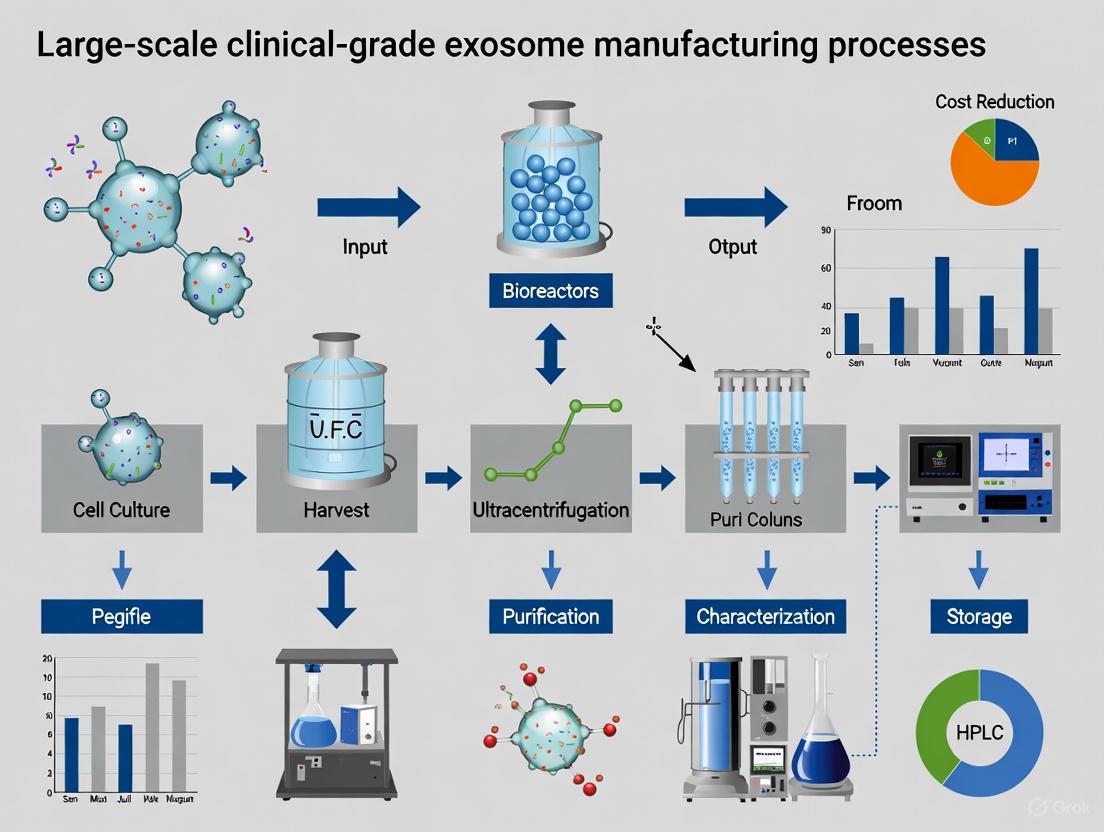
This article addresses the critical challenge of high production costs in large-scale, clinical-grade exosome manufacturing, a major barrier to the commercialization of exosome-based therapeutics.
Strategies for Cost-Effective Clinical Grade Exosome Manufacturing: Scaling Production for Therapeutic Applications
Abstract
This article addresses the critical challenge of high production costs in large-scale, clinical-grade exosome manufacturing, a major barrier to the commercialization of exosome-based therapeutics. Aimed at researchers, scientists, and drug development professionals, it provides a comprehensive analysis of the current landscape, from foundational cost drivers and scalability bottlenecks to innovative methodological solutions in isolation and purification. The content further explores advanced optimization strategies, including the integration of AI and automation, and concludes with essential frameworks for process validation and comparative economic analysis to guide the development of scalable, reproducible, and cost-effective production pipelines.
The High Cost of Innovation: Understanding Exosome Manufacturing Economics and Scalability Hurdles
Market Growth and the Pressing Need for Cost-Effective Production
Frequently Asked Questions (FAQs) on Cost-Effective Exosome Manufacturing
1. What are the primary cost drivers in large-scale exosome production? The primary costs originate from both upstream (cell culture) and downstream (purification) processes. Upstream, expenses are driven by the need for large quantities of high-quality, xeno-free culture media and efficient bioreactor systems to maximize cell numbers [1]. Downstream, the complexity of isolating and purifying exosomes at a clinical grade, using techniques like Tangential Flow Filtration (TFF) and chromatography, constitutes a significant portion of the total cost, with estimates as high as $1,000,000 per manufacturing lot [1].
2. How can we increase exosome yield from parent cells? Yield can be increased through two main strategies:
- Genetic Engineering: Introducing specific genes (e.g., STEAP3, syndecan-4, L-aspartate oxidase) into parent cells can enhance exosome biogenesis and release, reportedly increasing production by up to 40-fold [2].
- Cell Preconditioning: Exposing parent cells to stressors like moderate hypoxia or treating them with certain cytokines (e.g., thrombin, adiponectin) can upregulate exosome biogenesis pathways, thereby increasing vesicle output [2].
3. What is the most scalable method for exosome purification? While ultracentrifugation (UC) is the lab-scale gold standard, it is not suitable for large-scale manufacturing due to low yield, long processing times, and potential for vesicle damage [3]. Tangential Flow Filtration (TFF) is a more scalable alternative that offers higher recovery yields and better removal of contaminating proteins like albumin [3]. For high purity, TFF is often combined with chromatographic methods like Anion Exchange Chromatography (AIEX) or Size-Exclusion Chromatography (SEC), which can efficiently purify exosomes in a scalable manner [3].
4. Why is there a lack of standardization in exosome manufacturing, and how does it impact cost? The field currently lacks universally accepted protocols for isolation, purification, and characterization [4] [5]. This leads to batch-to-batch variability, challenges in reproducing results, and difficulties in obtaining regulatory approval. The inconsistency increases development costs and risks, as each manufacturer must establish and validate its own processes, hindering widespread clinical adoption [5].
5. What are the key quality control metrics for clinical-grade exosomes? Robust quality control is essential. Key metrics include [3] [6]:
- Particle Characterization: Size distribution (typically 30-150 nm) and concentration, measured via Nanoparticle Tracking Analysis (NTA) or similar.
- Identity/Purity: Presence of specific transmembrane (e.g., CD63, CD81) and cytoplasmic (e.g., TSG101, ALIX) protein markers, and absence of negative markers (e.g., albumin) via Western Blot or flow cytometry [2].
- Potency: Assessment of biological activity, which may include RNA-to-protein ratios or functional cell-based assays [6].
- Safety: Tests for sterility, mycoplasma, and endotoxins [6].
Troubleshooting Guides
Problem 1: Low Exosome Yield in Upstream Bioprocessing
Potential Causes and Solutions:
| Cause | Diagnostic Steps | Solution |
|---|---|---|
| Suboptimal Cell Expansion | Monitor population doubling time and cell viability. Compare growth rates to established benchmarks. | Implement a high-performance, xeno-free culture medium designed for rapid cell expansion to shorten process time and increase final cell density [1]. |
| Inefficient Bioreactor Process | Analyze dissolved oxygen (DO), pH, and metabolite levels. Check for inadequate nutrient mixing or shear stress. | Transition from planar flask-based culture to scalable bioreactor systems (e.g., hollow-fiber, microcarrier-based). Optimize bioreactor parameters for your specific cell line [3]. |
| Inadequate Collection Phase | Analyze the particle-to-cell ratio after the collection phase. | Exchange growth medium for a specialized, low-particulate collection medium (e.g., RoosterCollect-EV) and optimize the collection time (often 1-3 days) to maximize yield while maintaining quality [1]. |
Detailed Protocol: Preconditioning with Hypoxia to Enhance Yield
- Objective: To increase exosome production from Mesenchymal Stem Cells (MSCs) by upregulating biogenesis pathways through hypoxic preconditioning [2].
- Materials:
- Confluent flask of MSCs (e.g., Passage 4-6).
- Standard cell culture incubator (normoxic: 20% O₂, 5% CO₂).
- Hypoxia chamber or tri-gas incubator (preconditioning: 1-3% O₂, 5% CO₂, balanced N₂).
- Xeno-free basal medium.
- Purification equipment (e.g., TFF system).
- Methodology:
- Split MSCs and seed them at a standard density.
- Allow cells to adhere overnight in a normoxic incubator.
- Replace the medium with fresh, pre-warmed xeno-free basal medium.
- Transfer the cell culture flask to the hypoxia chamber and culture for 24-48 hours.
- After preconditioning, collect the conditioned medium.
- Proceed immediately to exosome purification using your standard downstream process (e.g., TFF).
- Expected Outcome: Studies report that hypoxic preconditioning can upregulate genes like HIF-1α, Rab27a, and ALIX, leading to a significant increase in exosome secretion compared to normoxic conditions [2].
Problem 2: High Impurity and Low Quality in Downstream Processing
Potential Causes and Solutions:
| Cause | Diagnostic Steps | Solution |
|---|---|---|
| Carryover of Culture Medium Impurities | Perform protein quantification (e.g., BCA assay) and analyze samples via Western Blot for common contaminants like bovine serum albumin (BSA). | Implement a thorough wash step, exchanging growth medium for a defined, low-protein collection medium before the final production phase to eliminate process-related impurities [1]. |
| Use of Non-Scalable Purification Methods | Evaluate the recovery yield and processing time. Ultracentrifugation is a key indicator. | Replace ultracentrifugation with a scalable purification train. A recommended approach is an initial concentration step using Tangential Flow Filtration (TFF), followed by a polishing step using Anion Exchange Chromatography (AIEX) or Size-Exclusion Chromatography (SEC) to achieve high purity [3]. |
| Exosome Aggregation or Damage | Use NTA to check for an increase in particle size and a wide size distribution. | Avoid harsh mechanical forces. For TFF, optimize transmembrane pressure and cross-flow rates. For storage, use cryoprotectants and avoid multiple freeze-thaw cycles. |
Detailed Protocol: TFF and AIEX for Scalable Purification
- Objective: To concentrate and purify exosomes from conditioned medium with high yield and purity, suitable for clinical-grade manufacturing [3].
- Materials:
- Conditioned cell culture medium (cell-free).
- TFF system with a cartridge (e.g., 100-500 kDa MWCO).
- AIEX system (e.g., monolithic column).
- Binding Buffer (e.g., low salt, ~50 mM NaCl, pH 7.4).
- Elution Buffer (e.g., high salt, ~500-765 mM NaCl, pH 7.4) [3].
- PBS or a suitable formulation buffer for diafiltration.
- Methodology:
- Concentration with TFF: Pass the conditioned medium through the TFF system to concentrate the exosomes. Perform diafiltration with Binding Buffer to exchange the medium and remove contaminants.
- AIEX Purification: Load the concentrated retentate onto the pre-equilibrated AIEX column.
- Wash: Wash the column with several column volumes of Binding Buffer to remove unbound proteins and impurities.
- Elute: Elute the purified exosomes using a linear or step gradient of Elution Buffer.
- Formulation: Pool the exosome-containing fractions and perform a final diafiltration into PBS or a storage buffer using the TFF system.
- Expected Outcome: This combination can achieve a 100-fold higher concentration efficiency than UC and effectively remove contaminating proteins and non-ionic surfactants, resulting in high-purity exosomes in a process that takes only a few hours [3].
The Scientist's Toolkit: Key Research Reagent Solutions
| Item | Function in Exosome Research |
|---|---|
| Xeno-Free Cell Culture Medium | Supports the expansion of parent cells (e.g., MSCs, HEK293) without introducing animal-derived contaminants, which is critical for clinical-grade production [1]. |
| RoosterCollect-EV / Defined Collection Media | A low-particulate, serum-free medium used specifically during the exosome production phase to collect vesicles with minimal process-related impurities [1]. |
| Microcarriers | Provide a surface for adherent cells to grow in bioreactors, dramatically increasing the available surface area and thus the cell yield in a scalable suspension culture system [3]. |
| Super Absorbent Polymer (SAP) Beads | A novel technology that absorbs small molecules like water but expels and concentrates extracellular vesicles, offering a potential single-step method for enriching EVs with high purity [3]. |
| Nanoparticle Tracking Analyzer | An essential instrument for characterizing exosomes by determining their particle size distribution and concentration in a preparation [2]. |
Quantitative Data on Exosome Manufacturing and Markets
Table 1: Market Growth Projections for Exosome Manufacturing and Isolation
| Market Segment | 2024/2025 Base Size | Projected 2030/2034 Size | CAGR (Compound Annual Growth Rate) | Source |
|---|---|---|---|---|
| Exosome Manufacturing Services | ~$2.5 - $3 Billion (2023/2024) | ~$10 Billion (2030) | 25-30% | [7] |
| Exosome Isolation Market | $462 Million (2025) | $1.24 Billion (2034) | 11.64% | [8] |
| Exosome Development & Manufacturing Services | $24.2 Million (2025) | $127.4 Million (2035) | 18% | [5] |
Table 2: Cost and Yield Comparison of Upstream Process Platforms
| Process Platform | Time to 100M hMSCs | Total Process Time (for ~5e11 EVs) | Extracellular Vesicle Yield per Process Day | Estimated Cost per Dose Regimen |
|---|---|---|---|---|
| Traditional Materials | 27 days | 30 days | Low (Baseline) | High (~$8,000) [1] |
| High-Performance Xeno-Free Platform | 10 days | 13 days | ~50x higher than Traditional | Significantly Lower [1] |
Process Visualization Workflows
Scalable Upstream Process Workflow
Integrated Downstream Purification Train
The exosome research market is experiencing rapid growth, projected to expand from USD 225.72 million in 2025 to USD 961.41 million by 2034, with a robust compound annual growth rate (CAGR) of 17.47% [9]. This expansion is primarily driven by increasing understanding of exosomes' therapeutic potential in various disease areas, including cancer, neurodegenerative diseases, and autoimmune disorders [10]. However, the transition from research to clinical application is hampered by significant cost drivers that make large-scale production financially challenging. The high cost of exosome production remains a major restraint, compounded by complexity in characterization, stringent regulatory requirements, and lack of standardization across manufacturing processes [10]. This technical support center document aims to deconstruct these cost drivers and provide actionable troubleshooting guidance to help researchers optimize their manufacturing processes while controlling expenses.
Quantitative Analysis of Major Cost Drivers
Understanding the financial landscape of exosome manufacturing requires careful analysis of the factors that most significantly impact production costs. The following table summarizes the primary cost drivers and their relative impact based on current market analysis:
Table 1: Primary Cost Drivers in Exosome Manufacturing
| Cost Driver | Financial Impact | Impact Timeline | Geographic Relevance |
|---|---|---|---|
| Stringent GMP Demands Elevating Manufacturing Complexity & Cost [11] | Significant impact on operational expenses | Short term (≤ 2 years) | Global, with higher impact in regulated markets (North America, Europe) |
| Lack of Standardized Characterization Protocols Undermining Reproducibility [11] | Moderate to high impact due to need for repeated experiments | Medium term (2-4 years) | Global |
| High R&D Costs and Complex Regulatory Pathways [12] | High impact on initial investment | Medium term (2-4 years) | Global |
| Scaling Up Production for Clinical Trials and Commercial Applications [10] | Variable impact based on production scale | Long term (≥ 4 years) | Global |
The financial implications of these cost drivers are substantial. Scaling from benchtop to Good Manufacturing Practice (GMP) requires closed-system bioreactors, sterile-filtration controls, and validated analytics, creating significant capital requirements [11]. Smaller innovators often outsource production, increasing cash burn and potentially delaying milestones. Meanwhile, heterogeneous isolation methods generate vesicle preparations with divergent particle counts, size distributions, and bioactivity, leading to reproducibility issues that increase costs through repeated experiments and failed trials [11].
Technical FAQs: Troubleshooting Costly Production Challenges
Low Yield and Scalability Issues
Q: My exosome isolation yields are substantially lower than expected when scaling up from research to clinical scale. How can I improve yields without dramatically increasing costs?
A: Low yields during scale-up typically result from suboptimal production or inefficient isolation. To address this:
- Implement bioreactor systems: Hollow fiber bioreactors can increase yields by up to 38-fold compared to flask cultures [13]. While requiring initial capital investment, these systems provide significant long-term cost savings per unit of exosome produced.
- Optimize cell culture conditions: Research indicates that applying hypoxic conditions to mesenchymal stem cells (MSCs) upregulates exosome biogenesis genes (HIF-1α, ALIX, TSG101, Rab27a, and Rab27b), significantly increasing exosome production without additional reagent costs [2].
- Genetic engineering approaches: Introducing specific genes (STEAP3, syndecan-4, and L-aspartate oxidase fragment) into parent cells has demonstrated a 40-fold increase in exosome production with no change in exosome size [2].
- Ultrasound stimulation: Applying ultrasound to producer cells can enhance exosome production via a calcium-dependent mechanism, resulting in an 8-10-fold increase in yield [2].
Process Efficiency and Contamination
Q: The isolated exosomes appear to be contaminated with non-exosomal proteins and other impurities. How can I ensure purity without adding expensive purification steps?
A: Contamination issues typically arise from inadequate purification methods:
- Optimize isolation protocols: Research demonstrates that repeated ultracentrifugation steps can reduce the quality of exosome preparations leading to lower exosome yield and purity [14]. Concentration of cell culture conditioned media using ultrafiltration devices results in increased vesicle isolation when compared to traditional ultracentrifugation protocols.
- Implement size-exclusion chromatography (SEC): Studies show that SEC provides superior purity compared to precipitation methods, which co-isolate contaminating proteins [14]. While requiring specialized equipment, SEC provides better long-term value by reducing downstream processing costs.
- Utilize density gradient purification: OptiPrep density gradient isolation provides the highest purification of exosomes from cell culture conditioned media, though it is comparable to SEC for protein exosome markers [14].
Characterization and Quality Control Challenges
Q: Characterization and quality control processes are consuming substantial time and resources. Are there more efficient approaches to ensure batch-to-batch consistency?
A: Efficient characterization is essential for controlling costs:
- Implement orthogonal characterization methods: Instead of relying on a single method, use a combination of nanoparticle tracking analysis (NTA), transmission electron microscopy (TEM), and western blotting with specific exosomal markers (CD63, CD81, CD9) to ensure comprehensive characterization without redundant costs [15].
- Standardize protein quantification: Be aware that protein concentration does not always correlate well with exosome content [16]. Instead, standardize exosome harvest conditions and use bead-based methods to estimate exosome amounts more reliably.
- Leverage surface marker analysis: Use specific antibodies against common exosome surface markers (CD63, CD81, CD9) for reliable identification, but note that some cell lines release exosomes lacking these markers (e.g., Jurkat cells are CD9 negative) [16].
Scalable Production Methodologies: Protocols and Procedures
Bioreactor-Based Production Workflow
Large-scale production of exosomes using bioreactor systems represents the most cost-effective approach for clinical-grade manufacturing. The following diagram illustrates the optimized workflow:
Bioreactor Production Workflow
Detailed Protocol:
- Bioreactor Preparation: Coat a 200 mL hollow-fiber bioreactor with 0.005% human fibronectin in PBS for 4 hours to aid cell adherence [13].
- Cell Seeding: Seed MSCs at 3.0 × 10⁷ cells into the bioreactor and allow to attach for 24 hours [13].
- Expansion Phase: Expand cells by increasing daily media input feeding rate to compensate for growing cell numbers. Monitor expansion via glucose consumption and lactate production (approximately 1.6 × 10⁻⁸ mmol/day) [13].
- Peak Expansion: Typically achieved after 6 days in bioreactor, representing approximately 5 × 10⁸ cells [13].
- Media Exchange: After peak expansion, wash out expansion media with PBS and replace with 200 mL serum-free media [13].
- Conditioned Media Collection: Collect conditioned media from inner loop outlet at 24-hour intervals (24H, 48H, 72H, and up to 96H) [13].
- Exosome Isolation: Isolate exosomes using ultracentrifugation - initial low-speed spin (2,000 × g at 4°C for 20 minutes) to remove cell debris, followed by ultracentrifugation (100,000 × g avg at 4°C for 2 hours) [13].
- Resuspension and Storage: Resuspend exosomes in PBS, aliquot, and store at -80°C [13].
Yield Enhancement Strategies
Table 2: Experimental Yield Enhancement Techniques
| Method | Cell Type | Suggested Mechanism | Yield Improvement |
|---|---|---|---|
| Genetic Engineering (EXOtic device) [2] | Engineered HEK293 | Overexpression of STEAP3, syndecan-4, L-aspartate oxidase | 40-fold increase |
| Hypoxic Conditions [2] | MSC | Upregulation of HIF-1α, ALIX, TSG101, Rab27a, Rab27b | Significant increase (study-dependent) |
| Ultrasound Stimulation [2] | U87-MG human glioblastoma, A549 cells | Calcium-dependent mechanism, upregulation of ALIX, TSG101, CD63 | 8-10-fold increase |
| LPS Priming [13] | MSC | Enhanced educational capacity for monocytes, improved therapeutic potency | Improved functionality at similar yields |
| 3D Culture Systems [2] | Human induced pluripotent stem cells | Altered mRNA expression of ALIX, TSG101, ADAM10, CD63, Syntenin-1 | Varies by system |
Research Reagent Solutions for Cost-Effective Production
Table 3: Essential Research Reagents and Their Functions
| Reagent/Category | Function | Cost-Saving Considerations |
|---|---|---|
| Serum-Free Media [13] | Supports exosome production without serum-derived contaminants | Enables downstream purification; reduces contamination-related losses |
| Ultracentrifugation Equipment [14] | Gold standard for exosome isolation | High initial investment but lower per-unit cost at scale |
| Size-Exclusion Chromatography [14] | High-purity exosome isolation | Superior purity reduces downstream processing costs |
| Immunoaffinity Capture Beads [16] | Specific exosome isolation using surface markers | Higher specificity but increased cost; ideal for specific applications |
| Trehalose [13] | Cryoprotectant for exosome storage | Maintains exosome integrity during storage, reducing batch losses |
| LPS [13] | Priming agent to enhance exosome potency | Enhances therapeutic effect without increasing production volume |
| OptiPrep Density Gradient [14] | High-purity exosome purification | Provides exceptional purity for sensitive applications |
Cost Optimization Roadmap and Future Perspectives
The future of cost-effective exosome manufacturing will be shaped by several emerging technologies and approaches. Automation and process optimization for large-scale production represent a key trend that will substantially reduce labor costs and improve consistency [10]. Artificial intelligence can reshape the market by enabling predictive modeling of exosome behavior, supporting virtual simulations for drug testing, and reducing reliance on traditional trial-and-error methods [9]. Additionally, development of standardized quality control frameworks will help reduce costs associated with characterization and validation [10].
Microfluidics-based isolation is projected to grow rapidly as it enables compact, cost-effective, and scalable exosome separation suitable for clinical and laboratory settings [9]. Its ability to integrate multiple processes, such as sorting, detection, and analysis on a single chip, reduces time and labor requirements. Furthermore, increasing focus on harmonized protocols and reference materials will help minimize reproducibility issues that currently drive up research costs [4].
As the regulatory landscape evolves, with the U.S. FDA providing clearer guidance on critical quality attribute testing and release criteria, the costs associated with regulatory compliance are expected to decrease through more standardized pathways [11]. This clarity reduces approval risk and attracts late-stage capital, ultimately driving down the cost of capital for exosome manufacturing ventures.
By implementing the strategies outlined in this technical support document, researchers and manufacturing professionals can systematically address the major cost drivers in clinical-grade exosome production while maintaining quality and compliance standards.
Frequently Asked Questions (FAQs)
Q1: What specific limitations of ultracentrifugation hinder large-scale clinical production of exosomes?
Ultracentrifugation (UC), the classical method for exosome isolation, faces several critical bottlenecks that impede its use in large-scale clinical manufacturing:
- Low Yield and Scalability: The process requires multiple time-consuming steps and is difficult to scale up for industrial production. The cumbersome nature of the protocol leads to significant vesicle loss during preparation, resulting in poor recovery rates [16] [17]. It is not suitable for processing large volumes of bio-fluids efficiently [4].
- Extended Processing Time: A typical UC protocol involves prolonged run times of approximately 70–120 minutes per cycle, often requiring repeats for higher purity. This dramatically reduces throughput [17] [18].
- Compromised Exosome Functionality: The high gravitational forces (100,000–110,000×g) can damage exosomes, affecting their integrity, biological activity, and ultimate therapeutic utility [18].
- Operator Dependency and Reproducibility: The method requires highly skilled technicians to avoid vesicle loss and ensure consistency. Small variations in technique can lead to poor reproducibility, which is a major barrier to clinical standardization [16] [18].
Q2: Are there quantitative data comparing ultracentrifugation with other methods?
Yes, studies directly compare ultracentrifugation with other common techniques. The table below summarizes key findings from a 2024 study that isolated exosomes from H9c2 cells:
Table 1: Comparative Analysis of Exosome Isolation Methods [17]
| Isolation Method | Mean Particle Size (nm) | Impact on Cell Viability (Hypoxic Cells) | Key Characteristics |
|---|---|---|---|
| Ultracentrifugation | 60 | Increased viability by 22% | Smaller size, narrow size distribution, highest functional efficacy |
| Precipitation | 89 | Increased viability by 15% | Moderate yield and function |
| Ultrafiltration | 122 | Increased viability by 11% | Higher variability in vesicle shape and size |
This data shows that while UC can produce homogenous and highly functional exosomes, its scalability and yield limitations remain a primary concern for large-scale production [17].
Q3: What scalable alternatives to ultracentrifugation are emerging?
Recent technological advances offer promising, more scalable paths forward:
- Tangential Flow Filtration (TFF): This method is highly efficient for concentrating extracellular vesicles from large volumes of fluid and is easily scalable [18].
- Size-Exclusion Chromatography (SEC): SEC provides highly purified and homogenous exosomes, though the equipment can be expensive. It is noted for improving yield and purity compared to UC [17] [18].
- Integrated Microfluidic Systems: These platforms, including microfluidic microarrays and deterministic lateral displacement (DLD) chips, enable automated, high-purity isolation with minimal sample loss. They represent the cutting edge in scalable isolation technology and are dominating the revenue share in the exosomes market [4] [19].
- Affinity-Based Methods (Non-Antibody): Kits like the MagCapture Exosome Isolation Kit PS use phosphatidylserine (PS) binding instead of antibodies. This allows for gentler elution under neutral conditions, recovering more intact exosomes with higher purity and efficiency than polymer precipitation or antibody-based methods [20].
Q4: How do isolation methods impact downstream functional analysis and cost?
The choice of isolation method directly affects both the experimental results and the overall cost structure:
- Functional Impact: As shown in Table 1, the isolation method influences the size, homogeneity, and biological functionality of the isolated exosomes. Methods that damage exosomes can lead to misleading conclusions in functional studies [17].
- Cost Impact: Ultracentrifugation, while having low per-run consumable costs, has high overall production costs due to its low throughput, high labor intensity, and requirement for expensive equipment [19]. Scalable methods like TFF and microfluidics offer lower costs per dose at manufacturing scale by automating processes, increasing throughput, and improving yields, which is critical for reducing the cost of clinical-grade exosome manufacturing [4] [19].
Troubleshooting Guide: Overcoming Scalability Challenges
Problem: Low Yield and Poor Recovery from Large Volume Samples
- Potential Cause: Traditional ultracentrifugation is not designed for efficient processing of large volumes. Vesicles are lost on container walls and during multiple transfer steps [20].
- Solution:
- Switch to a scalable concentration technology like Tangential Flow Filtration (TFF). TFF circulates the sample across a membrane, reducing clogging and enabling gentle concentration of large volumes (e.g., 50 mL of cell culture supernatant) down to a workable volume (e.g., 1 mL) [20] [18].
- Follow concentration with a high-resolution purification step such as Size-Exclusion Chromatography (SEC) or affinity-based capture to achieve high purity [17] [18].
- Experimental Protocol (TFF + SEC):
- Pre-clearing: Centrifuge the large-volume cell culture supernatant or biofluid at 300 × g for 10 min to remove dead cells [17].
- Concentration: Use a TFF system with a membrane with a 100kDa molecular weight cut-off (MWCO) to concentrate the sample to a volume of 1-2 mL.
- Purification: Load the concentrated sample onto an SEC column (e.g., qEV columns) to separate exosomes from contaminating proteins based on hydrodynamic volume.
- Characterization: Analyze the final fraction using nanoparticle tracking analysis (NanoSight) for concentration and Western blot for markers (CD9, CD81, CD63) [20].
Problem: Low Purity and Co-isolation of Contaminants
- Potential Cause: Ultracentrifugation often co-pellets protein aggregates, lipoproteins, and other non-exosomal vesicles, leading to contaminated preparations [18].
- Solution:
- Implement a multi-modal approach. Combine methods based on different principles (e.g., size and affinity).
- For complex samples like serum or plasma, introduce a pre-clearing step using size-exclusion chromatography before a specific capture method [16].
- Use affinity purification with magnetic beads targeting specific surface markers (CD9, CD63, CD81) or universal lipids like phosphatidylserine (PS) for higher specificity [16] [20].
- Experimental Protocol (PS Affinity Capture from Plasma):
- Pre-clearing: Perform size-exclusion chromatography on plasma to remove the majority of contaminating proteins [16].
- Capture: Incubate the pre-cleared fraction with magnetic beads coated with a PS-binding protein (e.g., Tim4) for 1-3 hours.
- Washing: Thoroughly wash the beads with an appropriate buffer to remove non-specifically bound material.
- Elution: Elute the intact exosomes by adding a chelating agent (like EDTA) in a neutral pH buffer, which disrupts the PS-Tim4 interaction without damaging the exosomes. This yields a purer preparation than acidic elution [20].
Problem: Inconsistent Results and Poor Reproducibility
- Potential Cause: Ultracentrifugation is highly sensitive to operator technique, rotor type, and subtle variations in centrifugation speed, time, and braking conditions [18].
- Solution:
- Transition to automated and standardized platforms.
- Integrated microfluidic devices offer a "lab-on-a-chip" solution that minimizes manual handling, standardizes the isolation process, and improves reproducibility [4] [19].
- Adopt harmonized protocols and use kit-based systems where the reagents and steps are rigorously controlled [4] [20].
- Workflow Comparison: The following diagram contrasts the workflows of traditional ultracentrifugation and an integrated microfluidic approach, highlighting the complexity and scalability bottlenecks.
The Scientist's Toolkit: Research Reagent Solutions for Scalable Isolation
Table 2: Key Reagents and Kits for Advanced Exosome Isolation
| Research Reagent / Kit | Principle of Isolation | Key Function / Advantage | Scalability Potential |
|---|---|---|---|
| MagCapture Exosome Isolation Kit PS [20] | Phosphatidylserine (PS) Affinity | Binds PS on exosome surface via Tim4 protein; gentle, non-antibody, neutral pH elution preserves functionality. | High (Beads are reusable; compatible with large volumes post-concentration) |
| Dynabeads (CD9/CD63/CD81) [16] | Immunoaffinity Capture | Uses antibody-coated magnetic beads for highly specific exosome subpopulation isolation. | Moderate (Ideal for specific capture; cost may be prohibitive for very large scale) |
| Size-Exclusion Chromatography (SEC) Columns (e.g., qEV) [17] [18] | Size-Based Separation | Separates particles by hydrodynamic volume; excellent for obtaining high-purity, functional exosomes. | High (Columns available for different throughputs; easily scalable) |
| Tangential Flow Filtration (TFF) Cassettes [18] | Size-Based Filtration | Gentle concentration and diafiltration of large sample volumes; high recovery and scalability. | Very High (Industry standard for bioprocessing and volume reduction) |
| Microfluidic Chips (e.g., EXODUS, DLD) [4] [19] | Microfluidics / Affinity / Size | Automated, portable systems for high-purity isolation with minimal sample loss and high throughput. | Growing (Rapidly advancing for clinical and diagnostic applications) |
Regulatory and Standardization Challenges in Clinical-Grade Production
Frequently Asked Questions (FAQs) on Regulations and Manufacturing
Q: How are exosome-based therapeutics classified by major regulatory bodies?
A: Classification depends on the degree of manipulation and intended use, which dictates the regulatory pathway. The following table summarizes the approach from key regulators [21] [22].
| Regulatory Body | Classification & Regulatory Pathway | Key Determining Factors |
|---|---|---|
| U.S. FDA [22] | Drug/Biological Product (Section 351) [22]: Requires IND (Investigational New Drug) and BLA (Biologics License Application).Minimally Manipulated HCT/P (Section 361) [22]: Less stringent pathway, no pre-market approval. |
Section 351: Engineered cargo, non-homologous use, or more than minimal manipulation [22].Section 361: Minimal manipulation, homologous use, no systemic effect [22]. |
| EU EMA [22] | Advanced Therapy Medicinal Product (ATMP) [22]: Requires centralized marketing authorization.Directive 2001/83/EC [22]: For non-ATMP products. |
ATMP: Substantial manipulation (e.g., genetic modification, loaded with therapeutics) or non-homologous use [22]. |
| Singapore HSA | Cell, Tissue, or Gene Therapy Product (CTGTP) [22] | Substantial manipulation, non-homologous function, engineered cargo, or allogeneic use [22]. |
| Thailand TFDA | Biological Medicinal Product [22] | Regulated under the Drug Act, analogous to cell and gene therapies [22]. |
Q: What are the primary challenges in scaling up exosome production for clinical use?
A: Scalability is hindered by issues across the entire manufacturing pipeline [3] [23] [24].
- Upstream Challenges:
- Cell Source Limitations: Many cells used (e.g., Mesenchymal Stem Cells) are anchorage-dependent and difficult to culture at large scale [23].
- Bioreactor Systems: Transitioning from flasks to scalable bioreactors (e.g., hollow-fiber, microcarrier-based) requires precise control to maintain cell phenotype and exosome quality [3] [23].
- Productivity: Increasing the exosome secretion rate from cells remains a significant hurdle [3] [23].
- Downstream Challenges:
- Purification and Purity: Isolating high-purity exosomes from culture media at a large scale is complex. Legacy methods like ultracentrifugation (UC) are poorly scalable and can lead to low yield and impurity co-isolation [3]. A critical concern is the co-purification of viruses or protein aggregates with similar physical characteristics [23] [22].
- Storage and Stability: Exosomes are often stored at -80°C, which is impractical for a commercial pharmaceutical product. Data on shelf-life and in vivo stability is limited [24].
Q: What downstream purification methods are scalable for clinical-grade exosomes?
A: Moving beyond ultracentrifugation is key to scalability. The following methods offer more robust and scalable alternatives [3].
| Method | Principle | Scalability & Advantages | Considerations |
|---|---|---|---|
| Tangential Flow Filtration (TFF) [3] | Size-based separation using tangential flow to minimize membrane clogging. | Highly scalable; higher recovery yield and better impurity removal than UC; improved batch-to-batch consistency [3]. | May not fully remove all impurities on its own [3]. |
| Chromatography (e.g., Anion Exchange - AIEX) [3] | Binds exosomes based on negative surface charge. | Highly scalable; high purity; effective removal of process impurities like surfactants; fast processing (e.g., <3 hours) [3]. | Requires optimization of binding and elution conditions [3]. |
| Bind-Elute Size Exclusion Chromatography (BE-SEC) [3] | Separates by size with a binding step to the matrix. | Improved scalability over traditional SEC; allows for loading larger sample volumes [3]. | Often used in combination with other methods like TFF for optimal results [3]. |
| Super Absorbent Polymer (SAP) Beads [3] | Absorb small molecules like water, thereby concentrating EVs. | Rapid, single-step enrichment of EVs with high purity from various fluids [3]. | Emerging technology. |
Q: What are the critical quality control assays required for exosome characterization?
A: Robust quality control is essential for regulatory approval and requires a multi-parameter approach [25] [22] [15].
| Attribute | Key Assays & Methods | Purpose & Standards |
|---|---|---|
| Identity | Nanoparticle Tracking Analysis (NTA), Tunable Resistive Pulse Sensing (TRPS) [25], Dynamic Light Scattering (DLS) [15]. | Determine particle size distribution (30-150 nm) and concentration [25] [15]. |
| Purity | Transmission Electron Microscopy (TEM) [25] [15], Protein assays (e.g., BCA). | Assess morphology and confirm the absence of cellular debris or co-isolated impurities. Purity is often expressed as a ratio of particle count to protein amount [22]. |
| Characterization | Western Blot [25] [15], Flow Cytometry [25] [15]. | Detect presence of positive (e.g., CD63, CD81, CD9, TSG101, Alix) and negative marker proteins [25]. |
| Potency | Cell-based uptake or functional assays [22]. | Measure the biological activity relevant to the intended therapeutic function. This is lot-specific and linked to the mechanism of action [22]. |
| Safety | Endotoxin (LAL) testing, sterility testing, and assays for adventitious agents [22]. | Ensure the product is free from microbial and viral contaminants [22]. |
GMP Workflow for Exosome Manufacturing
Troubleshooting Guides for Common Experimental Issues
Problem: Low Yield During Exosome Isolation
Potential Causes and Solutions:
- Cause 1: Inefficient isolation protocol.
- Solution: Transition from ultracentrifugation (UC) to more efficient methods like Tangential Flow Filtration (TFF). One study showed TFF concentration efficiency was 100 times higher than UC (10^10 EVs/10^6 cells for TFF vs 10^8 EVs/10^6 cells for UC) [3].
- Solution: Implement a combination of TFF and Bind-Elute Size-Exclusion Chromatography (BE-SEC) for improved yield and purity [3].
- Cause 2: Low exosome secretion from source cells.
- Cause 3: Starting material is insufficient or degraded.
- Solution: Ensure cells are healthy and the conditioned media is fresh and processed promptly [15]. Increase the volume of starting material if necessary.
Problem: Poor Purity (Contamination with Proteins, Other Vesicles)
Potential Causes and Solutions:
- Cause 1: Single-step purification is insufficient.
- Solution: Employ a multi-step purification strategy. For example, use TFF for concentration and initial volume reduction, followed by Anion Exchange Chromatography (AIEX) for high-purity purification. AIEX effectively removes contaminants like bovine serum albumin and non-ionic surfactants [3].
- Cause 2: Co-isolation of non-exosome particles.
- Solution: Use immunoaffinity capture with antibodies against specific exosome surface markers (e.g., CD63, CD81) for high specificity, though this can be costly and less scalable [15].
- Solution: Implement density gradient centrifugation as an additional polishing step to separate exosomes from proteins and other contaminants [25].
Problem: Inconsistent Results Between Batches
Potential Causes and Solutions:
- Cause 1: Uncontrolled cell culture conditions.
- Solution: Implement strict process controls for upstream culture (pH, dissolved oxygen, temperature, and media components) to ensure parental cells remain phenotypically stable [3] [23].
- Solution: Use bioreactor systems that offer better environmental control and scalability compared to flask-based cultures [3].
- Cause 2: Lack of standardized protocols and quality controls.
- Solution: Establish a robust Quality-by-Design (QbD) approach. Define Critical Quality Attributes (CQAs) and Critical Process Parameters (CPPs) for your manufacturing process [22].
- Solution: Use qualified and validated assays for in-process testing and final product release to ensure batch-to-batch consistency [22].
Troubleshooting Inconsistent Batches
Problem: Exosomes Lack Expected Biological Activity in Functional Assays
Potential Causes and Solutions:
- Cause 1: Damage during isolation or storage.
- Solution: Avoid repeated freeze-thaw cycles, which can damage exosome integrity and cause content leakage [15]. Store exosomes in single-use aliquots at -80°C and use cryoprotectants like trehalose [15].
- Solution: Choose gentle isolation methods. Harsh techniques like prolonged ultracentrifugation can cause exosome aggregation or loss of function [3].
- Cause 2: Incorrect or degraded markers in characterization.
- Solution: In Western Blot analysis, if expected markers (e.g., CD63, CD81) are not detected, verify antibody specificity and storage conditions. It is advised to test antibodies from multiple manufacturers [15].
- Solution: Use a combination of characterization techniques (NTA, TEM, Western Blot) to confirm you have isolated intact exosomes [25] [15].
The Scientist's Toolkit: Essential Research Reagent Solutions
This table details key materials and their functions for establishing a robust exosome manufacturing and quality control platform [3] [23] [25].
| Reagent / Material | Function & Application | Cost & Standardization Benefit |
|---|---|---|
| Chemically Defined, Xeno-Free Media | Eliminates variability and adventitious agents from serum (e.g., FBS), ensuring consistent cell growth and exosome production [22]. | Reduces contamination risk; simplifies downstream purification; improves regulatory compliance [22]. |
| Master Cell Bank | A standardized, well-characterized stock of parental cells ensures a consistent and renewable source for production, minimizing genetic drift [25] [22]. | Foundation of batch-to-batch consistency; critical for regulatory filings (IND/BLA) [22]. |
| Tangential Flow Filtration (TFF) Cassettes | For scalable concentration and buffer exchange of exosomes from large volumes of conditioned media [3]. | Higher recovery yield and scalability than UC; reduces processing time and costs [3]. |
| Chromatography Resins (e.g., AIEX) | For high-purity purification of exosomes, removing proteins, surfactants, and other impurities based on surface charge [3]. | Delivers clinical-grade purity; scalable and reproducible; replaces multiple legacy steps [3]. |
| CD63, CD81, CD9 Antibodies | Key reagents for identity testing via Western Blot or Flow Cytometry to confirm the presence of exosomes [25] [15]. | Essential for quality control and release criteria; confirms product identity. |
| Nanoparticle Tracking Analysis (NTA) | Provides quantitative data on particle size distribution and concentration [25] [15]. | Critical release assay; ensures product meets specifications for identity and purity. |
| Cryoprotectants (e.g., Trehalose) | Protects exosome integrity during freezing and long-term storage at -80°C, preventing aggregation and loss of function [15]. | Preserves product stability and potency, extending shelf-life and reducing waste. |
Next-Generation Production Workflows: Advanced Methods for Scalable Exosome Isolation and Purification
For researchers and drug development professionals focused on large-scale clinical grade exosome manufacturing, moving beyond traditional ultracentrifugation (UC) is a critical step toward viable commercialization. Ultracentrifugation presents significant limitations in yield, scalability, and cost-efficiency, making it poorly suited for industrial-scale production. This technical support center provides practical guidance on implementing Tangential Flow Filtration (TFF) combined with Size-Exclusion Chromatography (SEC) - a superior isolation workflow that addresses these limitations while maintaining high exosome quality and functionality for therapeutic applications.
Frequently Asked Questions (FAQs) & Troubleshooting
Q1: What are the concrete advantages of TFF-SEC over ultracentrifugation for large-scale exosome production?
A1: Direct comparative studies demonstrate that TFF-SEC outperforms UC-based methods across several key parameters, especially for processing large volumes like cell culture media [26] [27].
Table: Direct Comparison of TFF-SEC vs. UC-SEC Performance
| Performance Parameter | TFF-SEC | UC-SEC |
|---|---|---|
| Particle Yield | Up to 23-fold higher [27] | Low, significant particle loss |
| Process Time | Significantly faster [27] | Time-consuming, multiple steps [27] |
| Cost per Isolation | < One-tenth the cost of UC [27] | High (equipment, tubes, labor) |
| Scalability | Highly scalable for large volumes [26] [28] | Limited by rotor capacity |
| EV Integrity & Function | Gentle process; preserves integrity [27] | High g-forces can damage EVs and cause aggregation [26] |
| Reproducibility | High and consistent [26] [28] | Lower due to manual, multi-step process [26] |
Q2: We are experiencing a rapid pressure increase during the TFF process. What could be the cause?
A2: A sudden pressure spike typically indicates membrane fouling or blockage. To troubleshoot [28]:
- Check Feed Stream: Clarify your cell culture media thoroughly before TFF. Use sequential centrifugation (e.g., 500 × g for 10 min to remove cells, then 0.22 μm filtration) to remove debris and large particles that can clog the membrane [26].
- Optimize TMP and CFF: An excessively high Transmembrane Pressure (TMP) can compress the fouling layer on the membrane. Try reducing the TMP and increasing the Cross-Flow Flux (CFF) to enhance the sweeping effect across the membrane surface [28].
- Implement a Cleaning-in-Place Protocol: For reusable TFF systems, establish a rigorous cleaning regimen using appropriate buffers (e.g., NaOH) immediately after processing to prevent residual protein or lipid adhesion [28].
Q3: Our final exosome preparation from TFF-SEC has high protein contamination. How can we improve purity?
A3: High protein content suggests insufficient separation during the SEC step. Consider these adjustments:
- Verify Column Loading Capacity: Do not overload the SEC column. The sample volume loaded should typically not exceed 10% of the total column volume. Concentrate your TFF-retentate to an optimal volume before SEC [27].
- Fraction Collection Strategy: Ensure you are accurately collecting the exosome-rich fractions (typically the void volume) and discarding the later protein-rich fractions. Using an automatic fraction collector can improve precision and reproducibility [27].
- Buffer Compatibility: Ensure the buffer used for diafiltration during TFF is compatible with your SEC mobile phase to avoid buffer exchange issues that can impact resolution [28].
Q4: How can we monitor and maintain consistent performance of our SEC columns over time?
A4: Consistent column performance is key to reproducible exosome isolation.
- Pressure Monitoring: Know the typical back-pressure for your new SEC column setup. A sustained increase in pressure indicates potential blockage, often in the column frits or pre-column filter [29].
- Performance Tests: Regularly test column performance by running a well-characterized control sample or a standard (e.g., monodisperse proteins or beads). Calculate the plate count and asymmetry factor periodically. A decrease in plate count or a shift in asymmetry (tailing or fronting) indicates a deteriorated column that needs cleaning or replacement [29].
- Proper Storage: Always store SEC columns in the recommended preservative solution (often containing an antimicrobial like sodium azide) as per the manufacturer's instructions to prevent microbial growth and column degradation [29].
Detailed Experimental Protocol: TFF-SEC Workflow for Exosome Isolation
This protocol is optimized for processing large volumes of cell culture conditioned media, based on the method validated by Visan et al. (2022) [26].
Step 1: Cell Culture and Media Clarification
- Cell Culture: Culture your chosen cell line (e.g., HeLa, MDA-MB-231) in media supplemented with 5% EV-depleted FBS (prepared by ultracentrifugation at 100,000 × g overnight) to reduce serum-derived EV background [26].
- Collection: Collect conditioned media after 48 hours.
- Clarification:
- Centrifuge at 500 × g for 10 minutes to remove detached cells.
- Filter the supernatant through a 0.22 μm PES membrane filter to remove larger particles and debris [26].
Step 2: Pre-concentration and Initial Purification via Tangential Flow Filtration (TFF)
- System Setup: Use a TFF system equipped with a cartridge or hollow fiber module with a molecular weight cutoff (MWCO) of 100-500 kDa [28].
- Concentration: Recirculate the clarified media through the TFF system until the volume is reduced 50-100 fold. The exosomes are retained in the retentate.
- Diafiltration (Buffer Exchange): Continue the process by adding Diafiltration Buffer (e.g., PBS, pH 7.4) to the retentate reservoir at the same rate as permeate generation. Perform a 5-10 volume diafiltration to effectively exchange the buffer and remove small contaminants [28].
- Final Retentate Recovery: Recover the final, concentrated retentate (now in a suitable SEC-compatible buffer). This is your pre-purified exosome sample.
Step 3: Final Purification via Size-Exclusion Chromatography (SEC)
- Column Preparation: Equilibrate your chosen qEV or equivalent SEC column with at least 2-3 column volumes of filtered PBS or your chosen mobile phase [27].
- Sample Loading: Load the concentrated TFF retentate onto the column, ensuring the load volume does not exceed 10% of the total column volume.
- Fraction Collection: Elute with mobile phase and collect sequential fractions.
- Fractions 1-3 (Void Volume): Typically contain the purified, intact exosomes [27].
- Later Fractions: Contain soluble proteins and other small contaminants. Discard or collect separately.
- Characterization: Pool the exosome-rich fractions and characterize by Nanoparticle Tracking Analysis (NTA), protein quantification (e.g., BCA assay), and western blot for classic exosome markers (CD9, CD63, CD81, TSG101).
Workflow Visualization
The Scientist's Toolkit: Key Research Reagent Solutions
Table: Essential Materials and Equipment for TFF-SEC Exosome Isolation
| Item | Function/Description | Example/Considerations |
|---|---|---|
| TFF System | For gentle concentration and buffer exchange of large-volume samples. | KrosFlo systems; Hollow Fiber Modules for shear-sensitive samples; Flat Sheet Cassettes for higher flux [28]. |
| SEC Columns | High-resolution separation of exosomes from contaminating proteins based on hydrodynamic volume. | qEV columns; Pre-packed columns ensure reproducibility and ease of use [27]. |
| EV-Depleted FBS | Fetal Bovine Serum processed to remove bovine exosomes for cell culture. | Essential for reducing background contamination in cell culture media; prepared via ultracentrifugation (100,000 × g, overnight) or commercial sources [26]. |
| Diafiltration Buffer | A compatible buffer (e.g., PBS, saline) for TFF to exchange media and remove contaminants. | Must be sterile-filtered and compatible with downstream SEC and cell-based assays [28]. |
| Characterization Tools | For quantifying and qualifying the final exosome product. | NTA (particle concentration/size), BCA assay (protein contamination), Western Blot (markers: CD9, CD63, TSG101), TEM (morphology) [26] [30]. |
FAQs: Microfluidics and Affinity-Based Capture for Exosome Manufacturing
Q1: How can microfluidic affinity purification specifically reduce costs in large-scale exosome production?
Microfluidic affinity purification reduces costs through multiple mechanisms. It significantly minimizes reagent consumption by using micro-scale flow cells and channels, which reduces the required volume of often expensive affinity ligands (e.g., antibodies, aptamers) [31] [32]. Furthermore, these systems achieve high purity and capture efficiency (often above 90% for target cells) in a single, automated process, which reduces the need for repetitive processing steps and associated labor and time costs [31]. The ability to regenerate and reuse the affinity-functionalized surfaces within the microdevice, as demonstrated with aptamer-coated chambers, further enhances cost-effectiveness over multiple production runs [32].
Q2: What are the key advantages of using aptamers over antibodies as affinity ligands in microfluidic devices?
Aptamers, which are synthetic oligonucleotides or peptides, offer several cost and operational advantages. They are produced via synthetic processes (SELEX), making them generally more stable and less expensive to manufacture and modify than antibodies, which are biologically derived [32]. A critical advantage for process control and gentle elution is the ability to reversibly disrupt the aptamer-target binding using a moderate temperature change. This allows for non-destructive release of captured exosomes or cells, maintaining their viability and functionality, which is often challenging with near-irreversible antibody-antigen bonds [32].
Q3: Our team is experiencing low capture efficiency in our microfluidic affinity device. What are the primary factors we should investigate?
Low capture efficiency can be attributed to several factors related to binding kinetics and device operation. First, investigate the binding conditions, including the pH and ionic strength of your binding buffer; physiological conditions such as phosphate-buffered saline (PBS) are commonly used [33]. Second, ensure you are allowing sufficient time for the sample to bind to the immobilized ligands. You can try applying the sample in aliquots and stopping the flow for a few minutes between each application to increase contact time [34]. Finally, verify the expression level of the target biomarker on your exosomes or source cells, as the cell attachment rate has been directly correlated with biomarker expression levels [31].
Q4: We are successfully capturing our targets but struggling with low yield after elution. What elution strategies can we employ?
Elution efficiency depends on breaking the affinity interaction without damaging the target. You can explore several buffer conditions to dissociate the binding partners. Common strategies include using extremes of pH (e.g., 100 mM glycine•HCl, pH 2.5-3.0 or 100 mM triethanolamine, pH 11.5), altering ionic strength (e.g., 3.5–4.0 M MgCl₂), or using chaotropic agents (e.g., 2–6 M guanidine•HCl) [33]. For a gentler, non-denaturing elution, consider a specific competitive ligand that displaces the target [33]. Furthermore, you can try stopping the flow intermittently during elution to allow time for the target to dissociate, collecting the eluate in pulses [34].
Q5: How can we achieve multiplexed affinity-based separation to isolate multiple exosome subpopulations simultaneously?
Multiplexed affinity separation can be achieved using a size-coded bead strategy in an inertial microfluidic device. In this approach, different affinity ligands (e.g., antibodies for different exosome surface markers) are immobilized on microbeads of distinct, predefined sizes [35]. The sample is incubated with this mixed bead population in a single binding step. The mixture is then flowed through a spiral microchannel, where inertial forces focus the bead-target complexes into different streams based on their size, effectively sorting them into different outlets [35]. This method allows for the simultaneous isolation of multiple targets from a single sample, significantly saving time and sample material compared to serial separations.
Troubleshooting Guides
Troubleshooting Affinity Capture and Elution
This table addresses common problems encountered during the affinity capture process.
| Observation | Potential Cause | Recommended Solution |
|---|---|---|
| Low Capture Efficiency | Incufficient binding time or flow rate; suboptimal binding buffer [34] [33]. | Stop flow during sample application to increase incubation time; ensure binding buffer is at physiologic pH (e.g., PBS) [34] [33]. |
| Target Elutes in Broad, Low Peak | Slow dissociation kinetics; weak or non-specific elution conditions [34]. | Try different, stronger elution buffers (e.g., pH shift, chaotropic agents); use stop-flow elution to collect target in pulses [34] [33]. |
| Non-Specific Binding is High | Nonspecific interactions between sample components and the solid support or ligand [33]. | Add low concentrations of detergent (e.g., Tween 20) or moderate salt to wash buffers; ensure proper blocking of the affinity surface [33]. |
| Low Cell Viability Post-Release | Overly harsh elution conditions (e.g., extreme pH, denaturing agents) [32]. | Switch to milder elution methods such as temperature-mediated release (for aptamers) or specific competitive elution [32] [33]. |
Troubleshooting Microfluidic Device Operation
This table addresses issues related to the physical operation of microfluidic systems.
| Observation | Potential Cause | Recommended Solution |
|---|---|---|
| Device Clogging | Presence of large aggregates in sample; debris from cell lysates [31]. | Always pre-filter samples using an appropriate mesh or filter (e.g., 40-100µm) before loading into the microfluidic device [31]. |
| Irregular or Slow Flow | Air bubbles trapped in the microchannels; particulates clogging channels [36]. | Prime all channels thoroughly with buffer; design and use bubble traps; implement inline filters for samples [36]. |
| Poor Reproducibility Between Runs | Inconsistent surface functionalization; carryover from previous runs; variations in flow control [37]. | Establish standardized protocols for surface regeneration [32]; implement stringent cleaning between runs; use precision pumps for consistent flow rates. |
Quantitative Data for Process Planning
Performance Metrics of Affinity-Based Microfluidic Systems
The following table summarizes key performance data from various affinity-based microfluidic strategies, providing benchmarks for process development.
| Application / Technique | Capture Efficiency / Purity | Throughput / Processing Time | Key Quantitative Result |
|---|---|---|---|
| Ephesia CTC Capture (Microfluidic, Antibody-based) | >90% capture efficiency; 70% capture from 10ml blood [31]. | >3 ml/h; Processes 10ml blood in <4 hours [31]. | Captured CTCs in 75% of prostate cancer and 80% of breast cancer patients [31]. |
| Aptamer-Based Cell Capture & Temp-Release | Specific capture of target cells (CCRF-CEM) [32]. | N/D | Released cells remained viable; aptamer surface was regenerable [32]. |
| Multiplexed Inertial Microfluidics (Bead-based) | Separation efficiency of 80% to 95% for different bead sizes [35]. | Processes milligram-scale protein samples or millions of cells in minutes post-binding [35]. | Isolated 1–5 µg of antigen-specific antibody from 1 mg of total serum IgG [35]. |
Common Elution Buffer Systems for Affinity Purification
Choosing the right elution buffer is critical for balancing yield, purity, and target viability.
| Elution Condition | Example Buffer Composition [33] | Typical Use Case & Notes |
|---|---|---|
| Low pH | 100 mM glycine•HCl, pH 2.5-3.0 | Most widely used for antibody-antigen; collect into neutralization buffer (e.g., Tris pH 8.5) [33]. |
| High pH | 50–100 mM triethylamine, pH 11.5 | Alternative to low pH; also requires immediate neutralization of collected fractions [33]. |
| High Ionic Strength | 3.5–4.0 M magnesium chloride, pH 7.0 | Disrupts ionic and hydrophobic interactions; can be harsh for some proteins/cells [33]. |
| Chaotropic | 2–6 M guanidine•HCl | Denatures interactions; can compromise target activity but effective for stubborn binding [33]. |
| Competitive | >0.1 M counter ligand (e.g., glutathione for GST-tags) | Gentle and specific; ideal for preserving target activity and regenerating the affinity surface [33]. |
Experimental Protocols
Protocol: Inertial Microfluidics for Multiplexed Affinity Separation
This protocol describes the simultaneous isolation of multiple targets using size-coded affinity beads and a spiral microfluidic sorter [35].
Key Research Reagent Solutions:
- Size-Coded Microbeads: A mixture of magnetic or non-magnetic polystyrene microbeads of distinct diameters (e.g., 1 µm, 4.5 µm, 6 µm, 10 µm). Beads are pre-coated with streptavidin to enable biotinylation of different capture antigens [35].
- Capture Agents: Different biotinylated "bait" molecules (e.g., antigens for antibody capture, antibodies for exosome subtyping). These are coupled to the respective sized beads via biotin-streptavidin linkage [35].
- Sorting Buffer: A biocompatible buffer (e.g., PBS with 0.1% BSA) to maintain target stability during the inertial sorting process.
Methodology:
- Bead Preparation: Incubate each biotinylated capture antigen with a specific size of streptavidin-coated microbeads. Optimize the beads-to-protein mass ratio for maximum coverage. Wash the beads to remove unbound antigen [35].
- Sample Binding: Combine the prepared mixture of size-coded affinity beads with the clinical or research sample (e.g., serum, cell culture supernatant). Incubate with gentle mixing to allow targets to bind to their respective beads [35].
- Binding Verification (Optional): Pellet the beads and measure the target concentration in the supernatant (e.g., via ELISA) to verify capture efficiency [35].
- Microfluidic Sorting: Resuspend the bead mixture in sorting buffer and introduce it into the spiral inertial microfluidic device. Use a sheath flow to focus the particles. The device will sort the bead-target complexes into different outlets based on their size [35].
- Target Elution and Collection: Collect the output streams from each outlet. Elute the purified targets from the beads using an appropriate elution buffer (e.g., low-pH glycine buffer, optimized for ~5 minutes). Immediately neutralize the eluate if necessary [35].
- Downstream Analysis: The isolated, purified targets are now ready for downstream applications such as functional assays, molecular analysis, or quantification.
Protocol: Temperature-Mediated Cell Capture and Release Using Aptamers
This protocol outlines a method for the specific capture and gentle release of cells or exosome-producing cells using an aptamer-functionalized microfluidic device with integrated temperature control [32].
Key Research Reagent Solutions:
- Cell-Specific Aptamers: DNA or RNA aptamers (e.g., sgc8c for CCRF-CEM cells) selected for the target cell type. These are synthesized with chemical modifications for surface immobilization [32].
- Microfluidic Device: A PDMS or glass device featuring a microchamber situated on a chip with integrated heaters and a temperature sensor for precise thermal control [32].
- Binding & Wash Buffer: A physiologically compatible buffer to maintain cell viability and support aptamer-target binding.
Methodology:
- Surface Functionalization: Immobilize the aptamer molecules on the solid surfaces within the microfluidic chamber using standard chemistry (e.g., thiol-gold or biotin-streptavidin) [32].
- Specific Capture: Introduce the cell suspension into the device and incubate for a predetermined time. Target cells are captured by the surface-immobilized aptamers via affinity binding [32].
- Washing: Flush the chamber with wash buffer to remove non-specifically bound and non-target cells [32].
- Temperature-Mediated Release: Increase the temperature of the chamber using the integrated heaters. A moderate temperature change is sufficient to reversibly disrupt the aptamer-cell interaction, releasing the captured cells without harming their viability [32].
- Collection and Analysis: Collect the eluted, viable cells from the outlet for downstream culture or analysis. The aptamer-functionalized surface can be cooled and regenerated for device reuse [32].
Signaling Pathways, Workflows, and Logical Relationships
Comparative Analysis of Extracellular Vesicle Therapeutics
Comparative analysis of key therapeutic vesicles for research and development planning [37].
Microfluidic Affinity-Capture and Release Workflow
Generalized workflow for target purification using microfluidic affinity capture and release [31] [32] [33].
Frequently Asked Questions (FAQs)
Cell Source Selection
Q1: What are the key criteria for selecting a cell source for high-yield exosome production?
The optimal cell source balances high intrinsic EV secretion yield, scalability, and therapeutic relevance. Mesenchymal stem cells (MSCs) are widely used due to their high EV secretion rate and therapeutic potential in regenerative medicine [38]. However, source matters; for instance, adipose-derived MSCs (ADSCs) and umbilical cord-derived MSCs (UCMSCs) are common choices [39]. The donor's age and health status are critical, as cells from older donors may produce exosomes with diminished regenerative capabilities [39]. For large-scale production, immortalized cell lines are often preferred for their infinite expansion capabilities, bypassing the need for constant validation of new primary cell batches [40].
Q2: How does the choice of cell source impact downstream manufacturing costs?
Selecting a consistent and scalable cell source is a primary lever for cost reduction. Primary cells, like MSCs, have a finite expansion capacity, leading to repeated, expensive validation processes [40]. Using well-characterized, immortalized cell lines can significantly reduce these long-term costs and ensure batch-to-batch consistency [40]. Furthermore, some alternative sources, such as red blood cells (RBCs), offer very high yields and can bypass the need for complex large-scale culture systems altogether, presenting a major cost-saving opportunity [41].
Bioreactor and 3D Culture Strategies
Q3: What are the advantages of 3D culture systems over traditional 2D flasks for scale-up?
Shifting from 2D to 3D culture is a key strategy to enhance EV yield and physiological relevance, directly impacting cost-efficiency by producing more vesicles per unit of volume [42]. 3D cultures, including spheroids, hydrogels, and bioreactors, better mimic the in vivo cellular environment.
Table: Comparative Analysis of 2D vs. 3D Culture Systems for EV Production
| Feature | 2D Culture | 3D Culture |
|---|---|---|
| Physiological Relevance | Low; oversimplifies cell environment [42] | High; better mimics tissue conditions [42] |
| EV Yield | Standard | Significantly enhanced; one study showed higher EV secretion from 3D spheroids [42] |
| EV Cargo | Standard | Can be altered; enrichment of specific miRNAs and proteins (e.g., GPC-1) reported [42] |
| Scalability | Limited by surface area | High, especially with bioreactors [43] |
| Cost-Effectiveness | Lower upfront cost | Higher yield and functionality can reduce overall cost per EV unit |
Q4: How do bioreactors contribute to large-scale, clinical-grade production?
Bioreactors are indispensable for automating and scaling up cell culture to meet clinical demands for EVs [44]. They provide a controlled environment for massive cell expansion, which is the foundation of high-volume EV production [45]. These systems support advanced 3D culture using microcarriers or as spheroid suspension cultures, dramatically increasing the cell density compared to multilayer flasks [43]. This leads to a higher volume of conditioned media and a greater total harvest of EVs, making the entire process more scalable and economically viable for clinical applications [38] [44].
Process Optimization and Troubleshooting
Q5: What are common stimulation strategies to boost EV secretion from cells?
Several physicochemical modulation strategies can be employed to stimulate cells and enhance EV production without increasing culture volume, thus improving productivity [43].
Table: Strategies for Enhancing EV Production Yield [43]
| Modulation Type | Examples | Reported Effect on EV Production |
|---|---|---|
| Chemical | Serum starvation, Acidic pH (~6.5), Mild heat stress (40-42°C), Hypoxia | Increases EV release; acidic pH reported to boost yield up to 69-fold in some cancer cells [43] |
| Chemical | Small molecules (e.g., Norepinephrine, Forskolin) | Induces ceramide generation and Rab27 protein expression to promote secretion [43] |
| Mechanical | Shear stress, Ultrasound | Applies physical forces to stimulate cellular response and EV release [43] |
| Structural | 3D Culture Systems (Spheroids, Bioreactors) | Increases EV yield and alters cargo composition [42] [43] |
Q6: How can we monitor and control the production process to ensure consistency and quality?
Implementing Process Analytical Technologies (PAT) and AIoT (Artificial Intelligence of Things) is transformative for ensuring consistency. AIoT enables real-time, 24/7 monitoring of critical parameters like temperature, pH, gas composition, and equipment performance [44]. This automated oversight minimizes human error, provides complete digital audit trails for regulatory compliance, and allows for proactive intervention to maintain product quality across batches [44].
Troubleshooting Guides
Problem 1: Low EV Yield from Cell Culture
Potential Causes and Solutions:
- Cause: Suboptimal Cell Health and Density.
- Cause: Inadequate Culture Conditions.
- Solution: Employ physicochemical stimulation.
- Protocol for Serum Starvation: Culture cells in serum-free medium (e.g., Opti-MEM) for a defined period (e.g., 120 hours). This stress can upregulate EV biogenesis genes (e.g., ARF6, Rab family) [43].
- Protocol for Chemical Induction: Treat cells with chemical inducers like forskolin (e.g., 10 µM for 24 hours) to enhance EV secretion via the ceramide pathway [43].
- Solution: Employ physicochemical stimulation.
- Cause: Using 2D Culture Systems.
- Solution: Transition to 3D culture.
- Protocol for Spheroid Formation: Use ultra-low attachment (ULA) plates. Centrifuge cell suspension in ULA plates and incubate on a rotary shaker to promote 3D spheroid aggregation [42].
- Solution: Transition to 3D culture.
Problem 2: High Batch-to-Batch Variability
Potential Causes and Solutions:
- Cause: Inconsistent Cell Source or Passaging.
- Solution: Use well-characterized, low-passage cell banks. Standardize protocols for cell passaging and avoid using over-passaged or senescent cells, as aging donor cells produce exosomes with reduced functionality [39].
- Cause: Uncontrolled Manual Processes.
- Solution: Implement automated, closed-system technologies and AIoT-based monitoring. This reduces human error and provides real-time tracking of critical process parameters (temperature, pH, gas) to ensure every batch is produced under identical, validated conditions [44].
- Cause: Non-GMP Compliant Facility Design.
- Solution: Adhere to PIC/S GMP guidelines with a Contamination Control Strategy (CCS). This includes using closed isolator systems, H₂O₂ sterilization, Rapid Transfer Ports (RTPs), and separate routes for personnel and materials to minimize cross-contamination [44].
Problem 3: Inefficient Scalability from Research to Clinical Grade
Potential Causes and Solutions:
- Cause: Reliance on Planar 2D Culture.
- Solution: Integrate bioreactors early in development. Bioreactors support automated, large-scale 3D culture and are indispensable for producing the required EV volumes for clinical trials (e.g., doses ranging from 10^6 to 10^11 particles per treatment) [38].
- Cause: Lack of a Robust Downstream Process.
- Solution: Plan for scalable purification (e.g., tangential flow filtration) and aseptic fill-finish processes early on. Implement sterile freeze-drying (lyophilization) to enhance product shelf-life and stability, facilitating storage and transport [44].
The Scientist's Toolkit: Key Research Reagent Solutions
Table: Essential Materials for Optimizing Upstream EV Production
| Research Reagent / Material | Function in Upstream Production |
|---|---|
| Ultra-Low Attachment (ULA) Plates | Promotes scaffold-free 3D spheroid formation by minimizing cell adhesion [42]. |
| Bioreactors | Provides an automated, controlled environment for large-scale 3D cell culture and EV production [44] [43]. |
| Serum-Free Media (e.g., Opti-MEM) | Used in serum-starvation protocols to stimulate EV biogenesis and avoid FBS-derived contaminating vesicles [43]. |
| Chemical Inducers (e.g., Forskolin) | Small molecules that enhance EV secretion by modulating intracellular pathways like ceramide generation [43]. |
| Dynabeads (CD9/CD63/CD81) | Magnetic beads for immunoaffinity capture of exosomes; used for quantification and analysis of specific EV subpopulations [16]. |
| AIoT Monitoring Platform | Provides real-time, automated oversight of critical process parameters (T°, pH, gas) to ensure consistency and compliance [44]. |
| Closed Isolator Systems with H₂O₂ Sterilization | Creates an aseptic Class A environment for cell culture and fill-finish operations, critical for GMP compliance [44]. |
Embracing Allogeneic 'Off-the-Shelf' Models for Standardized, Scalable Production
Technical Support Center: Troubleshooting Large-Scale Allogeneic Exosome Production
Troubleshooting Guide: Common Production Challenges
Issue 1: Low Exosome Yield from Allogeneic Stem Cell Cultures
- Problem: Inadequate exosome quantity for clinical-scale production.
- Solution: Implement optimized upstream production strategies.
- Biochemical Stimulation: Add specific growth factors or cytokines (e.g., IFN-γ, TNF-α, BMP-2, HIF-1α) to the culture medium to enhance cellular activity and vesicle secretion [46].
- Physical Stimulation: Culture cells under mild hypoxia or thermal stress, or use serum starvation to stimulate exosome release [46].
- 3D Culture Systems & Bioreactors: Transition from 2D flasks to 3D culture systems or use instrumental strategies like hollow-fiber bioreactors and stirred tank bioreactors to significantly increase cell density and, consequently, exosome yield [46].
Issue 2: Inconsistent Exosome Product Quality and Potency
- Problem: Batch-to-batch variability in exosome characteristics and function.
- Solution: Standardize the manufacturing process through automation and control.
- Master Cell Banks (MCBs): For allogeneic therapies, start with a well-characterized, clonal master cell bank derived from a single donor to ensure a consistent and uniform starting material [47].
- Process Control: Utilize closed-system automated bioreactors to minimize manual handling, reduce contamination risk, and ensure process consistency across production runs [48] [49].
- Quality Control (QC) Testing: Implement robust, standardized QC assays to monitor critical quality attributes (CQAs) like particle concentration, size distribution, surface marker profile (e.g., CD9, CD63, CD81), and potency for each batch [48] [16].
Issue 3: Inefficient and Low-Purity Exosome Isolation
- Problem: Traditional isolation methods are inefficient, low-yield, or co-purify contaminants.
- Solution: Evaluate and select isolation techniques based on scale and purity requirements.
- Large-Scale Techniques: For initial processing of large volumes of conditioned media, consider techniques like Tangential Flow Filtration (TFF) or Size-Exclusion Chromatography (SEC), which are more amenable to scaling and can provide good purity [46].
- Combined Methods: A common strategy is to use a combination of methods, such as concentrating the medium via ultrafiltration followed by purification using SEC, to achieve both high yield and high purity [46].
Issue 4: Poor Post-Thaw Viability and Functionality
- Problem: Exosomes or producer cells lose functionality after cryopreservation and thawing.
- Solution: Optimize cryopreservation and post-thaw protocols.
- Cryopreservation Media: Use optimized cryoprotectant formulations. For cells, this often includes DMSO. For exosomes, storing in PBS with 0.1% BSA has been reported to maintain stability after freezing at -80°C [16].
- Controlled-Rate Freezing: Use controlled-rate freezers to ensure a consistent and optimal freezing curve, which helps maintain cell viability and exosome integrity.
- Post-Thaw Assessment: Always conduct viability and functional assays post-thaw to ensure the product has retained its critical therapeutic properties before use or release [48].
Frequently Asked Questions (FAQs)
Q1: What are the key advantages of using an allogeneic "off-the-shelf" model over an autologous one for exosome production?
A: The allogeneic model offers significant advantages in scalability and standardization, which directly translate to cost reduction. Unlike autologous processes, which create a unique product for each patient, allogeneic therapies use a single, well-characterized cell source to produce large, consistent batches that can be treated thousands of patients [50] [49]. This enables mass production, standardized processes, and lower production costs per dose, avoiding the complex, costly, and time-consuming logistics of patient-specific manufacturing [48] [49].
Q2: How can we ensure our allogeneic exosome product is not rejected by the patient's immune system?
A: Immune rejection is a key challenge. Strategies to address it include:
- Source Selection: Using immune-privileged parent cells, such as mesenchymal stem cells (MSCs) or induced pluripotent stem cells (iPSCs), which naturally exhibit lower immunogenicity [50] [46].
- Gene Editing: Employing technologies like CRISPR-Cas9 to knock out specific genes in the producer cell line (e.g., MHC class I and II genes) that are recognized by the host's immune system, creating "immune-evasive" cells [51] [52]. The proprietary STAR-CRISPR technology is an example used for such gene edits in allogeneic cell lines [47].
Q3: What are the critical quality attributes (CQAs) we should monitor for clinical-grade allogeneic exosomes?
A: CQAs are essential for ensuring product safety and consistency. Key attributes to monitor include:
- Identity: Confirmation of exosome presence via surface markers (e.g., tetraspanins CD9, CD63, CD81) and the absence of contaminants from cellular compartments like the ER (calnexin) or Golgi (GM130) [16] [46].
- Potency: A measure of the biological activity relevant to the intended therapeutic effect (e.g., a specific miRNA content, enzymatic activity, or performance in a cell-based functional assay).
- Purity: Ratio of exosomal particles to total protein, and absence of process-related impurities.
- Safety: Sterility, endotoxin levels, and absence of replication-competent viruses.
Q4: Our large-scale exosome isolation method is not removing all contaminating proteins. What can we do?
A: This is a common issue. To improve purity:
- Implement a Tandem Purification Strategy: Combine two orthogonal isolation methods. For example, follow an initial concentration step like ultrafiltration with a high-resolution purification technique like Size-Exclusion Chromatography (SEC). SEC is particularly effective at separating exosomes from soluble proteins [46].
- Optimize Method Parameters: Fine-tune the specifications of your chosen method (e.g., pore size of filters, column parameters in SEC) to maximize resolution for your specific exosome preparation.
Experimental Data and Protocols
Table 1: Clinical Dosing Requirements for Exosome-Based Therapies [38]
| Model / Application | Administration Route | Required Dose (Particles) |
|---|---|---|
| Mouse (general) | Various | 10^6 – 10^11 per treatment |
| Mouse Lung Injury | Aerosol Inhalation | 10^5 particles per gram of mouse weight |
| Mouse Liver Disease | Tail Vein Injection | 10^9 particles per mouse |
| Mouse (siRNA delivery) | Intraperitoneal Injection | 10^9 particles, 3x/week |
| Human Clinical Trial | Aerosol Inhalation | 2 - 16 × 10^8 |
Table 2: Comparison of Major Exosome Isolation Techniques [46]
| Method | Principle | Advantages | Disadvantages for Large-Scale |
|---|---|---|---|
| Ultracentrifugation | Density & Size | Considered "gold standard"; minimal reagents | Time-consuming, low efficiency, difficult to scale |
| Size-Exclusion Chromatography (SEC) | Size | Good purity, maintains vesicle integrity, scalable | Sample dilution, moderate throughput |
| Tangential Flow Filtration (TFF) | Size | Highly scalable, suitable for large volumes | Potential for membrane clogging, lower purity alone |
| Precipitation | Solubility | Simple, high yield, amenable to automation | Co-precipitation of contaminants (e.g., proteins) |
| Immunoaffinity Capture | Surface Markers | High specificity and purity | High cost, limited scalability, depends on marker |
Detailed Protocol: Large-Scale Exosome Production using 3D Bioreactors
- Objective: To produce high yields of exosomes from allogeneic MSC or iPSC lines using a scalable bioreactor system.
- Materials:
- Methodology:
- Cell Thaw and Expansion: Thaw a vial from the MCB and expand cells in 2D culture to generate sufficient biomass for bioreactor inoculation.
- Bioreactor Inoculation and Culture: Seed cells into the bioreactor. Maintain optimal conditions (pH, dissolved oxygen, temperature). To enhance exosome production, consider adding biochemical stimulants (e.g., IFN-γ) once the target cell density is reached [46].
- Harvest Conditioned Media: After 48-72 hours of production, harvest the conditioned media. Centrifuge to remove cells and large debris.
- Primary Concentration: Use a TFF system with an appropriate molecular weight cutoff (e.g., 100-500 kDa) to concentrate the clarified media 50-100 fold.
- Purification: Load the concentrate onto an SEC column to separate exosomes from soluble proteins and other contaminants.
- Formulation and Storage: Buffer exchange the purified exosome fraction into a final formulation buffer (e.g., PBS with 0.1% BSA) via TFF or dialysis. Concentrate if necessary. Filter sterilize and aliquot. Store at -80°C [16].
- Downstream Analysis:
- Nanoparticle Tracking Analysis (NTA): To determine particle concentration and size distribution.
- Western Blot: To confirm the presence of exosomal markers (CD9, CD63, CD81, Tsg101) and absence of negative markers (calnexin, GM130) [16].
- Transmission Electron Microscopy (TEM): To visualize vesicle morphology.
- Potency Assay: Perform a cell-based assay relevant to the intended therapeutic mechanism.
Workflow Visualization
The Scientist's Toolkit: Essential Research Reagents & Materials
Table 3: Key Reagents for Allogeneic Exosome Research & Production
| Item | Function / Application | Brief Explanation |
|---|---|---|
| CD9/CD63/CD81Antibodies | Exosome Isolation & Characterization | Used for immunoaffinity capture, flow cytometry, and Western blot to identify and validate exosome presence. No single marker is universal, so a combination is recommended [16]. |
| DynabeadsExosome Isolation Kits | Immunoaffinity-based Isolation | Magnetic beads conjugated to antibodies against common exosomal surface markers (e.g., CD9) for rapid and specific isolation from complex fluids like cell culture media or plasma [16]. |
| Size-ExclusionChromatography Columns | High-Purity Exosome Purification | Separates exosomes from contaminating soluble proteins and other non-vesicular components based on hydrodynamic radius, crucial for achieving clinical-grade purity [46]. |
| 3D Bioreactor Systems(e.g., Hollow-Fiber) | Scalable Cell Culture | Provides a high-surface-area environment for growing large quantities of allogeneic producer cells, dramatically increasing exosome yield compared to 2D flasks [46]. |
| STAR-CRISPRTechnology | Cell Line Engineering | A proprietary gene-editing platform used to create stable, clonal allogeneic cell lines with specific edits (e.g., for immune evasion or enhanced therapeutic cargo) prior to Master Cell Bank creation [47]. |
| Tetraspanin DetectionAntibody Panel | Identity Testing & QC | A standardized panel of antibodies against CD9, CD63, and CD81 is essential for confirming exosome identity and ensuring batch-to-batch consistency during quality control [16] [46]. |
Optimizing the Pipeline: AI, Automation, and Strategic Partnerships to Reduce Costs
Leveraging AI and Machine Learning for Protocol Optimization and Yield Prediction
The transition of exosome-based therapies from research to clinical application is heavily constrained by high production costs. A primary challenge is the inherent variability and low yield of traditional production methods, leading to inefficient resource use and costly, inconsistent batches. Artificial Intelligence (AI) and Machine Learning (ML) are emerging as transformative tools to overcome these hurdles. By enabling data-driven optimization, precise yield forecasting, and intelligent quality control, AI/ML frameworks are paving the way for more predictable, efficient, and cost-effective scalable manufacturing of clinical-grade exosomes [4] [53] [54]. This technical support center outlines how these technologies can be implemented to troubleshoot specific experimental and production challenges.
FAQs: AI/ML in Exosome Production
Q1: How can AI directly help in reducing the costs of exosome manufacturing? AI reduces costs by optimizing key expensive processes. It can predict the optimal cell culture conditions (e.g., nutrient levels, pH, oxygen) to maximize exosome yield, thereby reducing the volume of culture media and the number of bioreactor runs needed. Furthermore, AI-driven, non-invasive quality monitoring can replace or reduce the need for costly, time-consuming, and destructive traditional assays, minimizing material waste and labor [55] [53].
Q2: What types of data are required to train effective ML models for yield prediction? ML models for yield prediction are typically trained on historical process data. The most relevant data types include:
- Process Parameters: Bioreactor settings (e.g., pH, dissolved oxygen, temperature, shear stress), cell seeding density, and culture duration.
- Cell Culture Data: Cell viability, confluency, and metabolic rates.
- Quality Attribute Data: Results from characterization assays (e.g., particle concentration, protein content, marker expression) from previous production runs.
- Multi-omics Data: Proteomic or transcriptomic profiles of cells and the exosomes they produce can significantly enhance model accuracy [55] [56].
Q3: We struggle with inconsistent exosome purity between batches. Can ML assist? Yes. Machine learning is excellent for anomaly detection. By training models on sensor data and characterization results from high-purity batches, the system can learn to identify subtle, real-time patterns that precede a drop in purity. For instance, random forest classifiers can analyze multi-sensor data to flag anomalies, allowing for early process intervention and preventing the wastage of an entire batch [55] [56].
Q4: Are there examples of AI being used to identify critical exosome biomarkers? Absolutely. A key study used three ML methods—LASSO regression, Support Vector Machine Recursive Feature Elimination (SVM-RFE), and Random Forest (RF)—to identify a panel of 10 key exosome-related genes from public datasets for head and neck squamous cell carcinoma. This approach demonstrates how ML can sift through complex molecular data to find reproducible, high-value biomarkers for consistent quality control and potency assessment [57].
Q5: What is a major challenge in implementing AI for exosome research? A significant challenge is data heterogeneity and lack of standardization. Exosome data comes from various isolation methods, characterization platforms, and cell sources, leading to inconsistencies that can confound AI models. Furthermore, many AI models are "black boxes," lacking interpretability, which can hinder regulatory approval. Developing standardized protocols and focusing on explainable AI (XAI) are critical future directions [55] [53].
Troubleshooting Guides
Problem 1: Low and Unpredictable Exosome Yield
Potential Causes:
- Suboptimal bioreactor process parameters.
- Uncharacterized variability in cell source or culture conditions.
- Inefficient induction protocols for exosome secretion.
AI/ML-Driven Solutions:
- Implement Predictive Modeling: Use historical production data to train a regression model (e.g., Random Forest or Gradient Boosting) to predict final exosome yield based on initial process inputs. This allows for "in-silico" testing of parameters before a costly production run.
- Apply Reinforcement Learning (RL): RL algorithms can dynamically adjust bioreactor parameters in real-time. For example, an RL agent can learn to fine-tune gas composition or perfusion rates to maintain cells in a state that maximizes exosome secretion, similar to approaches that have improved stem cell expansion efficiency by 15% [55].
- Screen Induction Strategies: Use ML to analyze the outcomes of different chemical inducers (e.g., monensin) or physical stressors (e.g., shear stress from laminar flow) to identify the most reliable and cost-effective method for your specific cell line [54].
Problem 2: Inconsistent Quality and Purity Between Batches
Potential Causes:
- Unidentified critical quality attributes (CQAs).
- Inadequate real-time monitoring for early anomaly detection.
- Co-isolation of contaminants like proteins or non-exosomal vesicles.
AI/ML-Driven Solutions:
- Define CQAs with ML: As demonstrated in research, use ML feature selection on exosomal proteomic data to identify a robust panel of protein biomarkers (e.g., CLTC, EZR, TLN1) that consistently define a high-quality product. This moves quality control beyond a few potentially variable markers [56].
- Deploy Real-Time Anomaly Detection: Integrate sensors for pH, oxygen, and metabolites. An AI model can continuously analyze this data stream to detect subtle deviations from the "golden batch" profile, triggering alerts before quality is compromised [55].
- Utilize AI-Enhanced Imaging: Implement convolutional neural networks (CNNs) to analyze microscopy images in real-time. These models can track cell morphology and confluence, and even predict differentiation states or contamination, providing a non-invasive quality check [55].
Experimental Protocols & Data
Detailed Methodology: ML-Driven Biomarker Discovery for Quality Control
This protocol is adapted from research that identified universal exosome protein biomarkers using a machine learning approach [56].
1. Data Acquisition and Preprocessing:
- Source: Acquire exosome proteomics datasets from public repositories like GEO or from in-house experiments. Ensure datasets include both cancer and control samples from various sources (cell lines, plasma, serum).
- Preprocessing: Use a tool like the ComBat algorithm to correct for batch effects between different studies. Filter genes to include only those expressed above a minimum threshold and impute any missing values using a k-nearest neighbors (k=15) approach.
2. Differential Expression and Feature Selection:
- Identify differentially expressed genes (DEGs) using a pipeline like Limma, with a significance cutoff (e.g., p < 0.05, |log2FC| > 1).
- Cross-reference DEGs with a curated list of exosome-related genes from databases like GeneCards to create a list of exosome-related differentially expressed genes (ERDEGs).
3. Machine Learning Model Training and Validation:
- Feature Selection: Apply three distinct ML methods to the ERDEGs to identify the most robust biomarkers:
- LASSO Regression: Performs L1 regularization to shrink coefficients of less important features to zero.
- SVM-RFE: Recursively removes the least important features based on a support vector machine model.
- Random Forest: Ranks features by their importance based on Gini impurity reduction across many decision trees.
- Model Construction: The features (proteins) identified by all three methods are used to build a final Random Forest classifier to distinguish cancer exosomes from controls.
- Validation: Evaluate the model using Receiver Operating Characteristic (ROC) curve analysis and report the Area Under the Curve (AUROC). The cited study achieved AUROC scores higher than 0.91 [56].
Table 1: Comparative Analysis of Exosome Production Methods and Yields
| Production/Isolation Method | Key Principle | Reported Yield / Advantage | Consideration for Scalability |
|---|---|---|---|
| 2D Static Culture [54] | Traditional flask-based cell culture. | Low yield baseline (~7x10² particles/cell). | Limited surface area; not suitable for large-scale. |
| 3D Bioreactor (Hollow Fiber) [54] | Cells grown on capillaries with medium perfusion. | 40x more EVs per volume vs. 2D culture. | High surface area-to-volume ratio; closed system. |
| 3D Dynamic Culture (Perfusion) [54] | Medium flow induces shear stress. | 10,000-fold increase vs. static culture on day 3. | Scalable but requires optimization of shear stress. |
| Ultracentrifugation [58] [20] | Sequential centrifugal forces. | Considered the "gold standard." | Time-consuming, operator-dependent, potential for vesicle damage. |
| Phosphatidylserine (PS) Affinity [20] | Binds PS on exosome surface via Tim4 protein. | High purity and recovery; gentle elution. | Scalable kit-based system; reusable beads reduce cost. |
| Precipitation [20] | Polymer-based vesicle precipitation. | Simple and fast protocol. | Lower purity, potential polymer contamination. |
Table 2: Machine Learning Applications in Exosome Research
| ML Algorithm | Application in Exosome Research | Reported Outcome / Performance |
|---|---|---|
| Random Forest | Classifying cancer vs. non-cancer exosomes using protein biomarkers [56]. | AUROC > 0.91 across plasma, serum, and urine. |
| Convolutional Neural Network (CNN) | Non-invasive analysis of stem cell morphology to predict colony formation and quality [55]. | >90% accuracy in predicting iPSC colony formation. |
| Support Vector Machine (SVM) | Classifying differentiation stages of stem cells into specific lineages [55]. | >90% sensitivity in distinguishing endocrine lineage commitment. |
| LASSO Regression / SVM-RFE | Feature selection to identify core biomarker panels from high-dimensional genomic data [57]. | Identified 10 key exosome-related genes for HNSCC diagnosis. |
Workflow and Pathway Visualizations
AI-Driven Quality Control Workflow
Exosome Biogenesis and AI Prediction Points
The Scientist's Toolkit: Research Reagent Solutions
Table 3: Essential Materials for AI-Enhanced Exosome Research
| Reagent / Kit | Function | Relevance to AI/ML Integration |
|---|---|---|
| MagCapture Exosome Isolation Kit PS [20] | Isolates exosomes via phosphatidylserine affinity using Tim4 protein. | Provides highly pure, consistent exosome preps essential for generating high-quality training data for ML models. |
| Dynabeads (CD9, CD63, CD81) [16] | Magnetic beads for immunocapture of specific exosome subpopulations. | Allows for targeted isolation of exosomes from complex fluids (e.g., plasma), reducing data noise for biomarker discovery AI models. |
| PS Capture Exosome ELISA Kit [20] | Quantifies exosomes in a sample using a PS-based capture. | Generates standardized quantitative data that can be used as a ground-truth variable for yield prediction models. |
| EV-Save Extracellular Vehicle Blocking Reagent [20] | Prevents exosome loss during concentration steps. | Improves the accuracy of yield measurements, which directly impacts the performance of predictive ML algorithms. |
| Cell Culture Media (Xeno-free) [54] | For scalable expansion of MSCs in bioreactors. | Consistent, defined media is critical for controlling process variables that are fed into AI-driven optimization systems. |
Automating Isolation and Purification to Enhance Reproducibility and Reduce Labor
Troubleshooting Guides
Table 1: Common Issues in Automated Exosome Isolation
| Problem Phenomenon | Possible Causes | Recommended Solutions |
|---|---|---|
| Low Exosome Yield [59] | - Inefficient cell culture supernatant collection.- Suboptimal binding conditions with purification beads/columns.- Excessive sample loss due to system dead volume. | - Confirm cell viability and exosome secretion prior to harvest. [59]- Ensure chaotropic salt concentration is correct for silica-binding. [60]- Perform a system priming run and use automation-specific reagents to minimize adhesion. [60] |
| High Protein Contamination [59] [61] | - Co-precipitation of lipoproteins (plasma/serum) or uromodulin (urine).- Incomplete washing steps during automated protocol. | - Incorporate a density gradient centrifugation or size-exclusion chromatography (SEC) step post-isolation. [59] [61]- Increase number or volume of wash steps in automated method; verify wash buffer dispensation. |
| Poor Reproducibility Between Runs [60] [59] | - Operator-to-operator variability in manual pre-processing steps.- Inconsistent liquid handling (clogged tips, pipette calibration).- Inherent limitations of precipitation-based methods. | - Automate the entire workflow from sample lysis to elution. [60]- Implement regular instrument calibration and use of fine-tipped filters on consumables.- Transition to paramagnetic bead or SEC-based automated methods. [60] [61] |
| Exosome Aggregation or Damage [59] | - Excessive centrifugal force during bead separation.- Overly vigorous mixing on the automated platform. | - Optimize and reduce the magnetic separation force and duration. [60]- Replace vortexing with gentle orbital shaking or plate inversion mixing in the protocol. |
| System Error or Halt | - Clogged tips or fluidic paths from viscous samples.- Software or robotic arm malfunction. | - Centrifuge samples prior to loading and use filtered tips.- Maintain a detailed instrument log; ensure all accessory equipment (heater, shaker) is connected. |
Automated System Performance Guide
Automated System Performance Troubleshooting Guide
Frequently Asked Questions (FAQs)
Q1: What are the primary cost drivers in large-scale clinical grade exosome manufacturing, and how does automation help reduce them? The primary costs include high-grade reagents, labor-intensive manual processes, and quality control for regulatory compliance. Automation directly reduces labor costs by enabling walk-away operation, allowing scientists to focus on higher-value tasks [60]. It also minimizes reagent use through precise liquid handling and improves batch-to-batch reproducibility, reducing the cost of failed runs and re-work [60].
Q2: Which automated isolation method is most suitable for scaling up to GMP-compliant production? Paramagnetic bead-based systems are often preferred for full automation and high-throughput scaling [60]. However, for processing high volumes of sample, such as large volumes of cell culture supernatant, Tangential Flow Filtration (TFF) offers excellent scalability and is well-suited for clinical applications [61]. The choice depends on the required purity, throughput, and the specific regulatory guidelines for the intended therapeutic use.
Q3: Our automated RNA extraction from cell culture supernatant is consistent, but the exosome yield is low. What could be wrong? This indicates a pre-analytical issue. The problem likely occurs before the extraction step. Ensure that the protocols for cell culture conditioning and the initial clarification steps (e.g., low-speed centrifugation to remove cells and debris) are standardized and effective. The quality and quantity of exosomes in the starting material directly impact the final yield [59].
Q4: How can I validate the performance of a new automated exosome isolation system in my lab? Implement a multi-parameter validation approach:
- Yield: Use Nanoparticle Tracking Analysis (NTA) to compare particle concentration and size distribution against your manual method [61].
- Purity: Measure the ratio of particle count to total protein (e.g., via BCA assay). A high ratio indicates low protein contamination [61].
- Specificity: Use western blot or flow cytometry to confirm the presence of exosomal markers (CD63, CD81, CD9) and the absence of negative markers [61].
- Functional Reproducibility: Test the biological activity (e.g., in a cell uptake assay) of exosomes isolated across multiple automated runs.
Q5: We see performance drift in our automated system over time. What maintenance is critical? Regular preventive maintenance is key. This includes:
- Liquid Handler Calibration: Regularly verify pipetting accuracy and precision for all volumes.
- Tip and Consumable Inspection: Ensure tips are not clogged and that seals are intact.
- Magnet Engagement Check: For bead-based systems, confirm the magnet is properly engaging and disengaging.
- Software Updates: Keep instrument firmware and control software up to date.
Research Reagent Solutions
Table 2: Essential Materials for Automated Exosome Workflows
| Item | Function in Automated Workflow | Key Considerations for Cost & Scale |
|---|---|---|
| Silica-coated Paramagnetic Beads [60] | Solid phase for binding nucleic acids or exosomes in a high-salt buffer, enabling magnetic separation. | Opt for bulk purchasing and automation-specific formulations. Bead recycling protocols can reduce cost. |
| Filter Plates (Silica Membrane) [60] | Silica membrane in a plate format for binding nucleic acids/exosomes under vacuum or centrifugation. | Lower cost per sample for high-throughput processing. Ideal for processing larger sample volumes (e.g., plasma). [60] |
| Precipitation Reagents (e.g., PEG) [61] | Polymers that precipitate exosomes from solution; often used in automated liquid handlers. | While cost-effective, can co-precipitate contaminants, potentially increasing downstream analysis costs. [61] |
| Immunoaffinity Capture Kits [61] | Antibody-coated plates or beads for highly specific isolation of exosome subpopulations. | High cost, lower throughput, but essential for targeting specific exosomes, reducing analysis complexity. |
| Nuclease-Free Water | Elution of purified exosomes or nucleic acids in the final step of the protocol. | A critical, low-cost reagent; using certified nuclease-free grades prevents sample degradation. |
| Lysis & Binding Buffers | Containing chaotropic salts to facilitate binding of nucleic acids or exosomes to the solid phase. | Use automation-specific buffers optimized for viscosity and compatibility with the liquid handling system. [60] |
Workflow Integration and Process Optimization
Integrated Automated Exosome Manufacturing Workflow
The global exosome manufacturing service market is experiencing robust growth, projected to expand from an estimated $500 million in 2025 to approximately $1.8 billion by 2033, representing a compound annual growth rate (CAGR) of 15% [7]. This rapid expansion, fueled by demand from regenerative medicine and cell therapy, coincides with significant technical and financial hurdles in scaling production. Developing and manufacturing a new drug is highly complex, requiring specialized expertise, infrastructure, and coordination. For most organizations, building this capacity in-house is prohibitively expensive and time-consuming [62].
Strategic partnerships with Contract Development and Manufacturing Organizations (CDMOs) have emerged as a critical solution for achieving cost-effective, scalable, and compliant clinical-grade exosome production. Unlike a Contract Manufacturing Organization (CMO), which focuses solely on large-scale production, a CDMO provides integrated services that support a drug from initial development through commercial manufacturing [63] [62]. This end-to-end support offers sponsors streamlined communication, single-vendor accountability, and easier transition between development stages, ultimately reducing both time and cost [62]. This technical support center outlines how to leverage these partnerships to overcome common scaling challenges and reduce costs in exosome research.
Troubleshooting Guides: Overcoming Common Scaling Challenges
Challenge 1: Low Yield and Inefficient Recovery of Exosomes
Problem: The process of isolating and purifying exosomes from cell culture supernatant is resulting in low yields, compromising the ability to scale production for clinical trials.
Solution: Implement and optimize an affinity-based purification strategy.
- Isolation Methodology: Replace traditional ultracentrifugation with a phosphatidylserine (PS) affinity method. This technique utilizes a protein like Tim4, which binds PS (a phospholipid on the surface of many extracellular vesicles) in a metal-ion-dependent manner [20]. This method allows for easier and more reproducible exosome recovery at higher purity and efficiency than ultracentrifugation or polymer precipitation [20].
- Sample Pre-processing: For cell culture supernatant, concentrate large-volume samples (up to 50 mL) to 1 mL using ultrafiltration (e.g., a 100K molecular weight cutoff filter) prior to affinity purification to ensure consistent mixing with magnetic beads [20]. To minimize vesicle loss during concentration, consider adding an extracellular vesicle blocking reagent to reduce absorption to containers and filters.
- Troubleshooting Tip: If yield remains low, confirm that the incubation time of the sample with the capture beads is sufficient. While the standard protocol may suggest 3 hours, this can often be extended to overnight without detrimental effects, potentially increasing binding efficiency [20].
Challenge 2: Inconsistent Exosome Quality and Purity
Problem: Isolated exosome batches show high variability in particle size, concentration, and the presence of contaminating proteins, leading to unreliable experimental and preclinical results.
Solution: Establish a robust, multi-parameter quality control (QC) workflow.
Table 1: Essential Quality Control Assays for Exosome Characterization
| QC Parameter | Recommended Method | Acceptance Criteria & Purpose |
|---|---|---|
| Particle Size & Concentration | Nanoparticle Tracking Analysis (NTA) [64] | Confirm a homogenous population of particles within the 30-150 nm diameter range [65] [6]. |
| Morphology Identification | Transmission Electron Microscopy (TEM) [64] | Visualize the classic cup-shaped morphology and bilayer membrane structure of exosomes. |
| Positive Marker Detection | Flow Cytometry (using fluorescently labeled antibodies) [64] | Confirm strong positive expression for tetraspanins (CD63, CD81, CD9) [16] [64]. |
| Negative Marker Detection | Western Blot [16] | Verify the absence of contaminants from organelles like ER (calnexin), Golgi (GM130), or mitochondria (cytochrome C) [16]. |
| Sterility & Safety | Limulus Amebocyte Lysate (LAL) test; culture/PCR [64] | Ensure endotoxin levels are low (e.g., ≤ 0.5 EU/mL) and samples are free of live bacteria, fungi, and mycoplasma [64]. |
- Troubleshooting Tip: Do not rely solely on protein concentration (e.g., BCA assay) to estimate exosome quantity, as the correlation is often poor, especially in complex biofluids like plasma [16]. Instead, standardize doses based on particle concentration measured by NTA.
Challenge 3: High Cost of Goods and Lack of Scalable Processes
Problem: Translating a research-grade protocol into a Good Manufacturing Practice (GMP)-compliant, scalable process is technically challenging and capital-intensive.
Solution: Leverage the specialized technology and expertise of a CDMO.
- Process Development: A true bioproduction expert CDMO will leverage innovative technologies like the Berkeley Lights' Beacon Optofluidic System, which can shorten the cell line development timeline from weeks to days by processing thousands of individual clones at once [66]. This accelerates the creation of high-yielding production cell lines.
- Analytical Development: Partner with a CDMO that utilizes best-in-class workflows like the Multi-Attribute Methodology (MAM). MAM uses low-artifact peptide mapping to better quantitate modifications at the amino acid level, replacing multiple product assays with a single, richer assay that reduces cost and shortens timelines [66].
- Troubleshooting Tip: When assessing a CDMO, explicitly ask about their technological capabilities and their experience in media optimization. Deeper media analytics can identify key drivers that impact performance, helping to troubleshoot media formulation and process challenges to improve titers and reduce unnecessary product quality variability [66].
Frequently Asked Questions (FAQs) on CDMO Partnerships
Q1: What is the fundamental difference between a CRO, a CMO, and a CDMO?
- CRO (Contract Research Organization): Focuses on research and development services, such as clinical trial design, execution, and data analysis. They do not manufacture drug products [62].
- CMO (Contract Manufacturing Organization): Provides drug manufacturing services, including formulation, packaging, and production for clinical or commercial supply. Their involvement typically begins in the late stages of development [63] [62].
- CDMO (Contract Development and Manufacturing Organization): Offers integrated, end-to-end support from drug formulation and process development through to scale-up and commercial manufacturing. This provides a seamless transition from early development to final production [63] [62].
Q2: What key factors should we prioritize when selecting a CDMO for exosome manufacturing?
Choose a partner with proven expertise in bioproduction that demonstrates [66]:
- High Titer Yields: To control manufacturing costs and cost of goods.
- Shorter Timelines: To accelerate time-to-market for life-saving medicines.
- Regulatory-Friendly Systems: With well-documented, established host cell lines and a mature understanding of regulatory guidelines.
- Defined Licensing Costs: Offering freedom-to-operate and transparent terms defined ahead of time to avoid protracted royalty discussions later.
Q3: How can a CDMO partnership help us manage regulatory compliance?
CDMOs provide expertise in navigating the highly regulated pharmaceutical landscape. They help ensure products meet quality, safety, and efficacy requirements by offering [63]:
- Expertise in regulatory compliance and quality control.
- GMP-compliant infrastructure and manufacturing processes.
- Support in preparing the necessary chemistry-manufacturing-controls data for regulatory submissions like an Investigational New Drug (IND) application [6].
Q4: What are the critical quality control checkpoints for clinical-grade exosomes?
A systematic QC regimen is essential. The industry standard includes checks for [64]:
- Identity: Particle size (NTA), morphology (TEM), and positive surface markers (Flow Cytometry for CD9, CD63, CD81).
- Purity: Absence of contaminating proteins from other cellular compartments.
- Safety: Sterility, mycoplasma, and endotoxin testing, plus screening for pathogenic factors.
Q5: Our internal capacity is limited. How does a CDMO help with scaling?
CDMOs solve capacity constraints by providing immediate access to specialized equipment, flexible manufacturing capacity, and a vast roster of global bioprocessing experts [66] [63]. This allows you to scale production from small clinical batches to large-scale commercial volumes without the massive capital investment and resource commitment of building in-house facilities [63].
Experimental Protocols for Key Processes
Protocol 1: Affinity-Based Purification of Exosomes using a PS Capture Kit
Principle: This protocol uses a recombinant protein that binds phosphatidylserine on the surface of extracellular vesicles in a Ca²⁺-dependent manner, allowing for gentle elution under a neutral chelating buffer [20].
Materials:
- MagCapture Exosome Isolation Kit PS (or equivalent)
- TBS (Tris-Buffered Saline)
- Ultrafiltration device (100K MWCO)
- Rotator or tube mixer
- Magnetic rack
Procedure:
- Sample Pretreatment: Centrifuge cell culture supernatant at 1,200 x g for 10 minutes to remove cells and debris. Transfer the supernatant to a new tube.
- Concentration (for large volumes): For volumes over 1 mL, concentrate the supernatant using a 100K MWCO ultrafiltration device to a final volume of 500 μL - 1 mL.
- Bead Preparation: Resuspend the magnetic beads and transfer an aliquot (e.g., 20 μL) to a tube. Wash with the provided Washing Buffer.
- Exosome Capture: Immobilize the Exosome Capture reagent onto the magnetic beads for 15 minutes. Wash the beads to remove unbound capture reagent.
- Incubation: Incubate the Exosome Capture-immobilized magnetic beads with the pretreated sample for 3 hours at room temperature using a rotator.
- Washing: Place the tube on a magnetic rack to pellet the beads. Carefully remove the supernatant and wash the beads twice with Washing Buffer, ensuring complete buffer removal after the final wash.
- Elution: Add the provided Elution Buffer and thoroughly resuspend the beads to disrupt aggregates. Incubate for 10 minutes. Pellet the beads on the magnetic rack and transfer the eluate (containing the purified exosomes) to a new tube.
- Storage: Store purified exosomes in PBS with 0.1% BSA at -80°C [16].
Protocol 2: Multi-Parameter Quality Control of Purified Exosomes
Materials:
- Nanoparticle Tracking Analyzer (e.g., NanoSight)
- Transmission Electron Microscope
- Flow cytometer
- Antibodies: CD9-FITC, CD81-PE, CD63-APC
- Western blot equipment and antibodies for negative markers (e.g., calnexin)
Procedure:
- Particle Concentration and Size (NTA):
- Dilute the purified exosome sample in sterile, particle-free PBS to achieve an ideal concentration of 20-100 particles per frame.
- Inject the sample into the NTA chamber and acquire three videos of 60 seconds each.
- Analyze the videos using the instrument's software to determine the mean/median particle size and concentration (particles/mL).
Morphology (TEM):
- Adsorb a 10 μL aliquot of exosomes onto a Formvar-carbon coated EM grid for 1 minute.
- Blot excess liquid and negatively stain with 2% uranyl acetate for 1 minute.
- Blot dry and air-dry the grid before imaging with the TEM at 80kV.
Surface Marker Analysis (Flow Cytometry):
- Incubate 50 μL of exosome sample (or exosomes bound to specific capture beads) with fluorescently labeled antibodies against CD9, CD63, and CD81 (or appropriate isotype controls) for 30 minutes in the dark [16] [64].
- Wash to remove unbound antibody and resuspend in buffer.
- Analyze on a flow cytometer. For bead-captured exosomes, gate on the bead population and assess fluorescence to determine the positive rate for each marker [16].
Workflow Visualization: CDMO Partnership for Exosome Scaling
The following diagram illustrates the strategic, integrated workflow from early development to commercial manufacturing when partnering with a CDMO, highlighting key stages and decision points for cost-effective scaling.
The Scientist's Toolkit: Key Research Reagent Solutions
Table 2: Essential Reagents and Kits for Exosome Isolation and Characterization
| Product Name / Type | Primary Function | Key Application Notes |
|---|---|---|
| Dynabeads (CD9/CD63/CD81) [16] | Immunoaffinity isolation of exosomes from various samples. | Ideal for direct capture from cell culture or urine; use fewer beads for flow cytometry, more for Western blot. |
| MagCapture Exosome Isolation Kit PS [20] | Phosphatidylserine-affinity purification of extracellular vesicles. | Gentle, metal-ion-dependent binding; allows elution under neutral conditions; reusable beads. |
| CD63/CD81/CD9 Antibodies (for Flow Cytometry/Western) [16] [64] | Detection and validation of exosome-specific surface markers. | Use a combination to verify exosome presence; note some cell lines (e.g., Jurkat) may be CD9 negative [16]. |
| PS Capture Exosome ELISA Kit [20] | Quantitative measurement of exosomes in a sample. | Provides a high-throughput, quantitative readout of exosome concentration. |
| EV-Save Blocking Reagent [20] | Reduces vesicle loss during sample processing. | Add to samples during ultrafiltration or dilution to minimize exosome adhesion to containers and filters. |
| NTA System (e.g., NanoSight) [64] | Measures particle size distribution and concentration. | A cornerstone of QC; essential for standardizing doses and confirming vesicle size (30-150 nm). |
Technical Support Center: Troubleshooting Guides and FAQs
This section addresses common challenges researchers face during the production of CAR-T cell-derived exosomes, providing targeted solutions to reduce costs while maintaining clinical-grade quality.
Frequently Asked Questions
Q1: What are the most significant cost drivers in clinical-grade CAR-T exosome production? The primary cost drivers include: (1) Viral vector production for CAR engineering (up to 30-50% of total costs) [67], (2) Cell culture media and supplements for upstream processes [1], (3) Purification and isolation equipment [3], and (4) Quality control and characterization assays [24]. Implementing point-of-care manufacturing models can reduce total costs from >$300,000 to approximately $30,000 per batch by addressing these factors [67].
Q2: How can we improve exosome yield without increasing production costs? Focus on increasing productivity during upstream processes through: (1) Using high-performance media formulations that enhance extracellular vesicle production per cell [1], (2) Implementing bioreactor-based systems for superior cell expansion [4] [3], and (3) Optimizing collection medium exchange strategies to maximize output. Research shows that advanced platforms can yield ~4×10¹⁰ hMSC-EVs per process day, representing a 50-fold improvement over traditional methods [1].
Q3: What are the most cost-effective purification methods for large-scale exosome production? While ultracentrifugation remains common in research settings, tangential flow filtration (TFF) provides 100-times higher concentration efficiency and improved batch-to-batch consistency for clinical-scale production [3]. Combining TFF with bind-elute size exclusion chromatography (BE-SEC) can further enhance purity while maintaining scalability [3].
Q4: How can we reduce reliance on expensive viral vectors for CAR-T exosome production? Exosomes themselves can be utilized as gene delivery vehicles in a fully non-viral approach to produce CAR-T cells, eliminating safety concerns and exorbitant costs associated with viral vectors [68]. This method also shows potential for in vivo production of CAR-T cells, potentially revolutionizing the manufacturing paradigm [68].
Troubleshooting Common Experimental Challenges
Problem: Low exosome yield from CAR-T cell cultures
- Potential Causes: Suboptimal cell viability, inadequate culture density, improper collection timing, or serum-derived contaminants in media.
- Solutions:
- Implement high-density bioreactor cultures using systems like hollow-fiber membranes [3]
- Switch to xeno-free, low-particulate collection media specifically formulated for EV production [1]
- Optimize collection time through kinetic studies; typically 3 days shows maximum yield while maintaining critical quality attributes [1]
- Pre-condition cells through metabolic stimulation to enhance exosome secretion [4]
Problem: High contaminant protein levels in final exosome preparations
- Potential Causes: Inefficient purification methods, culture media contaminants, or cell debris carryover.
- Solutions:
- Replace ultracentrifugation with tangential flow filtration, which demonstrates 40-fold better albumin removal [3]
- Implement anion exchange chromatography (AIEX) as a polishing step, effectively removing culture media surfactants and contaminants [3]
- Incorporate size-exclusion chromatography after initial concentration for superior purity [3] [24]
Problem: Inconsistent anti-tumor efficacy across exosome batches
- Potential Causes: Variability in CAR expression, differential cargo loading, or inconsistent vesicle size distribution.
- Solutions:
- Implement robust characterization protocols including nanoparticle tracking, Western blot for CAR expression, and functional potency assays [24]
- Standardize critical quality attributes including particle size (30-150 nm), specific surface markers (CD9, CD63, CD81), and CAR density [4] [24]
- Develop artificial intelligence-driven quality control frameworks to enhance batch-to-batch consistency [4]
Problem: Scalability limitations from research to clinical grade
- Potential Causes: Reliance on research-grade equipment, 2D culture limitations, and non-scalable purification methods.
- Solutions:
- Transition to scalable bioreactor-based systems such as microcarrier or hollow-fiber bioreactors [4] [3]
- Adopt industrial-scale purification technologies like automated TFF and chromatographic systems [3]
- Implement harmonized protocols specifically designed for scalable manufacturing early in process development [4]
Quantitative Data Analysis for Cost-Reduction Strategies
This section presents key quantitative metrics to inform decision-making for cost-effective CAR-T exosome manufacturing.
Table 1: Cost Comparison of CAR-T Production Models
| Production Model | Cost Per Treatment | Key Cost Reduction Factors | Limitations |
|---|---|---|---|
| Traditional Commercial CAR-T | $373,000-$475,000 [68] | - | High vector costs, complex supply chain |
| Point-of-Care Manufacturing | $30,000-$97,000 [67] | On-site production, reduced logistics | Regulatory challenges, scale limitations |
| Low-Country Manufacturing | $20,000-$40,000 [67] | Reduced labor costs, internal vector production | Geographic constraints, quality oversight |
| In Vivo CAR-T Engineering | Potential for significant reduction [67] | Eliminates ex vivo manipulation | Early development stage |
Table 2: Production Efficiency Comparison: Traditional vs. Advanced Methods
| Parameter | Traditional Methods | Advanced Platforms | Improvement Factor |
|---|---|---|---|
| Time to 100M cells | 27 days [1] | 10 days [1] | 2.7x faster |
| EV yield per process day | Low baseline [1] | ~4×10¹⁰ EVs/day [1] | Up to 50x higher yield |
| Purification efficiency (UC vs. TFF) | 10⁸ EVs/10⁶ cells [3] | 10¹⁰ EVs/10⁶ cells [3] | 100x more efficient |
| Albumin removal | Baseline [3] | 40-fold improvement [3] | Significant purity gain |
Table 3: CAR-T Exosome Characterization Parameters
| Quality Attribute | Target Specification | Analytical Method |
|---|---|---|
| Particle Size | 30-150 nm [4] [24] | Nanoparticle tracking analysis |
| Surface Markers | CD9, CD63, CD81 positive [24] | Western blot, flow cytometry |
| CAR Expression | Consistent with parent cells [69] | Western blot, functional assays |
| Contaminants | Minimal protein aggregates [3] | Protein quantification, electron microscopy |
| Potency | Anti-tumor activity in vitro [70] | Cytotoxicity assays, tumor model studies |
Experimental Protocols for Cost-Effective Production
Scalable Upstream Process for CAR-T Exosome Production
Principle: Maximize exosome productivity through optimized cell expansion and collection phases, reducing cost per exosome lot [1].
Materials:
- CAR-T cells (frozen vial)
- Xeno-free cell culture medium
- Bioreactor system (hollow-fiber or microcarrier)
- RoosterCollect-EV or equivalent collection medium [1]
- Cell counting equipment
Methodology:
- Seed Train Expansion: Thaw CAR-T cells and expand through serial passaging to achieve target population doubling level.
- Growth Phase: Transfer cells to bioreactor system for high-density culture. Monitor cell viability and density closely.
- Medium Exchange: Discard growth medium and wash cells to remove process impurities.
- Collection Phase: Add specialized collection medium and culture for optimized duration (typically 3 days).
- Harvest: Collect conditioned medium containing exosomes for downstream processing.
Critical Parameters:
- Maintain consistent population doubling levels for batch-to-batch reproducibility
- Optimize collection time to balance yield and quality
- Monitor critical quality attributes throughout the process
Efficient Downstream Purification Using TFF and Chromatography
Principle: Replace non-scalable ultracentrifugation with more efficient purification methods to enhance recovery and reduce costs [3].
Materials:
- Tangential flow filtration system (100-500 kDa MWCO)
- Anion exchange chromatography system
- Size exclusion chromatography columns
- Buffer solutions (PBS, salt gradients)
Methodology:
- Clarification: Remove cells and debris through low-speed centrifugation (300 × g, 10 min).
- Concentration: Use TFF to concentrate exosomes from culture supernatant with 100-500 kDa molecular weight cutoff membranes.
- Purification: Apply concentrated exosomes to anion exchange chromatography column.
- Elution: Use salt gradient (250-765 mM NaCl) to elute purified exosomes.
- Polishing: Optional size-exclusion chromatography for further purity enhancement.
Critical Parameters:
- TFF recovery yield should exceed 80% of initial exosomes
- Monitor for surfactant contamination from culture media
- Assess purity through protein quantification and nanoparticle tracking
Signaling Pathways and Experimental Workflows
CAR-T Exosome Production Workflow
The Scientist's Toolkit: Research Reagent Solutions
Table 4: Essential Materials for CAR-T Exosome Research
| Reagent/Material | Function | Cost-Reduction Consideration |
|---|---|---|
| Xeno-free cell culture media | Supports cell growth and viability | Redces contamination risk, improves reproducibility [1] |
| RoosterCollect-EV or equivalent | Specialized medium for exosome collection | Low-particulate formulation enhances purity [1] |
| Tangential flow filtration systems | Concentration and initial purification | 100x more efficient than ultracentrifugation [3] |
| Anion exchange chromatography resins | High-purity exosome purification | Removes contaminants including culture media surfactants [3] |
| Characterization reagents (CD9, CD63, CD81 antibodies) | Quality control and validation | Essential for batch consistency and regulatory compliance [24] |
| Bioreactor systems (hollow-fiber, microcarrier) | Scalable cell expansion | Enables large-scale production reducing per-unit costs [3] |
| Cryopreservation solutions | Long-term storage of cells and exosomes | Maintains viability and function, reducing batch failures [24] |
Ensuring Quality and Viability: Analytical Frameworks for Cost-Benefit Analysis and Process Validation
Troubleshooting Guide: Common Production Inefficiencies
Q: My exosome isolation yields are consistently lower than expected, which increases my cost-per-dose. How can I improve this? A: Low yields can result from several factors related to both upstream (cell culture) and downstream (purification) processes [3] [15].
- Check Your Starting Material: Ensure your parental cells are healthy and that you are using fresh, high-quality cell culture media. The cell type and its passage number can significantly affect exosome release [3] [15].
- Evaluate Isolation Methods: Ultracentrifugation (UC), while common, is associated with low productivity, incomplete sedimentation, and exosome aggregation, leading to significant vesicle loss [3]. Switching to Tangential Flow Filtration (TFF) can dramatically improve recovery yields. One study showed TFF concentration efficiency was 100 times higher than UC (10^10 EVs/10^6 cells for TFF vs. 10^8 EVs/10^6 cells for UC) [3].
- Avoid Protein Contamination: Contamination from macromolecules like albumin can skew yield measurements and reduce purity. TFF improves the removal of such contaminants by 40-fold compared to UC [3].
Q: The isolated exosomes appear to be contaminated with non-exosomal proteins. How can I ensure purity and avoid wasted batches? A: Contamination often arises from inadequate purification steps and can compromise both research results and therapeutic safety [3] [15].
- Use a Combination of Techniques: Instead of relying on a single purification method, use a combination. A TFF step followed by Bind-Elute Size-Exclusion Chromatography (BE-SEC) or Anion Exchange Chromatography (AIEX) is more effective in purifying exosomes than a single-step process [3].
- Implement Additional Purification: AIEX is highly effective at removing common contaminants like bovine serum albumin and non-ionic surfactants from cell culture media, resulting in high-purity exosomes [3].
- Practice Aseptic Technique: Use sterile techniques and ensure all equipment and reagents are clean to prevent microbial contamination, which can ruin an entire batch [15].
Q: How can I reduce the high costs associated with exosome storage and maintain stability? A: Improper storage leads to degradation, forcing costly re-production [15] [71].
- Optimize Storage Temperature: For long-term storage (months to years), -80°C is the preferred option. Avoid repeated freeze-thaw cycles, which damage exosome integrity and cause content leakage [15].
- Use Cryoprotectants: Incorporate cryoprotectants like trehalose into your storage buffer (e.g., PBS) to protect against ice crystal formation during freezing [15] [71].
- Aliquot Samples: Before freezing, aliquot exosomes into single-use volumes to minimize the number of freeze-thaw cycles for any given sample [15].
- Consider Lyophilization: Lyophilization (freeze-drying) enables long-term storage at room temperature and is a clinical standard for improving stability and simplifying logistics [71].
Q: My production process suffers from high batch-to-batch variance, making cost tracking unreliable. How can I improve consistency? A: Variability is a major challenge in exosome manufacturing and is often due to a lack of standardized protocols [3].
- Standardize Cell Culture Conditions: Exosome quality and productivity are greatly affected by the conditions of the parental cells. Strictly control factors like dissolved oxygen, pH, temperature, and media type [3].
- Adopt Scalable Purification: Move from manual, low-throughput methods like UC to more consistent and scalable systems like TFF. TFF significantly improves batch-to-batch consistency [3].
- Implement Rigorous Quality Control: Establish a set of characterization checks for every batch. This should include determining particle concentration and size (e.g., via NTA), assessing morphology (e.g., via TEM), and confirming the presence of specific protein markers (e.g., CD63, CD81 via Western blot) while checking for the absence of cellular contaminants [71].
Frequently Asked Questions (FAQs)
Q: What are the key metrics I should track to benchmark production costs? A: To properly assess cost-per-dose and production efficiency, focus on these key metrics:
- Yield: The total number of exosome particles or amount of exosomal protein obtained per batch and per liter of culture media. This directly impacts how many doses you can produce [3].
- Purity: The ratio of desired exosomes to contaminants (e.g., protein, other vesicles). Techniques like AIEX can greatly enhance purity, affecting both efficacy and downstream processing costs [3].
- Scalability: The ability to maintain yield and quality while increasing production volume. Bioreactor systems and scalable purification like TFF are crucial here [3].
- Process Time: The total time from cell culture to purified exosomes. Faster methods like AIEX (under 3 hours) reduce labor and facility costs compared to UC, which can take a full day [3].
Q: Beyond the isolation method, what are the most significant cost drivers in large-scale exosome production? A: The cost of production includes both direct and indirect expenses [72]. Major drivers include:
- Upstream Cell Culture: The cost of cell culture media, growth factors, and the bioreactor systems themselves [3] [72].
- Labor: Manual, time-consuming processes like ultracentrifugation require significant skilled labor [3] [72].
- Quality Control (QC): Rigorous, multi-parameter characterization (e.g., NTA, TEM, Western blot, sterility testing) is essential for clinical-grade exosomes but adds considerable expense [71].
- Storage and Logistics: Maintaining a cold chain at -80°C or investing in lyophilization equipment contributes to operational costs [15] [71].
Q: What manufacturing strategies can help reduce the cost-per-dose? A: Implementing strategic operational and manufacturing practices is key to cost reduction.
- Implement Lean Manufacturing: Principles like eliminating overproduction, reducing excess inventory, and streamlining workflows can reduce costs by 5-20% in the first year [72] [73].
- Automate Processes: Investing in automation and smart technology minimizes human error, increases output with fewer resources, and enables predictive insights through real-time data [72] [73].
- Optimize Energy Use: Conduct energy audits and invest in efficient machinery and automated facility management systems to lower utility costs, which are a significant production expense [72].
- Standardize Parts and Processes: Using standardized reagents and protocols reduces variability, cuts down on assembly time, and simplifies training, leading to fewer defects and lower costs [72].
Q: How do the choice of cell source and culture system impact production costs? A: The cell source dictates the complexity and cost of upstream production.
- Cell Type: While stem cells are common in therapies, the HEK293 cell line is often used because large-scale suspension culture conditions are well-established, making scaling up more straightforward and potentially more cost-effective [3].
- Culture System: Moving from flask-based static systems to bioreactors (e.g., hollow-fiber or stirred-tank systems) is essential for increasing culture capacity and productivity, thereby lowering the cost-per-dose [3].
Comparative Analysis of Exosome Isolation Technologies
The choice of isolation technology is a primary factor determining yield, purity, and cost. The table below summarizes key metrics for common methods.
| Technology | Typical Yield | Relative Cost | Scalability | Key Advantages | Major Limitations |
|---|---|---|---|---|---|
| Ultracentrifugation (UC) [3] | Low (~10^8 EV/10^6 cells) | Low (equipment) | Low | Considered the "gold standard" in research; no need for specialized reagents. | Low yield, low scalability, lengthy process, potential for exosome damage and aggregation. |
| Tangential Flow Filtration (TFF) [3] | High (~10^10 EV/10^6 cells) | Medium | High | High recovery yield, scalability, improved batch-to-batch consistency, gentle on exosomes. | Requires specialized equipment and system optimization. |
| Size-Exclusion Chromatography (SEC) [3] [15] | Medium | Medium | Medium-High | Good purity, preserves exosome structure and function, suitable for diagnostic applications. | Sample volume limitations with traditional SEC; Bind-Elute SEC offers better scalability. |
| Immunoaffinity Capture [15] | Low | High | Low | High specificity and purity, ideal for isolating exosomes from specific cell sources. | High cost, dependent on antibody availability and specificity, may alter exosome biology. |
| Precipitation [15] | Medium | Low | Medium | Simple and fast protocol, requires no specialized equipment. | Co-precipitation of contaminants (e.g., proteins, lipoproteins), lower purity, may require additional cleaning steps. |
Table 1: A comparison of common exosome isolation technologies, highlighting the trade-offs between yield, purity, and cost that directly impact production efficiency.
The Scientist's Toolkit: Research Reagent Solutions
| Item | Function | Application in Cost Management |
|---|---|---|
| HEK293 Cell Line [3] | A well-characterized, easily cultured cell source for producing exosomes. | Reduces upstream process development time and cost due to established large-scale culture protocols. |
| Bioreactor Systems [3] | Enables scalable 3D suspension culture of cells for high-density exosome production. | Increases yield per batch, directly lowering the cost-per-dose through economies of scale. |
| TFF Systems [3] | A filtration method for concentrating and purifying exosomes from large volumes of culture media. | Higher recovery yield than UC reduces the amount of starting material needed, improving efficiency and cost. |
| Anion Exchange Chromatography (AIEX) [3] | Purifies exosomes based on their negative surface charge. | Provides high purity and effectively removes contaminants like surfactants in a scalable, sub-3-hour process, saving time and improving product quality. |
| CD9/CD63/CD81 Isolation Beads [16] | Magnetic beads coated with antibodies for specific capture of exosomes. | Useful for analytical purposes to monitor exosome release efficiency and ensure consistent production from batch to batch. |
| Trehalose [15] [71] | A cryoprotectant sugar used in exosome storage buffers. | Protects exosome integrity during freeze-thaw cycles, reducing particle loss and the need for costly re-manufacturing. |
| Lyophilization Equipment [71] | Freeze-dries exosome formulations for long-term stability. | Enables room-temperature storage, drastically reducing the ongoing energy and logistical costs of maintaining ultra-low temperature freezers. |
Table 2: Essential materials and equipment for exosome manufacturing, with an explanation of their role in managing production costs.
Experimental Workflow for Process Optimization
The following diagram outlines a logical workflow for diagnosing and addressing high costs in an exosome production pipeline. This structured approach helps identify the most significant inefficiencies.
Diagram 1: A diagnostic workflow for identifying the root causes of high production costs in exosome manufacturing.
Frequently Asked Questions (FAQs)
Q1: What is the most cost-effective isolation method for initial pilot studies? For pilot studies with limited budget and without access to ultracentrifugation equipment, polymer-based precipitation is often the most cost-effective. It requires only a standard laboratory centrifuge and is easy to implement [61]. However, be aware that this method typically results in lower purity and may co-precipitate contaminants like proteins and lipoproteins, which could interfere with downstream analysis [61] [74].
Q2: Our ultracentrifugation protocol yields low amounts of exosomes. How can we improve the recovery rate? Low yield in ultracentrifugation is a common issue, with recovery rates potentially as low as 30% [75]. To mitigate this:
- Avoid resuspension and washing steps: Each pellet resuspension and subsequent centrifugation cycle can lead to significant exosome loss [75].
- Consider a hybrid approach: Follow the initial ultracentrifugation with a purification step like Size-Exclusion Chromatography (SEC). This can help remove contaminating proteins without significant loss, improving the sample's purity for downstream applications [61].
Q3: We need high-purity exosomes for therapeutic development. Which method should we prioritize? For therapeutic applications where purity and vesicle integrity are critical, Size-Exclusion Chromatography (SEC) is highly recommended. It maintains the biological integrity of exosomes and results in high purity by effectively separating vesicles from contaminating proteins [61] [74]. While the initial instrumentation cost is higher, it is a robust and reproducible method suitable for scaling up [61].
Q4: How can we scale up exosome production for clinical trials without compromising purity? Tangential Flow Filtration (TFF) is specifically designed for scalability and is well-suited for processing large sample volumes [61]. When combined with a subsequent polishing step like SEC or ultracentrifugation, it can achieve the high purity required for clinical-grade products [76]. This combination balances high yield with the necessary quality for therapeutic use [61].
Troubleshooting Guides
Issue 1: Low Purity with Polymer-Based Precipitation
- Problem: Isolated exosome samples are contaminated with non-vesicular proteins and aggregates, affecting downstream analysis.
- Solution: Incorporate an additional purification step. After precipitation and centrifugation, resuspend the pellet and use ultrafiltration with a 100-200 kDa molecular weight cut-off filter to wash away smaller contaminants [74]. Alternatively, processing the precipitate through a size-exclusion chromatography column can significantly enhance purity [74].
Issue 2: Exosome Damage and Aggregation during Ultracentrifugation
- Problem: High g-forces and long run times can damage exosomes, cause aggregation, and reduce functionality.
- Solution:
- Optimize Protocol: Use the lowest possible centrifugal force and shortest duration sufficient to pellet the exosomes [75].
- Use a Cushion: Employ a sucrose or iodixanol density cushion during ultracentrifugation. This prevents the exosomes from being pelleted into a hard cake at the bottom of the tube, reducing aggregation and preserving integrity [75].
Issue 3: Low Yield from Immunoaffinity Capture
- Problem: The method provides high purity but the yield is too low for intended applications.
- Solution: Immunoaffinity capture is inherently low-yield [61]. If high yield is essential, this method is not optimal for the initial isolation. Consider using it as a secondary step to isolate a specific subpopulation of exosomes from a pre-enriched sample obtained through a high-yield method like TFF or precipitation.
Data Presentation: Comparative Analysis of Isolation Techniques
Table 1: Performance Metrics of Common Exosome Isolation Techniques [61]
| Method | Purity | Yield | Scalability | Relative Cost | Best for |
|---|---|---|---|---|---|
| Ultracentrifugation | High | Medium | Medium | Medium | Research settings, high purity needs |
| Size-Exclusion Chromatography | Medium-High | Medium | High | Medium-High | Therapeutic applications, integrity-critical studies |
| Tangential Flow Filtration | Medium | High | High | Medium | Large-volume processing, initial concentration |
| Polymer-Based Precipitation | Low | High | High | Low | Pilot studies, diagnostics where purity is secondary |
| Immunoaffinity Capture | Very High | Low | Low | High | Isolating specific exosome subpopulations |
Table 2: Quantitative Comparison from a Recent Experimental Study (2025) [74]
| Method | Average Particle Concentration (Particles/mL) | Average Size (nm) | Key Findings |
|---|---|---|---|
| PEG Precipitation (CP) | 2.43E+11 (Saliva) | 81.87 (Saliva) | Highest yield, but lowest purity (high protein contamination) |
| PEG + Ultrafiltration (CPF) | Lower than CP | 94.13 (Plasma) | Improved purity over CP alone, good specific marker expression |
| Ultracentrifugation (UC) | 1.74E+09 (Saliva) | 97.83 (Plasma) | High purity (high particle-to-protein ratio), but lowest yield |
| Size-Exclusion Chromatography | Lower than CPF | 95.5 (Saliva) | High purity, but heterogeneous size distribution and variable fraction concentration |
The following decision pathway can help you select an appropriate isolation strategy based on your primary goal:
Diagram 1: A strategic pathway for selecting an exosome isolation method, balancing yield, purity, scalability, and cost for different research or clinical objectives.
The Scientist's Toolkit: Key Research Reagent Solutions
Table 3: Essential Materials for Exosome Isolation and Characterization
| Item | Function / Principle | Example Application in Isolation |
|---|---|---|
| Polyethylene Glycol (PEG) | Depletes water molecules, forcing less soluble components like exosomes out of solution [75]. | Polymer-based precipitation kits. |
| Sucrose/Iodixanol Gradient | Forms a density barrier; particles separate based on buoyant density during ultracentrifugation [75]. | Density gradient ultracentrifugation for high-purity isolation. |
| Anti-tetraspanin Antibodies | Bind specifically to surface markers (CD63, CD81, CD9) on exosomes [61]. | Immunoaffinity capture for subtype-specific isolation. |
| Ultrafiltration Membranes | Pores with specific molecular weight cut-offs (e.g., 100-200 kDa) retain exosomes while allowing smaller molecules to pass through [75] [74]. | Concentration and buffer exchange in TFF and post-precipitation washes. |
| Size-Exclusion Chromatography Resins | Porous beads; smaller molecules get trapped in pores, while larger exosomes elute faster [61]. | SEC columns for high-purity purification from contaminants. |
The workflow for a simplified, efficient isolation method that combines techniques is outlined below:
Diagram 2: A combined workflow for exosome isolation using precipitation followed by ultrafiltration, designed to balance yield and purity with minimal equipment [74].
For researchers and drug development professionals working on large-scale, clinical-grade exosome manufacturing, the pressure to reduce production costs is immense. However, this effort must be carefully balanced against the non-negotiable requirement to maintain therapeutic efficacy. Exosomes, the nanoscale extracellular vesicles crucial for intercellular communication, represent a promising therapeutic frontier, but their complexity makes potency validation particularly challenging [77]. This technical support center provides targeted guidance to navigate these challenges, offering practical solutions for maintaining rigorous potency assessment while implementing cost-efficient manufacturing practices.
FAQs: Navigating Potency and Cost Challenges
Q1: What are the most significant regulatory hurdles for potency assays in exosome therapeutics?
The primary regulatory hurdle is the absence of universally standardized potency assays. Regulatory bodies like the FDA classify exosomes as biological drugs, requiring rigorous characterization and potency testing [78] [79]. A formal potency assay must be a quantitative measure linked to the product's biological activity and intended clinical effect [80]. The challenge is that a single assay is often insufficient; a combinatorial test matrix correlating in vitro activity with in vivo therapeutic effect is typically required [80]. Furthermore, the high heterogeneity of exosomes, even from the same cell source under different culture conditions, creates significant batch-to-batch variability that complicates regulatory approval [78] [30].
Q2: How can we reduce costs in large-scale exosome manufacturing without compromising critical quality attributes (CQAs)?
Cost reduction should focus on process efficiency, not on compromising raw materials or critical testing steps. Key strategies include:
- Process Automation: Implementing automated systems for cell culture and downstream processing enhances reproducibility, reduces labor costs, and minimizes human error [7] [81].
- Scalable Purification Technologies: Moving from research-grade methods like ultracentrifugation to scalable, GMP-compliant technologies such as tangential-flow filtration and integrated microfluidic systems can improve yield and purity while lowering long-term costs [6] [19].
- Focused Quality Control: Adopting a Quality-by-Design (QbD) approach to identify and monitor the CQAs most critical for your product's function, rather than applying a blanket testing regimen, can streamline analytics [80].
Q3: Our in vitro potency data is inconsistent with in vivo outcomes. What could be the cause?
This common issue often stems from an inadequate in vitro assay that fails to accurately predict the complex in vivo mode of action. The biological activity of exosomes is highly dependent on the physiological environment, including recipient cell type, tissue penetration, and biodistribution [30] [80]. To address this:
- Refine Your Functional Assays: Ensure your in vitro assays (e.g., immune modulation, angiogenesis, or uptake assays) are as physiologically relevant as possible. Using human primary cells or 3D organoid models can provide a better predictive value than simple cell lines [80].
- Establish a Correlation: Systematically compare in vitro functional data with in vivo efficacy data from animal models to establish a correlation. This validated correlation can eventually allow the in vitro assay to serve as a surrogate potency assay, reducing reliance on costly and complex animal studies [80].
Troubleshooting Guides
Issue 1: High Batch-to-Batch Variability in Potency
Problem: Significant variation in therapeutic effect between different manufacturing batches of exosomes.
| Possible Cause | Diagnostic Steps | Corrective Action |
|---|---|---|
| Inconsistent cell source | Audit donor screening records; verify cell lineage and passage number. | Implement strict cell banking protocols and limit the number of cell passages used for production [78]. |
| Fluctuating culture conditions | Monitor and log critical process parameters (pH, temp, metabolites) in real-time. | Move to defined, xeno-free culture media and use controlled bioreactors instead of flasks [30] [81]. |
| Uncontrolled purification | Analyze particle-to-protein ratio and size distribution (NTA) across batches. | Standardize and validate the entire purification workflow (e.g., TFF + SEC) with defined critical parameters [6] [80]. |
Issue 2: Poor Yield During Scale-Up
Problem: Successful laboratory-scale production fails to translate to high yields in larger bioreactors.
Solution Workflow:
Underlying Factors and Actions:
- Suboptimal Harvest Time: Exosome secretion is dynamic. Conduct time-course experiments to identify the peak production window for your specific cell line in the bioreactor environment [30].
- Bioreactor Stress Parameters: Shear stress from impellers or inadequate nutrient mixing can damage cells and reduce exosome output. Work with engineering teams to optimize these physical parameters [81].
- Inefficient Downstream Processing: Lab-scale purification methods are often lossy. Transition to scalable methods like Tangential Flow Filtration (TFF), which is designed for high-volume processing and can significantly improve recovery rates [6] [19].
Essential Experimental Protocols for Potency Validation
Protocol 1: Establishing a Pro-Angiogenic Potency Assay
This in vitro protocol is designed to quantify the pro-angiogenic capacity of exosomes intended for tissue repair applications, serving as a surrogate potency assay.
Methodology:
- Material Preparation: Plate Human Umbilical Vein Endothelial Cells (HUVECs) in a growth factor-reduced extracellular matrix. Prepare serial dilutions of the exosome test article, dosing by particle number (e.g., 1x10^9 to 1x10^10 particles/well) as measured by Nanoparticle Tracking Analysis (NTA) [80].
- Treatment and Incubation: Add exosome dilutions to the plated HUVECs. Include a positive control (e.g., VEGF) and a negative control (PBS). Incubate for 6-18 hours at 37°C.
- Imaging and Quantification: Image the formed tube structures using an inverted microscope. Quantify the total tube length, number of branch points, and number of meshes per field of view using automated image analysis software (e.g., ImageJ Angiogenesis Analyzer).
- Data Analysis: Calculate the dose-response curve and determine the effective concentration (EC50) that stimulates 50% of the maximum angiogenic response. This EC50 value can be used as a quantitative potency metric for batch release [77] [80].
Protocol 2: Functional Assay for Immunomodulatory Potency
This protocol measures the capacity of exosomes to suppress T-cell proliferation, relevant for therapies targeting autoimmune or inflammatory diseases.
Methodology:
- Cell Isolation and Labeling: Isolate peripheral blood mononuclear cells (PBMCs) from human donors. Isolate CD4+ T-cells and label them with a fluorescent cell proliferation dye (e.g., CFSE).
- Co-culture and Stimulation: Activate the labeled T-cells using anti-CD3/CD28 beads to induce proliferation. Co-culture the activated T-cells with different concentrations of the exosome test article.
- Flow Cytometry Analysis: After 72-96 hours, harvest the cells and analyze by flow cytometry to measure the dilution of the CFSE dye in the T-cell population.
- Potency Calculation: The percentage of non-proliferated T-cells or the reduction in proliferation index relative to the activated control is calculated. The dose that causes 50% suppression of proliferation (IC50) can be established as a release specification [80].
The Scientist's Toolkit: Key Research Reagent Solutions
| Item | Function & Rationale |
|---|---|
| Defined, Xeno-Free Media | A chemically defined culture medium eliminates lot-to-lot variability of serum-derived components, which is a major source of exosome heterogeneity and contamination. Essential for GMP compliance [78] [81]. |
| Tangential Flow Filtration (TFF) Cassettes | A scalable filtration method for concentrating and purifying exosomes from large volumes of cell culture supernatant. Significantly higher yield and faster processing than ultracentrifugation [6] [19]. |
| Microfluidic NTA Device | Provides high-resolution particle size distribution and concentration data. More accurate and reproducible than traditional NTA for characterizing CQAs related to particle number and size [19]. |
| Lyophilization Stabilizers | Cryoprotectants and stabilizers that enable freeze-drying of exosomes. Lyophilization enhances long-term stability, simplifies storage and transport, and reduces the costs associated with cold-chain logistics [78] [30]. |
| Organoid Co-culture Kits | Pre-configured kits for establishing 3D organoid models. These complex in vitro systems provide a more physiologically relevant platform for functional potency testing, improving the predictive power of in vitro assays [80]. |
Quantitative Data for Process Decision-Making
Table: Comparative Analysis of Exosome Production and Validation Costs
| Process Stage | High-Cost Approach (Traditional) | Cost-Saving Alternative | Estimated Cost Impact & Rationale |
|---|---|---|---|
| Cell Culture | Planar flasks with FBS-containing media | Bioreactors with defined, xeno-free media | 20-30% reduction. Bioreactors improve cell density & yield; defined media reduces variability and testing burden [81]. |
| Purification | Ultracentrifugation (Multiple Runs) | Tangential Flow Filtration (TFF) & Size-Exclusion Chromatography (SEC) | 40-50% reduction. TFF is scalable, automatable, and provides higher, more consistent recovery rates [6] [19]. |
| Potency Assay | Reliance on in vivo animal models | Validated in vitro functional assay matrix | >60% reduction. Replacing complex animal studies with correlated in vitro bioassays drastically cuts time and cost per batch [80]. |
| Storage | Continuous -80°C cold chain | Lyophilized (freeze-dried) stable format | 25-40% reduction. Lyophilization eliminates expensive cold storage and mitigates risks of potency loss during transport [78]. |
Frequently Asked Questions (FAQs)
1. What is the current FDA approval status for exosome-based therapeutics? As of October 2025, the U.S. Food and Drug Administration (FDA) has not approved any exosome-based therapeutic products for general use [82]. The FDA regulates exosome products as drugs under the Federal Food, Drug, and Cosmetic Act and as biological products under Section 351 of the Public Health Service Act [82]. The FDA has issued consumer alerts warning about unapproved exosome products [83].
2. How does the European Medicines Agency (EMA) classify exosome-based therapies? The EMA may classify exosome-based therapeutics as Advanced Therapy Medicinal Products (ATMPs) under Regulation (EC) No 1394/2007 if they contain functionally active cargo (e.g., mRNA, proteins) with a defined therapeutic mechanism or have undergone substantial manipulation (e.g., genetic modification, loading with therapeutic agents) [82] [21]. The Committee for Advanced Therapies (CAT) provides formal classification recommendations [82].
3. What are the key regulatory designations that can support development? Several designations can facilitate the development and review process:
- Orphan Drug Designation: For products treating rare diseases (affecting fewer than 200,000 people in the U.S.) [84] [85].
- Regenerative Medicine Advanced Therapy (RMAT): Expedites development of regenerative medicine products in the U.S. [85].
- Advanced Therapy Medicinal Product (ATMP) Classification: Specific to the European Union [85].
4. What are the primary regulatory pathways to market?
- United States (FDA): Requires an Investigational New Drug (IND) application for clinical trials and a Biologics License Application (BLA) for market authorization [82].
- European Union (EMA): ATMP-classified products require a centralized marketing authorization procedure [82].
5. What are the major challenges in achieving regulatory compliance? Key challenges include a lack of standardized manufacturing protocols, product heterogeneity, high production costs, and the absence of universally accepted characterization methods [21] [19]. Regulatory frameworks are still evolving to address the unique characteristics of exosome products [21].
Troubleshooting Guides
Challenge 1: Navigating Product Classification
Issue: Uncertainty whether an exosome product will be classified as a biologic drug or an ATMP.
Guidance:
- For FDA: The distinction often hinges on "minimal manipulation" and "homologous use" [82]. Most therapeutic exosomes (e.g., engineered with RNA/protein cargo) are not minimally manipulated and will be regulated as drugs/biological products under Section 351 of the PHS Act [82].
- For EMA: Classification depends on "substantial manipulation" and whether the product is used for non-homologous functions [82].
- Recommended Action: Engage with regulatory agencies early. The FDA offers INTERACT or pre-IND meetings, and the EMA's CAT can provide formal classification opinions [82] [86].
Challenge 2: Addressing Manufacturing and Quality Control Hurdles
Issue: Inconsistent exosome isolation, characterization, and scalable manufacturing leading to batch-to-batch variability.
Guidance:
- Adhere to CMC Requirements: Focus on Chemistry, Manufacturing, and Controls (CMC) requirements for biologics. Document processes for drug substance and drug product manufacturing, analytical methods, and stability in IND submissions [82].
- Implement Robust Characterization: Use validated assays for identity, purity, potency, and safety [82]. Key parameters and methods are listed in the table below.
- Control Impurities: Implement strategies to manage intrinsic and extrinsic impurities. Use xeno-free, chemically defined media to reduce contamination risk from animal-derived materials [82].
Table: Key Analytical Assays for Exosome Characterization
| Parameter | Method Examples | Target Specification |
|---|---|---|
| Identity & Characterization | Surface markers (CD63, CD81, CD9), TEM, NTA [82] [21] | Presence of tetraspanins; size 30-150 nm [82] |
| Purity | Specific activity (activity/particle number), residual host cell protein, nucleic acid assays [82] | >95% exosome content; minimal impurities [82] |
| Potency | In vitro bioassay (e.g., gene modulation, cell proliferation) [82] | Quantitative measure linked to biological activity |
| Safety | Endotoxin, sterility, mycoplasma testing [82] | Meets compendial standards |
The following workflow outlines the core manufacturing and quality control process for clinical-grade exosomes, highlighting key stages where cost-saving strategies can be effectively implemented.
Challenge 3: Designing Preclinical and Clinical Studies
Issue: Designing studies that adequately demonstrate safety and efficacy to regulatory standards.
Guidance:
- Preclinical Studies: Focus on establishing mechanism of action, biodistribution, and preliminary safety. Use clinically relevant disease models where possible [84].
- Clinical Development: Adhere to Good Clinical Practices (GCP). For early-phase trials, focus on safety, dosing, and biomarker identification. Pivotal trials should be well-controlled with clinically relevant endpoints [82].
- Leverage Regulatory Designations: Orphan Drug and RMAT designations can provide opportunities for more frequent agency interactions and potentially smaller, more efficient clinical trial designs [84] [85].
The Scientist's Toolkit: Research Reagent Solutions
Table: Essential Materials for Exosome Research & Manufacturing
| Reagent / Material | Function | Key Considerations for Cost & Compliance |
|---|---|---|
| Xeno-free, Chemically Defined Media | Cell culture medium for producing exosomes. | Eliminates bovine EV contamination from FBS; reduces immunogenicity risk; essential for GMP compliance [82]. |
| Validated Assay Kits | Characterizing exosome identity, concentration, and cargo. | Reduces development time; ensures reproducibility. Prioritize kits aligned with MISEV guidelines [82]. |
| Chromatography Resins | Scalable purification of exosomes from culture supernatant. | More scalable and consistent than ultracentrifugation; reduces batch-to-batch variability [19]. |
| Reference Standards | Calibrating instruments and assays for consistent QC. | Critical for ensuring data integrity and product consistency across development stages [21]. |
The following diagram outlines the critical decision points in the regulatory classification of exosome-based products for the FDA and EMA, a crucial first step in study design.
Conclusion
Reducing the cost of clinical-grade exosome manufacturing is not merely an engineering challenge but a multidisciplinary endeavor essential for realizing the full therapeutic potential of this promising modality. The synthesis of advanced isolation methodologies, intelligent process optimization with AI, and robust validation frameworks paves a clear path toward scalable and economically viable production. Future success will hinge on continued innovation in bioreactor design, the widespread adoption of allogeneic 'off-the-shelf' platforms, and collaborative efforts between industry and regulators to establish clear guidelines. By systematically addressing these areas, the field can overcome current economic barriers, accelerating the delivery of transformative exosome-based therapies to patients worldwide.
References
- 1. Extracellular Vesicle/Exosome Upstream Process ... [https://www.roosterbio.com/blog/extracellular-vesicle-exosome-upstream-process-development-maximizing-productivity-to-accelerate-clinical-adoption/]
- 2. Current Strategies for Promoting the Large-scale Production of ... [https://pmc.ncbi.nlm.nih.gov/articles/PMC10514529/]
- 3. Manufacturing Therapeutic Exosomes: from Bench to Industry [https://pmc.ncbi.nlm.nih.gov/articles/PMC9095511/]
- 4. Recent advances in scalable exosome production [https://www.sciencedirect.com/science/article/pii/S2096691125000196]
- 5. Exosomes Development and Manufacturing Market Size, ... [https://www.rootsanalysis.com/reports/exosome-development-and-manufacturing-services-market.html]
- 6. Exosome IV Therapy 2025: Safety, Cost, Benefits [https://healthe1medical.com/exosome-iv-therapy-2025/]
- 7. Exosome Manufacturing Service Strategic Roadmap [https://www.marketreportanalytics.com/reports/exosome-manufacturing-service-54297]
- 8. Exosome Isolation Market Size 2025 to 2034 [https://www.precedenceresearch.com/exosome-isolation-market]
- 9. Exosome Research Market Size and Growth 2025 to 2034 [https://www.novaoneadvisor.com/report/exosome-research-market]
- 10. Exosome Manufacturing Service 2025-2033 Overview: Trends, Dynamics, and Growth Opportunities [https://www.datainsightsmarket.com/reports/exosome-manufacturing-service-532087]
- 11. Global Exosomes Market Research Report on Size, Share& Growth Analysis [https://www.mordorintelligence.com/industry-reports/exosomes-market]
- 12. Exosome Research Market Report - Global Forecast 2025 ... [https://finance.yahoo.com/news/exosome-research-market-report-global-093800152.html]
- 13. Large-scale bioreactor production of extracellular vesicles ... [https://stemcellres.biomedcentral.com/articles/10.1186/s13287-024-03688-2]
- 14. Optimized exosome isolation protocol for cell culture ... [https://pmc.ncbi.nlm.nih.gov/articles/PMC4507751/]
- 15. Frequently Asked Questions (FAQs) [https://www.creative-biolabs.com/exosome/frequently-asked-questions-faqs.htm]
- 16. Exosomes Frequently Asked Questions (FAQs) [https://www.thermofisher.com/us/en/home/life-science/cell-analysis/exosomes/exosomes-webinar-q-and-a.html]
- 17. Comparison of the efficiency of ultrafiltration, precipitation ... [https://pmc.ncbi.nlm.nih.gov/articles/PMC10885727/]
- 18. Current status and outlook of advances in exosome isolation [https://link.springer.com/article/10.1007/s00216-022-04253-7]
- 19. Exosomes Market Size & Outlook, 2025-2033 [https://straitsresearch.com/report/exosomes-market]
- 20. Q&As and Troubleshooting | [Life Science]Products [https://labchem-wako.fujifilm.com/us/category/01360.html]
- 21. Navigating the Global Regulatory Landscape for Exosome ... [https://pmc.ncbi.nlm.nih.gov/articles/PMC12389065/]
- 22. Regulatory Roadmap for Exosome-Based Therapeutics [https://www.atlantisbioscience.com/blog/commercialising-exosome-therapeutics-key-regulatory-pathways/?srsltid=AfmBOornx1HApa8KXb3tKJrDs5AHOzeZWvzpEspJ6PUeekwUpFbnUwWk]
- 23. Exosome therapeutics: rising to manufacturing challenges [https://www.cellgs.com/blog/exosome-therapeutics-rising-to-manufacturing-challenges.html]
- 24. A comprehensive review of challenges and advances in ... [https://pubs.rsc.org/en/content/articlehtml/2024/na/d4na00501e]
- 25. Clinical applications of extracellular vesicles [https://www.frontiersin.org/journals/bioengineering-and-biotechnology/articles/10.3389/fbioe.2025.1671963/full]
- 26. Comparative analysis of tangential flow filtration and ... [https://pmc.ncbi.nlm.nih.gov/articles/PMC9486818/]
- 27. The Dream Team for EV Isolation From Cell Culture Media [https://www.izon.com/news/pairing-tangential-flow-filtration-and-size-exclusion-chromatography]
- 28. Tangential Flow Filtration: A Complete Guide for ... [https://www.repligen.com/unit-operations/uf-df/tangential-flow-filtration-guide]
- 29. Tips & Tricks GPC/SEC: What You Need to Know to Allow ... [https://www.chromatographyonline.com/view/tips-tricks-gpcsec-what-you-need-know-allow-efficient-gpcsec-troubleshooting]
- 30. Exploring Regulatory Frameworks for Exosome Therapy [https://pmc.ncbi.nlm.nih.gov/articles/PMC12371722/]
- 31. sorting and analysis of circulating tumor cells... High purity microfluidic [https://pubmed.ncbi.nlm.nih.gov/25815443/]
- 32. Specific capture and temperature-mediated release of cells in an... [https://pmc.ncbi.nlm.nih.gov/articles/PMC3976991/]
- 33. Overview of Affinity Purification [https://www.thermofisher.com/us/en/home/life-science/protein-biology/protein-biology-learning-center/protein-biology-resource-library/pierce-protein-methods/overview-affinity-purification.html]
- 34. Affinity Chromatography Troubleshooting [https://www.sigmaaldrich.com/US/en/technical-documents/technical-article/protein-biology/protein-purification/affinity-chromatography-troubleshooting?srsltid=AfmBOop1yrKCiFzB6UKyfllPwXL2nJ0sTiN9mlHD77BMA8s81h2rsDp4]
- 35. Multiplexed Affinity -Based Separation of Proteins and Cells Using... [https://www.nature.com/articles/srep23589?error=cookies_not_supported&code=5487dc86-571f-4000-91e6-d7168cf82e61]
- 36. Device Fabrication Protocol and Microfluidic ... Troubleshooting Guide [https://snfguide.stanford.edu/guide/projects/microfluidic-device-fabrication-protocol-and-troubleshooting-guide-in-stanford-flexible-cleanroom]
- 37. Insight into the Functional Dynamics and Challenges of ... - PMC [https://pmc.ncbi.nlm.nih.gov/articles/PMC11206934/]
- 38. Extracellular vesicles: From large-scale production and ... [https://pmc.ncbi.nlm.nih.gov/articles/PMC12048759/]
- 39. Exosome Source Matters: A Comprehensive Review from ... [https://pmc.ncbi.nlm.nih.gov/articles/PMC11858990/]
- 40. A comprehensive review of challenges and advances in ... [https://pmc.ncbi.nlm.nih.gov/articles/PMC11523810/]
- 41. Unlocking the potential of extracellular vesicles: one stimulus ... [https://pubs.rsc.org/en/content/articlehtml/2025/bm/d5bm01091h]
- 42. improving physiological relevance and yield with 3D cell culture [https://pubs.rsc.org/en-ca/content/articlehtml/2025/nr/d5nr00707k]
- 43. Physicochemical Modulation Strategies for Mass Production of ... [https://pmc.ncbi.nlm.nih.gov/articles/PMC12209107/]
- 44. Exosome Manufacturing Process Explained: 4 Key ... [https://www.yj-bio.com/en/news-detail/exosome-manufacturing-process/]
- 45. Exosomes Europe 2025 | Conference [https://informaconnect.com/applications-of-exosomes/]
- 46. Clinical applications of stem cell-derived exosomes [https://www.nature.com/articles/s41392-023-01704-0]
- 47. Cellistic Launches Echo™ – NK Platform, a Scalable ... [https://www.cellistic.com/insights/launch-echo-nk-platform-a-scalable-solution-for-off-the-shelf-allogeneic-immune-cell-therapies]
- 48. Scaling Allogeneic Cell Therapy Manufacturing [https://www.patheon.com/us/en/insights-resources/blog/scaling-allogeneic-cell-therapy-manufacturing.html]
- 49. Differences Between Autologous and Allogeneic Cell ... [https://www.patheon.com/us/en/insights-resources/blog/differences-between-autologous-and-allogeneic-cell-therapies.html]
- 50. Autologous vs. Allogeneic Cell Therapies: Promises & ... [https://www.genedata.com/resources/learn/details/blog/autologous-allogeneic-cell-therapies]
- 51. Progress and challenges in developing allogeneic cell ... [https://pubmed.ncbi.nlm.nih.gov/40185072/]
- 52. Allogeneic Cellular Therapy – Diagnostic Challenges and ... [https://www.cap.org/member-resources/articles/allogeneic-cellular-therapy-diagnostic-challenges-and-opportunities-for-laboratory-practice]
- 53. Towards artificial intelligence-enabled extracellular vesicle ... [https://www.sciencedirect.com/science/article/abs/pii/S0169409X23002892]
- 54. Methods of the Large-Scale Production of Extracellular ... [https://pmc.ncbi.nlm.nih.gov/articles/PMC9506336/]
- 55. AI‐Driven Quality Monitoring and Control in Stem Cell Cultures [https://pmc.ncbi.nlm.nih.gov/articles/PMC12336434/]
- 56. A novel machine learning algorithm selects proteome ... [https://pmc.ncbi.nlm.nih.gov/articles/PMC10965221/]
- 57. Machine learning-driven identification of exosome- related ... [https://www.frontiersin.org/journals/immunology/articles/10.3389/fimmu.2025.1590331/full]
- 58. Global Industry Overview and Forecast (2025-2032) [https://www.stellarmr.com/report/Exosome-Research-Market/745]
- 59. Principles and Problems of Exosome Isolation from ... [https://pmc.ncbi.nlm.nih.gov/articles/PMC9202659/]
- 60. Automating DNA and RNA Extraction [https://www.analytik-jena.us/knowledge/topics/molecular-biology/automated-dna-isolation-choosing-a-method/]
- 61. Exosome Isolation Protocols and Quantification Guidelines [https://www.sepscience.com/exosome-isolation-protocols-and-quantification-guidelines-12144]
- 62. CRO vs CMO vs CDMO: Key Differences in Outsourcing ... [https://cellcarta.com/science-hub/cro-vs-cmo-vs-cdmo/]
- 63. What is a CDMO & How Do They Help Pharma Companies? [https://medpak.com/cdmo-pharma/]
- 64. Exosome Quality Control: How to Do It? [https://www.creative-bioarray.com/support/exosome-quality-control-how-to-do-it.htm]
- 65. Challenges and opportunities in exosome research ... [https://pmc.ncbi.nlm.nih.gov/articles/PMC6481742/]
- 66. Choosing a CDMO Who is a True Bioproduction Expert [https://www.patheon.com/us/en/insights-resources/blog/choosing-a-cdmo-who-is-a-true-bioproduction-expert.html]
- 67. Ways to Curb the Sky-high Costs of CAR-T Cell Therapy [https://bioinformant.com/ways-to-curb-the-sky-high-costs-of-car-t-cell-therapy/]
- 68. Focusing on exosomes to overcome the existing ... [https://pmc.ncbi.nlm.nih.gov/articles/PMC11533312/]
- 69. Exosomes in review: A new frontier in CAR-T cell therapies [https://www.sciencedirect.com/science/article/pii/S1476558625000260]
- 70. Emerging Strategies to Overcome Current CAR-T Therapy ... [https://pmc.ncbi.nlm.nih.gov/articles/PMC10959326/]
- 71. The Nano-Scale Precision Behind Clinical-Grade Exosome ... [https://www.cd-bioparticles.net/resources/the-nano-scale-precision-behind-clinical-grade-exosome-characterization.html?srsltid=AfmBOopDQl6unl3Nbl08eQI7xeHYgUi7P2nwZpT_di0Y1vuqWmfLqg8B]
- 72. 24 Ways to Reduce the Cost of Production [https://www.netsuite.com/portal/resource/articles/erp/reduce-cost-of-production.shtml]
- 73. Manufacturing Cost Reduction: 10 Best Practices and ... [https://leantransitionsolutions.com/Lean-Technology/manufacturing-cost-reduction-tips-and-tools]
- 74. A simplified and efficient method for isolating small ... [https://www.nature.com/articles/s41598-025-99822-y]
- 75. Efficient methods of isolation and purification of extracellular ... [https://pmc.ncbi.nlm.nih.gov/articles/PMC12463815/]
- 76. Optimising exosome isolation techniques for advanced ... [https://immunostep.com/2025/01/28/optimising-exosome-isolation-techniques-for-advanced-therapeutic-applications-whats-working-in-2025/]
- 77. Bio fluid exosomes: promises, challenges, and future ... [https://translational-medicine.biomedcentral.com/articles/10.1186/s12967-025-06886-5]
- 78. Regulation of exosomes as biologic medicines: Regulatory ... [https://pmc.ncbi.nlm.nih.gov/articles/PMC11307316/]
- 79. Exosome Serums in Medical Skincare: Clinical Evidence ... [https://salisburyps.com/exosome-serums-in-medical-skincare-clinical-evidence-fda-status-and-what-patients-need-to-know-in-2025/]
- 80. Functional assays to assess the therapeutic potential of ... [https://pmc.ncbi.nlm.nih.gov/articles/PMC7890556/]
- 81. Exosome Manufacturing Service Market Overview: Trends ... [https://www.marketreportanalytics.com/reports/exosome-manufacturing-service-54196]
- 82. Regulatory Roadmap for Exosome-Based Therapeutics [https://www.atlantisbioscience.com/blog/commercialising-exosome-therapeutics-key-regulatory-pathways/?srsltid=AfmBOoruniwPCK4kEjjXmmU80nfad9VluGekkwyEvbGGq1wXZ2eV8nU1]
- 83. Is Exosome Therapy FDA Approved? The Facts [https://stemcellmia.com/is-exosome-therapy-fda-approved/]
- 84. FDA Grants Orphan Drug Designation to Exosome-Based ... [https://www.onclive.com/view/fda-grants-orphan-drug-designation-to-exosome-based-therapy-for-glioblastoma-multiforme]
- 85. Capricor Therapeutics Responds to FDA Posting of ... [https://www.capricor.com/investors/news-events/press-releases/detail/325/capricor-therapeutics-responds-to-fda-posting-of-complete]
- 86. Scientific recommendations on classification of advanced ... [https://www.ema.europa.eu/en/human-regulatory-overview/marketing-authorisation/advanced-therapies-marketing-authorisation/scientific-recommendations-classification-advanced-therapy-medicinal-products]