Strategies for Reducing DMSO Cytotoxicity in Cryopreserved Cell Therapies: From Foundational Science to Clinical Application
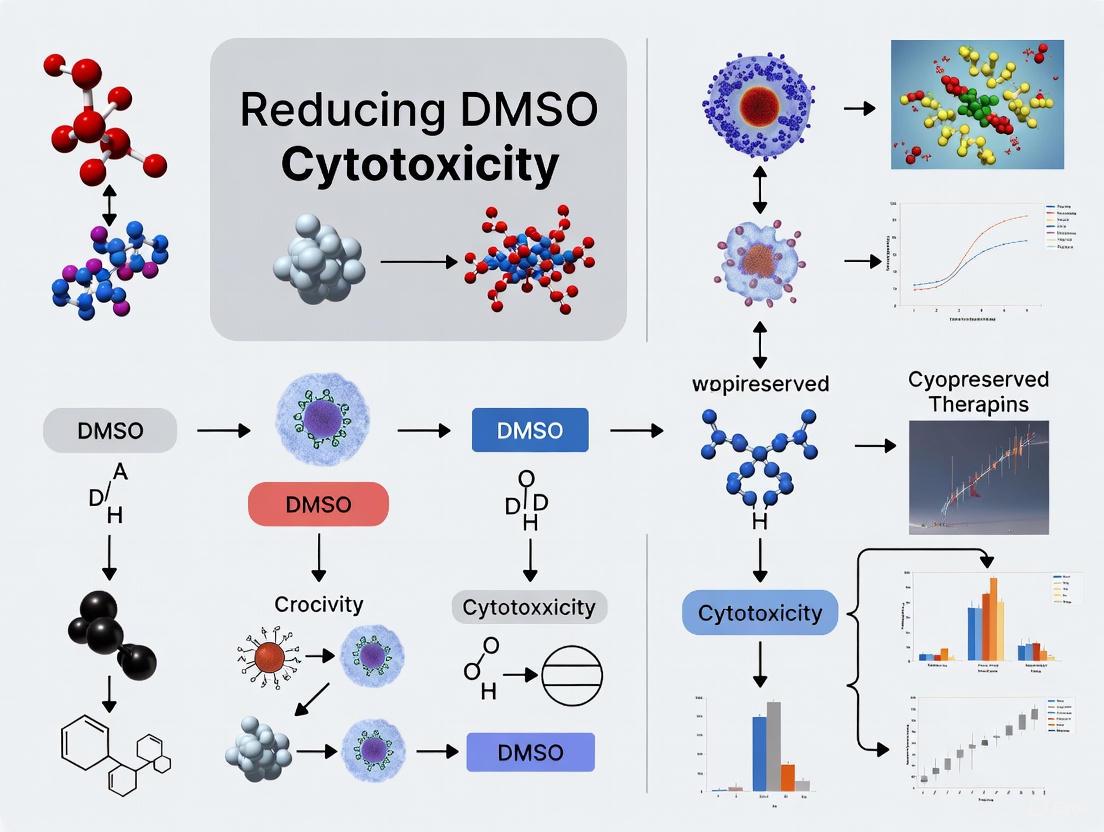
This article provides a comprehensive analysis of strategies to mitigate Dimethyl Sulfoxide (DMSO) cytotoxicity in cryopreserved cell therapies, a critical challenge in the biomanufacturing of advanced therapeutic products.
Strategies for Reducing DMSO Cytotoxicity in Cryopreserved Cell Therapies: From Foundational Science to Clinical Application
Abstract
This article provides a comprehensive analysis of strategies to mitigate Dimethyl Sulfoxide (DMSO) cytotoxicity in cryopreserved cell therapies, a critical challenge in the biomanufacturing of advanced therapeutic products. Tailored for researchers, scientists, and drug development professionals, we explore the molecular mechanisms of DMSO-induced cell damage, review emerging DMSO-free and DMSO-reduced cryopreservation methodologies, and offer practical guidance for process optimization and troubleshooting. The content further validates these strategies through comparative analysis of post-thaw cell viability, functionality, and clinical safety data, synthesizing key takeaways to outline a path toward safer, more effective cryopreservation protocols for cell and gene therapies.
Understanding DMSO Cytotoxicity: Molecular Mechanisms and Cellular Impact in Therapeutic Cells
Frequently Asked Questions (FAQs) on DMSO Cytotoxicity
FAQ 1: What are the primary mechanisms by which DMSO causes cellular damage? DMSO induces cellular damage through three interconnected mechanisms:
- Membrane Disruption: DMSO is an amphipathic molecule that interacts with the phospholipid bilayer of cell membranes. At intermediate concentrations ( ~10–20%), it can promote the formation of transient water pores, compromising membrane integrity and selectivity. At very high concentrations, it can destroy the bilayer structure altogether [1].
- Oxidative Stress: DMSO can elevate intracellular levels of reactive oxygen species (ROS), leading to oxidative damage of cellular components such as lipids, proteins, and DNA [2] [3].
- Apoptosis Induction: DMSO can trigger programmed cell death by affecting mitochondrial functions. This includes impairing mitochondrial membrane potential, promoting the release of cytochrome c, and activating key enzymes in the apoptosis cascade [2].
FAQ 2: Is DMSO cytotoxicity dependent on concentration and exposure time? Yes, DMSO cytotoxicity is highly dependent on both concentration and exposure time, and this effect can vary by cell type [2] [1]. The toxicity is considered temperature-, time-, and concentration-dependent [4]. For instance, in cancer cell lines, 0.3125% DMSO showed minimal cytotoxicity over 72 hours, whereas higher concentrations caused variable effects [2] [3]. In peripheral blood mononuclear cells (PBMC), a 10% DMSO concentration increased cell death within 24 hours, while 5% DMSO increased death after 120 hours of exposure [5].
FAQ 3: Can DMSO cause damage beyond immediate cell death? Yes, research indicates that DMSO can have long-lasting and profound effects on cellular processes. A study exposing 3D cardiac and hepatic microtissues to 0.1% DMSO found large-scale alterations in the transcriptome (affecting thousands of genes), deregulation of microRNAs, and changes in the DNA methylation landscape. These epigenetic changes suggest DMSO can influence gene expression patterns in a persistent manner, which is a significant concern for clinical applications, especially involving embryos or oocytes [6].
FAQ 4: What are the osmotic effects of DMSO on cells during cryopreservation? During the addition and removal of DMSO, cells are subjected to osmotic stress. A key mechanism of damage is expansion lysis, where cells swell excessively when returned to isotonic conditions after being in a hypertonic DMSO solution, causing them to burst. The decrease in cell count during these processes is primarily attributed to this osmotic injury [1].
Troubleshooting Guides
Guide 1: Mitigating DMSO Cytotoxicity in Cell Culture Assays
Problem: Experimental outcomes in cell-based assays are confounded by DMSO solvent toxicity. Solution & Steps:
- Optimize Solvent Concentration: Determine the maximum non-cytotoxic DMSO concentration for your specific cell line and exposure time. For many cancer cell lines, a concentration of 0.3125% (v/v) has been shown to be a suitable starting point due to its minimal cytotoxicity [2] [3].
- Limit Exposure Time: Minimize the duration cells are exposed to DMSO. Where possible, replace the DMSO-containing medium with fresh culture medium after the compound has had time to act [7].
- Use Consistent Controls: Always include a vehicle control (culture medium with the same concentration of DMSO but without the test compound) to account for any effects caused by DMSO itself [2].
- Consider Alternative Solvents: If DMSO proves too toxic for your specific application, evaluate alternative solvents like ethanol, though note that ethanol itself can exhibit rapid, concentration-dependent cytotoxicity [2] [3].
Guide 2: Strategies for Reducing DMSO in Cryopreservation
Problem: Post-thaw cell viability and function are compromised by DMSO toxicity in cryopreserved therapies. Solution & Steps:
- Reduce DMSO Concentration with Hydrogels: Implement hydrogel microencapsulation technology. This approach uses a biomaterial (e.g., alginate) to create a protective 3D environment around cells, enabling effective cryopreservation with DMSO concentrations as low as 2.5% while maintaining cell viability above the 70% clinical threshold [8].
- Implement Post-Thaw Washing: For immediately infused therapies, establish a post-thaw washing protocol to remove DMSO. This involves centrifuging the thawed cell product and resuspending it in a DMSO-free medium. Be aware that this step can be labor-intensive and may cause mechanical stress and cell loss [9].
- Adopt DMSO-Free Cryopreservation Formulations: Transition to optimized DMSO-free cryoprotectant solutions. These formulations often use cocktails of non-toxic molecules such as sucrose, glycerol, L-isoleucine, and poloxamer 188, which work synergistically to protect cells during freezing [4] [7].
- Optimize Freezing Parameters: Use a controlled-rate freezer, cooling at a rate of -1°C per minute until reaching at least -80°C before transfer to long-term storage. This controlled process minimizes ice crystal formation and reduces cryoinjury [10] [7].
Quantitative Data on DMSO Cytotoxicity
The tables below summarize key experimental findings on the cytotoxic effects of DMSO across different cell types.
Table 1: Cytotoxicity of DMSO on Cell Viability and Function
| Cell Type | DMSO Concentration | Exposure Time | Key Findings | Source |
|---|---|---|---|---|
| Six Cancer Cell Lines (e.g., HepG2, MCF-7) | 0.3125% | 24-72 hours | Minimal cytotoxicity in most cell lines. Safe for use as a solvent [2] [3]. | [1, 7] |
| Peripheral Blood Mononuclear Cells (PBMC) | 5% | 120 hours | Increased cell death [5]. | [10] |
| Peripheral Blood Mononuclear Cells (PBMC) | 10% | 24 hours | Increased cell death [5]. | [10] |
| Lymphocytes (from PBMC) | 1% | 120 hours | Reduced proliferation index by 55% [5]. | [10] |
| Lymphocytes (from PBMC) | 2.5% | Not specified | Reduced production of IL-2 cytokine [5]. | [10] |
| 3D Cardiac Microtissues | 0.1% | 2 weeks | >2000 differentially expressed genes; large-scale epigenetic alterations [6]. | [5] |
Table 2: Strategies for DMSO Reduction in Cryopreservation
| Strategy | Key Parameter | Outcome / Performance | Source |
|---|---|---|---|
| Hydrogel Microencapsulation | DMSO reduced to 2.5% | Cell viability >70% (clinical threshold); retained phenotype and differentiation potential [8]. | [2] |
| DMSO-Free Solution (Sucrose, Glycerol, Isoleucine, etc.) | N/A (DMSO-free) | Improved post-thaw survival of hiPSC aggregates; reduced sensitivity to freezing process deviations [7]. | [9] |
| Post-Thaw Washing | DMSO concentration in final product | Reduces systemic DMSO exposure in patients. Can lead to cell loss and requires additional processing [9]. | [6] |
Experimental Protocols
Protocol 1: MTT Assay for Assessing DMSO Cytotoxicity
This protocol is adapted from studies optimizing the assessment of solvent cytotoxicity on cancer cell lines [2] [3].
1. Materials:
- Cell lines of interest (e.g., HepG2, MCF-7)
- DMSO (cell culture grade)
- Complete cell culture medium (e.g., DMEM with 10% FBS)
- 96-well cell culture plates
- MTT reagent (e.g., 5 mg/mL in PBS)
- Solubilization solution (SDS in DMF or similar)
- Microplate reader
2. Methodology:
- Cell Seeding: Harvest cells during exponential growth and seed them in 96-well plates at a density optimized for your assay. A density of 2000 cells/well has been shown to yield consistent, linear results across multiple cancer cell lines and time points (24, 48, 72 h) [2] [3]. Include wells with medium only as a blank control.
- Cell Treatment: After 24 hours, replace the medium with fresh medium containing serial dilutions of DMSO (e.g., 5%, 2.5%, 1.25%, 0.625%, 0.3125%). Include a vehicle control (0% DMSO).
- Incubation: Incubate cells for the desired time periods (e.g., 24, 48, 72 h).
- MTT Assay:
- At each time point, add 10 µL of MTT reagent to each well.
- Incubate the plates for 4 hours at 37°C.
- Carefully remove the medium and add 100 µL of solubilization solution to dissolve the formed formazan crystals.
- Gently shake the plates until the crystals are fully dissolved.
- Data Analysis: Measure the absorbance at 570 nm with a reference wavelength of 630 nm. Calculate cell viability as a percentage of the vehicle control. A reduction in viability greater than 30% is typically considered indicative of cytotoxicity according to the ISO 10993-5:2009 standard [2].
Protocol 2: Controlled-Rate Freezing of Cells with Reduced DMSO
This protocol outlines the steps for cryopreserving cells using a controlled-rate freezer, which is critical for minimizing ice crystal formation and cell death [10] [7].
1. Materials:
- Cells in exponential growth phase
- Freezing medium (e.g., culture medium with 5-10% DMSO, or a low-DMSO/hydrogel formulation, or a DMSO-free solution)
- Cryovials
- Controlled-rate freezer (e.g., programmable freezing device)
2. Methodology:
- Cell Preparation: Harvest cells by standard trypsinization or use cell aggregates. Centrifuge to pellet and resuspend in an appropriate volume of freezing medium. For hydrogel encapsulation, follow specific microcapsule fabrication procedures before resuspension in freezing medium [8].
- Aliquoting: Transfer the cell suspension to cryovials.
- Controlled-Rate Freezing:
- Place the cryovials in the controlled-rate freezer.
- Initiate the following program:
- Cool from room temperature to 0°C at -10°C/min.
- Hold at 0°C for 10 minutes for temperature equilibration.
- Cool from 0°C to the nucleation temperature (e.g., -4°C to -12°C) at -1°C/min.
- Hold at the nucleation temperature for 15 minutes and induce ice nucleation manually (e.g., by briefly spraying the vials with liquid nitrogen).
- Continue cooling at -1°C/min to -60°C.
- Cool rapidly at -10°C/min to -100°C [7].
- Storage: Transfer the vials to a liquid nitrogen freezer for long-term storage.
Signaling Pathways and Experimental Workflows
The diagrams below illustrate the key mechanisms of DMSO-induced cellular damage and a strategic workflow for mitigating cytotoxicity in research.
Diagram Title: Key Pathways of DMSO-Induced Cellular Damage
Diagram Title: Strategic Workflow for Mitigating DMSO Cytotoxicity
The Scientist's Toolkit: Research Reagent Solutions
Table 3: Essential Reagents for Investigating and Mitigating DMSO Cytotoxicity
| Reagent / Material | Function / Application | Key Notes |
|---|---|---|
| DMSO (Cell Culture Grade) | Universal solvent for water-insoluble compounds; cryoprotectant. | Use the highest purity. Always optimize concentration for specific cell lines to minimize background toxicity [2] [3]. |
| MTT Assay Kit | Measures cell viability and metabolic activity based on mitochondrial reductase enzymes. | Standard colorimetric method for quantifying DMSO cytotoxicity in vitro [2] [3]. |
| Alginate Hydrogel | Biomaterial for cell microencapsulation. | Forms a protective 3D matrix, enabling cryopreservation with significantly reduced DMSO concentrations (as low as 2.5%) [8]. |
| DMSO-Free Cryoprotectants | Components of alternative freezing solutions. | Sucrose, Glycerol, L-Isoleucine, Poloxamer 188. These non-toxic molecules act synergistically to protect cells without DMSO's detrimental effects [4] [7]. |
| Controlled-Rate Freezer | Equipment for precise control of cooling rates during cryopreservation. | Critical for implementing optimized freezing protocols (e.g., -1°C/min) to minimize ice crystal formation and improve post-thaw viability [10] [7]. |
Troubleshooting Guide: Addressing DMSO-Induced Cellular Alterations
This guide helps you identify and resolve common issues related to DMSO-induced epigenetic and transcriptomic changes in cell cultures and cryopreservation.
Table: Troubleshooting DMSO-Related Experimental Issues
| Problem | Potential Cause | Recommended Solution | Supporting Evidence |
|---|---|---|---|
| High background cellular differentiation | DMSO-induced spontaneous differentiation altering baseline transcriptome [11]. | Include matched vehicle controls (same DMSO concentration and exposure time) in all experiments. | |
| Unexpected gene expression changes in controls | Low, previously considered "inert" DMSO concentrations (e.g., 0.1%) causing large-scale transcriptomic shifts [12]. | Use the lowest possible DMSO concentration and consider DMSO-free alternatives. Validate solvent effects empirically. | |
| Poor post-thaw cell viability/function | Cytotoxicity from standard 10% DMSO cryopreservation solutions [8] [13]. | Implement hydrogel microencapsulation to reduce DMSO requirement to 2.5% [8]. | |
| Inconsistent results in drug testing assays | DMSO solvent altering the epigenome and confounding the effect of drugs being tested [14]. | Use minimal, consistent DMSO concentrations. Profile direct drug effects using nascent RNA transcription assays (e.g., NASC-seq2) [14]. |
Frequently Asked Questions (FAQs)
Q1: I use 0.1% DMSO as a vehicle solvent in my cell cultures. Is this concentration truly inert?
A: No. Recent high-throughput studies show that even 0.1% DMSO is not inert and can induce drastic changes in cellular processes. Exposure to 0.1% DMSO can cause:
- Transcriptomic Alterations: Over 2,000 differentially expressed genes in both cardiac and hepatic microtissues [12].
- Epigenetic Effects: Large-scale deregulation of microRNAs and alterations in the DNA methylation landscape, particularly in cardiac microtissues [12].
- Functional Impact: These changes may affect critical biological processes and potentially impact embryonic development, raising concerns about its use in cryopreserving oocytes and embryos [12].
Q2: What are the primary mechanisms by which DMSO causes these transcriptional and epigenetic changes?
A: DMSO's effects are multi-faceted, with key mechanisms including:
- Histone Modification: DMSO treatment is associated with changes in histone acetylation patterns. For instance, in hepatic cells, it drives gene expression signatures linked to histone acetylation, influencing differentiation [11].
- Transcription Factor Binding: DMSO exposure can enrich specific transcription factors and regulators at gene promoters. Studies have shown enrichment for factors like BRD4, which binds to acetylated histones, illustrating a direct link to chromatin state [14].
- Altered Transcriptional Bursting: Direct transcriptional profiling shows that DMSO and similar compounds can change the kinetics of gene transcription, primarily by increasing the frequency of transcriptional bursts [14].
Q3: For clinical cell therapies, what is the safety risk of administering cells cryopreserved with DMSO?
A: The risk is currently considered manageable and low for most applications when protocols are followed. A 2025 review of clinical data concluded that the amount of DMSO delivered with cryopreserved mesenchymal stromal cell (MSC) products does not pose a significant safety risk [13] [9].
- Intravenous Route: Doses delivered with MSC products are typically 2.5–30 times lower than the 1 g/kg dose accepted in hematopoietic stem cell transplantation. With adequate premedication, only isolated infusion-related reactions are reported [9].
- Topical Route: Available data suggest that DMSO concentrations in undiluted cryopreserved products are unlikely to cause significant local adverse effects on skin wounds [9].
- Risk Mitigation: The potential toxicity of DMSO must be balanced against the significant logistical and quality control advantages of using cryopreserved cell products [9].
Q4: What are the most promising strategies to reduce or eliminate DMSO in cryopreservation?
A: Research is actively exploring several strategies to mitigate DMSO-related toxicity:
- Hydrogel Microencapsulation: This technology physically protects cells during freezing, enabling effective cryopreservation of MSCs with DMSO concentrations as low as 2.5%, while maintaining viability above the 70% clinical threshold [8].
- Alternative Cryoprotectants (CPAs): Researchers are investigating non-toxic alternatives, including:
- Controlled-Rate Freezing (CRF) without CPAs: Some protocols, such as freezing platelets in isotonic saline using precise CRF equipment, can achieve good post-thaw recovery without any CPAs [15].
The Scientist's Toolkit: Research Reagent Solutions
Table: Essential Materials for Investigating DMSO Effects
| Reagent / Material | Function / Application | Key Consideration |
|---|---|---|
| NASC-seq2 (Single-cell 4sU-based seq) | Profiles nascent/new RNA to map the direct transcriptional effects of DMSO, separate from pre-existing mRNA [14]. | Crucial for distinguishing direct DMSO effects from downstream consequences; enables analysis at 30-60 minute exposures. |
| Alginate Hydrogel | Forms a 3D microcapsule for cell encapsulation, providing a physical cryoprotective barrier [8]. | Allows for a radical reduction (down to 2.5%) of DMSO required for effective cryopreservation of stem cells. |
| Choline Chloride-Glycerol DES | A deep eutectic solvent studied as a potential low-toxicity cryoprotective agent [15]. | Represents a class of "next-generation" CPAs; its ionic and hydrogen-bonding characteristics may enhance membrane protection. |
| HDAC Inhibitors (e.g., SAHA) | Tool compound for studying epigenetic mechanisms; used to compare and contrast DMSO's effects on histone acetylation [14]. | Helps deconvolve whether DMSO's effects are mediated through specific epigenetic enzyme inhibition. |
Experimental Protocol: Profiling Direct Transcriptional Effects of DMSO
To accurately assess how DMSO alters transcription without the confounding effects of long-term culture, follow this validated protocol for nascent RNA profiling [14]:
Cell Treatment and RNA Labeling:
- Culture your cells (e.g., K562, HepaRG) under standard conditions.
- Prepare an experimental group: Treat cells with your chosen DMSO concentration (e.g., 0.1% to 2%) simultaneously with a nucleotide analog, 4-thiouridine (4sU), for a short duration (30-60 minutes).
- Prepare a control group: Treat cells with 4sU alone for the same duration.
- Include a no-treatment control (no DMSO, no 4sU) for background correction.
RNA Extraction and Library Preparation:
- Harvest cells immediately after the treatment period and extract total RNA.
- Process the RNA for sequencing using a method compatible with 4sU labeling, such as SLAM-seq or NASC-seq2 chemistry. This step is critical as it chemically marks the newly transcribed (4sU-labeled) RNA, allowing for its computational separation from pre-existing RNA during data analysis.
Data Analysis:
- Use a binomial mixture model or similar computational tool to separate the sequencing reads into "new RNA" (transcribed during DMSO exposure) and "pre-existing RNA" pools.
- Perform differential gene expression analysis (e.g., with DESeq2) on the "new RNA" profile from DMSO-treated cells versus the control cells. This will reveal the genes that are directly and transcriptionally responsive to DMSO.
Experimental Protocol: Cryopreserving Cells with Low DMSO via Microencapsulation
This protocol summarizes the method to significantly reduce DMSO concentration in stem cell cryopreservation using hydrogel microencapsulation [8].
Preparation of Microcapsules:
- Encapsulation: Use a high-voltage electrostatic spraying device with a coaxial needle assembly.
- Core Solution: Resuspend the cell pellet (e.g., MSCs) in a core solution containing sodium alginate and other excipients. Load this into the inner syringe.
- Shell Solution: Fill the outer syringe with a sodium alginate shell solution.
- Droplet Formation: Adjust the voltage (~6 kV) and flow rates (e.g., inner: 25 µL/min, outer: 75 µL/min) to form microdroplets that fall into a calcium chloride solution for cross-linking and gelation.
Cryopreservation and Thawing:
- Freezing Medium: Culture the formed microcapsules and then resuspend them in a freezing medium containing a low concentration of DMSO (2.5%).
- Freezing: Perform controlled-rate slow freezing to -80°C or lower for long-term storage.
- Thawing: Rapidly thaw the microcapsules and wash to remove the cryoprotectant. The microencapsulated MSCs retain their viability, phenotype, and differentiation potential post-thaw.
Signaling Pathways and Experimental Workflows
Direct Transcriptional Effect Profiling Workflow
DMSO Mechanism and Cryopreservation Optimization
Frequently Asked Questions
1. What types of adverse effects are associated with DMSO in cell therapies? Infusion of cell therapy products containing DMSO is associated with a range of adverse effects. The most common are gastrointestinal issues, including nausea, vomiting, and abdominal pain. Patients may also experience cardiovascular effects such as hypertension, bradycardia, or tachycardia; respiratory symptoms like dyspnea; and dermatological reactions including urticaria, itching, and redness. In rare cases, more severe events such as cardiac arrhythmia or neurotoxicity can occur [8] [16].
2. Beyond patient infusion reactions, how does DMSO affect the therapeutic cells themselves? DMSO is not biologically inert and can significantly impact cellular properties. Exposure can reduce the viability, recovery, and functionality of therapeutic cells like Natural Killer (NK) cells post-thaw. Furthermore, even low concentrations of DMSO (e.g., 0.1%) can induce large-scale alterations in the cellular transcriptome and epigenome, affecting the expression of thousands of genes and disrupting DNA methylation patterns. This can dysregulate critical cellular processes and potentially induce unwanted differentiation in stem cells, compromising the therapeutic product's potency and consistency [17] [16] [6].
3. What are the primary strategies for mitigating DMSO-related toxicity? Researchers are pursuing three main strategies to reduce DMSO-related risks:
- Reducing Concentration: Using lower concentrations of DMSO, sometimes enabled by advanced technologies like hydrogel microencapsulation, which can maintain cell viability with only 2.5% DMSO [8] [18].
- Post-Thaw Removal: Washing the thawed cell product to remove DMSO before infusion using systems like the Corning X-WASH system [19].
- Developing DMSO-Free Formulations: Creating alternative cryoprotectant solutions using combinations of osmolytes (e.g., trehalose, sucrose, ethylene glycol) and polymers to avoid DMSO entirely [20] [17] [16].
4. Is it safe to completely omit DMSO from cryopreservation protocols? While DMSO-free cryopreservation is an active and promising area of research, it remains challenging. As of 2025, a systematic review concluded that none of the existing DMSO-free approaches have yet been shown to be fully suitable for clinical application, as they often fail to match the post-thaw cell recovery, viability, and functionality achieved with standard DMSO-containing protocols. Therefore, current strategies often focus on DMSO reduction rather than complete elimination [13].
Troubleshooting Guide: DMSO Toxicity
| Problem Area | Specific Issue | Potential Causes | Recommended Solutions |
|---|---|---|---|
| Cell Potency & Function | Reduced post-thaw cytotoxicity of immune cells (e.g., NK cells). | Cryopreservation damage to cytolytic granules; DMSO-induced reduction in membrane fluidity and cytotoxicity [20] [17]. | Pre-treat cells with cytokines (IL-15/IL-18) to reduce apoptosis; Use cryopreservation solutions with osmolyte combinations to mitigate loss of function [17]. |
| Cell Viability & Recovery | Low post-thaw viability and recovery. | DMSO cytotoxicity; Suboptimal cooling rate; Osmotic stress during addition/removal of cryoprotectant [8] [21]. | Optimize cooling rate (e.g., 4-5°C/min for NK cells [17]); Implement hydrogel microencapsulation to protect cells and enable lower DMSO use (e.g., 2.5%) [8]. |
| Patient Infusion Reactions | Adverse events during or after product infusion. | High dose of DMSO administered with the cell product [18] [16]. | Reduce final DMSO concentration in the infused product; Use post-thaw washing systems to remove DMSO; Ensure adequate patient premedication [13] [19]. |
Quantitative Data on DMSO Reduction Strategies
The following table summarizes key experimental findings from recent studies on reducing DMSO in cryopreservation.
| Cell Type | Standard DMSO Protocol | Reduced DMSO Protocol | Key Outcome Measures | Results & Clinical Relevance |
|---|---|---|---|---|
| hUC-MSCs [8] | 10% DMSO | 2.5% DMSO with alginate hydrogel microencapsulation | Viability: ~70% (meets clinical threshold). Phenotype & Function: Retained. | Microencapsulation protects cells, enabling a 75% reduction in DMSO while maintaining critical quality attributes. |
| HSCs (Systematic Review) [18] | 10% DMSO | 5% DMSO | Engraftment: No significant difference in platelet or neutrophil recovery. Adverse Effects: Reduced. | Meta-analysis confirms that halving the DMSO concentration is clinically feasible for autologous HSC transplantation. |
Detailed Experimental Protocol: Hydrogel Microencapsulation for Low-DMSO Cryopreservation
This protocol, adapted from a 2025 study, enables effective cryopreservation of Mesenchymal Stem Cells (MSCs) with only 2.5% DMSO [8].
Objective: To preserve human umbilical cord MSCs (hUC-MSCs) using alginate hydrogel microcapsules, significantly reducing the required concentration of DMSO while maintaining cell viability, phenotype, and differentiation potential post-thaw.
Materials:
- Core Solution: Mannitol and hydroxypropyl methylcellulose in sterile water.
- Sodium Alginate Shell Solution: Mannitol and sodium alginate in sterile water.
- Cross-linking Solution: Calcium chloride (CaCl₂) in sterile water.
- Cells: hUC-MSCs.
- Equipment: High-voltage electrostatic coaxial spraying device, infusion pumps, coaxial needle assembly.
Workflow: Hydrogel Microencapsulation and Cryopreservation
Step-by-Step Methodology:
Cell Preparation:
- Culture hUC-MSCs in complete medium (DMEM/F12 with 10% FBS and 1% penicillin/streptomycin) until they reach 80-90% confluence.
- Wash cells with PBS, trypsinize, and centrifuge to obtain a cell pellet. Keep the pellet on ice.
Preparation of Microencapsulation Solutions:
- Prepare the core solution by resuspending the hUC-MSC pellet in a cold mixture containing mannitol, hydroxypropyl methylcellulose, NaOH, Type I rat tail collagen, and sterile water.
- Load this cell-containing core solution into a syringe attached to the inner channel of a coaxial needle via an infusion pump.
- Draw the sodium alginate shell solution into a separate syringe and connect it to the outer channel of the coaxial needle.
Electrostatic Spraying & Gelation:
- Place a beaker containing calcium chloride solution below the coaxial needle assembly.
- Adjust the flow rates (e.g., 25 μL/min for core, 75 μL/min for shell) and apply a high voltage (e.g., 6 kV) for electrostatic spraying.
- Microdroplets forming at the needle tip will fall into the CaCl₂ solution, where the alginate instantly crosslinks into solid hydrogel microspheres encapsulating the cells.
Collection and Culture:
- Collect the microcapsules by gentle centrifugation.
- Discard the CaCl₂ supernatant, resuspend the microcapsules in fresh pre-warmed culture medium, and transfer to a culture flask for a short period before freezing.
Low-DMSO Cryopreservation:
- Resuspend the microcapsules in a cryopreservation medium containing only 2.5% (v/v) DMSO.
- Use a controlled-rate freezer to cool the samples slowly.
- Transfer the frozen samples to long-term storage in liquid nitrogen.
The Scientist's Toolkit: Key Research Reagents & Materials
| Item | Function in DMSO Reduction Research |
|---|---|
| Alginate Hydrogel [8] | A natural biomaterial that forms a protective 3D network around cells, shielding them from ice crystal damage and enabling the use of low DMSO concentrations. |
| Osmolytes (e.g., Trehalose, Sucrose) [13] [16] | Non-penetrating cryoprotectants that stabilize cell membranes and proteins, often used in combination with other agents in DMSO-free or low-DMSO formulations. |
| Corning X-WASH System [19] | A closed-system, semi-automated device for post-thaw washing of cell products to remove DMSO before infusion, reducing the dose administered to patients. |
| Cytokines (IL-15, IL-18) [17] | Used to pre-treat cells like NK cells prior to freezing to upregulate anti-apoptotic genes and reduce post-thaw apoptosis, improving recovery and function. |
| Controlled-Rate Freezer [21] | Essential for ensuring a consistent, optimal cooling rate (e.g., 1-3°C/min for many cells), which is critical for cell survival when using reduced or alternative cryoprotectants. |
Mechanisms of Cryopreservation Damage and Protective Strategies
Understanding how cryopreservation damages cells and how DMSO and alternatives work is key to developing safer protocols. The diagram below illustrates the core mechanisms and intervention points.
Theoretical Foundations of DMSO Toxicity
What are the primary mechanisms of DMSO-induced cellular damage?
DMSO toxicity manifests through two primary mechanisms: direct cytotoxicity and osmotic injury. The relative contribution of each mechanism depends on DMSO concentration, exposure time, and temperature [1].
Direct cytotoxicity results from DMSO's interaction with cellular components. Molecular dynamics simulations reveal that DMSO interacts with the phospholipid bilayer of cell membranes, with effects varying by concentration: at relatively low concentrations (approximately 2.5-7.5 mol%), DMSO decreases membrane thickness; at intermediate concentrations (approximately 10-20 mol%), it promotes transient water pore formation; and at higher concentrations (approximately 25-100 mol%), it can destroy the bilayer structure entirely [1]. Furthermore, DMSO can cause mitochondrial damage, alter chromatin conformation in fibroblasts, and at the molecular level, induce large-scale alterations in the epigenetic landscape and microRNA profiles, even at low concentrations (0.1%) [4] [6].
Osmotic injury occurs during the addition and removal of DMSO due to excessive cell volume excursions. During DMSO addition in hypertonic solutions, cells shrink as water exits rapidly. If the shrinkage exceeds a critical minimum volume, it can cause membrane-cytoskeleton damage or irreversible membrane fusion. Conversely, during DMSO removal in hypotonic solutions, water rapidly enters the cells, causing them to swell. Excessive swelling can lead to mechanical rupture of the cell membrane (expansion lysis) [1].
How do concentration and exposure time interact to influence toxicity?
The toxicity of DMSO exhibits a clear time- and concentration-dependent relationship. The overall toxic effect is a function of both the concentration of DMSO and the duration of cell exposure [1] [22].
Experimental evidence shows that a decrease in both cell count and viability is observed when DMSO concentration, temperature, and contact time increase [1]. For cord blood cryopreservation, research indicates that minimal toxic effect is observed when cryopreservation is delayed for up to 1 hour after the addition of 10% DMSO. However, prolonged exposure, particularly at higher temperatures, significantly increases cytotoxic effects [23] [22]. For instance, in CHO-S cell lines, exposure to DMSO-containing medium for up to two hours prior to freezing showed that viability and post-thaw performance were most robust at 7.5% DMSO, with higher concentrations and longer exposure times leading to greater detrimental effects [22].
Table 1: Summary of DMSO Toxicity Based on Concentration and Exposure Time
| DMSO Concentration | Permissible Exposure Time (Pre-freeze) | Observed Cellular Effects |
|---|---|---|
| ~2.5-7.5 mol%(Low) | Up to 2 hours (at lower temperatures) | Decreased membrane thickness; minimal toxicity with limited exposure [1] [22] |
| ~10-20 mol%(Intermediate) | < 1 hour recommended | Transient water pore formation in membrane; dose-dependent toxicity observed [1] [23] |
| ~25-100 mol%(High) | Minimize exposure immediately | Destruction of cell membrane bilayer structure; significant cell death [1] |
| 5% - 7.5% (v/v)(Common freezing range) | < 1-2 hours (temperature-sensitive) | Robust post-thaw viability with optimized protocols; lower concentrations enable longer handling windows [22] [24] |
| 10% (v/v)(Standard for many cells) | < 1 hour prior to freezing; < 30 minutes post-thaw | Standard efficacy with defined toxicity; washout or dilution recommended after thawing [23] |
Troubleshooting Guides & FAQs
Frequently Asked Questions
Q1: What is the maximum recommended exposure time of cells to 10% DMSO at room temperature before freezing? A: The maximum exposure time for cells in 10% DMSO at room temperature before freezing should be limited to less than 1 hour [23]. Studies on cord blood demonstrate that delaying cryopreservation for more than 1 hour after adding DMSO leads to a significant decrease in viable and functional hematopoietic progenitor cells. To minimize toxicity, prepare your freezing mixture in advance, keep it cold, and process cells quickly to reduce room temperature exposure time.
Q2: Is it better to wash or dilute DMSO after thawing, and why? A: Dilution is often less damaging than washing for post-thaw processing. Research on MSCs shows that washing cells post-thaw (involving centrifugation and resuspension) resulted in a 45% reduction in total cell count and a higher proportion of early apoptotic cells compared to simple dilution [25]. The mechanical stresses of agitation and centrifugation during washing can damage fragile, post-thaw cells [4]. Dilution reduces DMSO concentration and associated cytotoxicity while avoiding these mechanical stresses.
Q3: Can I reduce the standard 10% DMSO concentration for cryopreservation without compromising cell viability? A: Yes, for many cell types, reducing DMSO concentration is a viable and often beneficial strategy. Multiple studies have successfully used 5% to 7.5% DMSO for cryopreserving regulatory T cells (Tregs), mesenchymal stromal cells (MSCs), and hematopoietic stem cells (HSCs) [18] [24]. A meta-analysis of clinical HSC transplantation studies concluded that products cryopreserved with 5% DMSO showed equivalent engraftment potential to those with 10% DMSO, while potentially reducing infusional toxicity [18]. The optimal concentration should be determined empirically for your specific cell type.
Q4: What are the critical quality attributes to test when developing a low-DMSO cryopreservation protocol? A: When optimizing a low-DMSO protocol, you should assess a panel of attributes beyond simple viability:
- Post-thaw recovery rate: The percentage of viable cells recovered after thawing [24].
- Viability and apoptosis: Use annexin V/PI flow cytometry to distinguish early apoptosis from late apoptosis/necrosis [25].
- Phenotype and identity: Confirm the expression of characteristic surface markers (e.g., CD4/CD25/Foxp3 for Tregs) [24].
- Potency and function: Assess critical biological functions, such as the suppressive capacity of Tregs or the phagocytic rescue capability of MSCs [25] [24].
- Proliferation and metabolic activity: Ensure cells can expand normally and exhibit expected metabolic activity after thawing [25].
Troubleshooting Common Problems
Problem: Low Post-Thaw Cell Viability
- Potential Cause: Excessive DMSO exposure time pre-freeze or post-thaw.
- Solution: Strictly limit the time cells are in contact with liquid DMSO at room temperature. Pre-cool freezing medium and work quickly. After thawing, either dilute the product immediately for infusion or wash cells rapidly but gently in a controlled manner [23] [22].
Problem: Poor Cell Recovery or Function After Post-Thaw Washing
- Potential Cause: Mechanical and osmotic stress from the washing process (centrifugation steps).
- Solution: Switch to a dilution-based method. If washing is absolutely necessary, use gentle centrifugation forces and consider using systems designed to minimize cell shear stress [25] [4].
Problem: Desire to Eliminate DMSO Due to Clinical Concerns
- Potential Cause: DMSO is associated with patient side effects.
- Solution: Investigate DMSO-free cryopreservation strategies. These often involve combinations of alternative penetrating cryoprotectants (e.g., glycerol, ethylene glycol), non-penetrating cryoprotectants (e.g., trehalose, sucrose), and advanced techniques (e.g., electroporation-assisted delivery of CPAs, vitrification, or the use of synthetic polymers) [4]. Note that these methods are often cell-type specific and may require extensive optimization.
Experimental Protocols for Toxicity Mitigation
Protocol: Comparing DMSO Concentration in T Cell Cryopreservation
This protocol is adapted from a study that successfully used 5% DMSO for cryopreserving regulatory T cell (Treg) products [24].
Objective: To evaluate the impact of reduced DMSO concentration on the recovery, viability, and function of a T cell product.
Materials:
- Actively growing Treg cells
- Base freezing medium: Serum-free solution (e.g., X-Vivo 15)
- Human Serum Albumin (HSA)
- Dimethyl Sulfoxide (DMSO)
- Programmable controlled-rate freezer
Method:
- Prepare Freezing Media: Formulate two serum-free freezing media on the day of use.
- Medium A (Test): 5% (v/v) DMSO, 10% (w/v) HSA, in base medium.
- Medium B (Control): 10% (v/v) DMSO, 10% (w/v) HSA, in base medium.
- Harvest and Resuspend Cells: Harvest the Treg cells and resuspend them in the pre-chilled freezing media at the target cell concentration. Keep the cell suspension on ice or at 2-8°C during processing.
- Freeze Cells: Aliquot the cell suspension into cryovials and freeze using a controlled-rate freezer with a standard program (e.g., -1°C/min to -40°C, then -10°C/min to -100°C) before transferring to liquid nitrogen [24].
- Thaw and Analyze: Rapidly thaw the cryovials in a 37°C water bath. Immediately upon thawing, dilute the cell suspension drop-wise with pre-warmed culture medium.
- Assessment:
- Recovery & Viability: Calculate the percentage of viable cells recovered post-thaw compared to the pre-freeze count.
- Phenotype: Use flow cytometry to confirm the expression of key markers (e.g., CD4, CD25, Foxp3).
- Function: Perform a suppression assay to measure the ability of thawed Tregs to inhibit the proliferation of responder T cells.
Protocol: Evaluating Post-Thaw Processing Methods (Wash vs. Dilution)
This protocol simulates clinical preparation of cryopreserved MSCs, comparing washing to dilution for DMSO removal [25].
Objective: To determine the impact of two common post-thaw processing methods on MSC recovery and apoptosis.
Materials:
- Cryopreserved vial of MSCs in 10% DMSO
- Complete culture medium
- Centrifuge
- Hemocytometer or automated cell counter (e.g., NucleoCounter)
- Flow cytometer with annexin V/PI staining kit
Method:
- Thaw Cells: Rapidly thaw a cryovial of MSCs in a 37°C water bath.
- Post-Thaw Processing (Immediate):
- "Washed" Condition: Transfer the thawed cell suspension to a tube containing a large volume of pre-warmed medium. Centrifuge at a gentle, predefined force (e.g., 300-400 x g) for 5-10 minutes. Aspirate the supernatant containing DMSO and resuspend the cell pellet in fresh, pre-warmed medium.
- "Diluted" Condition: Simply dilute the thawed cell suspension drop-wise with a volume of pre-warmed medium sufficient to reduce the DMSO concentration to a target level (e.g., ≤5%). Do not centrifuge.
- Cell Counting and Viability: Measure the total cell count and viability (e.g., using trypan blue or NucleoCounter) immediately after processing (0 hours) and again after 24 hours of storage at room temperature or 2-8°C.
- Apoptosis Assay: At 6 hours and 24 hours post-processing, analyze cells by flow cytometry using annexin V and propidium iodide (PI) staining to distinguish live (AV-/PI-), early apoptotic (AV+/PI-), and late apoptotic/necrotic (AV+/PI+) populations.
Table 2: Expected Outcomes for Post-Thaw Processing of MSCs (Adapted from [25])
| Quality Attribute | Washed MSCs | Diluted MSCs | Interpretation |
|---|---|---|---|
| Cell Recovery (%) | Significant reduction (~45% drop) | Minimal reduction (~5% drop) | Centrifugation steps in washing cause significant cell loss. |
| Viability (0h & 24h) | Similar to Diluted | Similar to Washed | Both methods can maintain membrane integrity. |
| Early Apoptosis (24h) | Significantly higher | Lower | The washing process induces more stress, leading to early apoptosis. |
| Proliferative Capacity | Similar to Diluted | Similar to Washed | If cells survive the initial stress, they can proliferate normally. |
| Clinical Utility | Lower due to cell loss and complexity | Higher due to simplicity and better live cell yield | Dilution is a less disruptive and more efficient method. |
The Scientist's Toolkit: Research Reagent Solutions
Table 3: Essential Reagents and Materials for DMSO Toxicity Studies
| Reagent / Material | Function / Application | Key Considerations |
|---|---|---|
| DMSO (Cell Culture Grade) | Penetrating cryoprotectant | Use high-purity, sterile-filtered grade. Hygroscopic; store sealed and dry. |
| Human Serum Albumin (HSA) | Component of protein-free freezing medium; provides extracellular protection. | Preferred over FBS for clinical translation to avoid xenogeneic components [24]. |
| Trehalose | Non-penetrating cryoprotectant | Stabilizes membranes and proteins; often used in DMSO-free or low-DMSO formulations [4]. |
| Polyethylene Glycol (PEG) | Extracellular cryoprotectant; reduces ice crystal formation outside the cell. | Can be combined with DMSO to improve post-thaw recovery [24]. |
| Annexin V / PI Apoptosis Kit | Flow cytometry-based detection of apoptosis and necrosis. | Critical for distinguishing between direct toxicity (early apoptosis) and mechanical damage (necrosis). |
| Programmable Controlled-Rate Freezer | Provides consistent, reproducible freezing rates. | Essential for protocol standardization; alternatives like passive freezing devices can be validated [22]. |
| Alternative CPAs (e.g., Glycerol, Ethylene Glycol) | Penetrating cryoprotectants for DMSO reduction or replacement. | Cryoprotective efficiency is cell-type specific; requires optimization of concentration and combination [4]. |
DMSO-Reduced and DMSO-Free Cryopreservation Strategies: A Toolkit for Developers
Frequently Asked Questions (FAQs)
Q1: Why should I combine permeating and non-permeating cryoprotective agents (CPAs) instead of using a single agent?
Combining permeating and non-permeating agents creates a synergistic protective effect, allowing you to reduce the concentration of toxic permeating agents like DMSO while maintaining or even improving cryopreservation outcomes. Permeating agents (e.g., DMSO, ethylene glycol) penetrate the cell to prevent intracellular ice formation and mitigate dehydration. Non-permeating agents (e.g., trehalose, sucrose) function extracellularly to promote vitrification, suppress ice crystal growth, and reduce osmotic shock during CPA addition and removal. Using this combination strategy, you can significantly lower the required concentration of toxic permeating CPAs, thereby reducing associated cytotoxicity and improving post-thaw cell viability and function [26] [4] [27].
Q2: What is a common ratio to start with when formulating a CPA cocktail for mesenchymal stem cells (MSCs)?
For initial screening experiments with human MSCs, a promising starting point is a cocktail combining 2.5% (v/v) DMSO with a non-permeating agent like trehalose. Research has demonstrated that hydrogel microencapsulation enables effective cryopreservation of MSCs with DMSO concentrations as low as 2.5%, while sustaining cell viability above the 70% clinical threshold [8]. Other studies have successfully used combinations such as 2M ethylene glycol (EG) and 2M propylene glycol with 0.5M trehalose [4], or 6.5M EG with 0.5M sucrose [4], highlighting that the optimal ratio is cell-type specific and requires empirical determination.
Q3: My post-thaw cell viability is low. Is this due to CPA toxicity or osmotic damage?
Distinguishing between these causes requires a structured troubleshooting approach. The table below outlines symptoms and confirming experiments.
Table: Diagnosing Causes of Low Post-Thaw Viability
| Observed Symptom | Possible Cause | Confirming Experiment |
|---|---|---|
| High viability immediately post-thaw, but rapid decline in culture over 6-24 hours [27] [16]. | CPA Chemical Toxicity: Apoptosis and necrosis triggered by cytotoxic effects of CPAs. | Repeat experiment, shortening the exposure time of cells to CPA at ambient temperature before freezing and immediately after thawing [27]. |
| Low viability immediately post-thaw, with poor cell membrane integrity. | Osmotic Damage / Intracellular Ice Formation: Incorrect cooling rate or inadequate non-permeating CPA. | Measure cell volume changes during CPA addition/removal. Test a slower, multi-step addition and dilution protocol [26] [27]. |
| High levels of lactate dehydrogenase (LDH) release in perfusion culture (for tissues/organs). | CPA Toxicity | Compare LDH release between different CPA formulations; a 50% reduction indicates a less toxic cocktail [28]. |
Q4: How does the choice of carrier solution impact the performance of my CPA cocktail?
The carrier solution is a critical, yet often overlooked, component. It is not just a solvent but provides a foundational ionic and metabolic environment for the cells during the stressful cryopreservation process. Research on rat heart cryopreservation found that Celsior carrier solution was superior to University of Wisconsin (UW) or Euro-Collins (EC) solutions. Hearts treated with CPA in Celsior spent less time in cardiac arrest and showed partial recovery of function, which was not observed with other carriers [28]. Key factors include the potassium concentration (intracellular-type vs. hyperkalemic cardioplegic), the presence of buffers (e.g., histidine), and antioxidants [28]. Always screen carrier solutions in conjunction with your CPA cocktail.
Q5: Are there any DMSO-free alternatives that provide equivalent protection for sensitive cell therapies?
Yes, the field is actively developing DMSO-free alternatives. While performance can be cell-specific, several strategies have shown promise:
- Sugar-Based Cocktails: Solutions containing ethylene glycol (EG) and trehalose have successfully cryopreserved human induced pluripotent stem cells (hiPSCs), preserving their viability, pluripotency, and differentiation capacity [4] [16].
- Polymer-Based CPAs: Amphiphilic block copolymers and polyampholyte cryoprotectants have been used to cryopreserve human bone marrow-derived MSCs with high viability and no impact on biological properties, even after 24 months of storage [4].
- Commercial Media: Chemically-defined, DMSO-free cryopreservation media like NB-KUL DF are now available, designed to provide equivalent performance to DMSO-based media while eliminating the need for post-thaw washing steps [29].
Troubleshooting Guides
Problem: Poor Post-Thaw Cell Recovery and Function
Potential Cause 1: Excessive Chemical Toxicity from Permeating CPAs
- Solution: Reduce the concentration of toxic permeating agents like DMSO by incorporating non-permeating agents.
- Protocol: Prepare a cocktail with a lower molarity of DMSO (e.g., 2.5-5%) and supplement it with 0.2-0.5 M of a non-permeating sugar like sucrose or trehalose [8] [4].
- Mechanism: The non-permeating agent contributes to vitrification extracellularly, reducing the burden on the intracellular permeating CPA. This synergy allows for a lower, less toxic dose of the permeating agent while maintaining the necessary level of ice formation inhibition [26].
Potential Cause 2: Osmotic Shock During CPA Addition or Removal
- Solution: Implement a controlled, multi-step protocol for adding CPAs before freezing and diluting them after thawing.
- Protocol:
- Addition (Pre-freeze): Add your CPA cocktail in 3-4 steps at 4°C, allowing 5-10 minutes of equilibration between each step. This gradual process minimizes rapid cell volume changes and osmotic stress.
- Removal (Post-thaw): Dilute the thawed cell suspension in a stepwise manner using a medium containing a non-permeating osmolyte like sucrose (e.g., 0.5 M) to draw the permeating CPA out of the cell gradually without causing it to swell and lyse [26] [27].
- Protocol:
Potential Cause 3: Suboptimal Cooling Rate
- Solution: Align the cooling rate with your specific CPA formulation and cell type.
- Protocol: For many mammalian cells with CPA cocktails, a slow cooling rate of 1°C to 3°C per minute from +4°C to -40°C, followed by rapid cooling to -150°C, is optimal [16]. Using a controlled-rate freezer is highly recommended for reproducibility. For vitrification protocols requiring high CPA concentrations, ensure cooling is rapid enough to achieve the glassy state.
Problem: Inconsistent Results Between Batches
Potential Cause 1: Variable CPA Exposure Times and Temperatures
- Solution: Standardize the time cells are in contact with the CPA cocktail at ambient temperature.
- Protocol: Minimize the "hold time" between adding the CPA cocktail and initiating the freezing process. Perform this step on ice or in a cold room where possible, as CPA toxicity is often temperature-dependent. Consistently keep the time between CPA addition and freezing to under 30 minutes [27].
Potential Cause 2: Inadequate Mixing During CPA Addition
- Solution: Ensure the CPA is uniformly mixed with the cell suspension.
- Protocol: Use gentle but thorough mixing methods (e.g., slow inversion or rocking) after each step of CPA addition. Avoid vortexing, which can cause shear stress. Devices like the RoSS.PADL/CryoFill CGT can automate and standardize the cooling and mixing process prior to aliquoting [27].
Experimental Protocols
Protocol 1: Screening CPA Cocktails for Toxicity in a 3D Cell Model
This protocol is adapted from research using hydrogel microencapsulation to reduce CPA toxicity [8].
Objective: To evaluate the cytotoxicity of different low-DMSO CPA cocktails on encapsulated mesenchymal stem cells (MSCs).
Materials:
- Cells: Human Umbilical Cord MSCs (hUC-MSCs)
- Hydrogel: Sodium Alginate Solution (for microencapsulation)
- CPAs: DMSO, Ethylene Glycol (EG), Sucrose, Trehalose
- Equipment: High-voltage electrostatic coaxial spraying device, Controlled-rate freezer
Methodology:
- Cell Encapsulation:
- Encapsulate hUC-MSCs in sodium alginate microcapsules using a high-voltage electrostatic spraying device.
- Cross-link the microdroplets in a calcium chloride solution to form solid microspheres.
- Culture the microspheres in complete medium.
CPA Cocktail Formulation & Exposure:
- Prepare test cocktails with varying low concentrations of DMSO (e.g., 0%, 1.0%, 2.5%, 5.0%) combined with 0.2 M trehalose or sucrose in a base carrier solution like Celsior.
- Replace the culture medium with the CPA cocktails and incubate for 15 minutes at 4°C.
Cryopreservation and Thawing:
- Transfer the samples to a controlled-rate freezer and cool at -1°C/min to -80°C before transferring to liquid nitrogen.
- The next day, rapidly thaw samples in a 37°C water bath.
Assessment:
- Measure post-thaw cell viability using a flow cytometry-based assay (e.g., with calcein-AM and propidium iodide).
- Assess functionality through differentiation potential assays (osteogenic, adipogenic, chondrogenic) and analysis of stemness-related gene expression.
Protocol 2: Evaluating Carrier Solution Efficacy in an Ex Vivo Perfused Tissue Model
This protocol is based on a study screening CPA toxicity in rat hearts [28].
Objective: To determine the impact of different carrier solutions on functional recovery after exposure to a vitrifiable concentration of CPA.
Materials:
- Tissue Model: Isolated rat heart on an ex situ perfusion system (e.g., Langendorff).
- CPA Cocktail: VEG or VS55 at vitrification-relevant concentration (>8M).
- Carrier Solutions: Celsior, University of Wisconsin (UW) Solution, Euro-Collins (EC) Solution.
- Assessment Tools: LDH release assay, functional analysis (e.g., contractility, rhythm).
Methodology:
- Heart Perfusion:
- Establish baseline cardiac function in a normothermic, oxygenated buffer.
CPA Loading with Different Carriers:
- Perfuse the hearts with the CPA cocktail (e.g., VEG) prepared in the different carrier solutions (Celsior, UW, EC).
- Maintain a standardized CPA exposure time (e.g., 150 minutes).
CPA Unloading and Normothermic Assessment:
- Perfuse the hearts to remove the CPA and return to a normothermic, oxygenated buffer for 60 minutes.
Outcome Measurement:
- Primary Toxicity Metric: Collect perfusate at regular intervals to measure LDH release as a marker of cell damage. A 50% reduction in LDH indicates a significantly less toxic formulation [28].
- Functional Metric: Monitor and quantify the recovery of mechanical function (e.g., atrial beating, time spent in cardiac arrest).
Table: Key Reagent Solutions for CPA Cocktail Formulation
| Reagent / Material | Function / Role in Formulation | Example & Notes |
|---|---|---|
| Permeating CPAs | Small molecules that enter cells, depress freezing point, and inhibit intracellular ice formation. | DMSO [26] [16], Ethylene Glycol (EG) [28] [4], Glycerol [26] [16]. DMSO toxicity is concentration and temperature-dependent. |
| Non-Permeating CPAs | Large molecules that act extracellularly to promote vitrification and reduce osmotic shock. | Trehalose [26] [4] [16], Sucrose [26] [4], Hydroxyethyl starch (HES) [16]. |
| Carrier Solutions | Aqueous base solution providing ionic, osmotic, and metabolic support during CPA exposure. | Celsior (superior in heart model) [28], University of Wisconsin (UW) Solution [28]. |
| Hydrogel (Alginate) | 3D biomaterial for cell encapsulation; provides a physical barrier that mitigates ice crystal damage and can lower required CPA concentrations. | Sodium Alginate [8]. Used for creating microcapsules for 3D cell culture and cryopreservation. |
| Ice Binders / Polymers | Synthetic molecules that inhibit ice recrystallization during thawing, reducing mechanical cell damage. | Polyvinyl Alcohol (PVA) [4], Amphiphilic Block Copolymers [4]. |
Troubleshooting Guides
Common Issues with Sugar-Based and Polymeric Cryoprotectants
Problem 1: Low Post-Thaw Cell Viability with Trehalose
- Potential Cause: Low membrane permeability of trehalose, leading to insufficient intracellular concentration for protection [30] [31].
- Solution: Implement a pre-culture step where cells are cultured with 0.1-0.2 M trehalose for 12-24 hours before cryopreservation to facilitate intracellular uptake via endocytosis [30] [31]. For extracellular protection, use trehalose in combination with a low concentration (e.g., 2.5%) of a penetrating cryoprotectant like DMSO [32].
Problem 2: Optimal Concentration Determination for Disaccharides
- Potential Cause: The protective effect of sugars like trehalose and sucrose is concentration-dependent, with an optimal range beyond which osmotic stress becomes detrimental [30].
- Solution: Test a concentration series (e.g., 50 mM to 400 mM for trehalose) during protocol development [30]. Monitor not just immediate viability but also long-term proliferation and function, as high sugar concentrations can impair recovery [30].
Problem 3: Inconsistent Results with Polyampholyte Formulations
- Potential Cause: The cryoprotective mechanism of polyampholytes is not fully understood and may be highly dependent on the specific polymer structure, charge balance, and molecular weight [33].
- Solution: Source polyampholytes from reputable suppliers with documented use in cryopreservation. Adhere strictly to the recommended protocols for concentration and handling, as their function is not solely based on ice recrystallization inhibition [33].
Problem 4: Post-Thaw Osmotic Stress During Cryoprotectant Removal
- Potential Cause: Rapid dilution of non-penetrating cryoprotectants can cause osmotic shock to cells [34].
- Solution: Use a stepwise dilution method. Thawed cells should be diluted gradually with an isotonic solution or culture medium containing a progressively decreasing concentration of sucrose or other osmotic buffers to allow cells to equilibrate slowly [34].
Frequently Asked Questions (FAQs)
Q1: Can trehalose or sucrose completely replace DMSO in cryopreservation protocols? While complete replacement is challenging, these sugars can significantly reduce the required DMSO concentration. Studies show that a combination of 2.5% DMSO with 30 mM trehalose can be as effective as, or even superior to, 10% DMSO alone for preserving umbilical cord blood stem cells [32]. For some specific cell types, like endothelial cells, pre-culturing with trehalose has enabled cryopreservation using only trehalose as the cryoprotectant [31].
Q2: What are the primary protective mechanisms of trehalose and sucrose? They function through two key mechanisms [30]:
- Water Replacement Hypothesis: The sugars replace water molecules around phospholipids and proteins, forming hydrogen bonds that stabilize membrane and protein structure during dehydration [30] [31].
- Vitrification Hypothesis: At high concentrations, these sugars form a high-viscosity, glass-like state during freezing, which prevents the formation of damaging ice crystals [30].
Q3: How do polyampholytes differ from sugar-based cryoprotectants? Polyampholytes are synthetic macromolecules containing both cationic and anionic groups. Their protective mechanism is distinct and does not rely primarily on ice recrystallization inhibition. The exact mechanism is still under investigation but may involve membrane protection and interactions with the cryopreservation solution itself [33]. They are used as additives to enhance the performance of standard cryopreservation media.
Q4: Are sucrose-based cryoprotectants suitable for preserving extracellular vesicles (EVs)? Yes. Research demonstrates that a 5% sucrose solution, buffered with Tris and MgCl₂, is superior to standard phosphate-buffered saline (PBS) for storing EVs at -80°C. It better preserves EV size, concentration, and the integrity of surface proteins and membranous structures [35].
Q5: What is a major limitation of using disaccharides like trehalose, and how can it be overcome? A major limitation is their inherently low permeability to the cell membrane. Strategies to overcome this include [30]:
- Pre-culture: Incubating cells with trehalose before freezing.
- Co-use with Permeating CPAs: Using them in cocktails with low concentrations of DMSO or glycerol.
- Advanced Loading Techniques: Using technologies like electroporation or cell-penetrating peptides to deliver trehalose intracellularly.
The following tables consolidate key experimental findings from the literature on the use of alternative cryoprotectants.
Table 1: Performance of Cryoprotectant Formulations in Stem Cell Preservation
| Cell Type | Cryoprotectant Formulation | Post-Thaw Viability / Recovery | Key Findings | Source |
|---|---|---|---|---|
| Human Umbilical Cord MSCs (in alginate microcapsules) | 2.5% DMSO | ~70% (minimum clinical threshold) | Microencapsulation enabled effective cryopreservation with low DMSO; phenotype and differentiation potential retained. | [8] |
| Umbilical Cord Blood Stem Cells | 2.5% DMSO + 30 mM Trehalose | Higher CFUs and viability vs. 10% DMSO | Resulted in higher colony-forming units (CFUs), lower apoptosis, and better cell viability than 10% DMSO controls. | [32] |
| Human Pluripotent Stem Cells | 500 mM Trehalose + 10% Glycerol | 20-30% increase in relative viability | Enabled DMSO-free cryopreservation while maintaining phenotype and functionality. | [30] |
| Murine Spermatogonial Stem Cells | 10% DMSO + 50 mM Trehalose | 90% (vs. 76% with 10% DMSO only) | Improved both short-term viability and long-term proliferation. | [30] |
Table 2: Effective Concentration Ranges for Common Cryoprotectants
| Cryoprotectant | Typical Effective Concentration Range | Notes & Considerations | Source |
|---|---|---|---|
| Trehalose | 100 mM - 400 mM (extracellular) | Optimal concentration is cell-type dependent; higher concentrations can cause osmotic stress. | [30] |
| Sucrose | 5% (w/v) for EV storage | Effective as a biocompatible, non-permeating cryoprotectant for nanoparticles like EVs. | [35] |
| Polyampholytes | ~10 wt% (as additive) | Effective as a macromolecular additive; structure and charge balance are critical for function. | [33] |
| DMSO (Low-Concentration Cocktails) | 2.5% - 5.0% (v/v) | Effective when combined with non-permeating agents like trehalose or in hydrogel microcapsules. | [8] [32] |
Experimental Protocols
Protocol 1: Cryopreservation of MSCs Using Hydrogel Microencapsulation and Low-Concentration DMSO
This protocol is adapted from a 2025 study demonstrating high cell viability with only 2.5% DMSO [8].
- Preparation of hUC-MSCs: Culture human umbilical cord mesenchymal stem cells (hUC-MSCs) to 80-90% confluence in complete medium (e.g., DMEM/F12 with 10% FBS).
- Microcapsule Fabrication:
- Prepare a core solution containing cells, 0.2 M mannitol, and 0.15% hydroxypropyl methylcellulose.
- Prepare a shell solution of 0.2% sodium alginate.
- Use a high-voltage electrostatic coaxial spraying device with core and shell flow rates of 25 μL/min and 75 μL/min, respectively.
- Collect the droplets in a 6% calcium chloride solution to form gelled microcapsules.
- Cryopreservation:
- Resuspend the microcapsules in culture medium supplemented with 2.5% (v/v) DMSO.
- Use a controlled-rate freezer, cooling at approximately 1°C/min to -80°C before transferring to liquid nitrogen for long-term storage.
- Thawing and Analysis:
- Rapidly thaw microcapsules in a 37°C water bath.
- Wash to remove cryoprotectant and analyze for viability, phenotype (via flow cytometry), and differentiation potential.
Protocol 2: Cryopreservation of Umbilical Cord Blood Cells with Trehalose and Low DMSO
This protocol is based on a study comparing cryoprotectant cocktails [32].
- Cell Preparation: Isolate mononuclear cells from umbilical cord blood using density gradient centrifugation (e.g., Ficoll-Paque).
- Cryoprotectant Solution:
- Prepare the freezing solution: 2.5% (v/v) DMSO + 30 mmol/L Trehalose in a suitable base medium.
- Freezing:
- Gently mix the cell pellet with the cryoprotectant solution.
- Use a controlled-rate freezer with a protocol: hold at 4°C, then cool at 1°C/min to -5°C, followed by more rapid cooling to -40°C, and finally at 10°C/min to -80°C.
- Transfer to liquid nitrogen.
- Thawing and Assessment:
- Rapidly thaw in a 37°C water bath.
- Consider a post-thaw wash to remove DMSO/trehalose.
- Assess cell viability, CD34+ cell count, apoptosis rate, and colony-forming units (CFUs).
Mechanism and Workflow Diagrams
Cryoprotectant Mechanisms
Experimental Setup for Hydrogel Microencapsulation
The Scientist's Toolkit: Research Reagent Solutions
Table 3: Essential Reagents for Implementing Alternative Cryopreservation Strategies
| Reagent / Material | Function / Application | Example from Literature |
|---|---|---|
| D-(+)-Trehalose | A non-reducing disaccharide used as a non-permeating cryoprotectant. Often used in cocktails or with pre-culture. | Used at 30-400 mM in freezing media for stem cells [30] [32]. |
| Sucrose | A non-permeating disaccharide cryoprotectant. Used for storage of sensitive nanoparticles and in vitrification cocktails. | 5% sucrose buffer for cryoprotective storage of extracellular vesicles (EVs) at -80°C [35]. |
| Sodium Alginate | A natural polysaccharide used to form hydrogel microcapsules for 3D cell culture and cryopreservation. Provides a protective barrier. | Used to fabricate microcapsules for MSCs, enabling cryopreservation with low (2.5%) DMSO [8]. |
| Polyampholytes | Synthetic mixed-charge polymers used as macromolecular cryoprotectant additives. Enhance post-thaw recovery. | Carboxylated poly(ε-lysine) used at ~10 wt% to enable cryopreservation of viable cells [33]. |
| High-Voltage Electrostatic Coaxial Spraying Device | Equipment for generating uniform, cell-laden hydrogel microcapsules with a core-shell structure. | Used to encapsulate MSCs in alginate microcapsules for cryopreservation studies [8]. |
| Controlled-Rate Freezer | Equipment to precisely control the cooling rate during the freezing process, which is critical for cell survival. | Used in standard slow-freezing protocols for stem cells with various cryoprotectant formulations [8] [32]. |
Technical Support Center
Troubleshooting Guides
Issue: Poor Post-Thaw Cell Viability with New Cryoprotectant
- Problem: Low cell recovery when switching from DMSO to a novel biomaterial cryoprotectant.
- Solution: Ensure cells are in the logarithmic growth phase and have >80% confluency before freezing [36] [37]. Optimize the cooling rate; a controlled rate of -1°C per minute is ideal for many cell types [36] [38]. For DNA Frameworks, verify functionalization (e.g., with cholesterol) to enable membrane targeting [39].
Issue: Signs of Cryoprotectant Toxicity
- Problem: Reduced cell functionality or differentiation post-thaw, indicating potential toxicity.
- Solution: For polyampholytes, confirm the carboxyl-to-amino group ratio is optimized to mimic antifreeze protein properties and reduce toxicity [40]. For any agent, minimize exposure time and remove it promptly post-thaw via gentle centrifugation or stepwise dilution [36] [26].
Issue: Intracellular Ice Crystallization
- Problem: Ice formation damages cells, suggesting the new agent is not effectively inhibiting ice recrystallization.
- Solution: Ice-binding polymers like polyampholytes are designed to inhibit ice growth [40]. Ensure the solution concentration is sufficient. Using a combination of permeating and non-permeating agents (e.g., sucrose with ethylene glycol) can enhance vitrification [26] [4].
Frequently Asked Questions (FAQs)
Q1: Why is reducing DMSO critical in cell therapies? A1: DMSO demonstrates concentration-dependent cytotoxicity, can cause unwanted cell differentiation, and has been linked to adverse patient reactions, including cardiac and neurological effects [4]. Reducing or eliminating DMSO is essential for the safety and efficacy of cellular therapeutic products [4].
Q2: What is the primary mechanism of action for biodegradable DNA Frameworks? A2: Cholesterol-functionalized DNA Frameworks (DFs) are designed to target and bind the cell membrane specifically, minimizing intracellular penetration. This membrane stabilization helps inhibit ice growth and reduces mechanical damage during freezing. A key advantage is their biodegradability, which mitigates long-term toxicity risks post-thaw [39].
Q3: How do synthetic polymers like polyampholytes compare to DMSO? A3: Polyampholytes, such as carboxylated poly-l-lysine (COOH-PLL), are synthetic macromolecules. They act as highly efficient, low-toxicity cryoprotective agents with antifreeze protein properties, enabling cryopreservation without the addition of DMSO or serum [40]. They have shown high viability for cells like mesenchymal stromal cells even after long-term storage [40] [4].
Q4: What are the best practices for thawing cells preserved with new cryoprotectants? A4: The universal rule is slow freeze, fast thaw [37]. Thaw cells rapidly (e.g., for 60-90 seconds in a 37°C water bath) to minimize damage from ice recrystallization [36]. Gently remove the cryoprotective agent post-thaw, as sudden dilution can osmotically shock cells [36].
The table below summarizes performance data for novel cryoprotectants compared to conventional DMSO.
Table 1: Comparison of Novel and Conventional Cryoprotective Agents
| Cryoprotectant | Reported Post-Thaw Viability | Key Advantages | Reported Challenges |
|---|---|---|---|
| DMSO (Conventional) | Varies by cell type; the current standard. | High efficacy; widely used protocol [26]. | Cytotoxicity; influences cell differentiation; patient side effects [4]. |
| DNA Frameworks (DFs) | Outperformed conventional cryoprotectants in recovery and maintenance of cellular function [39]. | Programmable structure; membrane-targeting; biodegradable [39]. | Emerging technology; requires further validation across diverse cell types. |
| Polyampholytes (e.g., COOH-PLL) | High viability for L929 cells, RMSCs; comparable to 10% DMSO with serum [40]. | Low toxicity; AFP-like properties; serum-free formulation [40]. | Requires synthesis; optimization of charge ratio is critical [40]. |
| Trehalose-Based Solutions | High viability and stability for hiPSCs [4]. | Naturally occurring; low toxicity; can be used intracellularly with nanoparticle delivery [26] [4]. | Low membrane permeability; may require electroporation or nanoparticles for delivery [4]. |
Table 2: Selected DMSO-Free Formulations from Commercial and Research Sources
| Product / Formulation | Key Components | Target Cell Types | Reported Outcome |
|---|---|---|---|
| StemCell Keep | Proprietary, defined composition [4]. | Human ES/iPS cells [4]. | Higher recovery rates and cell attachment compared to standard methods [4]. |
| Polyampholyte CPA | Carboxylated Poly-L-lysine [40]. | Mesenchymal stromal cells, fibroblasts [40]. | High efficiency without DMSO or serum; long-term viability maintained [40] [4]. |
| Vitrification Mixture | 6.5 M EG, 0.5 M Sucrose, 10% COOH-PLL [4]. | Human MSC monolayers [4]. | Significantly improved viability with less apoptosis post-thaw [4]. |
| Research Formulation | 1.0 M Trehalose, 20% Glycerol [4]. | Human Adipose-derived Stem Cells (ADSCs) [4]. | High preservation efficiency with acceptable outcomes [4]. |
Experimental Protocols
Protocol 1: Cryopreservation of Cells Using a Polyampholyte Solution
This protocol is adapted from research on carboxylated poly-l-lysine (COOH-PLL) as a primary cryoprotectant [40].
Key Reagents:
- Polyampholyte cryoprotective solution (e.g., COOH-PLL)
- Serum-free basal medium
- Liquid Nitrogen
Methodology:
- Harvesting: Harvest cells in their logarithmic growth phase using standard techniques (e.g., trypsinization for adherent cells) [36] [38].
- Centrifugation: Centrifuge the cell suspension at a low force to form a soft pellet (e.g., 100-400 x g for 5-10 minutes). Aspirate the supernatant completely [38].
- Resuspension: Resuspend the cell pellet in the pre-chilled polyampholyte cryoprotective solution. Target a final cell concentration generally between 1x10^3 to 1x10^6 cells/mL for optimal results [37].
- Aliquoting: Dispense the cell suspension into sterile cryogenic vials.
- Controlled-Rate Freezing: Freeze the vials at a controlled cooling rate of approximately -1°C per minute until reaching -80°C. This can be achieved using a programmable freezer or an isopropanol freezing chamber [36] [37] [38].
- Long-Term Storage: Transfer the frozen vials to a liquid nitrogen storage tank for long-term preservation at or below -135°C [38].
Protocol 2: Assessing Post-Thaw Viability and Function
Key Reagents:
- Trypan Blue or other viability stain
- Cell-specific culture medium
- Assays for functionality (e.g., differentiation kits, flow cytometry antibodies)
Methodology:
- Rapid Thawing: Thaw the cryovial quickly in a 37°C water bath for 60-90 seconds until only a small ice pellet remains [36] [37].
- Viability Count: Immediately upon thawing, mix a cell sample with Trypan Blue and count viable (unstained) and non-viable (blue) cells using a hemocytometer or automated cell counter. Calculate the percentage viability [38].
- Cell Recovery: Seed the thawed cells into culture vessels with pre-warmed medium. Monitor attachment and morphology over 24-48 hours to assess recovery.
- Functional Assay: After the cells have recovered (typically 3-5 days post-thaw), perform functional assays relevant to your cell type and research goals. For stem cells, this may include differentiation assays to confirm multilineage potential [4]. For immune cells, a cytotoxic activity assay would be appropriate [4].
Workflow and Pathway Visualizations
Cryopreservation Workflow
Mechanism of Action
The Scientist's Toolkit
Table 3: Essential Research Reagent Solutions
| Item | Function | Example Use-Case |
|---|---|---|
| Controlled-Rate Freezer | Ensures optimal, reproducible cooling rate (-1°C/min) to minimize ice crystal damage [36] [37]. | Critical for protocol standardization when testing new cryoprotectants. |
| Serum-Free Freezing Media | Chemically defined, xeno-free base medium; reduces variability and infection risk [37] [4]. | Formulating DMSO-free solutions for clinical-grade cell therapies. |
| Liquid Nitrogen Storage | Provides stable long-term storage below -135°C to suspend all cellular activity [36] [38]. | Archiving cell banks preserved with novel biomaterials. |
| Rapid Thawing System | Enables fast, uniform warming (e.g., 37°C water bath) to avoid damaging ice recrystallization [36] [37]. | Standardizing the post-thaw recovery step across experimental groups. |
| Viability/Cell Counter | Accurately quantifies post-thaw live and dead cell counts (e.g., via Trypan Blue exclusion) [38]. | Primary assessment of cryopreservation protocol efficacy. |
| Rock Inhibitor (Y-27632) | Improves survival of dissociated single cells, such as pluripotent stem cells, after thawing [4]. | Enhancing recovery of sensitive cell types cryopreserved with new agents. |
The advancement of cell-based therapies is critically dependent on effective cryopreservation methods that maintain cell viability and function without introducing toxic side effects. Dimethyl sulfoxide (DMSO) is the most widely used cryoprotectant, but its cytotoxicity poses significant risks to patients, including nausea, vomiting, cardiac arrhythmias, and neurological complications [41] [4] [9]. The disaccharide trehalose emerges as a powerful non-toxic alternative, inspired by its natural role in protecting organisms that survive extreme cold and desiccation [41] [42]. However, a major challenge impedes its application: trehalose does not naturally penetrate the mammalian cell membrane [41] [43] [42]. For trehalose to provide effective cryoprotection, it must be present on both sides of the cellular membrane [41] [43]. This technical support center details the advanced methods developed to overcome this barrier, providing scientists with practical guides for intracellular trehalose delivery to facilitate the development of safer, DMSO-free cell therapies.
Frequently Asked Questions (FAQs)
Q1: Why can't I simply add trehalose to the cell culture media for cryopreservation? Trehalose is a polar molecule with a large number of hydrogen bond donors and acceptors, making it membrane-impermeable [42]. While extracellular trehalose can provide some protection, numerous studies have demonstrated that successful cryopreservation requires its presence inside the cell (intracellularly) to protect vital organelles and biomolecules from freezing-induced damage [41] [43].
Q2: What is the typical intracellular concentration of trehalose needed for effective cryopreservation? The required concentration can vary by cell type, but studies on human mesenchymal stromal cells (MSCs) have shown that intracellular concentrations in the range of 20 mM to 90 mM are sufficient for successful cryopreservation. These levels can be achieved using various delivery techniques, with higher intracellular concentrations often correlating with improved protection [43].
Q3: Are there any risks of cytotoxicity from the delivery methods themselves? Yes, some techniques, particularly those that temporarily disrupt membrane integrity (e.g., electroporation, thermal stress), can cause cell stress or reduce viability if not carefully optimized [41] [43]. It is crucial to balance delivery efficiency with cell health by fine-tuning parameters such as electric field strength, temperature, or exposure time for your specific cell type.
Q4: My post-thaw cell viability is low even with intracellular trehalose. What could be going wrong? A common issue is osmotic shock during the post-thaw dilution process. If cells are loaded with high concentrations of trehalose, rapidly transferring them to an isotonic culture medium can cause water to rush in, leading to cell lysis. A recommended troubleshooting step is to use a gradual, step-wise dilution protocol with solutions containing non-penetrating osmolytes like sucrose to safely equilibrate the cells [44].
Troubleshooting Guides
Problem: Low Intracellular Trehalose Loading Efficiency
Potential Causes and Solutions:
- Cause 1: Sub-optimal physical parameters for membrane permeabilization.
- Cause 2: Inadequate extracellular trehalose concentration.
- Solution: Ensure the extracellular trehalose concentration is sufficiently high (typically 100-400 mM) to create a strong concentration gradient that drives uptake during membrane permeabilization [42].
- Cause 3: Incorrect cell preparation.
- Solution: Use cells in a healthy, logarithmic growth phase. Ensure cells are in a single-cell suspension to guarantee uniform exposure to the delivery stimuli.
Problem: High Cell Death Following Delivery Protocol
Potential Causes and Solutions:
- Cause 1: Excessive membrane disruption.
- Solution: For electroporation, reduce the field strength or pulse length. For chemical poration, reduce the concentration or exposure time to the permeabilizing agent. The goal is reversible, not permanent, membrane disruption [43].
- Cause 2: Toxicity from contaminants.
- Solution: Use high-purity, sterile trehalose solutions. Check for and remove any potential endotoxins.
- Cause 3: Stressful post-treatment conditions.
- Solution: After treatment, allow cells a recovery period in a nutrient-rich, stress-free culture medium. The addition of pro-survival compounds like ROCK inhibitor can significantly improve recovery for sensitive cells like stem cells [4].
Comparison of Intracellular Trehalose Delivery Techniques
The following table summarizes the key methods for loading trehalose into mammalian cells, along with their advantages and limitations to help you select the most appropriate technology.
| Method | Mechanism | Key Advantages | Key Limitations / Cytotoxicity Concerns |
|---|---|---|---|
| Electroporation [43] | Electrical pulses create transient pores in the cell membrane. | High loading efficiency; controllable; relatively fast. | Can induce cell stress; requires parameter optimization for each cell type. |
| Thermal Stress [41] [41] | Cooling/Freezing induces a phospholipid phase transition, increasing permeability. | Can be simple to implement; utilizes the freezing process itself. | Thermal shock can be cytotoxic; can lead to non-specific permeability. |
| Osmotic Stress [41] | Hyper-/hypo-tonic shocks cause cell volume changes that stress the membrane. | Does not require specialized equipment. | Can cause significant morphology changes and leakage of intracellular components. |
| Fluid-Phase Endocytosis [41] | Cells naturally internalize extracellular fluid. | Highly biocompatible; uses a natural cell process. | Very long incubation time (hours to days); typically results in low intracellular concentrations. |
| Engineered Pores & Channels [41] | Bacterial-derived proteins (e.g., streptolysin O) form pores in mammalian membranes. | Reversible; controllable influx via concentration gradient. | Non-specific membrane permeability; risk of introducing immunogenic bacterial proteins. |
| TRET1 Transporter [41] | Genetic engineering of cells to express the trehalose-specific transporter. | Selective and efficient transport of trehalose only. | Requires genetic modification of cells, limiting its use in clinical therapies. |
| Nanoparticle-Mediated Delivery [41] [4] | Trehalose is encapsulated in and released from biocompatible nanoparticles via endocytosis. | High loading capacity; utilizes natural uptake; no cell modification. | Long incubation time (up to 1 day); potential concerns about nanoparticle clearance. |
| Microinjection [41] | Direct mechanical injection of trehalose solution into the cell. | Precise control over the delivered amount. | Only practical for large cells (oocytes) and very small cell numbers; low throughput. |
Detailed Experimental Protocols
Protocol 1: Intracellular Trehalose Delivery via Electroporation
This protocol for human Mesenchymal Stromal Cells (MSCs) achieved intracellular trehalose concentrations of 50-90 mM, resulting in successful cryopreservation [43].
1. Reagent Setup:
- Electroporation Buffer: A low-conductivity, isotonic solution (e.g., sucrose-based).
- Trehalose Solution: Prepare a 250 mM - 1 M trehalose solution in the electroporation buffer. Sterile-filter before use.
- Recovery Medium: Standard growth medium (e.g., DMEM/F-12 with 10% FBS).
2. Step-by-Step Workflow:
- Harvest and Wash: Detach and wash the cells (e.g., MSCs) to remove any protein-rich culture medium that can interfere with electroporation. Resuspend the cell pellet in the electroporation buffer at a density of 5-10 x 10^6 cells/mL.
- Mix with Trehalose: Combine the cell suspension with an equal volume of the trehalose solution.
- Electroporation: Transfer the cell-trehalose mixture to an electroporation cuvette. Apply the electrical pulse(s). Note: Specific parameters (voltage, capacitance, pulse number) must be optimized for your cell type and electroporator system.
- Recovery: Immediately after pulsing, transfer the cells to pre-warmed recovery medium and incubate at 37°C for at least 30-60 minutes to allow pore resealing and membrane recovery.
- Cryopreservation: After recovery, pellet the cells and resuspend them in your final cryopreservation solution containing extracellular trehalose for freezing.
The workflow for this protocol is summarized in the following diagram:
Protocol 2: Trehalose Loading Using Freezing-Induced Uptake
This method leverages the cryopreservation process itself to facilitate trehalose entry, as demonstrated in fibroblasts [44] [41].
1. Reagent Setup:
- Freezing Medium: A solution containing 150 - 250 mM trehalose in a base medium or buffer.
2. Step-by-Step Workflow:
- Harvest Cells: Detach cells and create a single-cell suspension.
- Incubate with Trehalose: Resuspend the cell pellet in the freezing medium containing trehalose. Ensure the cell density is appropriate for freezing.
- Controlled-Rate Freezing: Transfer the cell suspension to cryovials and place them in a controlled-rate freezer. Cool the samples at an optimized rate (e.g., -1°C/min to -40°C, then transfer to liquid nitrogen). Studies show that freezing induces membrane phase transitions and osmotic forces that allow trehalose uptake, with loading efficiencies approaching 50%. [44]
- Thawing and Post-Thaw Care: Rapidly thaw the vials in a 37°C water bath. Critical: Due to the high intracellular trehalose concentration post-thaw, directly diluting the cells in an isotonic culture medium can cause osmotic imbalance and cell lysis. To mitigate this, use a step-wise dilution protocol with an osmotic buffer (e.g., containing sucrose) to safely remove extracellular trehalose and equilibrate the cells [44].
The Scientist's Toolkit: Essential Research Reagents
The table below catalogs key reagents and their functions for developing intracellular trehalose delivery protocols.
| Reagent / Material | Function in the Experimental Context |
|---|---|
| D-(+)-Trehalose dihydrate | The primary non-penetrating cryoprotectant. High-purity grade is essential for consistent results and to avoid endotoxin contamination. |
| Low-conductivity Electroporation Buffer | Provides an isotonic environment with minimal ions, which allows for efficient application of electrical pulses without excessive heat generation. |
| ROCK Inhibitor (Y-27632) | A small molecule that inhibits Rho-associated kinase. Added to recovery media to enhance survival of sensitive cells (e.g., stem cells) after stressful procedures like electroporation or freezing [4]. |
| Sucrose (for Osmotic Buffers) | Used in post-thaw washing solutions. As a non-penetrating sugar, it creates an extracellular osmotic pressure that prevents rapid water influx and lysis in cells loaded with high intracellular trehalose [44]. |
| Hyaluronic Acid (HA) | A biomaterial that can be used in cryomedia. Shown to mitigate DMSO-induced cytotoxicity by suppressing reactive oxygen species (ROS) [45]. Can be explored as a complementary agent in trehalose-based formulations. |
| Alginate Hydrogel | Used for microencapsulation of cells. Creates a 3D protective environment during cryopreservation, which can reduce the required concentration of penetrating cryoprotectants like DMSO and may synergize with trehalose strategies [8]. |
| Controlled-Rate Freezer | Equipment that precisely controls the cooling rate during freezing. Critical for reproducible results in both the "freezing-induced uptake" method and for the final cryopreservation of cell products [46]. |
Key Quantitative Data for Experimental Design
To aid in the design and benchmarking of your experiments, the following table consolidates critical quantitative findings from the literature.
| Cell Type | Delivery Method | Extracellular [Trehalose] | Intracellular [Trehalose] Achieved | Key Outcome | Citation |
|---|---|---|---|---|---|
| Human Adipose-derived & Umbilical Cord MSCs | Electroporation | 250 mM | 50 - 90 mM | Cryopreservation results comparable to standard DMSO protocols. | [43] |
| Human Fibroblasts | Freezing-Induced Uptake | 250 mM | > 100 mM | Loading efficiency ~50%; optimal cooling rate was 40°C/min. | [44] |
| Primary Rat Hepatocytes | Thermal Shock (Alternating 0°C/39°C) | Not Specified | ~130 mM | 83% viability post-loading; normal morphology and function. | [41] |
| Red Blood Cells (RBCs) | Osmotic Stress | Hypertonic solution | 40 - 43 mM | Achieved significant loading but caused abnormal RBC morphology. | [41] |
| Mesenchymal Stem Cells | Nanoparticles | Not Specified | Not Specified | Effective delivery, but requires long incubation (up to 24 hours). | [41] |
The logical relationship between the driving problem, the core challenge, and the suite of available solutions is illustrated below, providing a high-level overview of this technical field.
Troubleshooting Guides
FAQ 1: What are the primary risks associated with DMSO in cell therapies, and why is its removal critical?
DMSO poses a dual threat to cell therapies, impacting both product quality and patient safety. Its cytotoxicity is well-documented; at concentrations as low as 0.5%, it can cause a 50% loss of viability in sensitive primary neurons, and it has been shown to compromise cell membrane integrity and alter chromatin conformation in fibroblasts [47] [4]. Furthermore, DMSO can induce unwanted differentiation in stem cells and cause epigenetic variations that reduce pluripotency, which is particularly detrimental for therapies relying on precise cell phenotypes [4]. For patients, the administration of DMSO is associated with adverse events. While intravenous infusion can cause symptoms ranging from nausea and headaches to more severe complications like arrhythmias, the risks are significantly heightened for novel administration routes such as direct injection into the brain, spine, or eye, where safety data is limited [47] [29]. Therefore, effective removal is critical to mitigate these toxicity risks, maintain the therapeutic product's critical quality attributes, and ensure patient safety.
FAQ 2: How can I optimize my cooling rate to improve post-thaw viability, especially when using low or zero DMSO formulations?
Optimizing the cooling rate is a key strategy for enhancing post-thaw viability, particularly as DMSO-free cryoprotectant solutions often perform suboptimally with standard slow-freeze protocols [47]. While a uniform rate of 1°C per minute is conventionally used for many cell types, an accelerated optimization process using algorithms like Differential Evolution (DE) can efficiently identify ideal multi-variable protocols for non-standard formulations [7]. The following workflow outlines a systematic approach to protocol optimization:
A critical step in this protocol is the ice nucleation (seeding) step. The temperature at which ice formation is manually induced (TNUC) significantly impacts the freezing behavior of cell aggregates. For hiPSC aggregates, a TNUC of -4°C was identified as optimal, whereas a suboptimal T_NUC of -12°C led to increased sensitivity to undercooling and reduced post-thaw recovery [7]. Optimized DMSO-free solutions have demonstrated reduced sensitivity to such undercooling, making them more adaptable to unplanned deviations in the freezing process [7].
FAQ 3: What advanced thawing methods can minimize devitrification and ice recrystallization damage?
Convective rewarming in a 37°C water bath, the current gold standard, has major limitations. Its slow and uneven heating rates, particularly with larger sample volumes, can lead to devitrification (the formation of ice crystals during warming from the glassy state) and ice recrystallization, which causes mechanical damage to cells [48]. Advanced methods focus on achieving ultra-rapid and uniform warming to overcome these challenges:
- Nanowarming (Magnetoresponsive Induction Heating): This technique involves adding magnetic iron oxide nanoparticles (IONPs) to the cryopreservation solution. When an alternating magnetic field (AMF) is applied, the nanoparticles generate heat uniformly throughout the sample via Néel and Brownian relaxations. This method has successfully rewarmed vitrified rat hearts and rabbit kidneys, preserving their structural and functional integrity, and has been used to improve the cryopreservation of human induced pluripotent stem cells (hiPSCs) [48].
- Photoresponsive Induction Heating: This method uses light-absorbing particles, such as gold nanorods or carbon black microparticles. Laser vibration in these particles induces rapid heat dissipation, enabling ultra-fast rewarming rates that prevent ice crystal growth [48].
- Rapid Joule Heating and Infrared Radiation Heating: These are additional emerging techniques designed to provide faster and more uniform heating compared to traditional water baths [48].
FAQ 4: What are the most effective techniques for washing out DMSO to minimize cell loss and maintain viability?
The goal of DMSO washing is to reduce its concentration to a safe level while minimizing the associated cell loss and damage. Both manual and automated techniques exist, but they invariably involve a degree of stem cell loss and carry risks of cell clotting and bacterial contamination [49]. An effective manual washing technique that minimizes these risks involves a cold dilution and centrifugation process, as summarized below:
Table: Refrigerated Centrifugation Protocol for DMSO Removal
| Step | Procedure | Key Parameters | Rationale |
|---|---|---|---|
| 1. Thawing | Thaw cell bag in a 37°C water bath. | N/A | Standard rapid thaw. |
| 2. Dilution | Make sterile connection to a bag containing an equal volume of saline with 20% ACD-A, pre-refrigerated to 4°C. Mix. | Solution Volume: Equal to thawed cell volume; Temperature: 4°C | Dilutes DMSO; cold temperature minimizes DMSO cytotoxicity. |
| 3. Centrifugation | Centrifuge the diluted product. | 1200g for 5 minutes at 4°C | Pellet cells while removing supernatant containing DMSO. |
| 4. Supernatant Removal | Use a plasma extractor to remove the supernatant. | Temperature: 4°C | Maintains cold chain to protect cells. |
| 5. Resuspension | Resuspend cell pellet in a refrigerated solution of saline and 2% human serum albumin. | Final volume as required. | Prepares cells for infusion in a compatible, protein-stabilized solution. |
This technique has been shown to be feasible, simple, and safe, resulting in satisfying recoveries of 83.3% for MNCs and 77.1% for CD34+ cells while preserving cell viability and causing no delay in engraftment [49]. For a more advanced and less manual approach, high-quality automated washing systems have been developed as effective ways to conveniently remove CPA with potentially less cell loss [48].
The following tables consolidate key quantitative findings from recent research to aid in experimental design and decision-making.
Table: Cytotoxicity of DMSO and Ethanol in Cancer Cell Lines (MTT Assay)
| Cell Line | Cell Type | Solvent | Safe Concentration (24h) | Toxic Effect |
|---|---|---|---|---|
| HepG2, Huh7, HT29, SW480, MDA-MB-231 | Cancer | DMSO | ≤ 0.3125% | Minimal cytotoxicity [3]. |
| MCF-7 | Breast Cancer | DMSO | < 0.3125% | Exhibited cytotoxicity even at low concentration [3]. |
| All six tested lines | Cancer | Ethanol | > 0.3125% | >30% reduction in viability at 0.3125% after 24h [3]. |
Table: Post-Washing Cell Recovery in a Peripheral Blood Stem Cell (PBSC) Study
| Cell Population | Pre-freezing | Post-Thawing | Post-Washing | Recovery (%) |
|---|---|---|---|---|
| Total Nucleated Cells (TNC) | 46.2 x 10⁹ | 40.4 x 10⁹ | 31.7 x 10⁹ | 67.3% |
| Mononuclear Cells (MNC) | 24.5 x 10⁹ | 22.4 x 10⁹ | 20.3 x 10⁹ | 83.3% |
| CD34+ Cells | 35.7 x 10⁶ | 31.3 x 10⁶ | 27.2 x 10⁶ | 77.1% |
| Viability | 98.9% | 87.0% | 79.0% | N/A |
Data presented as mean values. Recovery % calculated as (Post-Washing / Pre-freezing) * 100. Adapted from [49].
The Scientist's Toolkit: Research Reagent Solutions
This table details key reagents and materials used in developing optimized, low-DMSO cryopreservation protocols.
Table: Essential Reagents for DMSO-Reduced Cryopreservation Research
| Reagent / Material | Function / Application | Example Use Case |
|---|---|---|
| Alternative Permeating CPAs | Replace DMSO as intracellular cryoprotectants. | Glycerol, Ethylene Glycol (EG), 1,2-Propanediol used in combination with sugars [4] [7]. |
| Non-Permeating CPAs | Provide extracellular protection, control osmolality, inhibit ice recrystallization. | Sucrose, Trehalose, Raffinose, Hydroxyethyl starch (HES), Poloxamer 188 [4] [7]. |
| Ice Recrystallization Inhibitors | Minimize ice crystal growth during thawing, reducing mechanical cell damage. | Antifreeze Proteins (AFPs) and synthetic antifreeze glycopolypeptide mimetics [4] [48]. |
| Macromolecules & Surfactants | Stabilize cell membranes, reduce shear stress. | Human Serum Albumin (HSA), Poloxamer 188 (P188) [4] [7]. |
| Amino Acids | Act as osmolytes and stabilizers, synergizing with other CPAs. | L-Isoleucine, L-Proline, included in non-essential amino acids (NEAA) [4] [7]. |
| Commercial DMSO-Free Media | Ready-to-use, chemically-defined formulations for clinical transition. | NB-KUL DF, StemCell Keep; validated for various stem and immune cells [4] [29]. |
| Nanoparticles | Enable intracellular delivery of impermeable CPAs (e.g., trehalose) or enhance warming. | Cold-responsive nanocapsules, genipin-cross-linked nanoparticles, Iron Oxide Nanoparticles (IONPs) for nanowarming [4] [48]. |
Experimental Protocol: DMSO-Free Cryopreservation of hiPSC Aggregates
This detailed protocol is adapted from a study that optimized a DMSO-free solution for hiPSC aggregates, resulting in reduced sensitivity to undercooling and improved post-thaw survival [7].
Key Components of DMSO-Free Freezing Solution:
- Basal Buffer (constant): HBSS (with Ca²⁺, Mg²⁺, glucose), MEM Non-Essential Amino Acids (NEAA), and Poloxamer 188 at a non-micelle forming concentration.
- Variable Components (optimized): Sucrose, Glycerol, L-Isoleucine, Human Serum Albumin.
- Optimization Tool: A Differential Evolution (DE) algorithm can be used to efficiently optimize the concentrations of the variable components.
Workflow:
Critical Steps:
- Aggregate Size Control: Gentle pipetting during harvesting is crucial to obtain the optimal small aggregate size (3-50 cells) [7].
- CPA Equilibration: The 30-60 minute incubation at room temperature is essential to allow sufficient internalization of intracellular CPAs like glycerol [7].
- Dropwise Dilution: Post-thaw, the cells must be diluted dropwise with culture medium to minimize osmotic shock.
Optimizing Cryopreservation Workflows: Scaling, Logistics, and Problem-Solving
Scaling Challenges and Solutions for Large-Batch Manufacturing and Commercialization
The field of cell therapy is undergoing a transformative shift from individualized autologous treatments towards scalable "off-the-shelf" allogeneic products. This transition is critical for making these transformative therapies accessible to broader patient populations at sustainable costs [50]. The global market for allogeneic cell therapy is projected to grow from $0.4 billion in 2024 to $2.4 billion by 2031, reflecting a compound annual growth rate of 24.1% [50]. However, scaling these therapies presents complex manufacturing challenges, particularly in maintaining cell viability, functionality, and batch consistency while managing the cytotoxic effects of cryoprotectants like dimethyl sulfoxide (DMSO) [50] [4].
Cryopreservation plays a pivotal role in enabling allogeneic therapies by allowing long-term storage and "off-the-shelf" availability [50] [9]. While DMSO remains the most common cryoprotectant, its concentration-dependent toxicity poses significant challenges for both product quality and patient safety [4] [9]. This technical support center addresses the key challenges and solutions in scaling cell therapy manufacturing, with particular emphasis on strategies to reduce DMSO cytotoxicity while maintaining product quality and efficacy.
Frequently Asked Questions (FAQs)
Q1: What are the primary scalability challenges in allogeneic cell therapy manufacturing?
- Donor Variability: The quality and consistency of starting material can vary significantly between donors, creating challenges in standardizing production processes and maintaining therapeutic effectiveness across batches [50] [51].
- Process Control: Scaling production while maintaining quality and batch consistency presents significant challenges, requiring optimization of complex steps within the cell therapy workflow from cell expansion to cryopreservation [50].
- Immunogenicity: Managing immune compatibility across diverse patient populations requires advanced gene-editing and immune-engineering approaches [50].
- Cryopreservation and Viability: Maintaining cell viability and functionality during long-term storage is essential for "off-the-shelf" availability but can be compromised by cryoprotectant toxicity [50] [4].
Q2: Why is DMSO reduction critical in cell therapy cryopreservation?
DMSO demonstrates concentration- and temperature-dependent toxicity that can:
- Cause mitochondrial damage and negatively impact cellular membrane/cytoskeleton structure [4]
- Induce unwanted stem cell differentiation and affect epigenetic profiles [4]
- Cause adverse patient reactions including nausea, vomiting, arrhythmias, neurotoxicity, and respiratory depression [8] [4]
- Compromise cell viability, recovery rates, and therapeutic functionality post-thaw [9] [24]
Q3: What are the current regulatory considerations for DMSO in cell therapies?
While there are no universal standards specifically for MSC therapies, regulatory guidance from hematopoietic stem cell transplantation suggests a maximum dose of 1 g DMSO per kg body weight per infusion is generally acceptable [9]. However, there is increasing regulatory scrutiny on DMSO content, driving the need for robust characterization and reduction strategies [51].
DMSO Reduction Strategies: Experimental Data and Protocols
Quantitative Comparison of DMSO Reduction Approaches
Table 1: Comparative Analysis of DMSO Reduction Strategies
| Strategy | DMSO Concentration | Cell Type | Viability/Recovery | Key Findings |
|---|---|---|---|---|
| Hydrogel Microencapsulation [8] | 2.5% | Mesenchymal Stem Cells (MSCs) | >70% (clinical threshold) | Maintained phenotype, differentiation potential, and stemness gene expression |
| Optimized Freezing Medium [24] | 5% | Regulatory T cells (Tregs) | Enhanced recovery & functionality | Improved in vivo survival, maintained suppressive capacity |
| Polyampholyte Cryoprotectant [4] | 0% | Human bone marrow-derived MSCs | High viability | No effect on biological properties after 24 months at -80°C |
| Sugar-Based Solutions [4] | 0% | Human dermal MSCs | Retained attachment & proliferation | Maintained multilineage differentiation after 24-hour pretreatment |
| Nano-warming [4] | 0% (StemCell Keep) | Human iPSCs | Improved recovery | Higher recovery rates and cell attachment compared to DMSO |
Table 2: DMSO Toxicity Profile and Clinical Implications
| Toxicity Type | Manifestation | Clinical Impact | Risk Mitigation |
|---|---|---|---|
| Cellular Toxicity [4] | Mitochondrial damage, altered chromatin conformation, membrane disruption | Reduced cell viability and functionality | Lower DMSO concentrations, alternative cryoprotectants |
| Differentiation Effects [4] | Unwanted stem cell differentiation | Loss of therapeutic phenotype | DMSO-free protocols, optimized differentiation conditions |
| Epigenetic Effects [4] | DNA methyltransferase interference, histone modification changes | Long-term functional alterations | Reduced DMSO exposure, non-integrating alternatives |
| Patient Adverse Events [4] [9] | Nausea, vomiting, arrhythmias, neurotoxicity, respiratory depression | Treatment complications, limited dosing | Premedication, DMSO removal, dose limitation (<1g/kg) |
Detailed Experimental Protocols
Protocol 1: Hydrogel Microencapsulation for Low-DMSO Cryopreservation
This protocol enables effective cryopreservation of MSCs with as low as 2.5% DMSO while sustaining cell viability above the 70% clinical threshold [8].
Materials Required:
- Sodium alginate solution (0.2g sodium alginate + 0.46g mannitol in sterile water)
- Core solution (0.68g mannitol + 0.15g hydroxypropyl methylcellulose in sterile water)
- Calcium chloride solution (6.0g calcium chloride in sterile water)
- High-voltage electrostatic coaxial spraying device
- MSCs at 80% confluence
Methodology:
- Prepare cells: Harvest MSCs using trypsin digestion and centrifuge at 1000 rpm for 5 minutes [8].
- Prepare core solution: Resuspend MSC pellet in core solution containing 0.1 mol/L NaOH and 5 mg/mL Type I collagen [8].
- Load syringes: Draw MSC-containing core solution into a 3mL syringe and connect to the inner lumen of a coaxial needle. Draw sodium alginate shell solution into another 3mL syringe and connect to the outer lumen [8].
- Electrostatic spraying: Adjust needle tip to 6kV voltage, with flow rates of 25 μL/min (core) and 75 μL/min (shell) [8].
- Gel formation: Collect microdroplets in calcium chloride solution where they rapidly form gel microspheres [8].
- Cryopreservation: Culture microspheres briefly, then cryopreserve in freezing medium containing 2.5% DMSO [8].
Protocol 2: Optimized Freezing Medium with Reduced DMSO for T Cells
This protocol demonstrates enhanced Treg recovery and functionality with 5% DMSO compared to standard 10% DMSO formulations [24].
Materials Required:
- Serum-free freezing medium base
- Dimethyl sulfoxide (DMSO)
- Human serum albumin (HSA)
- Sodium chloride solution
- Controlled-rate freezer
Methodology:
- Prepare freezing medium: Combine 5% DMSO (v/v) with 10% HSA in serum-free base medium [24].
- Harvest cells: Resuspend expanded T cells and wash several times to remove culture components [24].
- Controlled-rate freezing: Use a programmed freezing curve with gradual temperature reduction [24].
- Cryogenic storage: Maintain cells below -130°C in vapor phase liquid nitrogen [24].
- Thawing: Rapid thaw at 37°C with immediate dilution to minimize DMSO exposure [24].
Diagram 1: Experimental workflows for DMSO reduction strategies showing two parallel approaches to maintaining cell viability with reduced cryoprotectant toxicity.
The Scientist's Toolkit: Essential Research Reagents
Table 3: Key Research Reagents for DMSO Reduction Studies
| Reagent/Category | Specific Examples | Function & Application | Considerations |
|---|---|---|---|
| Alternative Cryoprotectants [4] | 1,2-propanediol, ethylene glycol, sucrose, trehalose, raffinose | Replace or supplement DMSO; provide extracellular protection | Osmolarity control, ice recrystallization inhibition |
| Biomaterials for Encapsulation [8] | Sodium alginate, hydroxypropyl methylcellulose, Type I collagen | Create protective 3D microenvironment; reduce DMSO requirement | Biocompatibility, degradation profile, gelation properties |
| Macromolecular Additives [4] [24] | Polyethylene glycol (PEG), poly-L-lysine, human serum albumin (HSA) | Extracellular ice suppression, membrane stabilization | Molecular weight optimization, concentration effects |
| Commercial DMSO-Free Media [4] | StemCell Keep, CryoScarless, Pentaisomaltose | Complete replacement of DMSO; regulatory compliance | Validation for specific cell types, compatibility with existing protocols |
| Ice Recrystallization Inhibitors [4] | Antifreeze protein mimetics (XT-Thrive), polyampholytes | Control ice formation dynamics; improve post-thaw recovery | Synthesis complexity, cost, regulatory status |
Advanced Scaling Solutions and Manufacturing Considerations
Integrated Scaling Strategies
Diagram 2: Integrated framework showing the relationship between scaling challenges, technical solutions, and manufacturing outcomes in allogeneic cell therapy production.
Troubleshooting Guide for Common Scaling Issues
Problem: High Variability in Post-Thaw Viability Between Batches
Potential Causes and Solutions:
- Inconsistent freezing rates: Implement controlled-rate freezing systems with precise temperature monitoring [52]
- DMSO concentration gradients: Ensure proper mixing during cryoprotectant addition; consider step-wise addition protocols
- Cell quality at freezing: Standardize cell passage number, confluence, and metabolic state before cryopreservation [51]
- Container effects: Evaluate different cryocontainers (vials vs. bags) for heat transfer characteristics [52]
Problem: Diminished Therapeutic Function After Cryopreservation
Potential Causes and Solutions:
- DMSO toxicity effects: Reduce DMSO concentration through combination approaches (e.g., hydrogel + low DMSO) [8]
- Ice crystal damage: Optimize cooling rates and incorporate ice recrystallization inhibitors [4]
- Oxidative stress: Consider adding antioxidants to freezing media; control oxygen exposure during processing
- Critical quality attribute drift: Implement enhanced in-process analytics to monitor potency markers [51] [53]
Problem: Inadequate Scale-Up from Research to Commercial Batch Sizes
Potential Causes and Solutions:
- 2D to 3D transition challenges: Implement microcarrier-based systems or suspension adaptation early in process development [51]
- Metabolic shift during scaling: Monitor nutrient consumption and waste product accumulation; adjust feeding strategies [51]
- Process parameter drift: Utilize DoE approaches to establish proven acceptable ranges for critical process parameters [51]
- Analytical method transfer: Ensure quality control assays are scalable and validated across different production scales [54]
The successful scaling of allogeneic cell therapies requires an integrated approach addressing both manufacturing scalability and cryopreservation optimization. As the field advances, the implementation of DMSO-reduction strategies—including hydrogel encapsulation, optimized freezing media, and alternative cryoprotectants—will be essential for creating safer, more effective, and more accessible therapies [8] [4] [24]. The continued development of closed, automated systems coupled with robust quality control will enable the consistent production of high-quality cell therapies at commercial scale [50] [51]. By addressing these technical challenges through innovative approaches, the field can realize the full potential of "off-the-shelf" cell therapies to transform treatment paradigms across a wide range of diseases.
Cryopreservation is a critical process in cell therapy that preserves cells at ultra-low temperatures, suspending cellular metabolism to maintain viability and function for long-term storage. The selection of an appropriate freezing methodology is paramount in the context of reducing DMSO cytotoxicity, as the freezing rate directly impacts cell survival and the required concentration of cryoprotectants. This technical support center provides detailed guidance on selecting, optimizing, and troubleshooting freezing methodologies to enhance cell viability while minimizing DMSO-related toxicity in research and therapeutic applications.
Understanding Freezing Methodologies
Controlled-Rate Freezing
Controlled-rate freezing involves precisely regulating the cooling speed using specialized equipment. This method typically follows a programmed cooling profile, often starting at -1°C/min to -10°C/min down to 0°C, followed by a hold period for temperature equilibration, then continuing at a controlled rate (commonly -1°C/min) to temperatures as low as -100°C before transfer to long-term storage [7]. This precise control allows for optimal dehydration of cells before intracellular ice formation, potentially reducing the required DMSO concentration and its associated cytotoxic effects.
Passive Freezing
Passive freezing utilizes insulated containers placed in standard -80°C freezers without active cooling control. These devices, such as the Nalgene Mr. Frosty or Corning CoolCell, achieve an approximate cooling rate of -1°C/minute, mimicking the optimal cooling rate for many cell types [38] [37]. This method provides a more accessible and cost-effective alternative but offers less precision and reproducibility compared to controlled-rate systems.
Table: Comparison of Freezing Methodologies
| Parameter | Controlled-Rate Freezing | Passive Freezing |
|---|---|---|
| Cooling Control | Programmable, precise | Fixed, approximate |
| Equipment Cost | High (specialized equipment) | Low (freezing containers) |
| Reproducibility | High | Moderate to Low |
| Throughput | High (multiple programmable profiles) | Limited by container capacity |
| Optimal Cooling Rate | Adjustable (typically -1°C/min) | Fixed at approximately -1°C/min |
| DMSO Reduction Potential | Higher (enables optimization) | Lower (limited optimization) |
Experimental Protocols for Method Qualification
Protocol 1: Standard Controlled-Rate Freezing
This protocol is adapted from established methods for hiPSC cryopreservation [7] and can be modified for various cell types:
- Preparation: Harvest log-phase cells at >80% confluency and >90% viability [37]. Prepare freezing medium appropriate for your cell type.
- Cooling Program:
- Start at 20°C
- Cool at -10°C/min to 0°C
- Hold at 0°C for 10 minutes for temperature equilibration
- Cool at -1°C/min to the nucleation temperature (typically -4°C to -12°C, optimized for specific cell types)
- Hold at nucleation temperature for 15 minutes
- Induce ice nucleation manually if required
- Continue cooling at -1°C/min to -60°C
- Cool at -10°C/min to -100°C
- Transfer: Move vials to liquid nitrogen for long-term storage below -135°C [38] [7].
Protocol 2: Passive Freezing with Insulated Containers
- Preparation: Harvest and resuspend cells in appropriate freezing medium as described above.
- Aliquoting: Dispense cell suspension into cryogenic vials.
- Container Loading: Place vials into an isopropanol freezing container (e.g., Nalgene Mr. Frosty) or an isopropanol-free container (e.g., Corning CoolCell).
- Freezing: Place the entire container in a -80°C freezer for a minimum of 4 hours or overnight [37] [7].
- Transfer: Transfer vials to long-term storage in liquid nitrogen.
Protocol 3: DMSO Reduction and Viability Testing
To systematically evaluate DMSO reduction potential with different freezing methods:
- Prepare aliquots of the same cell batch with varying DMSO concentrations (e.g., 10%, 7.5%, 5%, and DMSO-free alternatives) [18] [7].
- Apply both freezing methods to identical aliquots.
- Assess post-thaw viability using trypan blue exclusion or calcein AM/ethidium homodimer staining [55].
- Evaluate functionality through cell-specific assays (e.g., colony-forming units for stem cells, cytotoxicity assays for immune cells) [56].
- Measure cytotoxicity markers such as LDH release to quantify freezing-induced damage [55].
Troubleshooting Guides
Poor Post-Thaw Viability
Problem: Low cell survival rates after thawing.
Possible Causes and Solutions:
- Suboptimal cooling rate: Verify that controlled-rate freezer is properly calibrated or that passive freezing containers are properly charged with isopropanol [37].
- Inadequate cryoprotectant: While reducing DMSO, ensure sufficient cryoprotection by testing combinations with extracellular protectants like hydroxyethyl starch or sucrose [57] [18].
- Improper cell state: Use only log-phase cells with >80% confluency and >90% viability pre-freeze [37].
- Ice nucleation issues: For controlled-rate freezing, ensure proper nucleation at the optimal temperature for your cell type [7].
Inconsistent Results Between Batches
Problem: Variable recovery rates with the same protocol.
Possible Causes and Solutions:
- Passive freezing container inconsistencies: Ensure consistent fill levels and isopropanol concentration in passive freezing devices.
- Variable freeze times: Maintain consistent duration between cryopreservation medium addition and freezing initiation (<1 hour for DMSO-containing media) [23].
- Cell concentration variations: Freeze cells within the optimal concentration range (typically 1×10^3 - 1×10^6 cells/mL) and avoid excessive deviation [37].
Excessive DMSO Toxicity
Problem: Signs of DMSO-related cell damage or patient adverse effects.
Possible Causes and Solutions:
- High DMSO concentration: Systematically reduce DMSO from 10% to 7.5% or 5% while validating cell recovery [18].
- Prolonged DMSO exposure: Minimize time between DMSO addition and freezing (<1 hour) and implement rapid thawing with immediate dilution [23].
- Consider DMSO-free alternatives: Implement formulations containing sucrose, glycerol, isoleucine, and polymers like poloxamer 188 [7].
Frequently Asked Questions
What is the most critical factor in selecting a freezing method?
The optimal freezing method depends on your specific application requirements. Controlled-rate freezing offers superior reproducibility and optimization potential for clinical applications and DMSO reduction studies. Passive freezing provides sufficient performance for research settings with budget constraints. The cooling rate (typically -1°C/min) is more critical than the specific method used to achieve it [37] [7].
Can I successfully reduce DMSO with both freezing methods?
Yes, but the optimization process differs. Controlled-rate freezing allows precise adjustment of cooling parameters to compensate for reduced cryoprotectant concentration. With passive freezing, DMSO reduction requires more extensive empirical testing and may benefit from supplementing with non-toxic cryoprotectants like sucrose, trehalose, or glycerol [7].
How do I validate a new freezing protocol for my cell type?
Implement a comprehensive validation assessing:
- Post-thaw viability and recovery
- Cell-specific functionality and potency
- Phenotype stability
- Genetic stability
- Long-term culture performance Compare results against your established protocol and include critical quality attributes specific to your application [56] [37].
What are the key safety considerations for DMSO-containing products?
For clinical applications:
- Limit DMSO exposure time to <1 hour pre-freeze and <30 minutes post-thaw when possible [23]
- Consider that DMSO doses delivered with cell therapies are typically 2.5-30 times lower than the 1 g/kg accepted for hematopoietic stem cell transplantation [13] [58]
- Implement DMSO reduction strategies while maintaining cell viability and function [18]
Research Reagent Solutions
Table: Essential Materials for Cryopreservation Optimization
| Reagent/Equipment | Function/Purpose | Examples/Specifications |
|---|---|---|
| Controlled-Rate Freezer | Precise temperature control during freezing | Planer Kryo 560-16, other programmable systems |
| Passive Freezing Containers | Achieve approximate -1°C/min cooling in standard freezers | Nalgene Mr. Frosty, Corning CoolCell |
| Cryoprotectants | Prevent ice crystal formation and stabilize cells | DMSO, glycerol, sucrose, trehalose, hydroxyethyl starch |
| DMSO-Free Formulations | Reduce cytotoxicity concerns | Solutions containing sucrose, glycerol, isoleucine, albumin [7] |
| Viability Assays | Assess post-thaw cell survival and function | Trypan blue, calcein AM/ethidium homodimer, LDH release [55] |
| Specialized Freezing Media | Optimized, ready-to-use formulations | CryoStor, CELLBANKER series, Synth-a-Freeze [57] [37] |
Method Selection Workflow
Experimental Optimization Pathway
In the field of cryopreserved cell therapies, the thawing process is equally as critical as the freezing protocol for determining final cell quality and therapeutic efficacy. A poorly executed thaw can induce severe osmotic stress, intracellular ice crystal damage, and prolonged exposure to cytotoxic dimethyl sulfoxide (DMSO), ultimately compromising cell viability, recovery, and function [46]. As research increasingly focuses on reducing DMSO cytotoxicity in cell therapies, optimizing the thawing process becomes paramount to ensuring that reductions in cryoprotectant concentration are not undermined by suboptimal recovery techniques.
Controlled thawing mitigates these risks by managing the complex biophysical events that occur during the ice-to-water transition. Unlike conventional water baths, which offer inconsistent heating and contamination risks, modern controlled-rate thawing devices provide reproducible warming profiles that maintain cell integrity [46]. This technical guide addresses the key challenges researchers face during thawing and provides evidence-based solutions to minimize osmotic stress and ensure consistent post-thaw recovery within the context of DMSO-reduced cryopreservation systems.
Troubleshooting Guides
Poor Post-Thaw Viability
Problem: Low cell viability immediately after thawing, typically below the 70% threshold often required for clinical applications [8].
| Potential Cause | Diagnostic Steps | Corrective Actions |
|---|---|---|
| Overly rapid warming | Review thawing rate data; check for intracellular ice formation indicators | Implement controlled warming at ~45°C/min for most cell types [46] |
| Inadequate CPA equilibration | Check freezing records for CPA addition method | Use dropwise CPA addition with gentle swirling; equilibrate 5-10 minutes on ice pre-freeze [59] |
| Toxic CPA exposure | Time thaw-to-wash interval | Reduce DMSO concentration to 2.5-5% using hydrogel microencapsulation [8] |
| Slow thawing process | Monitor time from removal from LN₂ to complete thaw | Thaw rapidly in 37°C water bath until small ice crystal remains [59] |
Inconsistent Recovery Between Batches
Problem: Variable post-thaw recovery rates between different batches of the same cell type.
| Potential Cause | Diagnostic Steps | Corrective Actions |
|---|---|---|
| Uncontrolled ice nucleation | Check for well-to-well variability in multi-well plates | Add ice nucleators (e.g., pollen-derived macromolecules) to standardize nucleation at −7°C [60] |
| Variable warming rates | Map temperature profiles across thawing devices | Use controlled-rate thawing equipment instead of water baths [46] |
| Inconsistent thaw endpoints | Visual determination of complete thaw | Standardize thawing to "slushy" state with small ice crystal remaining [59] |
| Improper cell handling | Post-thaw centrifugation speed and time records | Centrifuge at 100 RCF for 5 minutes; gentle resuspension [60] |
Impaired Cell Function After Thaw
Problem: Adequate viability but reduced differentiation capacity, secretory function, or adhesion properties.
| Potential Cause | Diagnostic Steps | Corrective Actions |
|---|---|---|
| Osmotic stress during dilution | Check CPA removal method | Use gradual, stepwise dilution instead of direct centrifugation [59] |
| Oxidative stress | Measure ROS post-thaw | Add antioxidants to recovery media [59] |
| Cytoskeletal damage | Examine actin organization post-thaw | Use macromolecular CPAs (polyampholytes) to reduce intracellular ice [60] |
| Prolonged DMSO exposure | Document time from thaw to wash | Implement rapid processing (<10 minutes) after complete thaw [46] |
Frequently Asked Questions (FAQs)
Thawing Methodology
Q: What is the optimal warming rate for thawing cryopreserved cells, and does it depend on the freezing protocol?
A: The optimal warming rate is indeed dependent on the cooling rate used during freezing. For most cells frozen using standard controlled-rate freezing at approximately -1°C/min, a rapid warming rate of about 45°C/min is generally recommended [46]. This rapid warming helps the cells pass quickly through the dangerous temperature zone (-50°C to 0°C) where recrystallization occurs. However, emerging research indicates that certain sensitive cell types, including some iPSC-derived cells and engineered T-cells, may benefit from modified warming profiles tailored to their specific membrane characteristics and intracellular content [46].
Q: Why is controlled-rate thawing preferred over conventional water baths?
A: Controlled-rate thawing systems provide several critical advantages over water baths, including reproducible warming profiles between batches, reduced contamination risk, and precise documentation for GMP compliance [46]. Water baths typically demonstrate temperature gradients and unpredictable performance, leading to inconsistent outcomes. Furthermore, conventional water baths are not GMP-compliant and represent a significant contamination risk while relying on manual operation that introduces variability [46].
Q: How can I improve recovery when thawing cells in multi-well plates for high-throughput applications?
A: The key challenge with small-volume thawing in multi-well plates is uncontrolled ice nucleation, which leads to well-to-well variability. Effective strategies include supplementing cryopreservation media with ice-nucleating agents such as pollen-derived macromolecules that raise the nucleation temperature to as high as -7°C [60]. Additionally, using polymeric cryoprotectants like polyampholytes can reduce intracellular ice formation and improve recovery in these formats. One study demonstrated that this approach doubled post-thaw recovery relative to DMSO-alone and maintained differentiation capacity comparable to non-frozen controls [60].
DMSO-Specific Concerns
Q: How quickly should DMSO be removed after thawing, and what is the best method?
A: DMSO should be removed within 10-15 minutes after thawing to limit its cytotoxic effects, but the method of removal is crucial to prevent additional osmotic stress. The current recommended approach is gentle, stepwise dilution rather than direct centrifugation. For example, thawed cell suspensions should be diluted 1:10 with pre-warmed culture media containing serum or protein (e.g., 20% FBS) to gradually reduce DMSO concentration before centrifugation [60]. This method minimizes the osmotic shock that can occur when cells are abruptly exposed to DMSO-free solutions.
Q: Can we reduce DMSO concentration in cryopreservation without compromising post-thaw recovery?
A: Yes, several advanced strategies enable significant DMSO reduction while maintaining post-thaw recovery. Hydrogel microencapsulation technology has demonstrated particular promise, allowing effective cryopreservation of mesenchymal stem cells with as little as 2.5% DMSO while sustaining cell viability above the 70% clinical threshold [8]. Alternative approaches include using combination cryoprotectant systems, such as sucrose-glycerol-isoleucine (SGI) solutions [61] or macromolecular cryoprotectants like polyampholytes that work synergistically with reduced DMSO (e.g., 5%) to improve post-thaw outcomes [60].
Q: What are the specific risks of DMSO toxicity during the thawing process?
A: DMSO toxicity during thawing primarily manifests through two mechanisms: direct cytotoxicity to membrane structures and metabolic processes, and osmotic stress during its removal from cells. When thawed cells are rapidly transferred to DMSO-free solutions, the abrupt osmotic gradient can cause excessive water influx, potentially leading to cell swelling and membrane rupture [59]. Additionally, temperature-dependent DMSO toxicity increases as cells warm, making prolonged exposure particularly damaging. These risks underscore the importance of both rapid processing post-thaw and controlled dilution of cryoprotectants.
Comparison of Thawing Methods and Outcomes
Table 1: Performance metrics of different thawing methodologies across cell types
| Thawing Method | Warming Rate | Cell Type | Viability (%) | Functional Recovery | Reference |
|---|---|---|---|---|---|
| Controlled-rate device | 45°C/min | T-cells, MSCs | 85-92% | Consistent phenotype and function | [46] |
| Water bath (37°C) | Variable | MSCs | 70-88% | Moderate variability in differentiation | [46] |
| With polyampholyte + 5% DMSO | Rapid | THP-1 monocytes | ~90% | Enhanced macrophage differentiation | [60] |
| With hydrogel + 2.5% DMSO | Rapid | hUC-MSCs | >70% | Retained multipotency | [8] |
Impact of DMSO Reduction Strategies on Post-Thaw Recovery
Table 2: Efficacy of DMSO-reduction approaches in maintaining post-thaw cell quality
| Strategy | DMSO Concentration | Cell Type | Viability (%) | Advantages | Limitations |
|---|---|---|---|---|---|
| SGI solution | 0% | MSCs | Comparable to DMSO | Eliminates DMSO toxicity entirely | Multicenter validation ongoing [61] |
| Hydrogel microencapsulation | 2.5% | hUC-MSCs | >70% | Maintains phenotype and differentiation | 3D culture expertise required [8] |
| Polyampholyte additives | 5% | THP-1 monocytes | ~90% | Doubles recovery vs. DMSO alone | Additional component qualification [60] |
| HMW-HA combinations | 3-5% | MSCs | Improved survival | Enhances stemness markers | Molecular weight optimization needed [62] |
Experimental Protocols
Protocol: Thawing with Macromolecular Cryoprotectants for Enhanced Recovery
Background: This protocol adapts the methodology developed by Gonzalez-Martinez et al. for thawing monocytic cells cryopreserved with polyampholyte-supplemented media, demonstrating broader application potential for DMSO-reduced formulations [60].
Materials:
- Pre-warmed thawing media (RPMI 1640 with 20% FBS, 2 mM L-glutamine)
- Water bath or controlled thawing device (37°C)
- Centrifuge
- Polyampholyte-supplemented cryopreservation media (5% DMSO, 20% FBS, 40 mg mL−1 polyampholyte in RPMI 1640)
Procedure:
- Remove cryovials from liquid nitrogen storage, ensuring proper PPE and containment for potential vial rupture.
- Immediately transfer vials to a 37°C water bath or controlled-rate thawing device set to 37°C.
- Agitate gently until only a small ice crystal remains (approximately 2 minutes for 1mL vial).
- In a biological safety cabinet, carefully wipe vial with 70% ethanol and transfer contents to 15mL conical tube.
- Gradually add pre-warmed thawing media dropwise to the cell suspension (1:10 dilution) while gently swirling the tube over 2-3 minutes.
- Centrifuge at 100 RCF for 5 minutes to pellet cells.
- Decant supernatant carefully and resuspend cells gently in remaining medium (<1mL).
- Perform cell count using trypan blue exclusion assay.
- Resuspend at desired density for subsequent experiments.
Troubleshooting Notes: Do not allow complete thaw at room temperature. Gradual dilution is critical for minimizing osmotic shock. If viability remains low, verify polyampholyte concentration and source material.
Protocol: Thawing of Hydrogel-Microencapsulated Cells with Reduced DMSO
Background: Adapted from hydrogel microencapsulation studies, this protocol enables successful recovery of cells cryopreserved with significantly reduced DMSO concentrations (2.5%) [8].
Materials:
- Calcium chloride solution (100mM)
- Pre-warmed complete culture media
- Sterile sieve or mesh (100μm)
- Centrifuge
- Alginate-lyase solution (for alginate hydrogel dissolution)
Procedure:
- Rapidly thaw microencapsulated cell samples in 37°C water bath until just thawed.
- Transfer contents to sterile tube containing pre-warmed calcium chloride solution to maintain hydrogel integrity.
- Gently wash microcapsules 2-3 times with pre-warmed complete media using low-speed centrifugation (300-500 RCF) or gravitational settling.
- For alginate-based systems, add alginate-lyase solution according to manufacturer specifications if immediate cell release is required.
- Incubate at 37°C for 10-15 minutes with gentle agitation to dissolve hydrogel matrix.
- Collect released cells by centrifugation at 100 RCF for 5 minutes.
- Resuspend in complete media and perform viability assessment.
Troubleshooting Notes: Avoid vigorous pipetting that may damage microcapsules. If using non-degradable hydrogels, cells can be cultured within the matrix for specific applications.
Signaling Pathways and Workflows
Osmotic Stress Pathway During Thawing
Optimized Thawing Workflow
The Scientist's Toolkit: Essential Research Reagents
Table 3: Key reagents for optimizing the thawing process in DMSO-reduced systems
| Reagent/Category | Specific Examples | Function | Application Notes |
|---|---|---|---|
| Macromolecular Cryoprotectants | Polyampholytes, HMW-HA, PVA | Reduce intracellular ice formation; decrease DMSO requirements | Polyampholytes at 40 mg mL−1 with 5% DMSO double THP-1 recovery [60] |
| Ice Nucleating Agents | Pollen-derived macromolecules | Control ice nucleation temperature (−7°C); reduce well-to-well variability | Critical for multi-well plate formats [60] |
| Hydrogel Systems | Alginate, MeHA, HA-alginate composites | Provide 3D cryoprotective environment; enable DMSO reduction to 2.5% | Maintain differentiation potential post-thaw [8] [62] |
| Serum Alternatives | HSA, recombinant proteins | Osmotic buffering during CPA removal | Reduce batch variability compared to FBS [59] |
| Controlled-Rate Thawers | Commercial thawing devices | Provide consistent ~45°C/min warming profile | GMP-compliant; superior to water baths [46] |
Navigating Regulatory and Compliance Hurdles for DMSO-Reduced Formulations
The shift towards DMSO-reduced and DMSO-free cryopreservation formulations represents a significant evolution in cell and gene therapy. While DMSO (dimethyl sulfoxide) has been the conventional cryoprotectant of choice for decades, concerns over its cytotoxicity and potential side effects in patients have driven the development of safer alternatives [29]. This transition, however, introduces complex regulatory and compliance challenges that researchers and therapy developers must navigate successfully to bring new treatments to market.
Regulatory bodies increasingly emphasize patient safety and product consistency, pushing for minimization or complete elimination of DMSO from cell therapies [29]. Understanding these hurdles and implementing robust strategies to address them is crucial for advancing the field of regenerative medicine and ensuring the successful clinical translation of next-generation cryopreserved therapies.
Regulatory Framework and Key Considerations
Current Regulatory Landscape
Regulatory agencies evaluate DMSO-reduced formulations through a risk-benefit framework focused primarily on patient safety and product quality. The established safety threshold for DMSO in clinical applications is 1 g DMSO per kg body weight per infusion, a standard derived from hematopoietic stem cell transplantation [9] [13]. For MSC therapies, typical DMSO doses are substantially lower—approximately 2.5–30 times below this accepted threshold—which provides important context for regulatory discussions about risk [9] [13].
The concentration of DMSO in the final infusion product represents another critical regulatory consideration. Studies have shown that higher concentrations (e.g., 40% v/v) can cause hematological disturbances including hemolysis and hemoglobinuria, while concentrations of 10-28% are generally better tolerated [9]. This underscores the importance of justifying the selected concentration in regulatory submissions.
Documentation and Validation Requirements
Transitioning to DMSO-reduced formulations requires comprehensive documentation to demonstrate comparability or superiority to conventional approaches. Key requirements include:
- Extended validation studies showing consistent post-thaw viability, recovery, and functionality across multiple batches [63] [29]
- Process comparability data when changing from DMSO-containing to DMSO-reduced formulations, particularly for advanced therapy medicinal products (ATMPs) [29]
- Characterization of critical quality attributes (CQAs) potentially affected by cryoprotectant changes, including differentiation potential, immunomodulatory capacity, and secretome profile [46]
- Robust stability data establishing shelf-life and storage conditions for the reformulated products [63]
Table 1: Key Regulatory Considerations for DMSO-Reduced Formulations
| Regulatory Aspect | Key Requirements | Supporting Evidence |
|---|---|---|
| Safety Profile | Demonstration of reduced cytotoxicity and improved patient tolerance | In vitro cytotoxicity assays, clinical monitoring of adverse events, comparison to accepted DMSO thresholds [9] [29] |
| Product Efficacy | Maintenance of therapeutic cell functionality post-thaw | Functional assays (differentiation, migration, secretion), potency assays, in vivo efficacy models [63] [29] |
| Manufacturing Consistency | Robust, reproducible freezing and thawing processes | Process validation data, controlled-rate freezer qualification, documentation of freeze curves [46] |
| Quality Control | Comprehensive characterization and release criteria | Post-thaw viability, identity, purity, stability data, container closure compatibility [63] [46] |
Troubleshooting Guide: Common Technical Challenges
Addressing Reduced Cell Viability and Functionality
Issue: Suboptimal post-thaw cell viability or reduced functionality with DMSO-reduced formulations.
Solutions:
- Systematically optimize cooling rates using controlled-rate freezers rather than relying on default profiles, particularly for sensitive cell types like iPSCs, cardiomyocytes, or engineered cells [46]
- Implement freeze curve monitoring as part of process controls to identify deviations in cryopreservation performance before they impact product quality [46]
- Evaluate combination cryoprotectants such as sugars (trehalose, sucrose), polymers (polyvinyl pyrrolidone), or sugar alcohols (glycerol) that can synergistically protect cells [13]
- Consider intracellular cryoprotectant delivery methods including electroporation-assisted delivery or nanoparticle-mediated uptake for improved efficacy of non-penetrating agents [13]
Validation Approach: Conduct side-by-side comparisons with your current DMSO-containing protocol, assessing not just viability but also functionality markers specific to your cell type (e.g., Tri-lineage differentiation for MSCs, target cell killing for CAR-T cells).
Managing Process Changes and Scaling Challenges
Issue: Inconsistent results when scaling up DMSO-reduced cryopreservation processes.
Solutions:
- Qualify controlled-rate freezers with representative loads that mimic production scale, including temperature mapping across multiple locations and container types [46]
- Implement mixed load freeze curve mapping to understand how different container configurations and fill volumes affect freezing parameters [46]
- Establish defined acceptance criteria for freeze curves with appropriate alert and action limits to monitor process performance [46]
- Adopt controlled-rate freezing early in clinical development to avoid challenging manufacturing changes later when establishing product comparability [46]
Validation Approach: Perform engineering runs at target scale using the same container types, fill volumes, and equipment intended for commercial manufacturing before proceeding with GMP operations.
Mitigating DMSO-Induced Cytotoxicity in Transitional Formulations
Issue: Managing DMSO toxicity while maintaining cryoprotection during the transition to lower DMSO concentrations.
Solutions:
- Incorporate cytoprotective additives like hyaluronic acid, which has been shown to mitigate DMSO-induced cytotoxicity in human nucleus pulposus cells by reducing oxidative stress [45]
- Utilize antioxidant compounds such as N-acetylcysteine (NAC) to scavenge reactive oxygen species (ROS) generated during freeze-thaw processes [45]
- Optimize DMSO reduction gradually through systematic evaluation of intermediate concentrations (e.g., 5%, 2%) rather than immediate complete elimination [29]
- Implement controlled thawing devices to minimize additional stress during the thawing process, with warming rates optimized for specific cell types [46]
Validation Approach: Measure oxidative stress markers (e.g., mitochondrial superoxide via MitoSOX staining) and functional recovery in addition to standard viability assays.
Frequently Asked Questions (FAQs)
Q1: What is the regulatory basis for reducing DMSO in cell therapy products? Regulatory pressure stems from documented patient adverse effects associated with DMSO, including nausea, headaches, cardiovascular effects, and more severe reactions at higher doses [9] [29]. Agencies like the FDA and EMA encourage minimization of potentially toxic components while maintaining product quality, safety, and efficacy.
Q2: Can we completely eliminate DMSO from our cryopreservation process? Complete elimination is possible but requires extensive validation. Several DMSO-free strategies show promise, including cryoprotectant combinations (e.g., trehalose with glycerol), intracellular delivery methods, and vitrification approaches [13]. However, none have yet become universally suitable for clinical application, so the decision should be based on thorough evaluation of your specific cell type and therapeutic application [9] [13].
Q3: How do we demonstrate comparability when switching to a DMSO-reduced formulation? Comparability should be established through a comprehensive assessment including:
- Side-by-side analysis of critical quality attributes (CQAs)
- Functional potency assays relevant to your mechanism of action
- Stability studies under intended storage conditions
- In vivo efficacy data if applicable [29] The extent of comparability testing depends on the phase of clinical development and the significance of the formulation change.
Q4: What are the key considerations for tech transfer of DMSO-reduced processes? Tech transfer requires meticulous documentation of critical process parameters (CPPs), including:
- Preciple cooling and warming rates with defined tolerances
- Exact composition of cryopreservation medium
- Container closure system specifications
- Thawing procedures and diluent compositions Process performance qualification (PPQ) should demonstrate robustness across multiple batches at the receiving site [46].
Q5: How do regulatory expectations differ between early-phase and late-phase clinical trials? For early-phase trials, focus on establishing safety and proof-of-concept, with more flexibility in formulation optimization. For late-phase and commercial products, expectations increase significantly, requiring:
- Fully validated manufacturing processes
- Comprehensive characterization data
- Demonstrated product stability through expiry dating
- Robust control strategy for critical quality attributes [46]
Experimental Protocols and Workflows
Systematic Approach to DMSO Reduction
Developing a robust DMSO-reduced cryopreservation protocol requires a structured experimental approach. The following workflow outlines key stages in formulation development and optimization:
Diagram 1: Formulation Development Workflow
Protocol: Formulation Screening for DMSO Reduction
Objective: Systematically evaluate reduced-DMSO cryoprotectant combinations for specific cell types.
Materials:
- Base cryopreservation medium (commercially available or custom formulated)
- Candidate cryoprotectants: DMSO (reduced concentrations), trehalose, sucrose, glycerol, ethylene glycol, hydroxyethyl starch, polymers
- Test cell population (characterized and at appropriate passage)
- Controlled-rate freezer
- Appropriate cell culture reagents for post-thaw assessment
Method:
- Prepare formulation matrix with systematically varied cryoprotectant combinations
- Harvest and concentrate cells according to standard protocols
- Resuspend in test formulations at target cell density
- Transfer to cryocontainers and freeze using controlled-rate freezer
- Store in liquid nitrogen vapor phase for minimum 24 hours (include longer intervals for stability assessment)
- Rapidly thaw using water bath or controlled thawing device
- Assess post-thaw recovery using the following key metrics:
Table 2: Essential Assessment Metrics for DMSO-Reduced Formulations
| Assessment Category | Specific Metrics | Timing | Acceptance Criteria |
|---|---|---|---|
| Viability | Membrane integrity (e.g., trypan blue, flow cytometry with viability dyes) | Immediate post-thaw (0-2 hours) | >70% immediate viability (cell type-dependent) [63] |
| Recovery | Total live cell recovery relative to pre-freeze count | 24 hours post-thaw | >50% recovery (therapeutic product-dependent) |
| Functionality | Cell-type specific potency assays (differentiation, cytokine secretion, target cell killing) | 3-7 days post-thaw | Comparable to pre-freeze or DMSO-control |
| Phenotype | Surface marker expression by flow cytometry | 24-48 hours post-thaw | Maintained identity profile |
| Metabolic Activity | Metabolic assays (e.g., ATP content, resazurin reduction) | 24 hours post-thaw | >50% of unfrozen control |
| Oxidative Stress | ROS detection (e.g., DHE, MitoSOX staining) [45] | 2-4 hours post-thaw | Not significantly elevated vs. control |
Data Analysis: Compare performance of test formulations against your current DMSO-containing control using statistical methods appropriate for your experimental design (typically ANOVA with post-hoc testing for multiple comparisons).
The Scientist's Toolkit: Essential Reagents and Materials
Successfully developing and implementing DMSO-reduced cryopreservation strategies requires access to specialized reagents and equipment. The following table outlines key resources for this work:
Table 3: Essential Research Tools for DMSO Reduction Studies
| Category | Specific Items | Function/Purpose | Example Vendors/Products |
|---|---|---|---|
| Alternative Cryoprotectants | Trehalose, sucrose, raffinose | Non-penetrating cryoprotectants that stabilize cell membranes [13] | Sigma-Aldrich, Thermo Fisher |
| Glycerol, ethylene glycol | Penetrating cryoprotectants with lower toxicity than DMSO [13] | MilliporeSigma, Fujifilm Wako | |
| Polymers (PVP, HES) | Macromolecular cryoprotectants that modify ice crystal formation | BioLife Solutions, AMSBIO | |
| Cytoprotective Additives | Hyaluronic acid | Reduces oxidative stress and improves recovery [45] | STEMCELL Technologies, Biolamina |
| N-acetylcysteine (NAC) | Antioxidant that scavenges reactive oxygen species [45] | Sigma-Aldrich, Tocris | |
| Specialized Equipment | Controlled-rate freezers | Enable precise control of cooling rates for process optimization [46] | Thermo Fisher, BioLife Solutions |
| Controlled thawing devices | Provide consistent warming rates to minimize thawing stress [46] | BioCision, GE Healthcare | |
| Validation Tools | Temperature logging devices | Mapping of temperature profiles during freezing/thawing [46] | Temptime, Ellab |
| Reactive oxygen species detection kits | Measure oxidative stress induced by cryopreservation [45] | Thermo Fisher, Abcam |
Successfully navigating regulatory and compliance hurdles for DMSO-reduced formulations requires a systematic, data-driven approach. By understanding regulatory expectations, implementing robust troubleshooting strategies, and following structured experimental protocols, researchers can advance safer, more effective cryopreserved cell therapies.
The field continues to evolve rapidly, with emerging technologies and increasing regulatory clarity expected to further support this important transition. Maintaining comprehensive documentation, focusing on both viability and functionality, and engaging early with regulatory agencies will position organizations for success in bringing improved cryopreserved therapies to patients.
Benchmarking Success: Validating Post-Thaw Viability, Potency, and Clinical Safety
For researchers focused on reducing DMSO cytotoxicity in cryopreserved cell therapies, comprehensive post-thaw analysis is not merely a quality check—it is fundamental to developing safer preservation protocols. A thorough assessment must extend beyond basic viability to encompass three critical quality attributes (CQAs): viability (the proportion of live cells), recovery (the total number of live cells recovered), and functionality (the retention of cellular functions post-thaw). This technical support center provides targeted guidance to help researchers accurately evaluate these CQAs, avoid common pitfalls that compromise data integrity, and implement strategies that effectively mitigate DMSO-related cytotoxicity.
Frequently Asked Questions (FAQs)
Q1: Why do my cells show high viability immediately post-thaw but then fail to grow or function properly in subsequent cultures?
A1: This common discrepancy often stems from measuring viability too soon after thawing. Cells can experience delayed-onset apoptosis, meaning they appear viable initially but die hours later. Furthermore, viability measurements alone do not account for total cell loss during the freeze-thaw process. It is crucial to:
- Extend Post-Thaw Culture: Allow cells to culture for at least 24-48 hours before final assessment to permit apoptosis to manifest [64].
- Measure Total Recovery: Calculate the total live cell recovery (total live cells post-thaw / total cells frozen) in addition to viability. A high viability percentage is meaningless if only a small fraction of your original cell population survives [64].
- Assess Functionality: Correlate viability with functional assays specific to your cell type (e.g., differentiation potential, antigen-specific response, or reporter gene activity) to ensure the cells are not merely alive but also functional [65].
Q2: How can I reduce the concentration of DMSO in my cryopreservation protocol without sacrificing cell quality?
A2: Reducing DMSO is a key strategy for mitigating its cytotoxic side effects, which include oxidative stress and compromised cell functionality [66]. Successful approaches involve combining a lower DMSO concentration with supplemental cryoprotectants:
- Use of Biomaterials: Hydrogel microencapsulation (e.g., in alginate) has enabled effective cryopreservation of mesenchymal stem cells (MSCs) with DMSO concentrations as low as 2.5%, while maintaining viability above the 70% clinical threshold [8].
- Macromolecular Additives: Polymers like polyampholytes or methylcellulose can be added to freezing media. These act as macromolecular cryoprotectants, stabilizing the cell membrane and providing extracellular protection, allowing for a reduction in the required DMSO concentration [64] [67].
- Antioxidant Supplementation: Adding compounds like Hyaluronic Acid (HA) to the thawing medium or post-thaw wash can help mitigate DMSO-induced reactive oxygen species (ROS), thereby protecting nucleus pulposus cells and improving proliferation rates [66].
Q3: What are the best practices for handling and thawing cryopreserved cells to minimize DMSO exposure time?
A3: The toxicity of DMSO is time- and temperature-dependent. To minimize damage:
- Rapid Thawing: Thaw cells quickly in a 37°C water bath to minimize the time cells are exposed to the toxic effects of DMSO and the solutes in the freezing medium [37] [67].
- Prompt Dilution/Removal: Immediately after thawing, gently transfer the cell suspension into a large volume (e.g., 10x volume) of pre-warmed culture medium. Adding the cell suspension to the medium drop-by-drop helps to gradually reduce DMSO concentration and prevents osmotic shock [67].
- Consider Protective Washes: For highly sensitive cells, consider using a washing medium containing protective agents like HA to suppress ROS during the critical post-thaw period [66].
Troubleshooting Guides
Table 1: Common Post-Thaw Issues and DMSO-Reduction Strategies
| Observed Problem | Potential Causes | Diagnostic Checks | Corrective Actions for DMSO Reduction |
|---|---|---|---|
| Low Cell Viability | - DMSO cytotoxicity- Suboptimal freezing rate- Inadequate cryoprotection | - Check cooling rate (-1°C/min is ideal) [37]- Test DMSO batch for impurities- Measure oxidative stress (e.g., MitoSOX) [66] | - Reduce DMSO concentration and supplement with polymers (e.g., 1% methylcellulose) [67] or polyampholytes [64]- Add antioxidants (e.g., HA, NAC) to post-thaw media [66] |
| Low Total Cell Recovery | - Severe ice crystal damage- Apoptosis from DMSO exposure | - Compare pre-freeze and post-thaw total cell counts [64]- Assess apoptosis markers after 24h culture [64] | - Implement hydrogel microencapsulation to shield cells from ice [8]- Use a controlled-rate freezer for consistent cooling [37] |
| Poor Cell Functionality | - DMSO-induced epigenetic changes- Oxidative stress damage | - Perform functionality assays (e.g., differentiation, cytokine secretion) [68] [65]- Compare functionality of fresh vs. frozen cells | - Adopt fully defined, xeno-free cryopreservation media [68]- Use membrane-targeted, biodegradable cryoprotectants (e.g., DNA frameworks) for targeted protection [69] |
| High Variability Between Vials | - Inconsistent freezing rates- Lot-to-lot variability of serum-containing media | - Document processing times and technician [70]- Record vial location in freezer | - Switch to serum-free, commercial cryomedia (e.g., CryoStor) [37]- Use isopropanol-free freezing containers (e.g., CoolCell) for uniform freezing [37] |
Table 2: Quantitative Comparison of DMSO-Reduction Strategies
| Strategy | Typical DMSO Concentration | Reported Viability | Reported Recovery/Functionality | Key Findings |
|---|---|---|---|---|
| Hydrogel Microencapsulation | 2.5% | >70% (hUC-MSCs) [8] | Maintained phenotype and multidifferentiation potential [8] | Alginate microcapsules provide a physical barrier against ice crystals, enabling major DMSO reduction. |
| Polyampholyte Polymers | 2.5% (with polymer) | High viability reported [64] | Improved total cell recovery vs. PEG controls [64] | Polymers provide membrane stabilization and inhibit ice recrystallization. |
| Hyaluronic Acid (HA) Post-Thaw | 10% (standard) | No significant difference in viability [66] | 2x higher cell proliferation rate; suppressed oxidative stress [66] | HA mitigates DMSO-induced ROS, protecting progenitor cell potency (Tie2+ cells). |
| Macromolecular Cryoprotectants (e.g., PVP) | As low as 2% | Similar recovery to 10% DMSO controls [67] | Comparable results in apoptosis assays [67] | Acts as an extracellular cryoprotectant, often used in combination with low DMSO. |
Experimental Protocols for Key DMSO-Reduction Studies
Protocol 1: Assessing the Cryoprotective Effect of Hyaluronic Acid (HA) on DMSO-Exposed Cells
This protocol is designed to test the ability of HA to mitigate DMSO-induced cytotoxicity and oxidative stress in human nucleus pulposus cells (NPCs) [66].
Key Reagents:
- Cryopreserved human NPCs in 10% DMSO freezing medium
- 1% Hyaluronic Acid (HA) solution
- Albumin-containing EDTA-PBS (A-EDTA) as a control
- Cell culture medium
- Dihydroethidium (DHE) and MitoSOX Red stains for ROS detection
Methodology:
- Thawing and Exposure: Thaw cryopreserved NPCs rapidly in a 37°C water bath. Immediately mix the cell suspension with an equal volume of either 1% HA (Test Group H) or A-EDTA (Control Group E).
- Incubation: Incubate the mixtures for 3, 4, or 5 hours at room temperature to simulate extended DMSO exposure.
- DMSO Removal and Culture: After incubation, remove the DMSO-containing medium by centrifugation and resuspend the cell pellet in fresh culture medium. Seed the cells into culture plates and maintain for 5 days.
- Assessment:
- Viability and Proliferation: Measure cell viability (e.g., by trypan blue exclusion) immediately after thawing and after 5 days in culture. Calculate the cell proliferation rate fold-increase over 5 days.
- Progenitor Cell Marker: Analyze the percentage and absolute number of Tie2-positive NPC progenitor cells using flow cytometry after 5 days of culture.
- Oxidative Stress: Measure intracellular and mitochondrial superoxide levels immediately post-thaw and after 5 days in culture using DHE and MitoSOX staining, respectively, analyzed by flow cytometry.
Protocol 2: Cryopreservation of MSCs Using Hydrogel Microencapsulation and Low DMSO
This protocol describes the use of alginate hydrogel microcapsules to enable cryopreservation with significantly reduced DMSO concentration [8].
Key Reagents:
- Human Umbilical Cord MSCs (hUC-MSCs)
- Sodium Alginate solution
- Calcium Chloride solution
- Core solution (Mannitol, HPMC, collagen)
- Cell culture medium
- Low-concentration DMSO (e.g., 2.5%) in freezing medium
Methodology:
- Cell Encapsulation: Harvest and resuspend hUC-MSCs in a core solution. Using a high-voltage electrostatic coaxial spraying device, extrude the cell suspension through an inner needle while sodium alginate solution flows through an outer needle. The droplets fall into a calcium chloride solution, instantly gelling into microcapsules.
- Cryopreservation: Transfer the fabricated MSCs-laden microcapsules into cryovials containing freezing medium with a low concentration of DMSO (e.g., 1.0%, 2.5%, 5.0%). Freeze the vials using a controlled-rate freezer or a CoolCell container at -1°C/min, followed by storage in liquid nitrogen.
- Thawing and Analysis: Rapidly thaw the microcapsules in a 37°C water bath. Dissolve the alginate gel to release the cells for analysis.
- Assessment:
- Viability: Determine cell viability using a live/dead assay.
- Phenotype and Stemness: Check for the retention of standard MSC surface markers via flow cytometry. Analyze the expression of stemness-related genes (e.g., OCT4, NANOG) by RT-qPCR.
- Functionality: Assess the multidirectional differentiation potential of the thawed MSCs by inducing osteogenic, adipogenic, and chondrogenic differentiation.
Visualizing Workflows and Mechanisms
Diagram: Post-Thaw Analysis Workflow for DMSO-Reduction Studies
This workflow outlines the critical steps for evaluating new cryopreservation strategies, emphasizing the timing of assessments to avoid false positives.
Diagram: Mechanism of DMSO-Induced Cytotoxicity and Mitigation Strategies
This diagram illustrates how DMSO damages cells and the points where various strategies intervene to provide protection.
The Scientist's Toolkit: Essential Reagents for DMSO-Reduction Research
Table 3: Key Research Reagent Solutions
| Reagent / Material | Function in DMSO-Reduction Research | Example Application |
|---|---|---|
| Hyaluronic Acid (HA) | Antioxidant that mitigates DMSO-induced mitochondrial ROS, helping to maintain progenitor cell potency [66]. | Added to post-thaw wash medium for nucleus pulposus cells. |
| Alginate Hydrogel | Biomaterial for microencapsulation; provides a 3D physical barrier against ice crystal formation, enabling drastic DMSO reduction [8]. | Used to encapsulate MSCs before freezing with 2.5% DMSO. |
| Polyampholyte Polymers | Macromolecular cryoprotectants that provide membrane stabilization and inhibit ice recrystallization [64]. | Added to freezing medium to enable reduced DMSO concentrations. |
| Serum-Free Freezing Media | Chemically defined media (e.g., CryoStor) that eliminates lot-to-lot variability of FBS and supports standardization in clinical applications [68] [37]. | Used as a base cryomedium for PBMCs and stem cells. |
| Controlled-Rate Freezing Container | Device (e.g., CoolCell) that ensures a consistent cooling rate of -1°C/min, critical for protocol reproducibility when testing low DMSO formulations [37]. | Standardized freezing of cell vials in a -80°C freezer. |
This case study investigates a critical question in the development of off-the-shelf cell therapies for acute conditions like sepsis: whether the cryoprotectant dimethyl sulfoxide (DMSO) adversely affects the therapeutic potency of Mesenchymal Stem/Stromal Cells (MSCs). The study directly compares two post-thaw preparation methods—complete DMSO removal (washing) versus DMSO dilution—in both in vitro and in vivo sepsis models [25] [71].
Core Finding: The research demonstrates that cryopreserved MSCs with 5% DMSO do not cause any detectable impairment in animals and show equivalent therapeutic potency to washed MSCs, despite the presence of the cryoprotectant [25] [71].
Table: Summary of Key Experimental Findings
| Parameter | Washed MSCs (DMSO Removed) | Diluted MSCs (5% DMSO) |
|---|---|---|
| Cell Recovery Post-Thaw | Significantly reduced (45% drop) [25] | Significantly higher (only 5% reduction) [25] |
| Cell Viability (up to 24h) | Similar to Diluted MSCs [25] | Similar to Washed MSCs [25] |
| Early Apoptotic Cells (at 6h) | Significantly higher proportion [25] | Significantly lower proportion [25] |
| In Vitro Potency | Equivalent to Diluted MSCs [25] | Equivalent to Washed MSCs [25] |
| Efficacy in Septic Mice | Improved outcomes [25] | No DMSO-related adverse effects on mortality, body weight, temperature, or organ injury markers [25] |
| Toxicity in Nude Rats | Not tested in this context | No toxicity detected [25] |
Frequently Asked Questions (FAQs)
Q1: Why is there a concern about using DMSO in cell therapies for critically ill patients? DMSO is a standard cryoprotectant, but its use in critically ill patients is approached with caution due to potential adverse effects. These can include nausea, vomiting, abdominal pain, headaches, respiratory distress, and severe allergic responses including hypotension in sensitive individuals [72]. The study aimed to determine if these risks necessitate a complex and potentially damaging washing step before administration [25].
Q2: What is the main advantage of using the diluted MSC product over the washed product? The primary advantage is significantly higher cell recovery. The washing process, which involves centrifugation, leads to a substantial loss of stressed post-thaw cells (a 45% drop). The dilution method is less disruptive, preserving more of the therapeutic cells for administration [25].
Q3: Does prolonged exposure to 5% DMSO at room temperature damage MSCs? No, the study found that even when stored at room temperature for up to 4 hours to mimic bedside conditions, MSCs in 5% DMSO showed no impairment in their proliferative capacity, metabolic activity, or morphology compared to washed MSCs [25].
Q4: Are the immunomodulatory functions of MSCs compromised by the presence of DMSO? No, the key immunomodulatory potencies were equivalent. Both washed and diluted MSCs were equally effective in rescuing the phagocytic ability of monocytes suppressed by LPS, which is a critical function for combating bacterial infections in sepsis [25].
Q5: What are the broader implications of these findings for clinical translation? This study supports the feasibility of using a simpler "thaw-and-dilute" protocol in clinical settings. This reduces the need for complex and time-consuming post-thaw washing procedures, streamlining the path to "off-the-shelf" cell therapy for acute illnesses like sepsis where timely intervention is crucial [25] [71].
Troubleshooting Guide
Problem: Low Cell Recovery After Thawing
- Potential Cause: Overly aggressive post-thaw washing and centrifugation steps.
- Solution: Consider adopting the dilution method described in the case study. Thaw the cryopreserved MSC product (containing 10% DMSO) and dilute it directly in an appropriate buffer or saline to reduce the final DMSO concentration to 5%, rather than undergoing a wash/centrifugation process [25].
Problem: Concerns About DMSO-Related Toxicity in Animal Models
- Potential Cause: Infusing high or unproven concentrations of DMSO.
- Solution: The toxicology data from this study provides a safety benchmark. Administering MSCs with a final DMSO concentration of 5% (equivalent to ~0.98 g/L in blood volume) was well-tolerated in septic mice and immunocompromised rats with no detectable toxicity [25]. Monitor standard parameters like mortality, body weight, temperature, and organ injury markers to confirm safety in your model.
Problem: Inconsistent Potency in In Vitro Assays
- Potential Cause: Reduced cell health and increased apoptosis from processing stress.
- Solution: Validate your MSC potency using the monocyte phagocytosis rescue assay outlined in the study. Ensure you are comparing like-for-like in terms of cell number and viability, and note that the diluted product may provide a more robust cell population for testing due to higher recovery and lower early apoptosis [25].
Problem: MSC Phenotype Alteration Post-Thaw
- Potential Cause: Cryopreservation or post-thaw handling stress.
- Solution: As part of quality control, replicate the surface marker profiling performed in the study. The research confirmed that both washed and diluted MSCs maintained typical MSC surface markers (CD73, CD90, CD105 positive; CD14, CD19, CD34, CD45, HLA-DR negative) post-thaw [25] [73].
Detailed Experimental Protocols
Post-Thaw MSC Preparation Protocol
This protocol simulates clinical preparation methods for cryopreserved MSCs [25].
Objective: To prepare MSCs for administration after thawing, either by removing DMSO (washing) or by reducing its concentration (diluting).
Materials:
- Cryopreserved MSCs (in 10% DMSO)
- Appropriate buffer or infusion saline (e.g., Plasma-Lyte A)
- Centrifuge
Method:
- Thawing: Rapidly thaw the cryopreserved MSC vial in a 37°C water bath until no ice crystals are visible.
- Preparation:
- For Diluted MSCs (5% DMSO): Transfer the thawed cell suspension into a bag or syringe containing a calculated volume of buffer/saline to dilute the DMSO concentration to 5% v/v. Mix gently.
- For Washed MSCs (DMSO Removed): Transfer the thawed cell suspension to a tube containing a larger volume of buffer/saline. Centrifuge at a predefined speed and time to pellet the cells. Carefully aspirate the supernatant containing DMSO. Resuspend the cell pellet in a fresh volume of buffer/saline to the desired concentration for administration.
- Storage: If not used immediately, the prepared product can be held at room temperature. The study showed comparable stability for up to 4-6 hours [25].
In Vitro Monocyte Phagocytosis Potency Assay
This assay measures a key MSC function relevant to sepsis: restoring immune cell ability to clear bacteria [25].
Objective: To assess the potency of MSCs in rescuing the phagocytic capacity of LPS-impaired monocytes.
Materials:
- Prepared Washed or Diluted MSCs
- Human Peripheral Blood Mononuclear Cells (PBMCs)
- Lipopolysaccharide (LPS)
- Fluorescently tagged E. coli particles or bacteria
- Flow cytometer
Method:
- Monocyte Suppression: Treat PBMCs with LPS to suppress the phagocytic function of CD14+ monocytes.
- Co-culture: Co-culture the LPS-impaired PBMCs with the prepared MSCs (washed or diluted) for 24 hours. Include controls with untreated PBMCs and LPS-impaired PBMCs without MSCs.
- Phagocytosis Challenge: Expose the co-cultured cells to fluorescently tagged E. coli.
- Analysis: Analyze the cells by flow cytometry. Identify the CD14+ monocyte population and quantify the percentage that is positive for the fluorescent E. coli signal, indicating successful phagocytosis.
- Interpretation: Potent MSCs will significantly increase the percentage of CD14+ cells that have phagocytosed the bacteria compared to the LPS-impaired control, rescuing their function. The study showed no significant difference between washed and diluted MSCs in this assay [25].
Experimental Workflow & Outcome
Key Signaling Pathways & Cellular Processes
The therapeutic effect of MSCs in sepsis involves multiple immunomodulatory pathways. The presence of DMSO in the final product did not disrupt these critical processes.
MSC Mechanisms in Sepsis
The Scientist's Toolkit: Research Reagent Solutions
Table: Essential Materials and Their Functions
| Reagent / Material | Function in the Experiment |
|---|---|
| Cryopreserved MSCs | The core therapeutic product; typically cryopreserved in a medium containing 10% DMSO [25]. |
| Dimethyl Sulfoxide (DMSO) | A penetrating cryoprotectant agent (CPA) that prevents intracellular ice crystal formation during freezing, but is associated with potential cytotoxicity [74]. |
| Plasma-Lyte A or Saline | An isotonic solution used for diluting the thawed MSC product or as a wash buffer to remove DMSO [25]. |
| Lipopolysaccharide (LPS) | A component of the outer membrane of Gram-negative bacteria used to induce a robust inflammatory response and suppress monocyte phagocytosis in in vitro potency assays [25]. |
| Fluorescently-tagged E. coli | Used as a target in the phagocytosis potency assay to quantitatively measure the phagocytic capacity of monocytes via flow cytometry [25]. |
| Annexin V / Propidium Iodide (PI) | Fluorescent dyes used in flow cytometry to distinguish between live (Annexin V-/PI-), early apoptotic (Annexin V+/PI-), and late apoptotic/necrotic (Annexin V+/PI+) cell populations [25]. |
The transition to DMSO-free cryopreservation media represents a critical advancement in cell and gene therapy. While dimethyl sulfoxide (DMSO) has been the conventional cryoprotectant of choice, its documented cytotoxicity and potential to cause adverse patient reactions have driven the development of safer alternatives [4] [29] [47]. DMSO can compromise cell viability, alter differentiation potential, and induce unwanted epigenetic changes, posing significant risks for clinical applications [4]. Furthermore, the requirement for post-thaw washing to remove DMSO introduces complexity, increases the risk of contamination, and can lead to cell loss [29] [47]. This technical support center provides performance data, detailed protocols, and troubleshooting guidance to help researchers effectively evaluate and implement DMSO-free freezing media, supporting the broader effort to reduce DMSO cytotoxicity in cryopreserved cell therapies.
FAQ: Understanding DMSO-Free Cryopreservation Media
What are the primary drivers for switching to DMSO-free media?
The shift is motivated by three key factors:
- Improved Patient Safety: DMSO is associated with adverse reactions, ranging from nausea and headaches to severe cardiovascular or respiratory events upon administration, particularly in sensitive populations [4] [29] [47].
- Enhanced Cell Product Quality: DMSO can impair cellular function, reduce post-thaw viability, and alter the differentiation potential and therapeutic properties of sensitive cells like stem cells and immune cells [4] [29]. Eliminating DMSO mitigates these risks.
- Process Simplification and Regulatory Alignment: Removing the mandatory post-thaw wash step streamlines manufacturing, reduces the risk of contamination, minimizes cell loss, and aligns with regulatory preferences for defined, xeno-free components in clinical therapies [29] [47].
Which cell types have been successfully cryopreserved with DMSO-free media?
DMSO-free media have been validated for a range of therapeutically relevant cells. The table below summarizes performance data for key cell types from commercial media evaluations.
Table 1: Performance of DMSO-Free Media Across Cell Types
| Cell Type | Commercial Media Examples | Reported Performance vs. DMSO Controls | Key Findings |
|---|---|---|---|
| Mesenchymal Stem Cells (MSCs) | NB-KUL DF, CryoStor CS10, CS-SC-D1 | Viability: >90% post-thaw viability reported [75].Function: Maintained attachment, proliferation, and multilineage differentiation capacity post-thaw [4] [75]. | Formulations often combined with osmolytes and ROCK inhibitors for enhanced recovery [4] [76]. |
| T Cells | NB-KUL DF, CryoStor platform | Viability: Comparable to CryoStor CS5 [77] [29].Expansion: Demonstrated superior expansion potential versus other DMSO-free competitors [29]. | Critical for CAR-T therapies where DMSO infusion is a concern [47]. |
| Human Induced Pluripotent Stem Cells (hiPSCs) | StemCell Keep, Custom formulations (e.g., with sucrose, glycerol) | Viability: High recovery rates with retained cell attachment and pluripotency [4] [76].Function: Preserved self-renewal and trilineage differentiation potential [4]. | Protocols often require optimized freezing profiles and ROCK inhibitors [4] [47]. |
| Peripheral Blood Mononuclear Cells (PBMCs) | NB-KUL DF | Viability: Performance comparable to traditional cryoprotectants [77]. | A common cell system for initial validation of new DMSO-free media. |
| Natural Killer (NK) Cells | NB-KUL DF, Custom formulations (e.g., with Poly-L-lysine, Ectoine) | Viability & Function: Maintained viability, morphology, and cytotoxic activity after long-term storage [4] [77]. | NB-KUL DF performed slightly less effectively than with T cells but was still superior to some DMSO-free benchmarks [77]. |
What are common alternative cryoprotectants used in DMSO-free media?
DMSO-free media utilize a combination of non-toxic penetrating and non-penetrating cryoprotectants.
- Sugars and Sugar Alcohols: Trehalose, sucrose, and raffinose stabilize cell membranes and proteins during freezing [4].
- Other Permeating Agents: Ethylene glycol (EG), glycerol, and 1,2-propanediol are used at specific concentrations to penetrate cells and suppress ice formation [4].
- Polymers and Osmolytes: Molecules like polyvinyl alcohol (PVA), poloxamers, and ectoine act as ice recrystallization inhibitors and stabilize cellular structures [4].
- Amino Acids: L-isoleucine is included in some formulations to support cell metabolism and reduce stress [4].
The Scientist's Toolkit: Research Reagent Solutions
Table 2: Essential Materials for DMSO-Free Cryopreservation Experiments
| Reagent / Material | Function | Example Products / Components |
|---|---|---|
| DMSO-Free Cryopreservation Media | A chemically-defined, serum-free solution that protects cells from freeze-thaw damage without DMSO. | NB-KUL DF, CryoStor (DMSO-free), Gibco Synth-a-Freeze, STEM-CELLBANKER [77] [78] [29]. |
| ROCK Inhibitor | Enhances survival of single cells and stem cells post-thaw by inhibiting apoptosis. | Y-27632 [76]. |
| Programmable Freezer | Provides a controlled, reproducible freezing rate (typically -1°C/min), which is critical for protocol optimization and consistency [47]. | Various controlled-rate freezers. |
| Serum-Free Basal Medium | Serves as the base for custom cryopreservation formulation or for post-thaw washing and resuspension. | PFHM-II Protein-Free Hybridoma Medium, TeSR-E8 [76] [79]. |
| Cell Viability Assay | Quantifies the percentage of live cells after thawing. Essential for evaluating media performance. | Trypan Blue exclusion, flow cytometry with Annexin V/PI. |
| Functional Assay Reagents | Validates that post-thaw cells retain their critical biological functions, beyond mere viability. | Differentiation kits, proliferation assays (e.g., CFSE), cytotoxicity assays for immune cells. |
Experimental Protocols for Performance Evaluation
Protocol 1: Standardized Freeze-Thaw and Viability Assessment
This core methodology is used to generate the comparative viability and expansion data summarized in Table 1.
Methodology:
- Cell Preparation: Harvest and count the target cells (e.g., MSCs, T cells) during their optimal growth phase.
- Formulation with Media: Centrifuge and resuspend the cell pellet in the test DMSO-free media or a DMSO-based control media (e.g., CryoStor CS5) at a standardized concentration (e.g., 5-10 x 10^6 cells/mL).
- Cryopreservation:
- Aliquot the cell suspension into cryovials.
- Use a controlled-rate freezer, programming a slow freeze rate of -1°C/min until reaching at least -80°C [47]. Alternatively, use a "Mr. Frosty"-type isopropanol chamber.
- Transfer vials to liquid nitrogen for long-term storage.
- Thawing and Analysis:
- Rapidly thaw cells in a 37°C water bath.
- Gently transfer the cell suspension to a pre-warmed basal medium. Note: DMSO-free media often eliminate the need for a post-thaw wash [29].
- Perform a cell count and viability assessment using Trypan Blue exclusion or an automated cell counter.
- Plate cells for expansion analysis and monitor growth over several days.
Experimental workflow for freeze-thaw viability assessment
Protocol 2: Assessing Post-Thaw Functionality
Viability alone is insufficient; cells must maintain their therapeutic function.
Methodology for Immune Cells (e.g., T cells, NK cells):
- Cytotoxicity Assay: Following the thaw and a short recovery period (24-48 hours), co-culture the cryopreserved effector cells with target cells (e.g., tumor cells) at specific ratios.
- Analysis: Use a real-time cell analyzer or flow cytometry-based assay (e.g., LDH release, caspase activation) to quantify specific killing activity [4]. The preserved cytotoxic function is a key success indicator.
Methodology for Stem Cells (e.g., MSCs, hiPSCs):
- Differentiation Potential: Culture thawed cells in standardized tri-lineage differentiation media (adipogenic, osteogenic, chondrogenic for MSCs) for 2-3 weeks.
- Analysis: Use staining protocols (Oil Red O for fat, Alizarin Red for bone, Alcian Blue for cartilage) and quantitative PCR to confirm retained differentiation capability [4] [75].
Troubleshooting Guides
Low Post-Thaw Viability
Table 3: Troubleshooting Low Viability in DMSO-Free Media
| Observed Problem | Potential Root Cause | Recommended Solution |
|---|---|---|
| Consistently low viability across all cell types. | The freezing profile is too fast, causing intracellular ice formation. | Verify and optimize the freeze rate. Ensure the controlled-rate freezer or passive freezing device is calibrated. A rate of -1°C/min is standard, but some cell-media combinations may require optimization [47]. |
| Low viability in a specific, sensitive cell type (e.g., hiPSCs). | The media formulation lacks specific components to protect against apoptosis. | Supplement the media with a ROCK inhibitor (Y-27632) during the freeze-thaw process [76]. Consider testing media specifically validated for that cell type. |
| High variability in viability between replicates. | Inconsistent cell handling or freezing conditions. | Standardize the pre-freeze cell health and density. Ensure cryovials are uniformly placed in the freezer. Use a controlled-rate freezer for better reproducibility. |
Poor Cell Expansion or Function Post-Thaw
Decision tree for poor post-thaw expansion
- Problem: Cells are viable after thaw but fail to expand or function correctly.
- Root Cause 1: The cells are experiencing high levels of cellular stress or delayed apoptosis.
- Solution: Extend the post-thaw recovery period before assaying function. For stem cells, ensure culture surfaces are well-coated (e.g., with Matrigel). Supplement the recovery medium with growth factors or a ROCK inhibitor to support survival [76].
- Root Cause 2: The DMSO-free media formulation, while protecting viability, may not optimally support the reactivation of specific metabolic pathways post-thaw.
- Solution: Perform a media screen. Test multiple commercial DMSO-free media (see Table 1) to identify the one that best supports the functional recovery of your specific cell type [29]. Customization services, like the QuickStart Media platform, can also tailor formulations to specific needs [29].
Troubleshooting Common Stability Study Challenges
Q1: Our stability data shows a significant drop in cell viability after 6 months of cryostorage with a new, low-DMSO formulation. What could be the cause? A drop in viability can often be traced to suboptimal cryoprotectant agent (CPA) composition or cooling rate. First, verify that the new formulation's osmotic pressure and CPA penetration kinetics are compatible with your cell type. Second, ensure that the cooling rate was optimized for the specific formulation; low-DMSO mixtures may require different rates than traditional 10% DMSO protocols [80]. Finally, confirm that the cells were in a healthy, logarithmic growth phase prior to cryopreservation, as the physiological state critically impacts post-thaw recovery.
Q2: We are observing inconsistent results in potency assays between different batches of the same therapy after long-term storage. How should we investigate this? Inconsistent potency suggests that while cells may survive freezing, their critical therapeutic functions are not being preserved. This requires a systematic investigation:
- Check Critical Quality Attributes (CQAs): Beyond viability, assess phenotype (via flow cytometry for specific surface markers), differentiation potential (for MSCs), and specific secretory or cytotoxic functions (e.g., cytokine release or cytotoxicity assays) [81] [82].
- Review Storage Conditions: Ensure consistent storage temperature (<–150°C in liquid nitrogen vapor phase is standard) and monitor for temperature fluctuations, which can be particularly damaging to low-CPA formulations [81] [80].
- Standardize Thawing Protocols: Inconsistent thawing rates or post-thaw handling can significantly impact functional assays. Implement a standardized, rapid thawing procedure and define the acceptable time window for post-thaw analysis [82].
Q3: What are the key considerations when switching from a 10% DMSO formulation to a low-DMSO or DMSO-free alternative for a clinical-grade product? Transitioning to low-DMSO formulations requires a holistic, risk-based approach:
- Comprehensive Comparability Study: You must demonstrate that the new formulation yields a product that is comparable to the original in terms of viability, phenotype, potency, and in vivo efficacy (if applicable) throughout the intended shelf-life [9] [29].
- Regulatory Strategy: Engage with regulatory agencies early. Stability studies for Advanced Therapy Medicinal Products (ATMPs) should be based on risk analysis and product-specific attributes, not just generic guidelines [81].
- Process Changes: A DMSO-free formulation may eliminate post-thaw washing steps, simplifying the process. However, this change must be validated to ensure it does not introduce new risks, such as the infusion of cell debris [19] [29].
Stability and Potency Data for New Formulations
The table below summarizes quantitative findings from recent studies on cell therapies cryopreserved with reduced or eliminated DMSO.
Table 1: Experimental Data on Long-Term Stability with New Cryopreservation Formulations
| Cell Type | Cryopreservation Formulation | Storage Duration & Conditions | Post-Thaw Viability | Key Functional Outcomes Post-Thaw |
|---|---|---|---|---|
| Mesenchymal Stem Cells (MSCs) [8] | Alginate hydrogel microcapsules with 2.5% DMSO | Long-term in LN₂ vapor | >70% (meets clinical threshold) | Retained phenotype, differentiation potential, and enhanced stemness gene expression. |
| T Cells [83] | PIM2 (Pentaisomaltose + 2% DMSO) | Not specified | Superior to 10% DMSO, comparable to commercial CS10 | Maintained proliferative potential and showed high migratory capacity. |
| CAR/TCR T-cells [82] | CS10 (10% DMSO) + 4% HSA (Control) | 1 year in liquid nitrogen | >50% | Transduction efficiency and identity markers stable within ±20% of pre-freeze values. |
| T Cells [72] | CryoStor CS10 with Optibumin 25 (reduces DMSO to 6%) | 72 hours post-thaw | High viability, 2x expansion | Preserved critical memory T cell phenotypes (Tscm, Tcm) and CD8+ populations. |
| Various ATMPs [81] | Traditional 10% DMSO | 1 to 13.5 years in LN₂ vapor | Stable, no diminished viability | No decline in viability, immunophenotype, or potency (immunosuppression, cytotoxicity) over 13.5 years. |
Experimental Protocols for Assessing Shelf-Life
Protocol 1: Validating a Low-DMSO Formulation for Mesenchymal Stem Cells
This protocol is adapted from a study on hydrogel microencapsulation to enable low-DMSO cryopreservation [8].
- Objective: To assess the long-term stability of MSCs cryopreserved in alginate hydrogel microcapsules with 2.5% DMSO.
- Materials:
- Human Umbilical Cord MSCs (hUC-MSCs)
- Sodium Alginate Solution (2% w/v in mannitol)
- Core Solution (Mannitol with hydroxypropyl methylcellulose and Type I collagen)
- Calcium Chloride Crosslinking Solution (6% w/v)
- High-voltage electrostatic coaxial spraying device
- Controlled-rate freezer
- Methodology:
- Cell Encapsulation: Resuspend the hUC-MSCs pellet in the core solution. Use the coaxial spraying device with a voltage of 6 kV and flow rates of 25 μL/min (core) and 75 μL/min (alginate shell) to generate droplets that gel in the calcium chloride solution.
- Cryopreservation: Transfer the fabricated MSC-laden microcapsules into cryovials with a freezing medium containing 2.5% (v/v) DMSO. Use a controlled-rate freezer for slow cooling and store the vials in liquid nitrogen vapors (<–150°C).
- Stability Testing: At predetermined timepoints (e.g., 1, 3, 6, 12 months), thaw a vial rapidly at 37°C.
- Analysis:
- Viability: Assess using a flow cytometer with AO/PI or similar viability dyes.
- Phenotype: Analyze by flow cytometry for standard MSC surface markers (e.g., CD73, CD90, CD105).
- Potency: Perform tri-lineage differentiation assays (osteogenic, adipogenic, chondrogenic) and quantify stemness-related gene expression via RT-PCR.
Protocol 2: Stability Testing for Engineered T-Cell Therapies
This protocol outlines the key steps for monitoring the stability of cryopreserved CAR-T cells, which can be adapted for new formulations [82].
- Objective: To evaluate the long-term stability of cryopreserved CAR-T cell products for use as quality controls or final products.
- Materials:
- CAR/TCR T-cell final product
- Cryopreservation medium (e.g., CS10 with 4% HSA or a low-DMSO alternative)
- Liquid nitrogen storage system
- Automated thawing device (e.g., ThawSTAR)
- Flow cytometer with appropriate antibodies and viability dye (e.g., 7-AAD)
- Methodology:
- Cryopreservation: Aliquot the final CAR-T cell product into cryovials. Cryopreserve using a coolCell or similar alcohol-free freezing container, then transfer to long-term storage in a liquid nitrogen tank.
- Stability Sampling: Thaw vials after various storage periods (e.g., 2 weeks, 1, 3, 6, 12 months) using an automated thawer. Remove cryoprotectant by centrifugation and resuspend in HBSS.
- Analysis:
- Viability and Recovery: Measure post-thaw viable cell concentration with an automated cell counter.
- Phenotype and Identity: Stain cells with antibodies against CD3, CD4, CD8, and vector-specific markers (e.g., protein L for certain CARs, EGFRt, or murine TCRβ). Analyze via flow cytometry.
- Acceptance Criteria: Define stability success criteria, for example, viability >50% and transduction efficiency/identity marker expression within ±20% of the pre-freeze value [82].
The following workflow visualizes the core stability study process for a novel cryopreservation formulation.
Stability Study Workflow for a New Formulation
The Scientist's Toolkit: Key Reagents and Materials
Table 2: Essential Research Reagents for Cryopreservation Stability Studies
| Reagent / Material | Function in Stability Studies | Example from Search Results |
|---|---|---|
| Low-DMSO / DMSO-Free Cryomedium | The test formulation designed to reduce cytotoxicity while maintaining post-thaw viability and function. | NB-KUL DF (chemically-defined, DMSO-free) [29]; PIM2 (Pentaisomaltose + 2% DMSO) [83]. |
| Hydrogel Biomaterials | Provides a 3D protective microenvironment, enabling a significant reduction in required DMSO concentration. | Alginate microcapsules for MSC cryopreservation [8]. |
| Recombinant Human Serum Albumin (rHSA) | A chemically-defined, animal-origin-free alternative to plasma-derived HSA that improves post-thaw recovery and allows for DMSO reduction. | Optibumin 25 used to reduce DMSO in CryoStor formulations [72]. |
| Controlled-Rate Freezer | Ensures a reproducible and optimized cooling rate, which is critical for the success of low-CPA formulations. | Implied as essential for protocol development and GMP manufacturing [80]. |
| Liquid Nitrogen Storage System | Provides a stable long-term storage environment (<–150°C) to halt metabolic activity and ensure product stability over many years. | Used in all long-term stability studies cited [81] [82] [80]. |
Conclusion
The movement toward reducing or eliminating DMSO in cell therapy cryopreservation is both technically feasible and clinically imperative. A multi-pronged strategy—combining novel CPA formulations like sugar cocktails and biodegradable DNA frameworks with optimized freezing/thawing processes—successfully mitigates cytotoxicity while preserving post-thaw cell potency. Future progress hinges on overcoming scaling challenges and standardizing DMSO-free protocols. As the industry advances, the widespread adoption of these refined cryopreservation methods will be crucial for enhancing the safety profile, efficacy, and commercial viability of next-generation cell and gene therapies, ultimately benefiting patients worldwide.
References
- 1. hMSCs in contact with DMSO for cryopreservation [https://pmc.ncbi.nlm.nih.gov/articles/PMC9546233/]
- 2. Optimizing Cell Density and Unveiling Cytotoxic Profiles of ... [https://pmc.ncbi.nlm.nih.gov/articles/PMC12388702/]
- 3. Optimizing Cell Density and Unveiling Cytotoxic Profiles of ... [https://www.mdpi.com/2409-9279/8/4/93]
- 4. Strategies in developing dimethyl sulfoxide (DMSO) [https://pmc.ncbi.nlm.nih.gov/articles/PMC9579275/]
- 5. Dimethyl Sulfoxide (DMSO) Decreases Cell Proliferation ... [https://pmc.ncbi.nlm.nih.gov/articles/PMC6150313/]
- 6. DMSO induces drastic changes in human cellular ... [https://www.nature.com/articles/s41598-019-40660-0]
- 7. Cryopreservation of Human iPS Cell Aggregates in a ... [https://www.frontiersin.org/journals/bioengineering-and-biotechnology/articles/10.3389/fbioe.2020.00001/full]
- 8. Hydrogel microcapsulation technology reduces the DMSO ... [https://pmc.ncbi.nlm.nih.gov/articles/PMC12639263/]
- 9. Dimethyl sulfoxide in cryopreserved mesenchymal stromal cell ... [https://translational-medicine.biomedcentral.com/articles/10.1186/s12967-025-06807-6]
- 10. Freezing Cells in DMSO: Benefits & Process Explained [https://strexcell.com/blog/freezing-cells-in-dmso-the-benefits-and-process-explained/]
- 11. Transcriptional and Epigenetic Consequences of DMSO ... [https://www.mdpi.com/2073-4409/11/15/2298]
- 12. DMSO induces drastic changes in human cellular ... [https://pubmed.ncbi.nlm.nih.gov/30874586/]
- 13. Dimethyl sulfoxide in cryopreserved mesenchymal stromal cell ... [https://pmc.ncbi.nlm.nih.gov/articles/PMC12362920/]
- 14. Deciphering direct transcriptional effects of epigenetic ... [https://www.nature.com/articles/s41467-025-61769-z]
- 15. Innovations in Platelet Cryopreservation [https://www.mdpi.com/1422-0067/26/20/10013]
- 16. Effects of storage media, supplements and ... [https://pmc.ncbi.nlm.nih.gov/articles/PMC8474714/]
- 17. Probing mechanisms of cryopreservation damage to ... [https://www.sciencedirect.com/science/article/abs/pii/S1465324925000350]
- 18. Impact of lower concentrations of dimethyl sulfoxide on ... [https://www.sciencedirect.com/science/article/abs/pii/S1465324924000537]
- 19. X-WASH System: DMSO Reduction for hMSCs [https://www.bioprocessintl.com/sponsored-content/corning-x-wash-system-dmso-reduction-of-cryopreserved-human-mesenchymal-stem-cells]
- 20. Probing mechanisms of cryopreservation damage to ... [https://pubmed.ncbi.nlm.nih.gov/39918490/]
- 21. Why Aren't My Cells Surviving Cell Thawing? [https://www.corning.com/worldwide/en/products/life-sciences/resources/stories/at-the-bench/why-arent-my-cells-surviving-cell-thawing.html]
- 22. Impact of DMSO And Freezing Technique in Developing a ... [https://www.sigmaaldrich.com/US/en/technical-documents/technical-article/cell-culture-and-cell-culture-analysis/cell-culture-for-manufacturing/dmso-freezing-technique-high-cell-density-cryopreservation?srsltid=AfmBOor56LbK0FhyP-ccUumk_LNch2AHW46WYZFtF9gU_TE6OnLl9OpQ]
- 23. Assessing the toxic effects of DMSO on cord blood to ... [https://pubmed.ncbi.nlm.nih.gov/25899864/]
- 24. Freezing Medium Containing 5% DMSO Enhances the Cell ... [https://www.frontiersin.org/journals/cell-and-developmental-biology/articles/10.3389/fcell.2021.750286/full]
- 25. A potency and toxicology study on tolerability of cryopreserved ... [https://pmc.ncbi.nlm.nih.gov/articles/PMC12590272/]
- 26. Cryopreservation: An Overview of Principles and Cell- ... [https://pmc.ncbi.nlm.nih.gov/articles/PMC7995302/]
- 27. The Role of Cryoprotectants in ATMP Cryopreservation [https://www.susupport.com/blogs/knowledge/stressing-cells-role-cryoprotectants-atmp-cryopreservation]
- 28. CPA toxicity screening of cryoprotective solutions in rat hearts [https://pmc.ncbi.nlm.nih.gov/articles/PMC11758884/]
- 29. Importance Of Chemically-Defined, DMSO-Free ... [https://nucleusbiologics.com/blog/nb-kul-df-importance-of-chemically-defined-dmso-free-cryopreservation-media/]
- 30. Trehalose in cryopreservation. Applications, mechanisms ... [https://pmc.ncbi.nlm.nih.gov/articles/PMC11411628/]
- 31. Culturing with trehalose produces viable endothelial cells ... [https://www.sciencedirect.com/science/article/abs/pii/S0011224012000314]
- 32. Comparison of the Effects of Different Cryoprotectants on Stem ... [https://pmc.ncbi.nlm.nih.gov/articles/PMC4685149/]
- 33. Polyampholytes as Emerging Macromolecular ... [https://pmc.ncbi.nlm.nih.gov/articles/PMC6960013/]
- 34. Cryoprotectant Use: Common Limitations [https://allanchem.com/cryoprotectant-use-limitations/]
- 35. Sucrose-based cryoprotective storage of extracellular ... [https://pmc.ncbi.nlm.nih.gov/articles/PMC11044822/]
- 36. Cryopreservation of Cells Guide [https://www.corning.com/worldwide/en/products/life-sciences/resources/stories/at-the-bench/your-guide-to-the-cryopreservation-of-cells.html]
- 37. Protocols and Best Practices for Freezing Cells [https://www.stemcell.com/cryopreservation-basics-protocols-and-best-practices-for-freezing-cells]
- 38. Cell Freezing Protocols | Thermo Fisher Scientific - US [https://www.thermofisher.com/us/en/home/references/gibco-cell-culture-basics/cell-culture-protocols/freezing-cells.html]
- 39. Membrane-targeted DNA frameworks with biodegradability ... [https://pubmed.ncbi.nlm.nih.gov/40885670/]
- 40. Polyampholytes as low toxic efficient cryoprotective agents ... [https://www.sciencedirect.com/science/article/abs/pii/S0142961209005298]
- 41. Intracellular Delivery of Trehalose for Cell Banking - PMC [https://pmc.ncbi.nlm.nih.gov/articles/PMC6382607/]
- 42. Trehalose in cryopreservation. Applications, mechanisms and ... [https://pubs.rsc.org/en/content/articlehtml/2024/md/d4md00174e]
- 43. Intracellular delivery of trehalose renders mesenchymal ... [https://pmc.ncbi.nlm.nih.gov/articles/PMC8047578/]
- 44. Freezing-induced uptake of trehalose into mammalian cells ... [https://www.sciencedirect.com/science/article/pii/S0005273616301067]
- 45. Investigation of the Mitigation of DMSO-Induced ... [https://www.mdpi.com/1422-0067/24/15/12289]
- 46. Cryopreservation - Key Survey Findings from the ISCT ... [https://www.isctglobal.org/telegrafthub/blogs/ken-ip1/2025/05/28/cryopreservation-key-survey-findings-from-the-isct]
- 47. Optimizing cryopreservation strategies for scalable cell therapies [https://pmc.ncbi.nlm.nih.gov/articles/PMC11659802/]
- 48. Incorporate delivery, warming and washing methods into ... [https://www.frontiersin.org/journals/bioengineering-and-biotechnology/articles/10.3389/fbioe.2023.1215591/full]
- 49. An Alternative Technique To Wash out DMSO from Thawed ... [https://www.sciencedirect.com/science/article/pii/S0006497118466529]
- 50. Scaling Allogeneic Cell Therapy Manufacturing [https://www.patheon.com/us/en/insights-resources/blog/scaling-allogeneic-cell-therapy-manufacturing.html]
- 51. Addressing Performance, Scalability, and Regulatory ... [https://www.biopharminternational.com/view/addressing-performance-scalability-and-regulatory-challenges-to-accelerate-cell-therapy-manufacturing]
- 52. Process Steps in Cell Therapy Manufacturing [https://www.cellandgene.com/topic/cell-therapy-manufacturing]
- 53. Overcoming Cell Therapy CMC Challenges [https://www.genengnews.com/topics/bioprocessing/overcoming-cell-therapy-cmc-challenges/]
- 54. Manufacturing Cell and Gene Therapies - PubMed Central - NIH [https://pmc.ncbi.nlm.nih.gov/articles/PMC10961620/]
- 55. Examination of viability and quality of ovarian tissue after ... [https://pmc.ncbi.nlm.nih.gov/articles/PMC3128841/]
- 56. Ex Vivo Expansion of Natural Killer Cells Using ... [https://ar.iiarjournals.org/content/33/5/2011]
- 57. Cryopreservation: A Review Article - PMC [https://pmc.ncbi.nlm.nih.gov/articles/PMC9756256/]
- 58. Dimethyl sulfoxide in cryopreserved mesenchymal stromal ... [https://pubmed.ncbi.nlm.nih.gov/40826088/]
- 59. Cryopreservation and Recovery of Primary Cells [https://www.intechopen.com/online-first/1231876]
- 60. Cryopreservation and post-thaw differentiation of monocytes ... [https://pubs.rsc.org/en/content/articlehtml/2025/lp/d5lp00131e]
- 61. Cryopreservation of mesenchymal stem/stromal cells using a DMSO-free solution is comparable to DMSO-containing cryoprotectants: results of an international multicenter PACT/BEST collaborative study - ScienceDirect [https://www.sciencedirect.com/science/article/abs/pii/S1465324924007734]
- 62. Advances in Cryopreservation Strategies for 3D Biofabricated ... [https://pmc.ncbi.nlm.nih.gov/articles/PMC12295925/]
- 63. Top DMSO-Free Cryopreservation Medium Companies & ... [https://www.linkedin.com/pulse/top-dmso-free-cryopreservation-medium-companies-d5m6c/]
- 64. Post-Thaw Culture and Measurement of Total Cell Recovery Is ... [https://pmc.ncbi.nlm.nih.gov/articles/PMC7362331/]
- 65. Fast Post-thaw Recovery of Cryopreserved Cells for Use in ... [https://www.atcc.org/resources/posters/2024-posters/fast-post-thaw-recovery-of-cryopreserved-cells-for-use-in-bioassays]
- 66. Investigation of the Mitigation of DMSO -Induced Cytotoxicity by... [https://pmc.ncbi.nlm.nih.gov/articles/PMC10419032/]
- 67. Cryopreservation of Cells: Dos and Don'ts [https://www.corning.com/worldwide/en/products/life-sciences/resources/stories/at-the-bench/the-dos-and-donts-of-cryopreservation.html]
- 68. Towards a xeno-free and fully chemically defined cryopreservation... [https://pubmed.ncbi.nlm.nih.gov/22580762/]
- 69. Membrane-targeted DNA frameworks with biodegradability ... [https://www.sciencedirect.com/science/article/abs/pii/S0167779925003130]
- 70. Technical pitfalls when collecting, cryopreserving, thawing ... [https://pmc.ncbi.nlm.nih.gov/articles/PMC11133553/]
- 71. A Potency and Toxicology Study on the Tolerability ... [https://www.sciencedirect.com/science/article/pii/S2329050125002062]
- 72. Cryopreservation Just Got Better with Optibumin® 25 [https://invitria.com/resources/cryopreservation-just-got-better-with-optibumin-25/]
- 73. Thawed Mesenchymal Stem Cell Product Shows ... [https://www.nature.com/articles/s41598-019-54462-x]
- 74. Effects, methods and limits of the cryopreservation on ... [https://pmc.ncbi.nlm.nih.gov/articles/PMC11441116/]
- 75. Powering China's Stem Cell Therapy Revolution in 2025 [http://www.cellstore-global.com/news/cellstore-stem-cell-cryopreservation-medium-powering-chinas-stem-cell-therapy-revolution-in-2025.html]
- 76. 3D culture and cryopreservation/thawing strategy of human ... [https://www.sciencedirect.com/science/article/abs/pii/S2214552425000951]
- 77. Performance Of A Customizable DMSO-Free ... [https://www.cellandgene.com/doc/performance-of-a-customizable-dmso-free-cryopreservation-media-formulation-0001]
- 78. Top 10 Companies in the DMSO-free Freezing Culture Media ... [https://liveindustryinsights.com/2025/08/top-10-companies-in-the-dmso-free-freezing-culture-media-industry-2025-pioneers-in-cell-preservation-technology/]
- 79. Protocol for culture, purification, and target validation of a ... [https://pmc.ncbi.nlm.nih.gov/articles/PMC12167800/]
- 80. Cryopreservation as a Key Element in the Successful ... [https://www.frontiersin.org/journals/medicine/articles/10.3389/fmed.2020.592242/full]
- 81. A comprehensive report of long-term stability data for a ... [https://www.sciencedirect.com/science/article/pii/S146532492200007X]
- 82. Establishment and validation of in-house cryopreserved ... [https://pmc.ncbi.nlm.nih.gov/articles/PMC8705121/]
- 83. DMSO (Me2SO) concentrations of 1-2% in combination ... [https://www.sciencedirect.com/science/article/pii/S147305022100104X]