Temperature Mapping Strategies for Cryopreservation Equipment: A Guide to Compliance, Uniformity, and Sample Viability
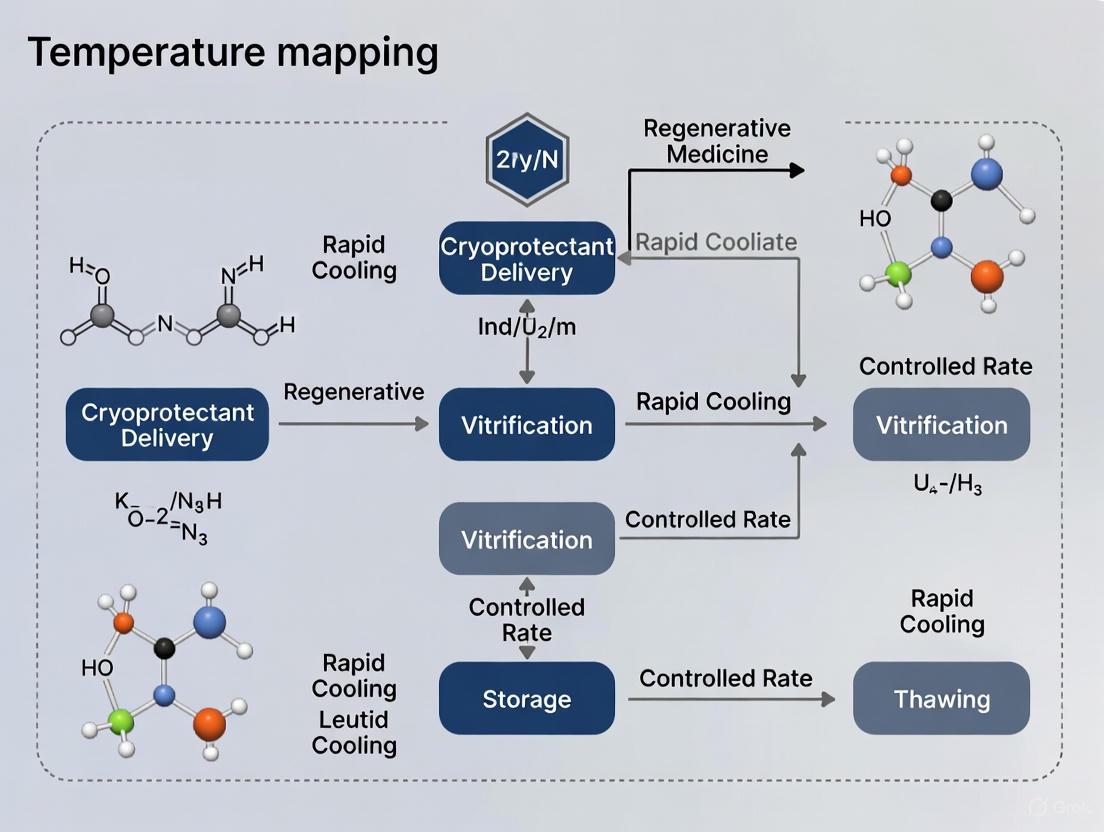
This article provides researchers, scientists, and drug development professionals with a comprehensive guide to temperature mapping strategies for cryopreservation equipment.
Temperature Mapping Strategies for Cryopreservation Equipment: A Guide to Compliance, Uniformity, and Sample Viability
Abstract
This article provides researchers, scientists, and drug development professionals with a comprehensive guide to temperature mapping strategies for cryopreservation equipment. It covers the foundational principles of temperature mapping and its critical role in safeguarding cellular starting materials, CAR-T therapies, and stem cells. The content details methodological approaches for mapping controlled-rate freezers and cryogenic storage systems, including sensor placement and data analysis. It further offers troubleshooting and optimization techniques to address common challenges like temperature fluctuations and seasonal variations. Finally, the article outlines validation protocols and comparative analyses of different cryopreservation technologies to ensure regulatory compliance and enhance process reliability in biomedical research and clinical applications.
Why Temperature Mapping is Critical for Cryopreservation Success and Sample Integrity
Defining Temperature Mapping and Its Role in Quality Assurance
In the field of biopharmaceuticals and advanced therapy development, temperature mapping (also known as thermal mapping) is a critical GxP process for validating the temperature distribution within a controlled space. It involves meticulously measuring and characterizing how temperature is distributed in three dimensions and fluctuates over time [1] [2]. For researchers working with sensitive biological samples, ensuring the integrity of cryopreservation equipment through rigorous temperature mapping is a foundational element of quality assurance, directly impacting cell viability, product stability, and the overall success of experimental and therapeutic outcomes [3].
Frequently Asked Questions (FAQs)
What is the primary objective of temperature mapping cryopreservation equipment? The primary objective is to identify temperature extremes ("hot" and "cold" spots) within a storage unit to guarantee that all stored biological samples are maintained within their required temperature range. This process validates that the equipment performs reliably under various conditions, ensuring sample integrity and regulatory compliance [1] [2].
When is temperature mapping required? Mapping is essential at several key moments [1] [4]:
- Before the initial use of new cryopreservation equipment.
- Following any major change to the unit, such as relocation, repairs, or HVAC upgrades.
- Periodically (e.g., semi-annually or annually) to confirm stable performance over time and account for seasonal variations [1].
- After any event that could affect temperature distribution.
What standards and guidelines govern temperature mapping? Temperature mapping is not left to improvisation. Several key standards define the process, including [1] [2]:
- WHO TRS 961, Annex 9: Good storage and distribution practices for temperature-sensitive products.
- EU GMP Annex 1 (2022): Emphasizes environmental control and data traceability.
- FDA 21 CFR 211.142: Requires drugs to be stored under appropriate conditions of temperature. Furthermore, regulators expect full ALCOA+ data integrity principles—ensuring data is Attributable, Legible, Contemporaneous, Original, and Accurate [1].
Should mapping be performed on an empty or loaded unit? Ideally, both. An empty mapping study ("at rest") establishes a baseline for the unit's performance. A loaded study ("in operation") simulates real-world conditions, accounting for how stored materials and routine door openings impact temperature uniformity [1] [4]. Stress tests, like simulating a door being held open or a power failure, are also recommended [1].
Troubleshooting Common Temperature Mapping Issues
| Issue | Potential Root Cause | Corrective & Preventive Actions |
|---|---|---|
| Temperature Excursion in One Zone | Obstructed airflow due to improper sample arrangement or blocked vent. | Relocate samples to ensure clear air circulation. Re-train staff on proper loading procedures. Re-map to verify correction [4]. |
| Inconsistent Data Between Loggers | Improper calibration of data loggers leading to measurement drift. | Implement a strict calibration schedule. Ensure all sensors have a NIST-traceable 3-point calibration certificate with a guaranteed error of no more than ±0.5°C [2]. |
| Failure to Maintain Setpoint During Stress Test | Equipment malfunction or insufficient cooling capacity for the operational load. | Perform preventative maintenance on the compressor and seals. Evaluate if the unit is appropriately sized for the intended maximum load [2]. |
| Unidentified Cold Spot Compromising Samples | Inadequate sensor placement during the initial mapping study failed to identify the coldest location. | Follow a risk-based approach to sensor placement, ensuring coverage of all high-risk areas (near doors, vents, corners). Use the identified cold spot as the location for the permanent monitoring probe [1] [2]. |
Experimental Protocol: Performing a Temperature Mapping Study
The following workflow outlines the core methodology for mapping a cryopreservation freezer, based on industry best practices [2] [4].
Title: Temp Mapping Workflow
Step 1: Develop a Test Plan Define the objective and scope of the study. The plan should include the rationale for data logger placement, the type of equipment used, acceptance criteria (e.g., must remain at -150°C ± 3°C), and a template for the final report [2] [4].
Step 2: Calibrate and Program Sensors Calibrate all data loggers before the study. The World Health Organization (WHO) recommends using equipment with a NIST-traceable 3-point calibration certificate with a guaranteed error of no more than ±0.5°C at each point [2]. Program them to record at frequent intervals (e.g., every 1-5 minutes).
Step 3: Strategic Sensor Placement Place sensors in a 3D grid throughout the usable volume. Key placements include [2] [4]:
- Geometric Center: The reference point.
- Corners and Edges: Areas most susceptible to temperature fluctuations.
- Near the Door: To capture the impact of openings.
- Close to Cooling Vents & Sensors: To understand unit control points.
- At different heights, especially in large units where stratification can occur.
Step 4: Execute the Mapping Study Run the study for a sufficient duration to capture equipment cycles and operational stresses—typically 24 to 72 hours [4]. Conduct studies under both "empty" and "fully loaded" conditions, and consider seasonal variations by testing in summer and winter [1] [4].
Step 5: Data Analysis and Reporting Analyze the collected data to identify hot and cold spots, trends, and any deviations from acceptance criteria. The final report should include data summaries, graphs, and recommendations for permanent monitor placement and any needed corrective actions. This report serves as proof of compliance [2] [4].
Step 6: Implement Routine Monitoring Use the results to define your ongoing monitoring strategy. Install permanent, continuously monitoring probes at the identified hot and/or cold spots to represent the worst-case conditions in the unit [1] [2].
The Scientist's Toolkit: Essential Research Reagent Solutions
The following table details key materials and equipment essential for executing a validated cryopreservation process, from sample preparation to storage.
| Item | Function & Importance in Cryopreservation |
|---|---|
| Cryoprotective Agents (CPAs) | Protect cells from freezing damage by reducing ice crystal formation. DMSO, glycerol, and propylene glycol are common. Their selection and concentration are critical for post-thaw viability [5]. |
| Controlled-Rate Freezer (CRF) | Provides precise control over cooling rate, a critical process parameter. Ensures consistent, reproducible freezing to maintain cell quality and viability, which is especially important for sensitive cells like iPSCs and CAR-T cells [3]. |
| Liquid Nitrogen (LN2) Tanks | Used for long-term storage at ultra-low temperatures (down to -196°C). Essential for preserving the integrity of high-value samples like stem cells, cell therapies, and genetic material [6] [7]. |
| Validated Cryogenic Vials | Specially designed containers that can withstand extreme thermal stress without cracking. Proper sealing prevents contamination and LN2 ingress during storage [5]. |
| Calibrated Data Loggers | High-accuracy sensors for temperature mapping and continuous monitoring. They must be calibrated to a recognized standard to ensure data integrity and regulatory compliance [2]. |
| Temperature Monitoring System (EMS) | An integrated Environmental Monitoring System provides real-time tracking, automated alerts, and secure data storage, ensuring ALCOA+ compliance and immediate response to excursions [1] [8]. |
For researchers and drug development professionals, a robust temperature mapping strategy is non-negotiable. It is the definitive methodology that links equipment performance to sample quality, providing the empirical evidence required for both scientific rigor and regulatory compliance. By systematically implementing and maintaining a validated temperature mapping program, laboratories can safeguard their most valuable biological assets and ensure the reliability of their research and therapeutic products.
FAQs: Understanding the Impact of Temperature Fluctuations
Q1: What are the primary cellular consequences of temperature fluctuations during cryopreservation?
Temperature fluctuations, particularly those above the glass transition temperature of the cryoprotectant (around -120°C for DMSO-based solutions), trigger a cascade of damaging events [9]. Research on human induced pluripotent stem cells (hiPSCs) demonstrates that these fluctuations cause intracellular dimethyl sulfoxide (DMSO) movement, leading to cytochrome c oxidation, mitochondrial damage, and ultimately, caspase-mediated cell death [9]. Raman spectroscopy observations confirm the disappearance of mitochondrial cytochrome signals and a reduction in mitochondrial membrane potential after thawing, directly linking temperature cycles to critical organelle failure [9].
Q2: Why are some cell types, like stem cells, more sensitive to temperature changes than others?
Different cell types exhibit distinct metabolic profiles and expression levels of protective proteins, making some more vulnerable. While not directly comparing stem cells to others, studies show that even cancer cells and normal cells from the same tissue display different thermal cytotoxicity [10]. Normal human dermal fibroblasts demonstrate stronger heat shock protein (HSP) expression and localization to the nucleus upon thermal stress compared to cancer cells, conferring greater thermotolerance [10]. This principle of inherent variability extends to cryopreservation, where sensitive cells like hiPSCs show performance index decreases with increased temperature cycling [9].
Q3: What are the critical temperature thresholds for cryopreserved products?
Maintaining consistent ultra-low temperatures is critical. Research indicates that stem cells exposed to -135°C rather than -150°C experience significantly reduced recovery rates [6]. The glass transition temperature of a common cryoprotective agent (CPA) containing DMSO is around -120°C [9]. Temperature fluctuations above this threshold, such as the range between -150°C and -80°C experienced during transport, are particularly damaging as they can trigger phase transitions in the CPA, leading to the periodic release of unfrozen bound water fractions and ice recrystallization [9].
Q4: How does the rate of warming during thawing impact cell viability?
The thawing process is a critical phase. Non-controlled thawing can cause osmotic stress, intracellular ice crystal formation, and prolonged exposure to DMSO, leading to poor cell viability and recovery [3]. Established good practice for thawing includes a warming rate of approximately 45°C per minute [3]. Recent evidence indicates that for T cells cooled at slow rates (-1°C/min or slower), different (slower or higher) warming rates may be relevant. Control over the warming rate and the robustness of the thawing procedure remains crucial for reproducible results in both GMP and clinical settings [3].
Troubleshooting Guides: Identifying and Solving Temperature-Related Issues
Problem: Poor Post-Thaw Cell Viability and Recovery
| Possible Cause | Diagnostic Tests | Corrective Action |
|---|---|---|
| Temperature excursions during storage/transport [9] [6] | - Review temperature logger data for fluctuations.- Check calibration of storage equipment.- Assess mitochondrial membrane potential via flow cytometry [9]. | - Qualify controlled-rate freezers and storage units with a range of mass, container types, and temperature profiles [3].- Implement real-time monitoring with alert limits [11]. |
| Suboptimal thawing rate [3] | - Document and analyze current thawing procedure.- Compare viability after using a controlled-rate thawing device. | - Adopt a controlled-thawing device to ensure a consistent, rapid warming rate (e.g., 45°C/min) [3].- Avoid non-GMP compliant methods like conventional water baths [3]. |
| Inadequate cryopreservation protocol [3] | - Analyze freeze curves from controlled-rate freezer.- Test post-thaw viability with different cooling rates. | - Move from passive freezing to controlled-rate freezing for better parameter control [3].- Optimize the default freezing profile for specific, sensitive cell types (iPSCs, CAR-T cells) [3]. |
Problem: Poor Assay Reproducibility in Temperature-Sensitive Experiments (e.g., ELISA)
| Possible Cause | Diagnostic Tests | Corrective Action |
|---|---|---|
| Variations in incubation temperature [12] | - Use calibrated thermometers to map temperatures across incubators and work surfaces. | - Adhere strictly to recommended incubation temperatures.- Avoid incubating plates in areas with varying environmental conditions (e.g., near doors) [12]. |
| Improper reagent handling or storage [13] [12] | - Check expiration dates and storage conditions of all reagents.- Visually inspect solutions for cloudiness or precipitation [13]. | - Make fresh buffers for each experiment [12].- Ensure reagents are stored at the correct temperature and have not been degraded [13]. |
| Inconsistent protocol execution [12] | - Review lab notebooks and standard operating procedures (SOPs). | - Adhere to the same protocol from run to run without unverified modifications [12].- Ensure all reagents are at room temperature before use unless specified otherwise [12]. |
Experimental Protocols for Investigating Thermal Impact
Protocol 1: Assessing the Impact of Temperature Cycling on Cryopreserved Cells
This protocol is adapted from research investigating the effects of transient warming events on hiPSCs [9].
Objective: To quantitatively evaluate how repeated temperature fluctuations above the glass transition temperature affect cell viability, attachment efficiency, and mitochondrial health.
Materials:
- Cryopreserved cells (e.g., hiPSCs) in cryovials
- Controlled-rate freezer (e.g., CryoMed, Thermo Fisher Scientific) [9]
- Liquid nitrogen storage tank (vapor phase)
- Water bath or validated thawing device
- Cell culture reagents and equipment (centrifuge, culture vessels, medium)
- Automated cell counter (e.g., TC20, Bio-Rad) and trypan blue [9] [10]
- Flow cytometer with mitochondrial membrane potential assay kit (e.g., JC-1 or TMRM) [9]
- (Optional) Custom-made cryo Raman microscope for observing cytochrome signals and intracellular DMSO [9]
Method:
- Preparation: Ensure a stable cryopreserved cell stock is prepared using a standard cryoprotectant like STEM-CELLBANKER (10% DMSO) and stored in the vapor phase of liquid nitrogen [9].
- Temperature Cycling:
- Transfer cryovials from stable storage to the chamber of a controlled-rate freezer, pre-equilibrated to the starting temperature (e.g., -150°C).
- Program the freezer to execute the desired number of temperature cycles. A typical damaging cycle ramps from -150°C to -80°C and back.
- Standard Parameters: Warming rate: 4.0°C/min; Cooling rate: 40.0°C/min; Number of cycles: 10, 20, 30, 50, or 70 [9].
- Post-Cycling Analysis:
- Thaw the cells rapidly in a 37°C water bath and dilute with pre-warmed medium.
- Centrifuge (e.g., 180 × g for 3 minutes) to remove CPA and resuspend in fresh medium [9].
- Viability and Attachment: Count viable cells using trypan blue exclusion. Seed cells at a known density and calculate attachment efficiency after 24 hours [9].
- Mitochondrial Health: Analyze cells using a mitochondrial membrane potential dye via flow cytometry. A reduction in signal indicates early-stage apoptosis triggered by temperature stress [9].
Protocol 2: Evaluating Direct Thermal Cytotoxicity Using a Metallic Culture System
This protocol is based on a study that developed a highly accurate temperature regulation system to investigate differences between cancer and normal cells [10].
Objective: To precisely measure the direct cytotoxic effect of hyperthermic temperatures on different cell types.
Materials:
- Metallic culture vessel (e.g., 35mm diameter, stainless steel 316L, fine-particle peened surface) [10]
- Temperature regulation system (Peltier element, thermistor, temperature regulator, heat sink, fan) [10]
- Cell lines of interest (e.g., cancer cell lines like MCF-7, normal cell lines like NHDFs)
- Culture medium and standard cell culture reagents
- Live cell counting system (e.g., trypan blue assay)
- RT-qPCR equipment for analyzing apoptosis (BAX, BCL2) and HSP (HSPA1A) mRNA expression [10]
- Immunofluorescence reagents for HSP70 and nuclear staining [10]
Method:
- System Calibration: Confirm the accuracy of the metallic culture system by measuring the temperature history directly on the culture surface and comparing it to the set point. This system should achieve rapid and precise temperature control [10].
- Cell Seeding and Hyperthermic Exposure:
- Seed cells into the metallic culture vessel and allow them to adhere overnight under standard conditions (37°C, 5% CO2).
- Expose the cells to a specific thermal stimulus (e.g., 43°C for 30 minutes) using the temperature regulation system. Include control cells maintained at 37°C [10].
- After exposure, replace the medium and return the cells to the 37°C incubator for a set recovery period (e.g., 24 hours).
- Post-Thermal Assays:
- Viability: Detach and count live and dead cells.
- Molecular Analysis: Perform RT-qPCR to assess the relative mRNA expression of pro-apoptotic (BAX) and anti-apoptotic (BCL2) genes, as well as heat shock proteins (HSPA1A/HSP70). A strong apoptotic trend is indicated by a dramatic increase in the BAX/BCL2 ratio in sensitive cells [10].
- Protein Localization: Fix cells and perform immunofluorescent staining for HSP70. Observe the localization pattern; strong nuclear localization in normal cells like NHDFs is associated with greater thermotolerance [10].
Key Signaling Pathways and Experimental Workflows
Diagram 1: Cellular Response to Temperature Fluctuations During Cryopreservation
This diagram illustrates the proposed mechanism by which temperature fluctuations during cryopreservation lead to cell death, as identified in hiPSCs [9].
Diagram 2: Workflow for Hyperthermia Cytotoxicity Investigation
This diagram outlines the experimental workflow for a precise investigation into direct thermal cytotoxicity using an accurate temperature regulation system [10].
Table 1: Impact of Temperature Cycling on hiPSC Viability
Data derived from controlled studies on cryopreserved human induced pluripotent stem cells subjected to temperature fluctuations between -150°C and -80°C [9].
| Number of Temperature Cycles | Key Observed Effect on hiPSCs |
|---|---|
| 10, 20, 30, 50, 70 | A clear decrease in attachment efficiency was observed with an increase in the number of temperature cycles. |
| 30 Cycles | Used to study the effect of different temperature ranges. Significant damage occurred in ranges above the glass transition temperature (Tg). |
| Temperature Range of Cycling | Observed Effect on hiPSCs |
|---|---|
| -170°C to -150°C | Minimal impact expected (below Tg). |
| -150°C to -130°C | Minimal impact expected (below Tg). |
| -150°C to -115°C | Significant decrease in viability (range crosses Tg ~ -120°C). |
| -115°C to -80°C | Significant decrease in viability (above Tg). |
Table 2: Thermal Cytotoxicity in Cancer vs. Normal Cells
Data summarizing the differential response to hyperthermia (43°C for 30 minutes) between cancer and normal cells, using a precise temperature control system [10].
| Cell Type | Viability after 43°C/30 min | HSP70 mRNA Expression | HSP70 Protein Localization | Apoptotic Trend (BAX/BCL2) |
|---|---|---|---|---|
| Cancer Cells (MCF-7) | Lower | Lower | Not clearly localized to nucleus | Dramatic increase |
| Normal Cells (NHDF) | Higher | Stronger | Strong nuclear localization | Less pronounced |
The Scientist's Toolkit: Essential Research Reagents & Materials
Key Materials for Investigating Thermal Impact on Cells
| Item | Function & Importance |
|---|---|
| Controlled-Rate Freezer (CRF) | Essential for precise control of cooling rates during freezing and for simulating temperature cycles during storage. Allows definition of parameters like cooling rate and nucleation temperature that impact critical quality attributes [3] [9]. |
| Metallic Culture Vessel | Provides rapid heat transfer and accurate temperature regulation on the culture surface, eliminating discrepancies between set-point and actual cell temperature experienced in plastic dishes or water baths [10]. |
| Cryoprotective Agent (CPA) with DMSO | A standard CPA like STEM-CELLBANKER (10% DMSO) is used to protect cells during freezing. Its glass transition temperature (Tg ~ -120°C) is a critical threshold for temperature fluctuation studies [9]. |
| Mitochondrial Membrane Potential Dye (e.g., JC-1) | Used in flow cytometry to detect early-stage apoptosis. A reduction in potential is a key indicator of mitochondrial damage from temperature stress [9]. |
| Raman Microscope with Cryostat | Enables label-free observation of molecular changes (e.g., cytochrome c signal, intracellular DMSO concentration) in cells during temperature cycles, providing mechanistic insights [9]. |
| Anti-HSP70 Antibody | A key reagent for immunofluorescence staining to visualize the localization of Heat Shock Protein 70 (HSP70). Nuclear localization is a marker of thermotolerance [10]. |
| RT-qPCR Primers for BAX, BCL2, HSPA1A | Used to quantitatively assess mRNA expression changes in apoptosis-related genes and heat shock proteins following thermal stress [10]. |
| Validated Thawing Device | Provides a consistent, rapid warming rate (e.g., 45°C/min), critical for maximizing cell recovery and avoiding the osmotic stress and ice crystal damage associated with non-controlled thawing [3]. |
Troubleshooting Guides & FAQs
Cryopreservation & Cold Chain Management
Q: Our temperature mapping study for a new controlled-rate freezer failed validation due to excess temperature variation. What are the key strategic points we must review?
A: A failed mapping study often stems from an inadequate testing strategy. Focus on these areas:
- Mapping Sensor Placement: Follow a 3D spatial grid (shelves, back/front, left/right, top/bottom). Place sensors in direct contact with thermal mass simulators (e.g., saline solutions, placebo bags), not just in empty air spaces [3].
- Load Configuration: The study must represent your maximum and minimum intended operational loads. Test a fully loaded chamber and a single-unit load to establish performance boundaries [3].
- Profile Selection: Qualify the freezer using the specific cooling rate profiles (e.g., °C/min) you will use for your sensitive cell types, not just the vendor's default profile [3].
- Mixed Load Consideration: If you plan to freeze different container types (e.g., bags and vials) simultaneously, your qualification must include this "mixed load" scenario to prove uniform freezing performance [3].
Q: From a regulatory standpoint, what is the critical difference between a "closed system" and an "open system" for the cryopreservation of cellular starting materials?
A: The distinction is critical as it directly impacts the required cleanroom classification, cost, and regulatory pathway.
- A Closed System uses sterile, welded connections that maintain a continuous, integral barrier from the exterior environment. This physically protects the product from contamination, allowing processes considered "minimal manipulation" to be performed in a controlled, but potentially non-classified (CNC) space, significantly optimizing costs [14].
- An Open System has contact points exposed to the immediate environment (e.g., during centrifugation or transfer in open bags). This necessitates processing within a classified cleanroom (e.g., Grade A/B) to mitigate the higher risk of microbial contamination, requiring greater investment in facilities, gowning, and monitoring [14].
Regulatory frameworks like 21 CFR 1271 in the US and EU Annex 1 consider processes in a closed system as "minimal manipulation," subject to less stringent facility requirements. If there is no clear definition, the process may be considered "more than minimal manipulation," requiring full cGMP compliance [14].
Q: Our EU GDP certificate is expiring soon. Are the COVID-19 related extensions still in effect?
A: No. The general, automatic extensions for GDP certificates have ended. The European Medicines Agency (EMA) has clarified that as of 2025, a blanket extension will no longer be granted. National Competent Authorities (NCAs) have resumed regular on-site inspections and are using distant assessments to clear backlogs.
- Action Required: You must prepare for a standard on-site inspection. However, NCAs may grant extensions on a case-by-case basis. Any questions about a specific certificate's validity should be directed to the authority that issued it [15] [16] [17].
Regulatory Cross-Jurisdictional Compliance
Q: We are a US-based manufacturer planning to ship a CAR-T therapy for clinical trials in Japan and Australia. What are the key regulatory differences for the cryopreservation of leukapheresis starting material?
A: Navigating the Asia-Pacific (APAC) region requires careful attention to local definitions.
- Japan: The Japanese Ministry of Health, Labour, and Welfare (MHLW) requires that the formulation and cryopreservation of cellular starting materials be performed under the Good Gene, Cellular, and Tissue-based Products Manufacturing Practice (GCTP) standard. An established Quality Management System (QMS) for these steps is mandatory [14].
- Australia: The process falls under the Australian Code of GMP for Human Blood and Blood Components, Human Tissues and Human Cellular Therapy Products. The emphasis is on a risk-based approach, and the use of a validated closed system is a highly effective strategy to meet requirements [14].
- General Principle: Both regions, along with the US and EU, emphasize that if the process is a "minimal manipulation" (does not alter the biological characteristics of the cells) and is performed in a closed system, the facility requirements can be significantly optimized [14].
Q: What are the FDA's 2025 priorities for cell and gene therapy guidance that I should monitor?
A: The FDA's Center for Biologics Evaluation and Research (CBER) has published its 2025 Guidance Agenda. Key planned drafts and final guidances relevant to this field include [18]:
Potency Assurance for Cellular and Gene Therapy Products(New)Post Approval Methods to Capture Safety and Efficacy Data for Cell and Gene Therapy Products(New)Accelerated Approval of Human Gene Therapy Products for Rare Diseases(Draft)Use of Platform Technologies in Human Gene Therapy Products Incorporating Human Genome Editing(Draft) You should subscribe to FDA email updates to be alerted when these documents are released [19] [20].
Experimental Protocols & Methodologies
Detailed Protocol: Temperature Mapping of a Controlled-Rate Freezer (CRF)
This protocol outlines the methodology for qualifying the temperature distribution within a CRF, a critical step for ensuring consistent cryopreservation processes.
1.0 Objective: To demonstrate that the entire controlled-rate freezer chamber maintains the specified temperature profile (e.g., -1°C/min) within a defined uniformity range (e.g., ±2°C) during a simulated production run, across all defined load configurations.
2.0 Materials and Equipment:
- Controlled-Rate Freezer
- At least 20-30 calibrated temperature logging sensors (calibration traceable to NIST standards)
- Thermal mass simulators (e.g., 250mL saline bags, cryobags filled with cell culture media, or placebo drug product in primary containers)
- Data acquisition system/software
- Laptop computer
- Insulated gloves and protective wear
3.0 Methodology: 3.1 Sensor Placement Strategy: Create a 3D grid that encompasses the entire usable volume of the freezer. The table below details the strategic placement points.
Table: Temperature Mapping Sensor Strategy
| Axis | Placement Points | Rationale |
|---|---|---|
| X-Axis (Left/Right) | Left Wall, Center, Right Wall | Captures temperature gradients from cooling sources like liquid nitrogen jets or electrical coils. |
| Y-Axis (Top/Bottom) | Top Shelf (near door & back), Middle Shelf, Bottom Shelf | Identifies stratification due to natural convection and proximity to cooling mechanisms. |
| Z-Axis (Front/Back) | Front (near door), Center, Back | Monitors for the impact of door seals and potential cold air loss. |
| Critical Locations | Near air inlet/outlet, door seal, in thermal mass | Measures worst-case scenarios and actual product temperature. |
3.2 Load Configurations: The mapping must be performed under multiple load conditions to establish operational boundaries [3]:
- Empty Chamber: Establishes a baseline performance.
- Maximum Load: Chamber filled to capacity with thermal mass simulators.
- Minimum Load: A single unit of thermal mass.
- Mixed Load (if applicable): A combination of different primary containers (e.g., cryobags and cryovials).
3.3 Execution:
- Place the calibrated sensors according to the 3D mapping plan, ensuring direct contact with the thermal mass simulators.
- Secure the sensors and load the chamber.
- Initiate the data loggers and the CRF's freezing profile simultaneously.
- Run a minimum of three consecutive cycles for each load configuration to ensure reproducibility.
- Include a "soak" period at the final temperature (e.g., -80°C or -150°C) to assess stability.
4.0 Data Analysis:
- For each sensor location and each run, calculate key parameters: Average Temperature, Maximum-Minimum Temperature, and the rate of temperature change during critical phases.
- The system is considered qualified if all sensor data points remain within the pre-defined acceptance criteria (e.g., ±2°C from the setpoint profile) throughout the cycle.
Workflow: Regulatory Pathway for Cryopreserved Starting Materials
The following diagram illustrates the logical decision process for determining the applicable regulatory and facility requirements based on the nature of the manufacturing process.
The Scientist's Toolkit: Research Reagent Solutions
Table: Essential Materials for Cryopreservation Process Development & Validation
| Item | Function / Explanation |
|---|---|
| Controlled-Rate Freezer (CRF) | Provides precise, programmable control over the cooling rate, a Critical Process Parameter (CPP) to avoid intracellular ice formation and osmotic stress, ensuring consistent post-thaw viability [3]. |
| Thermal Mass Simulators | Placebo materials (e.g., saline in cryobags) used during temperature mapping studies to accurately simulate the thermal load and heat transfer characteristics of actual patient samples [3]. |
| Calibrated Temperature Loggers | Small, precise data loggers placed inside the CRF during mapping and validation studies. Calibration traceable to national standards is mandatory for regulatory compliance [3]. |
| Cryoprotective Agent (CPA) | A solution, typically containing DMSO, that protects cells from freezing damage by reducing ice crystal formation. The composition and addition/removal process are critical for cell viability [3]. |
| Closed System Processing Set | Sterile, single-use sets with tamper-proof welders/connectors that maintain a closed pathway during cell processing, reducing contamination risk and potentially lowering cleanroom classification requirements [14]. |
| Validated Shipping Container | A qualified container/system used to transport cryopreserved materials. It maintains the required cryogenic temperature and is validated under real-world transport conditions to ensure chain of identity and product integrity. |
Frequently Asked Questions (FAQs)
FAQ 1: What are the primary causes of low post-thaw cell viability in controlled-rate freezing? Low post-thaw viability is often caused by intracellular ice formation (from cooling too quickly) or "solution effects" and excessive dehydration (from cooling too slowly) [21]. Inconsistent temperature profiles within the freezing chamber can also lead to variable results. A survey by the ISCT Cold Chain Working Group notes that a significant number of practitioners do not use freeze curves for product release, relying instead on post-thaw analytics alone, which misses an opportunity to identify process-related failures [3].
FAQ 2: Why is the rewarming phase considered a critical bottleneck? While significant progress has been made in cooling, especially for large tissues, the lack of optimal rewarming technology remains a key obstacle [22] [23]. The primary challenges are non-uniform heating and insufficient rewarming rates. During slow warming, small, unstable ice crystals can recrystallize into larger, damaging crystals, causing lethal cell damage [22] [21]. Successful cryopreservation, particularly for vitrified samples, depends on achieving a rapid and uniform Critical Warming Rate (CWR) to prevent this recrystallization [22].
FAQ 3: How can I qualify my controlled-rate freezer for different sample types? There is little industry consensus on qualification methodologies [3]. Relying solely on vendor qualifications is insufficient, as they may not represent your specific use case. A robust qualification should go beyond a single profile and evaluate a range of conditions [3]:
- Full vs. empty chamber mapping
- Temperature mapping across a grid of locations
- Freeze curve mapping for different container types
- Mixed load freeze curve mapping
Refer to guidelines like the ISPE Good Practice Guide: Controlled Temperature Chambers for detailed advice [3].
FAQ 4: What is the biggest hurdle in scaling up cryopreservation? Scaling is identified as a major hurdle for the cell and gene therapy industry [3]. The "Ability to process at a large scale" was highlighted as the biggest challenge by most survey respondents. As therapies move toward commercialization, scaling techniques are needed to maintain efficiency without compromising critical quality attributes. For large volumes like tissues and organs, non-uniform heating during rewarming becomes a significant engineering challenge [22].
Troubleshooting Guides
Problem 1: Low or Inconsistent Post-Thaw Viability Across a Batch
| Symptom | Possible Cause | Investigation & Corrective Action |
|---|---|---|
| Low cell viability and recovery | Sub-optimal cooling rate | - Investigate: Determine the optimal cooling rate for your specific cell type. Test different rates (e.g., -1°C/min, -10°C/min).- Correct: Develop an optimized freezing profile instead of relying solely on the equipment's default setting [3]. |
| Viability varies by location in freezer | Inadequate temperature uniformity in controlled-rate freezer (CRF) | - Investigate: Perform a full temperature mapping study of the CRF chamber with a simulated product load [3].- Correct: Redesign the load configuration to ensure consistent heat transfer. Avoid mixing dissimilar container types or fill volumes in a single run [3]. |
| Poor cell recovery post-thaw | Damage during the thawing process | - Investigate: Audit the thawing procedure. Non-controlled thawing in water baths can cause osmotic stress, ice recrystallization, and contamination [3].- Correct: Implement a controlled-thawing device. For many cell types, a rapid warming rate (e.g., 45-100°C/min) is recommended to mitigate damage [3] [22]. |
Problem 2: Failure to Scale from Small to Large Volumes
| Symptom | Possible Cause | Investigation & Corrective Action |
|---|---|---|
| Failure upon scaling sample volume | Inefficient or non-uniform heat transfer during cooling/rewarming | - Investigate: Characterize the thermal properties of the larger sample. Model or measure the actual cooling and warming rates at the sample's core [22].- Correct: Explore advanced rewarming technologies like electromagnetic (laser, radiofrequency) or mechanical-thermal (ultrasound) heating that provide volumetric heating to overcome non-uniformity [22]. |
| Cracks or fractures in vitrified tissues | Thermal stress from non-uniform rewarming | - Investigate: Analyze the thermal gradients during the warming process.- Correct: Optimize the CPA cocktail and the warming protocol to reduce thermal stress. For large samples, volumetric heating methods are often necessary to achieve sufficient uniformity [22] [23]. |
Experimental Protocols
Protocol 1: Temperature Mapping a Controlled-Rate Freezer
This protocol provides a methodology for qualifying the temperature uniformity of a controlled-rate freezer (CRF), a critical step for ensuring process consistency and GMP compliance [3].
1. Objective To map and document the temperature distribution within the CRF chamber under conditions simulating a full product load during a standard freezing cycle.
2. Methodology
- Equipment: Use an array of calibrated temperature sensors (e.g., thermocouples, RTDs) connected to a data logger.
- Sensor Placement: Position sensors to cover the entire three-dimensional space, focusing on potential cold/heat spots (e.g., near walls, doors, vents, and the geometric center). A typical grid mapping strategy is shown in Figure 2 [3].
- Load Simulation: Fill the freezer with a simulated product load that matches the thermal mass and container types (e.g., cryobags, vials) used in your process.
- Data Collection: Execute a standard freezing profile. Record temperatures from all sensors throughout the entire cycle, from start until transfer to long-term storage.
- Data Analysis: Analyze the data to identify the range of temperatures experienced at different locations and determine the overall uniformity of the chamber.
Temperature Mapping Workflow for CRF Qualification
Protocol 2: Developing an Optimized Rewarming Protocol
This protocol outlines a systematic approach to determine the Critical Warming Rate (CWR) and optimize the thawing process for a specific cell type.
1. Objective To identify the rewarming rate and method that maximizes post-thaw viability and functionality for a given cellular product.
2. Methodology
- Sample Preparation: Cryopreserve samples of the cell product using a standardized, optimized freezing protocol.
- Rewarming Methods: Test a range of rewarming methods and rates [22]:
- Conventional: Water bath (37°C), Dry-thawing devices (e.g., controlled-rate thawing stations).
- Advanced (for R&D): Electromagnetic warming (e.g., radiofrequency, capacitive dielectric heating).
- Assessment: For each rewarming method, measure key outcomes:
- Viability: Post-thaw cell count and viability (e.g., via trypan blue exclusion).
- Functionality: Cell-type specific potency assays (e.g., differentiation potential, cytokine release, motility).
- Apoptosis: Measure markers of early and late apoptosis.
- Analysis: Correlate the warming rate with the post-thaw outcomes to establish the minimum CWR required for acceptable recovery.
Rewarming Protocol Development Workflow
The Scientist's Toolkit: Essential Research Reagents & Materials
| Item | Function & Application | Key Considerations |
|---|---|---|
| Permeating CPAs (DMSO, Glycerol, Ethylene Glycol) | Cross the cell membrane to depress the freezing point and reduce intracellular ice formation [21]. | Concentration and exposure time must be optimized to mitigate toxicity [24] [25]. |
| Non-Permeating CPAs (Sucrose, Trehalose, Ficoll) | Create an osmotic gradient, drawing water out of cells to promote dehydration before freezing. Also help stabilize cell membranes [24] [25]. | Often used in combination with permeating CPAs to reduce the required concentration of toxic agents [24]. |
| Soy Lecithin-Based Extender | A defined, animal-origin-free component used in cryomedium to protect sperm membrane integrity during freezing [26]. | Shown to be superior to egg yolk-based extenders in preserving bull sperm motility and membrane integrity post-thaw [26]. |
| Antifreeze Polymers / Proteins | Modify ice crystal growth and recrystallization, reducing mechanical damage to cells [25]. | An emerging area of research to reduce CPA toxicity and improve outcomes for complex tissues [25]. |
| Controlled-Rate Freezer (CRF) | Provides precise, programmable control over cooling rates to navigate the optimal path between intracellular ice formation and dehydration [3]. | Default profiles may not be suitable for all cell types (e.g., iPSCs, CAR-T); optimization is often required [3]. |
| Controlled-Thawing Device | Provides rapid, uniform, and GMP-compliant rewarming of cryopreserved samples, minimizing the risk of contamination and ice recrystallization [3] [22]. | Superior to manual water baths. Warming rates should be matched to the original cooling protocol [3]. |
Implementing a Robust Temperature Mapping Protocol for Cryogenic Equipment
Frequently Asked Questions
What is the primary objective of a temperature mapping study for cryopreservation equipment? The primary objective is to identify and document temperature distribution and variations within the equipment's entire usable space under simulated operational conditions. This ensures that all stored materials, regardless of location, are maintained within the validated temperature range (e.g., below -150°C) to preserve their structural integrity and viability [27] [3].
What are the common challenges encountered during mapping? Common challenges include a lack of consensus on qualification methodologies for Controlled-Rate Freezers (CRFs), the complexity of mapping mixed load configurations, and scaling the process for large-scale manufacturing [3]. Properly qualifying a system requires testing a range of masses, container types, and temperature profiles, not just a vendor's default settings [3].
How should I handle a failed mapping study where temperatures are out of specification? Initiate a deviation and investigation procedure. The protocol should define corrective actions, which may include equipment repair or recalibration, redefining the qualified storage zone, or revising operational procedures (e.g., load patterns). A re-mapping study must be performed to validate the effectiveness of the corrective action before the equipment is returned to routine use.
What is the role of freeze curves in the mapping protocol? Freeze curves provide critical process data that monitors the performance of the CRF system itself. While often not used for product release, they can identify why a sample did not perform as expected in post-thaw analytics. Establishing alert limits for these curves can signal changes in CRF performance, allowing for intervention before a critical failure occurs [3].
What is the difference between a mapping study for a controlled-rate freezer and a cryogenic storage freezer? The core objective is the same. However, the mapping strategy must account for different technologies and temperature ranges. CRF studies focus on the dynamic freezing process and controlled rate, while storage freezer studies focus on stable, long-term temperature maintenance. The sensor placement strategy might differ, with CRF studies potentially requiring high-density mapping to capture gradients during the active freezing process.
Troubleshooting Guides
Issue: Inconsistent temperature profiles across different runs in a Controlled-Rate Freezer (CRF)
- Problem: The temperature profile is not reproducible, leading to variable product quality.
- Investigation Protocol:
- Verify Calibration: Confirm that all temperature sensors and probes are within their calibration due date.
- Check Load Configuration: Ensure the load (type of containers, fill volume, number of units) is identical between runs. Inconsistent loads are a primary cause of profile variation.
- Review CRF Settings: Confirm the setpoints for cooling rate, nucleation temperature, and end-of-cycle temperature are correctly entered and match the validated protocol.
- Analyze System Performance: Check the CRF's maintenance logs for liquid nitrogen levels, valve operation, and any recent error codes.
- Solution: Standardize the load configuration and operational procedures. If the issue persists, perform a full system qualification with freeze curve mapping across different container types to re-establish the equipment's performance limits [3].
Issue: Temperature excursions identified during a mapping study of a cryogenic storage unit
- Problem: Mapping data shows locations inside the freezer that fall outside the required temperature range (e.g., warmer than -150°C).
- Investigation Protocol:
- Confirm Sensor Placement: Verify that sensors are not in direct contact with cooling jackets, chamber walls, or located in the path of the freezer's door seal.
- Check for Obstructions: Investigate if storage racks or samples are blocking airflow and creating hot spots.
- Inspect Door Seal and Insulation: Examine the door gasket for damage and the unit's insulation for integrity.
- Review Load Pattern: Assess if an uneven or maximized load is disrupting internal air circulation.
- Solution: Based on the investigation, solutions may include repairing the door seal, re-organizing the internal storage layout to ensure uniform airflow, or formally defining and labeling an reduced "qualified storage zone" that excludes the areas with excursions.
Issue: Discrepancy between the CRF's display reading and data from independent mapping sensors
- Problem: The temperature recorded by the CRF's internal control sensor does not align with the data from the calibrated mapping system.
- Investigation Protocol:
- Simultaneous Data Collection: Ensure data from both systems is logged at the same frequency and for an identical time period.
- Co-locate a Sensor: Place one of the validated mapping sensors as close as possible to the CRF's internal control sensor.
- Compare Traces: Analyze the temperature traces, not just single-point data, to identify if the discrepancy is constant or variable.
- Solution: If a consistent offset is identified, the CRF's control sensor may require calibration or an offset adjustment by a qualified service engineer. The mapping report must document this discrepancy and its resolution.
Experimental Protocol: Temperature Mapping for a Cryogenic Storage Freezer
1.0 Objective To qualify the entire usable storage volume of a cryogenic freezer by mapping and documenting temperature distribution under full load conditions to ensure all locations maintain a temperature below -150°C.
2.0 Scope This protocol applies to the initial qualification of a new vertical cryogenic storage freezer, model X, located in the process development lab. The mapping data will define the equipment's qualified storage zone.
3.0 Methodology
- 3.1 Equipment & Materials:
- Cryogenic Storage Freezer (setpoint: -170°C)
- 20+ calibrated temperature sensors with data loggers (accuracy: ±0.5°C)
- Empty cryogenic vials filled with a placebo solution (e.g., CryoMedia without cells) to simulate a product load.
- Sensor placement rig or rack system.
- Temperature mapping software.
- 3.2 Sensor Placement Strategy:
- Place sensors in a 3D grid pattern covering the top, middle, and bottom of all shelves and corners.
- Place sensors near the door, cooling source, and potential cold spots.
- Place at least one reference sensor in the area of the freezer's control probe.
- 3.3 Procedure:
- Pre-study: Calibrate all sensors and initialize data loggers.
- Loading: Load the freezer with simulated product. Strategically place the sensors according to the predefined mapping plan.
- Stabilization: Close the door and allow the freezer to stabilize at its setpoint for 24 hours before starting data collection.
- Data Collection: Record temperatures from all sensors at 5-minute intervals for a minimum of 24 hours to capture operational cycles.
- Door Opening Simulation: Simulate a brief door opening event (e.g., 30 seconds) during the study to assess recovery time.
- Data Retrieval: Stop logging, retrieve the sensors and data.
- 3.4 Data Analysis:
- Calculate the minimum, maximum, and average temperature for each sensor location.
- Identify any location where the temperature exceeded the -150°C limit.
- Generate a 3D visualization of the temperature distribution.
- 3.5 Acceptance Criteria:
- All mapped locations must maintain a temperature below -150°C during the stable monitoring period.
- The freezer must recover to below -150°C within 5 minutes of the simulated door opening event.
4.0 Documentation The final report must include the mapping protocol, raw and analyzed data, sensor calibration certificates, diagrams of sensor placement, deviations (if any), and a formal statement of qualification.
Research Reagent Solutions & Essential Materials
| Item | Function in Protocol |
|---|---|
| Calibrated Temperature Sensors & Data Loggers | Precisely measure and record temperature data at specific locations within the equipment. Calibration is critical for data integrity [3]. |
| Controlled-Rate Freezer (CRF) | Equipment under test; provides a controlled cooling rate to preserve cell viability and integrity during the freezing process [27] [3]. |
| Cryogenic Storage Freezer | Equipment under test; provides long-term stable storage at ultra-low temperatures (e.g., below -150°C) for preserved samples [27]. |
| Placebo CryoMedia Solution | Simulates the thermal properties of the actual product during mapping, allowing for validation without wasting valuable samples. |
| Liquid Nitrogen | Cryogenic agent used by the equipment to achieve and maintain ultra-low temperatures [27]. |
| Sensor Placement Rig | Holds mapping sensors in precise, predefined 3D locations throughout the equipment's chamber for consistent and reliable data collection. |
Temperature Mapping & Qualification Workflow
The following diagram outlines the logical workflow and relationships between the key stages of a temperature mapping and equipment qualification process.
Accessible Diagram Styling Guide
When creating technical diagrams, ensure all elements are accessible by following color contrast rules. The table below provides compliant color pairings from the specified palette for foreground text (fontcolor) on background fills (fillcolor).
| Fill Color (Background) | Text Color (Foreground) | Contrast Ratio | Compliance |
|---|---|---|---|
#FFFFFF (White) |
#202124 (Dark Gray) |
21:1 [28] | AAA |
#F1F3F4 (Light Gray) |
#202124 (Dark Gray) |
>7:1 | AAA |
#FBBC05 (Yellow) |
#202124 (Dark Gray) |
>7:1 | AAA |
#34A853 (Green) |
#202124 (Dark Gray) |
>7:1 | AAA |
#4285F4 (Blue) |
#FFFFFF (White) |
>7:1 | AAA |
#EA4335 (Red) |
#FFFFFF (White) |
>7:1 | AAA |
#5F6368 (Gray) |
#FFFFFF (White) |
>7:1 | AAA |
#202124 (Dark Gray) |
#FFFFFF (White) |
21:1 [28] | AAA |
Rule Summary: Regular text requires a contrast ratio of at least 7:1, while large text (approx. 18.66px or 14pt bold) requires at least 4.5:1 [28] [29] [30]. All pairings above meet the enhanced (Level AAA) standard. Avoid low-contrast combinations like light gray text on a white background, which are difficult for users with low vision to read [29].
Frequently Asked Questions
FAQ 1: What are the most critical points to measure when temperature mapping a cryopreservation unit? The most critical points are the Last Point to Freeze (LPF) and the First Point to Thaw (FPT). The LPF is not always the geometric center; its location is dependent on container geometry, fill volume, and freezing point depression [31]. A temperature probe should also be placed at the first point to freeze (FPF) to accurately determine the start of ice nucleation and calculate the stress time, which is the period a product remains in a partially frozen state [31].
FAQ 2: How can I accurately determine the "Last Point to Thaw" when my temperature probes detach from the ice? Ice detachment from temperature probes is a common bias that can lead to inaccurate thawing time data. A practical solution is to implement camera-assisted inspection. Using a time-lapse camera system to record the thawing process allows for visual determination of the last point to thaw and provides a more accurate measurement of the actual thawing time [31].
FAQ 3: Why is controlled-rate freezing generally preferred over passive freezing in GMP manufacturing? Controlled-rate freezing (CRF) provides control over critical process parameters like cooling rate before and after nucleation, which impact critical quality attributes such as cell viability and cytokine release [3]. It also enables comprehensive documentation for manufacturing controls and process monitoring, which is essential for regulatory compliance. In contrast, passive freezing offers less control over these parameters but is lower in cost and simpler to operate [3].
FAQ 4: Our post-thaw analytics are inconsistent. Could the thawing process be the cause? Yes. Non-controlled thawing is a significant risk that can cause osmotic stress, intracellular ice crystal formation, and prolonged exposure to cytotoxic cryoprotectants like DMSO, leading to poor cell viability and recovery [3]. Ensuring a consistent and sufficiently rapid warming rate is crucial for reproducible results. For some cell types, such as T cells cooled at slow rates, warming rates of approximately 45°C/min are considered good practice [3].
FAQ 5: How many thermal sensors are needed for accurate monitoring? The number of sensors is a balance between accuracy and practical overheads. A study on microprocessors suggests that the number of sensors should be determined based on the required accuracy, recommending 2 to 35 sensors for hot spot temperature error accuracies of 5% down to 1% respectively [32]. The key is a systematic placement strategy that maximizes coverage of thermal gradients and extreme points, rather than using an arbitrarily large number of sensors [32].
Troubleshooting Guides
Problem: Inconsistent freezing profiles and post-thaw viability within the same batch.
- Potential Cause: Non-uniform freezing conditions within the controlled-rate freezer (CRF) or between different container types and fill volumes.
- Solution:
- Perform Detailed Temperature Mapping: Conduct a full temperature mapping study of the CRF chamber across a grid of locations. This should be done under conditions mimicking actual use, including with a full load [3].
- Characterize Container-Specific Performance: Use the optimized temperature probe placement methodology [31] to map freeze curves for each specific container type and fill volume you use. Identify the true LPF for your setup.
- Avoid Mixed Loads: Freeze containers of the same type, geometry, and fill volume together. Survey data indicates that qualifying CRFs for mixed form factors is a challenge with little industry consensus [3].
- Use Freeze Curves for Process Control: Establish alert limits for your freeze curves as part of manufacturing controls. Deviations can signal CRF performance issues before they critically impact product quality [3].
Problem: Formation of damaging ice crystals during rewarming.
- Potential Cause: Insufficient or non-uniform rewarming rates, leading to ice recrystallization [23].
- Solution:
- Optimize Warming Rate: Move away from non-controlled thawing in water baths. Implement controlled-thawing devices that can achieve the required warming rate for your cell type (e.g., 45°C/min for some T cells) [3].
- Investigate Volumetric Heating: For larger samples like tissues, conventional surface heating may be too slow. Explore advanced rewarming technologies that use electromagnetic (e.g., radiofrequency or microwave) energy conversion for more uniform volumetric heating to minimize thermal stress [23].
Problem: Concentration gradients of drug substance after thawing.
- Potential Cause: Cryo-concentration during freezing and insufficient mixing during thawing. Highly concentrated fractions settle gravitationally while the upper region is diluted by melting ice [31].
- Solution:
- Verify Homogeneity: Use an optimized liquid sampling protocol [31] with a long needle and syringe to sample from different depths of the container after thawing to quantify the concentration gradient.
- Implement Gentle Mixing: Develop a standardized, gentle mixing procedure post-thaw to rehomogenize the solution without damaging sensitive biological products.
Experimental Protocols & Data Presentation
Protocol 1: Optimized Temperature Mapping for Drug Substance Bottles
This protocol details the methodology for identifying critical freezing and thawing points in containers like 2L or 5L bottles [31].
- Objective: To precisely locate the First Point to Freeze (FPF) and Last Point to Freeze (LPF) and record accurate temperature profiles.
Materials:
- Drug Substance (DS) bottle (e.g., 2L polycarbonate PharmaTainer)
- Surrogate formulation (e.g., 20 mM L-histidine/HCl, 240 mM sucrose, 0.04% PS80, pH 5.5)
- Typ-T thermocouples (1.5 mm diameter)
- Data logger (e.g., RDXL6SD-USB)
- Custom probe fixture (using cable glands and connection pipe mounted through the bottle lid)
- Low-temperature freezer (-80°C or -40°C)
Method:
- Fixture Assembly: Assemble the custom probe fixture by connecting two cable glands with a connection pipe through a hole in the bottle lid.
- Probe Placement: Pass thermocouples through the fixture. Using a true-scale technical drawing of the bottle as a template, bend and arrange the probes to target suspected LPF/FPF locations. The LPF is often not the center; initial characterization studies are needed to find it [31]. Tighten the cable glands to secure the probes.
- Experiment Execution: Fill the bottle with the surrogate solution, close the lid with the fixture, and place it in the freezer. Record temperatures at a set interval (e.g., 15 seconds).
- Thawing Monitoring: For thawing, place the bottle at room temperature. Use a time-lapse camera system (e.g., Raspberry Pi) to record images every minute to visually identify the Last Point to Thaw (LPT) and correct for probe detachment bias [31].
- Data Analysis: Analyze temperature profiles to determine key parameters: freezing time, stress time (from FPF to LPF reaching glass transition), thawing time, and cooling/warming rates.
Protocol 2: Sampling for Post-Thaw Concentration Gradients
This protocol describes how to accurately measure concentration gradients in a solution after freeze-thaw cycling [31].
- Objective: To quantify the concentration gradient of a protein or surrogate in a DS bottle after thawing.
- Materials:
- Thawed DS bottle
- Disposable polymeric syringe with a syringe valve
- Long needle (e.g., 20 G, 300 mm)
- Lab stand with a vertically adjustable lab clamp
- Method:
- Set-up: Fix the syringe with the valve closed to the lab stand. Attach the long needle.
- Sampling: Position the bottle under the needle. Open the bottle and insert the needle to the desired depth. Open the syringe valve and slowly withdraw the sample from that specific depth.
- Repeat: Sample from at least three different depths (e.g., top, middle, bottom) using a clean syringe and needle for each to avoid cross-contamination.
- Analysis: Analyze each sample for concentration using an appropriate method (e.g., UV-Vis, HPLC).
The table below compares common temperature sensors used in monitoring applications, synthesizing information from the search results.
| Sensor Type | Common Use Cases | Key Characteristics | Considerations for Cryopreservation |
|---|---|---|---|
| Thermocouple (TC) [31] [33] | Temperature mapping inside DS bottles [31]. | Wide temperature range, relatively low cost, requires specific placement fixtures. | Ideal for precise internal mapping with custom fixtures; 1.5mm diameter TCs used with data loggers [31]. |
| Resistance Temperature Detector (RTD) [33] | Monitoring external or ambient temperatures [31]. | High accuracy and stability. | Used for measuring external conditions during F/T studies [31]. |
| USB Data Logger [33] | Cold chain monitoring, retail display cases. | Wireless, reusable, internal NTC thermistor, easy integration. | Useful for distributed sensor networks and large-scale operations where fixture-based TCs are not practical [33]. |
| Thermal Imagery (TI) [33] | Non-contact surface temperature monitoring. | Non-invasive, provides spatial and temporal temperature data in 2D. | Emerging application; potential for non-contact monitoring of surface temperatures during storage/transport; does not measure core temperature [33]. |
| On-Chip Thermal Sensors [32] | Dynamic thermal management in microprocessors. | Embedded for real-time monitoring, minimal number used for cost/area efficiency. | Illustrates a principle of strategic sensor placement to monitor hotspots with a minimal number of sensors [32]. |
The Scientist's Toolkit: Research Reagent Solutions
| Item | Function |
|---|---|
| Aqueous Surrogate Formulation [31] | A stable, non-biological solution (e.g., with histidine, sucrose, methionine, polysorbate) used to mimic the behavior of a biological drug substance during method development and equipment qualification, saving cost and resources. |
| Custom Temperature Probe Fixture [31] | A setup using cable glands and connection pipes to enable the precise and secure placement of multiple temperature probes at defined, reproducible 3D positions within a DS bottle for accurate mapping. |
| Controlled-Rate Freezer (CRF) [3] | Equipment that programmatically controls the cooling rate of samples. Critical for defining and controlling process parameters that impact cell viability and product quality in GMP manufacturing. |
| Controlled-Thawing Device [3] | A device that provides a consistent, rapid, and controlled warming rate to minimize ice recrystallization and osmotic stress during thawing, replacing non-compliant and variable water baths. |
| Cryoprotective Agents (CPAs) [23] | Substances (e.g., DMSO) added to biological samples to protect them from freezing-related damage, such as intracellular ice formation and dehydration. Their permeability and toxicity are key considerations. |
Workflow and Strategy Diagrams
Figure 1. Strategic workflow for temperature mapping and process optimization.
Figure 2. Logic for determining the fewest number of thermal sensors and their optimal placement.
Frequently Asked Questions
What is the purpose of mapping under empty, loaded, and full operational conditions? Each condition tests a different aspect of your equipment's performance [34].
- Empty Mapping: Establishes a baseline by identifying the inherent temperature distribution and locating the natural hot and cold spots within the unit without any product load [34].
- Loaded Mapping: Reveals how the temperature distribution changes when the unit is filled with products. The mass and arrangement of the items can block airflow and create new temperature variations [3] [34].
- Operational Testing: Simulates real-world stress to understand the unit's resilience. This includes testing recovery times after door openings and determining how long temperatures stay within limits during a power failure [34].
Our qualification relies on the freezer manufacturer's certification. Is this sufficient? No, this is often not sufficient for your specific use case. While a vendor's Factory Acceptance Test (FAT) checks general unit performance, it is typically not representative of your actual load configurations, container types, and temperature profiles [3]. A proper qualification based on your intended use is essential. This should include testing a range of masses, container types, and configurations to understand the limits of the freezer's performance with your products [3].
Where should we place data loggers during a mapping study? Logger placement should be strategic to capture the full temperature landscape [34]. Key locations include:
- Potential Hot Spots: Areas near doors, cooling vents, air returns, and lights.
- Potential Cold Spots: Corners and areas closest to the cooling source.
- Central Locations: The geometric center of the storage space.
- User-Defined Zones: Any location where high-value or sensitive products will be stored.
We have performed the mapping study. What are the critical next steps? The mapping report is not the end goal; implementing its findings is critical for compliance and product safety [34].
- Revise Procedures: Update Standard Operating Procedures (SOPs) based on findings, such as defining how often doors can be opened [34].
- Mark Storage Zones: Clearly label areas identified as unsuitable for sensitive products [34].
- Optimize Monitoring: Use the identified hot and cold spots to determine the permanent placement of your routine monitoring system's data loggers for the best coverage [34].
- Plan for Re-mapping: Schedule periodic re-mapping and conduct a new study after any significant change to the equipment or facility [34].
Troubleshooting Common Mapping Issues
Issue 1: Temperature Excursions During Loaded Mapping
- Problem: Temperatures fall outside acceptance criteria only when the unit is fully loaded.
- Investigation & Solution:
- Check Load Configuration: An uneven or overly dense load can obstruct airflow. Rearrange the load to ensure uniform air circulation and repeat the mapping [34].
- Identify New Hot/Cold Spots: The loaded mapping may have revealed new variable zones. Analyze the data to identify these areas and formally designate them as unsuitable for storing sensitive products [34].
- Verify Equipment Capacity: Ensure the unit is not overloaded beyond its design specifications.
Issue 2: Failure to Recover After Operational Testing
- Problem: The unit takes too long to return to the setpoint temperature after a door opening test or simulated power failure.
- Investigation & Solution:
- Review Seal Integrity: Check the door gaskets for wear, damage, or debris that could prevent a proper seal.
- Assess Usage Procedures: The result may indicate that real-world door opening practices are too demanding. Implement procedural changes to limit the frequency or duration of door openings [34].
- Evaluate Equipment Performance: If procedures are already optimized, the equipment itself may be undersized or require maintenance.
Issue 3: Inconsistent Results Between Repeated Studies
- Problem: Subsequent mapping studies show different temperature distributions.
- Investigation & Solution:
- Audit Logger Calibration: Ensure all data loggers were recently calibrated to a traceable standard before the study.
- Verify Load Consistency: Ensure the type, mass, and arrangement of the simulated load were identical between studies.
- Standardize the Protocol: Inconsistencies often stem from variations in how the study was executed. Ensure the mapping protocol is detailed and followed precisely every time [34].
Issue 4: Uncertainty in Data Logger Placement
- Problem: It is difficult to determine the optimal number and location of data loggers.
- Investigation & Solution:
- Create a 3D Grid: For a first-time mapping of a large space like a warehouse or cold room, imagine the space as a 3D grid. Place loggers throughout the volume, with higher density in areas expected to have greater variability [34].
- Leverage Historical Data: If available, use data from previous studies or routine monitoring to inform placement.
- Consult Guidelines: Refer to regulatory guidelines and international standards (e.g., ISPE Good Practice Guide) for recommendations on logger density and placement [3].
Experimental Protocol: Executing a Mapping Study
Objective To validate the temperature distribution within a controlled-rate freezer under dynamic empty, loaded, and operational conditions, identifying hot/cold spots and ensuring compliance with regulatory standards for the storage of cell-based therapies [34].
Methodology
- Training: Train all staff involved in the mapping process on the protocol, equipment use, and data handling procedures. Document this training [34].
- Protocol Development: Create a detailed mapping protocol including purpose, unit description, scope, acceptance criteria, and a defined methodology for testing [34].
- Equipment Preparation:
- Use calibrated temperature data loggers with appropriate accuracy and resolution.
- For empty and loaded mapping, place loggers in a 3D grid pattern focusing on potential hot/cold spots [34].
- For operational testing, maintain logger placement to monitor the unit's response to stress.
- Study Execution:
- Empty Chamber Mapping: Run the study with no product load to establish a baseline [34].
- Loaded Chamber Mapping: Fill the freezer with a simulated product load (e.g., placebo vials, water bottles) representing maximum storage capacity and repeat the study [3] [34].
- Operational Tests:
- Data Analysis & Reporting: Compile data into a comprehensive report. Summarize key findings, identify non-conformities, and provide actionable recommendations for storage zones and monitoring system placement [34].
The Scientist's Toolkit: Essential Research Reagent Solutions
The following table details key materials and equipment required for a comprehensive temperature mapping study.
| Item/Reagent | Function & Purpose in Mapping |
|---|---|
| Calibrated Data Loggers | The primary tool for measuring and recording temperature data at predefined intervals. Calibration ensures data accuracy and traceability for regulatory compliance [34] [35]. |
| Mapping Protocol Document | A pre-approved plan that defines the study's scope, methodology, and acceptance criteria. It is the foundational document ensuring the study is conducted consistently and meets its objectives [34]. |
| Simulated Product Load | Items used to mimic the thermal mass and arrangement of actual products during loaded mapping. This is critical for understanding how the full load impacts temperature distribution [3] [34]. |
| Real-Time Monitoring System | A system with loggers that transmit data wirelessly to a cloud-based platform. This allows for live monitoring during the study, immediate alerting for temperature excursions, and easier data management [35]. |
| Thermal Buffer | A stable, high-mass material used in power failure testing to simulate the thermal inertia of a real product load, providing a more accurate measurement of temperature hold time. |
The following data, gathered from an industry survey by the ISCT Cold Chain Management and Logistics Working Group, provides context on current challenges and resource allocation in cryopreservation.
| Survey Topic | Key Finding | Implication for Mapping |
|---|---|---|
| Controlled-Rate Freezer (CRF) Use | 87% of respondents use CRF for cryopreservation [3]. | Highlights the critical need for robust qualification and mapping of these widely used units. |
| System Qualification | Nearly 30% rely on vendors for system qualification [3]. | Underscores a potential gap, as vendor qualification may not cover the user's specific load configurations and requires supplementing with user-specific mapping [3]. |
| Use of Freeze Curves | Freeze curves are not widely used for product release [3]. | Suggests an opportunity. While not for release, process data from mapping (like freeze curves) is valuable for monitoring CRF performance and troubleshooting failures [3]. |
| Resource Allocation | 33% dedicate the most R&D resources towards freezing process development [3]. | Indicates that freezing is a key focus area, and proper mapping is a foundational element of process development and scale-up. |
| Biggest Hurdle | "Ability to process at a large scale" was identified as the biggest hurdle (by 22% of respondents) [3]. | Scaling cryopreservation is a major challenge, making efficient and reliable temperature mapping during scale-up even more critical. |
Frequently Asked Questions
Q1: Why is seasonal temperature mapping critical for cryopreservation equipment? Seasonal variations in ambient temperature and humidity directly impact the performance of cryopreservation equipment, such as controlled-rate freezers and cryogenic storage units. Testing during both summer and winter extremes is essential to identify risks like hot spots, cold spots, and system strain that may not be apparent during milder seasons. This ensures the equipment can maintain stable, compliant temperatures year-round, protecting product integrity [4] [36].
Q2: My controlled-rate freezer qualified correctly, but post-thaw cell viability is low. Could seasonal factors be involved? Yes. Seasonal changes can affect the thermal load on the compressor and the efficiency of the cooling system. A qualified freezer might experience longer cooling times or slight deviations in the freeze curve during a heatwave, for instance. This can alter the critical cooling rate, leading to intracellular ice formation or osmotic stress, which compromises cell viability. It is recommended to use freeze curves for process monitoring to detect such performance shifts [3].
Q3: What is the recommended duration for a temperature mapping study to capture equipment performance cycles? Temperature mapping studies should run for a sufficient duration to capture complete equipment performance cycles, including defrost cycles and compressor restarts. A typical study lasts 24 to 72 hours to ensure these periodic events and their thermal impact are recorded and understood [4].
Q4: We are establishing a new cryopreservation lab. What is the biggest mistake to avoid regarding these variables? A common mistake is qualifying equipment under a single, stable set of ambient conditions. To avoid this, your mapping protocol must account for the full operational envelope, including the worst-case seasonal extremes and different equipment loading scenarios (empty, partially loaded, fully loaded) that represent your actual operations [4].
Troubleshooting Guides
Issue 1: Temperature Excursions During Seasonal Extremes
- Problem: Temperature alarms or mapping data reveals deviations in a storage unit during very hot or cold weather.
- Investigation Protocol:
- Immediate Action: Check and document the current excursion. If possible, relocate critical products to a backup qualified unit.
- Environmental Check: Verify the ambient temperature and humidity of the room housing the equipment. Compare these readings to the conditions during the unit's original qualification.
- Equipment Inspection: Check for condensate drain blockages (in summer) and ensure there is adequate clearance around the unit's condenser for airflow. Inspect door seals for integrity.
- Data Analysis: Analyze the mapping data to determine if the deviation is a localized hot/cold spot or a systemic issue. Correlate the time of the excursion with the equipment's defrost cycle or compressor activity.
- Corrective Actions:
- Adjust the room's HVAC settings to maintain a more stable ambient environment.
- Schedule more frequent preventative maintenance before the onset of extreme seasons.
- Re-qualify the equipment under the newly identified worst-case seasonal conditions.
Issue 2: Inconsistent Cryopreservation Outcomes Post-Seasonal Change
- Problem: Cell viability and recovery rates drop after a change in season, even though the programmed freeze cycle is unchanged.
- Investigation Protocol:
- Process Data Review: Analyze the recorded freeze curves from the controlled-rate freezer (CRF) for the affected batches. Compare them to curves from successful batches processed in a different season. Look for differences in the supercooling point, the release of latent heat, or the cooling rate post-nucleation [3].
- CRF Performance Check: Verify the CRF's system qualification is current and includes performance limits for ambient operating conditions. Check if the freezer's consumables (e.g., liquid nitrogen supply) are being depleted faster due to increased ambient heat.
- Profile Optimization: Consider that the "default" freezing profile may not be robust across all seasonal conditions. Sensitive cell types (e.g., iPSCs, CAR-T cells) often require optimized, not default, CRF profiles [3].
- Corrective Actions:
- Work with the CRF manufacturer to understand the unit's performance limitations relative to ambient conditions.
- Develop and validate a seasonally robust freezing profile that accounts for higher thermal loads in summer.
- Implement a procedure to monitor and trend freeze curves as a key part of the batch record [3].
Issue 3: Performance Cycle Failure in Passive Cooling Devices
- Problem: A passive cooling device (e.g., long-term passive device) fails to maintain temperature during its stated holdover period.
- Investigation Protocol:
- Ice Block Conditioning: Confirm that the ice blocks were properly conditioned according to the manufacturer's instructions. Improperly conditioned ice is a common point of failure [37].
- User Training Verification: Assess whether operators are correctly interpreting the device's temperature range. The acceptable range for some passive devices (+2°C to +8°C vs. 0°C to +10°C) can be confusing and lead to mishandling [37].
- Load Pattern Analysis: Review how products are loaded, as improper layering can disrupt internal airflow and temperature distribution.
- Corrective Actions:
- Retrain staff on the specific operating procedures, emphasizing the correct temperature range and ice block conditioning.
- Conduct a new mapping study with the device loaded as per the actual use case to establish a validated protocol.
Experimental Protocols & Data
Table 1: Temperature Mapping Protocol Summary [4]
| Protocol Element | Key Consideration | Rationale |
|---|---|---|
| Objective & Scope | Define facility/unit type and areas to be mapped. | Ensures the study is focused and fit-for-purpose. |
| Sensor Placement | Strategic placement in corners, near doors, high/low shelves. | Identifies areas most vulnerable to fluctuations. |
| Mapping Conditions | Test under empty, loaded, and operational conditions. | Reveals impact of product load and human activity. |
| Seasonal Variation | Conduct studies in both summer and wilingter peaks. | Validates performance under annual worst-case scenarios. |
| Data Collection | Use calibrated data loggers over a 24-72 hour period. | Captures complete equipment performance and defrost cycles. |
| Data Analysis & Reporting | Analyze for trends, document deviations, and recommend actions. | Creates an audit trail and drives continuous improvement. |
Table 2: Essential Equipment for Temperature Mapping Studies [36]
| Equipment Category | Example Products | Function & Key Specifications |
|---|---|---|
| Wired Validation System | Kaye AVS Validation System | High-precision, multi-channel system for complex mapping; complies with FDA 21 CFR Part 11 for data integrity. |
| Wireless Data Loggers | Ellab TrackSense Pro | Flexible sensor placement for validating freezers, incubators, and warehouses; range typically -80°C to +150°C. |
| Continuous Monitoring Platform | Vaisala viewLinc | Provides 24/7 monitoring with automated alerts and secure, cloud-based audit trails for multi-site visibility. |
| Calibration Standards | ISO/IEC 17025 Accredited Tools | Ensures all sensors provide validated accuracy, traceable to national standards, before and after mapping. |
The Scientist's Toolkit: Essential Research Reagent Solutions
Table 3: Key Materials for Cryopreservation & Temperature Mapping
| Item | Function & Application Notes |
|---|---|
| Controlled-Rate Freezer (CRF) | Provides precise control over cooling rates to minimize ice crystal damage and osmotic stress to cells. Critical for process consistency [3]. |
| Cryoprotective Agents (CPAs) | Solutes like DMSO and glycerol that protect cells during freezing by modulating ice formation and reducing solute concentration effects [38]. |
| Validated Data Loggers | Calibrated sensors (wired or wireless) for temperature mapping studies. Must be traceable to international standards (e.g., ISO/IEC 17025) [36]. |
| Phase Change Materials (PCMs) | Used in packaging and passive devices to absorb/release thermal energy, maintaining temperature stability during transit or storage [39]. |
| Insulated Shippers & Containers | First line of defense against external temperature fluctuations during transport of temperature-sensitive products [39]. |
Troubleshooting Guides
Guide 1: Troubleshooting Common Data Logger Issues
| Symptom | Possible Cause | Corrective Action | Preventive Measures |
|---|---|---|---|
| Inability to download data; software freezes during download [40] | Low battery [40] | Replace the battery with a new, high-quality brand before the next use [40]. | Check battery status during logger configuration and after data download [40]. |
| Strange LED light patterns; sensor not powering on reliably [40] | Low battery; extreme temperature impact on battery chemistry [40] | Warm a cold logger to room temperature (~20°C) for a representative battery status reading; replace if low [40]. | Hibernate loggers between uses to maximize battery life [40]. |
| Differences in recorded temperature/humidity compared to a reference [40] | Damaged calibration; sensor drift over time [40] | Recalibrate the logger using a laboratory that provides traceable calibrations [40]. | Schedule annual calibrations and handle loggers carefully to avoid electrostatic damage [40]. |
| Data corruption or complete data loss [40] | Using a logger with a flat battery [40] | Replace the battery. Note that data may be unrecoverable [40]. | Always replace batteries when a "LOW" warning appears and before a new logging trip [40]. |
| False temperature excursion alerts | Incorrect sensor placement in a hot/cold spot [4] | Remap the storage unit to identify true hot and cold zones for optimal sensor placement [4]. | Place sensors in areas prone to fluctuation: corners, near doors, and on high/low shelves [4]. |
| Temperature readings do not reflect product temperature | Empty environment mapping not validated under loaded conditions [4] | Conduct mapping studies when the space is fully loaded and operating under standard conditions [4]. | Perform mapping under three conditions: empty, partially loaded, and fully loaded [4]. |
Guide 2: Resolving Data Integrity and Analysis Problems
| Symptom | Possible Cause | Corrective Action | Preventive Measures |
|---|---|---|---|
| Audit findings for non-compliance with data integrity principles (ALCOA+) [41] | Use of manual paper records; lack of audit trails in electronic systems [41] | Implement a secure electronic system with user authentication, validated e-signatures, and audit trails [41]. | Select monitoring systems that automatically comply with 21 CFR Part 11 and EU GDP requirements [41]. |
| Inability to explain a temperature excursion during an audit | Insufficient data to determine root cause [4] | Analyze mapping data for trends related to HVAC performance, door openings, or seasonal changes [4]. | Extend study duration to 24-72 hours to capture complete equipment performance cycles and fluctuations [4]. |
| Delayed detection of cryotank failure; sample damage [42] | Reliance on manual checks or data loggers without real-time alerts [42] | Invest in a 24/7 live monitoring system that provides immediate alerts via multiple channels (e.g., SMS, email) [42]. | Use redundant monitoring (e.g., temperature sensors at multiple tank levels, weight, liquid nitrogen consumption) [42]. |
| Inconsistent cell viability post-thaw | Improper cooling rate during cryopreservation [43] | Use a controlled-rate freezer or an isopropanol freezing container placed at -80°C to ensure a cooling rate of ~-1°C/minute [43]. | Validate the entire cryopreservation workflow, including freezing, storage, and thawing protocols [43]. |
Frequently Asked Questions (FAQs)
General Temperature Mapping
Q: What is the primary objective of temperature mapping? A: The primary objective is to characterize the temperature distribution within a controlled space (like a freezer, refrigerator, or warehouse) to identify hot and cold spots, ensure consistent product storage conditions, and determine optimal locations for permanent monitoring sensors [4] [41].
Q: How often should temperature mapping be performed? A: Mapping should be performed before initial use, after any significant changes to the space (e.g., HVAC upgrades, layout changes), and periodically thereafter. A common practice is to conduct studies at least annually or, more effectively, twice a year to account for seasonal variations in temperature and humidity [4] [41].
Q: What is the recommended duration for a mapping study? A: A mapping study should typically run for a continuous period of 24 to 72 hours. This duration is sufficient to capture temperature fluctuations related to equipment defrost cycles, daily activity patterns, and other operational variances [4].
Data Logger Operation and Maintenance
Q: What factors can reduce my data logger's battery life? A: Battery life is significantly reduced by permanent use in very cold (< -20°C) or very hot (>50°C) environments, frequent data downloads, short logging intervals (e.g., every minute), and frequent activation of the alert LED. Hibernating the logger between uses can help maximize battery life [40].
Q: My logger's software reports a "damaged calibration." What should I do? A: Some logger models may experience a calibration error that can be repaired with a dedicated software tool available from the manufacturer. If the issue persists, the logger should be sent for professional recalibration at a traceable laboratory [40].
Q: Why is sensor placement so critical in temperature mapping? A: Strategic placement is required because temperature is not uniform within a storage unit. Placing sensors only in central, stable areas will miss the extremes. To get a true representation, sensors must be placed in vulnerable locations like corners, near doors, on the highest and lowest shelves, and in areas prone to drafts or direct sunlight [4].
Cryopreservation-Specific Concerns
Q: Why is real-time monitoring particularly important for cryogenic storage? A: Real-time monitoring with immediate alerts is crucial because a cryotank failure can lead to catastrophic and irreversible sample loss within hours. Manual checks or standard data loggers that provide data after the fact result in delayed detection and response, leaving no time for intervention [42].
Q: How should alarm thresholds be set for cryogenic storage? A: Alarm settings should be optimized and customizable. For instance, during office hours, a slightly longer alarm delay can prevent false alarms from routine sample retrieval. Outside office hours, shorter delay times should be used to ensure rapid notification of critical failures. Alerts should also escalate until acknowledged by a responsible person [42].
Q: What is the "basic rule" for cryopreserving and recovering cells? A: The fundamental rule is slow freezing and rapid thawing. A controlled, slow freezing rate (approximately -1°C/minute) helps maximize cell viability and integrity. Conversely, rapid thawing minimizes exposure to cryoprotectants like DMSO and reduces damage from ice recrystallization [43].
Workflow Visualization
The following diagram illustrates the complete workflow from data collection to actionable insights, specifically tailored for cryopreservation equipment research.
Research Reagent and Equipment Solutions
The following table details key materials and equipment essential for conducting temperature mapping and ensuring the integrity of cryopreservation research.
| Item | Function & Relevance | Key Considerations |
|---|---|---|
| High-Accuracy Data Loggers [4] [44] | Measure and record temperature (and often humidity) over time. The primary tool for data collection in mapping studies. | Select devices with appropriate accuracy and precision for the intended range (e.g., cryogenic). Ensure they are calibratable and have a valid certificate [4] [41]. |
| Validated Cryopreservation Media (e.g., CryoStor CS10) [43] | A ready-to-use solution containing cryoprotectants (like DMSO) to protect cells from ice crystal damage during freezing and thawing. | Using defined, GMP-manufactured media ensures lot-to-lot consistency and is critical for regulated fields like cell and gene therapy [43]. |
| Controlled-Rate Freezing Containers (e.g., Nalgene Mr. Frosty, Corning CoolCell) [43] | Provide an approximate cooling rate of -1°C/minute when placed in a -80°C freezer, which is essential for maximizing post-thaw cell viability. | A standard, low-cost method to achieve a consistent cooling profile without expensive controlled-rate freezer equipment [43]. |
| Liquid Nitrogen Dewars | Provide long-term storage at temperatures between -135°C and -196°C for cryopreserved samples. | For optimal long-term stability, storage in the vapor or liquid phase of liquid nitrogen is required, as -80°C mechanical freezers are insufficient [43] [45]. |
| Real-Time Monitoring System [42] | Provides continuous, 24/7 monitoring of storage conditions with immediate alerts via SMS, email, or phone for deviations. | Critical for cryogenic storage to enable a rapid response to tank failures. Systems should monitor multiple parameters like temperature, liquid nitrogen level, and tank weight [42]. |
| Calibration Standards | Reference instruments used to calibrate data loggers, ensuring measurement traceability to national or international standards. | Calibration must be performed by an accredited laboratory and documented with a certificate to meet regulatory data integrity requirements (ALCOA+) [40] [41]. |
Solving Common Temperature Mapping Problems and Enhancing System Performance
Identifying and Remediating Temperature Deviations and Excursions
What is a Temperature Excursion?
A temperature excursion occurs when a product is exposed to temperatures outside its recommended storage range [46]. In the context of cryopreservation, this "cold chain" is a series of refrigerated production, storage, and distribution activities that are critical for maintaining the stability, viability, and efficacy of cell-based therapies and other sensitive biological materials [46] [47]. According to the European Compliance Academy, it can be broadly defined as a "deviation from the labeled storage condition of a product for any duration" [47].
What are the Consequences of a Temperature Excursion?
Temperature excursions can critically compromise product quality. The effects differ based on whether the temperature was too high or too low [47]:
| Type of Excursion | Primary Effects | Potential Consequences |
|---|---|---|
| High Temperature | Degradation of active components via oxidative, hydrolytic, or other transformations [47]. | Decrease in active ingredient content; formation of toxic impurities; discoloration; changes in dissolution rates; separation of emulsions [47]. |
| Low Temperature | Phase changes and physical damage caused by freezing [47]. | Permanent changes to the physical atomic structures of chemicals; loss of properties in biologicals and products with high water content due to ice crystal damage [47] [48]. |
For cryopreserved cells, exposure to temperatures above approximately -135°C (the glass transition point of water) triggers microscopic melting and recrystallization, where larger, more damaging ice crystals grow at the expense of smaller ones. This process can severely impact cell integrity, viability, and potency, posing a potential risk to patients in the case of cell and gene therapies [48].
What Immediate Steps Should I Take During an Excursion?
If you identify a temperature excursion, follow this immediate action plan [46]:
- Report: Notify your supervisor or quality team immediately.
- Document: Record the time, temperature, and duration of the event.
- Isolate: Move the affected product to a separate, compliant storage unit. Do not use it until its viability and safety are confirmed.
- Investigate: Contact the product manufacturer for guidance on product stability and next steps.
- Remediate: Review the incident to identify the root cause and implement corrective actions to prevent recurrence.
The following workflow outlines the end-to-end process for managing an excursion, from detection through to preventive action:
How Do I Investigate the Root Cause of an Excursion?
A systematic investigation is crucial. The root cause often lies in one of the following areas [46] [47]:
- Equipment Failure: Power outages, mechanical failure in air handling units (AHUs) or controlled-rate freezers, leaked air ducts, or outdated equipment.
- Human Error: Leaving a storage unit door open, poor adherence to Good Manufacturing Practices (GMP), poor staff oversight of temperatures, or overfilling a unit and blocking airflow.
- Process Failure: Unprecedented temperature fluctuations, extreme weather conditions, or absent or poor Standard Operating Procedures (SOPs) for handling such events.
- Inadequate System Design: An insufficient number of AHUs to maintain the desired temperature or a poorly qualified storage environment with undiscovered hot/cold spots.
How Can I Prevent Temperature Excursions?
Prevention is the most effective strategy for managing temperature excursions. Key measures include [46] [4]:
- Use Purpose-Built Equipment: Utilize laboratory-grade refrigerators, freezers, and controlled-rate freezers designed for precision and stability, rather than domestic units.
- Implement Redundant Monitoring: Use continuous temperature monitoring devices (TMDs) like digital data loggers (DDLs) with built-in alarms and data logging features. Ensure they are regularly calibrated [47].
- Establish a Backup Power Source: Install battery backup systems or generators to maintain power during outages, protecting valuable inventory [47].
- Conduct Regular Temperature Mapping: Perform mapping studies under empty, partially loaded, and fully loaded conditions to identify hot and cold spots in storage units. This should be repeated periodically (e.g., annually or seasonally) and after any significant change to the storage area [4].
- Train Personnel Thoroughly: Ensure all staff are trained on SOPs, the importance of the cold chain, and how to respond to an excursion.
The Scientist's Toolkit: Key Materials for Temperature Management
The following table details essential reagents and equipment used in cryopreservation and temperature management [3] [4] [47]:
| Item | Function |
|---|---|
| Controlled-Rate Freezer (CRF) | Equipment that precisely controls the cooling rate of cell suspensions to minimize ice crystal damage and osmotic stress, ensuring consistent product quality [3] [48]. |
| Cryoprotective Agents (CPAs) | Solutes (e.g., DMSO) added to cell suspensions prior to freezing to reduce ice formation, protect cells from dehydration and osmotic stress [48]. |
| Digital Data Logger (DDL) | A continuous temperature monitoring device that records and stores temperature data for review and compliance purposes [47]. |
| Temperature Monitoring Device (TMD) | A device, often a DDL, used to track and alert staff to temperature deviations in storage units [47]. |
| Calibrated Sensors | Precision sensors used during temperature mapping studies to accurately measure temperature and humidity variations across a storage environment [4]. |
| Controlled Thawing Device | Equipment designed to provide a rapid and consistent warming rate (e.g., 60-80°C/min) to minimize ice recrystallization damage during thawing [48]. |
What is a Temperature Mapping Protocol and Why is it Critical?
Temperature mapping is the process of characterizing the temperature distribution within a storage unit or facility under various operational conditions. It is essential for identifying risks, ensuring regulatory compliance, and preventing product degradation [4].
A robust mapping protocol should include [4]:
- Objective and Scope: Define the purpose and areas to be mapped.
- Equipment and Sensor Placement: Specify the use of calibrated data loggers placed strategically in potential problem areas (e.g., corners, near doors, high/low shelves).
- Mapping Conditions: Conduct studies under worst-case scenarios, including empty, fully loaded, and seasonal extremes (summer and winter).
- Data Collection: Collect data over a sufficient duration (typically 24-72 hours) to capture all operational cycles and fluctuations.
- Data Analysis and Reporting: Analyze data for trends and outliers, then document the results with summaries, graphics, and recommendations for corrective actions.
The methodology for a comprehensive mapping study is visualized below, incorporating key conditions and phases:
Optimizing Controlled-Rate Freezer (CRF) Performance and Freeze Curve Analysis
Troubleshooting Guides
Q1: How should I qualify my Controlled-Rate Freezer (CRF) and is it acceptable to freeze different container types together?
Qualifying a CRF and establishing its operational limits is fundamental to process consistency. Current industry surveys indicate there is little consensus on qualification methodologies, with nearly 30% of users relying solely on vendor qualification, which may not represent final use cases [3].
Recommended Qualification Methodology: A comprehensive qualification should extend beyond a single profile and include a range of conditions to understand system performance boundaries [3]. The table below outlines key parameters to test.
Table: Key Parameters for CRF Temperature Mapping Qualification
| Parameter | Objective | Data to Collect |
|---|---|---|
| Full vs. Empty Chamber Mapping | Assess temperature distribution and stability under different load conditions. | Temperature data from multiple sensor locations across the chamber. |
| Grid-based Temperature Mapping | Identify hot/cold spots and ensure uniform air flow throughout the chamber volume. | 3D temperature profile of the empty and loaded chamber. |
| Mixed Load Freeze Curve Mapping | Determine if different container types and configurations freeze reproducibly together. | Simultaneous freeze curves for all container types in various chamber locations. |
| Container-specific Freeze Curves | Verify that the thermal profile is consistent for a single container type across different runs. | Multiple freeze curves for the same container type and fill volume. |
Best Practices:
- Qualification should be based on your specific product, primary container, and typical load configurations [3].
- Evaluate the impact of different masses, container types, and temperature profiles to define the system's performance limits [3].
- Adopt a risk-based approach by using the ISPE Good Practice Guide: Controlled Temperature Chambers as a reference [3].
Q2: My post-thaw cell viability is low. How can I use freeze curves to debug my freezing protocol?
Low post-thaw viability can often be diagnosed by analyzing the freeze curve, which provides a record of the thermodynamic events during cooling. Debugging a protocol is straightforward: you can stop the process at any point, thaw the sample, and check viability to isolate the damaging segment [49].
Key Freezing Protocol Steps and Common Issues: A controlled cooling rate protocol consists of five critical steps. Issues at any stage can impact viability [49].
Table: Debugging a Controlled-Rate Freezing Protocol
| Protocol Step | Purpose | Common Issues & Diagnostic Cues |
|---|---|---|
| 1. Initial Equilibration | Allows samples to equilibrate with the freezer chamber temperature. | Issue: Poor reproducibility. Fix: Optimize hold time and start temperature for consistency [49]. |
| 2. Primary Cooling | Cools the sample at a defined rate to the seeding temperature. | Issue: Incorrect cooling rate causes intracellular ice formation (too fast) or excessive dehydration (too slow) [50]. |
| 3. Seeding | Controls the temperature at which extracellular ice nucleation occurs. | Issue: Uncontrolled or missed seeding. Fix: Use manual (liquid nitrogen/chilled tool) or automatic (temperature dip) seeding for precise nucleation [49]. |
| 4. Secondary Cooling | Cools the sample at a defined rate after ice formation. | Issue: Incorrect post-seeding cooling rate. This is often slower than the initial cooling rate to manage water transport [51]. |
| 5. Final Cooling to Storage Temp | Cools the sample to the temperature for transfer to long-term storage. | Issue: Transfer temperature too high, leading to ice crystal growth during handling. |
Experimental Protocol for Debugging:
- Baseline Analysis: Run your current protocol and record the complete freeze curve.
- Segmental Thawing: Stop the freezing process at the end of each major step (e.g., after seeding, after secondary cooling). Thaw the sample immediately and assess viability.
- Identify the Drop: The step where a significant viability drop occurs is the most likely source of the problem.
- Parameter Optimization: Systematically adjust the parameters of the problematic step (e.g., seeding temperature, cooling rate) and repeat the experiment.
Q3: Is the default freezing profile on my CRF sufficient, or do I need to optimize it?
While 60% of industry survey respondents use default CRF profiles, many find that sensitive or engineered cell types require optimized conditions [3]. The need for optimization is often cell-type dependent.
When to Optimize a Default Profile: You should consider profile optimization if you are working with:
- iPSCs and their differentiated derivatives (e.g., dopaminergic neurons, cardiomyocytes) [52] [3].
- Other challenging cell types: Hepatocytes, photoreceptors, macrophages, and certain engineered T-cells [3].
- Novel cryopreservation media: Especially when moving to DMSO-free or low-DMSO formulations, which typically require optimized freezing profiles to achieve acceptable post-thaw viability [52].
Case Study: Optimizing for DMSO-Reduced Media Research on rat Mesenchymal Stem Cells (MSCs) demonstrated that a combination of 5% DMSO and 5% Hydroxyethyl Starch (HES) could maintain post-thaw viability, phenotype, and differentiation potential, reducing the reliance on high DMSO concentrations [53]. This highlights that optimizing both the cryopreservation solution and the freezing profile in tandem can yield successful results.
Q4: What are the biggest challenges in scaling up cryopreservation processes?
Scaling cryopreservation is identified as a major industry hurdle, with 22% of survey respondents citing the "Ability to process at a large scale" as the primary challenge [3].
Key Scaling Challenges:
- Batch Processing: 75% of respondents cryopreserve all units from an entire manufacturing batch together. While this minimizes inter-batch variance, it can create a bottleneck and increase the time between the start of freezing for the first and last unit [3].
- Process Reproducibility: Cryopreserving in sub-batches (practiced by 25%) risks introducing variability between sub-batches if the freezing process is not perfectly reproducible [3].
- Infrastructure and Cost: Controlled-rate freezing is resource-intensive, requiring significant investment in equipment, liquid nitrogen, and specialized expertise [3].
Frequently Asked Questions (FAQs)
Q1: Why is freeze curve analysis important, and how can it be used in product release?
Freeze curves are a critical process analytical tool. They provide a record of the sample's thermal history, which directly impacts critical quality attributes (CQAs) like cell viability and function [3]. While a large number of facilities currently rely solely on post-thaw analytics for release, incorporating freeze curve analysis offers significant benefits:
- Process Understanding: It confirms that the intended freezing profile was faithfully executed.
- Troubleshooting: Deviations in the freeze curve can explain why a sample failed post-thaw quality controls, distinguishing between a process failure and a product failure [3].
- Proactive Monitoring: Establishing alert limits for freeze curves can signal changes in CRF performance before it leads to a critical failure and batch loss [3].
Q2: What are the advantages and disadvantages of controlled-rate freezing versus passive freezing?
The choice between active and passive freezing depends on the cell type, stage of clinical development, and available resources [3].
Table: Comparison of Controlled-Rate and Passive Freezing Methods
| Attribute | Controlled-Rate Freezing | Passive Freezing |
|---|---|---|
| Control | High control over critical process parameters (e.g., cooling rate, nucleation temperature) [3]. | Low control over process parameters; relies on placing vials in a pre-cooled environment [3]. |
| Consistency | High consistency and reproducibility, crucial for late-stage clinical and commercial products [3]. | Lower consistency; more prone to sample-to-sample variation. |
| Cost & Complexity | High cost (equipment, consumables, LN₂); requires specialized expertise [3]. | Low-cost, simple infrastructure with a low technical barrier to adoption [3]. |
| Scalability | Can be a bottleneck for batch scale-up due to limited chamber capacity [3]. | Easy to scale by adding more vials to a freezing environment. |
| Typical Use | Predominant in late-stage and commercial cell therapies; 87% of survey respondents use it [3]. | Common in early research and phase I/II trials; 86% of passive freezing users are in early stages [3]. |
Q3: How critical is the thawing process, and what are the best practices?
Thawing is often underestimated but is critical for maintaining cell viability and function. Non-controlled thawing can cause [3]:
- Osmotic stress and intracellular ice recrystallization during slow warming.
- Prolonged exposure to cytotoxic DMSO at higher temperatures.
Best Practices:
- Use Controlled-Rate Thawing: Rapid warming at approximately 45°C/min is often considered a good practice, though optimal rates can be cell-type specific [3].
- Avoid Contamination Risks: Replace traditional water baths with GMP-compliant, closed-system thawing devices to eliminate contamination risk [3].
- Ensure Staff Training: Thawing at the bedside or in the lab requires well-trained staff to ensure consistency and safety [3].
The Scientist's Toolkit: Research Reagent Solutions
Table: Essential Materials for Cryopreservation Process Development
| Reagent/Material | Function | Example Application |
|---|---|---|
| Dimethyl Sulfoxide (Me2SO/DMSO) | Penetrating cryoprotective agent (CPA) that reduces intracellular ice formation. | Standard CPA used in ~100% of disclosed preclinical iPSC-therapy cryopreservation protocols [52]. |
| Hydroxyethyl Starch (HES) | Non-penetrating CPA that promotes extracellular glass formation and reduces osmotic shock. | Used in combination with 5% DMSO to effectively cryopreserve rat MSCs, reducing total DMSO exposure [53]. |
| Sucrose | Non-penetrating CPA that acts as an osmotic buffer and stabilizer. | Included at 0.1M in a defined freezing medium for human ovarian tissue cryopreservation [51]. |
| Leibovitz L-15 Medium | A complex base medium formulation for cryopreservation solutions. | Used as the base medium for an ovarian tissue cryopreservation protocol associated with live births [51]. |
| Optimal Cutting Temperature (OCT) Compound | A water-soluble embedding medium used for stabilizing tissue specimens for cryosectioning. | Used in the cryopreservation of skeletal muscle biopsies; its placement can affect ice crystal artefact formation [54]. |
Experimental Workflow & Strategy Diagrams
The following diagrams illustrate a standardized workflow for CRF qualification and a logical strategy for developing a robust freezing process.
CRF Temperature Mapping Workflow
Freeze Curve Analysis Strategy
Corrective Actions for HVAC, Airflow, and Door Opening Impacts
Frequently Asked Questions
Q1: How does door opening frequency affect temperature stability in cold storage units, and what can be done to mitigate it?
Door openings are a major source of temperature fluctuation, causing warm, moist air to infiltrate the unit. This can lead to transient warming of samples, ice formation, and increased energy consumption as the system works to restore the set point [55] [56]. Mitigation strategies include:
- Minimizing Frequency and Duration: Establish lab protocols to limit unnecessary door openings and retrieve multiple items at once [56].
- Using Passive Cold Buffers: Place high-density cooling materials inside the unit to absorb thermal energy during openings [57].
- Implementing Automated Retrieval Systems: For high-value samples, automated storage systems can retrieve samples without exposing other samples to temperature shifts [57].
Q2: What are the signs of inefficient airflow in a cold storage system, and how can it be optimized?
Signs of poor airflow include inconsistent sample quality, longer freeze times, uneven temperature mapping, and excessive ice buildup [55] [58] [59]. Optimization involves:
- Forced Air Convection: Systems with fans that actively circulate air provide superior temperature uniformity and repeatability compared to static systems [55].
- Airflow Baffling: Strategic placement of baffles can direct airflow more efficiently over products, enhancing heat transfer and system efficiency [59].
- Regular Maintenance: Inspect and clean fan blades, filters, and coils to ensure they are free of dust and debris that can impede airflow [60].
Q3: What HVAC-related factors should be monitored to ensure the integrity of cryopreserved materials?
A robust monitoring system should track several parameters for complete cold chain oversight [57]:
- Spatial Temperature Mapping: Monitor temperatures at multiple points within the unit, not just at the sensor, to identify hot or cold spots.
- Door Event Logging: Record the frequency and duration of door openings.
- Defrost Cycle Timing and Impact: Track how often defrost cycles occur and the subsequent temperature recovery profile.
- Energy Consumption: Unusual spikes in energy use can indicate the system is working harder due to issues like poor insulation or refrigerant leaks [61].
Troubleshooting Guides
Guide 1: Resolving Temperature Fluctuations from Door Openings
Problem: Temperature alarms triggered after frequent or prolonged door openings.
| Corrective Action | Protocol Description | Expected Outcome |
|---|---|---|
| Protocol Enforcement | Implement and train staff on a "first-in, first-out" system to reduce search times. Mandate the use of pre-retrieval checklists. | Reduced average door-open duration and frequency [56]. |
| Temperature Mapping | Place multiple calibrated data loggers throughout the unit, especially near the door. Monitor temperatures before, during, and after typical access periods. | Identification of specific zones most vulnerable to transient warming [57]. |
| Load Management | Avoid overfilling the unit, which can obstruct internal airflow. Ensure samples are not placed directly in the path of cold air vents. | Improved internal air circulation and more rapid temperature recovery after a door event [55]. |
Guide 2: Addressing Inefficient Airflow and Cooling
Problem: Inconsistent freezing rates or temperature gradients within the storage unit.
| Corrective Action | Protocol Description | Expected Outcome |
|---|---|---|
| Airflow Velocity Analysis | Use a hot-wire anemometer to measure air velocity at various points within the empty chamber. Compare readings to manufacturer specifications [59]. | Data to identify stagnant zones or overly turbulent areas that need correction. |
| Component Inspection | Power down the unit. Visually inspect the evaporator coils for frost buildup, fans for proper operation, and filters for clogging. Clean or replace as necessary [60]. | Restored design-specification airflow and heat transfer efficiency. |
| Shelving Configuration Check | Verify that shelving is aligned to promote laminar airflow and is not blocking vents. Adjust storage layouts based on temperature mapping data [55]. | Improved temperature uniformity throughout the entire storage volume. |
Experimental Protocols for Impact Assessment
Protocol 1: Quantifying Door Opening Impact
Objective: To empirically measure the spatial and temporal temperature deviations caused by door openings in a cryogenic freezer.
- Setup: Place a minimum of 12 calibrated temperature data loggers at strategic locations within the empty freezer: near the top, middle, and bottom, and at the front, center, and back.
- Baseline Recording: Secure the door and record temperatures for 24 hours to establish a stable baseline.
- Induced Opening Sequence: Program an automated door opener (or assign a technician) to simulate a realistic opening regimen. A standard based on ASHRAE Standard 72-2014 is each door opened every 10 minutes for 6 seconds over an 8-hour period [56].
- Data Collection: Continue temperature logging for the duration of the opening sequence and for a 4-hour recovery period afterward.
- Analysis: Calculate the magnitude of temperature rise at each logger, the time to return to the set point, and the total energy consumed during the test period compared to the baseline.
Protocol 2: Optimizing Airflow Profile for a Freezing Process
Objective: To determine the optimal air velocity profile for maximizing freezing throughput while maintaining product quality.
- Model Calibration: Develop a 1D numerical thermal model of a representative product (e.g., a thin disk). Calibrate the model by correlating the heat transfer coefficient with measured air velocity from a pilot-scale freezer [59].
- Monte Carlo Simulation: Run a large number of simulations (Monte Carlo method) where the air velocity profile (velocity as a function of dwell time) is randomly varied [59].
- Pareto Front Analysis: Analyze simulation results to identify a "Pareto front" of optimal solutions that balance competing goals, such as minimizing freeze time and minimizing ice crystal formation (linked to product quality).
- Validation: The optimal profile identified (e.g., high velocity early in the process) can be validated in a physical freezer equipped with adjustable speed fans and baffles [59].
Research Reagent Solutions
The table below lists key materials and reagents critical for experiments in cryopreservation and thermal stability studies.
| Item | Function / Explanation |
|---|---|
| Leibovitz L-15 Medium with Additives | A complex freezing medium used in ovarian tissue cryopreservation. Contains DMSO and sucrose as cryoprotectants to control ice formation and reduce osmotic shock [51]. |
| Dimethyl Sulfoxide (DMSO) | A common penetrating cryoprotectant agent (CPA). It reduces the freezing point of water inside and outside cells, minimizing intracellular ice formation which is lethal to cells [51] [62]. |
| Sucrose | A non-penetrating cryoprotectant. It dehydrates cells before freezing, reducing the amount of water available to form intracellular ice, and helps stabilize cell membranes [51]. |
| Human Serum Albumin (HSA) | Used in freezing media as a colloidal stabilizer and to provide a protein source that can help protect cell membranes and reduce solution stress during freezing and thawing [51]. |
| Calibrated Temperature Data Loggers | Essential for precise temperature mapping studies inside cold storage equipment. They provide empirical data on stability, uniformity, and the impact of external events [56]. |
Workflow Diagrams
Temperature Mapping and Troubleshooting Workflow
Airflow Optimization Protocol
Cryopreservation is a critical process for maintaining the long-term viability of biological materials, including cells, tissues, and embryos, by storing them at ultra-low temperatures. The integrity of these invaluable samples hinges on maintaining precise storage conditions, where even minor fluctuations in temperature can compromise years of research or irreplaceable biological specimens. Traditional monitoring methods, which rely on manual checks and basic automated systems, are inherently limited. They are time-consuming, prone to human error, and incapable of detecting subtle environmental changes that could jeopardize sample integrity [63].
Advanced monitoring systems are revolutionizing this field by introducing artificial intelligence (AI), real-time alerts, and comprehensive automation. These technologies provide round-the-clock vigilance, fundamentally reshaping how cryopreservation facilities operate. AI-driven systems leverage continuous data from advanced sensors and machine learning algorithms to not only monitor the present environment but also to predict potential issues before they escalate into emergencies. This proactive approach, combined with automated compliance logging, significantly enhances the safety, reliability, and efficiency of biobanking and critical research endeavors [63] [64].
Essential Monitoring Equipment and Technologies
Modern cryopreservation monitoring relies on an ecosystem of integrated hardware and software. The core components include intelligent dewars (specialized storage containers), a variety of sensors, connectivity devices, and cloud-based data platforms. Leading manufacturers now offer systems where monitoring technology is built directly into dewar lids, creating a seamless and more reliable solution compared to external, add-on devices [65] [66].
The table below summarizes the key specifications of two common types of condition monitoring devices:
Table 1: Comparison of Cryogenic Condition Monitoring Devices
| Feature | MVE CryoBeacon (On-Demand) | MVE SmartTag (Near Real-Time) |
|---|---|---|
| Monitoring Type | On-Demand | Near Real-Time |
| Connectivity | Bluetooth Low Energy (BLE)/QR Scan | 5G LTE CAT M1 |
| Sensors | Temperature, humidity | Temperature, orientation, shock, light, acceleration, GPS |
| Battery Life | 1 year | Up to 120 days (rechargeable) |
| Ideal Use Case | Long-term storage, global shipments, periodic checks | Global shipments, near real-time oversight |
These devices feed data into secure, compliant cloud platforms like MVECloud or CenTrak's system, which provide centralized visibility through web portals and mobile apps. These platforms offer dashboards for real-time status, historical trend analysis, and configurable multi-channel alerts via email, SMS, or app notifications [65] [66] [67]. Furthermore, enterprise-scale environmental monitoring solutions include sensors for critical safety parameters, such as oxygen levels, to alert staff to hazardous conditions resulting from liquid nitrogen leaks [67].
AI and Predictive Monitoring in Cryopreservation
Artificial intelligence is the cornerstone of the next generation of cryopreservation monitoring, moving beyond simple data logging to intelligent, predictive oversight. AI systems analyze vast streams of historical and real-time data to identify patterns that would be imperceptible to human operators [63].
A primary application of AI is in predictive analytics for resource management. For instance, machine learning algorithms can analyze usage patterns to predict when liquid nitrogen levels are approaching a critical threshold. This provides facility staff with early warnings, allowing them to proactively refill dewars and prevent a catastrophic temperature excursion. This capability is crucial for large biobanks storing thousands of samples, where the stakes are exceptionally high [63].
These AI-driven systems also set new standards for operational efficiency and regulatory compliance. By automating the entire data logging process, they generate a complete and immutable audit trail. This simplifies adherence to stringent regulatory standards like FDA 21 CFR Part 11, minimizes the risk of penalties, and frees up valuable staff resources from monotonous manual checks. The continuous data collection also enables facilities to analyze performance over time, identifying areas for process improvement and optimization [63] [67].
Troubleshooting Guides and FAQs
This section addresses common challenges encountered in cryopreservation monitoring and provides evidence-based solutions.
Troubleshooting Common Monitoring System Issues
Table 2: Troubleshooting Guide for Advanced Monitoring Systems
| Problem | Possible Cause | Solution | Preventive Measure |
|---|---|---|---|
| Loss of real-time data transmission during transport | Weak or lost cellular (LTE) connectivity in shipment area. | Device will typically store data offline (e.g., up to 30 days) for retrieval once connection is restored [67]. | Check network coverage maps for shipping routes; use devices with robust LTE CAT M1 connectivity [65]. |
| Poor battery life in monitoring devices | High reporting frequency draining battery; old battery. | For rechargeable devices, ensure full charge before shipment. Adjust sensor reporting intervals to a less frequent rate if possible [67]. | Select devices with a battery life suited for the shipment's maximum duration. Choose long-life (e.g., 1-year) devices for long-term storage [65]. |
| False positive alerts for temperature excursions | Transient door opening for sample access; sensor calibration drift. | Review data logs to confirm short duration of event. Check alert thresholds and adjust if necessary. | Implement a door-open sensor to correlate events. Use NIST-certified sensors and adhere to regular re-certification schedules [67]. |
| Inconsistent post-thaw cell viability | Inconsistent freezing rates; improper storage conditions; suboptimal cryoprotectant [68]. | Audit temperature logs during freezing and storage for deviations. Review and standardize cryopreservation protocol. | Use a controlled-rate freezing device (e.g., CoolCell) to ensure a consistent -1°C/minute rate [68]. Use integrated monitors to verify storage conditions. |
Frequently Asked Questions (FAQs)
Q1: What are the key advantages of integrated monitoring systems over external, third-party devices? Integrated systems, where sensors are built directly into the dewar, reduce the risk of lost or mismatched data and ensure more accurate readings. They eliminate the need for manual setup of external attachments, streamlining operations and reducing staff burden by providing monitoring directly at the source [65] [66].
Q2: How can I ensure my monitoring system is compliant with regulatory standards like FDA 21 CFR Part 11? Select systems that are explicitly designed for compliance. Look for platforms like MVECloud or CenTrak that are verified as FDA 21 CFR Part 11 and GAMP 5 compliant. These systems provide features like automated audit trails, electronic signatures, and user permission controls, which simplify the compliance process [65] [66] [67].
Q3: We are having trouble with low cell viability after thawing, but our storage temperature logs seem fine. What else should we check? While storage is critical, the cryopreservation process itself is multi-faceted. First, confirm the health and density of cells before freezing. Second, ensure a controlled freezing rate of approximately -1°C per minute using specialized equipment, as homemade freezing chambers can lead to inconsistent cooling. Finally, ensure thawing is rapid and cryoprotectant is removed gently to avoid osmotic shock [68].
Q4: Can AI monitoring help with more than just predicting liquid nitrogen levels? Yes. By analyzing historical data, AI can identify subtle patterns that precede equipment malfunctions, allowing for predictive maintenance before a failure occurs. It can also optimize overall facility efficiency by analyzing energy usage patterns and sample retrieval frequencies [63].
Q5: What should I do if I receive a low oxygen level alert from my monitoring system? Treat this as a critical safety alert. Do not enter the room immediately, as low oxygen levels can cause asphyxiation. Follow your lab's safety protocol, which should include evacuating the area, ventilating the room if safe to do so, and investigating the source of the liquid nitrogen leak with appropriate personal protective equipment [67].
The Scientist's Toolkit: Essential Research Reagents and Materials
Successful cryopreservation and monitoring depend on a suite of reliable reagents and materials. The following table details key solutions used in the field.
Table 3: Essential Research Reagent Solutions for Cryopreservation
| Item | Function | Application Notes |
|---|---|---|
| Cryoprotective Agents (CPAs) | Protect cells from ice crystal formation and osmotic shock during freezing and thawing. | DMSO is a common intracellular CPA. Alternatives like PVP and methylcellulose are used, especially in cell therapy to avoid DMSO toxicity. Sucrose is an extracellular CPA [68]. |
| Specialized Cryopreservation Media | Formulated solutions containing CPAs, buffers, and nutrients to maximize post-thaw viability. | Commercial media like CryoStor are engineered to improve recovery. For iPSCs, media may include FBS or Ficoll [69] [68]. |
| Controlled-Rate Freezing Devices | Ensure a consistent, optimal cooling rate (typically -1°C/min) to minimize cellular damage. | Programmable freezing units are ideal. Cost-effective alternatives like the Corning CoolCell are designed for use in standard -80°C freezers [68]. |
| Temperature Monitoring Devices | Provide data loggers and real-time sensors to track conditions during storage and transport. | Choose between on-demand (e.g., CryoBeacon) and real-time (e.g., SmartTag) devices based on need for instant alerts [65] [66]. |
| Automated Thawing Systems | Provide consistent, reproducible thawing, eliminating variability of water baths. | Systems like ThawSTAR enhance post-thaw viability and are preferred over manual methods for clinical applications [69]. |
The integration of AI, real-time alerts, and automated systems marks a paradigm shift in cryopreservation monitoring. These technologies collectively replace reactive, labor-intensive methods with a proactive, data-driven, and intelligent approach to safeguarding biological samples. The ability to predict failures before they occur, receive instantaneous alerts on critical parameters, and maintain seamless regulatory compliance provides researchers and clinicians with unprecedented confidence and control.
As the fields of cell and gene therapy, regenerative medicine, and biobanking continue to advance, the role of robust monitoring will only grow in importance. By leveraging these advanced tools, the scientific community can ensure the integrity of the priceless biological materials that form the foundation of future medical breakthroughs.
Validating Cryopreservation Systems and Comparing Technological Solutions
Frequently Asked Questions (FAQs)
Q1: Why is qualifying a controlled-rate freezer (CRF) beyond the vendor's factory acceptance test necessary?
A vendor's Factory Acceptance Test (FAT) often uses a standardized qualification profile that may not represent your specific use case. Qualifying the CRF in your own facility, with your specific samples and protocols, is critical to ensure process integrity. This user qualification confirms that the freezer performs as required for your particular cell types, container formats (vials, bags), fill volumes, and loading configurations. It provides documented evidence that your cryopreservation process maintains cell viability and meets regulatory requirements for data traceability [70] [3].
Q2: What are the key elements of a CRF qualification protocol that go beyond vendor specs?
A comprehensive qualification protocol, often following Installation Qualification (IQ), Operational Qualification (OQ), and Performance Qualification (PQ) frameworks, should include [70]:
- Temperature Mapping: Mapping the chamber's temperature distribution across a grid of locations under both empty and fully loaded conditions.
- Freeze Curve Mapping: Measuring the actual temperature profile of your samples (e.g., in vials or bags) throughout a freezing run, not just the chamber air temperature.
- Mixed Load & Configuration Testing: Qualifying a range of realistic load scenarios, including different vial sizes, bag positions, and rack types.
- Profile Verification: Testing both default and custom freezing profiles to ensure they deliver the intended cooling rate for your product.
Q3: Our CRF's chamber temperature tracks the setpoint perfectly. Why do we need to monitor the sample temperature directly?
The chamber air temperature and the sample core temperature are not the same. The phase change of water to ice (the "heat of fusion") releases significant energy, creating a temperature plateau in the sample that the chamber sensor will not detect. Monitoring the sample temperature with a thermocouple is the only way to know the exact cooling rate the cells are experiencing and to identify the duration of this critical phase change period, which is vital for cell viability [70] [71].
Q4: What are common signs that a CRF may require re-qualification or maintenance?
- Inconsistent freezing results or poor post-thaw cell viability between identical runs.
- Deviations in temperature readings from setpoints or between the chamber and sample probes.
- Alarms for thermocouple failures, heater malfunction, or power issues [72] [73].
- Physical changes to the system, such as repairs, part replacements (e.g., LN2 solenoids), or relocation of the unit.
- Changes in the cryopreservation process, such as a new cell type, primary container, or fill volume.
Troubleshooting Guides
Problem 1: Inconsistent Post-Thaw Viability
| Potential Cause | Investigation & Diagnostic Steps | Recommended Corrective Actions |
|---|---|---|
| Inadequate freezing profile [3] | Review freeze curves from successful and failed runs. Compare the sample's cooling rate through the phase change. | Develop an optimized freezing profile specific to your cell type and container. Do not rely solely on the manufacturer's default profile. |
| Improper load configuration [70] | Perform temperature mapping with your typical load. Compare freeze curves from samples in different locations (top, center, bottom). | Define and standardize a specific load configuration (quantity, arrangement, rack type) that provides uniform freezing. |
| Sample probe failure [73] | Check the CRF for thermocouple failure alarms. Validate probe accuracy against a calibrated reference. | Replace faulty thermocouples. Regularly calibrate all temperature monitoring probes [74] [75]. |
Problem 2: Temperature Uniformity Issues Across the Chamber
| Potential Cause | Investigation & Diagnostic Steps | Recommended Corrective Actions |
|---|---|---|
| Blocked air flow | Perform an empty chamber temperature mapping study. Check for obstructions around the air intake and return vents. | Redistribute the load to ensure even air circulation. Adhere to the manufacturer's specified minimum clearances. |
| Faulty solenoid valves [72] | Check the unit's preventative maintenance indicator and error logs for alerts related to LN2 injection. | Follow the manufacturer's preventative maintenance schedule for LN2 solenoid replacement. |
| Door seal leakage | Conduct a door seal integrity test. Visually inspect the gasket for cracks or damage. | Clean or replace the damaged door gasket. |
Experimental Protocols for Key Qualification Studies
Protocol 1: Temperature Mapping of the CRF Chamber
Objective: To verify temperature uniformity and stability throughout the CRF chamber under static and dynamic conditions.
Materials:
- Qualified Controlled-Rate Freezer
- Calibrated temperature mapping system with multiple sensors (e.g., T-type thermocouples) [74] [75]
- Data logger
- Sensor fixation materials (e.g., non-heat conductive racks)
- Laptop with data analysis software
Methodology:
- Sensor Placement: Place the calibrated sensors in a 3D grid pattern throughout the chamber volume, including locations most likely to experience temperature extremes (e.g., near doors, walls, and air vents). A typical mapping strategy is shown in the diagram below [70] [3].
- Load Configuration: Execute the mapping study under two conditions:
- Empty Chamber: To establish a baseline performance.
- Fully Loaded Chamber: Using an inert thermal mass or your typical product load (e.g., vials filled with water or cryoprotectant).
- Data Collection: Initiate the temperature mapping system and then run one or more standard or custom freezing profiles. Record the temperature from all sensors throughout the entire freeze cycle.
- Data Analysis: Analyze the data to determine the temperature uniformity (e.g., max-min difference) and stability over time during each phase of the profile.
The workflow for this qualification process is as follows:
Protocol 2: Freeze Curve Mapping with Product Load
Objective: To determine the actual cooling rate of samples in different locations and container types within the CRF during a controlled freezing run.
Materials:
- All materials from Protocol 1.
- Primary containers (e.g., cryobags, vials).
- Product simulant (e.g., cell culture media with cryoprotectant).
Methodology:
- Load Preparation: Fill primary containers with the product simulant at the intended fill volume.
- Sample Probe Placement: Place temperature probes directly into the simulant of selected containers located in various positions within the load (e.g., center, top, bottom, front, back) [71].
- Execution: Run the desired controlled-rate freezing profile.
- Data Analysis: Plot the temperature vs. time for each sample probe. Calculate the cooling rate (e.g., °C/min) for critical phases, particularly from the first phase transition (around 0°C) to the final temperature (e.g., -35°C to -80°C). Analyze the data for consistency across the load [70] [71].
The following diagram illustrates a typical temperature mapping strategy for a controlled-rate freezer chamber:
The Scientist's Toolkit: Essential Materials for CRF Qualification
| Item | Function & Importance |
|---|---|
| Calibrated Temperature Mapping System | A multi-sensor data logger system is critical for measuring temperature distribution (uniformity) and sample freeze curves (profile compliance). Sensors must be calibrated traceable to a national standard (e.g., NIST) for reliable data [74] [75]. |
| Product Simulant | A solution with thermal properties similar to your cell product (e.g., cell culture media with cryoprotectant). Used to mimic the thermal load and phase change behavior during qualification runs without wasting valuable samples [71]. |
| Primary Containers | The actual vials, cryobags, or straws used in production. Different containers and fill volumes significantly impact heat transfer and the resulting freezing rate [70] [71]. |
| Thermal Load Racks & Configurations | The racks and holders that define the spatial arrangement of samples. Testing different configurations is essential to find one that ensures uniform freezing for all samples [70]. |
| Data Analysis Software | Software capable of processing large datasets from mapping studies, calculating cooling rates, and generating compliance reports for regulatory audits. |
Fundamental Principles and Comparison
What are the core differences between liquid phase and vapor phase nitrogen storage?
Liquid phase and vapor phase nitrogen storage are both methods for preserving biological samples at cryogenic temperatures, but they operate on different principles.
In liquid phase storage, samples are directly submerged in liquid nitrogen at a constant temperature of approximately -196°C [76] [77]. This method ensures that samples are maintained at the boiling point of liquid nitrogen, providing a stable, ultra-low temperature environment.
In vapor phase storage, samples are held in the cold nitrogen vapor above the liquid nitrogen reservoir [77]. Rather than being immersed in the liquid, samples are cooled by the evaporated vapor, which creates a temperature gradient within the storage unit [76] [78].
The table below summarizes the key operational differences:
| Feature | Liquid Phase Storage | Vapor Phase Storage |
|---|---|---|
| Storage Temperature | Constant -196°C [77] | Gradient from -190°C to -180°C [76] [78] |
| Sample Position | Submerged in liquid nitrogen [76] | Suspended in nitrogen vapor [76] |
| Primary Application | Long-term storage in animal husbandry, processing [76] | Biobanks, pharmaceuticals, healthcare [76] |
| Temperature Uniformity | High (constant temperature) [77] | Moderate (temperature gradients present) [78] |
How do temperature gradients in vapor phase systems impact sample preservation?
Temperature gradients are an inherent characteristic of vapor phase storage systems. The temperature is not uniform throughout the cabinet; it is lowest near the liquid nitrogen reservoir at the bottom and increases gradually toward the top [78]. The temperature difference between the top and bottom of the storage area can be as much as 10°C [76] [78].
This gradient means that sample placement matters. Sensitive samples may need to be positioned in the colder, lower regions of the unit. However, modern vapor phase freezers are designed to minimize this variation, with some capable of maintaining temperatures as low as -190°C near the top shelf [76]. Understanding and mapping this gradient is crucial for ensuring that all samples are stored within their required temperature parameters.
Troubleshooting Common Issues
How can I prevent cross-contamination between samples?
Problem: Potential for sample contamination when using liquid phase storage.
Solution:
- Use Vapor Phase Storage: The primary method to avoid cross-contamination is to adopt vapor phase storage. Since samples are not submerged in the same liquid medium, the risk of transmitting contaminants like viruses (e.g., Hepatitis B) between samples is significantly reduced [77].
- Implement Secure Sealing: For liquid phase storage, ensure cryopreservation tubes are perfectly sealed. However, be aware that imperfect seals can lead to liquid nitrogen seeping into tubes, which poses a separate risk of tube explosion upon thawing [76].
What should I do if a cryopreservation tube explodes during retrieval?
Problem: Cryopreservation tubes bursting or exploding when removed from storage.
Solution:
- Identify the Cause: This is a characteristic risk of liquid phase storage. If a tube is not well-sealed, liquid nitrogen can seep in. When the tube is warmed, the liquid nitrogen rapidly expands to 695 times its volume, creating immense pressure that causes the tube to rupture [76] [79].
- Switch to Vapor Phase Storage: Vapor phase storage eliminates this risk because samples do not come into direct contact with liquid nitrogen, preventing it from entering the tubes [77].
- Prioritize Safety: Always wear appropriate Personal Protective Equipment (PPE), including a full face shield and insulated gloves, when handling samples from liquid nitrogen storage [79].
Why is there a rapid loss of liquid nitrogen and frequent need for refilling?
Problem: High liquid nitrogen consumption rates.
Solution:
- Inspect Insulation: The liquid nitrogen evaporation rate is heavily dependent on the vacuum and insulation technology of the tank [76]. Damage to the vacuum can increase consumption.
- Audit User Habits: Frequent opening of the lid significantly increases liquid nitrogen loss. Minimize the number and duration of times the lid is opened [76].
- Consider System Upgrade: Modern, purpose-built vapor phase freezers can be more efficient, with some models consuming almost 50% less liquid nitrogen than equivalent capacity liquid storage freezers [77].
How do I address temperature instability or excursions in a vapor phase system?
Problem: Temperature fluctuations or readings outside the expected range.
Solution:
- Perform Temperature Mapping: Conduct a detailed temperature mapping study to understand the inherent gradients in your system. Place sensors at various heights and locations (top, bottom, corners, center) to identify hot and cold spots [4].
- Verify Liquid Nitrogen Supply: Ensure the automatic replenishment system is functioning correctly and that there is an adequate level of liquid nitrogen in the base of the unit to generate the necessary vapor [76].
- Check Sensor Calibration: Ensure that all temperature and liquid level sensors are calibrated according to the manufacturer's schedule to maintain accuracy [76].
Experimental Protocols & Validation
Protocol for Temperature Mapping a Cryogenic Storage Unit
Temperature mapping is essential for validating the storage environment, especially for vapor phase units where gradients exist. This protocol is based on Good Practice Guides and ensures regulatory compliance [4].
Objective: To characterize the temperature distribution within a cryogenic storage unit under simulated operational conditions.
Equipment and Reagents:
- Calibrated Data Loggers: Sensors with appropriate accuracy for cryogenic ranges (e.g., -200°C to -150°C).
- Empty Cryo-Racks or Dummy Load: To simulate the presence of samples without risking valuable ones.
- Thermocouples or Resistive Temperature Detectors (RTDs): For high-precision monitoring.
Methodology:
- Sensor Placement: Strategically place calibrated sensors throughout the storage volume. Key locations include:
- Top, middle, and bottom shelves.
- Center, front, back, left, and right positions on selected shelves.
- Areas closest to the lid and nearest the liquid nitrogen source.
- Mapping Conditions: The study should be performed under three key conditions:
- Empty: To establish a baseline temperature profile.
- Fully Loaded: To assess performance under maximum operational load, as this affects airflow and temperature distribution.
- Dynamic Load (Optional): Simulate frequent door/lid openings to mimic typical access patterns.
- Duration: Conduct the mapping for a continuous period of 24 to 72 hours to capture any potential temperature fluctuations over time [4].
- Data Collection and Analysis:
- Record temperature data at regular intervals (e.g., every 1-5 minutes).
- Analyze the data to identify the maximum, minimum, and average temperatures for each sensor location.
- Determine the overall temperature range and gradient within the unit.
- Create a map visualizing the temperature distribution.
The workflow for this protocol is systematic and can be visualized as follows:
Protocol for Qualifying a Controlled-Rate Freezer (CRF)
The qualification of a Controlled-Rate Freezer (CRF) is a critical step in the cryopreservation workflow to ensure process consistency and product quality [3].
Objective: To verify that the CRF performs within specified parameters for different load configurations and temperature profiles.
Methodology:
- Profile Selection: Test both the manufacturer's default freezing profile and any customized profiles intended for specific cell types.
- Load Configuration: Perform qualification with a range of loads to determine performance limits:
- Full vs. Empty: Map temperatures with an empty chamber and a fully loaded chamber.
- Mixed Container Types: Use the specific cryocontainers (e.g., cryobags, vials) that will be used in production runs.
- Variable Fill Volumes: Test with different fill volumes to understand the impact of thermal mass.
- Data Collection: Use thermocouples placed directly in representative solutions (like cryoprotectant media) within the containers to record actual product temperature throughout the freeze cycle.
- Analysis: Compare the recorded freeze curves against the setpoints. Establish alert and action limits for critical process parameters to proactively identify performance drift [3].
Frequently Asked Questions (FAQs)
Q1: Which storage method is safer for my samples and lab personnel? A: Vapor phase storage is generally considered safer. It eliminates the risk of cryogenic tube explosion and reduces the potential for cross-contamination between samples. It also minimizes the risk of liquid nitrogen splash-back during sample retrieval, protecting users [77]. However, all liquid nitrogen handling requires strict adherence to PPE and ventilation protocols to prevent asphyxiation and cold burns [79].
Q2: Is liquid phase storage better for long-term preservation? A: Liquid phase storage provides a constant, stable temperature of -196°C, which is often considered the "gold standard" for long-term storage [77]. However, with modern vapor phase freezers capable of maintaining temperatures as low as -190°C at the top of the unit—well below the glass transition point of water (-135°C)—both methods are effective for long-term storage when properly managed [76] [77].
Q3: My cells have low viability post-thaw. Is the storage method to blame? A: While storage is a factor, the problem may originate earlier in the process. The cryopreservation and thawing processes are often more critical for cell viability [3]. Investigate your controlled-rate freezing parameters (cooling rate, nucleation temperature) and ensure you are using a controlled-thawing device to achieve a rapid and consistent warming rate. Post-thaw analytics are essential for diagnosing the root cause [3].
Q4: How often should I validate the temperature performance of my storage unit? A: Temperature mapping should be repeated periodically, typically seasonally or annually. It is also mandatory after any significant change, such as relocating the unit, performing major repairs, or changes in the ambient environment of the room [4].
The Scientist's Toolkit: Essential Research Reagents & Materials
The following table lists key materials and equipment essential for working with and validating cryogenic storage systems.
| Item | Function/Benefit |
|---|---|
| High-Precision Data Loggers | For temperature mapping studies; provide accurate data for validation and troubleshooting [4]. |
| Calibrated Temperature & Liquid Level Sensors | Integrated into modern storage units for real-time monitoring and automated liquid nitrogen top-up [76]. |
| Insulated Cryogenic Gloves & Face Shield | Personal Protective Equipment (PPE) to protect against severe frostbite from accidental contact with liquid nitrogen or cold surfaces [79]. |
| Approved Cryogenic Containers (Dewars) | Specially designed containers that can withstand extreme thermal stress and pressure buildup; never use sealed containers [79] [80]. |
| Controlled-Rate Freezer (CRF) | Provides control over cooling rates during the freezing process, which is critical for maintaining cell viability and quality [3]. |
| Sealed Cryopreservation Vials | Prevents liquid nitrogen ingress in liquid phase storage, thereby avoiding potential tube explosion upon thawing [76]. |
The decision-making process for selecting and validating a storage method involves multiple factors, which can be summarized in the following workflow:
Frequently Asked Questions (FAQs)
Q1: What are the key temperature ranges and acceptance criteria for mapping cryopreservation storage equipment? Acceptance criteria are the pass/fail rules for your temperature mapping study. Standard temperature ranges serve as a common starting point [81]:
- Cold storage: 2°C to 8°C
- Frozen storage: Below -20°C
- ULT (ultra-low temperature) storage: Below -82°C (product-dependent)
You must account for the measurement uncertainty (Maximum Permissible Error, or MPE) of your data loggers. Adjust your acceptance limits using these formulas [81]:
- Lower Acceptance Limit = Lower Limit + MPE
- Higher Acceptance Limit = Higher Limit - MPE For example, for a 2.0°C to 8.0°C range with a 0.5°C MPE, your acceptance criteria for the recorded data become 2.5°C to 7.5°C [81].
Q2: What is the difference between controlled-rate freezing and passive freezing, and which should I use? Most of the industry uses controlled-rate freezing (CRF), especially for late-stage and commercial products [3]. The choice involves a trade-off between process control and resource investment [3].
| Feature | Controlled-Rate Freezing | Passive Freezing |
|---|---|---|
| Control | High control over critical process parameters (e.g., cooling rate) [3] | Lack of control over critical parameters [3] |
| Complexity | Requires specialized expertise and optimization [3] | Simple, one-step operation with low technical barriers [3] |
| Cost | High-cost infrastructure and consumables [3] | Low-cost infrastructure and consumables [3] |
| Scaling | Can be a bottleneck for batch scale-up [3] | Easy to scale [3] |
Q3: Where should I place temperature probes in a container to properly characterize a freezing process? The correct placement is container-specific and must be experimentally informed. Key positions to identify are [31]:
- First Point to Freeze (FPF): The location where ice nucleation first occurs.
- Last Point to Freeze (LPF): The location where freezing is completed. This is influenced by container geometry, fill volume, and freezing front direction. It is often not the geometric center [31]. An optimized experimental setup involves passing thermocouples through a fixture in the container lid to place them at defined, 3D positions within the solution [31].
Q4: Why is the thawing process critical, and what are the best practices? Thawing is a critical unit operation often dedicated significant resources [3]. Non-controlled thawing can cause [3]:
- Osmotic stress
- Intracellular ice crystal formation
- Prolonged exposure to DMSO These lead to poor cell viability and recovery. Best practices include using controlled thawing devices to ensure a defined, rapid warming rate for reproducibility and to mitigate contamination risks associated with conventional water baths [3].
Q5: My post-thaw cell viability is low. What are the common pitfalls in the cryopreservation workflow? Low viability can stem from variations in multiple steps. Key pitfalls include [82]:
- Sample Collection: Using different anticoagulants (e.g., EDTA vs. heparin) or delayed processing times beyond 8 hours [82].
- Cryopreservation Media: Using an inappropriate concentration of cryoprotectant like DMSO. While 10% is standard, recovery can be sensitive to this value [82].
- Thawing: Slow or uncontrolled thawing processes that expose cells to osmotic stress [3]. Adhering to detailed, standardized protocols like the HANC PBMC Processing SOP for collection and cryopreservation is highly recommended to minimize this variability [82].
Troubleshooting Guides
Problem: Inconsistent Post-Thaw Results Across Multiple Batches
- Potential Cause 1: Inconsistent freezing rates, potentially due to improper qualification of the Controlled-Rate Freezer (CRF) or using a default freezing profile that is not optimized for your specific cell type and container [3].
- Solution:
- Qualify your CRF with a comprehensive mapping strategy that includes a range of masses, container configurations, and temperature profiles—do not rely solely on vendor factory testing [3].
- Develop and validate an optimized freezing profile for your product. Note that sensitive cells like iPSCs and certain T-cells often require optimized profiles rather than the equipment's default [3].
- Incorporate freeze curve data into your process monitoring. Establishing alert limits for these curves can help identify performance drift in your CRF before it leads to batch failure [3].
- Potential Cause 2: Uncontrolled or variable thawing procedures [3].
- Solution:
- Replace non-compliant thawing methods (e.g., unvalidated water baths) with controlled-thawing devices [3].
- Standardize the thawing protocol across all operators, defining the warming rate and handling procedure. Evidence points to the importance of controlling warming rates, particularly for T cells frozen at slow cooling rates [3].
Problem: Temperature Mapping Study Shows Unexpected Excursions or High Variability
- Potential Cause 1: Sensor placement does not capture the true thermal landscape, missing the coldest and warmest spots [31] [81].
- Solution:
- Before the formal mapping study, perform an initial characterization to identify critical locations like the Last Point to Freeze (LPF) and Last Point to Thaw (LPT) [31].
- Use a versatile fixture that allows for precise 3D placement of thermocourses inside the container, including edge and bottom positions [31].
- Potential Cause 2: Failure to account for measurement uncertainty or to define allowable excursions for brief, inevitable temperature fluctuations [81].
- Solution:
- Adjust your analysis limits by factoring in your data logger's MPE, as detailed in FAQ #1 [81].
- Define and justify allowable excursions in your protocol. For example, you may permit excursions of 2°C for a maximum of 30 minutes, provided you have data (e.g., from a sensor in a simulated product) showing the internal product temperature remains stable [81].
Experimental Protocols
Protocol 1: Temperature Mapping for Freezing/Thawing Process Characterization in DS Bottles This protocol details how to characterize the freezing and thawing process in Drug Substance (DS) bottles to determine critical parameters like stress time and thawing time [31].
- Objective: To record temperature profiles during F/T and identify the First Point to Freeze (FPF) and Last Point to Freeze (LPF) [31].
- Materials:
- DS bottles (e.g., 2 L or 5 L polycarbonate bottles)
- Aqueous surrogate formulation (e.g., histidine buffer with sucrose and methionine)
- Typ-T thermocouples (1.5 mm diameter)
- Data loggers (e.g., RDXL6SD-USB)
- Cable gland fixture for lid modification
- Static freezer (-40°C or -80°C)
- Time-lapse camera system (e.g., Raspberry Pi)
- Method:
- Fixture Setup: Modify the DS bottle lid by installing a cable gland fixture. This allows multiple thermocouples to be passed through the lid while maintaining a seal [31].
- Probe Placement: Before filling, arrange the thermocouples using a true-scale drawing of the bottle as a template. Strategically place probes to find the LPF, which is often located a few centimeters below the liquid level in the center, not necessarily at the geometric center. Ensure one probe is at the suspected FPF location [31].
- Experimental Run: Fill the bottle with the surrogate solution, close the lid with the fixture, and place it in the freezer. Record temperatures at a set interval (e.g., 15 seconds) [31].
- Thawing Analysis: For thawing, place the bottle at room temperature. Use a time-lapse camera to visually monitor the process and determine the Last Point to Thaw (LPT), which helps correct for the bias caused by ice detaching from the temperature probes [31].
- Data Analysis:
Protocol 2: Liquid Sampling to Assess Concentration Gradients After Thawing This protocol describes a method to sample thawed liquid from a DS bottle to quantify concentration gradients resulting from cryo-concentration [31].
- Objective: To precisely obtain liquid samples from different heights within a thawed DS bottle without disturbing the gradient [31].
- Materials:
- Thawed DS bottle (from Protocol 1)
- Disposable polymeric syringe with a syringe valve
- Long needle (e.g., 300 mm, 20 G)
- Vertically adjustable lab stand with clamp
- Method:
- Setup: Fix the syringe with the valve closed onto the lab stand. Attach the long needle [31].
- Sampling: Insert the needle through the bottle opening to the desired depth. Open the syringe valve and slowly draw the liquid sample. Close the valve before withdrawing the needle from the bottle [31].
- Repeat: Adjust the height of the lab stand to sample from different vertical positions (e.g., top, middle, bottom) in the bottle using a fresh syringe and needle for each location [31].
- Data Analysis: Analyze the collected samples for concentration of the product or excipients (e.g., via HPLC or conductivity) to build a profile of the concentration gradient present after thawing [31].
The Scientist's Toolkit: Essential Research Reagent Solutions
| Item | Function & Application |
|---|---|
| Aqueous Surrogate Formulation | A model solution (e.g., with histidine buffer, sucrose, methionine) used in place of a biological drug substance for process characterization studies, minimizing the use of valuable product [31]. |
| Polycarbonate DS Bottles | Commonly used containers for storing biological drug substance during freezing and thawing process development [31]. |
| Typ-T Thermocouples | Temperature sensors used for detailed internal temperature mapping of containers during freezing and thawing cycles [31]. |
| Cryopreservation Media (e.g., with DMSO) | A cryoprotective agent, typically used at 10% concentration in media to protect cells from ice crystal damage during freezing [82]. |
| Ficoll-Paque / Cell Preparation Tubes (CPTs) | Materials used for density-gradient centrifugation to isolate Peripheral Blood Mononuclear Cells (PBMCs) from whole blood [82]. |
Process Workflow and Characterization
This workflow diagram outlines the key stages and decision points for validating the cryopreservation process, from initial setup to data analysis.
Freeze-Thaw Process Characterization
This diagram illustrates the experimental setup and key measurement points for characterizing the freeze-thaw process within a single container, which is central to Protocols 1 and 2.
Conceptual Foundations
What is the fundamental difference between qualification, requalification, and monitoring?
Understanding these distinct terms is crucial for maintaining a compliant cold chain.
- Qualification is the initial process for new or newly commissioned equipment to ensure it serves its intended purpose and meets predefined specifications [83].
- Requalification is the subsequent process to ensure equipment remains in a qualified state over time. This can be triggered by a change to the system or conducted periodically [83].
- Monitoring involves the ongoing, routine supervision of equipment. This can be performed continuously (e.g., with real-time data loggers) or discontinuously to ensure operational parameters stay within acceptable ranges [83].
Why is a risk-based approach essential for planning requalification?
A risk-based approach ensures that resources are focused on the most critical aspects of your cryopreservation equipment, enhancing both compliance and efficiency.
- System Criticality: The requalification strategy for a controlled-rate freezer (CRF) storing irreplaceable clinical trial materials should be more rigorous than for a unit storing common cell lines [84].
- Impact of Changes: The extent of requalification after a change should be proportional to the risk that change poses to product quality and safety [83].
- Historical Data: Equipment with a long history of stable performance and minimal deviations may warrant a less frequent requalification cycle, based on a documented review [83].
Risk-Based Requalification Workflow
Implementation and Protocols
What is the standard protocol for temperature mapping a cryopreservation unit?
Temperature mapping is a critical component of both initial qualification and periodic requalification. The following protocol ensures a comprehensive assessment.
- Objective and Scope: Define the purpose (e.g., initial qualification, post-change requalification) and the specific equipment to be mapped, including its make, model, and unique identifier [4].
- Equipment and Sensor Placement:
- Mapping Conditions: Conduct studies under maximum load conditions to simulate worst-case scenarios. For comprehensive validation, consider conducting studies during seasonal extremes (summer and winter) [4].
- Data Collection and Duration: Collect data over a continuous period of 24 to 72 hours to capture full equipment cycles and potential fluctuations [4].
- Data Analysis and Reporting:
Temperature Mapping Protocol
What are the key stages in the equipment qualification lifecycle?
The qualification of critical equipment like controlled-rate freezers follows a structured, multi-stage process to ensure robust performance [84].
Table: Stages of the Equipment Qualification Lifecycle
| Stage | Acronym | Description | Key Documentation |
|---|---|---|---|
| User Requirements Specification | URS | Detailed summary of all user and regulatory requirements the equipment must fulfill. | URS Document |
| Design Qualification | DQ | Verification that the proposed design (e.g., from a vendor) is suitable to meet the URS. | DQ Report |
| Installation Qualification | IQ | Documented verification that the equipment is installed correctly according to specifications and in the correct environment. | IQ Protocol & Report |
| Operational Qualification | OQ | Documented verification that the equipment operates as intended across all anticipated operating ranges. | OQ Protocol & Report |
| Performance Qualification | PQ | Documented verification that the equipment consistently performs according to the URS when used in its routine operational context (e.g., with a specific cell type and container). | PQ Protocol & Report |
How should a change control process be managed to maintain validation?
A formal change control system is the backbone of maintaining a validated state [84] [83].
- Initiation and Proposal: Any proposed change to a qualified system (e.g., new container type, updated freezing profile) must be formally documented.
- Impact Assessment: A cross-functional team, including quality assurance, assesses the potential impact of the change on product quality, safety, and the validated status of the equipment and process [84].
- Action Plan Approval: Based on the impact, a plan is developed and approved. This plan outlines any necessary testing, such as limited or full requalification [83].
- Execution and Documentation: The change and all associated testing are executed, and the results are meticulously documented.
- Final Approval and Implementation: Upon successful completion, the change is formally approved and implemented. All relevant documentation (e.g., SOPs, validation reports) is updated [84].
Troubleshooting and Best Practices
Our organization lacks consensus on qualifying Controlled-Rate Freezers (CRFs). What is considered best practice?
This is a common industry challenge. Best practices move beyond vendor-only qualification and incorporate comprehensive, use-case-specific testing [3].
- Go Beyond Vendor Factory Tests: A vendor's Factory Acceptance Test (FAT) is often generic. Your site qualification should be based on your specific intended use cases and boundary conditions [3].
- Qualify a Range of Configurations: The qualification should include a range of masses, container types (vials, bags), and load configurations to understand the freezer's performance limits [3].
- Incorporate Freeze Curve Mapping: Use freeze curves as a process monitoring tool. Establishing alert limits for freeze curves can help identify performance drift in the CRF before it leads to a critical failure and product loss [3].
- Leverage Existing Guidelines: Refer to established guidelines like the ISPE Good Practice Guide: Controlled Temperature Chambers for detailed methodology [3].
We are observing temperature fluctuations in our cryogenic storage freezer. What are the common causes and solutions?
Temperature fluctuations pose a significant risk to sample integrity. Systematic troubleshooting is required [85].
Table: Troubleshooting Temperature Fluctuations
| Observed Issue | Potential Root Cause | Corrective and Preventive Actions |
|---|---|---|
| Spikes in temperature data log | Frequent or prolonged door openings [85]. | Implement strict access protocols and train staff to minimize open-door time. Organize samples for easy retrieval. |
| Gradual drift from setpoint | Worn or damaged door seals/gaskets [85]. | Perform regular visual and functional checks of seals. Clean seals and replace them if damage is found. |
| Inaccurate temperature reading | Faulty or uncalibrated temperature sensors [85]. | Schedule regular calibration of all sensors and monitoring devices according to a defined plan. |
| Frost/Ice buildup, increased energy use | Inadequate cleaning leading to reduced efficiency [85]. | Adhere to a routine cleaning schedule (e.g., quarterly) using recommended, non-abrasive agents to prevent ice buildup. |
What are the consequences of relying solely on post-thaw analytics for product release, and how can process data like freeze curves help?
While post-thaw analytics (e.g., viability, potency) are essential for assessing the final product, relying on them alone is reactive. Integrating process data provides a proactive quality control layer [3].
- Reactive vs. Proactive: A failed post-thaw result only tells you that a failure occurred, not why it occurred. Without process data, root cause analysis is severely hampered [3].
- Freeze Curves as a Diagnostic Tool: Freeze curves provide a real-time record of the freezing process. Deviations from the established profile can indicate equipment malfunctions (e.g., a failing compressor) or process deviations (e.g., an incorrect load configuration) [3].
- Continuous Improvement: Monitoring freeze curves over time allows for the establishment of alert limits, enabling intervention before a critical failure causes batch loss. This data is invaluable for process understanding and continuous improvement [3].
The Scientist's Toolkit
Research Reagent and Equipment Solutions
Table: Essential Materials for Cryopreservation and Qualification
| Item | Function/Application |
|---|---|
| Controlled-Rate Freezer (CRF) | Provides precise, programmable control over cooling rates (typically -1°C/min) to ensure consistent ice crystal formation and maximize cell viability [3] [86]. |
| Calibrated Data Loggers | Critical for temperature mapping studies and routine monitoring. They provide documented evidence of consistent temperature conditions for regulatory compliance [4]. |
| Cryoprotective Agents (CPAs) | Protect cells from freezing damage. DMSO (10%) is common, but alternatives like glycerol and commercial, serum-free formulations are available for sensitive applications [68] [86]. |
| Validated Container Systems | Cryogenic vials and bags that have been qualified for use with specific freezing profiles and storage conditions to ensure integrity and performance [3]. |
| Temperature Mapping Software | Used to analyze data from mapping studies, generate heat maps, and create compliant reports that identify hot/cold spots in storage units [4]. |
Conclusion
Effective temperature mapping is not a one-time event but a fundamental component of a robust quality system for cryopreservation. It directly underpins the viability of critical biological materials, from stem cells to cellular starting materials for advanced therapies like CAR-T. By integrating the foundational principles, methodological rigor, proactive troubleshooting, and rigorous validation outlined in this article, researchers and professionals can ensure regulatory compliance, mitigate risks, and significantly enhance the reliability of their cryopreservation processes. Future directions will be shaped by advancements in AI-driven monitoring, the development of rapid and uniform rewarming technologies to overcome current bottlenecks, and the ongoing adaptation of regulatory frameworks to support the scaling of cell and gene therapies.
References
- 1. Temperature Mapping in 2025 [https://mirrhia.com/news/temperature-mapping-in-2025/]
- 2. Temperature Mapping Compliance [https://dicksondata.com/temperature-mapping-quality-compliance?srsltid=AfmBOopwDNlXNtNoXsvzXVsTh0YCXoaI7KJ6w9zQBdc-Aui0sWZuWOE_]
- 3. Cryopreservation - Key Survey Findings from the ISCT ... [https://www.isctglobal.org/telegrafthub/blogs/ken-ip1/2025/05/28/cryopreservation-key-survey-findings-from-the-isct]
- 4. Temperature Mapping: Protocol, Equipment, and Pro Tips [https://cgmpconsulting.com/temperature-mapping-protocol-equipment/]
- 5. Comprehensive Guide of Dos and Don'ts for Freezing Cell [https://www.coleparmer.com/blog/cell-cryopreservation-dos-and-donts/]
- 6. Cryo Bio Freezer Market: Strategic Forecast, 2025–2032 [https://www.linkedin.com/pulse/cryo-bio-freezer-market-strategic-forecast-20252032-okv6f]
- 7. Cryogenic Equipment for Medical in Focus: Growth ... [https://www.datainsightsmarket.com/reports/cryogenic-equipment-for-medical-1741987]
- 8. April 2025 Industry Update: What's New in Temperature ... [https://www.linkedin.com/pulse/april-2025-industry-update-whats-new-temperature-mapping-roman--g8y8e]
- 9. The impact of repeated temperature cycling on ... [https://www.frontiersin.org/journals/bioengineering-and-biotechnology/articles/10.3389/fbioe.2024.1443795/full]
- 10. Development of accurate temperature regulation culture ... [https://www.nature.com/articles/s41598-021-00908-0]
- 11. Pharmaceutical Cold Chain Monitoring Guide 2025 [https://www.tempcontrolpack.com/knowledge/pharmaceutical-cold-chain-monitoring-guide-2025-trends-compliance/]
- 12. Troubleshooting Guide: ELISA [https://www.rndsystems.com/resources/troubleshooting-guide-elisa-development]
- 13. Troubleshooting Protocols - Biological Sciences: Summer ... [https://guides.library.cmu.edu/biologicalsciencesSRI/troubleshooting]
- 14. Practice of Cryopreservation of Cellular Starting Materials from ... [https://pmc.ncbi.nlm.nih.gov/articles/PMC12446400/]
- 15. Good distribution practice | European Medicines Agency (EMA) [https://www.ema.europa.eu/en/human-regulatory-overview/post-authorisation/compliance-post-authorisation/good-distribution-practice]
- 16. GDP Update for 2024/2025 [https://www.gmp-journal.com/current-articles/details/gdp-update-for-2024-2025.html]
- 17. EMA: No further Extension of GDP Certificates in 2025 [https://www.gmp-compliance.org/gmp-news/ema-no-further-extension-of-gdp-certificates-in-2025]
- 18. REGULATORY UPDATE: FDA Releases 2025 Guidance ... [https://www.aabb.org/news-resources/news/article/2025/01/03/regulatory-update--fda-releases-2025-guidance-agenda]
- 19. Search for FDA Guidance Documents [https://www.fda.gov/regulatory-information/search-fda-guidance-documents]
- 20. Guidances [https://www.fda.gov/regulatory-information/search-fda-guidance-documents/guidances]
- 21. Winter is coming: the future of cryopreservation | BMC Biology | Full Text [https://bmcbiol.biomedcentral.com/articles/10.1186/s12915-021-00976-8]
- 22. Rewarming strategies for cryopreservation: Technological . ... [https://www.degruyterbrill.com/document/doi/10.1515/fzm-2025-0010/html?srsltid=AfmBOoqSlohJQR_FlVrVTxTBzEC7R0FiE4cA3f_tDCa-VqemrXa9QVnf]
- 23. Rewarming strategies for cryopreservation: Technological ... [http://www.frigidzonemedicine.com.cn/en/article/doi/10.1515/fzm-2025-0010]
- 24. Trends and Challenges in Plant Cryopreservation Research: A Meta-Analysis of Cryoprotective Agent Development and Research Focus [https://www.mdpi.com/2223-7747/14/3/447]
- 25. Current State and Challenges of Tissue and Organ Cryopreservation in Biobanking - PMC [https://pmc.ncbi.nlm.nih.gov/articles/PMC11508709/]
- 26. Impact of Cryopreservation Extenders on Epigenetic ... [https://pmc.ncbi.nlm.nih.gov/articles/PMC12620994/]
- 27. Cryogenic Freezing Equipment Market Outlook 2025-2032 [https://www.intelmarketresearch.com/cryogenic-freezing-equipment-market-9371]
- 28. Text has enhanced contrast | ACT Rule | WAI [https://www.w3.org/WAI/standards-guidelines/act/rules/09o5cg/]
- 29. Text color must provide high contrast with its background [https://docs.acquia.com/web-governance/text-color-must-provide-high-contrast-its-background]
- 30. Contrast requirements for WCAG 2.2 Level AA [https://www.makethingsaccessible.com/guides/contrast-requirements-for-wcag-2-2-level-aa/]
- 31. Optimization of Methodologies to Study Freeze/Thaw ... [https://pmc.ncbi.nlm.nih.gov/articles/PMC11417747/]
- 32. Research of thermal sensor allocation and placement based ... [https://pmc.ncbi.nlm.nih.gov/articles/PMC3685712/]
- 33. Continuous surface temperature monitoring of refrigerated ... [https://www.sciencedirect.com/science/article/abs/pii/S0925521424005994]
- 34. Temperature mapping: Tips, frameworks, and pitfalls [https://eupry.com/temperature-mapping/]
- 35. Real-Time Temperature Mapping in Ultra-Low Freezers as a ... [https://pubmed.ncbi.nlm.nih.gov/30912671/]
- 36. Essential Equipment for Temperature Mapping in ... [https://www.avslifesciences.com/blog-post/essential-equipment-for-temperature-mapping-in-pharmaceutical-and-biotech-compliance-consulting]
- 37. Using new cold chain technologies to extend the vaccine cold ... [https://pmc.ncbi.nlm.nih.gov/articles/PMC10509701/]
- 38. Applications and optimization of cryopreservation ... [https://www.insights.bio/cell-and-gene-therapy-insights/journal/article/415/Applications-and-optimization-of-cryopreservation-technologies-to-cellular-therapeutics]
- 39. Proven Strategies to Protect Temperature Sensitive Products [https://www.tempcontrolpack.com/knowledge/cold-chain-risk-management-in-2025-proven-strategies-to-protect-temperaturesensitive-products/]
- 40. LogTag Data Loggers - FAQ [https://www.logtag-recorders.com/en/faq/]
- 41. Cold chain test for pharmaceuticals: 2025 compliance guide [https://www.tempcontrolpack.com/knowledge/cold-chain-test-for-pharmaceuticals-2025-compliance-guide/]
- 42. The Silent Unnecessary Risk We Take: How to Prevent ... [https://www.asrm.org/news-and-events/asrm-news/tech-talk-blogs/The-Silent-Unnecessary-Risk-We-Take-How-to-Prevent-Sample-Damage-In-the-Middle-of-a-Cryotank-Failure/]
- 43. Protocols and Best Practices for Freezing Cells [https://www.stemcell.com/cryopreservation-basics-protocols-and-best-practices-for-freezing-cells]
- 44. The EasyLog Guide to Cold Chain Compliance in 2025 [https://lascarelectronics.com/cold-chain-compliance-in-2025/]
- 45. FAQs [https://www.alcor.org/faqs/]
- 46. Handling Temperature Excursions: What Every Lab Should ... [https://americanbiotechsupply.com/handling-temperature-excursions-what-every-lab-should-know/]
- 47. How to Avoid Temperature Excursions? [https://www.mediproducts.net/blog/healthcare-compliance/how-to-troubleshoot-and-avoid-temperature-excursions]
- 48. Protecting Cell Viability During Cryopreservation [https://www.azenta.com/learning-center/blog/considerations-protecting-cell-viability-during-cryopreservation]
- 49. Optimizing Freezing Profiles. Presentation given by Allison ... [https://www.planer.com/archive/292-2019/1048-optimizing-freezing-profiles.html]
- 50. Rewarming strategies for cryopreservation: Technological . ... [https://www.degruyterbrill.com/document/doi/10.1515/fzm-2025-0010/html?srsltid=AfmBOopPM-gMVPdxrRbMDc1DZBGeNLqEzn4sU3HqLMePdC7tRusRPL59]
- 51. Optimization of freezing and thawing protocols for human ... [https://www.sciencedirect.com/science/article/pii/S0011224025000513]
- 52. Optimizing cryopreservation strategies for scalable cell therapies [https://pmc.ncbi.nlm.nih.gov/articles/PMC11659802/]
- 53. Effect of different freezing rates during cryopreservation of rat ... [https://pmc.ncbi.nlm.nih.gov/articles/PMC3465236/]
- 54. From freeze to function: optimised cryopreservation and ... [https://bmcmethods.biomedcentral.com/articles/10.1186/s44330-024-00017-0]
- 55. Cold Storage Solutions for the Drug Development Process [https://www.farrarscientific.com/blog/cold-storage-solutions-for-the-drug-development-process]
- 56. Effect of door opening frequency and duration of an ... [https://www.sciencedirect.com/science/article/abs/pii/S0956713519306334]
- 57. 7 Key Emergent Trends in Cryopreservation [https://www.azenta.com/learning-center/blog/7-key-emergent-trends-cryopreservation]
- 58. Maximize cooling efficiency with airflow optimization from ... - iba [https://www.iba-tradefair.com/en/c/maximize-cooling-efficiency-with-airflow-optimization-from-intralox.63653]
- 59. Optimizing airflow in spiral blast freezers [https://www.sciencedirect.com/science/article/abs/pii/S0140700724002561]
- 60. HVAC Troubleshooting Directory: Expert Guides & Quick ... [https://www.hoffmannbros.com/hvac-guides]
- 61. The Challenges of Industrial Freezing in Light of COP30 ... [https://palinox.com/en/the_challenges_of_industrial_freezing_in_light_of_cop30_goals/]
- 62. Interrupted cooling protocols in cryopreservation: A review ... [https://pubmed.ncbi.nlm.nih.gov/41192344/]
- 63. AI Cryopreservation Monitoring: Revolutionizing Biobanking ... [https://ehealth.eletsonline.com/2024/12/ai-cryopreservation-monitoring-revolutionizing-biobanking-with-round-the-clock-vigilance/]
- 64. Cryopreservation & Platelet Storage Technologies Market ... [https://www.towardshealthcare.com/insights/cryopreservation-and-platelet-storage-technologies-market-sizing]
- 65. Condition Monitoring [https://mvebio.com/condition-monitoring/]
- 66. MVE Biological Solutions, A Cryoport Company, Introduces ... [https://ir.cryoportinc.com/news-events/press-releases/detail/400/mve-biological-solutions-a-cryoport-company-introduces-real-time-integrated-condition-monitoring-systems-for-cryogenic-dewars]
- 67. Healthcare's Best Cryogenic Storage Monitoring Solution [https://centrak.com/solutions/environment/cryogenic-storage]
- 68. Cryopreservation of Cells: Dos and Don'ts [https://www.corning.com/worldwide/en/products/life-sciences/resources/stories/at-the-bench/the-dos-and-donts-of-cryopreservation.html]
- 69. Overcoming Cryopreservation Challenges [https://www.biolifesolutions.com/resource-center/insights-blog/overcoming-cryopreservation-challenges/]
- 70. Controlled Rate Freezer Qualification of a Cell Culture ... [https://perfval.com/case-study/controlled-rate-freezer-qualification-of-a-cell-culture-laboratory/]
- 71. Validation of Controlled Freezing and Thawing Rates [https://www.bioprocessintl.com/formulation/validation-of-controlled-freezing-and-thawing-rates-a-16-l-bag-study]
- 72. CryoMed™ Controlled-Rate Freezer, General Purpose 17 L [https://www.thermofisher.com/order/catalog/product/TSCM17PA]
- 73. Thermo Scientific Controlled Rate Freezer 7450 and IVF 7470 ... [https://knowledge1.thermofisher.com/Lab_Equipment/Cold_Storage_Systems/Cold_Storage_Instruction_Sheets/Cryopreservation_Instruction_Sheets/Thermo_Scientific_Controlled_Rate_Freezer_7450_and_IVF_7470_Series_-_Troubleshooting_Guide]
- 74. Tips for Calibrating Temperature Sensors in Freezers and ... [https://tempcube.io/blogs/temperature-humidity/tips-for-calibrating-temperature-sensors-in-freezers-and-refrigerators?srsltid=AfmBOooS1bYAQliD0d2zQ6_LAYGhLZKbL6DaVi_asEUI95F6YnMwXeTN]
- 75. Temperature Sensor Calibration: All You Need to Know [https://www.elpro.com/en/learn/temperature-sensor-calibration]
- 76. Vapor Phase or Liquid Phase? Haier Biomedical Has a “Combined Phase! [https://www.haiermedical.com/news/Vapor-Phase-VS-Liquid%20Phase.html]
- 77. The benefits of vapor cryogenic storage vs liquid storage [https://www.selectscience.net/article/the-benefits-of-vapor-cryogenic-storage-vs-liquid-storage]
- 78. Vapor vs Liquid Phase LN2 Storage: How Temperature Gradients Impact Sample Preservation-TcCryo [https://www.cryogenicstoragetank.com/Vapor-phase-liquid-nitrogen-storage-temperature.html]
- 79. Liquid Nitrogen Handling - Environmental Health and Safety [https://ehs.research.uiowa.edu/liquid-nitrogen-handling]
- 80. Liquid Nitrogen in Cryogenic Storage [https://www.stirlingultracold.com/liquid-nitrogen-for-storage/]
- 81. Temperature mapping acceptance criteria | GxP guide [https://eupry.com/temperature-mapping/acceptance-criteria/]
- 82. Technical pitfalls when collecting, cryopreserving, thawing ... [https://pmc.ncbi.nlm.nih.gov/articles/PMC11133553/]
- 83. Qualification, Requalification - frequent Obscurities [https://www.gmp-compliance.org/gmp-news/qualification-requalification-frequent-obscurities]
- 84. Qualification and Validation - NCBI - NIH [https://www.ncbi.nlm.nih.gov/books/NBK584270/]
- 85. Understanding Cryogenic Freezer Maintenance and Care [https://blog.arkref.com/cryogenic-freezer-maintenance-care-guide/]
- 86. FAQ Series: The Science Behind Cryopreservation [https://allcells.com/faq-series-the-science-behind-cryopreservation/]