The Future of Addison's Disease Treatment: Regenerative Therapies on the Horizon
Revolutionary approaches that could someday free patients from the constraints of lifelong medication
Introduction
For the nearly 1 in 5,000 people worldwide living with Addison's disease, each day revolves around a strict regimen of hormone replacement therapy. This life-threatening condition, known as primary adrenal insufficiency, occurs when the adrenal glands fail to produce essential hormones like cortisol.
The current standard of care—though lifesaving—comes with significant limitations: it fails to replicate the body's natural hormonal rhythms, carries risks of both overdose and underdose, and leaves patients vulnerable to sudden adrenal crises that can turn fatal.
But what if we could restore the body's natural ability to produce hormones rather than simply replacing them? This article explores the groundbreaking field of regenerative medicine that's moving beyond traditional treatments toward potentially functional cures for Addison's disease. From bioengineered adrenal tissues to adrenocortical organoids, scientists are pioneering revolutionary approaches that could someday free patients from the constraints of lifelong medication and transform how we treat this challenging condition.
Patient Impact
1 in 5,000 people worldwide affected by Addison's disease
Research Focus
Restoring natural hormone production rather than replacing it
Background: Understanding Addison's Disease
The Vital Role of Adrenal Glands
Perched atop our kidneys, the triangular adrenal glands are hormone powerhouses essential for life. They produce cortisol (which helps regulate metabolism and stress response), aldosterone (which controls blood pressure and electrolyte balance), and androgens (precursors to sex hormones). In Addison's disease, most commonly caused by autoimmune destruction of adrenal tissue, the loss of these hormones leads to a cascade of symptoms including profound fatigue, weight loss, low blood pressure, and electrolyte imbalances that can prove fatal if untreated.
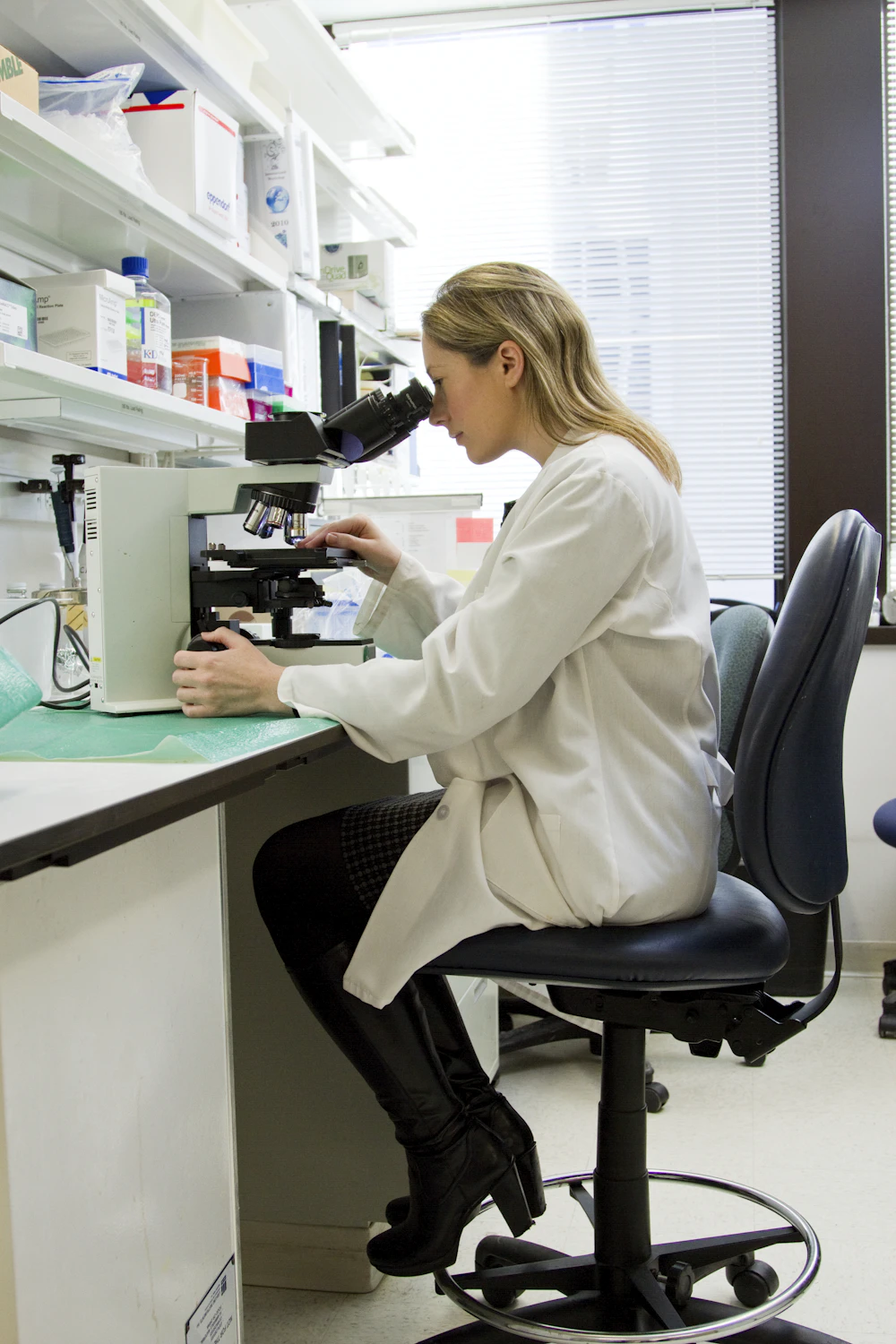
Research laboratories are pioneering new approaches to adrenal regeneration
Limitations of Current Treatments
Since the 1950s, treatment for Addison's disease has remained essentially unchanged: patients take synthetic hormones to replace what their bodies can no longer produce. While this approach sustains life, it has significant drawbacks:
Lack of Circadian Rhythm
Natural cortisol levels follow a daily cycle, peaking in the morning and declining throughout the day—a pattern difficult to mimic with pill-based treatments.
Dosing Challenges
Finding the right dosage is complex, with risks of both overdose (leading to Cushingoid symptoms) and underdose (potentially triggering an adrenal crisis).
Reduced Quality of Life
Despite optimal treatment, many patients continue to experience persistent fatigue, recurrent crises, and premature mortality.
The recognition of these limitations has fueled the search for next-generation therapies that could restore the body's natural hormonal regulation.
Breakthrough Approaches in Regenerative Medicine
The Regenerative Medicine Revolution
Regenerative medicine aims to replace or regenerate human cells, tissues, or organs to restore normal function. For Addison's disease, this represents a paradigm shift—from lifelong hormone replacement to potentially restoring the adrenal glands' natural hormone production.
Bioprinted Adrenal Tissues
Using advanced 3D bioprinting technology to create implantable adrenal tissues that can produce hormones in response to the body's natural signals.
Adrenocortical Organoids
Growing miniature, functional adrenal gland structures in the lab for transplantation that preserve the characteristics of adrenal cells.
The Science Behind Bioprinted Tissue Therapeutics
Bioprinting represents one of the most technologically sophisticated approaches to tissue engineering. Aspect Biosystems, a pioneering company in this space, has developed a "full-stack tissue therapeutic platform" that combines AI-powered bioprinting, computational design tools, therapeutic cells, and advanced biomaterials to create functional adrenal tissues 5 .
Cell Sourcing
Human adrenal cells are carefully selected and prepared for the bioprinting process.
Bioink Formulation
Cells are combined with special biomaterials that provide structural support and biological signals.
3D Bioprinting
Using sophisticated bioprinting technology, bioinks are deposited layer by layer to create three-dimensional tissue structures.
Maturation
The printed tissues are cultured to develop functional characteristics similar to natural adrenal glands.
The resulting Bioprinted Tissue Therapeutics (BTTs) are designed to be "off-the-shelf" products—ready for implantation when needed 1 .
In-Depth Look: A Key Experiment in Adrenal Restoration
Restoring Circadian Rhythm Through Bioengineering
One of the most compelling recent demonstrations of regenerative therapy's potential comes from preclinical research presented at ENDO 2025, the Endocrine Society's annual meeting. Scientists at Aspect Biosystems conducted a crucial experiment testing whether their bioprinted adrenal tissues could not only produce hormones but do so in the biologically crucial circadian pattern 1 5 .
Methodology: Step-by-Step
The research team followed a meticulous experimental process:
Tissue Construction
Human adrenal cells were combined with specialized biomaterials and precision-printed into 3D structures.
Laboratory Validation
Tissues were tested in vitro by exposing them to ACTH to confirm cortisol release.
Animal Model
Mice underwent surgical removal of adrenal glands to create a model of adrenal insufficiency.
Implantation & Monitoring
Bioengineered tissues were implanted and animals were monitored for six months.
Results and Analysis: A Resounding Success
The findings from this experiment provided compelling evidence for the potential of regenerative approaches:
| Parameter Measured | Adrenal BTT Group | Control Group (Cell-Free Implants) |
|---|---|---|
| Circulating Cortisol | Rapid and sustained increase | No significant levels |
| Response to ACTH Stimulation | Rapid cortisol increase | No response |
| Circadian Rhythm | Followed natural daily cycle | Not applicable |
| Long-term Function | Maintained over 6 months | Not applicable |
| Animal Survival | Improved throughout study | No improvement |
Cortisol Production Over Time
Simulated data showing cortisol levels following circadian rhythm in BTT-treated animals
The Broader Landscape of Adrenal Regeneration
Adrenocortical Organoids: A Complementary Approach
While bioprinting represents a top-down engineering approach, another promising strategy involves growing adrenocortical organoids (ACOs)—three-dimensional, self-organizing mini-organs that preserve the characteristics of adrenal cells .
Organoid Advantages
- Preserve zona fasciculata cell lineages
- Retain capacity to produce cortisol
- Respond to physiological stimuli
- Rescue adrenal insufficiency in animal models
Research Applications
- Regenerative transplantation
- Disease modeling
- Drug screening
- Genetic studies
Addressing Autoimmunity in Regenerative Approaches
A significant challenge in treating autoimmune Addison's disease is that the same immune system that attacked the original adrenal glands might target regenerated tissues. Research into immunomodulatory approaches is therefore crucial 4 .
| Autoimmune Marker | Addison's Patients (n=43) | Healthy Controls (n=31) | Statistical Significance |
|---|---|---|---|
| Rheumatoid Factor (RF) | 27.91% | 0% | p < 0.001 |
| Antinuclear Antibodies (ANA) | 13.95% | 0% | p = 0.037 |
| 21-hydroxylase Autoantibodies | 100% | Not reported | Not applicable |
| Anti-Cyclic Citrullinated Peptide | Not significant | Not significant | Not significant |
Essential Research Tools
| Tool/Technology | Function/Application |
|---|---|
| 3D Bioprinting Platform | Precise deposition of cells and biomaterials to create tissue structures |
| Adrenocortical Organoids | 3D mini-organs that mimic native tissue architecture and function |
| ACTH | Stimulates cortisol production; used to test tissue functionality |
| Specialized Biomaterials | Provide structural support and biological signals for growing tissues |
Challenges and Future Directions
While the results so far are promising, significant challenges remain before these regenerative approaches become clinical realities:
Current Challenges
- Durability: Establishing lifelong function of regenerated tissues
- Immune Protection: Protecting tissues from autoimmune attack
- Regulatory Hurdles: Navigating approval processes for novel therapies
- Manufacturing: Scaling up production for widespread use
Future Directions
- Cell Sources: Optimizing stem cell-derived adrenal cells
- Vascularization: Enhancing blood supply to implanted tissues
- Combination Approaches: Addressing both regeneration and immune tolerance
- Personalization: Tailoring therapies to individual patient profiles
Conclusion: A Hopeful Horizon
The field of regenerative therapy for Addison's disease stands at a thrilling precipice. What was once science fiction—replacing a failed endocrine organ with a bioengineered one that seamlessly integrates with the body's natural rhythms—now appears within scientific reach.
As Sam Wadsworth, Chief Scientific Officer at Aspect Biosystems, optimistically notes, "This novel approach has the potential to serve as a functional cure for primary adrenal insufficiency, transforming the lives of patients with this disease" 1 .
A Transformative Future
For millions living with Addison's disease worldwide, these advances offer hope for a future where treatment means restoration rather than replacement—where the body's natural rhythms can be reclaimed, and the constant fear of adrenal crisis can finally be alleviated.
References
References will be added here in the required format.