Transdifferentiation vs. Dedifferentiation: A Comparative Analysis of Efficiency and Clinical Potential in Regenerative Medicine
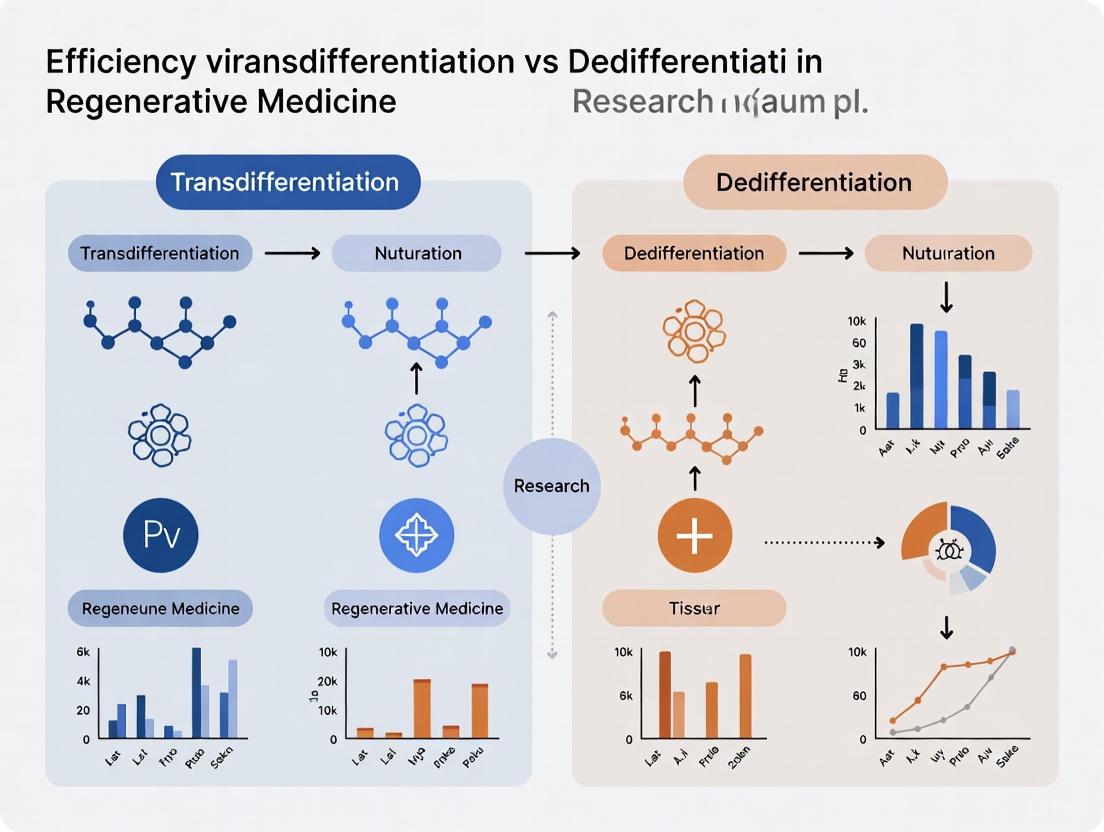
This article provides a comprehensive analysis of the efficiency of two primary cellular reprogramming strategies—transdifferentiation and dedifferentiation.
Transdifferentiation vs. Dedifferentiation: A Comparative Analysis of Efficiency and Clinical Potential in Regenerative Medicine
Abstract
This article provides a comprehensive analysis of the efficiency of two primary cellular reprogramming strategies—transdifferentiation and dedifferentiation. Tailored for researchers, scientists, and drug development professionals, it explores the foundational mechanisms, key molecular drivers, and intrinsic biological barriers governing each process. We delve into current methodologies, from transcription factor delivery to novel non-viral platforms like Tissue Nanotransfection (TNT), and evaluate their application in disease modeling for cardiac and neurological disorders. The content critically examines the major challenges in reprogramming, including low efficiency and phenotypic stability, while presenting optimization strategies. A direct comparative assessment of both routes highlights their respective advantages, risks, and suitability for therapeutic development, concluding with a synthesis of future directions for translating these technologies into clinical interventions.
Defining the Pathways: Core Mechanisms of Transdifferentiation and Dedifferentiation
In the field of regenerative medicine and cancer biology, two distinct cellular reprogramming mechanisms enable cells to adopt new identities: direct lineage switching (transdifferentiation) and reversion to plasticity (dedifferentiation). These processes represent fundamentally different approaches to altering cell fate, each with unique mechanistic pathways, efficiency considerations, and therapeutic applications. Direct lineage switching refers to the conversion of one differentiated cell type directly into another without passing through an intermediate pluripotent or progenitor state [1]. In contrast, reversion to plasticity describes the process where differentiated cells partially or fully revert to a less differentiated, more plastic state—either to a pluripotent condition or to a progenitor-like stage within their own lineage—regaining the ability to proliferate and differentiate into multiple cell types [1] [2]. Understanding the distinctions between these mechanisms is critical for researchers and drug development professionals working to harness cellular plasticity for regenerative therapies or to inhibit pathological plasticity in cancer.
The conceptual framework for these processes can be visualized as distinct pathways through which cells change identity, as illustrated below:
Conceptual Frameworks and Key Distinctions
Direct Lineage Switching (Transdifferentiation)
Direct lineage switching represents a progressive conversion where mature somatic cells transition through a transitory, less differentiated state that enables them to switch lineages and differentiate into another cell type without entering an intermediate pluripotent state or progenitor cell type [1]. This process typically occurs through transcriptional reprogramming, where introducing specific transcription factors or environmental cues can directly override the existing cellular identity and impose a new fate [3] [4]. The success of this strategy often relies on knowledge of developmental biology and cell-fate-defining transcriptional networks, with particular importance placed on pioneer transcription factors that can interact with chromatin and initiate new gene expression programs in cooperation with lineage-specific transcription factors [3].
From a therapeutic perspective, direct lineage switching offers several advantages, including a relatively lower risk of tumorigenesis compared to approaches involving pluripotent stem cells and the potential for in situ conversion within tissues, which is particularly valuable for certain regenerative strategies [3]. The process typically leverages developmental relationships between cell types, with conversions between closely related lineages often proving more efficient due to shared transcriptional networks and epigenetic landscapes [3].
Reversion to Plasticity (Dedifferentiation)
Reversion to plasticity describes a process where terminally differentiated cells partially rewind their developmental program within their own lineage, regaining the ability to proliferate and differentiate, ultimately enabling them to replenish lost tissue [1]. This mechanism represents a more fundamental restructuring of cellular identity, where cells temporarily suspend their differentiated state to access developmental programs normally active during embryogenesis or tissue development [2].
In pathological contexts such as cancer, this plastic behavior enables dynamic and reversible transitions between phenotypic states in response to selective pressures like therapeutic interventions or microenvironmental changes [2] [5]. Cells may enter stem-like, dormant, or drug-tolerant persister states without undergoing genetic changes, creating substantial challenges for effective treatment [5]. The reacquisition of plastic states can occur through various mechanisms, including dedifferentiation (lineage reversion to a less differentiated state along the same lineage), induction of pluripotency, or reversion to progenitor-like states [2].
Table 1: Fundamental Distinctions Between the Two Mechanisms
| Parameter | Direct Lineage Switching | Reversion to Plasticity |
|---|---|---|
| Intermediate State | No pluripotent intermediate; may pass through bipotent progenitor state | Pluripotent, multipotent, or progenitor intermediate state |
| Developmental Trajectory | Horizontal transition between lineages | Vertical transition to less differentiated state |
| Therapeutic Safety Profile | Lower tumorigenic risk due to avoidance of pluripotent state | Higher tumorigenic risk potential with pluripotent intermediates |
| Efficiency Drivers | Pioneer transcription factors; common developmental origin | Complete epigenetic reprogramming; pluripotency factors |
| Primary Applications | Regenerative medicine; in situ cell conversion | Tissue regeneration; disease modeling; drug screening |
| Pathological Manifestations | Metaplasia; histological transformation in cancer | Cancer stem cell generation; drug-tolerant persister cells |
Molecular Mechanisms and Signaling Pathways
The molecular implementation of these two reprogramming paradigms involves distinct but occasionally overlapping signaling pathways and transcriptional networks. Direct lineage switching typically employs targeted transcriptional reprogramming using defined factors necessary for acquiring the desired cell fate, often inspired by embryonic development [3]. Successful strategies frequently combine multiple transcription factors to superimpose the program of the desired cell type, with some factors involved in initial fate specification and others in subsequent maturation [3]. Alternatively, one transcription factor might function as a repressor to erase the original cellular identity while others establish the new fate.
In contrast, reversion to plasticity involves more fundamental epigenetic restructuring, often through the introduction of core pluripotency factors such as Oct3/4, Sox2, Klf4, and c-Myc (the Yamanaka factors) [1]. This process activates the endogenous pluripotency network while silencing somatic-specific gene expression, effectively regressing cells to a more primitive developmental state [1]. The subsequent re-differentiation can then be guided toward the desired cell type using developmental cues.
Table 2: Key Molecular Regulators and Experimental Readouts
| Mechanism | Core Molecular Regulators | Key Signaling Pathways | Characteristic Markers |
|---|---|---|---|
| Direct Lineage Switching | Pioneer factors (FoxA, GATA4); Lineage-specific TFs | TGF-β, BMP, Notch (context-dependent) | Loss of origin markers; Gain of target lineage markers |
| Reversion to Plasticity | Pluripotency factors (Oct3/4, Sox2, Klf4, c-Myc); Epigenetic modifiers | Wnt, HIF, Hippo, NF-κB | SSEA, TRA antigens; Endogenous pluripotency gene reactivation |
The diagram below illustrates the key molecular pathways regulating each process:
Experimental Approaches and Methodologies
Direct Lineage Switching Protocols
Cardiac Fibroblast to Cardiomyocyte Reprogramming A well-established direct lineage switching protocol involves converting cardiac fibroblasts into functional cardiomyocytes using a combination of transcription factors. The typical methodology begins with the isolation of cardiac fibroblasts from transgenic mice or human biopsies. Researchers then introduce a defined set of cardiac-specific transcription factors—often Gata4, Mef2c, and Tbx5 (GMT cocktail)—using lentiviral or retroviral delivery systems [1]. The transfected cells are cultured in cardiac induction medium for 2-3 weeks, with medium changes every 2-3 days. Successful reprogramming is validated through immunocytochemistry for cardiac troponin T and α-actinin, flow cytometry analysis, patch-clamp electrophysiology to demonstrate action potentials, and calcium imaging to confirm excitation-contraction coupling [1].
Pancreatic Acinar to Ductal Metaplasia (ADM) The ADM process serves as an important model for studying direct lineage switching in both regenerative and pathological contexts. The experimental protocol typically involves isolating primary acinar cells from mouse pancreas and embedding them in a three-dimensional collagen matrix culture system [6]. The cells are then stimulated with transforming growth factor (TGF-β) or epidermal growth factor (EGF) to induce transdifferentiation. This process involves extensive transcriptional rewiring characterized by reduced expression of acinar-specific genes (Mist1, amylase, carboxypeptidase, elastase) and increased expression of ductal-specific genes (cytokeratin-19, cytokeratin-20, SOX9, carbonic anhydrase) [6]. The progression of ADM is monitored through bright-field microscopy, histological staining (H&E), and immunohistochemistry for ductal cell markers at various time points.
Reversion to Plasticity Protocols
Induced Pluripotent Stem Cell (iPSC) Generation The classic reversion to plasticity protocol involves reprogramming somatic cells to pluripotency. The standard methodology involves isolating human dermal fibroblasts and transducing them with retroviruses or sendai viruses encoding the Yamanaka factors (Oct3/4, Sox2, Klf4, and c-Myc) [1]. The cells are then cultured on feeder layers in iPSC medium, with daily monitoring for the emergence of embryonic stem cell-like colonies over 3-4 weeks. Successful reprogramming is confirmed through alkaline phosphatase staining, immunocytochemistry for stage-specific embryonic antigens (SSEA-3, SSEA-4), transcriptional analysis of endogenous pluripotency genes, and in vitro differentiation into cells of all three germ layers [1].
Mechanical Reprogramming on Tissue-Mimicking Hydrogels Recent advances have demonstrated that mechanical cues alone can induce reversion to plasticity without genetic manipulation. This protocol involves constructing tissue-mimicking hydrogels by forming collagen-alginate interpenetrated networks that replicate both viscoelastic and nonlinear elastic properties of native tissues [7]. Fibroblasts or other cell types are plated on these hydrogels and cultured for 7-14 days. The cells typically undergo morphological changes, crowding together to form mesenchymal aggregates with elevated expression of stemness genes [7]. The reprogrammed state is characterized through qPCR for pluripotency markers (Nanog, Oct4, Sox2), immunostaining, and demonstration of enhanced bidirectional differentiation potential through adipogenic and osteogenic induction assays.
Quantitative Comparison of Efficiency and Kinetics
Direct comparative studies reveal significant differences in efficiency, kinetics, and functional outcomes between these two reprogramming paradigms. The table below summarizes key quantitative metrics based on published experimental data:
Table 3: Efficiency and Kinetic Comparison Based on Experimental Data
| Performance Metric | Direct Lineage Switching | Reversion to Plasticity |
|---|---|---|
| Reprogramming Efficiency | 0.1-15% (highly factor-dependent) | 0.01-1% (viral methods); up to 5% (non-integrating methods) |
| Time to Lineage Commitment | 1-4 weeks | 2-5 weeks (reprogramming) + 2-4 weeks (differentiation) |
| Functional Maturation Time | Additional 2-8 weeks post-commitment | Additional 4-12 weeks post-differentiation |
| Epigenetic Remodeling Extent | Partial (lineage-specific loci) | Global (genome-wide reset) |
| Transcriptomic Similarity to Native Cells | 70-90% (improves with maturation) | 80-95% (after complete differentiation) |
| Impact on Cell Proliferation | Variable (can maintain post-mitotic state) | High proliferative capacity in intermediate state |
The efficiency of direct lineage switching varies considerably based on the specific conversion being attempted and the methodology employed. Conversions between closely related cell types (e.g., pancreatic α-to-β cells or hepatic-to-pancreatic cells) typically demonstrate higher efficiencies due to shared transcriptional networks and epigenetic landscapes [3]. In contrast, reversion to plasticity consistently shows lower efficiencies but generates cells with broader differentiation potential. The kinetics of direct lineage conversion are generally faster for establishing initial lineage commitment but may require extended maturation periods to achieve full functional characteristics [4].
The Scientist's Toolkit: Essential Research Reagents
Successful implementation of reprogramming protocols requires specific reagent systems optimized for each approach:
Table 4: Essential Research Reagents for Lineage Reprogramming Studies
| Reagent Category | Specific Examples | Function in Reprogramming | Mechanism-Specific Utility |
|---|---|---|---|
| Transcription Factor Delivery | Lentiviral vectors; Sendai virus; mRNA transfection | Introduction of reprogramming factors | Both (factor-specific) |
| Small Molecule Enhancers | Valproic acid; 5-azacytidine; CHIR99021 | Epigenetic modulation; signaling pathway activation | Both (efficiency improvement) |
| Culture Matrices | Matrigel; Tissue-mimicking hydrogels; Collagen scaffolds | Mechanical reprogramming; 3D structural support | Both (context-dependent) |
| Lineage Tracing Systems | Cre-lox; Fluorescent reporter constructs | Fate mapping; reprogramming validation | Both (essential for both) |
| Pathway Modulators | TAK1 inhibitors (5Z-7-Oxozeaenol); TGF-β inhibitors | Signaling pathway manipulation | Direct switching (specific contexts) |
| Pluripotency Media | mTeSR; Essential 8 medium | Maintenance of pluripotent state | Reversion to plasticity |
Applications and Therapeutic Implications
The distinct characteristics of direct lineage switching and reversion to plasticity make each mechanism suitable for different therapeutic applications. Direct lineage switching offers particular advantages for in situ regeneration strategies, where the goal is to convert one cell type to another within tissues without cell transplantation [1] [3]. This approach demonstrates significant promise for cardiac regeneration after myocardial infarction by converting cardiac fibroblasts into functional cardiomyocytes, pancreatic regeneration through transdifferentiation of hepatic cells into insulin-producing β-cells, and neurological applications involving the conversion of glial cells into neurons [3].
Reversion to plasticity approaches, particularly iPSC technology, excel in disease modeling, drug screening platforms, and scenarios requiring extensive cell expansion followed by differentiation [1]. Patient-specific iPSCs enable modeling of genetic diseases in dish, drug toxicity screening using human cells, and cell replacement therapies requiring large numbers of specific cell types. However, this approach carries greater tumorigenic risks due to the pluripotent intermediate state and requires careful quality control to ensure complete differentiation and elimination of residual undifferentiated cells [1].
In cancer biology, both mechanisms contribute to therapy resistance and disease progression, albeit through different manifestations. Direct lineage switching appears as histological transformation, such as adenocarcinoma to neuroendocrine or squamous cell conversion in lung and prostate cancers [2] [8]. Reversion to plasticity enables the emergence of cancer stem cells, drug-tolerant persister cells, and dormant populations that drive relapse following initially successful treatment [5]. Understanding these pathological plasticity mechanisms opens new therapeutic avenues for preventing or reversing these processes to overcome treatment resistance.
Direct lineage switching and reversion to plasticity represent two fundamentally different paradigms for altering cellular identity, each with distinct mechanisms, efficiencies, and therapeutic applications. Direct lineage switching offers the advantages of potentially lower tumorigenic risk, faster functional maturation, and suitability for in situ reprogramming approaches. In contrast, reversion to plasticity provides access to a broader range of potential target cell types through a pluripotent intermediate but requires more extensive epigenetic remodeling and carries greater safety considerations. The choice between these approaches depends heavily on the specific research or therapeutic objectives, with direct conversion potentially better suited for in situ regeneration and reversion to plasticity offering advantages for disease modeling and cell expansion. As our understanding of the molecular mechanisms underlying these processes continues to advance, so too will our ability to harness them for regenerative medicine while inhibiting pathological plasticity in cancer.
The pursuit of controlled cellular reprogramming represents a frontier in regenerative medicine and therapeutic development. At its core, this field is guided by two predominant mechanistic paradigms: transdifferentiation, the direct conversion of one differentiated somatic cell type into another, and dedifferentiation, the partial reversion of differentiated cells to a progenitor-like state within their own lineage, enabling subsequent proliferation and redifferentiation [1]. The efficiency and fidelity of these processes are governed by the intricate interplay of three fundamental molecular drivers: transcription factors that initiate reprogramming cascades, epigenetic remodeling that enables chromatin accessibility, and metabolic shifts that provide the necessary energy and biosynthetic precursors. Understanding the comparative advantages and limitations of these pathways is crucial for researchers and drug development professionals aiming to harness cellular plasticity for therapeutic purposes. This guide provides a structured comparison of experimental approaches, data, and methodologies driving innovation in this rapidly evolving field.
Comparative Analysis of Reprogramming Pathways
The choice between transdifferentiation and dedifferentiation strategies involves significant trade-offs in efficiency, safety, and applicability. The table below summarizes the core characteristics, molecular drivers, and experimental outcomes associated with each approach.
Table 1: Comparative Analysis of Dedifferentiation and Transdifferentiation Strategies
| Feature | Dedifferentiation | Transdifferentiation |
|---|---|---|
| Definition | Differentiated cells partially revert to a progenitor-like state within their own lineage [1]. | Differentiated cells directly convert into another differentiated cell type without a pluripotent intermediate [1]. |
| Key Molecular Drivers | Yamanaka factors (OCT4, SOX2, KLF4, c-MYC/OSKM) [9] [10], injury-induced signals [9]. | Lineage-specific transcription factors (e.g., GATA4, Mef2c, Tbx5 for cardiomyocytes) [1]. |
| Typical Efficiency | Variable, often low; can be enhanced by cyclic induction [9]. | Generally low; improved with combinatorial factor delivery and epigenetic modulators [1]. |
| Primary Applications | Tissue regeneration (e.g., heart, liver, retina), rejuvenation studies [9] [10]. | Disease modeling, direct cell replacement therapy [1]. |
| Major Safety Concerns | Teratoma formation, loss of cell identity, organ failure [9] [10]. | Incomplete reprogramming, functional immaturity of target cells [1]. |
| Epigenetic Remodeling | Extensive; involves resetting age-related epigenetic marks (e.g., H3K9me3) [9]. | Targeted; involves silencing of donor cell genes and activation of target cell genes [1]. |
Quantitative Data on Reprogramming Efficiency and Outcomes
The success of reprogramming strategies is quantified through specific molecular and functional readouts. The following table consolidates key experimental data from recent studies, providing a benchmark for researchers.
Table 2: Key Experimental Data and Functional Outcomes in Cellular Reprogramming
| Reprogramming Context | Key Metric | Reported Finding/Value | Significance |
|---|---|---|---|
| In Vivo OSKM Reprogramming (Progeria Model) | Lifespan Extension | Significant increase [9] | Demonstrates potential of partial reprogramming to counteract aging. |
| Cardiac Reprogramming | CM Exchange Rate (Normal Adult Human) | ~1% annually [1] | Basal rate indicates innate, low-level cardiac turnover. |
| MASLD Progression | Epigenetic Age Acceleration (EAA) Correlation | Significant correlation with disease stage [11] | Suggests EAA as a quantitative biomarker for liver disease progression. |
| In Vivo OSKM Induction | Teratoma Formation | Observed with continuous induction over weeks [9] | Highlights a critical safety risk requiring precise spatiotemporal control. |
Experimental Protocols for Key Methodologies
In Vivo Partial Reprogramming with Yamanaka Factors
This protocol is widely used to study dedifferentiation and rejuvenation in live animal models [9] [10].
- 1. Animal Model Selection: Utilize genetically engineered mouse models such as the 4Fj or 4Fk strains, where OSKM (OCT4, SOX2, KLF4, c-MYC) or OKSM cassettes are inserted into the Col1a1 locus under a Tet-On (doxycycline-inducible) promoter system [9].
- 2. Reprogramming Induction: Administer doxycycline (Dox) in the drinking water or diet. The concentration and duration are critical:
- 3. Tissue Analysis: After sacrifice, collect target tissues (e.g., liver, heart, muscle). Analyze for:
- Lineage Markers: Immunofluorescence or RT-qPCR for tissue-specific and progenitor cell markers to assess dedifferentiation.
- Epigenetic Marks: ChIP-seq for H3K9me3, H3K27ac; or BS-seq for DNA methylation to evaluate epigenetic remodeling [9].
- Functional Outcomes: Assess tissue regeneration (e.g., fibrosis reduction, new cell formation) and functional improvement (e.g., contractile force in heart) [9].
Direct Cardiac Transdifferentiation
This protocol outlines the conversion of fibroblasts into functional cardiomyocytes, a key transdifferentiation strategy [1].
- 1. Cell Source: Isolate and culture cardiac or dermal fibroblasts.
- 2. Factor Delivery: Introduce a combination of cardiac-specific transcription factors. A common core set includes GATA4, Mef2c, and Tbx5 [1]. Delivery methods are crucial:
- Viral Vectors: Use retroviruses or lentiviruses for stable gene integration. (Note: Retroviruses require proliferating cells).
- Non-integrating Methods: Employ Sendai virus or synthetic mRNA for transient, safer expression, suitable for clinical applications.
- 3. Culture Conditions: Maintain cells in media supporting cardiomyocyte survival, often supplemented with small molecules to enhance efficiency and maturation.
- 4. Efficiency Validation:
- Quantification: Use flow cytometry for cardiac-specific proteins like Troponin T.
- Functional Analysis: Perform calcium imaging to assess electrophysiological properties and measure spontaneous contractions.
- Epigenetic Analysis: Use ATAC-seq or ChIP-seq to confirm the shutdown of fibroblast enhancers/promoters and activation of the cardiac regulon [1].
The diagram below illustrates the logical progression and key decision points in selecting and implementing a reprogramming strategy.
Visualization of Molecular Crosstalk
The efficacy of both dedifferentiation and transdifferentiation is powered by a tight crosstalk between transcription factors, epigenetic remodeling, and cellular metabolism. The following diagram maps these critical interactions and feedback loops.
The Scientist's Toolkit: Essential Research Reagent Solutions
Successful research in this domain relies on a suite of specialized reagents and tools. The following table catalogs key solutions for driving and analyzing reprogramming experiments.
Table 3: Essential Research Reagents for Reprogramming Studies
| Reagent / Tool Category | Specific Examples | Function in Research |
|---|---|---|
| Reprogramming Transcription Factors | Yamanaka factors (OCT4, SOX2, KLF4, c-MYC); Cardiac factors (GATA4, Mef2c, Tbx5) [1] [9] | Ectopic expression initiates dedifferentiation or transdifferentiation cascades. |
| Inducible Expression Systems | Doxycycline (Dox)-inducible Tet-On systems (e.g., in 4Fj, 4Fk mouse models) [9] | Enables precise temporal control over reprogramming factor expression for safety and efficiency. |
| Epigenetic Modulators | Inhibitors of DNMTs (e.g., Decitabine), HDACs (e.g., Vorinostat), KDMs [12] [13] | Used to probe the role of specific epigenetic marks and enhance reprogramming efficiency. |
| Metabolic Probes & Substrates | Labeled glucose (e.g., ¹³C-Glucose), Glutamine; Metabolites (Acetyl-CoA, SAM, α-KG) [14] [13] | Tracks metabolic flux and measures availability of key metabolites that serve as substrates for epigenetic enzymes. |
| Genome-Wide Epigenetic Assays | ATAC-seq, ChIP-seq, BS-seq, OxBS-seq [12] | Maps genome-wide changes in chromatin accessibility, histone modifications, and DNA methylation during reprogramming. |
| Lineage Tracing Tools | Cre-lox based fluorescent reporter systems [9] | Allows fate mapping of specific cell populations to definitively prove dedifferentiation or transdifferentiation. |
The process of cell fate conversion, whether through transdifferentiation (direct switching between cell lineages) or dedifferentiation (reversion to a less specialized state), represents a cornerstone of modern regenerative medicine and developmental biology research [1]. The conceptual framework of the Waddington epigenetic landscape has evolved from a powerful metaphor into a quantifiable model that describes cell states as basins of attraction on a potential surface, with cell fate transitions represented as movements between these basins [15] [16]. Within this paradigm, the probability and efficiency of cell fate conversions are governed by two fundamental factors: the landscape topography (which determines the stability of cell states) and the non-equilibrium flux (which provides the directional driving force for transitions) [17] [16].
The landscape topography is quantitatively characterized by barrier heights between stable states, where lower barriers correspond to higher transition probabilities [15]. Simultaneously, the non-equilibrium flux, arising from underlying cellular energy dissipation, ensures that these transitions are irreversible and directional [17] [16]. This landscape-flux framework provides a powerful theoretical foundation for understanding why certain cell fate conversions occur efficiently while others face significant biological constraints, offering insights that could revolutionize therapeutic approaches in regenerative medicine and disease modeling [15] [1].
Theoretical Frameworks: Quantifying Efficiency in Fate Transitions
Landscape Control Approach
The Landscape Control (LC) approach represents a significant advancement in manipulating cell fate transitions through deliberate modification of the underlying energy landscape. This method is grounded in energy landscape theory and operates by manipulating specific gene regulatory parameters to reshape the topography of cell states [15]. By systematically adjusting regulatory strengths and protein degradation rates in gene networks, LC effectively destabilizes undesired stable states while promoting transitions toward target cell fates [15].
The quantitative foundation of LC relies on calculating barrier heights (BH) between cell states, defined as the potential energy difference between saddle points and corresponding stable states in the landscape [15]. These barrier heights directly determine transition probabilities through the asymptotic formula: Rij^ε(Ω) = exp(-BHij(Ω)/ε), where ε represents noise intensity and Ω denotes the control parameter set [15]. Through this mechanism, LC can optimize the limiting occupancy of desired cell states by minimizing the energy barriers between starting and target states, thereby significantly improving transition efficiency compared to previous approaches like Optimal Least Action Control (OLAC) [15].
Flux-Driven Kinetic Paths
Complementary to the landscape perspective, the flux-driven kinetic path framework emphasizes the dynamic, non-equilibrium processes that guide actual cellular trajectories during fate conversion. In this paradigm, cell fate transitions are not merely downhill movements on a potential landscape but are actively guided by non-equilibrium probability fluxes that create irreversible paths between states [16]. This flux component explains why differentiation and reprogramming typically follow distinct biological paths, as the presence of rotational flux prevents systems from reaching detailed balance and ensures the temporal irreversibility of developmental processes [16].
The mathematical representation of these dynamics can be captured through Langevin equations for gene regulatory networks: ẋ(t) = f(x) + Γ(t), where f(x) represents the deterministic driving force and Γ(t) represents stochastic noise [15]. The corresponding Fokker-Planck equation then describes the evolution of the probability density, with its steady-state solution revealing both the potential landscape (U = -ln p_ss(x)) and the probability flux that constitutes the non-equilibrium driving force [15] [17]. This combined landscape-flux framework provides a complete description of cell fate transition dynamics, where the landscape topography determines transition probabilities while the flux directs the actual kinetic paths [16].
Comparative Efficiency Analysis: Landscape-Flux Versus Alternative Frameworks
Performance Metrics Across Methodologies
Table 1: Comparative analysis of cell fate conversion methodologies
| Methodology | Theoretical Basis | Computational Efficiency | Control Effectiveness | Key Applications |
|---|---|---|---|---|
| Landscape Control (LC) | Energy landscape theory & barrier height manipulation | High (linear scaling with parameters) [15] | Superior stable-state occupancy control [15] | Directed differentiation, reprogramming, key target identification [15] |
| Optimal Least Action Control (OLAC) | Least-action paths on deterministic landscapes | Low (high computational time in high dimensions) [15] | Limited by hyperparameter sensitivity [15] | Stable-state transitions in low-dimensional systems [15] |
| Transcriptional Factor Screening | Empirical identification of fate-instructive factors | Medium (requires iterative experimental validation) [18] | High for specific lineages with optimal TF combinations [18] | Microglia generation, motor neuron programming, disease modeling [19] [18] |
| MAPK Signaling Modulation | Pathway activation level tuning | High (chemogenetic tuning possible) [19] | Biphasic efficiency dependent on signaling strength [19] | Direct conversion to motor neurons, proliferation control [19] |
Quantitative Efficiency Data
Table 2: Experimental efficiency metrics across fate conversion strategies
| Conversion Strategy | System/Model | Efficiency Metrics | Time Frame | Key Determinants |
|---|---|---|---|---|
| Landscape Control | MISA, EMT, HESC networks [15] | Significant improvement over OLAC; precise stable-state control [15] | Network dynamics dependent | Barrier height minimization; key node identification [15] |
| Six-TF Microglia Programming | Human iPSCs [18] | High similarity to primary microglia; specific marker expression [18] | 4 days [18] | SPI1, CEBPA, FLI1, MEF2C, CEBPB, IRF8 combination [18] |
| HRASG12V Motor Neuron Conversion | Mouse embryonic fibroblasts [19] | Biphasic response; optimal at intermediate RAS levels [19] | 14 days for Hb9::GFP activation [19] | Goldilocks MAPK signaling; balances proliferation and senescence [19] |
| Dedifferentiated Fat Progenitors | Adipose tissue regeneration [20] | Superior proliferation and differentiation vs ASCs [20] | Culture-dependent | Ceiling culture method; lipid droplet retention [20] |
Experimental Protocols for Landscape-Flux Analysis
Landscape Quantification Protocol
The quantification of epigenetic landscapes from experimental data involves a multi-step process that transforms single-cell transcriptomic measurements into a quantitative landscape representation. The first critical step involves data acquisition and preprocessing of single-cell RNA sequencing data, which provides the gene expression patterns of individual cells across different states [17]. Following data acquisition, RNA velocity estimation is performed to capture the direction and magnitude of changes in gene expression for each cell, providing dynamic information about cellular trajectories [17].
The core of the methodology involves vector field reconstruction from the sparse, noisy single-cell velocity measurements, which generates a continuous, analytic representation of the cellular dynamics [17]. This reconstruction enables the calculation of the potential landscape through U = -ln pss(x), where pss(x) represents the steady-state probability density [17]. Simultaneously, the curl flux is computed to quantify the non-equilibrium driving forces [17]. Finally, saddle point dynamics are applied to precisely determine barrier heights between stable states, which quantitatively represent the difficulty of transitions between cell fates [15].
Iterative Transcription Factor Screening Protocol
For the direct engineering of cell fate conversions, iterative transcription factor screening provides a systematic approach to identify optimal factor combinations. The process begins with candidate TF selection based on literature surveys of developmental biology, epigenetic patterns, and gene regulatory networks [18]. Selected TFs are then cloned into barcoded expression vectors with inducible promoters, enabling precise tracking of individual TF expression [18].
The experimental phase involves pooled transfection of the TF library into starter cells (such as iPSCs) using optimal DNA concentrations that enable single-digit copy numbers of multiple TFs per cell [18]. Following transfection and selection, differentiation induction is triggered through doxycycline treatment or similar inducible systems [18]. The resulting cell populations are then analyzed through FACS and scRNA-seq to identify successfully converted cells based on marker expression and transcriptional profiles [18]. Finally, TF ranking and validation pinpoints the most effective factor combinations, which are subsequently tested in various polycistronic configurations to optimize relative expression levels [18].
Signaling Pathways Governing Conversion Efficiency
MAPK Signaling in Fate Transitions
The MAPK signaling pathway plays a crucial role in modulating the efficiency of cell fate conversions, exhibiting a biphasic relationship with conversion success. Research on direct conversion of fibroblasts to induced motor neurons has demonstrated that optimal "Goldilocks" levels of MAPK signaling efficiently drive cell-fate programming, while both insufficient and excessive signaling impair conversion [19]. This biphasic response manifests through two primary mechanisms: proliferation control and transcription factor regulation.
At the molecular level, optimal MAPK signaling promotes the expansion of a hyperproliferative (HyperP) cell population that exhibits heightened receptivity to transcription factor-mediated reprogramming [19]. Simultaneously, MAPK signaling directly influences the activity of key neurogenic transcription factors like Ngn2, with disruption of Ngn2 phosphorylation sites impairing both proliferation and conversion yield [19]. This dual role creates a narrow optimal signaling range that balances the competing demands of proliferation and differentiation during fate conversion.
TAK1 Signaling in Transdifferentiation vs Cell Death
In the context of transdifferentiation, the TGF-β-activated kinase 1 (TAK1) functions as a critical decision point between successful lineage conversion and programmed cell death. During KRAS-dependent acinar-to-ductal metaplasia in pancreatic cancer development, TAK1 prevents the elimination of transdifferentiated cells through suppression of RIPK1-mediated apoptosis and necroptosis [6]. This survival function enables cellular plasticity by creating a permissive environment for transcriptional rewiring.
The molecular mechanism involves TAK1-mediated phosphorylation of IKK complex subunits, leading to NF-κB activation, and inhibitory phosphorylation of RIPK1, which suppresses both apoptosis and necroptosis [6]. Genetic deletion or pharmacological inhibition of TAK1 shifts the balance toward PCD, effectively blocking transdifferentiation even in the presence of oncogenic KRAS [6]. This decision point represents a fundamental constraint on transdifferentiation efficiency, where survival signaling must be coordinated with identity-changing transcriptional programs.
The Scientist's Toolkit: Essential Research Reagents
Table 3: Key research reagents for landscape-flux and fate conversion studies
| Reagent/Category | Specific Examples | Function/Application | Experimental Context |
|---|---|---|---|
| Vector Systems | pBAN2 (PiggyBac with Dox-inducible expression) [18] | Genomic integration of multiple TF copies; inducible expression | Iterative TF screening; microglia differentiation [18] |
| TF Barcoding | 20-nucleotide barcodes between stop codon and poly-A [18] | Distinguishing exogenous vs endogenous TF transcripts; single-cell tracking | Pooled TF screens; lineage tracing [18] |
| Signaling Modulators | 5Z-7-Oxozeaenol (TAK1 inhibitor) [6]; RepSox (TGF-β inhibitor) [19] | Pathway-specific inhibition; enhancing reprogramming efficiency | Pancreatic transdifferentiation; motor neuron conversion [6] [19] |
| Cell Culture Systems | 3D collagen matrix; ceiling culture method [6] [20] | Mimicking tissue microenvironment; DFAT cell isolation | ADM studies; dedifferentiated fat progenitor research [6] [20] |
| Critical Transcription Factors | SPI1, CEBPA, FLI1, MEF2C, CEBPB, IRF8 [18]; Ngn2, Isl1, Lhx3 [19] | Directing specific lineage conversion; enhancing reprogramming | Microglia generation; motor neuron programming [19] [18] |
The integration of landscape-flux perspectives with experimental fate conversion strategies reveals a consistent principle: efficient cell fate transitions require both favorable landscape topography and appropriate kinetic driving forces. The theoretical frameworks of landscape control and flux-driven paths provide quantitative metrics for predicting and manipulating conversion efficiency, while experimental approaches like iterative TF screening and signaling modulation offer practical implementation strategies. The growing evidence across diverse systems – from pancreatic transdifferentiation to motor neuron conversion and microglia generation – suggests that successful fate conversion requires navigating both energetic barriers and kinetic constraints.
For research applications, this integrated perspective offers several strategic advantages: the ability to identrate rate-limiting steps in fate conversions, the capacity to predict optimal intervention points, and the framework to design more efficient reprogramming protocols. As single-cell technologies continue to provide increasingly detailed maps of gene regulatory networks, the landscape-flux formalism promises to bridge the gap between theoretical predictions and experimental reality, potentially unlocking more reliable and efficient approaches for regenerative medicine and disease modeling.
Tools and Translation: Methodologies and Disease Applications
The choice of delivery system is a pivotal factor in genetic engineering and cellular reprogramming, directly influencing the efficiency and safety of research outcomes. For studies focused on transdifferentiation (direct lineage conversion) versus dedifferentiation (reversion to a pluripotent state), the delivery method can significantly impact the stability, precision, and ultimate success of the cell fate conversion. This guide provides an objective comparison of three major delivery platforms—viral vectors, CRISPR/Cas9 systems, and physical methods like Tissue Nanotransfection (TNT)—to inform experimental design for researchers and drug development professionals.
The following table summarizes the core characteristics, advantages, and limitations of each delivery system in the context of cellular reprogramming.
Table 1: Comparative Overview of Key Delivery Systems
| Feature | Viral Vectors (e.g., AAV, Lentivirus) | CRISPR/Cas9 Systems (DNA, mRNA, RNP) | Physical Methods (Tissue Nanotransfection - TNT) |
|---|---|---|---|
| Primary Mechanism | Uses modified viruses for efficient cellular transduction and gene delivery. [21] | Delivers gene-editing machinery as DNA, mRNA, or pre-assembled protein-RNA complexes. [22] [23] | Uses localized nanoelectroporation via a silicon chip for in vivo gene delivery. [24] [25] |
| Typical Cargo | DNA encoding genetic elements. [21] | Plasmid DNA, mRNA, or Ribonucleoprotein (RNP). [23] | Plasmid DNA, mRNA, CRISPR/Cas9 components. [24] [25] |
| Transfection Efficiency | High to very high, particularly in hard-to-transfect cells. [22] | Variable (DNA: lower; RNP: high). [22] [23] | Highly efficient and localized in vivo delivery. [24] |
| Onset of Action | Moderate (requires cellular machinery for gene expression). | DNA: Slow; mRNA: Moderate; RNP: Immediate. [22] | Rapid, direct delivery into target tissue. [24] |
| Expression Duration | Prolonged (weeks to months), especially with integrating vectors. [22] | DNA: Persistent; mRNA/RNP: Transient (hours to days). [22] | Transient, non-integrative expression. [24] [25] |
| Risk of Genomic Integration | Low for AAV; High for Lentivirus. [26] [22] | DNA: Moderate risk; mRNA/RNP: None. [22] | Very low, primarily episomal. [24] [25] |
| Immunogenicity | Moderate (can trigger host immune responses). [21] [22] | Low for RNP; higher for DNA/mRNA. [22] | Minimal cytotoxicity and immunogenicity. [24] |
| Cargo Capacity | AAV: Limited (~4.7 kb); Lentivirus: High (~8 kb). [26] [21] | Virtually unlimited (dependent on delivery vehicle). | Optimized for standard genetic cargo (plasmids, mRNA). [24] |
| Ideal for Transdifferentiation/Dedifferentiation | Suitable for both, but persistent expression may complicate transdifferentiation stability. | RNP excellent for precise, transient editing needed for transdifferentiation. [22] | Highly suited for in vivo direct reprogramming (transdifferentiation). [24] [25] |
Experimental Protocols and Workflows
To ensure reproducibility, this section outlines standard experimental protocols for each delivery system, with a focus on applications in cell fate conversion.
Viral Vector Production and Transduction
This protocol details the creation and use of adeno-associated virus (AAV) vectors for gene delivery.
- 1. Vector Construction: Clone the genes of interest (e.g., reprogramming factors like Oct4, Sox2, Klf4, c-Myc for dedifferentiation, or lineage-specific factors for transdifferentiation) into an AAV transfer plasmid containing inverted terminal repeats (ITRs). [26]
- 2. Virus Packaging: Co-transfect the transfer plasmid along with packaging and helper plasmids into a producer cell line (e.g., HEK293T cells) to generate recombinant AAV particles. [23]
- 3. Purification and Titration: Harvest the cell culture, lyse the cells, and purify the viral particles via ultracentrifugation or chromatography. Determine the viral titer using qPCR or digital droplet PCR. [21]
- 4. Cell Transduction: Incubate target cells with the purified AAV at a specific multiplicity of infection (MOI) in the presence of transduction enhancers if needed. The optimal MOI must be determined empirically for each cell type. [26] [21]
- 5. Efficiency Analysis: After 48-72 hours, assess transduction efficiency via fluorescence microscopy (if a reporter gene is used) or flow cytometry, and confirm phenotypic changes through immunocytochemistry or RNA sequencing.
CRISPR/Cas9 RNP Delivery via Electroporation
This protocol describes a highly efficient method for delivering the CRISPR/Cas9 system as a ribonucleoprotein (RNP) complex, ideal for precise gene editing with minimal off-target effects. [22] [23]
- 1. RNP Complex Formation: Synthesize or purchase high-purity Cas9 protein and single-guide RNA (sgRNA). Incubate the Cas9 protein with the sgRNA at a molar ratio of 1:1.2 to 1:1.5 for 10-20 minutes at room temperature to form the active RNP complex.
- 2. Cell Preparation: Harvest the target cells and resuspend them in an electroporation-compatible buffer at a recommended concentration of 1-5 x 10^5 cells per 100 µL.
- 3. Electroporation: Mix the cell suspension with the pre-formed RNP complex. Transfer the mixture to an electroporation cuvette and electroporate using a device-specific program optimized for the target cell type. For primary cells, a square-wave protocol with a voltage of 1350V, pulse width of 10ms, and 3 pulses is often a starting point. [22]
- 4. Recovery and Analysis: Immediately after electroporation, transfer the cells to pre-warmed culture medium. Allow cells to recover for 48-72 hours before analyzing editing efficiency, typically via T7 Endonuclease I assay, Sanger sequencing, or next-generation sequencing. Assess functional outcomes, such as the activation of a target gene pathway for transdifferentiation.
In Vivo Gene Delivery via Tissue Nanotransfection (TNT)
This protocol covers the application of TNT for direct in vivo reprogramming, a key methodology for regenerative studies. [24] [25]
- 1. Cargo Preparation: Prepare a high-concentration, endotoxin-free solution of the desired genetic cargo (e.g., plasmid DNA encoding reprogramming factors) in a suitable buffer.
- 2. Device Sterilization: Sterilize the TNT device, which consists of a nanochannel chip mounted on a cargo reservoir, using ethylene oxide gas to preserve the integrity of the nanochannels. [24] [25]
- 3. Application and Electroporation:
- Place the TNT device directly onto the surface of the target tissue (e.g., skin).
- Load the genetic cargo into the reservoir.
- Apply a series of controlled, focused electrical pulses (e.g., 250V for 10ms) using an external pulse generator. The nanochannels concentrate the electric field, creating transient pores in the membranes of underlying cells. [24]
- 4. In Vivo Analysis: After TNT application, the cargo is delivered directly into the tissue. Monitor the animals for evidence of cellular reprogramming and tissue regeneration over days to weeks using histological staining, lineage tracing, and functional recovery assays.
Visualizing Key Workflows and Relationships
The following diagrams illustrate the logical relationships and experimental workflows for these delivery systems.
Decision Framework for Delivery Systems
This diagram outlines a logical framework for selecting a delivery system based on research goals.
TNT Workflow for In Vivo Reprogramming
This diagram details the specific experimental workflow for using Tissue Nanotransfection.
The Scientist's Toolkit: Essential Research Reagents
Successful experimentation relies on high-quality, well-characterized reagents. The following table lists key materials for the featured delivery systems.
Table 2: Essential Reagents for Delivery System Research
| Reagent / Solution | Function / Description | Example Applications |
|---|---|---|
| AAV Transfer Plasmid | Plasmid containing inverted terminal repeats (ITRs) necessary for packaging the transgene into the AAV capsid. [26] | Construction of AAV vectors for stable gene expression in vivo. |
| Reprogramming Factor Mix | A set of transcription factors (e.g., OSKM: Oct4, Sox2, Klf4, c-Myc) for inducing dedifferentiation. [24] [25] | Generating induced pluripotent stem cells (iPSCs) from somatic cells. |
| Lineage-Specific Factors | Transcription factors that drive direct conversion from one somatic cell type to another (e.g., for creating neurons or cardiomyocytes). [24] [25] | Inducing transdifferentiation without a pluripotent intermediate. |
| Purified Cas9 Protein | The core nuclease enzyme of the CRISPR system, used for forming RNP complexes. | Enabling highly efficient and transient gene editing with minimal off-target effects. [22] [23] |
| Electroporation Buffer | A low-conductivity, cell-friendly solution that maximizes cell viability during electroporation. | Delivery of CRISPR RNP complexes or nucleic acids into sensitive primary cells. [22] |
| TNT Silicon Chip | A microfabricated device with hollow-needle nanochannels that concentrate electric fields for localized electroporation. [24] [25] | Direct in vivo delivery of genetic cargo to specific tissue layers. |
The strategic selection of a delivery system is fundamental to the success of research in transdifferentiation and dedifferentiation. Viral vectors offer high efficiency and persistence, making them powerful but requiring careful consideration of safety. CRISPR/Cas9 systems, particularly in RNP format, provide unparalleled precision and control for direct genetic manipulations. Tissue Nanotransfection emerges as a transformative technology for direct in vivo reprogramming, offering a minimally invasive and highly targeted approach. By aligning the strengths and limitations of each platform with specific experimental goals, researchers can robustly advance both basic science and therapeutic development.
The field of regenerative medicine has increasingly turned toward gene-based approaches to repair or replace damaged tissues and organs [25]. Central to this paradigm are cellular reprogramming strategies, which aim to convert one somatic cell type into another, either by reverting cells to a pluripotent state or by directly switching cell lineage [1]. The success of these approaches critically depends on the efficient delivery of specific reprogramming factors to target cells, a process mediated by various cargo types with distinct biological and technical characteristics [25]. The three primary cargo classes—plasmid DNA, mRNA, and small molecules—each offer unique advantages and limitations for research and therapeutic applications [25] [27].
This comparative guide analyzes these reprogramming cargoes within the context of a broader scientific thesis investigating transdifferentiation versus dedifferentiation efficiency. Transdifferentiation involves the direct conversion of one mature somatic cell type into another without passing through an intermediate pluripotent state, while dedifferentiation describes a process where terminally differentiated cells partially rewind within their own lineage, regaining proliferative capacity before potentially redifferentiating [1] [28]. The choice of reprogramming cargo significantly influences the efficiency, safety, and practical implementation of both strategies, making objective comparison essential for researchers, scientists, and drug development professionals working in this rapidly advancing field [25] [27].
Fundamental Mechanisms of Cellular Reprogramming
Transdifferentiation and Dedifferentiation Pathways
Cellular reprogramming encompasses various approaches, including induced pluripotent stem cells (iPSCs), direct reprogramming (transdifferentiation), and partial reprogramming (cellular rejuvenation) [25]. Direct reprogramming, also referred to as transdifferentiation, involves the conversion of one somatic cell type into another without passage through a pluripotent state, offering a more direct, rapid, and potentially safer strategy for cell replacement therapies and regenerative medicine without inducing uncontrolled proliferation or dedifferentiation [25]. In vivo, the overexpression of genetic factors can stimulate cell lineages to repair damaged tissue without tumorigenesis, risk of contamination, or cell transplantation [25].
In contrast, dedifferentiation describes a process where terminally differentiated cells partially rewind within their own lineage, regaining the ability to proliferate and differentiate, ultimately replenishing the lost tissue [1]. This approach has been demonstrated in cardiac regeneration, where mature cardiomyocytes can re-enter the cell cycle and divide, albeit at a lower rate compared to the neonatal period when they are still pre-mitotic [1].
Molecular Mechanisms of Reprogramming Cargo
The genetic material selected for transfection should be prepared, purified, and optimized for delivery [25]. Current research prioritizes plasmid DNA and mRNA for TNT applications due to their transient expression profiles, which minimize genomic integration risks like permanent alterations to the genome [25]. Each cargo type operates through distinct molecular mechanisms to induce reprogramming:
Plasmid DNA requires nuclear entry before gene expression can occur. Highly supercoiled, circular DNA plasmids are more efficient than linear DNA plasmids for performing transient transfection because circular plasmids are not vulnerable to exonucleases, while linear DNA fragments are quickly degraded by these enzymes [25]. Once in the nucleus, plasmids serve as templates for transcription, with the resulting mRNA then translated into reprogramming factors.
Messenger RNA (mRNA) transfection allows for direct protein translation in the cytoplasm without requiring nuclear entry, making it simpler, faster, and more efficient than DNA plasmid transfection from a mechanistic standpoint [25] [29]. The amplification by translation of the mRNA into protein has to overcome the losses and inefficiencies of degradation and the transduction process [29].
Small molecules represent a transformative frontier in drug discovery, offering novel therapeutic avenues for diseases traditionally deemed undruggable [30]. These compounds can target various cellular components, including RNAs, proteins, and epigenetic regulators, to influence cell fate. Emerging strategies, such as RNA degraders and modulators of RNA-protein interactions, are reviewed for their therapeutic promise [30].
Comparative Analysis of Reprogramming Cargo
Technical Specifications and Performance Metrics
Table 1: Comprehensive Comparison of Reprogramming Cargo Specifications
| Parameter | Plasmid DNA | mRNA | Small Molecules |
|---|---|---|---|
| Molecular Structure | Double-stranded DNA circle | Single-stranded RNA with 5' cap, UTRs, coding sequence, 3' UTR, poly-A tail | Low molecular weight organic compounds (<900 Da) |
| Mechanism of Action | Nuclear entry required, transcription then translation | Direct cytoplasmic translation | Binding to cellular targets (proteins, RNA, epigenetic regulators) |
| Theoretical Advantage | Episomal persistence, multiple mRNA copies from single plasmid | No nuclear entry required, rapid protein production | Cell-permeable, no genetic material, reversible effects |
| Reprogramming Efficiency | Variable (0.1%-10% depending on delivery method) | Moderate to high (can exceed 15% with optimized mRNA) | Typically low as single agents, better in combinations |
| Onset of Protein Expression | Delayed (hours to days) | Rapid (hours) | Immediate (minutes to hours) |
| Duration of Effect | Days to weeks | Transient (hours to days) | Hours (dose-dependent) |
| Risk of Genomic Integration | Low but non-zero | None | None |
| Immunogenicity | Moderate (CpG motifs) | High (unless nucleoside-modified) | Generally low |
| Manufacturing Complexity | Moderate (bacterial fermentation, purification) | Moderate (in vitro transcription) | Simple to complex (chemical synthesis) |
| Stability | High (stable at room temperature for extended periods) | Low (requires cold chain storage) | Generally high |
| Cost Considerations | Moderate production costs | Decreasing costs with technological advances | Variable (patent-dependent) |
Experimental Efficiency Data in Reprogramming Applications
Table 2: Experimental Performance in Reprogramming Applications
| Application | Plasmid DNA | mRNA | Small Molecules |
|---|---|---|---|
| iPSC Generation | First demonstration with Yamanaka factors [1]; Efficiency: ~0.1-1% | Improved efficiency: 1-4% with modified mRNA [25]; Faster kinetics (2-3 weeks) | Cannot initiate alone but enhance efficiency: VC6T (Valproic acid, CHIR99021, 616452, Tranylcypromine) |
| Direct Cardiac Reprogramming | Gata4, Mef2c, Tbx5 (GMT) combination; Efficiency: ~5-15% fibroblast conversion | Modified mRNA GMT: Improved efficiency (~15%) and faster maturation | Small molecules can replace 1-2 transcription factors in cocktail |
| Neuronal Reprogramming | Ascl1, Brn2, Myt1l; Moderate efficiency (~5-10%) | High-efficiency neuronal conversion (>80% with optimized mRNA) | Various neurogenic small molecules identified |
| Hepatic Reprogramming | FOXA3, HNF1A, HNF4A demonstrated | Improved maturation with mRNA delivery | Small molecule combinations enable hepatocyte conversion |
| Transdifferentiation Efficiency | Moderate, limited by nuclear entry requirement | Generally higher due to efficient protein expression | Variable, often used to enhance other approaches |
| Dedifferentiation Efficiency | Effective for partial reprogramming | Excellent for transient reprogramming | Particularly effective for epigenetic reprogramming |
| Key Limitations | Low transfection efficiency, silencing | Immunogenicity, stability issues | Off-target effects, limited specificity |
Detailed Experimental Protocols
Plasmid DNA Reprogramming Protocol
The following protocol outlines a standard methodology for fibroblast reprogramming using plasmid DNA encoding the Yamanaka factors (Oct4, Sox2, Klf4, c-Myc), adapted from pioneering work in the field [1].
Day 0: Plate Cells
- Seed mouse embryonic fibroblasts (MEFs) or human dermal fibroblasts in 6-well plates at a density of 50,000-100,000 cells per well in standard fibroblast medium (DMEM + 10% FBS + 1% penicillin/streptomycin).
- Incubate at 37°C with 5% CO₂ overnight.
Day 1: Transfection
- Prepare plasmid DNA mixture containing equal amounts (1-2 µg each) of reprogramming factor plasmids (Oct3/4, Sox2, Klf4, c-Myc) in opti-MEM reduced serum medium.
- Combine with lipofectamine or polyethylenimine (PEI) transfection reagent according to manufacturer's instructions.
- Incubate DNA-reagent complex for 15-20 minutes at room temperature.
- Replace fibroblast medium with fresh medium and add DNA complex dropwise.
- Incubate for 4-6 hours, then replace with fresh fibroblast medium.
Days 2-6: Repeat Transfection & Monitor
- Repeat transfection protocol every 24 hours for 5-7 consecutive days.
- Daily monitor cells for morphological changes indicative of reprogramming.
Day 7: Switch to Pluripotency Media
- Trypsinize transfected cells and replate onto mitotically inactivated feeder layers (e.g., MEFs) at various densities (10,000-50,000 cells per 10 cm plate).
- Change to human pluripotent stem cell medium (DMEM/F12 + 20% KnockOut Serum Replacement + 1% non-essential amino acids + 1% GlutaMAX + 0.1 mM β-mercaptoethanol + 10-100 ng/mL bFGF).
- Change media daily.
Days 15-30: Identify and Pick Colonies
- Beginning around day 15, monitor for emergence of iPSC colonies characterized by tight, dome-shaped morphology with defined borders and high nucleus-to-cytoplasm ratio.
- Mark developing colonies and allow to grow to appropriate size (~500-1000 cells).
- Mechanically pick or dissociate with collagenase best colonies and transfer to new feeder plates for expansion.
Validation:
- Confirm pluripotency through immunocytochemistry (Oct4, Nanog, SSEA-4, Tra-1-60, Tra-1-81).
- Perform in vitro differentiation into three germ layers.
- Consider teratoma formation assay in immunocompromised mice.
mRNA Reprogramming Protocol
This protocol utilizes modified mRNA to reduce immunogenicity and enhance translation efficiency for cellular reprogramming [25] [29].
Day 0: Plate Cells
- Seed fibroblasts in 6-well plates at 50,000-75,000 cells per well in fibroblast medium.
- Incubate overnight at 37°C with 5% CO₂.
Day 1: First Transfection
- Prepare mRNA cocktail containing equal amounts (0.5-1 µg each) of modified mRNAs encoding reprogramming factors (Oct4, Sox2, Klf4, c-Myc with pseudouridine and 5-methylcytidine modifications).
- Complex mRNA with RNA transfection reagent according to manufacturer specifications.
- Replace fibroblast medium with fresh medium containing the mRNA complex.
- Incubate for 4-6 hours.
Days 2-18: Repeated Transfection
- Replace medium with fresh fibroblast medium after each transfection.
- Repeat mRNA transfection daily for 18 days total.
- Include innate immune suppressors (e.g., B18R protein or interferon inhibitors) in medium to enhance cell viability.
Day 19: Transition to Stem Cell Conditions
- Trypsinize cells and replate onto feeder layers or matrix-coated plates (e.g., Matrigel) at various densities.
- Switch to pluripotent stem cell medium.
- Continue daily medium changes.
Days 25-35: Colony Selection
- Identify and mark emerging iPSC colonies.
- Allow colonies to expand to appropriate size.
- Pick best colonies for expansion and characterization.
Validation:
- Standard pluripotency validation as described for plasmid DNA method.
- Compare efficiency and timing to plasmid DNA approach.
Small Molecule Reprogramming Protocol
This protocol outlines a chemical approach to reprogramming using small molecule combinations [30].
Days 0-7: Initial Treatment Phase
- Seed fibroblasts in 12-well plates at 30,000-50,000 cells per well in fibroblast medium.
- After 24 hours, replace medium with reprogramming medium containing small molecule cocktail:
- Valproic acid (VPA, 0.5-1 mM) - histone deacetylase inhibitor
- CHIR99021 (3-6 µM) - GSK3β inhibitor
- 616452 (0.5-1 µM) - TGF-β receptor inhibitor
- Tranylcypromine (5-10 µM) - LSD1 inhibitor
- Forskolin (5-10 µM) - adenylate cyclase activator
- TTNPB (0.1-1 µM) - retinoic acid receptor agonist
- Change small molecule-containing medium every other day for 7 days.
Days 7-21: Maturation Phase
- Replace with pluripotency medium with adjusted small molecule concentrations:
- Reduce VPA to 0.1-0.5 mM
- Maintain CHIR99021 at 3 µM
- Discontinue 616452 and tranylcypromine
- Add PD0325901 (0.5-1 µM) - MEK inhibitor
- Add A-83-01 (0.5 µM) - TGF-β inhibitor
- Change medium every other day while monitoring for colony formation.
Days 21-35: Colony Picking
- Identify and pick emerging iPSC-like colonies.
- Expand colonies in standard pluripotent stem cell medium without small molecules.
Validation:
- Standard pluripotency marker analysis.
- Global DNA methylation analysis to confirm epigenetic reprogramming.
The Scientist's Toolkit: Essential Research Reagents
Table 3: Key Research Reagent Solutions for Reprogramming Studies
| Reagent Category | Specific Examples | Function & Application |
|---|---|---|
| Delivery Systems | Lipofectamine, Polyethylenimine (PEI), Electroporation systems, Tissue Nanotransfection (TNT) devices | Facilitate cargo entry into target cells; TNT uses nanoelectroporation for highly localized in vivo delivery [25] |
| Vector Systems | Episomal plasmids, Minicircle DNA, Transposon systems | DNA vectors with enhanced safety profiles and reduced silencing for prolonged transgene expression |
| Nucleic Acid Modifications | Pseudouridine, 5-methylcytidine, Phosphorothioate backbone, 2'-O-methyl | Enhance stability, reduce immunogenicity, and improve translation efficiency of nucleic acid cargoes [25] [29] |
| Small Molecule Libraries | Epigenetic modulator libraries, Signaling pathway inhibitors, FDA-approved drug collections | Screening for novel reprogramming compounds or efficiency enhancers [30] |
| Reprogramming Factors | Yamanaka factors (Oct4, Sox2, Klf4, c-Myc), Thomson factors (Oct4, Sox2, Nanog, Lin28), Lineage-specific factors | Core transcription factor combinations for specific reprogramming applications |
| Cell Culture Media | Pluripotent stem cell media, Defined media formulations, Serum-free options | Support reprogrammed cells and maintain pluripotency or specific differentiated states |
| Characterization Tools | Pluripotency markers (Oct4, Nanog, SSEA), Flow cytometry antibodies, Differentiation kits | Validate successful reprogramming at molecular and functional levels |
Integration with Delivery Technologies
The efficiency of reprogramming cargo is intimately connected with the delivery methodology employed. Recent advances in delivery technologies have significantly enhanced the potential of all three cargo types [25] [27].
Electroporation-based systems represent a physical delivery method that acts by membrane disruption mechanisms. Nanoelectroporation is an efficient and fast transfection method that does not affect cell viability [25]. Specifically, Tissue Nanotransfection (TNT) employs a highly localized and transient electroporation stimulus through nanochannel interfaces that are designed to create reversible nanopores in the plasma membrane [25]. These nanopores typically reseal within milliseconds or a few seconds, depending on cell type and membrane characteristics, limiting opportunity for cell damage and cytotoxicity [25].
Chemical delivery systems offer several advantages, such as ease of production, the ability to accommodate large genetic payloads, and reduced immunogenicity compared to viral vectors [25]. However, their clinical application remains limited due to several critical challenges, including low transfection efficiency in vivo due to poor cellular uptake, inefficient endosomal escape, poor targeting specificity, instability in physiological environments, and cytotoxicity [25].
Viral delivery systems, while not the focus of this comparison, remain important in the field, particularly for DNA delivery. Biological delivery systems frequently rely on genetically engineered viruses due to their high transduction efficiency and ability to mediate stable gene expression [25]. However, these viral vectors present certain challenges referred to as "off-target" effects, such as immunotoxicity and unintended gene expression in non-target tissues, which remain significant barriers to safe and effective clinical application [25].
Applications in Transdifferentiation vs. Dedifferentiation Research
The choice of reprogramming cargo has significant implications for both transdifferentiation and dedifferentiation research, with each cargo type offering distinct advantages for specific applications.
Transdifferentiation Applications
Plasmid DNA has been widely used in direct reprogramming studies, such as the conversion of fibroblasts into functional cardiomyocytes using combinations of cardiac transcription factors (Gata4, Mef2c, Tbx5) [1]. The sustained expression provided by episomal plasmids supports the complete transition from one cell fate to another, though efficiency remains moderate.
mRNA-based approaches show particular promise for transdifferentiation applications due to their rapid, high-level protein expression without nuclear entry requirements [25]. The ability to finely control dosing through repeated transfections enables precise temporal regulation of transcription factor expression, potentially enhancing the efficiency of direct lineage conversion.
Small molecules can facilitate transdifferentiation by modulating signaling pathways and epigenetic barriers that maintain cell identity [30]. While generally insufficient as solo agents for complete transdifferentiation, they significantly enhance the efficiency of transcription factor-mediated approaches and can sometimes replace one or more factors in reprogramming cocktails.
Dedifferentiation Applications
Plasmid DNA enables the expression of partial reprogramming factors that can induce dedifferentiation without complete reversion to pluripotency [25]. This approach has been used to rejuvenate aged cells and restore regenerative capacity in various tissues.
mRNA technology is particularly suited for partial reprogramming strategies aimed at cellular rejuvenation [25]. The transient nature of mRNA expression allows for precise control over the duration and level of reprogramming factor expression, reducing the risk of complete dedifferentiation or tumorigenesis.
Small molecules excel in dedifferentiation applications due to their ability to precisely modulate epigenetic states and signaling pathways [30]. Compounds targeting DNA methylation, histone modifications, and metabolic pathways can promote partial reprogramming to progenitor-like states while maintaining lineage commitment.
The comparative analysis of plasmids, mRNA, and small molecules as reprogramming cargo reveals a complex landscape where each approach offers distinct advantages depending on the specific research or therapeutic application. Plasmid DNA provides sustained expression but faces challenges with delivery efficiency and potential genomic integration. mRNA offers rapid, high-level expression with no genomic integration risk but struggles with immunogenicity and stability issues. Small molecules provide excellent cell permeability and reversible action but often lack the specificity of genetic approaches.
For transdifferentiation research, where direct lineage conversion requires robust but transient expression of master transcription factors, mRNA and non-integrating plasmid systems show particular promise. The ability to precisely control the timing and dosage of reprogramming factors is crucial for efficiently bypassing intermediate states and directly converting cell fates.
In dedifferentiation applications, where the goal is partial reprogramming to a more plastic state without complete reversion to pluripotency, small molecules and transient mRNA expression offer superior controllability. The epigenetic modulatory capacity of small molecules makes them especially valuable for resetting aging clocks and restoring regenerative potential without completely erasing cellular identity.
Future directions in reprogramming cargo development will likely focus on hybrid approaches that combine the strengths of multiple systems. mRNA formulations with enhanced stability and reduced immunogenicity, plasmid systems with improved safety profiles, and small molecules with greater specificity will continue to emerge. Additionally, advanced delivery technologies like tissue nanotransfection will further enhance the practical application of these cargoes for in vivo reprogramming. As the field progresses, the optimal choice of reprogramming cargo will increasingly depend on the specific context of the desired cellular transformation, whether for basic research, drug discovery, or clinical therapeutic applications.
The journey from laboratory discoveries to clinical applications, known as "bench to bedside," represents a critical pathway in advancing treatments for complex diseases. This process is particularly vital in regenerative medicine, where approaches based on cellular reprogramming and tissue regeneration offer hope for conditions with limited treatment options. Cardiovascular and neurological diseases, as leading causes of death and disability worldwide, stand to benefit significantly from these innovative strategies. The fundamental challenge in translational research lies in bridging the "valley of death"—the frequent failure to translate promising preclinical findings into effective human therapies [31]. Successful translation requires an iterative, bidirectional flow of information where clinical observations inform basic research, and laboratory discoveries then feed back into refined clinical applications [32].
This comparison guide examines two principal regenerative approaches—transdifferentiation and dedifferentiation—within the context of cardiac repair and neurological disease modeling. Transdifferentiation involves the direct conversion of one mature somatic cell type into another without reverting to a pluripotent state, while dedifferentiation describes the process where specialized cells revert to a less differentiated state within their own lineage, regaining proliferative capacity [33]. Understanding the efficiency, applications, and limitations of these mechanisms is essential for researchers and drug development professionals working to advance the next generation of regenerative therapies.
Comparative Analysis of Transdifferentiation and Dedifferentiation
Defining Mechanisms and Applications
Transdifferentiation (also called lineage reprogramming) is an uncommon process where one mature somatic cell transforms into another mature somatic cell without undergoing an intermediate pluripotent state or progenitor cell type [34]. A well-documented example in mammals is the spontaneous fate switch of pancreatic α-cells into β-cells, observed in both healthy and diabetic pancreatic islets [34]. In cardiac repair, transdifferentiation has emerged as a promising approach through direct cardiac reprogramming, where resident cardiac fibroblasts are directly converted into cardiomyocyte-like cells, offering potential for repairing damaged myocardium after myocardial infarction [35].
Dedifferentiation involves the loss of specialized cellular identity and regression to a less differentiated state. This process implies an increase in cell potency, allowing dedifferentiated cells to potentially re-differentiate into more cell types than before dedifferentiation [34]. In the context of cardiac repair, dedifferentiation can be observed in mature cardiomyocytes that partially rewind within their own lineage, regaining the ability to proliferate and differentiate, ultimately helping replenish lost tissue [33]. This natural regenerative capacity is most robust in the neonatal period but declines significantly in adulthood [33].
Table 1: Fundamental Characteristics of Reprogramming Approaches
| Feature | Transdifferentiation | Dedifferentiation |
|---|---|---|
| Definition | Direct conversion between mature cell types | Reversion to less specialized state |
| Intermediate Pluripotent State | No | Sometimes |
| Lineage Change | Yes | No (stays within lineage) |
| Proliferative Capacity | Limited | Increased |
| Primary Applications | Direct tissue reprogramming, in situ repair | Tissue regeneration, proliferation of existing cell types |
| Key Signaling Pathways | Cell-specific transcription factors | Wnt/β-catenin, Erbb2, BMP signaling [33] |
Efficiency and Performance Metrics
The efficacy of regenerative approaches can be quantified through various metrics, including cellular reprogramming efficiency, functional integration, and long-term viability. Molecular imaging technologies have been instrumental in providing non-invasive, longitudinal assessment of these parameters in both preclinical and clinical settings [36].
Reprogramming Efficiency: Direct cardiac reprogramming approaches have shown variable efficiency, with early methods achieving relatively low conversion rates of cardiac fibroblasts into functional cardiomyocytes. Recent optimizations in transcription factor combinations, microRNA applications, and small molecule interventions have significantly improved these rates [35]. In neurological applications, the efficiency of generating specific neuronal subtypes via transdifferentiation remains a challenge, with considerable variability depending on the source cell type and specific reprogramming factors employed.
Cell Retention and Engraftment: A critical barrier in cell-based therapies is limited cell engraftment and survival after transplantation. Molecular imaging studies using bioluminescence imaging (BLI) and single-photon emission computed tomography (SPECT) have demonstrated that less than 5% of transplanted stem cells and their derivatives engraft when delivered intravenously, regardless of cell type [36]. Direct head-to-head comparisons of delivery methods have shown myocardial retention is highest with intramyocardial injection (11±3%) compared to intracoronary (2.6±0.1%) or intravenous delivery (3.2±1%) [36].
Table 2: Quantitative Comparison of Reprogramming Approaches in Disease Models
| Parameter | Cardiac Transdifferentiation | Cardiac Dedifferentiation | Neurological Applications |
|---|---|---|---|
| Reprogramming Efficiency | Variable (5-40% depending on method) [35] | Limited in adults; higher in neonatal stages [33] | Variable by neuronal subtype |
| Time to Functional Maturation | 2-4 weeks in vitro | Context-dependent | Several weeks to months |
| Functional Integration | Electromechanical coupling demonstrated [35] | Natural regenerative capacity | Synaptic integration possible |
| In Vivo Persistence | Months in animal models | Limited data | Variable based on cell type |
| Tumorigenic Risk | Low (no pluripotent intermediate) | Low to moderate | Depends on approach |
Experimental Protocols and Methodologies
Direct Cardiac Reprogramming Protocol
Direct cardiac reprogramming represents a promising transdifferentiation-based approach for cardiac repair. The following methodology outlines key steps for in vivo direct reprogramming of cardiac fibroblasts into cardiomyocyte-like cells:
Factor Delivery: Administer reprogramming factors (Gata4, Mef2c, Tbx5 - collectively known as GMT) via non-integrating viral vectors (e.g., Sendai virus, modified mRNA, or plasmid vectors) to ensure transient expression and enhance safety profile [35].
Route of Administration: For in vivo applications, direct intramyocardial injection provides superior retention compared to intravenous or intracoronary delivery. Consider using tissue scaffolds or hydrogels to improve cell retention and survival in the harsh ischemic environment [36].
Efficiency Assessment: Evaluate reprogramming efficiency through multiple modalities:
- Immunohistochemical staining for cardiac markers (α-actinin, troponin T)
- Electrophysiological assessment of action potentials and calcium handling
- Molecular imaging using reporter genes (e.g., firefly luciferase for BLI) to monitor cell fate longitudinally [36]
Functional Outcomes: Assess functional improvement in animal models of myocardial infarction through echocardiography, pressure-volume loop measurements, and histological analysis of fibrosis reduction and angiogenesis [35].
This protocol has been independently validated by multiple laboratories to improve cardiac function and mitigate fibrosis post-myocardial infarction, demonstrating its potential for clinical application [35].
Directed Differentiation Protocol for Neurological Applications
Directed differentiation from human induced pluripotent stem cells (hiPSCs) provides a transgene-free method for generating neural cells for disease modeling and therapeutic applications. The following protocol outlines key steps for generating muscle stem cells (MuSCs) as a model for neurological approaches:
Initial Induction: Induce dermomyotome cells from hiPSCs via treatment with a Wnt agonist at high concentration for 14 days [37].
Myogenic Differentiation: Treat dermomyotome cells with three growth factors—insulin-like growth factor 1 (IGF-1), hepatocyte growth factor (HGF), and basic fibroblast growth factor (bFGF)—for 3 weeks to promote myogenic differentiation [37].
Maturation Phase: Switch culture medium to conventional muscle culture medium based on low concentration horse serum to mature induced myotubes [37].
Efficiency Prediction: Implement non-destructive prediction systems using phase contrast imaging and machine learning to forecast final differentiation efficiency approximately 50 days before the end of induction. This approach utilizes Fast Fourier Transform (FFT)-based feature extraction from cell images followed by random forest classification [37].
This protocol highlights the extended timeframes often required for directed differentiation (approximately 80 days for MuSCs) and the value of early prediction systems for improving protocol robustness [37].
Signaling Pathways in Cellular Reprogramming
The following diagrams illustrate key signaling pathways involved in transdifferentiation and dedifferentiation processes, created using DOT language with the specified color palette.
Figure 1: Transdifferentiation Signaling Pathway. This diagram illustrates how inflammatory signals and transcription factors work through histone variants and chromatin remodeling to enable cell fate switching.
Figure 2: Dedifferentiation Signaling Pathway. This diagram shows how stress signals and Wnt pathway activation work through specific histone variants to derepress progenitor genes and promote lineage reversion.
Research Reagent Solutions Toolkit
Table 3: Essential Research Reagents for Reprogramming Studies
| Reagent/Category | Function | Specific Examples |
|---|---|---|
| Reprogramming Factors | Induce cell fate conversion | Yamanaka factors (Oct3/4, Sox2, c-Myc, Klf4) [33]; GMT combination (Gata4, Mef2c, Tbx5) [35] |
| Small Molecules | Enhance efficiency, replace transcription factors | Wnt agonists [37], TGF-β inhibitors [33] |
| Histone Modulators | Influence epigenetic landscape | H3.3, H2A.Z, macroH2A variants [34] |
| Growth Factors | Direct differentiation pathways | IGF-1, HGF, bFGF [37] |
| Imaging Agents | Non-invasive cell tracking | Firefly luciferase (BLI), radiotracers (PET/SPECT), iron nanoparticles (MRI) [36] |
| Delivery Vectors | Introduce genetic material | Retroviruses, Sendai virus, modified mRNA, plasmid vectors [35] [33] |
Technological Platforms Enabling Translation
Advanced imaging and intervention technologies play a crucial role in accelerating the translational pathway from laboratory discoveries to clinical applications. Integrated platforms that combine multiple technologies provide unprecedented capabilities for both preclinical and clinical research.
Integrated MRI-Focused Ultrasound Systems: Florida Atlantic University has unveiled the first integrated preclinical and clinical research platform combining advanced MRI and focused ultrasound technologies. This "bench-to-bedside" system enables researchers to study disease mechanisms, test treatments in real time, and apply therapies directly to patients [38] [39]. The platform includes:
- SIGNA Premier 3.0T MRI (GE Healthcare) for clinical imaging
- NordicNeuroLab fMRI System for functional neuroimaging
- BioSpec Maxwell 70/17 and 94/17 preclinical MRI systems
- Low-frequency focused ultrasound unit (Insightec Prime 220 V3) for non-invasive intervention [39]
This integrated environment supports everything from preclinical investigations to FDA-regulated clinical trials and patient care, significantly shortening the path from discovery to clinical implementation [38].
Molecular Imaging Modalities: Various imaging technologies provide complementary information for tracking cell fate and therapeutic response:
Table 4: Comparison of Molecular Imaging Modalities
| Imaging Modality | Spatial Resolution | Detection Limit (Cells) | Advantages | Disadvantages |
|---|---|---|---|---|
| Bioluminescence Imaging (BLI) | 5-20 mm | ~10³ | Cheap, simple, high throughput | Small animals only, low resolution, 2D only [36] |
| Positron Emission Tomography (PET) | ~1 mm (preclinical), 4-6 mm (clinical) | ~10⁴ | 3D imaging, high sensitivity | Requires anatomic reference, radioactive tracer [36] |
| Magnetic Resonance Imaging (MRI) | 25-500 μm (preclinical), 0.5-5 mm (clinical) | ~10⁴ | Excellent soft tissue contrast, no radiation, high resolution | Very expensive, complicated [36] |
| Fluorescence Tomography (FMT) | 2-3 mm | ~10⁶ | Cheap, simple | Low resolution, cells need to be close to surface [36] |
The field of cellular reprogramming continues to evolve with significant potential for clinical translation in both cardiac repair and neurological disease modeling. Transdifferentiation approaches, particularly direct cardiac reprogramming, offer promising avenues for in situ tissue regeneration without the need for cell transplantation. Dedifferentiation strategies leverage natural regenerative capacities, though their application in adult tissues remains challenging. The ongoing refinement of efficiency, safety, and delivery methods will be crucial for advancing these approaches toward clinical application.
Future research directions should focus on enhancing reprogramming efficiency through optimized factor combinations, improving vector safety profiles, and developing more accurate predictive models for differentiation outcomes. The integration of advanced imaging technologies with machine learning approaches, as demonstrated in early prediction systems for differentiation efficiency [37], represents a particularly promising avenue for overcoming current limitations in protocol robustness and reproducibility. As these technologies mature, the bidirectional flow of information from bedside to bench and back to bedside will be essential for successfully bridging the translational "valley of death" and delivering effective regenerative therapies to patients.
Overcoming Barriers: Strategies to Enhance Reprogramming Efficiency and Safety
Cellular reprogramming strategies, particularly transdifferentiation (direct conversion between somatic cell types) and dedifferentiation (reversion to a progenitor state), present revolutionary prospects for regenerative medicine and disease modeling [40]. Despite a decade of significant advances, the clinical translation of these technologies continues to face three fundamental intrinsic hurdles: low efficiency, incomplete maturation, and phenotypic instability [1] [41]. These interconnected challenges represent a critical frontier in reprogramming research, influencing the reliability, safety, and effectiveness of both therapeutic applications and experimental models.
The core of the problem lies in the profound cellular remodeling required for fate conversion. During transdifferentiation, differentiated somatic cells must erase their original epigenetic identity and establish a new transcriptional program without passing through a pluripotent state, making the process inherently inefficient [24] [40]. Similarly, dedifferentiation requires terminally differentiated cells to partially rewind their developmental pathway, regaining proliferative capacity while avoiding full pluripotency [1] [42]. In both cases, the resulting cells often display immature characteristics and may revert to their original fate or adopt aberrant identities over time. This review systematically compares the efficiency, maturation, and stability barriers across prominent reprogramming paradigms, providing researchers with a structured analysis of current limitations and methodological approaches for their quantification.
Comparative Efficiency and Stability of Reprogramming Modalities
Quantitative Comparison of Direct Reprogramming Approaches
Table 1: Efficiency and Stability Metrics Across Reprogramming Modalities
| Reprogramming Approach | Reported Efficiency Range | Maturation Timeline | Phenotypic Stability | Key Limitations |
|---|---|---|---|---|
| Cardiac Transdifferentiation (Fibroblast to Cardiomyocyte) | Variable; often low [1] | Several weeks [1] | Limited; partial electrical integration [1] | Low reprogramming efficiency; maturation limitations [1] |
| Neural Transdifferentiation (Fibroblast to Neuron) | ~2.4-fold increase with hypoxia [41] | Slower human maturation (~months) [41] | Functional synapses formed [41] | High epigenetic "hurdle" in human cells [41] |
| Chemical-Induced Dedifferentiation (to Limb-Bud Progenitor) | 40.7% efficiency achieving target state [42] | N/A (progenitor state) | Maintained through 20 passages [42] | Requires specific chemical combinations [42] |
| In Vivo Neuronal Transdifferentiation (Glia to Neuron) | 3-6% of astrocytes converted [40] | 2 months survival demonstrated [40] | Circuit integration for ≥2 months [40] | Limited viral transduction efficiency [40] |
Experimental Protocols for Assessing Reprogramming Hurdles
Protocol for Quantifying Transdifferentiation Efficiency
The standard methodology for determining direct reprogramming efficiency involves lineage tracing and flow cytometric analysis of marker expression.
- Cell Source Preparation: Isolate primary somatic cells (typically dermal fibroblasts) from transgenic mice containing lineage-specific reporters (e.g., αMHC-GFP for cardiomyocytes [1] or Tuj1-GFP for neurons [41]).
- Factor Delivery: Introduce reprogramming factors using lentiviral (e.g., Brn2, Ascl1, Myt1l for neurons [41] [40]) or non-viral (e.g., Tissue Nanotransfection [24]) delivery systems.
- Culture Conditions: Maintain cells in defined medium per target lineage (e.g., neural medium with BDNF, GDNF for neurons [41]).
- Efficiency Quantification: At defined timepoints (typically 2-4 weeks post-induction), analyze cells via:
- Flow cytometry for dual positivity of loss-of-origin (e.g., THY1 for fibroblasts) and gain-of-target (e.g., MAP2 for neurons) markers [41].
- Immunocytochemistry for lineage-specific proteins with quantification across multiple fields.
- RNA sequencing to confirm transcriptional reprogramming.
- Efficiency Calculation: Percentage of starting population that successfully expresses target cell markers while downregulating original identity markers.
Protocol for Assessing Functional Maturation
Functional maturation assessment requires multimodal analysis of cellular properties.
- Electrophysiological Analysis: Perform whole-cell patch clamping to detect action potentials in neurons [41] or calcium transients and contractile properties in cardiomyocytes [1].
- Metabolic Profiling: Assess mitochondrial function via oxidative phosphorylation analysis, particularly important for aging studies where mitochondrial rejuvenation indicates successful partial reprogramming [24].
- Transcriptomic Maturation: Conduct RNA-seq to compare expression profiles with native target cells, evaluating establishment of target-specific gene regulatory networks [42].
- Structural Analysis: Use immunofluorescence and super-resolution microscopy to examine subcellular structures like synaptic puncta (for neurons) or sarcomeric organization (for cardiomyocytes).
Protocol for Evaluating Phenotypic Stability
Long-term stability assessment requires extended culture and stress testing.
- Lineage Tracing: Employ Cre-lox or similar systems to permanently label originally reprogrammed cells and their progeny for fate mapping over time.
- Serial Passaging: Culture reprogrammed cells through multiple divisions (e.g., 20+ passages for limb-bud progenitors [42]) while monitoring marker expression.
- Withdrawal Studies: Remove initial reprogramming factors (e.g., doxycycline withdrawal in inducible systems) to assess maintenance of cellular identity.
- In Vivo Integration: Transplant cells into appropriate host environments (e.g., spinal cord for motor neurons [41]) and track survival, integration, and identity maintenance over months.
Molecular Mechanisms Underlying Reprogramming Hurdles
Signaling Pathways Governing Cell Fate Conversion
The process of cellular reprogramming engages multiple conserved signaling pathways that present both opportunities and barriers to efficient conversion. The diagram below illustrates the key pathways and their functional relationships in reprogramming.
Figure 1: Signaling Networks in Cell Fate Reprogramming. Key pathways including hypoxia, TGF-β, Wnt/β-catenin, Notch, and BMP signaling interact with epigenetic barriers to influence reprogramming efficiency, maturation, and stability. Red octagons indicate the primary hurdles discussed.
These signaling pathways demonstrate extensive crosstalk in regulating cellular plasticity. Hypoxia-inducible factors (HIFs) activate under low oxygen conditions and promote dedifferentiation by inducing stemness markers like CD133, OCT4, and NANOG [43]. The TGF-β pathway drives epithelial-mesenchymal transition (EMT), enhancing cellular plasticity but potentially contributing to phenotypic instability if not properly resolved [44]. Simultaneously, epigenetic barriers including DNA methylation, chromatin inaccessibility, and histone modifications maintain somatic cell memory and present significant obstacles to complete reprogramming [1] [40].
Research Reagent Solutions for Reprogramming Studies
Table 2: Essential Research Reagents for Reprogramming Studies
| Reagent Category | Specific Examples | Research Application | Functional Role |
|---|---|---|---|
| Reprogramming Transcription Factors | Brn2, Ascl1, Myt1l (BAM combo) [41] [40]; Oct4, Sox2, Klf4, c-Myc (OSKM) [24] | Induced pluripotency and transdifferentiation | Master regulators that initiate epigenetic remodeling and fate conversion |
| Small Molecule Enhancers | VPA (epigenetic modulator) [40]; Specific chemical combinations for dedifferentiation [42] | Improving reprogramming efficiency | Modulate chromatin accessibility and signaling pathways |
| Signaling Pathway Modulators | Noggin (BMP inhibitor) [40]; TGF-β inhibitors; Wnt activators | Guided differentiation and maturation | Create permissive microenvironment for target cell fate |
| Cell Type-Specific Media | Neural medium with BDNF, GDNF [41]; Defined cartilage induction medium [42] | Functional maturation of reprogrammed cells | Provide lineage-appropriate trophic support |
| Lineage Tracing Systems | Cre-lox fate mapping [42]; αMHC-GFP for cardiomyocytes [1] | Tracking phenotypic stability | Enable monitoring of long-term fate maintenance |
Discussion: Strategic Approaches to Overcome Reprogramming Hurdles
The comparative analysis of reprogramming approaches reveals several strategic directions for addressing intrinsic hurdles. First, the efficiency challenge may be mitigated through combinatorial approaches that simultaneously target multiple barriers. For example, hypoxia (which increases neural transdifferentiation efficiency 2.4-fold) [41] and epigenetic modulators like VPA work synergistically to enhance chromatin accessibility while activating plasticity programs. Second, the maturation limitation requires creating appropriate microenvironmental niches that provide necessary cues, whether through co-culture systems, engineered scaffolds, or optimized cytokine combinations [24] [45]. Third, phenotypic instability may be addressed by achieving more complete epigenetic resetting, potentially through partial reprogramming approaches that rejuvenate cellular age without losing identity [24].
The choice between transdifferentiation and dedifferentiation strategies involves fundamental trade-offs. Transdifferentiation avoids pluripotent intermediates but struggles with efficiency due to the large epigenetic distance between starting and target cells [40]. Dedifferentiation to progenitor states (e.g., limb-bud progenitors at 40.7% efficiency) [42] offers expansion potential but requires precise control of re-differentiation conditions. Emerging technologies like Tissue Nanotransfection (TNT) may address delivery limitations that contribute to low efficiency [24], while chemical reprogramming offers potentially safer alternatives to genetic approaches [42] [41].
Future research should prioritize understanding the precise molecular mechanisms that maintain stable cell identities, developing more accurate maturation markers, and creating feedback-controlled systems that dynamically adjust reprogramming factors. As these intrinsic hurdles are progressively addressed, reprogramming technologies will move closer to reliable clinical application and robust disease modeling.
Tumorigenesis Risk in Dedifferentiation and Off-Target Effects
The pursuit of regenerative medicine hinges on harnessing cellular reprogramming mechanisms, primarily transdifferentiation and dedifferentiation. While both processes offer revolutionary pathways for tissue repair and disease modeling, their clinical translation is critically shadowed by significant safety concerns, particularly tumorigenesis risk and off-target effects [1] [46]. Dedifferentiation, which involves rewinding a mature cell to a less specialized, progenitor-like state, inherently risks generating cells with heightened and sometimes uncontrolled proliferative potential [1] [47]. The hallmarks of this process, including the reactivation of potent stemness factors and epigenetic reprogramming, can inadvertently mirror early steps in oncogenesis [48] [46]. Transdifferentiation, the direct conversion of one somatic cell type into another, seeks to bypass a pluripotent intermediate, potentially offering a safer profile [1]. However, the forced expression of transcription factors and the underlying epigenetic remodeling can be incomplete or erroneous, leading to off-target cell fates and, in some cases, oncogenic transformation [1]. This guide provides a comparative analysis of the tumorigenic risks and off-target effects associated with these two reprogramming strategies, equipping researchers with the data and methodological context necessary for rigorous safety evaluation.
Comparative Safety Profiles: Dedifferentiation vs. Transdifferentiation
Table 1: Comparative Analysis of Tumorigenesis Risk and Off-Target Effects
| Feature | Dedifferentiation | Transdifferentiation |
|---|---|---|
| Core Process | Reversion to a progenitor-like state within the same lineage [1]. | Direct lineage switch from one mature somatic cell to another [1]. |
| Key Oncogenic Risks | High; generation of proliferative, plastic cells susceptible to transformation [1] [46]. | Moderate; avoids pluripotent state, but incomplete reprogramming poses a risk [1]. |
| Common Off-Target Outcomes | Teratoma formation (if full pluripotency is achieved), hyperplasia, persistence of undifferentiated cells, oncogene activation (e.g., MYC) [48] [46]. | Incomplete or hybrid cell identities, spontaneous dedifferentiation, activation of alternative lineages, insertional mutagenesis from viral vectors [1]. |
| Key Risk Factors | Use of oncogenic reprogramming factors (e.g., c-MYC, KLF4), prolonged culture, p53 pathway inhibition, epigenetic instability [46]. | Inefficient reprogramming factor delivery/cocktails, unstable epigenetic landscape, inadequate maturation signals [1]. |
| Typical Latency | Variable; can be rapid with potent factors or delayed due to clonal selection [48]. | Often linked to the duration and level of transgene expression; can be apparent early post-reprogramming. |
| Functional Assays for Risk Assessment | Teratoma assay in vivo, soft agar colony formation, analysis of stemness marker expression (SOX2, OCT4) [48] [46]. | Immunocytochemistry for target and non-target cell markers, single-cell RNA-seq to assess heterogeneity, functional maturity tests [1]. |
Table 2: Quantified Tumorigenicity and Efficiency Metrics from Representative Studies
| Reprogramming Strategy | Cell System | Key Factors | Reprogramming Efficiency | Reported Tumorigenicity/Off-Target Rate | Key Experimental Validation |
|---|---|---|---|---|---|
| Induced Pluripotency (Dedifferentiation) | Human Dermal Fibroblasts [1] | OCT4, SOX2, KLF4, c-MYC | Generally low (<1%) [1] | High teratoma risk in vivo; concerns over c-MYC [46]. | Teratoma formation in immunodeficient mice [46]. |
| Direct Cardiac Reprogramming (Transdifferentiation) | Cardiac Fibroblasts in vitro [1] | GATA4, MEF2C, TBX5, other cocktails | Varies; can be low, enhanced with miRNAs/small molecules [1] | Lower than iPSC; risk of incomplete reprogramming and fibrotic profiles [1]. | Immunostaining for α-actinin, contractile function, single-cell sequencing. |
| Oncogenic Dedifferentiation (Cancer Model) | Pancreatic Acinar Cells [46] | KRAS activation, inflammation | High in context of specific mutations | Drives pancreatic ductal adenocarcinoma (PDAC) formation [46]. | Lineage tracing, histology for neoplastic progression. |
| iPSC-Derived Islets for Diabetes | iPSCs [49] [50] | Stepwise differentiation protocols | Improving with new protocols | Tumorigenicity from residual pluripotent cells; immune rejection [49] [50]. | In vivo bioluminescence for tumors, glucose tolerance tests. |
Experimental Workflows for Safety and Efficiency Evaluation
1In VitroDedifferentiation and Tumorigenicity Assessment
This workflow outlines a standard protocol for inducing dedifferentiation in somatic cells and assessing early tumorigenic hallmarks.
1. Cell Isolation & Culture:
- Source: Primary somatic cells (e.g., fibroblasts, astrocytes) or established cell lines.
- Protocol: Isolate cells via enzymatic digestion (e.g., collagenase) and maintain in standard culture conditions optimized for the base cell type [46].
2. Dedifferentiation Induction:
- Method: Viral Transduction. Utilize lentiviral or retroviral vectors for stable integration of dedifferentiation factors.
- Core Factors: Deliver a cocktail including OCT4, SOX2, KLF4, and optionally c-MYC (noting its oncogenic risk) [1] [46].
- Alternative Method: Small Molecules. Treat cells with a cocktail of small molecules that modulate signaling pathways (e.g., Wnt, TGF-β) to promote dedifferentiation, potentially offering a safer, non-integrative approach [1].
3. Characterization of Dedifferentiated State:
- Assay: Immunocytochemistry & Flow Cytometry.
- Targets: Stain for and quantify expression of stemness/pluripotency markers such as SOX2, OCT4, NANOG, and SSEA [46].
- Expected Outcome: A significant subset of cells should show strong positive staining for these markers, confirming a loss of the original differentiated identity.
4. Tumorigenic Potential Screening:
- Assay: Soft Agar Colony Formation. This tests for anchorage-independent growth, a classic in vitro hallmark of transformation.
- Protocol: Seed dedifferentiated cells in a semi-solid agar medium and culture for 2-4 weeks. Count the number of colonies formed.
- Data Interpretation: Comparison with negative (parental cells) and positive (known cancer cells) controls. A high colony-forming efficiency indicates acquired transformation potential [46].
Diagram 1: In vitro workflow for dedifferentiation and tumorigenicity screening.
2In VivoTeratoma and Functional Integration Assay
The gold standard for assessing the tumorigenic risk of pluripotent cells in vivo is the teratoma assay.
1. Cell Preparation:
- Cells: Harvest putative dedifferentiated cells (e.g., iPSCs) or a positive control (e.g., known ESC line). A negative control (e.g., parental fibroblasts) is essential.
- Protocol: Wash and resuspend 0.5 - 2 x 10^6 cells in a cold, sterile basement membrane matrix like Matrigel to enhance cell survival and engraftment [46].
2. Cell Transplantation:
- Host: Immunodeficient mice (e.g., NOD/SCID, NSG) to prevent immune rejection of the human cells.
- Site: Inject cell-Matrigel suspension intramuscularly (hind limb), subcutaneously (dorsal flank), or under the testis capsule. The testis capsule is a highly vascularized and supportive site but is more surgically challenging.
3. Monitoring & Tumor Formation:
- Duration: Monitor mice for up to 12-20 weeks, palpating weekly for tumor formation.
- Measurement: Use calipers to measure tumor dimensions and calculate volume using the formula: Volume = (Length x Width²) / 2.
4. Histopathological Analysis:
- Endpoint: Euthanize the host upon reaching a predetermined tumor size or at the study endpoint.
- Protocol: Excise the tumor, fix in formalin, embed in paraffin, and section. Perform Haematoxylin and Eosin (H&E) staining.
- Assessment: A positive teratoma is defined by the presence of differentiated tissues derived from all three embryonic germ layers: ectoderm (e.g., neural rosettes, keratin pearls), mesoderm (e.g., cartilage, bone, muscle), and endoderm (e.g., gut-like epithelial structures) [46].
Molecular Mechanisms and Signaling Pathways
The tumorigenic risks of cellular reprogramming are rooted in the specific molecular pathways that are activated. Understanding these is key to risk mitigation.
Key Oncogenic Pathways in Dedifferentiation
Dedifferentiation is driven by the reactivation of core stemness pathways, which are frequently dysregulated in cancer.
- Wnt/β-catenin Signaling: Activation of this pathway is crucial for self-renewal and dedifferentiation. In the absence of Wnt, a destruction complex (containing APC, AXIN, CK1, GSK3β) phosphorylates β-catenin, targeting it for degradation. Upon Wnt ligand binding to Frizzled/LRP receptors, this complex is disrupted, allowing β-catenin to accumulate and translocate to the nucleus. There, it partners with TCF/LEF transcription factors to activate targets like c-MYC and CYCLIN D1, driving proliferation and stemness. Aberrant activation is a common feature in dedifferentiated cells and cancers like colorectal cancer [46].
- p53 Pathway Suppression: The p53 tumor suppressor pathway is a major barrier to dedifferentiation. It activation in response to the stress of reprogramming (e.g., from oncogene expression like c-MYC) can induce apoptosis or senescence, thereby limiting reprogramming efficiency. Consequently, its temporary suppression is often observed or engineered during efficient dedifferentiation, but this dramatically increases the risk of genomic instability and uncontrolled proliferation if p53 function is not restored [46].
- Yamanaka Factor Overexpression: The core reprogramming factors themselves pose a risk. While OCT4 and SOX2 are central to establishing pluripotency, c-MYC is a powerful proto-oncogene that globally rewires metabolism and transcription to promote growth. Its sustained expression is a well-documented driver of tumorigenesis in iPSC-derived grafts [46].
Diagram 2: Wnt/β-catenin signaling in dedifferentiation and cancer.
Mechanisms of Off-Target Effects in Transdifferentiation
Transdifferentiation seeks a direct fate switch but faces challenges that lead to off-target outcomes.
- Incomplete Reprogramming: This is the most common issue, resulting in cells that retain a hybrid identity or fail to fully silence their original gene expression program. For example, in cardiac reprogramming, fibroblasts may express some cardiac markers but lack the full electrophysiological profile of mature cardiomyocytes, and may concurrently maintain a pro-fibrotic signature, which could be detrimental upon transplantation [1].
- Epigenetic Memory: Cells may retain residual epigenetic marks (DNA methylation, histone modifications) from their cell of origin. This "memory" can bias the reprogramming process, causing the cell to revert to its original fate or differentiate along an undesired, closely related lineage over time [1].
- Aberrant Proliferation: Some partially reprogrammed cells may acquire an unstable, proliferative phenotype. This can occur if the transdifferentiation factors inadvertently activate endogenous stemness programs or oncogenes, pushing the cell toward a dedifferentiated, rather than a transdifferentiated, state [1] [46].
The Scientist's Toolkit: Essential Reagents and Solutions
Table 3: Key Research Reagent Solutions for Reprogramming Safety Studies
| Reagent / Solution | Primary Function in Research | Relevance to Safety/Tumorigenesis |
|---|---|---|
| Lentiviral/Retroviral Vectors | Stable delivery of reprogramming factors (OCT4, SOX2, etc.) into the host cell genome. | Risk: Insertional mutagenesis, which can disrupt tumor suppressor genes or activate oncogenes. Essential for factor delivery but a key source of risk [1] [46]. |
| Small Molecule Cocktails | Chemicals that modulate signaling pathways (e.g., Wnt agonists, TGF-β inhibitors) to replace transcription factors. | Benefit: Non-integrative, reducing mutagenesis risk. Allows for temporal control, potentially improving safety profiles [1]. |
| Matrigel / Basement Membrane Extract | Used for 3D cell culture and as a carrier for in vivo cell transplantation (e.g., in teratoma assays). | Function: Provides a supportive extracellular matrix for cell survival and engraftment, crucial for robust in vivo tumorigenicity testing [46]. |
| Flow Cytometry Antibodies (SOX2, OCT4, TRA-1-60) | Identification, quantification, and sorting of cells based on stemness marker expression. | Application: Purity assessment of reprogrammed populations. Residual OCT4+ cells in a therapeutic product indicate high tumorigenic risk [48] [46]. |
| Single-Cell RNA-Seq Kits | High-resolution analysis of transcriptional heterogeneity in a population of reprogrammed cells. | Application: Critical for detecting off-target cell types, incomplete reprogramming, and the emergence of rare, potentially dangerous subclones with oncogenic signatures [1]. |
| CRISPR-Cas9 Systems | Gene editing for knockout of oncogenes (e.g., c-MYC) or knock-in of safety switches (e.g., suicide genes). | Application: Emerging strategy to engineer safer cells by removing endogenous oncogenes or creating fail-safes to ablate cells upon signs of transformation [50]. |
The pursuit of effective regenerative strategies hinges on our ability to precisely control cellular identity and function. Within this landscape, two powerful optimization levers have emerged: modulation of the cellular microenvironment and application of partial reprogramming protocols. These approaches operate within the broader scientific framework comparing the efficiencies of transdifferentiation—the direct conversion of one somatic cell type into another—and dedifferentiation—the reversion to a less specialized, progenitor-like state [33]. While transdifferentiation bypasses pluripotent intermediates, potentially offering a more direct and safer route, dedifferentiation can replenish proliferative capacity, allowing cells to redifferentiate into desired lineages [51] [33]. This guide objectively compares these interrelated strategies, providing a detailed analysis of their mechanisms, experimental support, and practical applications for researchers and drug development professionals. The ultimate goal is to delineate the advantages and limitations of each method, providing a clear evidence base for selecting the optimal approach for specific therapeutic applications, such as repairing damaged cardiac tissue [33] or reversing age-associated pathologies [52].
Comparative Analysis of Strategic Approaches
The table below summarizes the core characteristics, mechanisms, and evidence for the two primary optimization levers discussed in this guide.
Table 1: Objective Comparison of Optimization Levers for Cell Fate Manipulation
| Feature | Lever 1: Microenvironment Modulation | Lever 2: Partial Reprogramming |
|---|---|---|
| Core Principle | Directing cell fate by manipulating external signals (physical, chemical, biological) in the cellular niche. | Rejuvenating cells or altering their fate by transiently expressing reprogramming factors, reversing aged phenotypes without fully erasing cellular identity [52] [53]. |
| Primary Effect | Influences differentiation, proliferation, and function through physiological cues. | Ameliorates hallmarks of aging (e.g., epigenetic alterations, cellular senescence) and can facilitate lineage switching [52] [53]. |
| Key Processes | Transdifferentiation, Dedifferentiation [33]. | Dedifferentiation, followed by potential redifferentiation. |
| Typical Experimental Readouts | - Lineage-specific marker expression (e.g., insulin, cardiac troponin)- Functional integration into tissue- Electrophysiological properties | - Epigenetic clock measurements (e.g., DNA methylation)- Reduction in DNA damage markers (e.g., γH2AX)- Improvement in mitochondrial function- Lifespan/healthspan extension in vivo [53] |
| Reported Efficiencies | Varies widely by system; e.g., in vivo conversion of pancreatic exocrine cells to β-cells reached ~20% [51]. | Cyclic induction in progeroid mice extended lifespan; chemical reprogramming extended C. elegans median lifespan by >42% [52] [53]. |
| Major Advantages | - Utilizes native physiological environment- Can be more direct, potentially bypassing cell cycle re-entry- May minimize off-target effects | - Can reverse multiple aging hallmarks simultaneously- Offers a "rejuvenating" effect beyond mere fate change- Chemical cocktails may be easier to deliver and control than genetic factors [53] |
| Major Limitations & Safety Concerns | - Microenvironmental cues are complex and not fully understood- Potential for incomplete maturation or dysfunction of converted cells | - Risk of teratoma formation if reprogramming is not carefully controlled [52]- Low reprogramming efficiency in some systems- Potential for aberrant epigenetic remodeling |
Experimental Protocols and Data
This section details specific methodologies and quantitative findings from key studies, providing a foundation for experimental replication and validation.
Protocol for In Vivo Partial Reprogramming
One foundational protocol for achieving partial reprogramming in live animals is detailed below [52].
Table 2: Key Reagent Solutions for In Vivo Partial Reprogramming
| Research Reagent | Function / Explanation |
|---|---|
| Doxycycline-Inducible Transgene Cassette | Allows precise temporal control over the expression of reprogramming factors (e.g., OSKM) in transgenic mice. |
| Oct4, Sox2, Klf4, c-Myc (OSKM) | The "Yamanaka factors"; transcription factors sufficient to induce pluripotency. The core agents for initiating reprogramming. |
| Doxycycline | An antibiotic used in this system as an inducer molecule. Added to the animal's drinking water to activate the transgene. |
| Short-Term, Cyclic Induction Protocol | The critical regimen to avoid full pluripotency and teratomas. Involves repeated cycles of doxycycline administration (e.g., 2 days on, 5 days off) [52]. |
Workflow Description: The process begins with a genetically modified mouse model harboring a doxycycline-inducible OSKM transgene cassette. The experimental intervention is the administration of doxycycline to the subject's drinking water, which activates the expression of the OSKM transcription factors. This induction phase is short, typically lasting 24-48 hours. It is followed by a longer withdrawal phase (e.g., 5 days) where doxycycline is removed, halting OSKM expression. This "on-off" cycle is repeated multiple times over several weeks. This cyclic induction is crucial as it allows for the beneficial, rejuvenating effects of reprogramming—such as amelioration of epigenetic age and improved tissue function—while preventing the cells from completing the journey to pluripotency, thereby avoiding teratoma formation and preserving tissue identity [52].
Protocol for Chemical-Induced Partial Reprogramming
A promising alternative to genetic reprogramming involves the use of small molecules, as demonstrated in a 2025 study on aged human cells and C. elegans [53].
Table 3: Research Reagent Solutions for Chemical-Induced Partial Reprogramming
| Research Reagent | Function / Explanation |
|---|---|
| 7-Compound Cocktail (7c) | A combination of epigenetic, cell signaling, and metabolic modulators to induce a reprogrammed state. |
| CHIR99021 | A small molecule that inhibits GSK-3, activating Wnt signaling, a key pathway in self-renewal and reprogramming. |
| Valproic Acid (VPA) | A histone deacetylase (HDAC) inhibitor that acts as an epigenetic modulator, opening chromatin structure to facilitate reprogramming. |
| DZNep | An inhibitor of histone methylation, acting as another epigenetic modulator. |
| Two-Compound Cocktail (2c) | An optimized, reduced cocktail (components not fully specified in results) sufficient to improve multiple aging phenotypes. |
| Aged Human Dermal Fibroblasts | Primary cells isolated from aged donors, used as the in vitro model system. |
| C. elegans | A nematode worm used as an in vivo model to test lifespan and healthspan effects. |
Workflow Description: The experiment involves treating aged human dermal fibroblasts with a defined cocktail of seven small molecules (7c) for a continuous period of 6 days. This constitutes the partial chemical reprogramming phase. Following treatment, cells are analyzed for improvements in key hallmarks of aging, including levels of DNA damage (via γH2AX foci), heterochromatin markers, cellular senescence (e.g., SA-β-galactosidase activity), and reactive oxygen species (ROS). Based on the results with the full cocktail, an optimized two-compound (2c) cocktail is identified. The efficacy of this reduced cocktail is then validated both in vitro, using the same aged fibroblast system, and in vivo, by treating C. elegans and assessing markers of stress resistance, thermotolerance, and overall lifespan and healthspan [53].
Quantitative Data from Key Studies
The following tables consolidate experimental data from the cited research, providing a direct comparison of outcomes.
Table 4: Amelioration of Aging Hallmarks in Human Fibroblasts via Chemical Reprogramming [53]
| Treatment Condition | Aging Hallmark Analyzed | Key Experimental Finding |
|---|---|---|
| 7-Compound Cocktail (7c) | Genomic Instability | Significant decrease in the DNA damage marker γH2AX. |
| 7-Compound Cocktail (7c) | Epigenetic Alterations / Heterochromatin Loss | Measurable restoration of heterochromatin architecture. |
| Two-Compound Cocktail (2c) | Cellular Senescence | Reduction in senescence-associated markers. |
| Two-Compound Cocktail (2c) | Oxidative Stress | Decrease in reactive oxygen species (ROS) levels. |
Table 5: In Vivo Efficacy of Partial Reprogramming in Animal Models
| Reprogramming Method | Model Organism | Key Experimental Outcome | Source |
|---|---|---|---|
| Cyclic OSKM Expression | Progeroid Mice | Extended lifespan and amelioration of multiple hallmarks of aging. | [52] |
| Two-Compound Cocktail (2c) | C. elegans | Improved stress resistance, thermotolerance, reproductive healthspan, and a median lifespan extension of over 42%. | [53] |
| In Vivo OSKM Expression | Wild-type Mice | Generation of dysplastic cell proliferation and teratoma formation across multiple organs (full reprogramming). | [52] |
Integrated Analysis and Future Directions
The experimental data demonstrates that both microenvironment-focused transdifferentiation and partial reprogramming are viable strategies, each with distinct profiles. Transdifferentiation, often mediated by tissue-specific transcription factors, excels in its potential for direct lineage conversion within a native physiological niche, as evidenced by the conversion of pancreatic exocrine cells to β-cells [51]. Its efficiency appears tightly linked to the developmental proximity of the starting and target cell types. In contrast, partial reprogramming, whether genetic or chemical, operates by transiently rewinding the epigenetic clock, simultaneously addressing multiple aging hallmarks [52] [53]. This makes it a powerful lever not just for changing cell fate, but for rejuvenating aged cells and tissues, as starkly shown by the profound lifespan extension in C. elegans.
A critical challenge for genetic partial reprogramming is the risk of teratomaogenesis, a consequence of incomplete control over the reprogramming process [52]. This is where chemical reprogramming presents a significant advance, offering a more controllable and potentially safer pharmacological approach [53]. Furthermore, the future of applying these levers therapeutically is inextricably linked to advances in delivery systems. Technologies that enable organ-specific targeting of mRNA or small molecules, such as engineered lipid nanoparticles (LNPs), are crucial for translating in vivo reprogramming to the clinic while minimizing off-target effects [54].
In conclusion, the choice between modulating the microenvironment to guide transdifferentiation and leveraging partial reprogramming for rejuvenation is not necessarily mutually exclusive. The optimal lever depends on the specific therapeutic goal: direct replacement of a specific lost cell type versus systemic rejuvenation of aged or damaged tissue. Future research integrating these approaches—for example, using partial reprogramming to enhance the plasticity of cells before guiding their fate with microenvironmental cues—holds exceptional promise for regenerative medicine.
Head-to-Head: A Critical Comparison of Efficiency, Safety, and Clinical Viability
Within regenerative medicine and drug development, the strategic manipulation of cell identity through direct reprogramming presents a promising alternative to traditional stem cell approaches. The efficiency of converting one somatic cell type directly into another—a process known as transdifferentiation—or reverting a differentiated cell to a less specialized state through dedifferentiation is a critical area of research. This guide objectively compares the reported conversion efficiencies and methodologies from key recent studies, providing scientists with a clear overview of the performance of various direct reprogramming protocols.
Quantitative Comparison of Direct Conversion Efficiencies
The following table summarizes the quantitative conversion rates, cell types, and primary inducing factors from pivotal studies in the field.
Table 1: Reported Direct Conversion Efficiencies in Key Cellular Reprogramming Studies
| Source Cell Type | Target Cell Type | Reprogramming Method | Reported Efficiency | Key Inducing Factors | Citation |
|---|---|---|---|---|---|
| Mouse Embryonic Fibroblasts (MEFs) | Hepatocyte-like cells (ciHeps) | Small Molecule Cocktail (SMC) | ~85% (Highly efficient conversion) | Small molecules inducing mesenchymal-to-epithelial transition and SNAI1 suppression [55] | |
| Human Fetal Fibroblasts (MRC5) | Hepatocyte-like cells (hiHeps) | Lentiviral Transduction | 22-27% (ASGR1+ or ALB+/AAT+ cells) | ATF5, PROX1, FOXA2, FOXA3, HNF4A [56] | |
| Differentiated Enterocytes (ECs) in Drosophila | Enteroendocrine cells (EEs) | Transcription Factor Depletion (Ttk) | 19.5 ± 2.1% (Pros+ cells) | Knockdown of Tramtrack (Ttk) [57] | |
| Cardiac Fibroblasts | Functional Cardiomyocytes | Gene Editing / Small Molecules | Not Quantified (Notable advancements, low efficiency) | Various strategies including gene editing, miRNA, small molecules [1] |
Detailed Experimental Protocols
Highly Efficient, Chemically-Induced Hepatic Conversion
This protocol demonstrates that high-efficiency direct reprogramming can be achieved without genetic manipulation [55].
- Source Cells: Mouse Embryonic Fibroblasts (MEFs).
- Reprogramming Factors: A defined Small Molecule Cocktail (SMC). The specific composition was not detailed in the abstract, but the mechanism involves inducing a mesenchymal-to-epithelial transition (MET) and suppressing the expression of SNAI1, a key transcription factor in epithelial-to-mesenchymal transition [55].
- Process: The MEFs were treated with the SMC, which directly reprogrammed them into hepatocyte-like cells, bypassing any intermediate pluripotent or progenitor cell stages. This method is transgene-free, eliminating the risk of genomic integration associated with viral vectors [55].
- Outcome Validation: The resulting chemical-induced hepatocyte-like cells (ciHeps) were shown to closely resemble mature primary hepatocytes in morphology, gene expression, and critical hepatic functions. Upon transplantation in mouse models of liver damage, ciHeps integrated into the liver, promoted regeneration, and improved survival without showing tumorigenic potential [55].
Transcription Factor-Driven Hepatic Conversion from Human Fibroblasts
This study screened multiple factors to optimize the conversion of human fibroblasts into functional hepatocyte-like cells [56].
- Source Cells: Human fetal fibroblasts (MRC5 cell line).
- Reprogramming Factors: A combination of five transcription factors delivered via lentiviral vectors: ATF5, PROX1, FOXA2, FOXA3, and HNF4A. The study found HNF4A to be the most critical single factor, though the combination of five produced superior results [56].
- Process: Fibroblasts were transduced with the lentiviruses and subsequently cultured in hepatocyte culture medium (HCM) for 28 days. The exogenous genes for ATF5, PROX1, FOXA2, and FOXA3 were largely silenced by the end of the process, suggesting activation of the endogenous genes [56].
- Outcome Validation: The generated hiHeps expressed hepatic markers (ALB, AAT) and the asialoglycoprotein receptor 1 (ASGR1). Functional assessment revealed that their cytochrome P450 (CYP) enzyme expression and activity levels were higher than those in human iPS cell-derived hepatocytes but lower than in primary human hepatocytes, indicating a partially mature phenotype [56].
In Vivo Transdifferentiation in Drosophila Midgut
This research provides a genetic model for studying the mechanisms of direct cell fate conversion in a living organism [57].
- Source and Target Cells: Differentiated, absorptive enterocytes (ECs) were converted into secretory enteroendocrine cells (EEs) in the adult fruit fly midgut.
- Reprogramming Factors: Depletion of the transcription factor Tramtrack (Ttk) using RNA interference (RNAi) driven by EC-specific GAL4 drivers (Myo1A-GAL4 and Mex1-GAL4) [57].
- Process: The conversion was direct, not involving a progenitor cell intermediate, as evidenced by the absence of progenitor cell markers during the process. Researchers observed an inverse correlation between the loss of the EC-specific TF Pdm1 and the gain of the EE-specific TF Prospero (Pros) [57].
- Outcome Validation: The transdifferentiated cells were polyploid, expressed multiple EE hormones (Tachykinin, Allatostatin C), and contained secretory granules visible under electron microscopy, confirming their acquisition of key EE molecular and functional characteristics [57].
Visualization of Key Pathways and Workflows
Direct Hepatic Reprogramming Workflow
The following diagram illustrates the general workflow for converting fibroblasts into hepatocyte-like cells, integrating elements from both the chemical and transcription-factor driven protocols.
Signaling in Cell Fate Conversion
This diagram outlines core signaling pathways that can be manipulated to influence cell dedifferentiation and transdifferentiation, as identified in cardiac and Drosophila studies.
The Scientist's Toolkit: Essential Research Reagents
The following table lists key reagents and their functions, as utilized in the featured studies, to aid in experimental design.
Table 2: Key Research Reagent Solutions for Direct Cell Reprogramming
| Reagent / Tool | Function in Reprogramming | Example Application |
|---|---|---|
| Small Molecule Cocktails (SMCs) | Induce fate conversion without genetic integration; often target signaling pathways and epigenetic modifiers. | Highly efficient conversion of fibroblasts to hepatocyte-like cells (ciHeps) [55]. |
| Lentiviral Vectors | Deliver transcription factors into hard-to-transfect cells for stable, high-level transgene expression. | Ectopic expression of ATF5, PROX1, FOXA2, FOXA3, HNF4A in human fibroblasts [56]. |
| Cell Type-Specific Promoters (e.g., Myo1A-GAL4) | Enable precise, lineage-restricted manipulation of gene expression in complex tissues or heterogenous cultures. | Targeted knockdown of Tramtrack specifically in differentiated enterocytes in Drosophila [57]. |
| Hepatocyte Culture Medium (HCM) | Provides a supportive microenvironment with specific growth factors and nutrients to promote hepatic maturation and function. | Maintenance and maturation of hiHeps derived from human fibroblasts [56]. |
The field of direct cell conversion showcases a spectrum of approaches, from highly efficient, chemically-induced protocols to precise genetic manipulations in model organisms. While challenges regarding functional maturity and scalability remain, the quantitative metrics and detailed methodologies presented here provide a foundation for researchers to evaluate and select the most appropriate strategies for their work in regenerative medicine and drug development. The continued refinement of these protocols, guided by comparative efficiency data, is essential for advancing toward robust clinical and pharmaceutical applications.
The pursuit of regenerative medicine hinges on harnessing cellular reprogramming to restore tissue function. Two dominant paradigms—dedifferentiation, which reverses mature cells to a progenitor state, and transdifferentiation, which directly converts one somatic cell type to another—present distinct risk-benefit profiles. This analysis compares the oncogenic potential, immunogenicity, and genomic integration risks associated with these strategies, integrating quantitative data from recent studies on cancer stem cells, chemical reprogramming, and engineered neoantigens. We provide a structured comparison of their efficiency, safety, and therapeutic applicability to guide preclinical and clinical decision-making.
Cellular reprogramming offers unprecedented potential for personalized medicine but is fraught with challenges related to safety and efficacy. Dedifferentiation involves regressing a terminally differentiated cell to a less specialized, progenitor-like state, often characterized by renewed proliferative capacity. In contrast, transdifferentiation bypasses this intermediate state, directly switching a mature cell from one lineage to another. The choice between these pathways involves a critical trade-off: dedifferentiation protocols may generate cells with higher expansion potential but carry a greater risk of tumorigenicity due to the acquisition of stem-like properties. Transdifferentiation strategies, while potentially safer, often face significant hurdles in achieving target cell maturity and functional integration. This guide objectively compares the performance of these approaches based on oncogenic potential, immunogenicity, and the risks associated with genomic integration of reprogramming factors.
Comparative Performance Data: Efficiency, Oncogenic Risk, and Immunogenicity
The tables below synthesize quantitative findings from recent experimental studies, providing a direct comparison of key performance metrics.
Table 1: Efficiency and Oncogenic Potential of Reprogramming Strategies
| Reprogramming Strategy | Reported Efficiency | Key Oncogenic Factors/Findings | Tumorigenicity in Models | Primary Cell Model/Context |
|---|---|---|---|---|
| Dedifferentiation | ||||
| Chemical-induced (to limb-bud progenitor) [42] | Successful generation of expandable progenitors; specific efficiency not quantified | Activation of progenitor markers (SOX9, SALL4); no teratoma formation reported | No tumor formation after transplantation in rabbit model | Human somatic cells |
| Cancer Cell Dedifferentiation (LUAD) [58] | Enriched stem cell population showed ~50% higher survival under gefitinib | FOXM1 activation, CD44+ ABCG2+ ALCAM+ signature; increased stemness | Tumors formed in nude mice (1.5 months) | PC-9 Lung Adenocarcinoma cell line |
| Yamanaka Factor Reprogramming [59] | Variable; can generate iPSCs | Use of oncogenes (c-Myc, KLF4); potential for CSC generation | Well-documented risk of teratoma/tumor formation from iPSCs | Various somatic cells |
| Transdifferentiation | ||||
| Cardiac Direct Reprogramming [1] | Generally low; efforts focus on improving efficiency | Bypasses pluripotent state; potentially lower oncogenic risk | Not explicitly reported; theorized to be lower | Cardiac fibroblasts to cardiomyocytes |
| De Novo Gene Vaccine [60] | N/A (Therapeutic, not reprogramming) | Targets tumor-specific neoantigens; inherently oncogenic | Inhibited tumor growth in humanized mice | Young human de novo genes (ELFN1-AS1, TYMSOS) |
Table 2: Immunogenicity and Genomic Integration Profiles
| Strategy / Modality | Immunogenicity Profile | Genomic Integration | Key Immunological Findings | Source |
|---|---|---|---|---|
| Dedifferentiation-Related | ||||
| Dedifferentiation-Immunosuppression Loop (ICC) [61] | Creates immunosuppressive TAMs; reduces T cell response | N/A (Driven by YAP pathway) | Targeting TAMs disrupted the loop and enhanced T-cell responses | Intrahepatic Cholangiocarcinoma (ICC) |
| Cancer Stem Cells (Glioma) [59] | Contributes to immune evasion | N/A (Oncogene-induced) | Dedifferentiation is linked to a suppressive tumor microenvironment | Glioblastoma model |
| Transdifferentiation-Related | ||||
| mRNA Vaccine (Young De Novo Genes) [60] | High; triggers specific T-cell activation | No (episomal mRNA) | Vaccines triggered specific T cell activation and inhibited tumor growth | Humanized mouse model |
| Non-Viral Chemical Reprogramming [42] | Not explicitly measured | No (small molecules) | Avoids immunogenicity risks associated with viral vectors | Human somatic cells |
Experimental Protocols for Key Studies
This protocol details the process of enriching cancer stem cells (CSCs) from a established cell line, a process that models oncogenic dedifferentiation.
- Cell Line and Culture: Use the human lung adenocarcinoma PC-9 cell line.
- Sphere-Forming Enrichment: Culture PC-9 cells in serum-free (SF) medium under ultra-low attachment conditions to allow for spheroid formation. Maintain this culture for 4 weeks to obtain stable tumor spheres (designated PC-9s).
- Stemness Validation:
- mRNAsi Score Calculation: Calculate the mRNA-based stemness index (mRNAsi) from bulk or single-cell RNA-seq data of PC-9s versus parental PC-9 cells.
- Flow Cytometry: Analyze the expression of stemness marker proteins (CD44, CD133, ABCG2, EpCAM, ALCAM) on PC-9 and PC-9s cells over the enrichment time course.
- Functional Drug Resistance Assay: Treat both PC-9 and PC-9s cells with varying doses of gefitinib. Measure and compare cell survival rates and apoptosis via assays like MTT or Annexin V staining.
- In Vivo Tumorigenicity: Inoculate PC-9s and PC-9 cells into the groins of immunodeficient nude mice. Monitor for 1.5 months and dissect to assess tumor formation.
This protocol describes a non-genetic method for dedifferentiating human somatic cells into a specific progenitor state, highlighting a lower-risk approach.
- Starting Cells: Human adult somatic cells (e.g., fibroblasts).
- Chemical Dedifferentiation:
- Stage I (Somatic Identity Erasure): Treat cells with a specific cocktail of small molecules to erase somatic cell gene expression patterns.
- Stage II (Early Embryonic Gene Activation): Transition cells to a second small-molecule cocktail to activate genes associated with early embryonic development and limb morphogenesis.
- Progenitor Capture and Expansion: Replace the induction medium with a expansion medium (e.g., FMM) supplemented with growth factors (FGF2, BMP4, CHIR99021) to capture and stably expand the resulting human chemically induced limb-bud-like progenitors (hCiLBPs).
- Characterization:
- Transcriptomic Analysis: Perform single-cell RNA sequencing (scRNA-seq) to confirm a limb bud progenitor-like state and heterogeneity.
- In Vitro Differentiation: Culture hCiLBPs in osteogenic or chondrogenic media to assess their differentiation potential into bone and cartilage lineages.
- In Vivo Regeneration Assay: Transplant hCiLBPs into an injury model, such as a femoral condyle defect in rabbits, and assess tissue regeneration and integration over 4-8 weeks.
This protocol focuses on an immunotherapy application that leverages the unique immunogenicity of genes activated in cancer, a form of cellular identity change.
- Identification of Targets: Systematically identify young human de novo genes (e.g., ELFN1-AS1, TYMSOS) that are specifically upregulated in tumors through analysis of transcriptomic data from 27 human tissues and tumors.
- mRNA Vaccine Construction: Clone the coding sequences of the selected young genes into an mRNA vaccine vector.
- Vaccination and Challenge:
- Animal Model: Use humanized mouse models.
- Immunization: Administer the mRNA vaccine to the mice.
- Tumor Challenge: Challenge vaccinated and control mice with tumor cells expressing the target young genes.
- Efficacy Assessment:
- T Cell Activation: Measure antigen-specific T cell activation in vaccinated mice via assays like ELISpot or intracellular cytokine staining.
- Tumor Growth Monitoring: Track and compare tumor growth and volume over time between vaccinated and control groups.
Signaling Pathways in Dedifferentiation and Oncogenesis
The following diagrams, generated using Graphviz DOT language, illustrate key signaling pathways and their relationships to cellular reprogramming and cancer.
Diagram 1: Dedifferentiation-Immunosuppression Loop in ICC. This pathway illustrates the reciprocal relationship where tumor-associated macrophages drive cancer cell dedifferentiation via the YAP pathway, and dedifferentiated cells reinforce an immunosuppressive microenvironment, which can be disrupted by TAM-targeting therapy [61].
Diagram 2: Oncogenic Dedifferentiation to Cancer Stem Cell. This pathway shows how initial oncogenic events can activate transcription factors like FOXM1, driving dedifferentiation into cancer stem cells that confer therapy resistance and lead to tumor recurrence [59] [58].
The Scientist's Toolkit: Essential Research Reagents
This table lists key reagents and their functions for investigating dedifferentiation and transdifferentiation, as cited in the featured studies.
Table 3: Key Research Reagent Solutions
| Reagent / Material | Function in Research | Experimental Context |
|---|---|---|
| Small Molecule Cocktails [42] | Chemically induces dedifferentiation of human somatic cells to a progenitor state without genetic integration. | Generation of human expandable limb-bud-like progenitors (hCiLBPs). |
| Serum-Free (SF) Low-Attachment Culture Media [58] | Enriches for cancer stem cells (CSCs) by promoting sphere formation and selecting against differentiated cells. | Enrichment of lung adenocarcinoma stem cells (PC-9s) from the PC-9 cell line. |
| FOXM1 Inhibitors | Experimental tool to probe the role of the FOXM1 transcription factor in the dedifferentiation process and stemness maintenance. | Identification of FOXM1 as a key dedifferentiation driver in lung adenocarcinoma stem cells [58]. |
| Anti-CD44 / Anti-ABCG2 Antibodies | Flow cytometry markers for identifying, sorting, and characterizing cancer stem cell (CSC) populations. | Characterization of stemness marker expression in enriched LCSCs [58]. |
| mRNA Vaccine Constructs [60] | Delivers antigen-coding sequences without genomic integration to elicit specific immune responses against tumor cells. | Development of vaccines targeting young de novo genes (ELFN1-AS1, TYMSOS) for cancer immunotherapy. |
| YAP/TAZ Pathway Modulators | Research tools to activate or inhibit the YAP signaling pathway to study its critical role in cancer cell dedifferentiation. | Investigation of the dedifferentiation-immunosuppression loop in ICC [61]. |
The field of regenerative medicine increasingly leverages cellular reprogramming to repair damaged tissues. Two dominant paradigms—transdifferentiation (direct lineage conversion) and dedifferentiation (reversion to a pluripotent or progenitor state)—offer distinct pathways for cell-based therapies [1] [62]. This guide provides an objective comparison of these approaches, focusing on the critical performance metrics of speed, functional integration, and scalability for researchers and drug development professionals. Transdifferentiation involves the direct conversion of one differentiated somatic cell type into another without passing through an intermediate pluripotent state, while dedifferentiation describes the process where terminally differentiated cells partially rewind within their own lineage to regain proliferative capacity [1] [62]. Understanding the relative advantages and limitations of each strategy is essential for selecting the appropriate methodology for specific therapeutic applications.
Performance Comparison: Transdifferentiation vs. Dedifferentiation
The table below summarizes the head-to-head comparison of transdifferentiation and dedifferentiation approaches across key performance metrics, based on current experimental data.
Table 1: Performance Comparison of Transdifferentiation and Dedifferentiation
| Metric | Transdifferentiation | Dedifferentiation |
|---|---|---|
| Speed (Time to Target Cell) | Direct conversion (Days to a few weeks) [24] | Slower (Requires proliferation and re-differentiation; Several weeks) [20] [37] |
| Functional Integration | Establishes electromechanical coupling in host tissue; Maturation can be incomplete [1] | High functionality after re-differentiation; Can regenerate contractile muscle in vivo [20] [37] |
| Scalability & Efficiency | Low reprogramming efficiency in situ; Heterogeneous outcomes [1] [63] | High, homogeneous cell expansion; ~40-50% of mature adipocytes transform into DFATs [64] [20] |
| Tumorigenic Risk | Lower risk (Bypasses pluripotent state) [24] [37] | Higher risk (Potential for uncontrolled proliferation if pluripotent state is involved) [24] [37] |
| Key Challenges | Low efficiency; Incomplete maturation; Heterogeneity [1] [63] | Risk of teratoma (if using iPSCs); Dedifferentiated state may be unstable [24] [20] |
Experimental Data and Protocols
Protocol 1: Direct Cardiac Reprogramming (Transdifferentiation)
This protocol outlines the direct conversion of fibroblasts into cardiomyocytes, a key example of transdifferentiation for heart repair [1].
- Objective: To generate functional cardiomyocytes from somatic fibroblasts in vitro and in situ.
- Starting Cell Type: Cardiac or dermal fibroblasts.
- Key Reprogramming Factors: Typically, a combination of transcription factors (e.g., Gata4, Mef2c, Tbx5), microRNAs (e.g., miR-1, miR-133), and/or small molecules [1] [24].
- Methodology:
- Factor Delivery: Use lentiviral or retroviral vectors to introduce reprogramming factors. Non-viral methods like Tissue Nanotransfection (TNT), which employs nanoelectroporation to deliver plasmid DNA or mRNA, are also used [24].
- Culture Conditions: Maintain cells in standard cardiac cell culture medium, often supplemented with growth factors to promote cardiac maturation.
- Timeline: Initial fibroblast markers (e.g., Thy1) diminish within 1-2 weeks. Cardiac-specific markers (e.g., α-actinin, cTnT) and spontaneous contractions can appear in a subset of cells within 2-4 weeks [1].
- Outcome Assessment:
- Immunocytochemistry: Staining for α-actinin (sarcomeric structure) and cardiac Troponin T (cTnT).
- Functional Analysis: Calcium imaging, patch clamping for electrophysiological properties, and observation of spontaneous contraction.
- In Vivo Integration: Transplantation into infarcted mouse hearts to assess electromechanical integration and mitigation of heart failure [1].
Protocol 2: Generation of Dedifferentiated Fat Cells (DFATs)
This protocol details the generation of multipotent DFAT cells from mature adipocytes, a classic dedifferentiation process [64] [20].
- Objective: To obtain a homogeneous population of progenitor cells from mature adipocytes for tissue regeneration.
- Starting Cell Type: Mature adipocytes from subcutaneous white adipose tissue.
- Key Reprogramming Factors: The process is primarily induced by specific culture conditions rather than exogenous genetic factors.
- Methodology - Ceiling Culture Method [64] [20]:
- Tissue Digestion: Chop adipose tissue and digest with 1 mg/mL type I collagenase at 37°C for 60 minutes.
- Separation: Filter the digest through a 100 μm nylon sieve and centrifuge. Collect the floating layer of mature adipocytes.
- Dedifferentiation Culture: Seed the mature adipocytes into a culture flask completely filled with medium (e.g., DMEM with 20% FBS). Invert the flask so cells attach to the "ceiling" surface.
- Timeline: Over 7-14 days, lipid degradation occurs, and cells transform from spherical adipocytes into fibroblast-like DFATs. Lipid droplets are typically gone by 14 days [64] [20].
- Outcome Assessment:
- Microscopy: Monitor morphological change from spherical to fibroblast-like.
- Flow Cytometry: Verify expression of mesenchymal stem cell markers (CD90, CD105) and absence of hematopoietic markers (CD34, CD45) [64] [20].
- Multilineage Differentiation: Assess differentiation potential into adipogenic, osteogenic, and chondrogenic lineages to confirm stemness.
Signaling Pathways and Experimental Workflows
The following diagrams illustrate the core logical relationships and experimental workflows for transdifferentiation and dedifferentiation.
Core Mechanisms of Cellular Reprogramming
Key Signaling Pathways in Reprogramming
Cellular reprogramming is governed by intricate signaling networks. In transdifferentiation, factors like TGF-β and BMP signaling are crucial for initiating lineage switches, such as in acinar-to-ductal metaplasia (ADM) [6]. Dedifferentiation often reactivates developmental pathways like those involving GATA4 and Erbb2, which are vital for neonatal heart regeneration and proliferation [1]. A critical node in these processes is TAK1, which suppresses RIPK1-mediated programmed cell death, thereby enabling cellular plasticity and survival during reprogramming events like KRAS-driven ADM [6].
The Scientist's Toolkit: Essential Research Reagents
The table below lists key reagents and their applications in reprogramming research, as evidenced in the cited literature.
Table 2: Essential Research Reagent Solutions for Reprogramming Studies
| Reagent / Tool | Function / Application | Example Use Case |
|---|---|---|
| Type I Collagenase | Enzymatic digestion of tissues to isolate specific cell types. | Isolation of mature adipocytes from adipose tissue for DFAT generation [64] [20]. |
| TGF-β | A cytokine used to induce transdifferentiation or modulate cell state. | Inducing fibroblast characteristics in dedifferentiated fat cells [64]. |
| 5Z-7-Oxozeaenol | A specific pharmacological inhibitor of TAK1 kinase activity. | Studying the role of TAK1 in suppressing cell death during transdifferentiation [6]. |
| Lentiviral Vectors | For stable delivery of reprogramming transcription factors. | Delivery of Yamanaka factors (OCT3/4, SOX2, KLF4, c-MYC) to generate iPSCs [1] [63]. |
| Tissue Nanotransfection (TNT) | A non-viral, nanoelectroporation-based platform for in vivo gene delivery. | Direct in situ reprogramming of fibroblasts for tissue repair using plasmid DNA or mRNA [24]. |
| CD90/CD105 Antibodies | Surface markers for identifying mesenchymal stem/stromal cells via flow cytometry. | Characterizing dedifferentiated fat cells (DFATs) and adipose-derived stem cells (ASCs) [64] [20]. |
| IGF-1, bFGF, HGF | Growth factors used in differentiation media to direct cell fate. | Promoting myogenic differentiation in directed differentiation protocols [37] [65]. |
Conclusion
The journey toward harnessing cellular reprogramming for regenerative medicine hinges on a clear understanding of the efficiency and applicability of transdifferentiation and dedifferentiation. While dedifferentiation via iPSCs offers a versatile, pluripotent cell source, its clinical translation is hampered by tumorigenic risks and complex differentiation protocols. In contrast, transdifferentiation presents a more direct and potentially safer route for in situ tissue repair, though it often grapples with lower conversion efficiencies. Future research must focus on refining non-viral delivery systems, such as TNT, elucidating the role of epigenetic regulators like histone variants, and developing strategies to enhance the stability and functional maturity of converted cells. The ultimate choice between these pathways will be disease-specific, dictated by the need for cell expansion, the target cell type, and the acceptable risk profile, paving the way for a new era of targeted, personalized regenerative therapies.
References
- 1. Cell Reprogramming, Transdifferentiation, and ... [https://pmc.ncbi.nlm.nih.gov/articles/PMC11988544/]
- 2. Tumor cell plasticity in targeted therapy-induced resistance [https://www.nature.com/articles/s41392-023-01383-x]
- 3. Direct Lineage Reprogramming: Harnessing Cell Plasticity ... [https://pmc.ncbi.nlm.nih.gov/articles/PMC7328458/]
- 4. Direct Lineage Reprogramming: Strategies, Mechanisms ... [https://www.sciencedirect.com/science/article/pii/S1934590915000144]
- 5. Patient-Derived Tumor Organoids to Model Cancer Cell ... [https://pmc.ncbi.nlm.nih.gov/articles/PMC12469014/]
- 6. A decision point between transdifferentiation and ... [https://www.nature.com/articles/s41467-025-56493-7]
- 7. Mechanical Cell Reprogramming on Tissue-Mimicking ... [https://pmc.ncbi.nlm.nih.gov/articles/PMC12358751/]
- 8. Lineage plasticity and histological transformation: tumor ... [https://www.nature.com/articles/s41422-025-01180-x]
- 9. Organ‐Specific Dedifferentiation and Epigenetic Remodeling ... [https://pmc.ncbi.nlm.nih.gov/articles/PMC12610414/]
- 10. Organ-Specific Dedifferentiation and Epigenetic ... [https://pubmed.ncbi.nlm.nih.gov/41114535/]
- 11. Gradual DNA methylation changes reveal transcription ... [https://pubmed.ncbi.nlm.nih.gov/40760448/]
- 12. Epigenetic regulation in metabolic diseases: mechanisms ... [https://www.nature.com/articles/s41392-023-01333-7]
- 13. Crosstalk between metabolic remodeling and epigenetic ... [https://www.sciencedirect.com/science/article/abs/pii/S0304383524000430]
- 14. Nuclear functional role of metabolic enzymes and related ... [https://pubmed.ncbi.nlm.nih.gov/40780444/]
- 15. Landscape control for cell fate transitions [https://www.nature.com/articles/s42005-025-02160-8]
- 16. Quantifying Cell Fate Decisions for Differentiation and ... [https://journals.plos.org/ploscompbiol/article?id=10.1371/journal.pcbi.1003165]
- 17. Quantifying Landscape‐Flux via Single‐Cell Transcriptomics ... [https://pmc.ncbi.nlm.nih.gov/articles/PMC11040366/]
- 18. Iterative transcription factor screening enables rapid ... [https://www.nature.com/articles/s41467-025-59596-3]
- 19. Chemogenetic tuning reveals optimal MAPK signaling for ... [https://pmc.ncbi.nlm.nih.gov/articles/PMC12571515/]
- 20. Exploring the Therapeutic Potential of Dedifferentiated Fat ... [https://link.springer.com/article/10.1007/s12015-025-10986-6]
- 21. Viral Vectors for the in Vivo Delivery of CRISPR Components [https://www.frontiersin.org/journals/bioengineering-and-biotechnology/articles/10.3389/fbioe.2022.895713/full]
- 22. CRISPR This Way: Choosing Between Delivery System [https://en.vectorbuilder.com/resources/vector-academy/lessons/crispr-delivery-systems.html]
- 23. CRISPR Delivery Methods: Cargo, Vehicles, and Challenges [https://www.synthego.com/blog/delivery-crispr-cas9/]
- 24. Tissue nanotransfection and cellular reprogramming in ... [https://www.frontiersin.org/journals/bioengineering-and-biotechnology/articles/10.3389/fbioe.2025.1558735/full]
- 25. Tissue nanotransfection and cellular reprogramming in ... [https://pmc.ncbi.nlm.nih.gov/articles/PMC12213499/]
- 26. Viral Delivery Systems for CRISPR - PMC [https://pmc.ncbi.nlm.nih.gov/articles/PMC6356701/]
- 27. Landscape of small nucleic acid therapeutics [https://www.nature.com/articles/s41392-024-02112-8]
- 28. Cell Reprogramming, Transdifferentiation, and ... [https://pubmed.ncbi.nlm.nih.gov/40243729/]
- 29. A Comparison of Plasmid DNA and mRNA as Vaccine ... [https://www.mdpi.com/2076-393X/7/2/37]
- 30. Discovery of RNA‐Targeting Small Molecules - PubMed Central [https://pmc.ncbi.nlm.nih.gov/articles/PMC12375692/]
- 31. From bench to bedside: the importance for ... [https://pmc.ncbi.nlm.nih.gov/articles/PMC3812725/]
- 32. Bedside-to-Bench-to-Bedside: The Keys to Successful ... [https://my.clevelandclinic.org/podcasts/neuro-pathways/bedside-to-bench-to-bedside-the-keys-to-successful-collaboration-in-neuroscience-research]
- 33. Cell Reprogramming, Transdifferentiation, and ... [https://www.mdpi.com/1422-0067/26/7/3063]
- 34. Histone variants: key regulators of inflammation in cell ... [https://pmc.ncbi.nlm.nih.gov/articles/PMC12245673/]
- 35. Fibroblast Reprogramming in Cardiac Repair [https://pubmed.ncbi.nlm.nih.gov/38362341/]
- 36. STEM CELL IMAGING: FROM BENCH TO BEDSIDE - PMC [https://pmc.ncbi.nlm.nih.gov/articles/PMC4024441/]
- 37. Early and non-destructive prediction of the differentiation ... [https://www.nature.com/articles/s41598-025-11108-5]
- 38. World's First Bench-to-Bedside MRI, Focused Ultrasound ... [https://www.fau.edu/newsdesk/articles/neuroinnovate-center-mri-focused-ultrasound.php]
- 39. FAU UNVEILS WORLD'S FIRST "BENCH-TO-BEDSIDE ... [https://www.prnewswire.com/news-releases/fau-unveils-worlds-first-bench-to-bedside-mri-focused-ultrasound-platform-to-accelerate-research-and-treatment-of-neurological-disorders-302584941.html]
- 40. Cell Transdifferentiation and Reprogramming in Disease ... [https://www.mdpi.com/2073-4409/10/10/2558]
- 41. Transdifferentiation: a new promise for neurodegenerative ... [https://www.nature.com/articles/s41419-018-0891-4]
- 42. Generation of human expandable limb-bud-like ... [https://www.sciencedirect.com/science/article/abs/pii/S1934590924003631]
- 43. Endothelial transdifferentiation of glioma stem cells [https://actaneurocomms.biomedcentral.com/articles/10.1186/s40478-025-02031-x]
- 44. Cancer cell plasticity and therapeutic resistance [https://pmc.ncbi.nlm.nih.gov/articles/PMC12465352/]
- 45. Progress in Transdifferentiation of Autologous Alternative ... [https://link.springer.com/article/10.1007/s12015-024-10808-1]
- 46. Stem Cells in Cancer: From Mechanisms to Therapeutic ... [https://www.mdpi.com/2073-4409/14/7/538]
- 47. Rewinding the clock: mechanisms of dedifferentiation [https://www.sciencedirect.com/science/article/abs/pii/S0959437X25000450]
- 48. Cancer stem cells: landscape, challenges and emerging ... [https://www.nature.com/articles/s41392-025-02360-2]
- 49. Stem cell therapy for diabetes: Advances, prospects, and ... [https://pmc.ncbi.nlm.nih.gov/articles/PMC12278097/]
- 50. The future of type 1 diabetes: Can stem cells provide a cure? [https://www.eurekalert.org/news-releases/1107525]
- 51. Regenerative medicine: Transdifferentiation in vivo [https://www.nature.com/articles/cr2013165]
- 52. Partial cellular reprogramming: A deep dive into an emerging ... [https://pmc.ncbi.nlm.nih.gov/articles/PMC10861195/]
- 53. Chemical reprogramming ameliorates cellular hallmarks of ... [https://pmc.ncbi.nlm.nih.gov/articles/PMC12340157/]
- 54. mRNA Delivery Systems 2.0: Engineering Extrahepatic ... [https://www.sciencedirect.com/science/article/pii/S259000642501155X]
- 55. Highly efficient conversion of mouse fibroblasts into ... [https://pubmed.ncbi.nlm.nih.gov/37996395/]
- 56. Direct conversion of human fibroblasts into hepatocyte-like ... [https://www.nature.com/articles/s41598-017-16856-7]
- 57. Cell-fate conversion of intestinal cells in adult Drosophila ... [https://www.nature.com/articles/s41467-024-46956-8]
- 58. Single-Cell Transcriptomics Unveils the Dedifferentiation ... [https://www.mdpi.com/1422-0067/24/1/482]
- 59. Dedifferentiation and reprogramming: origins of cancer stem ... [https://pmc.ncbi.nlm.nih.gov/articles/PMC3989690/]
- 60. Oncogenic roles of young human de novo genes and their ... [https://pmc.ncbi.nlm.nih.gov/articles/PMC12534706/]
- 61. Multiple-omics analysis reveals a dedifferentiation-immune ... [https://www.sciencedirect.com/science/article/pii/S1525001625001091]
- 62. Perspectives on integrating artificial intelligence and single ... [https://pmc.ncbi.nlm.nih.gov/articles/PMC12380408/]
- 63. Dissecting the impact of transcription factor dose on cell ... [https://www.nature.com/articles/s41588-025-02343-7]
- 64. The transdifferentiation of human dedifferentiated fat cells ... [https://pmc.ncbi.nlm.nih.gov/articles/PMC10977558/]
- 65. A novel proliferation synergy factor cocktail maintains ... [https://www.frontiersin.org/journals/cell-and-developmental-biology/articles/10.3389/fcell.2025.1680263/full]